FROM TIFFANY WINDOWS TO COCA~COLA NOSTALGIA: VARIETY IN VICKSBURG

P1150036.JPG

Although President Lincoln described the Siege and Battle at Vicksburg as “the key to victory” of the Civil War, and Vicksburg is full of Civil War history, we opted to pass on seeing the battlefield, monuments, cemetery, U.S.S. Cairo, museum, etc.  Civil War buffs we are not.

It was a bit of a dreary, rainy day in Vicksburg; however, we didn’t mind walking the town with our umbrellas in hand, after we took the hop on-hop off bus tour for an overview.

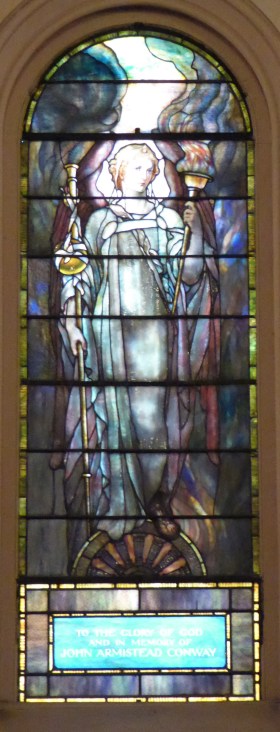
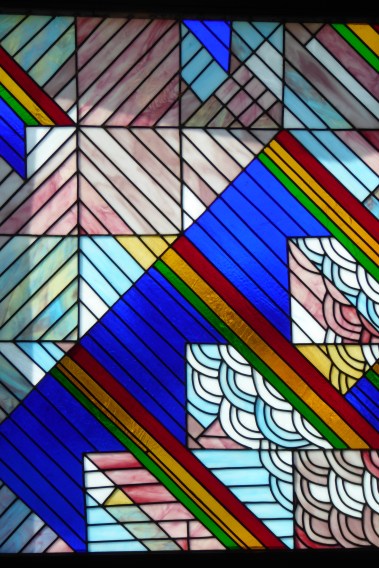
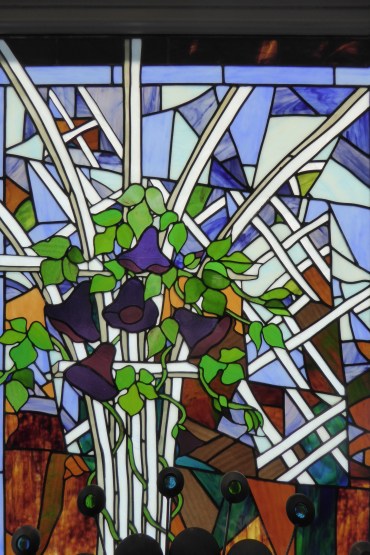
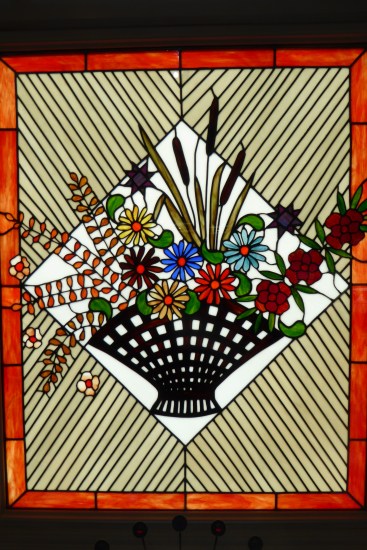
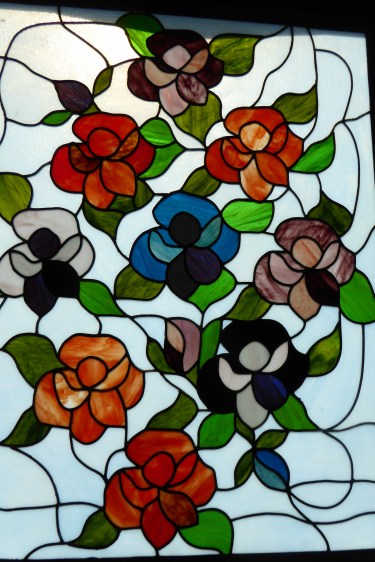
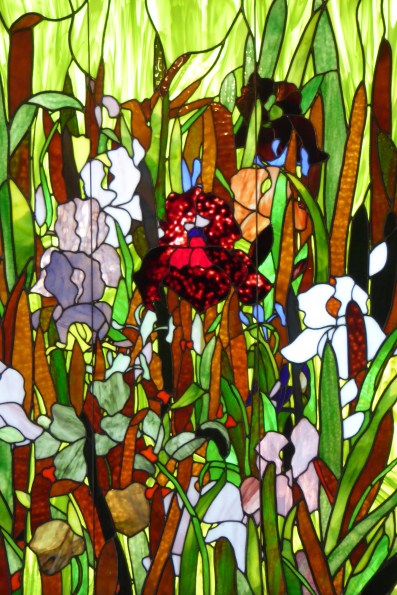
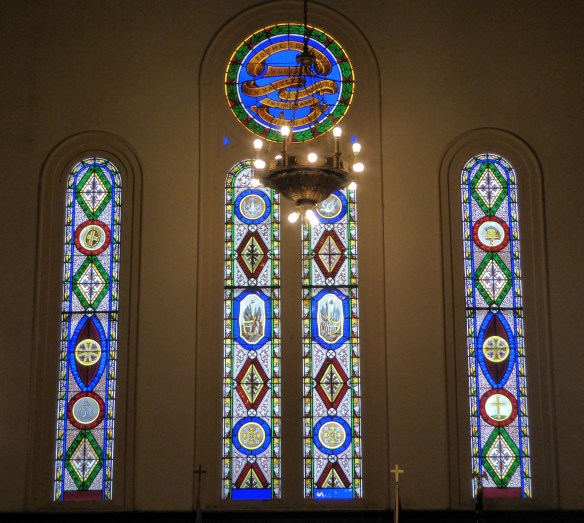
Being the glass buffs that we are, we chose to spend time viewing and learning about the six priceless Tiffany stained-glass windows at the Church of the Holy Trinity, listed in the National Register of Historic Places.  In all of Mississippi, there are only eleven Tiffany stained-glass windows, so the windows at this church are quite significant.  A husband-wife docent team gave an informative talk about the gorgeous windows.

When the church was built, the original church windows were clear.  The stained-glass windows were paid for by contributions from Civil War veterans around the country, dedicated to the soldiers who died in battle during the Siege of Vicksburg.  The front wall windows were the first ones installed at the church as a memorial of reconciliation in the South following the Civil War.  (It’s interesting to note that Vicksburg was 70% Union.)
P1150002.JPG

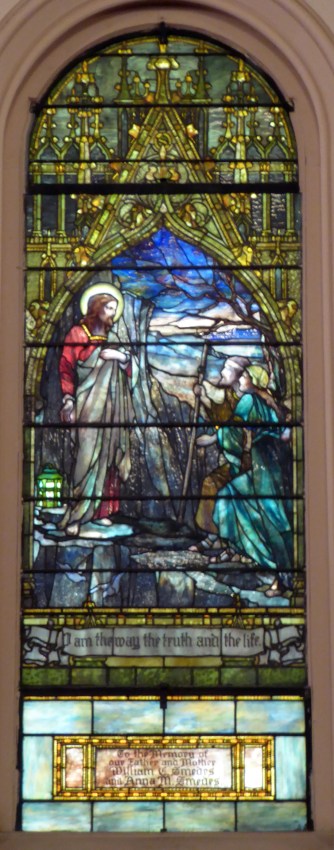
Six of the windows were created by Tiffany Studios in New York under the supervision of Louis Comfort Tiffany.  Opalescent glass was used for the windows, giving them a watercolor-like appearance.  Tiffany felt that not only should the color be part of the design, but the texture as well; so, texture was added to the glass to give a life-like appearance.  In one of the windows, the woman is wearing a robe that has wrinkles, created quite effectively with added layers of glass.  Surprisingly, we were encouraged to go ahead and touch the textured glass in these priceless windows.  (Since no insurance company will insure the church, a value for the windows cannot be determined.)

Tiffany was also a genius in how he worked with color to capture light.  In this window, “The Good Shepard,” we were told that no matter what time of day or ambient light, the lantern always looks lit.
P1140996.JPG

Having the opportunity to see and photograph those incredible windows was well worth visiting Vicksburg.

P1140999-ArchangelRaphael.JPG

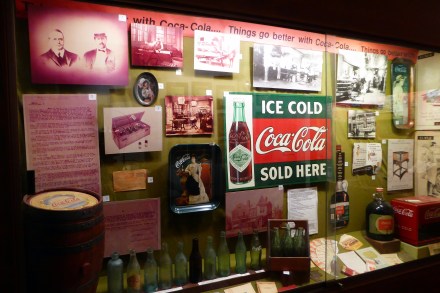
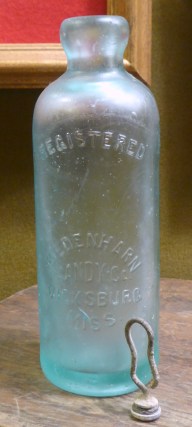
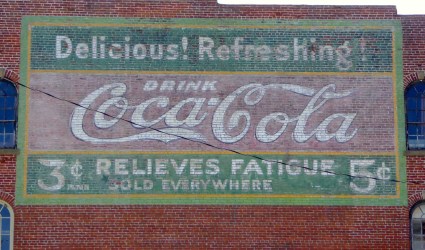
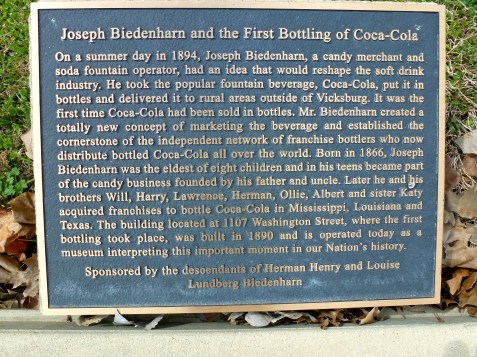
For a fun bit of nostalgia, we popped (no pun intended) into the nicely restored Biedenharn Candy Co. building to have a look around the Beidenharn Coca-Cola museum.  Owned and operated by The Vicksburg Foundation for Historic Preservation, they did a nice job restoring the building and creating enjoyable exhibits about the Biedenharn family who were the original bottlers of Coca-Cola. Alongside reproductions of the first bottling equipment used to bottle the iconic soda-pop, they explained the bottling process.  In addition, Coca-Cola memorabilia and advertising from past to present were on display.

P1150021.JPG

P1150025.JPG

P1150023.JPG

When the stopper was pulled out of the bottle, the rubber made a popping noise– “soda pop”.

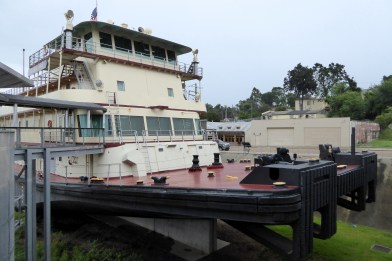
Bruce and I also checked out the Old Courthouse Museum (built in 1859) and Lower Mississippi River Museum.  Most memorable was exploring the river museum’s M/V Mississippi IV, a former river workboat that plied the river for the Corps for over thirty years and hosted public Mississippi River Commission (MRC) meetings, until she was decommissioned in 1993.

MVMississippi.JPG

Headquartered in Vicksburg, the MRC was established by an act of Congress in 1879 with the purpose of controlling the Mississippi River.  In addition, the U.S. Army Corp of Engineers has its research headquarters in Vicksburg, and the town boasts more Phd’s per capita than any city in the U.S.A.  Who knew?

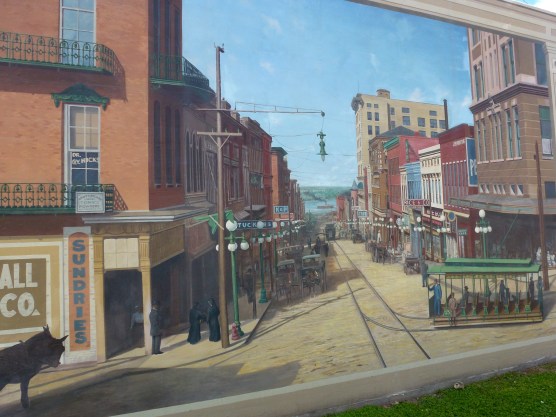
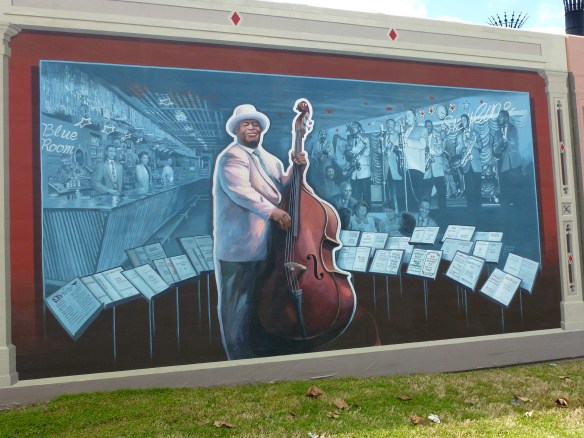
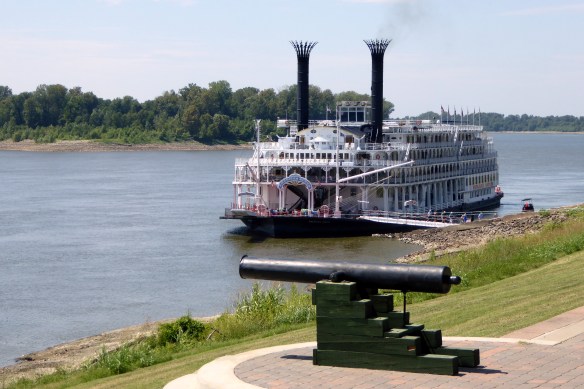
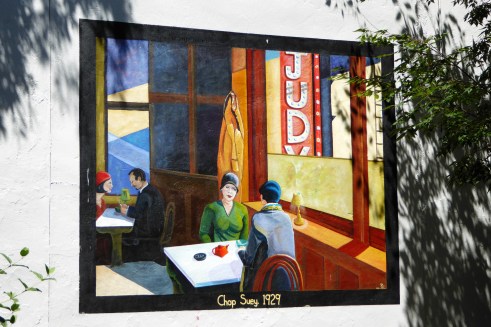
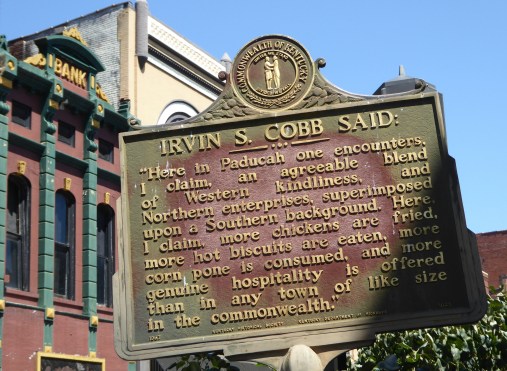
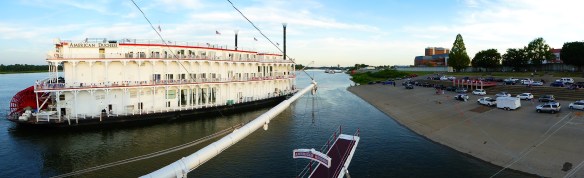
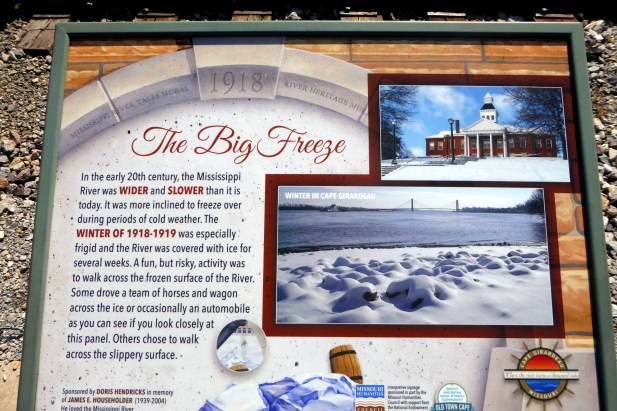
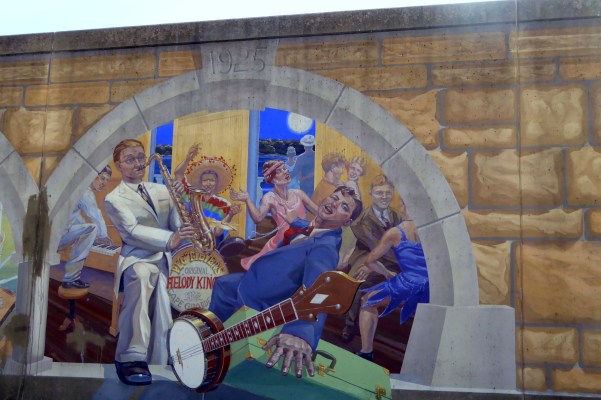
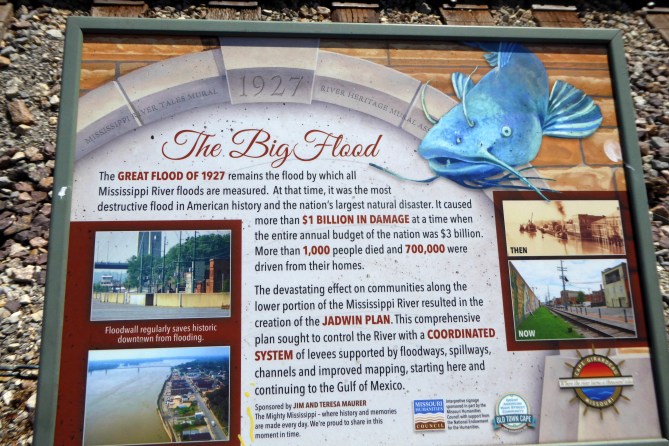
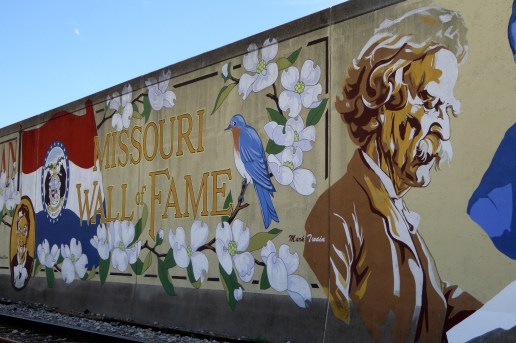
In addition to Cape Girardeau and Paducah, Vicksburg also did a wonderful job turning an ugly river flood wall into a beautiful work of art.  Here are some of the murals that graced the wall where American Queen was tied up:
P1080893.JPG

P1080892.JPG

P1080899.JPG

P1080898.JPG

P1080907.JPG

Next up:  NOTORIOUS NATCHEZ
 

“BLUES BOY” & DELTA BLUES

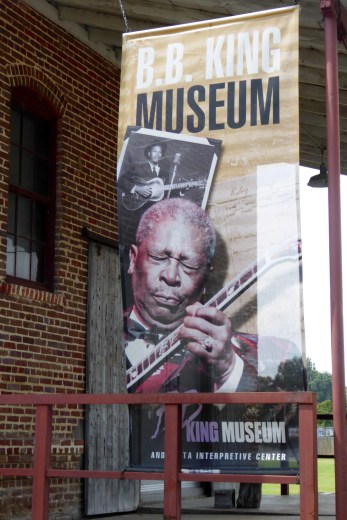
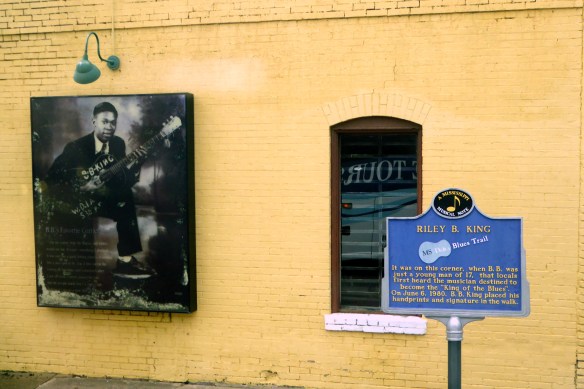
Content with spending our days seeing each river port via hop on-hop off bus and hoofing it on foot, Bruce and I didn’t sign up for any premium excursions during our three-week American Queen Steamboat adventure down the Mississippi River— except for one: “Small Towns, Big Legends:  The Story of B.B. King—A Musical Journey Through the Mississippi Delta.”  This tour was scheduled for our stop in Greenville, Mississippi, and we had looked forward to it with the anticipation that it would be one of the highlights of the cruise.  We were not disappointed.

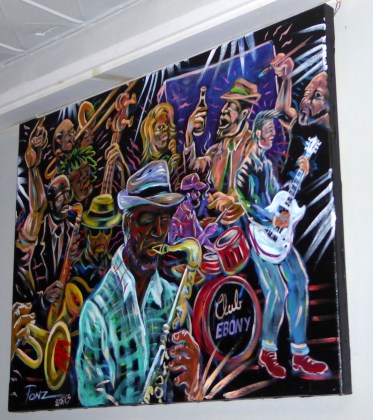
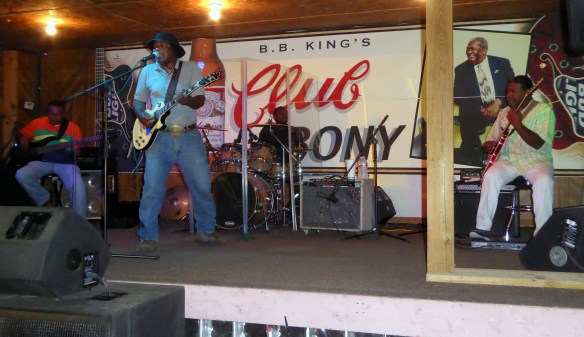
The brochure description summed it up nicely, “Join us on a journey to Indianola, Mississippi, the hometown of legendary blues artist, B.B. King.  Built to tell the story of B.B. King and how the Delta Region shaped his legacy, the B.B. King Museum and Delta Interpretive Center captures the story of the Delta Blues.  Enjoy a live Gospel performance as you enter, followed by a self-guided tour of the museum.  Finish the day off with a visit to Club Ebony, an iconic night club built at the end of WWII and featured entertainers such as Ray Charles, Bobby Bland, Albert King, and of course—B.B. King.

Cool.

329.JPG

Designed by B.B. King and housed in a former cotton gin where B.B. King worked in the 1940’s, the B.B. King Museum opened in 2008.  In addition to an extensive collection of artifacts owned by B.B. King, there are excellent exhibits about his life and other blues musicians from the region that was the birthplace of Delta Blues.

330.JPG

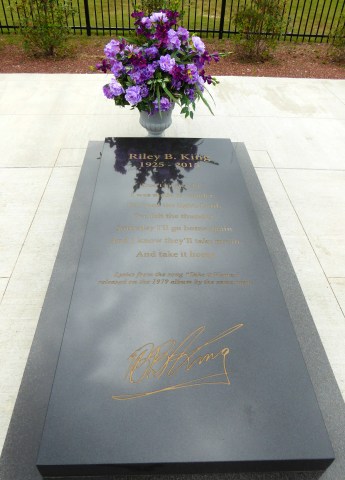
It is also the burial site of Riley B. “Blues Boy” King, who was buried in the planned memorial garden shortly after his death in 2015, at the age of 89.

331.JPG

Upon our arrival, we watched an excellent film about B.B. King and his childhood home of Indianola.  I was tickled, because one of the musicians who played with B.B. King and was interviewed about him in the documentary was Nathan East.  A phenomenal world-renowned bassist, Nathan was the childhood best friend of one of my adult best friends (of 26 years), Carl Evans Jr, who died in 2008.  During high school, both Nathan and Carl performed in “Power,” a state award-winning band.  Nathan went on to become one of the most recorded bassists ever and was one of the founding members of contemporary jazz quartet “Fourplay”.  Carl, meanwhile, formed contemporary jazz group “Fattburger” along with four other top San Diego musicians, including Hollis Gentry, one of the other “Power” members.  (Hollis has since died.)

Back to the film about “Blues Boy” King, we learned that he had moved away from Indianola to further his music career; however, he never forgot his Delta Blues roots.  Determined to piece together his early childhood, but not remembering where in Indianola the house was where he was born, King used a recording of his father describing the location of his birthplace home to find his way back.  It was all documented in the film, and his reaction to finding that spot was touching.  The house is no longer there, and the land is now a cotton field.

Following the documentary, there was a fabulous musical performance by a few of the local musicians, which we thoroughly enjoyed before continuing on to our self-guided tour of the exhibits.

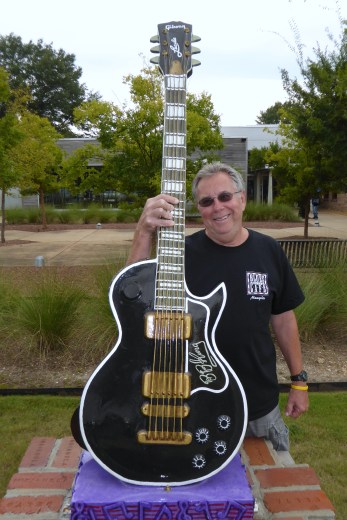
One of the things I wanted to learn from the exhibit was why B.B. King named his guitar (actually, 49 of them throughout his career) “Lucille”.   Well, that’s an interesting story!  Lucille originated in 1949 following a bar fight in Twist, Arkansas where King was playing.  Two guys, whose rambunctious fight caused a fire, were fighting over a waitress… named Lucille.  During the fight, they had knocked over a container of kerosene, which started the fire, and burned the bar down.

When it was time to leave the museum, we weren’t ready.  There was so much to see and so much great music to listen to; we could have spent the entire day there!

341.JPG

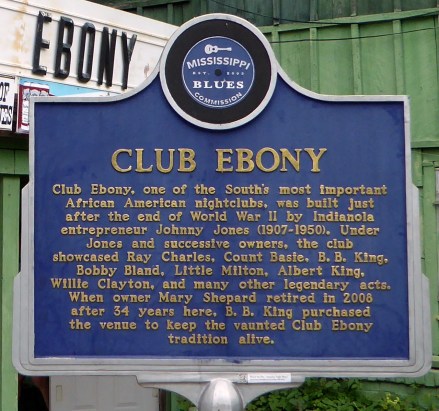
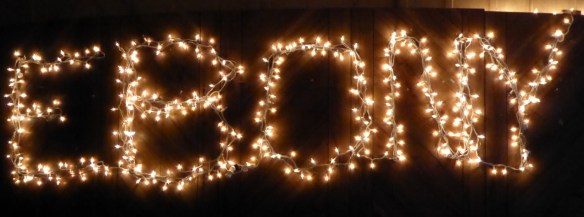
Our bus took us on to Club Ebony, an iconic blues night club that King bought in 2008 and gave to the museum in 2012.  Until his death, King returned once each year and performed with his band as part of a blues festival.  He would perform at night, but stayed through the morning to sign autographs and pose for pictures for every single fan.  He would then stay and talk with the bar staff.

332

333.JPG

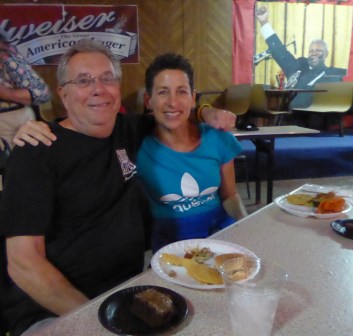
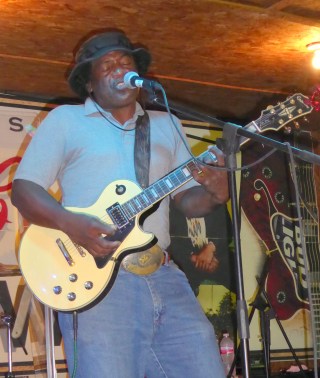
Although we were told that during our visit to Club Ebony, we would be enjoying a “Southern snack” while being entertained by a local blues band, we arrived to find a full buffet meal being served by a local caterer whose servers were eager to ensure that nobody left hungry!  The food was tasty, and the music was top-shelf, including an excellent guitarist who turned out to be the grandson of Muddy Waters.

340.JPG

337.JPG

338.JPG

339-MuddyWatersGrandson.JPG

Muddy Waters’ Grandson


334.JPG

335.JPG

336.JPG

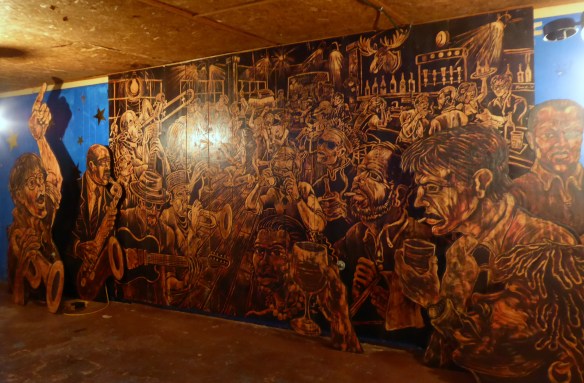
The club was old and funky; you could just imagine B.B. picking at “Lucille” and Ray Charles singing, “Georgia On My Mind.”  Thanks to King turning over the club to the B.B. King Museum and Delta Interpretive Center, it will continue to draw great blues musicians to its front door for years to come.

328.JPG

342.JPG

343.JPG

344.JPG

345.JPG

Coming up next:

 FROM TIFFANY WINDOWS TO COCA~COLA NOSTALGIA:  VARIETY IN VICKSBURG


MUSICAL MEMPHIS

P1140910

Prior to the American Queen’s visit to Memphis, Tennessee, we stopped in New Madrid, Missouri, and Ashport Landing, Tennessee.  Neither stop was anything to blog about; however, I will throw in a few photos from Fort Pillow, where we learned way more about Confederates and canons than I ever cared to know.  This photo of the museum exhibit on the subject explains my distaste for all things Confederate and Civil War:

P1140753.JPG

Moving on to Memphis, this was a day Bruce was especially looking forward to, being the blues harmonica player that he is.  I had been to Memphis in 2013, when I took my mom on a cruise aboard American Queen, from Memphis to New Orleans; however, I looked forward to returning and sharing the experience with Bruce.

Included in our cruise was a tour of Graceland, and what instantly came to our minds as we headed to Elvis Presley’s mansion and museum was Paul Simon’s song lyrics:

…I’m going to Graceland

Graceland

In Memphis, Tennessee

I’m going to Graceland…

I can just hear Simon’s voice now… but, I digress.

P1140761.JPG

Graceland opened their doors an hour early for American Queen passengers, so it was great to get a nice head start through the mansion and exhibits, knowing we would have a full day ahead of us.  Neither of us are huge Elvis Presley fans, but we enjoyed the experience.

Here are some photos from Presley’s mansion and the museum:

P1140777.JPG

P1140774.JPG

P1140763.JPG

The stained glass peacocks were beautiful.

P1140765

There were actually three TV’s in this room.  Elvis would watch all three at the same time.

P1140767.JPG

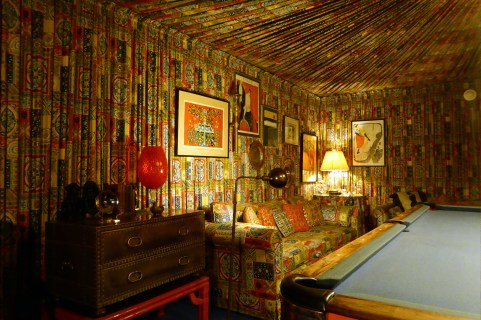
The entire ceiling and wall was covered in folds of fabric.


P1140769

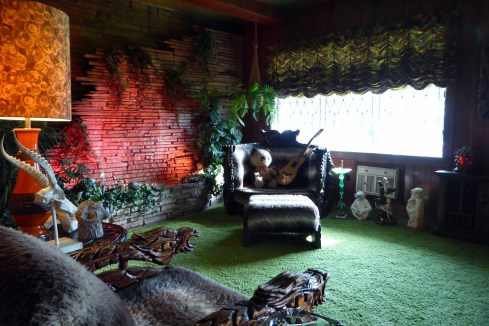
This room was just…bizarre.


P1140822.JPG

P1140794.JPG

The remainder of our day in Memphis was spent enjoying the sights of downtown.  We were able to walk into the city easily from the boat, so we headed to the historic Peabody Hotel, home of ducks (Really, I mean it!  Check out my 2013 post about it here.  While you’re at it, check out the neon pictures taken at night along Beale Street.)

P1140798

P1140800

The backstory on these famous Peabody ducks is that in 1933, the hotel’s owner had live ducks as decoys for duck hunting.  As a joke to the staff and guests, he decided to put them in the lobby fountain.  Well, it was a huge hit, so they have been at the hotel ever since.  (Of course, not those very same ducks; they don’t live that long!)  The ducks live up on the hotel’s roof and are escorted down to the lobby by elevator, led by their master, dressed in top hat and tails.  He makes a big to-do about it that draws crowds of people each day to watch the ceremony of ducks waddling down the red carpet, across the little bridge, and into the fountain!

P1140856

P1140837

P1140820.JPG

P1140817.JPG

P1140812.JPG

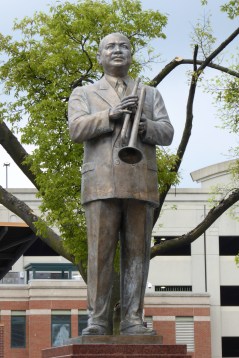
W.C. Handy

P1140853

P1140839

Our next stop was the Rock ‘N’ Soul Museum, an included attraction with our cruise that was especially fabulous.  The introductory film we saw before continuing into the museum was well worth the visit alone.  The exhibits, though, were very well done, and we could have spent all day just listening to all of the great music they had available throughout the museum!

P1140851.JPG

P1140849.JPG

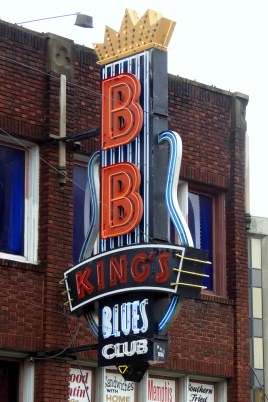
Blues City Café was where my mom and I had gone for lunch back in 2013, and I had a hankering for another plate of their tasty tamales.  I thought Bruce would enjoy them, too, so we stopped in for a quick lunch.  Yum!

P1140841.JPG

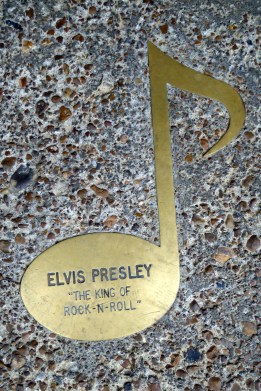
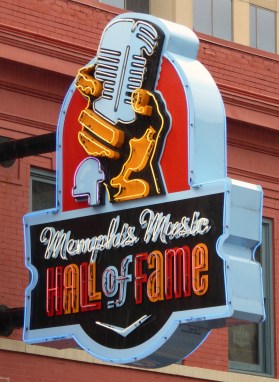
Next, we visited the Memphis Music Hall of Fame, located just across the street from the café.  Although smaller in size and not as fabulous as the Rock ‘N’ Soul Museum, we still enjoyed the exhibits.

P1140840.JPG

CarlPerkinsGuitar.JPG

Carl Perkin’s guitar

When it started to pour down rain later in the afternoon, we decided to board American Queen’s hop on-hop off bus, and enjoy Memphis in dry comfort. One of the bus stops was at Sun Studio; however, we didn’t have enough time to take the tour.  No worries; we’ll see it in January, when we return to Memphis for our American Duchess cruise.

The final stop for the bus was Bass Pro Shops, and we figured we had enough time to take a quick run around the huge store before the next—and last—bus arrived to take us back to the ship before departure.

P1140886.JPG

P1140894.JPG

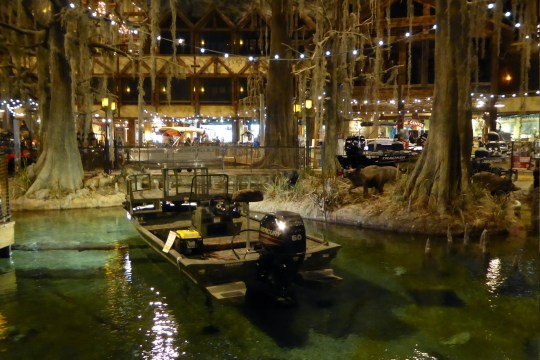
This boat was for sale, as were all the others floating in their ponds.

This Bass Pro Shops location wasn’t your ordinary Bass Pro Shop store (although, none of their shops are ordinary!); it was housed in a 320-foot high glass pyramid, the 10th largest pyramid in the world, and quite the spectacle!

From beginning to end, we made a (very) full day of seeing—and thoroughly enjoying—Memphis!

Next up:  “Blues Boy” & Delta Blues


A DAY “AT RIVER”

Ocean cruisers are familiar with that term “at sea,” when there is a transit day on an itinerary without a port visit.  Many experienced cruisers love those days at sea, so they can relax, enjoy being out on deck, and out on the open sea.

If cruise ships have days “at sea,” then what do riverboats have when there is no port to visit?  A day “at river,” of course!  Well, that’s what I call it, anyway.

P1140117.JPG

American Queen’s day “at river” wasn’t in the original itinerary, but as they say in life, s*&$ happens!  The night before arriving in Paducah, we were still in Cape Girardeau SEVERAL hours after our scheduled departure.  Although the passengers received some announcements along the way, we didn’t hear the full story until the captain explained what all had happened.  It was one thing after another, and the captain had us in stitches, as he comically detailed the events to us passengers in the show lounge:  First, a couple of essential crew members (who were coming on board to replace crew going on leave) were late arriving due to a delayed flight.  Next, there was a generator problem with one of the three generators.  Evidently, U.S. Coast Guard approval was necessary for the boat to continue operating on only two generators, and they weren’t exactly expedient in granting this approval.  Meanwhile, three tugboats were held up at the upcoming lock (usually it’s first come, first served), so we could get preferential treatment, and keep to our port schedule.  Since the Coast Guard was taking their sweet time returning the captain’s call, however, the tugboats were given the go-ahead to pass through the locks.  It wasn’t until 10:00 pm before we could finally depart Cape Girardeau.

But wait, there’s more!  The lock gate in the chamber broke down!  After the gate was finally repaired, and we were able to pass through the locks, you would think we were good to go.  Right?  Wrong!  The river was very narrow at that point, and we had to wait our turn to go through the narrow passage.  More delays…

To add insult to injury (at least for the captain), the water levels were reportedly too high for our boat to pass under the bridge in Canton, which meant we would not be able to stop in Dover, the day following Paducah.  As a result, the captain hesitantly announced that the American Queen would stay late in Paducah, welcome her new sister, American Duchess, and have a day “at river” the following day.  The captain braced for groans; instead, he got cheers and applause!

By now, several of the passengers (including us) were ready for a chill-day to relax, and enjoy just being on the river.  Besides, the only thing in Dover was Fort Donelson, an American Civil War battlefield.  At this point, gauging by the applause, it was evident that most of the other passengers were as burned out on the Civil War as we were.

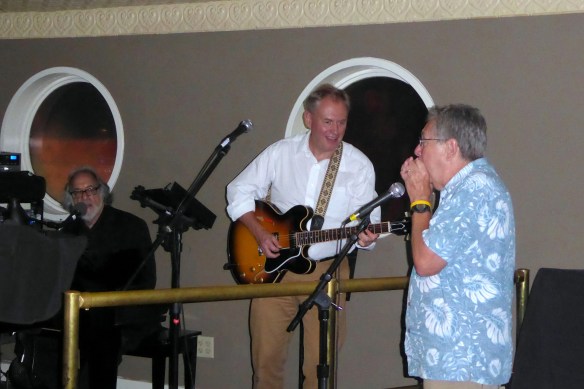
Our day on the river was blissful:  a nice, long workout in the gym, a leisurely brunch sipping mimosas with our table mates, Jacque and Rick (Thanks, you two, for sharing your bottle!); and, an afternoon of watching the riverbanks pass by.  Steve, the cruise director entertained us that night with a fabulous piano concert of ragtime tunes choreographed to famous old-time silent movies.  The night’s finale?  Bruce jamming with Norman and Jim in the Engine Room Bar.

P1150360.JPG

Our tablemates, Rick and Jacque

P1140989.JPG

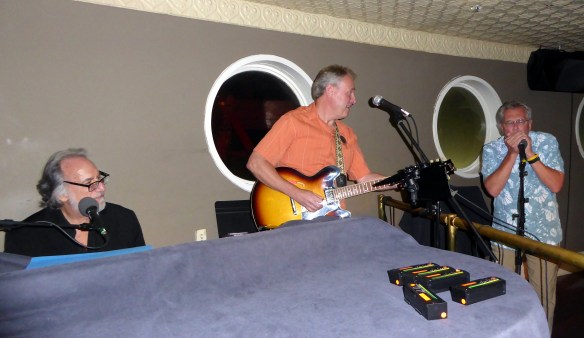
Norman, Jim, and Bruce jamming in the Engine Room Bar.  Those are Bruce’s harmonicas on top of the piano.

So, dear readers, on that note (no pun intended), as I reflect on our day “at river,” I end this blog post with some American Queen facts and river trivia:

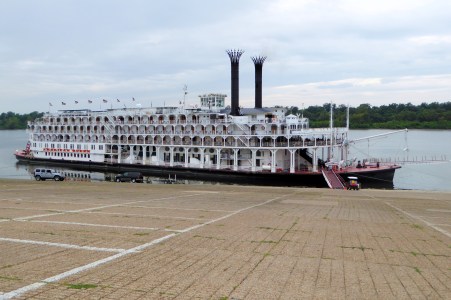
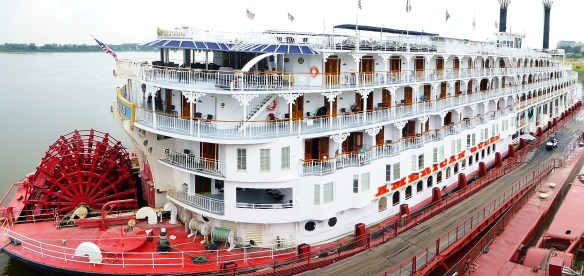
~ American Queen is 418 feet long, 90 feet wide, and 100 feet tall with the smoke stacks raised.  She draws 8-1/2 feet of water; however, the river is only nine feet deep.

AQ-NewMadrid-MO

~ Speaking of boats, a boat navigates rivers and lakes, and a ship sails upon seas and oceans.  That is the difference between a boat and a ship!

~ American Queen is the largest steamboat in the U.S.A. and was built by Delta Queen Company, in 1995.   She is constructed of steel (rather than wood, a fire hazard) to accommodate overnight passengers—a federal law.  When she was built, it was the first steamboat ever constructed at that shipyard.  It took 550 workers to get the job done, and when she was christened, the ceremony was done with a giant Tabasco Sauce bottle (rather than champagne).  Gotta love that Southern sense of humor!

~ Hornblower Cruises purchased the American Queen in 2012 when the Delta Queen company folded.

~ Her refurbished engine was from the original Delta Queen steamboat, now sitting in a shipyard, due to the fact she was made from wood and not allowed to accommodate overnight passengers.

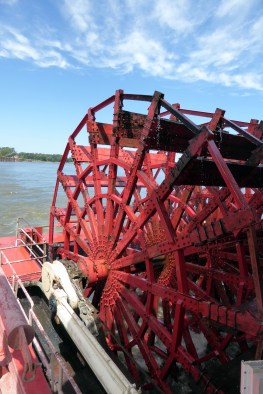
~ American Queen now boasts a large propeller and modern propulsion system, in edition to its beautiful bright red paddlewheel.

14

~ The pilot house lowers on hydraulics for bridge clearance.

~ The steam-powered calliope entertains us on every port departure, much to the delight of locals watching along the riverbanks—and me!

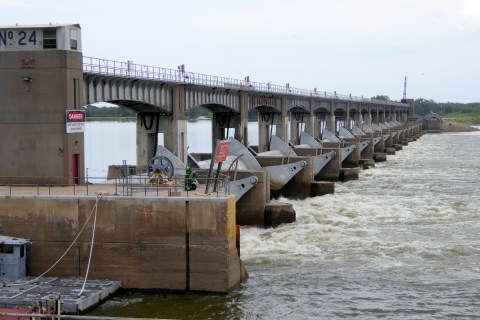
~ On the upper Mississippi alone, there were 22 locks that dropped a total of 390 feet.  We traveled through many more locks down the river…

P1140342

American Queen’s fabulous staff:

TyroneJames-resized

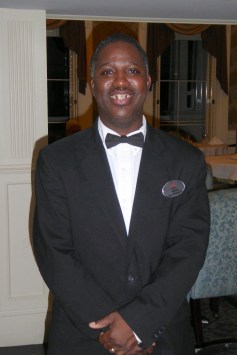
Tyrone “TJ” James was our favorite.  He always had a big smile on his face, treated the passengers like gold, and made everybody around him happy!

Elaine-Kim-Bruce

Kim made visiting the Front Porch Cafe such an enjoyable experience!

Elaine-Kim

Brian.JPG

Brian, the Front Porch bartender was super!  He liked Mountain Dew, so we picked up some in a few ports as our “thanks” for his great service and friendly personality!

Cassie.JPG

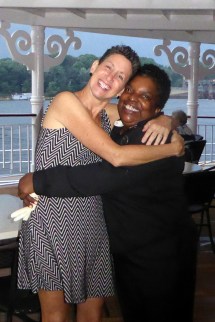
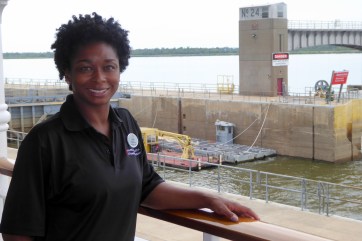
This is Cassie, our friendly (and fabulous!) stateroom attendant!

Kirk

We had a lot of fun with our waiter, Kirk!

Starla-Ashton.JPG

Starla and Ashton (the singing waiter) were a lot of fun, too!

Thorsten&Ky-2

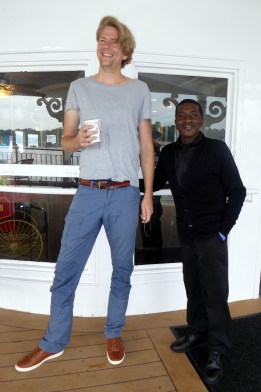
Thorsten was the tallest person on board, and staff member, Ky was probably the shortest man.  They both wanted a photo with each other!

Thorsten&Anamaria-resized

Thorsten and Anna Maria (along with Eva Maria), visiting from Germany, were passengers on board the American Queen


Coming up next:  Musical Memphis


PATCHWORK PADUCAH: HOME OF THE NATIONAL QUILT MUSEUM

There are many forms of art and craft that have always fascinated me; however, quilting never captured my interest as much as glass-work or woodwork, my two favorite mediums.  That all changed in 2006, when I saw the most amazing quilts as part of a fiber arts exhibit, at the Southwest School of Art, in San Antonio.  Sometime after that, I heard that Paducah, Kentucky was home of the National Quilt Museum.

Paducah?  This California gal had never heard of Paducah, population +/- 25,000; however, I kept hearing the name over and over, after moving to Georgia.  When Bruce and I noticed Paducah was on the itinerary for our American Queen Steamboat cruise, it piqued our interest, because of the National Quilt Museum.  If the quilts at the exhibit we had attended were that amazing, imagine how incredible they would be at a national museum!

P1140651.JPG

We made the museum our first stop, following the hop on-hop off bus tour of the artsy town that is located on the confluence of the Ohio and Tennessee rivers, halfway between St. Louis and Nashville.

As soon as we walked into the lobby, we knew this wasn’t just your grandmother’s quilt museum!  There are not enough adjectives to the describe the quilts we saw, and if photography (flash or otherwise) had been permitted, the pictures wouldn’t have done those quilts justice.  Go ahead and check out their website, though; you will be amazed!  Glancing at the current exhibit, you will think those are paintings hanging on the wall.  You can’t possibly imagine the thousands of hours that went into making some of those quilts, obviously labors of love.

I did, however, take pictures (with permission) of the gorgeous stained-glass windows in the lobby and conference room:

P1140607

P1140605

P1140604

P1140606

P1140608

Visiting the National Quilt Museum was not only the highlight of our day in Paducah, but it was one of the highlights of the entire cruise.  Those sentiments were echoed by Bruce as well as several of the other men we spoke with on our cruise.  (Even the men who were dragged to the museum by their wives were enthusiastic about what they saw and happy they went along!)

Aside from the museum, the entire town of Paducah had such a cool, artsy vibe.   As a matter of fact, UNESCO designated Paducah as the world’s seventh City of Crafts and Folk Art, in 2013.  (Santa Fe, New Mexico is the only other American city given such a designation.)

P1140627.JPG

P1140628.JPG

P1140657.JPG

P1140609.JPG

P1140611.JPG

In addition to the artistic feel of the town, great care has been taken to preserve the historic buildings of Paducah.  As a result, twenty blocks of the downtown commercial district have been placed on the National Register of Historic Places.P1140621.JPG


P1140629P1140618


P1140613.JPG

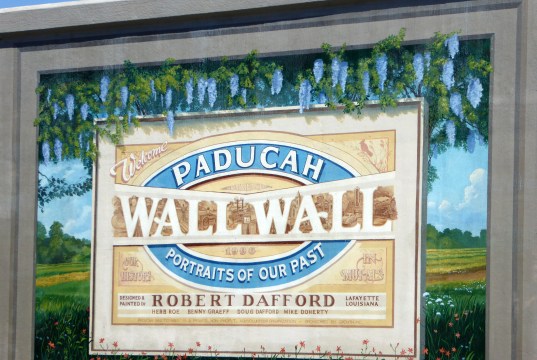
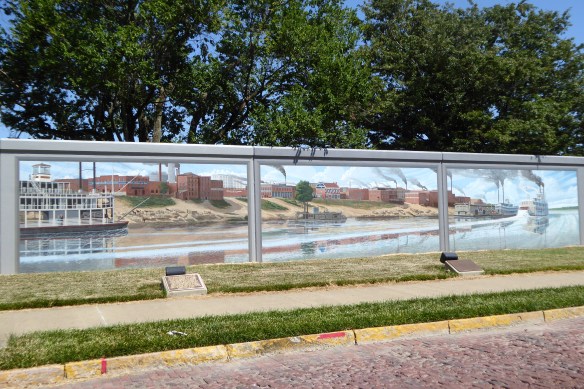
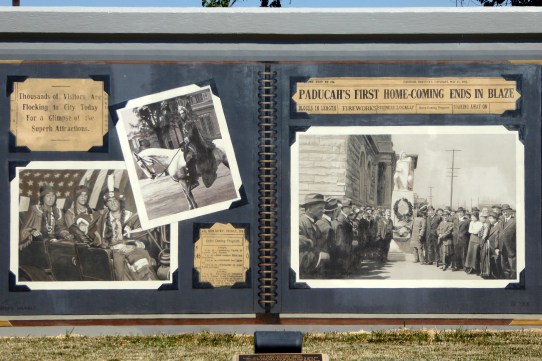
Paducah also did a great job of beautifying their formerly drab flood wall with murals designed and painted by Robert Dafford and his crew.  We enjoyed learning about Paducah’s history through these murals, just as we had done in Cape Girardeau.

P1140632.JPG

P1140647.JPG

P1140646.JPG

P1140645.JPG

P1140643.JPG

P1140639.JPG

P1140633.JPG

P1140649.JPG

P1140648.JPG

P1140631

P1140654.JPG

P1140652.JPG

P1140656.JPG

Walking around downtown was such a pleasure, and we enjoyed seeing the historic (and beautifully maintained!) homes nearby.

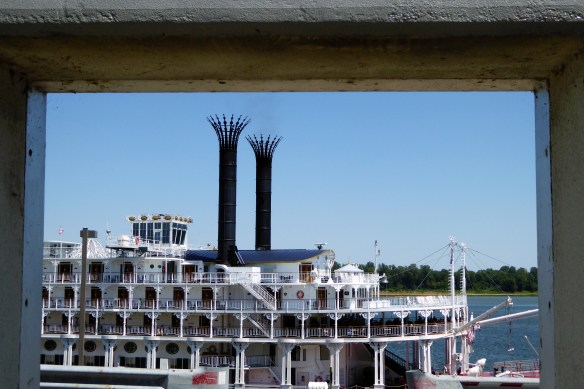
American Queen Steamboat Company’s marketing department definitely got it right when they chose Paducah as the meeting point for American Queen and the company’s third riverboat, American Duchess.  On its inaugural river cruise, the brand-new Duchess arrived before sunset and tied up just ahead of our boat.  It was a beautiful evening that couldn’t have been planned any better.  As the passengers from both boats waved, shot photos, and shouted greetings, the Queen welcomed her sparkling new sister with several loud steam-horn blasts and a calliope concert.  It was a travel brochure moment for American Queen’s marketing department, and we were sure the drones that were sent up captured some amazing shots!  We sure had a lot of fun, too!

P1140682.JPG

Although several of the crew and passengers went over to tour the Duchess, we opted to enjoy another fabulous dinner in the dining room, and wait until January to see the new girl in town.  (More to follow next month!)

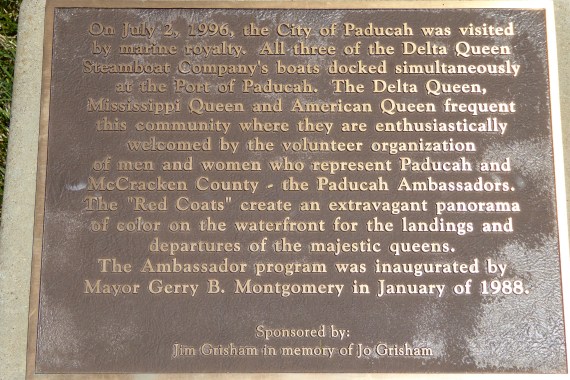
Until then, here are some scenes from that Kodak moment, reminiscent of when the American Queen, Mississippi Queen, and Delta Queen met up in Paducah in 1996, as was depicted in one of the wall murals (above).

P1140676.JPG

P1140675.JPG

P1140692

P1140660.JPG

Coming up next:  A DAY “AT RIVER”


CRUISING TO CAPE GIRARDEAU

Following our visit to Chester, the American Queen Steamboat paddle wheeler steamed on down to the sleepy river town of Cape Girardeau, Missouri.  Founded in 1733 by a French soldier as a trading post, it is now home to around 38,000 residents.

212

213

The American Queen is on the right.

As we had typically done previously during the cruise, we took American Queen’s included hop on-hop off bus for a narrated tour of the town to get a good overview, before hoofing it around on foot.

The historic Glenn House was located in a lovely neighborhood situated on a hill overlooking the river, so we opted to head back up to take the included tour of the lovely 1800’s home.

235.JPG

Listed on the National Register of Historic Places, the home was built in 1883.  I especially liked these beautiful stained-glass windows in the foyer:

236.JPG

Across from the home, we thought this was quite the curious sight:

237.JPG

This was the original bridge that crossed the river; however, it was ultimately replaced by a new, modern one.  Instead of completely tearing the old bridge down, they kept the beginning of the bridge intact as a river and riverfront park viewpoint.  Clever!

Back in town, the downtown streets were pleasant to meander and photograph.

225

226

227

228

232

One of my favorite buildings that added a bit of charm to the town was this Spanish-style home to Southern Missourian, the local newspaper.  These murals on the side of the building depict the history of the town and newspaper print:

229.JPG

230-SoutheastMissourian

231

The highlights of Cape Girardeau, in my opinion, were the fabulous river wall murals.  What started as a necessary—but ugly—barrier to protect the town from flooding, was morphed into attractive and informative works of art.

214.JPG

“Mississippi River Tales” is an 18,000 square feet mural that covers the 15-foot high wall with 24 panels of history, beginning with the Native Americans who inhabited the area between 900 and 1200, long before our “founding fathers” stepped foot on American soil.  Informative plaques describe each panel that tells the history of the area in chronological order.  Painted by Chicago artist Thomas Melvin, in collaboration with several local artists, the mural has graced Cape Girardeau’s flood wall since 2005.

These were some of the panels of interest to me:

215.JPG

216.JPG

217.JPG

218.JPG

219.JPG

220.JPG

221.JPG

222.JPG

Immediately following “Mississippi River Tales” was the “Missouri Wall of Fame,” spanning 500 feet of the flood wall.  Depicting 45 people who were born in the state or achieved fame while living in Missouri, this mural included some of our baseball favorites, including Yogi Berra, the New York Yankees Hall of Fame catcher who had, let’s say, an interesting way with words!

223.JPG

224.JPG

Unfortunately, the mural also included Cape Girardeau’s very own Rush Limbaugh, who also has a way with words…

239.JPG

240

P1140568

Next up:  PATCHWORK PADUCAH:  HOME OF THE NATIONAL QUILT MUSEUM


CHESTER’S MAIN MAN: POPEYE!

205

206

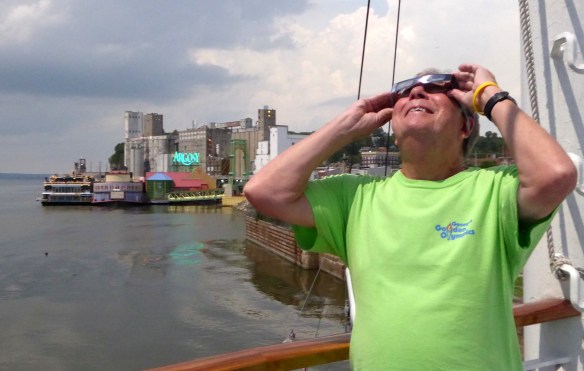
I sure hope they sold out of those eclipse glasses, because the next total solar eclipse to be viewed in the U.S.A. won’t be until April 8, 2024!

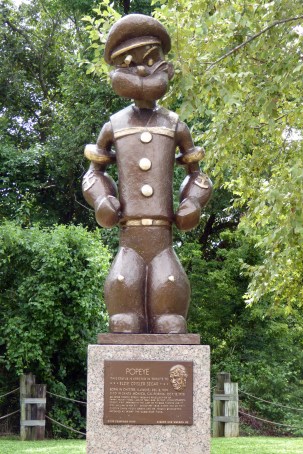
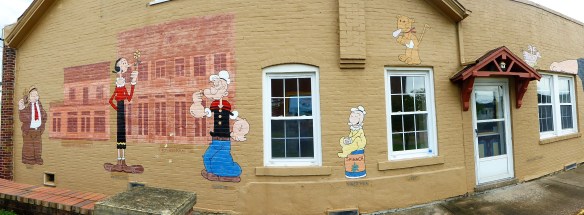
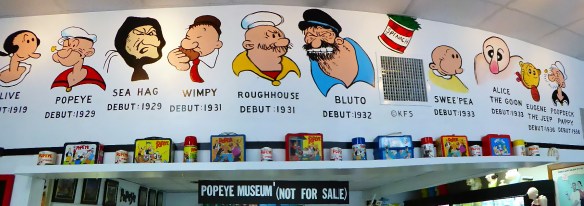
Our post-solar eclipse stop along the Mississippi River was Chester, Illinois.  Although Chester was a stopping point on several occasions for Mark Twain when he piloted a riverboat on the Mississippi River, from 1857 until the Civil War, it is best known as the “Home of Popeye.”  Popeye’s creator, Elzie Crisler Segar, was born in Chester, and several of his characters were created from experiences with the people from the town.

207

208

Have you ever wondered where Olive Oyl got her name?  Back in the 1800’s, Chester’s chief commodity was castor oil, which was used as a lubricant.  Guessing there was a connection there, I researched Olive Oyl on Wikipedia and discovered she was the youngest sibling of Castor Oyl.  Aha! I knew that Olive Oyl was named after olive oil; however, I’m pretty darn sure big bro was named after castor oil, after Chester’s chief commodity.  (As you have probably ascertained by now, I’m not exactly a Popeye scholar—or, familiar with all of his buddies!)

209

210

211

More Chester trivia:  Scenes from the 1967 movie “In the Heat of the Night” were filmed in the town, as were scenes from “The Fugitive” (1993).

Coming up next:  CRUISING TO CAPE GIRARDEAU

TOTAL SOLAR ECLIPSE, AUGUST 21, 2017

Unlike solar eclipse enthusiasts, Bruce and I did not book our travels because of the solar eclipse.  People had been talking about the upcoming solar eclipse for months—even years!  There was even a non-swimming related thread on the U.S. Masters Swimming Discussion Forums (of which I am a member) about the eclipse and where the best place would be to see it.  There were swimmers I knew who traveled out of state just so they could see the eclipse.  Me and Bruce?  No.  I hadn’t paid much attention to the discussion, and we didn’t even know when the eclipse was going to be when we booked our three-week Mississippi River cruise aboard the American Queen.

It wasn’t until we were already on board that Bruce and I realized we would be in one of the best places in the country to view the eclipse in its totality.  There was even a special premium excursion, “American Astronomy:  A Solar Eclipse Tour,” passengers could book for August 21, 2017, the day we were docked in Alton, Illinois.  Us?  No, we gave it a miss in favor of taking the included tour into St. Louis, for the morning.  We figured we would catch the eclipse when we returned to the ship for the afternoon (Although, we never bothered purchasing viewing glasses, so we wouldn’t be able to view it).

As it turned out, the riverside casino, Argosy Alton, was sponsoring an eclipse viewing party at the park adjacent to where the ship was tied up.  I happened to notice a little note posted on the purser’s desk counter about it with a mention that free viewing glasses would be handed out to the first 300 people in attendance, beginning at 11:30 am.

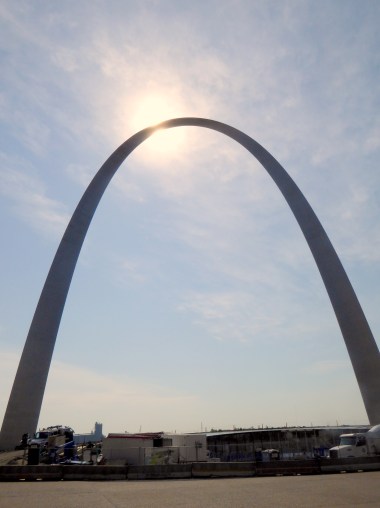
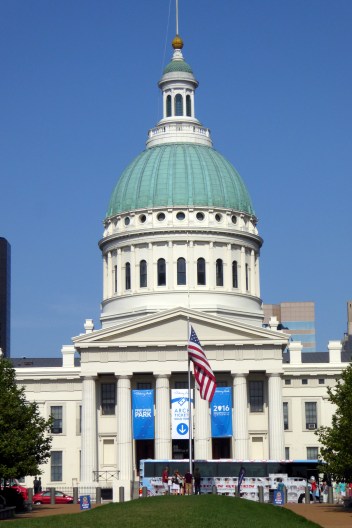
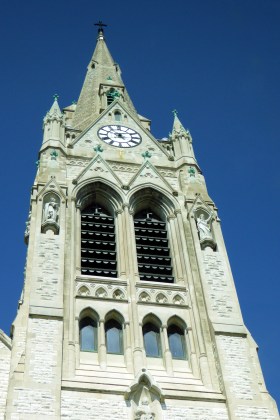
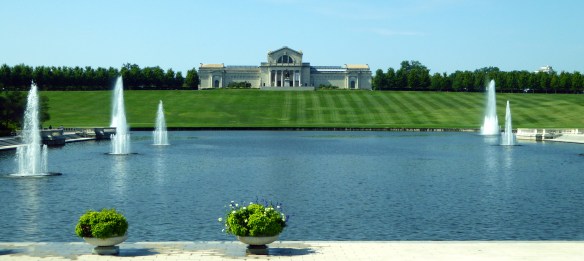
Filing that tidbit of news away in my memory bank, off we went to “see” St. Louis.  (Seriously.  How much can you really see of a city on a morning bus tour?)  I’m not a fan of bus tours, because you can’t experience a place in such a short period of time.  That, my friends, goes without saying, though.  I could write an entire BOOK on the topic!  Suffice it to say that shooting pictures out the bus window is definitely not my cup of tea, nor is getting off the bus for a few minutes to shoot a few more pictures.  Having said that, we thought it was better to see something of St. Louis than nothing at all; so, the following pictures (shot out the bus window and otherwise) are what we saw of St. Louis:

187

188

189

190

191

192

193

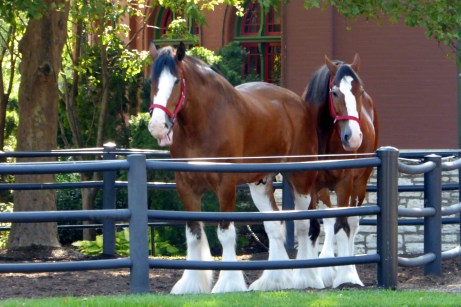
Budweiser Clydesdales

194

As the bus returned to Alton, I surveyed the meager crowd at the riverside park that began to gather for the solar eclipse viewing party.  Quick calculations made by gazing out the bus window led me to declare upon disembarkation, “Screw having lunch.  I’m going to find those free viewing glasses!”  Ignoring Bruce’s protests, off I went in search of those eclipse peepers while Bruce mumbled behind me.  It was hot out, and neither of us wanted to hang out in the park; however, I wasn’t going to let this opportunity pass me by.  The eclipse was going to happen, so we may as well be able to view it safely!

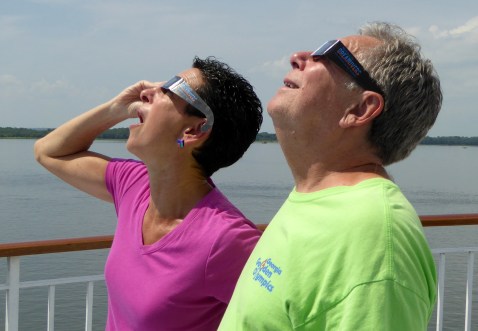
Glasses in hand, and a grateful “Thanks!” to the Argosy Alton employees who so graciously dispensed them, we returned to the ship, ate lunch, and waited out on deck.

196-RachelHanks-BillCranford

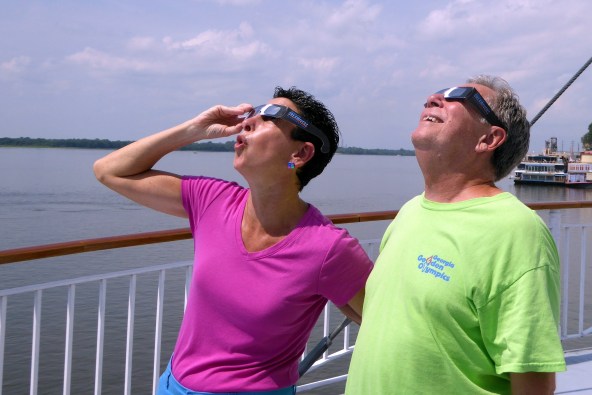
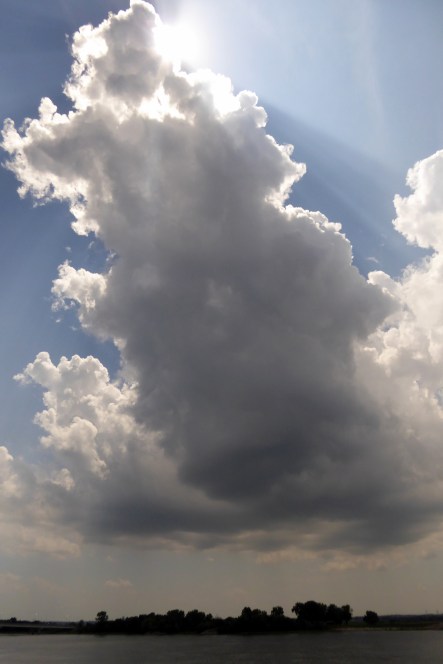
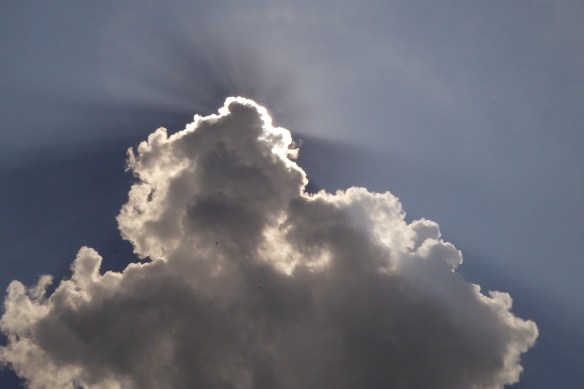
As the eclipse began, I noticed clouds gathering on the horizon.  Then, the clouds got closer… and darker… and, then the race was on.  Would we witness a total eclipse of the sun by the moon, or would the eclipse get obliterated by a rain storm?

198

197

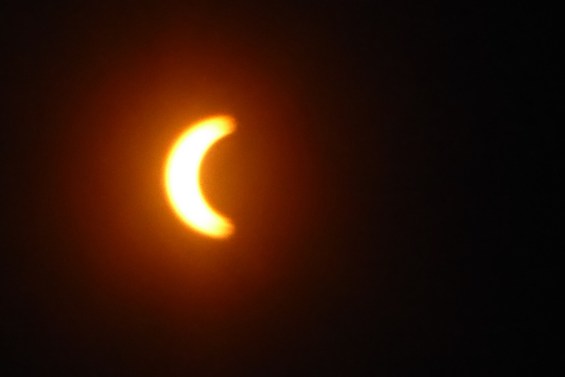
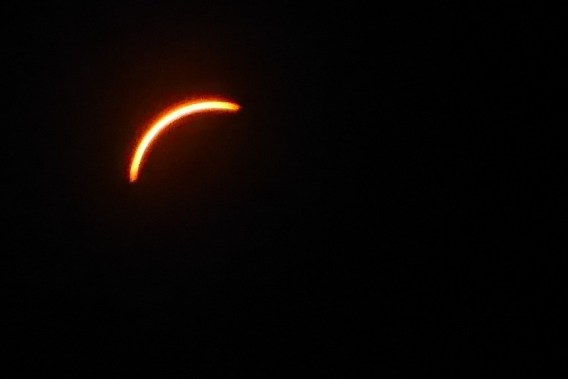
We watched and waited.  Then, I came up with an idea and shifted my focus away from the impending gloom.  How about photographing the eclipse by covering the small lens of my Panasonic Lumix with the eclipse viewing glasses?  I couldn’t safely look up at the sun without my glasses; however, I could guess at the angle, shoot, review the shot, and try again if I missed!  Wash, rinse, repeat!  Yeah, there were a lot of misses; however, I did manage to get a few shots, too.  That’s the nice thing about shooting digital (rather than film, like the “old days”); it doesn’t cost anything to make a bunch of mistakes, and try again!

199

200

201

Bruce’s last look at the total eclipse as the Argosy neon lights turned on, and the storm grew near

202

203

Pleased that I captured a few photos, I returned to viewing the eclipse—and watching the clouds roll in.  It was an eerie site, difficult to describe—and, even harder to capture accurately in a photograph.  When the eclipse reached totality—or 99.7% in Alton, according to local experts—the ambient light took on a strange hue.  Between the eclipse and the impending rain storm, it was the strangest feeling.  After the crowd at the park cheered enthusiastically at totality, the nearby Argosy Alton Casino neon lights turned on, the wind kicked up, and a huge cloud passed in front of the sun, obliterating it for less than a minute.  Soon after, it got very windy, the storm blew in, and it began to thunder, lightning, and rain.  We got to see totality just in in the nick of time.  Between the “ooh’s” and “ahhh’s” (and, me poking Bruce with a snarky, “Aren’t you glad NOW that we got these viewing glasses?”); in retrospect, Bruce and I realized we couldn’t have planned it better if we had tried.  August 21, 2017 was a day to remember for a very long time.

FROM PASSENGER TO PERFORMER ABOARD THE AMERICAN QUEEN

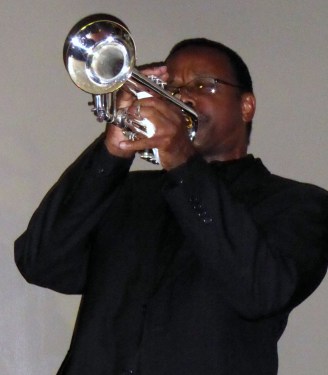
The entertainment aboard the American Queen paddle wheeler was top-notch during our three-week Mississippi River cruise.  From the guest entertainers to staff singers/dancers and musicians, we were quite impressed with the quality of the shows we enjoyed after dinner each evening.

38

Damon.JPG

P1140913.JPG

Bobby.JPG

Bobby was also the Riverlorian and gave presentations on all things Mississippi River and riverboats.

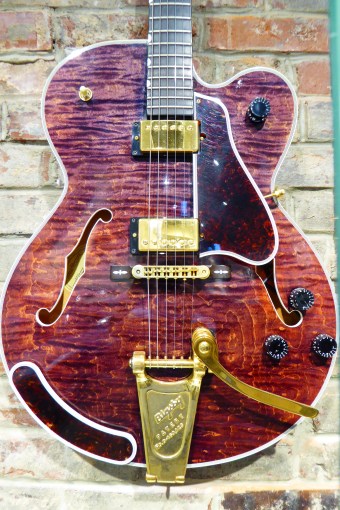
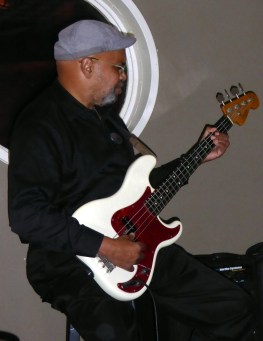
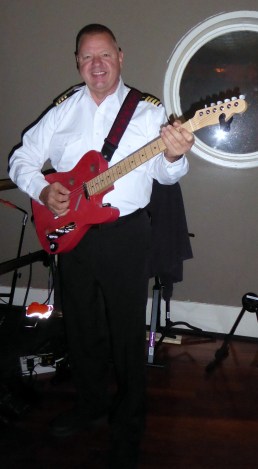
Even the captain had us impressed when he sat in with band with his electric guitar made from the planks of the ship’s old paddle wheel.  That guy could play!

P1140702.JPG

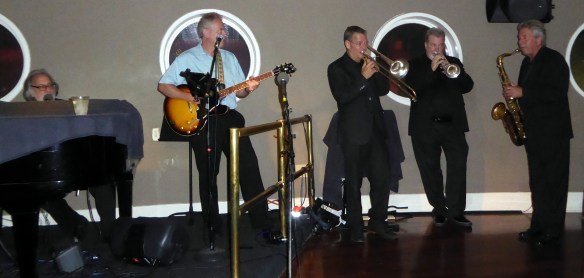
Following one of the shows early in the cruise, we made our way back to the Engine Room Bar to listen to the duo performing covers of classic rock tunes.  The setting back there had a cool vibe—an ornate tin ceiling, a lot of dark wood, and port hole windows; just as you would expect on a vintage-style ship or riverboat.

Norman-Jim-Gary-Sax

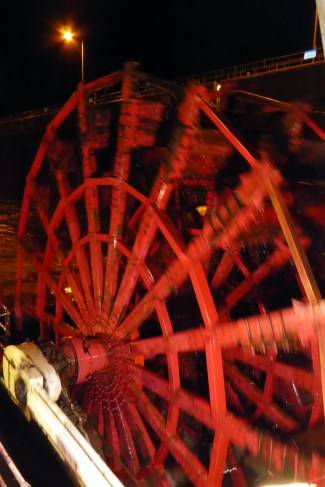
Through those port holes, I was mesmerized by the turning of the huge red paddle wheel, as I listened to the music.  During the break, I stepped out on deck to enjoy the view up close.

39

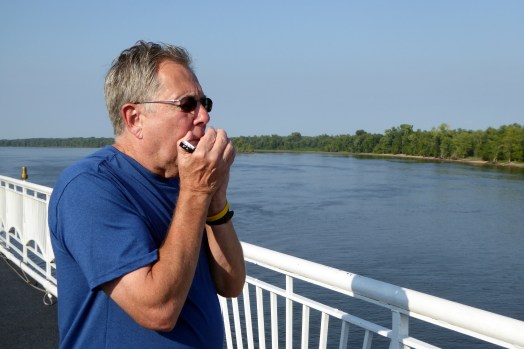
It was during those early days of the cruise that I tried to convince Bruce to ask if he could sit in with the guys and play his harmonicas.  He had brought a few harps with him and played a little bit on deck when nobody was around; however, I knew Bruce would enjoy playing with the guys.  He had played drums and harmonica in bands back in high school and college, and I’ve seen him get enthusiastic applause and glowing compliments each time he’s played since getting back into music.  He only plays occasionally now, and sits in from time-to-time with a really good rock and blues band, when they perform fundraisers for local charities.  They love to have him join them, and he fits right in.  Not to brag about my husband, but the guy is good.

P1140201.JPG

P1140203

Not wanting Bruce to regret being too humble to ask to sit in with the guys on board, I stepped in with a little nudge.  I told Jim and Norman that Bruce had a few harmonicas with him, and he would love to sit in.  Oh yeah… and, Bruce is good.  I’m sure they thought to themselves, “Yeah, that’s what they all say; we’ll let him join us—for just one song.  Period.”  To me and Bruce, Jim actually said, “Sure, bring your harmonicas with you next time, and I’ll bring you up to sit in on a tune.”

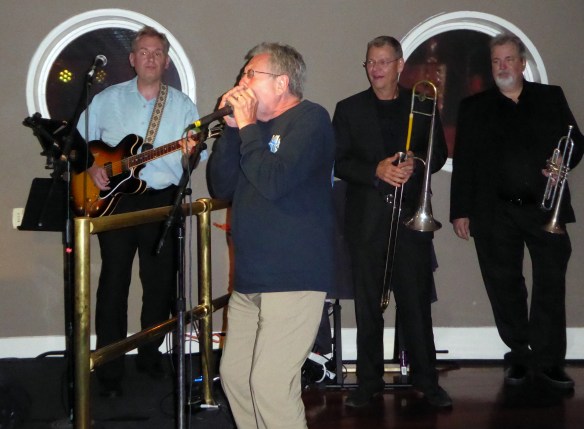
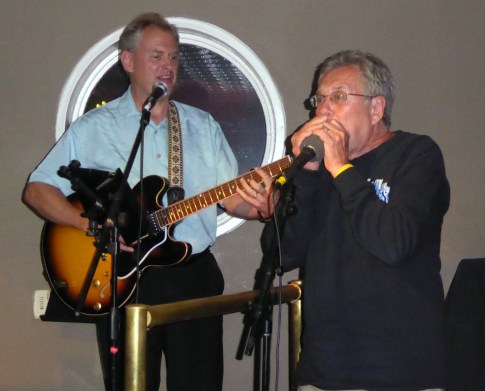
The next night, that one tune was all it took.  They invited him back onstage for another, and another, and… Every time we saw Jim and Norman around the ship, they wanted to know if Bruce was going to come sit in at the Engine Room bar that night.  One time, Bruce went to an afternoon Dixieland Jazz performance that included the show band and Engine Room performers, and Norman sent him back to the cabin to get his harmonicas!  When Bruce protested that he played blues, and Dixieland wasn’t his genre, Norman shot back, “That’s ok; you’ll figure it out!”

P1140921

Jim-Bruce.JPG

P1140920.JPG

P1150377.JPG

That’s Norman, the American Queen Steamboat Company’s musical director on piano and Jim, on guitar.

Now, Norman was not only the musical director for the American Queen, but he was also the musical director for the other two American Queen Steamboat Company riverboats, the American Empress and the brand new American Duchess.  He knew his stuff!

At the end of the cruise, when I told Jim how much Bruce enjoyed sitting in with him and Norman, he told me how skeptical he was when I first asked him to let Bruce sit in.  Having had nearly all give-it-a-miss experiences with passengers sitting in, he was prepared for Bruce to be a one-and-done.  Let him sit in once, so he could have that memory to tell all his friends, and then never invite him back on stage.  Instead, Jim told me I should have asked earlier in the cruise, instead of waiting until the last week!  Norman echoed the same sentiments, and they both kept thanking him.

Bruce learned his lesson, and I’ve learned mine.  Harmonicas have been added to the packing list for our upcoming American Duchess and American Empress river cruises, and if Bruce leaves them behind the first night, I’ll bring them myself!  After all, I can just tell the band, “Norman and Jim told me to ask you if Bruce can sit in.  They said you wouldn’t be sorry.”


Coming up next, I back up one week to August 21, 2017, the day after visiting Hanibal, Missouri.  Our next port was Alton, Illinois, our home-base for the day while visiting St. Louis in the morning, and Alton in the afternoon for the solar eclipse.

HANGIN’ IN HANNIBAL

It had been years since I had read a book by Samuel Langhorne Clemens; however, memories of The Adventures of Tom Sawyer and The Adventures of Huckleberry Flinn came back to me during our visit to Hannibal, Missouri.

Hannibal was the boyhood home of Clemens (aka Mark Twain), and it inspired the setting for those two novels.  Many of Twain’s haunts have been restored to their historical accuracy, so the entire town has a Mark Twain feel to it.

P1140208-MarkTwain

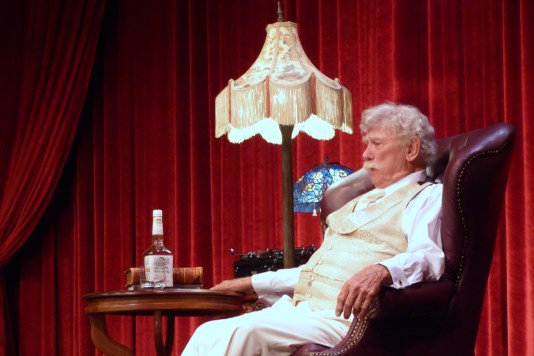
Samuel Clemens (aka Mark Twain) visited with the passengers one evening aboard the American Queen.  He never broke character, even during the Q&A session after his monologue!

P1140334

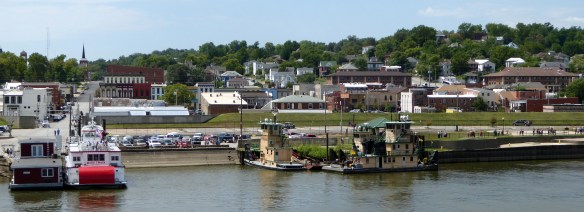
Hannibal, Missouri

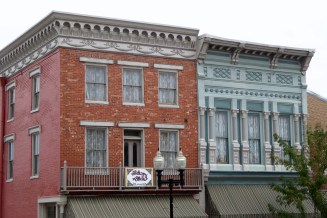
It’s a picturesque little town with houses dotting the bluffs that border the river, and attractive 1800’s-era businesses that quaint and well-maintained to attract the tourists.  The shops and restaurants are even named after Mark Twain characters.

P1140262P1140305

We enjoyed our tour of Mark Twain’s childhood home and the Mark Twain Museum—both well worth the visit, especially the Norman Rockwell exhibit at the museum.  They thought of everything, even making the famous fence a tourist destination, complete with paint brush and bucket!

Have you ever wondered how the name “Mark Twain” was chosen by Clemens?  If you remember back to Clemens’ novels, Mark Twain was fascinated by the Mississippi River and wanted to become a river pilot.  Back in the 1850’s, river pilots didn’t have modern navigational aids.  When entering shallow water, a man was sent to the front of the boat with a lead weight tied to a rope.  He tossed the rope out in front and let it sink to measure how deep the water was.  A series of knots were tied in the rope at measured distances.  A “mark” was the distance of six feet (the same as a fathom in the ocean), and “twain” meant two; so, the knot at “mark twain” meant the water was twelve feet deep.  For river boats, twelve feet was safe water and mark twain meant “safe water ahead”, so Clemens like the way that sounded!

The Unsinkable Molly Brown was another famous character from Hannibal.  Remember her?  She was the Titanic survivor who heroically helped rescue many women and children during the disaster.  She was a distant relative of Mark Twain’s, and Hanibal was her home as well.  (Her home was open for touring as well; however, we didn’t visit it.)

We found Hannibal to be quite a charming town and well worth hangin’ out in for a day along our Mississippi River voyage.

P1140355.JPG

P1140356

P1140360

Meanwhile, back on the American Queen Steamboat, the evening entertainment aboard the paddle wheeler took an entertaining turn in a more personal way.  Check back for more details in my next post!