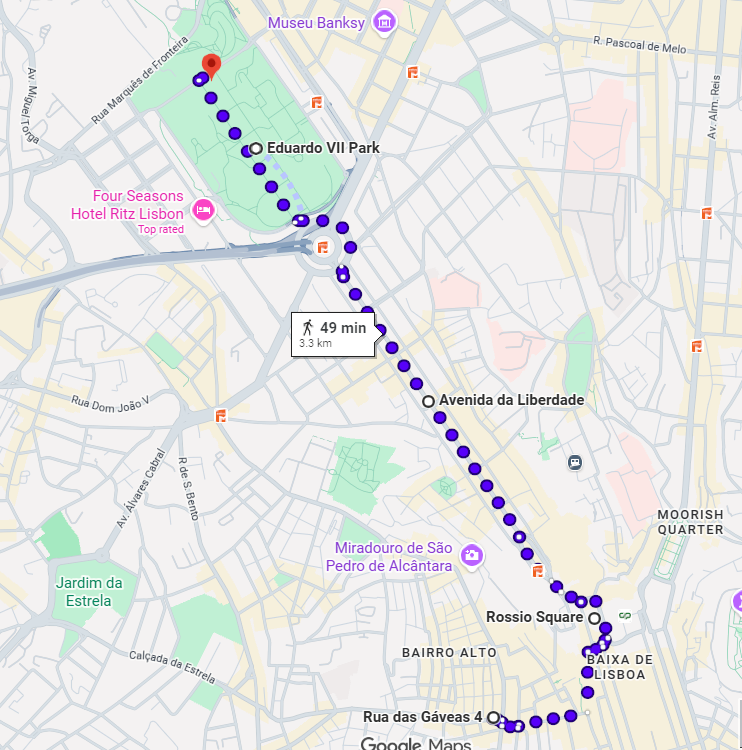
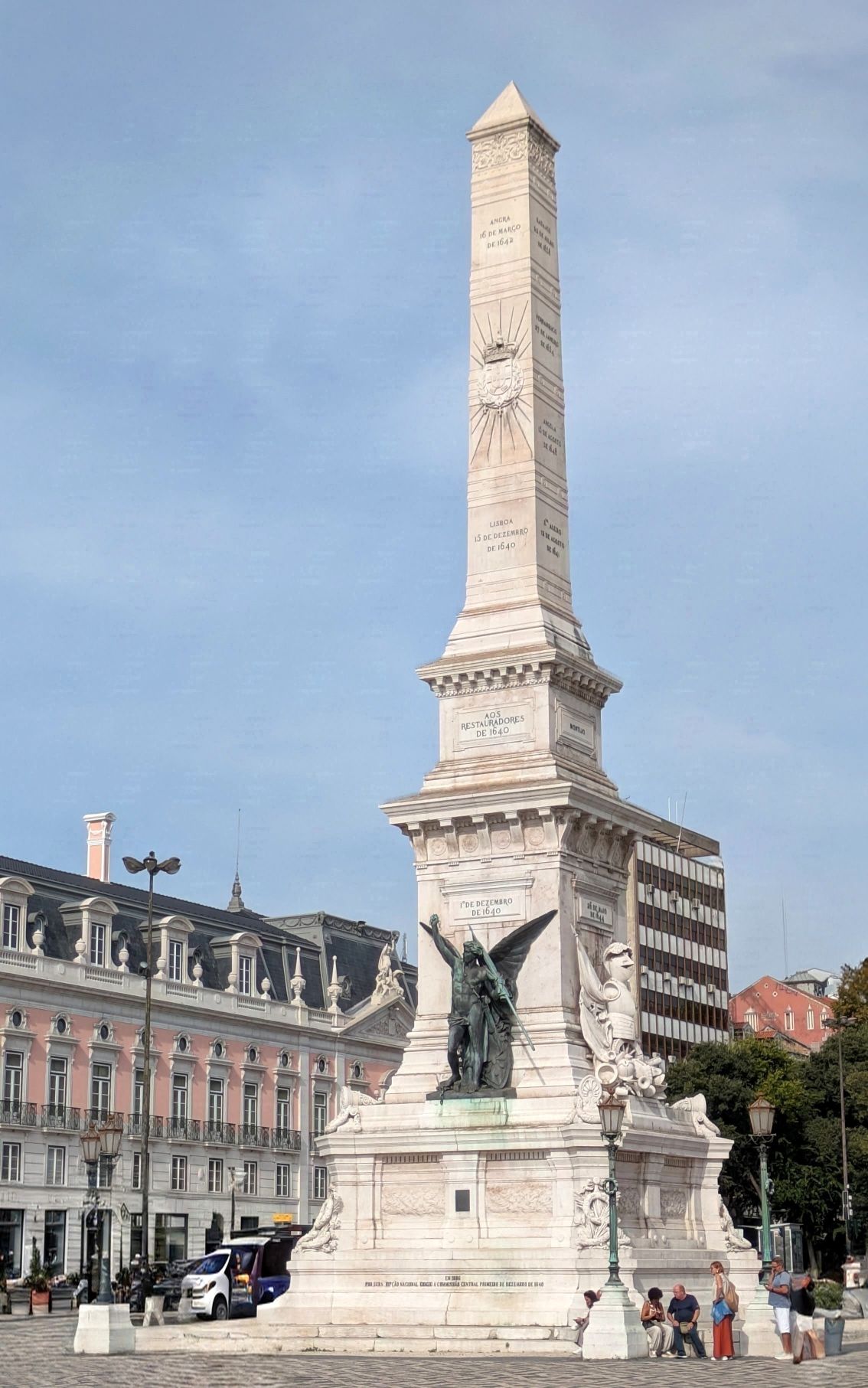
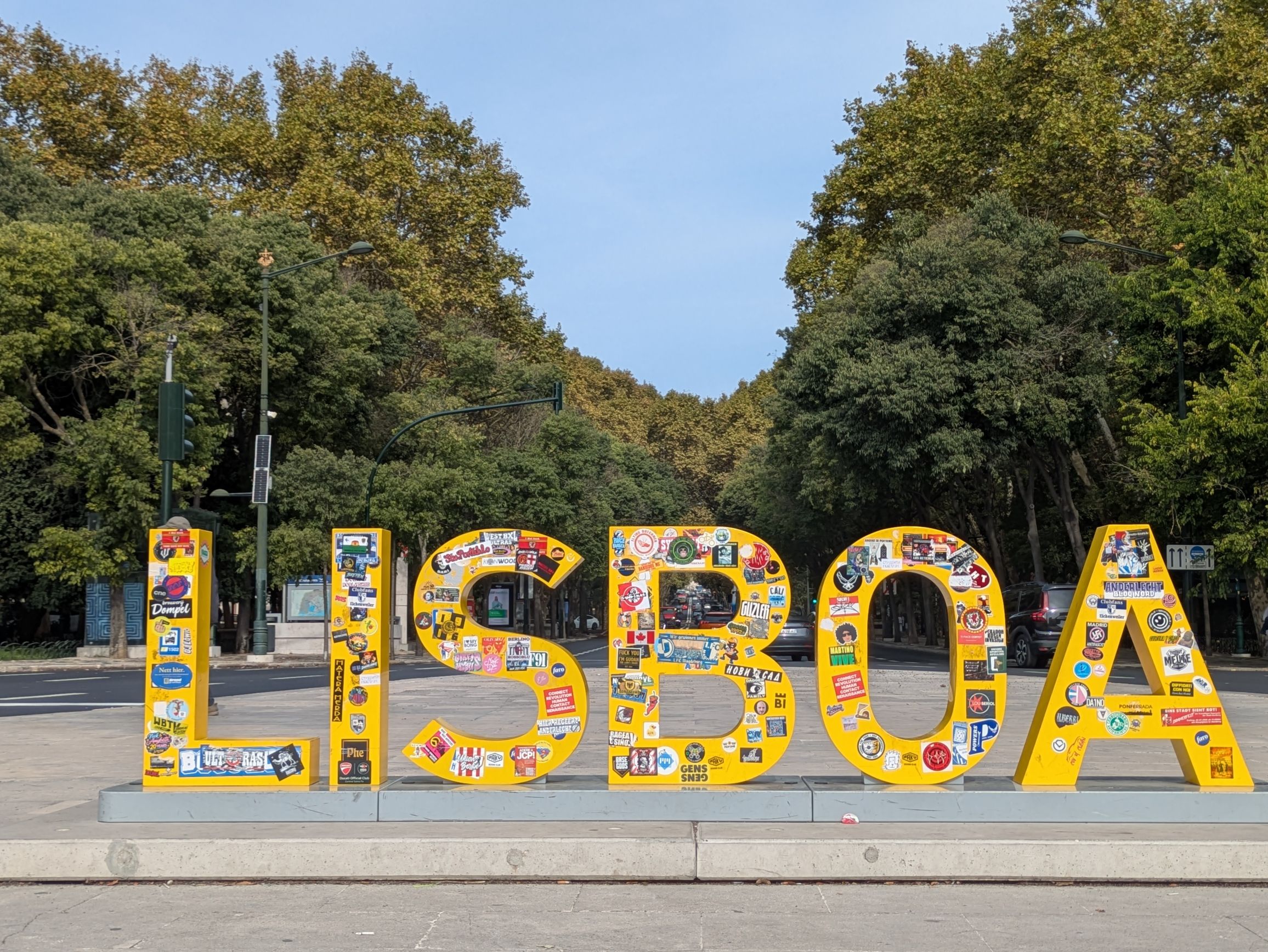
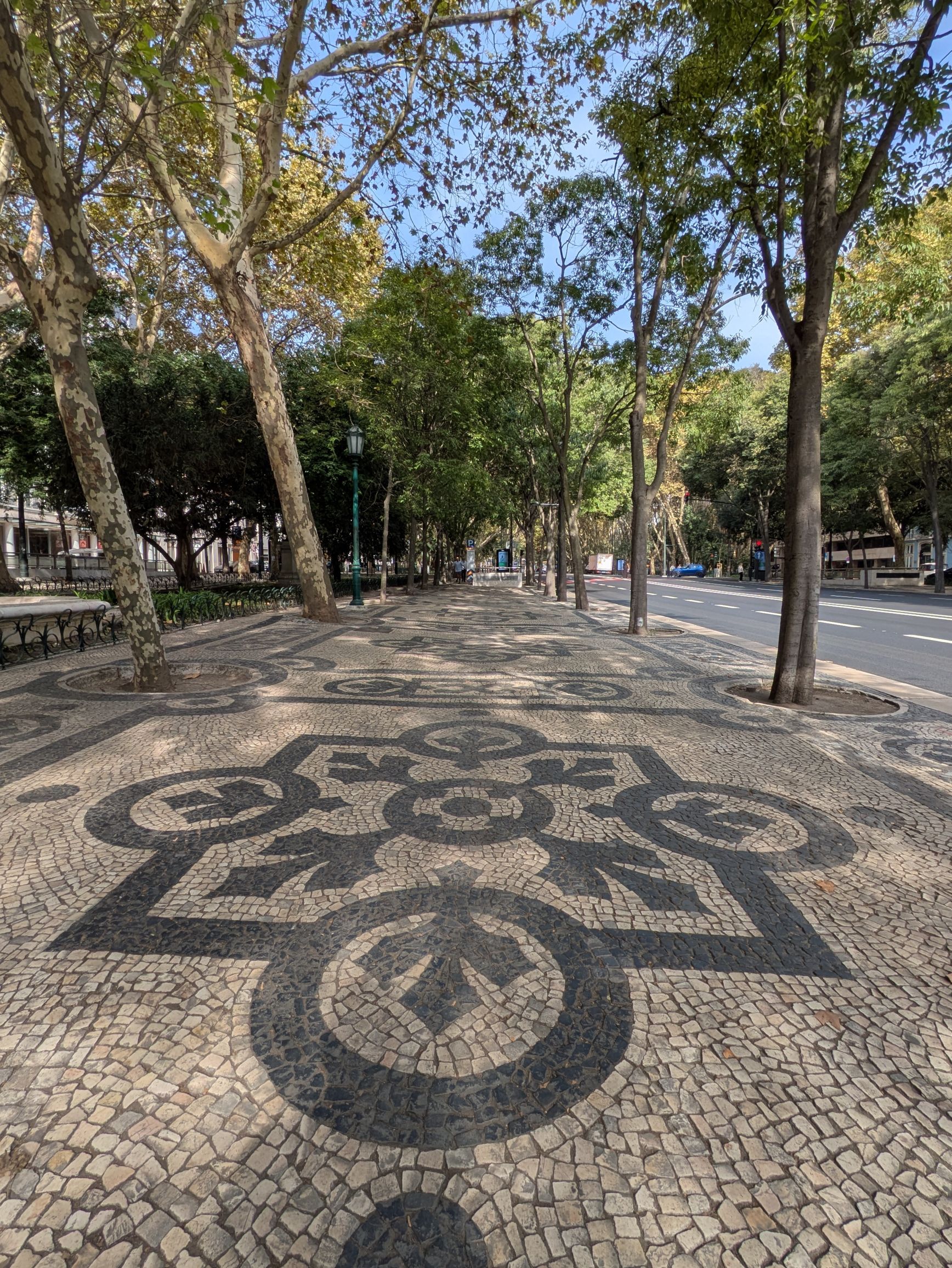
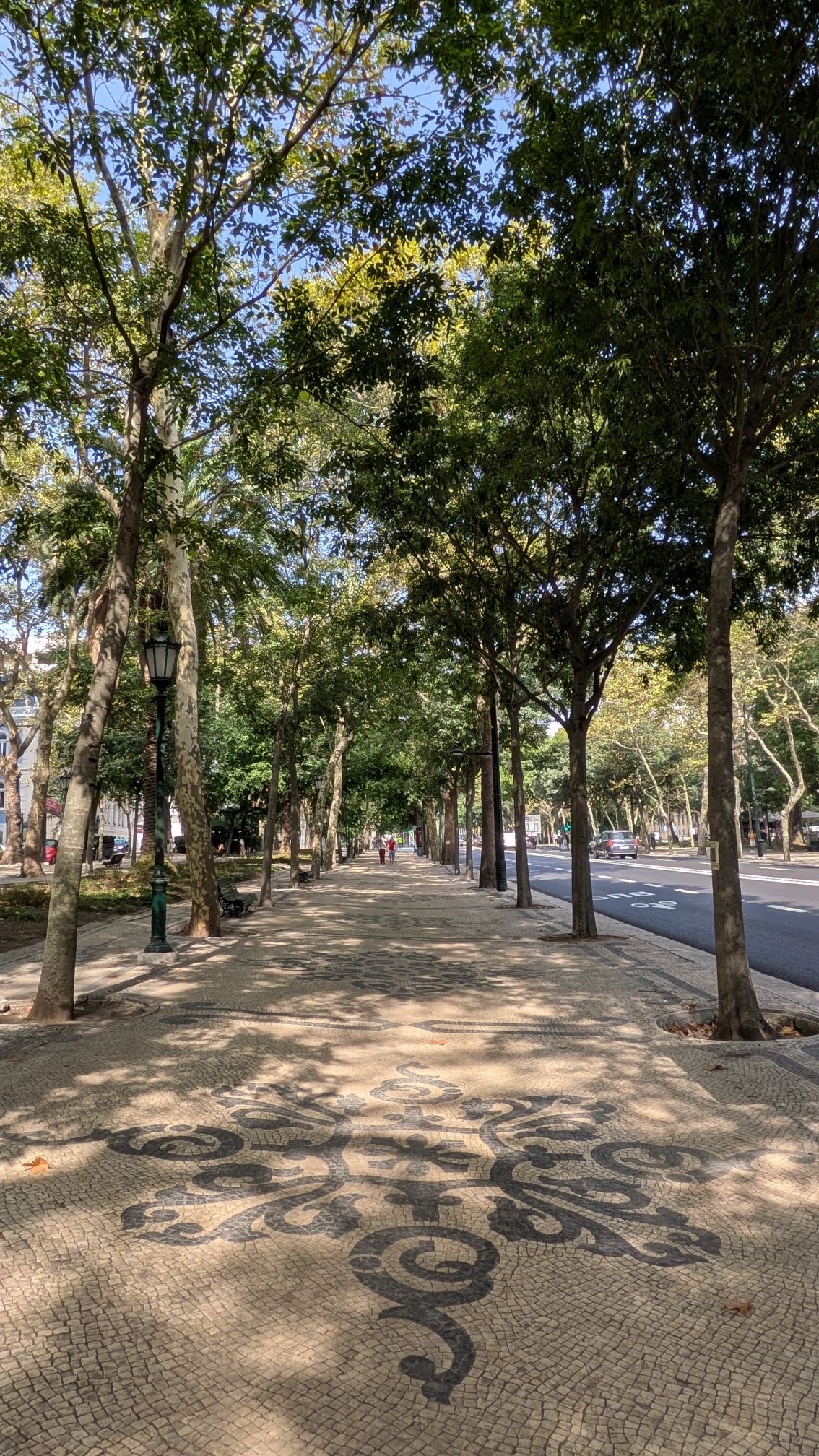
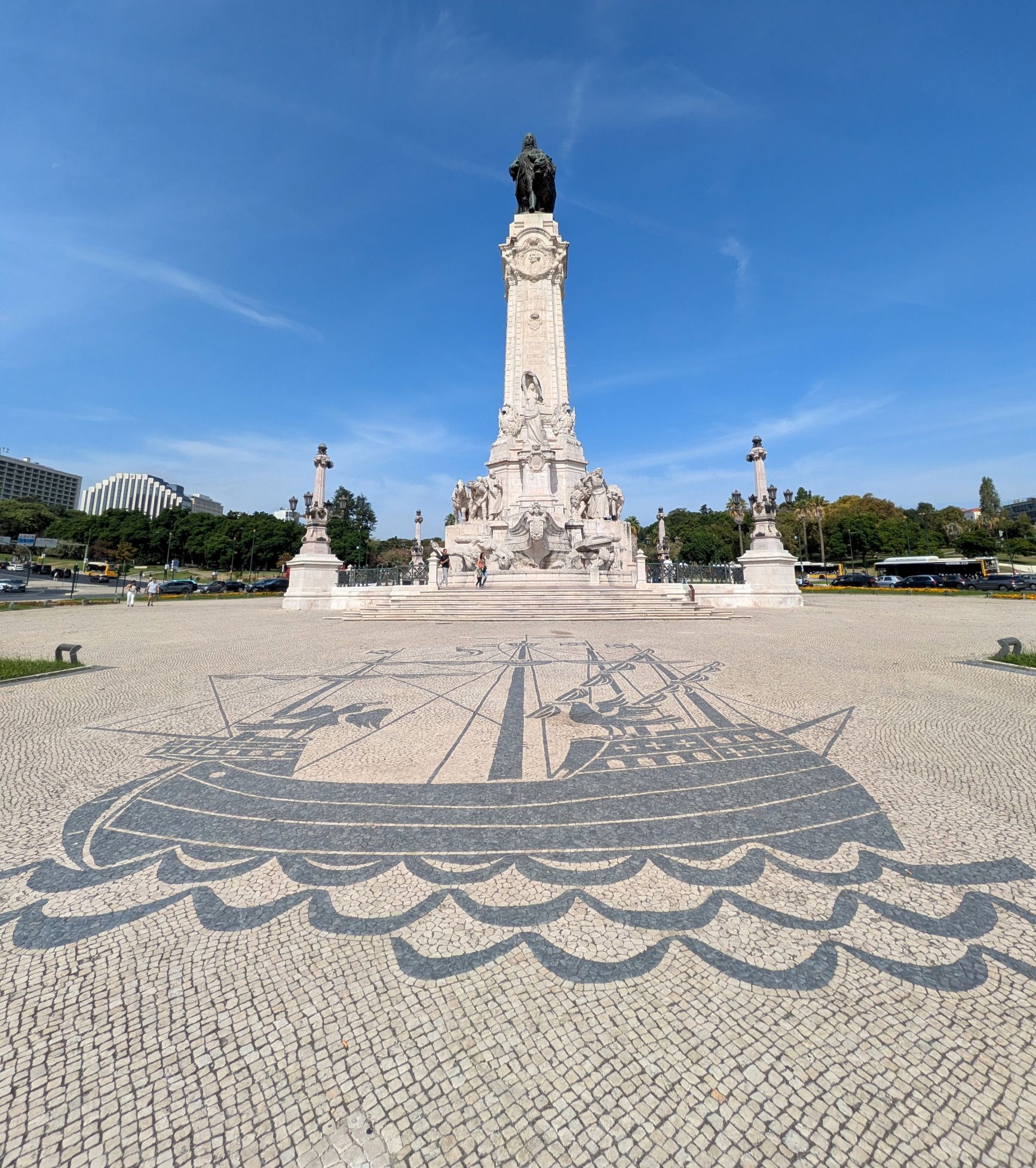
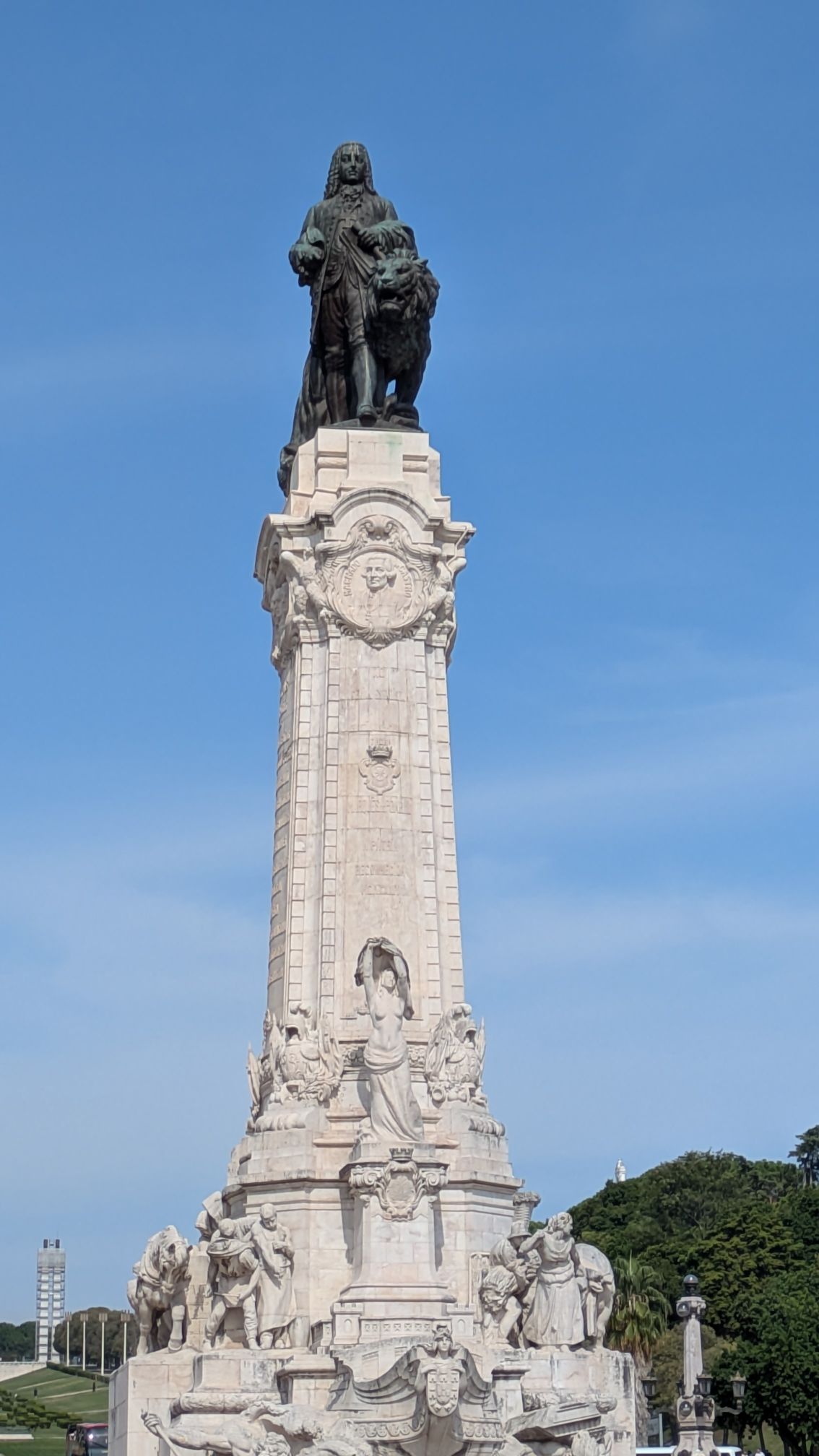
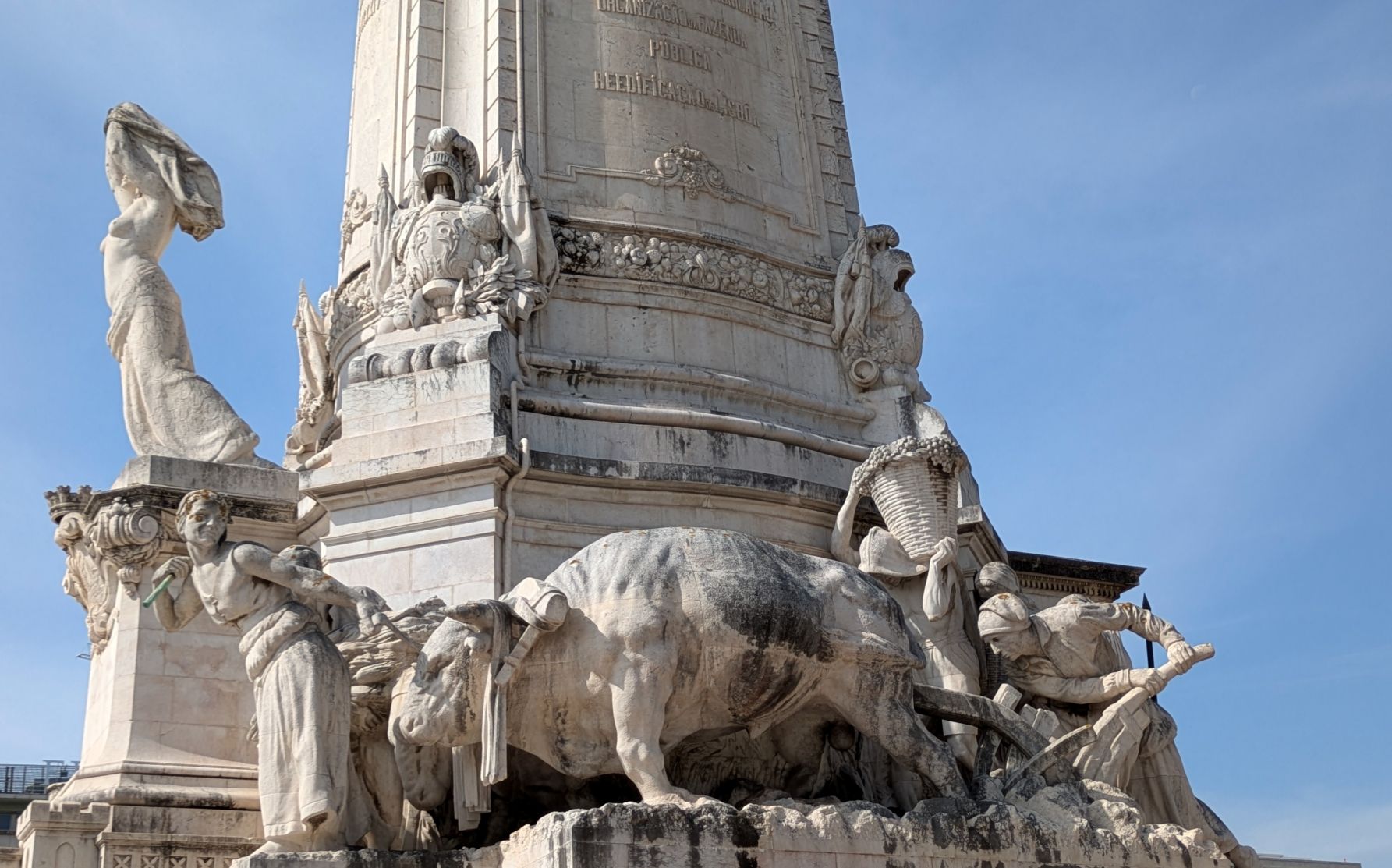
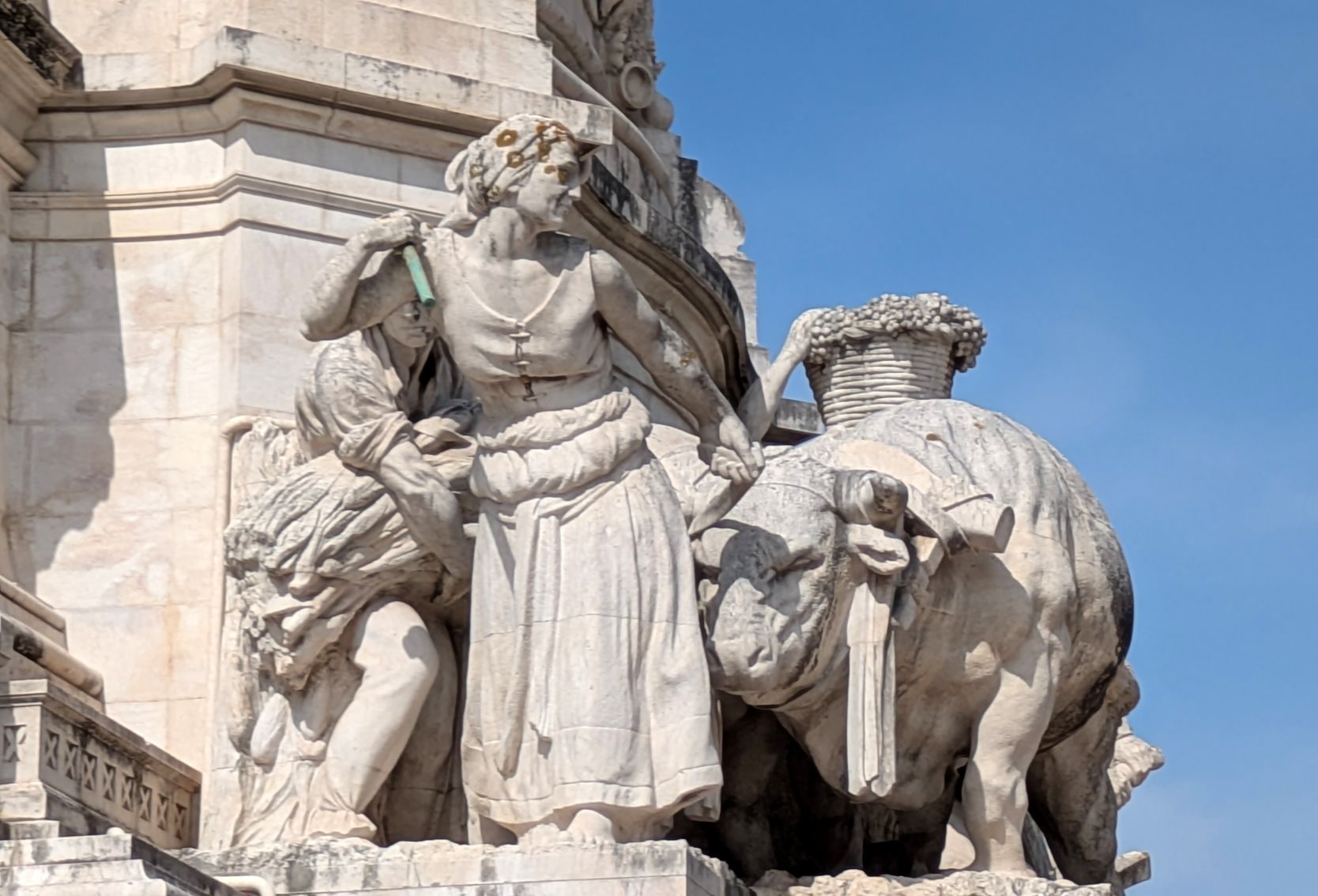
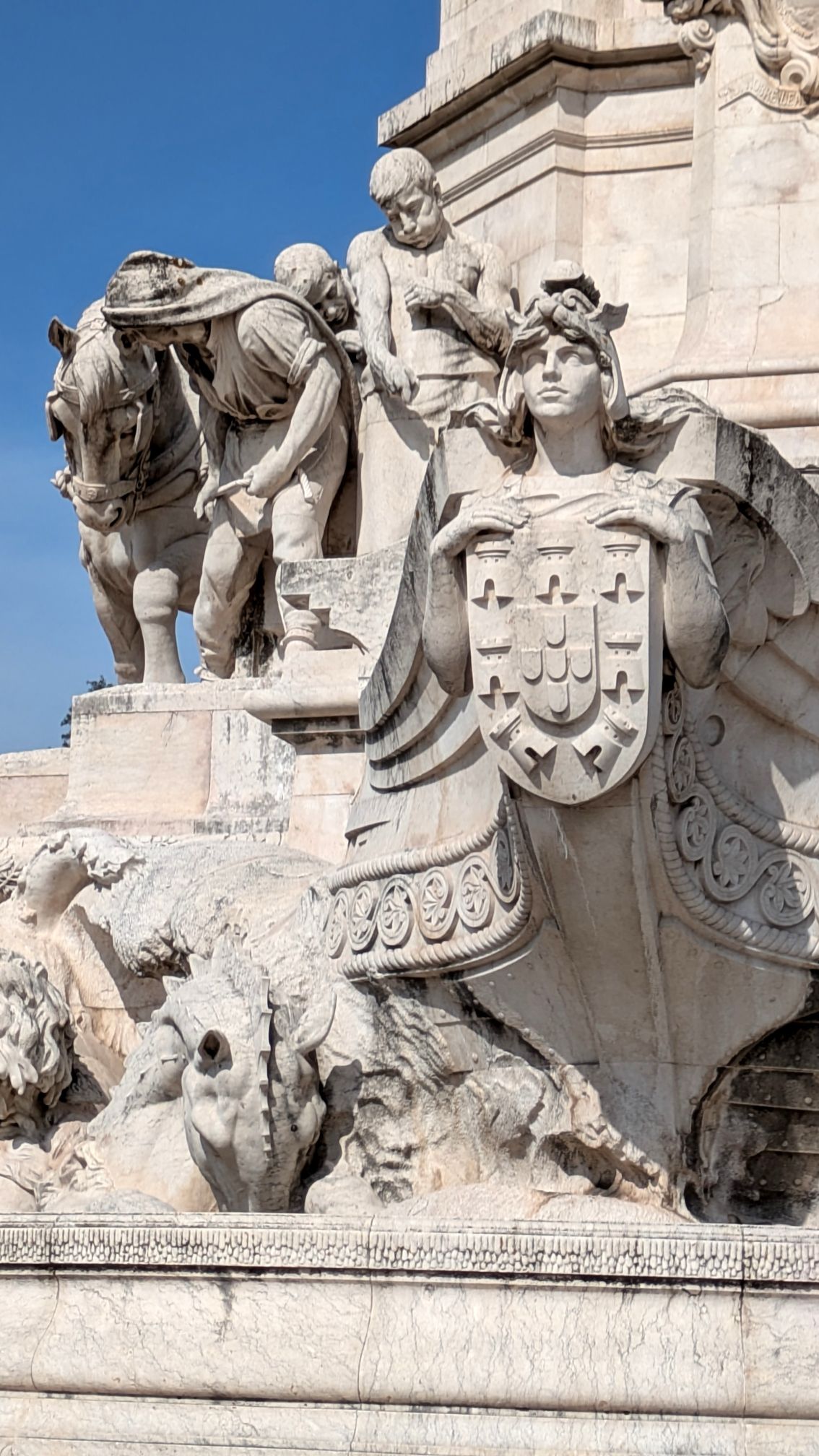
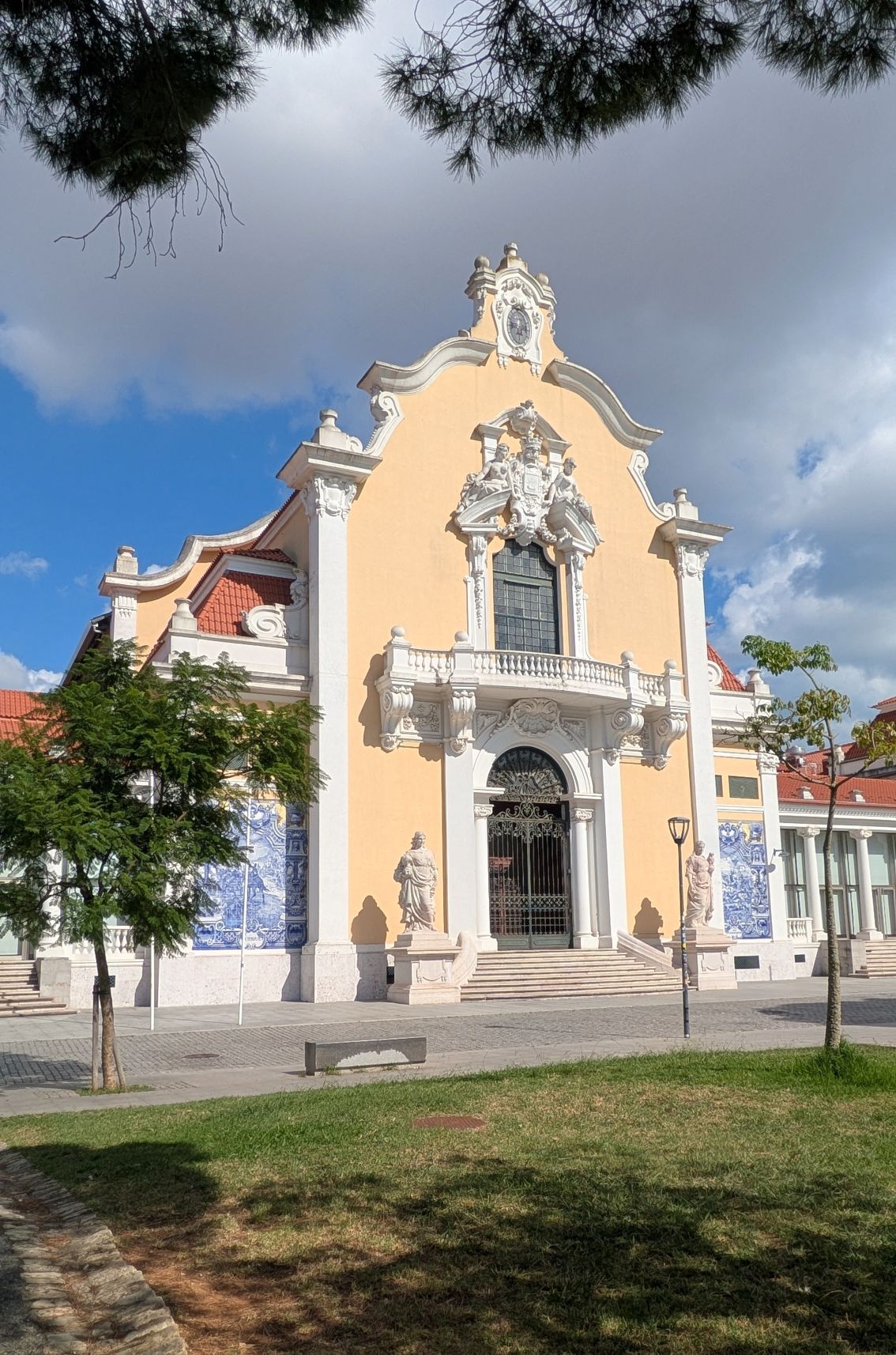
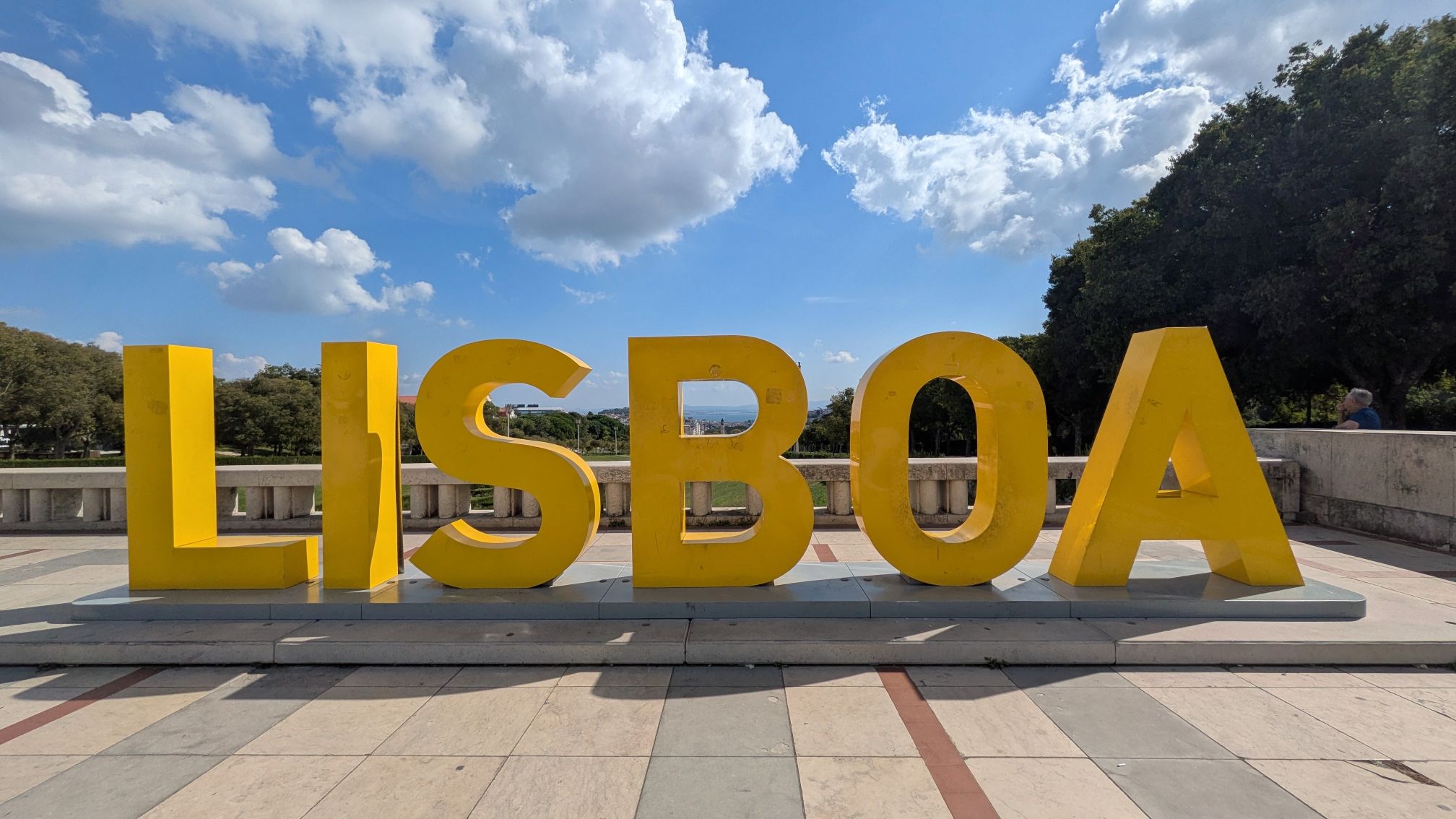
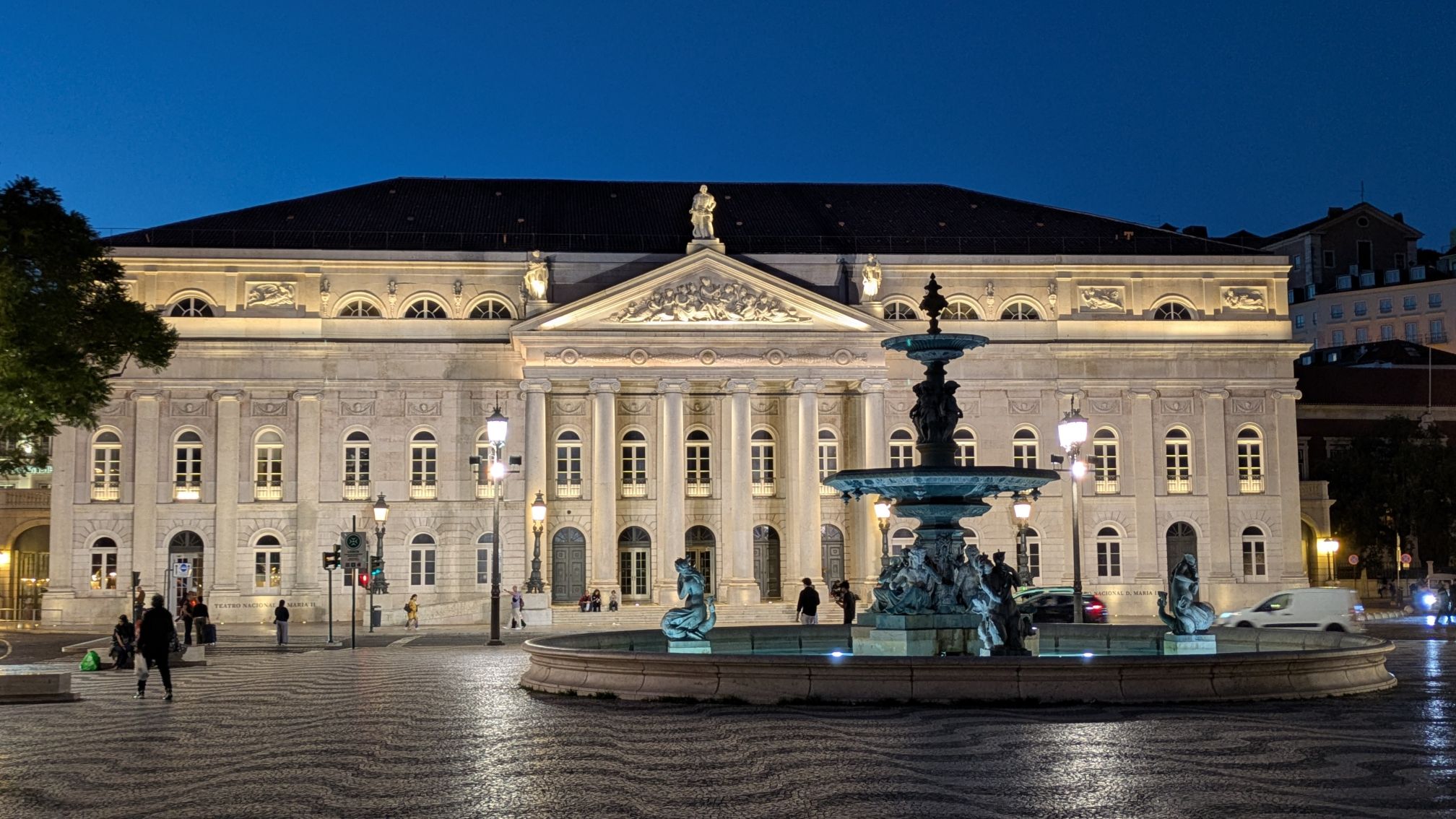
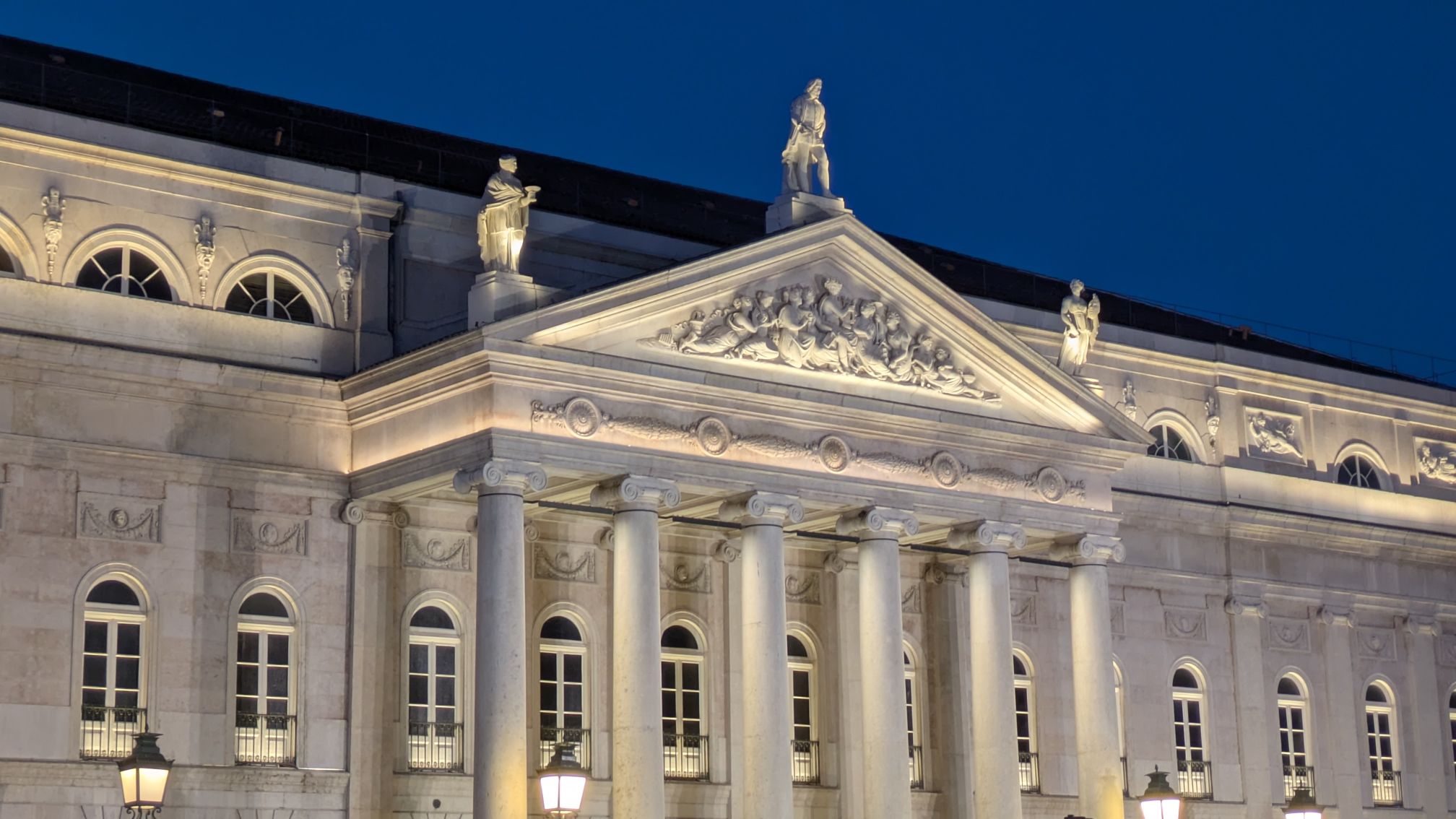
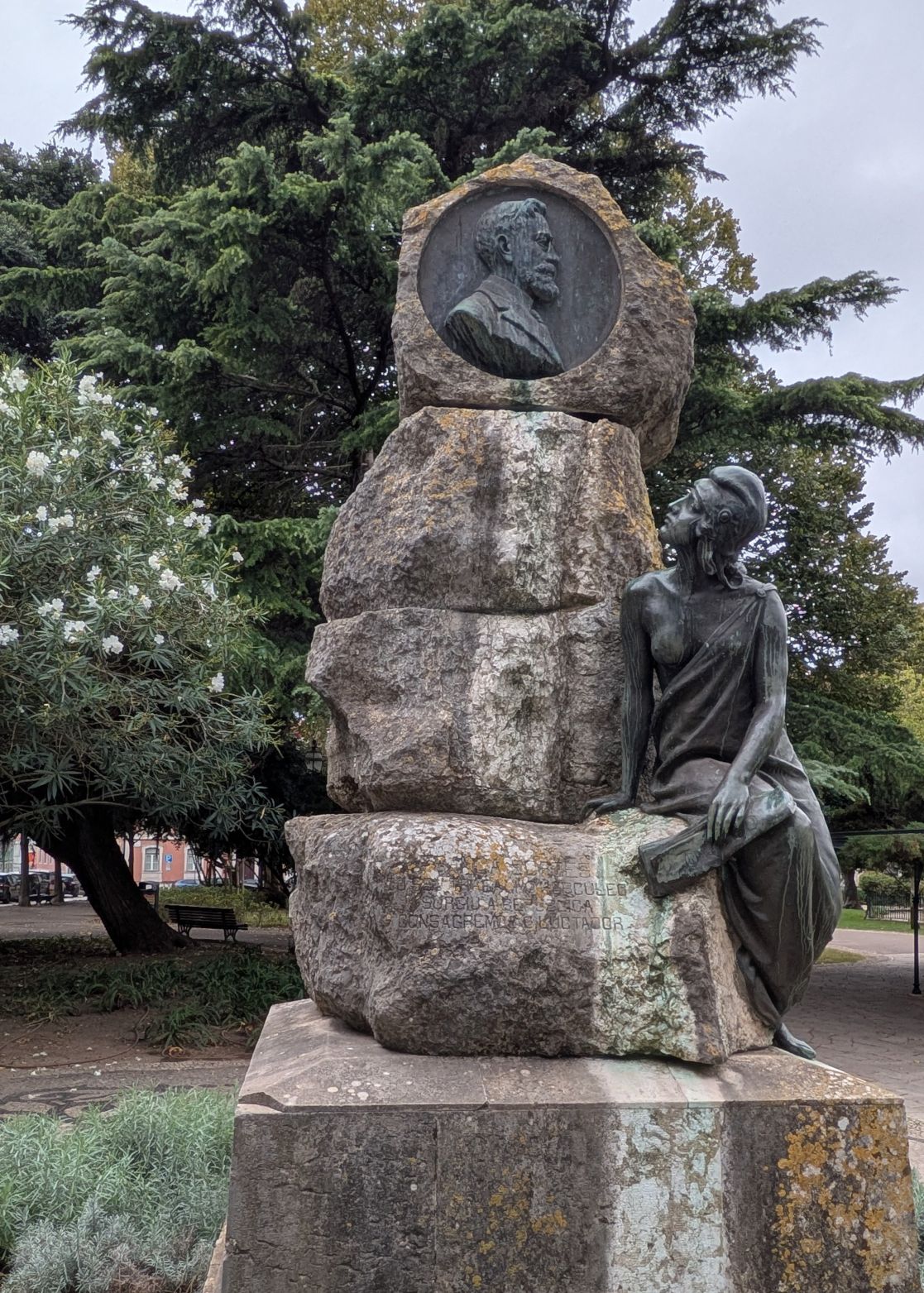
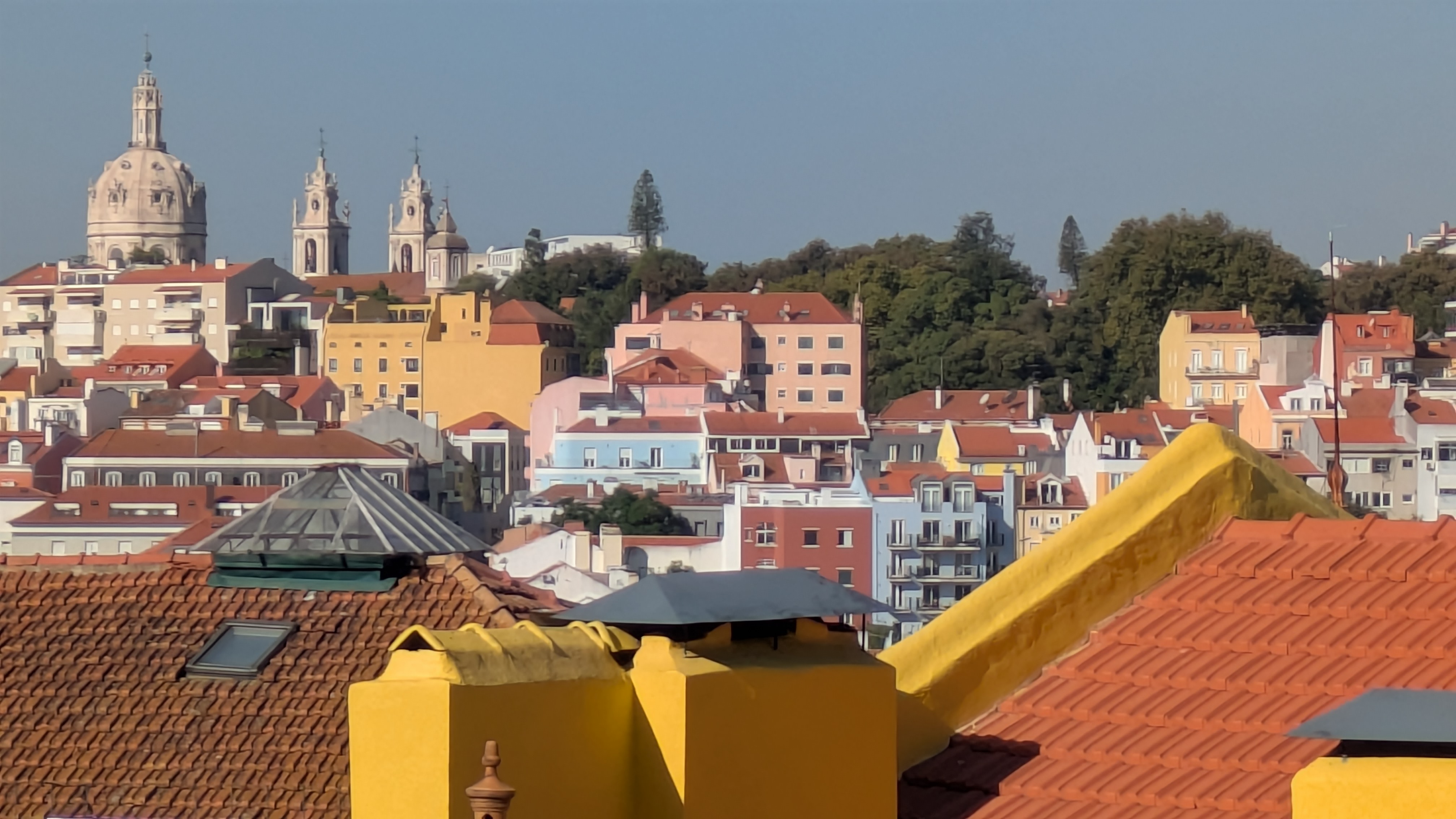
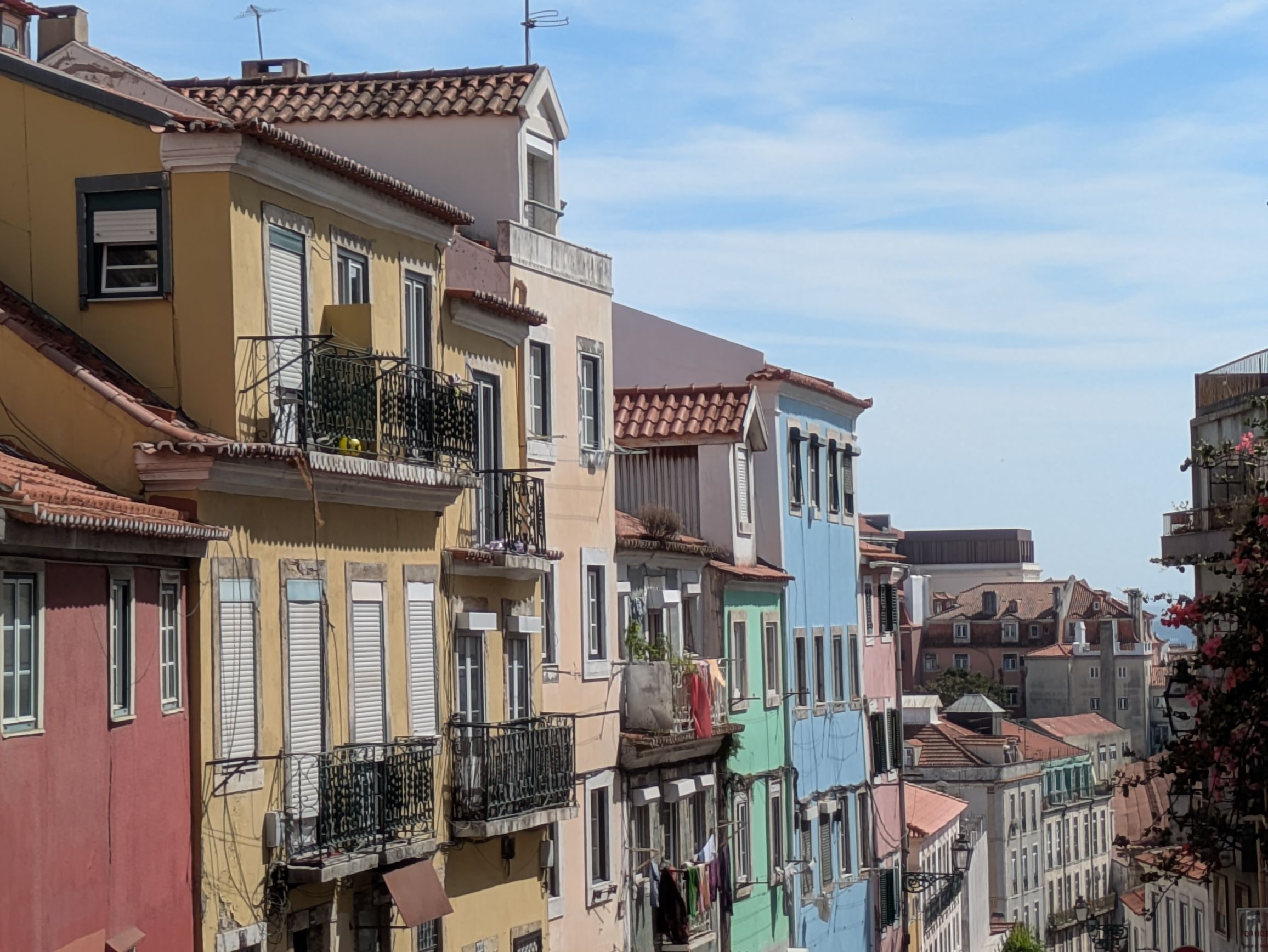
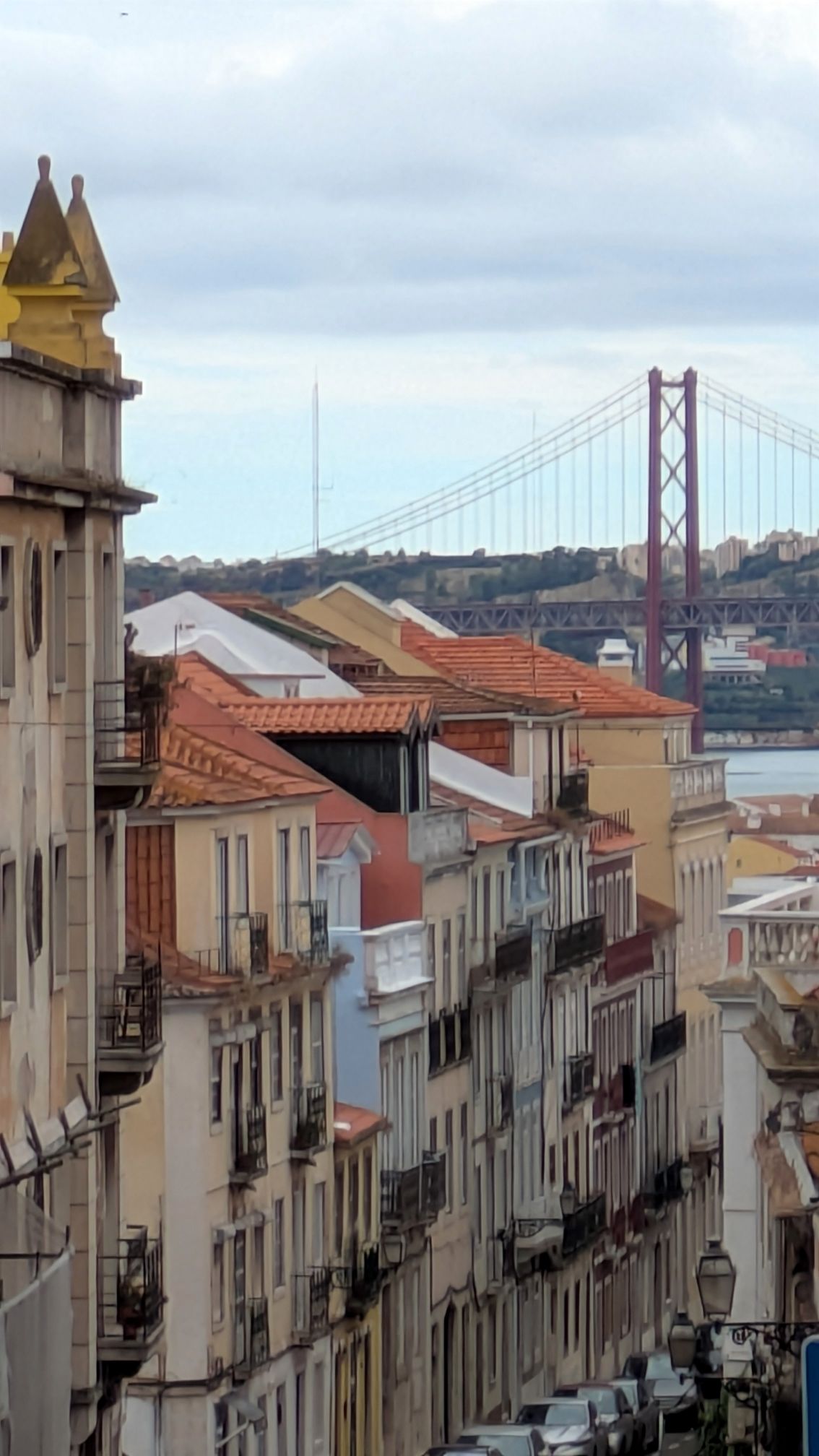
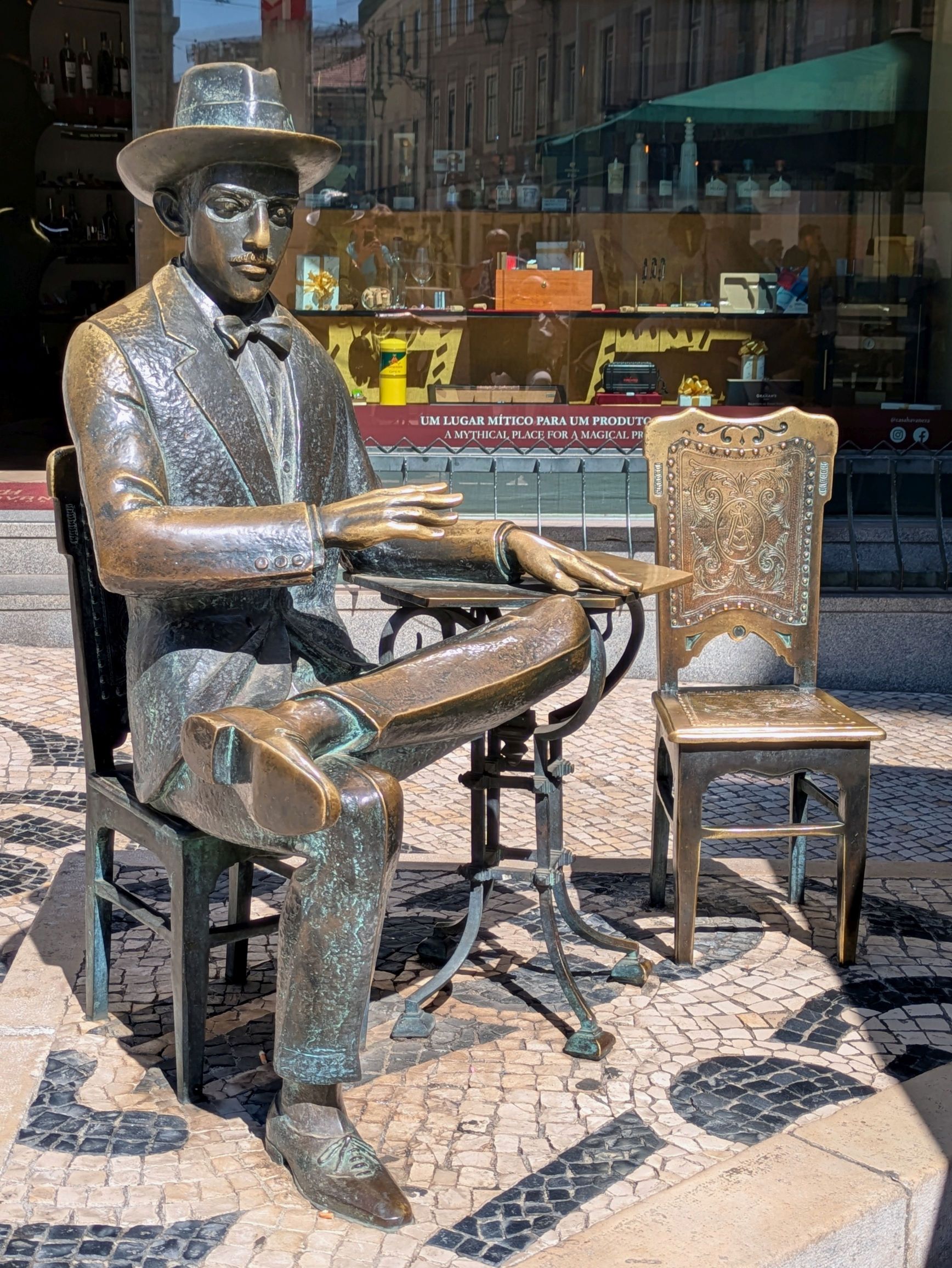
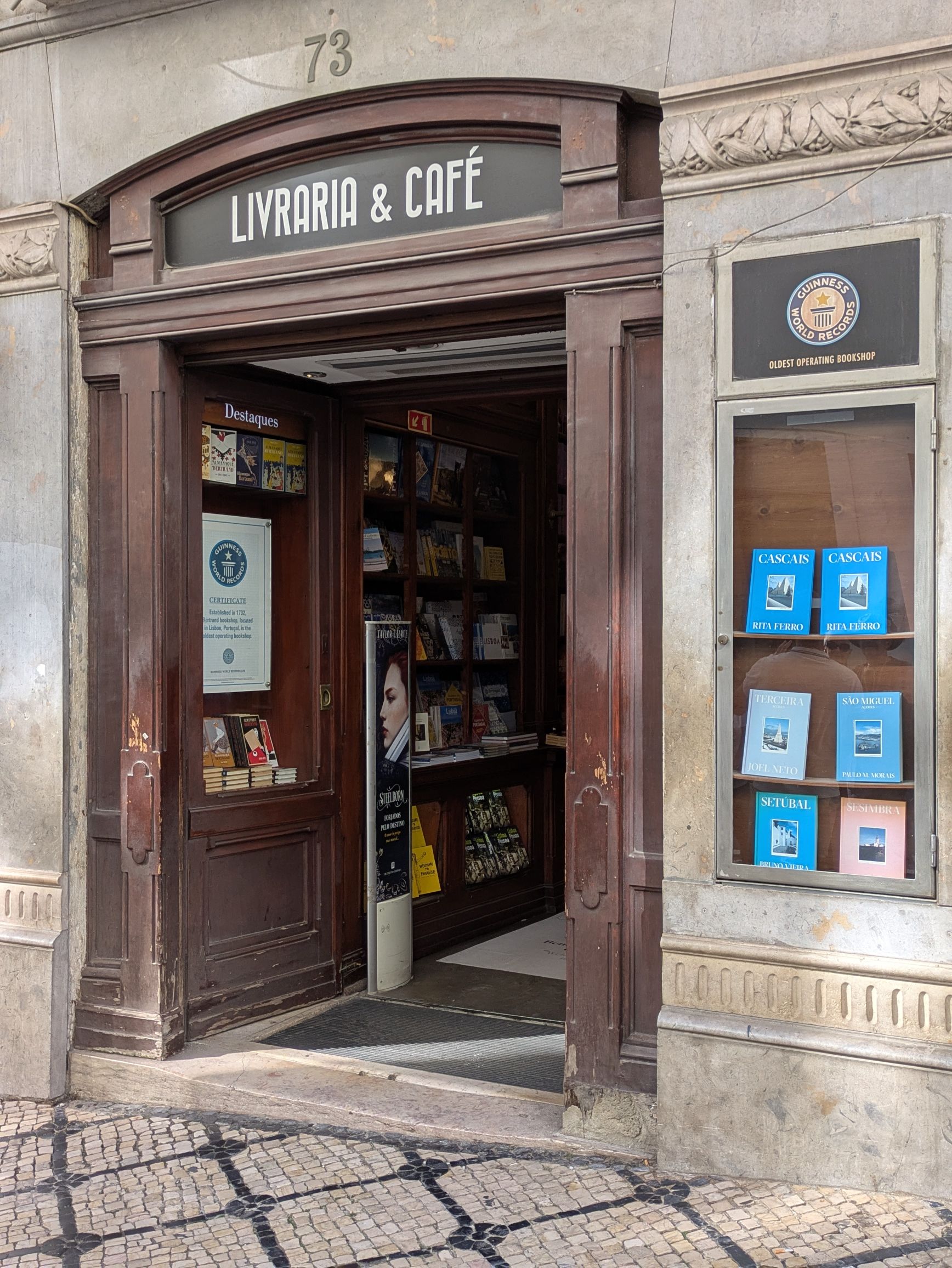
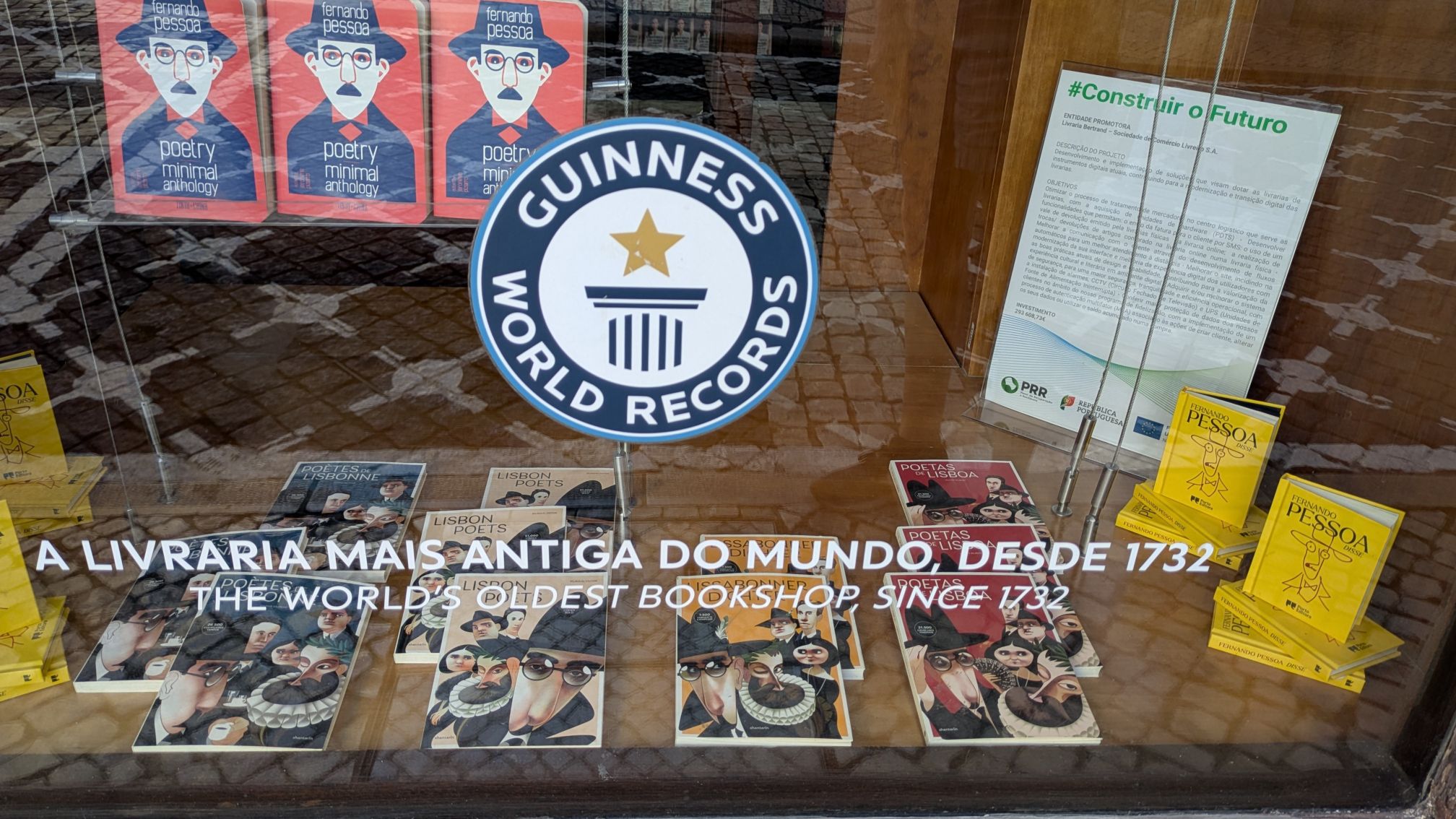
Amblers, have I got a walk for you! This walk begins at our Lisbon apartment at Praca de Luis Camois, and continues past the life-size sculpture of the man in the chair and the world’s oldest bookstore shown in my second post. It then makes a left hand turn to take you down the pedestrian shopping street, which leads you to Rossio Square. Continue through the square, and past the beautiful train station to gorgeous tree-lined Avenida da Liberdade and up to Parque Eduardo VII, passing by beautiful Marques de Pombal. Click here for the map directions, but this is a snapshot of the walk for a quick view:
(For all photos, click on the image for a full screen view.)
If you walk straight through, it would be a two-mile walk (one way), and it would take the average walker 49 minutes. But what’s the fun in that? This is a wonderful walk through some of the nicest areas of Lisbon! Take your time, get off the path to see what’s up that side street, grab a bench under the shade trees and watch the world go by, or stop for a pastel de nata. Bruce and I enjoyed this walk so much, we returned to explore more in other days and at night.
Here, then, is what you will see along the way, after you pass the bookstore, and then turn left onto the pedestrian shopping street:
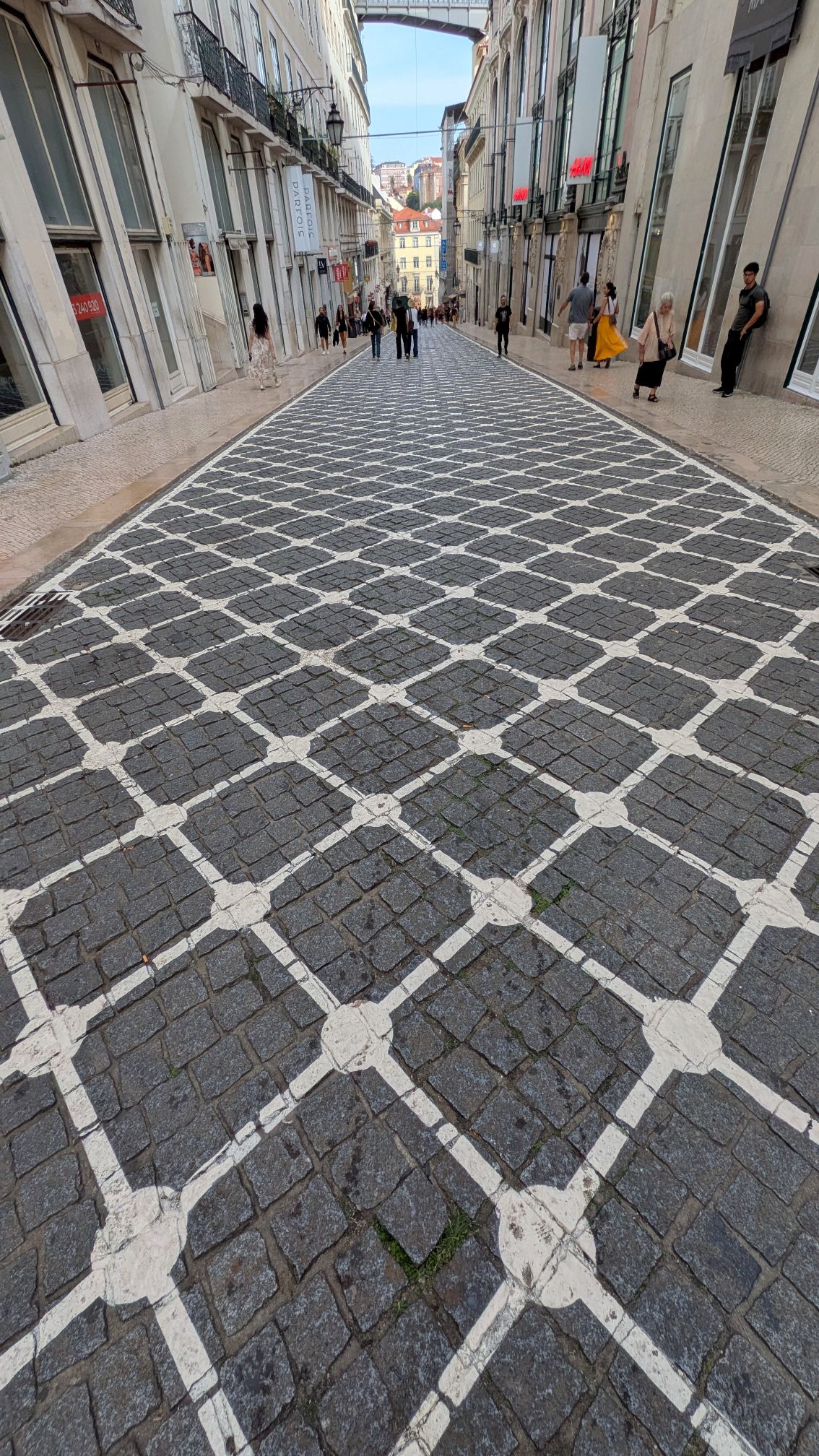
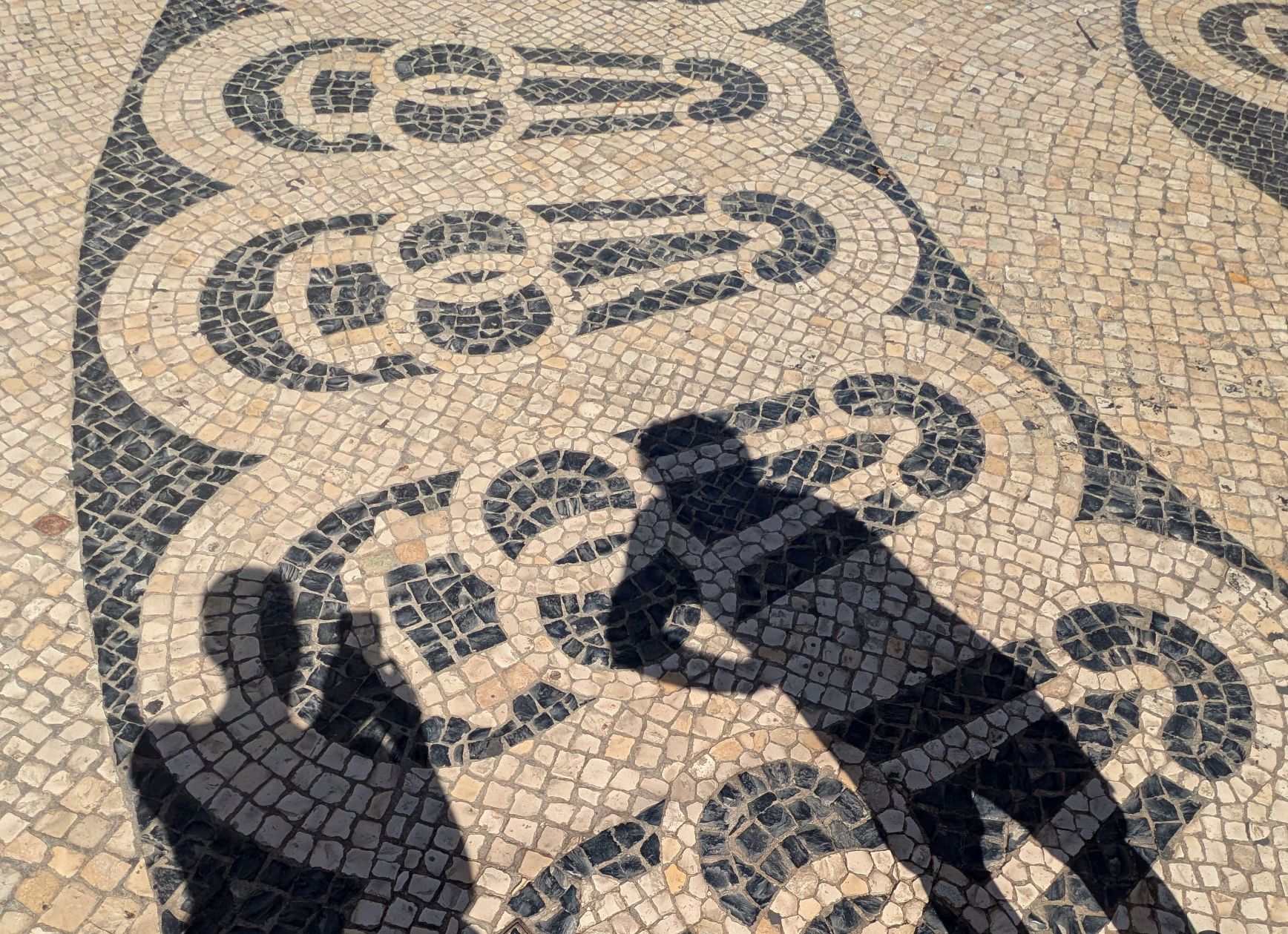
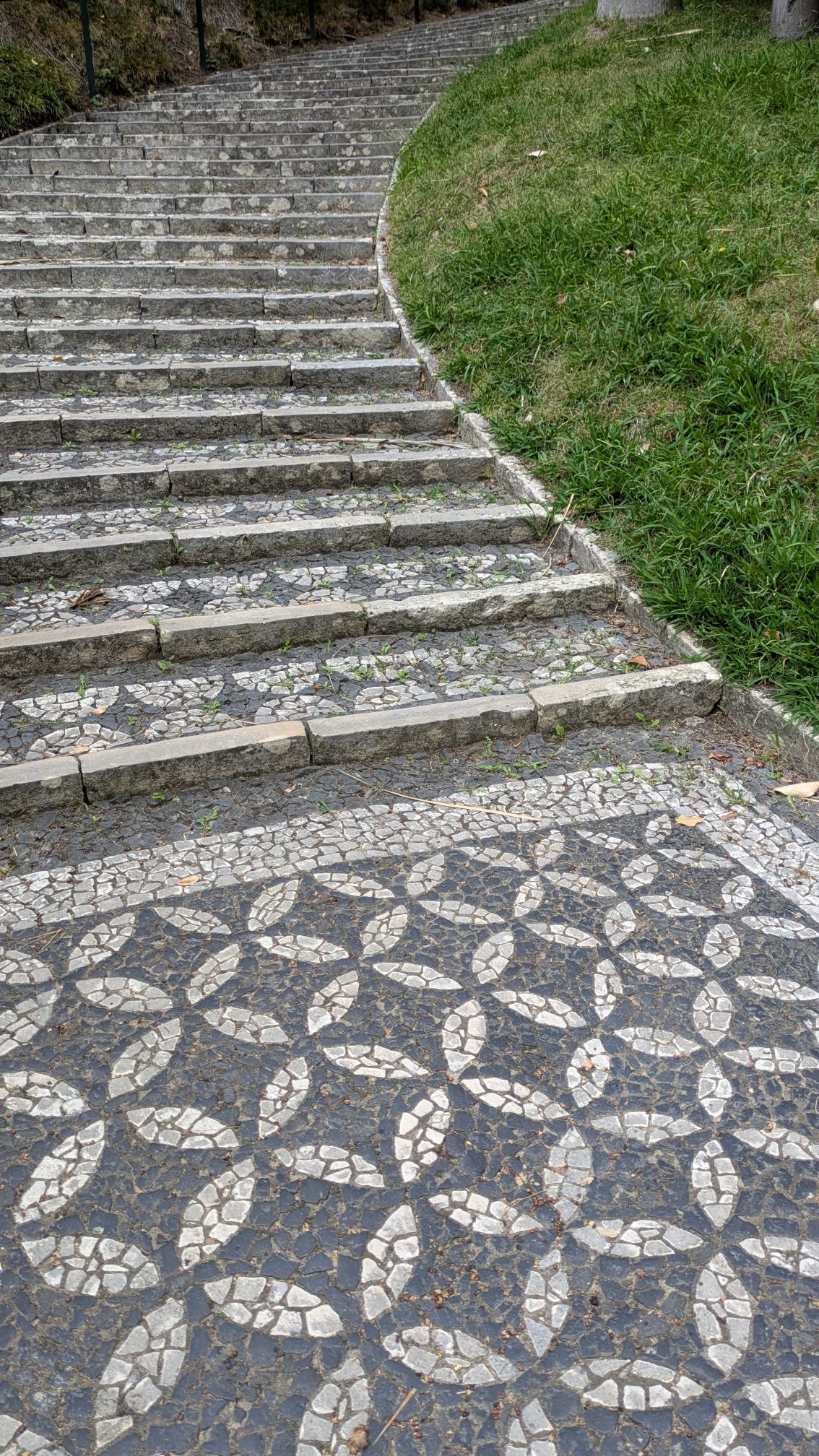
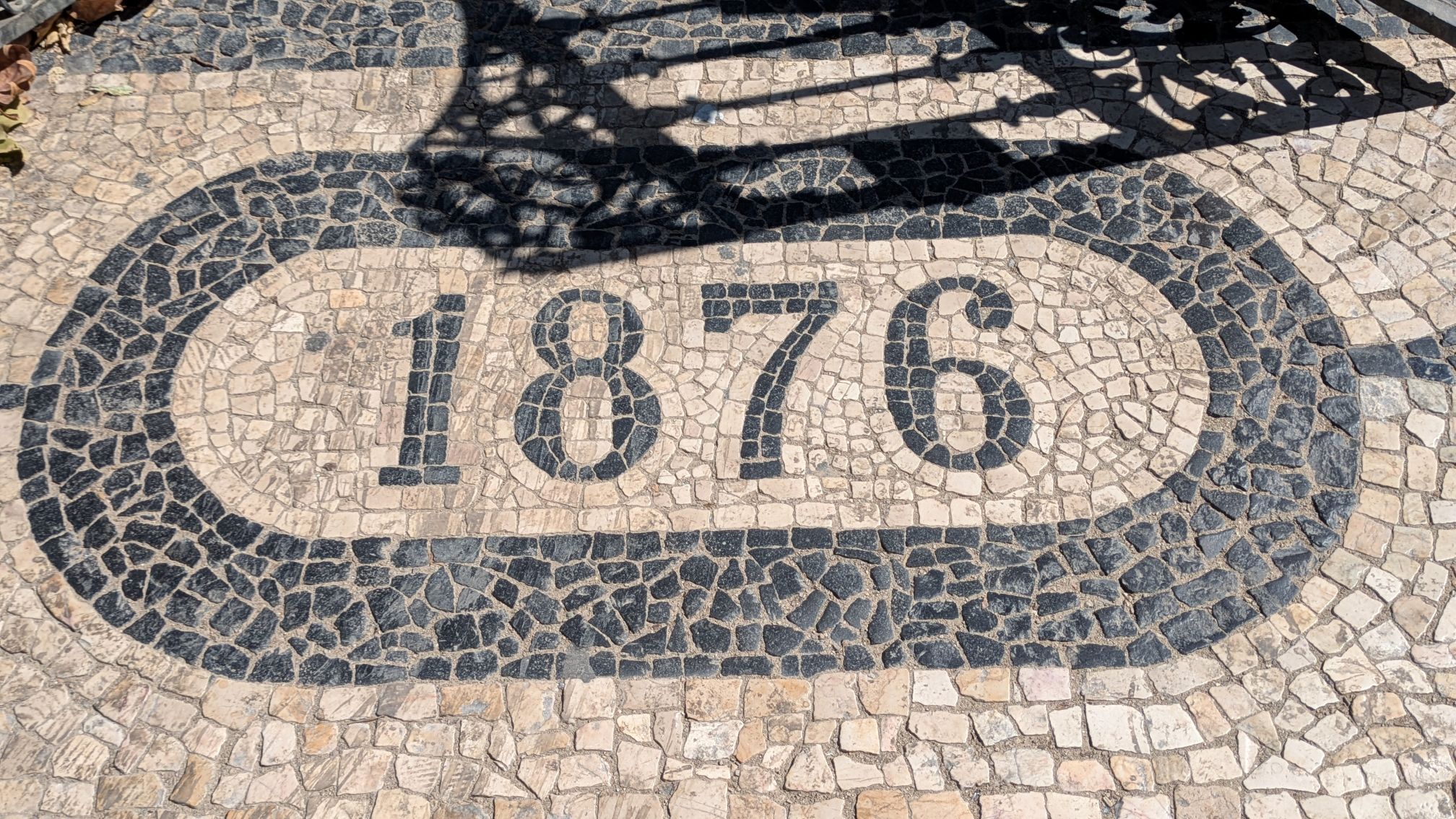
Pedestrian streets are marked with white paint in a design.
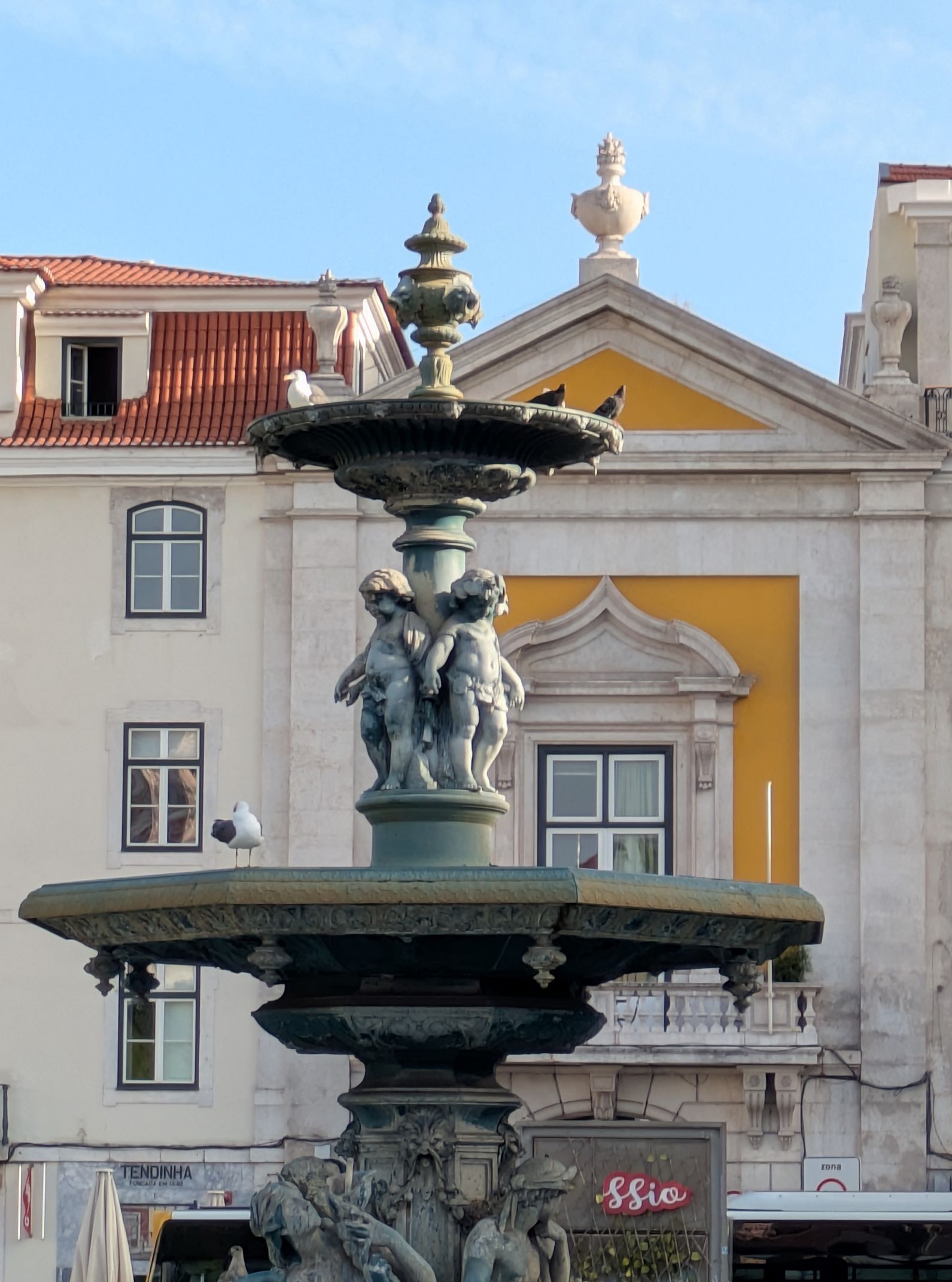
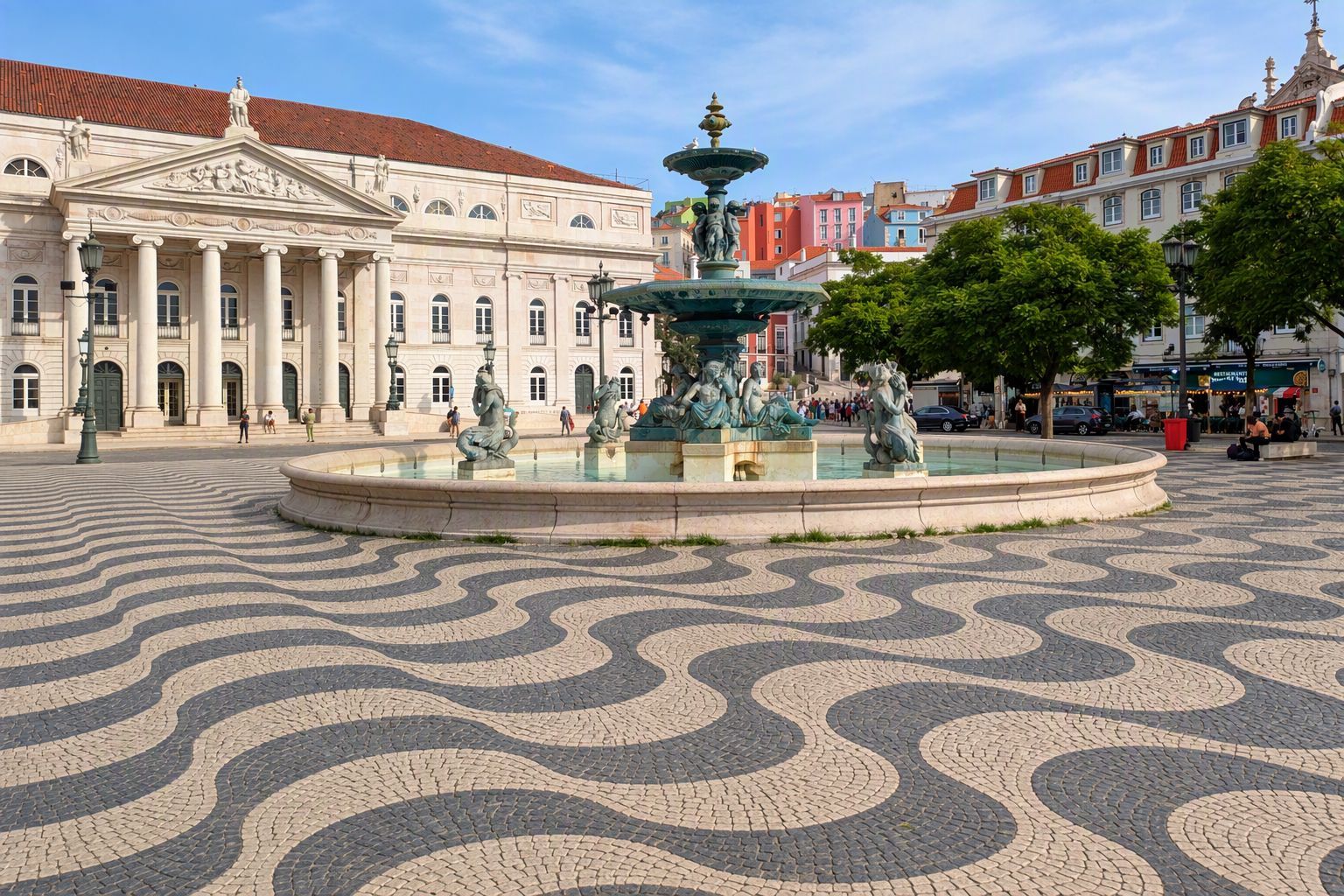
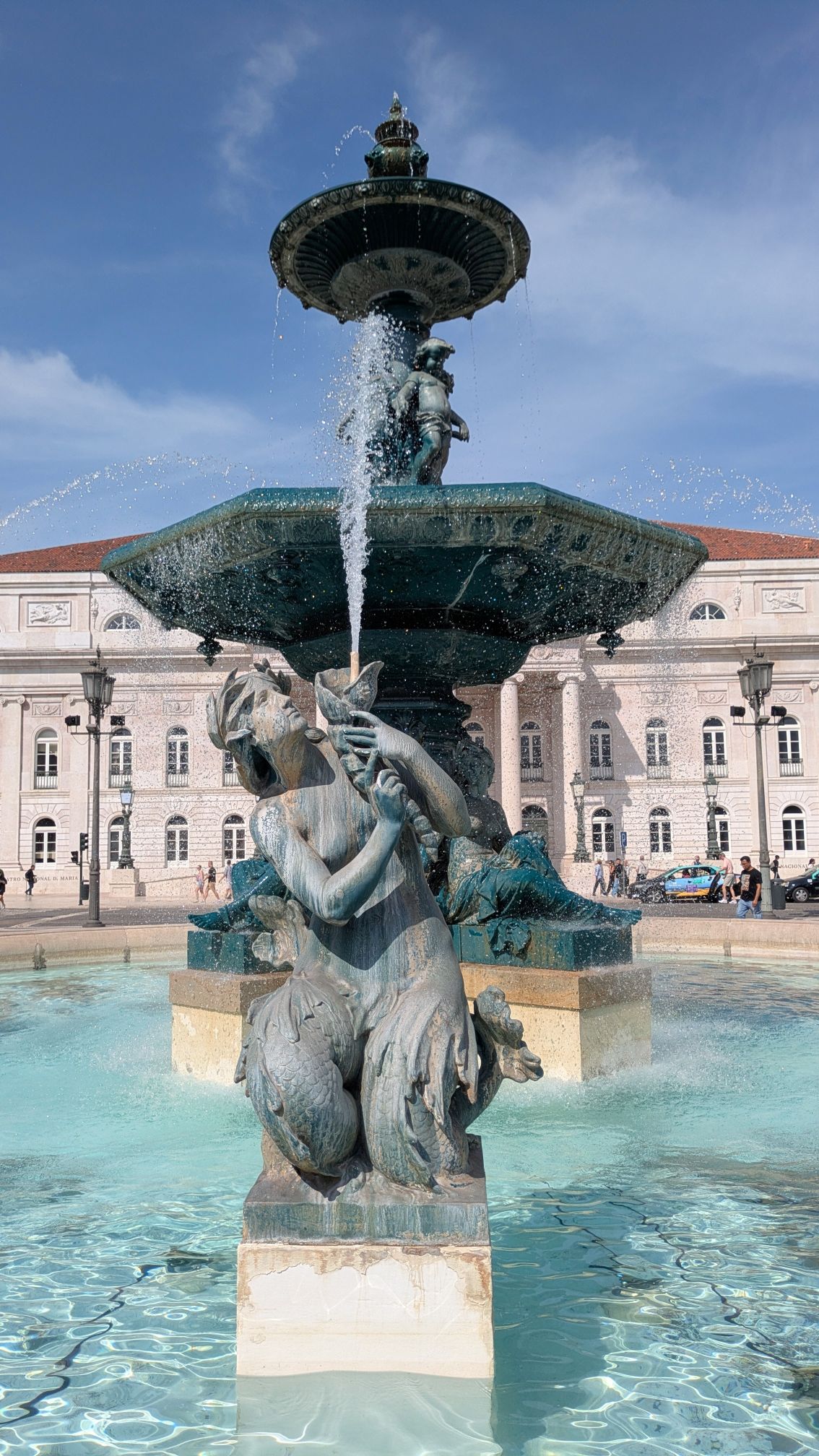
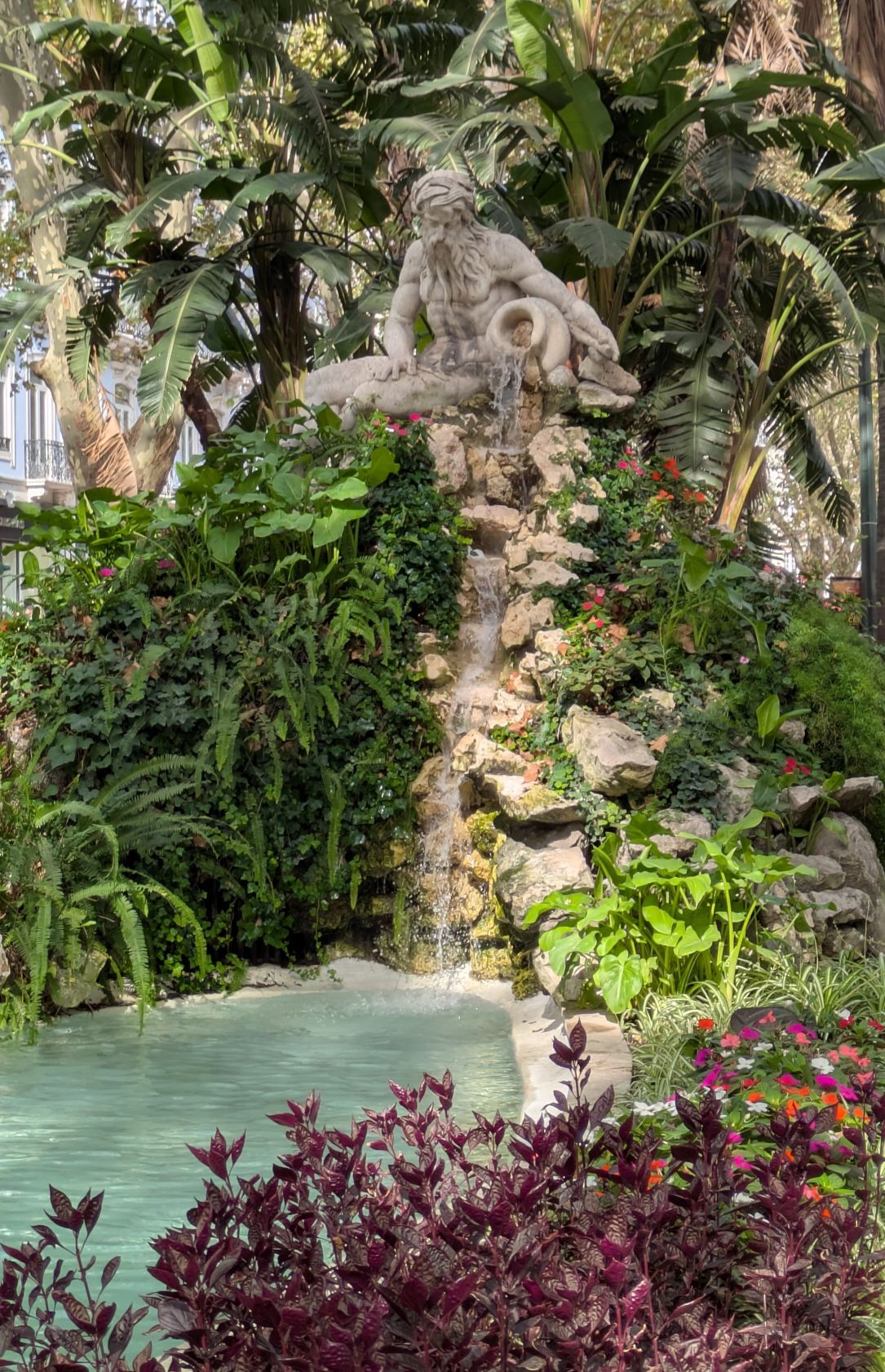
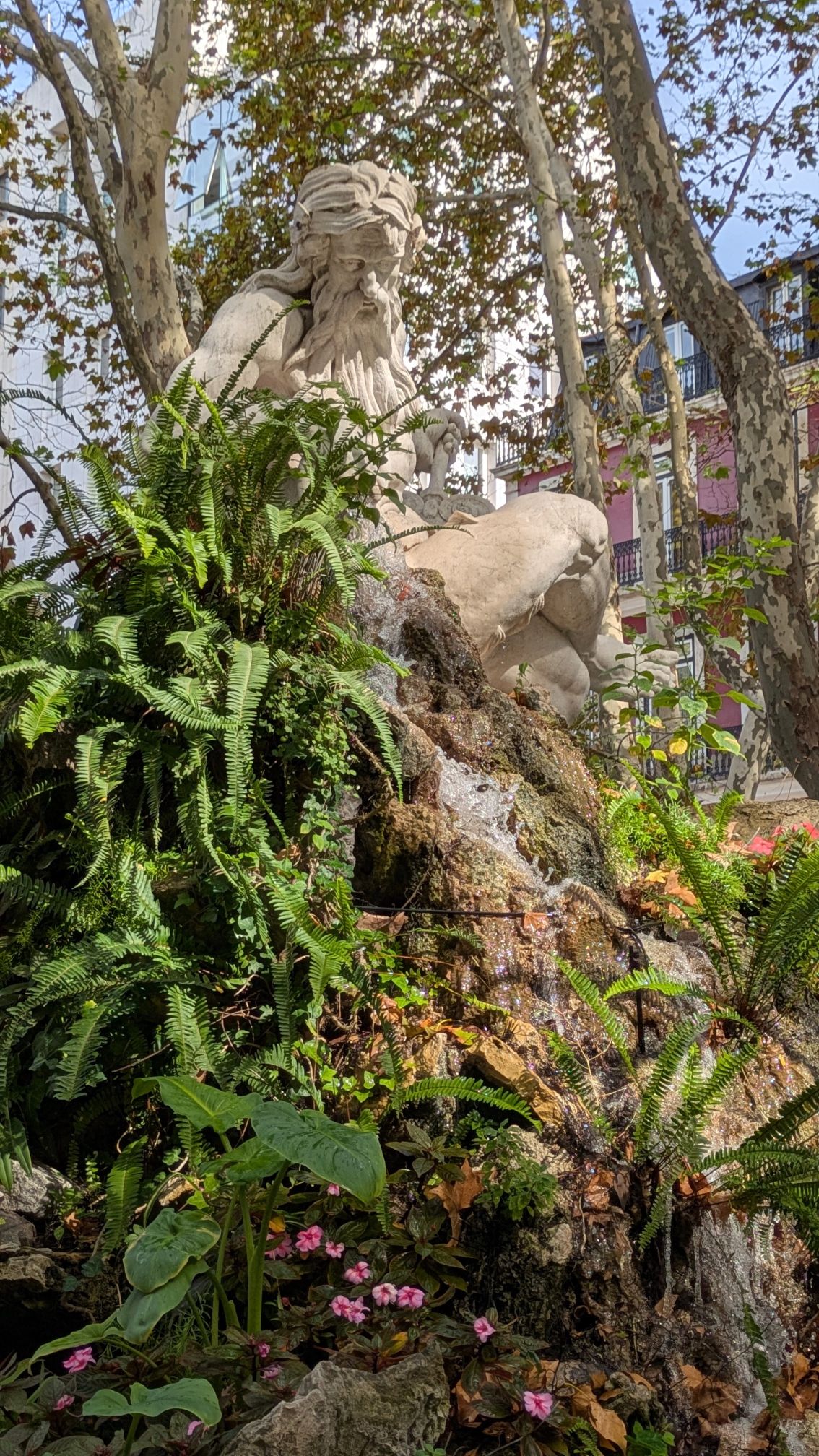
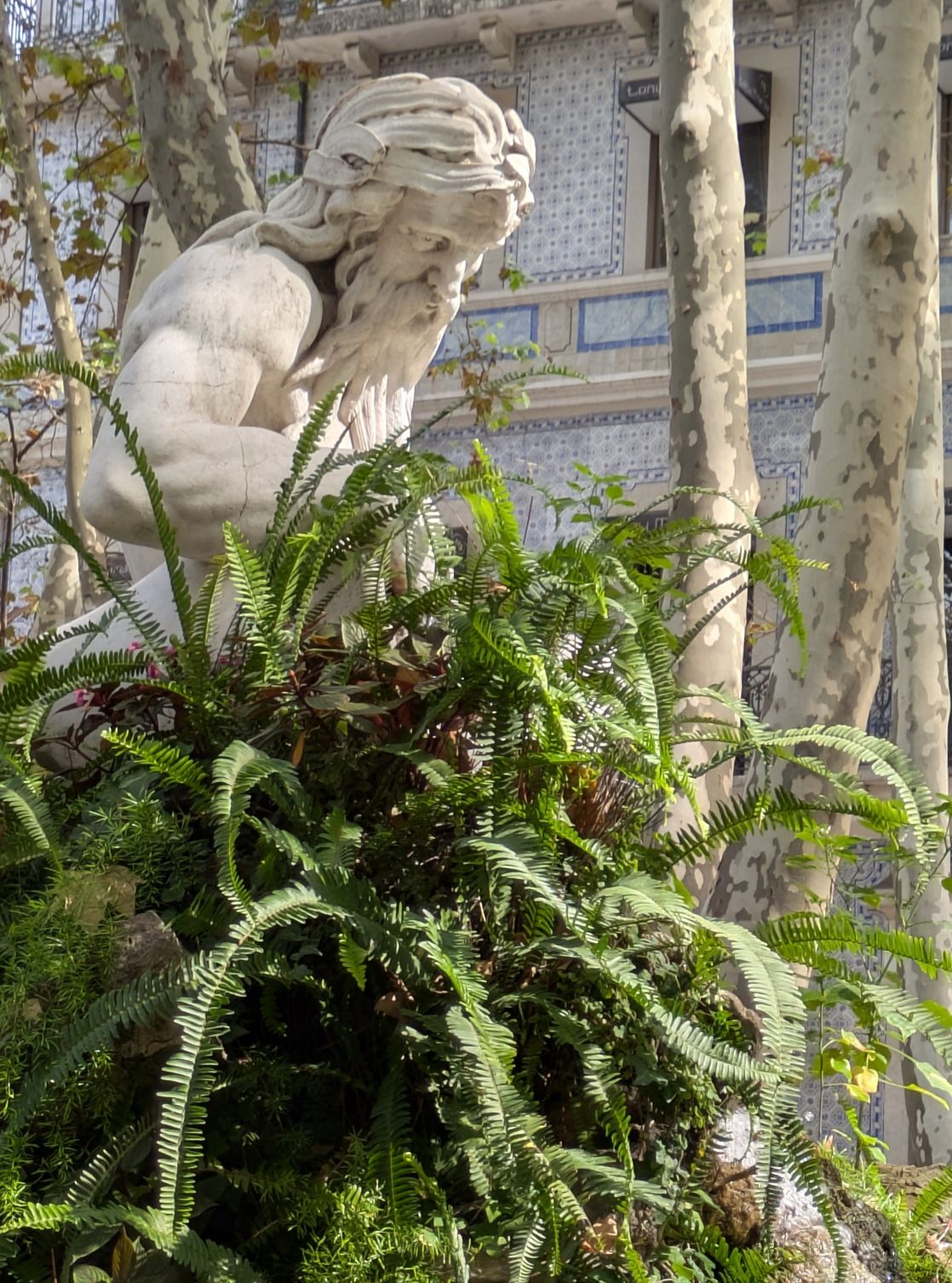
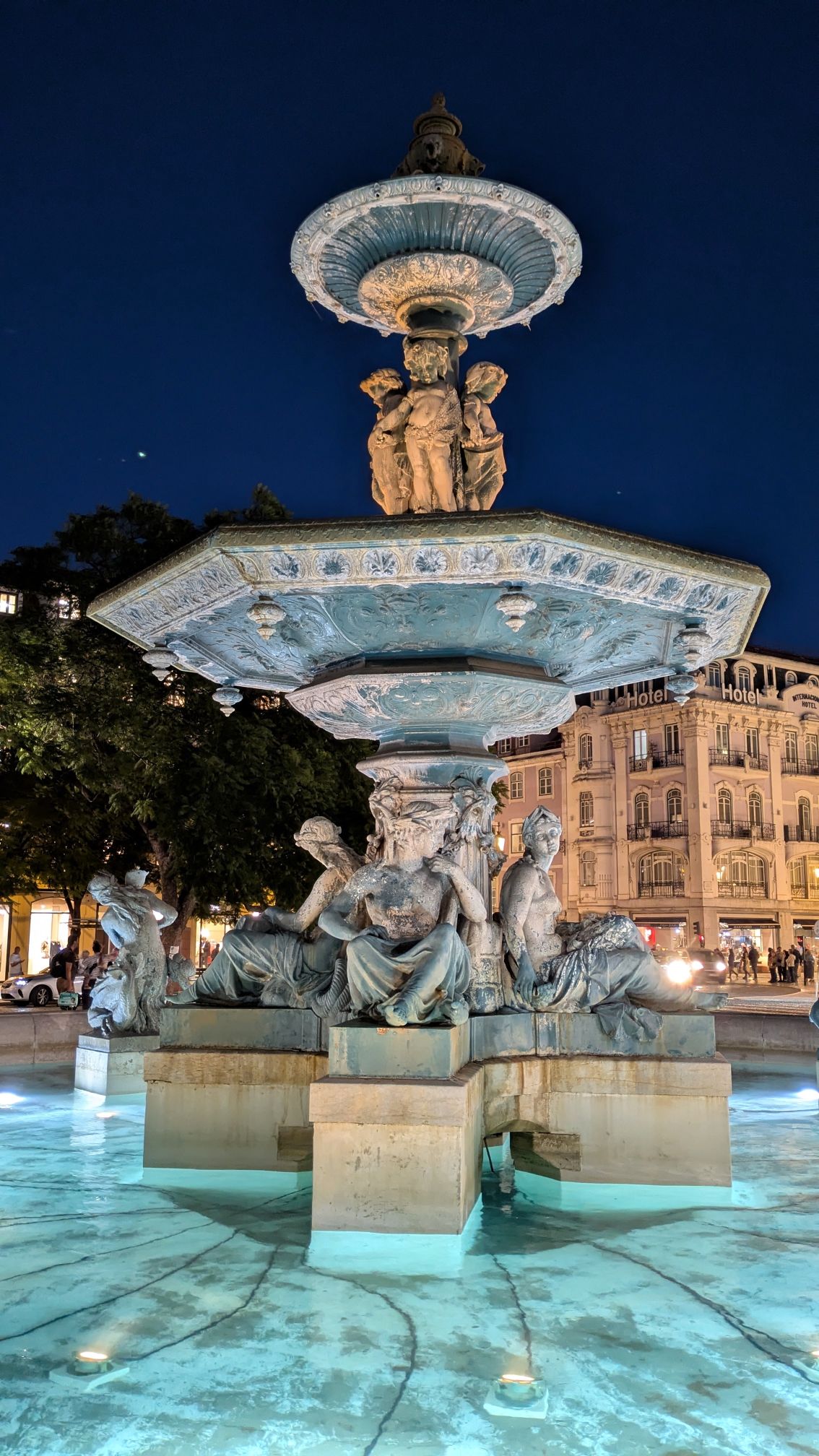
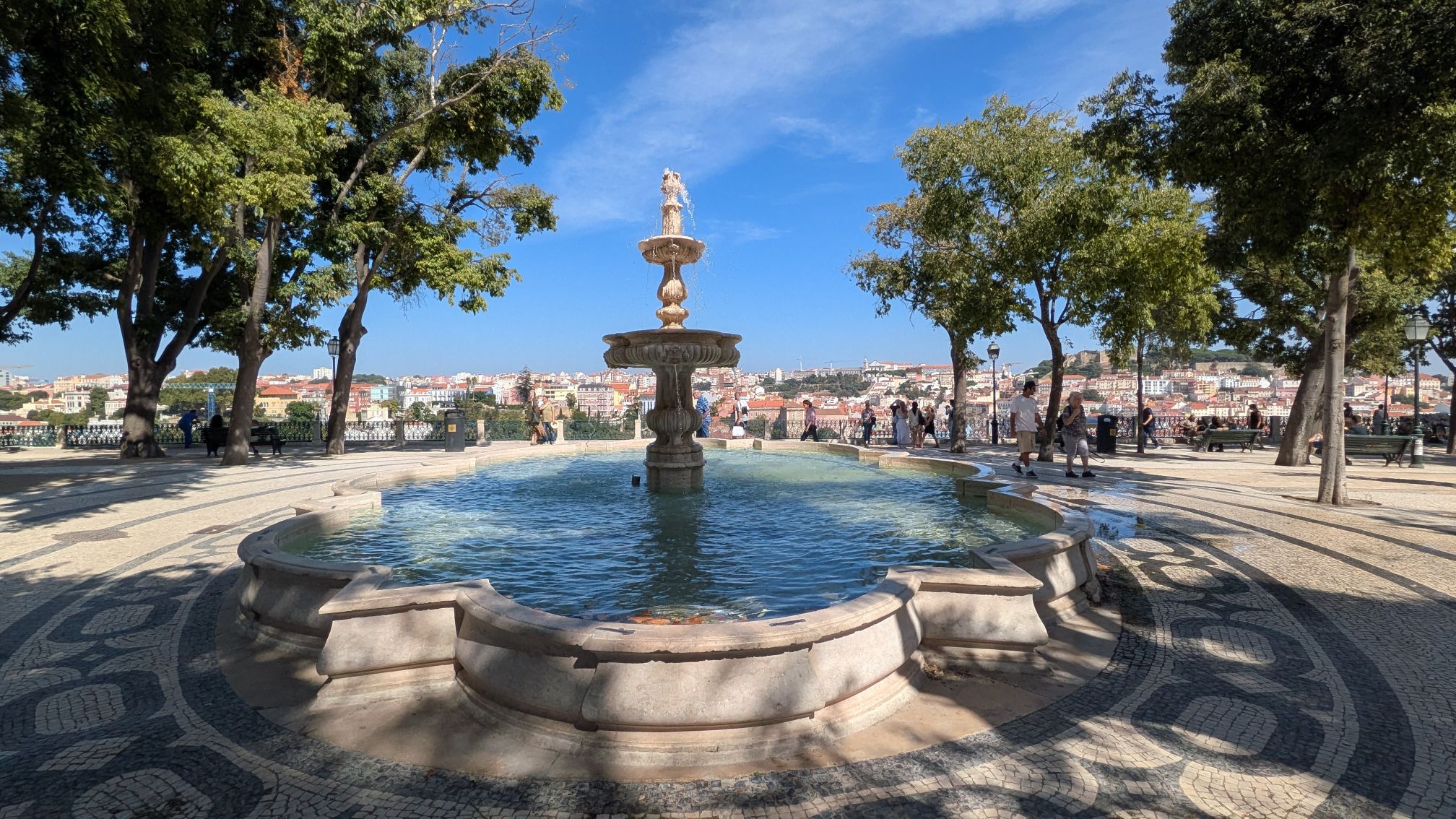
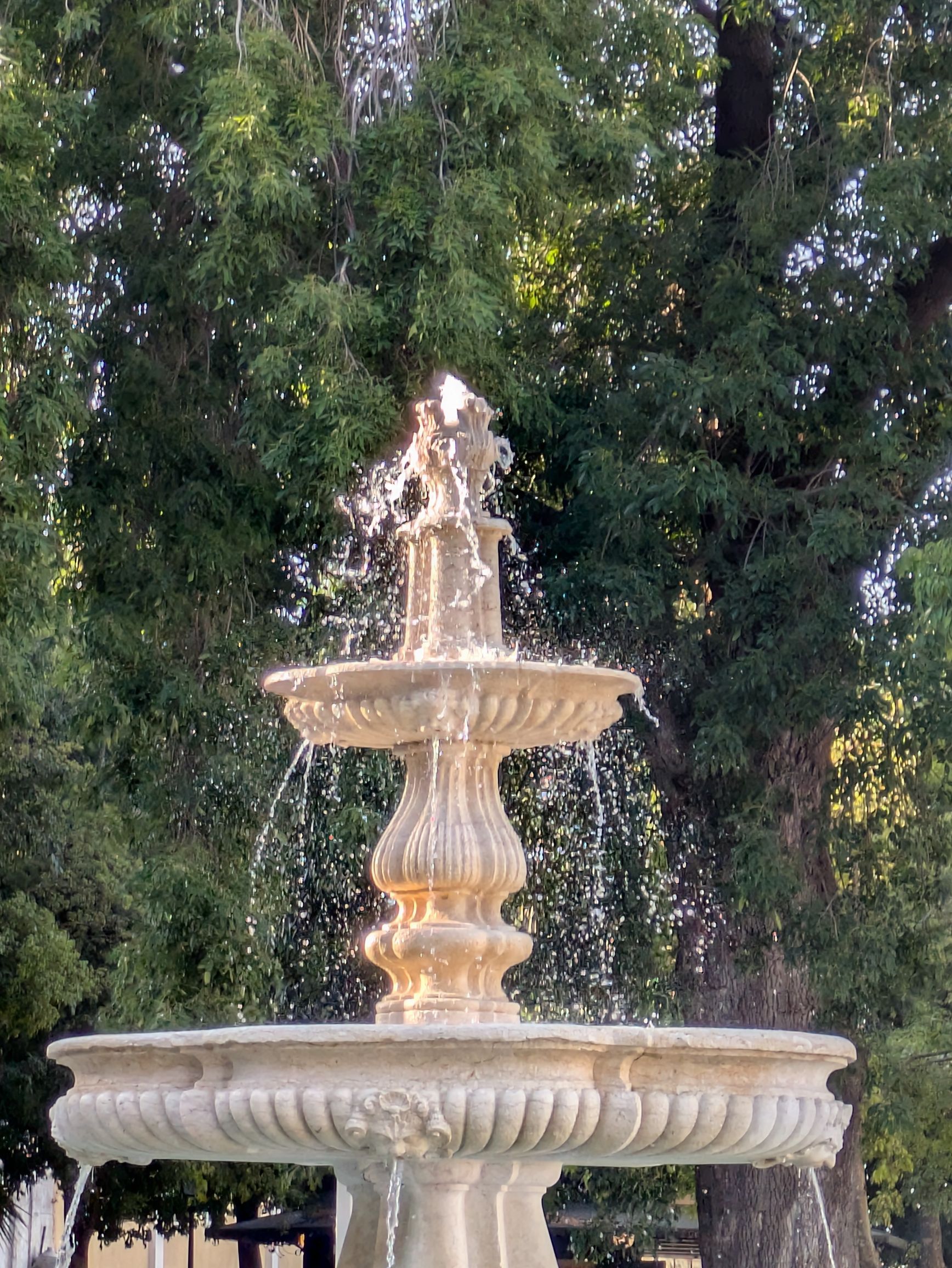
Fountain at the beginning of Rossio Square
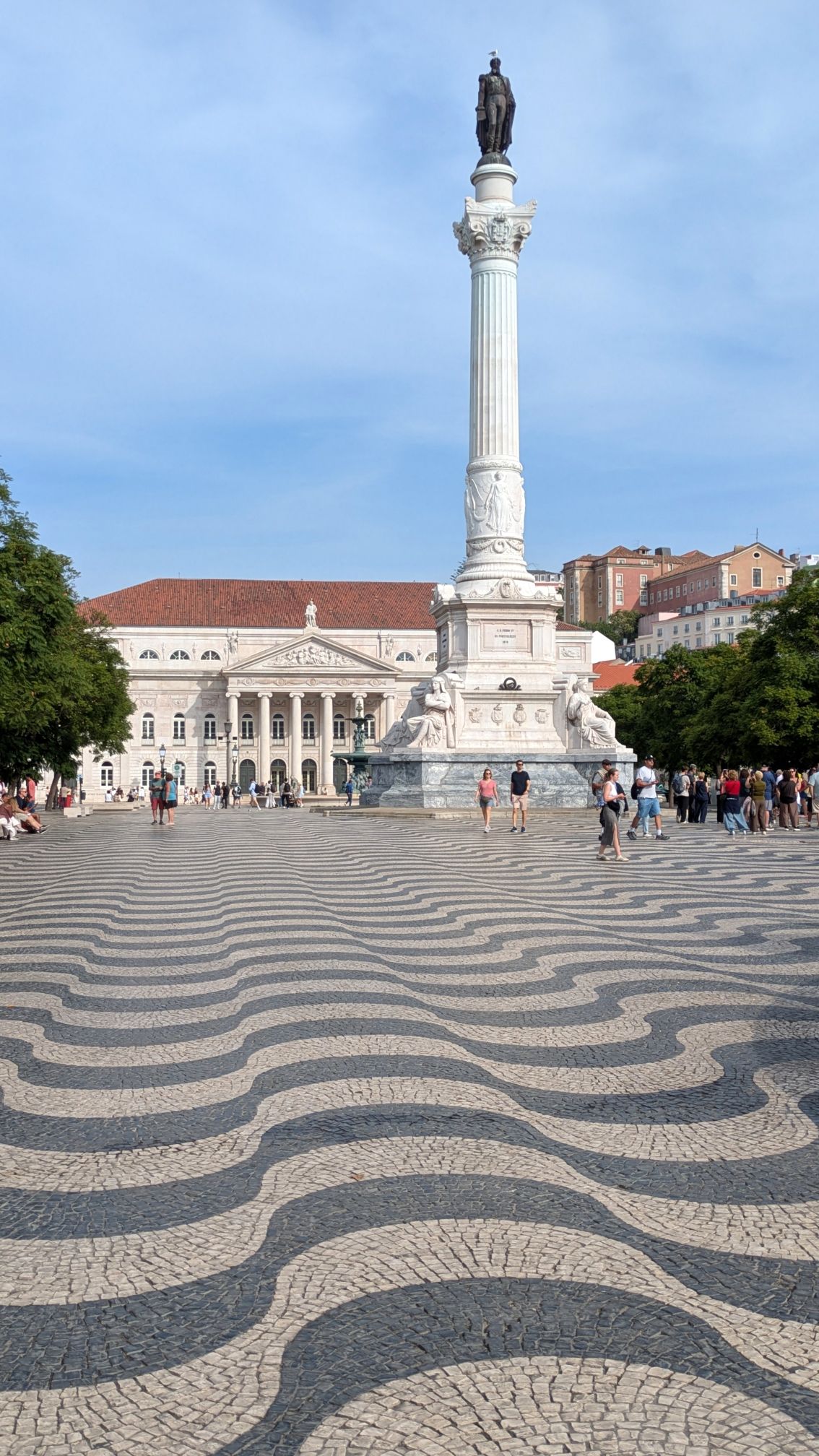
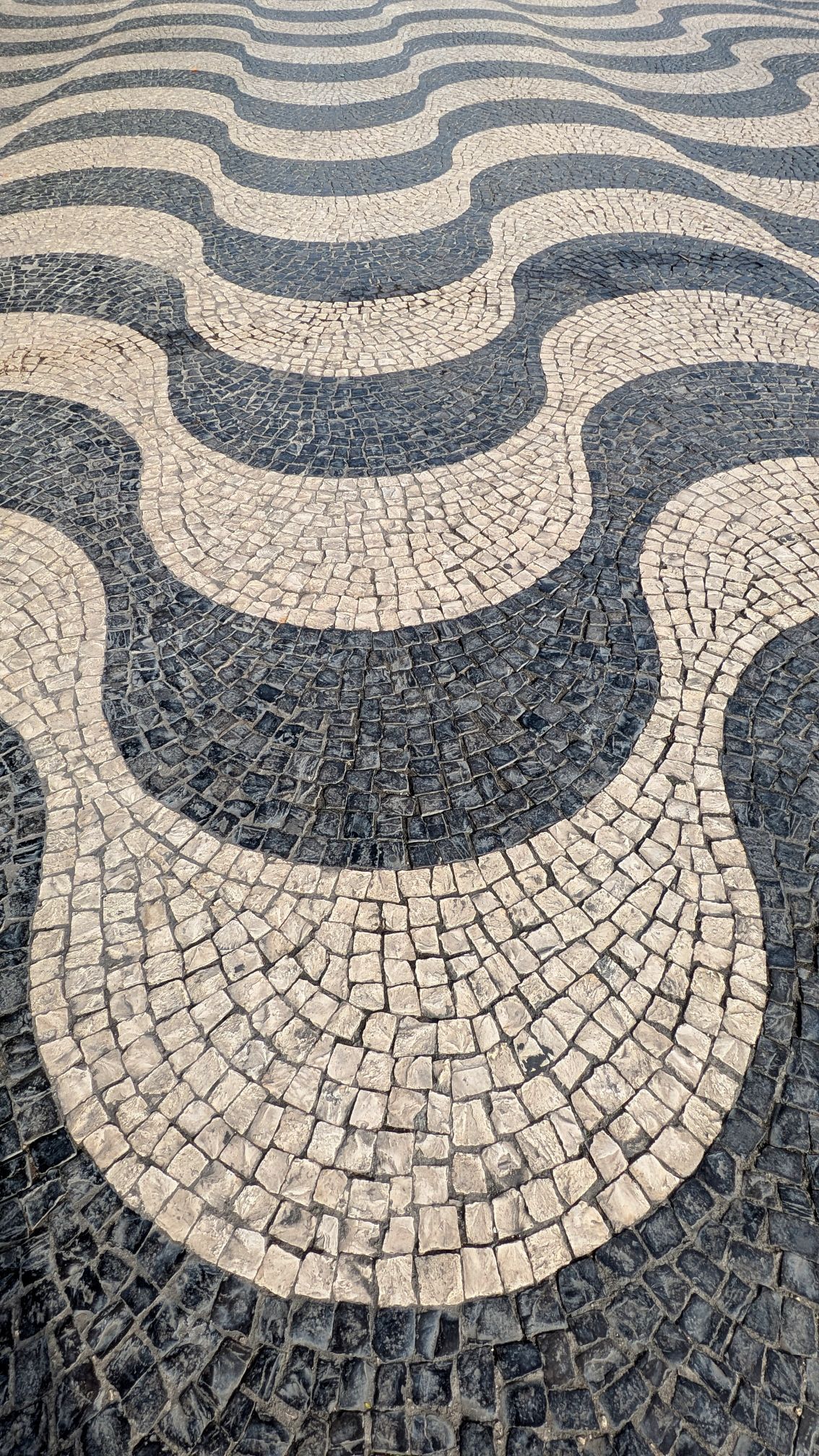
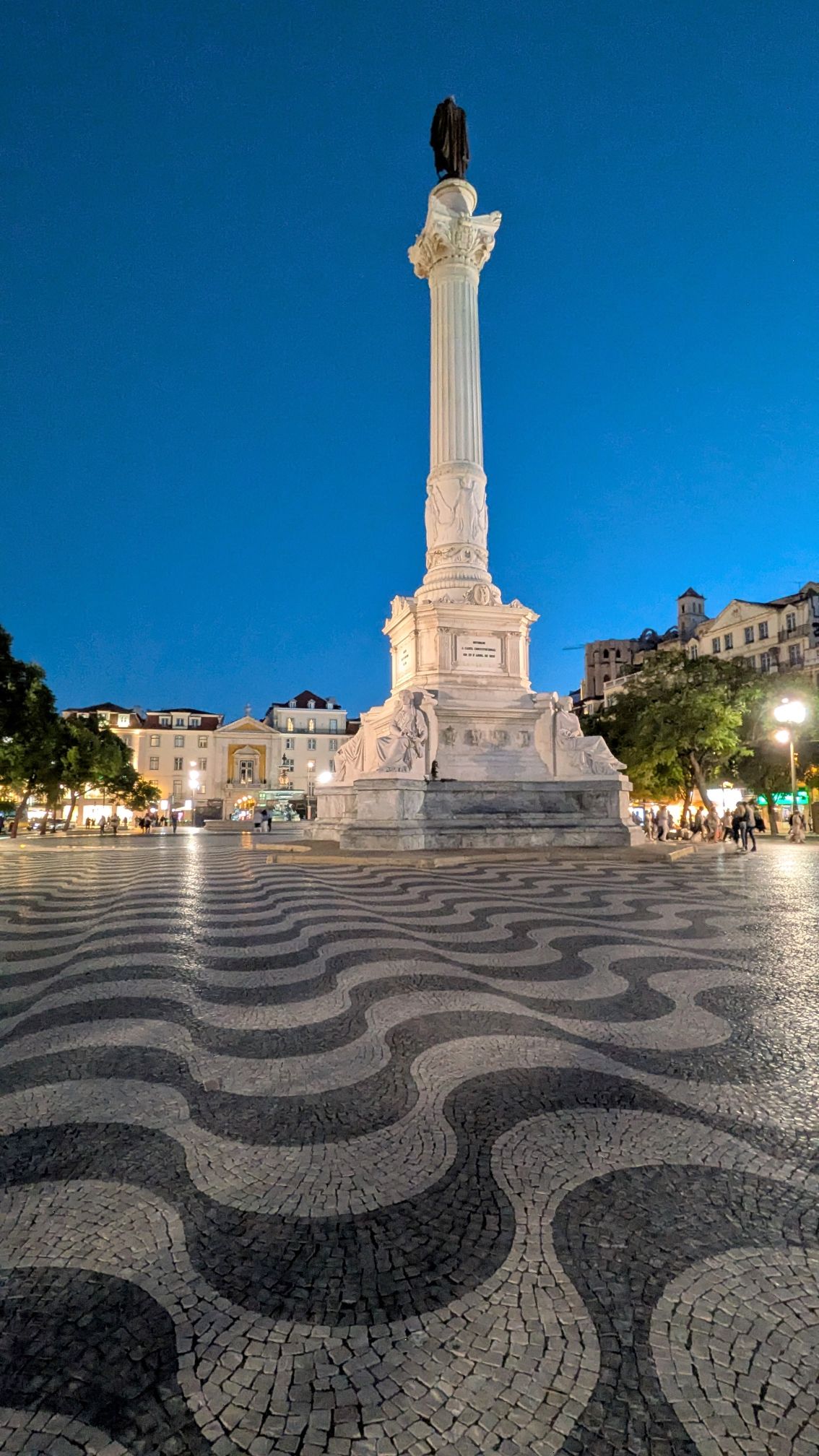
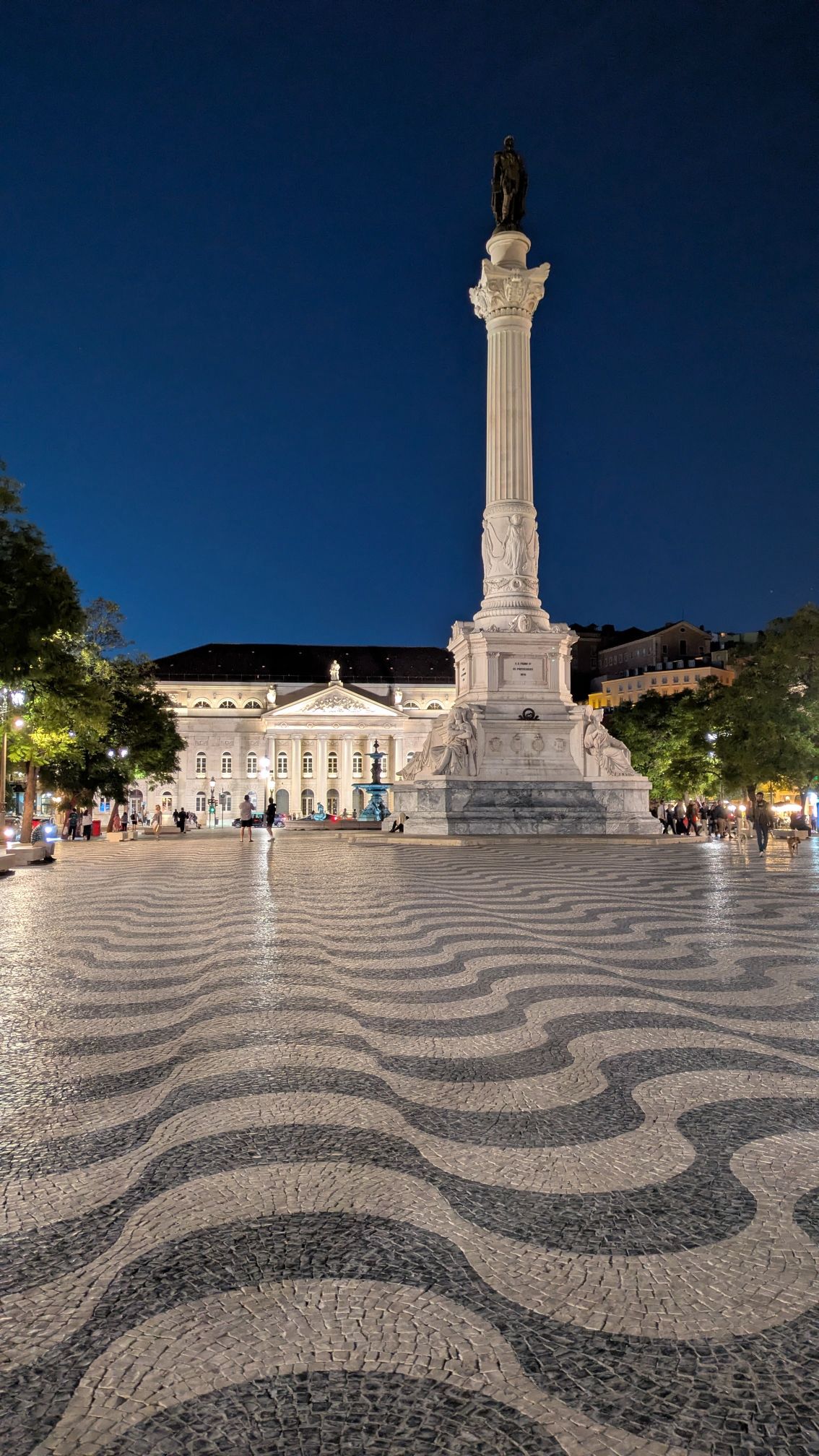
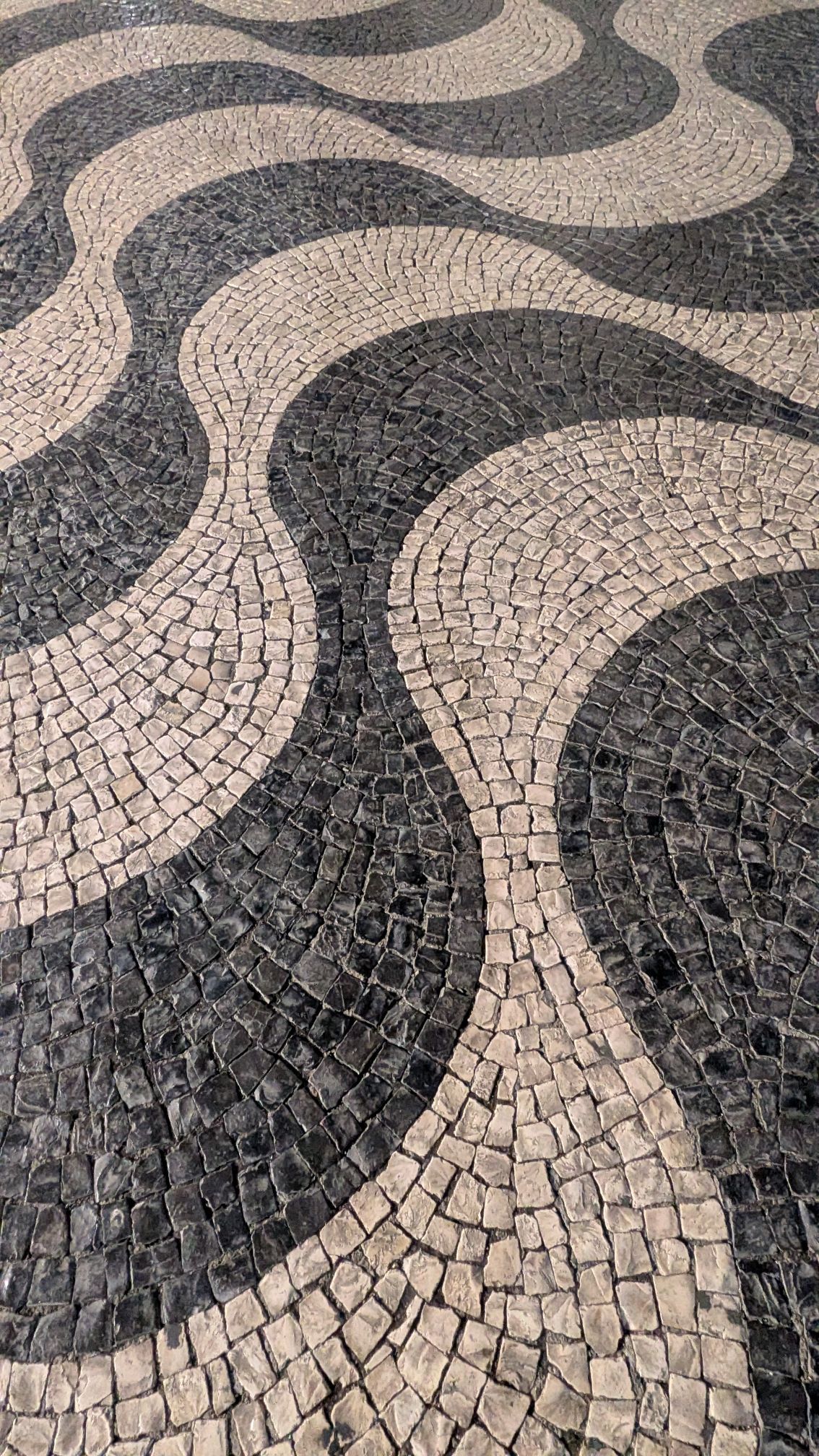
Rossio Square: The surface is flat, but it’s an optical illusion. Follow the waves!
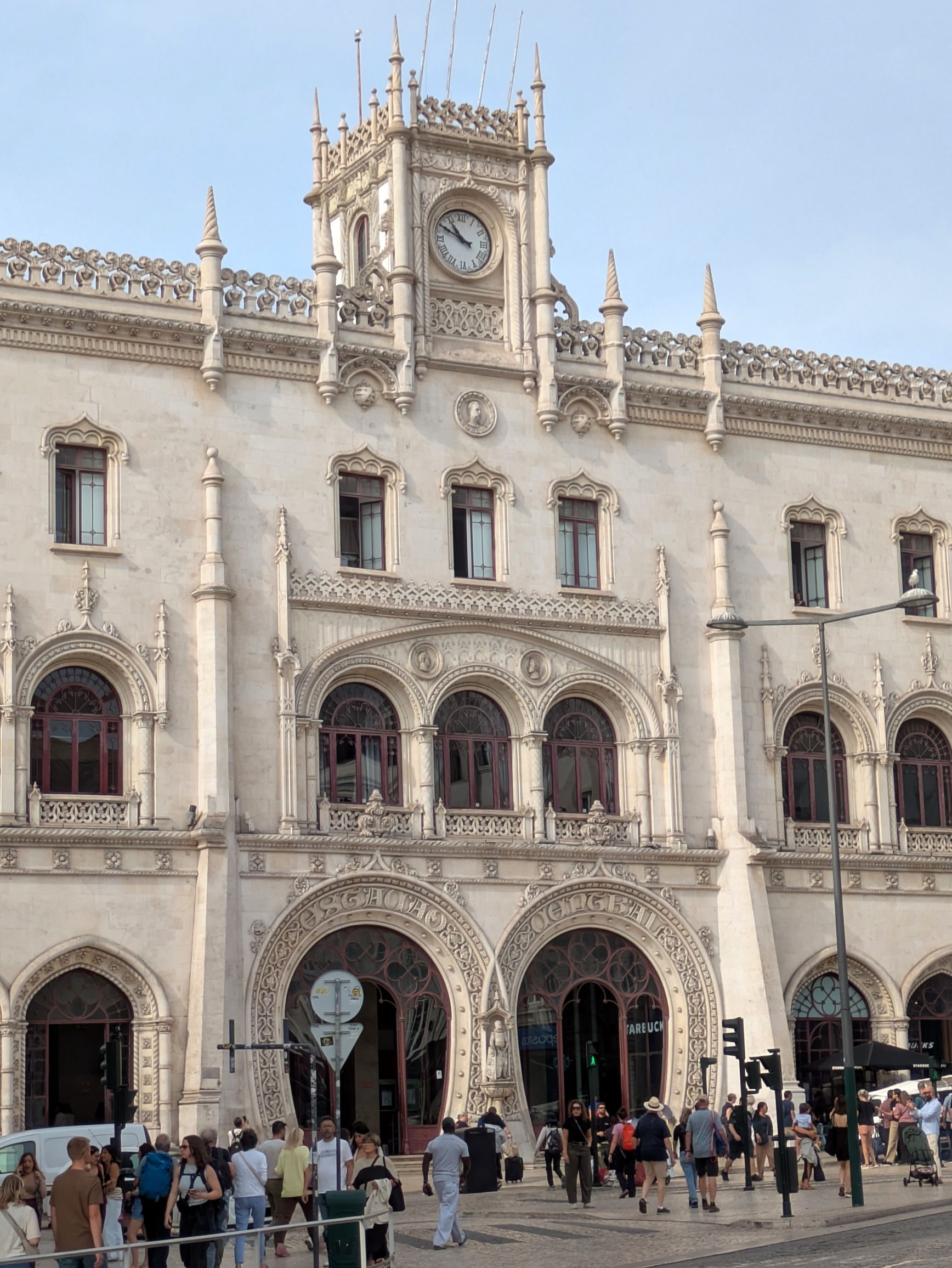
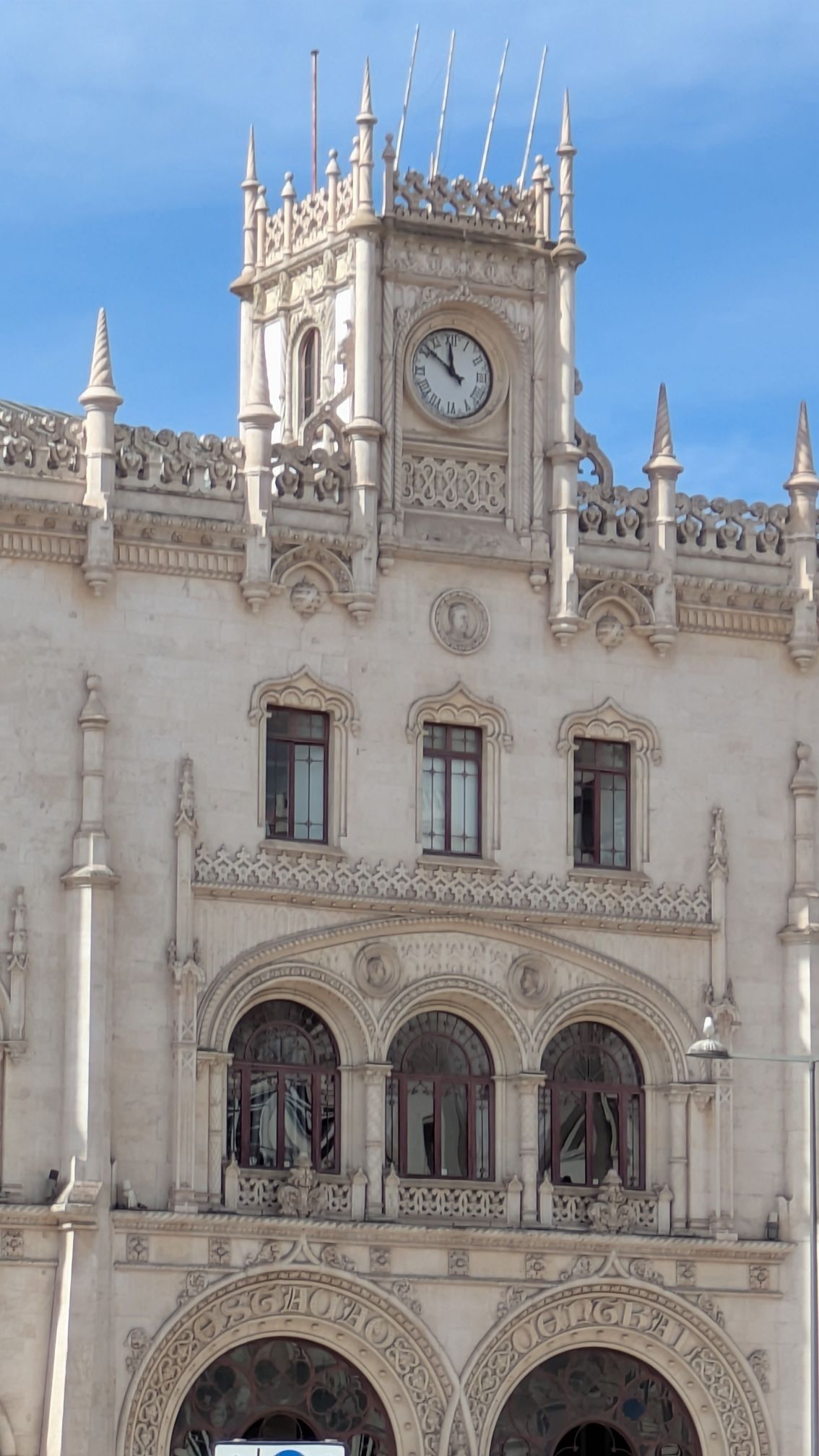
Across from Rossio Square at the far end is the beautiful train station. You have to have a ticket to enter the tracks where the tile murals are located, so stop back when I write about our train trip to Sintra to see those murals!
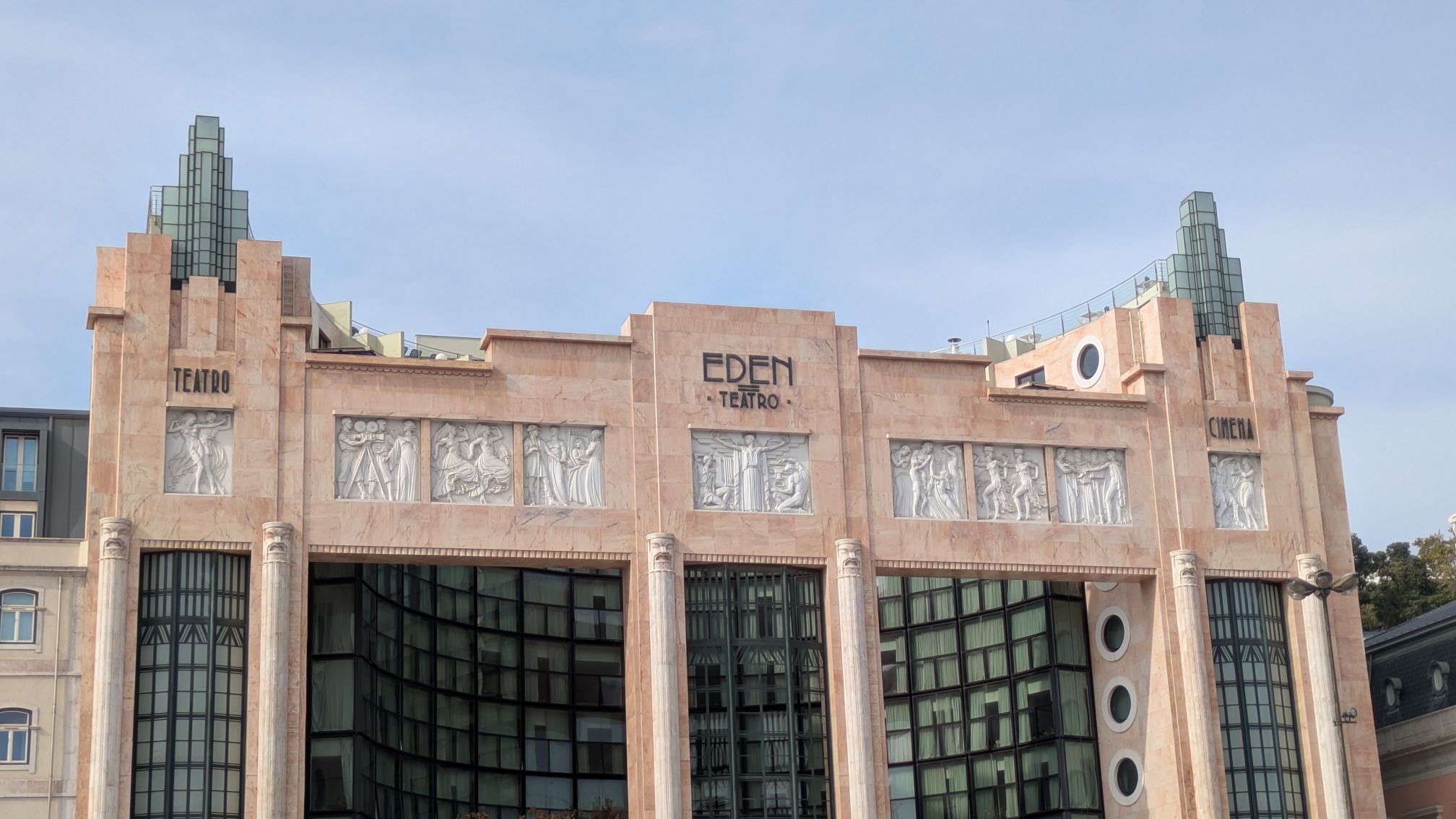
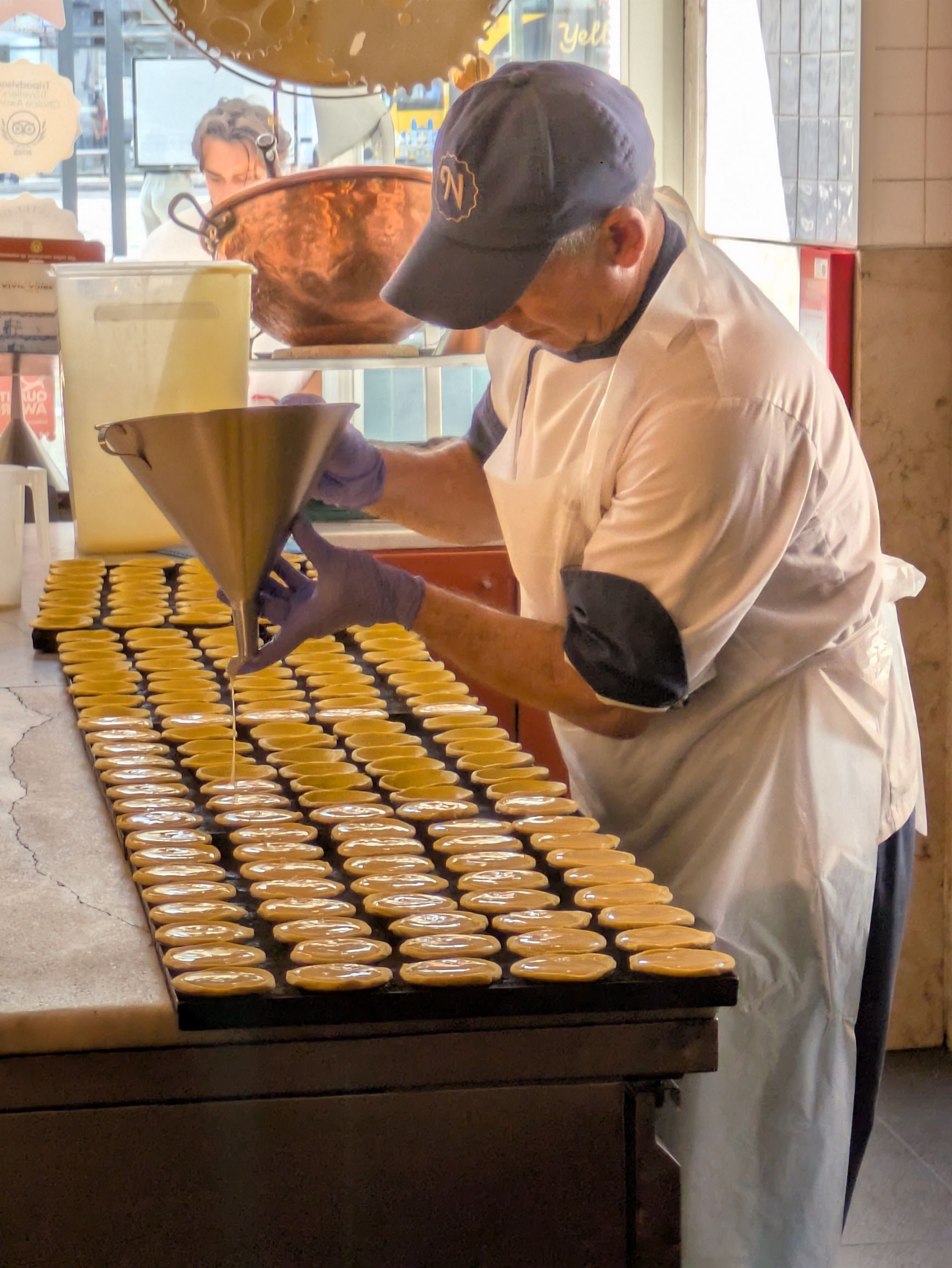
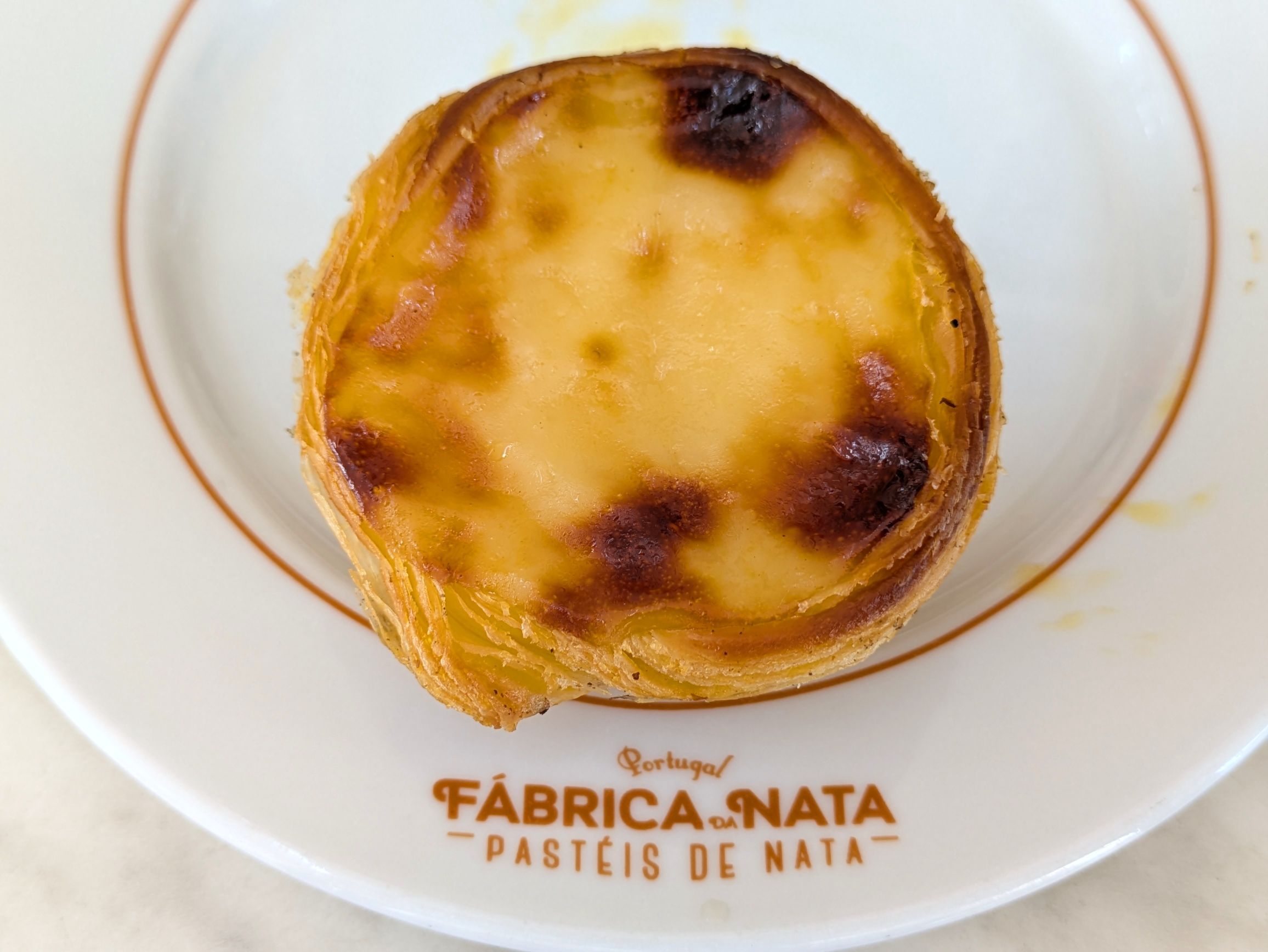
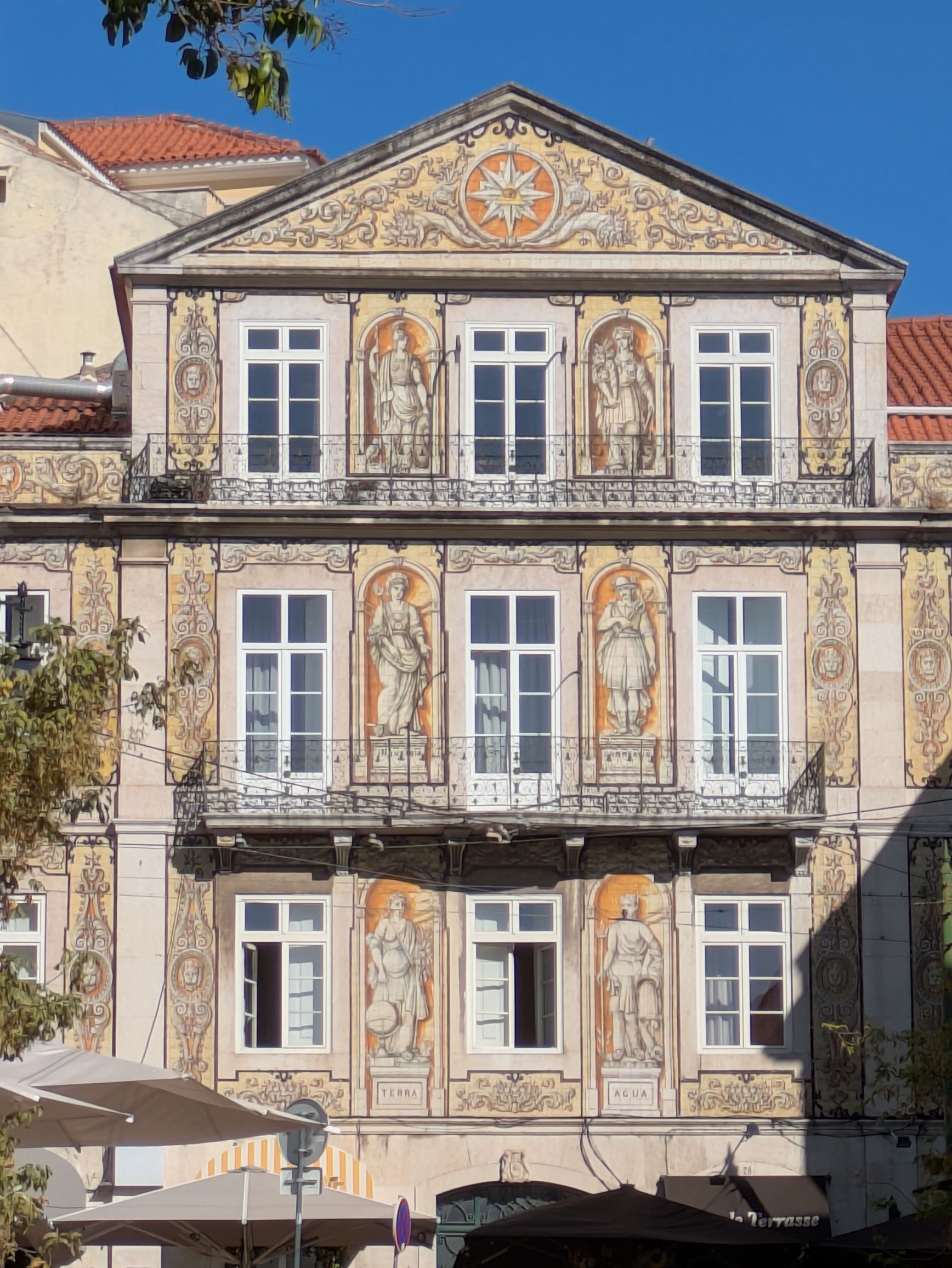
Past the train station on the same side of the street (on the left) is this unusual add-on to a historic facade.On the right is Fabrica da Nata- Pasteis de Nata, where we stopped for a snack.
Pastel de Nata: Don’t worry; I will be writing (and showing) plenty of food in an upcoming post dedicated to Portuguese cuisine!
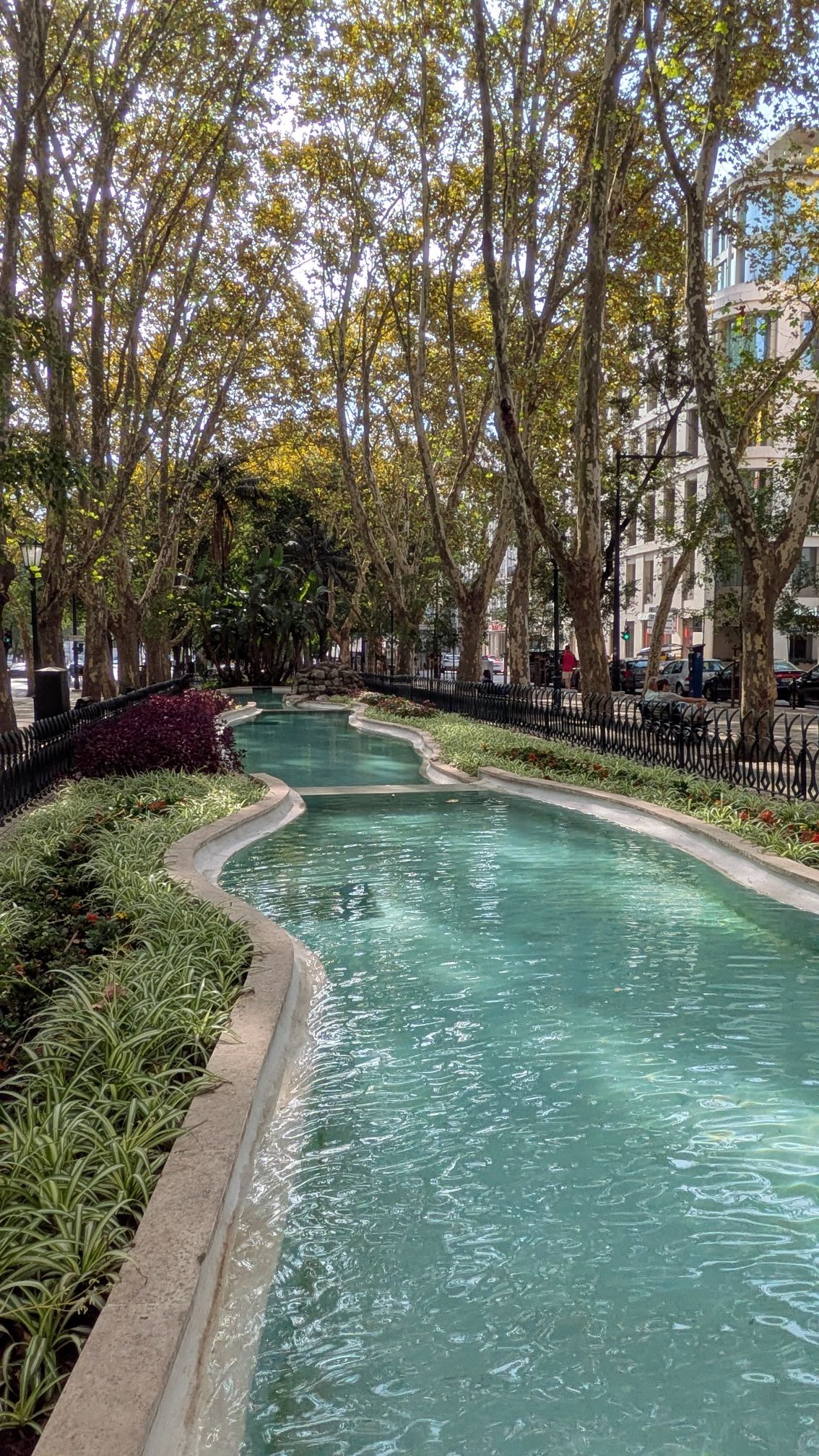
The beginning of the gorgeous tree-lined portion of Avenida da Liberdade
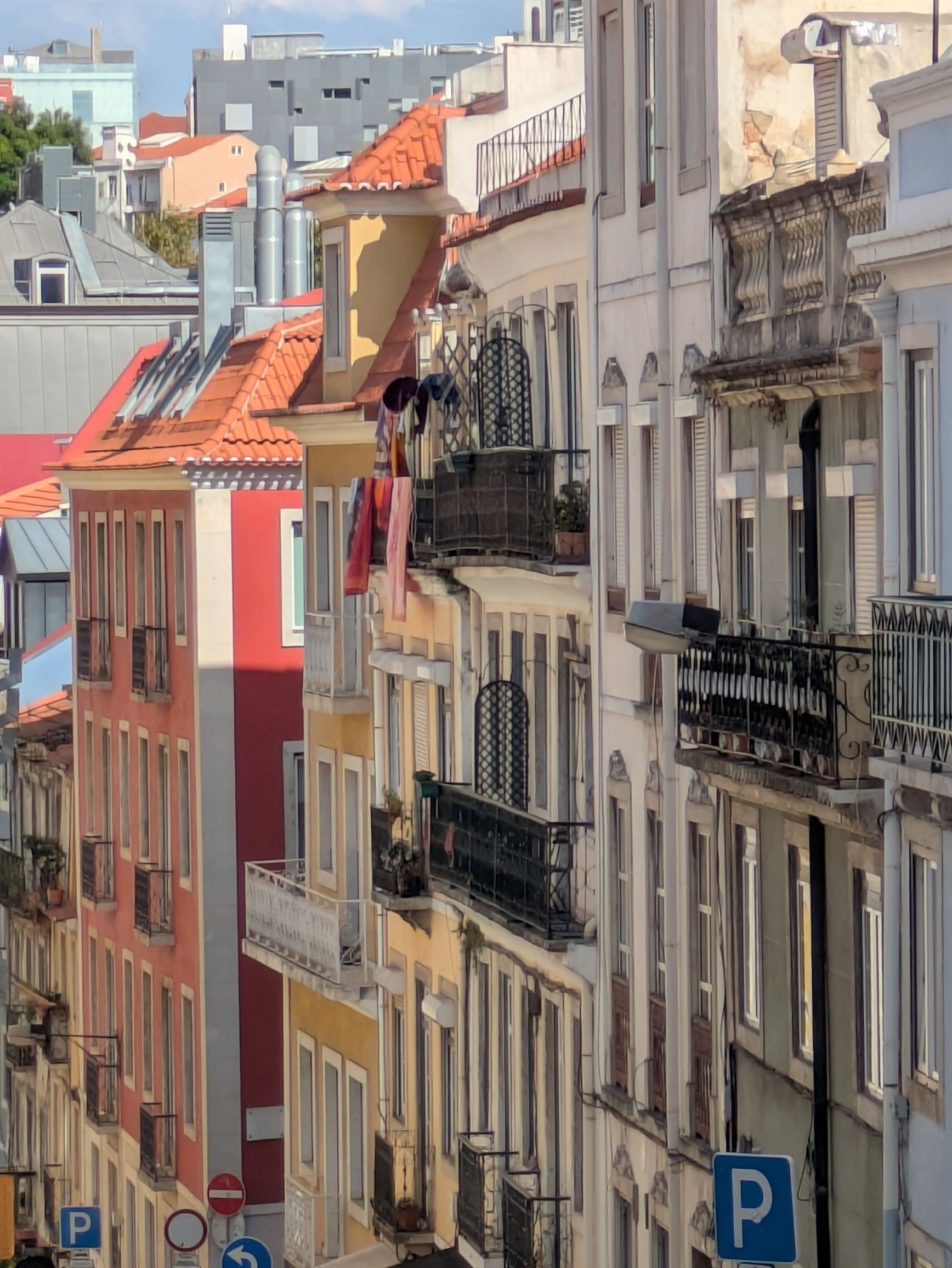
Views of the side streets off the avenue:
Continuing up Avendida da Liberdade to Marques de Pombal Square:
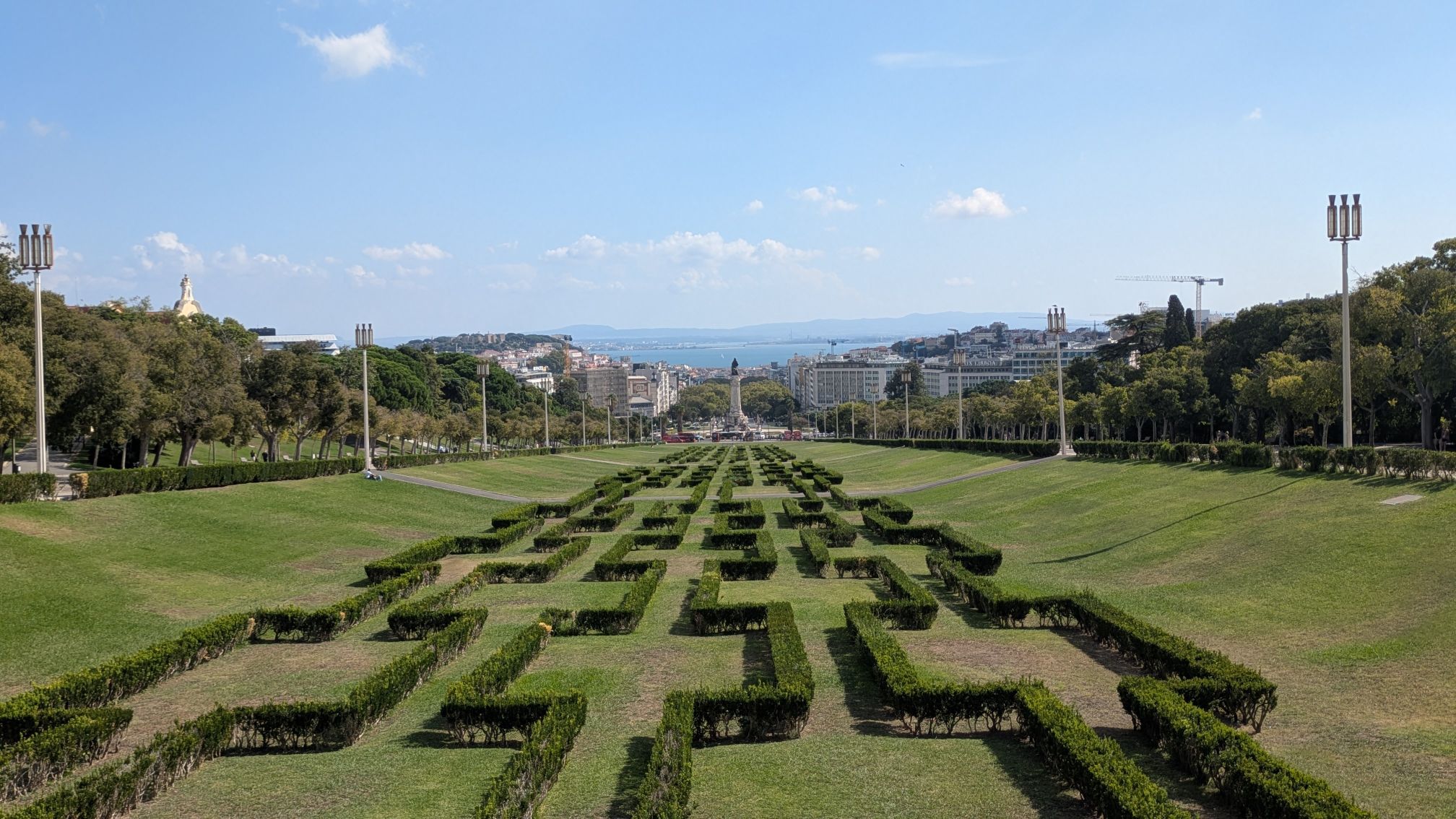
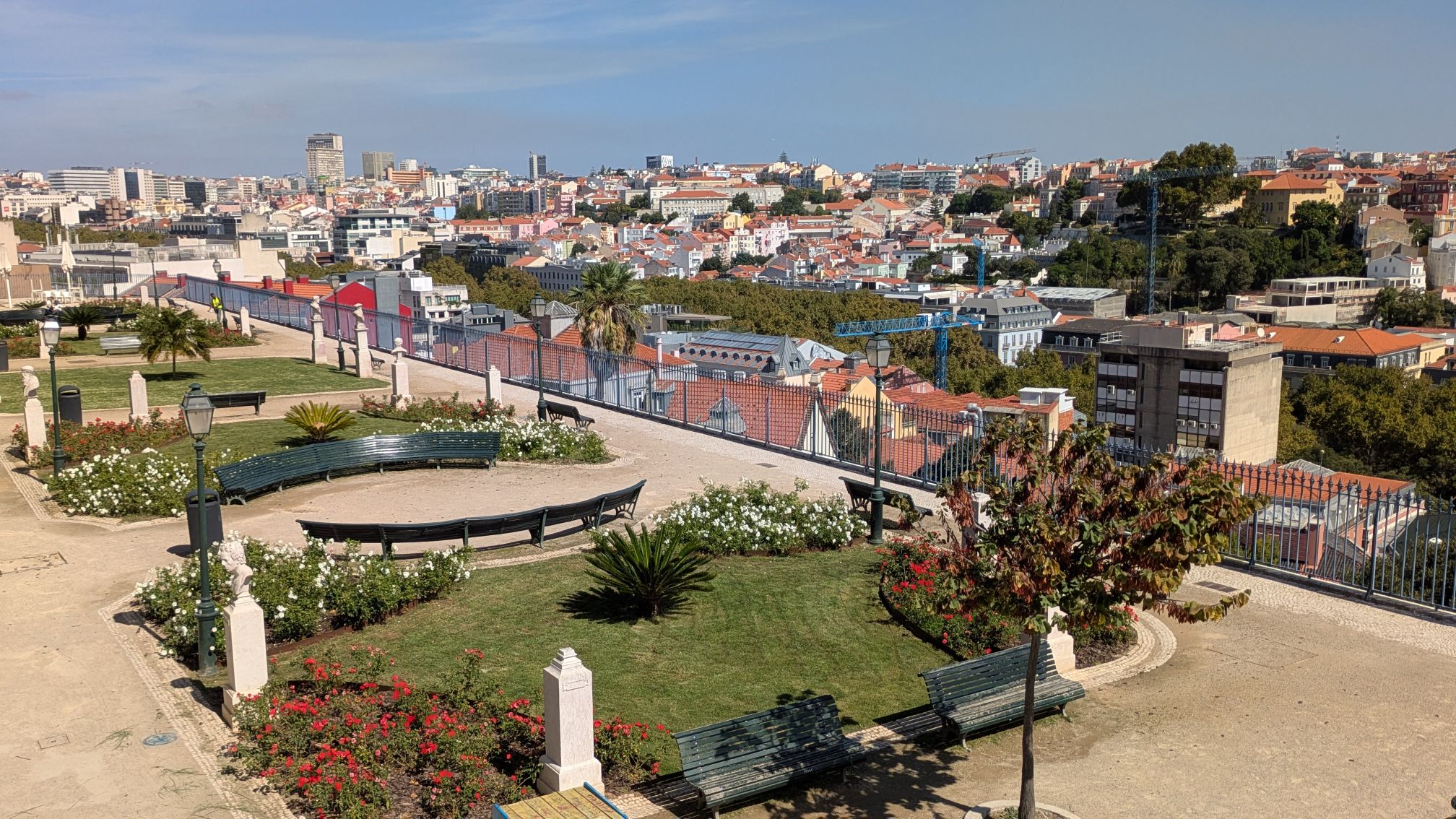
Continue up the hill through Parque Eduardo VII, and you will be rewarded with this panoramic view:
Congratulations, you made it! Now you have a choice to either take the metro back from Marque de Pombal (look for the red and white “M” sign), or walk back like we did.This is us back in Chiado:
A walk down to Rossio Square at night:
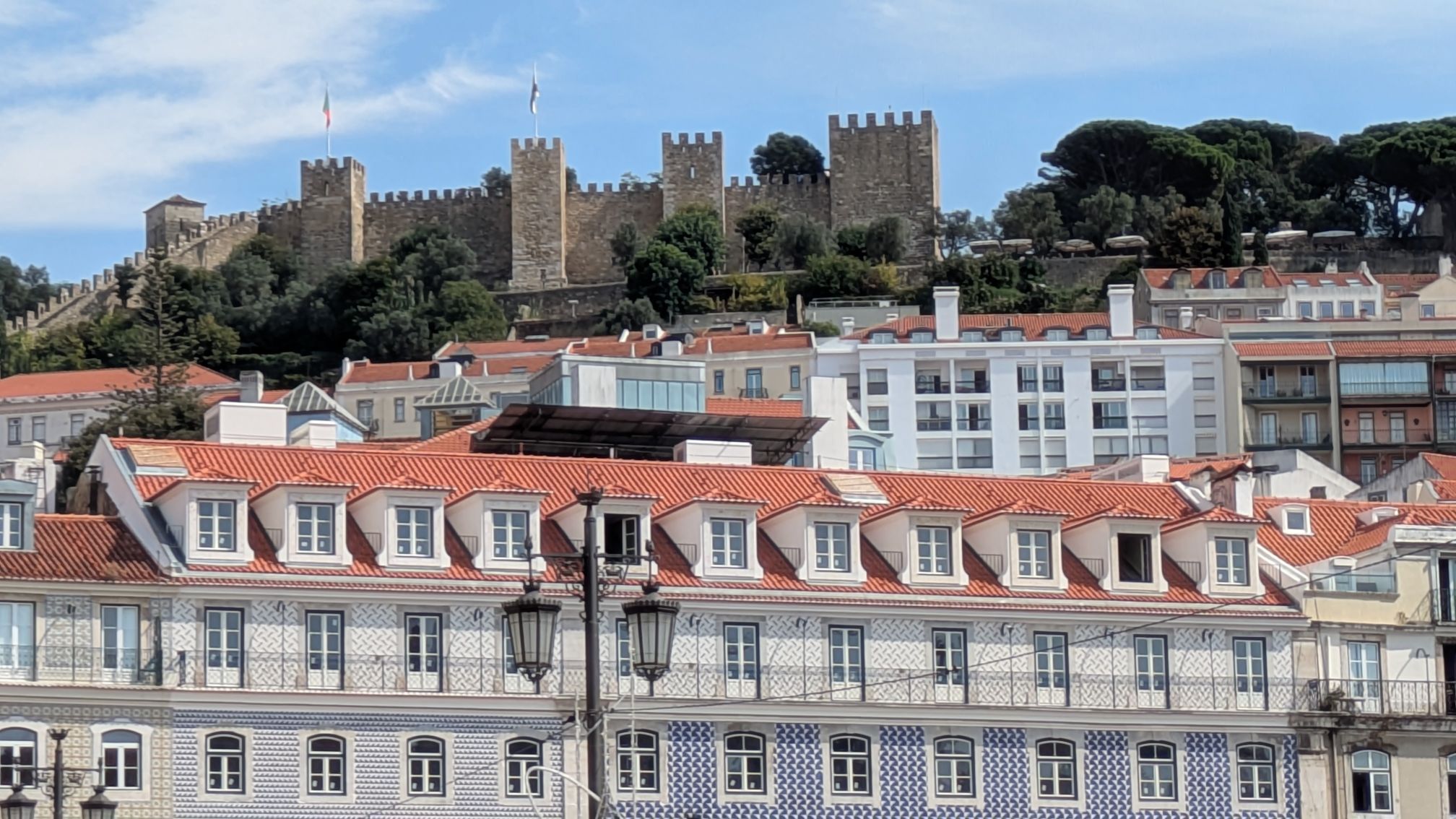
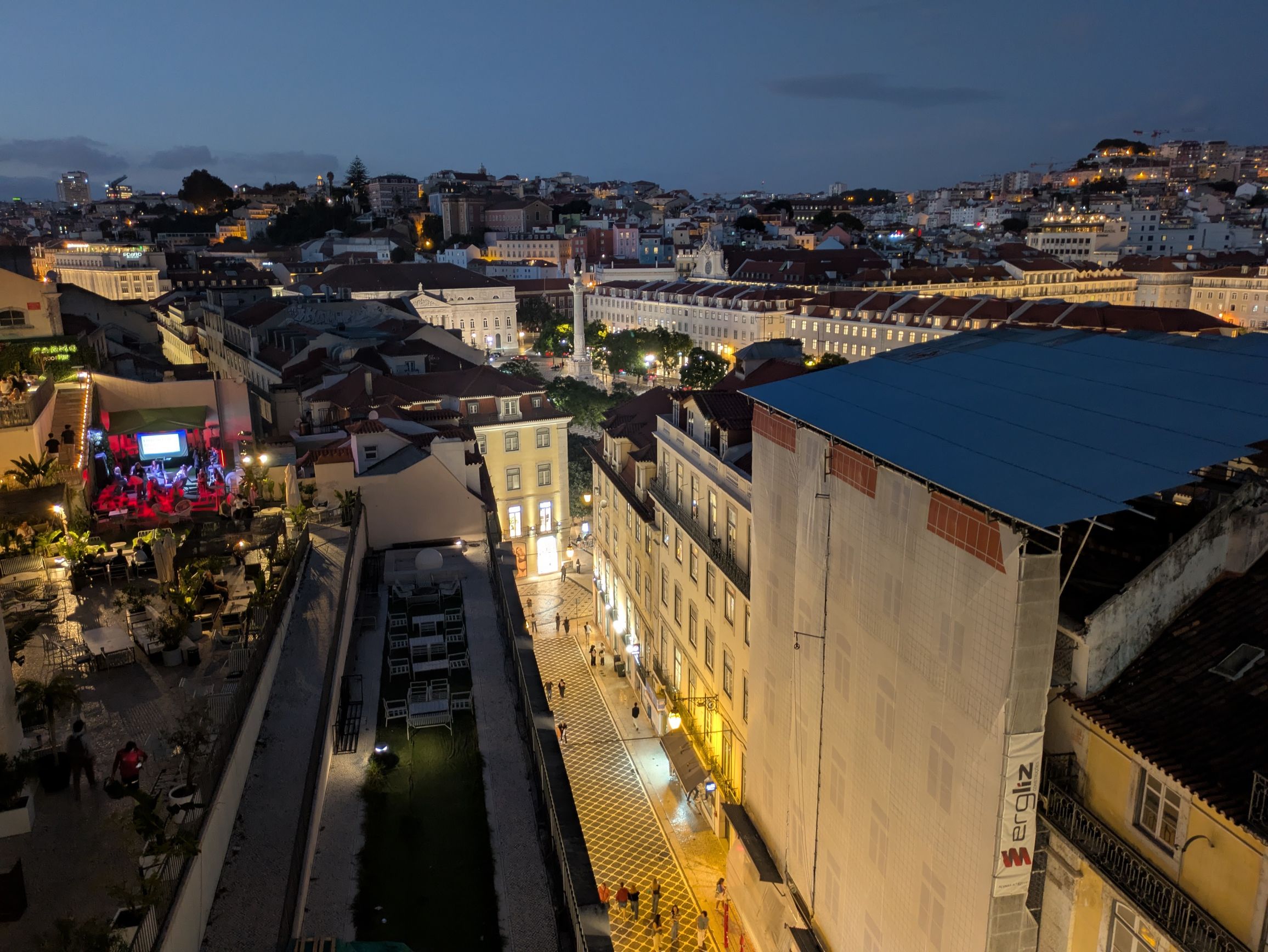
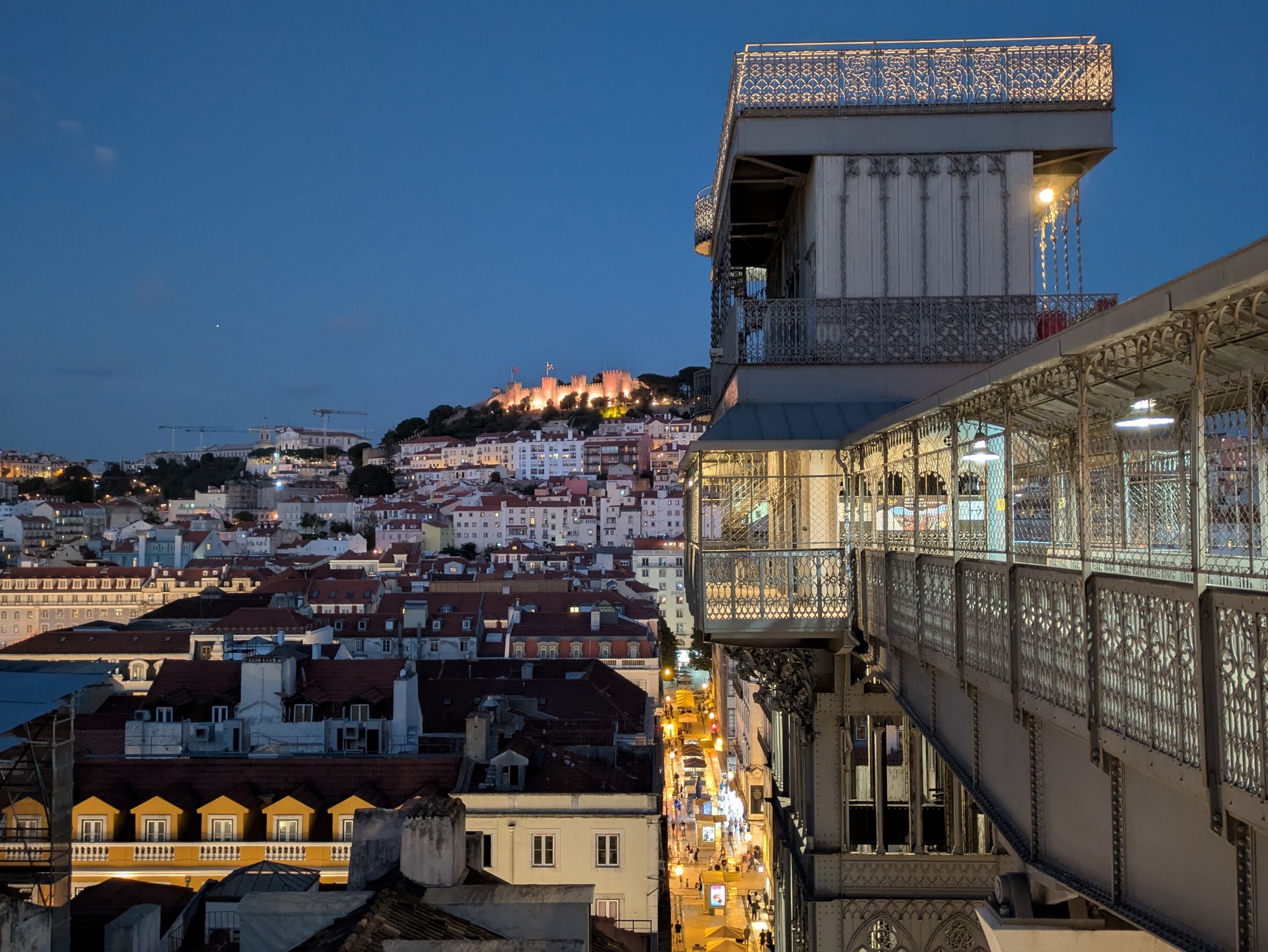
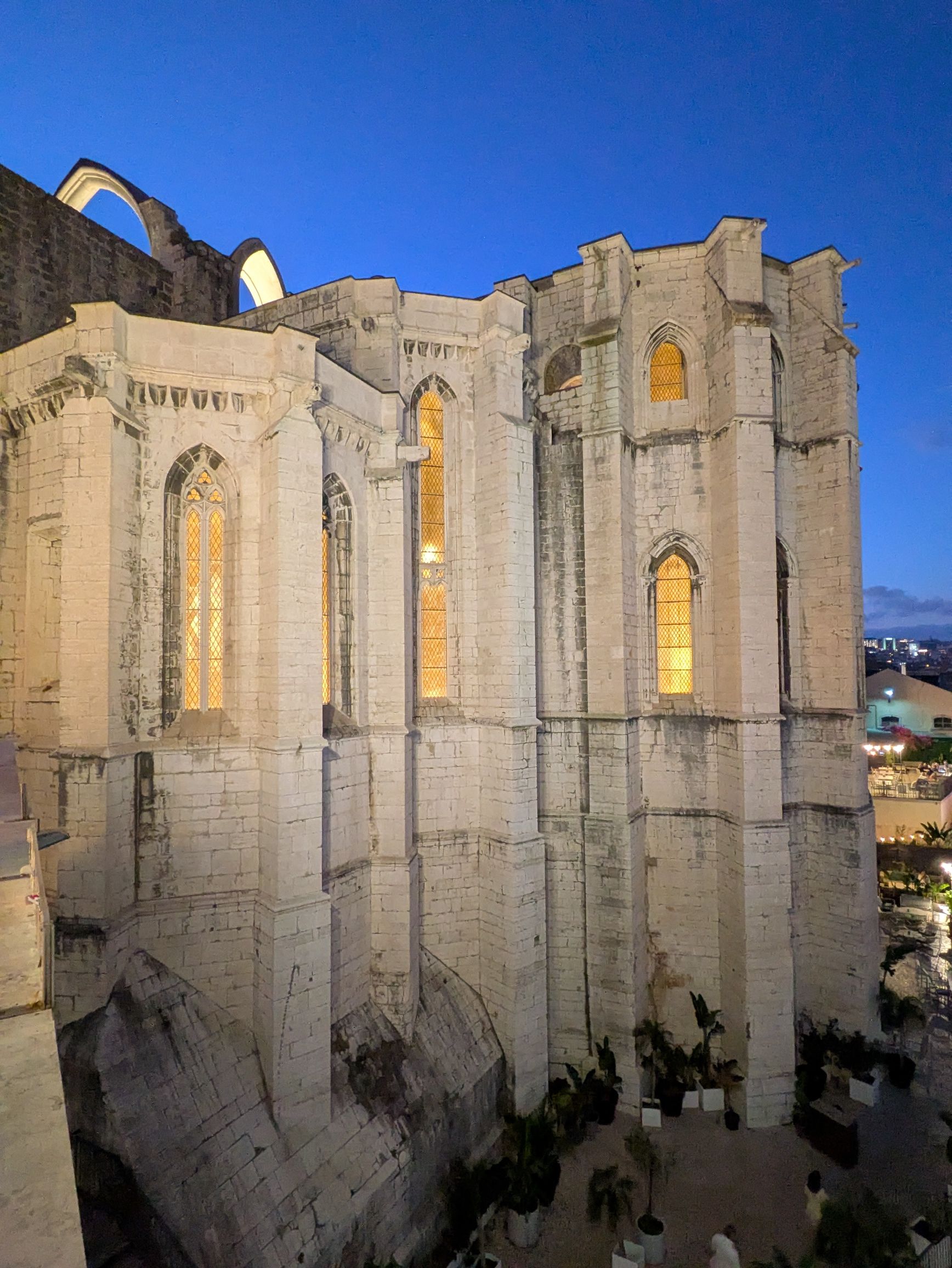
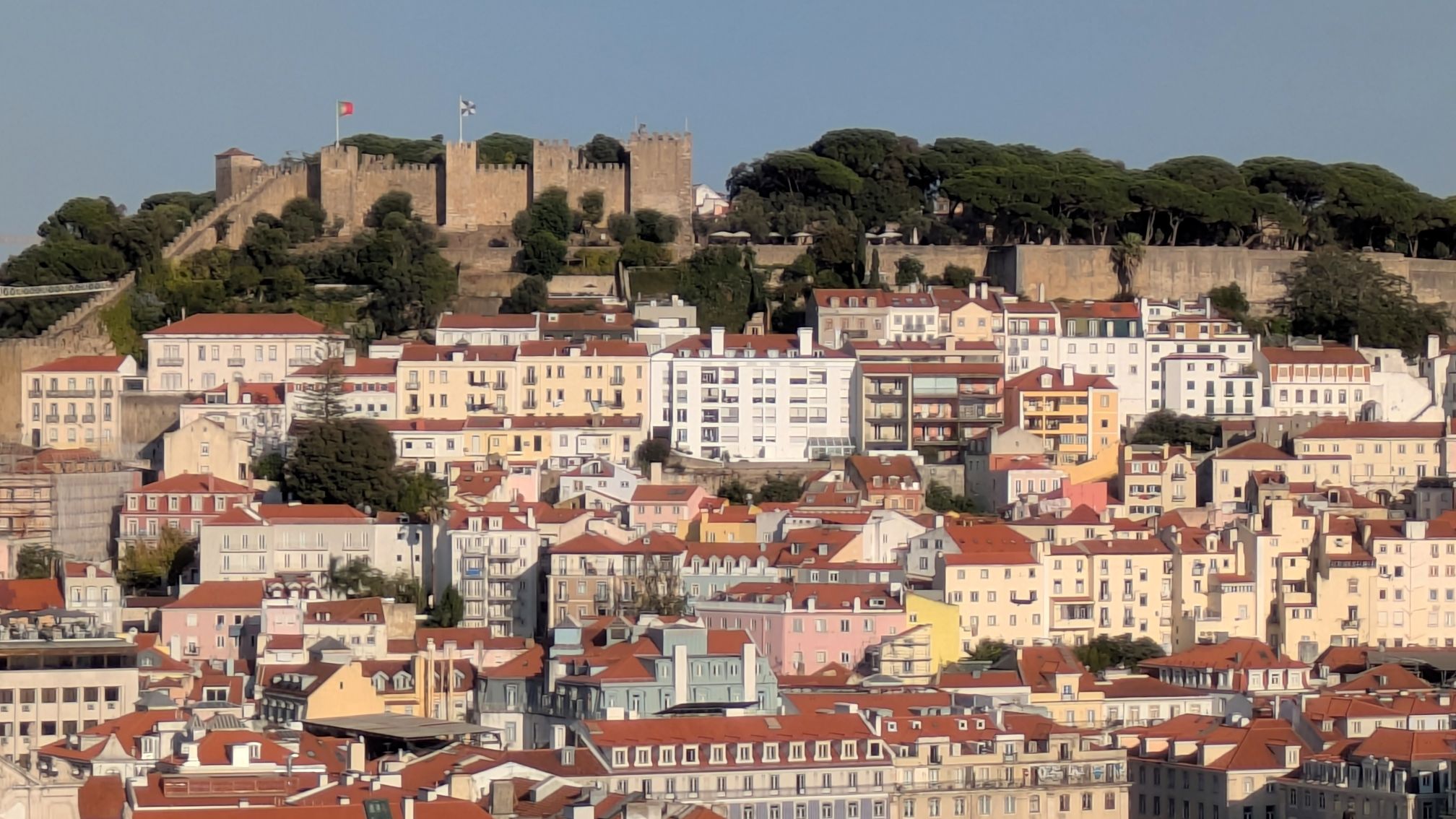
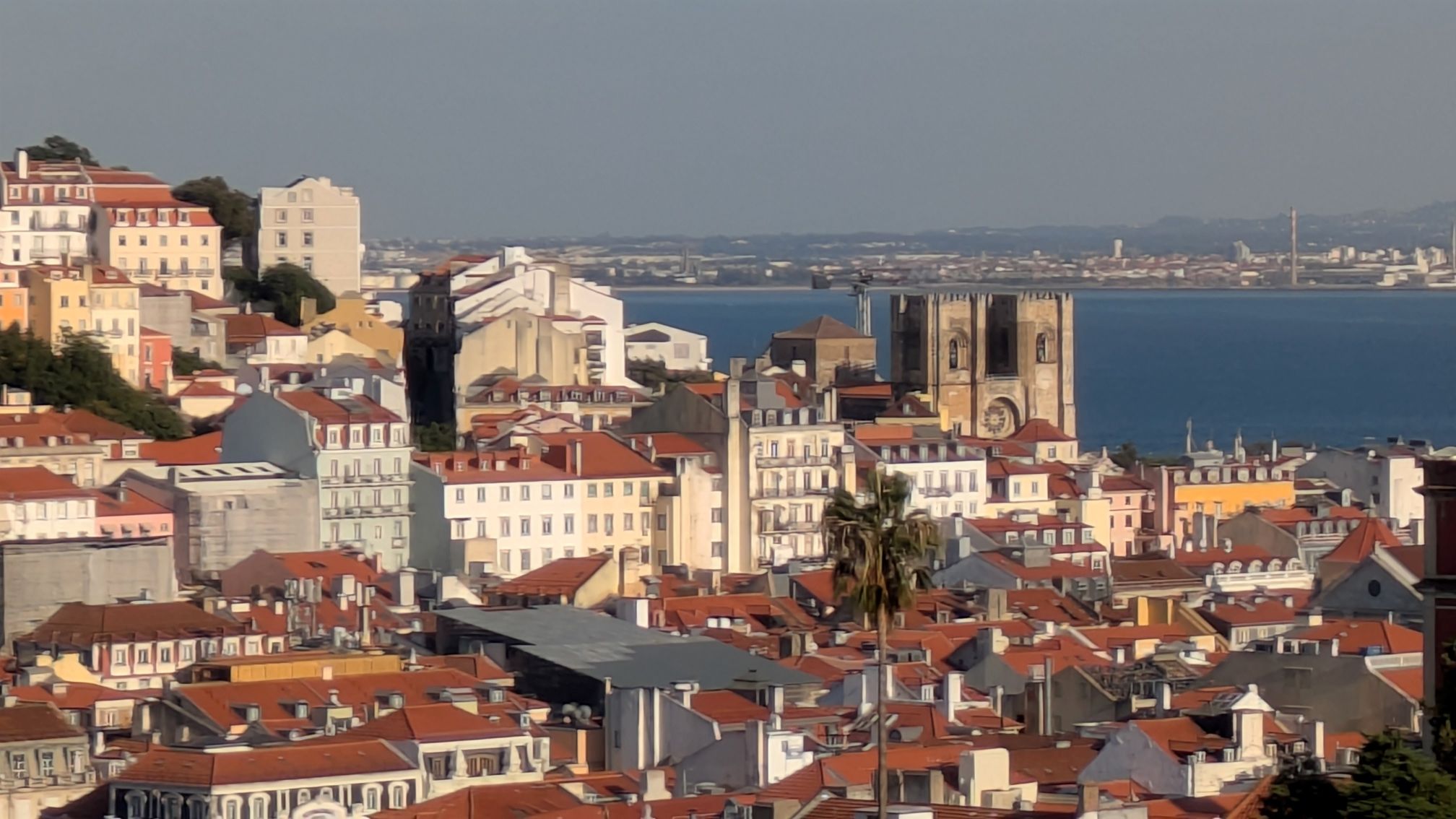
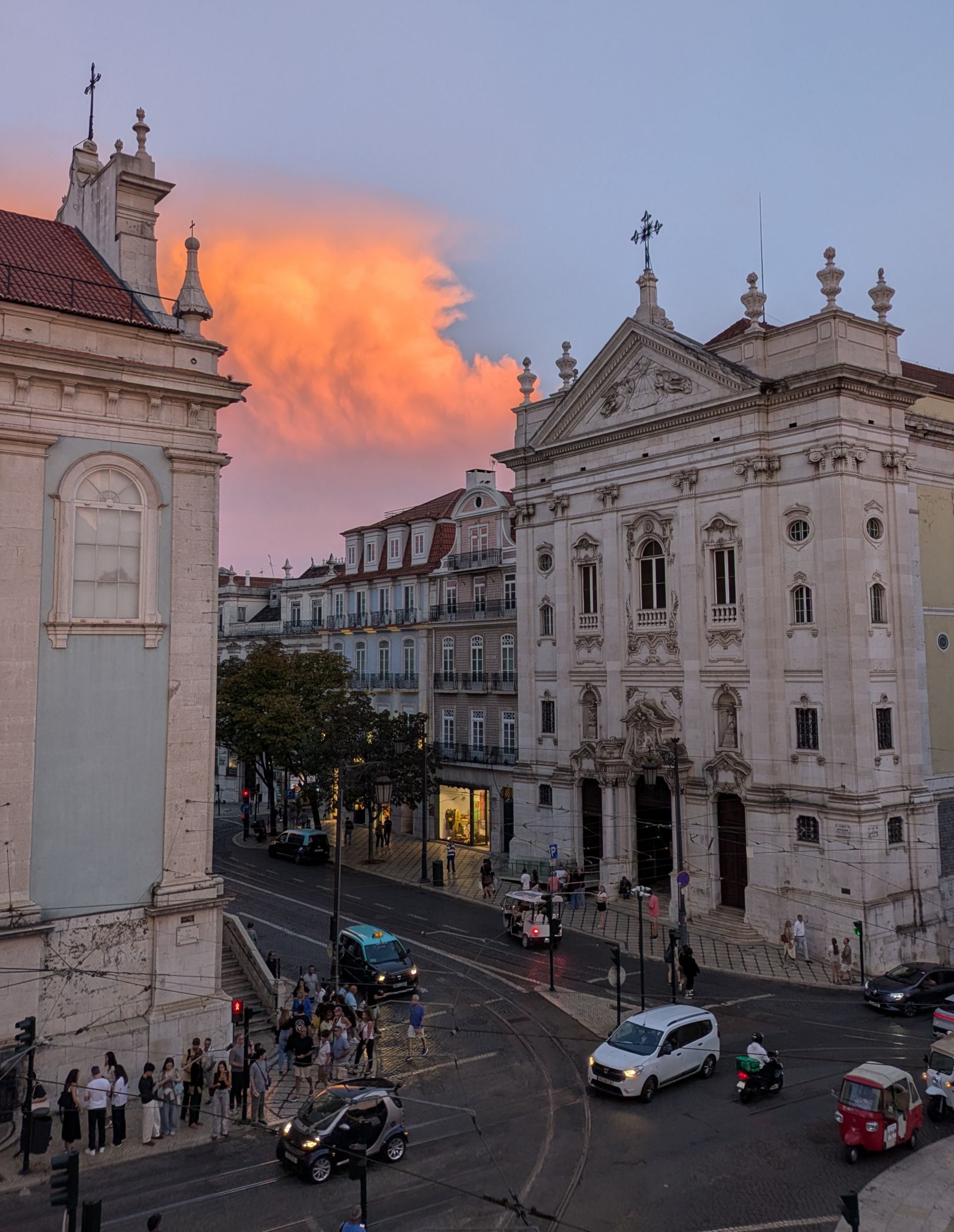
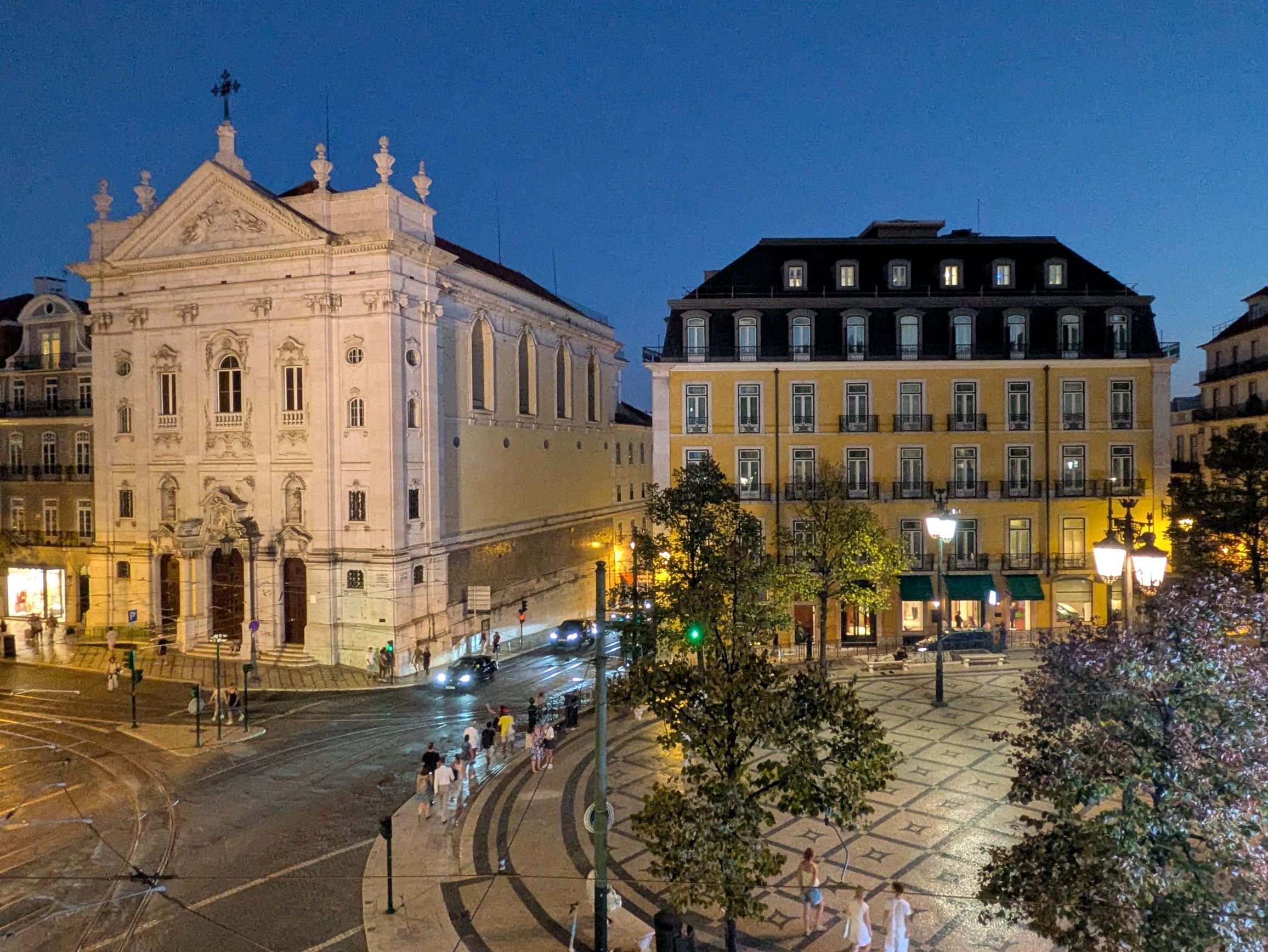
This is an overhead view of the pedestrian street and Rossio Square for perspective. This was shot from a viewing platform next to the convent in Bairo Alto, adjacent to the entrance to Elevador de Santa Justa, which is temporarily closed.From this viewing platform, you can also see the castle lit up in the distance. This is the top of the elevator on the right.
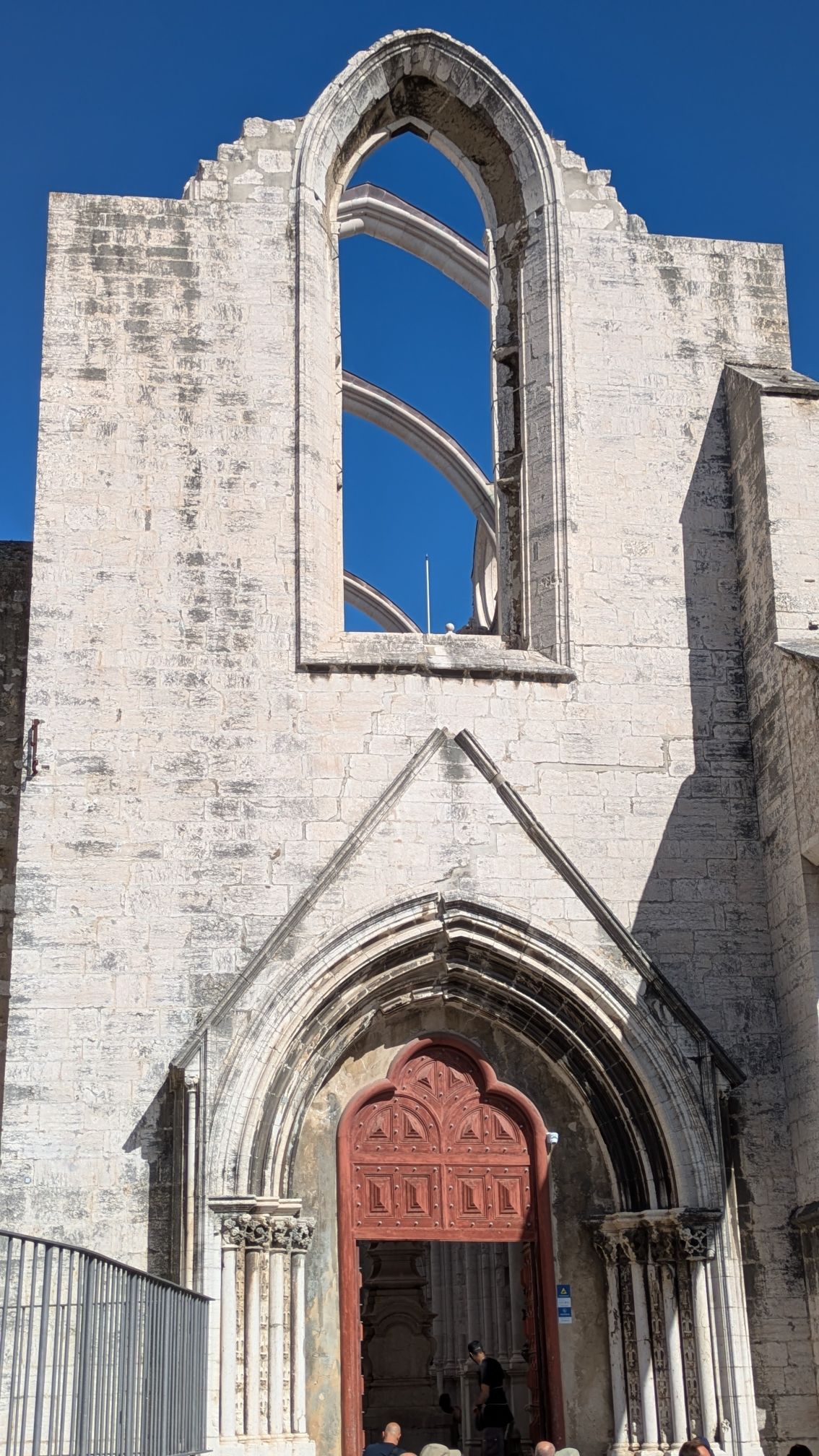
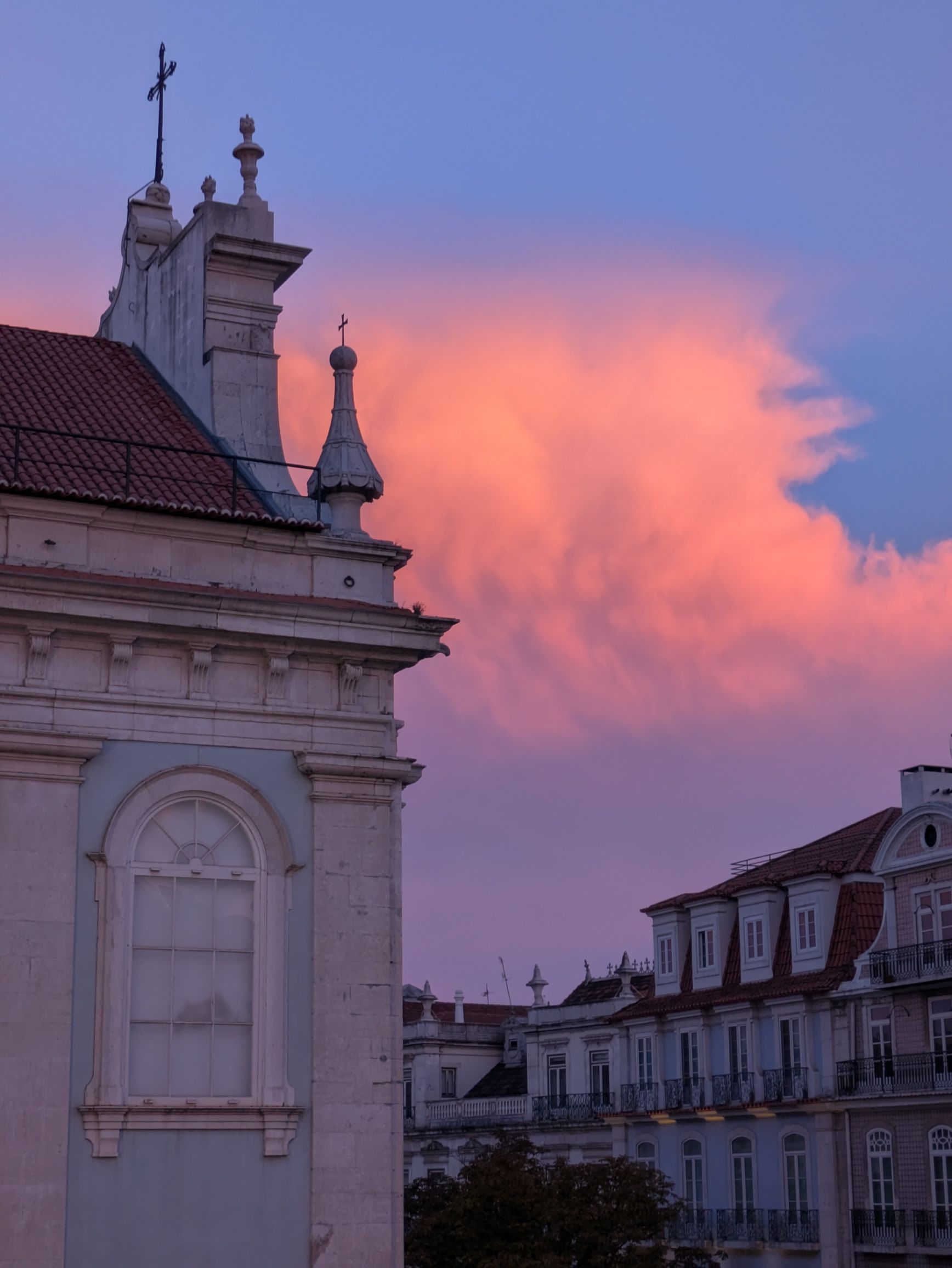
To the left is the convent.
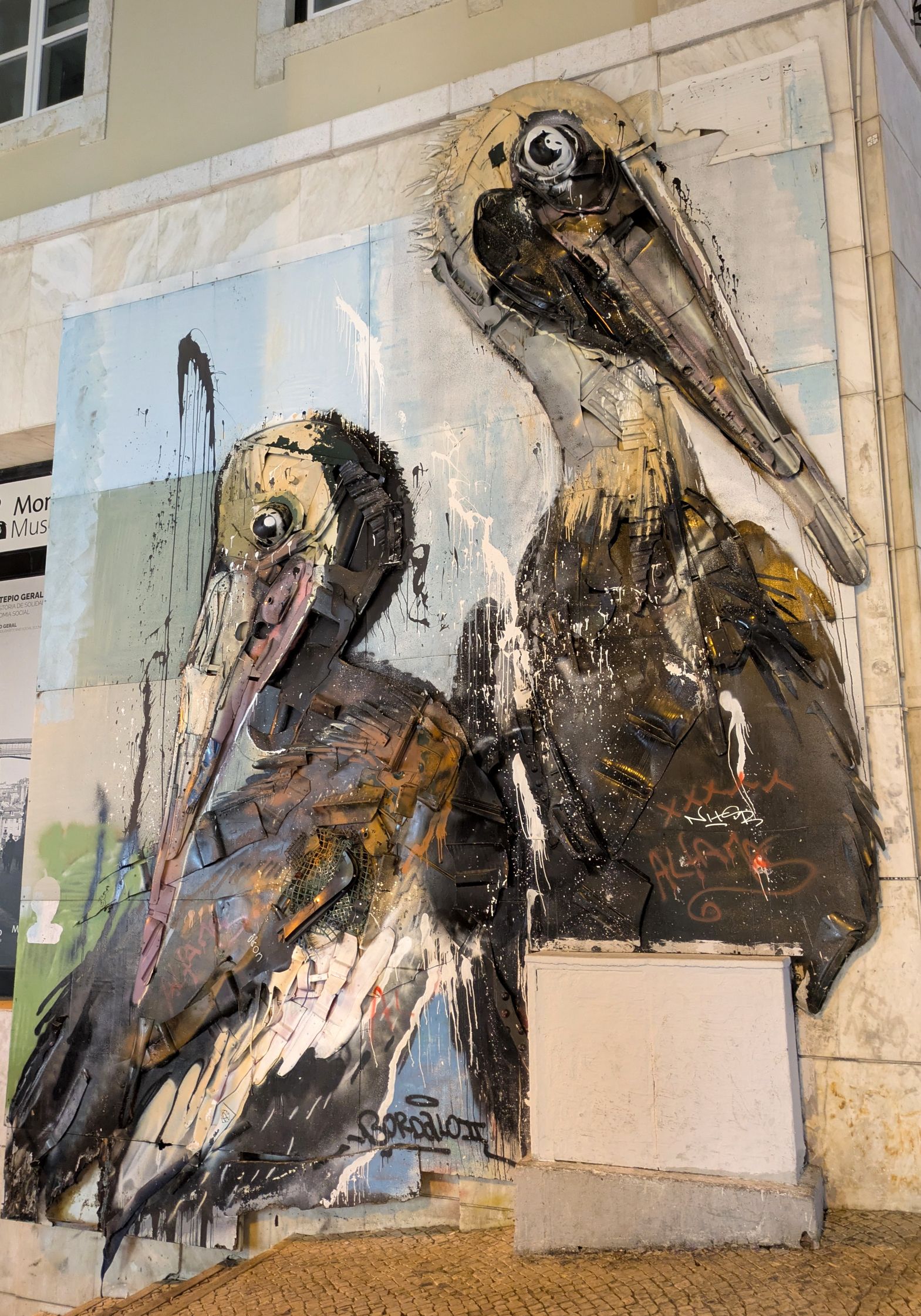
At the pedestrian street level of the Santa Justa lift are the Pelicans, by Bordalo II. (More Bordalo II in future posts.)
Coming up next: LOVING LIVING LIKE A LOCAL IN LISBON #5: BUSTLING BAIXA
In my previous post, I featured Chiado and Bairo Alto, the neighborhoods immediately surrounding our TGLA apartment. Now, I am going to take you just a little bit north to Principe Real and a short walk south to “Pink Street.”
Principe Real, located just up the road past Miradouro de Sao Pedro de Alcantara, is a district developed in the 19th century as a residential enclave for Lisbon’s aristocracy. Still an upscale neighborhood, there are designer boutiques, galleries, restaurants, a beautiful park, and botanical gardens.
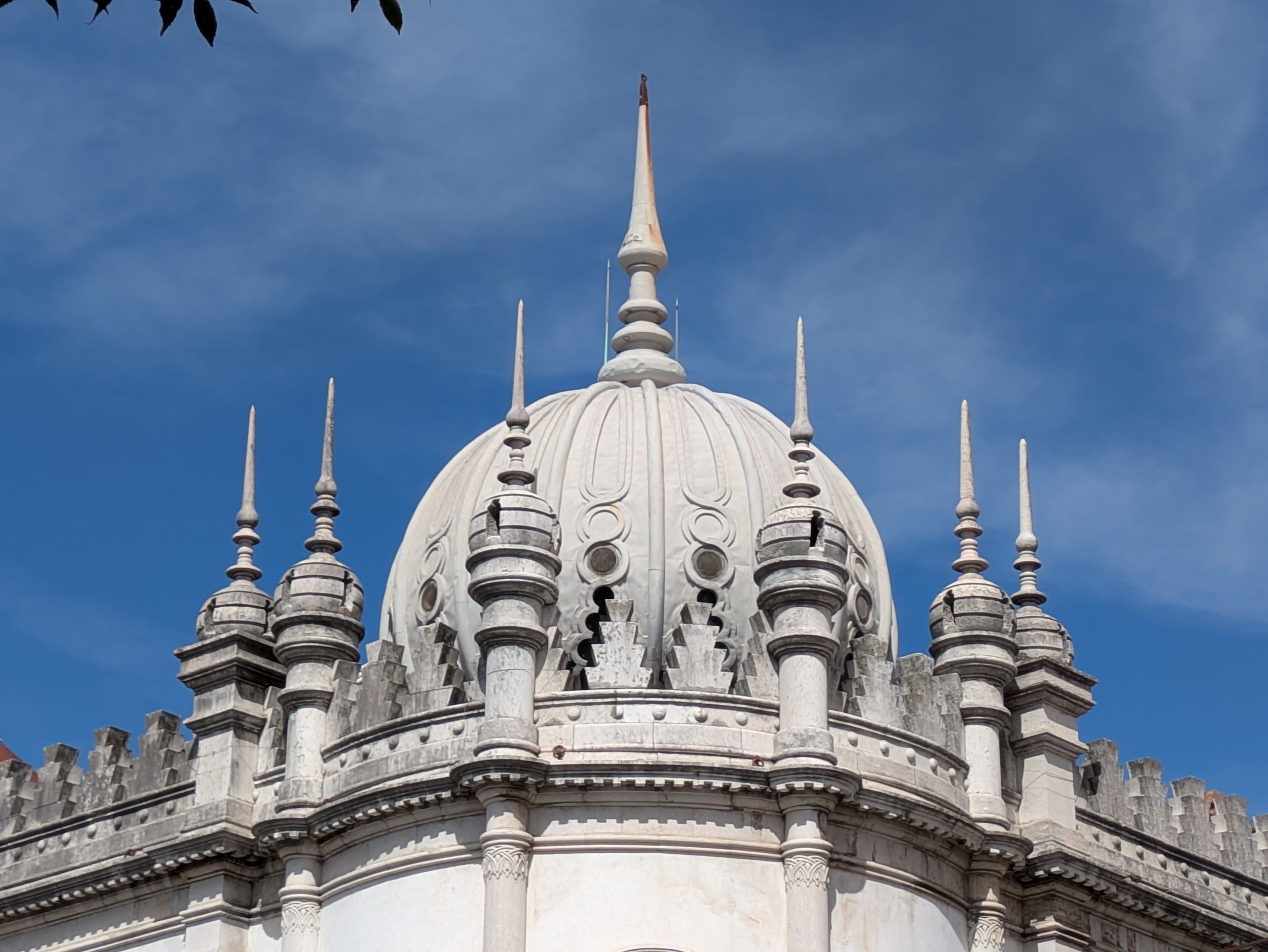
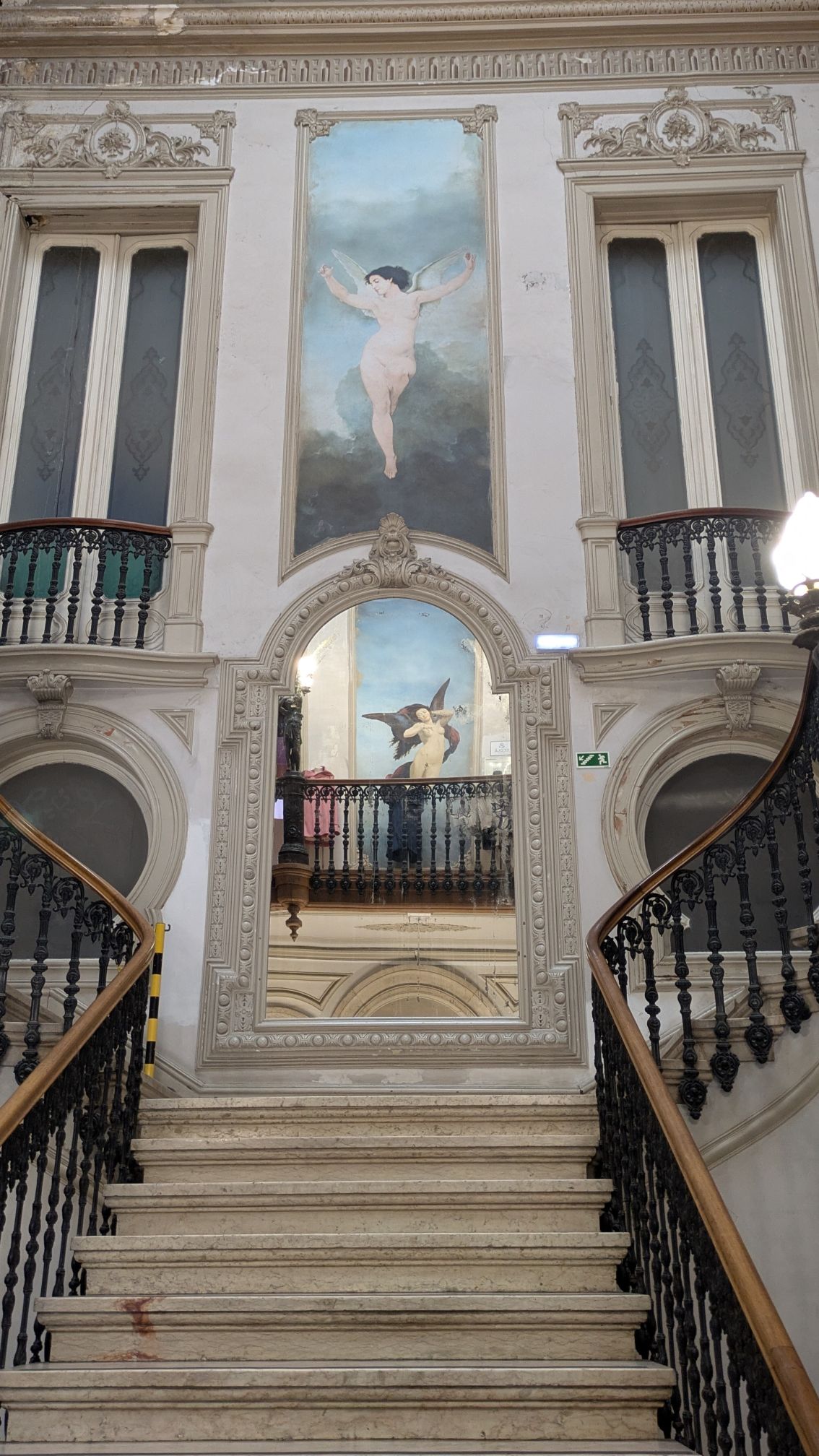
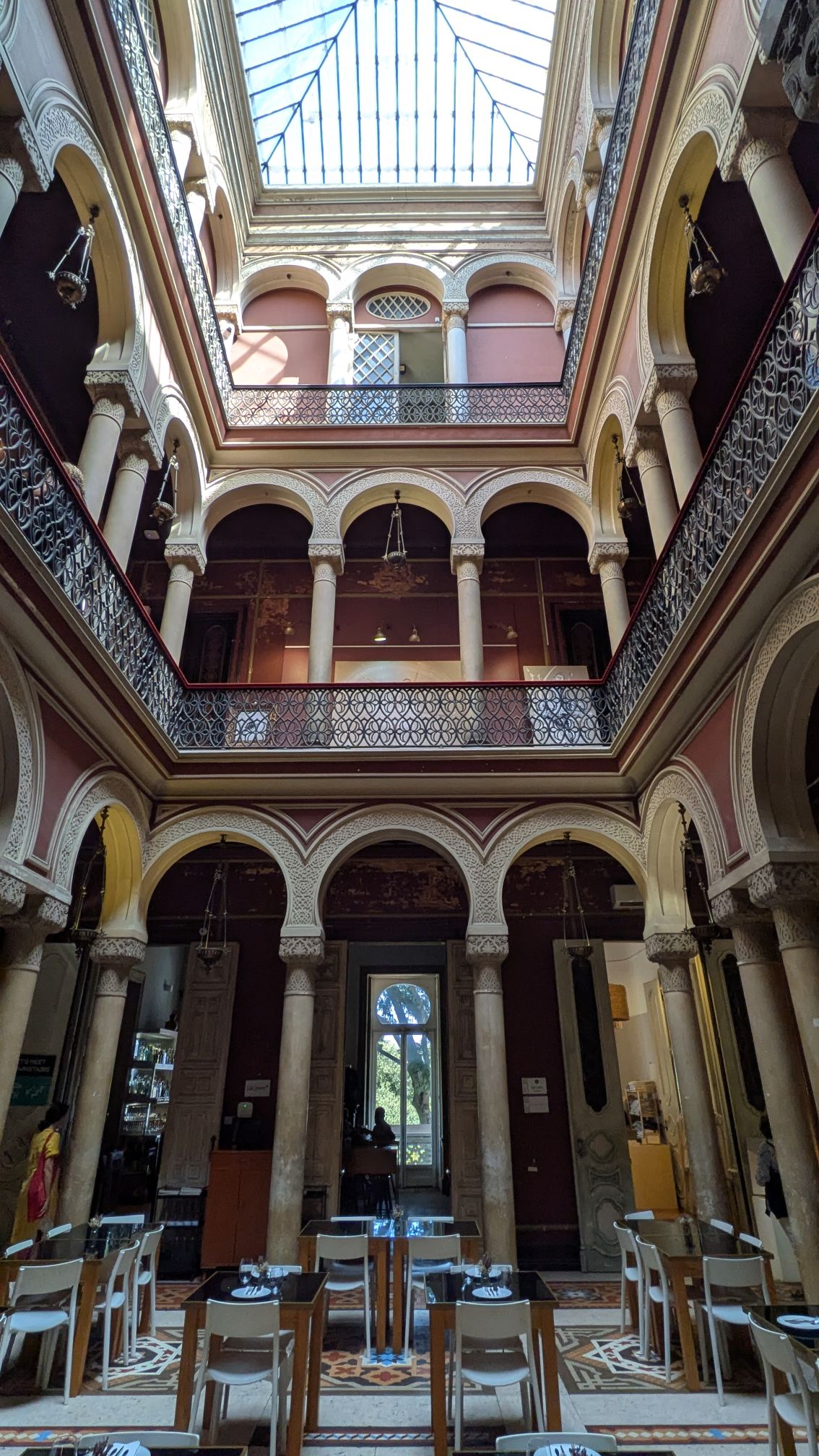
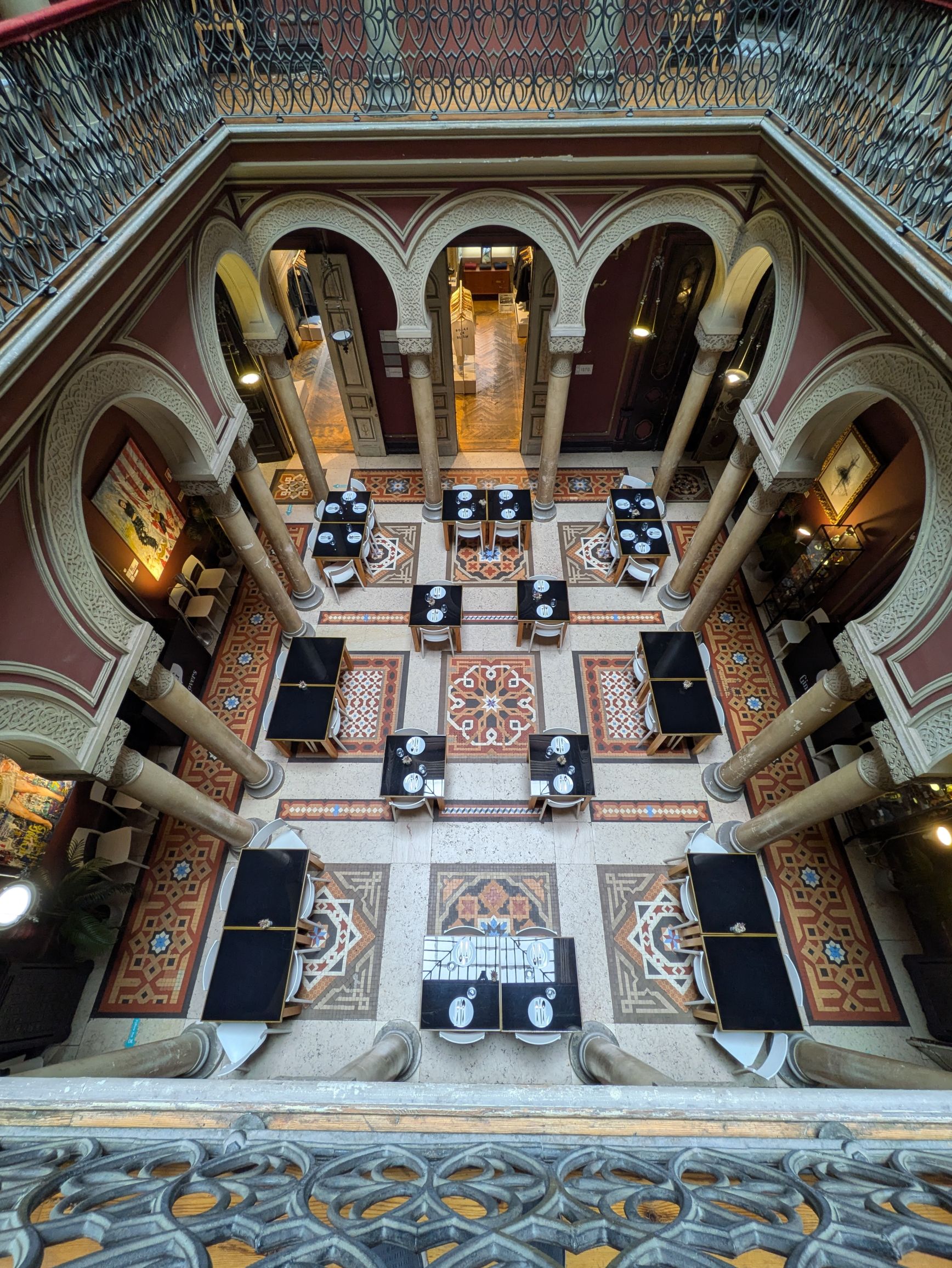
I am not much of a shopper, but EmbaiXada was something to see. It was even included on our walking tour, because the building is gorgeous. Now a high-end commercial gallery, it was once Ribeiro da Cunha Palace. In addition to fine products by Portuguese artists and designers, there is a bar and restaurant. The only thing I brought out from EmbaiXada were my own photographs.
(For all photos, click on the image for a full screen view.)
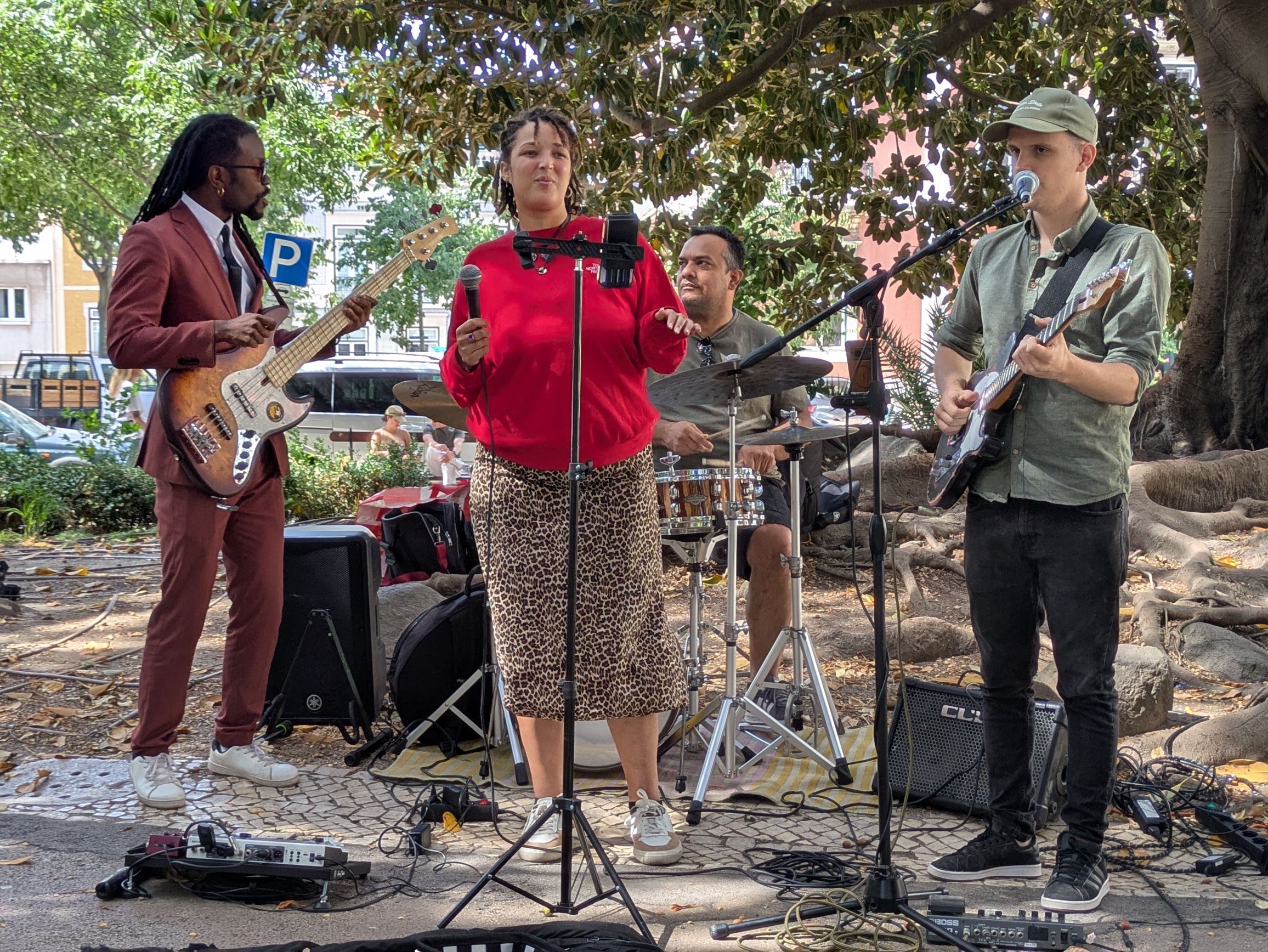
One of our favorite memories was relaxing at a table under the beautiful trees at Jardim do Principe Real (Principe Real Park), sipping an ice-cold cola, and listening to an excellent band performing classic rock. They played for tips, and we gladly tossed some Euros in their basket. They were so enjoyable! It was a warm sunny day, and it was the perfect way to cap off our afternoon, following our TGLA’s group orientation tour around the area and our delicious salad-with-a-view at Honest Greens.
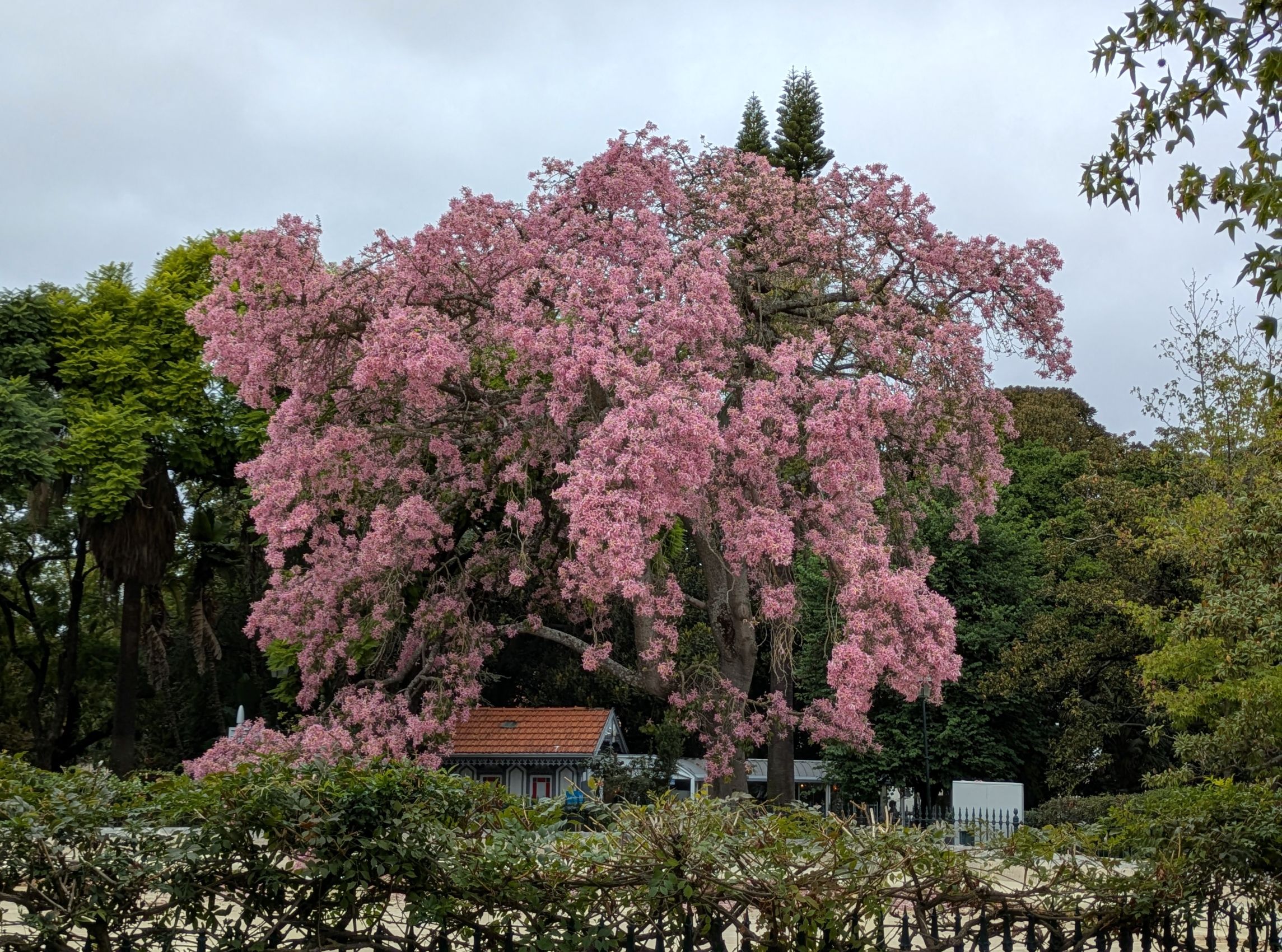
Another day at the park, the only cloudy day we had!
Views across the street from the park…
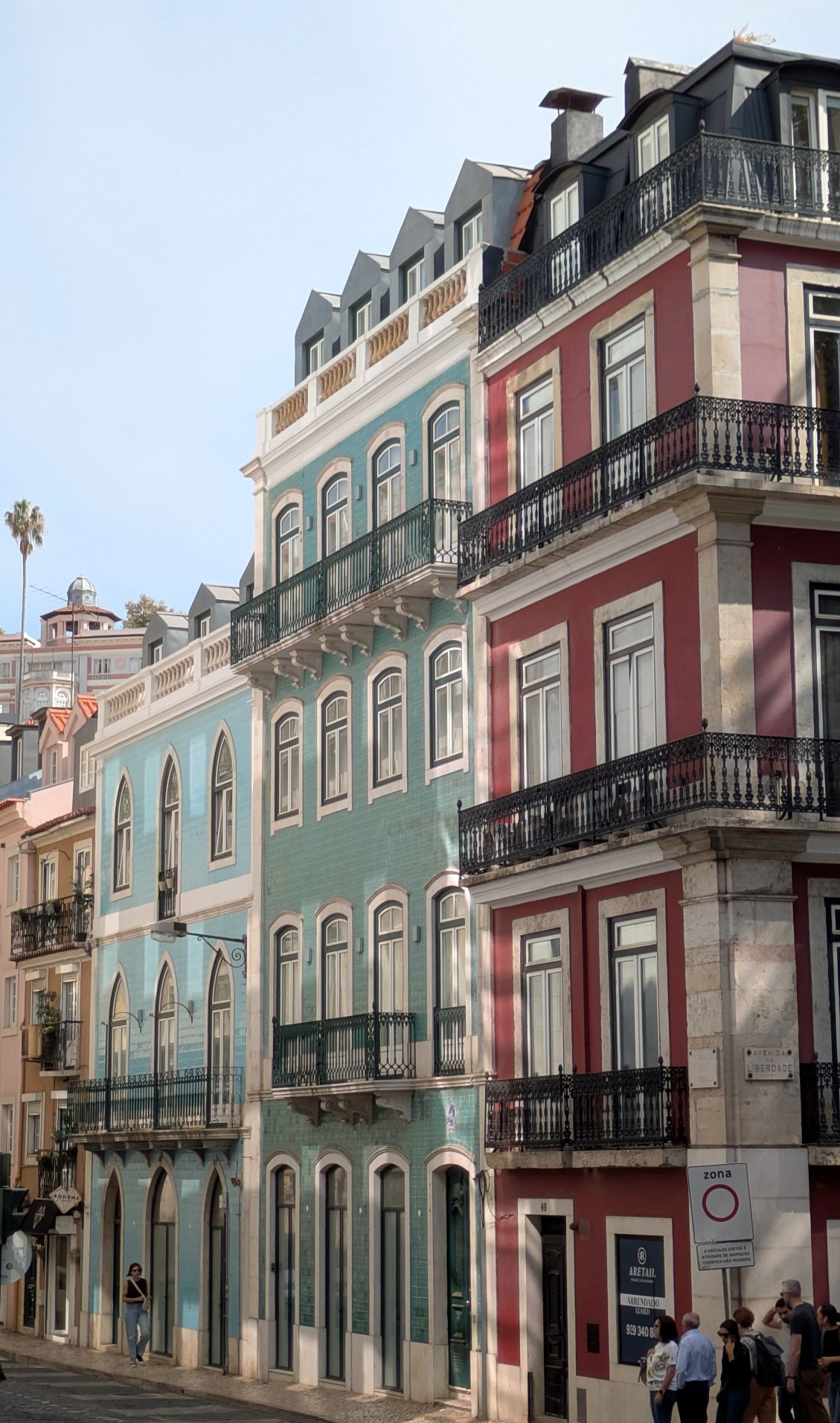
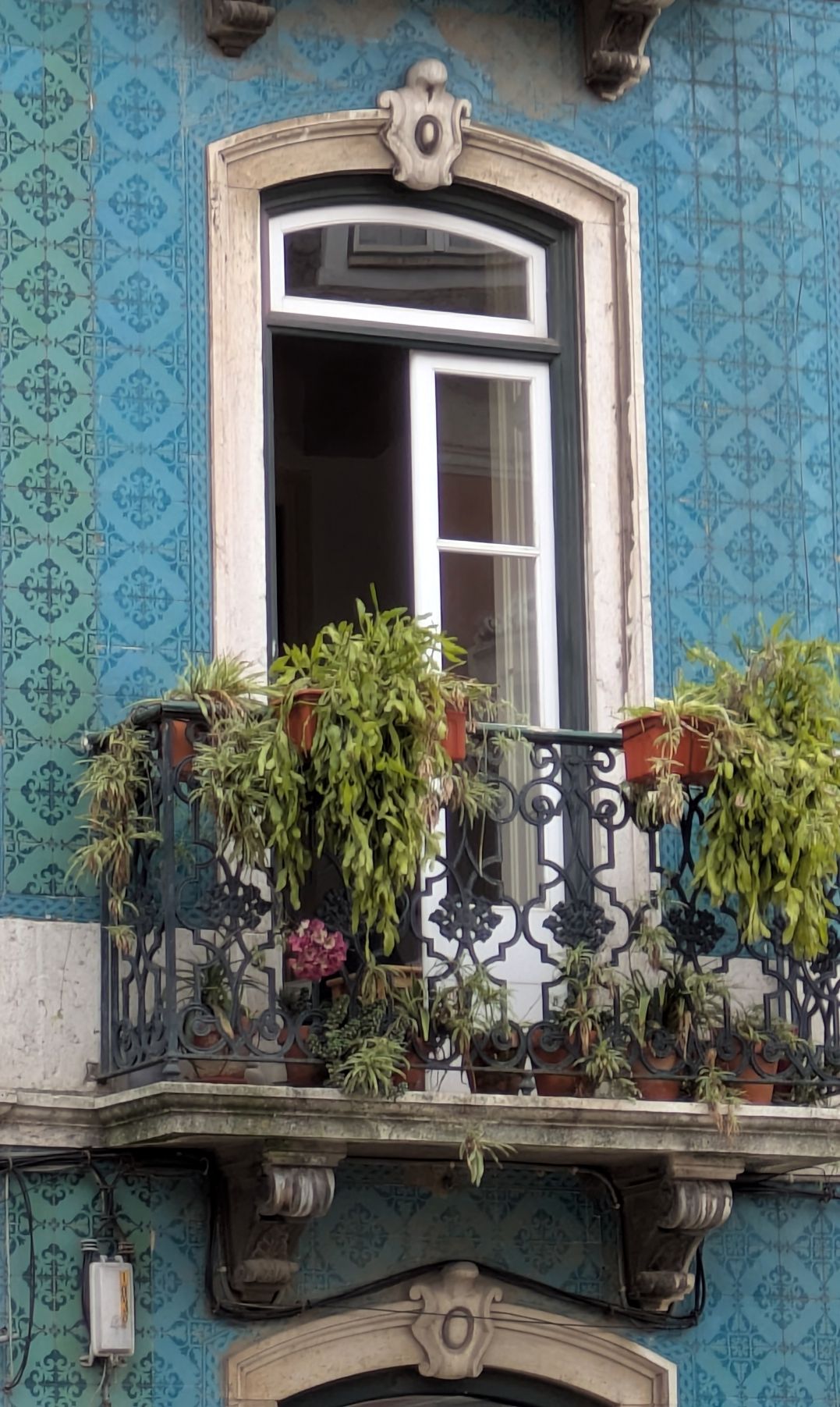
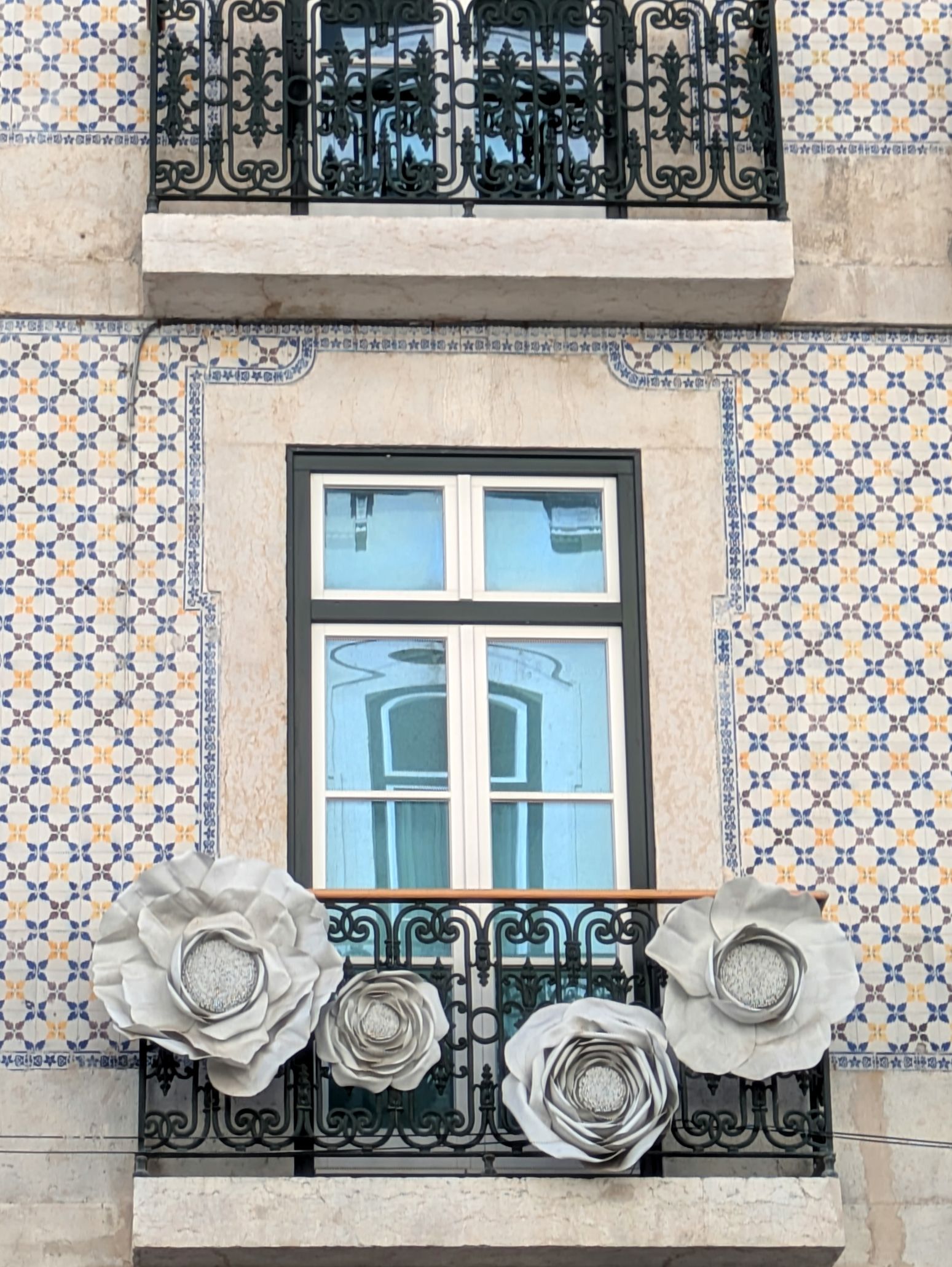
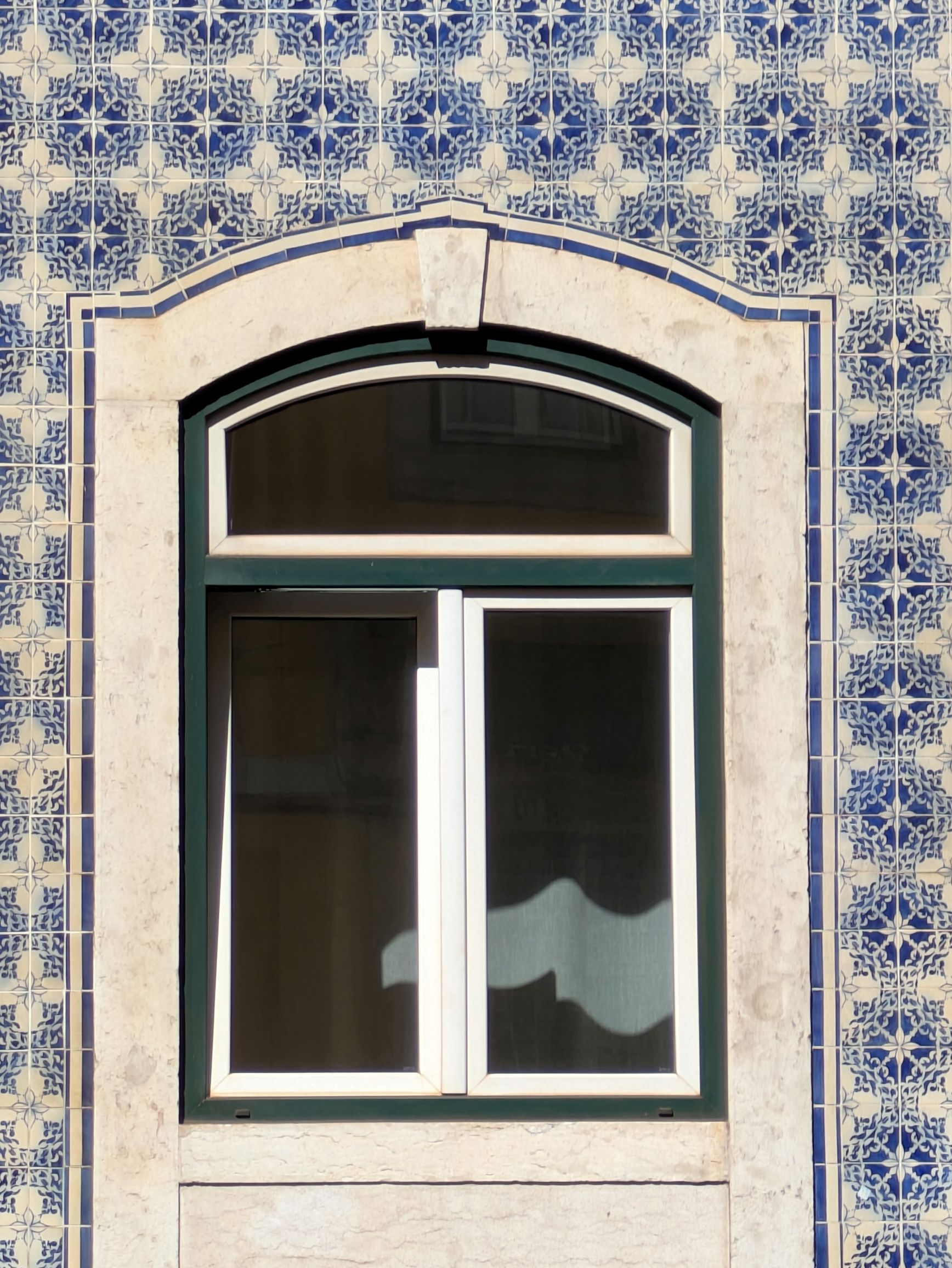
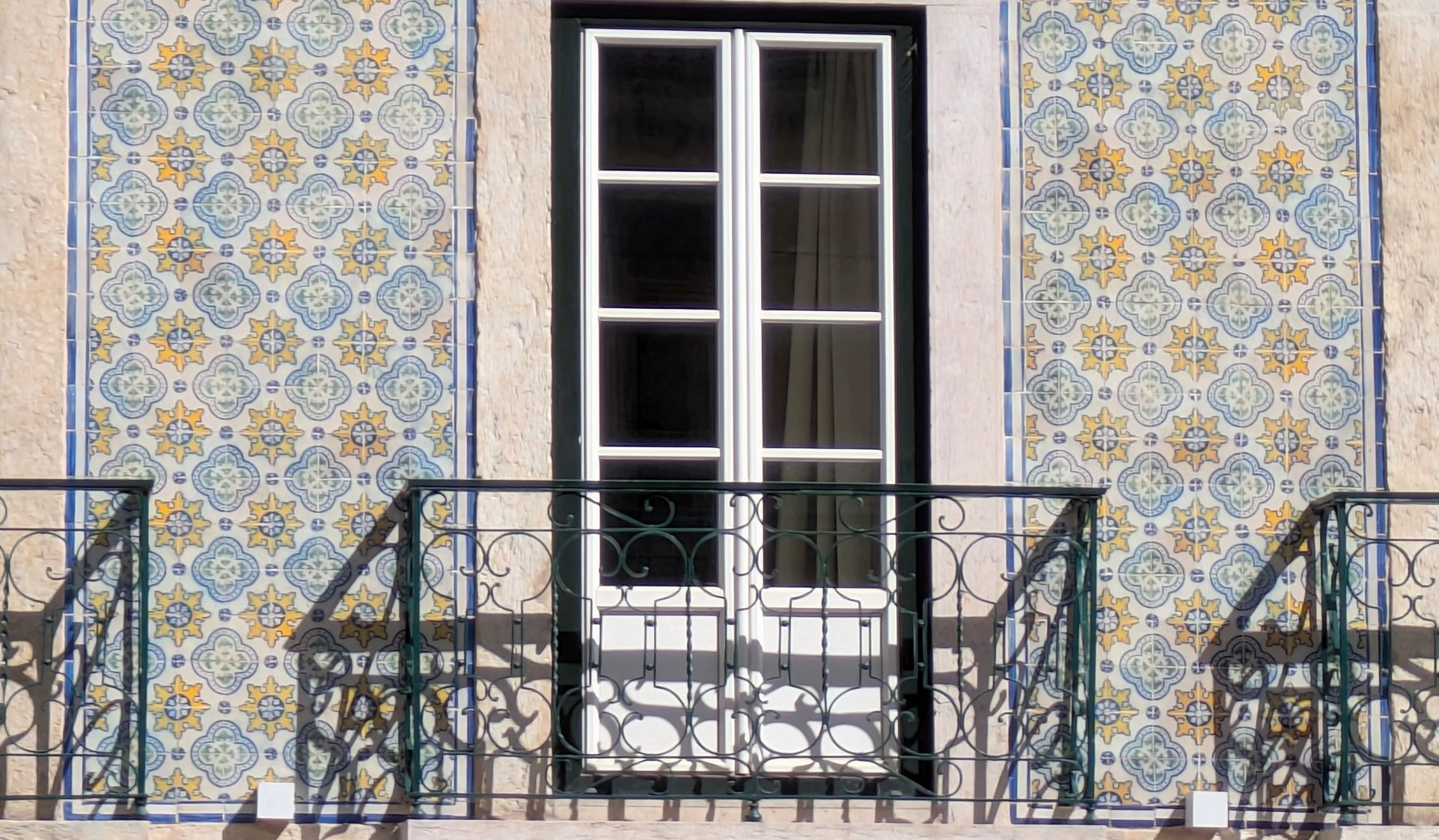
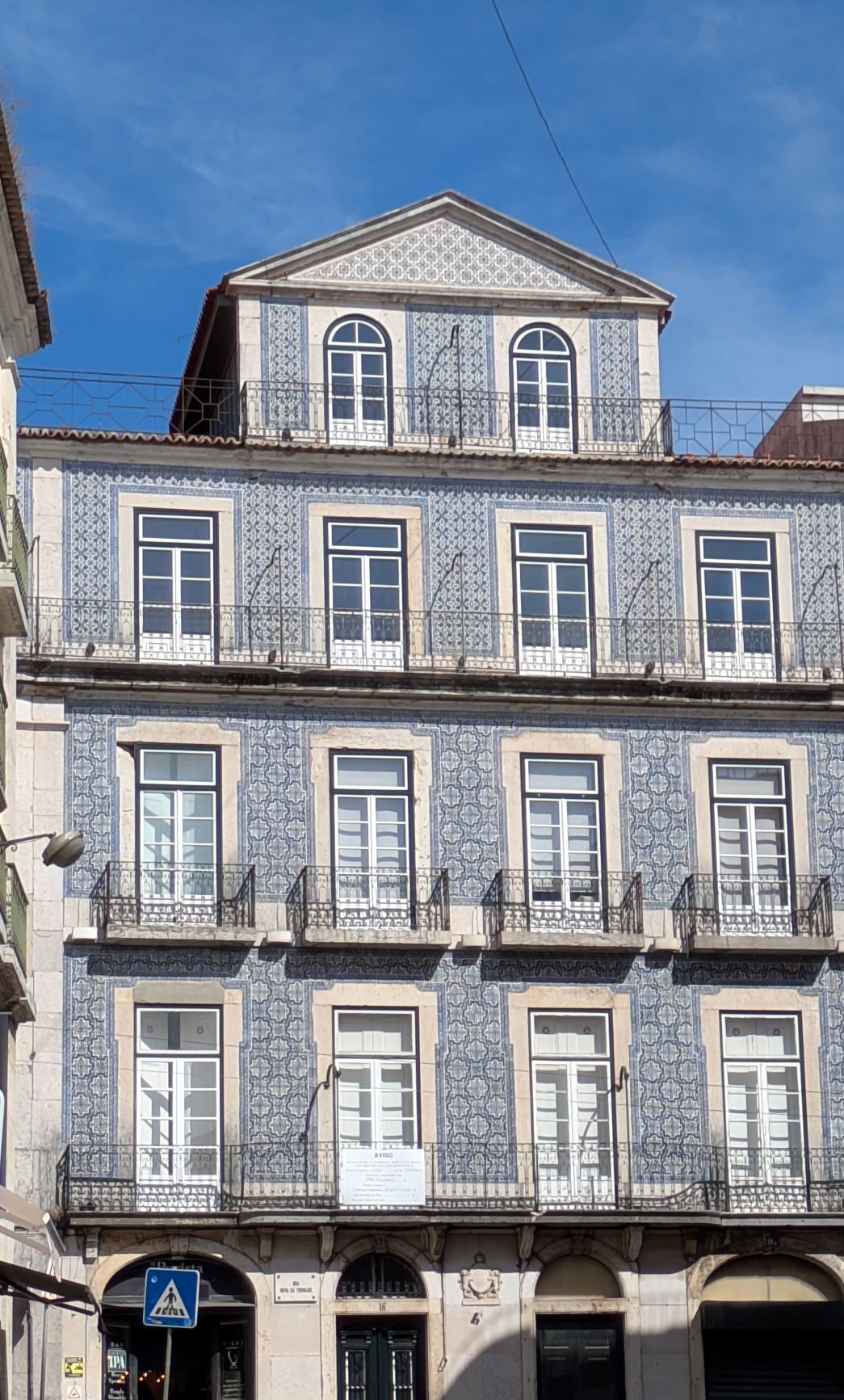
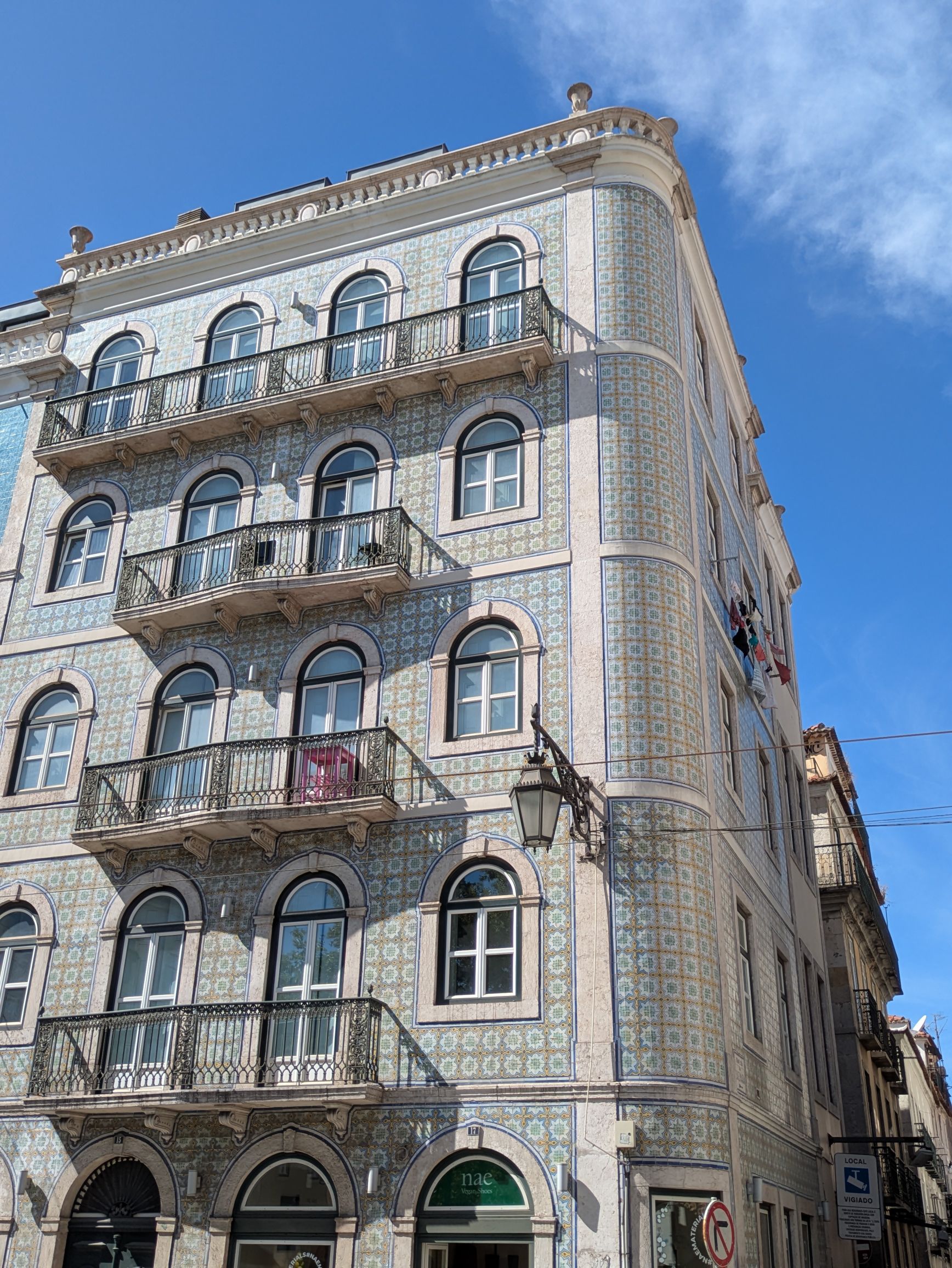
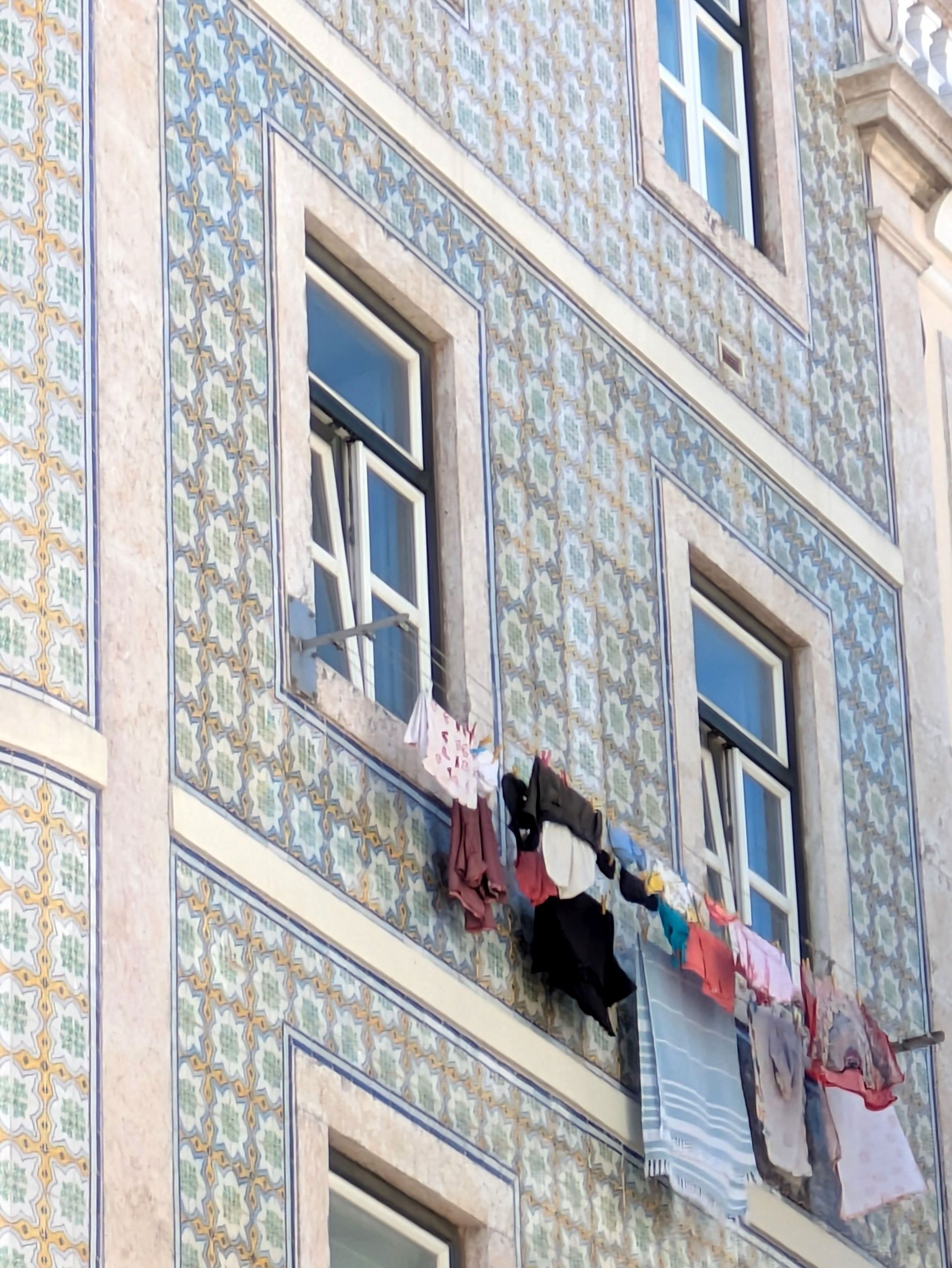
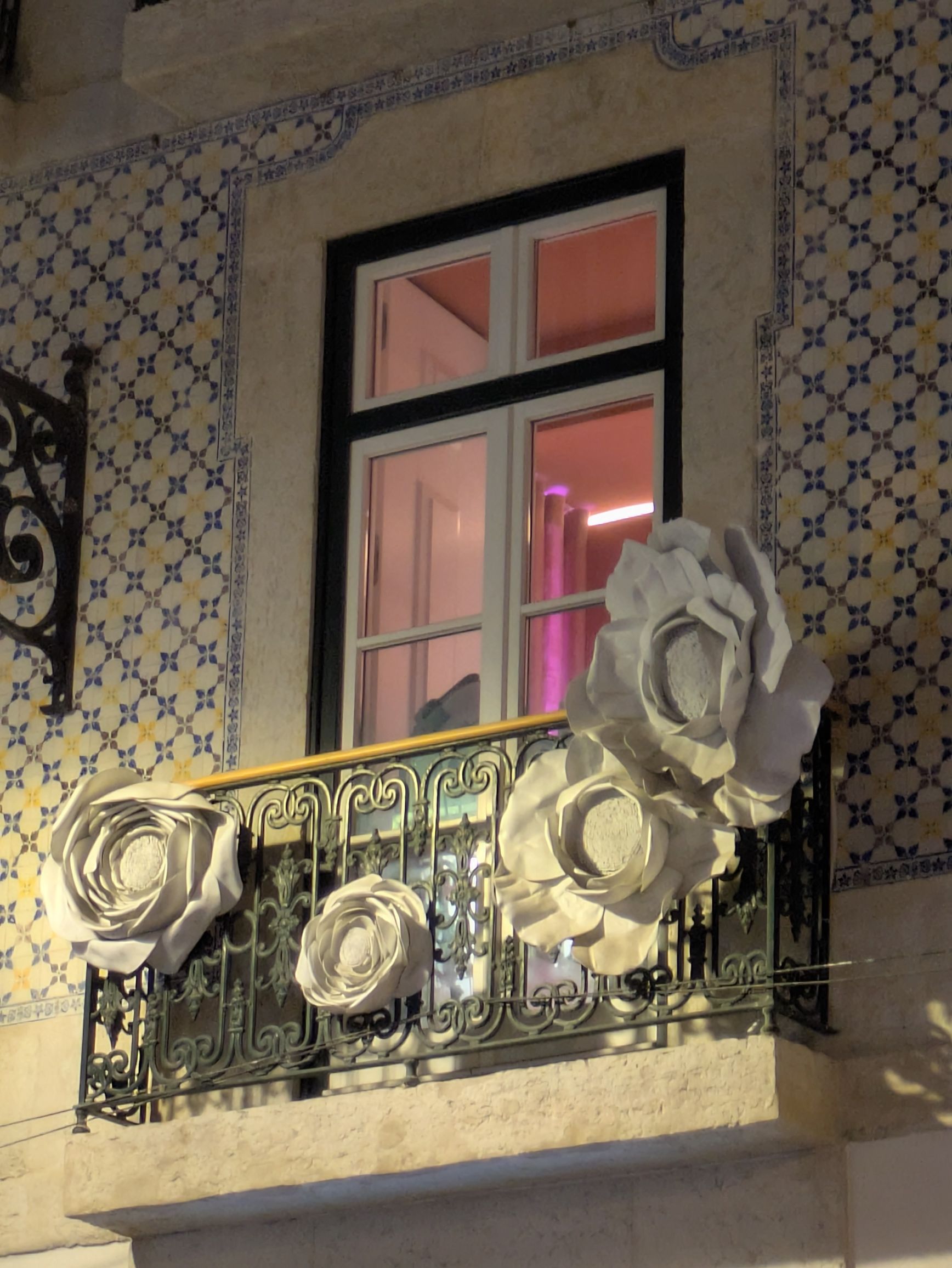
I enjoyed seeing and photographing the colorful tile facades of the buildings.
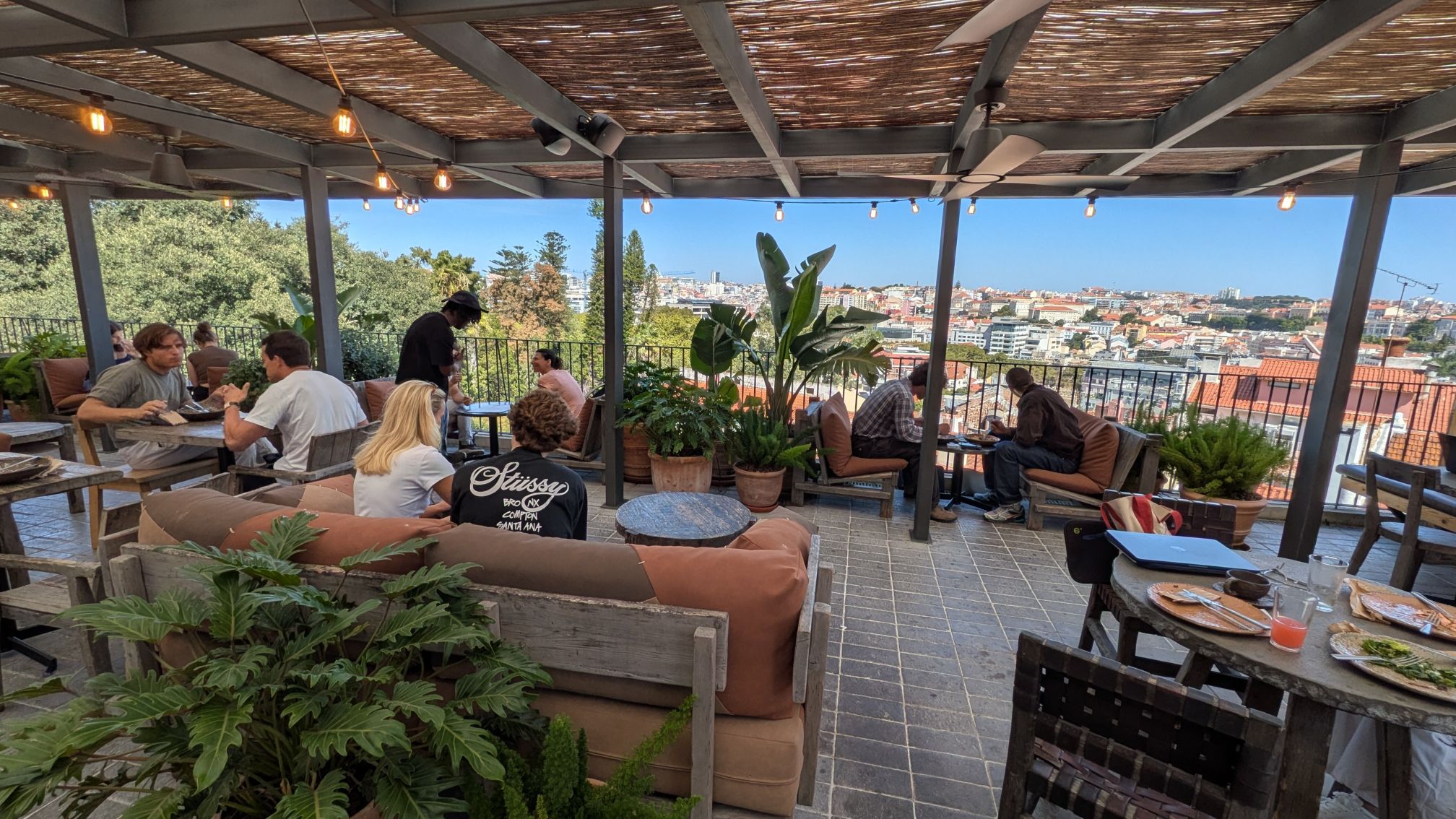
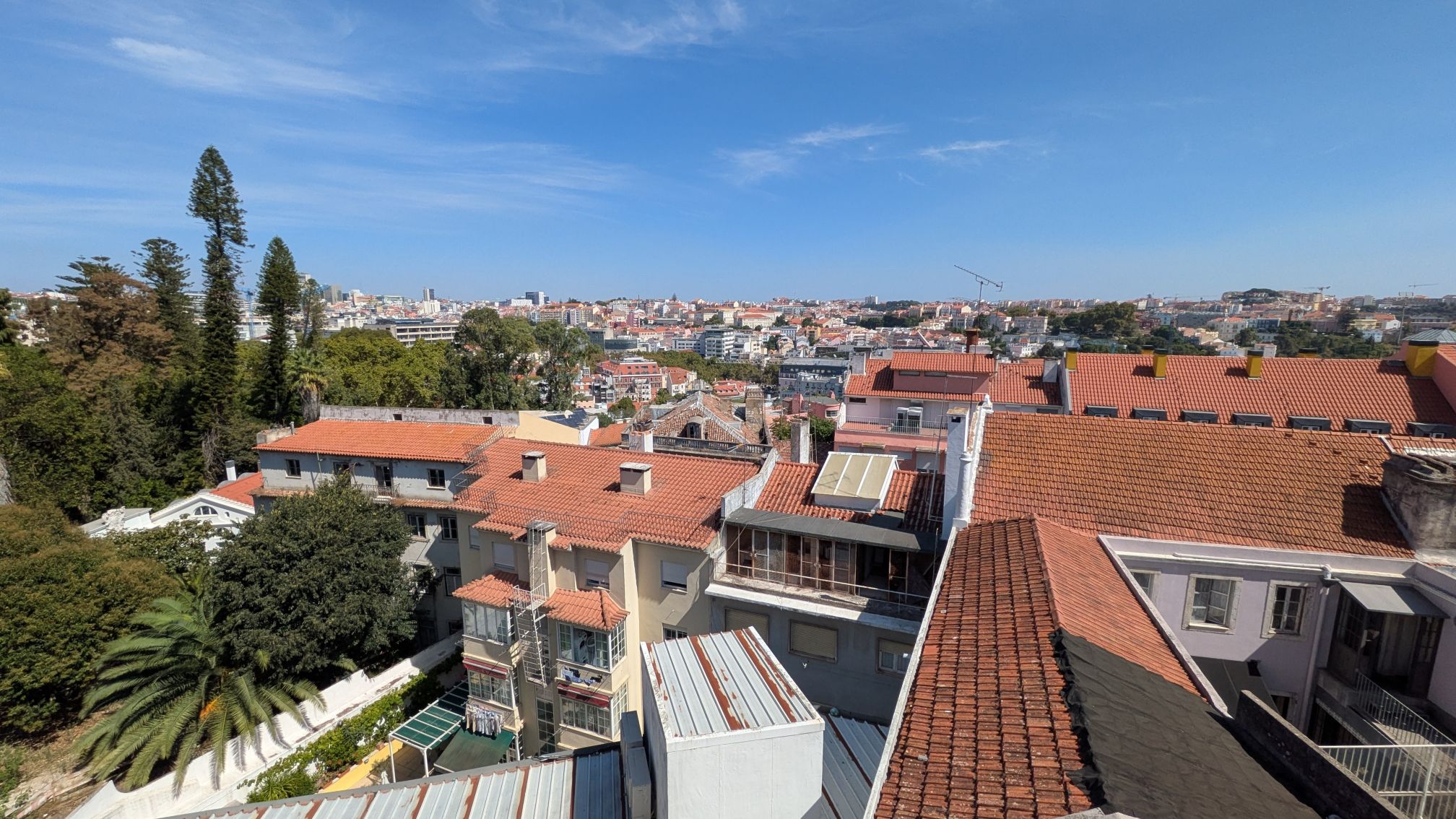
Our community manager, Jen, recommended having lunch on the terrace at Honest Greens, across from the park. The view was fabulous and the food delicious!Another view from the terrace of Honest Greens
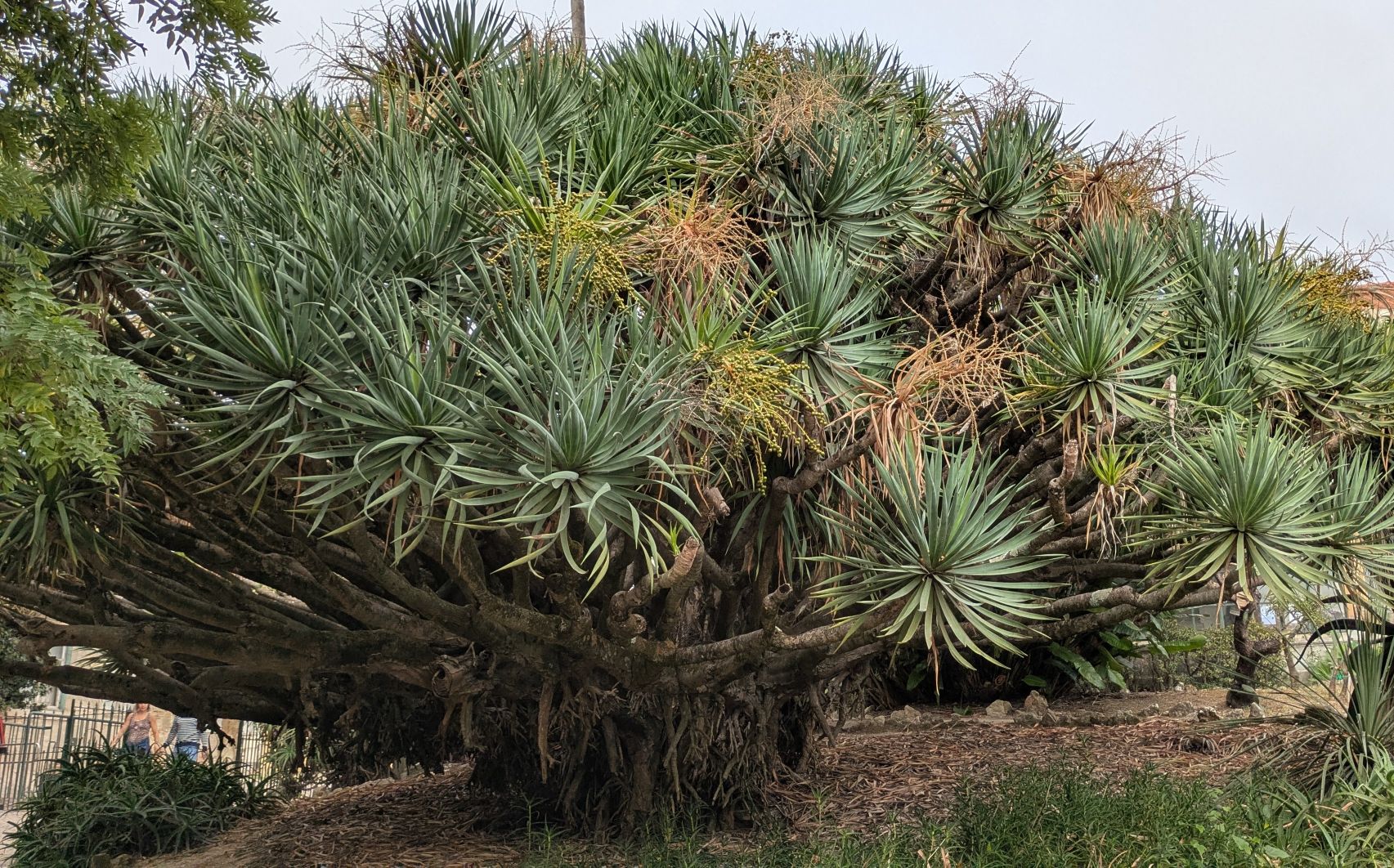
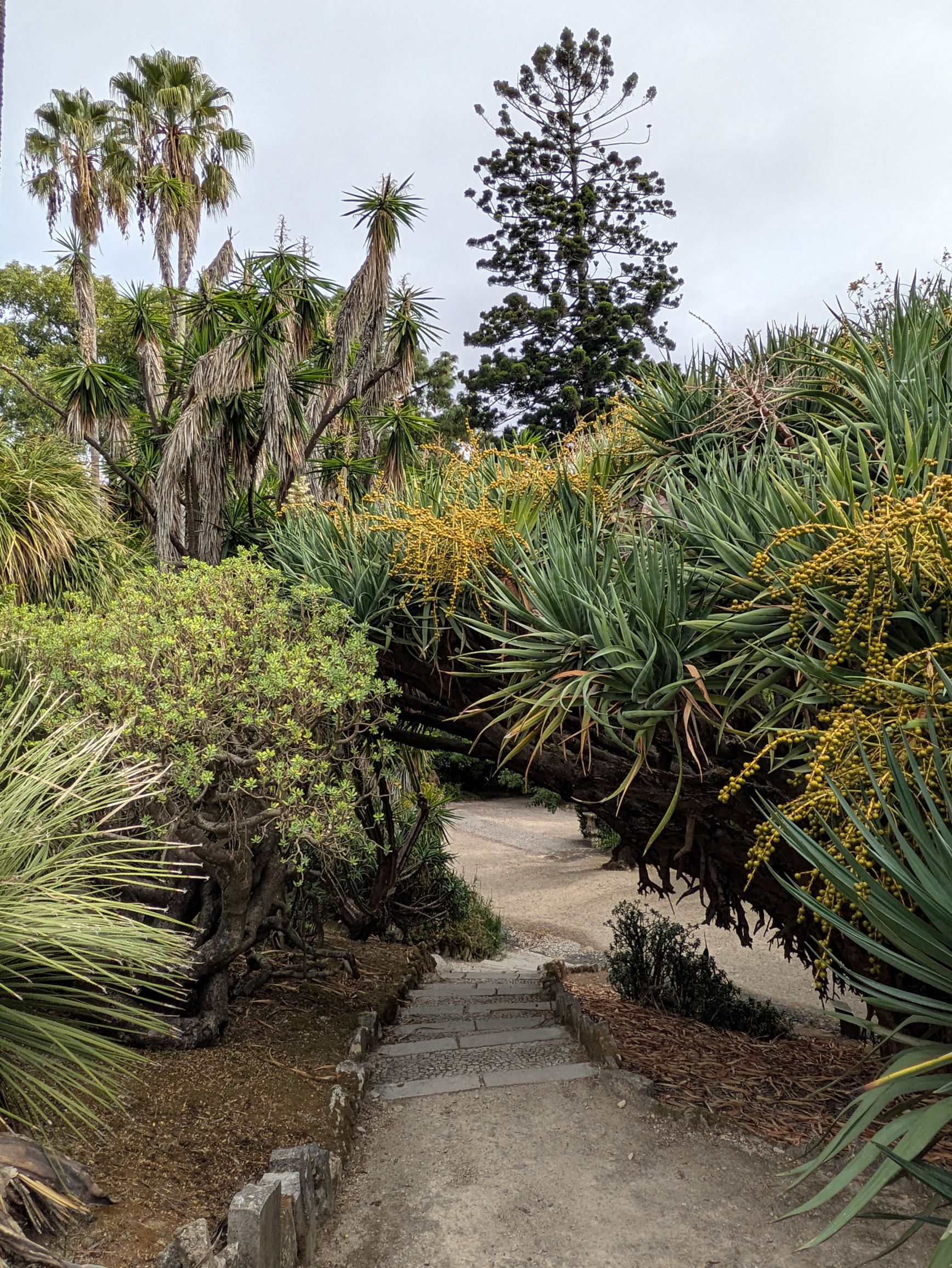
Jardim Botanico de Lisboa, the botanical gardens of Lisbon, is also located in the Principe Real neighborhood. Although it doesn’t have stellar reviews on Google or Trip Advisor, it was free the Sunday morning we visited, and it was a nice respite from the busy city.
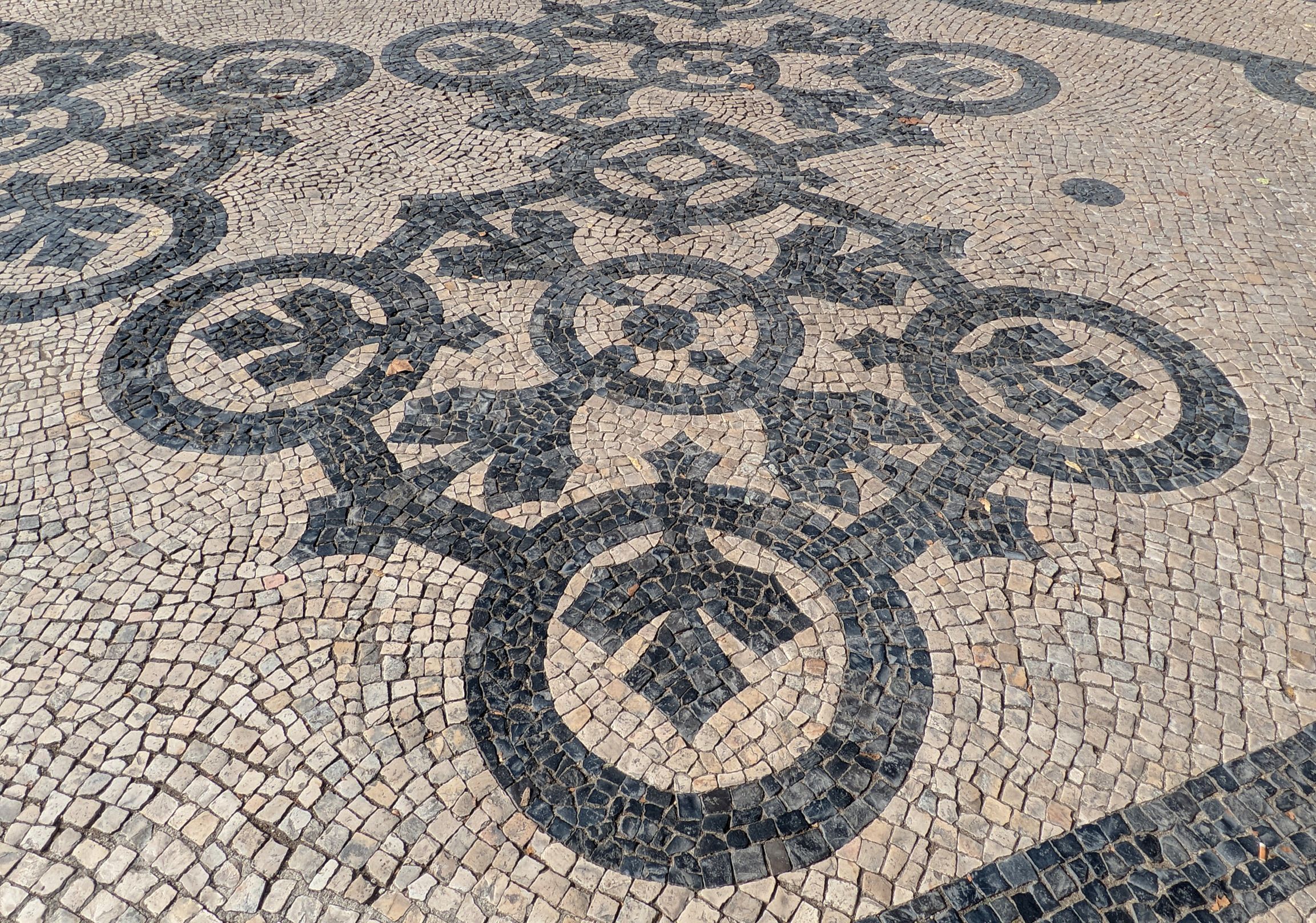
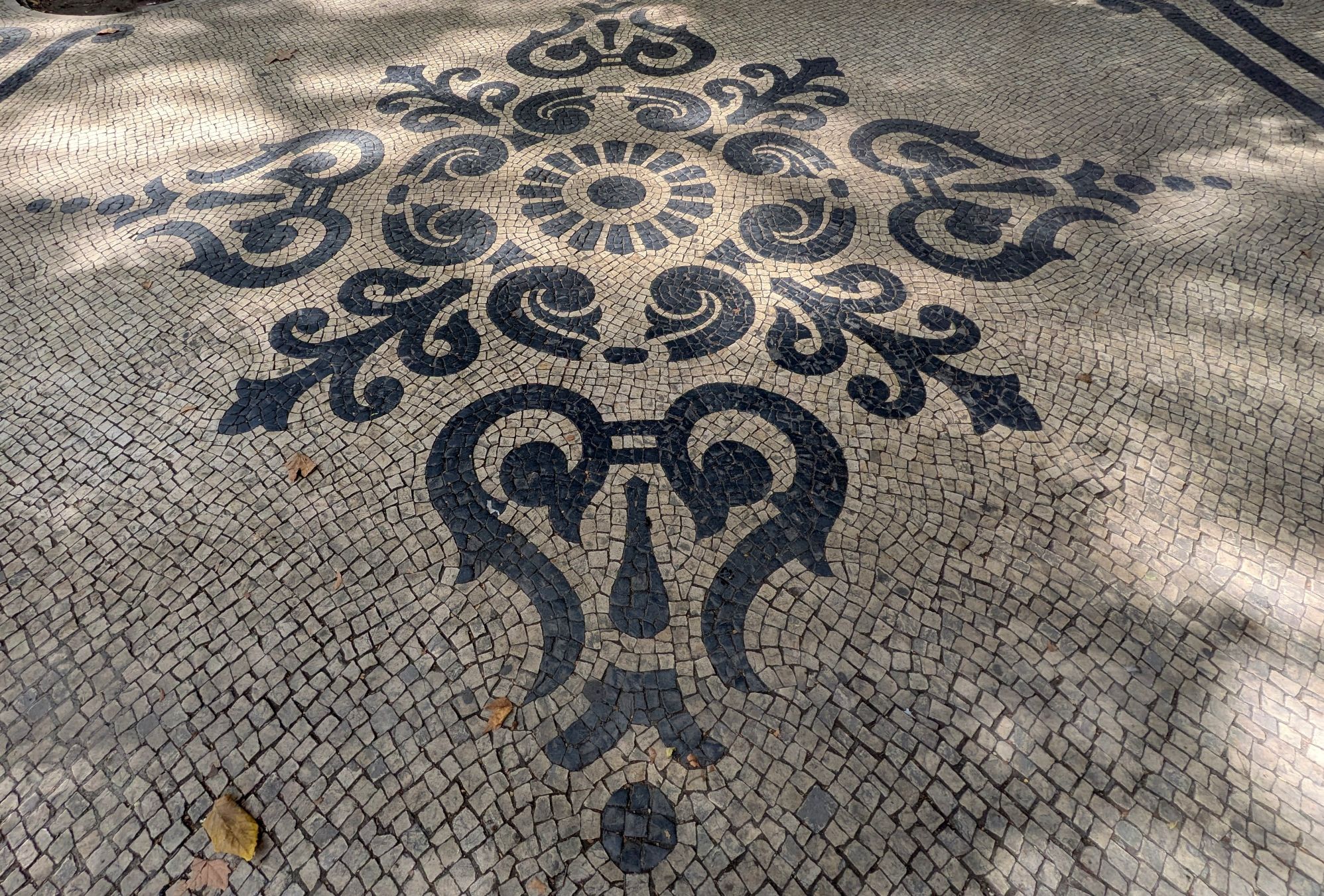
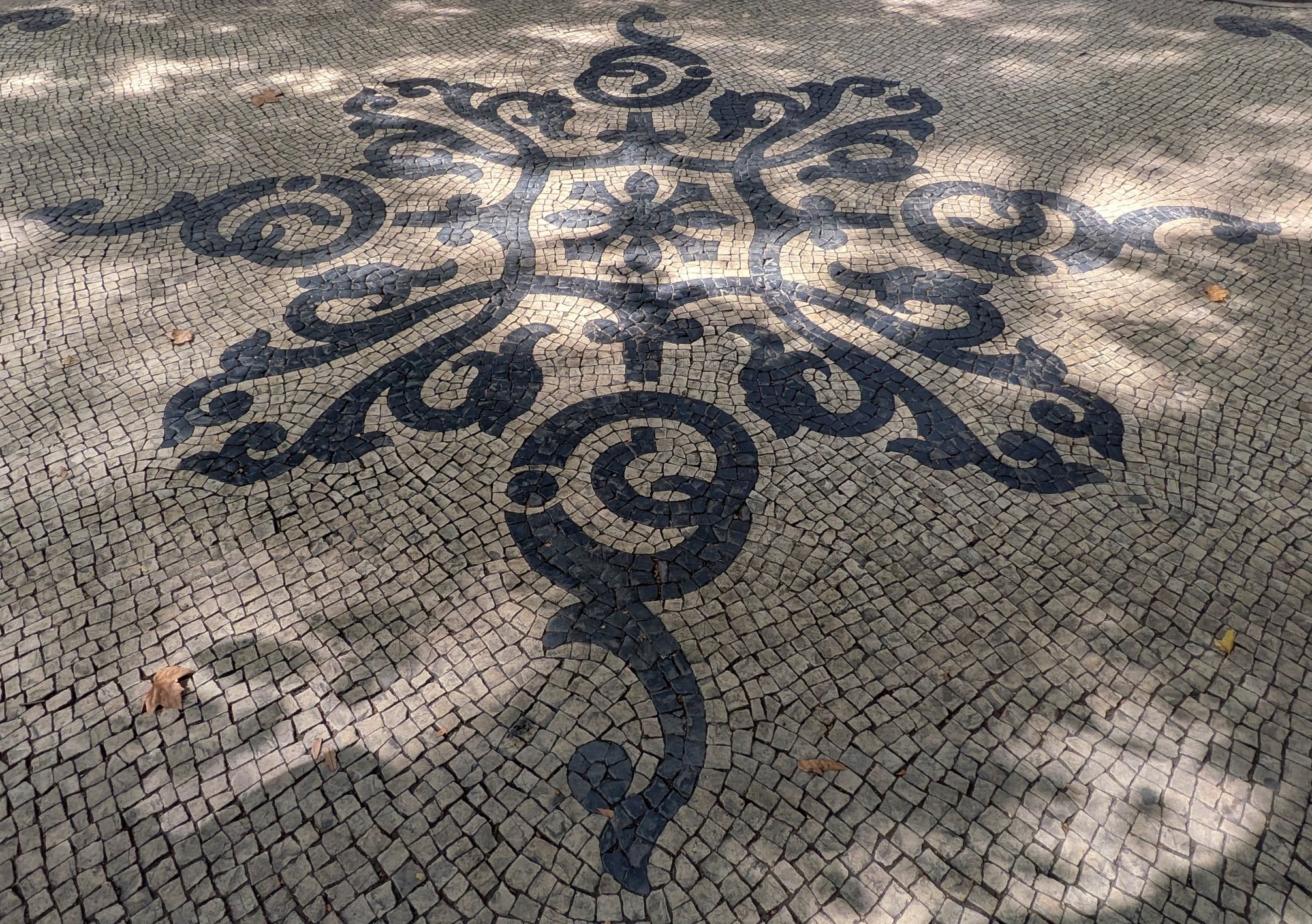
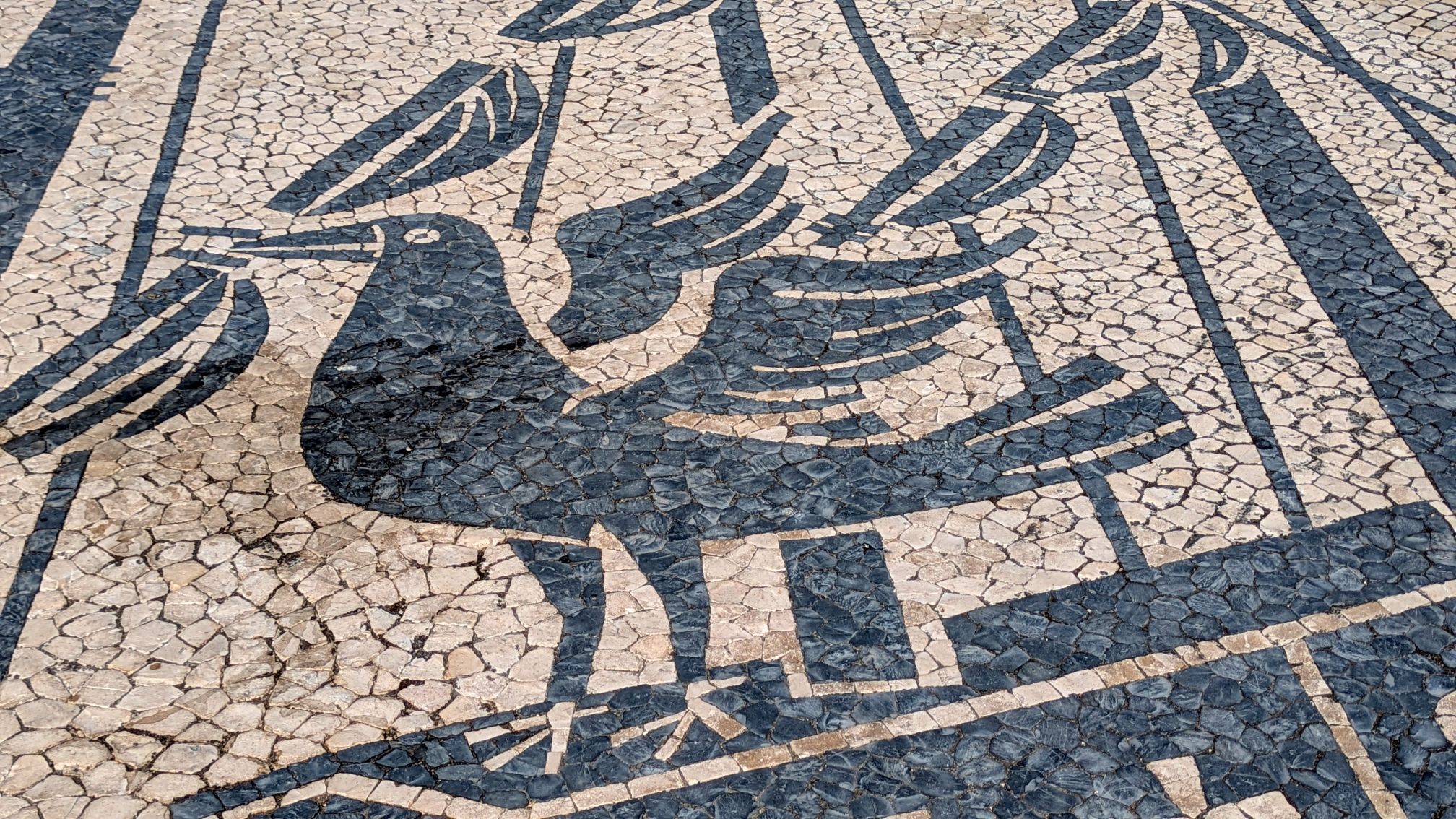
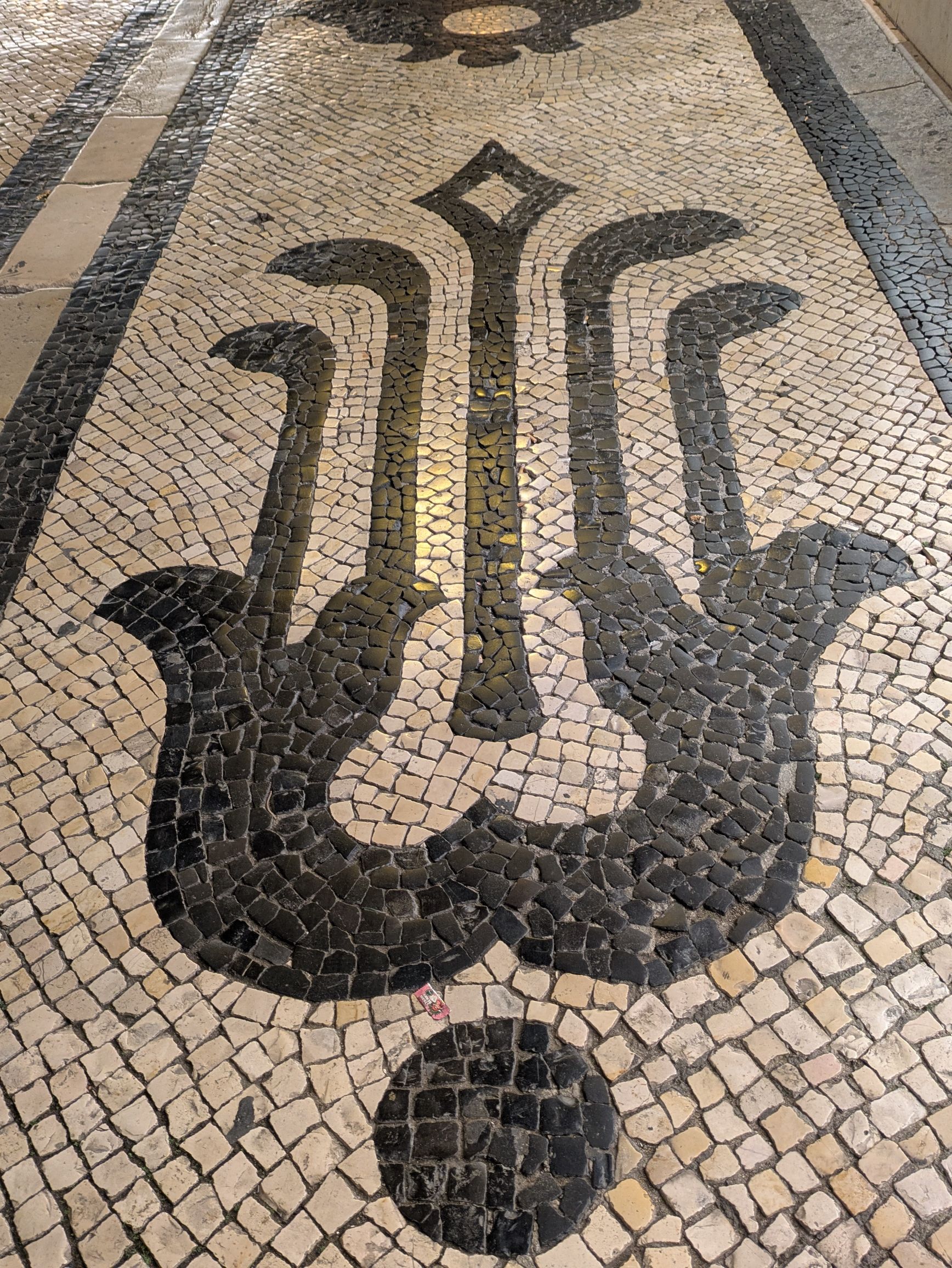
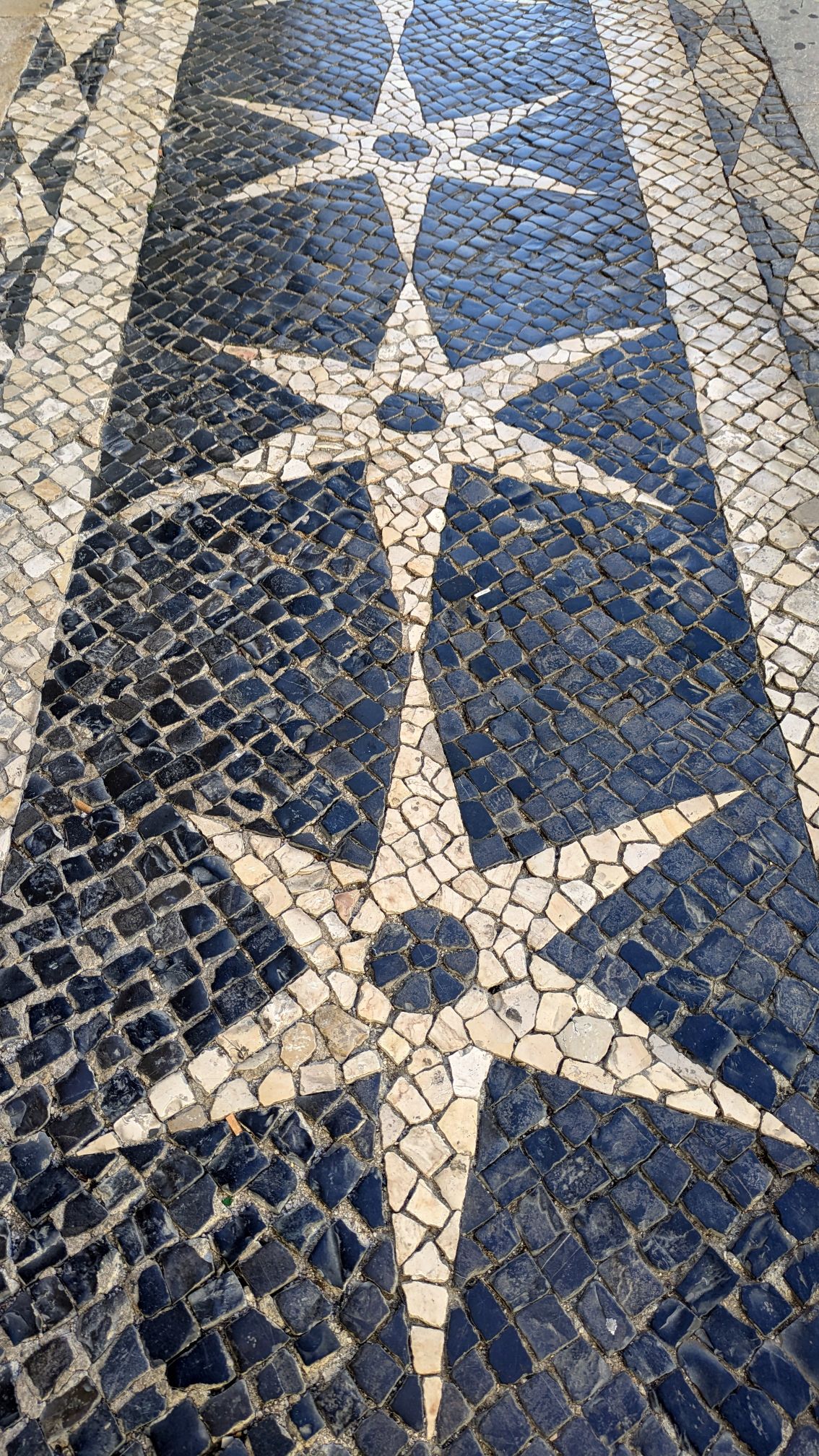
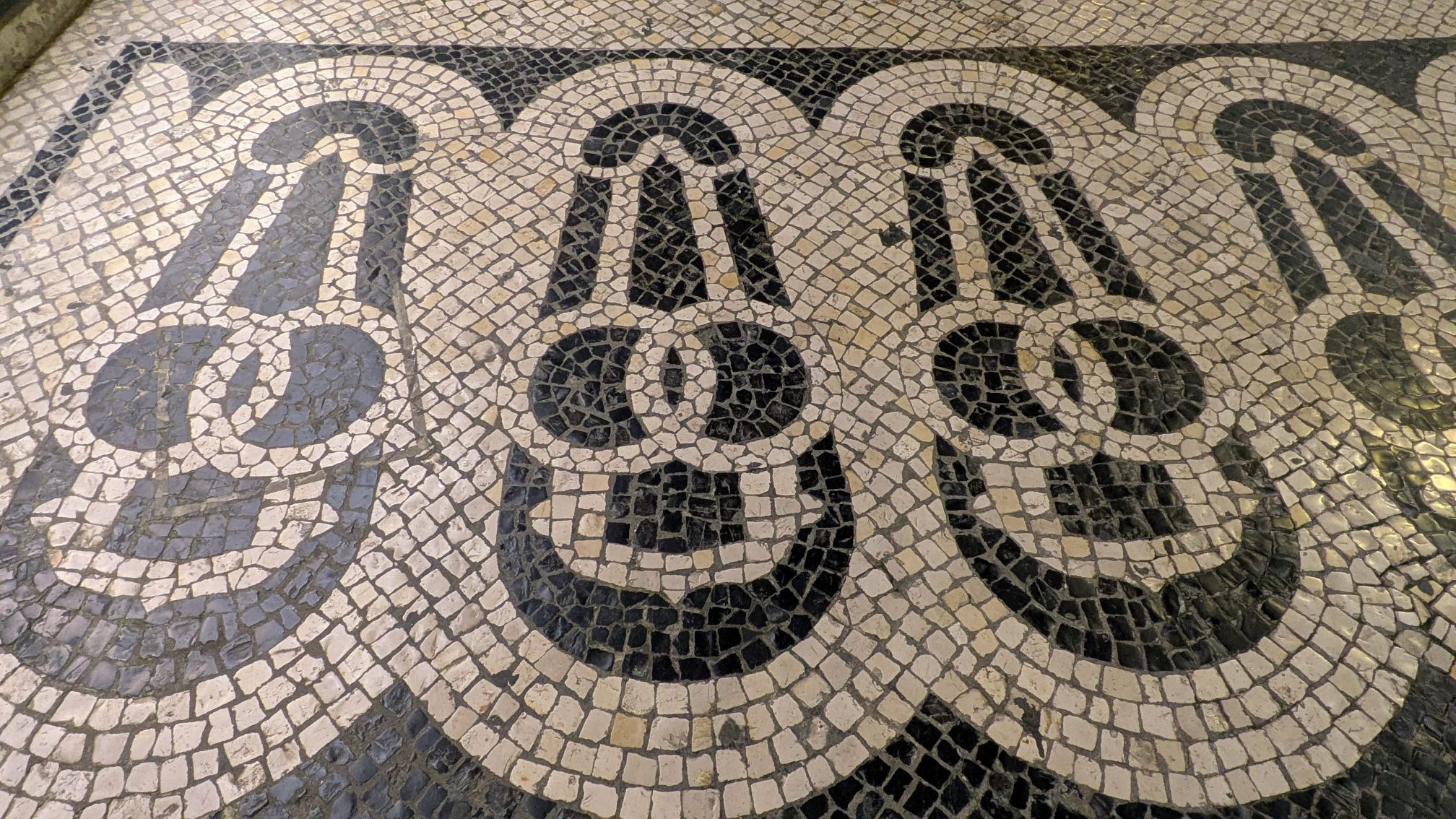
I also loved black and white patterns in the cobblestones.
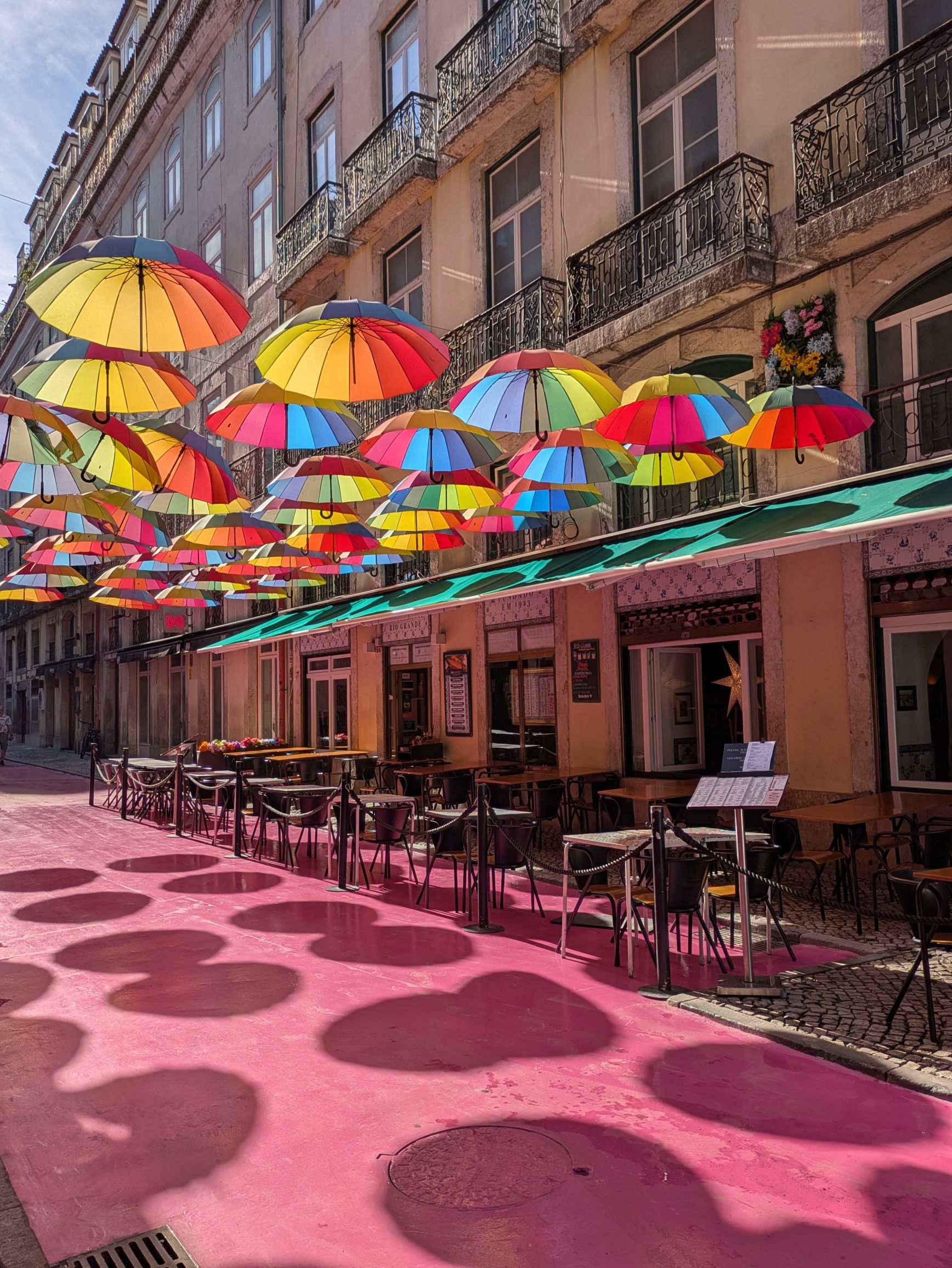
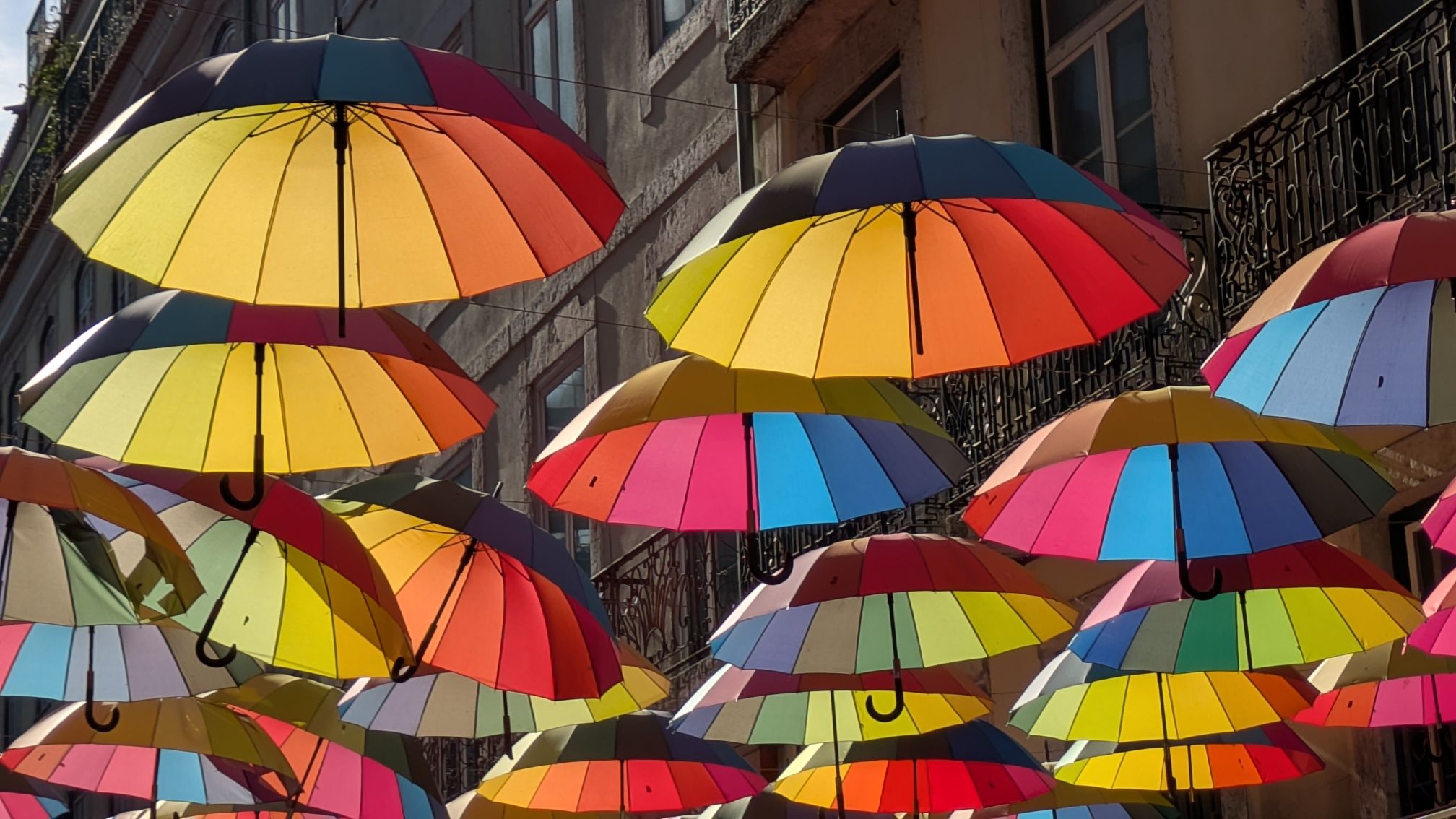
“Pink Street” (Rua Nova do Carvalho) is famous for its bars and bustling nightlife, but I was only interested in seeing it in the morning before the crowds arrived, so I could photograph the colorful umbrellas that hung over the pink-painted street. Since we passed it each time we walked down to the waterfront, train station, ferry terminal, and Time Out Market (more on this in a future post), it was a convenient photo stop. But for those interested in partying hard in the bars, this would be the place.
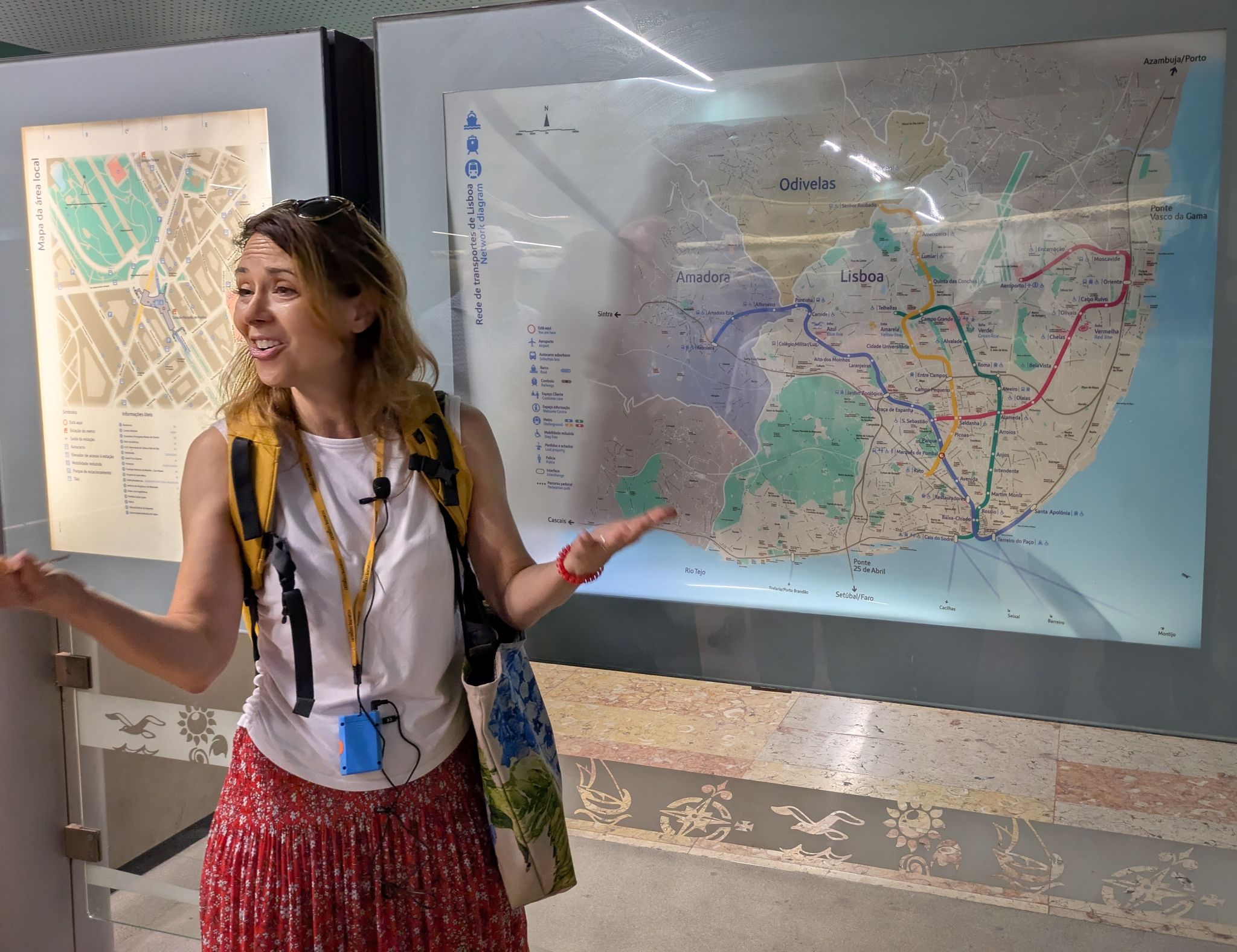
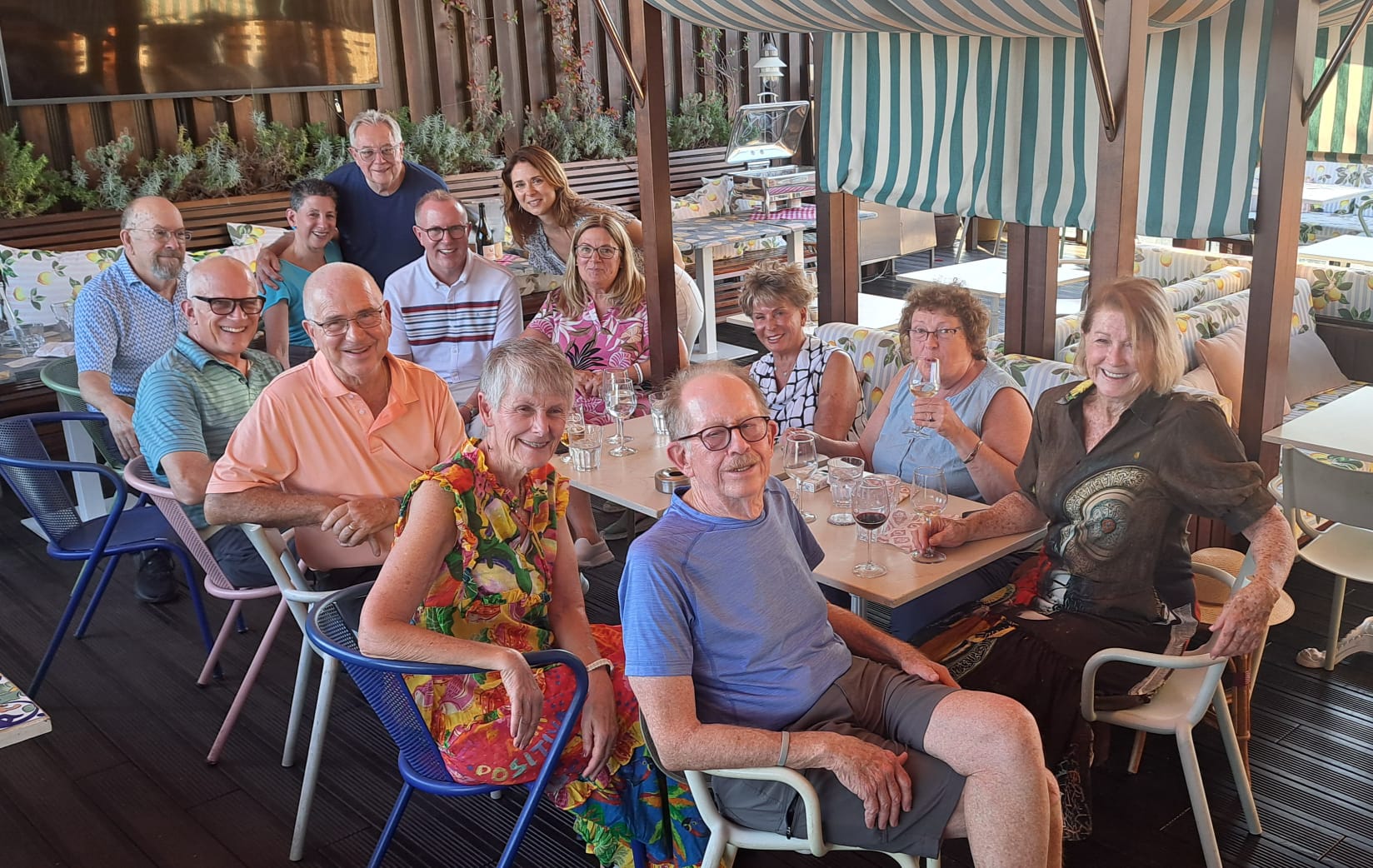
Speaking of partying, gathering with our The Good Life Abroad group and community manager for a welcome party was a great way to kick off our month together. Jen found the perfect place for it, a rooftop bar with great views. Mama Shelter’s appetizers were delicious, the service was good, and it was a lot of fun! This is Jen, during our metro orientation tour, and our TGLA “community.”
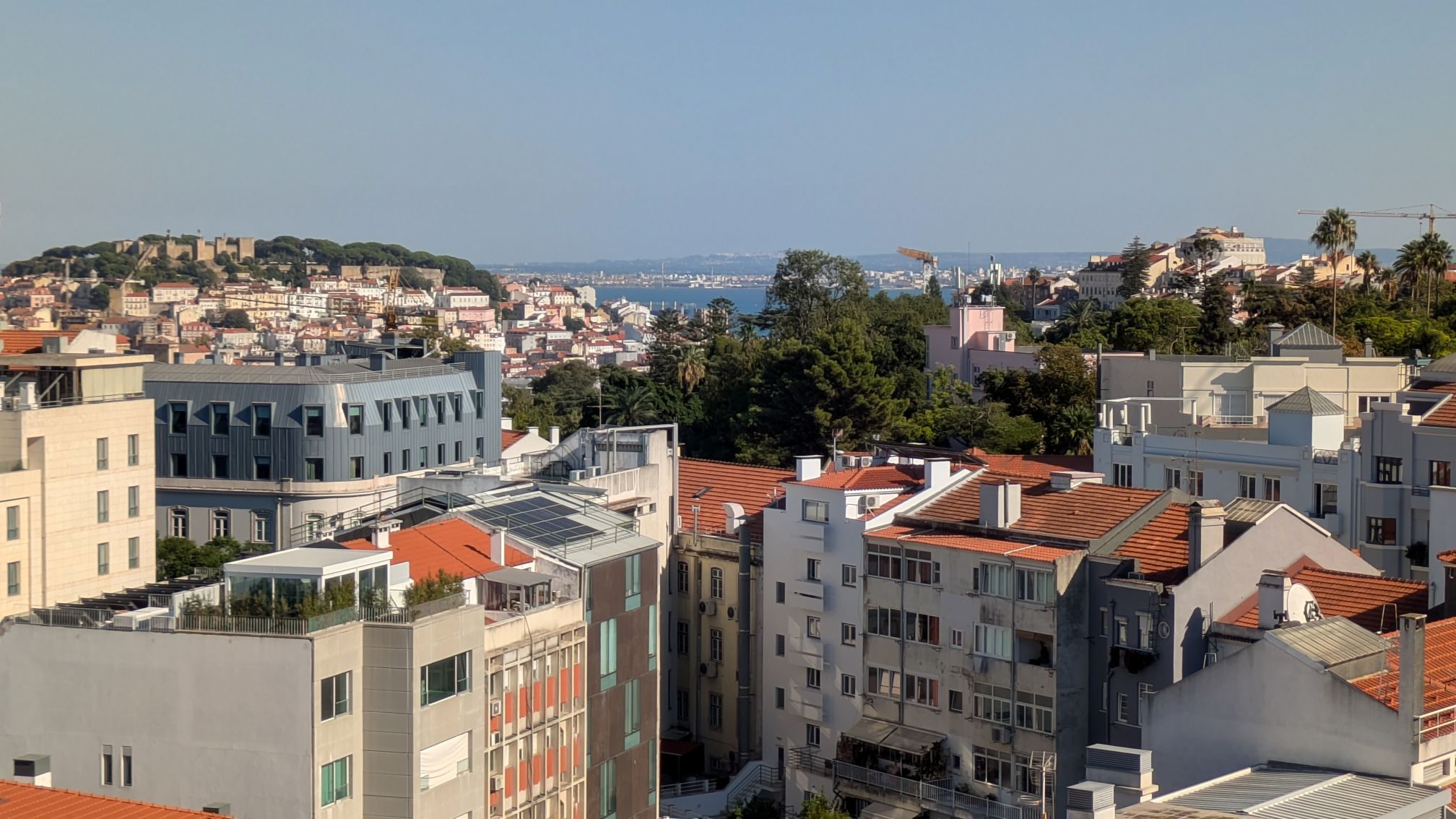
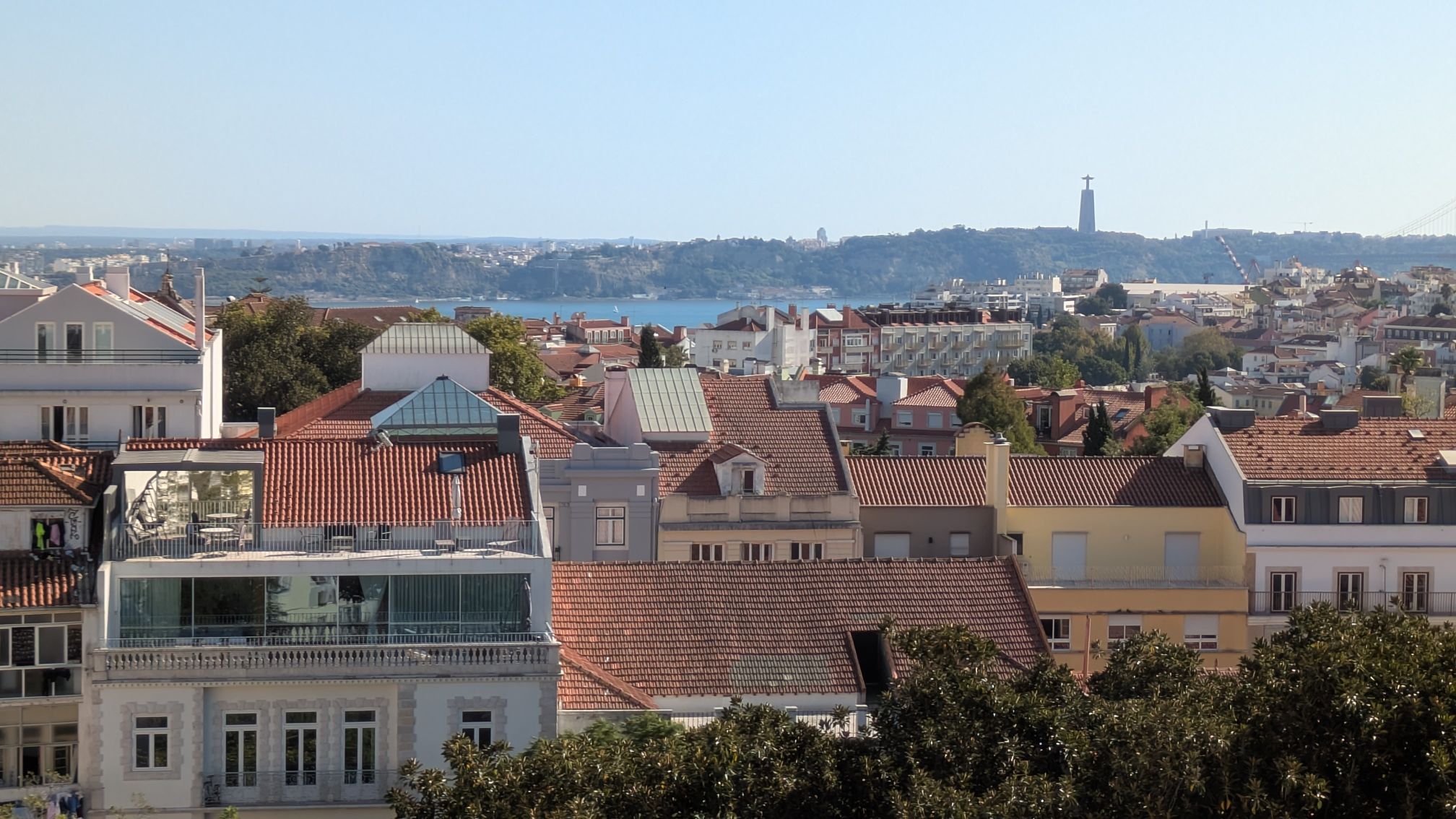
Bruce and I are in the back (center)The view from the rooftop of Mama Shelter
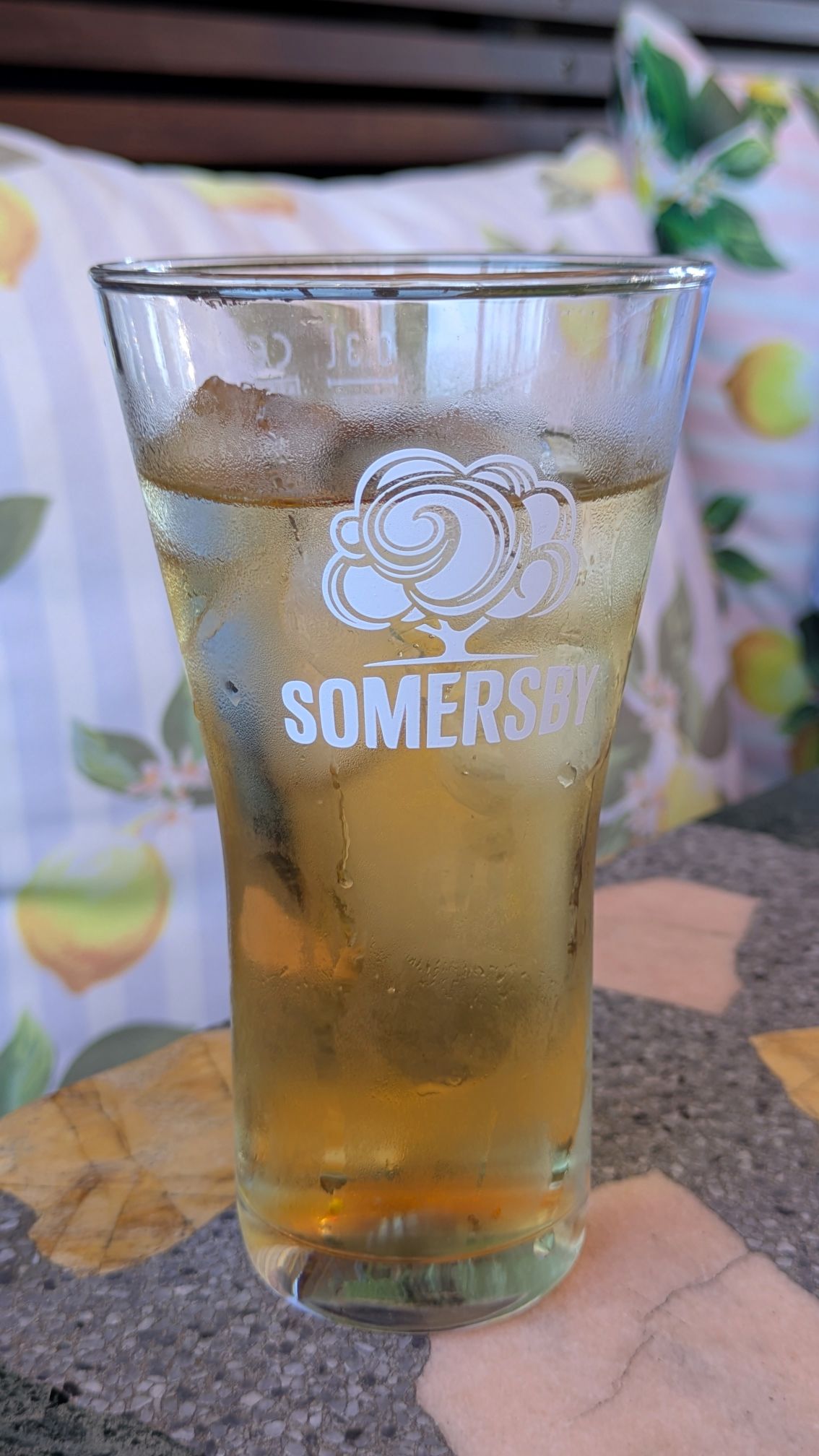
A refreshing glass of low-alcohol cider
Coming up next: LOVING LIVING LIKE A LOCAL IN LISBON #4: AMBLING AVENIDA DE LIBERDADE
Note:I just noticed I never published my last blog post on Alaska from summer! It was still in my draft folder! So, here it is, and then I will publish my next Lisbon post next.
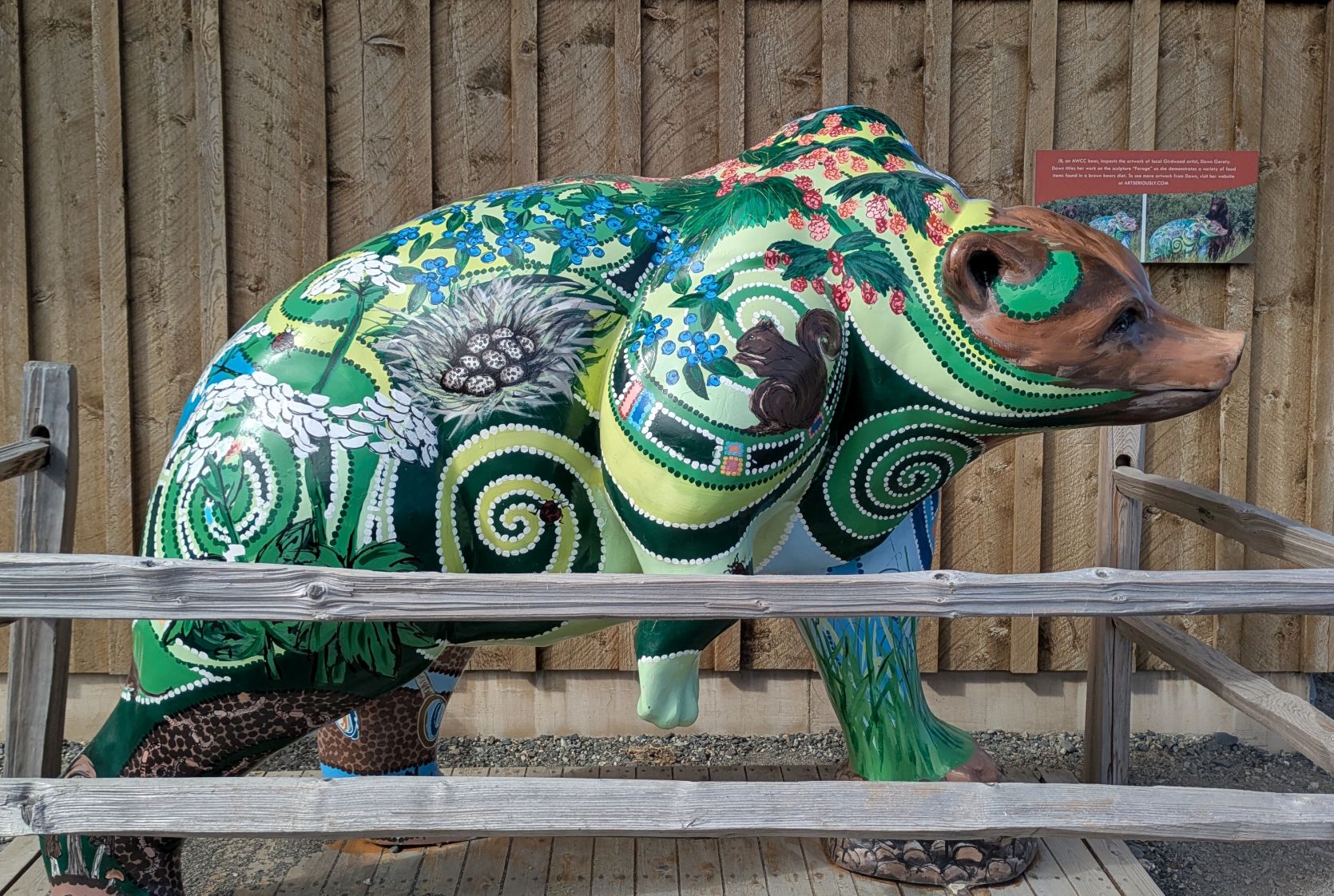
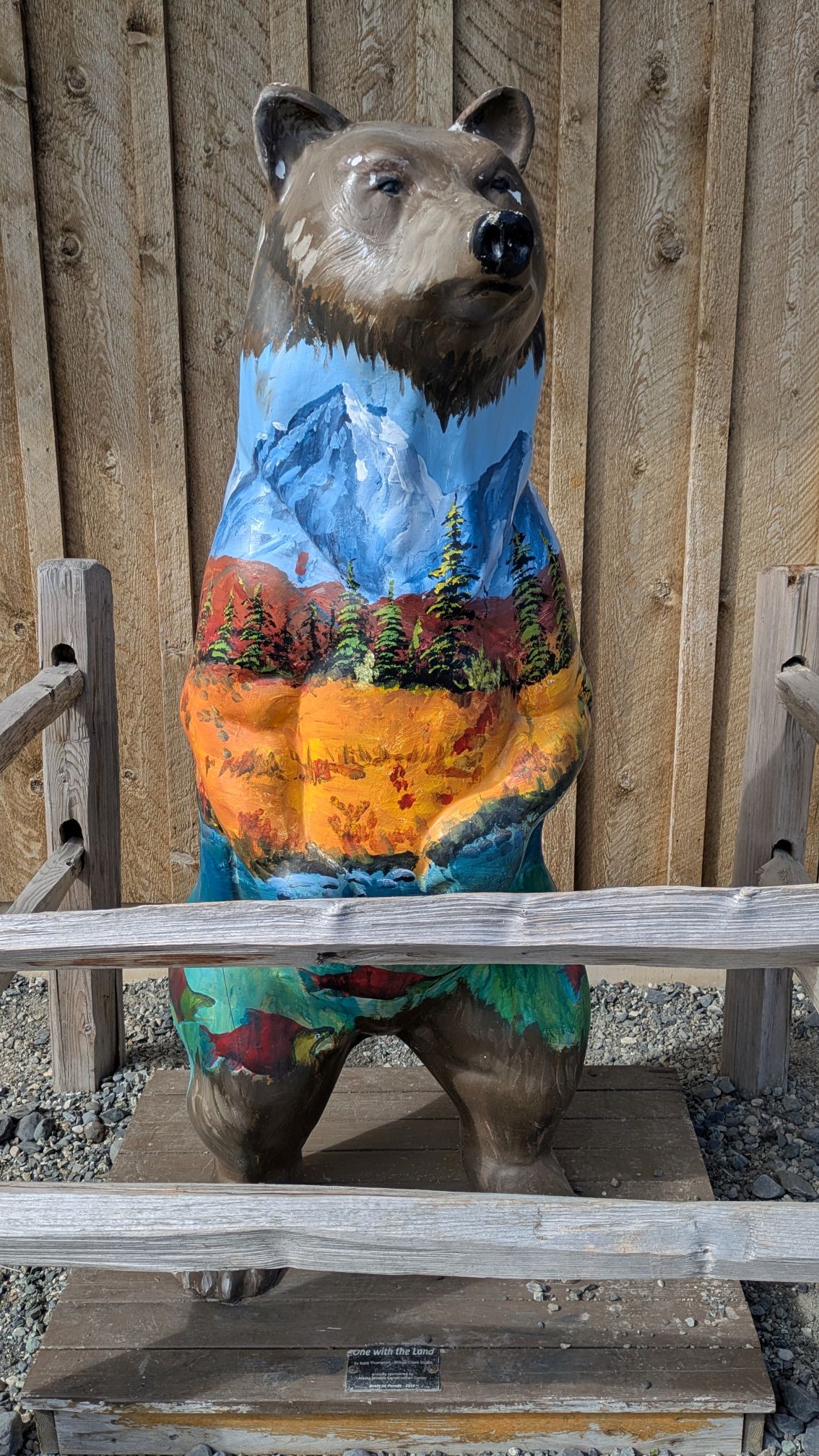
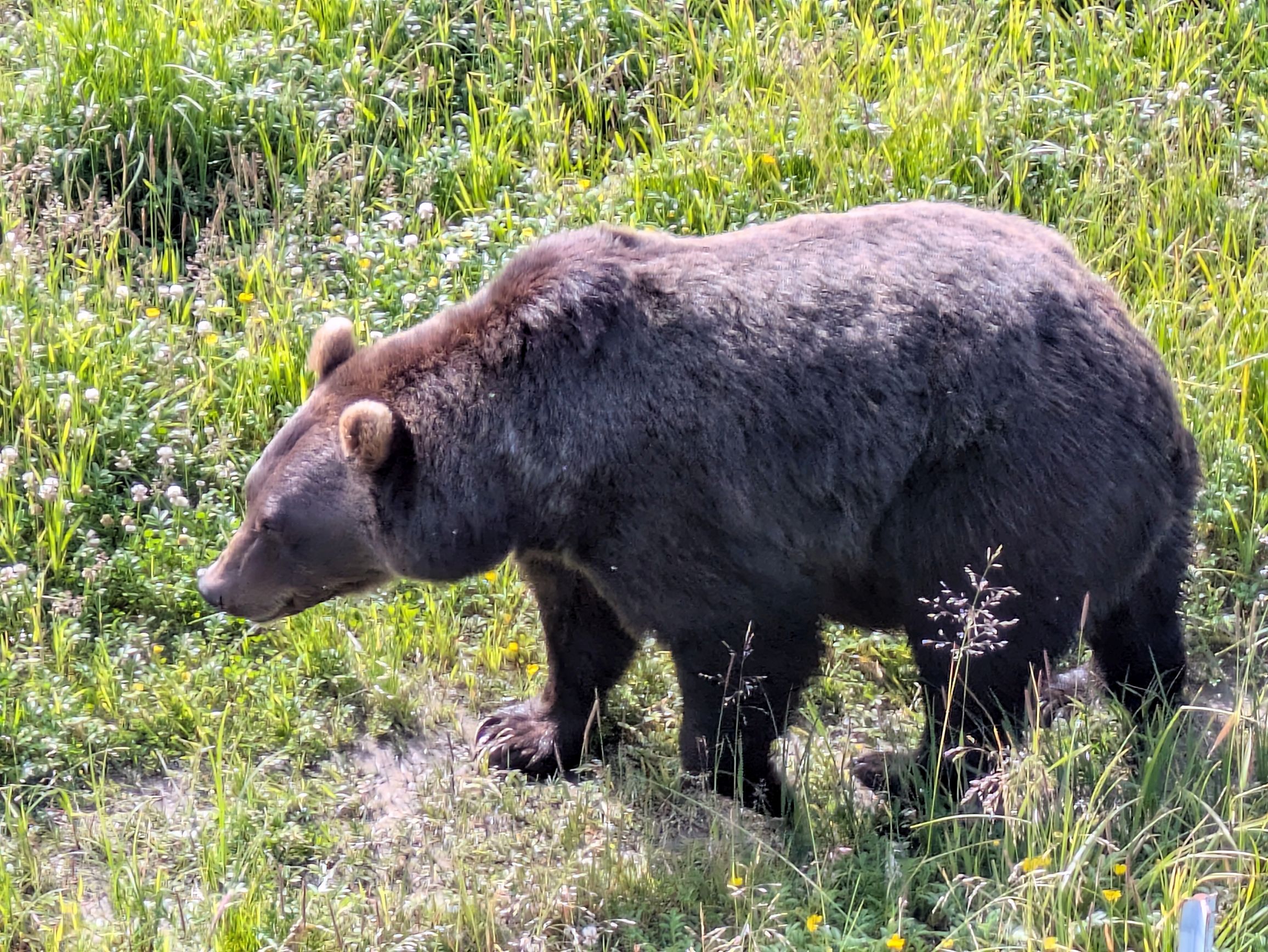
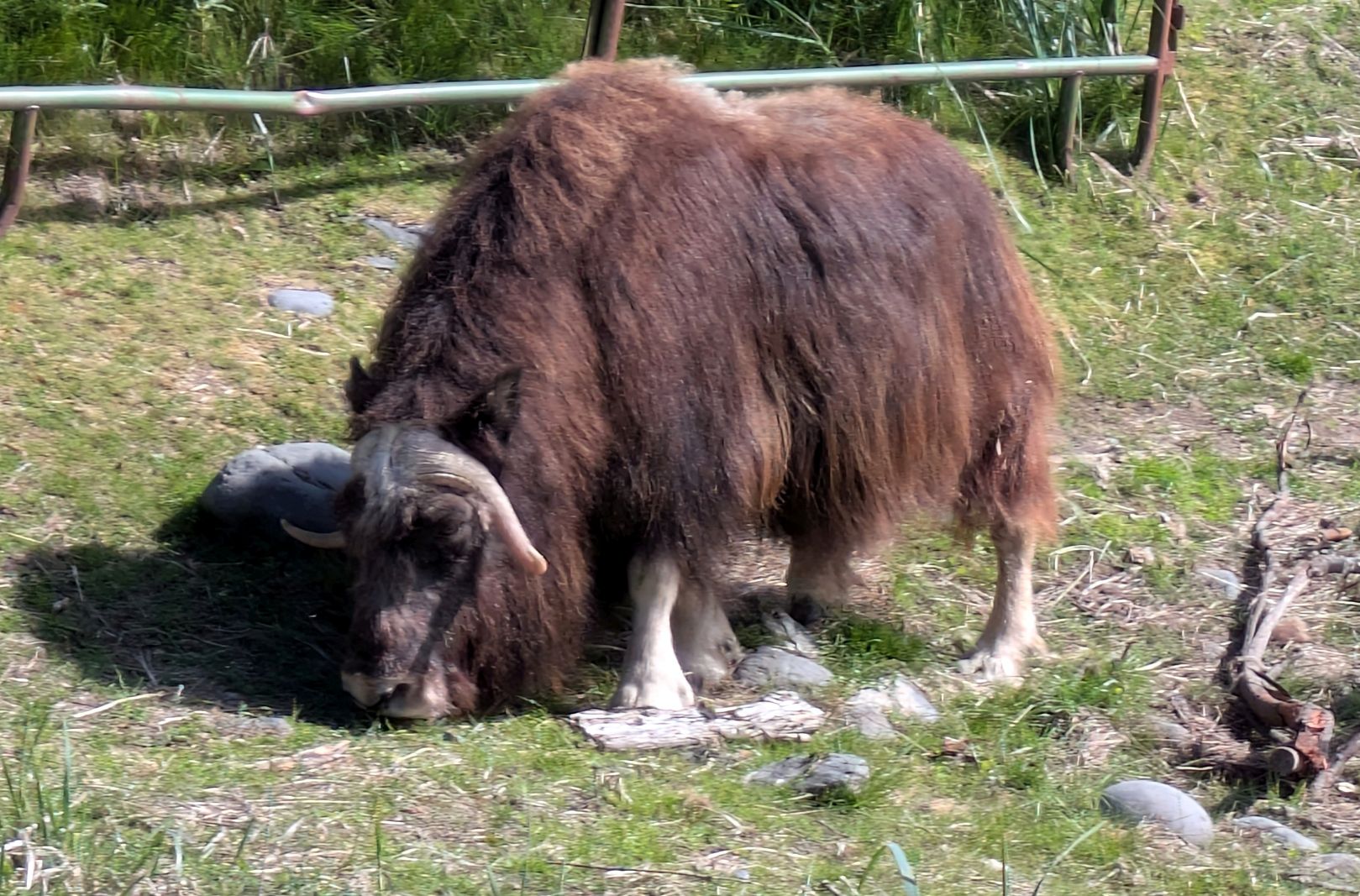
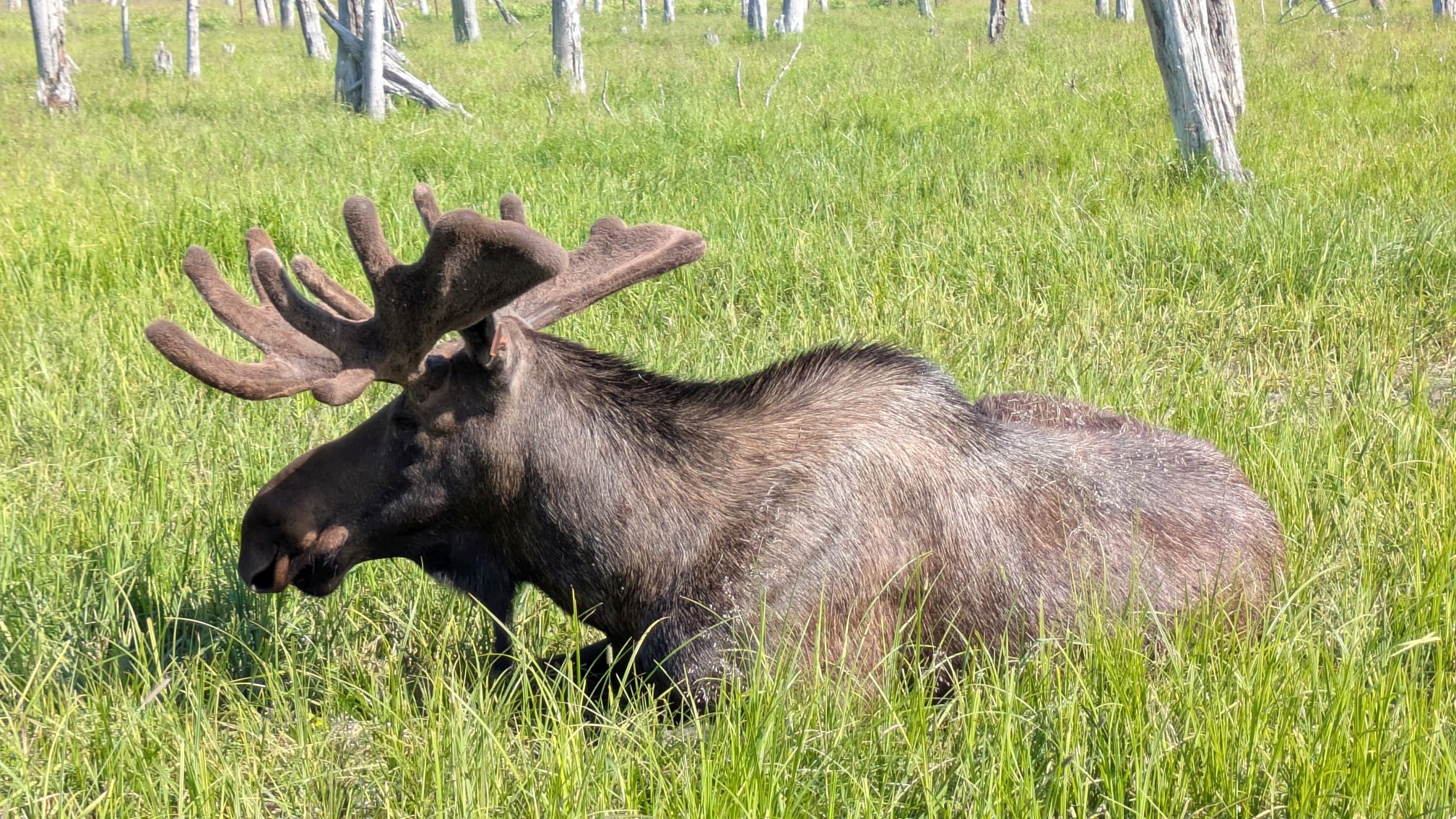
On our way back from Seward to Anchorage for our last night of the tour, our group stopped at Alaska Wildlife Conservation Center, a “non-profit sanctuary dedicated to preserving Alaska’s wildlife through conservation, education, research and quality animal care.” It was wonderful to see the same wildlife up close that we had seen at a distance throughout our tour.
(For all photos, click on the image for a full screen view.)
Muskox
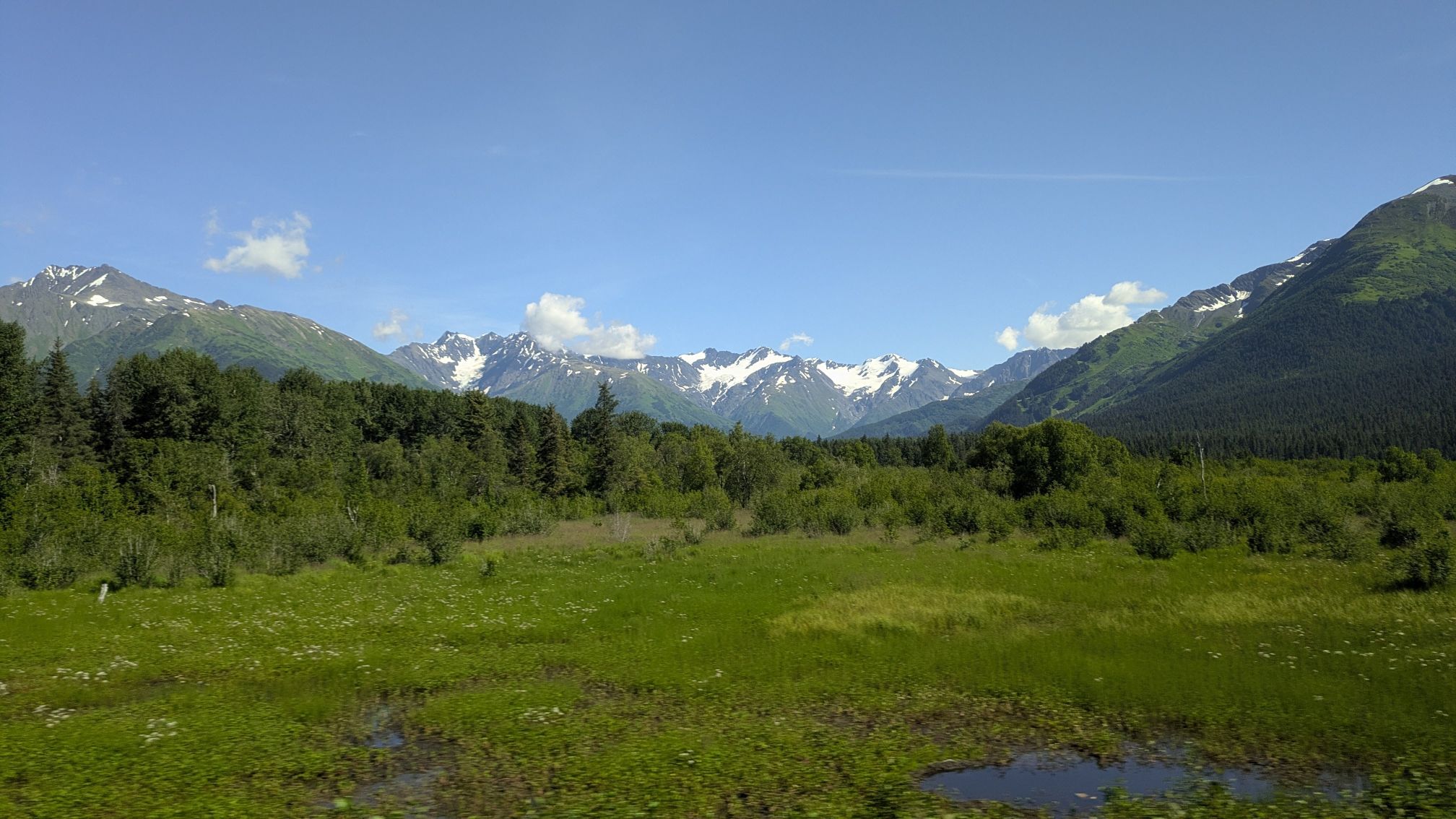
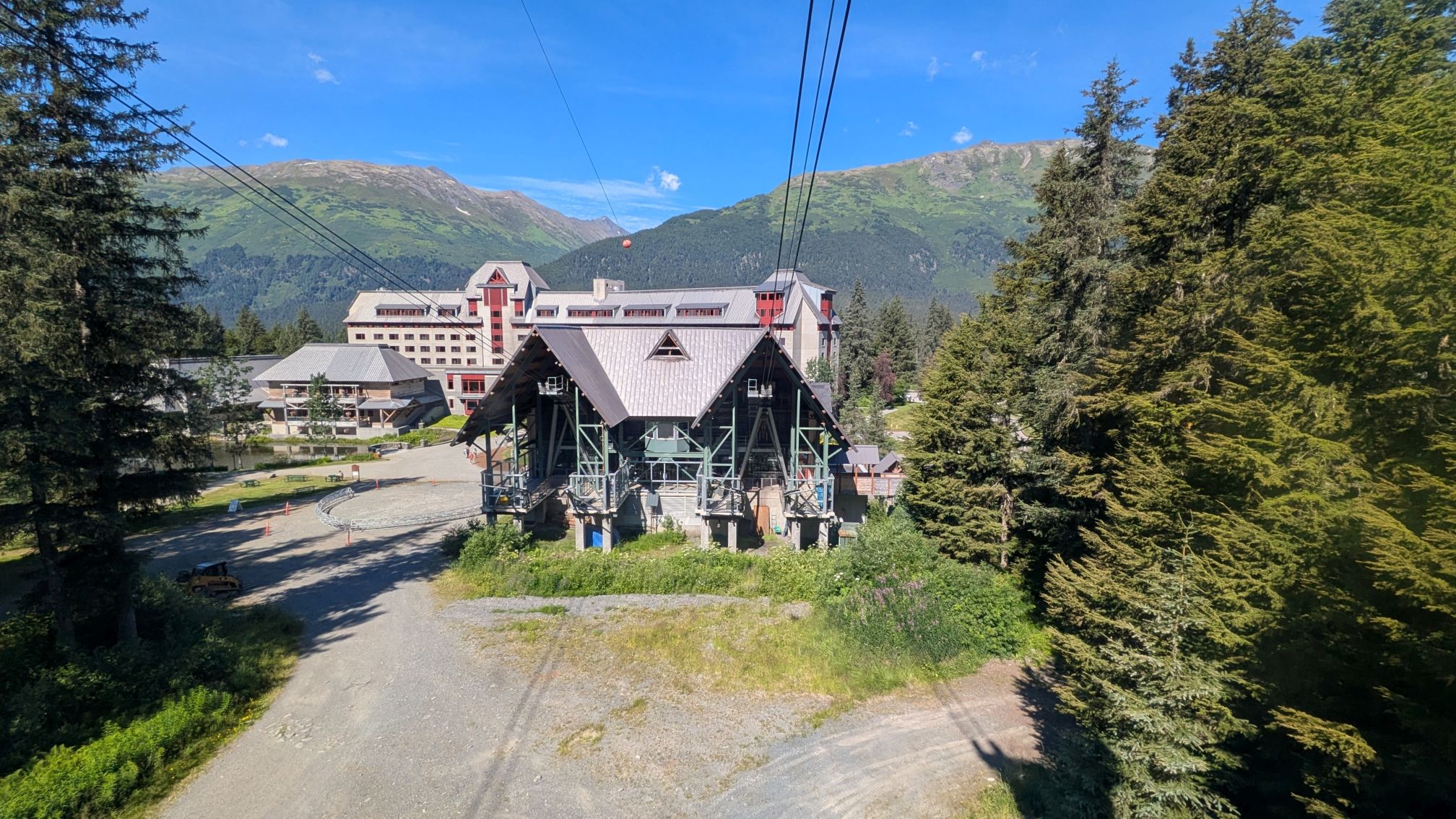
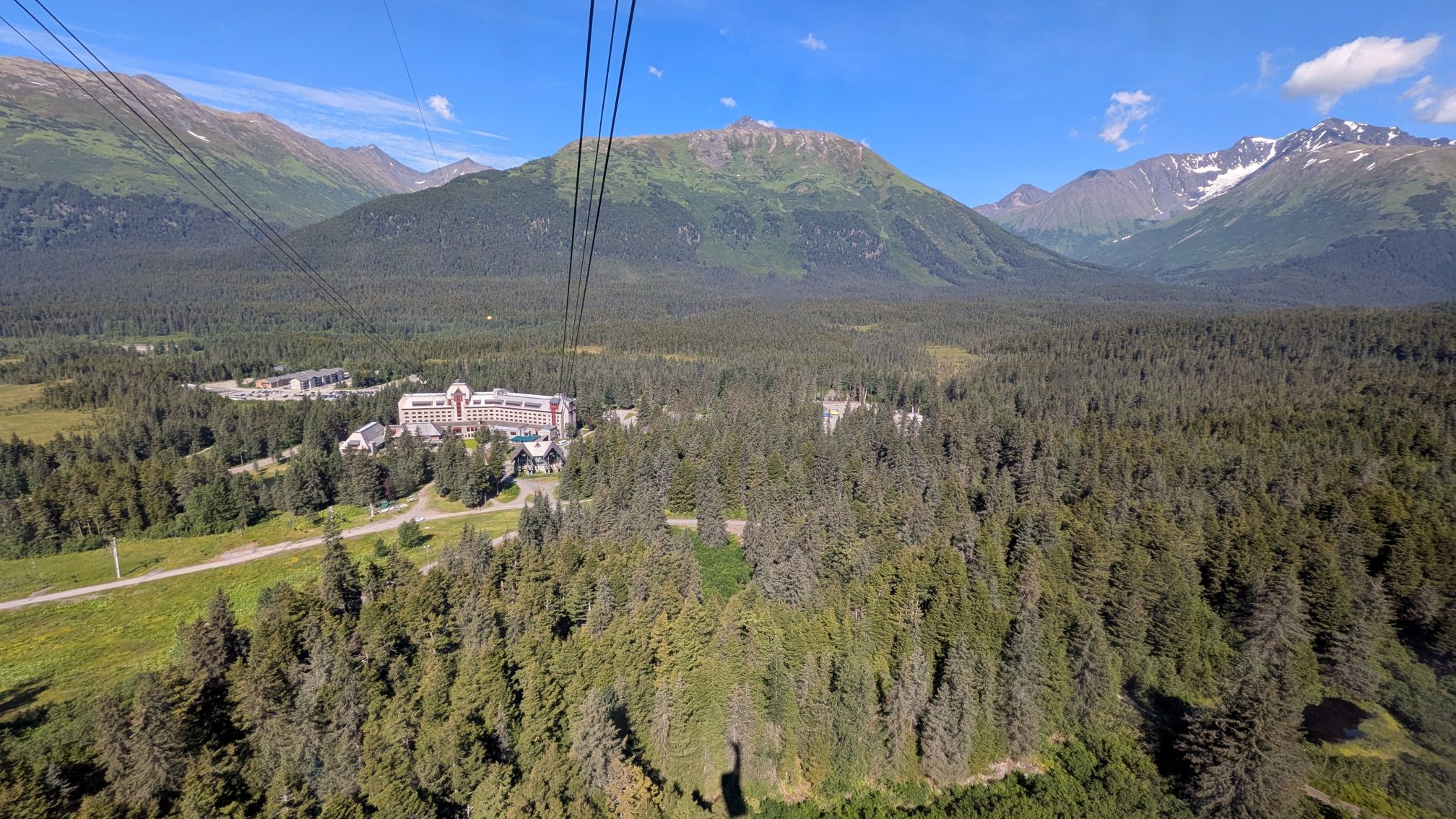
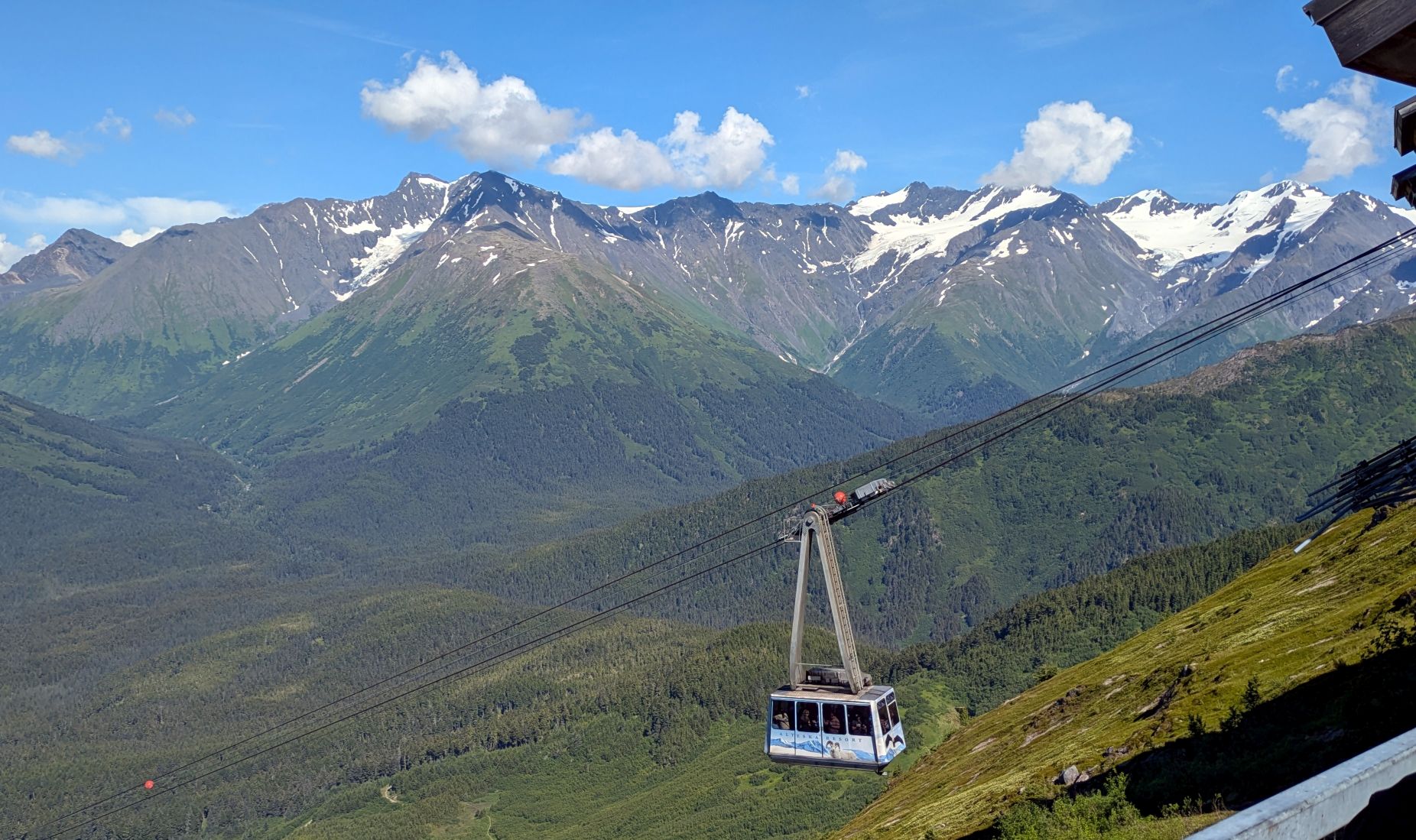
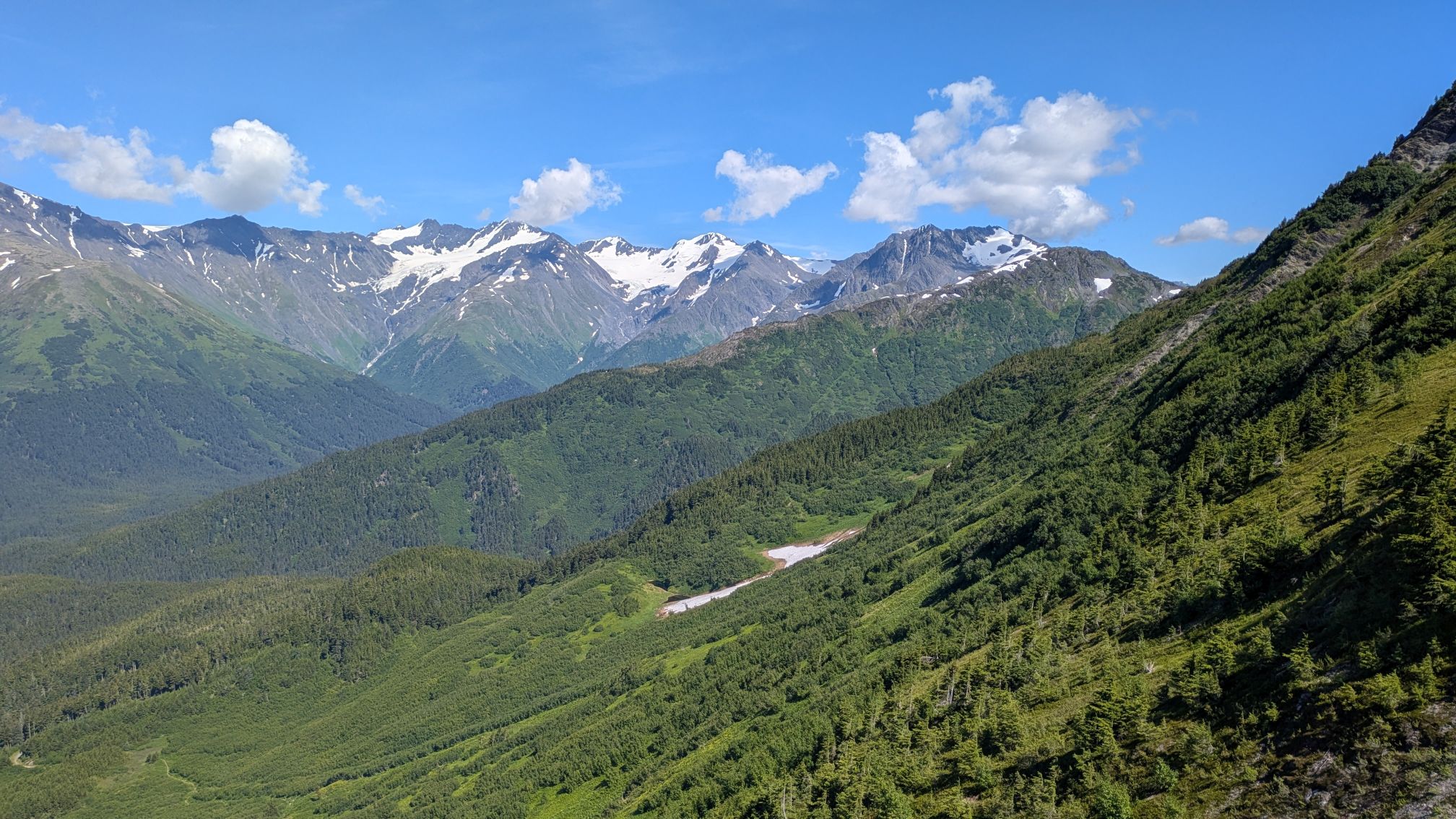
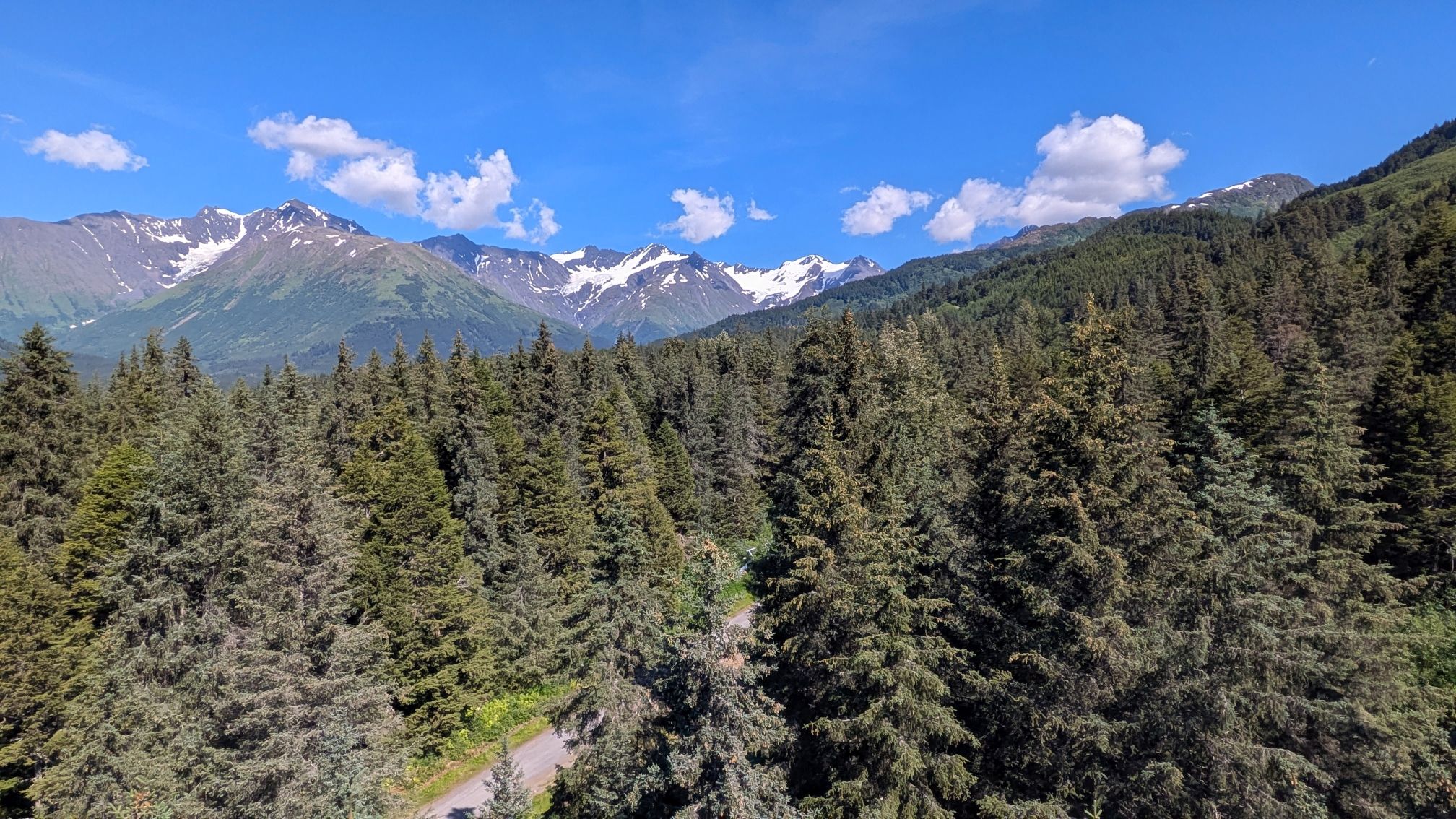
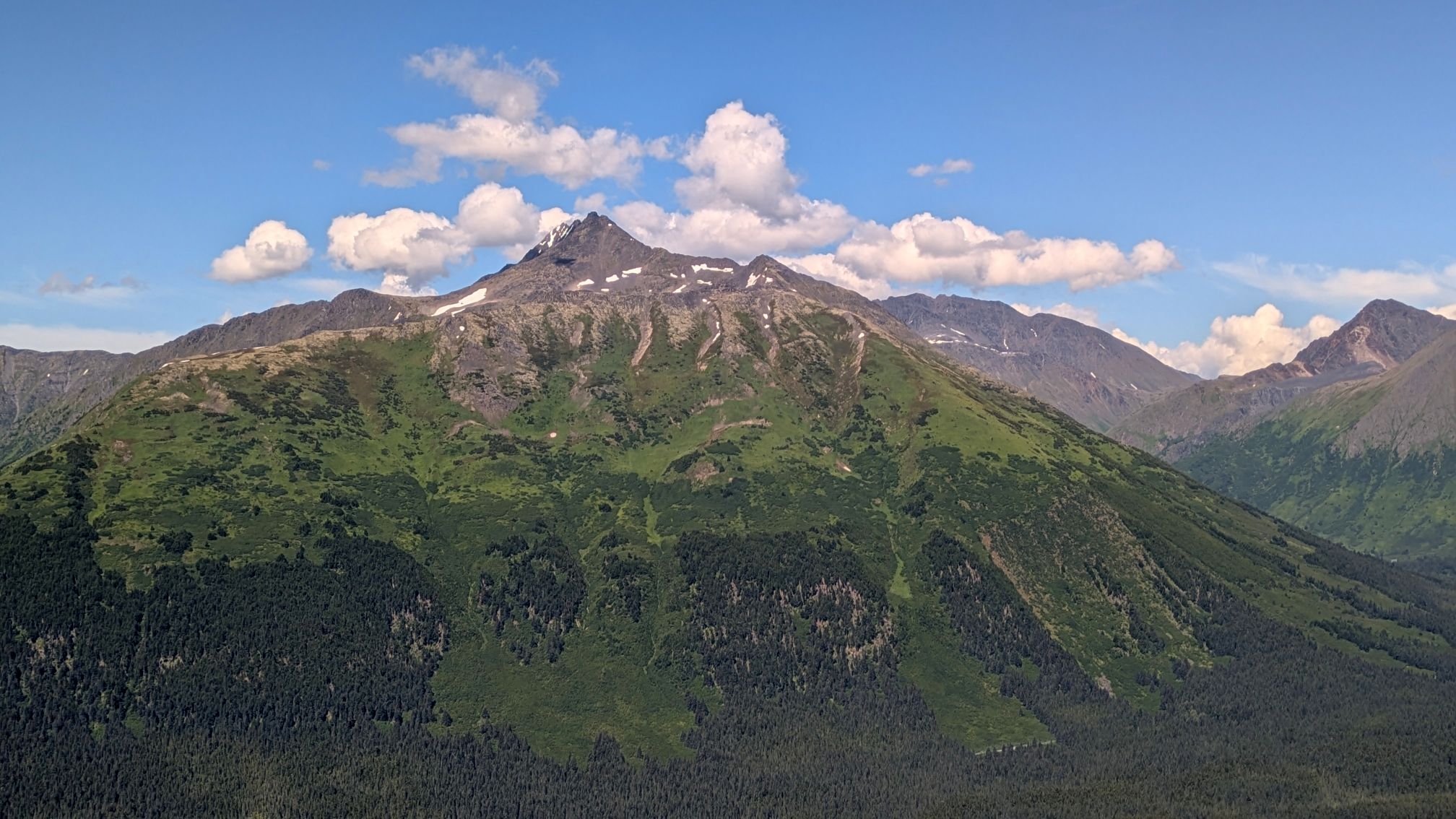
As we continued towards Anchorage, our tour leader, Julie, sprung a surprise on us: a tram ride to the top of the mountain at Alyeska Ski Resort! It was another gorgeous day, so we were excited to take in the spectacular views while enjoying lunch.
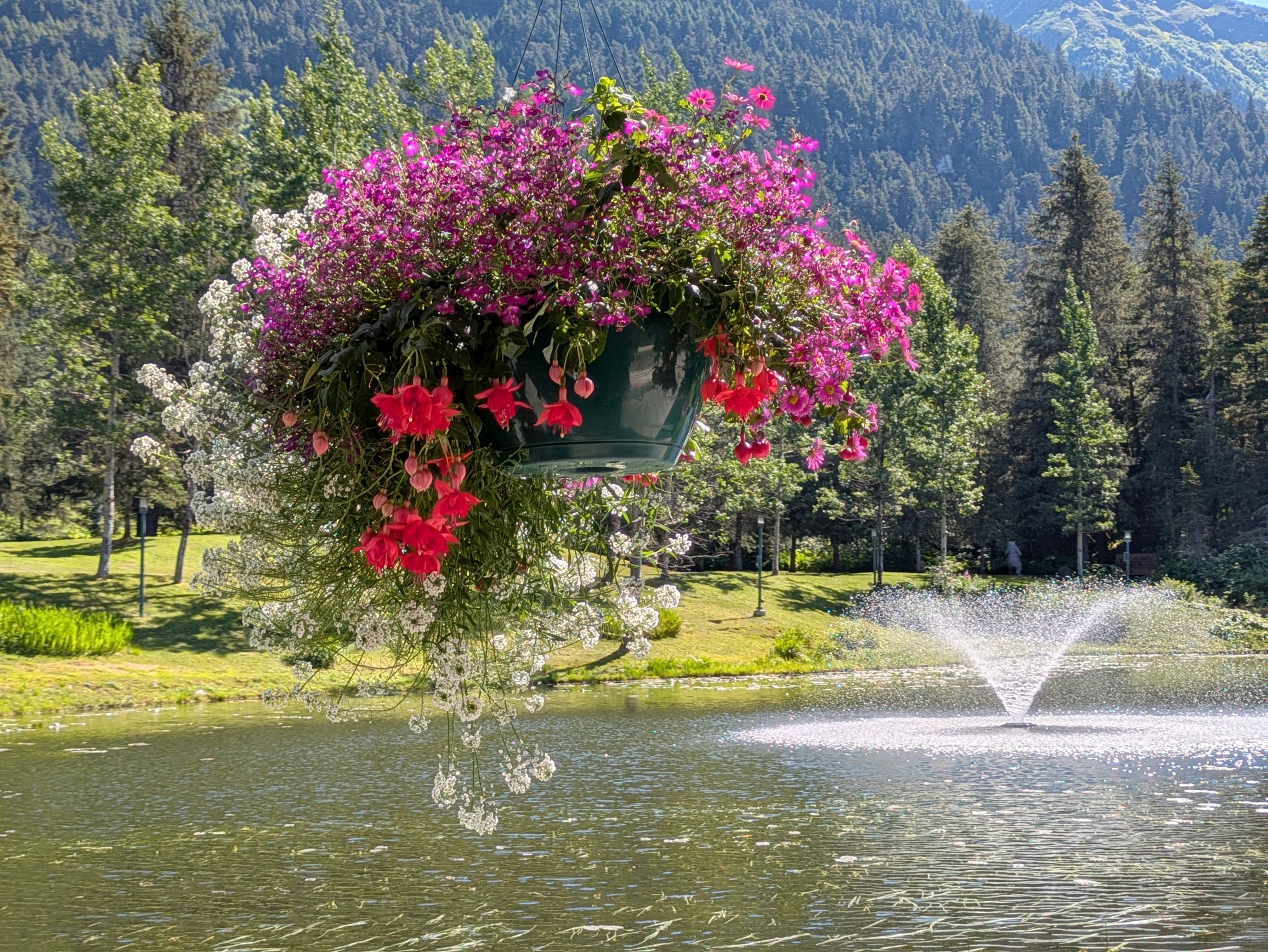
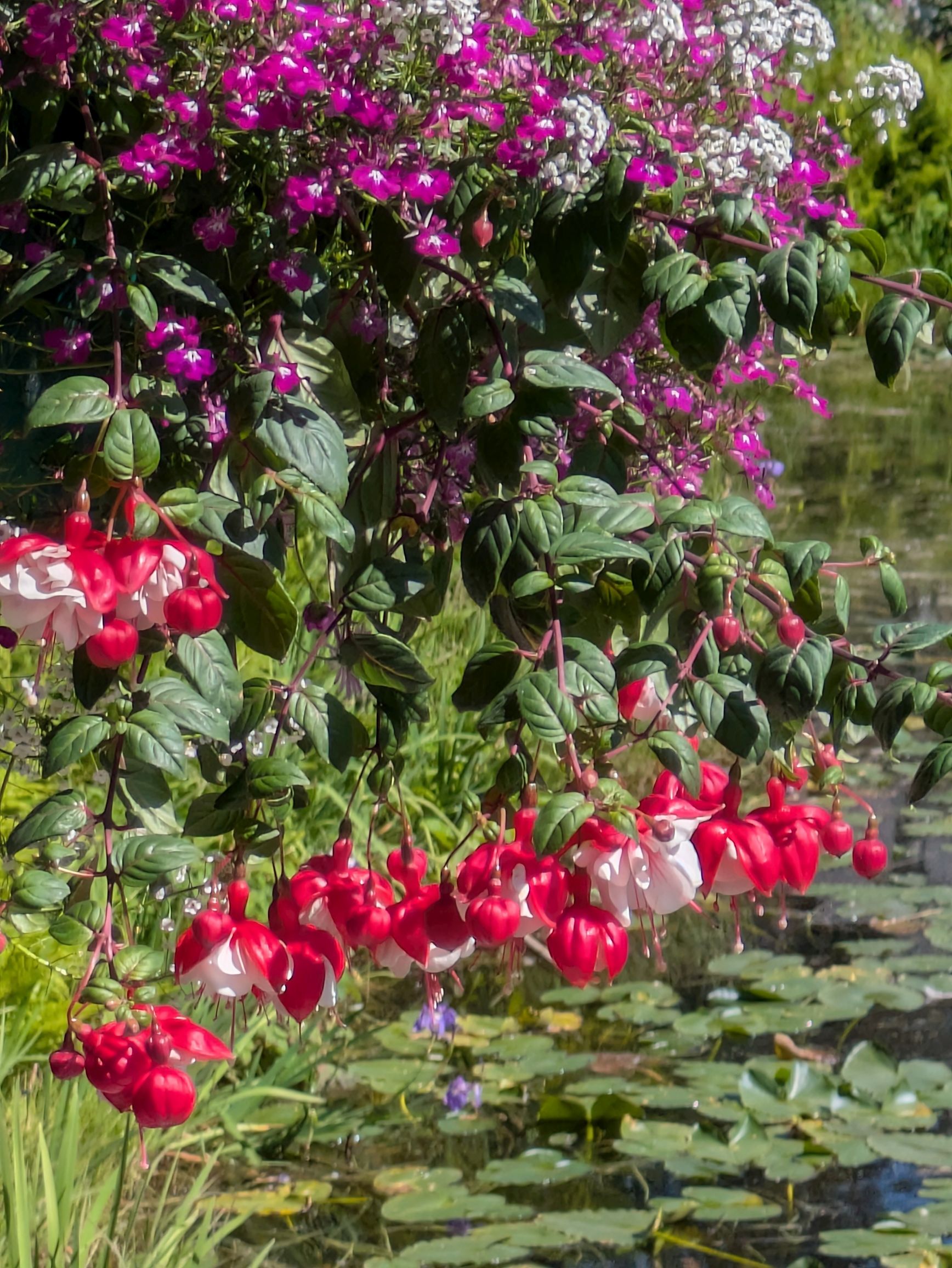
Back down the mountain at the resort, we relaxed and enjoyed the flowers and…
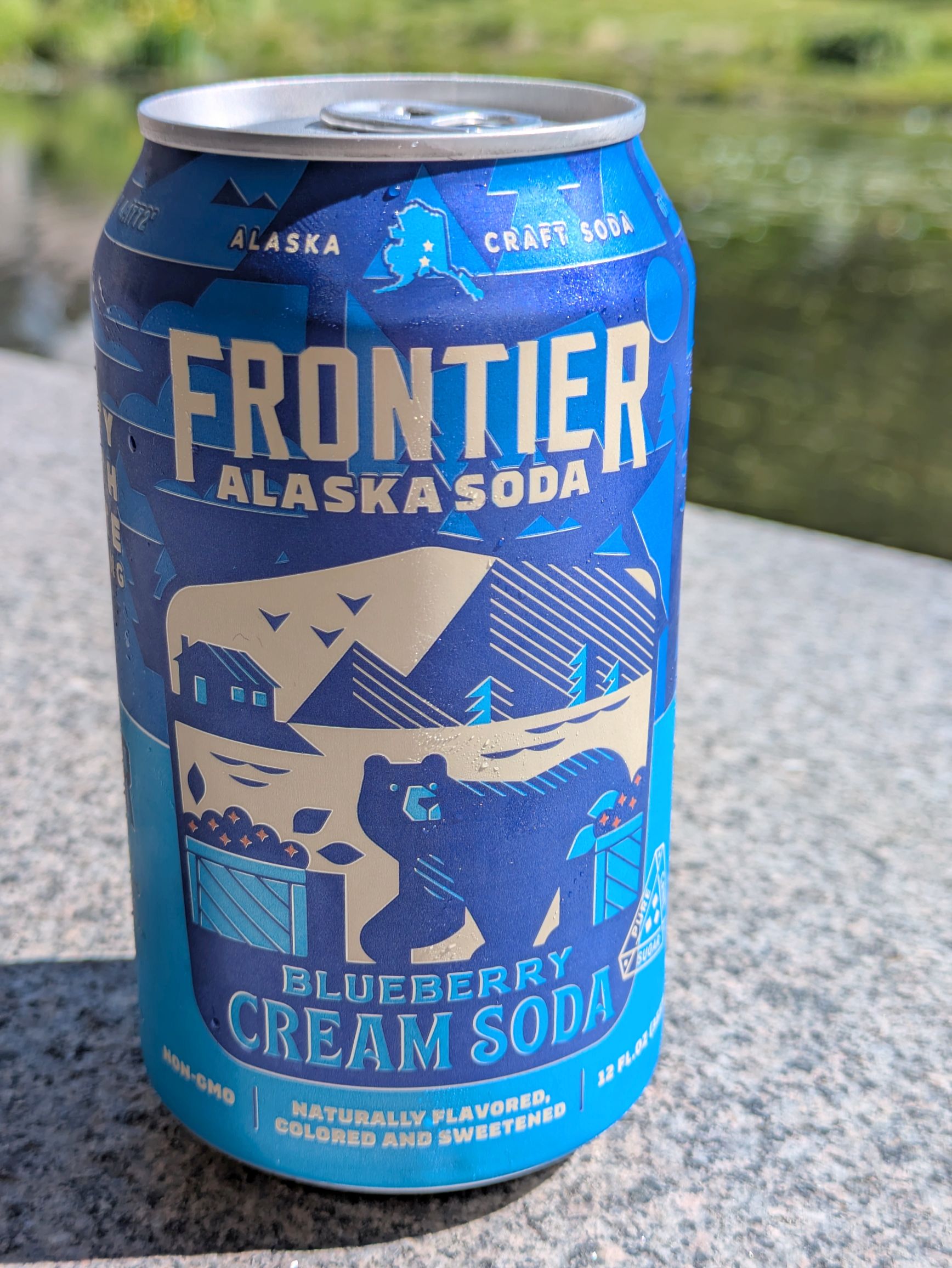
…some tasty soda
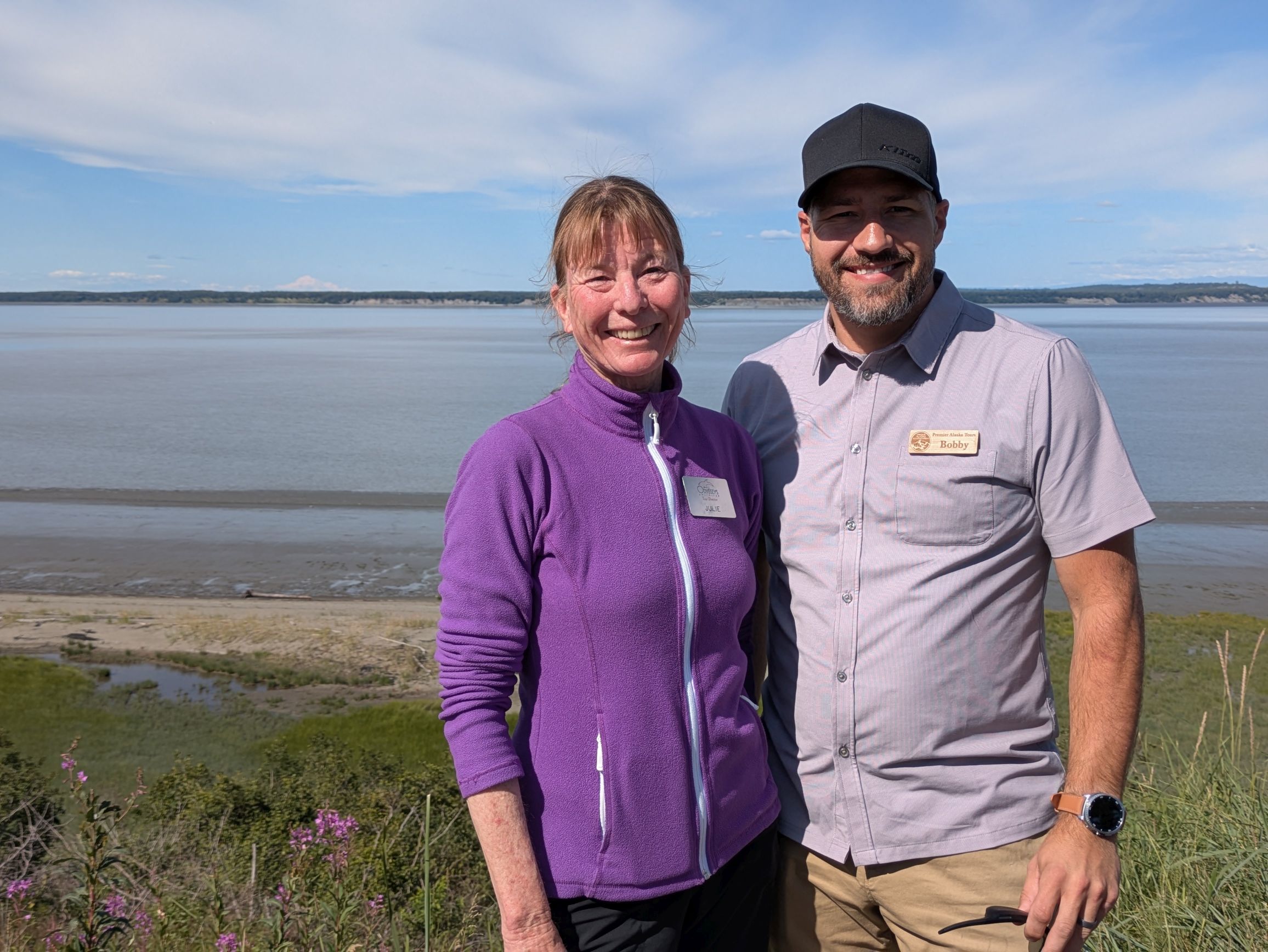
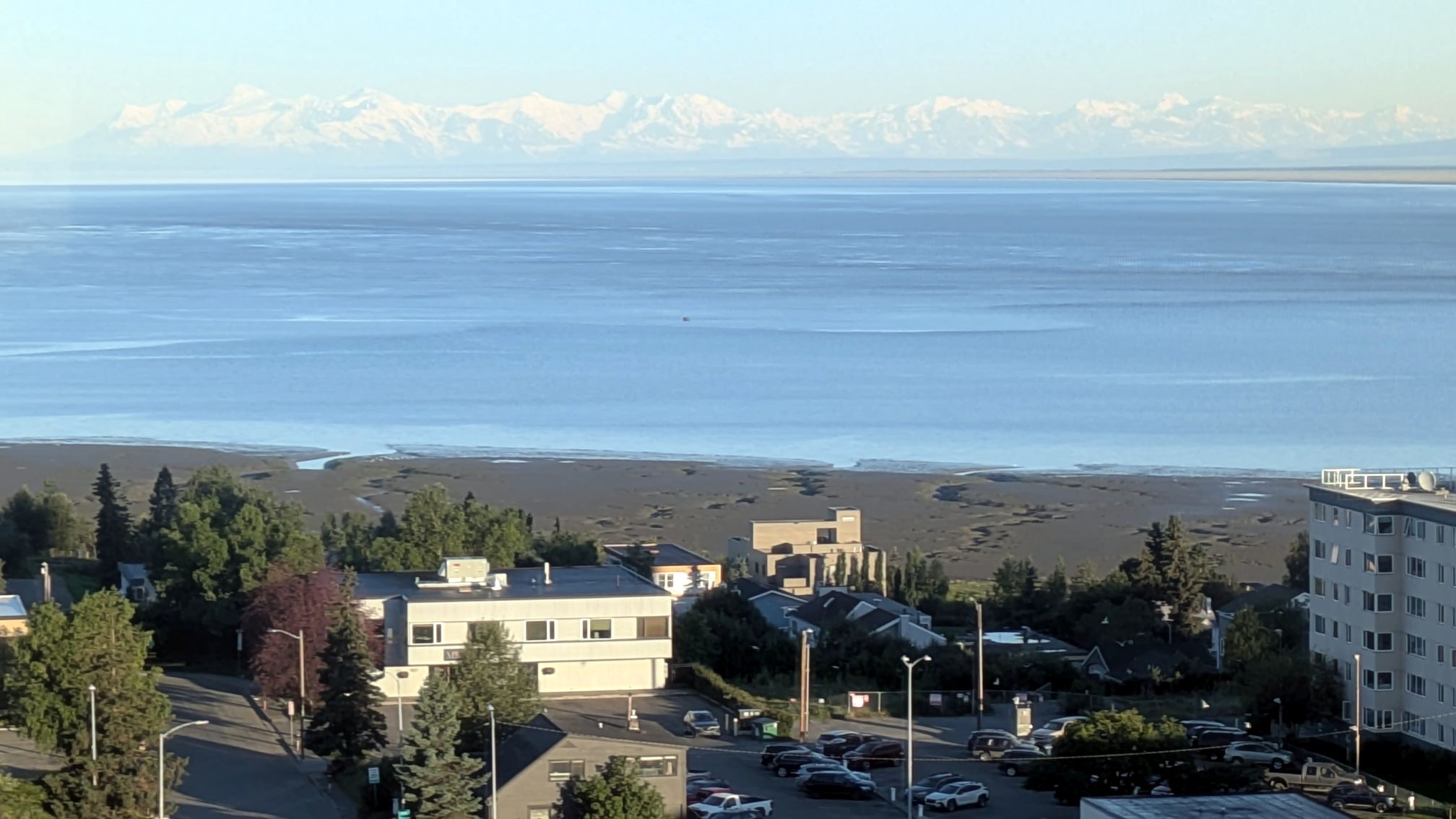
Back in Anchorage near the float plane launch, Bobby found a perfect place for us to stop and enjoy the view of Mount Denali, located 160 miles away. It sure was a clear day!
Julie & Bobby, with Mount Denali off in the distance
At our farewell dinner, we learned from Bobby that he had driven us through1,400 miles of Alaska during our tour. We were grateful to see so much amazing wilderness! It was a wonderful tour with Odysseys Unlimited, and Julie and Bobby did a fabulous job! What memories we will cherish!
The view from our Anchorage hotel room, the following morning before heading to the airport. Another incredible day with amazing mountain views!
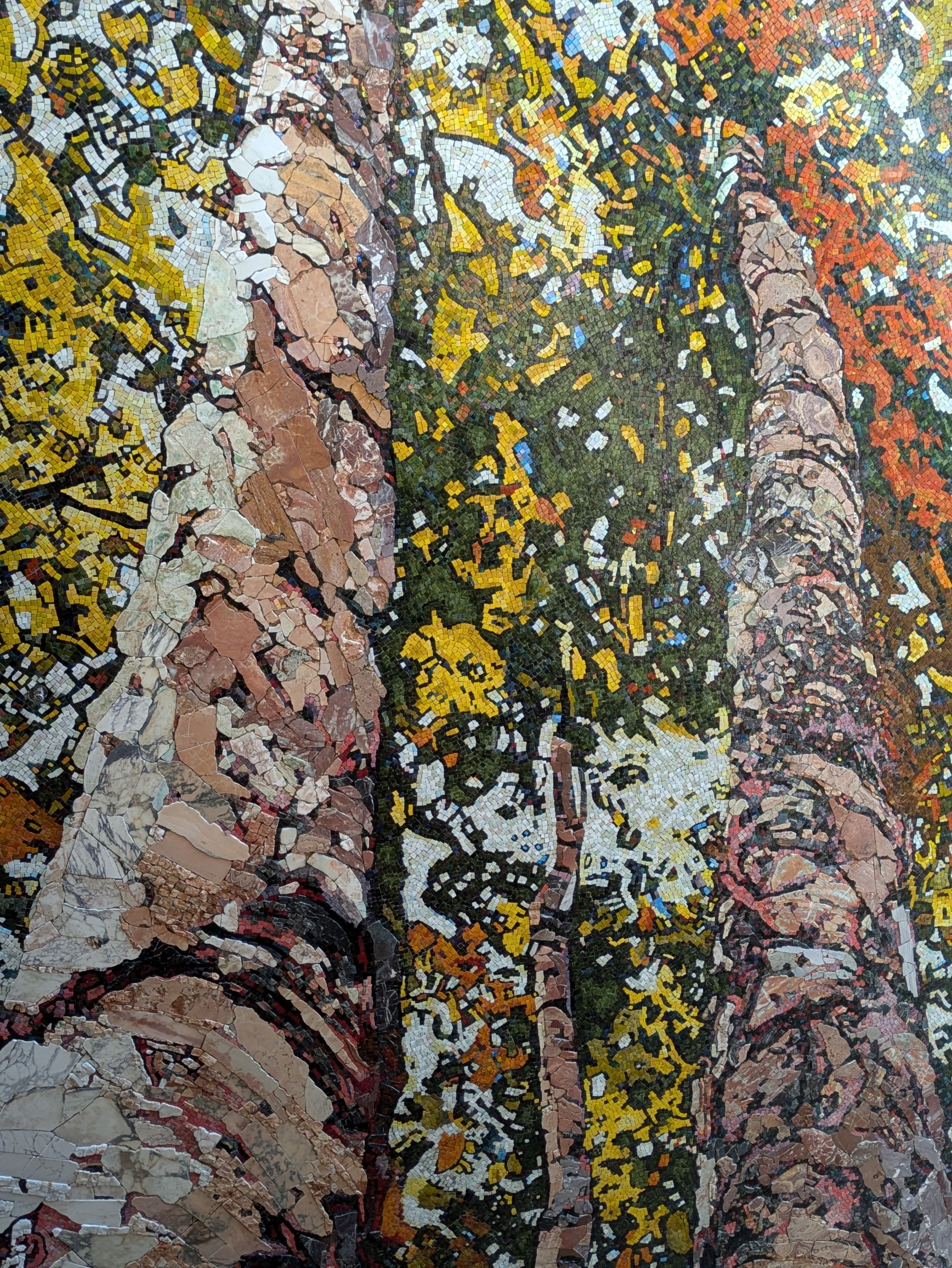
A mosaic tile scene on the vaulted ceiling of Anchorage airport.
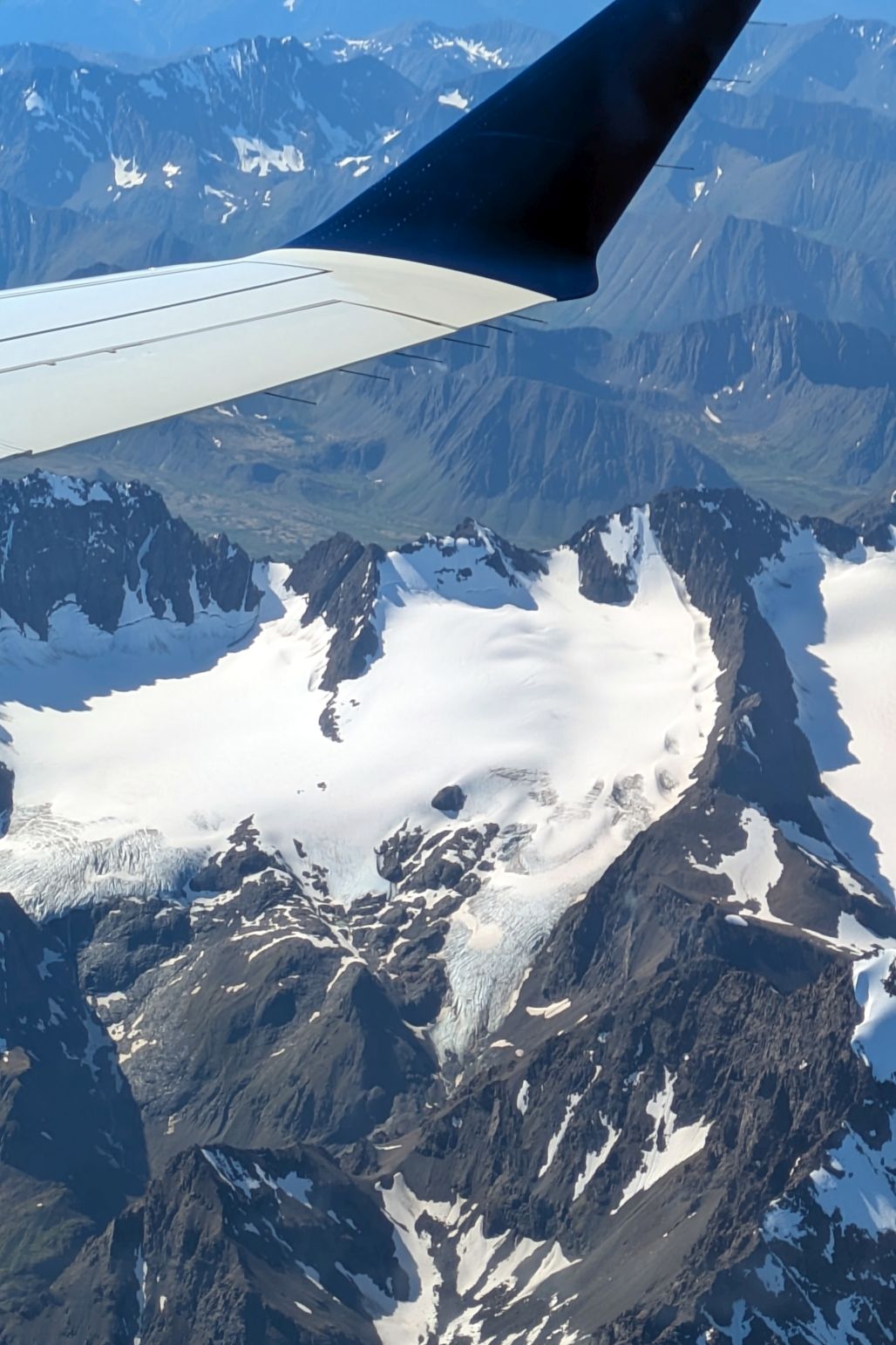
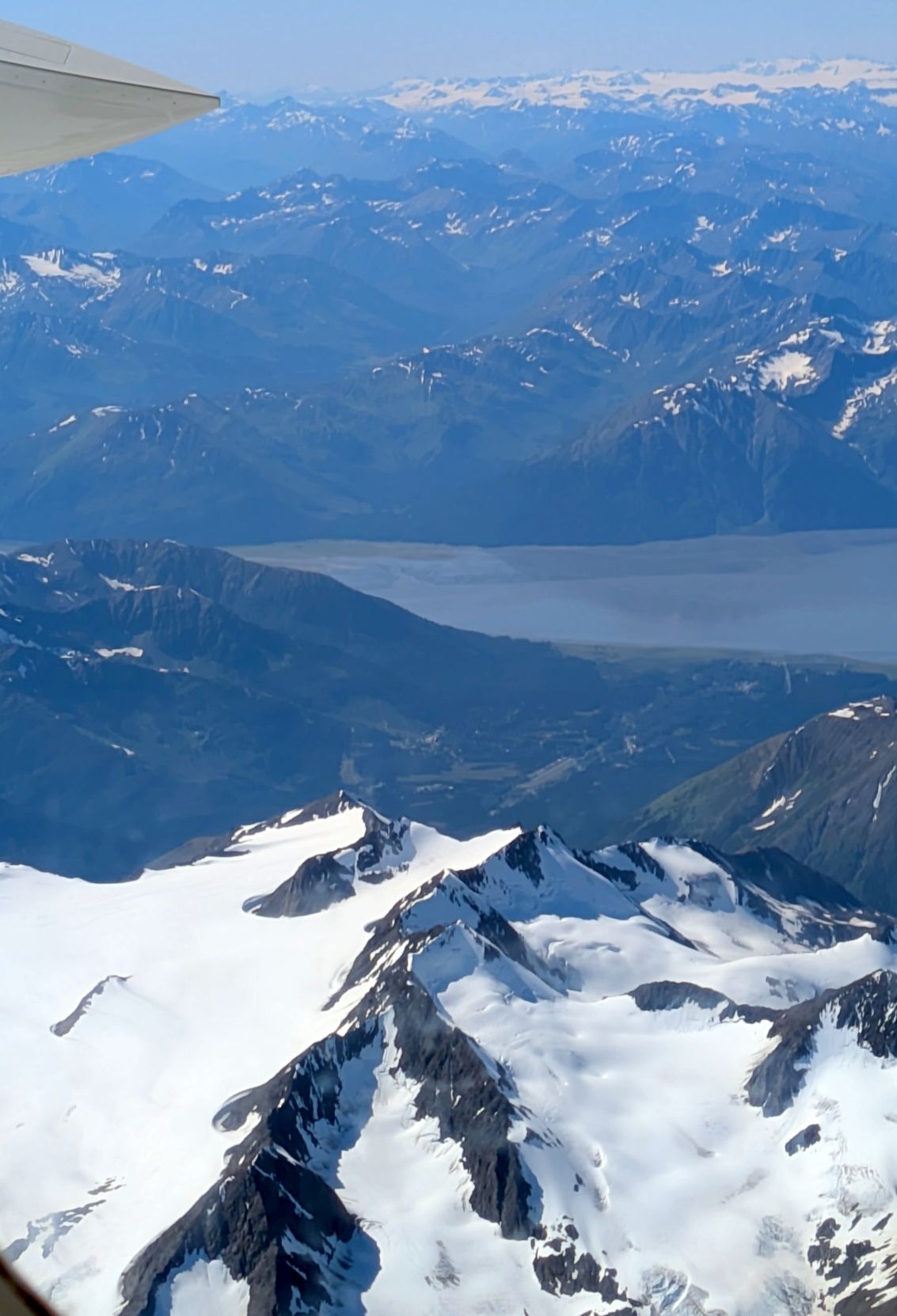
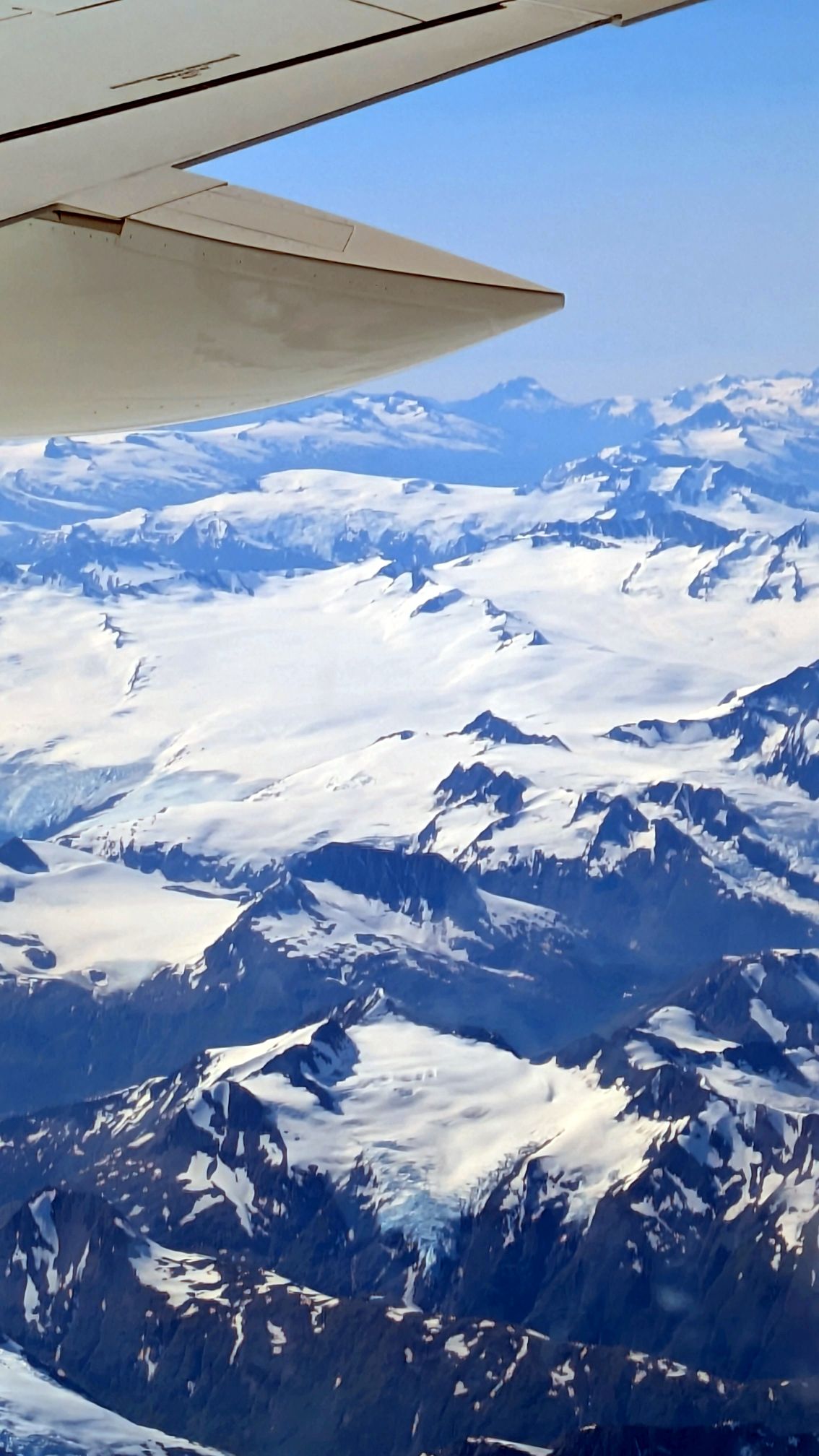
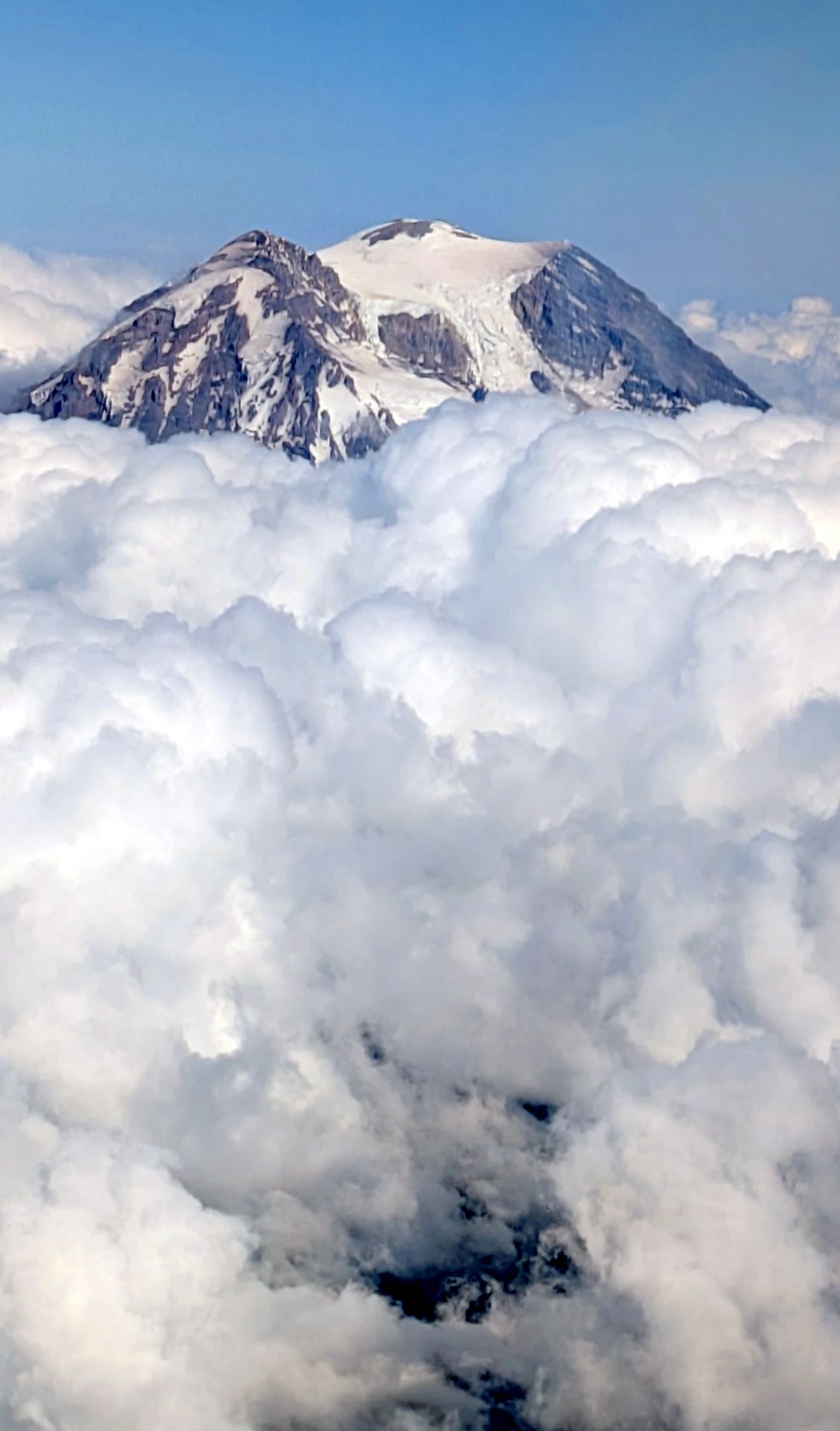
Photographed from the middle seat on our flight from Anchorage
Coming up next, sometime this fall: LIVING LIKE A LOCAL IN LISBON
Located in the historic center of Lisbon, the charming Chiado neighborhood has been inhabited since the Roman Empire. In 1755, the Great Lisbon Earthquake destroyed much of the area, so it was rebuilt. And then in 1988, a fire destroyed 18 buildings, between 200-300 people lost their homes, and nearly 2,000 people who worked in the area lost their jobs. The fire was fought by 1,680 firefighters, leaving 60 with injuries.
Through both disasters, Chiado survived and now thrives as a bustling cultural and commercial district. Between luxury shopping, museums, theaters, and historic landmarks; Chiado draws many locals and tourists, day and night.
Our apartment, located in the middle of the all the action, was quite the contrast to our quiet active adult community. And that’s exactly what we loved about it!
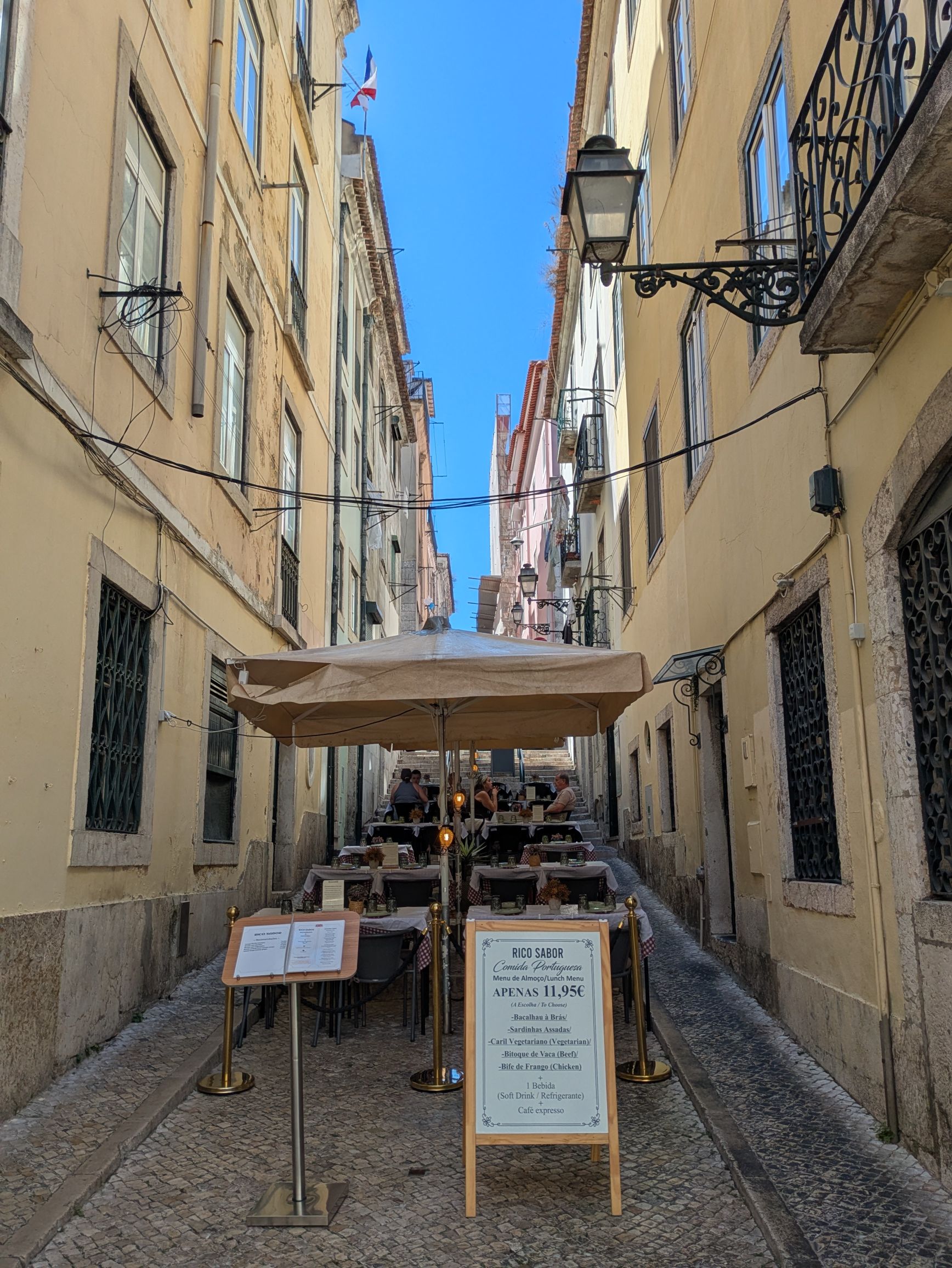
Shopping for groceries was just a short walk up the street. Going out for a fabulous dinner was as close as a 25-foot walk out the building’s entrance and across the alley. Chocolate craving? Delicious chocolate tartlets were just 120 feet up the street at a wonderful bakery.
There was so much to see just a short walk away that I often popped out to wander around and do photography while Bruce rested. And when we were in our apartment, we often opened the glass doors and stood out on our balcony to watch the action below. Never a dull moment!
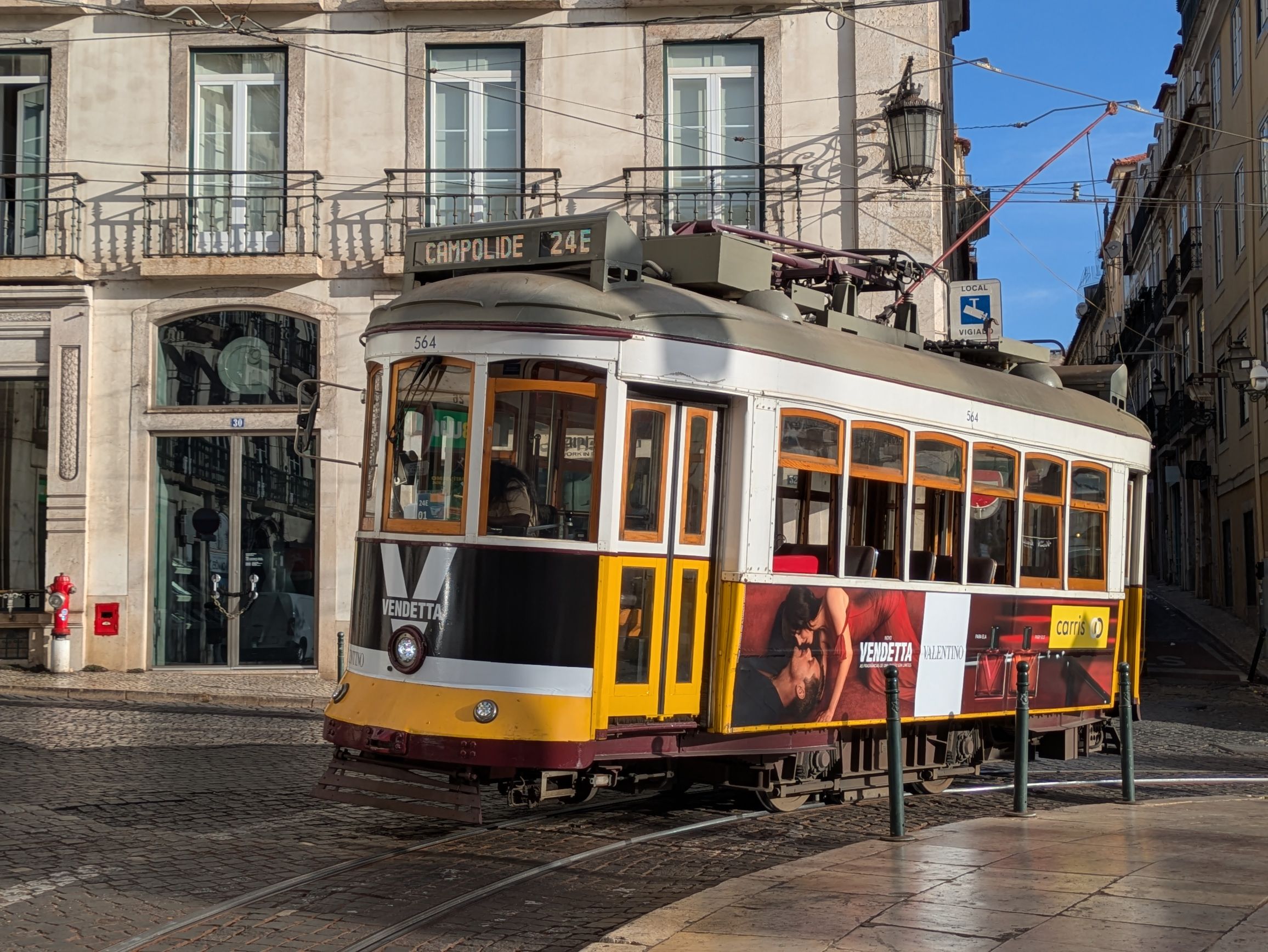
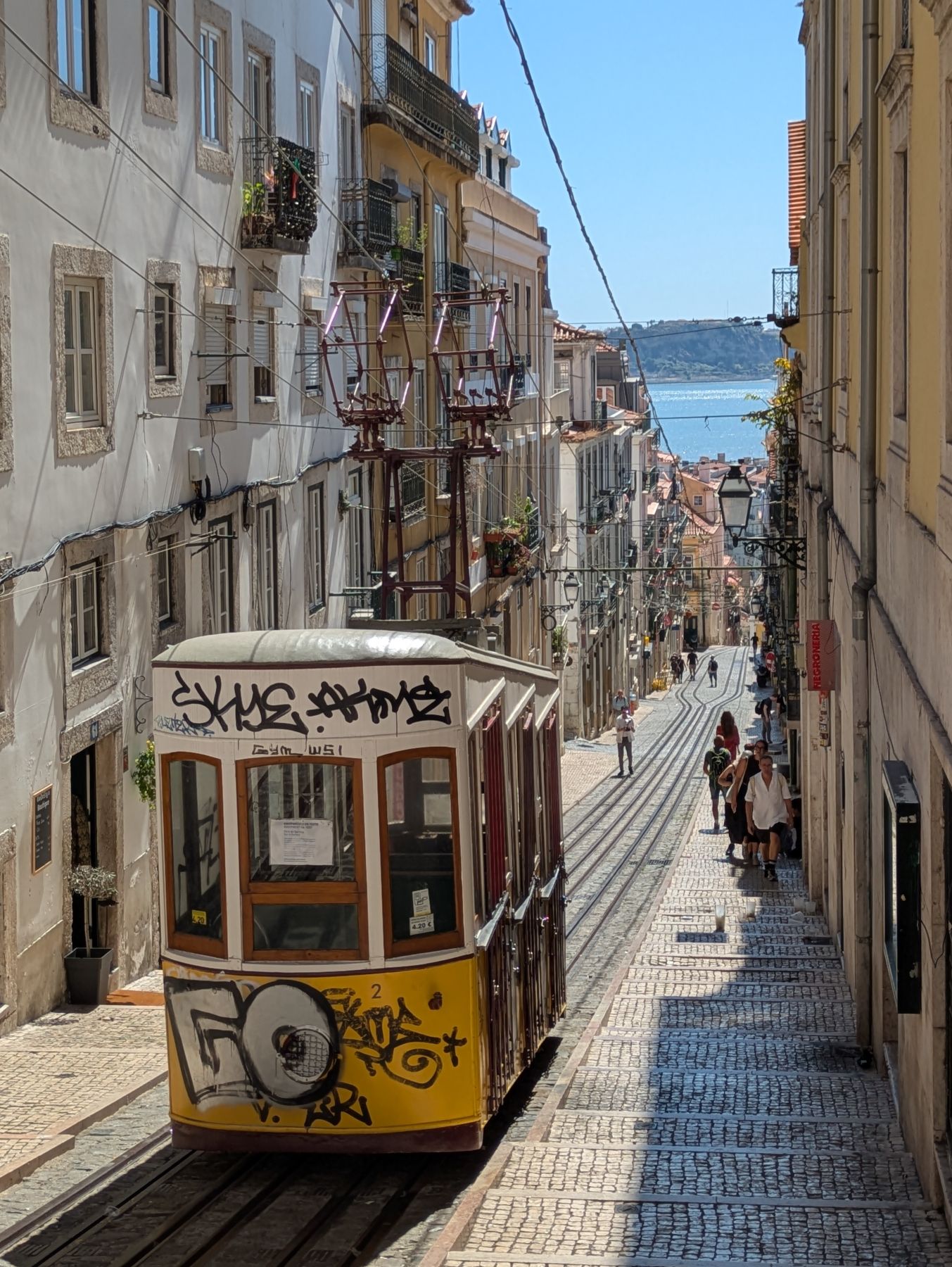
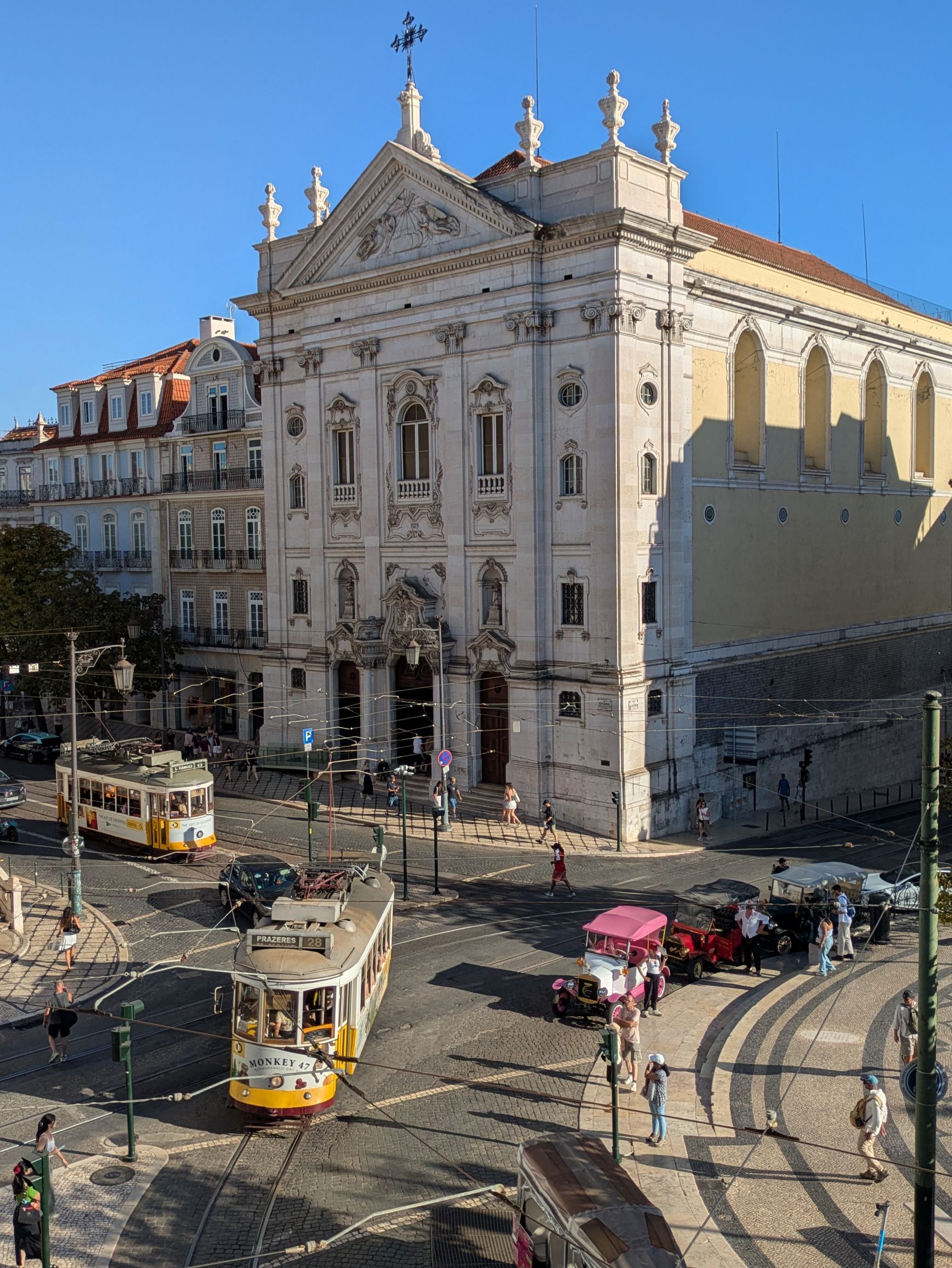
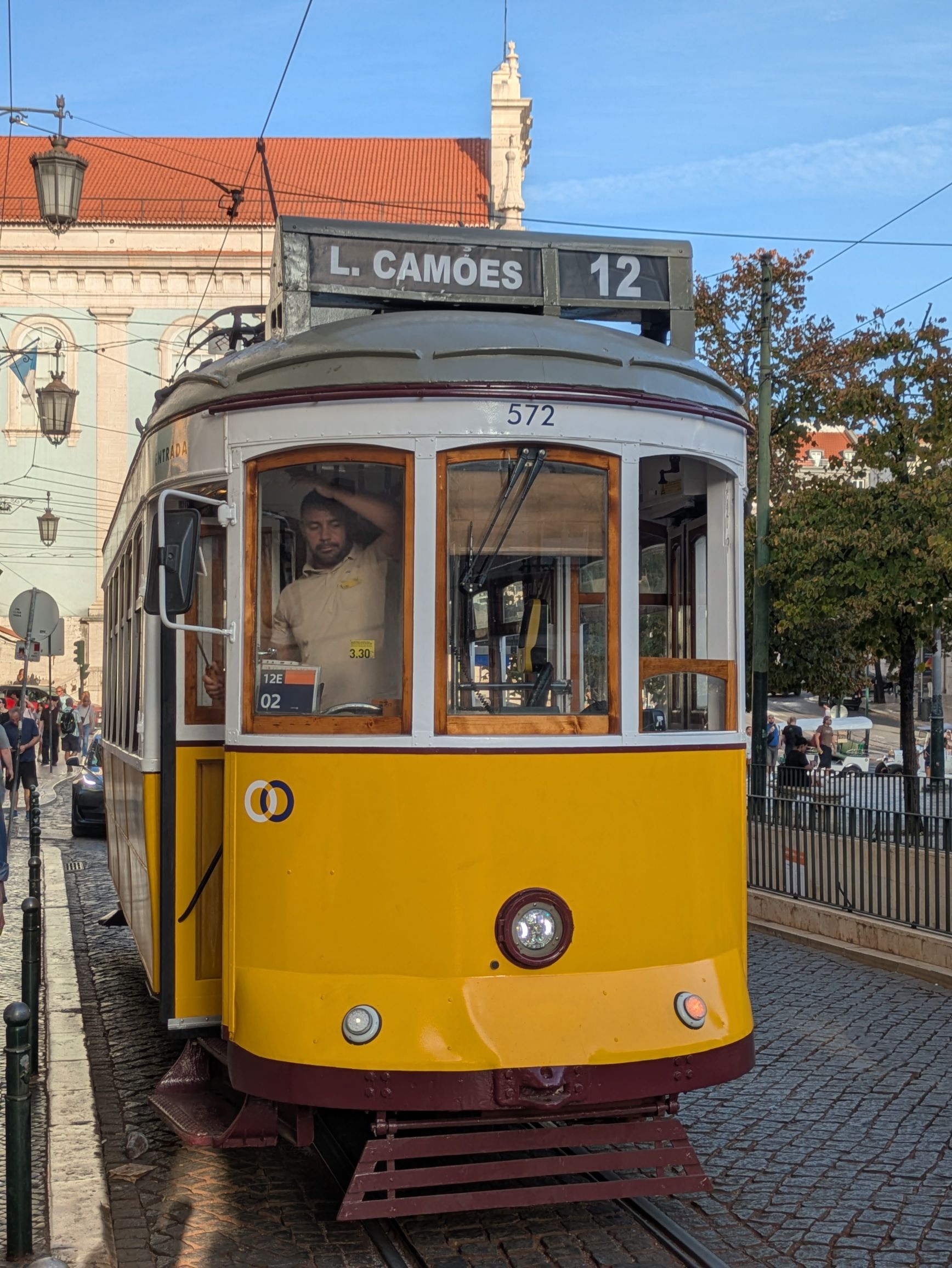
Transportation was also conveniently located. The metro station and bus stop were both a very short walk away, and the train and ferry stations were a ten-minute walk down the hill. Those cute yellow trams were right outside our door!
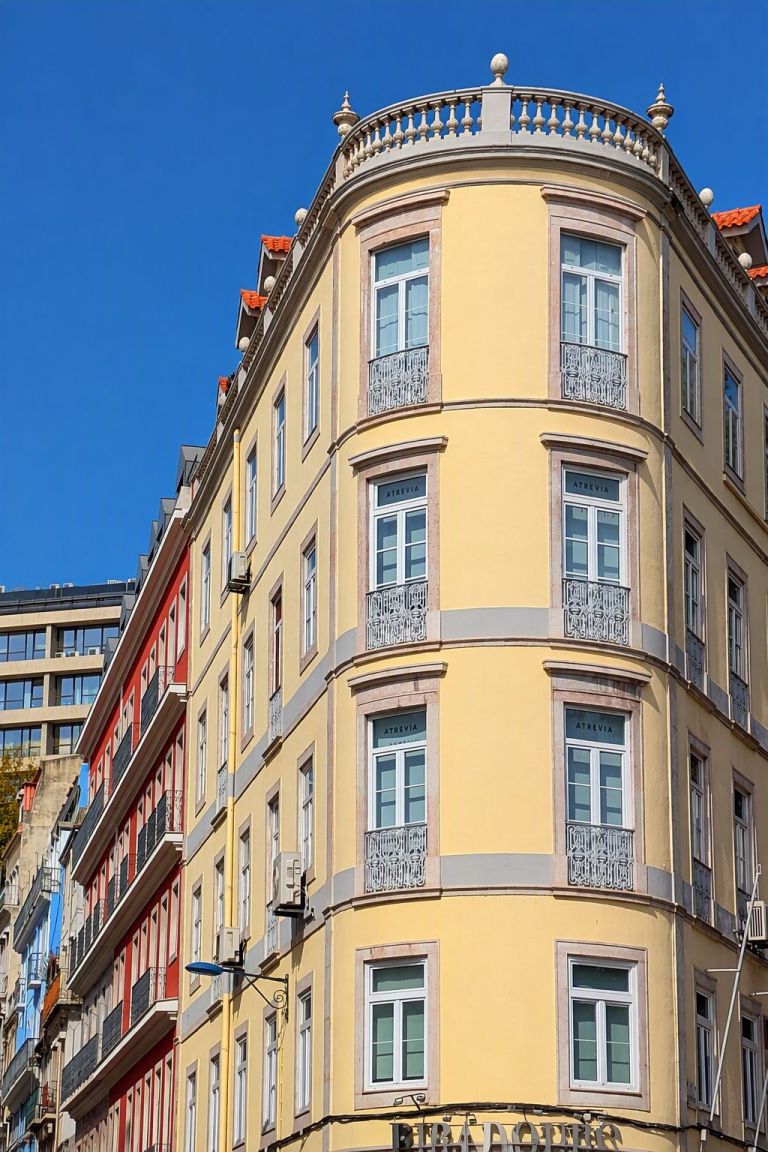
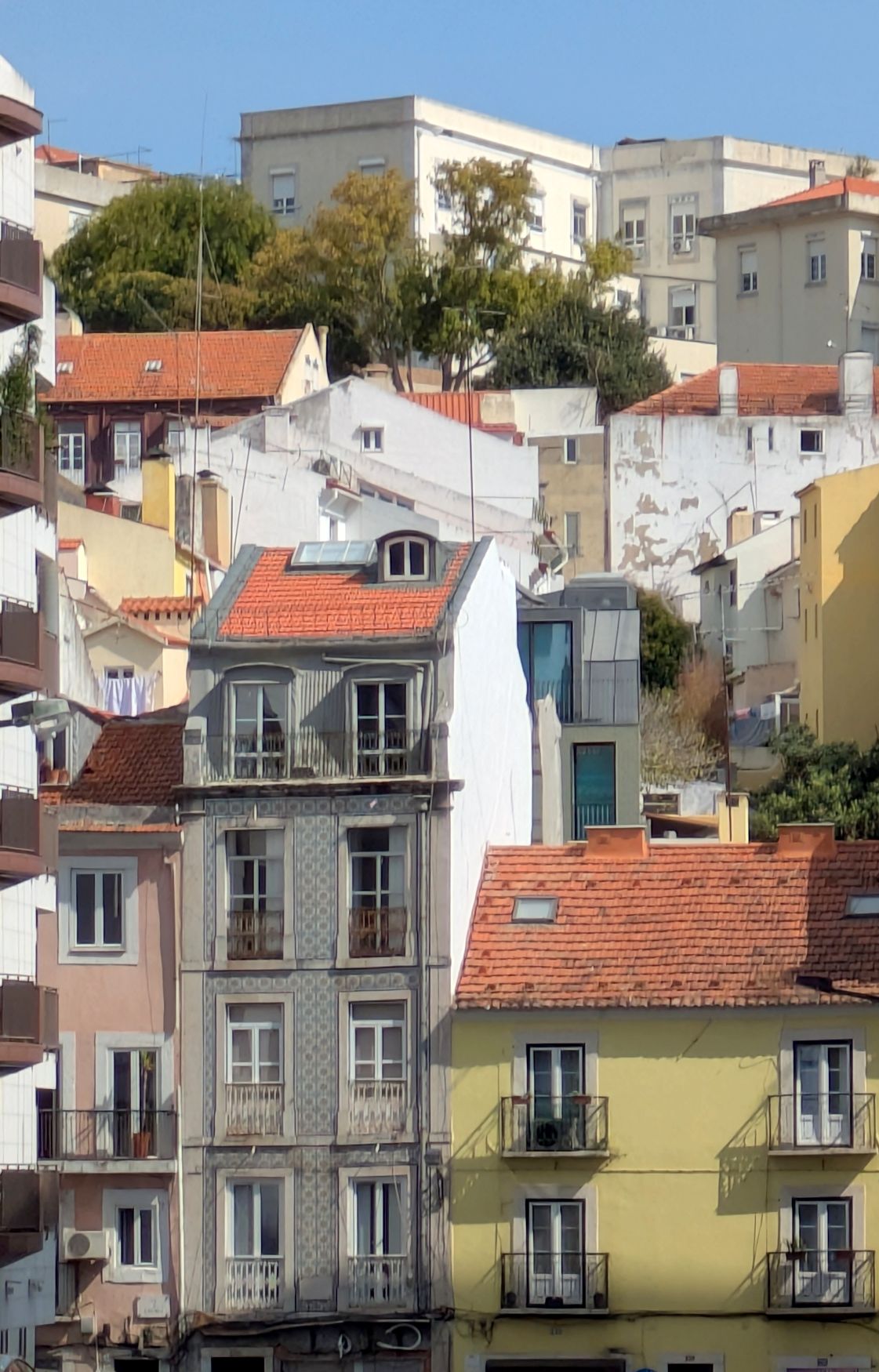
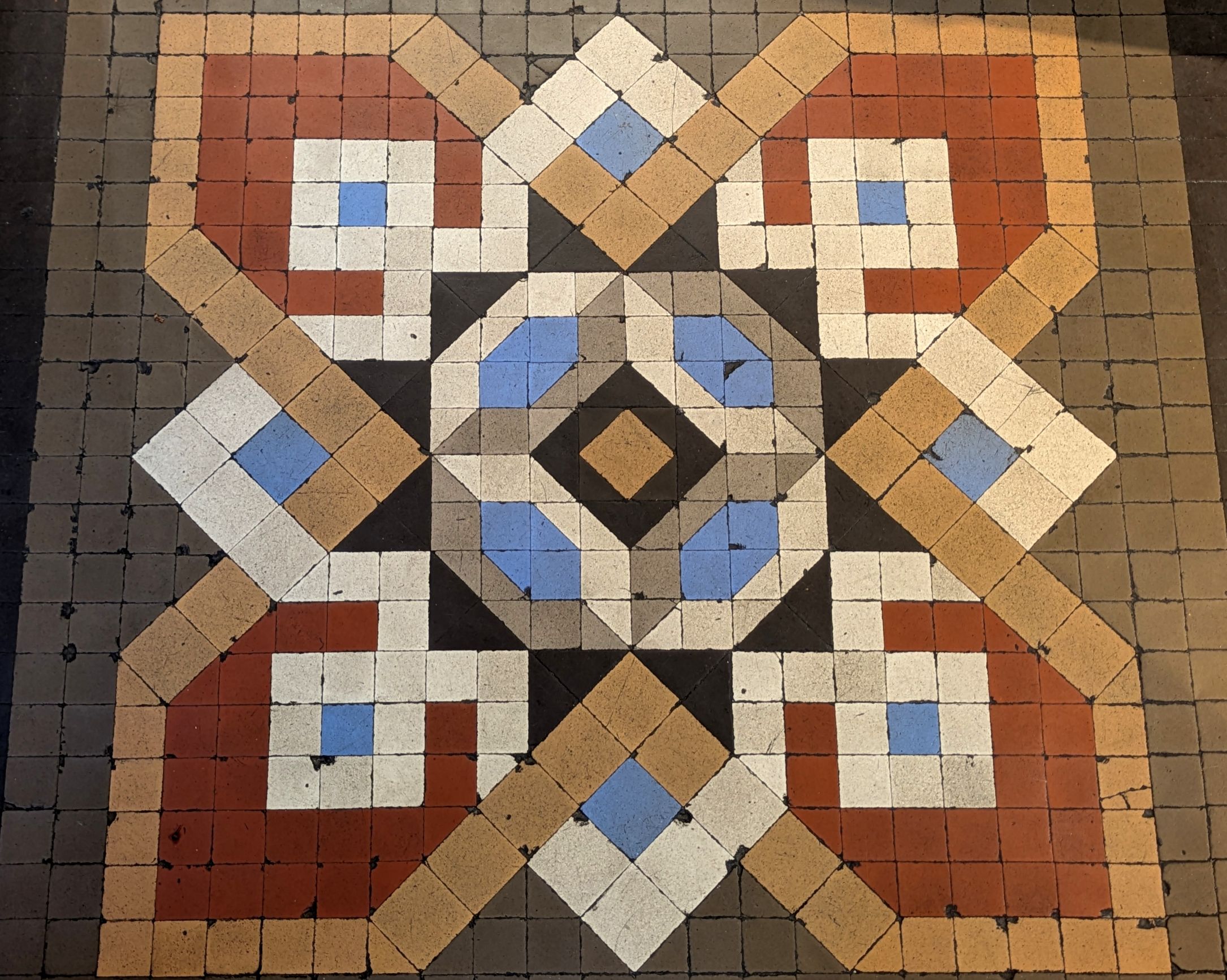
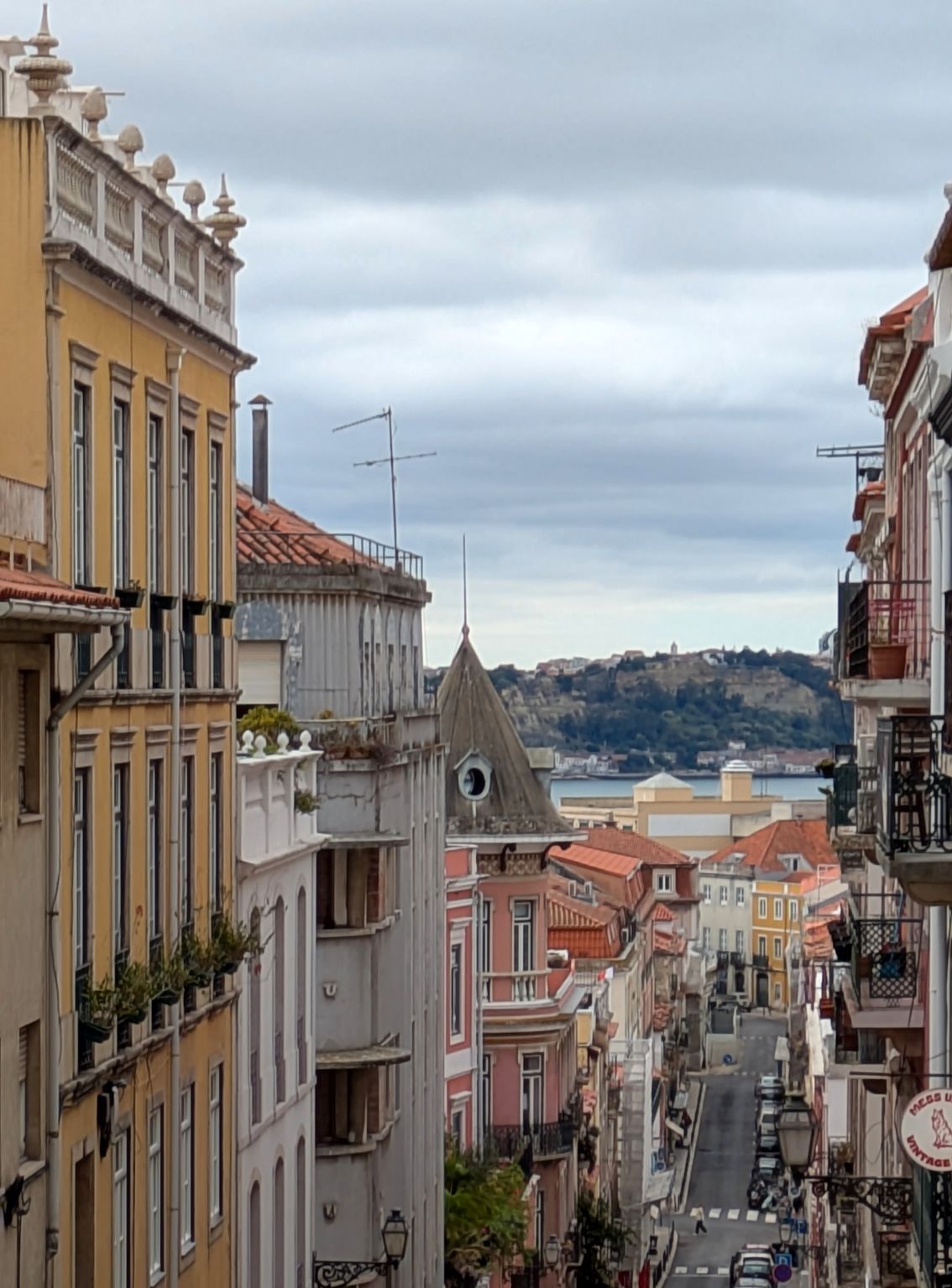
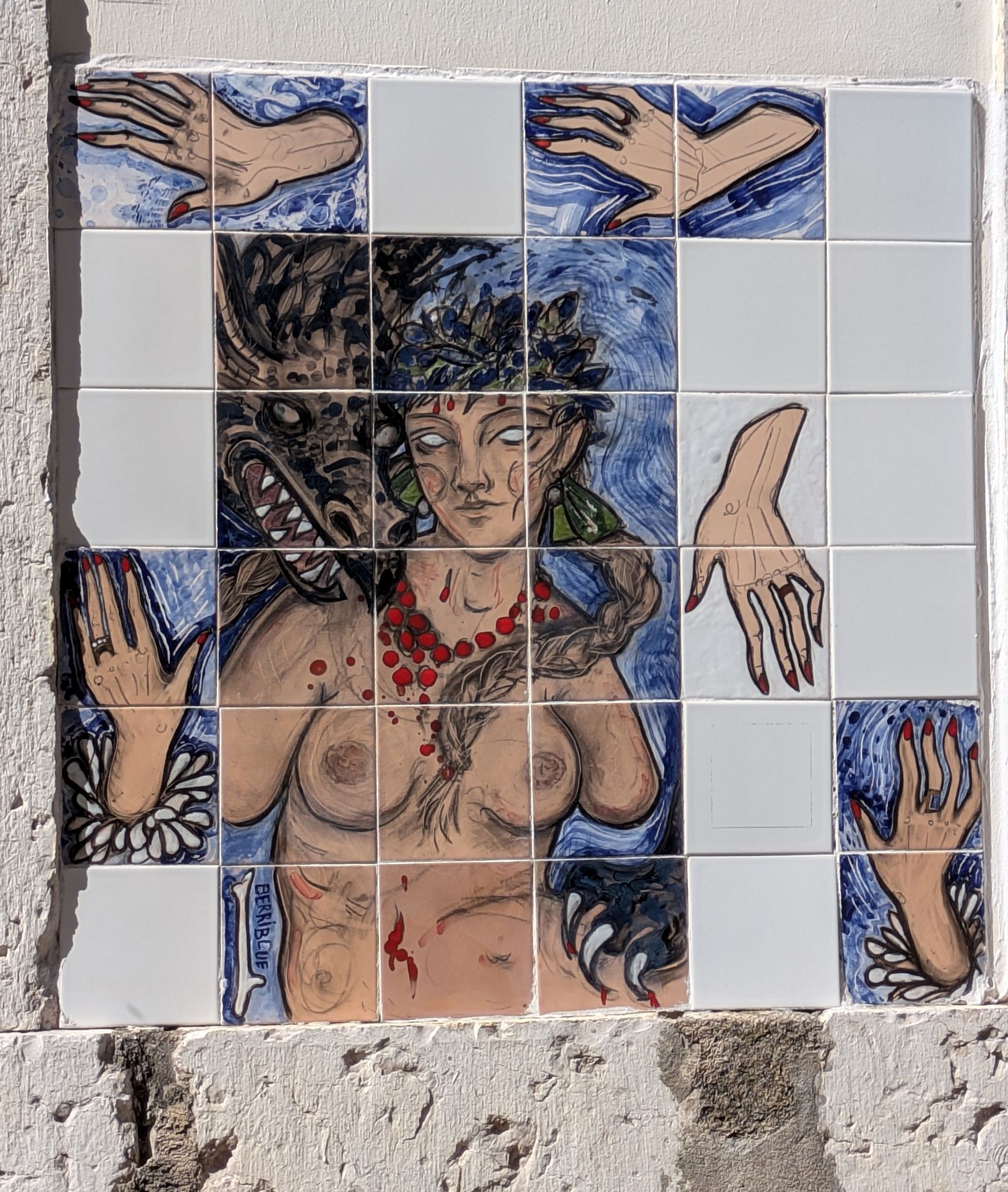
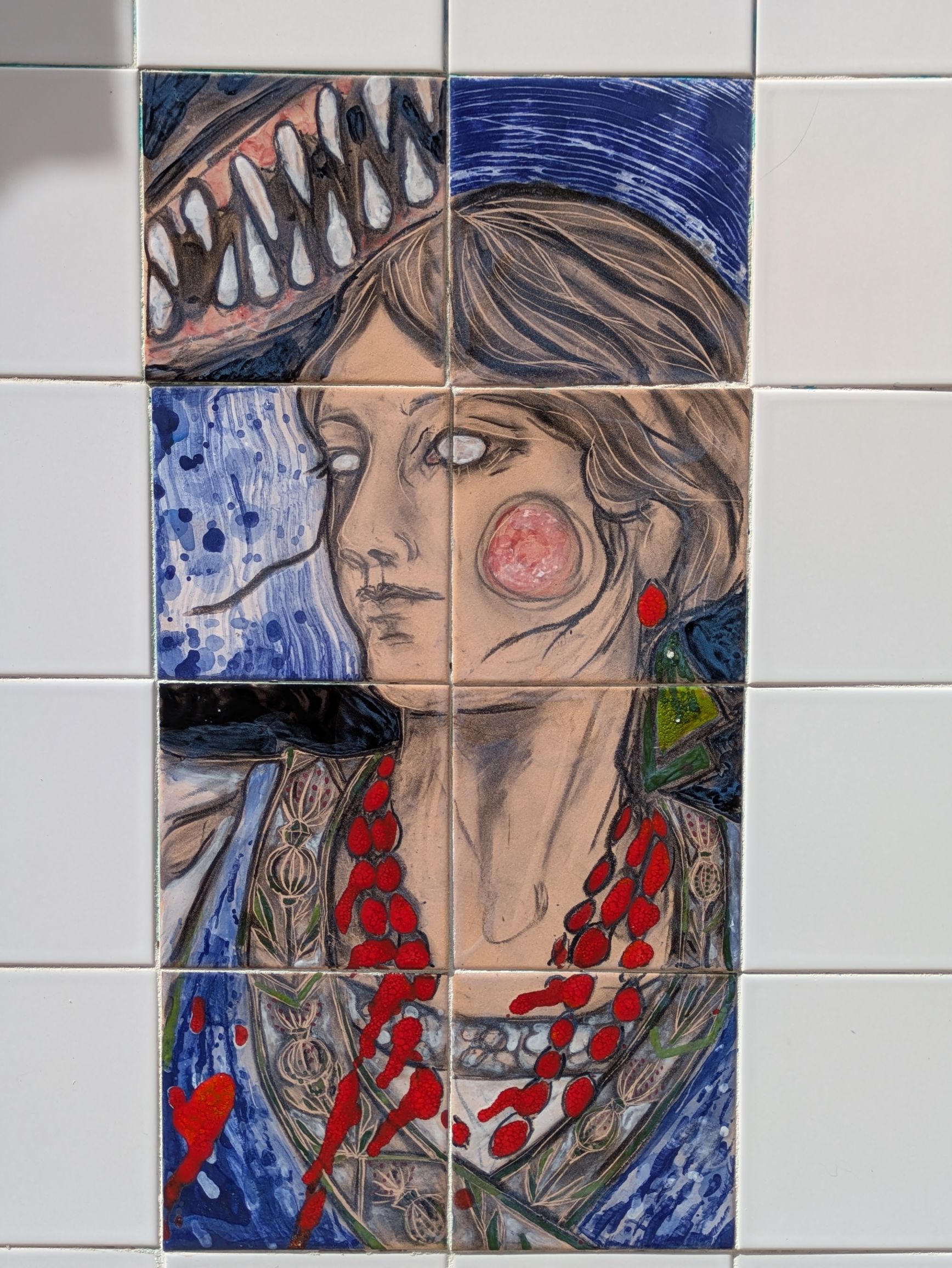
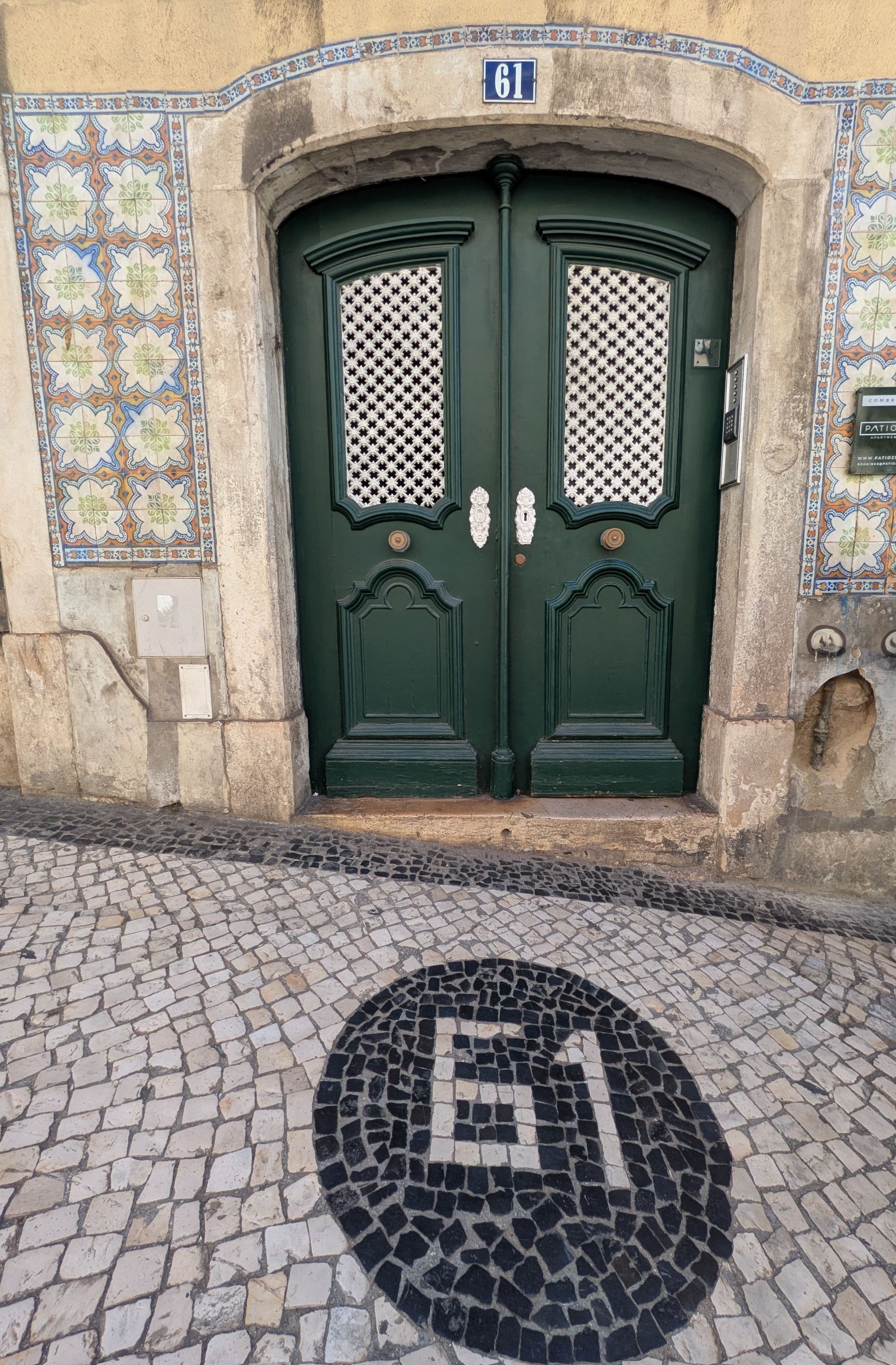
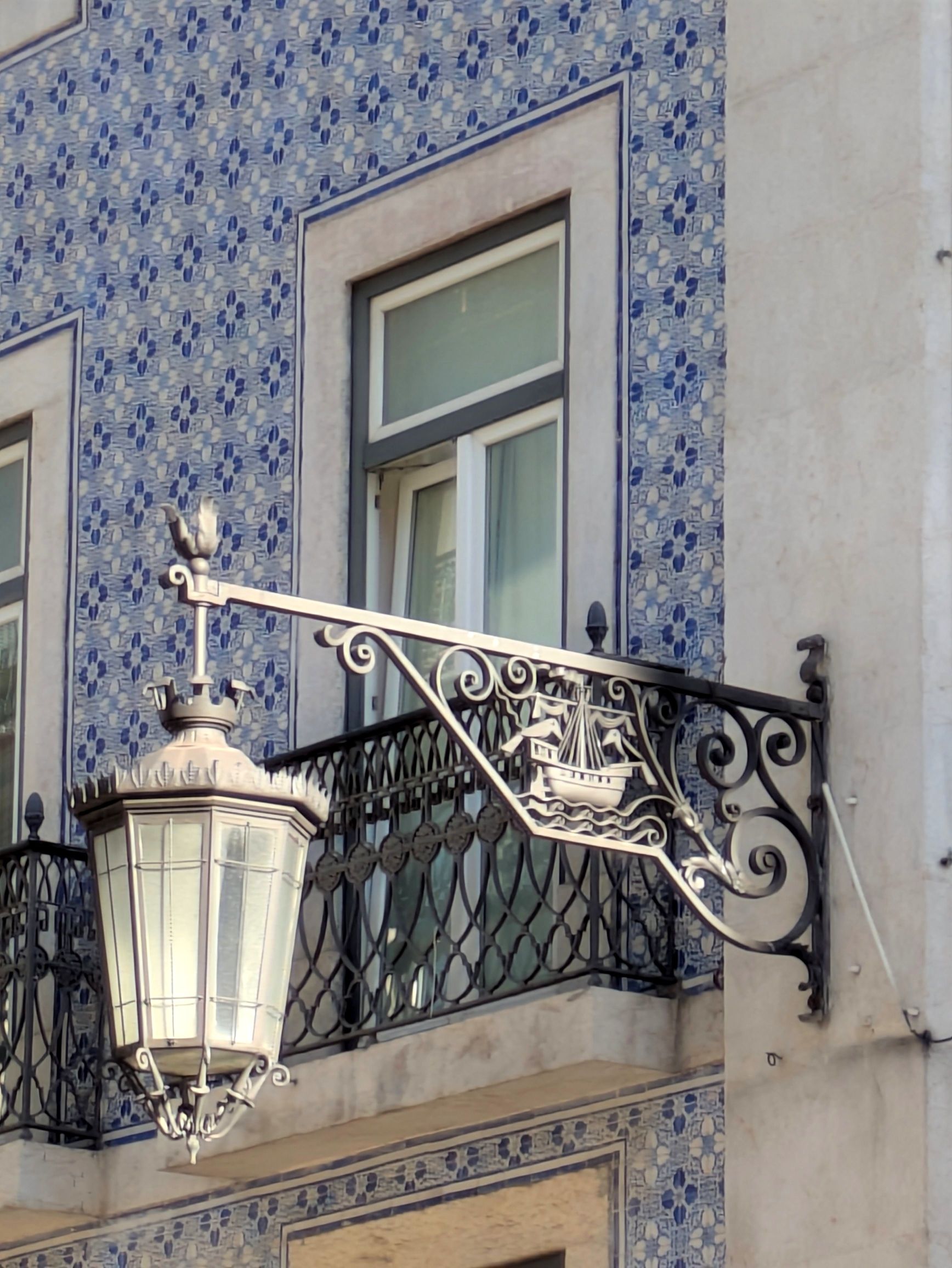
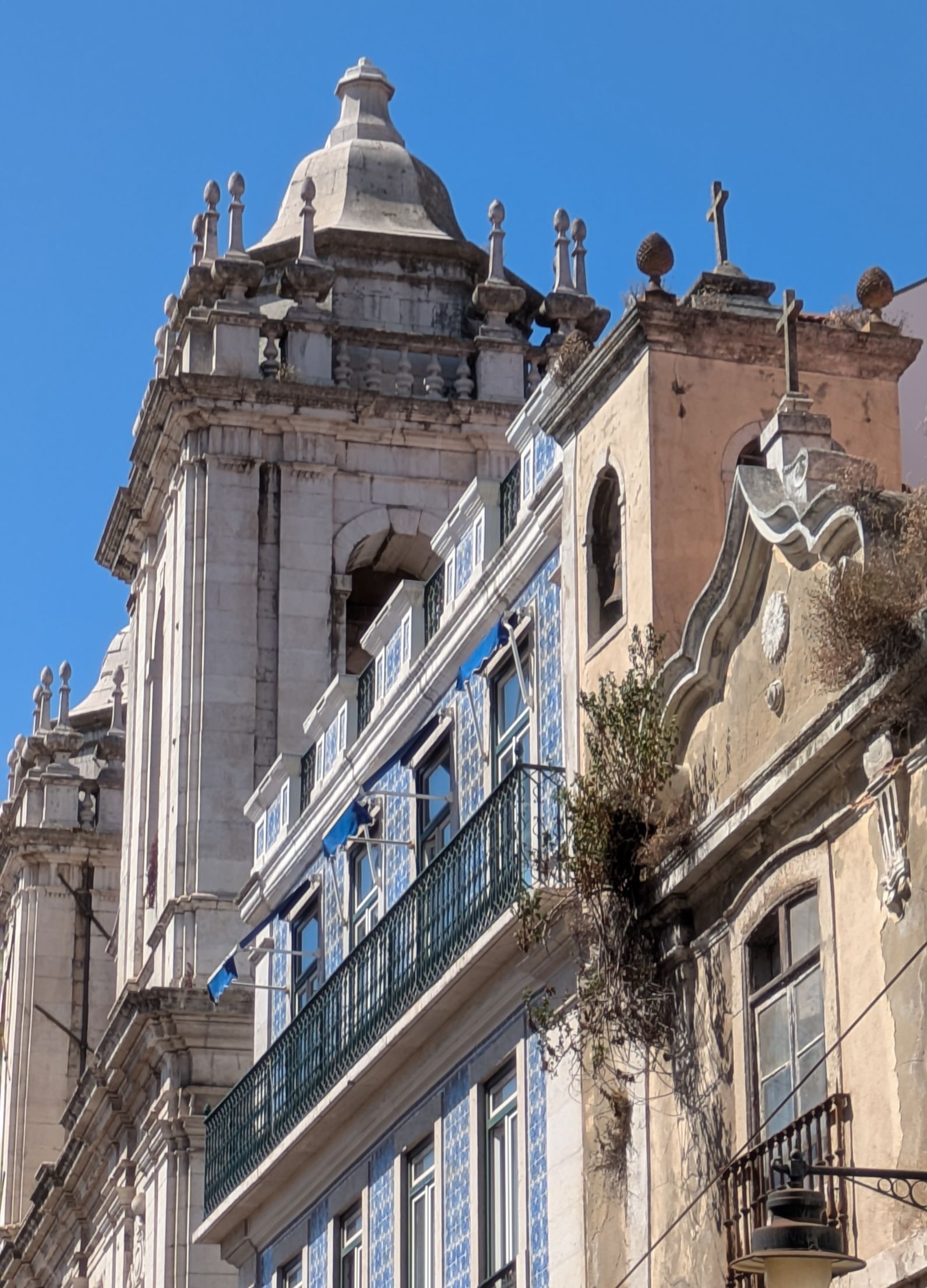
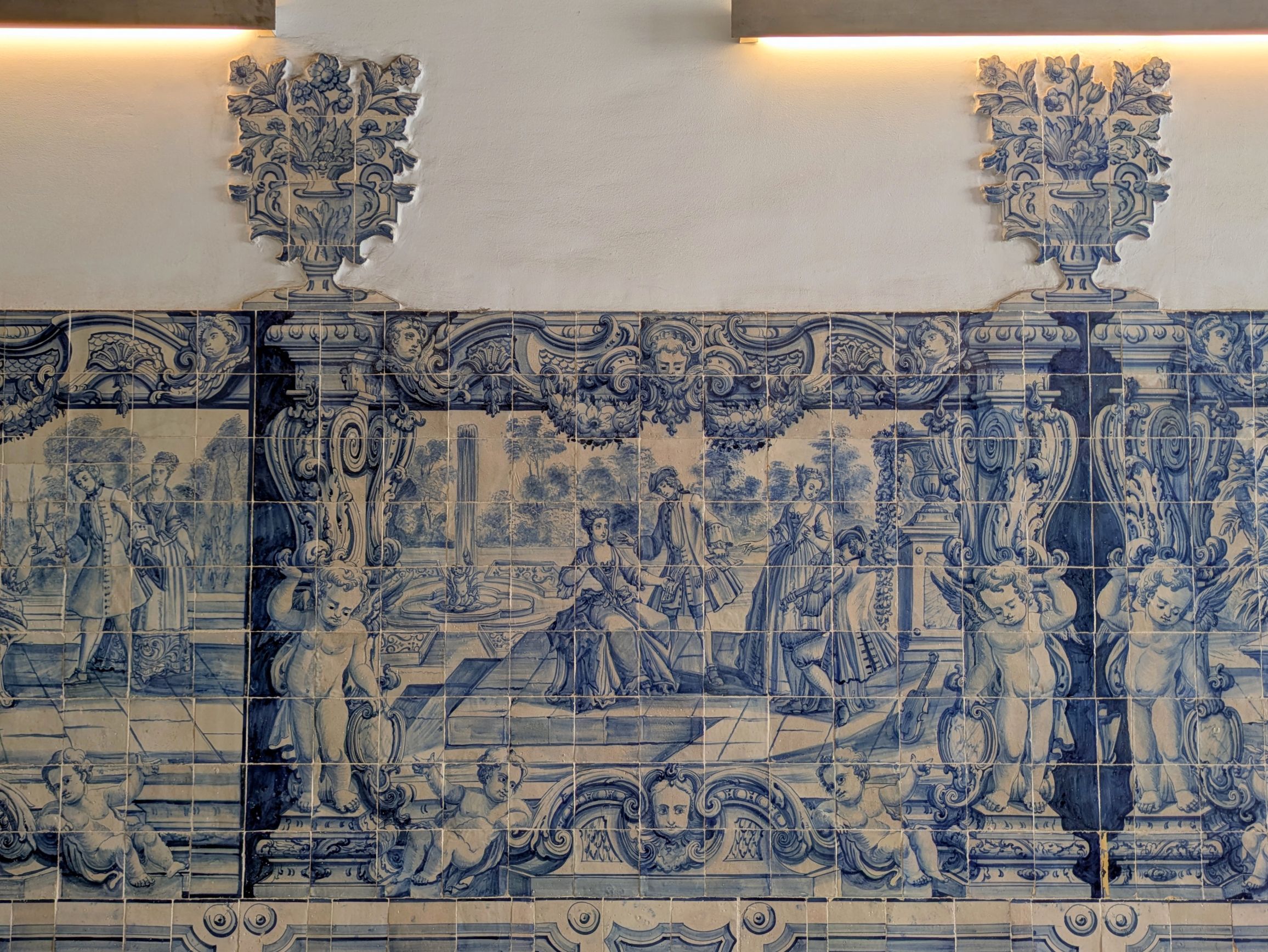
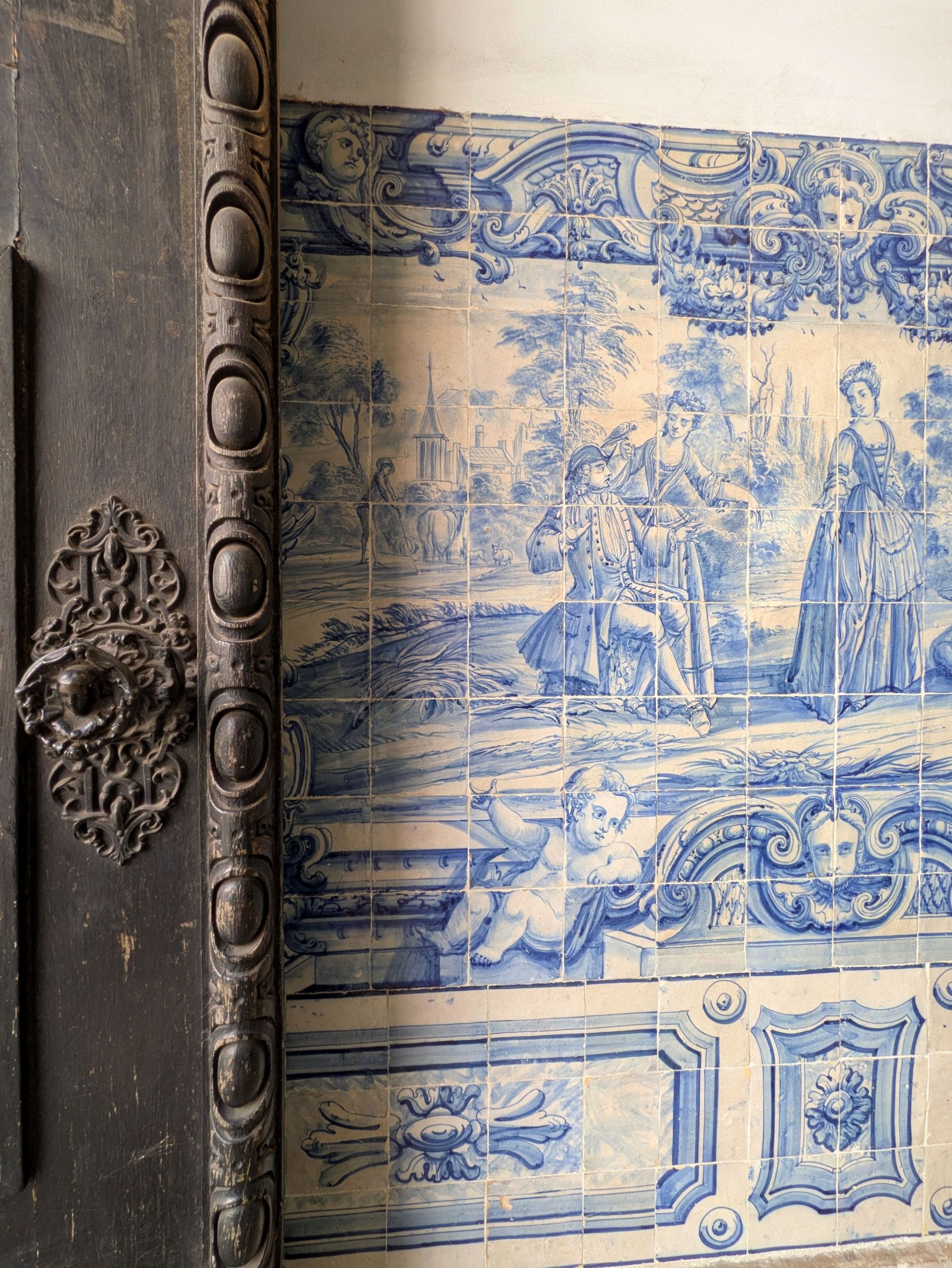
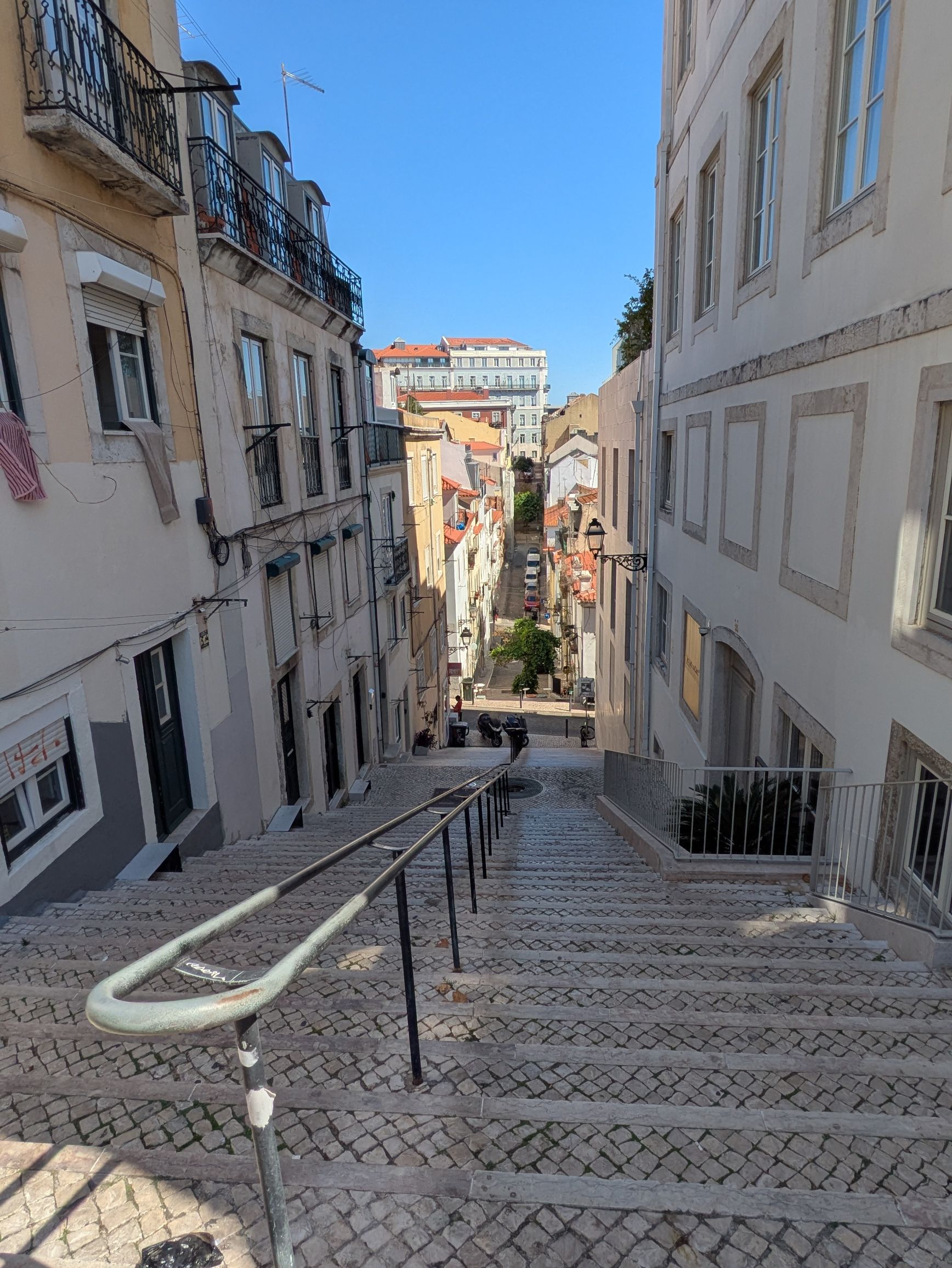
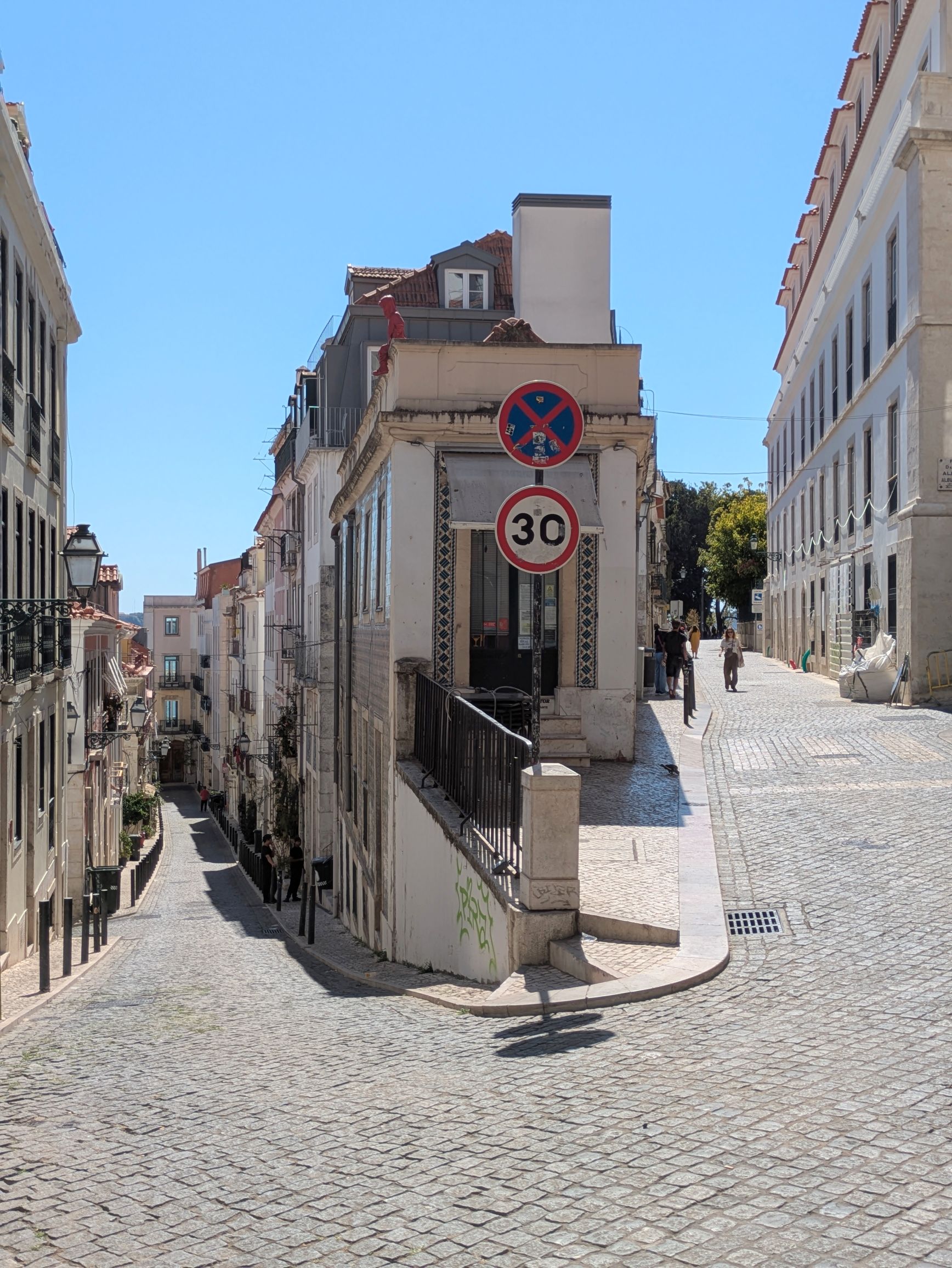
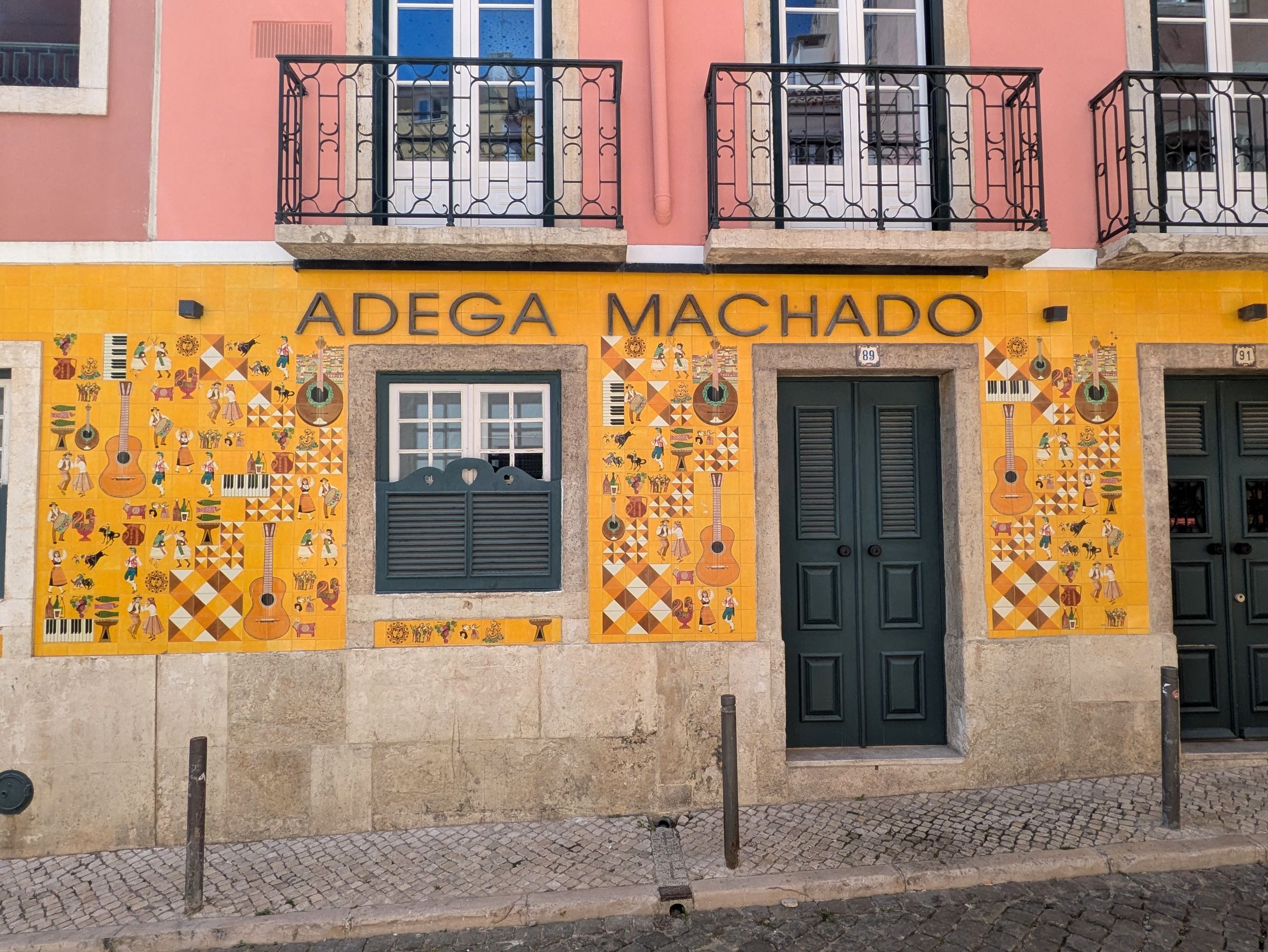
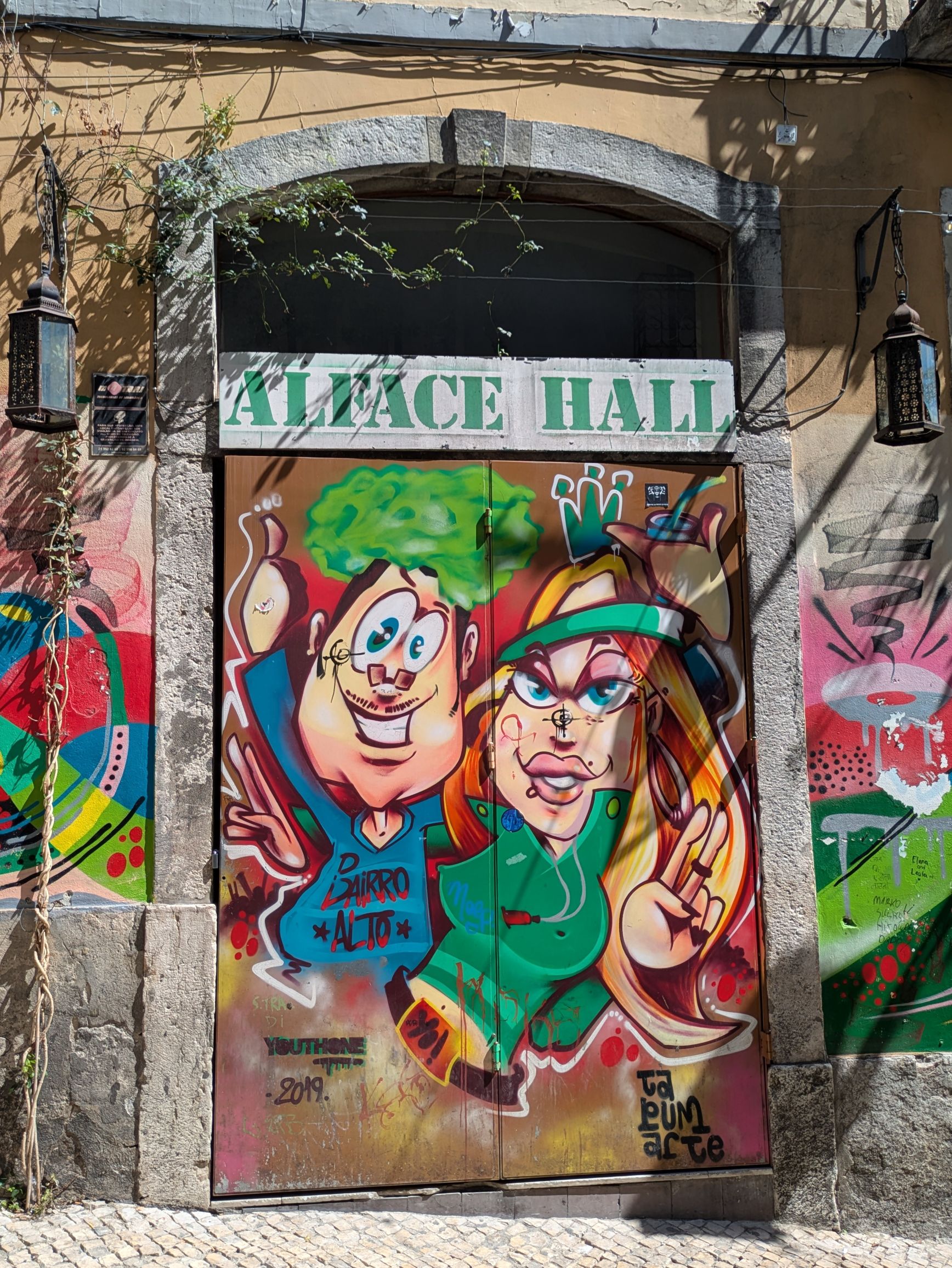
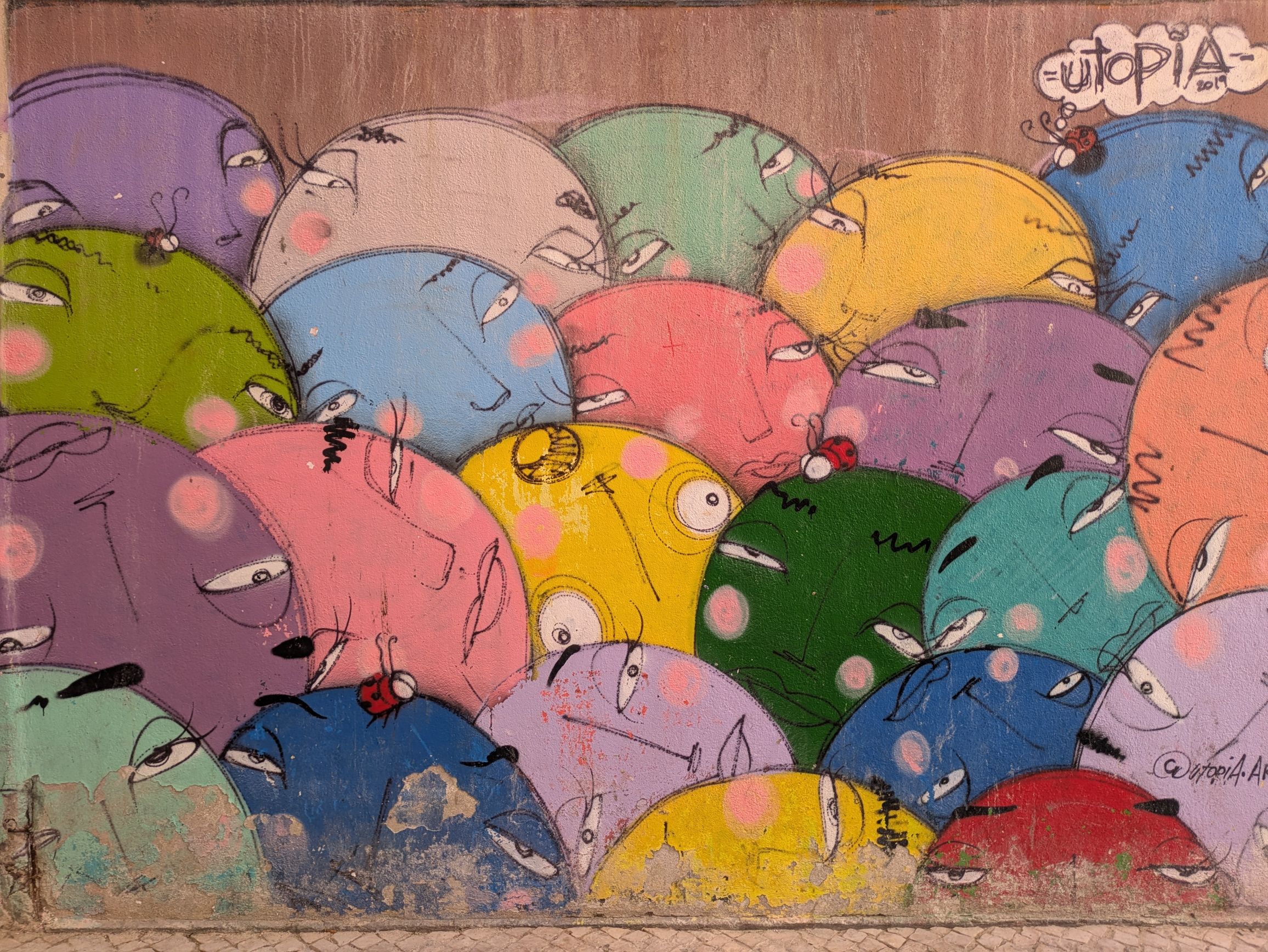
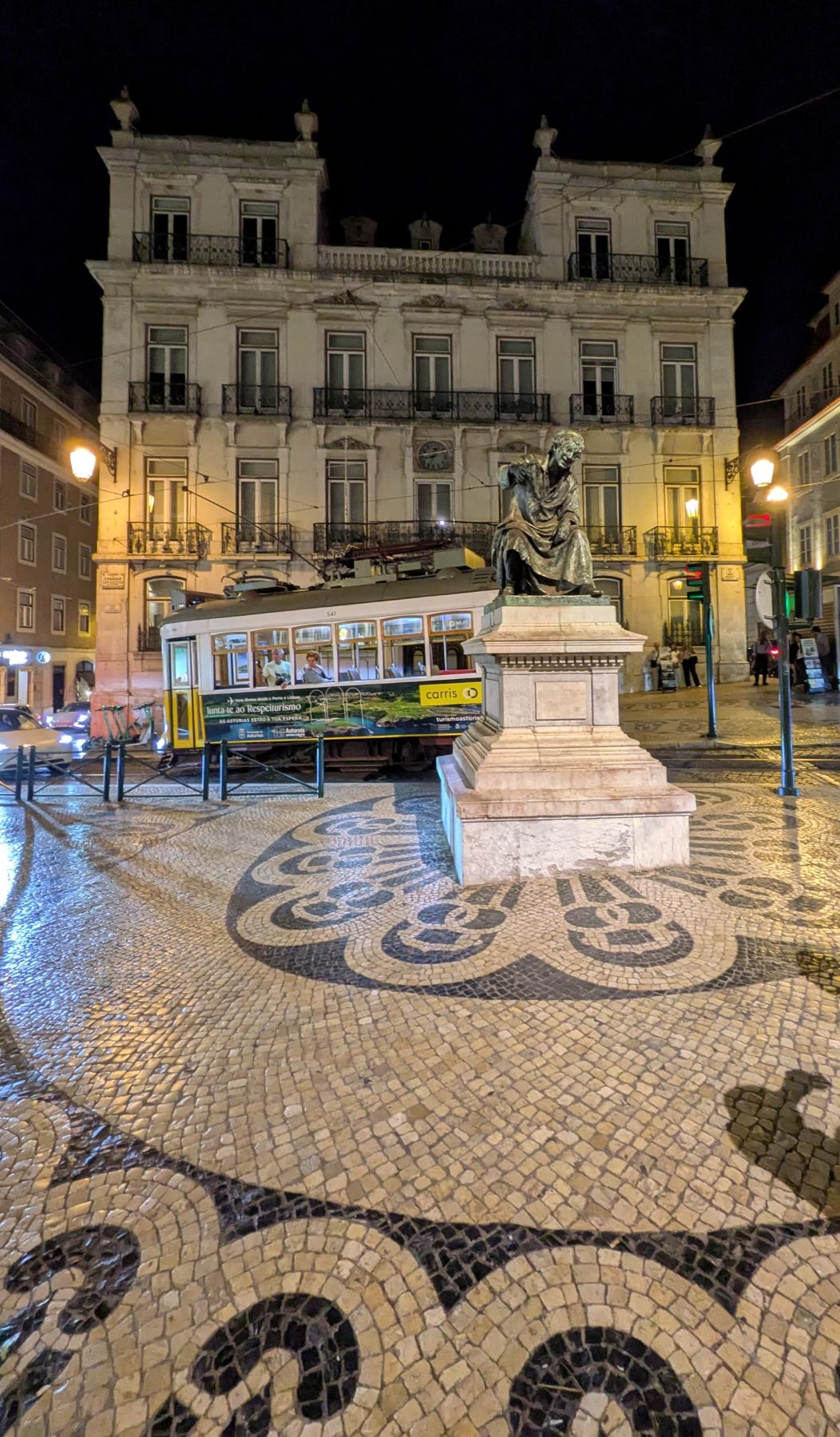
In addition to those iconic yellow trams, what made Chiado so charming were the designs in the cobblestone streets, tile facades of the buildings, street art, and architecture.
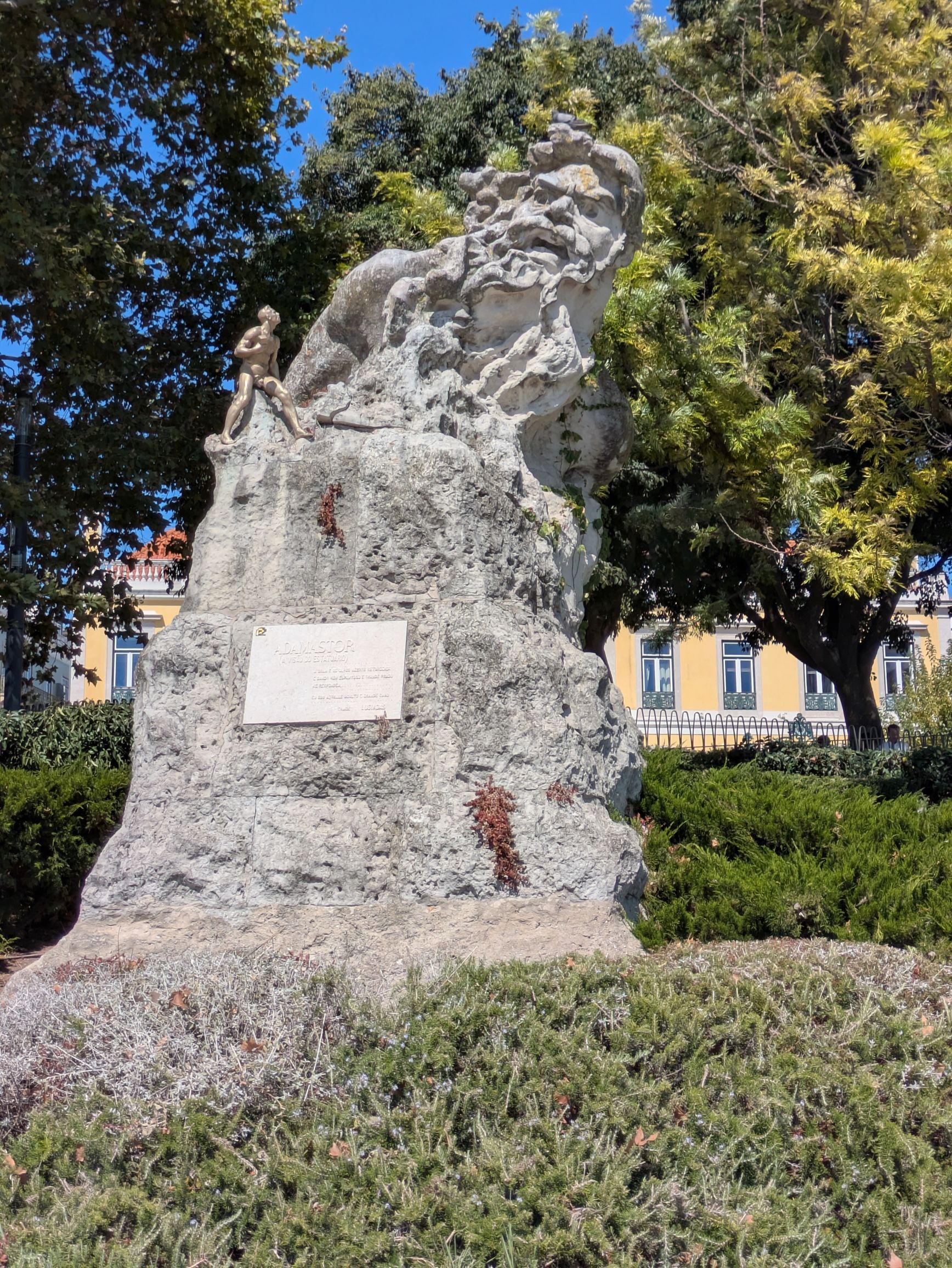
Here then, are photos I shot around our neighborhood. I’m not sure where the Chaido and Bairro Alto neighborhoods start and end, so I included both here. Principe Real is a little bit further north and Pink Street a little bit further south, so I will save that for later. And, you will have to wait to see that delicious dinner across the alley; the Portuguese cuisine deserves its own special post!
(For all photos, click on the image for a full screen view.)
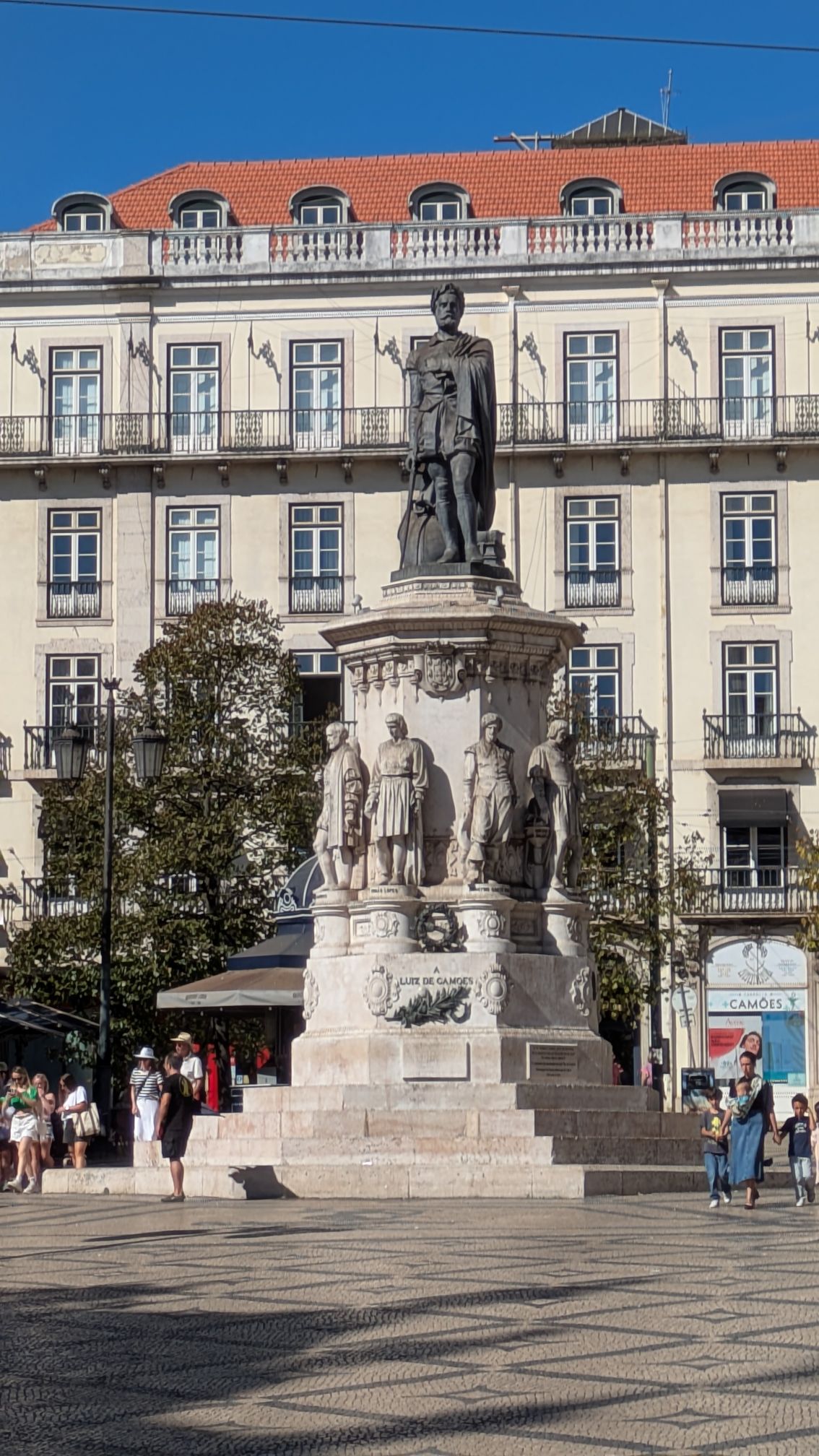
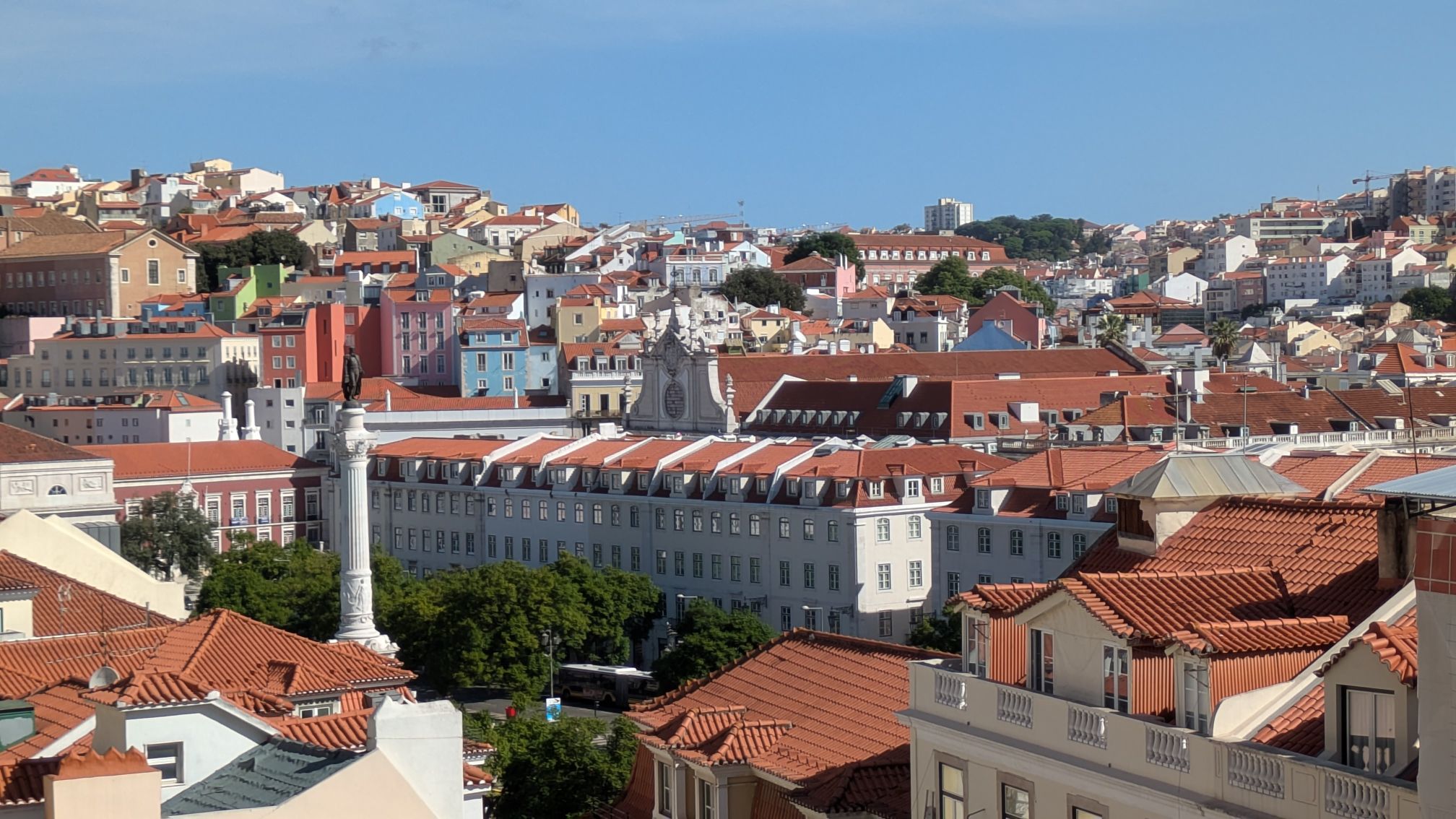
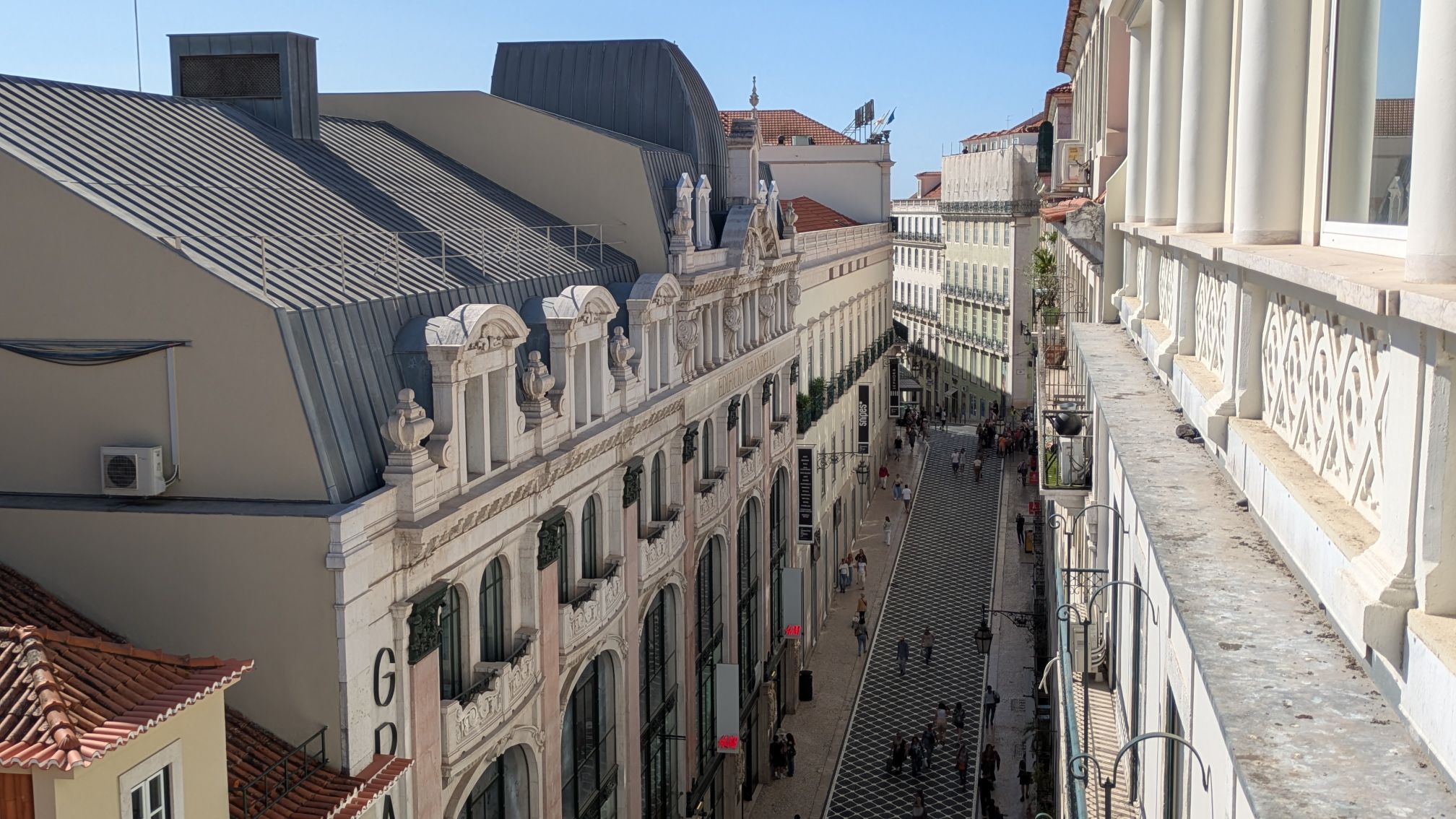
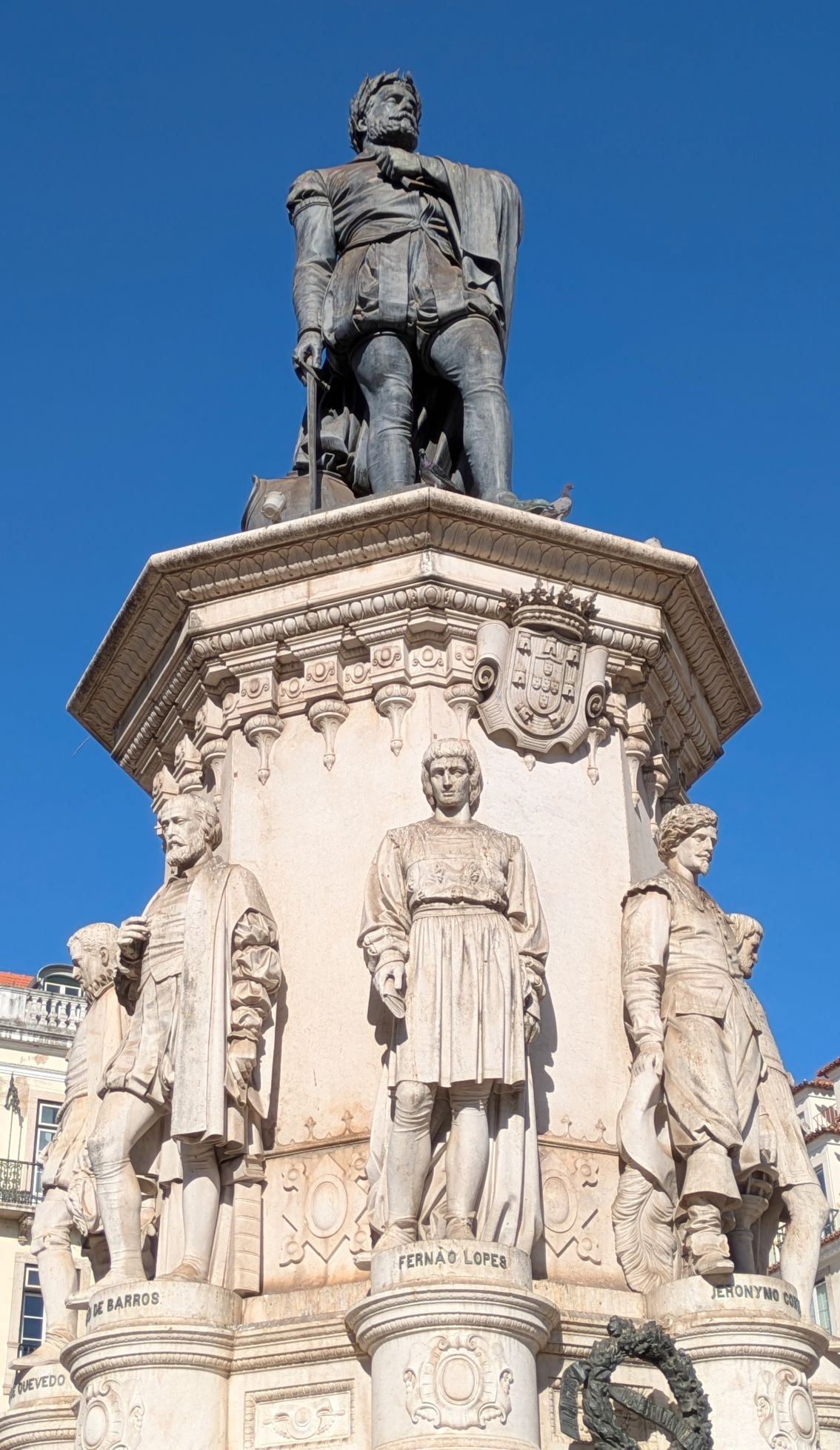
This was photographed from a viewing area adjacent to the convent ruins above. The statue is in the center of Rossio Square. From the same viewing area, I am looking down on the pedestrian street lined with luxury shops.
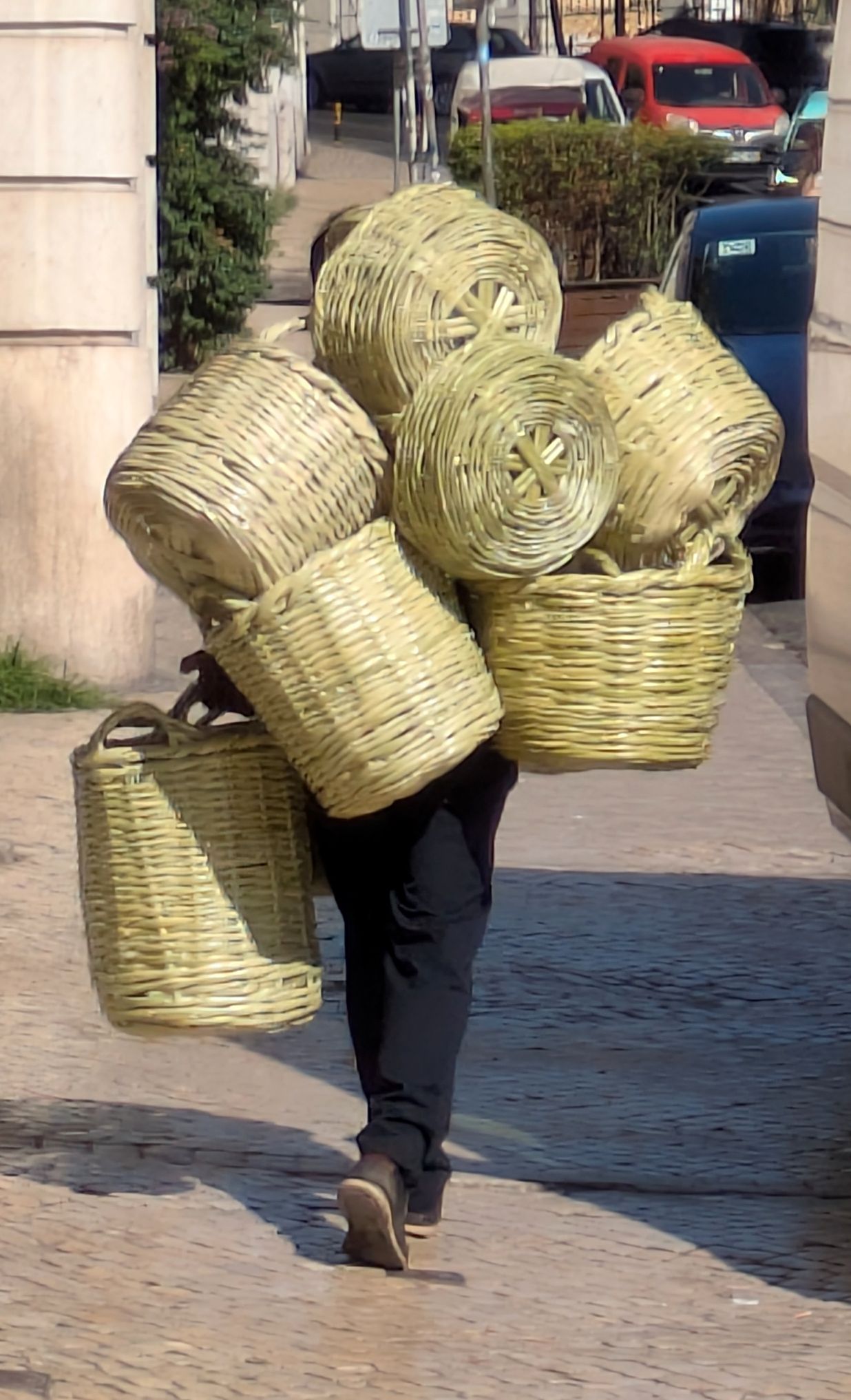
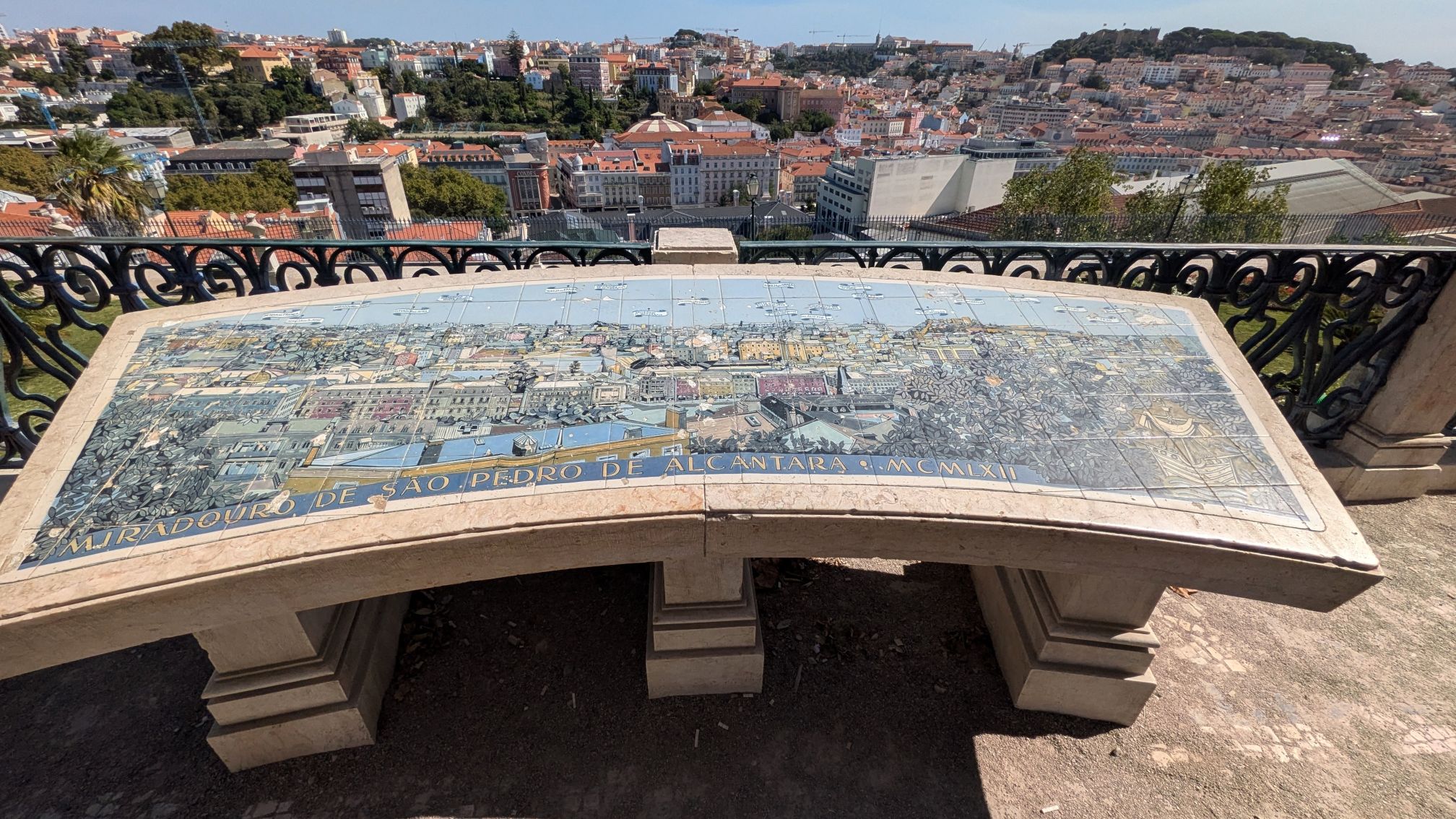
This was a very random sight across from the miradouro (below). I never saw anything like this again throughout our one month in Lisbon!
After traveling on ten small group tours with Overseas Adventure Travel (OAT) and enjoying every single one, we hadn’t planned on changing course. But thanks to a gal we met on our very first tour with OAT, we learned of a new (and very different) concept: The Good Life Abroad (TGLA). She had learned about the company from other OAT travelers who had enjoyed their first TGLA experiences, so she booked a month in Paris. She suggested I check out the TGLA Community Facebook page to see what other TGLA travelers had to say about their experiences. That was in spring of 2025, and after reading many posts, we were convinced. We booked a month in Lisbon, Portugal, for September 13 – October 13, 2026.
Since then, I have continued reading more positive posts from other travelers who chose to live like a local with TGLA. And, our friend loved her month in Paris! We were so excited when September 13 arrived.
The Good Life Abroad, founded by Andrew Motiwalla, is designed for 55+ active adults who would like to live in a foreign city for an extended period and engage deeply with the local culture and community.
This is exactly what we were looking for as an alternative to the small group tour experience where we only stay in any given city or town for a few days before moving on. Our previous visit to Lisbon wasn’t even that long; it was for one day during a cruise in 1998. What can you possibly experience in a city in a day? It was barely scratching the surface as a tourist. Bruce and I prefer to be travelers.
For me, I was yearning to go full circle. My international travels began by backpacking through the South Pacific for one year after college, in 1984. I was truly living like a local, even working in a couple of different cities in Australia. I had missed that immersive experience and wanted to enjoy it again—this time in more comfort as a senior, living in an apartment rather than bunking in youth hostels.
The TGLA program includes an apartment, usually in the same building as the others in TGLA “community.” Our group of 14 were split up in two buildings near each other in the central Chiado area of central Lisbon. We were located at Lisbon Best Apartments Chiado Camoes, overlooking Praca de Luis Camoes.
Three days each week, there are activities planned for the group by the community manager, who is also available throughout the week to answer questions. On Tuesdays, we met up at a restaurant in a different neighborhood each time to enjoy the local cuisine. This was a great time to catch up on what we all did during our four days exploring on our own.
On Wednesdays, a cultural activity was planned, either a walking tour, market tour and cooking class, or tile painting workshop. Thursday evening was happy hour, the final one being during an awesome sunset cruise. We also did a side trip to Sintra with lunch. All of these activities are included in the cost.
Lisbon has an excellent metro system, which our community manager, Jen, taught us how to use during our orientation tour. She provided a card loaded with 10 Euros, which we could refill as needed. Bruce and I found it easy to get around by using our card for not only the metro, but the “electrico,” electric tram, bus, and ferry across the Tagus River. For areas not as easily accessible, we used Bolt, a less expensive and more popular option than Uber. It is such a reasonably priced option that locals use it a lot. Since Lisbon is a VERY hilly city with cobblestone streets, our group used Bolt often.
In Europe, many people use WhatsApp to communicate, since it is free. Jen set up a group for us, so that is how we all communicated with each other. Jen would post the location of our next meet-up along with a map link and other information. It worked out great!
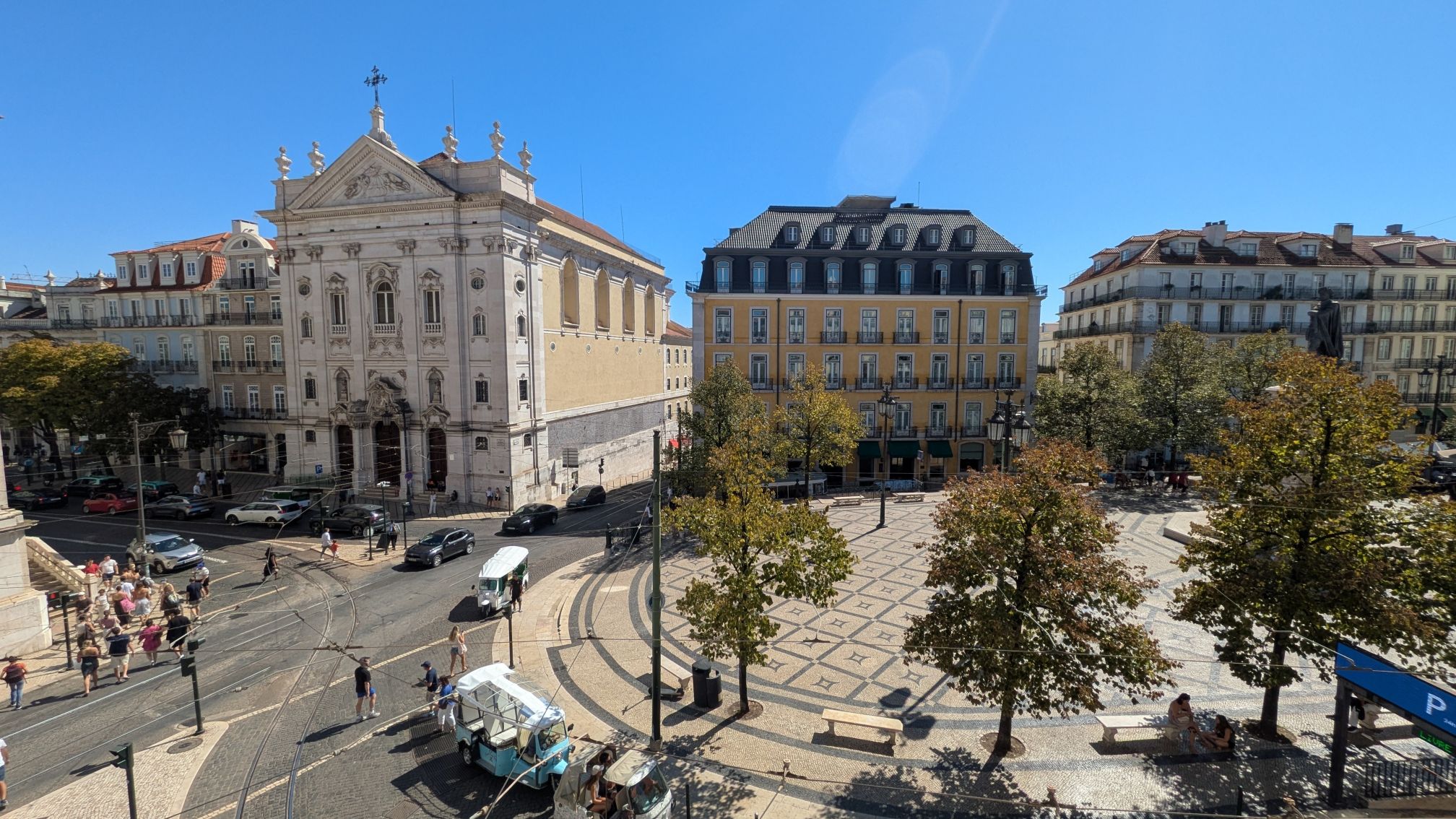
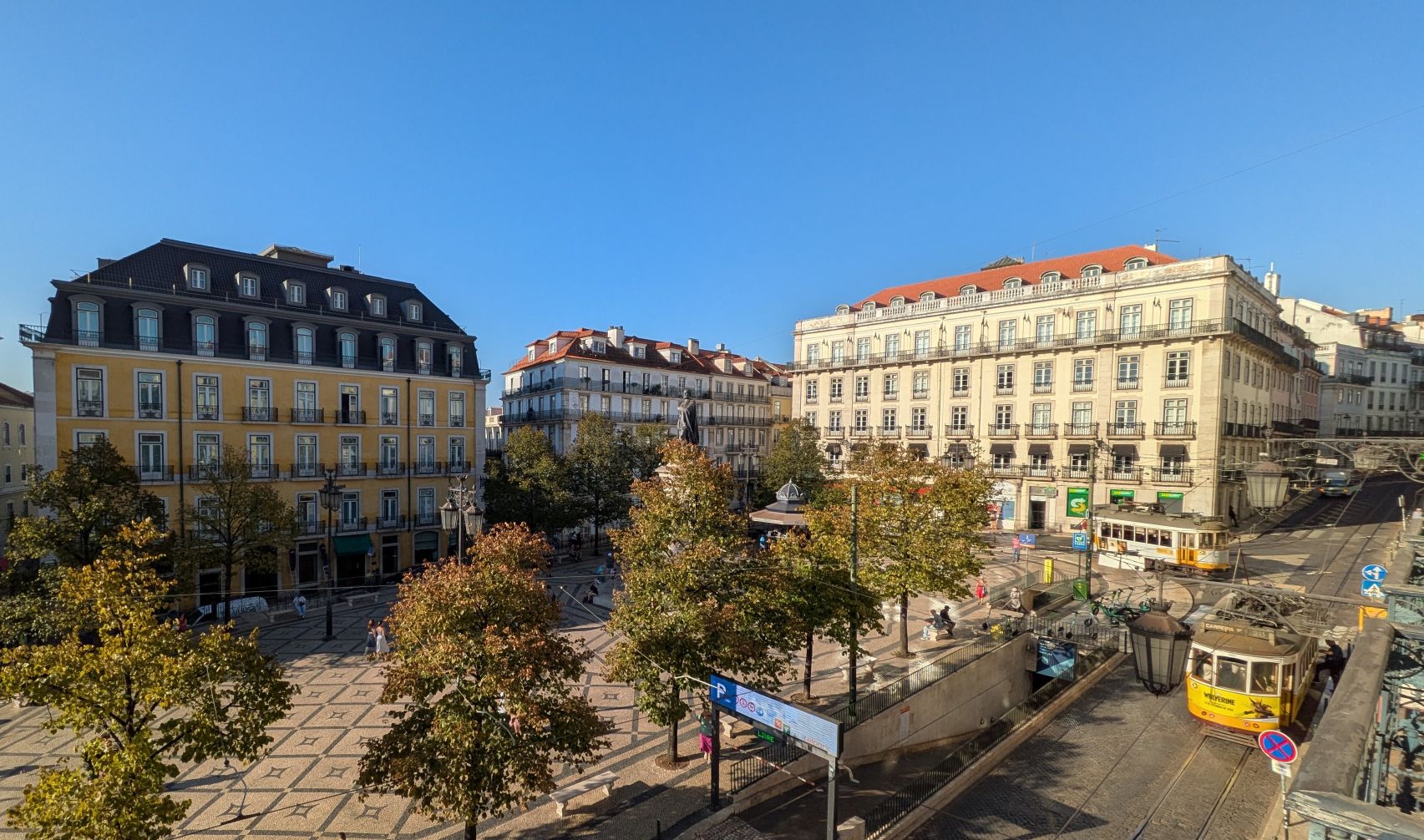
Our month in Portugal was a wonderful experience! More details and photos will appear in upcoming posts, but for now I will leave you with photos of our apartment and views from our living room balcony. (I opted against using a camera for this trip and shot all photos with my Google Pixel 8a phone. Although it was convenient, since I was using my phone for GoogleMaps navigation, the downside was the noticeable wide angle distortion on some of my pictures.)
(For all photos, click on the image for a full screen view.)
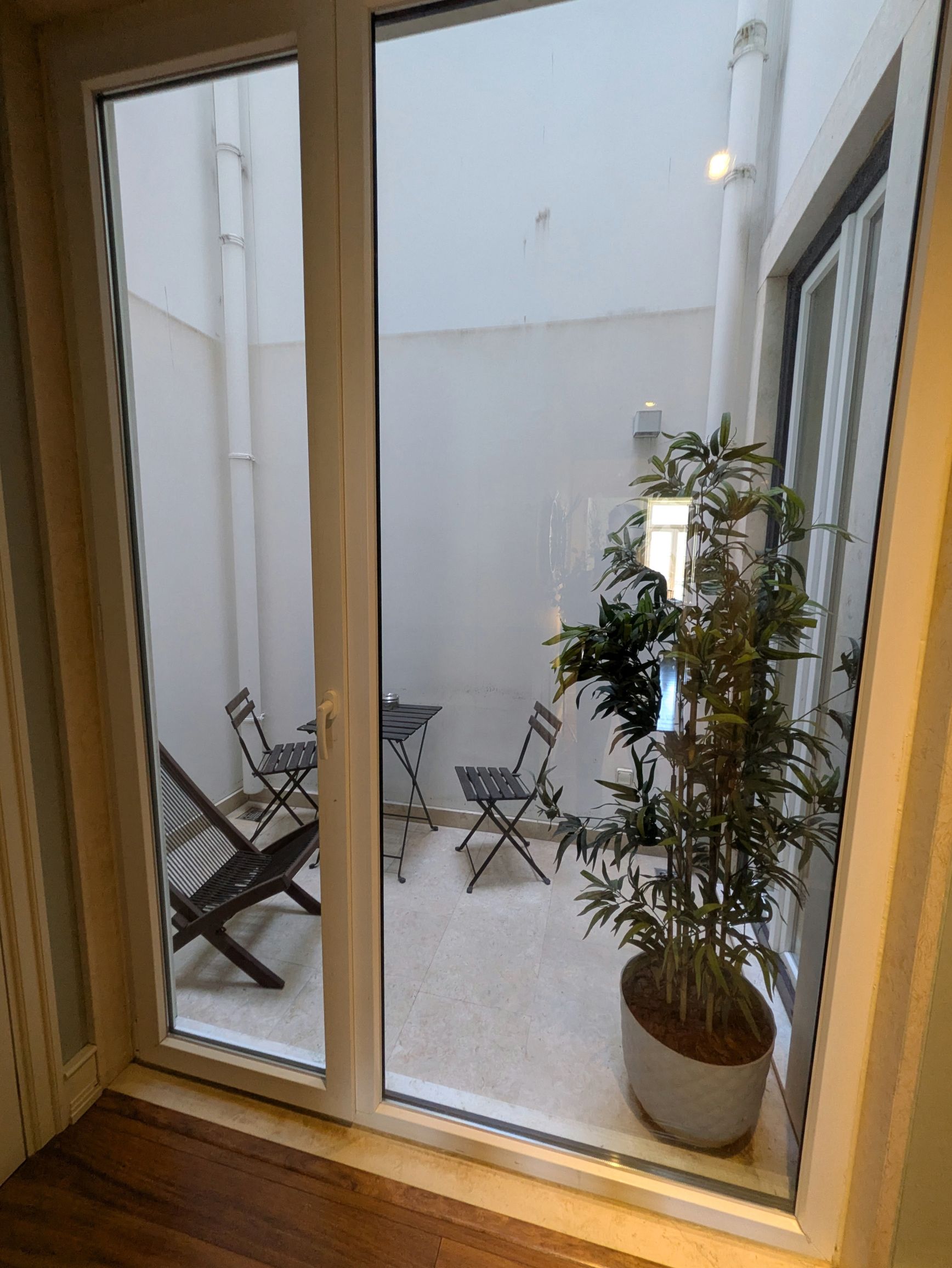
This little terrace was just inside the entry to our apartment; an unexpected surprise!
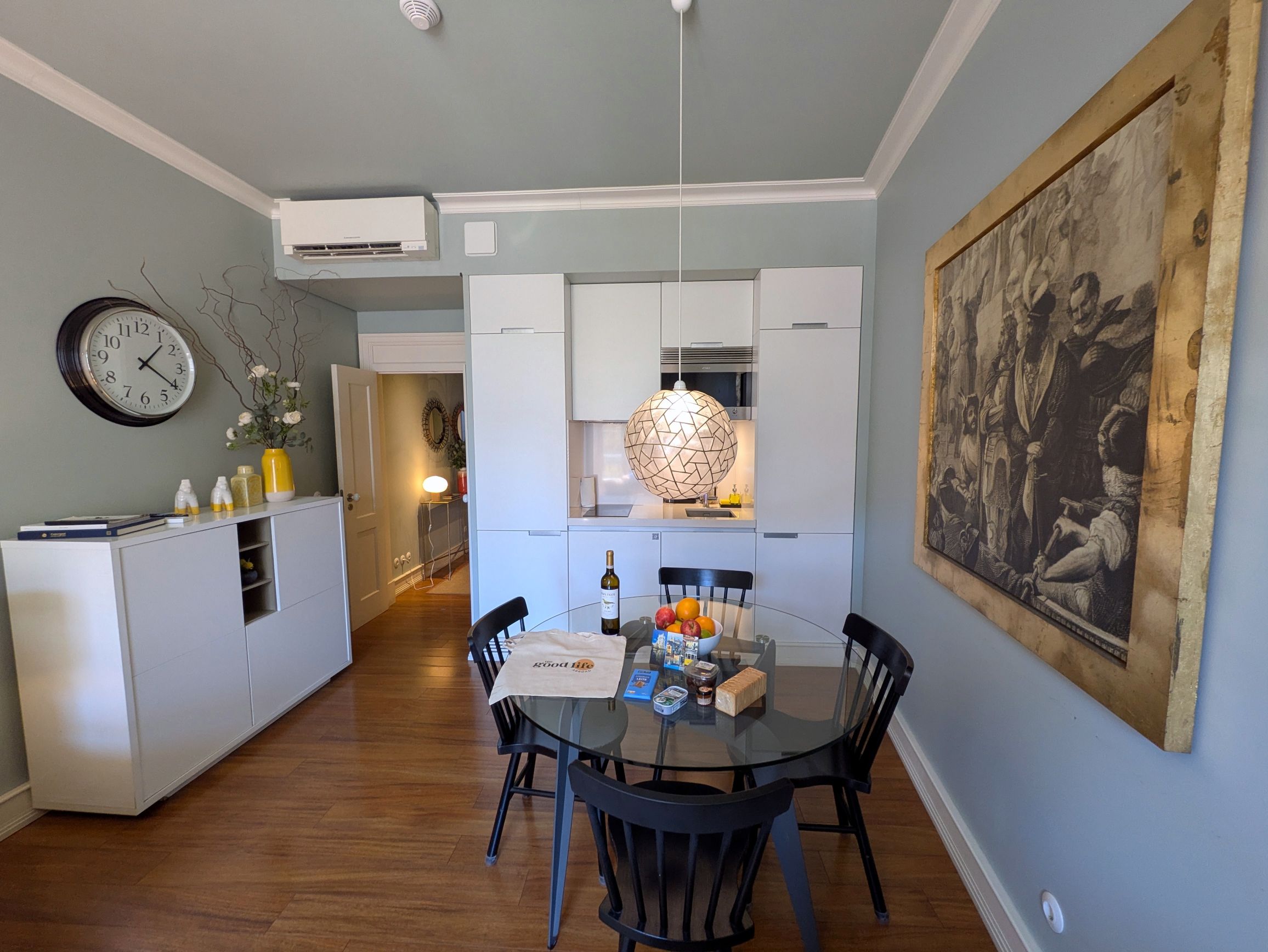
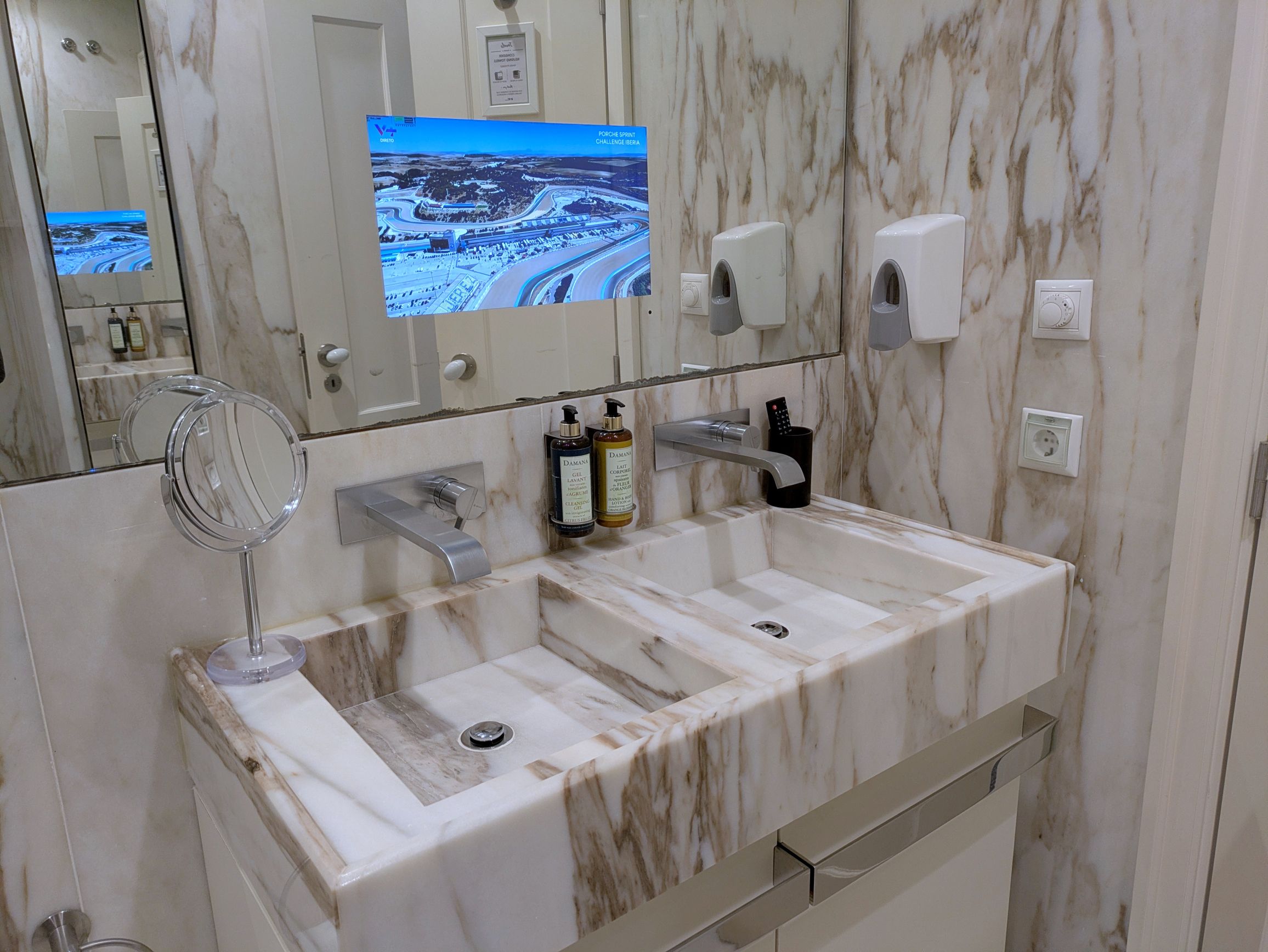
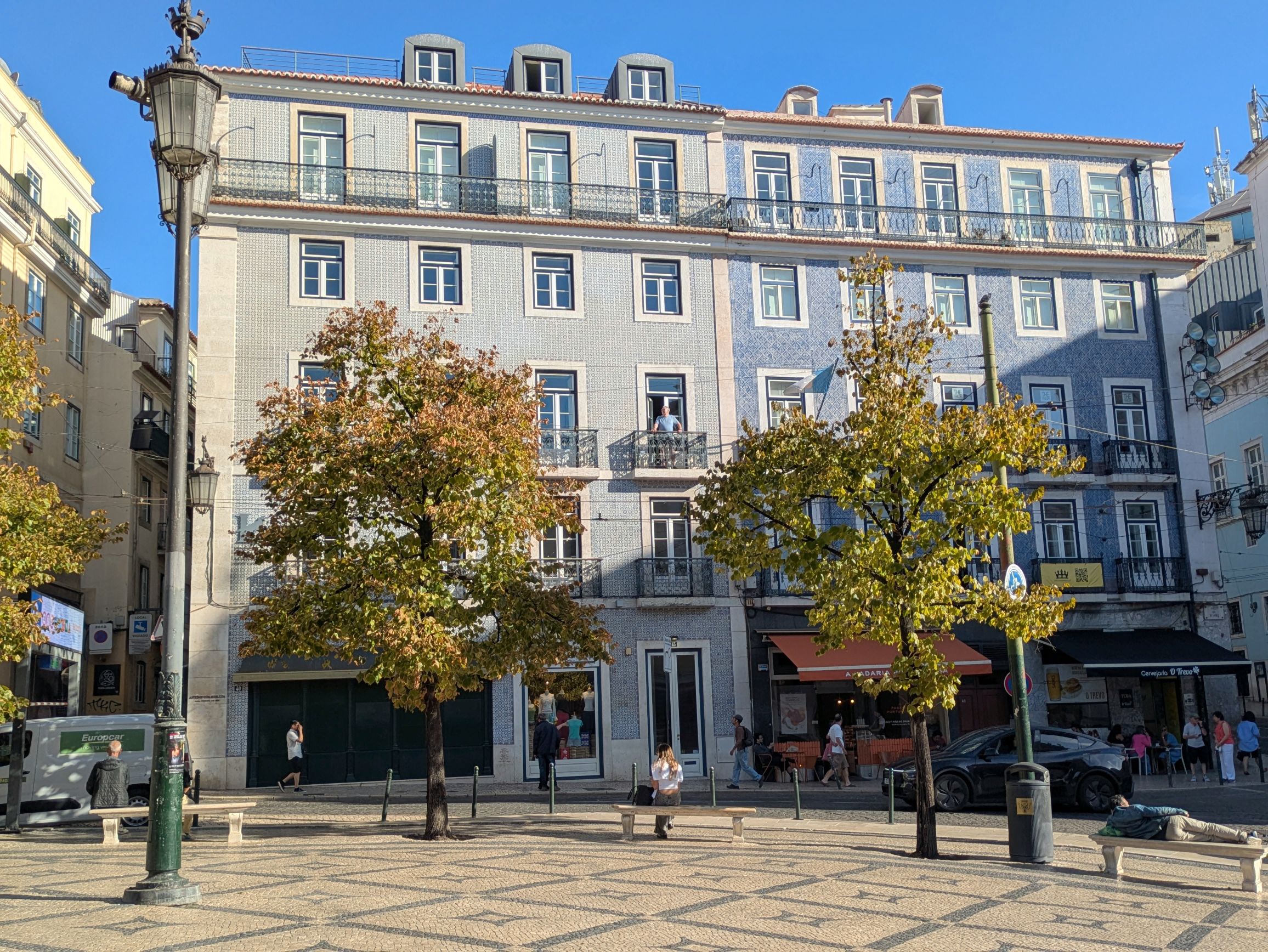
Our kitchen included a large refrigerator, freezer, dishwasher, coffee maker, and washer/dryer combo all located behind the white doors. There was also a two-burner induction stovetop and microwave in addition to the sink. All dishes, glassware, pots and pans, utensils, and cutlery were included, along with dish soap, laundry detergent, and coffee pods. There was even an exercise mat and two large umbrellas, in addition to a safe. Jen gave us a tote bag with goodies!I did a double-take when I entered the beautiful marble bathroom. That’s a TV on the mirror wall! There was also one in our bedroom and living room in the 600 sq. ft apartment! We only have one TV at home!This was our building, and that’s Bruce standing on the balcony enjoying the view.Our view!
The view to the right. The electrico came by our building and stopped nearbye.
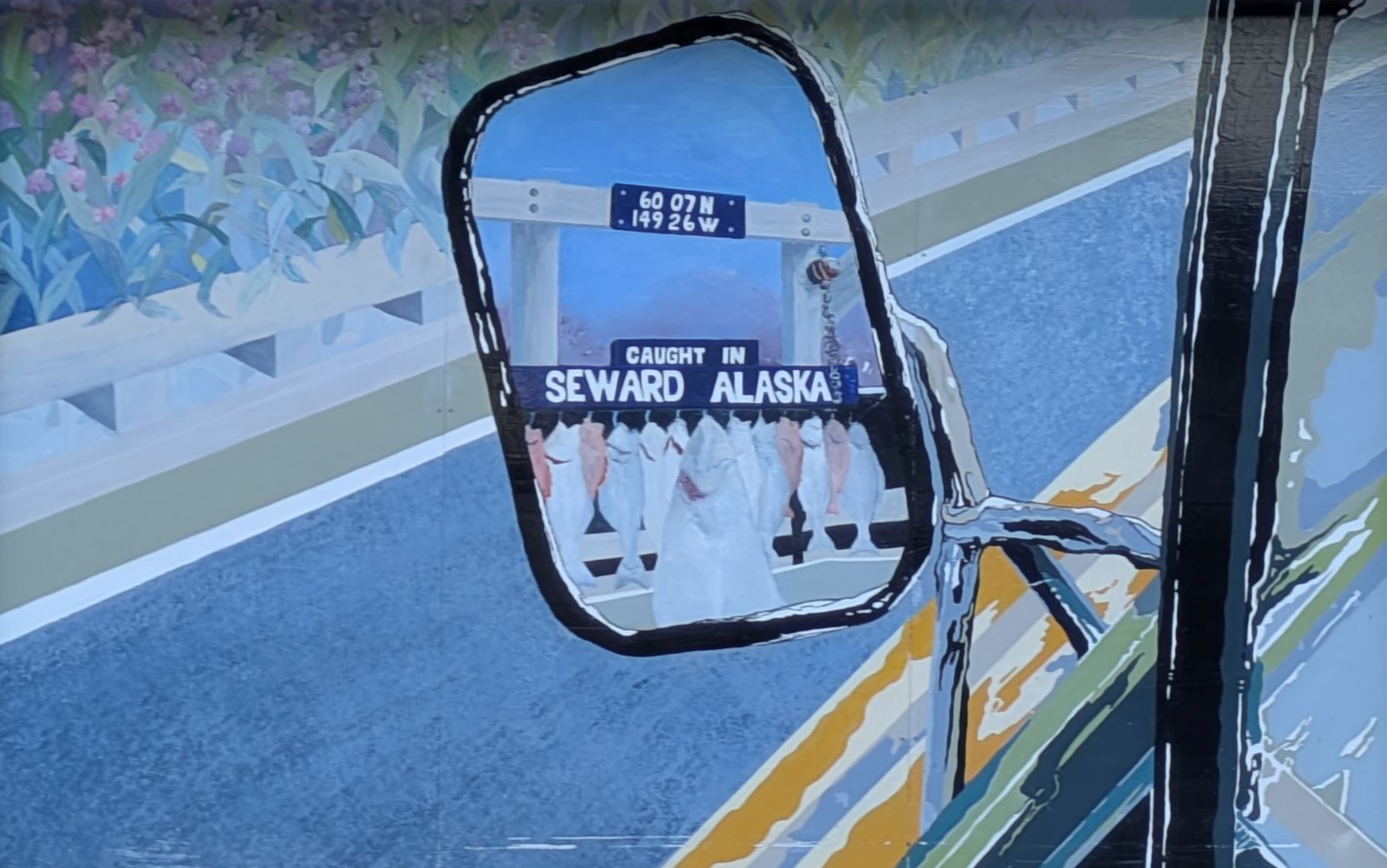
Seward is known as “a drinking town with a fishing problem.” That sounds about right. A town of about 2,700 people, they take their drinking AND fishing quite seriously! As a matter of fact, Seward’s local economy is largely driven by commercial fishing. Seasonal tourism is also big, especially with the cruise ships that call on Seward from mid-May to mid-September.
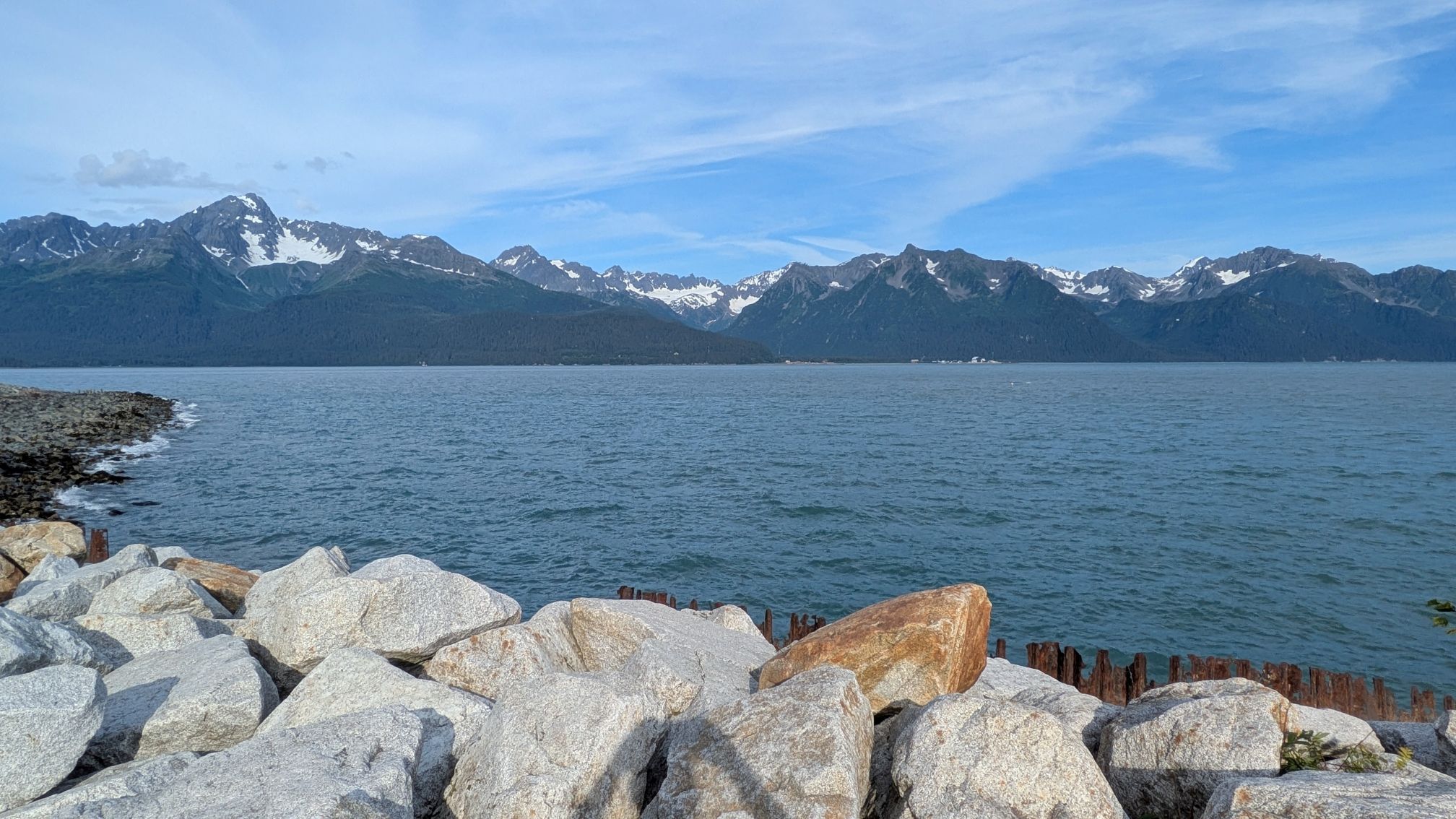
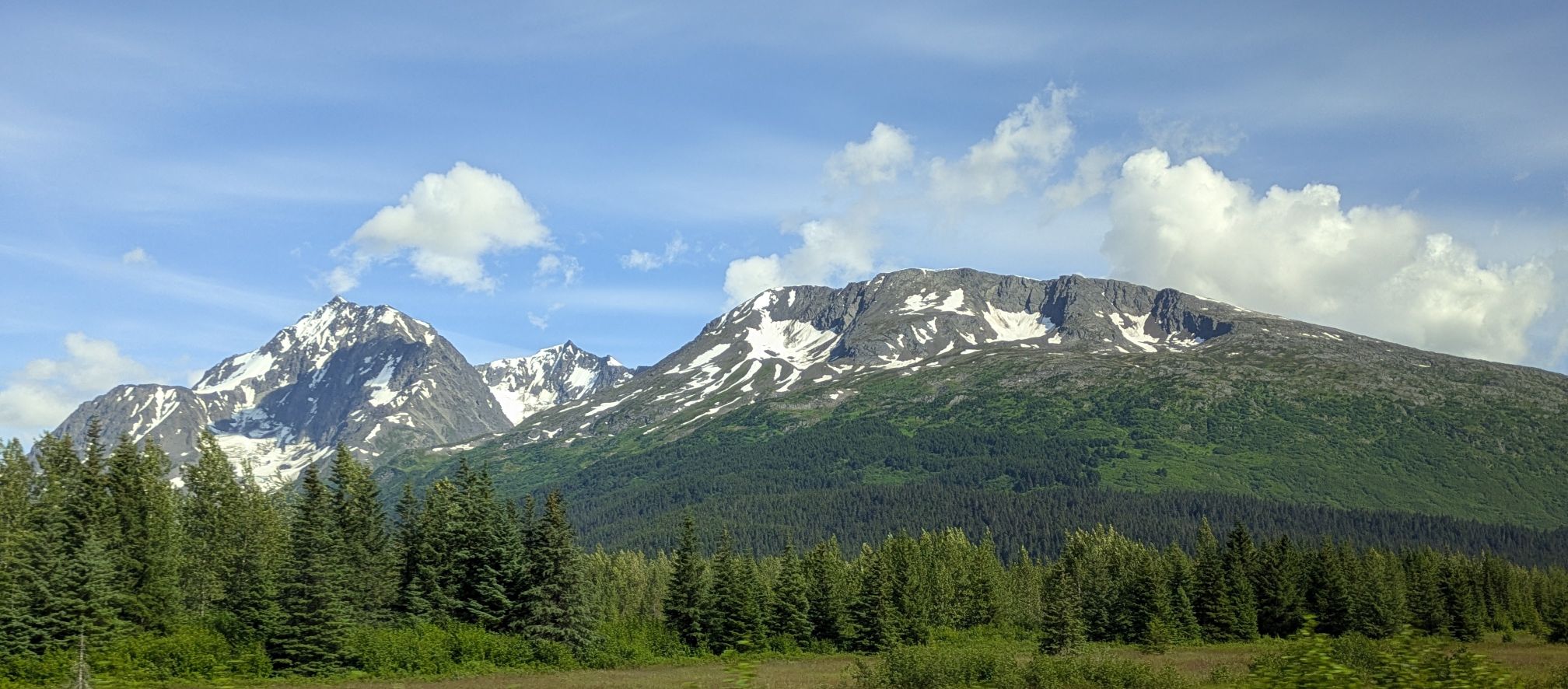
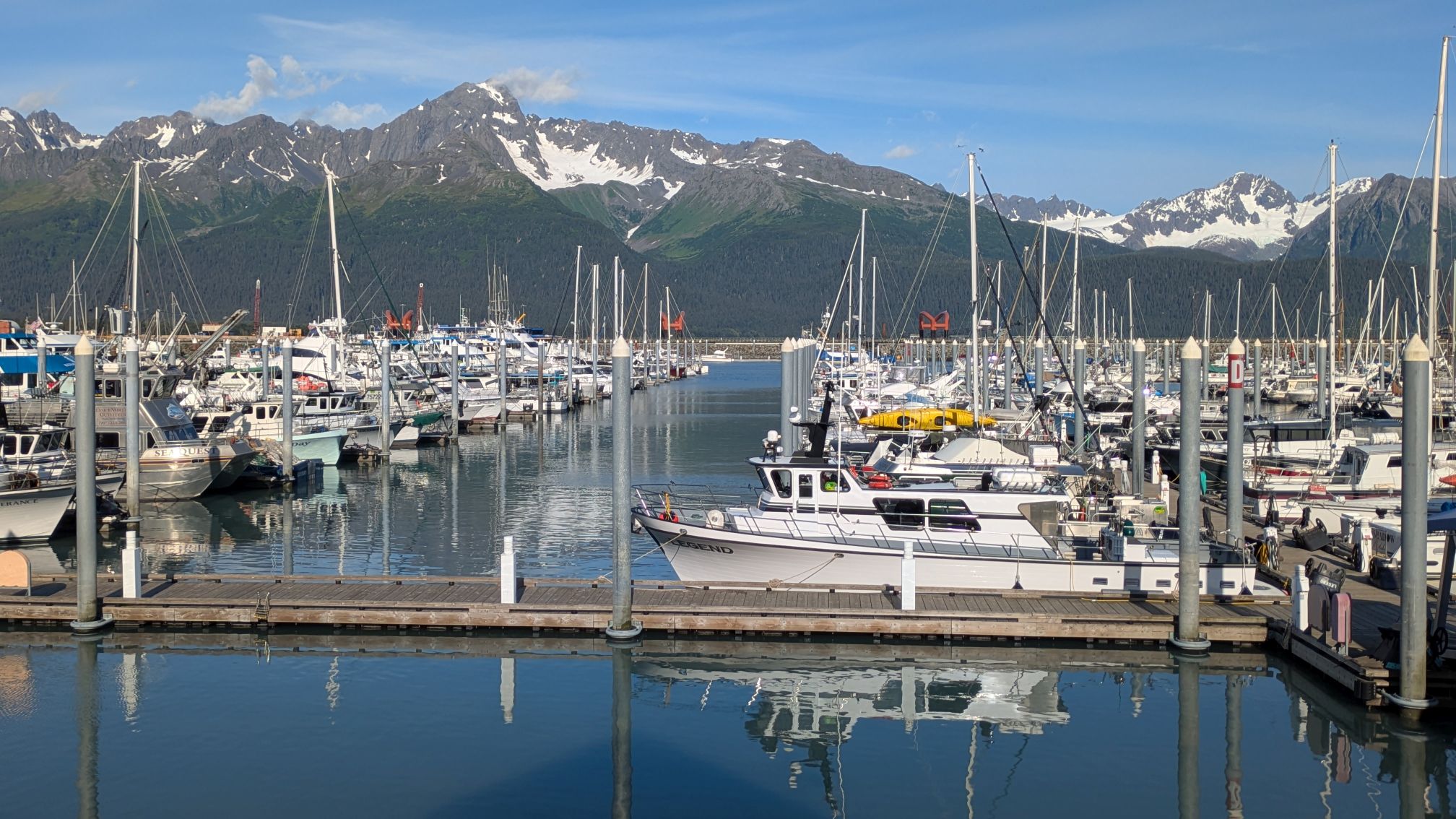
Located approximately 120 miles from Anchorage, Seward is situated on Alaska’s southern coast on Resurrection Bay. The views of the snow-capped mountains from the town are gorgeous, which we thoroughly enjoyed during our first dinner in Seward. (I included a few of those scenes at the end of post #10.)
Here are a few more scenes from around town, shot following our glacier cruise:
(For all photos, click on the image for a full screen view.)
Coming up next: SEATTLE & ALASKA #13: WONDERFUL WILDLIFE & A TERRIFIC TRAM
The first thing I did when I woke up was look out the window. It was sunny; check! The next thing I did was look up the wind forecast; check-check! I had a good feeling about the day ahead…
Six hours is a long time to be on a boat if the wind kicks up and the water is rough. We were scheduled for a Kenai Fjords National Park Glacier Cruise, and I really didn’t want to spend it hanging my head over the back of the boat. And I really didn’t want to spend it with others doing the same! But during our safety talk after boarding, the captain made a point of telling us that was exactly where he wanted us to be if we got seasick. Lovely…
To cut to the chase, after you see these pictures, you will make the brilliant deduction that is not what any of us were doing at the back of the boat—or the front of the boat, for that matter. It was all hands on deck, but on our cameras and cell phones shooting pictures!
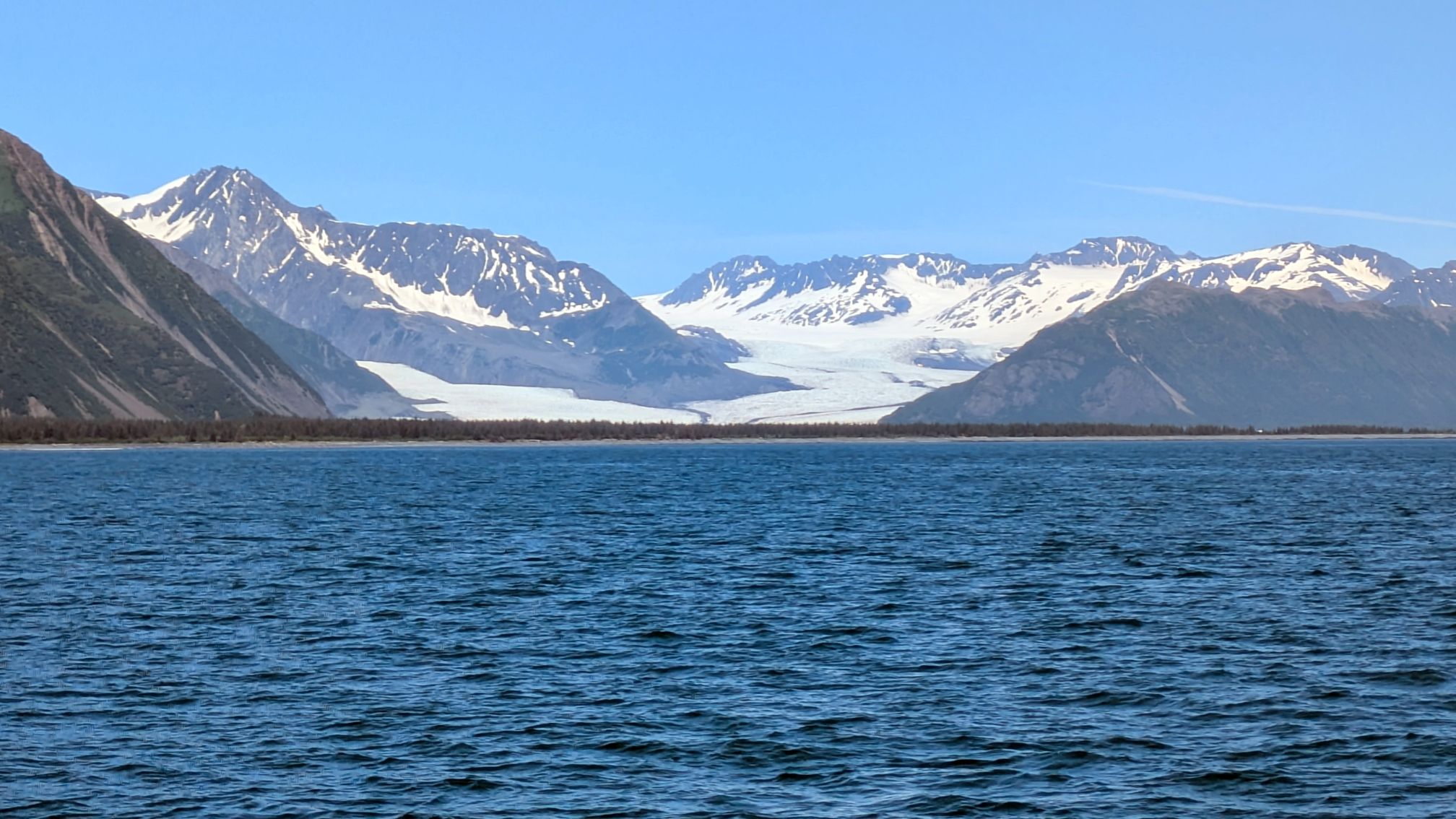
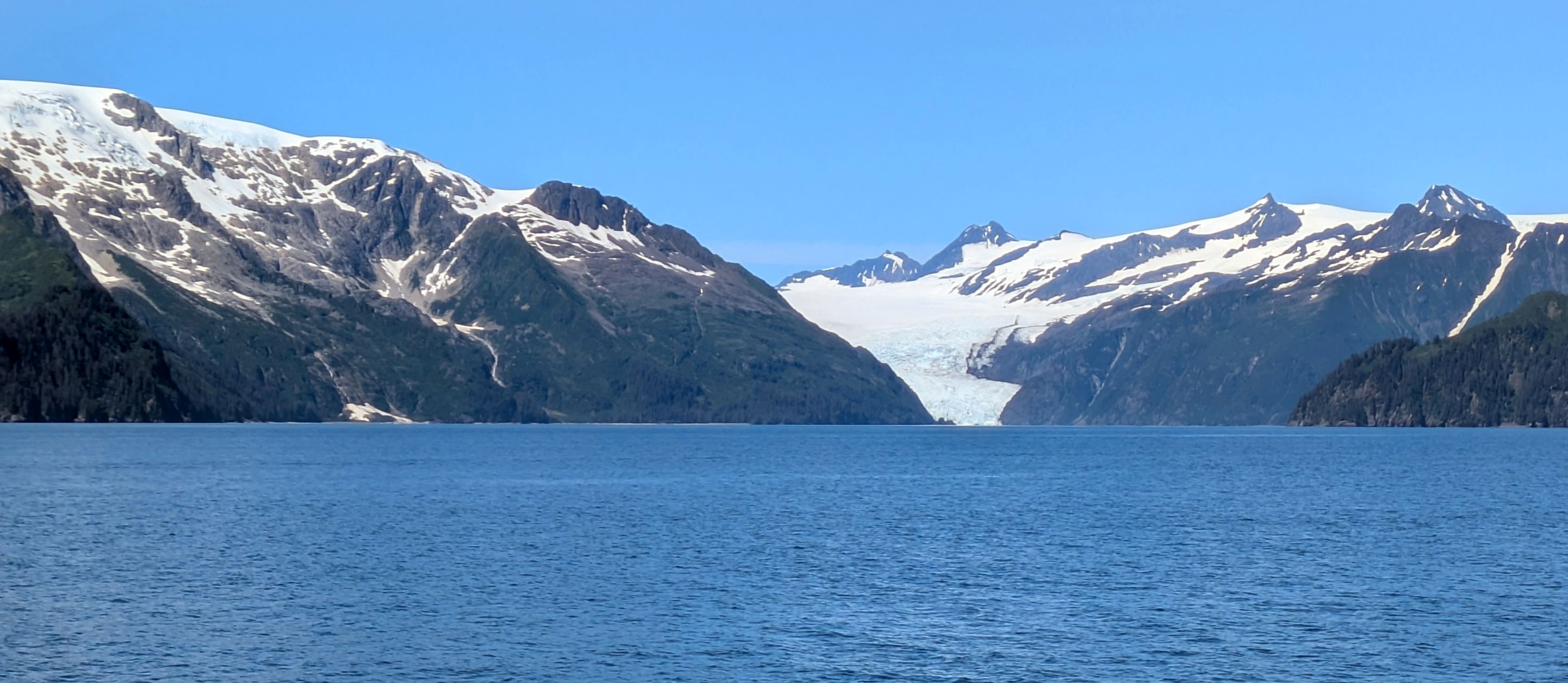
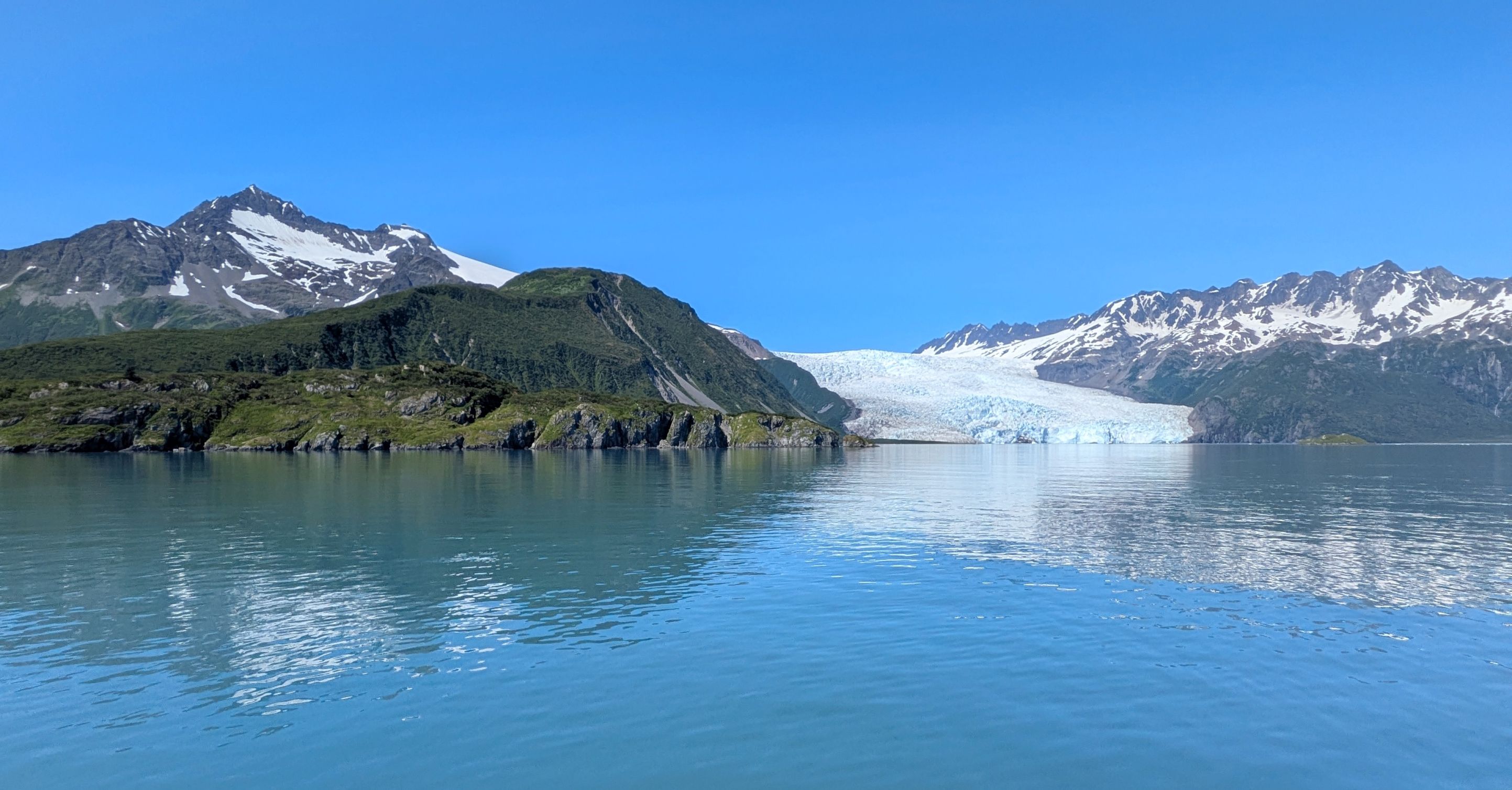
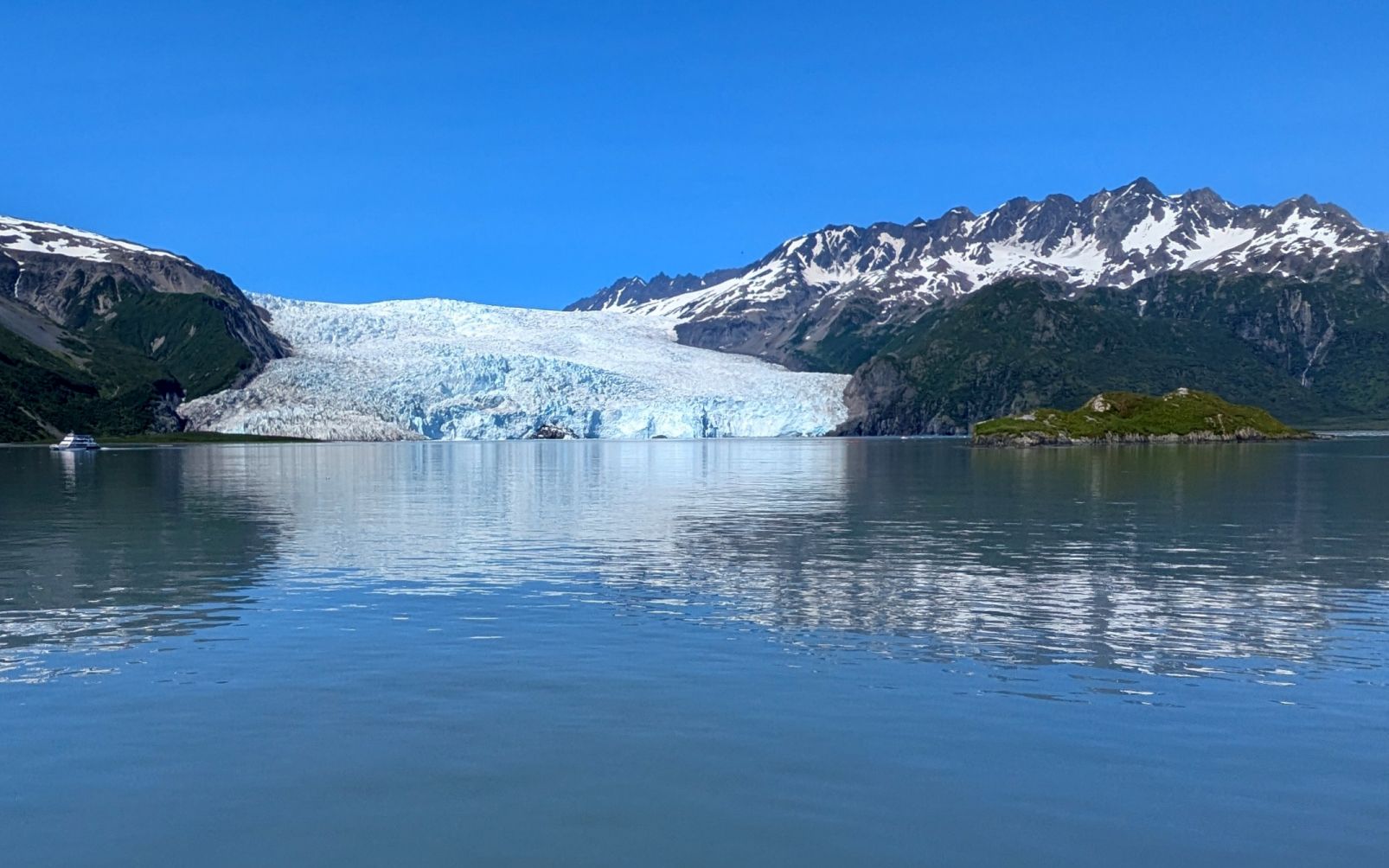
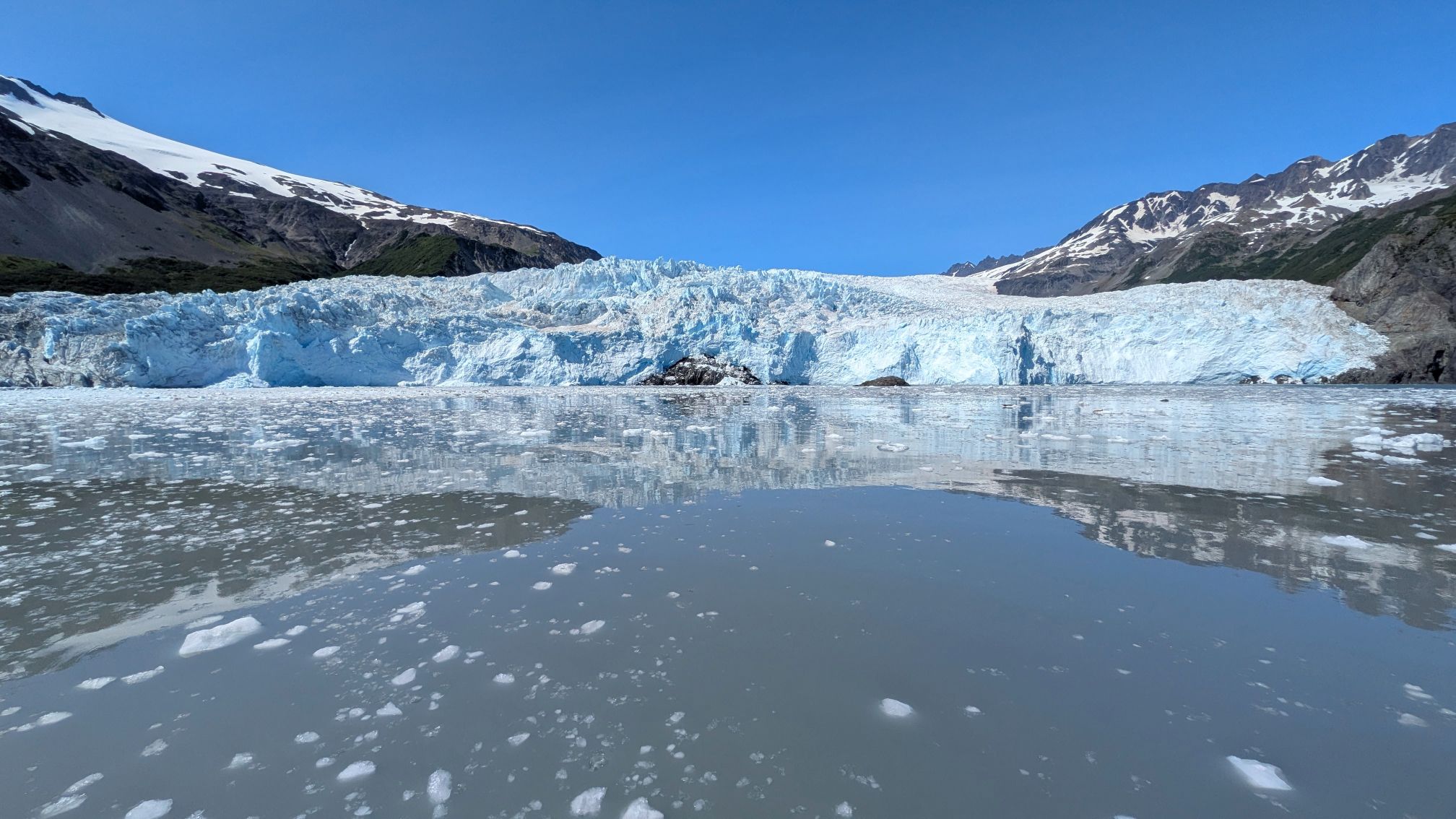
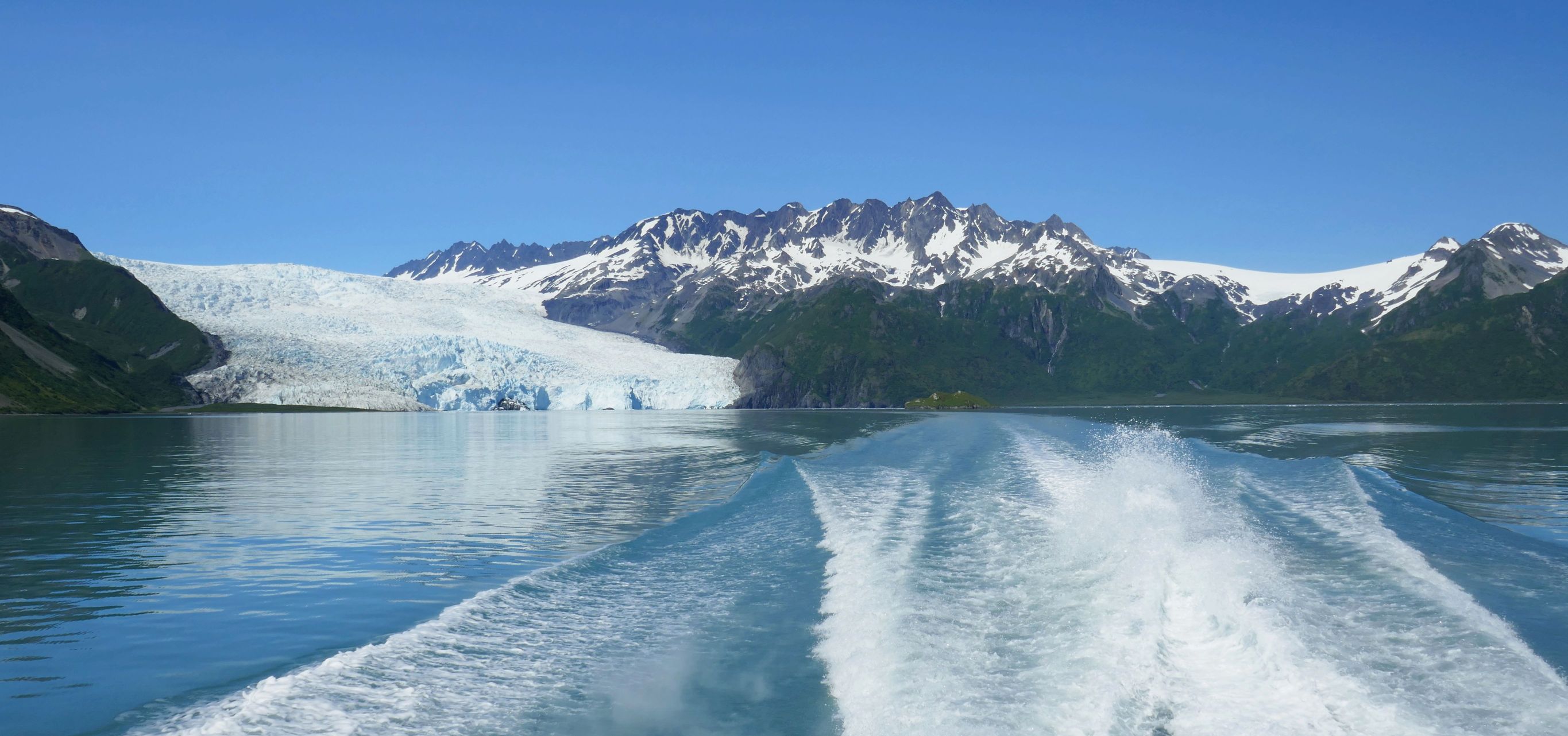
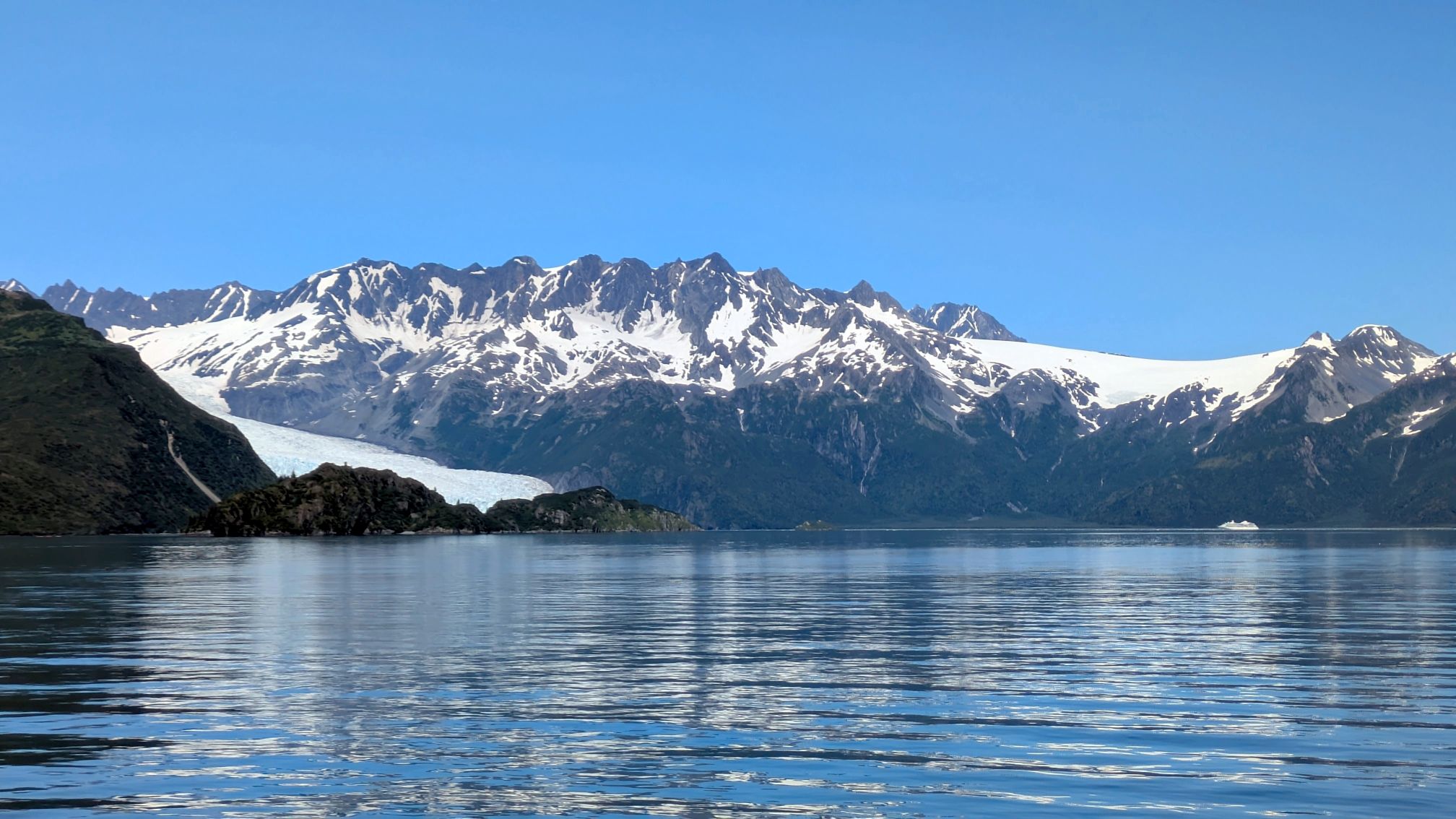
It was an awesome six hours! We were given a wildlife guide with a map of our route, the “Classic Kenai Fjords Park Tour,” which included passing by Bear Glacier and Holgate Glacier, and then stopping at Aialik Glacier. If we were lucky, we would also break for whales.
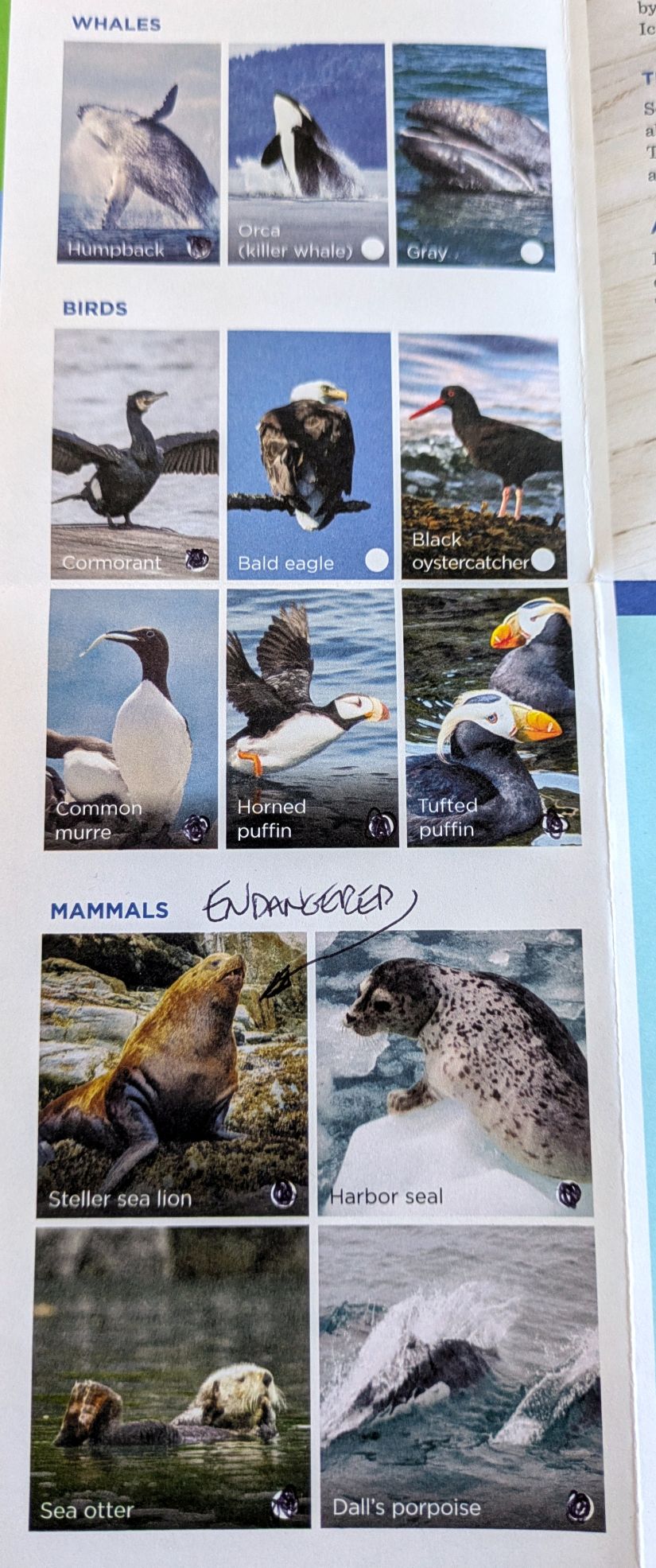
Along with the map were labeled photos of what we might see. We could fill in a little bubble to keep track. I laughed. What were the chances? Well, to make a long story short, we saw (if not photographed) almost everything, including a Bald Eagle that I forgot to fill in! No orcas? No surprise; our tour leader had seen them on less than 20% of the cruises she had taken with her tour groups.
What I didn’t get a good photograph of were the otters or birds, but I had photographed puffins while they were nesting in Iceland, very close to where I was standing; check out this post. I also got some close-up whale shots shown in this post.
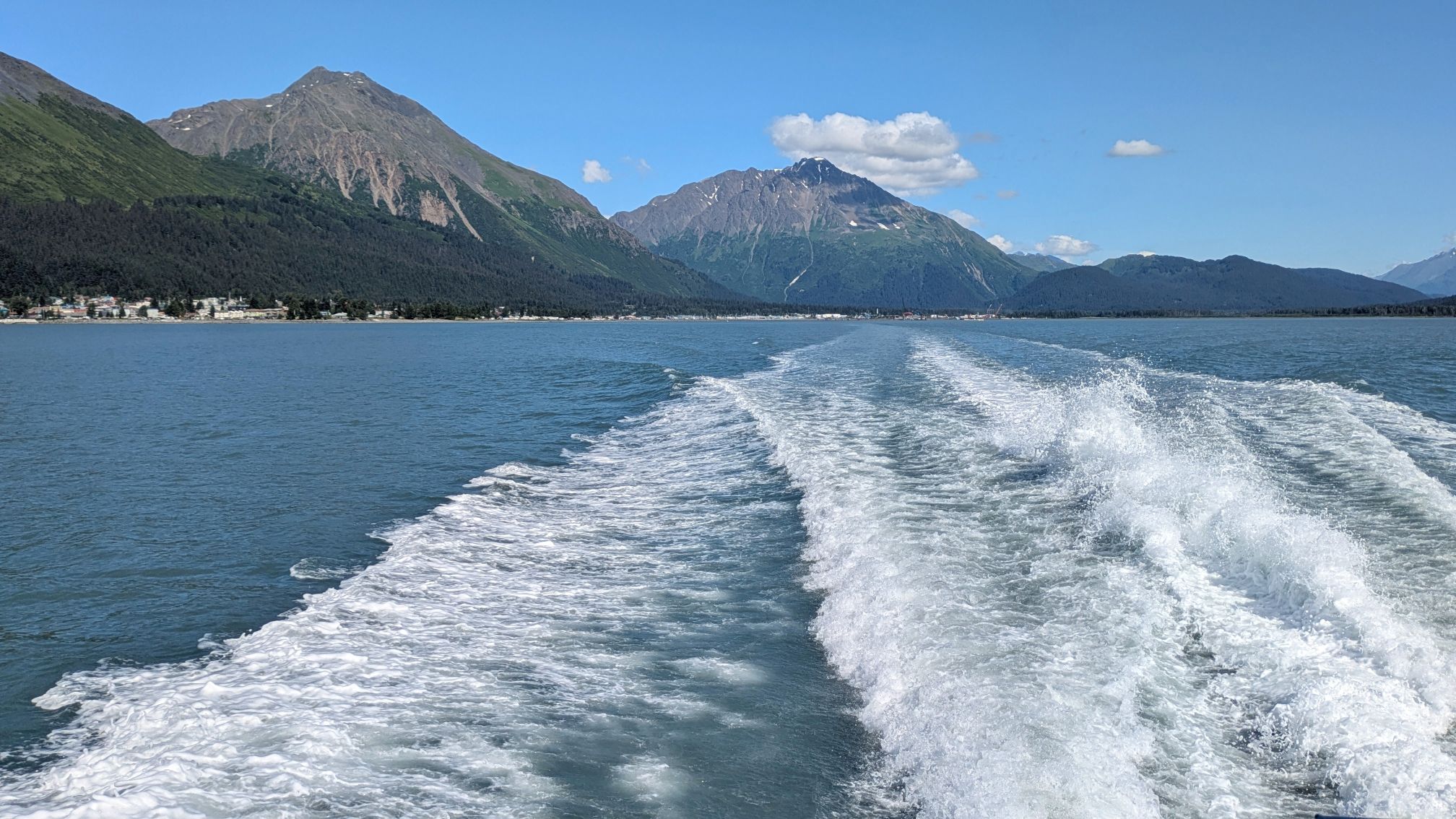
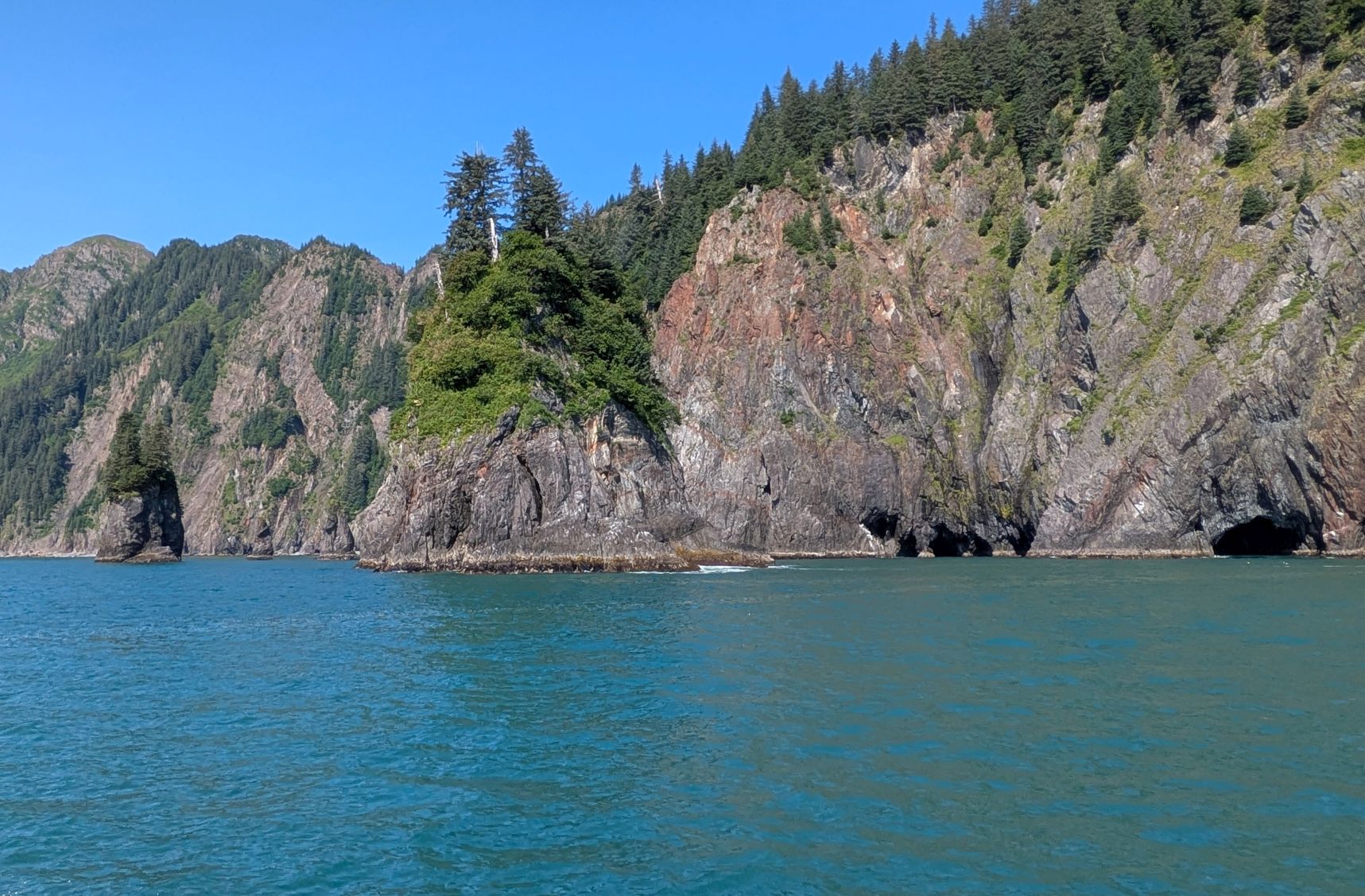
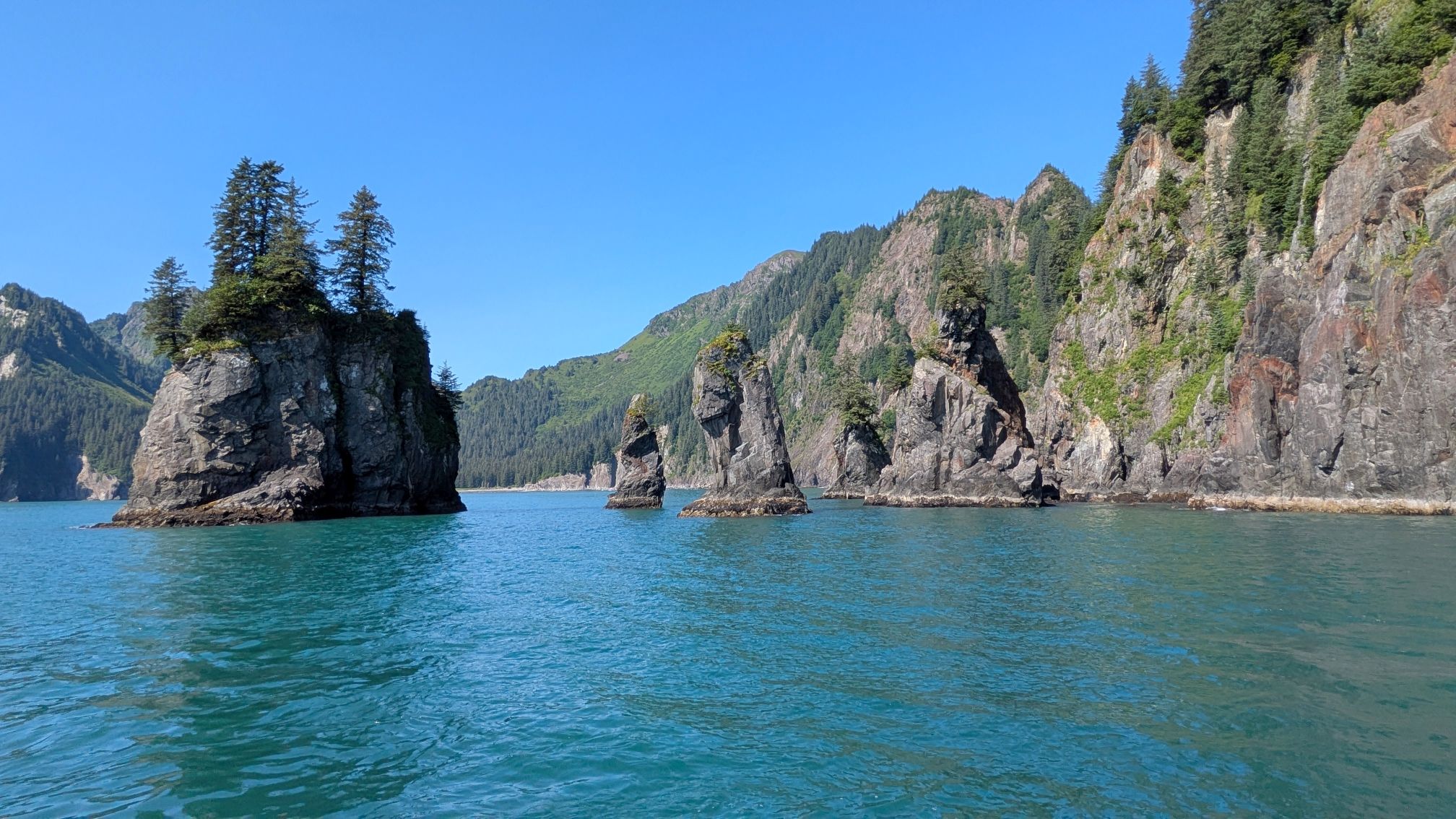
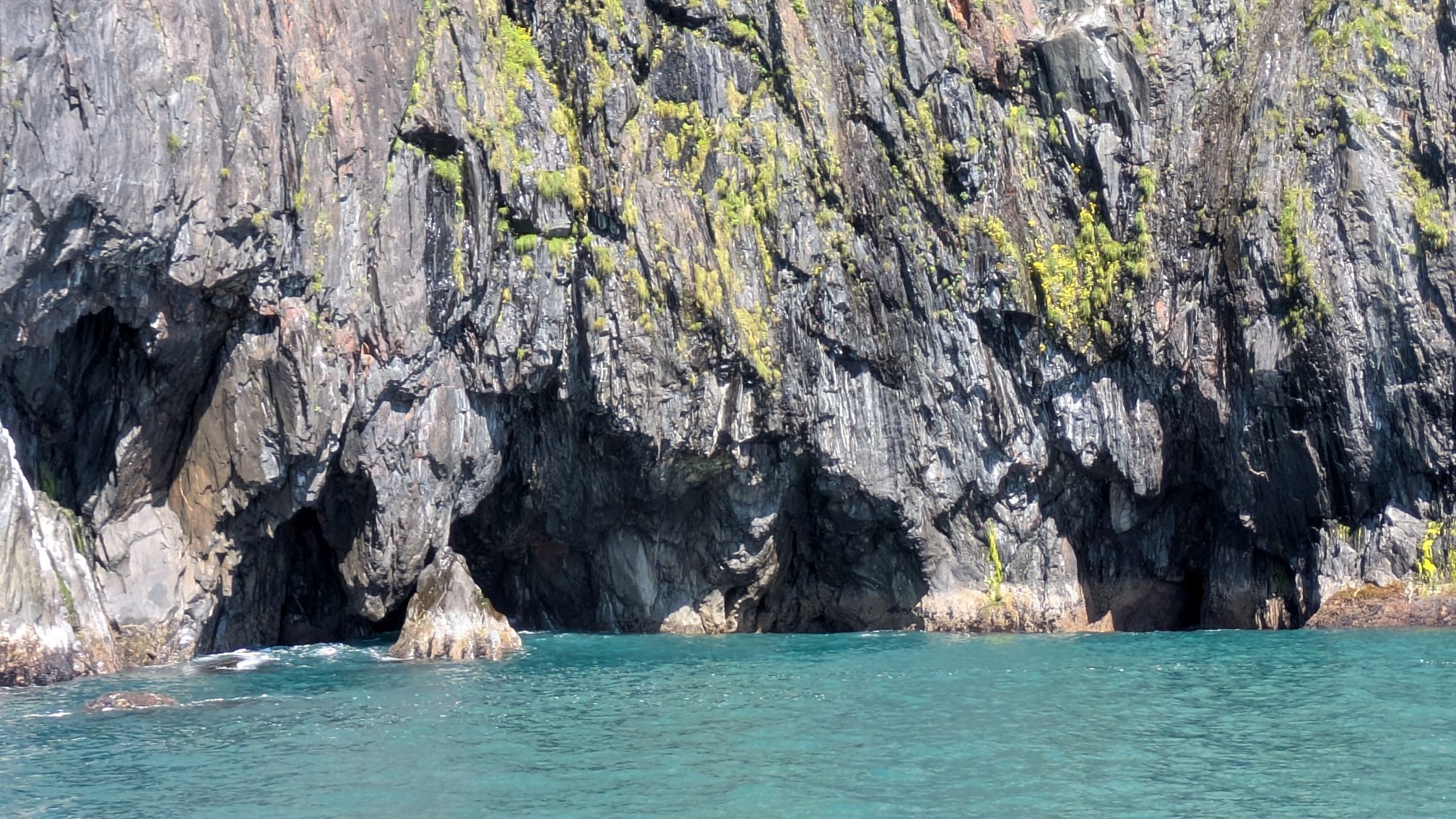
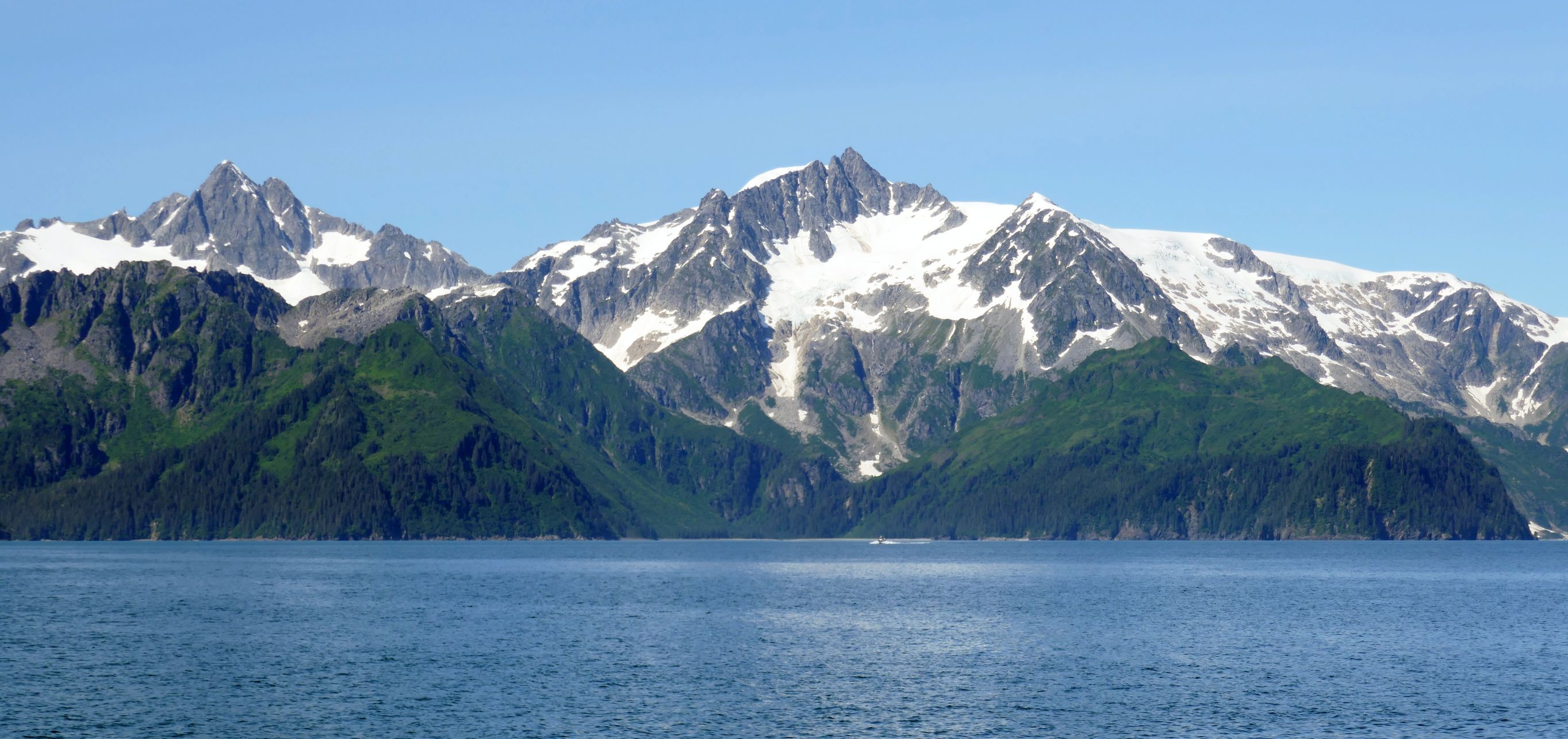
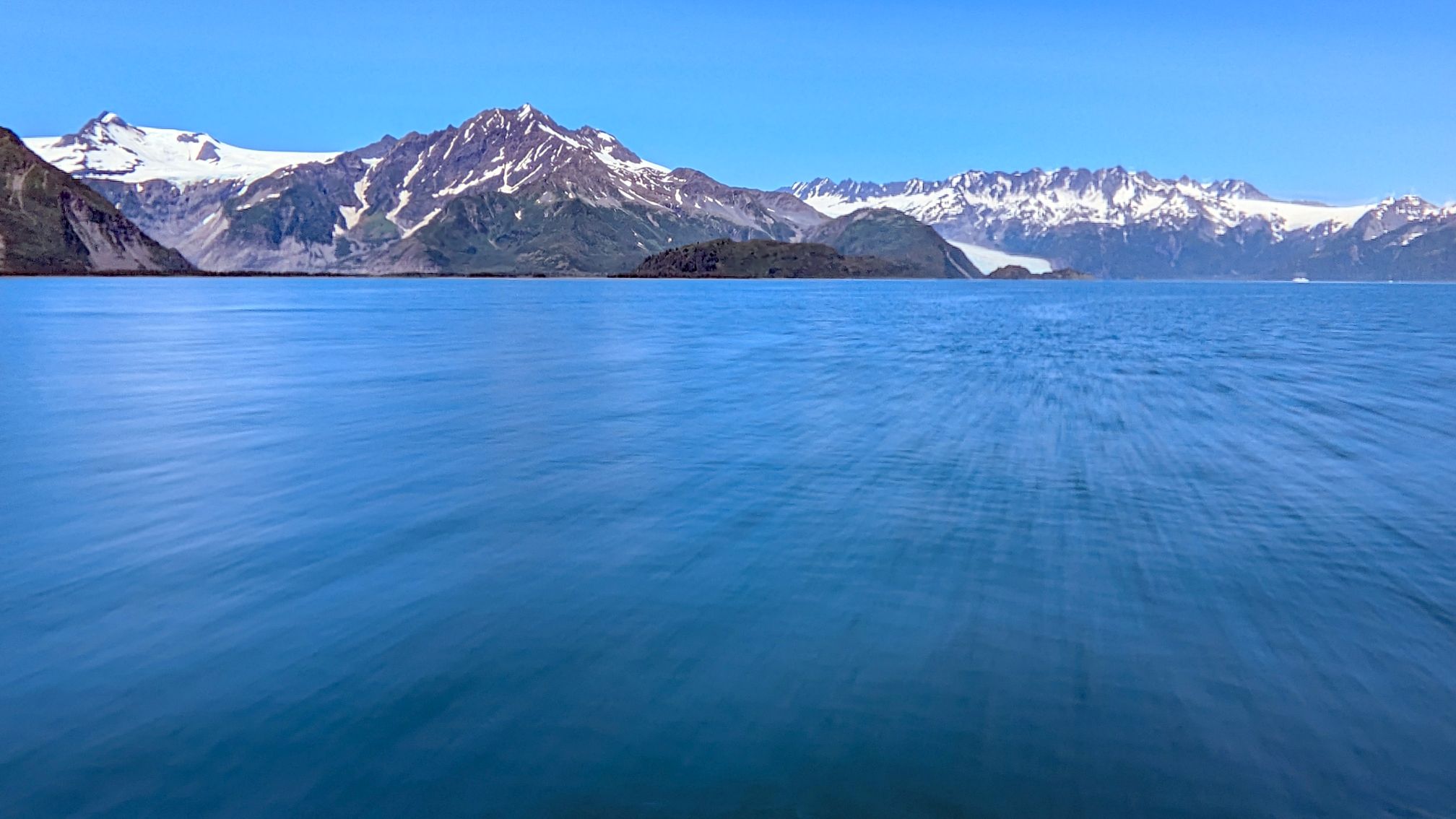
Here, then, is what I did capture on this amazing day cruising the Kenai Fjords:
(For all photos, click on the image for a full screen view.)
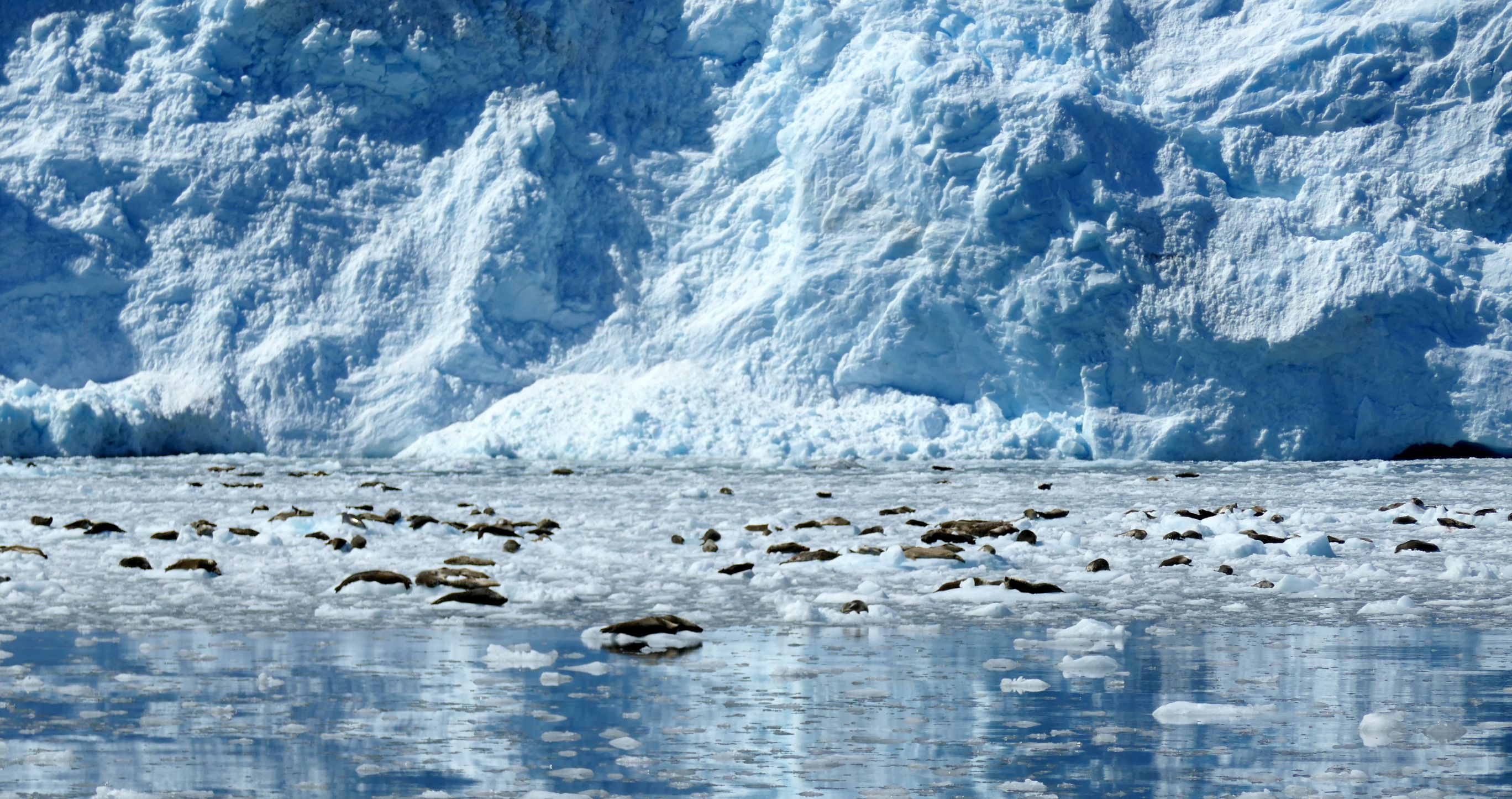
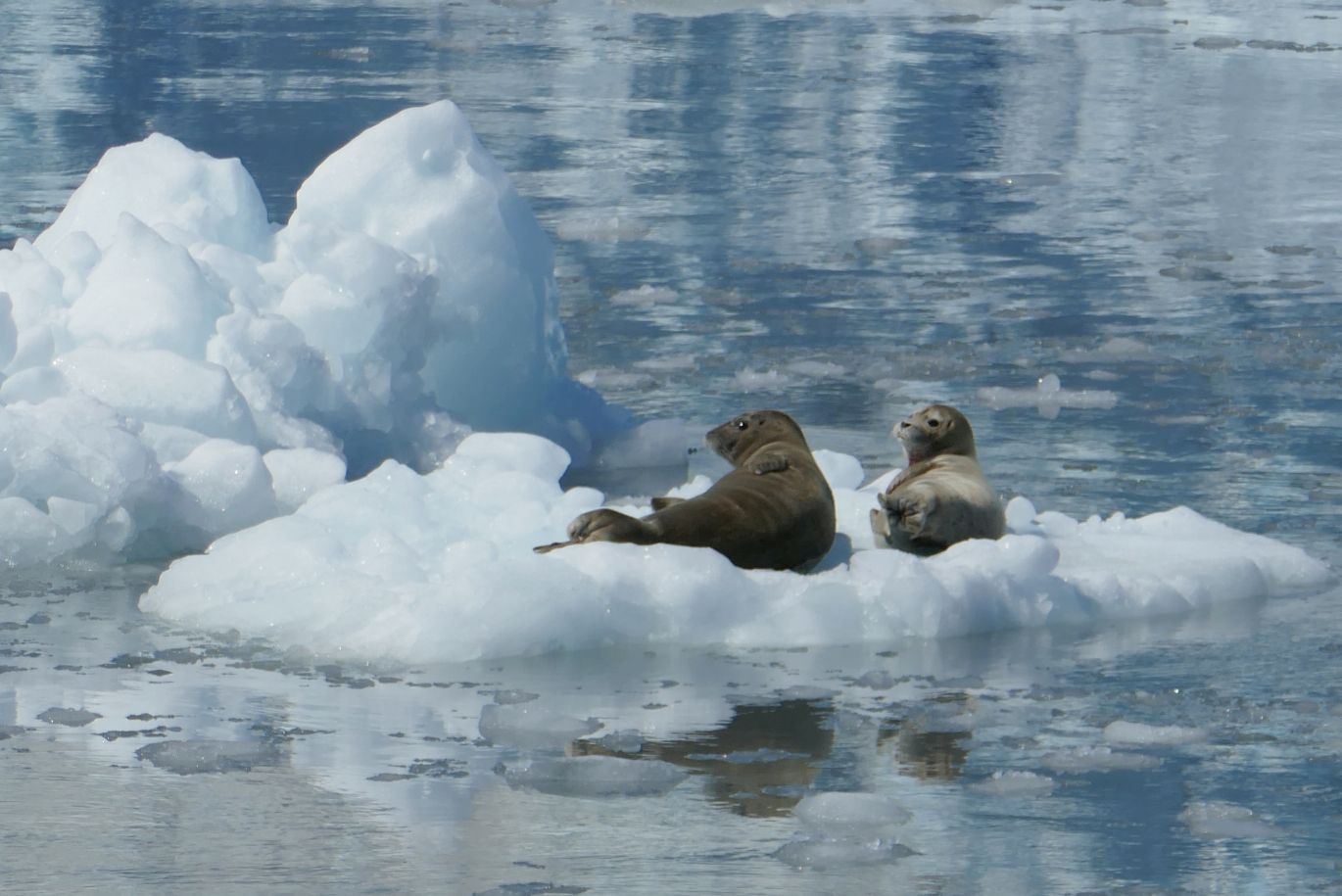
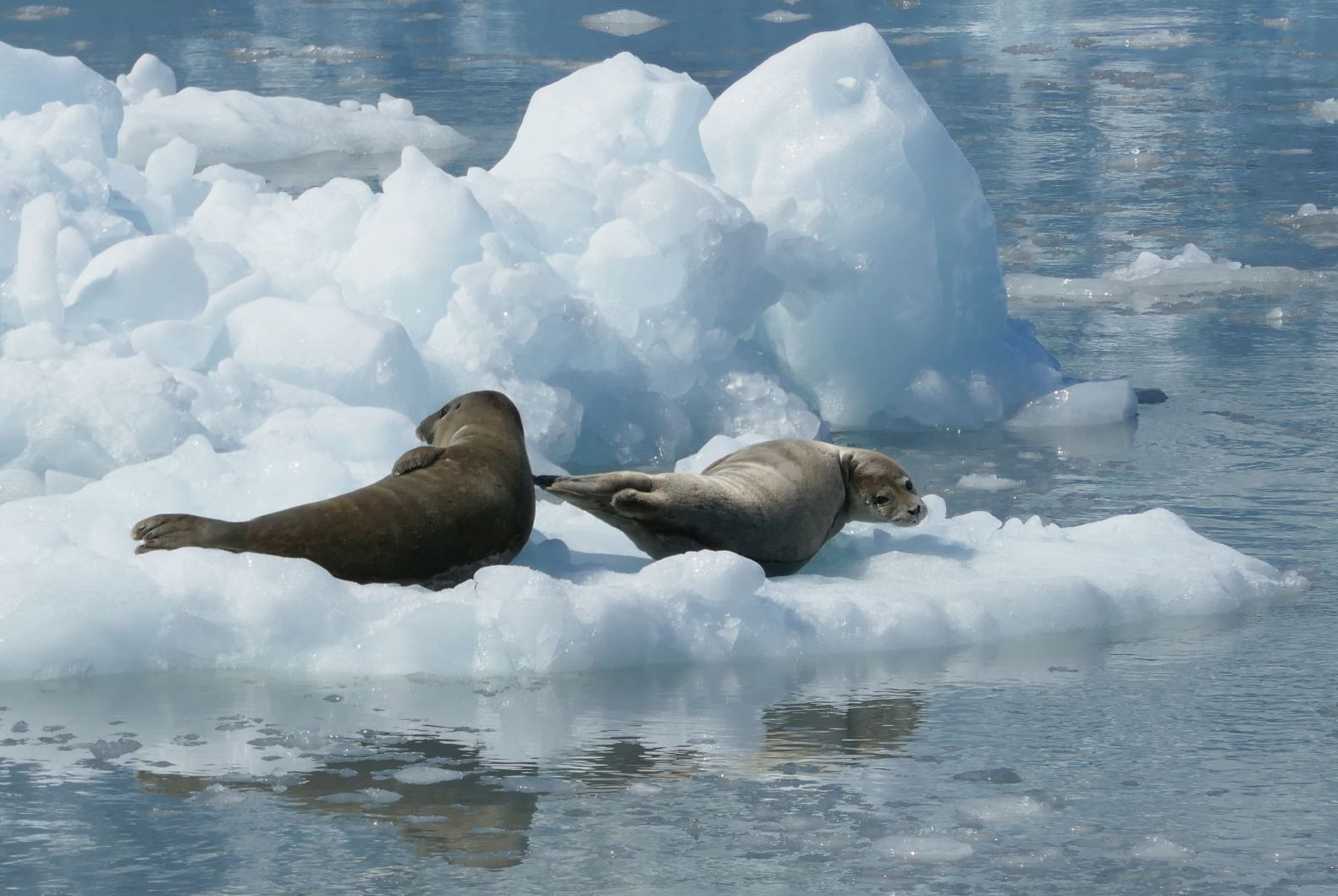
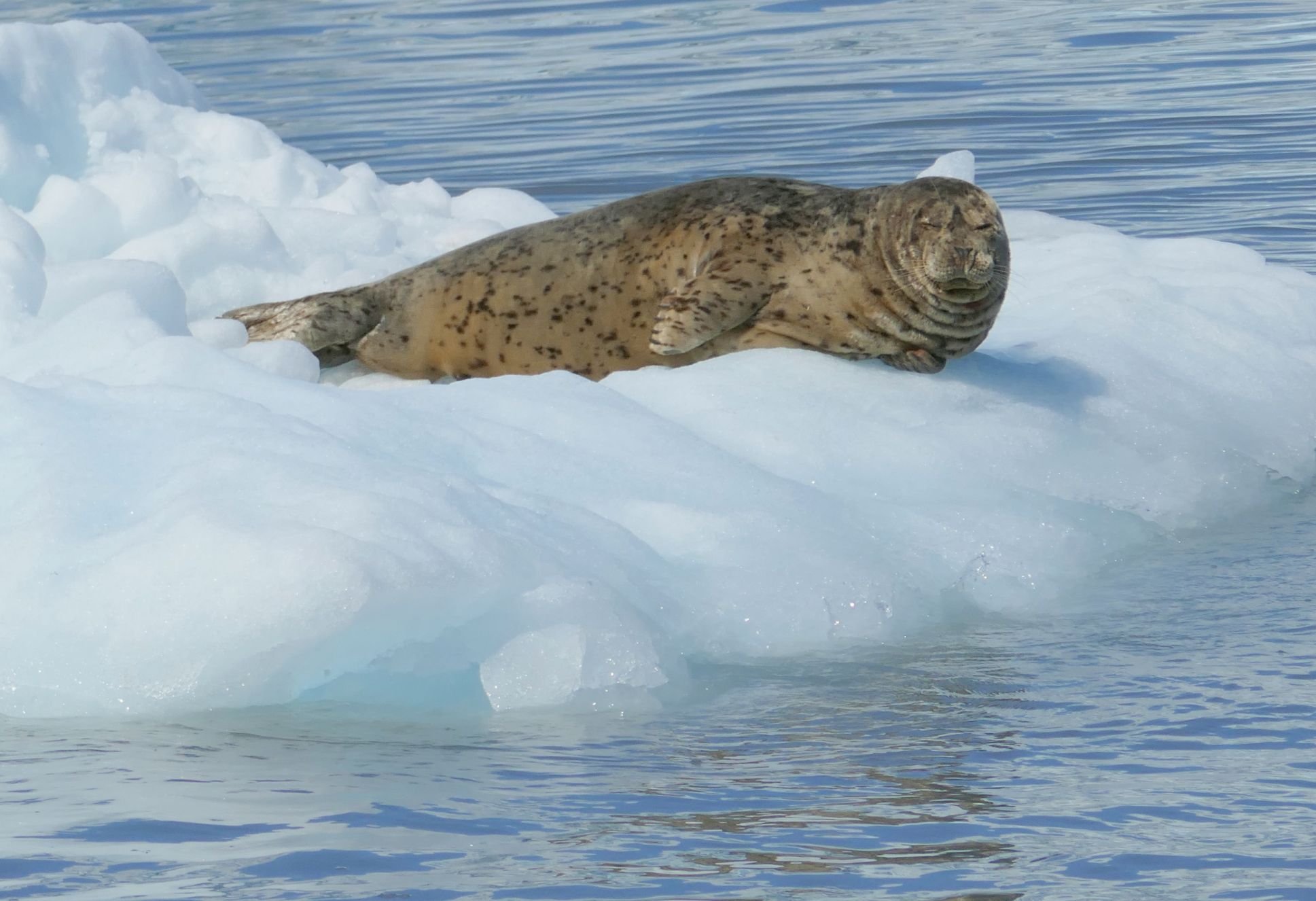
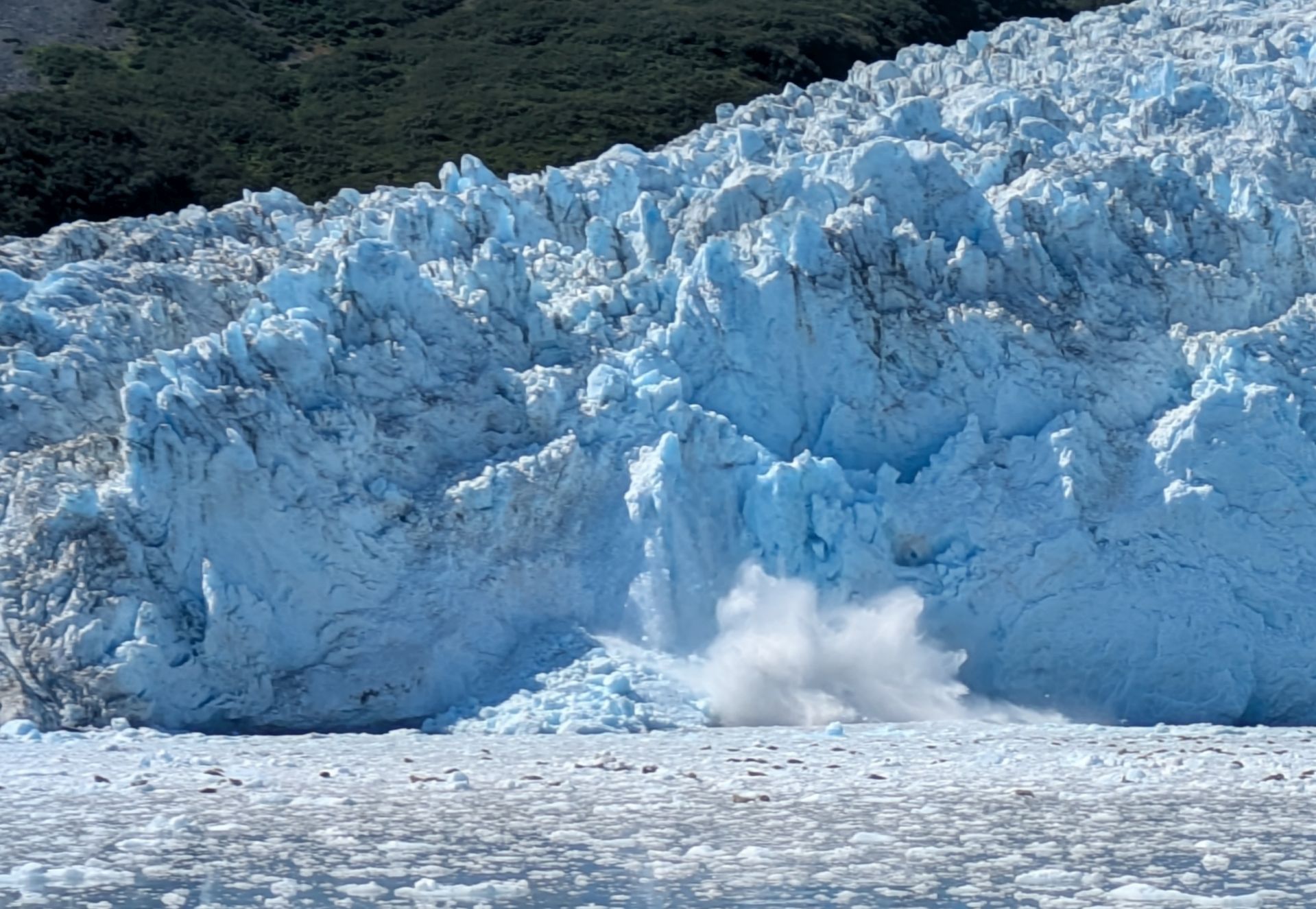
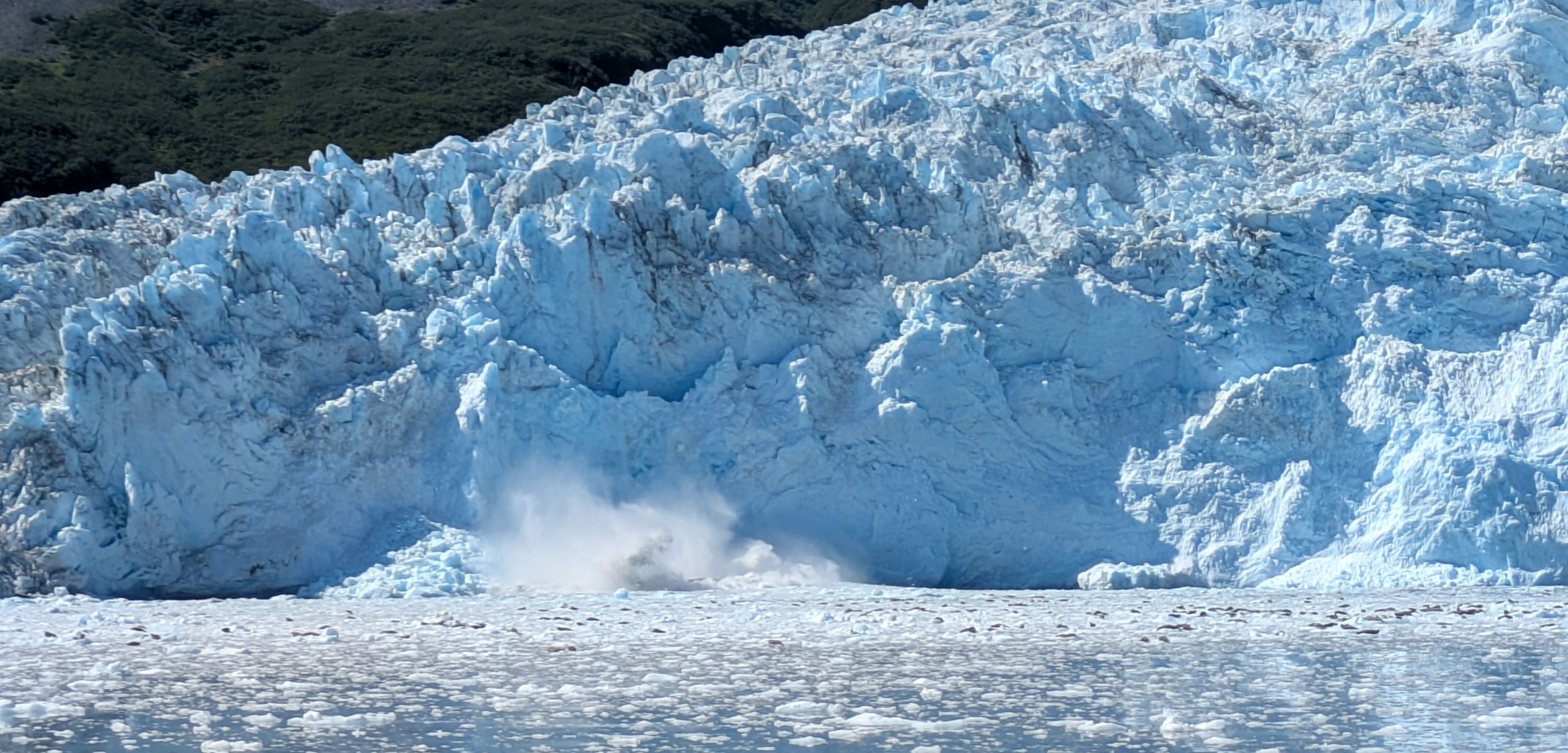
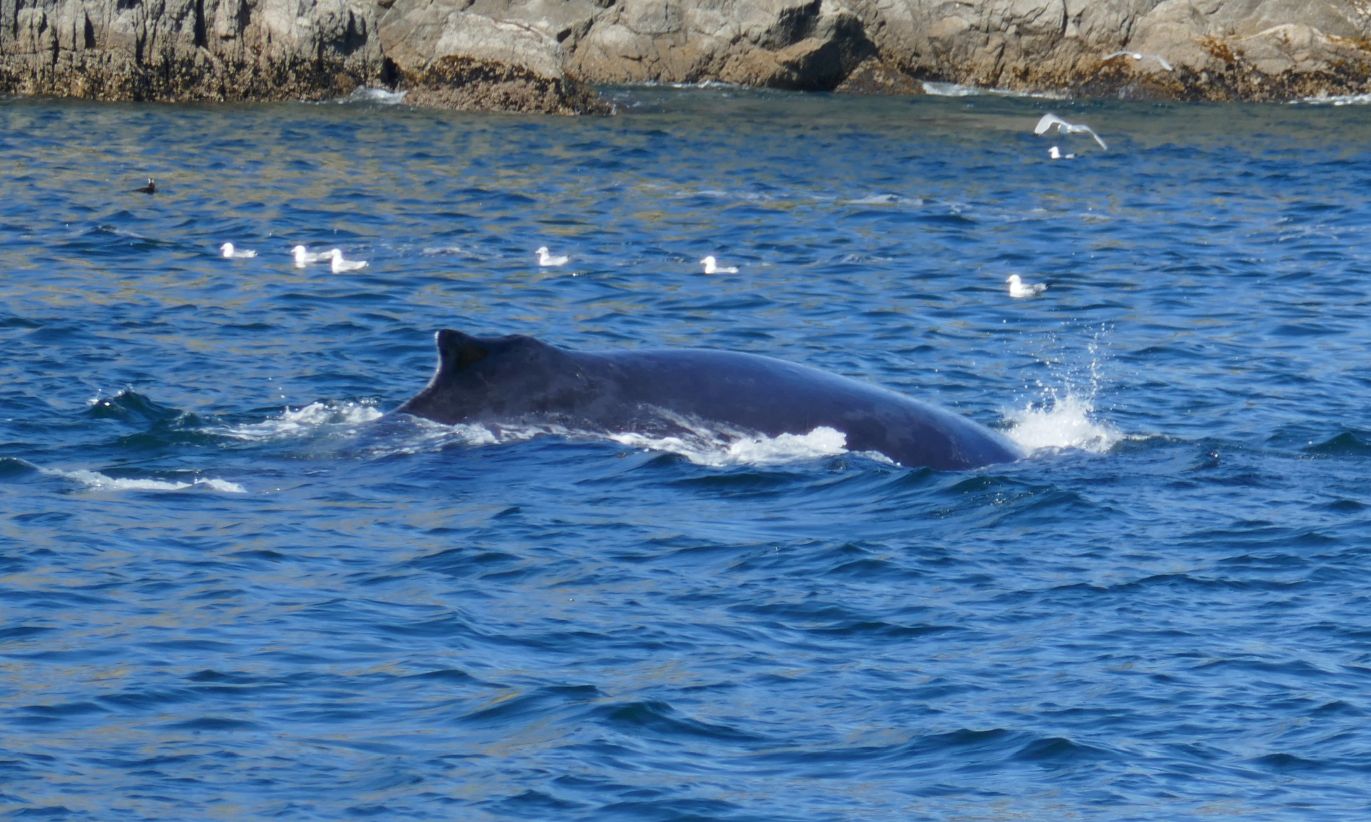
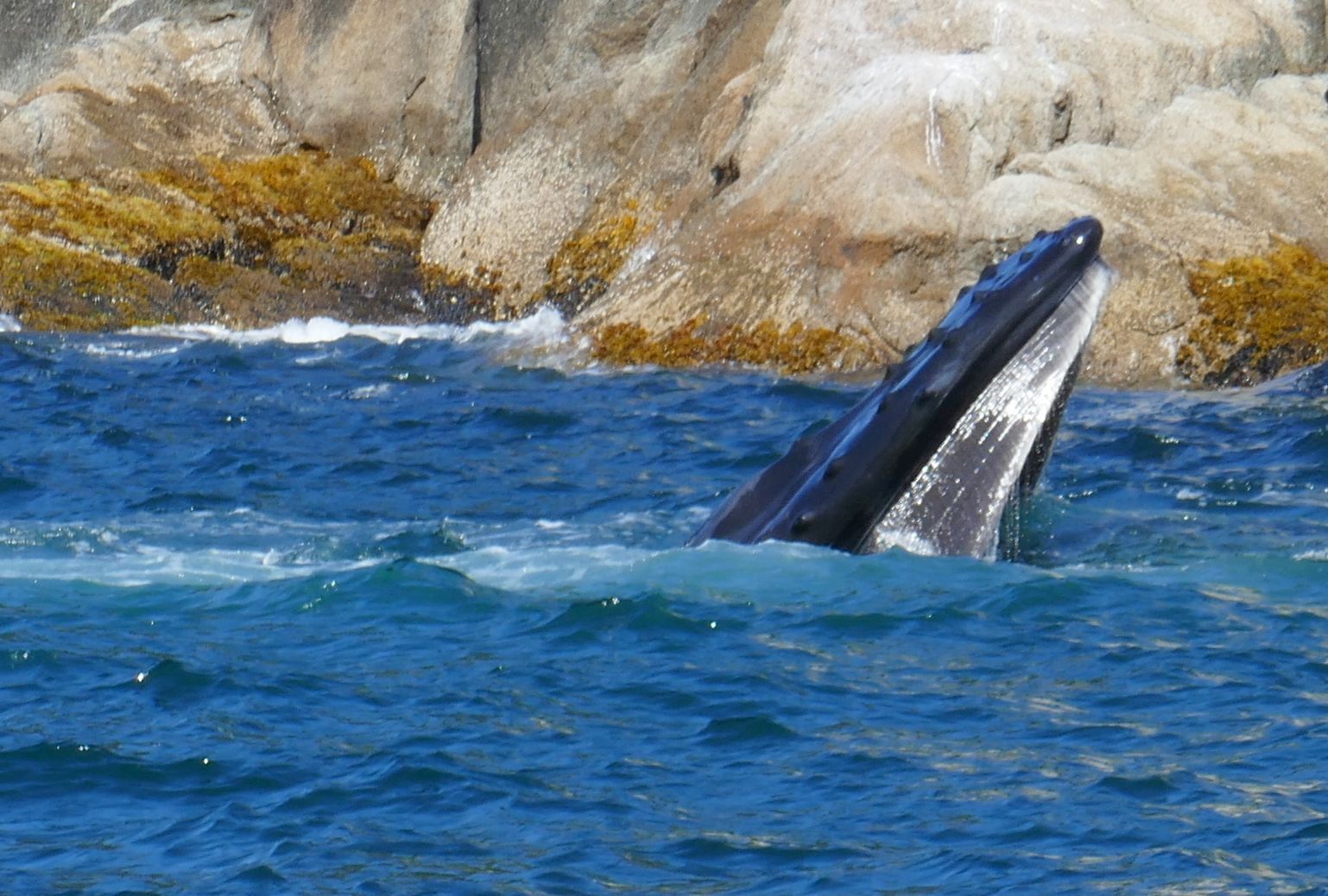
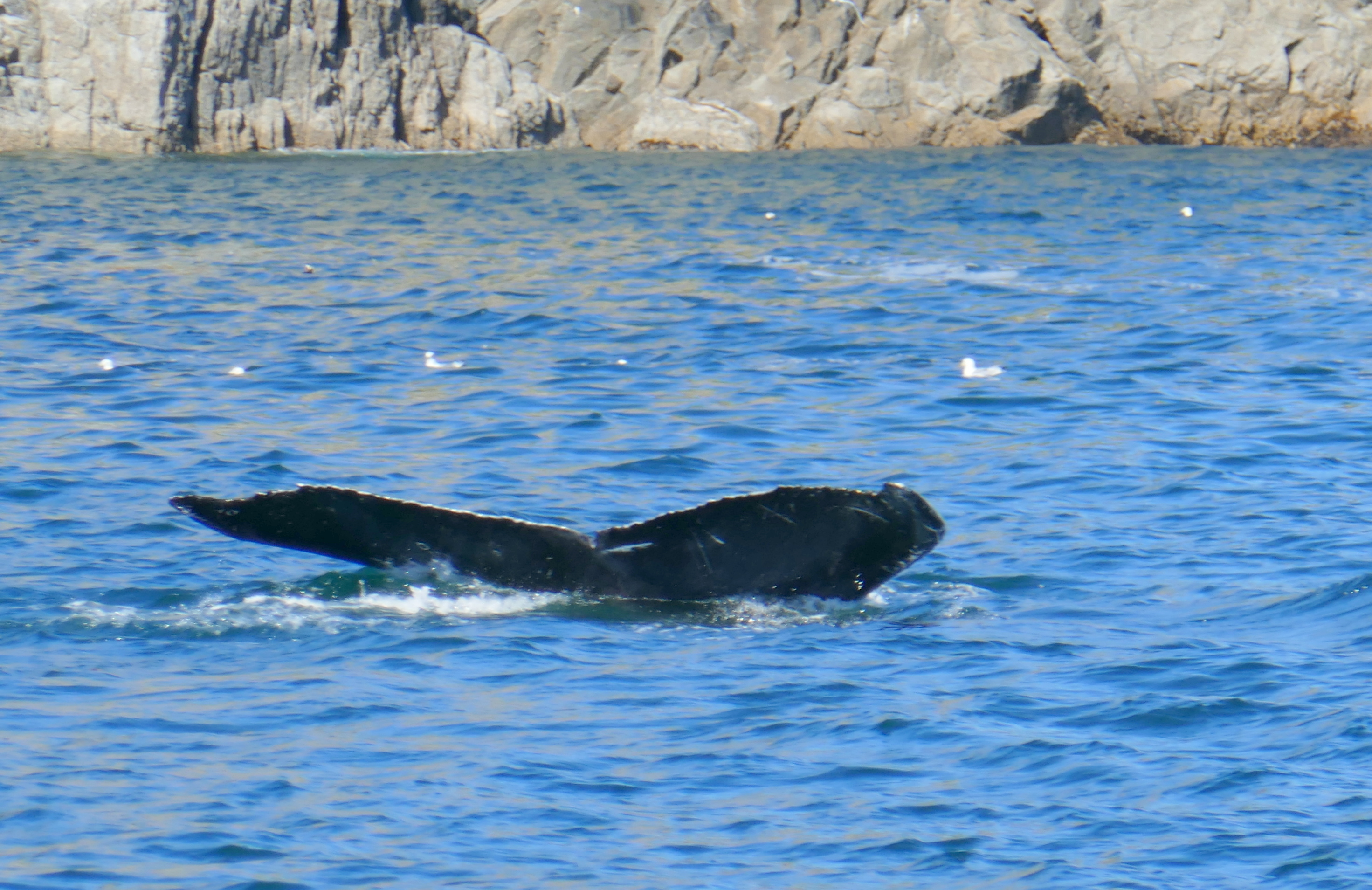
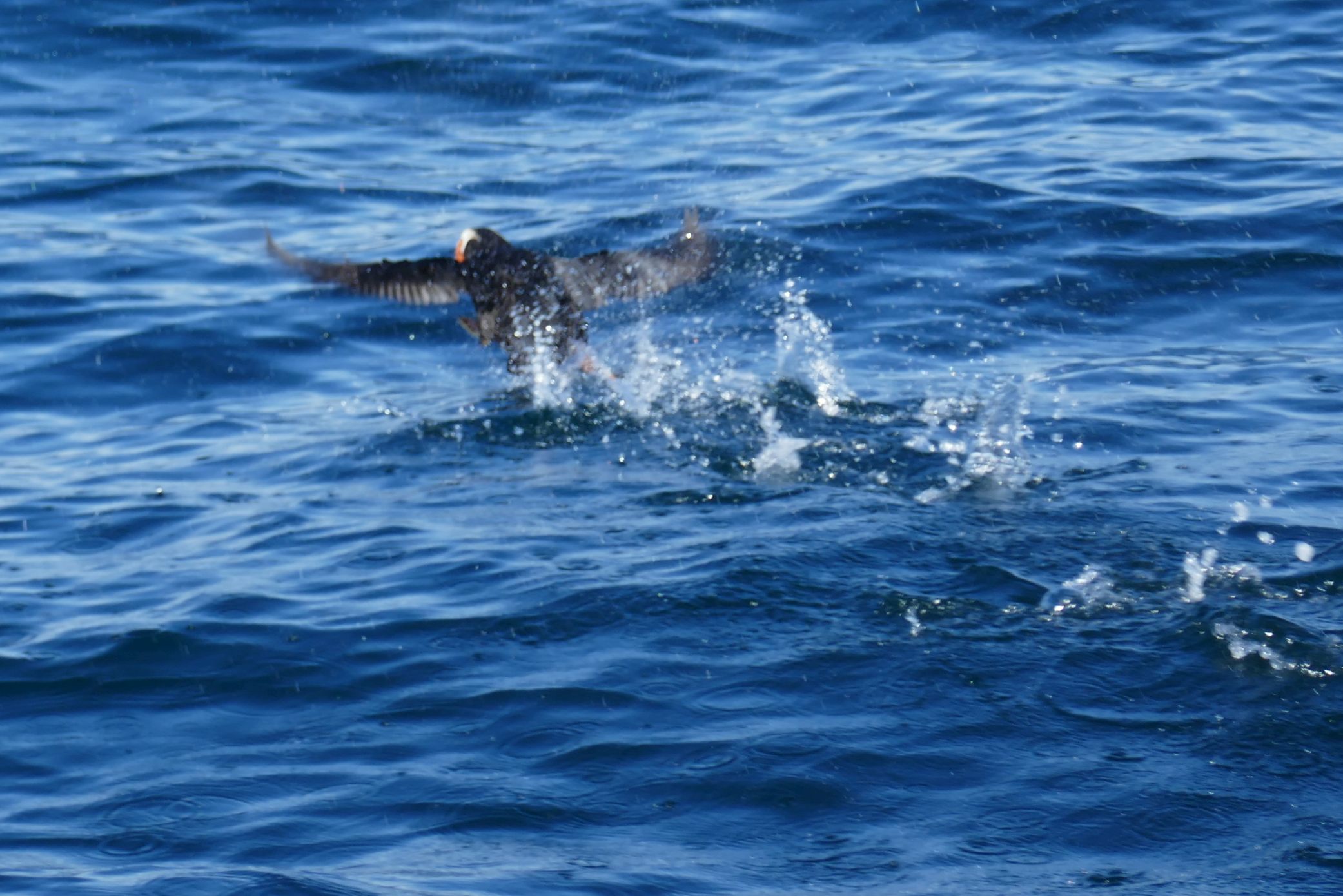
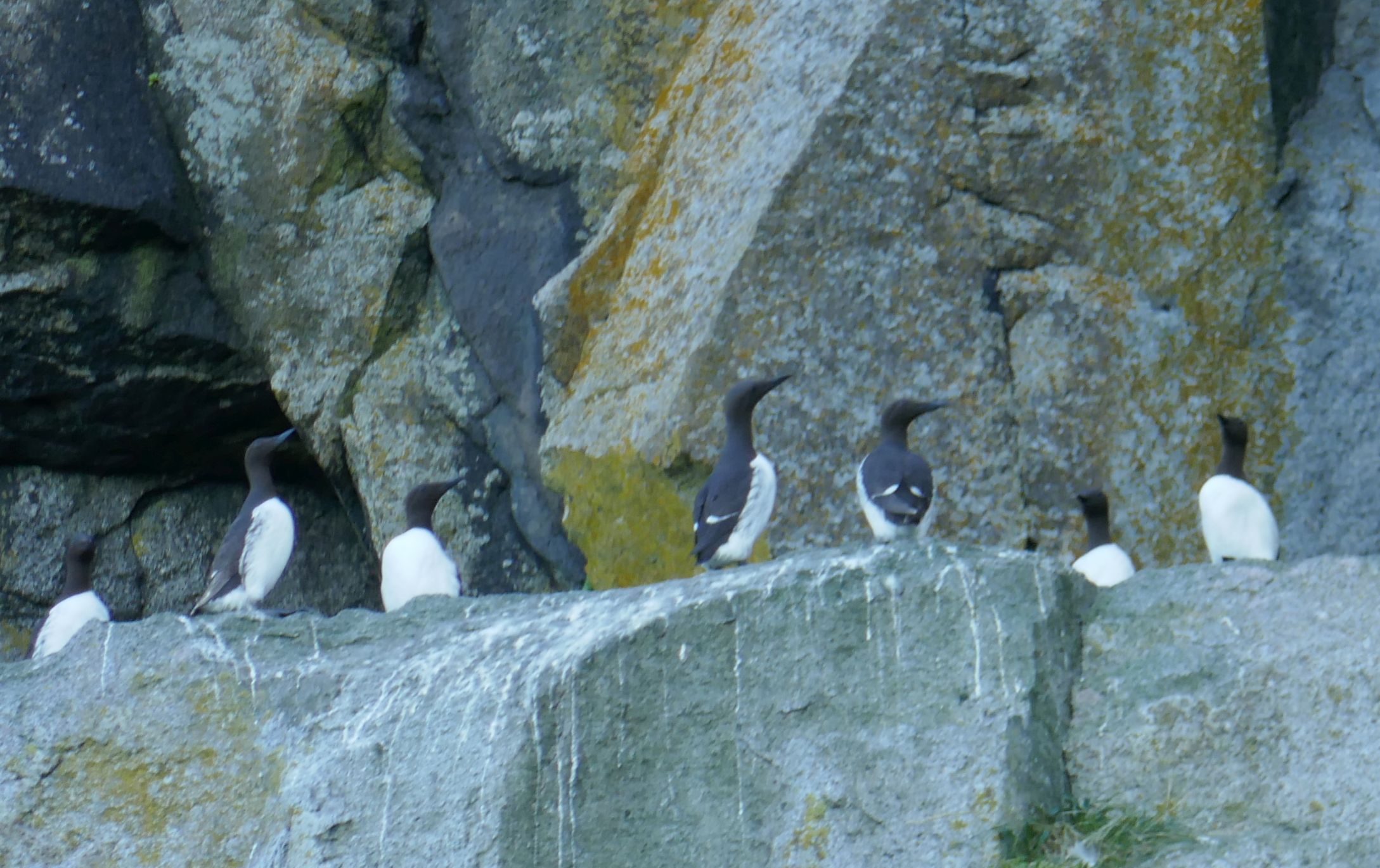
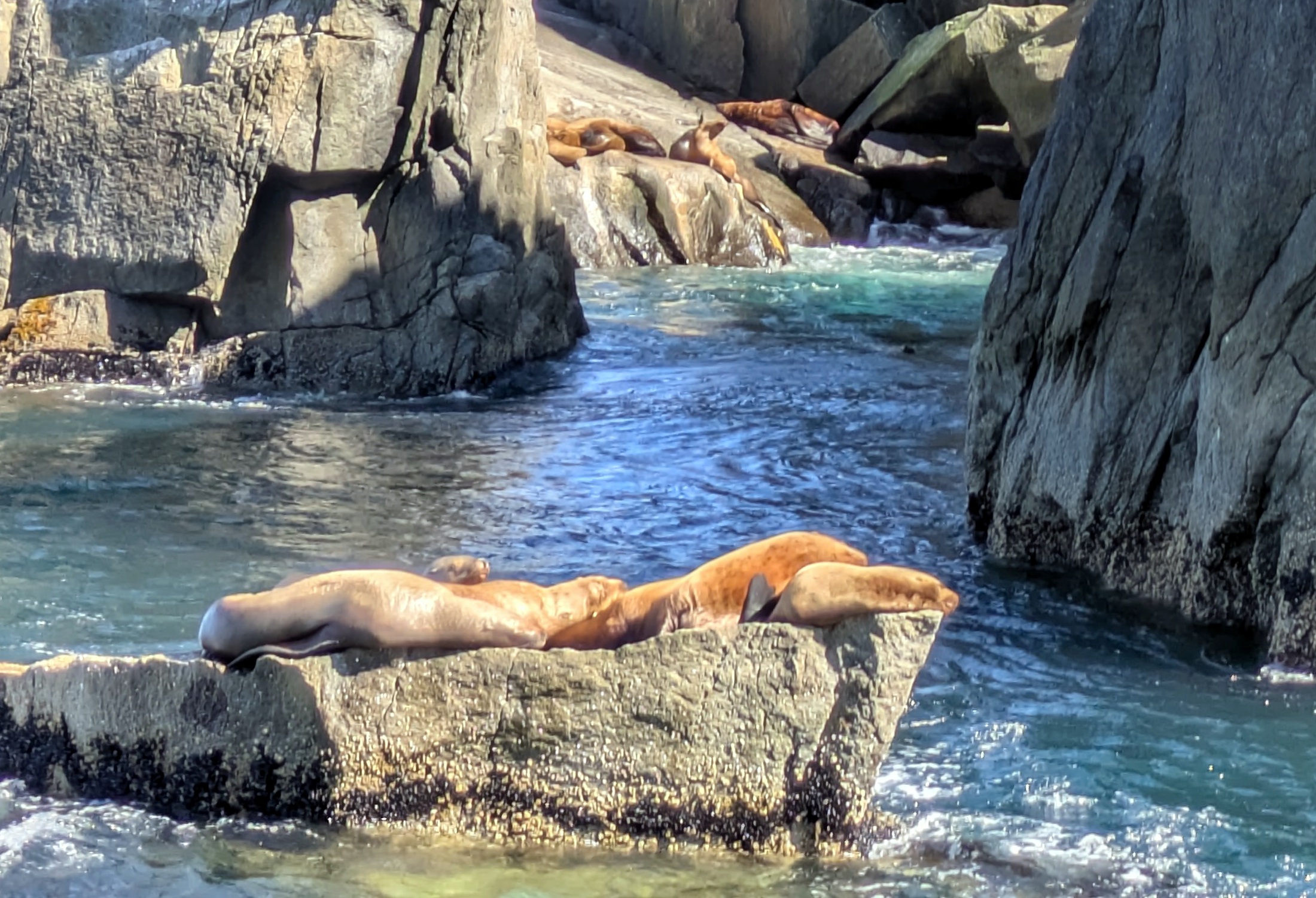
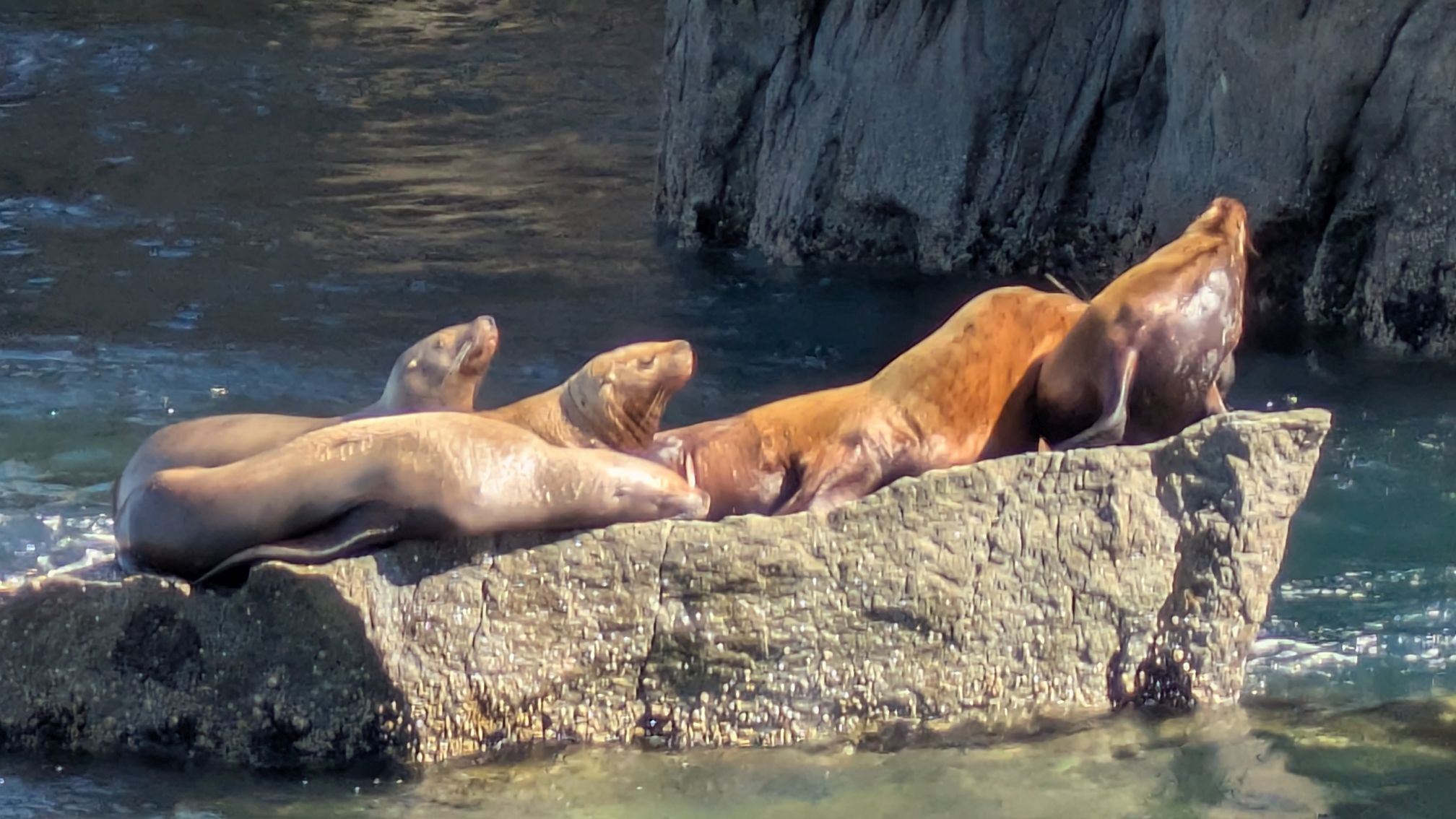
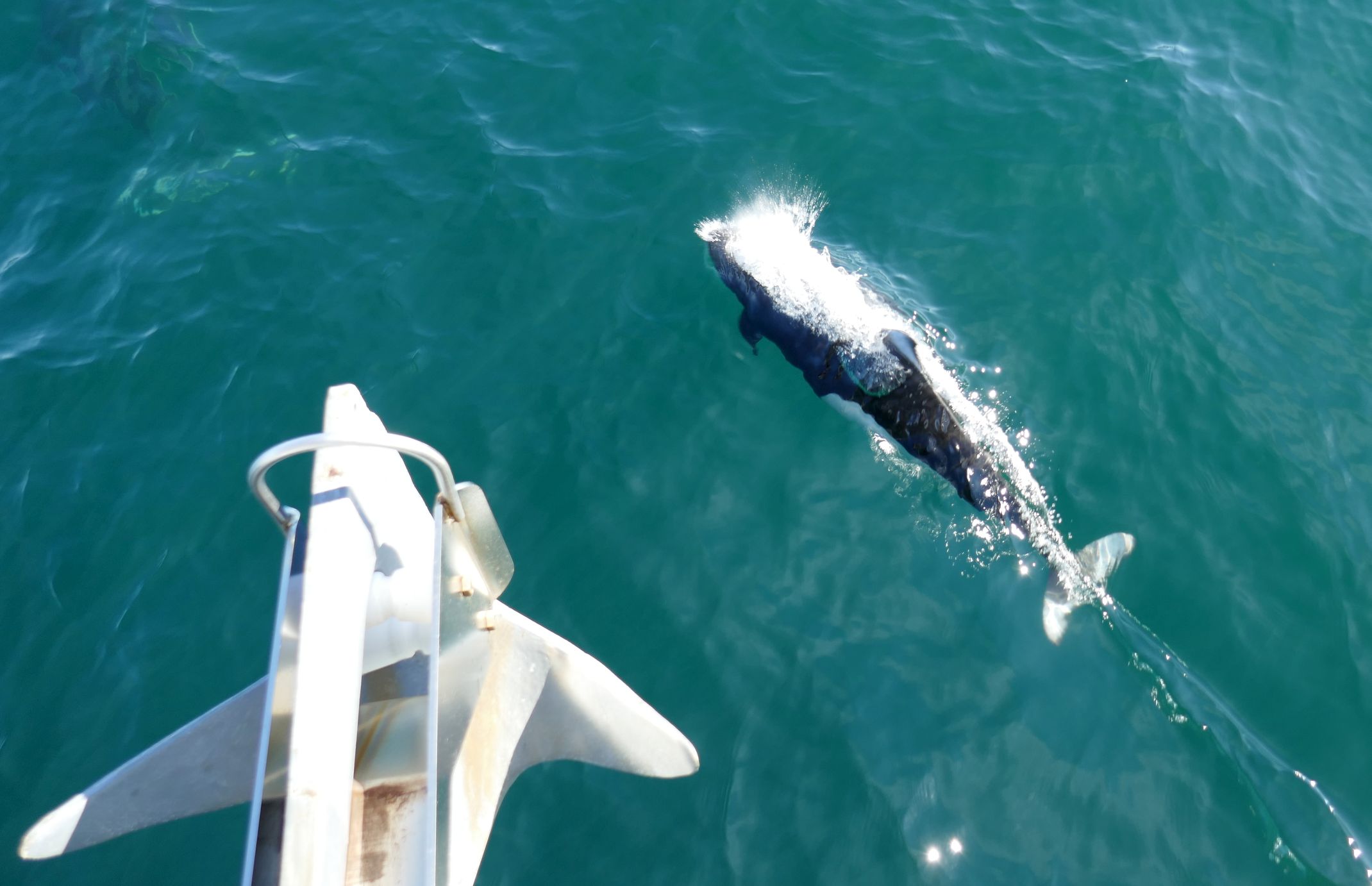
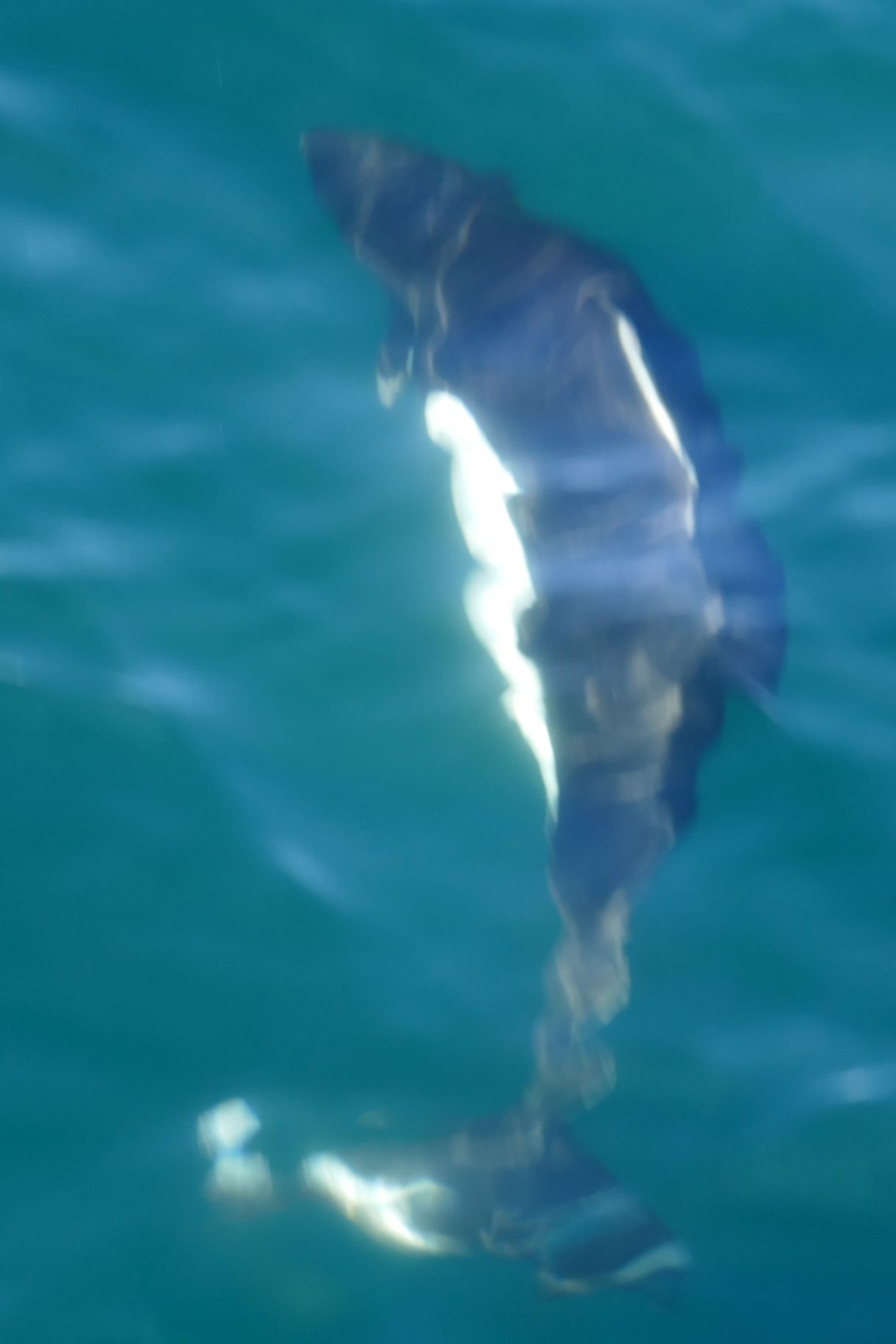
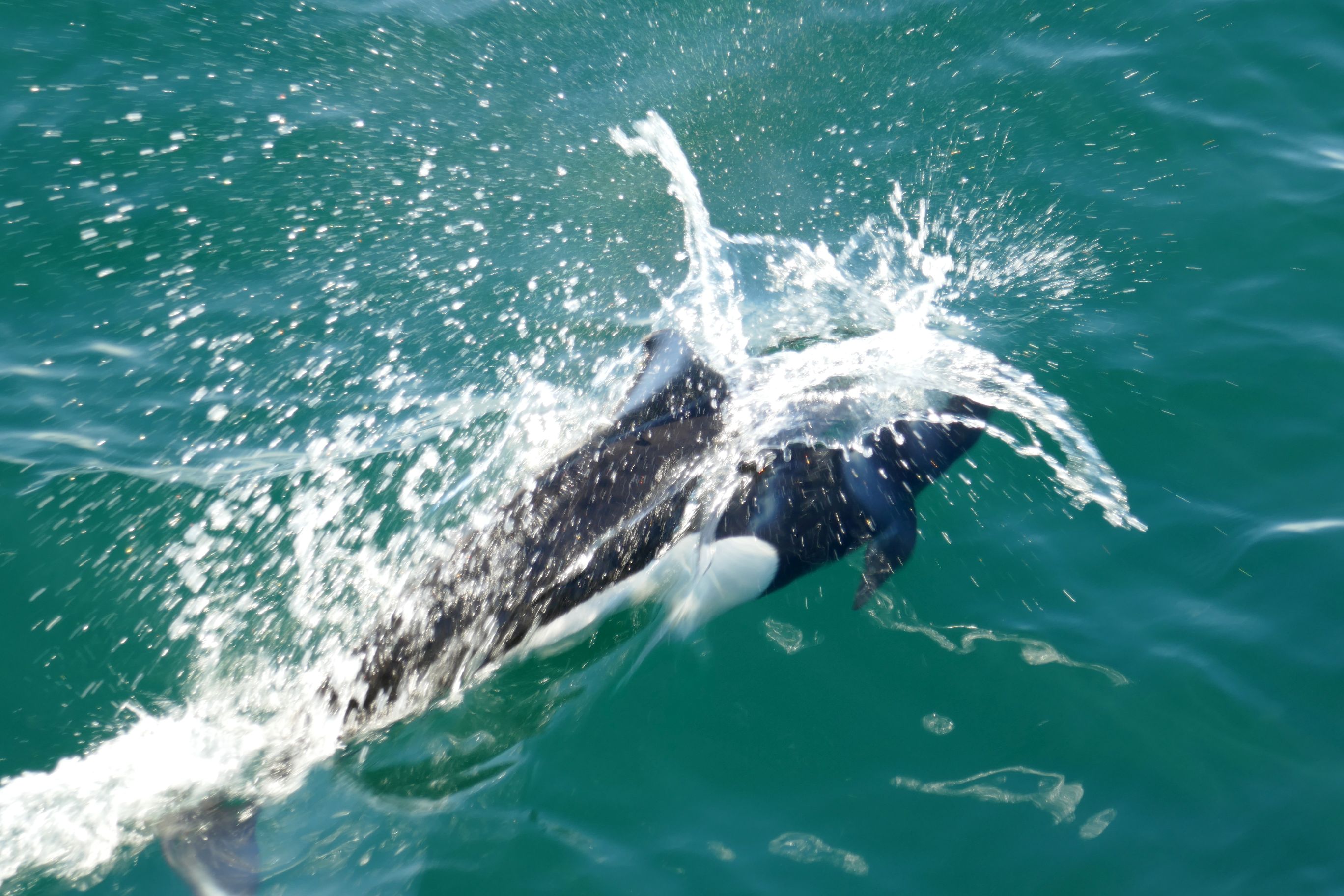
Approaching Aialik GlacierThose are all harbor seals! The captain said those were the most seals he had seen all year.That splash is a glacier calvingJust when I thought it couldn’t get any better (after seeing otters, harbor seals and the glaciers), we saw this humpback whale!Here’s its head……and tail!A puffin taking flightCommon MurresThese are Steller Sea Lions, and they are endangered.I was so fortunate to be right at the center bow of the boat when the captain cranked the engines to head back to Seward. What a sight! A pod of Dall’s Porpoise rode the bow wake, staying with us until we picked up too much speed to keep up. At 7 ft 7 in. long, these are the largest of the porpoises and have a tiny head and no distinguished beak.
Throughout our tour in Alaska, our tour leader, Julie, and bus driver, Bobby, shared a lot of interesting information about Alaska during our bus rides. Qualified residents, for example, receive an annual dividend from the Alaska pipeline amounting to about $1,000. To qualify, a resident must live in Alaska for two years. This dividend is much needed, because the cost of living in the state is very high, even though there is no state income or sales tax.
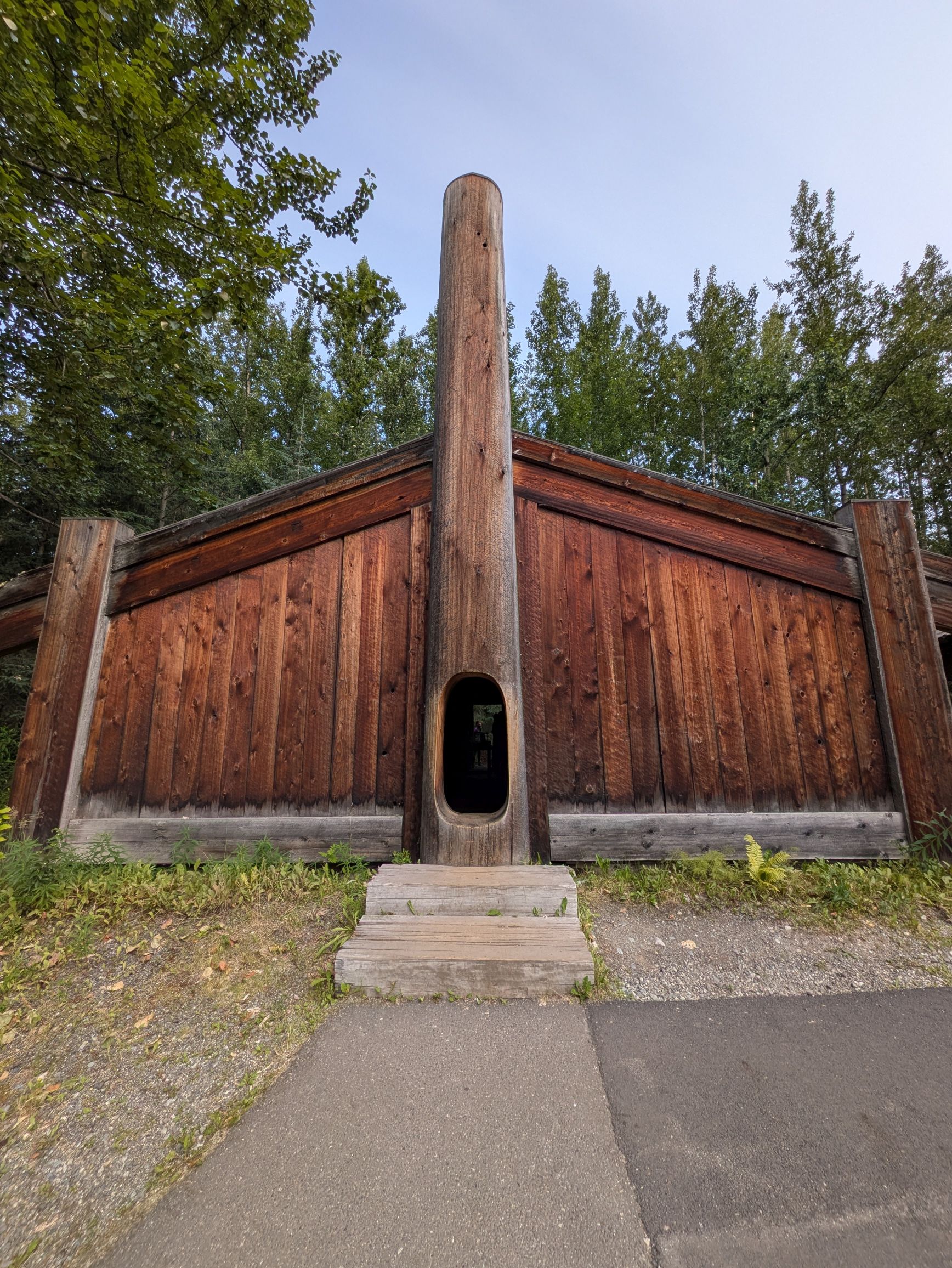
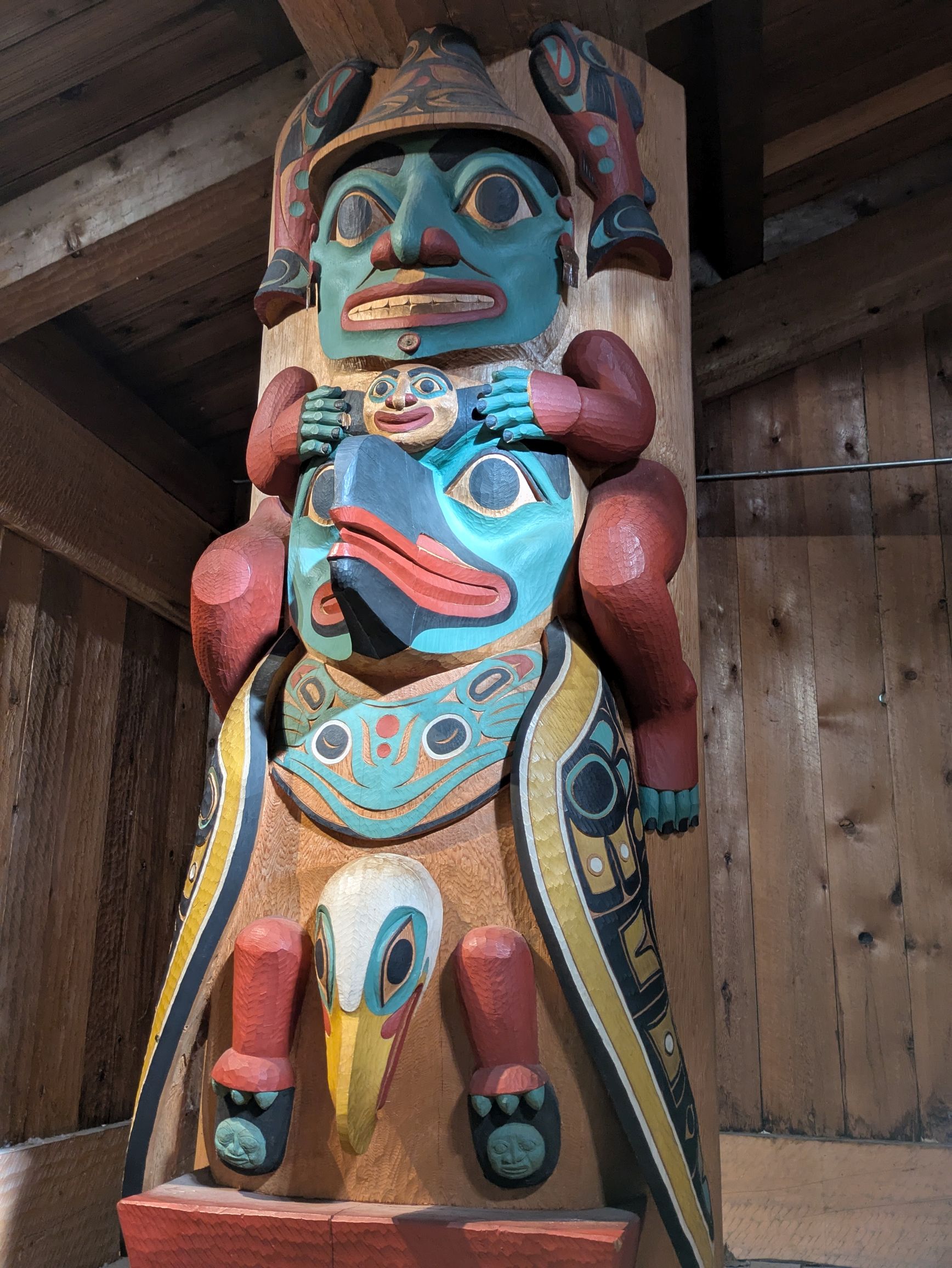
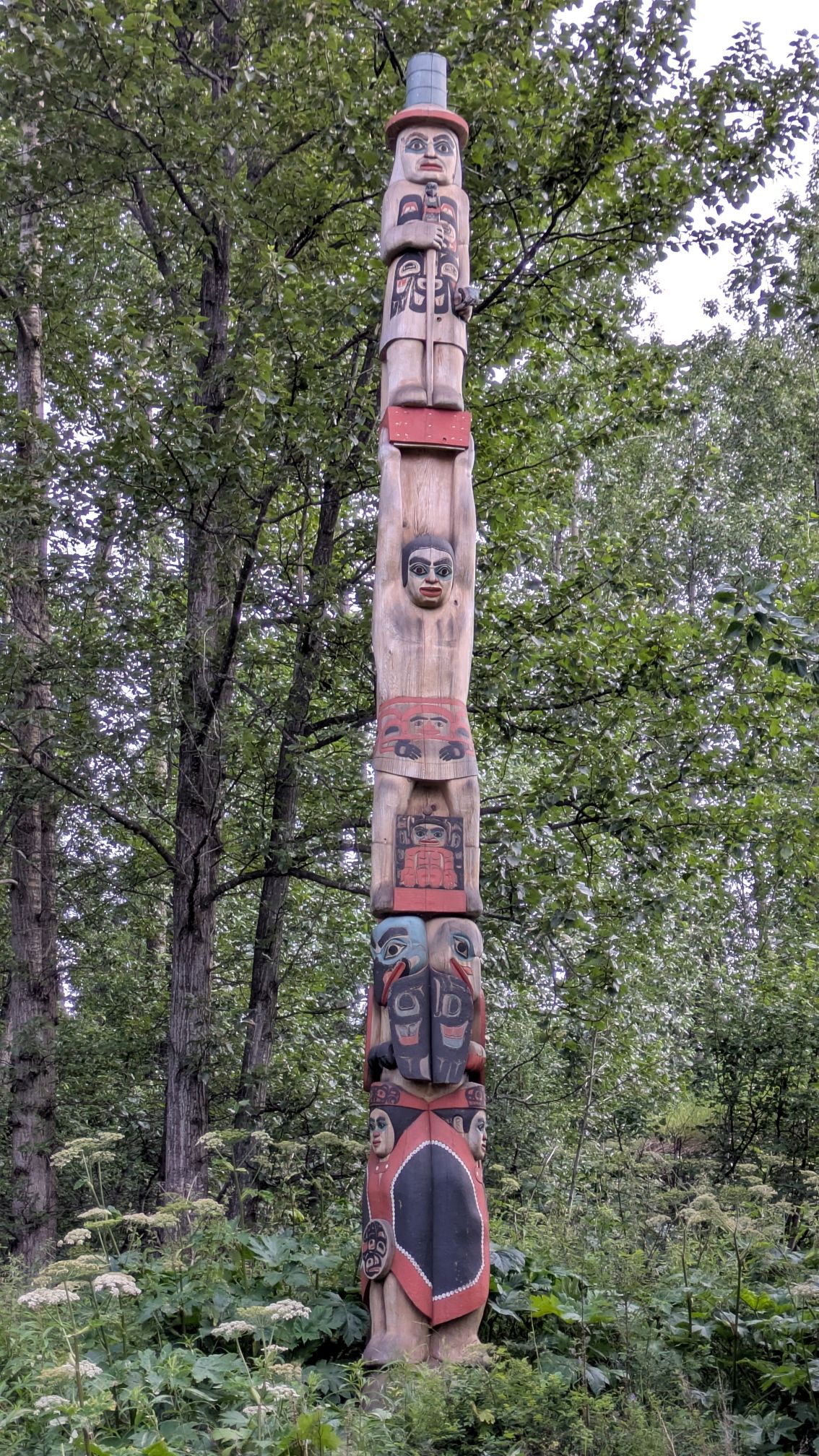
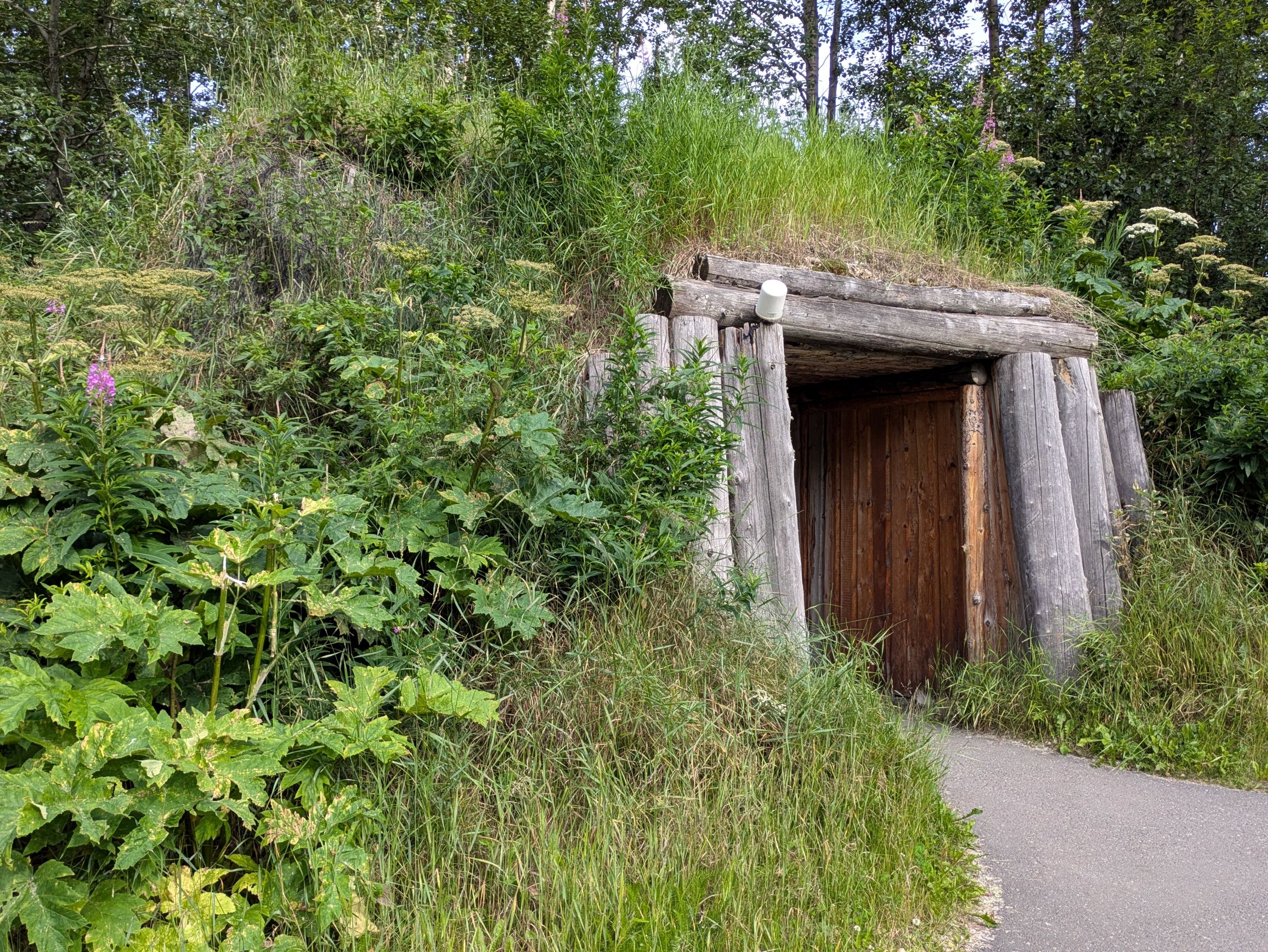
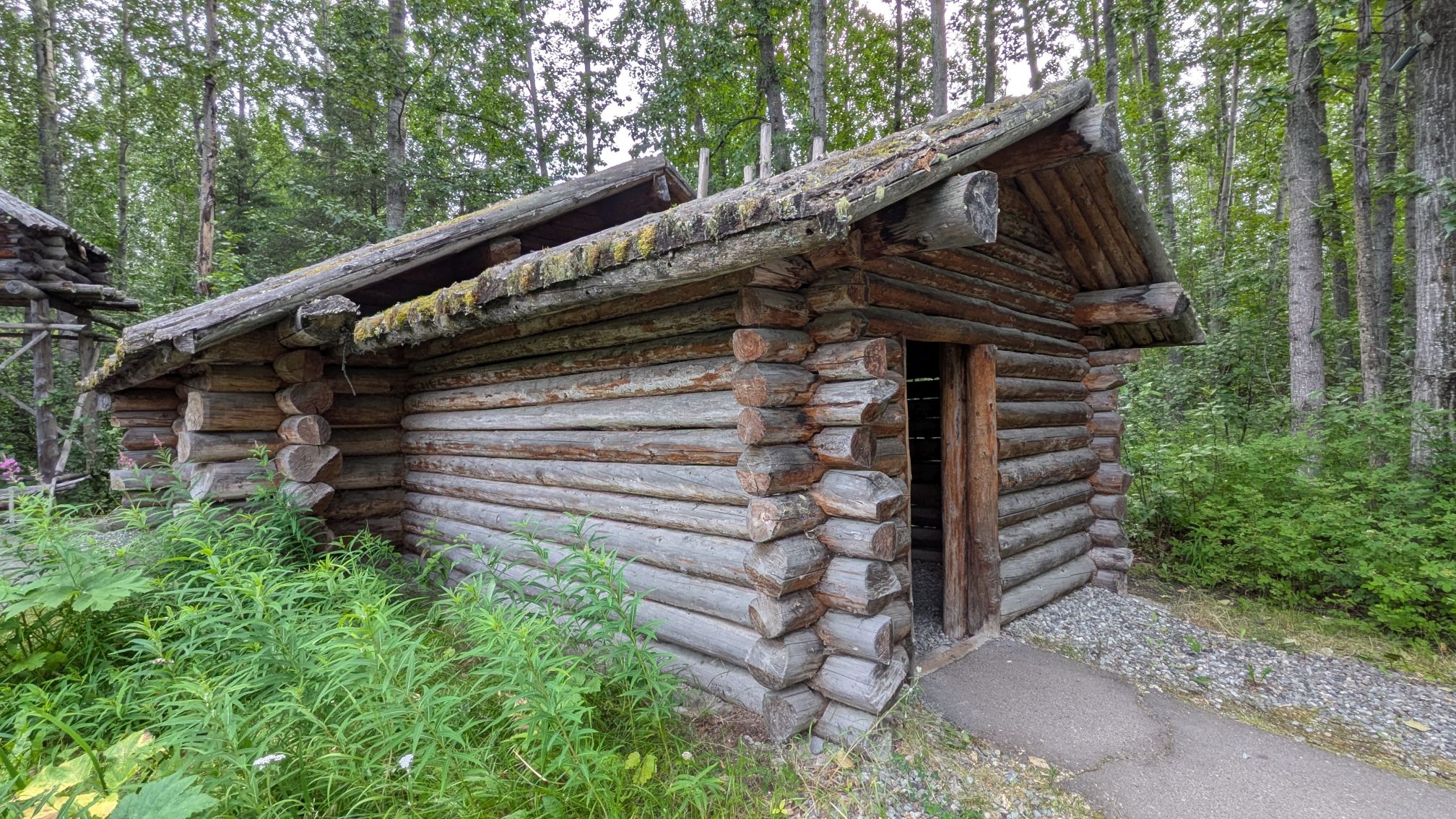
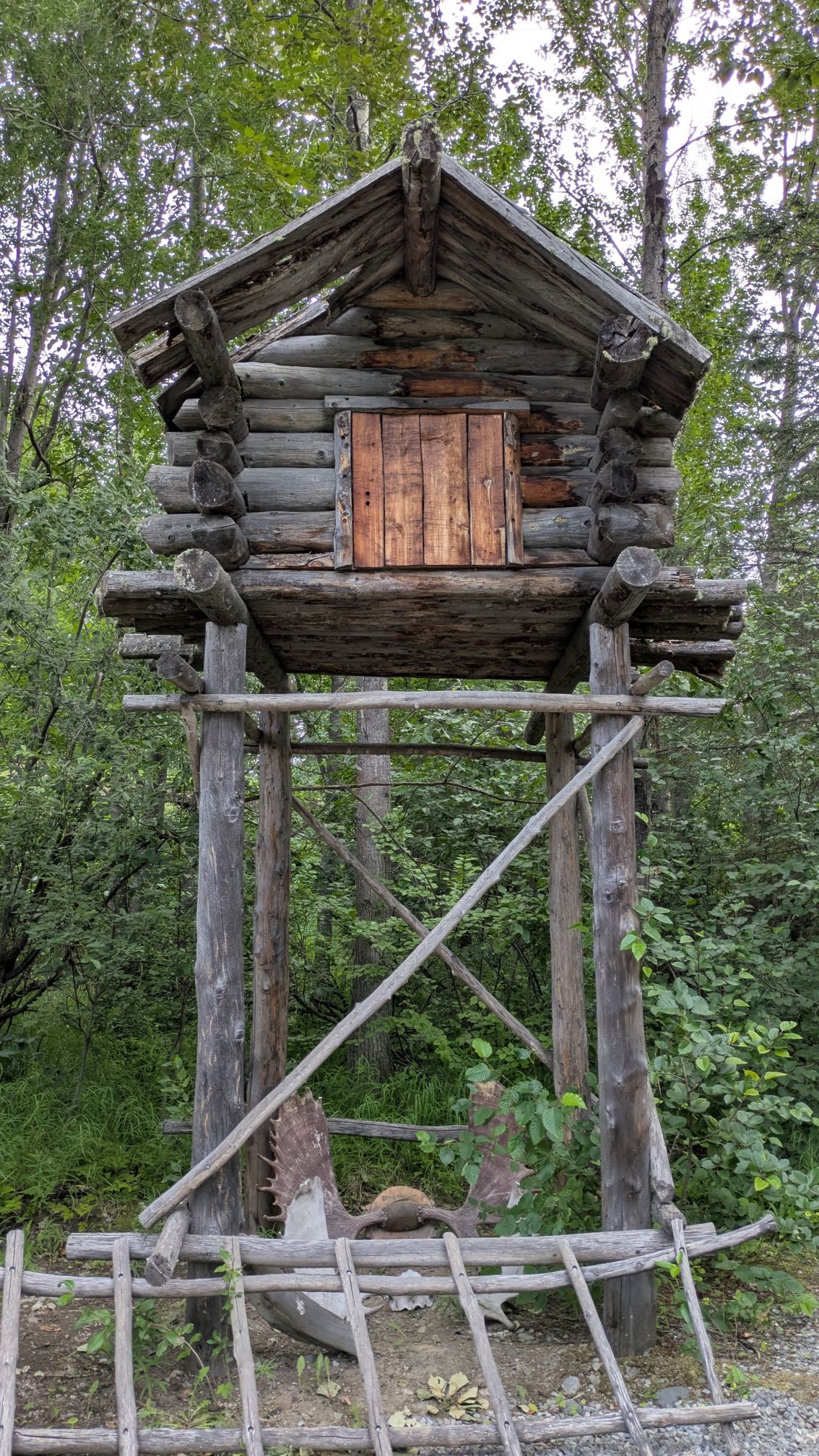
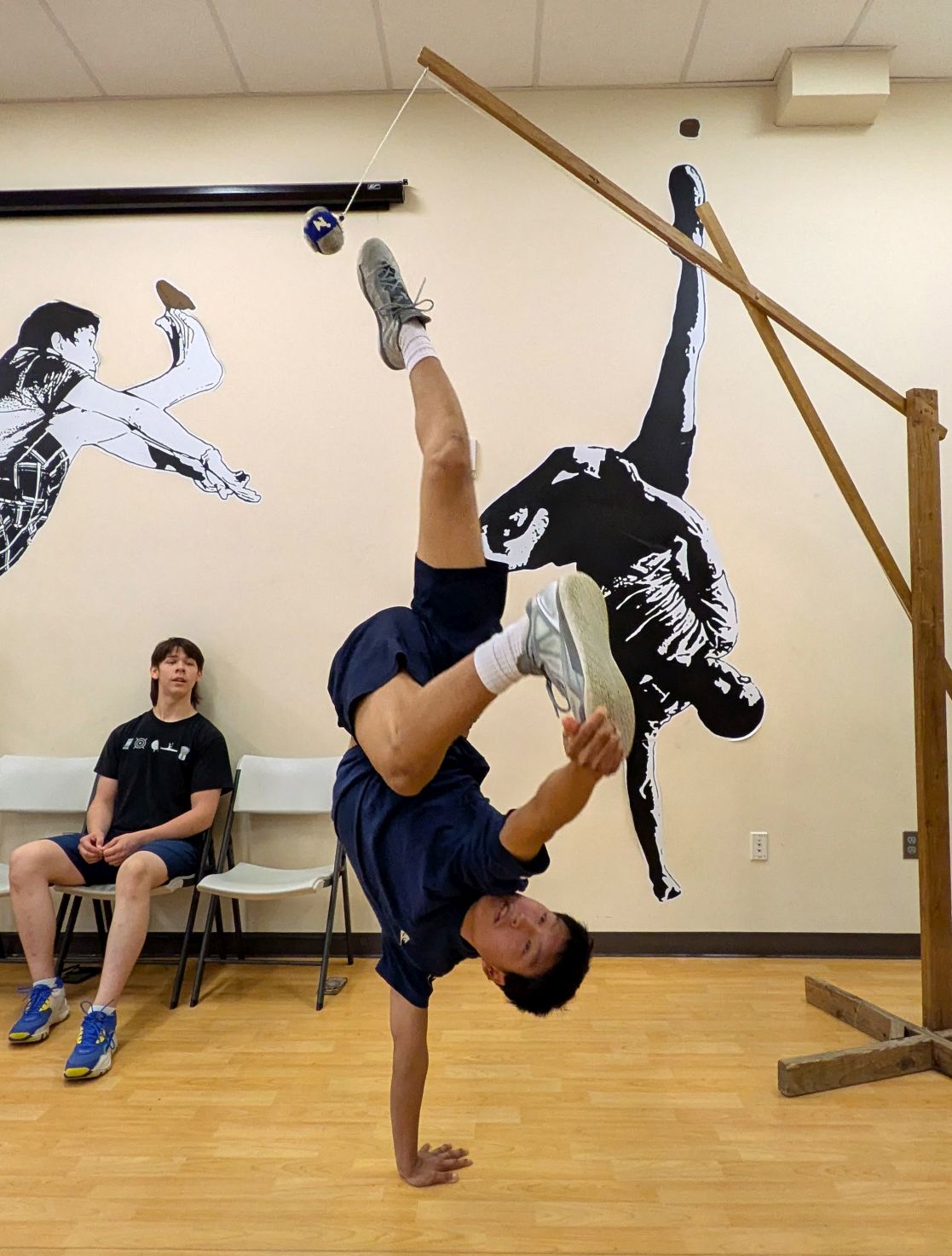
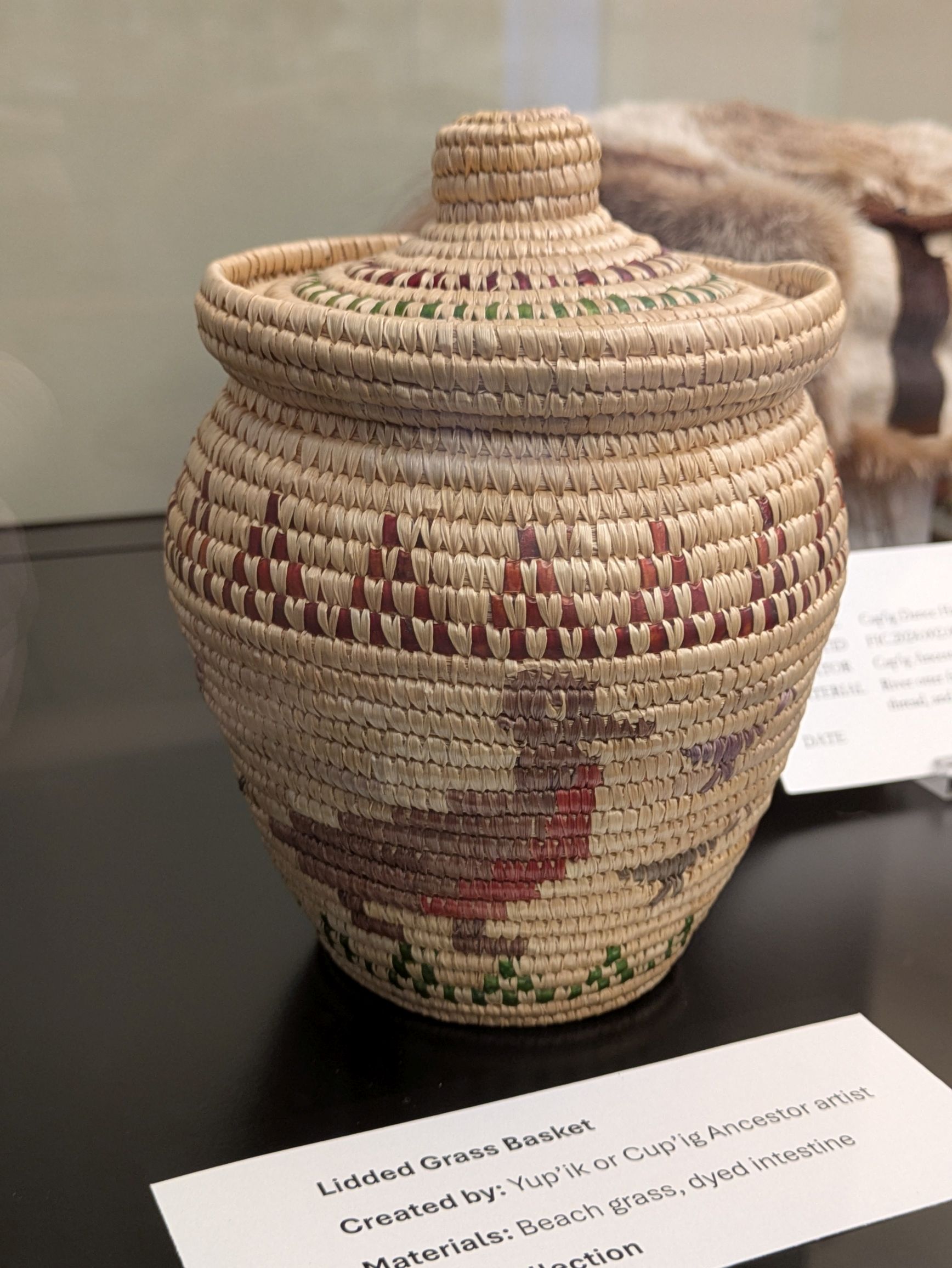
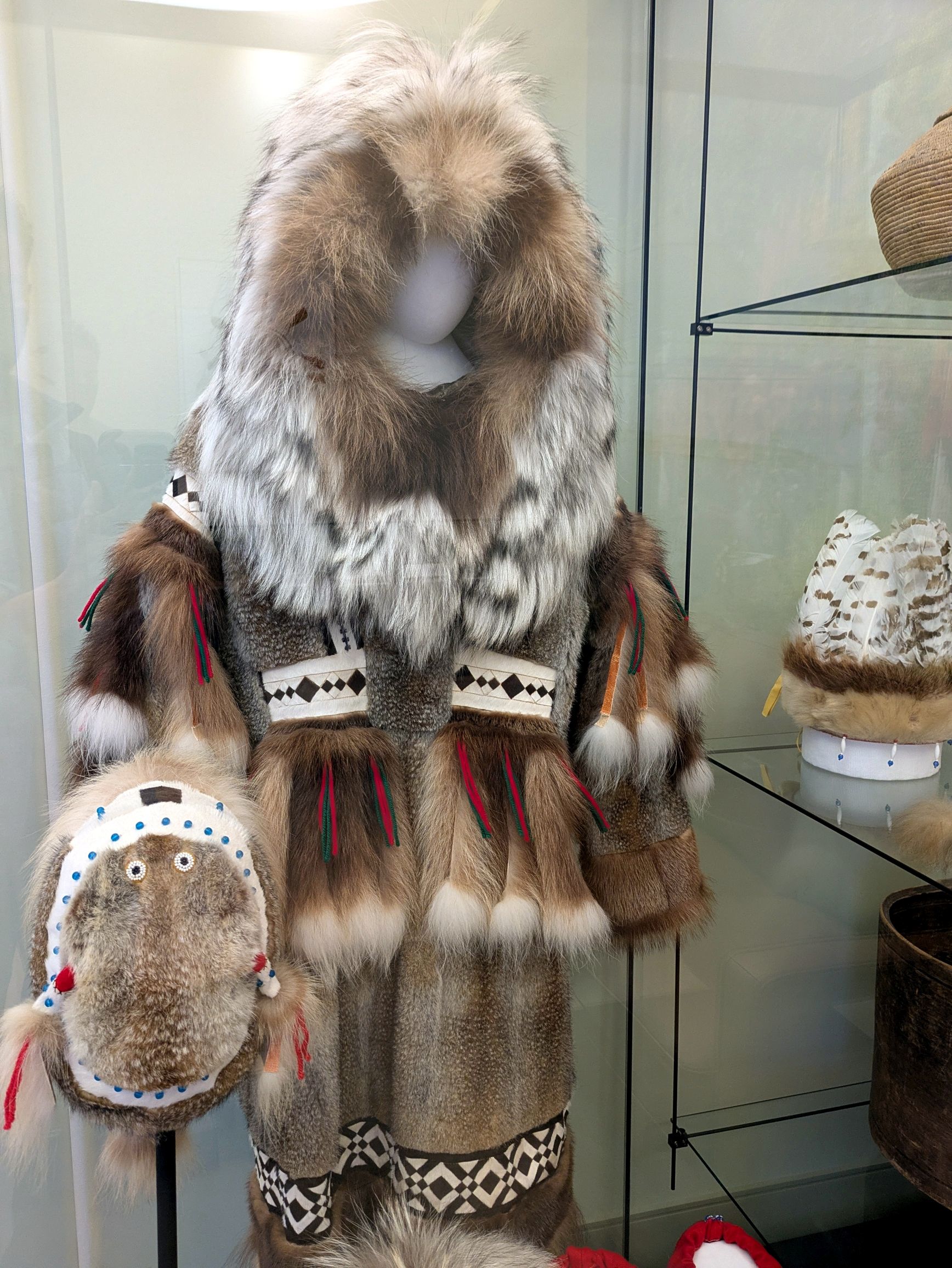
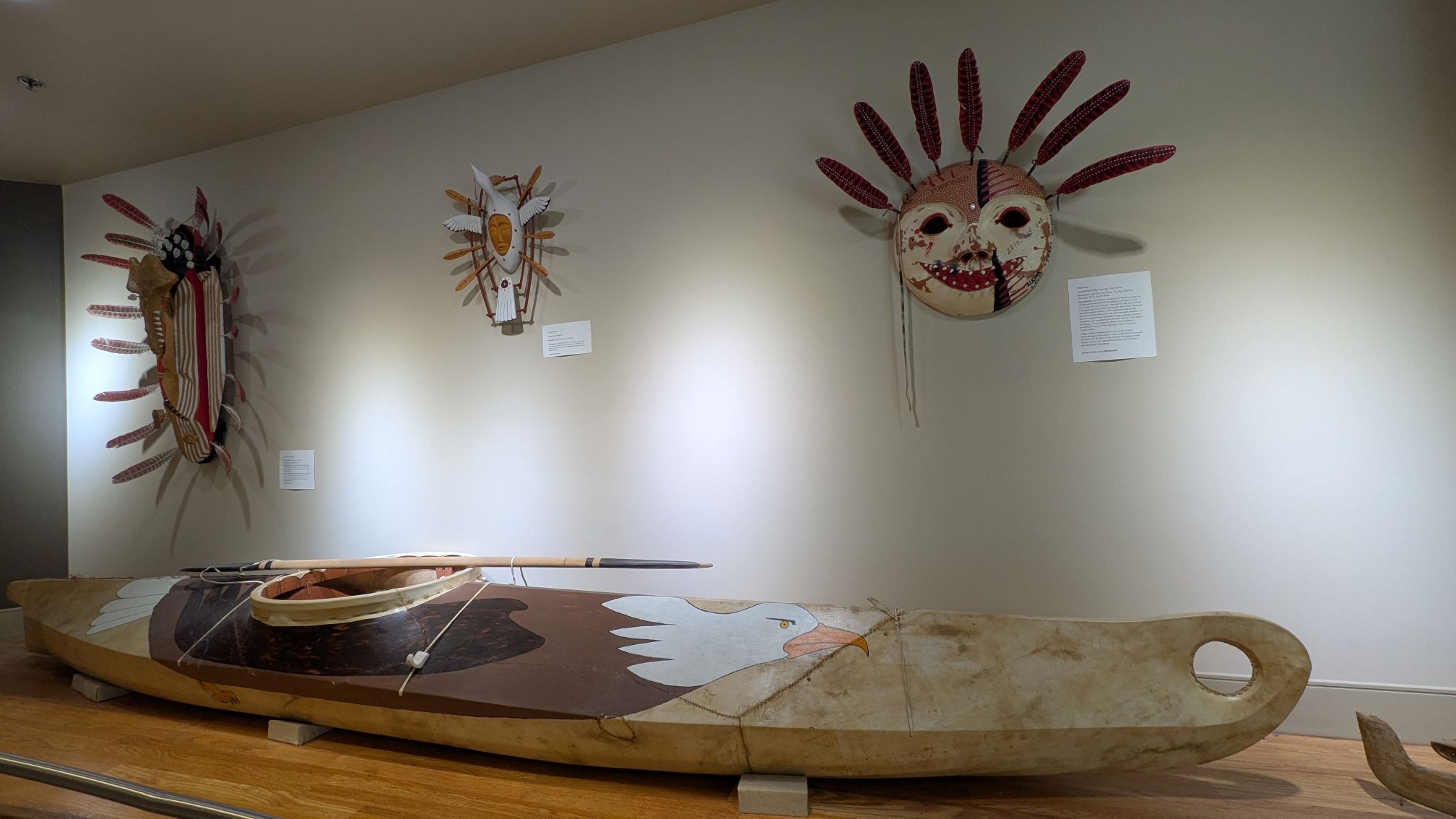
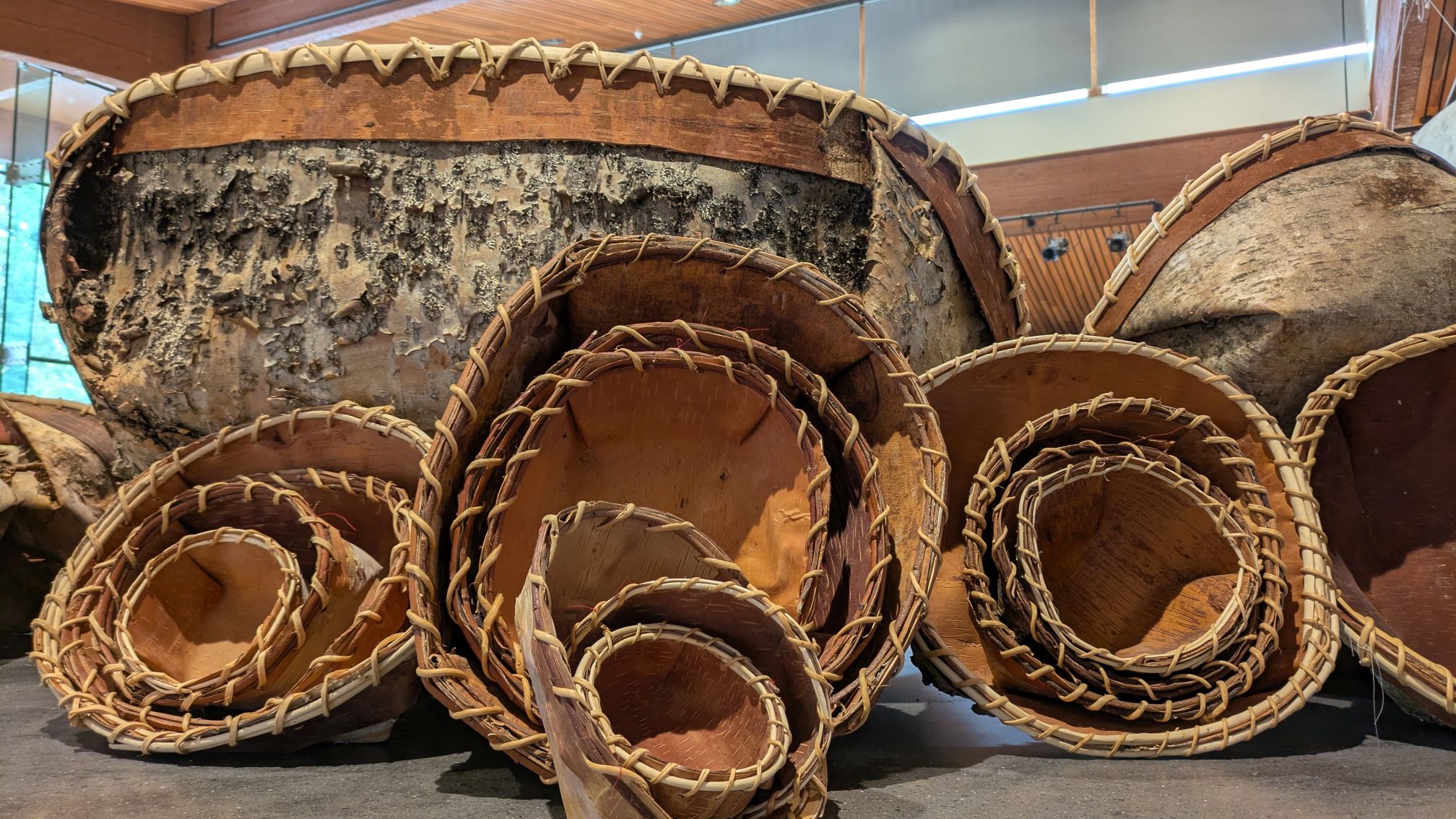
Our first stop of the day was at the Alaska Native Heritage Center, in Anchorage, where we learned about Alaska’s Indigenous cultures. The guided village tour was interesting, and I enjoyed watching the games demonstration, The exhibits in the museum were also excellent, so it was a worthwhile visit!
(For all photos, click on the image for a full screen view.)
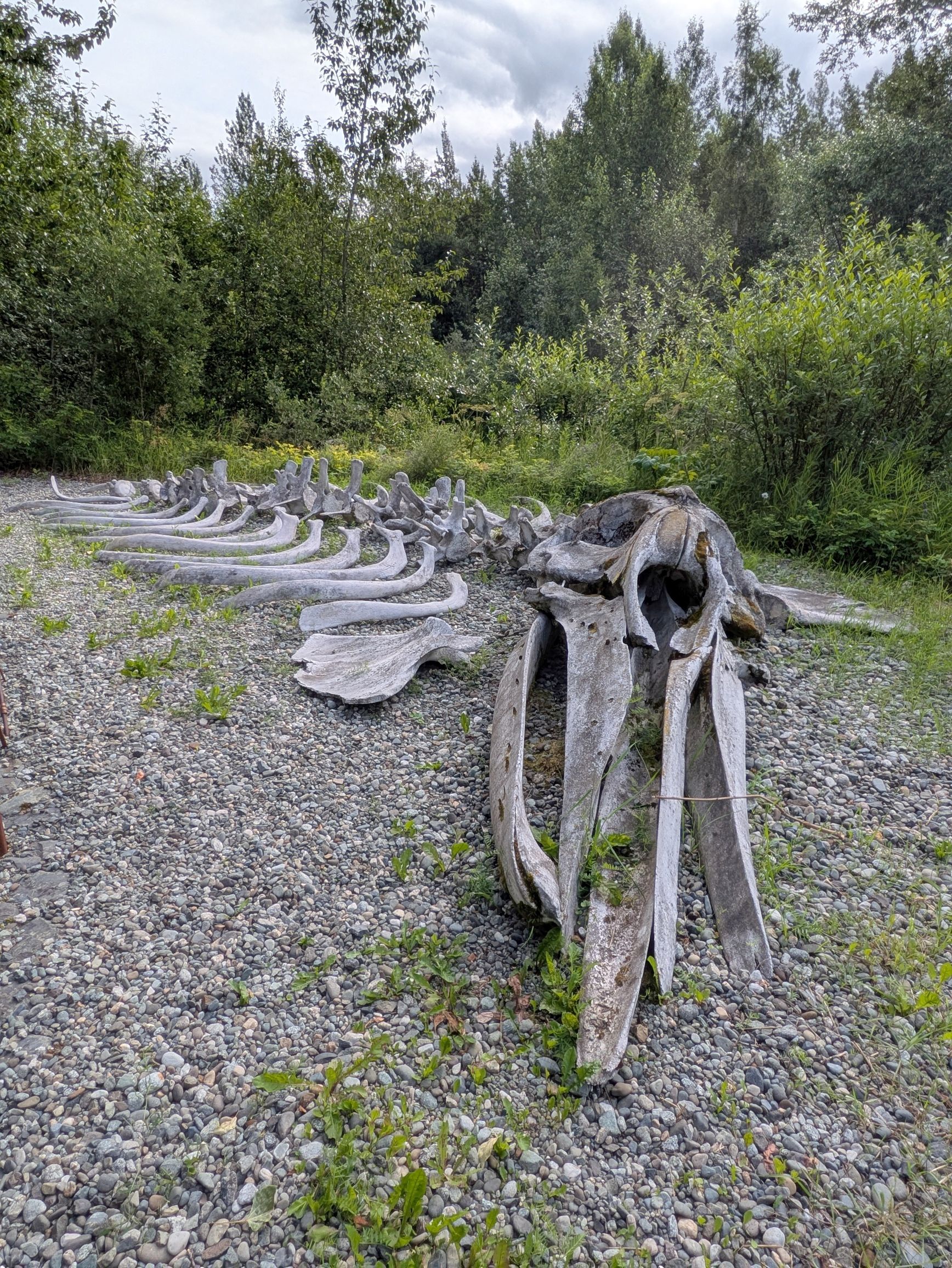
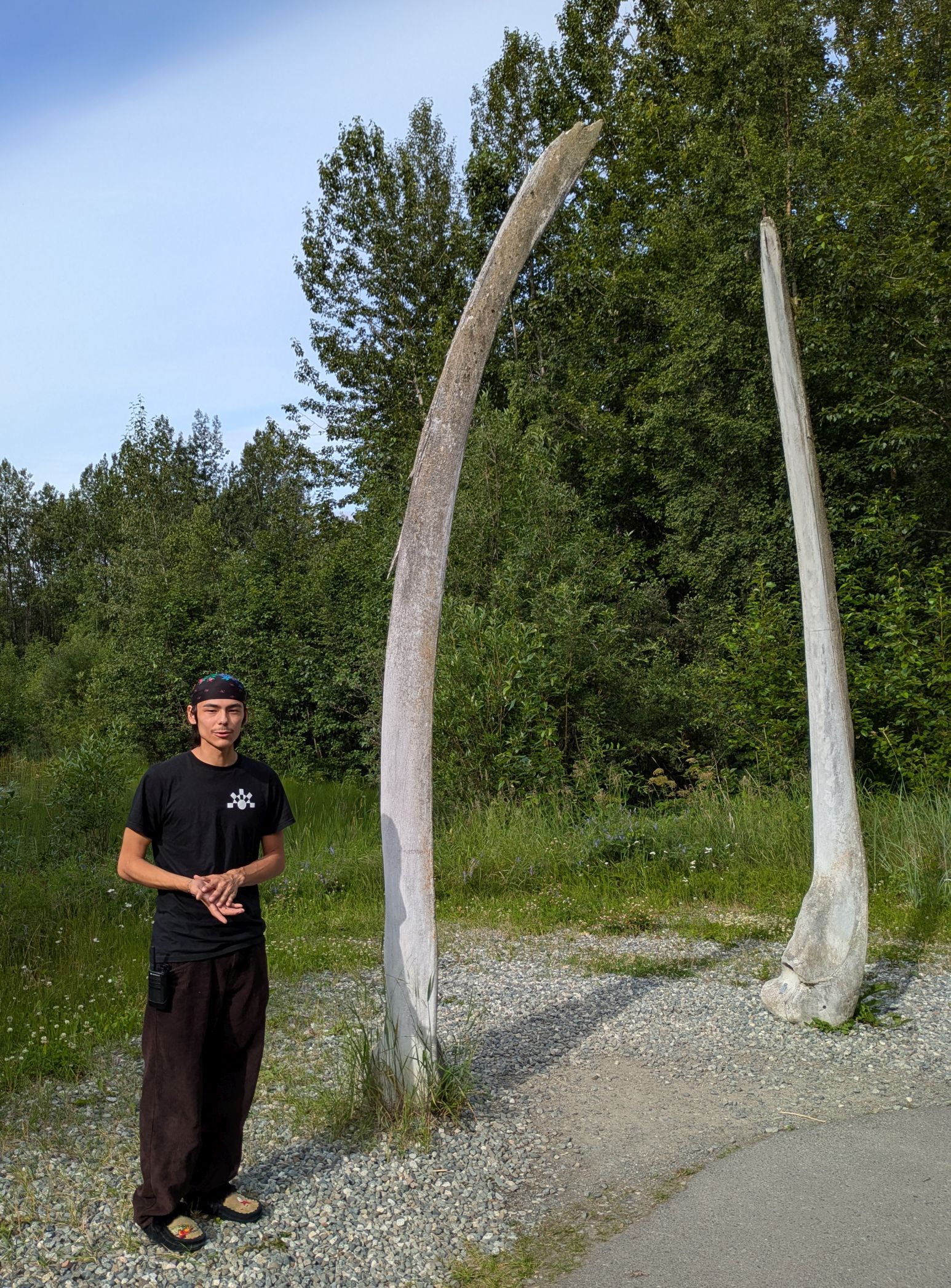
Whale skeleton
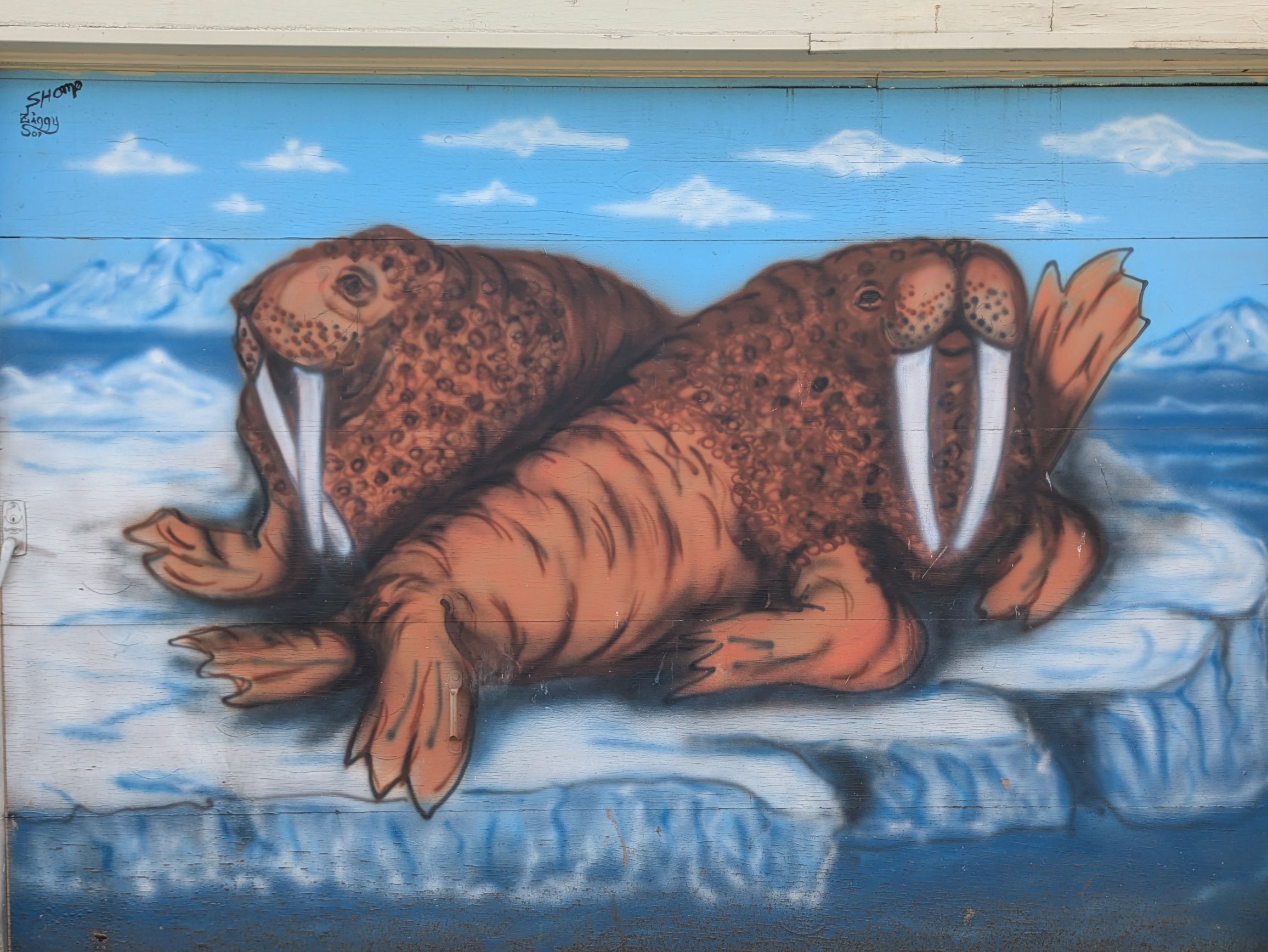
Walrus ivory carving
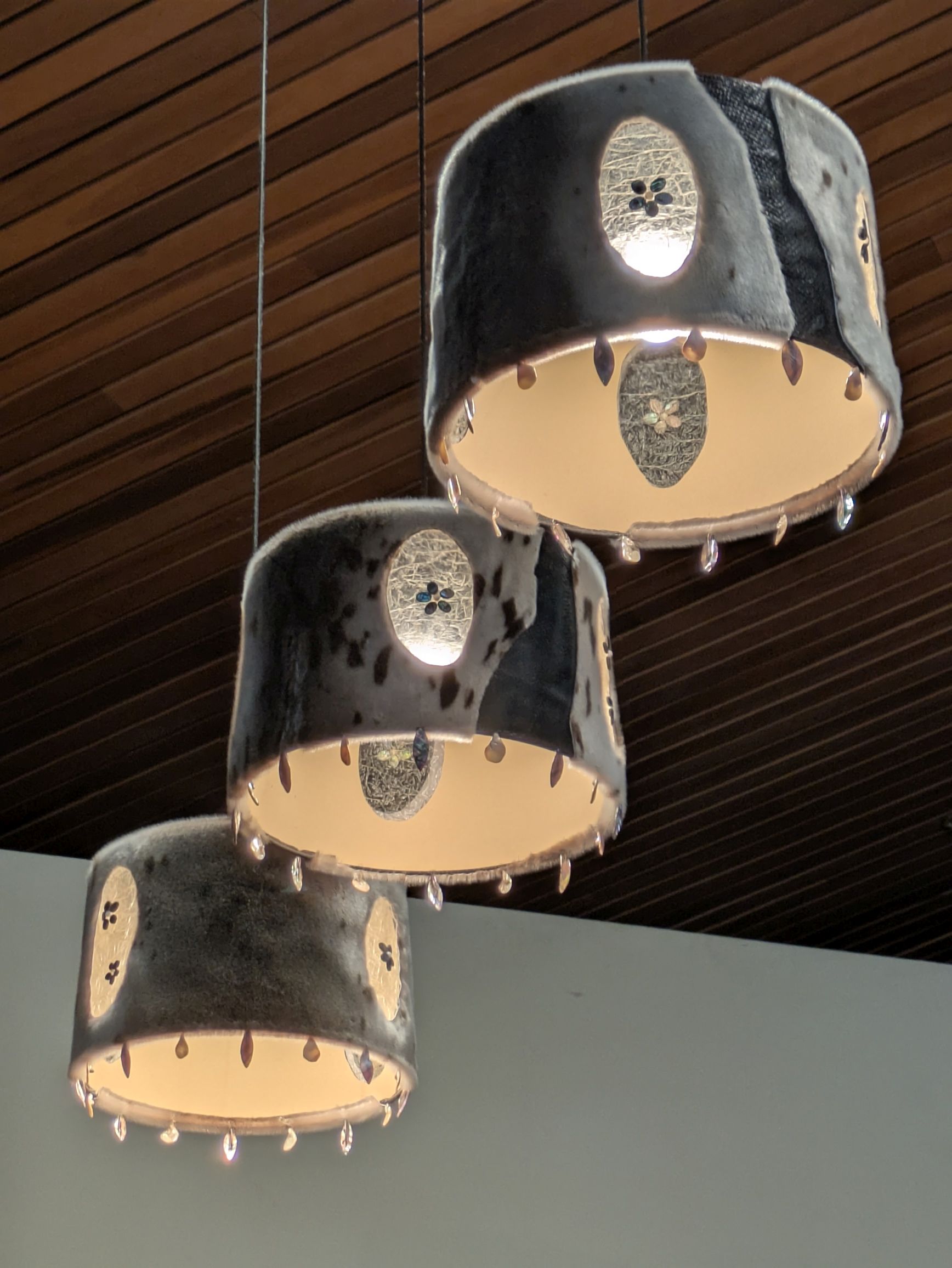
These lamp shades are made from harbor seal hides, commercially dyed salmon skins, seal intestines, and thread.
Before continuing to Seward, we had a couple of hours to explore Anchorage on our own. A city of about 300,000 people, the downtown area was small enough to easily get around on foot, which we did after walking part of the Coastal Trail.
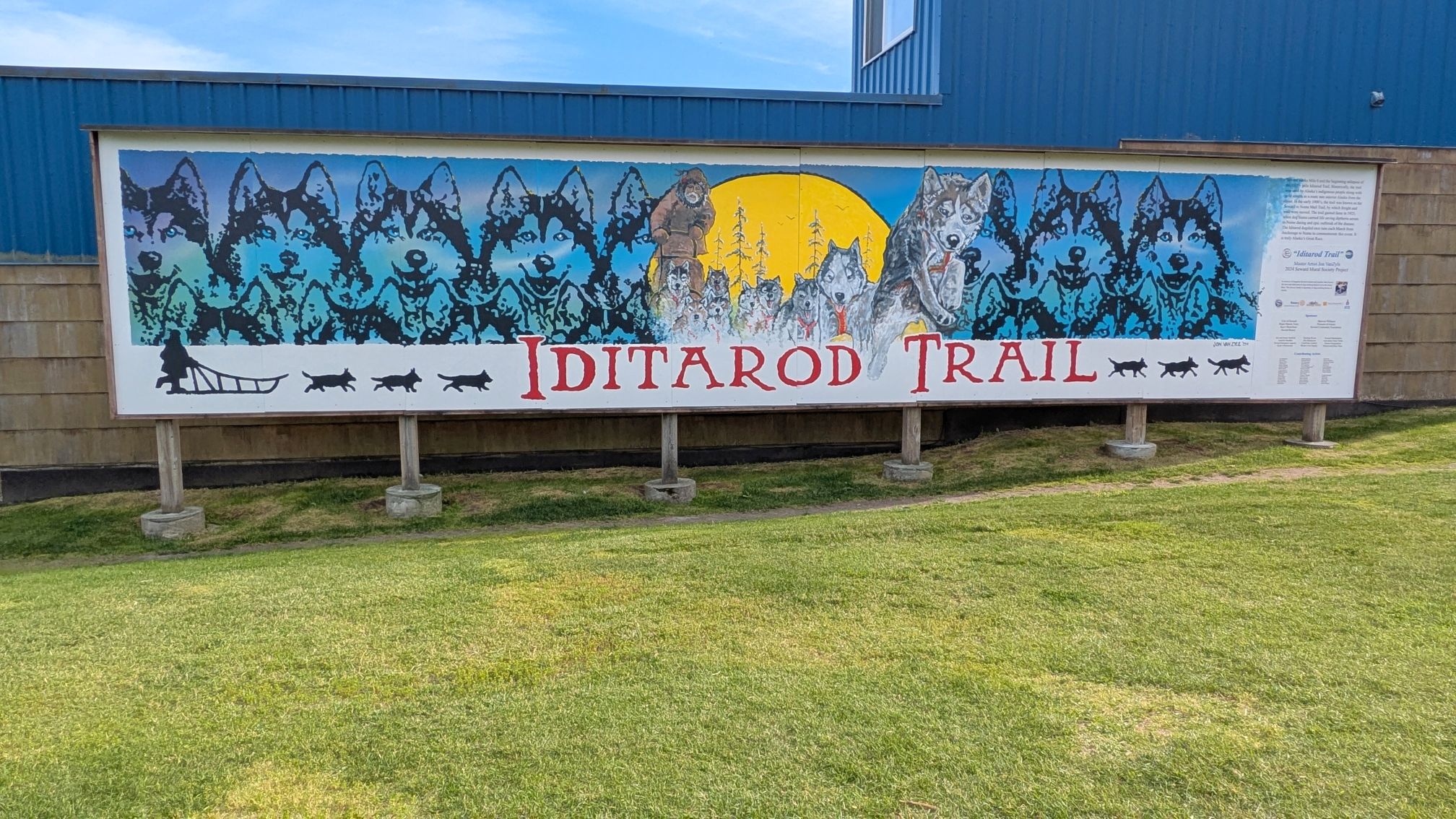
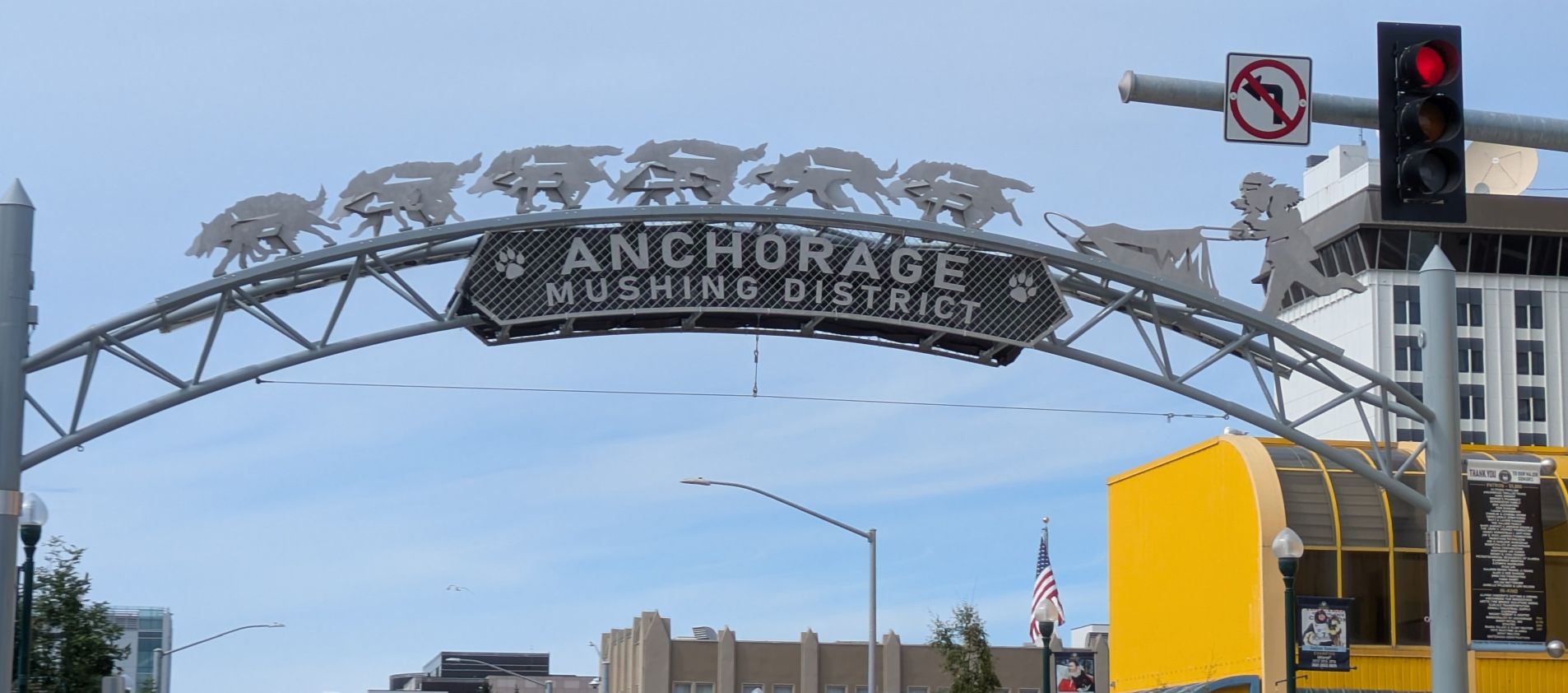
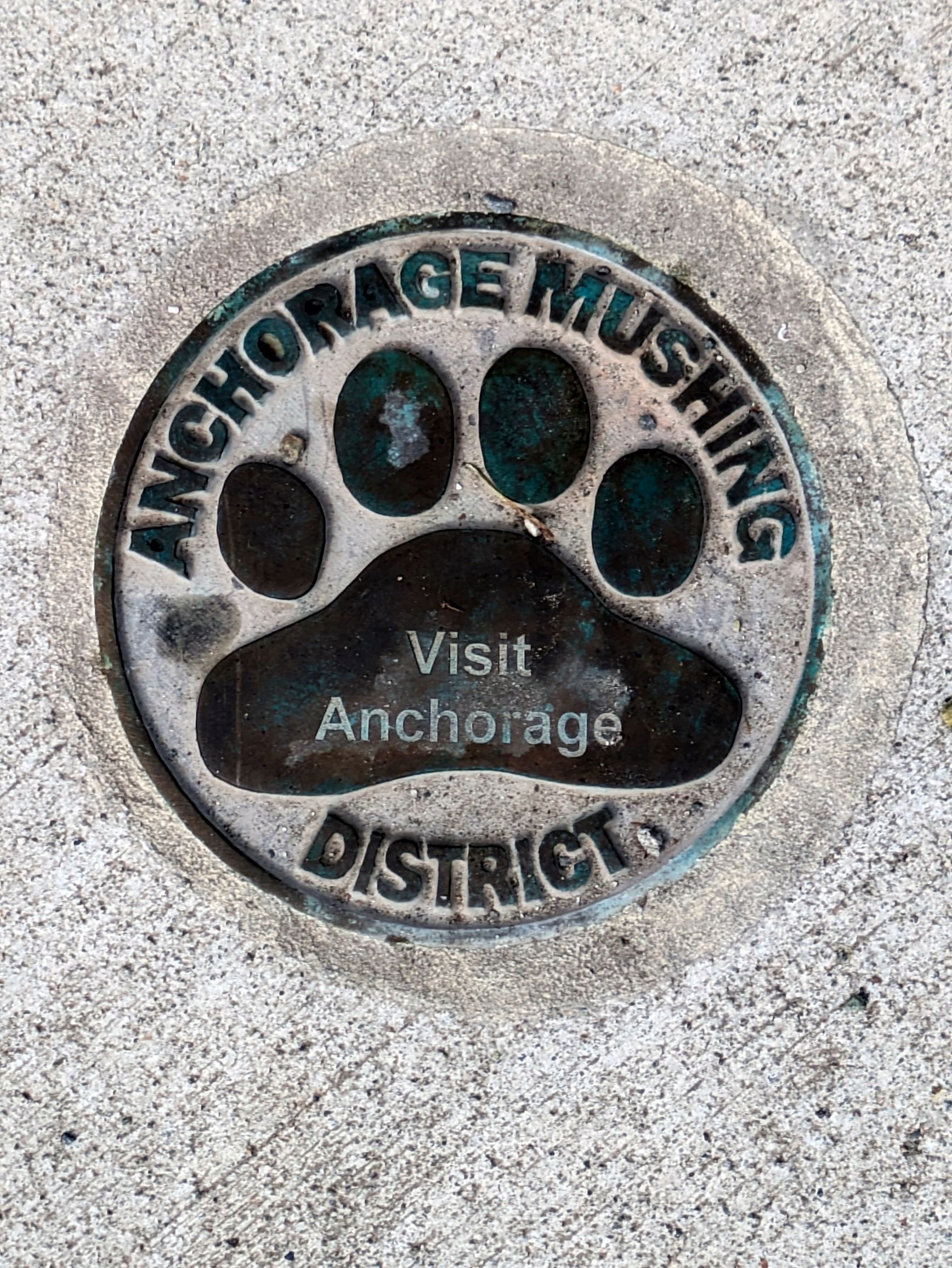
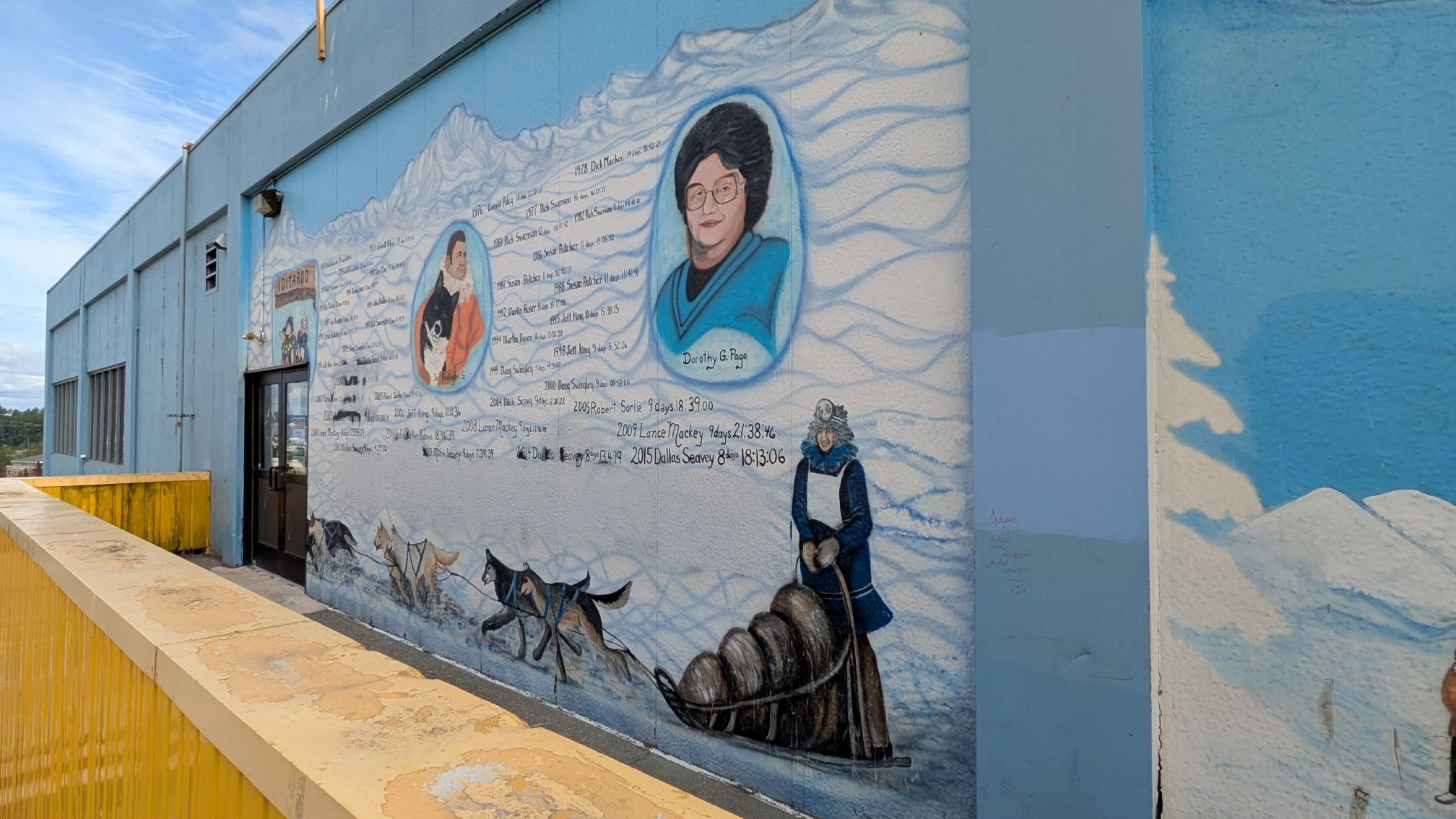
Although Anchorage has the typical sports teams you would expect in any city, such as baseball, basketball, and hockey; there is one unique sport that it is best known for: the Iditarod Trail Sled Dog Race. The race begins in the city and covers a distance of 938 miles to Nome, which takes 8 to 15 days. Teams of between 12 to 16 dogs and their musher begin the race, but at least five of those dogs must be on the towline at the finish line. We learned a lot about the Iditarod when we visited four-time champion, Jeff King’s Husky Homestead, which I wrote about previously.
While walking through town, we saw the starting line as well as a mural with the names of all the Iditarod champions, including Jeff King:
Continuing to Seward, our group had dinner at a restaurant overlooking the marina in town. The skies had cleared, so we thoroughly enjoyed the beautiful evening views while we dined. It was a wonderful way to end the day!
This shot was taken through the window of the restaurant to the fish cleaning station on the pier below. This little guy was enjoying the scraps thrown over by the fisherman.
Coming up next: SEATTLE & ALASKA #11: A GORGEOUS GLACIER CRUISE IN KENAI FJORDS NATIONAL PARK
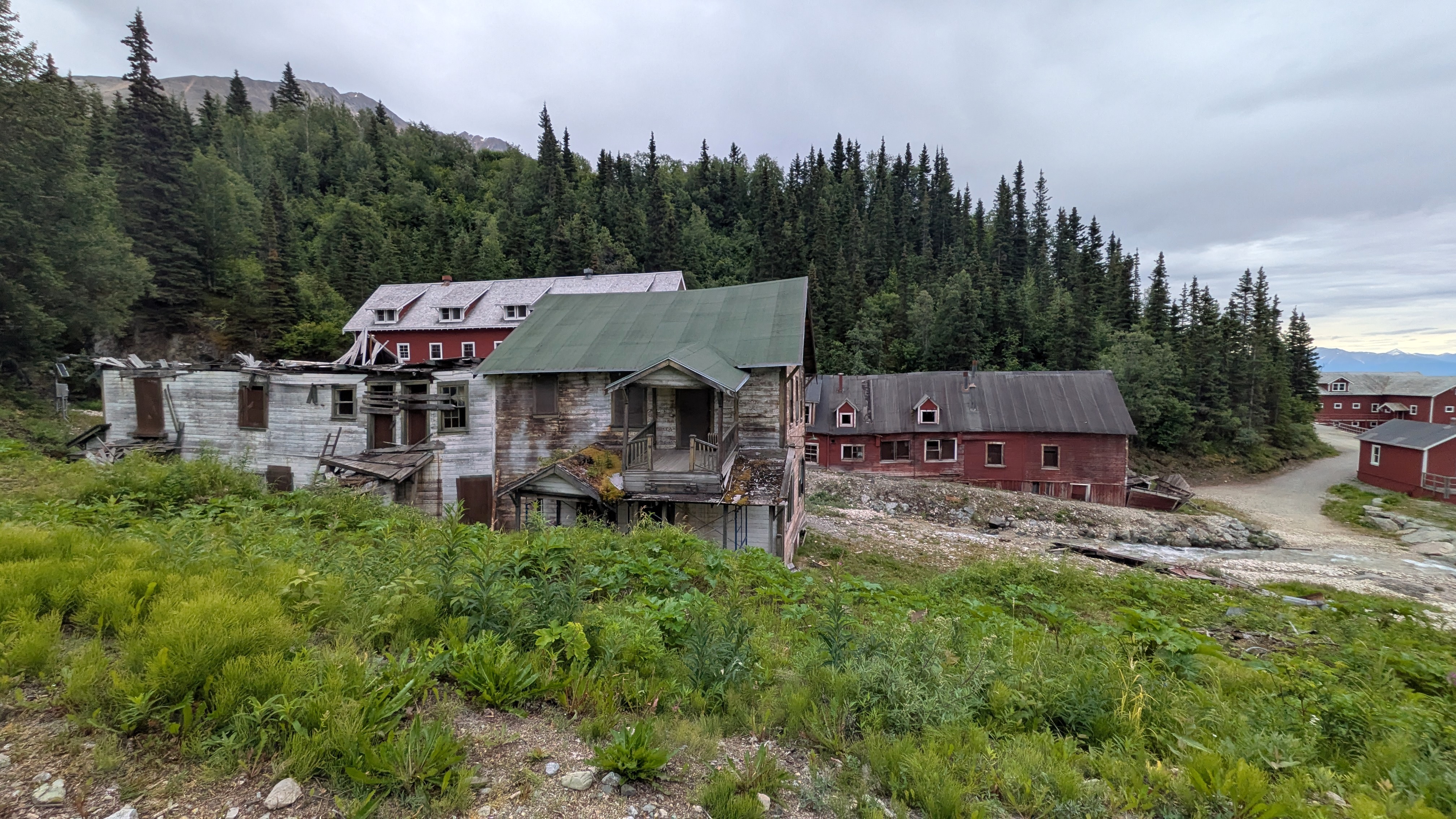
Considering how fortunate we were to have beautiful weather the previous two days in Alaska, I didn’t mind the gloomy skies and some sprinkles during our tour of Kennecott Copper Mill.
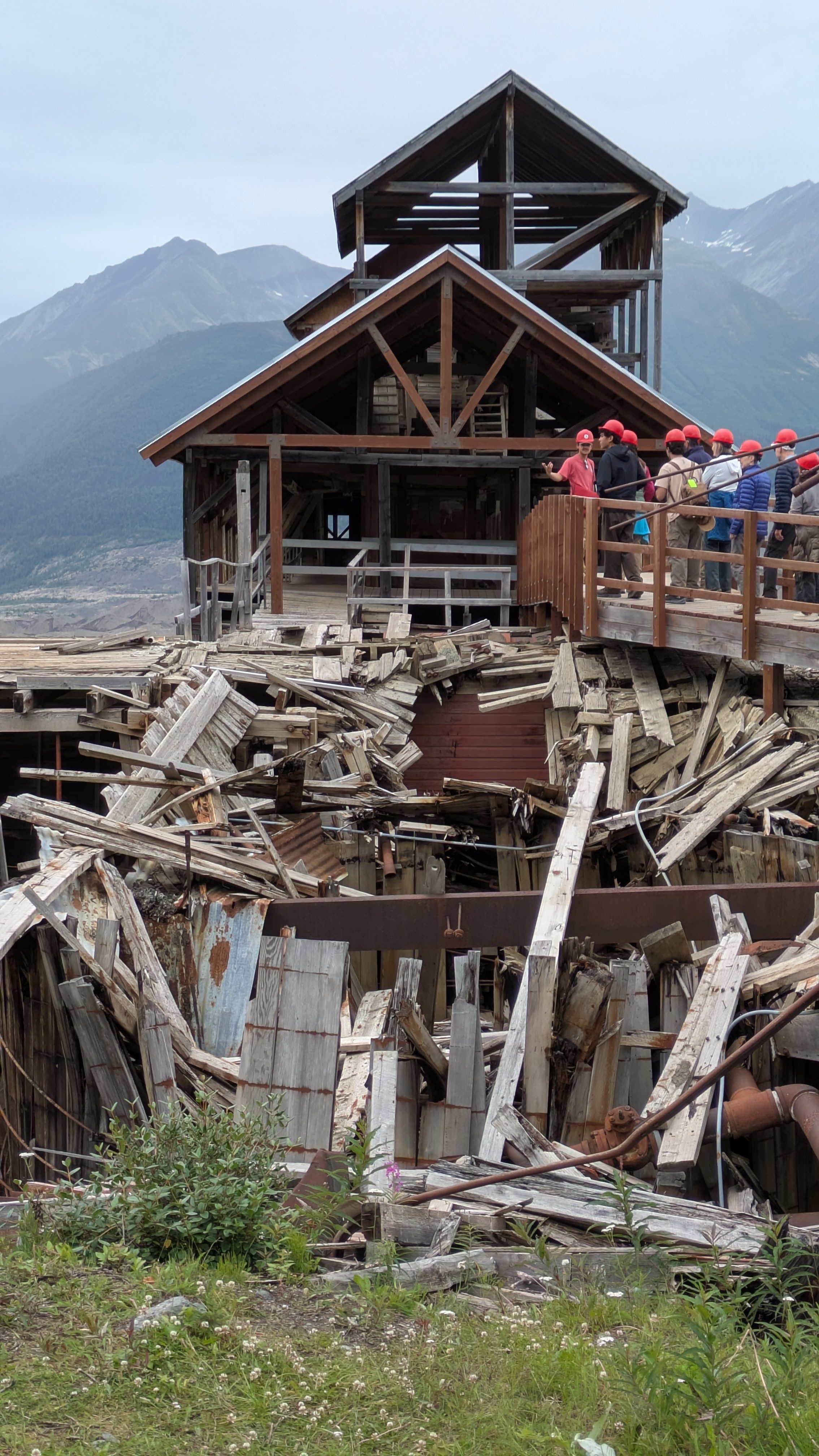
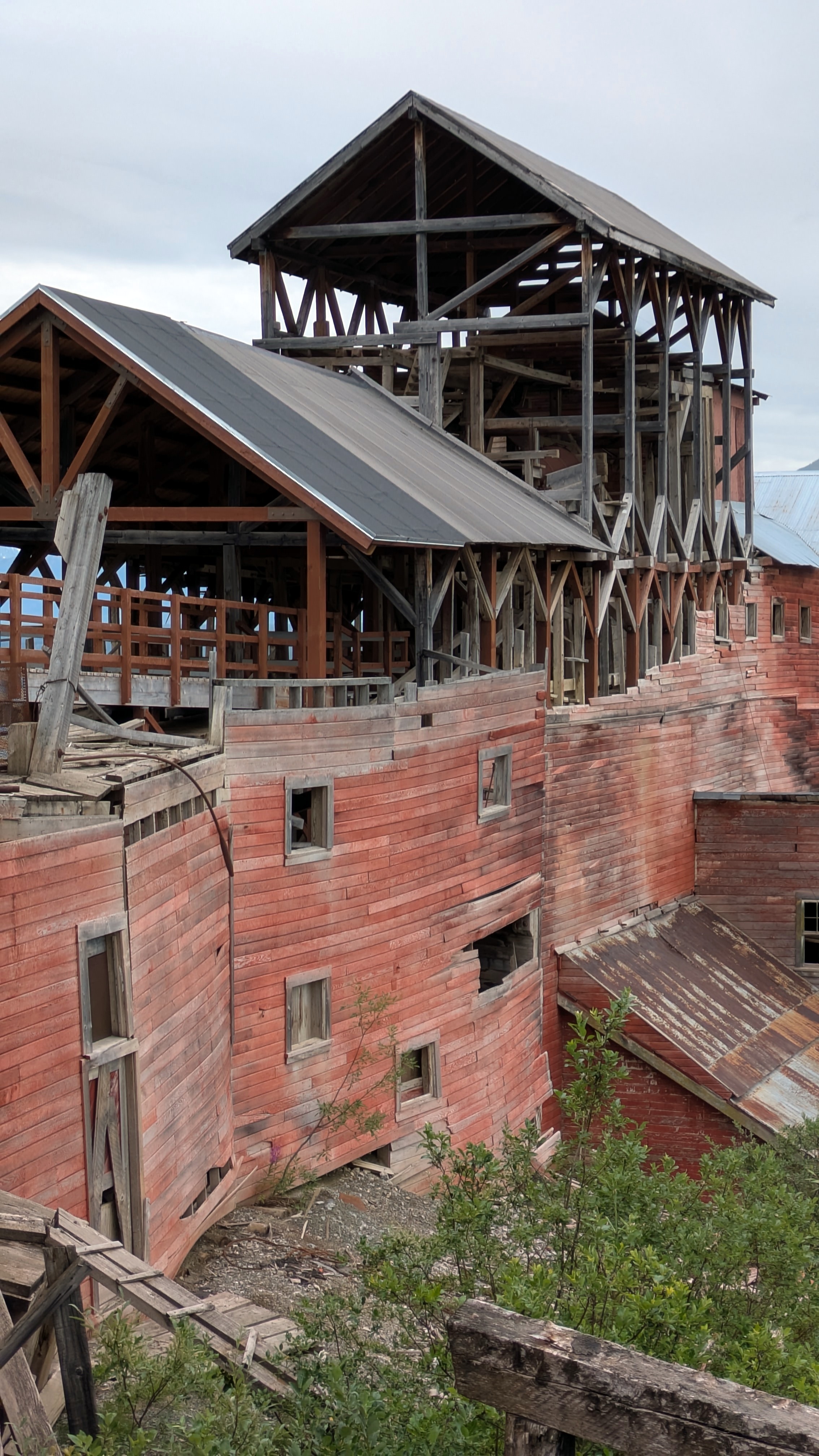
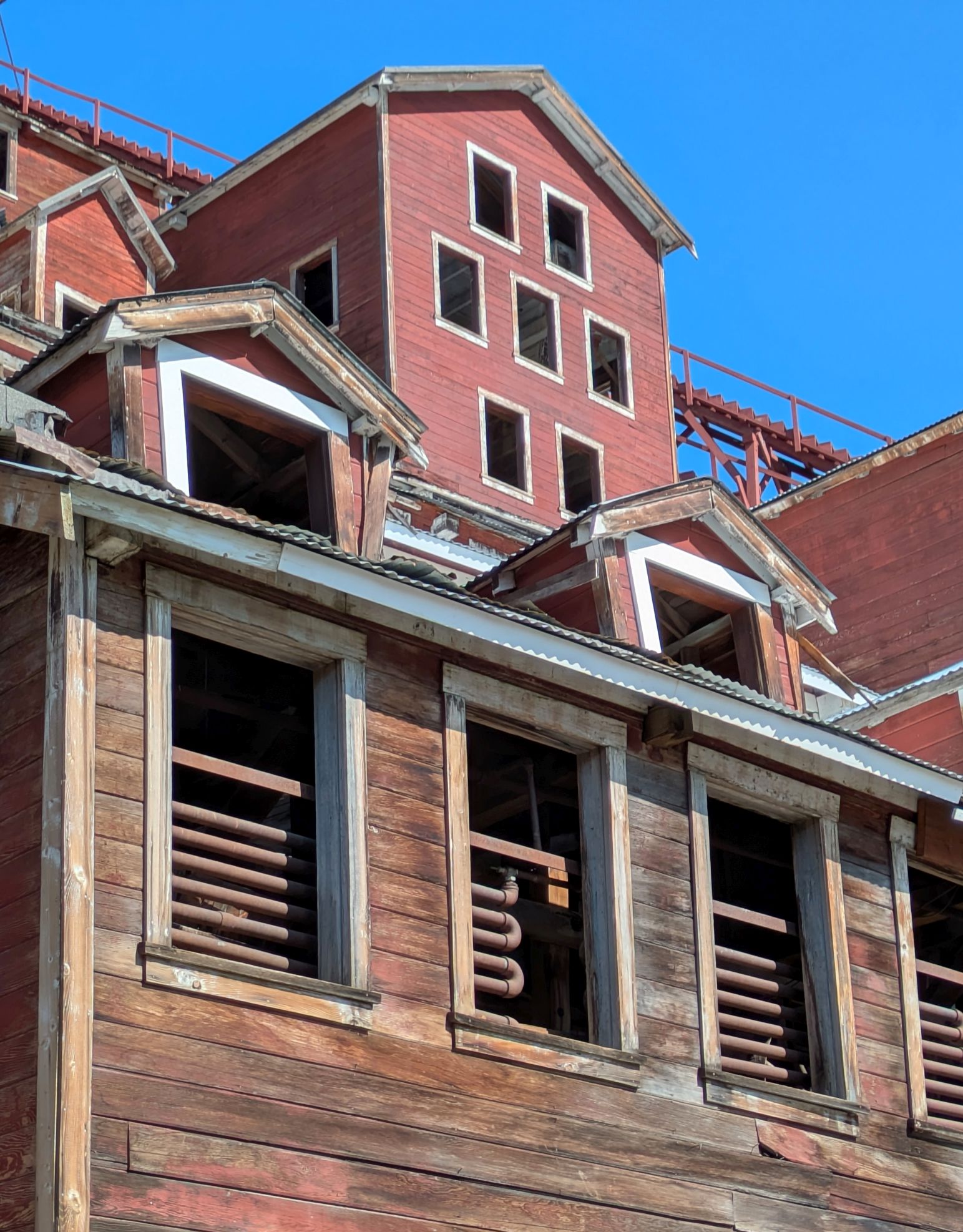
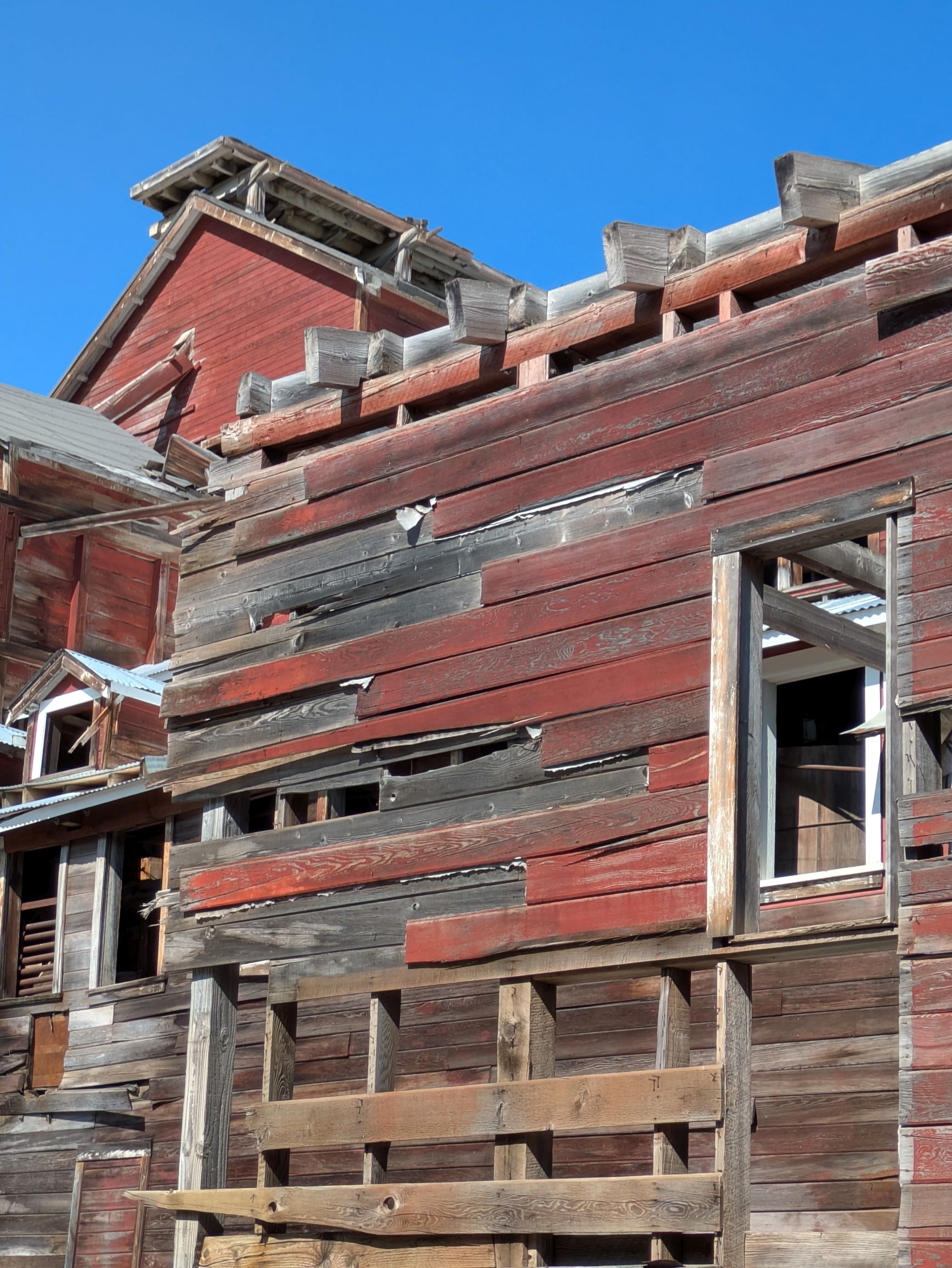
The fourteen-story mill had an interesting history, and we saw it from top to bottom—literally. After hiking up a steep hill, we entered the mill from the fourteenth story and made our way down each one, climbing down ladders each time.
(For all photos, click on the image for a full screen view.)
On our way to the mill…
At the top of the steep hill entering the 14th story of Kennecott Copper Mill
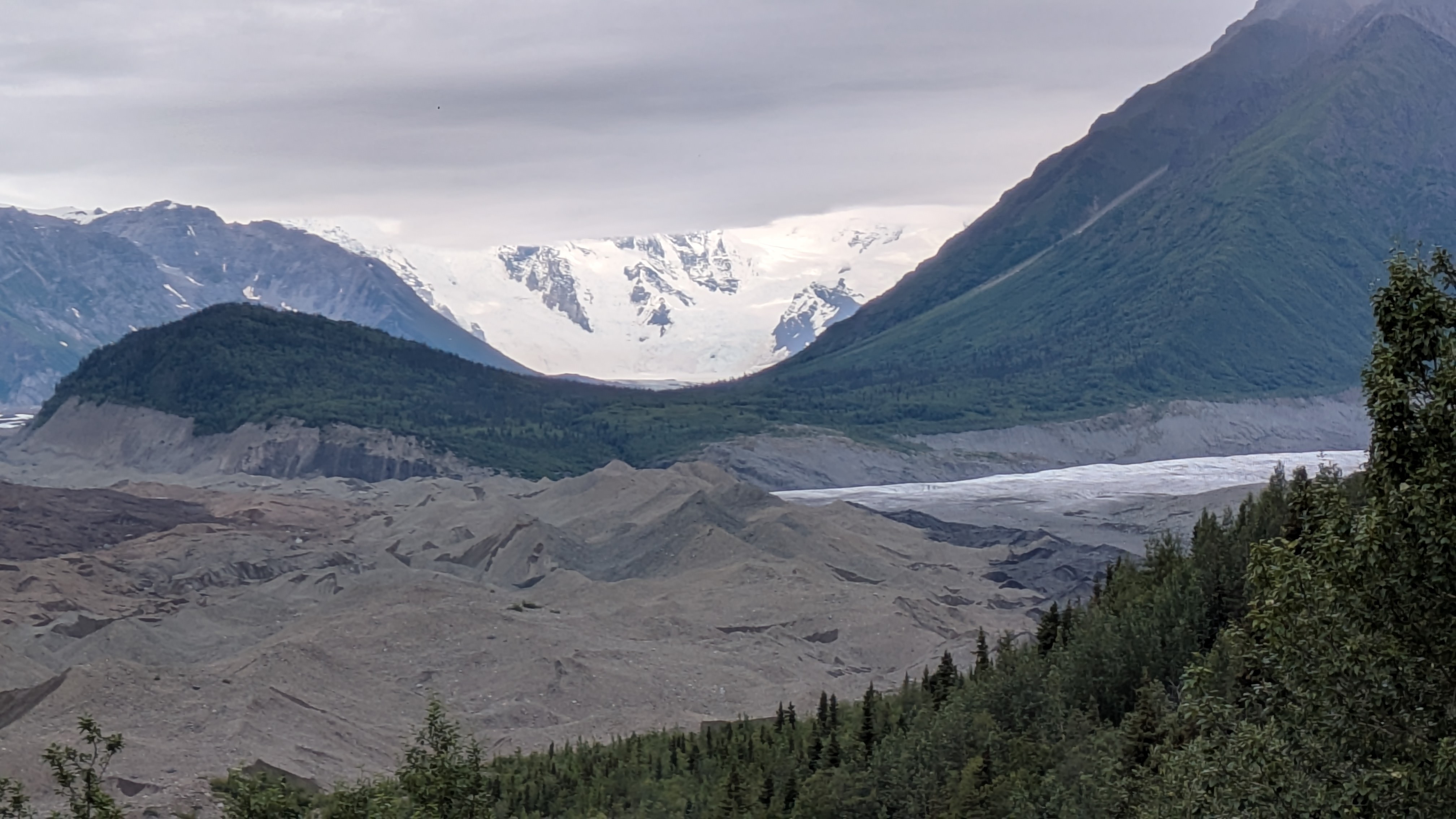
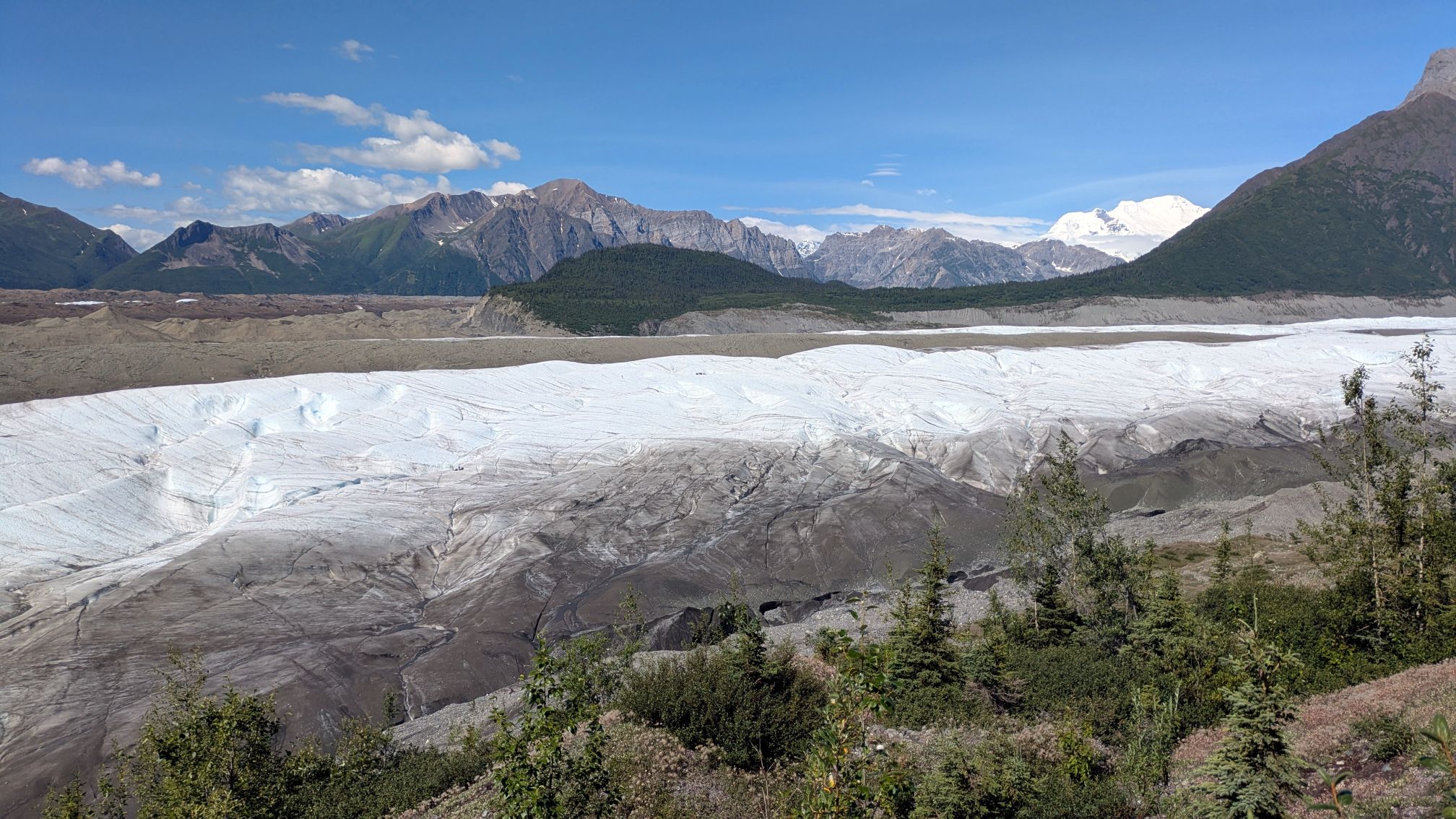
The view to the left from the topThe view to the right of the glacier off in the distance
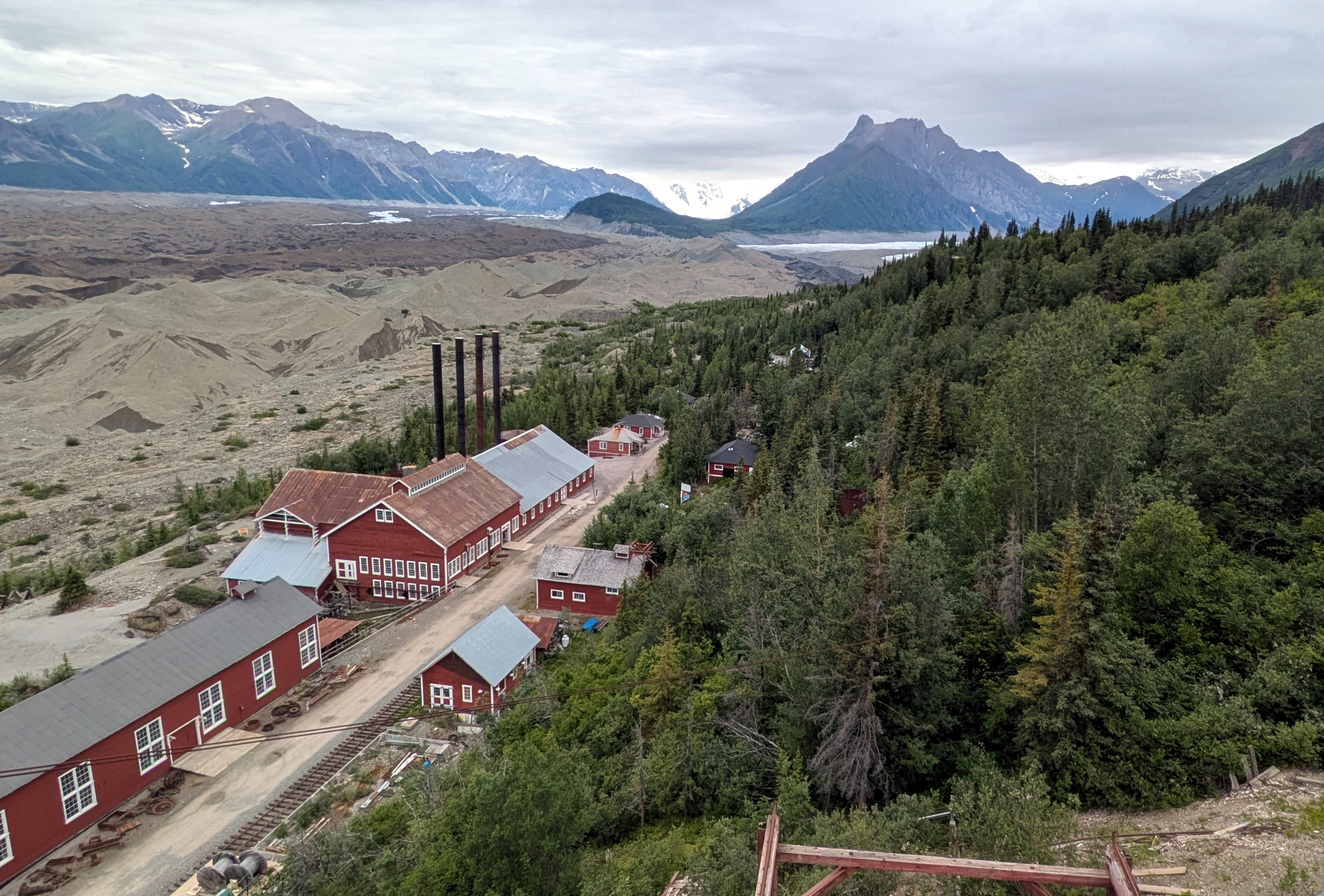
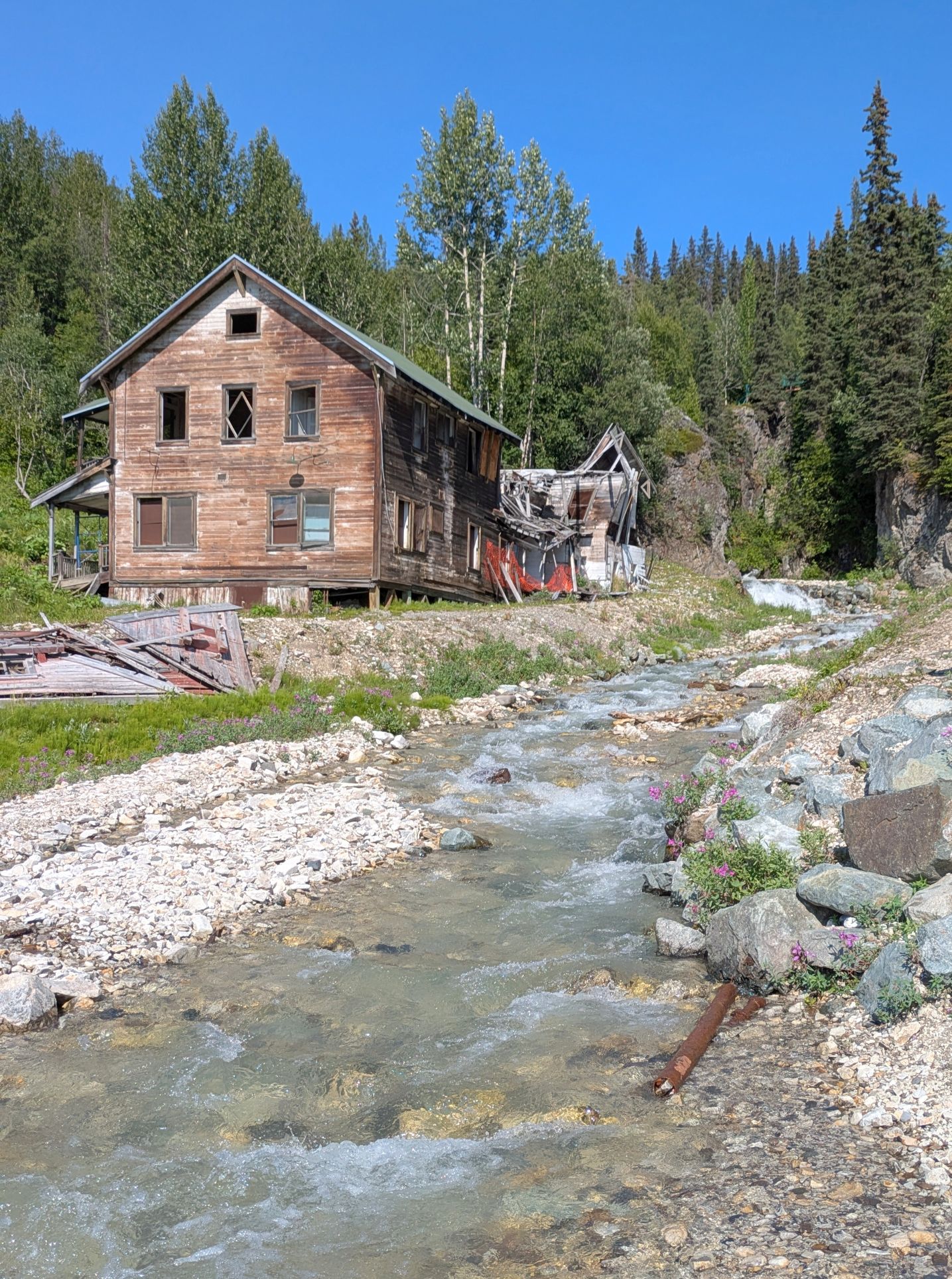
The view of the mill town below
Two of the big names in the partnership that developed the copper mine, mill, town, and railway to transport the copper were J.P. Morgan and Daniel Guggenheim. Built between 1906 – 1911, the entire project was highly controversial. Political battles between conservationists and those having financial interests in copper were fought in President Theodore Roosevelt’s office at the White House. Taking into consideration the deep pockets of both Morgan and Guggenheim, it is easy to understand how they won out.
Meanwhile, the mines, employed by Greek and Scandinavian immigrants, were a horrible place to work. It was dark, dirty, freezing cold, and the work was dangerous. To add to the misery, the mill was isolated— a 45-minute tram ride each way, and the miners worked seven days a week.
At its peak in 1924, Kennecott was producing 10 to 12 million pounds of copper—enough to fill 10,000 rail cars—each year. What the workers didn’t know, it was the beginning of the end, because ore was no longer found as fast as it was extracted.
In 1932, the global copper market was hit by the Great Depression, and the mines closed until 1935. When they reopened, it was with fewer workers. The ore dwindled and production declined. In 1938, Kennecott was closed for good.
In the end, Morgan and Guggenheim’s $100 million investment returned $200 million. A net of $100 million? Not bad!
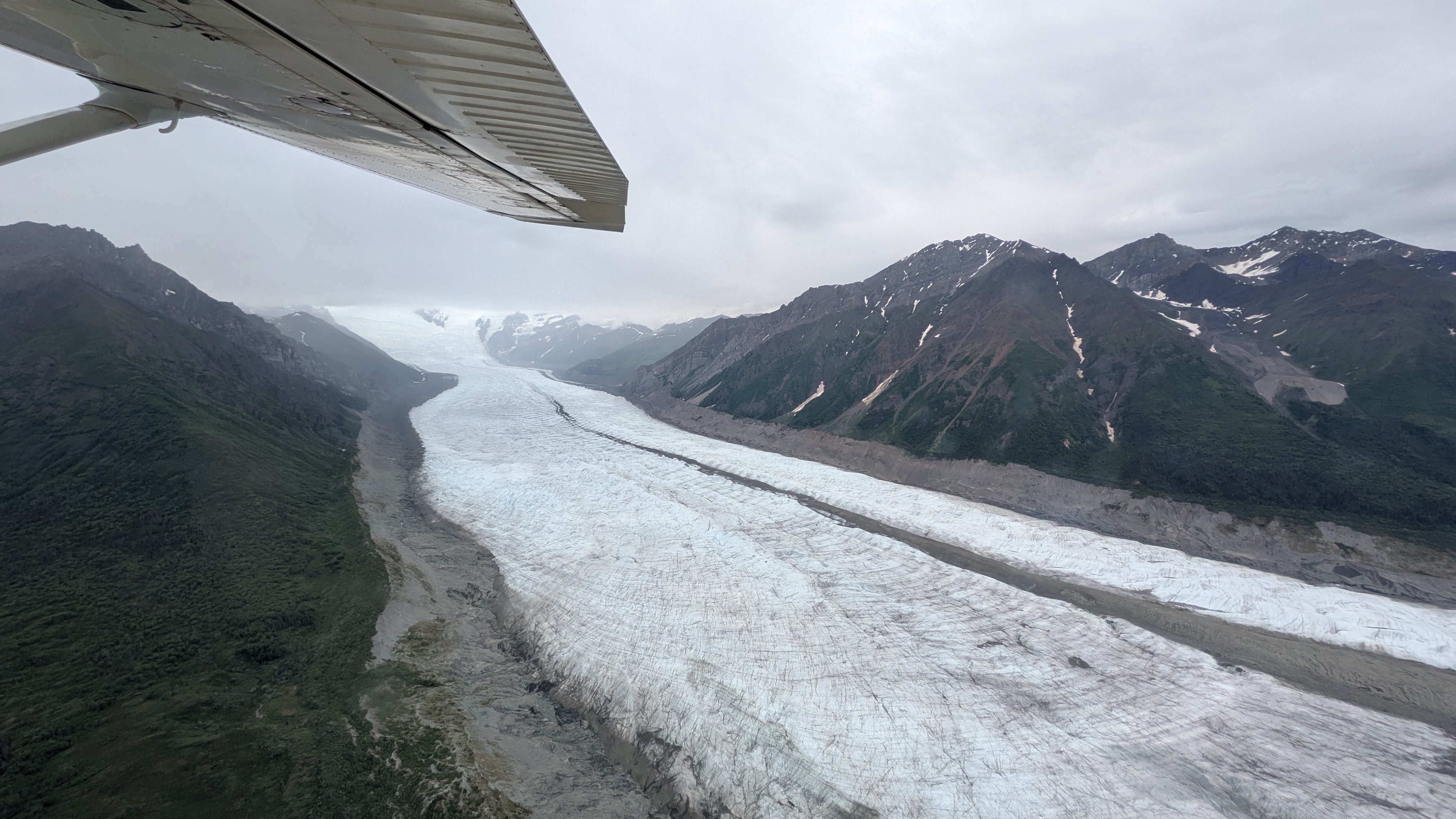
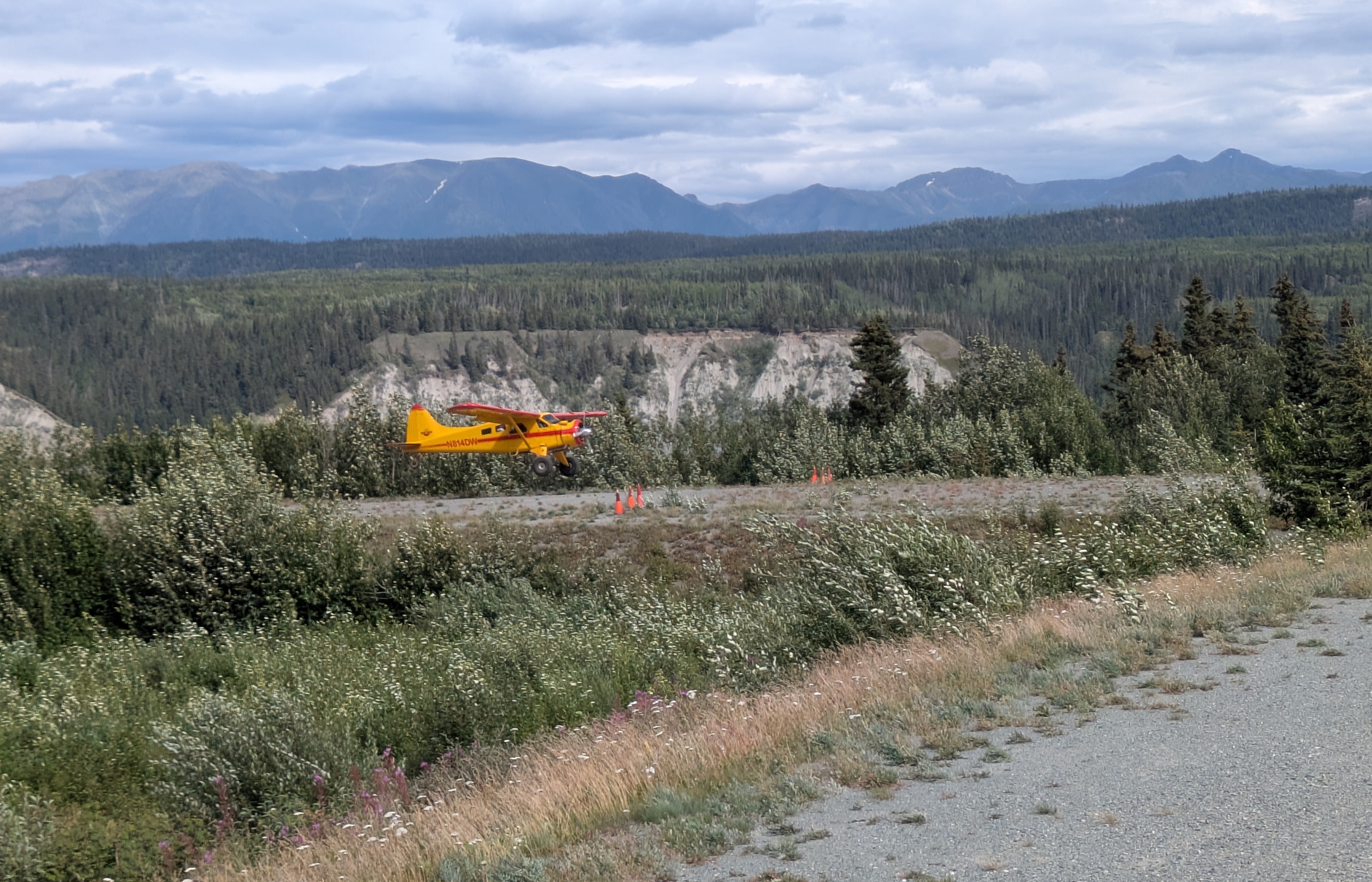
Following our tour and lunch back at the lodge, our group headed back to the “airport” for our flight back to Chitina where we met up with Bobby and the bus. This is the view of the mill and town from the plane:
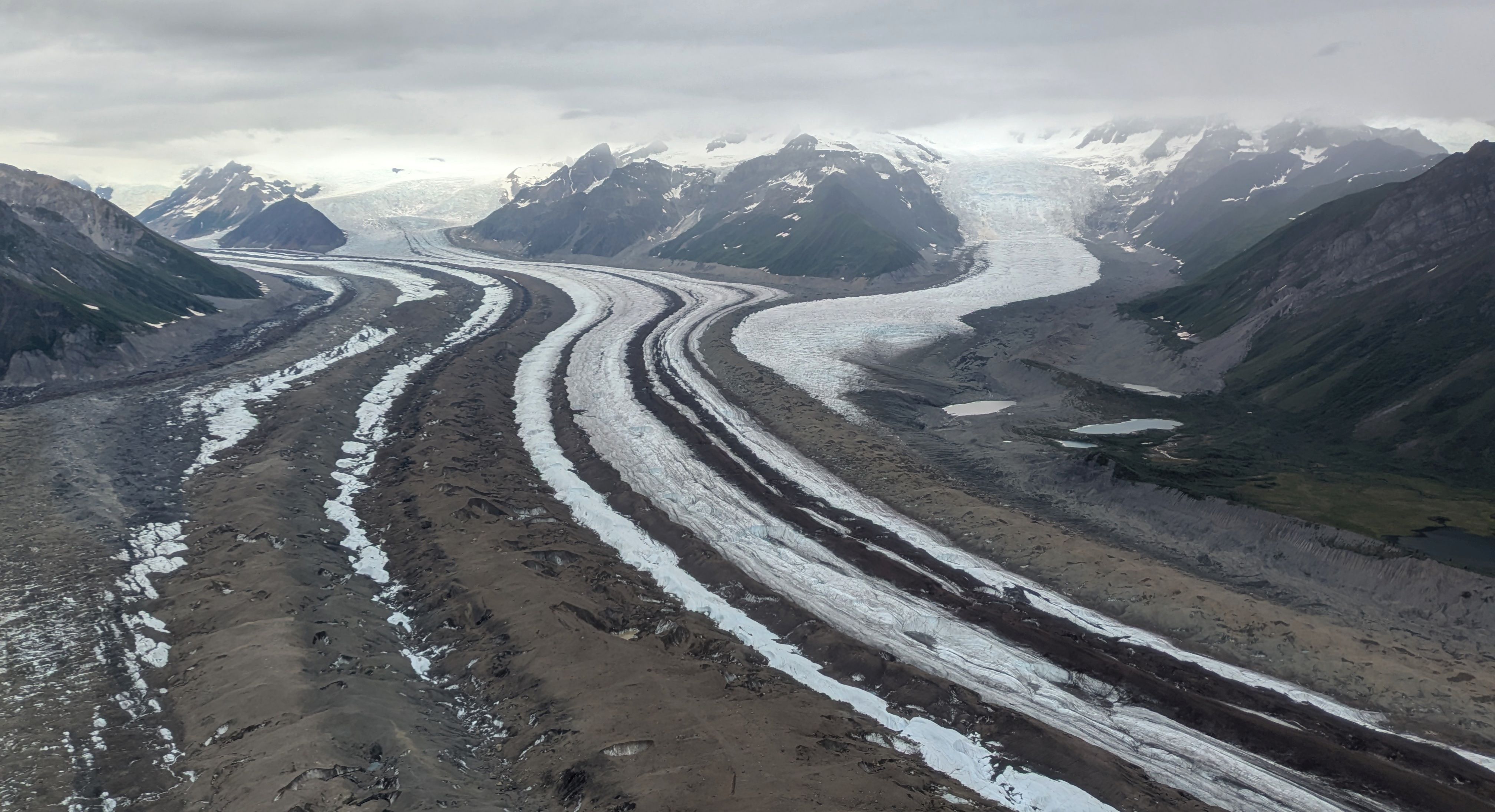
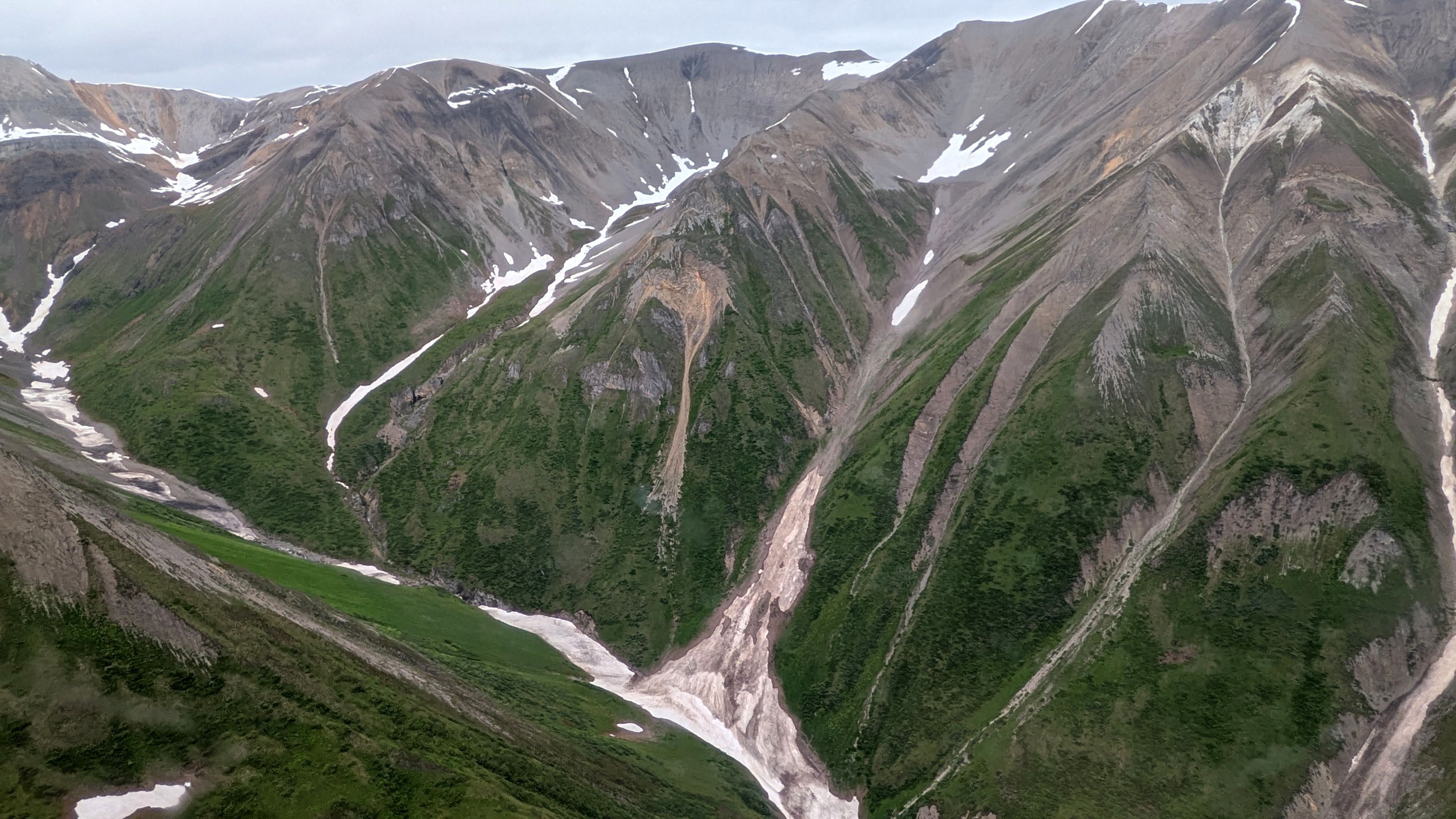
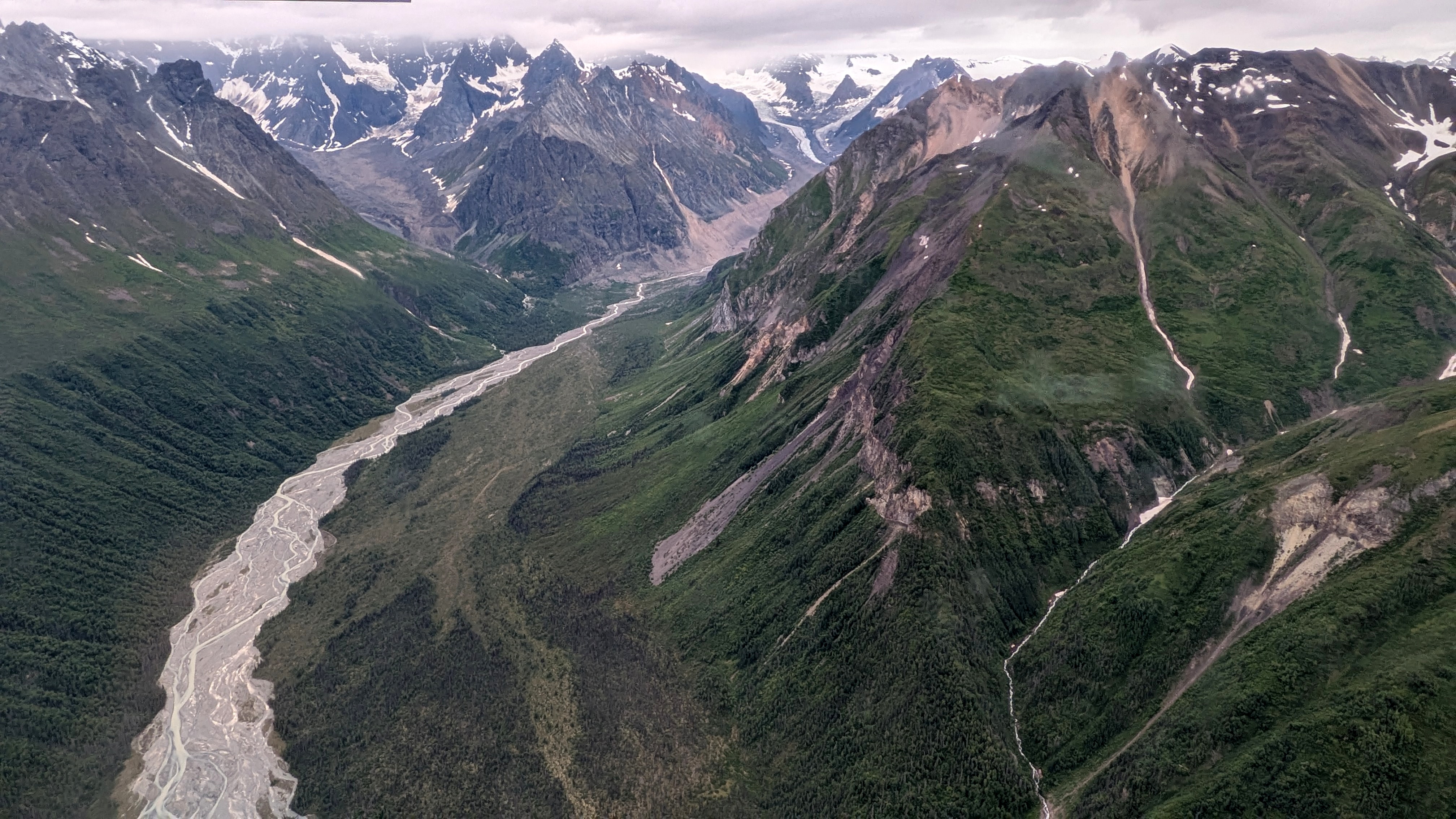
Although the weather wasn’t as beautiful as it had been during our first flight, the scenery was still gorgeous.
Our fellow tour mates coming in for a landing
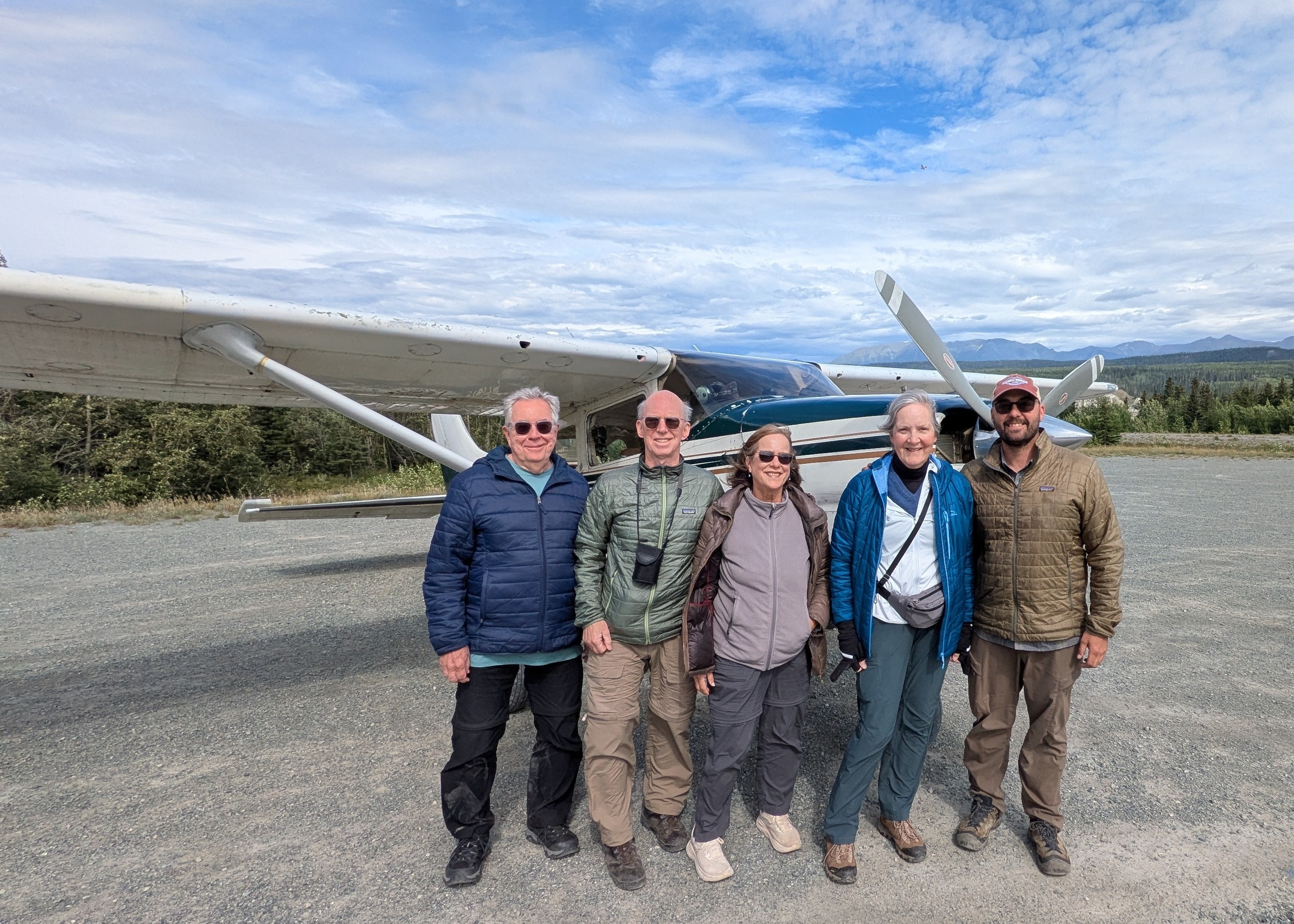
This time, Kyle was our pilot, but we had the same plane and passengers:
“KennIcott” or “KennEcott”? I can’t tell you how many times I changed the spelling in my notes; I was constantly confused. But I later learned the spelling with an “I” refers to the glacier that was named for Robert Kennicott, an explorer and naturalist from the 1800’s that had visited the region twice. “Kennecott” with an “e” refers to the Kennecott Mines or the company town at the base of the mill. The misspelling was on the incorporation paperwork, and it stuck.
Confusion solved! And I remember it all fondly as I look back on my pictures and think about how much I enjoyed just being there in that environment.
During our first morning, we woke up and immediately took in the gorgeous, expansive view from our balcony. The clear sky was a beautiful shade of blue, and I looked forward to the day ahead.
(For all photos, click on the image for a full screen view.)
The plan for the group was to hike to Root Glacier, in Wrangell-St. Elias National Park, a massive park the size of Yellowstone, Yosemite, and Switzerland combined! And that’s just one of the national parks in Alaska. I didn’t realize just how huge Alaska was until Julie, our tour leader, told us ten Georgia states could fit into Alaska!
Most of the people I have spoken with who have visited Alaska have only done so by cruise ship. We have enjoyed that experience, too, but were grateful this time to see some of Alaska on land, including this park as well as Denali and Kenai Fjords.
After our fly over the park the previous day, I was excited to explore some of it on foot with local guides leading the way and sharing their knowledge with us. Although we had the option to get fitted for crampons, so that we could walk on the ice once we arrived at the glacier, most of our group decided against it. To get all the way onto the glacier involved traversing a very steep downhill (and then uphill) section and more miles than most people wanted to hike.
Walking through Kennecott to the trailhead
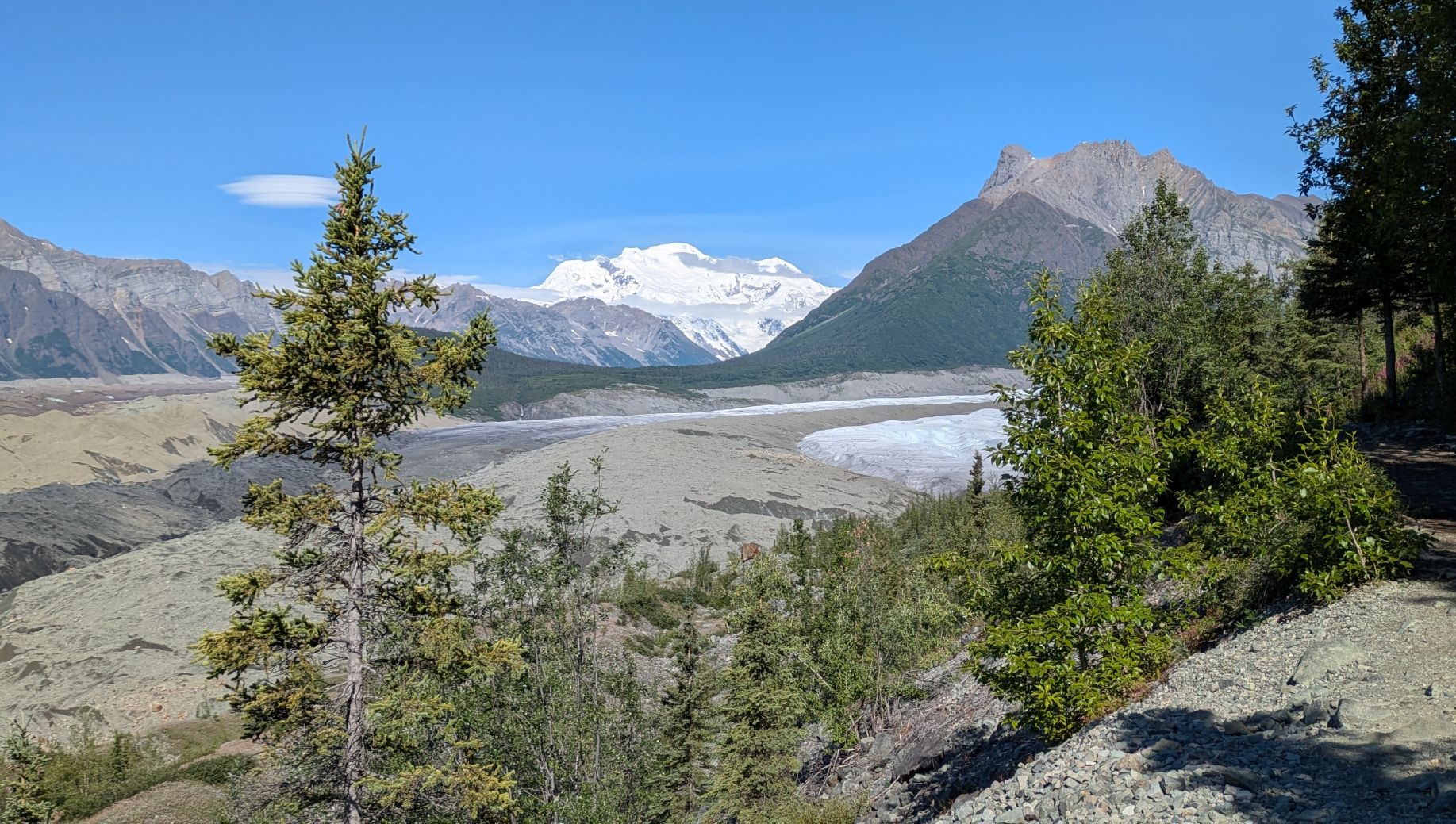
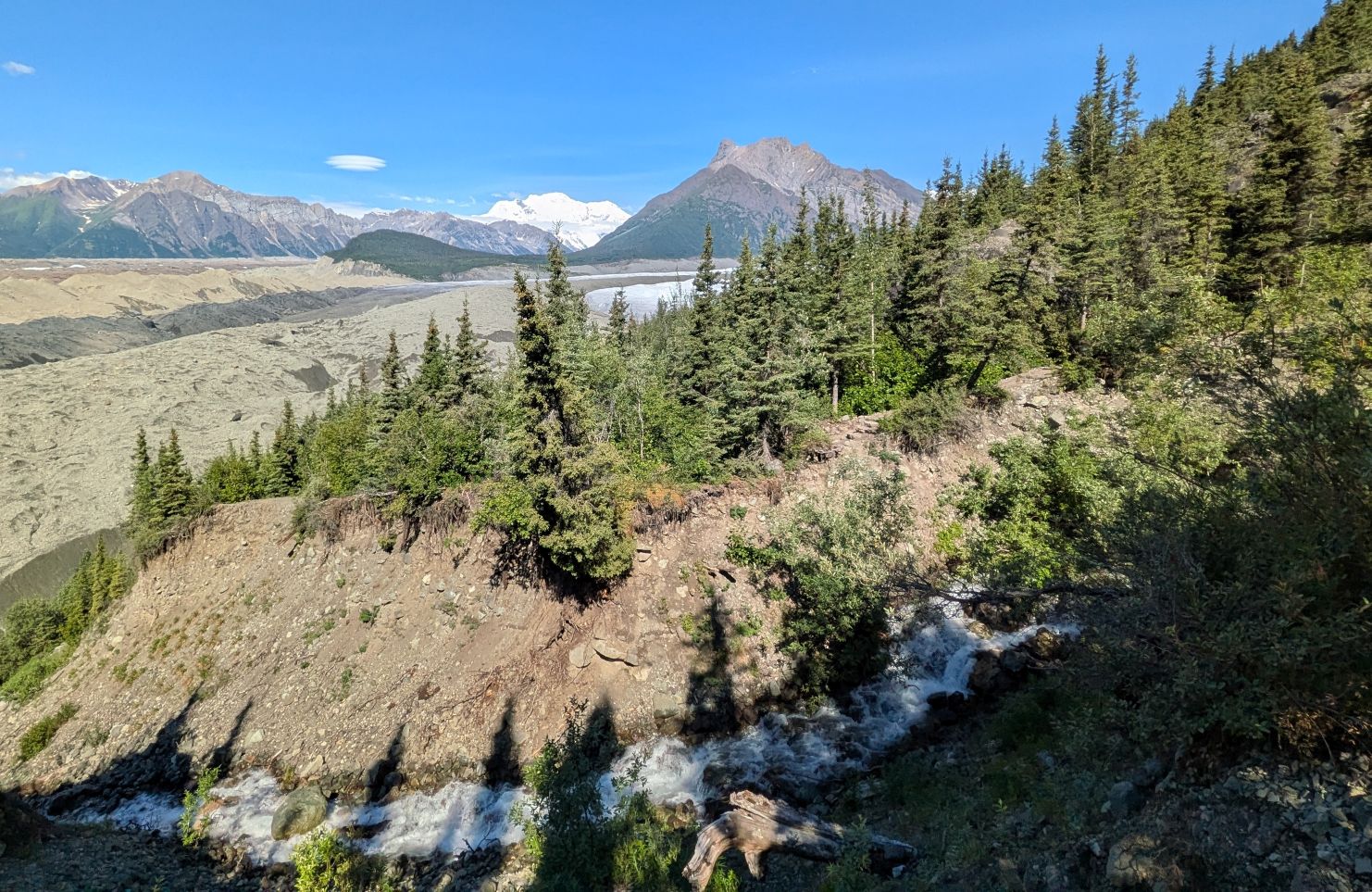
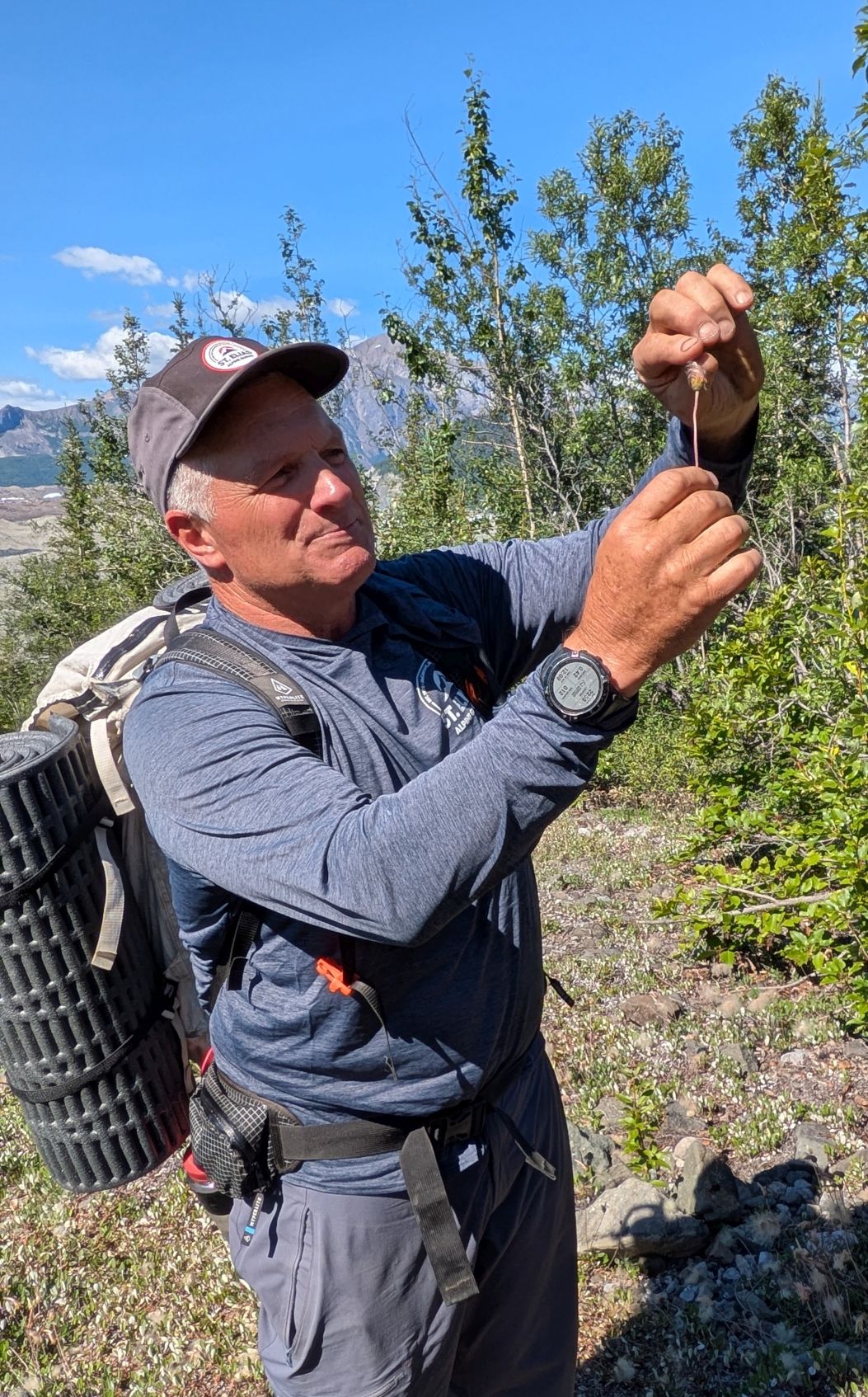
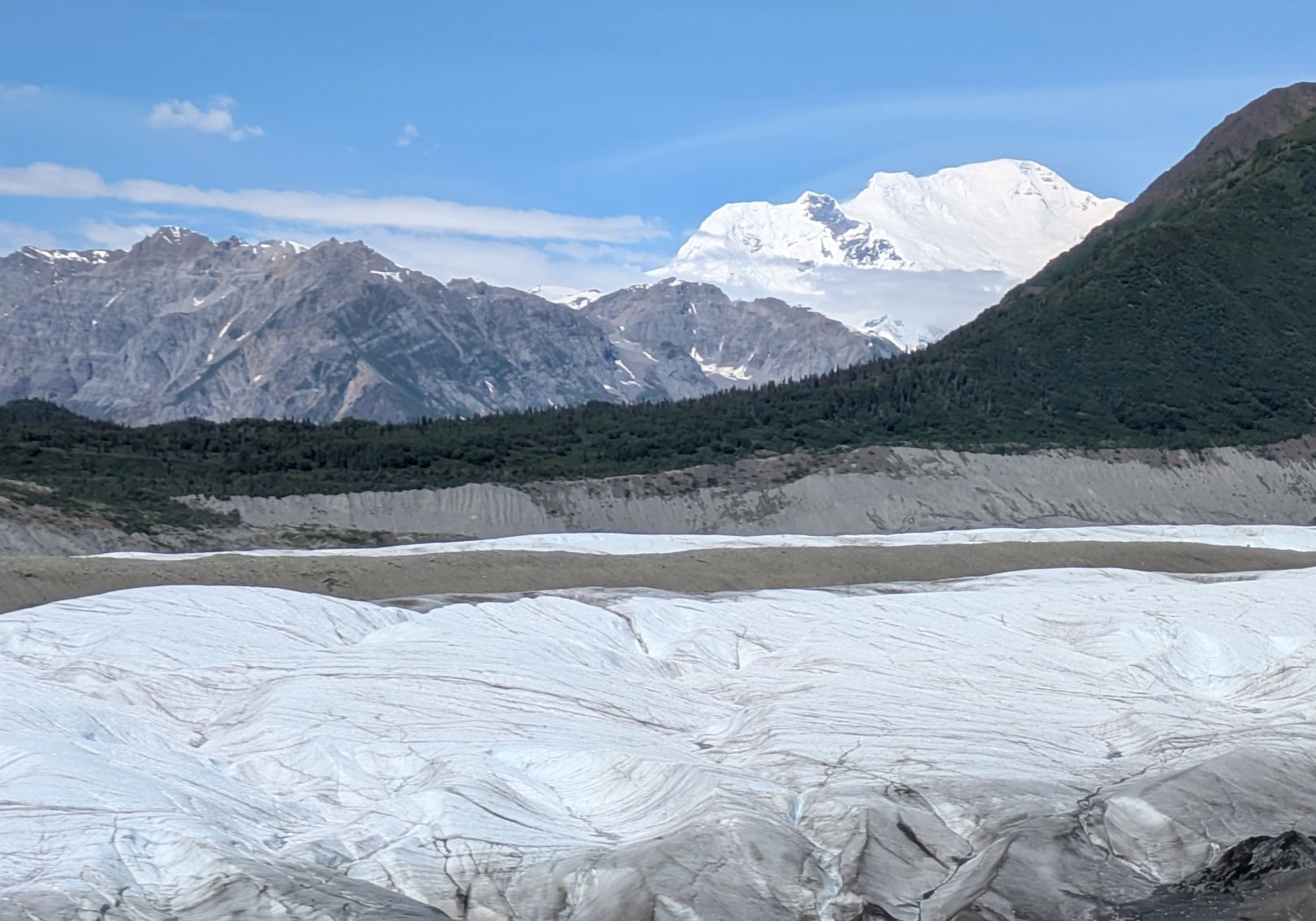
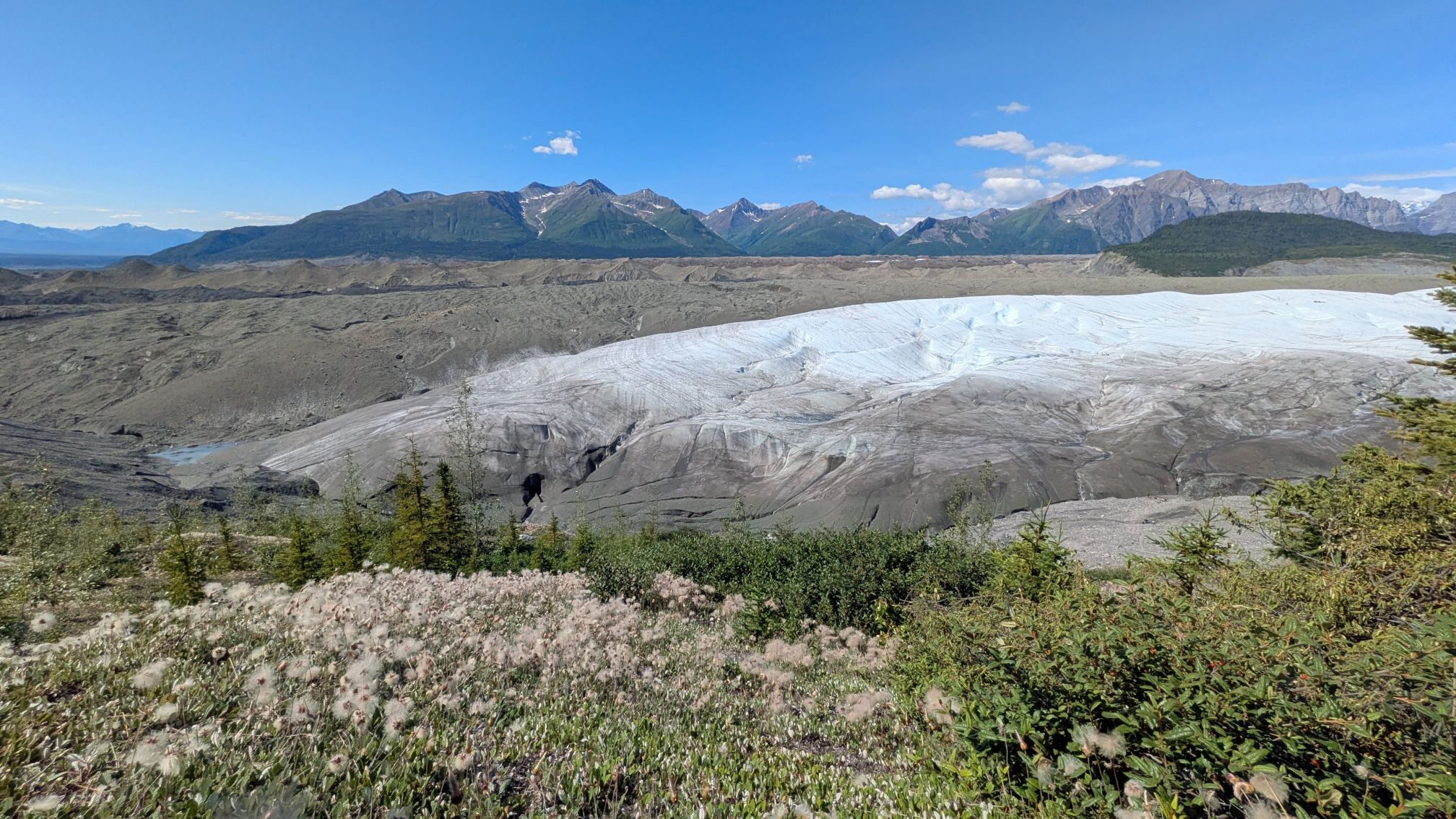
The first stop was at Jumbo Falls where the majority stayed to enjoy their box lunches. I had intended on stopping there as well, because I don’t have hiking boots. (I can’t find any to fit my skinny feet and skinnier heals!) The trail ahead was beautiful, though, and I was determined to get a better view of the glacier. I left Bruce with the larger group and continued hiking until I knew my running shoes would be too dangerous to avoid a fall. I was grateful to be able to make it all the way to the glacier before the steep decline. The view was amazing and well worth the effort!
Five of us decided to turn back at that point and return to town. Our round-trip hike amounted to five and a half miles.
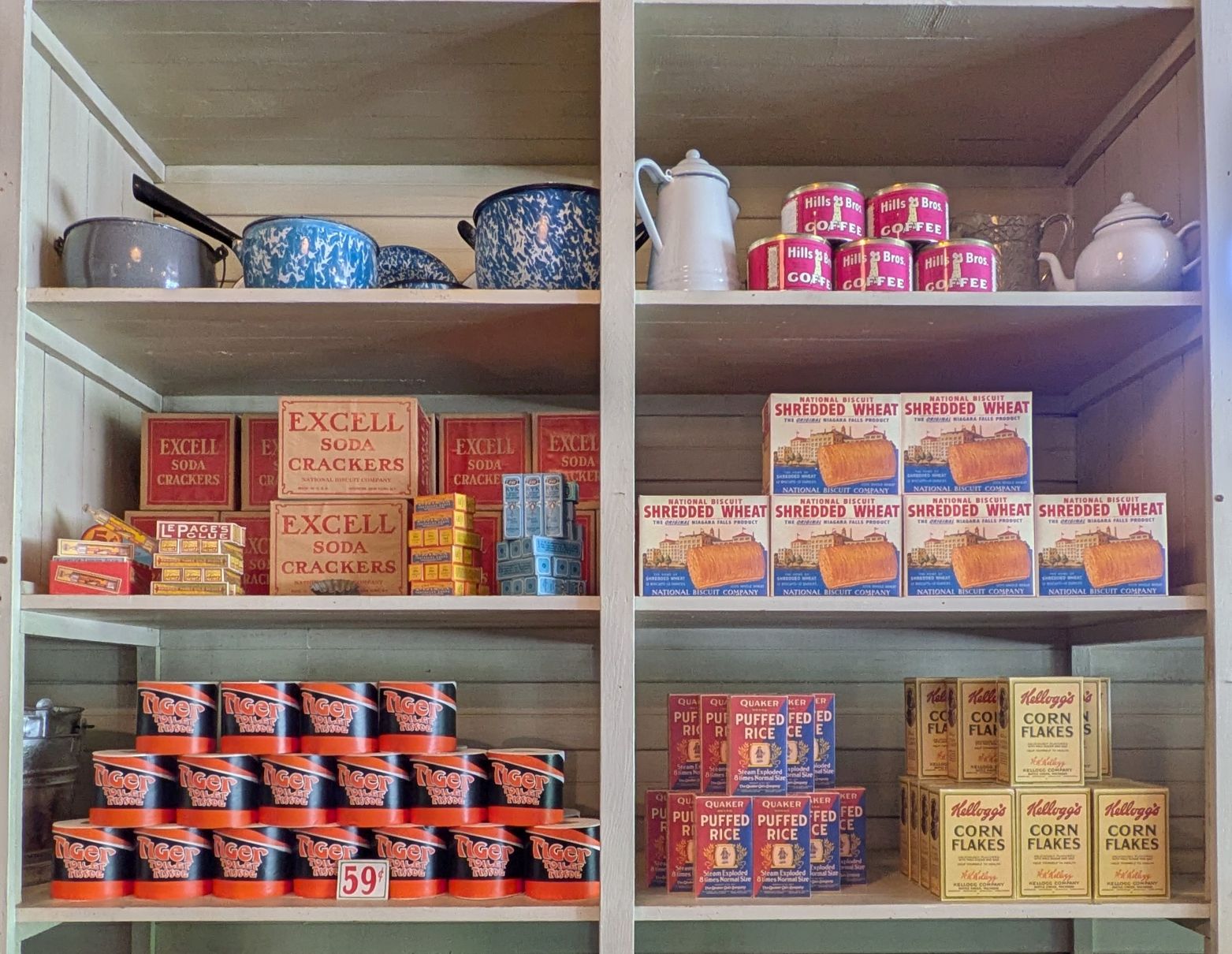
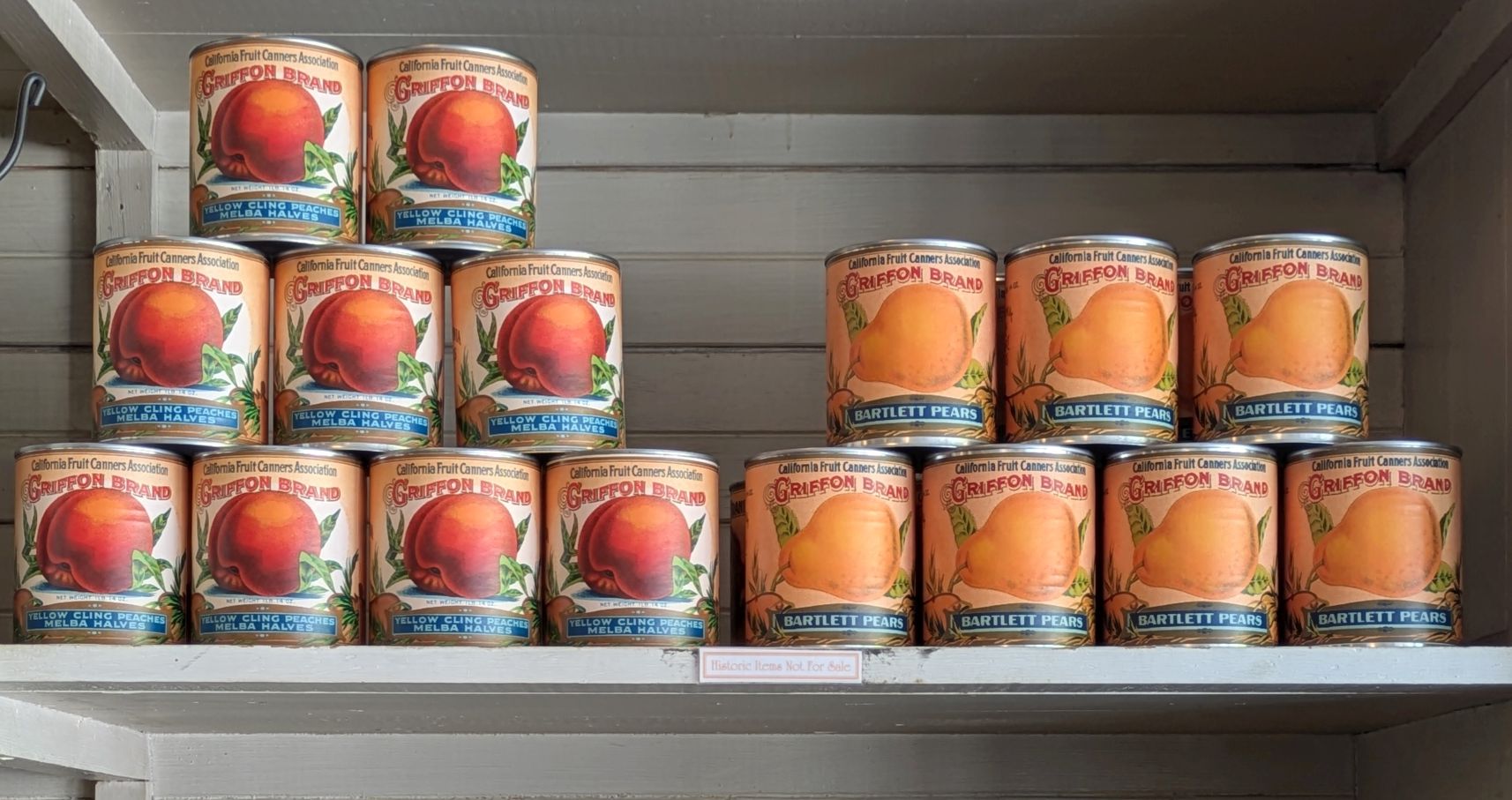
While Bruce rested back at the lodge, I headed out to explore the interpretive exhibits of the Kennecott Mines National Historic Landmark. The General Store and U.S. Post Office had wonderful exhibits to poke around; we would be touring the mine the following day.
Kennicott Glacier Lodge
Post boxes at the town post office, built in 1917 and restored in 2006.Original products that were stocked at the General Store, in 1917.
I also enjoyed kicking back on a rock by the creek, just listening to the water run by. Beautiful!
Coming up next: SEATTLE & ALASKA #9: A MEANDERING MILL TOUR & ANOTHER FANTASTIC, FABULOUS FLIGHT!