
Roaring Fork Trail


Mellow Mushroom, Pigeon Forge


Ole Smoky Tennessee Moonshine Distillery



Roaring Fork Trail
Mellow Mushroom, Pigeon Forge
Ole Smoky Tennessee Moonshine Distillery
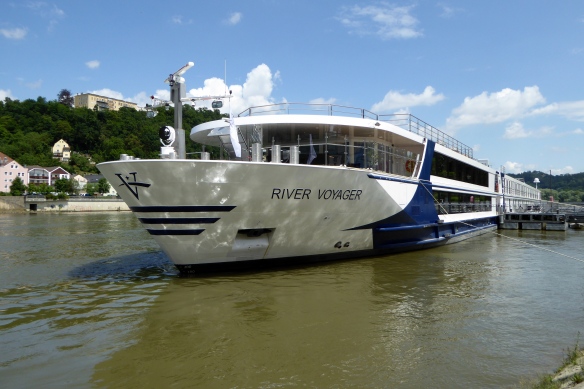
The previous three Vantage Deluxe World Travel river cruises I had taken in Europe were with my mom, and they were on boats that have since been retired from their fleet. Vantage had three new boats built, and we boarded the newest of the fleet in Budapest. Introduced into service this year, we were about to embark on the 14th sailing of the River Voyager.
At first, I wasn’t sure what I thought about the new, modern feel of this boat; but, once we had a good look around, it was love at first sight. The jazz theme of the décor definitely hit a soft spot in my jazz-loving heart, and the additional outdoor seating in front of the forward Blue Note Lounge as well as behind the Cotton Club café was a nice surprise. (In retrospect, given the high water level in the rivers these extra outdoor lounge areas on the lower decks were a huge benefit, because the captain had to close down the top sun deck of the boat while cruising under low bridges.)
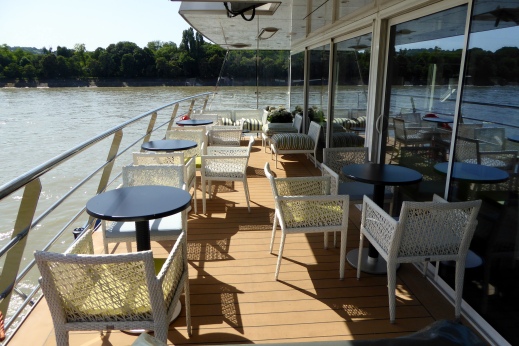
Aft deck of Cotton Club Cafe
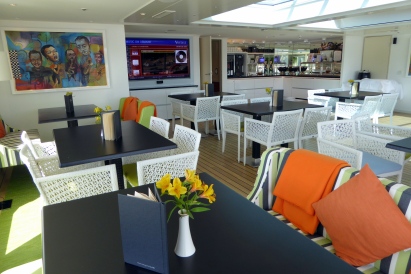
Cotton Club Cafe
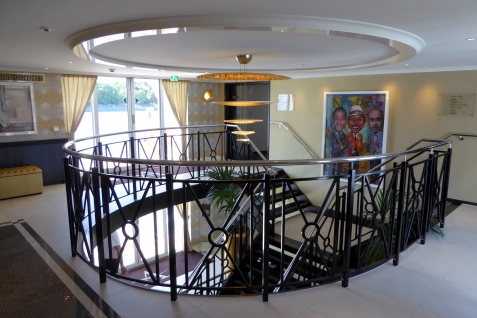
Mid-ship stairway
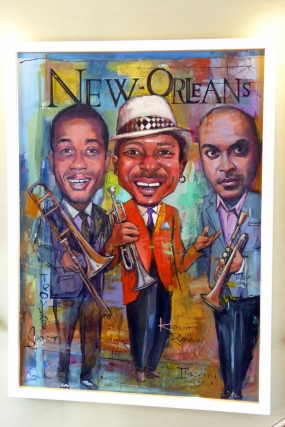
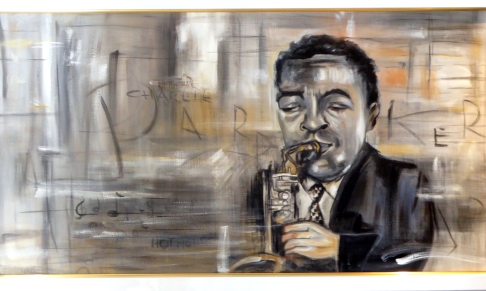
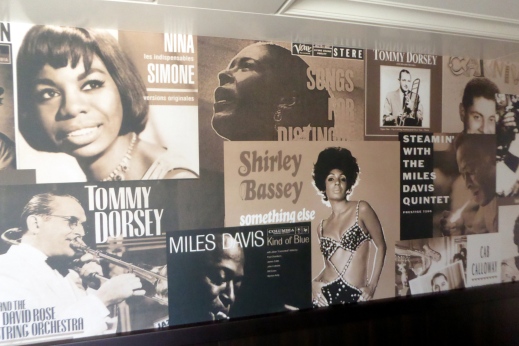
Along the wall leading into the Blue Note Lounge
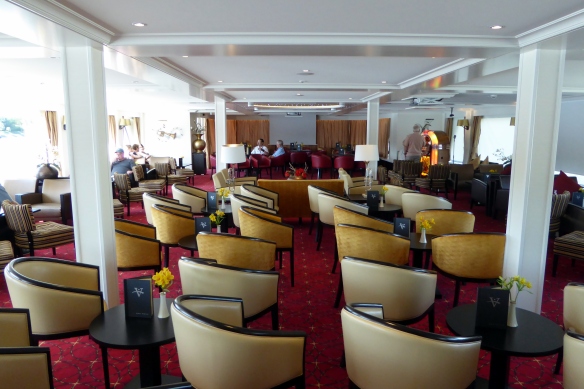
At the far end of the lounge, there were floor-to-ceiling windows looking out onto the forward deck. The drapes were closed at this moment in preparation for a lecture.


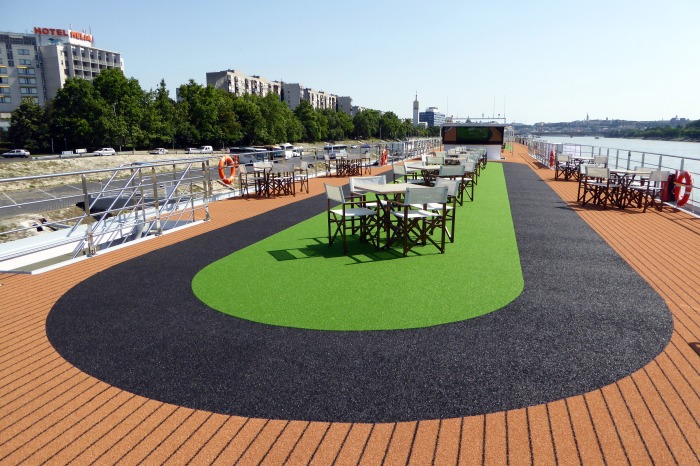
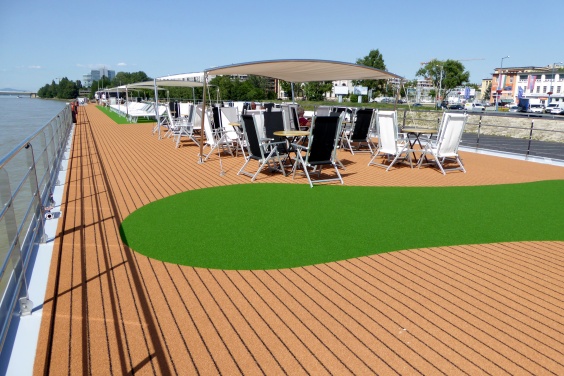
The top deck of the ship was closed during portions of the cruise due to low overhead bridges.
The cabins were wonderfully appointed, and the bathrooms were actually larger than those on the older boats.
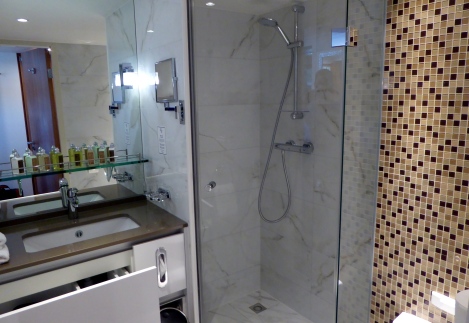
I didn’t photograph the cabin; however, I did get this (distorted!) shot of the bathroom. The lower right is a very large drawer with a pull-out trash can beside it. There was plenty of counter space (on the left), and a shelf full of wonderful toiletries. There was plenty of room in the shower, and I loved the adjustable shower head and glass door. The toilet was to the right, and towel racks were located on the walls to the left. It was actually quite roomy in there!
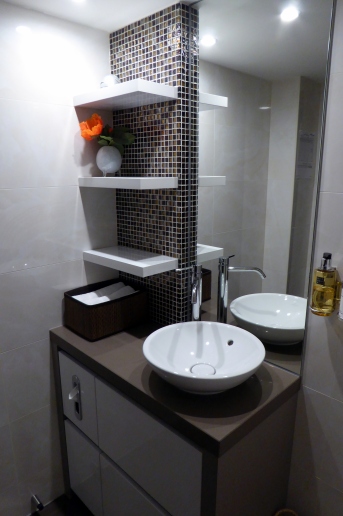
This is a public restroom located mid-ship. Nice!
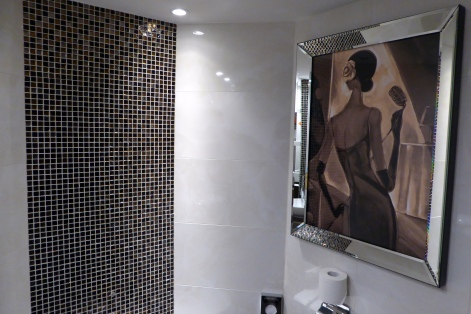
The other side of the same public restroom.
Technologically, the River Voyager was very modern, and a great WI-FI system was accessible from anywhere on board. The front desk staff even loaned out iPads at no charge as well as brand new bicycles with saddle bags and helmets.
The staff on board was fabulous! Not only were they unfailingly friendly and warm, the service was outstanding.
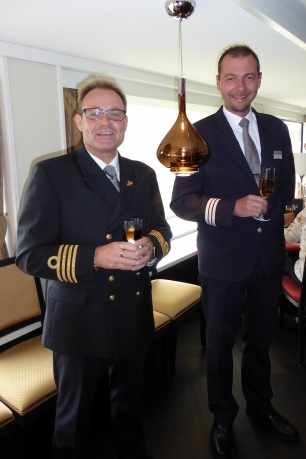
Captain Ziggy & Hotel Manager, Enio (and Renata’s husband)
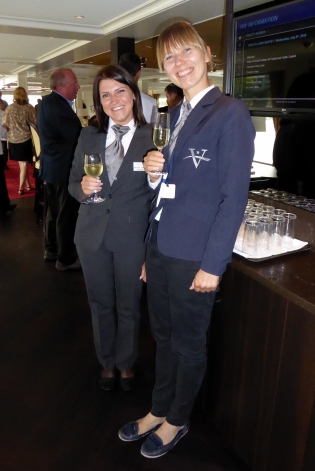
Concierge, Renata (Enio’s wife) & Tour Director, Vicky
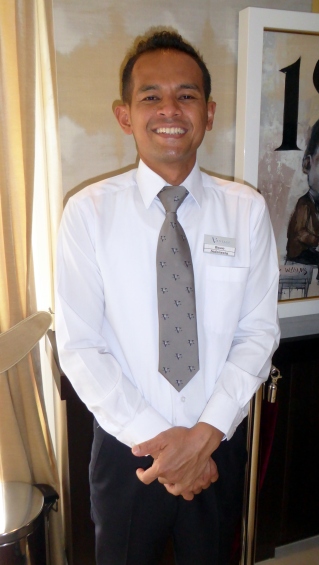
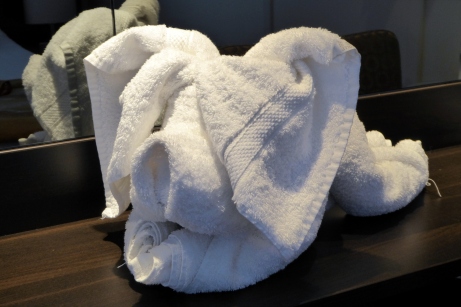
Our cabin steward, Bowo. We named our towel dog after him and kept him throughout the cruise.
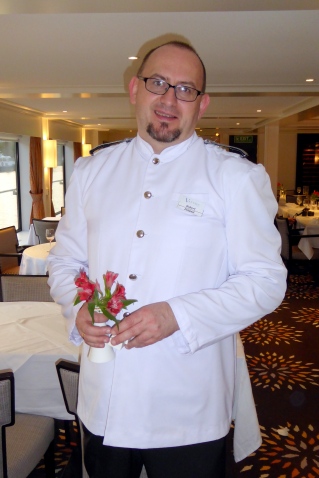
The dining room had open seating, so we always gravitated to Robert’s section, because he was our favorite waiter.
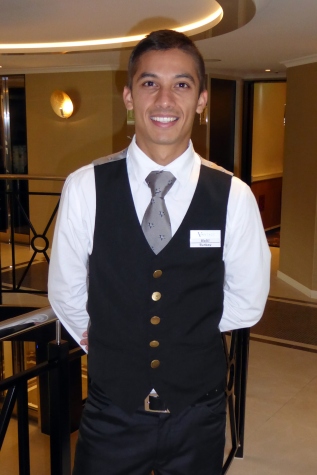
Our favorite assistant waiter, Halil
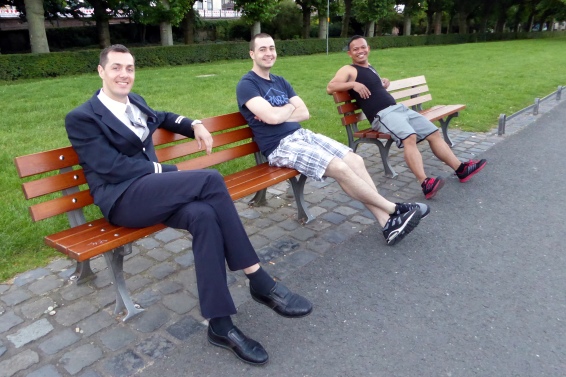
A well-deserved break for the crew! That’s the head chef on the far end.
The food? Fantastic! Our Balinese chef did a wonderful job with his staff in his surprisingly small kitchen, and we found ourselves raving at every dinner over the food and presentation.
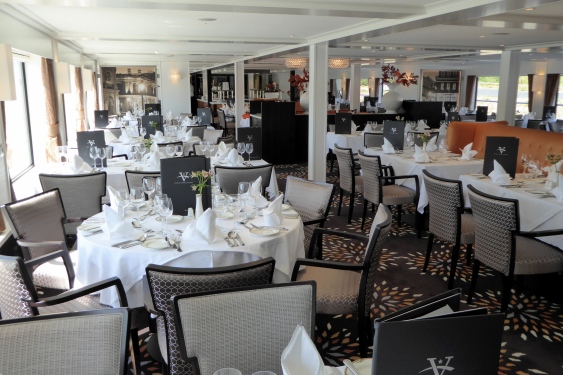
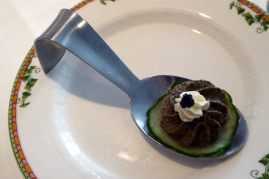
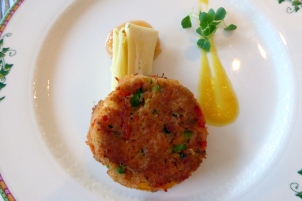
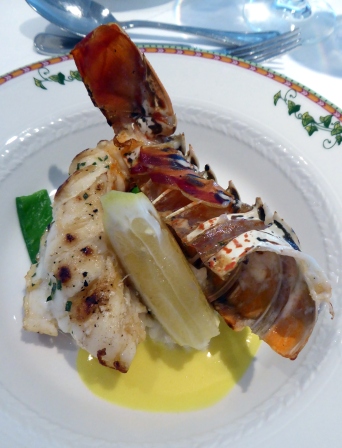
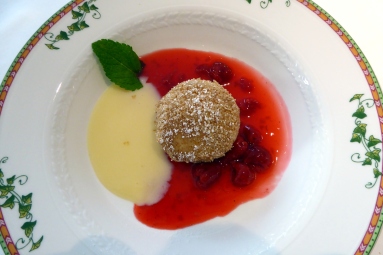
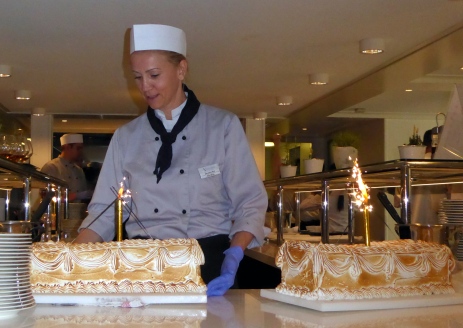
Chef Ketut (“Chef”) had a great sense of humor, too, as well as a wide, cheerful smile. Later in the cruise during the galley tour, when asked how long it took to cook the whole pig they brought out during our traditional Bavarian lunch buffet, he replied, “Cooking the pig wasn’t the problem, it was catching it!”
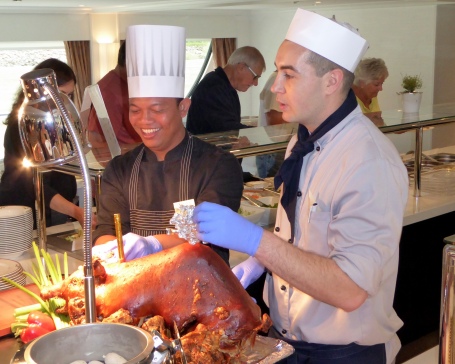
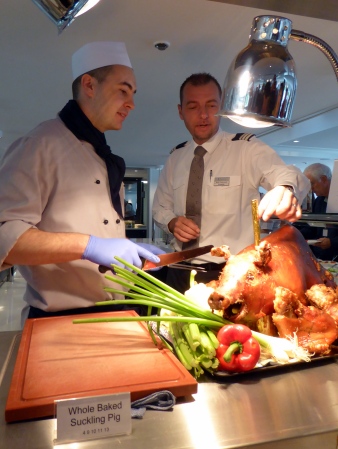
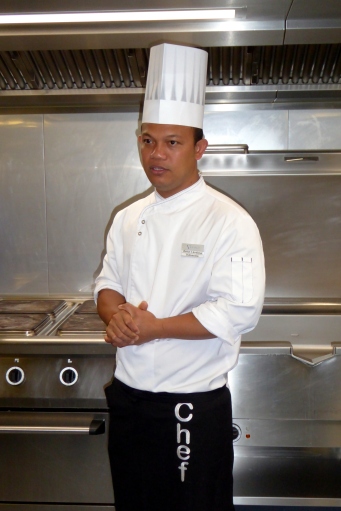


As it turned out, that lunch was quite a highlight! Complete with soft pretzels graciously handed out by Chef, flowing beer served by the staff, and a buffet of sausages of every description (with sauerkraut, of course!); it was fabulous! (Thinking back, I don’t think I had eaten sausages and sauerkraut since my last cruise in 2011! Meat isn’t a normal part of my daily diet, but as they say, “When in Rome…”)
Although the previous river cruises were on ships with a maximum capacity of 145 and the River Voyager could cruise with 175 passengers, I would say that is the only negative of the newer river boats. I like the intimacy and quaintness of small boats, but the trend is going towards larger boats (and larger ships) for economic reasons. Still, I wouldn’t hesitate to book a cruise on this very same boat again!
As for the passengers, in general, I have found them to be much more experienced travelers than mega-ship cruisers. Conversations over meals or around the ship were always lively and interesting with plenty of travel stories to go around. I especially enjoyed hearing about other river cruise experiences, and the advice we received about itineraries was very helpful.
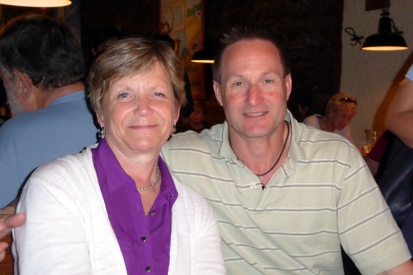
Marg & Wendell, our dining partners for lunch in Heidelberg, and a few times on the ship.
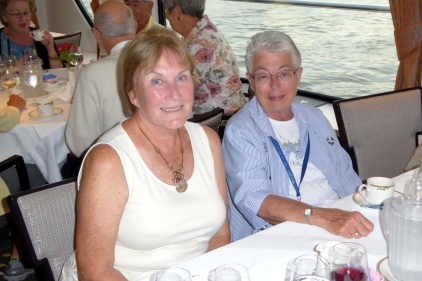
We first met Betsy and Mary on our pre-cruise tour, and then in Vienna, Betsy and I ended up going to the hospital together with Renata as our escort and interpreter.
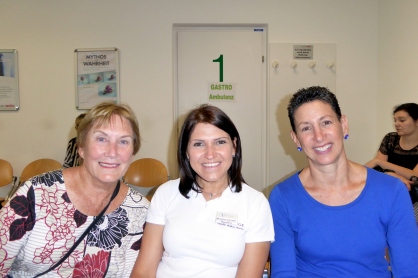
Betsy, Renata, and Me at the hospital
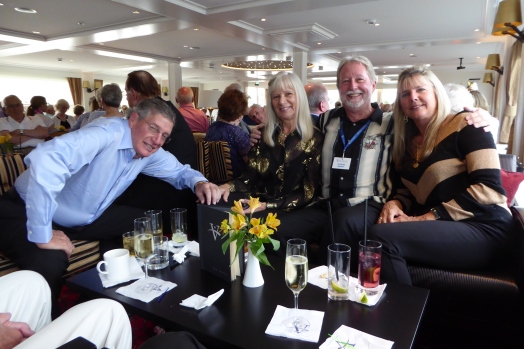
Partying it up during the Captain’s farewell cocktail party.
Over all, I can’t say enough good things about our experience. The best part? Seeing Bruce enjoy it so much that he already has our next Vantage river cruise picked out!
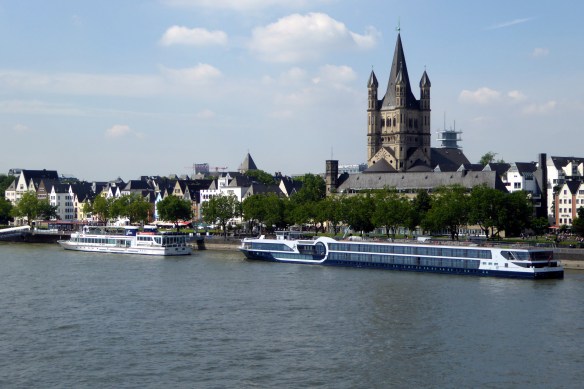
Our cruise didn’t actually conclude in Cologne, but it was the last city we visited on our journey before cruising to Bonn for disembarkation. We had one last day in Germany, so like most of our “port” days, the morning was spent on a walking tour, and we enjoyed the afternoon on our own.
Cologne was different than many of the towns and cities we visited in that it (mostly) had a modern feel and look to it. Being that 90% of the city was destroyed during World War II, there wasn’t much left standing in Germany’s most-destroyed city. Cologne Cathedral did survive the bombing, though, and it is now the most-visited German landmark with an average of 20,000 visitors entering its doors each day!
Although construction of Cologne Cathedral began in 1248, work was halted in 1473 leaving it unfinished. Work restarted in the early 1800’s, and it was finally completed in 1880. As it stands now, it is the largest Gothic cathedral in Northern Europe and has the second-tallest spires.

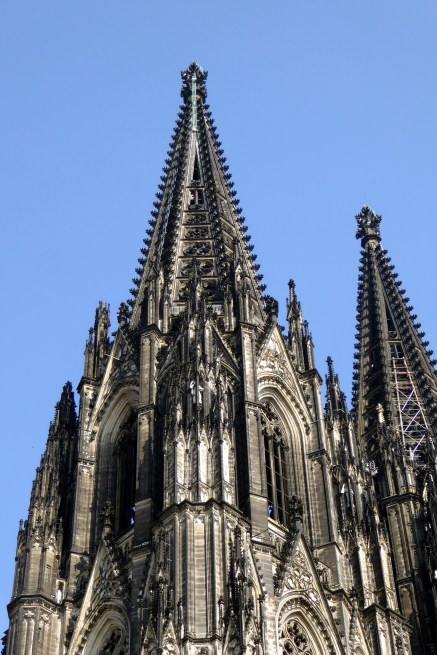
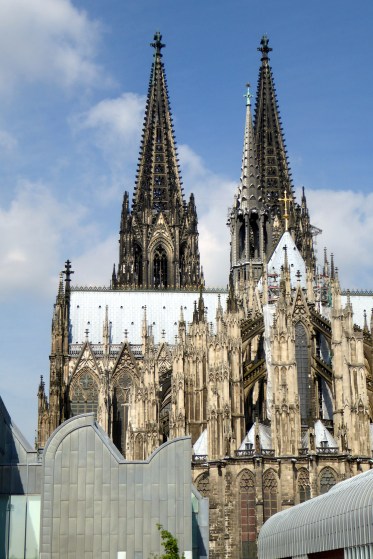

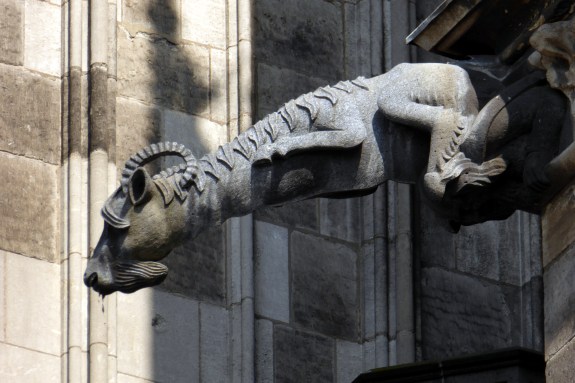
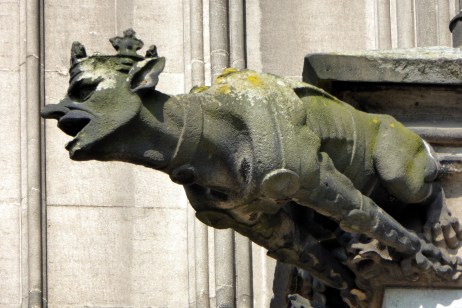
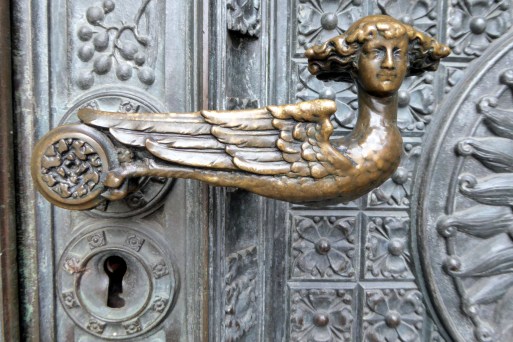

The city of Cologne is so proud of those tall spires that building restrictions require other buildings in the city center to be shorter in height than those spires. As a result, the cathedral can be seen from all around the city.
Like all old cathedrals in Europe, it is constantly undergoing renovation; so, there is a permanent workshop on site and 65 full-time employees doing the work. I’m quite sure their jobs are very secure…
Speaking of “65,” the cathedral still has 65% of its original stained glass windows, and they are absolutely stunning when the sun shines through!
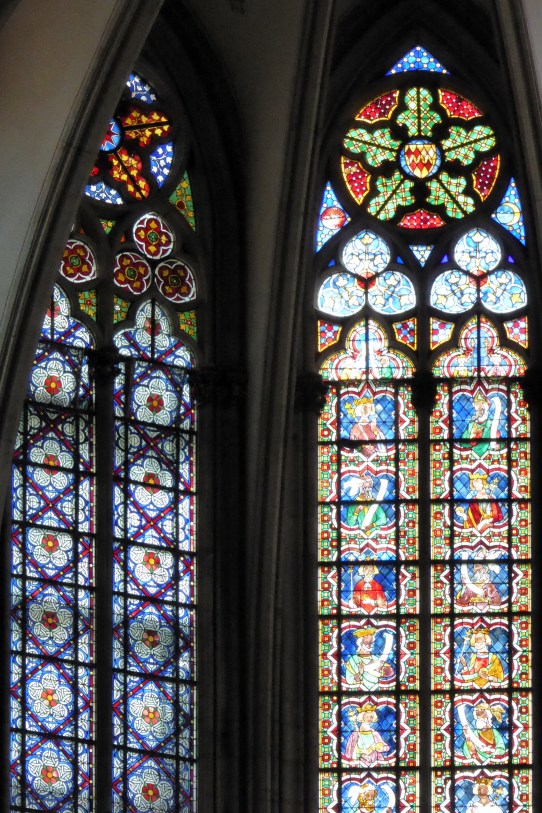
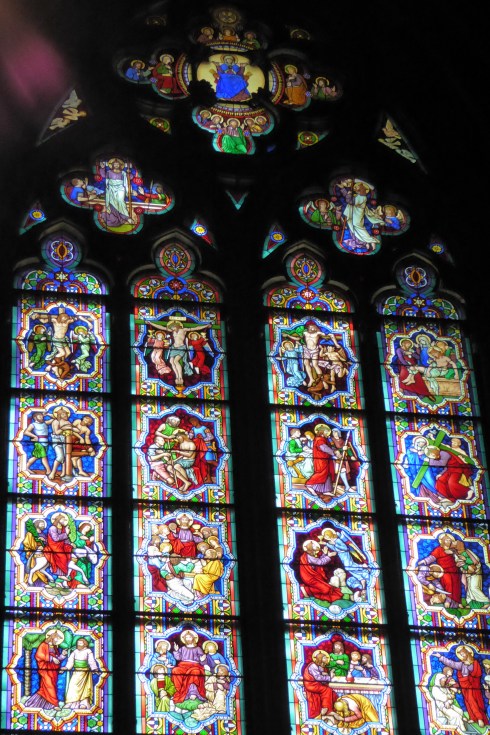
Beyond the cathedral, Cologne is a TV and media hub for Germany as well as an important cultural center. It is also home to one of the oldest and largest universities in Europe.
On a personal note, one of my favorite things about Cologne is the Lindt Chocolate Museum. When my mom and I visited Cologne on our 2011 river cruise, we spent a very rainy afternoon there, and it was fabulous! It was a gorgeous day during this visit, so Bruce and I opted for just a quick look in the café and gift shop.

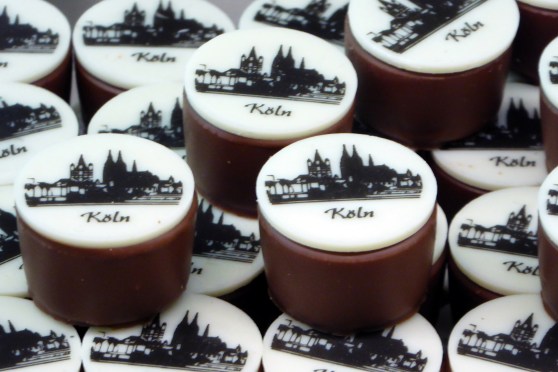
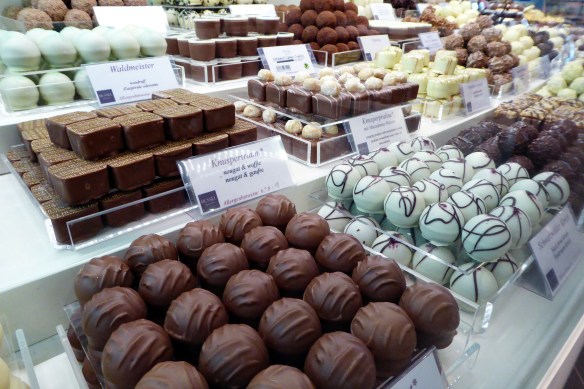

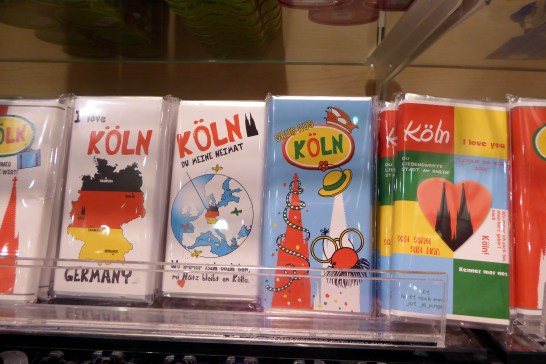
The remainder of our afternoon was spent walking and taking in the sights.
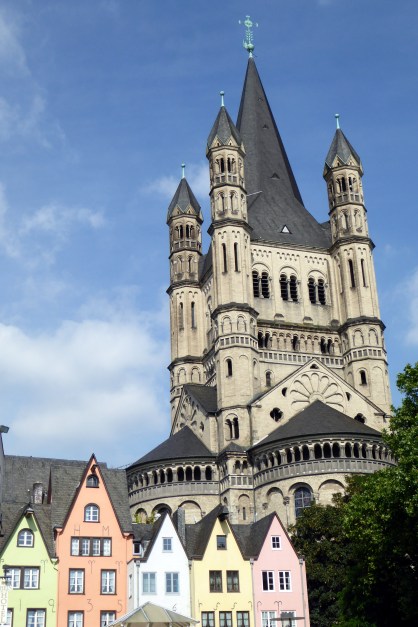
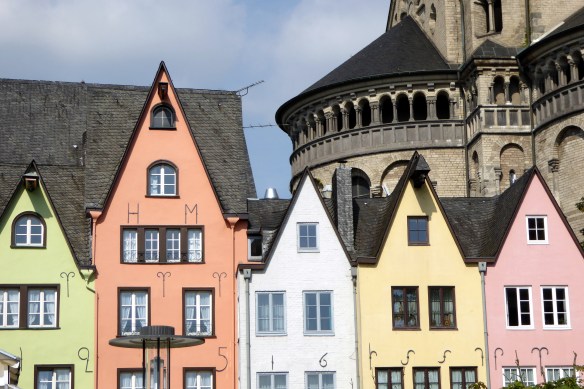
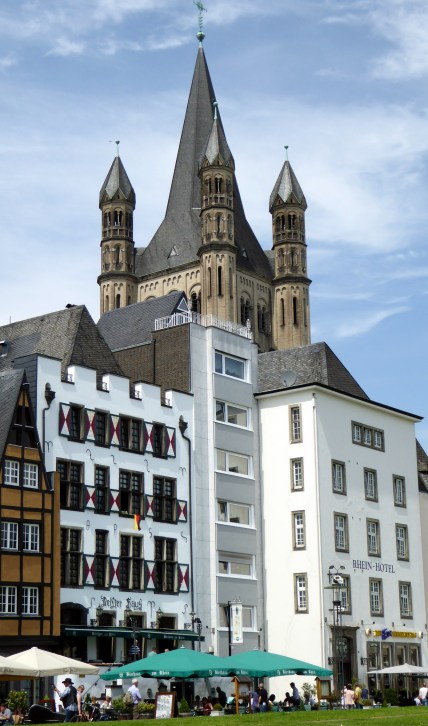
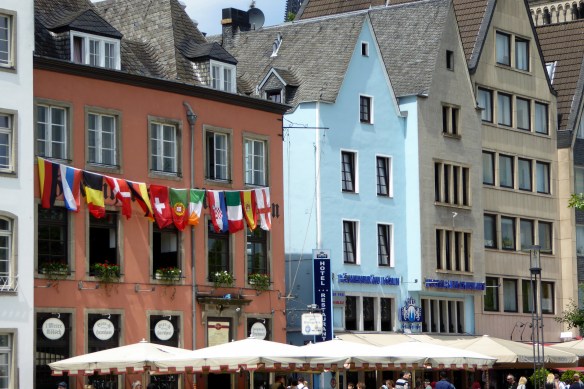
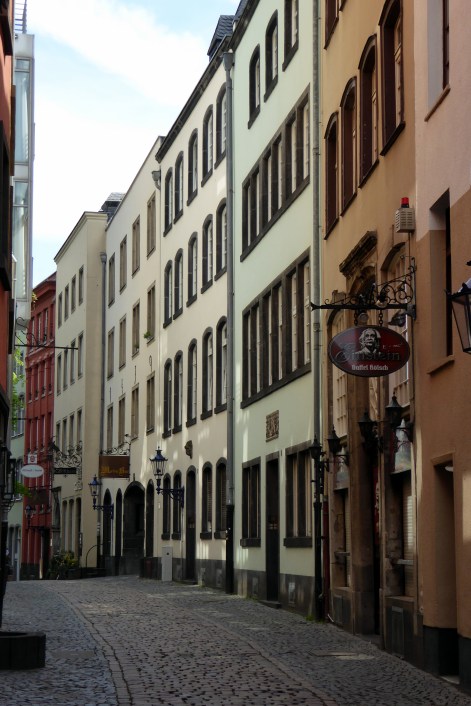
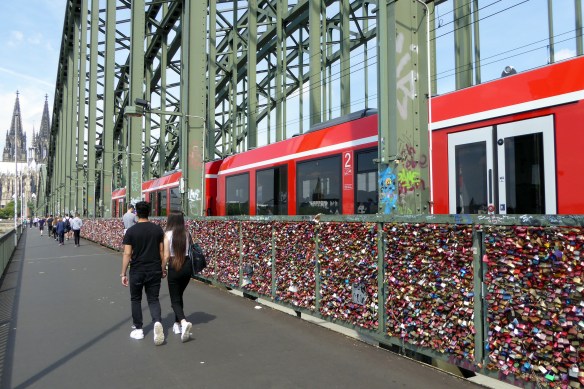
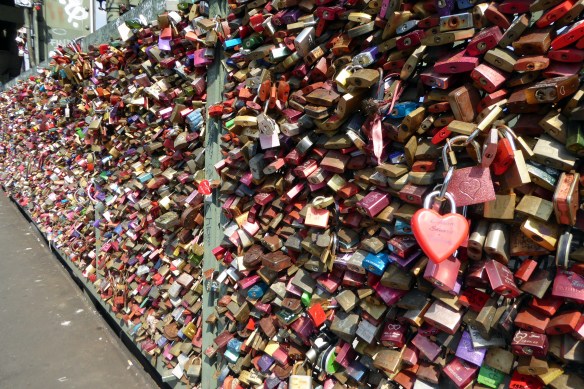

We were a bit sad it was our last day of the cruise! Our day in Cologne ended with enjoying the sunset on deck and sharing a last evening with our new shipboard friends, Margaret and Bill.

My next and final cruise post will be about life aboard our ship, River Voyager. Stay tuned!
August 7, 1986; I remember it like yesterday. Thirty years ago, Bruce took me on our first date. We dined in Del Mar, California, at Bella Via and listened to the Bruce Cameron Jazz Ensemble. It was a perfect night.
Three years later, we bought a house (coincidentally!) down the street from Bruce and Betty Cameron, and we married three years after that.
It has been a wonderful thirty years!
What better way to celebrate our thirty years together than cruising the romantic Rhine River through the Middle Rhine Valley? Rolling hills of lush wine vineyards, fairy-tale castles, quaint towns—there isn’t anybody else in the world I would have rather shared it with than my amazing husband and best friend, Bruce.
After departing Rudesheim, we spent our afternoon on deck enjoying the beautiful scenery along the Rhine Gorge on our way to Cologne. Castles dating back to the year 1000 amazed us, and the twists and turns of the Rhine delighted us. It was a day to remember…
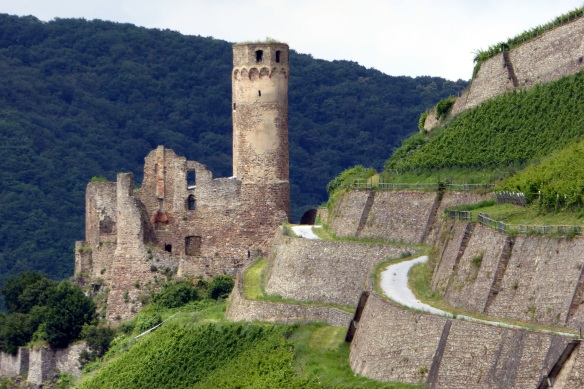
Ehrenfels Castle (now in ruins) dates back to 1208.
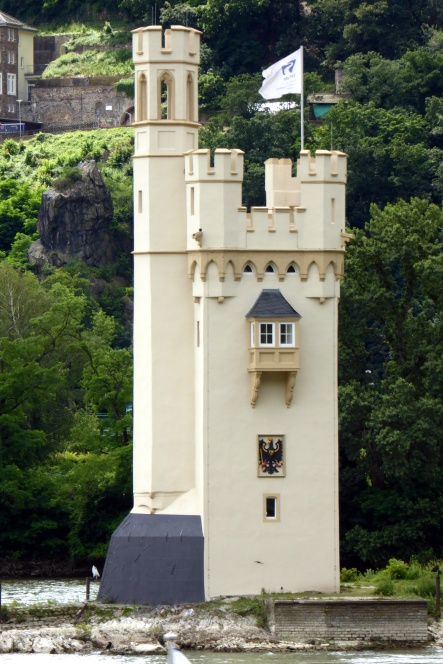
Mauserturm, 14th Century
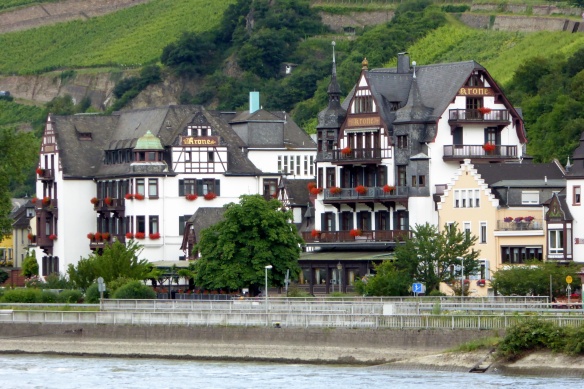
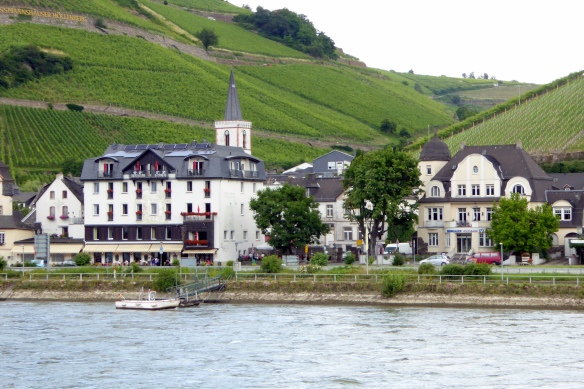
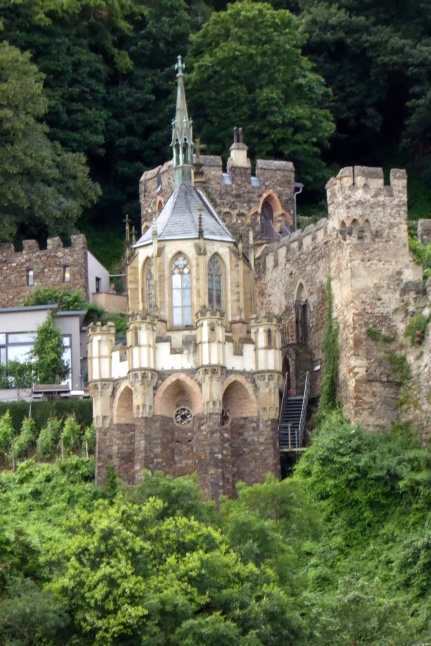
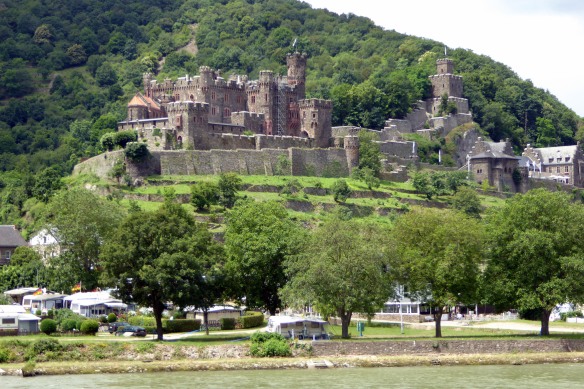
Reichenstein Castle was first built in 1100 and rebuilt in 1900.
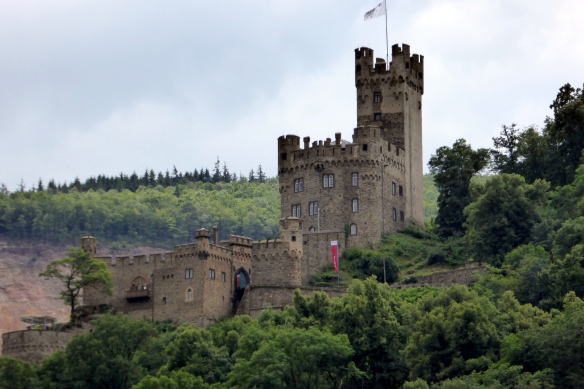
Sooneck Castle dates back to the late 1200’s.
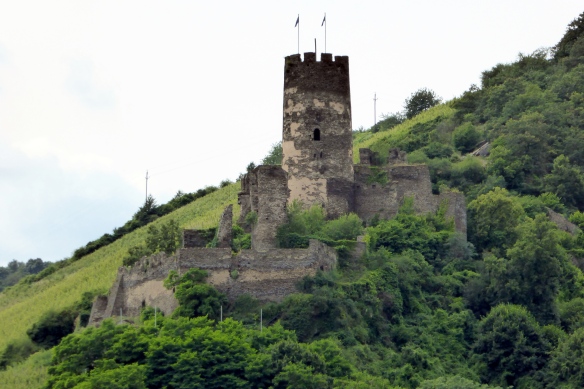
Furstenberg Castle (now in ruins) was built in 1219.
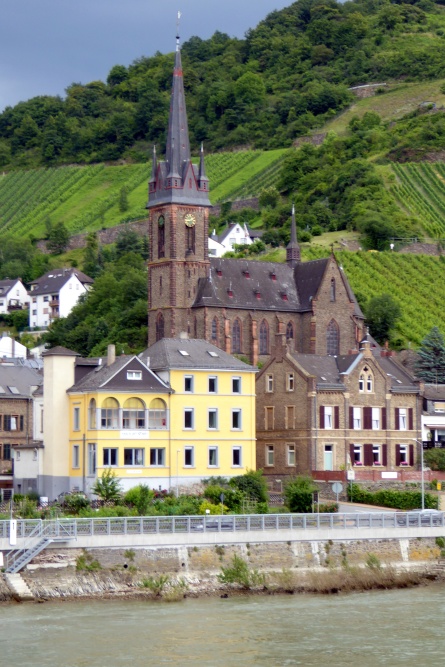
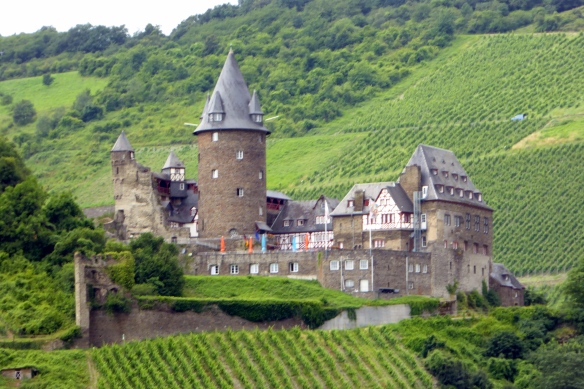
Stahleck Castle was originally built in 1135!
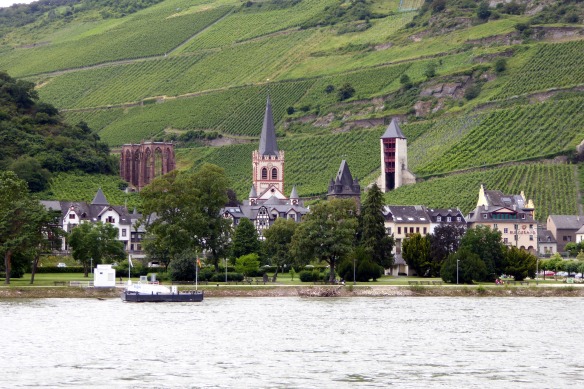
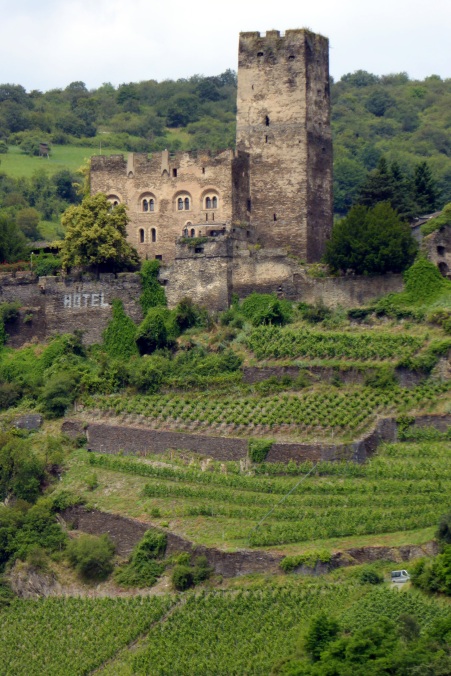
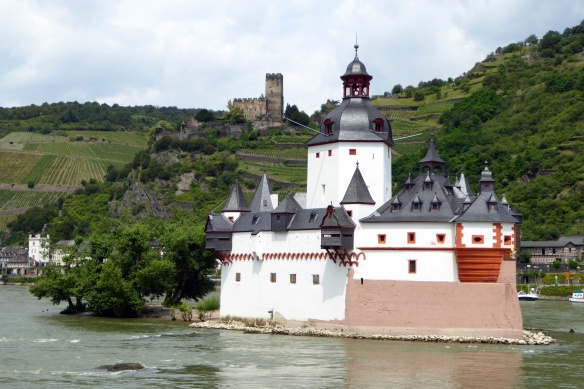
This was one of my favorites! Pfalzgrafenstein Castle sits on the tiny island of Pfalz, and its sole purpose back in the day (early 1300’s!) was to generate revenue from boats traveling along the river. Notice the castle in the background: Gutenfels Castle.
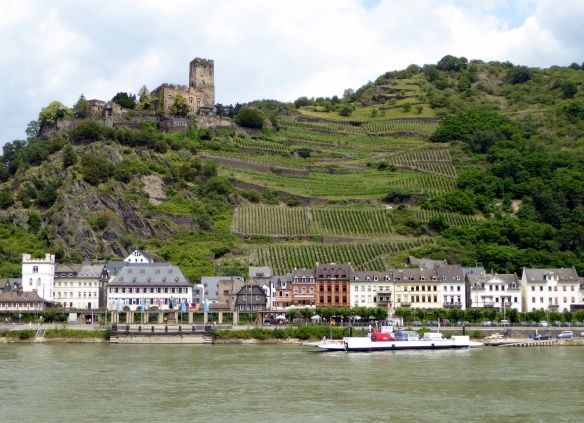
Another view of Gutenfels Castle
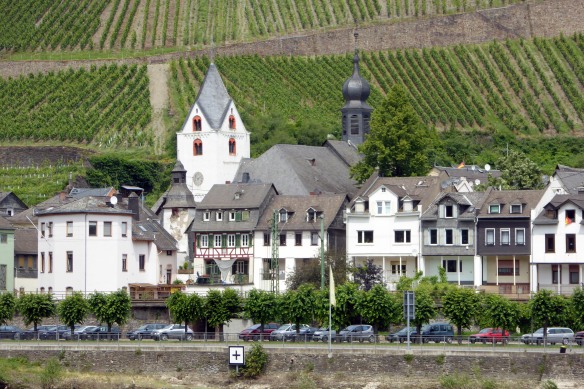
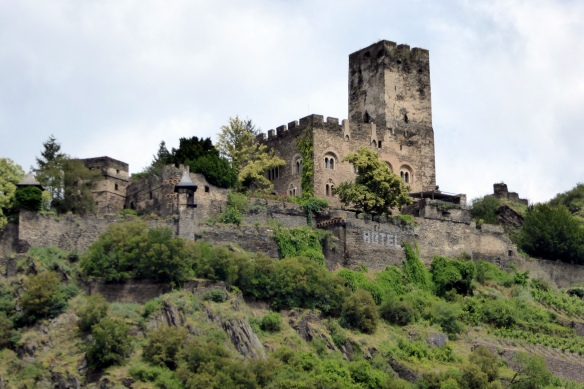
A closer look at Gutenfels Castle
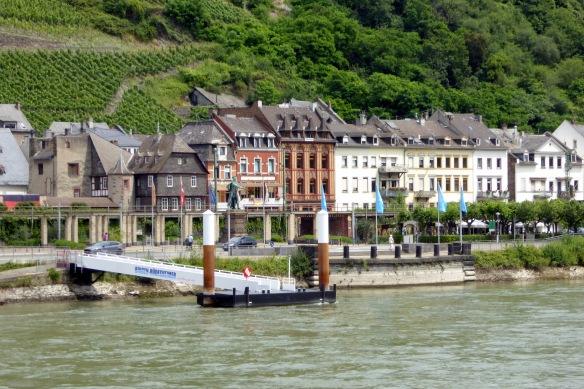
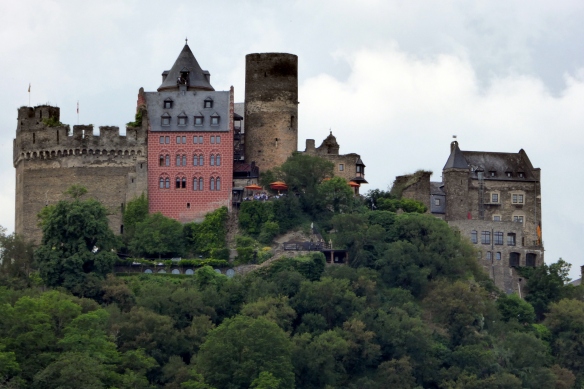
Shonburg Castle, located above the town of Oberwesel (known as the “City of Towers”), is a bit of a mix of architectural styles. Originally built in 1149, the castle was destroyed in 1689. Since 1885, it has been built bit by bit into its current condition. The newer section houses a famous hotel.
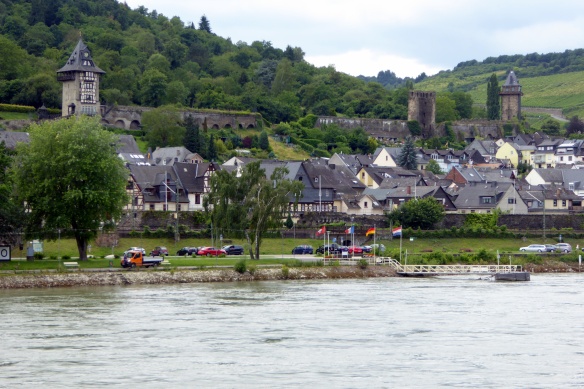
Oberwesel, the “City of Towers” has 16 towers!
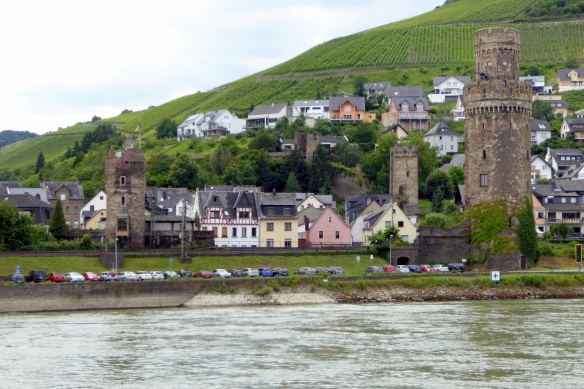
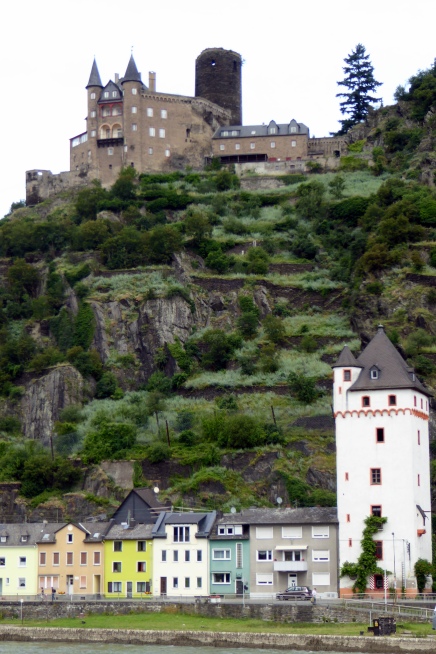
Katz Castle is located above the town of St. Goarshausen. It was first built in 1371; however, it was bombarded by Napolean in 1806. it was rebuilt in the late 1800’s and is now privately owned and not open for visitors.
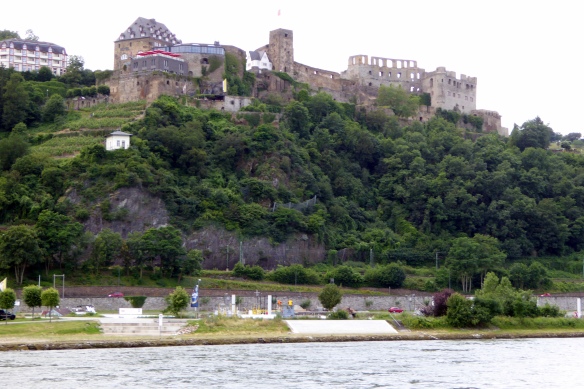
Started in 1245 (and expanded several times since), Rheinfels Castle is the largest castle on the Rhine. At one time, the castle covered five times its current area; however, most of it now is a ruin. The other part includes a luxury hotel, wellness center, and restaurant.
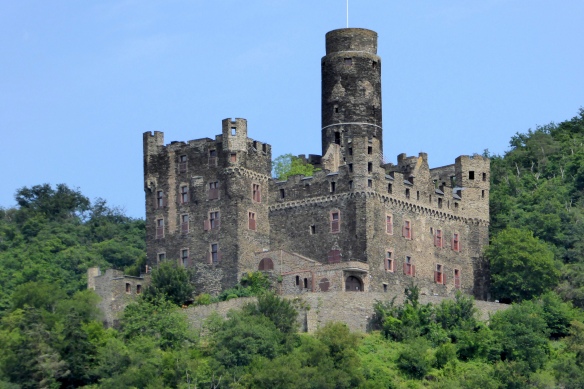
Maus (meaning “mouse”) Castle is located above the village of Wellmich and dates back to 1356.
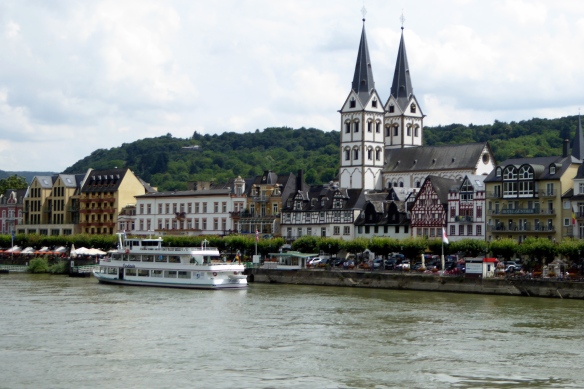
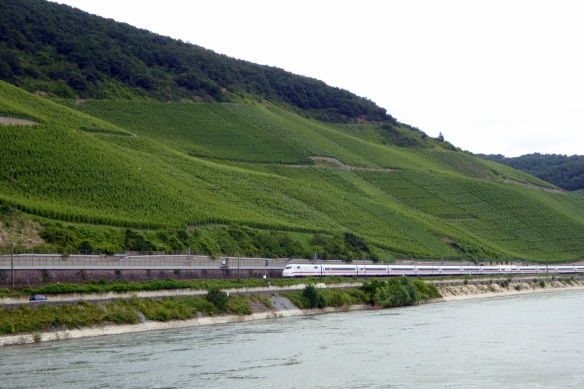
Vineyards blanket the landscape along the Rhine.
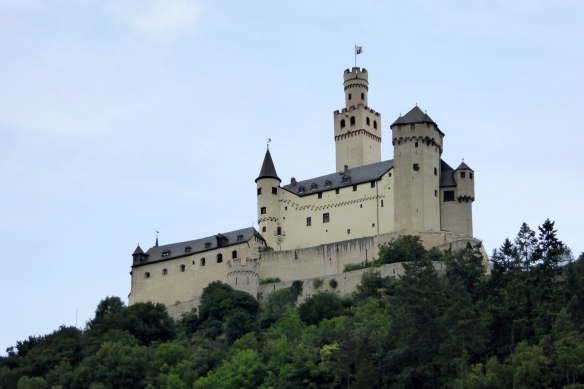
Marksburg has the distinction of never having been destroyed. Built in 1117, this castle was used for protection rather than as a residence for royal families. Located above the town of Braubach, it is one of the principal sites for the UNESCO World Heritage Rhine Gorge.
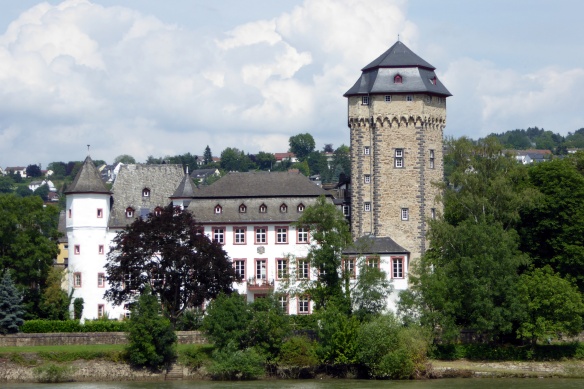
Located in Oberlahnstein, Martinsubrg Castle was built in the late 1300’s.
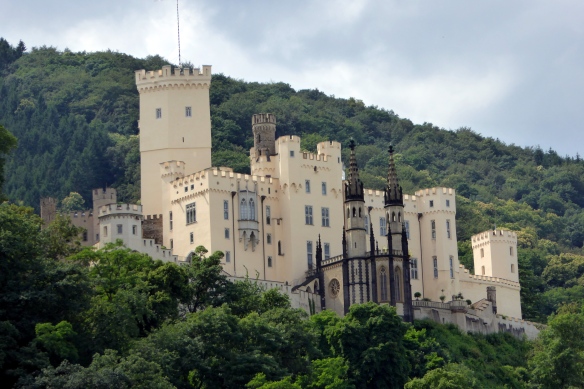
Schloss Stolzenfels (Stolzenfels Castle), located in Koblenz, is a former medieval fortress castle. It was a ruined 13th-century castle gifted to Frederick William in 1823, and he had it rebuilt as a 19th-century palace in Gothic Revival style. Today, it is part of the UNESCO World Heritage Site Upper Middle Rhine Valley.
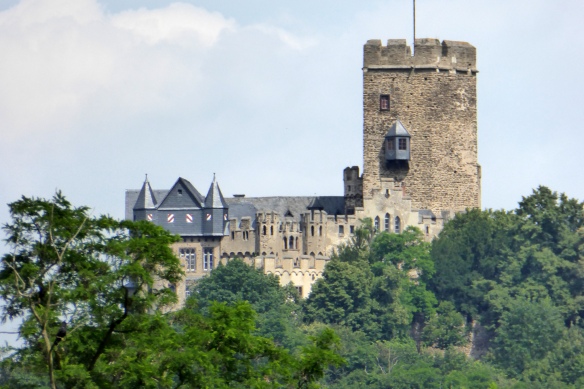
Lahneck Castle, built in 1226, is a medieval fortress located in the city of Lahnstein, south of Koblenz. The 13th-century castle stands above the confluence of the Lahn River with the Rhine, opposite Stolzenfels castle.
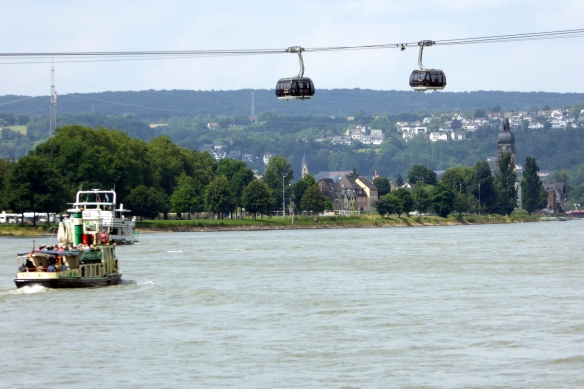
The Koblenz Cable Car crosses the Rhine where it meets the Mosel River.
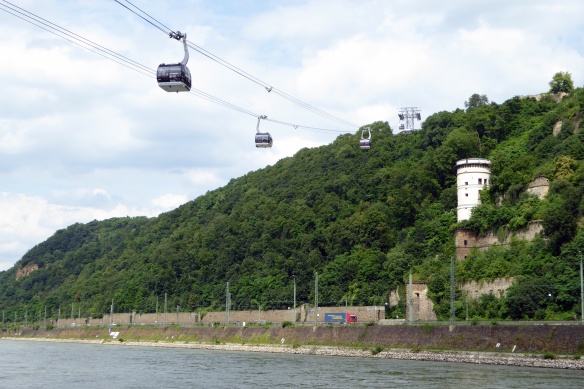
We completed our cruising journey for the day in Cologne where our ship tied up for the night and following day. Check back for my next post on Cologne!

What a charming wine-making town! It’s no wonder Rudesheim am Rhein is one of Germany’s most visited tourist attractions. Only the cathedral in Cologne (our next destination) draws more visitors from other countries.
Located on the Rhine Gorge, this quaint town of 10,000 residents is just too cute! The Old Town is so adorable, I just wanted to wrap my arms around and hug it.
My mom and I had visited Rudesheim on our 2011 European river cruise, and I remembered swooning; it was love at first sight.
Riding the cable car up to Niederwalddenkmal (Niederwald Monument) was a lovely way to take in the views before returning to ramble around the town. Built in 1870’s to 1880’s, it commemorates the Unification of Germany.
There is a lot more history to it than that, but you’ll have to Google it if you want to know more. I was too distracted by the beauty of the vineyards below to pay much attention to our excellent guide who went on, and on, and… well, T.M.I.


After returning by cable car to town, we enjoyed a leisurely ramble around. The River Voyager was tied up along the riverbank in town, so it was very convenient to maximize our time without worrying about not returning to the boat in time for our afternoon departure.


Coming up next: Rhine
“Modern” Heidelberg can trace its beginnings to the fifth century (according to Wikipedia). Is that “historic” enough for you?
Given the relative youth of the U.S.A., I am always amazed when I go to Europe and hear the age of the places I am exploring. Greece blew me away!
Heidelberg may not be as old as Greece, but it’s old enough!
Located in the Rhine-Neckar Metropolitan Region, Heidelberg is a city of approximately 149,000 residents and is very picturesque! We visited Heidelberg Castle, and the views down across the city and river were spectacular.

Check out the views from up here. Amazing!


Among the most important Renaissance structures north of the Alps, the castle (and its ruins) is THE landmark of Heidelberg. Originally built in the early 1200’s, that poor castle has had a miserable history of demolition. In 1537, a lightning bolt destroyed the upper castle. By 1650, the castle underwent an expansion, but it was later damaged by wars and fires. Then, in 1764, another lightning bolt caused a fire which destroyed some of the rebuilt sections. Misery.


Fortunately for us and the throngs of other tourists, there was plenty of intact structure to see while touring the exterior of the castle on foot.
There was so much to take in, and I was happy to be able to zoom in with my camera to see the details of the façade. (We were also happy the threatening clouds didn’t burst into a full-assault rain storm!)


Following the castle portion of our walking tour, we rode the Heidelberg Bergbahn (Funicular) down to Old Town, a beautiful city full of baroque-style architecture. Our tour continued, touching on the highlights, and ended at a restaurant where the River Voyager’s passengers enjoyed an organized lunch banquet.


Not wanting to lose out on time to explore the town on our own, we got down to business, ate, and left. After all, we figured we could always socialize with the other passengers back on the ship!


Our tour in historic Heidelberg concluded with a bus ride back to Frankfurt and the River Voyager, but our day was not done. After all, we still had fantastic Frankfurt to explore on foot!
Not wanting to lose time before sunset, we ate a quick dinner in the Cotton Club Café and headed back out. The following are scenes captured during our walk around town and the riverfront:

We walked along the riverfront towards the bridge you see in the distance. Old Town was located adjacent to the second bridge.


Coming up next: Rudesheim
Our day in Marktheidenfeld wasn’t rapturous in the way Rothenburg was, but it was mellow (no miles of walking today!) and enjoyable.
The passengers aboard River Voyager were split up into four groups, and it was a “surprise” as to which group we were assigned until we were on the bus for departure. One group went to visit a gentleman who was a pianist and collected antique pianos. They were treated to a demonstration and performance on the various pianos. Another group learned about paper-making at a paper factory. The third group toured Johannes Deppisch Winery where all of us were going to meet up for lunch (with wine or beer) after our tours. They were the ones that had all the fun! Our group drew the short stick—at least in my personal estimation. We got to visit a blacksmith and the Hammer Museum at Kurtz Ersa Corporation.
We visited the museum first, and actually, the tour was quite interesting. One of the family members of this 7th generation, family-owned company dating back to 1779 conducted an informative tour.
Initially, the company produced tools, household items, railway castings, and machinery for agriculture. Industrialization in the 19th century led to a decline in their business due to lack of demand for their products, so they had to adjust to remain relevant.
From 1971 forward, the company refocused and started producing machines for EPS (expanded polystyrene) processing. EPS is a thermoplastic, closed-cell, lightweight, rigid-foam plastic used in a variety of products, including coolers, bicycle helmets, and athletic footwear. Today, its foam material machinery has made the corporation a world market leader.

They’ve come a long way from the old blacksmith days! This is what their machinery can produce now:
After our museum tour, we went back to the year 1779 to see how the family produced tools seven generations ago. We were shown how the blacksmith makes a plow, and how the waterwheel generates the power for the equipment.


Following our tour, we enjoyed a short, scenic bus ride past the vineyards to visit Johannes at his winery. By the time we arrived for lunch, the group of passengers from the ship that had toured the winery were already hammered from a morning of wine tasting. From what I understand, heavy-handed Johannes had them “drinking” rather than “tasting.”
Johannes was a real character! He wore lederhosen with a bow tie—but, the bow tie was made of wood. He had a huge collection of wooden bow ties on display in the winery’s lobby, and some were for sale.

Check out that wooden bow tie!
We enjoyed a delicious catered buffet of traditional German fare paired with as much Johannes Deppisch wine we wanted to drink. If wine wasn’t your thing, there was beer—and plenty of it.


As we dined, a band entertained us with traditional German music. Later, we they transitioned to performing American rock classics, and the River Voyager passengers kicked up their heels. What a scene. It was a P-A-R-T-Y!

A fond farewell as our River Voyager departs Marktheidenfeld
If there ever was a good time to spend the extra money for an optional tour, Wurzburg was the place. As I have mentioned before, Vantage includes more tours in their river cruise price than other companies, and in Wurzburg, we could have taken an included tour that featured just Wurzburg. Rothenburg ob er Tauber (translation: “Red fortress above the Tauber”) sounded too good to pass up, though, so we opted instead to see the well-preserved medieval town of 12,000 residents.
Located in the middle of the Franconia region of Bavaria, Germany, it is well known for its beautiful old town that dates back to the late Middle Ages.
Rothenburg is also noted for its university, alma mater to 13 Nobel Prize winners. In addition, production of fruity, dry white wine dates back 1,200 years. The hills surrounding the town are covered with vineyards, and it is very picturesque.
For yogurt fans, the Danon Activia plant is located in Rothenburg, and 70% of the sugar in Germany is produced in the area. Most of that sugar goes into producing Coca-Cola.
I was pleased to hear that clean energy is a priority in Rothenburg. Wind and solar power has replaced nuclear energy, and the locks produce the water power energy to round out their clean energy production.
When our bus arrived, all we could see across the street was a massive (very OLD!) stone wall. I couldn’t wait to see what awaited us on the other side. All it took was one look, and it was love at first sight! I had just laid eyes on the most beautiful medieval-period town I had ever seen.

As our guide led us around, I didn’t know which way to look first; it was all so incredibly gorgeous. Zooming in on the details of the architecture with camera made me appreciate it even more. I saw beauty my naked eye had missed. As I sit here right now editing my photos in between writing, my eyes light up all over again.
Rothenburg was easily THE highlight of our journey.
Selecting which pictures to include in this post is too difficult; I want to include them all. I no longer care if I need to purchase more space on WordPress; I’m not cutting any more corners. It’s worth it.
My friends, strap in, because I am about to unleash dozens upon dozens of scenes of Rothenberg, as seen behind the lens of my Panasonic Lumix DMC-ZS40. I hope these inspire you to make the journey to the “Red fortress above the Tauber.”

This wall encircles the old town of Rothenburg. After our walking tour, we walked 75% of the wall to take in the views from above. Later, you will see these photos.


Circa 1555!


These stairs lead up to the wall that surrounds the old town.


The views of the town from the wall walkway was spectacular! We walked most of the wall encircling the city before it was time to meet back up with our group.


More scenes from street level (looking up!):


As we made our way back to the town square, we spotted some passengers dining al fresco and asked if I could take a quick shot of their traditional German lunch.


Cute labels: “Nice to sweet you!”


This gentleman was making schneeballen– strips of rolled out dough shaped into a ball and deep fried. A plain one costs 1.50 euro, and a chocolate-covered one was 2.50 euro.


I am not a fan of deep-fried anything, but as they say, “When it Rome, do as the Romans do.” We were in Germany, so we had to try schneeballen! I bought a chocolate-covered one (of course!) to eat on the bus ride back, and Bruce opted for a plain one. Other than the chocolate surrounding my schneeballen, we both agreed we could have taken a pass…

These bottles are from locally-produced wine.


This was a joyous, heart-warming scene that brought a tear to my eyes and a smile on my face! This touring Japanese choir was hastily organized by their director for an impromptu mini-concert in the town square. I say “impromptu,” because the singer in front (with the black t-shirt and gray jacket) had just bought an ice cream cone! She stood there dutifully singing her heart out while the ice cream dripped down her arm. She broke into unstoppable giggles after their song ended! How did they sound? Every bit as phenomenal as the choir I work for, Griffin Choral Arts. Memorable!
After leaving Rothenburg, we returned to Wurzburg to tour Wurzburg Residenz (Prince Bishop’s Palace). Photography wasn’t permitted inside, so the following are exterior shots:

Built 1720-1744, Residenz is one of the many UNESCO World Heritage sites. It is considered one of Europe’s greatest palaces.


Back at the River Voyager in Wurzburg, these are scenes photographed from the top deck looking across the river:

Wurzburg, in the Bavaria region of Germany, is known for lavis baroque and rococo architecture. The city is located in the center of the Franconian wine country, and it is surrounded by vineyards.


Reflection

An incredible day we will never forget!
Next up: Marktheidenfeld

Ahhh, another day of river cruising; a day relax while enjoying the sights of the Bavarian countryside as we meander the Rhine-Main-Danube Canal, the most environmentally friendly canal in the world. Seven miles per hour is the maximum speed permitted for boats to prevent erosion.
Water quality on the canal is so good that fishing clubs have stocked the canal with fish! I sure would have enjoyed swimming in it…
The canal connects the Danube to the Main, and it crosses the European watershed. It is up hill from the Danube to the Main, so the stair-stepped locks are necessary for boat passage. At the summit, the canal elevation is 406 meters (1,332 feet)!
The locks are 45 feet wide, and riverboats vary between 35-40 feet wide, so that explains why the crew keeps busy re-painting the sides of the riverboats while passengers are off touring at the next city!
Although the canal was built to transport cargo, transporting passengers via riverboat has become all the rage—something that was never predicted! These days, forty-two percent of the boats on the canal are touring riverboats.
Transiting the canal is quite a bargain. Compared to the fee cruise ships must pay to transit the Panama Canal (typically $500,000!), the cost for the River Voyager to pass through the Rhine-Main-Danube Canal was only 184 euros. Not bad! The fee is per passenger, and transit is on a first come, first served basis.
In our case, we were traveling from the Danube to the Main. The Main River (pronounced “mine”) is the longest river lying entirely in Germany, and the scenery along the hills rising up from the riverbanks is breathtaking.
Having a day to reflect on our travels and anticipate Wurzburg (as well as Rothenberg for our optional tour) was wonderful! Although the weather during most of the day was cloudy and rainy at times, we thoroughly enjoyed kicking back in the lounge or out on deck when the weather cooperated.
Sea days—um, make that “river days”—are also a great time to enjoy the ship (or boat) and other passengers. (I haven’t yet mentioned much about life aboard the River Voyager, because it will be the subject of my final trip blog post; but, suffice it to say for now that it was fabulous.)
On this day, the pastry chef and her assistant worked extra hard preparing an afternoon “tea” for us all to enjoy. I didn’t see much tea being drunk, but there sure was an enthusiastic crowd around the dessert table! As if we didn’t get enough to eat aboard ship… Sheesh.
Count me in as one of the guilty ones having an extra dessert (or two) that day. Who could resist all that delicious chocolate?

The lounge, before the desserts and passengers appeared.

Frosting Flowers

The main attraction (for me): CHOCOLATE!


A popular waterskiing spot this turned out to be!

Aha! This is the launch site for the skiers!

Did you read my post, “Lots of Locks!”? This was another of the numerous locks along the Rhine-Main-Danube Canal. See those windows in front of us? They appear in the photo below.

Cheers!

On to the next lock we go!

At another lock, we had a VERY close call. Due to the high water levels from the rains, the upper deck was closed for several days while cruising through the locks. All of the eqt. was lowered to reduce the height of the boat; however, we were all holding our breath at this point. Once it was sure we were clear, the look of relief by this crew member was priceless. He flashed a HUGE smile!

Whewww!!!

The river was so narrow at times that we hardly needed to use telephoto lengths for shooting photography.


Sun at last!

After dinner, we enjoyed the sunset from in back of the Cotton Club Cafe while cruising through yet another lock. Meanwhile, some of the passengers were watching the European Soccer Championships on the large screen TV inside.

This riverboat (above) pulled in so close behind us (to fit into the lock) that these two crew members had a great view of our boat’s TV! When I asked if they were watching the soccer game, we got a cheery thumbs-up!
Check back for my next post on our optional tour to Rothenburg ob der Tauber (from Wurzburg).

To be quite honest, just the mention of “Nuremberg” used to turn my stomach, given all the history I learned at Jewish religious school about Nazi Germany and the Holocaust. Actually, I used to have just as negative of a reaction to hearing the word “Germany.”
As time marched on, I grew up, the Berlin Wall fell, and Nazi Germany was further in the past, I became more open-minded about the place I had vowed never to visit.
It wasn’t until my first river cruise in 2002 when our program director, Tia, raved about Germany and said it was her favorite river cruise itinerary. I remembered thinking to myself, “Really?”
I ended up loving Germany so much when I visited on that very river cruise itinerary (in 2011), that I so eagerly wanted to return—even to see Nuremberg. After all, I have met so many wonderful Germans since then, and most of them are so terribly ashamed of that darkest period of their history. I also reminded myself I am an open-minded liberal Democrat who firmly believes in this current election cycle’s favorite DNC slogan, LOVE TRUMPS HATE. (I need to buy the t-shirt!) Why should I paint a wide brush of hate against all Germans and all of Germany when the vast majority of Germans are just as repulsed by the thought of Hitler and the Nazis as I am?
As it turned out, Nuremberg is a charming, beautiful, and delightful city to explore on foot, and we did just that. In addition to our excellent walking tour that begun outside the walls of the Castle of Nuremberg, Bruce and I hoofed it all around the old city, walking in and out of the cobblestone streets to explore the beautiful architecture. What a fabulous and memorable day!

An interesting bridge on our way to Nuremberg

On the way to Nuremberg, we passed through the Berching Lock with a 55.8 ft height difference! Believe it or not, this wasn’t anywhere close to the 81(!) ft. height difference of the locks we passed through after leaving Nuremberg!


The town of Reidenburg, on the way to Nuremberg

Our walking tour began outside the walls of the Castle of Nuremberg, one of the most important imperial castles of the Middle Ages.

The Old City, just on the other side of the arched tunnel was charming!


Before 12:00 Noon

As the bells chimed at Noon

We enjoyed meandering around the Farmer’s Market as we waited for the church clock to “perform.”

At one point, the skies looked quite threatening!


Notice the prices (in Euros) of these truffles!

HUUUGE mushrooms!


This was an amazing miniature at the fabulous Toy Museum.

This miniature basket measured no more than two inches wide!

We were fortunate to wander into one of the churches just in time for a free organ recital!


Upon arrival in Germany, we noticed many VERY long words on signs and began to count the letters in search of the longest one. Our search was over in Nuremberg when we found this one at 22 letters!
Coming up next: Cruising the Main-Danube Canal and Main River.

