VIBRANT VIENNA

Vienna was our next stop after a wonderfully relaxing full day of cruising on the Danube.  At 94 degrees, the temperature was about 15 degrees above the normal average, and it felt very hot!
P1050909

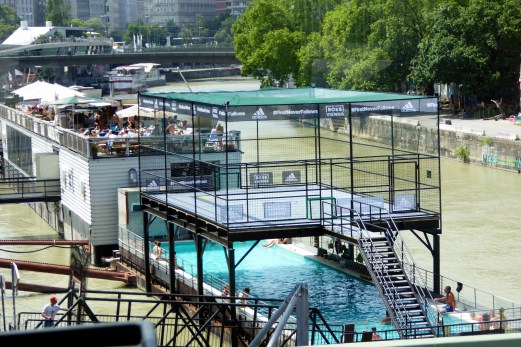
I could have used a dip in this interesting floating pool!

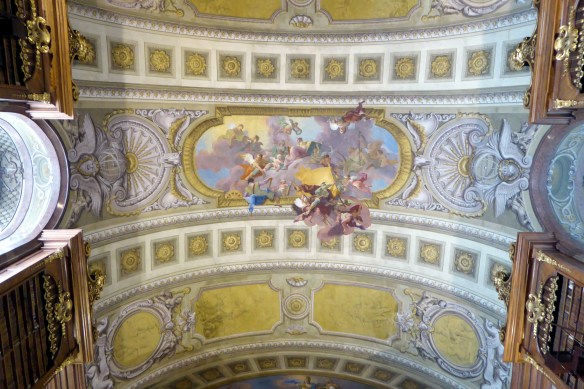
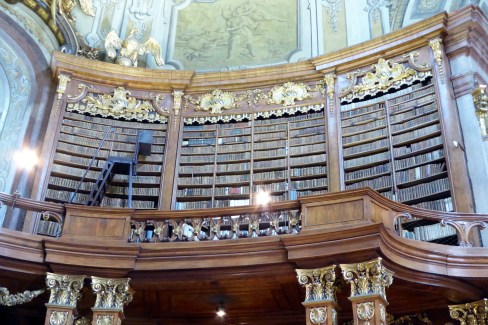
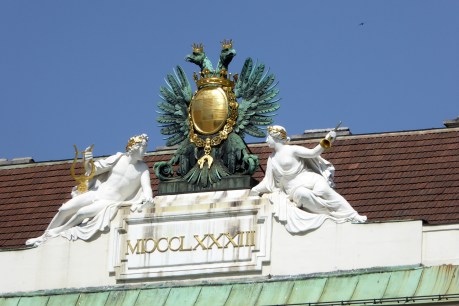
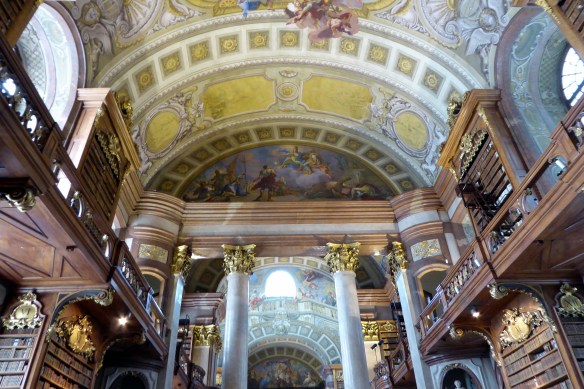
The highlight of our walking tour was visiting the library of the palace that dated back to 1774.  It was stunning!
P1050949

P1050927

P1050935

P1050934

P1050932P1050942

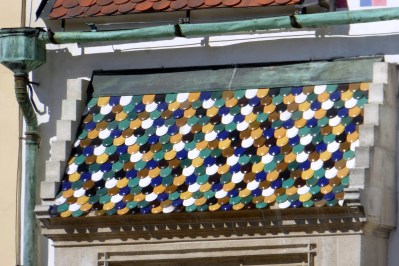
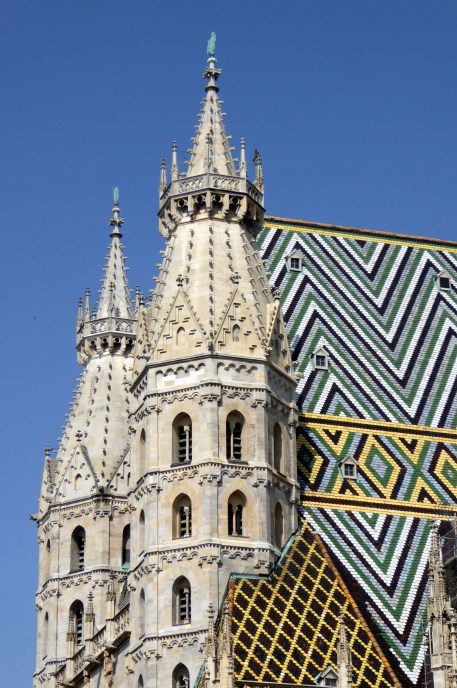
St.Stephen’s Cathedral was photogenic as well; especially the 250,000 colorful enamel tiles that covered the roof, and the enormous stain glass windows.  Like most of the cathedrals we have seen, though, there was scaffolding in place where workers were cleaning the façade that had been damaged by pigeon droppings.  Many cathedrals and historic buildings throughout Europe now have screen covering surfaces to prevent pigeons from taking up residence and damaging the stone with excrement.
P1050959

P1050989

There are 250,000 of these enamel tiles!
P1050966

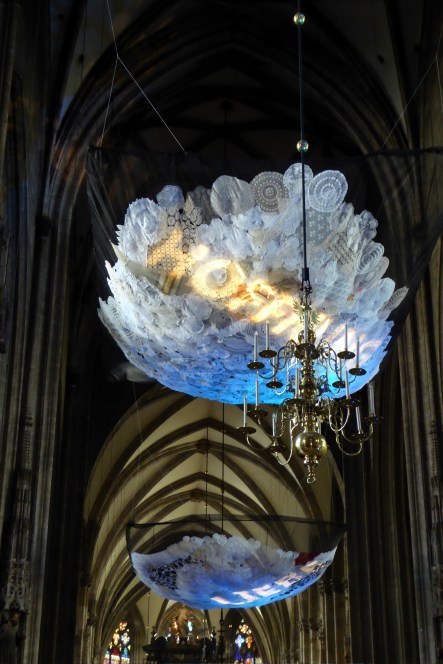
Look closely at what is hanging from the ceiling of the cathedral.  These are all hand-crocheted lace doilies that have been stitched together.  I believe the words projected on each of these translated to love and peace.  (I forgot to write it in my notes.)

During our free time after the tour, Bruce and I wandered the streets I had strolled back in 2007 when I had visited with my mom.  There were a lot of changes—many more modern chain stores had replaced the small local businesses and patisseries.  Still, the smaller cobblestone alleys had picturesque cafes and boutiques that were pleasant to explore.

P1050953

P1050975

P1050984

P1050978

P1050973

P1050951

P1050982

By the time we had returned to the boat, the previous days of walking miles over cobblestones, climbing a lot of stairs, and trekking up the hill in Prague to see the view below from the castle, my hip rebelled.  Surprisingly, it wasn’t the hip that had been operated on in December, 2014; it was my “good” hip.

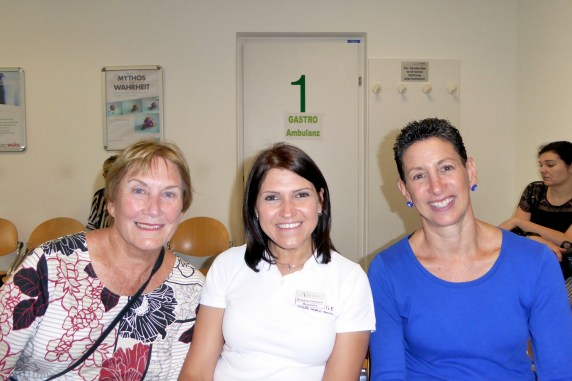
Knowing I couldn’t let my hip go untreated, I sought medical care the following day.  We would be in Vienna until 3:45 AM, so I asked the concierge, Renata, where I could go to get checked by a physician.  Being a Sunday, my only option was the hospital emergency room.  There was another gal on board, Betsy, who was having a problem with a leg injury, so Renata insisted on taking us by taxi to the hospital and assisting us.
Betsy-Renata-Elaine2

Betsy, Renata, and Me

Thankfully, Betsy and I both had taken out Vantage’s travel insurance, because all expenses were covered with no hassle, including the 60-euro round-trip taxi ride clear across the city to get to hospital and back.  Unfortunately, the first hospital we went to wouldn’t treat us, because there was nobody there to x-ray my hip or administer an injection.  On Sundays, you’re out of luck.  Unless you are an admitted patient, there is only one place to get medical care—the other hospital also located on the outskirts of town.  Renata called another taxi, and off we went to Krankenhausseelsorge, the other hospital with a very long name.

While Betsy received treatment for her leg, I was sent off for an exam, x-ray, and injections.  What was thought to be bursitis was calcific tendinitis, and the x-rays showed plenty of evidence.  The doctors who claimed to speak “little” English ended up being a breeze to communicate with, and they were wonderful.  I received an injection of short and long-term anesthetic in my hip, and I was sent away with a cd of my x-rays and a stronger anti-inflammatory than the Meloxicam I had brought on board, just in case.

What could have been a miserable experience turned out to be no big deal, and the three of us made the best of it.  We got to know each other during the long taxi rides, had a lot of laughs, and we bonded.  In the hospital, while Renata went to check on Betsy, she made a detour to the cafeteria and surprised me with a couple of cutely packaged Lindt chocolate bars to cheer me up.  (She knew how much I loved chocolate after I asked her the first night of the cruise where the closest grocery store was located in Budapest, so I could purchase chocolate the following day.  It turns out she loved chocolate, too, and she shared some of her private Croatian chocolate stash with me.  We were instant soul sisters!  The following day, she was afraid we wouldn’t get a chance to make it to the store, so she even purchased a few of the bars I was looking for when she went shopping for herself and gave them to me as a gift.  We laughed, because we had bought chocolate to Renata as a gift!  We ended up giving each other the exact same chocolate!)

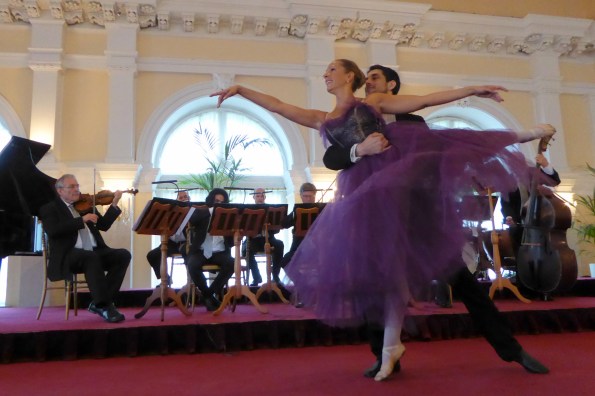
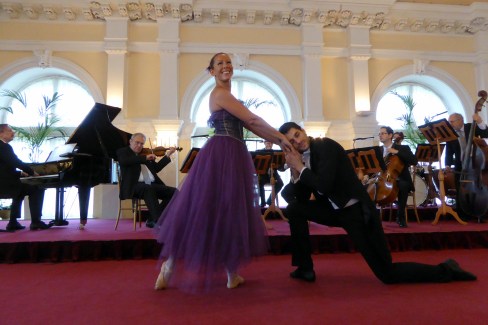
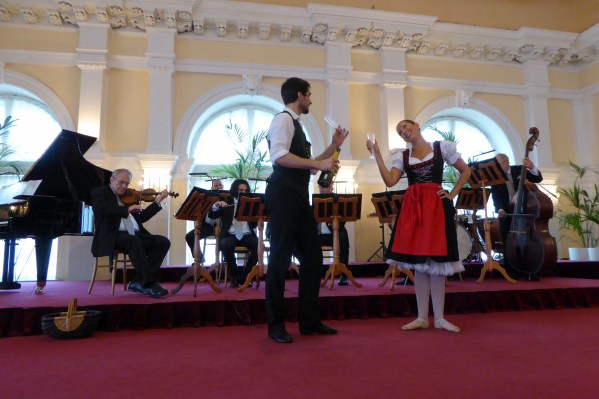
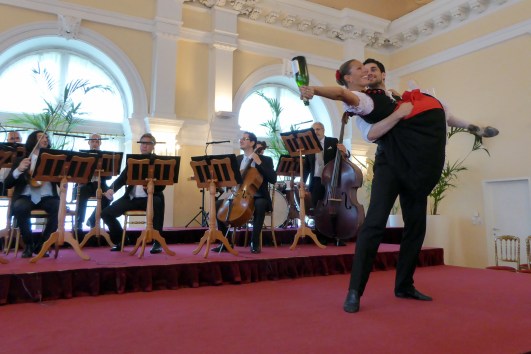
By the evening time, the short-term injection alleviated the pain enough to be able to join the other passengers for a trip to the beautiful Kursalon Wien music hall for a private concert just for our group.  After being served a glass of champagne on the terrace, we were treated to a fabulous one-hour performance by a nine-piece orchestra, two opera singers, and two ballet dancers.  The repertoire included several recognizable favorites, and the variety of classical music, opera, and ballet was a perfect cultural mix.  All of us agreed it would prove to be one of the highlights of our trip!

P1060002

Kursalon Wien

P1060003

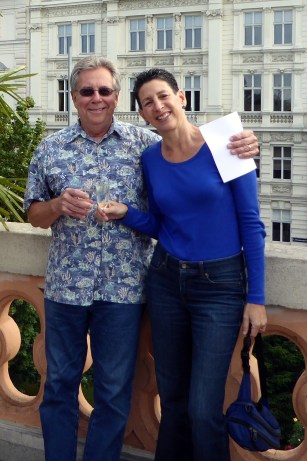
Enjoying champagne on the terrace with Bruce.  This concert was a casual event exclusively for Vantage, so it we were told to “Come as you are!”

P1060008

P1060018

P1060037

P1060053

P1060057

P1060060

LOTS OF LOCKS!

Cruising the rivers of Europe as I have done four times now, I have noticed one thing in common with the passengers on each of those cruises.  When the ship enters that first lock, everybody flocks to the outer decks, balconies, or lounge windows to watch.  Shutter bugs jockey for the best vantage spot on deck and click photo after photo.  Conversation between passengers is a lively affair, and everybody is amazed and enthralled by the process.  Smiles all around!

As the cruise continues (and the ship has entered lock after lock), less and less passengers casually meander out to the decks to have a look.  Several photographers still bring their cameras (just in case), but less of them actually use them.  There is some passing interest, but not quite the enthusiasm exhibited during that first lock experience.

By the final lock (in our case on this cruise, lock number 71! on the Main River), nobody budges.  For passengers who happened to be out on deck already, they may watch, but with little interest.  Card players continue with their games in the lounge, readers don’t bother looking up from their books, and conversation between passengers is about everything except the lock.

Photographers?  Pfffft.  Why bother?  It’s just another lock.

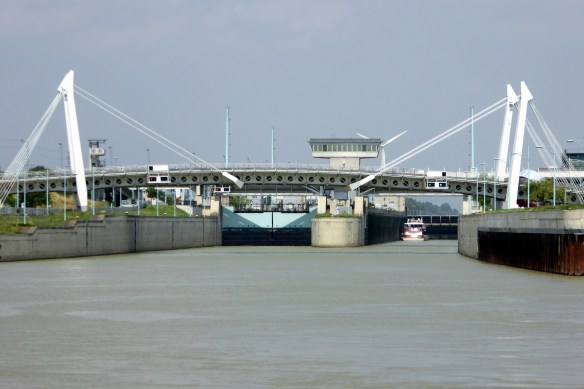
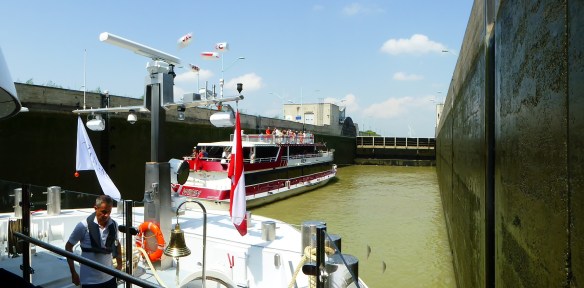
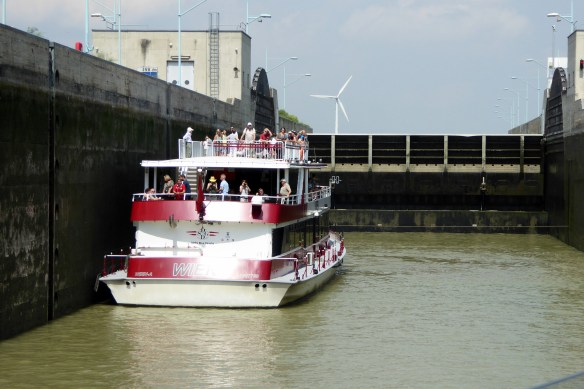
On this cruise, we passed through a LOT of locks!  Locks 1 thru 16 were on the Danube, locks 17 thru 37 on the Main-Danube Canal, and locks 38 thru 71 were passed through on the Main.  By the time we arrived at Kostheim Lock, the 167 passengers on board were lock-ed out!

Just how do those locks work anyway, and why did we have to pass through 71 of those darn things?  I will plagiarize from www.someinterestingfacts.net and quote:  “Locks were invented to let boats travel up and down gradients on water. They work like an ‘aqua lift’; the boat is enclosed in a chamber, which is either filled with or emptied of water. This commonly carries the boat up or down a height change of several metres.

Where there is a steep gradient to climb, there are numerous locks spaced across the gradient. These can either be individual locks separated by a lock-free waterway, or a ‘staircase’ – these are faster as the ‘upper’ gate of one lock is the ‘lower’ gate of another.”

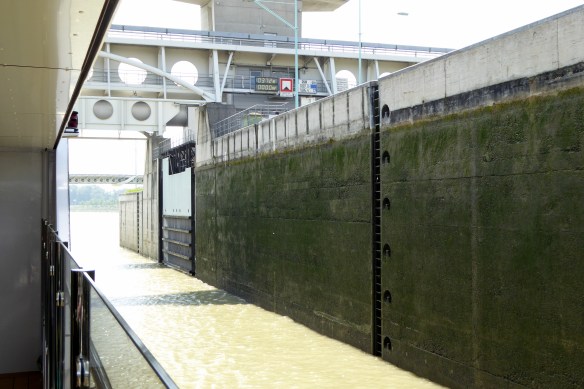
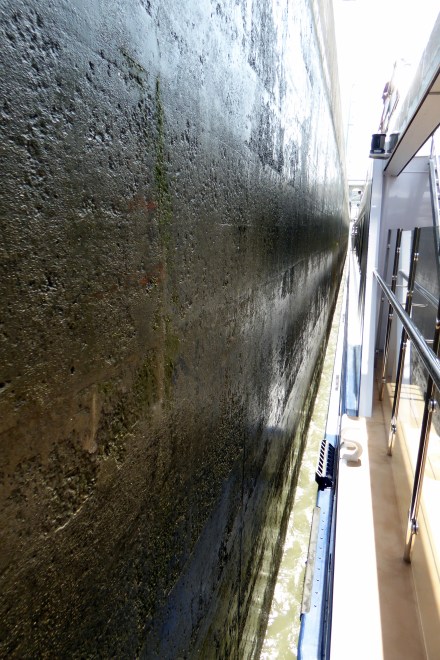
The largest height difference (81.92 feet!) we experienced in locks was on the Main-Danube Canal at the Hipoltstein, Eckersmuehlen, and Leerstetten locks.  It was an amazing feeling to see those huge concrete walls surrounding us!

During our cruise on the Danube, the River Voyager climbed to the top of the Continental Divide, 1,331 feet above sea level—the highest point in the world a boat can climb!  Over the course of our 106 miles, we passed through 16 locks climbing 220 feet up, and 574 feet down.

Here are some scenes during our cruise to Vienna:

P1050883

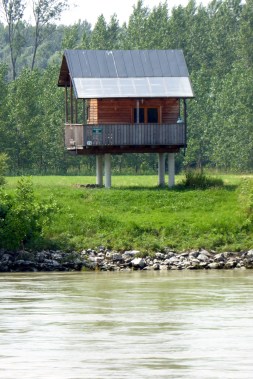
There were many cute little fishing cottages along the river.

P1050887

P1050871

I took a quick break from my yoga session for this shot!  I had the entire deck all to myself this morning- nice!

P1050892

We will be entering the lock behind the boat on the right.

P1050896

P1050902

P1050900

P1050898

P1050899

Look how close we were to the lock on the starboard side!

Elaine01.jpg

One of the passengers, Dave Henry, snapped this shot of me measuring the distance from the boat to the wall of the lock.


BREATHTAKING BUDAPEST

P1050674

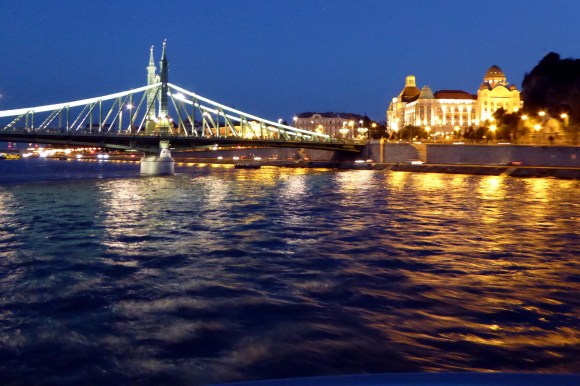
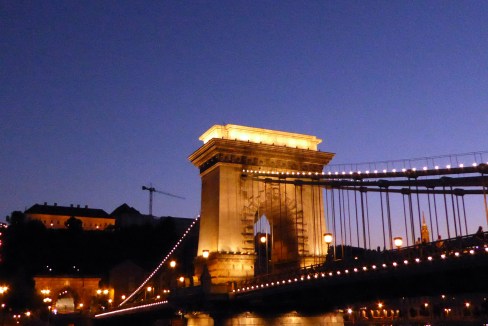
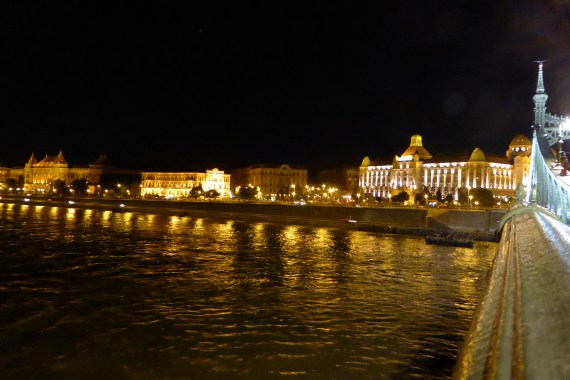
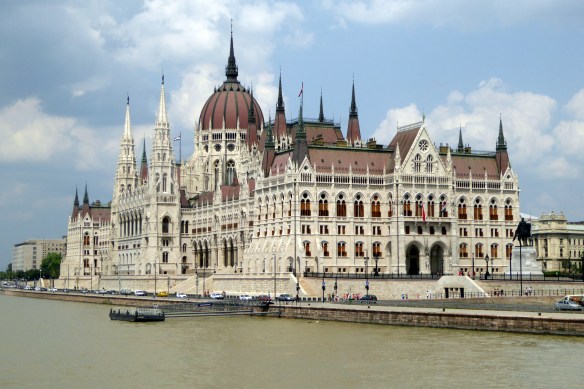
The evening of our first night on board was absolutely magical.  After dinner, Captain Ziggy took us on a cruise up and down the Danube, so we could enjoy the beautiful lights of the city.  Hilly Budha lined one side of the river and looked quite dramatic with the monument high up on the hill lit up in changing multi-colors.  The flat Pest side featured the Parliament Building brightly lit in gold.  In between, gorgeous bridges were dramatically lit as well.  Breathtaking!  This was sure to be one of highlights of our European river cruise.

P1050680

P1050686P1050692

P1050683

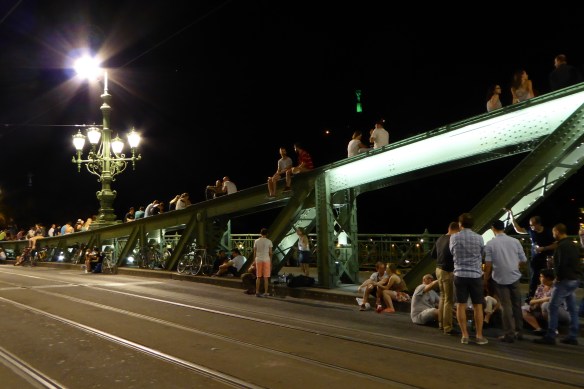
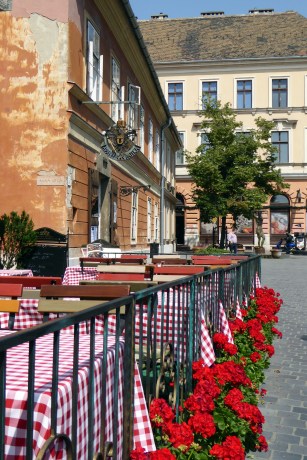
After we docked, I grabbed my little pocket-sized tripod for a walk with Bruce to shoot photos from the bridge crossing the river in front of our boat.  When we passed under the bridge during our cruise, a young crowd of revelers yelled greetings from up above.  It was quite a scene, and it looked like one big happy party.  We wanted to see what all the fun was about.

P1050721

The previous day, Hungary had won their soccer match to advance to the next bracket of the European Soccer Championships (ultimately won by Portugal), and Europeans take their soccer very seriously.  This was huge, and the party from the day before just kept on going.  The city had shut down the bridge to traffic, and groups of revelers congregated with plenty of food and drink (mostly drink) to celebrate.

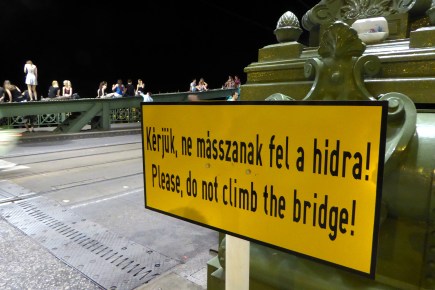
The crowd was boisterous, but well-behaved—except for the blatant disregard for the sign that warned, “PLEASE DO NOT CLIMB ON THE BRIDGE!”
P1050728

P1050718

At one point, a guy started singing Hungary’s national anthem or team’s anthem (I’m not sure which), and everybody on the bridge joined in.  What a scene!

Between the cruise, party on the bridge, and photographing the city around me; it was an uplifting and enjoyable way to begin our journey on the Danube.

P1050708

P1050710

P1050711

The following day, we were treated to a panoramic city bus tour of Pest, and a walking tour of the town of Budha high up on the hill.  We had a panoramic view of the Danube and Pest down below, and we learned a lot of interesting history and facts about Hungary throughout the tour.

P1050650-1

P1050738

A country of 9.8 million people, Budapest is home to 1.7 million of their people.  (Perhaps the percentage of foreigners isn’t higher, because the Hungarian language is extremely difficult to learn.  There are more exceptions than rules making it very confusing.)

Exporting machinery and car parts is a large part of Hungary’s economy, in addition to assembling Audis and other automobiles.  They also produce chemicals and pharmaceuticals for export.

Although Hungary still uses the Forint (HUF) as their currency, they are a member of the European Union.

Education in Hungary is very good, and students are required to take exercise classes as well as learn a second language.  Most choose to learn English, and the younger people speak the language quite well, because they must pass a test in English to graduate.

Attending university is free for students who earn good grades in high school, but students must sign an agreement that they will stay and work in Hungary for the same amount of time they spent getting their education.

In addition, we learned much about the history of Hungary.  I don’t fill my head with dates I will never remember, but there was one fact that stood out as being quite sad:  Hungary lost every war it had ever been in.  Every single one.

P1050751

P1050773

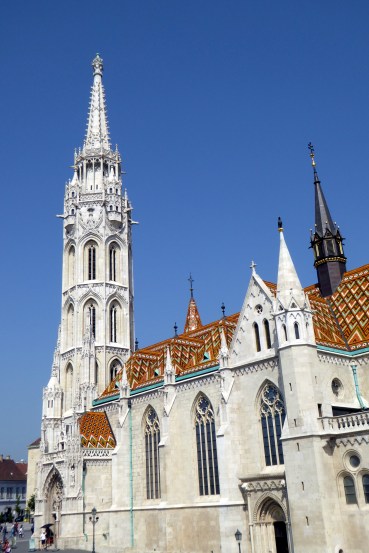
Matthias Church, located on the Buda side of the river on Castle Hill.

P1050762

P1050776

P1050781

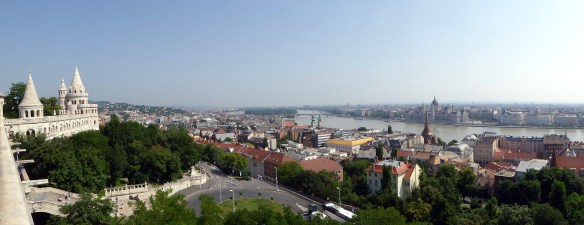
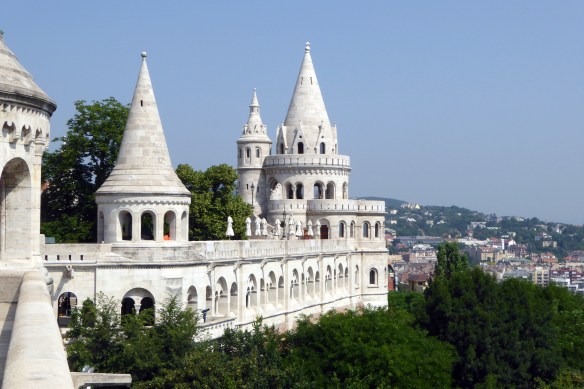
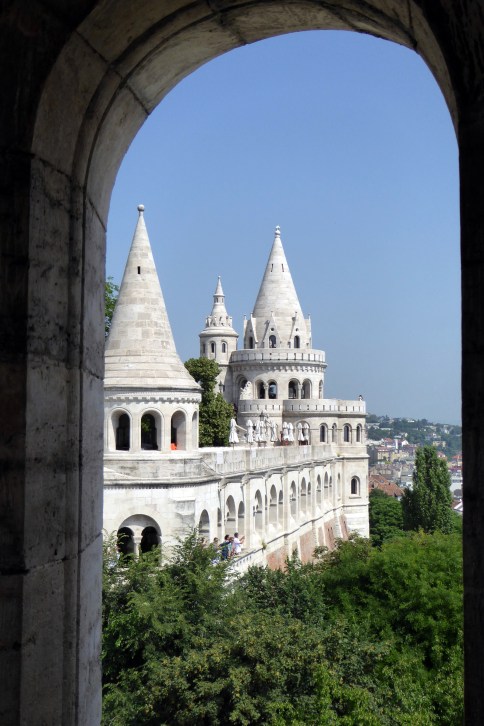
The view from Fishermen’s Bastion

P1050783

P1050792

P1050774

Across the river from Buda is Pest, and the Parliament Building of Budapest.

P1050805

The streets of Castle Hill, on the Buda side of the river.

P1050823

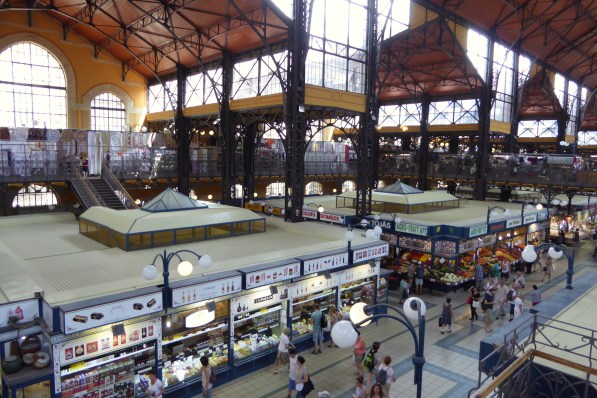
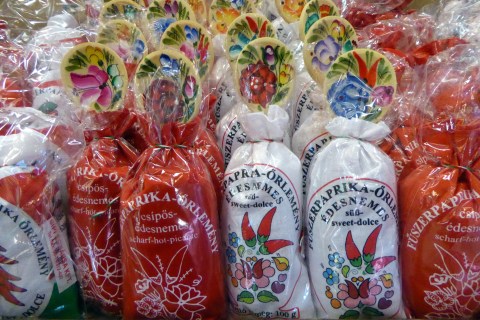
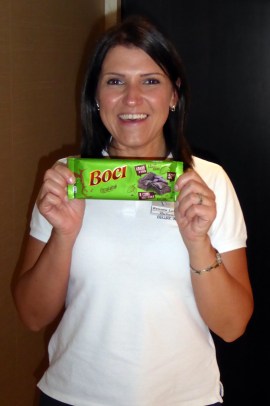
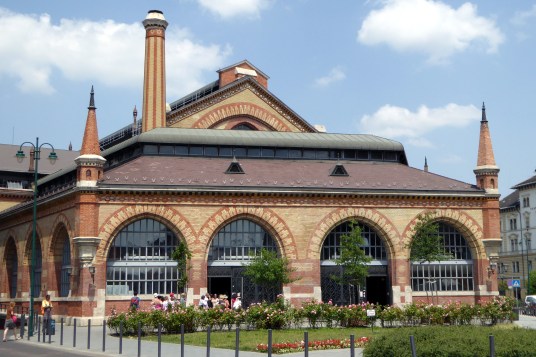
Following our tour, we walked up to Great Market Hall to buy Boci chocolate bars (for me!), and smoked paprika (for Bruce!)

P1050829

P1050734

P1050731

P1050828

P1050833.JPG

Renata, River Voyager’s concierge is a fellow chocoholic and Boci chocolate lover, so we picked up a bar for her at the market.  Little did we know, she was afraid we wouldn’t have time after our tour to shop for chocolate, so she ran up to the market and bought us THREE bars!  (More about Renata in Vienna…)

P1050835

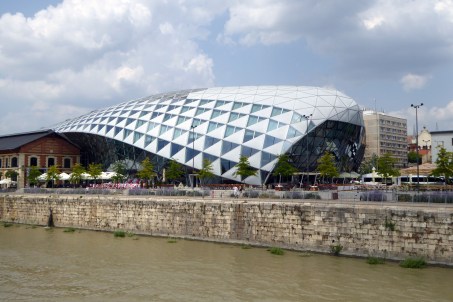
Our boat was tied up near “The Whale”
P1050840

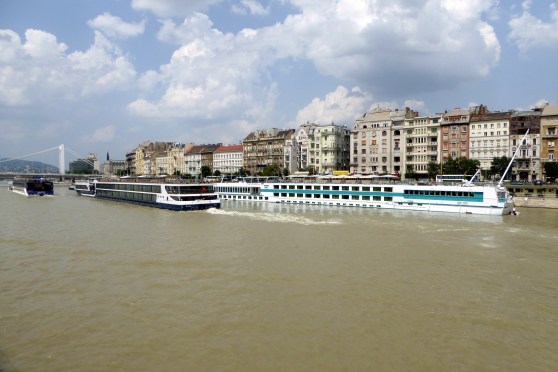
We had a beautiful departure from Budapest, including passages under (very) low bridges.  Two days prior to our arrival, the river levels were too high for riverboats to pass under these same bridges.

P1050844

P1050858

The Parliament Building (shown above as viewed from Buda)

Next up:  LOTS OF LOCKS!

Note:  If you were having trouble getting photos to load up in previous posts, it wasn’t you (or your computer); it was me!  Photos can now be viewed for recent posts, and I am working to correct the problem in old posts.  


BRATISLAVA TO BUDAPEST

P1050608

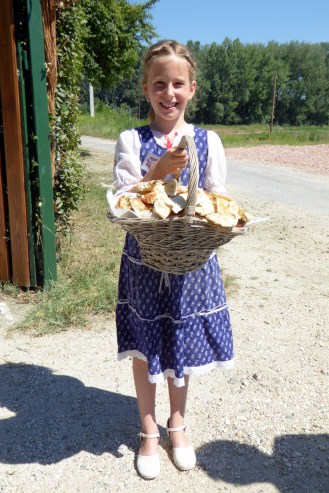
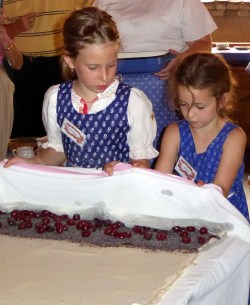
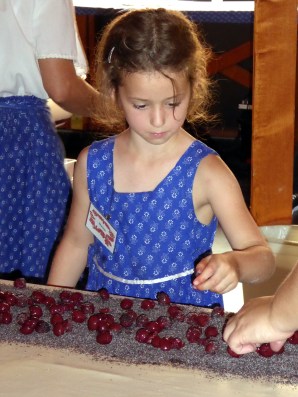
On the way to Budapest to meet the River Voyager, our home for the next 16 days, our pre-extension group enjoyed a wonderful community-hosted lunch in the tiny village of Dunaalmas, Hungary.  We were greeted by the villagers dressed in traditional Slovakian costumes, and one of the little girls held out a basket of freshly baked flatbread with garlic butter, similar to Indian naan.  Next, we were given glasses of locally-produced liquor to enjoy before watching flat bread and strudel-making demonstrations.  Some of the group rolled up their sleeves to assist, but I got a kick out watching the older of the two girls teaching her little sister the fine art of making strudel.  At her young age, she was already an expert at handling the dough.

P1050632

P1050630

P1050624

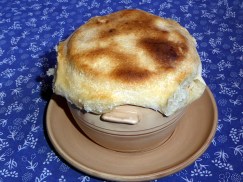
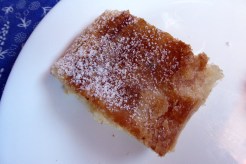
Lunch was traditional vegetable and beef soup served in a crock with a pastry cap baked over the top.  Along with some tasty local wine, we were completely satisfied.  Then, the strudel was served.  It kept coming, and coming!  In all, we had three types of strudel:  cottage cheese, apple, and cherries with poppy seeds.  It was amazingly delicious (especially for not being chocolate!), and we were overwhelmed by the feast we had been served.

P1050636

P1050639

Needless to say, the remainder of the bus ride to Budapest was quiet.  Very quiet.  I think most of our group crashed on the bus for an afternoon siesta.

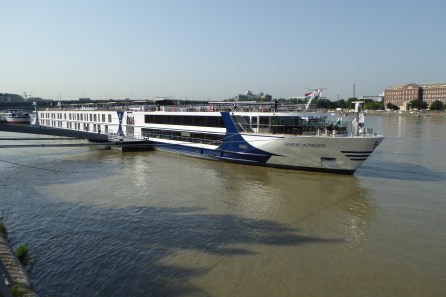
Upon arrival to Budapest, we were welcomed aboard by the entire staff of the River Voyager, Vantage Travel’s newest riverboat in their fleet.  Just thirteen voyages old, the 175-passenger (and 46-crew) vessel looked sparkling brand new.  I was impressed at how much more beautiful and technologically updated it was compared to the previous Vantage riverboats I had traveled on in the past.

P1050745

What we didn’t know until just recently is that we came very close to not being able to cruise the Danube at all.  Just two days before our sailing, the river level was too high from flooding for riverboats to be able to pass under the lower bridges.  If that had still been the case, we would have had to be bussed from place to place—not our idea of a river cruise!  Needless to say, all of us aboard the River Voyager feel extremely fortunate to be able to cruise the Danube, Main, and Rhine!


BEAUTIFUL BRATISLAVA

Although I had been to Bratislava in 2007 during a river cruise of Eastern and Central Europe, this was Bruce’s first visit to this part of Europe, and I couldn’t wait to share it with him.

Slovakia, formerly part of Czechoslovakia, became a separate country when politicians decided to break the country in two without referendum, much to the chagrin of extended families and friends who were geographically instantly split into two nationalities.  It is now a small country; just 19,000 square miles and 5-1/2 million people.

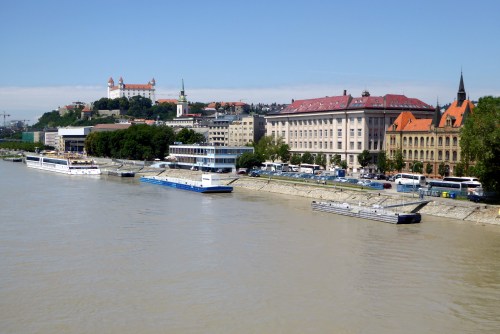
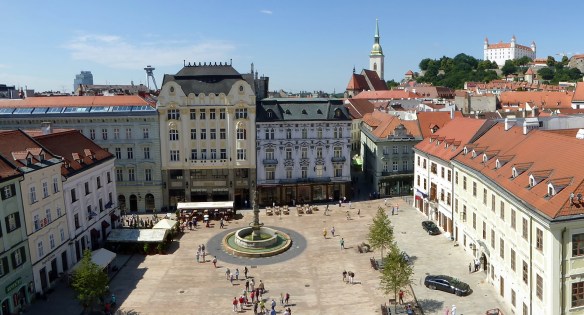
As soon as we arrived in Bratislava and settled into our hotel room at the Sheraton, we took off for a walk to the old town.  Our beautiful, very modern hotel was located along the promenade of the Danube river, so the fifteen-minute walk each way was very pleasant and picturesque.  (Although, “Blue Danube” is a misnomer, as you will notice in my photos.)

P1050602

P1050590

P1050510

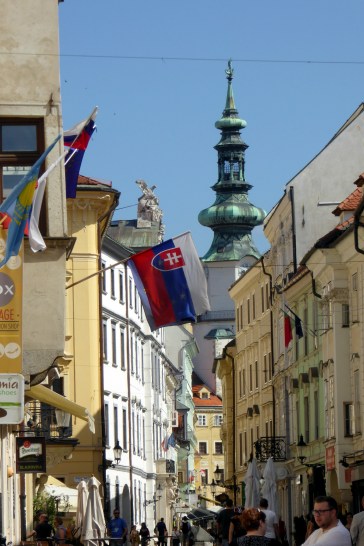
Much of the old town is reserved for pedestrians with just service and emergency vehicles allowed.  The Cobblestone streets are narrow and lined with outdoor cafes and shops giving the old town a quaint and charming feel.  In the late afternoon, the cafes become filled with locals gathering with their friends after work, as well as tourists from the river boats that line the banks of the Danube.

P1050461

P1050462

P1050467

P1050463

It was hot outside, so we opted to eat inside at one of the casual dining spots that brewed their own beer.  A delicious dinner for two with side of veggies and a couple of beers cost only $27—reasonable for Europe in our opinion.

P1050485

We found the prices in Czech Republic and Slovakia quite affordable.  Travel experts are spot-on when they say that Eastern European countries are the best travel bargains on the continent.

The following day, our group took a wonderful walking tour back to the old town.  Walking tours are an excellent way to learn about the history, culture, and customs of a place, and we always enjoy them wherever we go.  It was nice to get filled in on what we had seen the day before, and for me, it was a refresher from 2007.

P1050521

P1050569

P1050538

P1050542

P1050543

P1050472

P1050476

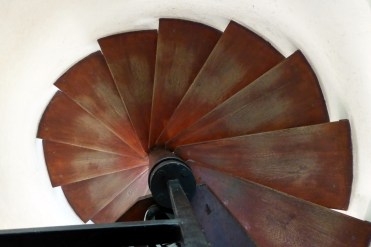
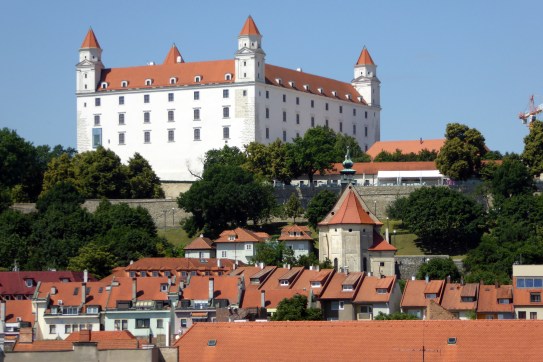
The highlight of the day, though, was hiking up the narrow spiral staircase of the main square’s bell tower to take in the view of the old town below as well as the castle located high up on the hill behind the town.  (We could have walked up the hill to the castle, but the unseasonably hot weather– 15 degrees above normal—made it an easy decision to opt for the tower instead.)

P1050473

P1050474

P1050545

P1050547

The 360-degree view was breathtaking, and I had a great time using the panorama function on my little Panasonic Lumix!

P1050554

P1050558

P1050567

By the late afternoon, we were tuckered out from the heat, so we headed back along the promenade to our hotel to cool off before dinner.  Between our walk to town, the walk back, and then repeating the whole process again in the evening for dinner, we put a lot of cobblestone miles on our feet!

Our Thai dinner at the Green Buddha was worth it though. Our sampling of traditional Hungarian/Slovakian meat-based cuisine was enough for us, and we were ready for some Thai curry.  Who knew we could get a delicious Asian meal in Bratislava?  It was fabulous, and we enjoyed the ambiance while dining outdoors on the narrow, shady cobblestone street.

Strolling along the river promenade on our way back to the hotel was so enjoyable on the warm summer evening.  Crowds were gathered in the cafes and river-front park, and the atmosphere was vibrant yet relaxed.  What a wonderful way to end our stay in Bratislava!

SCENES AROUND BRATISLAVA

P1050575

P1050580

P1050533

P1050527

P1050495

P1050500

P1050582

P1050583

P1050458

P1050606

P1050605P1050593

Coming up next:  BRATISLAVA TO BUDAPEST

BUS TO BRATISLAVA

On the bus ride to Bratislava, our guide, Ivanka talked about the European Union and living under communism as she did as a Romanian.  Given the “Brexit” controversy and upcoming vote (at the time), there was a lot of interest among our group about the issue.

P1050430

Twenty-eight of Europe’s fifty countries are members of the European Union, and twenty-three of those members are part of the passport agreement making travel within those countries much easier.  Now with “Brexit,” it will be interesting to see what possible economic fallout lies ahead.

It was interesting to hear Ivanka’s perspective.  Her stories about the transition were also fascinating, sad, and humorous at times.

Since jobs, food, and basic needs were provided by the government under communist rule, people didn’t know how to search for a job after communism ended in 1989.  They had to learn to think and do things for themselves- something that had never been encouraged or necessary in the past.

The concept of how to successfully use credit and debit cards was confusing, and most people didn’t understand the difference.  They had seen credit cards being used on TV shows, but never had much of their own money to budget or manage.  Many people went into debt using credit cards not understanding how interest accumulated over time.

Adapting to a new system and rules was a problem for many.  Could you imagine going to sleep one night in 1989 under communist rule and waking up the next morning as a free citizen under a capitalistic system?  Then, imagine seeing your country become part of the European Union with another set of rules.

Farmers experienced a lot of difficult changes.  The national agriculture system and co-ops had to be dismantled, and land returned to its rightful owners.  Newly independent farmers now had to obey new EU rules (including what size their produce had to be to qualify for export), and those who wanted to export their produce had to pay for expensive permits to do so.  The problem was that nobody had the money to apply for those permits, so most farmers settled on being independent farmers and sold their produce at local farmer’s markets, instead.

Transition to the E.U. was difficult, and corruption was prevalent—one of the reasons Britain voted to exit.

Bulgaria and Romania joined the E.U. in 2007, and western countries were taxed to support those countries who weren’t yet able to contribute to the system.  If a gallon of milk cost 6 Euro, 70% of that cost went to E.U. tax.  The income disparity was huge, though, and a lack of balance between Western Europe and Eastern Europe was evident.  Western Europeans earn on average of 1,500-1,800 Euros per month, whereas Eastern Europeans earn only 150-300 Euros per month.

In addition, The V.A.T. (Value Added Tax) is 20-25% in all E.U. countries, and there is a flat income tax of 16-18%; so, it has been very difficult for Eastern Europeans for survive on their meager earnings.  Add that to the 5% medical tax they must pay on basic coverage (not including dental), and it’s a wonder how they can survive at all.  Housing is so expensive to purchase that most people do not own their homes and must live with extended family.

In 2004 and 2007 when Eastern European countries joined the E.U., it was too expensive for younger people to live, so they left for other countries and became guest workers.  There was a mass emigration and brain drain to companies like Microsoft who were savy to recruit brilliant minds at a great bargain price.

Over the years, politically-motivated decisions have been made by the E.U. that many people opposed, but the without a referendum to vote on, the people had no choice in the matter.  The Euro currency was one of those political decisions that many Eastern Europeans disagreed with, because the Euro made things so much more expensive.

Easter Europeans are so poor that when McDonald’s came to Bucharest, it was such a special treat that groups would organize field trips to go.  Nobody had much money, so McDonald’s was expensive and viewed much the way a fancy restaurant is viewed by a middle-class American.

One of the humorous stories Ivanka told about growing up under communism rule in Bucharest was hearing how the TV show “Dallas” was all the rage once communism ended.  Everybody wanted to have hairstyles and clothing exactly like the Dallas characters had and would ask for it at salons and shops.

It boiled down to this:  Freedom meant something different for each person who never had it under communist rule.  For some, it meant burgers and Coca-Cola, and for others, it meant acquiring THINGS.  For Ivanka, freedom meant being able to travel and see the world.  As a tour guide, she has been able to visit many places throughout Europe; however, her dream of traveling to the U.S.A. has not been fulfilled due to the many financial obstacles that prevent her from doing so.

After 1989, many people saved their money to acquire a passport, even if they could never afford to travel.  Having a passport was symbolic, and it symbolized freedom—something they never had.

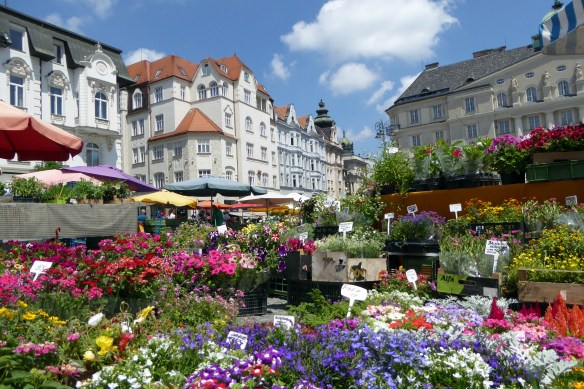
Along our journey to Bratislava, Slovakia, we stopped in Czech Republic’s second largest city, Brno.  After a walking tour, we had time on our own and happened upon a farmer’s market where the old buildings served as a picturesque backdrop to the beautiful flowers and produce on display.

P1050446

P1050436

P1050444

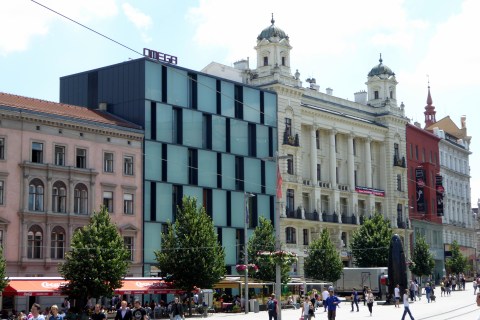
In the town center, this sculpture of a bullet was a monument to the bloodshed during thirty years of war between Protestants and Catholics.  (Would we have wars if there was no religion?  John Lennon’s “Imagine” really makes me stop and think every time I hear that song.)

P1050438

P1050432

PHOTOGENIC PRAGUE

It was 2007 when my mom and I took our second Vantage Travel river cruise (Belgium & Holland was our first), and we had chosen Eastern and Central Europe as our destination.  We enjoyed the countries we visited very much.

I never thought I would have the opportunity to return, but I was delighted when my suggestion to Bruce of going on a river cruise was met with enthusiasm.  Bruce suggested I choose the itinerary, so I opted for one that combined portions of two river cruises I had previously enjoyed and thought Bruce would enjoy.  The itinerary also included unfamiliar stops in Germany that would be new to both of us.

Germany was featured on the third river cruise I did with my mom, and I was pleasantly surprised at how clean and beautiful it was.  The country surpassed my expectations so much in every way that I wanted to share it with Bruce, especially since one side of his family was of German heritage.  My last name is German, so it is somewhere in my family tree as well.

P1050139

Our journey started with a pre-extension in Prague, a post-cruise destination of my 2007 adventure.  I loved the city and couldn’t wait to share it with Bruce.

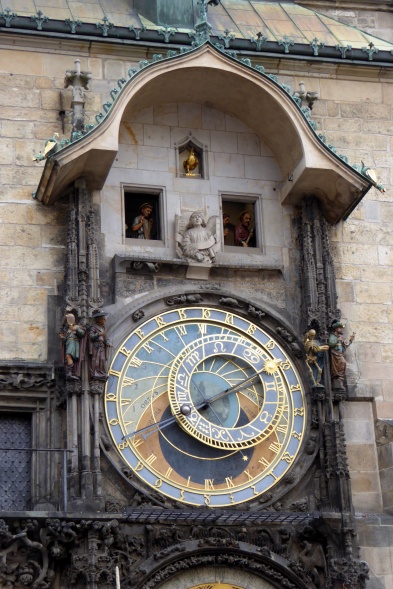
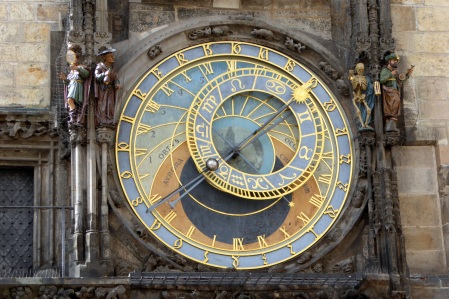
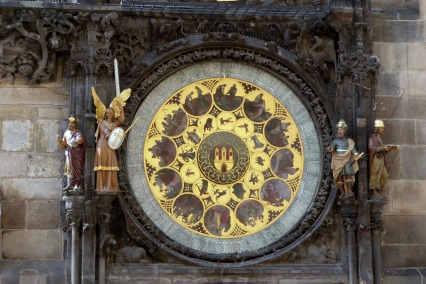
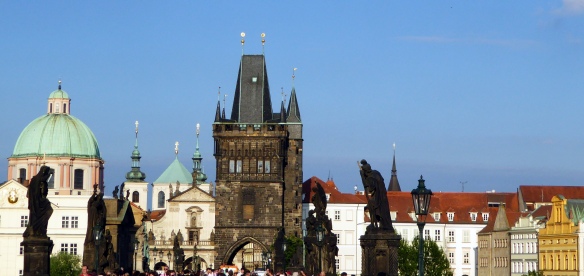
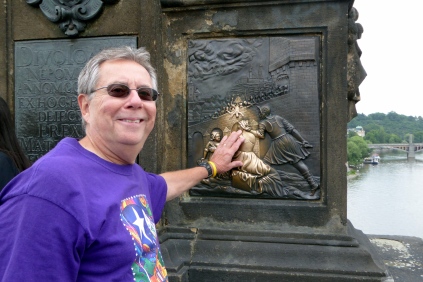
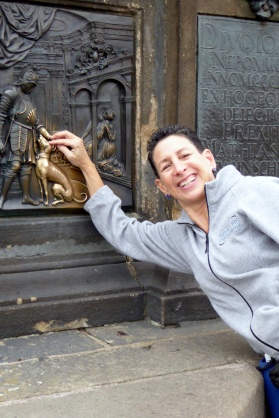
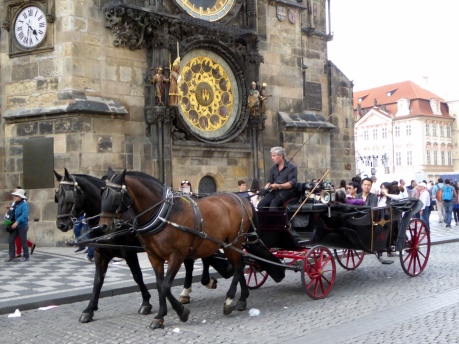
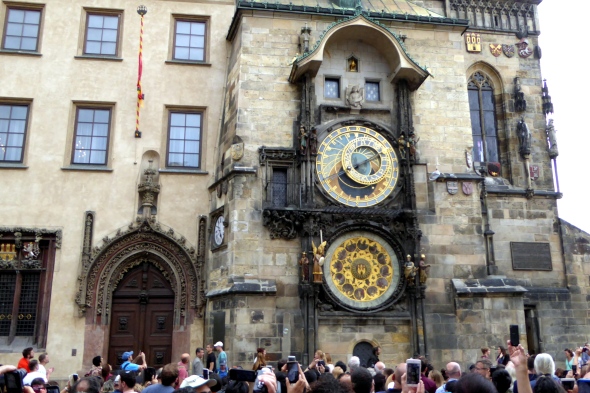
Upon our arrival from our red-eye flight from Atlanta, we immediately hit the streets to explore the old town, and St. Charles Bridge area.  Although it had been nine years since my previous visit, my memory served me well as I led Bruce through the cobblestone streets.  For a bit of a chuckle, we stopped on the hour to see the astronomical clock put on its little “show” for the tourists.  I’m not sure which was more fun—watching the clock or watching the crowd photograph the clock!

P1050146

P1050159

P1050172

P1050169

P1050150

P1050149

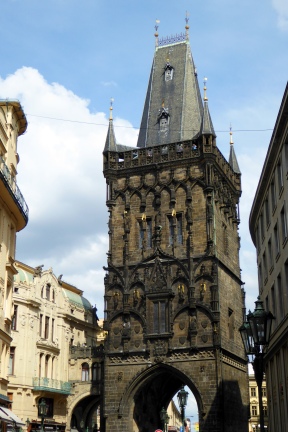
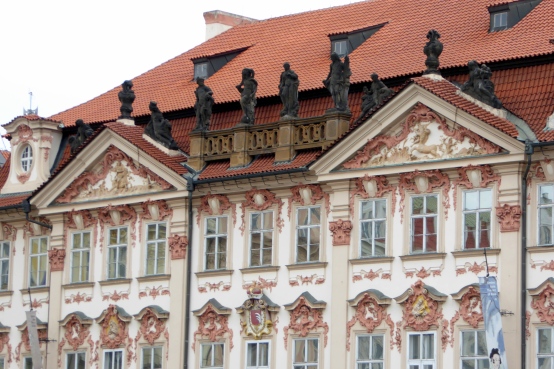
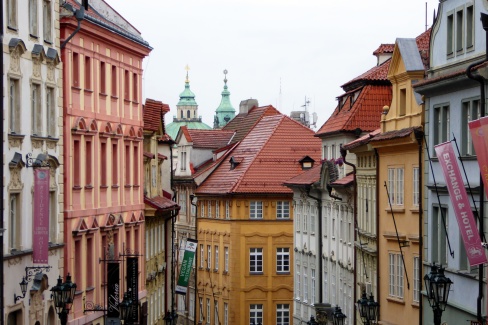
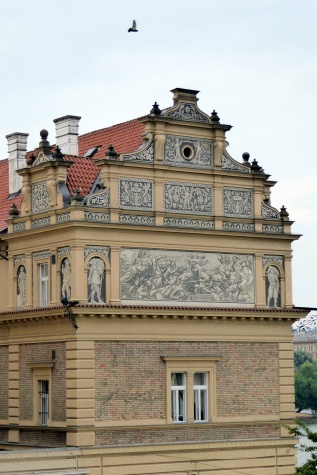
Prague has never suffered a major natural disaster or been the victim of an attack, so the architecture from hundreds of years ago remains intact.  If you enjoy seeing old architecture (and I mean, OLD; “New Town” buildings are from the 14th Century, and “Old Town” architecture dates back to the 13th Century!), this is the city for you!  Just be prepared for a neck ache from constantly looking up at the beautiful details on all the buildings!

P1050210

P1050417

P1050416

P1050411

P1050409

P1050401

P1050387

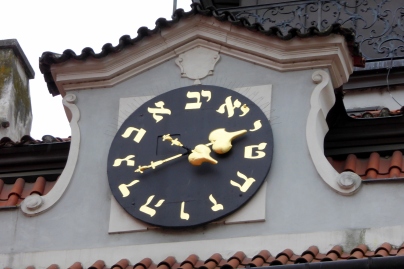
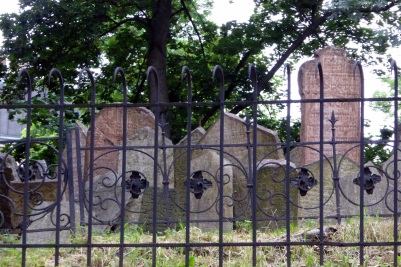
The following day, we joined the others in our group for a walking tour of the Jewish Quarter, Old Town Square, and the St. Charles Bridge.  Prior to World War II, 120,000 Jews lived in the area; however, 80,000 were hauled off to concentration camps never to return alive.  The cemetery was so space challenged that bodies were buried 12 layers deep.  Today, there are only 2,000 Jews living in the Jewish Quarter of Prague.

P1050177

P1050180

P1050195

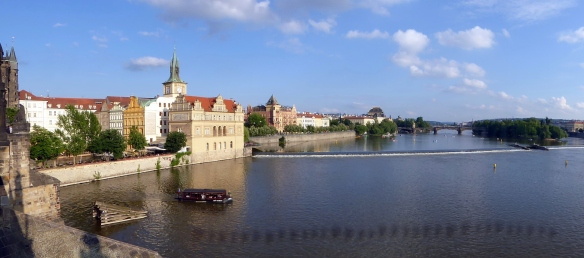
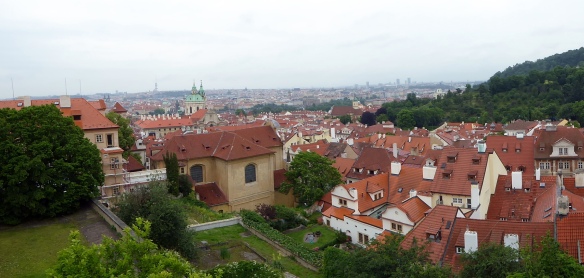
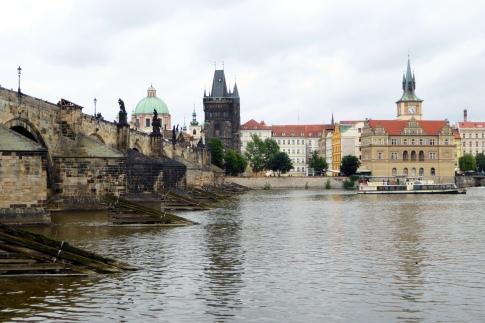
Following our fascinating tour, we hiked up to the castle to enjoy views of the city and admire the architecture.  On the way back, we enjoyed casually meandering the streets on each side of the bridge along the river.

P1050289

P1050292

P1050321

P1050235

P1050236

P1050222

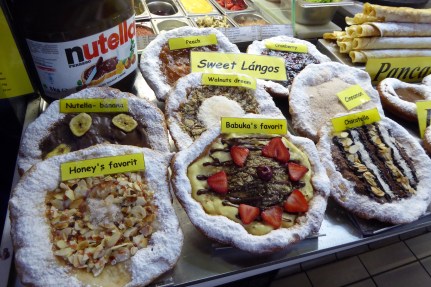
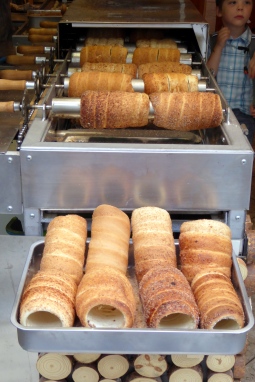
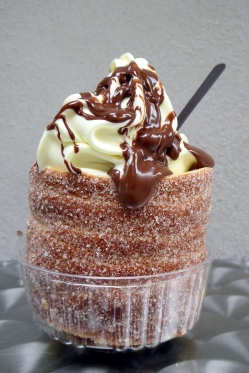
In lieu of lunch, we opted for a snack of “Trdelni’k,” a donut-like pastry shaped like a hollow coiled tube.  It was placed on end in a cup, filled with ice cream, and topped with Nutella.  It was the tastiest $4.50 treat we have ever shared!

P1050165

P1050344                              

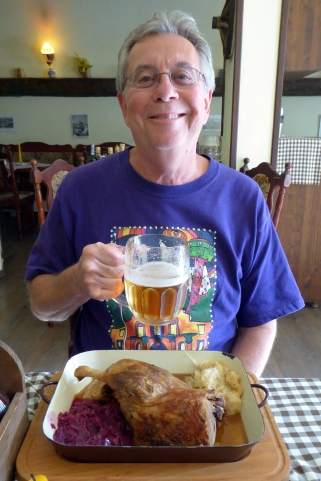
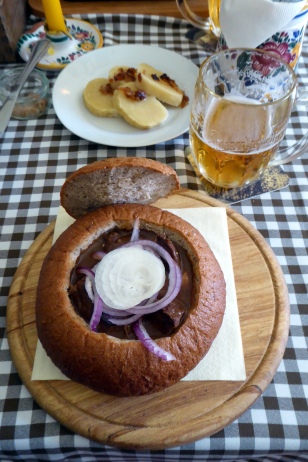
Dinner in Prague was at a little restaurant along the cobblestone streets where they serve traditional fare—cuisine that is completely opposite of our normal healthy diet.  Bruce ordered duck which was served whole along with red cabbage and sauerkraut.  I opted for goulash served in a hollowed out small round of bread.  We also shared an appetizer of potato dumplings as well as a basket of bread served with pate.  Pilsner Urquell on tap was our beverage of choice for three reasons:  It is Czech Republic’s national beer, it has been voted the best pilsner in the world in major beer competitions, and it was less expensive than mineral water!  We enjoyed it all for a reasonable tab of $37.

P1050373

                           P1050375

Our next destination:  Bratislava…

AU REVOIR, QUEBEC!

35
On both sides of the walled Old City, Quebec is a very pleasant, attractive, and clean city; and, we always felt safe walking through the streets wherever we went. It is quite hilly, though, and I am now paying for hiking up and down those steep inclines! If you have arthritis in your hips and you visit Quebec City, don’t say I didn’t warn you!

106

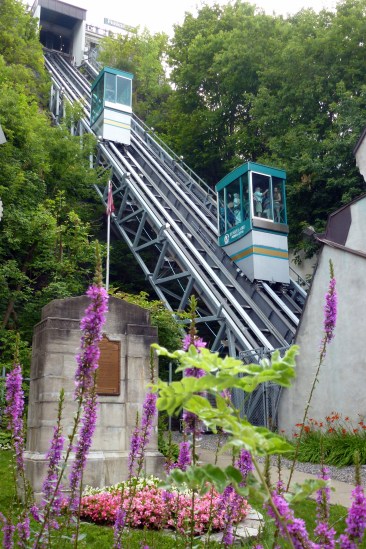
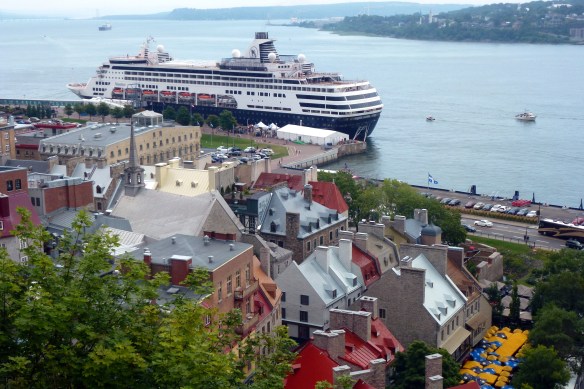
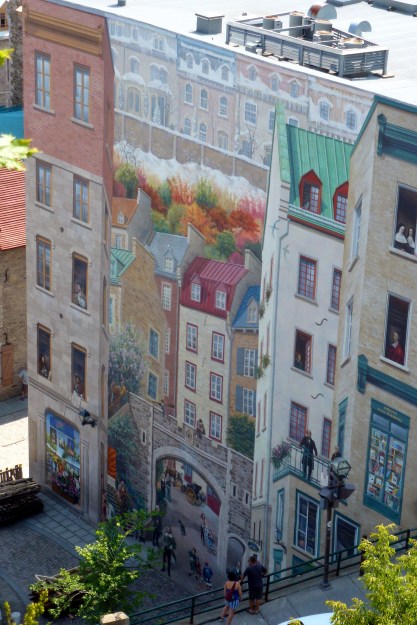
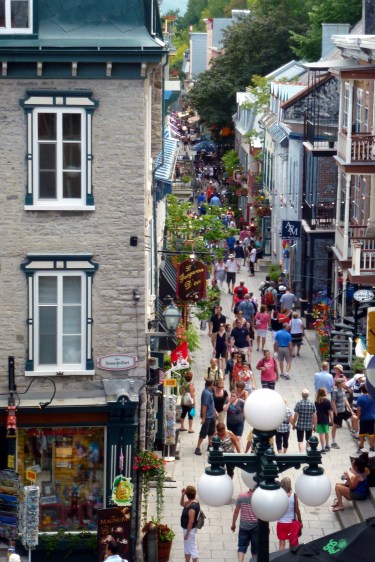
The incline is so steep leading down to the Old Port, we walked down; however, after a full day of walking, we chose to take the inclinator back up. It was well worth the visit, though, as you can see below.

71

72

76

78

81

85

87

88

98

102

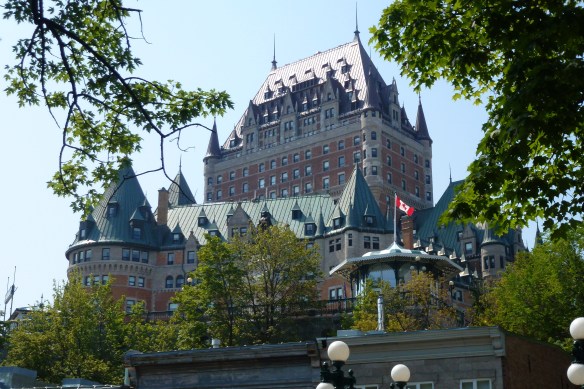
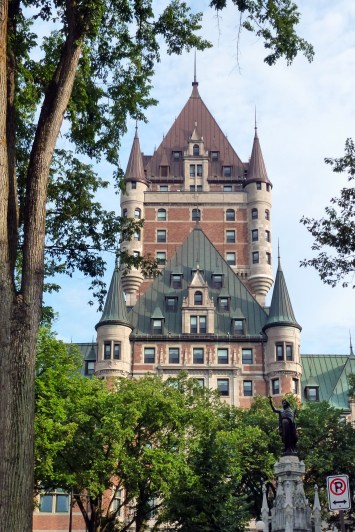
Back up top, the Fairmont Hotel and the Old City looked beautiful in the sunlight.

57

61

64

66


44

46

We thoroughly enjoyed our 2-1/2 days in Quebec City and were sorry to have to leave Canada. U.S. Masters Summer Nationals was next on my swimming competition plate, though, and it was time to continue on to College Park, Maryland.

How ironic that of all the people we spoke with in French Canada, the only one who couldn’t speak English was the taxi driver who took us to the airport! Seeing our luggage upon arrival, though, he pulled only two words out of his extremely limited English vocabulary: “Airport or train station?” And, off we went.

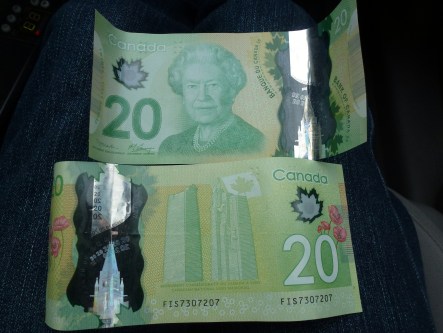
Somehow, in his French and my English, we were able to communicate perfectly fine. I had forgotten to photograph my Canadian currency (something I do in every country I visit), so I pulled out a $20 and photographed it on my leg. I conveyed to our driver that their $20 note was prettier than our $20 bill. He went on to comment on the value of their currency compared to ours and how it has fluctuated over the years. I didn’t understand a word he said, but we were sure we understood exactly what he said. Funny how sign language and facial expressions can be a wonderful substitute for understandable words.

140

By the time we arrived at the airport, our discussion of economics had developed quite animated; however, it was time to say “au revoir.”

We both look forward to the day we return to Quebec City and are welcomed by our next French-speaking taxi driver with a hearty, “Bonjour!”
QUEBEC: OUI, OUI!

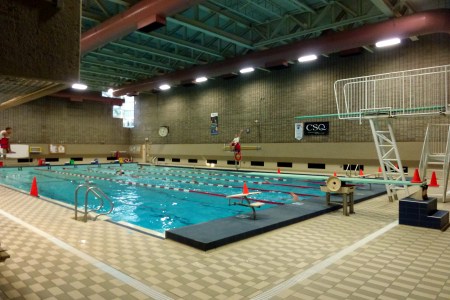
There was one place I felt completely at home among an entire group of French speaking locals: the pool. Lap swimming etiquette is the same throughout the world, and it took no time at all to size up the situation when I arrived for a morning training session. Lanes were designated by speed, and although I can’t read French, I knew what the red, yellow, and green signs meant: no-go, slow-go, and go-go! I hopped into the lane with the green sign (for fast swimmers) and fit right in with three swimmers who knew what they were doing (circle swimming counter-clockwise). We all went about our business and were right in sync, never getting in each others’ way.

139

Two of us ended our session at the same time, and we got into a conversation. He spoke to me in French, and I replied, “Parlaz-vous anglais?” In perfect English, he repeated his question, “Are you new here? I’ve never seen you before.”
After explaining that I was American and had competed at the Masters World Championships, he welcomed me to Quebec and said, “I may be partial, but I think Quebec is the most beautiful city in North America. You are really going to enjoy it!” I don’t think I will ever forget that conversation, because it was the end of that day I came to the same conclusion.

San Diego, the city I called home for 24 years is wonderful in so many ways, and San Francisco is magical. Portland and Seattle are two beautiful cities, and I absolutely loved Chicago. Savannah is incredibly charming and picturesque, and although New York is HUGE, it also has a place on my favorite cities list.

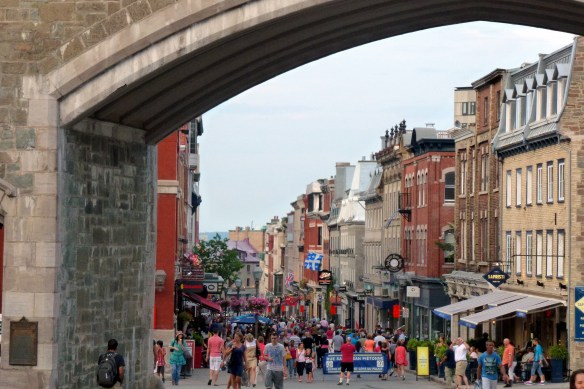
In Canada, Vancouver topped the list for me and Bruce—until we stepped under the arch of the walled Old City of Quebec. It was love at first sight.

During our two full days in Quebec, Bruce and I enjoyed our quickly-established routine of swimming in the morning and sightseeing in the afternoon. While he lounged in the apartment, I made the five-minute walk to the community pool for the morning lap swimming session. (U.S. Master Swimming Summer Nationals was coming up in just a few days, so it was important to keep a feel for the water after Worlds concluded.)

This facility was excellent. Not only was it free (thanks to the taxpayers), it was clean as a whistle and well-maintained. The locker rooms were large and well-equipped, and the 25-meter pool was kept at a perfect temperature.

After my swim, I was curious to see who was pictured on the wall next to the posted information. As it turned out, it was the local Masters team, and I recognized several of the swimmers from World Championships!

Following my morning swim sessions, we ventured into the Old City and Old Port to explore.

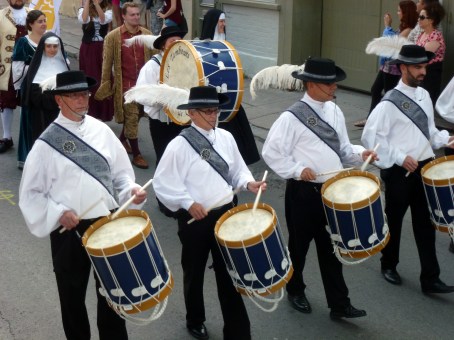
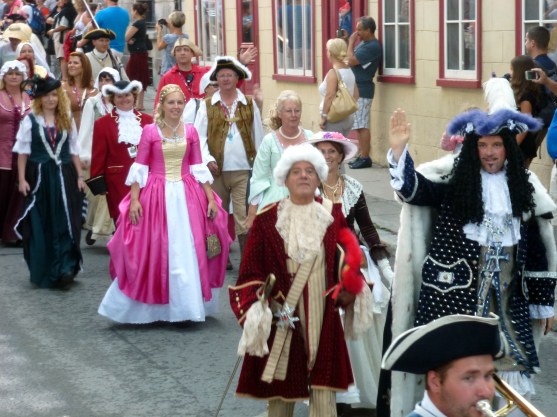
The iconic centerpiece of the Old City is the Fairmont Hotel. Below are some photos I shot of the hotel and a parade we enjoyed the previous afternoon. It was a bit gloomy; however, we were fortunate to have perfect weather the remainder of our trip.

59

56

60

58

55

54.JPG

52


Our first meal in Quebec was at Casse-Crepe Breton, a highly rated and reasonably priced recommended on my go-to travel site, http://www.TripAdvisor.com . We enjoyed our crepes there so much, we returned for more on our last day.

17

Ditto for our pitas at La Galette Libonnaise, a tiny takeaway tucked in between posh restaurants on swank Grand-Allee est. We each tried a different pita during our two visits, so we tasted four in all. It was difficult to choose a favorite, because they were all so delicious!

120

In my next post, I will share more about our Quebec experience. Until then, au revoir!

QUEBEC CITY: EXQUISITELY BEAUTIFUL!

Riding the train from Montreal to Quebec City was a very relaxing and enjoyable way to begin our remaining three days in Canada. Rather than book a hotel room in Quebec, we again opted to rent an apartment, this time at http://www.airbnb.com .

Melanie and Angus were there to greet us upon arrival, an easy task for them since their home was located just above our rental. Immediately, we knew we had made the right choice, because they were as warm and gracious as could be, and their apartment was as cozy and comfortable as we could hope for. What a perfect way to begin our visit in Quebec, the city that topped my bucket list for several years!

Quickly, we checked out the amenities, hung up our clothes, and off we went to explore the city. A short walk up the stairs and there we were at Rue Saint-Jean, the street that would take us to the Old City, just a ten-minute walk away.

Along the way were many inviting restaurants, shops, markets, and even a chocolatier with a chocolate museum!

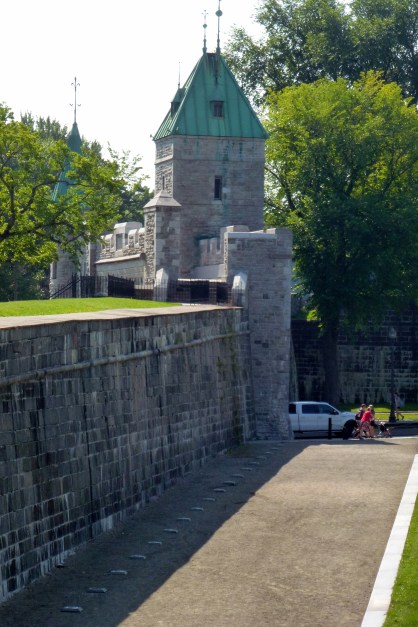
My heart skipped a beat and my eyes lit up, though, when we arrived at the walls surrounding the Old City. I couldn’t wait to explore what awaited us on the other side.

Quebec City, the capital of Quebec perched on the hills above the Saint Lawrence River, is one of the oldest settlements in North America. French explorer Jacques Cartier built a fort at the site in 1535. That was a long time ago!

To us Americans, any structure that is more than 100 years old is old. In Quebec, homes at the Old Port dated back to the early 1600’s and appeared no worse for the wear. They just don’t build ‘em like they used to! (Too bad the Atlanta Braves don’t subscribe to that point of view, because they are abandoning Turner Field for a new stadium. Turner field was built for the Olympics in 1996 and still looks perfectly fine!)

Being in Quebec felt like being back in France. In addition to the beautiful European architecture of the Old City, about 95% of the city’s inhabitants are native French speakers.

Many Americans would find that intimidating or uncomfortable, but I am like a magnet when it comes to foreign cultures. Drop me in the middle of anywhere foreign and I love the challenge of communicating with the locals and making myself at home.

I don’t speak French, but it didn’t take much effort to learn a few simple phrases that proved to be all that was needed to enjoy our stay in Quebec. Check this out on Trip Advisor; it’s all you will need if you visit Quebec: http://www.tripadvisor.com/Travel-g153339-s604/Canada:Important.Phrases.html

“Bonjour! Parlez-vous anglais?” Asked with a smile, the locals unfailingly responded in perfect English. We never once experienced the unfriendliness that Americans often speak about when it comes to the French or French Canadians. Avoid playing the “ugly American” role, and Quebec City is thoroughly enjoyable.

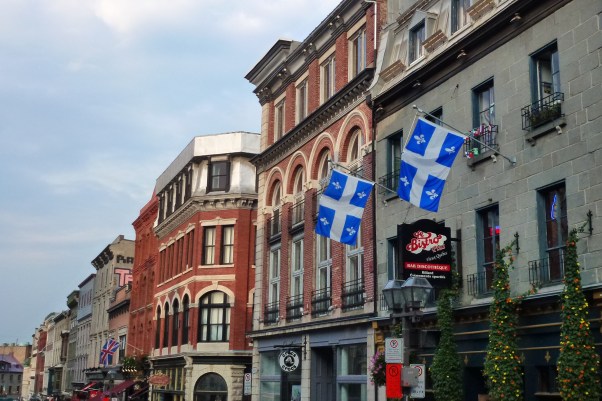
The following are a few of the photos I shot in Quebec City. Visit http://www.ExquisiteCards.fototime.com to see more, and check back for my next post for more about Quebec City.

01

03

05

09

12

24

37