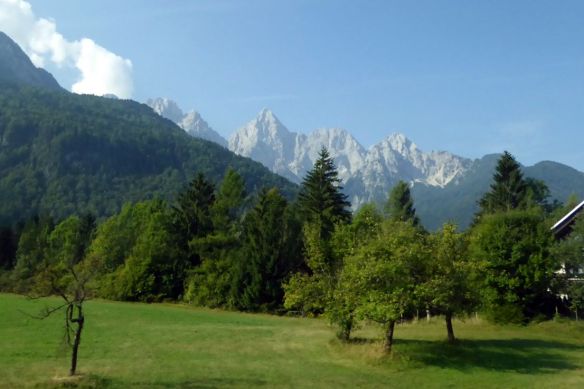
ADRIATIC COAST: DAY 3, SLOVENIA (PRE-EXTENSION)

P1200376

Julian Alps

Our program director, Sinisa, told us he had a “surprise” for us today.  He has a good sense of humor.  When we arrived at our “surprise,” we were in ITALY!  Sovenia is bordered by Italy and Austria, and you could actually bicycle through all three countries in one day quite easily.  Since all three are members of the European Union, you wouldn’t even need a passport.

P1200391

We walked into Italy at this now-shuttered border station to take cheesy pictures at the Italia sign and have a good laugh about the additional country we were visiting.

P1200389

Sinisa Diklic, our program director

At one time, this border separated communism from capitalism.  (More on that in a future post.)  Now you can go all the way to the English Channel without a border crossing slowing you down.  In 2020, Croatia and Montenegro will also be members of the European Union, so there will be even less need for a passport on road trips.

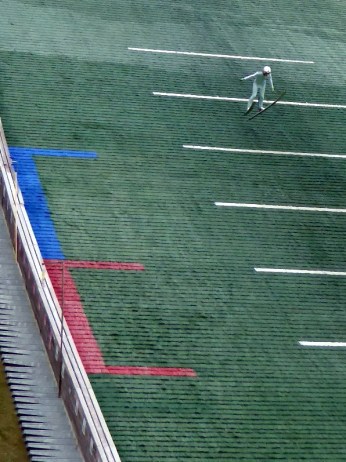
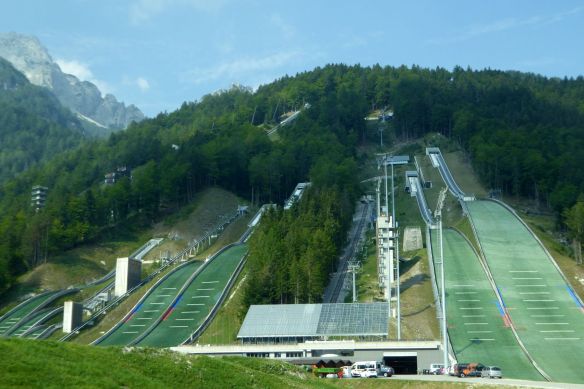
Our next stop was really the unexpected surprise:  Planica, Slovenia’s Olympic ski jump center and location of the most recent ski jump World Record.  Set in 2015, Peter Prevc jumped a whopping 248.5 meters (about 814 feet or 271 yards)!
P1200393

When we first arrived, I said to myself, “Ok, we’ll see some beautiful mountains with ski jumps and just imagine what it would be like to jump off them.”  I had visited the Olympic ski jump in Oslo, and I thought that was amazing enough.  I would have been happy just having an experience like that again.

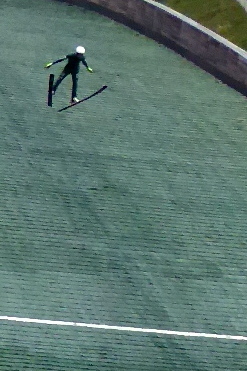
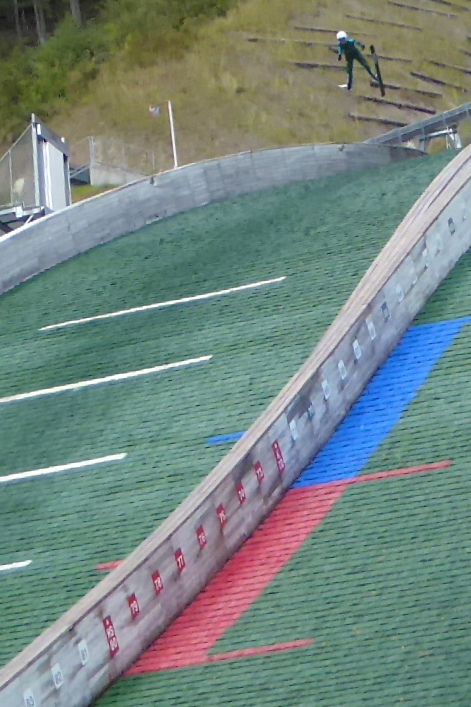
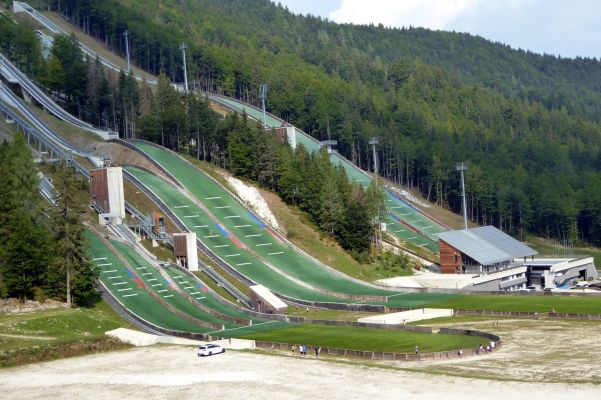
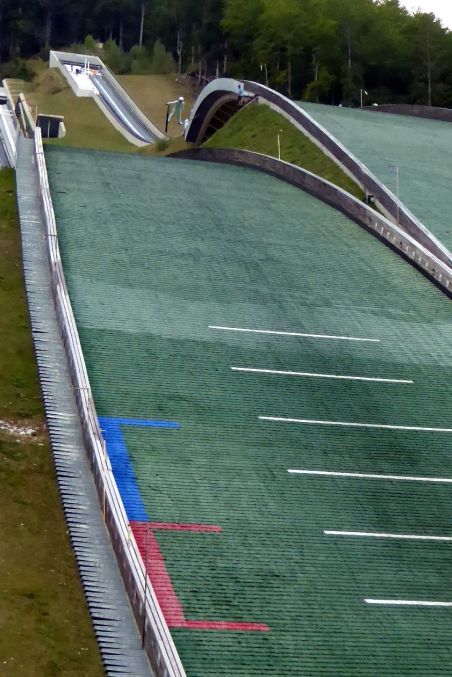
Surprise!  There were skiers jumping, and it was SUMMER!  Little did I know that except for the main jump where the World Cup is held, the training jumps were covered in a special Astroturf that was kept wet for the skiers to train on all year long.  In addition, there was an indoor cross-country ski course, where we braved the cold for a minute (in our t-shirts and shorts) to take a quick snapshot before going back outside to watch the jumpers.

P1200399

P1200403

After getting an overall view from the center’s balcony, we got an up-close look to watch the ski jumpers.  It amazed me how YOUNG some of them were!  One of the kids flying through the sky couldn’t have been more than ten years old.  (I missed the shot of him.)  That’s a brave kid!
P1200430

P1200433

P1200439

P1200412

In Slovenia, they start young, learning how to ski at the same time they learn how to walk.  Once they are stable on their skis, the kids learn how to jump by starting on a playground slide-sized jump, and then work up from there.
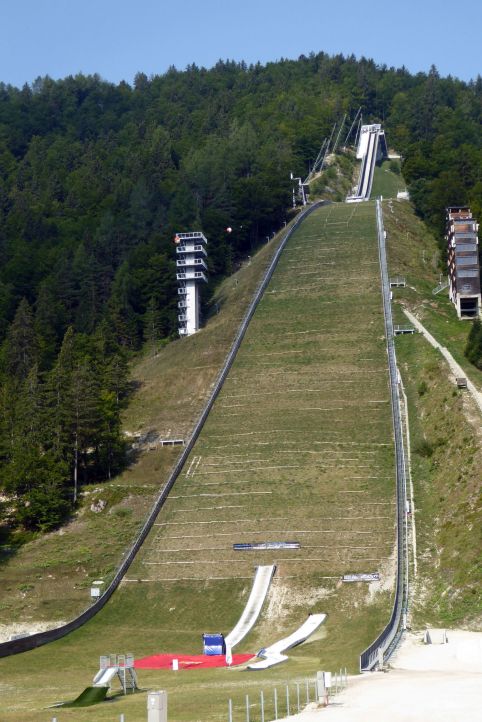
P1200396.jpg

This is the highest ski jump where the World Record was broken by Peter Prevc.  The World Cup is held here. Note the tiny ski jump at the bottom.  This is used to train toddlers!  Next, they graduate to the longer jumps behind it.

We had so much fun watching (and trying to photograph) the jumpers that we could have stayed there all day.

P1200454

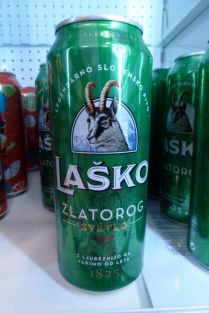
Laura, this one’s for you!  Bring in da goat!!
P1200258

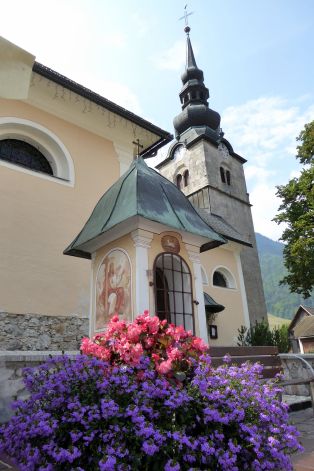
Free time was spent nearby exploring the ski resort town of Kranjska Gora, surrounded by beautiful mountains.  There was a ski lift directly behind the hotels; no driving required!

Unfortunately, those lifts didn’t get any use last year due to the lack of snow.  It usually snows October to May; however, global warming has caused quite a weather change in Slovenia, including less snow and more tropical thunderstorms.

The lack of snow made for good foraging in the surrounding forests, however.  Berries and mushrooms grow in abundance, and mushroom soup (which we enjoyed later on at dinner) is a mainstay of the cuisine in the region.

P1200464

P1200463

P1200466

P1200467

P1200458

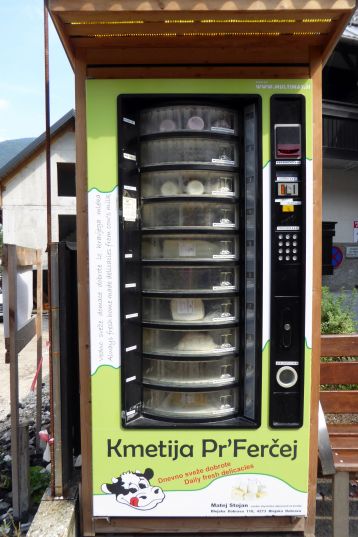
A cheese vending machine!  Laura, don’t ya love it?  We saw a milk vending machine the following day, and they even sold both glass and reusable plastic bottles to dispense the milk in.

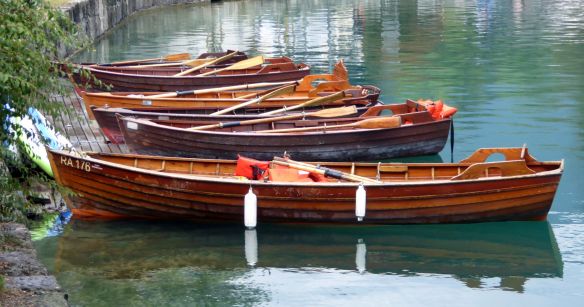
When we returned to Lake Bled, I had hoped to go for another swim; however, the clouds looked threatening and thunderstorms were in the forecast.  Instead, we grabbed our umbrellas and set out on a 3.5 mile walk around Lake Bled, not worrying about rain, but hoping a lightning bolt wouldn’t strike our umbrellas!  It turned out to be the only time rain was a nuisance on our trip besides the following day on our walking tour of Ljubjana.  The walk around the lake was gorgeous, though, even in the rain!  It is one of the most popular walks in all of Slovenia, and I’m glad we didn’t miss it!
P1200475

P1200476

P1200480

P1200478

P1200479

P1200473

P1200486

This was our hotel.  There was a ski lift on the right.

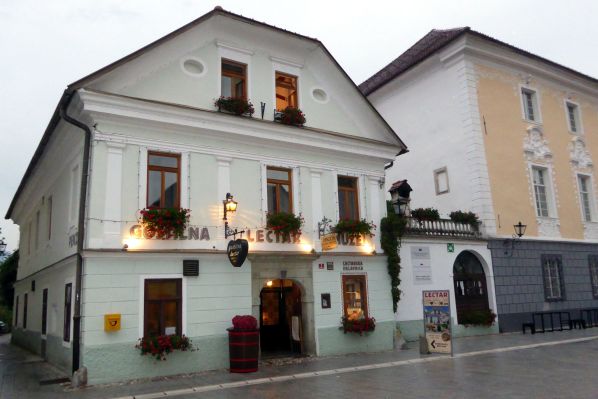
For dinner, we were taken by bus to a traditional local restaurant, Gostina Lectar, in the town of Radovljica.
P1200510

P1200502

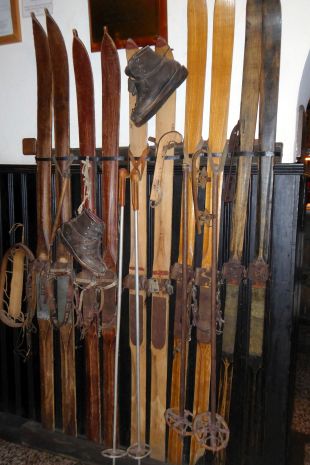
Antique skis were displayed in the lobby.

The restaurant has been in existence since 1822; however, the 500-year-old house has been in the Lectar family for three generations.

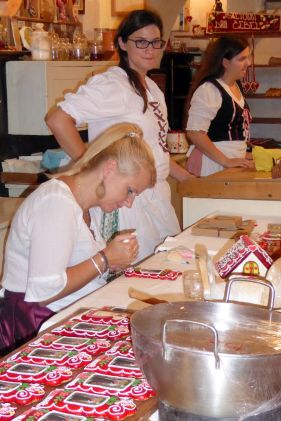
Before dining in a private room, we first watched a private ginger-bread-making demonstration in the charming basement bakery and gift shop.  Actually, it was really honey-bread, since ginger isn’t native to the area, but honey is abundantly available.
P1200501

Dinner was served by Mr. Lectar himself, and we started with his family’s locally-made wine and mushroom soup in a cute bread pot.  Very clever!  Platters of meat, sausages, potatoes, and sauerkraut were then served (one platter per four people), and plenty remained behind as we were all quite full from the abundance of food.  There was still dessert, though, and we were served apple ice cream in a carved-out apple.

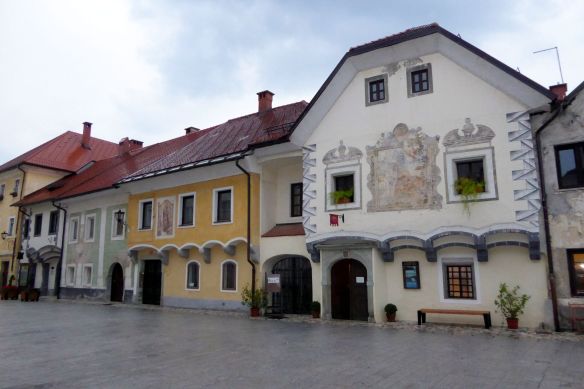
The town was so picturesque, that I was glad I slipped out to take this picture before night fall.
P1200511


ADRIATIC COAST: DAY 2, SLOVENIA (PRE-EXTENSION)

P1200194

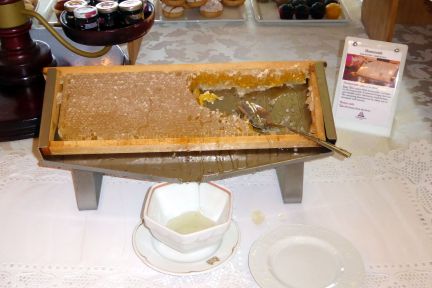
Our hotel at Lake Bled had something I had never seen on a breakfast buffet:  honey straight from the comb.  It was delicious with cheese and their freshly-baked croissants.  Between the wonderful assortment of food and fairy tale view of Bled Castle, it was a pleasant and relaxing way to start the day!

P1200191

The view from our patio table

P1200365

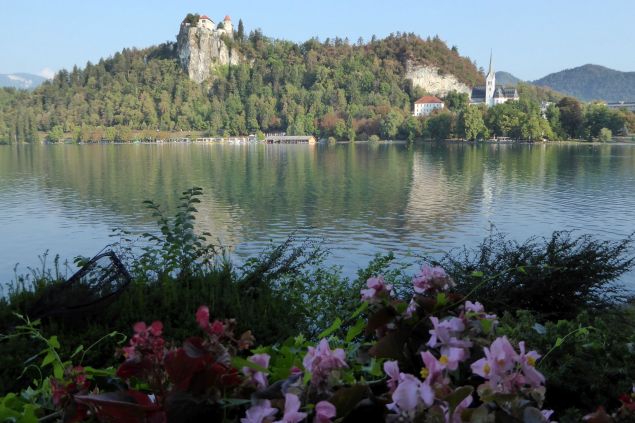
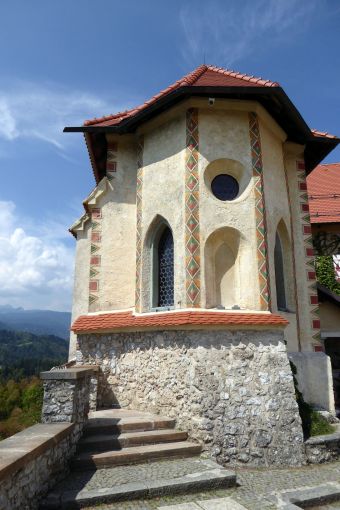
Bled Castle dates back to 1100, the wall was built in 1300, and the church in 1600.

P1200366-1

There is a permanent rowing course set up on Lake Bled, and we watched dozens of sculls gliding back and forth during breakfast.

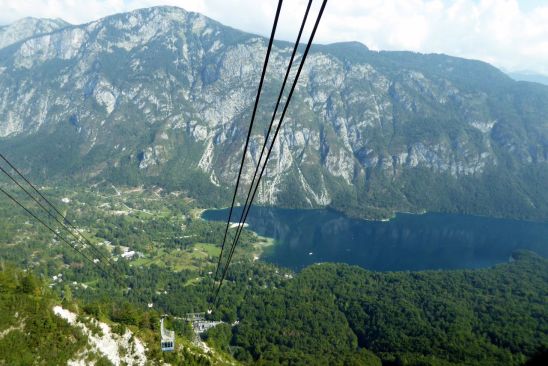
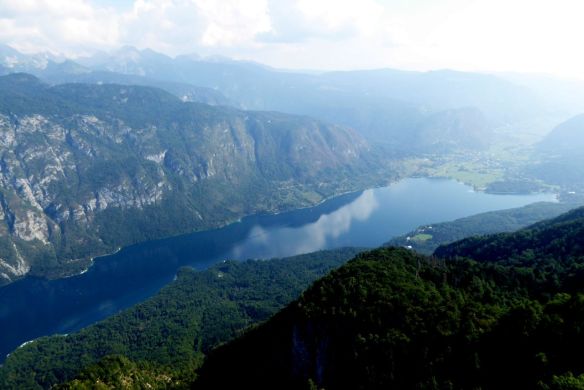
We began our morning tour (14 passengers in a deluxe 45-passenger coach!) with a beautiful drive through the Julian Alps to Vogel Ski Resort where we took a breathtaking cable car ride up to the top at 4,000 feet.  The views were spectacular!

P1200212

P1200218

Skiing is Slovenia’s national winter sport, and they are dedicated to it, no matter what it takes to get to the slopes.  It is typical for Slovenians to spend a total of 14 hours (round-trip drive and the wait time to get on the cable car and ski lift) just to be able to ski for 36 minutes down from the top of Vogel!

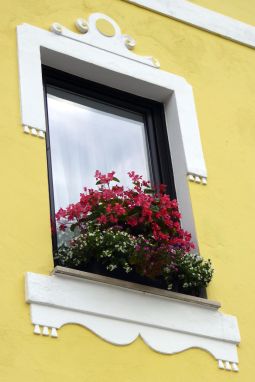
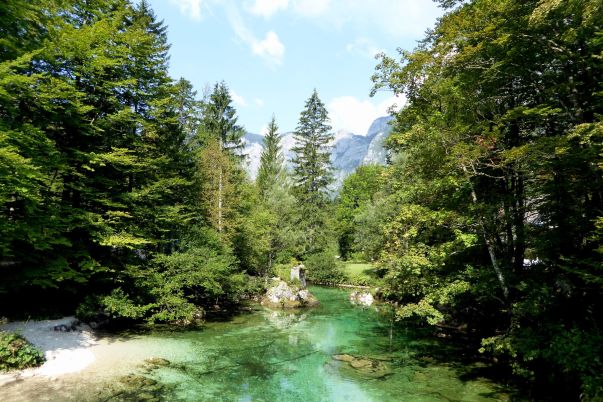
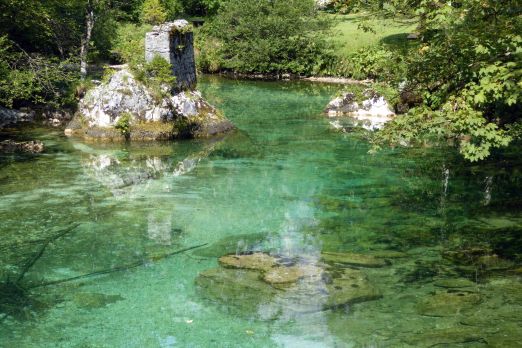
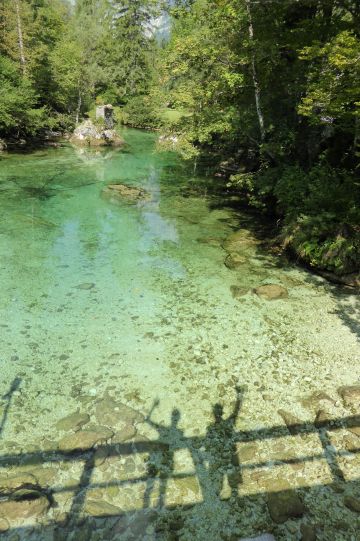
Our next stop was for a walk through a tiny village where the homes were adorned with overflowing baskets of flowers and the stream was incredibly clear and colorful.  It was the most beautiful little stream we had ever seen!

P1200245

P1200242

P1200238

P1200246

P1200239

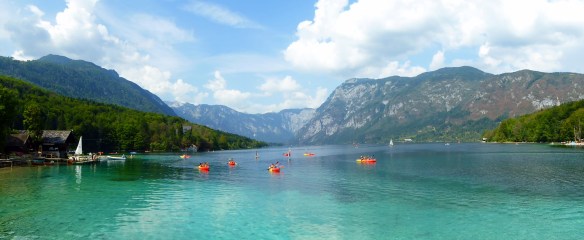
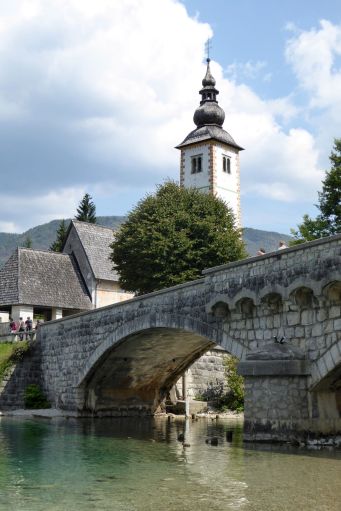
The town of Ribcev Laz located on the crystal-clear glacial Lake Bohinj was another picturesque stop we made where we were mesmerized by the clarity and color of the water.  Our free time at Slovenia’s largest lake provided an opportunity to take in the views of the limestone mountains and enjoy doing some photography.

P1200283.JPG


P1200275

P1200272

Throughout the morning tour, I came to understand why those who had been to Slovenia were so emphatic in their recommendations to visit this small gem of a country.

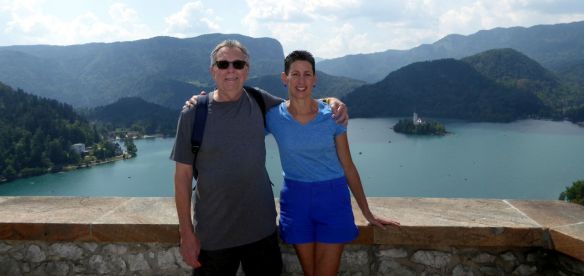
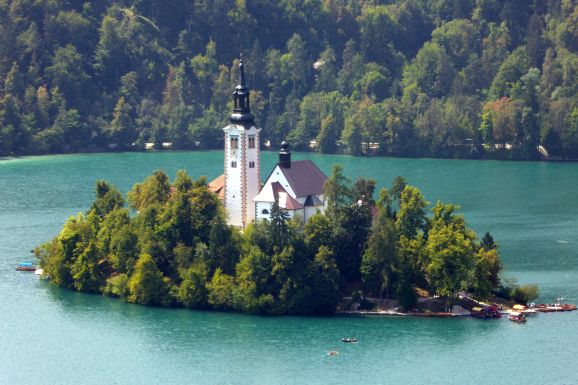
When we returned to Lake Bled, we made our way around to the other side of the lake from our hotel to visit medieval Bled Castle that dates back to 1011.  Fortunately, it was a sunny day, and we were able to take in the gorgeous views of the lake, including the church on Bled Island and our hotel across the way.

P1200310

P1200302

P1200320

P1200323

P1200301

P1200318

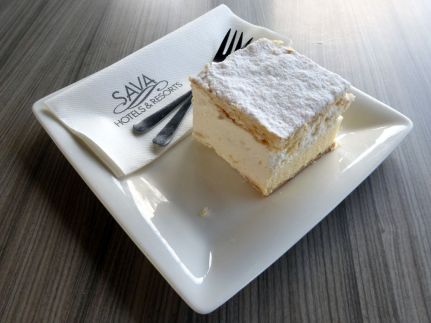
Although most of our group chose to return to the hotel afterwards via our private motor coach, Bruce and I opted to walk down and take in the views around the lake.  We rewarded ourselves with a piece of delicious Bled cream cake at the Park Hotel.  Created by their chef in 1953, it is so popular now that they make 500,000 of the cakes each year!  Considering that every single person dining on the patio around us had a piece of cream cake in front of them, I had no doubt that statistic was accurate!

P1200338

P1200348

P1200347

This is where we enjoyed Bled cream cake and took in the views of Bled Castle across the way.

P1200349

Between our piece of cake followed by a gelato at a stand down the street, we made a lunch of it.  Nutritious?  No.  Delicious?  Absolutely!

Dining alfresco at a local restaurant that evening, I was curious to see if the grilled squid would be as good as the night before at the hotel, and I was not disappointed!

P1200350


ADRIATIC COAST: DAY 1, SLOVENIA (PRE-EXTENSION)

Our flight from Atlanta to Ljubljana, Slovenia (via Zurich) was uneventful, and that’s a good thing!  I love being able to fly out of the busiest airport in the world (and Delta’s hub).  It means never having to fly United Airlines ever again (if I can help it!) and opting for Delta and Southwest Airlines (domestically) instead.

Vantage Travel’s arrangements were flawless, and we had a seamless day of arrival.  For our pre-cruise extension in Slovenia, we spent three nights in Bled at the Grand Hotel Toplice, located on Lake Bled, and dating back to 1845.  GORGEOUS!  Although the hotel wasn’t anything special on the outside, it was grand on the inside with a lovely lounge and restaurant overlooking the lake.

P1200303

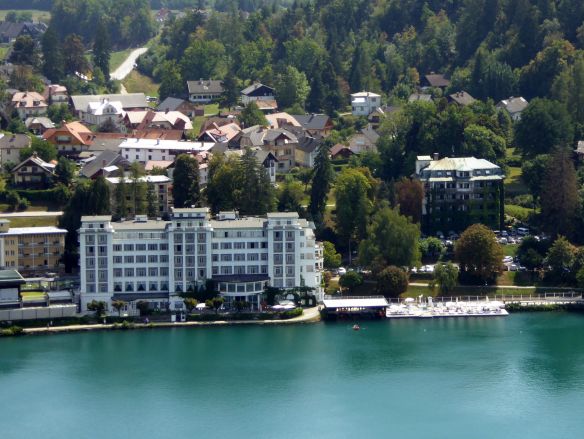
The view of Grand Hotel Toplice from Bled Castle.  The hotel’s private “beach” and swim area is to the right of the rowboat shelter.

P1200200

The key to minimizing jet leg is immediately adapting to local time.  Neither of us sleep well on planes, so it was a challenge to stay awake until after dinner.  I chose to go for a refreshing swim in Lake Bled while Bruce lounged on the hotel’s private “beach.”  At 77 degrees (just below competition temperature), I was in heaven!  It did the trick and energized me for the remainder of the day and evening.

After meeting the 12 other Vantage travelers on the pre-extension over a glass of wine and briefing by Sinisa , our program director, we enjoyed dining with sunset views of the lake and Bled Castle.  Dinner was fabulous!  Bruce and I had never tasted grilled calamari (they refer to it as “squid”) so fresh and perfectly prepared that you could cut it easily with a fork.

P1200356

By now, many of you may be wondering just where Slovenia is located and why we would travel there.

A small country bordered by Italy to the west, Austria to the north, Hungary to the northeast, Croatia to the southeast, and the Adriatic Sea to the southwest, Slovenia is smaller than the state of New Jersey.  Formerly part of Yugoslavia, the country gained independence in 1989.  In 2004, Slovenia joined the European Union.  It is one of Europe’s least-densely populated countries with just under 2.1 million people who are mostly Roman Catholic.

I was impressed to learn that Slovenia’s education ranks as the 12th best in the world and that 92% of adults between 25-64 speak at least one foreign language.

Slovenia’s extremely strict gun laws also impressed me.  Before you can purchase a gun, you must undergo a medical and psychiatric exam.  If you pass, the next step is to participate in a six-month training program.  As a result, the percentage of privately-owned guns is only about 15 per 100 civilians compared to about 120 per 100 American civilians!  In addition, most of those privately-owned guns in Slovenia are used for hunting, which is only allowed on Sundays.

A few other facts about the country:  In addition to banking and tourism, Slovenia is known for its production of electronics, wool clothing, wood furniture, beer, wine, and jams.  Apples, pears, plums, and vegetables are the main crops; and the cuisine is a mix of Central European, Mediterranean, and Balkan.

Slovenia is very mountainous with over half the country covered by forests, so it is absolutely beautiful—and, clean!  Conservation, a clean environment, and recycling are priorities of Slovenia, so we never saw litter on the streets, and the air and water were fresh and clean.

Located in the Julian Alps in the northwest region of the country, the scenery surrounding Lake Bled is stunning, making it an ideal locale for destination weddings—very popular for the British.

In my next post, we explore more of the Julian Alps region.

ADRIATIC COAST: PREFACE

After returning from our three-week Mississippi River cruise around the same time last year, it seemed to take forever to get all of my pictures edited and blog posts written.  September starts our busy fall craft show season for Bruce’s fused glass jewelry, so my blog took a back seat to our business and associated travel. It wasn’t until December when I concluded my blog posts of that trip.

In retrospect, there was a wonderful silver lining to what at first seemed unthinkable, especially since I am the opposite of a procrastinator!  (Since I had previously posted to my blog during my travels back in the early days, it seemed so strange to me to have my trip posts take so long to complete.)

That silver lining?  First, enjoying every minute of the trip without the distraction of editing pictures and writing.  It was fine during our seven-week road trip, since evenings were mostly spent unwinding and relaxing in our hotel room.  Bruce would study the map and travel info. I had researched, while I worked at the computer.  On the riverboat trips with my mom, evenings were mostly quiet on the boat after dinner, so there was plenty of opportunity to pop open my netbook in the lounge and write while others read their books or conversed with other passengers.

This time, there was too much going on that I didn’t want to miss.  The writing could wait!  Instead, I took a lot of notes during our walking tours and lectures, filling up an entire spiral notebook.  (Being able to read my scribbled notes will prove to be a challenge, I’m sure!)

Most of all, though, I discovered how much I thoroughly enjoyed reliving the trip again and again throughout my three-month photo editing and writing process.  I caught myself smiling, laughing, and remembering things that had slipped my mind, each time I edited a new batch of pictures and wrote about what we had experienced.  Every time I sat down at the computer, I felt exhilaration and happiness; I was in the zone.

DSCF0090

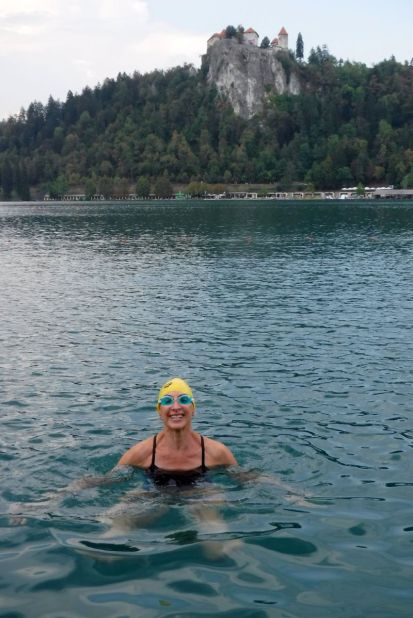
Happily swimming in Lake Bled, Slovenia (Bled Castle is behind me.)

It is for those reasons, my dear readers, that I make no promises as to when my next post will appear on this site, and when my last one will be completed for our most recent trip.  I will at least cut to the chase, though, and tell you that each and every day was thoroughly enjoyable and breathtaking.  Hopefully, my pictures will do justice to the beauty of Slovenia, Croatia, Bosnia-Herzegovina, and Montenegro; the former Yugoslavian countries we visited during our 19-day Vantage Travel land and yacht tour.

If you wish to read on without having to keep checking my site for my next post, sign up to receive e-mails notifying you when a new post has been added.  Who knows?  I may even get them all written before the December holidays arrive!


FATHOM: OUR FINAL CHAPTER

106

“Gratitude” doesn’t fully describe how I feel about the experiences Bruce and I shared during our three Fathom Impact Travel cruises.  There were so many memorable experiences that will stay with us for the rest of our lives.  Any impact we made in the Dominican Republic and Cuba came back around in such wonderful ways—all described in the many blog posts I have written about our January, March, and April visits.  Search “Fathom” on this blog site, and you can read about them all.
On our last cruise, as planned, we reunited with some passengers we had previously met aboard Adonia; but, we also unexpectedly saw others from our January and March cruises.

Each one of us had re-booked a Fathom Impact Travel cruise for similar reasons, and all of us were eager to continue making an impact.

When Fathom’s Adonia sets sail on May 21 to the Dominican Republic, it will be her last sailing under the Fathom flag.  Her lease expires, and then she will sail to Europe to become a P&O ship once again.  All of her crew with the exception of the Impact Travel Staff will sail with her.

105

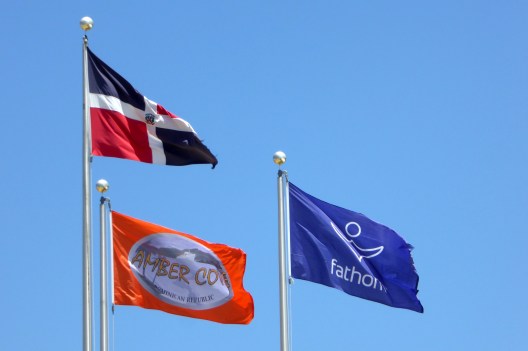
The Dominican Republic flag (left) is the only national flag with a bible on it.

107

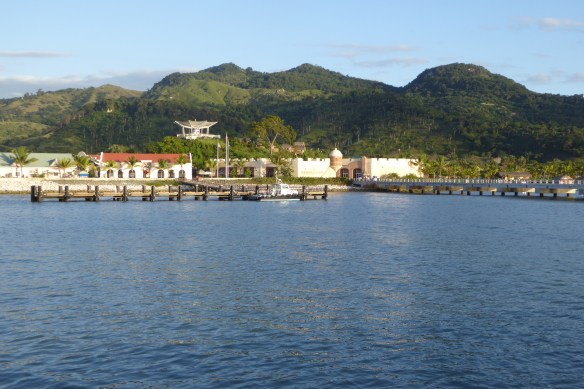
Amber Cove, Dominican Republic

Adonia will be missed.  As a former 6-star Renaissance ship (before the company folded), she’s a classic beauty built in a style no longer seen in new ships.  Beautiful mahogany, crown molding, etched glass, impeccable craftsmanship—these are all abundantly featured throughout the 704-passenger ship.

Fathom may be all about “Impact Travel” rather than the vehicle getting us to our destinations; but, what Adonia did for Fathom was to provide a more intimate atmosphere for its passengers, enabling them to meet and share experiences more easily.

A favorite place to bond with our fellow cruisers was on the aft deck outside of “The Conservatory”, the buffet and casual dining area of the ship.  It became a popular meeting place for travelers to hang out with a cold drink, and swap stories of their Impact Travel activities.  Friendships were made and cemented, especially during sea days when there was no concern about the time.

When Bruce and I taught arts and crafts classes aboard larger Royal Caribbean ships, we often commented about the many people we saw disembarking that we never saw during the cruise.

Not so aboard Adonia.  Between the cohort meetings, workshops, dining room unassigned seating, and Impact Travel activities; we at least recognized everybody during disembarkation.  We also left with many more e-mail addresses and friendships than we ever had before.

On May 28, Fathom as we know it will end.  The following is an official statement I received upon request from Tara Russell, President of Fathom, regarding Fathom’s future:

There is a macro trend around the hunger for greater meaning and purpose in our everyday lives – people want to live their best story and long to go deeper. This exists independent of Fathom and manifests daily as a growing audience of consumers work to combine their purchases and experiences with their values. Fathom addresses this growing desire through travel experiences. Fathom invites travelers to get closer by traveling in new and exciting ways. Fathom heightens human connections between travelers, with new local friends and other cultures, and in any relationship a traveler may touch.

During our first season, Fathom trialed this purpose-driven concept by testing traveler appetites for travel-deep experiences with 7-day journeys on the MV Adonia to the Dominican Republic and Cuba. Nearly 10 percent of Fathom travelers who joined these sailings returned quickly to participate again and our customer satisfaction scores were among the highest in the corporation. In short, the Fathom concept was very well received.

We always intended to serve our much broader corporate audience of 12 million travelers. The popularity of the Fathom experience with travelers who sailed with us inspired us to move quickly to expand the Fathom concept – onboard, onshore and in new and creative ways to serve an even greater audience.

Going forward, Fathom Travel experiences will live aboard countless other ships operated by our nine sister brands and offer beyond immersive experiences in many geographies. Fathom is designed to intersect and inspire the lives of travelers anywhere through heightened human connections that unlock human potential and connect travelers to a bigger story.

Already, we are providing Fathom Travel experiences on-ground to travelers across six Carnival Corporation brands in the Dominican Republic. We are honored to leverage our collective scale as we come alongside our Dominican friends to create enduring contributions to the lives of families and communities. Soon Fathom experiences will also be offered on board our sister brands.

Fathom looks forward to serving the 12 million people who annually travel with Carnival Corporation, as well as the millions of new travelers who long to go deeper into our growing community. We’re nearing the end of chapter one, but there is much ahead for the rest of the Fathom story and the best is yet to come! 

As of today, I have not received any definitive answer if Fathom will ever again have a dedicated ship for its Impact Travel mission.  If it does, I doubt it will be intimate and casino-less like Adonia. 

Thanks for the memories!

103

Marcia (IDDI), Steven (IDDI), Me, Wilmers (IDDI), Colin (Fathom Impact Travel Staff Manager), Bruce, Raymond (IDDI)

104

Frank (Entrena)

110-Marvin

Marvin (wait staff) remembered us from our previous cruise and visited us often on the aft deck for chats.

111-Tomasito

Tomasito, leader of the Cuban band aboard ship

108-Maritza,Jessica,Brandon,Len

Mauritza, Jessica, Brandon, and Len.  We cruised with Jessica and her dad on the January 1st and April 9th sailings.

109-Maritza+Jessica

Mauritza and Jessica


HABLA INGLES? TEACHING ENGLISH IN THE DR

Before I post “FATHOM:  OUR FINAL CHAPTER”, I can’t locate the article I wrote about teaching community English in the Dominican Republic during our second cruise in March.  (Either I forgot to post it, or it disappeared from my blog!)

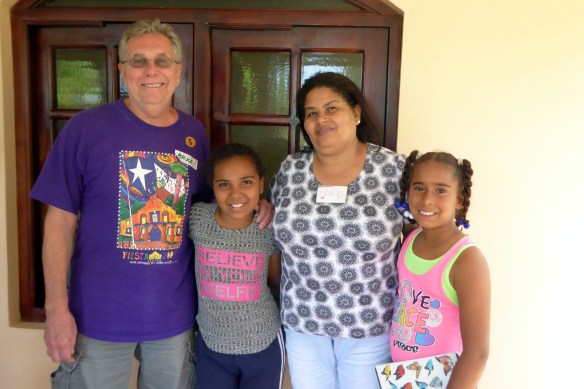
In between our two morning work sessions at Chocal, we spent an afternoon teaching “community English” in the small farming town of Cupey, Dominican Republic.  The bus ride to this community of 4,000 was an extremely bumpy one in some areas where we traversed unpaved rocky roads with large pot holes.  What a relief when we finally arrived into town and were able to drive over paved roads once again!

P1100978

P1100979

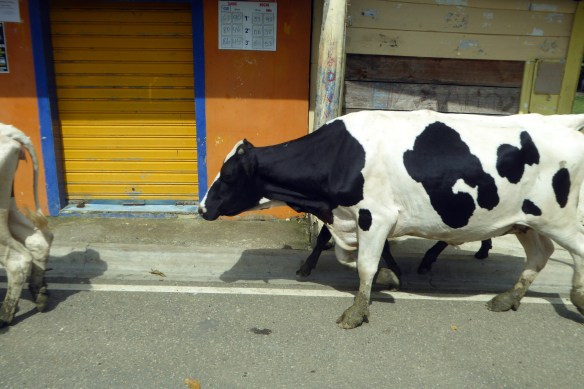
Along the way, there was some interesting scenery, to say the least.  Although I managed to get a quick picture out the window of this cattle drive, I missed one when a man was walking his two bulls alongside the roadside.

P1100981

P1100980

The best shot that got away, though, was the guy walking a pig.  Yes, you read that right—a PIG!  He even had a leash of rope around its neck.  This wasn’t just some small pot belly pig, mind you; this was a HUGE pink pig munching away happily at the grass along the roadside!

When we arrived at the community center, we were greeted by the families who would become our students for the afternoon.  After introducing themselves to us, one-on-one, we were divided into groups and assigned to a student for each teacher.  A few of the families had opened their homes as a meeting place for the days’ lesson, so we walked down the street to the house where we would be teaching.

P1100996

P1100997

P1100989

P1110008

P1100990

P1100994

Milagras

P1100988

Bruce was assigned to a cute little girl, and I was assigned to a woman by the name of Doris.  We sat on the front porch facing our students and used the manual we were provided to conduct our lesson.

The students had been taking classes and studying on their own, but working with Fathom passengers was a supplemental opportunity to converse with Americans and learn more.

The lesson they had worked on prior to our arrival was entitled “Nature”.  They had learned the English name for several animals, so we were instructed by the facilitators from Entrena to review the lesson before moving on to “Classroom”.

My student, Doris, was a bit shy and unsure of herself.  To break the ice, I thought it would be fun to make the sound of the animal I wanted her to say in English.  I also had pictures to point to that had the English word written under each animal; but, I thought making her laugh would ease her nervousness.  At least, I thought it would make her laugh.

Imagine my dismay when I started barking (a pretty good rendition of a dog, I thought), and she pointed to the horse and said, “Horse”.  Ohhh boy; this was going to be a long afternoon…

Knowing my bark was the best animal sound in my bag of tricks, I immediately switched tactics and pointed to each animal for Doris to say in English.

NEXT!

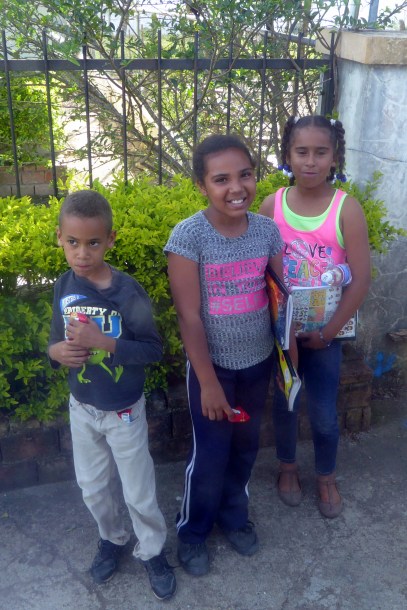
The “Classroom” lesson had items such as a pencil, ruler, desk, chair, chalkboard, teacher, student, etc.  One of the students in the picture was wearing a backpack, and that was one of the words Doris needed to learn.  No can do; she just couldn’t get that one down.  I had offered her plenty of positive feedback (“Good!” and high-fives) when she got even close on the other words, but she couldn’t get past “back” to even get to the “pack”.  How I wish the little girl in the picture had carried her books to school in her arms, instead…

P1100985

My student, Doris

Bruce’s student got bored quickly, so he was moving on to other lessons to keep her interest.  She wanted to stick with the ones she was good at, though, and move on to a new one when she found the lesson to be too difficult.

P1100987

Bruce and his student

They were sitting right next to me and Doris, so it was easy enough to ease drop.  I only wish the little girl had ease-dropped on my barking and yelled out, “Dog!”

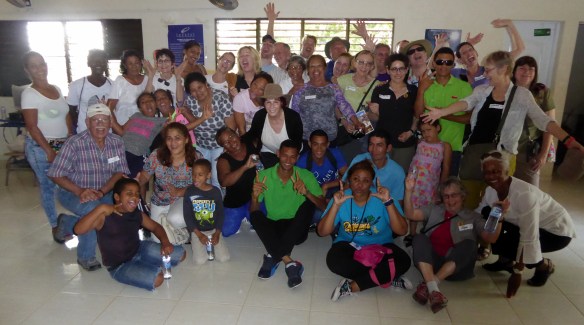
It was an enjoyable afternoon, though, and the students appreciated our efforts.  After the lesson, we met back up at the community center for some group photos.

P1100986

P1110005

P1110007

P1110009


OUR REUNION WITH THE WOMEN OF REPAPEL

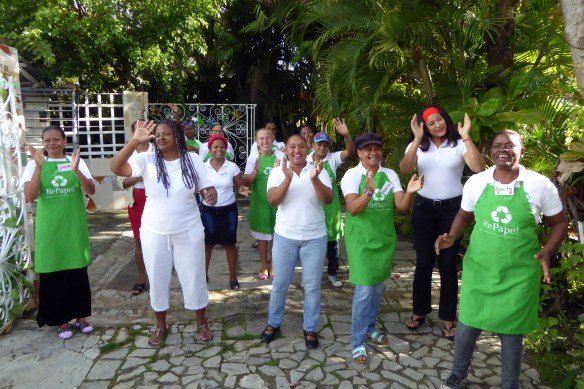
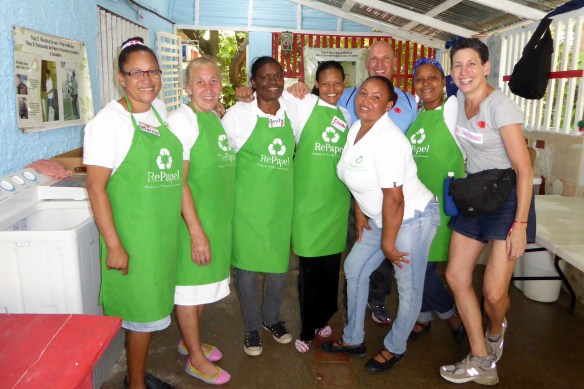
Although we were hoping to teach English at the University for our final Impact Travel activity, the students were on break for the Easter holiday.  Instead, we returned to RePapel, the women’s co-op that turns waste paper from the local community into recycled paper products that are sold for a profit.

I knew from our previous visit that our group of fellow Fathom passengers would be greeted by the women with enthusiastic singing and clapping.  It was fun, though, to watch the surprised expressions on the group as they walked up the street to the co-op and heard the women singing up ahead.  Smiles broke out as they rounded the corner and saw the women of RePapel dancing and clapping as they sang to us.

P1110291.JPG

One-by-one, I scanned over the singing ladies and recognized each one from our January visit.  It was Claribel I was looking for, though, because we had made such a positive connection when we worked together last time.  Would she remember me?

Claribel was off to the left side, and I quickly took a photo of the women.  When she spotted me, her expression changed as if she was deep in thought.  A few seconds later, she flashed a huge grin as she remembered who I was.  I made a heart sign with my hands (as she did to me when we said goodbye in January), and she ran over to greet me with a big hug.

Making paper with the ladies is so much fun, because they keep up a positive energy with their singing.  In between songs, Claribel and I communicated as we did last time—through hand gestures and my (very) broken Spanish.  She asked me if Bruce and I had children, and then I asked her the same question.  Claribel responded that two of her seven children were twins.

P1110293.JPG

As it turned out, there was a family on board with teenage fraternal triplets, and they were standing right behind me as Claribel and I talked.  The mom chimed in saying, “You have twins?  I have triplets!”  Claribel didn’t quite understand the word “triplets” until I grabbed three of my fingers and held them together with my other hand and held it up.  In perfect English, Claribel exclaimed, “Oh my GAAAD!!”  We couldn’t stop laughing.

This is typical of what it’s like to make recycled paper (and paper bead necklaces) with the women of RePapel.  Never a dull moment!

P1110347.JPG

My friend, Claribel

P1110353.JPG

P1110351.JPG

Fredy is from Colombia and also has an apartment in Atlanta.  We enjoyed getting to know him during the cruise.

P1110303.JPG

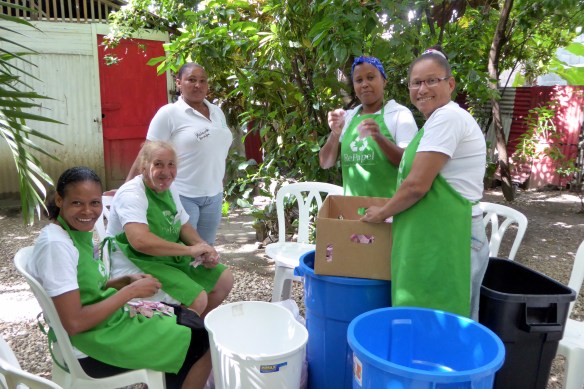
The women were ripping up waste paper into small pieces that will get thrown in a washing machine for a cycle– the early steps of the paper recycling process.

P1110299.JPG

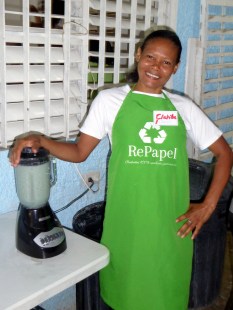
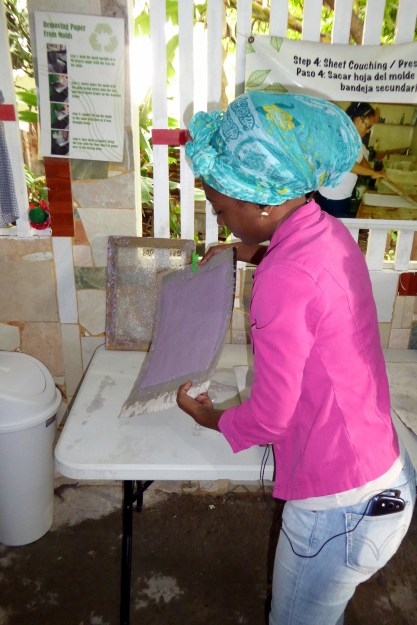
After a cycle in the washing machine, the paper/water mixture gets scooped up and tossed into the blender for a whirl.  Next, it is dumped into this bin.  Bruce was given a framed screen to dunk into the mixture.  Once the screen is covered, it is lifted and drained.

P1110297.JPG

The IDDI facilitator joined in the production line. Here,  she is taking the piece of paper she had removed from her screen and getting it ready to place on the drying rack out in the sun.

P1110310

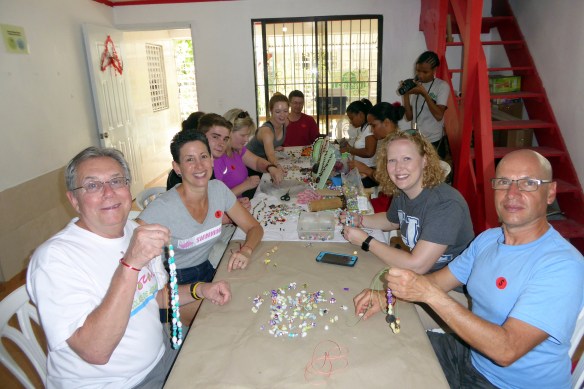
We also made paper beads and strung necklaces to be sold in the gift shop.  Bruce and Fredy show off their creations.

P1110311.JPG

I’m modeling the necklace I made.

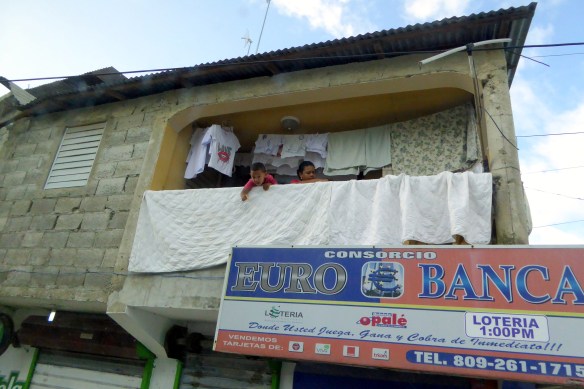
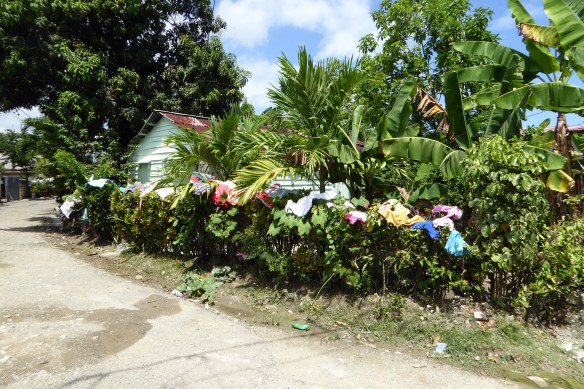
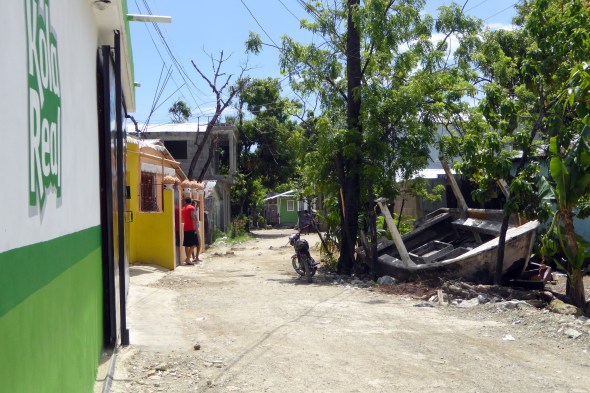
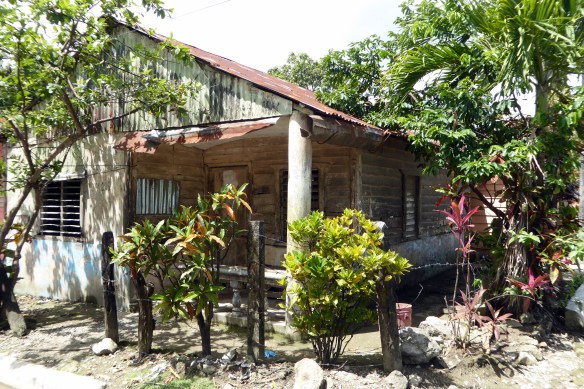
The following are scenes from the community.  Some of the pictures were shot from the bus window as we arrived, and others were taken during a walking tour we took after we worked at RePapel.

P1110277.JPG

P1110289.JPG

P1110290.JPG

P1110314.JPG

P1110354.JPG

P1110356.JPG

P1110341.JPG

P1110326.JPG

P1110322.JPG

P1110319.JPG

P1110318.JPG

P1110315.JPG

P1110288.JPG

P1110338.JPG

P1110336

P1110287.JPG

P1110328.JPG

P1110330.JPG

P1110346.JPG

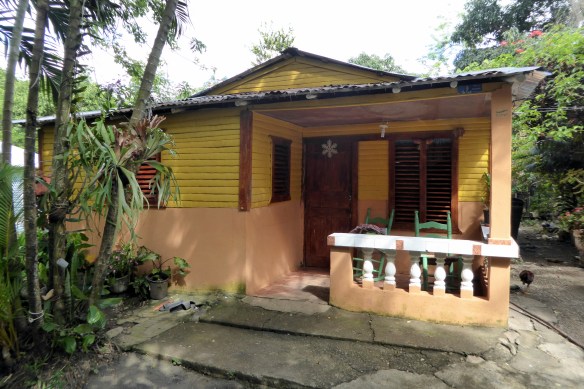
This concrete floor was made by Fathom Adonia passengers.  The homeowner was given the choice of what color to paint it, and yellow is the most popular choice.

Next up:  FATHOM:  OUR FINAL CHAPTER

OUR THIRD VISIT TO THE DOMINICAN REPUBLIC; OUR SIXTH AND SEVENTH TO CHOCAL

P1110383.JPG

P1110380.JPG

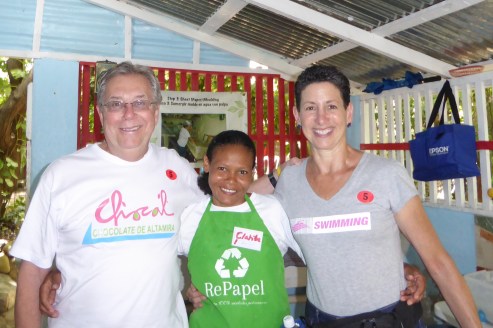
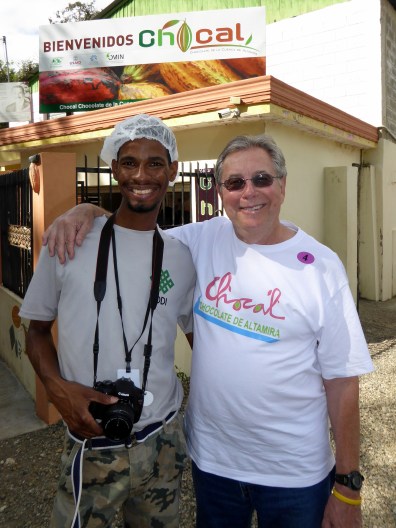
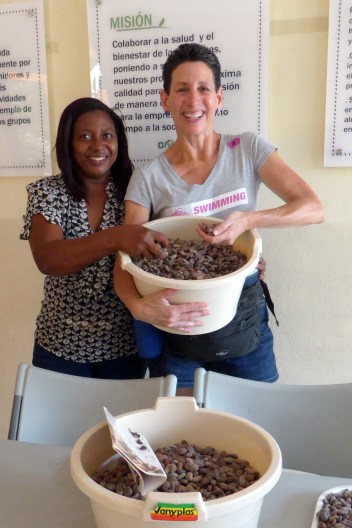
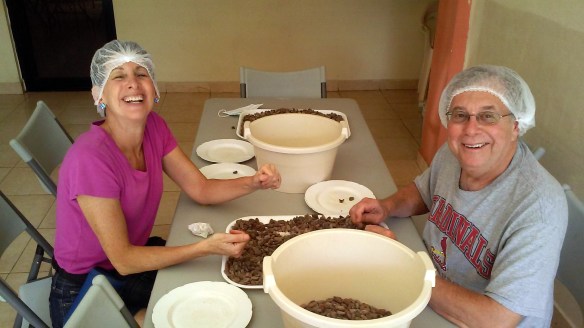
Type “Chocal” into the search box above, and a list of several blog posts will appear that I have written about Chocal, the women’s cooperative chocolate factory and cacao plantation in the Dominican Republic (the DR).  In all, Bruce and I participated in Fathom’s Impact Travel program at Chocal seven times; three visits during our January 1st Fathom Adonia cruise, twice on our March 12 cruise, and twice on our final visit to the DR, during the week of April 9, 2017.

Those earlier blog posts included information about how Chocal was established (although I didn’t mention how the factory replaced what was once a nightclub hangout for drug dealers and other criminals).  I wrote about the benefits Chocal has provided the thirty women and 130 families of the Altamira community.  The chocolate-making process was also described, from bean to bar, including photos I shot of the cacao processing machinery.  Our volunteer contributions were also detailed including the impact our work groups made on Chocal’s production.

P1110395.JPG

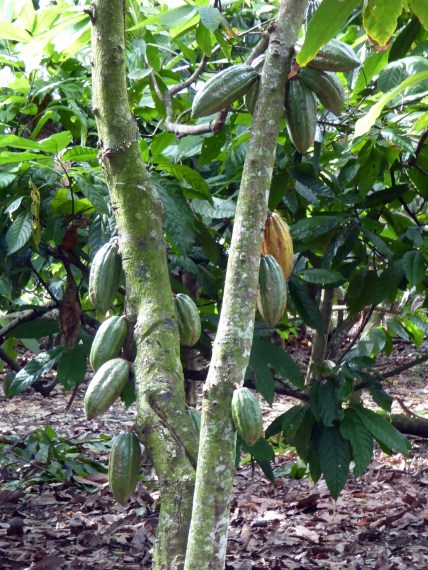
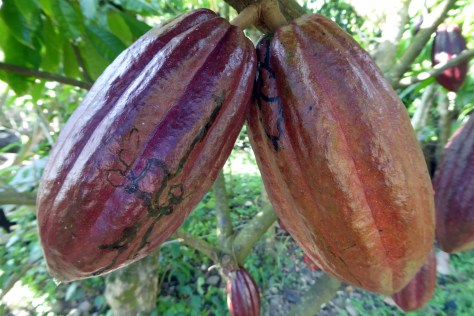
Although cacao beans are very bitter to bite into, the white pulp surrounding the beans is sweet and delicious!  I was given the remainder of the seeds in this pod to suck on and enjoy– about half of the 50 seeds it contained.  

Since then, the cumulative impact has grown as more and more Fathom passengers volunteered at Chocal.  As of April 15 of this year (the one year anniversary of Fathom Adonia’s first sailing), 4,419 passengers have visited Chocal and sorted 5,186 pounds of cacao nibs, resulting in 152,994 finished chocolate products.  In addition, since the neighboring cacao plantation nursery was added to the Impact Travel program, 29,920 cacao seeds were planted.  Of those, roughly 75% will grow to become cacao trees. In three years, those trees will be each produce about 20 pods ready to harvest each May and November for the next 30-40 years.  Each of those pods will contain about 50 seeds—enough to produce a 2-ounce bar of chocolate to be sold in the Dominican Republic.  (In addition, Chocal exports cacao nibs to Canada and the U.S.A., earning $2 per pound.)

P1110406.JPG

P1110399.JPG

P1110419.JPG

The inside of a cacao seed is very bitter!

Bruce and I made a personal impact at Chocal as well, bringing a box of ear plugs to the factory workers (when we visited in March) with promises to send more if the workers cared enough about preserving their hearing to use the ear plugs regularly.

I also brought memories with me during that second visit, giving each of the workers photo notecards I had made of the photos I had taken of them last January.  Their reactions and expressed gratitude was gratifying and left a lasting warmth in our hearts.

Our final Fathom Adonia voyage was during the week before Easter (a very important holiday in the DR), and we were there the day before and day of Good Friday.  As a result, many of the women of Chocal were home cooking and preparing for the holiday, so we didn’t get to see some of them again as we had hoped.  Still, our two visits were special, memorable, and heart-warming.

We arrived once again with an armful of photo notecards—this time, made with photos of our Chocal friends holding the cards I had given them in March; and, we brought another box of ear plugs to keep them well-stocked for a while.

Our bus driver, Diosiris Dipre (“Dipre”) was the same one we had last March, and he appeared very happy to see us again!  His sincere gratitude for such a simple gesture of giving a photograph reminded me of how random acts of kindness can make such a positive impact.

P1110409.JPG

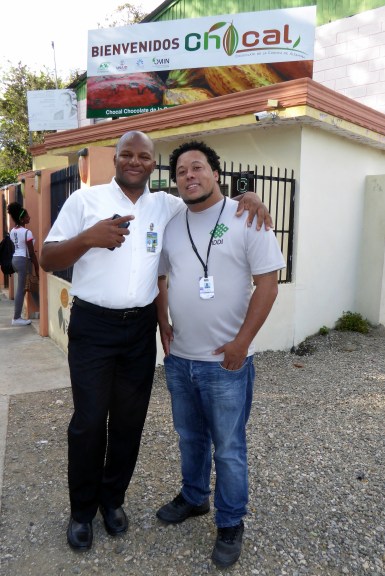
Our bus driver, Dipre & IDDI facilitator, Juan

Gumarcindo, the nursery’s manager, also welcomed us warmly once again and laughed heartily when I gave him another photo card.  I wish I would have remembered to take another picture of him holding his card, because the photo on the card showed him holding the card I gave him in March that had the picture I took of him in January on it! We got so busy working at the nursery, I completely forgot.  It’s another one of those photos that got away…

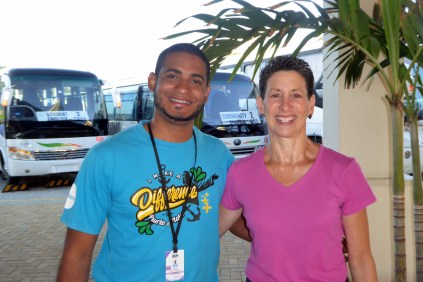
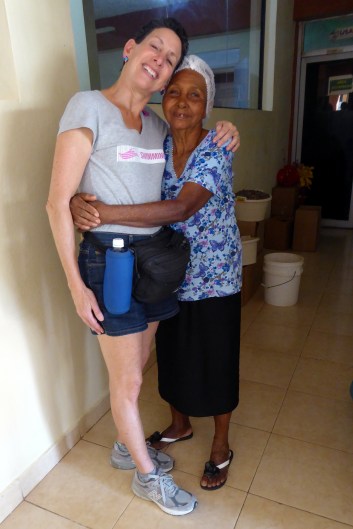
Our IDDI facilitator on the bus with us this time was Juan, an IDDI rep we had seen during previous visits, but hadn’t gotten to know, since he was on the other bus in the past.  The guy is a hoot, and we had a lot of laughs with him during both of our days going to Chocal.  His grandmother works at the factory, and even though she didn’t speak any English, we managed to form a bond through smiles and gestures.

Dipre+Juan.jpg

P1110415.JPG

Juan

P1110392.JPG

Juan’s grandmother

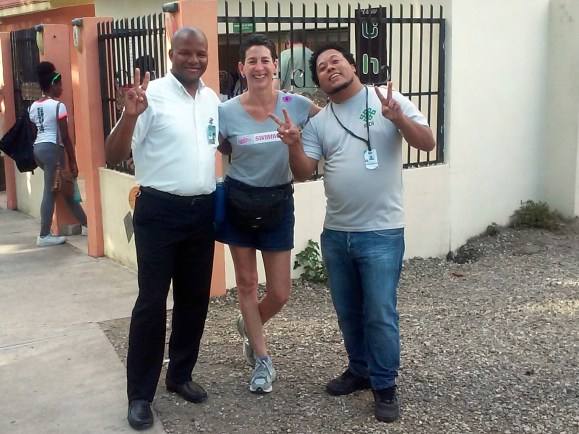
Steven, another IDDI facilitator was there once again, and he seemed happy to see us and start another round of teasing, picking up from where we left off in March.

P1110385.JPG

Steven & Bruce

As we saw the women, one-by-one, throughout our time at the factory, each one recognized us and greeted us with hugs.  It was nice to be remembered once again!

P1110388.JPG

P1110386.JPG

At one point, though, I had a brief moment of sadness when we passed through the office to work in the packaging area, and Bruce noticed the box of ear plugs we had given them in March.  The box was sitting on top of a high pony wall in the exact same place where it had been left after I demonstrated to the president how to use the ear plugs.  When Bruce saw what appeared to be the unused box and told me about it, he had a disappointed look on his face.  He said, “I don’t think they’ve touched those ear plugs since you gave them the box.”  My heart sank, and I wondered whether I should even give them the second box I had brought.  Not giving it a second thought, I doubled back to check the box for myself.  Just as I opened it and noticed it only two-thirds full, Milagros (the factory manager) walked in and exclaimed, “Si!  Si!!” as she pointed to her ears and smiled.  The workers were in fact using the ear plugs, and they were very grateful to receive more!  That made my day.

After our work session officially ended and the others shopped in the gift shop, Bruce and I stayed behind to give one last push of sorting beans.  As a final parting “gift”, Steven took me back into the factory where we had molded chocolates, gave me a plastic glove, and told me to hold out my hand.  In it landed a palm-ful of warm chocolate from the bowl we had worked from to create our little chocolate works of “art”.  I will never forget how gooood that chocolate tasted as I licked every bit up!  I savored it slowly knowing it could very well be the last visit we ever make to Chocal.

Chocal-Me&Bruce.jpg

Coming up next:  OUR REUNION WITH THE WOMEN OF REPAPEL


OUR DAY WITH BENI, EDUARDO, AND GRISEL

Beni had made a noon lunch reservation for the five of us for a restaurant I had found on Trip Advisor, Restaurant San Francisco, located on San Francisco St., not far from Eduardo’s shop.  (They had an air conditioned room, so he wanted to make sure we would be able to get a table there, so we could dine in comfort.  Santiago de Cuba is hot!)

We cleared Cuban customs early enough to take in some sights before lunch.  Eduardo was anxious to experiment with his new glass, so he and Grisel agreed to meet us at the restaurant.

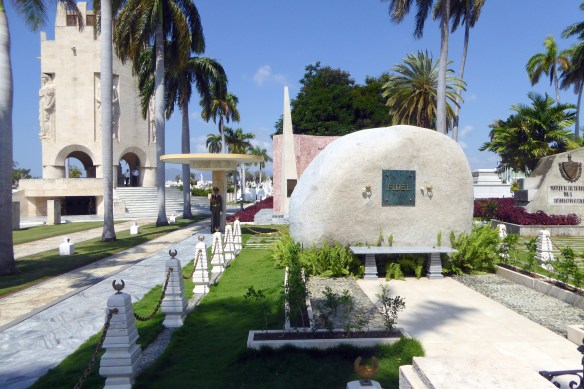
Since we missed seeing Santa Ifigenia Cemetery during our last cruise visit, we thought it would be interesting to go and see where Fidel Castro was laid to rest (or burn in hell, depending on your perspective and religious beliefs).  It was reputed to be a beautiful and interesting place to visit, so Beni flagged down a taxi for the three of us.

If Bruce and I as tourists had hired a taxi just outside of the port terminal gate, the cost would have been $10-$15 each way.  Just across the street and up one block, the taxi driver Beni flagged down agreed to $5 each way.  It helps having a local do the negotiating!

Although I could have spent hours poking around the cemetery and enjoying the views, we only had time for a brief stop to shoot a few photos.  The Cuban government forbids photography of their military and police, but thanks to the marvels of wide angel lenses, I pointed my lens toward Fidel Castro’s monument and caught the unsuspecting armed guard as well.

P1110115.JPG

Beni’s father, Aurelio, was also laid to rest at Santa Ifigenia, and Beni had an interesting story to tell about him.  During the revolution to dethrone Fulgencio Batista, the brutal and corrupt dictator who ruled Cuba from 1940-1944, Aurelio brought 89 men with him to the mountains to fight with Fidel.  Ultimately, as you know, they were victorious, and Fidel became the new leader of Cuba.  As a reward, Fidel made Aurelio a lieutenant in his army.  (As brutal as Batista was, Fidel seemed like the better option at the time; however, history tells us that Fidel was no angel either…)
P1110124.JPG

P1110126.JPG

This shot (and the two below) were taken while making our way back to our waiting taxi.

After leaving the cemetery, Beni asked our taxi driver to give us a short city tour on the way to the restaurant, so we could see some typical neighborhoods, and observe how people live.  I wish there had been more time, because I would have loved to have done some in-depth photography rather than just grab the few shots I snapped out the window.

P1110130.JPG

P1110133.JPG

As it turned out, Beni was so careful with our time, we arrived thirty minutes early to the restaurant!  To make the most of those extra minutes, Beni took us on a walking tour to see some things we had missed on our last visit to Santiago de Cuba.

P1110139.JPG

P1110154.JPG

P1110156.JPG

P1110150.JPG

This was a (very old) local book store where tourists had added their photos and business cards to those pinned up by the locals.

P1110152

P1110141.JPG

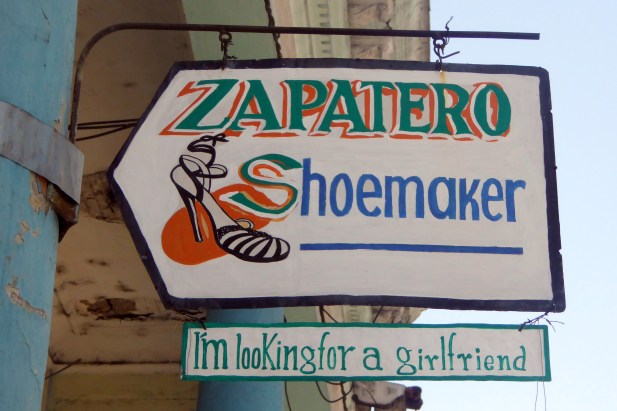
I’m guessing Cuba doesn’t have Match.com available to them!

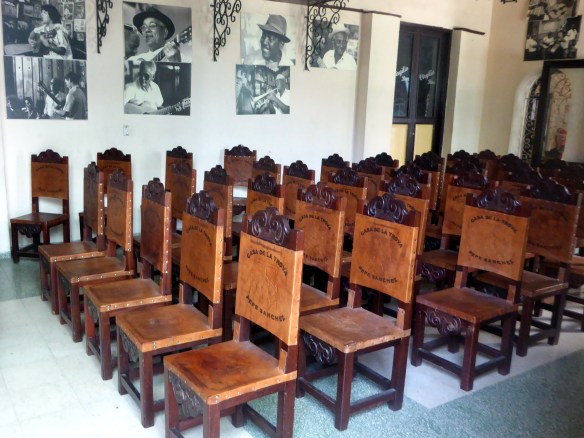
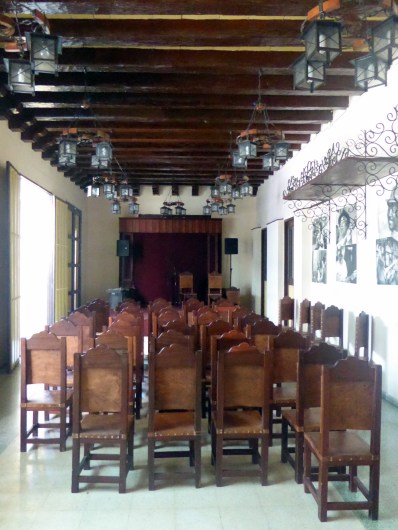
Particularly memorable was a music venue where Cuban music legends had performed over the many years the club has been in existence.  Hundreds of pictures covered the walls, and hand-tooled leather chairs lined the floors in perfectly neat rows.  For $1 cover charge, you could occupy one of those chairs and take in the sounds of Cuban music.  (I dare you to sit still, though; the Cuban rhythms will make you want to dance!)

P1110157.JPG

P1110159.JPG

P1110162.JPG

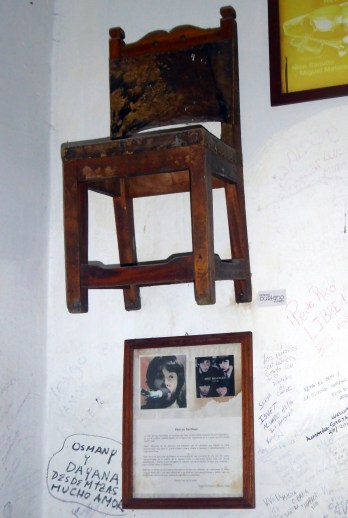
In a side room, a chair was hung up on the wall along with a photo of Paul McCartney.  When the famous Beatle visited Santiago, that was the very chair he sat on to enjoy the sounds of the band performing the evening of his visit.

P1110161.JPG

We made our way back to Restaurant San Francisco and were led into a tiny air conditioned room with two tables where Eduardo and Grisel were waiting for us.  It was exactly noon, and it was quite apparent you could set your watch to Beni!

P1110136.JPG

This was a private restaurant (not a mediocre one run by the government), so the prices on the menu were in the old Cuban Pesos (CUP) rather than CUC, the newer currency.  After some quick calculations to make sure we brought enough CUC’s with us (and after realizing just how little this lunch for five would cost), I told our Cuban friends to order anything they wanted.

Good fish is very difficult to find for Cubans, and if they score some at a store, the price would be too high to afford.  All of the best fish is reserved for the tourist restaurants, and most Cubans get paid too little to afford to dine in one.  In addition, the harbor of Santiago de Cuba is not somewhere you would want to drop a line to catch your own fish.

Everybody else ordered fish from the menu, but I opted for shrimp.  After singing happy birthday and toasting Beni, we settled in for a tasty meal and interesting conversation.  Eduardo shared some cute videos of his little grandson on his cellphone (At the age of two, the tot is already learning to cook and work with glass like his grandpa.  The knife skills of this kid were amazing!), and Beni shared photos of his family.

P1110171.JPG

P1110170.JPG

In all, our lovely meals and non-alcoholic drinks came to less than 23 CUC (about $23)!  Bruce gave the waitress 30 CUC and told her to keep the change.  I’m guessing that tip was the equivalent of ten days of income.

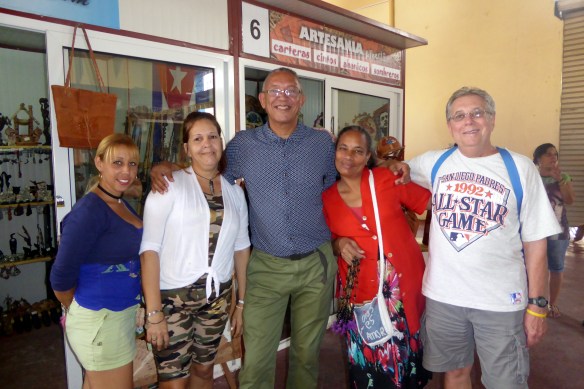
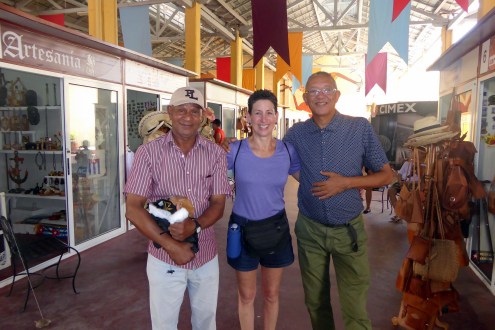
We all walked back to Artesania Art Deco to Eduardo’s shop where Bruce and Eduardo talked about glass with the help of Grisel’s translation, and I photographed the other artists to help promote Artesanias Art Deco on Trip Advisor, and elsewhere on the internet.  We also visited with Beni’s friends where Bruce had an opportunity to play catch with another baseball enthusiast.  Then, when Beni and Bruce broke into another duet, I couldn’t help asking them to start over, so I could catch it on video!

I also recorded an interesting interview with Beni, which over the coming days, weeks, months, and, hopefully years will become part of an on-going series of blog posts about my new friend.  I have saved every e-mail of substance he has sent, and at the rate we have communicated, I’m sure there will be many more.

P1110205.JPG

P1110187.JPG

P1110188.JPG

Watch Eduardo work the glass

P1110190.JPG

P1110193.JPG

P1110209.JPG

P1110182.JPG

P1110184.JPG

P1110185.JPG

Listen to Beni & Bruce sing!

Our goodbyes at the end of the day were difficult, because our bond and affection for each other had grown stronger.  It was especially hard for me to say goodbye to Beni, and for Bruce and Eduardo bid farewell.  Eduardo’s last words through Grisel were, “Next time, you come to Cuba, you come to my house and have a meal with my family.”  It was delivered with such bravado and pride.

Beni walked us part-way to the ship.  We stopped him at a private spot where we were assured nobody would be watching us, because Bruce wanted to give him a parting gift, beside the bag of items we had brought for Beni and his family.  Since Beni isn’t a licensed guide, we didn’t want him to get in trouble with the government for receiving money from tourists.  We hadn’t hired Beni, and he wasn’t expecting payment; but we wanted to help him out as our friend.  When Bruce shook his hand, Beni felt the money Bruce had passed off to him, and Bruce told him to put it in his pocket.  Beni protested, saying he didn’t want this to be a business transaction.  We were touched that he was most concerned about our friendship enduring.   (I think I calmed his fears when I reminded him of all the e-mails we had sent back and forth before we knew we were returning to Santiago.  We never thought we would see him again, and our friendship stuck.  If anything, it has grown stronger!)

Someday, we hope to return to Cuba and have him guide us around his country.  Until then, I would like to help Beni by referring people to him to be their unofficial guide when they arrive in Santiago de Cuba.  As long as you keep it on the down low and use discretion, you all will stay off the police’s radar.  Even if he is stopped and questioned, you are friends of mine who have come to visit him at my request.  Right?  The Cuban government doesn’t check up on its citizens on the internet, so he has given me permission to give out his contact information.  Write a comment after this post with your request, and I will reply with an e-mail including all of Beni’s contact information.

Until then, here are some memories from our day in Santiago de Cuba:

Bruce-Hector-Elaine.jpg

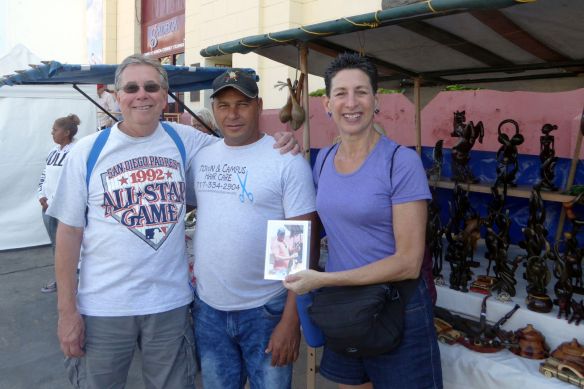
We stopped by to visit Hector, the wood carver we had purchased two carvings from during our previous visit.  At the time, I had shot a photograph of him holding our new purchase, so I made it into a card to give him.  He was so appreciate we had remembered him, he gave me this bracelet (below):

P1110226.JPG

P1110223.JPG

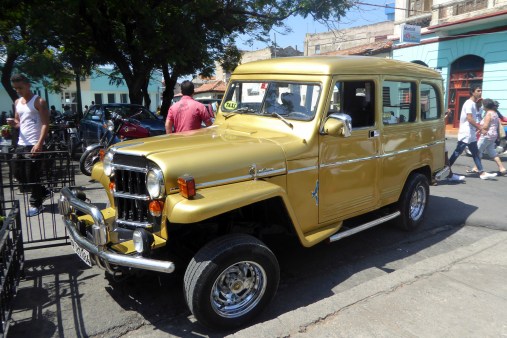
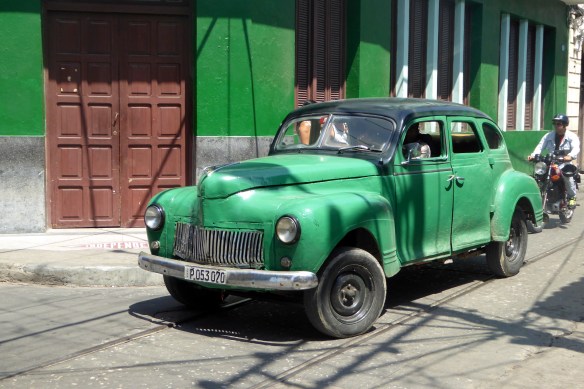
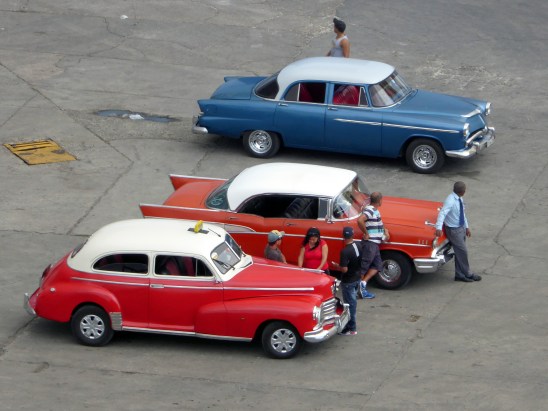
These classic taxis dropped off some passengers at the terminal, and I was able to get a good angle from the ship’s top deck after we returned.

P1110216.JPG

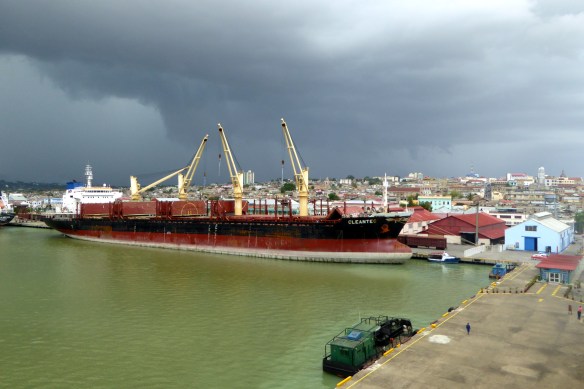
A storm brewed as we made our way back to the ship, and we arrived just in time before the incoming storm hit.

P1110224.JPG

P1110239.JPG

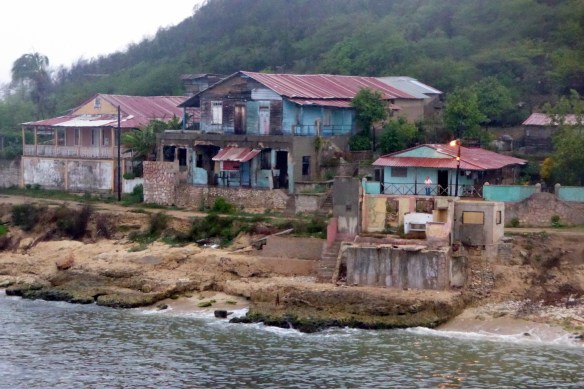
Seen during our sail out of the harbor…

P1110240.JPG

Coming up next:  Our Third Visit to The Dominican Republic; Sixth and Seventh to Chocal

SANTIAGO DE CUBA: OUR REUNION WITH BENI, EDUARDO, AND GRISEL

Leading up to our April 9th departure from Miami aboard Fathom’s Adonia, the e-mails between me and Beni were flying across the internet at a rapid pace.  Beni was so excited we were returning to Cuba and would see him on his birthday, April 11.  We planned everything out to make sure we were all prepared to take full advantage of our day together, including taking him out to lunch along with Eduardo and his assistant, Grisel.

In one of Beni’s messages, he told me he went to meet Eduardo and Grisel, so he would be familiar with them before our reunion.  As it turned out, they had known each other years before in the military!

Eduardo, a glass blower for the past thirty years, is the only glass artist in the country producing and selling his glass pieces.  Procuring supplies is extremely difficult—and expensive—so it has held him back from being able to create art without limitations.  He asked Beni to pass along the message to Bruce that if there was any glass we could bring with us to Cuba, Eduardo would buy it.  Bruce immediately scoured his studio to compile a care package of glass rods and small pieces of glass we could carry.

Meanwhile, I asked Beni what items I could bring for him and his family that are difficult for them to buy, but easy enough for us to pack.

Fathom frowns on passengers bringing items to donate arbitrarily to people on the streets, and I agree with their “give them a hand up, not a hand-out” philosophy.  Creating a begging culture among the locals and expectations of getting free hand-outs from tourists has negative long-term ramifications.

Specific gifts, on the other hand, met with the Fathom Impact Travel Staff’s approval, since the items would be distributed privately to our friends.  The glass in particular was viewed as a great way to give Eduardo a hand up.  He had planned on making a glass piece to enter into an art competition, and the glass Bruce was bringing could be used for that purpose.

For Beni, I had promised him I would make a flash drive of our favorite music; but, I also added pictures of our community and home, favorite photos I used in my photo notecard line ( www.ExquisiteCards.Fototime.com ), photos I took of Santiago de Cuba during our previous visit, the video of Beni and Bruce singing “Dock of the Bay”, and anything else I thought he would like.  Since he was in need of data storage, I loaded it all up on a 64 gb flash drive I purchased on Amazon for only $15.  (I don’t even want to THINK about what I spent on the 1 gb external hard drive when I started my document scanning business, Doc – to – Disc, back in 1993.  It was a four-figure expense!  Writeable TDK gold cd’s cost me $26 EACH!!)

I also asked Beni what I could bring his family.  His first response?  Glow-in-the-dark stars he could put up on the ceiling of his granddaughter’s bedroom.  That warmed my heart!

What else?  Beni gave me a list of ideas, but he insisted I shouldn’t buy all of the items.  They were just options:  Toothbrushes, toothpaste, dental floss, deodorant, and some other personal care items I was unable to decipher from his English usage in the e-mails.

We decided to bring him everything we could figure out from the list, most importantly, the stars (and planets, too!).

Fortunately, our community had a vendor fair just days before our departure, so we gladly accepted the handouts representatives insisted in throwing into our goodie bags as we roamed from table to table to learn about their businesses.  The dental care kits were especially appreciated, as were the pens, notepads, and tote bags.  All of it went to Cuba with us for Beni and his family, where we knew it would be much appreciated.

Putting it into perspective as to why we took it with us instead of donating it to our local food bank as usual, the average salary in Cuba is about $20 a month.  When Beni completes his exams and becomes a pastor at his church, he will earn only $12 a month.  Sure, the government pays for their education, healthcare, telephone, and some food (additionally, utilities and housing are low in cost through subsidies); however, Cubans must pay for everything else on an average income of $20 per month!  The cost of a bottle of shampoo in Cuba?  $5.  A toothbrush?  About $1.  That’s more than a typical Cuban earns in a day!

Our plan was to meet up across the street from the port, once we arrived in Santiago, cleared customs, and exchanged our dollars into CUC’s (roughly an even exchange not counting fees).

We didn’t know what to expect when we put our bags through the x-ray machine after having our passports stamped.  Would we be questioned?  Would they forbid us to bring these items into the country?  Surprisingly, my bag of goodies for Beni wasn’t questioned at all.  Instead, it was the box of glass Bruce attempted to carry through in my Speedo backpack.  (Fortunately, the bracelet Bruce made for Grisel went unnoticed.)  The agent pulled us aside, opened the box, and gave Bruce a confused look.  Whether he understood our explanation (or even understood English), we’ll never know; but, I think it helped to point to my earrings, and then point to Bruce and say “artist”.  We told him the glass was for Eduardo, a glass artist at Artesanias Art Deco.  Either the customs agent understood and accepted our explanation, or he just wanted to get rid of us, once he saw we didn’t have anything illegal in the box.  Needless to say, we hustled ourselves out of there before they could change their minds!
Beni spotted us immediately and came running across the street to greet us with a big smile and bear hug.  As we discussed our plan for the day, we were disappointed to hear we wouldn’t be able to meet the rest of his family.  There was an unexpected death of someone they knew, and they had to go to the funeral.

Before walking up to Eduardo’s glass studio, I told Beni we would give him his goodie bag at the end of the day, so he wouldn’t have to carry it around; however, I wanted to give him his flash drive right away, so I wouldn’t forget about it.  You should have seen the surprised look on his face when he opened it up and saw “64 gb” printed on the plastic!  The largest size flash drive available in Cuba is about 8 gb, and it’s very expensive for them to buy.

Eduardo’s facial expression was even funnier when he opened the box of glass.  Another photo that got away; I should have been prepared…  It was priceless!  It reminded me of the look a kid gets when he walks into a candy store—pure delight!  Seeing colors of glass he otherwise has no way of obtaining was so amazing to him, we could practically see his mind wheels turning with ideas of creations he would make with his new-found glass.

Then, a serious look appeared on his face.  Through Beni’s translation, Eduardo wanted to know, “How much do I owe you for this glass?”  Bruce quickly replied, “Oh no, no, no; this is a gift!”  The look of gratitude and his sincere, “Muchas gracias!” needed no translation.

Meanwhile, Grisel smiled broadly as I put the bracelet on her wrist.  She loved it!

Bruce and I looked at each other and smiled.  This was going to be a very memorable day!

P1110107.JPG

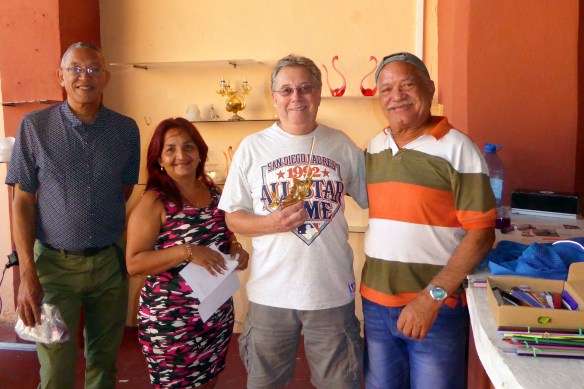
Beni, Grisel (wearing Bruce’s bracelet), Bruce (holding Eduardo’s gift), Eduardo

P1110211.JPG

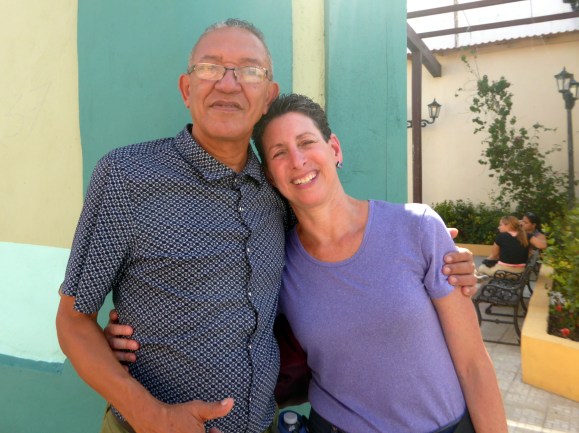
Me with my friend, Beni


Next up:  OUR DAY WITH BENI, EDUARDO, AND GRISEL