Unknown's avatar

About Elaine-iaK's Travels

As a graduate of Recreation Administration, from San Diego State University, I have made recreation and travels my career and life’s passion. After graduation, I traveled solo for one year throughout the South Pacific, doing travel photography in a wide variety of settings. Upon my return, many of my photographs became the subjects of my newly created line of handcrafted photographic greeting cards, "Exquisite! By, Elaine", a business I have had since 1986. Check them out at: http://ExquisiteCards.fototime.com . In 1983, I began teaming up with my mom, Goldie, teaching arts & crafts to cruise ship passengers, aboard Princess Cruises and Royal Caribbean. In addition, I lectured on travel photography, as well as Australia and New Zealand history, aboard Princess Cruises. In 2004, I formed a new teaching team with my recently retired husband, Bruce, who serves as my "humble assistant" until 2010 when the cruise lines shifted the arts and crafts program to mostly being taught by their own staff. Currently, our favorite mode of travel is by river boat. Along the way, we enjoy poking around small European towns, meeting the people, seeking out interesting photo subjects, and always stopping at every chocolatier to make a purchase. Adding to my chocolate label and wrapper collection is a bonus! And, as a U.S. Masters swimmer, if I can find a pool to get in a swim with the locals, all the better! Cheers! Elaine-iaK ~ Believing in your dreams can be far more rewarding than living by your limitations~ -Karla Peterson

ROAD TRIP DAY 45: “PEACE”-FUL DAY IN NORTH CAROLINA

“Salem” means “peace”, and after a beautiful drive south on US-220, we arrived in Winston -Salem. Our original plan was to arrive via Blue Ridge Parkway, but we opted for an easier and quicker alternative after three days of driving on curvy mountain roads.

This morning’s drive was just the ticket. Although it may not have been quite as beautiful as Blue Ridge Parkway, it wasn’t to the other extreme either of driving on an ugly billboard-littered freeway. There were just enough curves to make the drive fun, and the scenery was much better than I expected. The abundance of gorgeous trees was amazing (once again!) to this California girl who grew up in a concrete jungle!

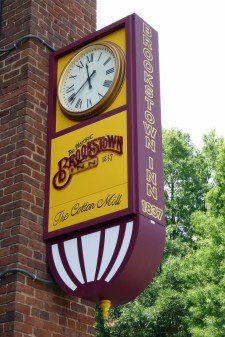
We scored on a room for the night; a “last-minute special” at the Brookstown Inn saved us $25 on a fabulous room. Wanting to make these last couple of nights a bit more comfortable, we bumped our budget up from the $65-$80 range to what turned out to be a $120 room for $95 by booking the room online last night.
753

754

This historic inn, registered on the National Register of Historic Places, used to be the Salem Cotton Mill dating back to 1837. Fast-forward to 1984, and it opened as the Brookstown Inn. It was renovated again in 2013, so everything is quite nice.

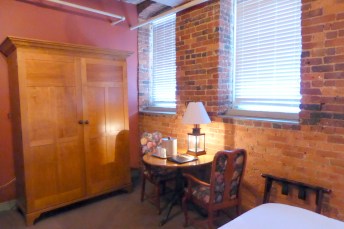
Our room has exposed beam ceilings and an exposed brick exterior wall. The interior is huge; the bathroom alone we figure at 100 sq. ft. It has two queen beds (although we only need one), a refrigerator, microwave, Keurig coffee maker, and more space than we could ever need.

P1010801

P1010802

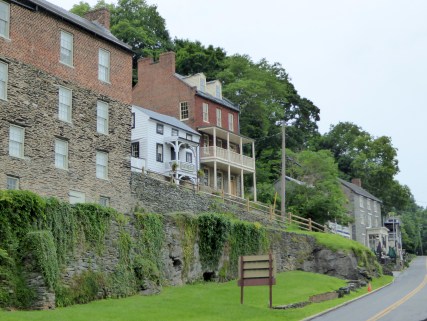
If you ever plan on seeing Winston-Salem, I would recommend staying here at Brookstown Inn. The Winston-Salem Visitor Center is right next door, and there is a lovely shaded walking path just up the street that leads right to the Old Salem Museum and Gardens. As you make your way up Main Street through the museum buildings, you will end up very close to Brookstown Inn for the short walk back. (An interesting side note is that Main Street where the museum buildings are located is actually a public street. Many of the old homes sprinkled between the museum buildings are now privately owned; however, they have kept them very well-maintained.)

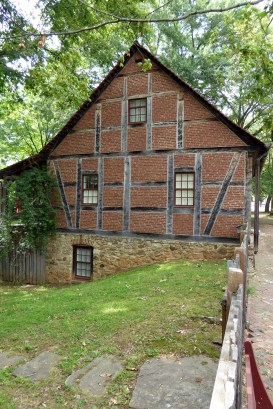
736.JPG

737

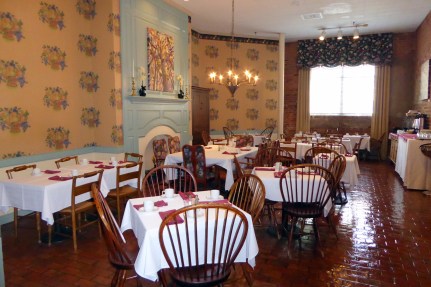
Another short walk from Brookstown Inn is a wonderful restaurant, Willow’s Bistro, located in an old railway building. Dinner was tasty, service was excellent, and it was a very cool place to relax and dine.

How nice to arrive in town late this morning, park the car for free at the inn, and leave it sit in the shade for the remainder of the day while we got some exercise! Spending the entire afternoon at the Old Salem Museum and Gardens was an enjoyable and very interesting experience.

Old Salem was incorporated back in the 1950’s by a group of volunteers as a way to begin preserving and restoring the town of Salem for future generations.

The town dates back to 1766 when it was founded by the Moravians- a Protestant religious group that first organized in what is now known as the Czech Republic in the 15th Century.

For 200 years the Moravians faced persecution, so they fled and first settled in Bethlehem, Pennsylvania. Their next settlement (in 1753) was 100,000 acres of purchased land in “Wachovia” (which means “creek”) in the back country of North Carolina. (Does that name “Wachovia” ring a bell? Yes, it was the Moravians who founded Wachovia Bank.)

Old Salem has done an outstanding job restoring the historic buildings and presenting them as they would have been back in the late 1700’s and early 1800’s.
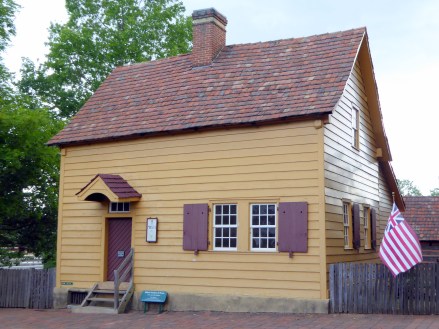
735

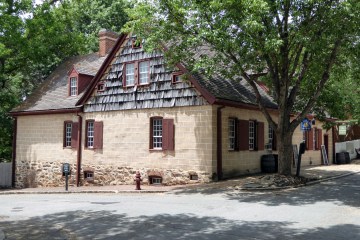
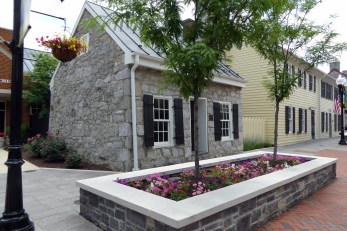
This is Old Salem’s oldest house dating back to 1771.
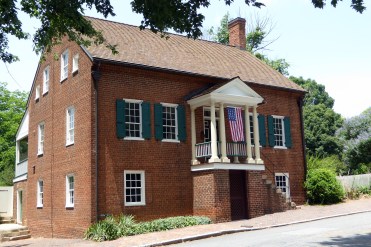
733

732

According to their website, “The Town of Salem has a rich and deep history, with the restoration supported by many different sources of historical documentation and research. Core material is the primary source information published in the Records of the Moravians in North Carolina based on records held by the Moravian Archives, Southern Province in Winston-Salem. In addition, documentation such as private papers, historic photographs, and artistic renderings, as well as ongoing research of buildings, objects, and archaeological resources, have been critical to understanding the Town’s history.”

As we strolled from building to building we learned so much about the culture from experts dressed up in period attire who demonstrated the various trades as they were done back in those times. They included: a gunsmith shop, shoemaker shop, furniture maker, potter, and others.
We also toured a few Moravian homes including the Single Brothers’ House where we viewed trade demonstrations and heard music played from the Tannenberg organ dating back to 1798.
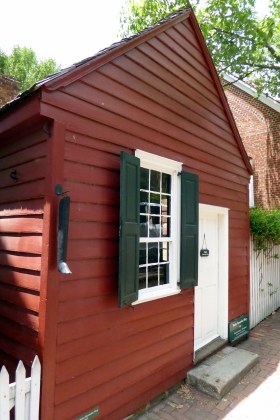
734

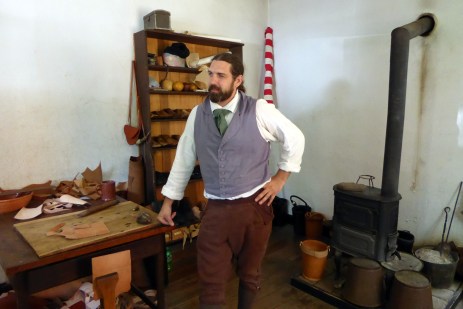
Shultz Shoemaker Shop, 1827

746

This gentleman explained how shoes were made back in the 1800’s.

747

This lady explained how sugar was processed.  Sugar cane was brought in from the Caribbean, and the first pressing turned it into “sludge.”  Molasses was the result of an additional pressing.  The blue package shows how sugar was wrapped.  The blue paper made the sugar appear more white.  Chunks were broken off to place in the tea.  On the right, she is holding a dish of rock candy.  The brown rock candy has brandy in it.
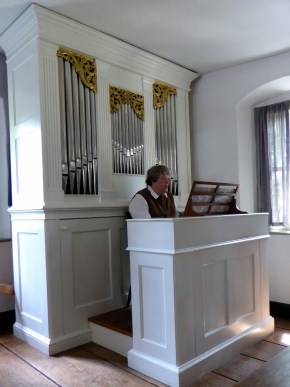
751

This organ dates back to 1798.

Touring St. Philips African Moravian Church and Graveyards was interesting, too. Before slavery, black and white Moravians worshiped together. It wasn’t until 1822 when the white Moravians buckled under the influence of “outsiders” that the races were separated in worship.
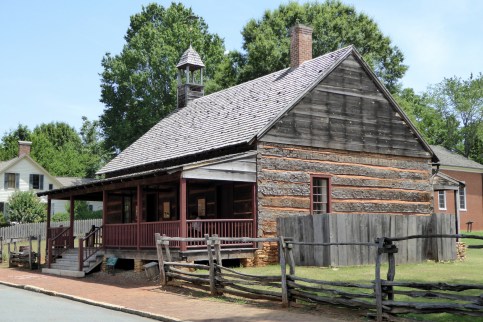
739

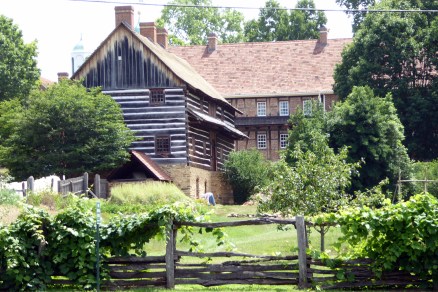
This log cabin was the original St. Philips African American Church

The church we toured is the oldest African-American church in North Carolina dating back to 1861. During worship, men and women were separated in the church by a partition in the pews .

It was interesting to learn that in the Moravian cemetary, all of the gravestones are flat as a reminder of equality in both life and death.

The Moravians were definitely ahead of their time regarding equality of the sexes, because they strongly believed in educating young girls and women. To that, I say, “Good for them!”

I was also impressed by the fact that although the Moravians were missionaries, their missions were not meant to convert; they were only meant to help others in need. Native Americans benefitted greatly from the help of Moravians, as did Africans and many others throughout the world.

Today, there are approximately 600,000 Moravians; however, 80% are in other countries. In the United States they reside mostly in North Carolina as well as Lititz and Bethlehem, Pennsylvania.

Moravians are considered mainstream Protestant most similar to Lutherans or Methodists in beliefs.

Never having even heard of Moravians until we were in Pennsylvania, both Bruce and I were fascinated to learn about their history, culture, and beliefs.

On this trip, we have learned much about the Shakers, Menonites, Amish, and Moravians. Fascinating!
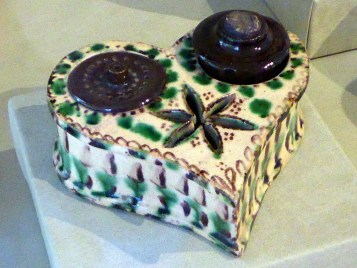
750

Ink well, 1810-1830

749

Moravian chair

740

742

743

744

745

752

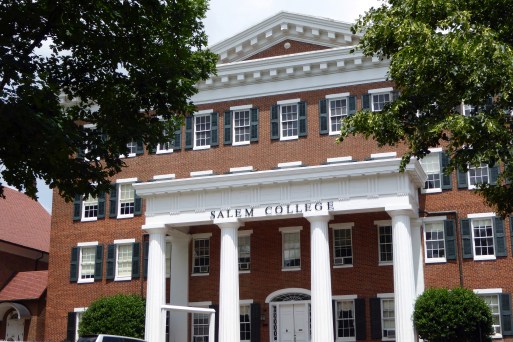
Salem College was a school for girls and young women.  It is currently a college for women.


ROAD TRIP DAY 44: STROLLING STAUNTON AND BREEZING THROUGH BLUE RIDGE PARKWAY

710

Staunton (pronounced “STANN-tun”) is another one of those charming towns that has landed on several “best” lists. Smithsonian says it’s “one of the best small towns in America,” and Travel + Leisure says Staunton has “one of America’s greatest main streets.” Go Magazine gushes that Staunton is “impossibly charming,” and Southern Living states, “With a downtown energized by locally owned shops and restaurants, the Shenandoah Valley town is one of the prettiest and most progressive in the South.”

716

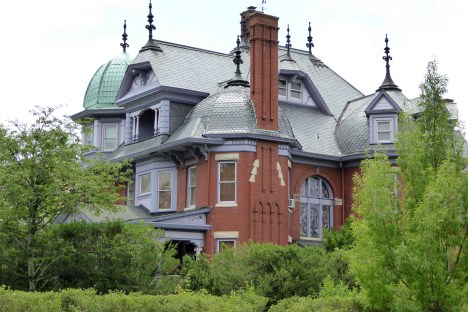
Founded in 1747, Staunton has one architectural advantage over most of other small towns in the Shenandoah Valley: it was unscathed in the Civl War, and many of its 18th and early 19th century homes and buildings still stand and are well preserved.

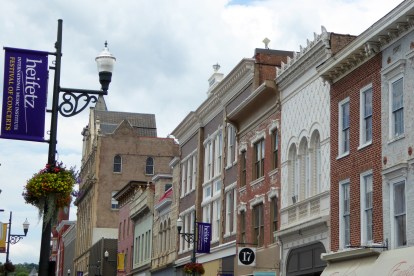
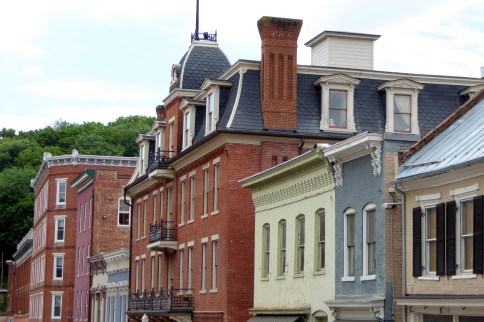
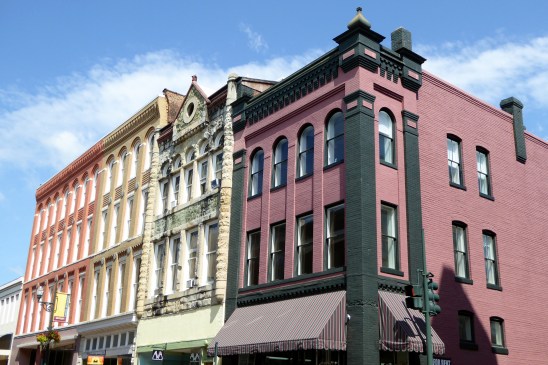
We spent a few hours walking the town on a self-guided tour of its five National Historic Districts dating back 250 years. While we saw one beautiful home or building after another, we found ourselves agreeing with what those magazine writers said about it. Staunton is a cool town worth a visit.

711

712

713

714

715

717

718

719

720

721

722

723

724

725

726

727

728

729

730

731


Following our stroll around Staunton, we breezed through the Blue Ridge Parkway. I say “breezed,” because we only drove 50 miles of its 469-mile length before opting for a straighter route south. After a couple of days of driving the curvy roads of Skyline Drive (which was a lot of fun!), we decided we had enough on this third day of switch-backs– this time with few guard rails or barriers. It sure was a gorgeous drive, though.

Oh! That reminds me! As a footnote to yesterday’s post, we saw a young black bear crossing Skyline Drive perhaps 50 feet in front of us! Neither of us had seen a black bear in the wild before, so it made our day!

ROAD TRIP DAY 43: LONG AND WINDING ROAD TO MONTICELLO

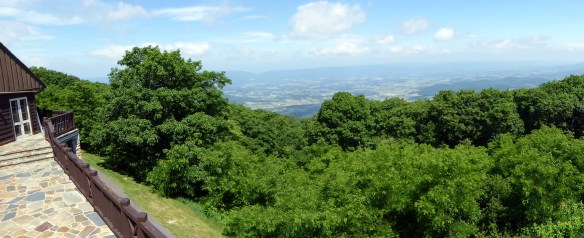
When driving from Luray to Charlottesville, taking the long and winding road is the only way to go to enjoy the beauty of Virginia’s Blue Ridge Mountains. Skyline drive, which runs north-south through Shenandoah National Park, covers 105 miles of the Blue Ridge Mountains. We drove the remaining two-thirds of the length of the road today.

701

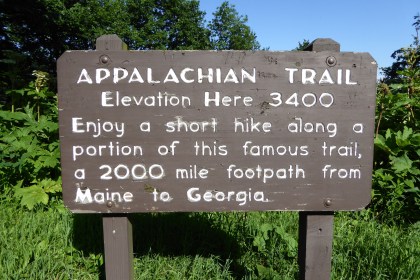
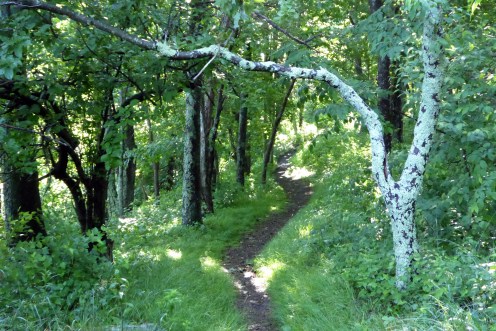
The sky was blue after last night’s thunderstorm, so we got an early start to take in the views at overlooks along the way. The Appalachian Trail runs through Shenandoah National Park as well, so we hiked a tiny portion of the trail.

702

703

Since I hadn’t researched the park in detail (I only knew it was a highly recommended must-see scenic drive), I had no idea there were accomodations available other than campgrounds. Skyland Resort and Big Meadows Lodge are both located in the park, though, and offer accomodations we would have loved to have stayed at rather than at the motel in Luray. We saw the interior of one of Big Meadow’s cabins while it was being cleaned, and it was quaint and cozy, yet roomy. Both the resort and lodge have restaurants, evening entertainment, and plenty of great hiking opportunities to keep busy during the day. Skyland Resort even offers guided horseback rides.

704

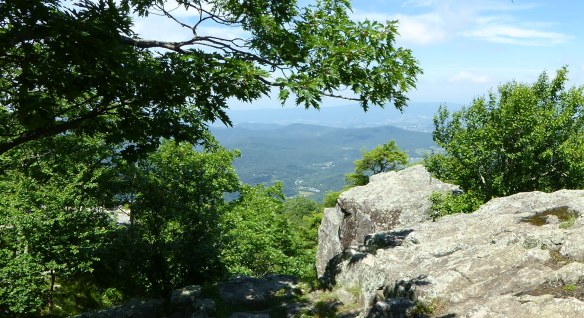
This was the view at the end of one of the short hikes from Skyland:


707.JPGA trio of deer were helping themselves to the grass alongside the cabins, and they weren’t the least bothered by me as I slowly got closer to watch. I was no more than 20 feet away, and I’m sure I could have gotten even closer.
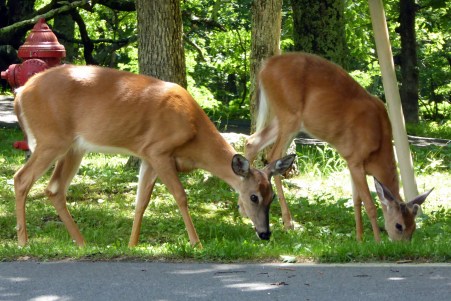

705

706
At Sun City Peachtree, we have to be much more stealth to keep deer from running off. If we move while we are watching from the window inside our house it will spook them!

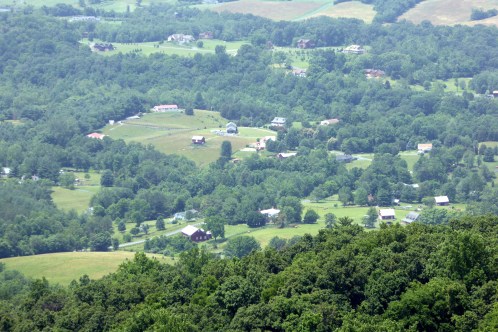
The entire drive through Shenandoah National Park was gorgeous and so thoroughly enjoyable, today. We were fortunate to have nice weather, and I enjoyed driving the long and winding road.

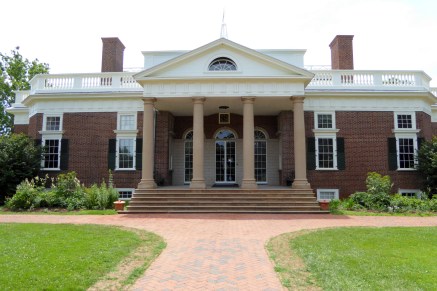
After wrapping up our cruise along Skyline Drive, we made our way to tour Thomas Jefferson’s home in Charlottesville.

708.JPG

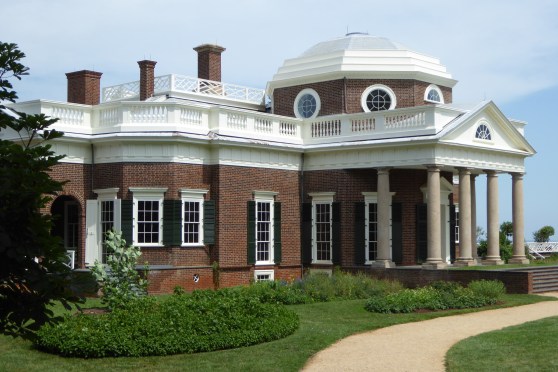
Monticello was designed by Jefferson, a self-taught architect, and the tour of his home was very interesting.

709

Not only was Thomas Jefferson an architect– he also founded and designed the University of Virginia– Jefferson was also quite an innovator, inventor, and horticulturist; in addition to being a statesman and author of the Declaration of Independence. Those are the impressive facts about the president who is the face on the $2 bill.

There are also very disturbing facts about Thomas Jefferson that make me wonder how on earth his picture wound up on that very bill in the first place.

Did you know that the man who wrote such inspiring words as “all men are created equal” and have a right to “life, liberty, and the pursuit of happiness” actually owned 600 slaves throughout his life? THIS from the man who promoted religious tolerance and freedom? I didn’t know this, thanks to my very basic education in U.S. history, but I wanted to scream, “HYPOCRITE!!!”

Another fact missing from my education about our third president was that Jefferson accumulated a great deal of debt, and was $107,000 in debt when he died. Strike two! (I will leave “Strike three!” to your imagination…”)

As it turns out, Monticello was built on land inherited from his father, run by slaves, and financed with other people’s money. The house is 11,000 square feet and originally sat on 5,000 acres; however, some of that land had to be sold off to pay down that $107,000 debt after Jefferson died.

The remainder of what turned out to be a blazing-hot day was spent strolling and having dinner at Charlottesville’s historic downtown pedestrian mall.

ROAD TRIP DAY 42: LOUNGING IN LURAY

Due to a day lacking in content, this post will also be lacking in content. It was just one of those days.

We initially had no intention of spending two nights in Luray; however, rooms in Charlottesville for tonight were either sold out or MUCH too expensive. I don’t know if it’s a big event happening there this weekend or just Father’s Day, but somethin’ is definitely up.

Here at the motel in Luray, a family reunion has consumed most of the rooms. Rather than dining out, they brought their own food with them, and have picnics on the motel grounds, instead. The coolers our neighbors brought seem to be attracting flies, so one of the men has been passing time by systematically eliminatng them with a fly swatter. With beer in one hand and the swatter in the other, I’m watching out the window while he keeps count outloud with every kill. “31…32… Oooh, a double! 47 and 48!”
At the moment of this writing (6:30 PM, June 20), I’m unplugged from the wall outlet, because we are in the midst of a thunderstorm– the other reason I am writing this in our room at 6:30 PM. Knowing the storm was coming, we had an early dinner and returned to hunker down. It seems as if our reunion group is waiting until the storm passes to have their picnic. “57… SWAT- 58…”

The day started out ok, though, and we took another drive through Shenandoah National Park along Skyline Drive. It was quite hazy, so I only shot a couple of photos:

700

Meanwhile, the following are a few I shot yesterday and saved for today’s post:

695

697

698

699

“61… 62…” It seems as if the remaining flies have a reprieve as Mr. Fly Swatter is now contently sitting in his lawn chair awaiting for dinner to begin. I’m rather disappointed, because I had planned on going out to congratulate him on his 100th kill. Oh well, I just hope those are raisins in that carrot salad on the picnic table.
696

The rustic cabin we had hoped to stay in, however, the nightly rate was too steep.  We opted instead for the Trip Advisor-recommended motel across the street.  Except for the flies, it was just fine.

ROAD TRIP DAY 41: SHENANDOAH VALLEY, ABOVE AND BELOW

When given the choice of driving to a destination, we would much rather take the scenic route and enjoy the journey along the way. Today was a great case in point. Trudy (our GPS) would have preferred we travel south along Interstate 81; however, if we had done so, we would have missed one of the most beautiful National Scenic Byways, Skyline Drive.

At 105 miles long, we only traveled on a portion of the drive before exiting Shenandoah National Park to see Luray Caverns. The drive runs north and south along the crest of the Blue Ridge Mountains and is the only public road through the park. Its a beautiful way to take in the scenic views of the Shenandoah Valley by utilizing the numerous lookout vantage points along the way.

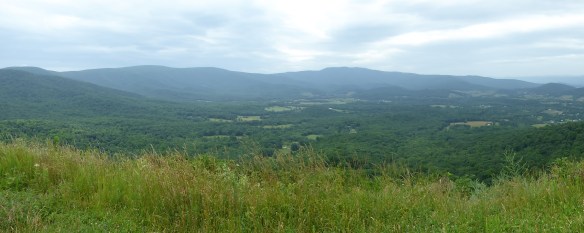
Unfortunately, the weather wasn’t ideal for scenic photography, and the visibility was limited, so we mostly pulled off the road at overlooks to just enjoy what we could see. Take a look at this panoramic shot, and just imagine what this would look like on a clear spring day or during the fall when the leaves are changing colors:

674

Luray was our next (and final) destination after descending the mountain ridges to explore the caverns below.

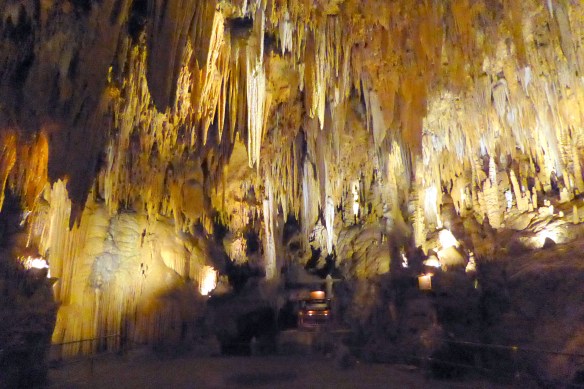
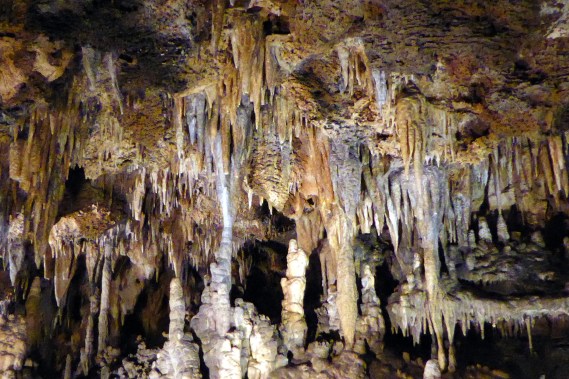
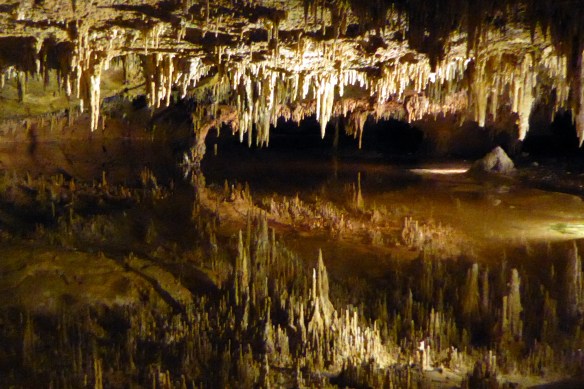
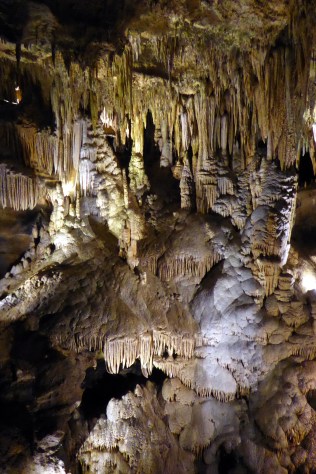
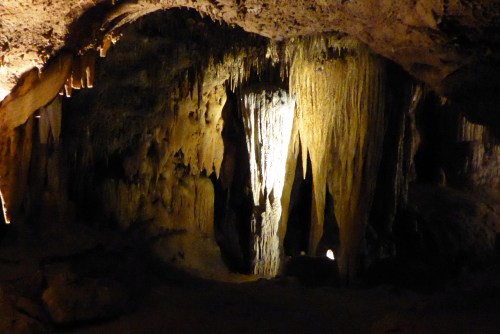
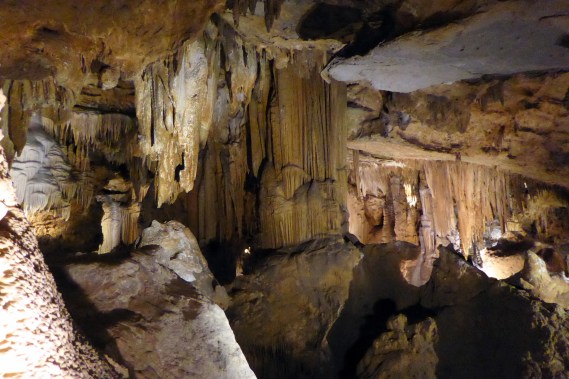
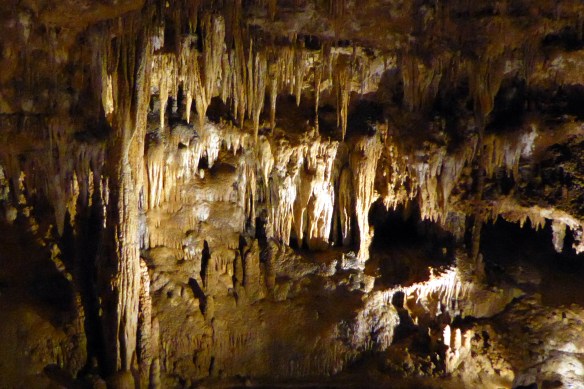
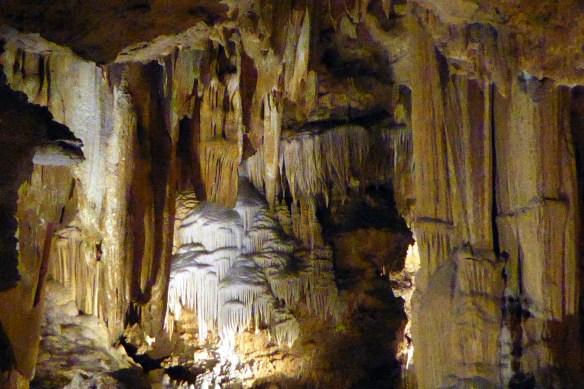
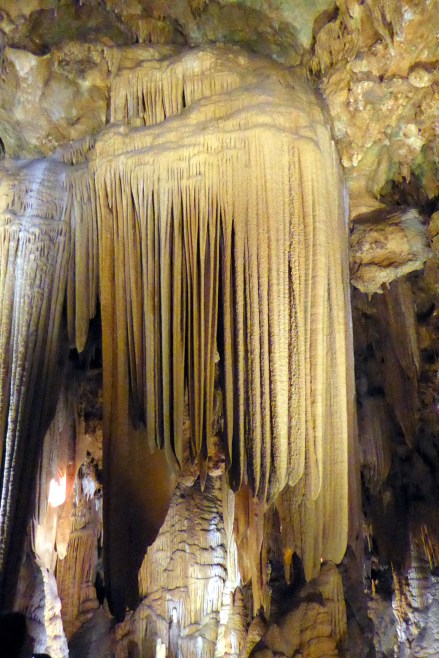
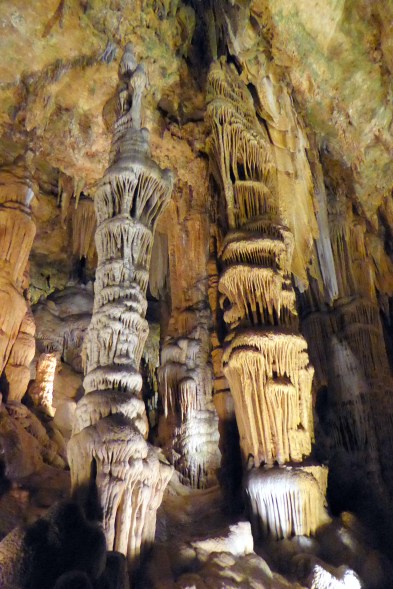
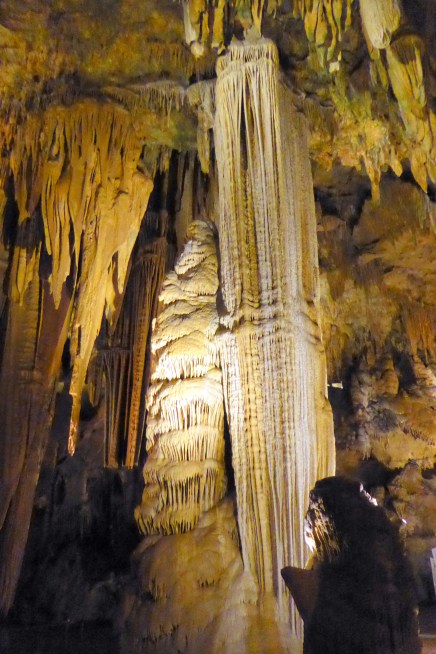
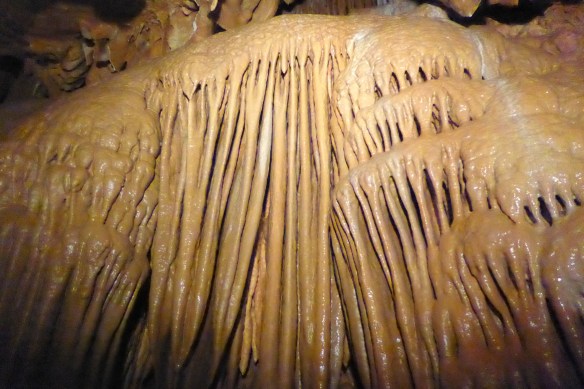
Best known for its Great Stalacpipe Organ, created there by Leland Sprinkle in 1957, the Luray Caverns are incredibly beautiful, and far more photogenic than Mammoth Cave in Kentucky.

Towards the end of our one-hour tour (uh, make that 1:20, because we hung back and joined the tour behind ours), we got to hear a hymn from the organ.

An entry in Wikipedia describes the organ as, “…a lithophone made from solenoid fired strikers that tap stalactites of various sizes to produce tones similar to those of xylophones, tuning forks, or bells.”

693

Look carefully for the organ.  You can see it up close in the next photo.

694

695

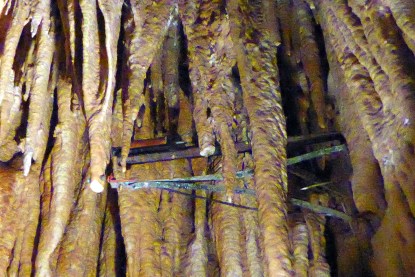
This is one of the strikers that produces just one note of the organ

The tone sounded ethereal and unlike anything I had ever heard. Bruce and I both thought of our friends at Griffin Choral Arts– especially Steve Mulder, Bill Pasch, Cathy Willis, and Richard Chewning. We know they would have flipped over the worlds largest instrument that spans over 3 acres, including all its strikers.

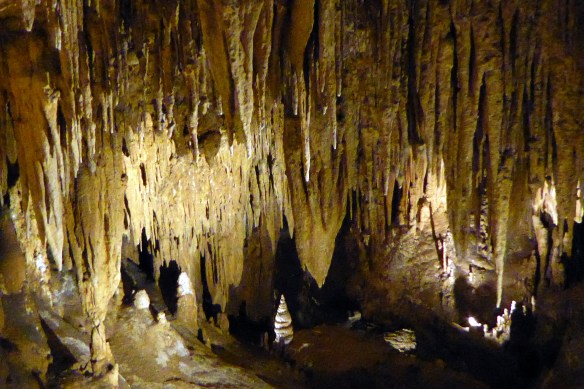
Here are more scenes from inside Luray Caverns:

689

Just look at how large these formations are compared to the people touring the caverns!

677

678

679

The formations in the top half of the photo are reflected in the water below.

680

681

684

682


685

686

687

688

690

691

692

ROAD TRIP DAY 40: WALKING WINCHESTER

661.JPG

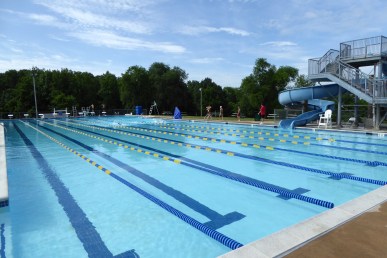
Walking Winchester actually followed a wonderful much-needed and much-desired swim at this 50-meter pool at the Jim Barnett Park Pool. Available pools have been scarce on this trip; however, I was well aware of that fact after doing research prior to the trip, and I knew what to expect. No worries; this road trip has been well worth the time lost out of the pool!

Having said that, it was a nice surprise to arrive at this 80-degree long course pool and have a lane all to myself. Ahhh, what a great way to start the day!

Since it was hot and humid today, our only other activity was to do a self-guided walking tour in Old Town

Winchester, have a late lunch- early dinner, and call it quits. Temperatures have been consistently about 10 degrees above average the last several days, so we have been careful to not let it wear us down too much. Besides, when you’re on the road for 40 days, little breaks now and then are much appreciated!

Walking Winchester was lovely. We found the town to be quite clean, tidy, and well-maintained; and, they did a great job restoring the historic downtown.

Dating back to 1752 when Winchester was founded, this charming town is filled with many beautiful stone buildings that have survived through the centuries. They are now cafes, attorney offices, or other businesses; however, each one has been restored and preserved meticulously.

A pedestrian mall was created from one of the historic streets, and it is a wonderful place to stroll, dine at an outdoor cafe (although we opted to dine inside due to the heat!), and browse the shops. I sure wish the city of Griffin, Georgia would do the same thing with Hill Street!

662

663

664

665

672.JPG

667

668

666

669.JPG

670

This 1899 Queen Anne house was owned by W.H. Baker of Baker Chocolate.

671

673.JPG

ROAD TRIP DAY 39: HISTORIC HARPERS FERRY

651

I was so confused. Within a five minute span (at most!) we were in three states– one of them twice! We drove from Frederick, Maryland to Harpers Ferry National Historical Park, West Virginia; however, I kept seeing “Welcome to…” signs! “Welcome to West Virginia” one sign read. A couple of minutes later, another greeted us with “Welcome to Virginia”. Before we knew it, we were back in West Virginia with another sign greeting us once again. Whewww!

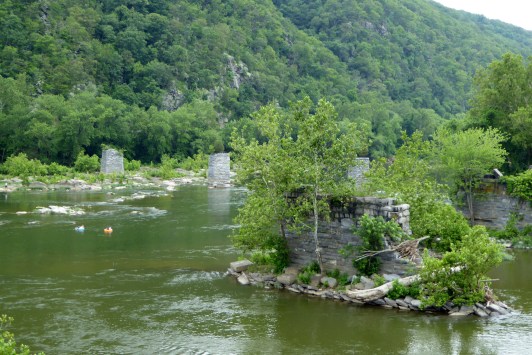
Situated at the confluence of the Potomac and Shenandoah rivers where the states of Maryland, Virginia, and West Virginia meet, Harpers Ferry is located roughly at the half-way point of the Appalachian Trail. It is named after Robert Harper who established a ferry service (Get it? Harper’s ferry?) in 1761.

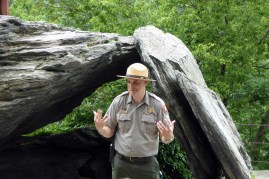
Thomas Jefferson visited Harpers Ferry in 1783 and stood on these rocks (see below) to take in the view of the rivers. Jefferson called the site “perhaps one of the the most stupendous scenes in nature,” and also said it was “worth a voyage across the Atlantic” to see. This is now known as Jefferson Rock Overlook, and pillars have been inserted to stabilize the rock formations:

645

646

In later years during the Civil War, Harpers Ferry changed hands eight times between 1861 and 1865. Suffice it to say the history of Harpers Ferry could (and does) fill volumes of books.

Some of this history was shared with us by Creighton Waters, an incredibly knowledgeable park ranger. By pure luck, we happened to stumble upon him and his tour when we arrived at the visitor center at 10:55 and noticed an 11:00 “From the Top Down” tour getting ready to depart. As it turned out, the 90-minute tour is conducted just once per day, three days each week. Wow, were we lucky!
647

The tour departed from the top of Harpers Ferry where the views took in Maryland and the Potomac River to the left, and Virginia with its Shenandoah River to the right. By the conclusion of the tour, we were in Lower Harpers Ferry at the river’s confluence.

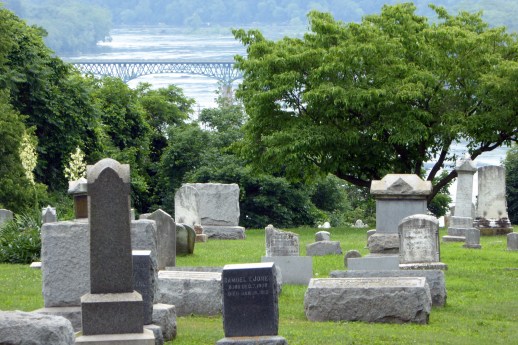
In between, in addition to taking in the views from Jefferson Rock Overlook, we visited this very historic cemetary dating back to the 1700’s where Robert Harper was buried:

632

633

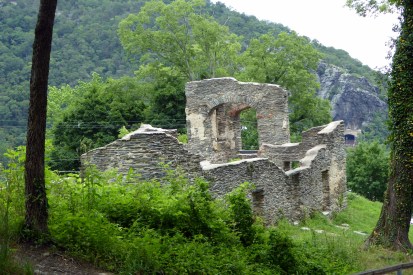
This is what remains of a church dating back to the 1850’s:

648

649

Adding a little humor to the tour, we learned the history of the sign that is still visible on the side of the rock face of Maryland Heights across the river. See the square above and to the left of the train tunnel? It used to read, “Mennen’s Borated Talcum Toilet Powder,” and the painted sign dates back to 1903. It was the last thing train passengers saw before entering a long, pitch-black tunnel, so the marketing geniuses at Mennen thought it would leave a lasting imprint on their minds, and make them run out to buy some of their product upon disembarkation.

652

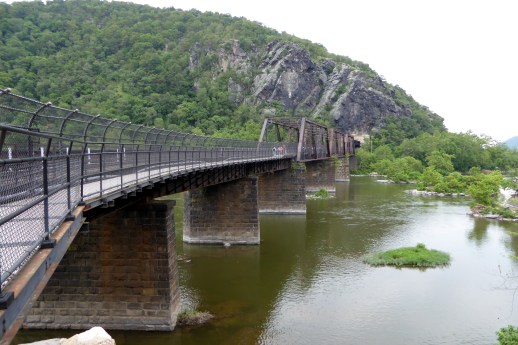
Walking across the bridge, we took in the views and noticed those tubers below who had floated down the Shenandoah River from Virginia. Meanwhile, out of the picture frame there were two other tubers who had floated down the Potomac in Maryland. They met up in the middle while we watched from West Virginia.

653

654

656

655

By the time we had reached the other side of the bridge, the sky grew dark and threatening, and it started to sprinkle just enough to warn us to take cover. So much for continuing our “hike” on the Appalachian Trail. We returned to explore the historic pre-Civil War- era buildings of Lower Harpers Ferry, instead, and ducked in to enjoy a Hershey’s Ice Cream (no relation to Milton S. Hershey of Hershey’s Chocolate, and the company dates back to 1894).

Now, that is good ice cream! “Moose Tracks” was LOADED with goodies, and the ice cream was creamy and delicious. YUM!

650

657

659

660

Tonight, we are staying in Winchester and will explore more of the Shenandoah Valley tomorrow. Hopefully, it won’t rain like it did today!

ROAD TRIP DAY 38: FABULOUS FREDERICK

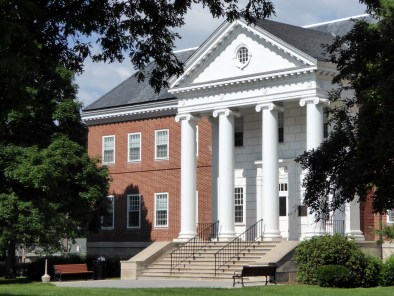
All was not lost when we set out for Hood College this morning with plans to get a swim in before driving through the countryside to see three covered bridges. Although the college recently changed their policy and no longer allows non-members to swim, the campus was beautiful and well worth the short detour from the highway. The surrounding residential community had gorgeous homes, and many of the campus buildings looked similar to this one:

628

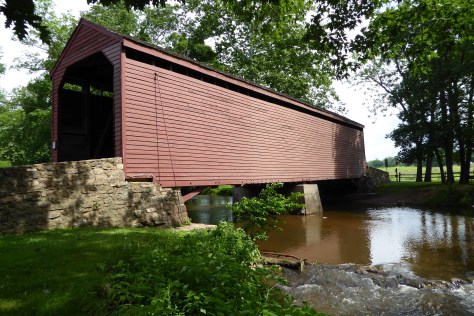
The drive through the countryside was lush and green with rolling hills and beautiful farms. Of the three covered bridges we saw, Loy’s Station Covered Bridge was the nicest:

629

631

630

Following our countryside drive, we spent the remainder of the afternoon on a self-guided walking tour of Frederick’s historic downtown which covers a 50-block area. Established in 1743, this town south of the Mason-Dixon Line is indeed historic with many of the original buildings still intact and well-maintained. We found this small city of 67,000 people well worth the visit!

621

620

619

624

623

622

618

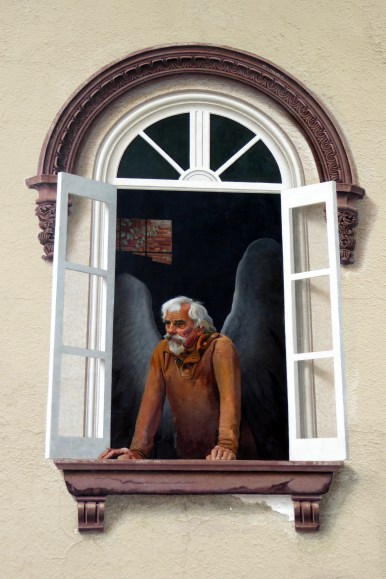
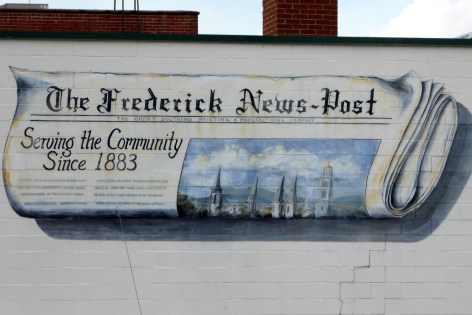
Now, look at this “window.”  Why did I put this in quotes?  Look again, because it’s not a window at all.  This is a wall mural painted in the same style as the bridge photographed in my previous post.

604

614

616

613

ROAD TRIP DAY 37: TWO TERRIFIC TOURS

Although we are not motorcycle enthusiasts because they are less safe than cars and cause a great deal of noise pollution, Trip Advisor reviewers rated the Harley Davidson Motorcycle Factory as an excellent tour. Our friend, David also insisted it was interesting even for non-motorcycle people like us, so we decided to check it out on our way to Frederick, Maryland.

587

Upon arrival, we knew we were in the right place when we were surrounded by visitors wearing various Harley Davidson t-shirts, vests, and hats. We sure looked out of place!

Harley Davidson does an excellent job of marketing. Name one other motorcycle manufacturer who markets their name anywhere near as well as they do. I sure don’t see much in the way of Yamaha or Honda t-shirts or belt buckles out there, that’s for sure. They have created an image and culture that American motorcycle enthusiasts have bought into. For that matter, so have the Aussies, Kiwis, and Japanese.

The factory we toured is 650,000 square feet and has 1,100 employees. On average, it takes 2-3 hours to assemble a Harley motorcycle; the tricycles take about five hours. It was fascinating watching the various steps required to roll one of those babies off the assembly line. (Photos were not permitted.)

The tour was indeed interesting. We are always fascinated by how things are created and produced. This tour did not disappoint.

586

We were surprised, though, when we looked at the specs. of the motorcycles on display in the lobby. How many miles per gallon would you estimate a motorcyle gets? I would have guessed at least 50; however, our Toyota Prius V actually gets more miles per gallon (46) than many of the bikes they produce. At 37-48 miles per gallon, I was proud to know that Scarlett (an SUV model Prius) is more of a gas sipper and MUCH quieter than those motorcyles. Good on ya, Scarlett!

588

Terrific tour number two was in Hanover at Utz, the makers of potato chips, pretzels, and other snack foods since 1921. I had never heard of Utz until coming to the east coast, because they are mostly distributed out here in thirteen northeastern states.

Although the tour at Utz was self-guided, it was terrific. After watching a film about their history and seeing all their products on dispaly, we continued on into a very long hallway on the top level of the factory. There were large glass windows lining the length of the entire hallway, and the action was happening right next to the windows. We were able to get a close-up look at the potato chip-making process, and see out over the entire factory from above. (Photos were not permitted.)

Along the hallway, there were signs posted about the process happening in front of that window, and there was a button we could push to start an audio explanation. When it ended, there was instruction to proceed to the next window.

We were able to watch the entire process beginning with the potatoes being off-loaded from trucks to conveyor belts, and ending with boxed bags of chips being forklifted out of the warehouse to the trucks.

Utz produces enough potato chips each day to fill 20 tractor trailers for daily delivery. Since it takes four pounds of potatoes to produce one pound of chips, try doing the math on the daily potato requirement to keep that factory humming!

The most interesting part of the process was watching the optical sorter. A light shines on the potato chips moving through the conveyor belt, and searches for potato chips that are too dark or spotted. When it “sees” one, it blows a puff of air on it that shoots the chip out to the side on another belt and sends it to potato chip hell never to be seen again. REJECT!

The good potato chips continue on to potato chip heaven getting bagged for eventual distribution. Before the bag is sealed, it is filled with nitrogen to ensure a longer shelf life. Nitrogen? Who knew? I’ll never think of a bag of potato chips quite the same way again.

Onward to Frederick. Today, we chose the road less traveled to get to our ultimate destination, so it was a pretty drive through farmland and small towns.

585

By the time we checked into our hotel and headed downtown, it was late and we were hungry (A few potato chip samples didn’t make much of a lunch), so we just took a quick look around for a preview of tomorrow.

589

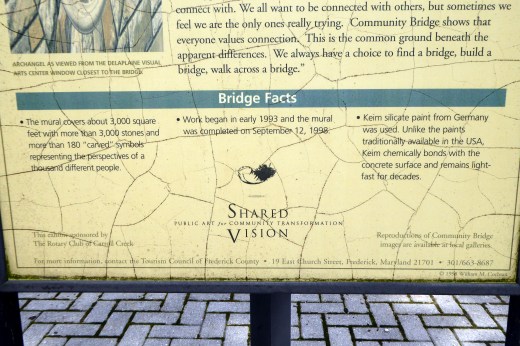
Carrol Creek Linear Park is a beautiful area of downtown. They did a fabulous job with this mixed-use urban park that features an amazing mural on the Community Bridge.

591

The following is information I found online about the bridge at http://bridge.skyline.net/history/ :

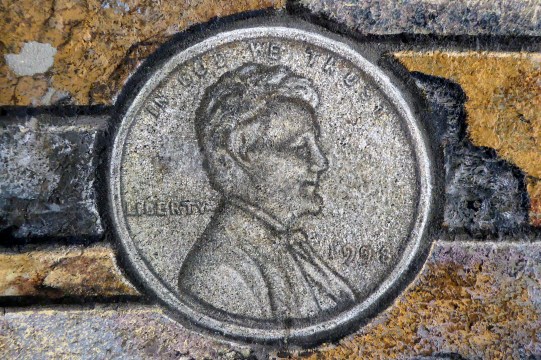
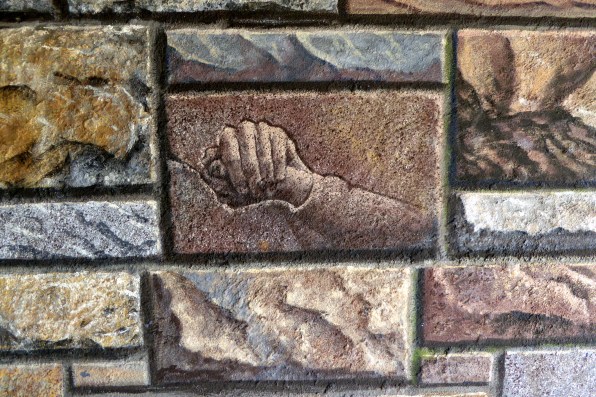
The Community Bridge mural project transformed a plain concrete bridge in Frederick, Maryland, near Washington D.C., into the stunning illusion of an old stone bridge. Artist William Cochran and his assistants painted the entire structure by hand, using advanced trompe (“deceive the eye”) techniques. Many people walk by it and never realize they have been fooled. Once they grasp that the bridge is actually an artwork, visitors discover that there are mysterious carvings in the stones, images too numerous to count. They represent symbols and stories contributed by thousands of people from all over the community, across the country, and around the world. These co-creators have made Community Bridge an inspiring symbol of common ground.

In early 1993, artist William Cochran proposed the bridge project because of the structure’s strategic location at the urban center of the long-planned Carroll Creek Park, Frederick’s key economic development project. This linear park site is positioned along the symbolic racial and economic dividing line in the city. The park plan was stalled by controversy and disagreement until the bridge project engaged the participation of the community to build a symbol of common ground. It became a catalyst for revitalization and a symbol of connection and the spirit of community.

These are photos I shot of the bridge mural as well as the other bridges along the linear park:

590

592

593

595

598

601

600

602

603

605

606

611

608

609

610

607

612

615

There’s a Costco very close to our hotel and downtown, so we opted for another (very) casual dinner. I just love their large $3.99 Caesar salads!

I’m sad I have nothing unusual to report about this Costco, because unlike the one in Lancaster, this Costco did not have a horse and buggy parking shed. Bummer. That was really cool.

ROAD TRIP DAY 36: SAY, “CHEEEESE!”

580

I’m not one who finds it necessary to photograph Bruce or be photographed myself standing in front of every landmark. As a matter of fact, it drives me crazy when I’m on a tour with people who do this at every stop. There will be others (like myself) who wish to photograph the statue, landmark, or scene free of tourists in the photograph; however, we’re stuck waiting for these people who run to get in front of every single one.

This happened to us at Mammoth Caves. This man photographed his wife standing in front of a rock formation at every single turn. They held up the line, and I wanted to SCREAM!

Having said all that, when I see one of these cheesy photo ops that is meant for that very purpose, (and it’s as cheesy as this one), the kid in me takes over and I just gotta get a shot.

When a very nice man at Turkey Hill Experience asked if he could take our picture for us, Bruce begrudgingly agreed and I pulled him into the ice cream bucket.

Visiting the Turkey Hill Experience was something we decided to do on the fly. It’s geared more for kids, but we thought it would be fun to learn about the ice cream-making business and enjoy a sample.

As it turned out, unlimited samples were included with the price of admission. There were 12 different flavors from which to choose, but why choose? Sample them all!

Noticing that the kind ladies scooping the ice cream were giving full small scoops per serving, I requested a half of scoop in order to have room to sample them all. We had just come from a fabulous Thai restaurant for lunch, so we weren’t exactly starving.

Although we each made it through the flavors we wanted to taste, I had to draw the line at “Party Cake”, a flavor with buttercream frosting and pieces of colored cake mixed in. Between that and “Colombian Coffee”, I was good to give them a miss and opt for “Chocolate Peanut Butter Cup” and “Moose Tracks” which were more to my liking.

Honesty, we have had better ice cream. Nothing beats New Zealand ice cream, but even here in the United States, we have tasted creamier ice cream with more inclusions.

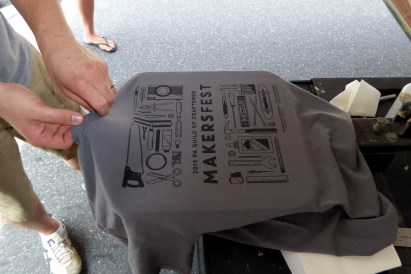
I got ahead of myself with all this, though. The day actually began in downtown Lancaster at the PA Guild of Crafters Festival. In addition to high-quality crafts being sold by crafters, a local school for technology was onhand to demonstrate 3D printing and other skills they teach at the school. In partnership with the guild, they were teaching how the silk-screening process works by silk-screening the guild’s graphic with hands-on help from those who either brought their own t-shirt or bought a plain one from the guild. T-shirts were $10 to purchase, and the silk-screening was free. Locals in the know brought their own from home; something they do each year to build their collection of guild graphics. Cool!

572

573.JPG

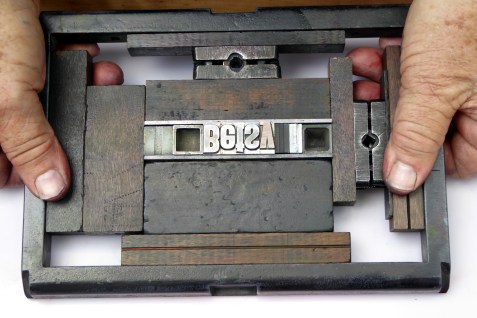
We also learned how a printing press works, and I got to make a bookmark for my friend, Betsy at no charge.

575

576

Other demonstrations were also free, and it was fun watching how various crafters produce their beautiful handicrafts such as weaving, basketry, wire sculpture, and woodcraft.

574

577

578
Sa La Thai was located next to the guild and along the block of the street festival, so we wrapped up our downtown visit with our wonderful lunch there before heading to Columbia for our ice cream indulgence.

The day concluded by taking the long and winding road back to Lancaster through the farm country to enjoy more beautiful scenery. These were our sights along the way:

582

583

584