SICILY & AMALFI COAST #16: MEMORABLE MONTALTO FARM & MORE

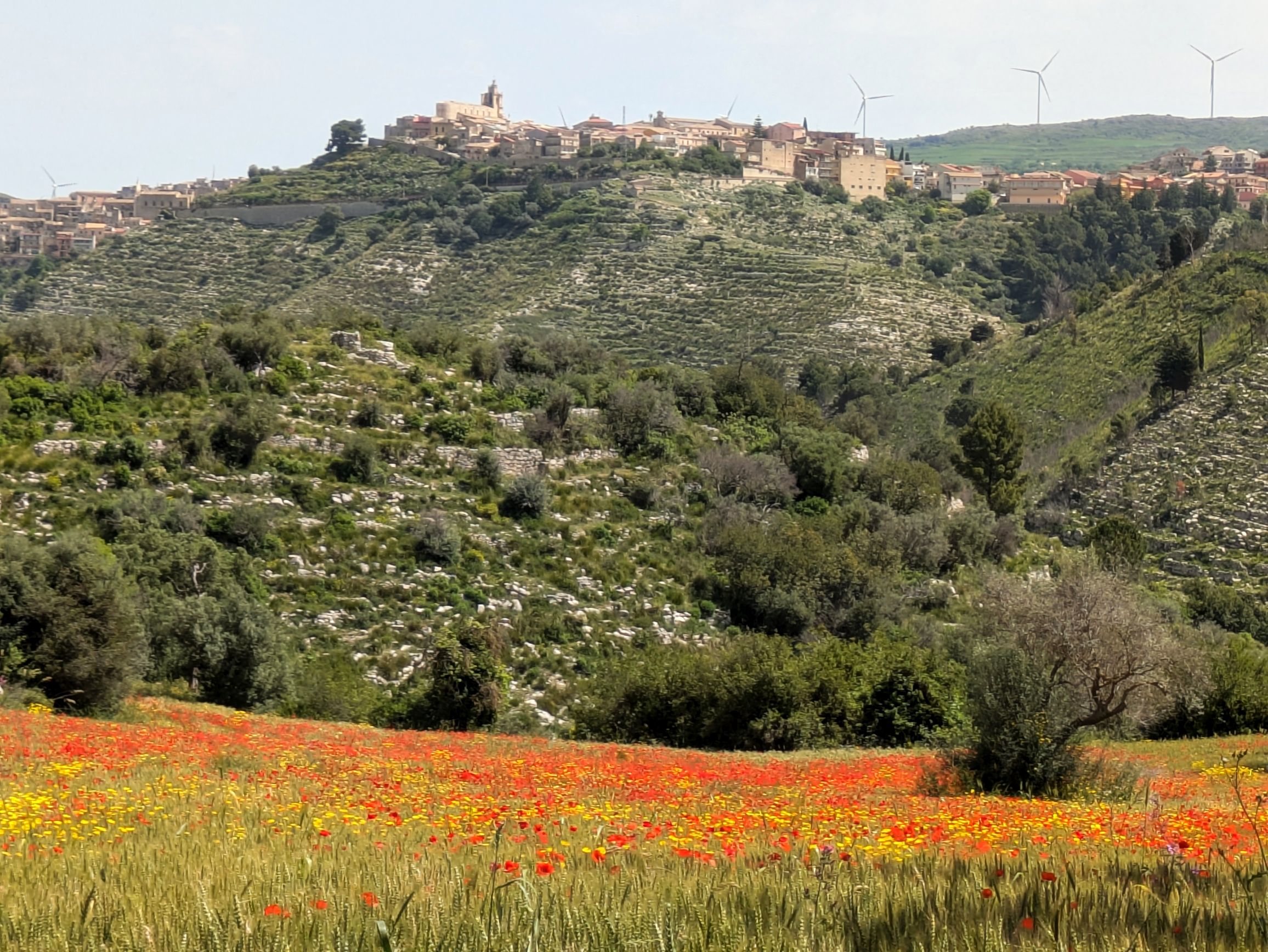
Another beautiful morning greeted us as we arrived in the UNESCO-protected Val di Noto valley of Sicily to meet Domenico.  The hike from the bus to his family’s farm along an unpaved path was beautiful!  Wildflowers were in bloom, and the views of the surrounding hillsides were lovely. 

(For all photos, click on the image for a full screen view.)
Along the way, Domenico hopped the fence to go fetch his sheep, so we could meet them.  When we arrived at the farmhouse, we met his wife, Valeria, her parents, Stella and Paolo, and her sister and niece.

The family with Francesco
This sketch was drawn by Domenico of his mom who taught him how to build drystone walls. He built the entire wall lining the path we walked to his home.

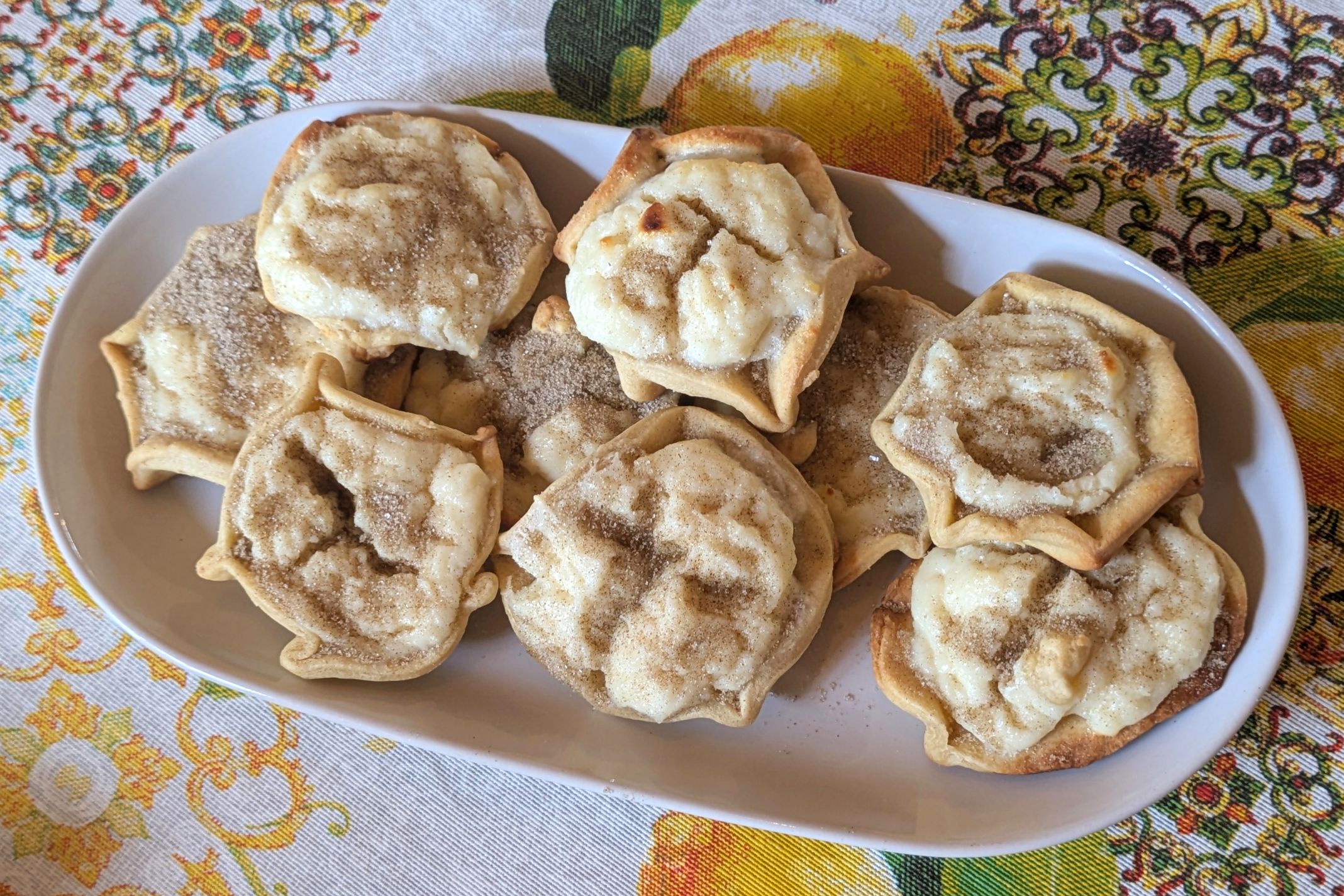
The farm has been in Valeria’s family since the 1800’s.  In addition to farming for a living, they host small groups like ours from Overseas Adventure Travel (OAT) for a homemade lunch featuring vegetables and meat from their farm.  Volunteers also learned how to make the pastries we enjoyed for dessert.

The pastries we learned how to make
Valeria with her sister and niece (in the middle)

On almost every one of our OAT tours, the only time it rained was when it didn’t matter.  This time, while the family finished preparing our lunch, it began to rain.  I told the others in the group, “No worries!  It will stop raining by the time we have to hike back to the bus.  It always does on our tours!”  And sure enough, it did.  The hike back was sunny and beautiful!  Bruce and I couldn’t believe it!

Our lunch and time with the family was so enjoyable.  They didn’t speak English, but Francesco translated for us when needed, and they were wonderful!

After we returned to Ragusa, we had some free time, so I explored more of the hilly town while Bruce rested. 

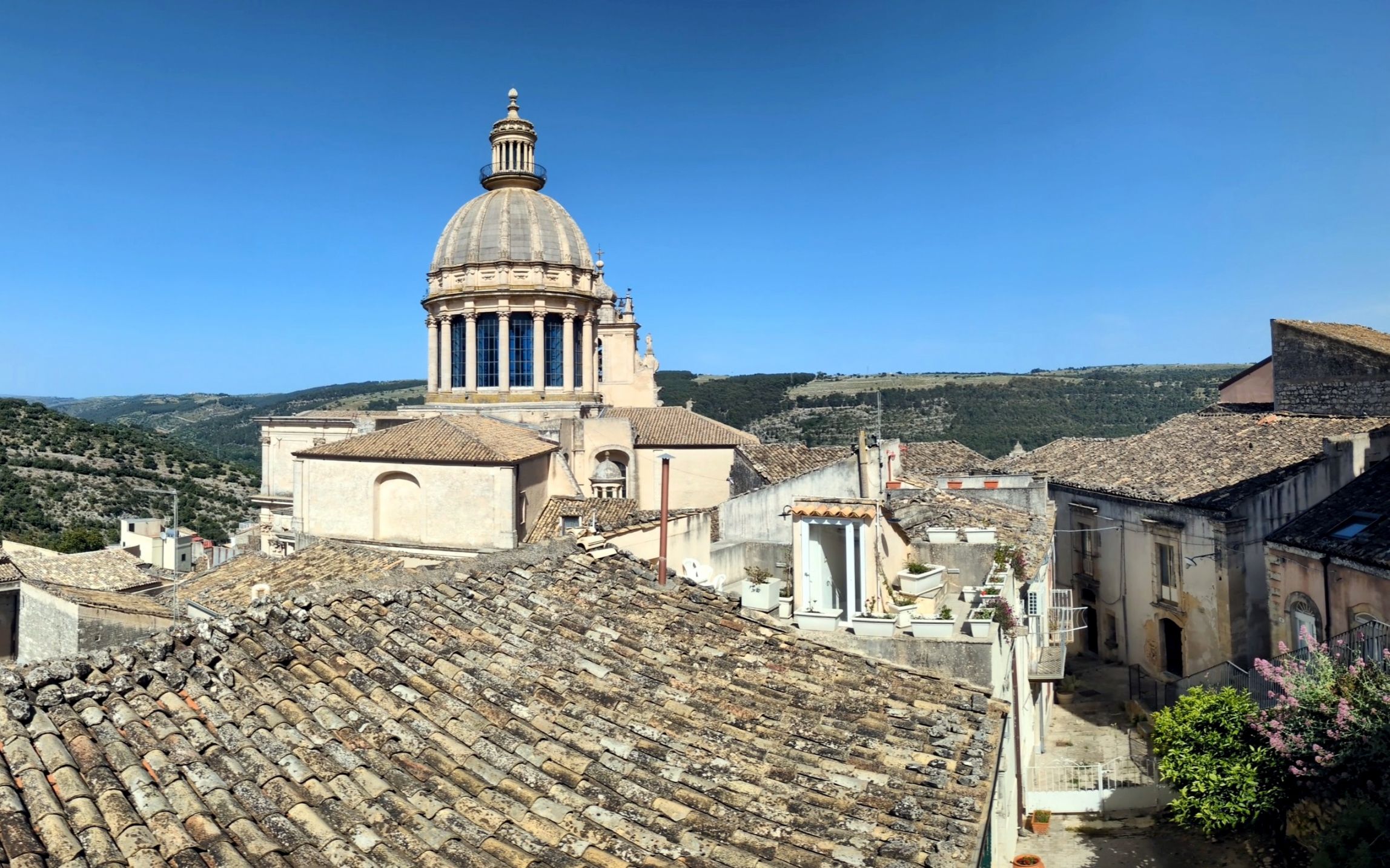
The back side of Ragusa Cathedral…
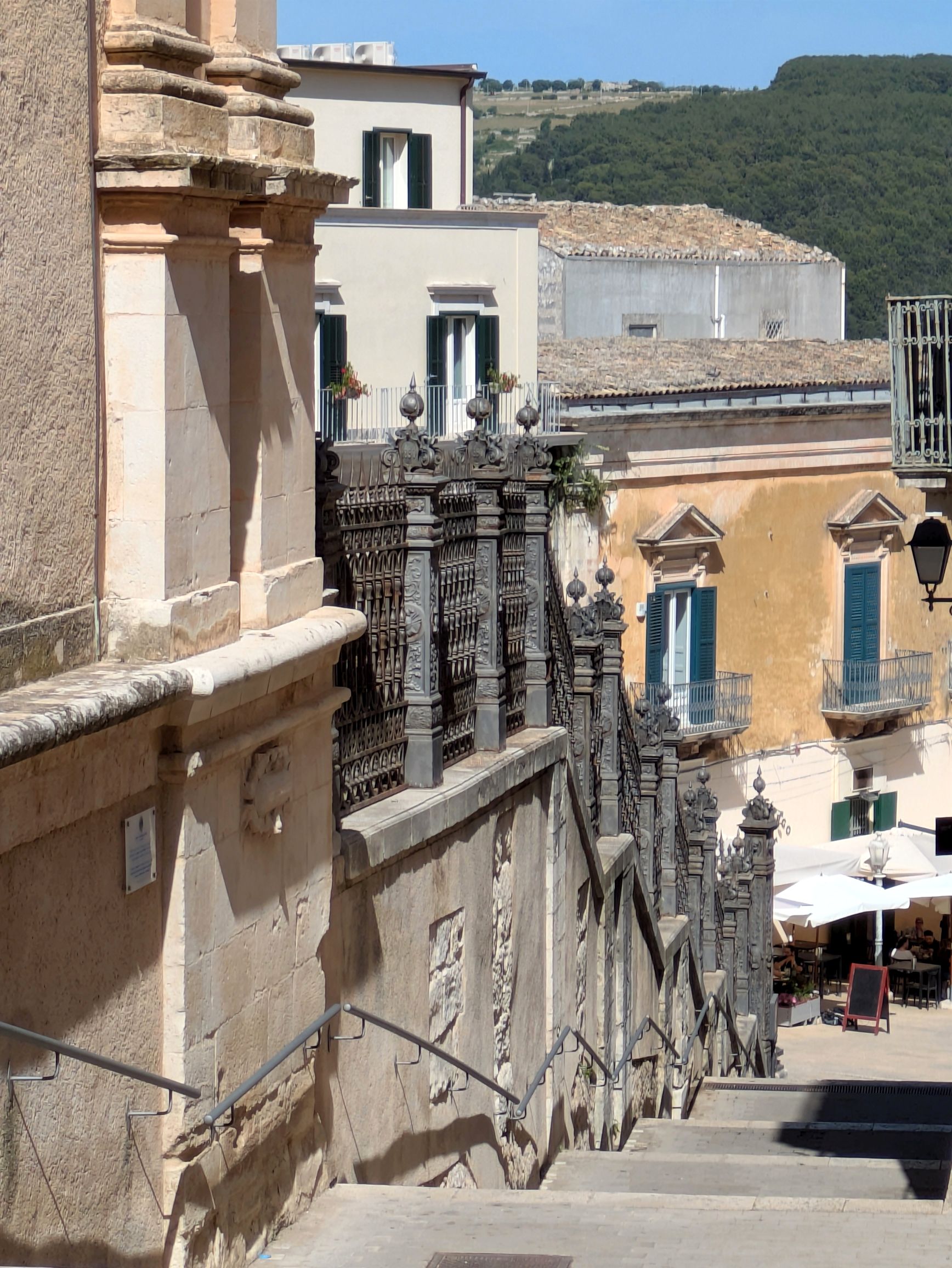
…and the stairs leading back down to the front
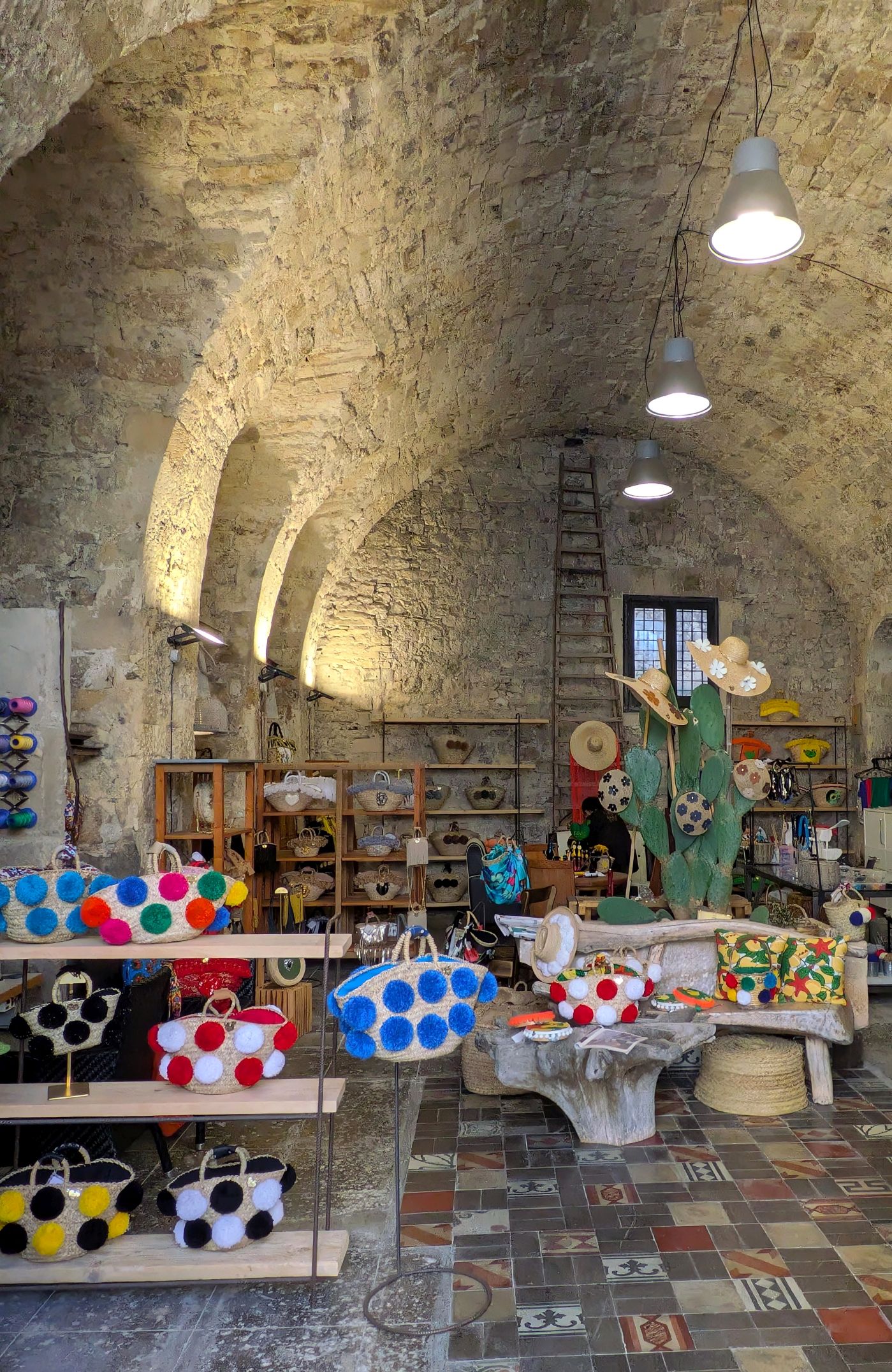
I definitely liked the store’s structure more than the contents!
The door was opened, so I poked my head in to see two men, sitting back-to-back, speaking in Sicilian and working on their Sicilian horse cart wheels.
This was our wonderful waitress the night before. Bruce brought some of his fused glass earrings with him to give as gifts, so he wanted to surprise her with a pair of blue dichroic studs to match her hair. It was a magical moment!

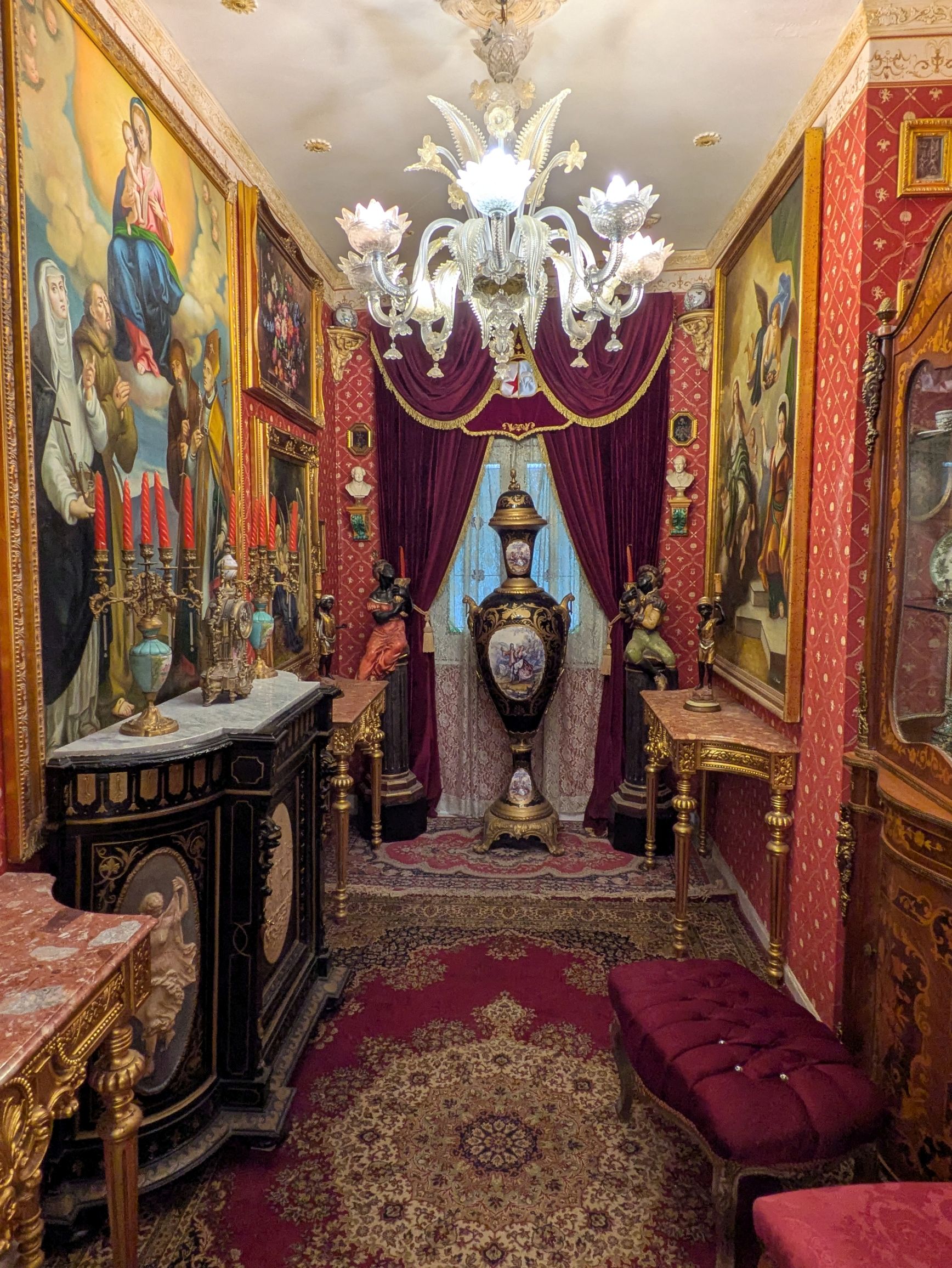
Later, we met up with Francesco for a surprise “Learning and Discovery,” which are pop-up surprises that OAT guides always have for us on every tour.  Sometimes it is a local food treat or drink and other times it’s an experience.  It’s like a box of chocolates; you never know what you’re going to get.  This time, Francesco led us off the main street to an unassuming home.  As soon as the owner welcomed us into his home, that old cliché’ came to mind: Don’t judge a book by its cover. 

Built in 1600 with floor tiles dating to 1700, Maestro Salvatore Appiano, a man in his 80’s, lived in his home alone.  It was full of antiques passed down through many generations of his family, and it serves (by appointment) as a museum.  Salvatore also teaches piano lessons and gives private concerts. An organist throughout this famed musical career, we were fortunate to hear him play piano—a fitting instrument given “piano” is part of his last name.

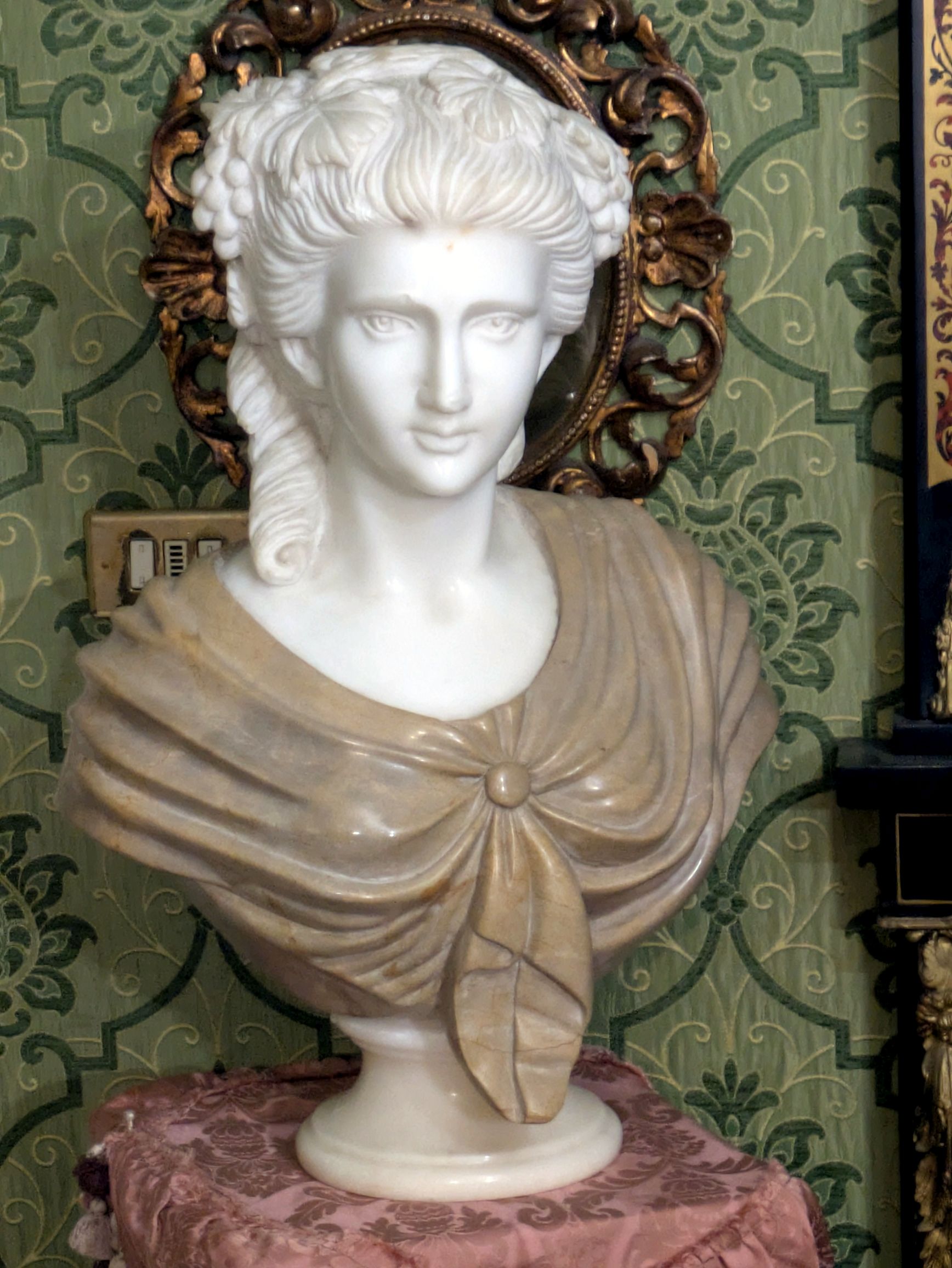
The tour of his home took us through six rooms filled with Flemish tapestries, gilt bronze chandeliers, Louis XIV-style sofas, Baroque-style mirrors, inlaid Boulle clocks and tables, console tables and corner cabinets, neoclassical style sideboards, canvases and prints, Copenhagen candelabra, and so much more.  This bust is of his great-great grandmother. 

It was A LOT to take in and all more than I could ever live with for more than a day.  Could you imagine what the contents of his home was worth, though?

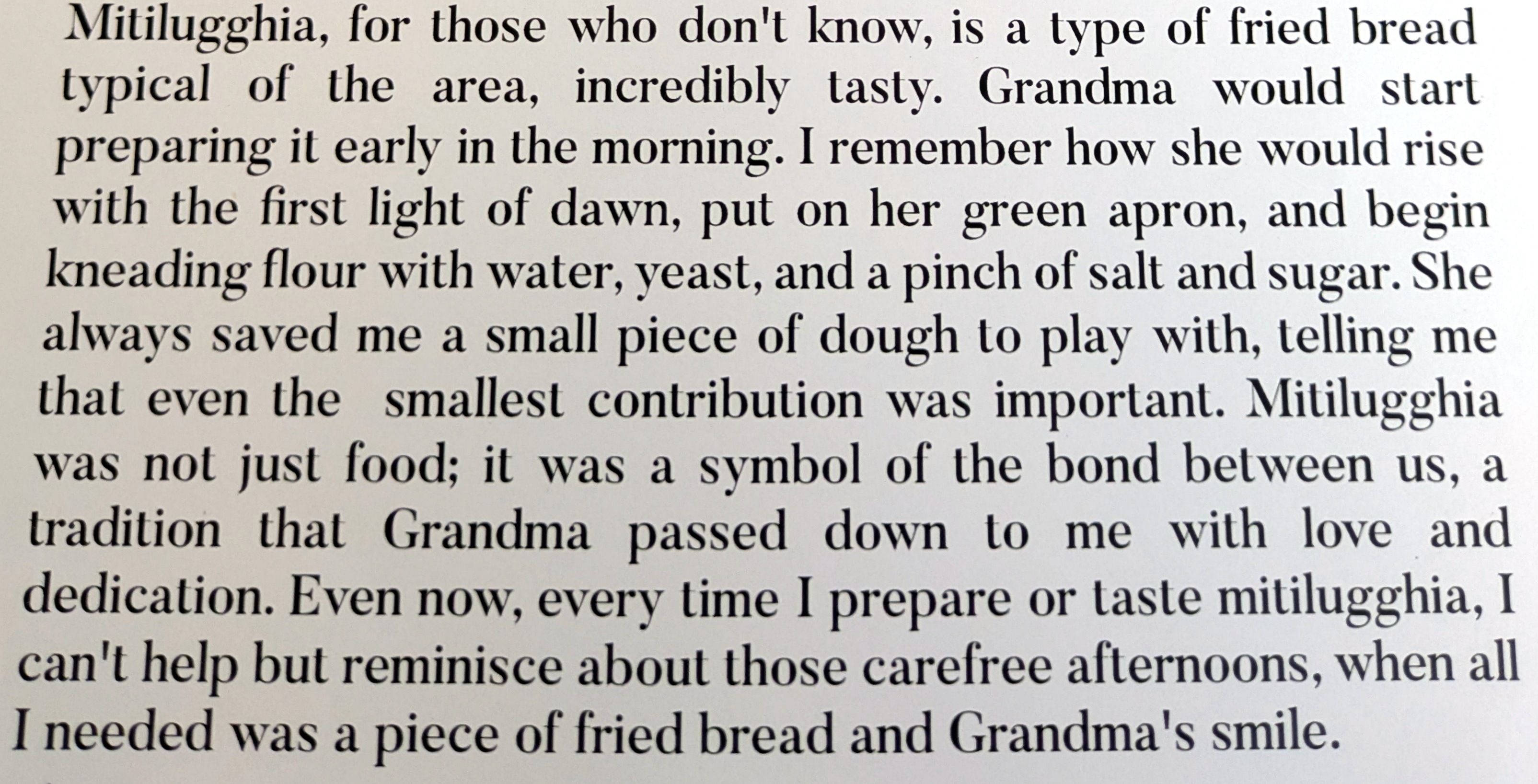
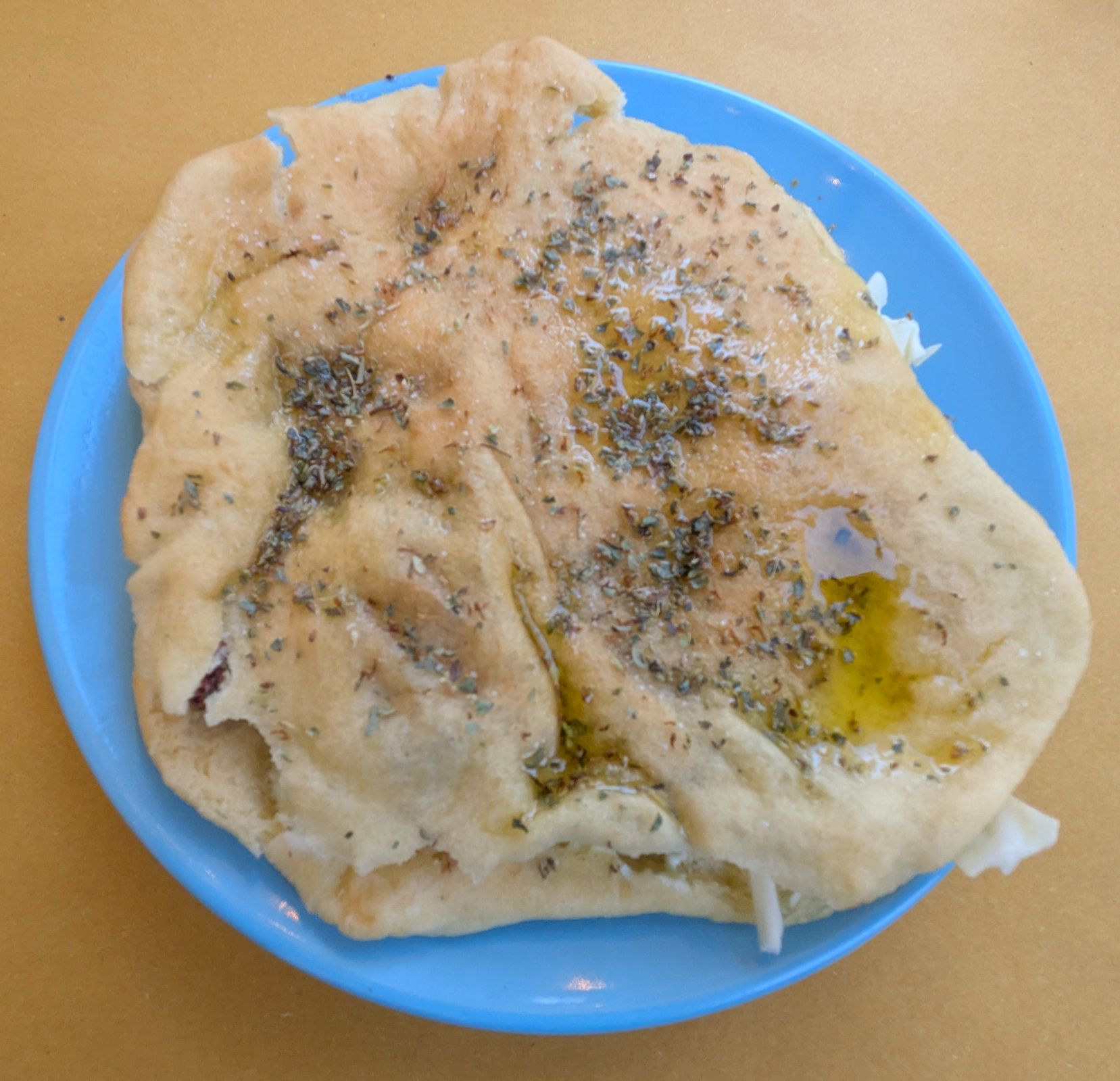
Bruce and I concluded our wonderful day enjoying an al fresco dinner at Njuria Sicilian Bistrot on my favorite street of Ragusa, watching the locals and tourists stroll by.  This is part of the owner’s story, describing the history behind the delicious bread we were served with our dinners:

Next up: SICILY & AMALFI COAST #17: STROLLING SIRACUSA & OGLING ORTIGIA

SICILY & AMALFI COAST #8: MEANDERING AROUND THE MAZARA KASBAH

A UNESCO-protected city, Mazara del Vallo (“Mazara”) is unique in several ways.  First, it is Sicily’s most Arabic city and was conquered and controlled by all sorts of group after being founded by the Phoenicians in the 9th century BC.

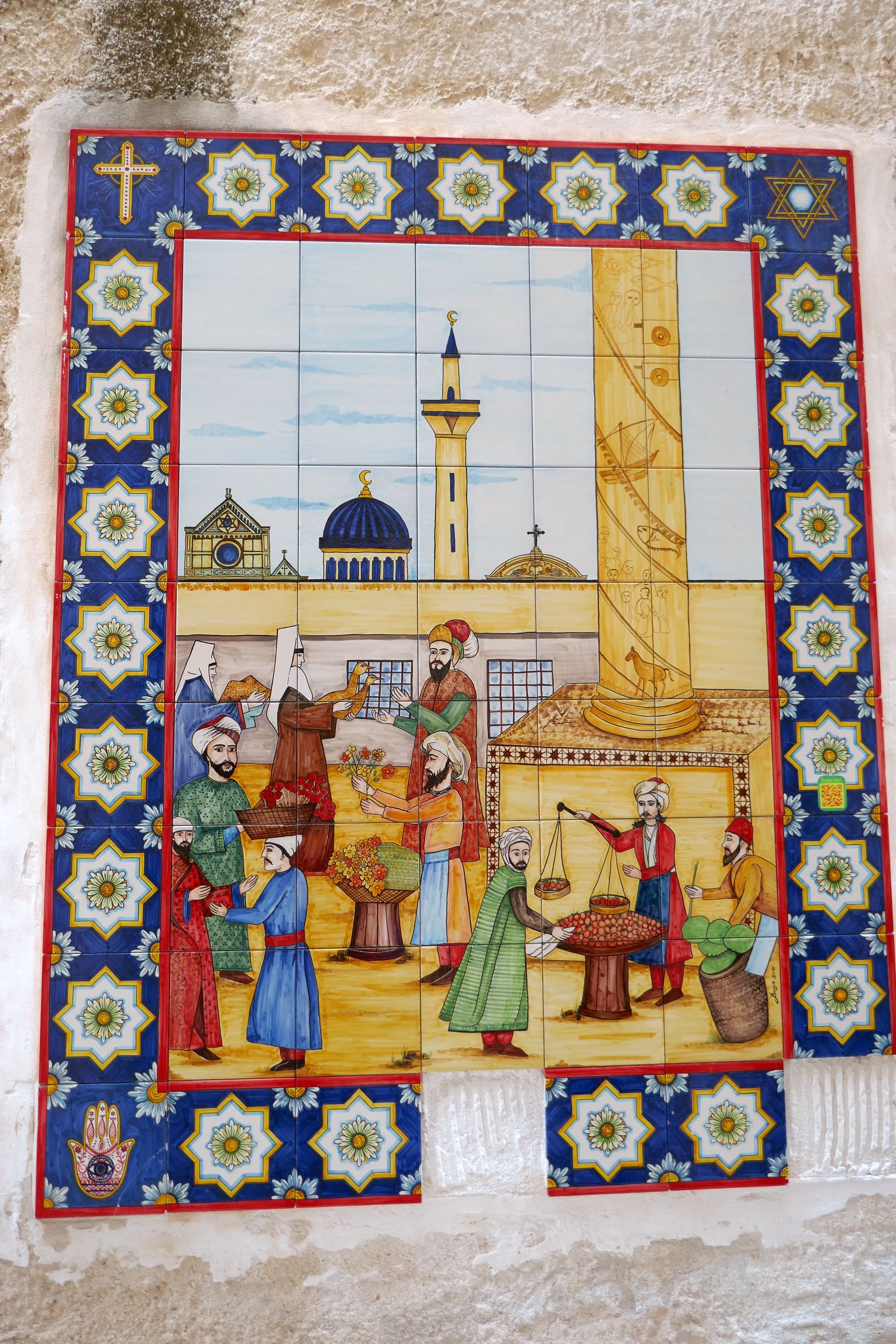
Currently, 3,000 of the 60,000 residents are Tunisian or other Maghreb Arabs, so the culture is a mix of Sicilian and Arab.  What makes it unique is the peaceful co-existence of Muslim and Christian Faiths.  Add to the historical mix the small Jewish communities that were established centuries ago, it could have been a recipe for disaster.  Instead, there has been religious tolerance in Mazara throughout history and they call themselves, “Citta della Pace” or “City of Peace.”  There is even one street where there was an active church, Jewish temple, and mosque all within steps of each other.

Mazara is an important fishing center of Italy, and the Muslims and Christians work well together with mutual respect, side-by-side, on fishing boats as well as in agriculture, and other industries.  That is unique in this crazy world!

Muslims pray five times a day, and there is no problem that the call of prayer is broadcasted throughout Mazara except in the historic Jewish Quarter.  (Actually, there aren’t many (if any) Jews in Mazara currently, because they were kicked out during the Spanish Inquisition.  There is a small Jewish community in Palermo, however.)

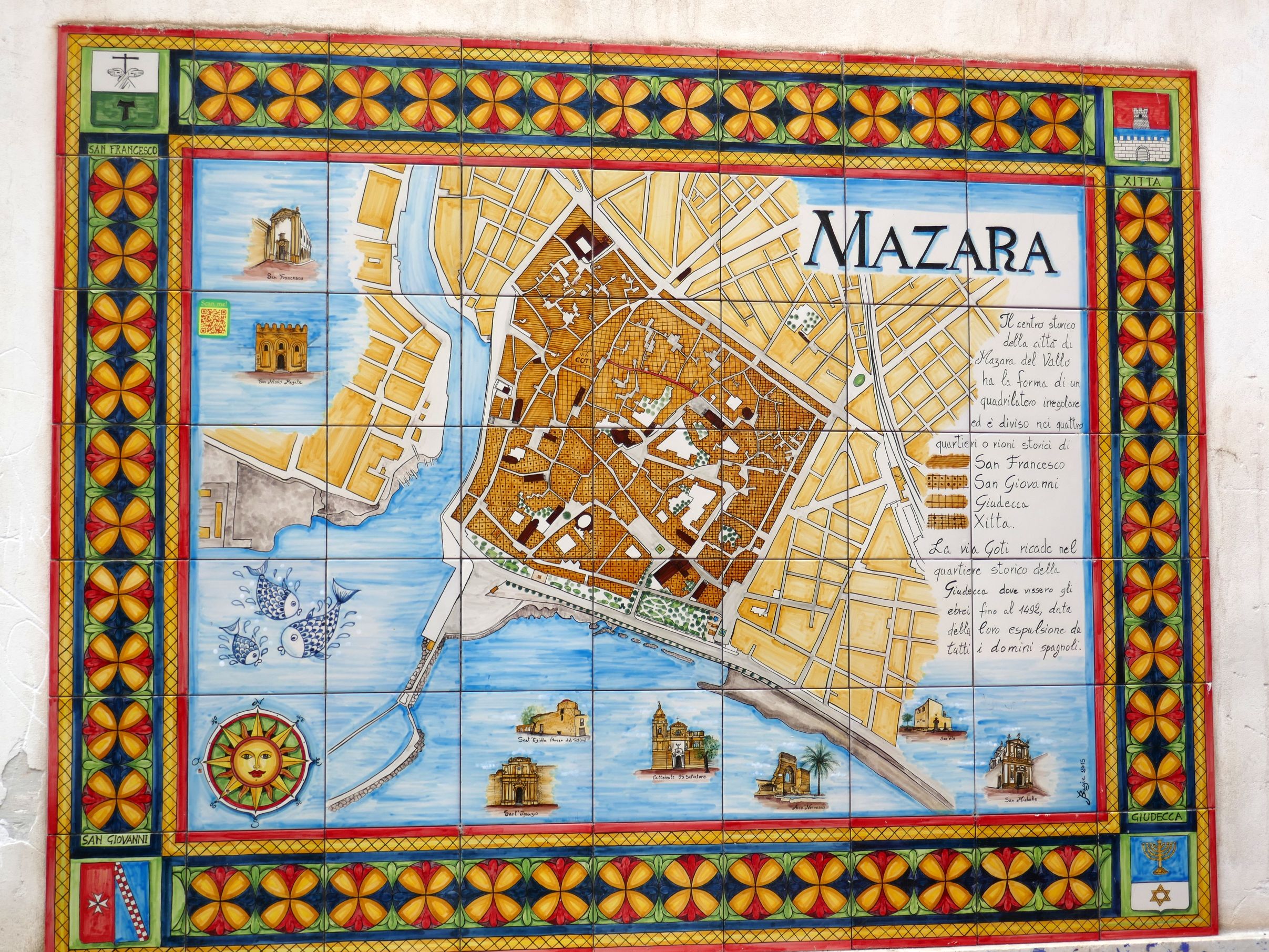
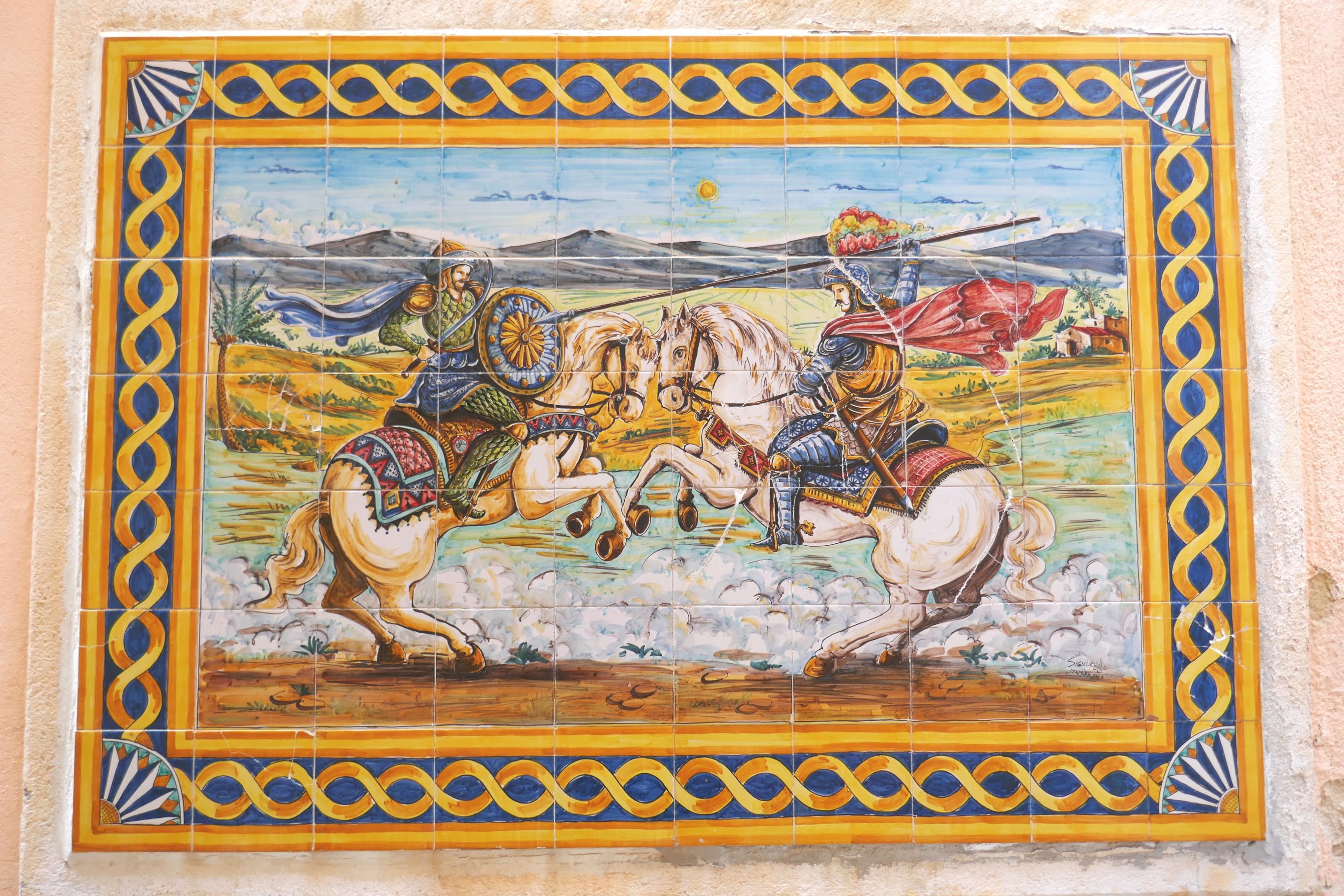
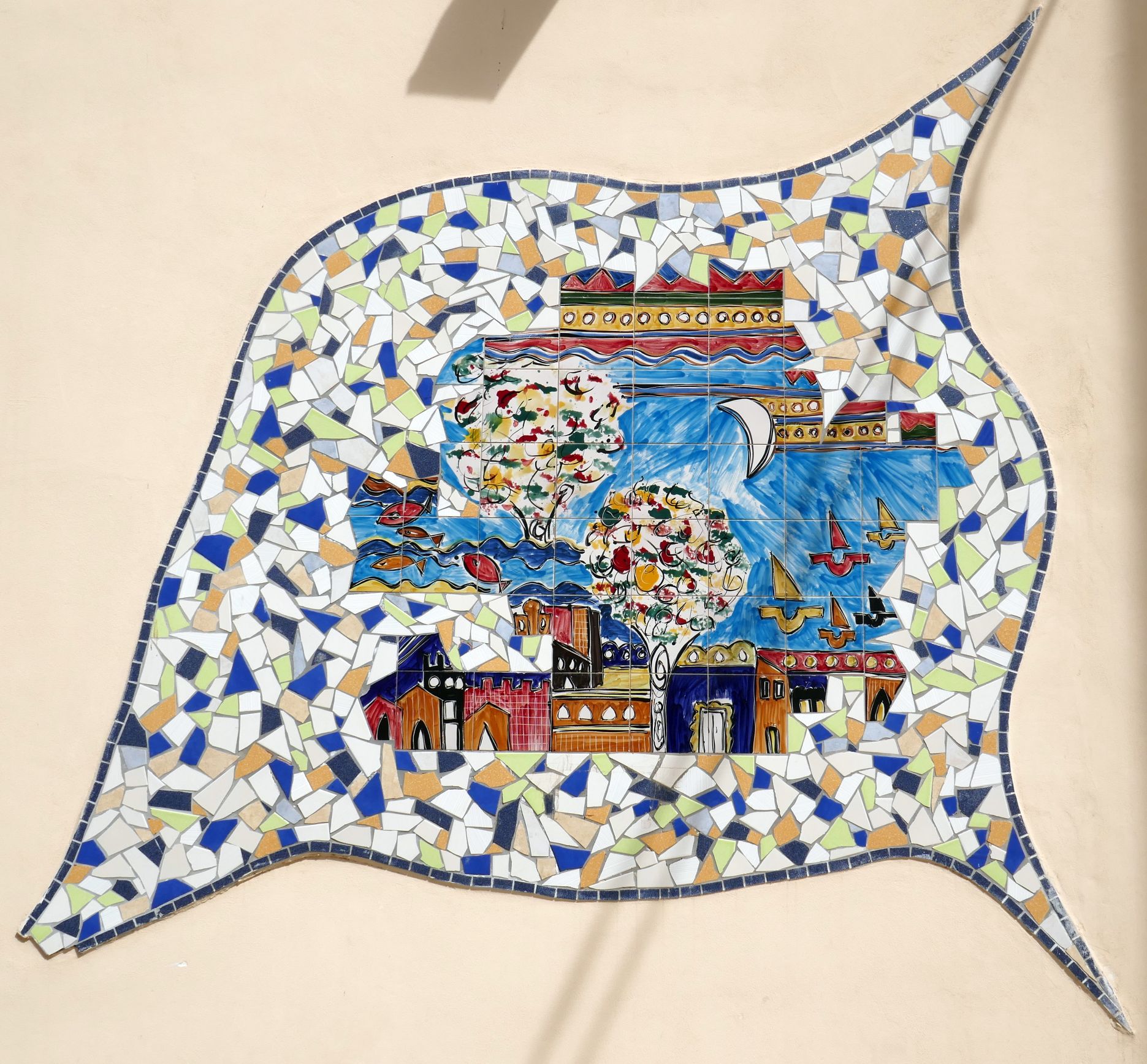
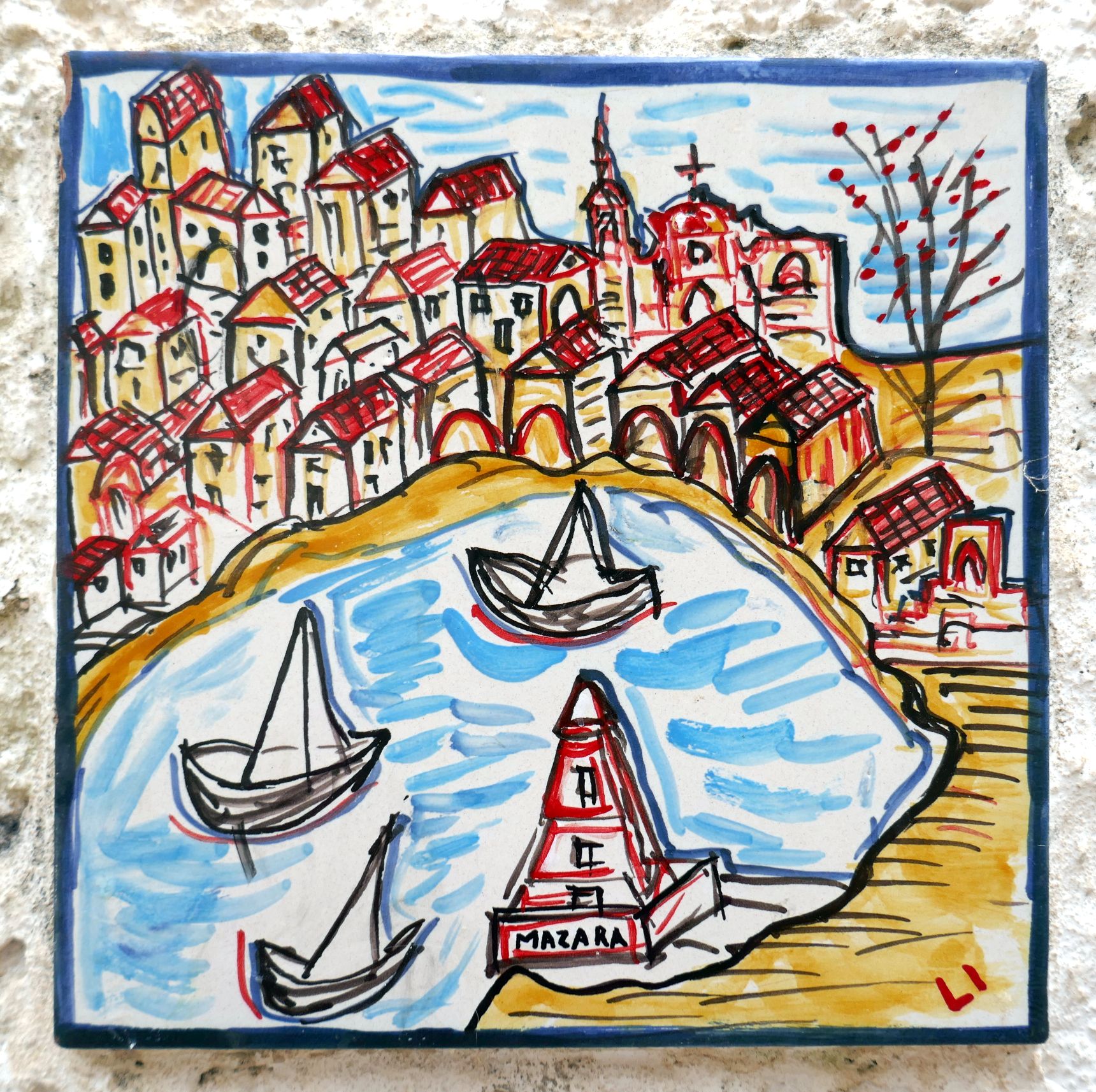
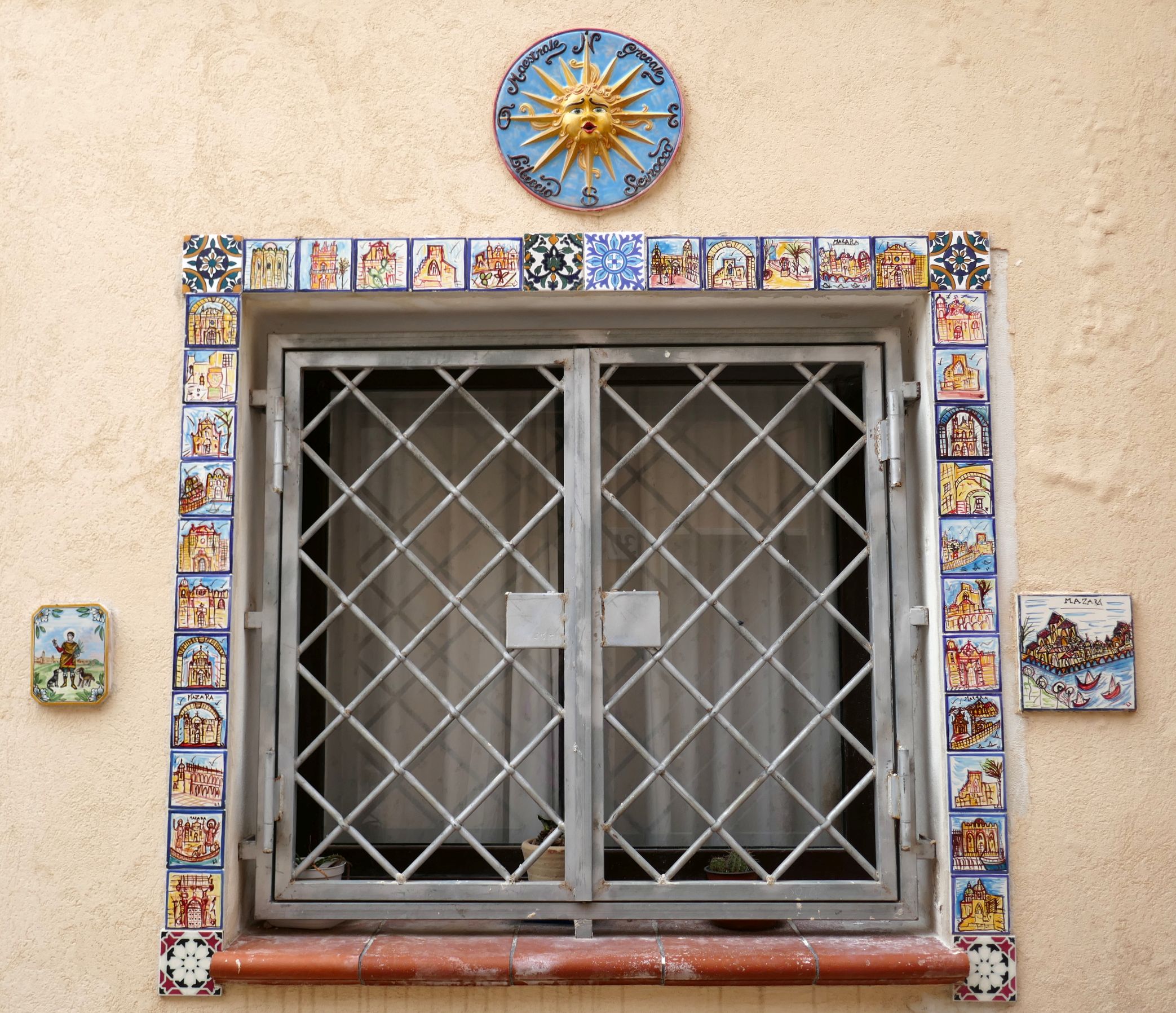
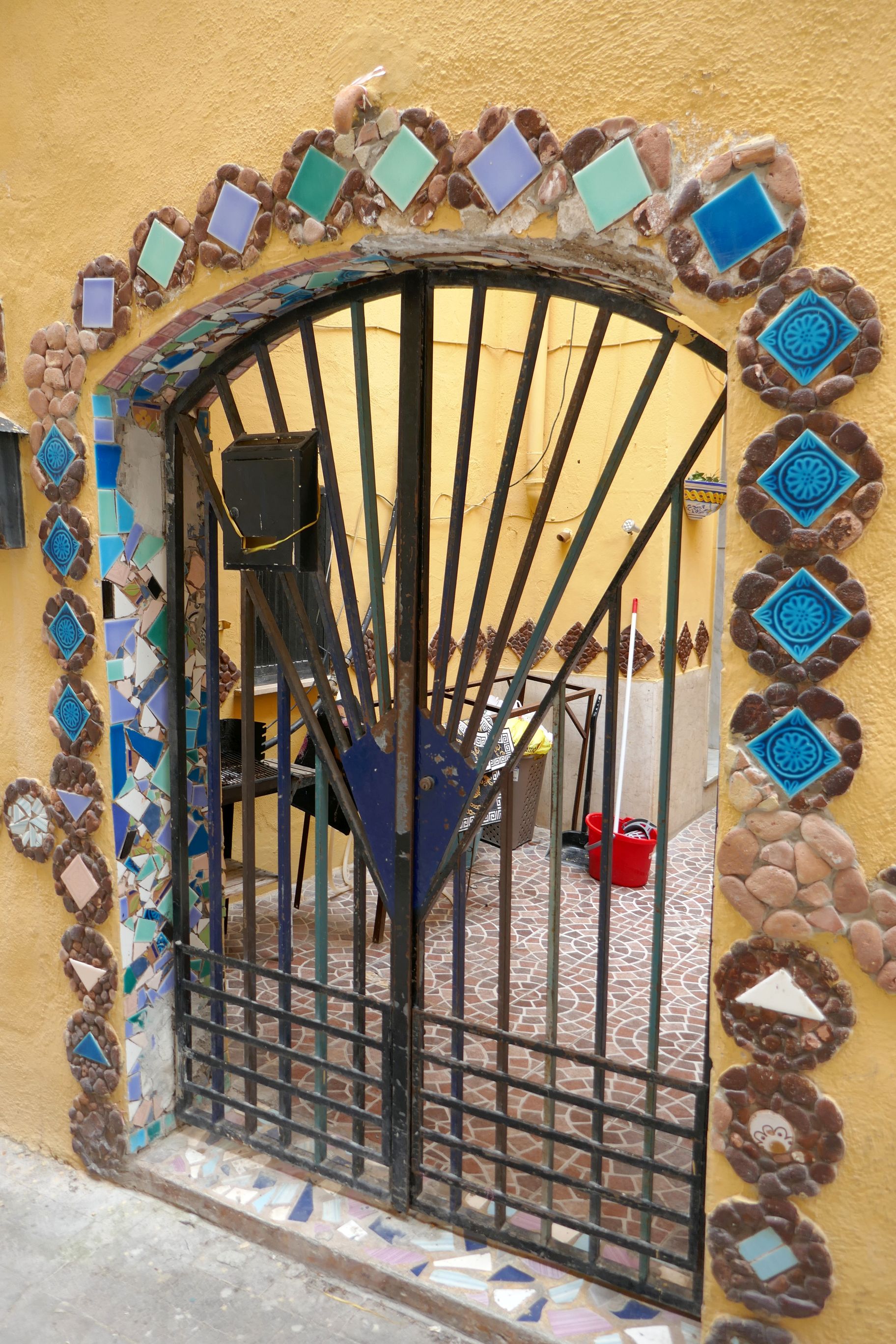
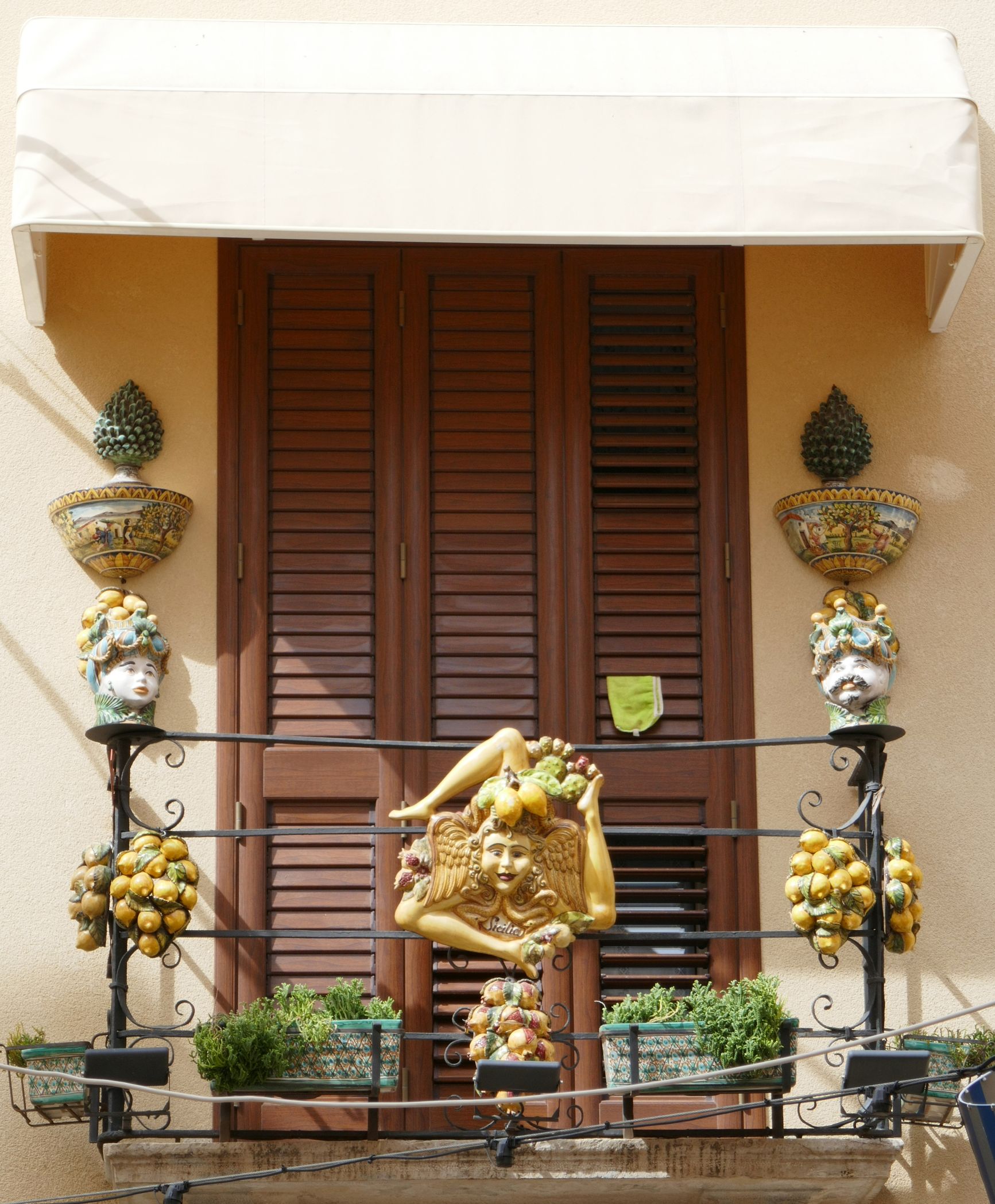
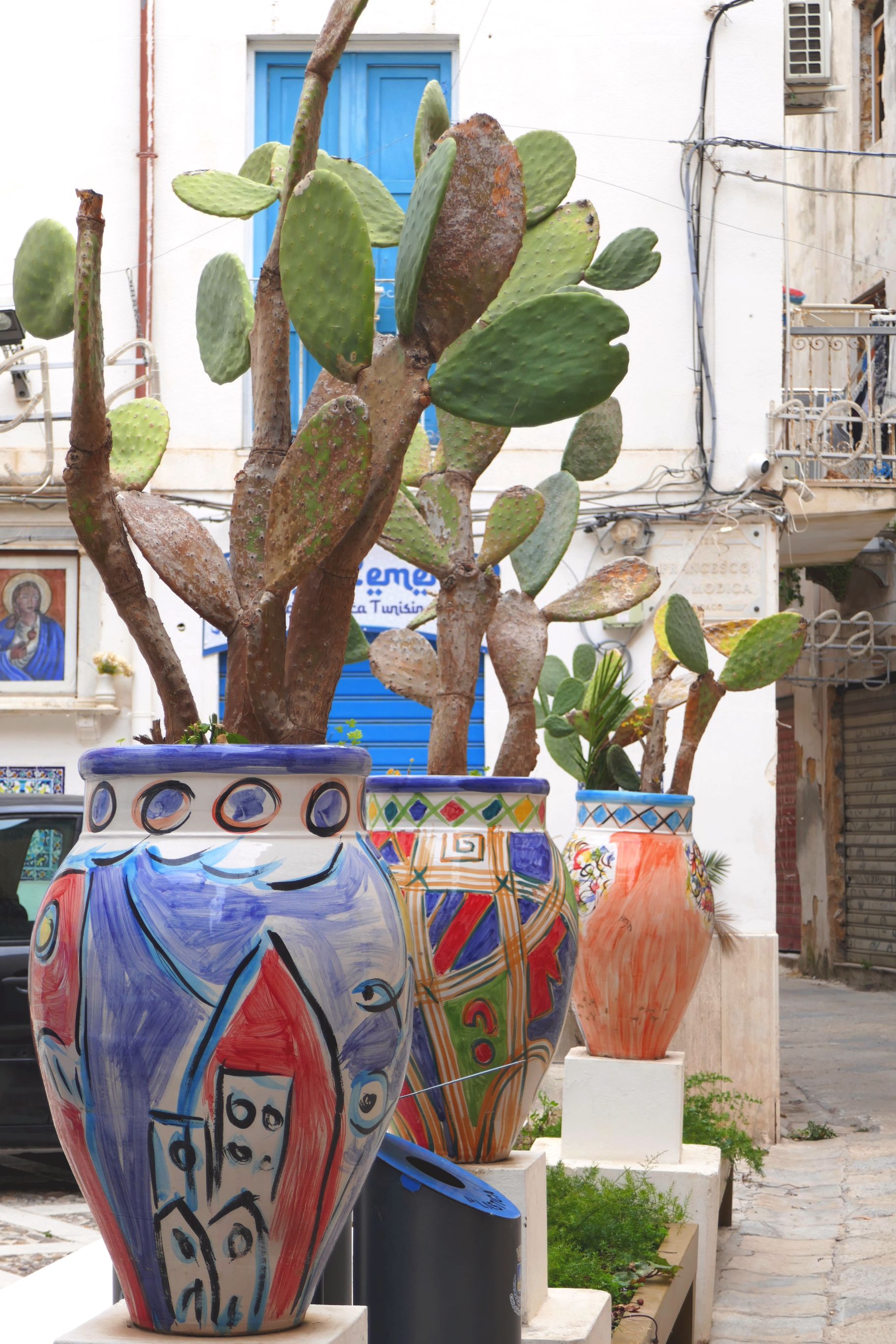
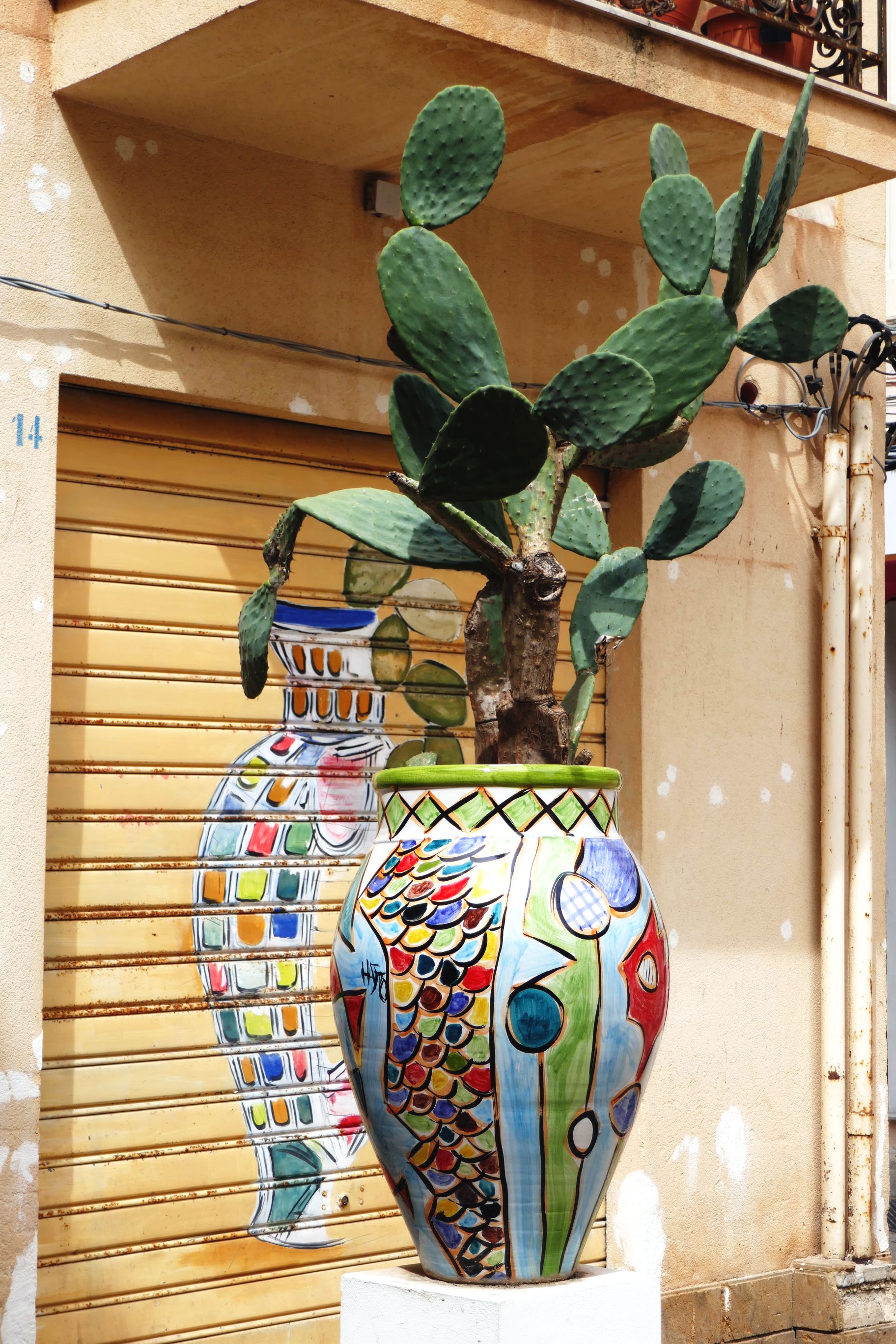
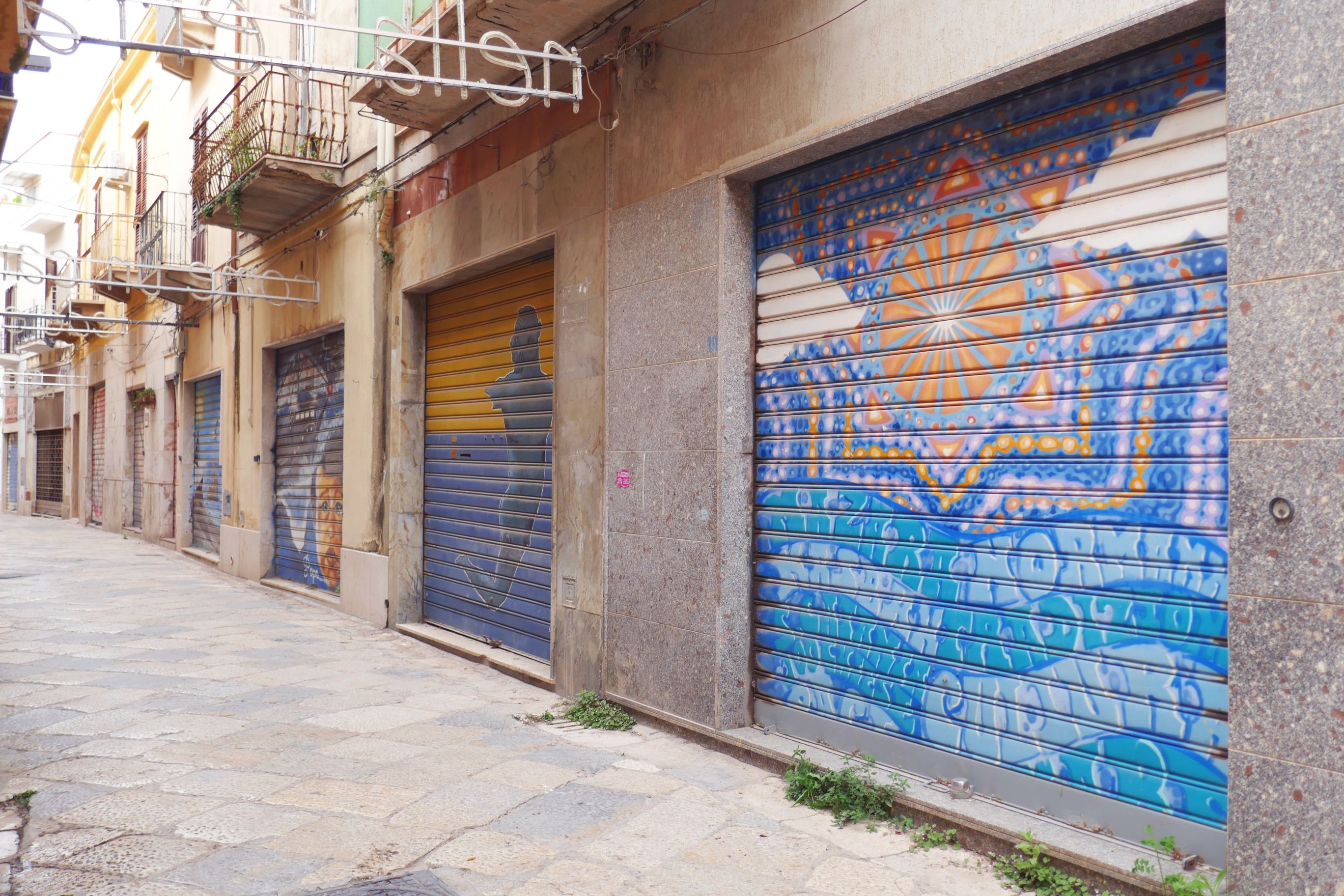
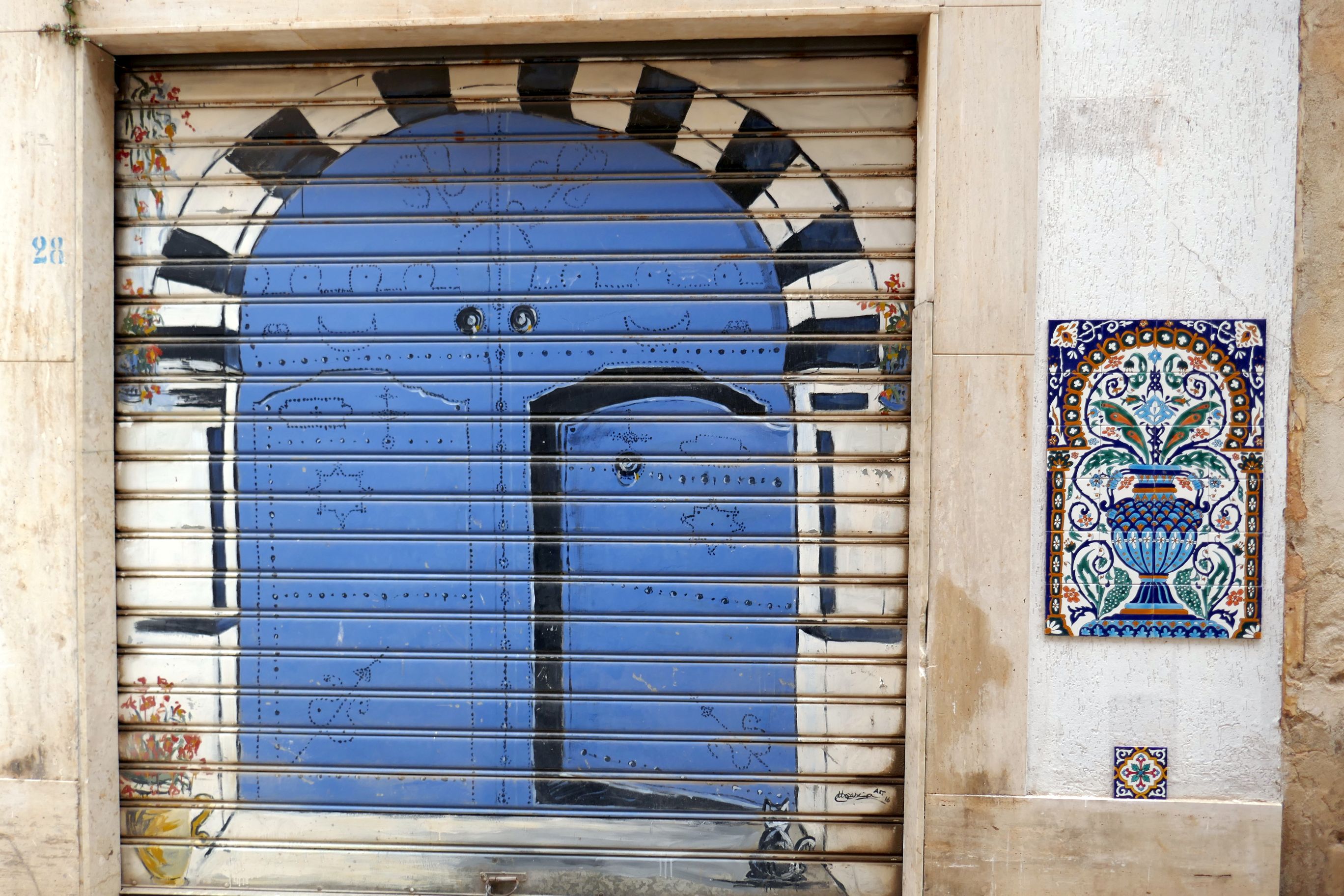
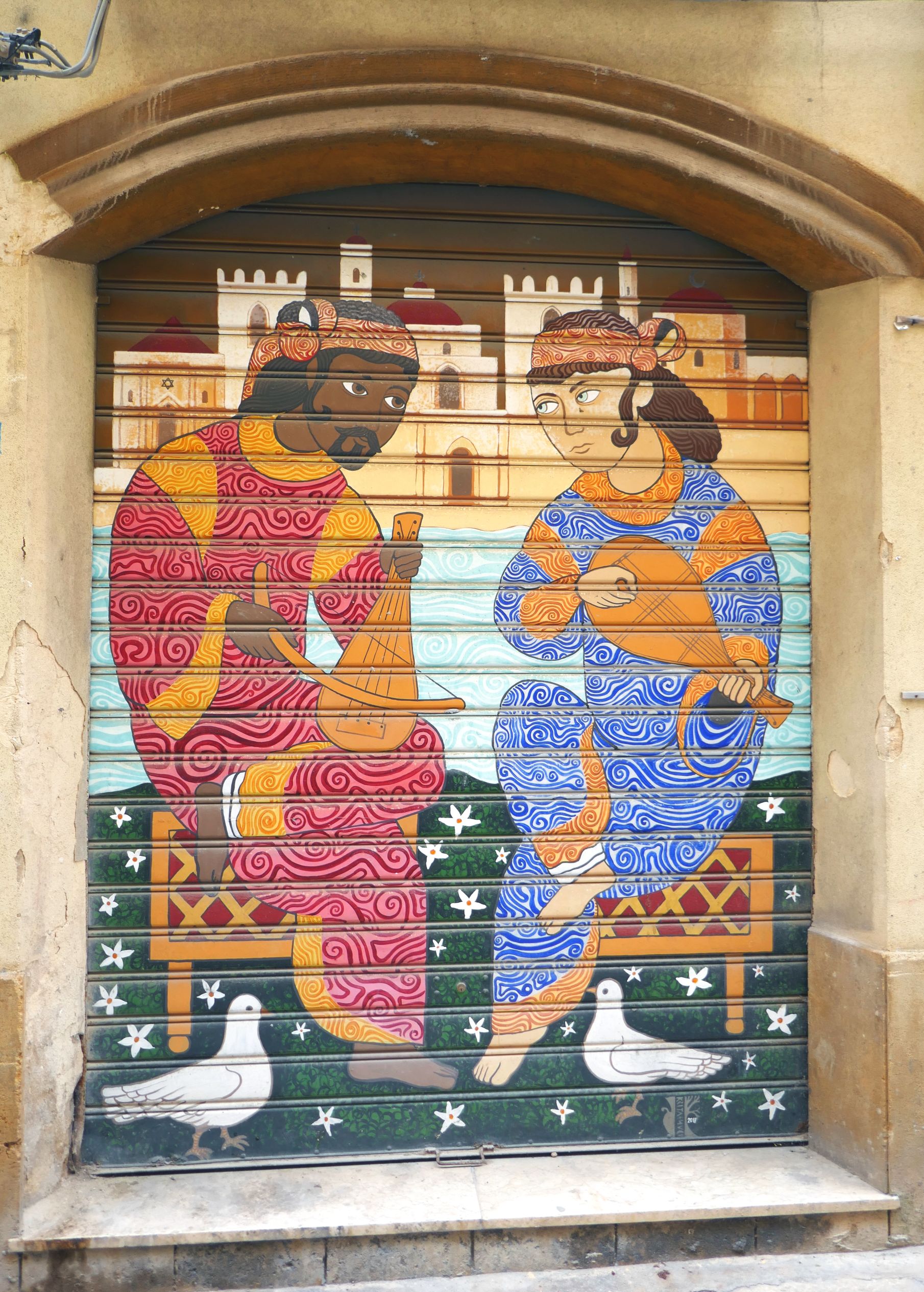
The Kasbah of Mazara is also unique in that its streets are full of colorful wall tiles and tile murals, garage door murals, and pottery.  I was captivated by it all, so I couldn’t stop shooting photos during our walking tour!  I hope you enjoy…

(For all photos, click on the image for a full screen view.)

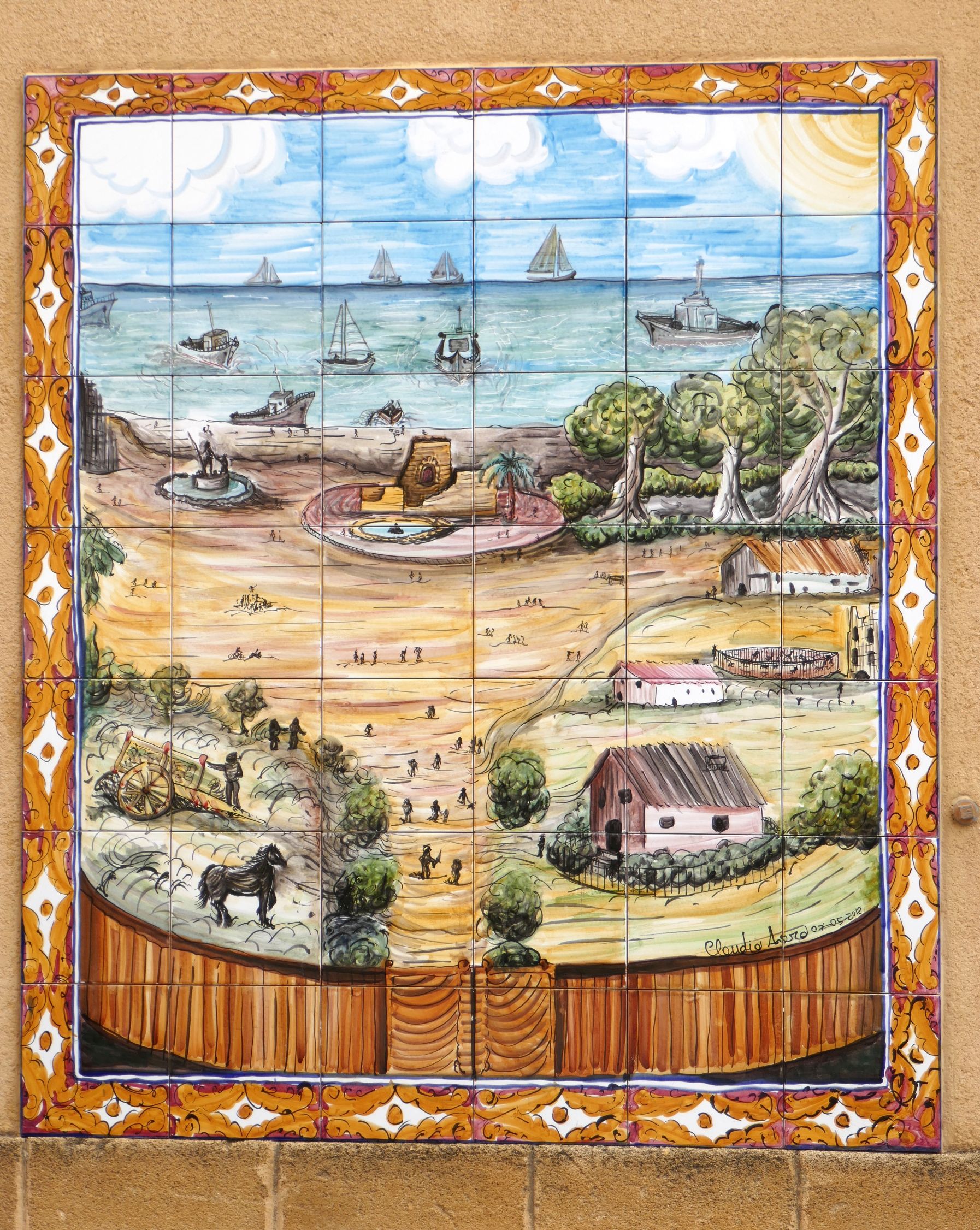
Tiles are missing, but the story of this mural is powerful, because it depicts the Jewish temple, Muslim mosque, and Christian church side-by-side as well as Mazara’s mix of people.
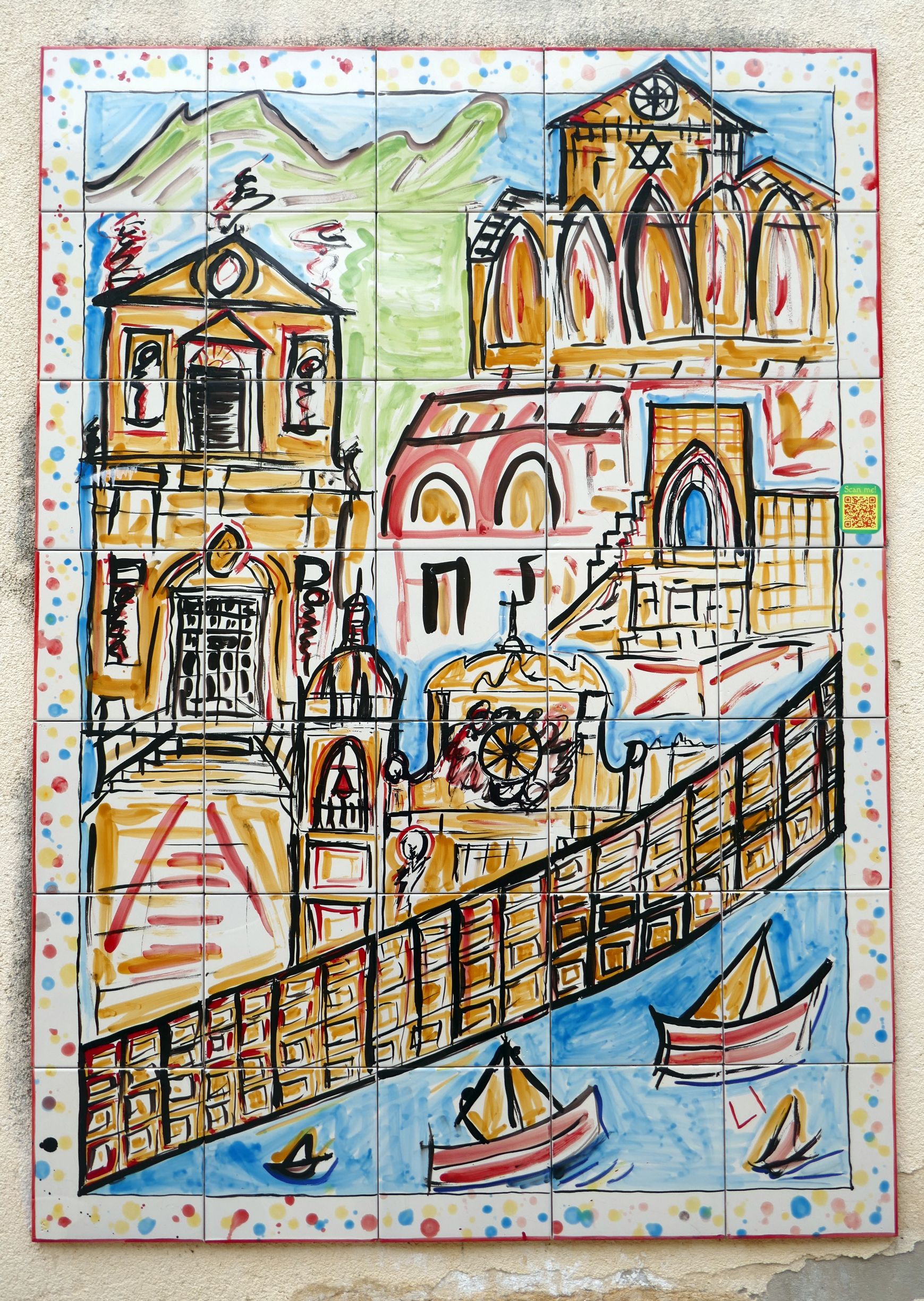
A different take on the same idea.

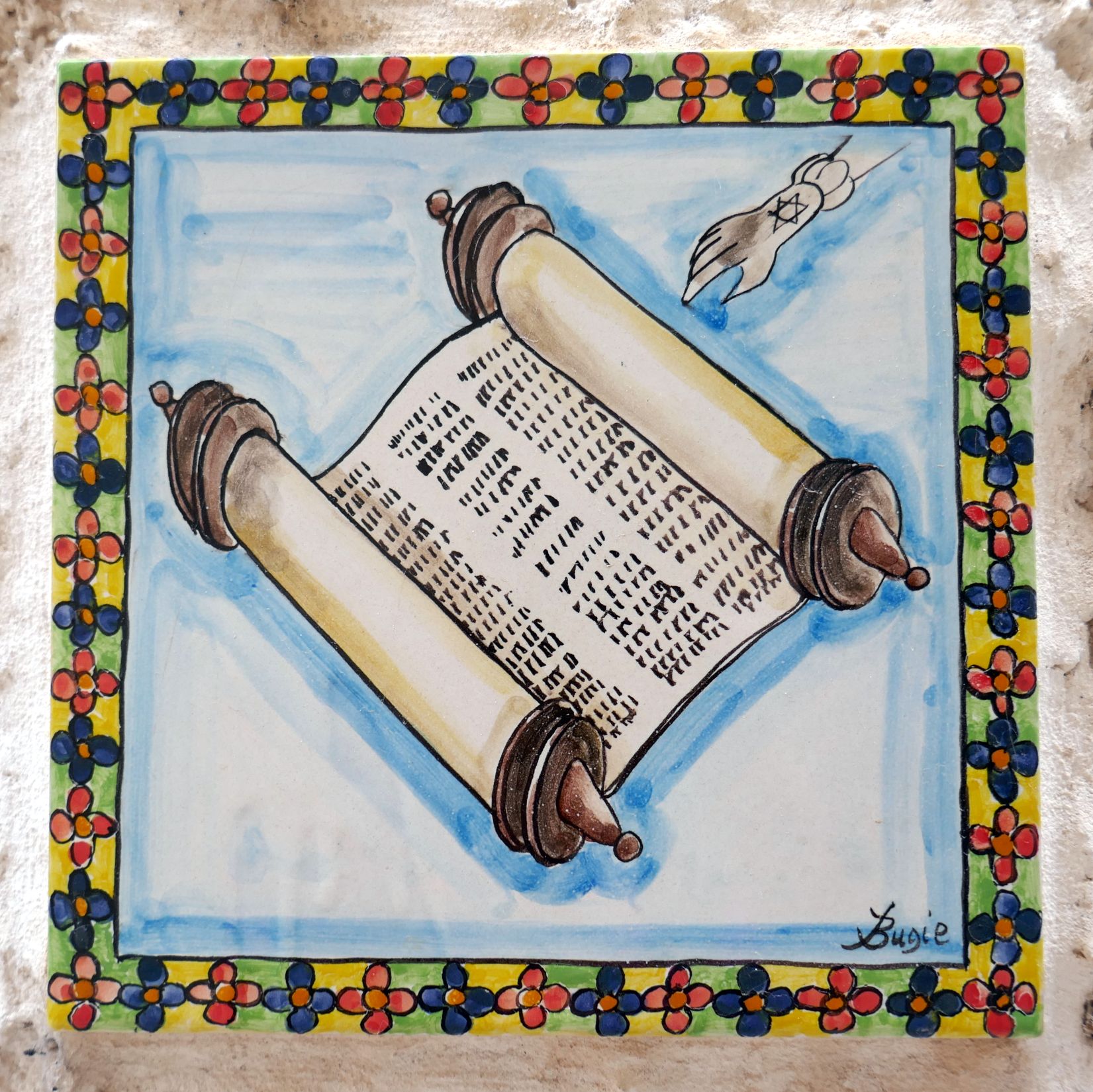
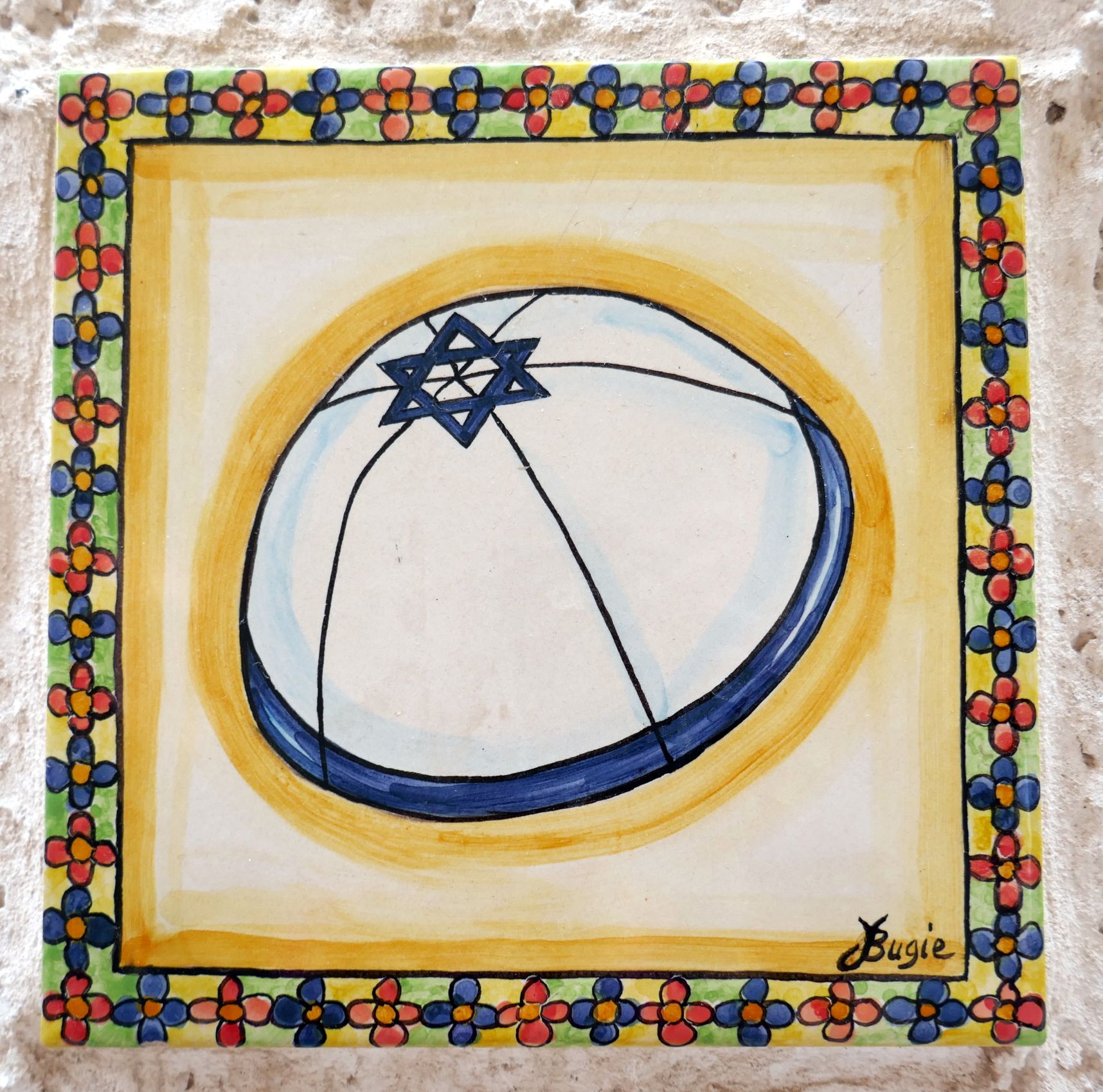
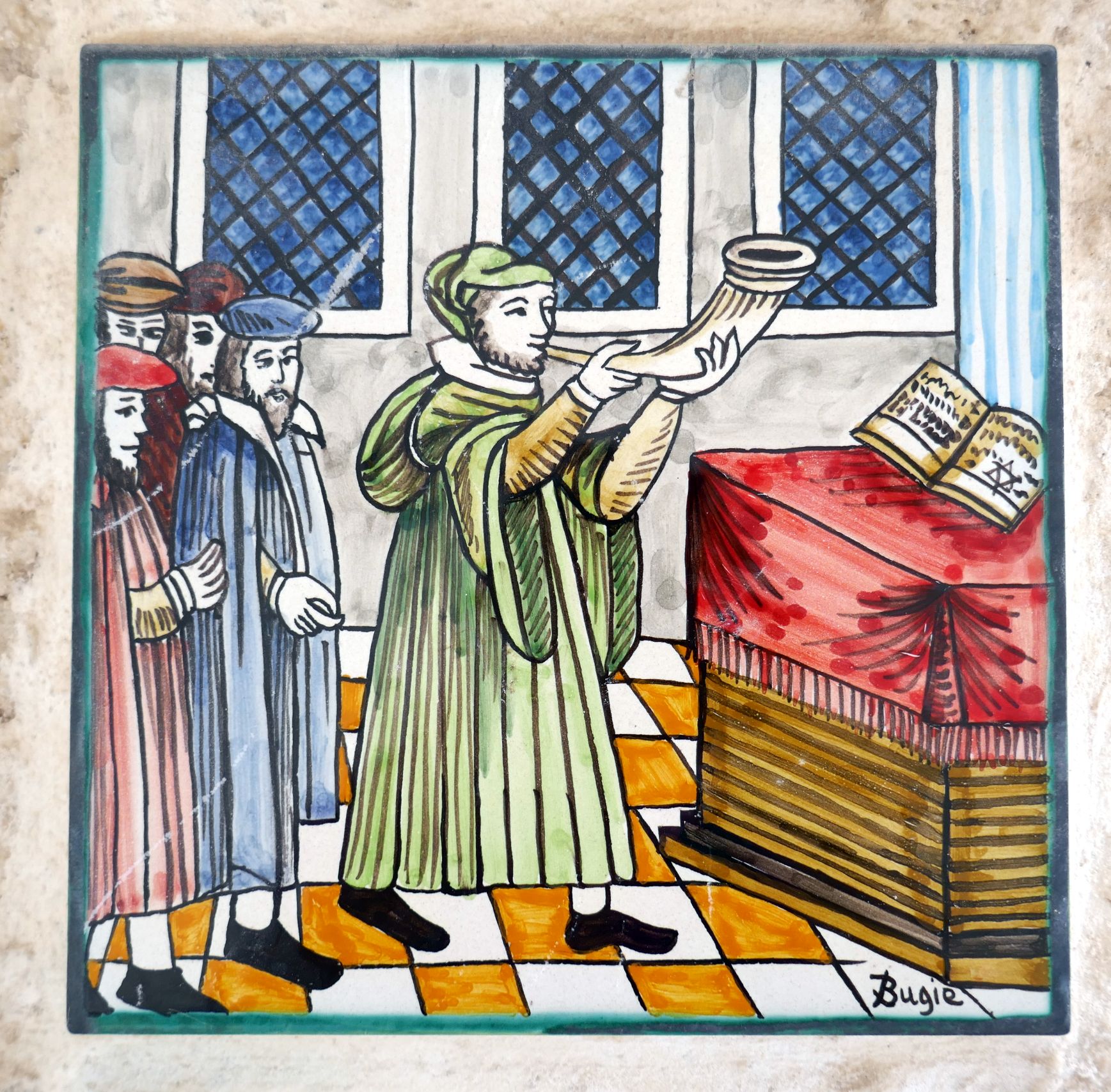
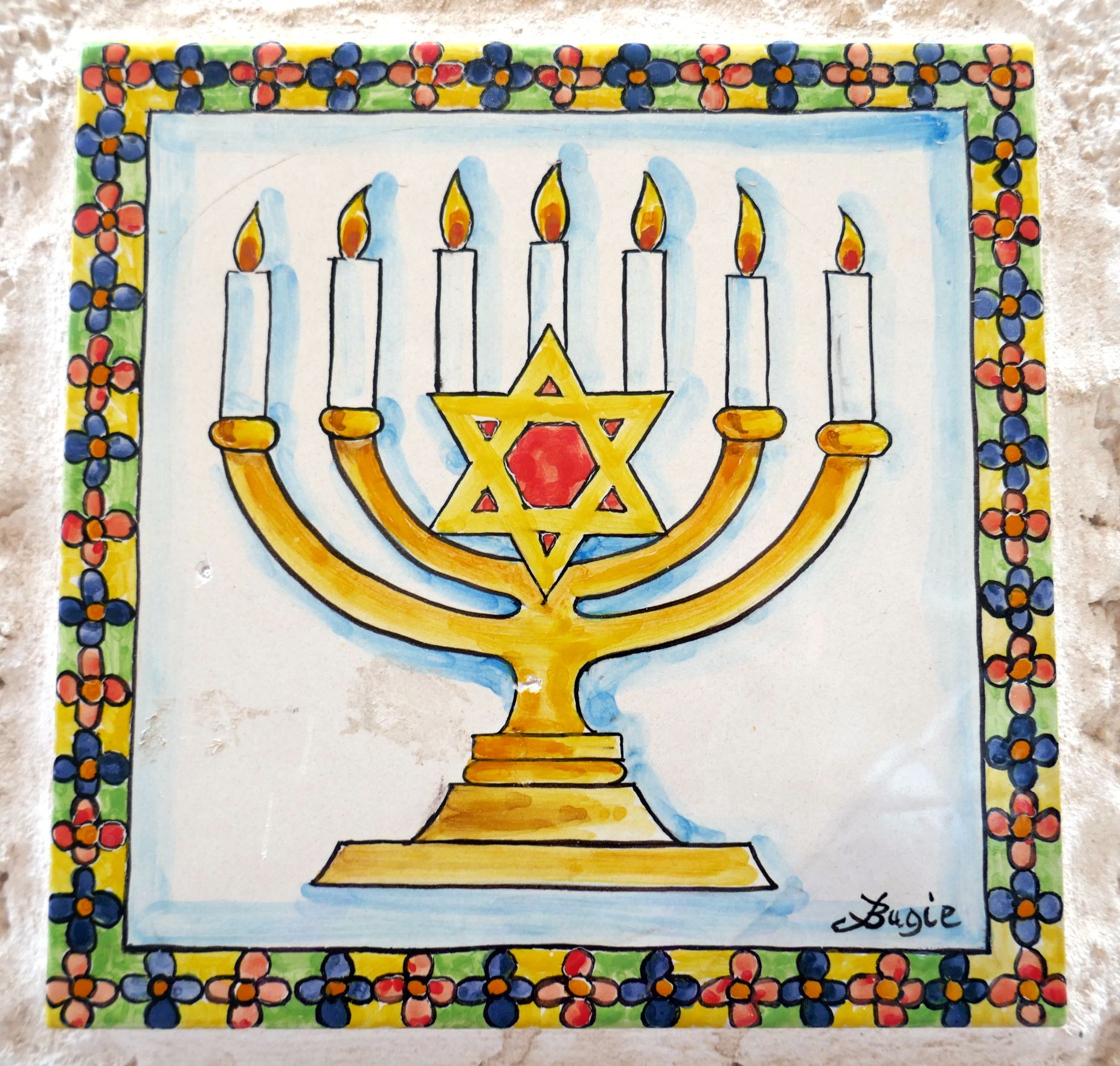
These are tiles on the walls of the historic Jewish Quarter, depicting symbols of Judiasm.

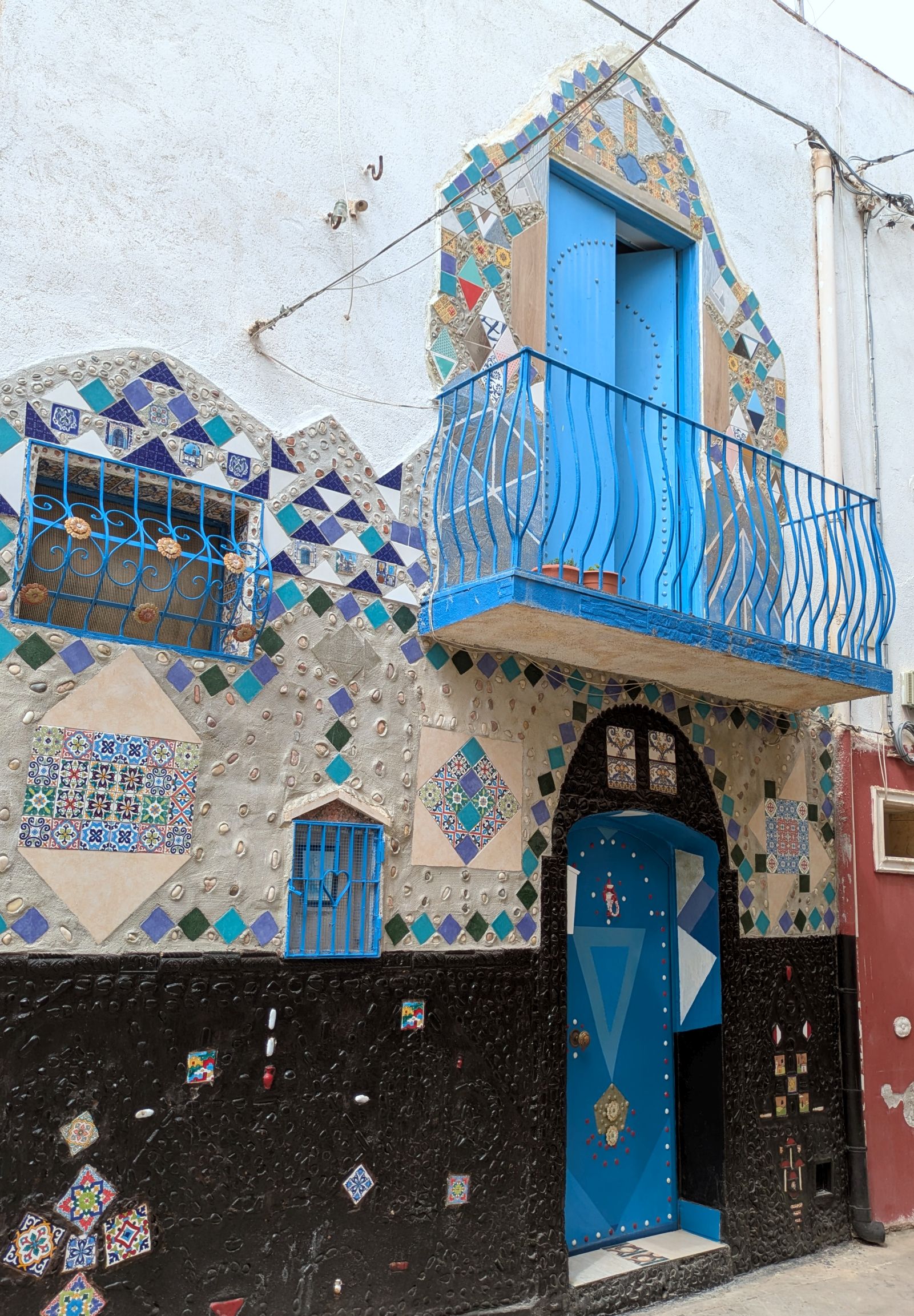
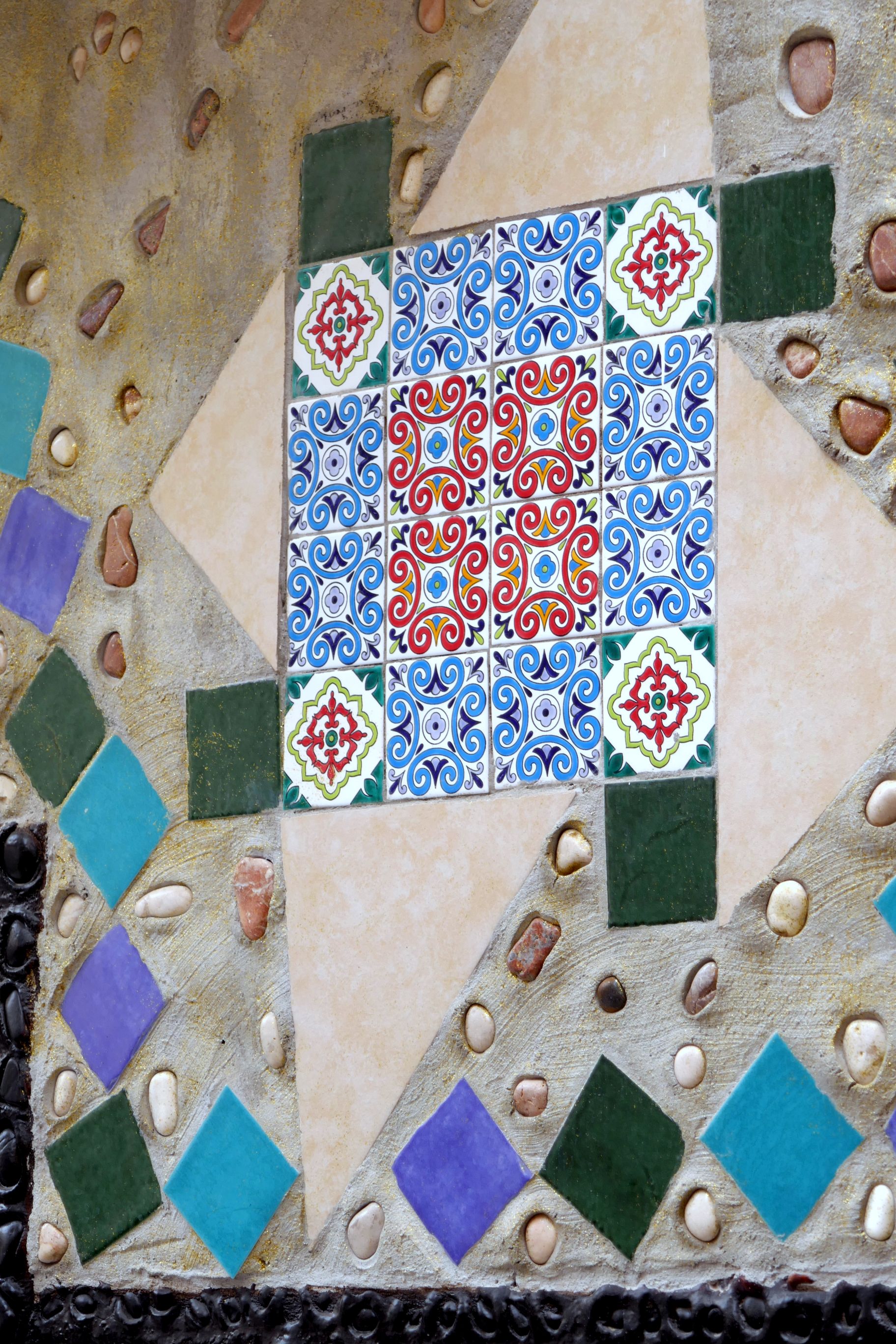
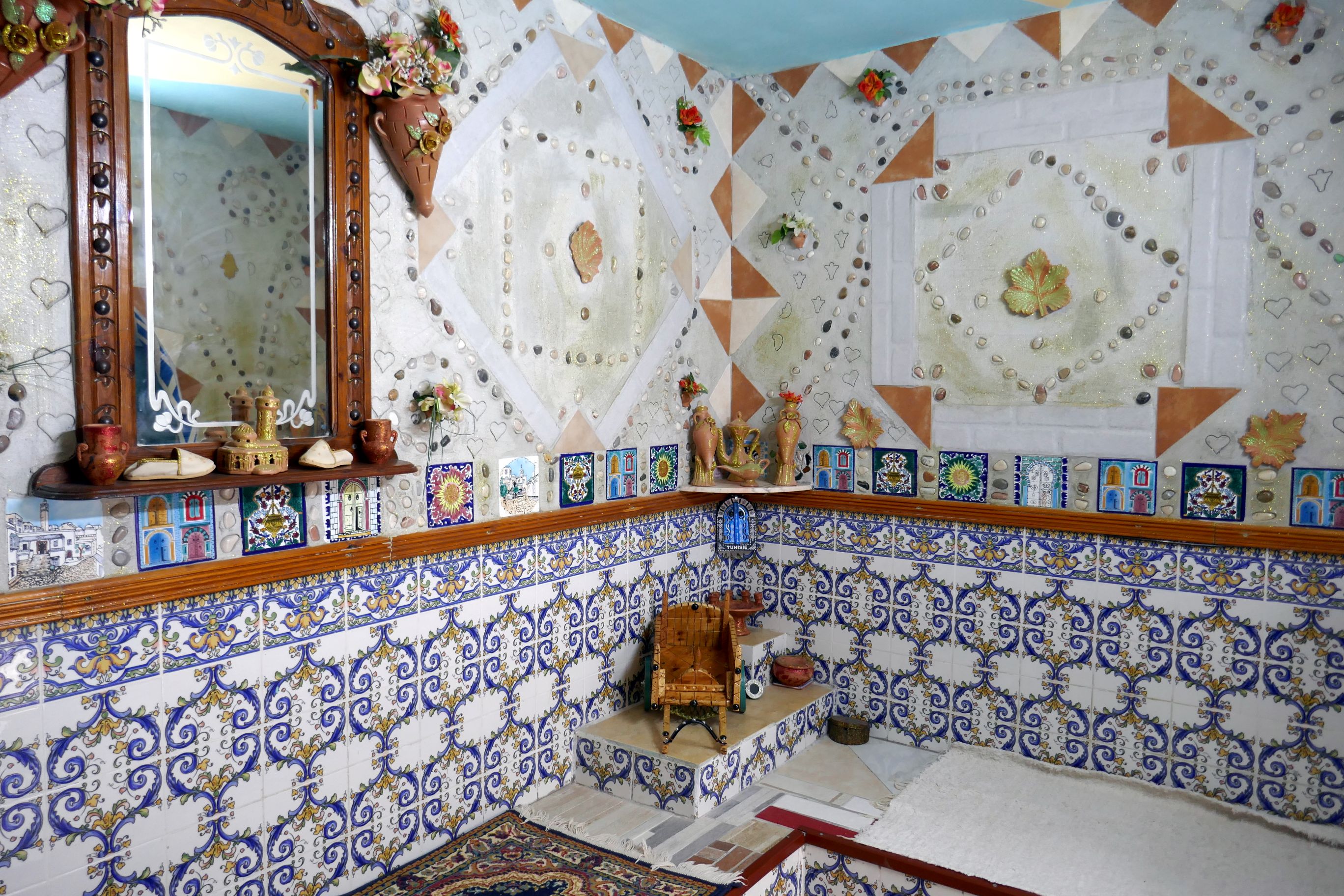
The gentleman who owns this home did all the tile and artwork himself. He graciously welcomed us into his home for a tour.

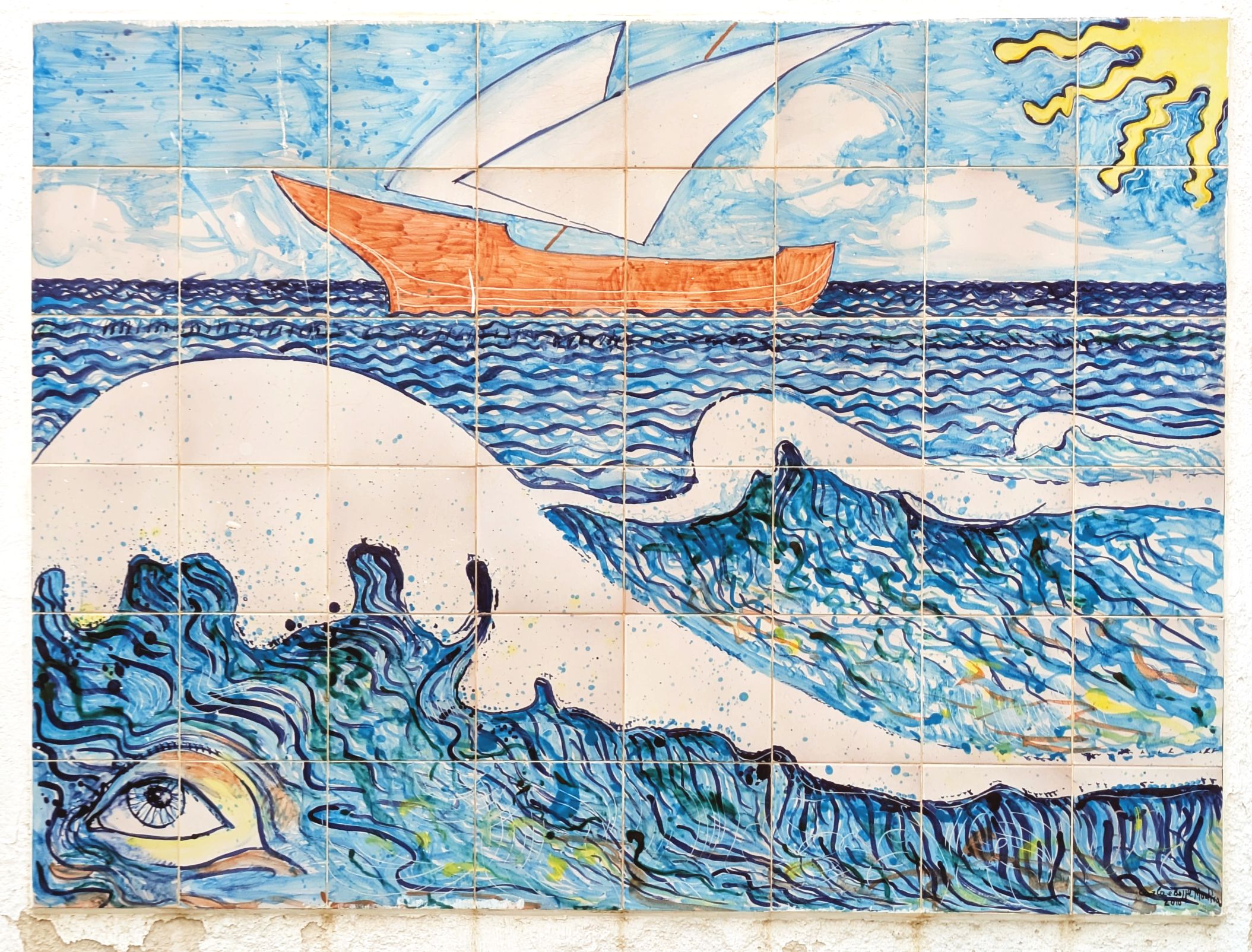
These garage door murals were all entered in a contest:

This mural won the contest. This little boy’s father was a fisherman on this boat and died in a storm.

Next up: SICILY & AMALFI COAST #9: MORE MAZARA

ARGENTINA & CHILE #11: PHOTOGENIC PENGUINS AT PUNIHUIL

While visiting Chiloe Island, we had seen a few of the 16 wooden churches designated by UNESCO as World Heritage Sites.  On the way to Punihuil Wildlife Preserve, we stopped by the Museum of the Churches of Chiloe to learn about how these churches had been restored.

(For all photos, especially panoramas, click on the image for a full screen view.)

Next, we were off to see the penguins!  And, yes, it was another gorgeous, sunny, calm day—perfect weather for a boat ride!  Mother Nature sure was kind to us throughout our travels!

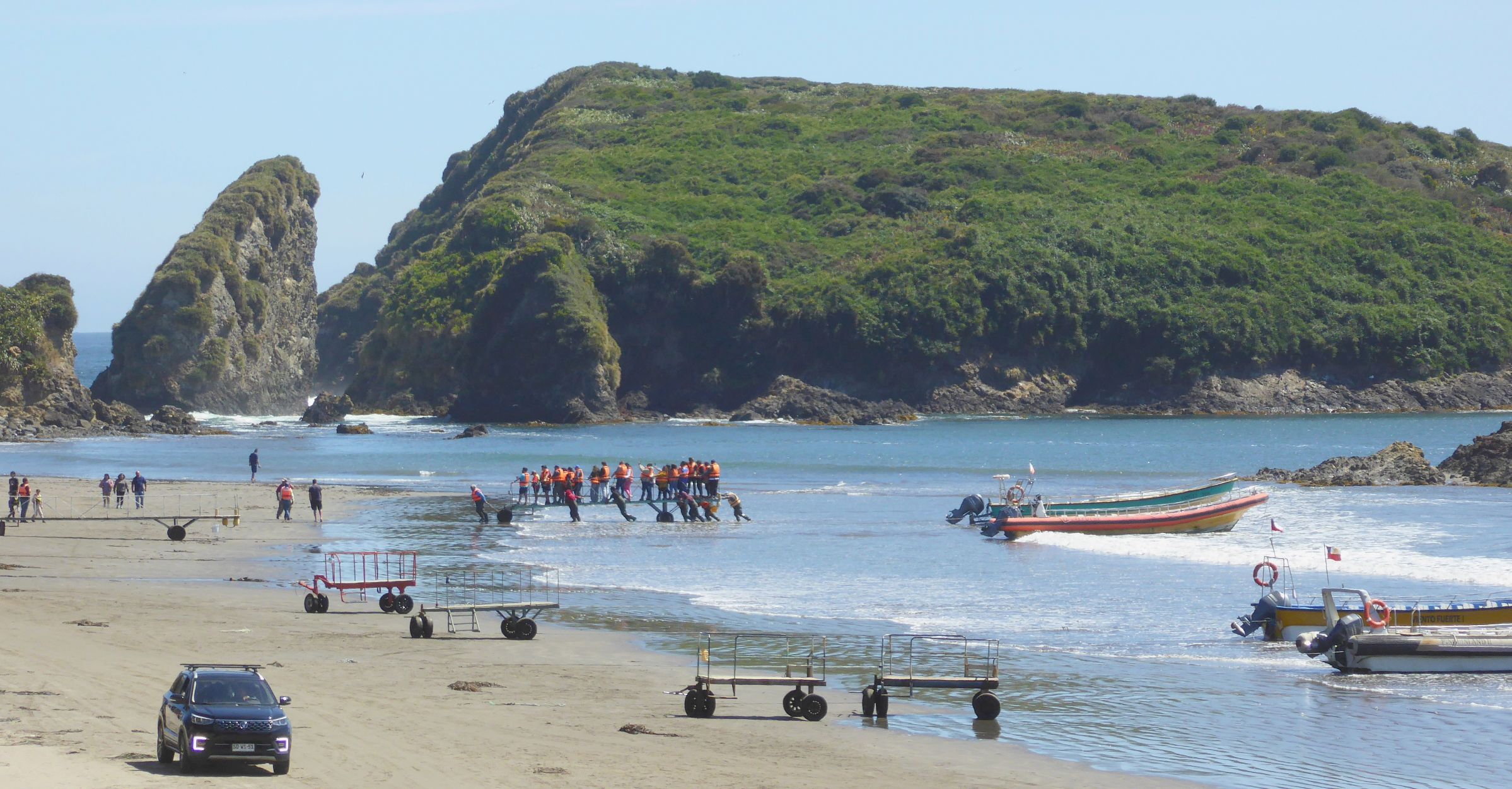
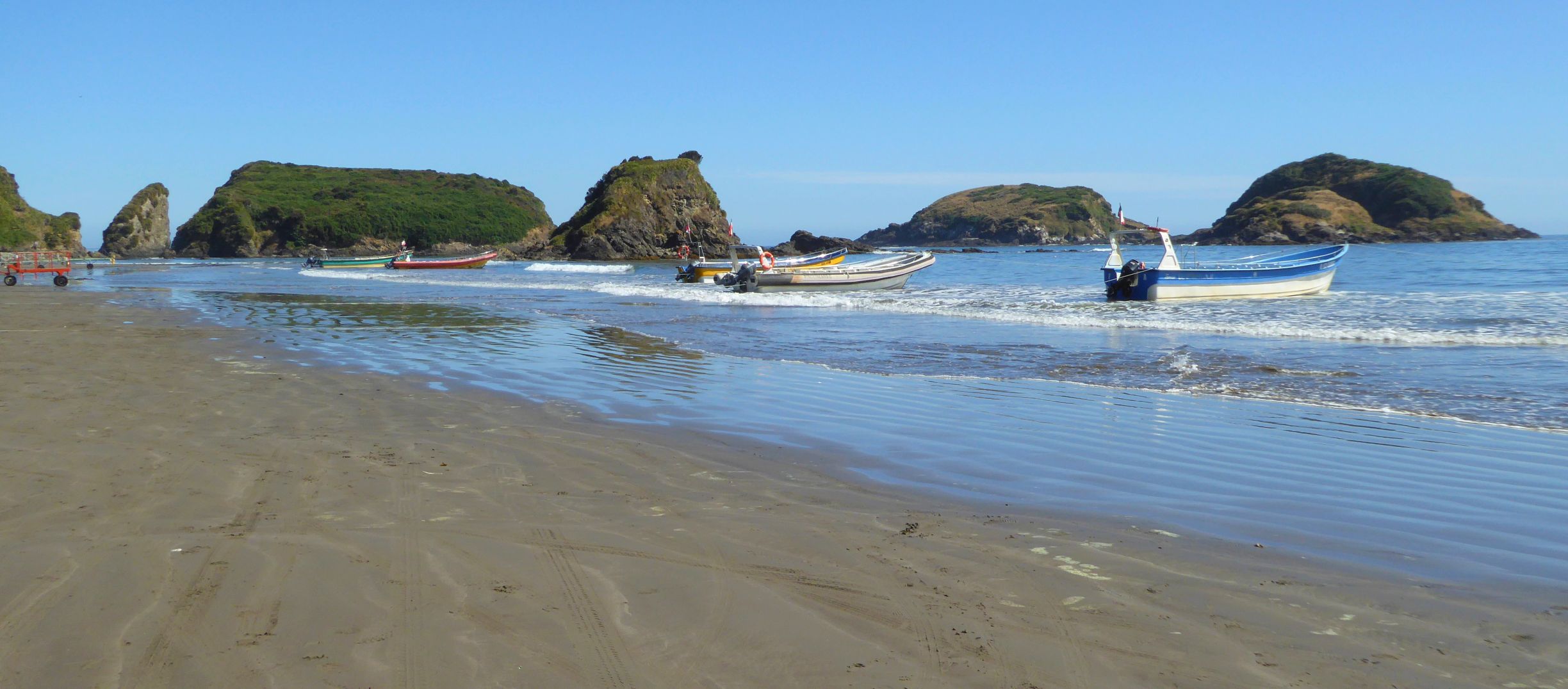
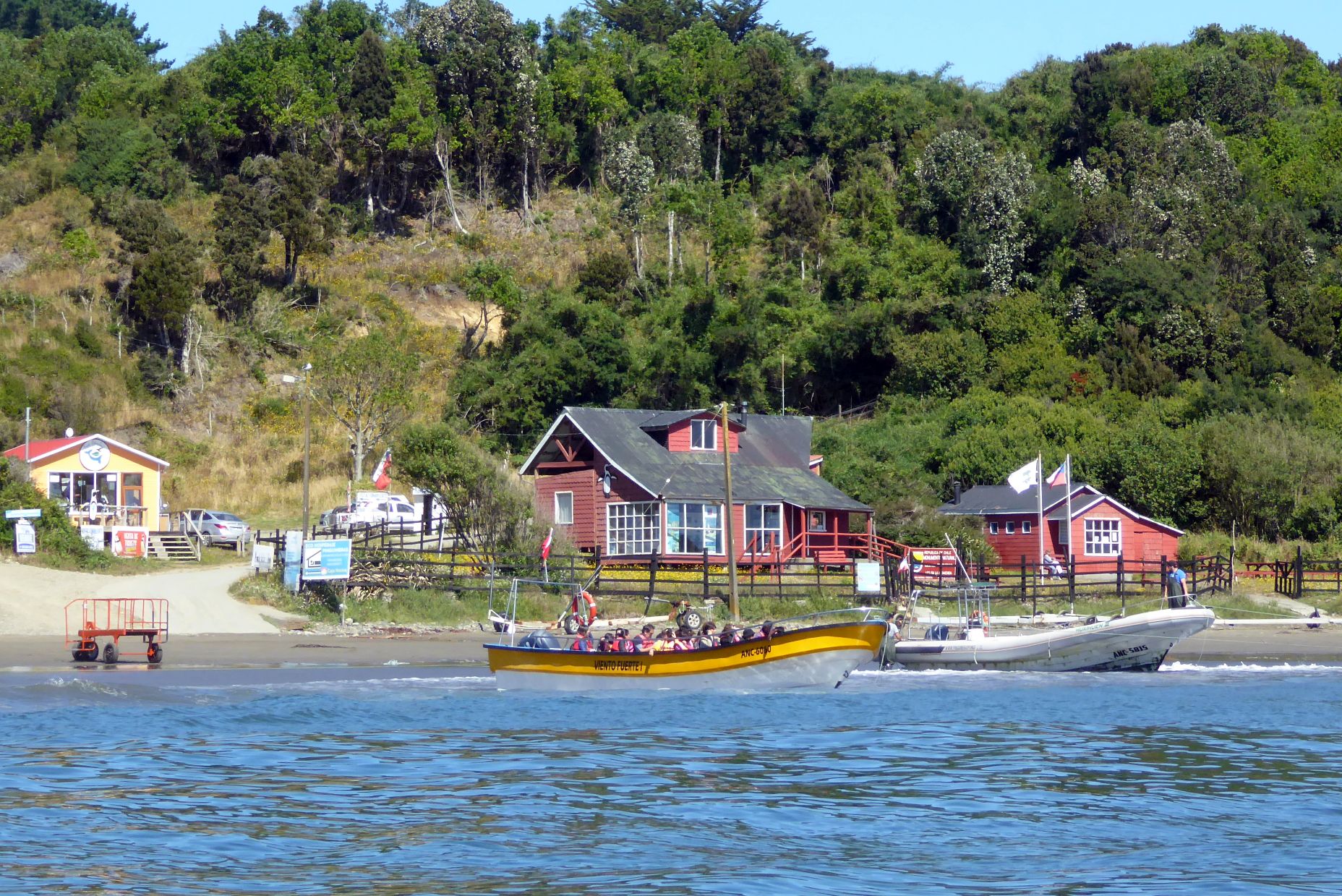
When we arrived at the boat launch, I was surprised to see that vehicles were permitted on the beach.  We drove right up to the site, collected our life jackets, and boarded a cart that was pushed down the shoreline directly to the boat.  No wet shoes on this boat trip!  I had never seen anything like it.

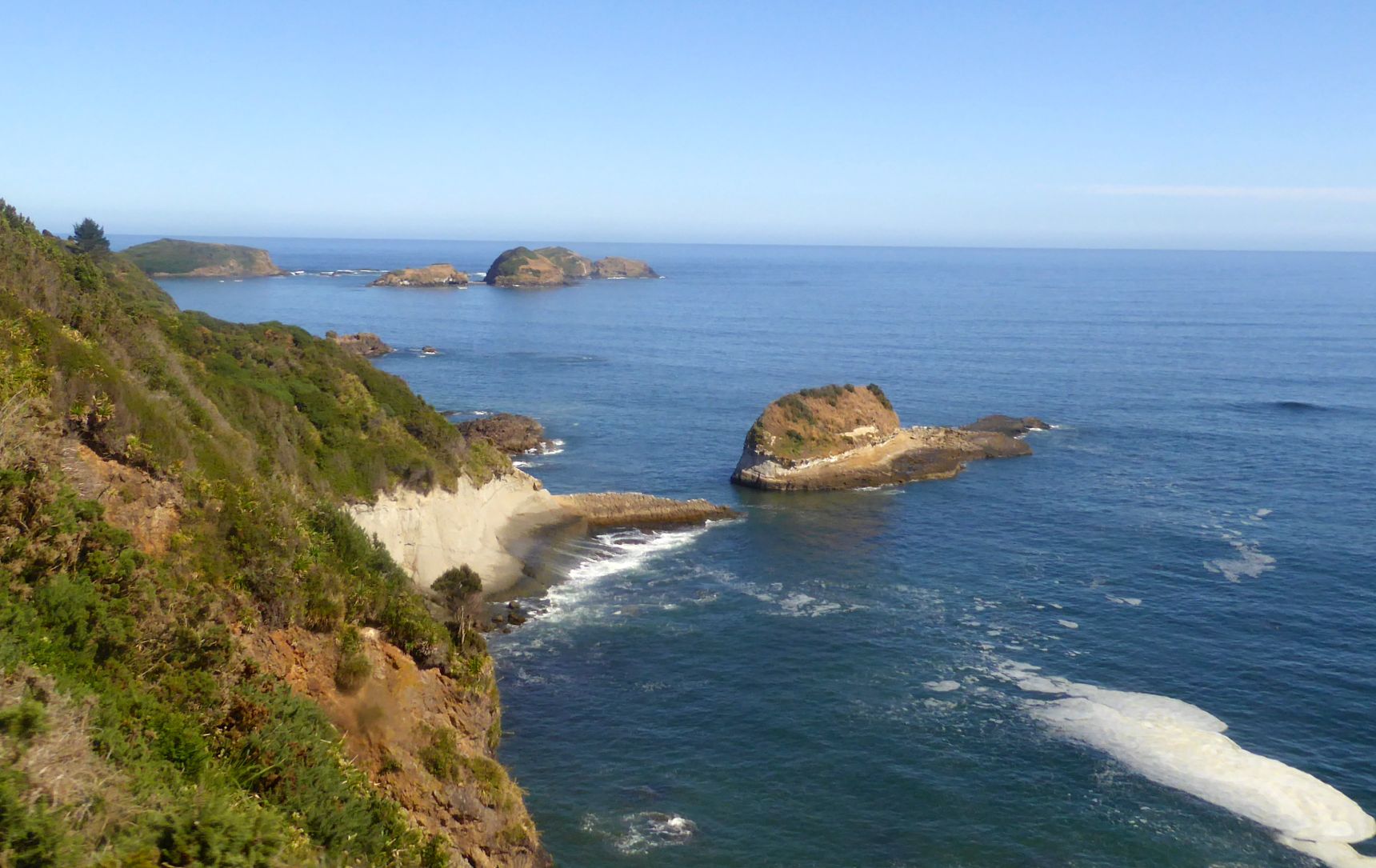
Punihuil Wildlife Preserve is comprised of three rocky islets off the coast declared a National Monument to protect the breeding colony of Humboldt and Magellanic penguins.  The best time to visit is October thru mid-March, so we were fortunate to see the penguins before they ventured back out to sea. 

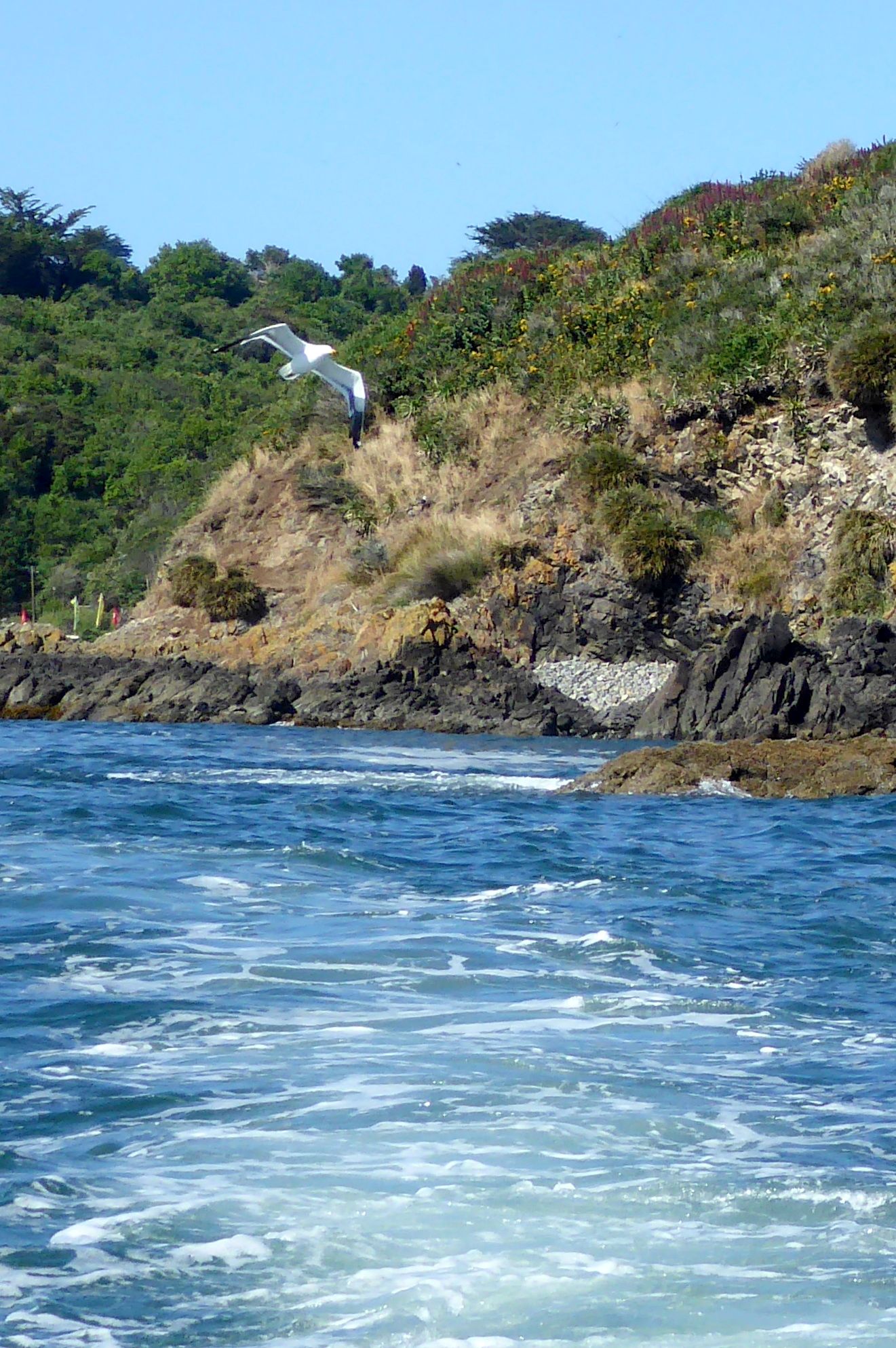
On our way out to the preserve.

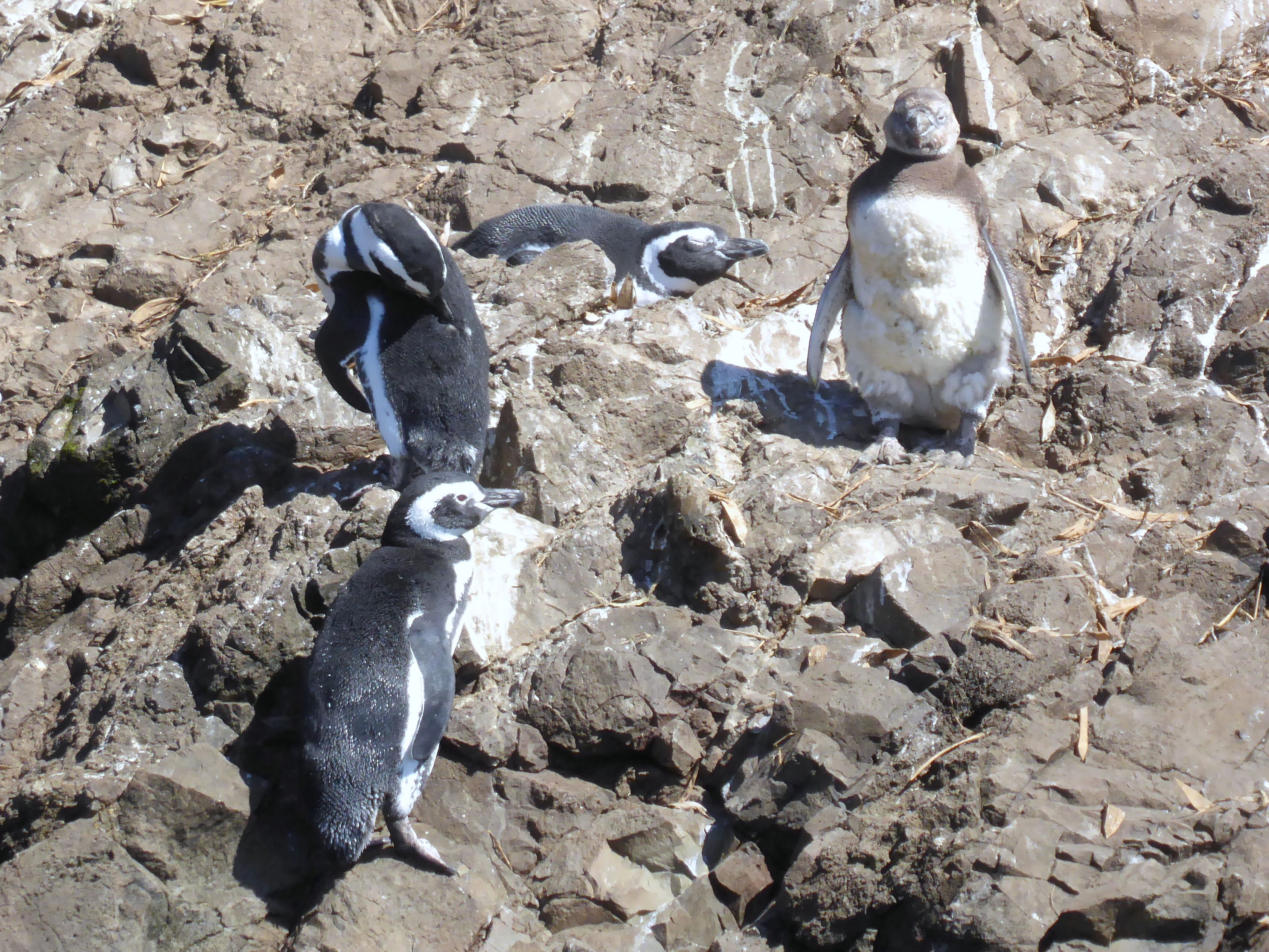
Although the boat was able to maneuver quite close to the islets for a good look, there was some boat movement with the current making photography of the birds a challenge.  I needed to back off the zoom to get sharper shots, so these photos have been cropped.

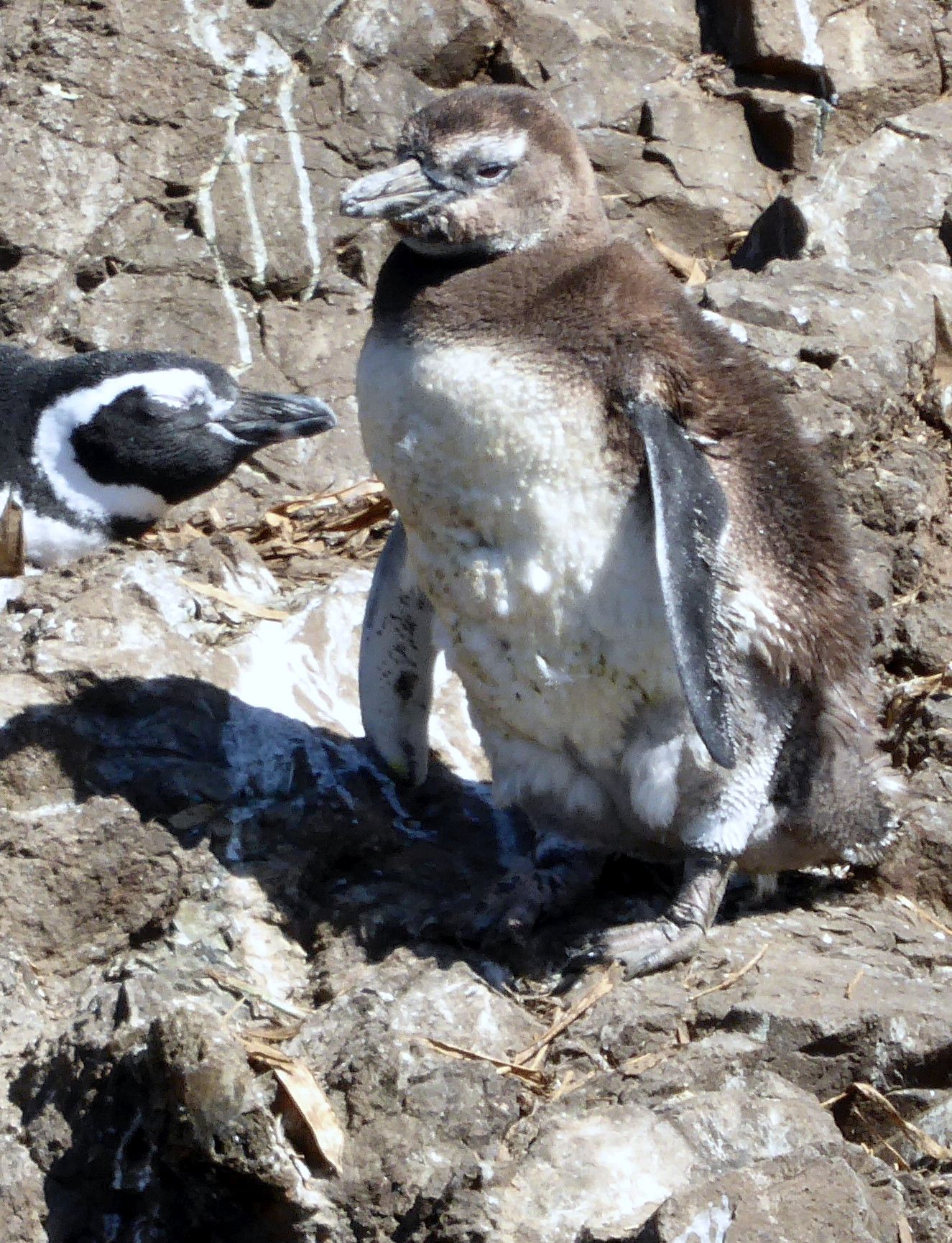
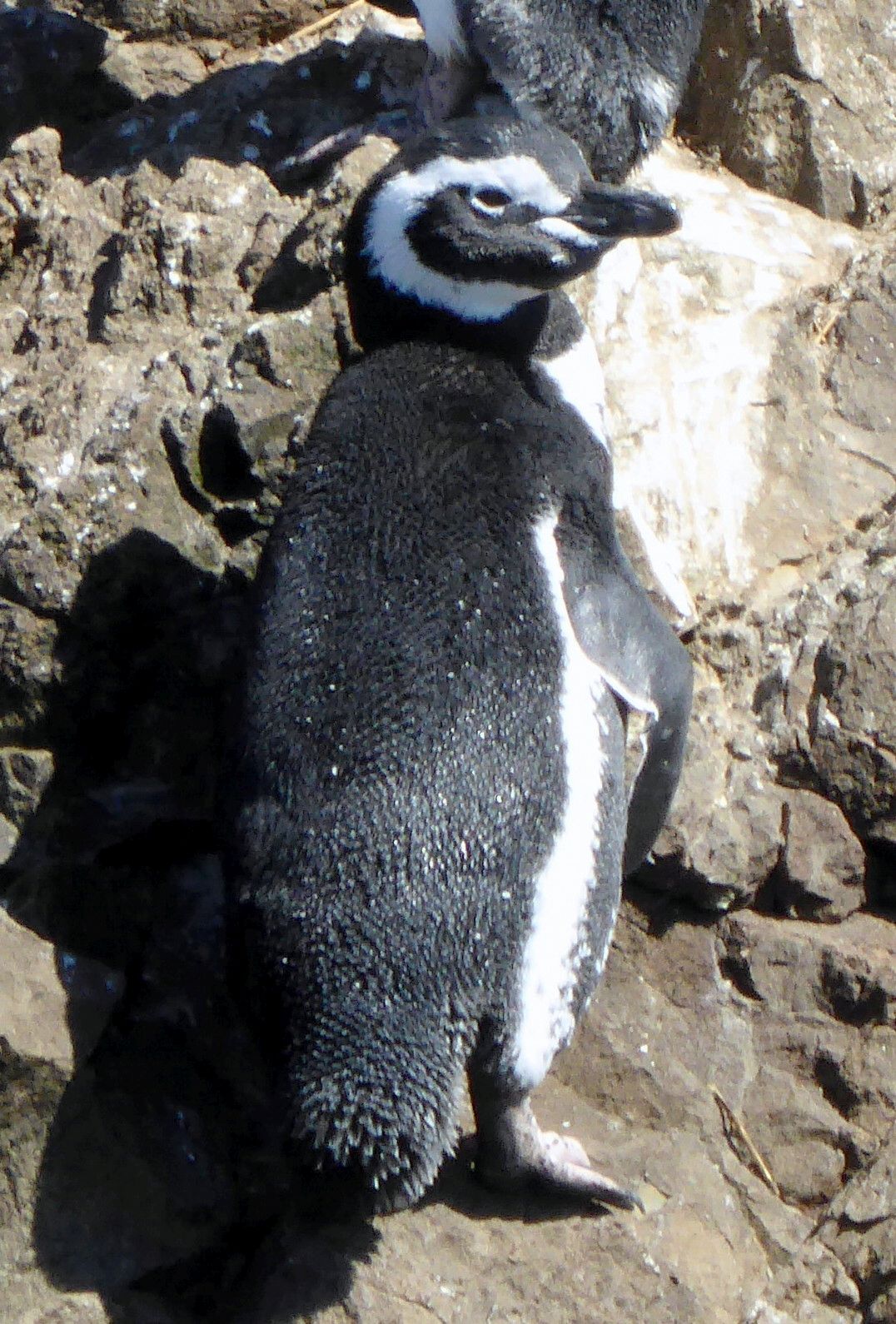
These cuties are Magellanic penguins.  They grow to be 24-30 inches tall and weigh 6-14 pounds:

Humboldt penguins, which range in size from 22-28 inches, have some pink in their face, so this is one here:

It was so exciting to see the penguins in their natural habitat, rather than at Sea World!

When we returned to the beach, our group had a seafood lunch at this restaurant with a beautiful view:

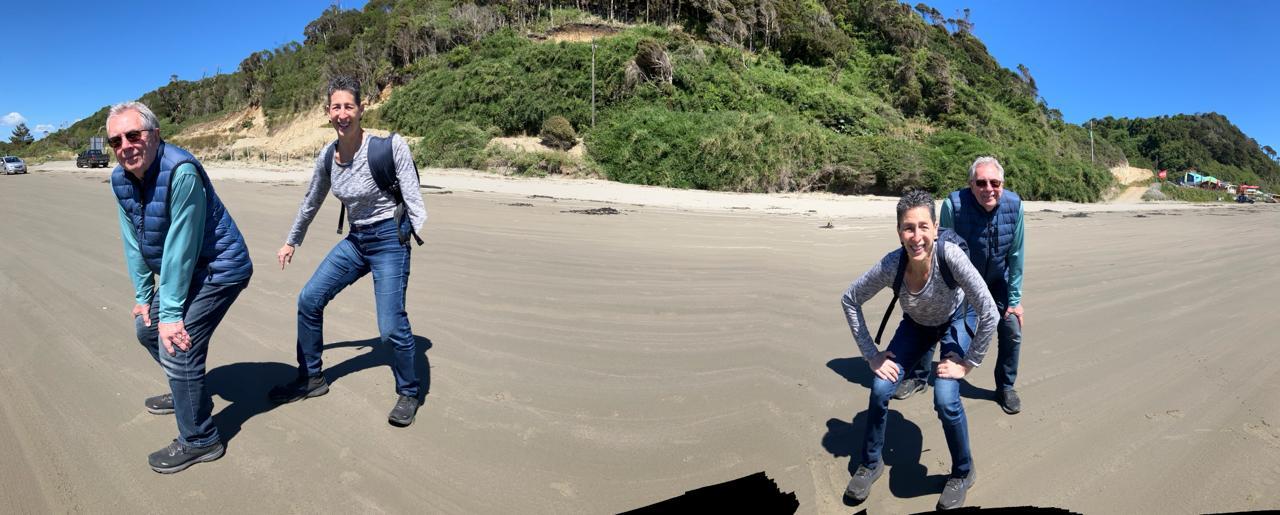
It was a lovely day for a walk on the beach afterwards, and Andrea snagged us for another “seeing double” fun photo:

Visiting Chiloe Island was a wonderful experience, but it was time to take the ferry back to the mainland for more adventures.  We returned to Puerto Varas and were ecstatic to see a clear view of the volcanoes!  Bruce and I grabbed an ice cream and headed out to enjoy the amazingly clear views, savoring one last evening in Puerto Varas before flying south to Punta Arenas, our southernmost city of the tour.

Coming up next: ARGENTINA & CHILE #12: PLEASANT PUNTA ARENAS

GLACIER NATIONAL PARK & CANADIAN ROCKIES, DAY 7: LAKE LOUISE & COLUMBIA ICEFIELD

One of the things Bruce and I enjoyed on the small group tour we did to Slovenia and Croatia with Vantage Travel, and this tour with Odysseys Unlimited, is the flexibility to go off on our own at each destination.  We were given a deadline to be back at the bus, but how we spent our time was an individual choice.  Our guide would give us all the information we needed and wanted on the bus ride to each location.  For those who wanted to stay with the guide, that option was available as well. 

(For all pictures, click on the image to see full screen view.)

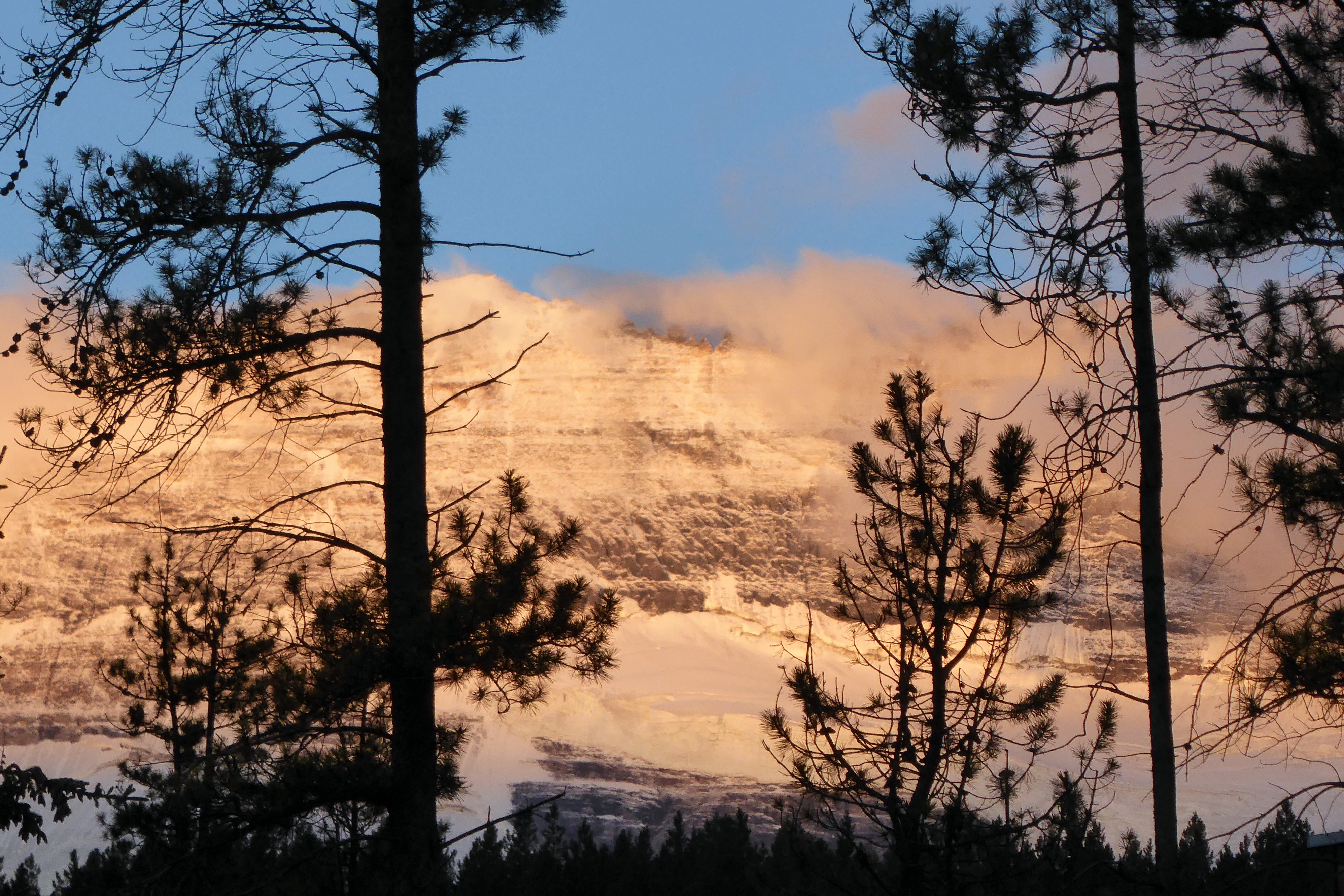
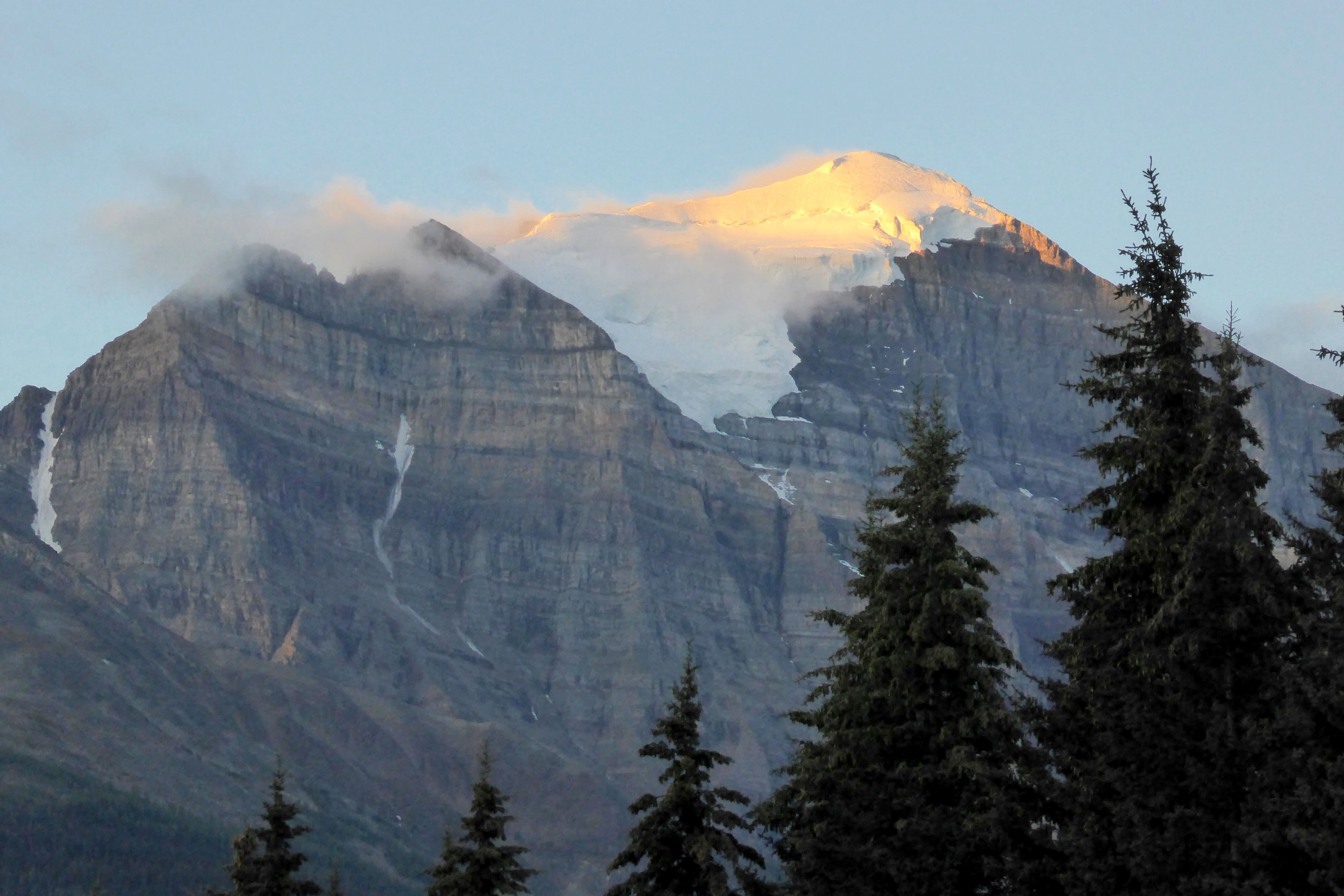
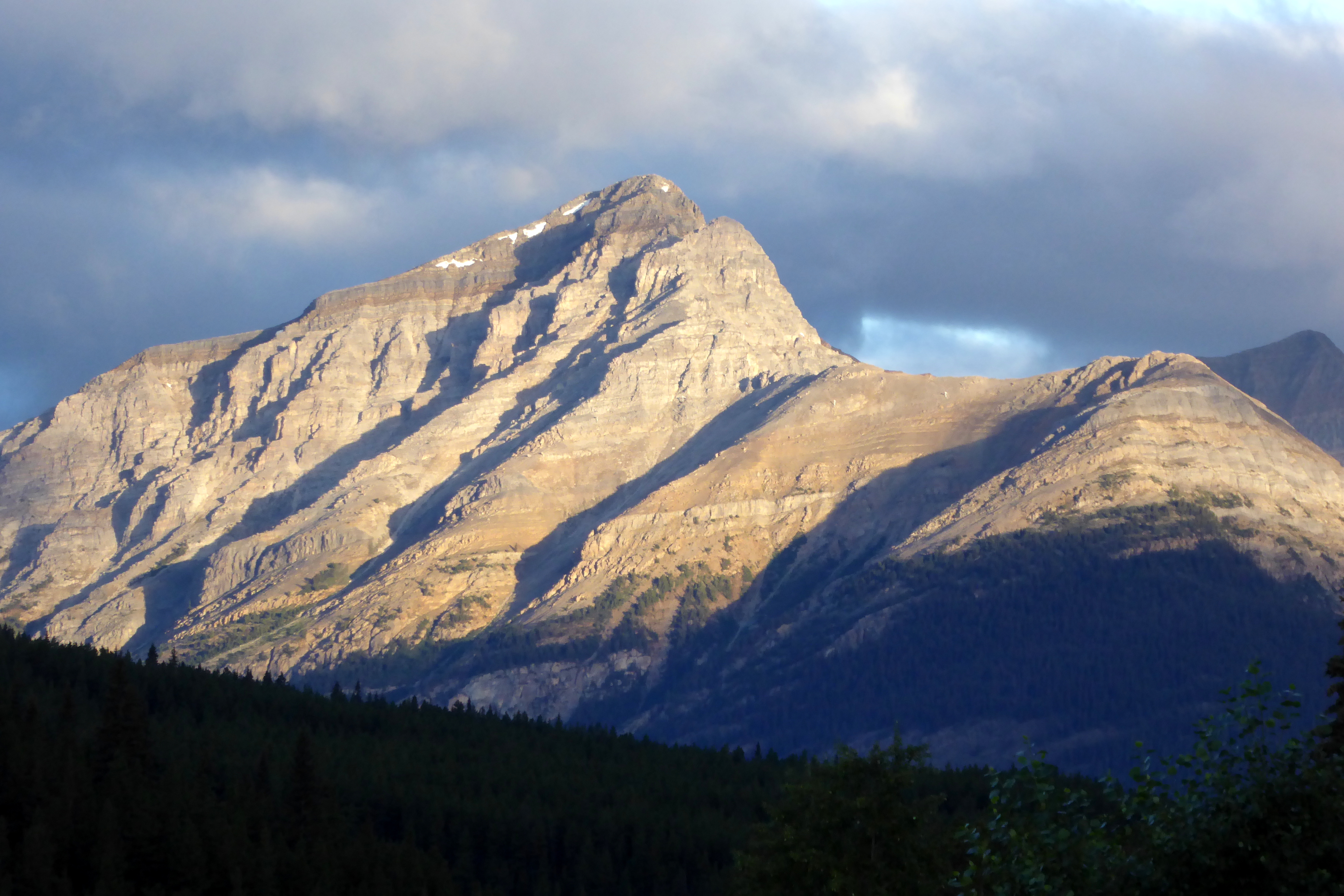
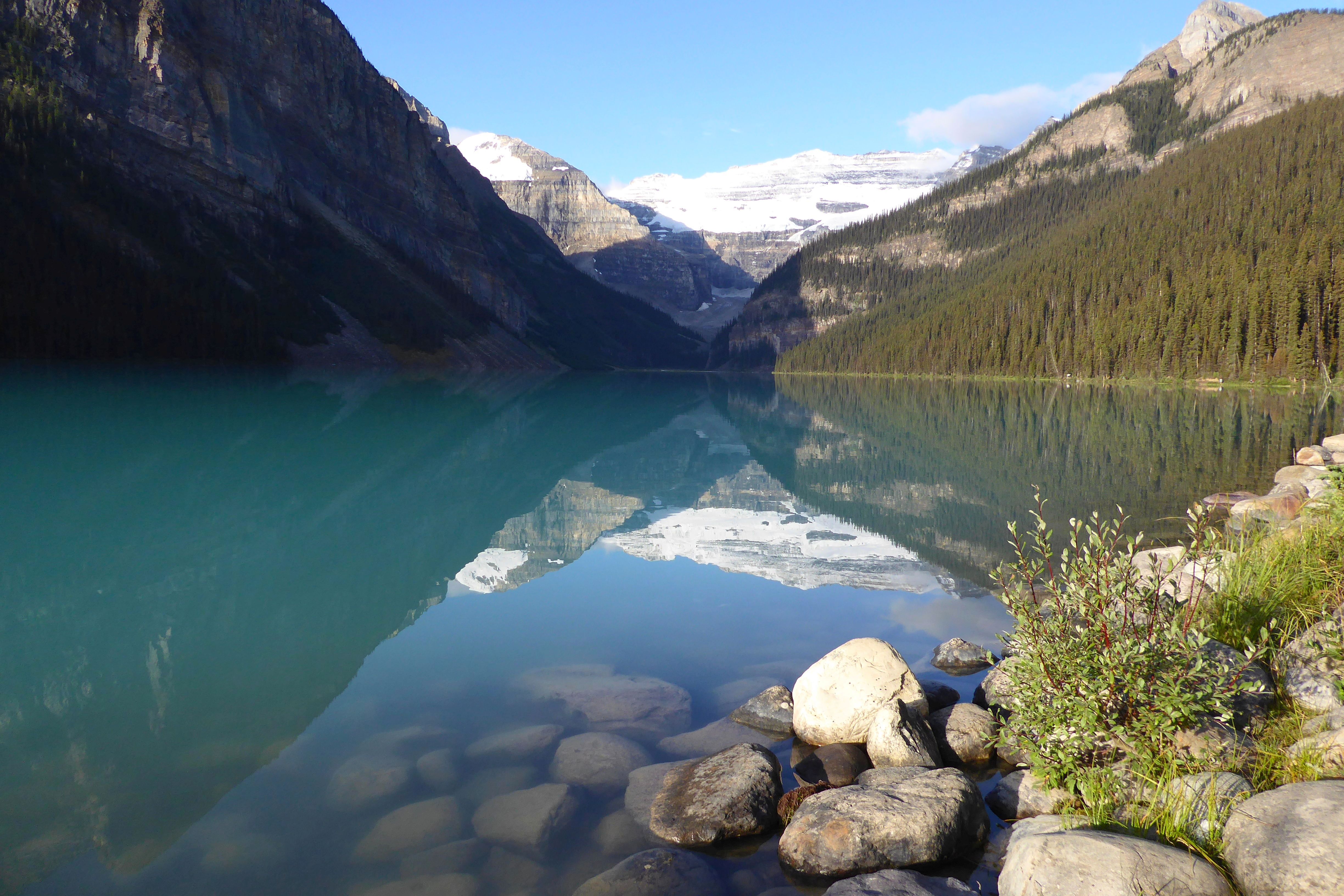
Four different morning views at Lake Louise Village before we headed to the lake

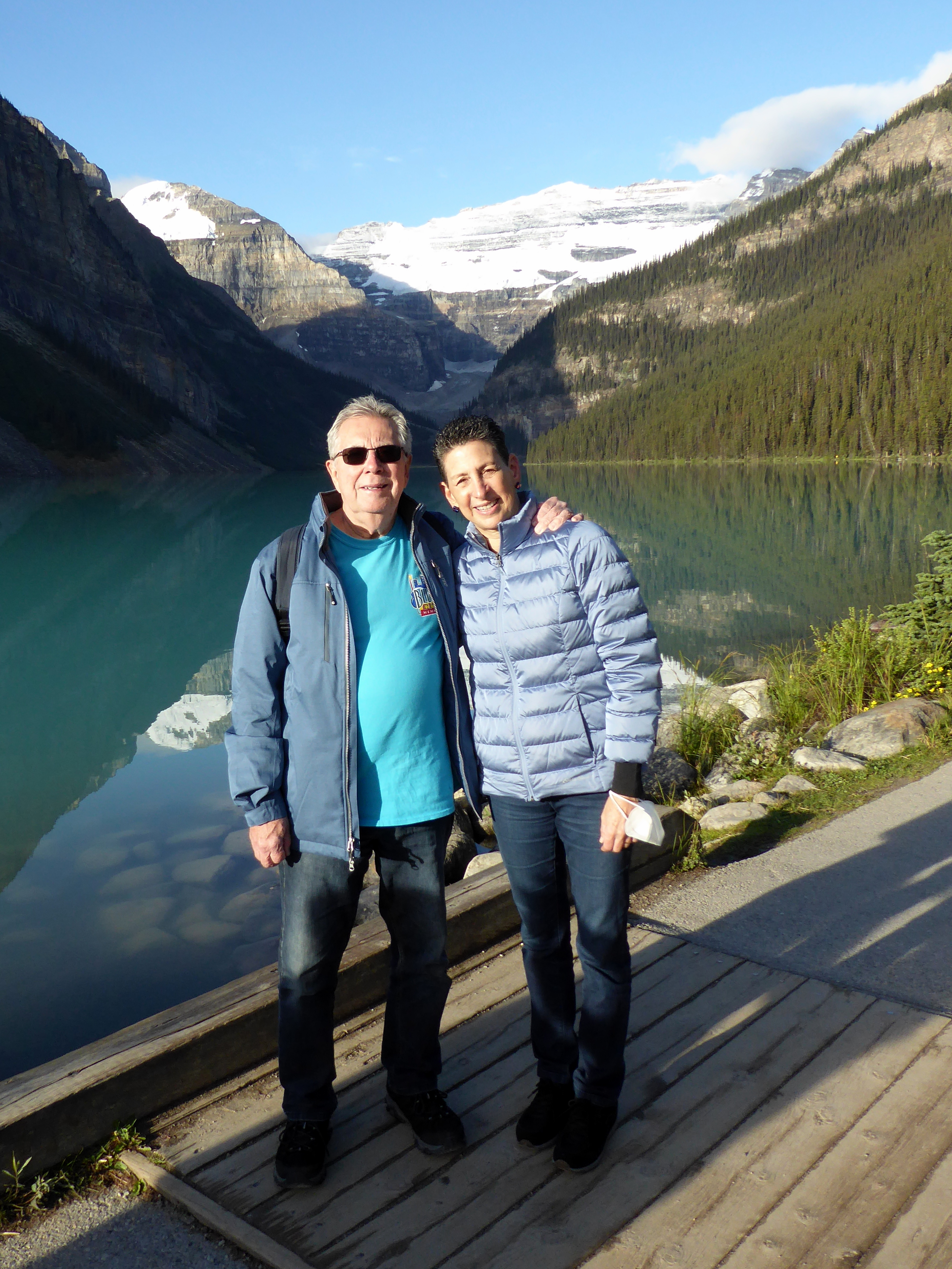
At Lake Louise, we opted to walk the recommended lakeside path; however, some members of our group hiked on alternate trails or visited the hotel.  It was a beautiful, calm morning, so the reflections in the emerald green water were breathtaking throughout our walk! 

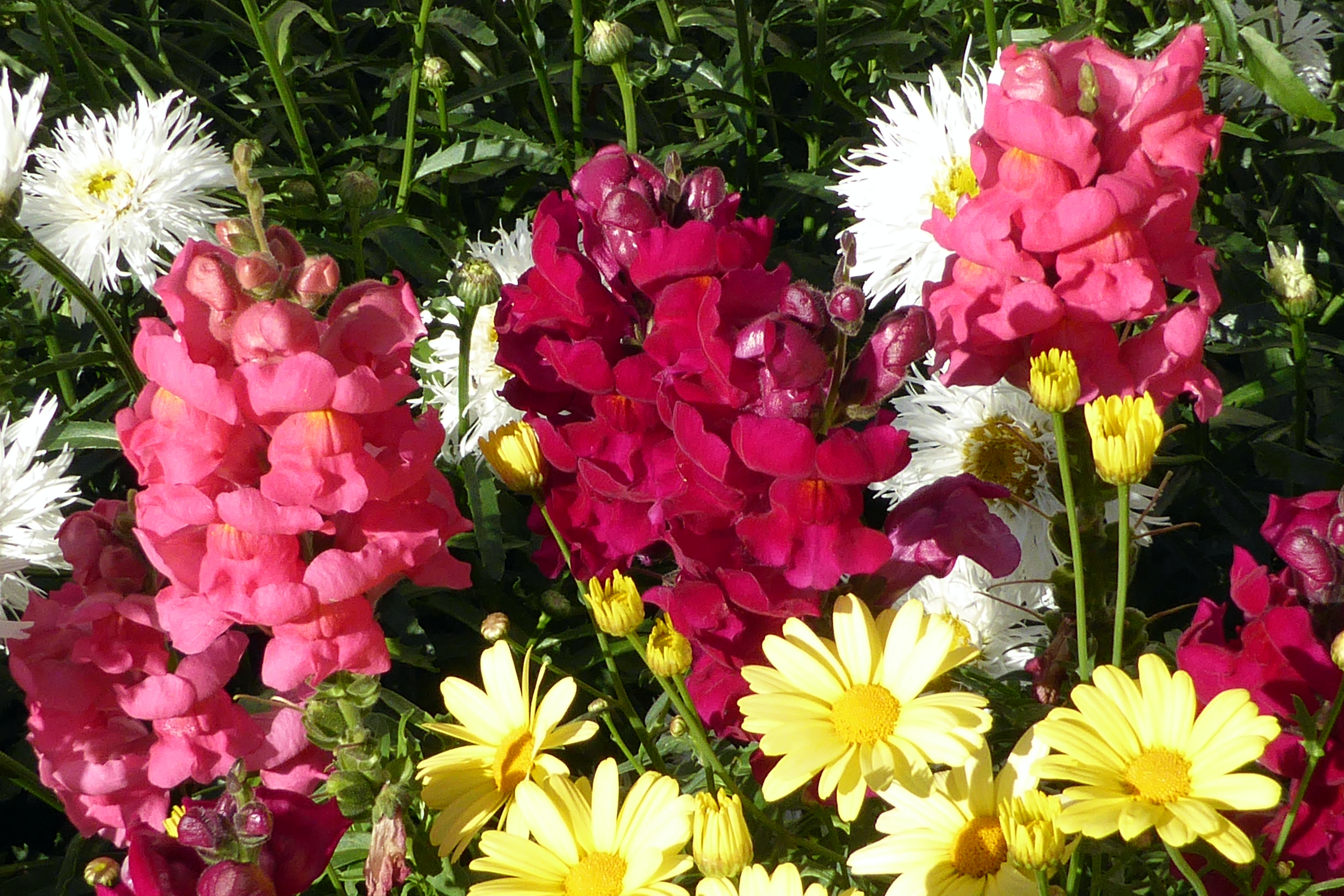
Beautiful flower baskets and plantings graced the front of the hotel above the lake.

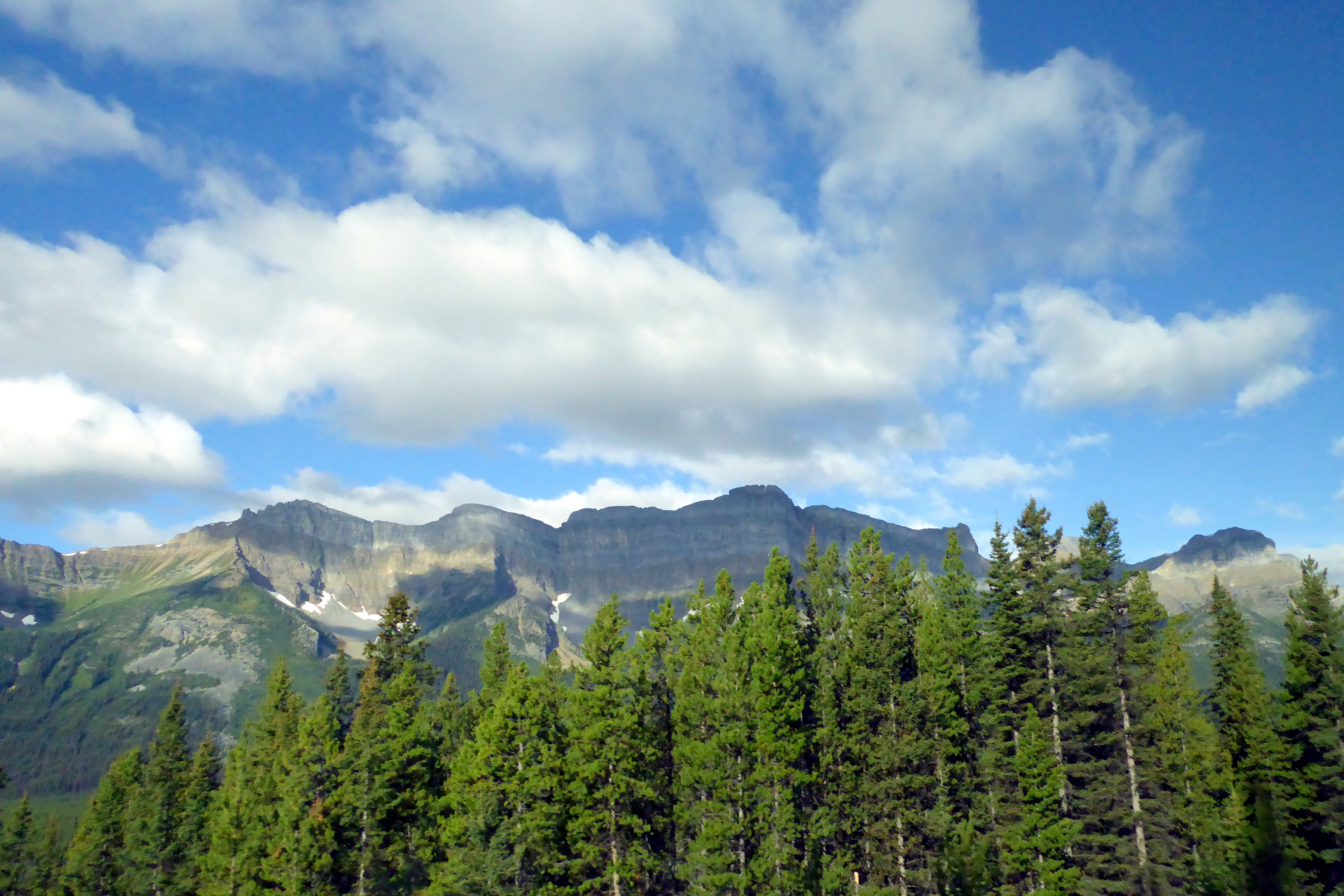
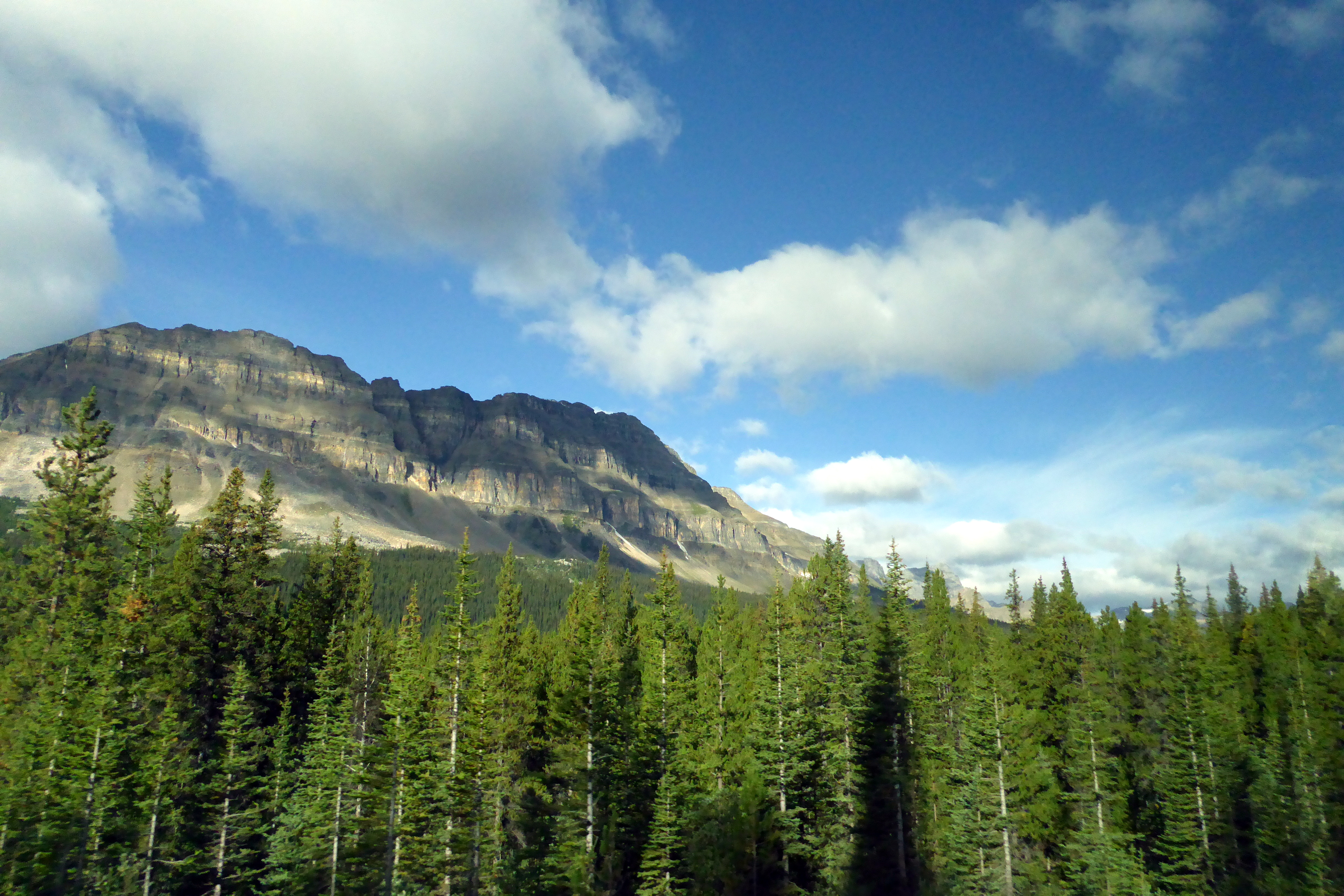
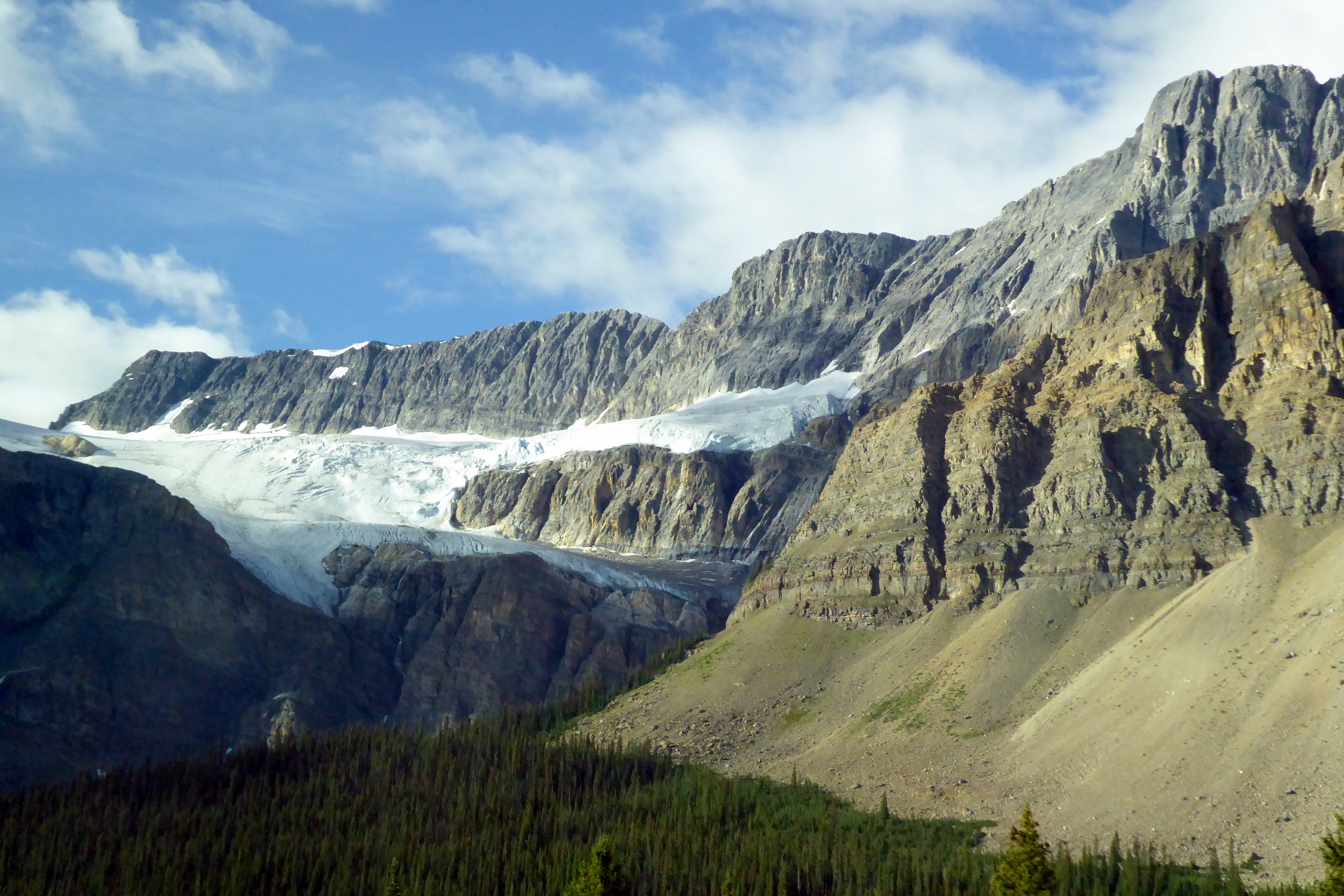
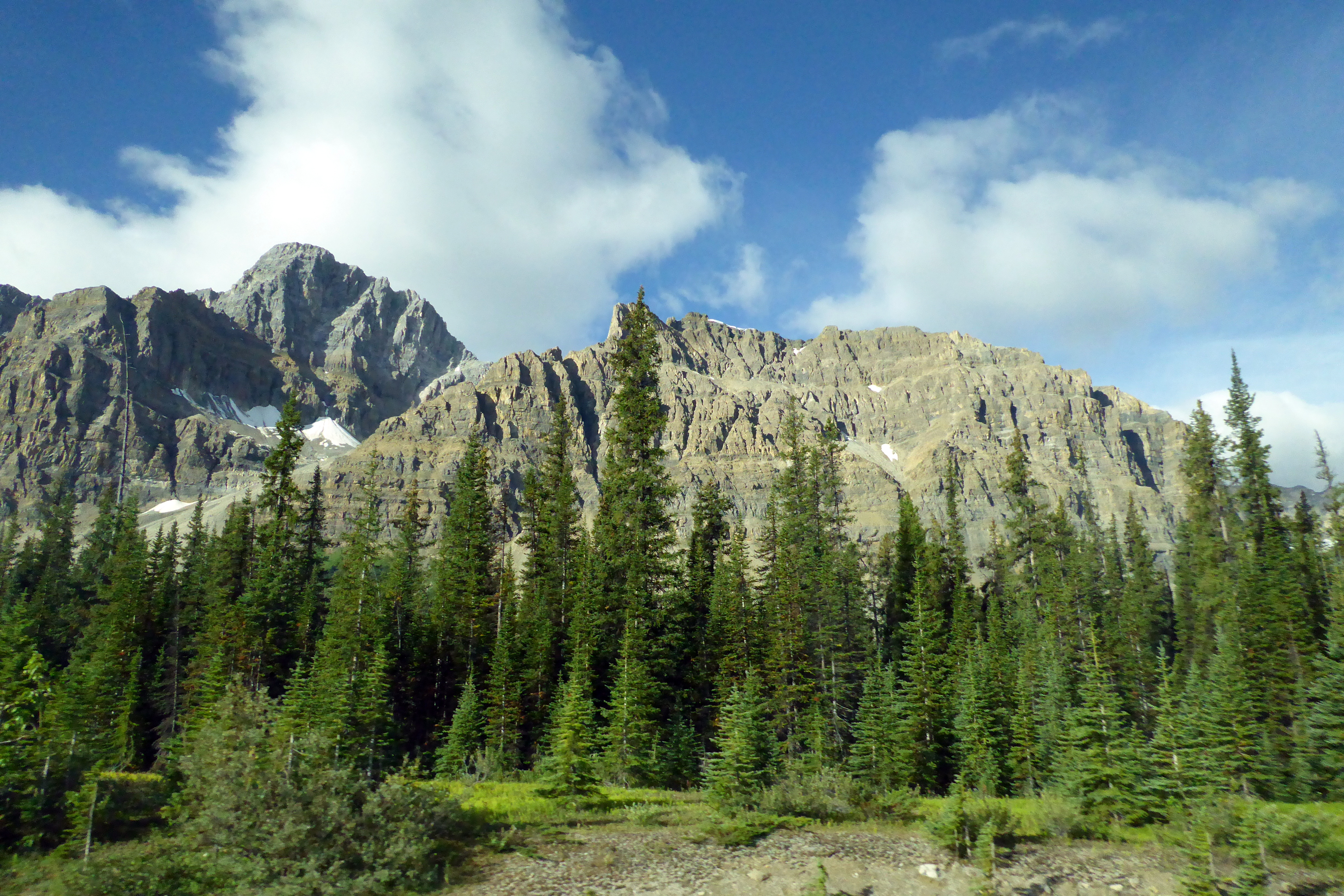
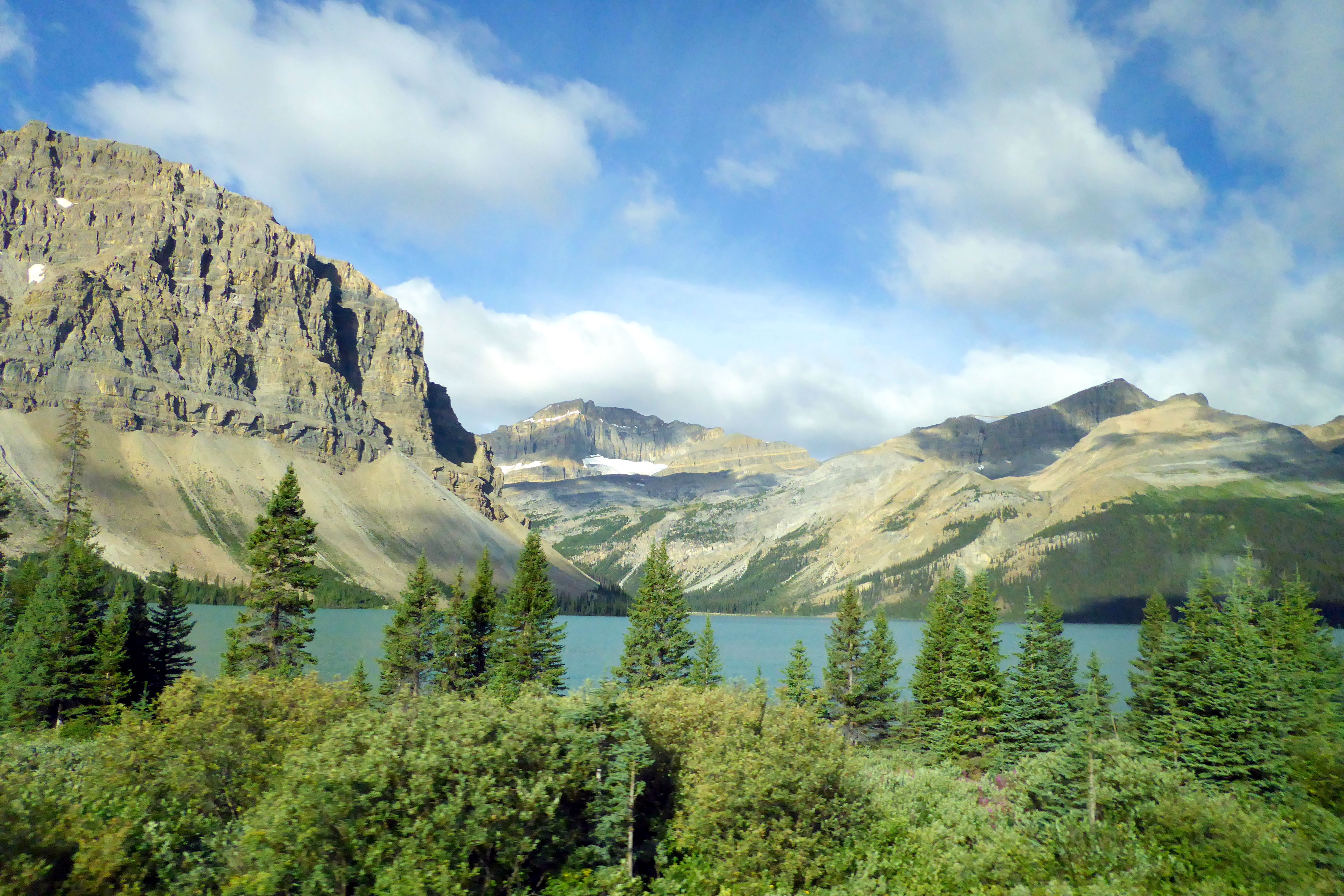
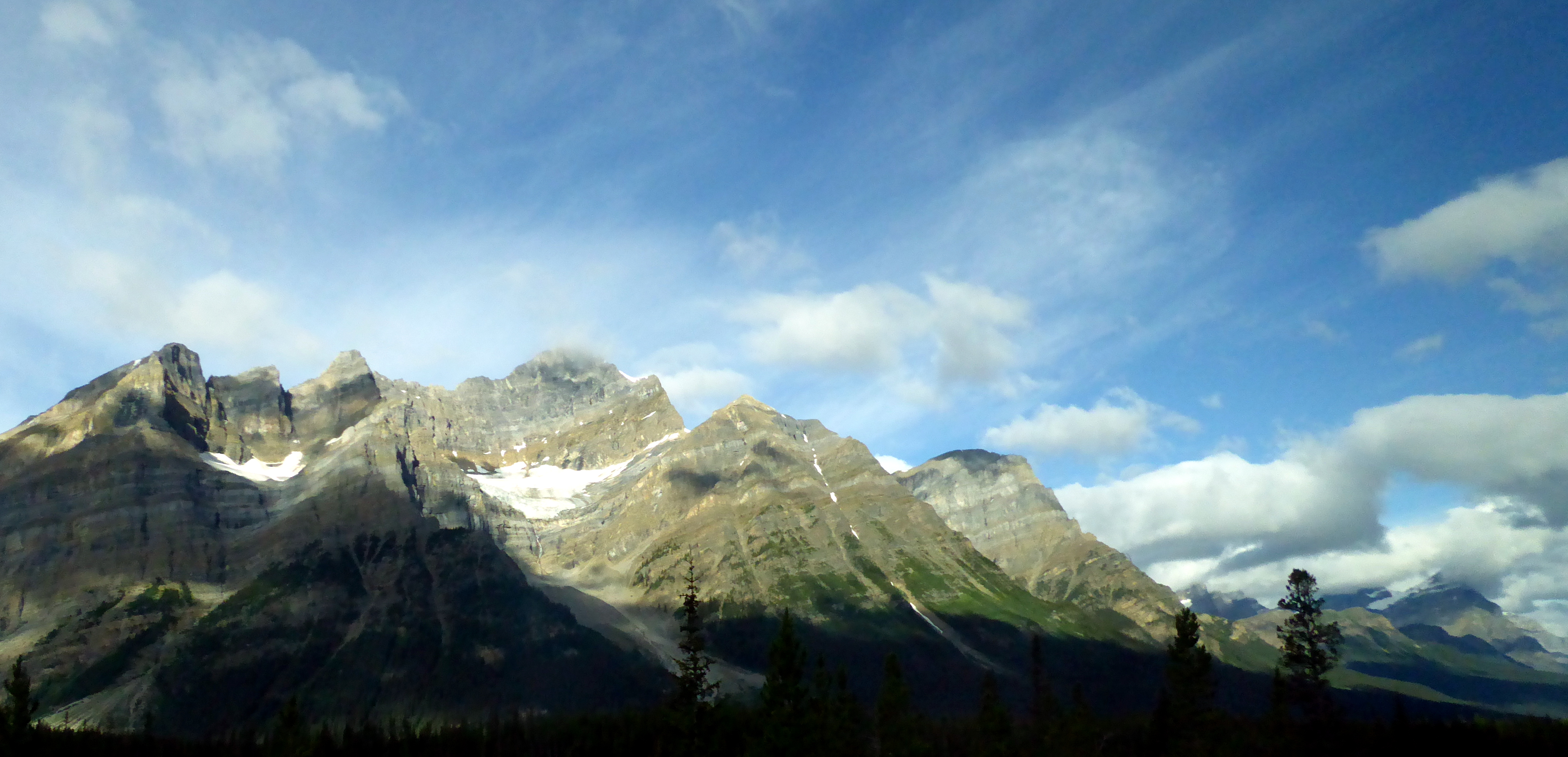
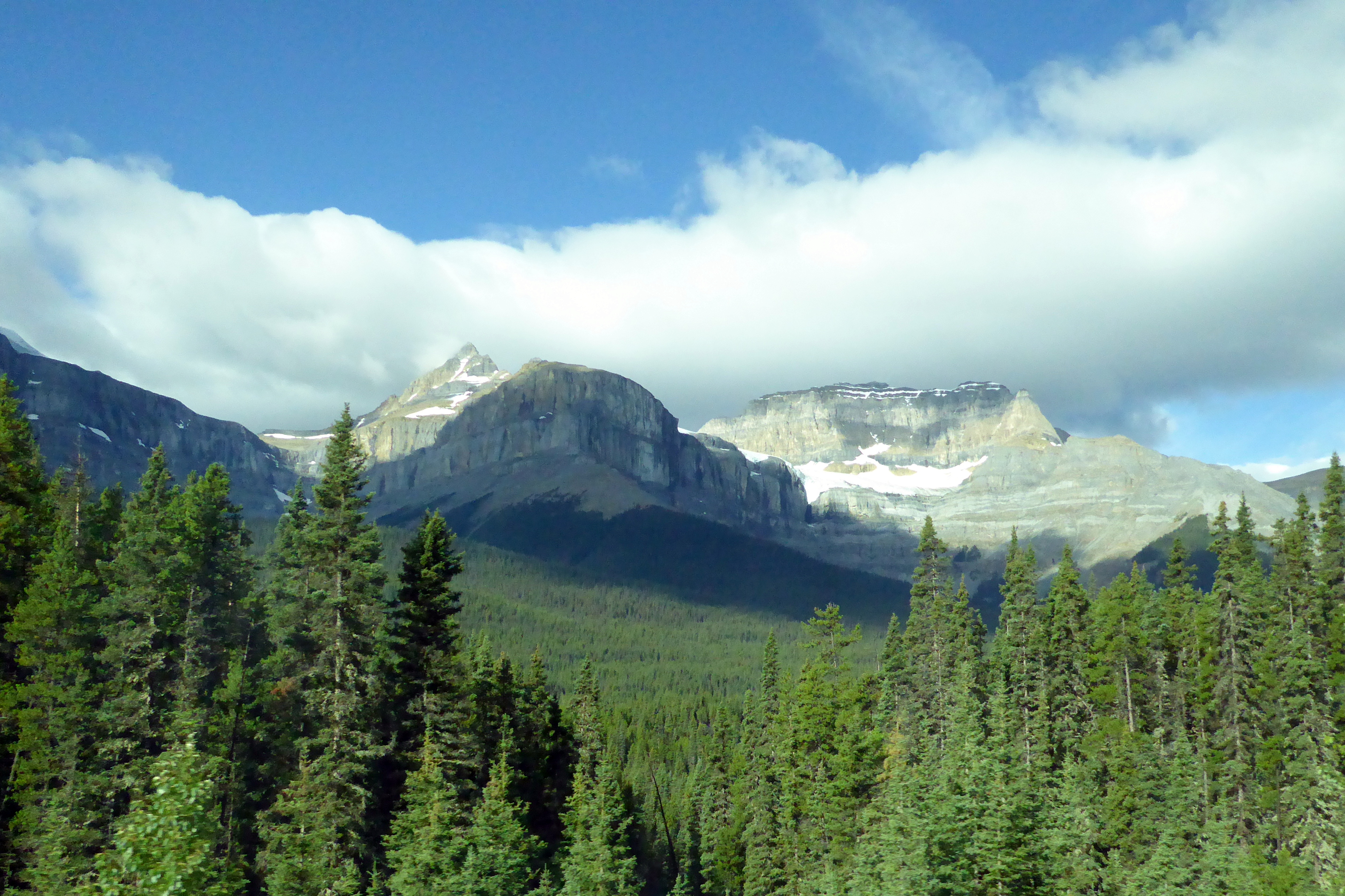
We were thankful the blue skies stayed with us for our drive along Columbia Icefields Parkway to our next destination:  Athabasca Glacier.  The parkway was one of the prettiest I had seen, and I ended up snapping quite a few pictures out the bus window along the way:

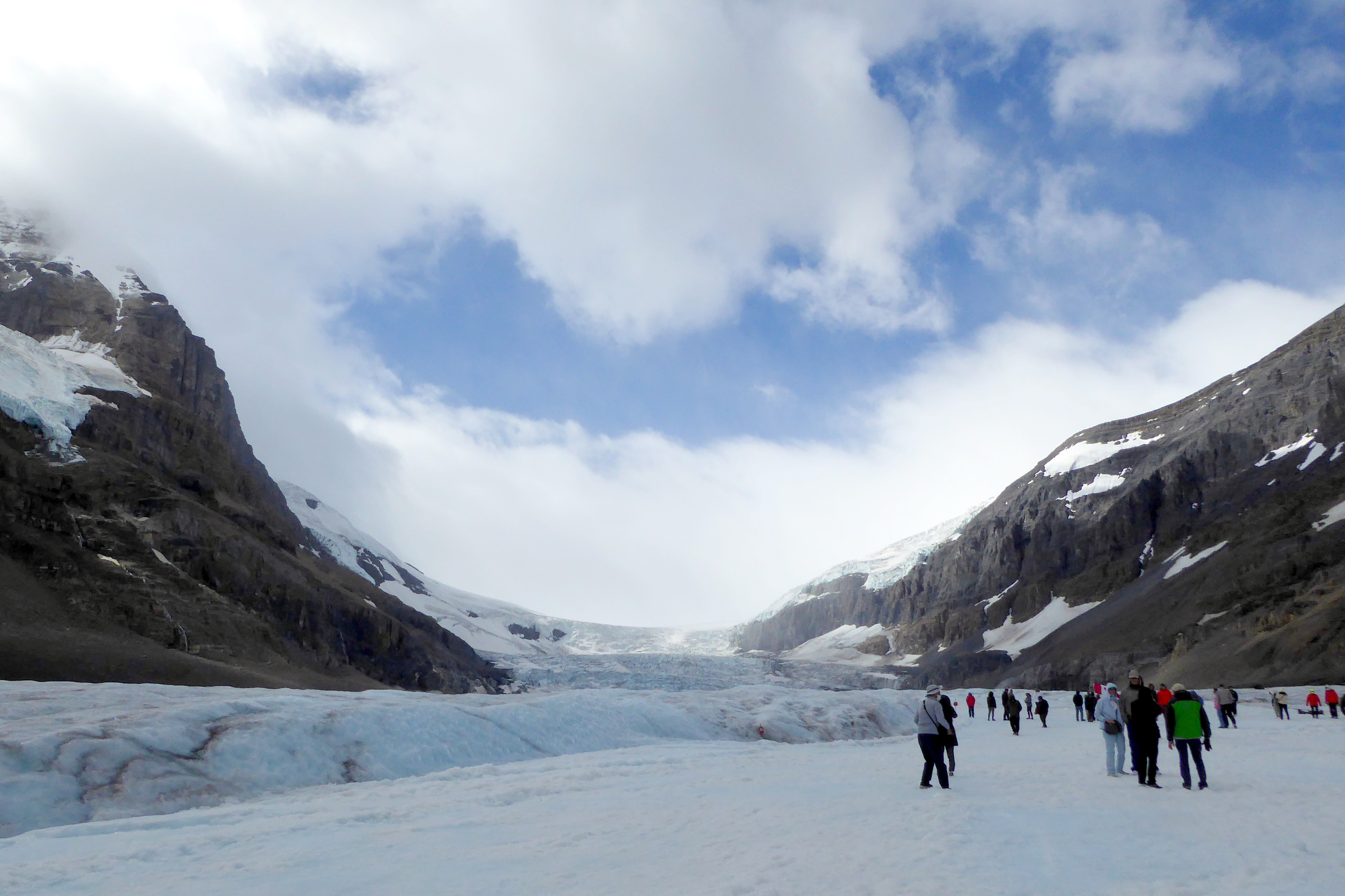
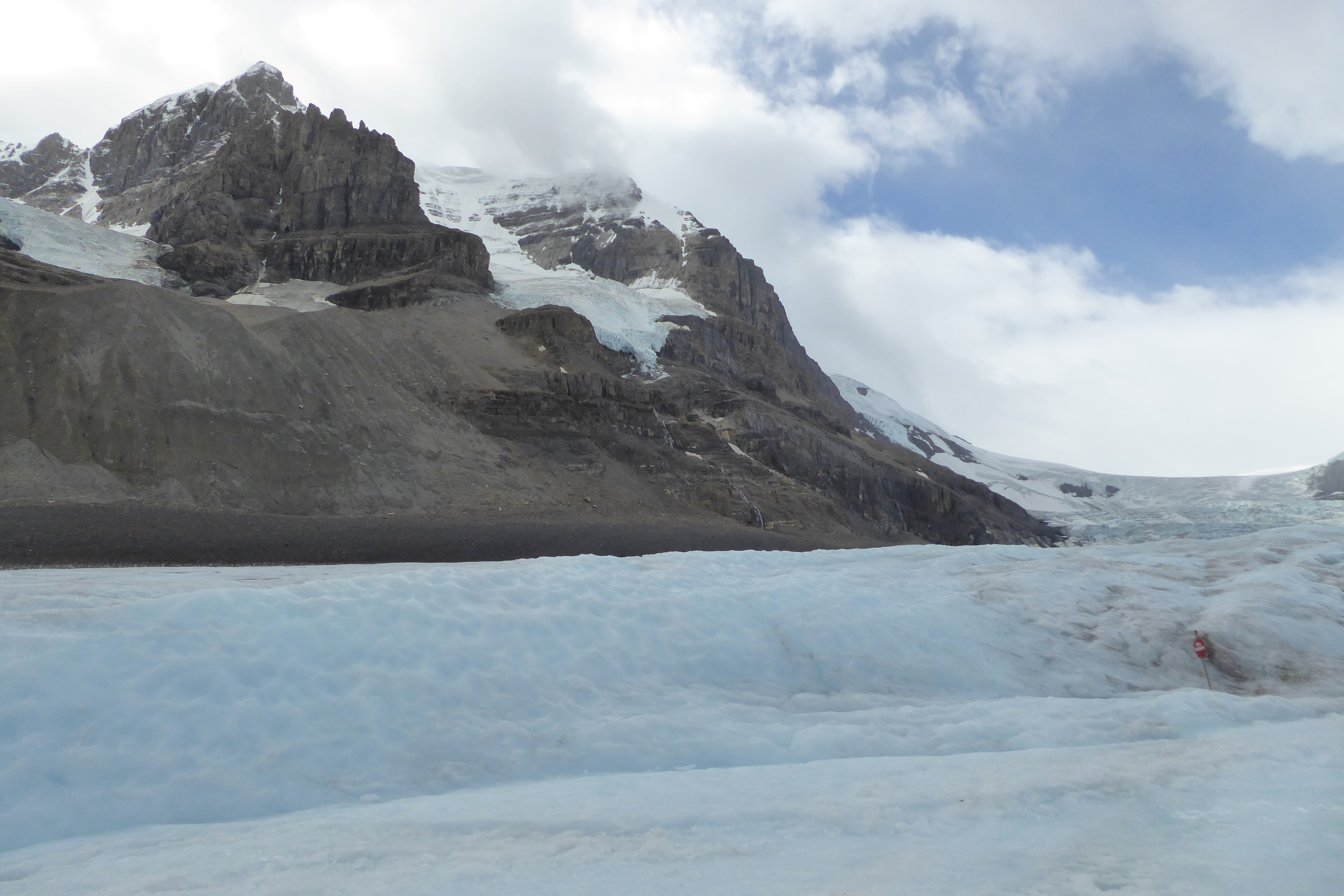
Unfortunately, by the time we arrived at the glacier, it was a bit cloudy, windy, and a chilly 36 degrees at that high elevation.  It was not a good day for photography, because the white ice of the glacier blended in with the white clouds for a very flat appearance.  (Thankfully, that was not the case when we returned two days later!  Stay tuned…)

Dome Glacier, near Athabasca Glacier

Athabasca Glacier and the ice field where we were headed next. Since 1844 when the glacier reached its maximum, the edge of the glacier has retreated about one mile. That retreat continues today as warmer local temperatures continue to melt each summer than is replaced by winter snow accumulation.

The Columbia Icefield, in Banff National Park, is a UNESCO site.  At an elevation of nearly 10,000 feet, this 125-square mile tract of snow and ice is the largest ice field in the Rocky Mountains.  It also marks a triple Continental Divide point—meaning waters originating from the 23 feet average annual snowfall ultimately flow into the Atlantic, Pacific, and Arctic Oceans. 

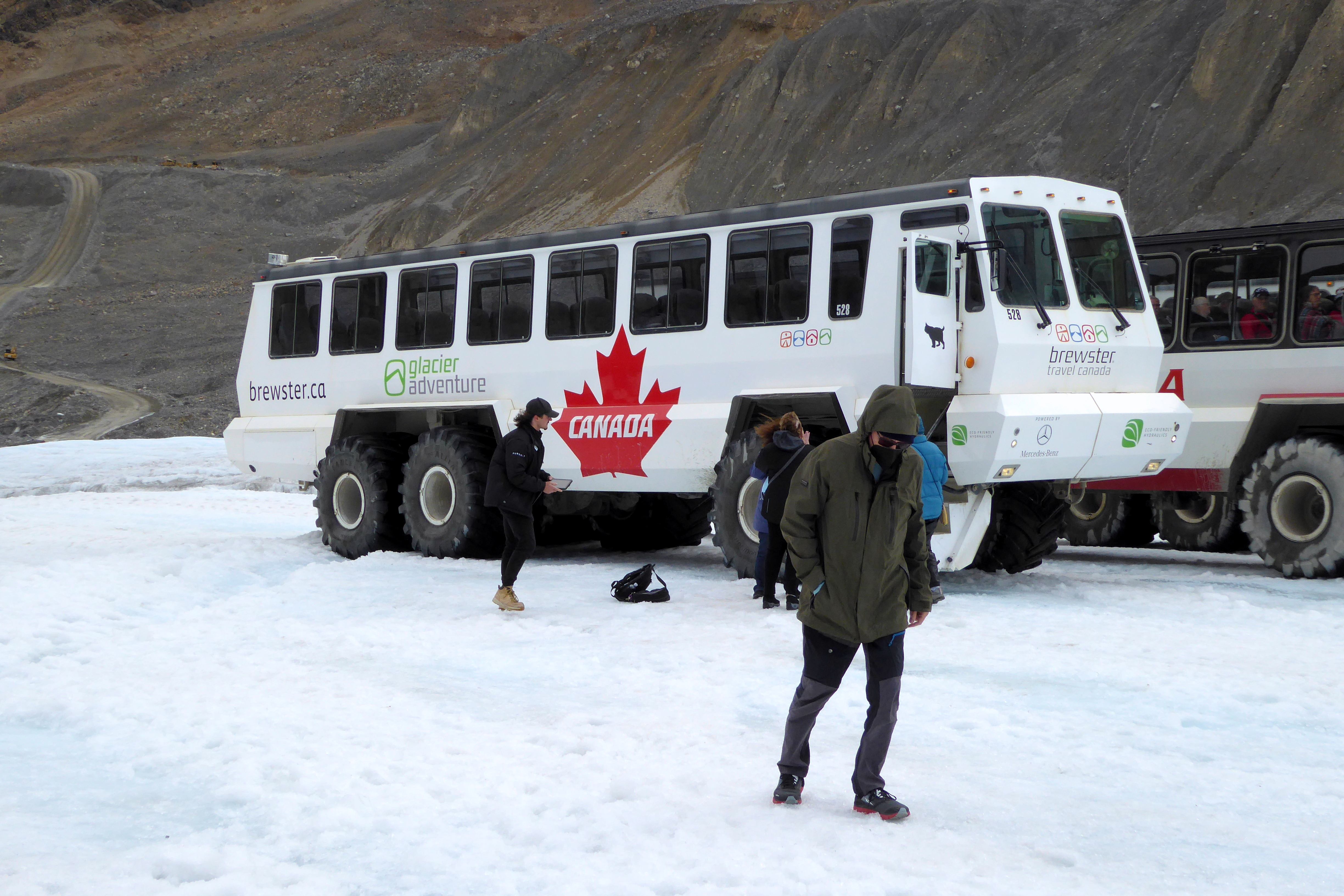
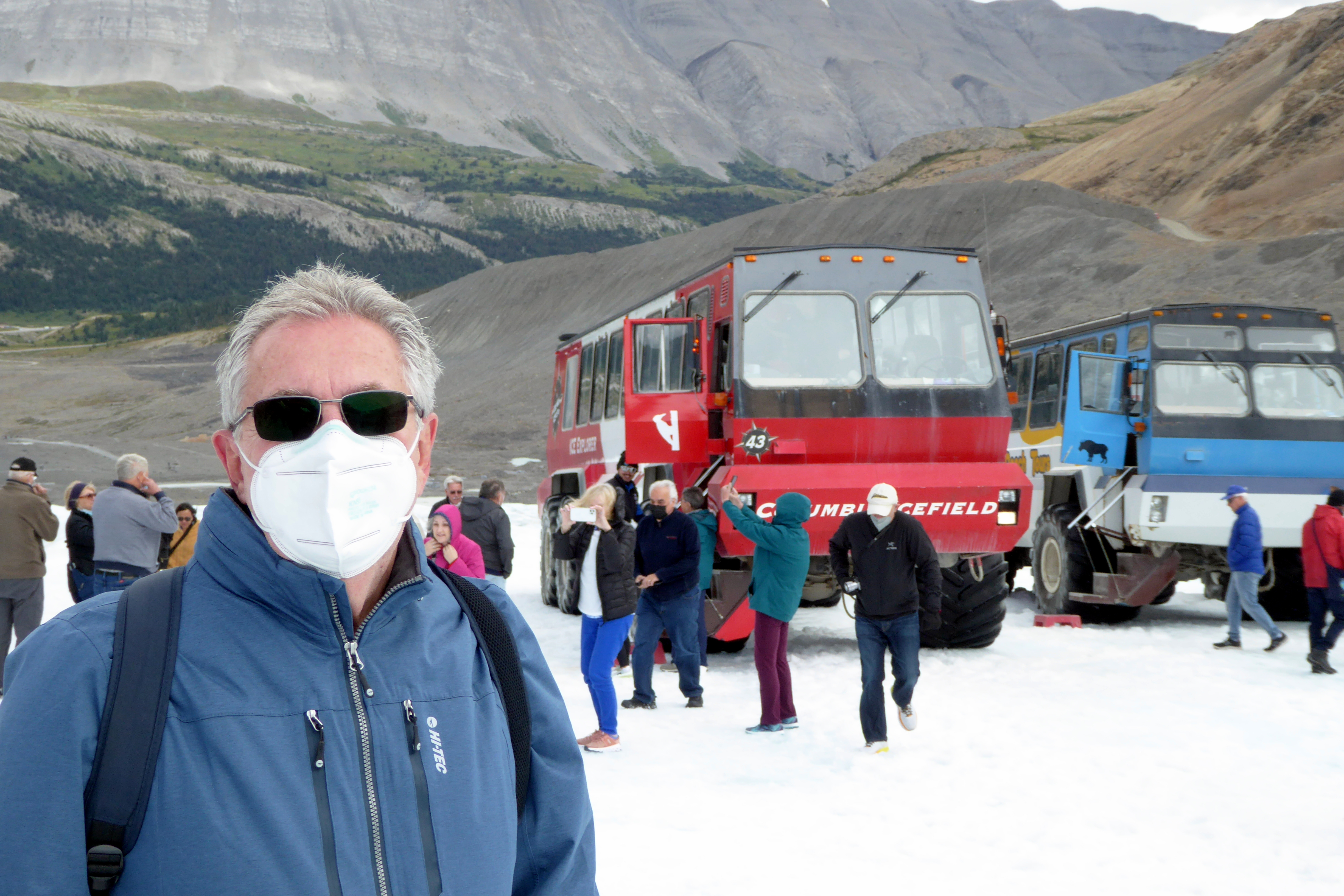
An Ice Explorer all-terrain vehicle transported our group to Athabasca Glacier—the most visited glacier in North America.  Equipped to drive right onto the glacier itself, the vehicle has 5-1/2-feet-tall tires especially designed for glacier travel.  Each one of these super-sized tires costs $6,000!  The vehicles were originally purchased for $500,000 each; however, when they were due for refurbishing, $750,000 was spent on each vehicle, for a total investment of 1.25 million for each Ice Explorer.

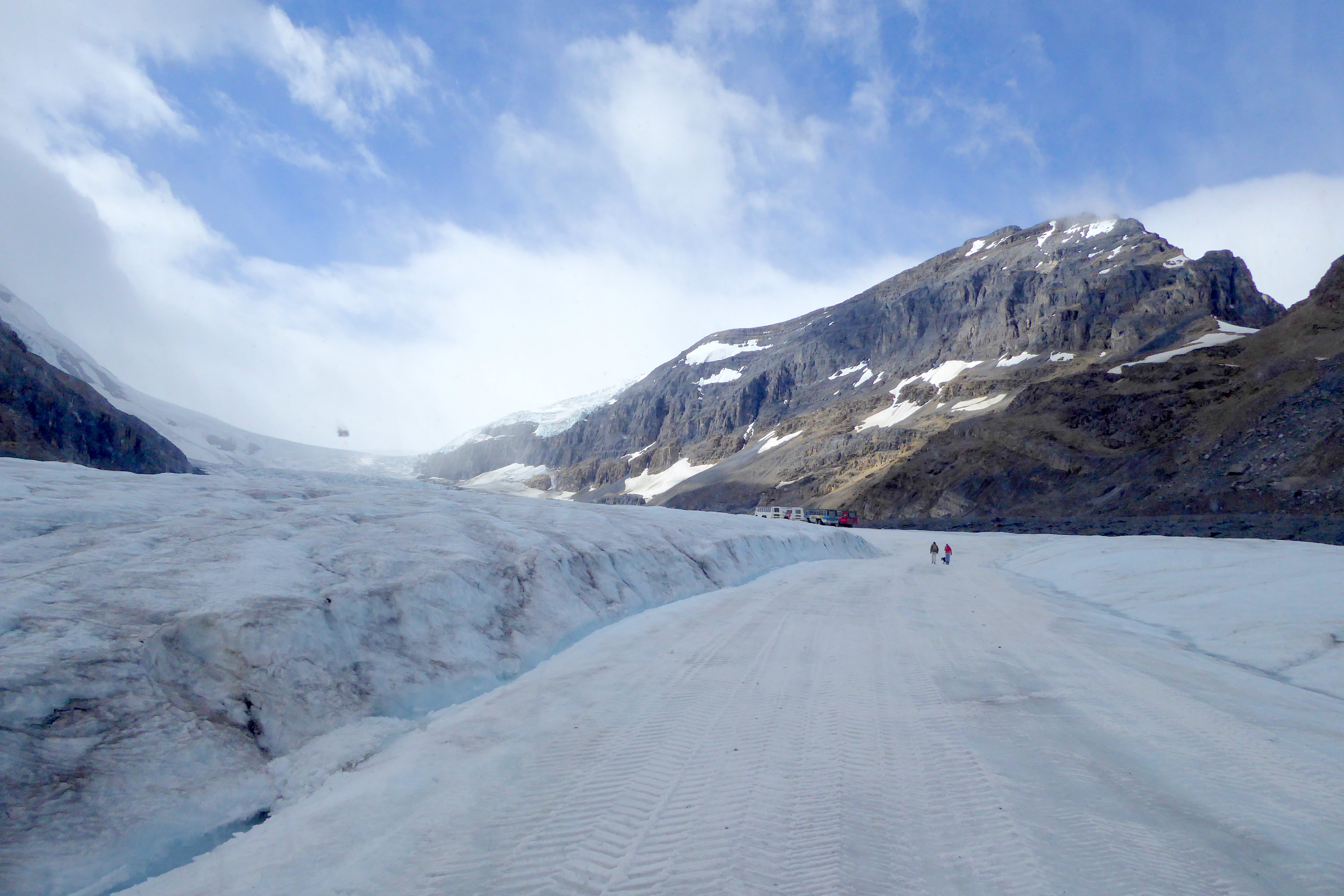
Walking on the glacier was slippery and cold, but it was an awesome sight!

Bruce kept his mask on to keep his nose warm!
The view out the back window as we made our way back to the base station

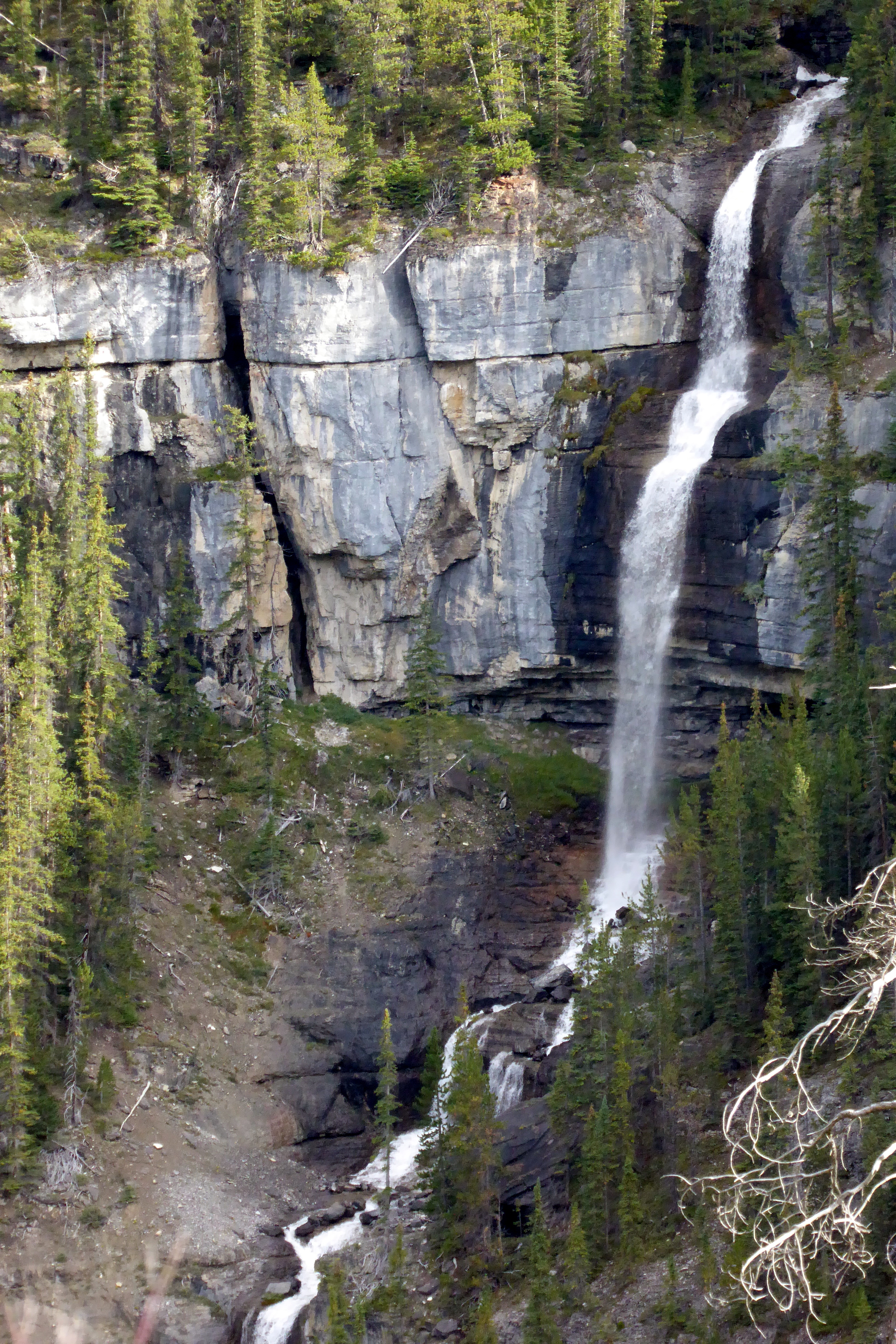
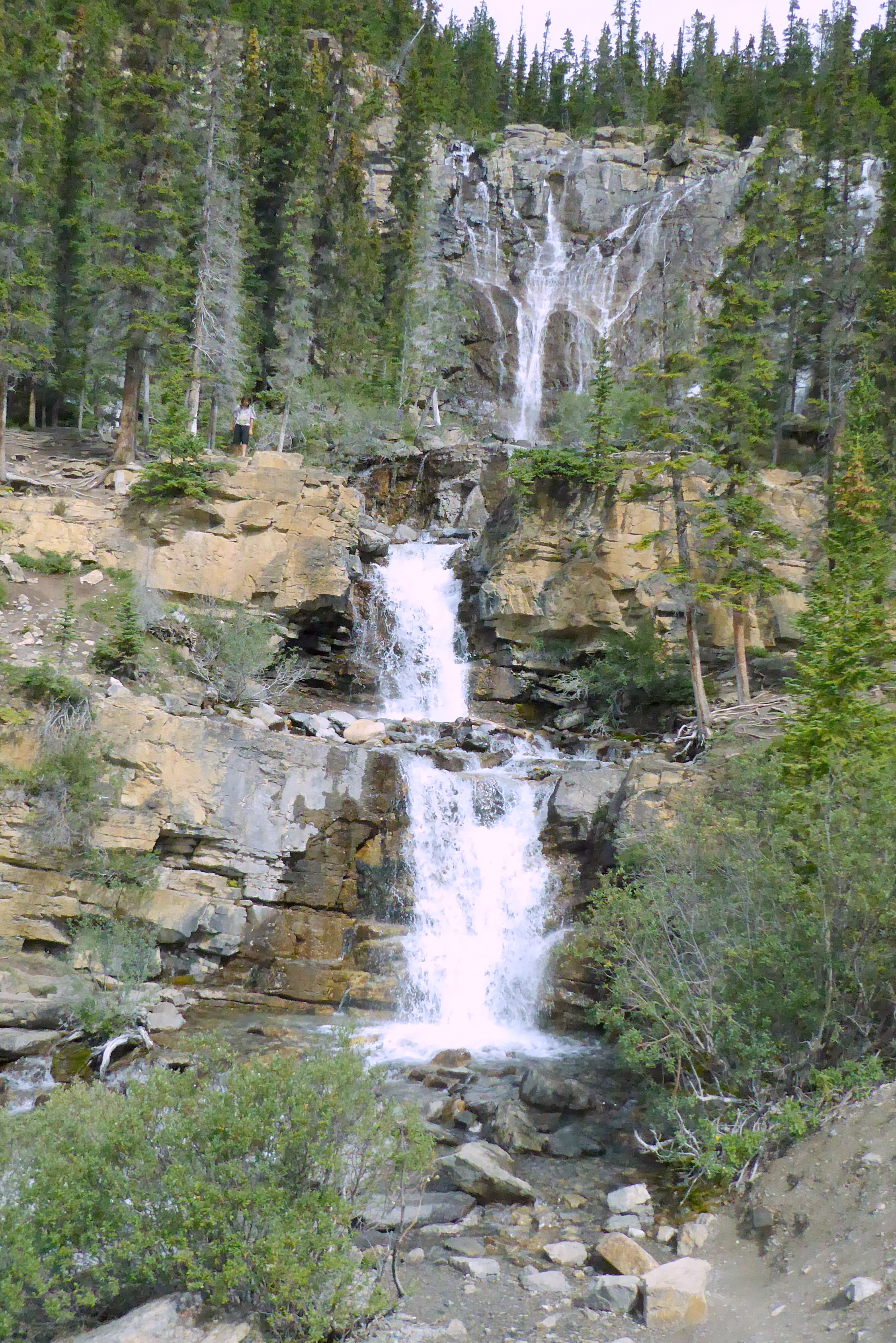
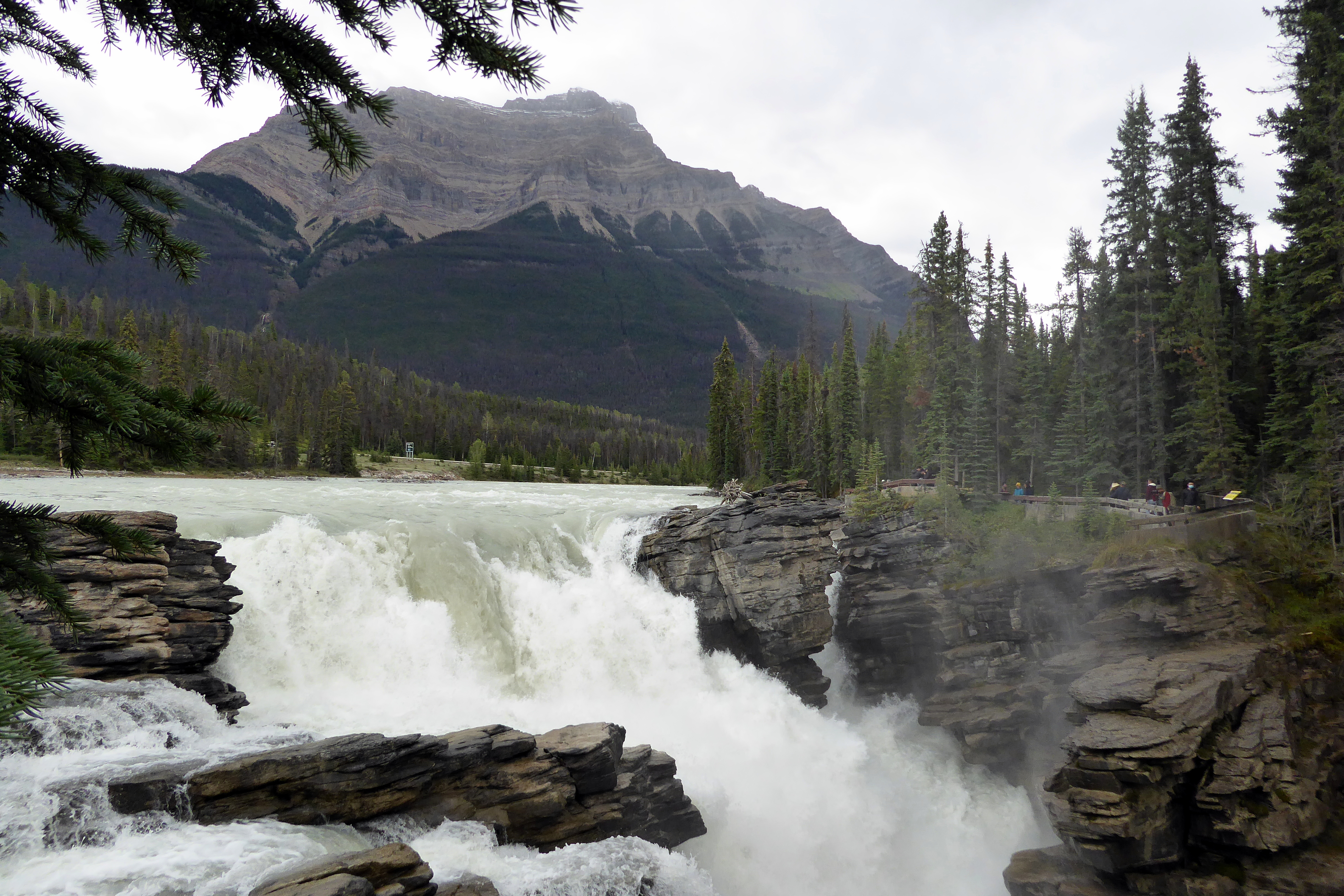
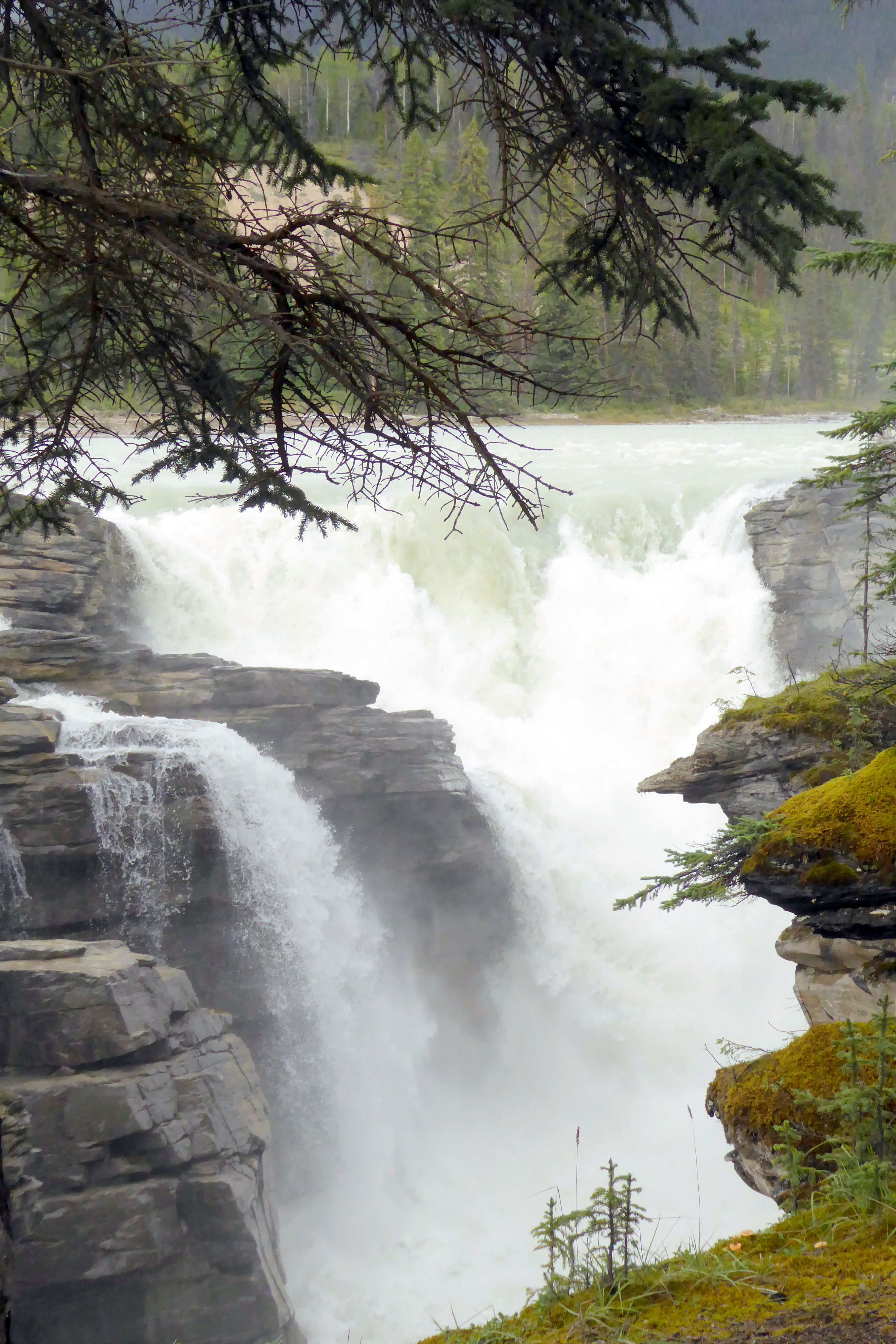
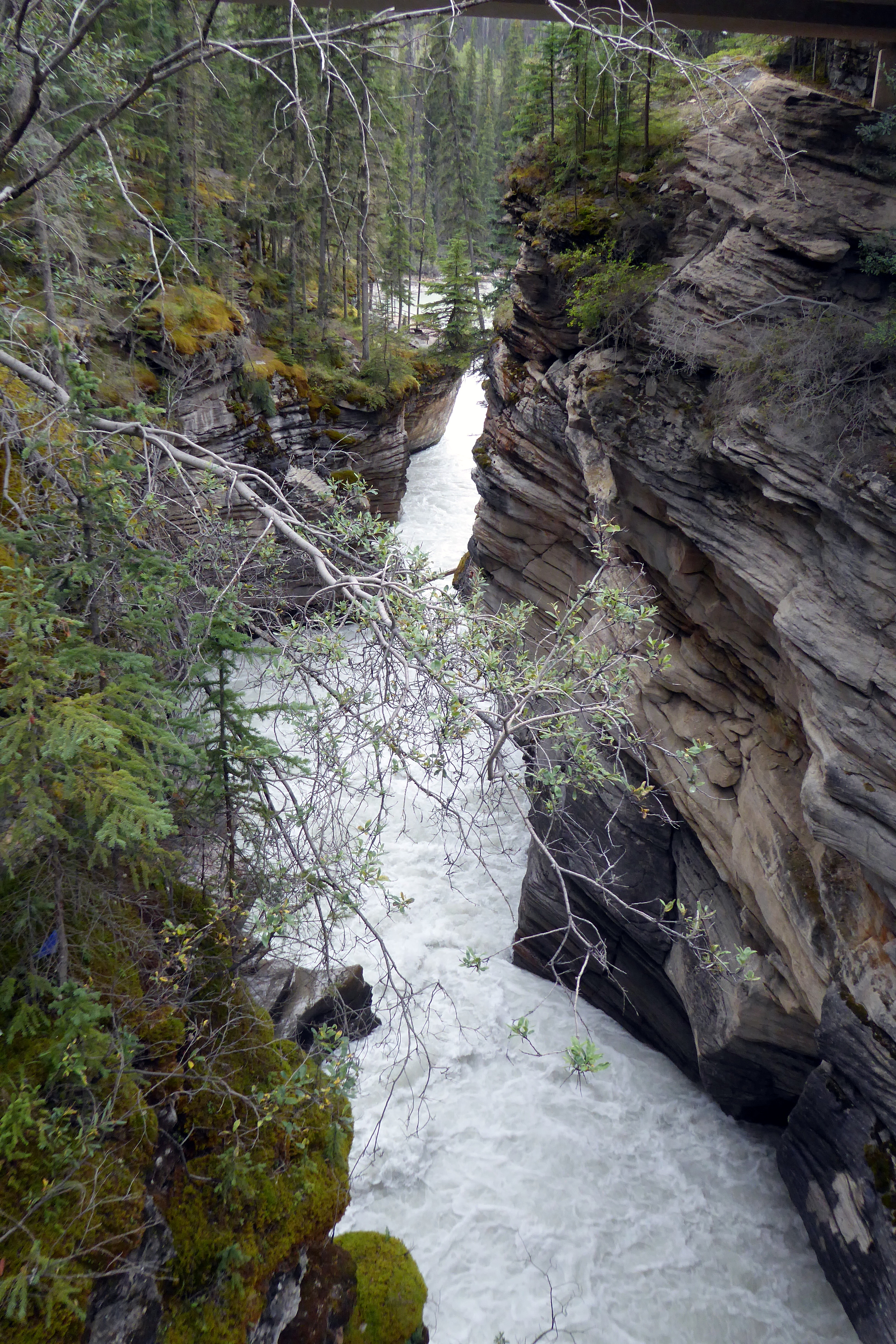
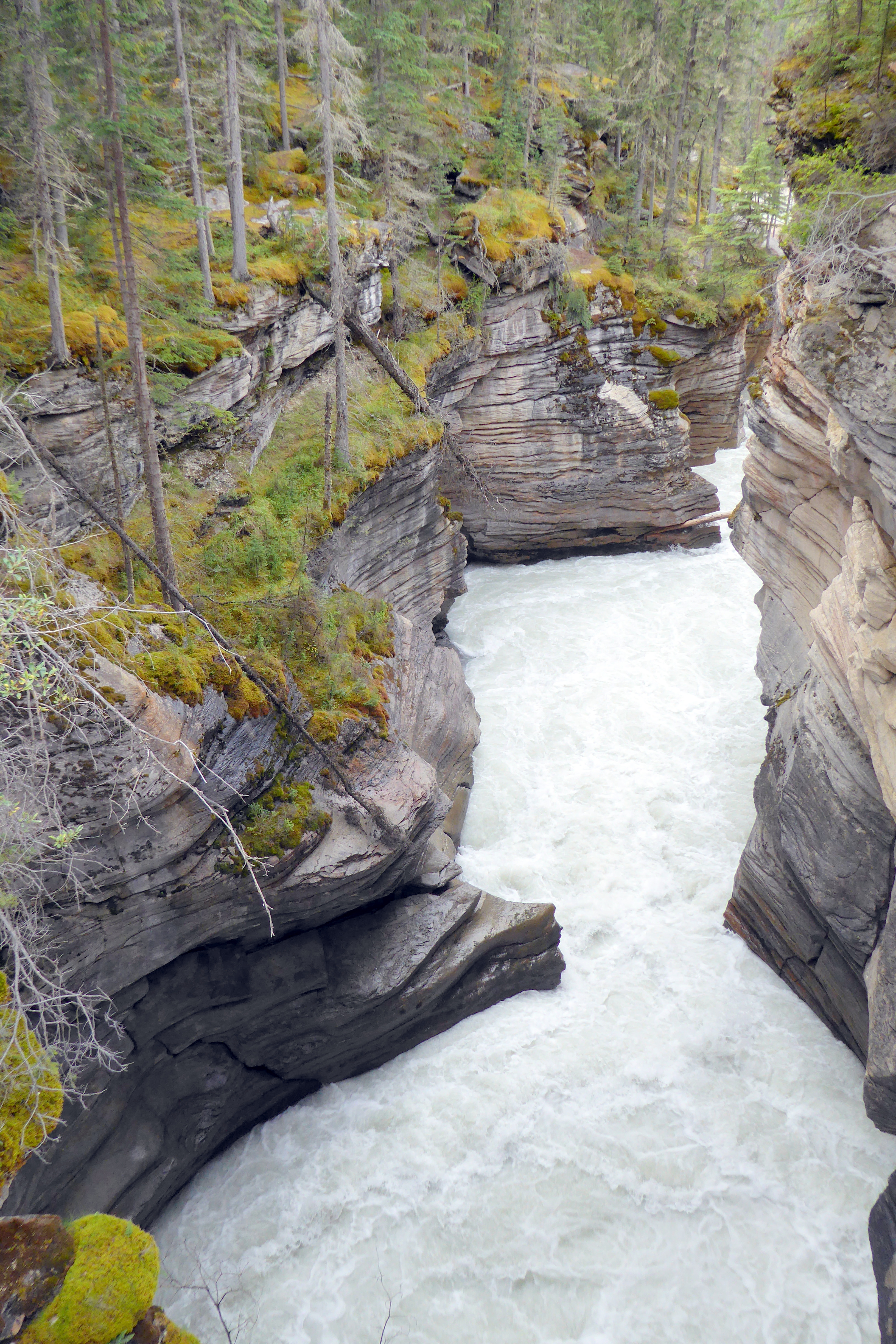
Following our buffet lunch back at the base station, we stopped for a hike at Athabasca Falls and River after passing by this waterfall:

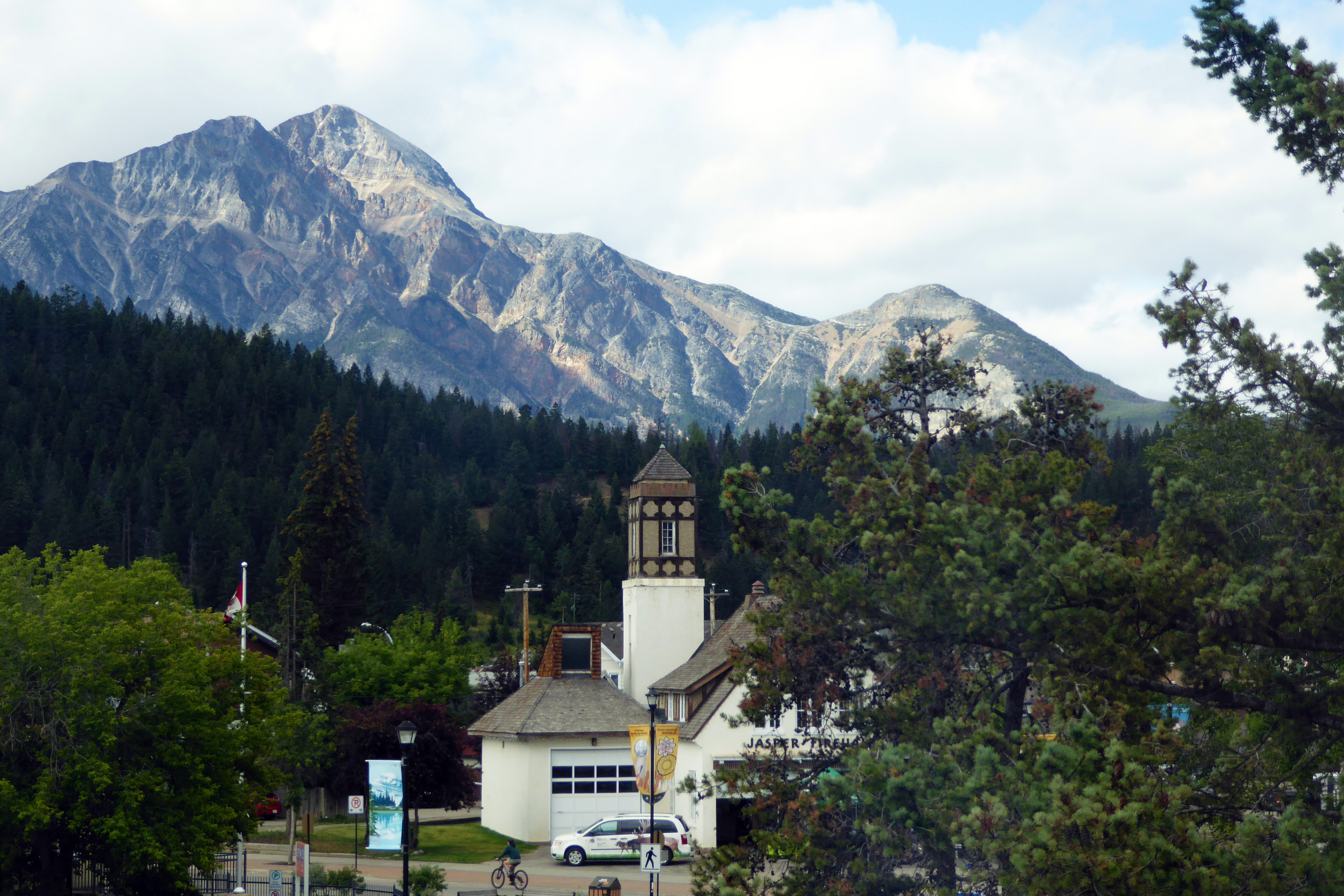
Finally, we headed north to another UNESCO site, Jasper National Park, our home for two nights in the town of Jasper.  We had a nice view from our room at the Whistler’s Inn!

Flowers outside of the local grocery store

The town is small, so I took a quick look around before Bruce and I met up with the group for dinner.  Opting for the salmon (again!), our streak continued!

Next up:  Maligne Canyon, Lake, and River in Jasper National Park

PATCHWORK PADUCAH: HOME OF THE NATIONAL QUILT MUSEUM

There are many forms of art and craft that have always fascinated me; however, quilting never captured my interest as much as glass-work or woodwork, my two favorite mediums.  That all changed in 2006, when I saw the most amazing quilts as part of a fiber arts exhibit, at the Southwest School of Art, in San Antonio.  Sometime after that, I heard that Paducah, Kentucky was home of the National Quilt Museum.

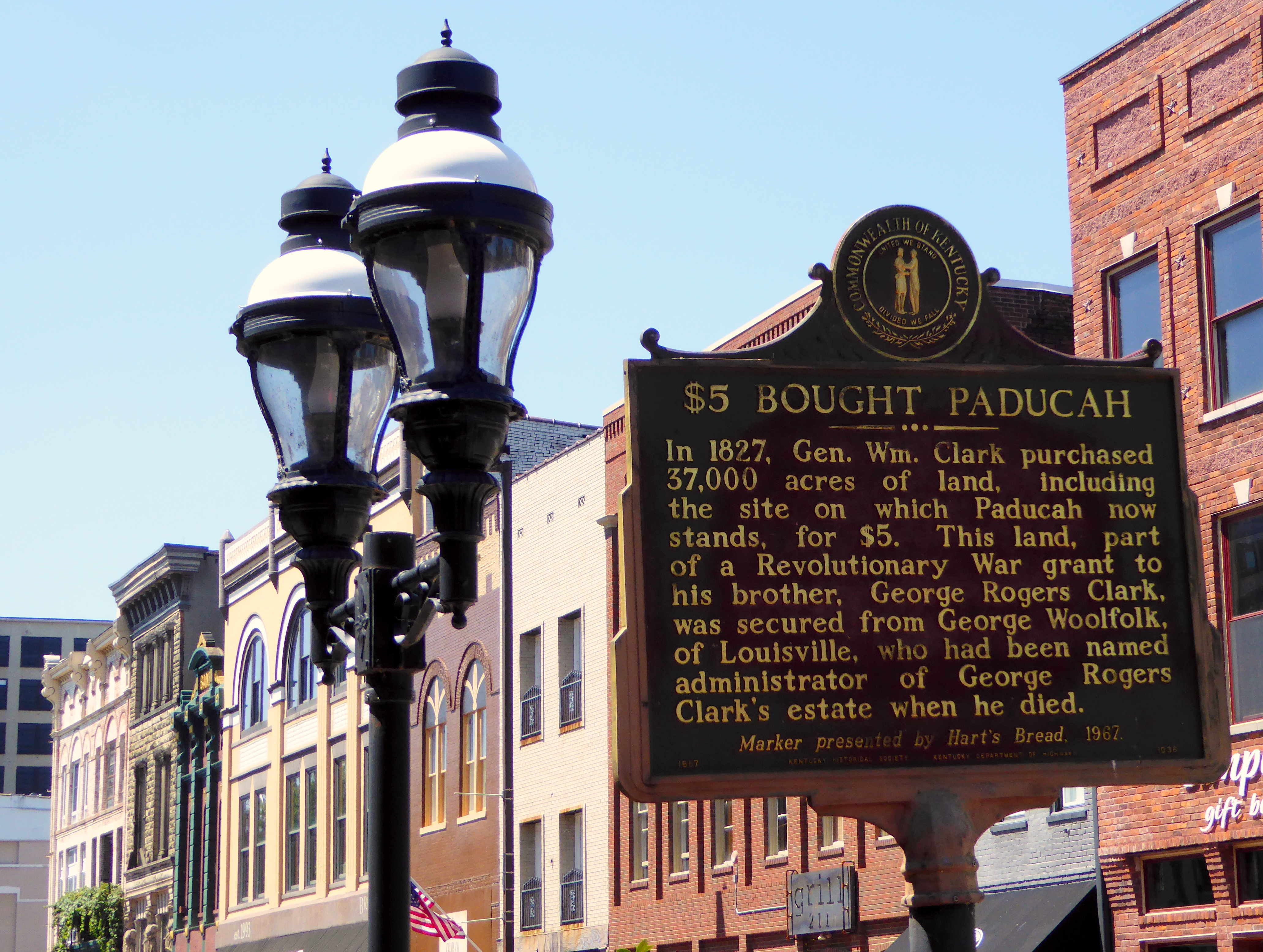
Paducah?  This California gal had never heard of Paducah, population +/- 25,000; however, I kept hearing the name over and over, after moving to Georgia.  When Bruce and I noticed Paducah was on the itinerary for our American Queen Steamboat cruise, it piqued our interest, because of the National Quilt Museum.  If the quilts at the exhibit we had attended were that amazing, imagine how incredible they would be at a national museum!

P1140651.JPG

We made the museum our first stop, following the hop on-hop off bus tour of the artsy town that is located on the confluence of the Ohio and Tennessee rivers, halfway between St. Louis and Nashville.

As soon as we walked into the lobby, we knew this wasn’t just your grandmother’s quilt museum!  There are not enough adjectives to the describe the quilts we saw, and if photography (flash or otherwise) had been permitted, the pictures wouldn’t have done those quilts justice.  Go ahead and check out their website, though; you will be amazed!  Glancing at the current exhibit, you will think those are paintings hanging on the wall.  You can’t possibly imagine the thousands of hours that went into making some of those quilts, obviously labors of love.

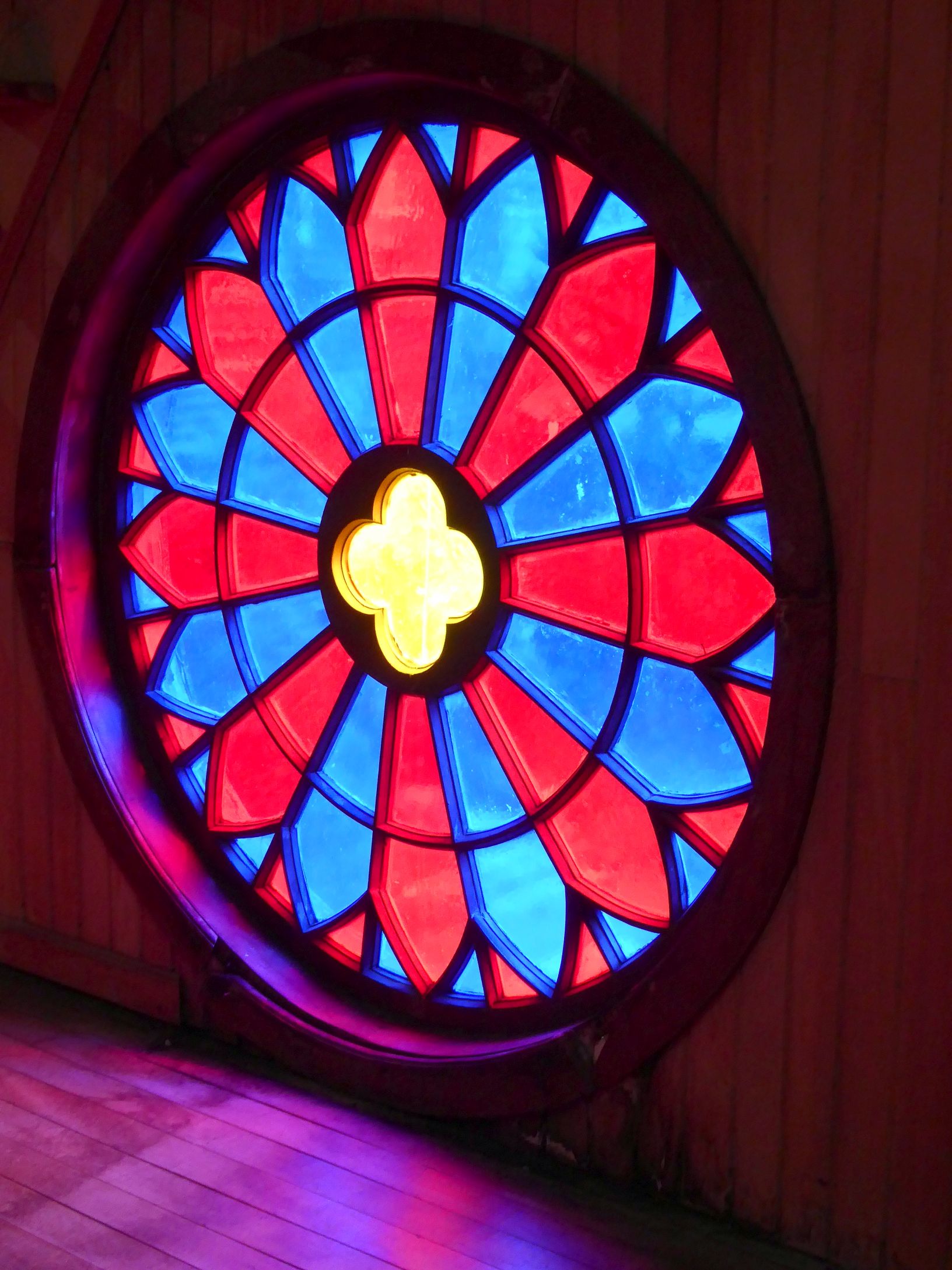
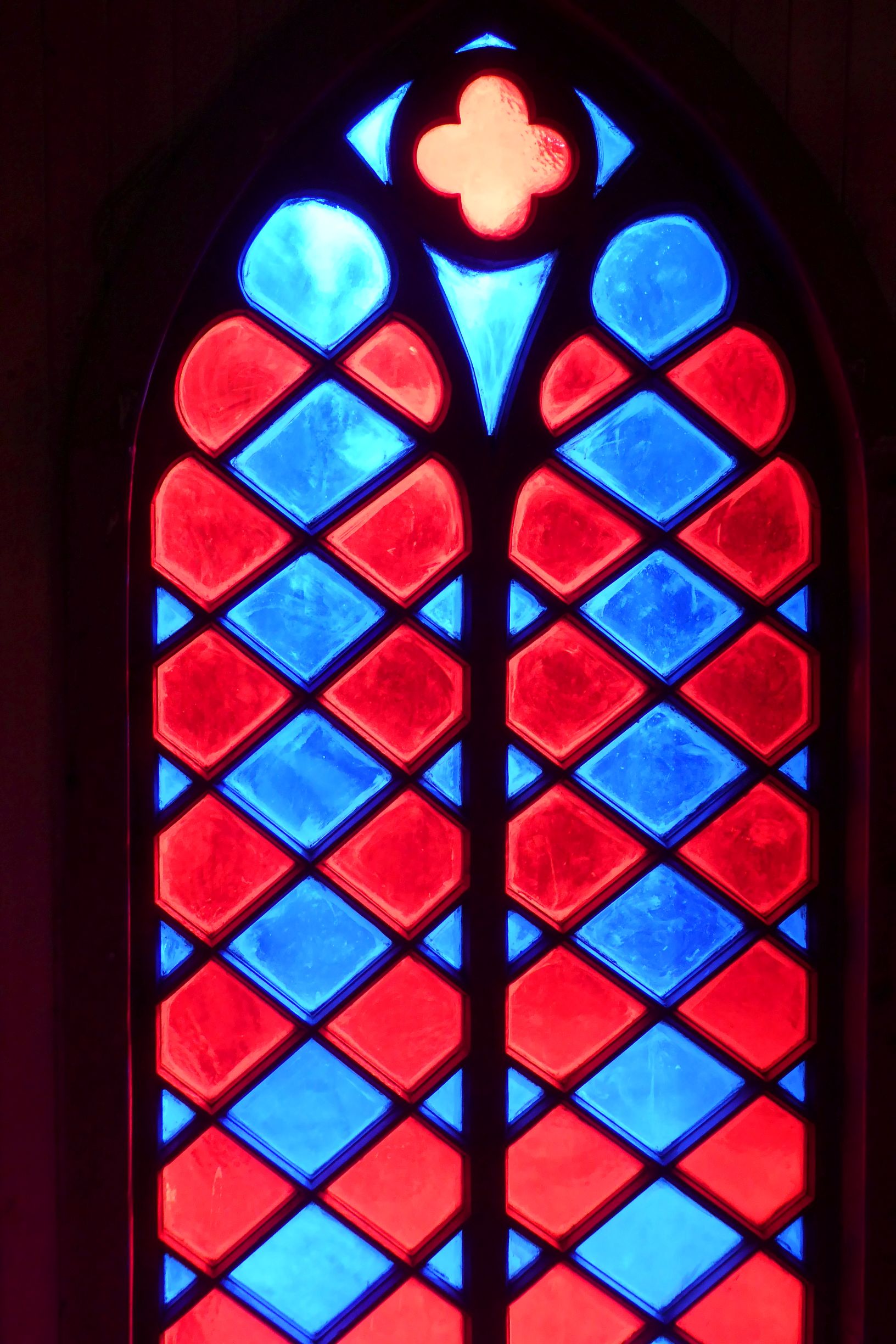
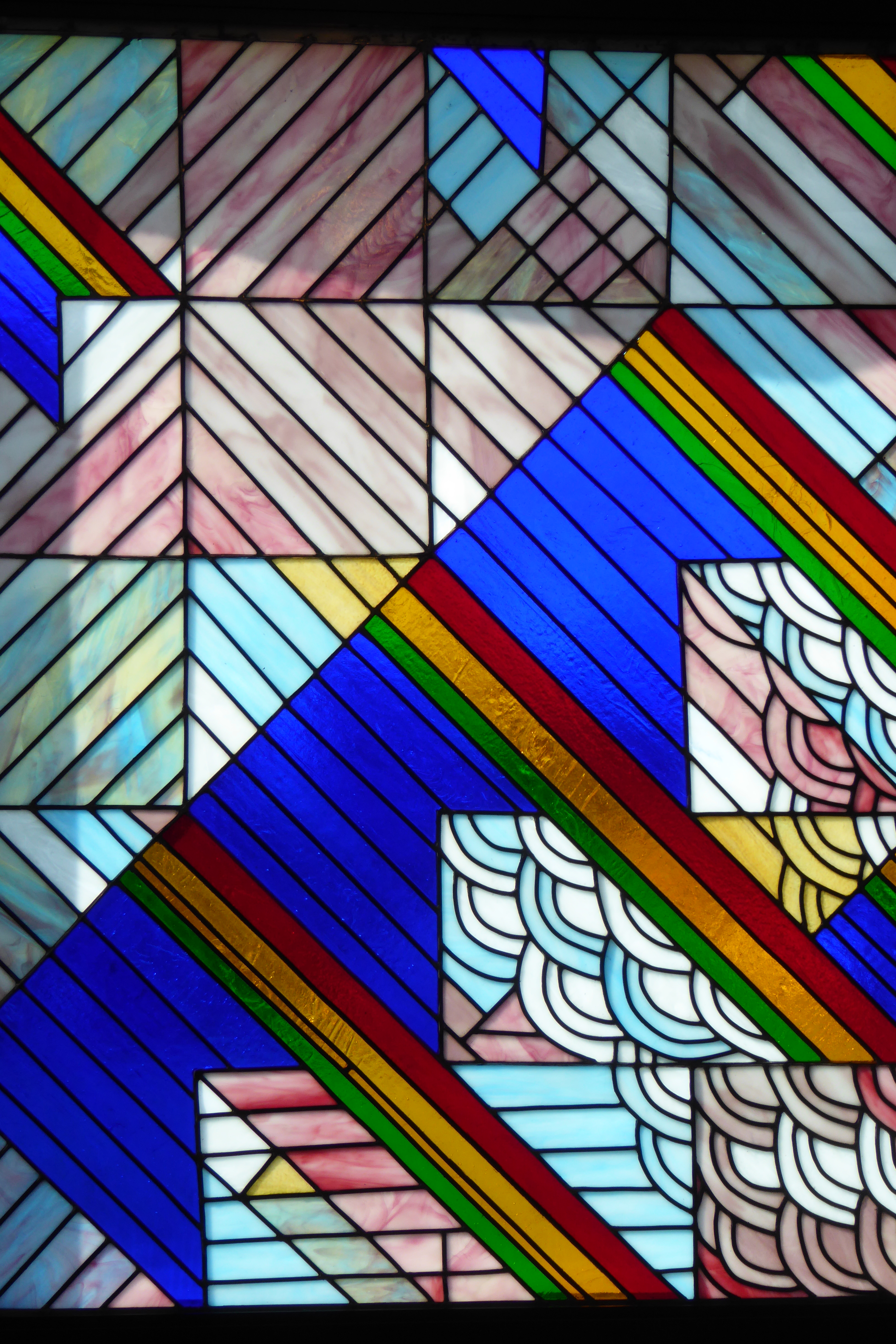
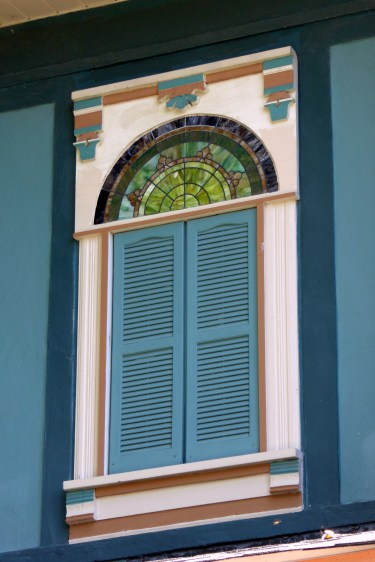
I did, however, take pictures (with permission) of the gorgeous stained-glass windows in the lobby and conference room:

P1140607

P1140605

P1140604

P1140606

P1140608

Visiting the National Quilt Museum was not only the highlight of our day in Paducah, but it was one of the highlights of the entire cruise.  Those sentiments were echoed by Bruce as well as several of the other men we spoke with on our cruise.  (Even the men who were dragged to the museum by their wives were enthusiastic about what they saw and happy they went along!)

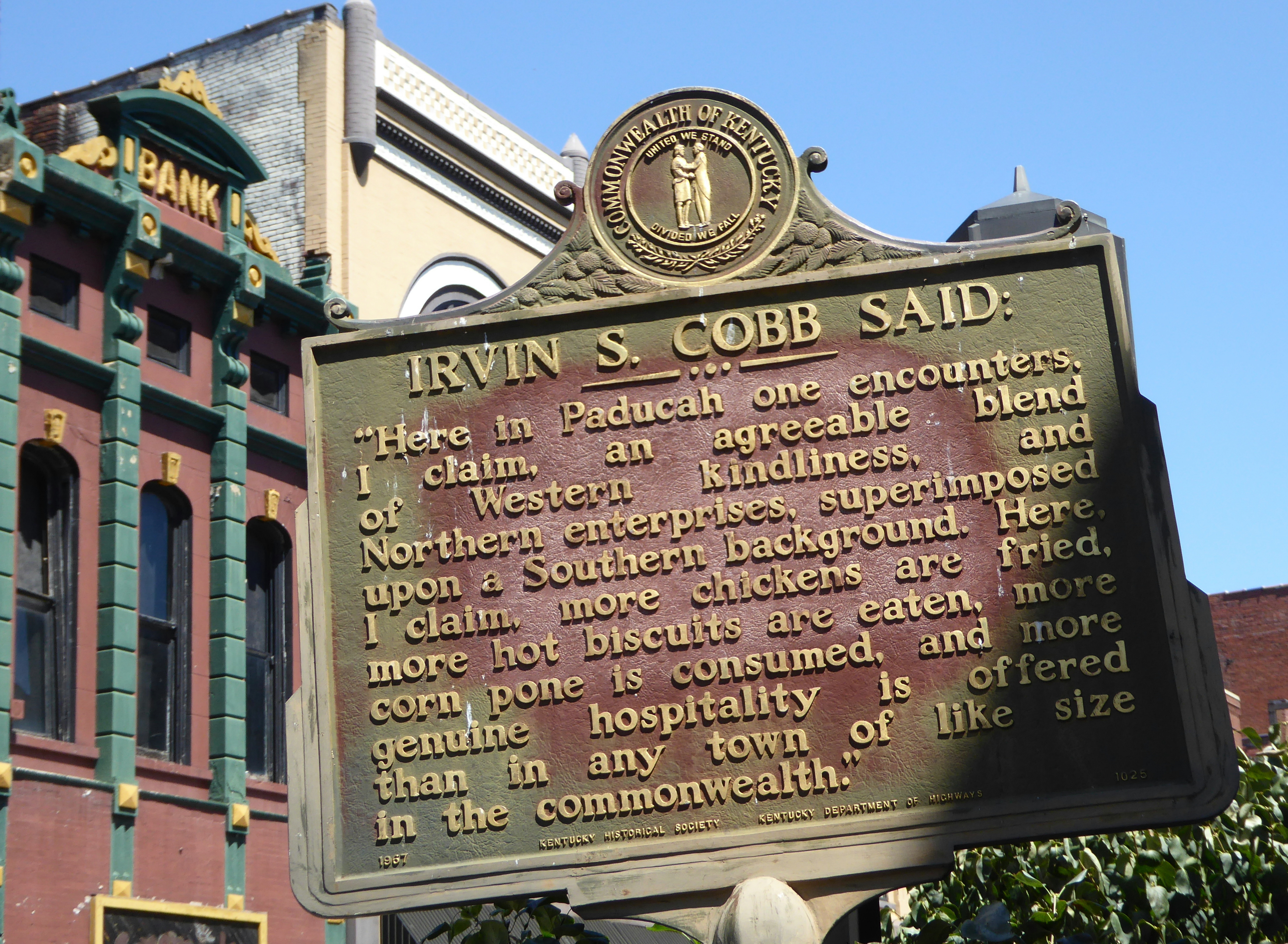
Aside from the museum, the entire town of Paducah had such a cool, artsy vibe.   As a matter of fact, UNESCO designated Paducah as the world’s seventh City of Crafts and Folk Art, in 2013.  (Santa Fe, New Mexico is the only other American city given such a designation.)

P1140627.JPG

P1140628.JPG

P1140657.JPG

P1140609.JPG

P1140611.JPG

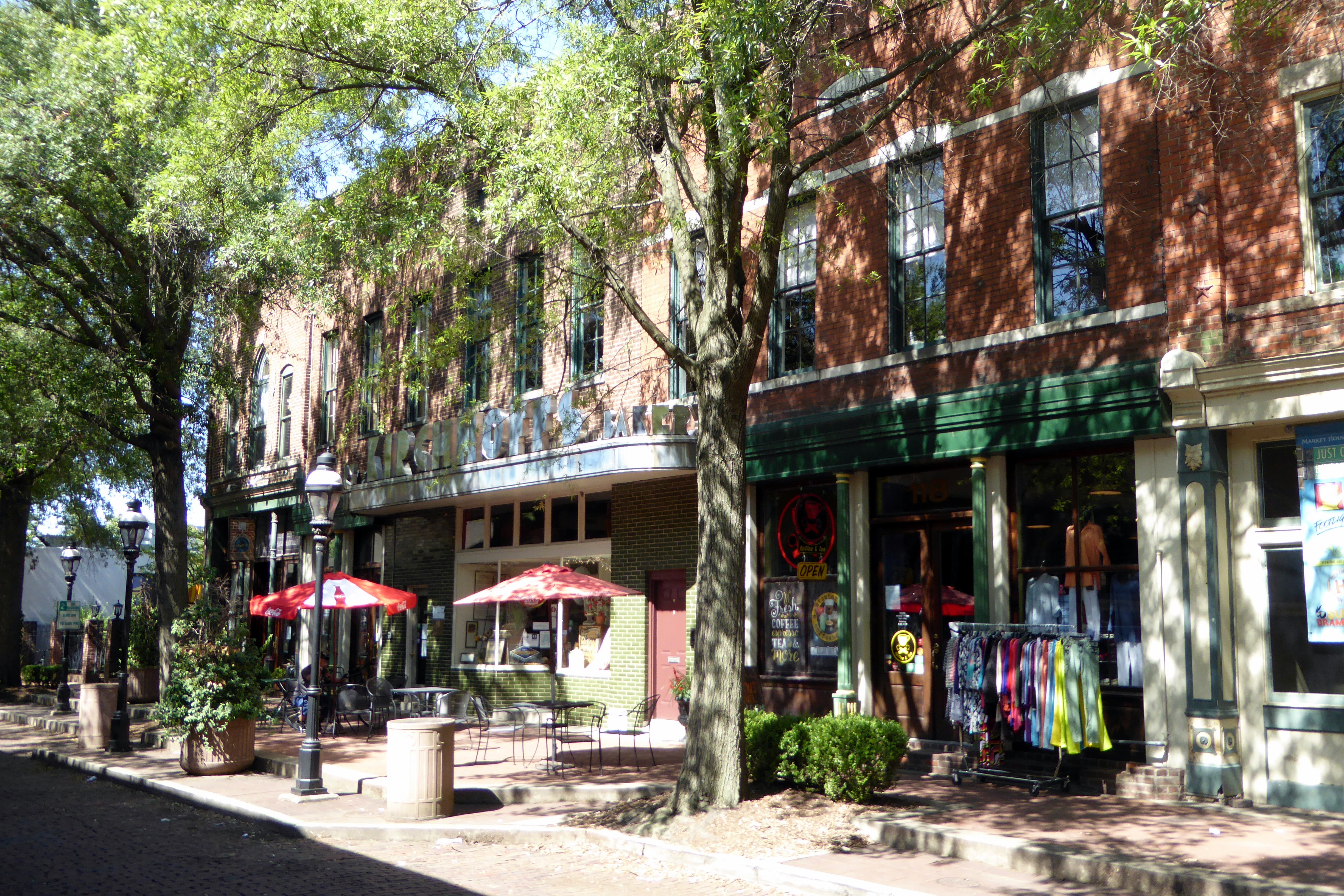
In addition to the artistic feel of the town, great care has been taken to preserve the historic buildings of Paducah.  As a result, twenty blocks of the downtown commercial district have been placed on the National Register of Historic Places.P1140621.JPG


P1140629P1140618


P1140613.JPG

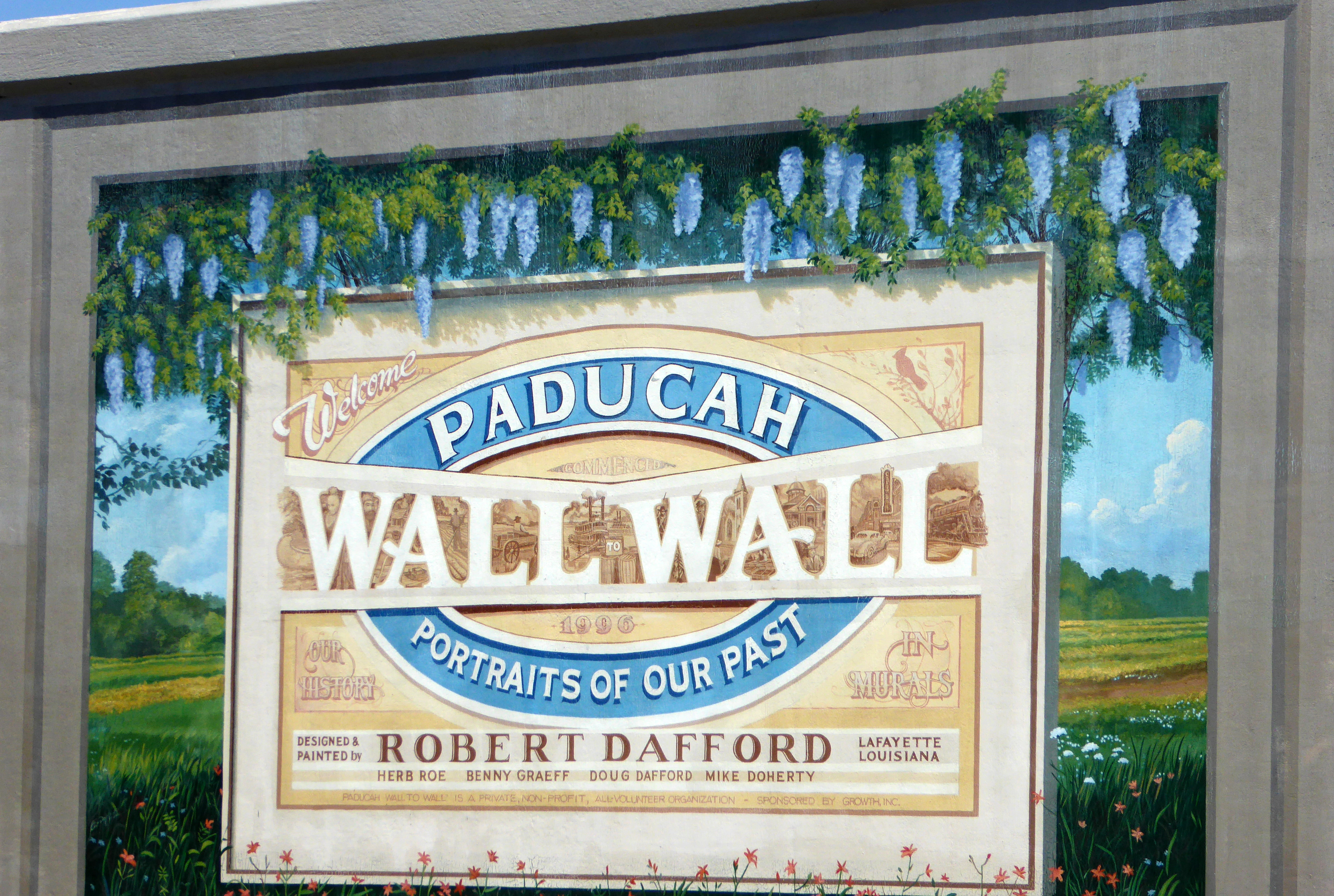
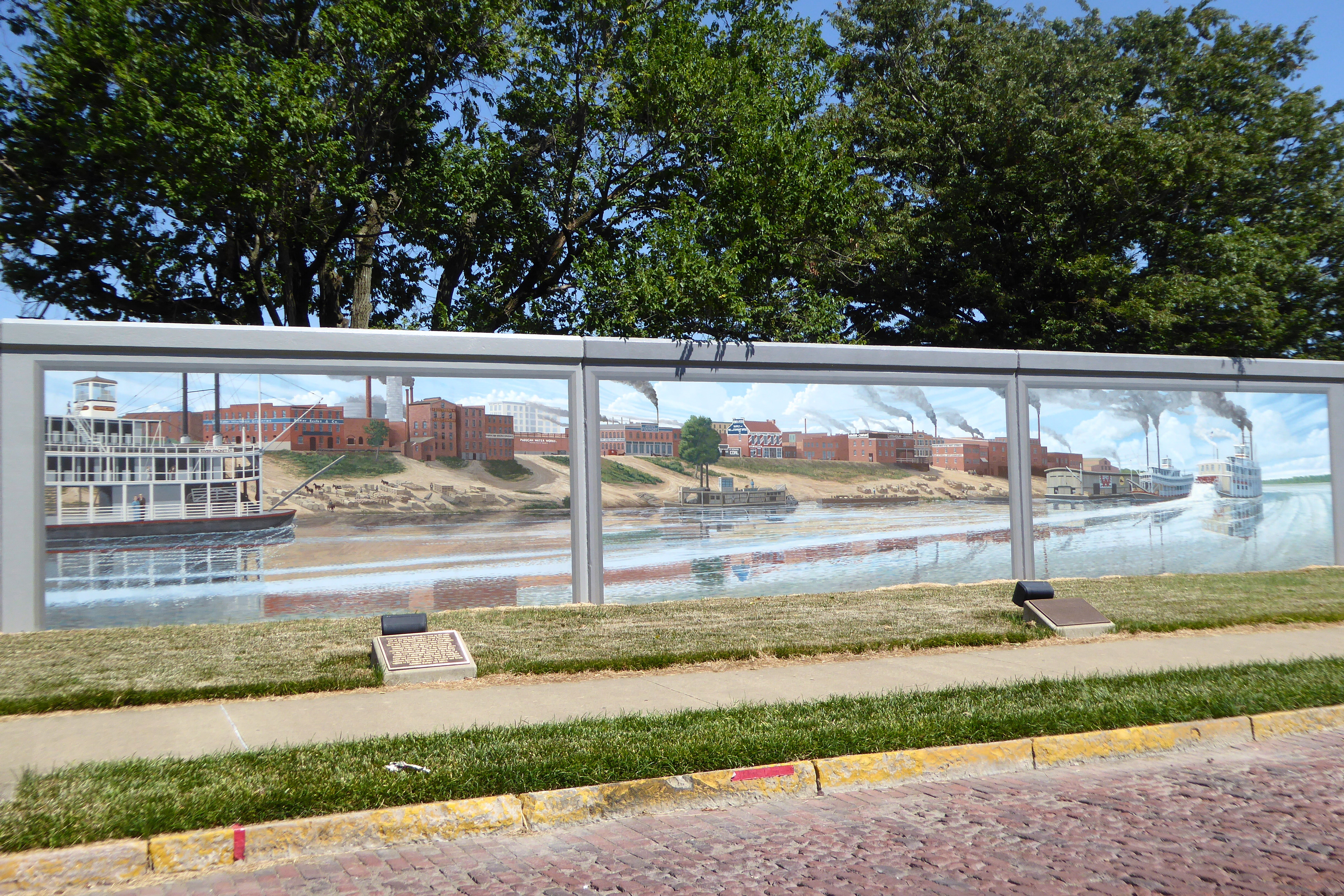
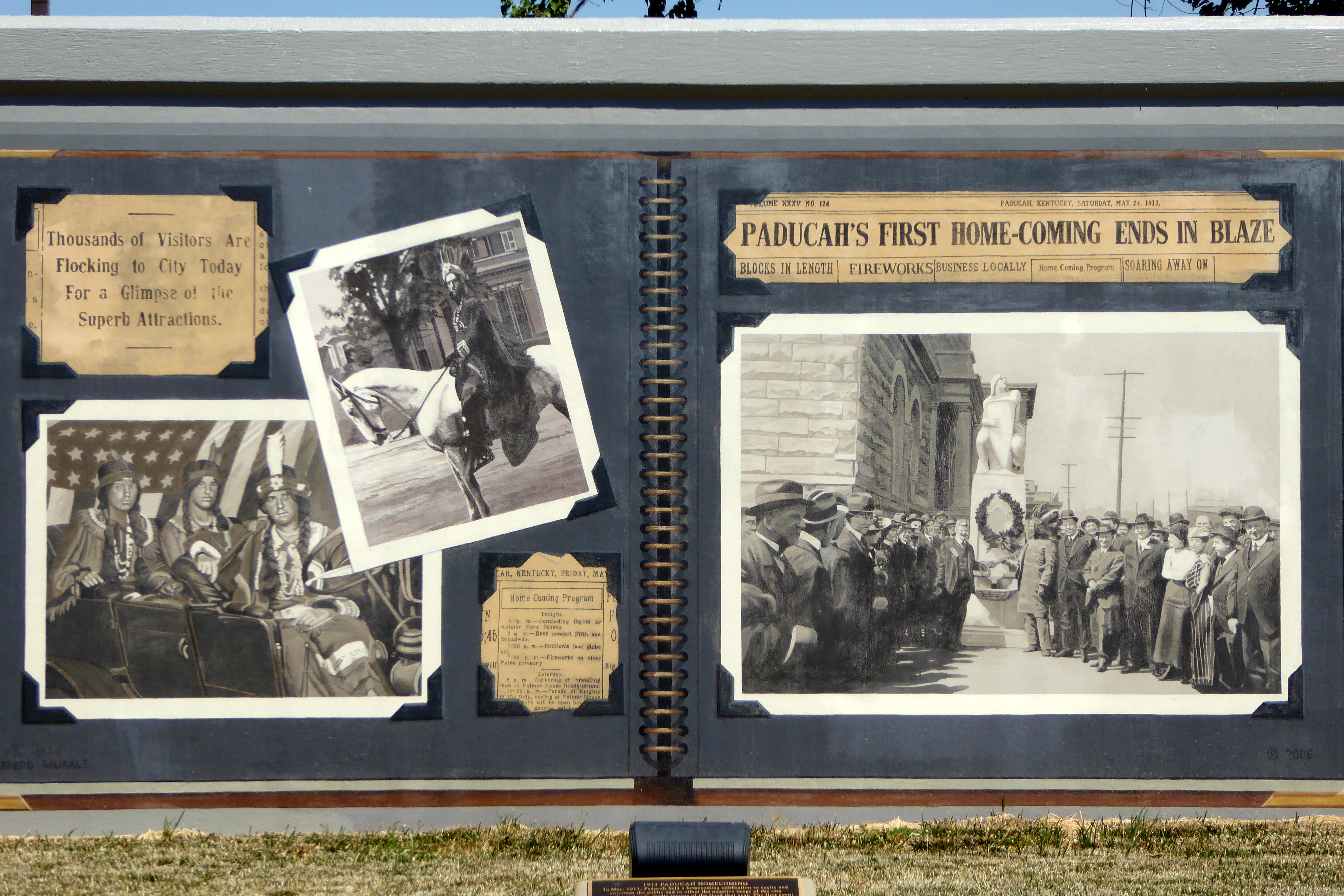
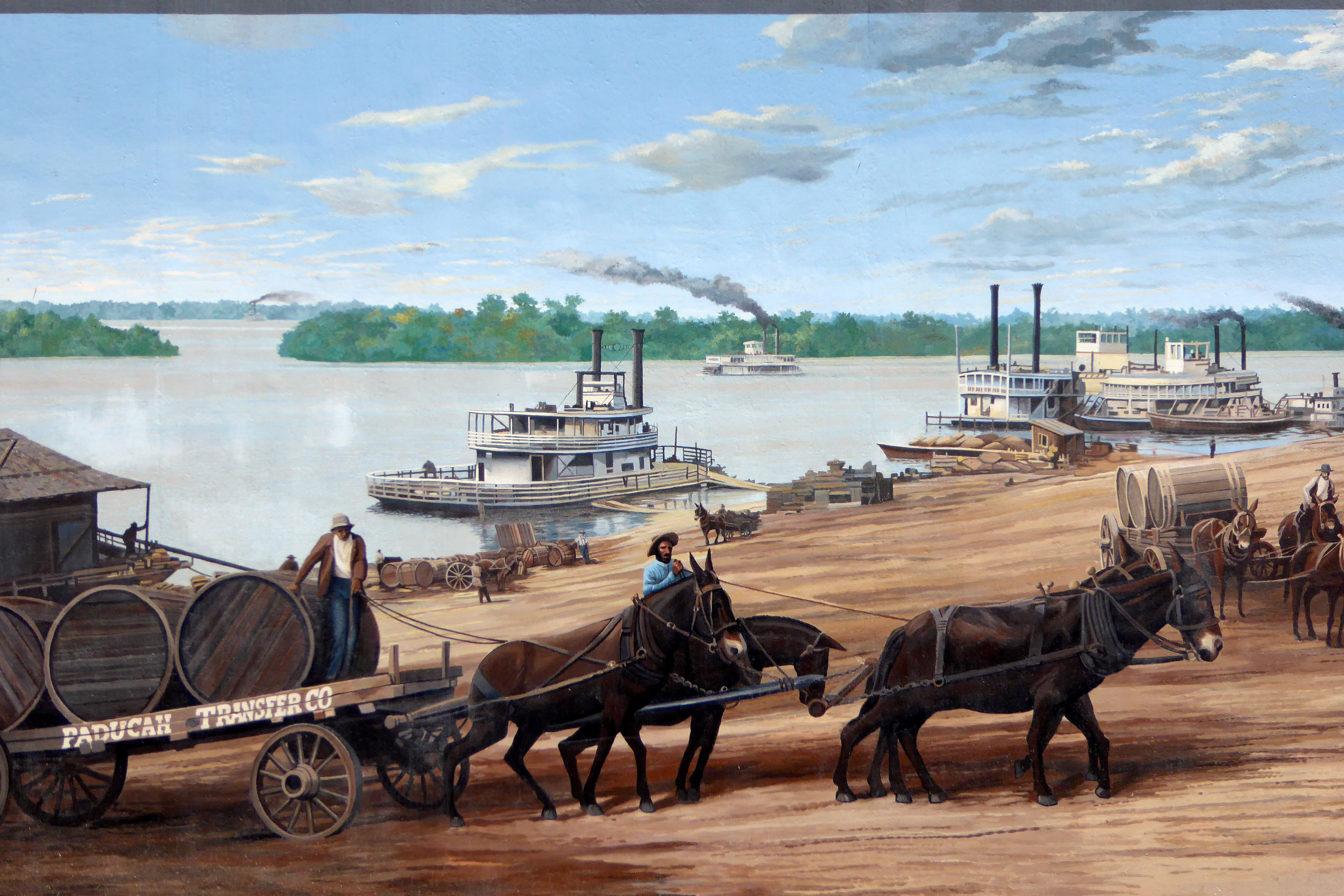
Paducah also did a great job of beautifying their formerly drab flood wall with murals designed and painted by Robert Dafford and his crew.  We enjoyed learning about Paducah’s history through these murals, just as we had done in Cape Girardeau.

P1140632.JPG

P1140647.JPG

P1140646.JPG

P1140645.JPG

P1140643.JPG

P1140639.JPG

P1140633.JPG

P1140649.JPG

P1140648.JPG

P1140631

P1140654.JPG

P1140652.JPG

P1140656.JPG

Walking around downtown was such a pleasure, and we enjoyed seeing the historic (and beautifully maintained!) homes nearby.

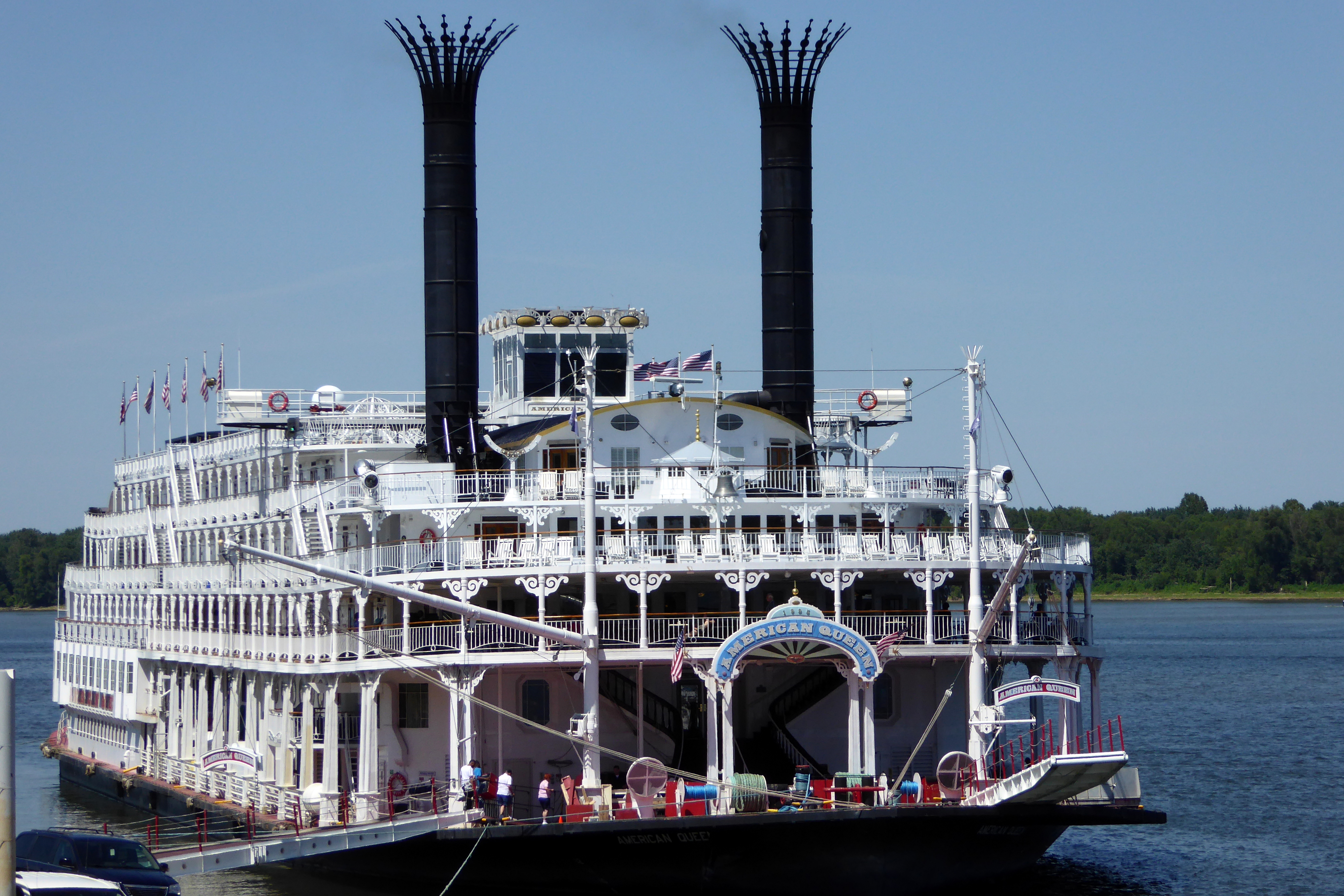
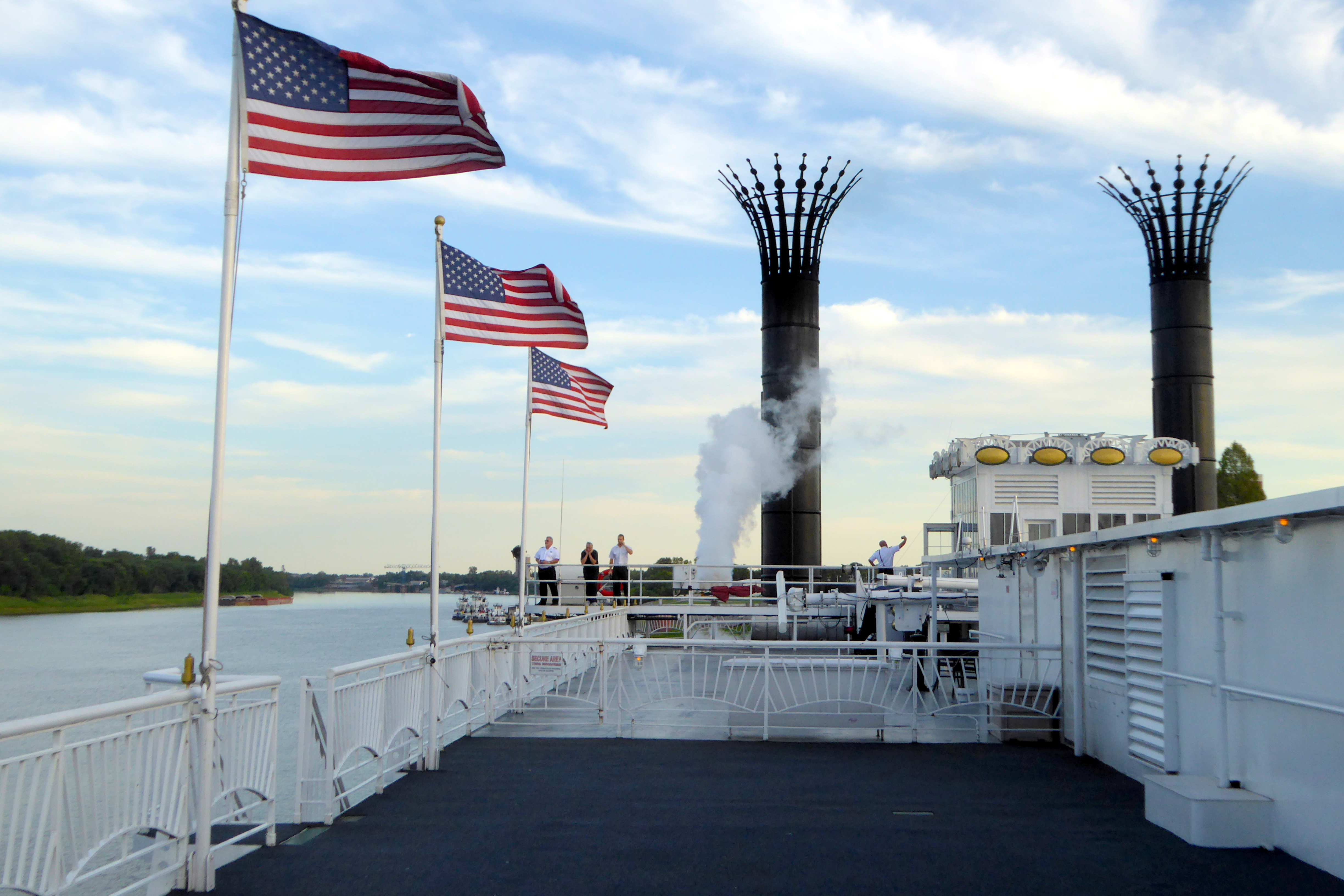
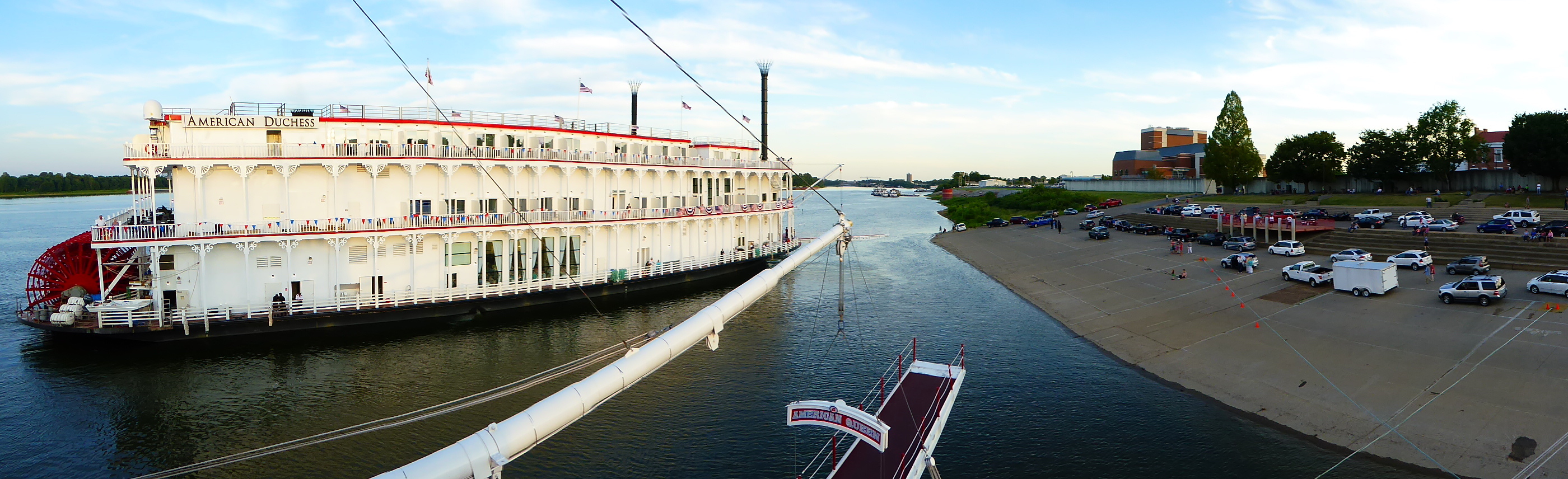
American Queen Steamboat Company’s marketing department definitely got it right when they chose Paducah as the meeting point for American Queen and the company’s third riverboat, American Duchess.  On its inaugural river cruise, the brand-new Duchess arrived before sunset and tied up just ahead of our boat.  It was a beautiful evening that couldn’t have been planned any better.  As the passengers from both boats waved, shot photos, and shouted greetings, the Queen welcomed her sparkling new sister with several loud steam-horn blasts and a calliope concert.  It was a travel brochure moment for American Queen’s marketing department, and we were sure the drones that were sent up captured some amazing shots!  We sure had a lot of fun, too!

P1140682.JPG

Although several of the crew and passengers went over to tour the Duchess, we opted to enjoy another fabulous dinner in the dining room, and wait until January to see the new girl in town.  (More to follow next month!)

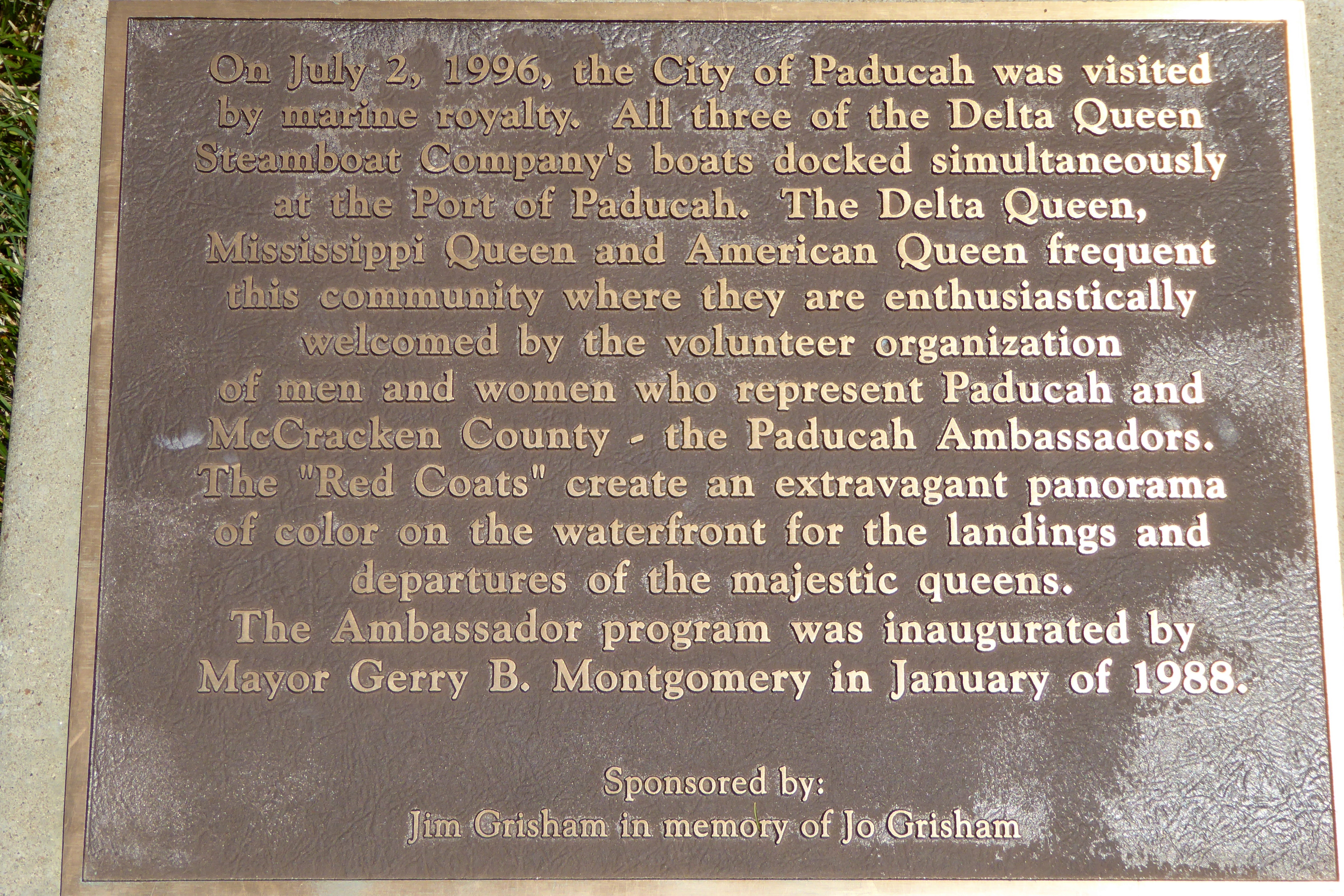
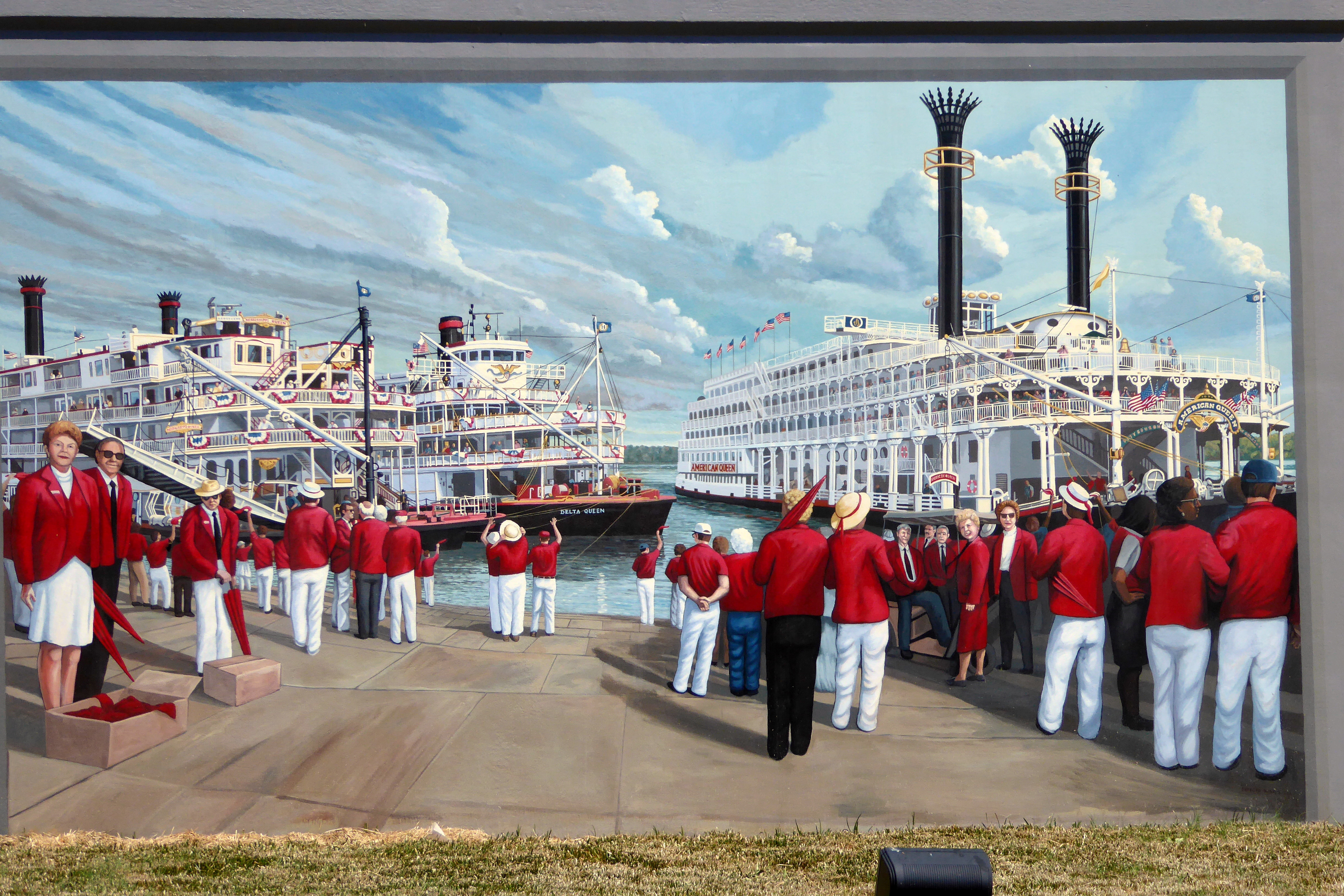
Until then, here are some scenes from that Kodak moment, reminiscent of when the American Queen, Mississippi Queen, and Delta Queen met up in Paducah in 1996, as was depicted in one of the wall murals (above).

P1140676.JPG

P1140675.JPG

P1140692

P1140660.JPG

Coming up next:  A DAY “AT RIVER”