In addition to a slide show of the northern Spain portion of our tour, I show some video clips I shot of a performance of fado music at a club in Porto.
First, here is my slide show. For the best viewing experience, use a desktop computer, turn up the speakers and view on full screen by clicking on the symbol in the lower left corner of the YouTube screen after the show begins.
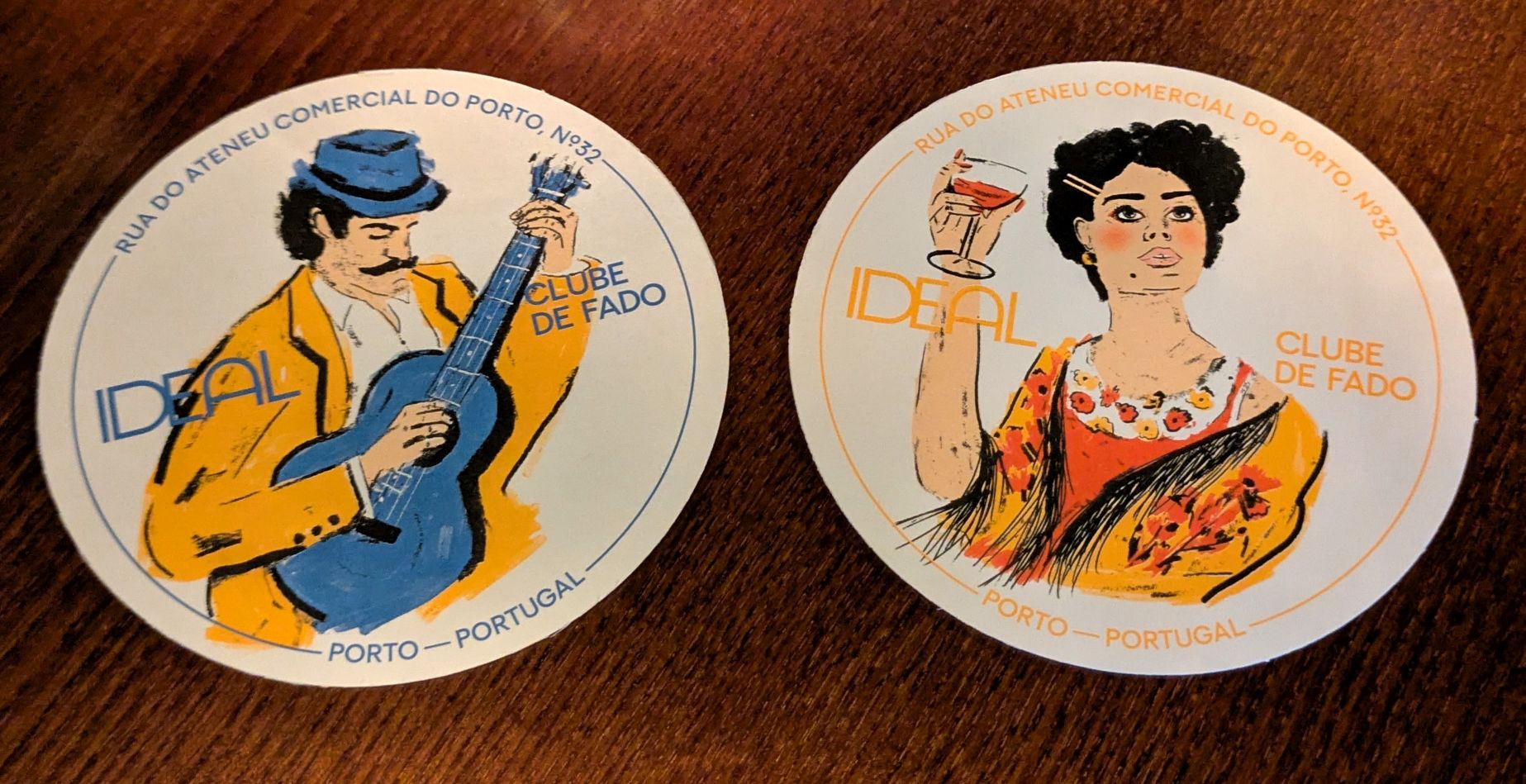
While we were in Porto, our group visited Ideal Clube de Fado, a cozy night club, to hear Portuguese fado music. As the club brochure states, “The Ideal Clube de Fado is a guild of artists distinguished by their dedication to the preservation and dissemination of Traditional Fado, the unique Portuguese musical style.” This music was added to UNESCO’s Intangible Cultural Heritage List, in 2011.
“Fado” translates to “destiny.” As I had mentioned previously, many Portuguese have left their country for a better life elsewhere, and more live in other countries than in Portugal. There is a long history of this, and families are used to members leaving home and never coming back. Fado music tells these stories, so the music is melancholy and very emotional.
Fado performances aren’t scripted or repeated in the same way each night. On stage, the fado singer chooses the fados he or she wants to sing and combines them with the traditional fado music that best matches. In Traditional Fado, only the songs have names, and you can add different poems to each one.
(For all photos, click on the image for a full screen view.)
We were captivated by the performances of both the female and male singer we heard. Here are two clips of my favorite:
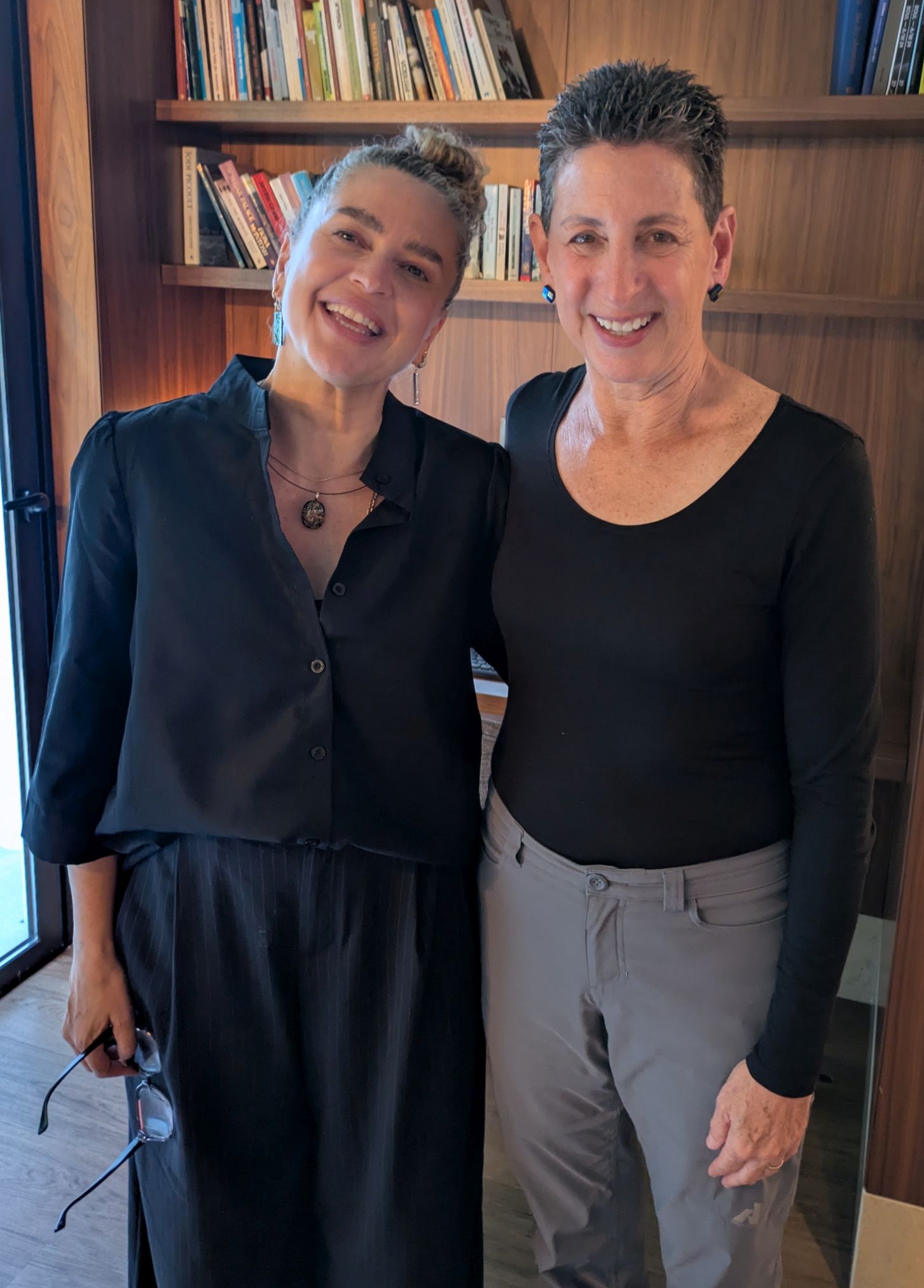
As we concluded our tour, one last photo was taken of our wonderful group and leader, Serena. What a fabulous tour it was!
In addition to tourism, Airbnb’s, and the immigration of Americans driving up rents in Porto and Lisbon, another problem Portugal is experiencing is the emigration of educated young people leaving to find better jobs with higher pay elsewhere. Our group met with Renato, a university student, who plans to do just that.
We met up with Renato at Café Piolho, located across from the university. Since 1909, this has been the setting of many political encounters and debates. During the dictatorship, undercover police would come into the café and arrest student dissidents. The owners of the café supported the students, so they put up mirrors to enable them to warn the students in the reflection with a head-scratching signal if they knew the police had entered. Because of this history, it is now the most famous café in the city.
(For all photos, click on the image for a full screen view.)
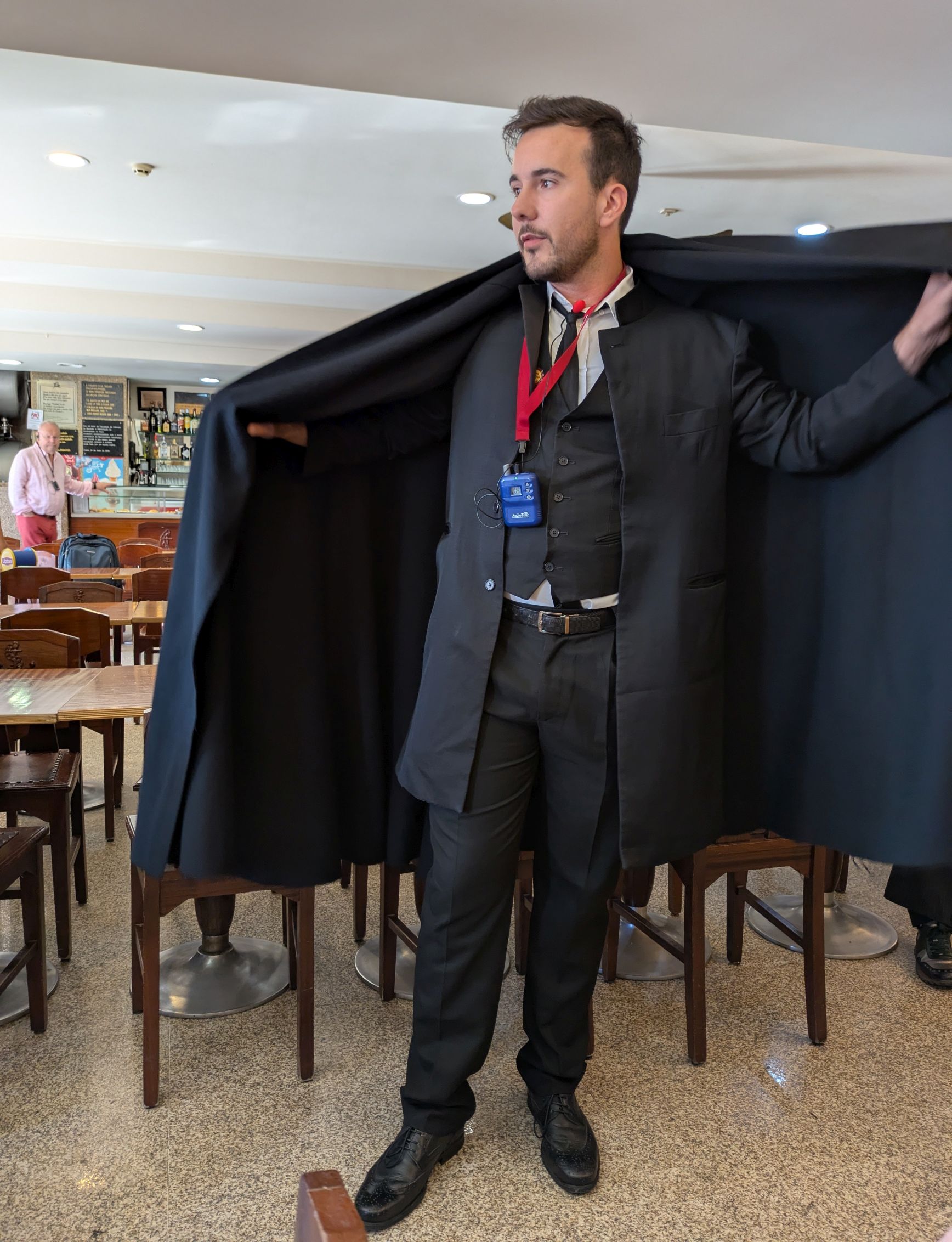
Looking quite dapper in his black suit and cape, Renato explained the tradition of his university outfit, which dates back 800 years. Worn for special affairs and events, only students who are past their second year of university wear black suits and capes. The cape is the most important part of the outfit, and it is worn over the left shoulder at ease and then wrapped around the shoulders at night. If it’s a male student, and he has a girlfriend, she can rip and braid the edge to show “her man” is “taken.” These outfits indicate to new students who the upper classmen and women are, and the older students serve as their mentors. The university fosters a family-like, inclusive environment for its students.
Renato, who is majoring in business and economics, answered many of the questions we had, including the cost of education. He said public universities cost between 600-900 euros per year, and that he pays 800 euros for school, room, and food.
Asked why educated students leave Portugal, Renato said the pay is low in his country. Doctors, for example, earn only 4,000 euros per month, and nurses earn 1,500. In France, the pay is double.
When Portugal joined the European Union and changed to using the euro for currency, the quality of life, which had been high, plummeted. Home ownership is out of reach, and the cost of living (relative to pay), is high.
Most high school graduates are finding it is not worth going to college, because they can earn higher pay in the trades. After attending a private trade school for 3 months to 2 years (depending on the trade), they can earn a minimum of 3-4,000 euros per month, which is as much as a doctor! As a result, the attendance at trade schools is increasing and enrollment in universities is declining.
It’s not just students leaving Portugal for a better life; emigration has been happening across age demographics, because the pay isn’t keeping up with inflation. The population of Portuguese is highest in Brazil (where the Portuguese language is also spoken), followed by Ukraine, United Kingdom, and U.S.A.
Renato hopes to land a job in the U.K. or U.S.A. where he can utilize his business and economics education. He speaks perfect English, so we asked how he learned the language so well. He replied that children learn English in school each year until they graduate high school. In addition, much of their education is conducted in English.
Like many other children growing up, Renato also learned English by watching television, including cartoons and TV shows, with English subtitles rather than dubbing. In contrast, Spain dubs their shows, so they don’t have that option for improving their English skills.
Following our conversation with Renato (which was very interesting!), we had the afternoon free to enjoy the wonderful weather and sights of Porto:
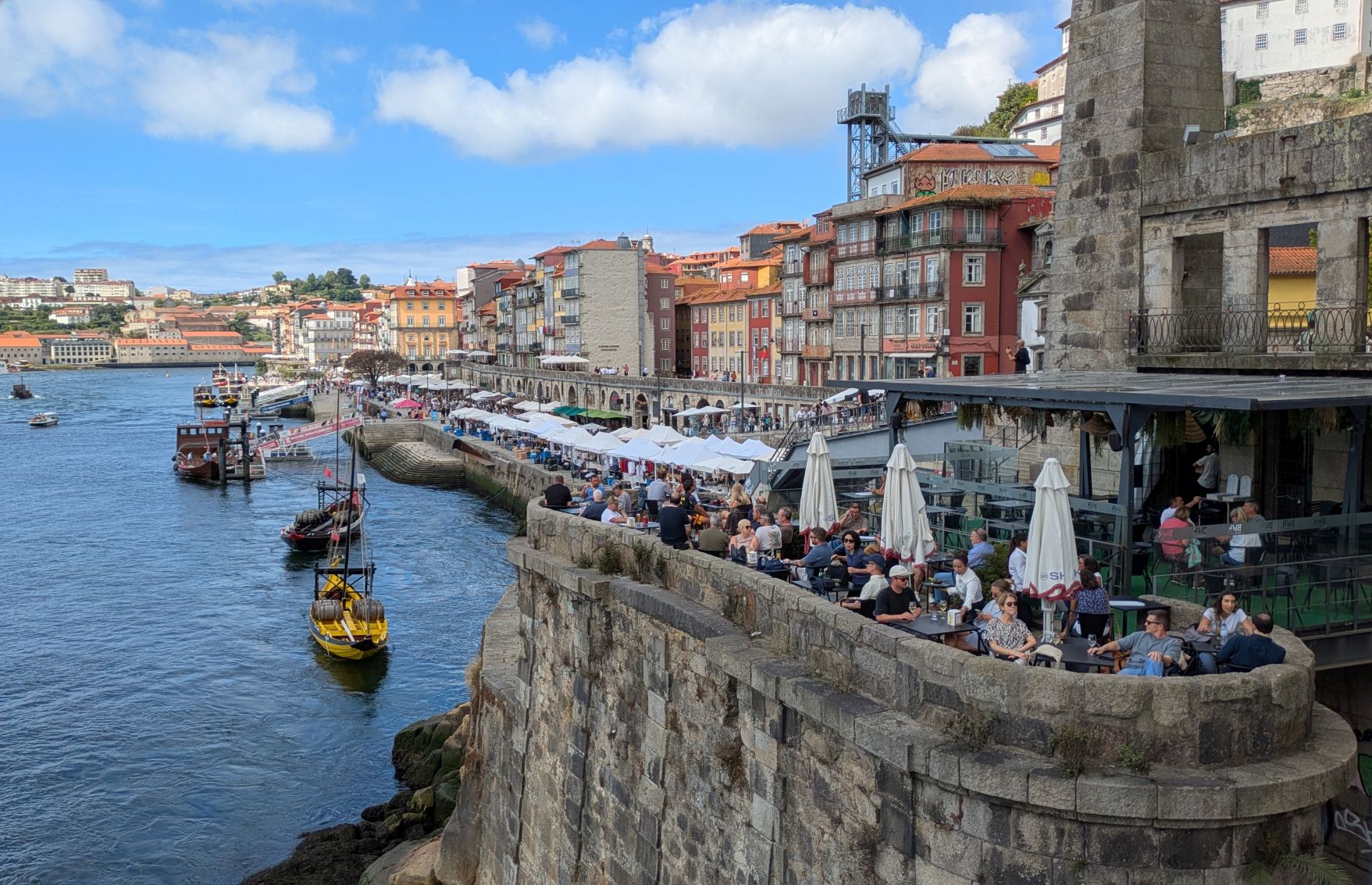
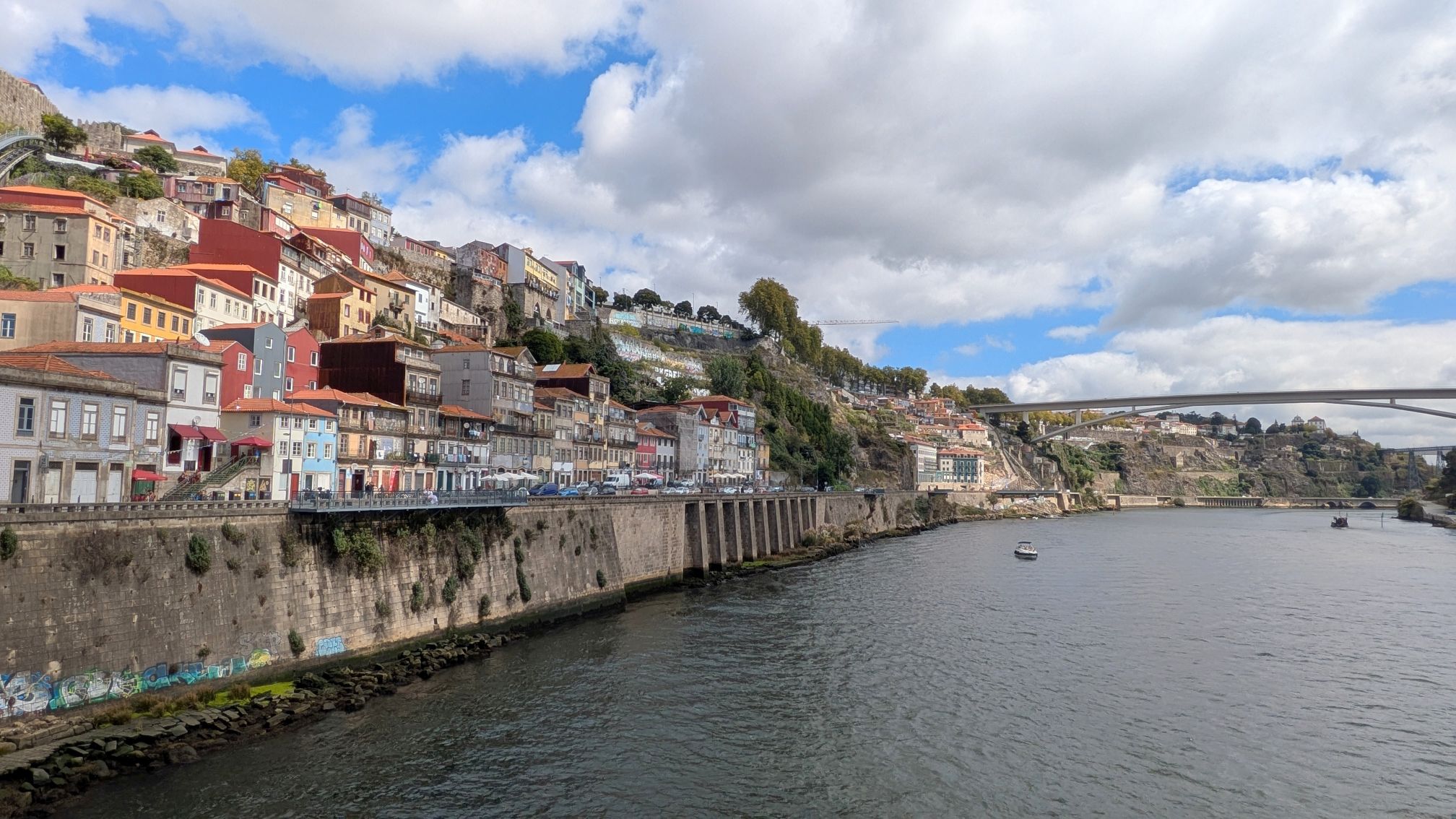
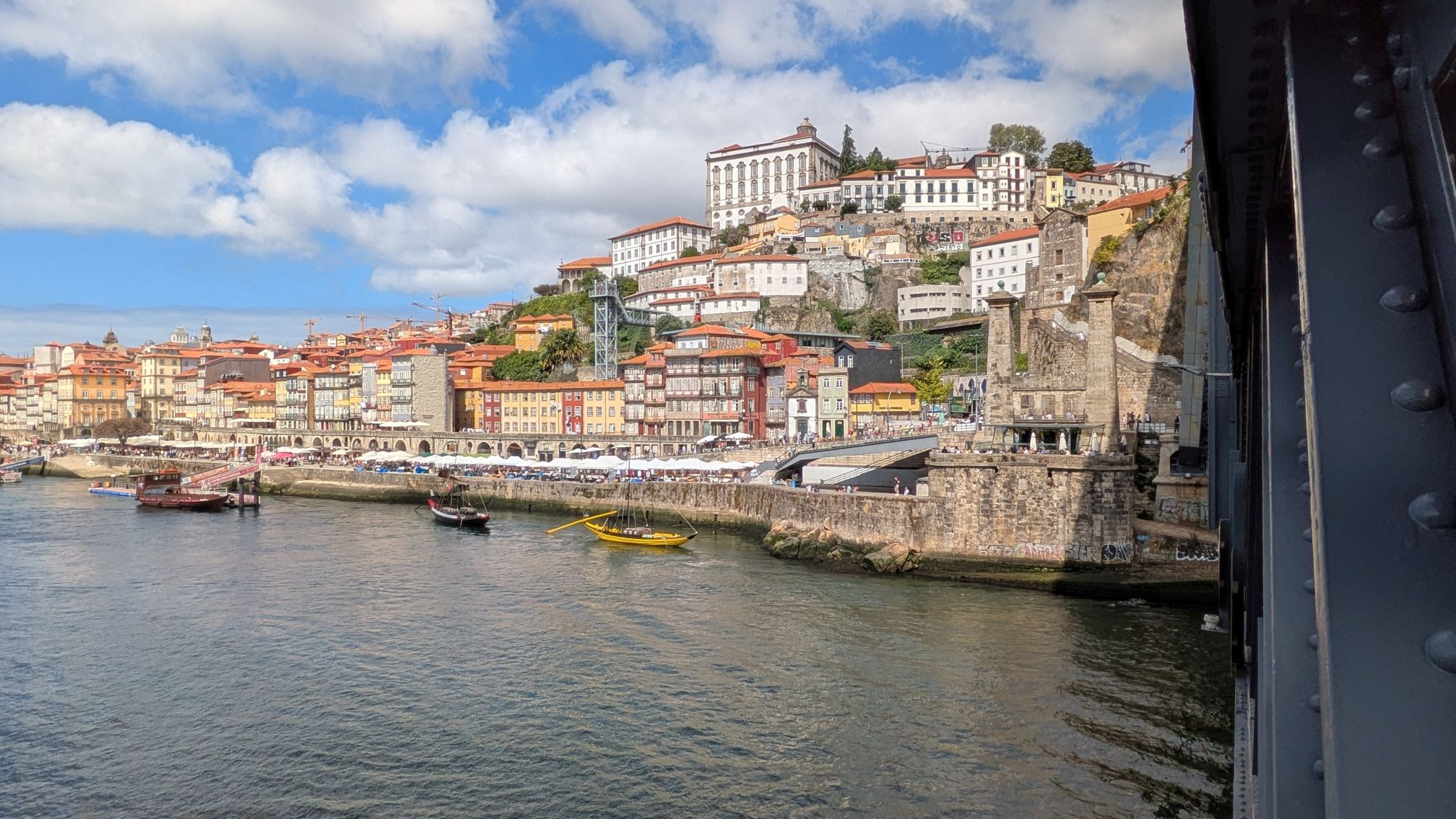
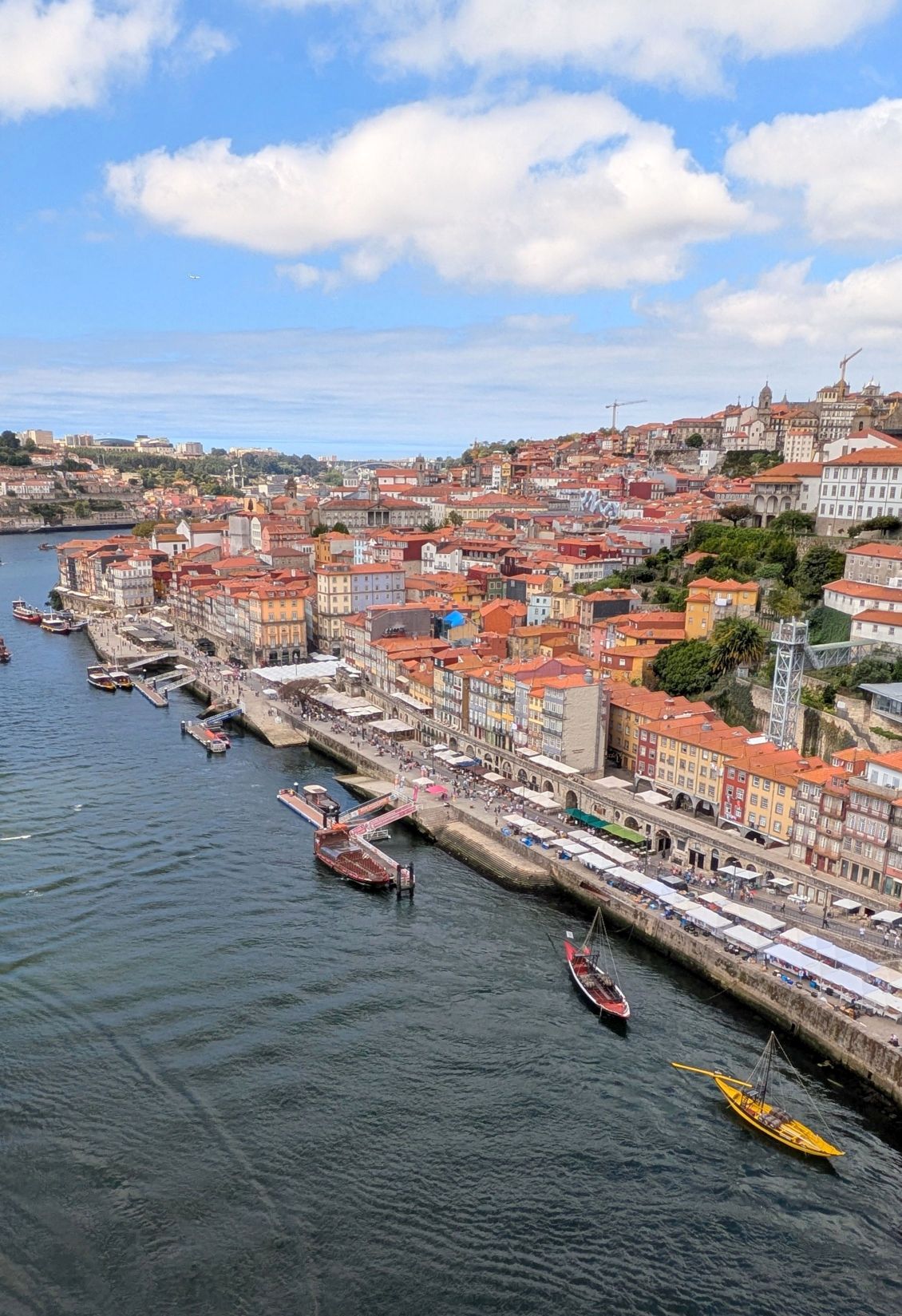
We walked across the bridge over the Douro River for some nice viewsWe walked back across the upper bridge for spectacular views of Porto!
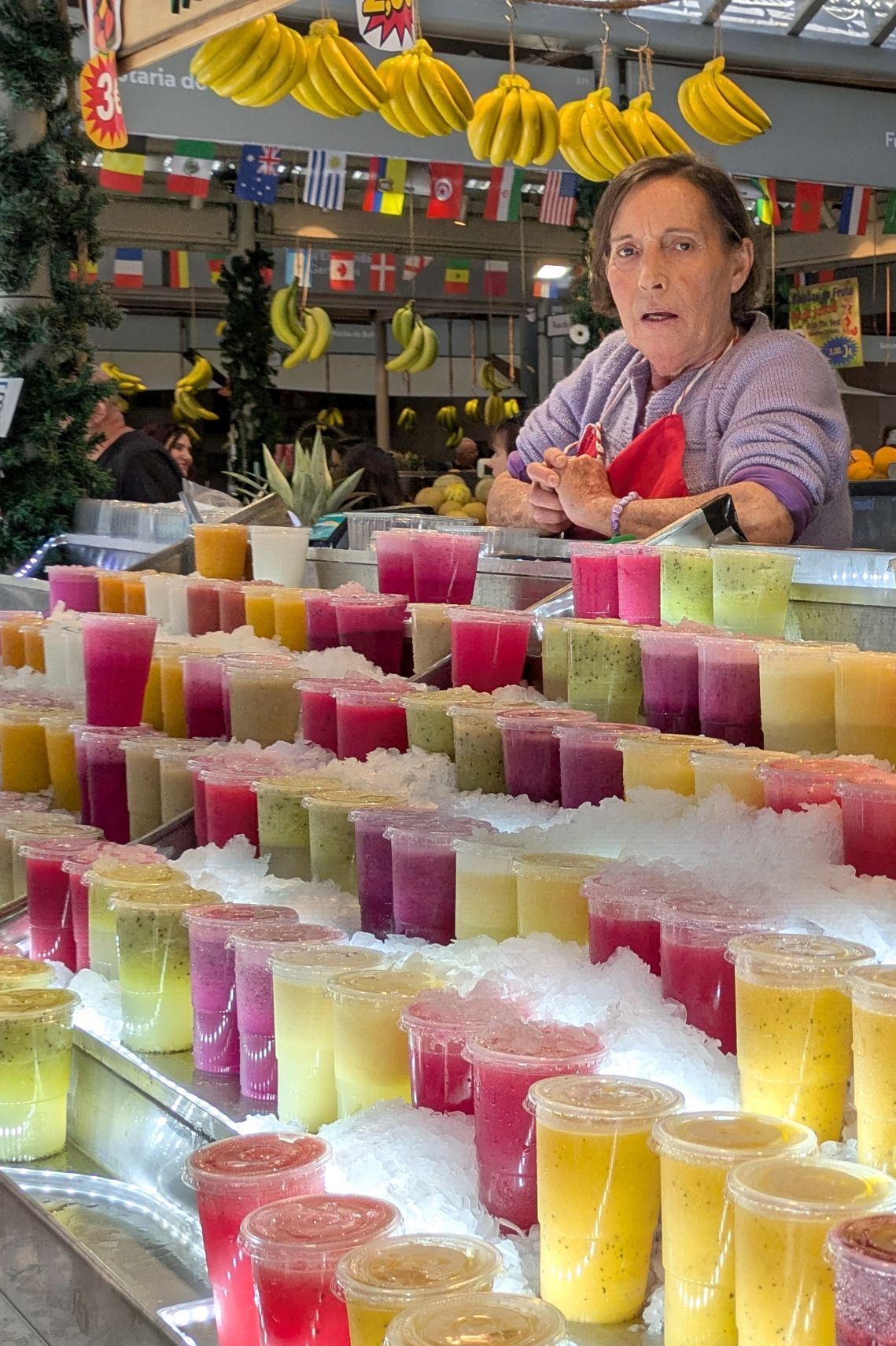
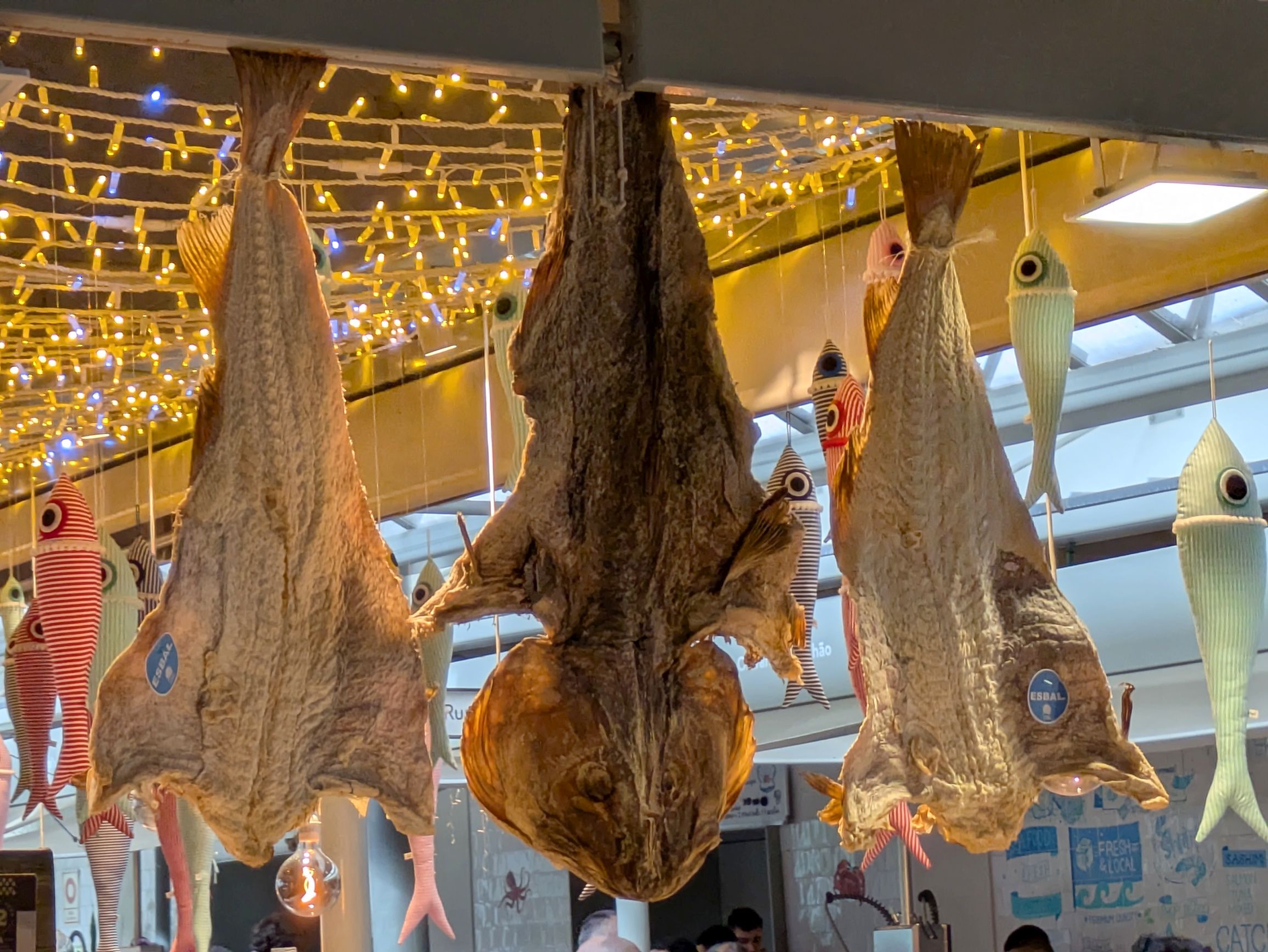
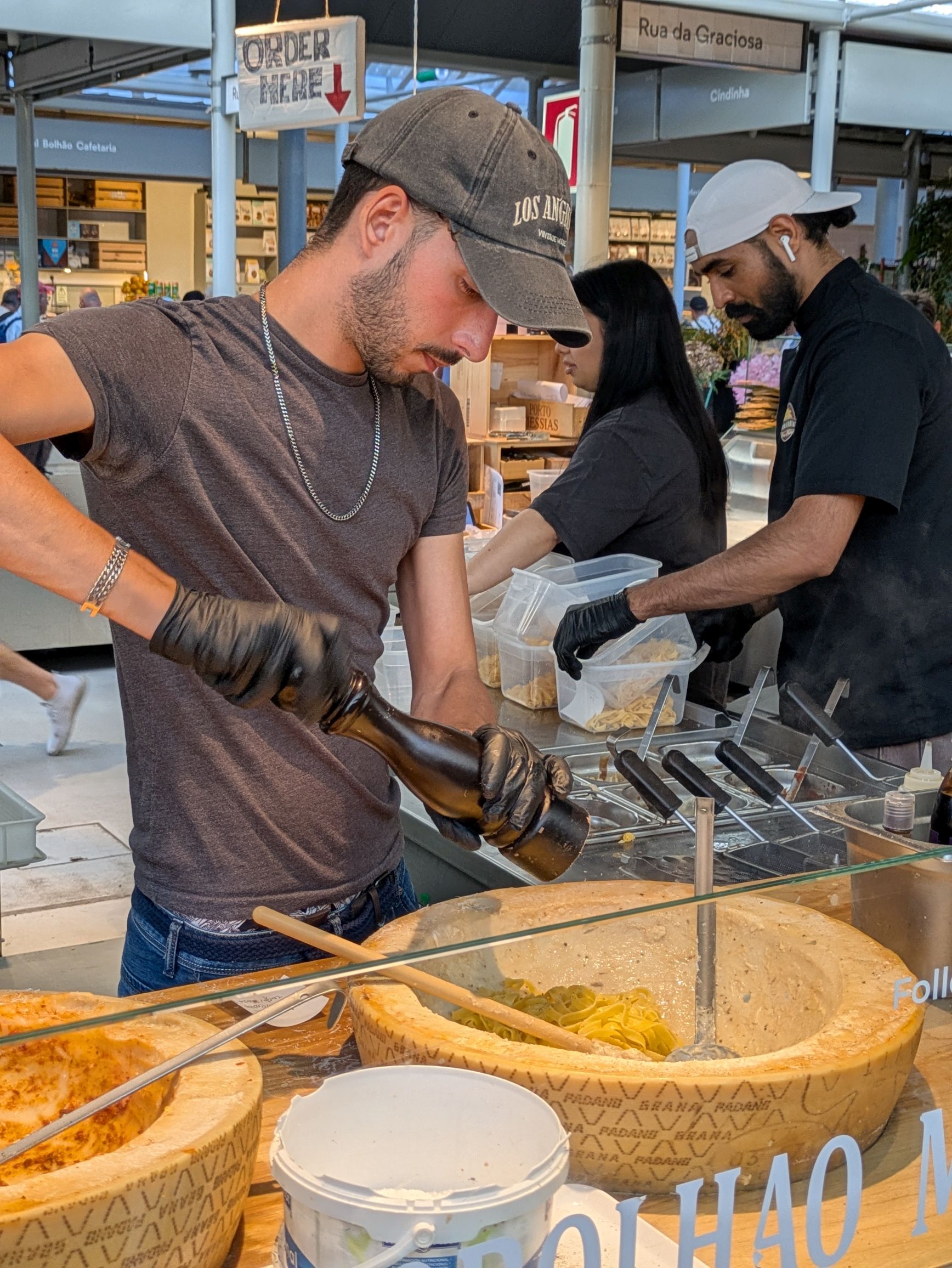
The following photos were shot at Mercado do Bolhao, Porto’s famous city market:
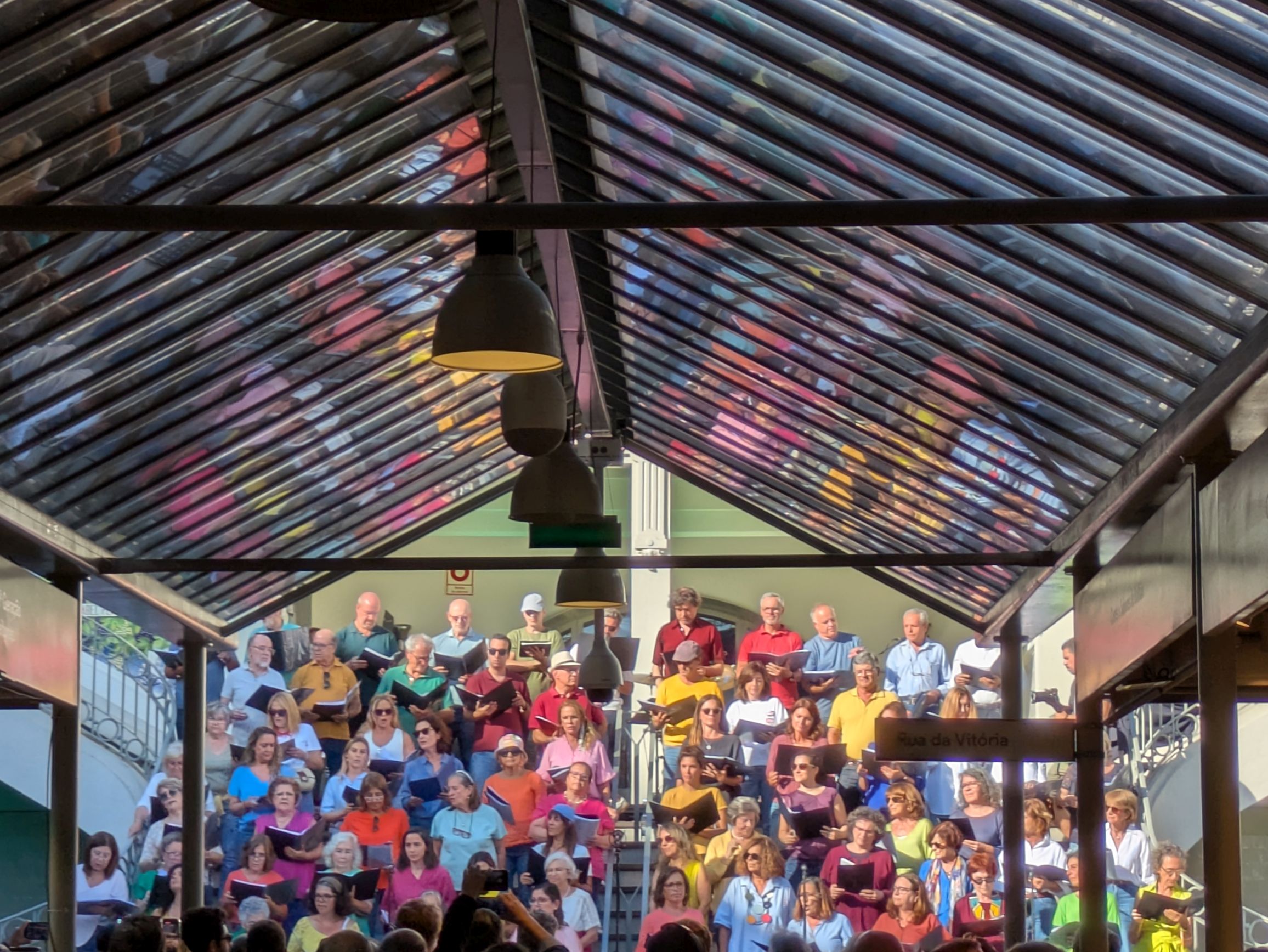
This colorful choir provided lunchtime entertainment for the crowd.
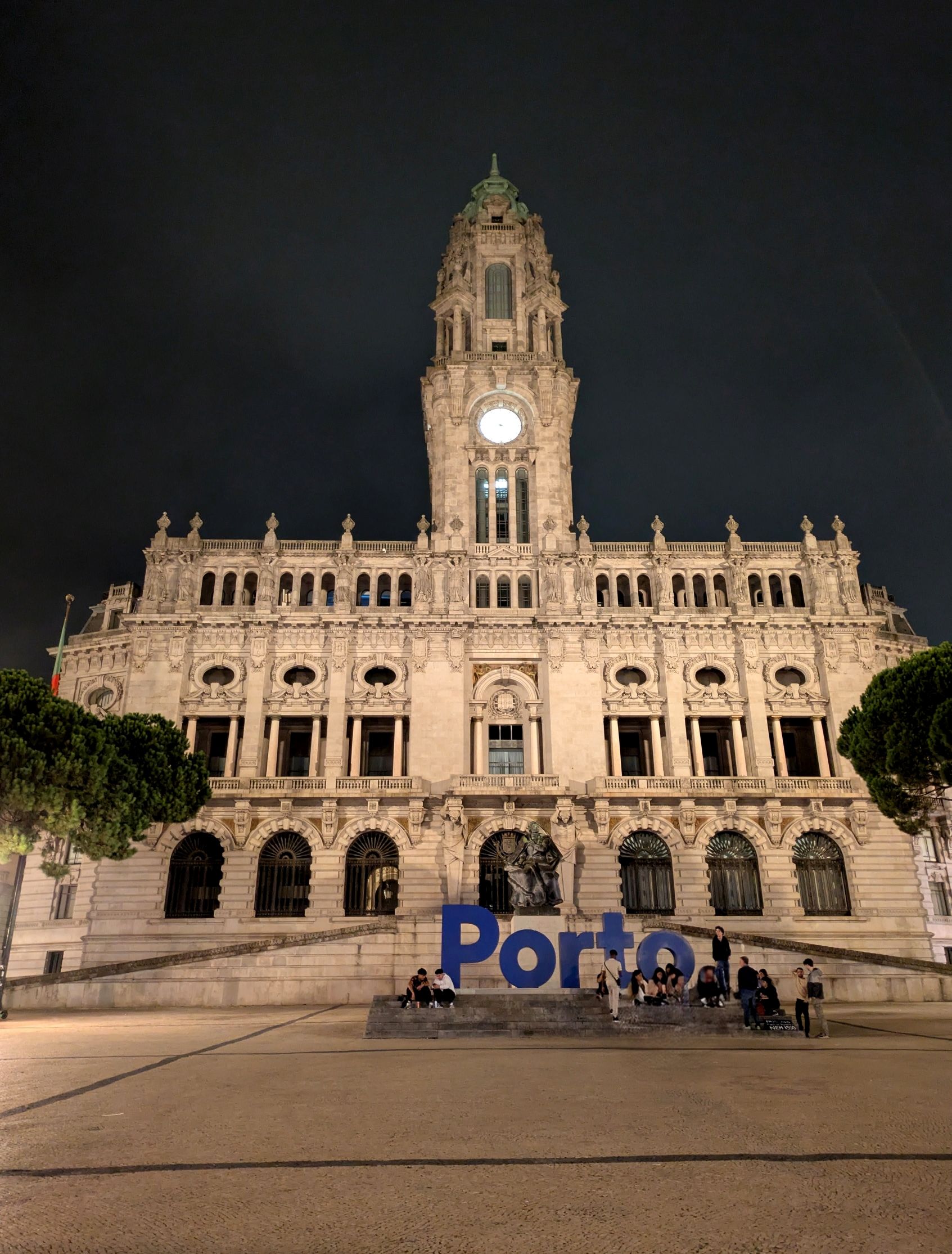
Porto, the second largest city in Portugal after Lisbon, was our final stop on this fabulous tour with Overseas Adventure Travel. Located in northern Portugal, the core of the city is one of the oldest European centers and listed as a UNESCO World Heritage Site. Because of this designation and protection, the tiles that give Porto’s buildings such beauty and charm still exist today.
In my last post, I wrote about the port wine that is produced in the Douro Valley. Porto is what port wine was named after. And the cork that goes into those bottles of port comes from Portugal as well. Fifty percent of the world supply of cork is from here.
Porto is also known for its production of paper made from Eucalyptus trees, which grow fast. Unfortunately, they also burn fast and have caused fires to spread quickly through the countryside. As a result, it has become quite controversial.
Another controversy brewing throughout Porto and Lisbon is the fast-growing tourism industry, which is huge. Portugal is a popular destination for Americans, and many have immigrated to both cities. This has driven up rent prices for locals; and AirBnB’s, in particular, have driven them out . Ten years ago, a (very small) apartment used to cost 600 euros per month. Currently, that same amount will only pay for one week of rent. Local businesses are also losing their leases and being driven out, because landlords are converting their properties to AirBnB’s to make more money in rent. This continues, because the government has no protections in place for locals.
Due to these rising costs in Portugal (as well as Spain), many young people live with their parents or can only afford to rent a room in a house with other tenants.
During our first full day in Porto, we went on a walking tour through the old city center, including the alleyways of Pena Ventosa, one of the oldest districts in the city. It was amazing to think those streets have been there for over 2,000 years!
The following are some scenes photographed during our group walking tour and free time during our three days in Porto. (Much more to come in Part 2!):
(For all photos, click on the image for a full screen view.)
Our first view point of the cityscape and river. More scenes of the river will be included in Part 2.
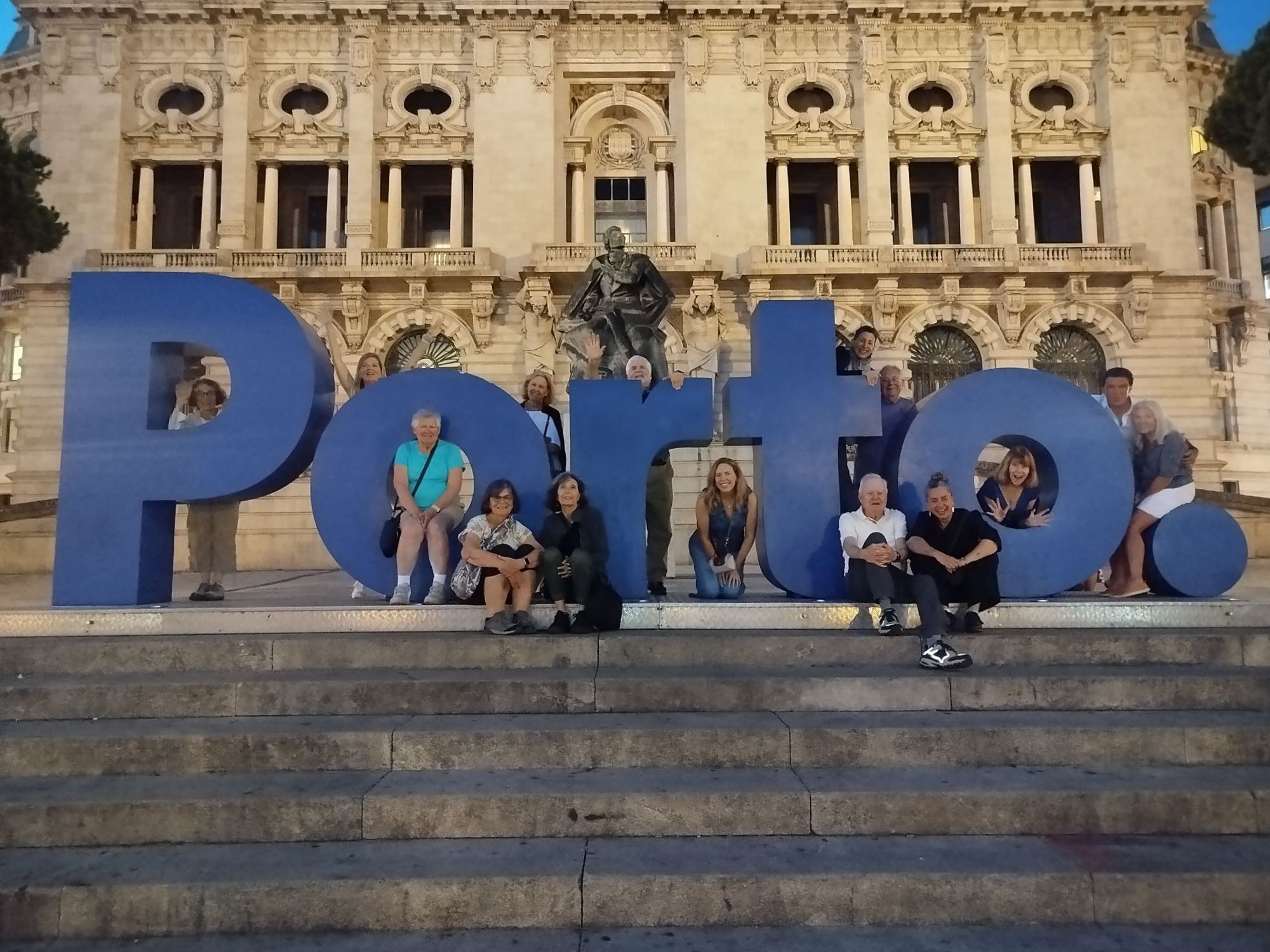
Our group in the Pena Ventosa neighborhood, one of the oldest in Europe
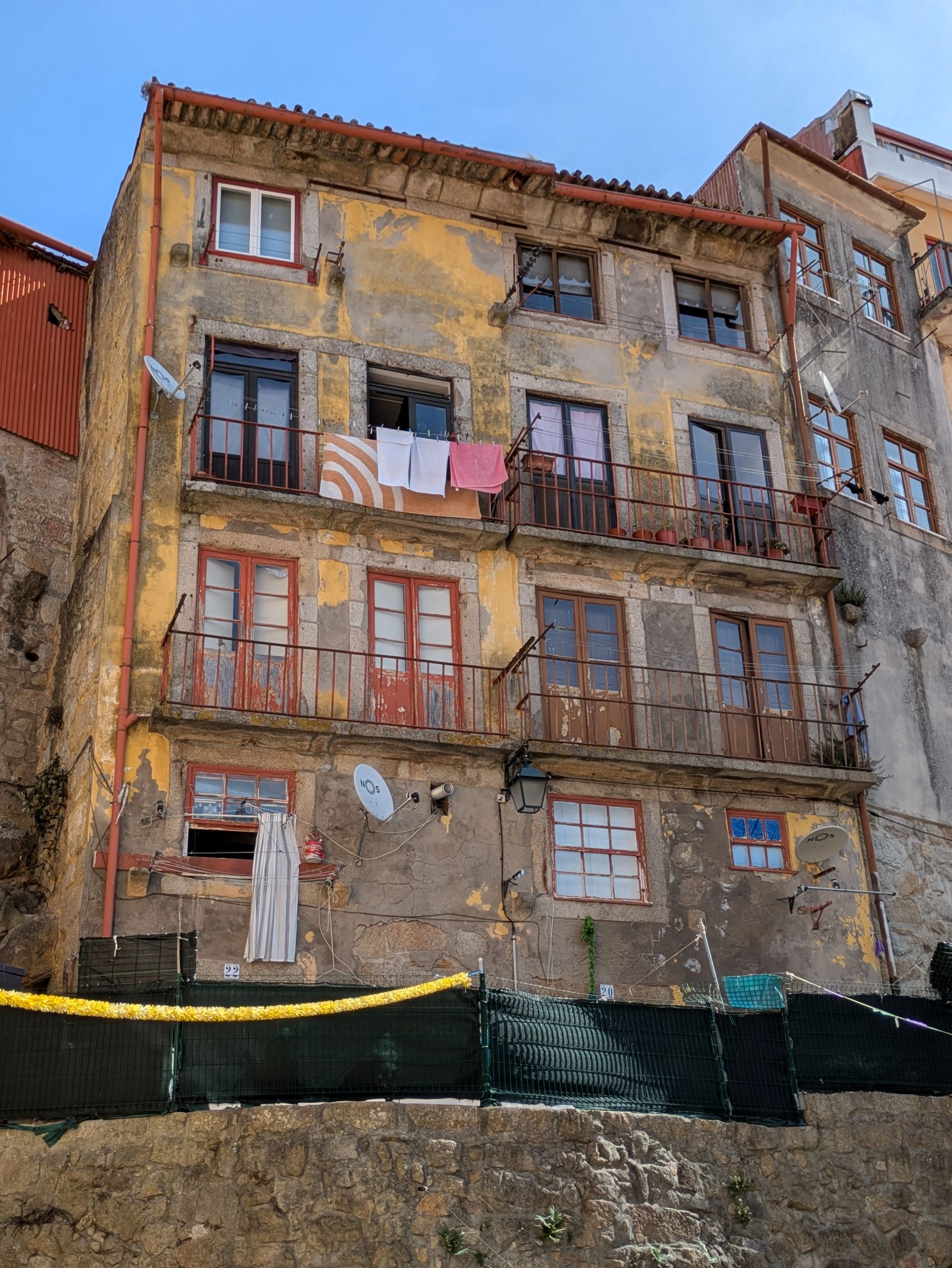
These buildings face the river. Photos in Part 2 will show a birds-eye view
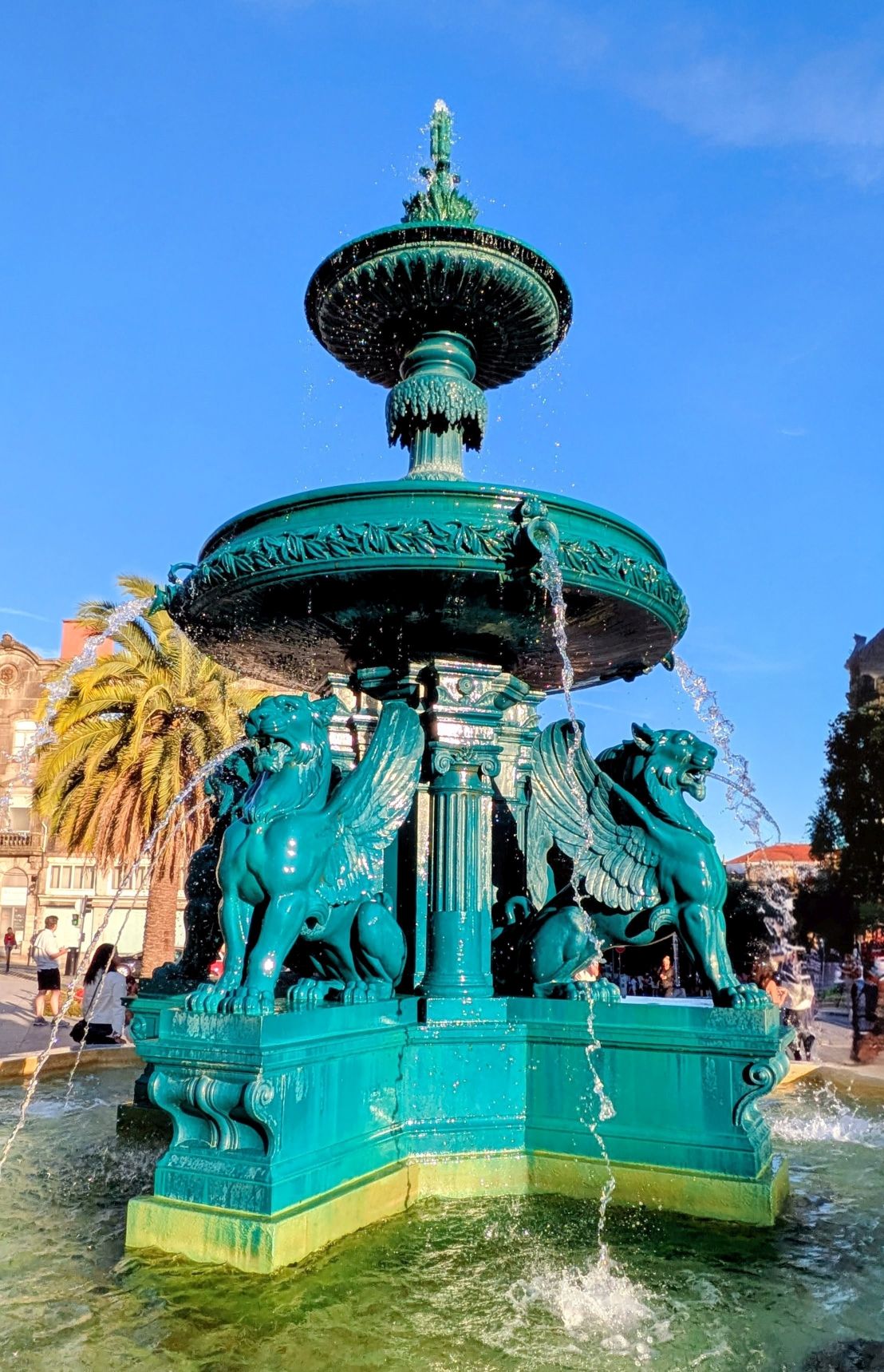
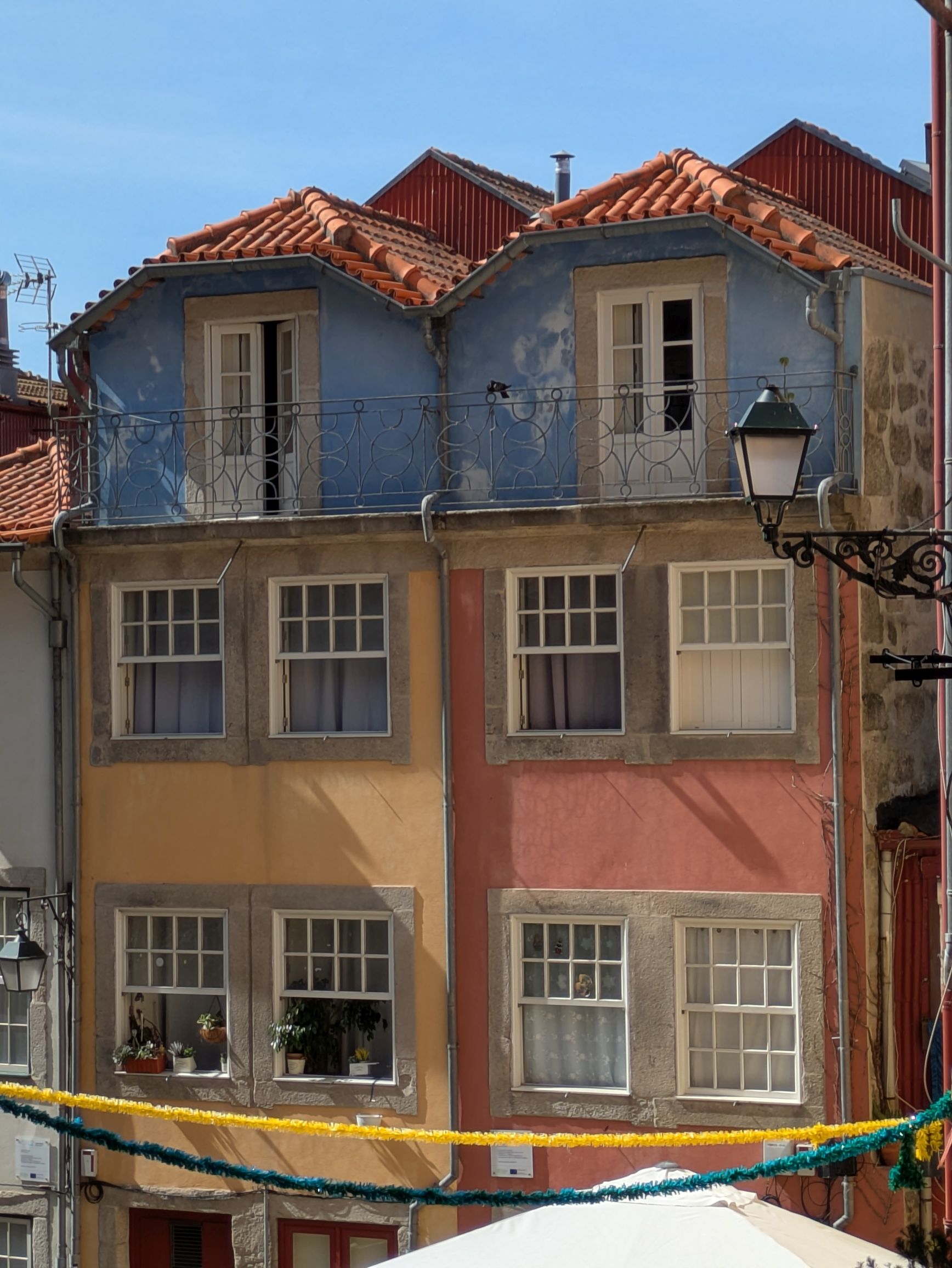
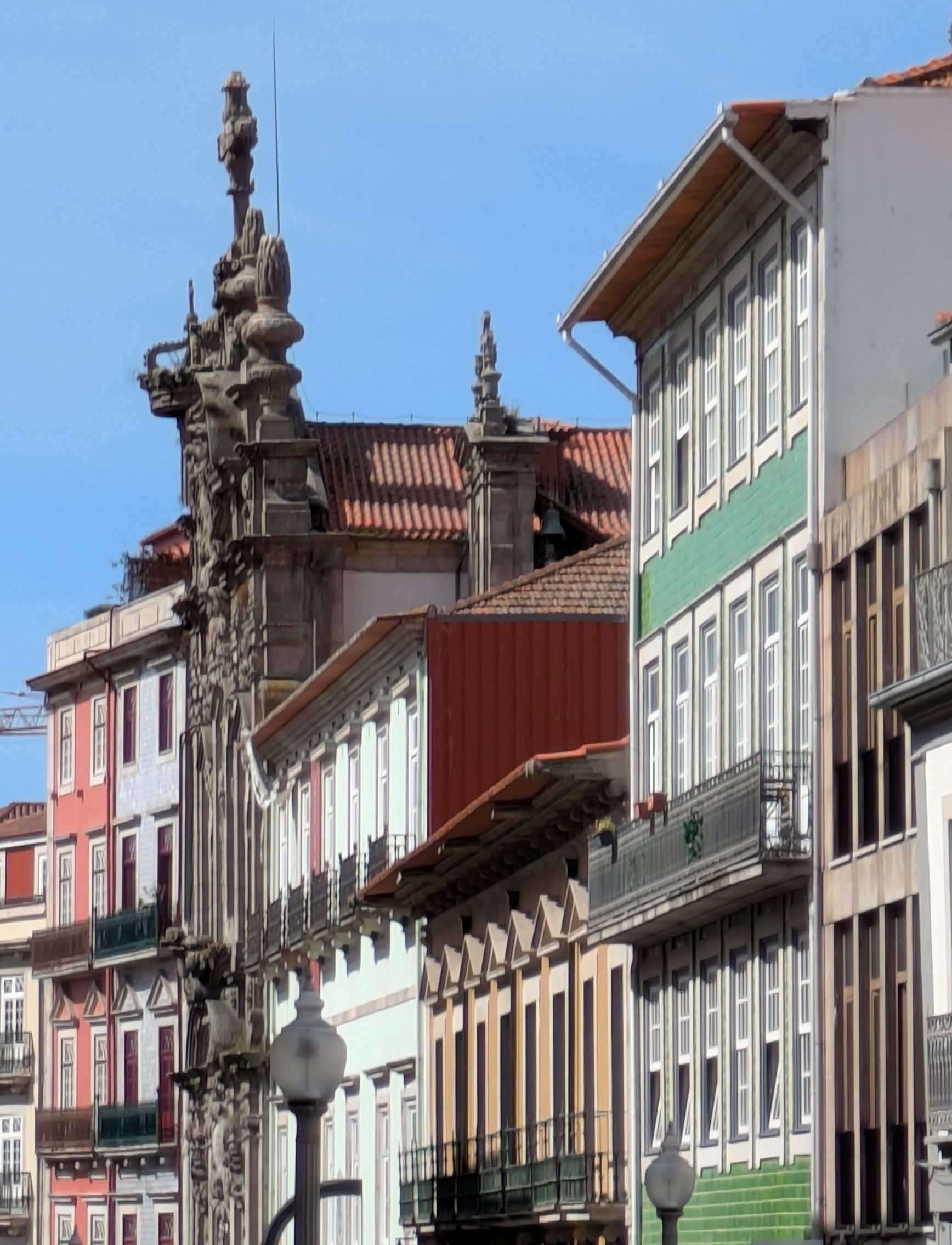
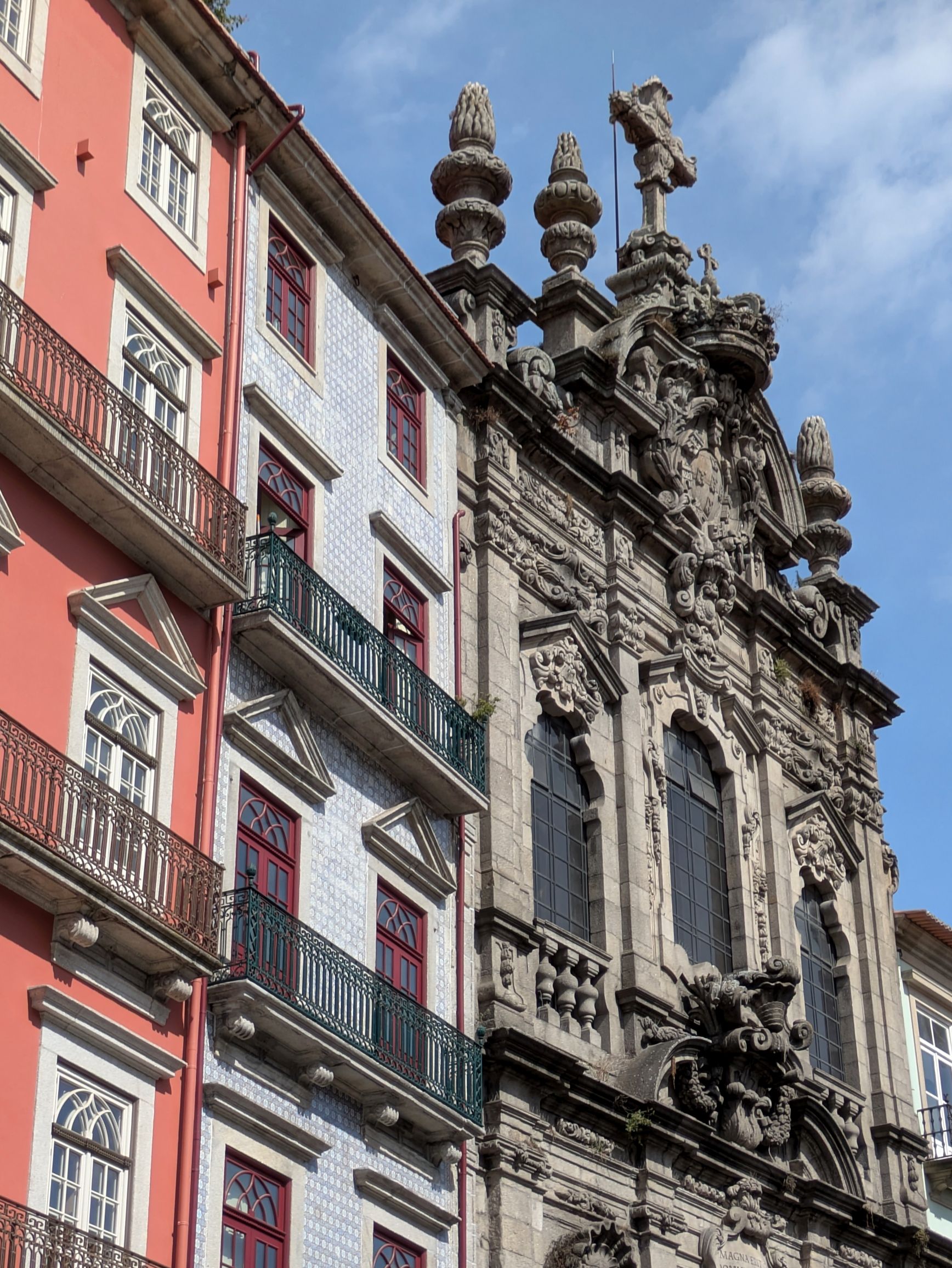
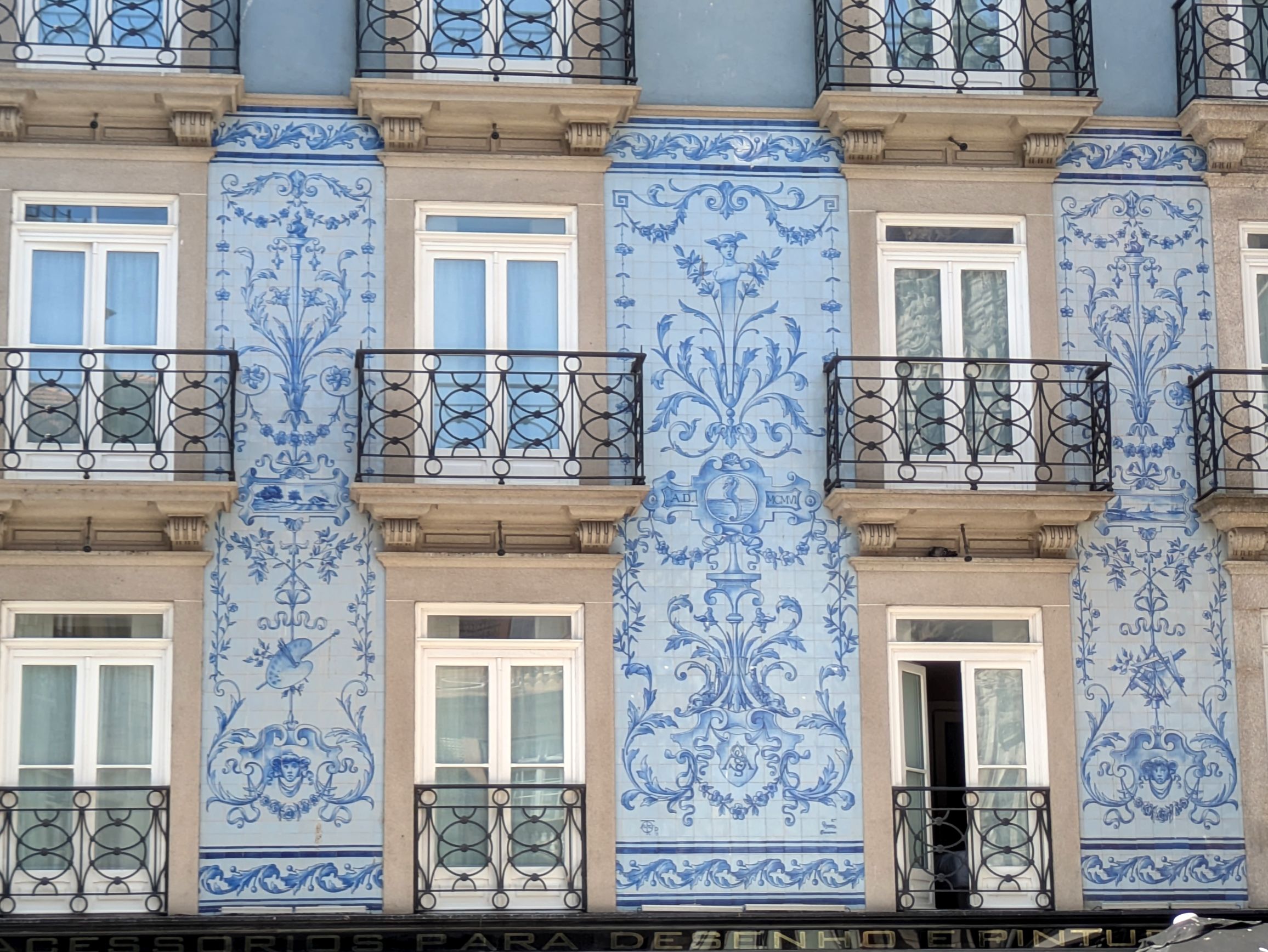
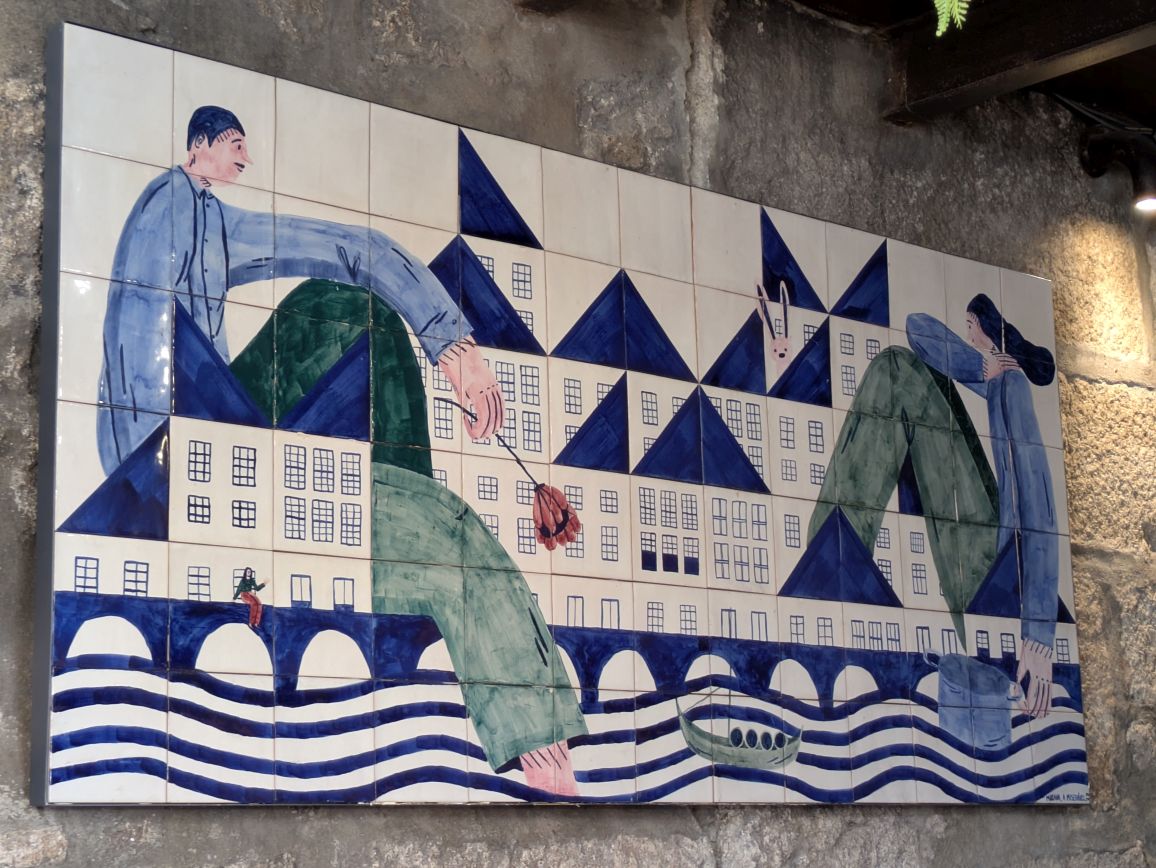
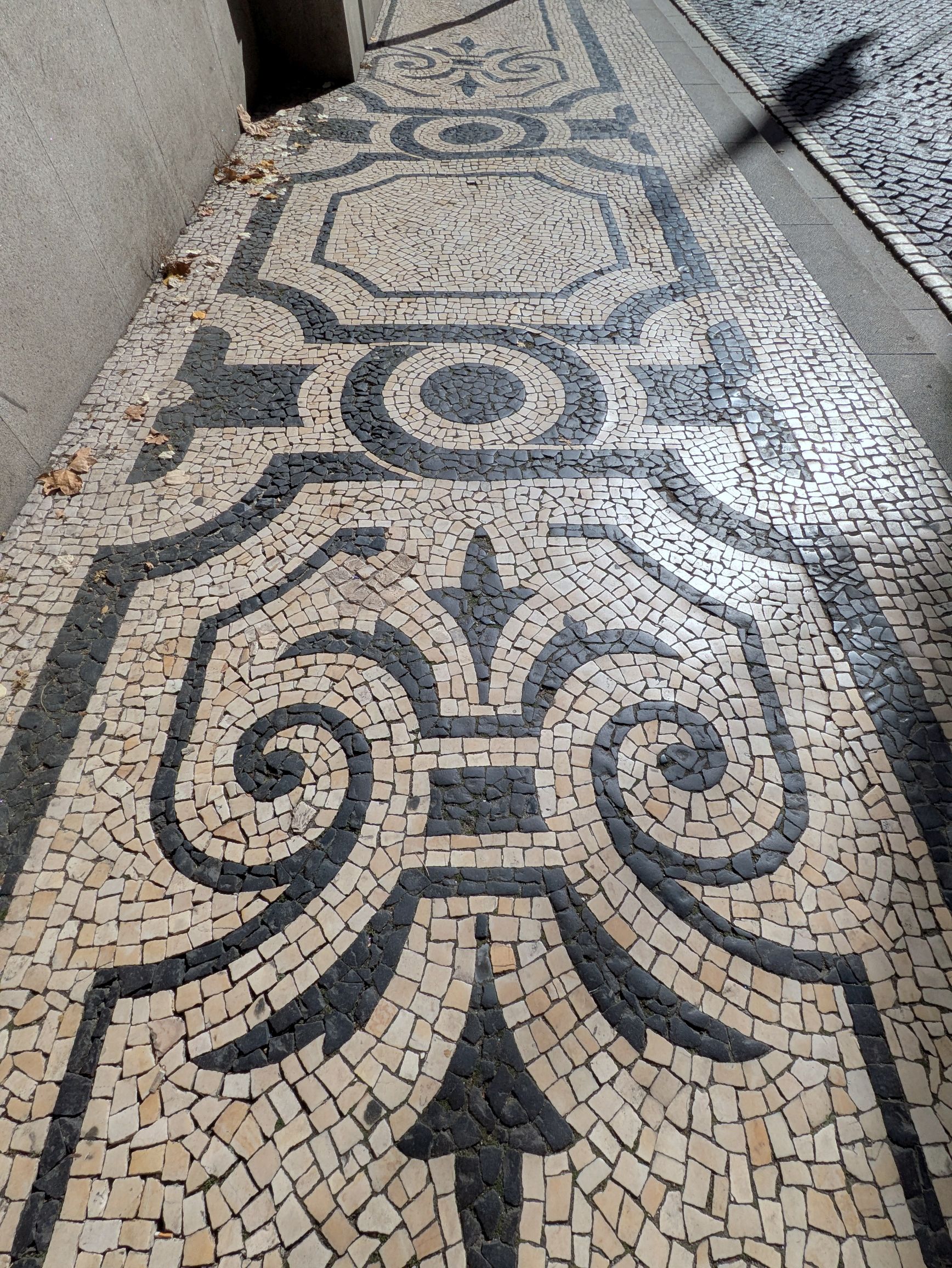
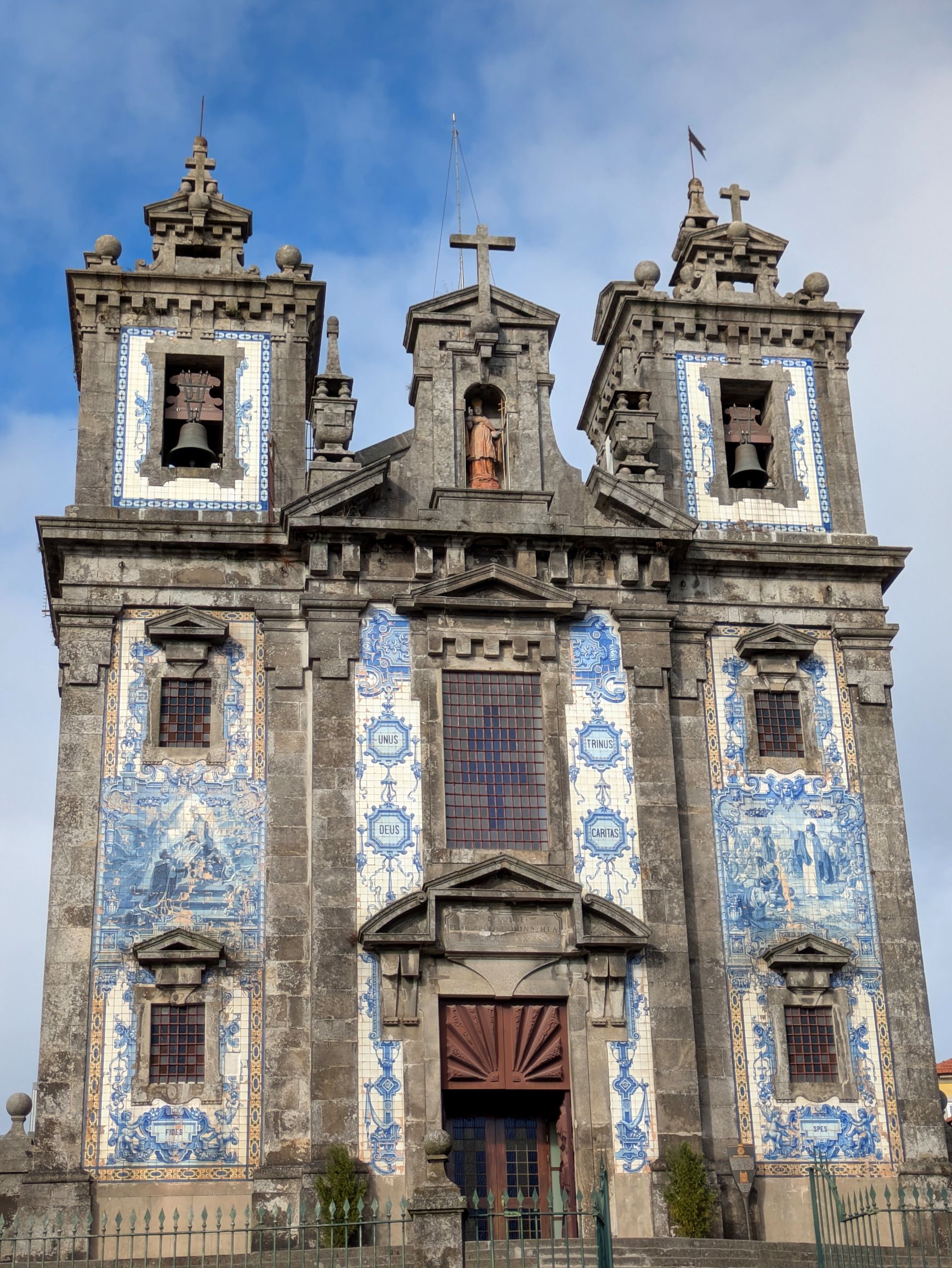
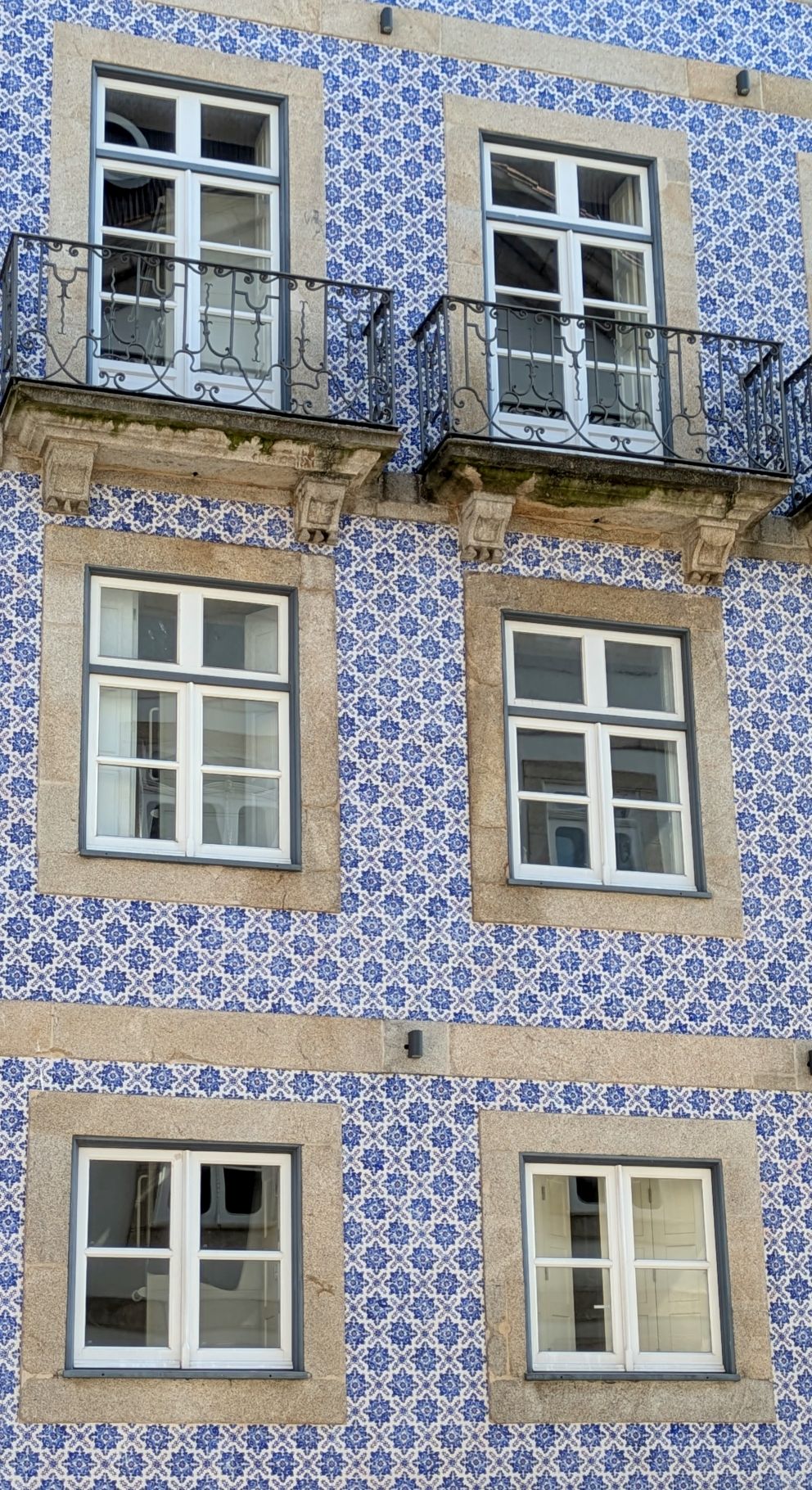
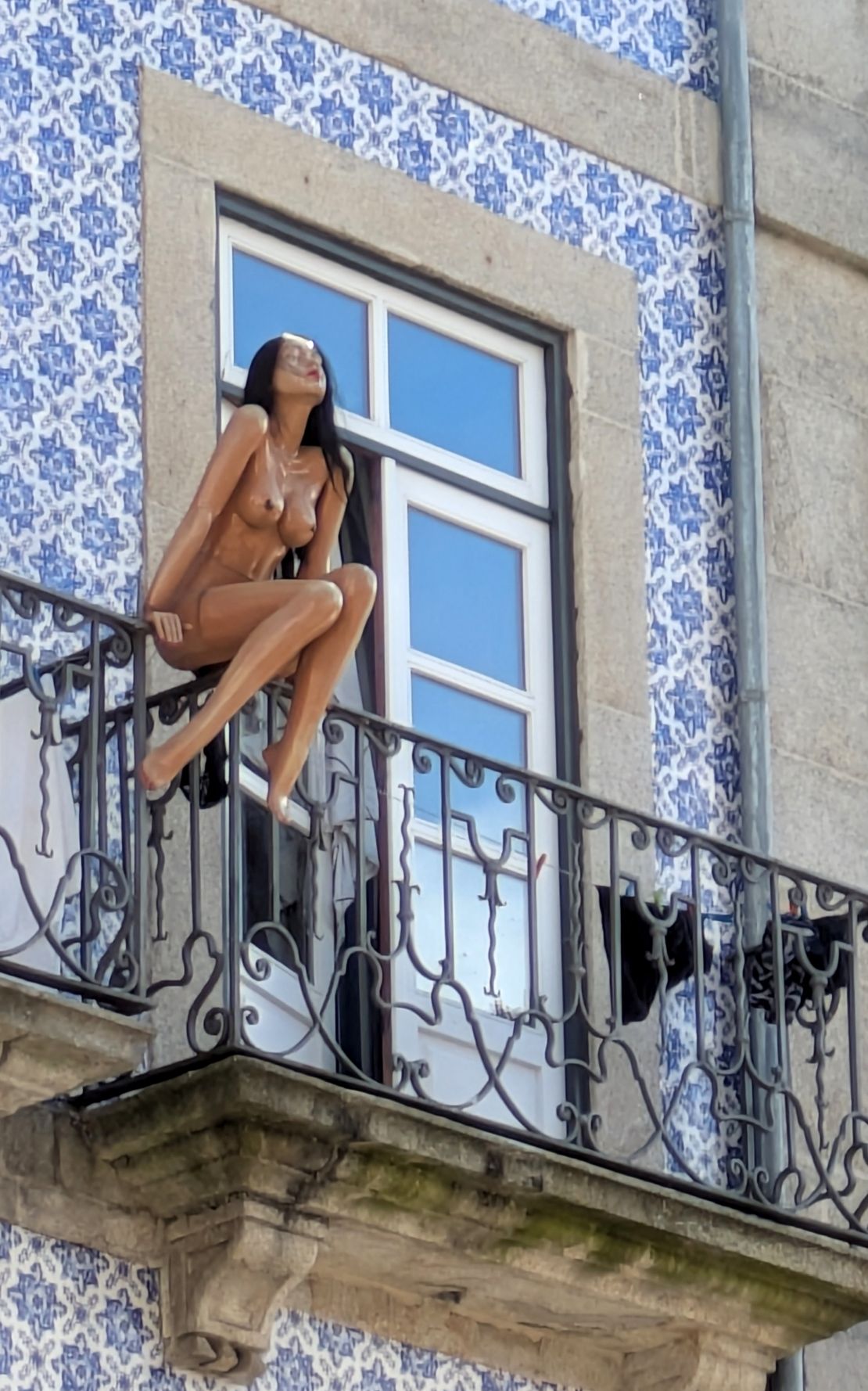
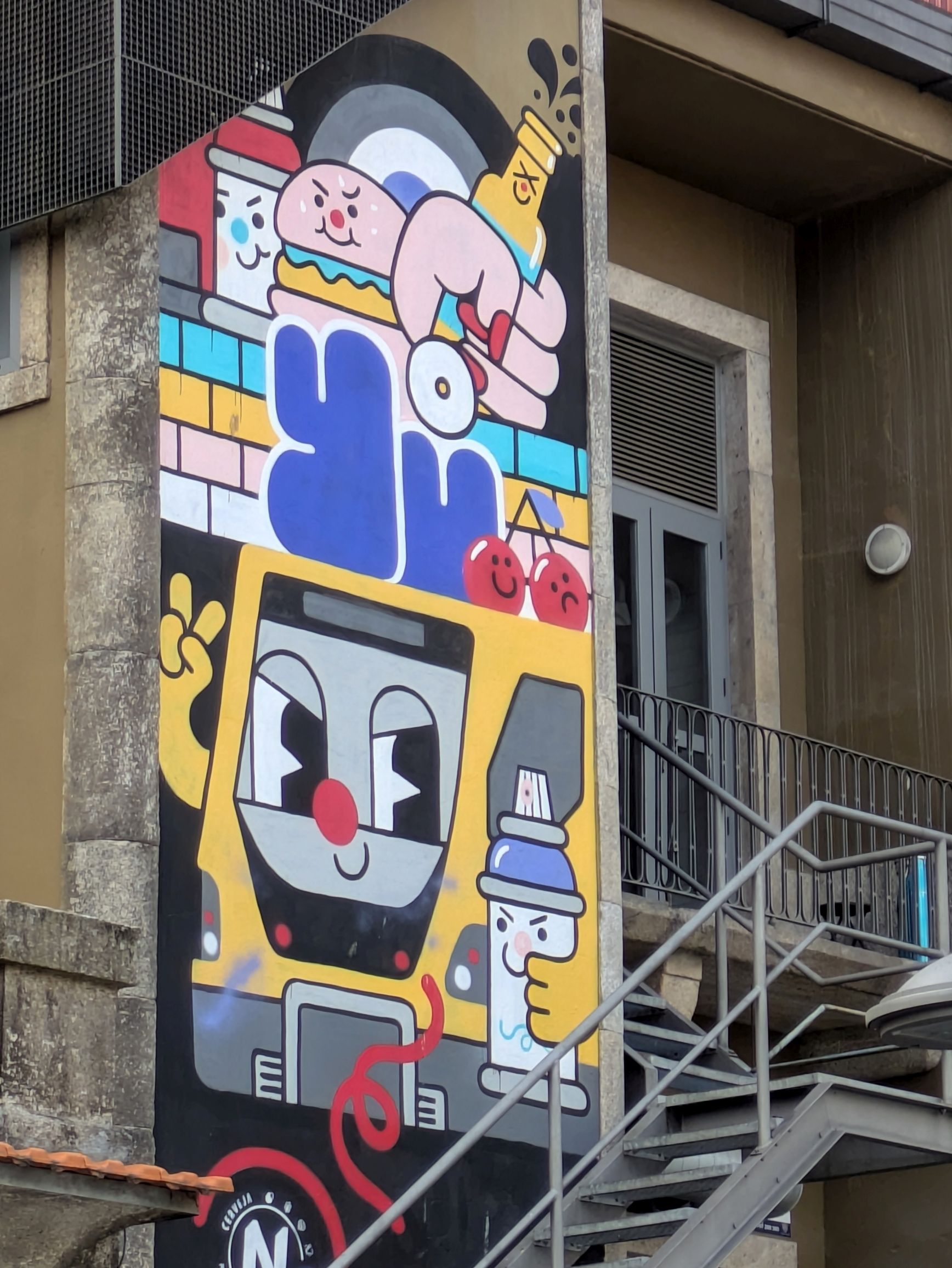
Between the tile facades of the buildings, tile murals, and decorative sidewalks; Porto was so unique and charming!
It was our wedding anniversary (September 12), and we woke up to a beautiful morning for our Douro River cruise. But first, we were greeted at breakfast with a very nice (and delicious!) surprise:
(For all photos, click on the image for a full screen view.)c
Our tour leader, Serena, had ordered a pancake anniversary cake for us!
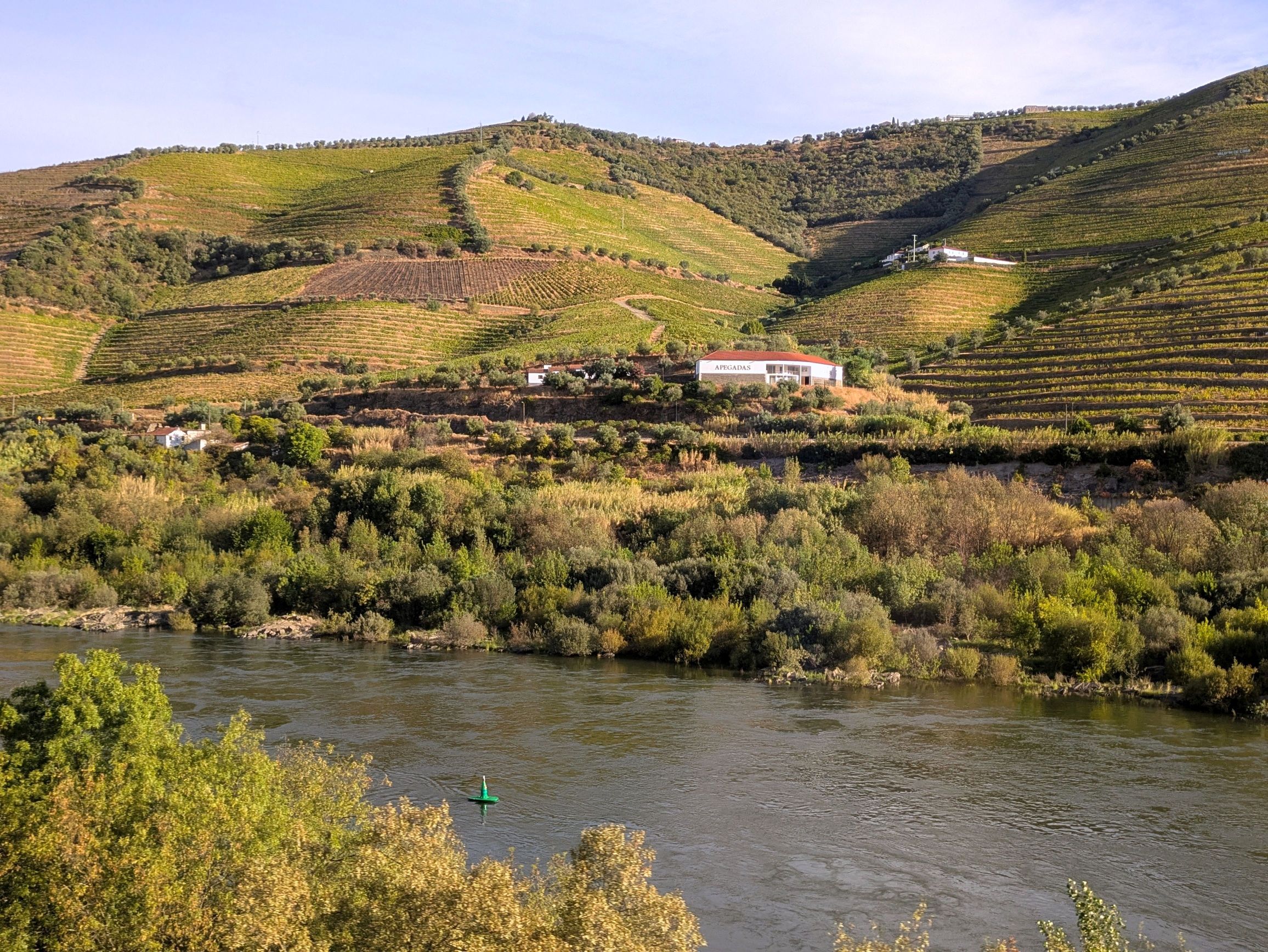
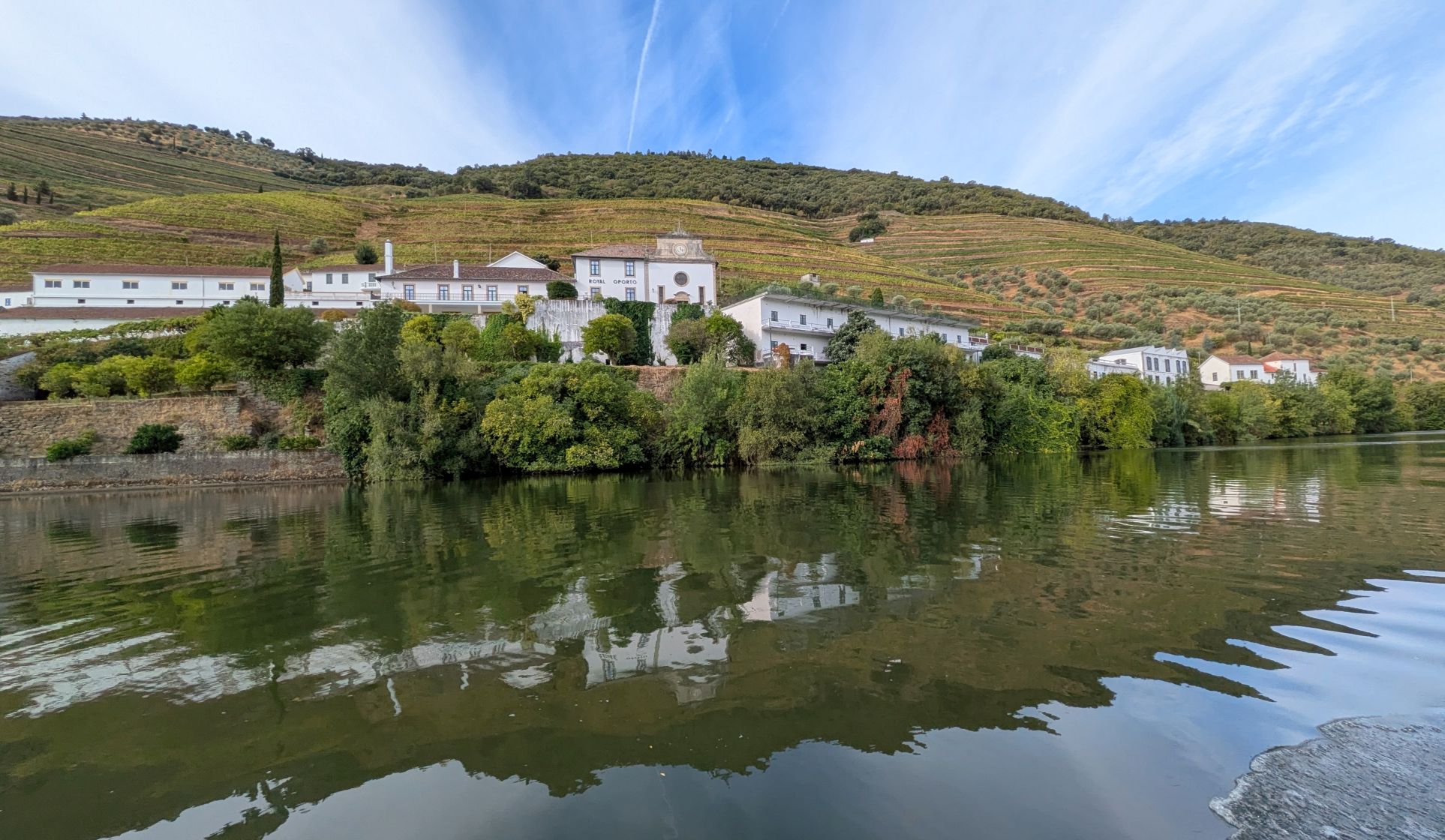
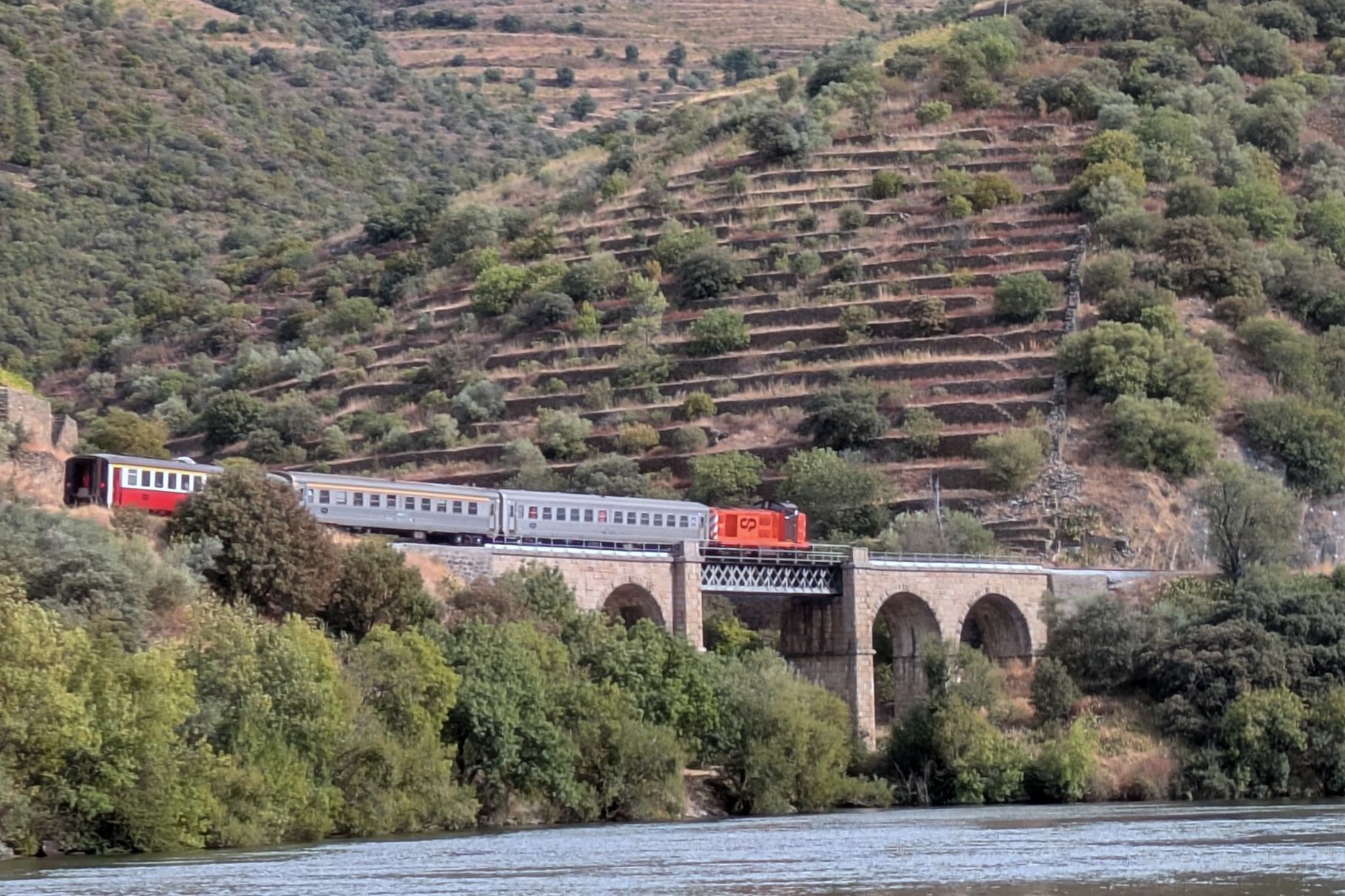
Following breakfast, we drove alongside the Douro River to meet up with our cruise boat, in Pinhão. In addition to the two crew, it was just Serena and our group of fifteen enjoying a peaceful ride on the Douro, taking in the views of the wineries along each bank.
Winding its way across the width of Portugal, the Douro flows into the Atlantic Ocean in Porto, the subject of my next post.
The entire Douro Valley has been known for its port wine production for centuries. The first detailed account of port production came from Englishmen in 1678 after they visited the Abbot of Lamego, a vicar and vintner who served them red wine fortified with brandy. The Englishmen described it as “very agreeable, sweetish, and extremely smooth,” and purchased the Abbot’s entire stock to ship to England where it was a big hit. By the mid-1700’s, it was a formally protected wine with a Designation of Origin to control quality.
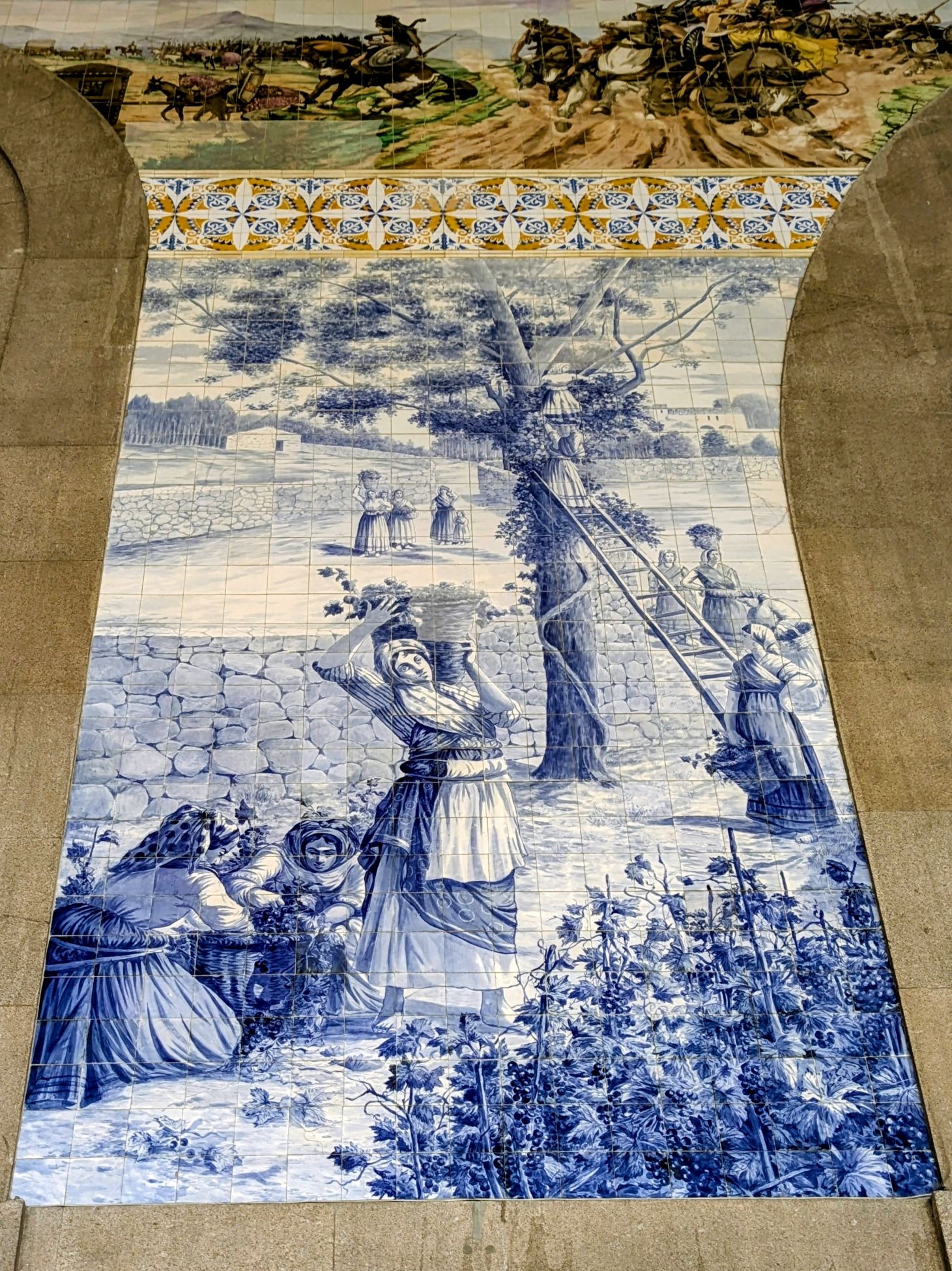
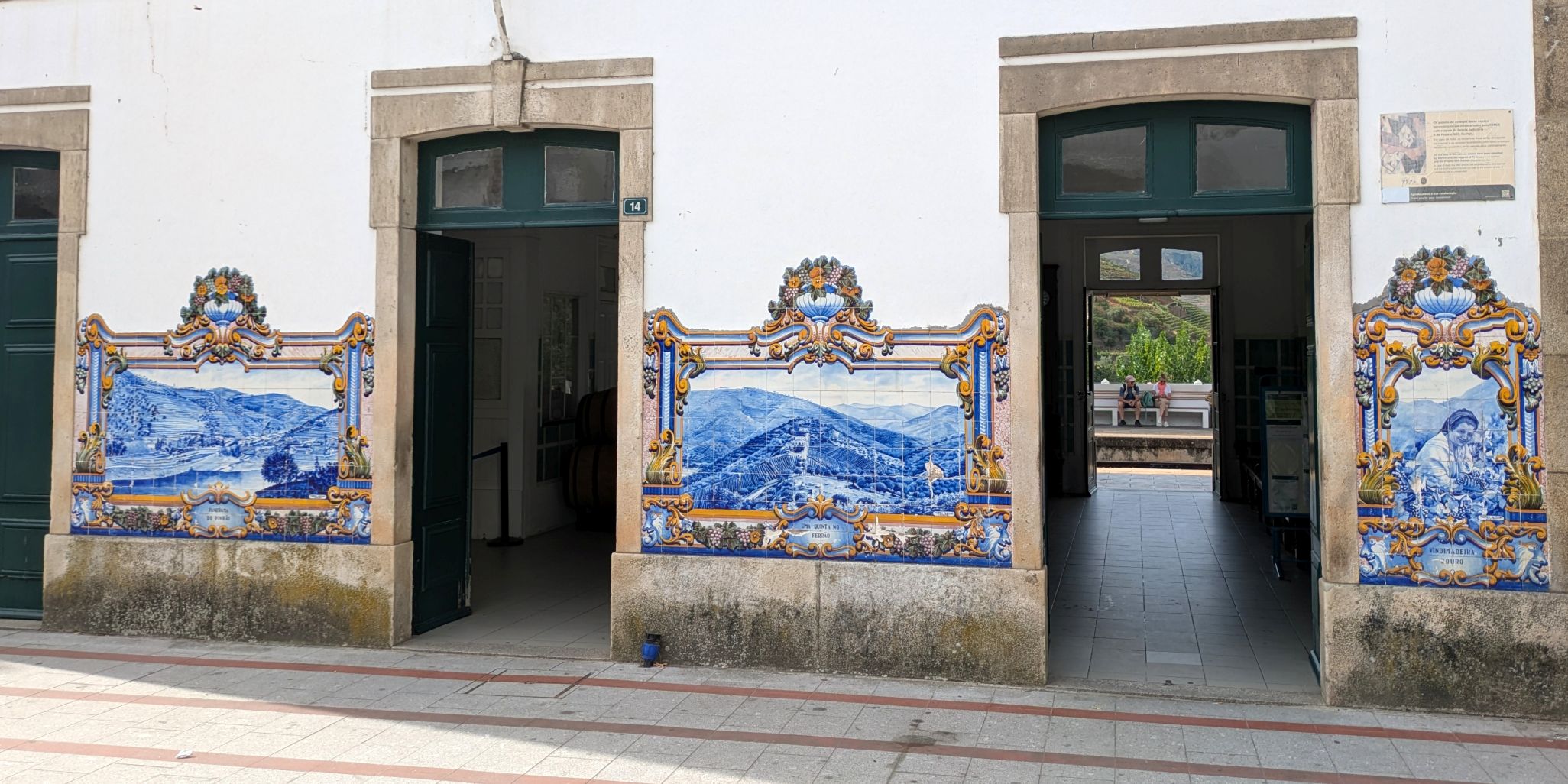
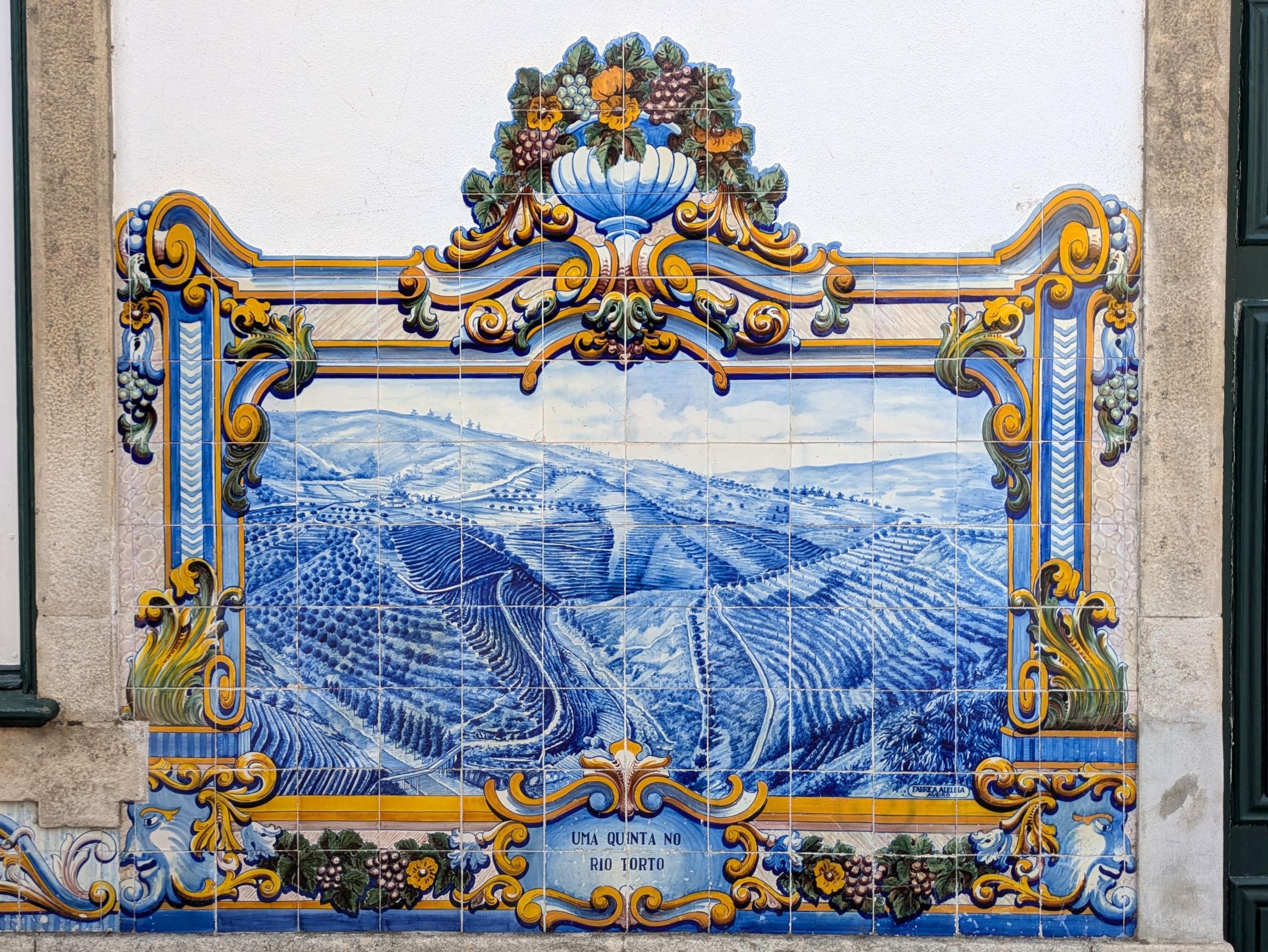
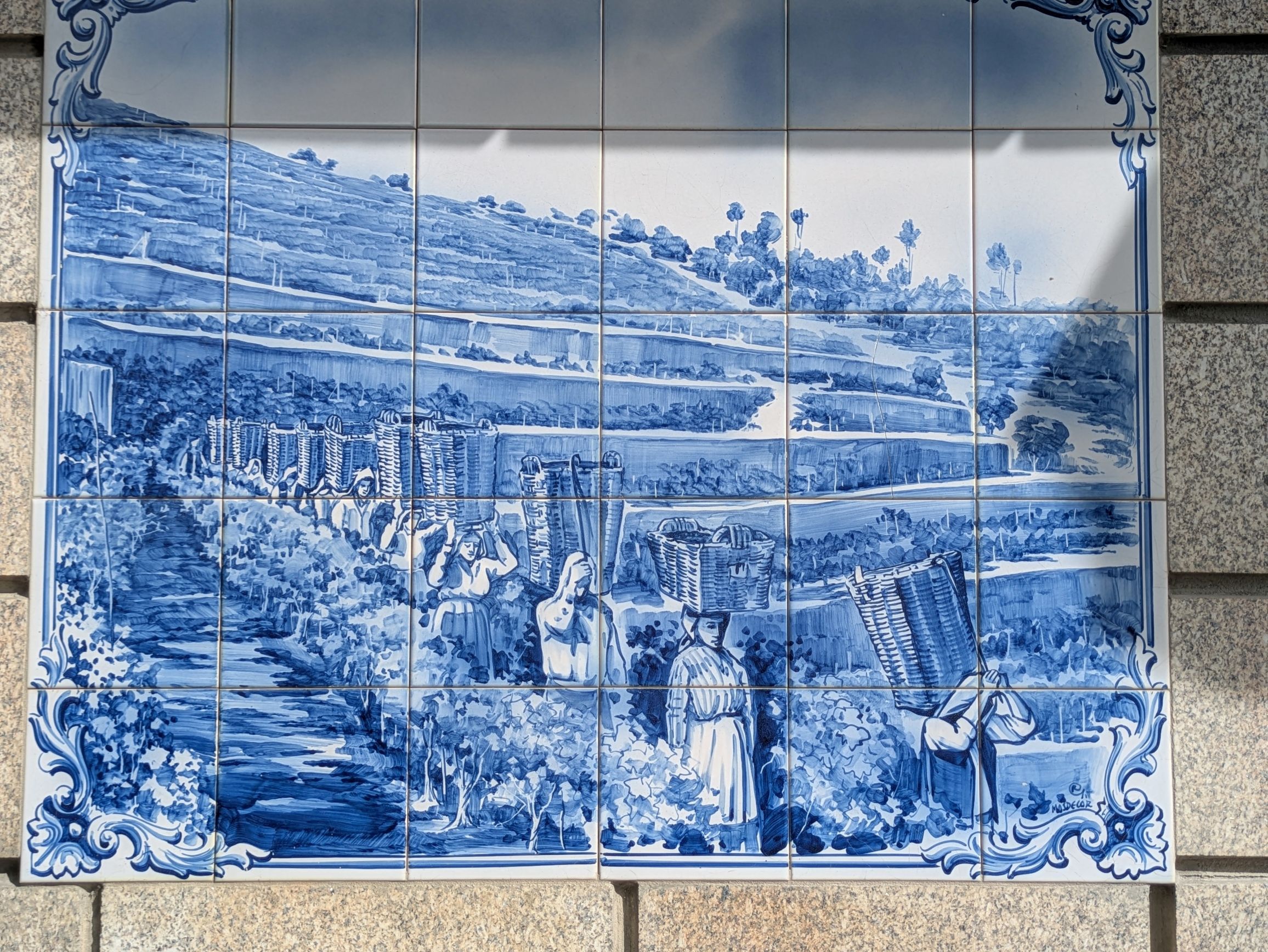
Tile murals at the Pinhao train station
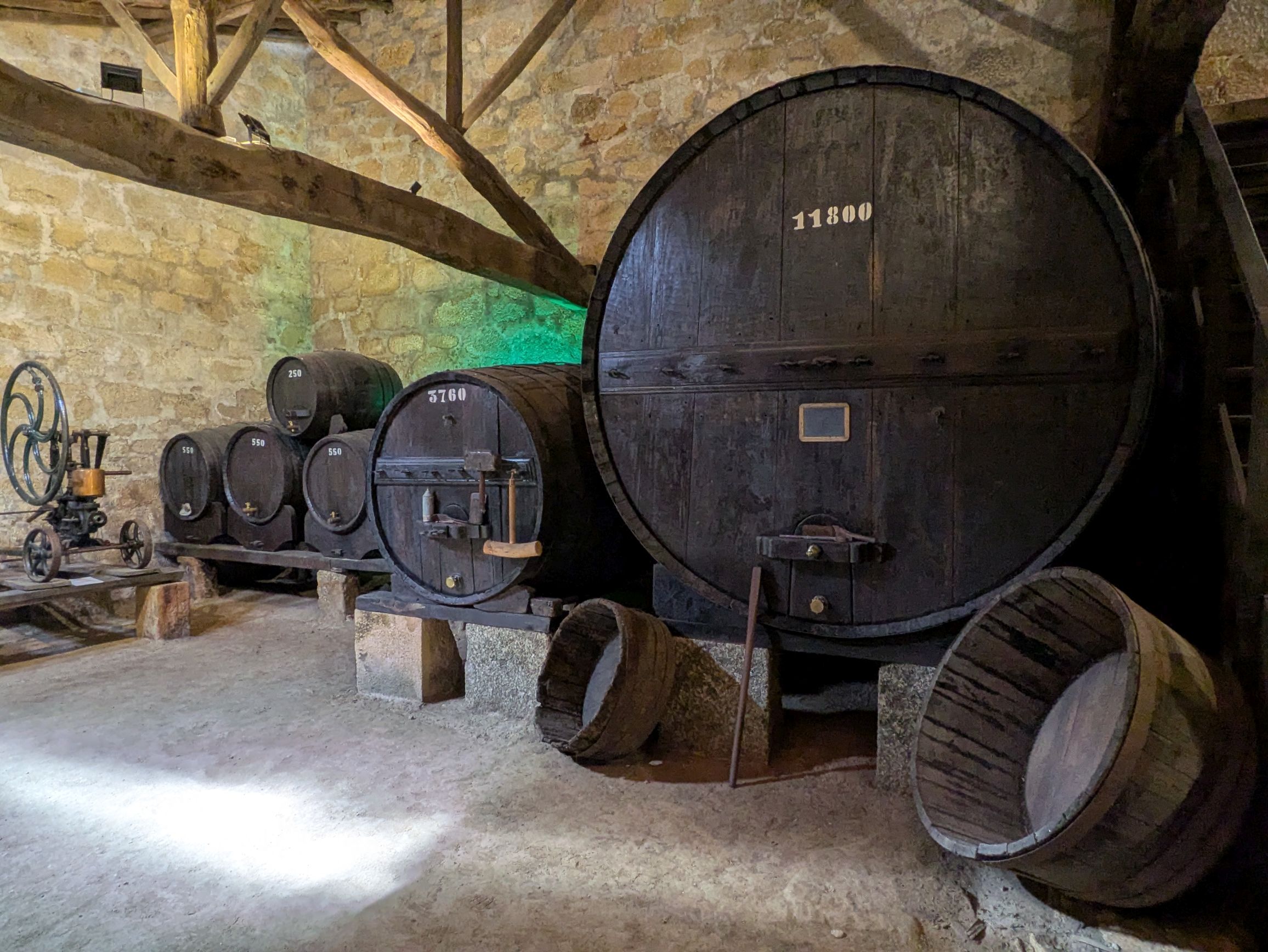
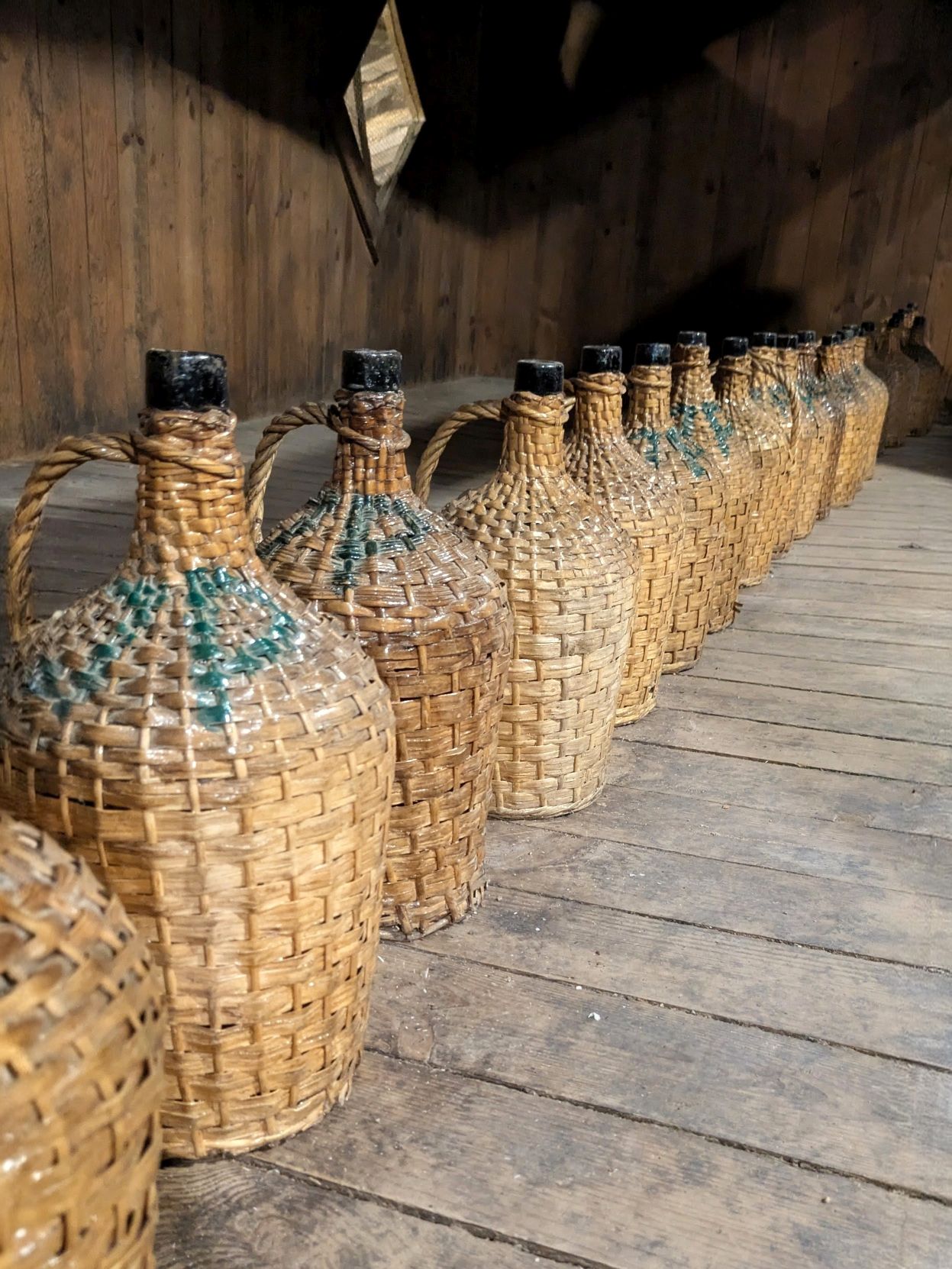
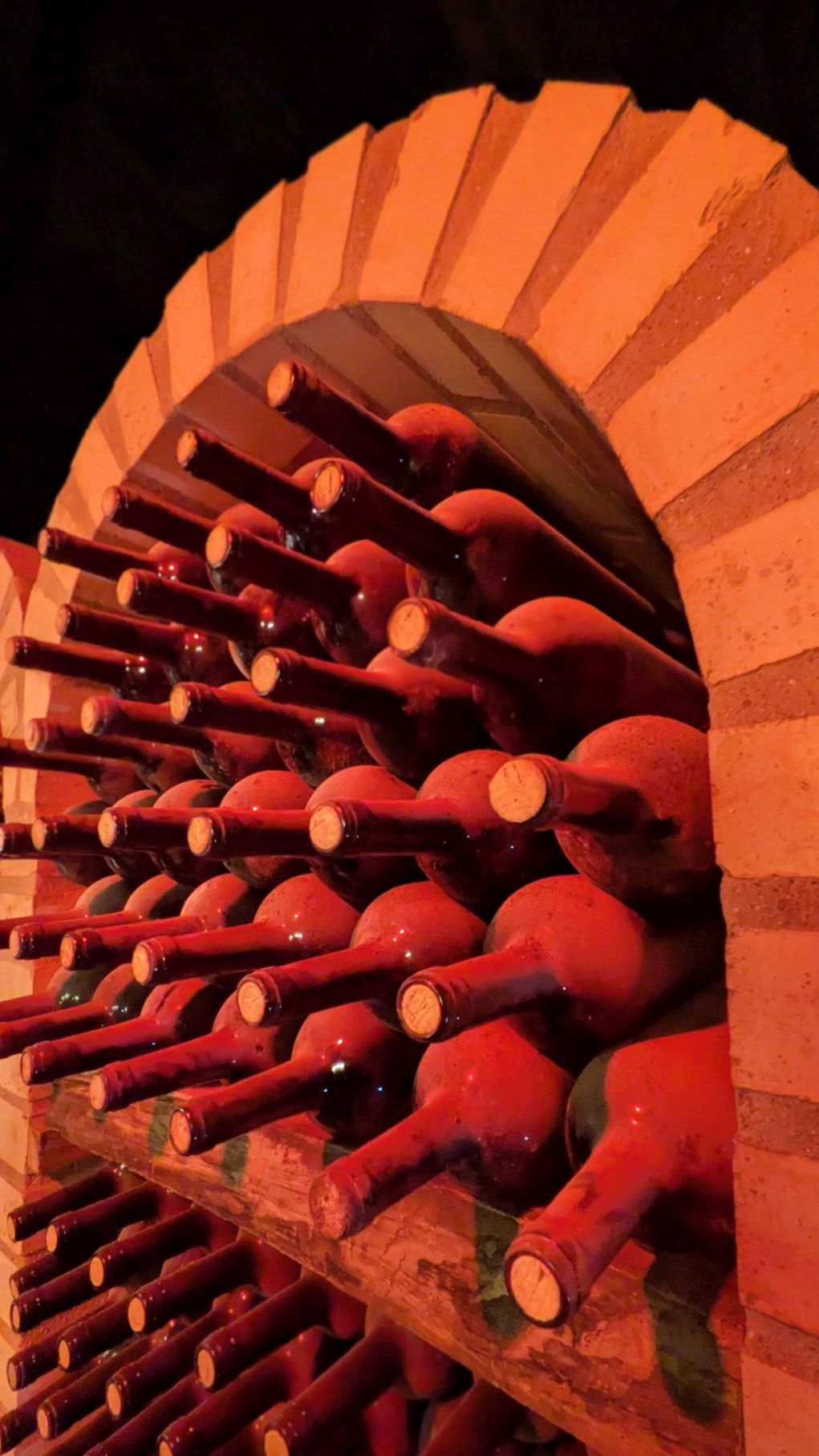
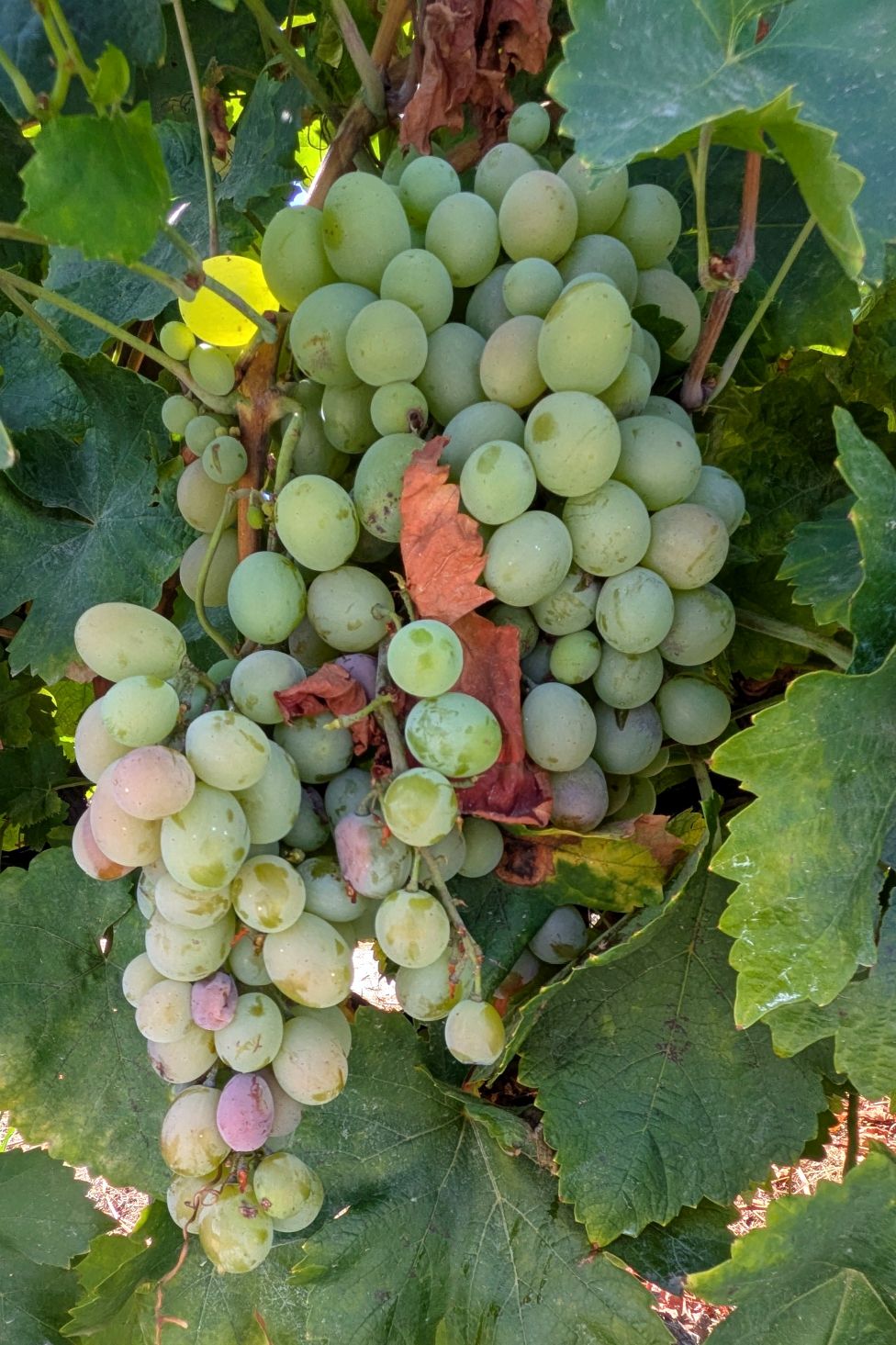
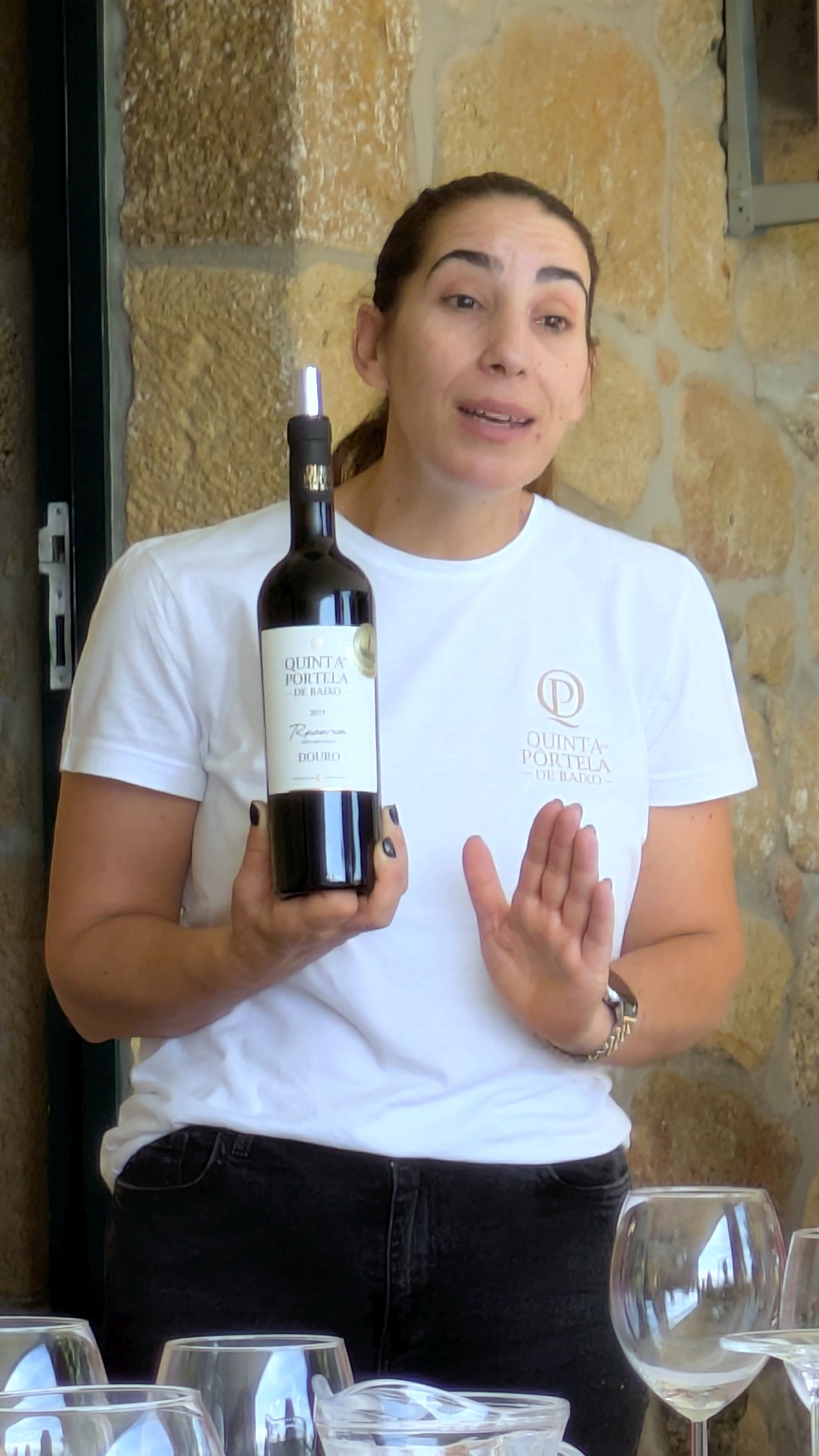
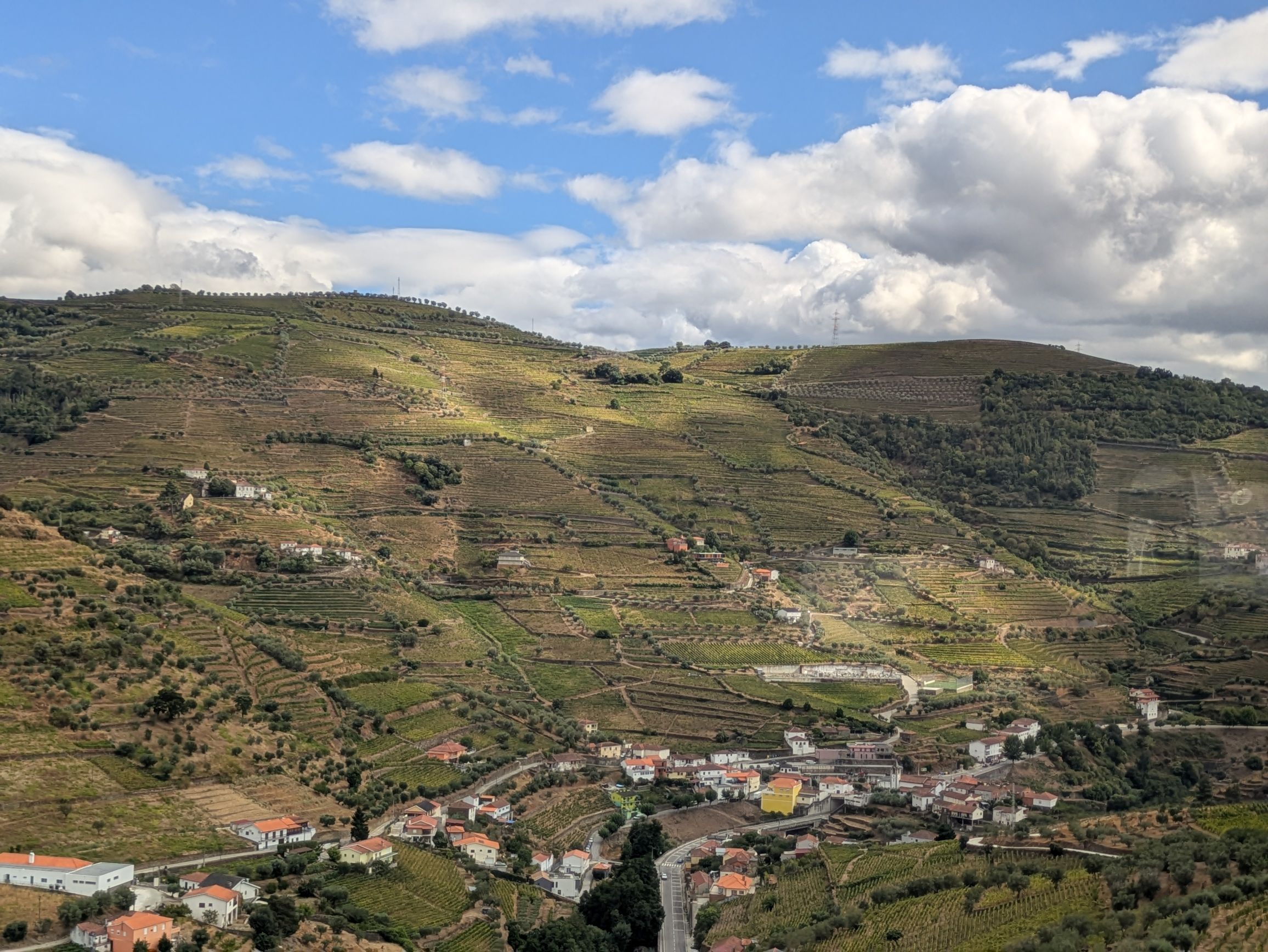
After our cruise, we visited the terraced vineyards of Quinta Portela, where we learned about the production of port wine and had a tasting with an alfresco lunch, overlooking the vineyards. Each of the wines (and there were several!) were paired with traditional a Portuguese snack. The wine and food flowed, our group had a blast, and it was a fabulous anniversary!
Next up: SOUTHWEST FRANCE, NORTHERN SPAIN & PORTUGAL #23: PHOTOGENIC, PRETTY PORTO, PART 1
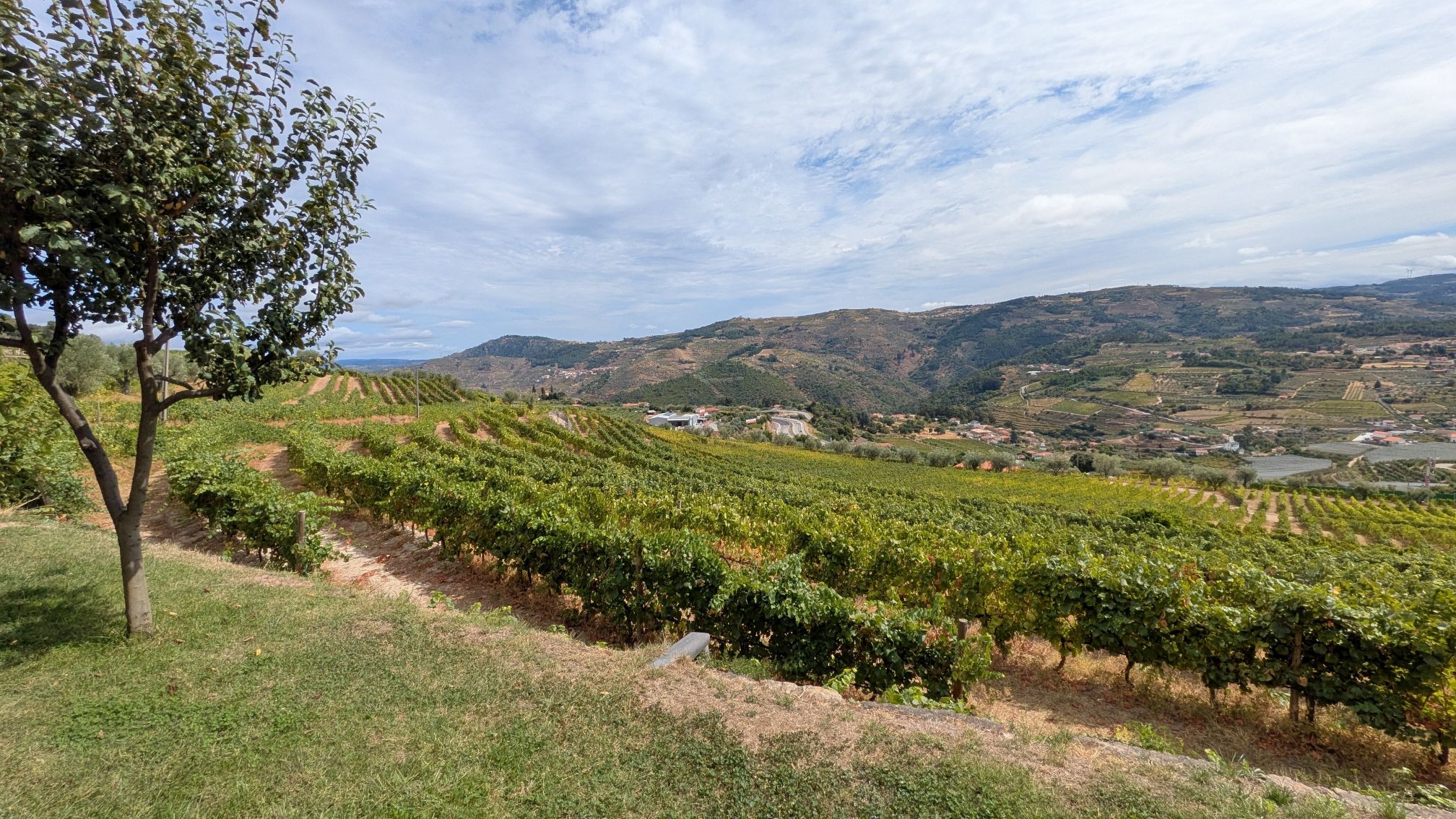
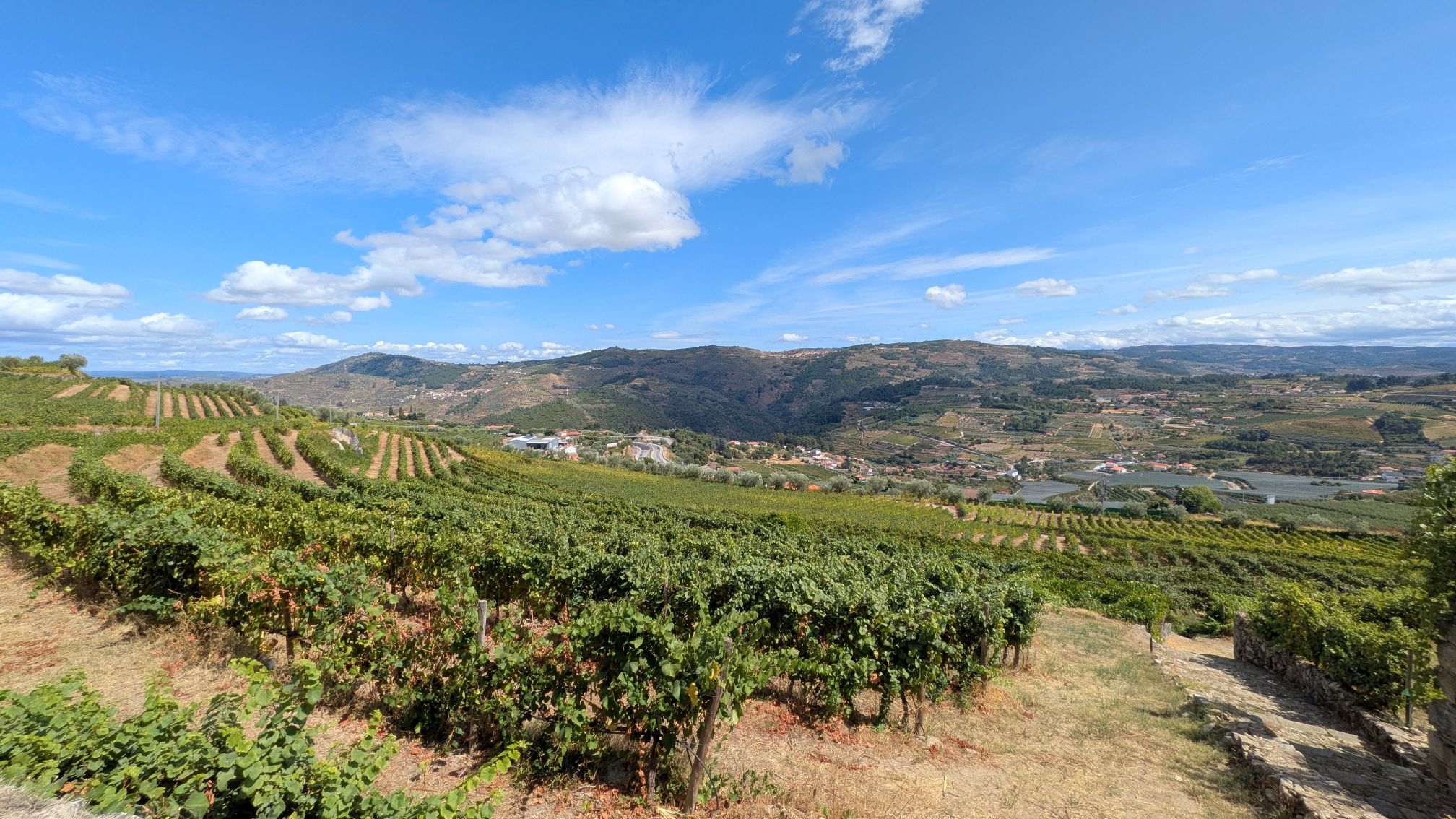
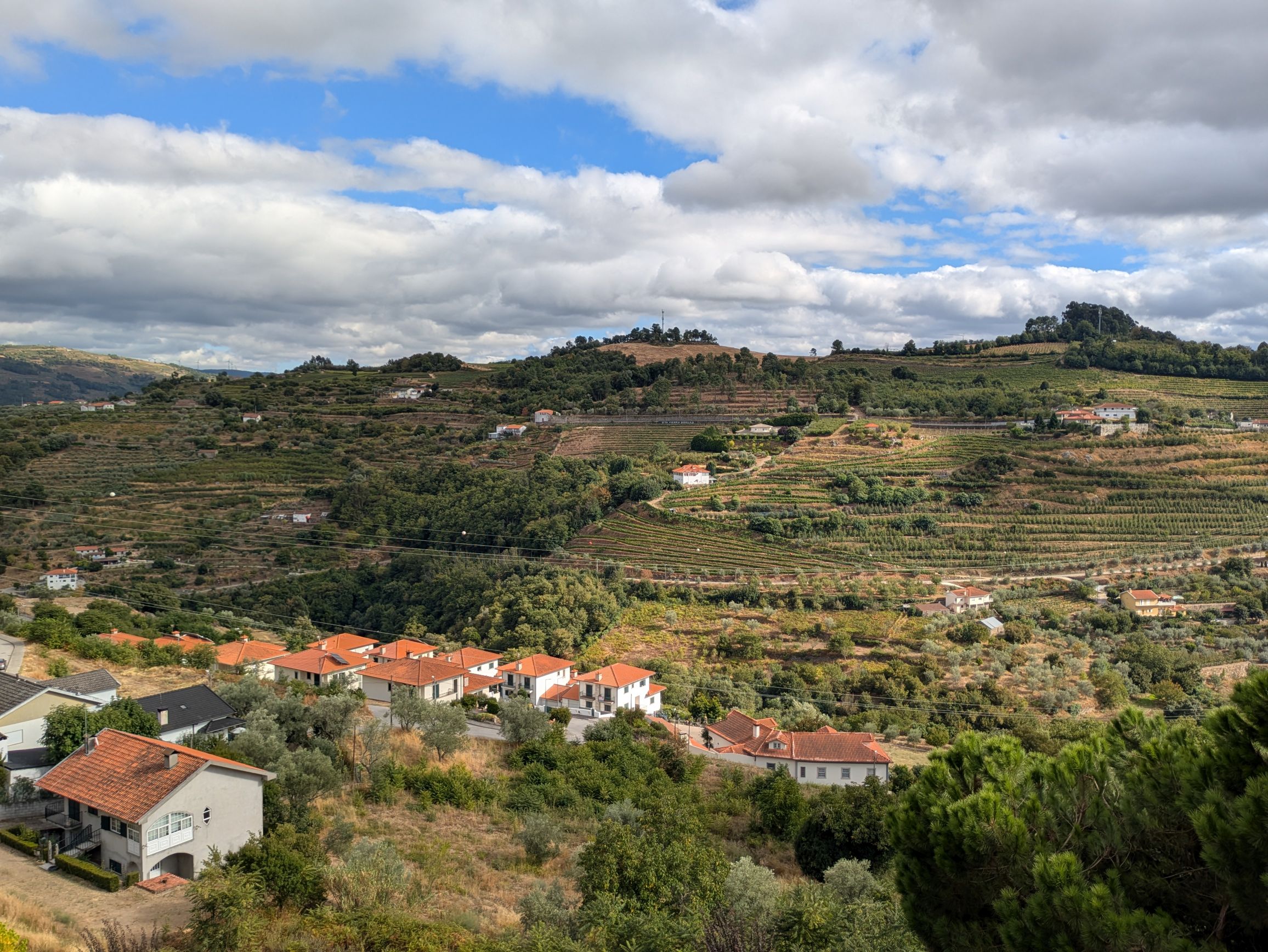
Lamego, in northern Portugal, is in the Douro Valley, known for its fabulous production of port wine. Ever since the ancient Romans first cultivated grape vines here in the third century, the region has been a wine-growing powerhouse. It is one of the oldest wine-producing areas in the world and a UNESCO World Heritage Site.
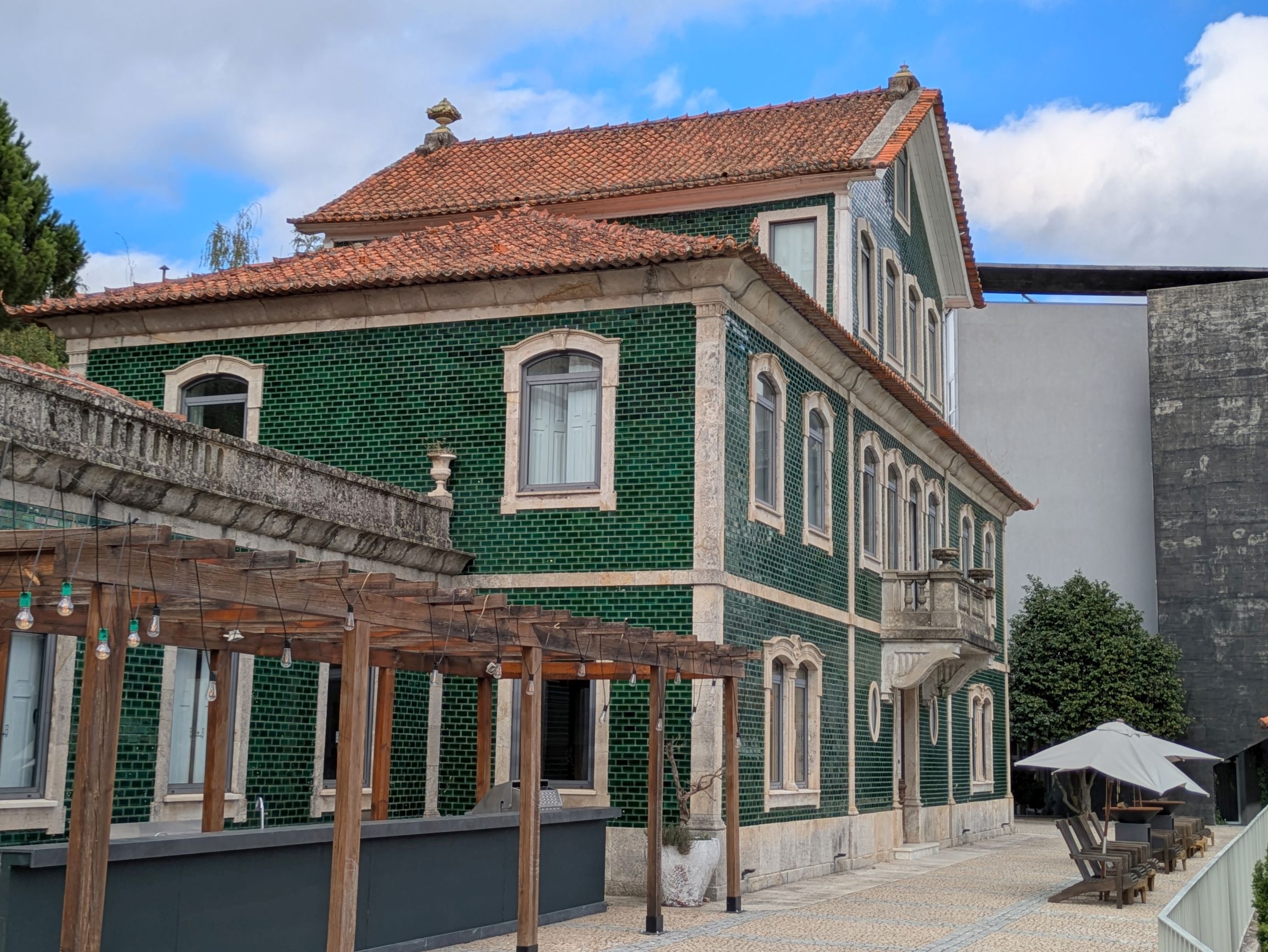
The resort hotel, Lamego Hotel & Life, served as our base for two nights while we explored the area. Located on a hilltop, it offered beautiful views of the vineyards, and it was a quiet and peaceful setting for a couple of relaxing afternoons.
(For all photos, click on the image for a full screen view.)
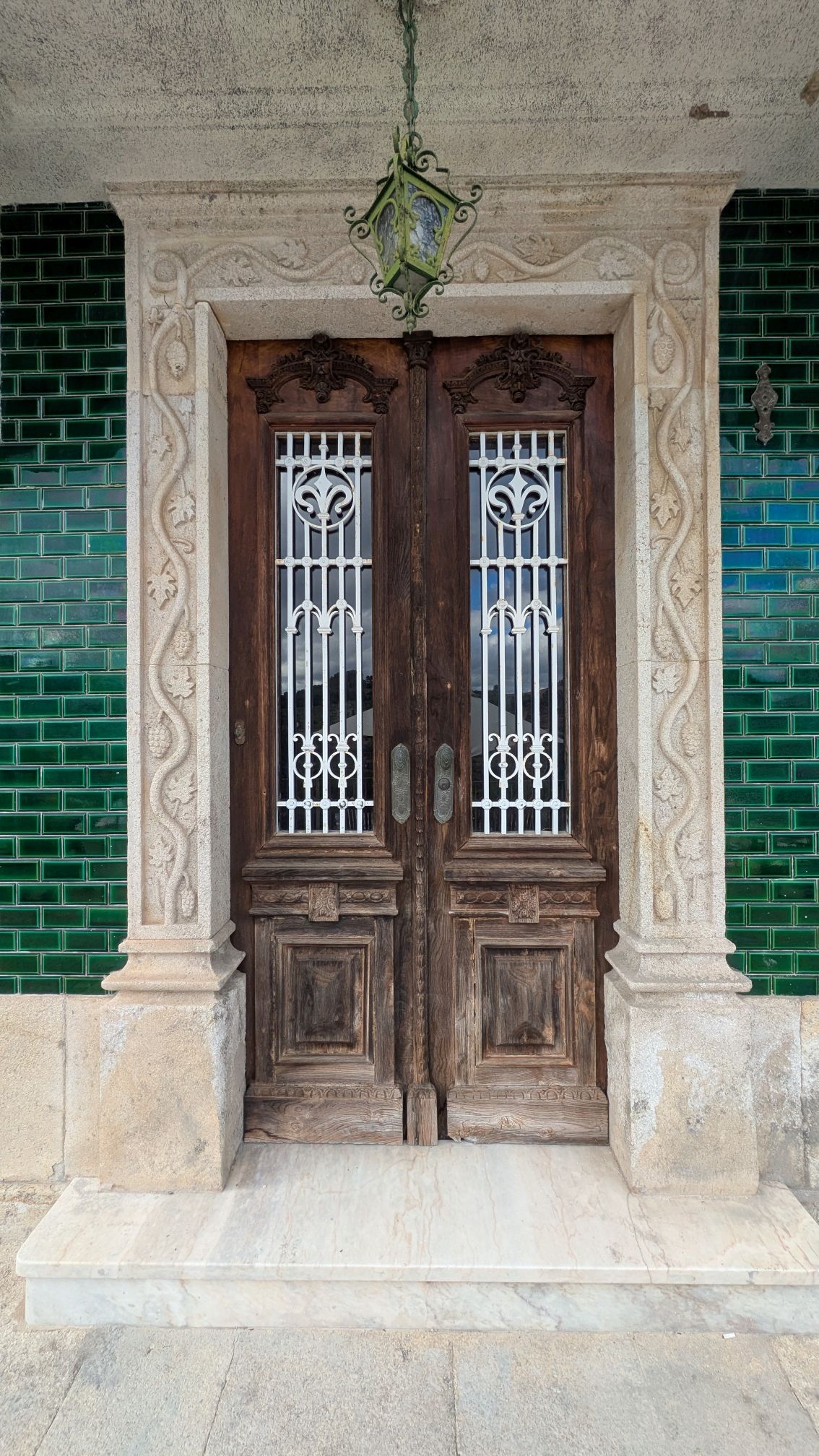
Douro ValleyView from our hotelThis was the original building on the property, and a modern hotel was built adjacent to it.
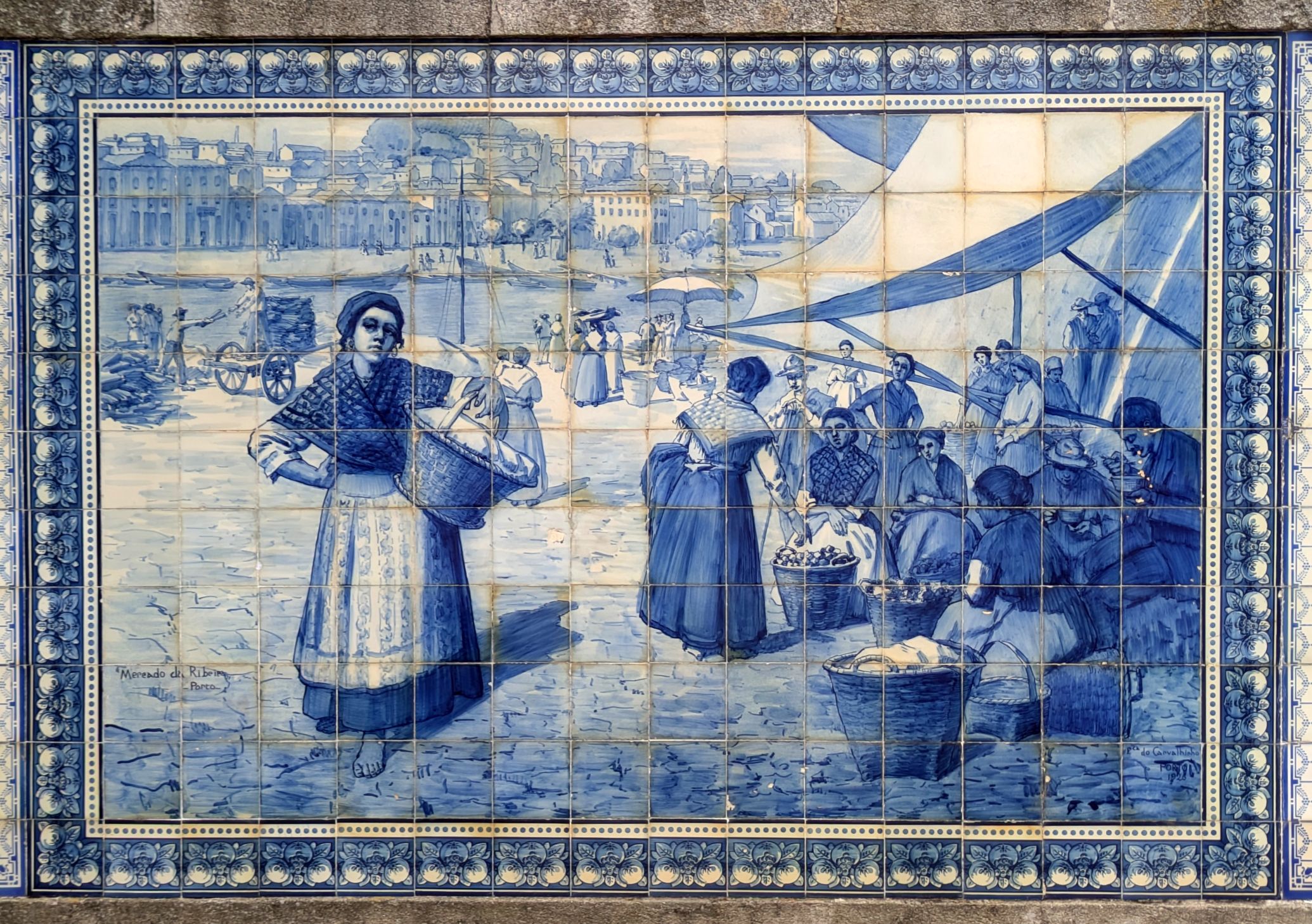
Tile mural on the wall of the original building
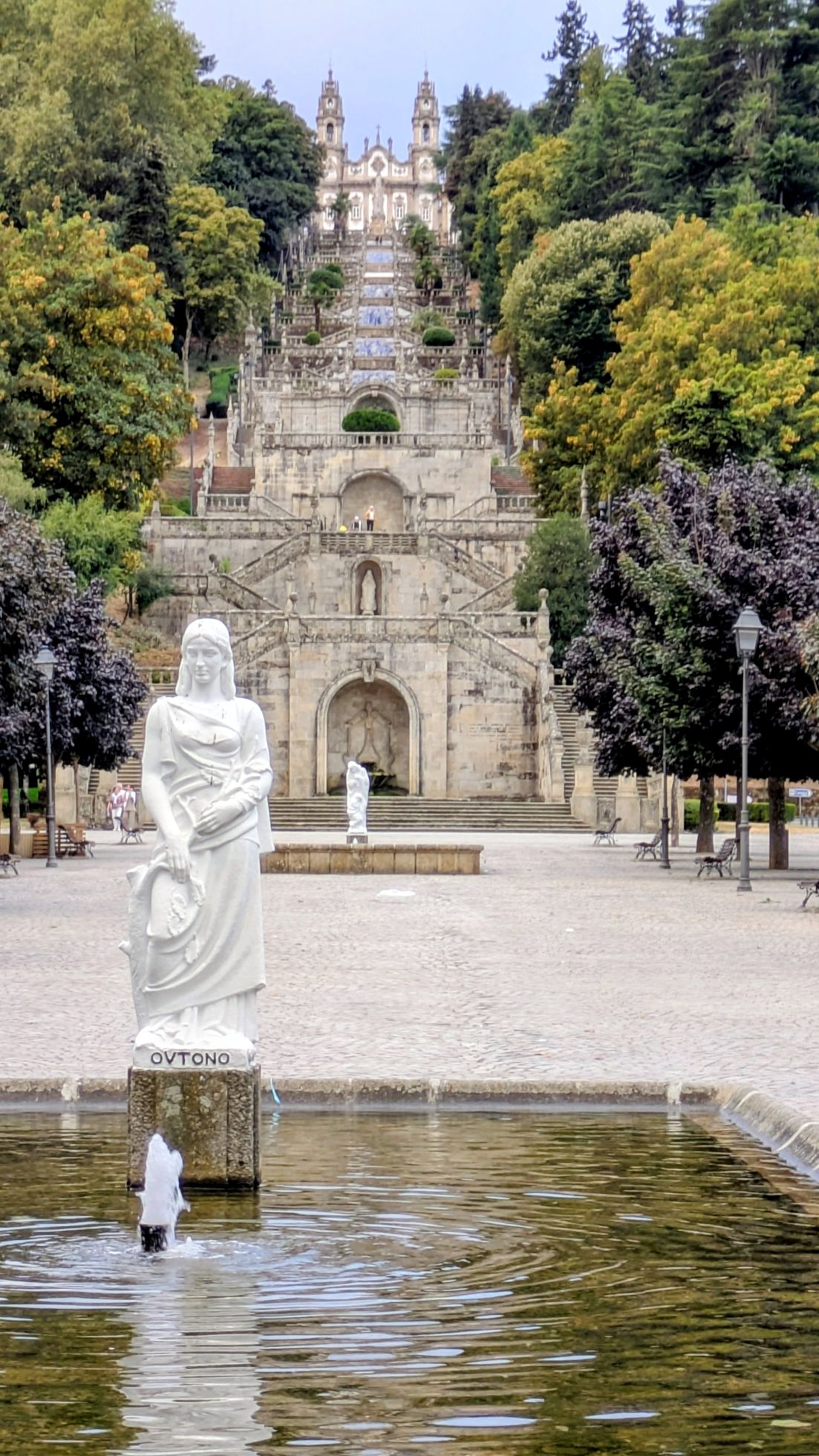
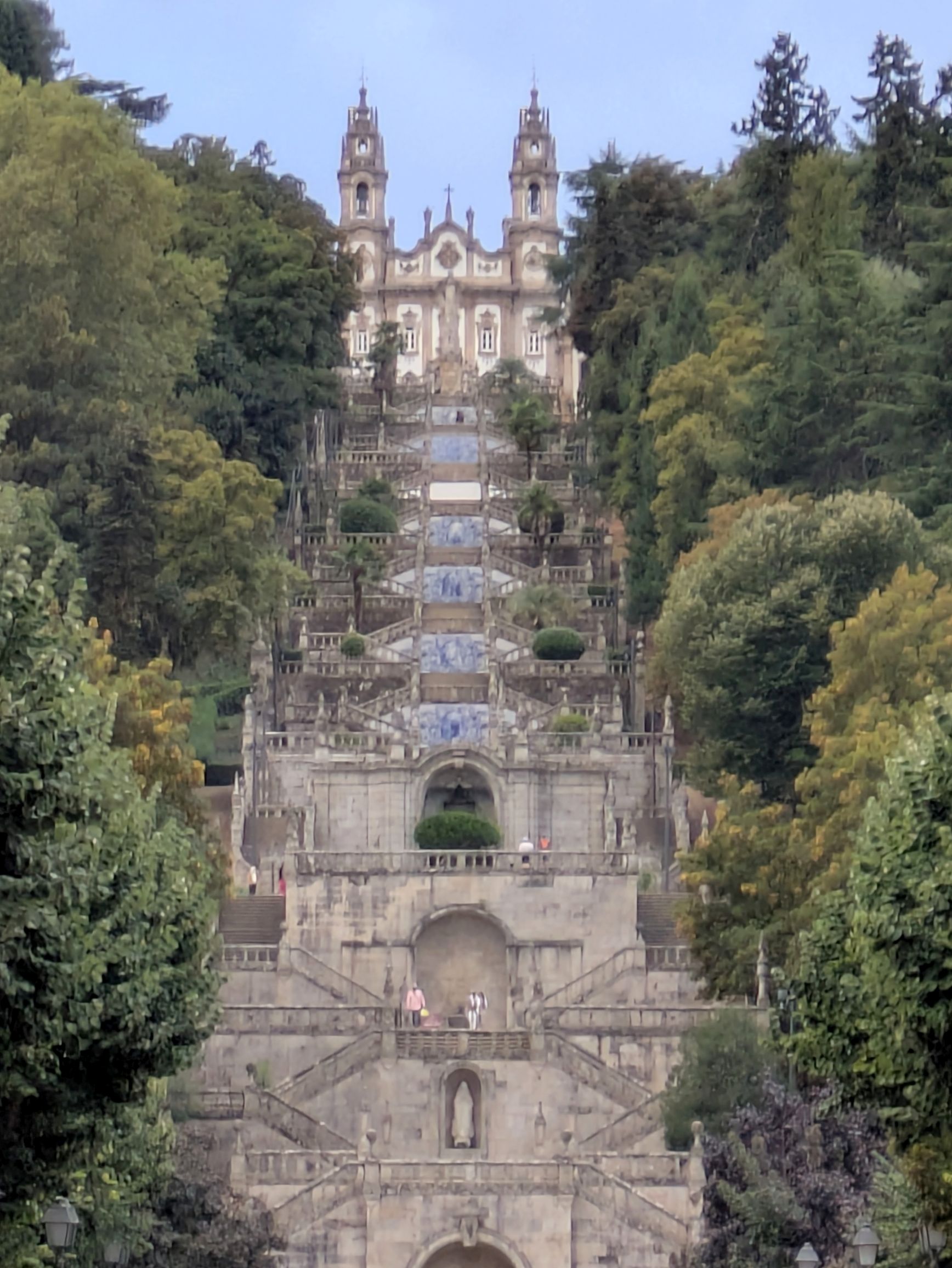
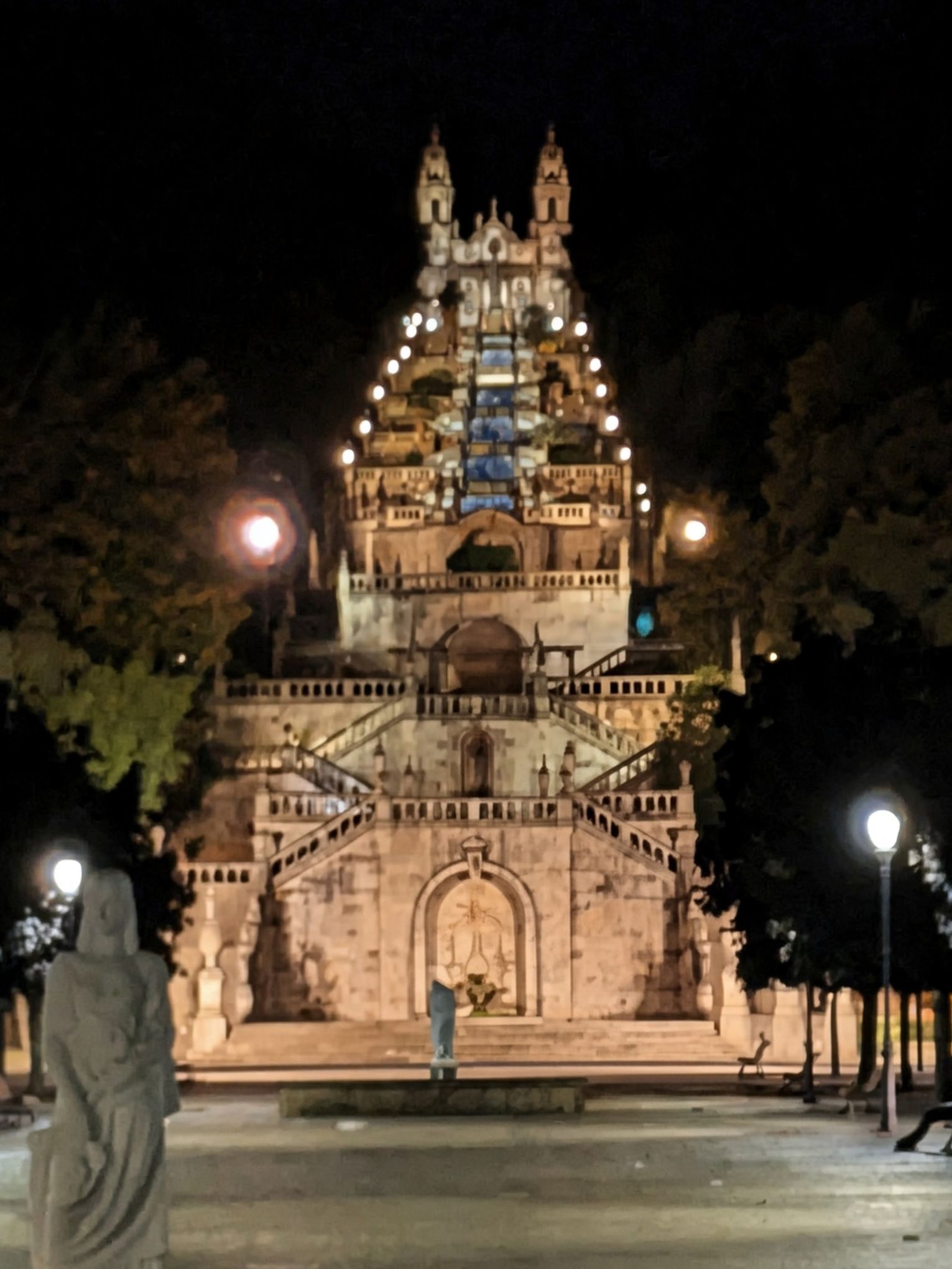
Known for its historic city center, there was one standout feature that was quite lovely: Sanctuary of Our Lady of Rémedios, built in 1750. We saw it during the day and lit up at night, which was beautiful!
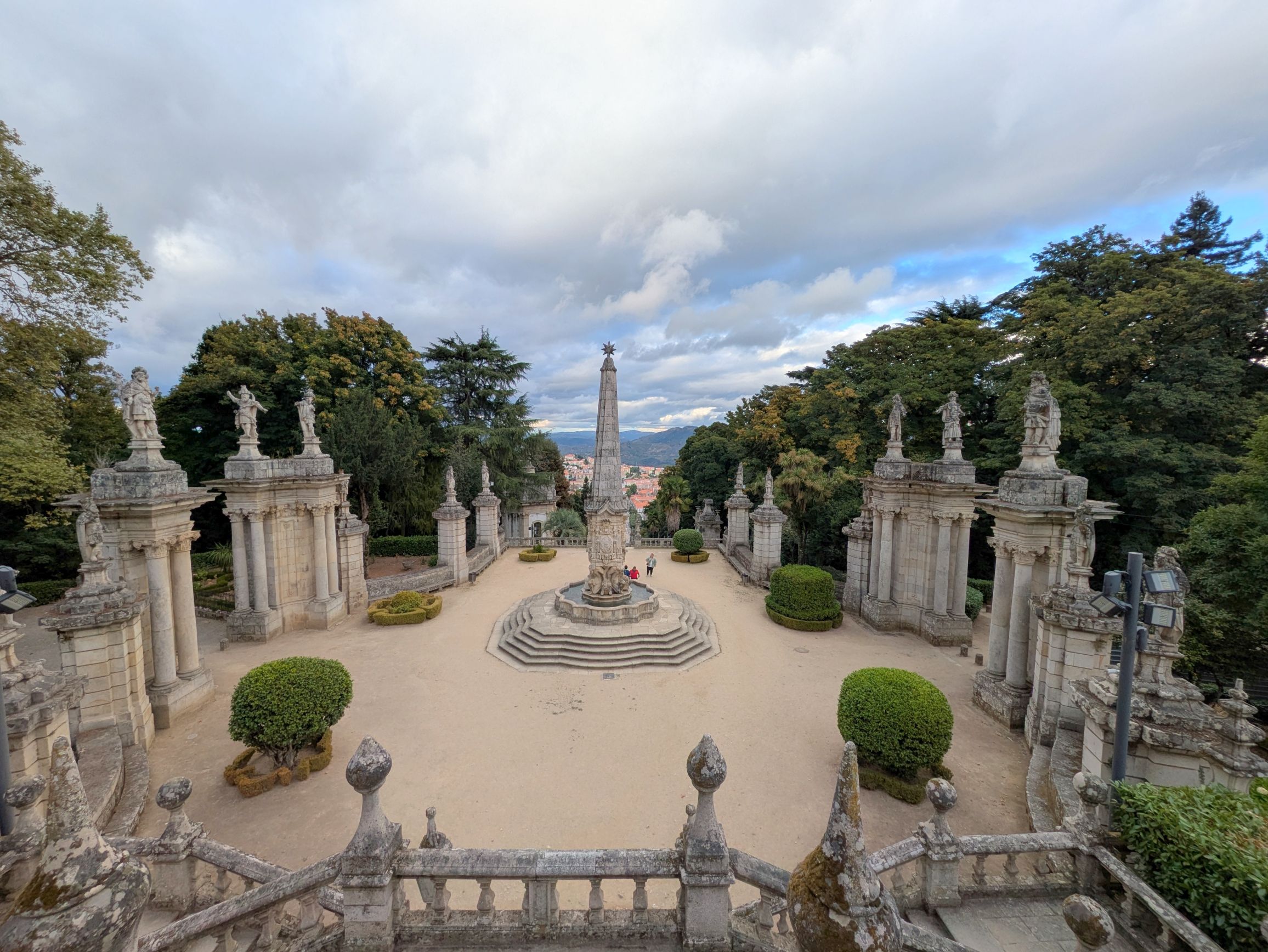
The view from the top looking down the stairs was fabulous!
The Cathedral of Our Lady of the Assumption was built in 1129
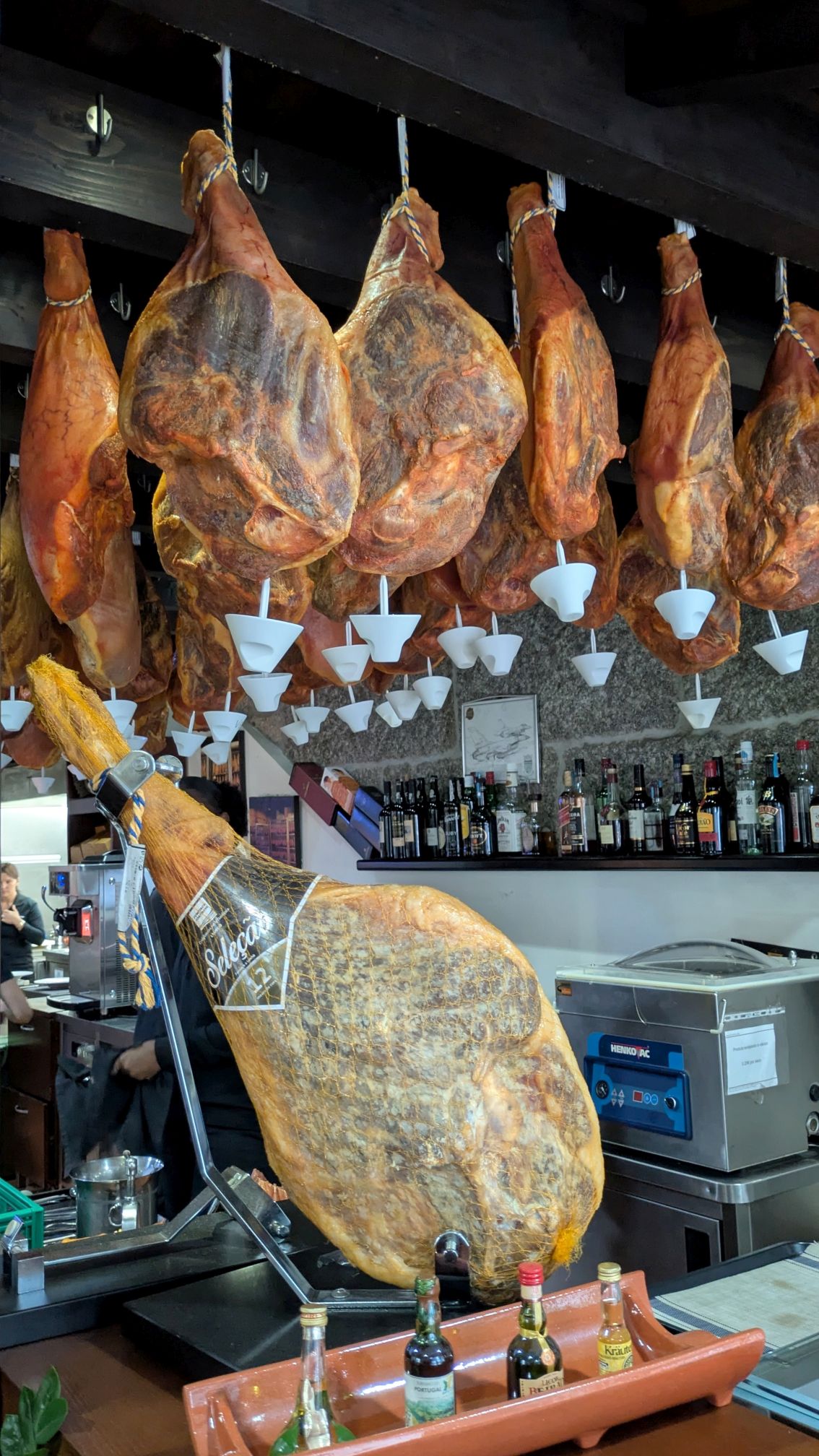
The first thing we saw when we walked into the restaurant where our group was eating dinner
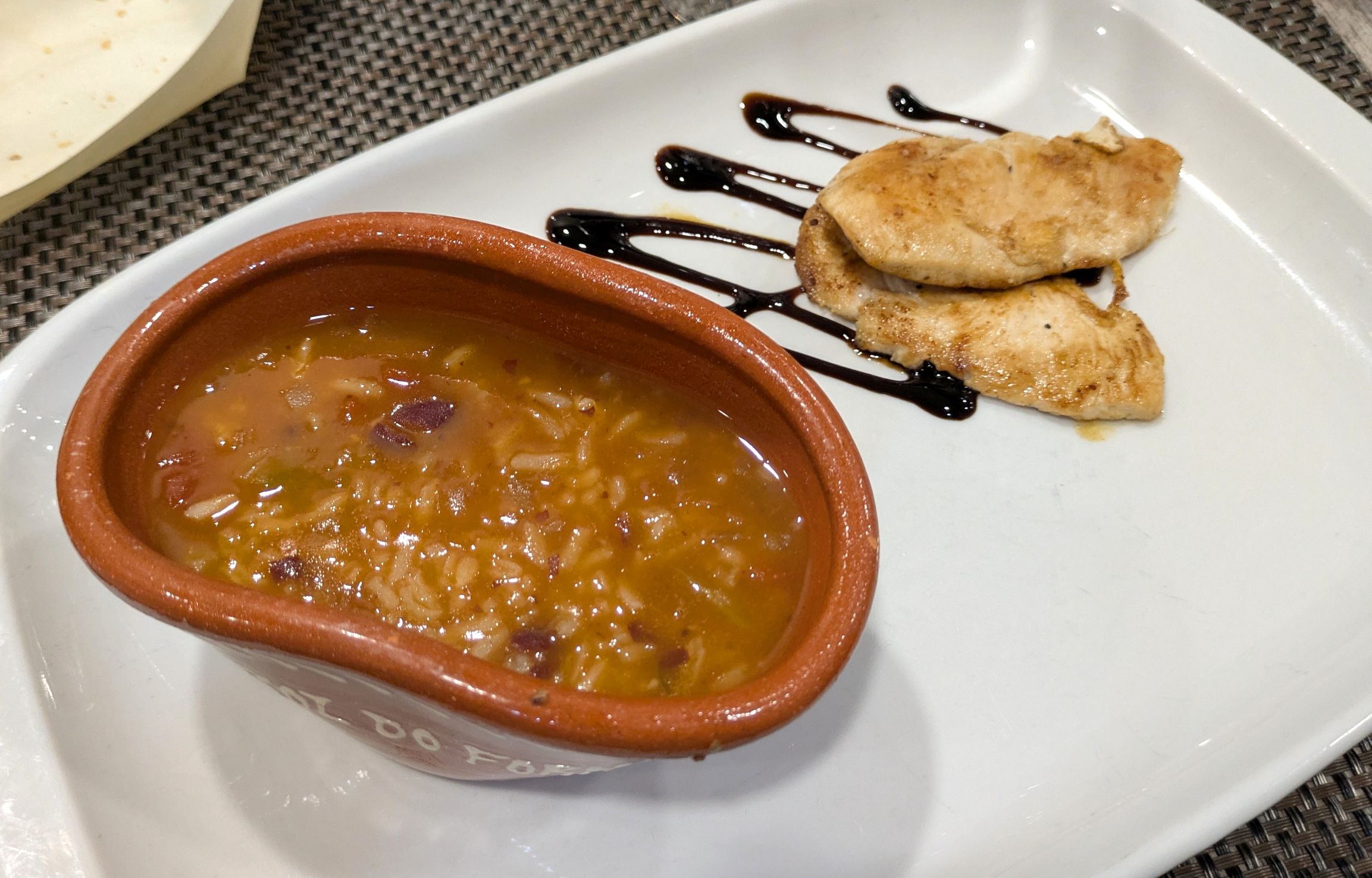
More my taste; a delicious bean soup!
Coming up next: SOUTHWEST FRANCE, NORTHERN SPAIN & PORTUGAL #22: A DELIGHTFUL DOURO RIVER CRUISE & A WONDERFUL WINE-FILLED LUNCH
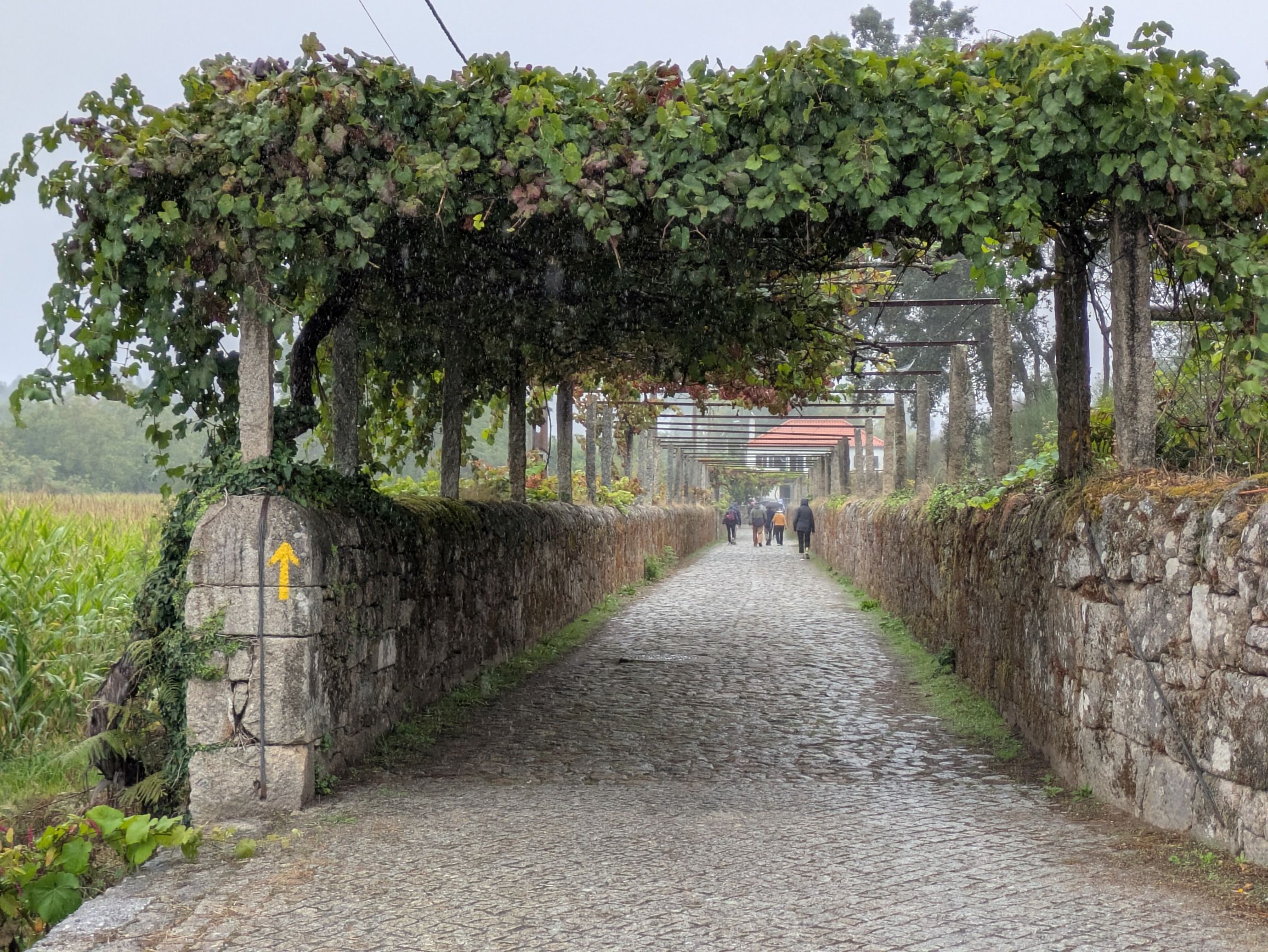
Our third (and final) country on this tour was Portugal, and the Douro Valley was our first stop. Along the way, our bus dropped us off so we could walk along Camino Portugués (Portuguese Way), the traditional coastal route used by pilgrims from Lisbon, Porto, and other regions of Portugal to reach Santiago de Compostela. It was a rainy day and not the best day for walking or photography, but I captured a few shots:
(For all photos, click on the image for a full screen view.)
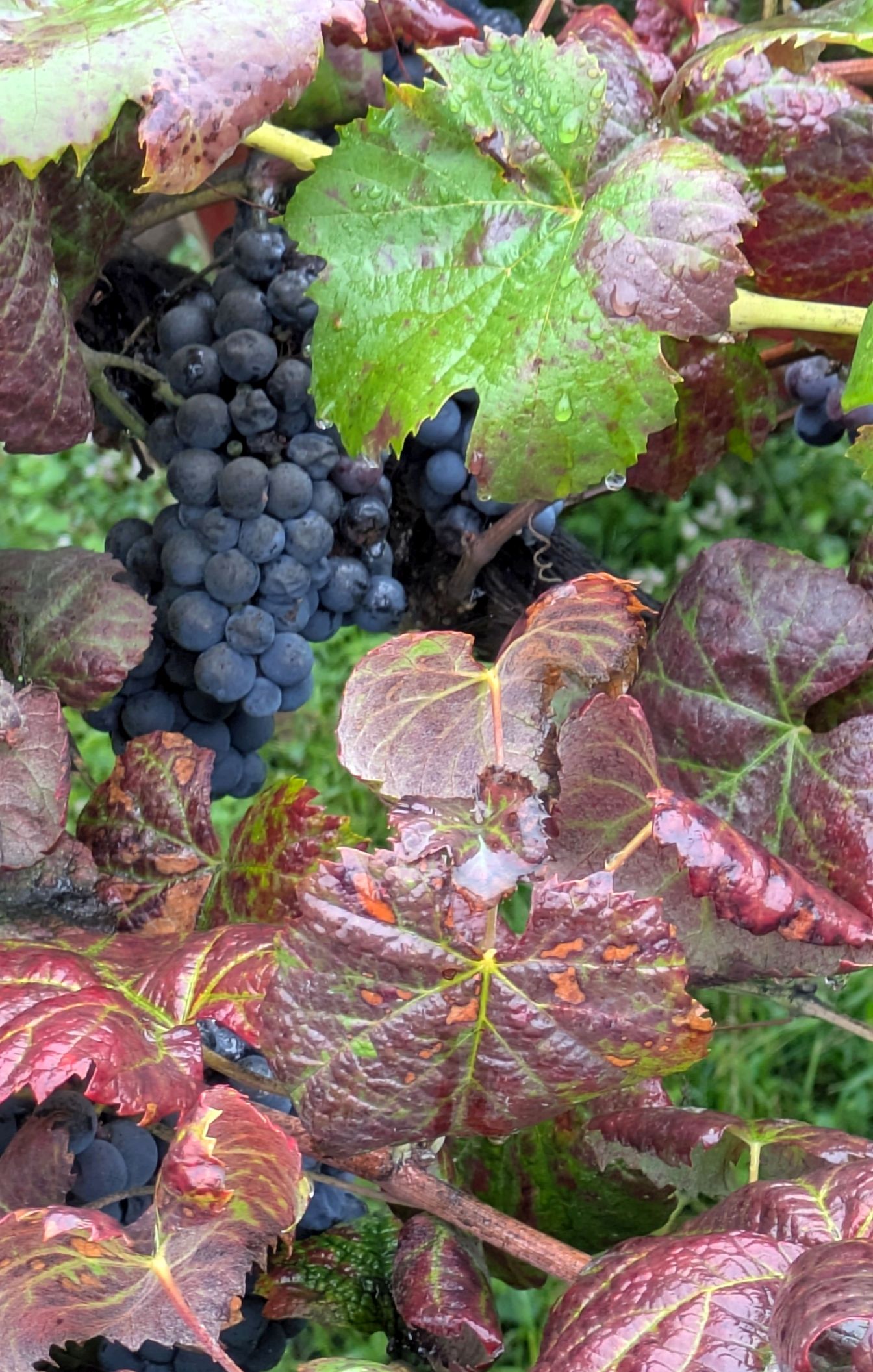
Our group up ahead, walking the Portuguese Way through the vineyards
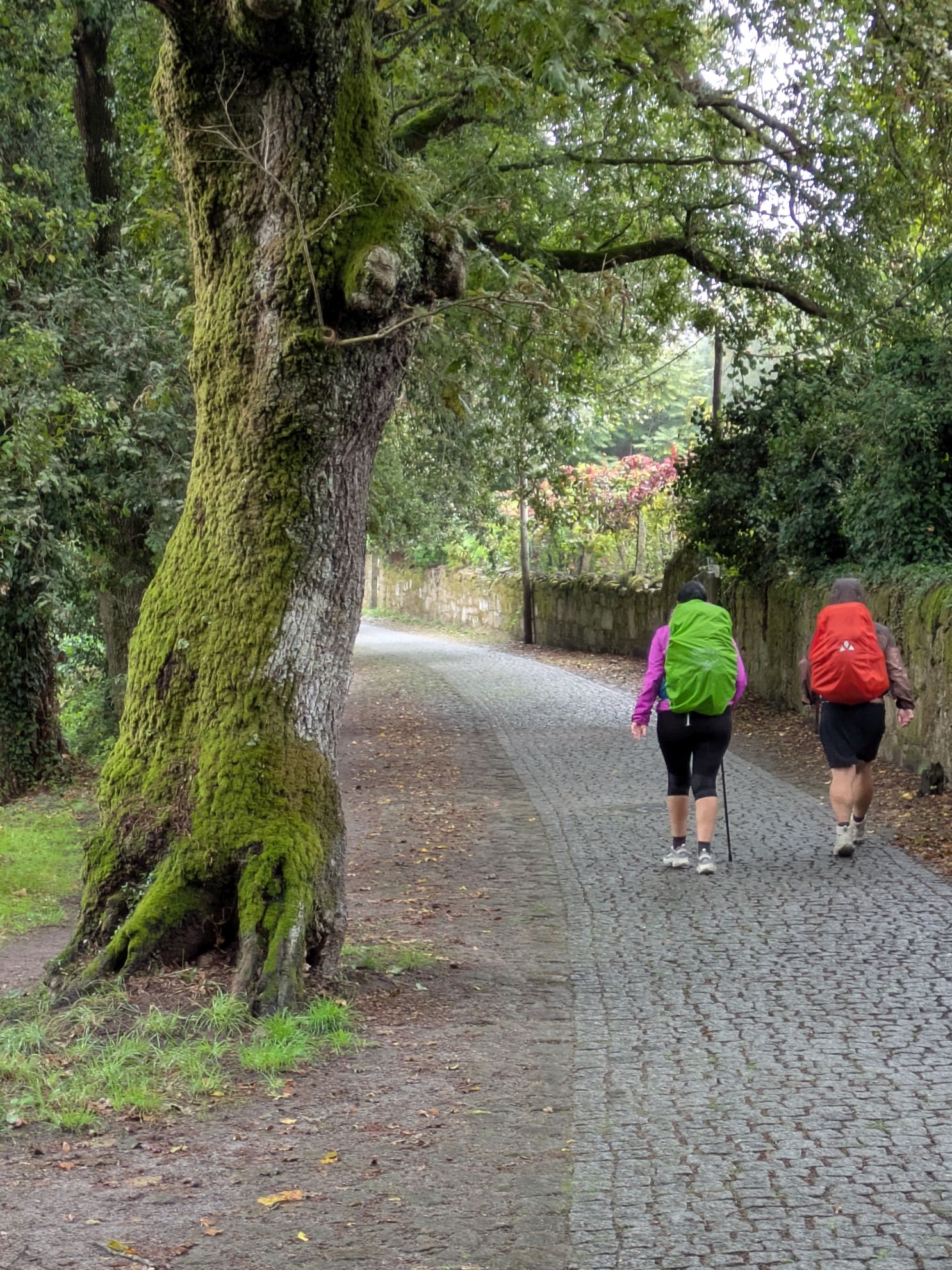
Pilgrims
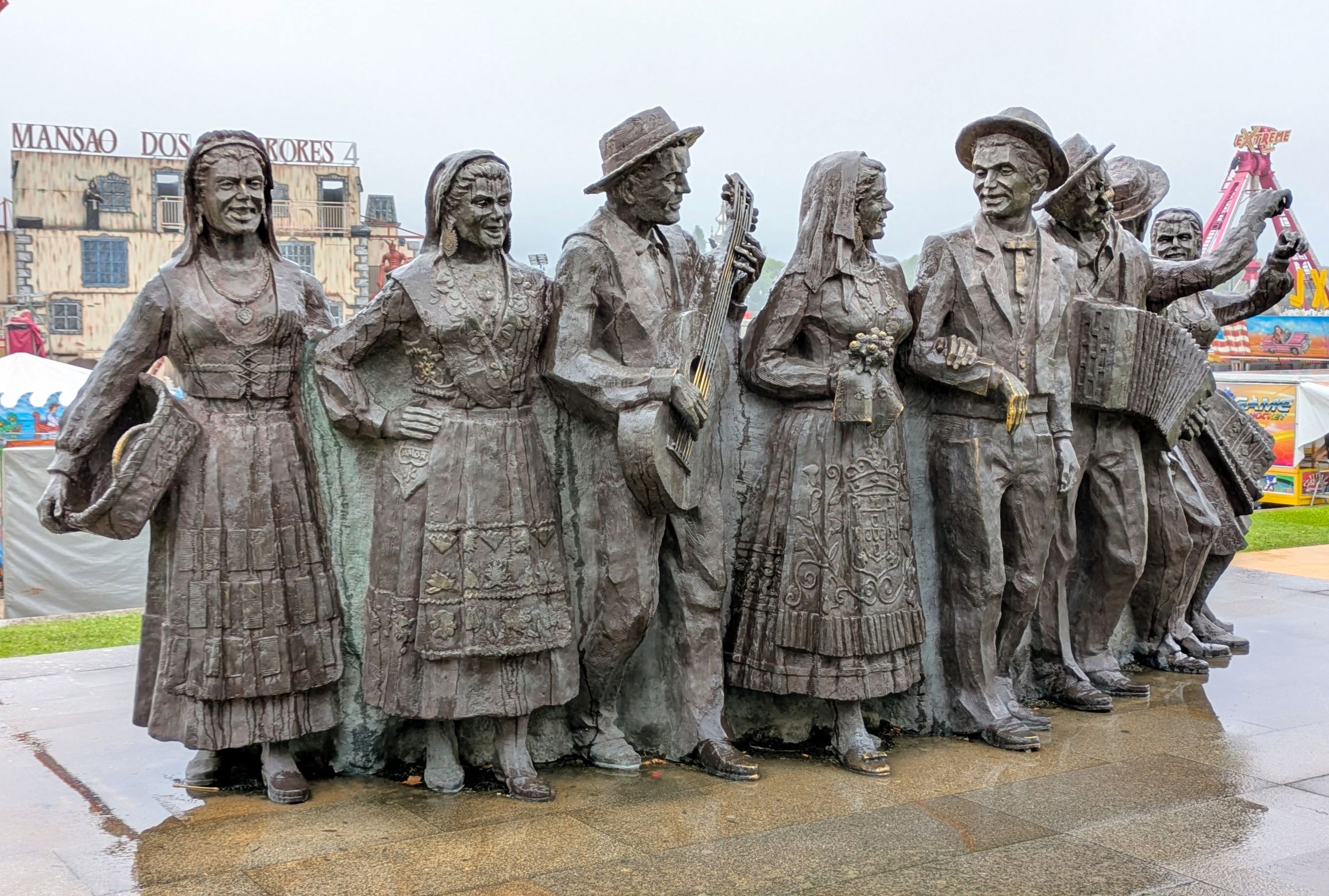
Walking through Ponte de Lima, we came across this life-sized bronze sculpture
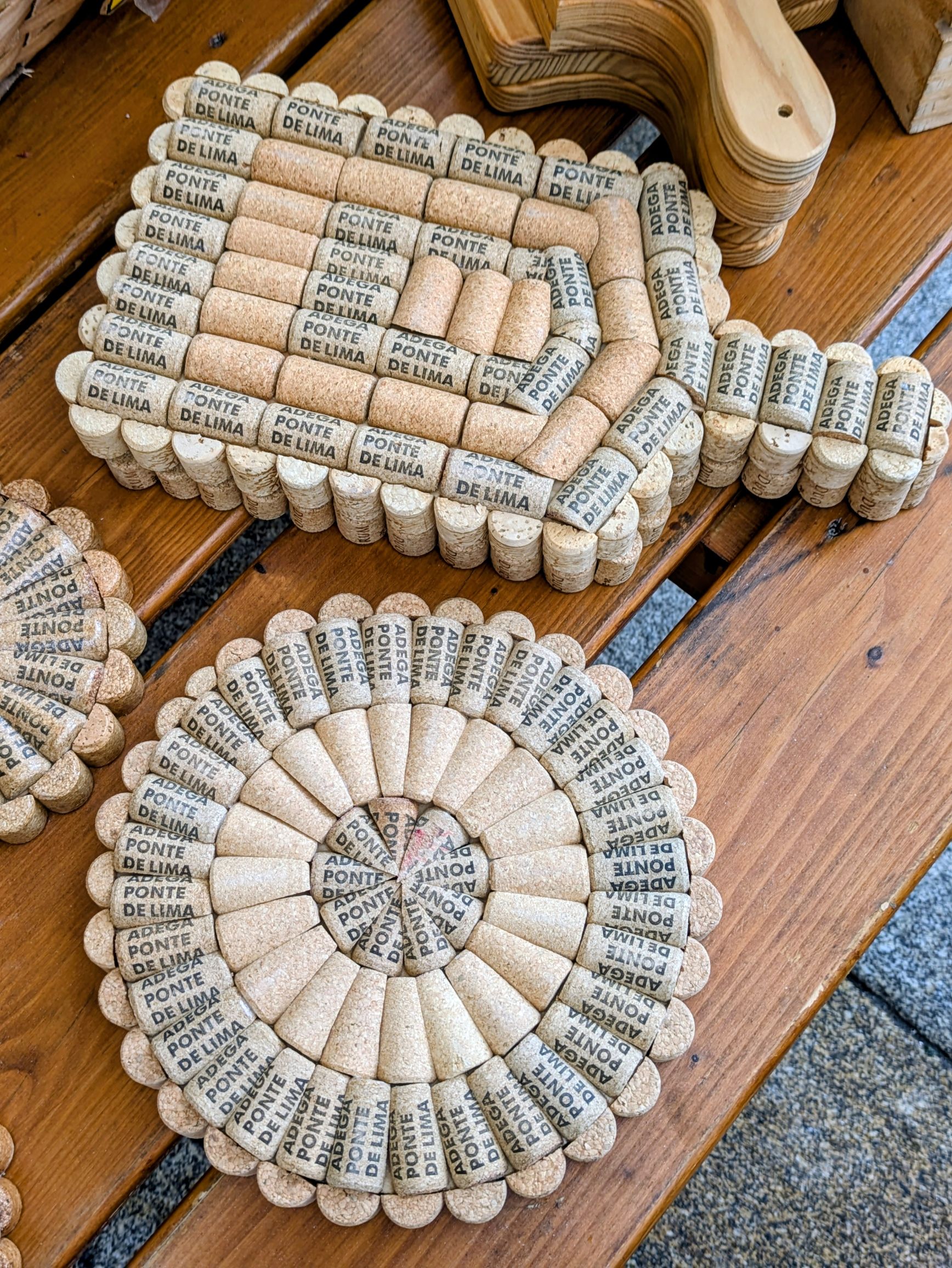
You know you’re in Portugal when you see cork items for sale in gift shops!
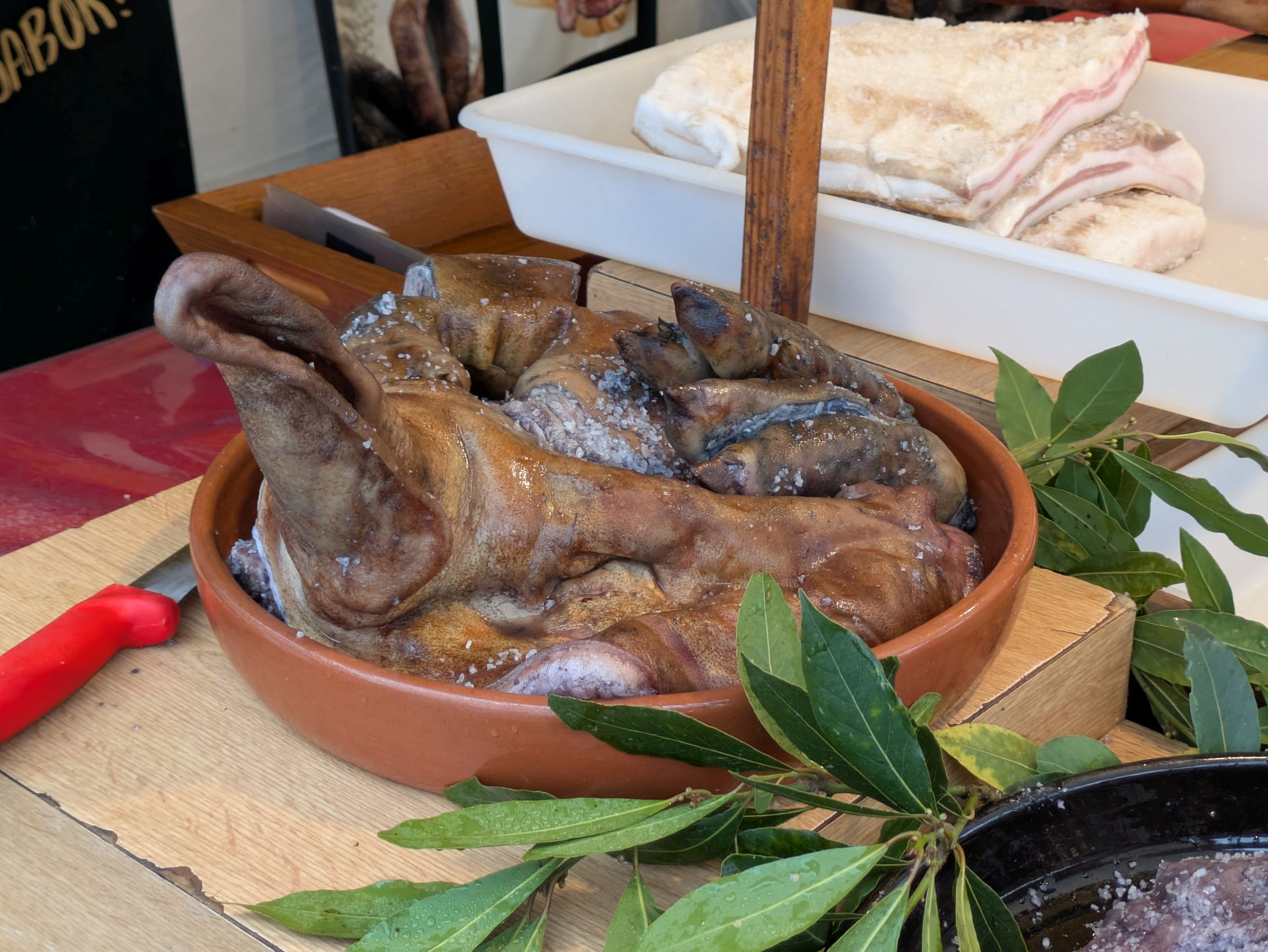
I don’t even want to know what meat was being sold by this street vendor…
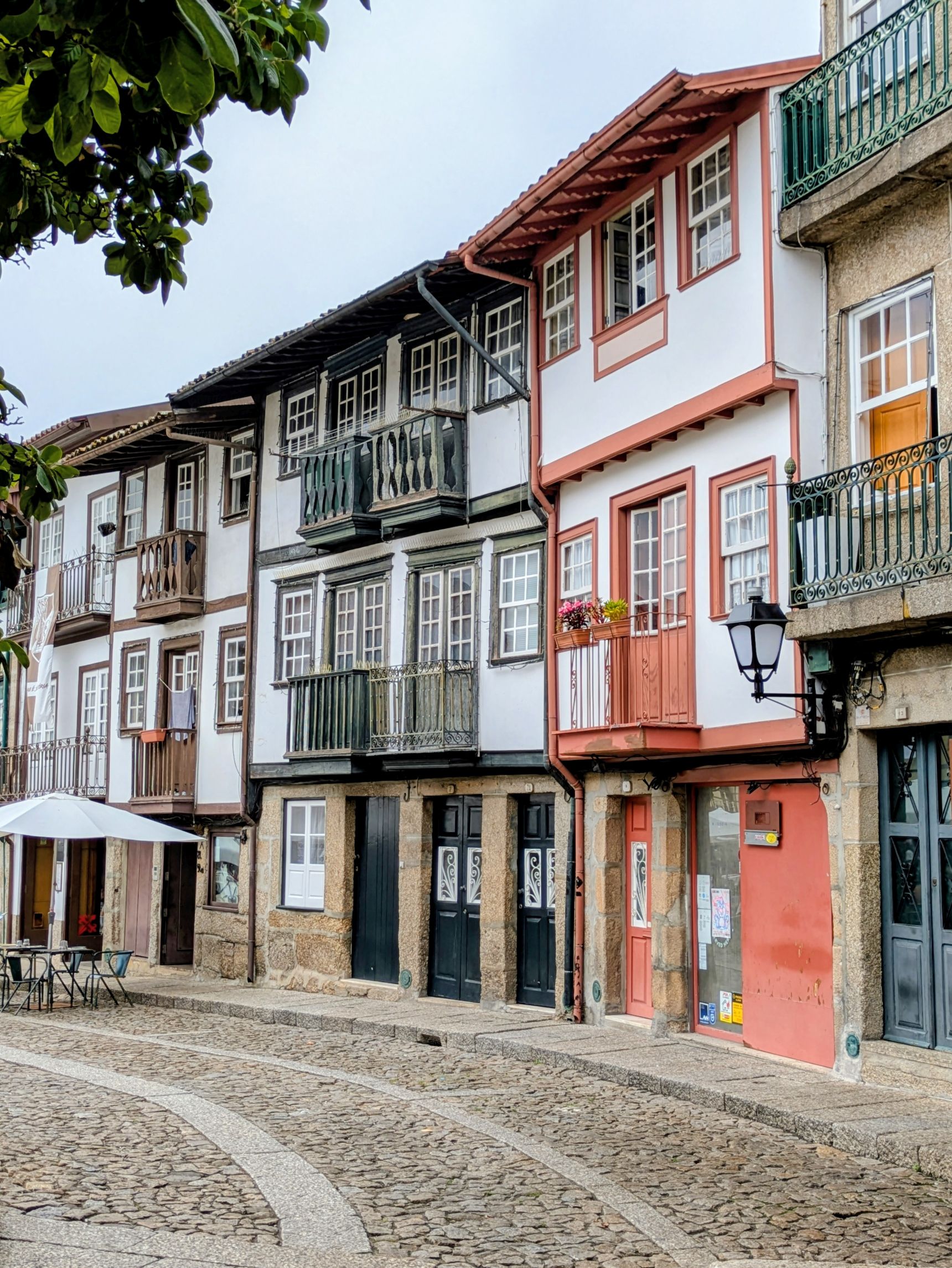
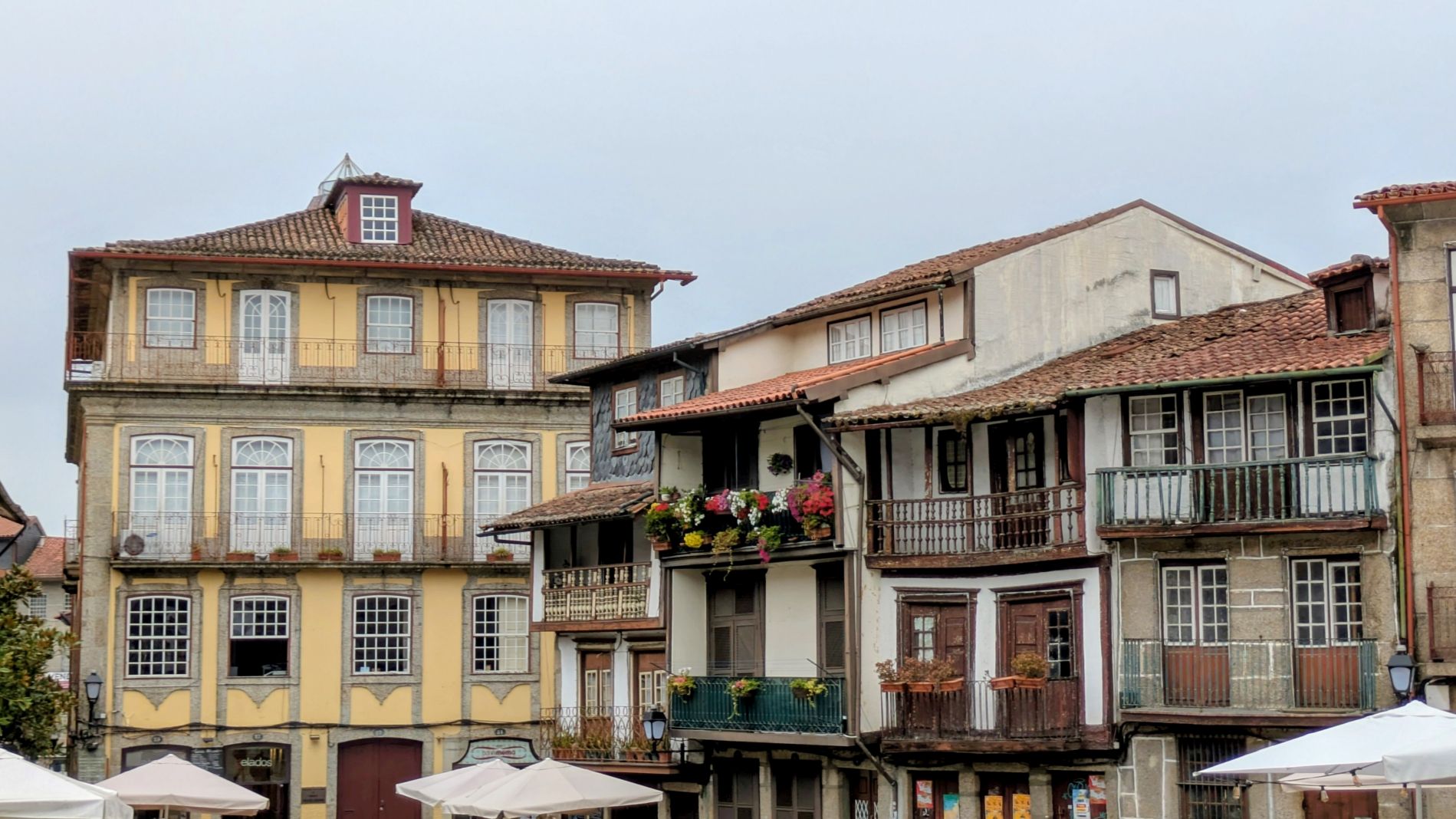
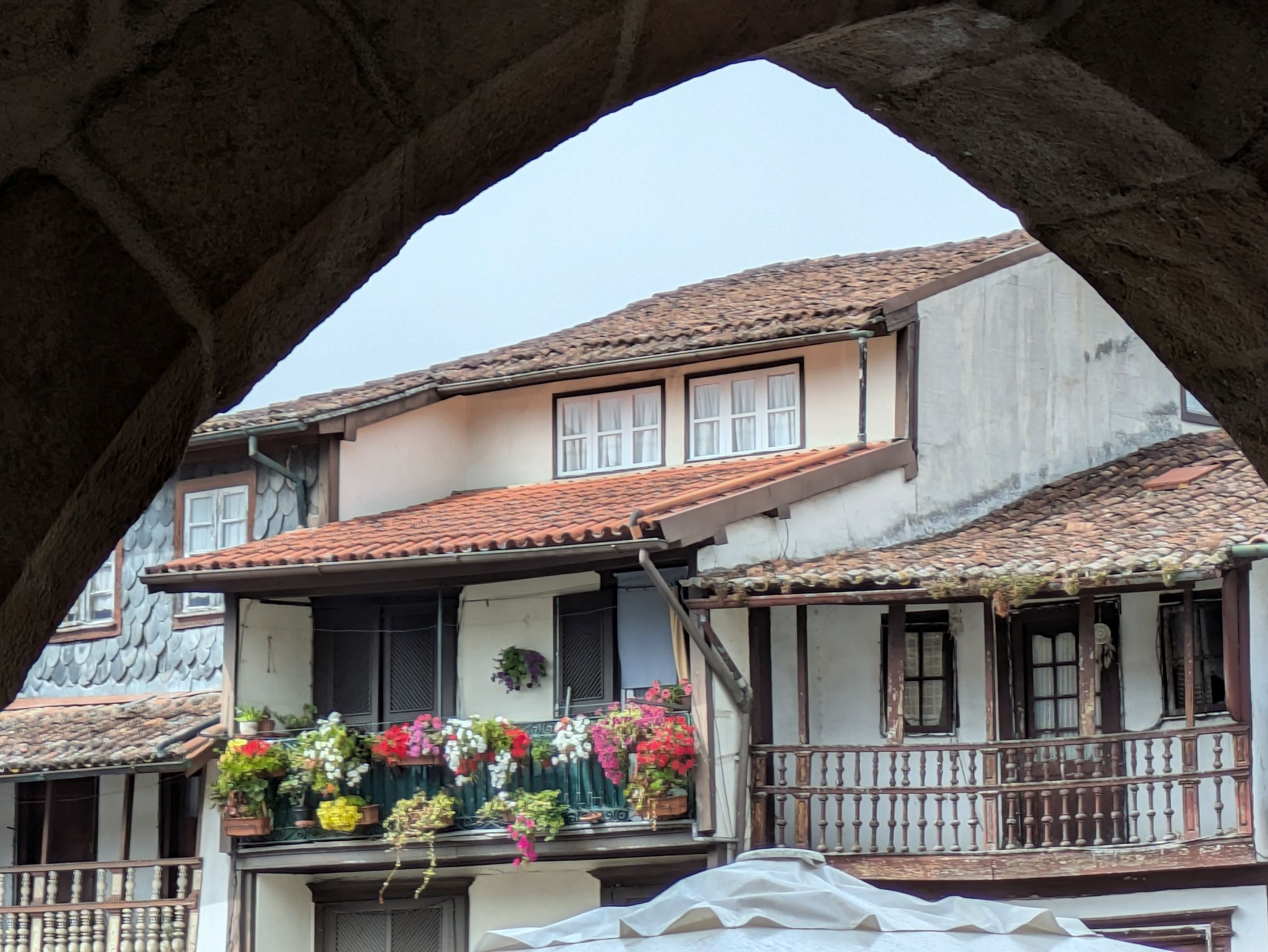
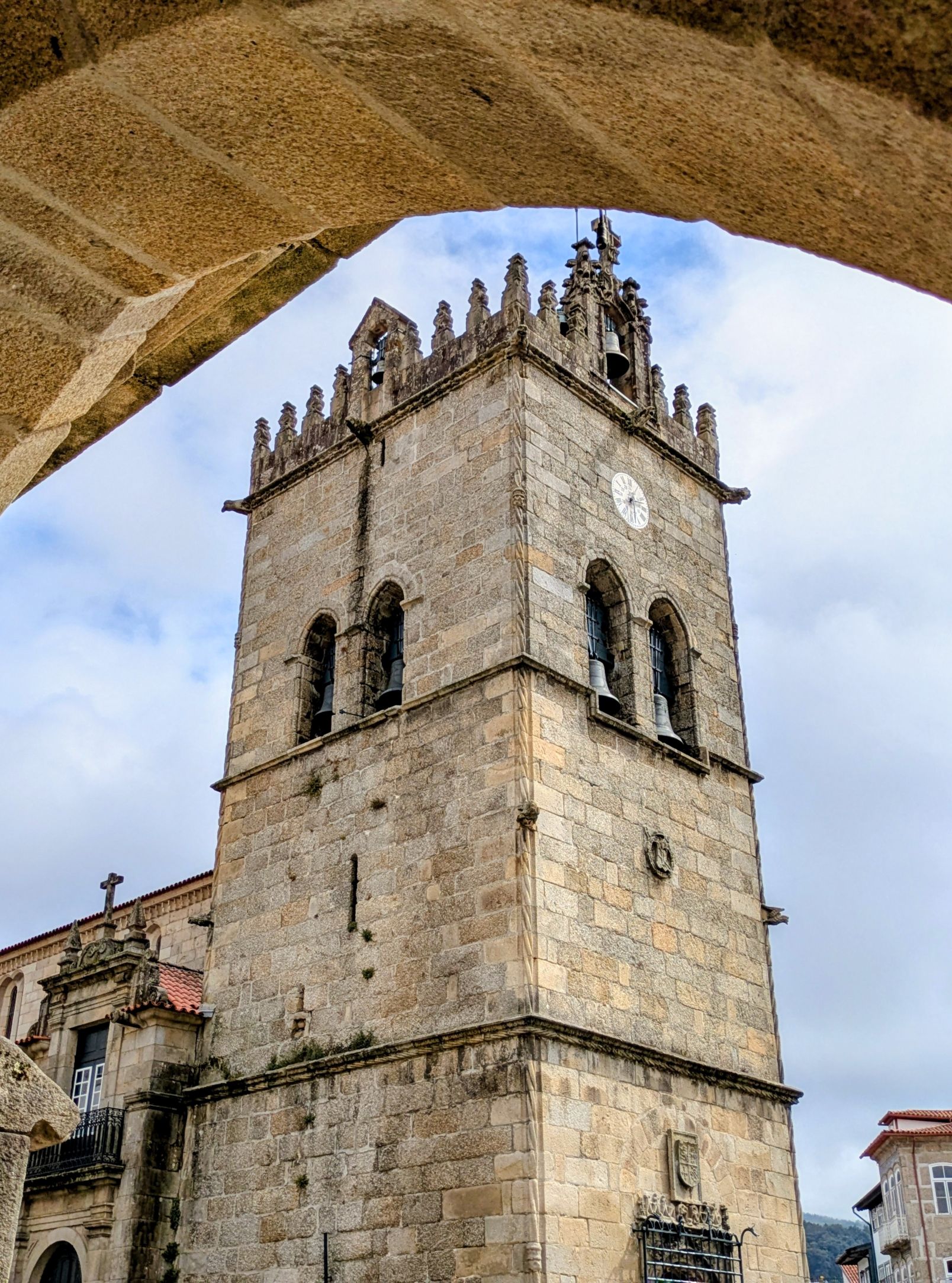
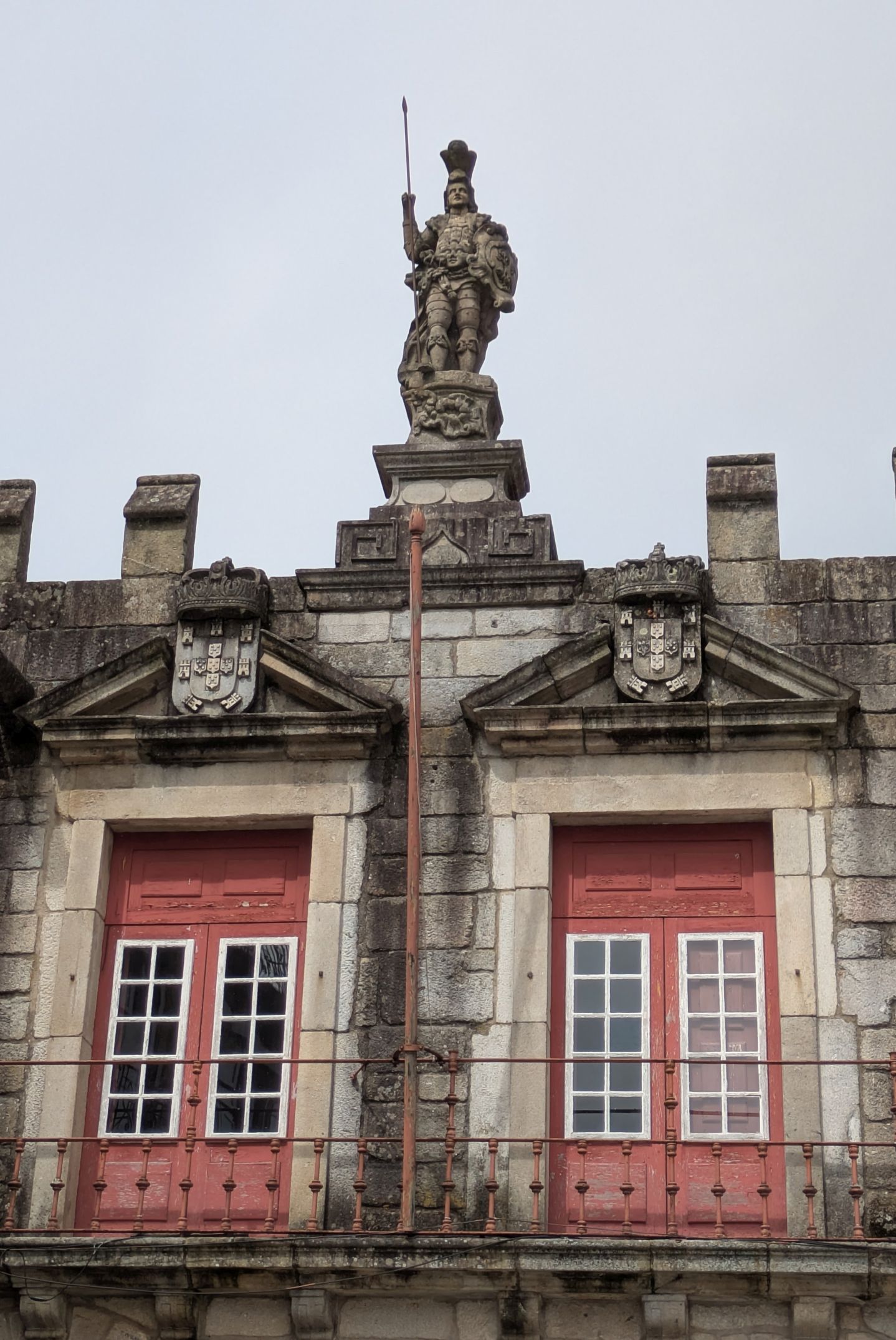
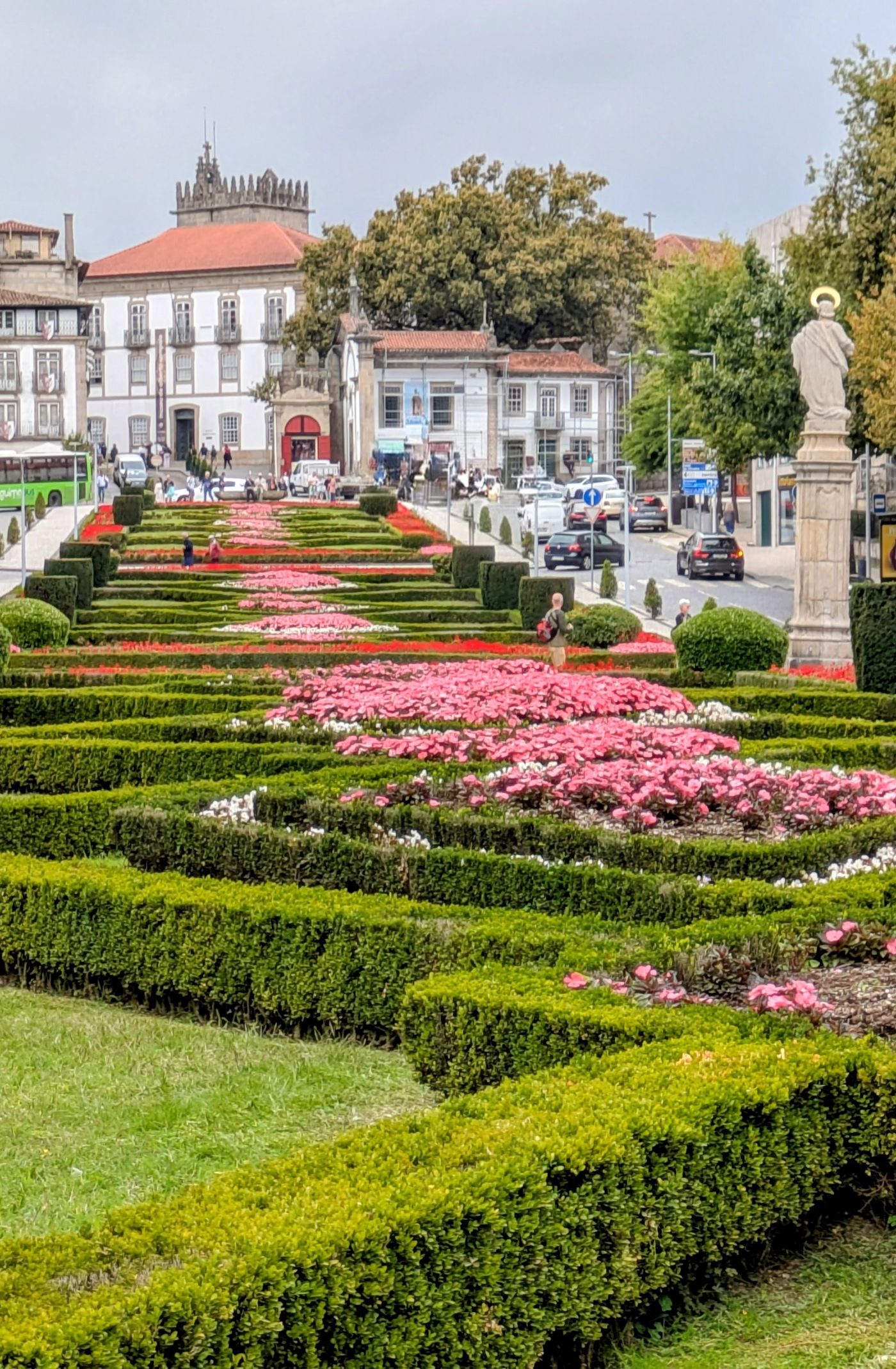
The medieval city of Guimarães was our next stop. It is considered the birthplace of Portugal, because its first independent king, Afonso Henriques, was born here in 1110. We took a walking tour of the well-preserved city center, a UNESCO World Heritage Site, and had time to explore on our own. While most of the group went to a restaurant for lunch, we opted to grab a quick bite and see more of gorgeous Guimarães.
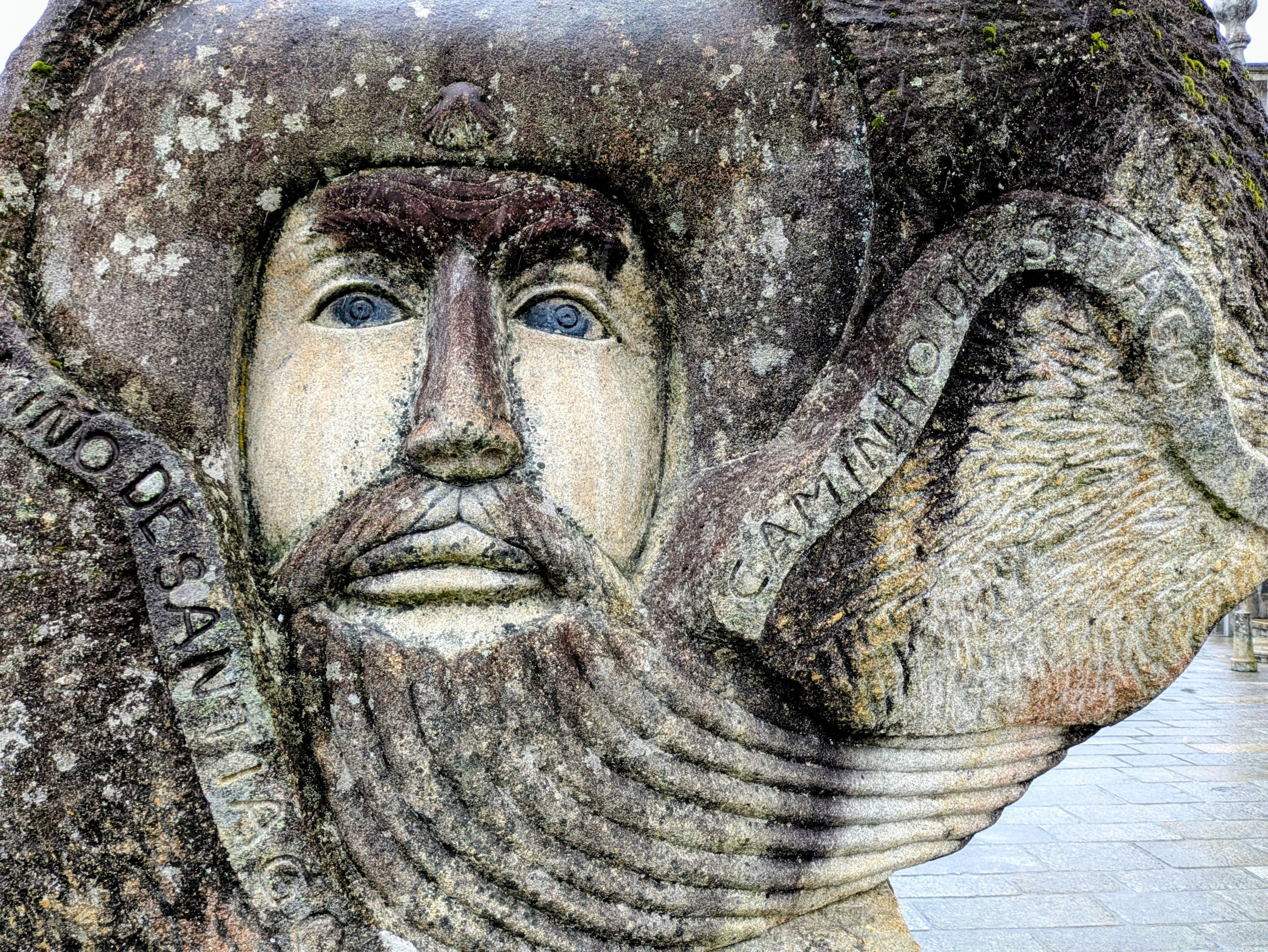
Pointing the way to Santiago de Compostela, in Spain
Next up: SOUTHWEST FRANCE, NORTHERN SPAIN & PORTUGAL #21: LOVELY LAMEGO




























 Elaine-iaK's Travels: A Traveler's Tales of People, Places, Photos, Pools... and CHOCOLATE!