…AND, ANOTHER LITTLE RANDOM ACT OF KINDNESS (Act 28)

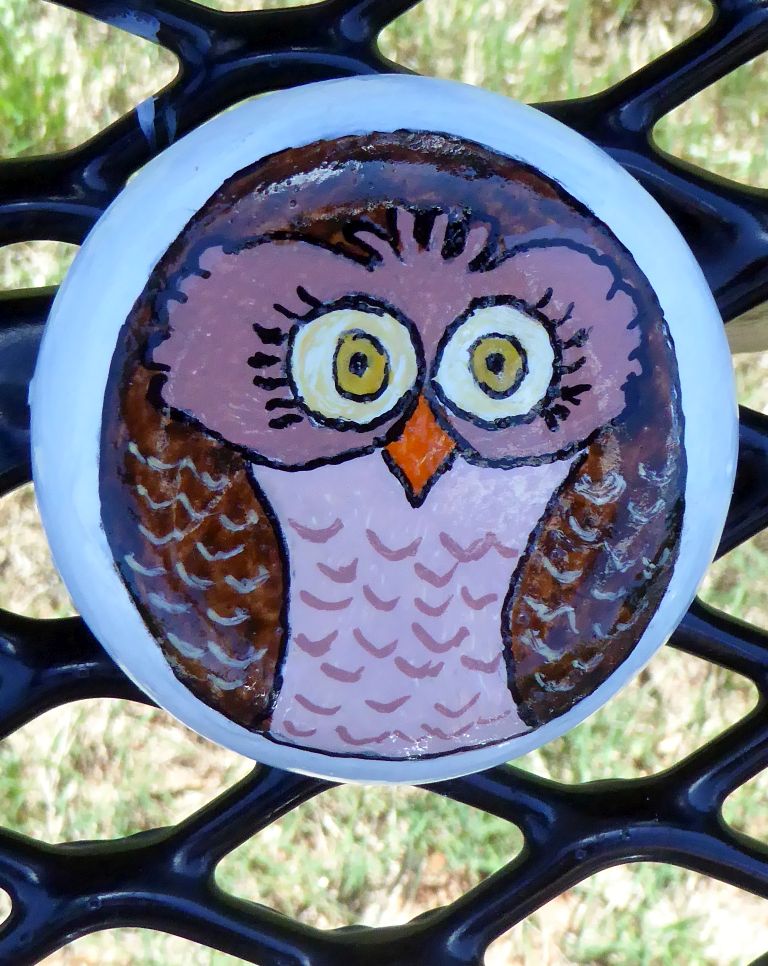
Woody Woodpecker is yet another bird to join the hummingbird, toucan, penguin, yellow bird of unknown species, yellow canary, duck, and owl that have all flown (or waddled) onto our Sun City Peachtree bench.
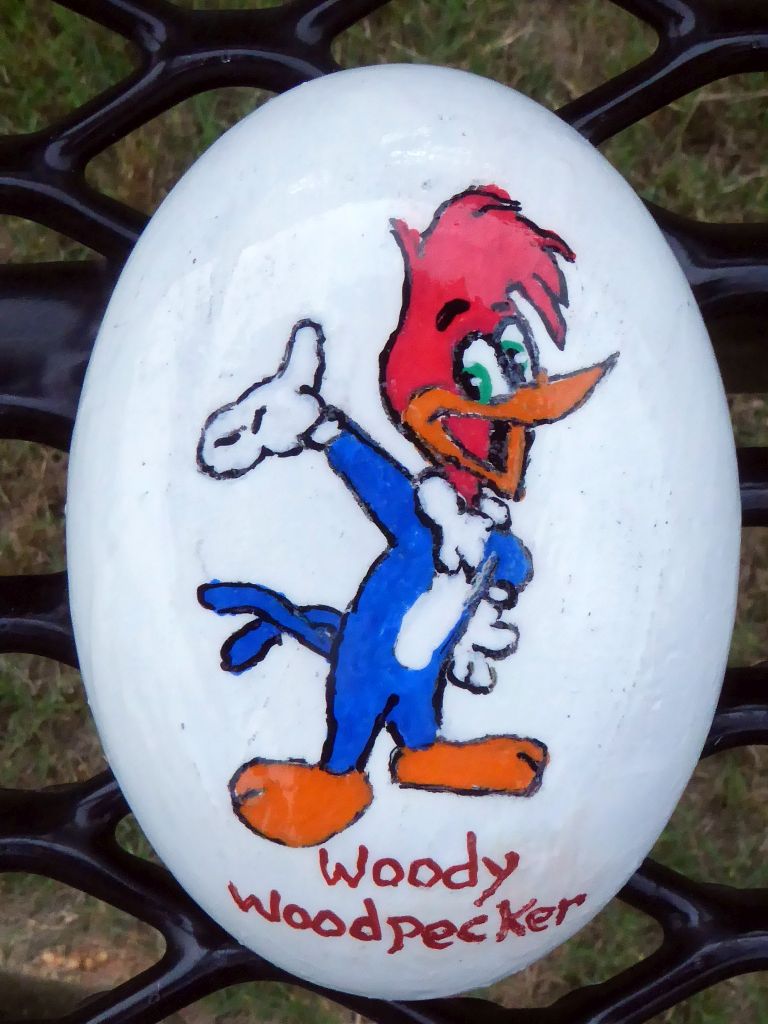
An acorn woodpecker, Woody originated after a real woodpecker had driven producer Walter Lantz and his wife, Gracie, crazy on their honeymoon.  They were staying in a cabin in California, and a noisy woodpecker just outside had kept them awake at night.  When a heavy rain started, the couple learned that the woodpecker had bored holes in the cabin’s roof!  Walter wanted to shoot the bird, but Gracie encouraged him to make a cartoon about the destructive bird instead.  Woody Woodpecker was born.

Woody debuted in 1940 in the short film, Knock Knock alongside Andy Panda and his father.  The woodpecker got his kicks pestering the two pandas, so Andy attempted revenge by trying to sprinkle salt on Woody’s tail in the belief that he would be able to capture the bird.  He succeeded, much to Woody’s surprise, and the woodpecker was hauled off to the funny farm.  In the end, Andy and his dad proved to be even crazier.

A star was born, and Lantz continued to have Woody appear in new films and shorts for Universal.

Have you ever noticed that Woody has a lot in common with Daffy Duck and Bugs Bunny?  That’s because Lantz created the woodpecker as a bit of a hybrid of the two characters.  Woody has the energy, quirkiness, looniness, and demented nature of Daffy; and, he’s a wise guy like Bugs Bunny.  Just to seal the deal, Woody even got Daffy’s and Bug’s voice actor for his first three cartoons!

Woody became so popular, that he was named the official mascot of Universal Studios.  From 1982 until 1996, he had the honor of flying on a Macy’s Thanksgiving Day Parade balloon.  Two years later, he got a fast and furious ride on the Williams Formula One race car, and then got to do it again the following year. 

Although Woody has seen a lot of fame in all those appearances, he only ranked 46th on TV Guide’s list of the 50 Greatest Cartoon Characters of All Time, in 2002 and 2003.  The following year, he ranked 25th on Animal Planet’s list of The 50 Greatest Movie Animals.

Over the years, as other humans took control of Woody Woodpecker’s appearance and personality, the bird went through several changes. 

Currently, Woody is voiced by Billy West and appears in The New Woody Woodpecker Show on the Fox Kids TV series.  He is now a smart and sympathetic protagonist; however, he does get into a bit of mischief with Wally Walrus, Ms. Meany, and Buzz Buzzard.

Woody may not be the all-time favorite here in the U.S.A., but he ranks #1 for Brazilians.  They love him there!
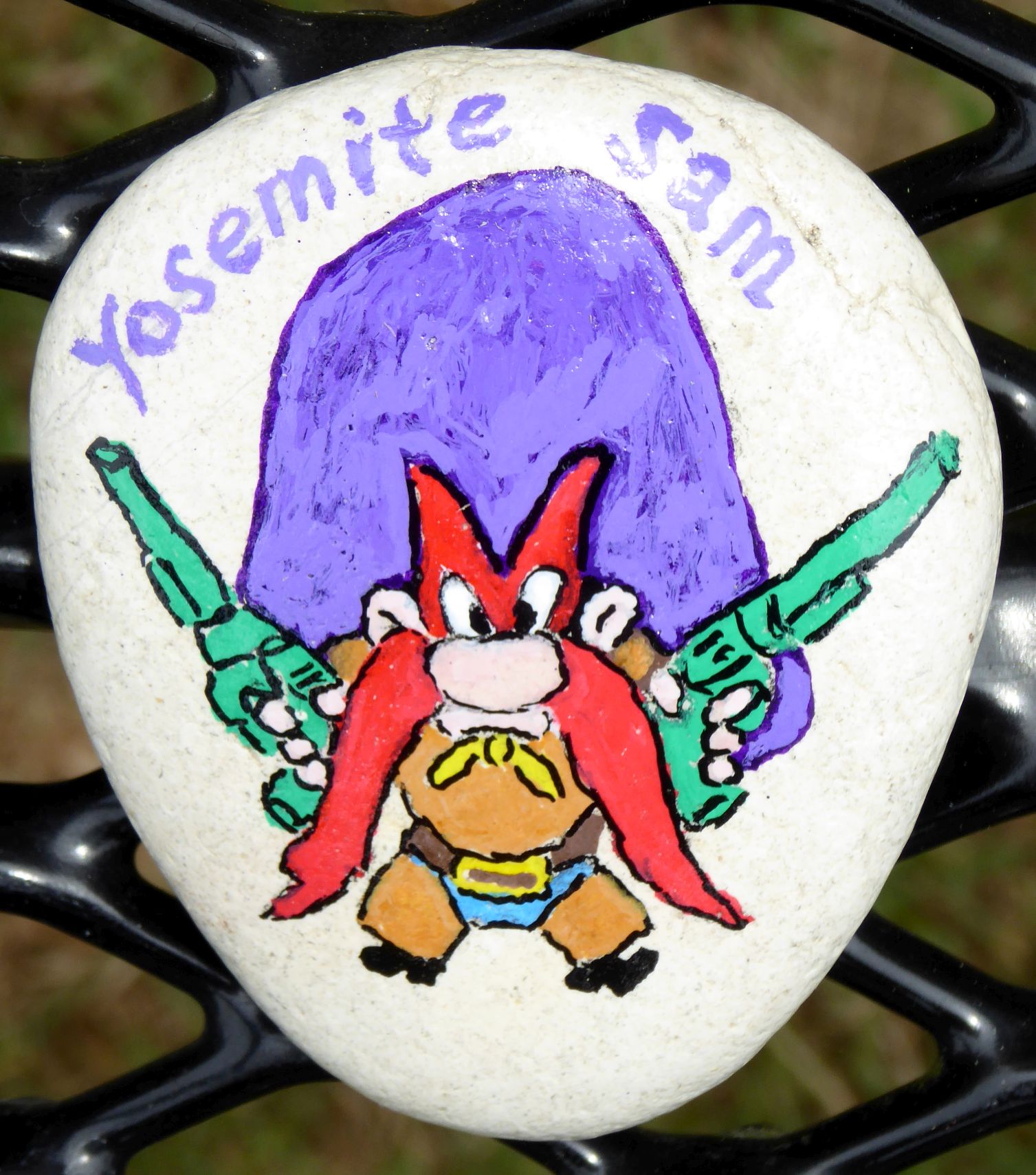
…AND, ANOTHER LITTLE RANDOM ACT OF KINDNESS (Act 27)

The Warner Bros. Looney Tunes Cartoon gang is back on the Sun City Peachtree bench!  Today, it’s mean ol’ Yosemite Sam with both guns drawn, ready to face off with his nemesis, Bugs Bunny.  Watch out, Bugs, because the fierce-tempered cowboy is trigger happy and despises rabbits!

It used to be just Elmer Fudd hot on the trail after Bugs Bunny, but he was kind of a softy, according to his creator, Fritz Freleng.  Wanting more a tough guy to antagonize Bugs, he created Yosemite Sam, and named him after Yosemite National Park.

The thing is, Sam isn’t the sharpest tool in the shed.  In fact, he is just plain stupid.  Outsmarted by the rabbit every time, he manages to constantly get himself into painful—or, at least humiliating—situations.  You would think he would learn, but he never does.  He’s been a glutton for punishment in 33 short films, between 1945 and 1964.

Although we think of Yosemite Sam as gun-wielding cowboy, he has had several occupations throughout his career of hunting down Bugs Bunny.  He has been everything from a prison guard to a pirate, and even an Indian chief.  Ha!  He was even an alien! 

Believe it or not, Sam was actually nice in the film, Shishkabugs.  Not only was he NOT the aggressor, but he was a very kind and generous chef for a rude, spoiled king who has Sam enslaved through blackmail.  One day, Sam cooked up the King’s usual array of buffet selections, but the King kicked it away and demanded something new.  Chef Sam chose to make Hasenpfeffer, which calls for cooked rabbit.  Uh-oh!  Watch out, Bugs! 

Well, Bugs was captured by Chef Sam for the King’s soon-to-be meal, but he outsmarted the chef twice and escaped becoming the King’s dinner.  The King blamed Chef Sam, of course, and eventually had his guards arrest him.  Who became the King’s new chef?  Bugs Bunny!  “What’s up, Doc?”

…AND, ANOTHER LITTLE RANDOM ACT OF KINDNESS (Act 26)

The painted rocks just keep coming here at Sun City Peachtree!  This artist just keeps rollin’ them out!

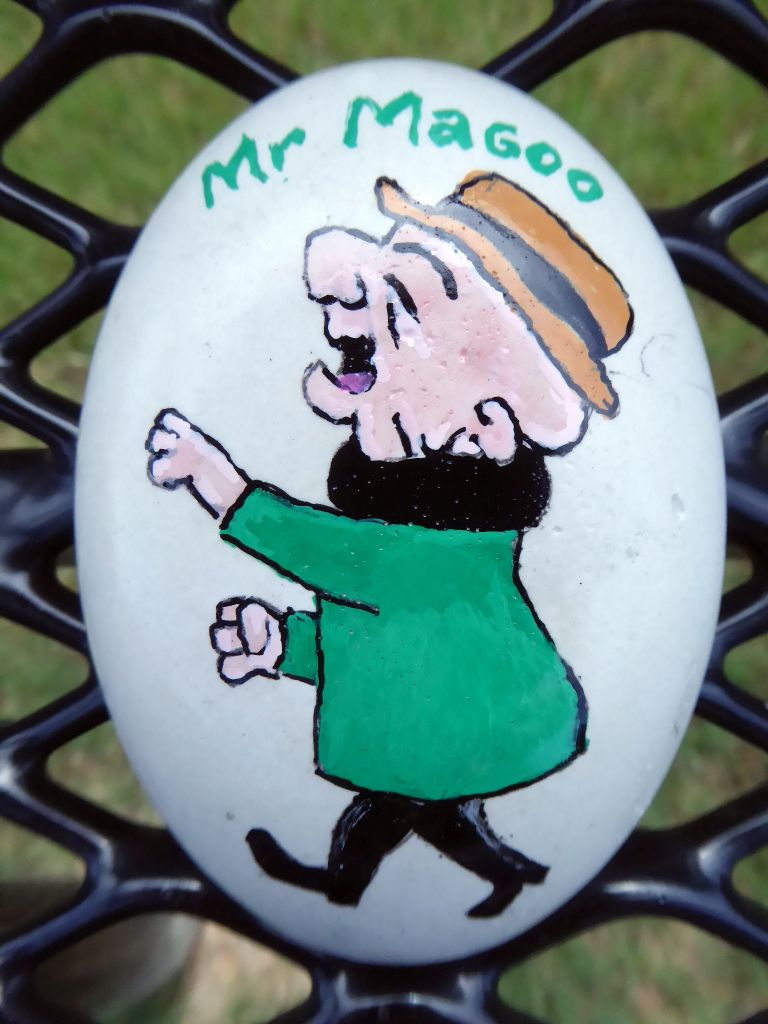
Today, Mr. Magoo landed on the bench, probably because he couldn’t see where he was going and tripped over it!  The poor old guy is so nearsighted, he could really use a good pair of glasses.  I don’t know why he doesn’t have his eyes examined.  It’s not like he can’t afford it, because the little chap is wealthy, just like his uncle, Tycoon Magoo. 

Poor eyesight runs in the household.  Magoo’s second dog, McBarker can’t see much either.  The talking bulldog also happens to look like his master, so they have a couple of things in common.  (Magoo’s first “dog,” Bowser, was actually a Siamese cat!)

Created in 1949 by UPA animation studio, Jim Backus is the voice of Mr. Quincy Magoo.  Although Magoo episodes were nominated for Best Animated Short Film by the Academy Awards committee three times, and received the award twice, TV Guide ranked Mr. Magoo way down at number 29 on its “50 Greatest Cartoon Characters of All Time” list.  Actually, I would have to agree.  The stubborn old guy doesn’t make my Top Ten either.

After several years on the silver screen, Mister Magoo joined families in their living rooms, on television, in the 1960’s.  UPA had shut down its animation studios in 1959, so the company hired Jack Kinney Productions and Larry Harmon Pictures to take over the animation.  This was all done in a rush, though, so Magoo cartoons looked a bit choppy in the beginning. 

Are you a Rutgers University fan by any chance?  If so, you and Mr. Magoo would get along great! He was a frat boy there and graduated in 1928. Why Rutgers?  His creators wanted him to be “a college alumnus who was still fired up with the old school spirit [and they felt] Rutgers was the embodiment of the ‘old school tie’ in America.”

As ol’ Mr. Magoo was known to shout, “Alpha, Beta, Gamma, Rho—Rutgers, Rutgers, Go – Go – Go!”

…AND, ANOTHER LITTLE RANDOM ACT OF KINDNESS (Act 25)

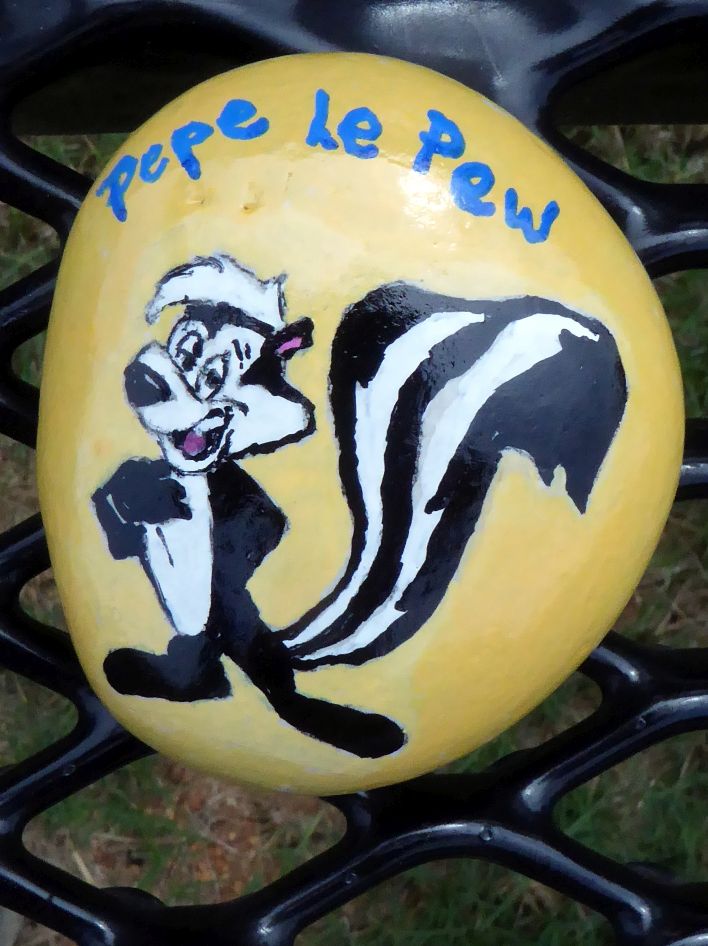
Mr. Romance is on the scene lookin’ for love and stinkin’ up the place!  Yes, it’s Pepé Le Pew, the stinky (Peeeewwww!) skunk on the prowl for Penelope Pussycat.  (Don’t tell Pepé that Penelope isn’t really a skunk.  She got that white stripe from walking under a freshy painted white fence!).

The thing is, Pepé’s foul odor is so bad, any victim of his pursuit high-tails it out of his way.  Pepé’s such a narcissist, though, that he just hasn’t caught on to the problem of his presence.  He thinks Penelope is lucky to be the object of his affections! 

Pepé sure gets around, the world traveler that he is.  He has visited Paris in the springtime (of course; he’s French!), the Matterhorn, and the little village of N’est-ce Pas in the French Alps.  The romantic skunk has also traveled to Algiers and the Sahara Desert.

The foul-smelling Pepe has been pursuing Penelope since he was created for Warner Bros. Looney Tunes Cartoons by animation director Chuck Jones, in 1945.  He was voiced by Mel Blanc for 44 years! 

Jones said the skunk’s personality is loosely based on Termite Terrace writer Ted Pierce, Jones’s colleague.  Evidently, Pierce was quite the narcissistic ladies’ man who assumed his infatuations were reciprocated. 

Pepé Le Pew is definitely not the most popular of the Looney Tunes characters.  His antics have been criticized for normalizing rape culture and perpetuating stereotypes of French culture.  Amber E. George, in her 2017 essay “Pride or Prejudice? Exploring Issues of Queerness, Speciesism, and Disability in Warner Bros. Looney Tunes,” describes Pepé’s actions towards Penelope Pussycat as “sexual harassment, stalking, and abuse” and noted that Pepé’s qualities mock the French people and their culture.  For these reasons, the narcissistic skunk is not my favorite character either.  He reminds me too much of #45…

…AND, ANOTHER LITTLE RANDOM ACT OF KINDNESS (Act 24)

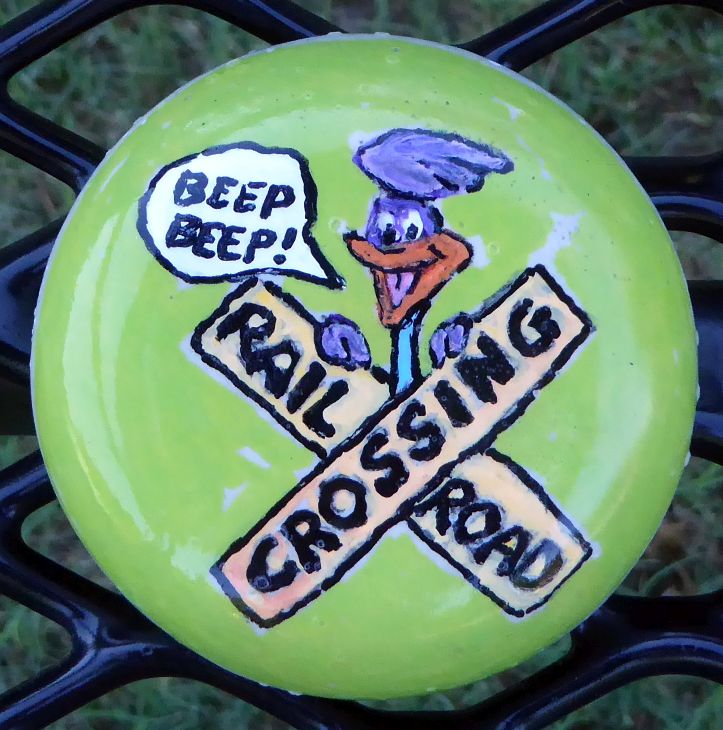
BEEP BEEP!  It’s Road Runner speeding in on foot(???) to Sun City Peachtree!  We’ve had all sorts of birds visit us by air and land:  We’ve had a hummingbird, a toucan, a penguin (which is classified in zoological terms as a bird), yellow bird of unknown species (Woodstock), a yellow canary (Tweety), a duck (Daffy) who waddled in, and even an owl sneaked in under the cover of night.  This time, it’s the Greater Roadrunner species making his way here from the southwest desert.

Debuting in 1949 in Fast and Furry-ous, Road Runner has been portrayed by three different people—Mel Blanc being the most famous.

Of all the characters Mel Blanc has voiced, Road Runner was the easiest.  The only thing Road Runner ever says is “Beep Beep,” which really sounds more like “Meep Meep” to me.

Like the other Looney Tunes Cartoons, there is a protagonist and an adversary.  In this case., Road Runner’s adversary is Wile E. Coyote, and Road Runner always gets the best of him.  In the end, Coyote always ends up looking like a fool and making us all laugh.

Chuck Jones based Coyote on Mark Twain’s book, Roughing It, in which Twain described the coyote as “a long, slim, sick and sorry-looking skeleton” that is “a living, breathing allegory of Want.  He is always hungry.”  Jones said he created the Coyote-Road Runner cartoons as a parody of traditional “cat and mouse” cartoons such as MGM’s Tom and Jerry.  In this case the always-hungry Wile E. Coyote is always trying to make a meal out of Road Runner.

Wile E. Coyote’s name is a pun on the word “wily.”  The “E” stands for “Ethelbert” in one issue of a Looney Tunes comic book.

In his book Chuck Amuck: The Life & Times of an Animated Cartoonist, Chuck Jones claimed that he and the animators behind the Road Runner and Wile E. Coyote cartoons adhered to some strict rules.  As it turned out, though, some of those “strict rules” were broken from time to time.  The following are a few of the eleven rules that were never broken:

3.  The Coyote could stop at any time—if he wasn’t a fanatic.

6.  All action must be confined to the natural environment of the two characters—the southwest American desert.

8.  Whenever possible, make gravity the Coyote’s greatest enemy (e.g., falling off a cliff.)

9.  The Coyote is always more humiliated than harmed by his failures.

10.  The audience’s sympathy must always remain with the Coyote.

In a 1971 interview with Michael Barrier years after the series was made, Michael Maltese said he had never heard of the “Rules,” and he was the writer for the series!

Road Runner will now be making his way back to the desert, so if you are out on the road, watch out for him!  MEEP MEEP!

…AND, ANOTHER LITTLE RANDOM ACT OF KINDNESS (Act 23)

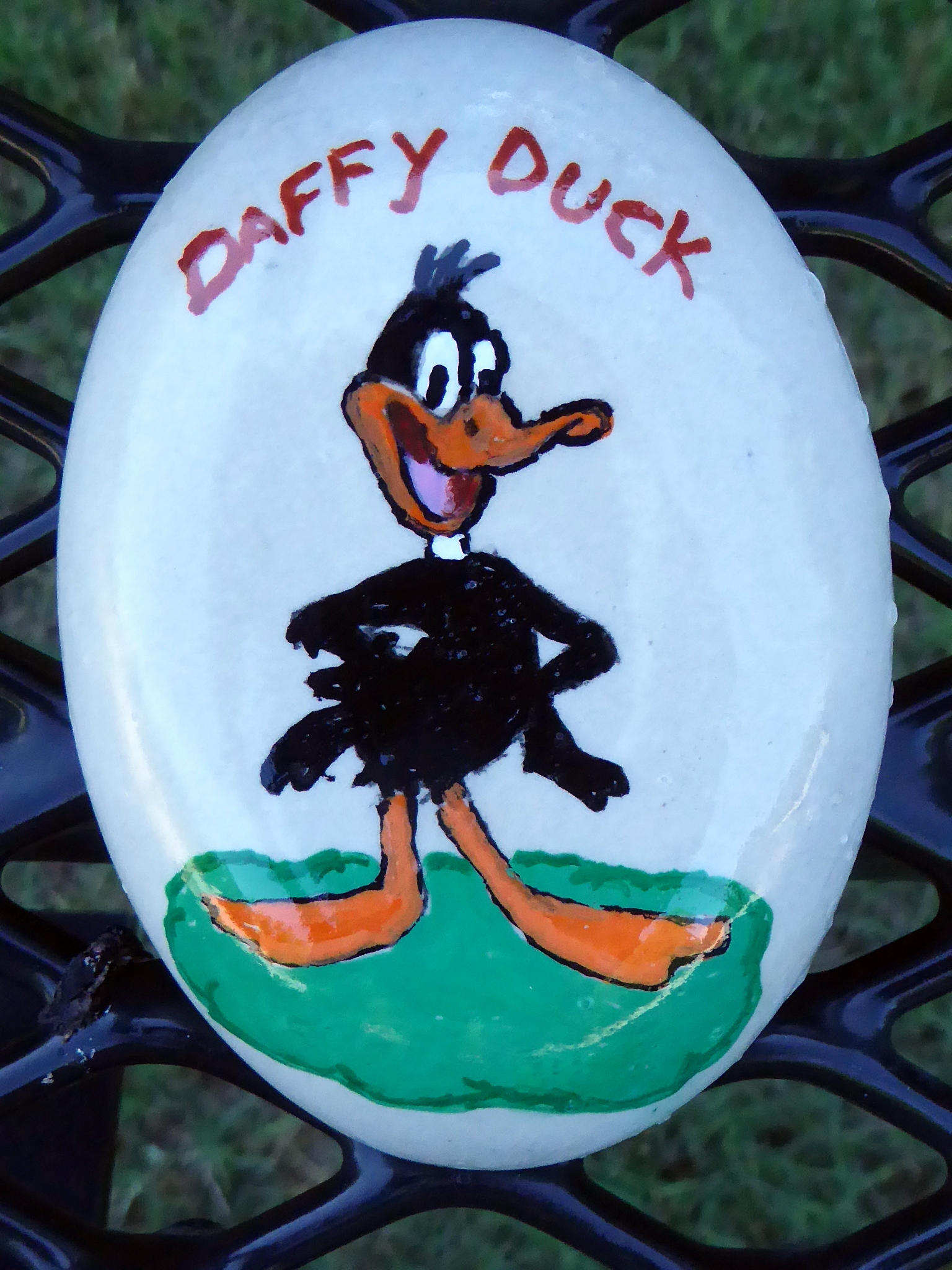
I’m not sure if he flew in or waddled his way up onto the bench, but Daffy Duck has paid us a Sunday visit, here at Sun City Peachtree.  Perhaps he was looking for Tweety and Sylvester.  Sorry, pal, you missed ‘em!

Daffy Duck is another one of Warner Bros.’ Looney Tunes characters; and, a character he is!  Although he is Bugs Bunny’s rival, he has occasionally been the rabbit’s best friend, too. 

Born in 1937, the feisty black-feathered duck was quite the star, appearing in 130 shorts.  He was ranked #14 on TV Guide’s list of Top 50 best cartoon characters of all time and appeared on the cover. 

Daffy had quite the attitude.  Assertive and combative, he was a protagonist that had everybody talking after seeing him on the screen.  A star was born!

There was some speculation back in the day about how Daffy got that lisp.  One story that made the rounds was that Daffy’s voice was modeled after producer Leon Schlesinger’s tendency to lisp.  Mel Blanc, the voice of Daffy Duck, poked a hole in that theory saying, “It seemed to me that such an extended mandible would hinder his speech, particularly words containing an s sound.  Thus “despicable” became “dethpicable.”

Mel Blanc had a lot of practice with that lisp.  At one point, his voice for Daffy held the world record for the longest voice-acting of one animated character by his original voice actor: 52 years, just breaking Donald Duck’s 51-year streak by Clarence Nash.  Both records were broken by June Foray, the voice for Rocky the Flying Squirrel from Rocky and Bullwinkle, which lasted for 55 years.

Who will be next to occupy the bench?  Will it be Daffy’s sometimes-rival, sometimes-best friend, Bugs Bunny?  Will it be Porky Pig??  Elmer Fudd???  If it’s Elmer, he’ll sure be on the lookout for Bugs!  Stay tuned to see who’s next!  The plot thickens…

…AND, ANOTHER LITTLE RANDOM ACT OF KINDNESS (Act 22)

Sylvester is on the prowl!  He looks quite fed up, too.  Tweety has escaped the feline’s claws with every attempt at capture, but the yellow canary always gets away.  I have to hand it to Granny’s proud cat, though; her whiskered pet never gives up. 

As I mentioned in my last post, Tweety always wins any battle with Sylvester James Pussycat, Sr., the Tuxedo cat who appears in the Looney Tunes and Merrie Melodies series of cartoons.  As a matter of fact, he appears in a lot of them– a whopping 103 Warner Bros. flicks.  Between 1945 and 1966, he was quite the popular cat on the screen. 

In addition to his attempts at making a meal of Tweety, Sylvester is best known for his sloppy lisp.  In the cartoon, Tweety, Tweety, Tweety, this exchange takes place between Tweety and Sylvester:

Tweety: “I wonder where that puddy tat went to?”  Sylvester [swinging on a wooden swing, flattened by a rock crusher]: “Does thith anthwer your question?”

About that name, “Sylvester,” is a pun on silvestris, the scientific name for the wild cat, the ancestor of domestic cats.

Interestingly, Sylvester’s many different cartoon directors put their own spin on the cat’s personality.  Friz Freleng is the one who directed Sylvester’s first appearance with Tweety in Tweety Pie; and it was the beginning of Sylvester’s desire to capture and munch on his little yellow-feathered enemy.   

When Bob Clampett got a hold of him in 1946’s, Kitty Kornered, Sylvester was one of Porky Pig’s pet cats and looked nothing like he does with Tweety.  He was voiced by Mel Blanc, though, so he sounded just like you remember.

Next up was Arthur Davis who gave Sylvester two completely different personalities.  In Doggone Cats, the feline was a trickster troublemaker who didn’t speak.  He spoke with a dopey voice, in Catch as Cats Can, though, and had a dopey personality to match. 

Robert McKimson paired Sylvester up with a silent baby kangaroo named “Hippity Hopper,” and then later with his son “Sylvester Junior,” where he unsuccessfully tried to raise the kitty to be a real cat.  Lastly, Sylvester and Speedy Gonzales were paired up together.

Finally, Chuck Jones put his spin on the black and white feline.  This is when he was paired up with Porky Pig in three horror-themed cartoons.

Looking back over Sylvester’s career, that cat really did have nine lives!  His appearance changed, his voice morphed, and his personality went in all sorts of directions.  That was one busy feline!

…AND, ANOTHER LITTLE RANDOM ACT OF KINDNESS (Act 21)

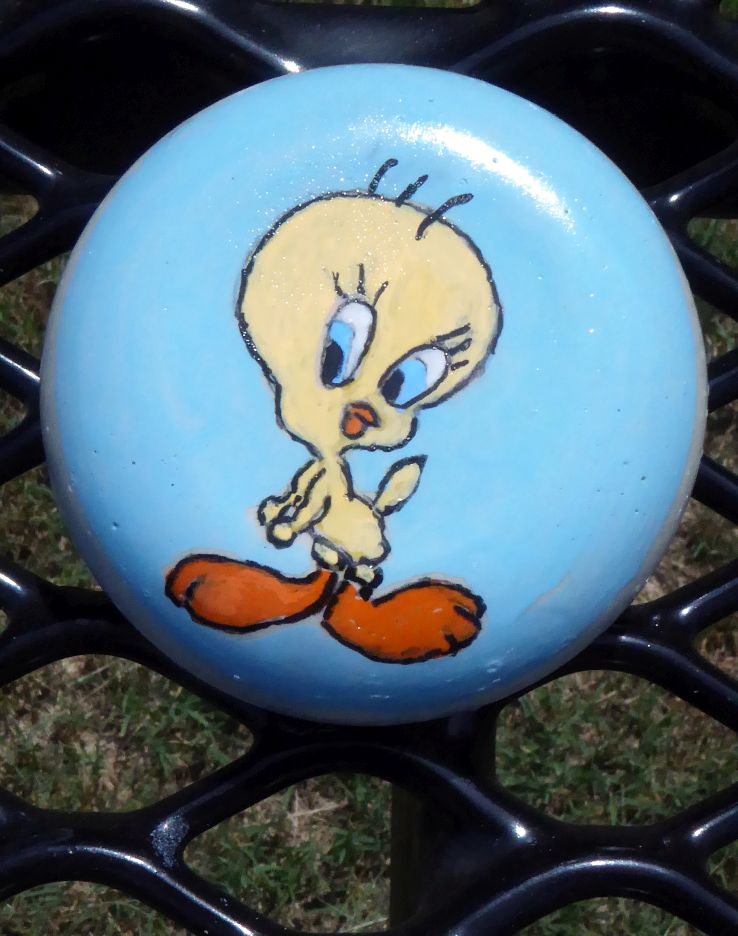
An adorably curious owl flew in last week and took a rest here at Sun City Peachtree; and, today, it’s Tweety Bird!  I could have sworn I heard him say, “I tawt I taw a puddy tat!”  Sylvester was nowhere to be found, though.

Tweety (aka Tweety Pie), has been fluttering about for quite a long time.  The yellow canary with the big head was born five years before Sylvester came around.  He first appeared in A Tale of Two Kitties, in 1942.  Five years later, he joined his nemisis, Sylvester, in Tweety Pie, which won an Academy Award.  A star was born!

Now, about that big head of his.  Tweety’s design was based on a baby picture of Bob Clampett, the director of the canary’s first movie.  (Evidently, baby Bobby had a fat head!)

Tweety has mellowed over the years.  At first, he was an angry little bird with a short temper, but he has chilled.  Don’t let those long eye lashes and his sweet charm fool you, though.  When it comes to his rival, he’ll find a way to humiliate the cat in the end.  Besides, the pint-sized canary has Granny to protect him, when he lives at her house.  She keeps him in a cage and away from Sylvester who is always trying to eat the little fellow. 

Sylvester is just jealous.  He thinks Granny likes Tweety better and gives the bird more attention.

When he’s not (easily) escaping Sylvester’s claws, the star canary is off making appearances in other movies, such as Who Framed Roger Rabbit, Space Jam, and Looney Tunes:  Back in Action.

Recently, it appeared as if being a star had gone to Tweety’s (big!) head, and he turned a bit aggressive and angry again in Looney Tunes Cartoons

The star will be making some appearances in the near future, beginning with Tweety Mysteries, a live-action/animated hybrid.  Instead of living with Granny, he will be living with Sydney, a pre-teen girl.  He will also be appearing in the preschool series, Bugs Bunny Builders.  (I wonder if Bugs Bunny will try to eat the yellow-feathered canary, too!)

…AND, ANOTHER LITTLE RANDOM ACT OF KINDNESS (Act 20)

It’s a bird!  It’s a plane!!  It’s the World War I Flying Ace swooping in on his doghouse for a visit to Sun City Peachtree!!!

Snoopy— uh, World War I Flying Ace— must be taking a break from his battle against the Red Baron (real name Manfred Albrecht Freiherr von Richthhofen).  He is probably exhausted, although he had just enough strength to call out, “Curse you, Red Baron!” as he often did following previous battles.

‘Ace has been fighting the Red Baron since October 10, 1965, when he first appeared in The Peanuts Gang comics.  He had a lot of ground support from his troops during his battles, beginning with Schroeder, who kept up morale by playing popular World War I songs on his toy piano.  Woodstock and his bird friends served as mechanics, ‘Ace’s sister, Belle, was a nurse for the troops, and their brother, Spike, served as a member of the infantry.  Marcie provided loyal support as the dashing pilot’s French lass.

During the Vietnam War, an American fighter squadron wanted to use Snoopy the World War I Flying Ace as their mascot, so they sought permission from Charles M. Schulz.  Since Schulz was a veteran himself, he granted approval.

Ultimately, Schulz had changed the focus of ‘Ace from the Red Baron-fighting pilot to battling love and loneliness.  As he confided to writer Rheta Grimsley Johnson in her 1988 book, Good Grief, “It reached a point where war just didn’t seem funny.


…AND, ANOTHER LITTLE RANDOM ACT OF KINDNESS (Act 19)

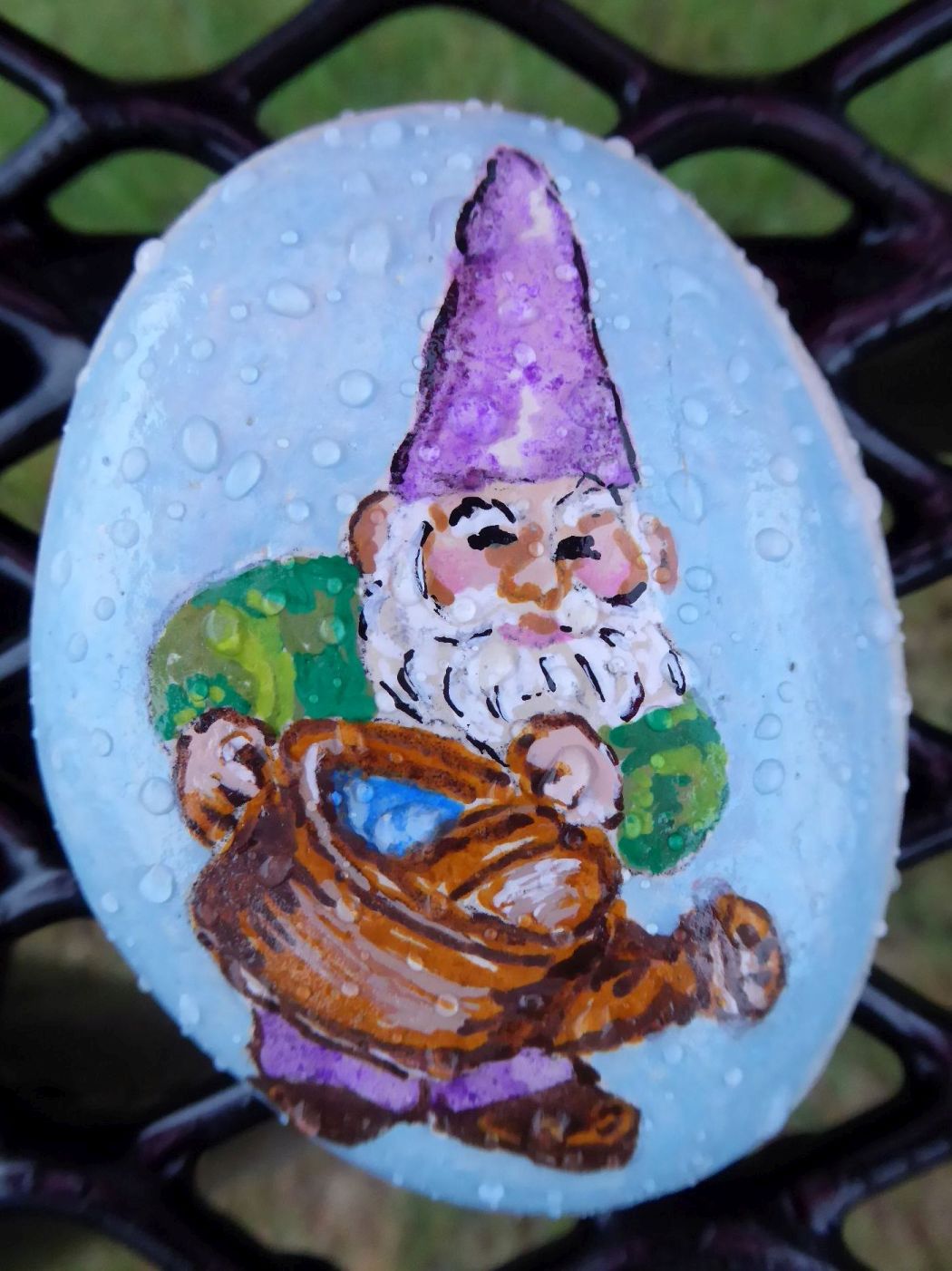
It was a bit of an untimely visit to Sun City Peachtree by this ol’ chap, today, since  it is raining, and he has come to water the grass below the bench. 

I wonder how he got here.  After all, according to a story in the April 30th edition of The Week, the recent blockage of the Suez Canal caused quite the gnome crisis.  It worsened the U.K.’s already desperate shortage of garden gnomes.  Countless gnomes are “stuck in containers trying to come over here,” said Iain Wylie of the British Garden Centre Association.

For their weekly contest, The Week used that story as its subject.  Their request?  “Please come up with a headline for a British Tabloid story about the gnome crisis.”  The contest winner?  “Gnomadland,” by Mary Stahl, of Arvada, Colorado.

Knowing next to nothing about the origins of these personable-looking little fellows, I poked around the Internet to get the 411. 

According to Wikipedia, gnomes originated as a decoration for the wealthy in Europe, and they date back to the ancient Roman period.  In recent years, they have become quite popular across all social classes and have made their way across the Atlantic and into North America.  During the 1970’s, more humorous and light-hearted gnomes came on to the garden scene; and, in the 1990’s, it was all about the traveling gnome.  Pranks with the pointy-hat-wearing, bearded fellow was all the rage and made national news.  As a practical joke, people would kidnap them from gardens to keep them company on their world travelers.  The kidnapper would send the owner photos of the gnome drinking a beer at Oktoberfest, eating pizza in Italy, or sunbathing on the French Riviera before returning him to his home garden.

I thought about kidnapping this one for our 2022 travels abroad, but I think I’ll just leave him on the bench, so he can keep the grass nice and green after the rains have gone.