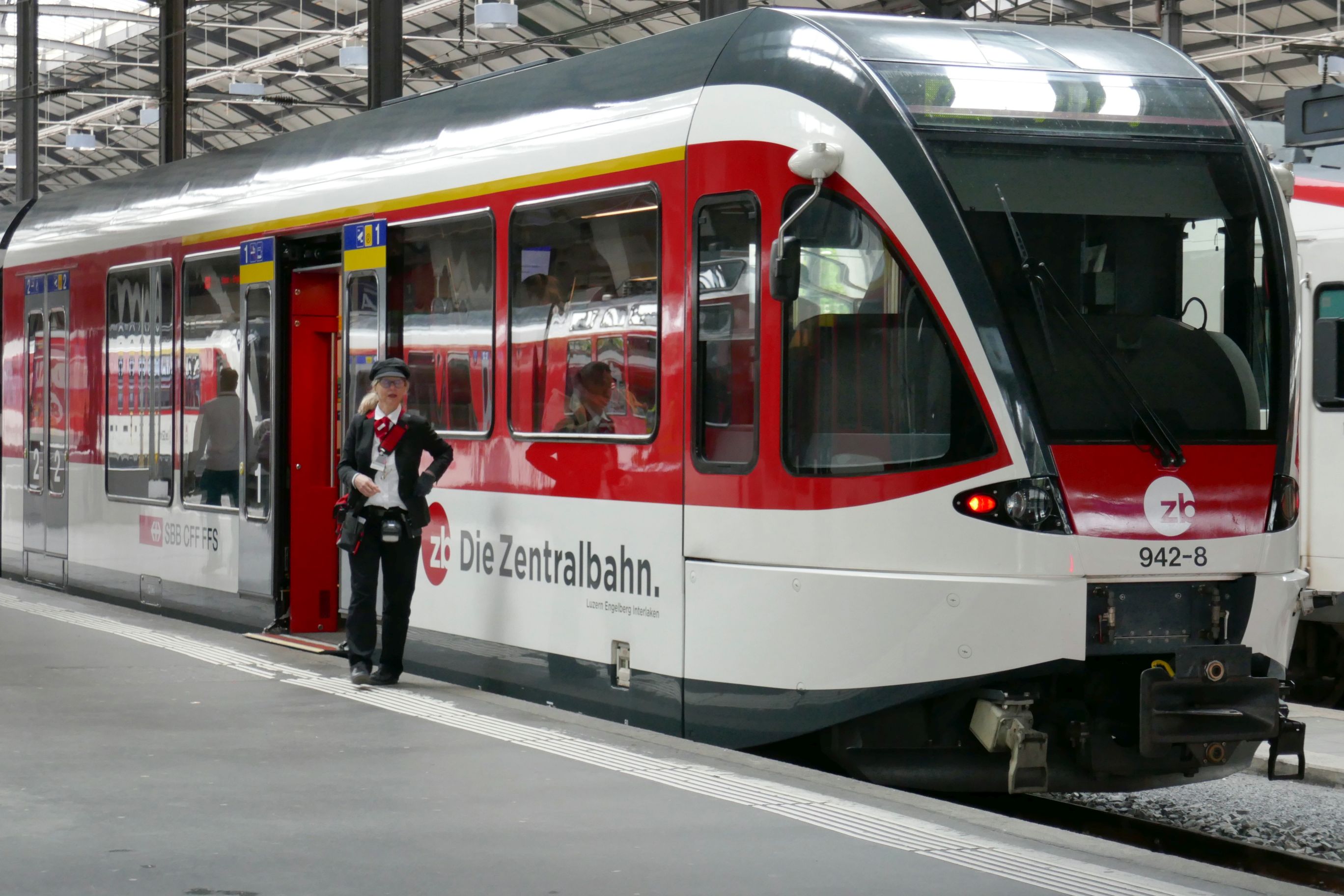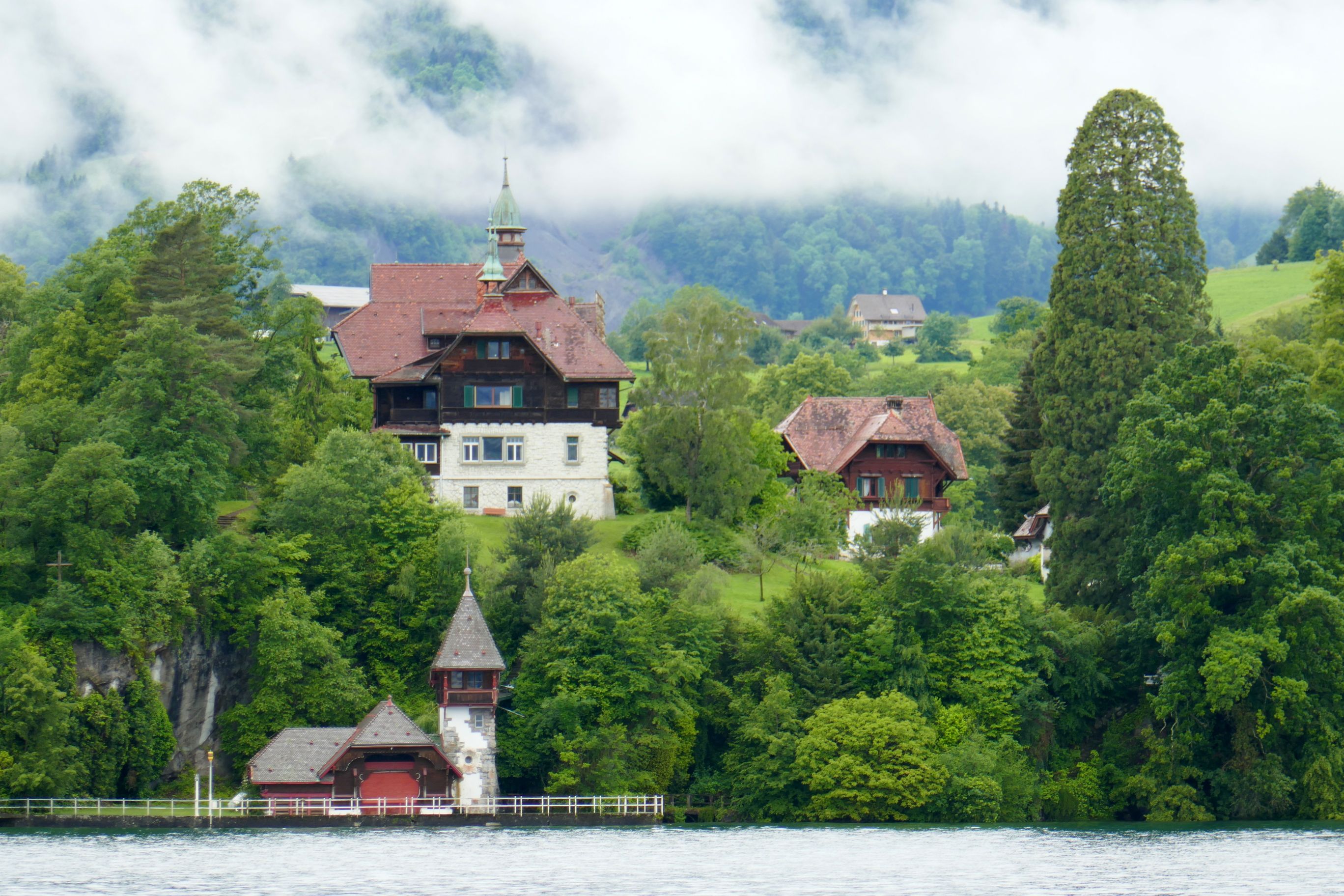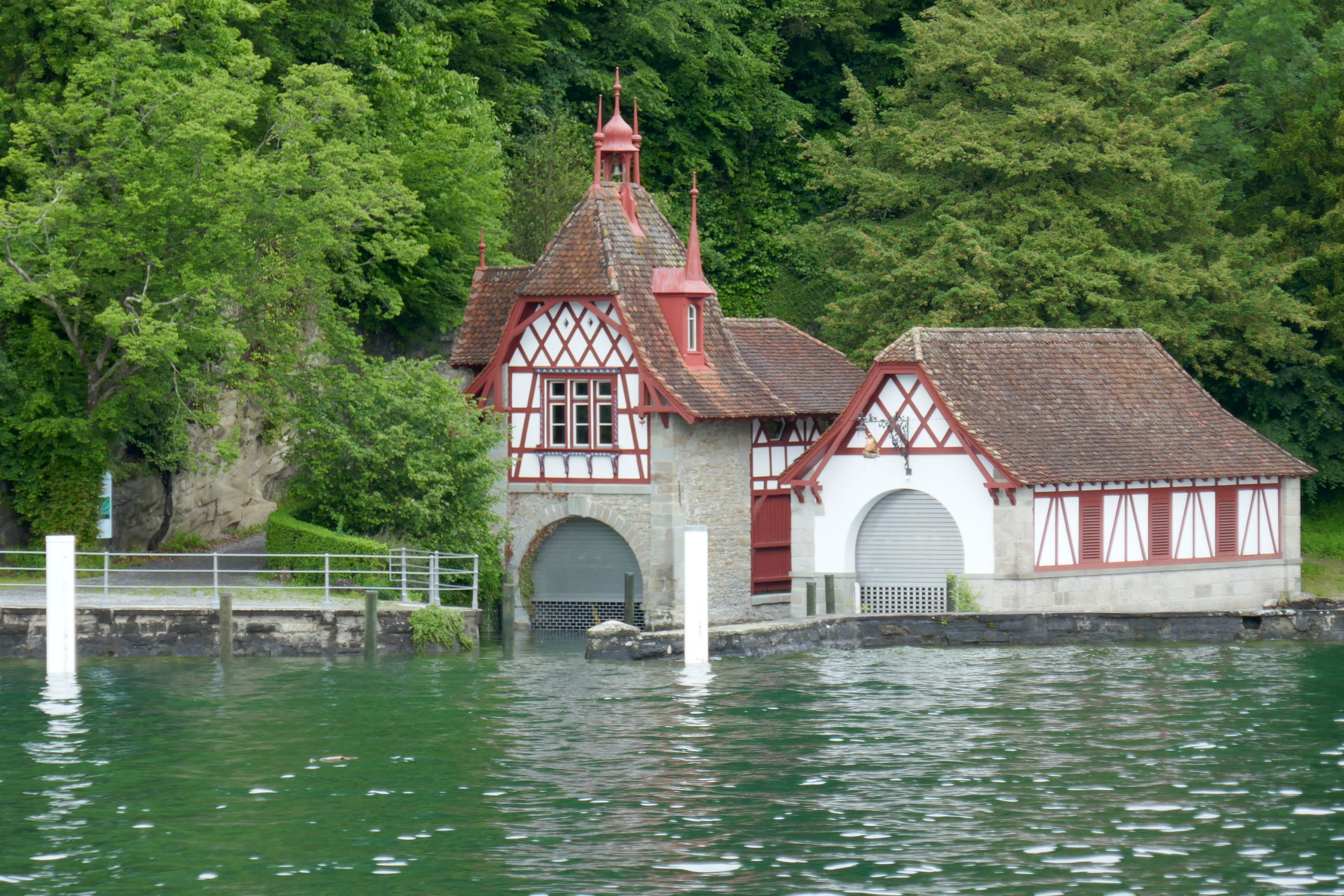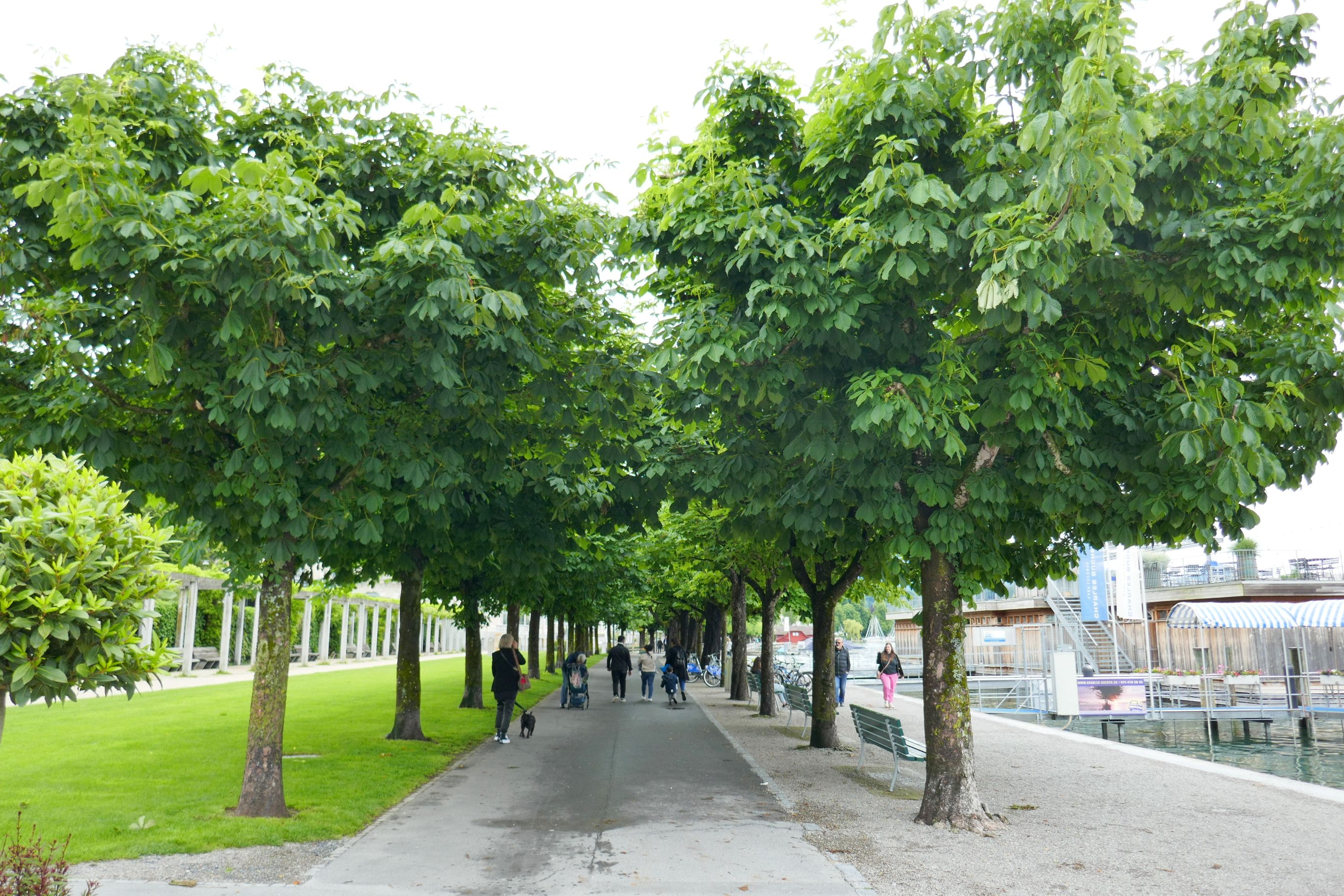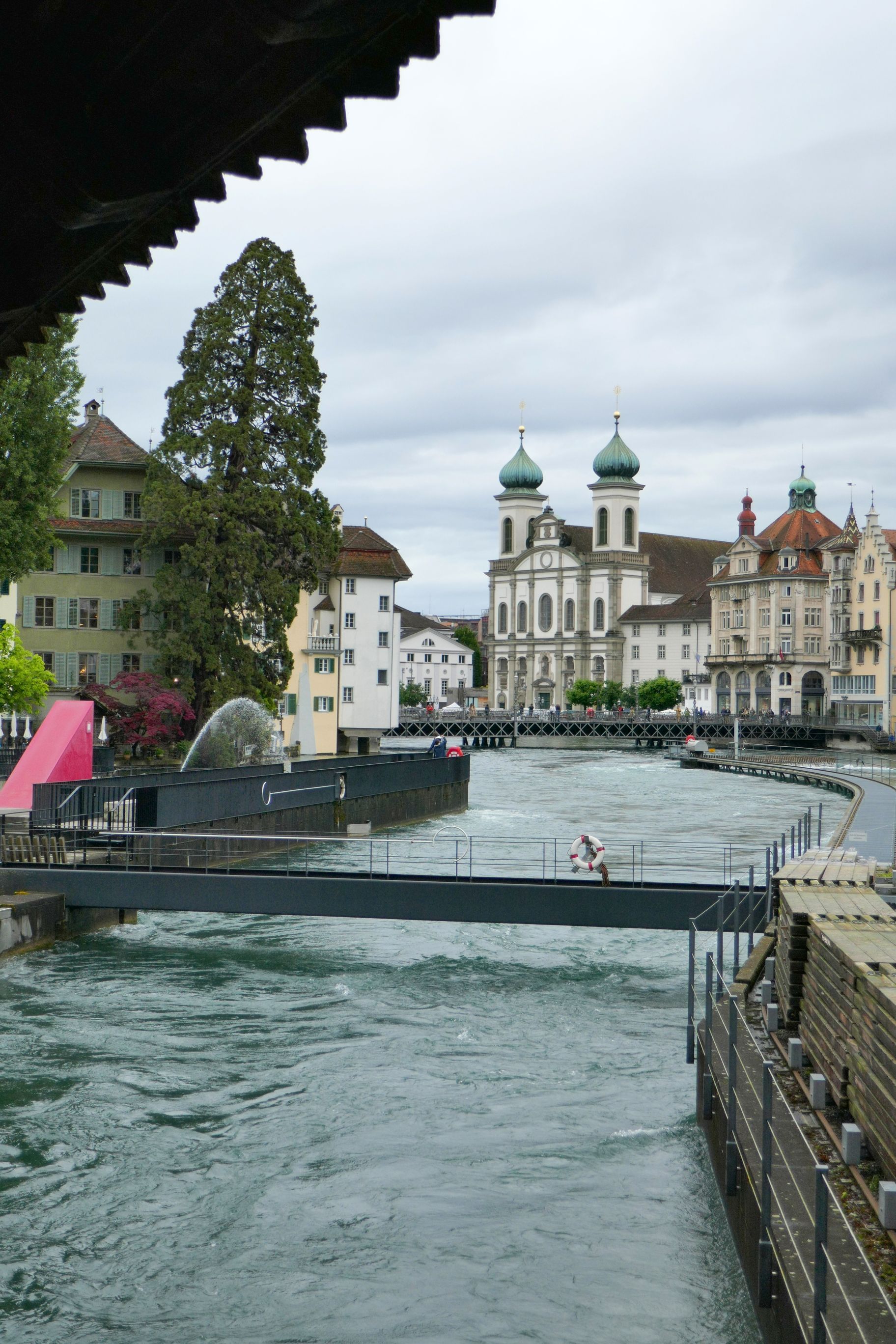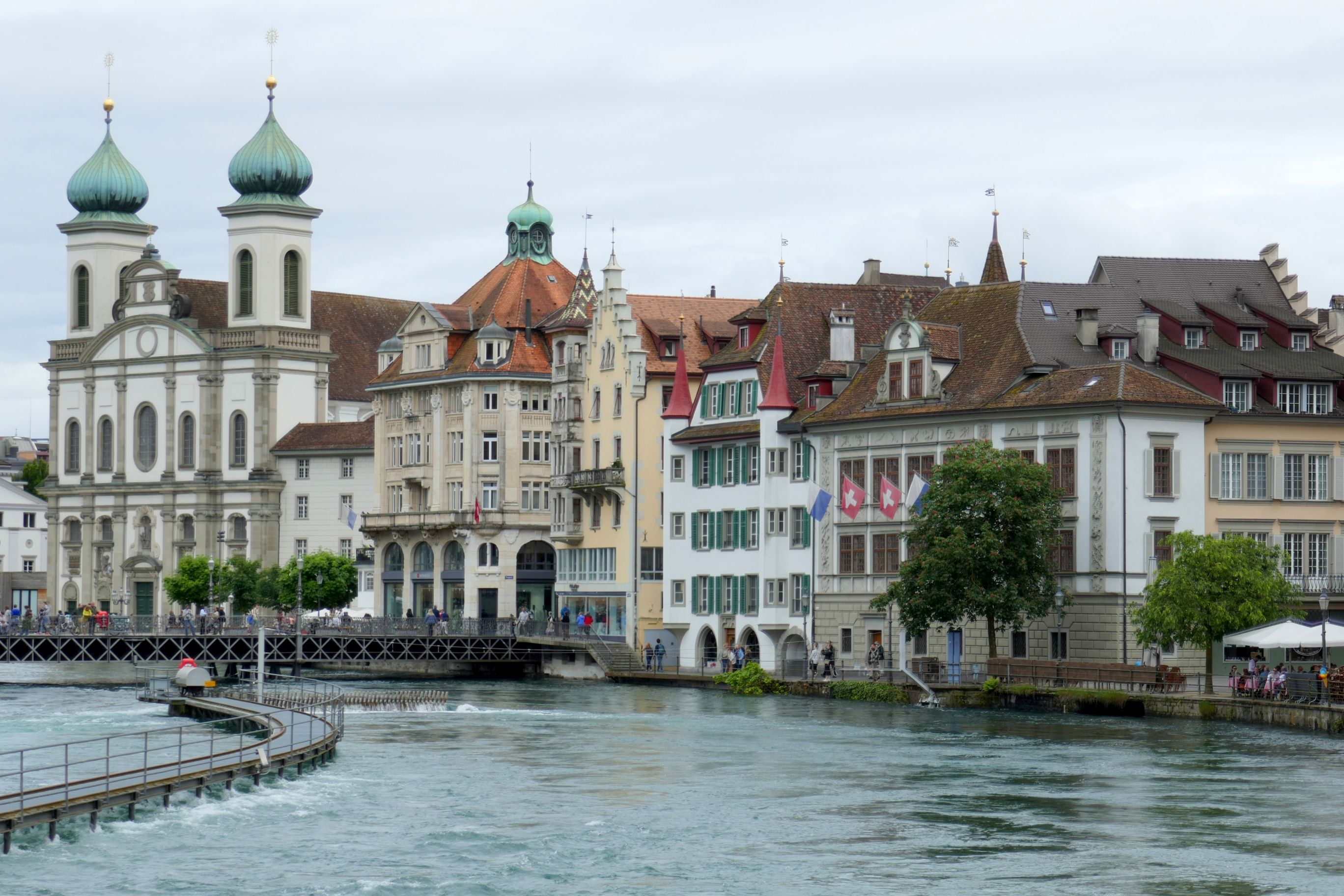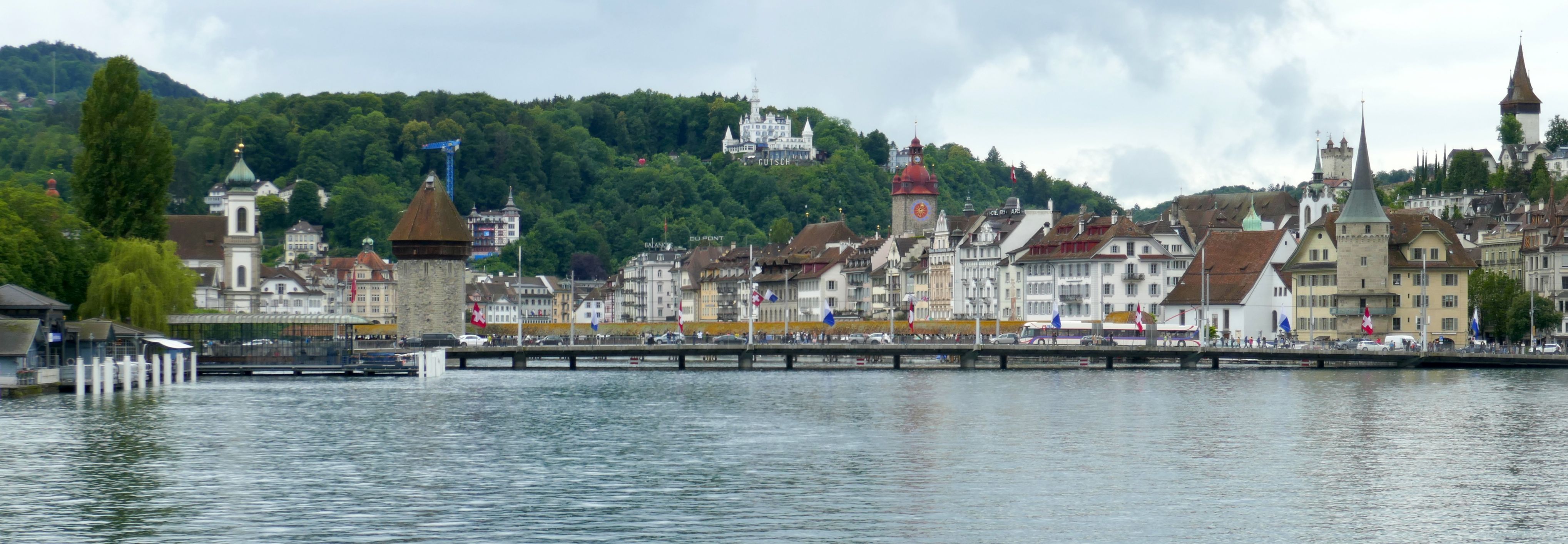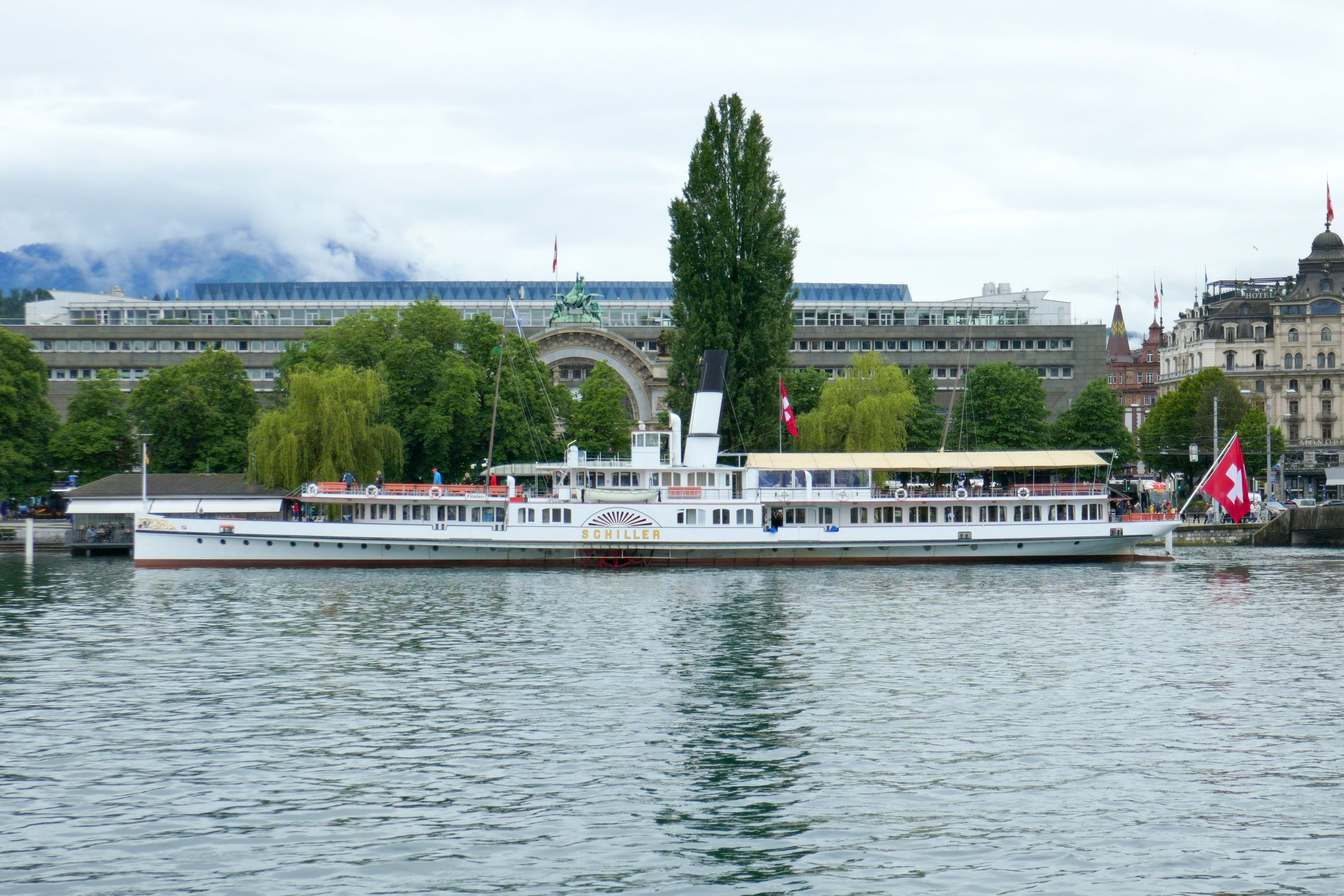
SWITZERLAND & NORTHERN ITALY #3: ON THE ROAD TO BERN

Located southwest of Lucerne, Bern would be about a 70-minute drive if you didn’t stop.  But, what’s the fun in that?  There is so much to see in Switzerland, and Overseas Adventure Travel plans tours to include visiting small towns as well as cities.  I love the character and charm of small towns, so I looked forward to the day.

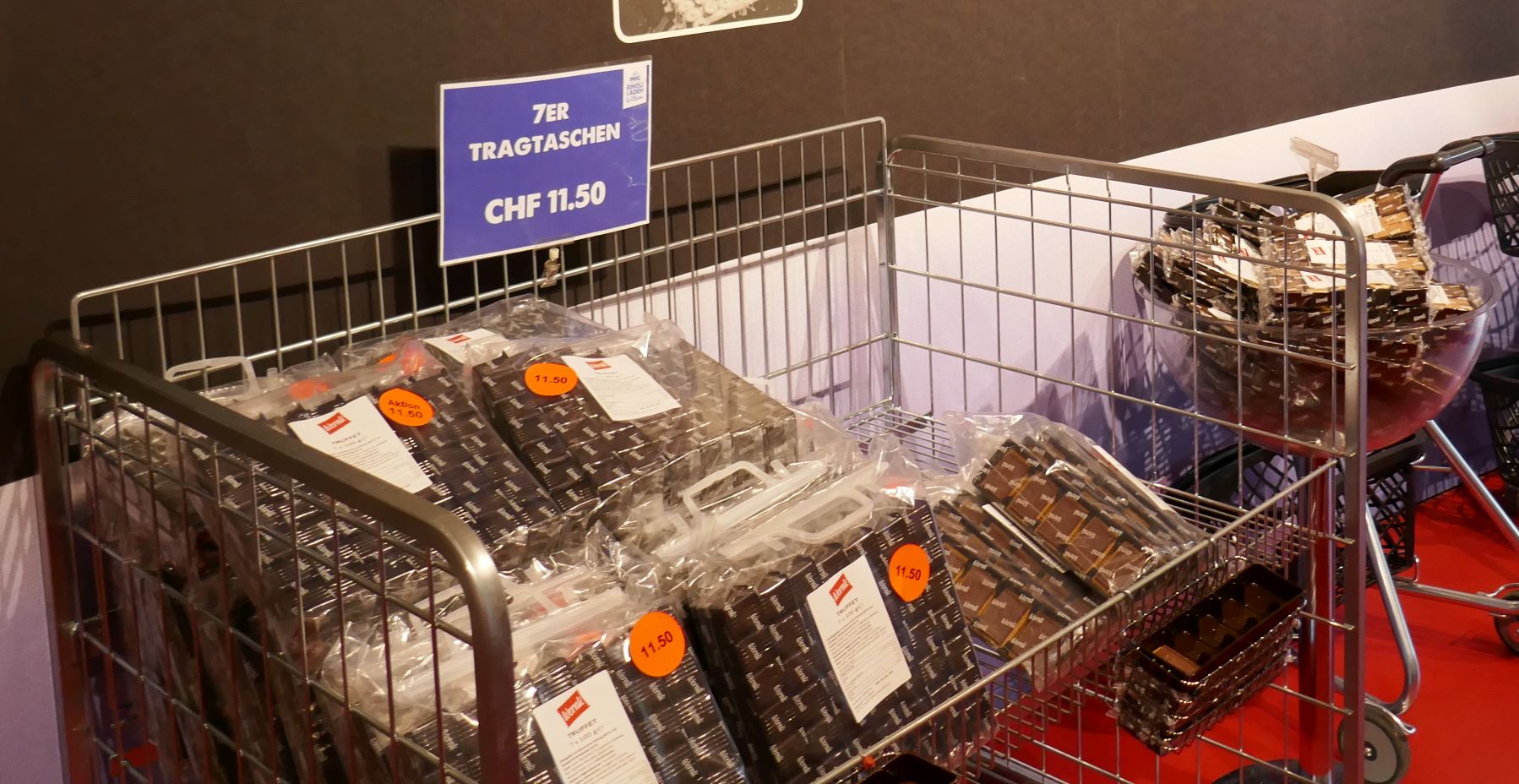
We had just eaten breakfast, but the first stop was at the Hug Familie Bakery where we were able to sample all the baked cookies and crackers they sell and purchase them at outlet prices.  I knew I was in trouble when I sampled the first chocolate-covered biscuits I saw when we walked in.  I should have skipped breakfast. Those first biscuits were so good that we didn’t hesitate to buy one of these packages.  And, then I kept sampling.  The empty insulated chocolate bag I brought with me from home was filling up fast…

(For all photos, click on the image for a full screen view.)
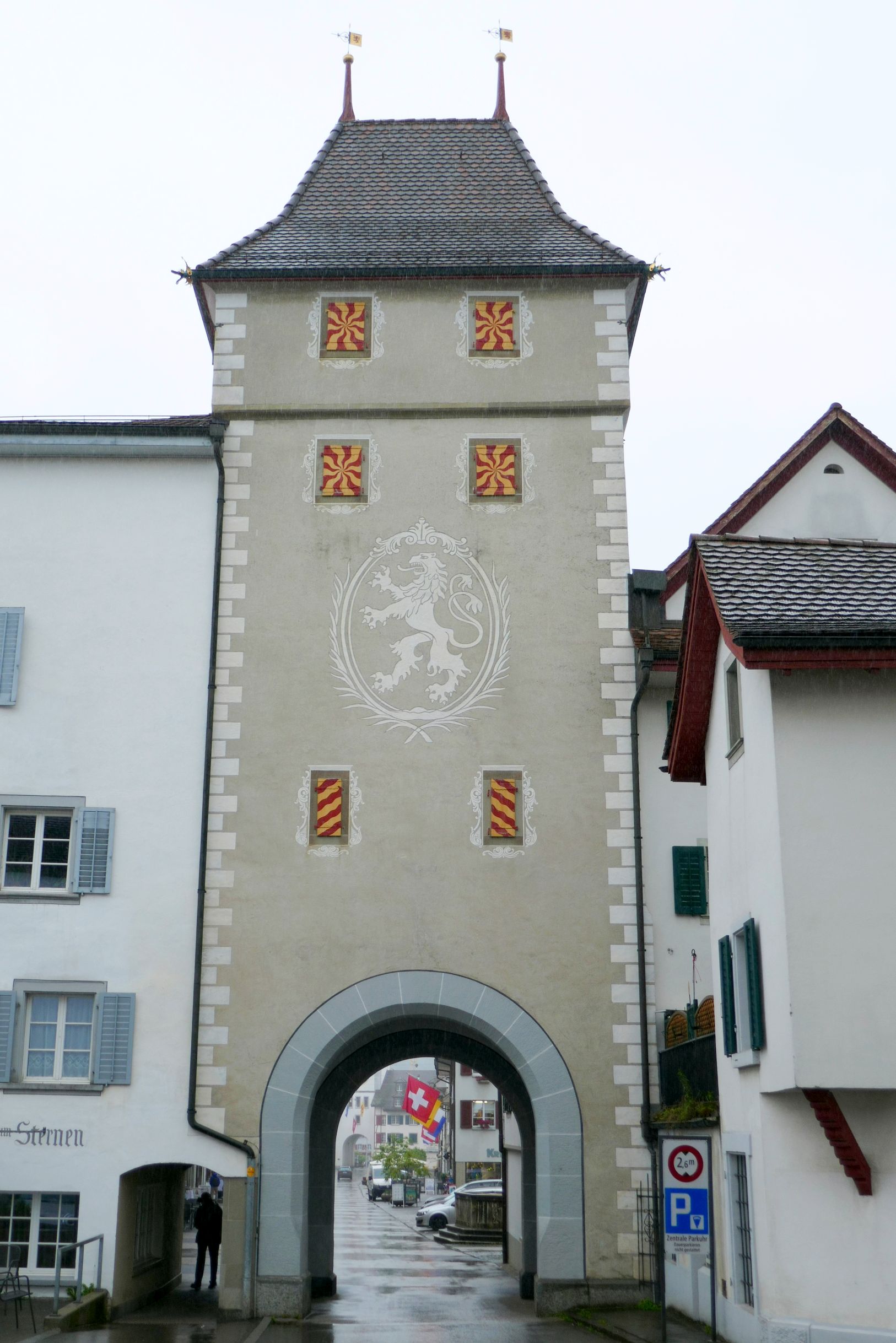
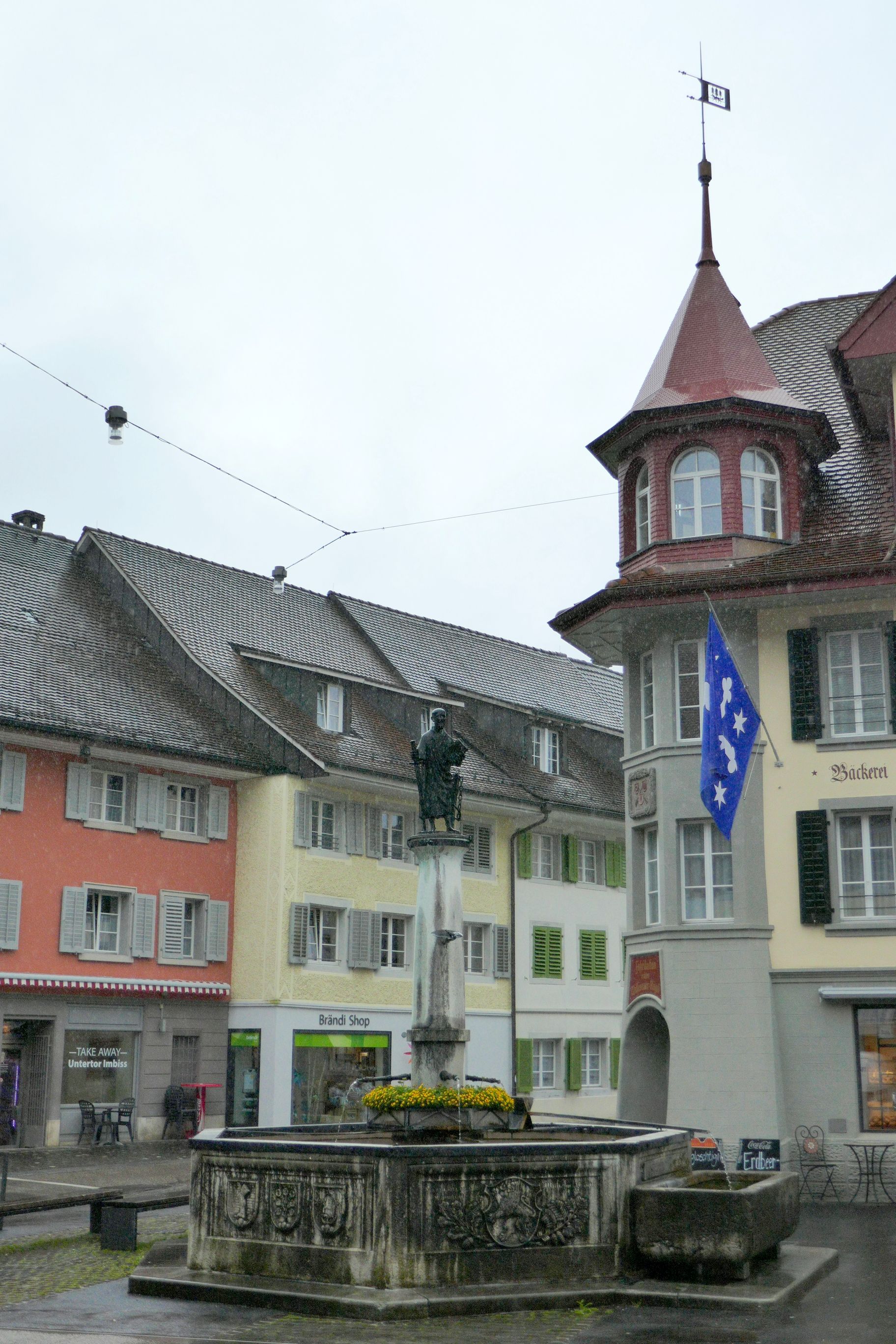
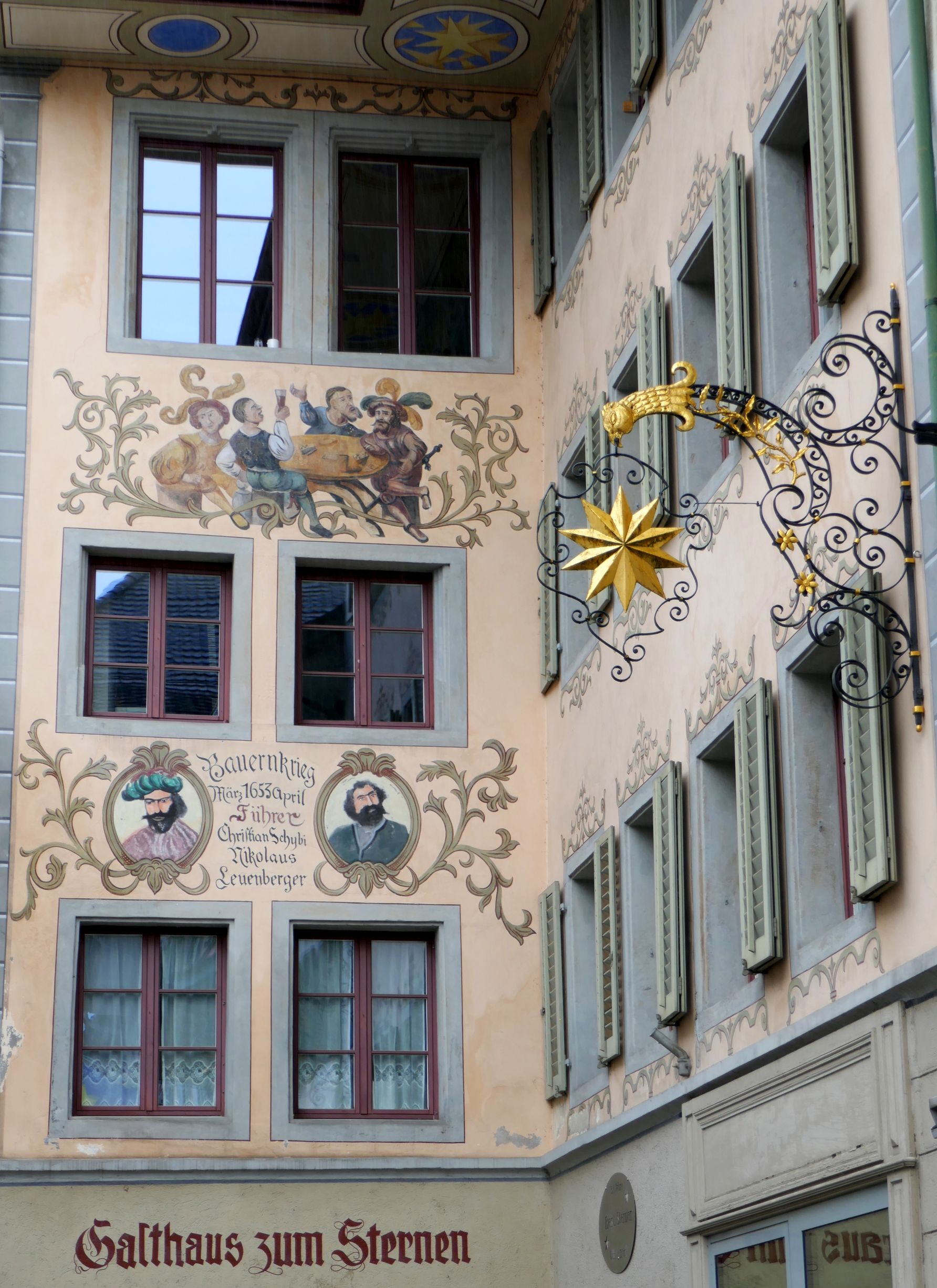
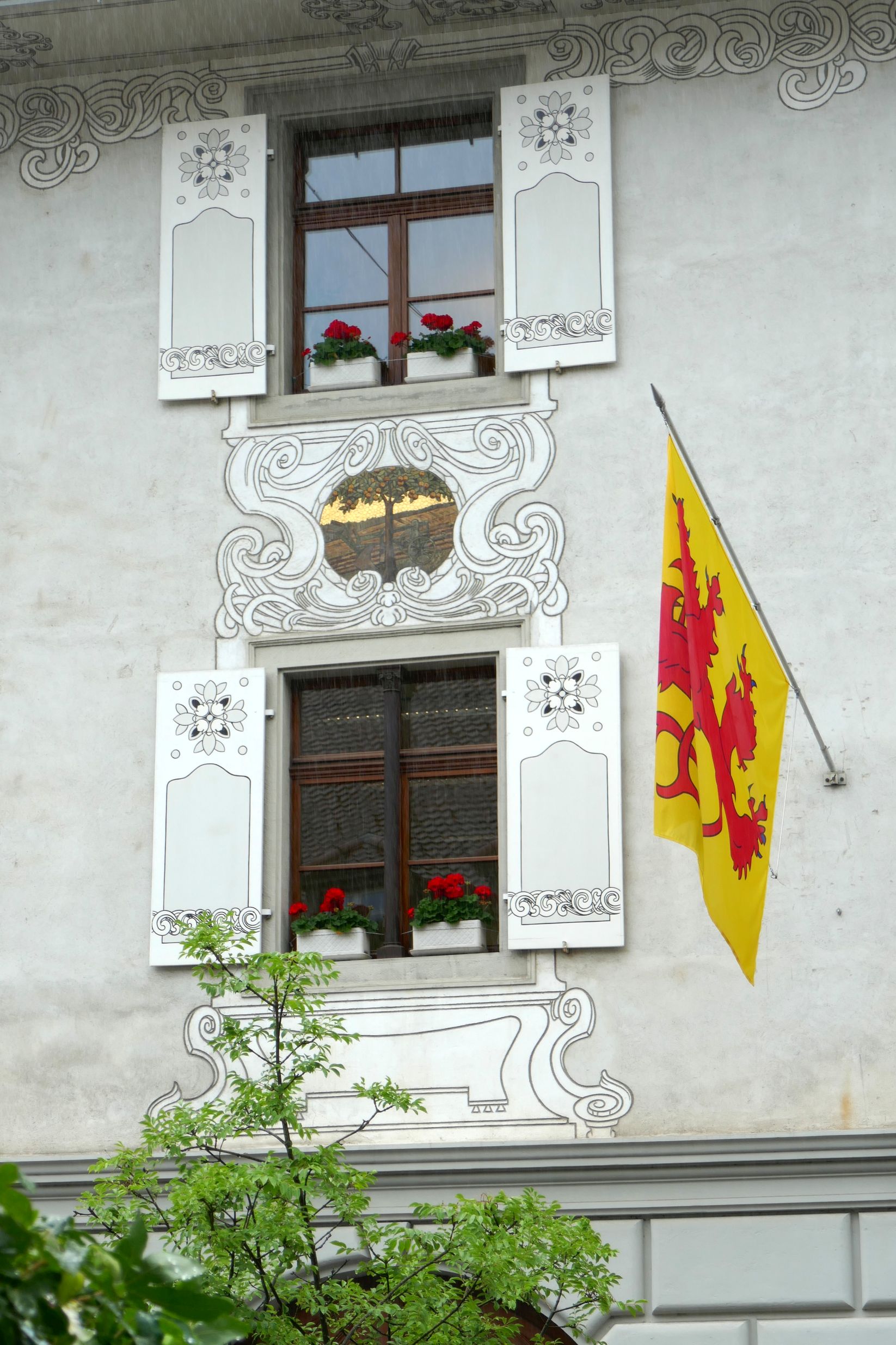
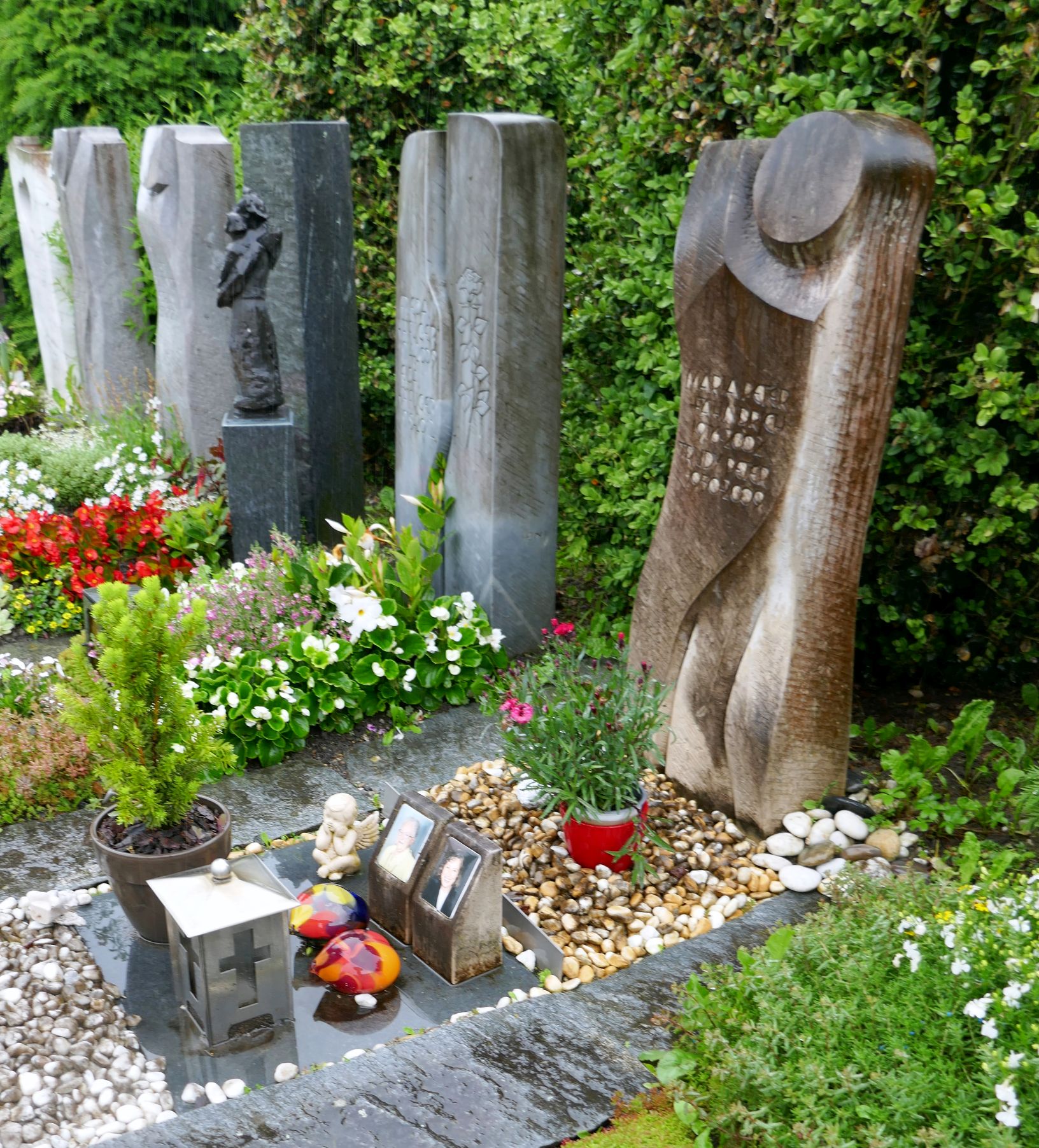
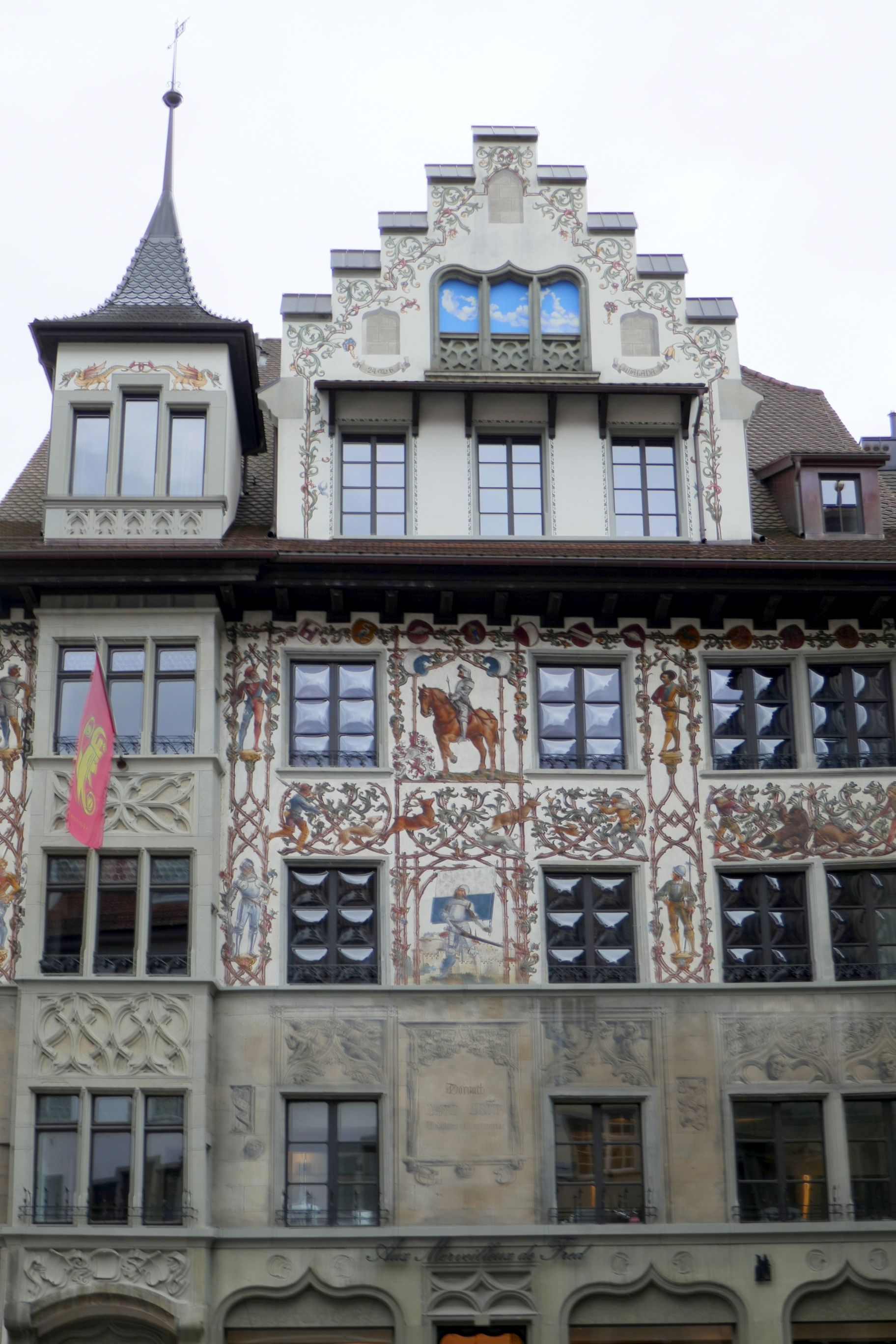
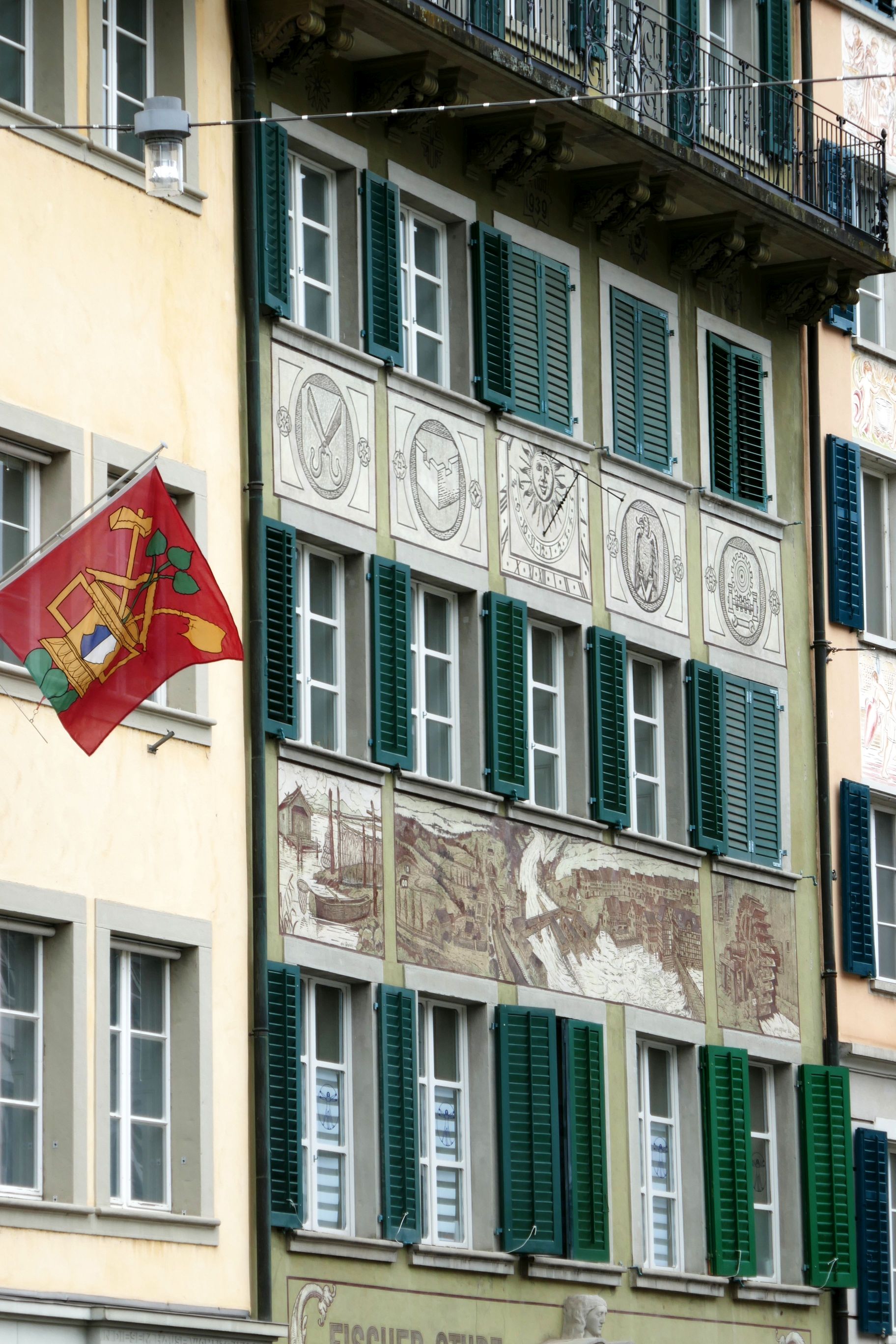
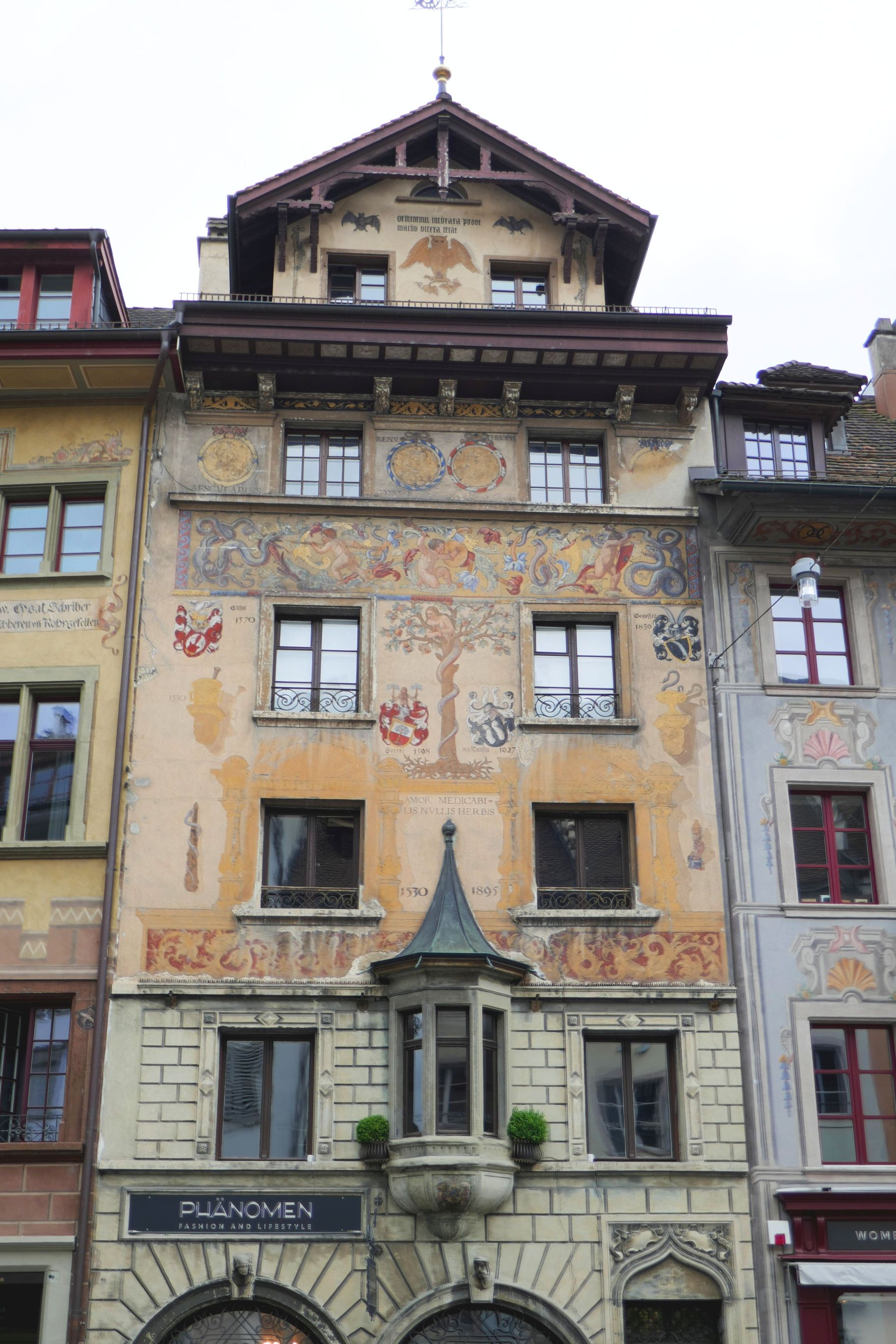
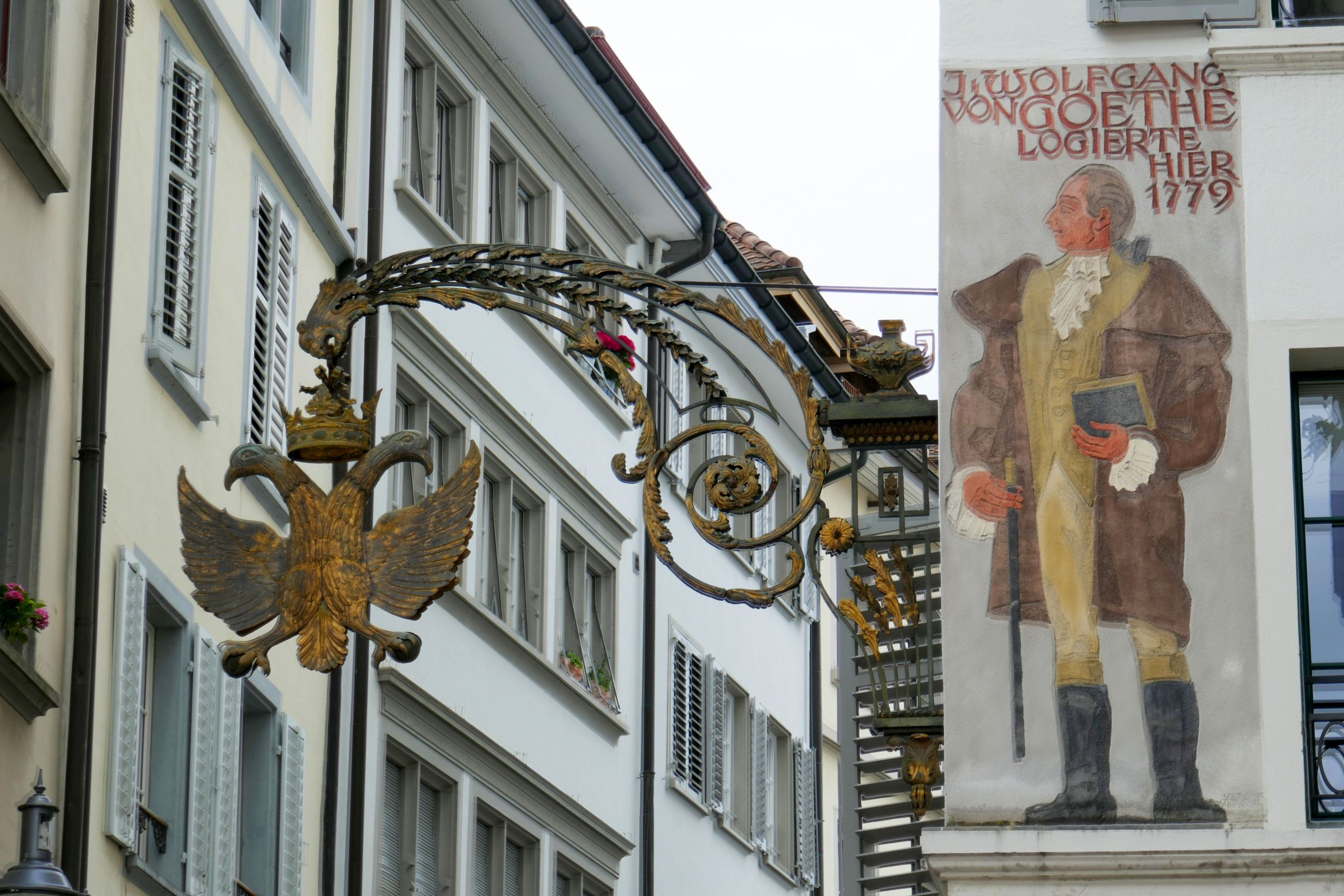
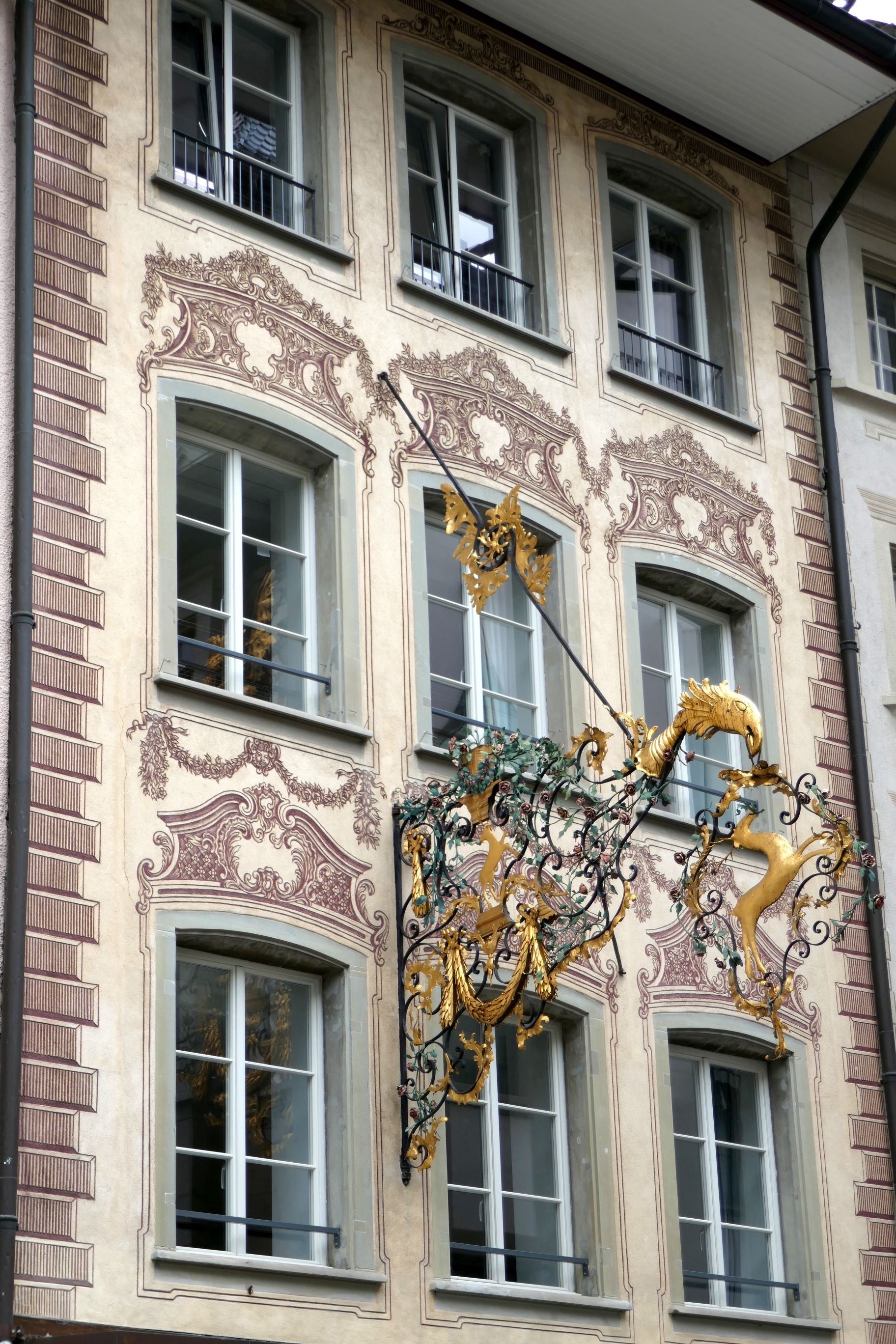
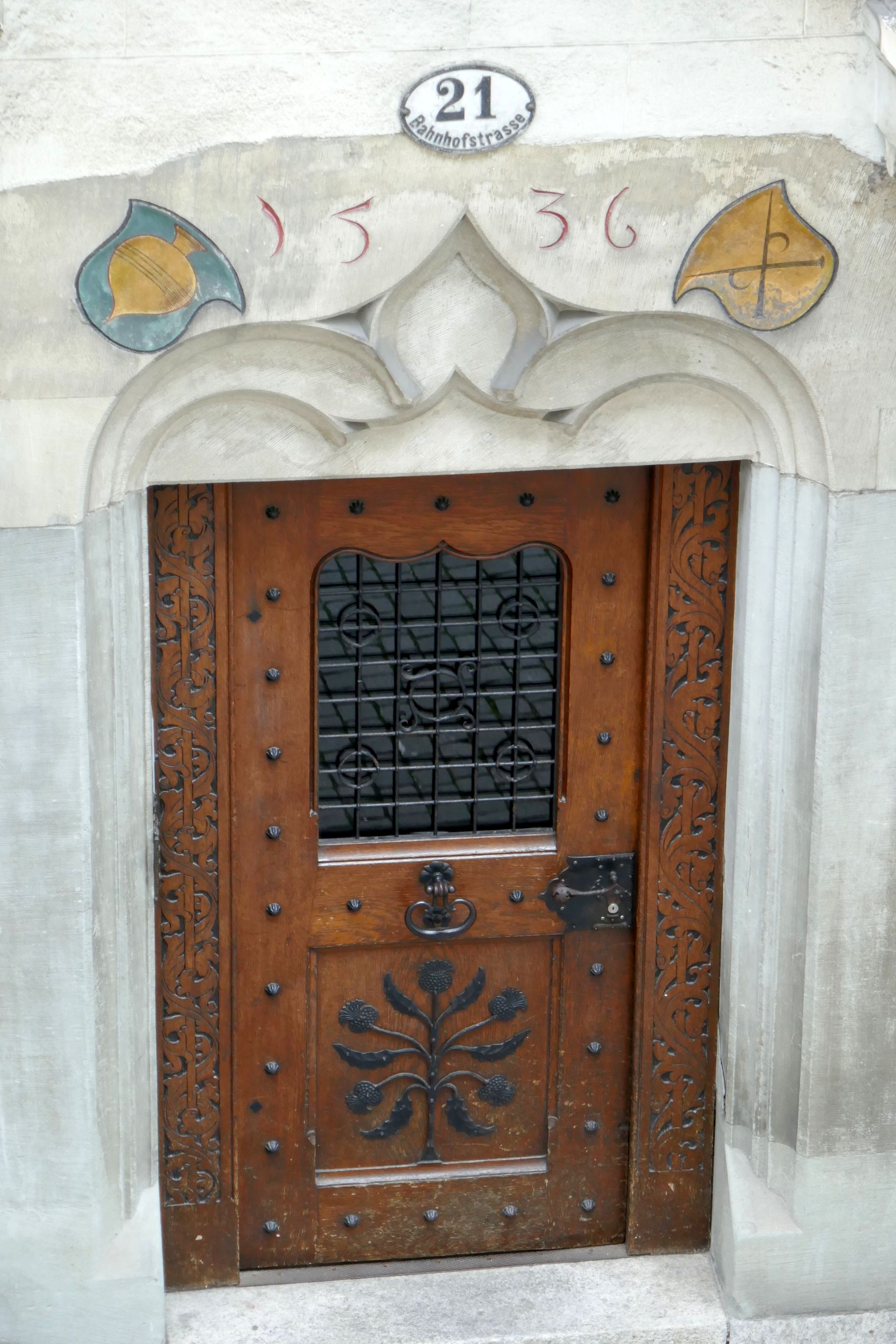
The town of Willisau was our next stop for a walking tour of the main street and cemetery.  This town oozed with charm, especially all of the colorful flags!  It’s no wonder the entire town is part of the Inventory of Swiss Heritage Sites.

It was raining, but it was worth getting my lens wet for this!

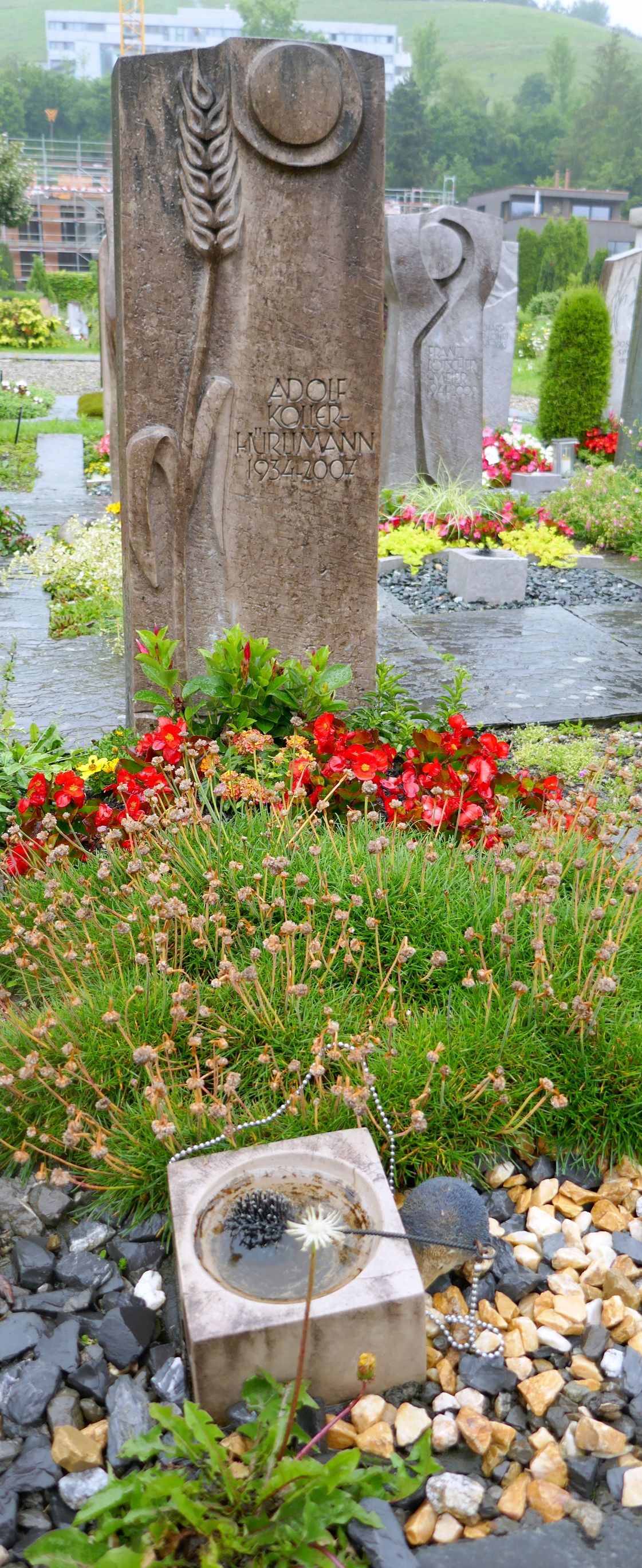
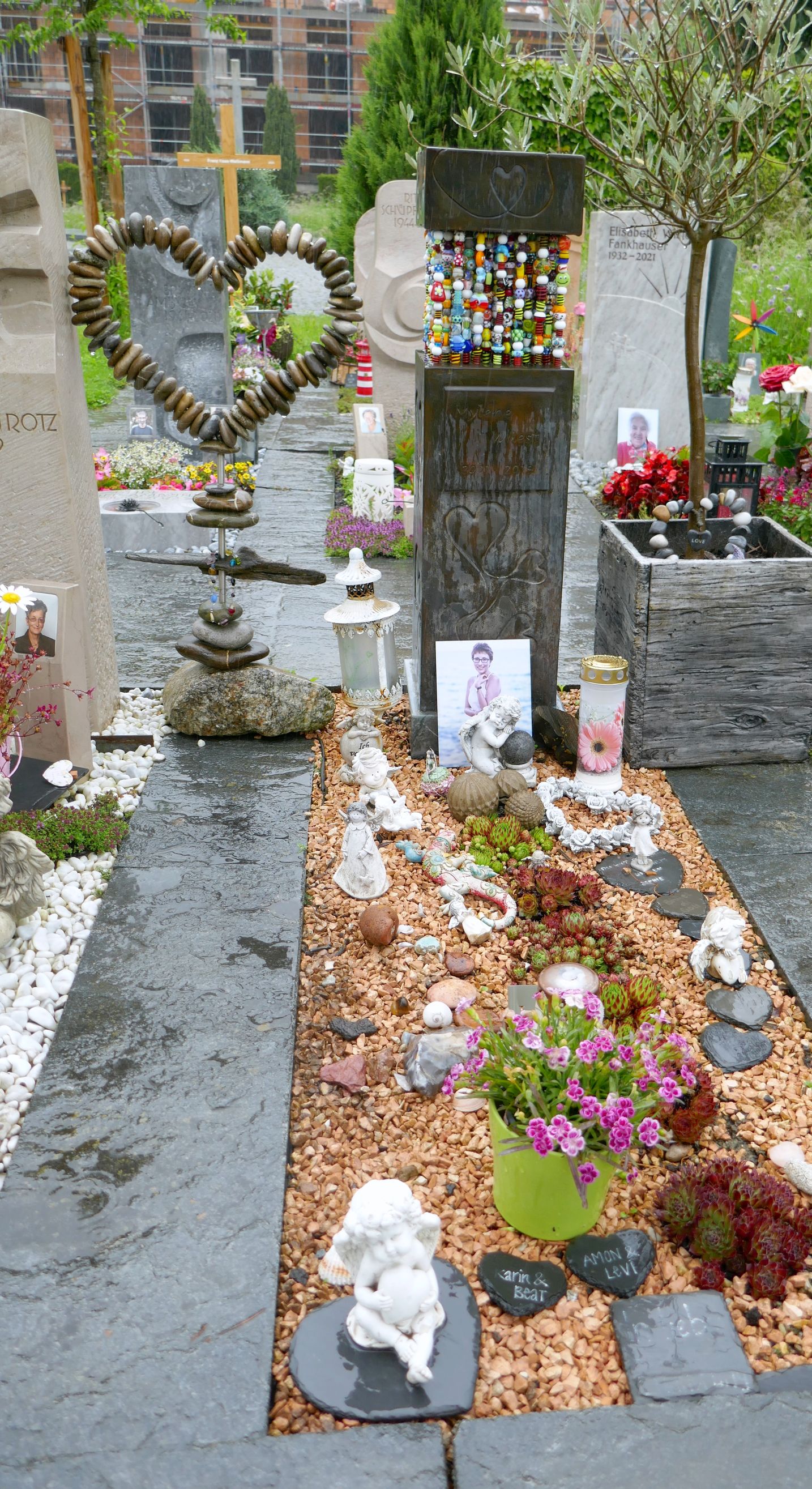
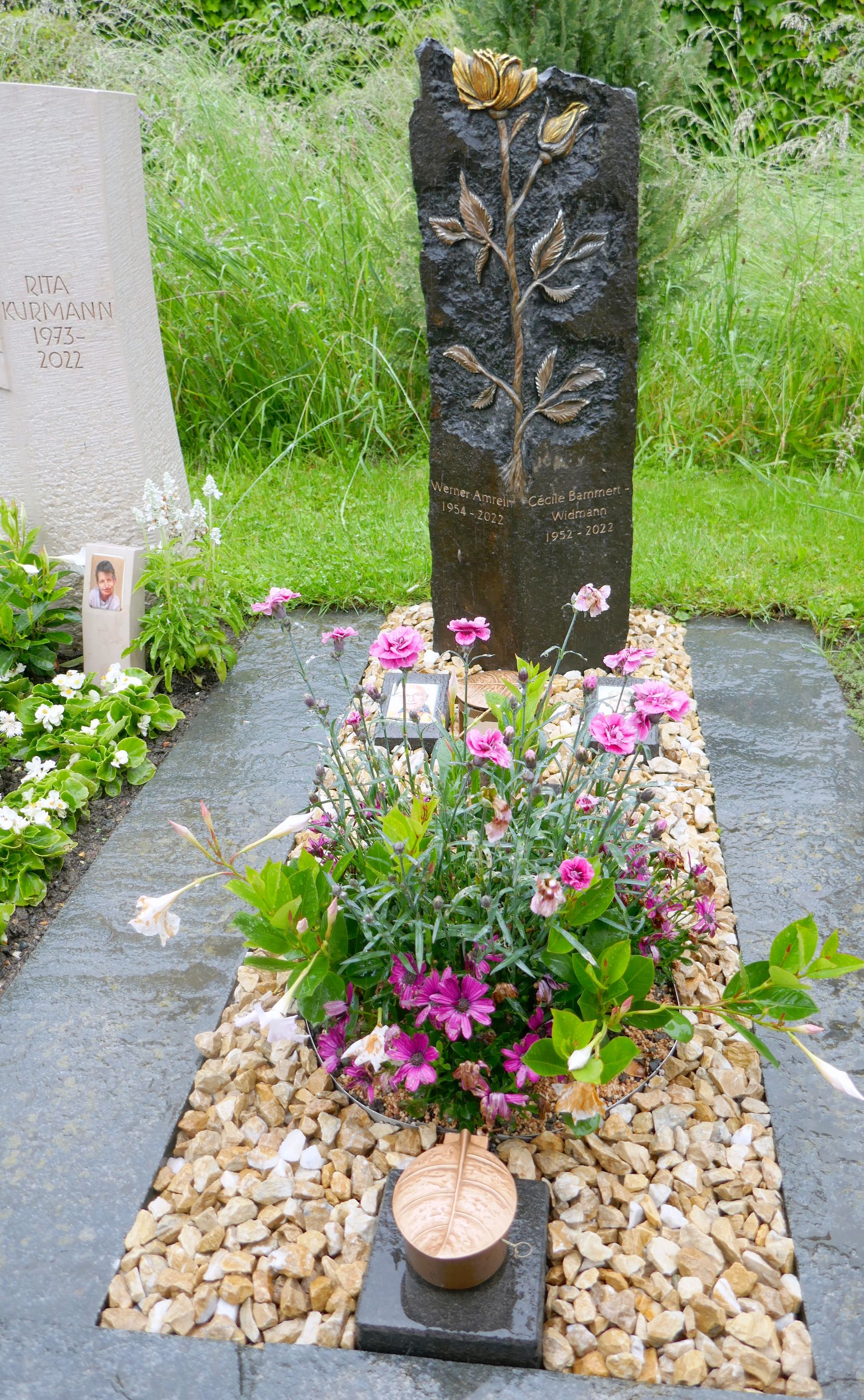
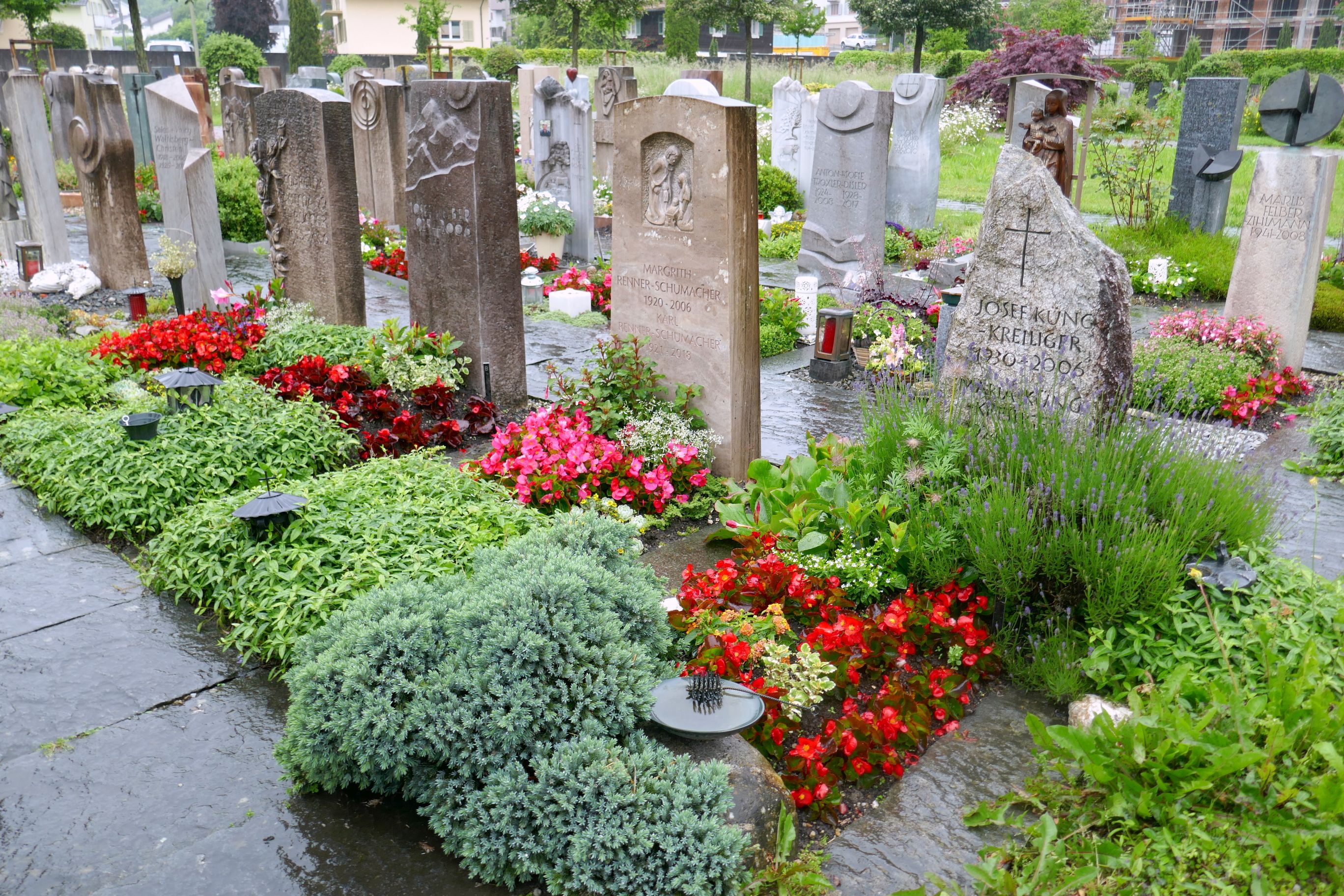
If you are wondering why on earth our walking tour would include a cemetery, just look at these gorgeous plots!  Nowhere have I seen such beauty and pride in modern cemetery plots, but our tour leader, Susy, told us they are like this throughout Switzerland.  I came across an interesting blog post about Swiss cemetaries here.
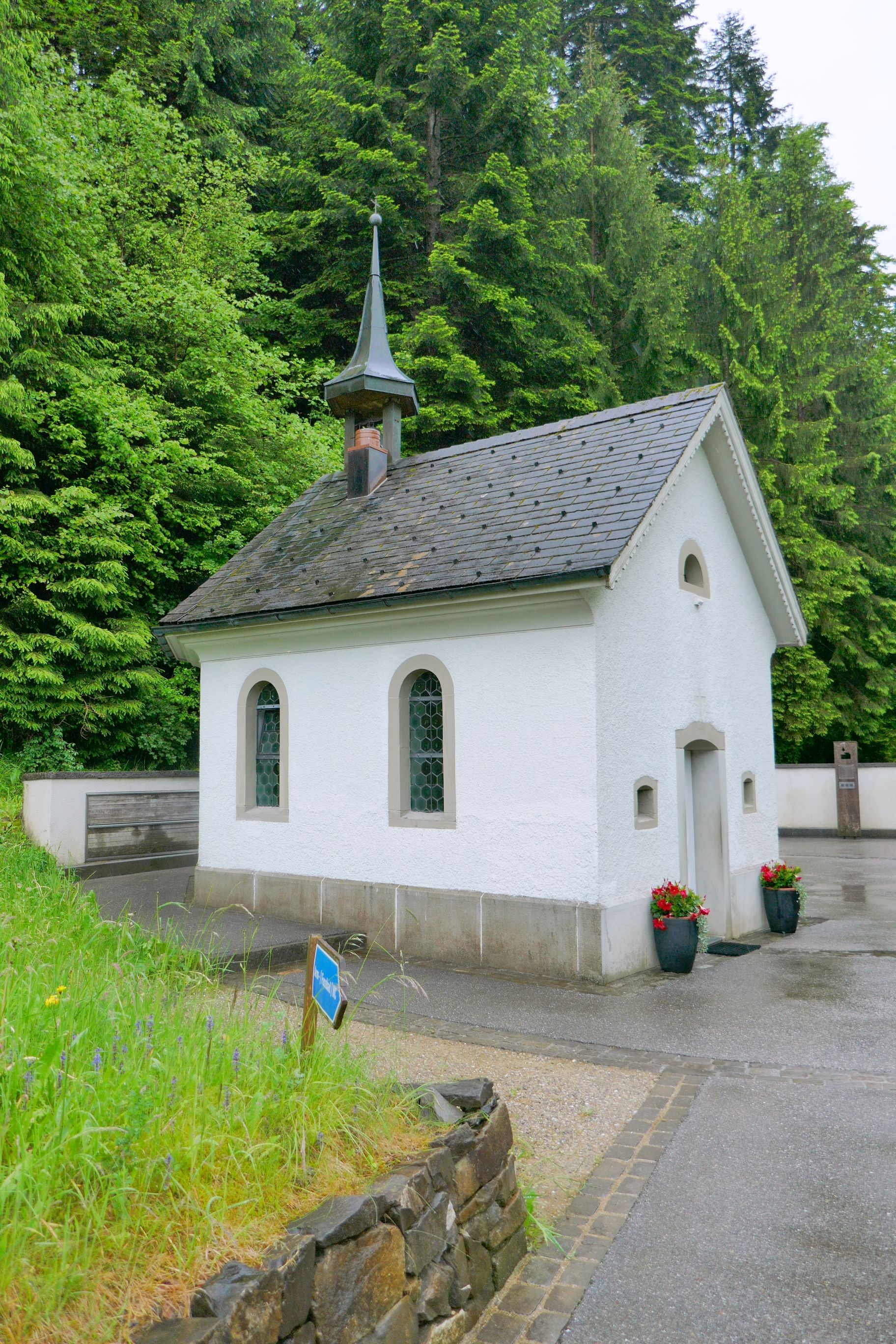
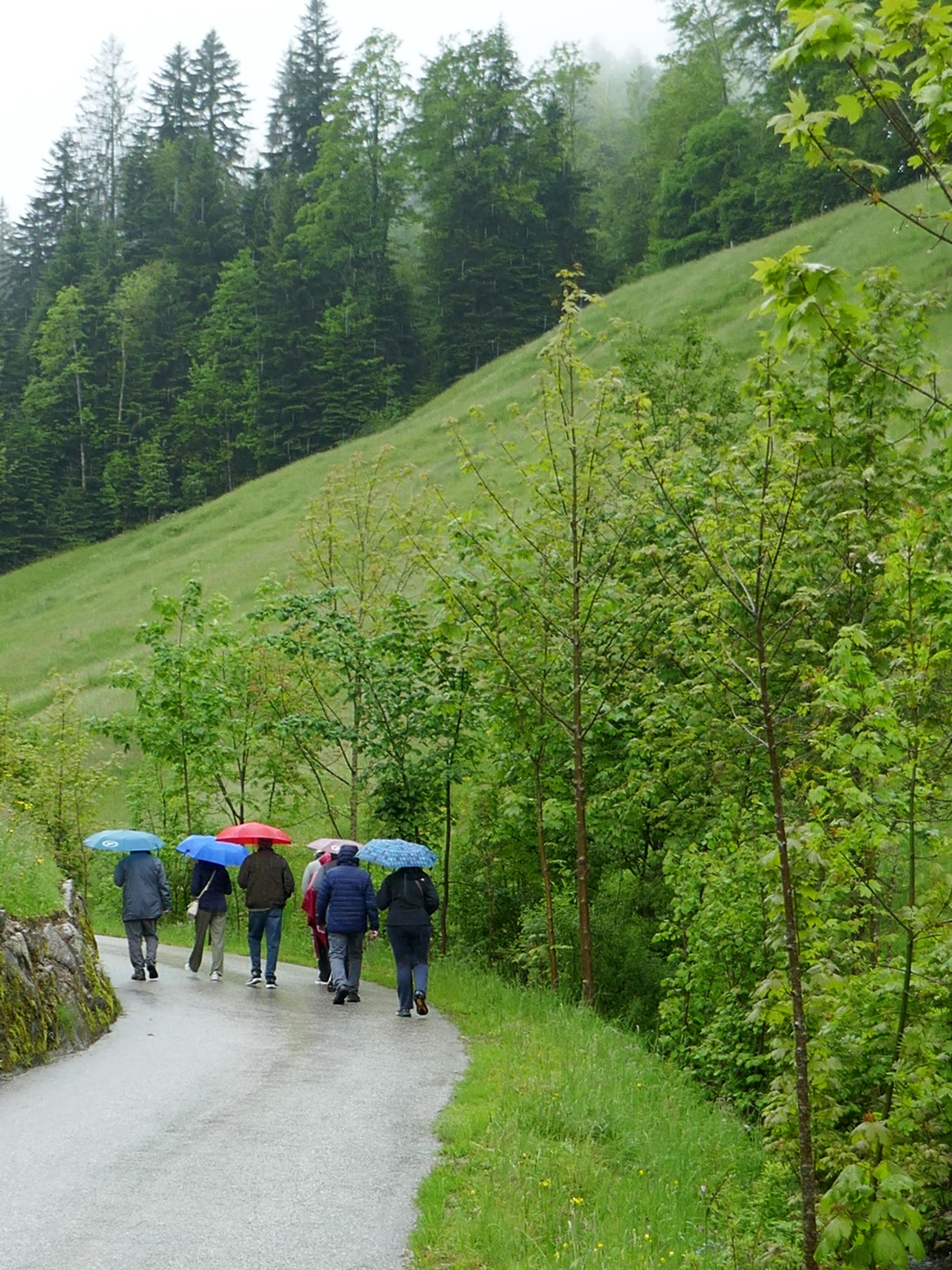
Next, we visited the tiny town of Luthern with it’s even tinier chapel.  The walk along the river to our destination was lovely, even though it was raining.  Surprisingly, the chapel was quite modern with beautiful stained glass windows and lit fused glass panels.
For lunch, the nine of us on the Switzerland pre-extension and Susy ate a cozy, traditional Swiss neighborhood restaurant full of old-world charm. 

Imagine my surprise when I went to the WC (a.k.a. restroom) and saw these photos vertically strung on a metal cord and attached by magnets in each stall:

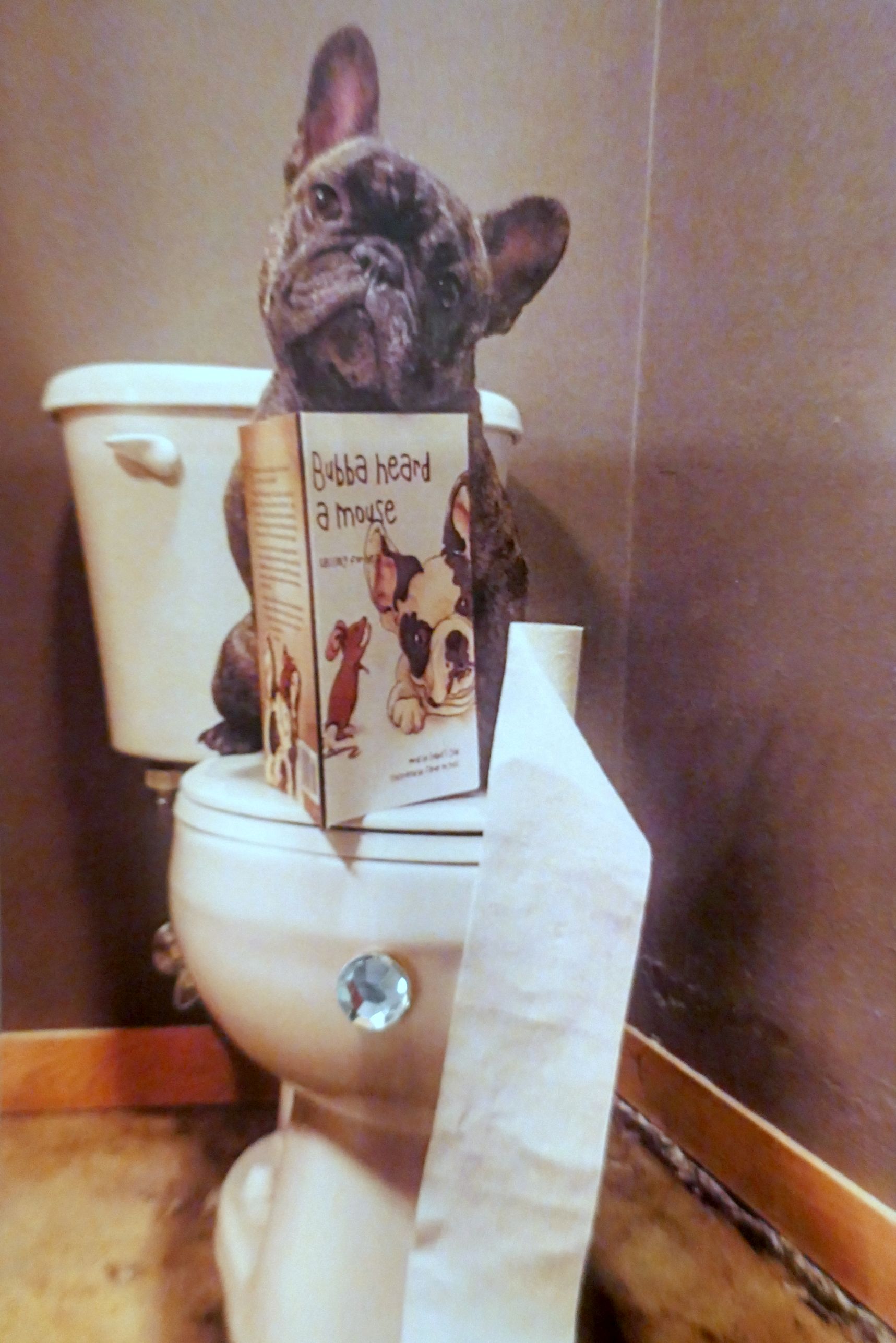
When word got back to the table, there was a mass exodus to go see what all the laughter was about.  The men’s room had them as well.
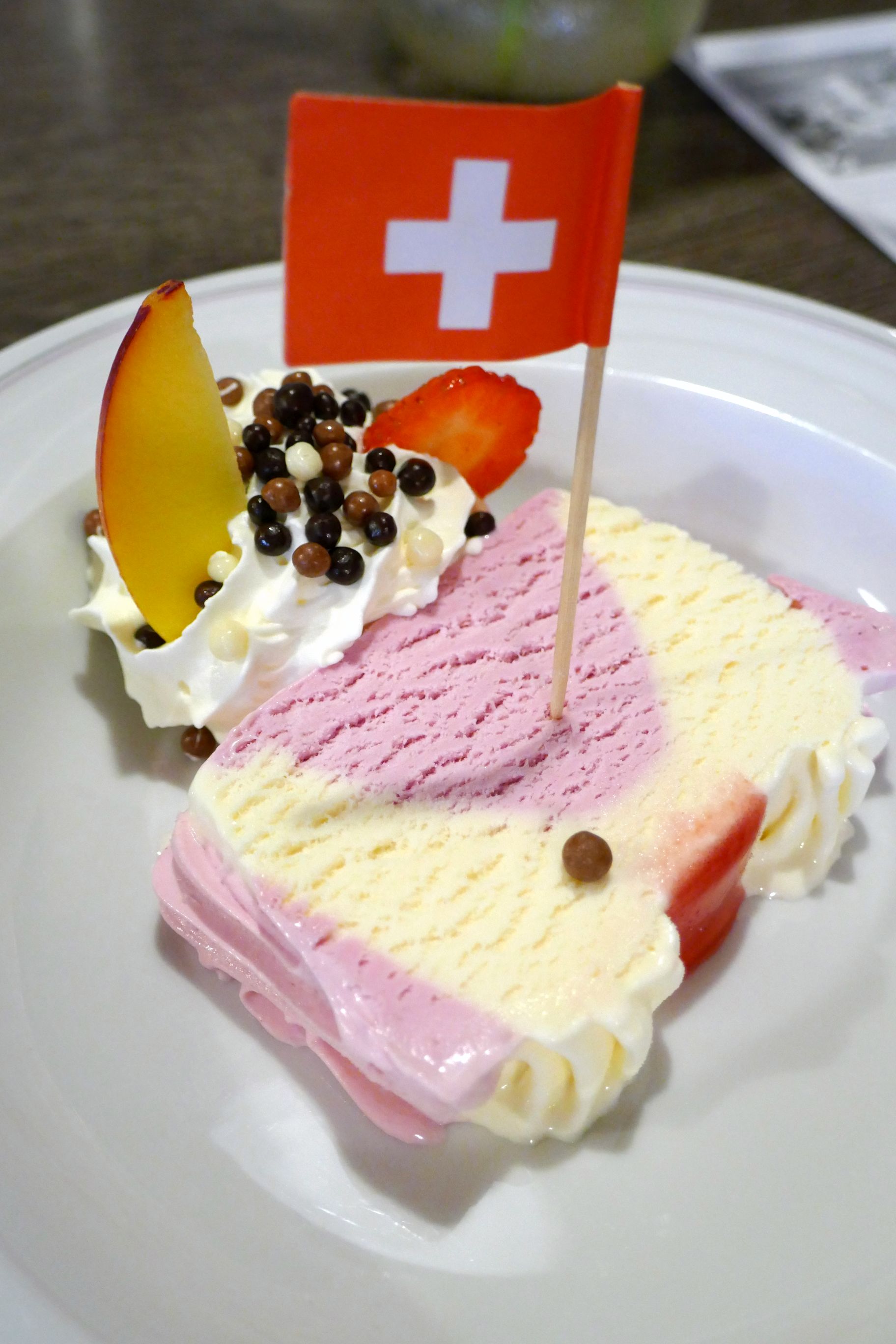
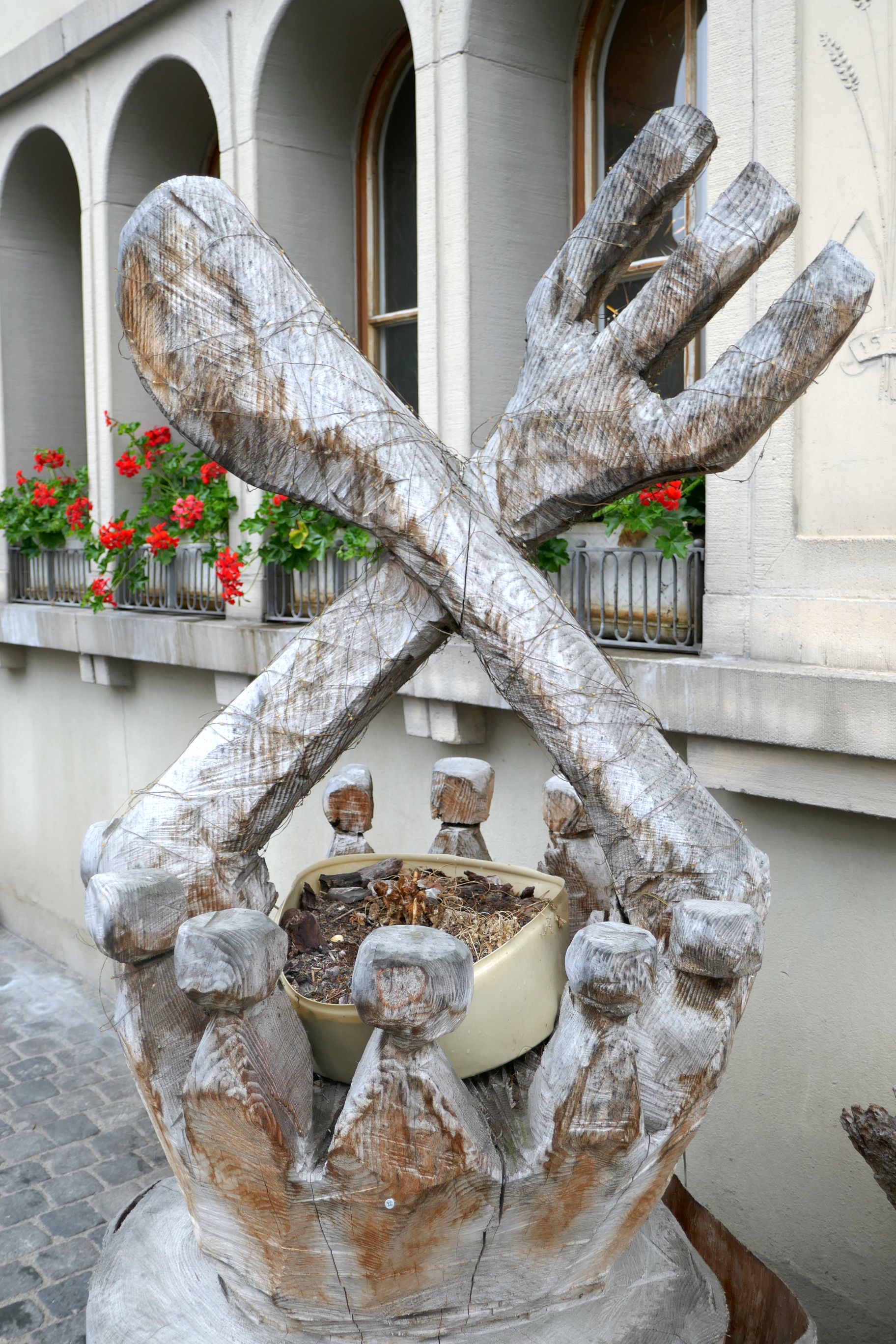
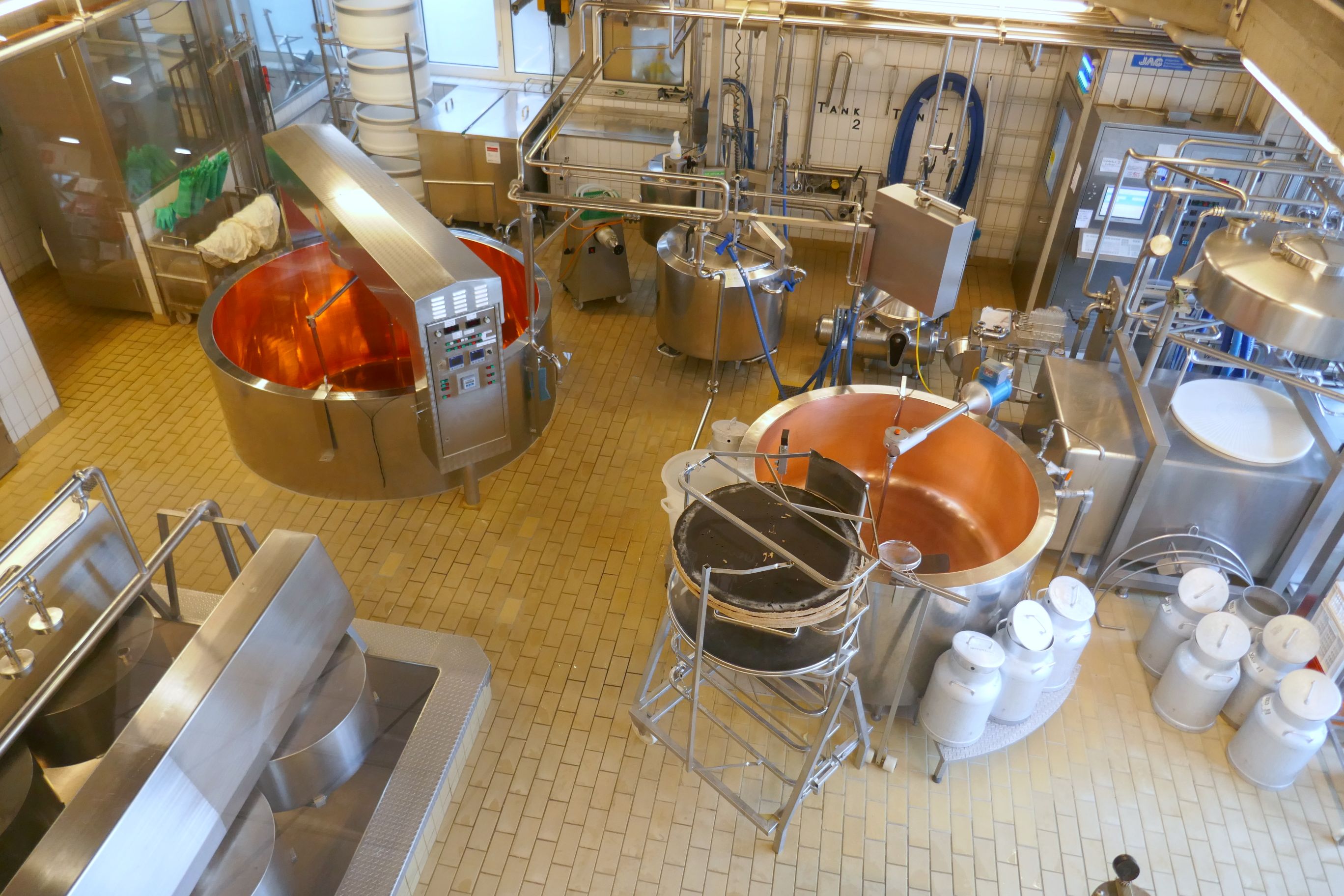
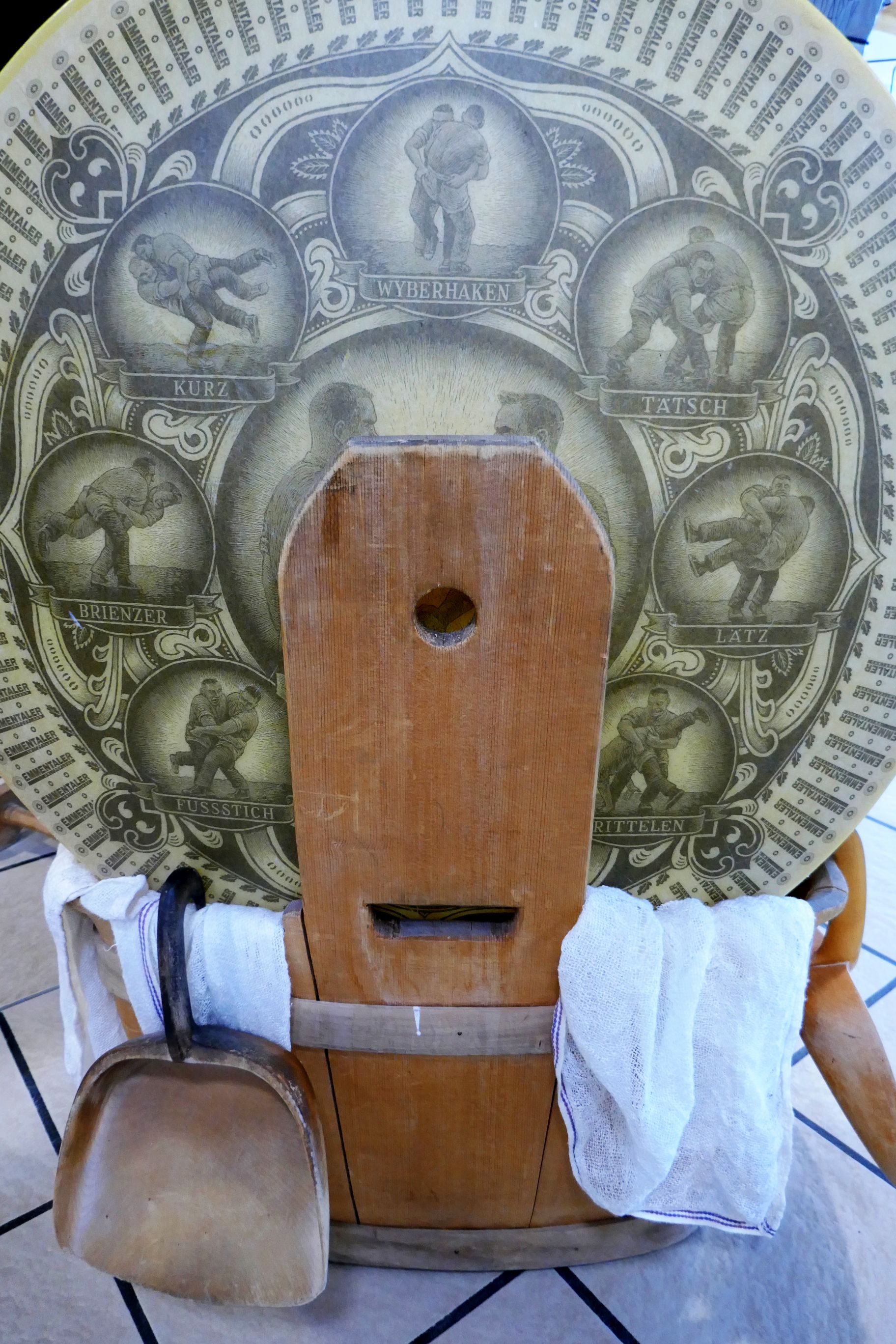
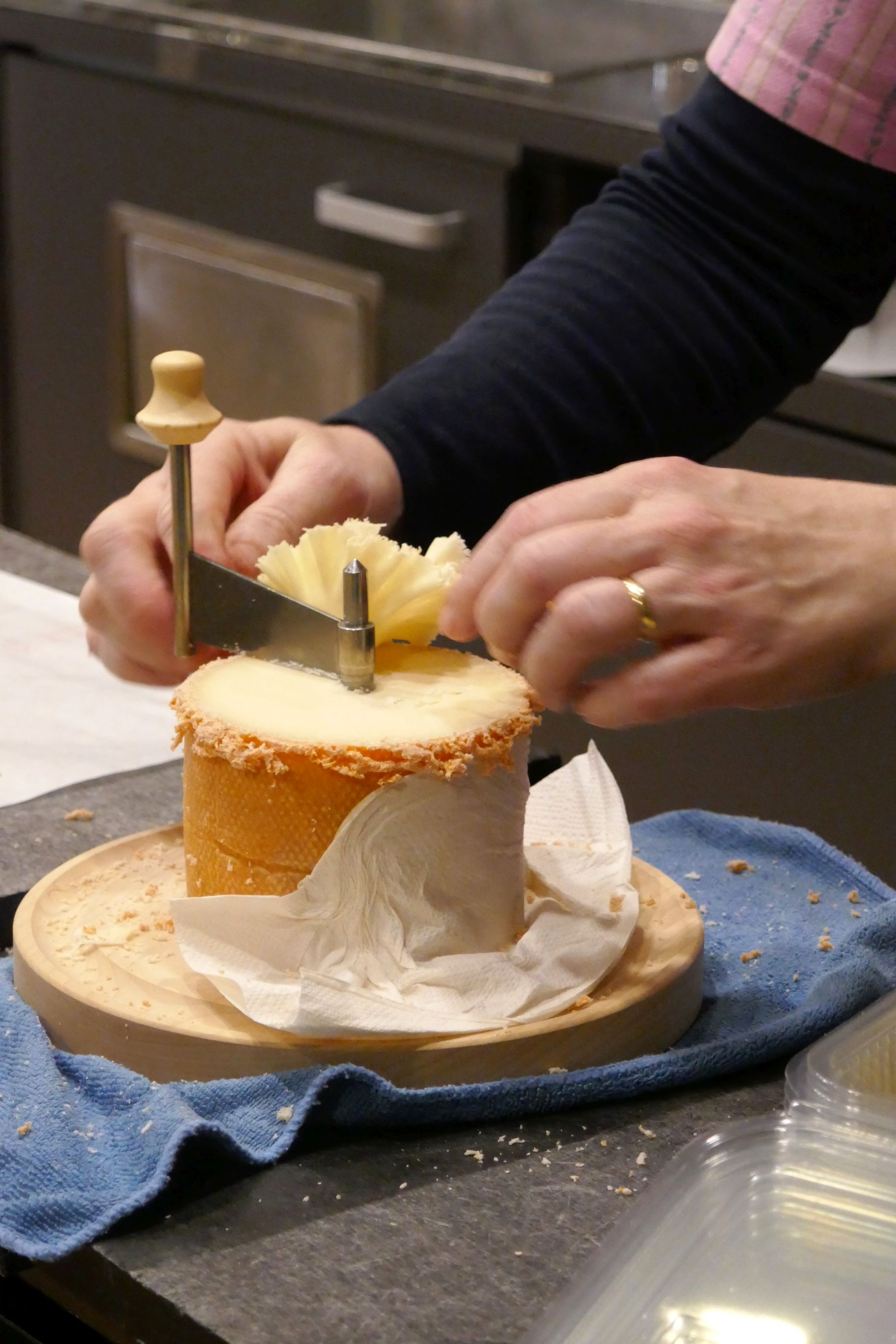
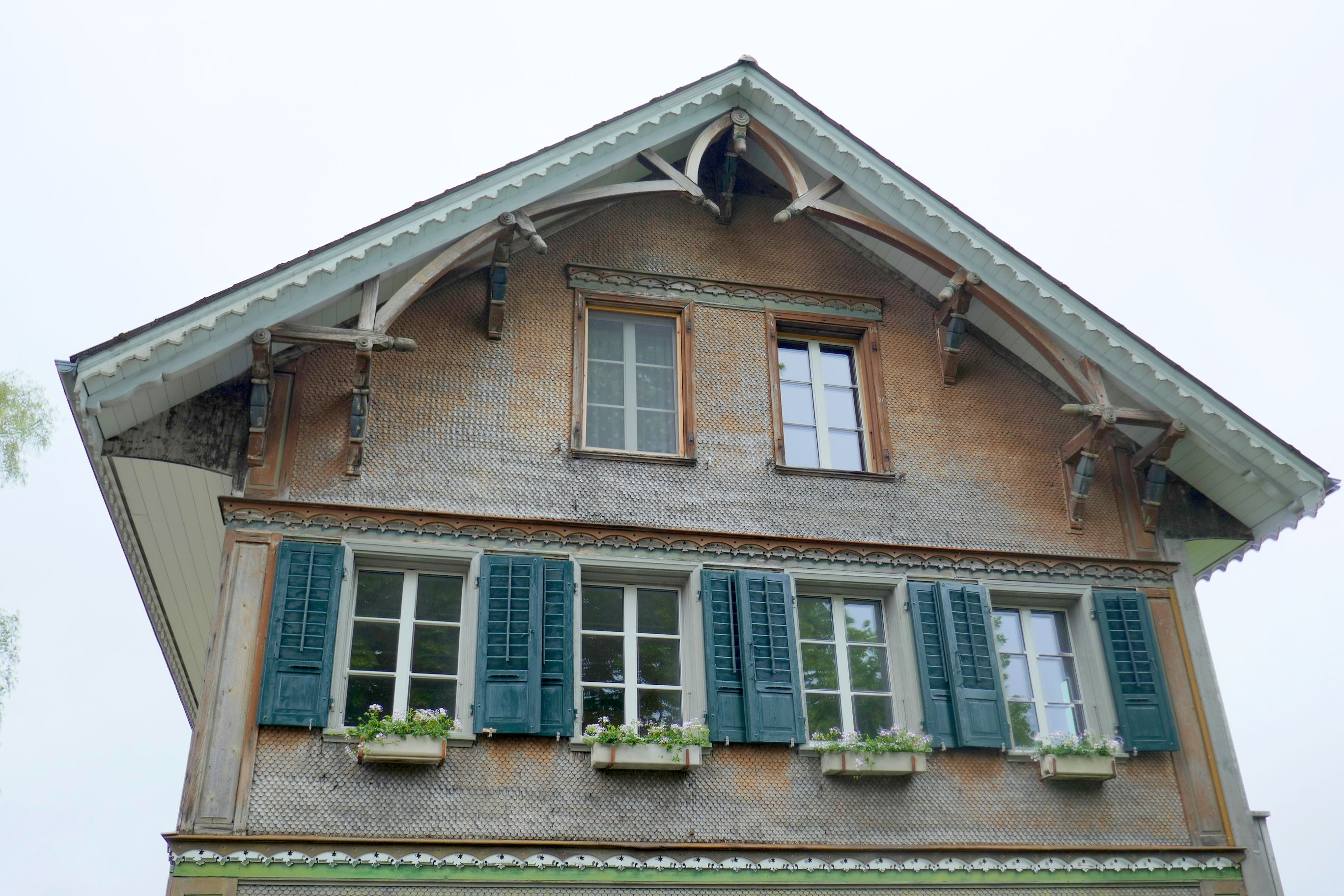
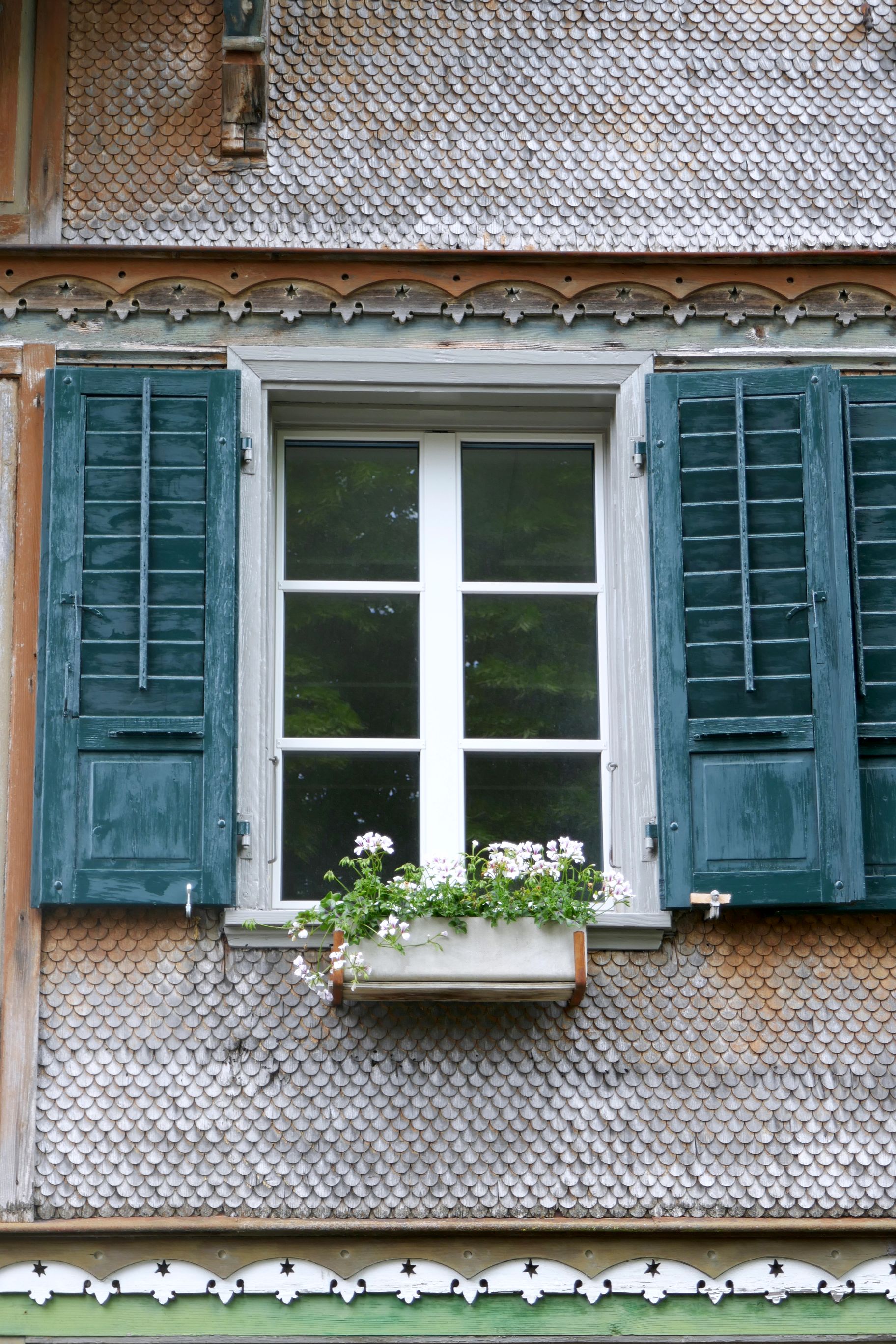
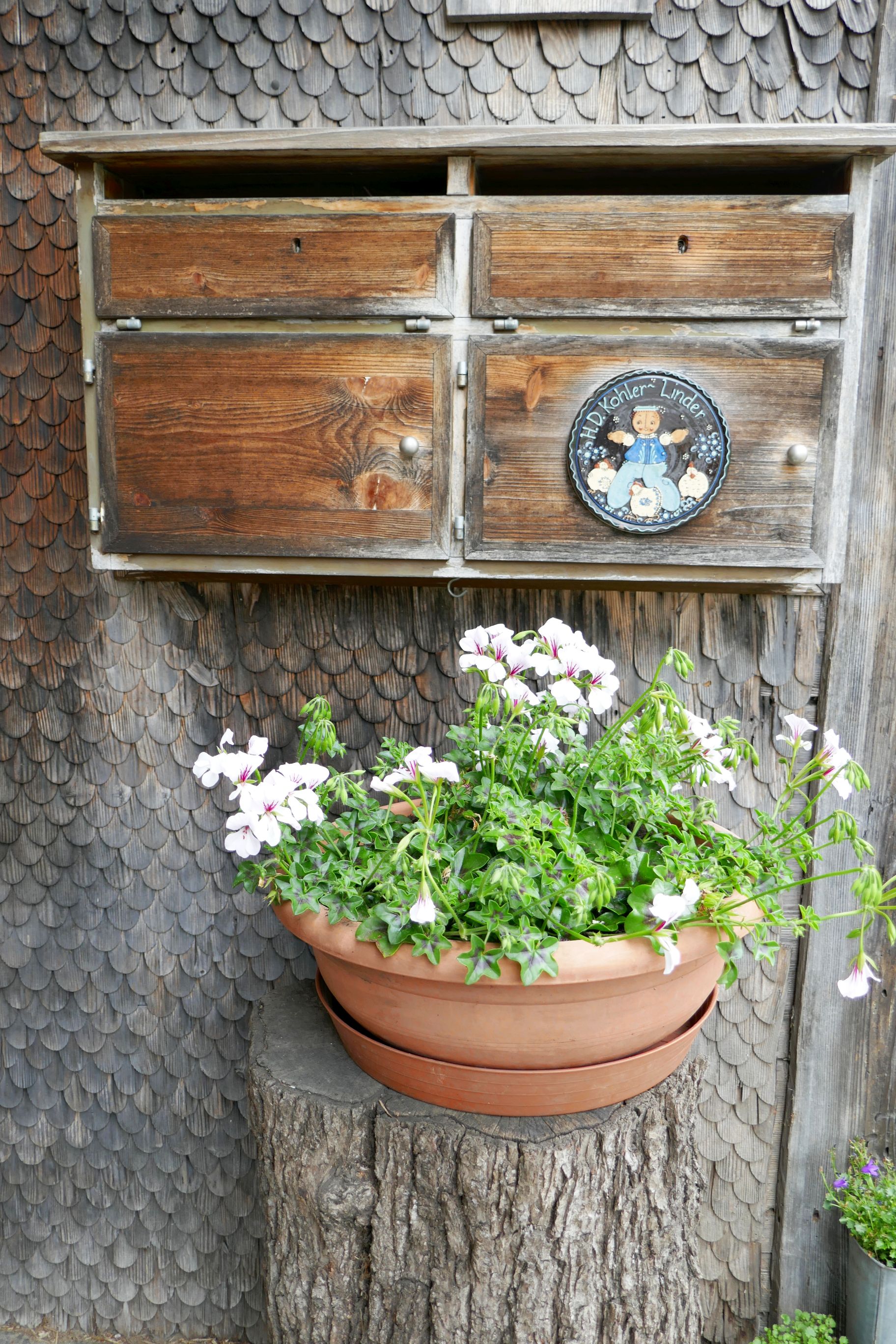
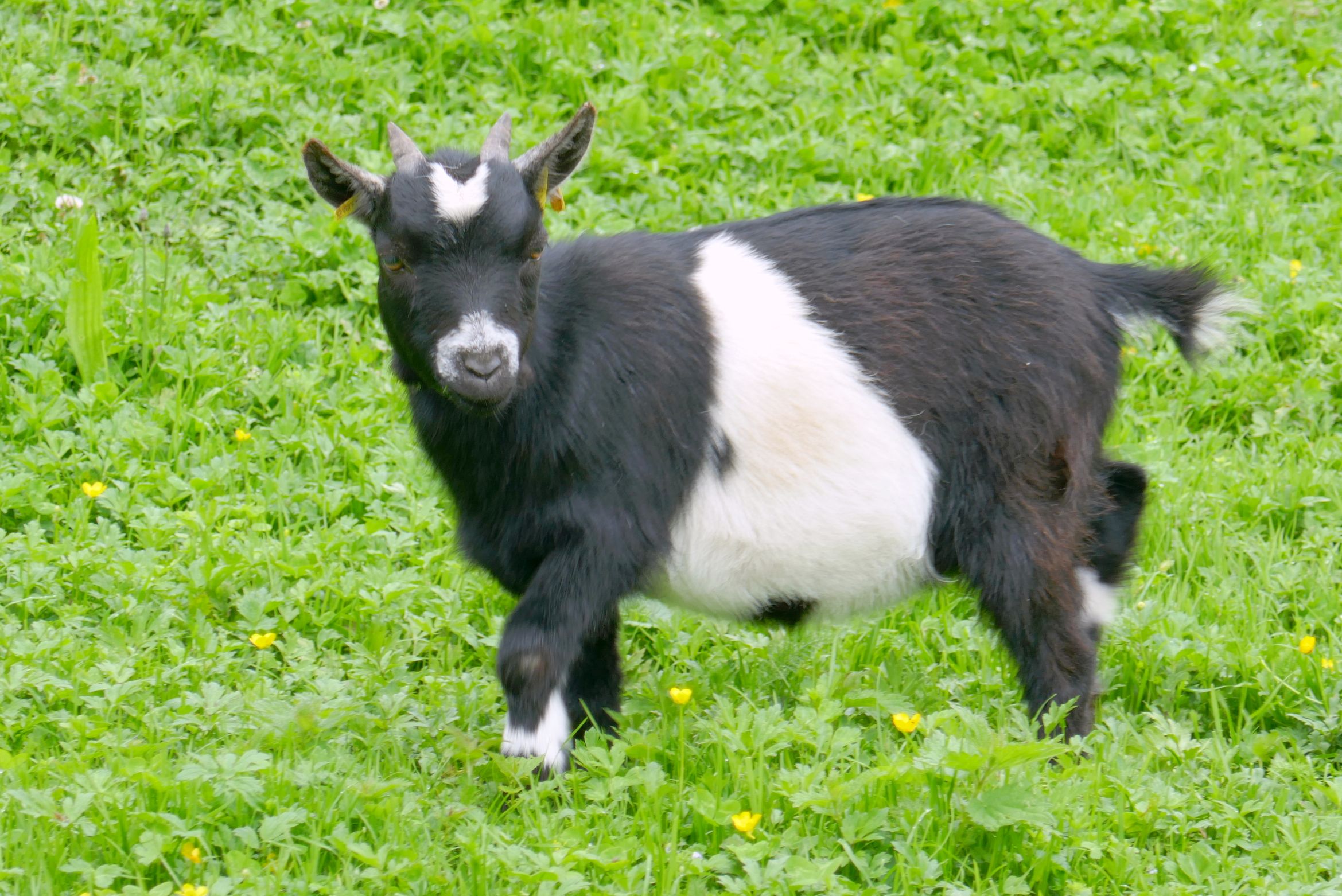
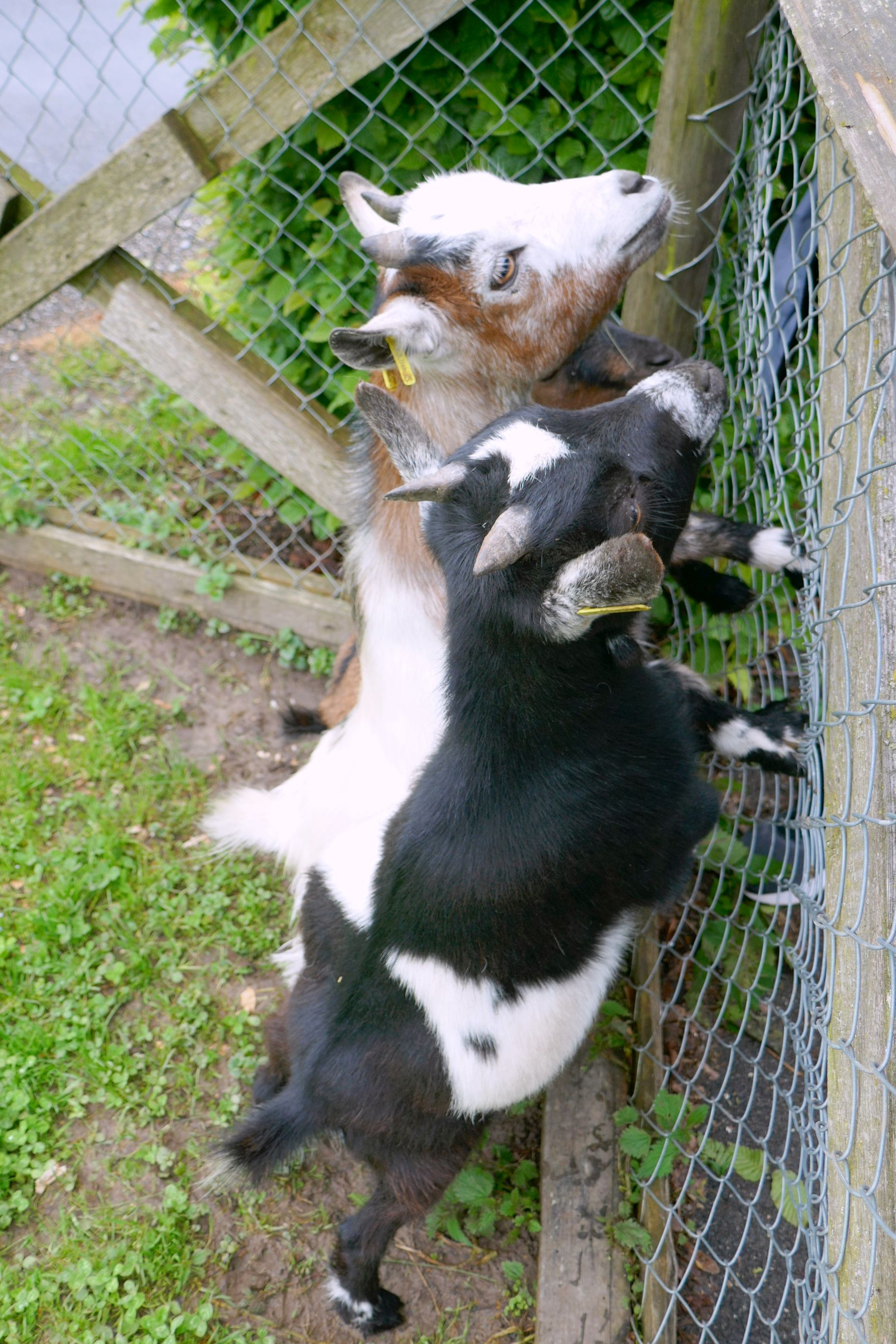
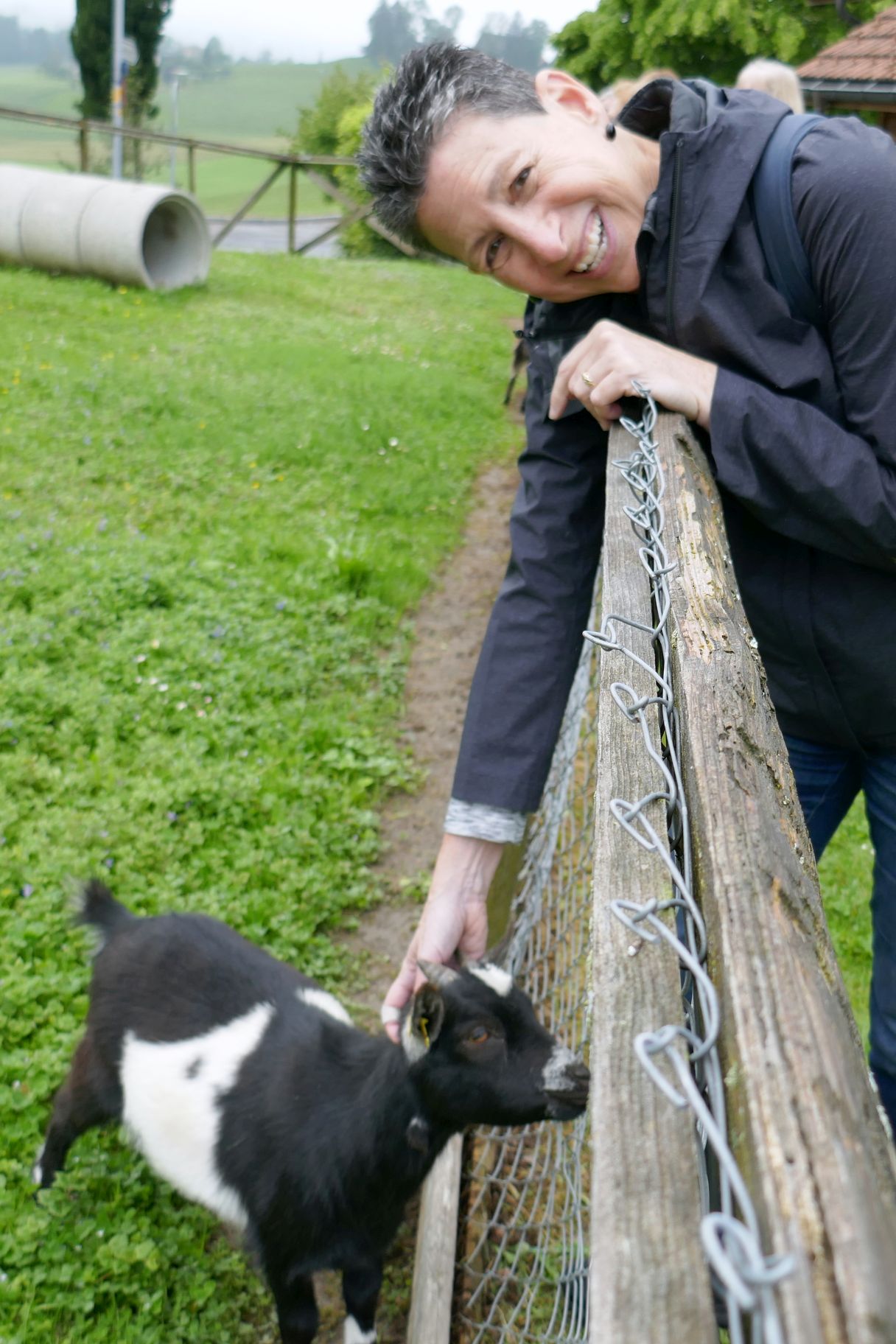
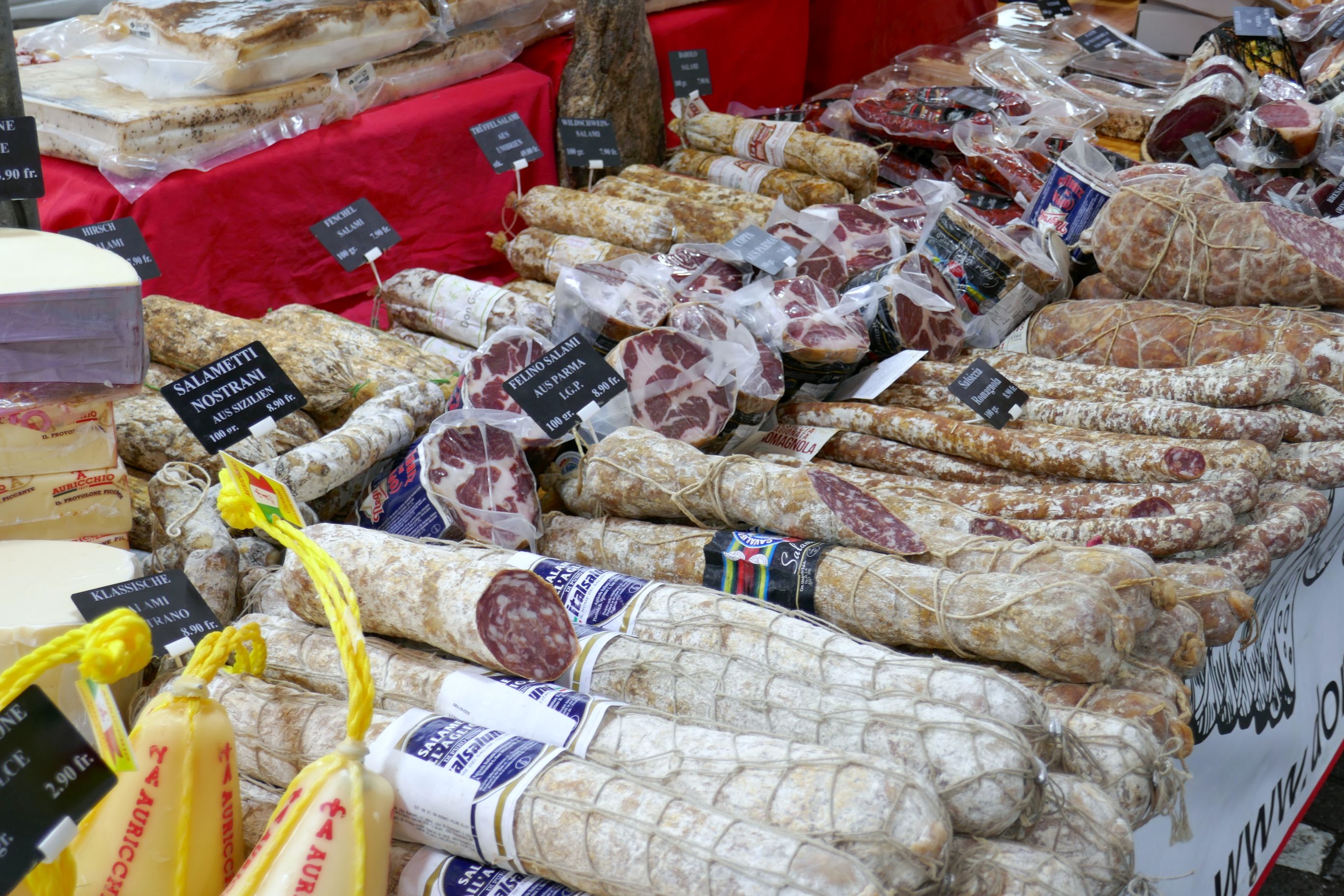
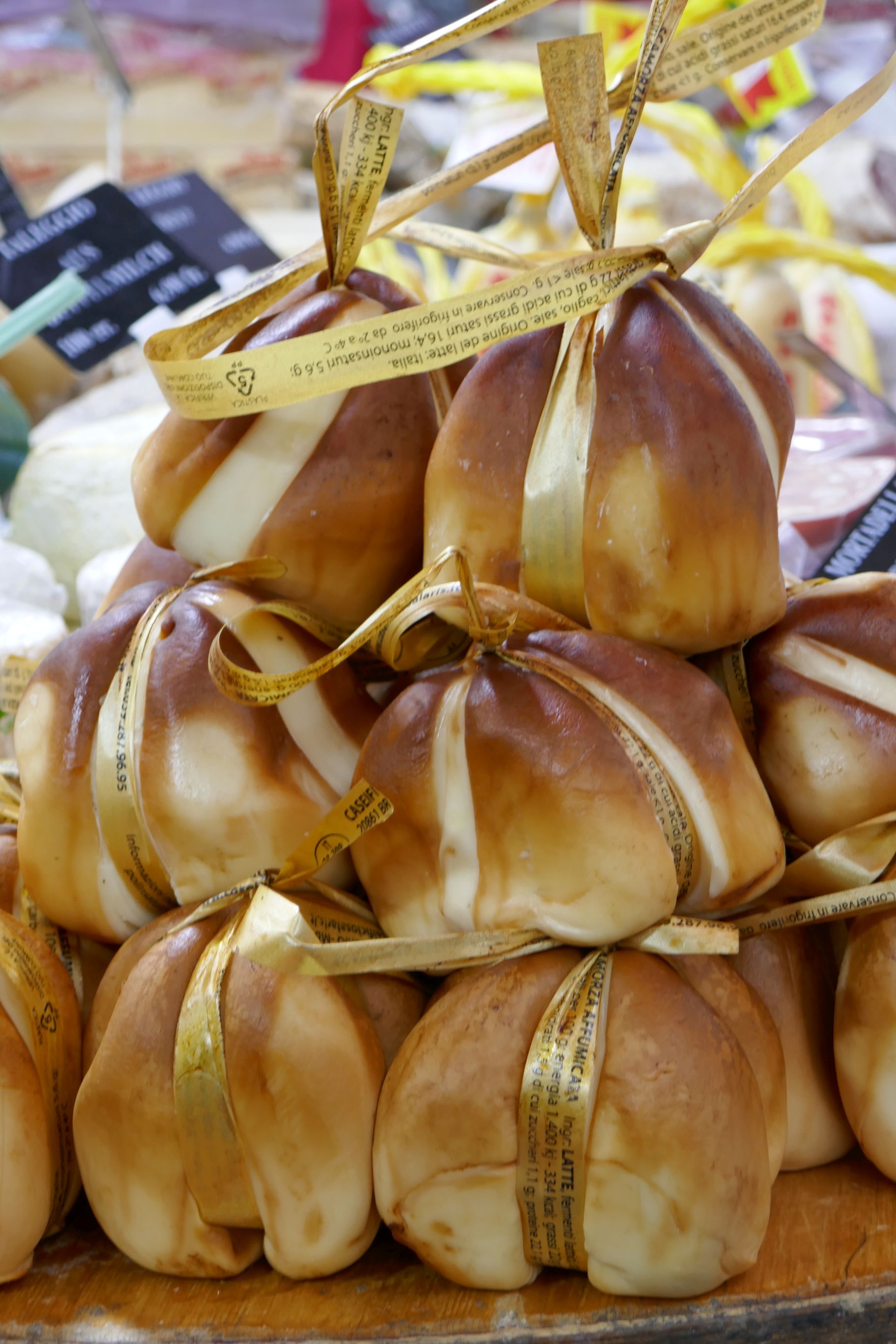
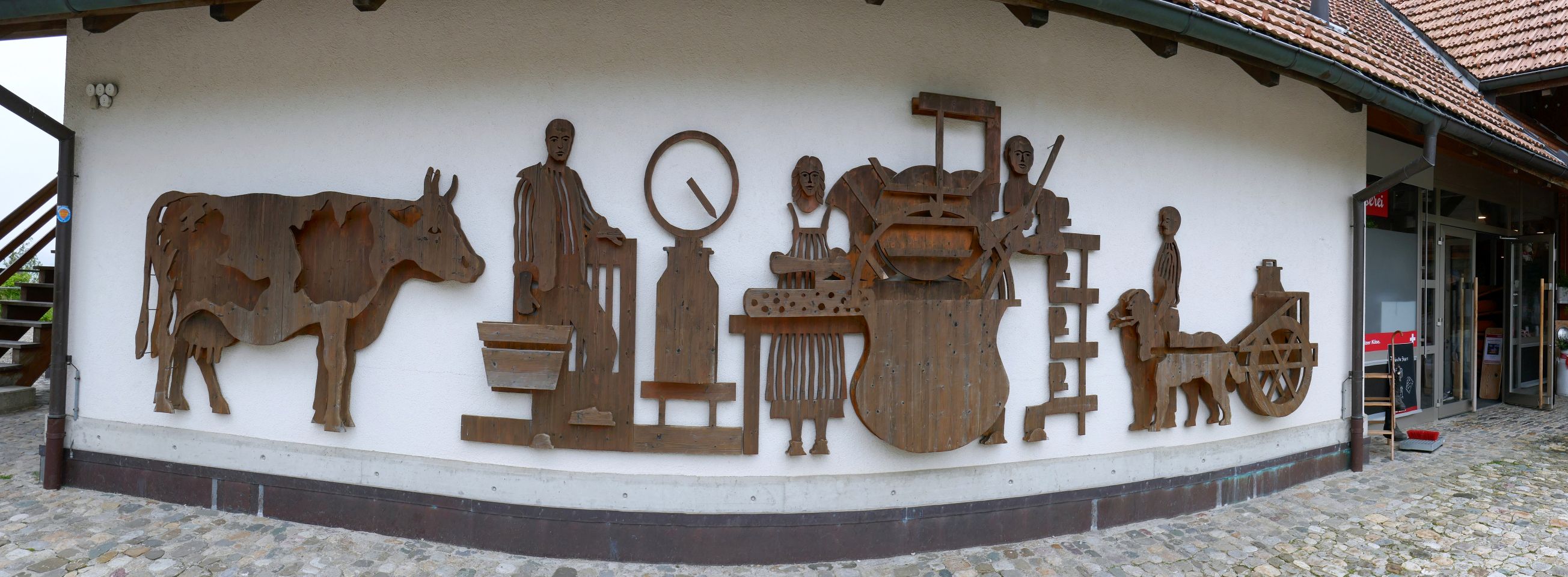
Following lunch, we visited a cheesemaker; however, they weren’t making cheese that day.  We did enjoy watching the lady make cheese “roses” with her nifty tool, though.  I also took the opportunity to check out a few interesting buildings nearby.  But then I discovered the baby goats and spread the word.  It was hard for Susy to pull us away; they were adorable!
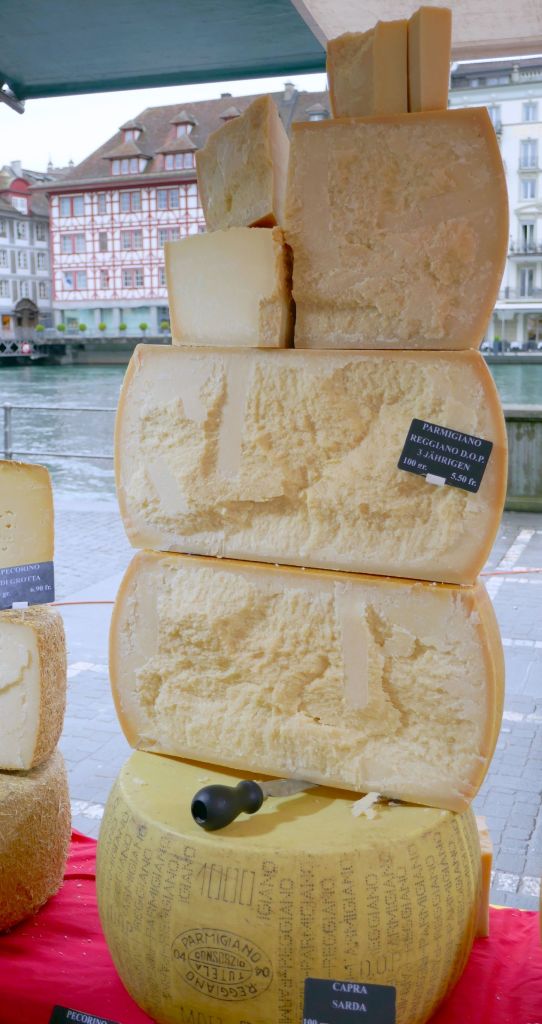
A massive cheese wheel

In all, the places we visited before check-in time at our Bern hotel were quite enjoyable.  We got a good look (and taste!) of typical Swiss small-town life!

Coming up next:  SWITZERLAND & NORTHERN ITALY #4: BEAUTIFUL BERN
SWITZERLAND & NORTHERN ITALY #2: MORE LOVELY LUCERNE

Language in Switzerland is interesting.  As I mentioned in my previous post, there are four official languages which include German; however, the German spoken in Lucerne is “Swiss German,” which is an Alemannic dialect.  It is only spoken, not written, and it is not a formal language.  So, the TV news, for example, is spoken in conventional German.

In school, the Swiss also learn French and English, so they are potentially trilingual—quite impressive!  It comes in handy with France to the west, Germany to the north, and Austria to the east.  Italy is south of Switzerland, and Italian is one of Switzerland’s four official languages; however, Italian isn’t taught in the schools.  I guess they figure three languages is enough!

Industry in Switzerland focuses on exporting chemical products, health and pharmaceutical goods, engine parts, and wood, in addition to those weapons and tanks I mentioned in my first post.  They also export dairy products, including some of the best cheese and chocolate in the world.

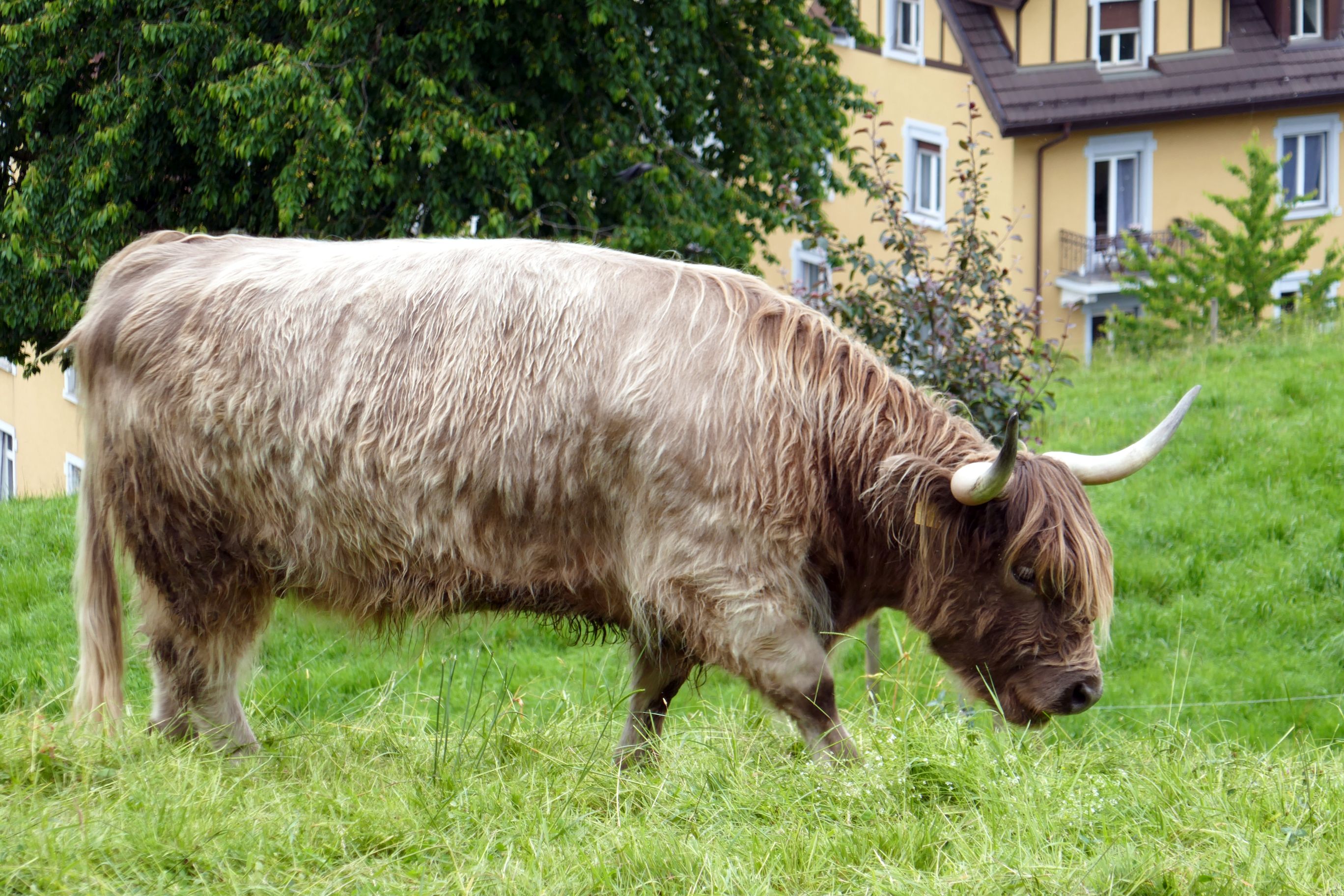
Do you know why Swiss chocolate is so good?  It’s because their cows are free range, grass-fed cows, and their grass grows very well, resulting in the best-quality milk.  That’s why all those cows you see roaming around in Switzerland are raised for dairy, not meat.  As a result, meat in Switzerland is very expensive, because it is imported.

As for that excellent chocolate, I sampled quite a bit while I was in Switzerland, and I brought back a lot of it.

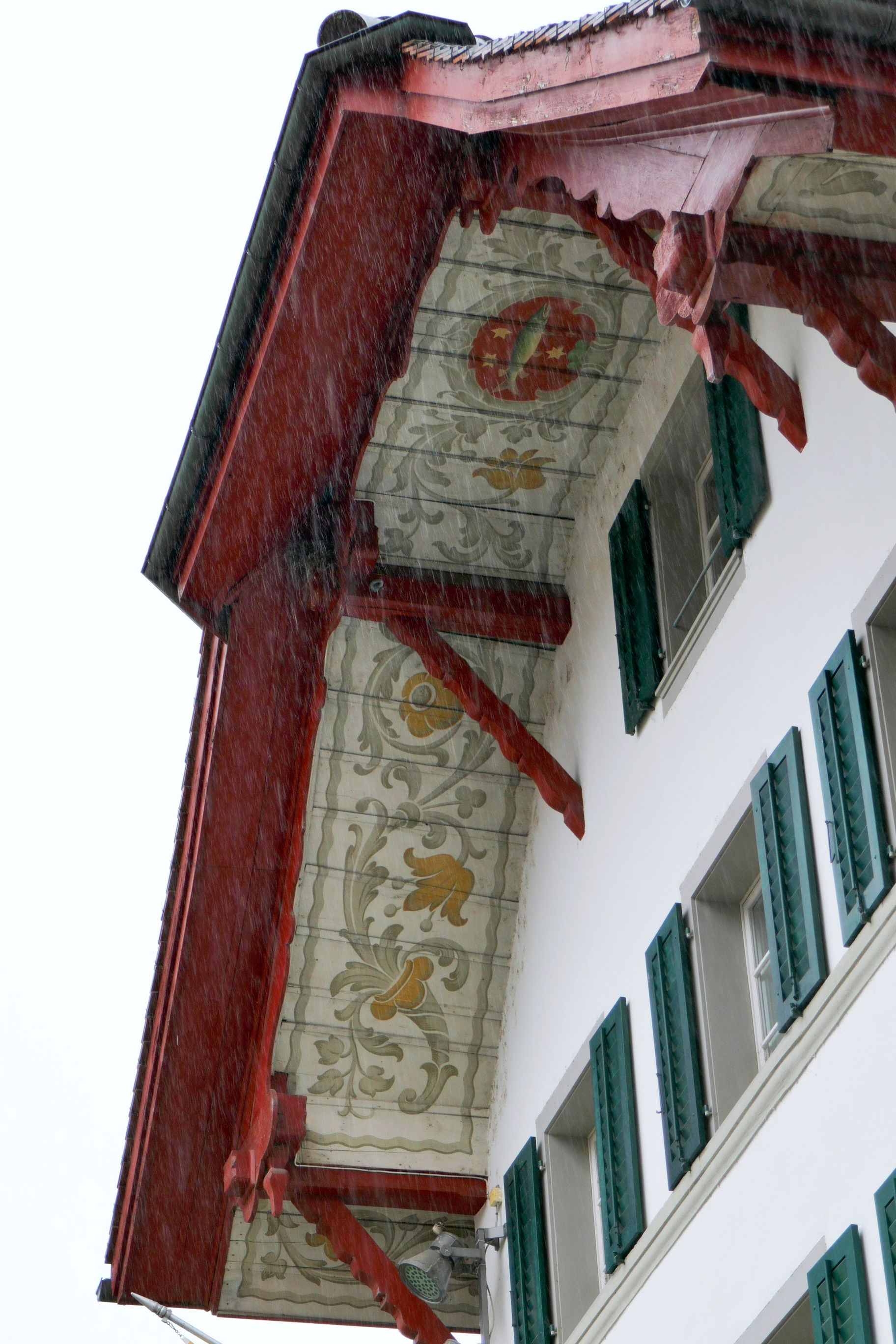
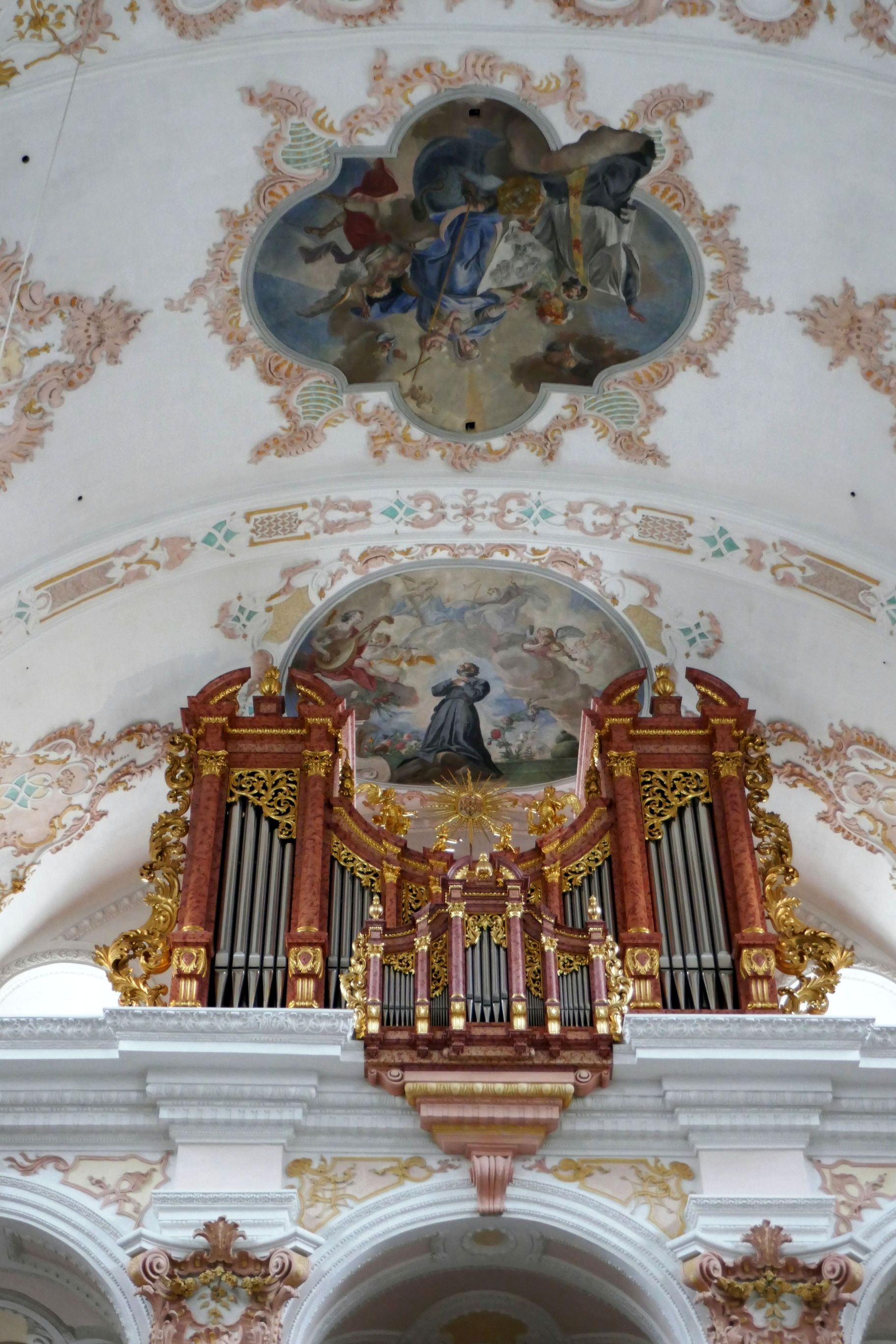
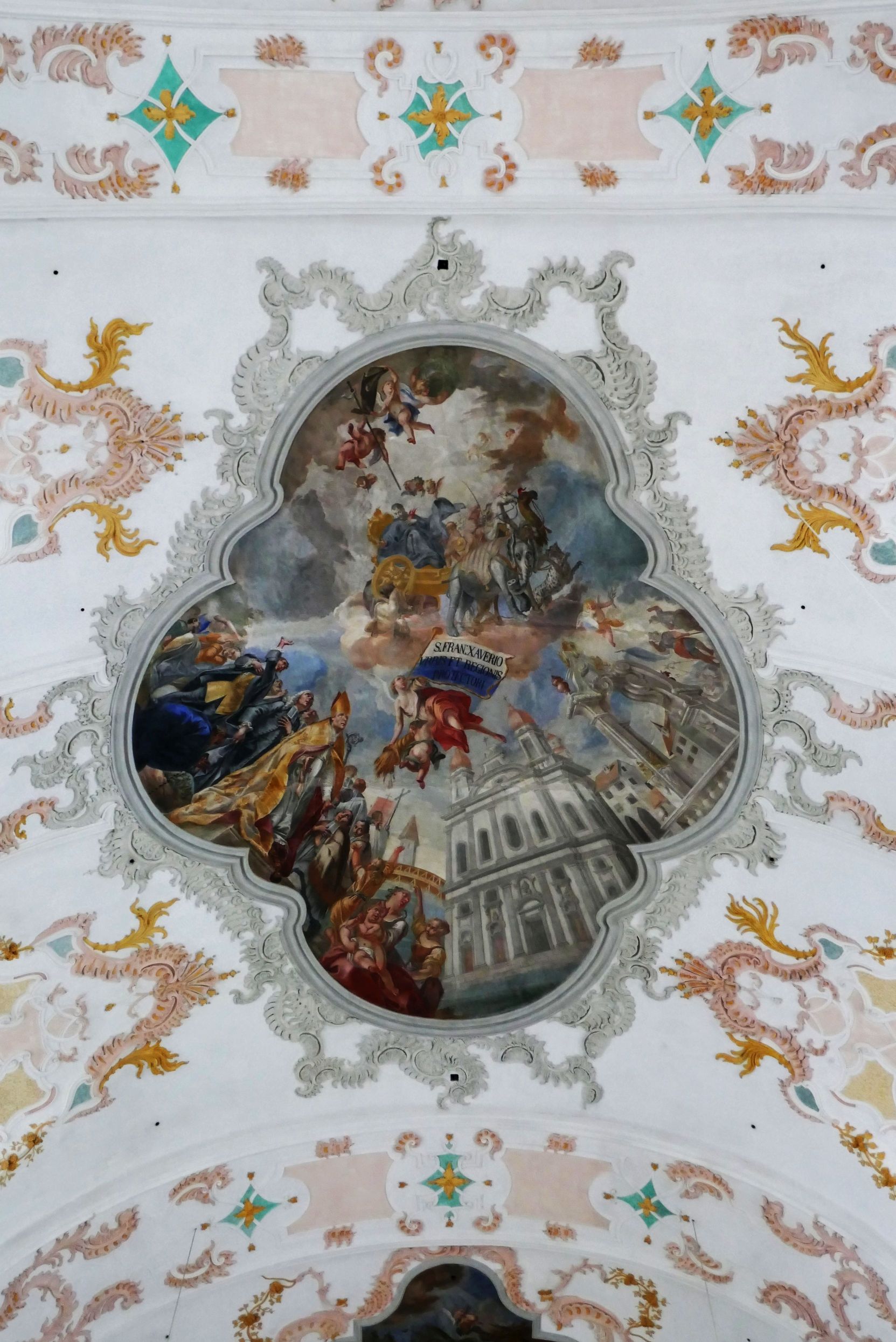
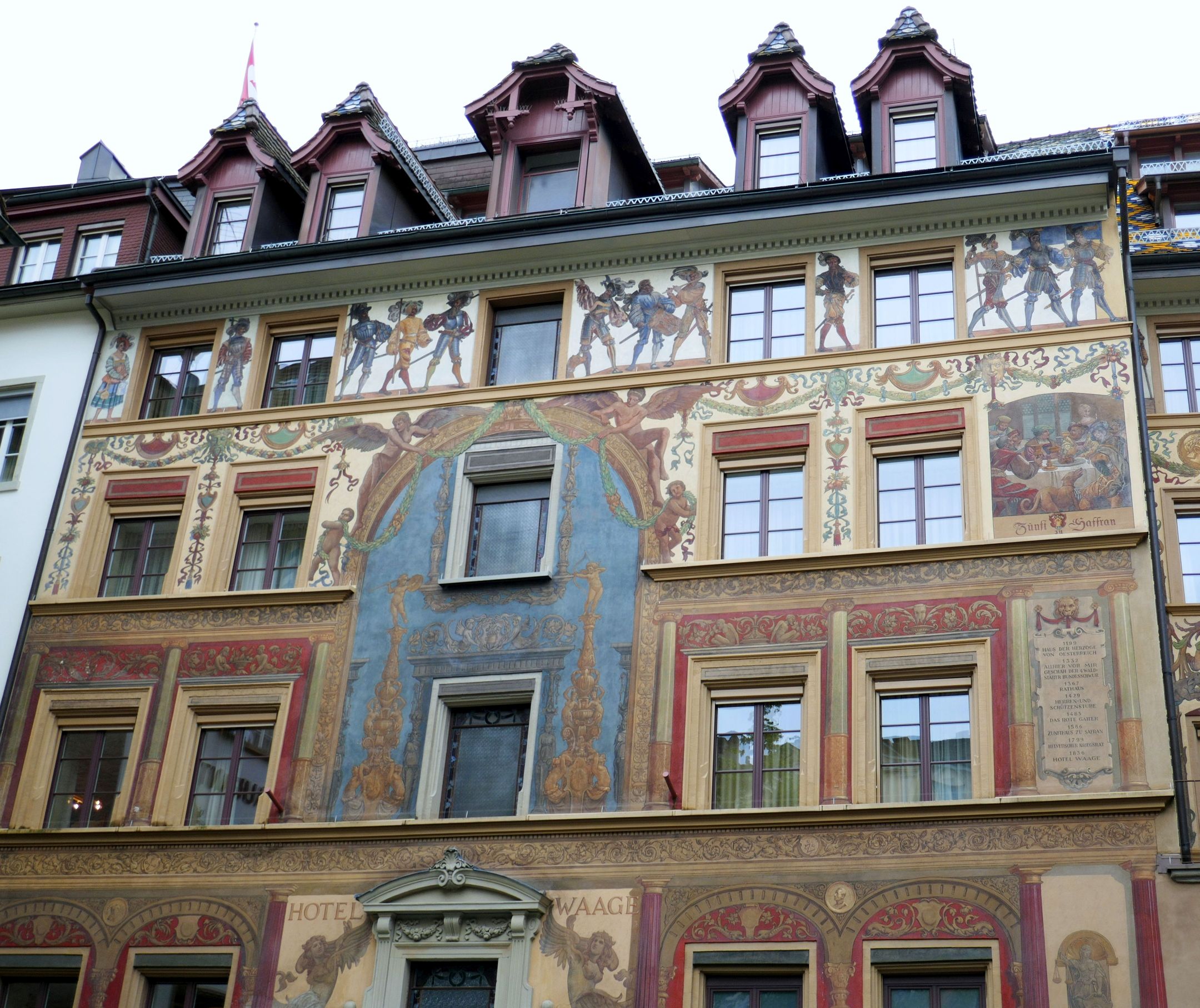
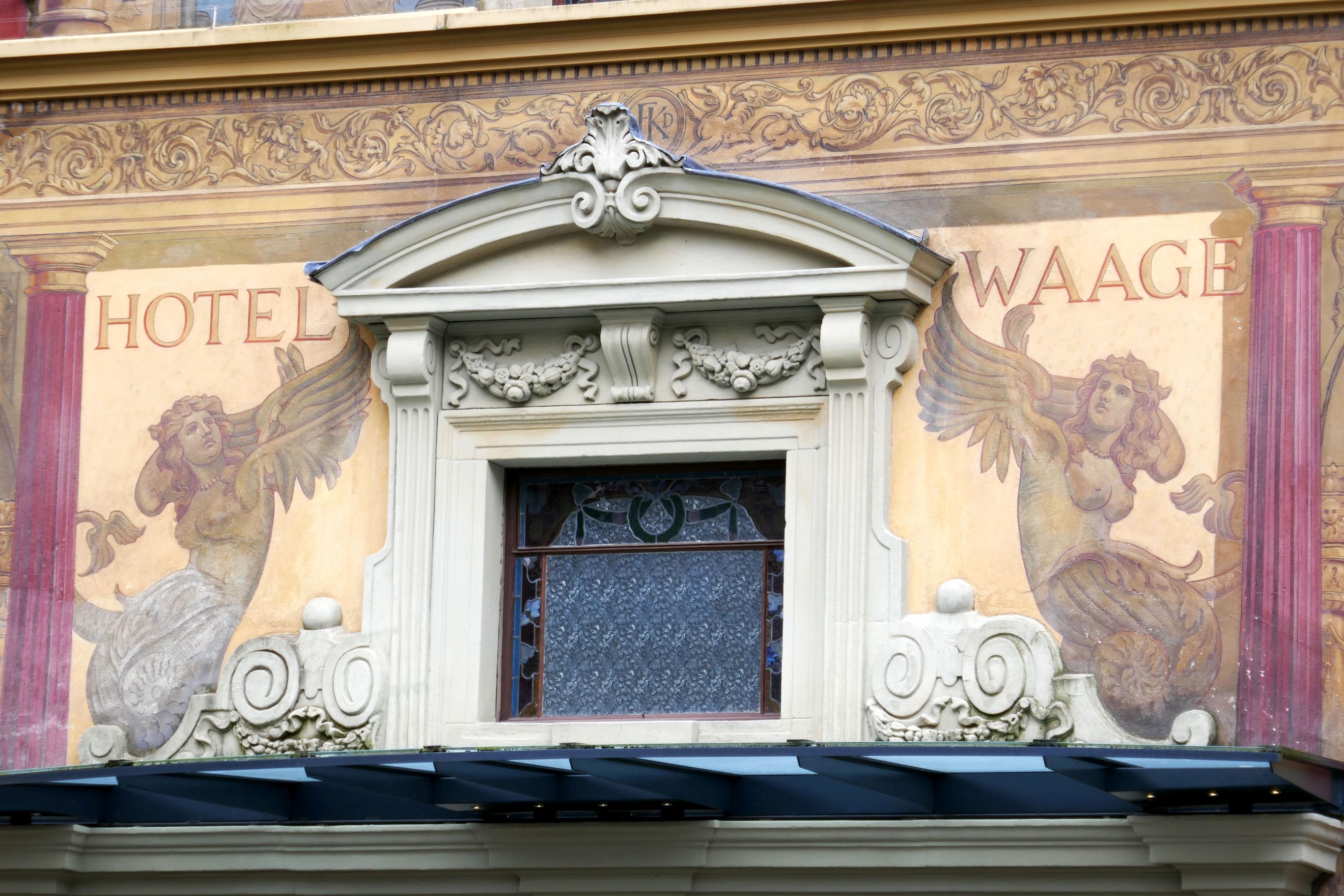
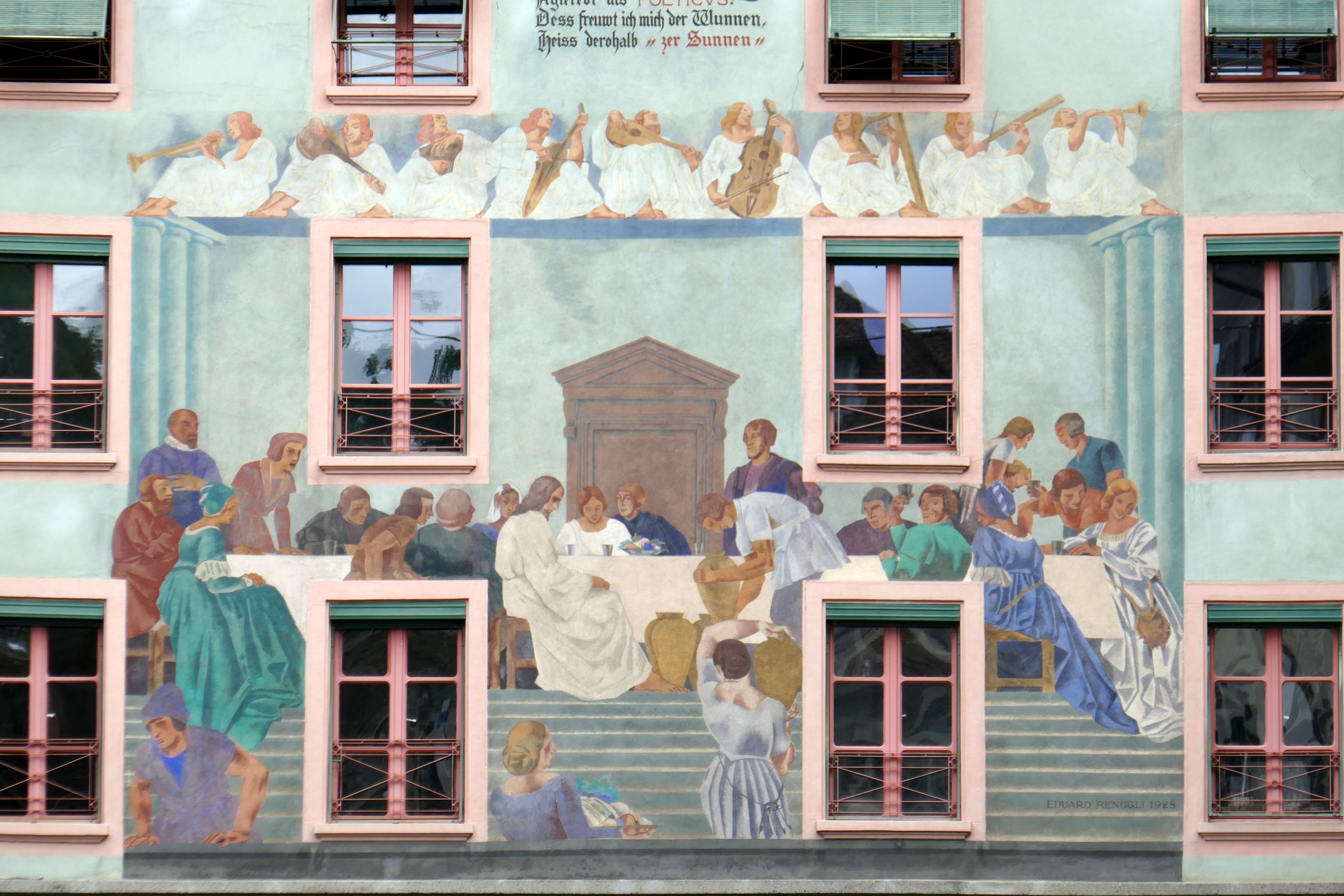
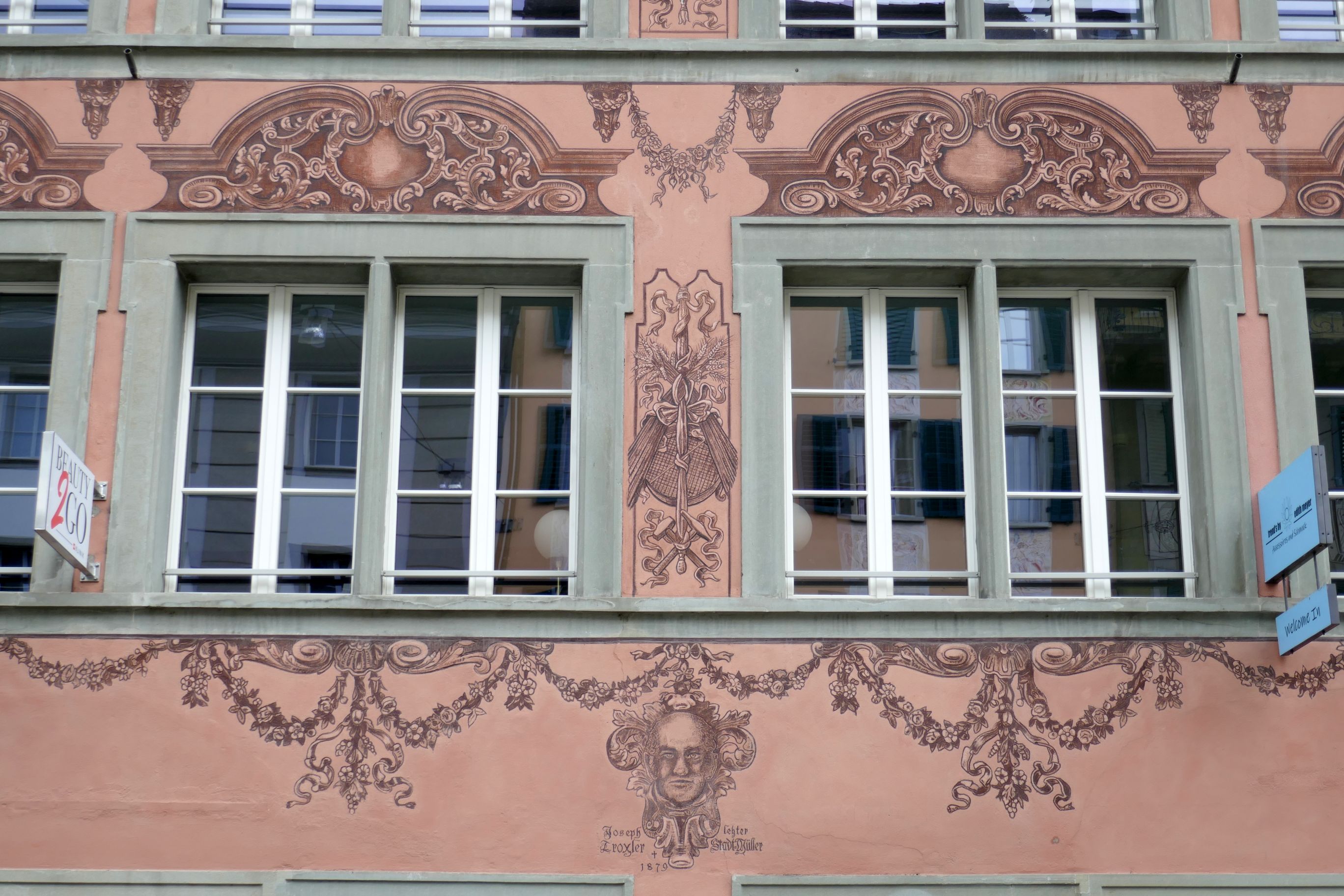
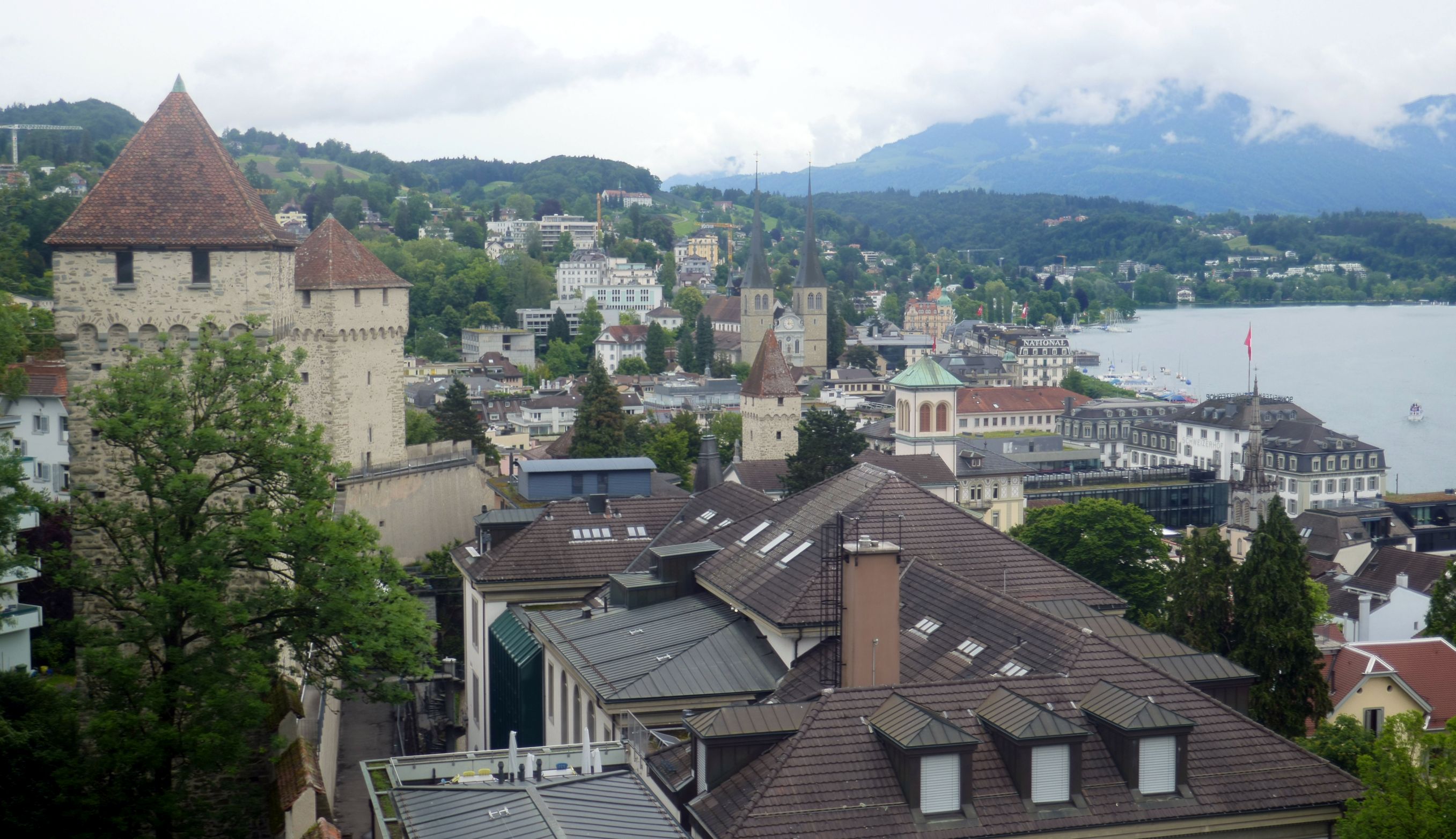
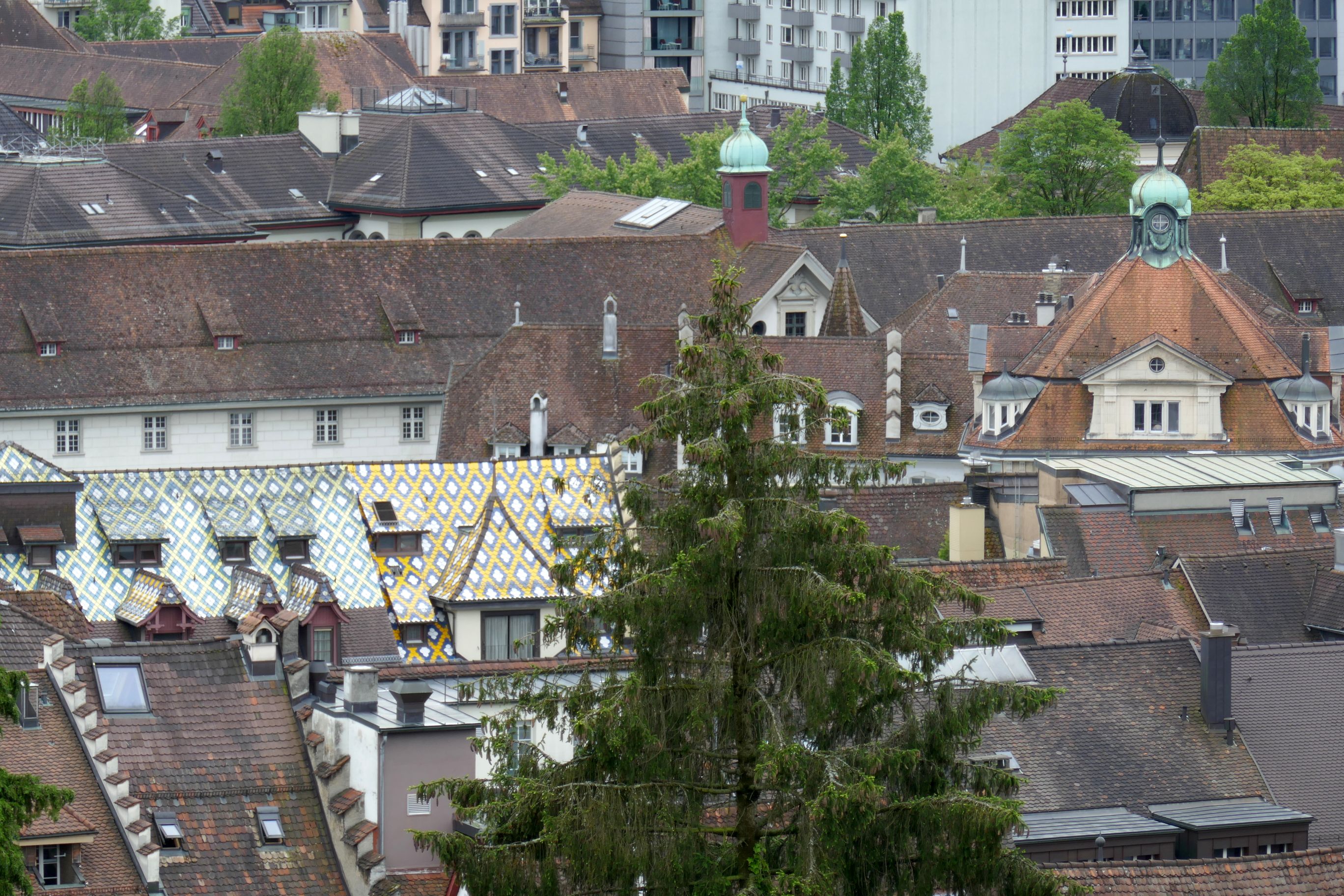
Back to Lucerne, it is a beautiful city of 82,000 people situated on Lake Lucerne and the river Reuss.  Many buildings are painted with gorgeous frescos, so if you don’t look up during your exploration, you will miss a lot!

(For all photos, click on the image for a full screen view.)

“In praise of the loyalty and bravery of the Swiss Guard.”

Next up: SWITZERLAND & NORTHERN ITALY #3: ON THE ROAD TO BERN
SWITZERLAND & NORTHERN ITALY #1: LOVELY LUCERNE
It had to happen at some point; our weather luck would eventually come to an end.  We had been so fortunate, beginning with the amazing weather we experienced in the Canadian Rockies in 2022, and at the end of our Argentina and Chile tour this past March, our tour leader said we had the best weather of all the tours that season.  It was truly phenomenal luck!

Now we were in Lucerne Switzerland to begin our tour with Overseas Adventure Travel, and the region hadn’t seen the sun in two months.  It had been an extremely long rainy period for Europe, and Germany was having horrible floods.  At least it wasn’t flooding in Lucerne, but the water level in the river was the highest our tour leader had ever seen.

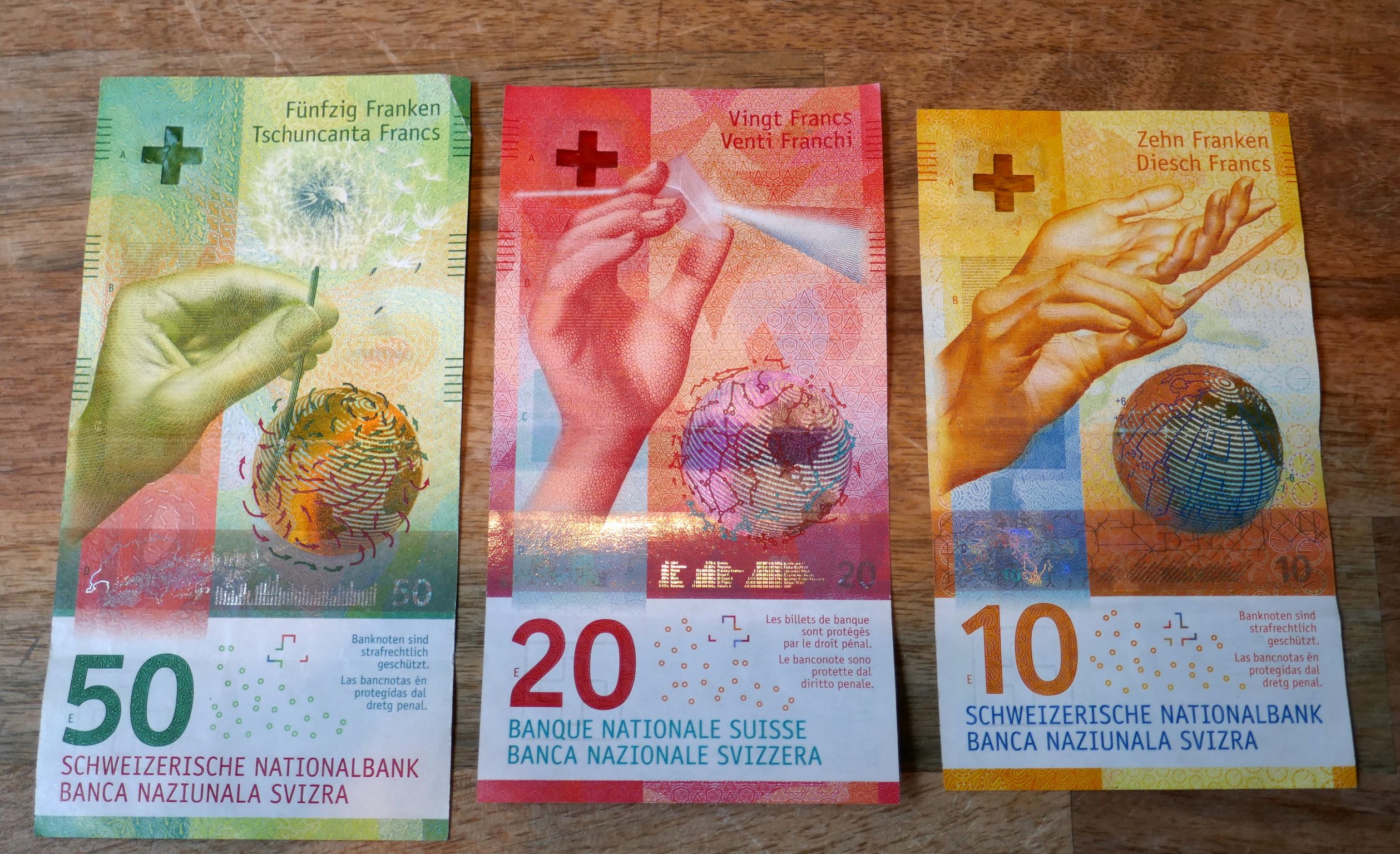
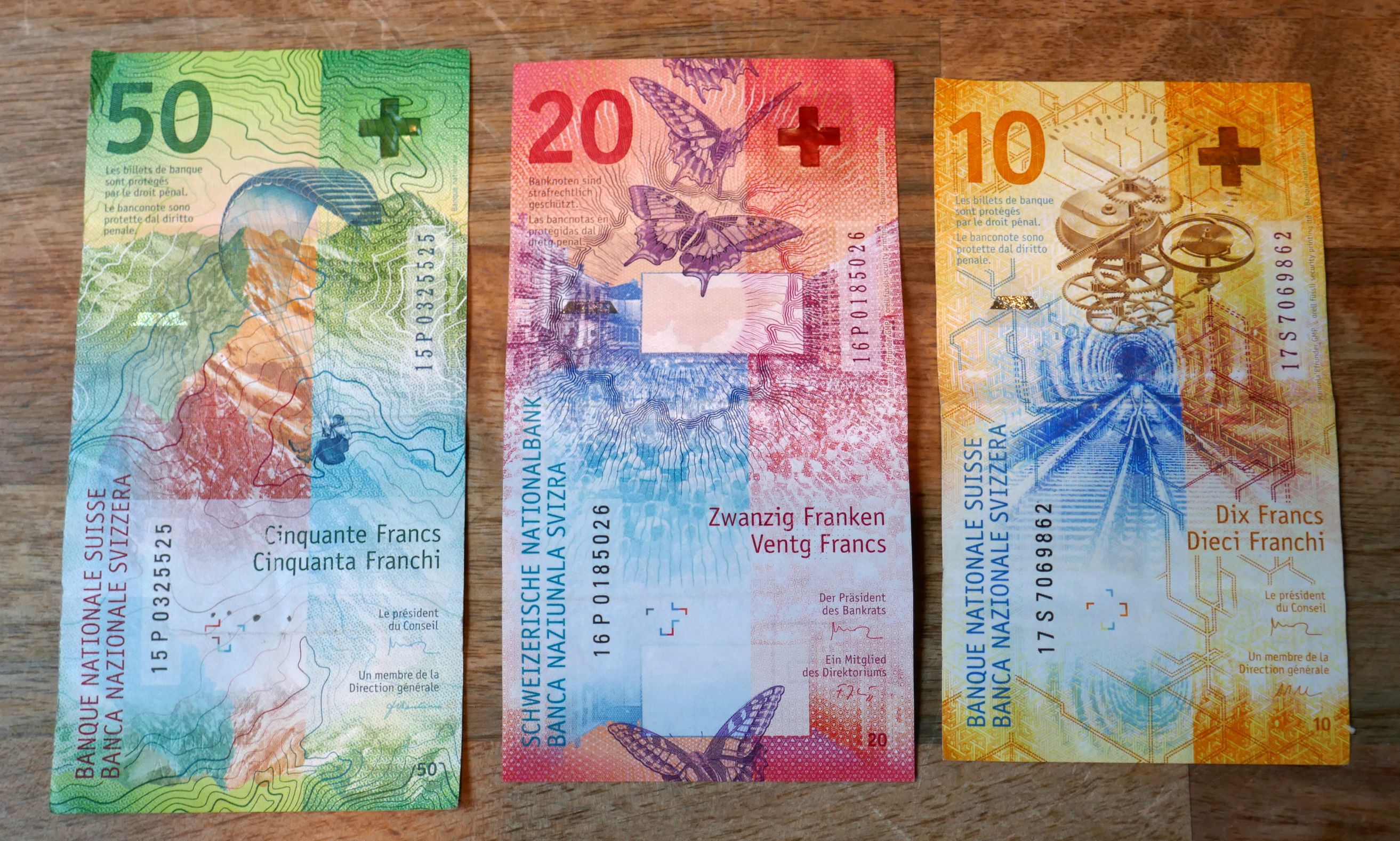
First on the agenda: Head to the ATM for some Swiss Francs.  As with so many other countries, unlike the U.S., Switzerland’s currency is interesting and practical.  Not only is it colorful with each denomination a different color, but the sizes are different as well—extremely helpful to sight-impaired and blind people.  My legally blind friend in San Diego would have appreciated this, because he used to need help separating and folding his bills in his wallet, so he could differentiate them.

(For all photos, click on the image for a full screen view.)

One of the things we like best about Overseas Adventure Travel is their emphasis on being travelers rather than tourists.  One way they accomplish this is by educating us on the culture of each place we visit, including introducing a “controversial topic” and bringing in an expert to speak with the group.  In this case, the positives and negatives of Switzerland’s neutrality and government was discussed with the nine of us on the pre-extension, and our speaker was outstanding.

Switzerland’s government was modeled after ours here in the United States, even though it is a very small country—about the size of Delaware.  There are 26 Cantons (similar to states), and the city of Bern is their Washington D.C.  Swiss parliament is similar to U.S. Congress; however this is where the similarities end.  Due to Switzerland having four official languages and cultures, including German, French (mostly spoken in the west), Italian (mostly in the south and far east), and Romansh (an ancient language spoken by a small percentage of Swiss); they have 7 presidents that make up a federal council.  These presidents are parliament members elected by their peers.  This system has worked well, because the council has been good at compromising and working together for their people (unlike our current U.S. Congress!).  And, although Swiss citizens do not elect this council, they do vote four times a year on issues in the form of initiatives and referendums.

Switzerland has been neutral since 1815, and their banking system grew out of this neutrality.  Being politically neutral is safe—a draw for wealthy people looking for a safe place for their money.  As a result, what used to be the poorest country in Europe is now the richest.  Don’t get the bright idea of stashing your money anonymously in a Swiss bank, though.  Banking laws changed twenty years ago, and you can no longer deposit your money in Switzerland without paying taxes.

Due to Switzerland’s neutrality, they are not a part of NATO.  They do, however, support the sanctions that Europe and the U.S. has put on Russia due to their invasion of Ukraine.  As a result, Putin declared Switzerland to not be neutral.  *&^@ Putin.

One drawback of Switzerland’s neutrality was that the weapons and tanks they had produced were sold to Germany.  Germany then gave them to Ukraine, but Ukraine needs more ammunition to fire from these weapons and tanks.  Switzerland won’t sell this ammunition to Ukraine, because they are “neutral.”  This presents a big problem for Ukraine.  On the other hand, tiny Switzerland, a country with a population of over 8.8 million people, has accepted 100,000 refugees from Ukraine.  How nice.

BUT, these immigrants, as well as the 100,000 other immigrants they have accepted each year has caused a steep rise in housing prices, causing the cost of living to double over the last couple of years.  (In Lucerne, the average 1 bedroom apartment costs 2,600 CHF— more than $2,900!)  On top of that, salaries decreased for the Swiss due to immigrants accepting less pay.  Ouch!

More about Swiss culture in my next post, but for now, I will leave you with some scenes around lovely Lucerne, the most visited city by tourists (and travelers!) in Switzerland:

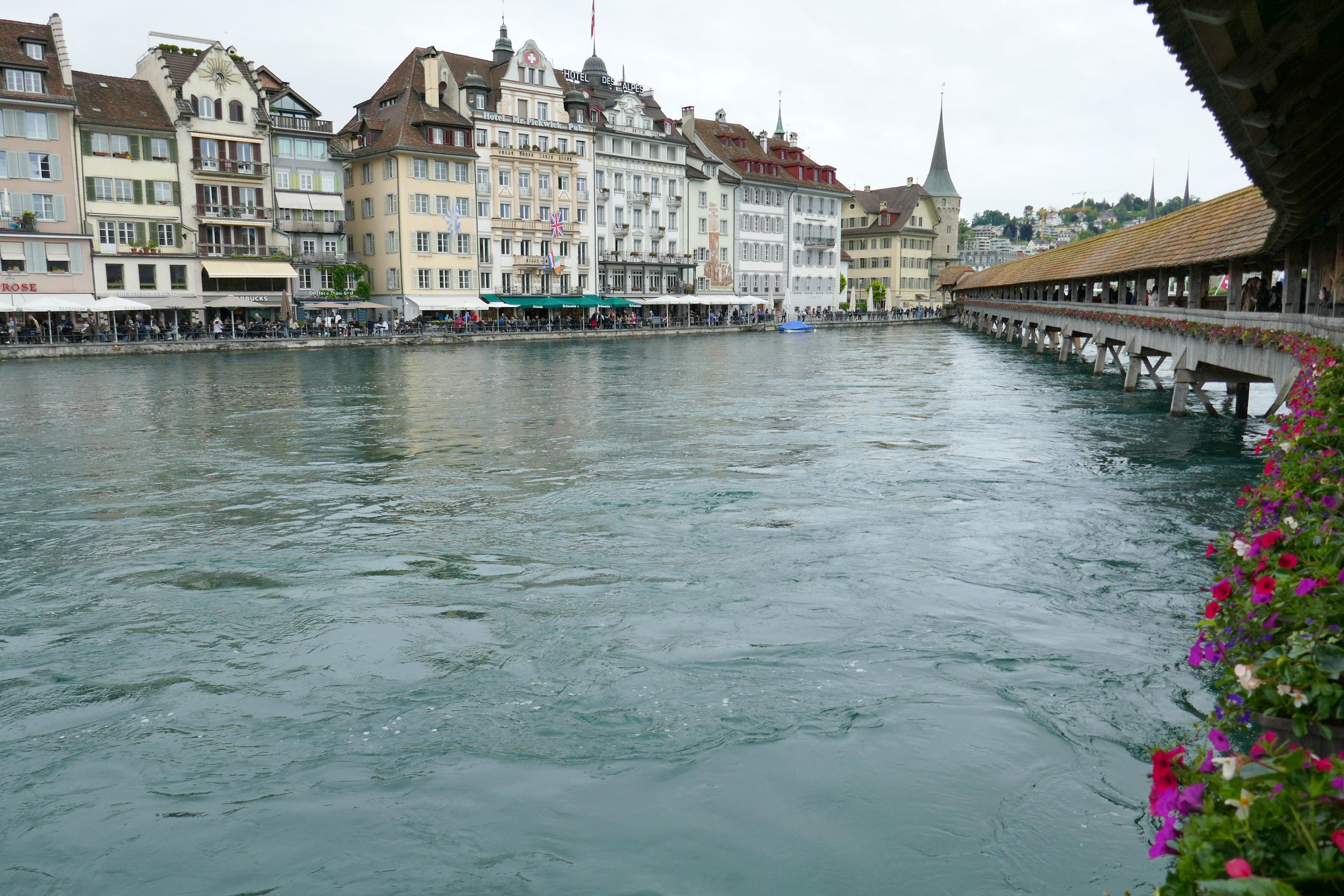
Kapellbruke (Chapel Bridge) was originally built in 1360; however, much of it was destroyed in a 1993 fire. It was rebuilt the following year.
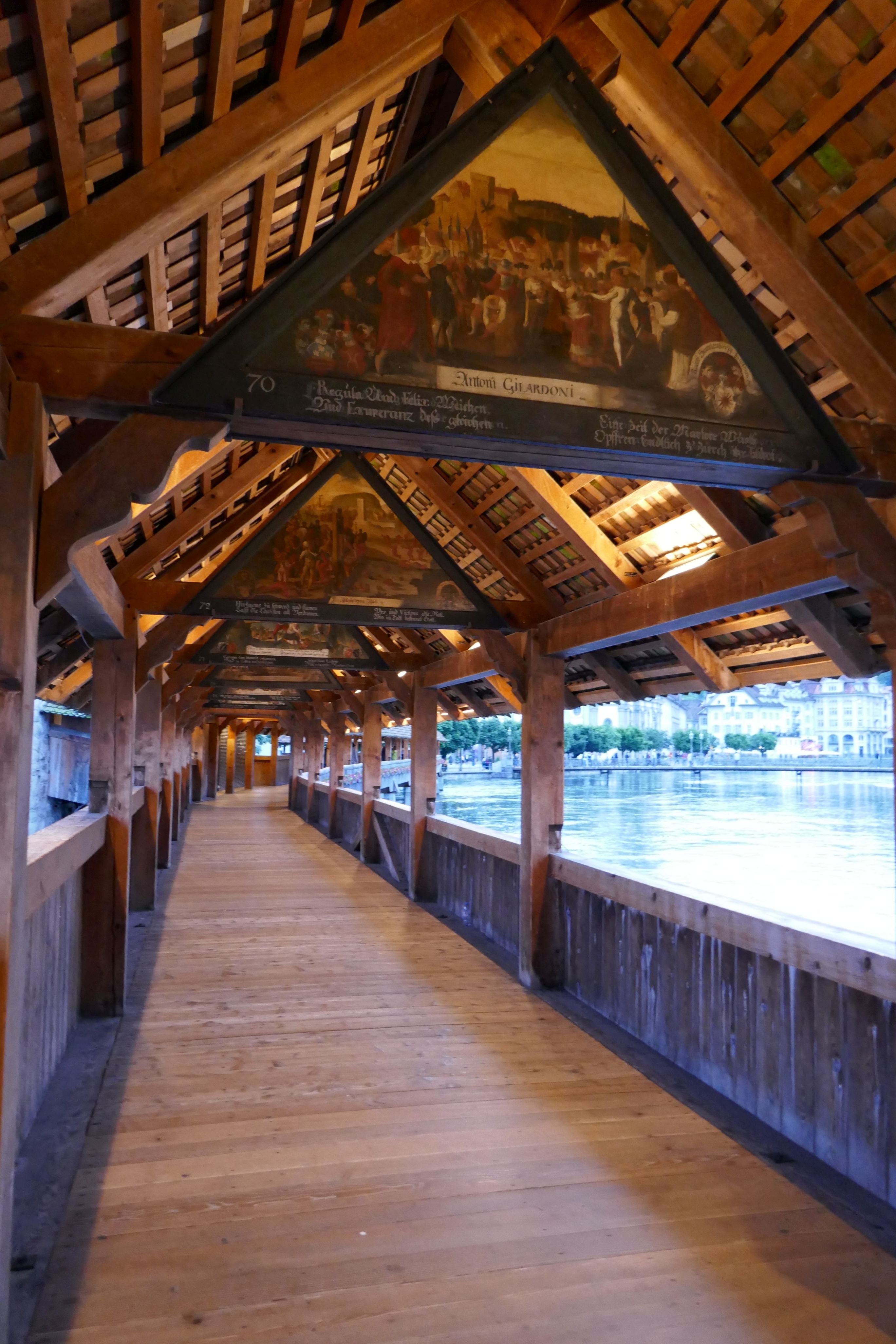
In the evening, the bridge is lit up.
The bridge features 30 triangle-framed paintings by Hans Heinrich Wagmann that date back to the 17th century. These paintings depict events from Lucerne’s history and were restored after the fire.
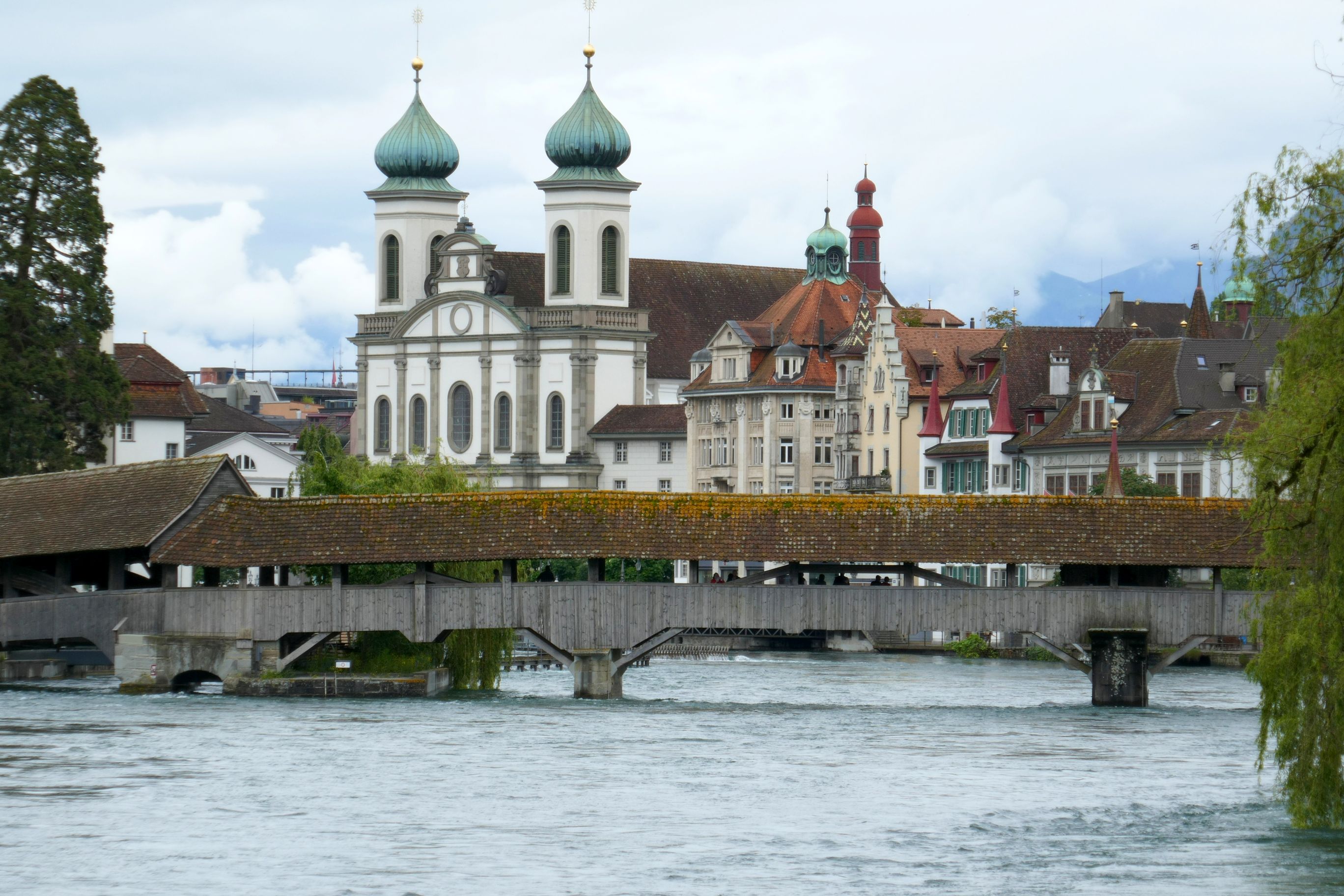
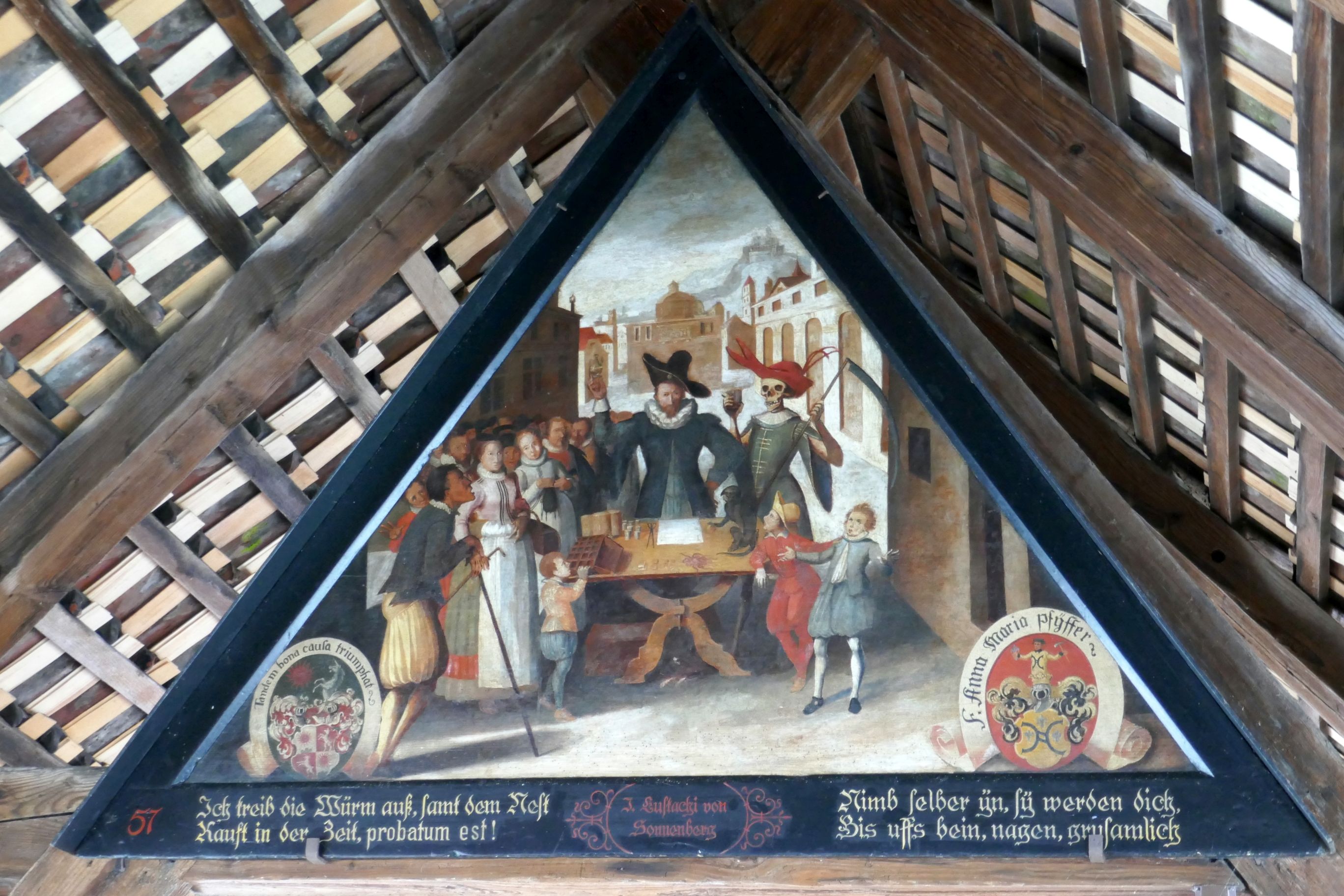
The nearby Chaff Bridge was built in the 13th century and features Dance of Death paintings that date back to the 1600’s.

Coming up next:  SWITZERLAND & NORTHERN ITALY #2: MORE LOVELY LUCERNE

ARGENTINA & CHILE #21: A SLIDE SHOW

To see the slide show (full screen) of my Argentina and Chile photos from our Overseas Adventures small group tour, click on the arrow below, and then click on the square symbol in the lower right corner of the YouTube image to expand YouTube to full screen.

If small group travel is of interest to you, I highly recommend Overseas Adventure Travel (OAT). Although Bruce and I travel together, they do not charge a single supplement for those who travel on their own. Singles also get their own room at hotels. If you book, you can get $100 off your trip by providing my name and customer number (Elaine Krugman, #3018126) as the person who referred you. I will also get $100 off future travel– a win-win! Please note: Single supplements are not available on all dates.

ARGENTINA & CHILE #20:  ABOVE AND BELOW(!) THE ARGENTINIAN SIDE OF IGUAZU FALLS
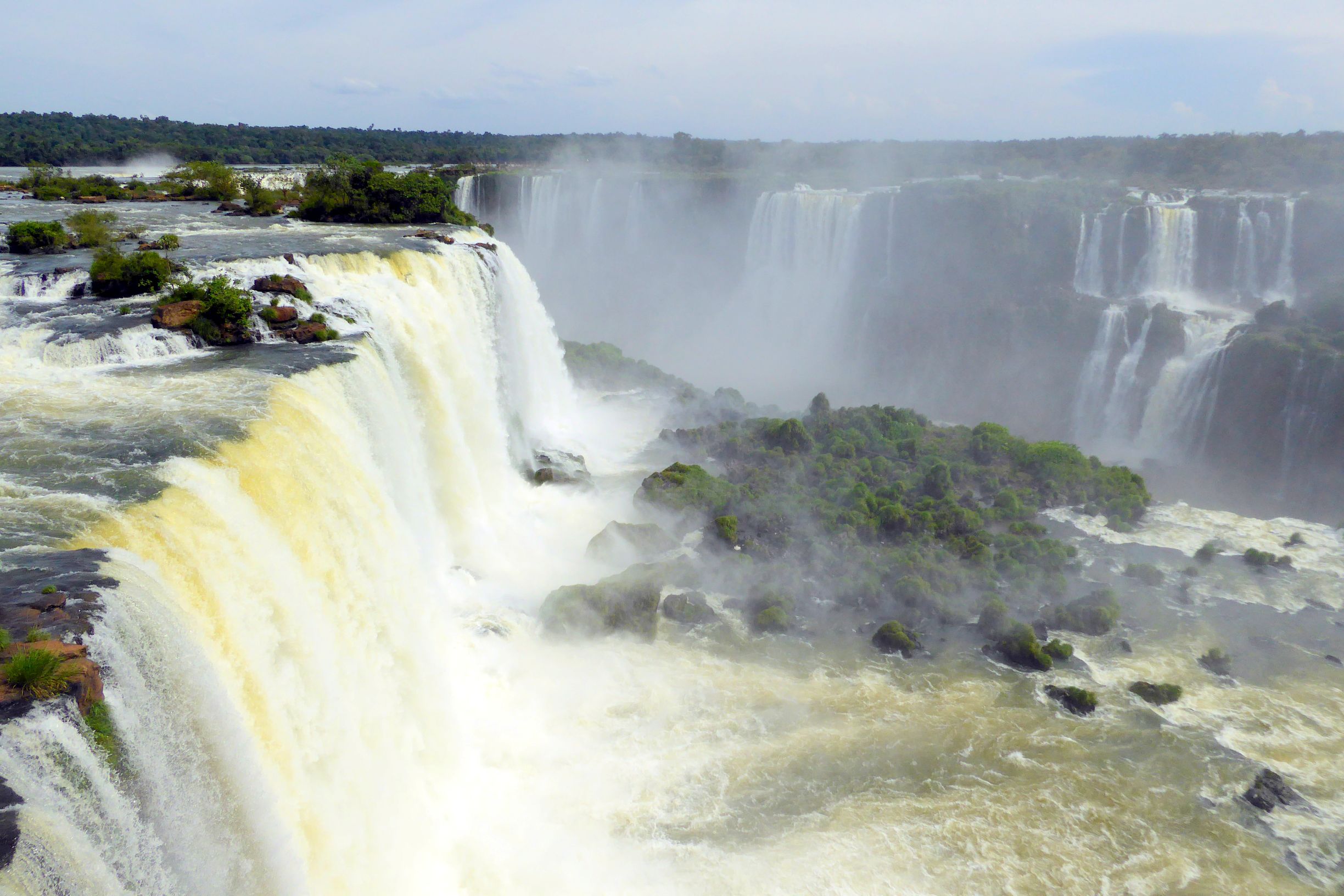
It was our last full day in Argentina, and we were going to do it up right.  Back to the falls we go!  This time, we saw Iguazu Falls from the Argentinian side—above AND below.  More on the “below” views later…

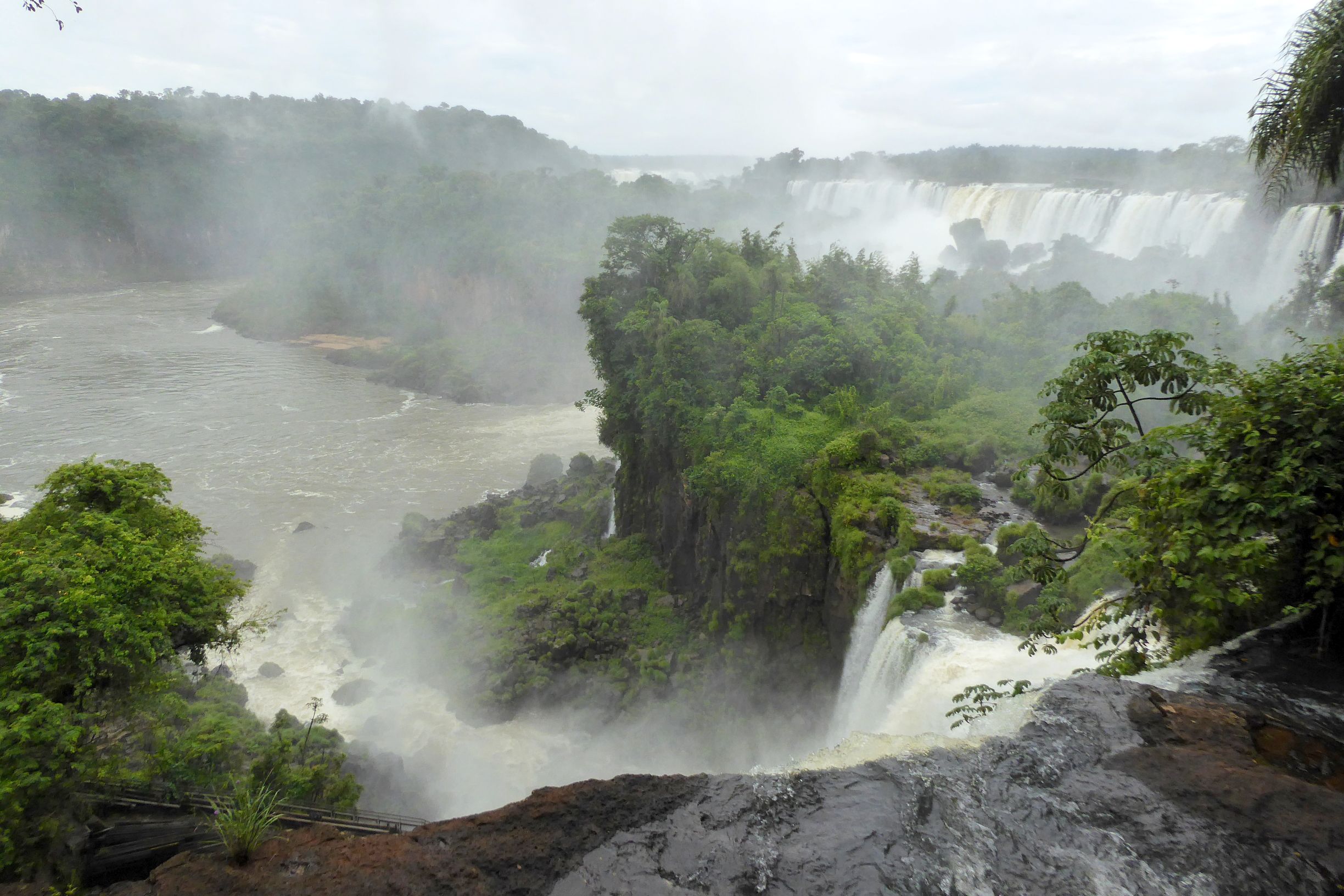
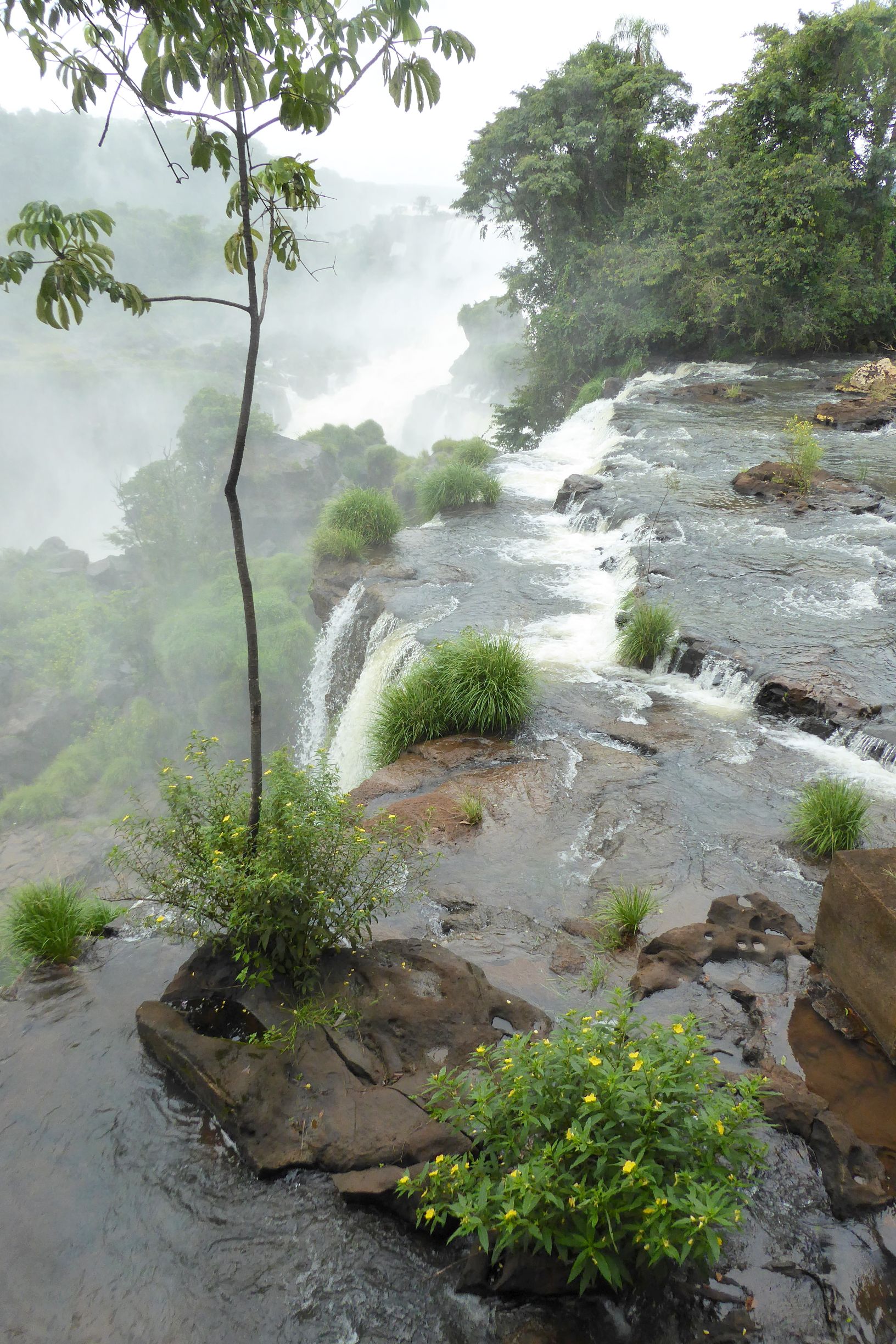
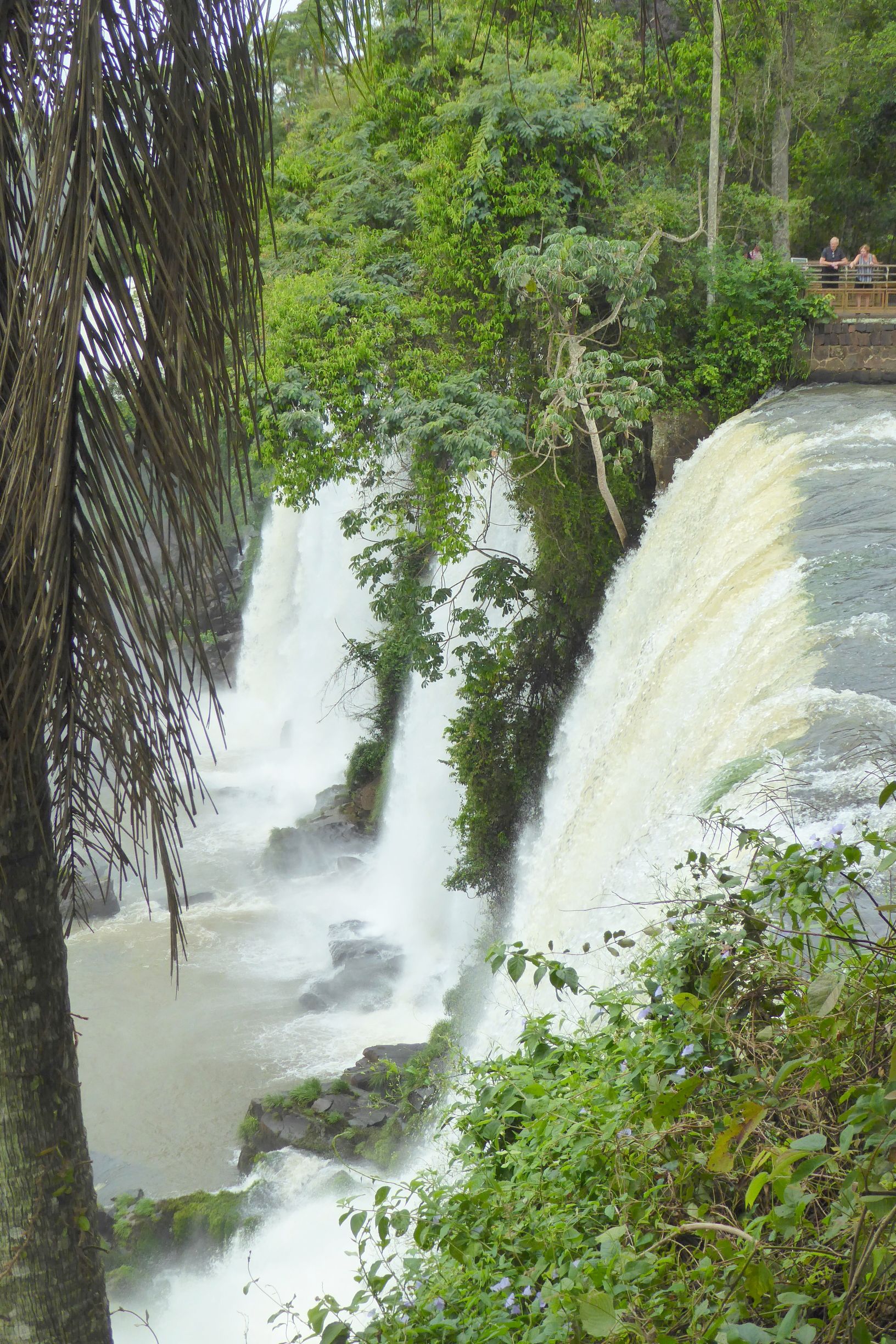
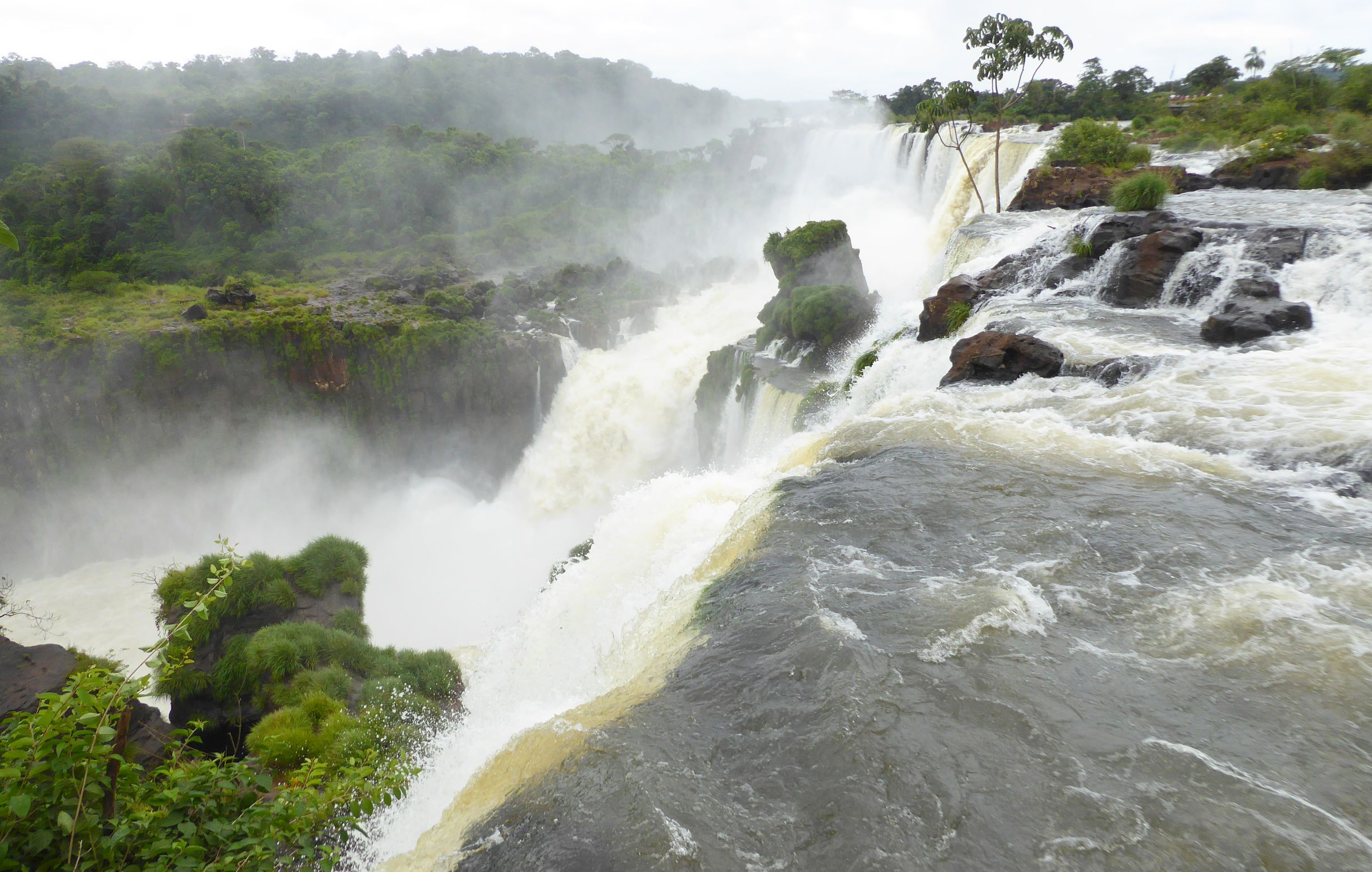
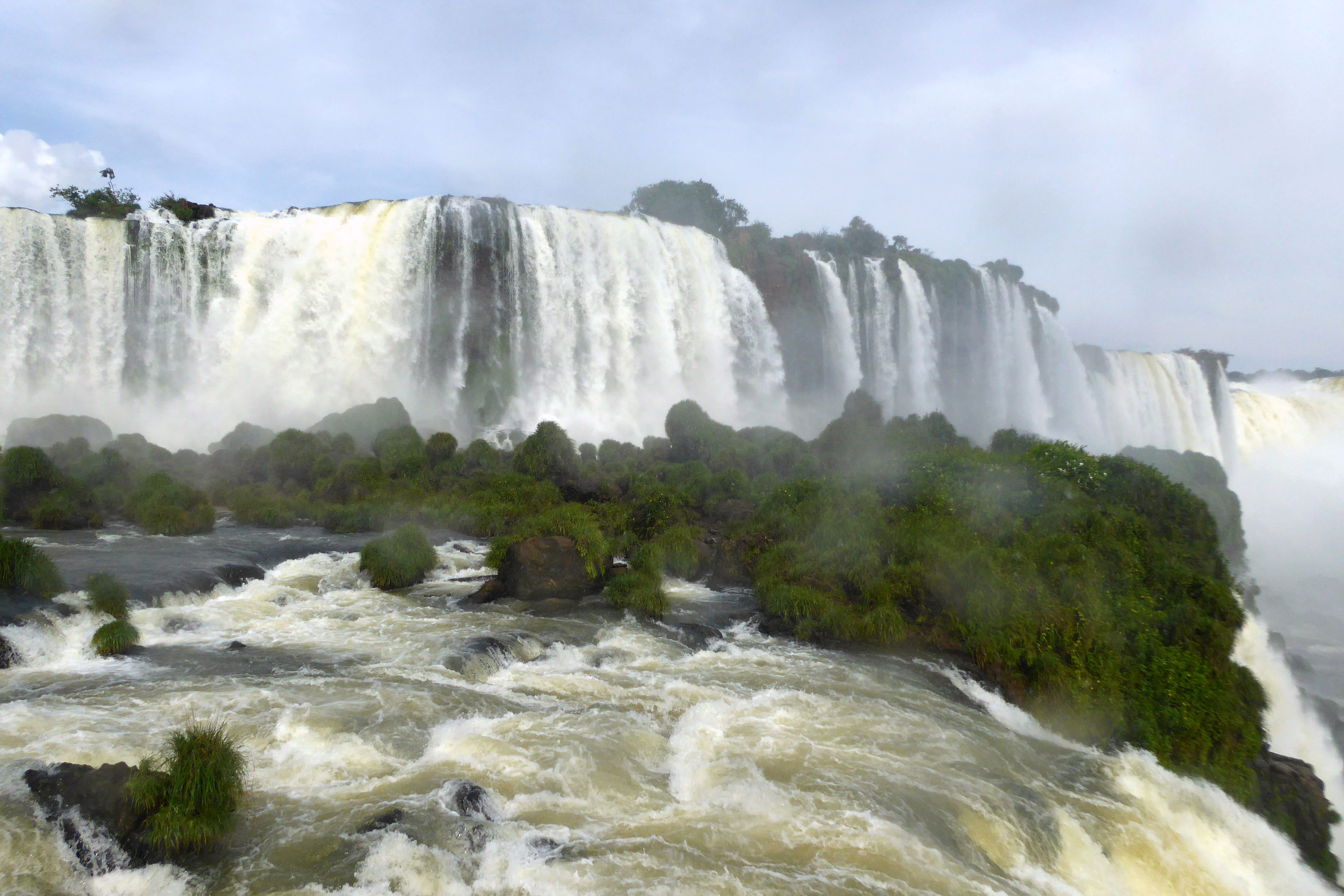
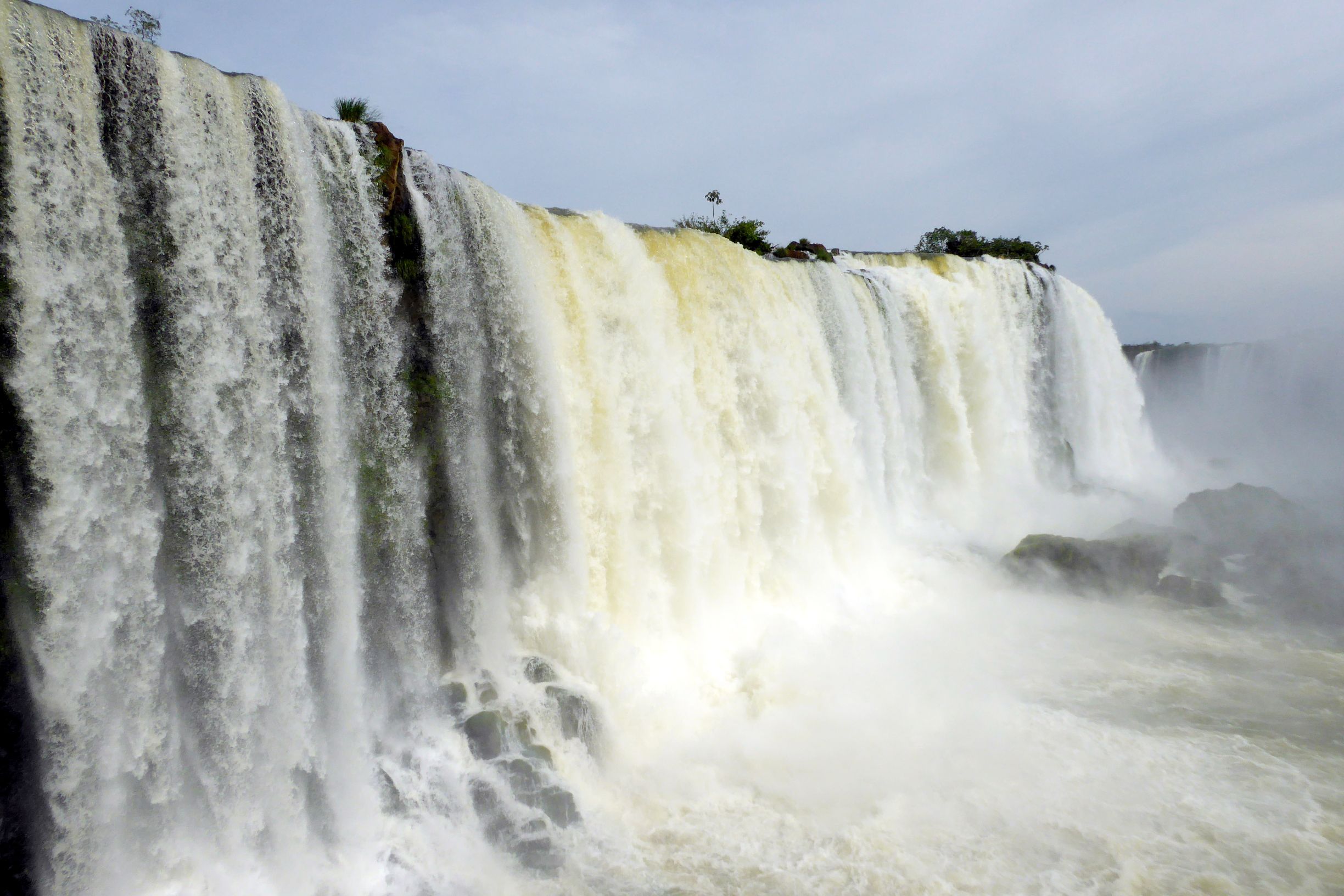
Unfortunately, the skies were a mucky white and gray, but we were (again!) fortunate to not have rain.  It just made for lousy photography—white waterfalls against a white sky.  The views (in person) were spectacular, though, and we enjoyed walking around the edges of the falls, out onto platforms, and over bridges looking down on the powerful rush of water:

(For all photos, especially panoramas, click on the image for a full screen view.)

Along the trail, we could see three toucans way off (and I mean waaaay off!) in the distance, so I did my best to zoom in through the mist of the falls to get this shot, (which has been cropped to a vertical).  It’s bad, I know, but…

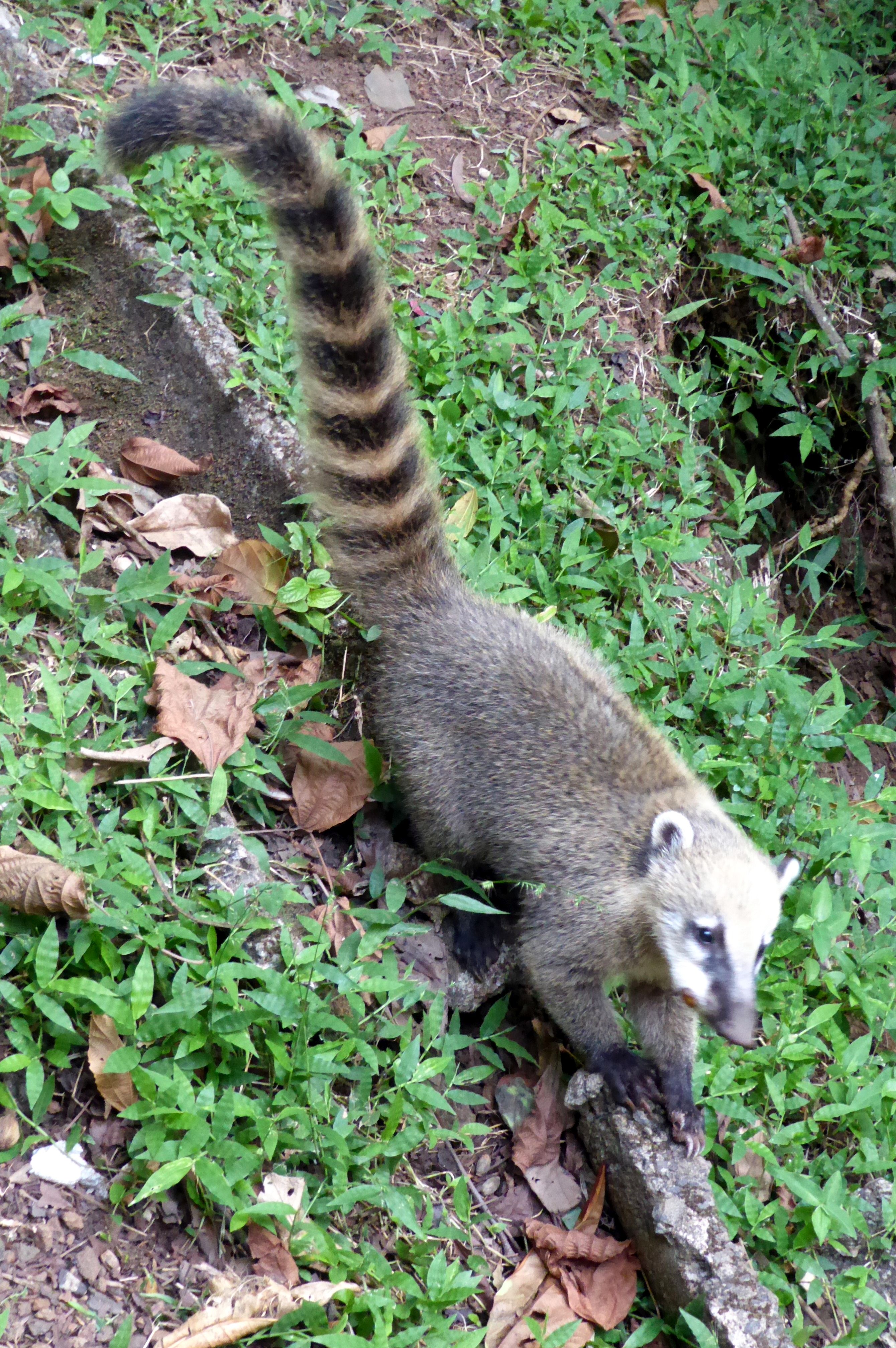
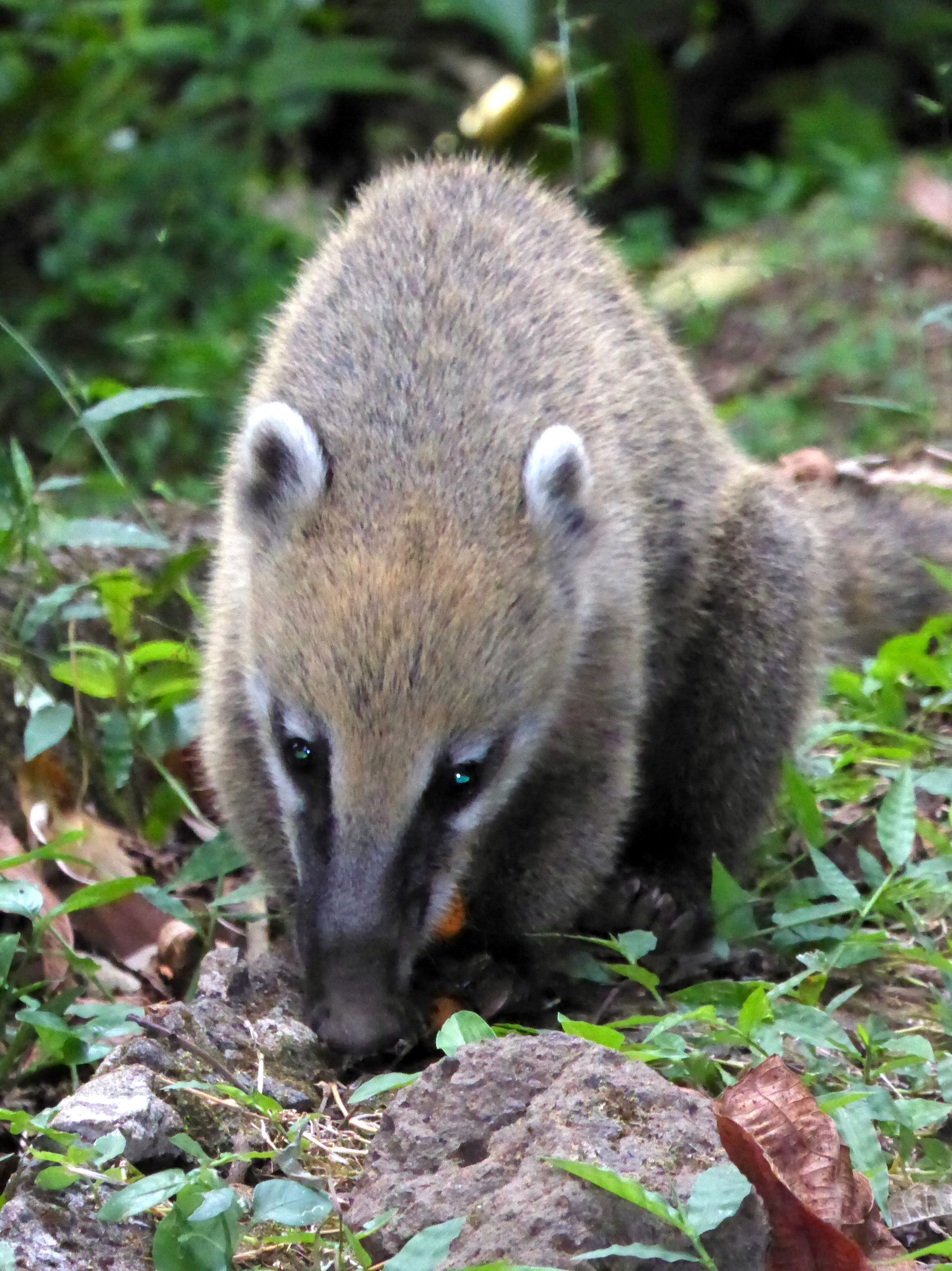
We saw a couple of Coatis, in the raccoon family.

On our way back through the jungle after seeing the falls, we saw some monkeys up in the trees.  There was no time to adjust my camera settings, so here’s another bad shot that I don’t want to leave out, because this little guy is so cute!

Now comes the fun part!  In the afternoon, some of us took a boat ride to see the falls from below.  They warned us we would get wet, so dry bags were provided.  I wore my swimsuit, because it was a hot day, and I was looking forward to a refreshing shower from the fall’s spray.  What a blast, in more ways than one!

This is a nine-second video from the boat before turning to head into the falls.  Make sure to have your speakers on to hear the water:

This is another nine-second video (shot with my waterproof camera) as the captain steered our boat INTO the falls.  Notice how much louder the sound is on this one?  The falls were roaring!

And this is what we all looked like afterward!

Ahhh, so refreshing!

After returning from our boat ride and walking across the dock, we were greeted by this handsome fellow:

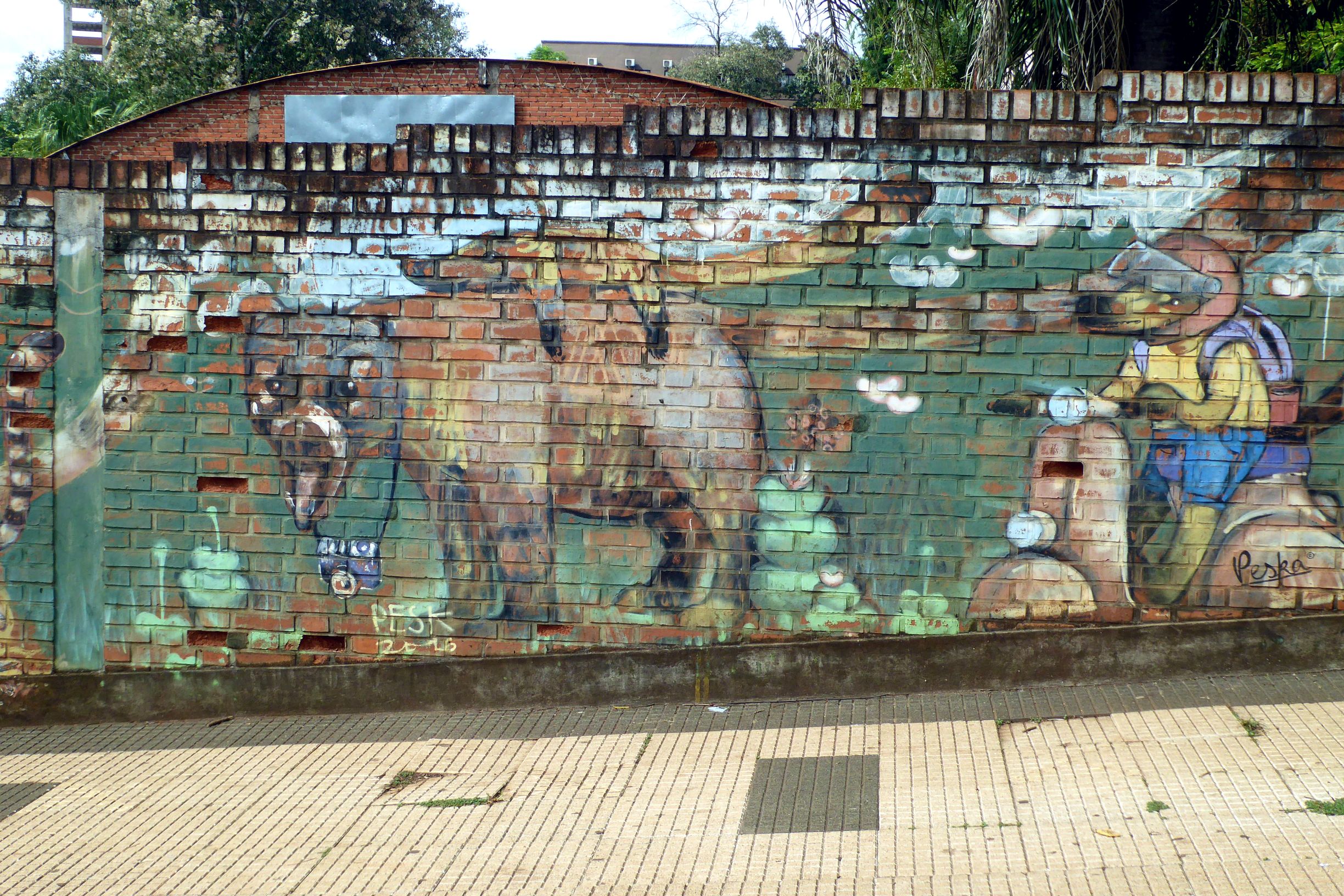
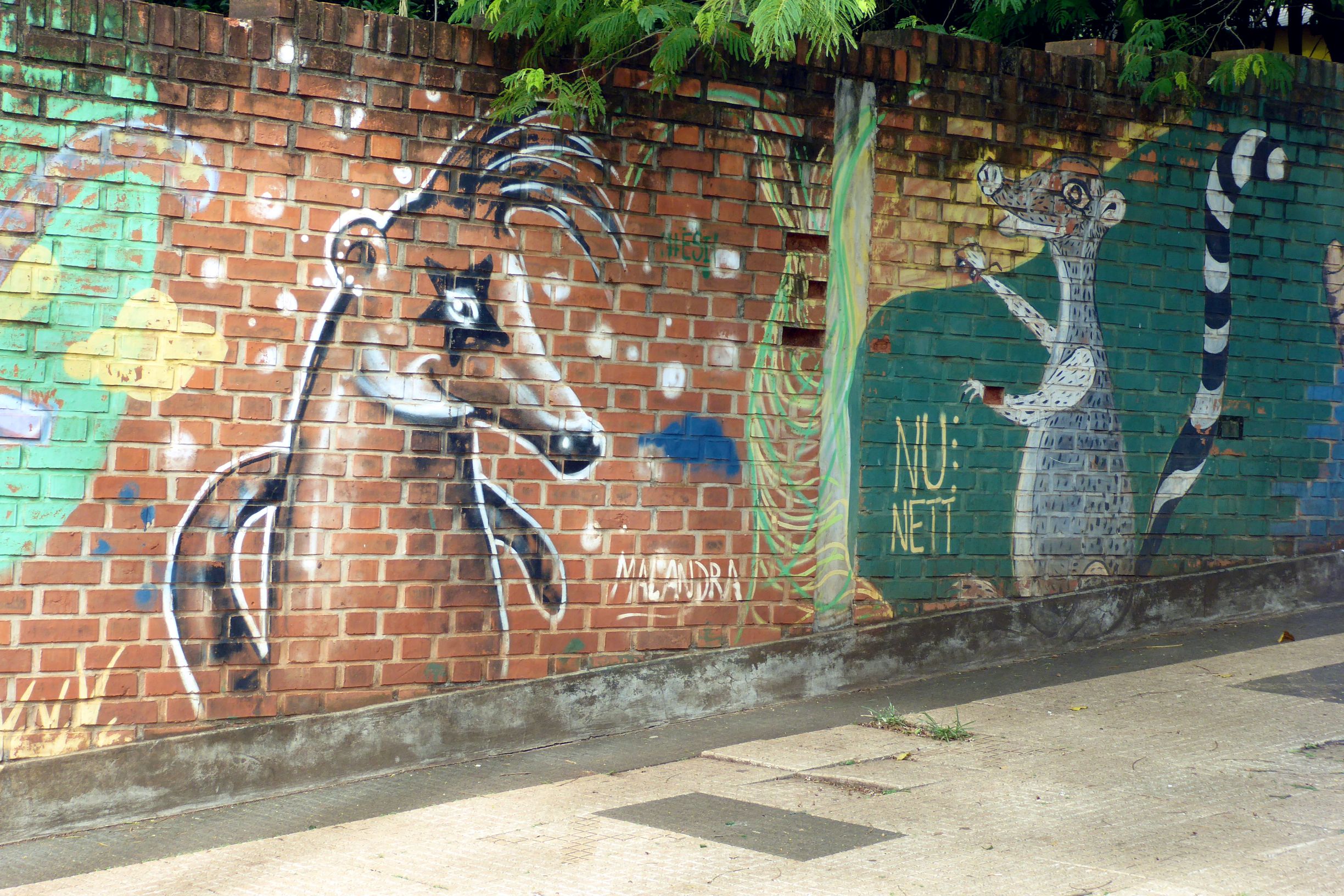
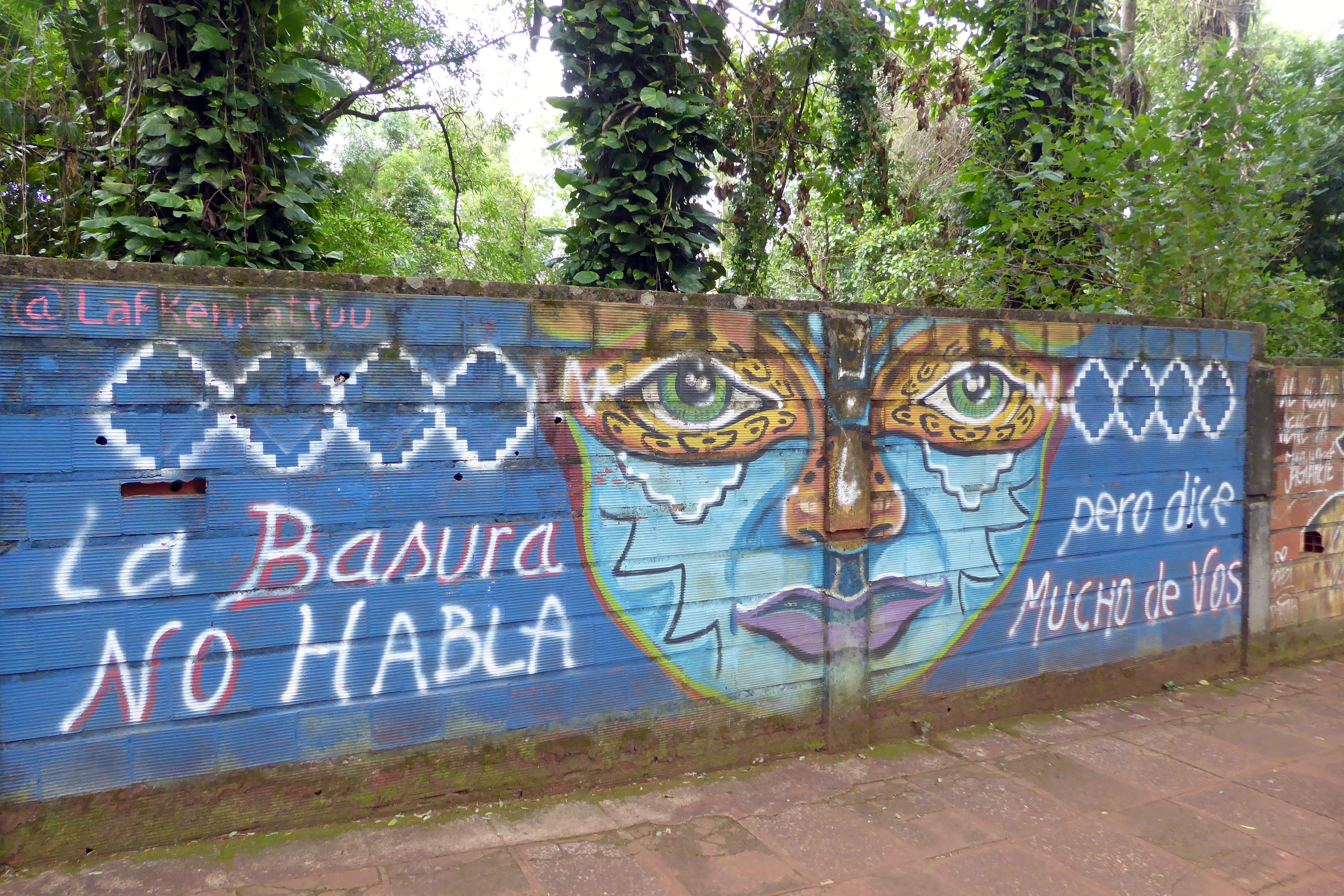
On our way back to the hotel, I shot these murals through the bus window:

Our Farewell Dinner was wonderful, and we enjoyed one last view from the rooftop.

The following morning, we flew back to Buenos Aires and had a few hours to hop on over to the bakery for empanadas and to Rapanui for one last delicious gelato.  After saying our goodbyes, we headed home.

Eva (“Evita”) Perrone graces the side of this building on the bus ride back to the airport.

We arrived home on March 7, and more than one month later, we are still in touch with each other on our “Buena Onda” WhatsApp group that Andrea set up for us.  It was such a fabulous tour with an amazing group of people, and an experience Bruce and I will never forget.  Gracias TOTALES, Andrea and our buena onda OTT group!

Andrea and Julio enjoying breakfast at home following our tour. Ciao, amigos!

Coming up next:  ARGENTINA & CHILE #21:  A SLIDE SHOW

ARGENTINA & CHILE #19: A VISIT TO THE INDIGENOUS GUARANI COMMUNITY

Welcome to the jungle!  I was excited to have the opportunity to visit the indigenous Guarani community of 1,500 residents in the jungle of Puerto Iguazu.  The Guarani people have always been nomads, so that “1,500” is really +/- depending on the day.  As a native nation, they can move freely between Argentina, Brazil, and Paraguay without having to go through border check.  There are five Guarani communities in the region, and they walk between them, rather than use horses or other modes of transportation.  They will only use a bus to travel to communities outside of the region.

(For all photos, especially panoramas, click on the image for a full screen view.)

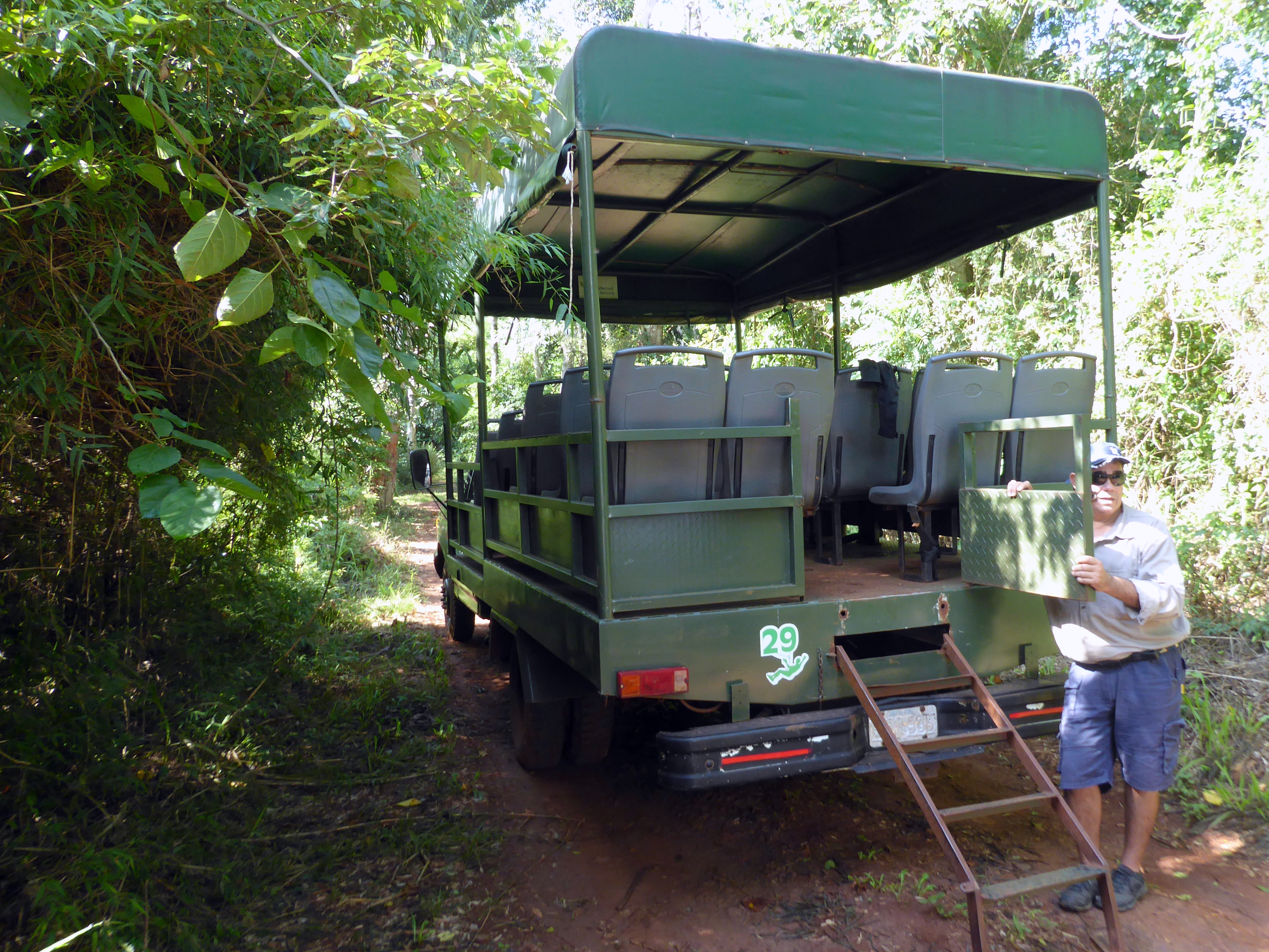
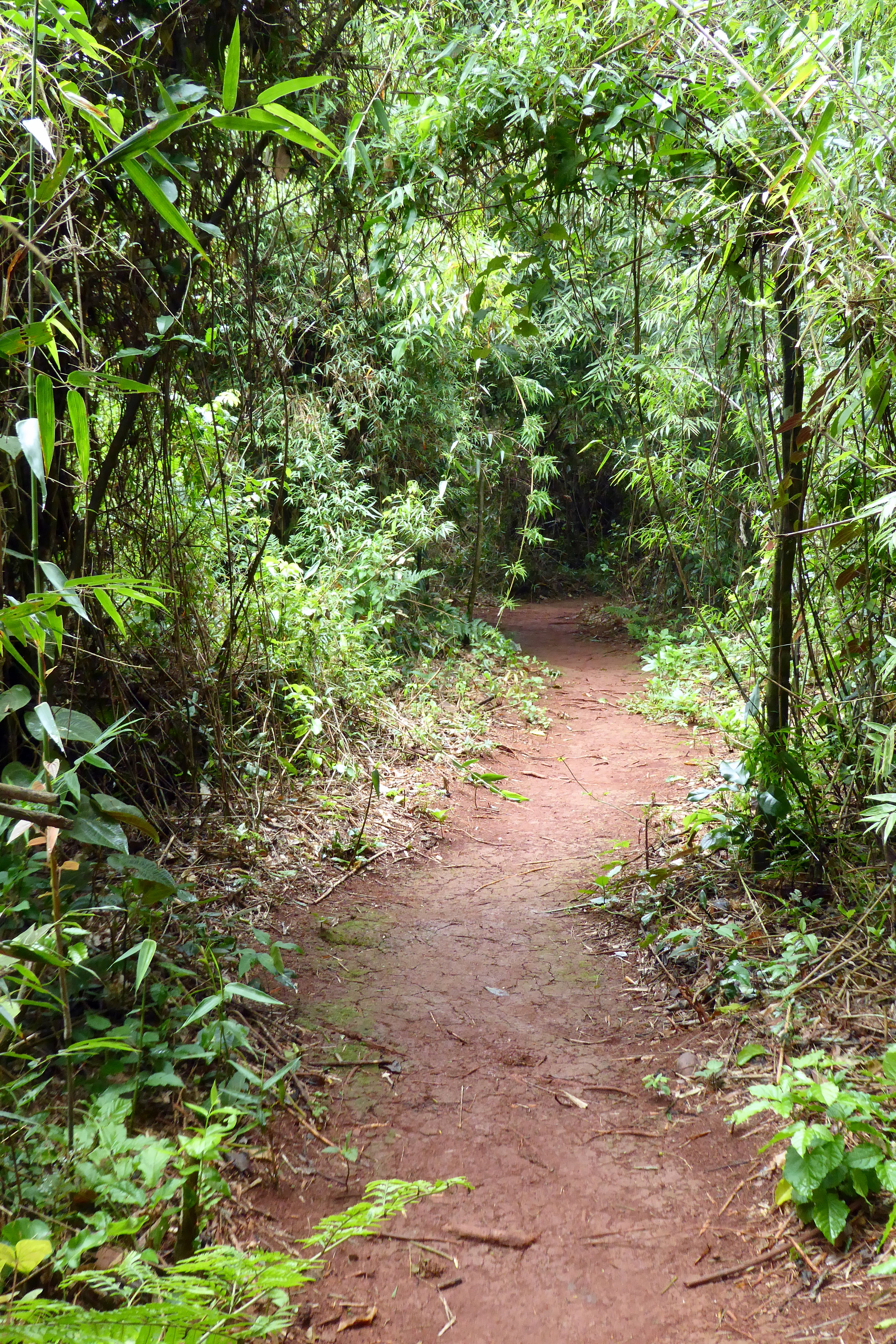
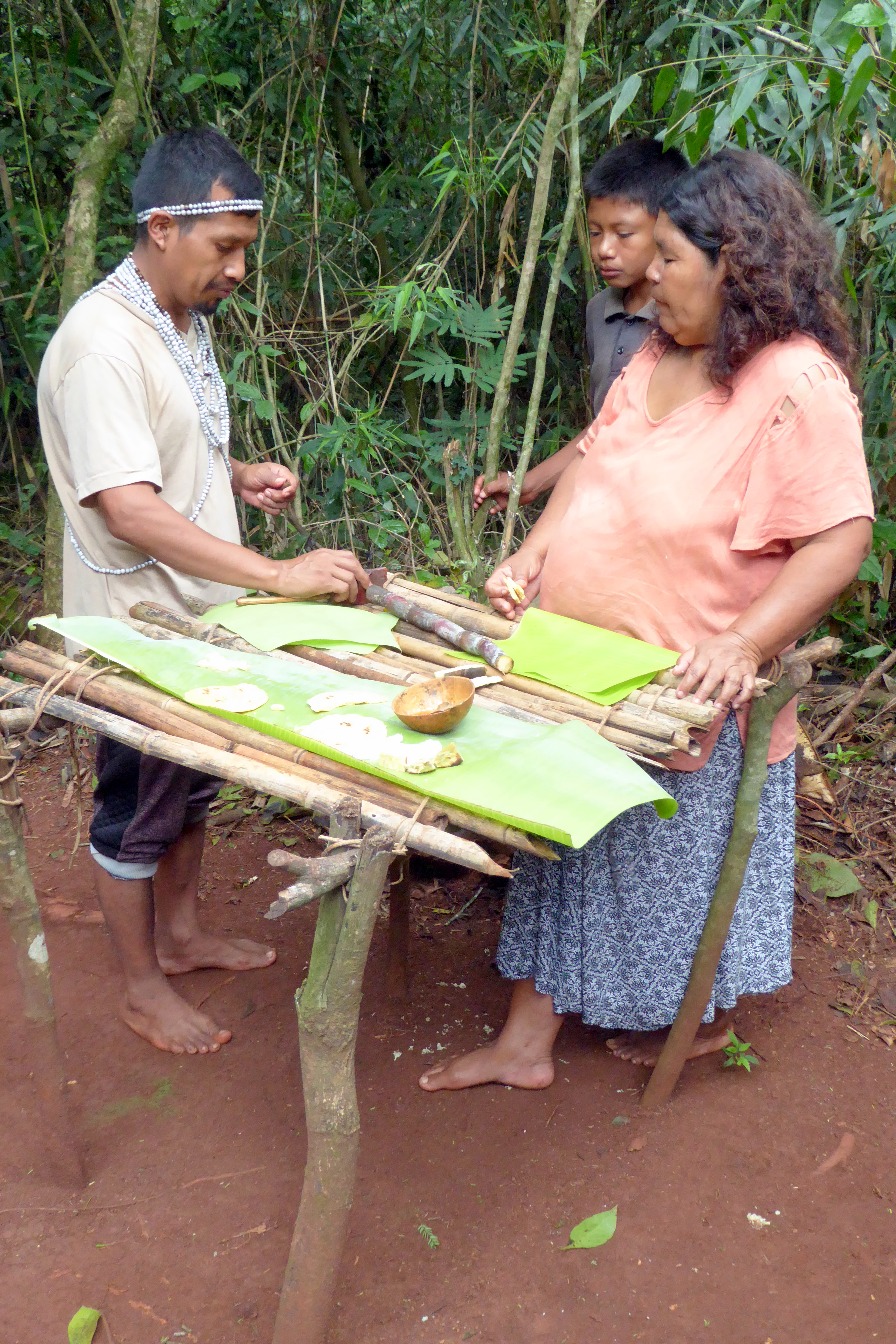
We first boarded an open-air covered truck to drive to the community, and then walked the rich clay-soil path through the jungle to meet with Delphin, the village spiritual leader.  He taught us their version of greeting one another: “Ou-ja-ve-tay,” said face-to-face with your hands up, palms facing the other person, and looking them directly in the eye.  It is the way to say hello, show respect for the other person, and respect for the earth.

Although the Guarani people can afford shoes, they choose to be barefoot, so they can always be in touch with the earth.  They also choose to live modestly with only the necessities.

Since Spanish is the national language of Argentina, they are given a Spanish “official” name at birth.  But in their community, the spiritual leader will give a native name that has a special meaning. 

Delphin demonstrated how they used to catch their food with a small model of a handmade wood trap.  The rope of the trap was made from the bark of philodendron plants. They are no longer permitted to hunt, so they must purchase their meat at a store.

To earn money, the villagers make and sell their handicrafts, including beautiful baskets and wood carvings of native animals.  They grow their own food, so this money is used for clothes and other necessities.

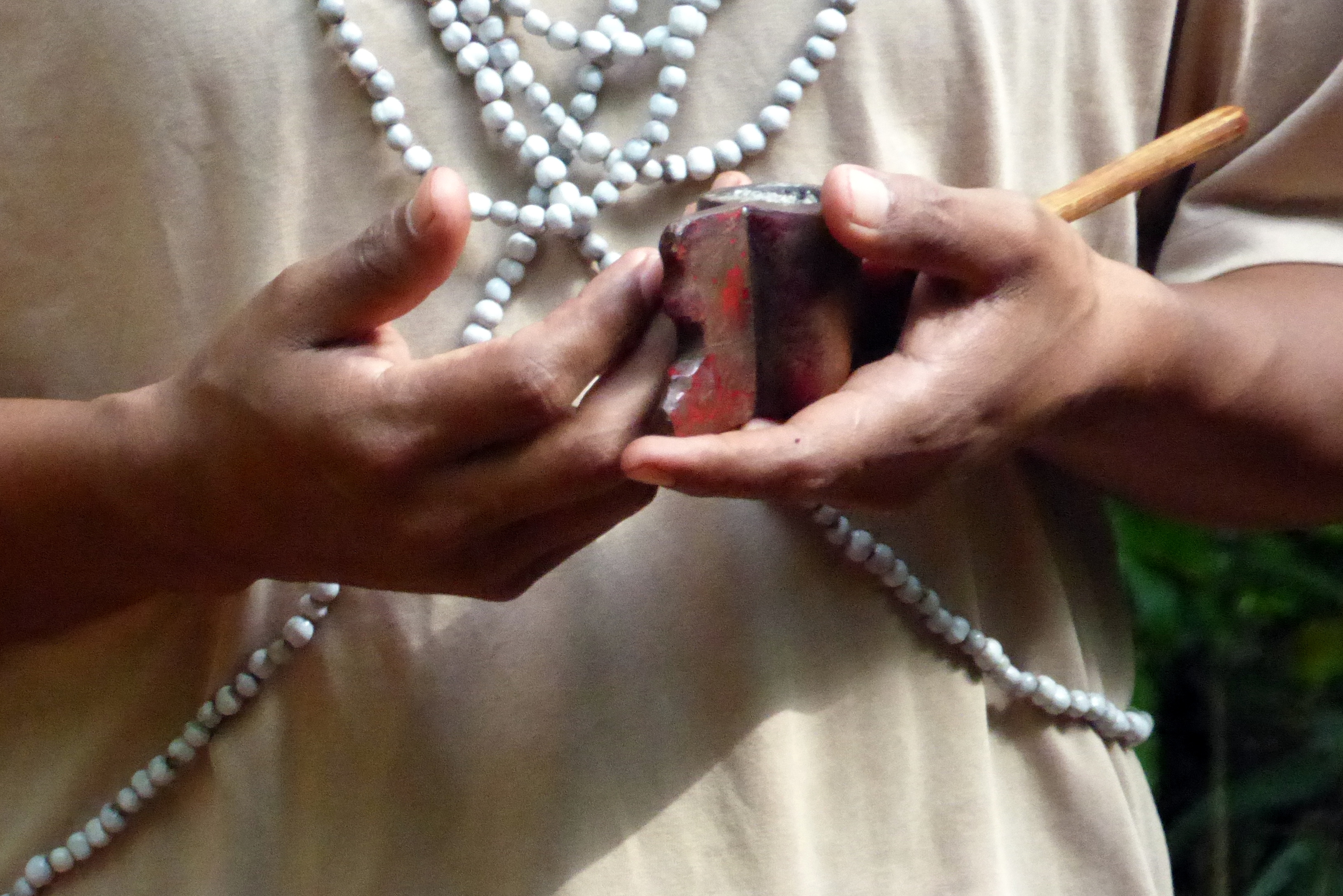
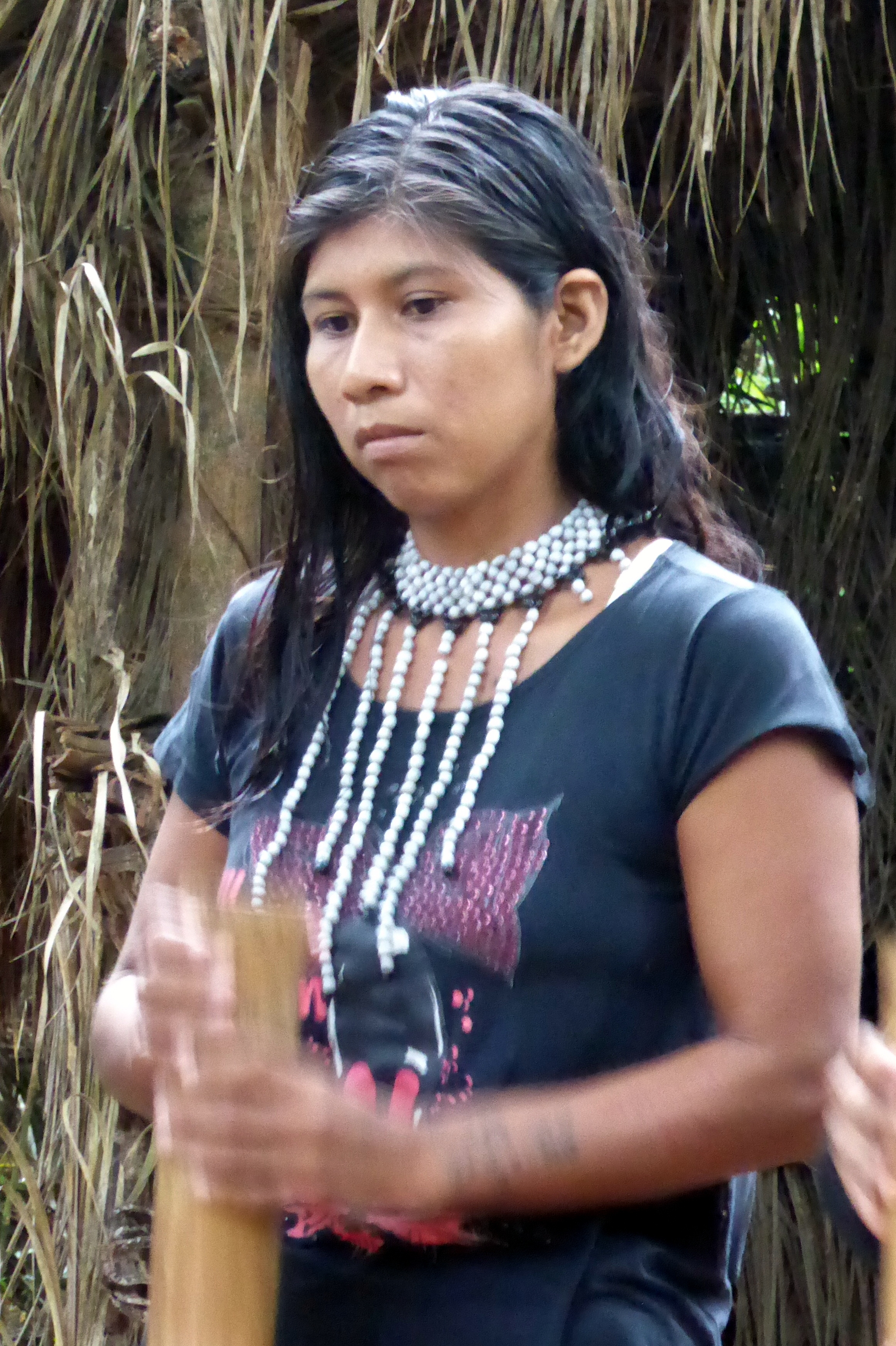
Notice the necklaces Delphin is wearing?  These are handmade and worn as identification, blessed by the spiritual leader.  Each person wears them differently and the quantity they wear differs.  Before he died two years ago, Delphin’s grandfather was the previous spiritual leader of his community and had blessed the necklaces Delphin was wearing in his memory.

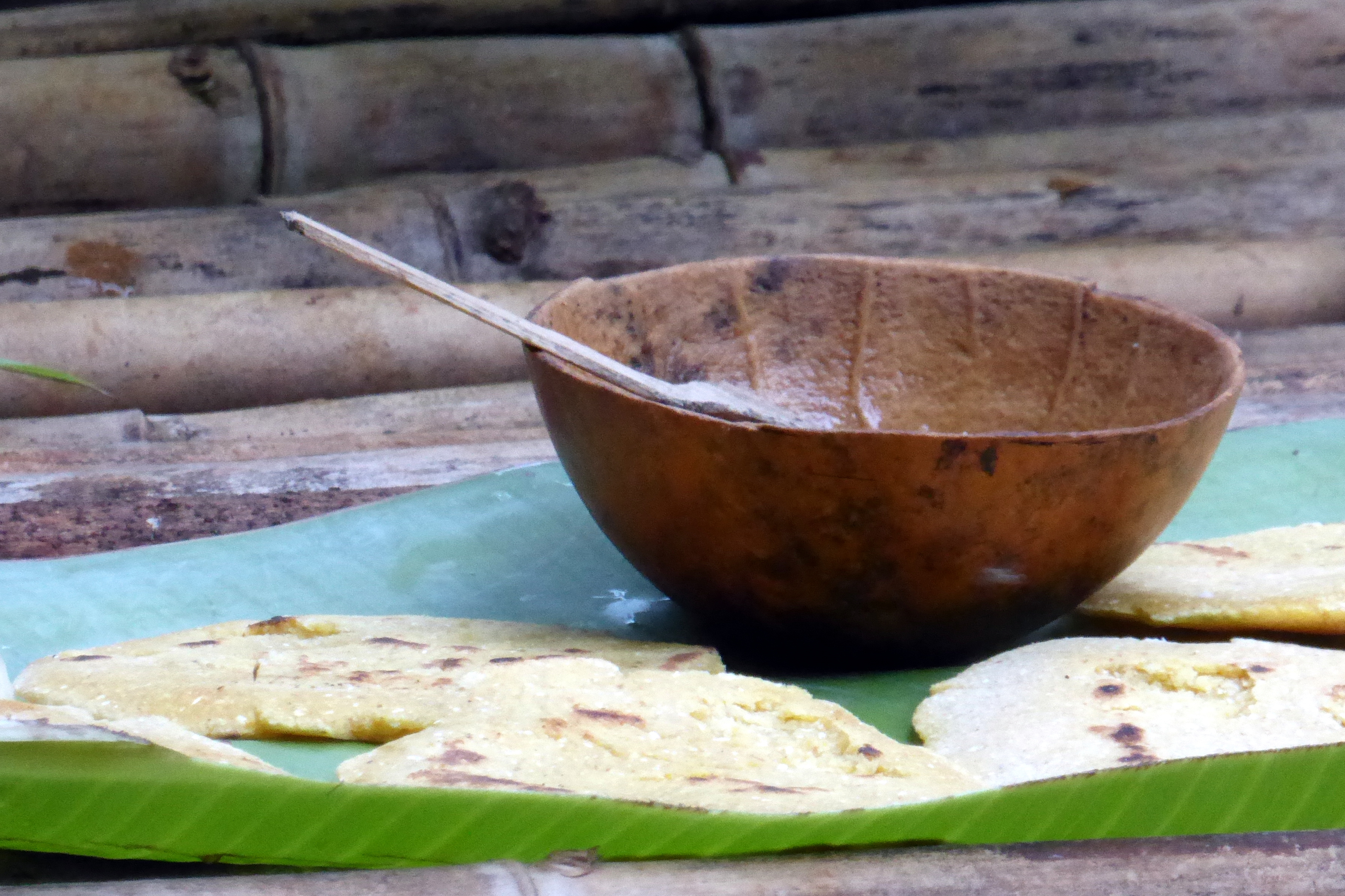
Delphin’s mother prepared some snacks for us, including Mbeju, a starch cake served with honey.  We were also treated to a performance by some children of the village.

Learning about the culture of the Guarani community was fascinating and memorable—a highlight of our time in Argentina.  To remember the day, I bought a small basket and a few of the small carved animals.

Guarani School

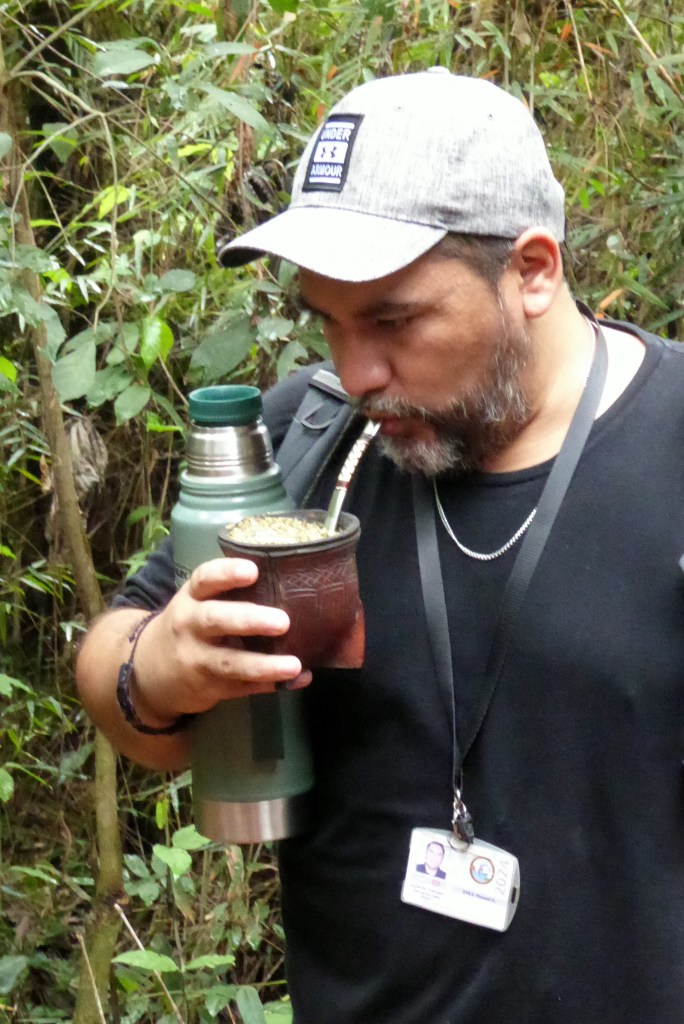
Following our visit, we had lunch at a beautiful restaurant and gardens just outside of the Guarani community.  We first toured the gardens, which included yerba mate trees, source of the traditional Argentinian drink, mate, which I wrote about previously.  I smiled when I saw the trees, because our local guide, Manu, ALWAYS had his mate in arm and mate vessel in hand!

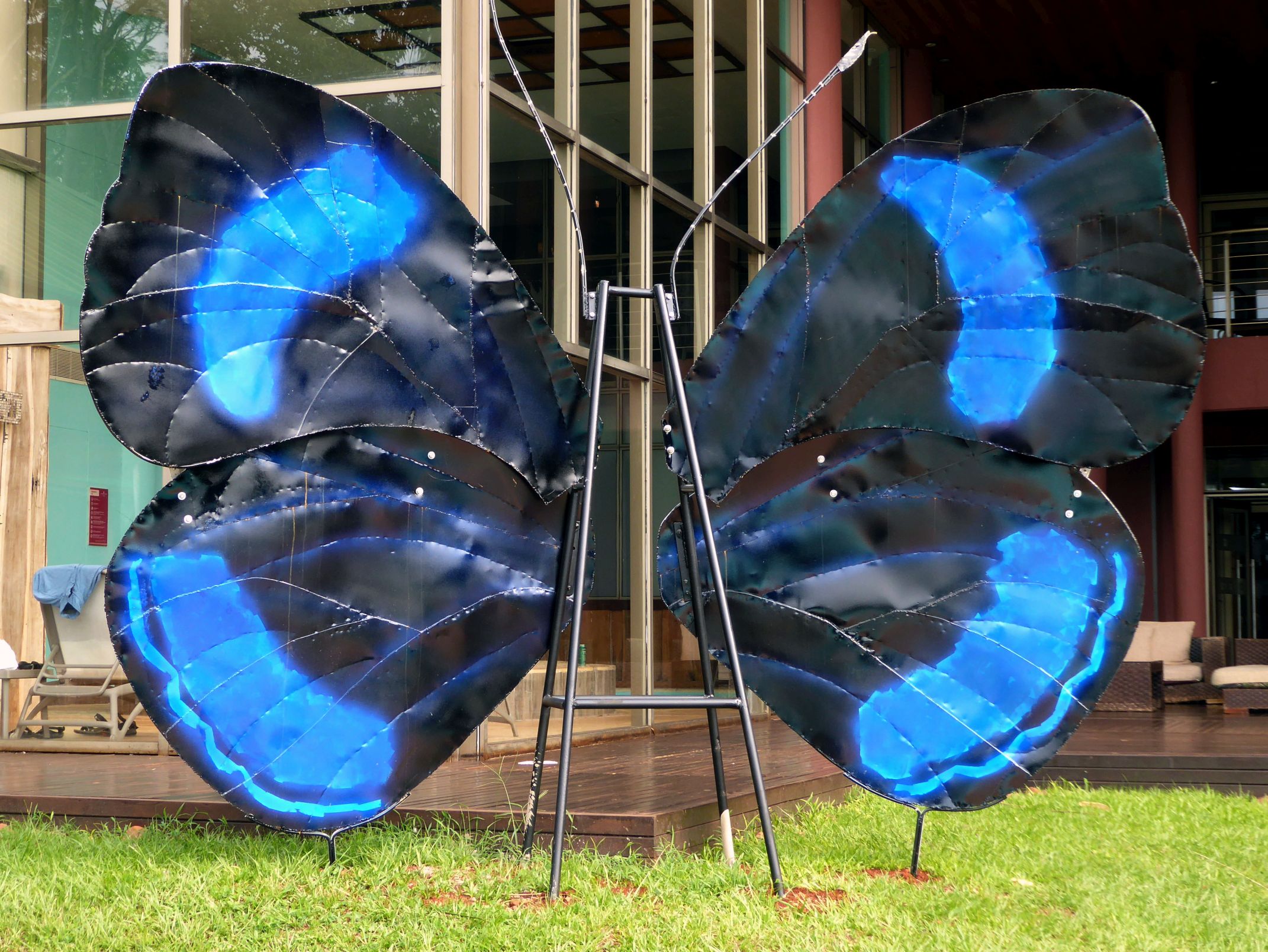
The orchid and butterfly house was beautiful:

For lunch, we enjoyed a sampling of traditional regional food, which was delicious:

The side of the restaurant’s front desk.

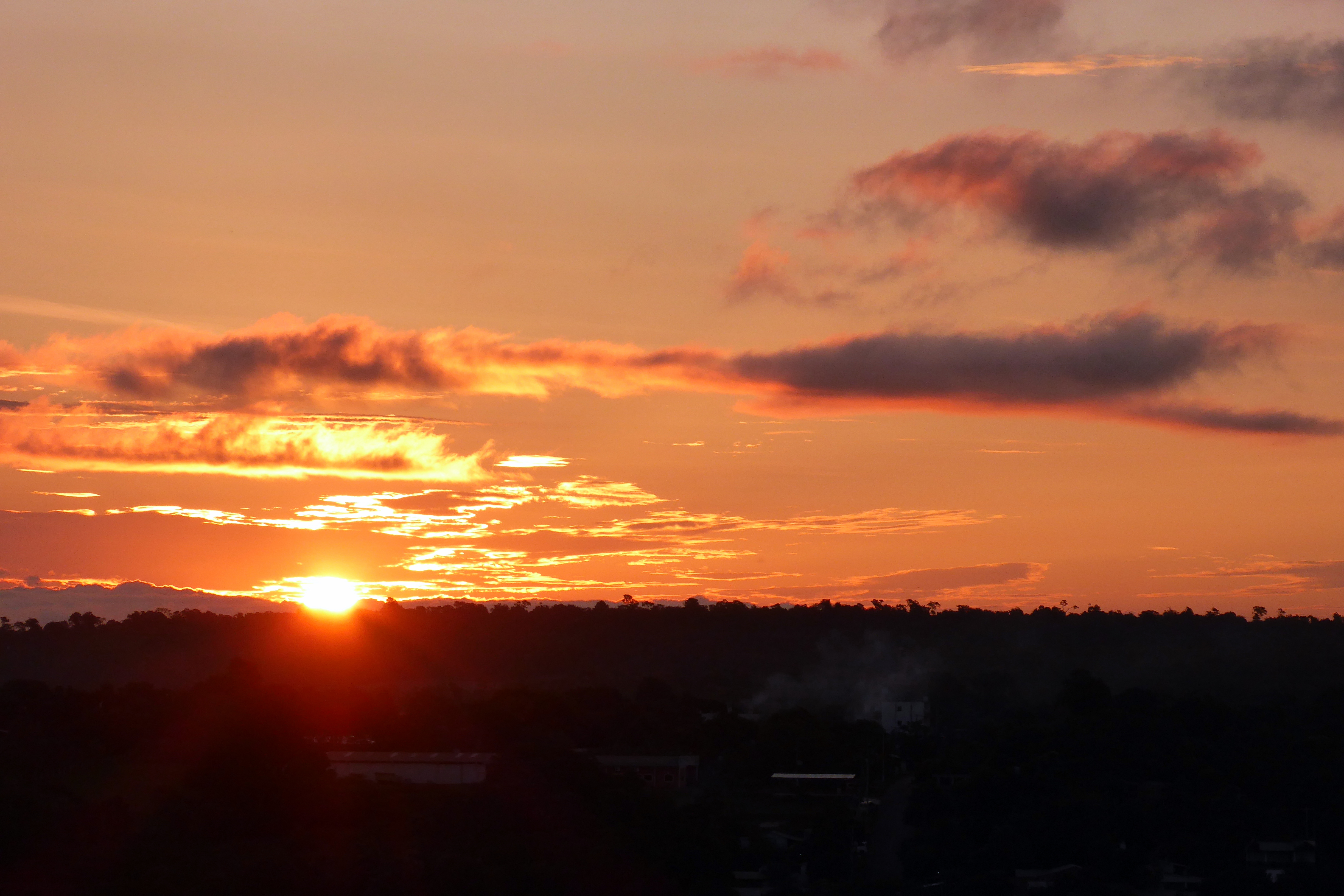
The remainder of the afternoon was free, so we enjoyed spending it in Puerto Iguazu and enjoying the views from our hotel:

Next up:  ARGENTINA & CHILE #20:  ABOVE AND BELOW(!) THE ARGENTINIAN SIDE OF IGUAZU FALLS

ARGENTINA & CHILE #18:  INCREDIBLE IGUAZU FALLS

Off again for another flight!  We had never been on a tour with so many flights, but there was no way around it.  Besides, there was no way we were going to miss the post-extension and not see Iguazu Falls!  We had been to Niagara Falls and were mesmerized and in awe of how large and powerful it was.  Well, Niagara Falls (167 feet high and 3,947 feet wide) are small compared to Iguazu Falls, which measure as high as 269 feet and are 8,858 feet wide! 

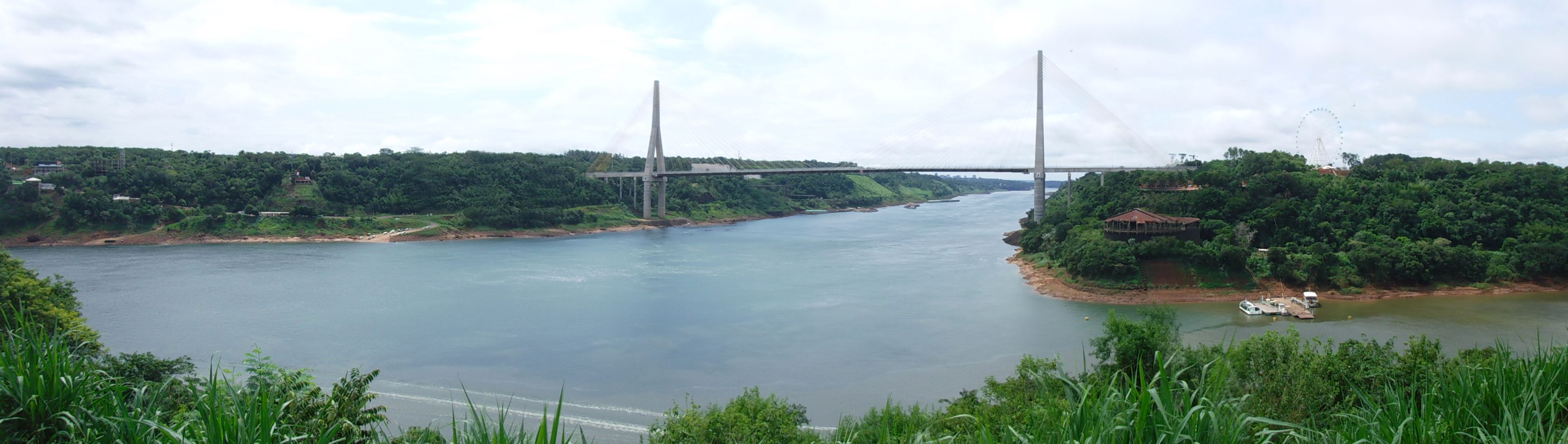
The falls can be viewed from both Brazil and Argentina because they are located on the eastern-most tip of Argentina and surrounded by Brazil and Paraguay.  We were going to get to view the falls from both countries.

After arriving in Iguazu, we crossed the border into Brazil and changed buses, drivers, and guides.  Ola Manuel (“Manu”)!  More about Manu in my next post, but he was a terrific guide! 

We headed straight to Iguazu Falls, which is comprised of 275 waterfalls, the largest waterfall system in the world!  There were several viewing platforms to see the falls from different perspectives as well as a walkway built over the water to get an up-close and personal (and very refreshing!) view of the falls.  The volume of water pouring over those falls (61,000 cubic feet per second!), was so powerful that a constant mist was present.  It was impossible to keep my camera lens dry, but the cold water was a glorious relief from the heat!  I got completely soaked (on purpose), which was a lifesaver during the hike up the hill to get more of a birds-eye view.

The sky was a bit mucky, so my photos aren’t pretty like the ones in that Wikipedia link.  I think they will give you a pretty good idea of what we saw, though:

(For all photos, especially panoramas, click on the image for a full screen view.)

Getting ready to depart Buenos Aires

Wildlife seen on the walking trail overlooking the falls:

This is a South American Coati, in the raccoon family.

Following our visit to the Brazil side of Iguazu Falls, we crossed back into Argentina and headed to Puerto Iguazu, our home base for three nights.  We learned from Manu that since the city is situated on the borders of Brazil and Paraguay, the 82,000+ residents are a mix from those two countries in addition to Argentina.  As a result, the food, language, and culture is a bend of all three.  Spanish, Portuguese, and the language of the Guarani natives can all be heard in this tourist city.  And, 70% of the residents work in tourism-related jobs, because Iguazu Falls is the most visited National Park in Argentina.

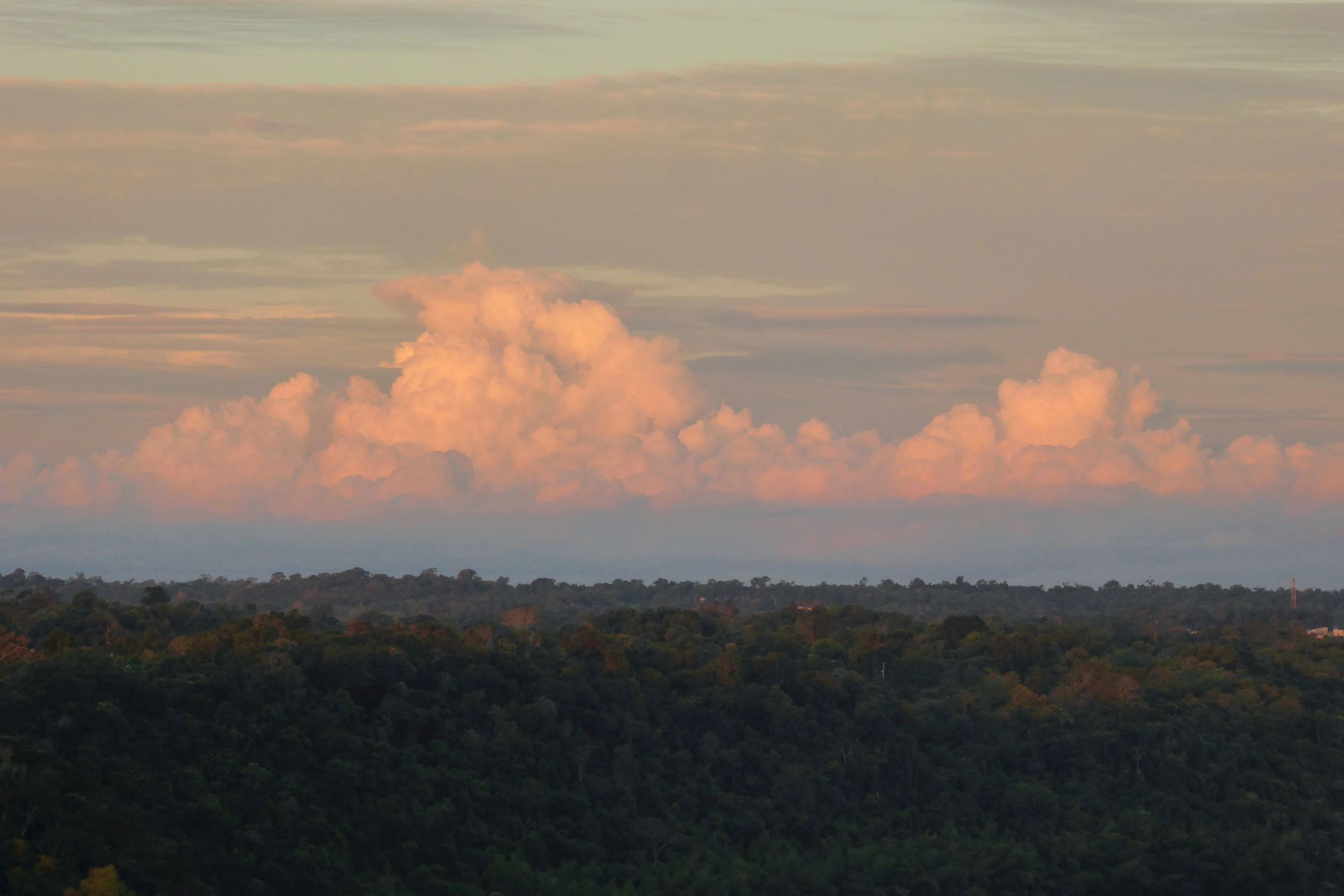
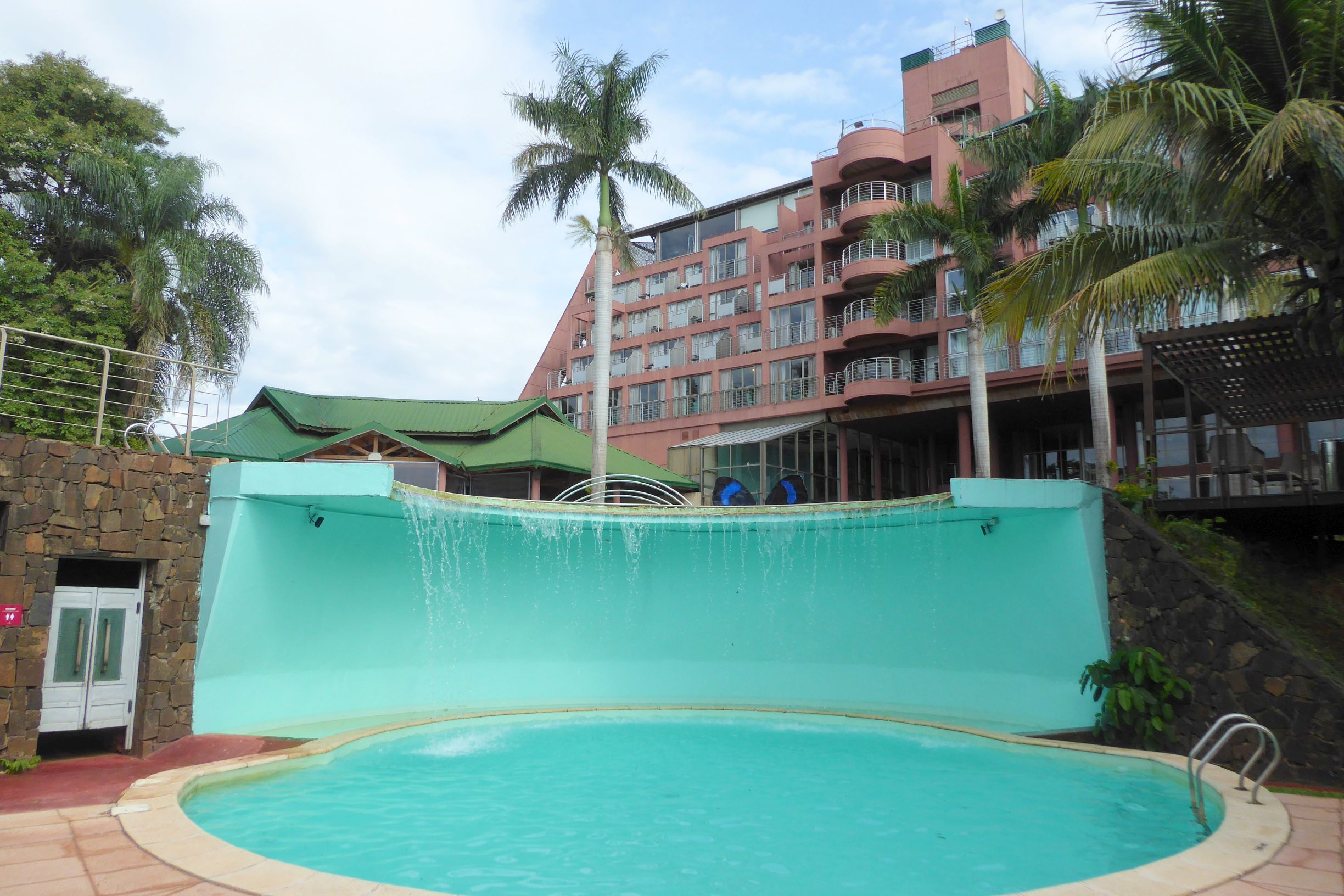
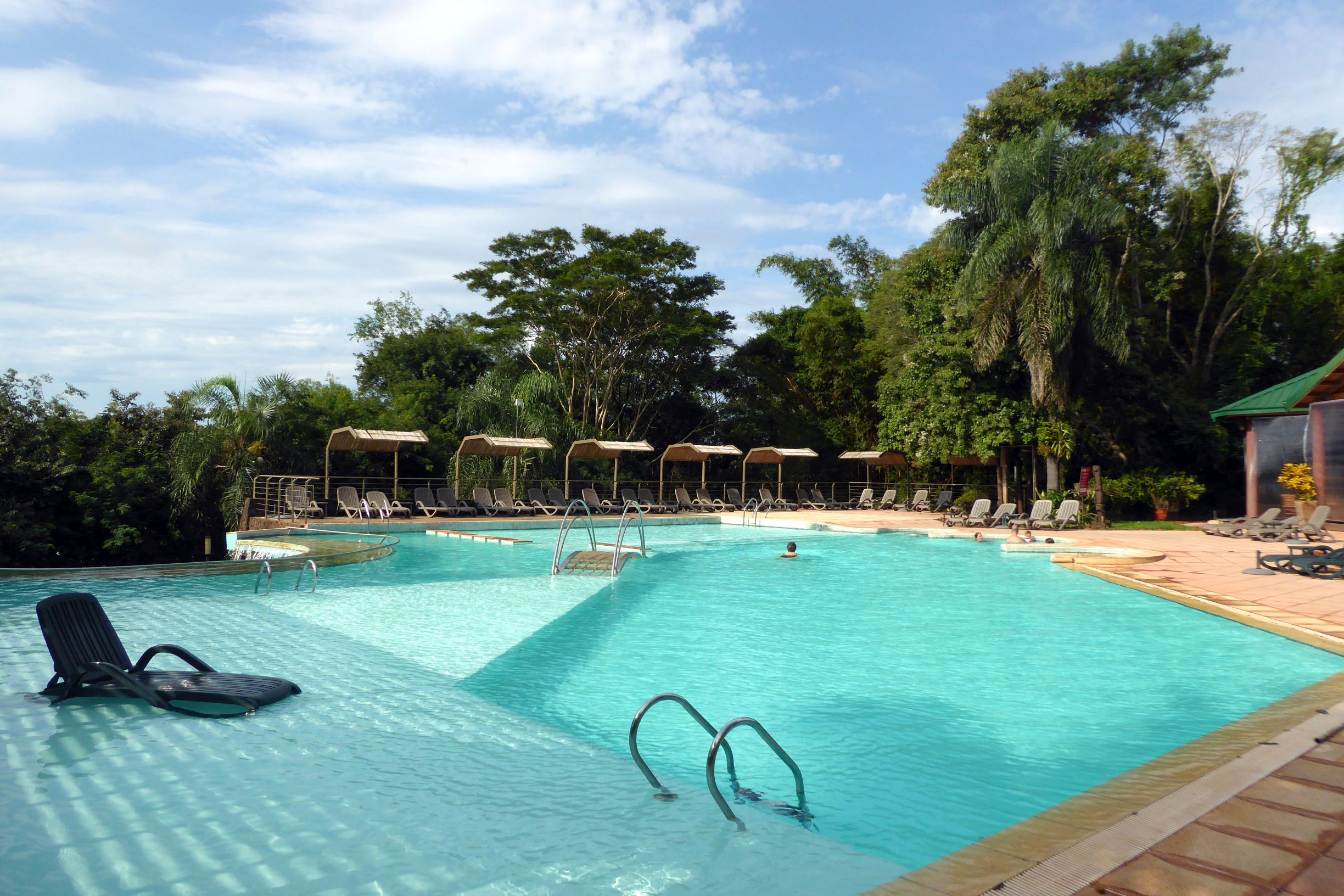
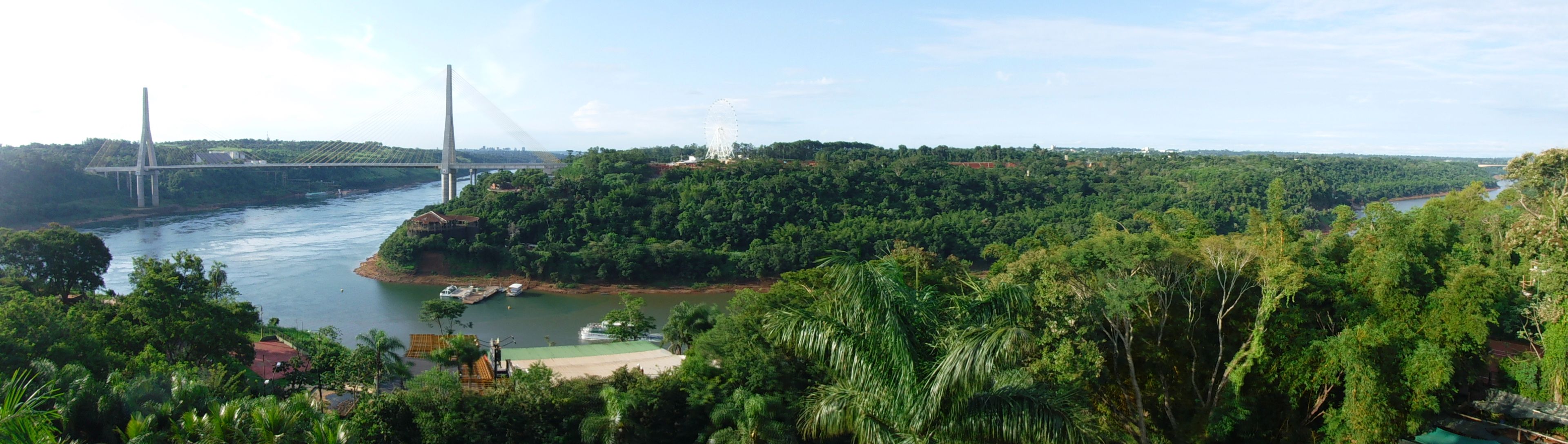
Our hotel, Amerian Portal Del Iguazu, was beautifully situated on the river where we could see Brazil straight across the river and Paraguay across to the right.  A short walk away was the Three Borders Landmark where there were more beautiful views of all three countries.  Although our room didn’t have a view of the river, we looked out from our balcony to lush jungle views as far as the eye could see.  On the roof of the multi-story hotel, there was a beautiful outdoor bar with amazing views:

See where it says Argentina? Our hotel was the tall building above and to the left.
The view from the hotel’s rooftop bar. That’s Brazil on the right and Paraguay on the left.

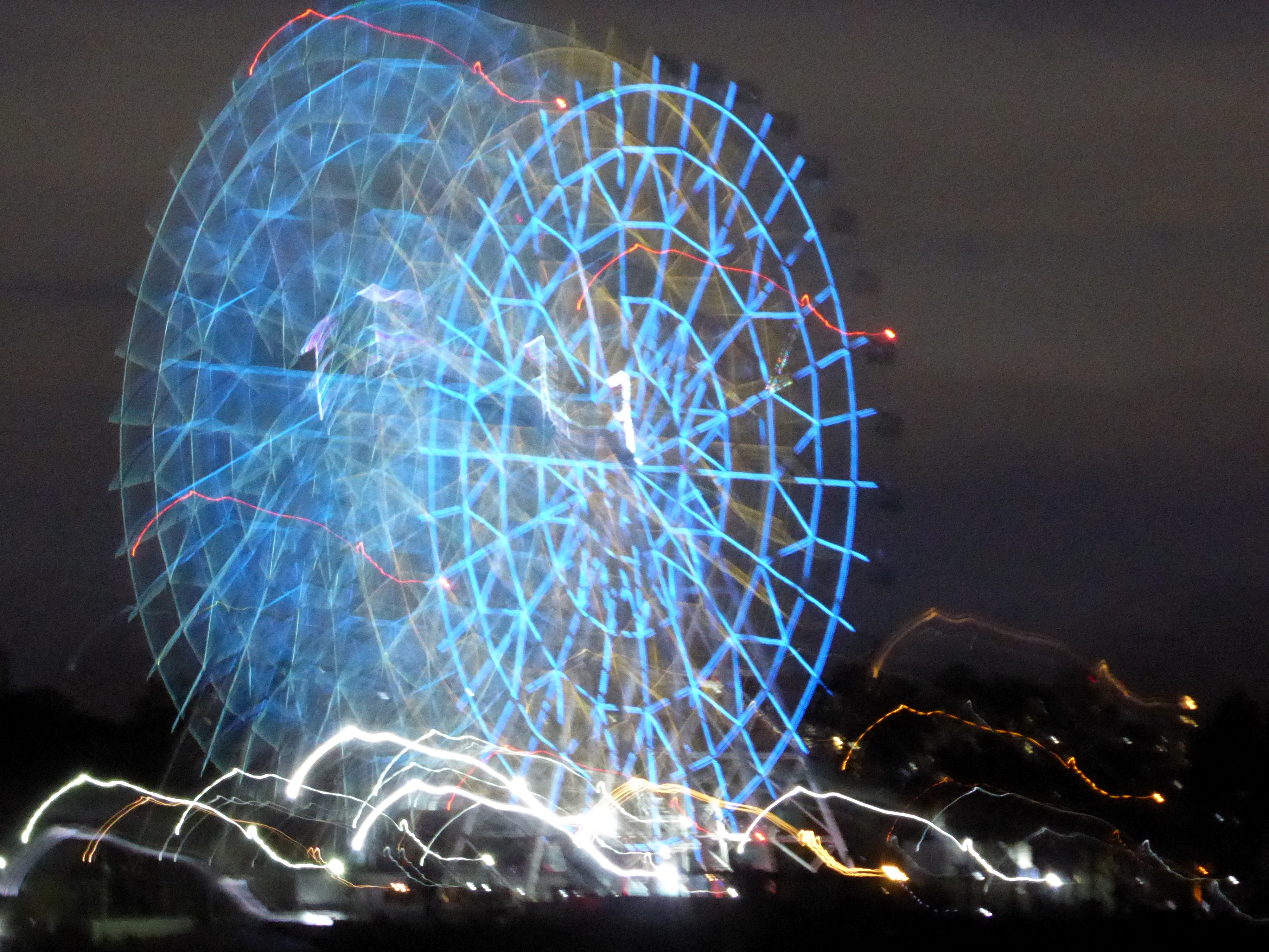
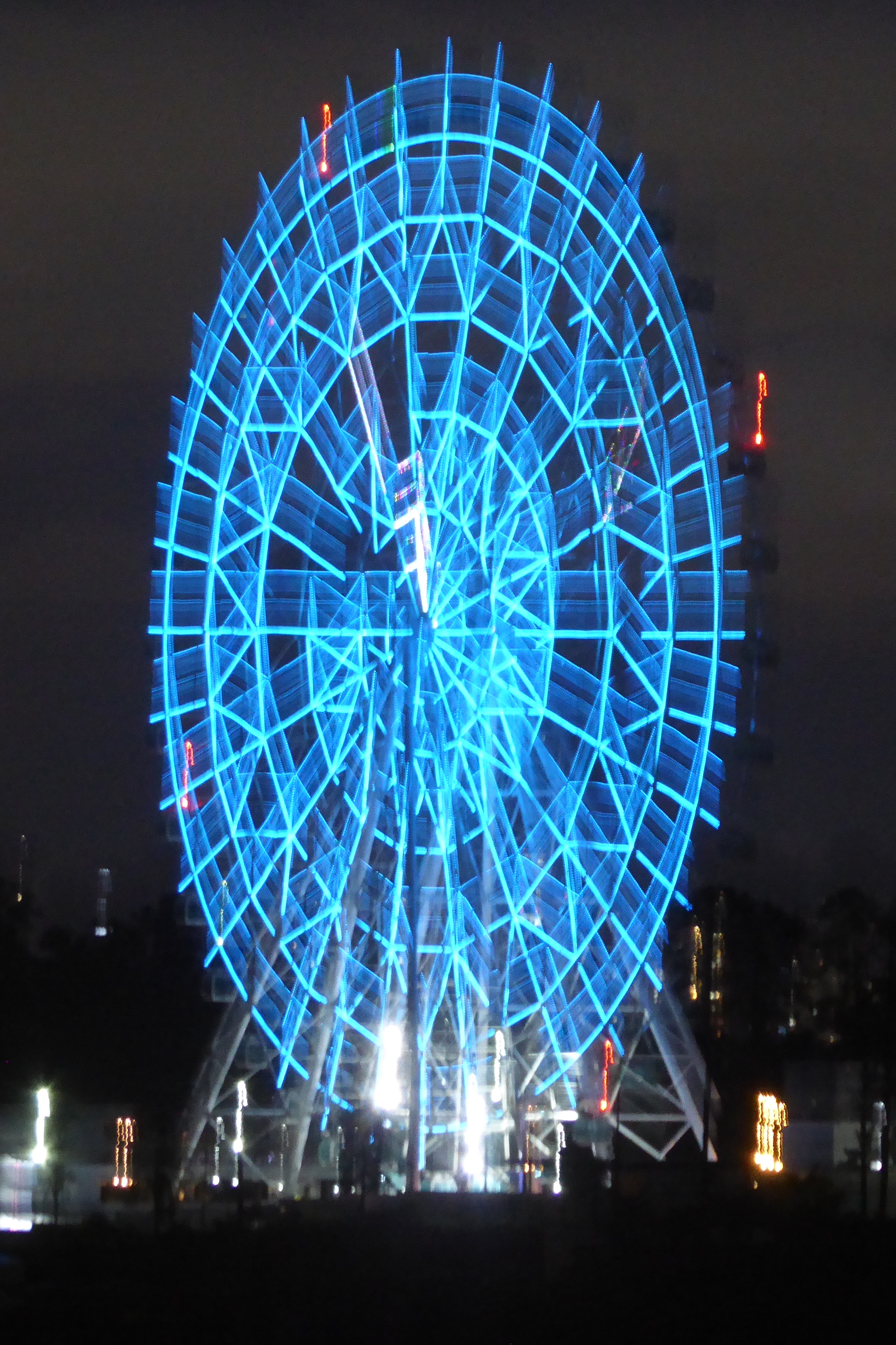
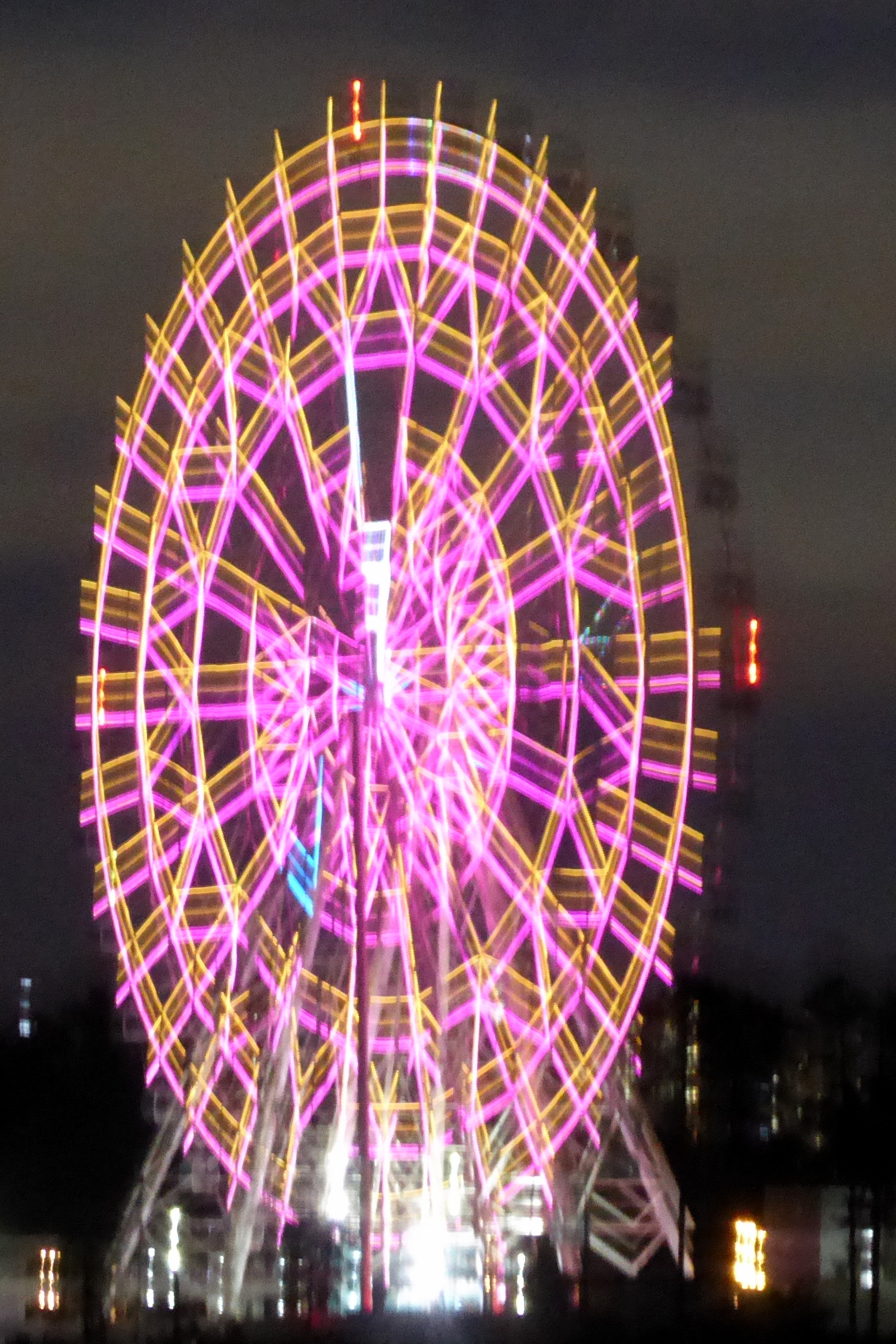
During the evening, our group gathered for a wonderful dinner in the hotel’s restaurant overlooking the pool and the lit-up Ferris wheel across the river in Brazil.  It was beautiful!

Coming up next: ARGENTINA & CHILE #19: A VISIT TO THE INDIGENOUS GUARANI COMMUNITY

ARGENTINA & CHILE #17: BACK TO BUENOS AIRES

Since this was a travel day back to Buenos Aires without much to write about, I will combine two days in this post.

As we prepared to bid farewell to El Calafate, we were greeted by this cutie as we looked one last time at the beautiful grounds of our hotel:

(For all photos, especially panoramas, click on the image for a full screen view.)

After a smooth flight from El Calafate to Buenos Aires, we enjoyed a relaxing afternoon before rejoining the group.  It was a warm and sunny day, so we enjoyed our short walking tour at the river where we had our Welcome Dinner.  This was our last night together on the main tour, so we concluded our walking tour and gathered one final time as our group of 16 at Villegas Resto for our Farewell Dinner.

The following day, we met up with Noe, our Buenos Aires guide at the beginning of our tour.  For our last day in the city, we enjoyed a wonderful tour before saying farewell to five members of our group who were not going on with the rest of us on the Iguazu Falls post-extension.

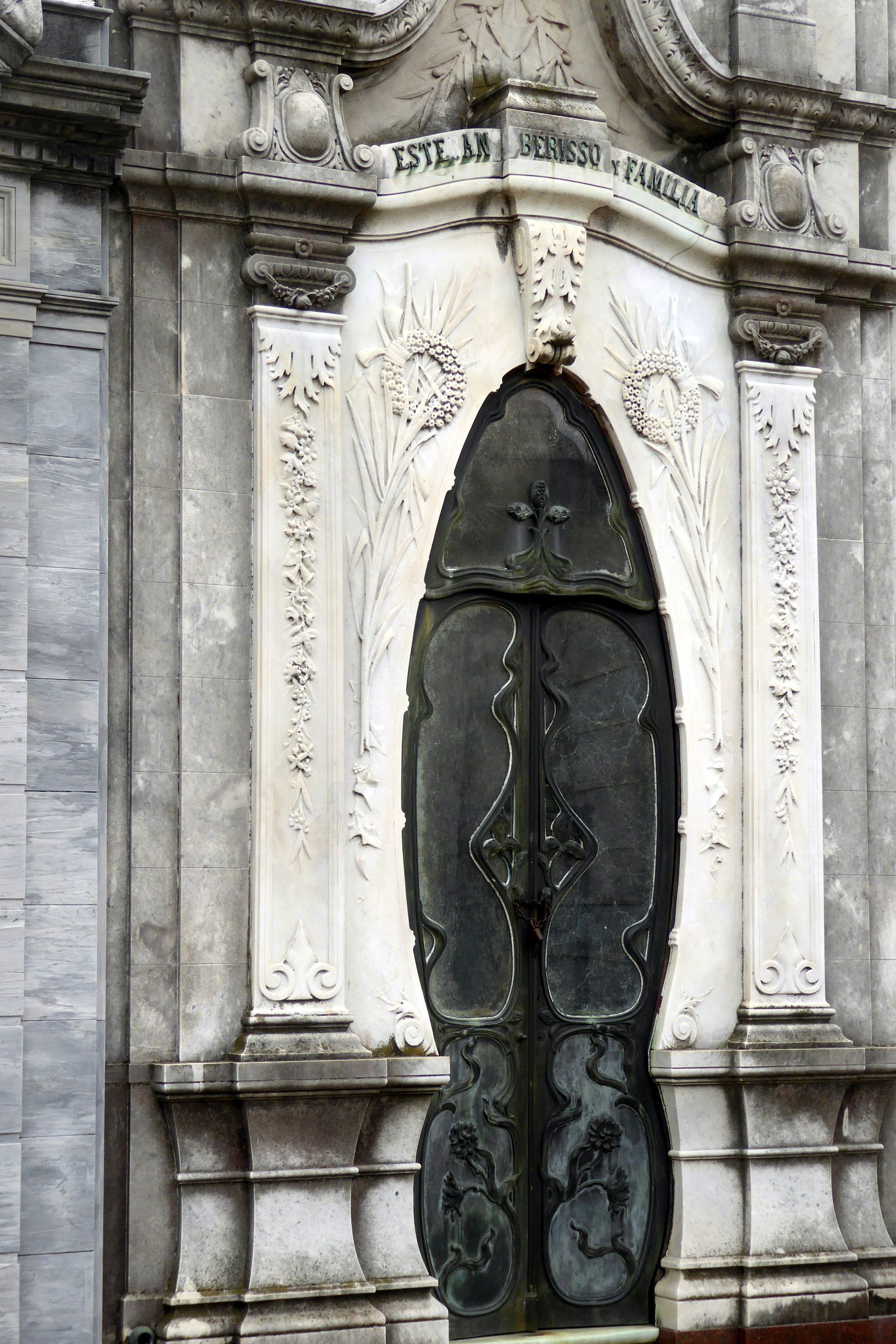
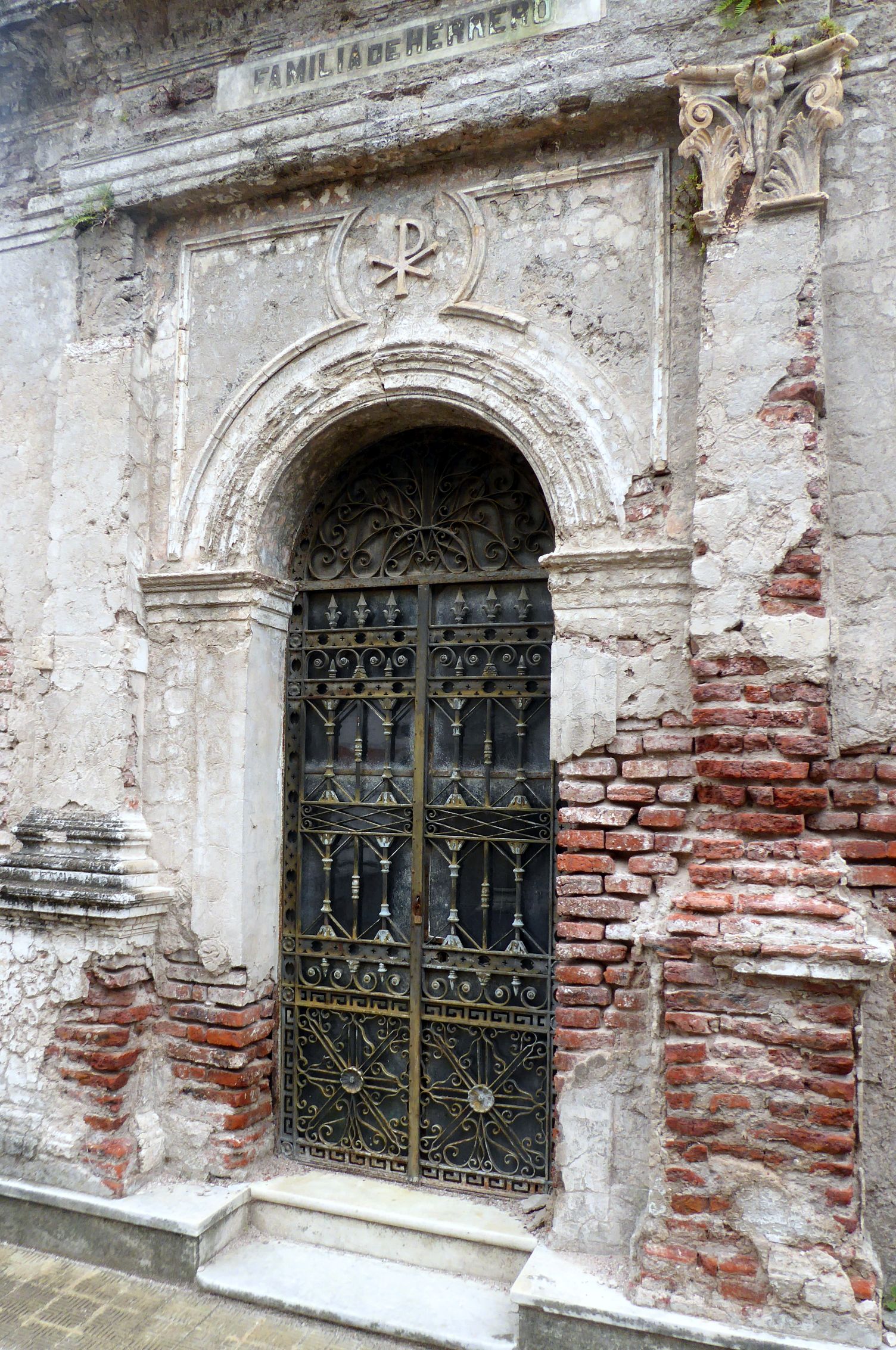
Our first stop was La Recoleta Cemetery, the final resting place of the wealthiest and most famous Argentinians, including Eva (“Evita”) Peron.  94 of the 4,691 vaults in the cemetery have been declared National Historical Monuments.  Many of the elaborate marble Mausoleums were worth up to $250,000, and many families are trying to sell them due to financial hardships caused by the unstable economy.

We saw this sculpture after leaving the cemetery.

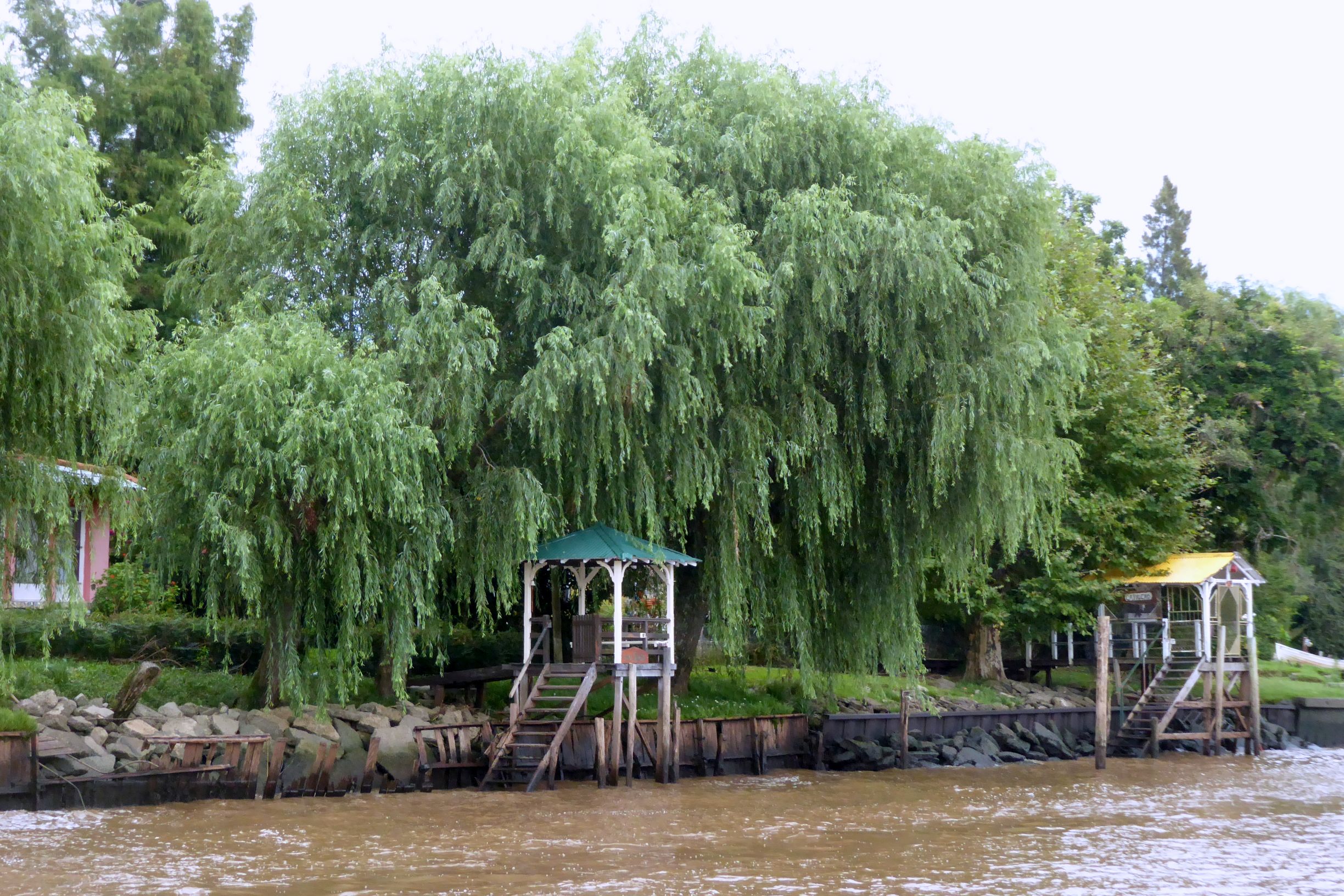
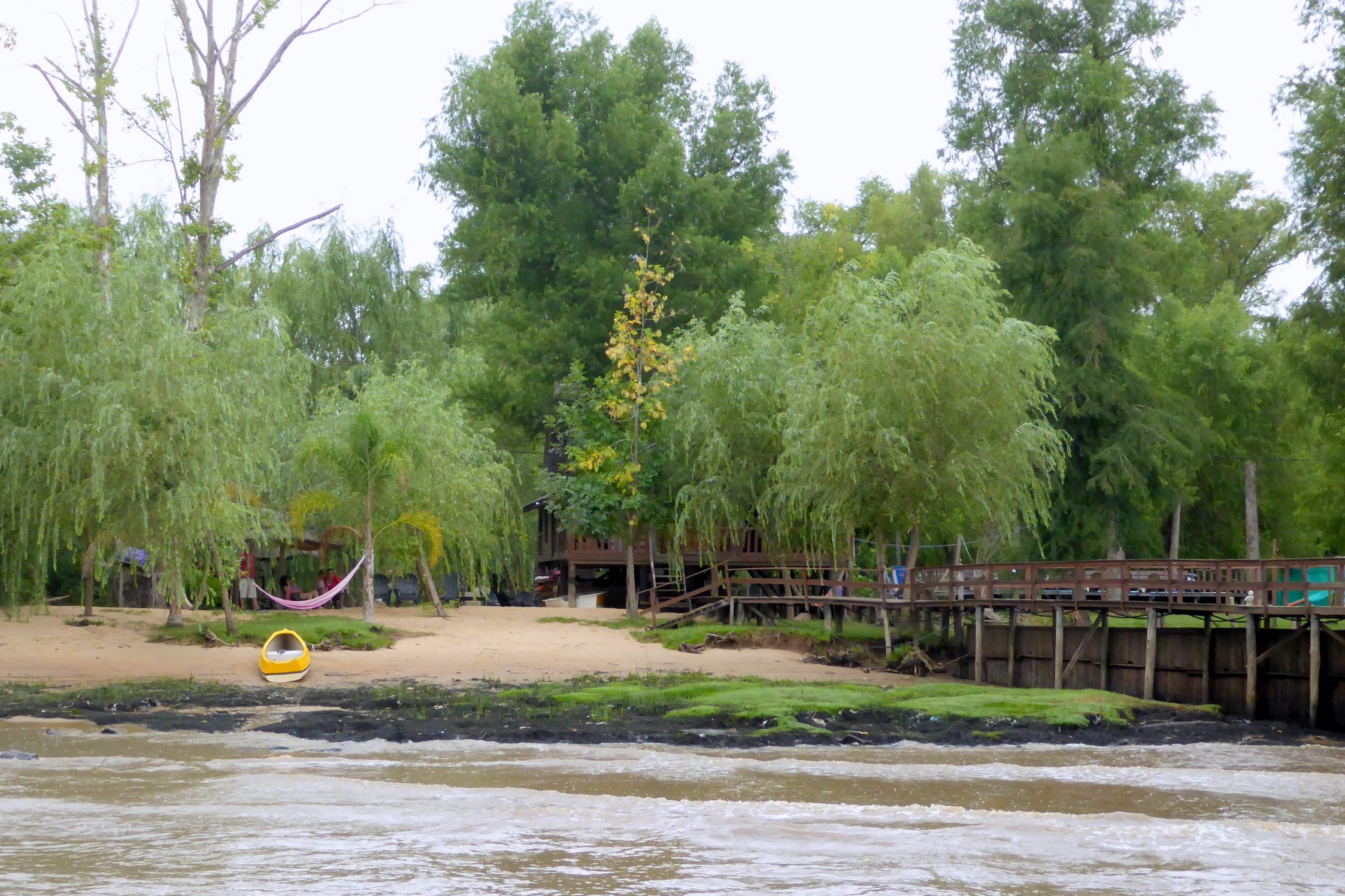
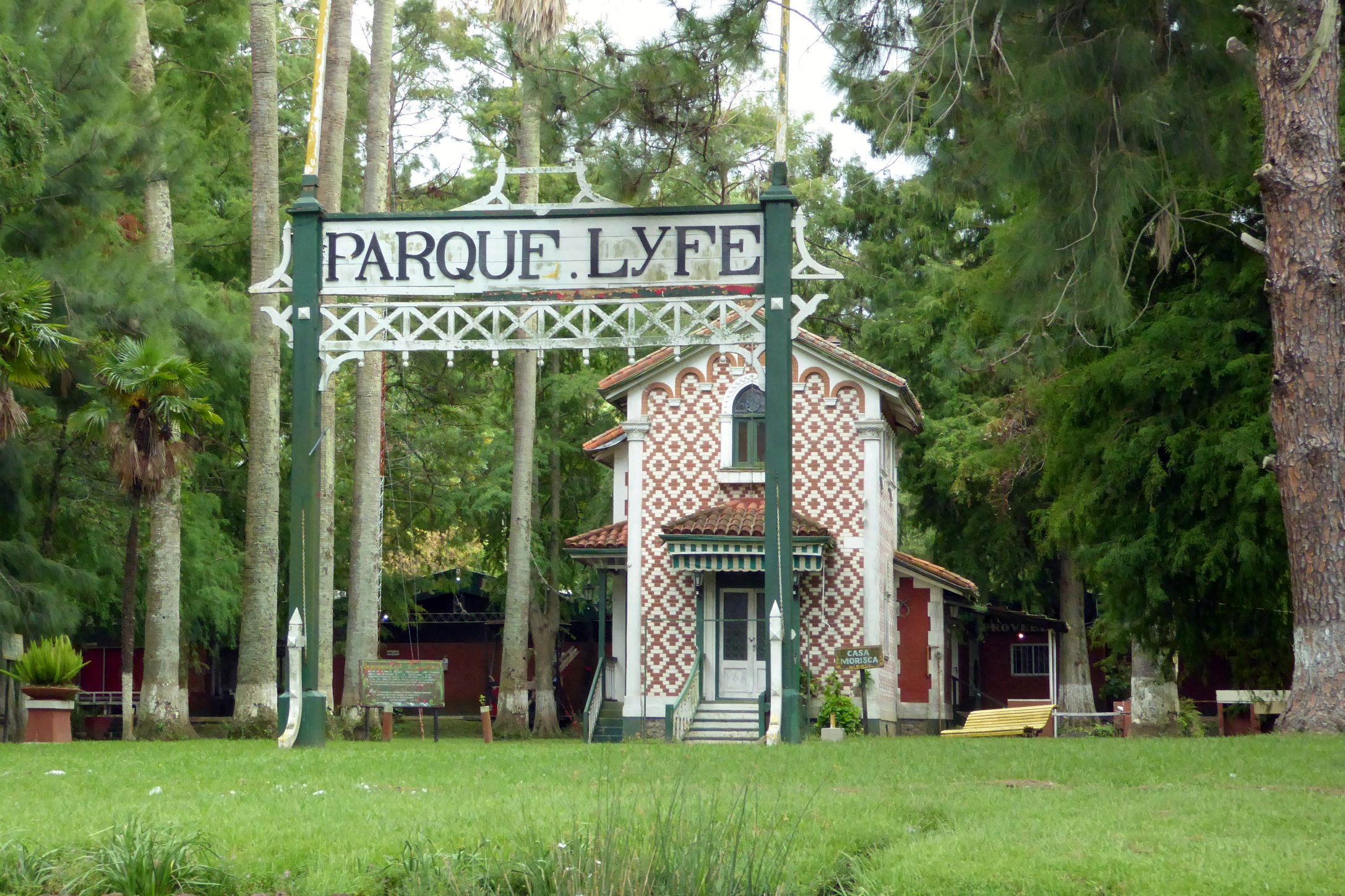
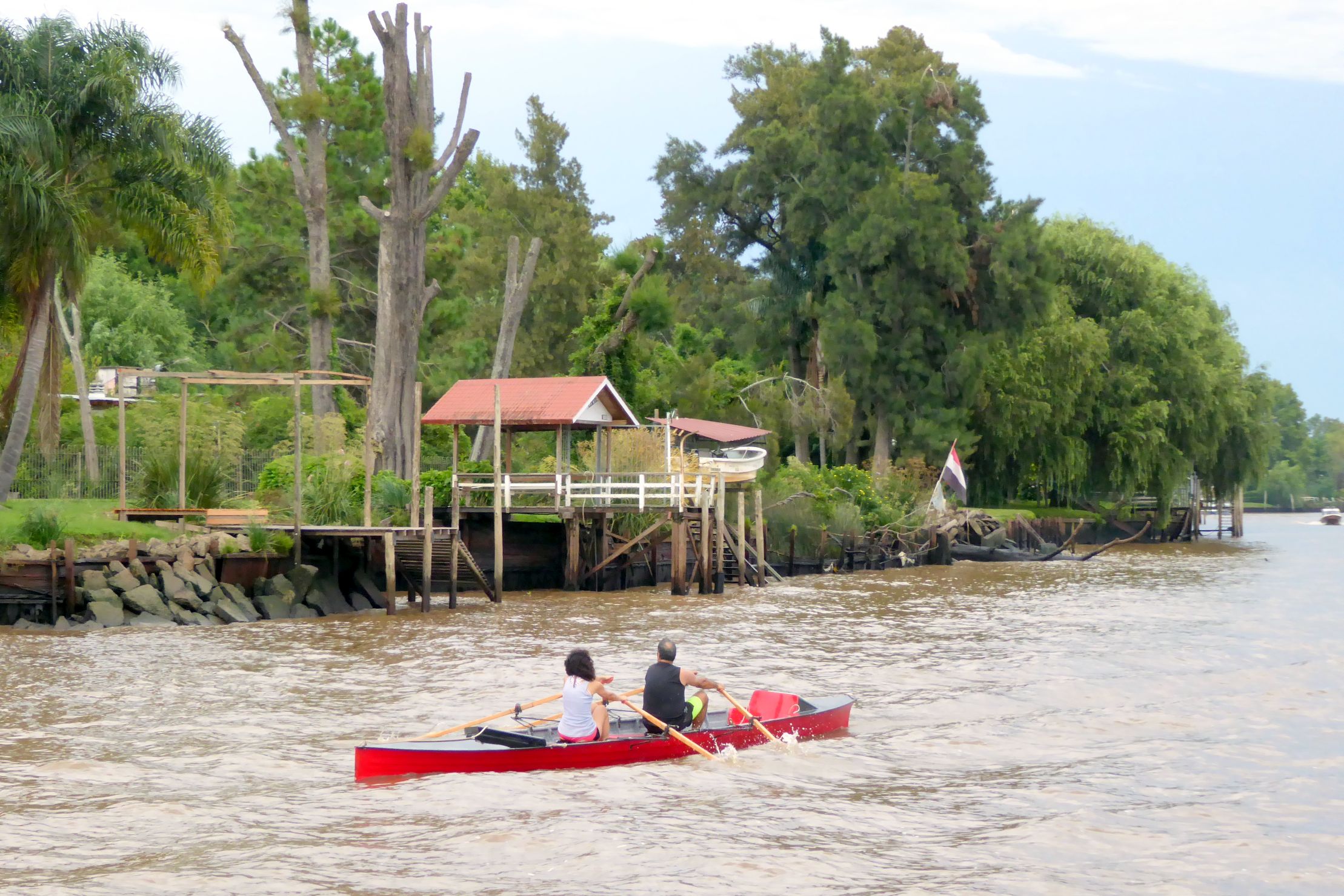
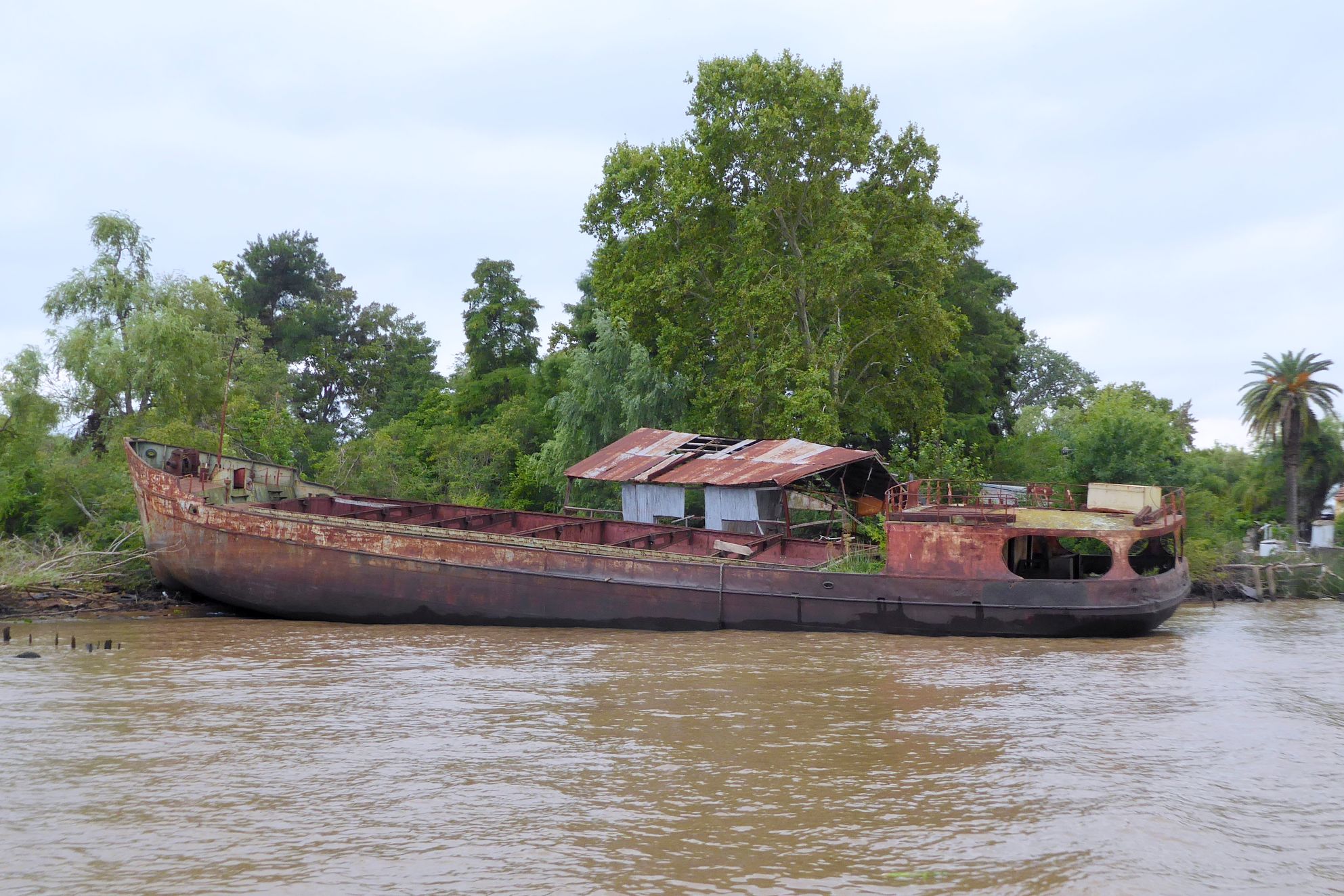
Tigre City, north of Buenos Aires and situated on the Parana Delta, was next on our tour.  Located 17 miles from Buenos Aires, it is a favorite weekend tourist destination for city dwellers as well as rowers and kayakers.  There are several rowing clubs on the delta, and it is the training site of the Argentina Olympic Rowing Team.

The skies threatened to drench us during our boat tour, so most of the group stayed inside to listen to Noe’s informative narration.  I was thankful for the boat’s speaker system because I opted to stay outside and listen while I shot photos.  Nora was so interesting!

Tigre City is a group of islands about half the size of Switzerland.  Since there are no bridges connecting the islands, boats are the mode of transportation.  A network of beautiful 70-year-old wooden boats serve as water taxis—the way most locals get around.  It is also the way mail and groceries are delivered, and the drivers know the houses not by numbers, but by their names.  Leaving your house to go on vacation?  Hail a water taxi, put your luggage up on the boat’s roof, take a seat inside, and off you go!

These wooden boats are water taxis.
Andrea and Noe
Museum of Art

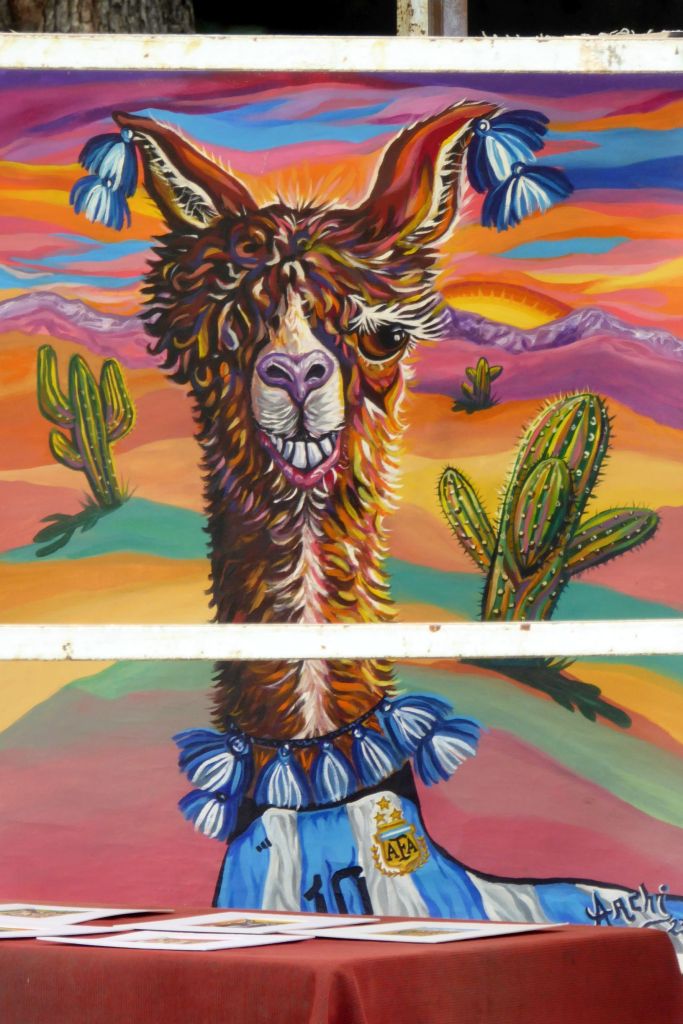
Following our tour, we opted to get dropped off at the weekend crafts market in the city square.  I liked the colorful and whimsical paintings by this artist:

Four our last two evenings in Buenos Aires, Andrea’s husband, Julio, joined us.  Also an Overseas Adventure Travel tour leader, it was a joy to have Julio with our group.  The two of them were such a cute and fun couple!

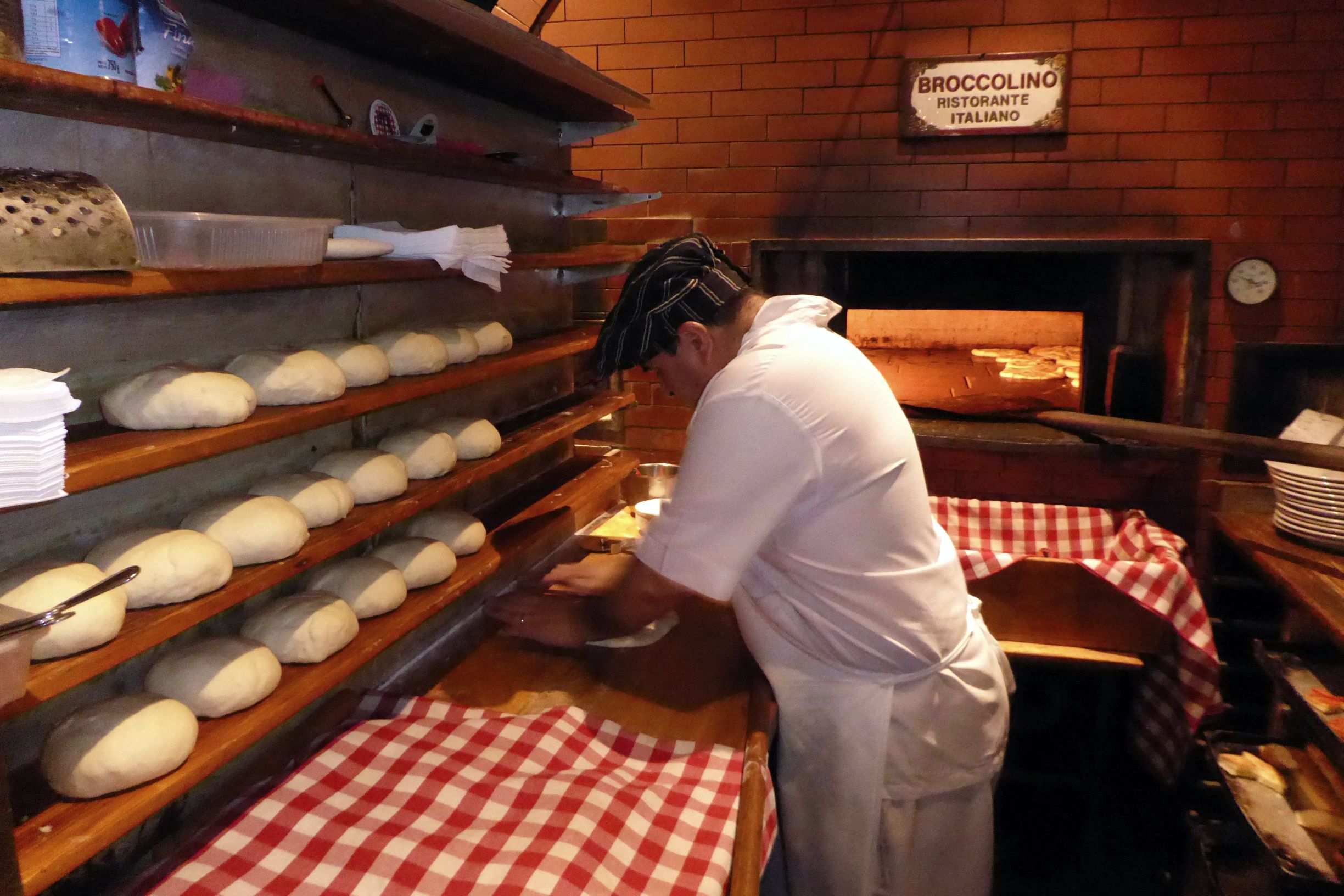
Broccolini Ristorante Italiano, is where we enjoyed our last dinner together in Buenos Aires.

Next up:  ARGENTINA & CHILE #18:  INCREDIBLE IGUAZU FALLS

ARGENTINA & CHILE #16: A GORGEOUS GLACIER!

What the previous day may have lacked in excitement and beautiful scenery was more than made up for on this day.  Just wait…

Before you get to see the glacier, I must show you the Rhea I photographed out the bus window.  We saw a bunch of them, but this was the best shot I captured:

(For all photos, especially panoramas, click on the image for a full screen view.)

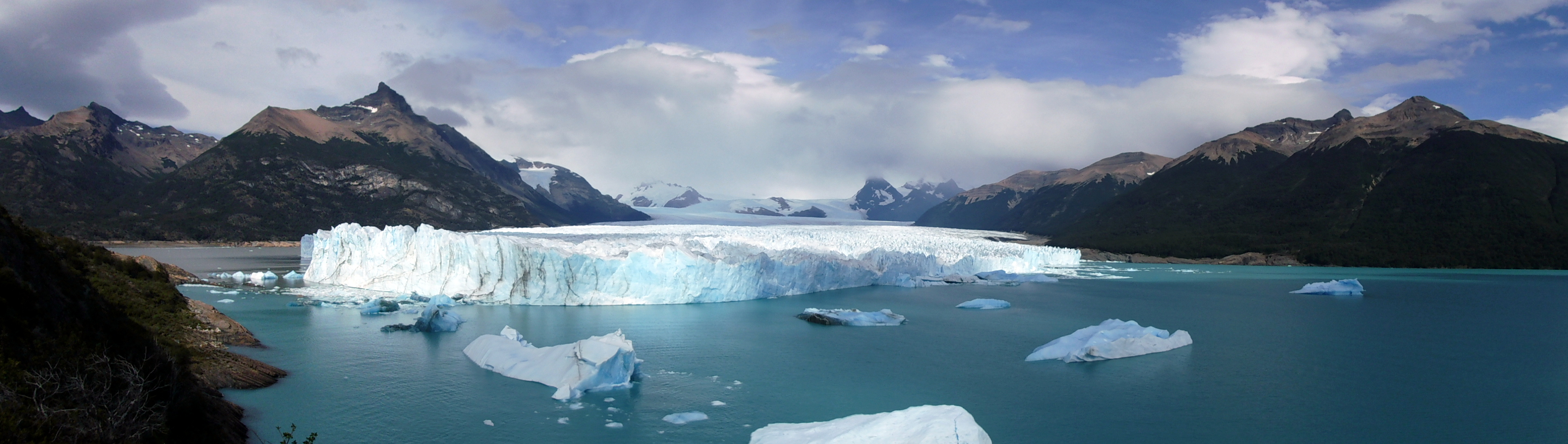
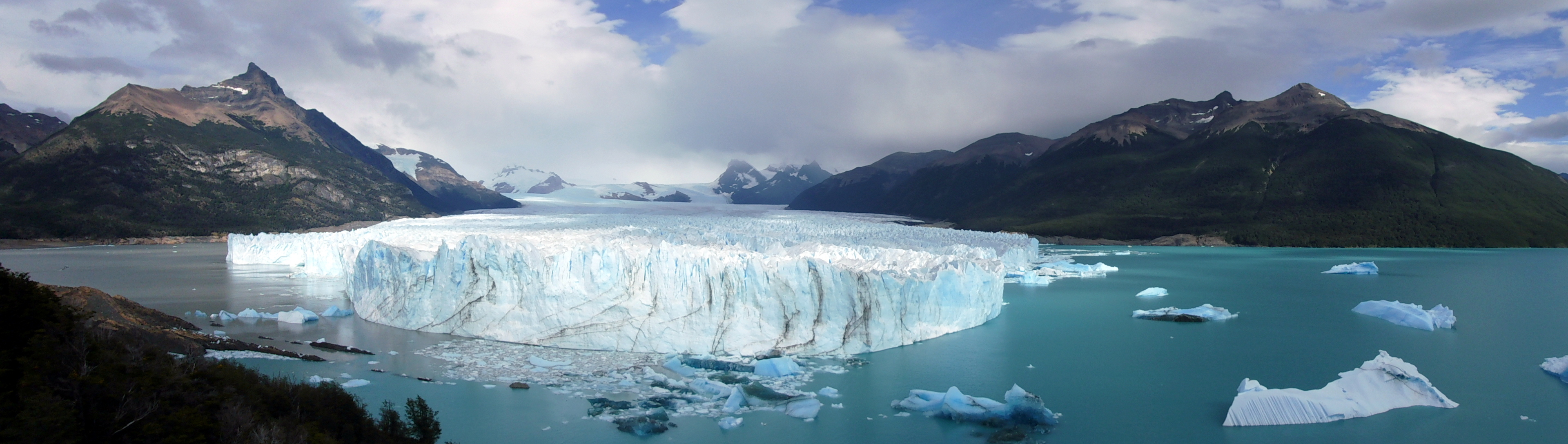
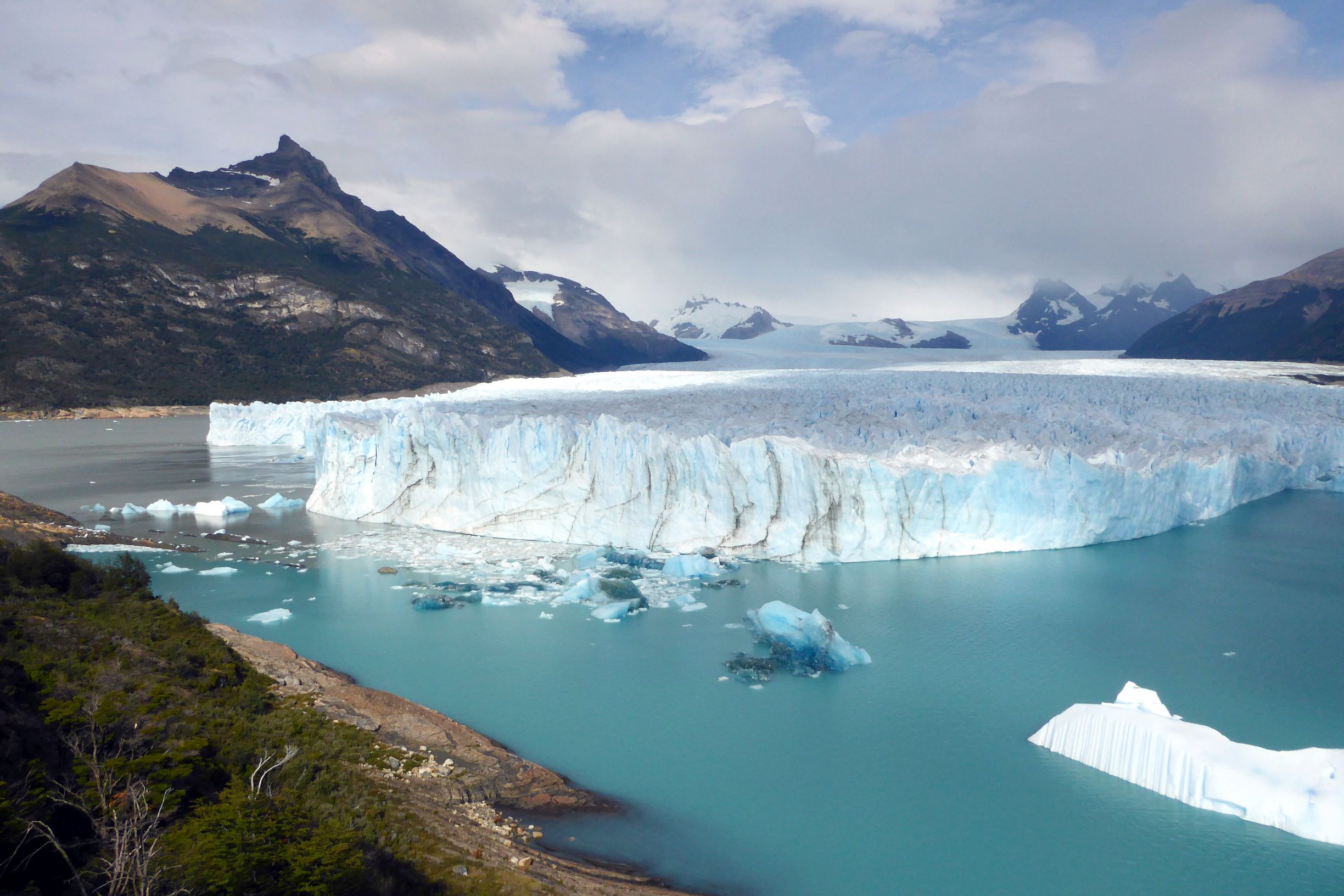
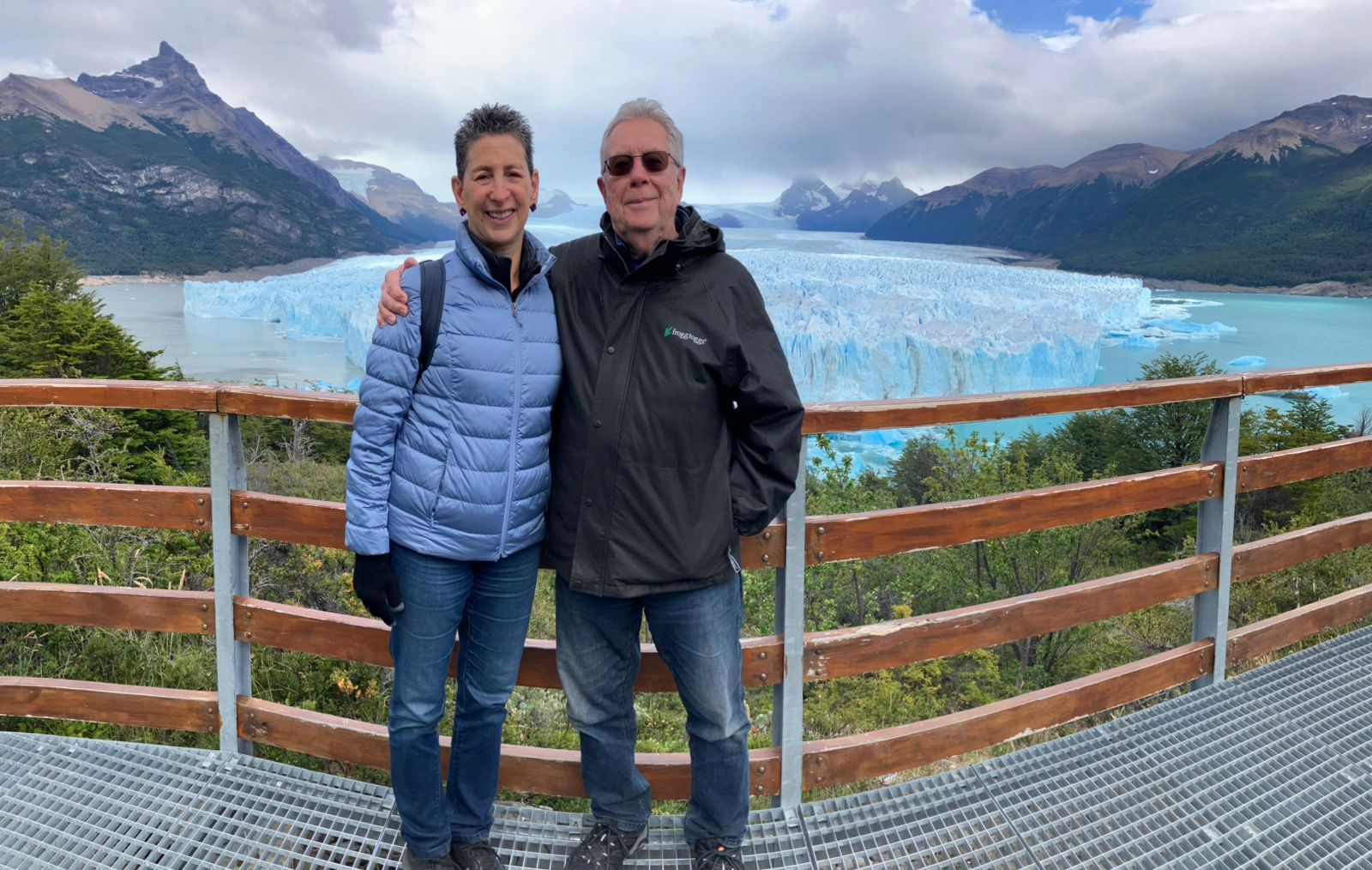
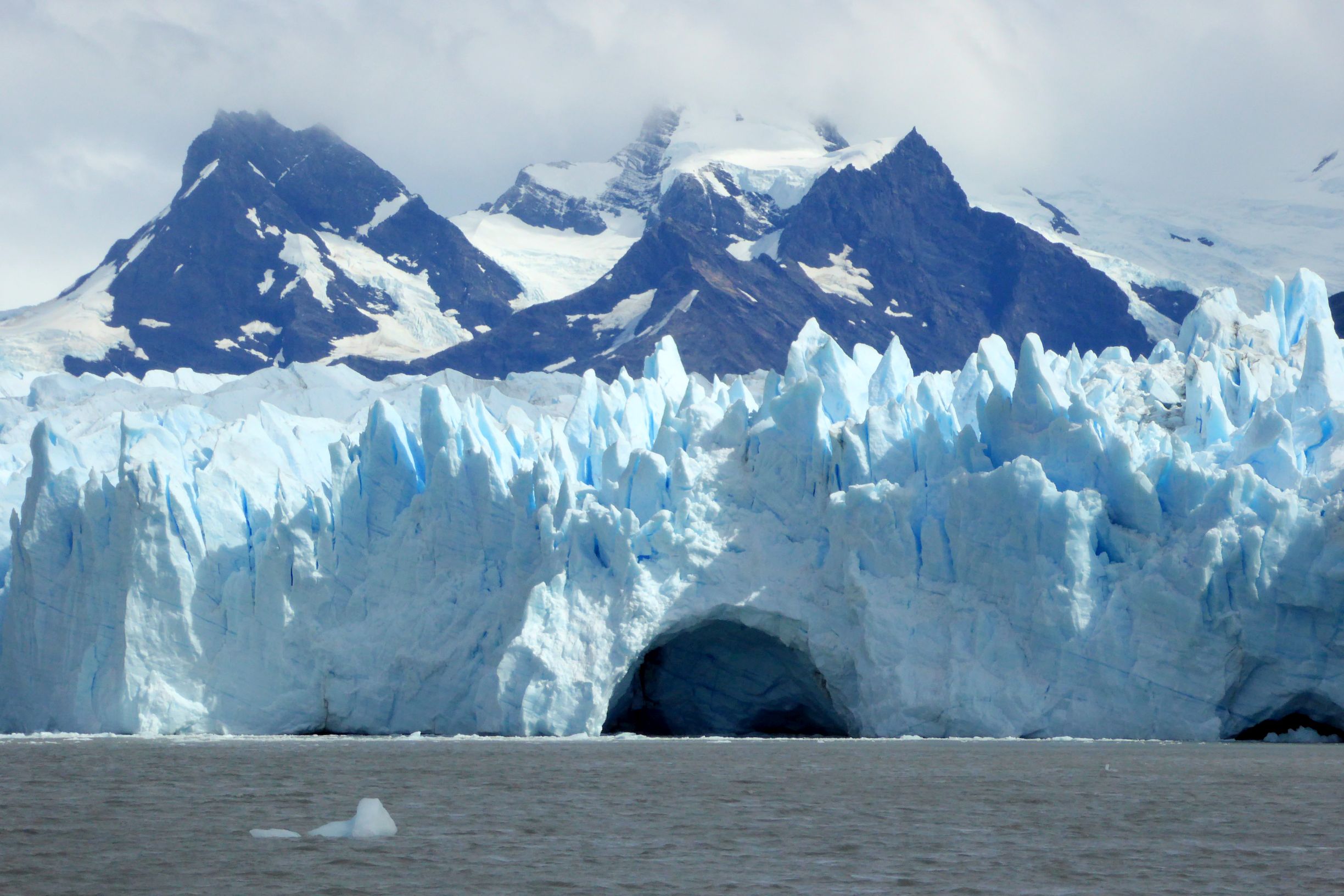
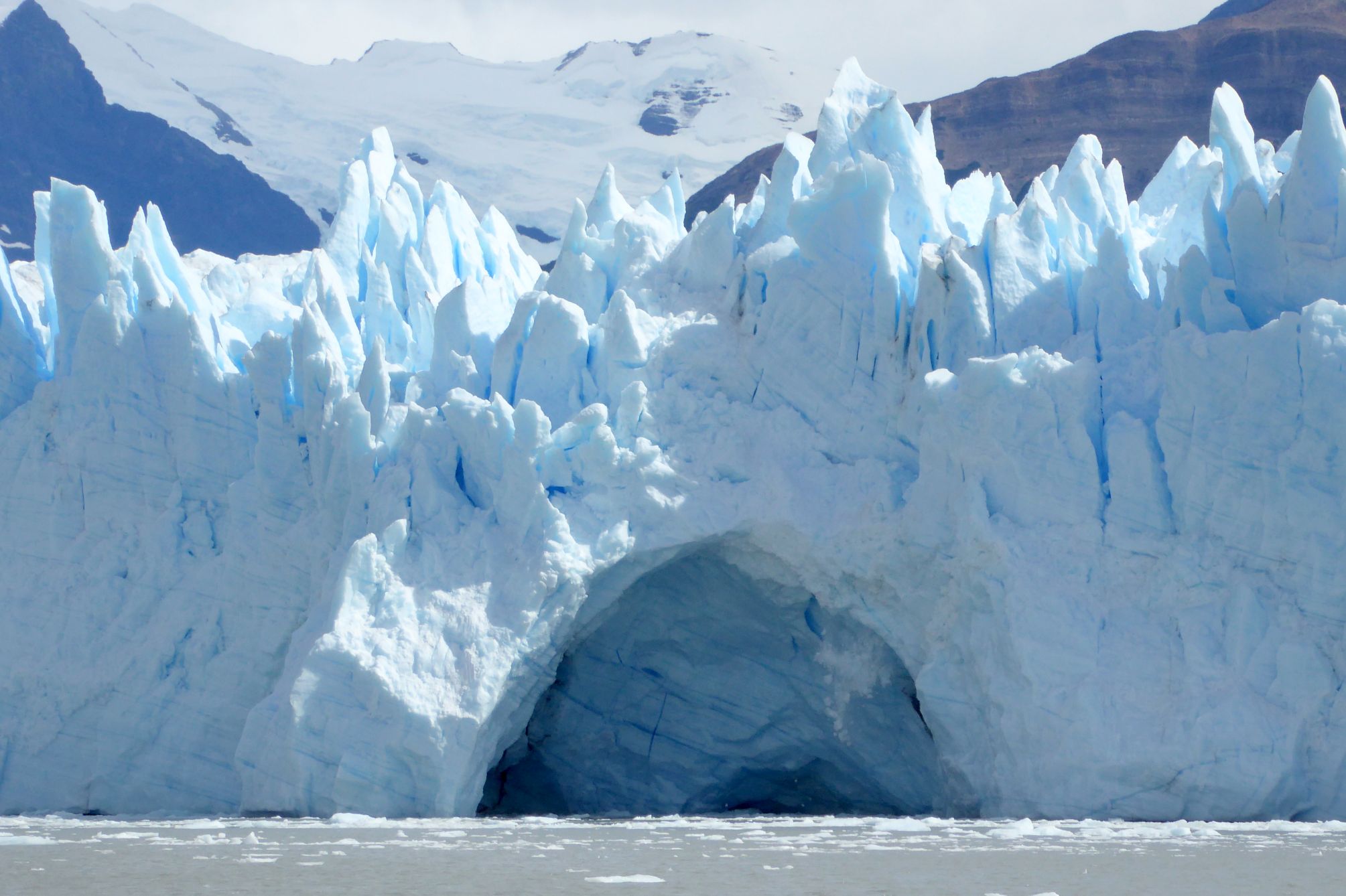
Ok, now I am going to overload you with way too many pictures of Perito Moreno Glacier in Los Glaciares National Park.  See how I provided those links?  That is how you can learn more about these amazing beauties of Patagonia— another link!  I will just let these photos (mostly) speak for themselves.  I will preface them by saying I was totally impressed by the infrastructure (including handicap accessible ramps) provided to enjoy spectacular views.  The color-coded, well-marked walkways and stairs made it so easy to wander with a plan in mind—and, without getting lost.  It is the best I had ever seen anywhere.  Gracias totales, Los Glaciares National Park!

This map shows the walking paths in the park. These were constructed of steel and color coded with painted dots on the railing posts.
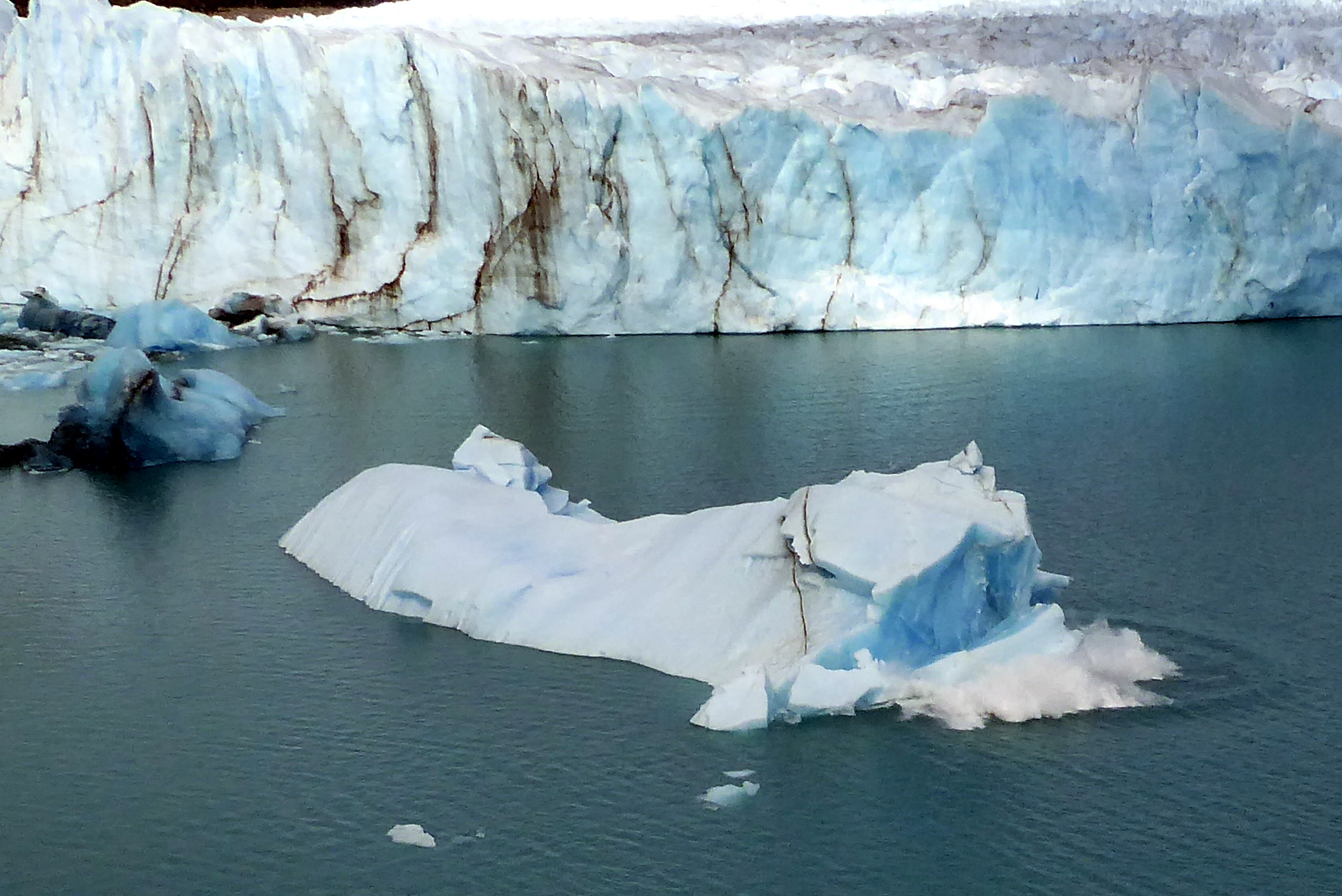
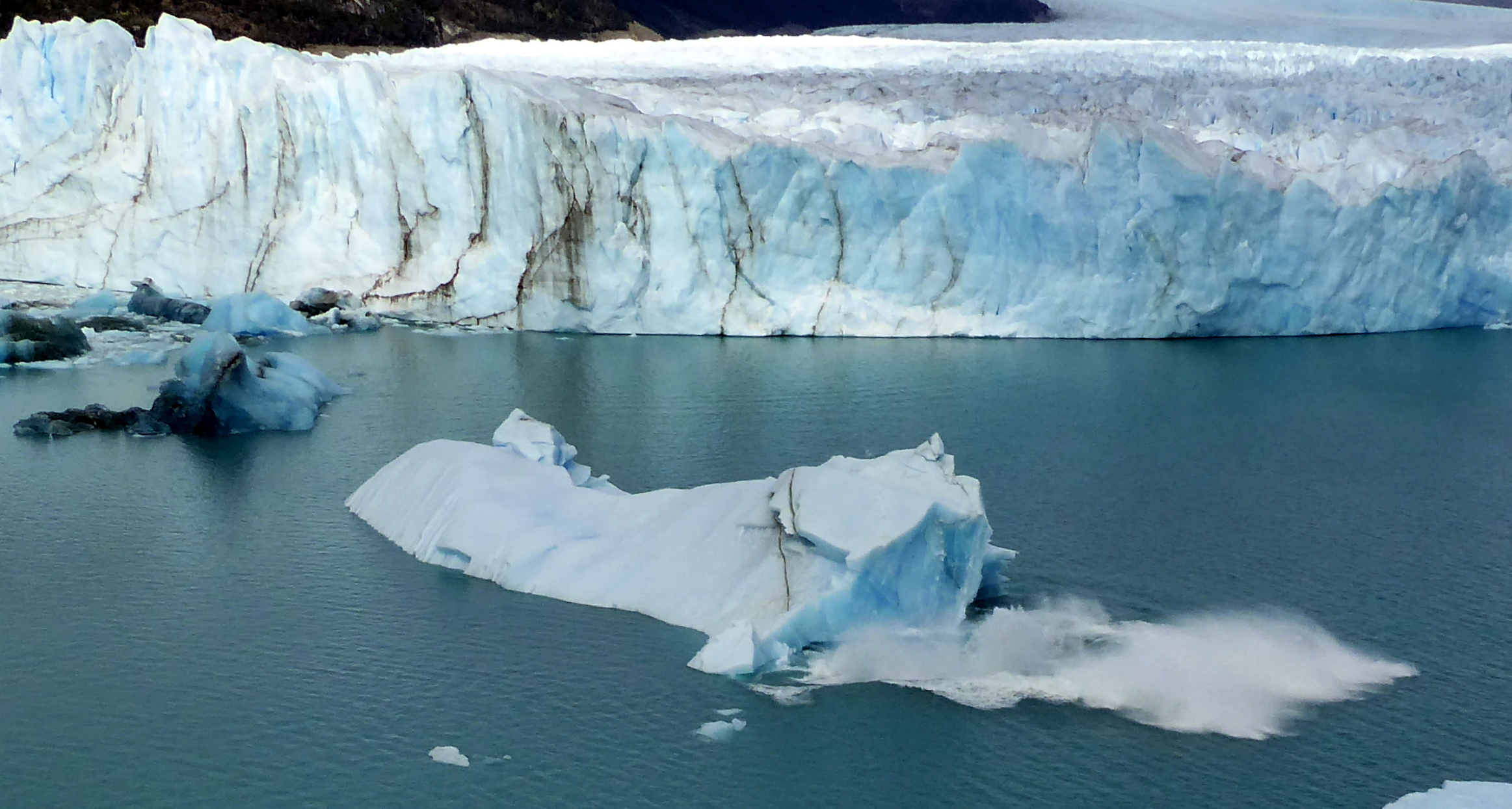
The splash you see is calving of the glacier.

Here is a calving sequence:

For an up close and personal view of the glacier, our group boarded a boat and were able to witness a lot of calving of the glacier.

Approaching the glacier; we got a lot closer…

…and then we saw this!

A HUGE GRACIAS TOTALES TO ANDREA SALAS for capturing it all on video, which I uploaded to YouTube. Watch this short video; it’s awesome!

Our last views of the glacier

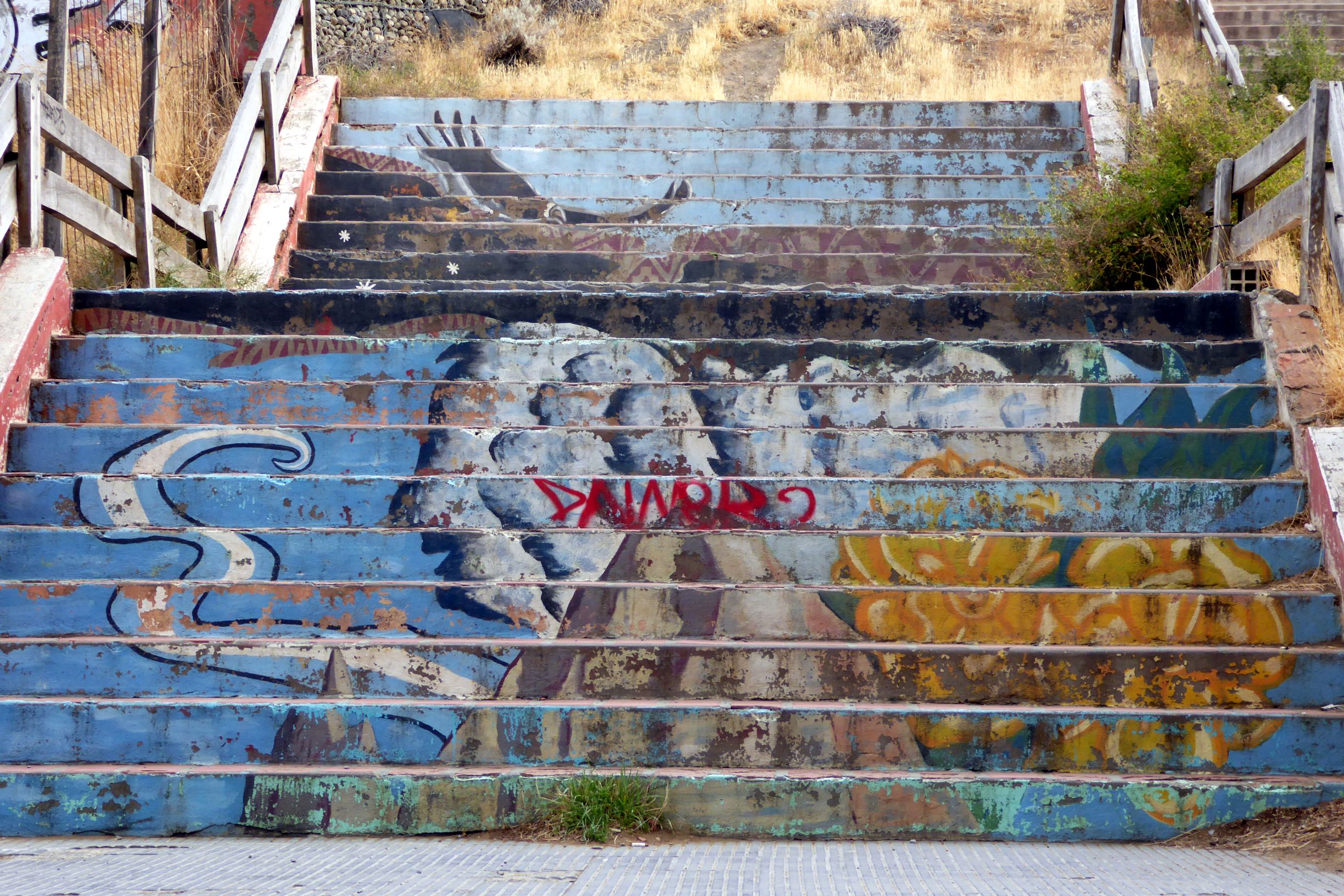
We returned to El Calafate and had the remainder of the afternoon and evening to enjoy the town on our own. Here are some random scenes I captured along the way:

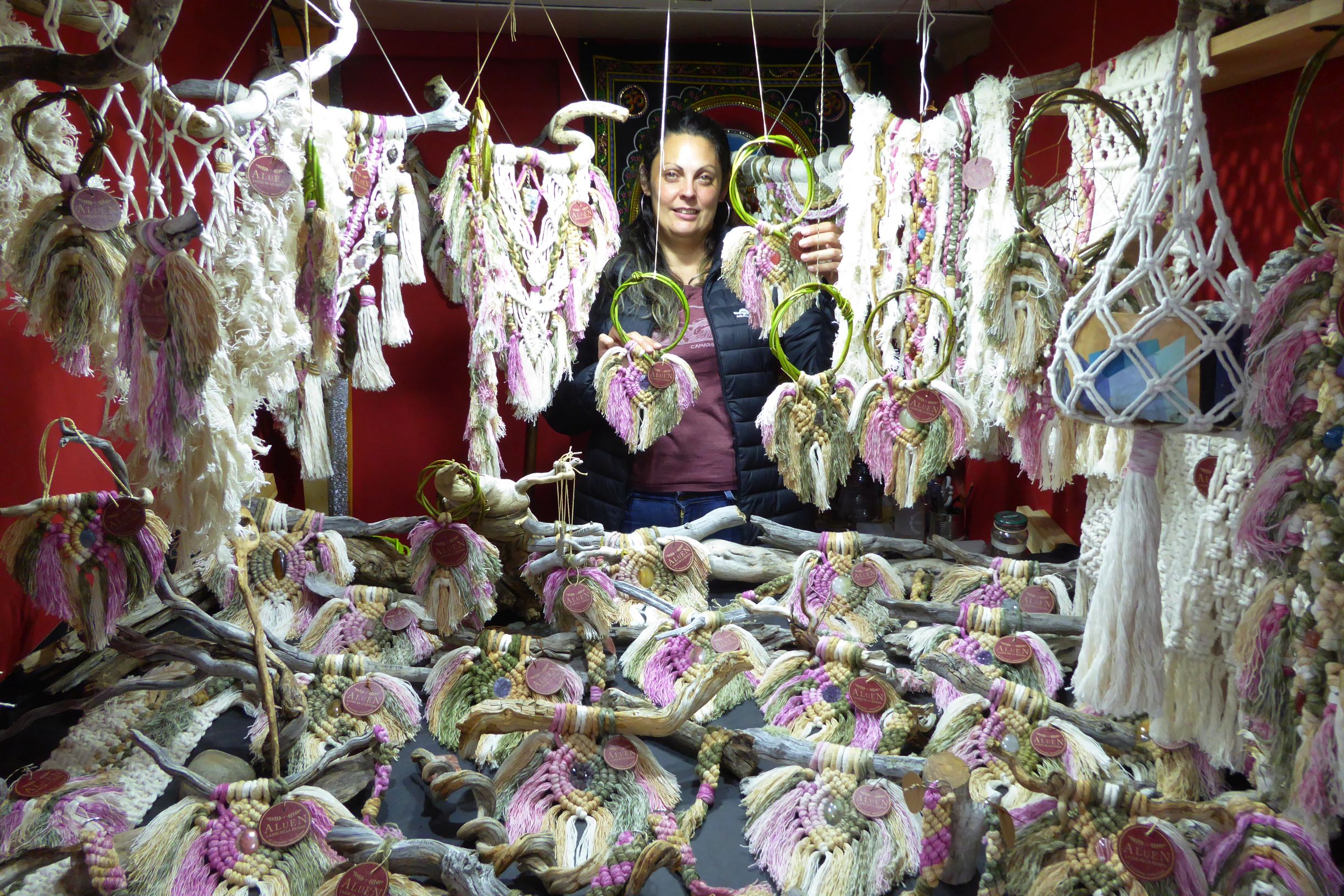
I purchased one of her hangings with a Rhodochrosite stone in the center.

Coming up next: ARGENTINA & CHILE #17: BACK IN BUENOS AIRES

ARGENTINA & CHILE #15: ENJOYING EL CALAFATE

There was no way to get around it. This was going to be a long day on the road looking out a bus window while traveling north, crossing the border back into Argentina, and driving to El Calafate.

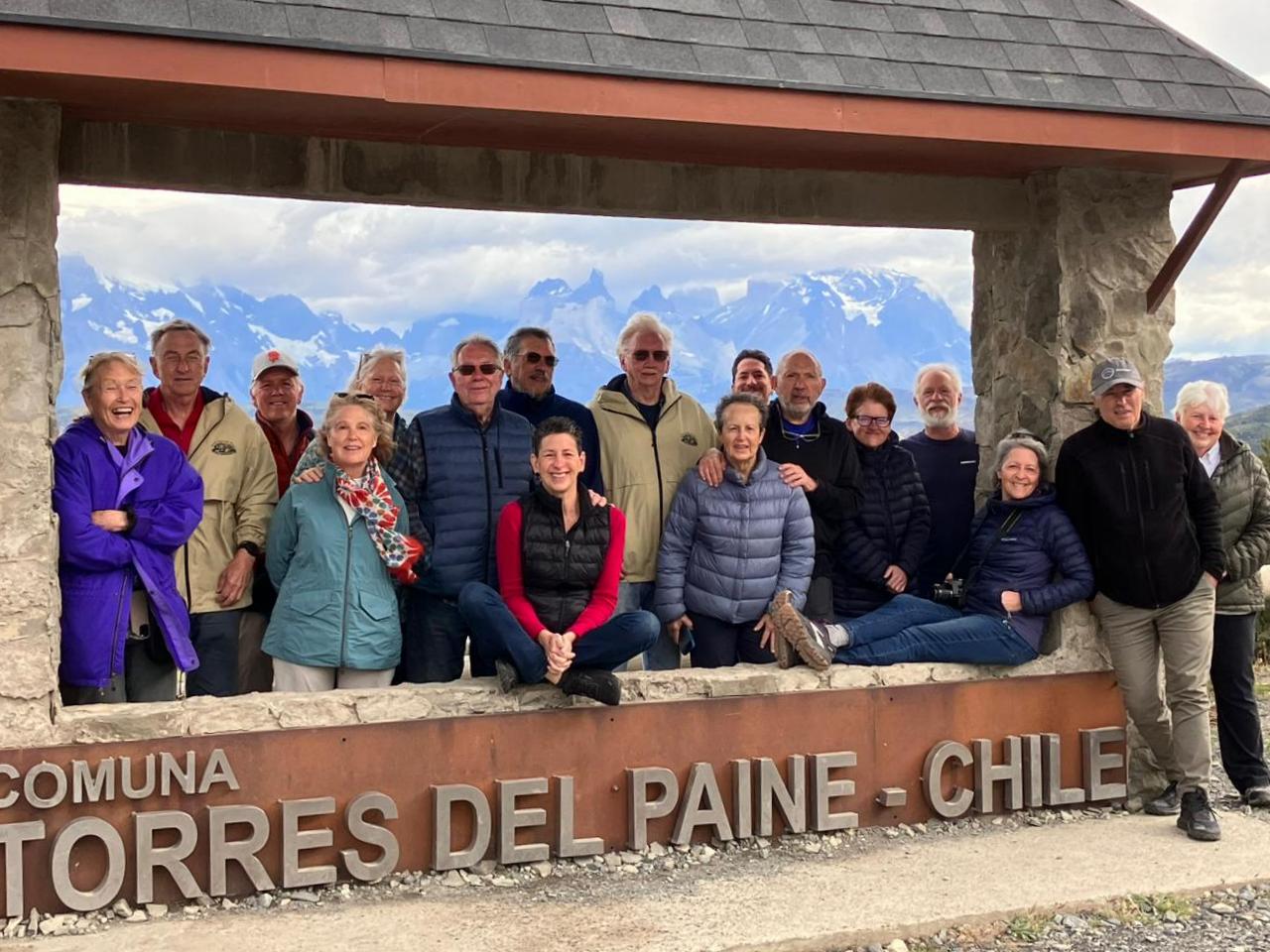
To begin our journey, we headed back up the hill and stopped for one last look back down to our hotel and to Torres del Paine National Park beyond.

(For all photos, especially panoramas, click on the image for a full screen view.)

Along the way, we saw more beautiful guanacos off in the distance.  They are good at hopping fences, though, so we were forewarned.

A gorgeous day for a drive!

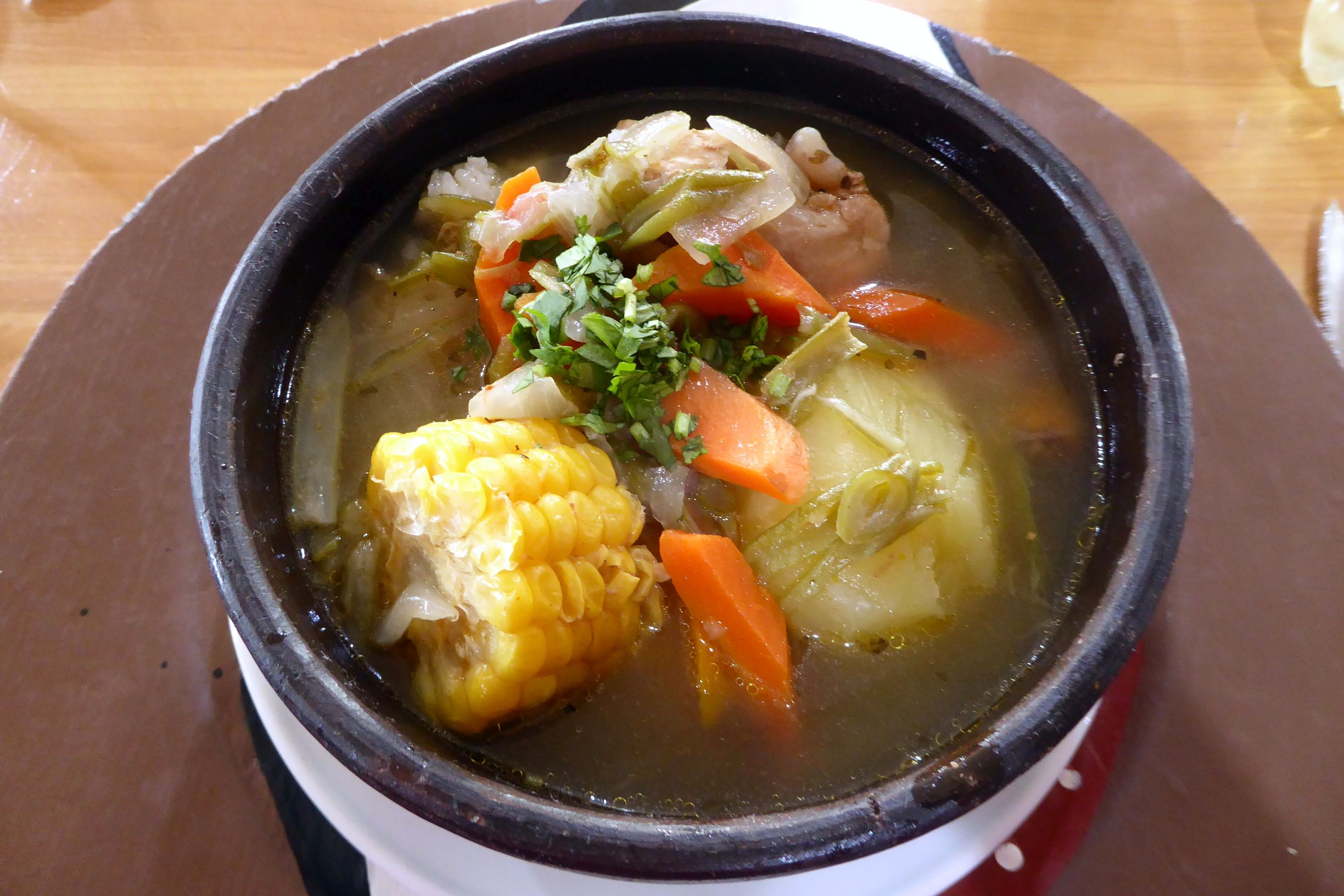
After a few hours on the road, we stopped at a restaurant, El Ovejero, in the middle of nowhere, for lunch.  It was attached to a hotel located at the border crossing and the crossroads between two routes that lead in and out of Torres del Paine National Park. We were charmed by the gaucho theme of the place and the authentic food we enjoyed for lunch. Cazuela is a traditional Chilean stew, and the one we were served was loaded with (much appreciated!) vegetables and chicken rather than beef.  To spice it up a bit, we could add Pebre, a Chilean sauce similar to Mexican salsa fresca.  Delicious!

Clever bar stools– perfect for a gaucho!
The restaurant and hotel, depicted in a wood wall panel
This artwork depicting the hotel was at the end of one of the dining tables.

Since we were leaving Chile and entering Argentina, we had to say goodbye to our bus and driver as well as Sergio, our guide.  Ola Ariel, our new guide!  The moment I saw him, I felt like I knew him from somewhere.  Well, I didn’t, but I realized he looked just like someone I knew from my childhood days while going to religious school at Temple Beth Shalom, in Long Beach, California, where I grew up.  Sure enough, like me, he was a Russian-Polish Jew, 100% Ashkenazie.  I couldn’t get over his Argentinian accent.  To my ears, it just didn’t compute!

Ariel was a hoot!  If I had to be stuck on a bus for that many hours, he was just the guide to be stuck listening to, because he was a great storyteller!  As he told us about the lifestyle and work of gauchos, he demonstrated their typical attire by dressing me up.  (Thanks, Lisa, for grabbing this shot!)

Although this was the day on the itinerary I was not really looking forward to, because of the long drive, it turned out to be quite enjoyable!

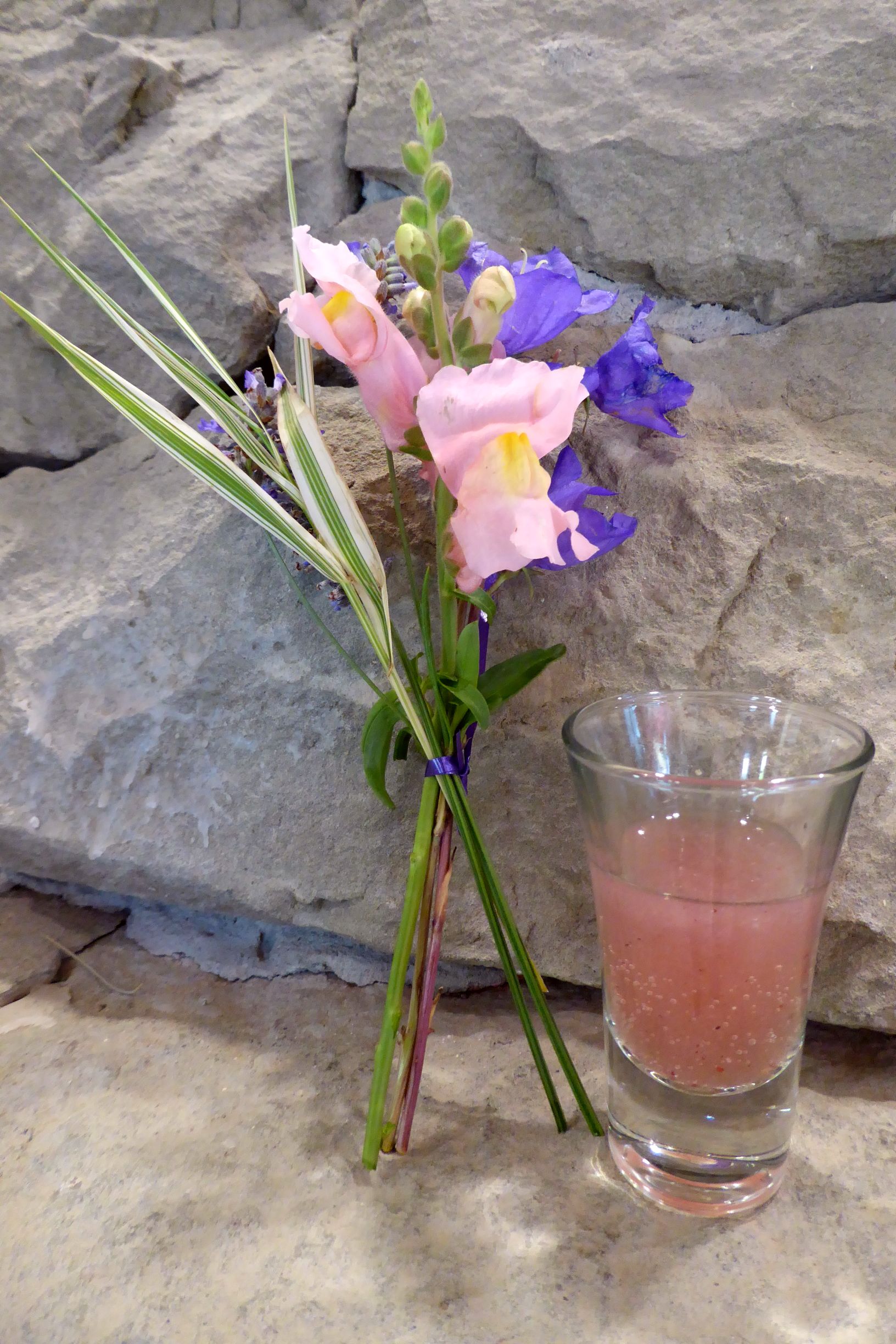
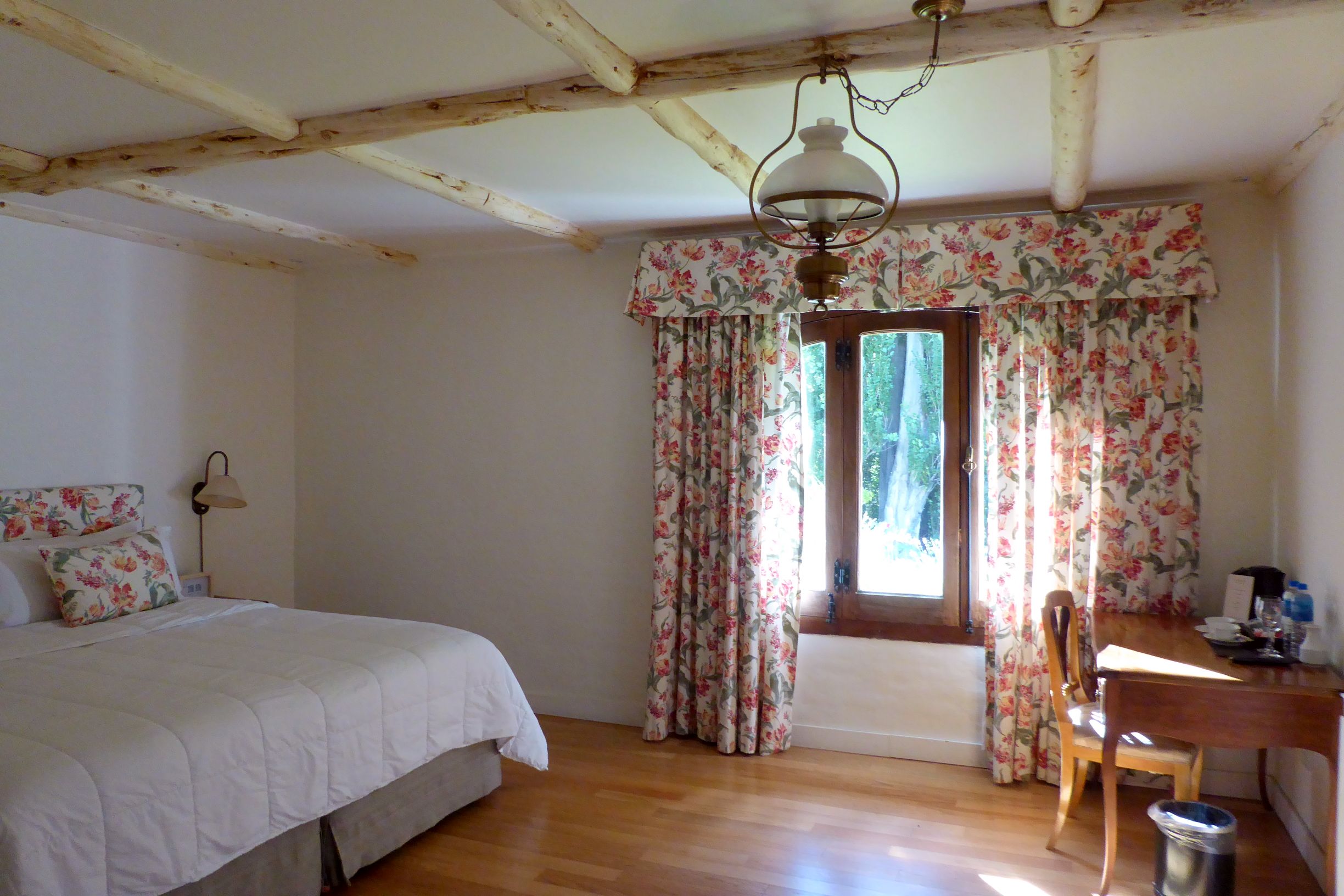
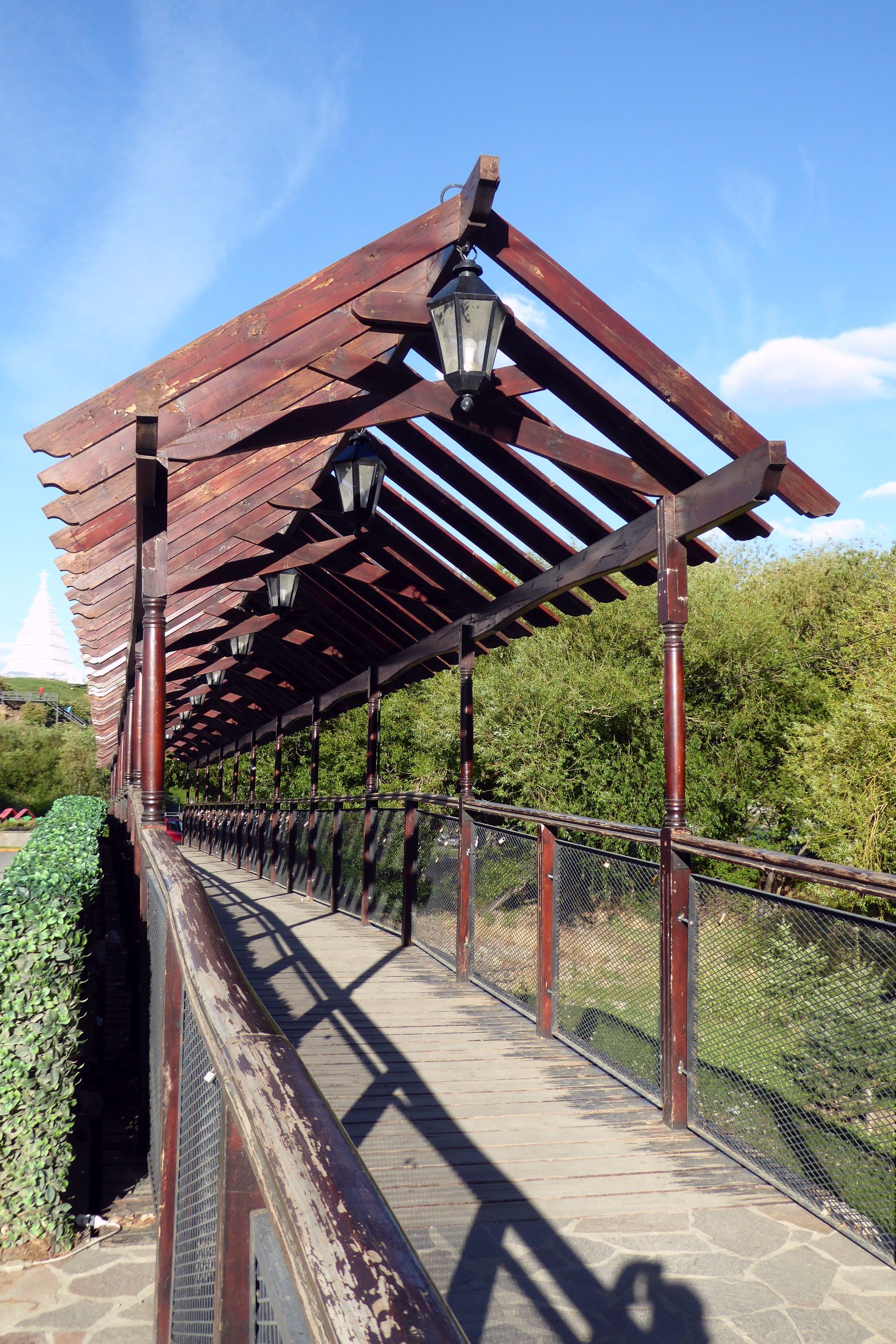
Kau Yatun Hotel, in El Calafate, was love at first site!  The beautiful grounds, authentic architecture—it was oozing with charm!  We were greeted with fresh flowers to place in the little vase in our room and gathered for a welcome drink—a nice touch.

The hotel’s entrance

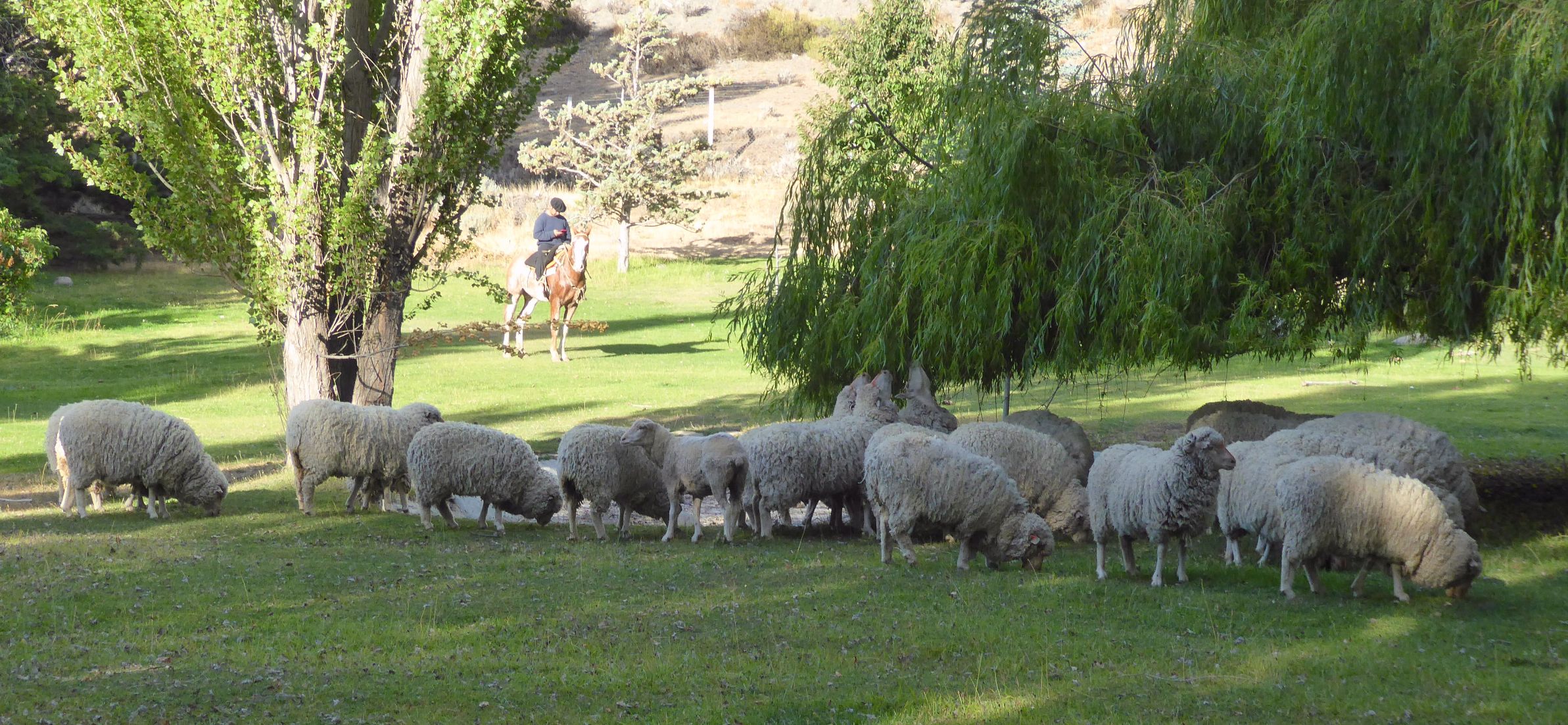
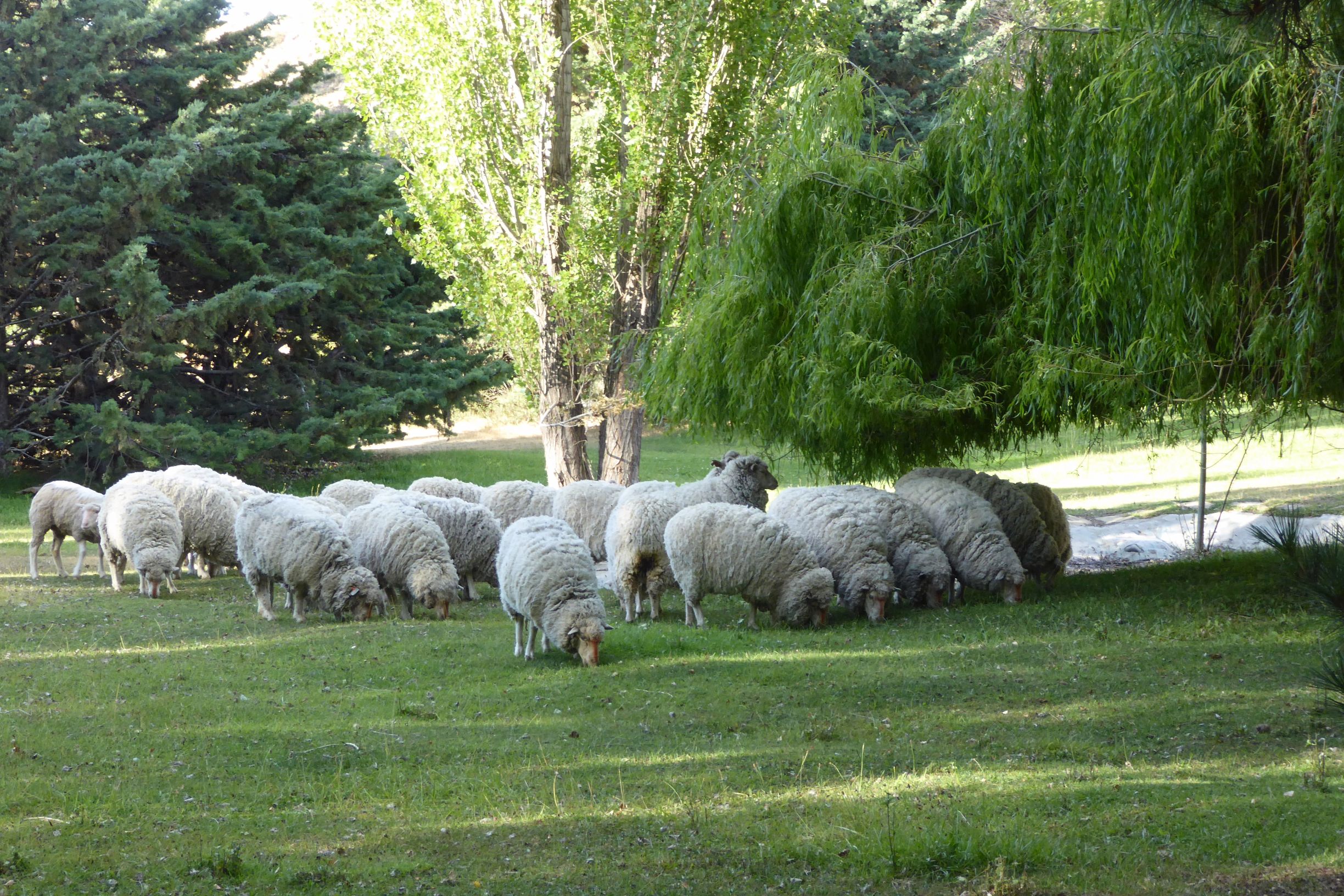
After settling in, Andrea took us on a walking tour to town, a short walking distance from our hotel.  Adjacent to the hotel, a gaucho was tending to his sheep.

Note the cell phone in this modern gaucho’s hand. Times have changed…

El Calafate is in Patagonia, but quite a bit north from where we had been in Punta Arenas.  The town of 25,000 residents is situated on Lake Argentino and is named after the calafate bush which has yellow flowers and dark blue berries.

This is the place to stay if you would like to visit Los Glaciares National Park and see Perito Moreno Glacier, our destination for the following day.  It’s a nice town, too, with buena onda—good vibes. 

Following our tour, I went on into town with a few members of the group to explore a little more before returning for our group dinner.  We would have the opportunity to see more of the town the following day.

On February 28th, it was still Christmas in El Calafate!
A few of the many stray dogs in El Calafate. The shelter holds 1,500 dogs, and it’s full. Sad…

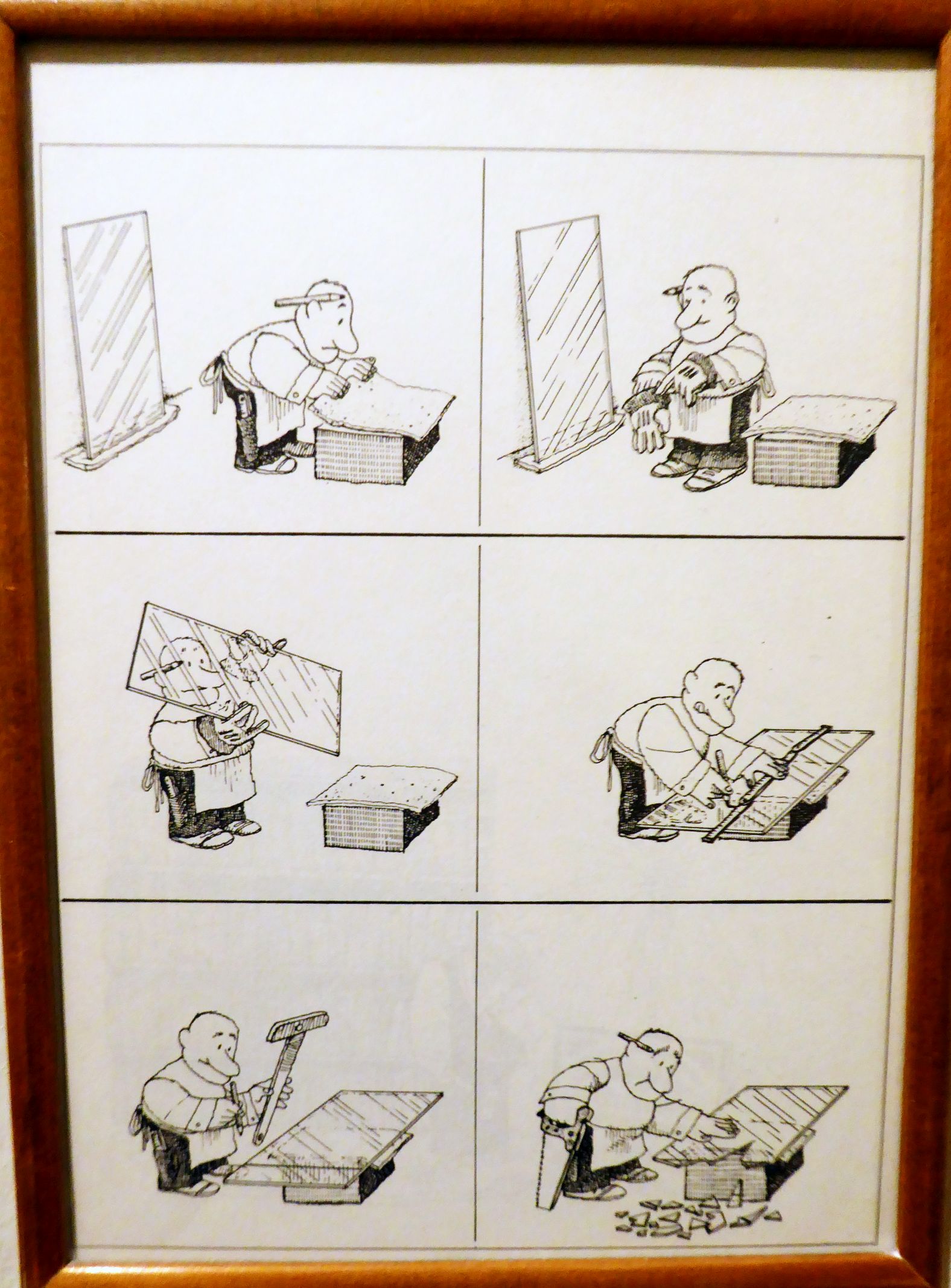
Back at the hotel, we got a kick out of the Quino cartoon panels they had displayed in the hallway at each room.  Coincidentally, this was the one outside our room.  As a glass artist, Bruce could relate!

Next up:  ARGENTINA & CHILE #16: A GORGEOUS GLACIER!