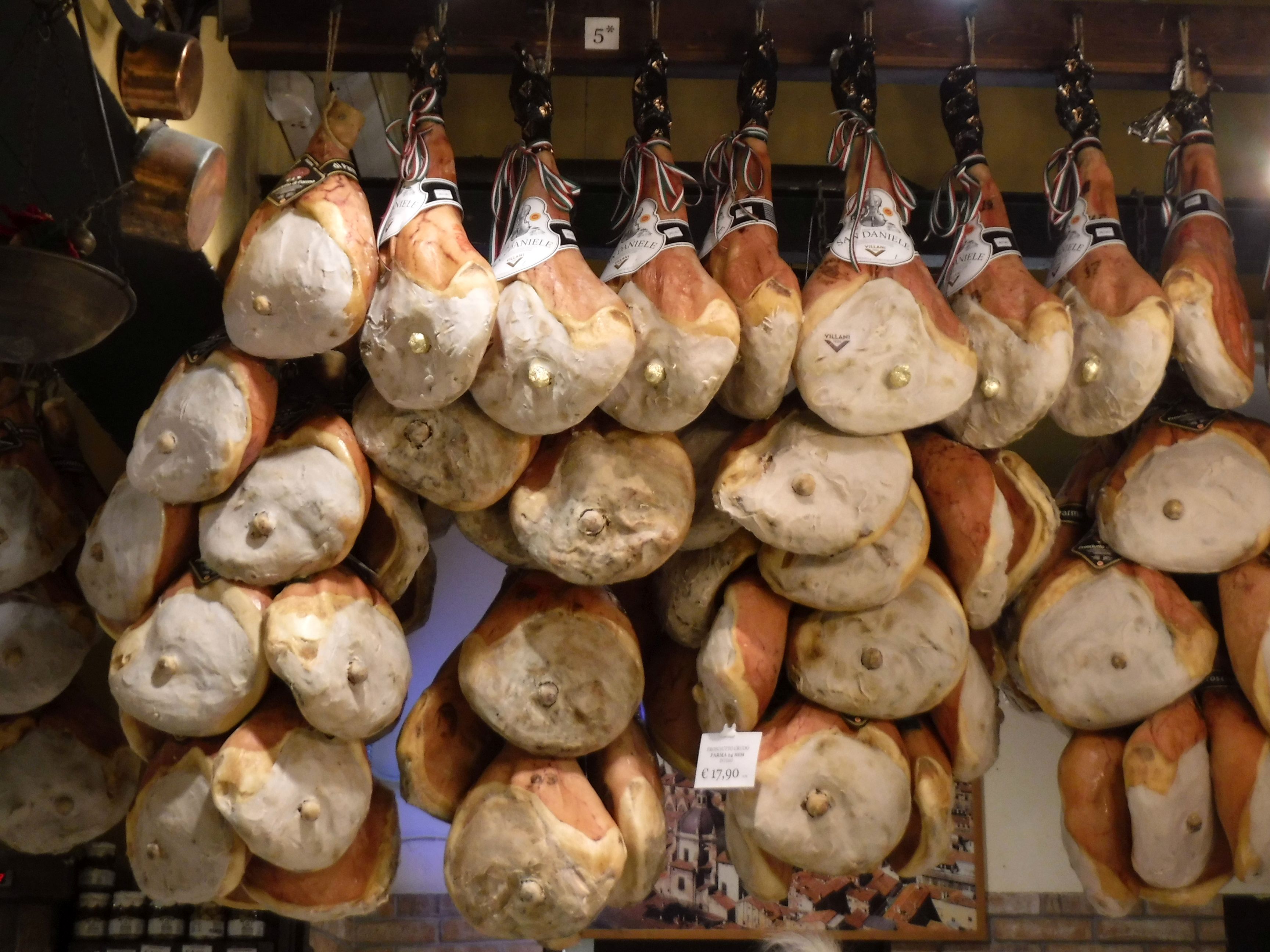
Parma, located in Northern Italy in the Emilia-Romagna region, is known for many things, including its architecture, music, cheese, fantastic cuisine—and, prosciutto, which was present at every included lunch or dinner throughout our travels. Walk by any deli throughout the region, and you will see prosciutto hanging—and, a lot of it.
(For all pictures, click on the image to see full screen view.)
Poking around delis (and taking deep breaths to savor the smells) is one of the things I enjoy doing when I travel, in addition to visiting markets, bakeries, and (of course!) chocolatiers. I like to see what the locals are producing, take photos, and pick up a little something to try or bring back home.
A popular Easter treat in Italy!
Overseas Adventure Travel designs their tours with a lot of built-in free time during the afternoons and/or evenings. Bruce and I take advantage of this time by exploring each place on foot, seeing as much as we can. We did just that upon our arrival in Parma, walking throughout downtown following an orientation walk with the group.
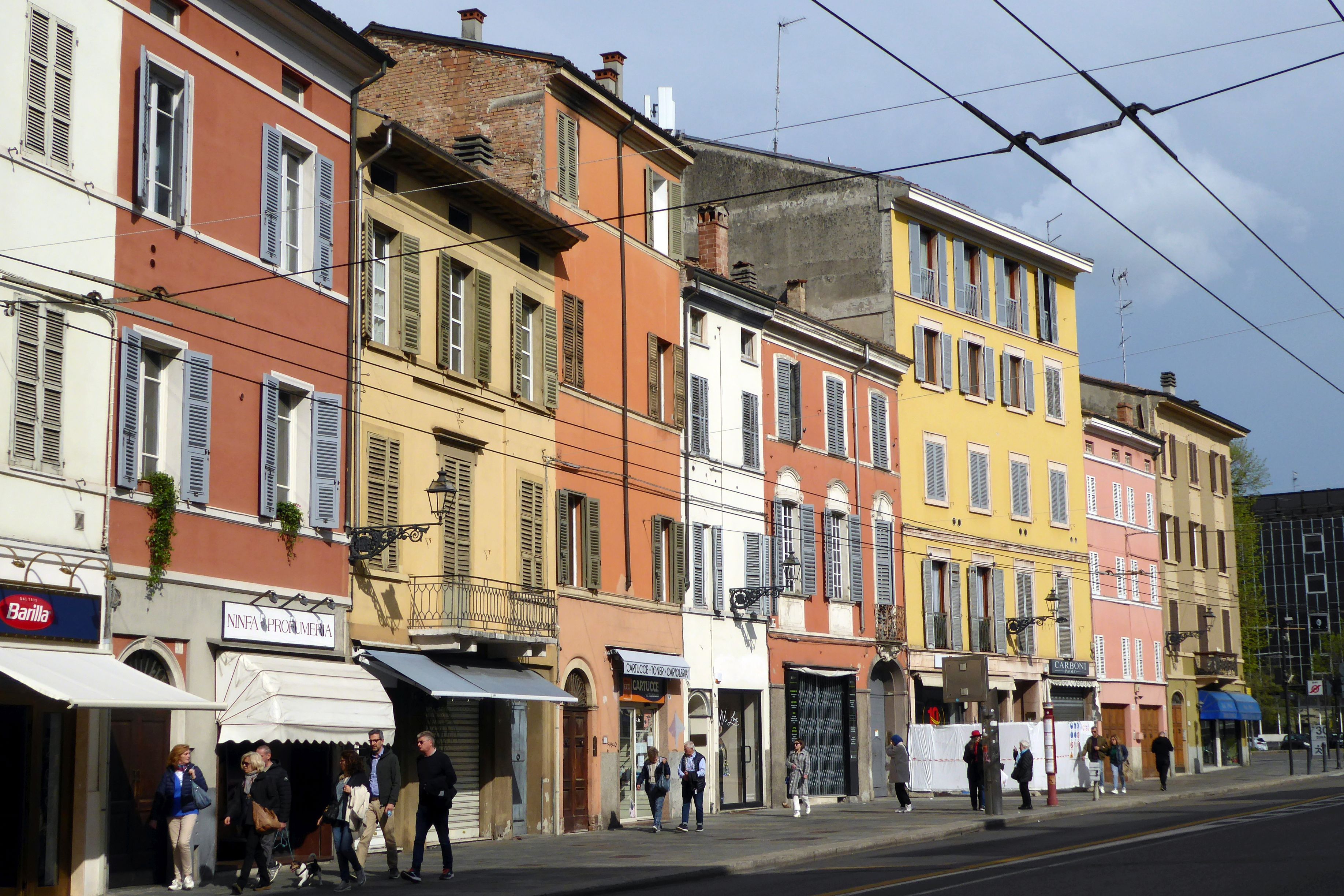
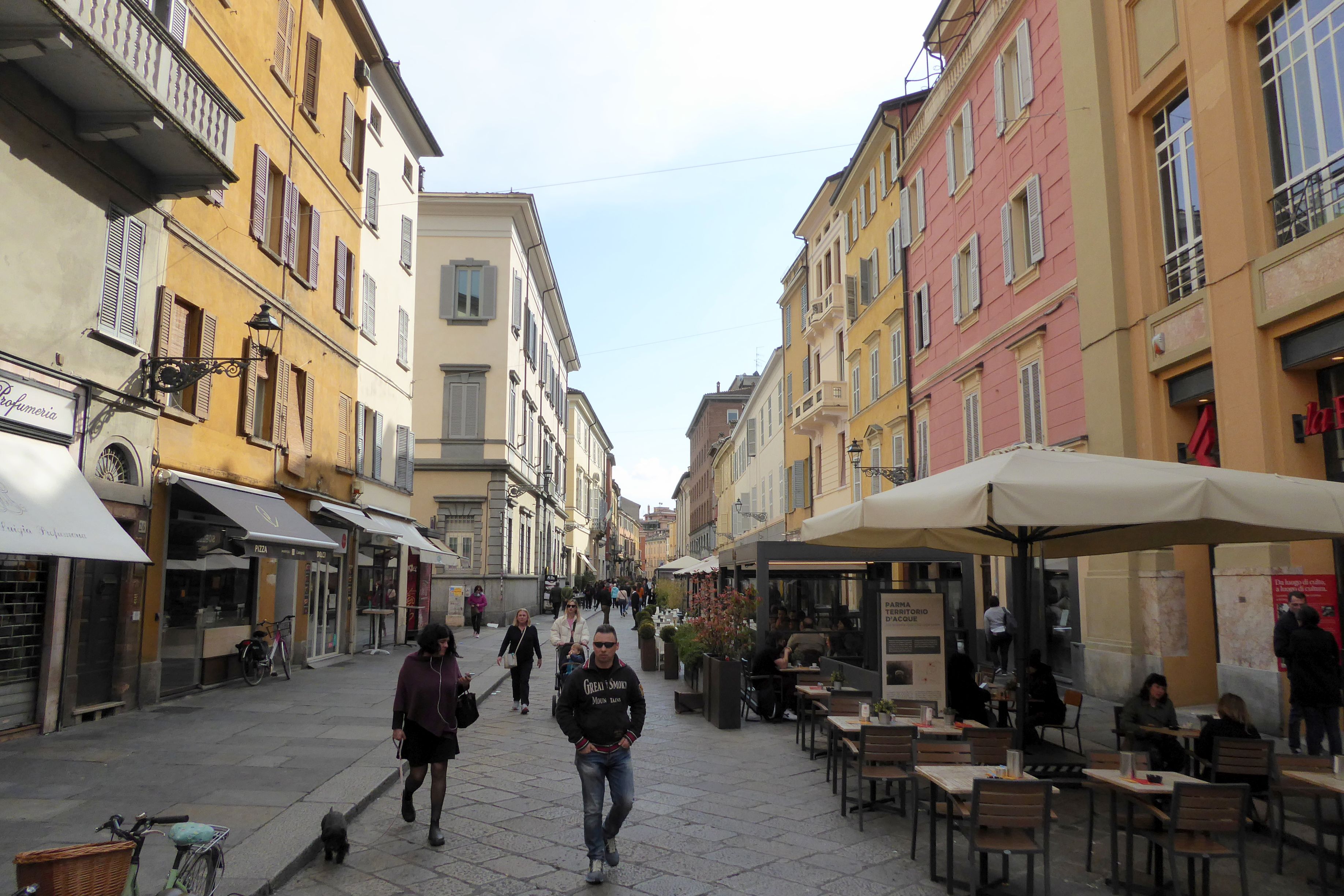
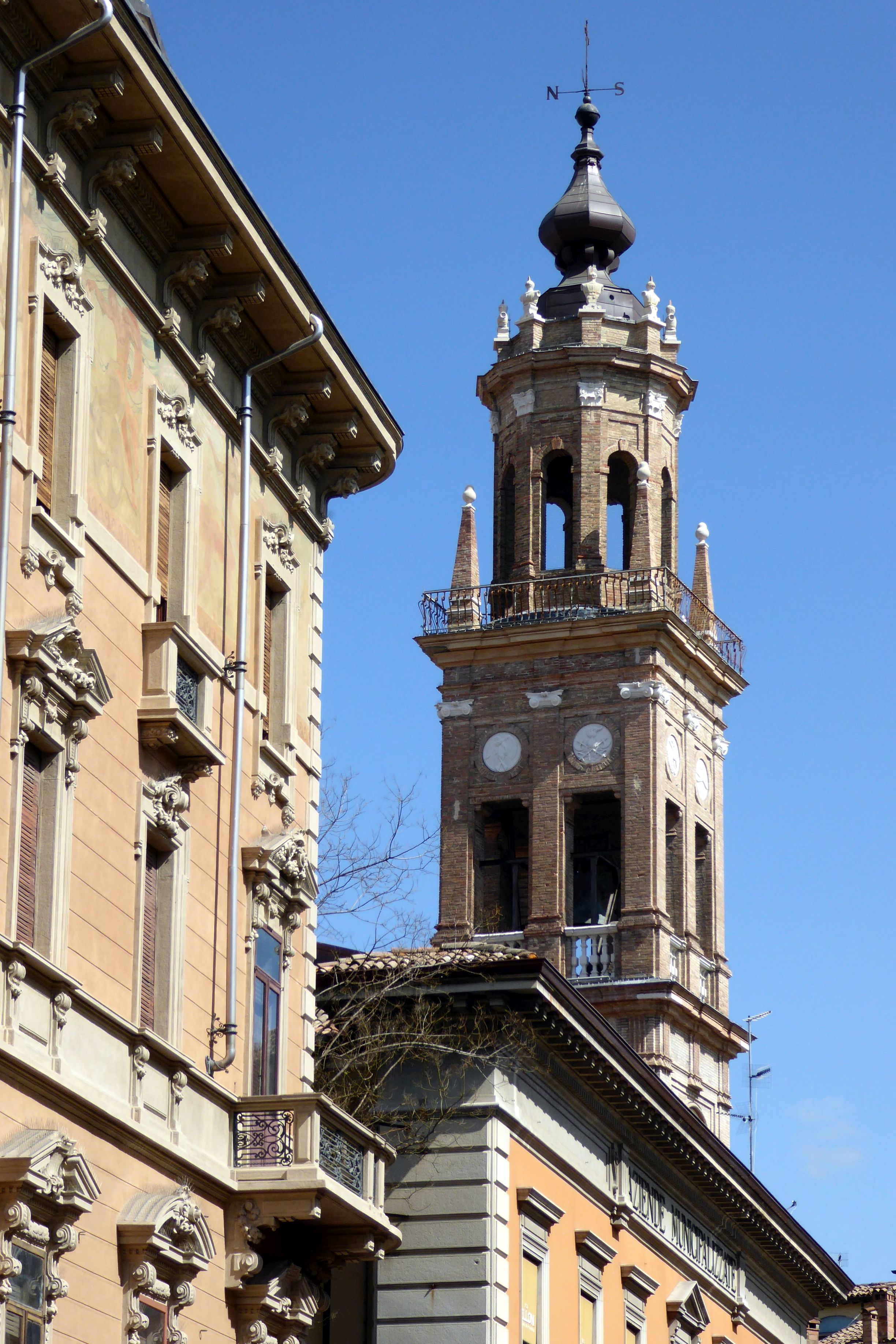
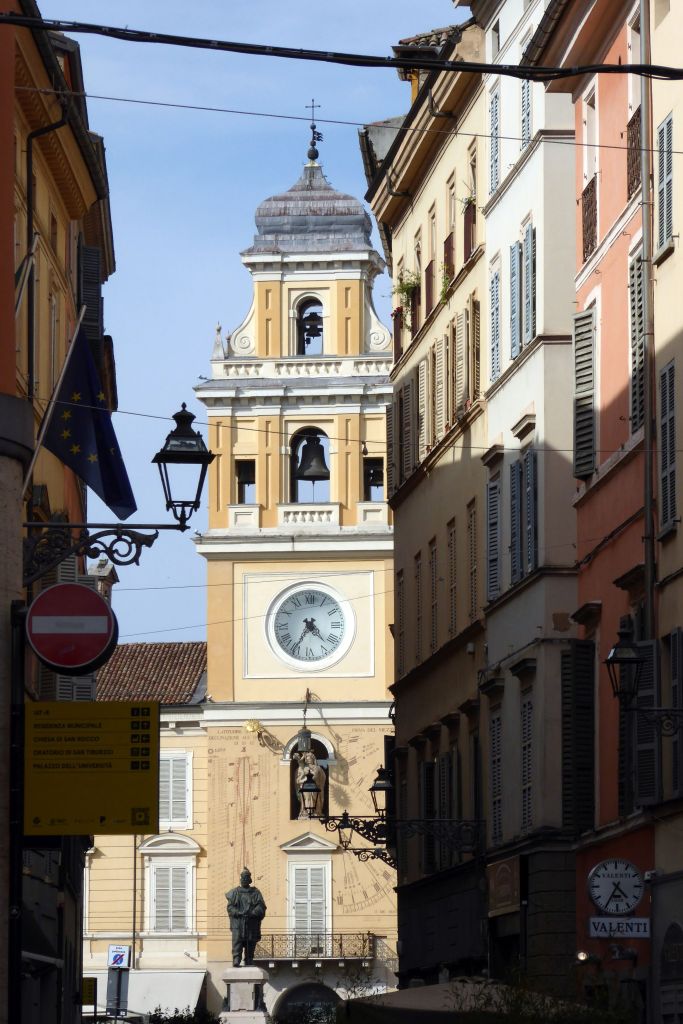
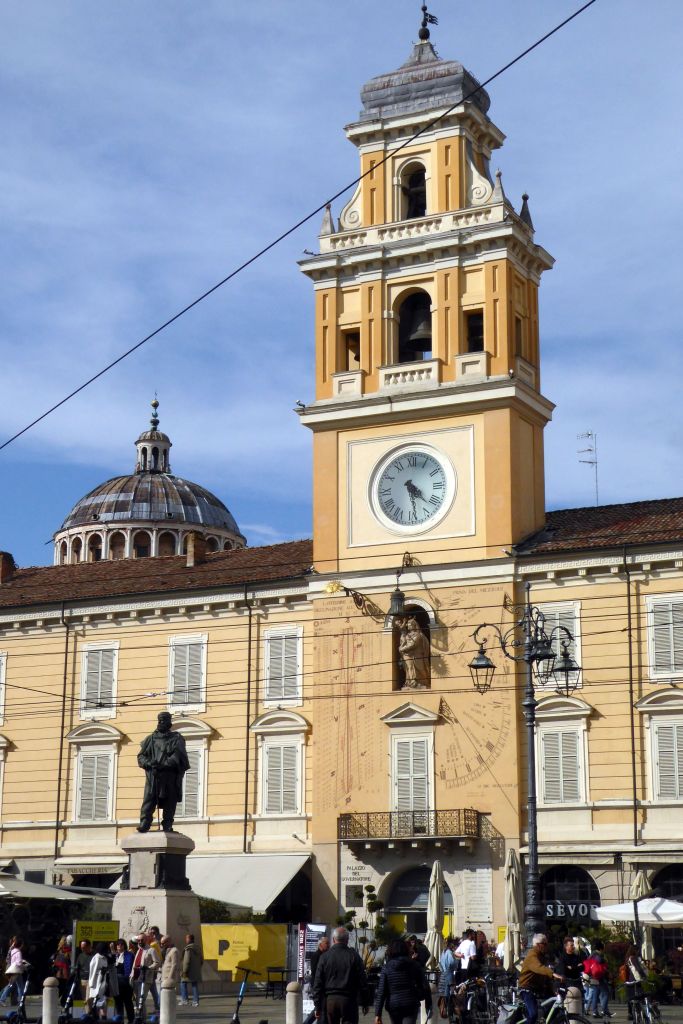
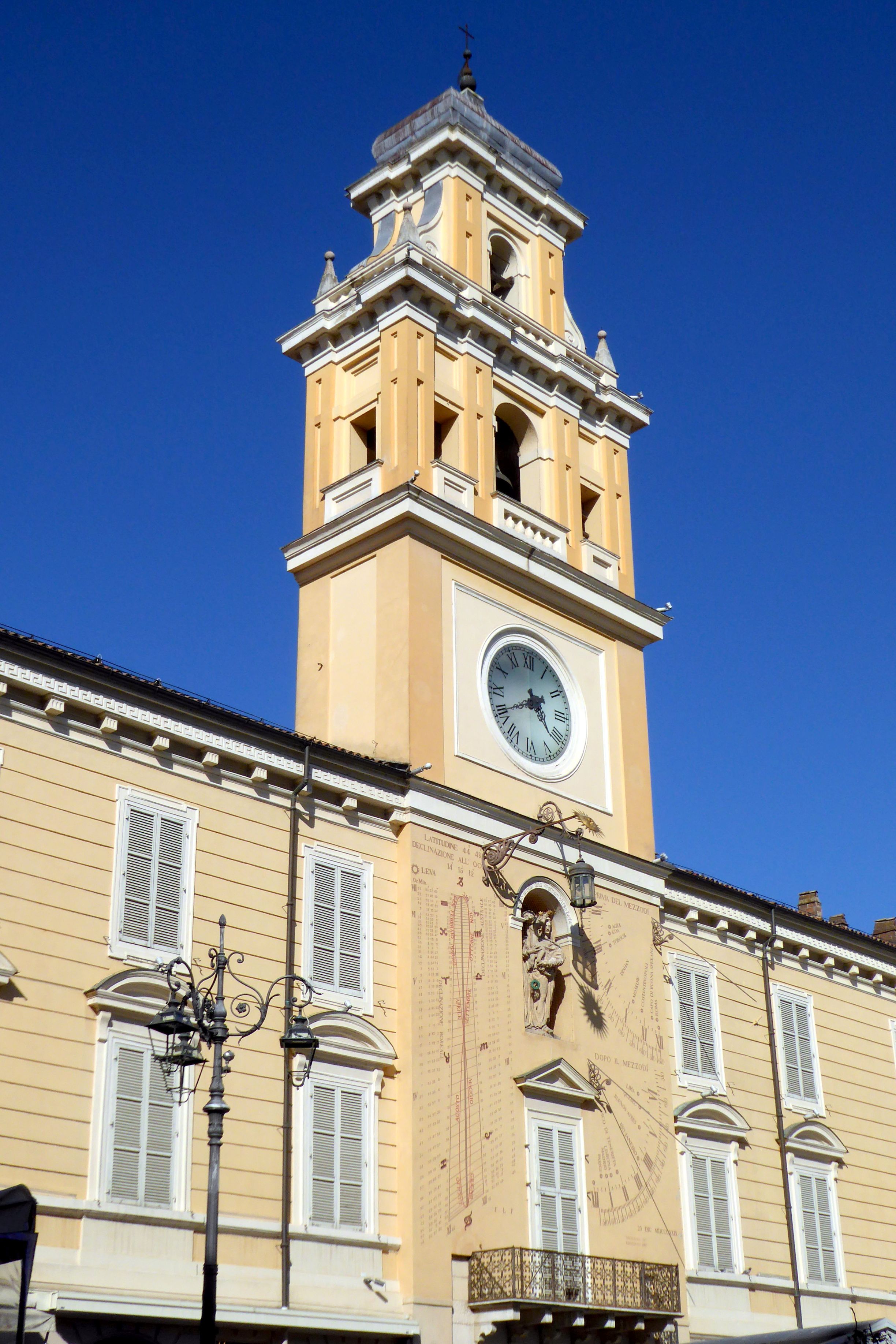
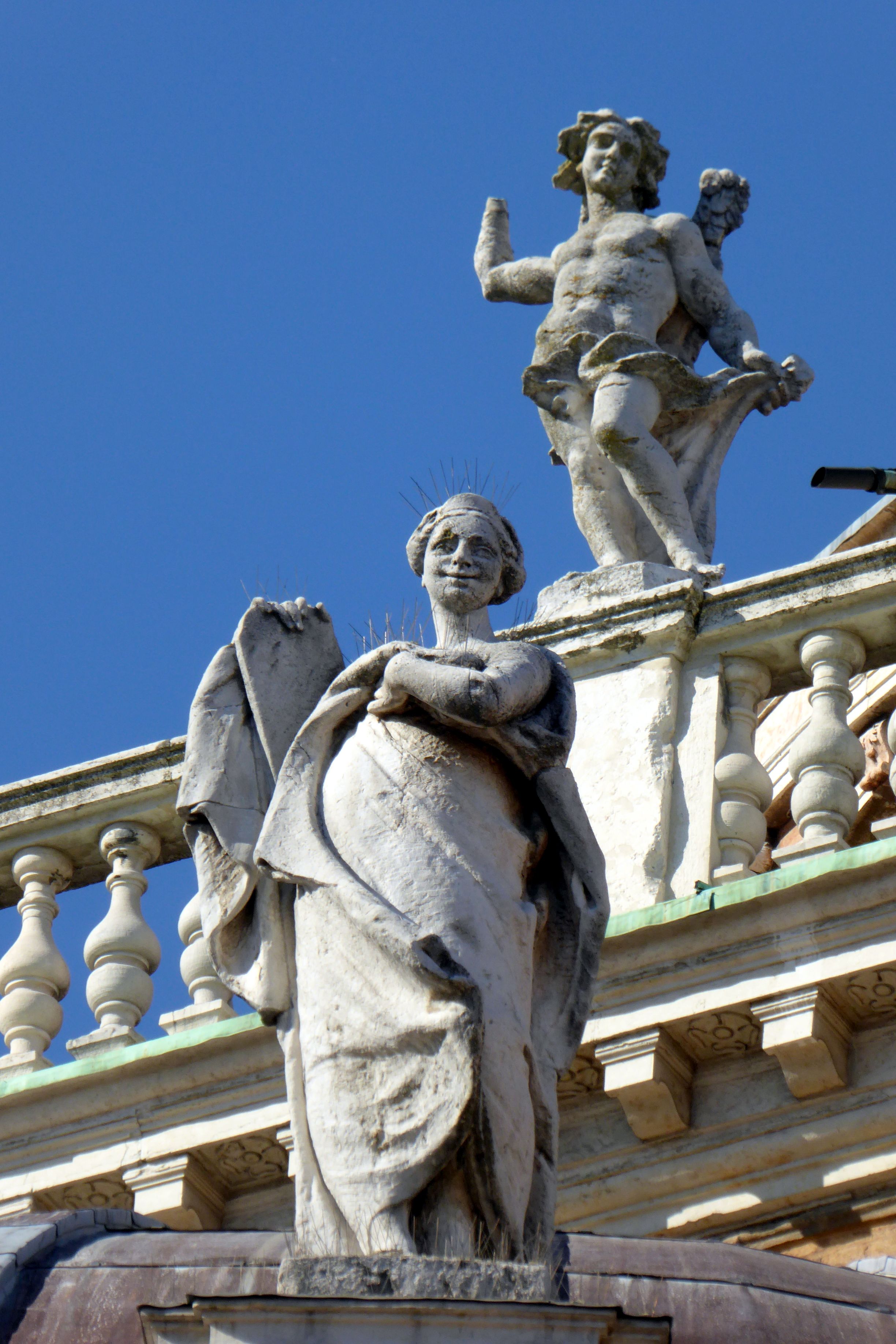
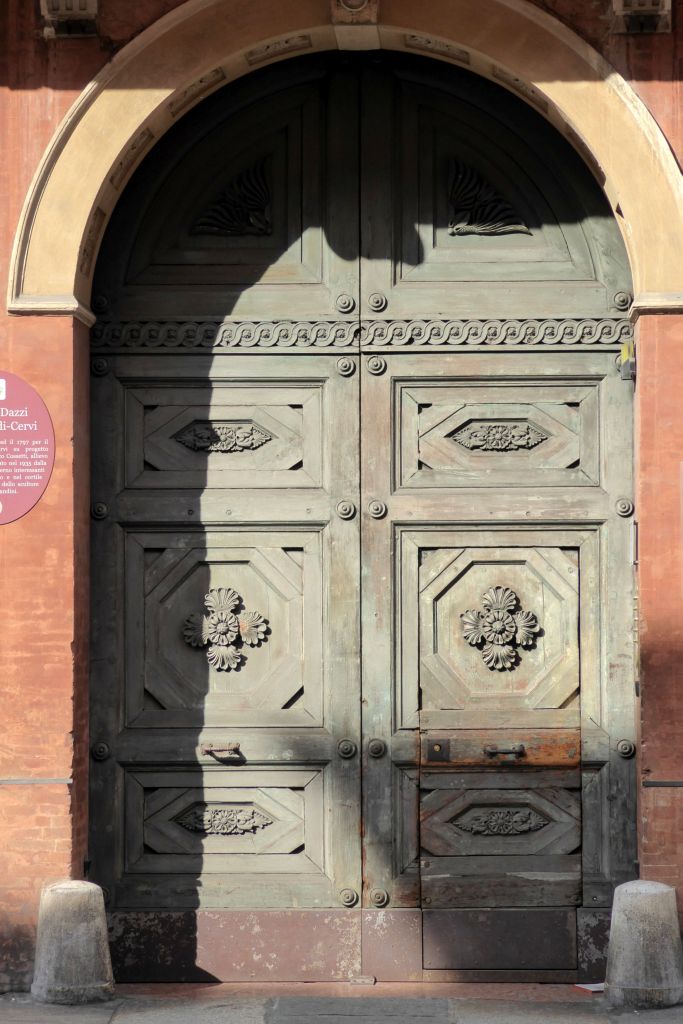
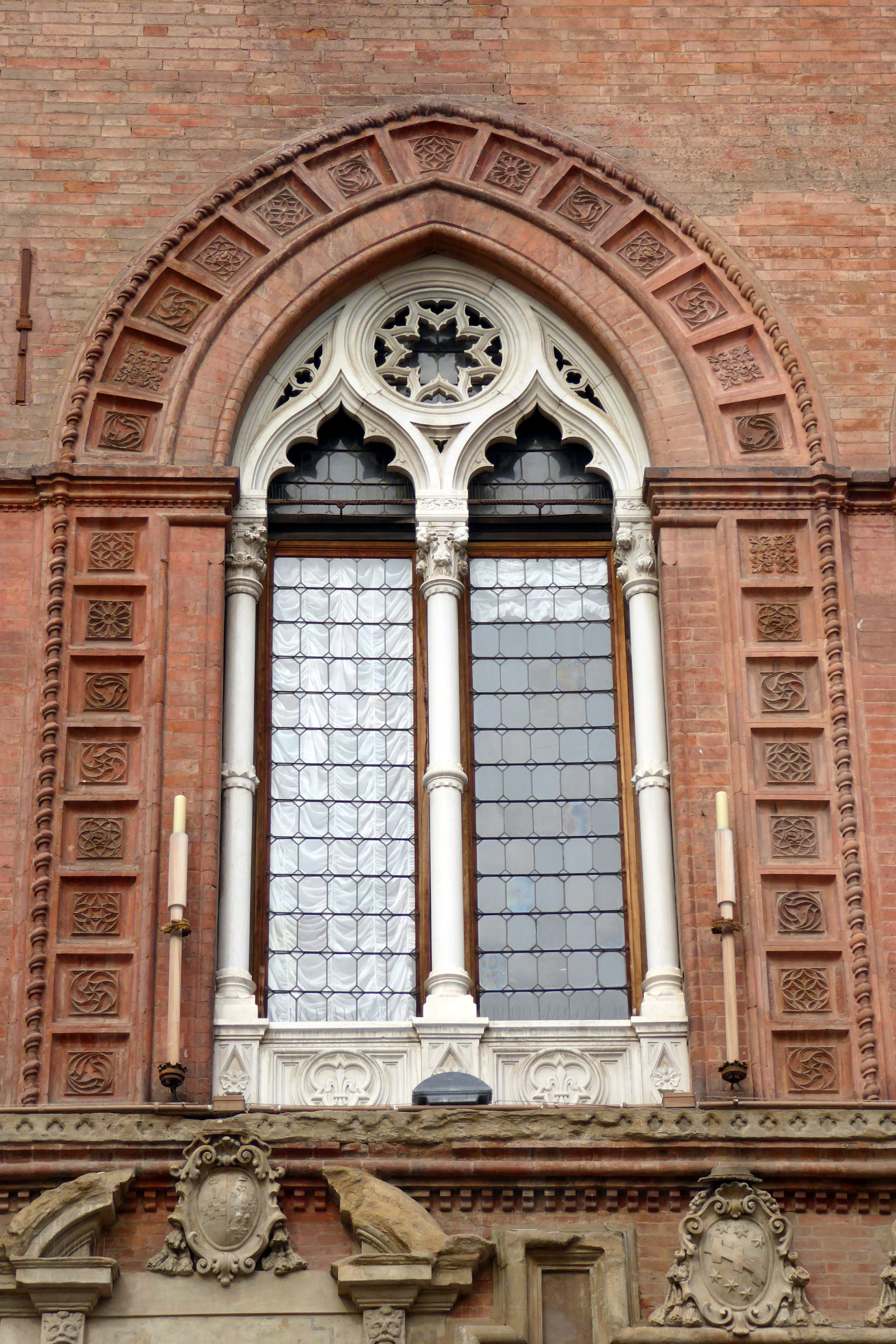
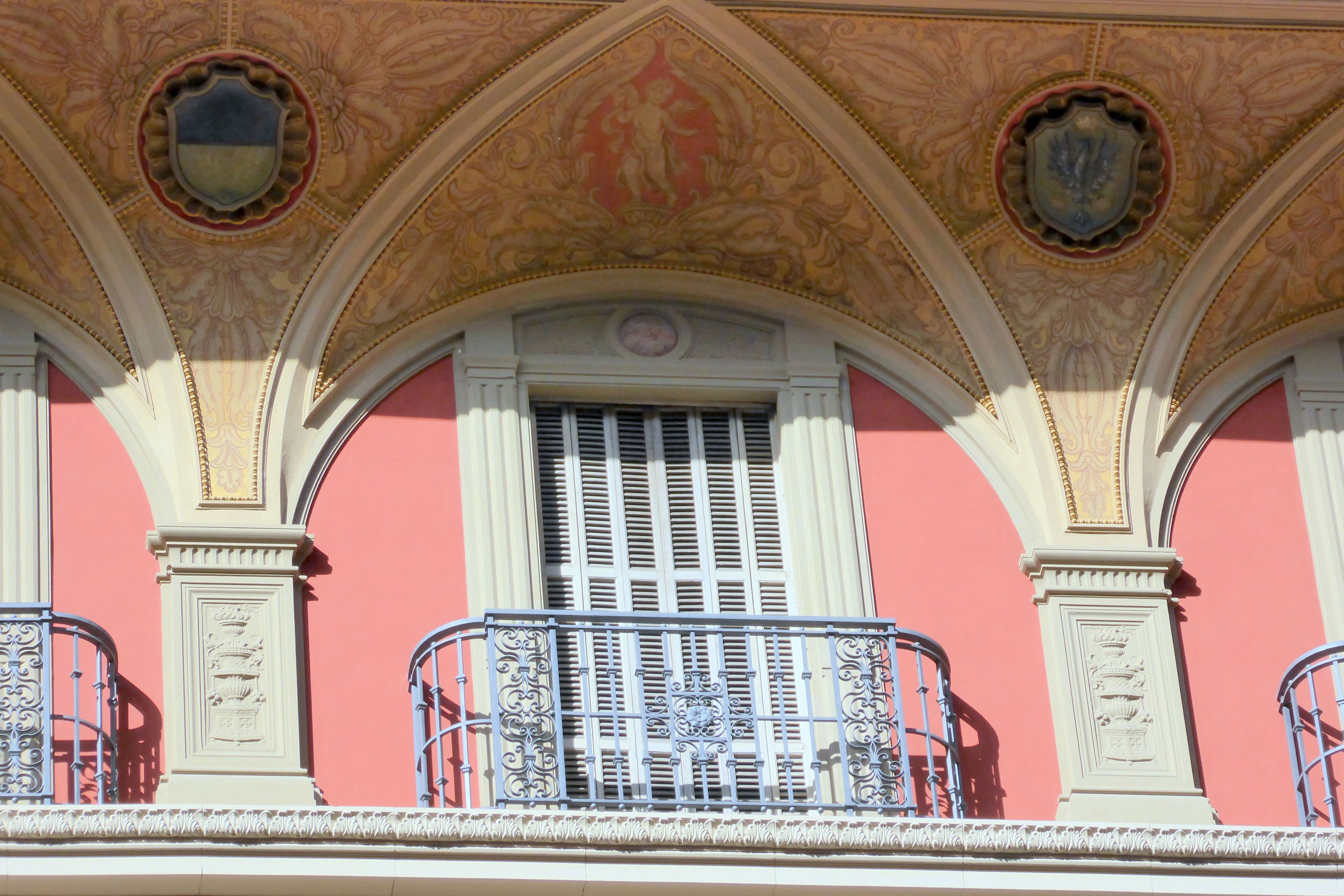
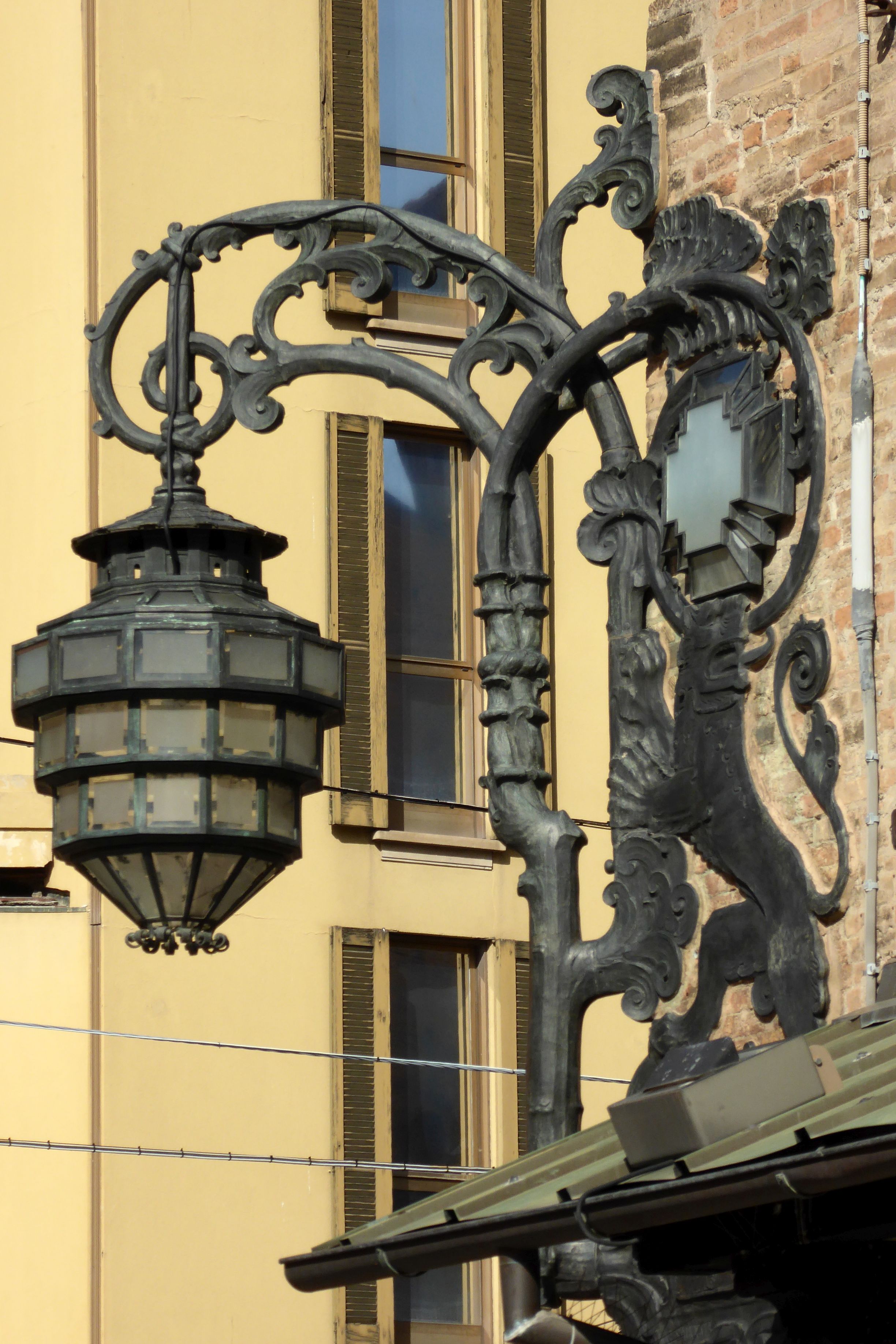
Here are some scenes from around Parma:
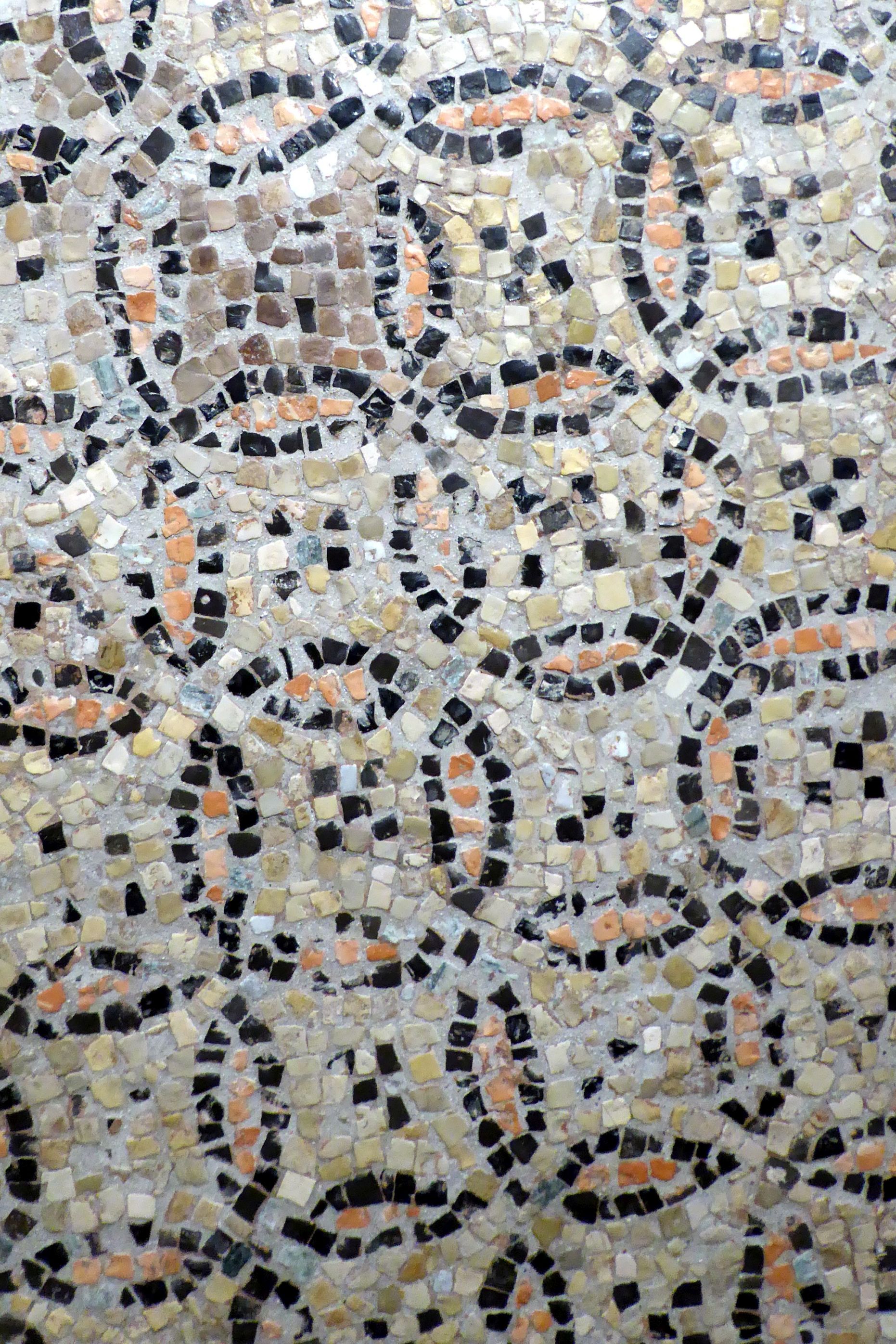
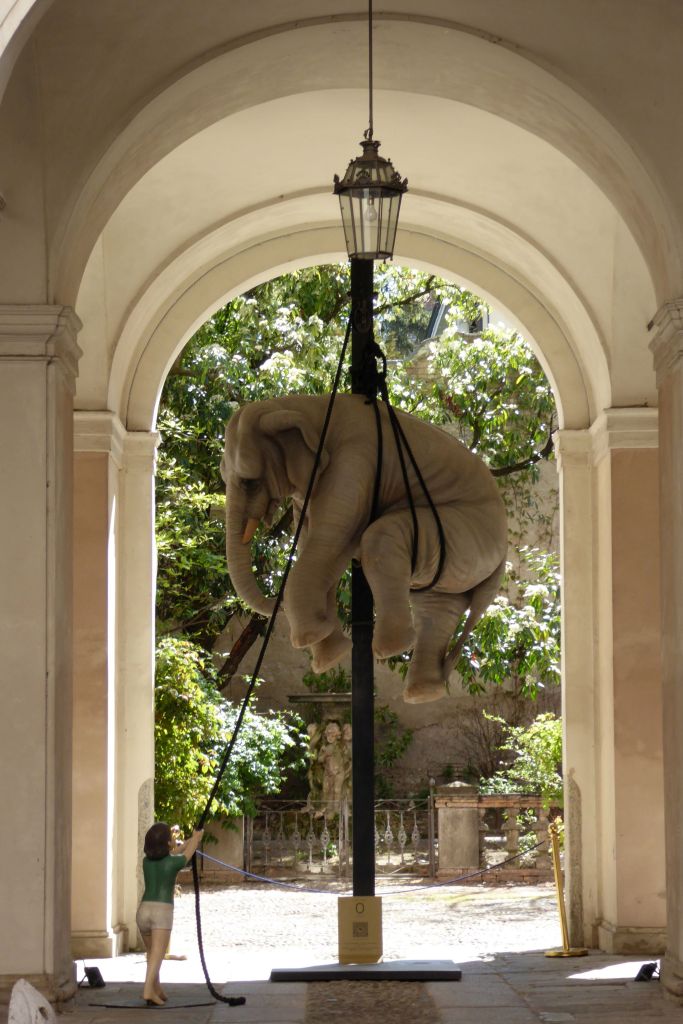
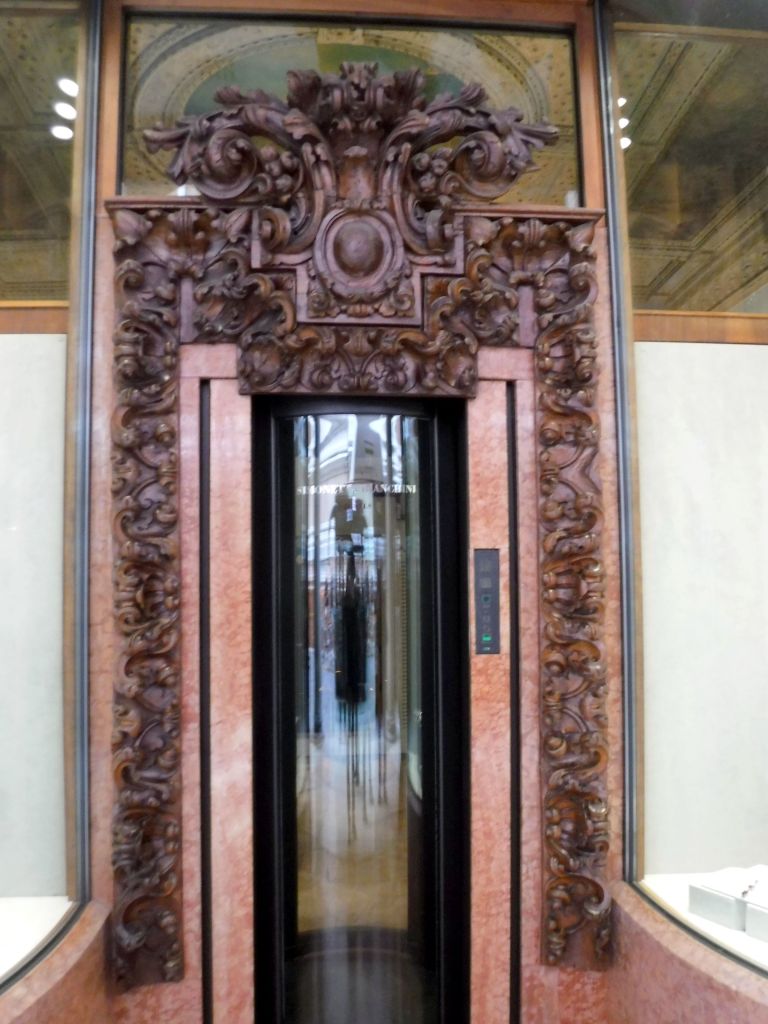
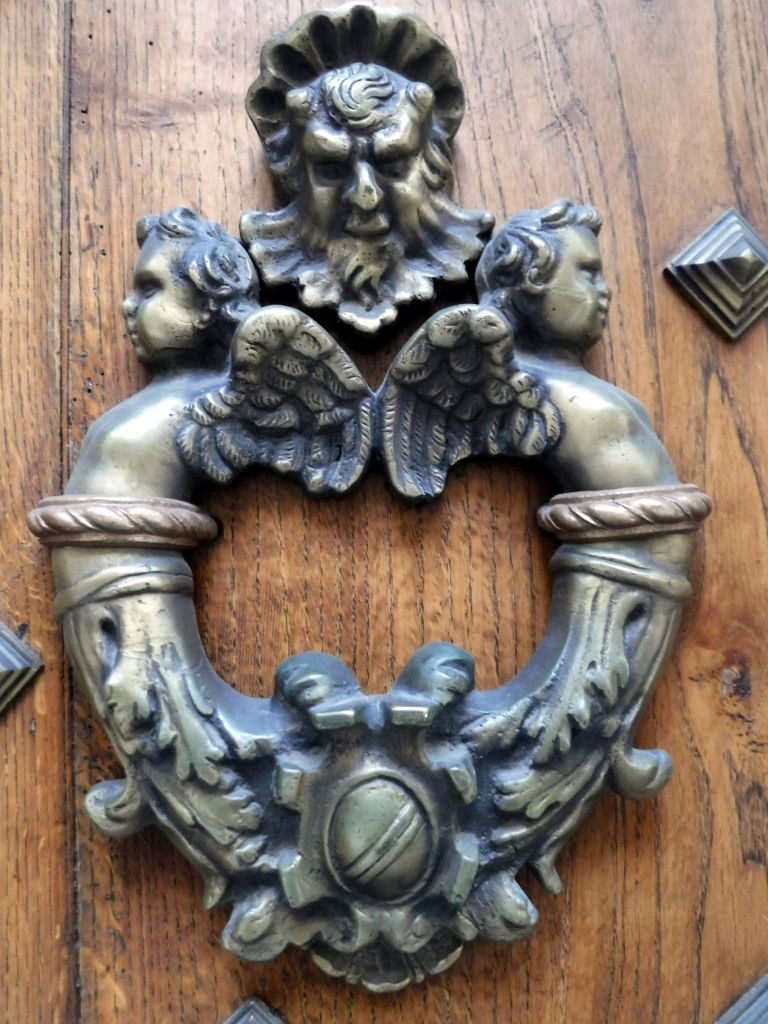
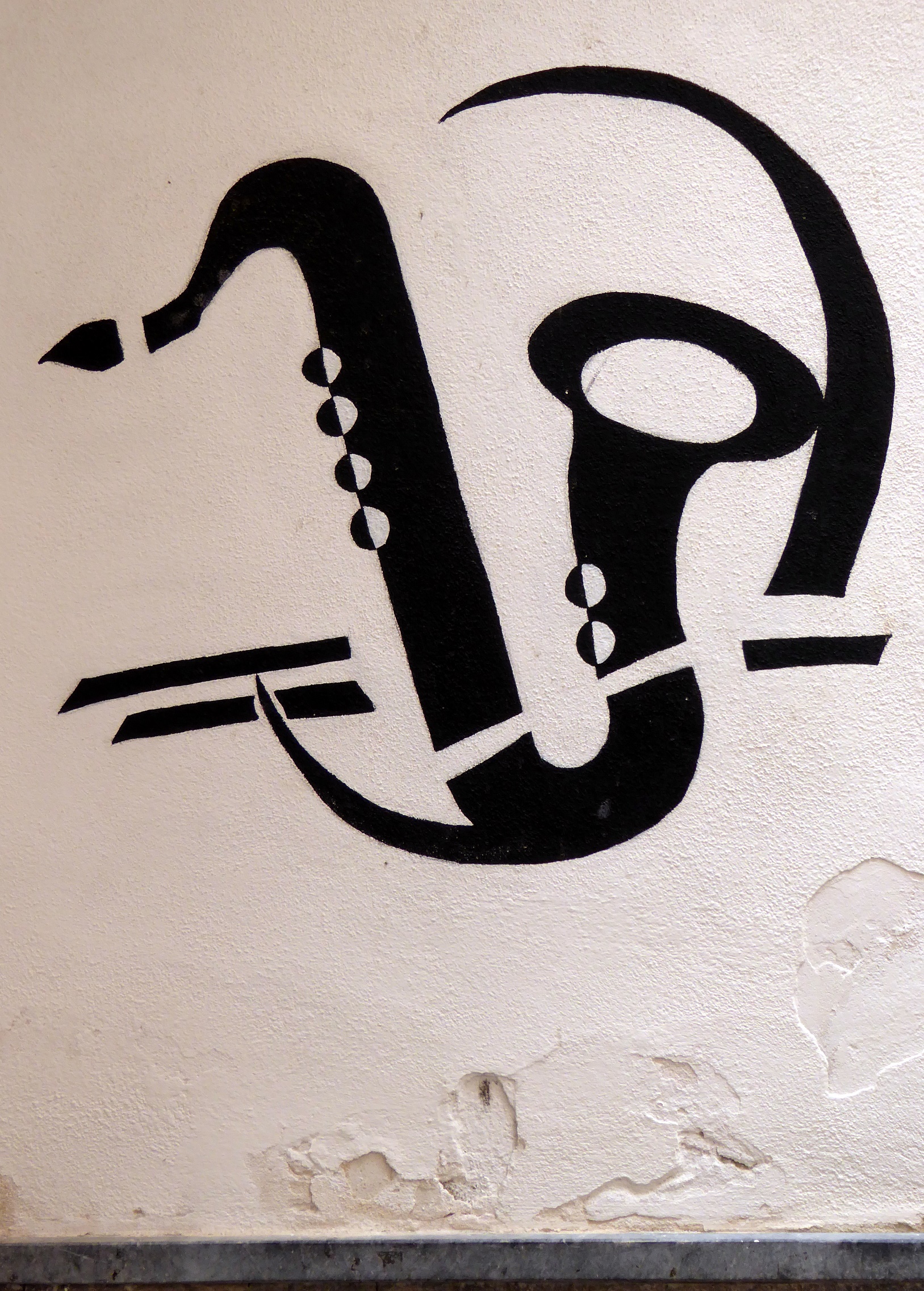
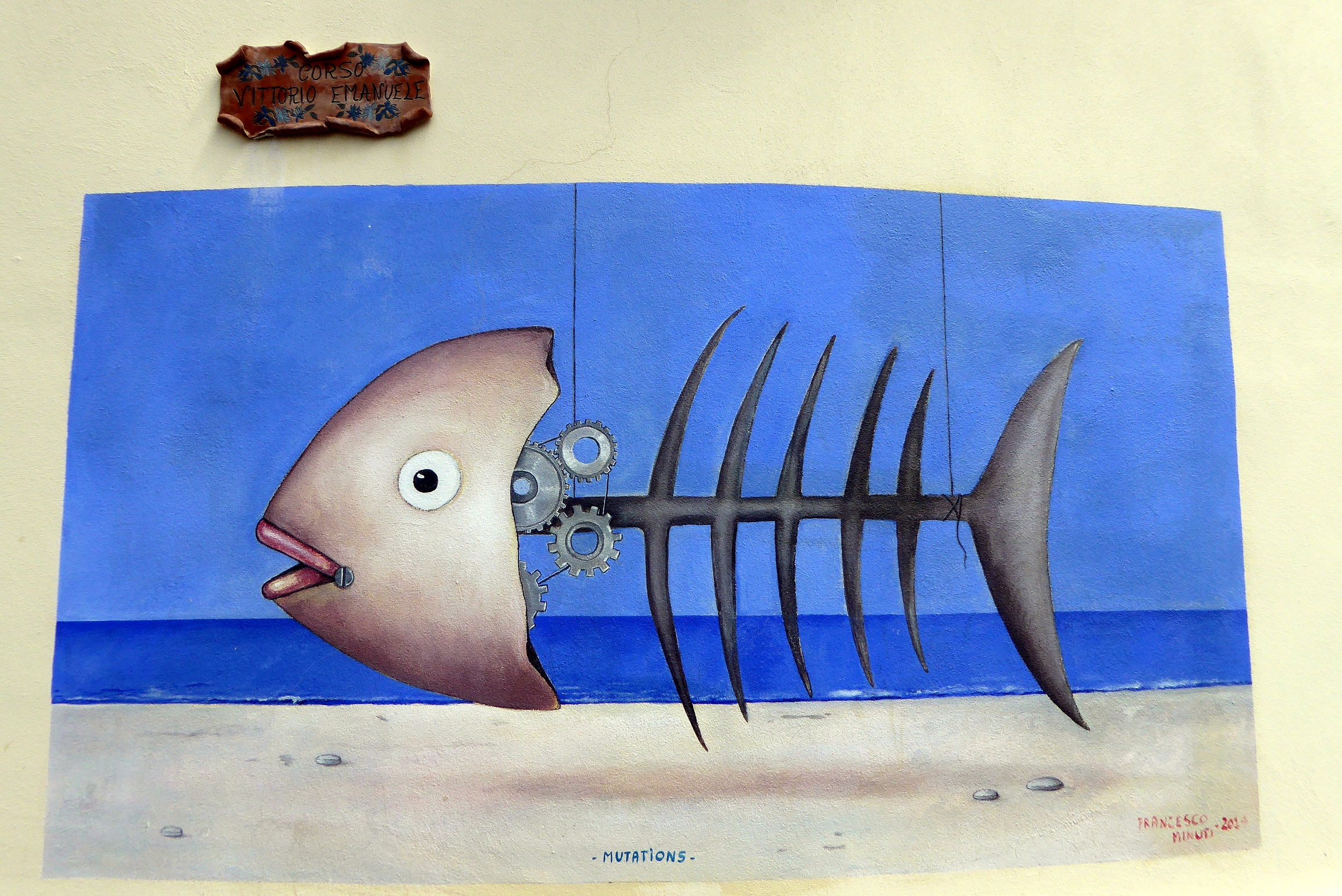
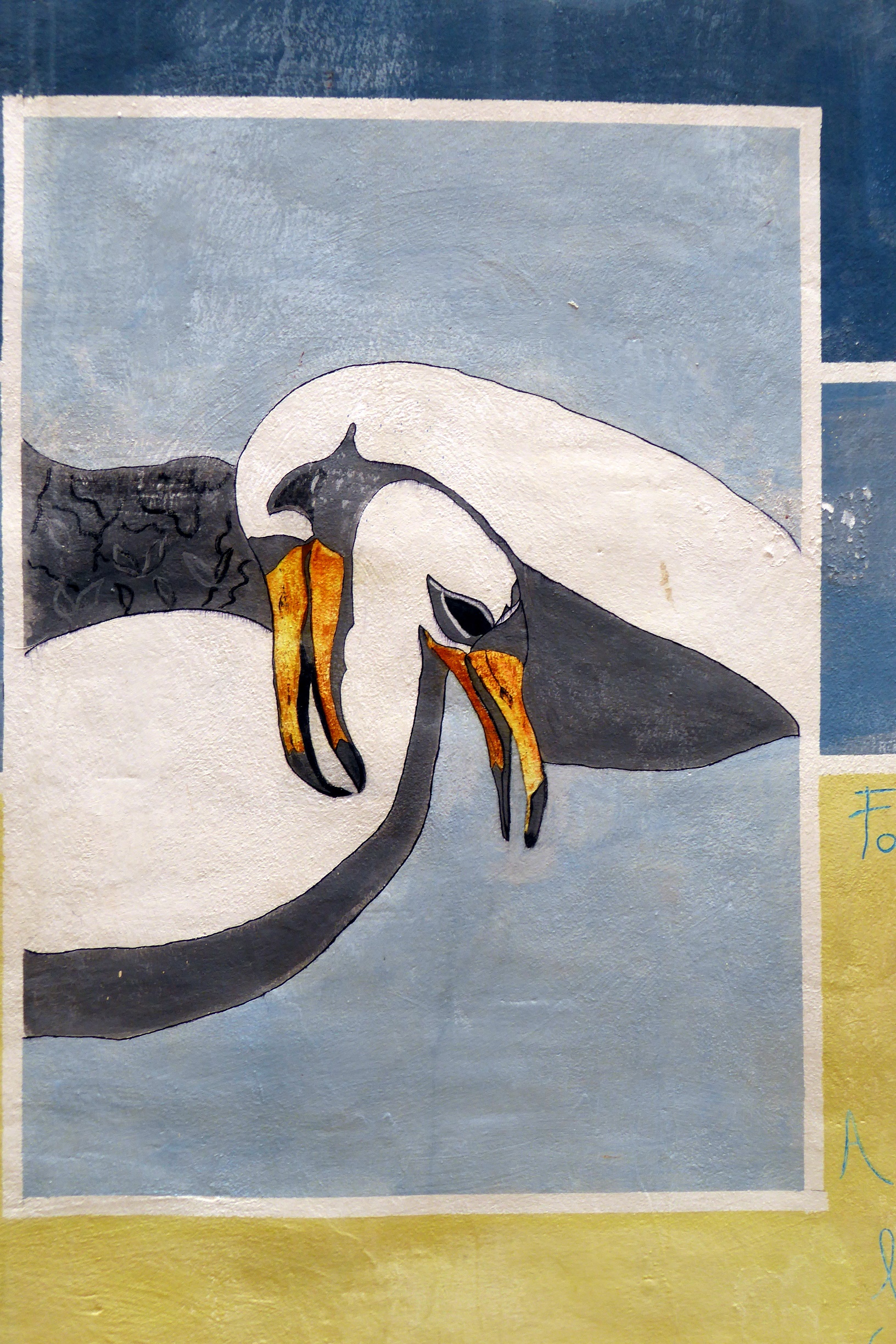
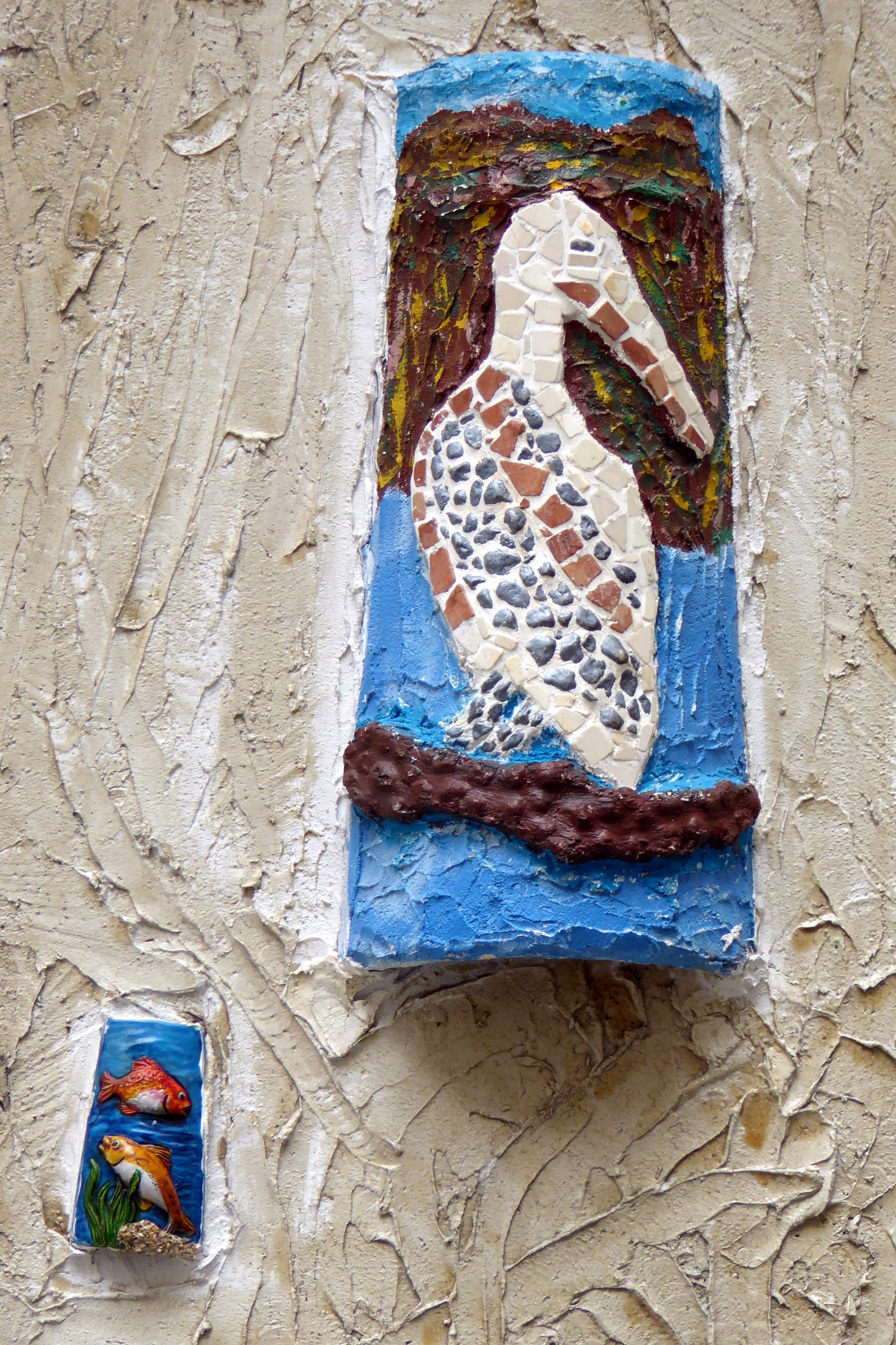
We pondered this artwork…
Coming up next: PRETTY PARMA
Note: If small group travel is of interest to you, I highly recommend Overseas Adventure Travel (OAT). Although Bruce and I travel together, they do not charge a single supplement for those who travel on their own. Singles also get their own room at hotels. If you book, you can get $100 off your trip by providing my name and customer number (Elaine Krugman, #3018126) as the person who referred you. I will also get $100 off future travel– a win-win!
What do storks have to do with the making of parmesan cheese? Read on to find out!
On our way from Bologna to Parma, our group made a couple of stops along the way to learn about the making of parmesan cheese and balsamic vinegar. We began our day at Madonne Caseificio Dell’ Emiliafor a tour of their parmesan making factory. Our guide was excellent; a wealth of interesting information. As we watched from behind large windows, she explained the process in detail.
(For all pictures, click on the image to see full screen view.)
First, it is important to note they make Parmigiano (Parmesan) Reggiano, which can only be produced in the Emilia-Romagna region with cows from those region, although the cows can be different breeds. The cheese is named after two of the provinces in that region, Parma and Reggiano.
“Parmigiano Reggiano” and “Parmesan” are protected designations of origin for the cheeses under Italian and European law. Outside the EU, all bets are off, so we aren’t talking here about that powdery stuff you buy at Walmart in the green can, folks.
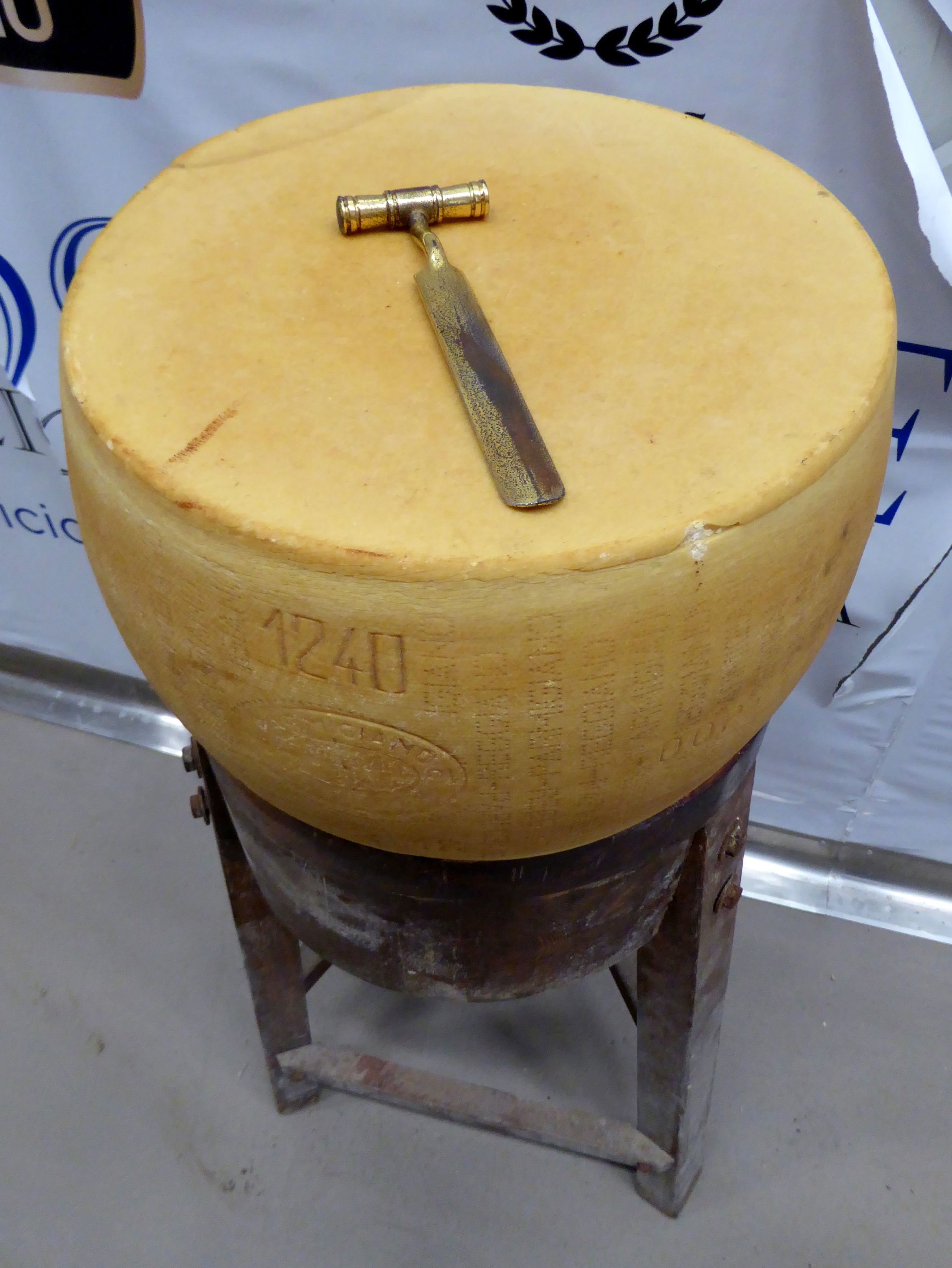
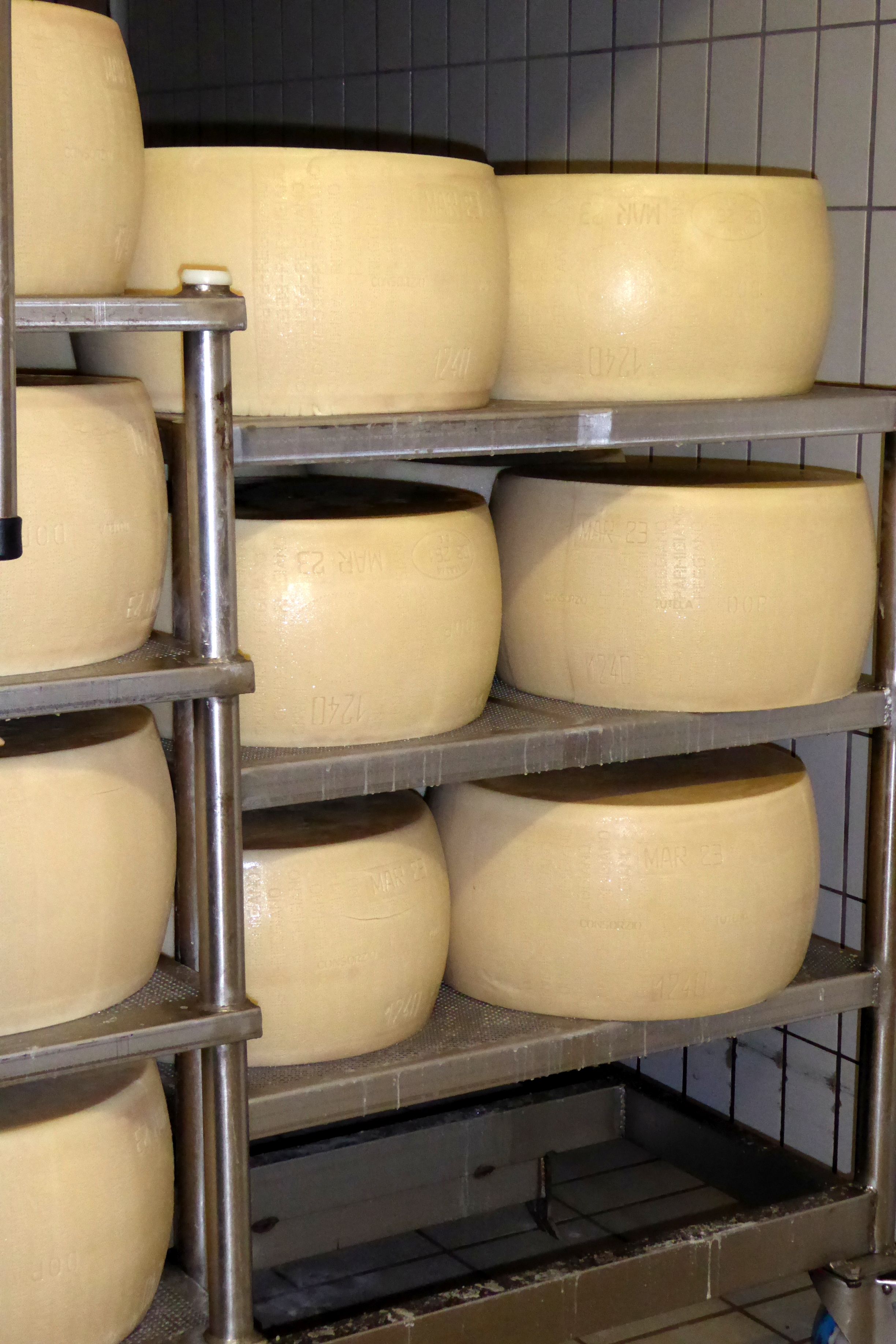
Parmesan Reggiano must be aged a minimum of twelve months, although it is typically sold after 24 to 100 months of aging. Every cheese wheel is inspected by hand under strict regulations, and if it passes inspection, it receives a certification and serial number, which is stamped on the side of the wheel, along with the date of production. This firebrand is proof the wheel is the real deal—and, excellent quality.
During the inspection process, a special hammer is used to tap on the wheel. The sound made is indicative of the quality, and we were taught what the perfect parmesan wheel should sound like when it is tapped.
A wheel of cheese typically weighs about 92 pounds; however, the older the wheel, the drier and smaller it will be. It will also make a higher-pitched sound when tapped with the hammer.
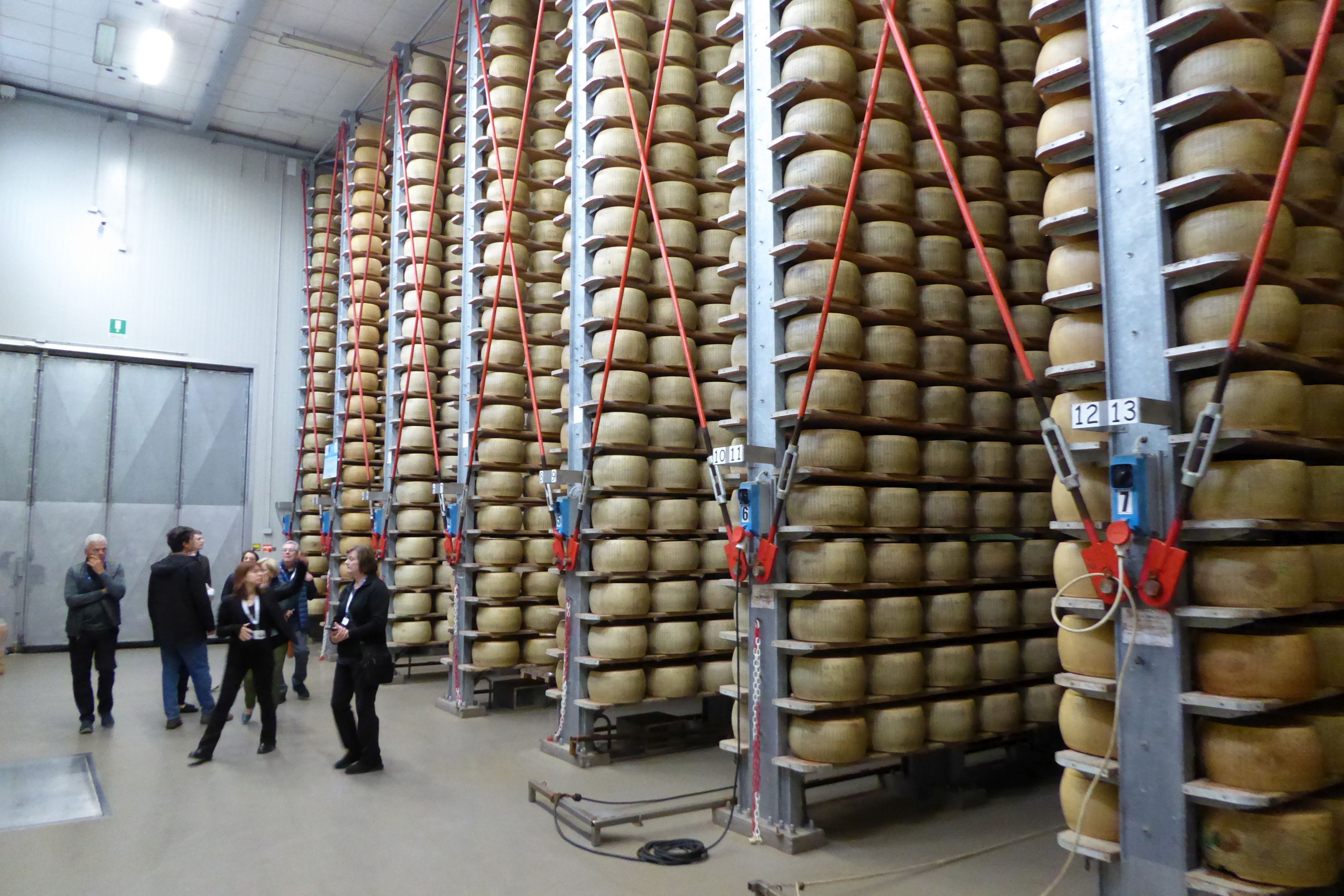
These cheese wheels are valuable! Depending on the age, a wheel of Parmesan Reggiano can cost anywhere from $550 to $2,000. The inventory of cheese in Madonne’s huge store room is worth more than $17 million, if you price them each at $550! (5% of the 33,000 wheels fail the monthly inspection.)
Back to the cheese-making process, that guy in the black hat is the Cheese Master. It takes fifteen years of experience to get to that level, so he is an expert at overseeing his team and the cheese.
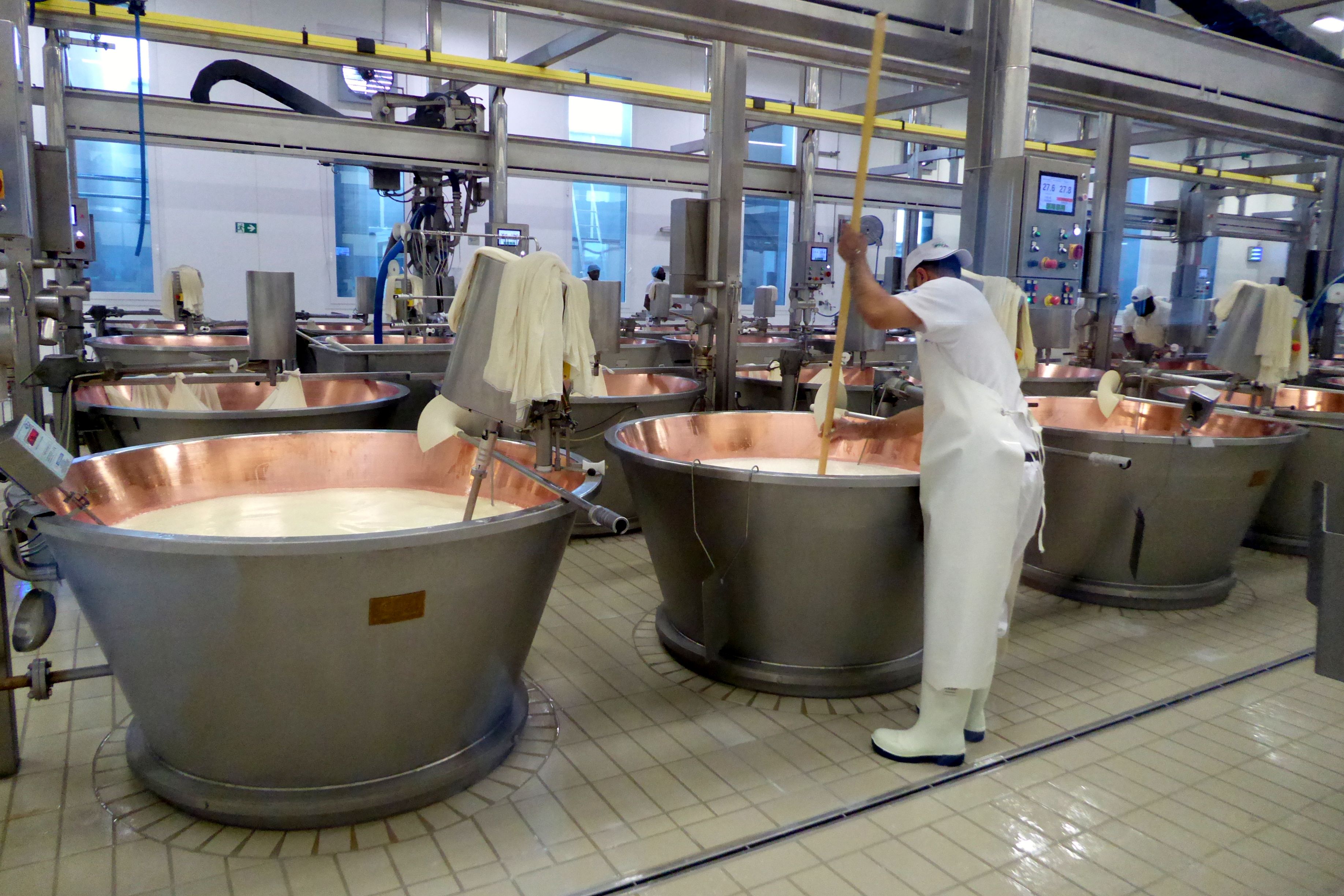
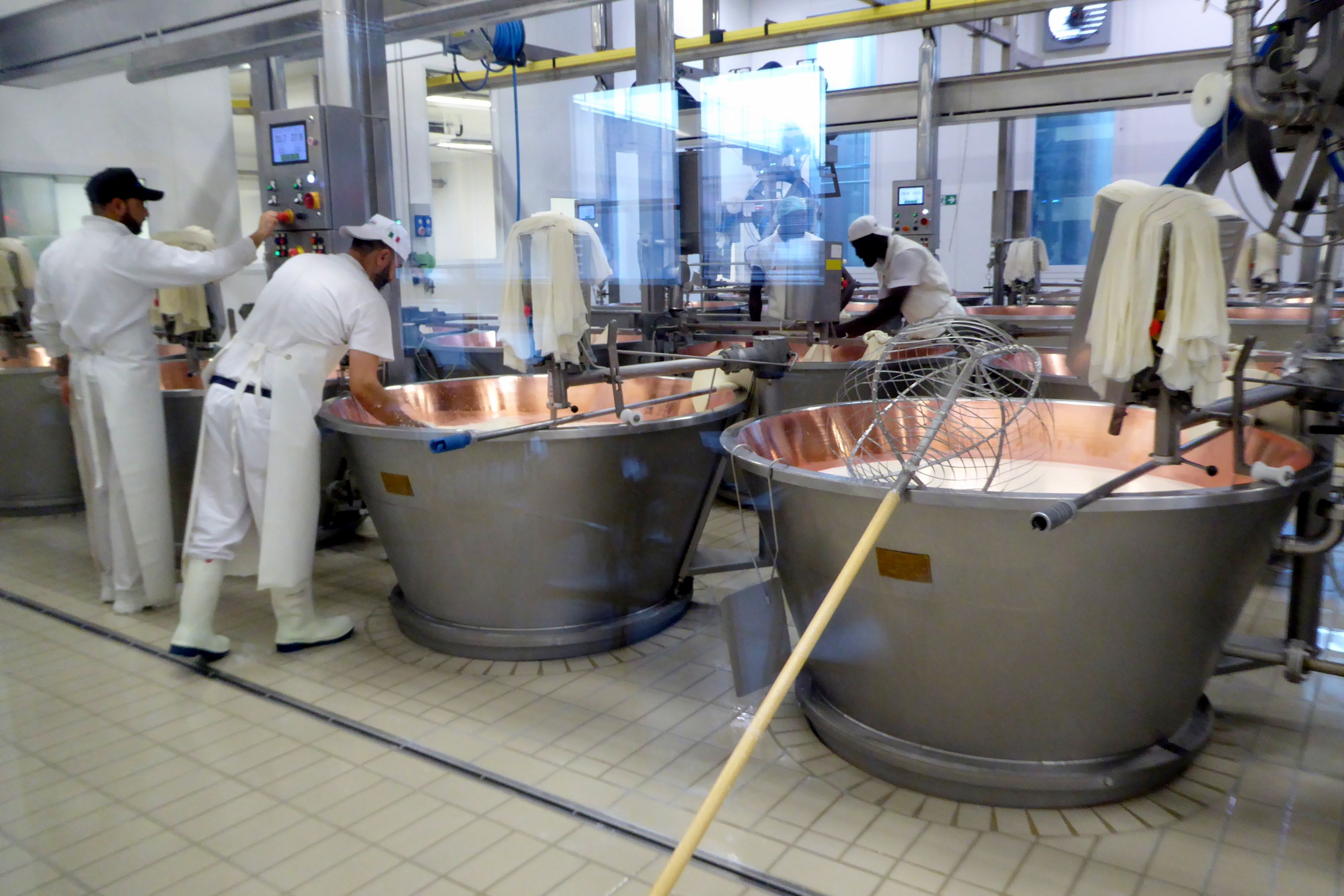
Those big vats you see contain about 290 gallons of part skim mixture of cow’s milk. It is heated, and then whey is added and the temperature raised. Calf rennet (enzymes) is then added, and the mixture curdles for 10-12 minutes. The curd is then broken up mechanically into small pieces, and the temperature is raised again. It is left to settle for 45-60 minutes. Next, those workers in the next row of vats are taking the compacted curd, dividing it into two parts, and wrapping each one in muslin, which will be placed in molds. Eventually, they will become two wheels of cheese.
But, wait! What about the stork? Our knowledgeable—but serious—tour guide, explained in a very straight-faced way that the “stork” carries the “twins” off into the next room where they are placed in molds. She said this without cracking a smile. We thought it was hilarious! The jokes started flying, Bruce and Oscar were cracking me up.
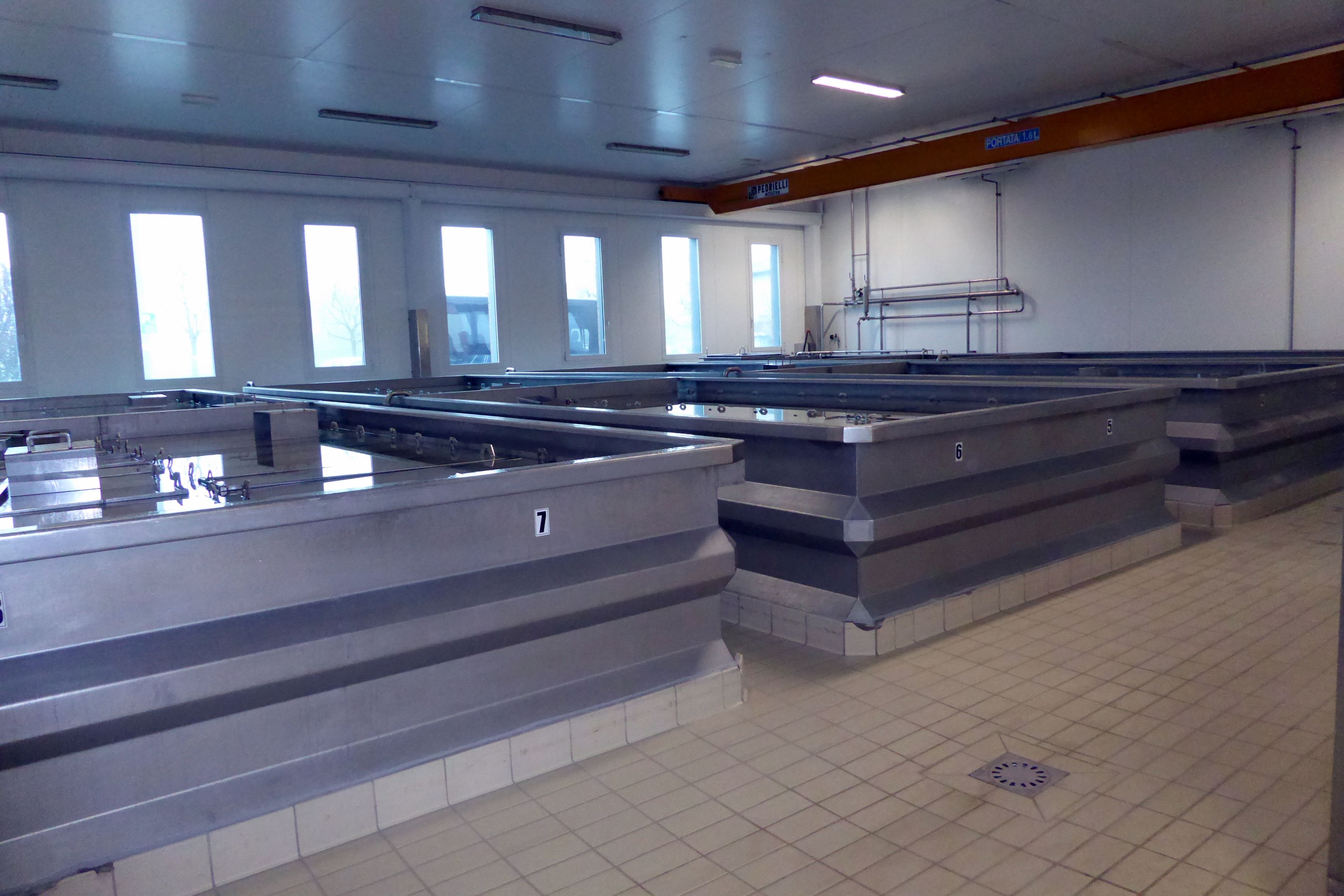
After seeing the room where the “twins” were placed in molds with a weight put on top, we were led to the next room where our guide explained the wheels were placed in massive tanks of brine to absorb salt for 20-25 days. I couldn’t resist. “Is this where the twins take their naps?” We joked about the stork and twins for the remainder of the trip.
Next, the cheese wheels are transferred to aging rooms for 12 months for another nap. (When they were in their molds, the “twins” were named by being imprinted with “Parmigiano Reggiano,” the plant’s number, and the month and year of production.)
The final nap takes place in that huge “nursery,” where they are placed on wooden shelves. At 12 months, they will be inspected by the Consorzio Parmigaino Reggiano. The wheels that pass inspection get heat-branded with the Consorzio’s (consortium) logo. And, that my friends, is how babies—uh, Parmesan Reggiano cheese wheels—are made.
This is a picture of a photo they had on display. Two earthquakes in May of 2012 seriously damaged two of their three plants, and many cheese wheels were destroyed.
After sampling various ages of Madonne’s delicious cheese, we were off to learn how the Malpighifamily has been making balsamic vinegar in Modena, Italy since 1850.
Check out the balsamic vinegar in your kitchen. If cooked grape juice isn’t the first ingredient, it is not a good-quality vinegar. It shouldn’t have caramel or other additives.
The best Italian balsamic vinegar is from the Modena region, and the grapes must be from that region. It is aged for a minimum of twelve years. Different woods are used for the barrels, and after one year of aging, a percentage of the large barrel’s contents is transferred to a smaller barrel made of different wood. This process continues through a series of smaller and smaller barrels.
This particular oak barrel dates back to 1500, and is one of the oldest documented balsamic vinegar barrels. It is worth about $60,000! The tradition in Modena is for parents to buy a barrel for their newborn, fill it with their homemade balsamic vinegar, and let it age until their wedding day when it is shared with all the wedding guests.
When the vinegar is ready for bottling, it is sent to the consortium for evaluation by a panel of experts who do a blind tasting. If it passes, it is bottled and sealed at the consortium in clear spherical glass bottles with a rectangular base. Only this type of bottle is allowed and producers are identifiable by a small label on the bottle.
The color of the bottle cap distinguishes the age. A 25-year-old balsamic vinegar gets a gold-colored cap. Malpighi’s most-aged balsamic was on sale in their shop for Euro 450—more than $450!
We tasted several different varieties of Malpighi balsamic vinegars and enjoyed a wonderful lunch of various salads, meats, and cheeses paired with their vinegars. The most memorable was the balsamic-filled dark chocolates for dessert, following the fresh strawberries topped with balsamic vinegar! I purchased a box of those chocolates to bring home.
During our ride to Parma, it was very quiet on the bus as most of the group napped while I watched the beautiful scenery pass by.
Next up: PROSCUITTO IN PARMA—AND MORE!
Note: If small group travel is of interest to you, I highly recommend Overseas Adventure Travel (OAT). Although Bruce and I travel together, they do not charge a single supplement for those who travel on their own. Singles also get their own room at hotels. If you book, you can get $100 off your trip by providing my name and customer number (Elaine Krugman, #3018126) as the person who referred you. I will also get $100 off future travel– a win-win!
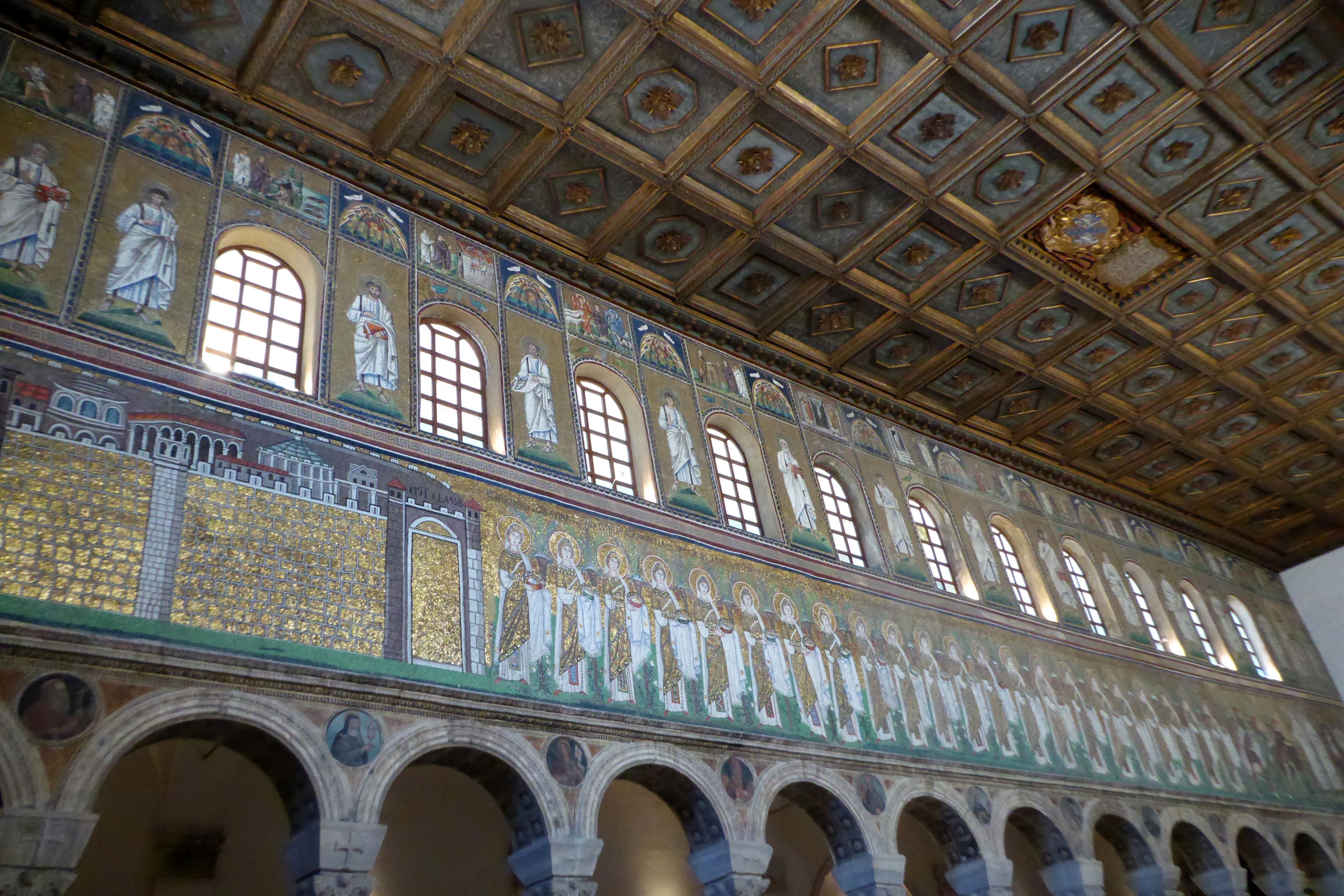
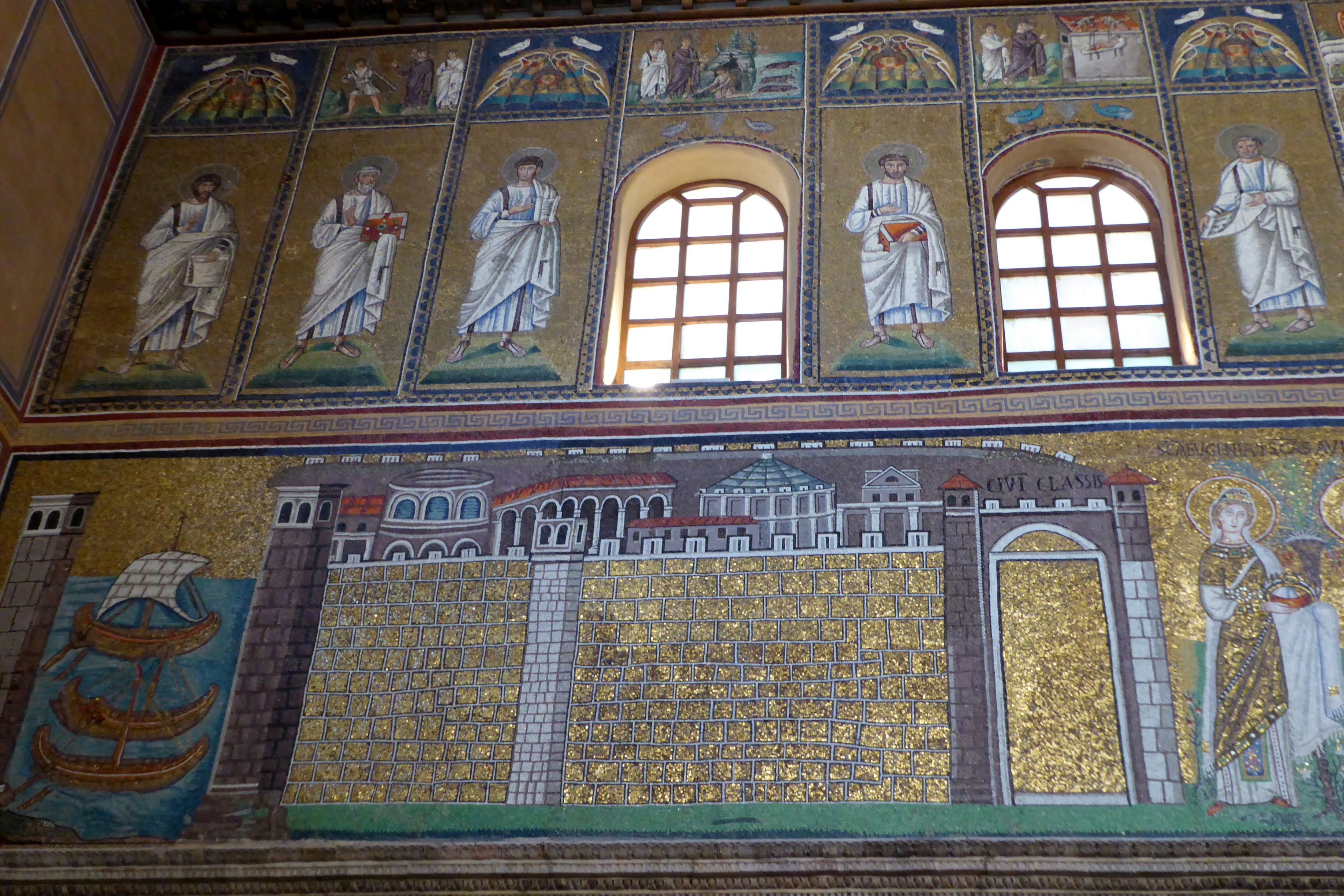
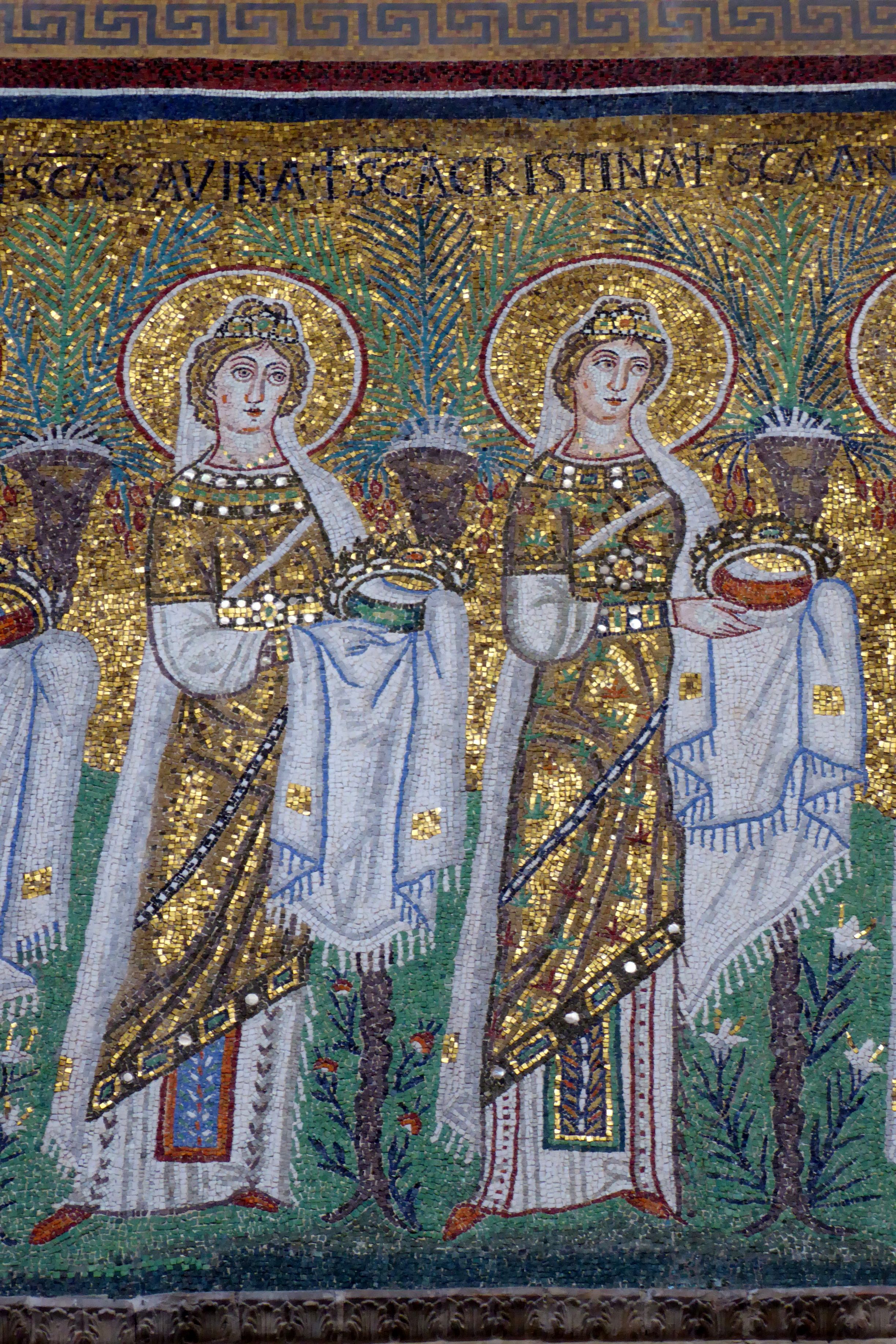
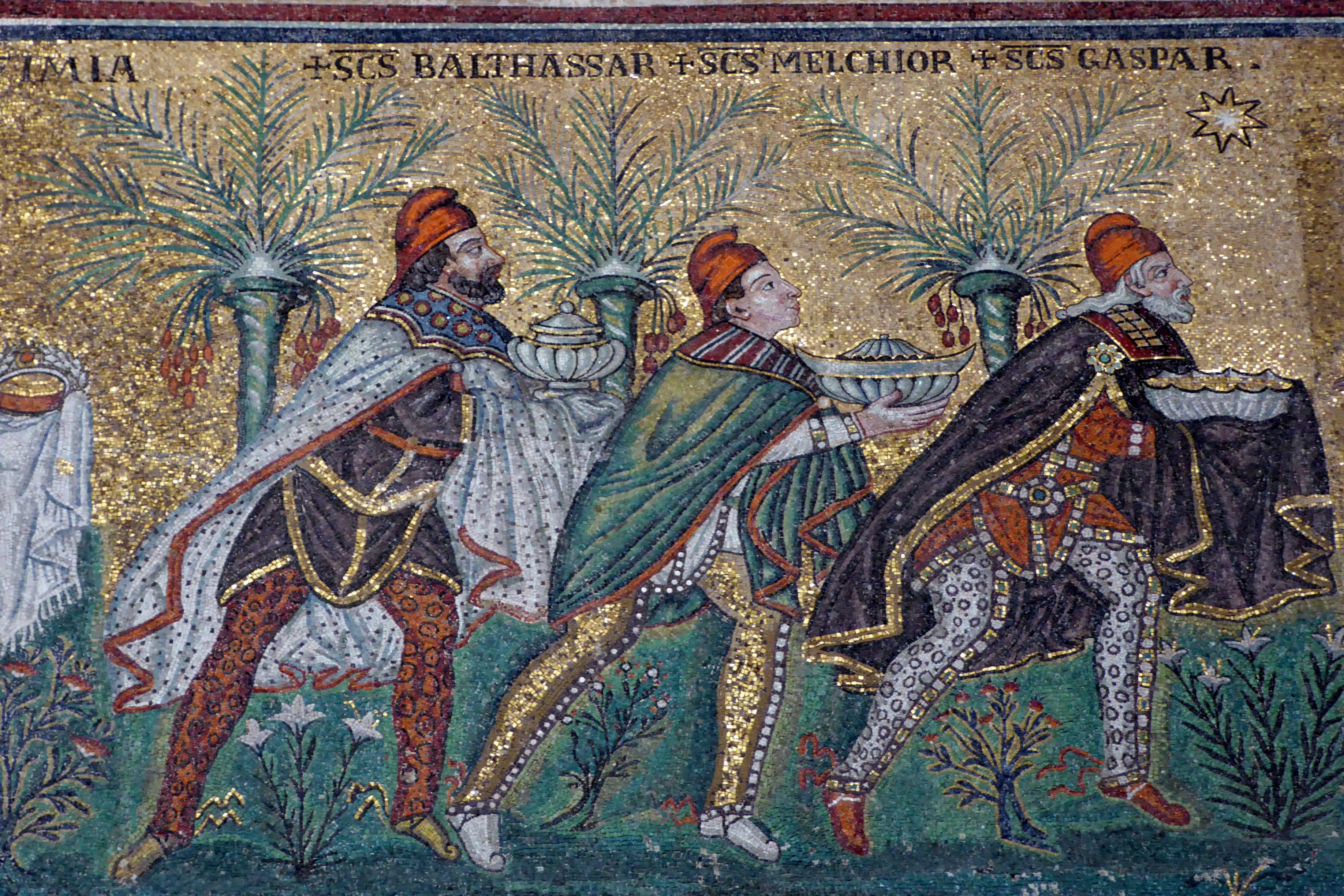
A one-hour train ride from Bologna is Ravenna, recognized as a UNESCO World Heritage Site for its complex of early Christian mosaics and monuments. Ravenna was the seat of the Western Roman Empire in the fifth century and later the westernmost outpost of the Byzantine Empire. This town is full of history, but it was the gorgeous mosaics we found most intriguing.
(For all pictures, click on the image to see full screen view.)
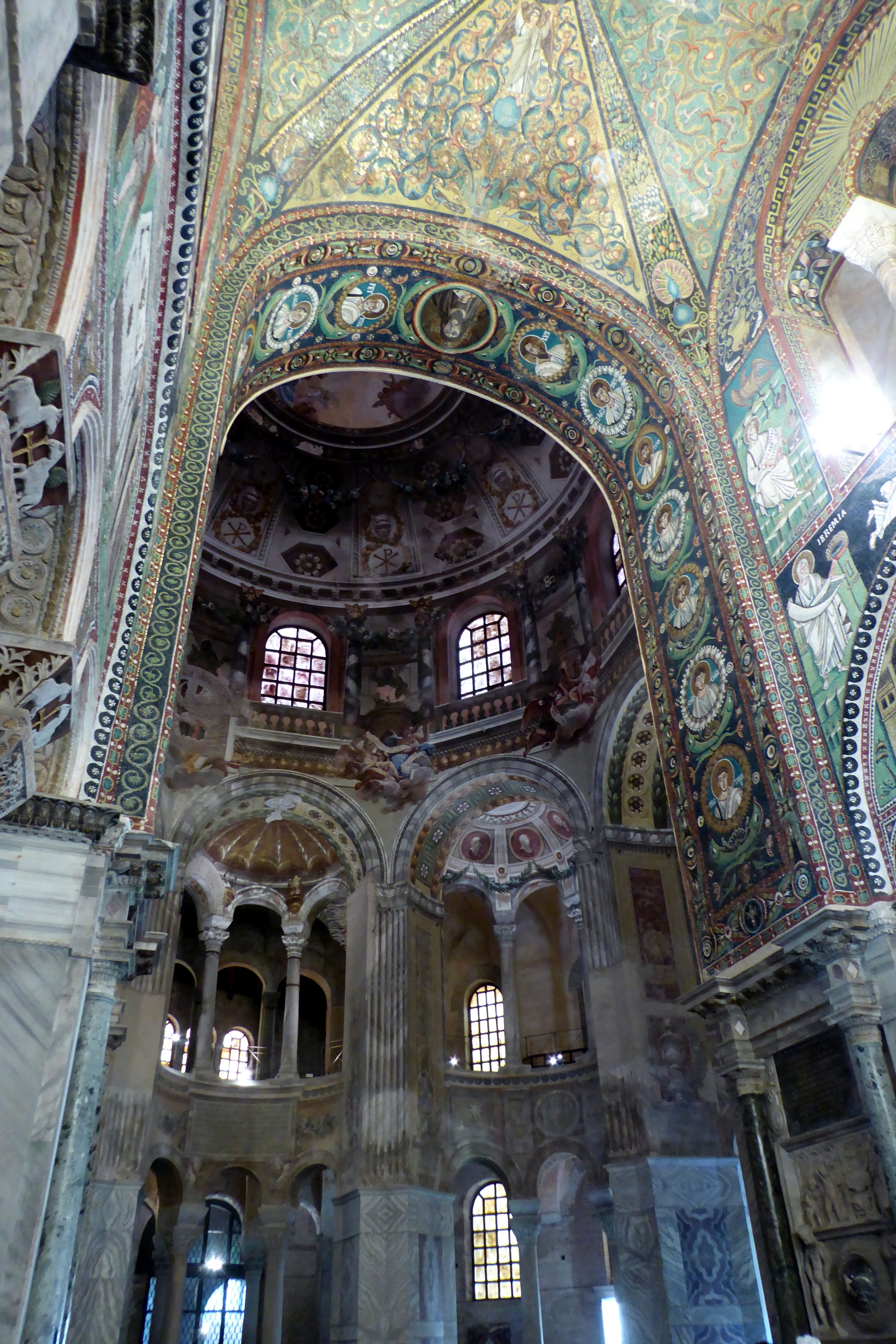
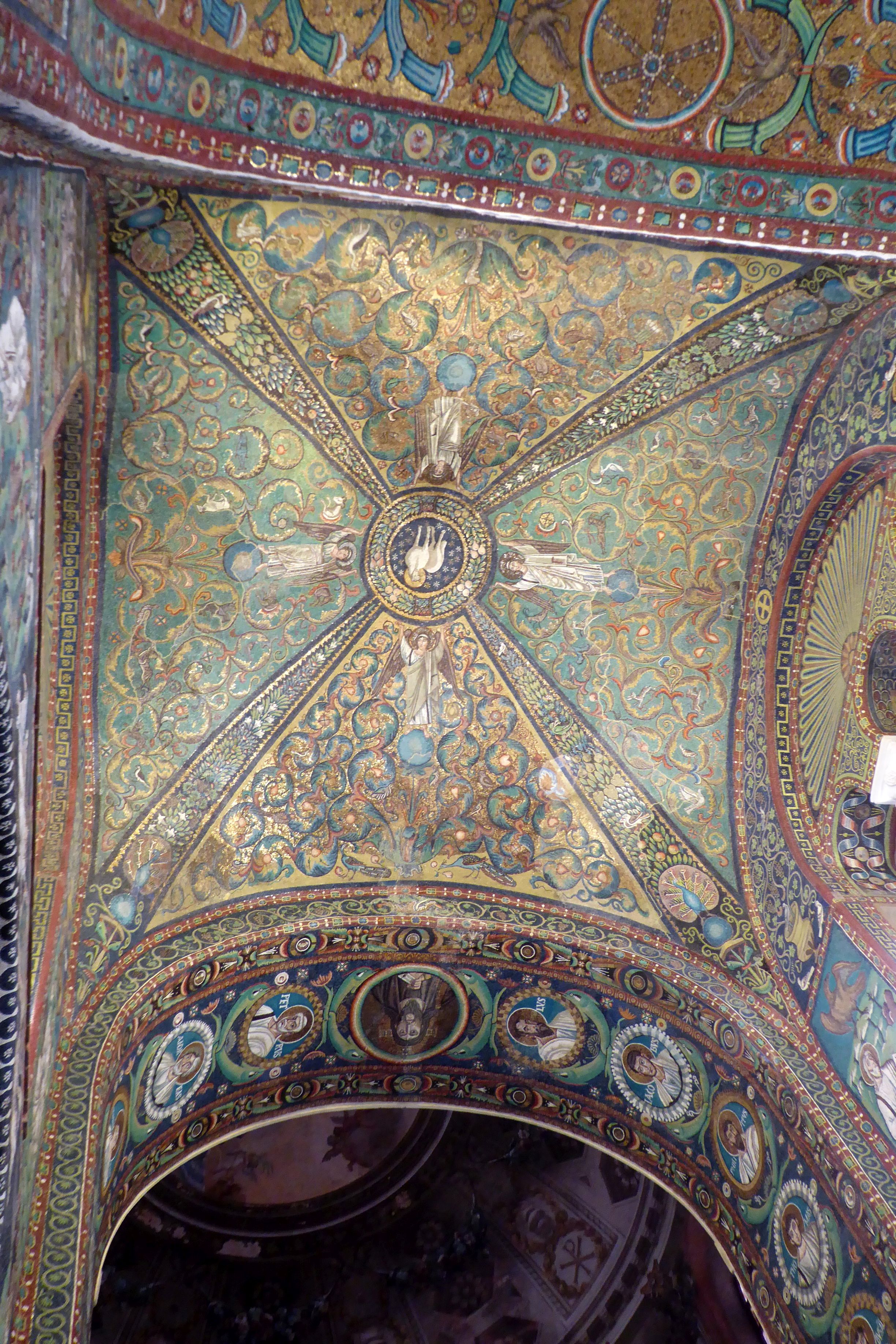
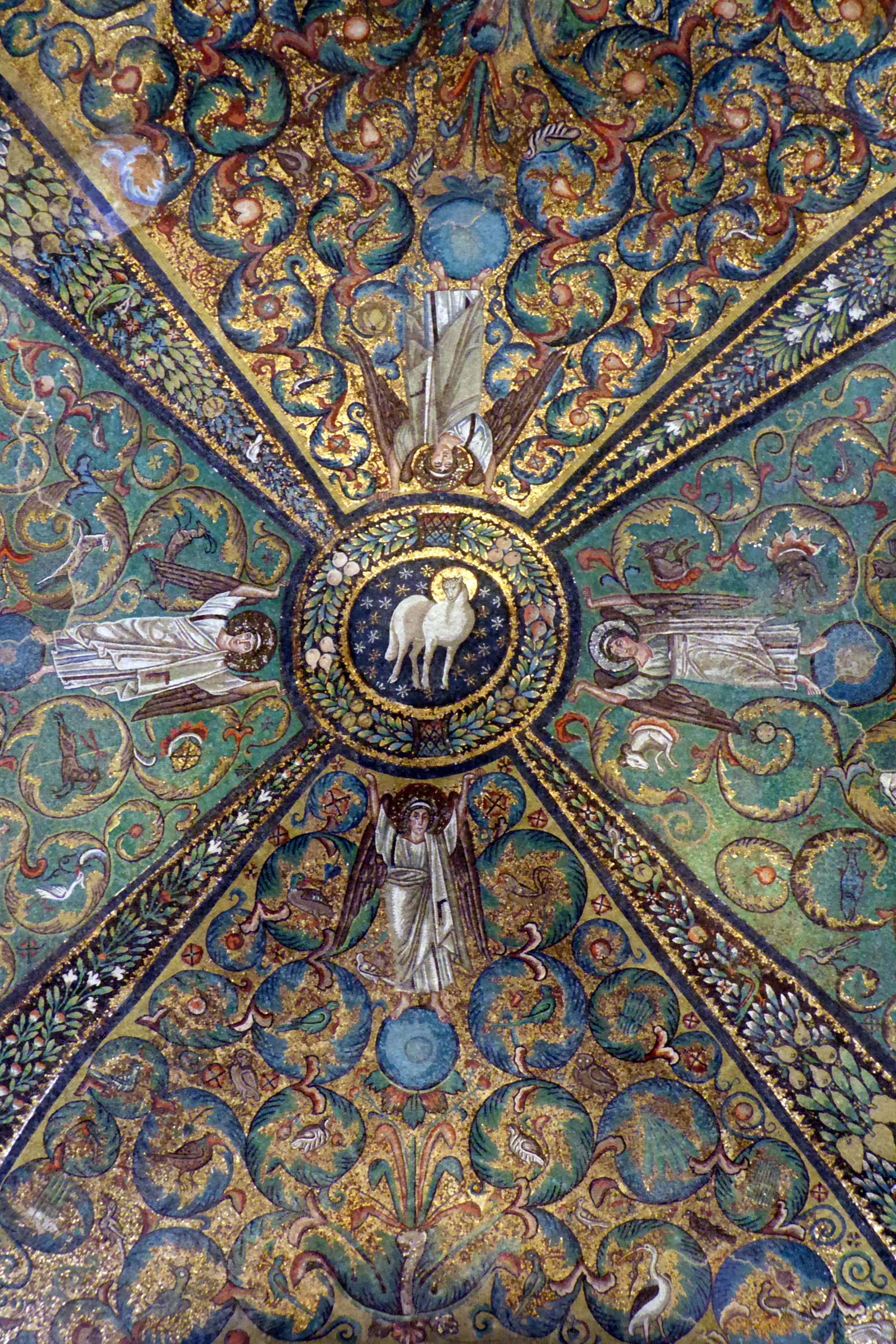
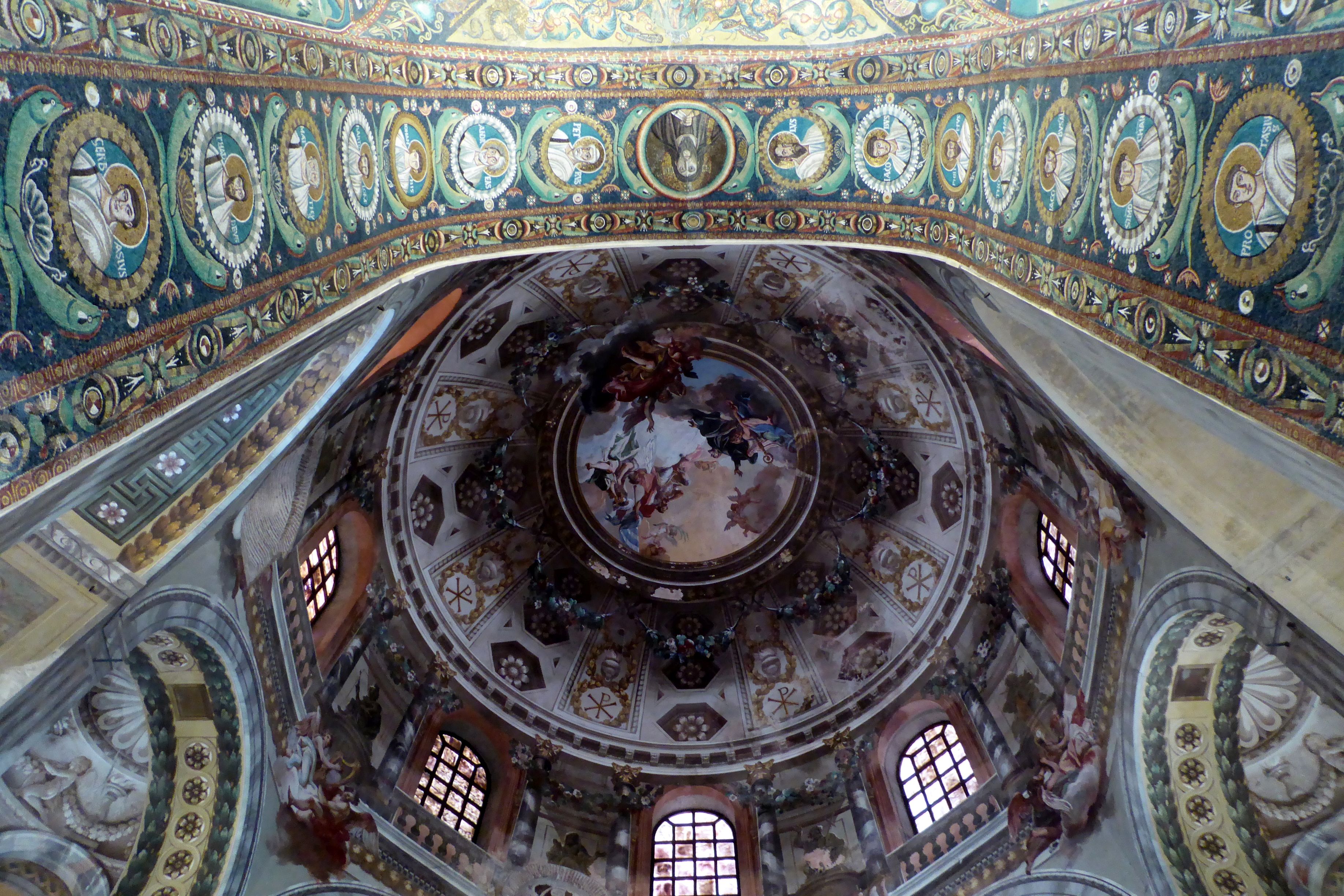
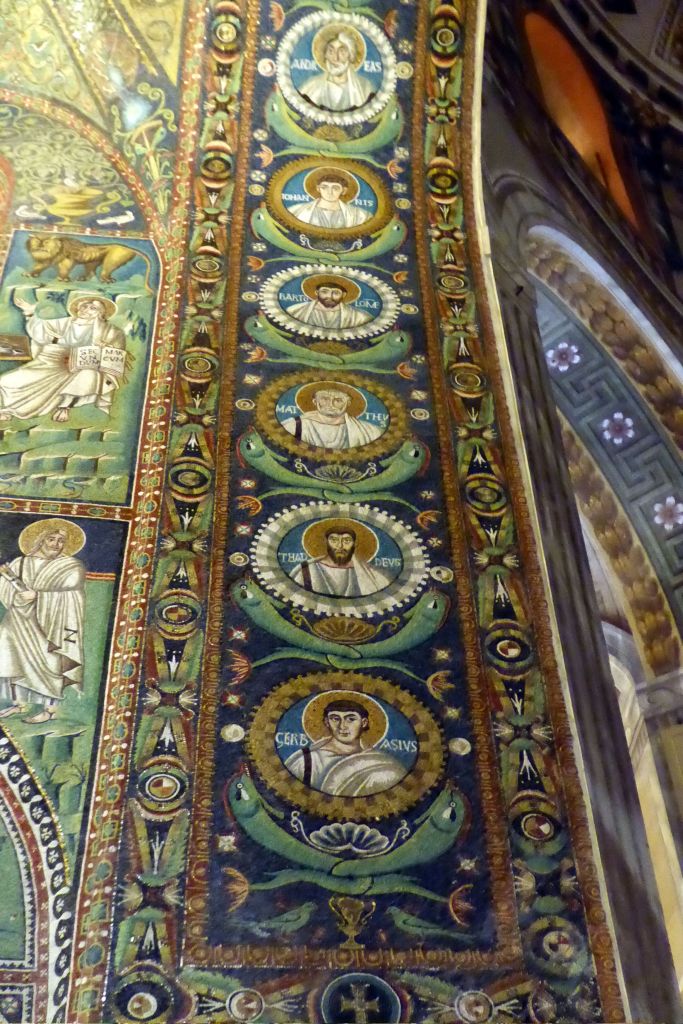
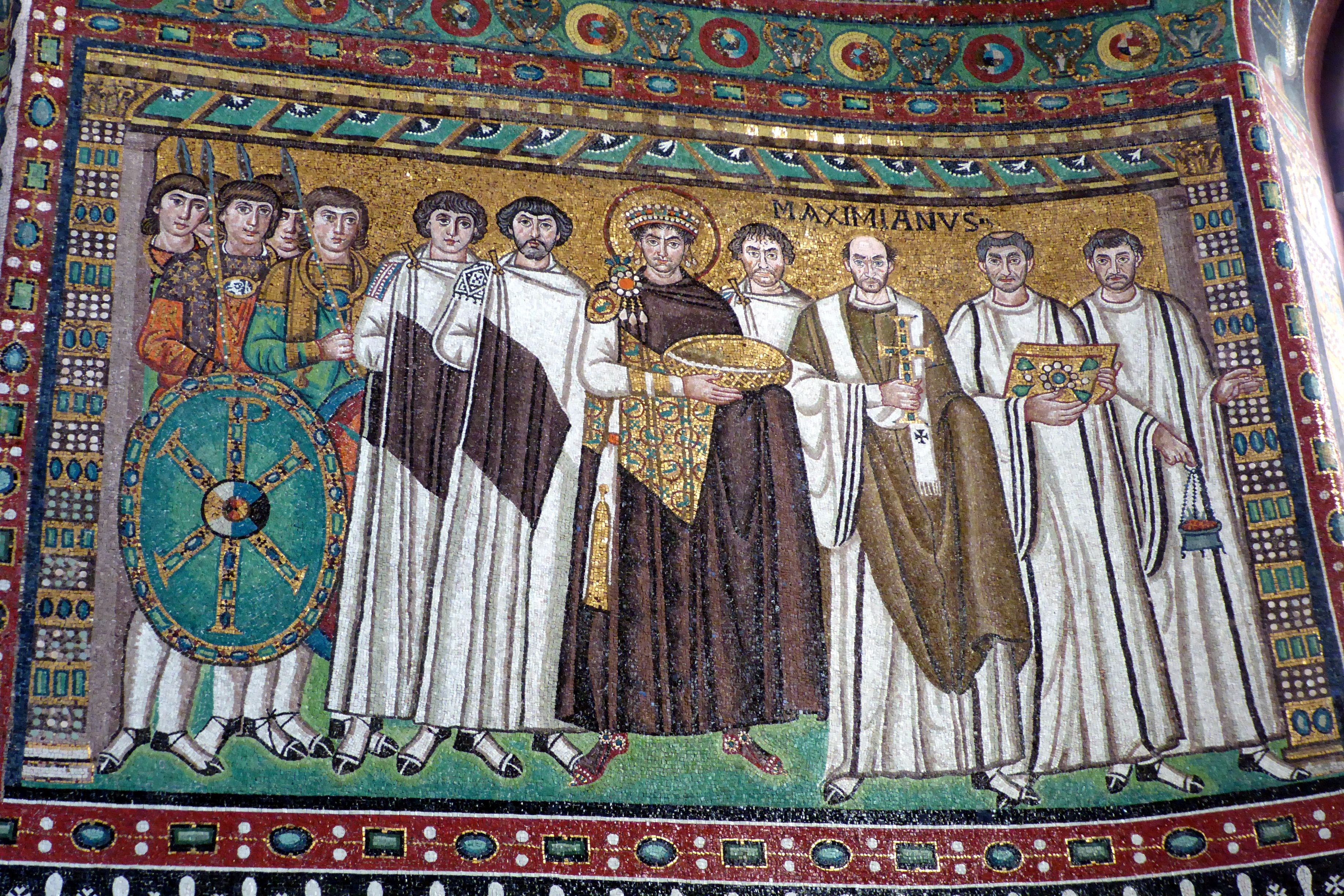
Our jaws dropped when we entered the 1,400-year-old octagonal shaped Basilica of San Vitaleand saw the mosaics representing scenes from the Old Testament, as well as depictions of the Byzantine emperor Justinian. We were mesmerized by the beautiful detail of the ceiling mosaics and even the floor.
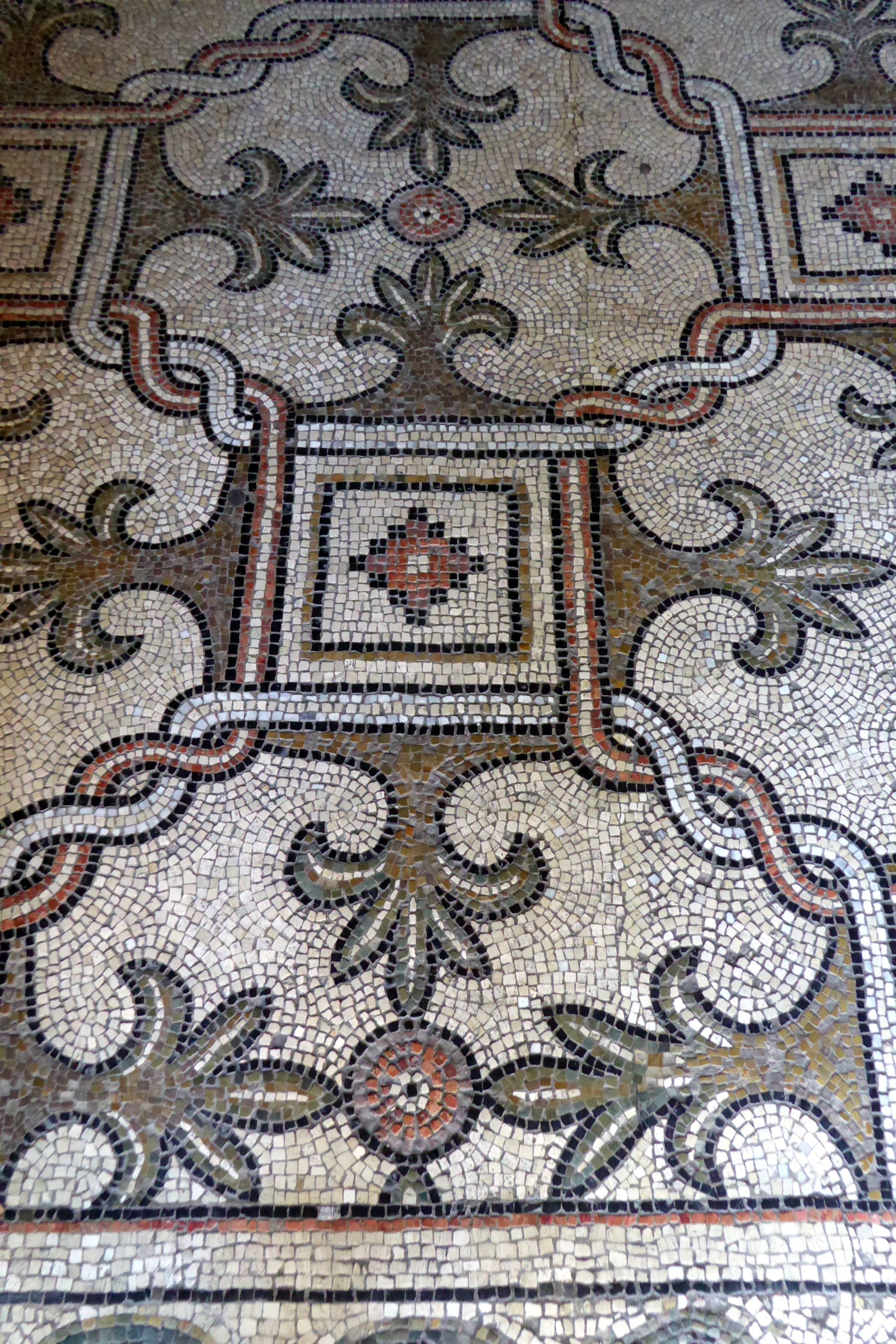
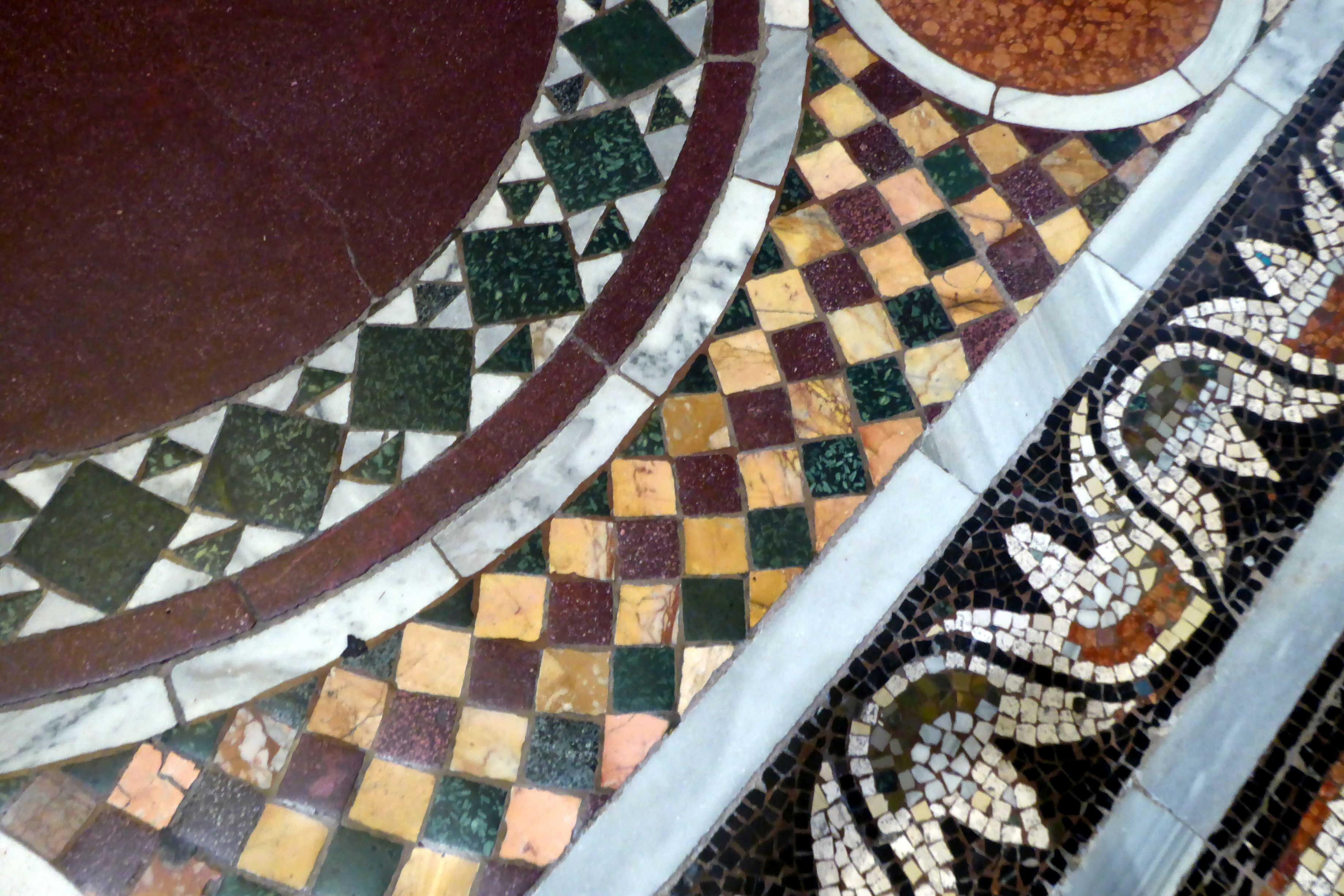
Even the mosaic floor was beautiful!
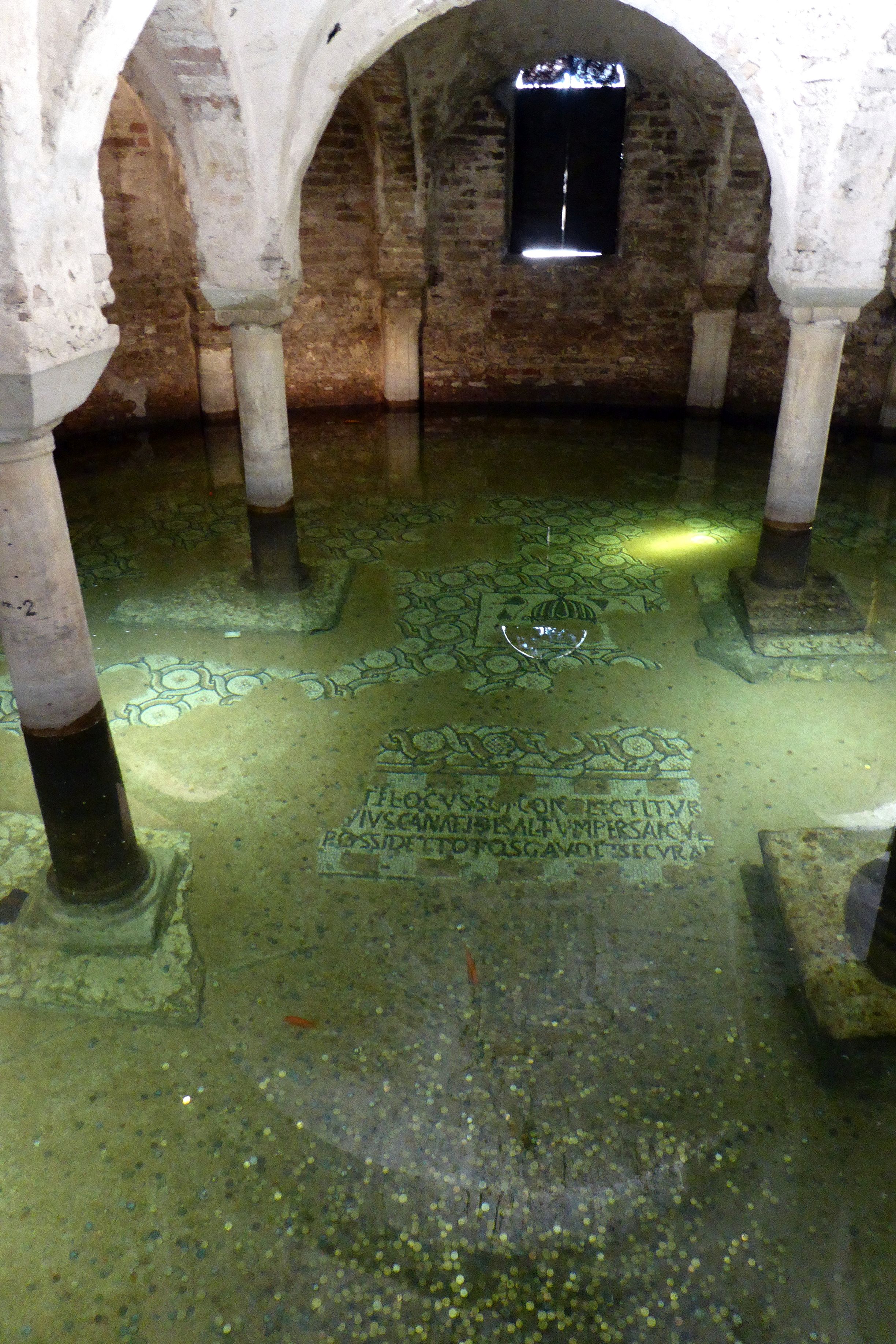
Basilica San Francesco; the mosaics were underwater, and there were goldfish swimming around!
The mosaic ceiling in the Tomb of Dante
Our group: Oscar, Jenny, Mark, Deb, Nancy, Bruce, and me
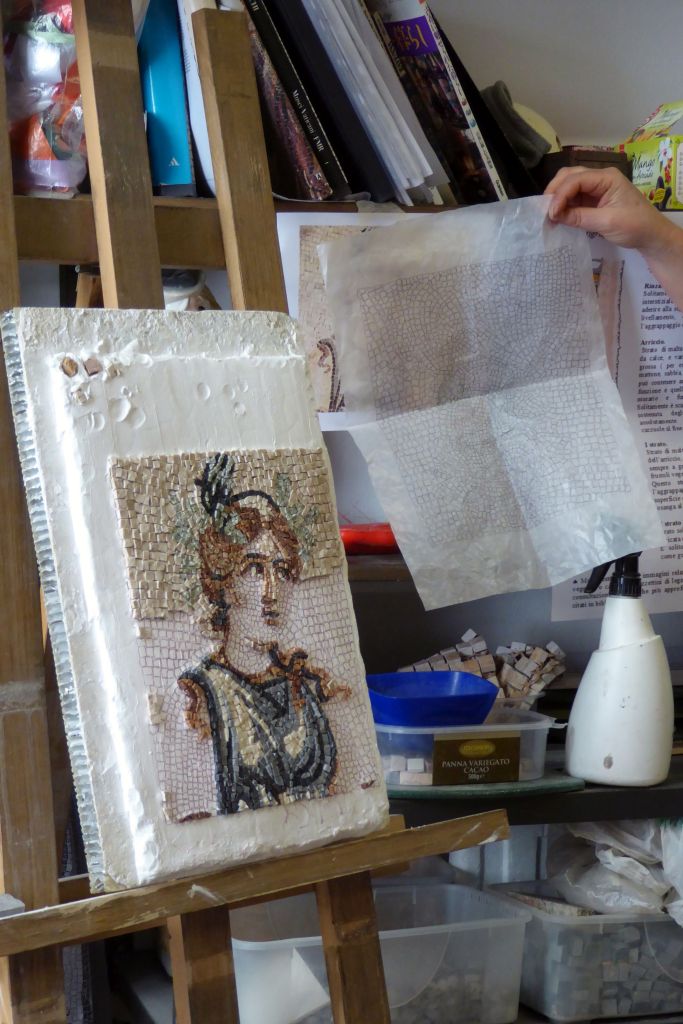
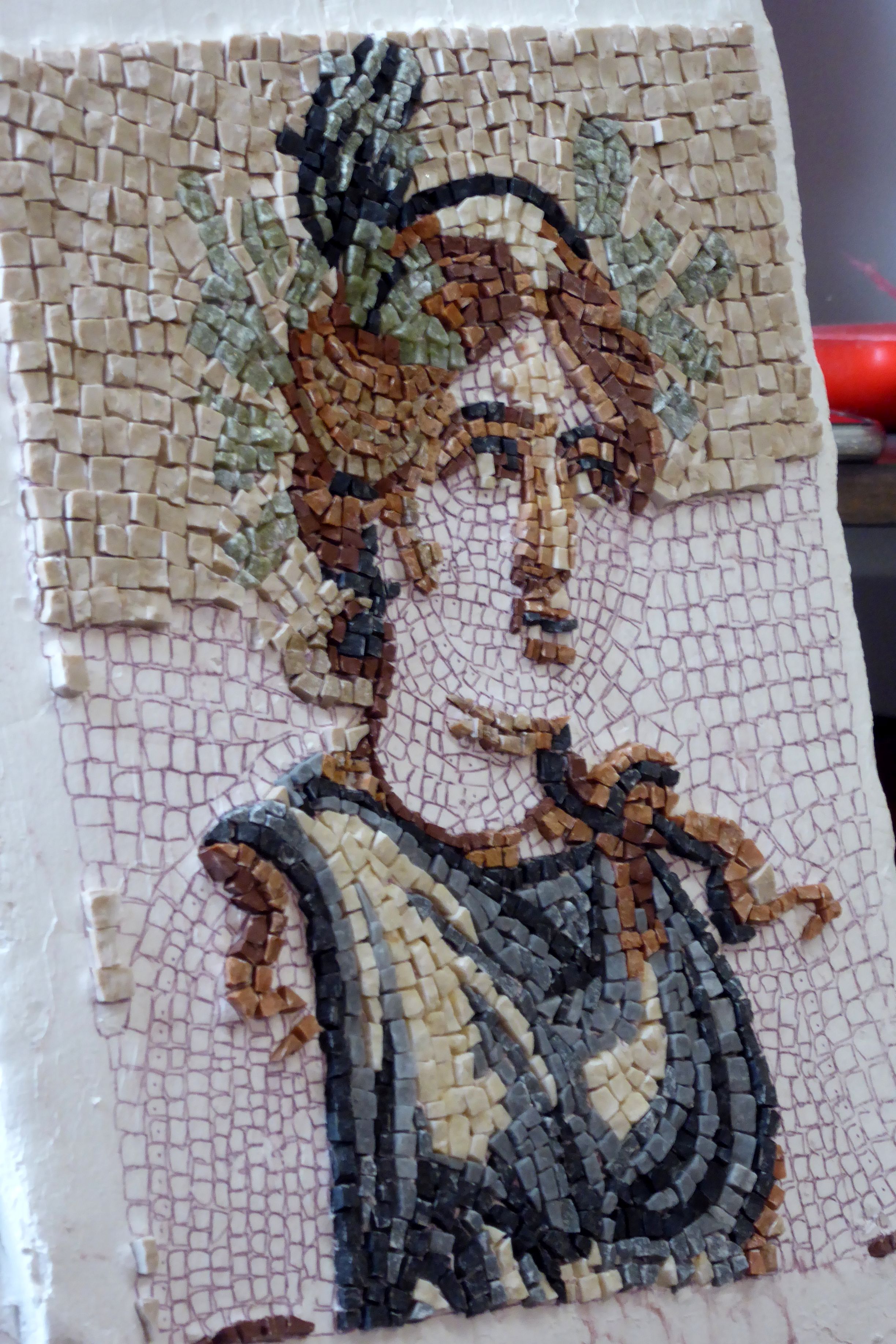
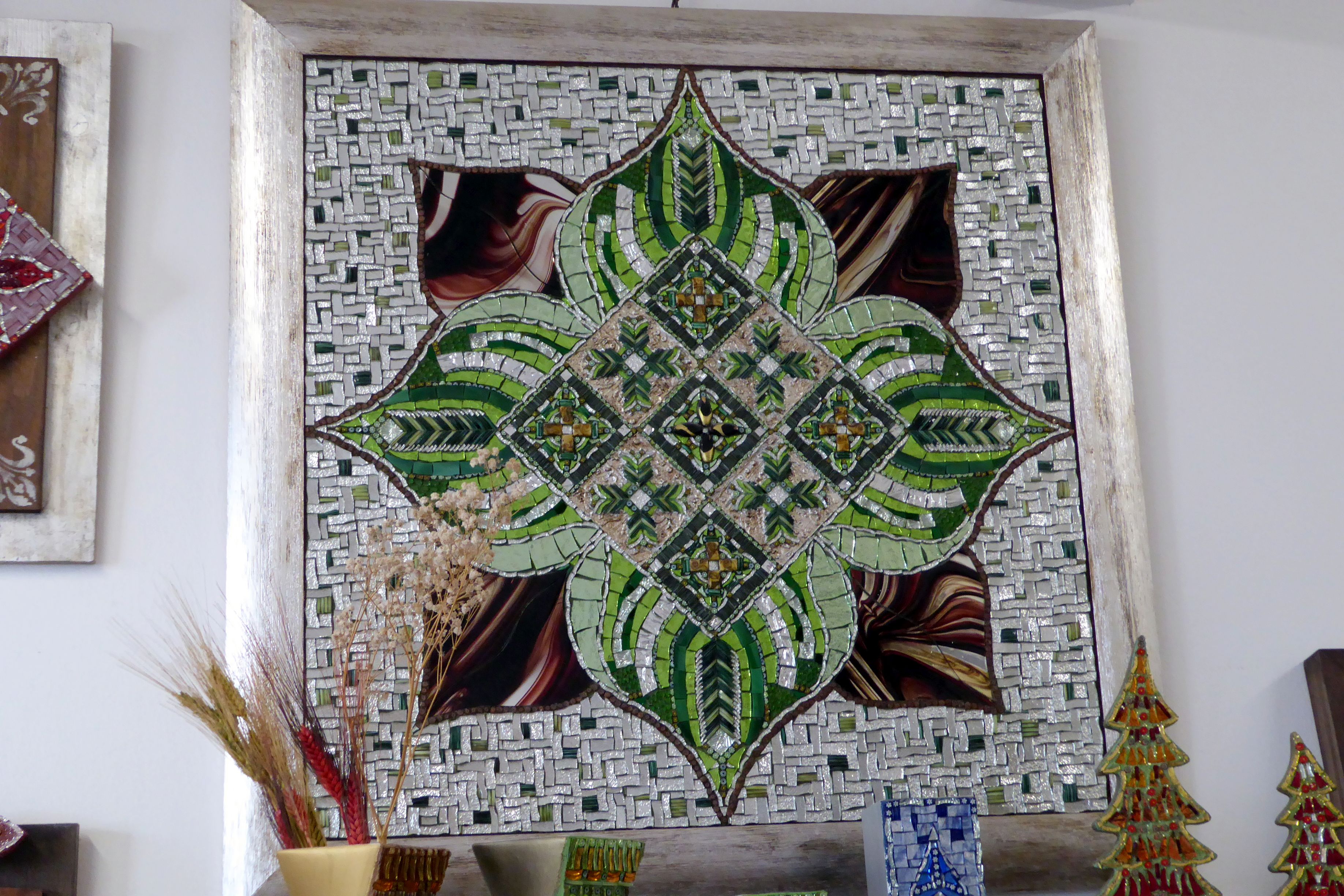
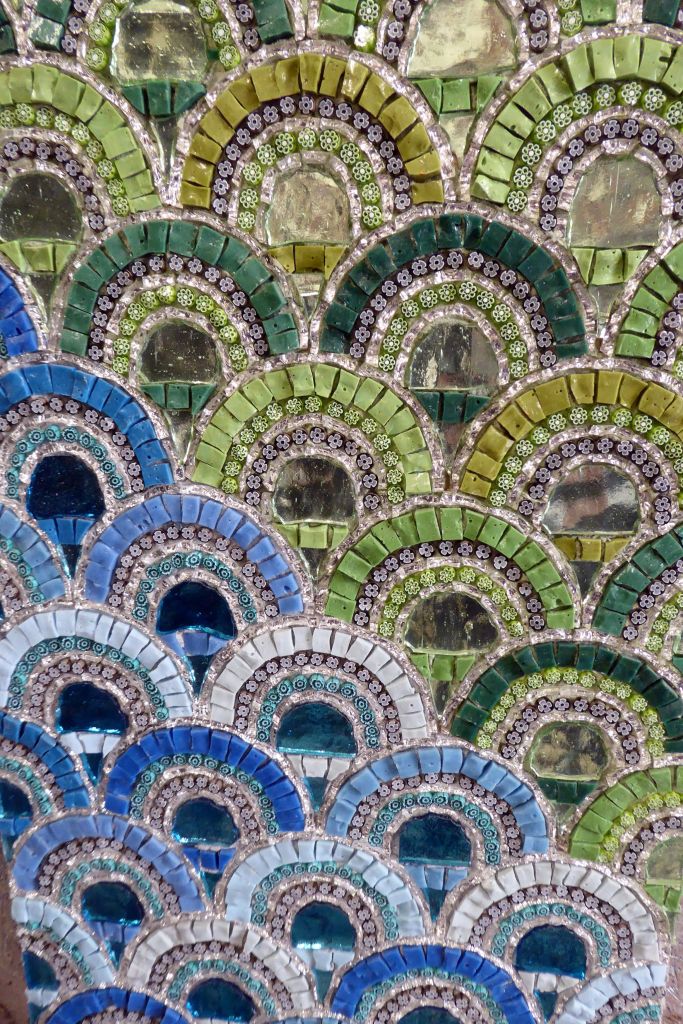
In the afternoon, we visited the workshop of one of Ravenna’s most skilled restorers of mosaics. Ivana demonstrated how mosaics are made and restored, which was fascinating.
These were mosaics Ivana made for sale in her workshop gallery.
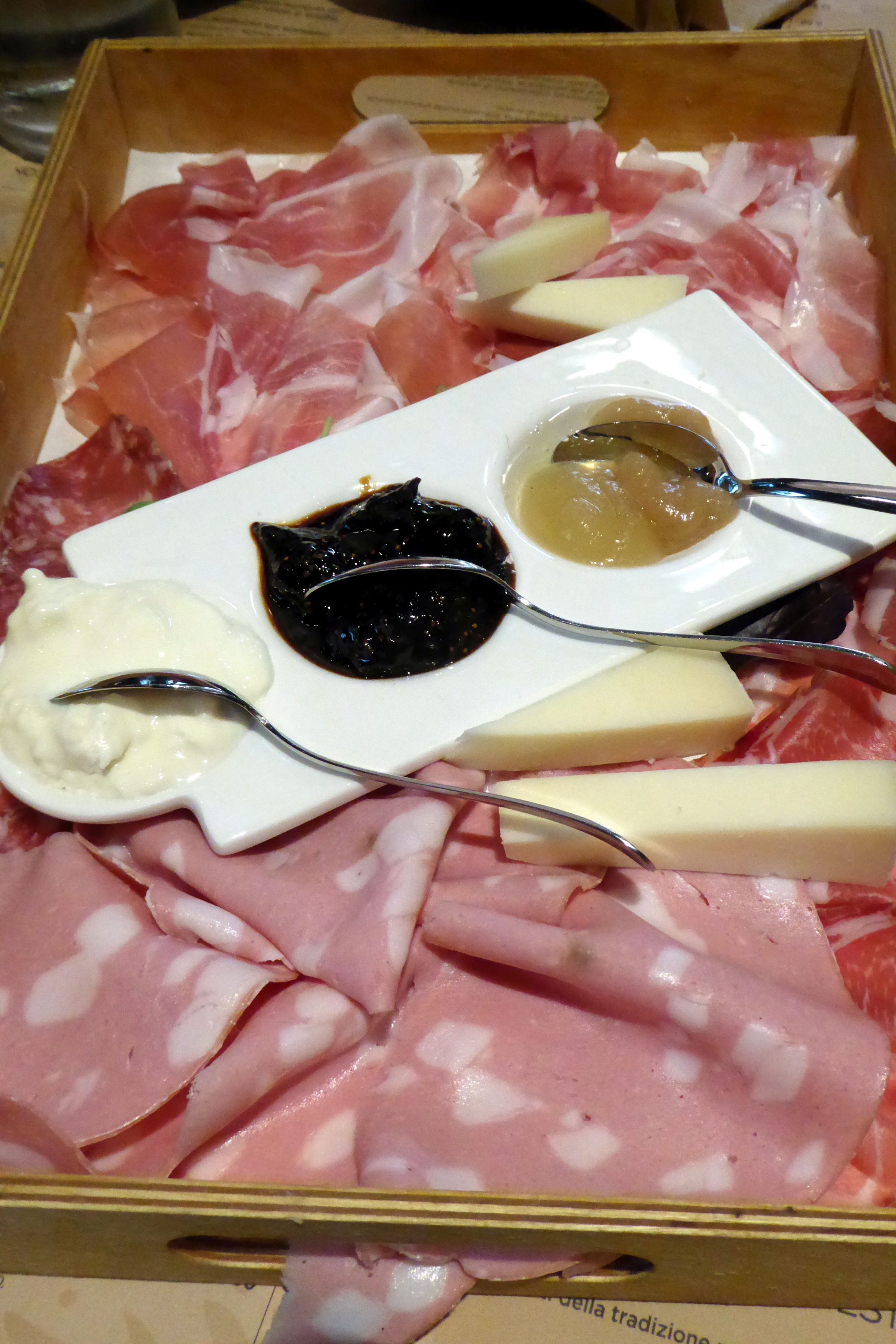
An included lunch in between was atPasatelli, a restaurant that had previously been a movie theater. It is still used for movies and performances that can be enjoyed while dining on delicious Italian cuisine. While most of the group dined on a sampling of locally made prosciutto, mortadella, and salami, I enjoyed the array of parmesan cheeses and a vegetarian salad. It was a memorable 3-course (with wine) feast!
The following are a few photos shot while walking the streets of Ravenna:
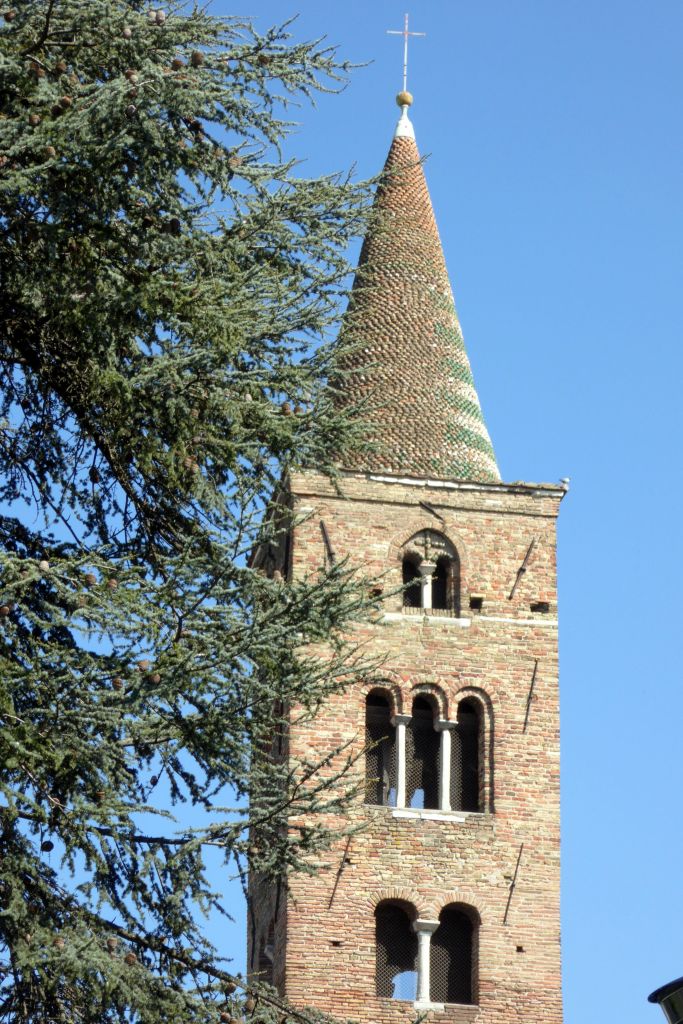
This is not wide angle distortion, folks. This tower really was leaning! Supports have been added to the bottom section to prevent it from toppling over.
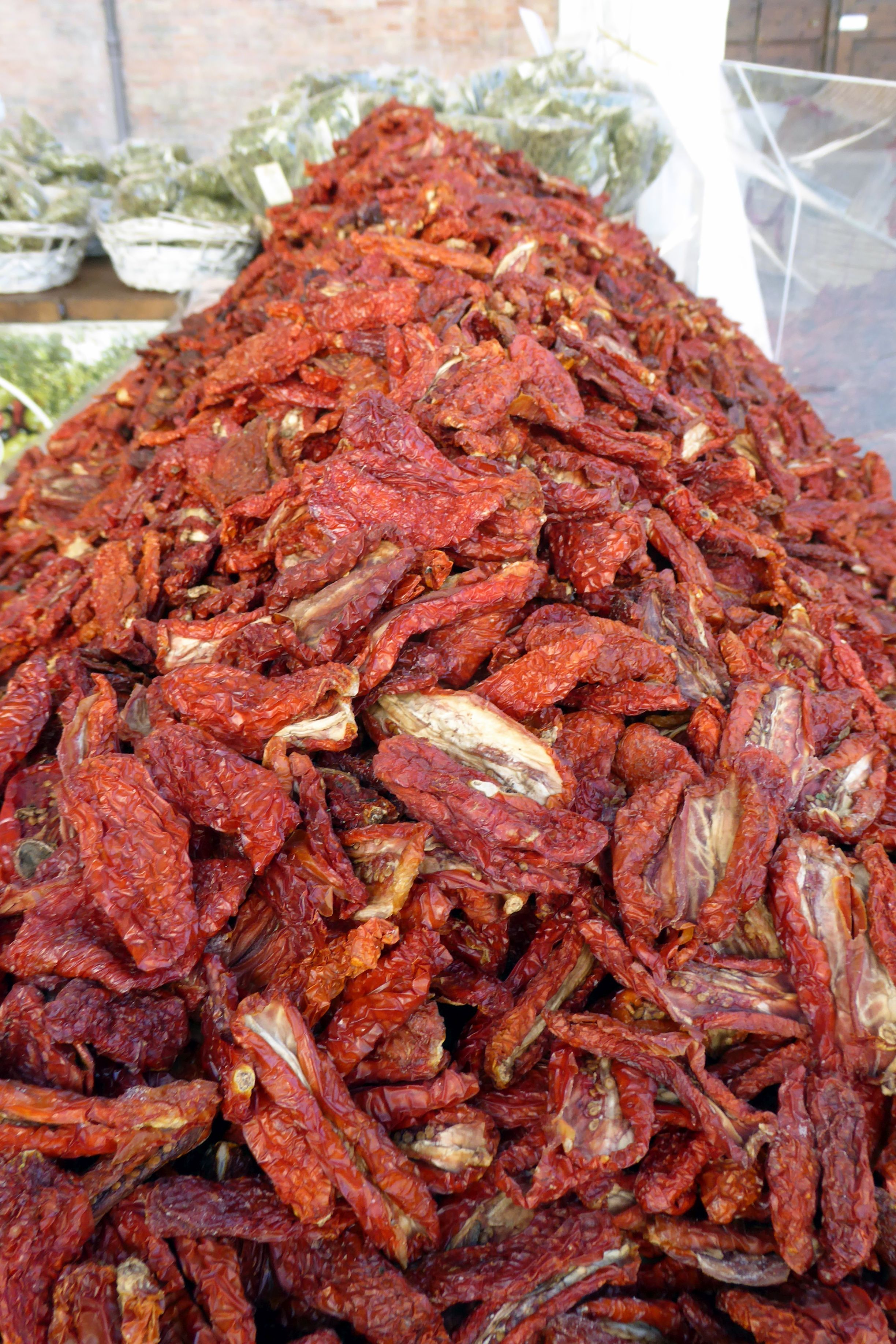
This massive mound of sundried tomatoes took up an entire five-foot table!
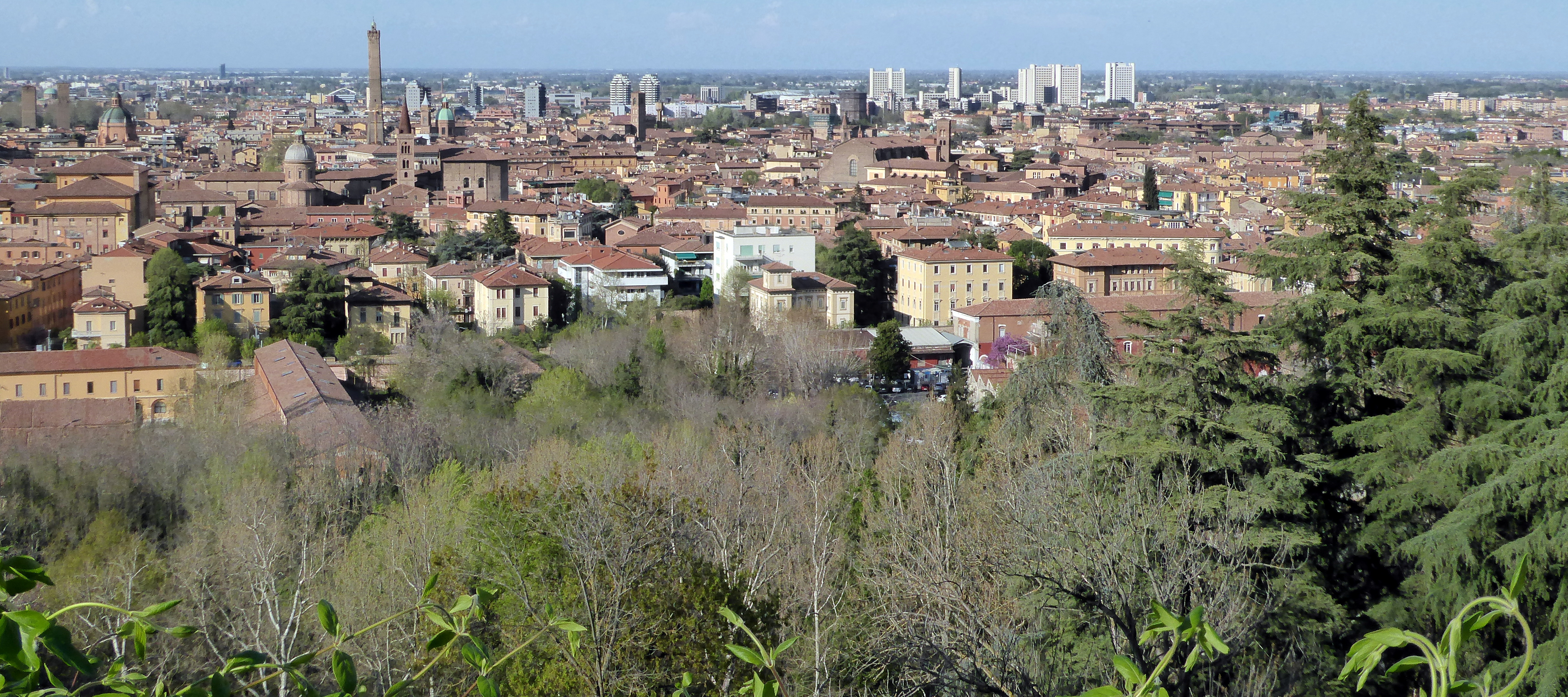
After our train ride back to Bologna, our driver took a detour so we could enjoy a panorama view of the city. It had been a beautiful, sunny day, and the city below shined in warm shades of terra cotta.
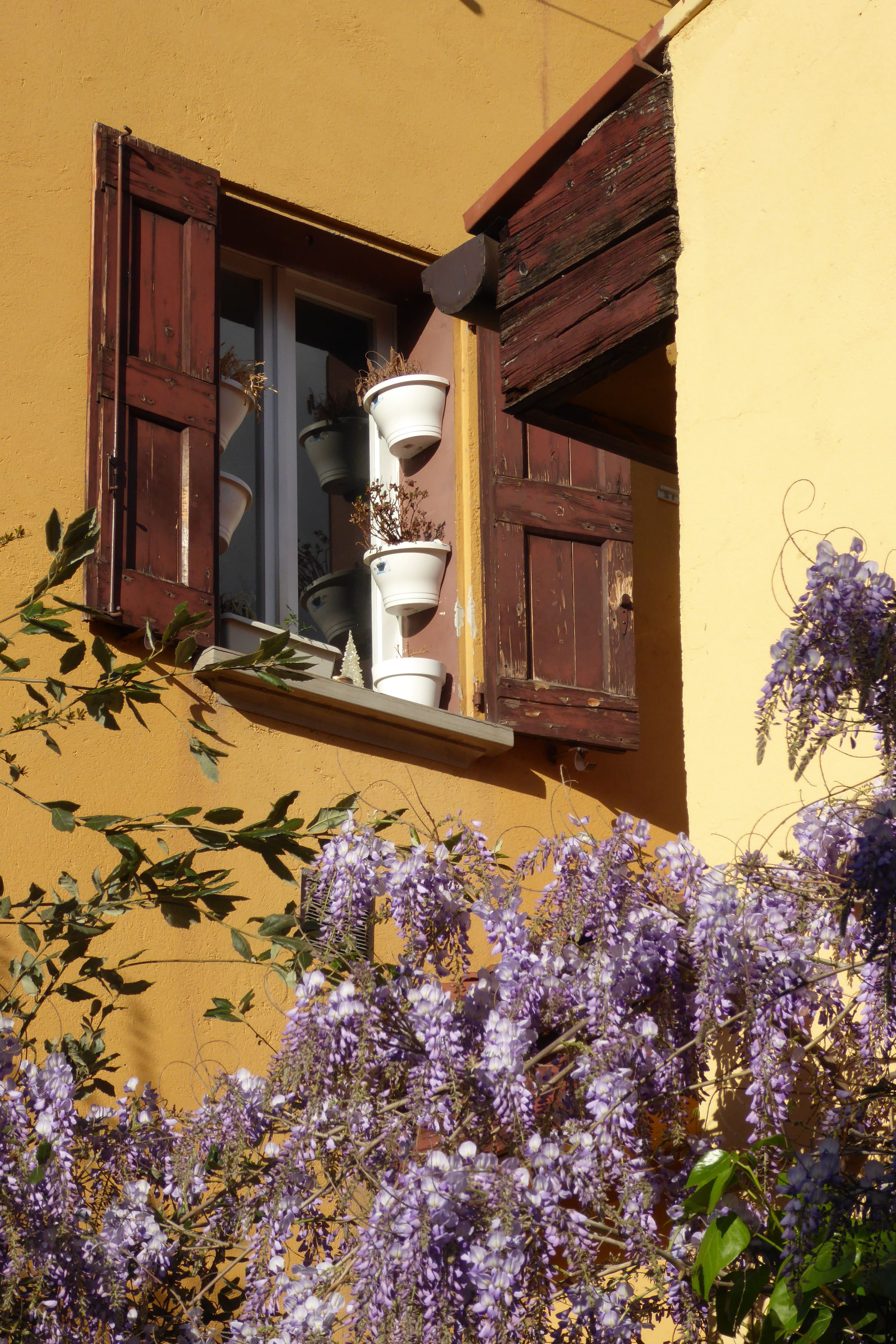
This was a view up from the garden of our hotel.
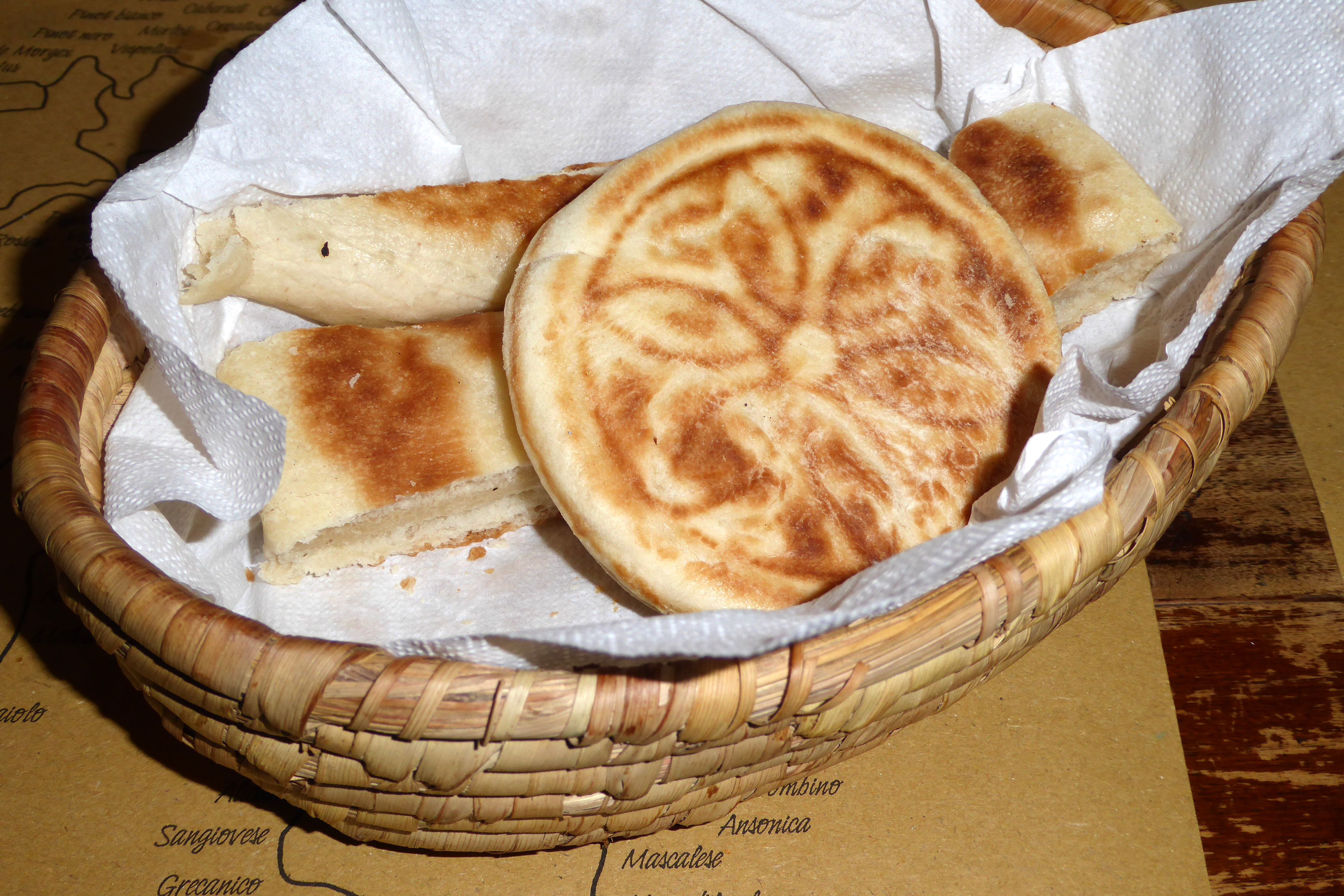
The day concluded with another delicious dinner accompanied by an artfully-presented basket of bread.
The following morning, we would be off to learn all about…
… The Making of Parmesan Cheese: A Stork Carries the Twins
Stay tuned!
Note: If small group travel is of interest to you, I highly recommend Overseas Adventure Travel (OAT). Although Bruce and I travel together, they do not charge a single supplement for those who travel on their own. Singles also get their own room at hotels. If you book, you can get $100 off your trip by providing my name and customer number (Elaine Krugman, #3018126) as the person who referred you. I will also get $100 off future travel– a win-win!
Italy is divided up into twenty regions, and each region is further divided into provinces. Bologna is located in the Emilia-Romagna region, in Northern Italy, and has a population of about 400,000. Known as the Red City for its Spanish-styled red tile rooftops, it is also known as the Fat City for its rich cuisine.
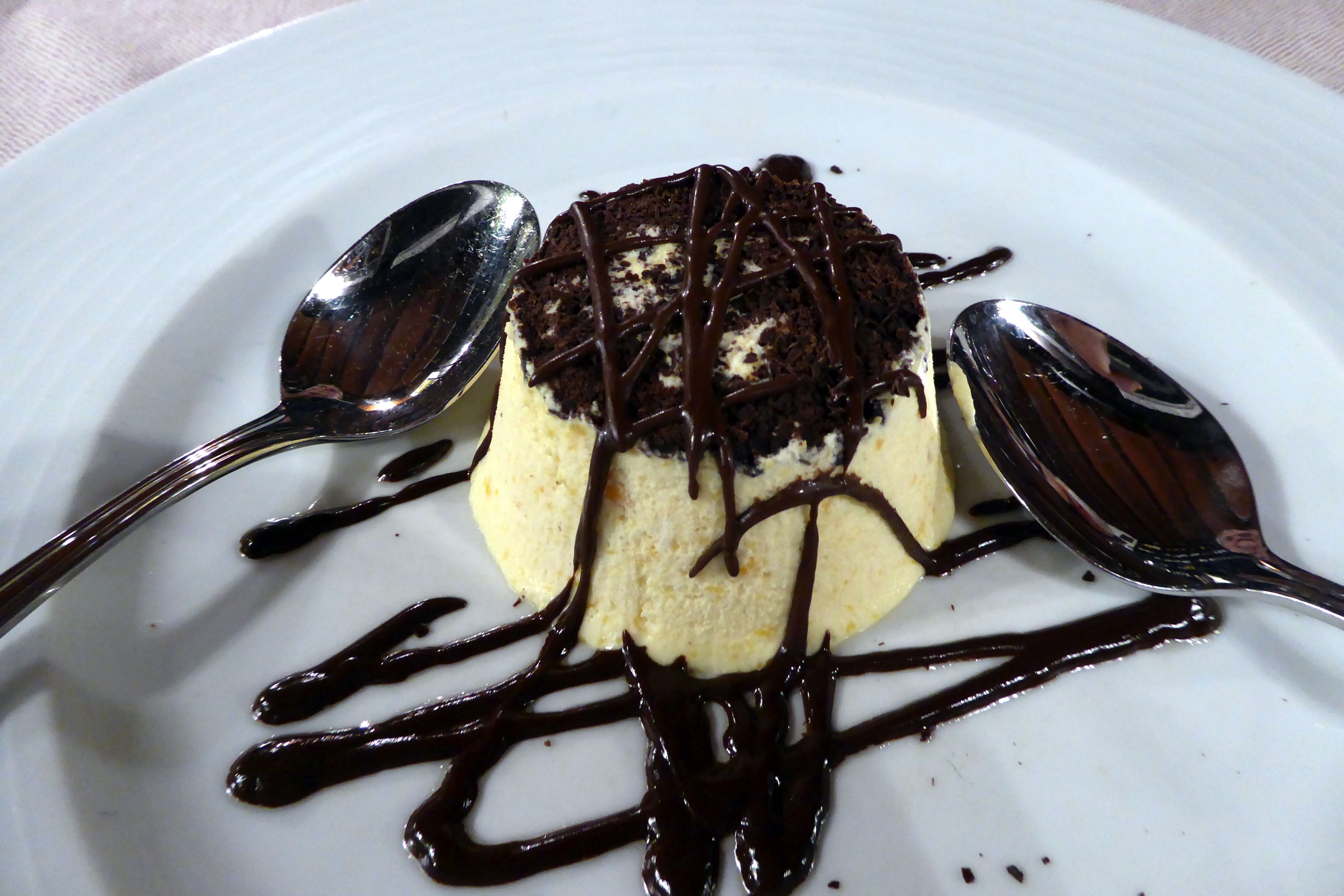
We sampled some of Bologna’s rich cuisine during our first dinner together, a delicious meal that concluded with a classic Italian dessert, panna cotta, a delicious custard topped with chocolate sauce. If this first meal was any indication of what was to follow over the next three weeks, we were in for many treats to come!
(For all pictures, click on the image to see full screen view.)
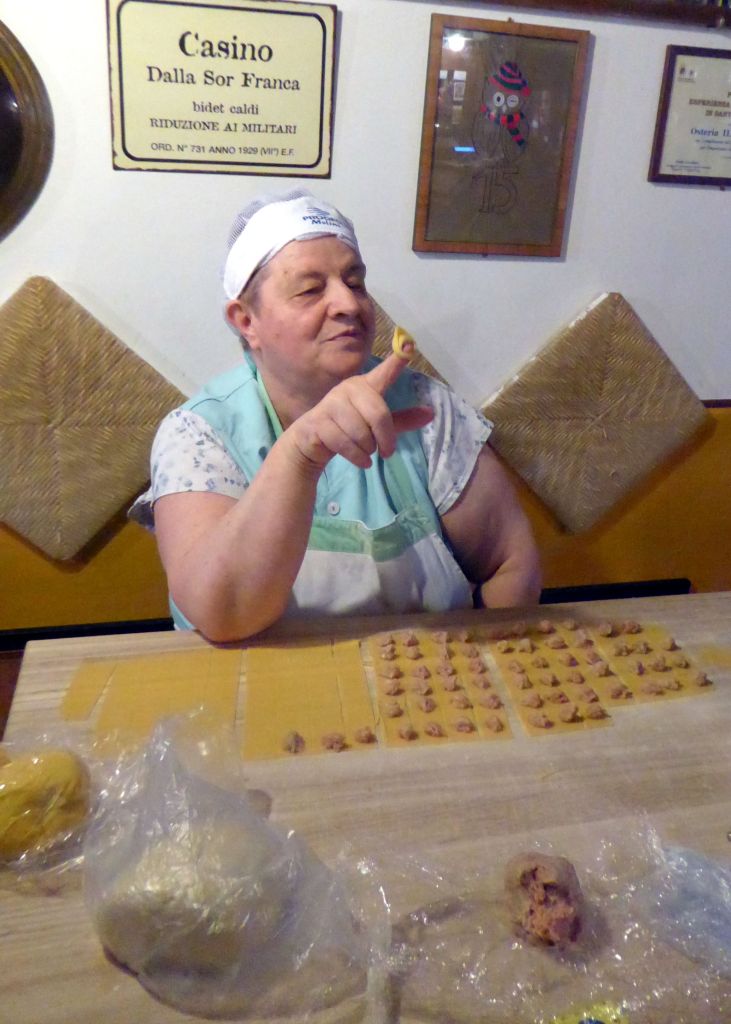
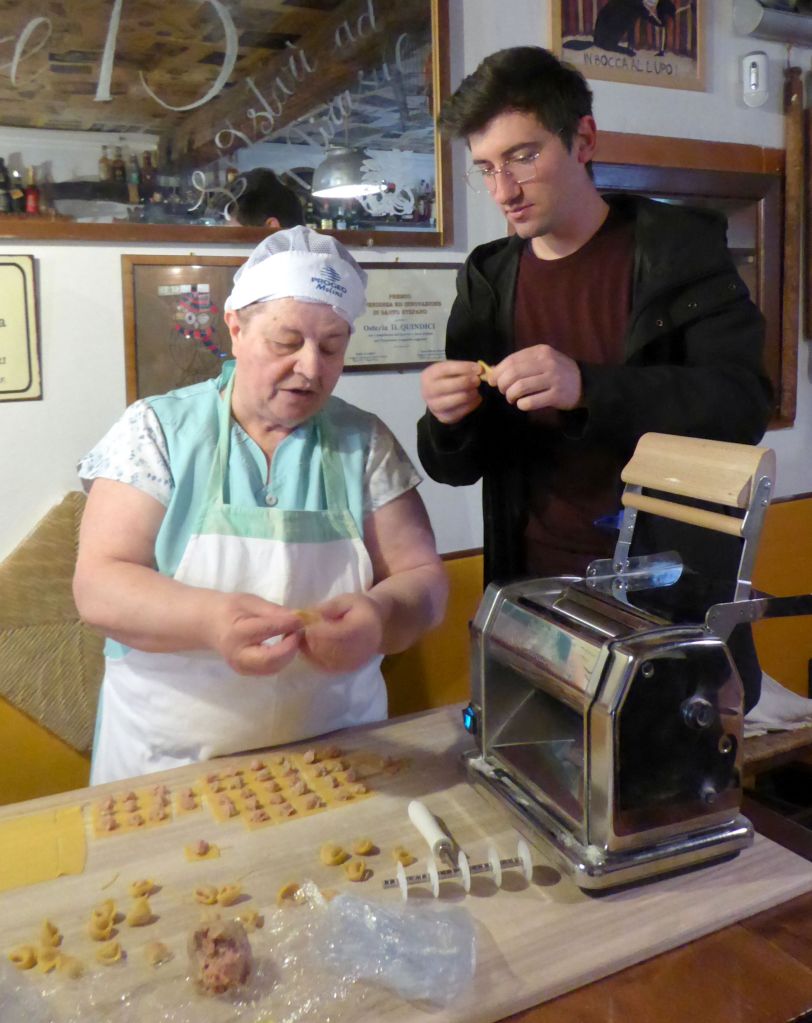
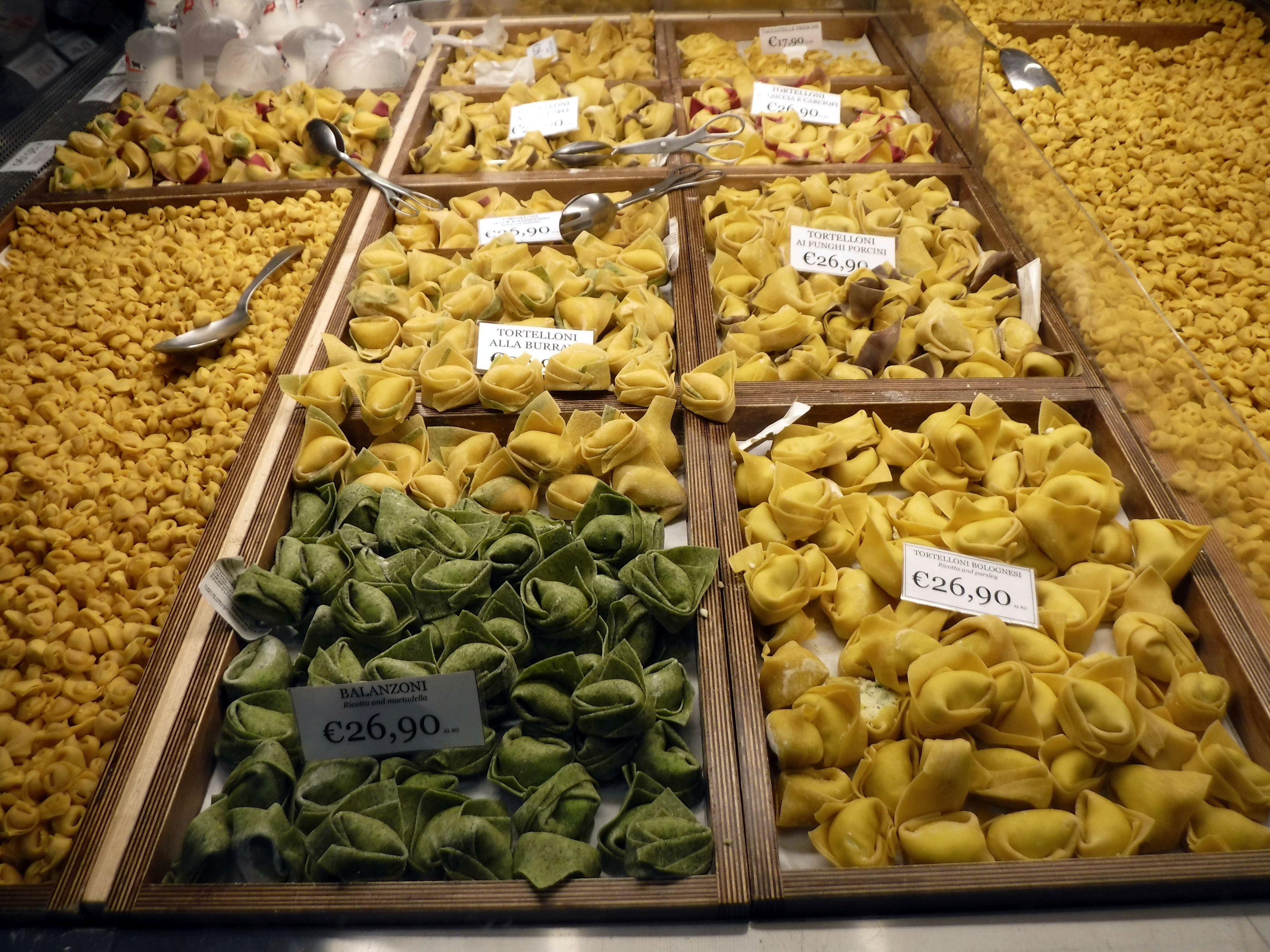
Our first morning in Bologna was spent learning how to make tortellini and other varieties of pasta. Our tour leader, Oscar, jumped right in!
Oscar, 29, recently became a tour leader and was trained by Ben, the senior Italian tour leader who would be leading us throughout the base program in Tuscany and Umbria. (I will have more to share about Ben in future posts.)
Hailing from Rome, Oscar is a professional musician. When I asked him about his music in our pre-trip e-mails, he sent me a link to his music and website. Take a listen to this . That’s Oscar on bass, and he is a phenomenal talent!
It was Oscar’s music that inspired an instant connection both Bruce and I shared with him, because of our music backgrounds. We had a lot of fun talking music with him. Oscar has a great voice, too, and that night, when we returned to the same restaurant where we were taught how to make pasta, we got to hear it. In a conversation about classic rock bands, I happened to mention that The Who’s, “Behind Blue Eyes” was the only song I knew the words to that was also in my vocal range. He broke out in an impromptu rendition, encouraged me to join in, and then he harmonized with my melody line. I wonder what the other diners in the restaurant thought of that?
During another dinner, Oscar was telling us about an American jazz musician he met in Bologna at a music conference and mentioned this musician was a music professor at USC. I asked (half-joking, because of the slim odds), “Oh, was it Richard Smith?” Bruce and I had heard Richard perform in San Diego and talked with him a bit afterwards when I purchased his CD. Oscar, startled, took a business card out of his wallet and said, “Yes!” passing the card down for me to examine. I thought he was kidding, and the card would have another name on it, but sure enough, it was Richard Smith’s business card! Small world!!
What was it about Italy and small world stories? The first time I was in Rome, I was with my mom, and we were weaving our way through a very busy plaza between the Trevi Fountain and Spanish Steps, when I spotted former San Diego Mayor, Roger Hedgecock. He was a member of the University Club where I was a server, trainer; and, created and ran a jazz dinner concert series. I had served him a few times, so we were familiar with each other. In Rome, he was leading a tour group of listeners of his radio talk show program.
Shocked to see him (I mean what were the chances???), I went up to say hello, not noticing who else was in the group. Then, I heard an excited voice from the group exclaim, “I know you! You serve us at the University Club!” It was Dr. Vance and his wife, two of my regulars at the club. And, that, my friends, is the photo op. that got away. Why didn’t I grab a picture of us???
Back to Oscar, we had a lot of laughs, a lot of fun, and a lot of gelato together during our six-day pre-extension. During one day in Parma, Bruce and I had gelato with Oscar during our afternoon free time AND for dessert with the group that night. He taught me how to order it in Italian, “Una coppetta di gelato al cioccolato, per favore?” I repeated that request many times throughout our three weeks in Italy…
Now, then, are more of the sites we saw in Bologna during our walking tour, in between making pasta and savoring our gelatos:
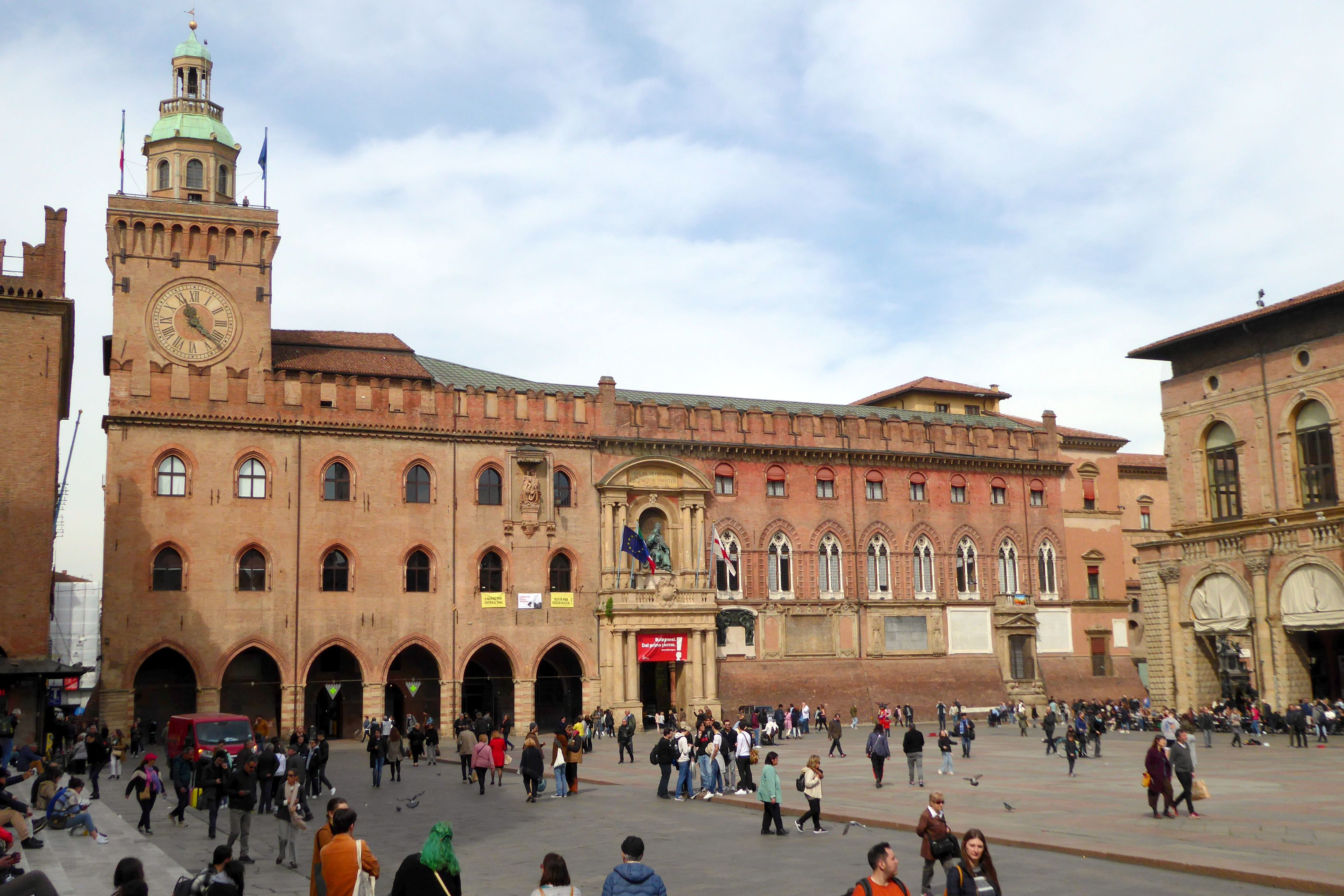
Bologna is a UNESCO-protected medieval city. One of the sites we toured was the University of Bologna that dates back to 1088, and was the first higher learning institute in the Western world.
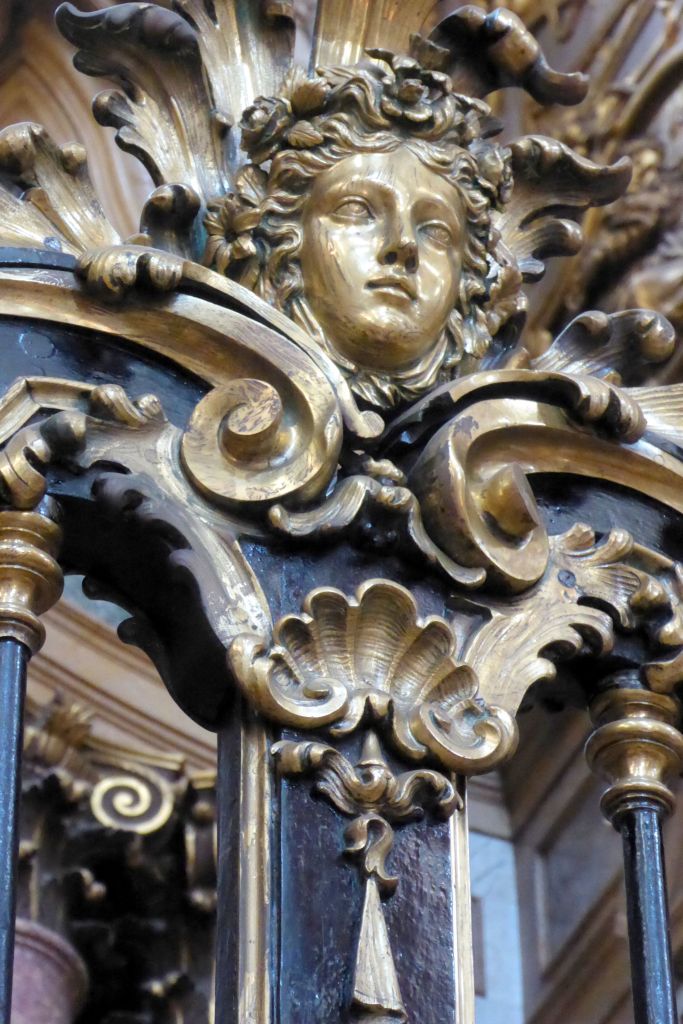
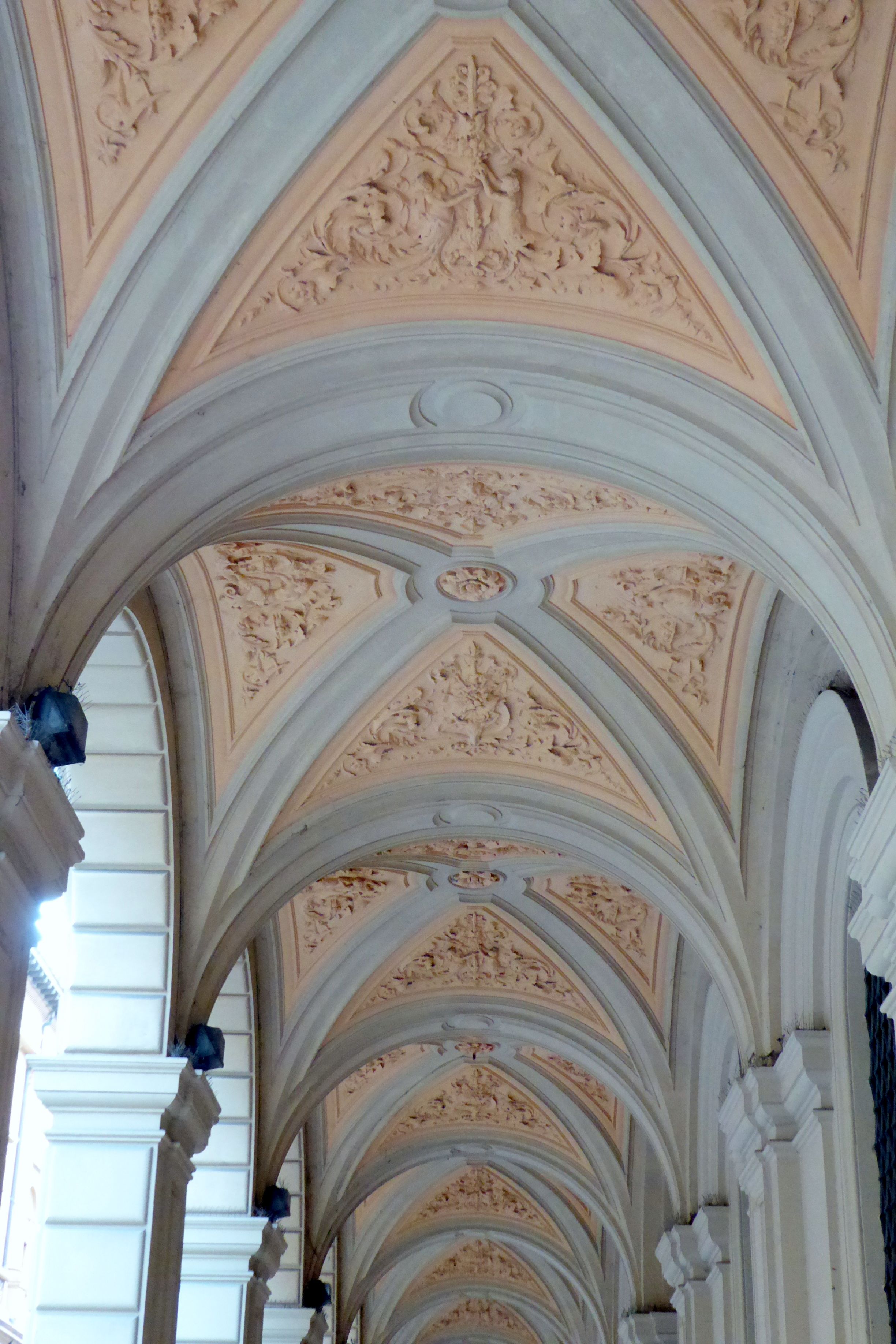
The ceilings were incredibly ornate!
This narrow pedestrian street was full of restaurants and specialty grocery stores.
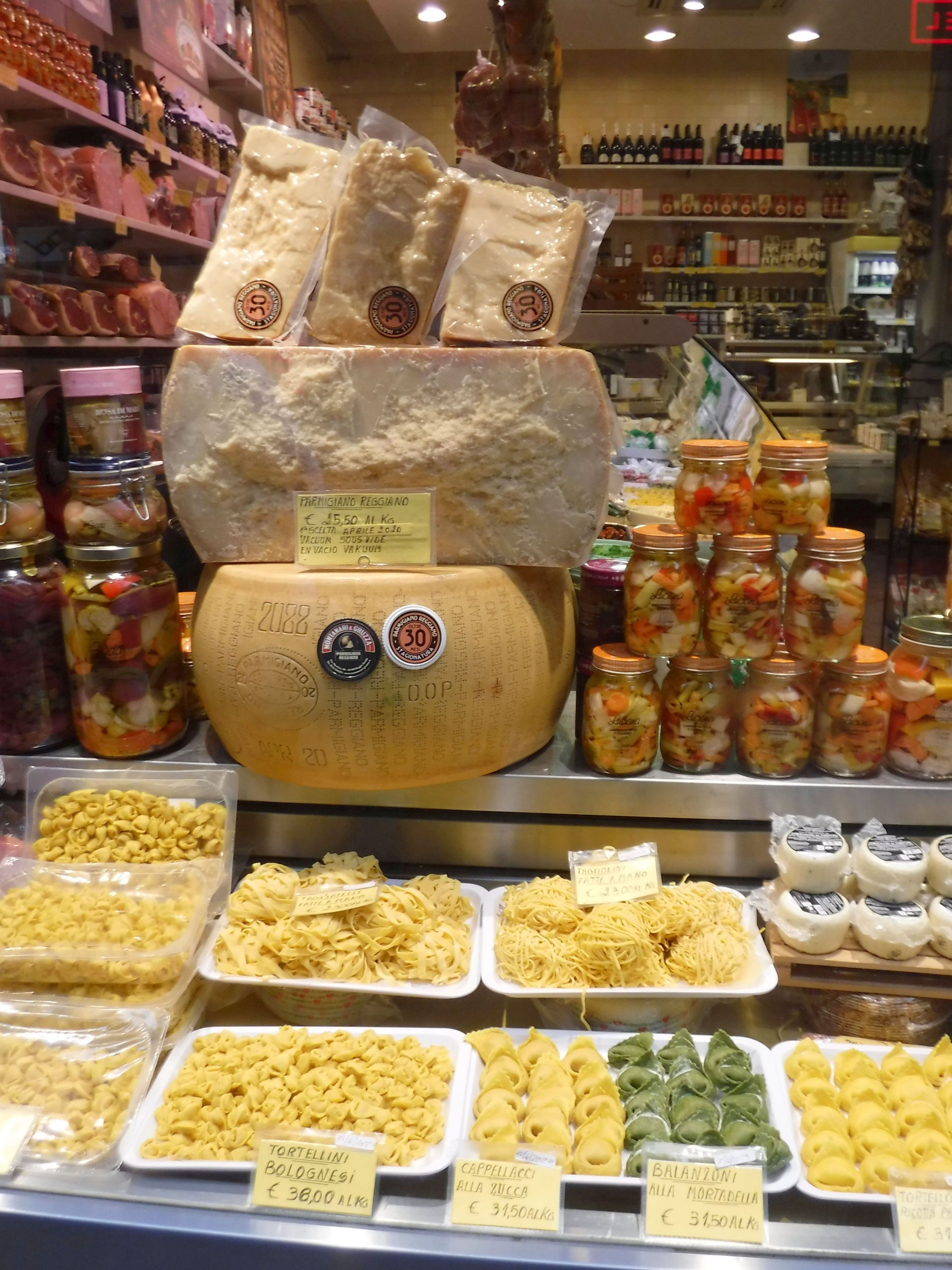
The Emilia-Romagna region is known for producing many Italian delicacies. We learned a lot about all of them in the days ahead.
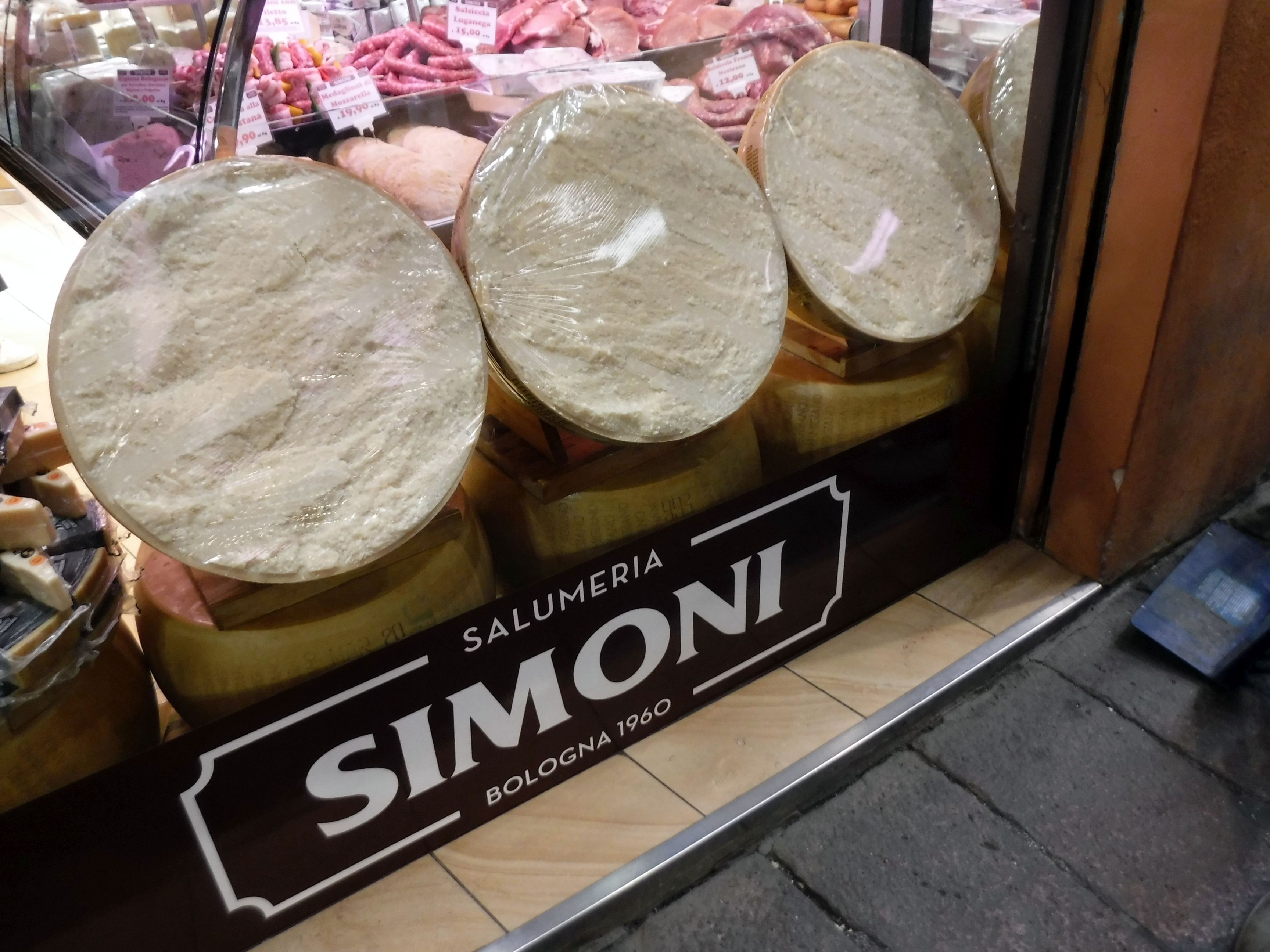
That’s a lot of parmesan cheese!
A dessert on display where we opted for gelato, although this looked enticing!
This is “chocolate salami,” a dessert I did enjoy. It’s called “salami,” because it’s made in a salami-shaped log. Delizioso!
We were scheduled to go to Costa Rica this past January; however, a dysautonomia diagnosis last year was the convincing wake-up call that my body’s aversion to heat was going to override my heart’s love for tropical environments. Thirty years of trying to fit that square peg in a round hole was only getting worse.
Back to the drawing board with Overseas Adventure Travel (OAT), we decided to switch over to a cool-weather trip to Italy, during a not-too-hot-not-too-cold time period. We had visited the Calabria region in 2019, and we wanted to see more of Italy. Past cruise ship stops to the country while “working” as a guest lecturer aboard Princess Cruises with my mom had given me just enough of a taste of the Tuscany region that I knew I wanted to return. Thankfully, Bruce wanted to see more of Italy, too. While we were at it, we thought we would add on the pre-extension trip to Bologna and Parma.
Although we had done excellent small group tours with Vantage Travel and Odysseys Unlimited, this particular itinerary with Overseas Adventure Travel sounded great, and the company was highly recommended by several neighbors and friends. Besides, of the three companies, OAT’s tours have the smallest group size at 16 maximum.
As it turned out, there were six of us on the pre-extension and fifteen on the base trip. Fortunately, it was a fantastic group! We all got along, and everybody was on time, all the time. Our tour leaders even congratulated us on being such a great group to lead!
In the following days (more like weeks…), I will share our experiences and my photography of what turned out to be a perfect 21-day trip through the Emilia-Romagna, Toscana, and Umbria regions. We saw and learned so much! In addition to the history, we learned how mosaics are made and restored; and, how Carrara marble is extracted and worked. We also learned how pasta, parmesan cheese, balsamic vinegar, olive oil, wine, goat cheese, prosciutto, Parma ham, and chocolate are all made; and, we went on a truffle hunt in the mountains. We sampled it all—and, a lot of it! The food was delizioso!
Please join me on our Italian adventure. Add your e-mail to “Sign me up!” and you will be notified each time I post. (You can always unsubscribe later.) Grazie!
(For all pictures, click on the image to see full screen view.)
On our way to Italy!
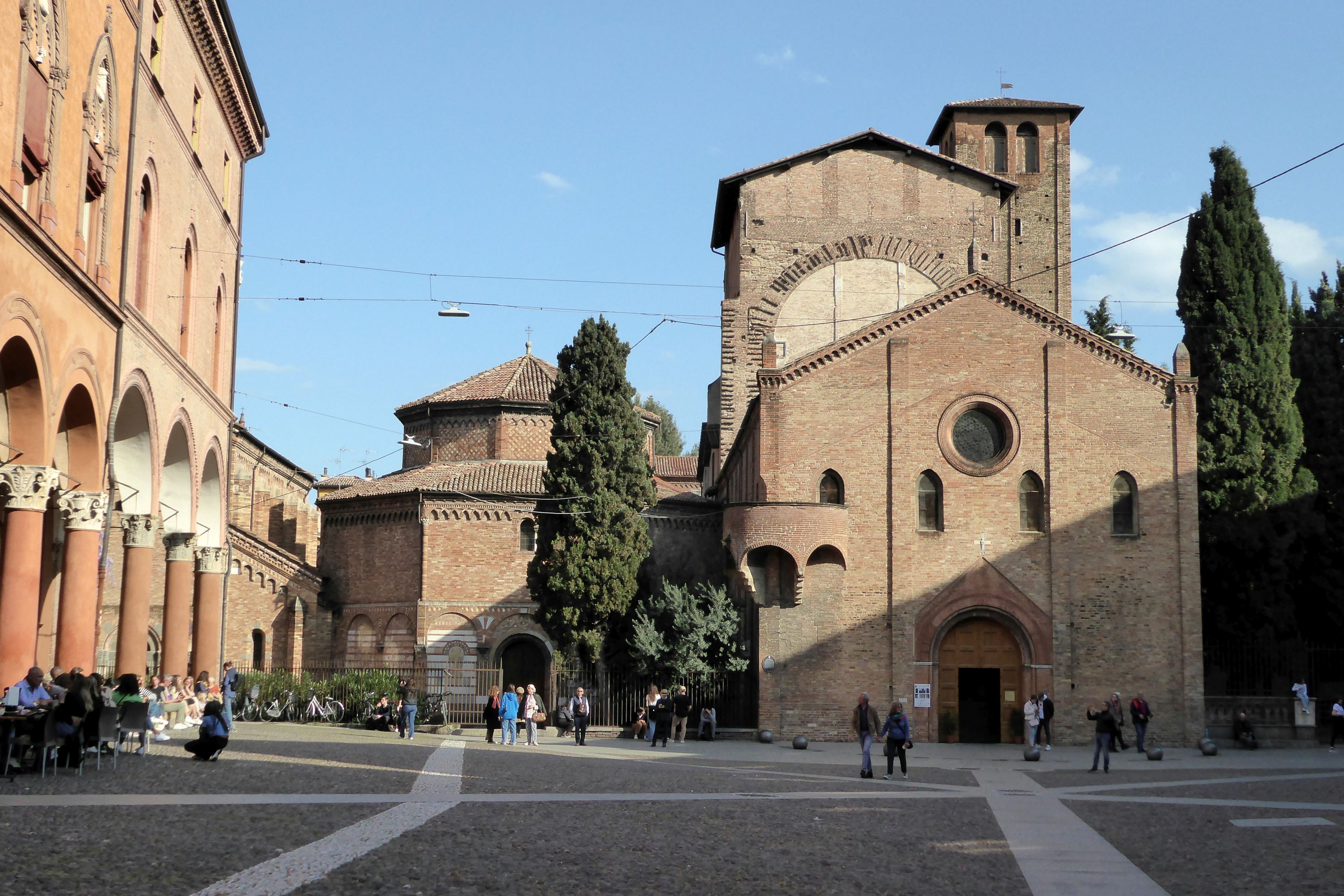
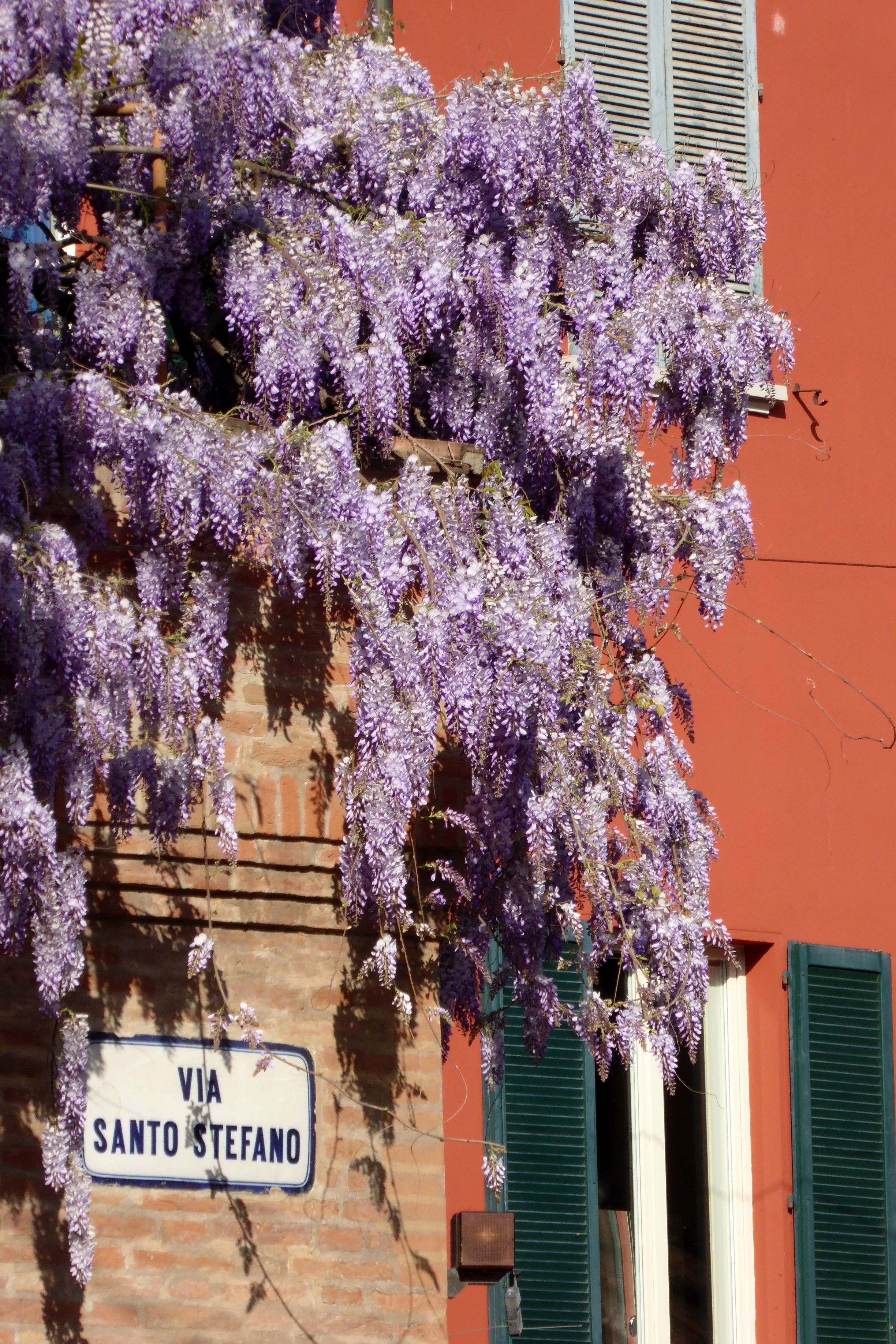
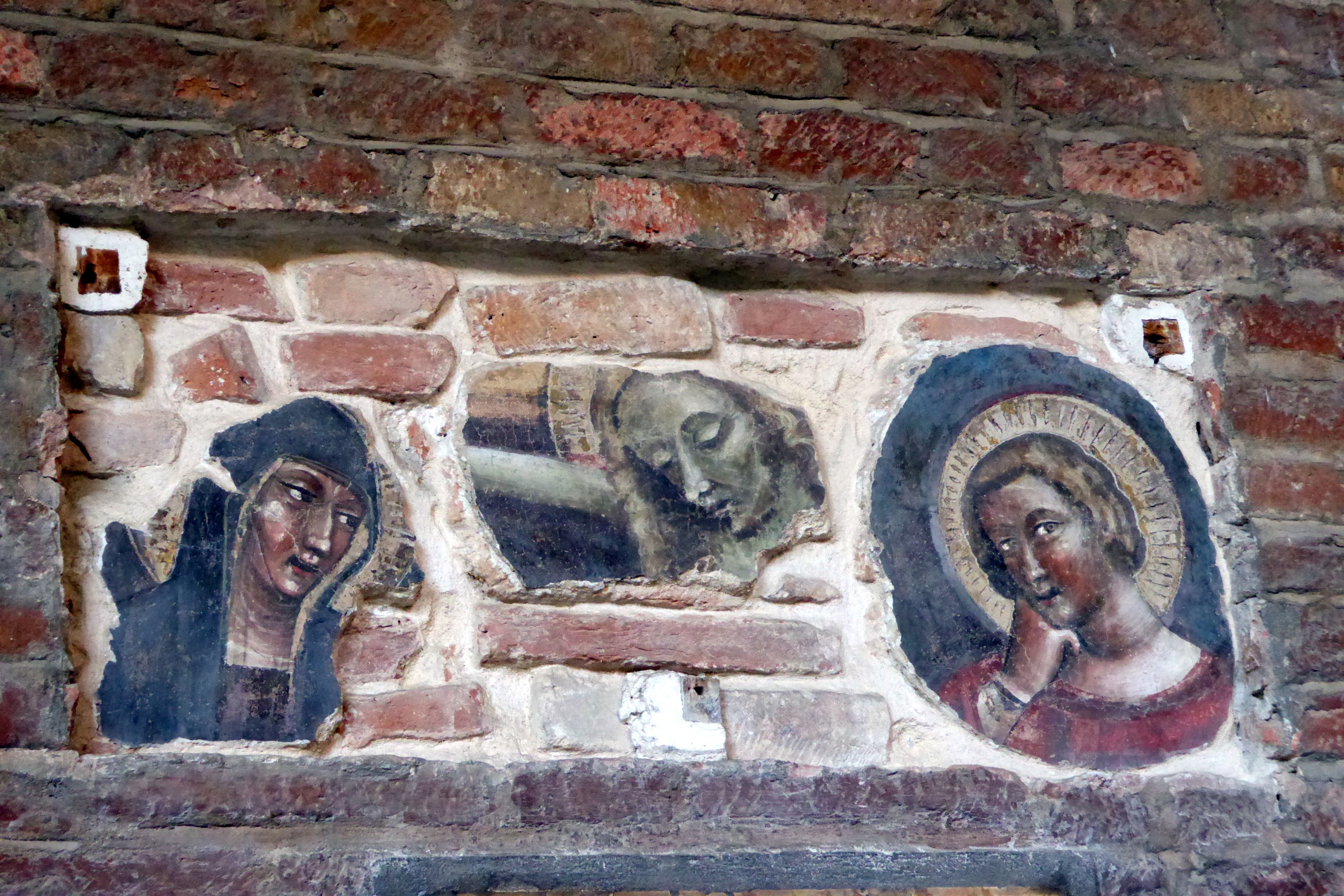
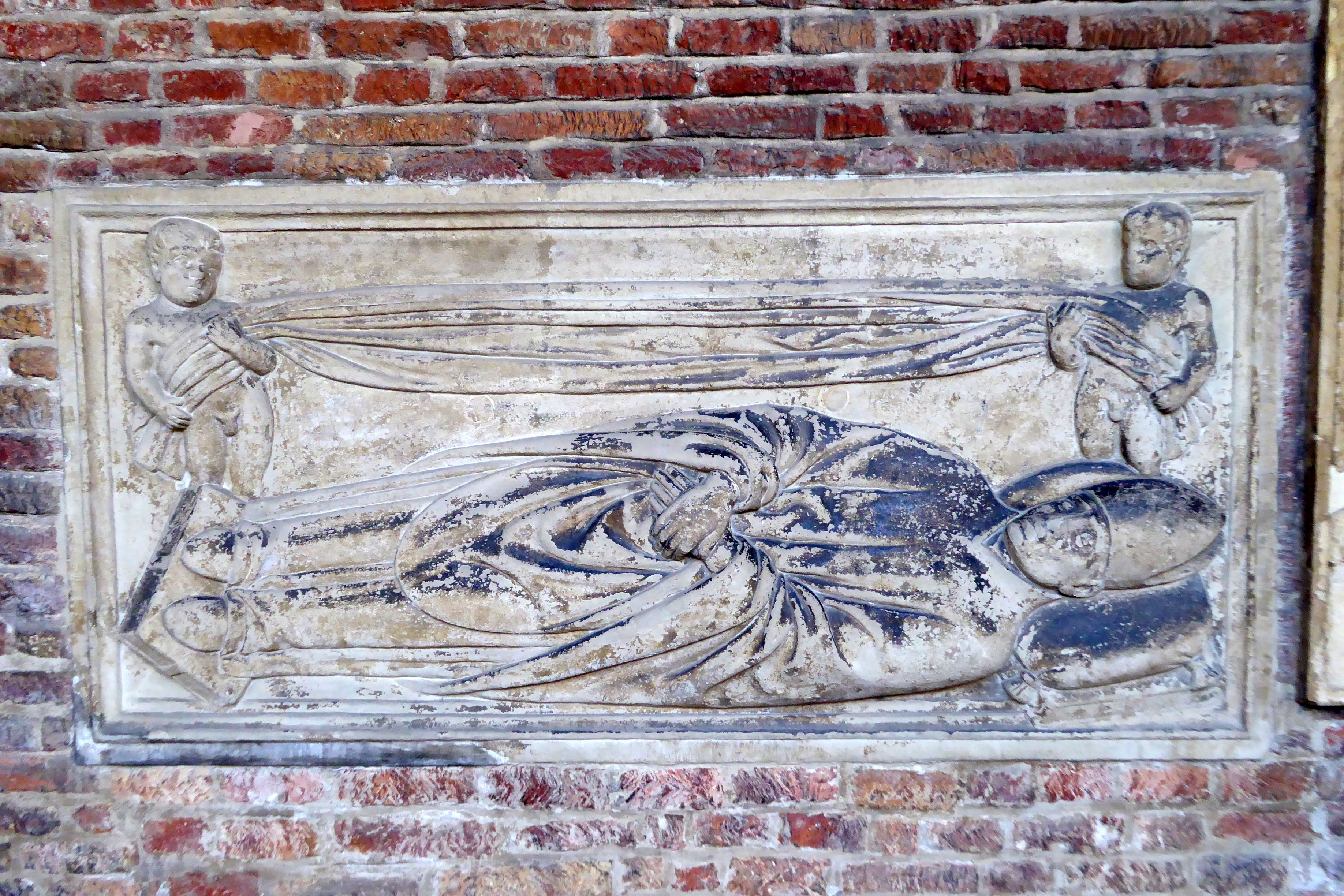
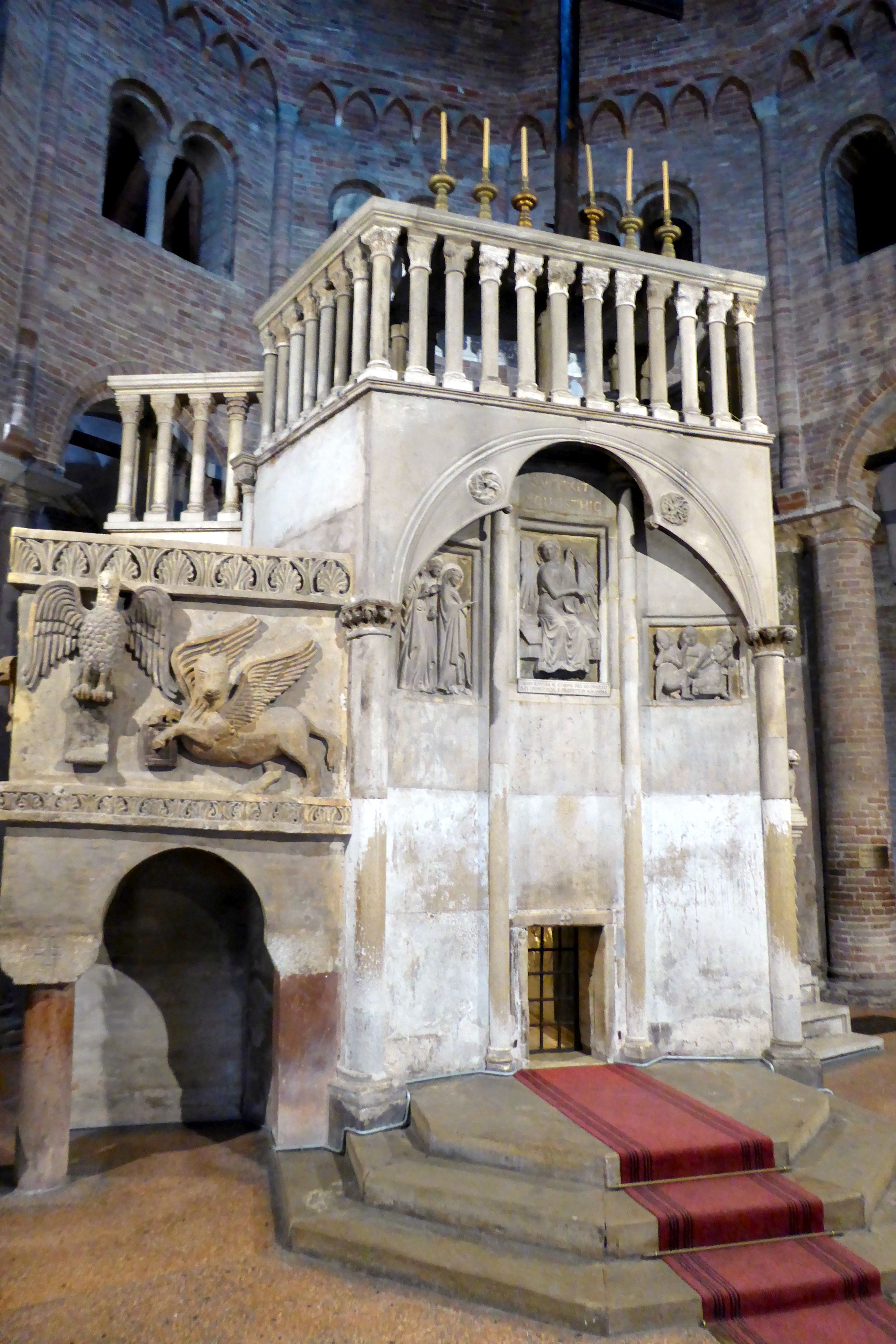
Meanwhile, I will leave you today with a few scenes around Piazza Santo Stefano, the main square in Bologna and Basilica Santo Stefano:
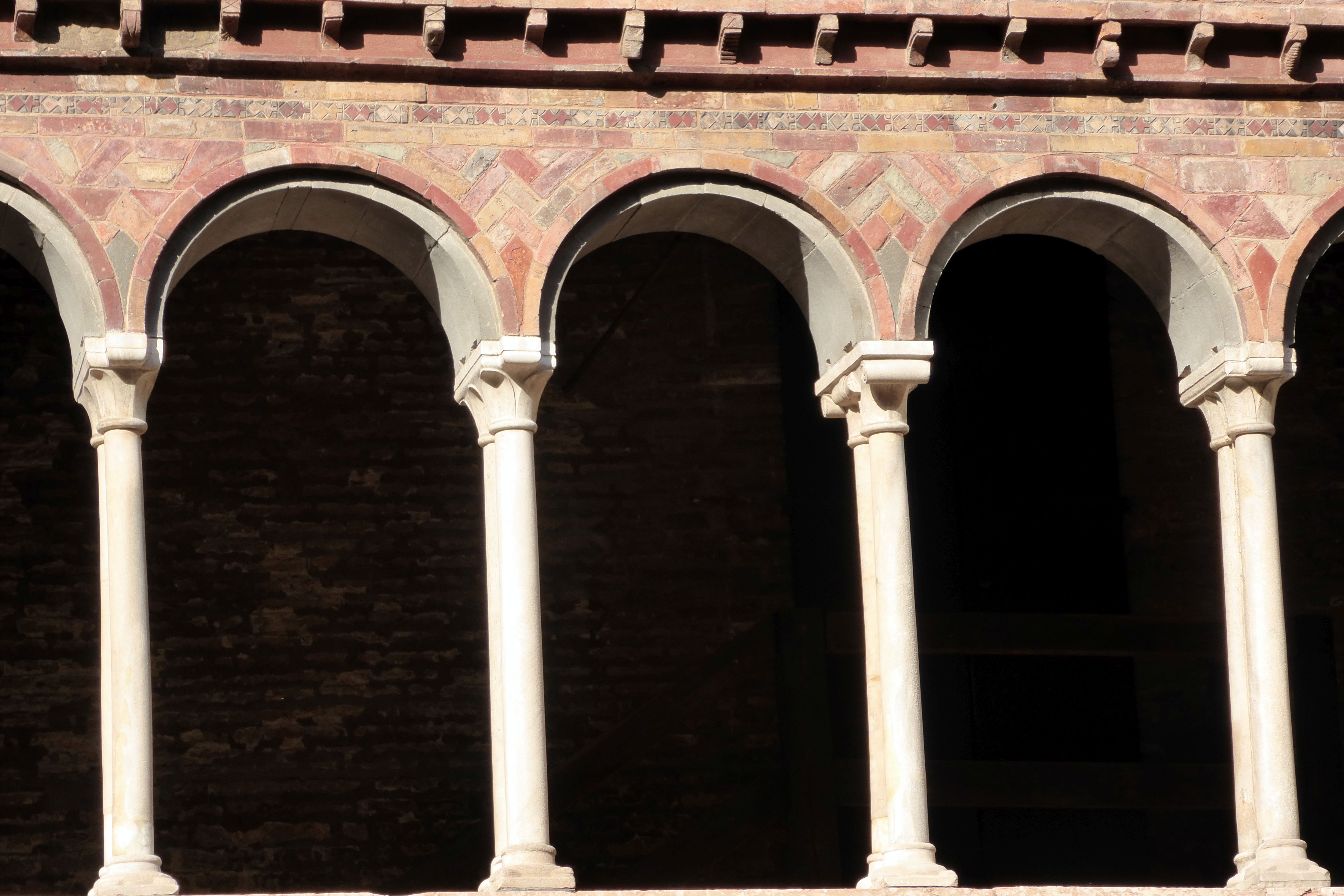
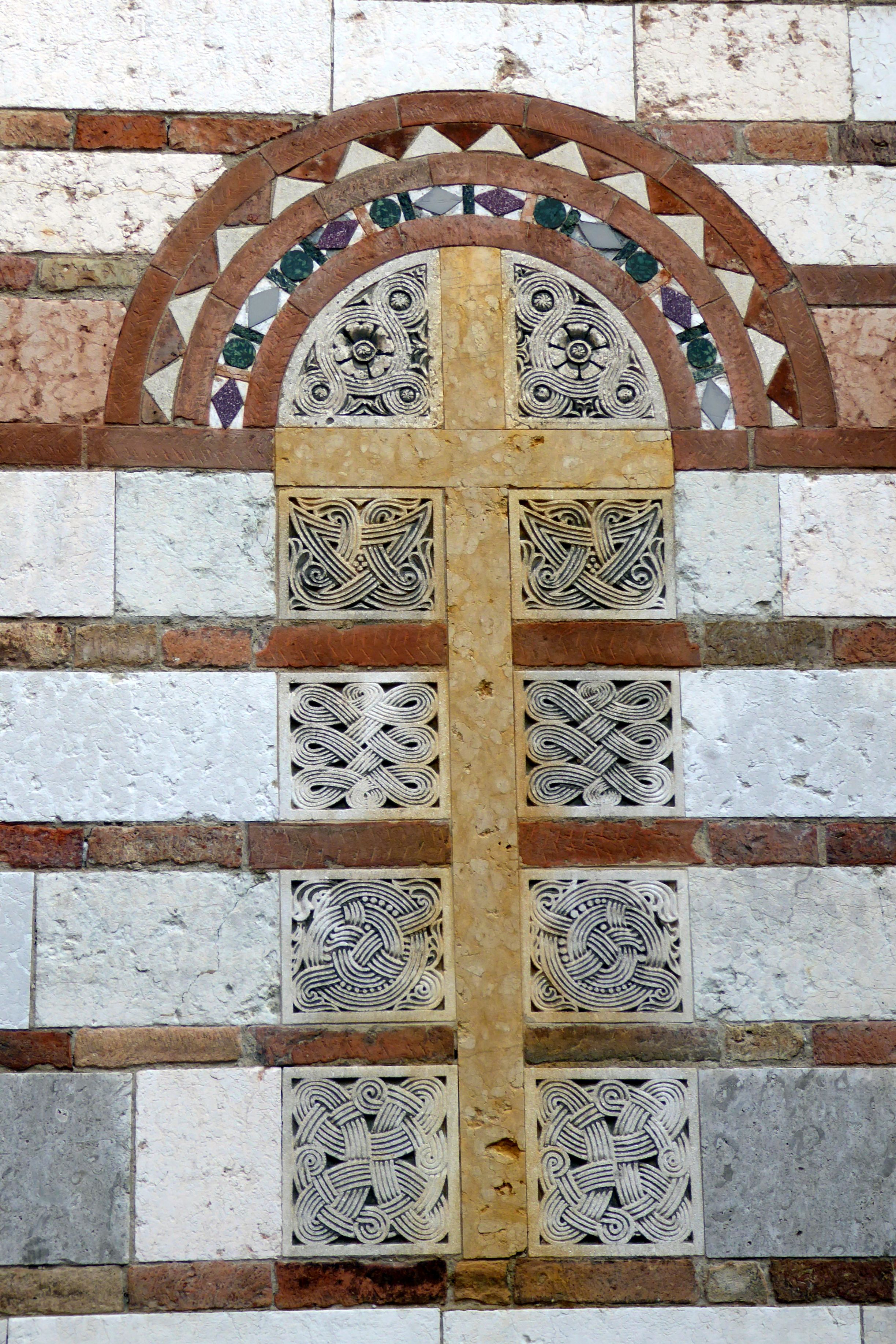
Basilica of Santo Stefano, a complex of religious edifices
The Church of Holy Sepulchre dates back to the 5th century and was rebuilt in the 11th century by Benedictine monks following a Hungarian invasion.
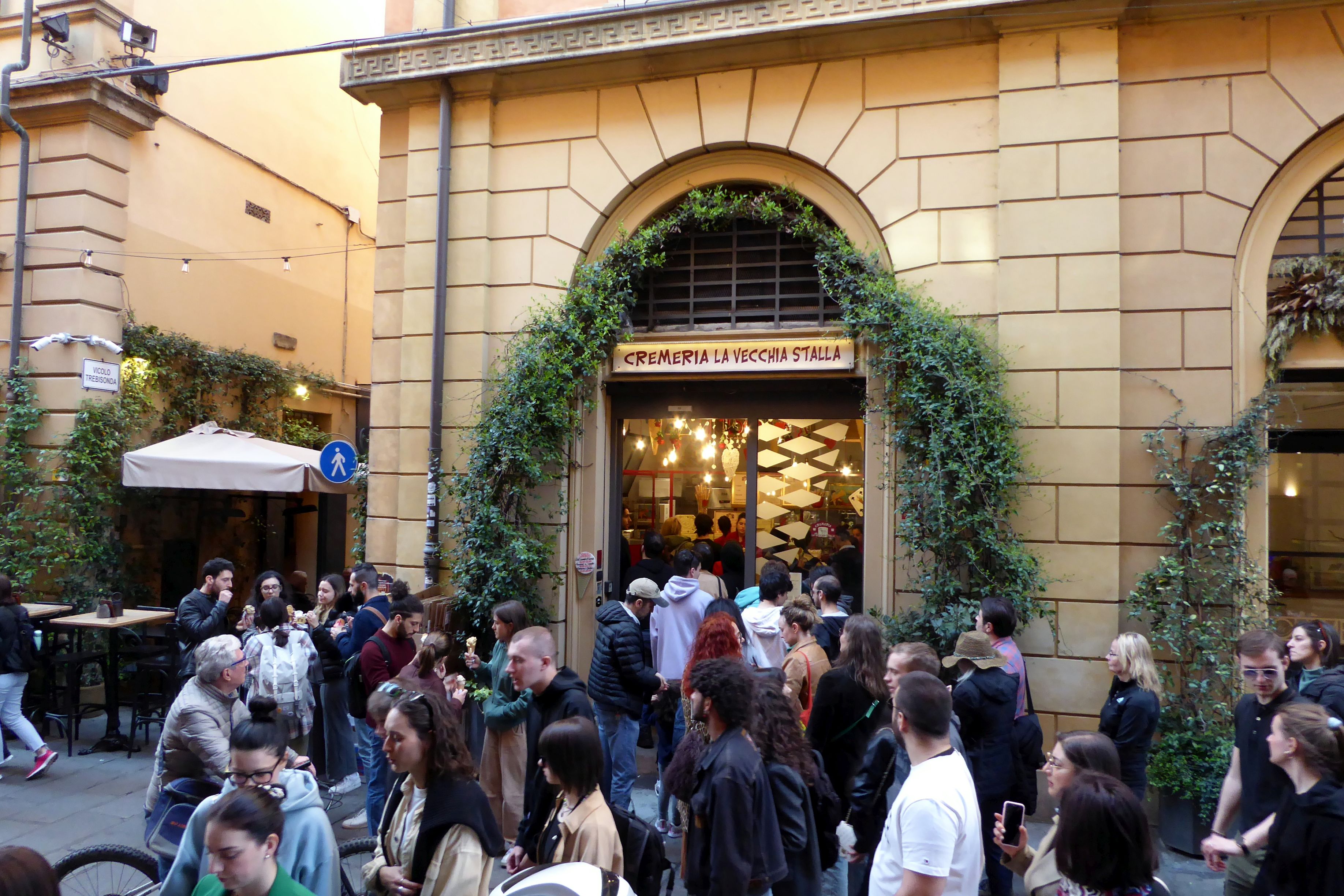
Finally, we couldn’t complete our first day in Italy without a gelato. Oscar, our tour leader, sent us to his favorite place in town, a popular place!
That’s Bruce!
And, this is Oscar giving us a briefing on tomorrow’s events. (More on Oscar to come!)
Note: If small group travel is of interest to you, I highly recommend Overseas Adventure Travel (OAT). Although Bruce and I travel together, they do not charge a single supplement for those who travel on their own. Singles also get their own room at hotels. If you book, you can get $100 off your trip by providing my name and customer number (Elaine Krugman, #3018126) as the person who referred you. I will also get $100 off future travel– a win-win!
For my final post on Italy, we visit the historic town of Diamante, a small tourist town in the province of Cosenza that dates back thousands of years. Strategically located between the Tyrrhenian and Ionian Seas, it was an important trade point through history.
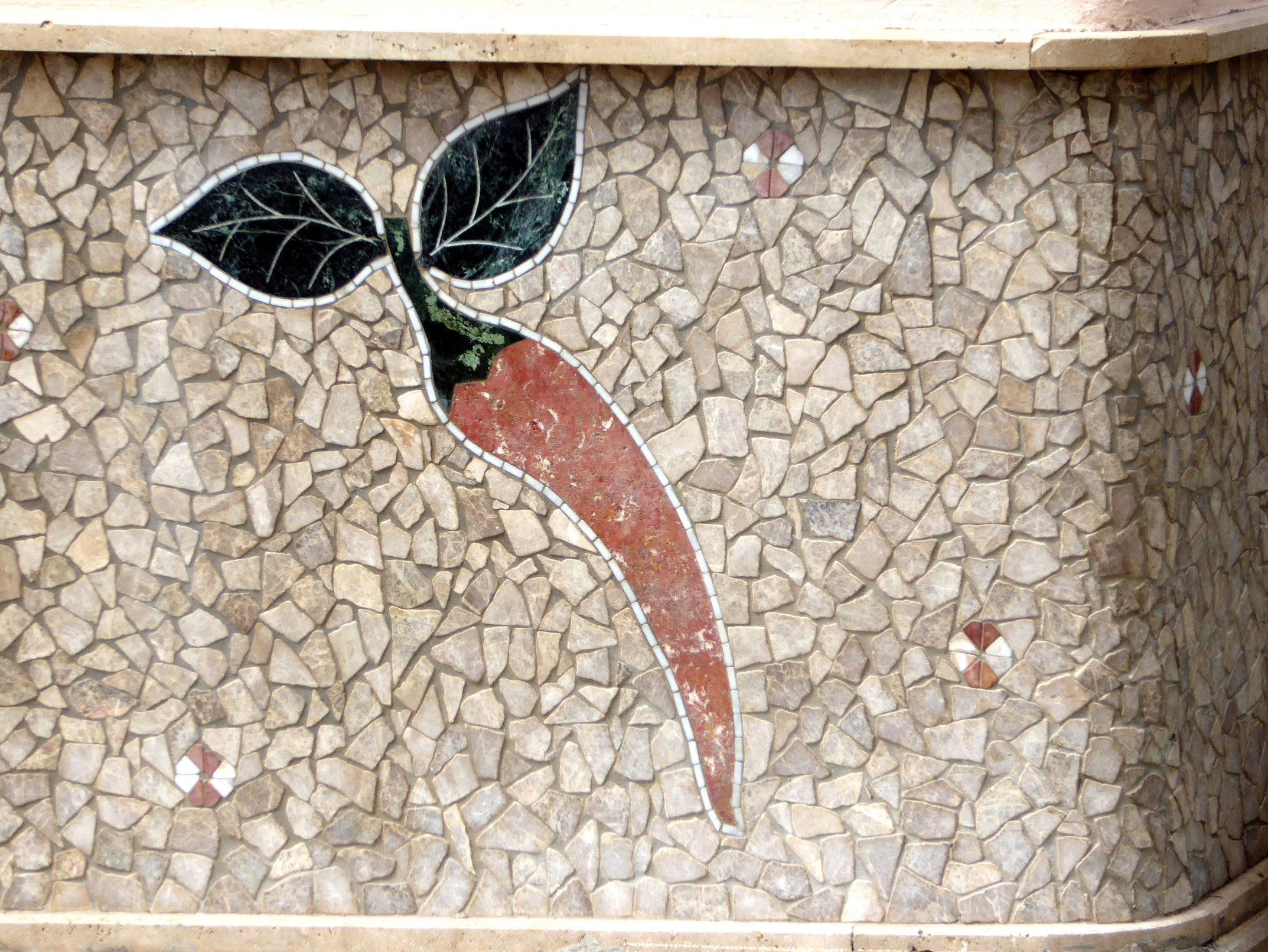
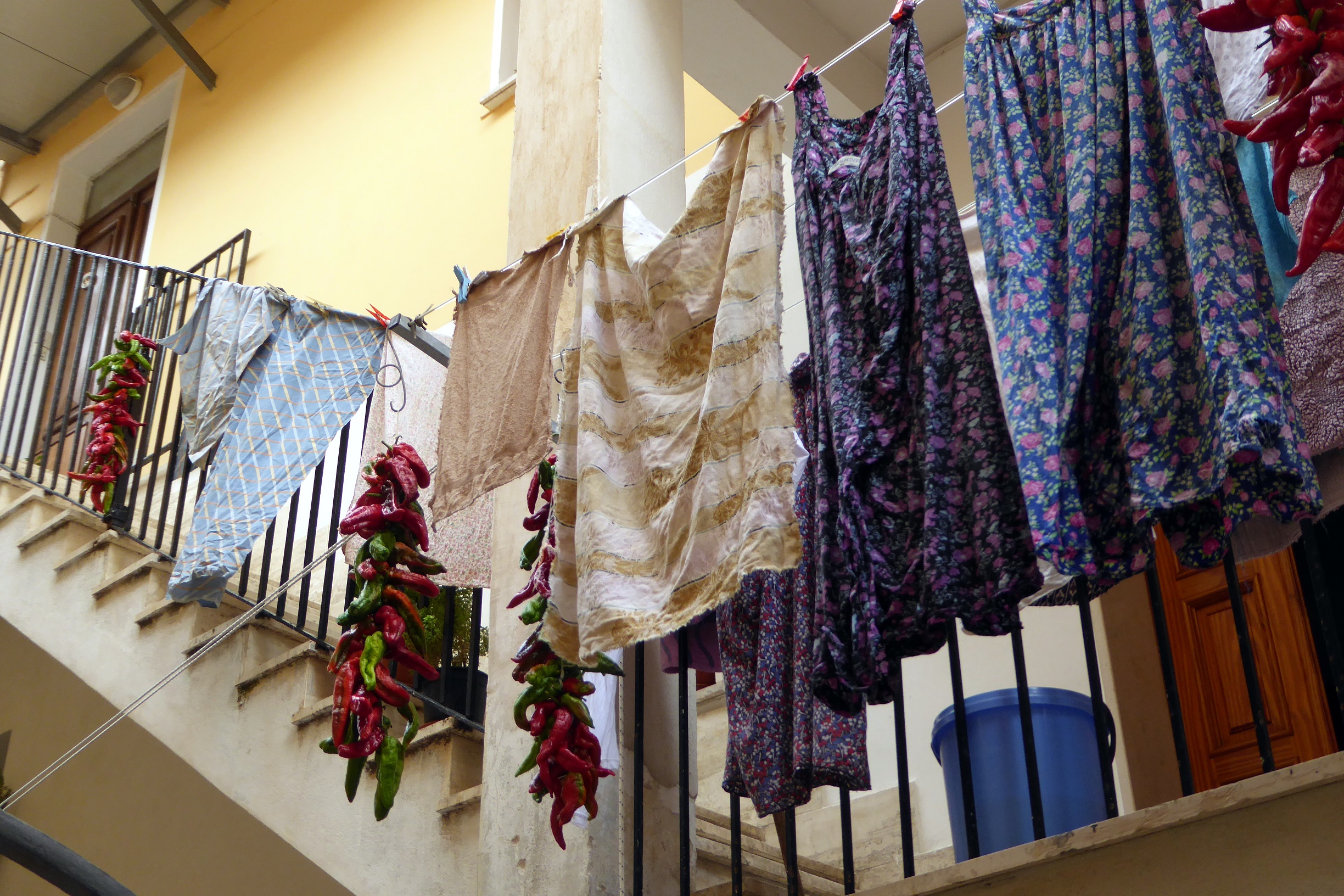
Today, the town of less than 6,000 people relies on fishing and agriculture as well as their main industry: tourism. The big tourist event of the year is the Chili Pepper Festival that takes place in early September each year and celebrates the locally-grown pepperoncino.
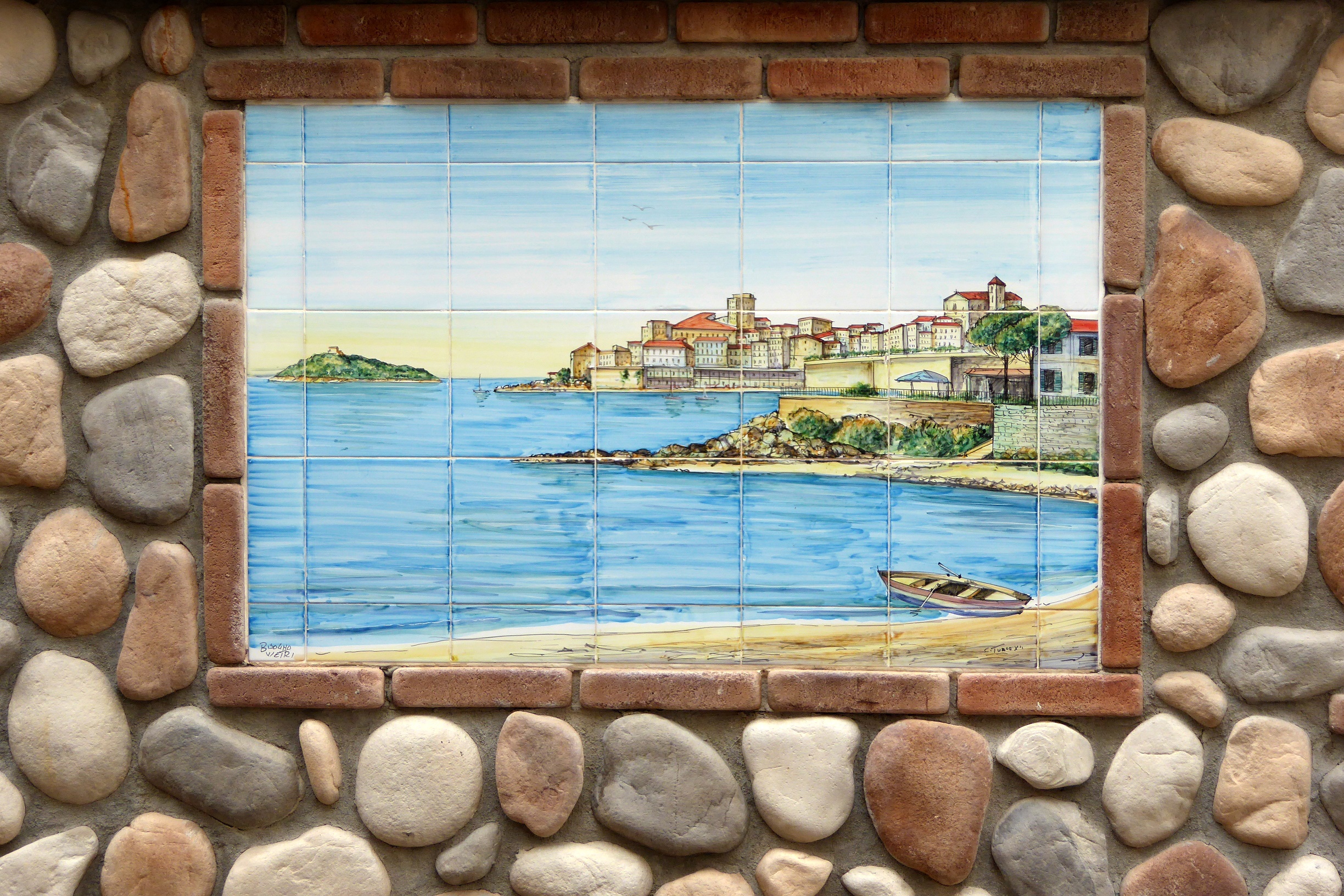
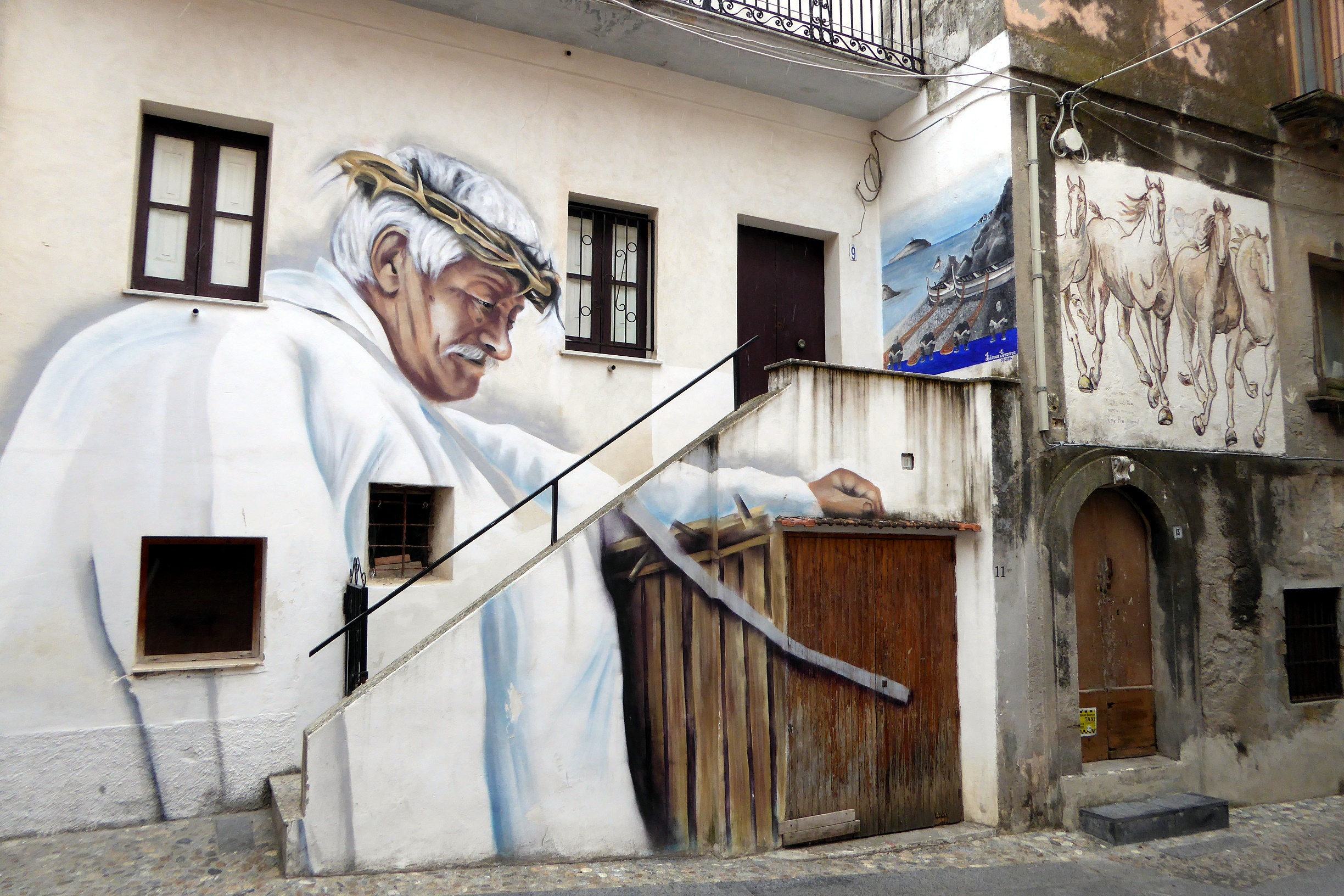
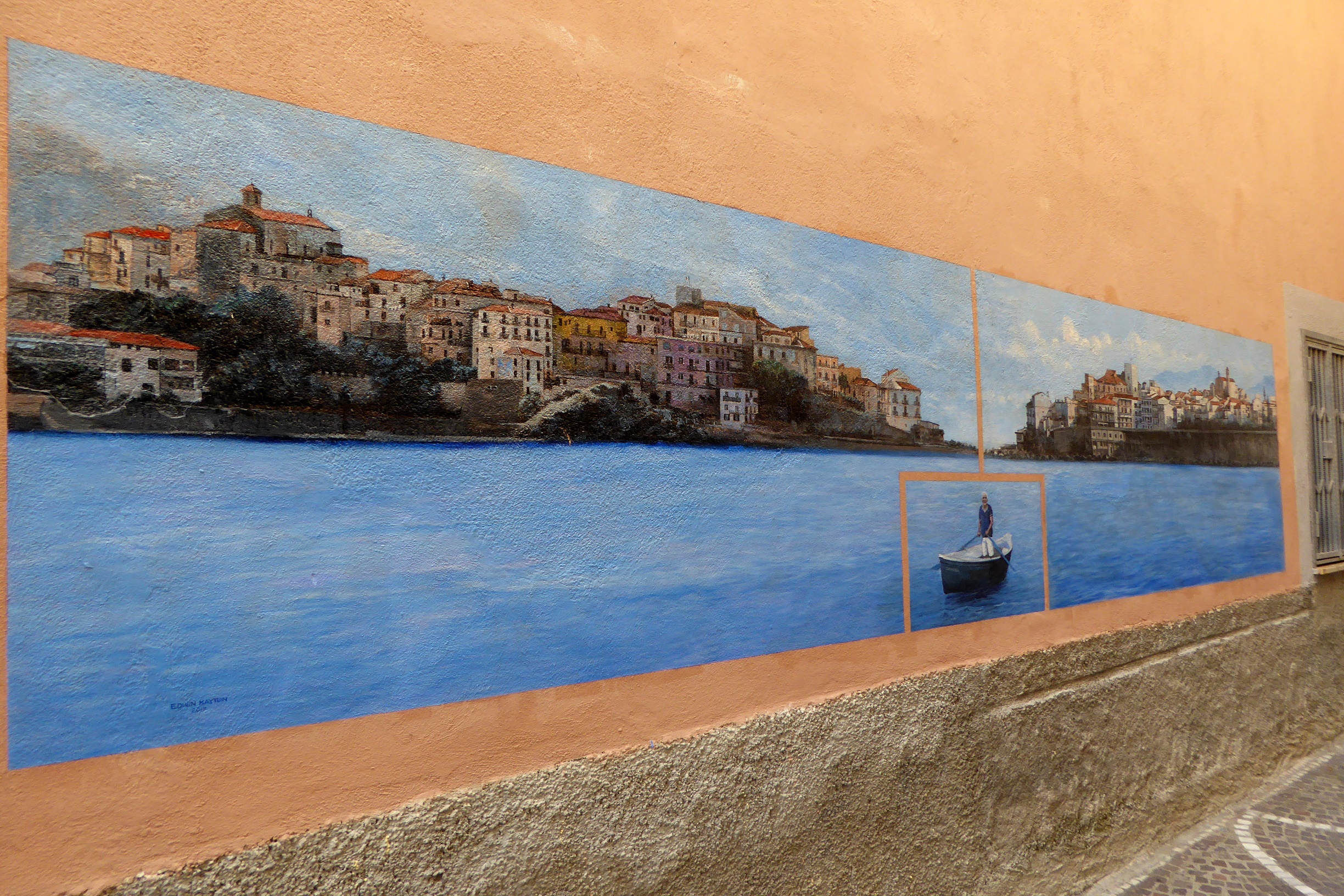
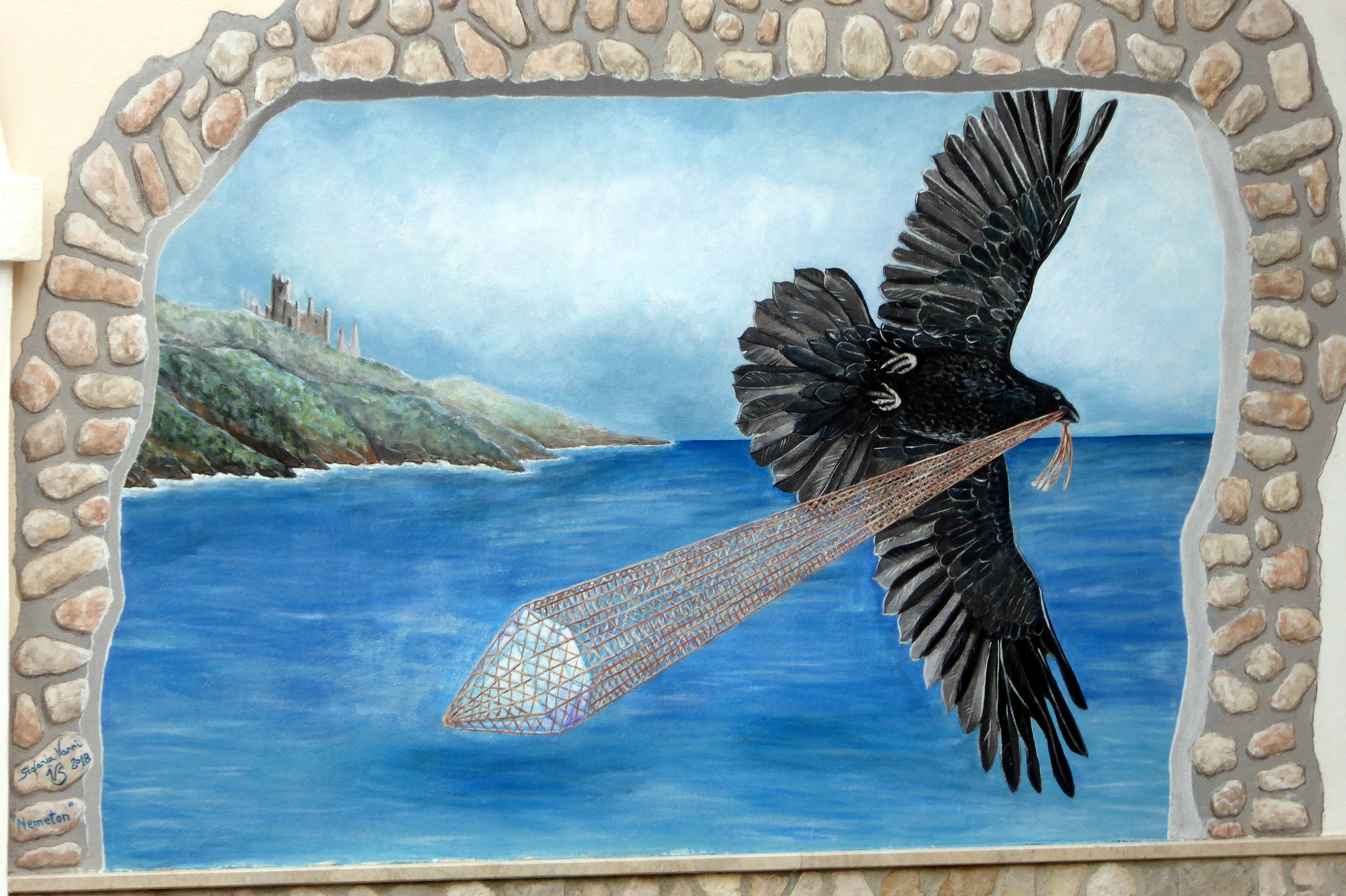
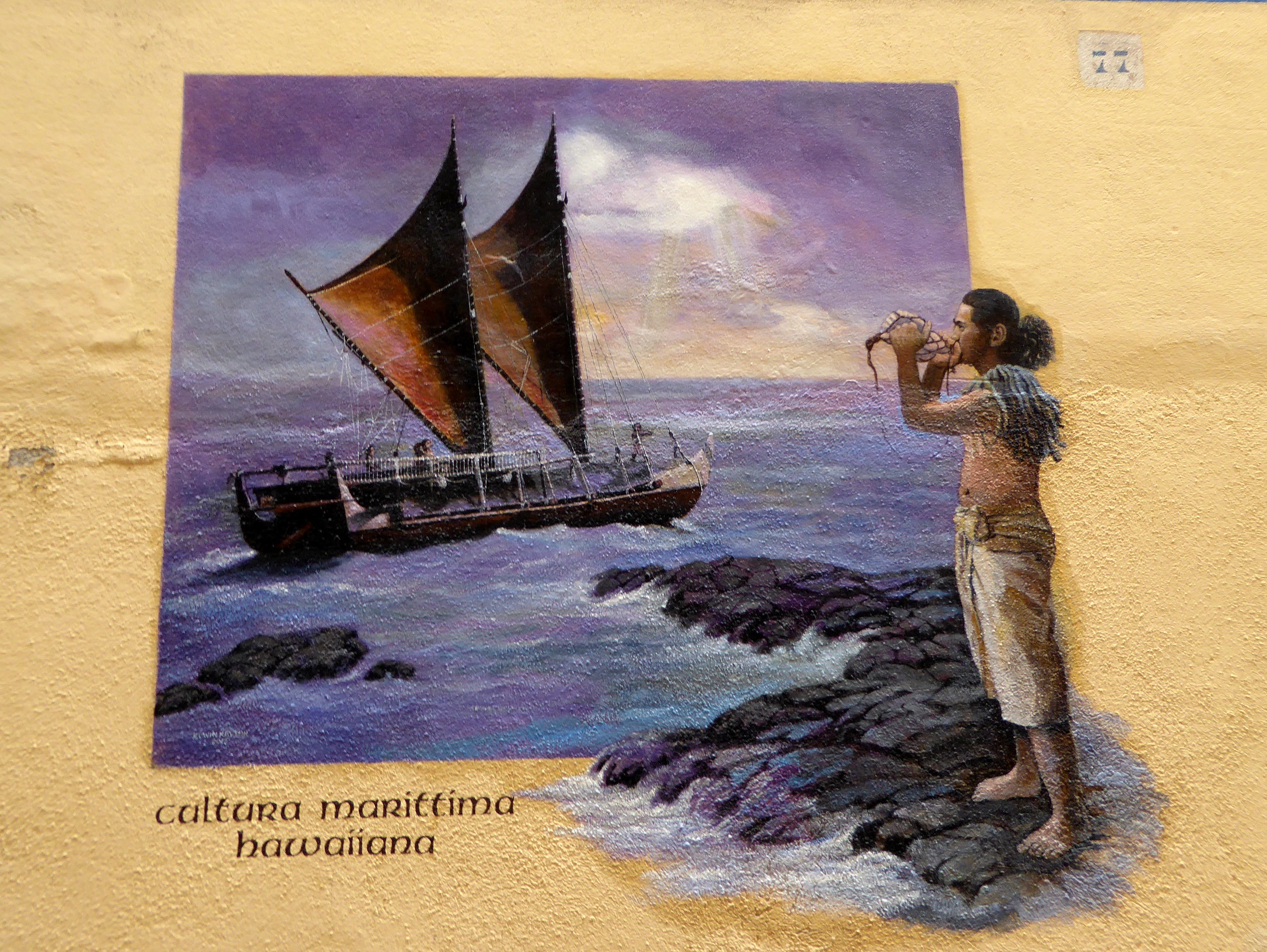
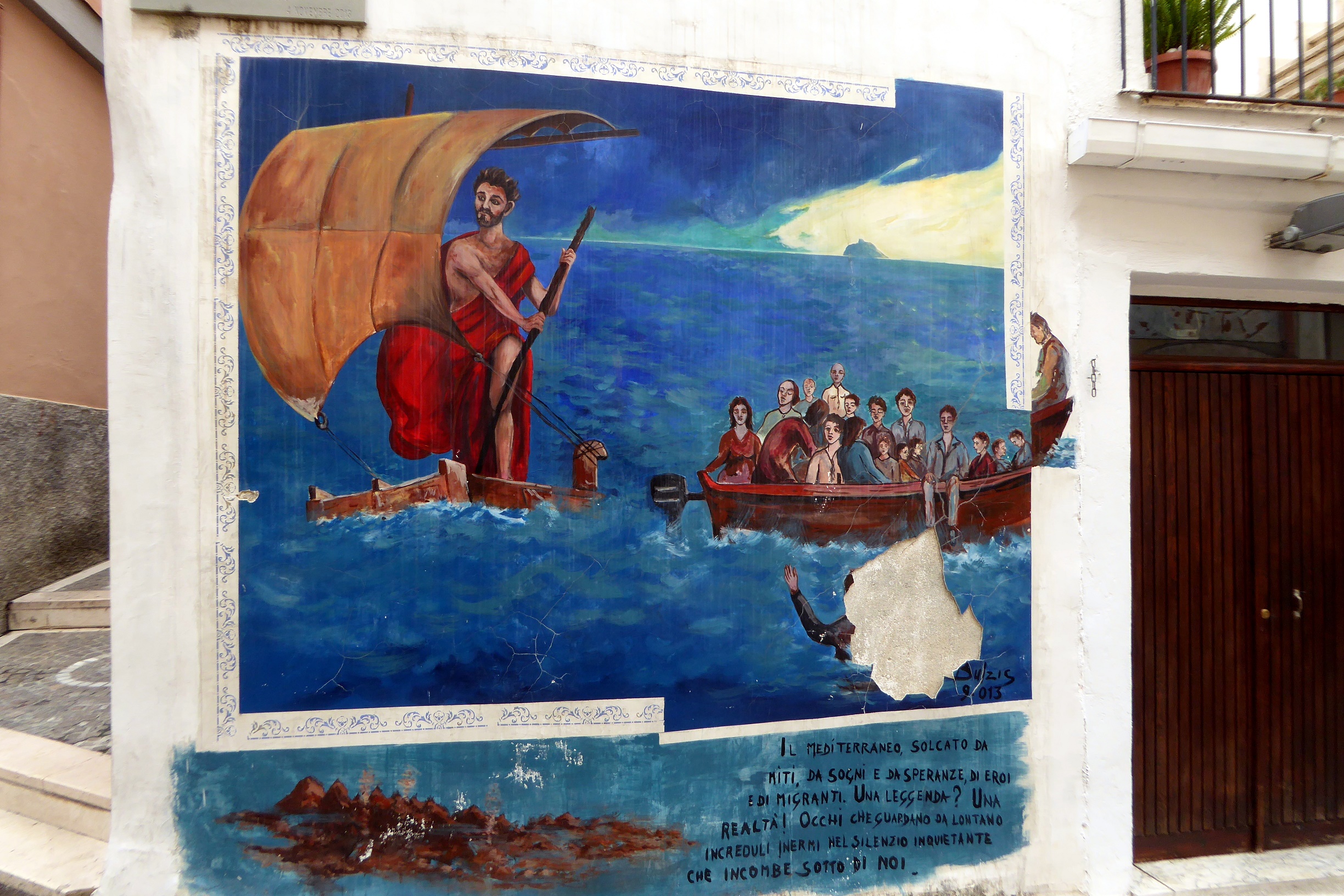
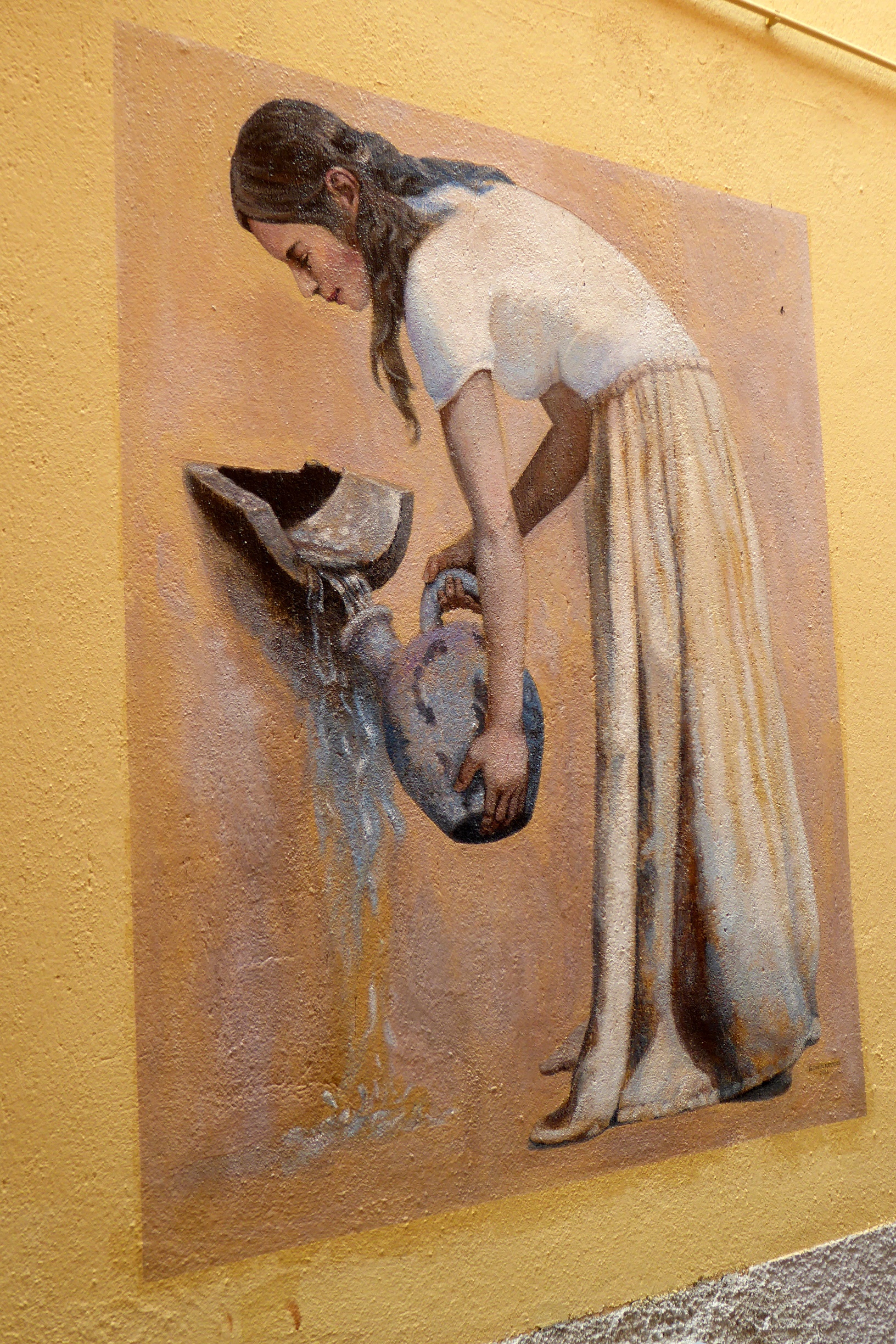
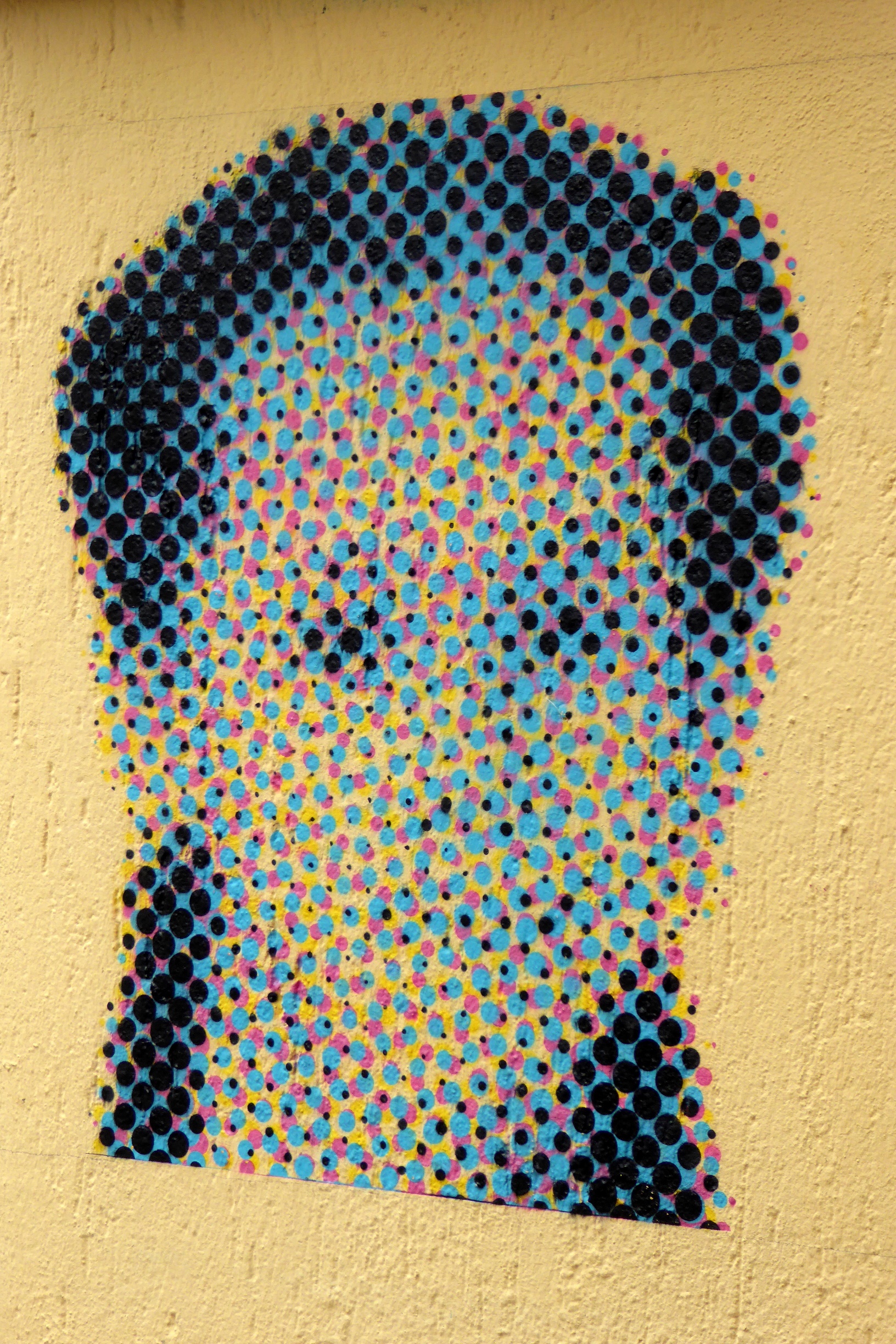
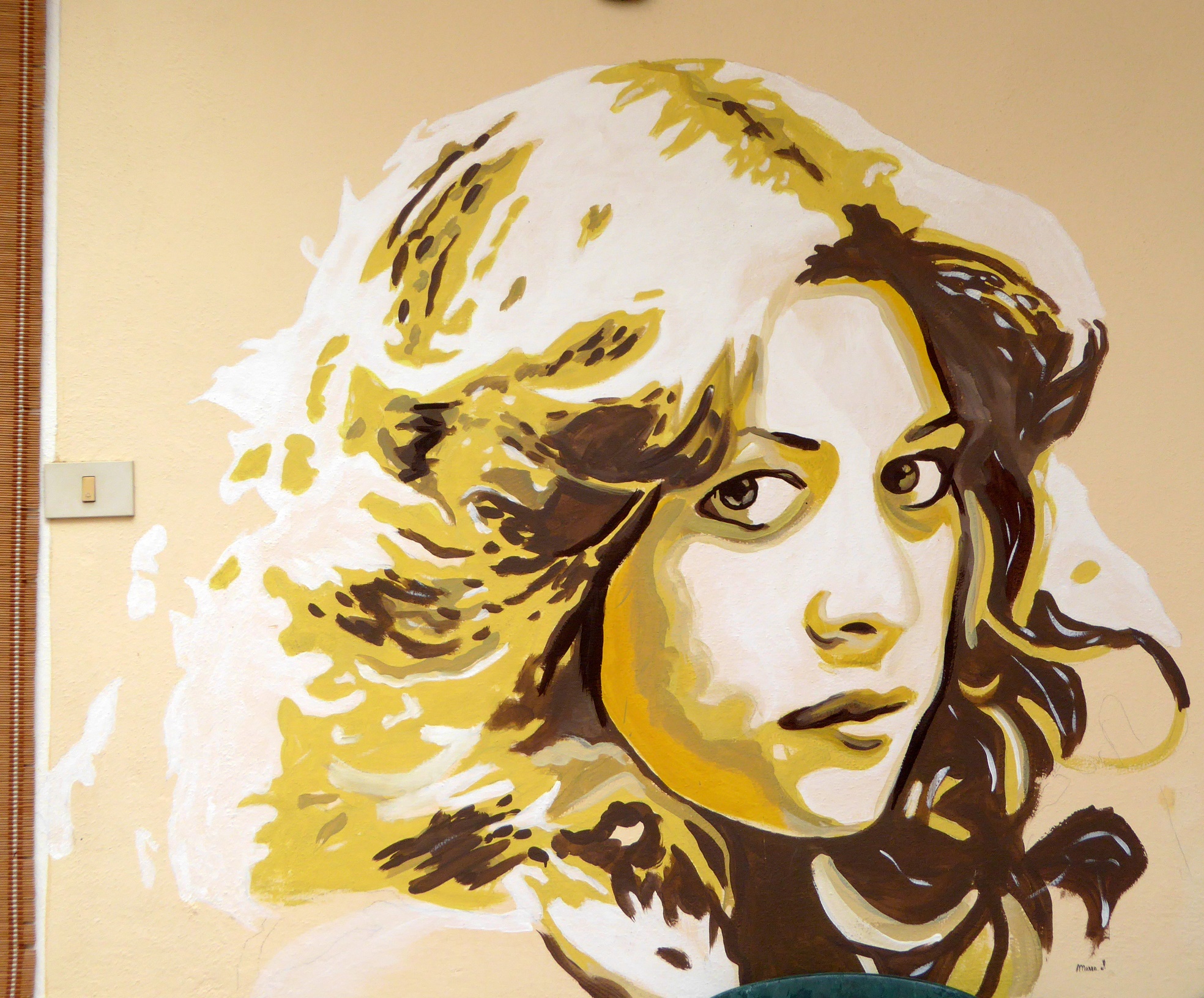
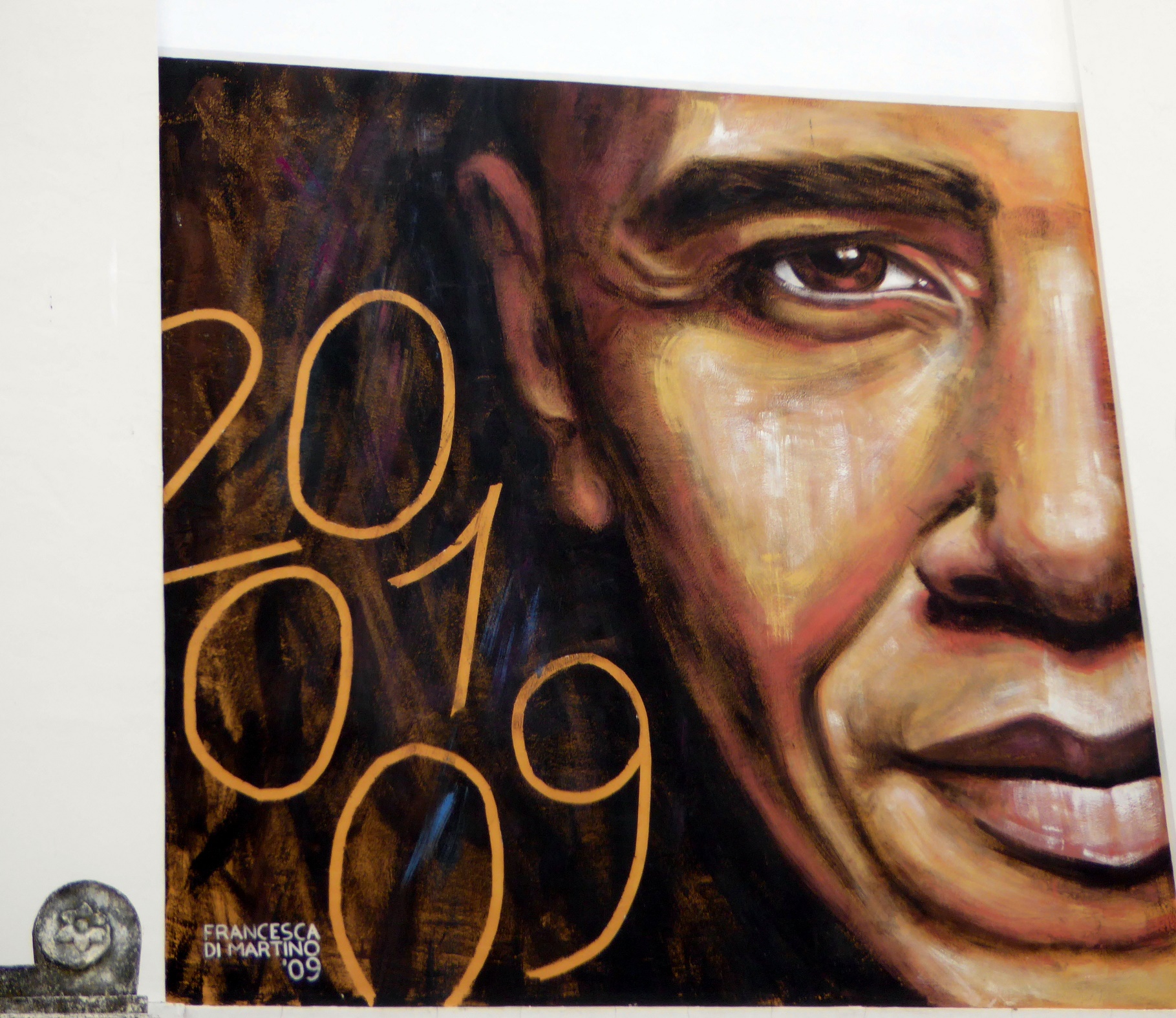
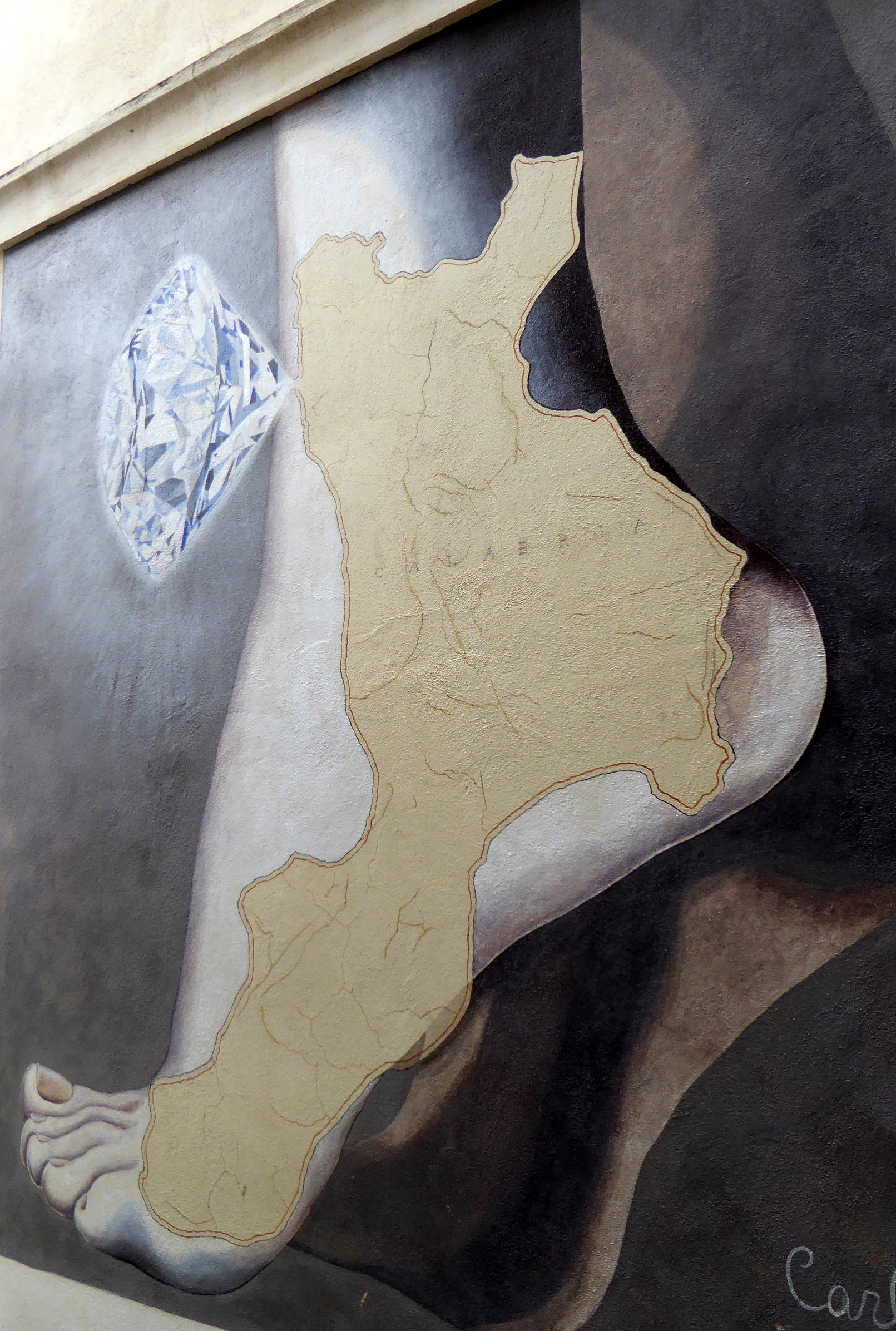
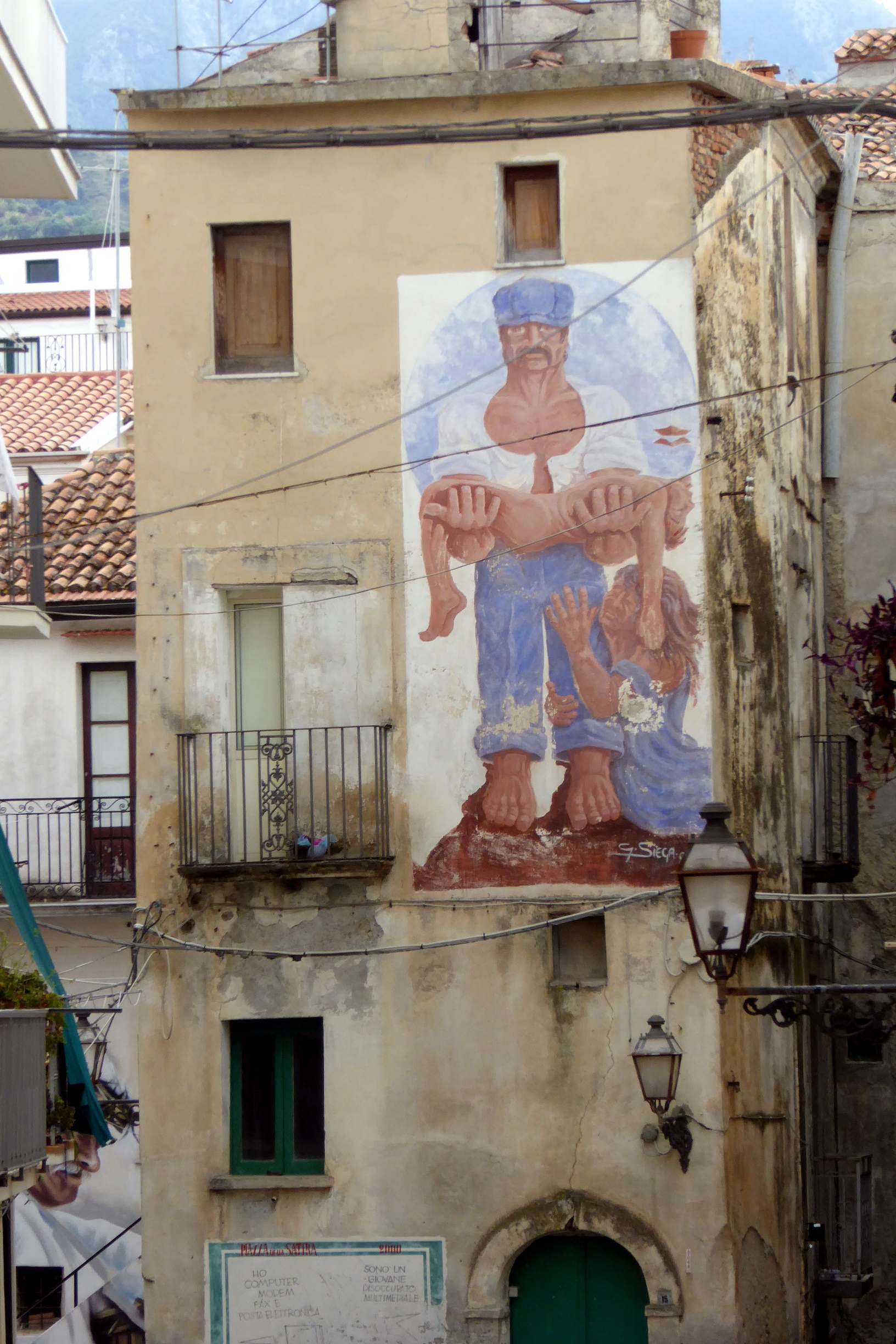
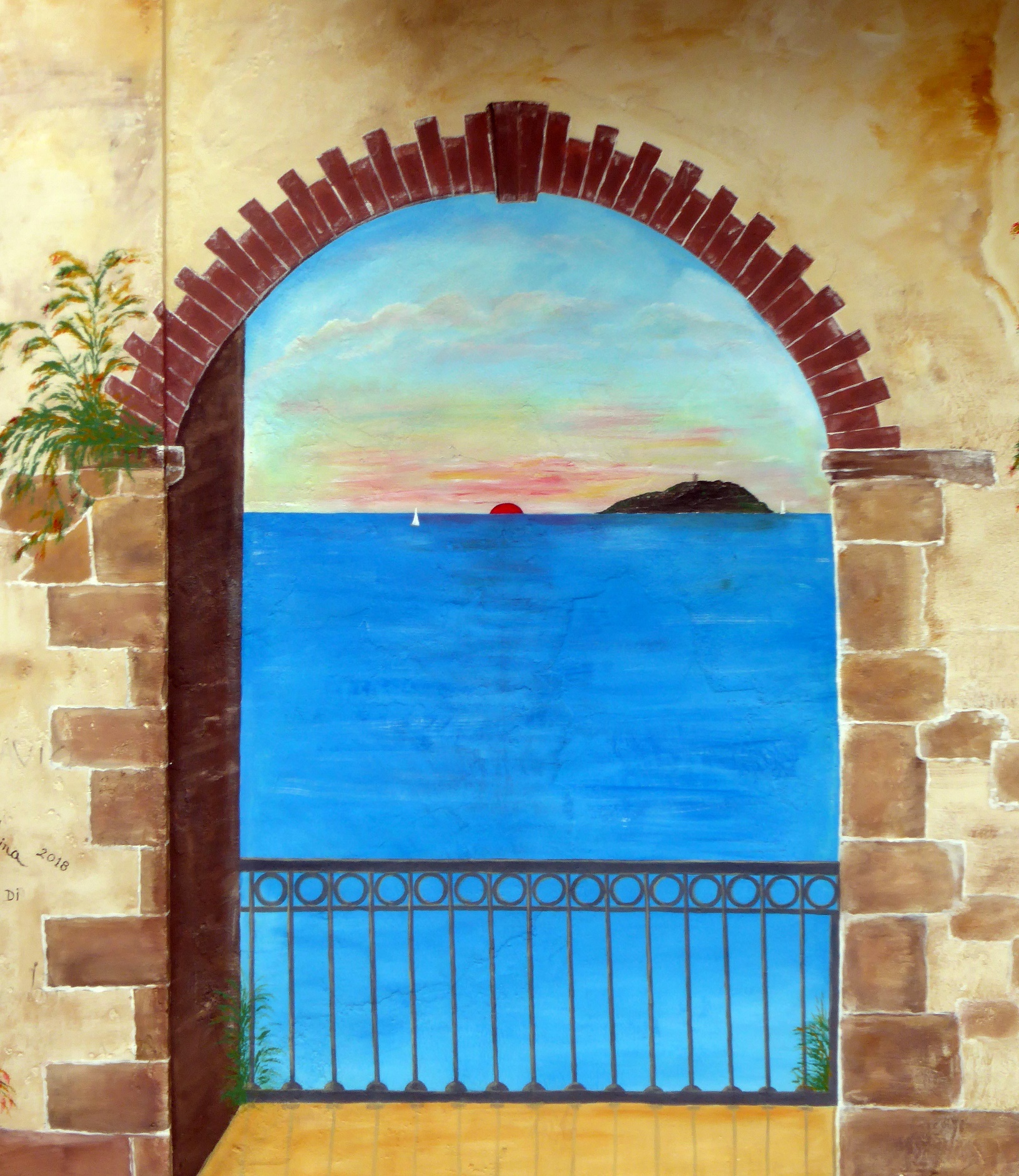
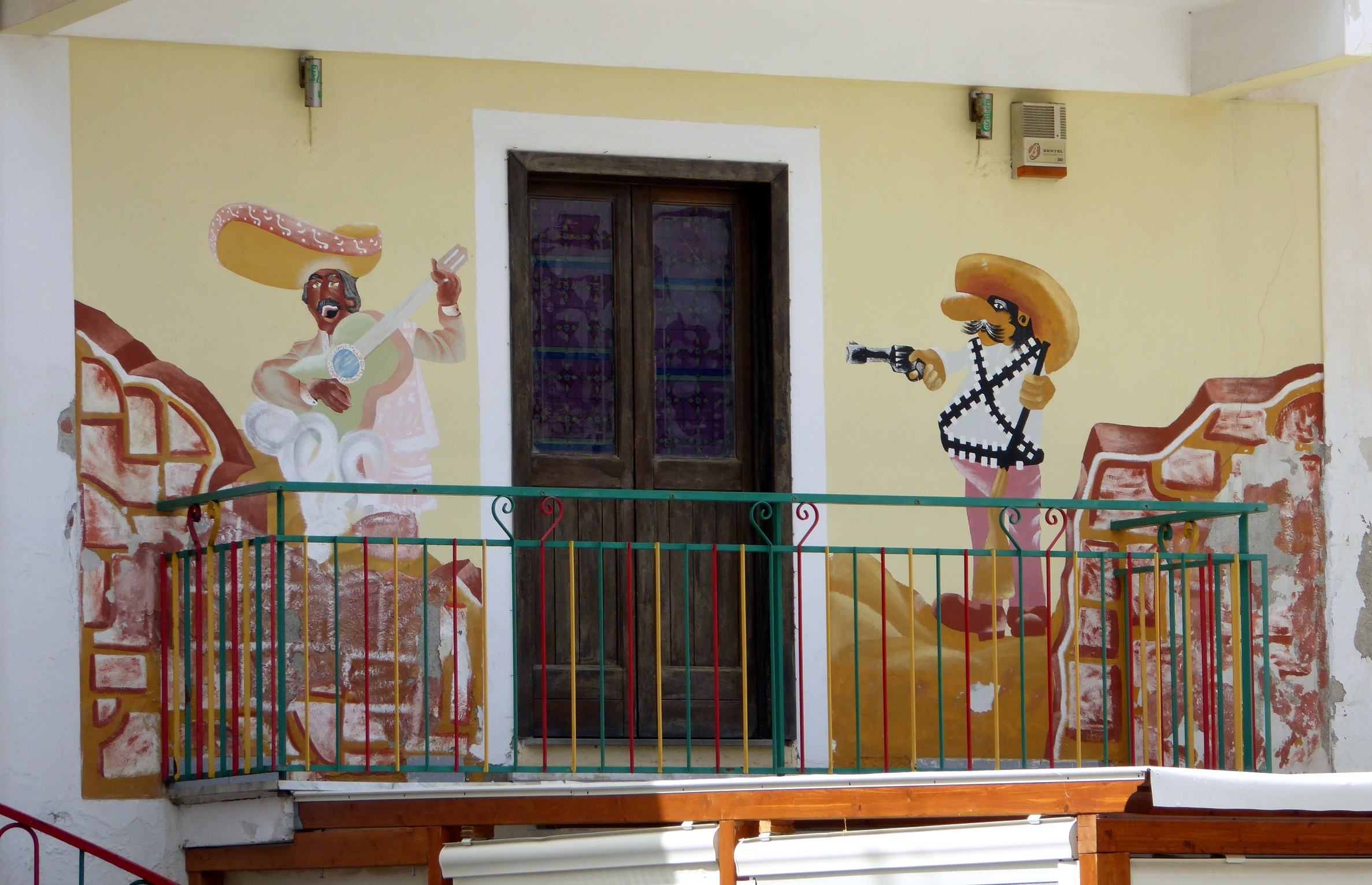
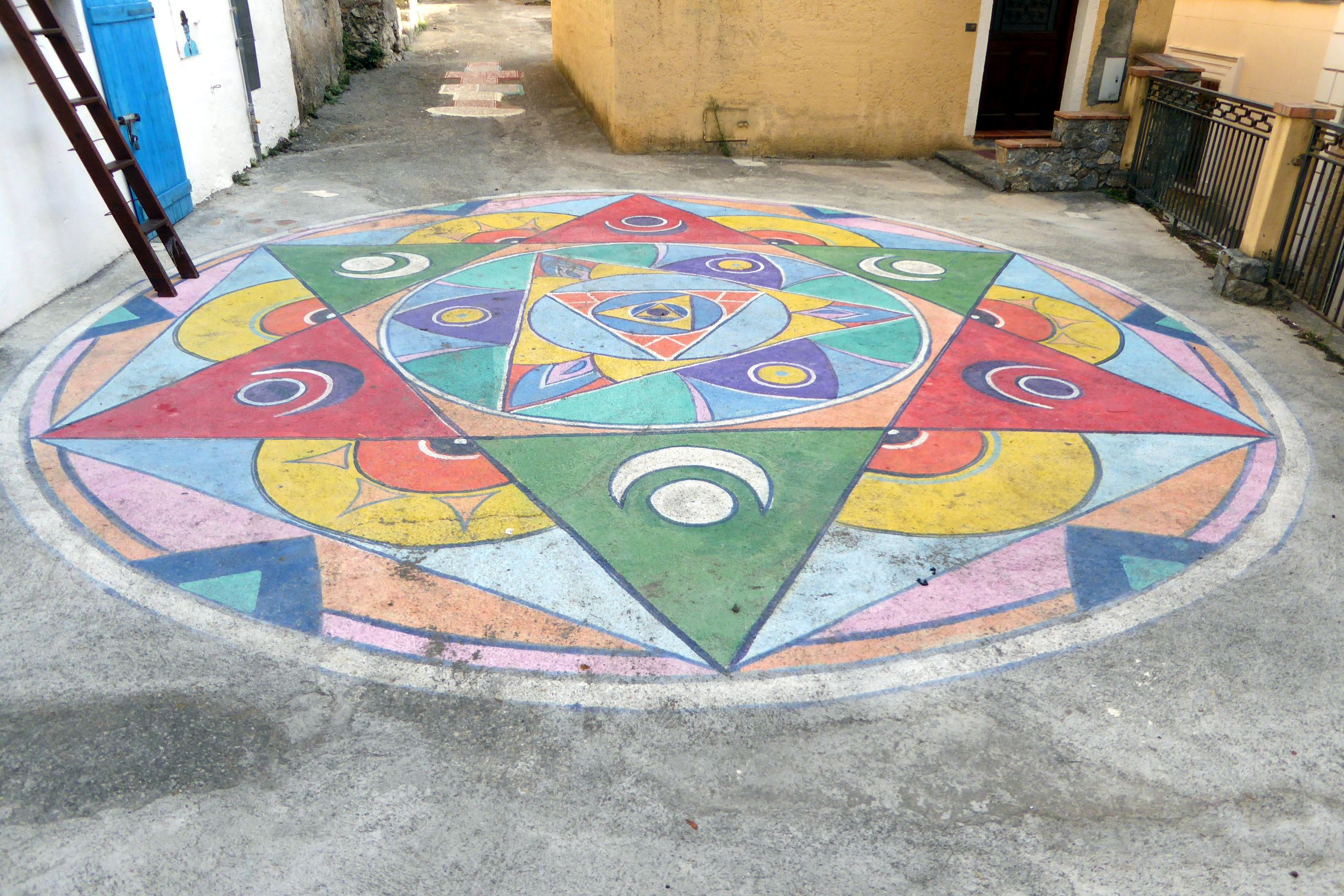
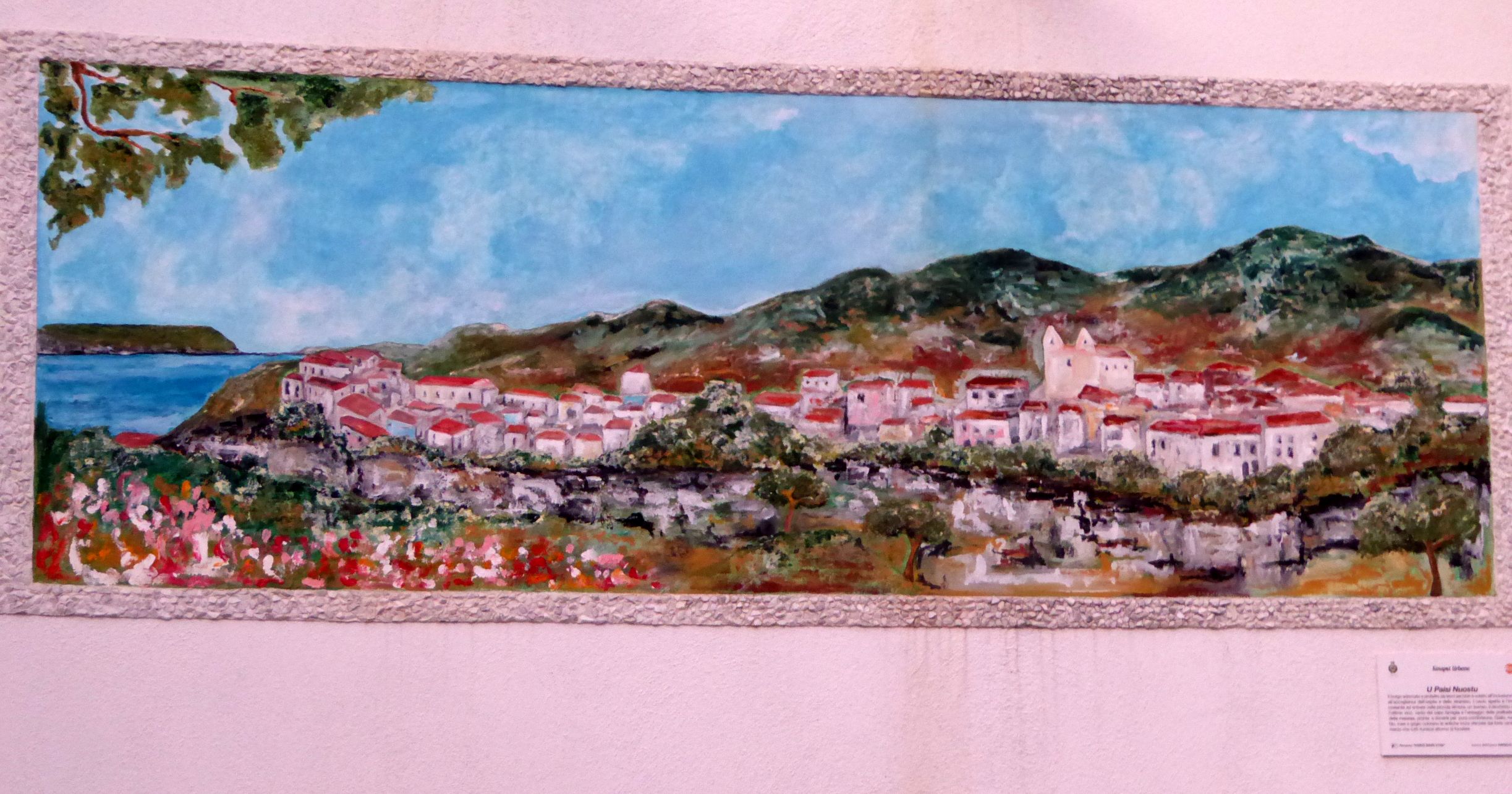
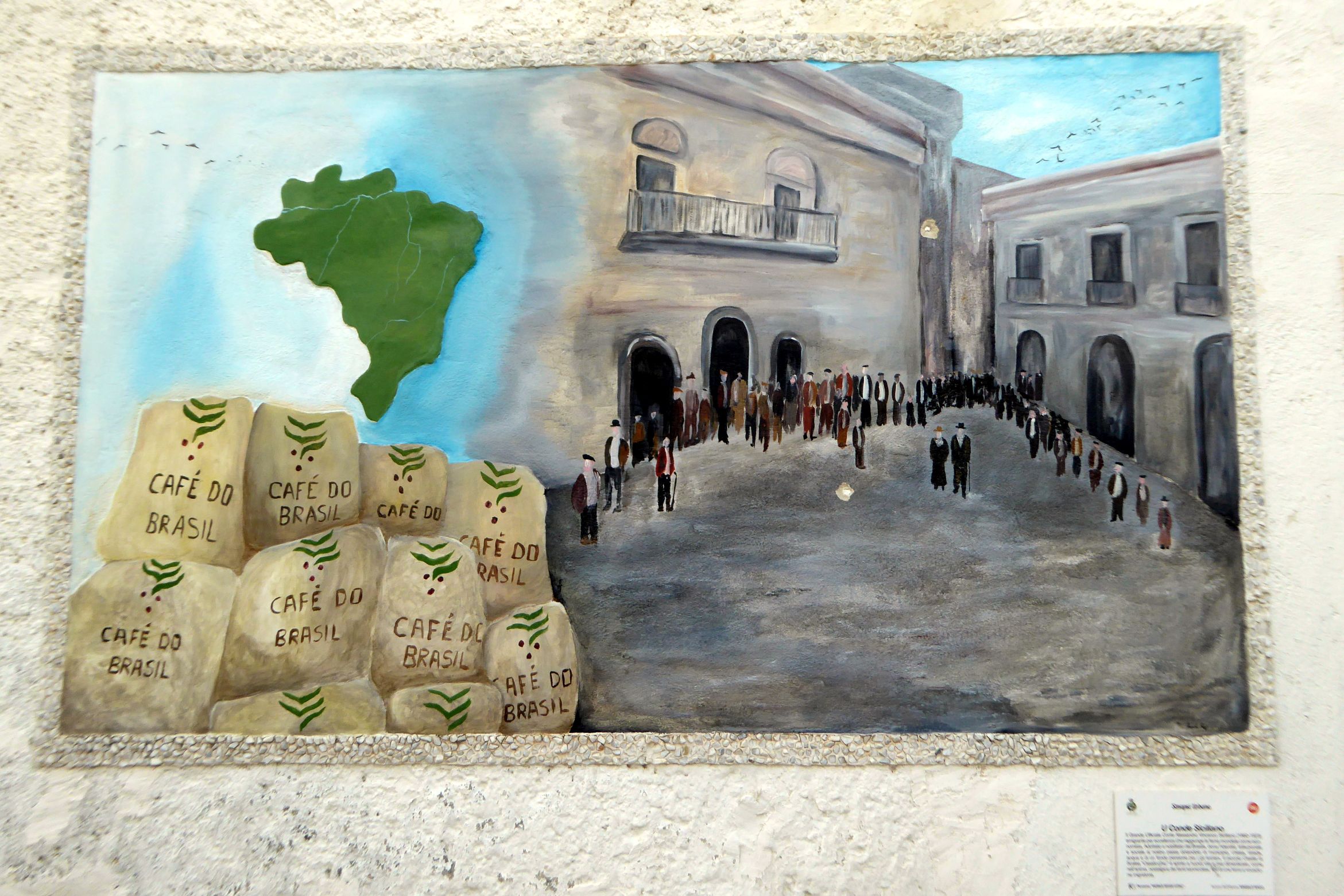
In addition to the Chili Pepper Festival, Diamante is known as the “City of Murals,” thanks to painter Nanni Razzetti who pitched his “Operazione Murales” idea to the city’s mayor in 1981 and won approval. That paved the way for established and emerging artists from all over to come to the town and paint murals on the city’s buildings. Each year, more murals are added, and there now more than 150 of them. I would have loved spending more time there and seeing them all, but we did discover several of the murals as we walked up and down the charming streets with narrow cobblestone walkways.
CLEVER!!! By the way, “Diamante” translates to “Diamond.”
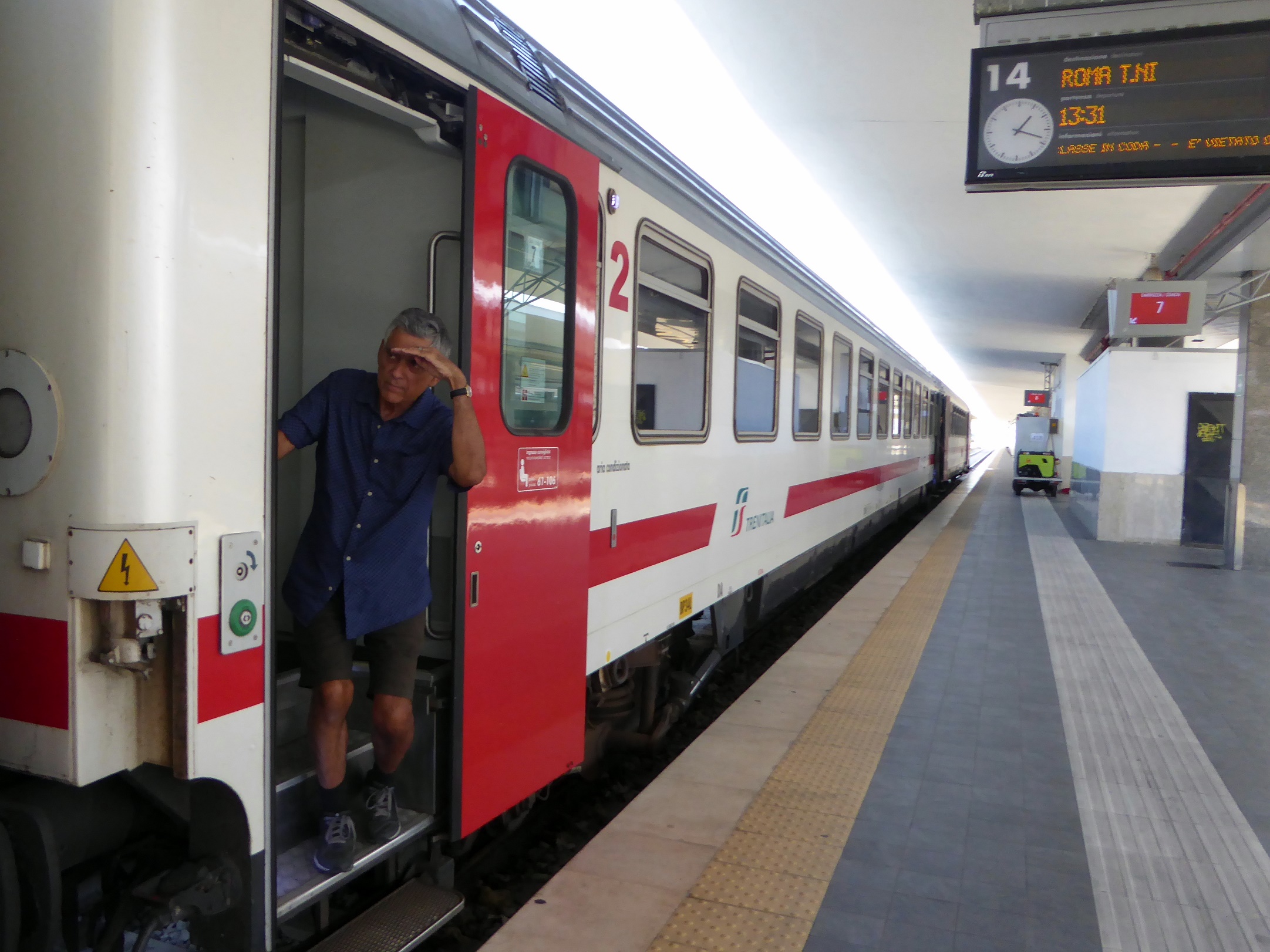
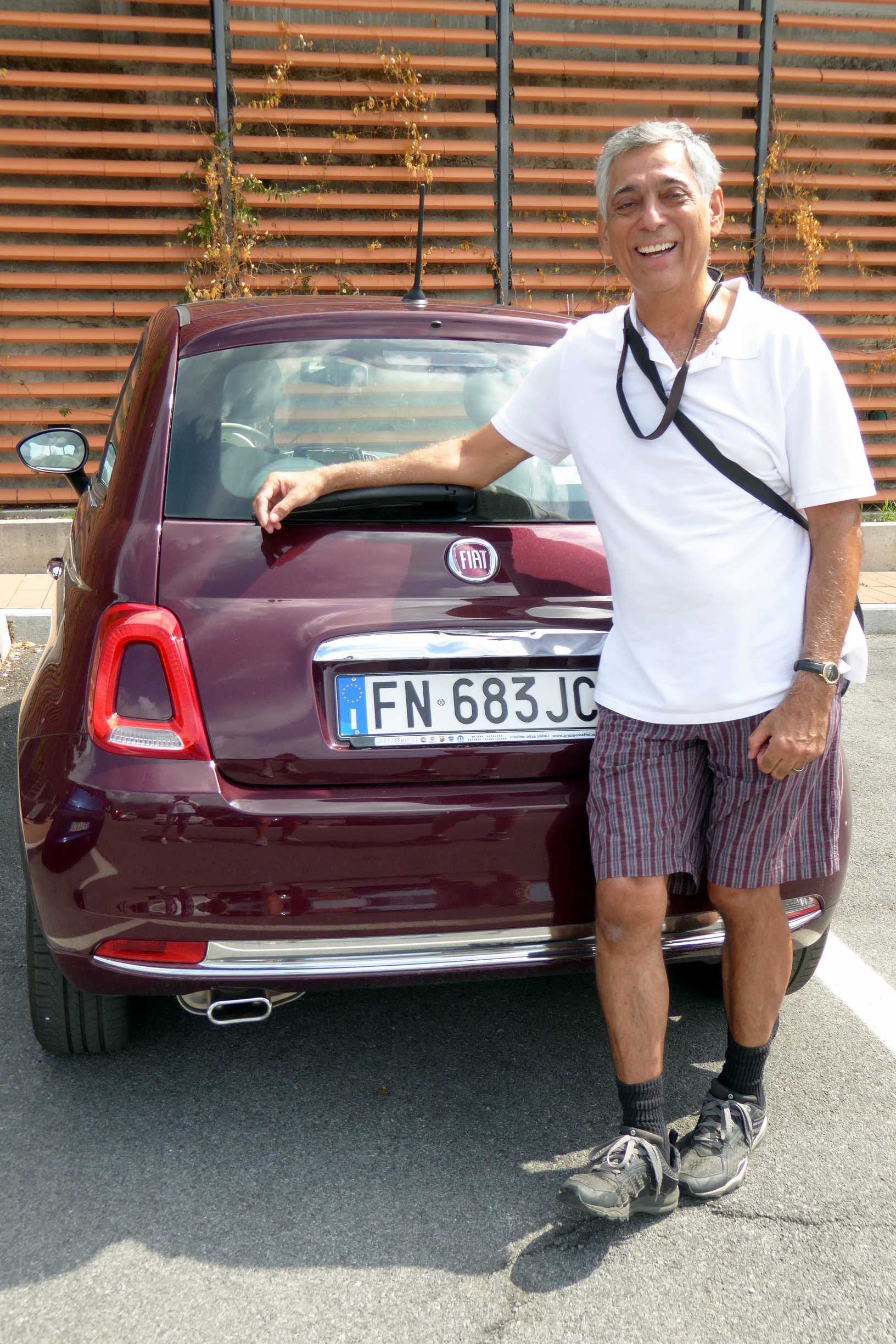
Our journey home was much like our trip over to Italy, but in reverse. Instead of planes, trains, and automobiles, it began with returning our rental cars, and then taking a train back to Rome. The next day, we took a flight home.
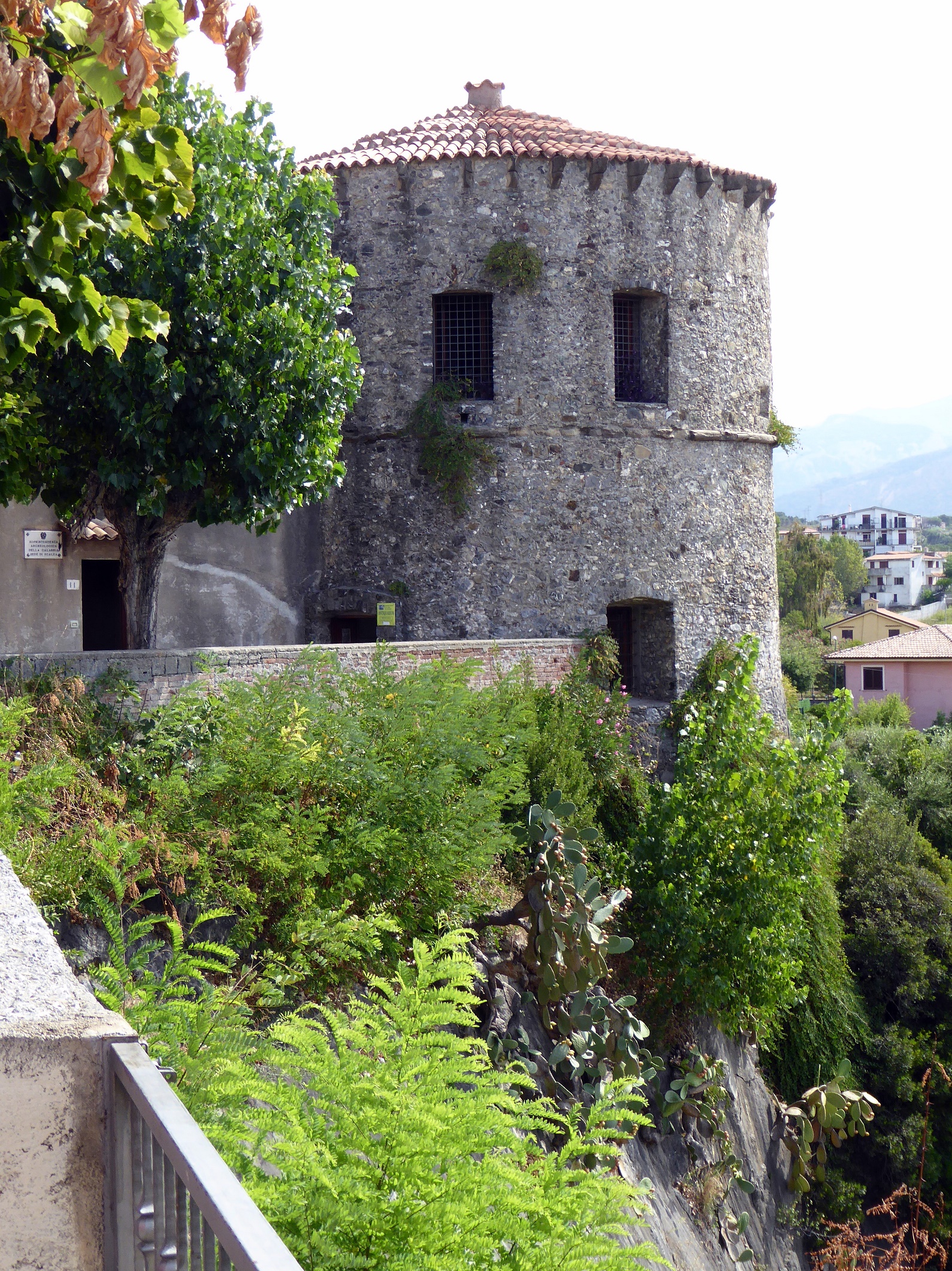
Located near San Nicola Arcella (where we were staying) and along the Tyrrhenian Sea coast, the resort town of Scalea is a big draw for tourists. The old part of town on the hill has been inhabited since prehistoric times, but the lower business district dates back to World War II. As a result, it’s a strange mix.
I didn’t particularly care for the business district, which I found to be quite drab and nondescript. It didn’t have the charm of Maratea, and the shops weren’t particularly interesting. Just one block up the hill; however, was another story. More on that later…
At the far end of the beach, past the lidos, was a nice wading area in between the rocks in the shallow water that was perfect for those who wanted to play or take a dip and cool off. I opted, instead, to go for a swim along the sandy area of the beach. It was beautiful! At about 79 degrees with no current, it was a perfect beach to get in a good open-water swim.
There were also plenty of lidos along the beach of Scalea from which to choose for sunbathing or a beach side lunch. We followed our swim with a delicious lunch at a lido owned by friends of our friend.
On another day in Scalea, our group split up. The other gals went shopping, the guys took a drive to check out the view of old Scalea from other vantage points, and I went for a hike in the old town to explore and do photography.
The old town of Scalea is behind Bruce. Over his right shoulder are ruins dating back 1,000 years.
I was delighted (and excited!) that just one block up from the business district, the feel of Scalea completely changed as I climbed the hill. Asphalt and concrete gave way to ancient cobblestones. I was in my element, and I could feel my somewhat apathetic mood towards Scalea lift as I explored the narrow, winding walkways filled with homes that were built hundreds of years ago. Everywhere I turned, there was something unique to admire and photograph.
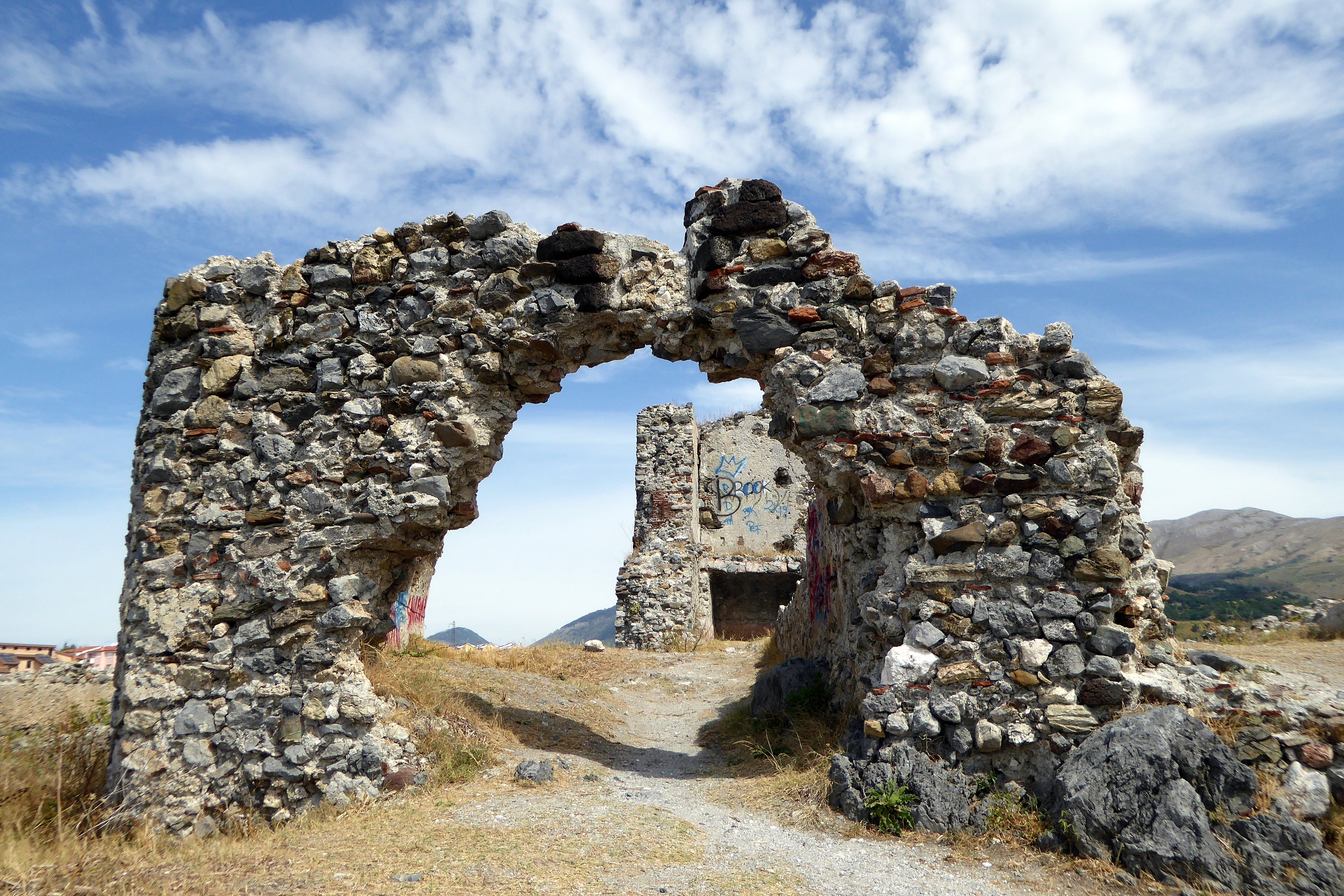
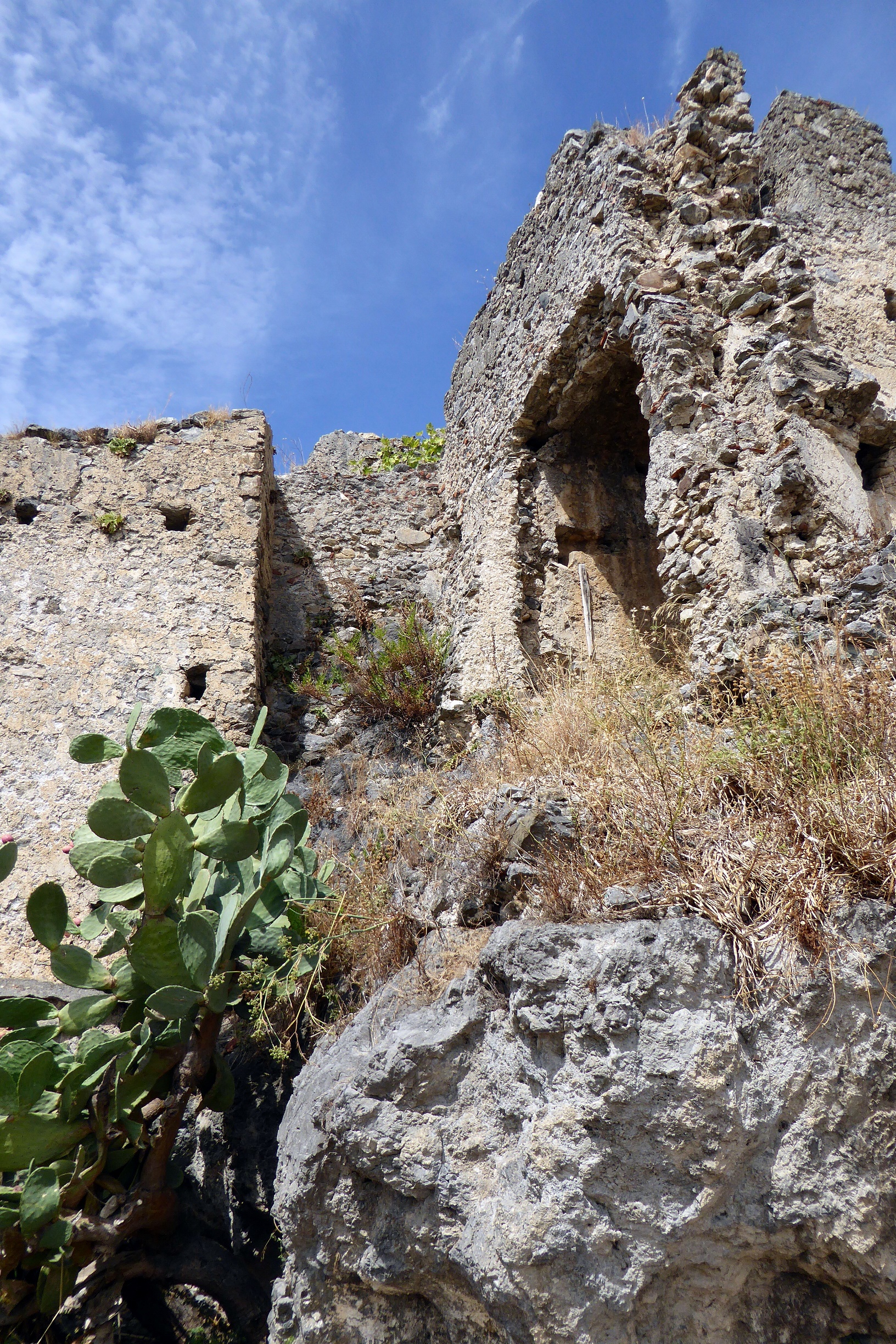
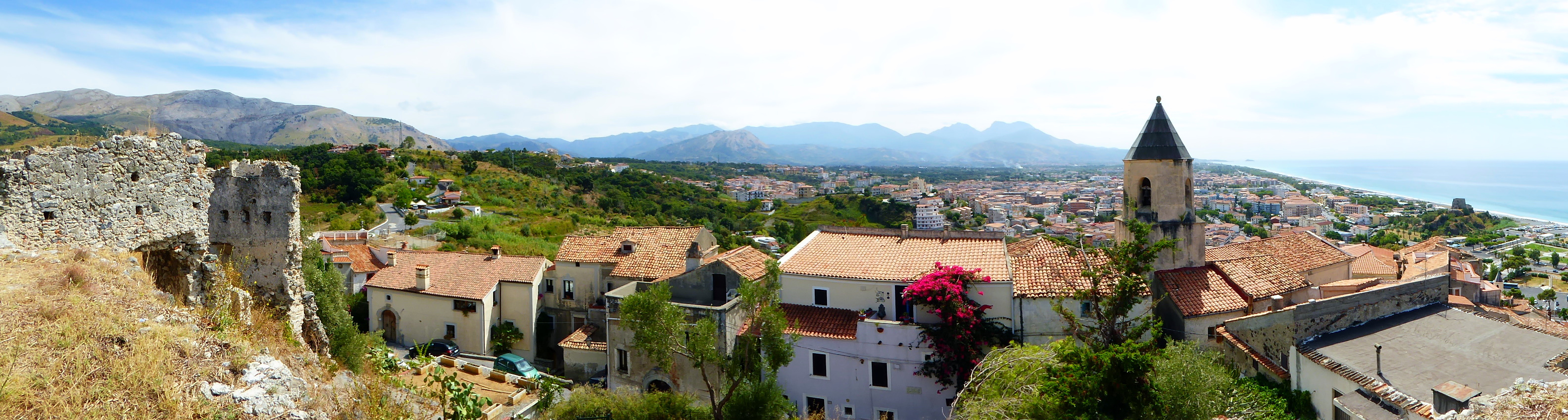
At the very top of the hill, there were ancient ruins that were just begging to be explored. I found a very narrow and steep pathway that required careful footing, but I was determined to hike up and take in the spectacular views of the old town and coastline below.
Other than the disappointment and disgust I felt at the sight of graffiti that had been carelessly painted on the ruins, the hike up was well worth the effort.
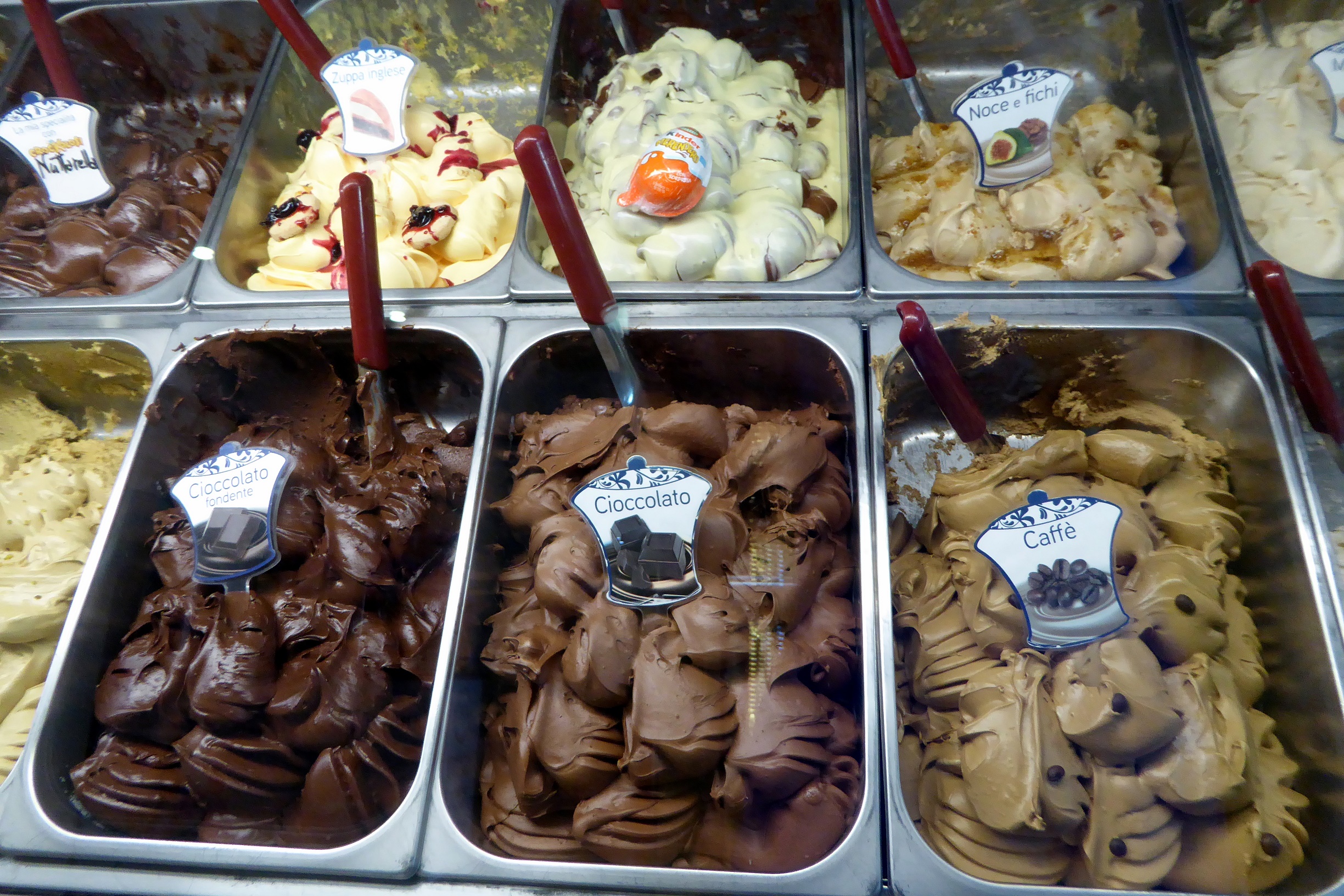
Soon, it was time to meet back up at Jeni’s, a restaurant owned by the good friend of our friend we were traveling with who had once lived in Scalea. Making my way back down the winding walkways, I realized I had put in a pretty good workout and was craving the chocolate gelato I would soon be enjoying.
Jeni makes the best gelato! She sources the best ingredients, including a high-quality single origin chocolate from Ecuador. Her gelato was dairy-free, but it still had a very creamy texture. It was pure heaven!
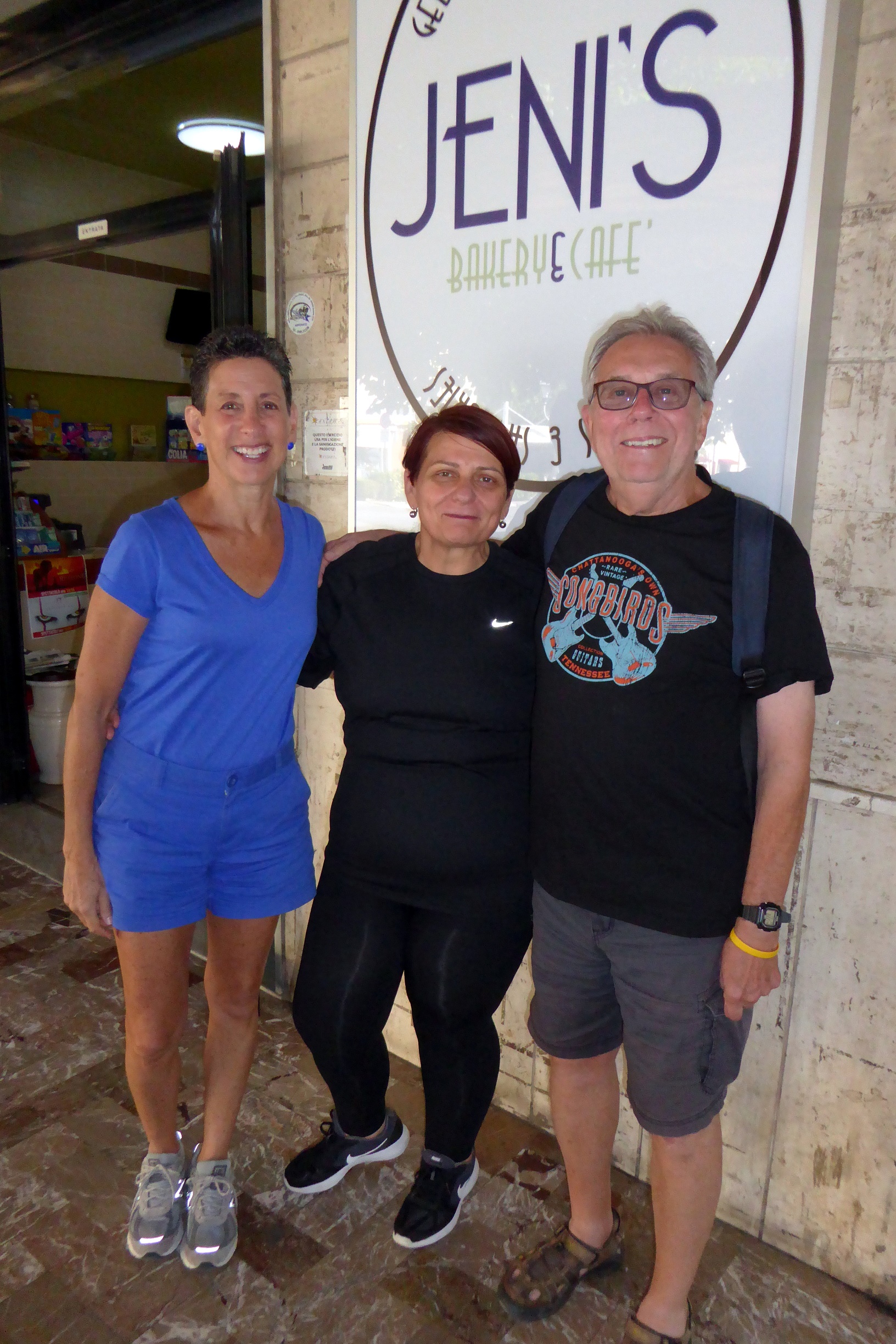
That’s Jeni, between me and Bruce.
If you are curious to see more of Scalea, the new James Bond movie is being filmed there.
My final post on Italy will be about Diamante. Stay tuned!
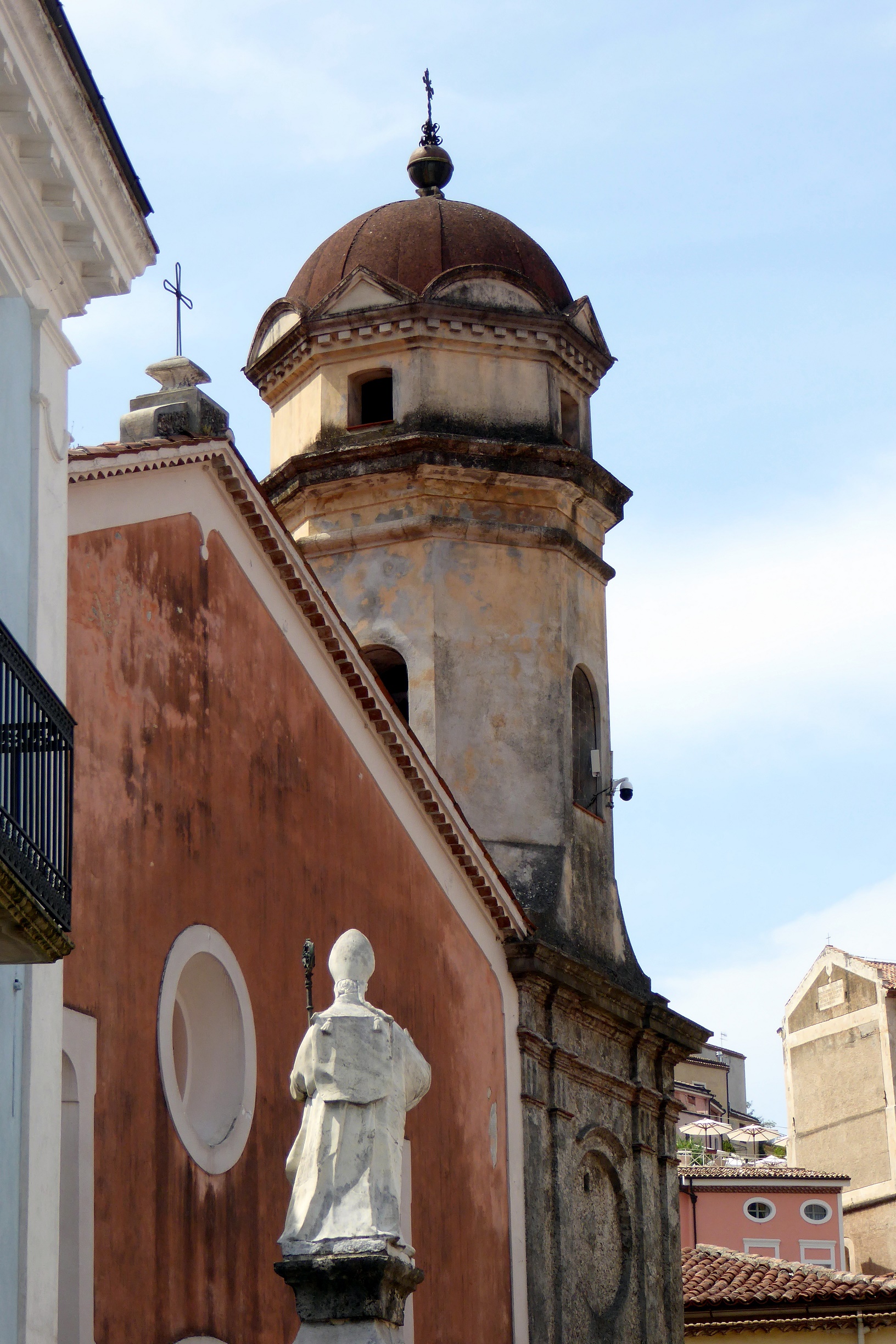
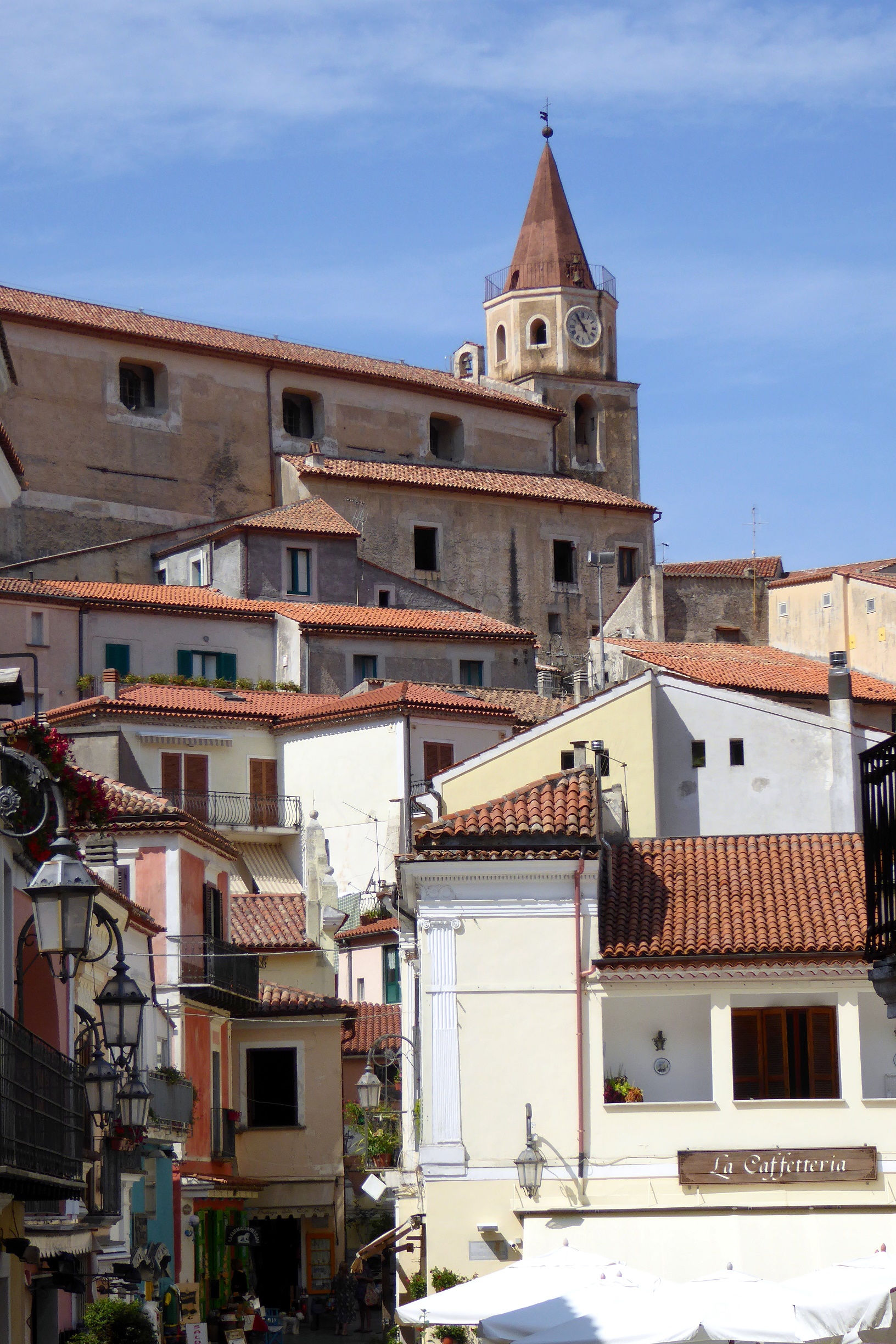
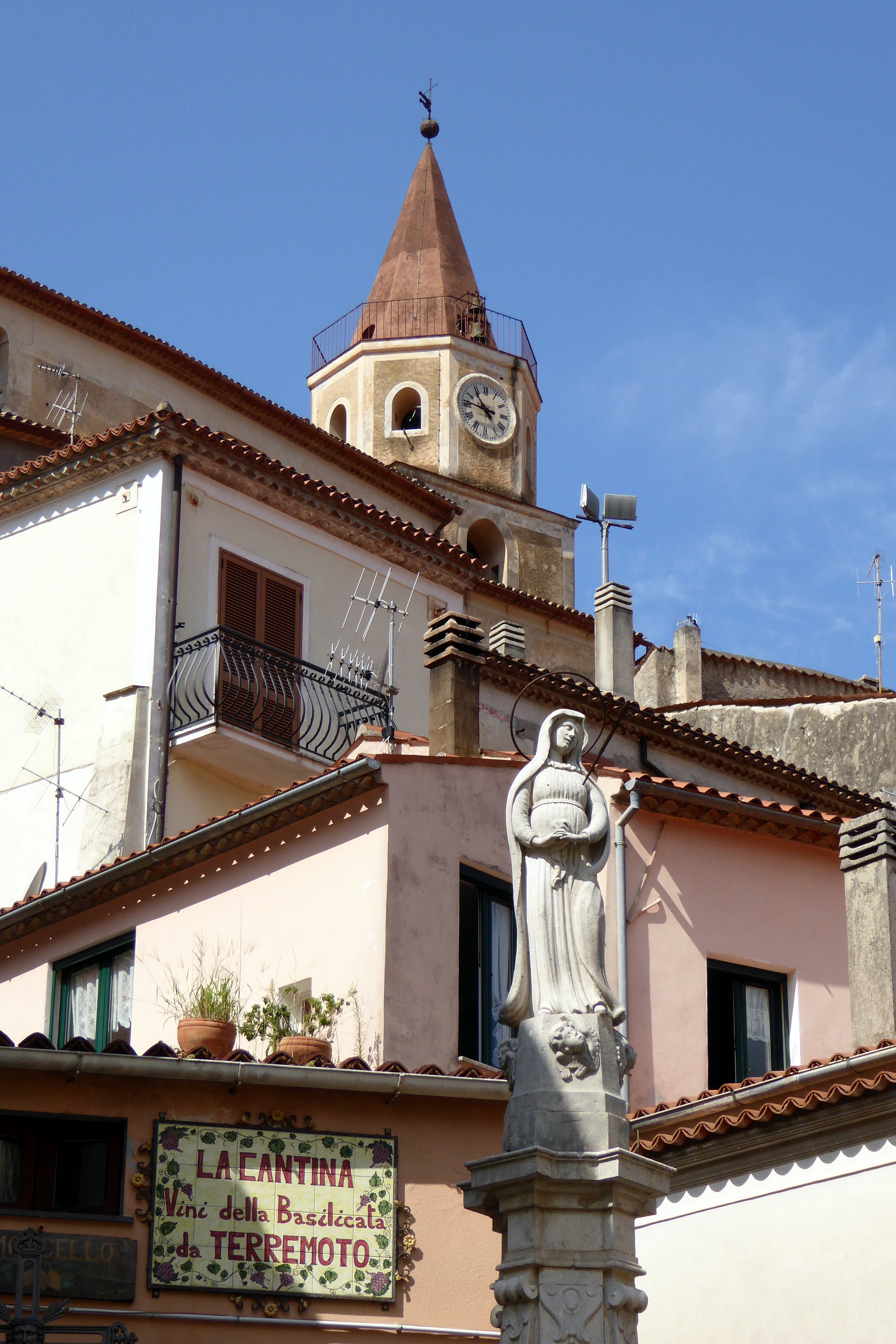
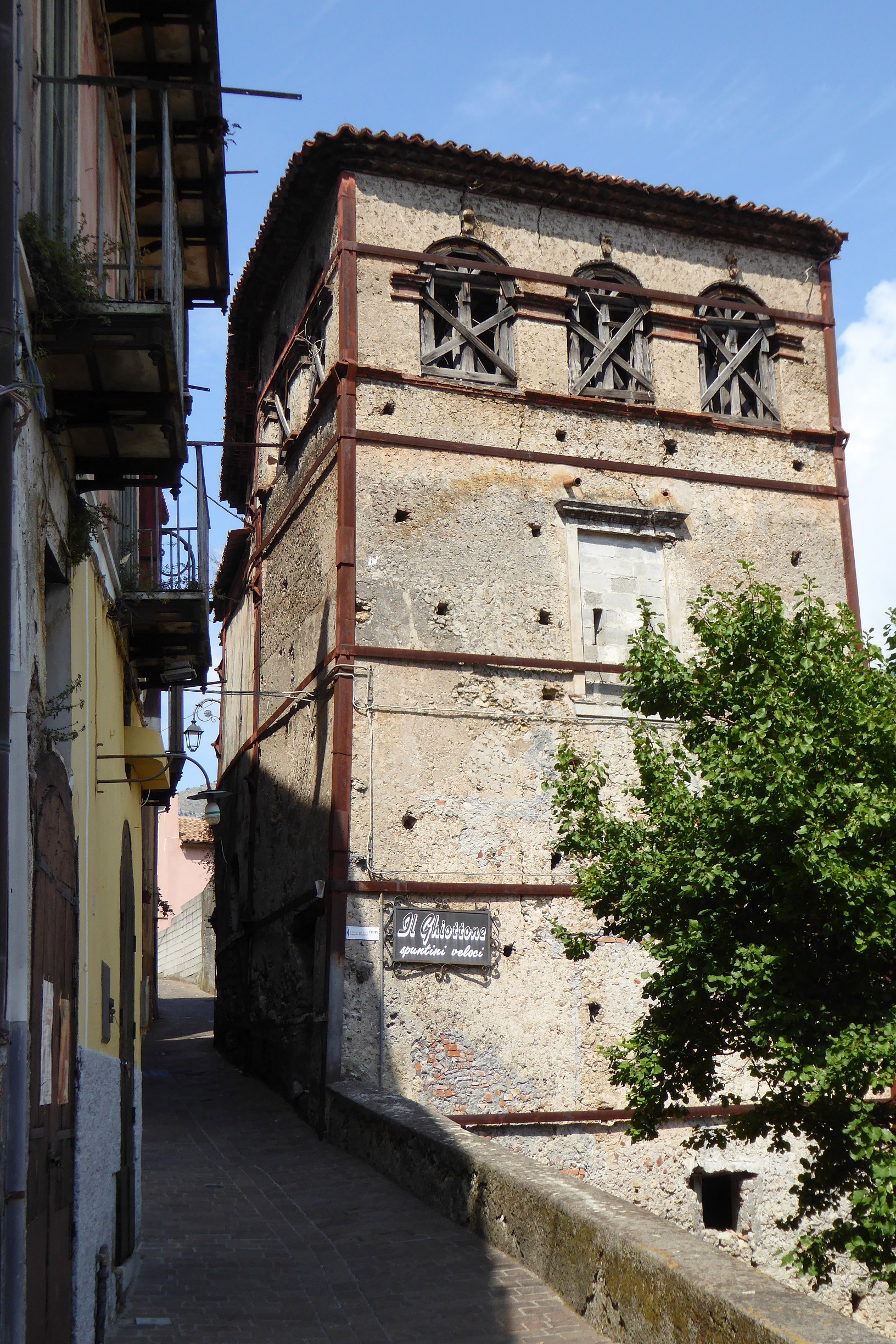
During our stay in San Nicola Arcella, the seven of us in our group hopped in our two rental cars (we were unable to get a hold of a rental van) and headed up to the old town of Maratea, in the province of Potenza, which is in the Basilicata region of Italy, along the Tyrrhenian coast.
Known as the “Pearl of the Tyrrhenian,” Maratea dates back to 15th – 14th century BC (based on archeological findings). That’s old!
It is old towns like Maratea that keep us returning to Europe, time and time again. There are always so many interesting things to see and photograph, and fun places to explore.
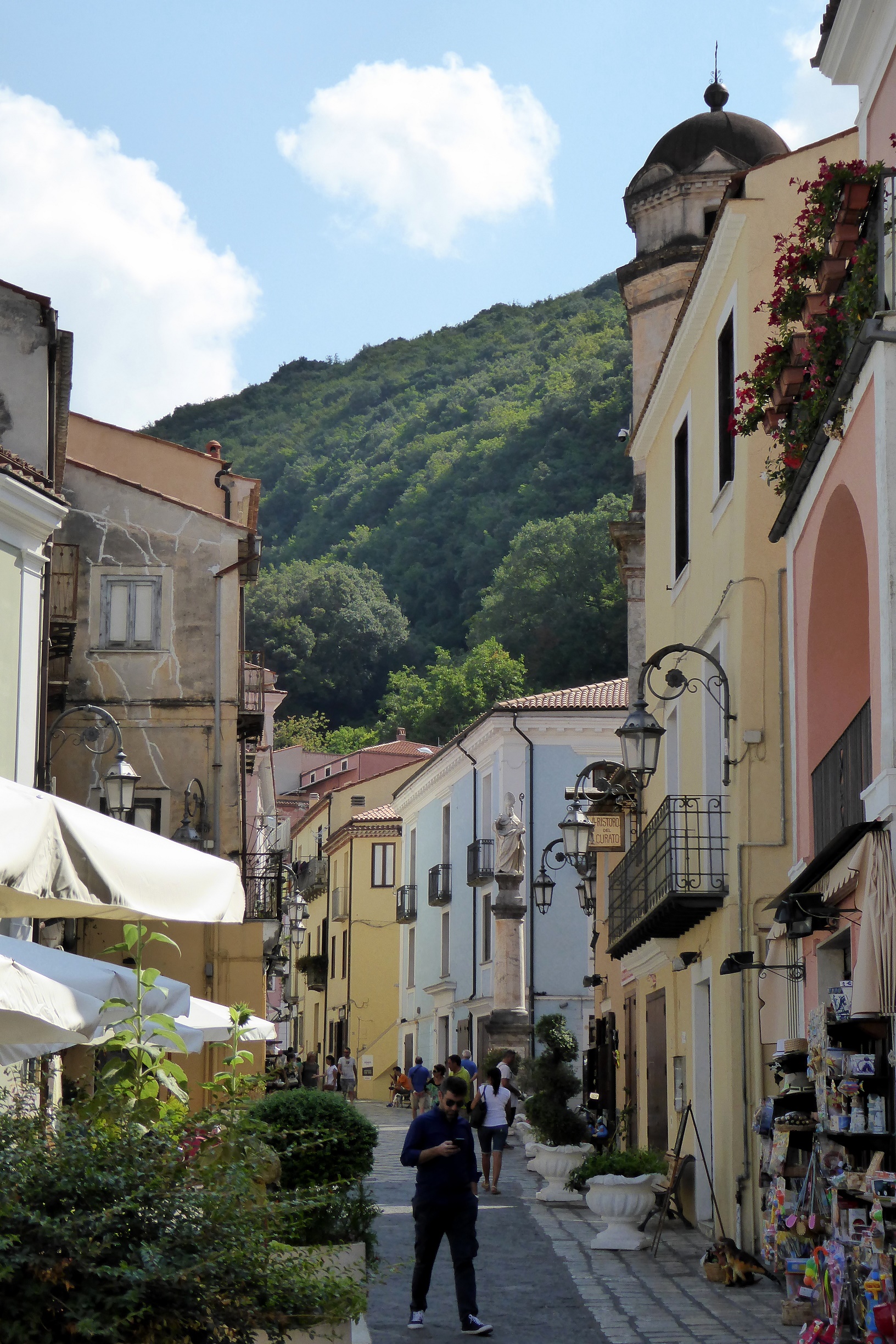
While the rest of the group relaxed in the plaza at a café with their coffee drinks and gelato, Bruce and I hiked up and down and all around, poking in and out of the twisting, narrow walkways. It was exhilarating!
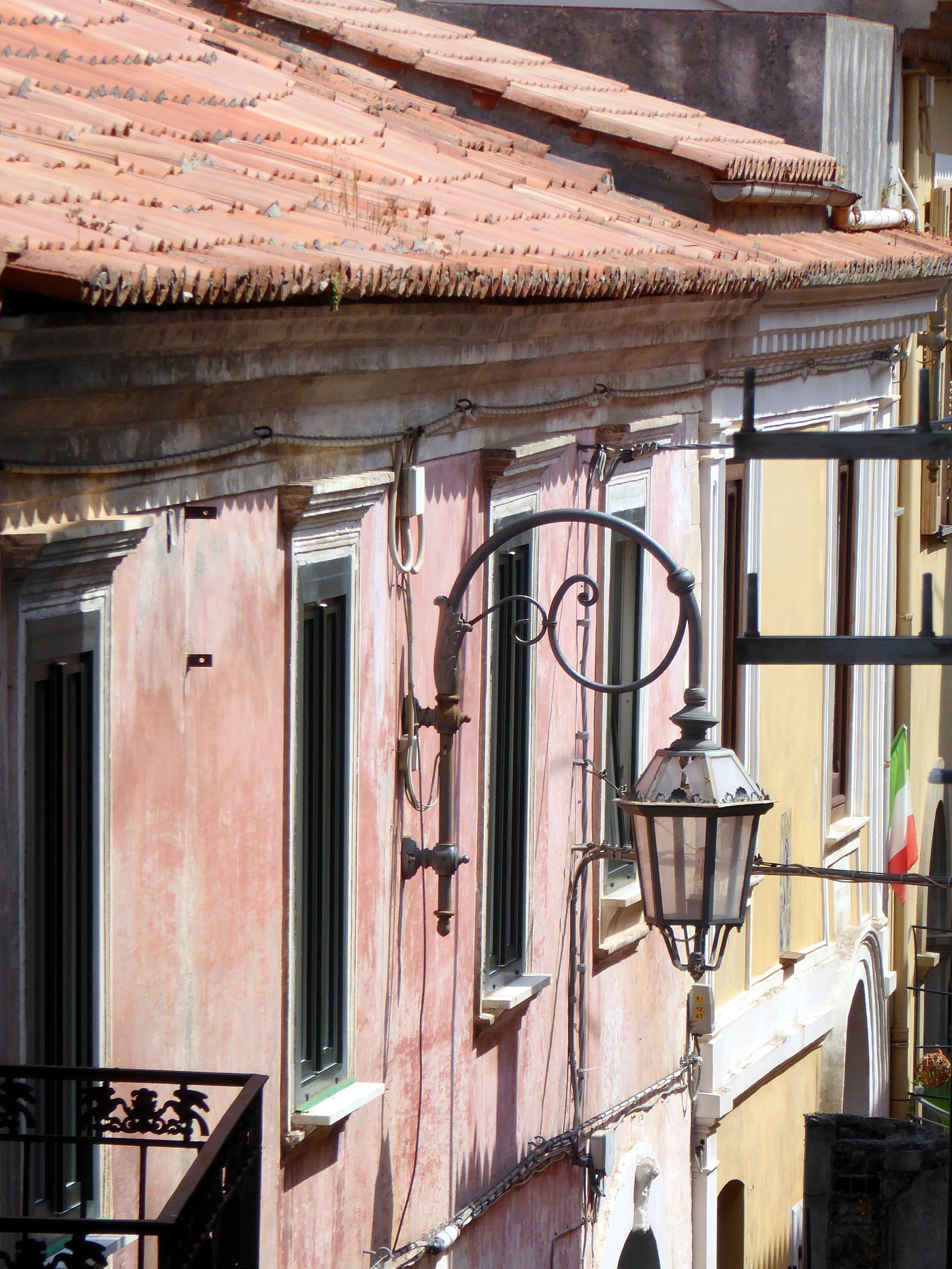
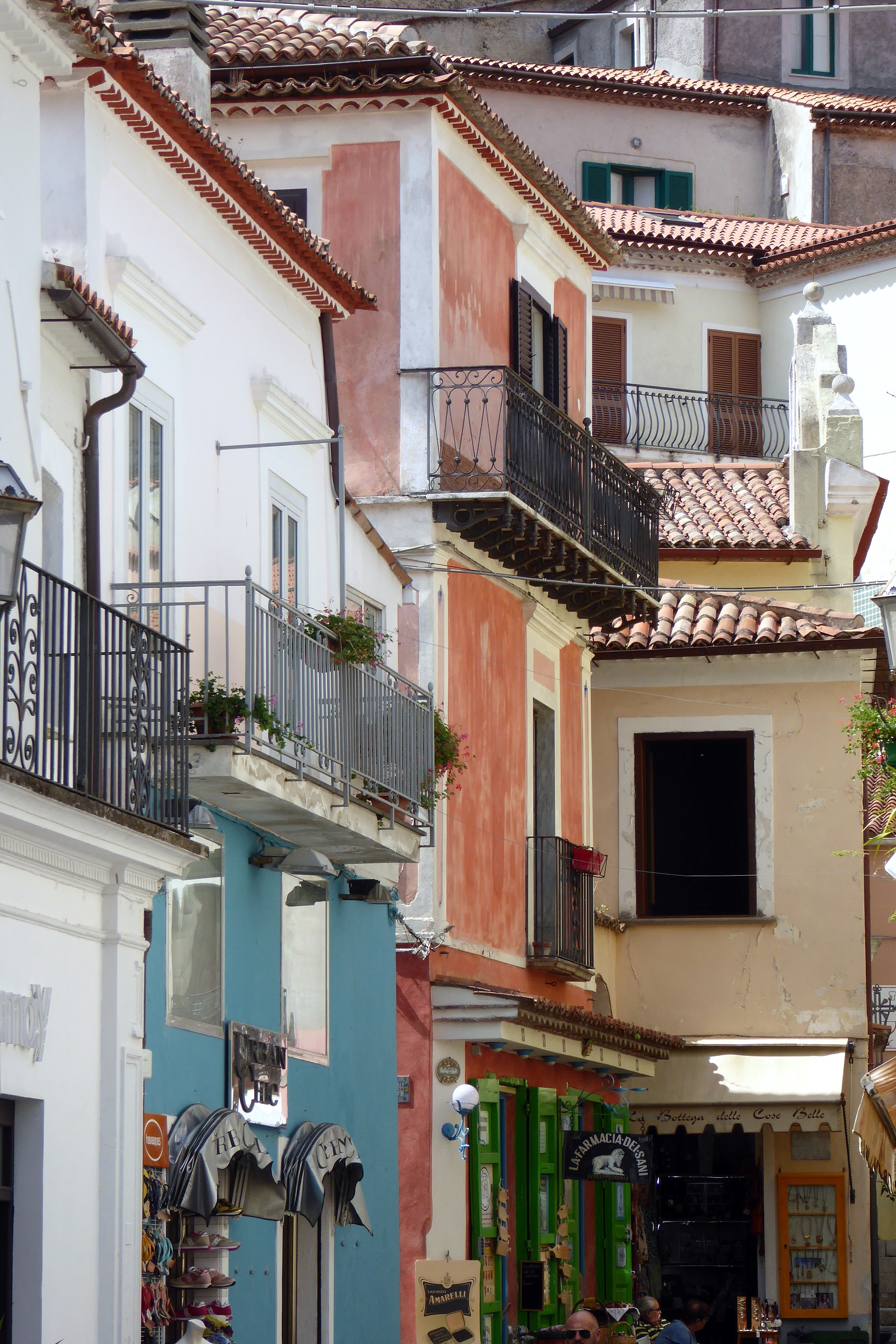
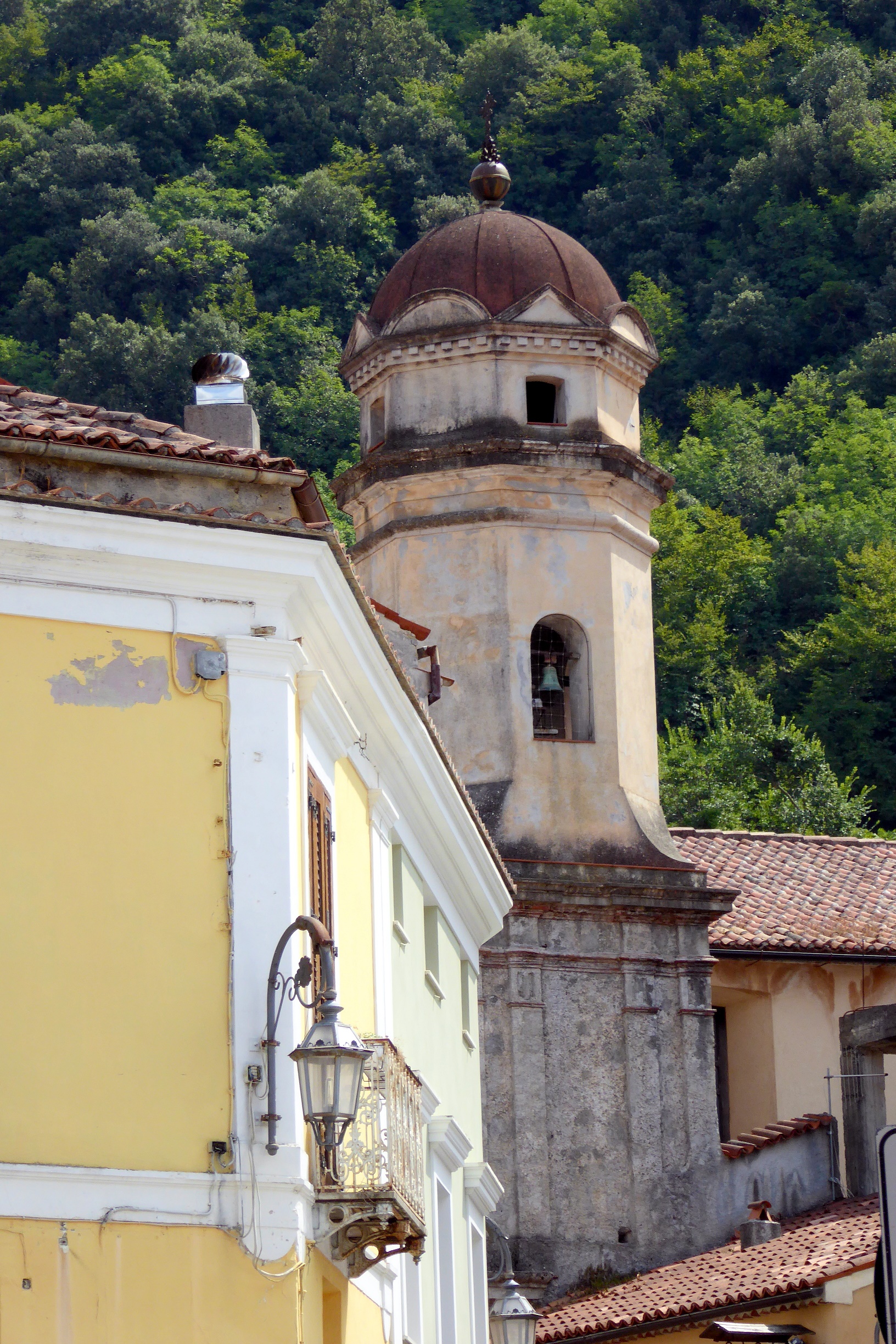
Here, then, are scenes from the old town of Maratea:
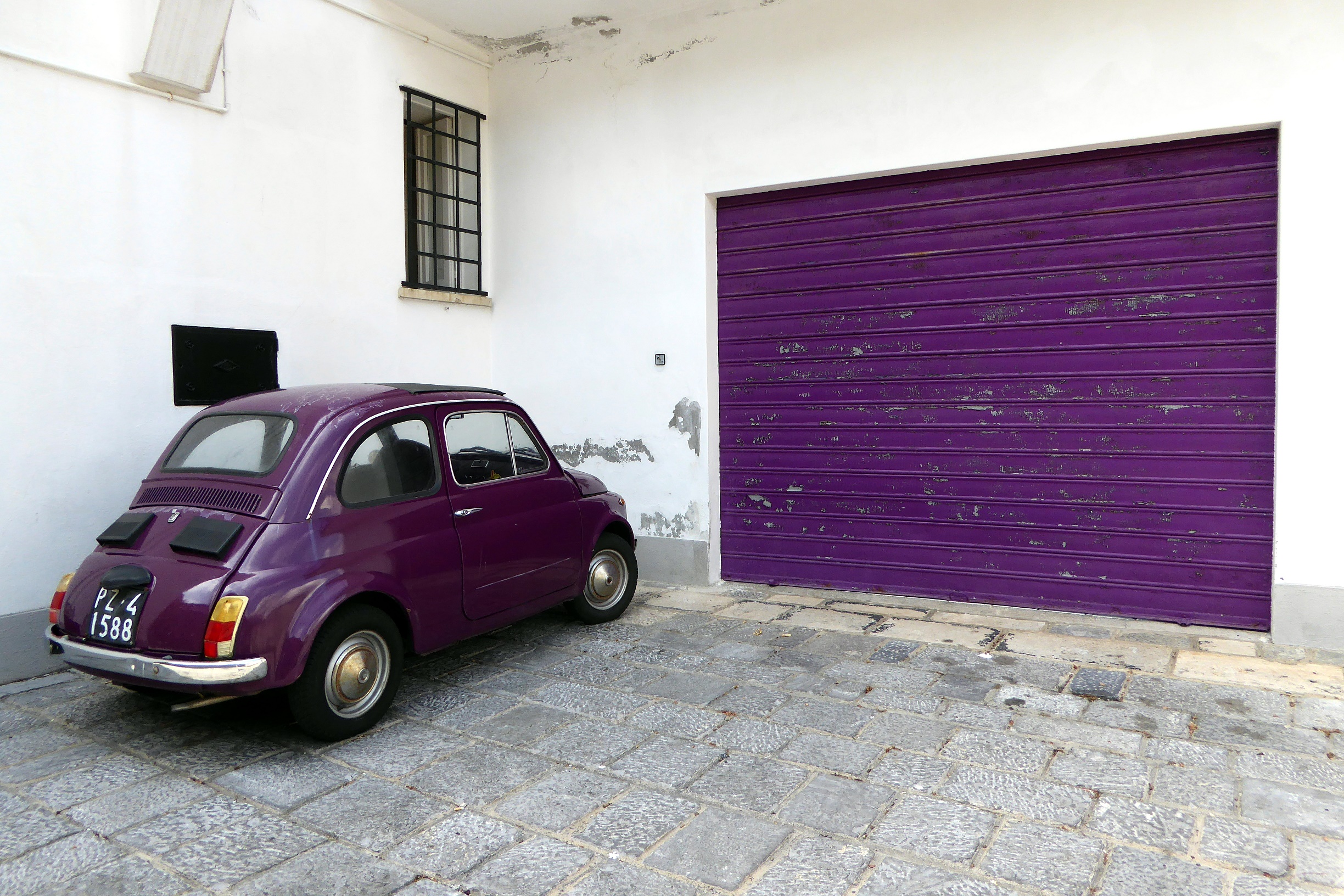
Hey, Delta Airlines gang, how’s this for “Passport Plum”?
Or, how about this? David, your shorts are so well-coordinated!
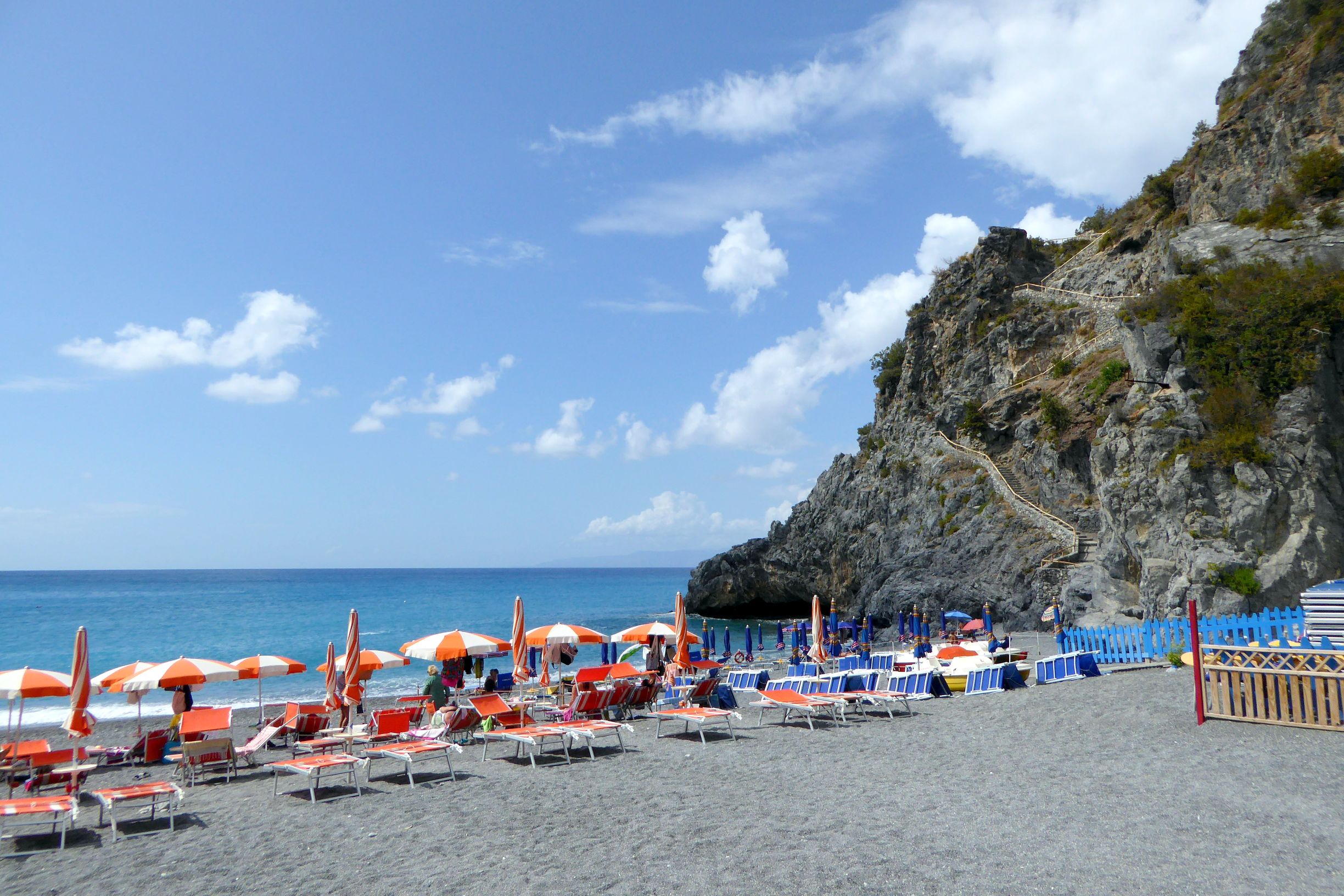
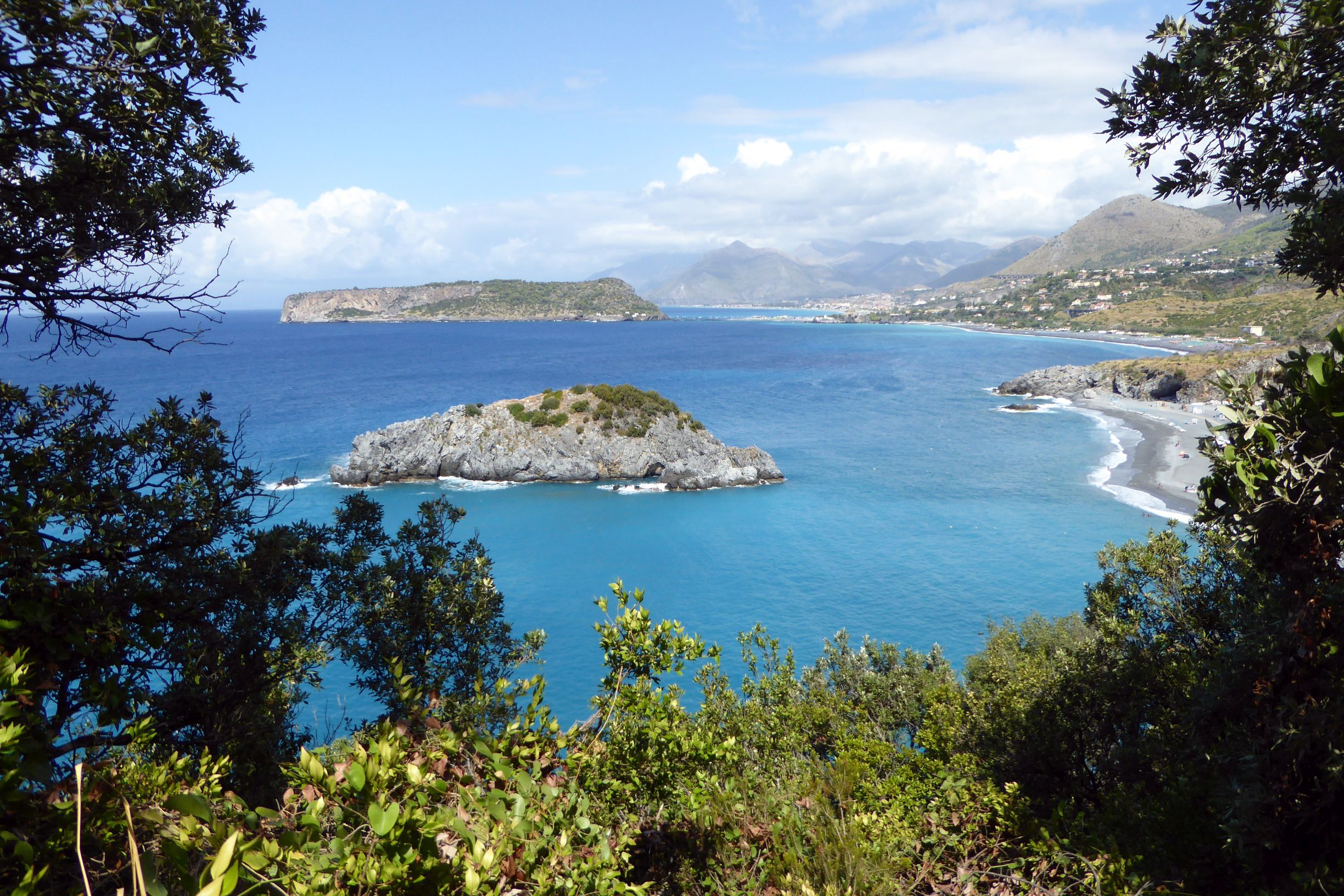
When I first stepped out on Villa Crawford’s sundeck and took in the view of San Nicola Arcella’s coastline, all I could say was, “WOW!” It was absolutely gorgeous. Sure, I had seen pictures (like the ones below), but it wasn’t until I saw it in person that I could fully appreciate the beauty of the place.
I had hoped our visit in Italy would be part “swimcation” and part vacation; however, as I mentioned in my first post on Italy, the logistics didn’t allow for a daily morning swim. When I was able to get in a swim, though, it was fabulous! The water temperature was about 78 degrees—perfect competition temperature, and the water visibility was good.
My plan was to swim around the rocky point to see the Arco Magno rock formation and photograph it with my waterproof camera; however, the currents were too strong to risk it. Instead, I joined a gal from our group and hiked over to see it. The views back down to the beach and across the coastline were spectacular! For me, this was one of the highlights of the trip, and the most beautiful scenery of the area.
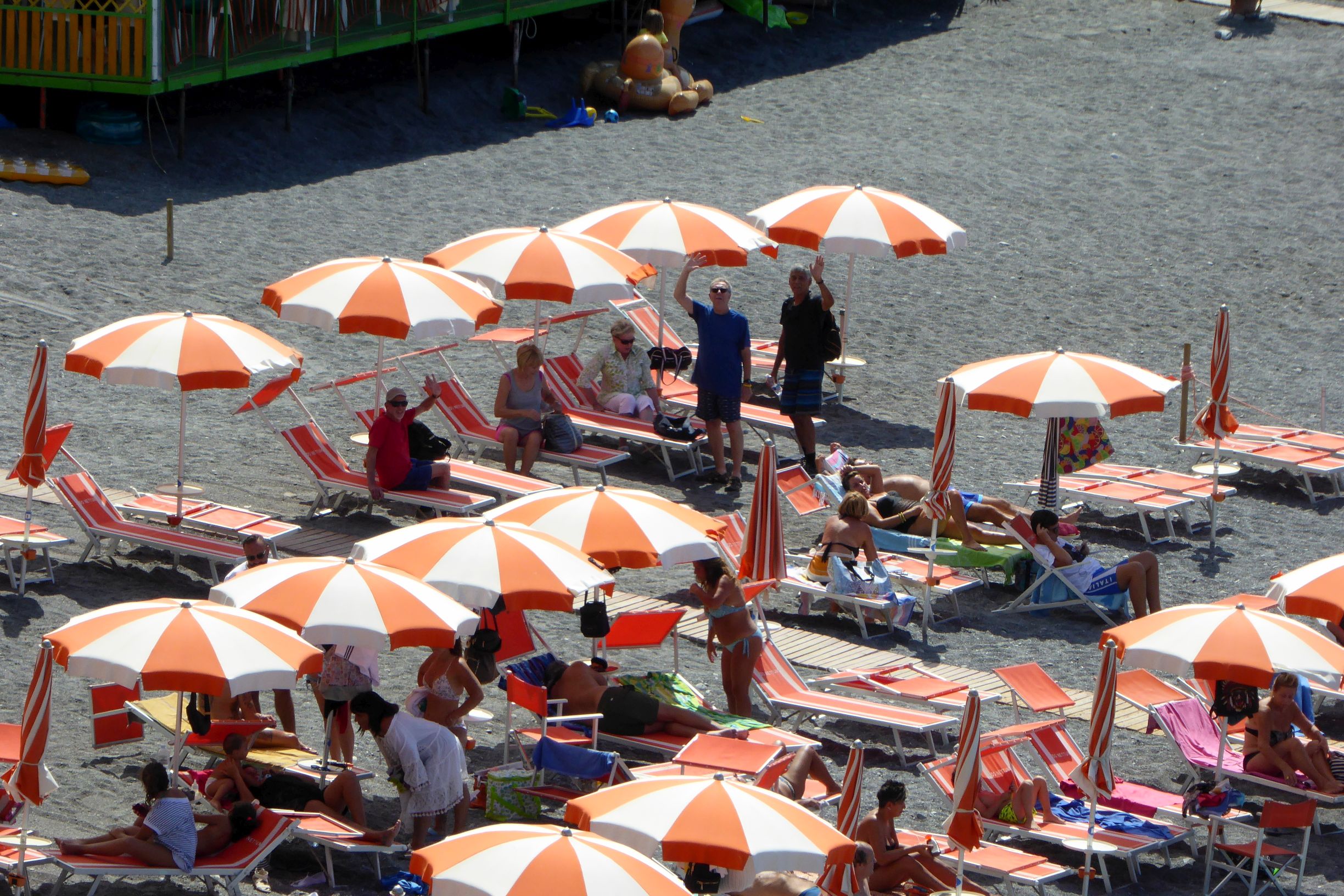
Our hike began by climbing the stairs all the way up to the top, and then back down the other side. The next two pictures were taken from the stairs. The orange and white umbrellas are at Lido Nettuno where our group relaxed in the shade.
Villa Crawford, our home away from home, was located on the hillside at the far end of the beach. Lido Nettuno is down below.
That’s Bruce (blue shirt) standing next to David (dark shirt), our friend who lived in the area for four years.
Darshana snapped this shot when I wasn’t looking!
If you plan a beach visit in the Calabria region of Italy when the air temperatures are warm, budget 10 Euro for an umbrella and lounge at one of the lidos that line the beachfront. Each lido has a café in back where you can grab some lunch and enjoy the breeze and views of the beach. If you choose to patronize a lido with a parking lot, they include free parking as well.
Our group enjoyed our time at Lido Nettuno and had lunch in their café. Check out their nifty cell phone charging station:
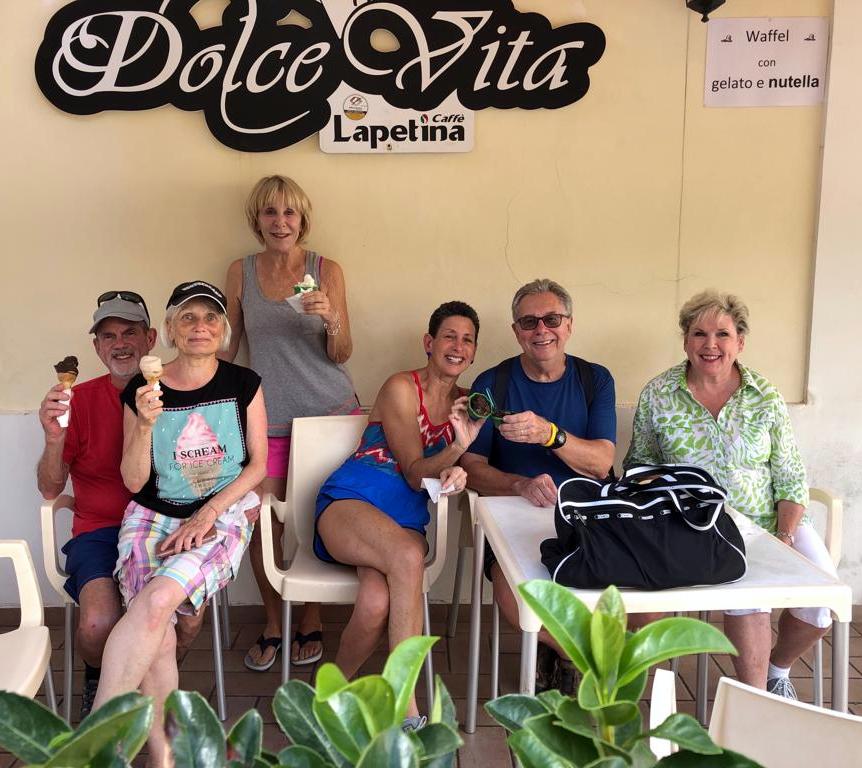
The best way to follow up a day at the beach is to enjoy a delicious Italian gelato. There is no shortage of gelaterias in Italy; they’re everywhere! We happened to stop at Dolce Vita for a scoop, and the chocolate that I savored was amazing—dark and rich. Yum!
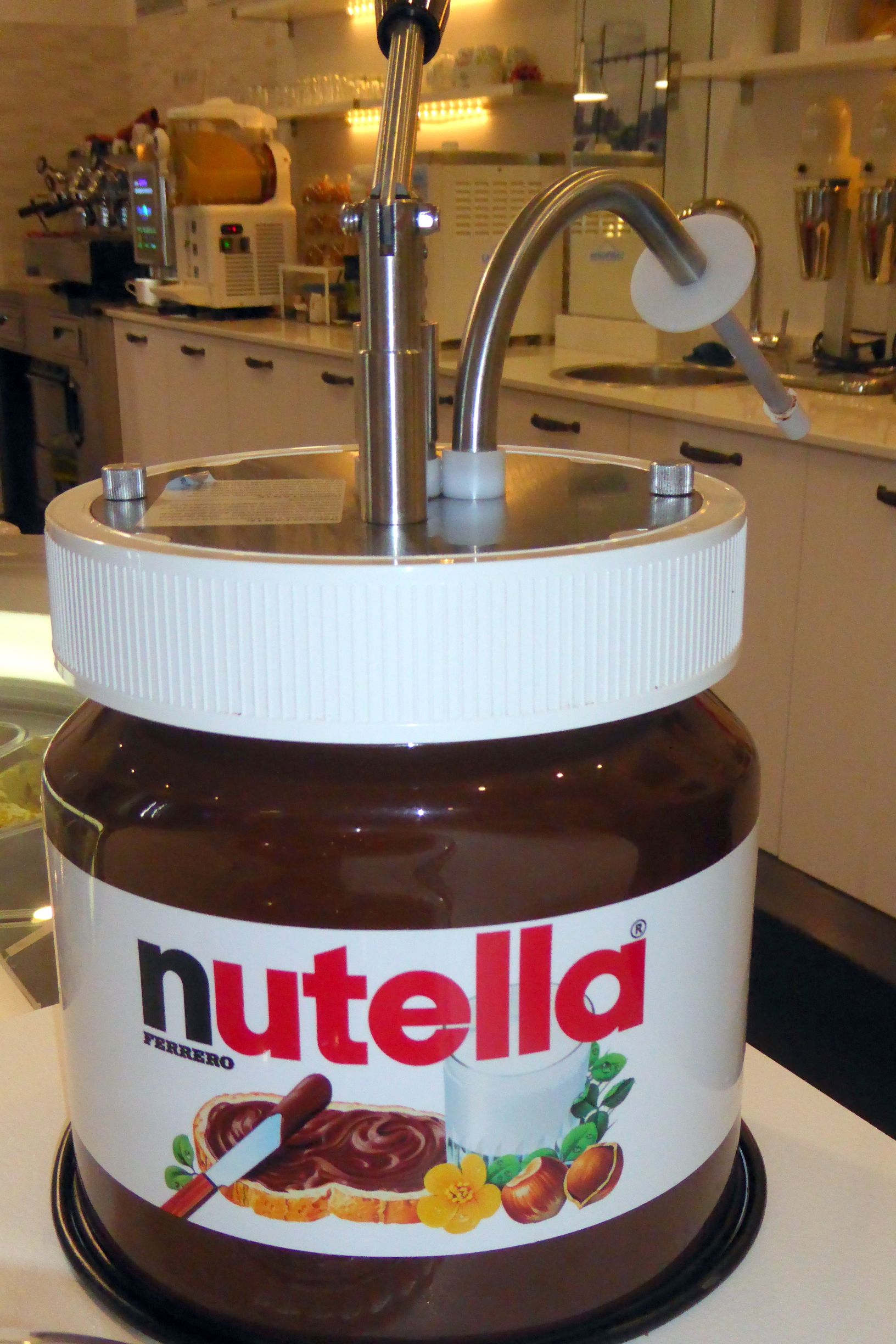
Nutella is popular throughout Europe, so most of the gelaterias offer it as a topping on their gelato and waffles. I chose that option on a scoop of chocolate gelato at another gelateria one evening after dinner, and this is the huge jar they pumped it from:
The European Nutella is darker and tastier than the Canadian-made Nutella we get in the U.S.A., so I brought a jar back with me to enjoy at home. I’ll be sad when that’s gone!
In my next post, come along with me to the town of Maratea.
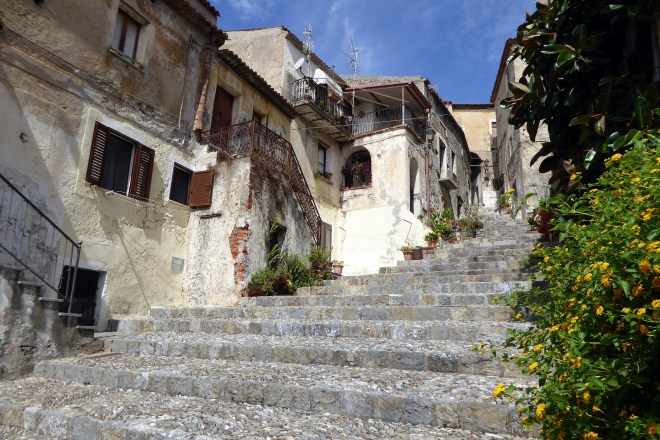
San Nicola Arcella, in the province of Cosenza, and the region of Calabria, has a history dating back 1,000 years; so, it was quite photogenic and fun to poke around. It was small (less than 1,400 residents), so the entire town could be seen on foot. It was quite hilly, though, so it would not be the easiest to navigate for those who are less mobile. The cobblestones also would make it difficult for those confined to a wheelchair.
For me, this is just the type of town I love to explore. I got a good workout in while doing photography and enjoying the visual stimulation.
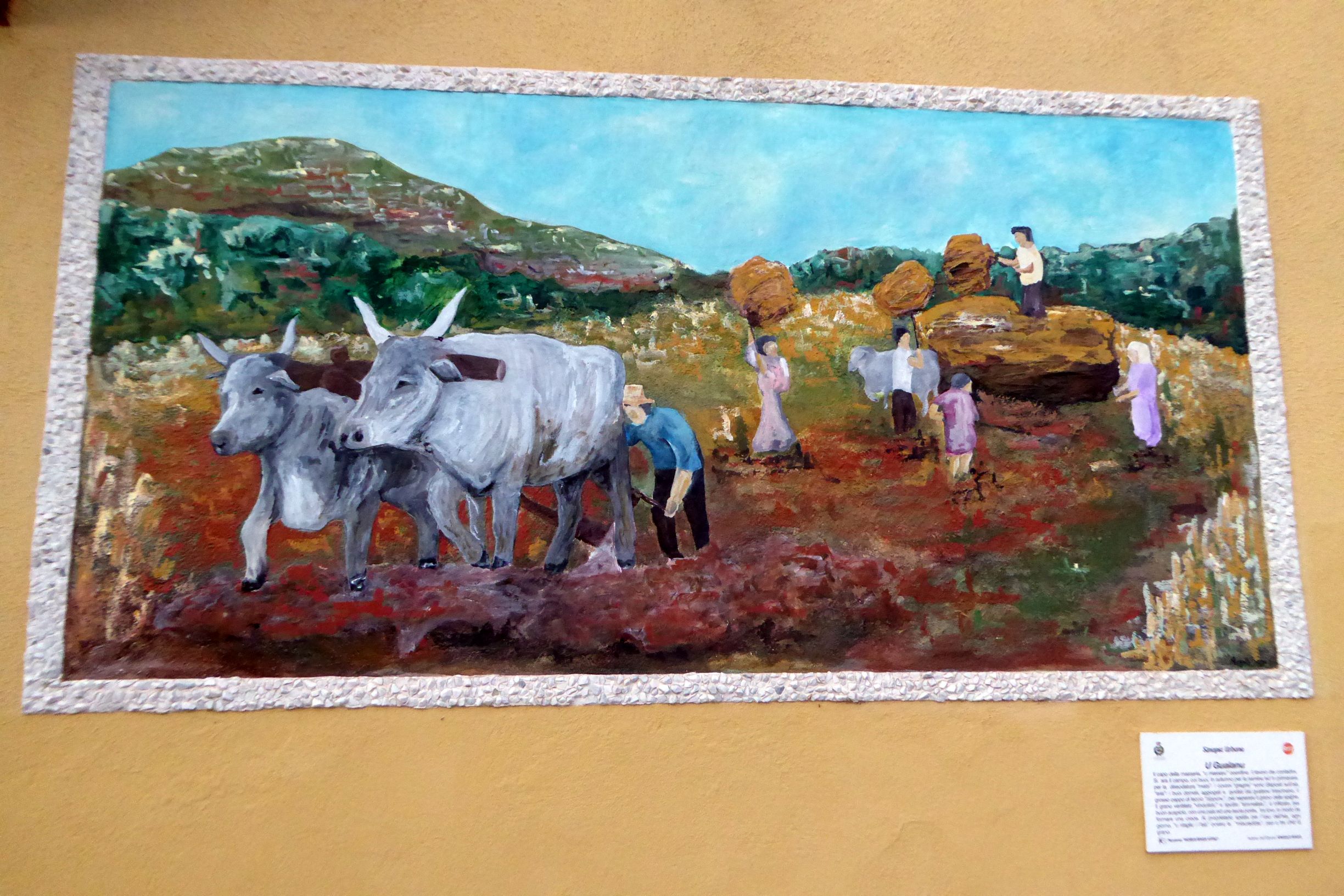
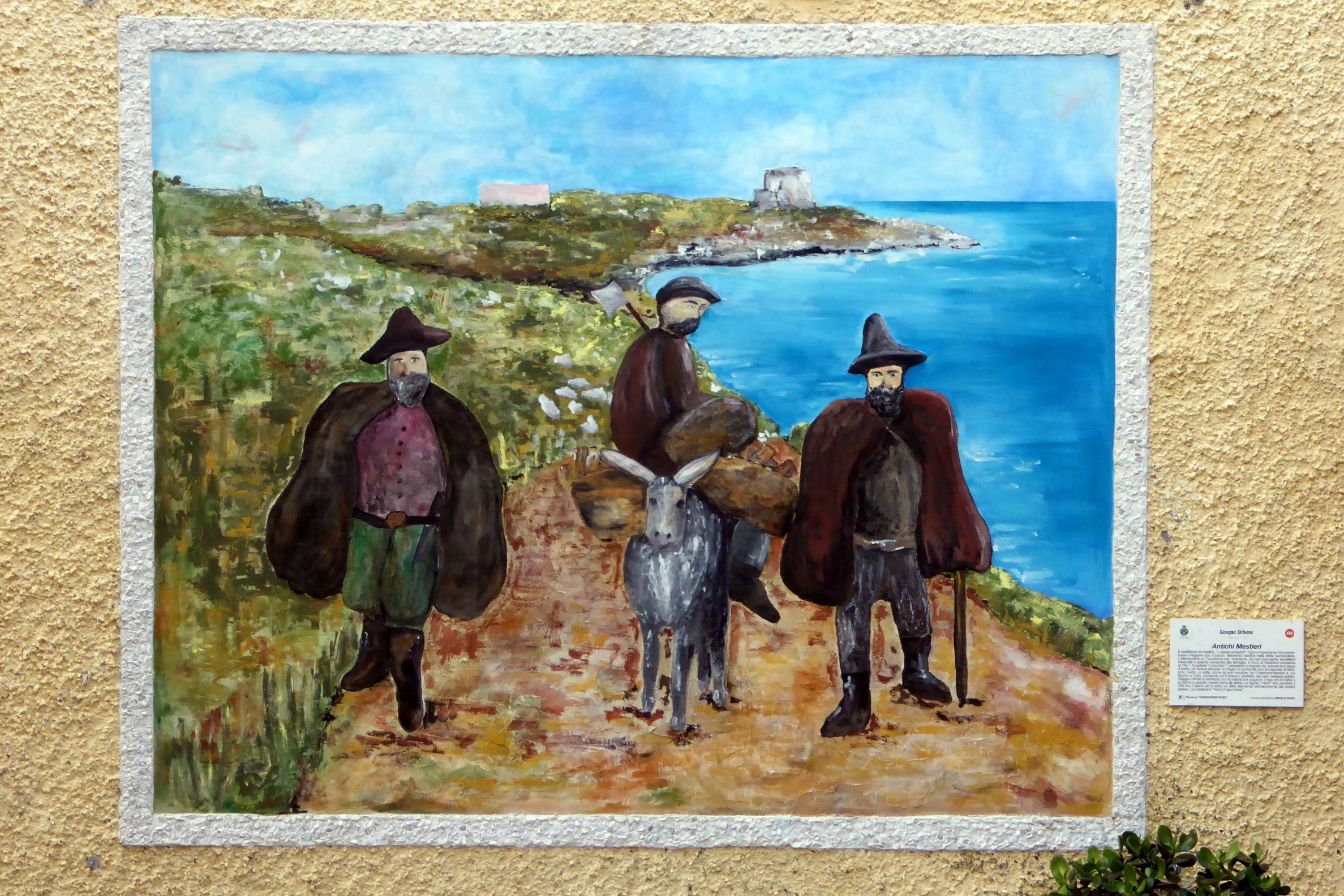
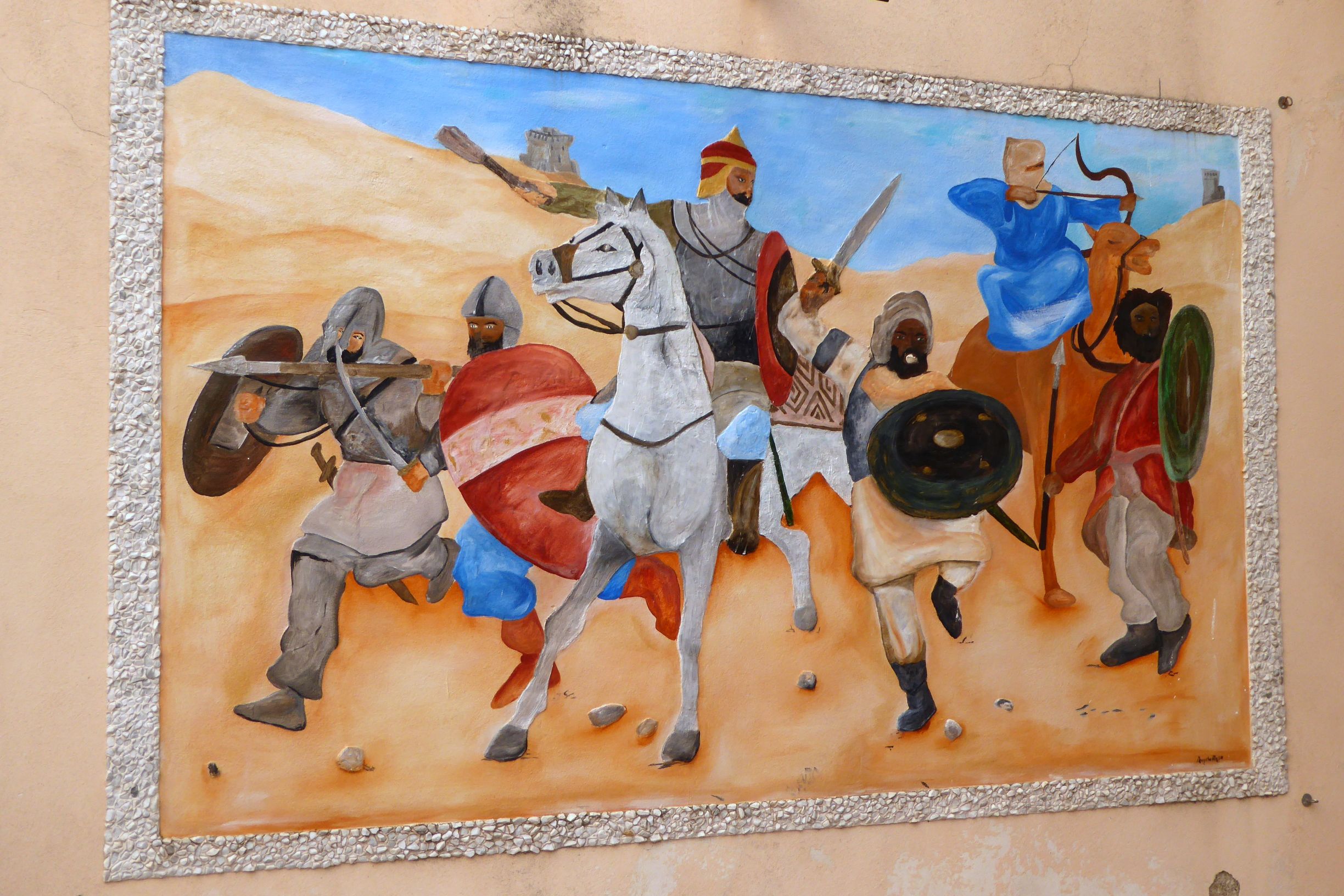
There were murals throughout the oldest part of town depicting San Nicola Arcella’s history, which I found to be quite unique and charming.
At night, the town comes alive with tourists and locals strolling the streets and dining in the cafes. I especially enjoyed how pretty the old, colorfully-painted buildings looked with the lights shining on them.
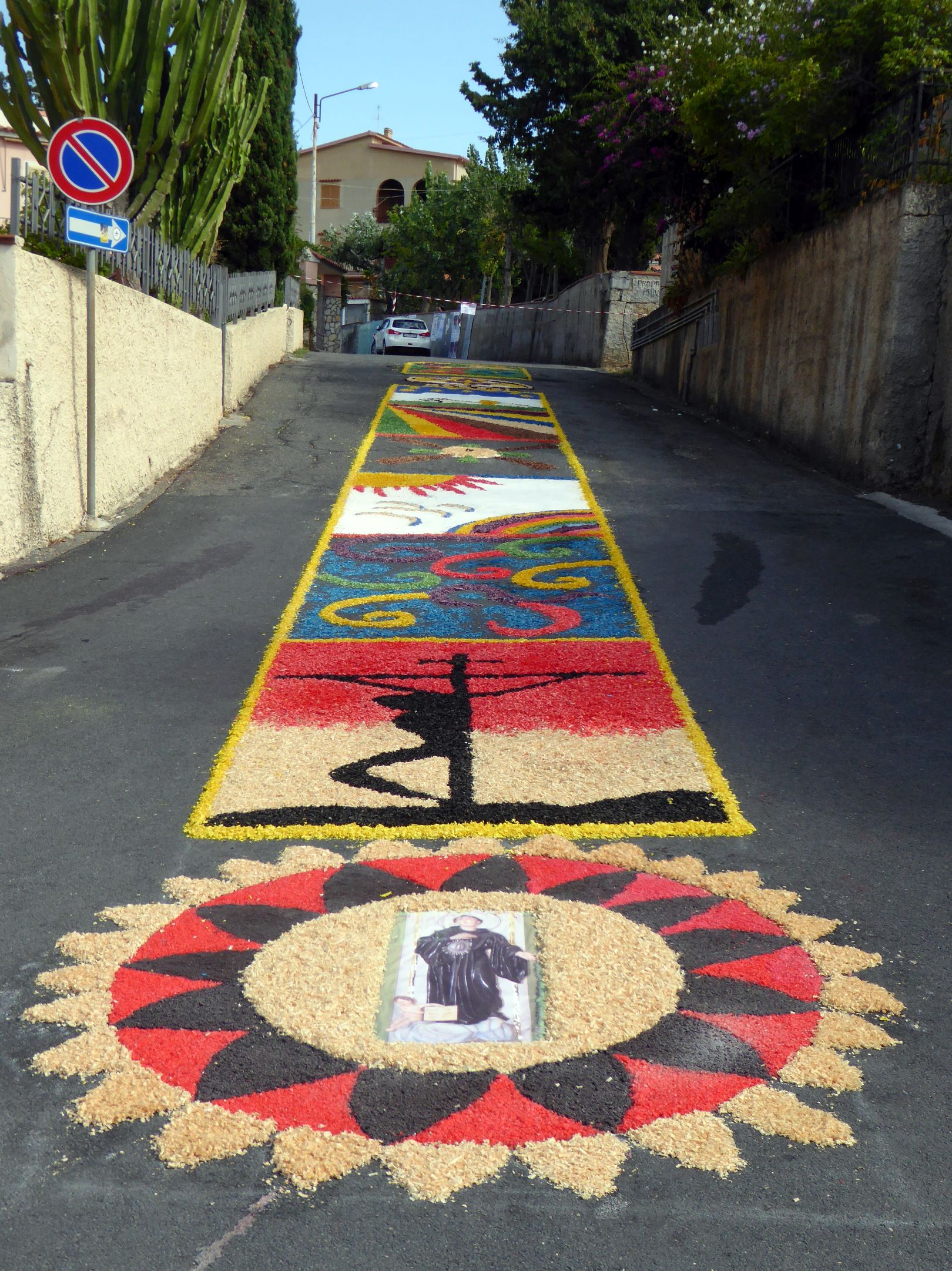
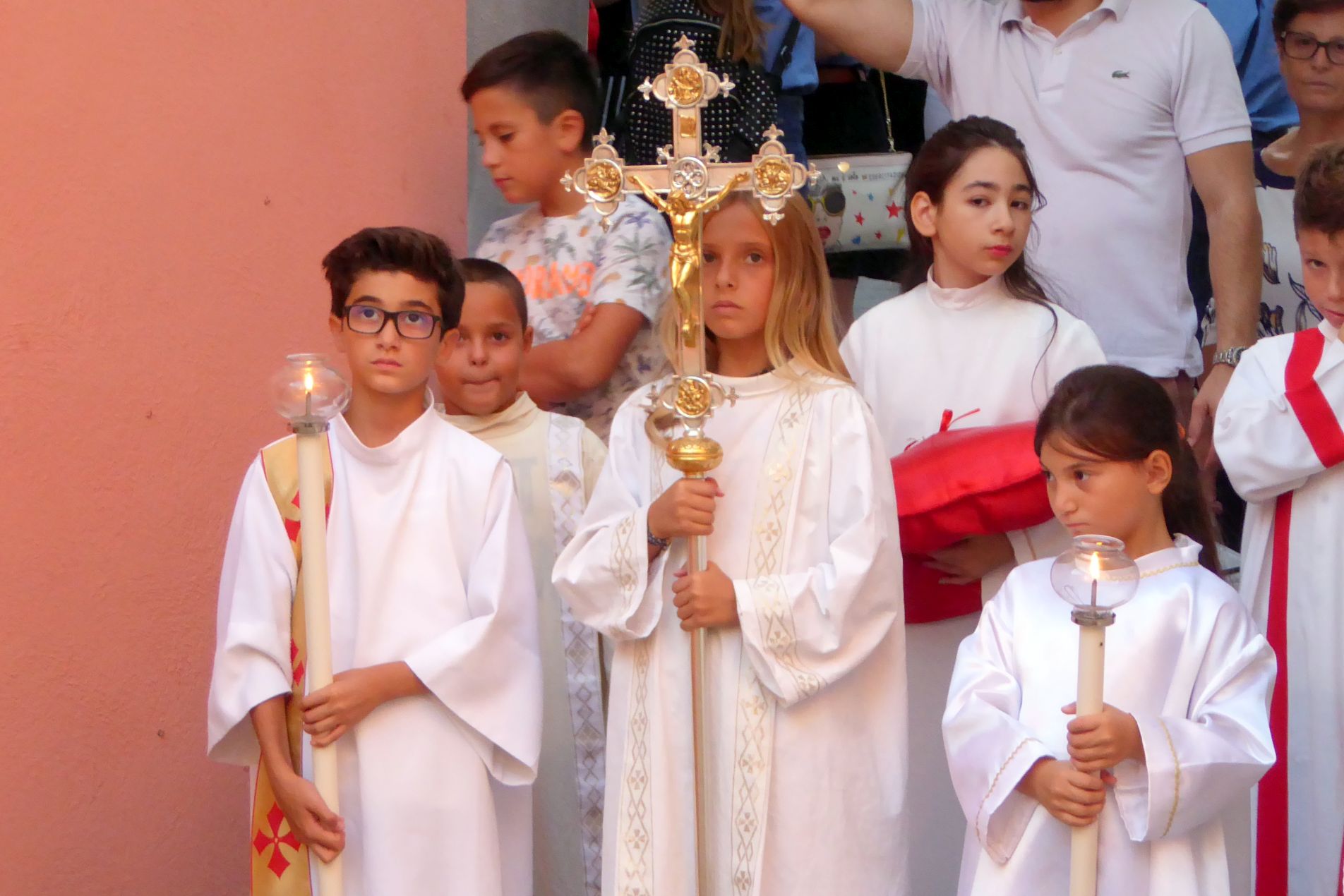
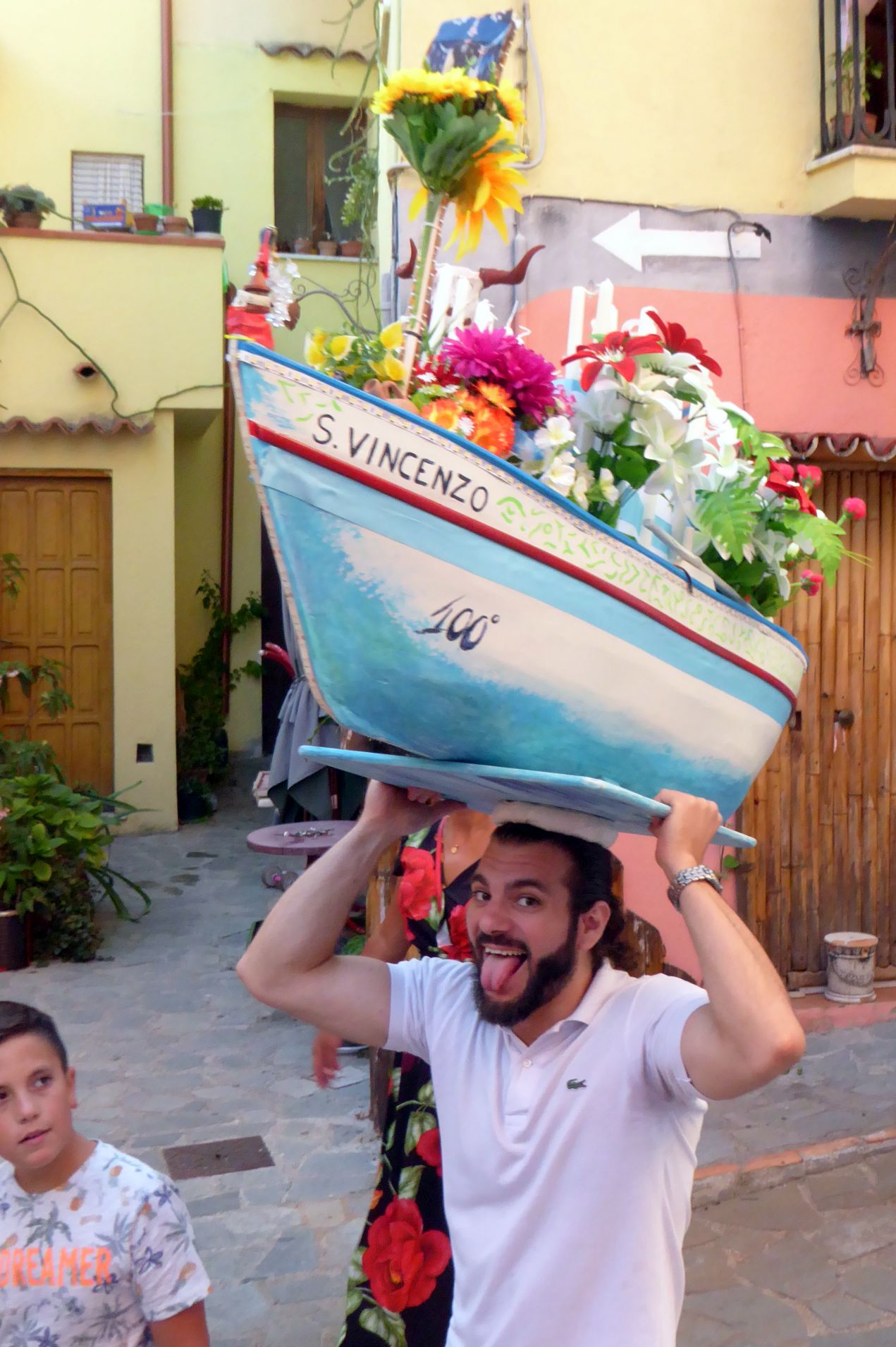
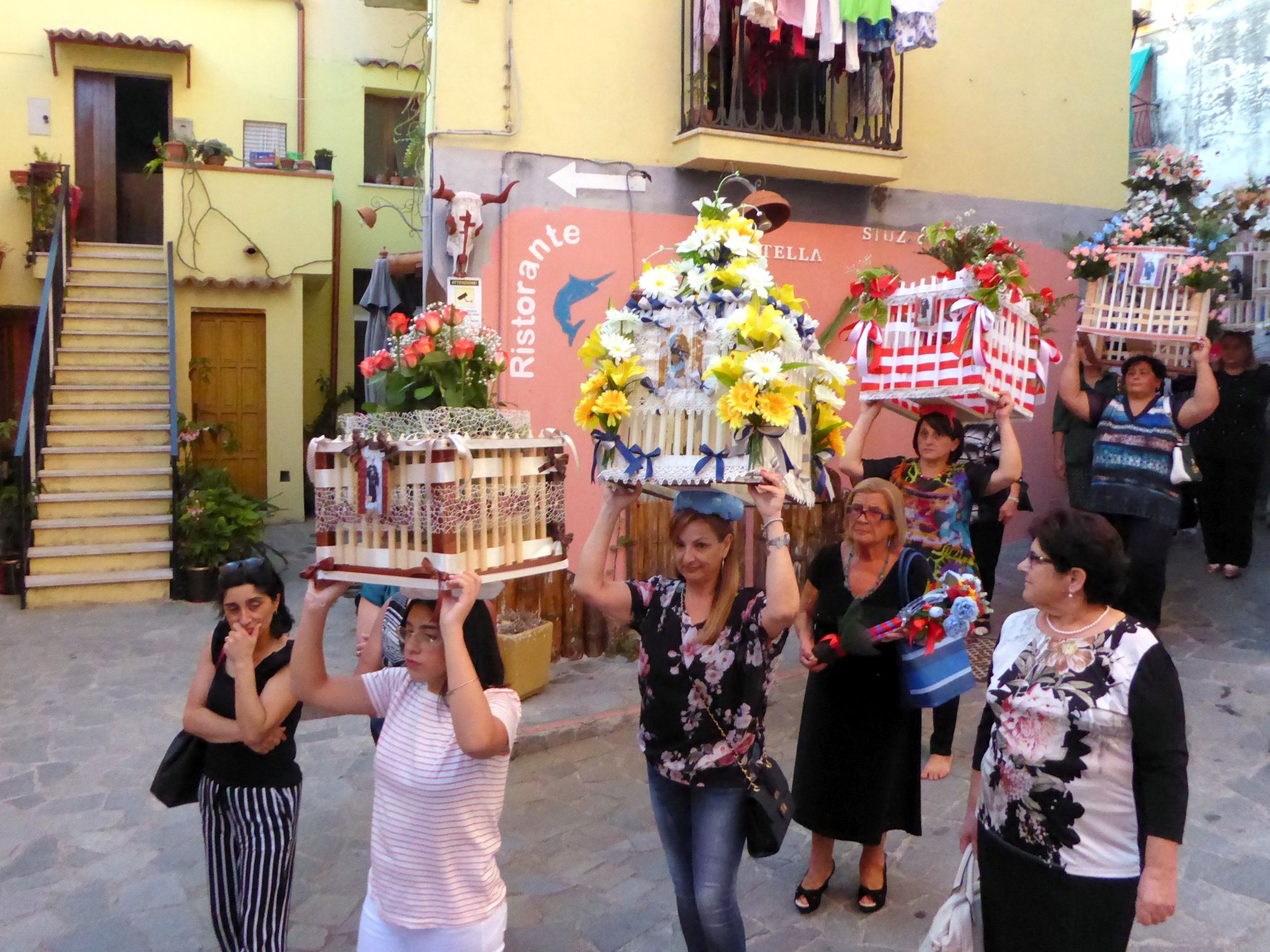
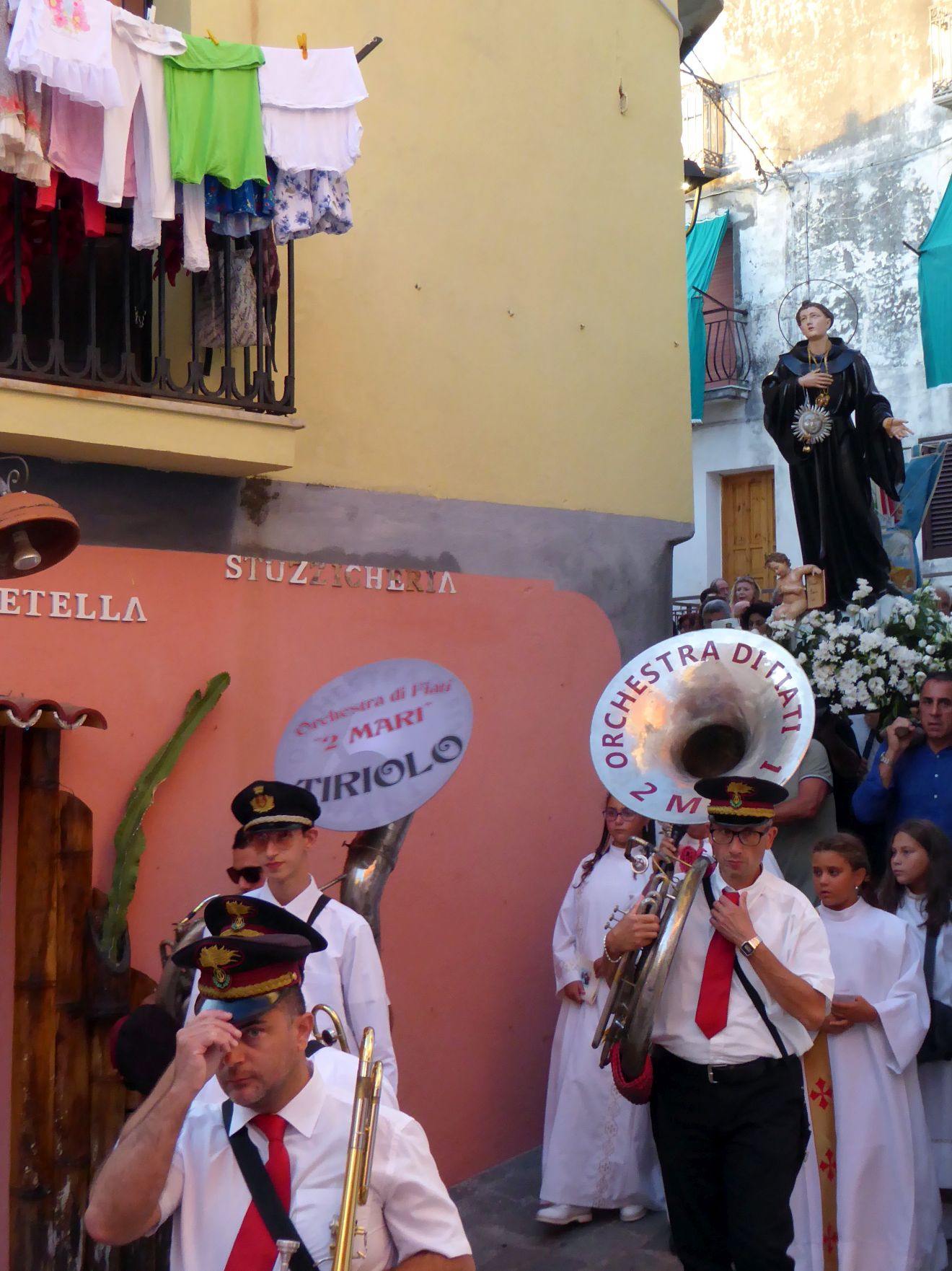
We were fortunate to be there at the time of a festival celebrating Saint Nicola. As it so happened, while we were exploring the town on foot, we turned a corner and saw the procession coming our way from the church above and headed for the stage set up in the plaza. Talkin’ about being at the right place at the right time!
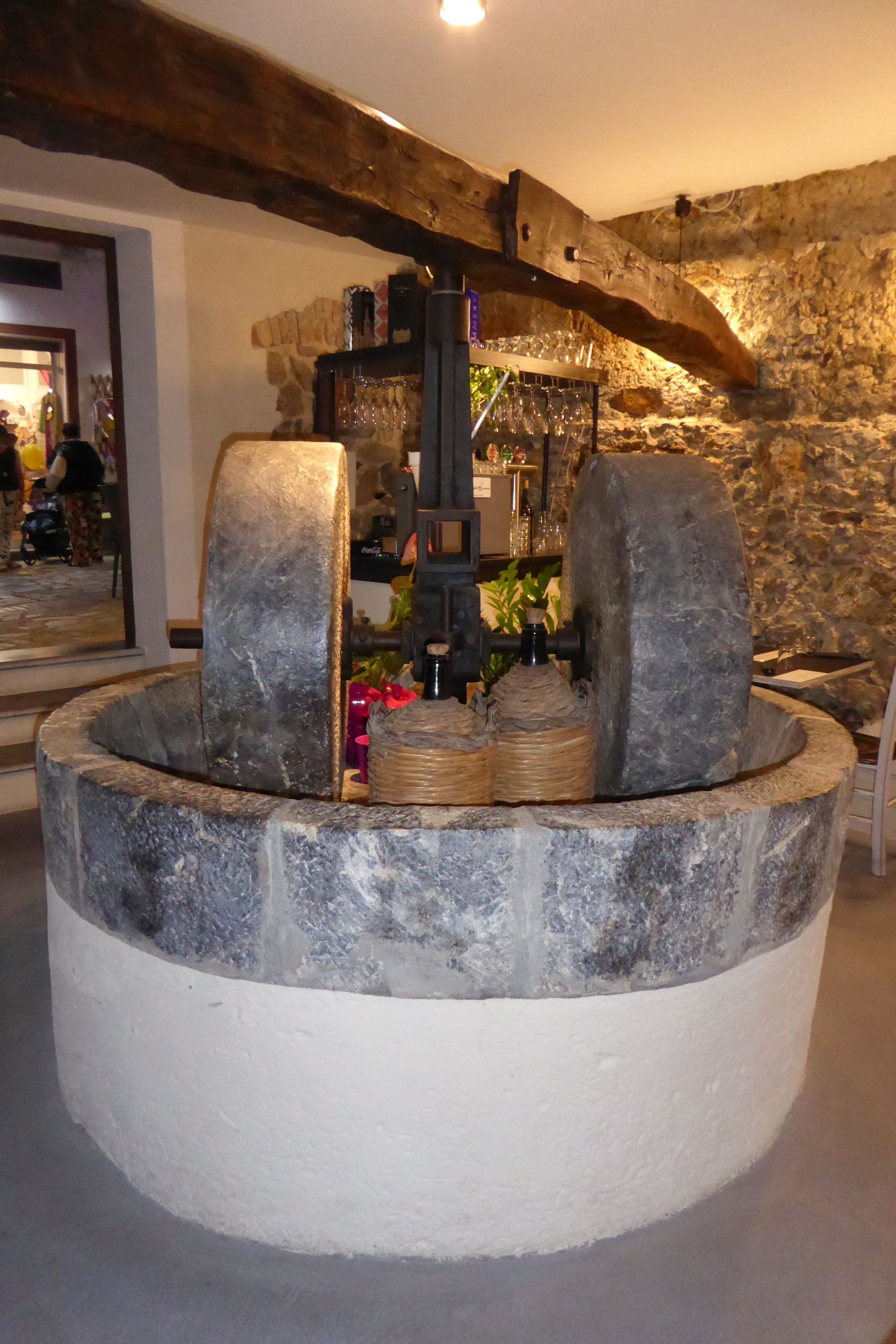
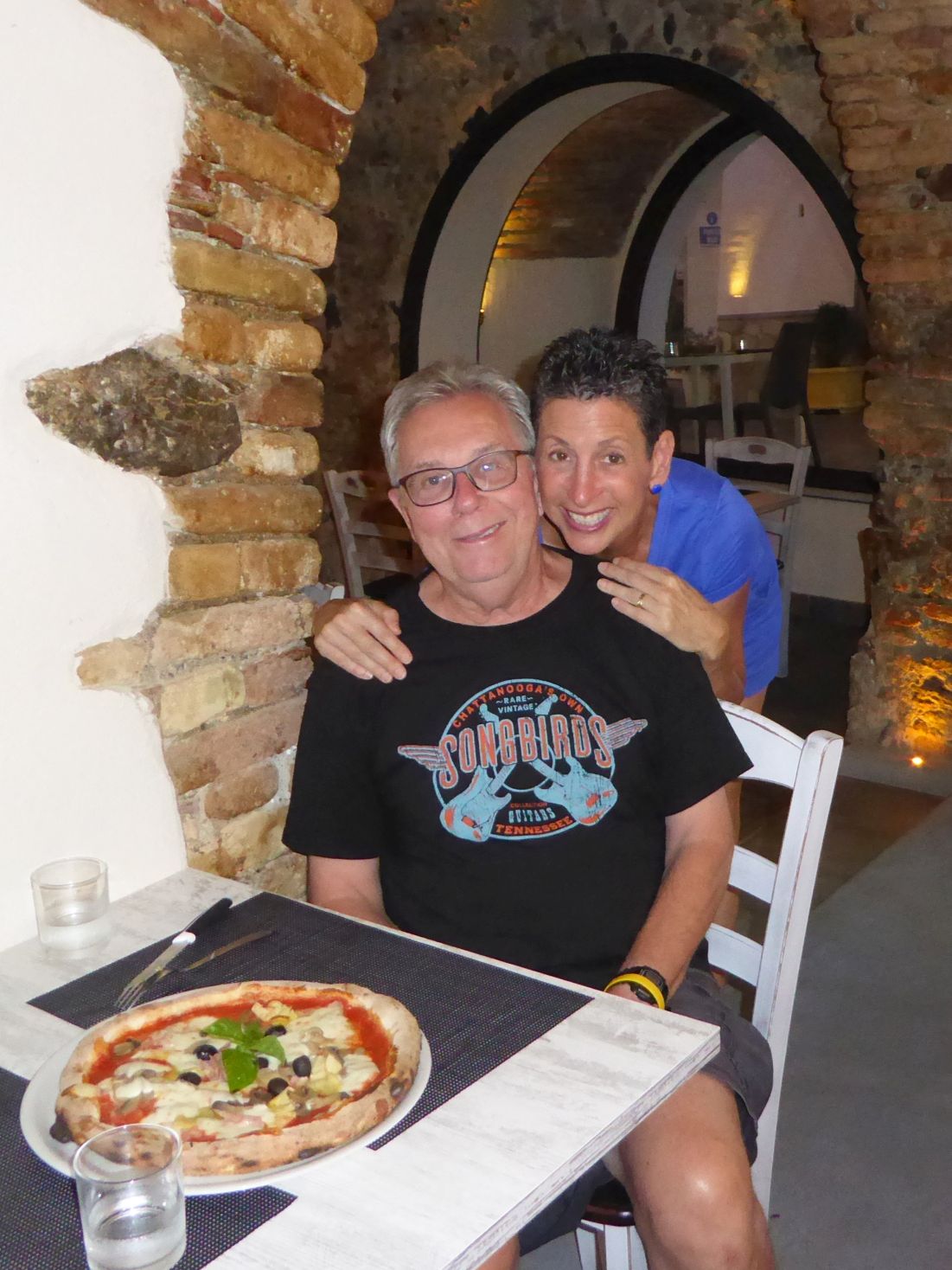
Our timing was perfect as well for our 7:30 PM dinner reservation at Johnny’s Pizzeria. After the blessing for Saint Nicola ended at the plaza, the procession continued down the pedestrian street, so we followed along with the crowd. When we arrived at Johnny’s, it was exactly 7:30 PM!
We hadn’t done any research on restaurants in San Nicola Arcella, but we liked the ambience of Johnny’s (and the great smell of the pizza!) each time we had walked by, and the menu looked enticing, so we gave it a try. As it turned out, it’s the top-ranked pizza in town (on Trip Advisor), and we enjoyed our pizza and appetizer very much!
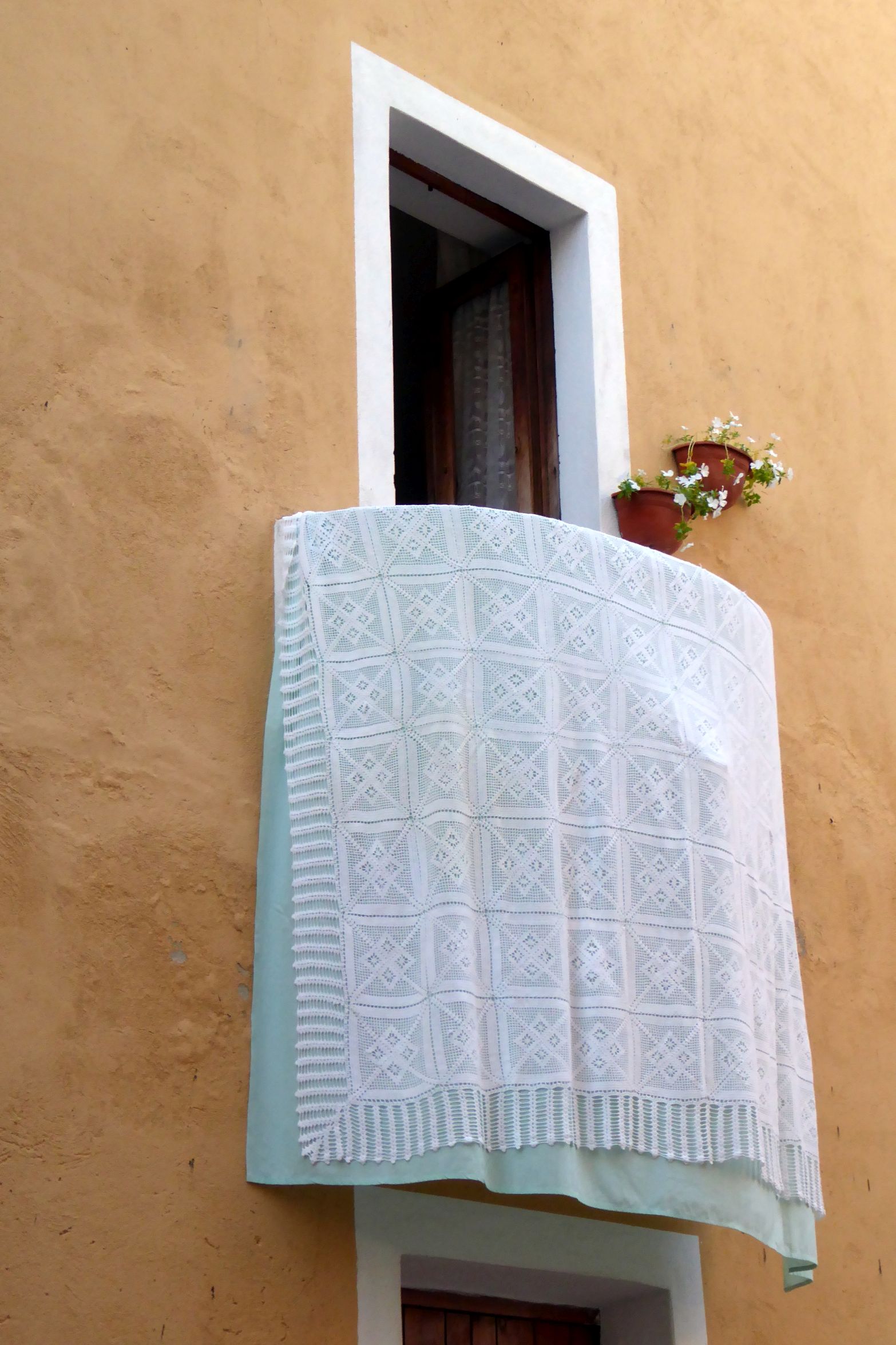
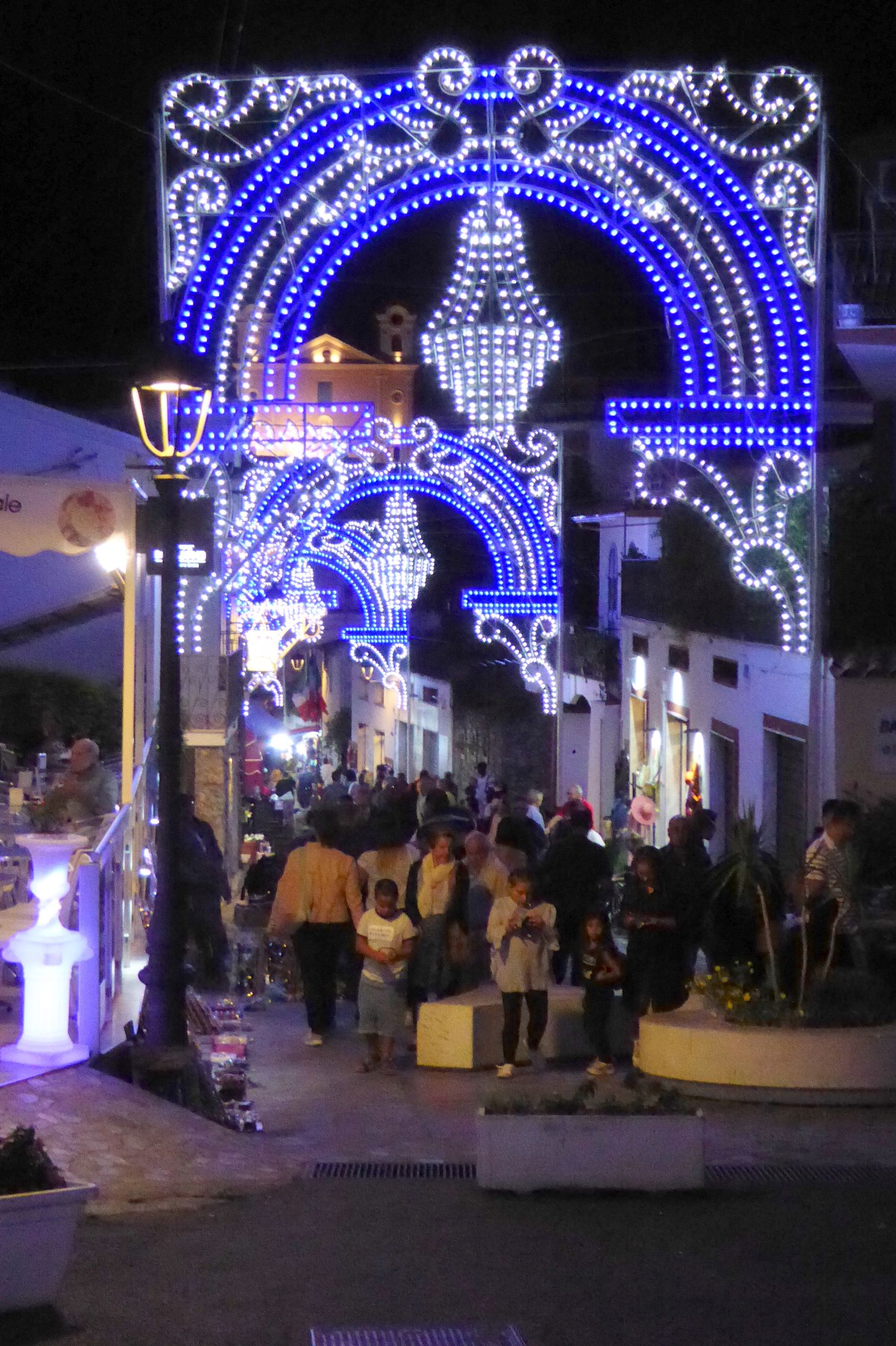
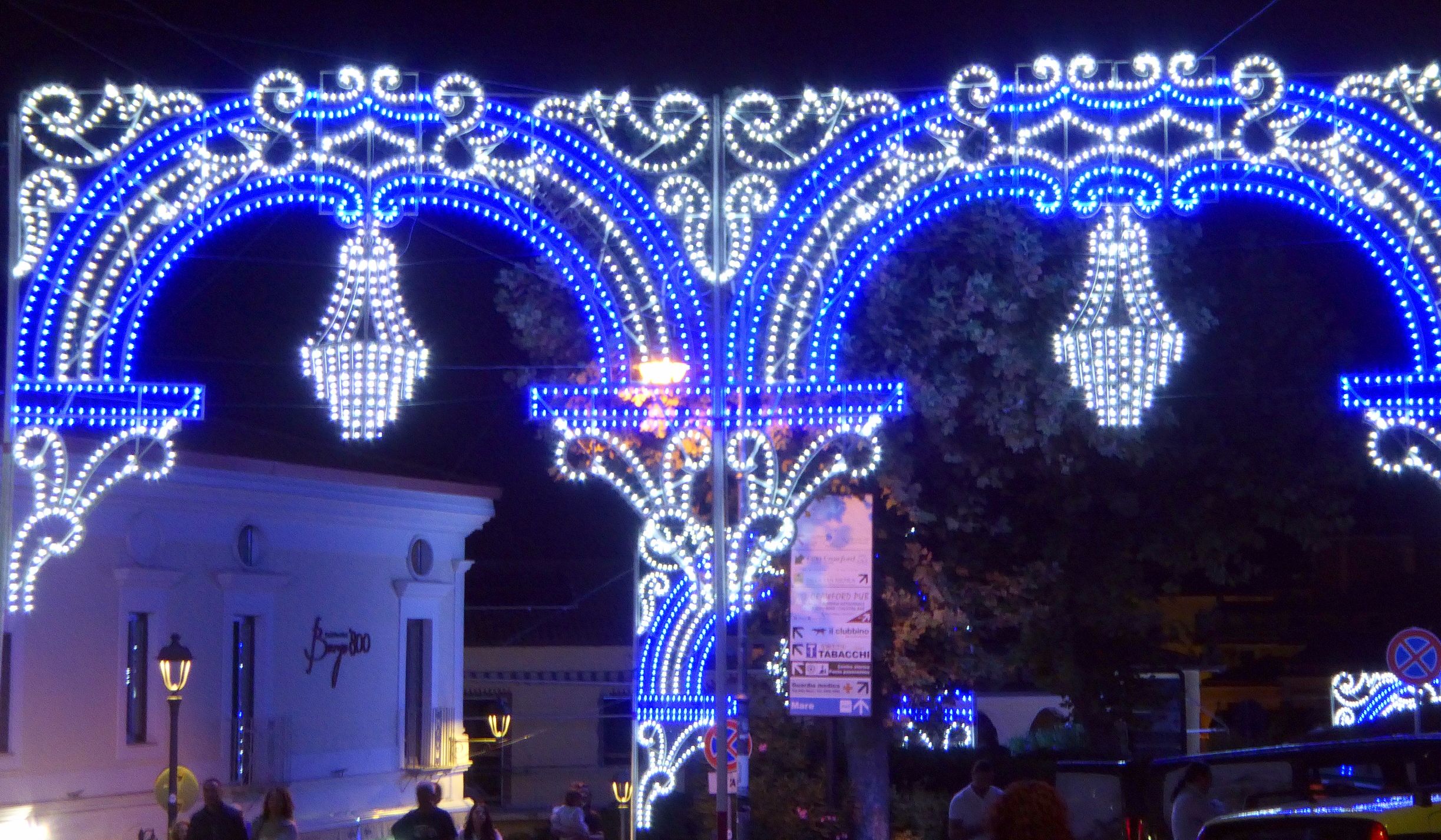
By the time we left the restaurant, the blue and white festival lights were glowing above. Beautiful!
Everything about that night in San Nicola Arcella was magical. Just the two of us, exploring on our own, observing the town’s festival, dining on delicious pizza, and enjoying the nightlife; it was perfect!












































































































 Elaine-iaK's Travels: A Traveler's Tales of People, Places, Photos, Pools... and CHOCOLATE!