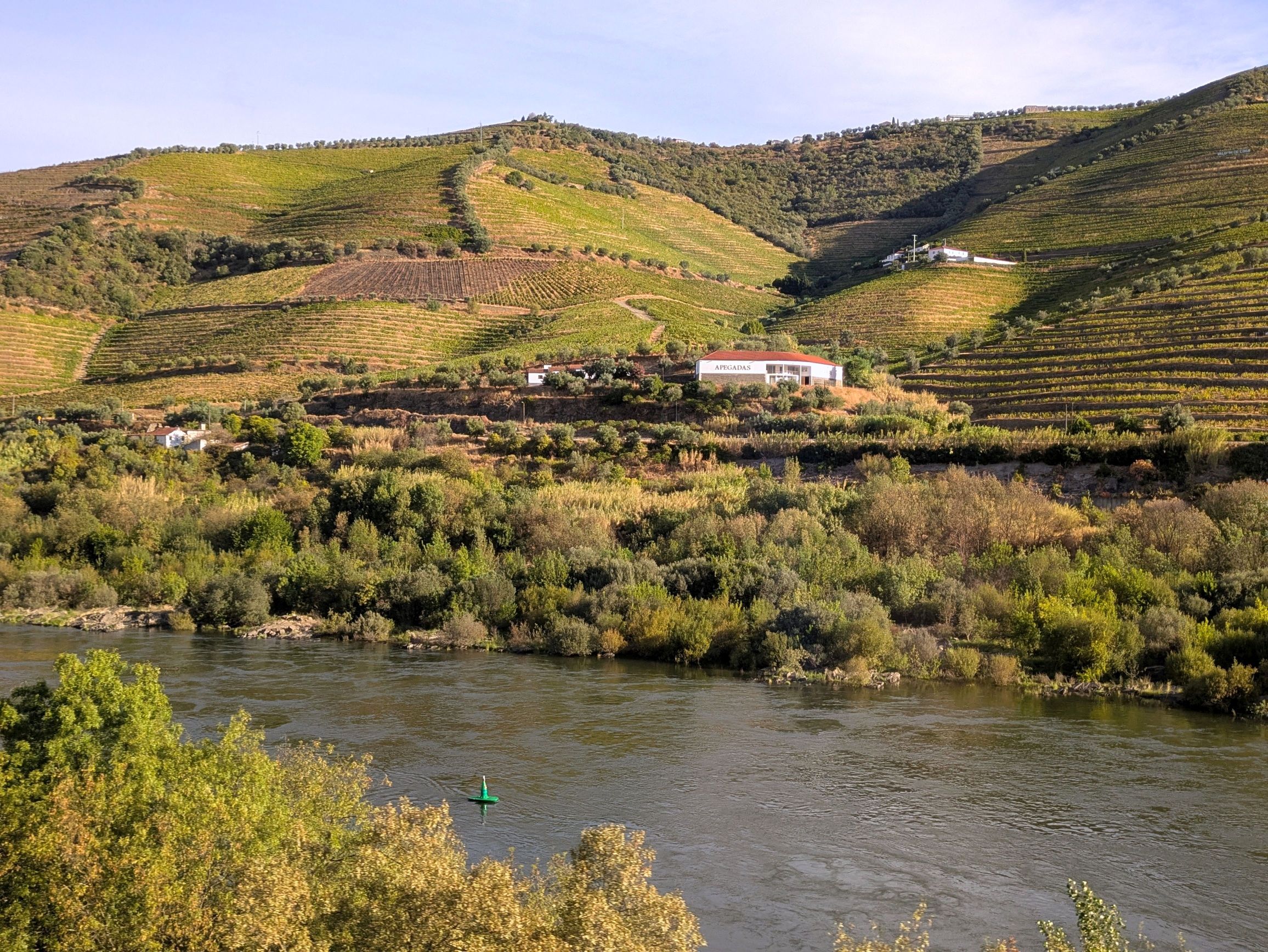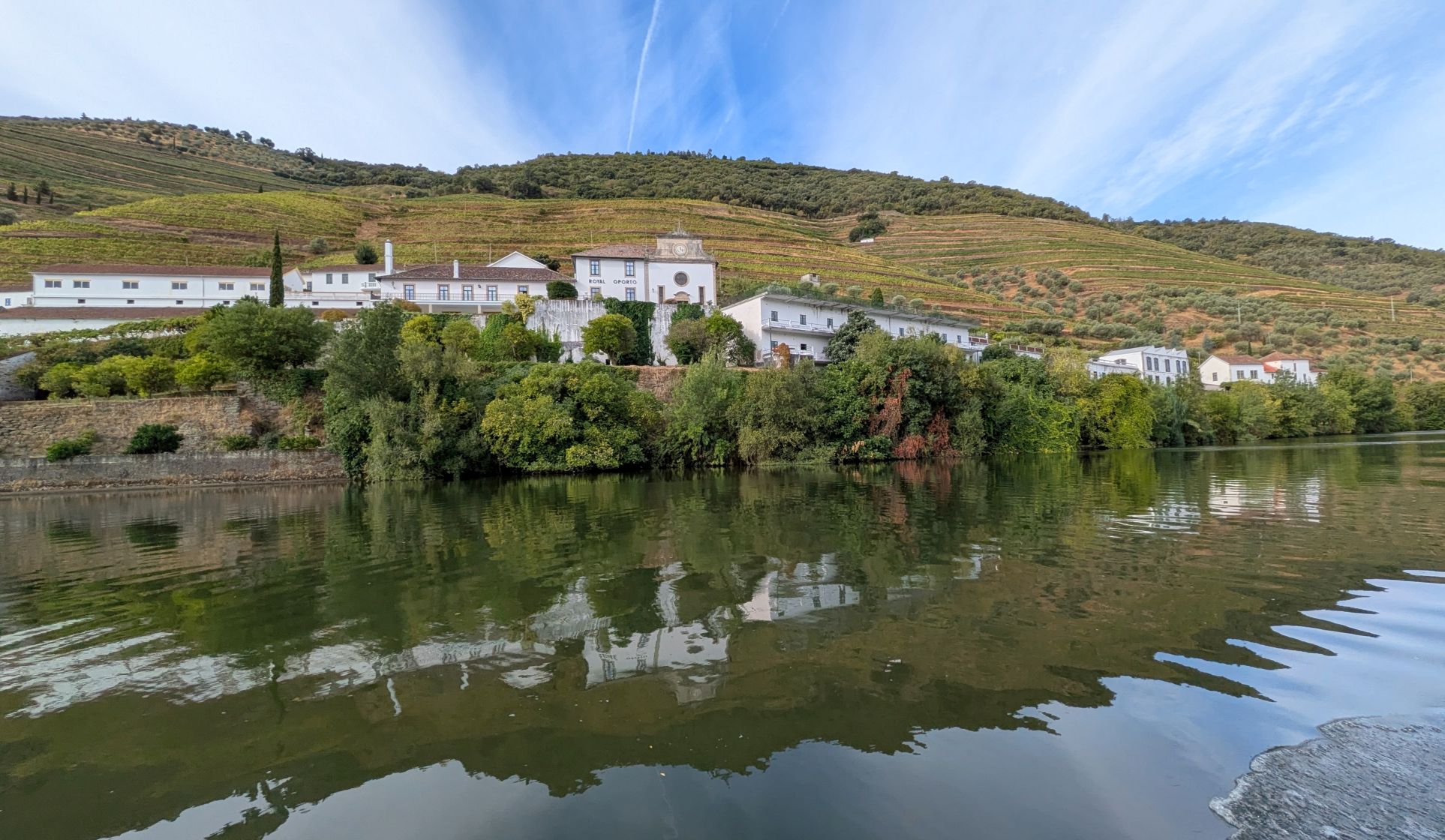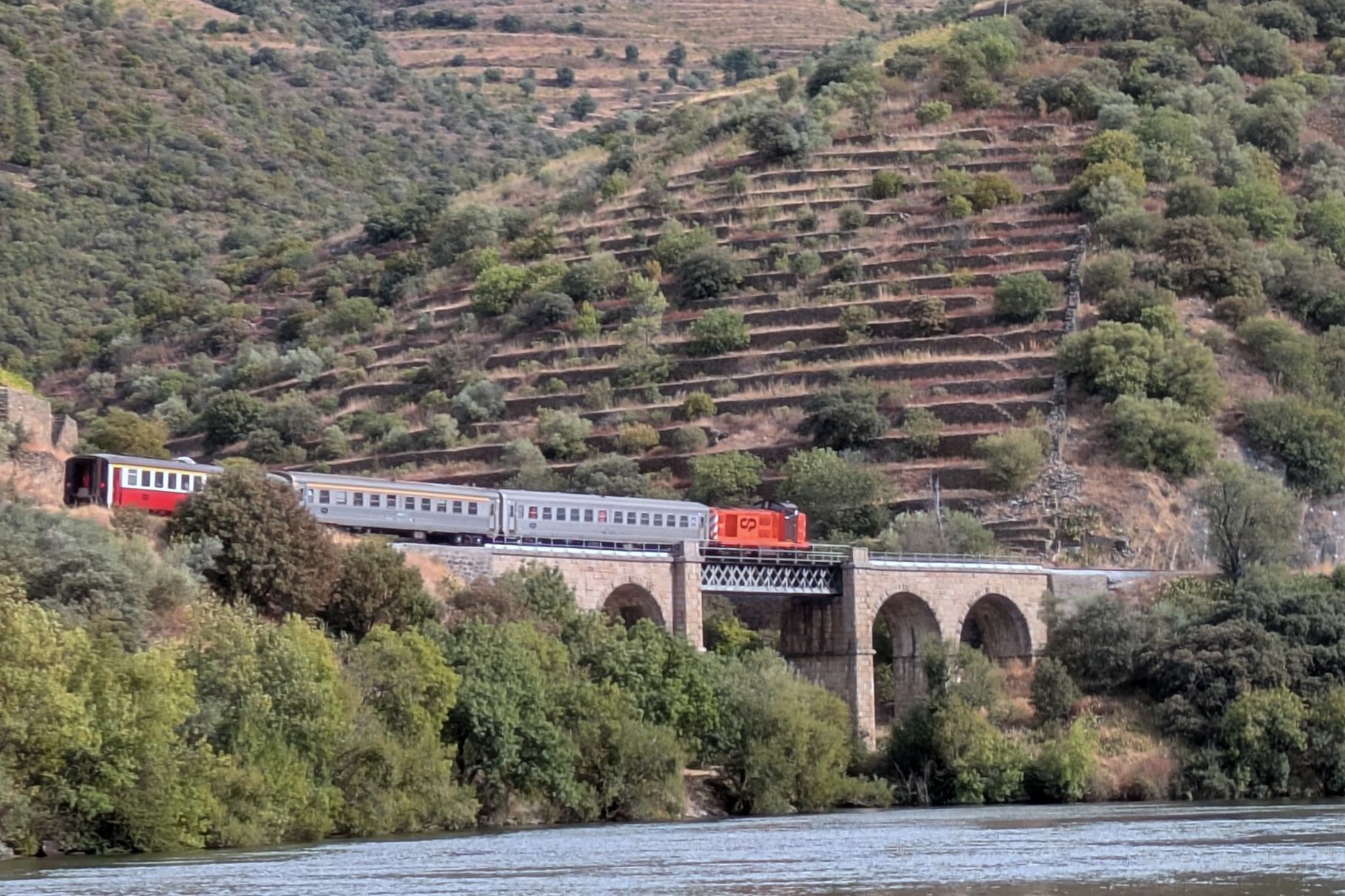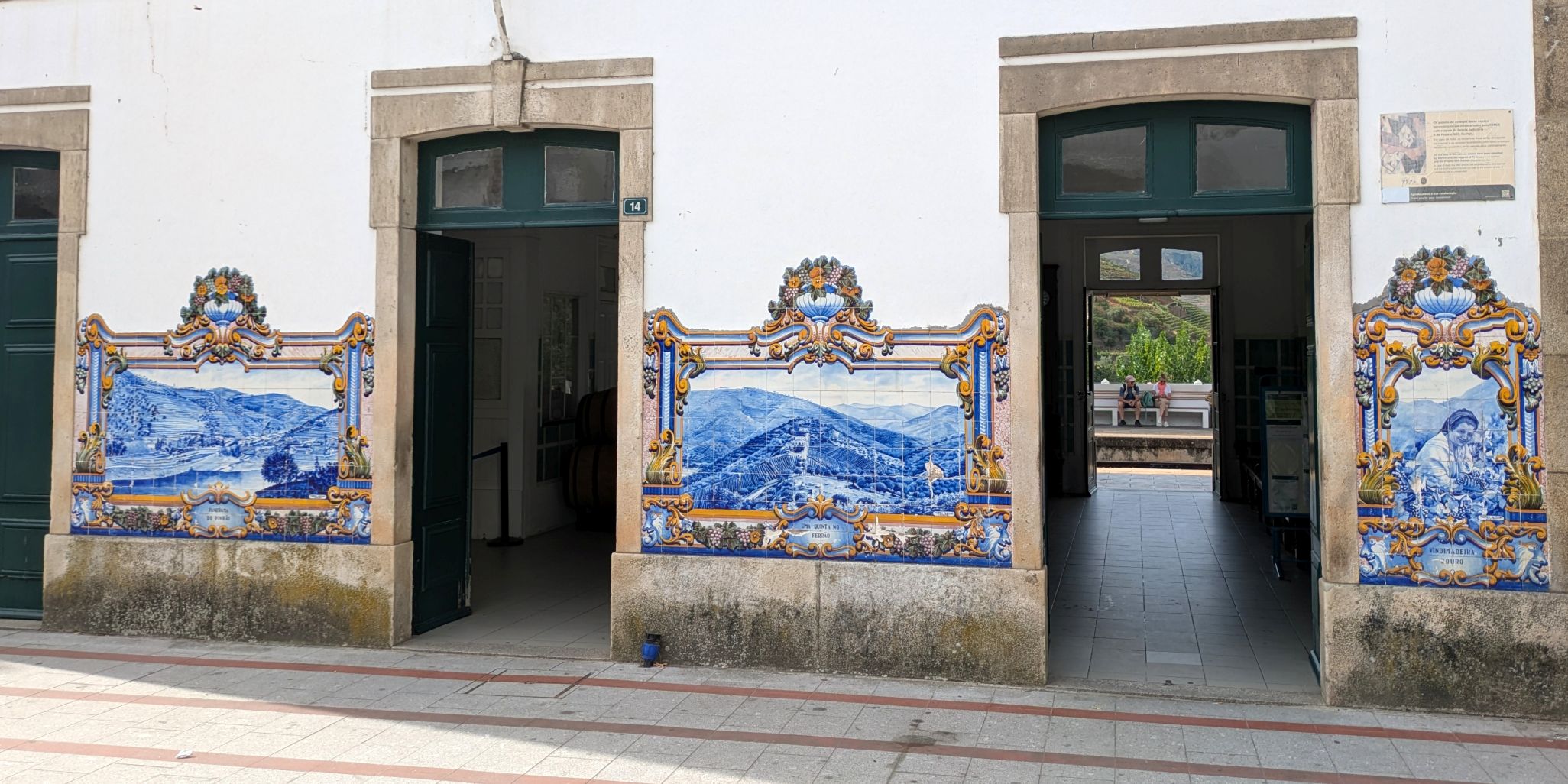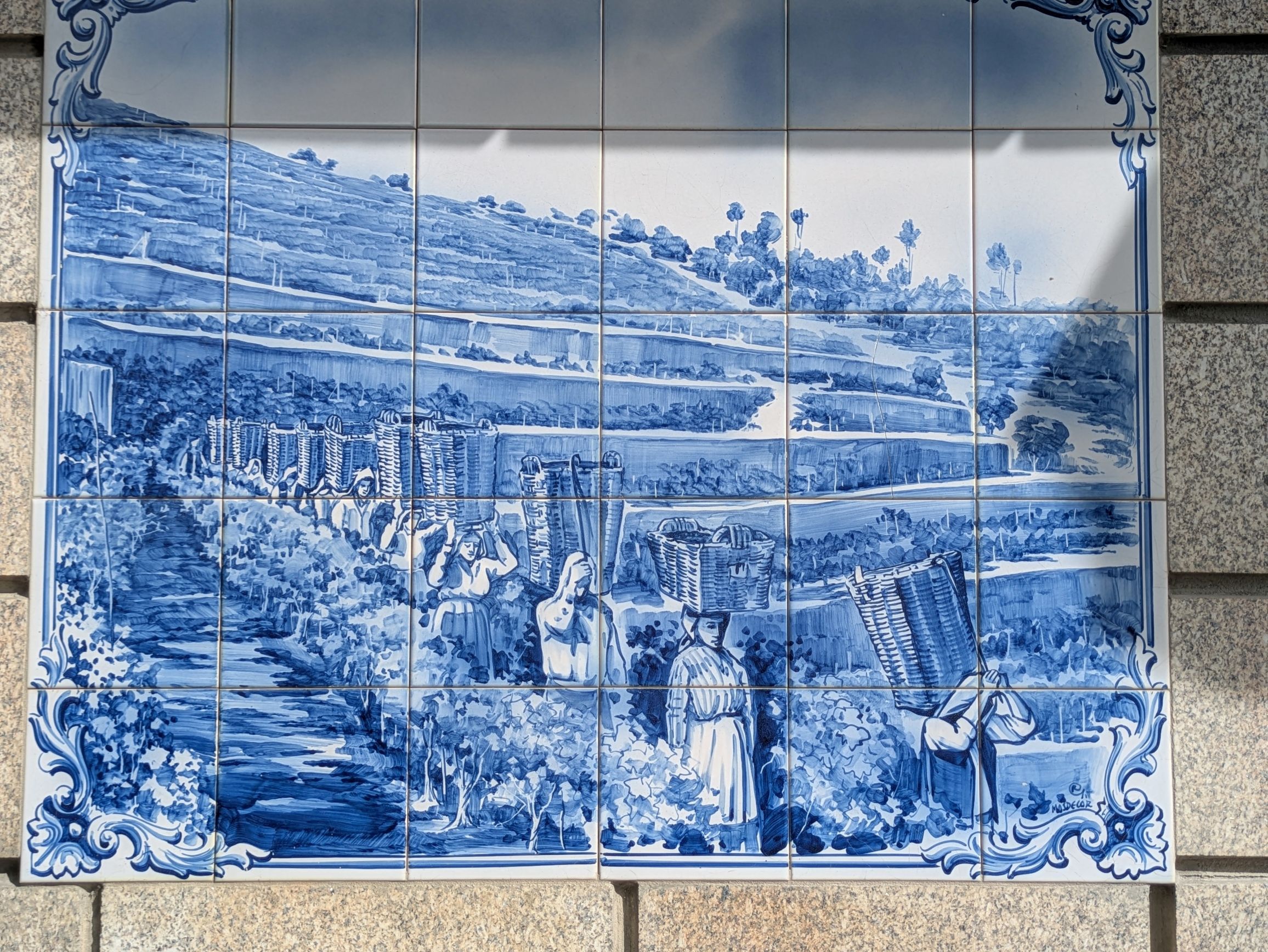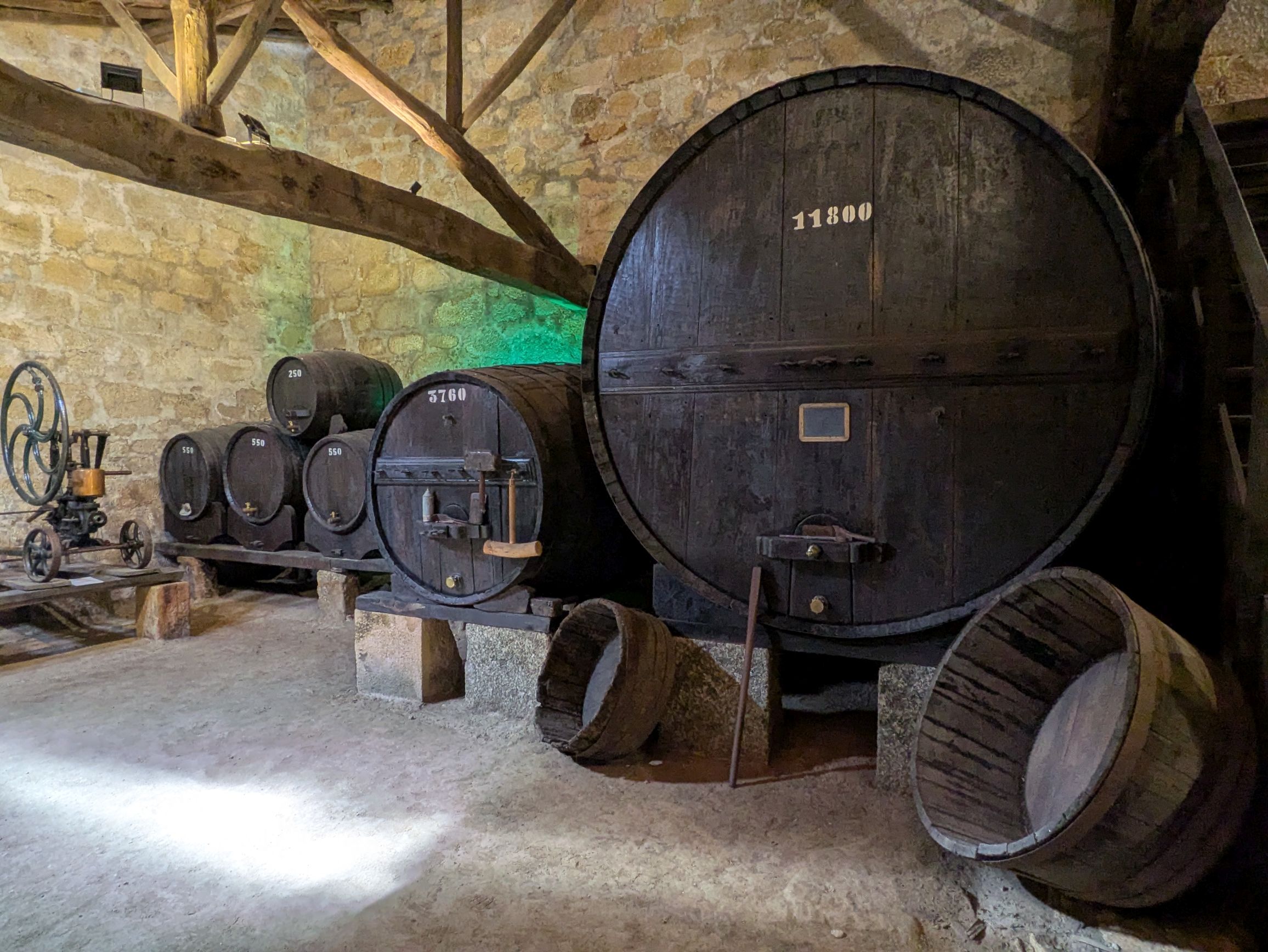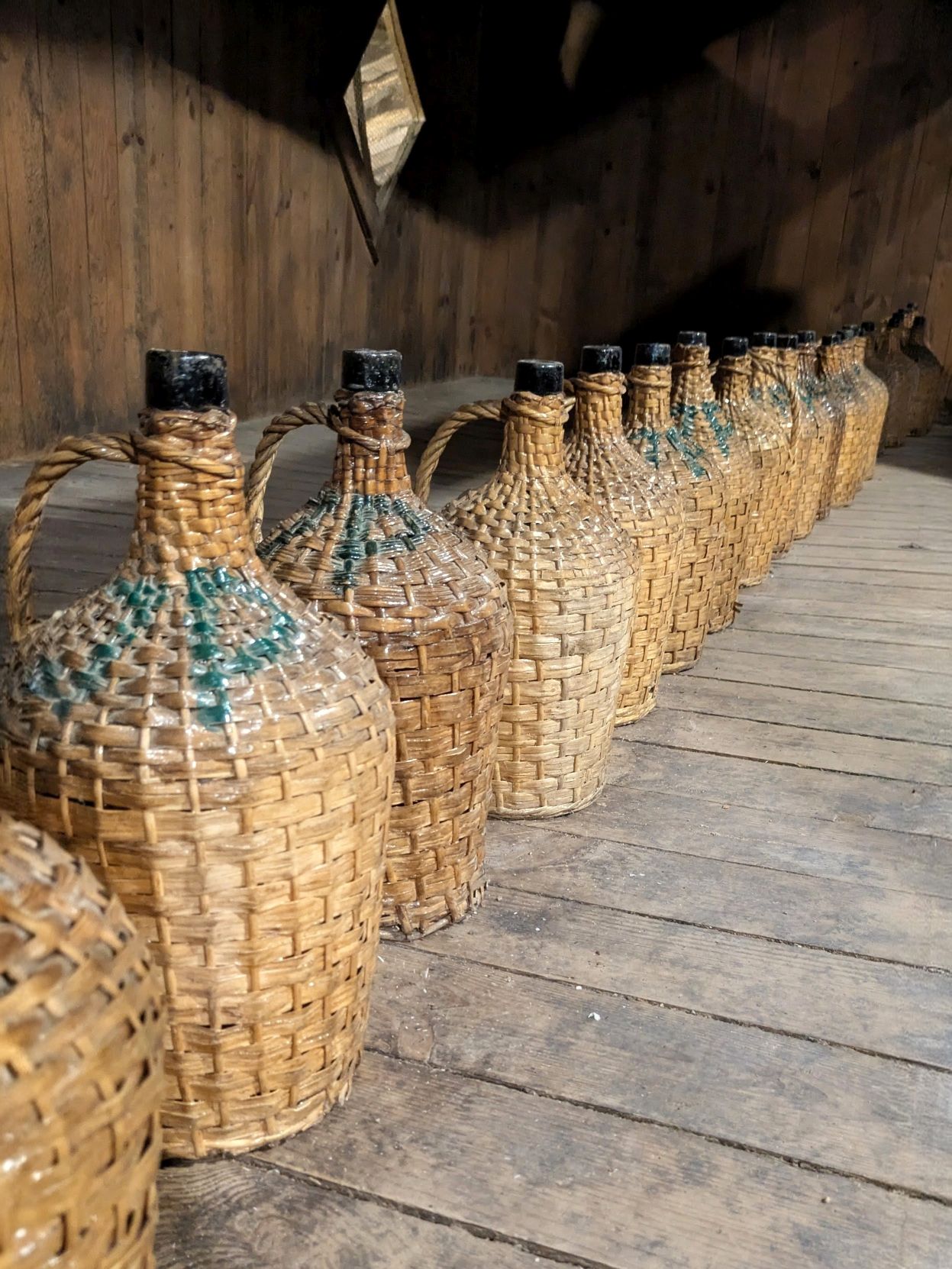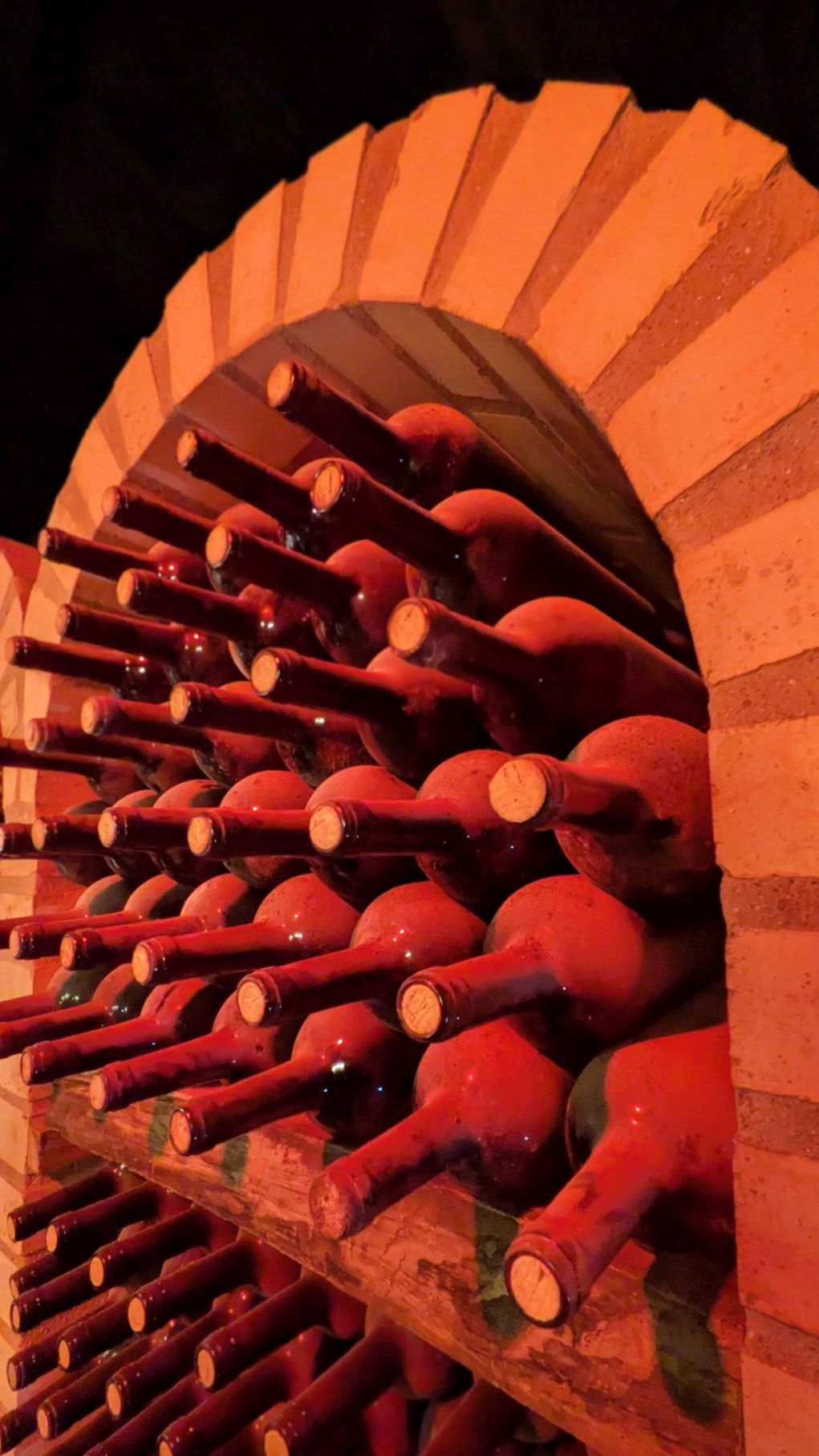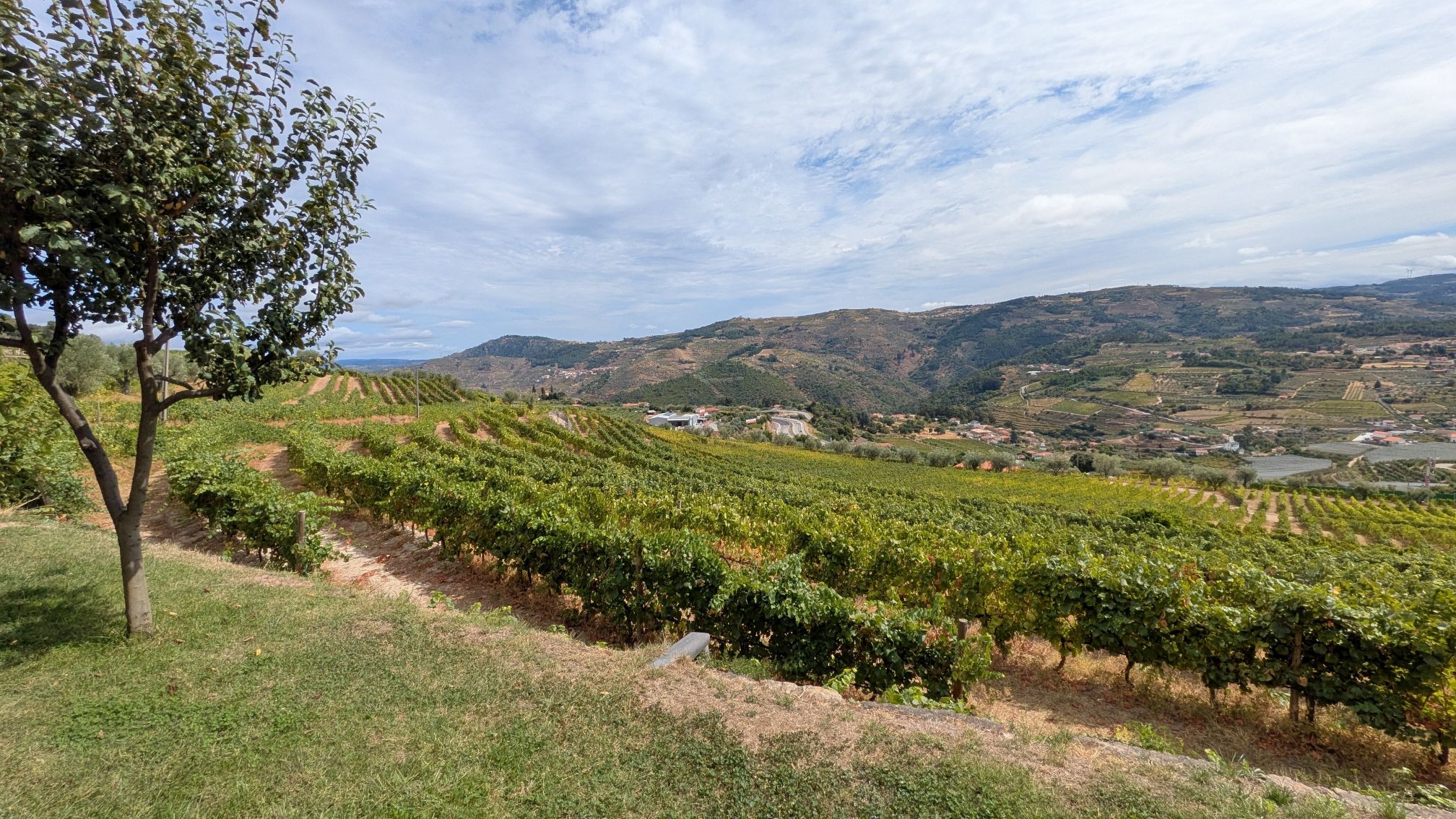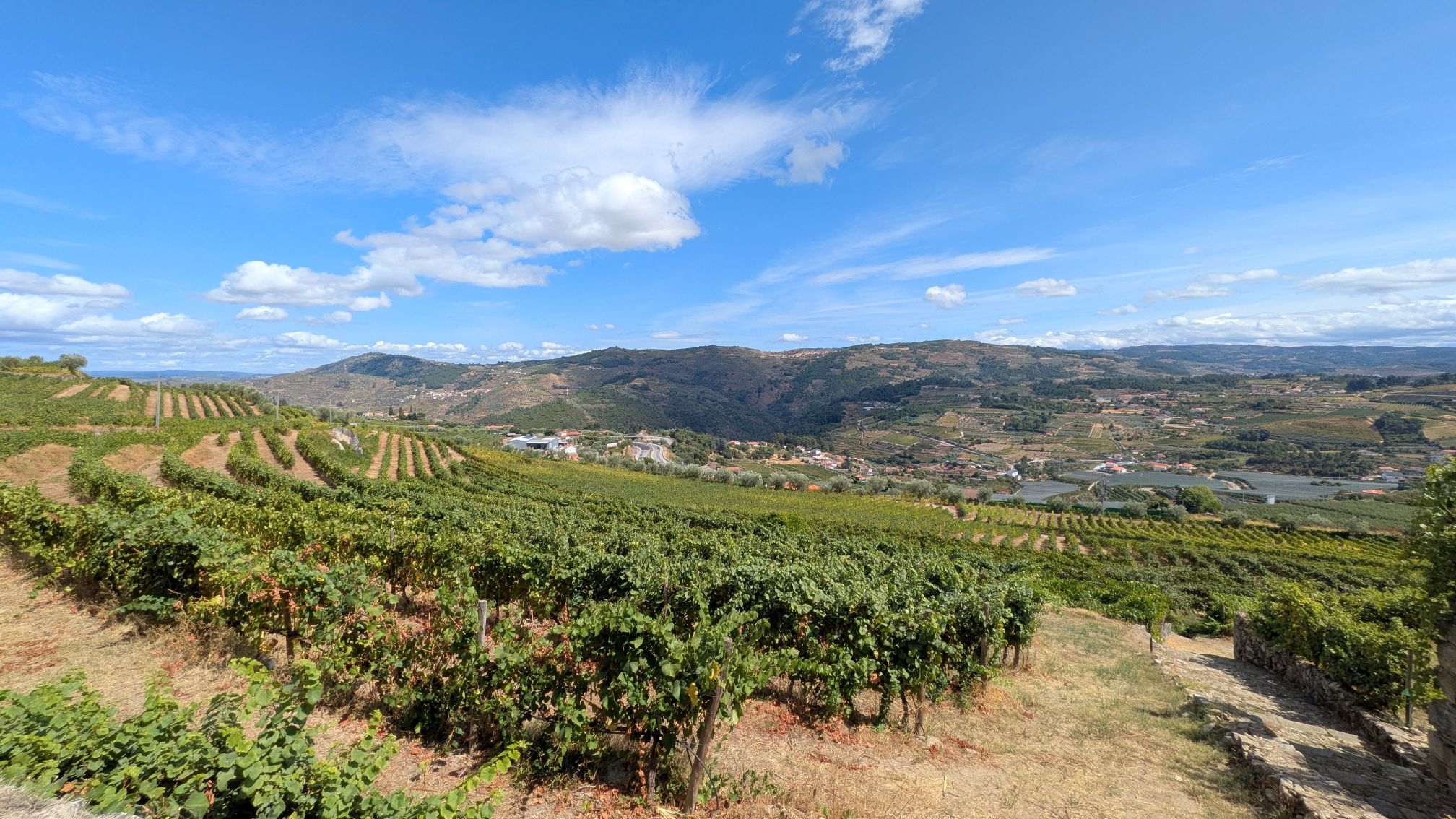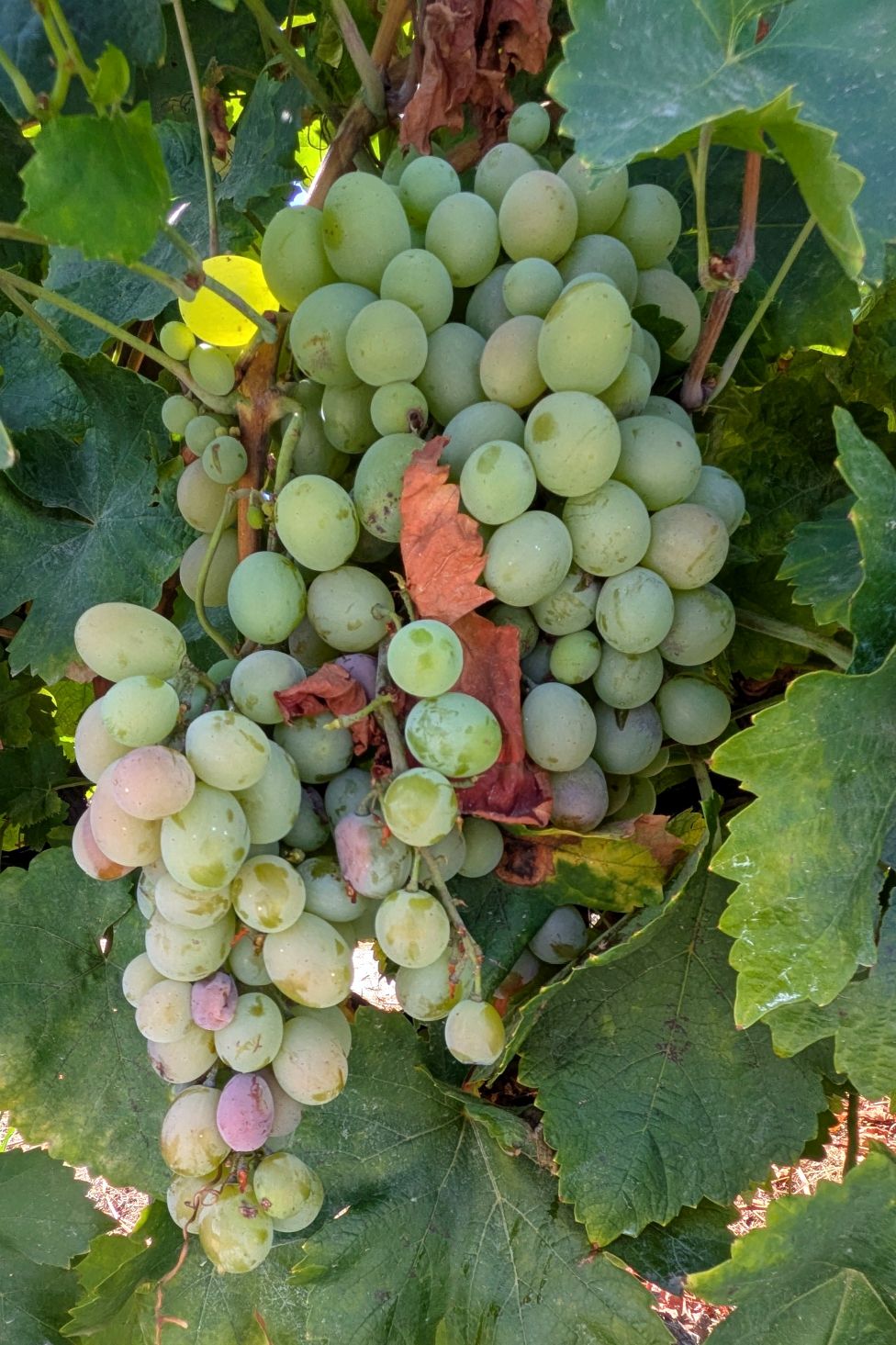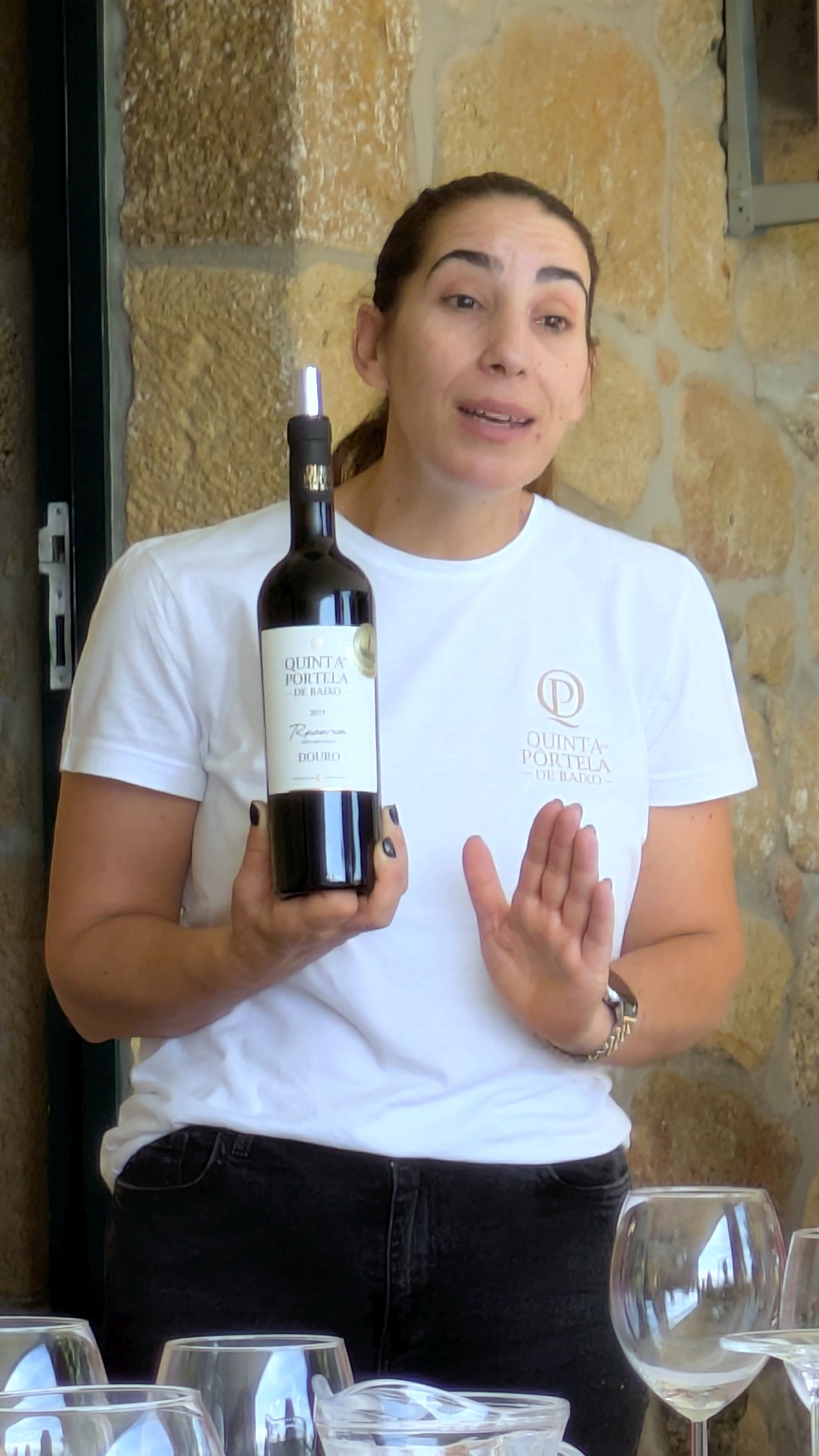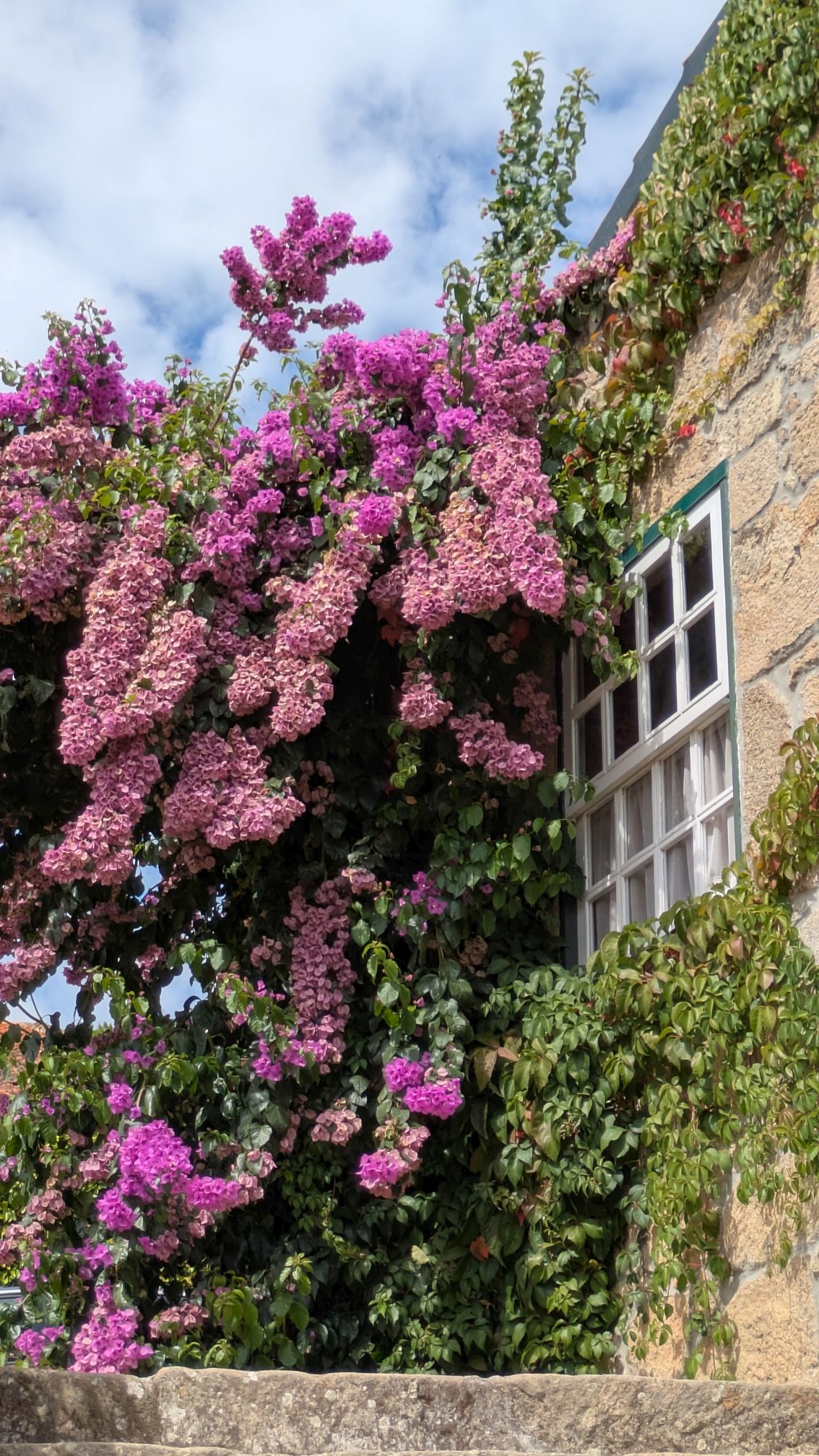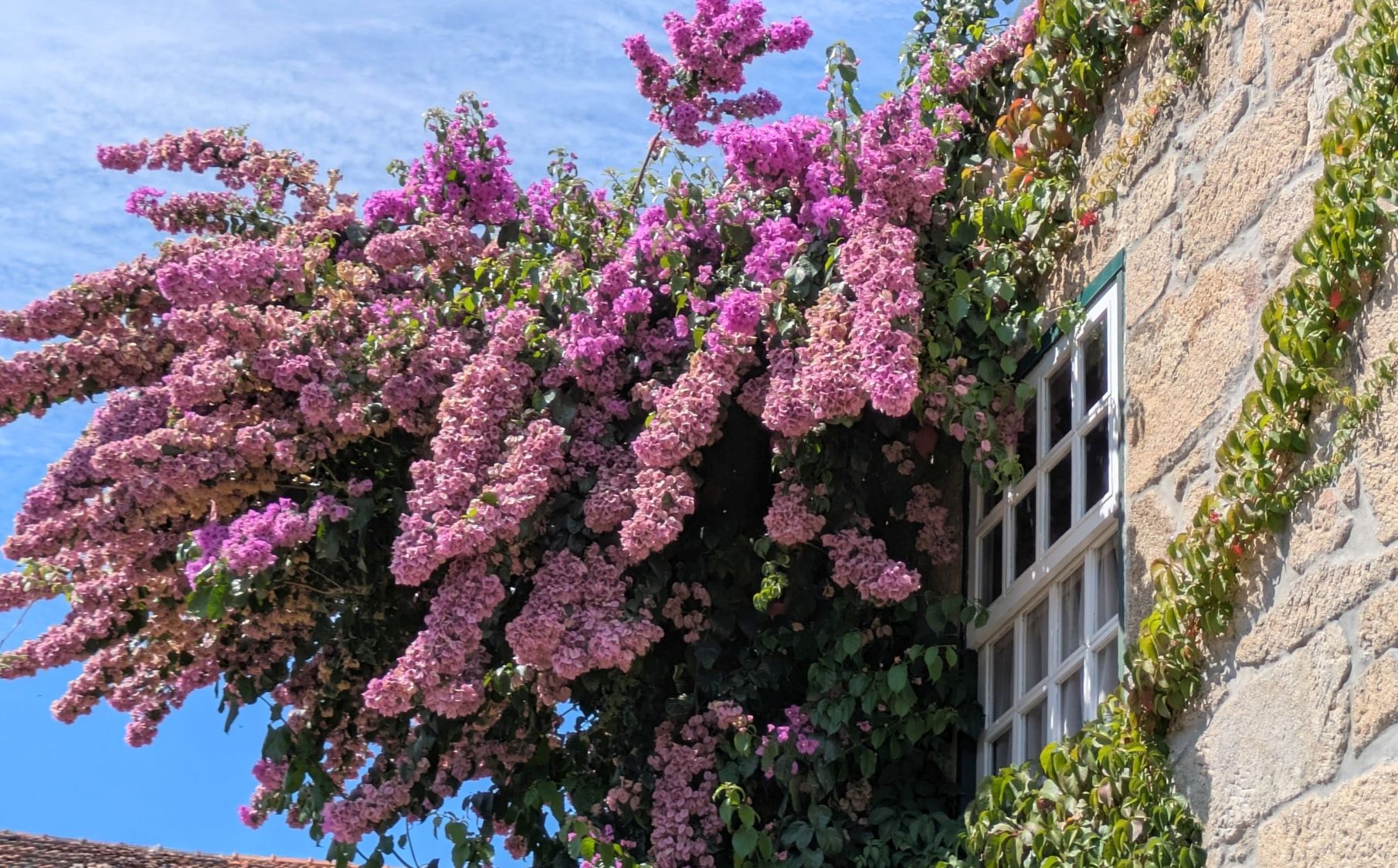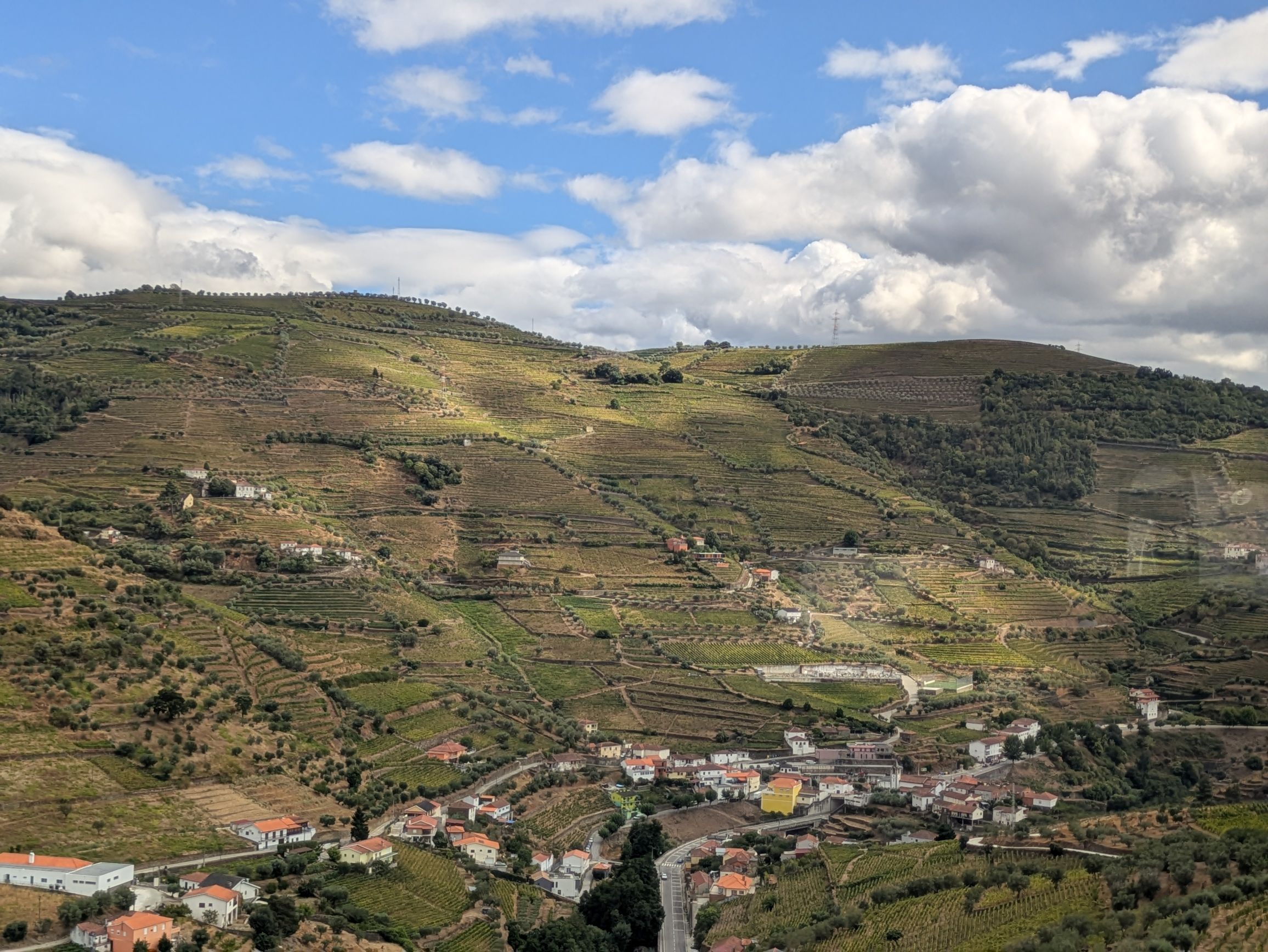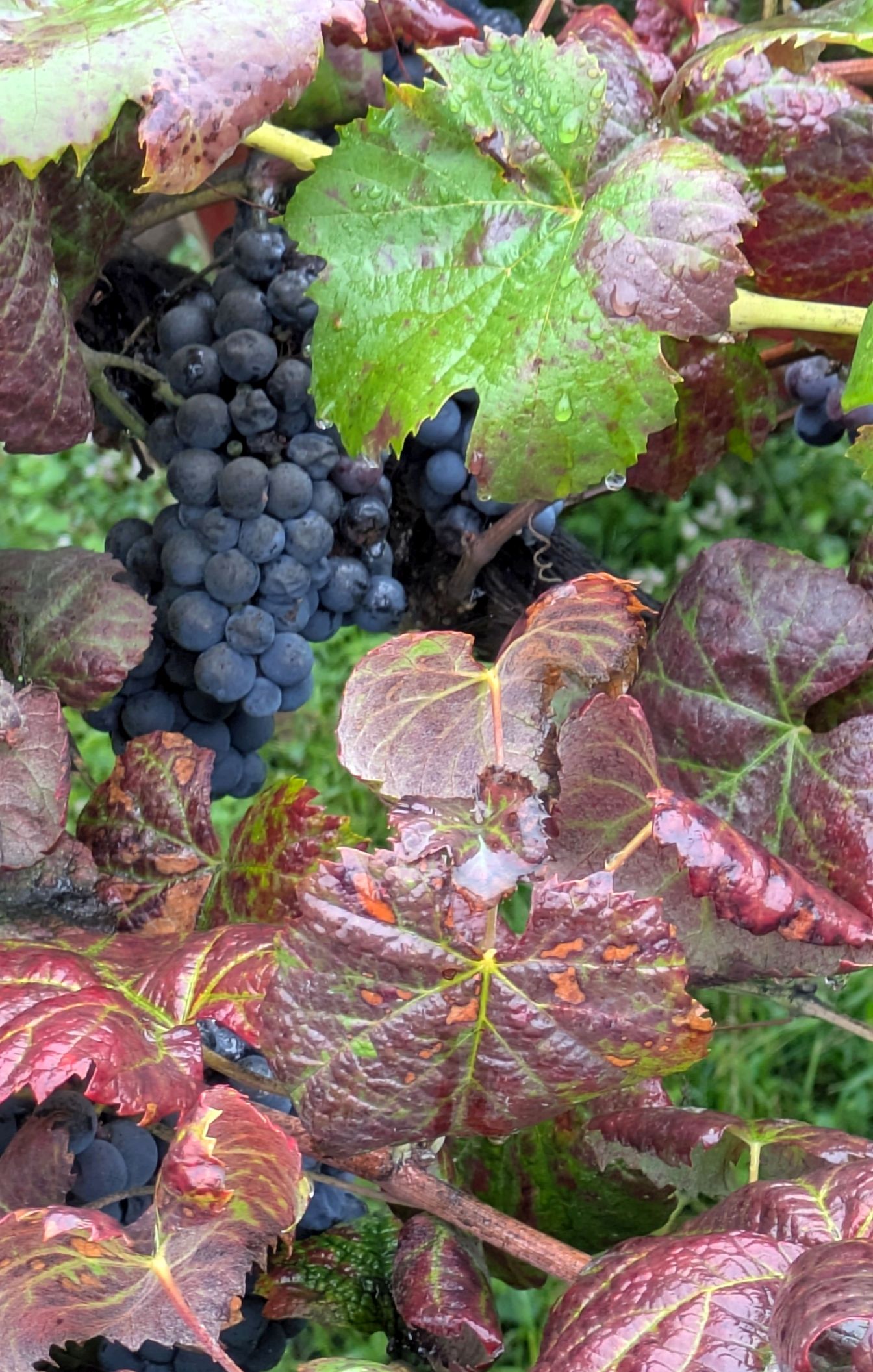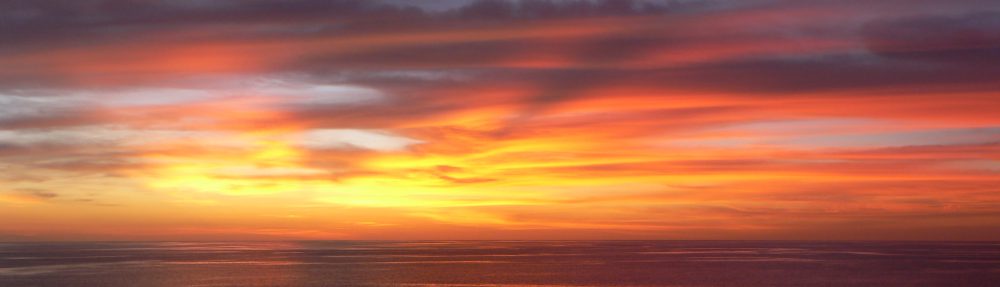
Lamego, in northern Portugal, is in the Douro Valley, known for its fabulous production of port wine. Ever since the ancient Romans first cultivated grape vines here in the third century, the region has been a wine-growing powerhouse. It is one of the oldest wine-producing areas in the world and a UNESCO World Heritage Site.
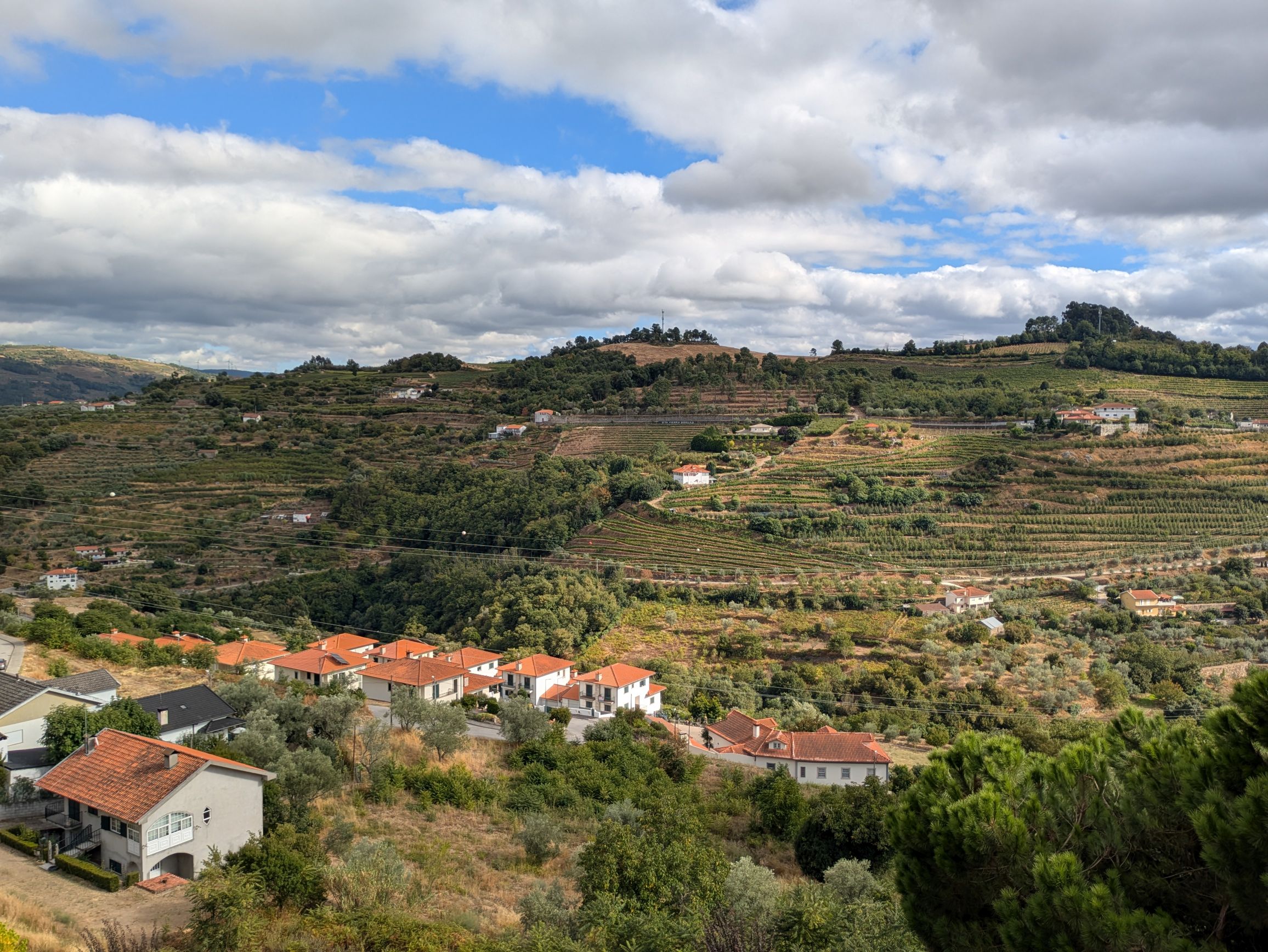
The resort hotel, Lamego Hotel & Life, served as our base for two nights while we explored the area. Located on a hilltop, it offered beautiful views of the vineyards, and it was a quiet and peaceful setting for a couple of relaxing afternoons.
(For all photos, click on the image for a full screen view.)
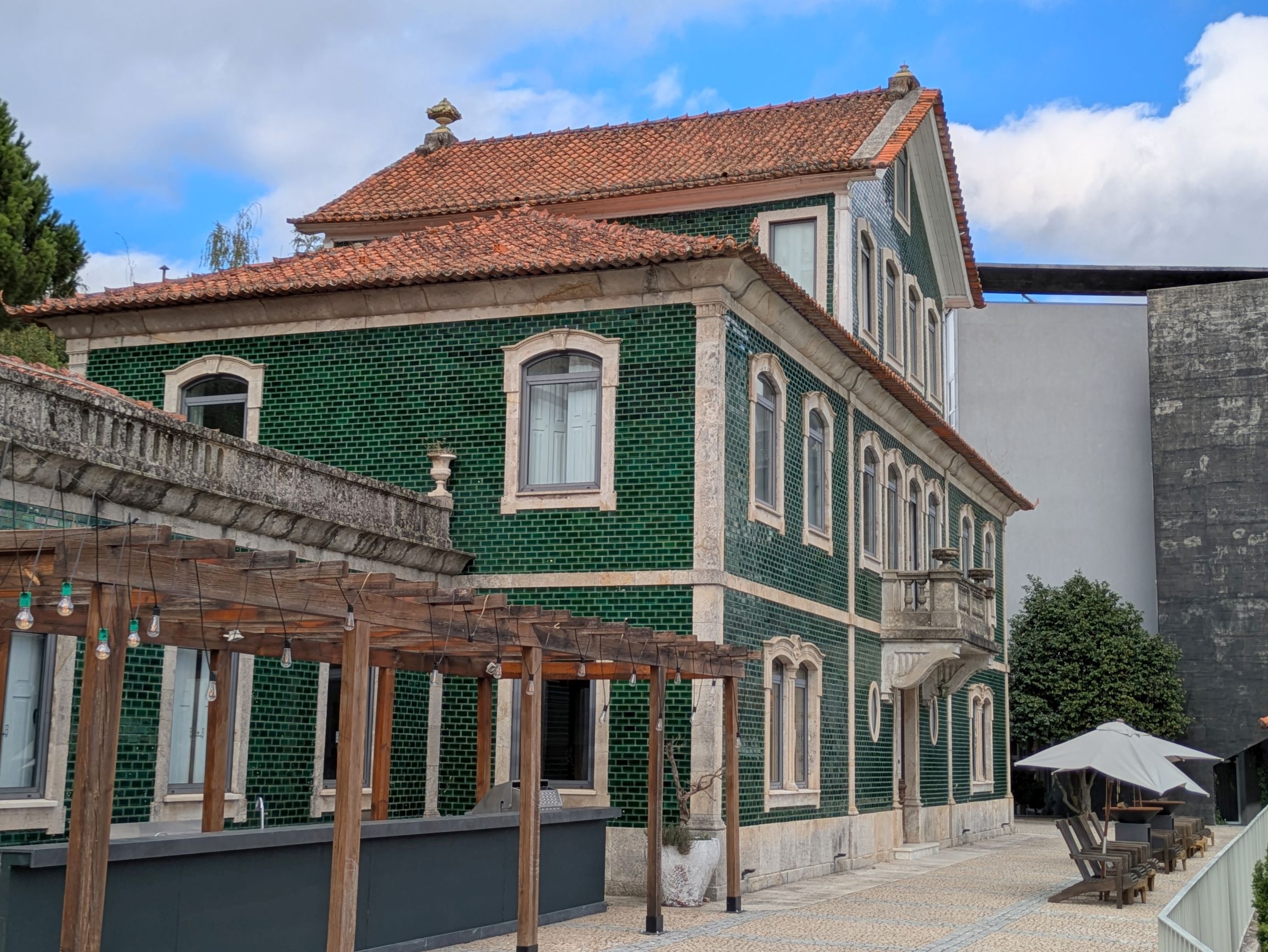
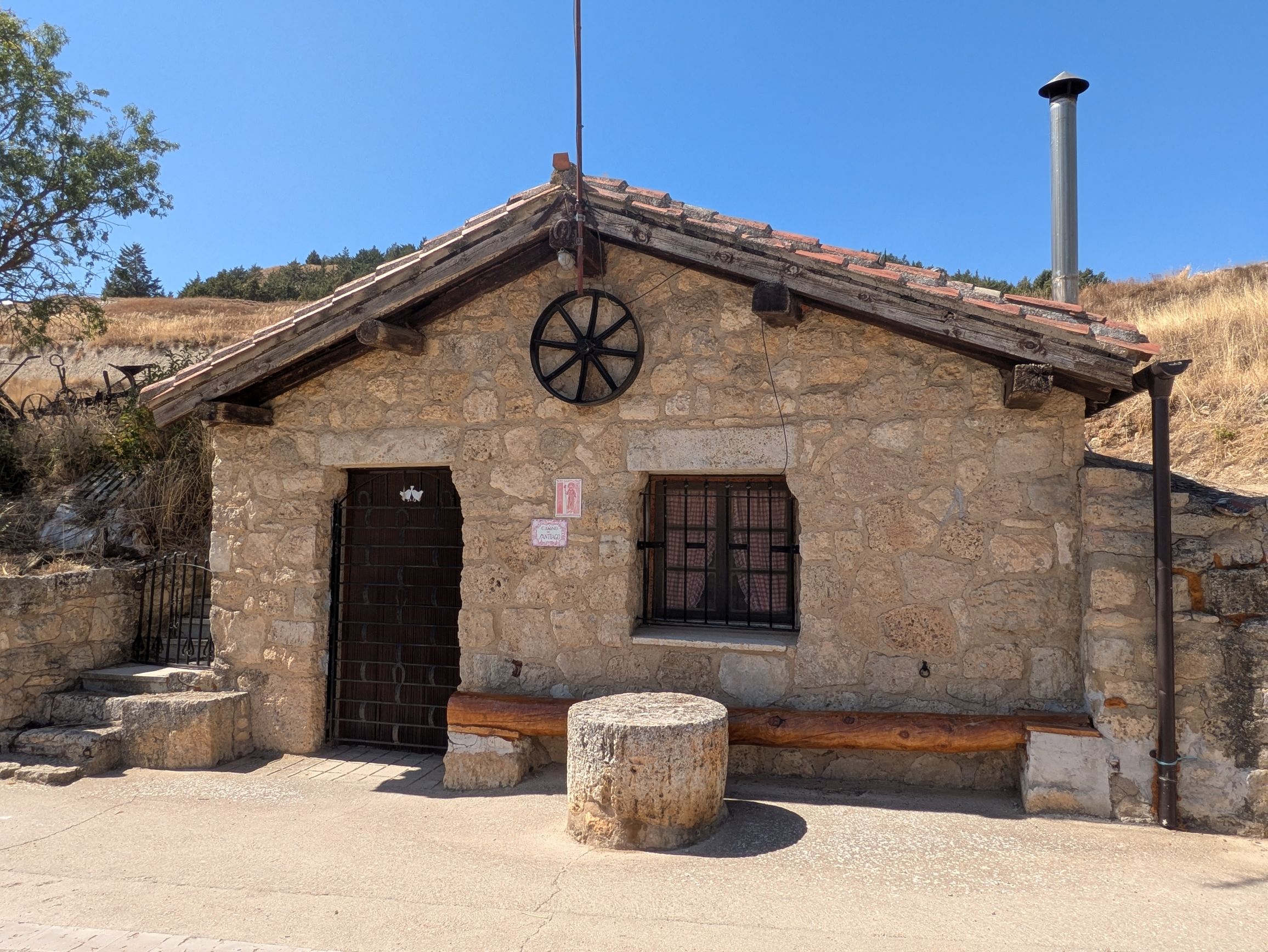
Douro ValleyView from our hotelThis was the original building on the property, and a modern hotel was built adjacent to it.
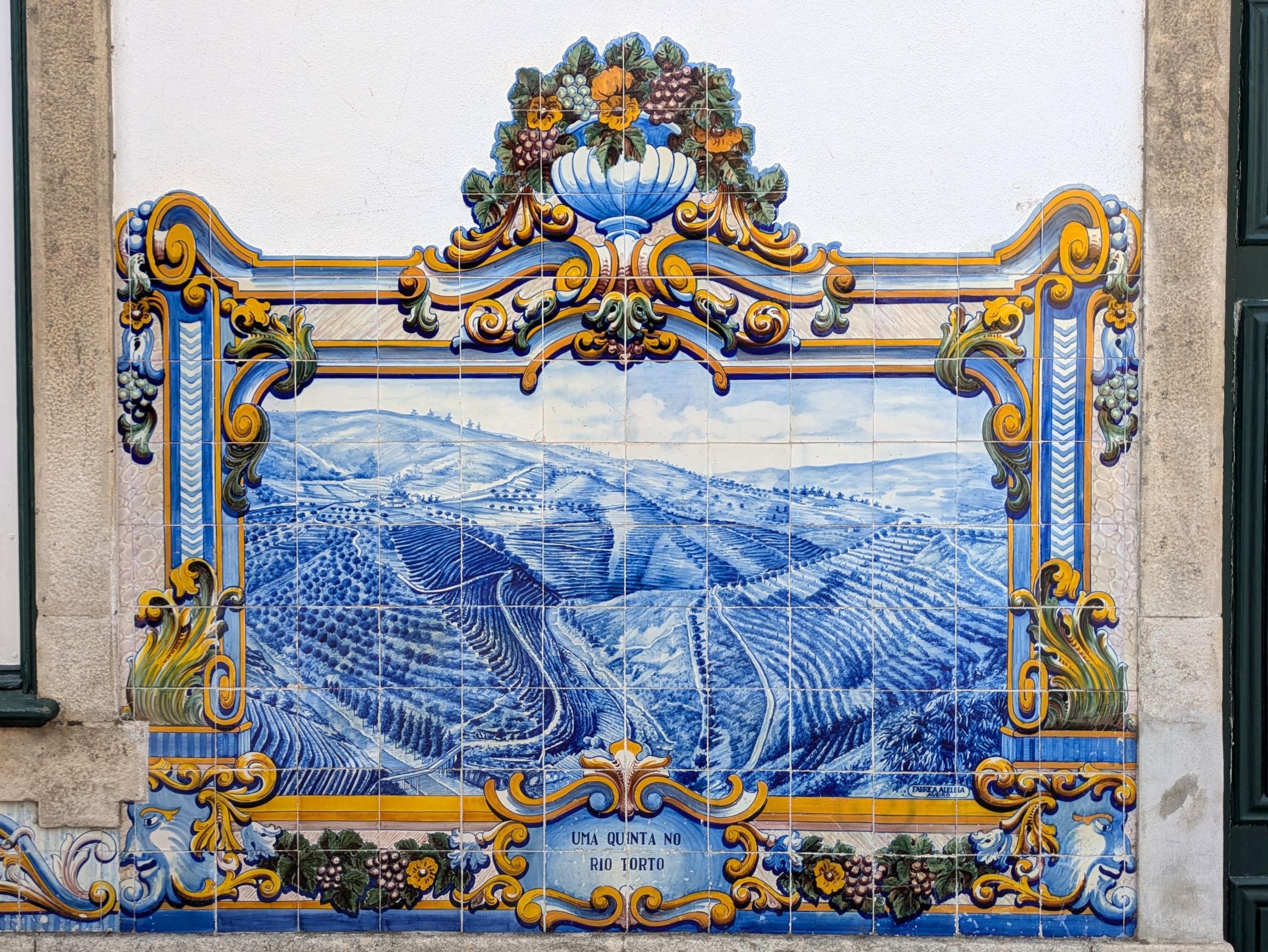
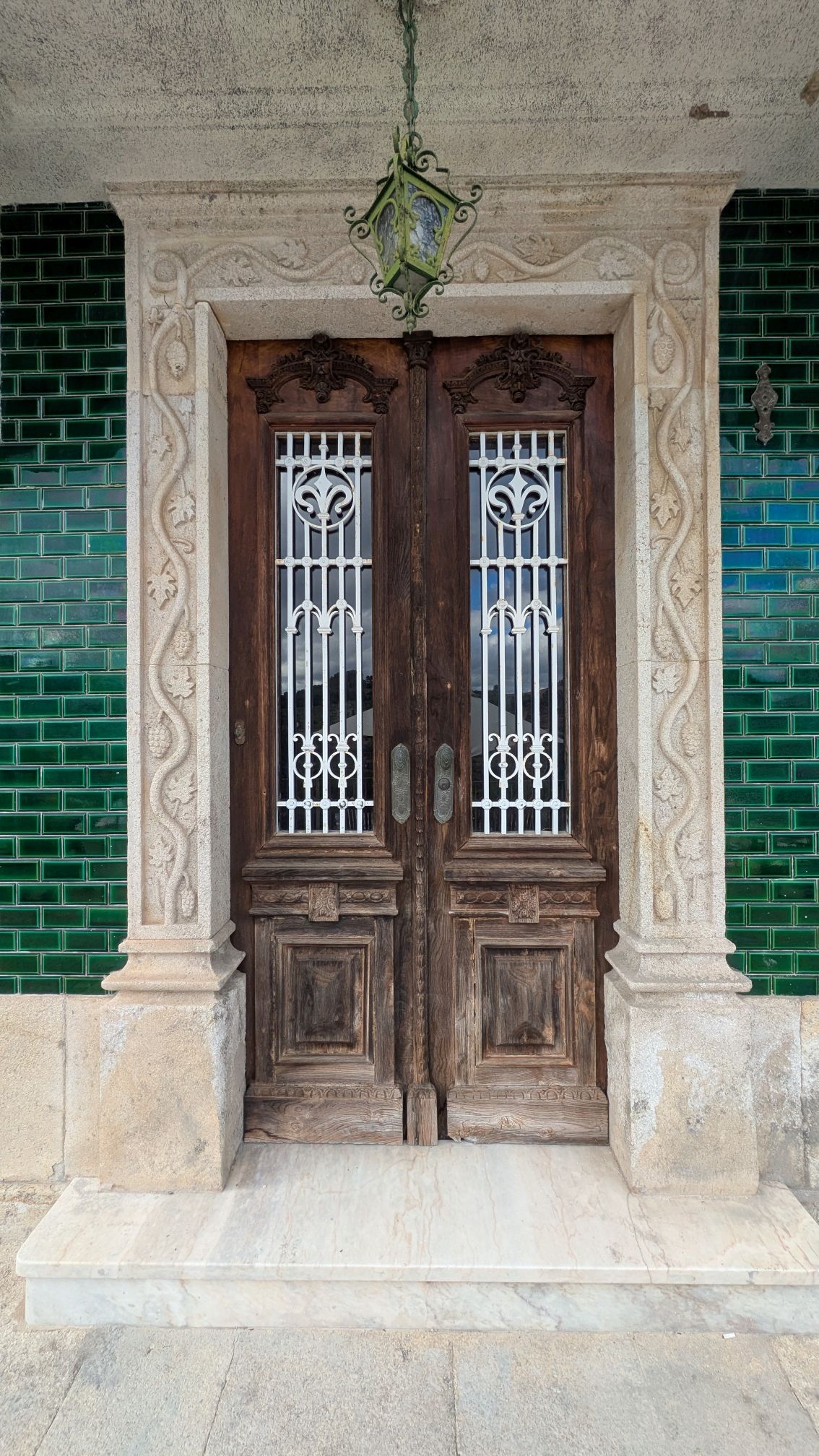
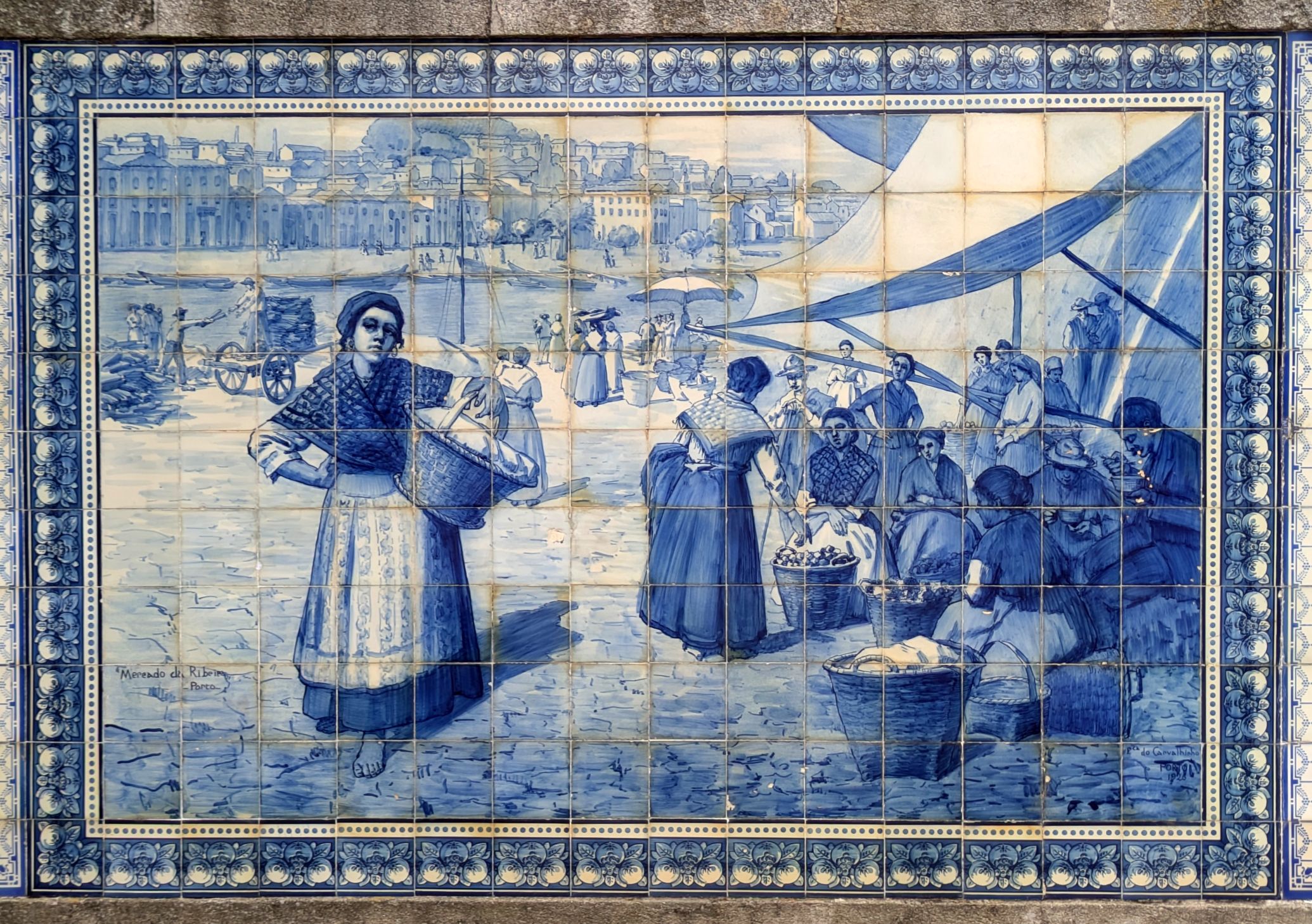
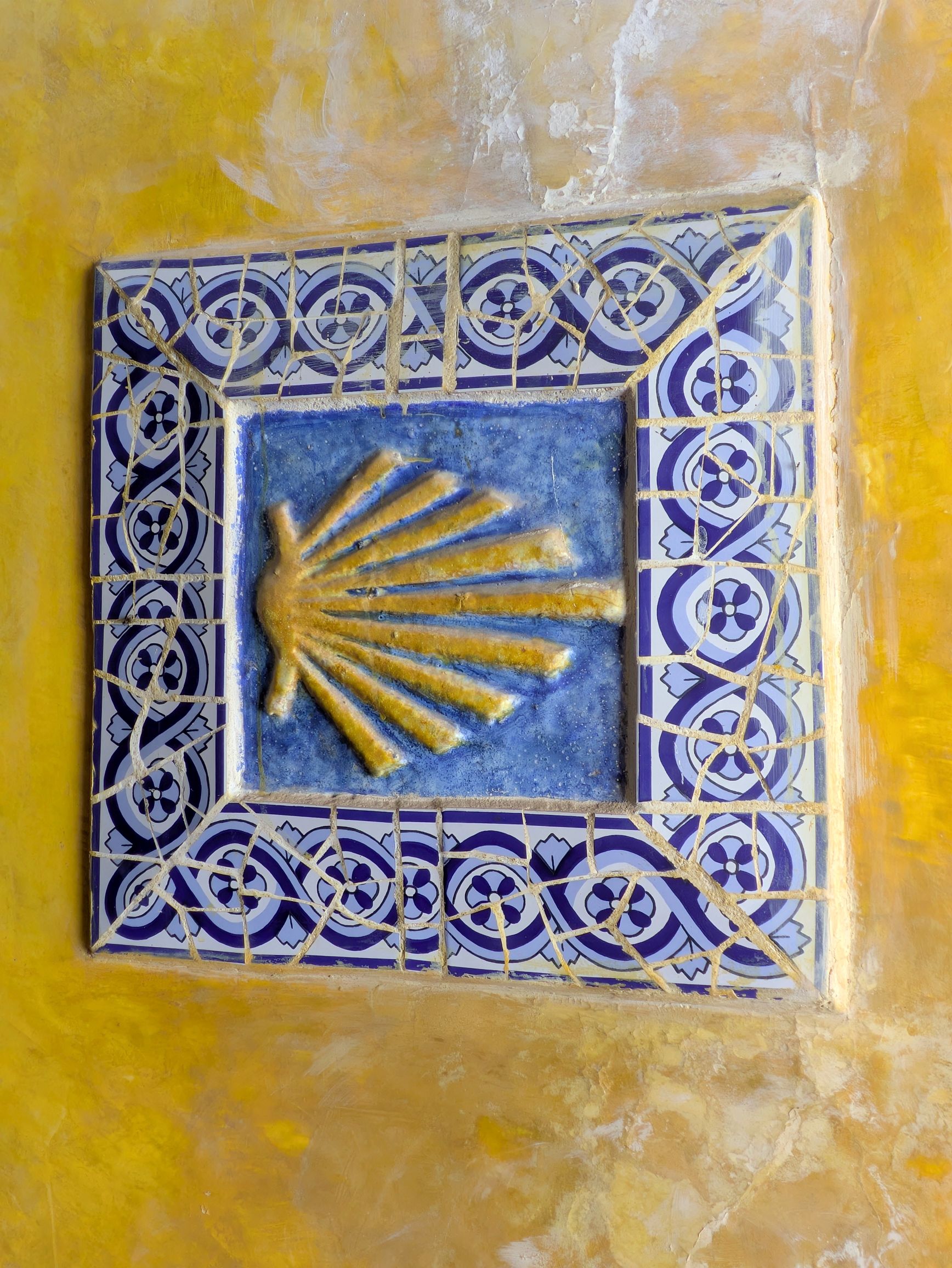
Tile mural on the wall of the original building
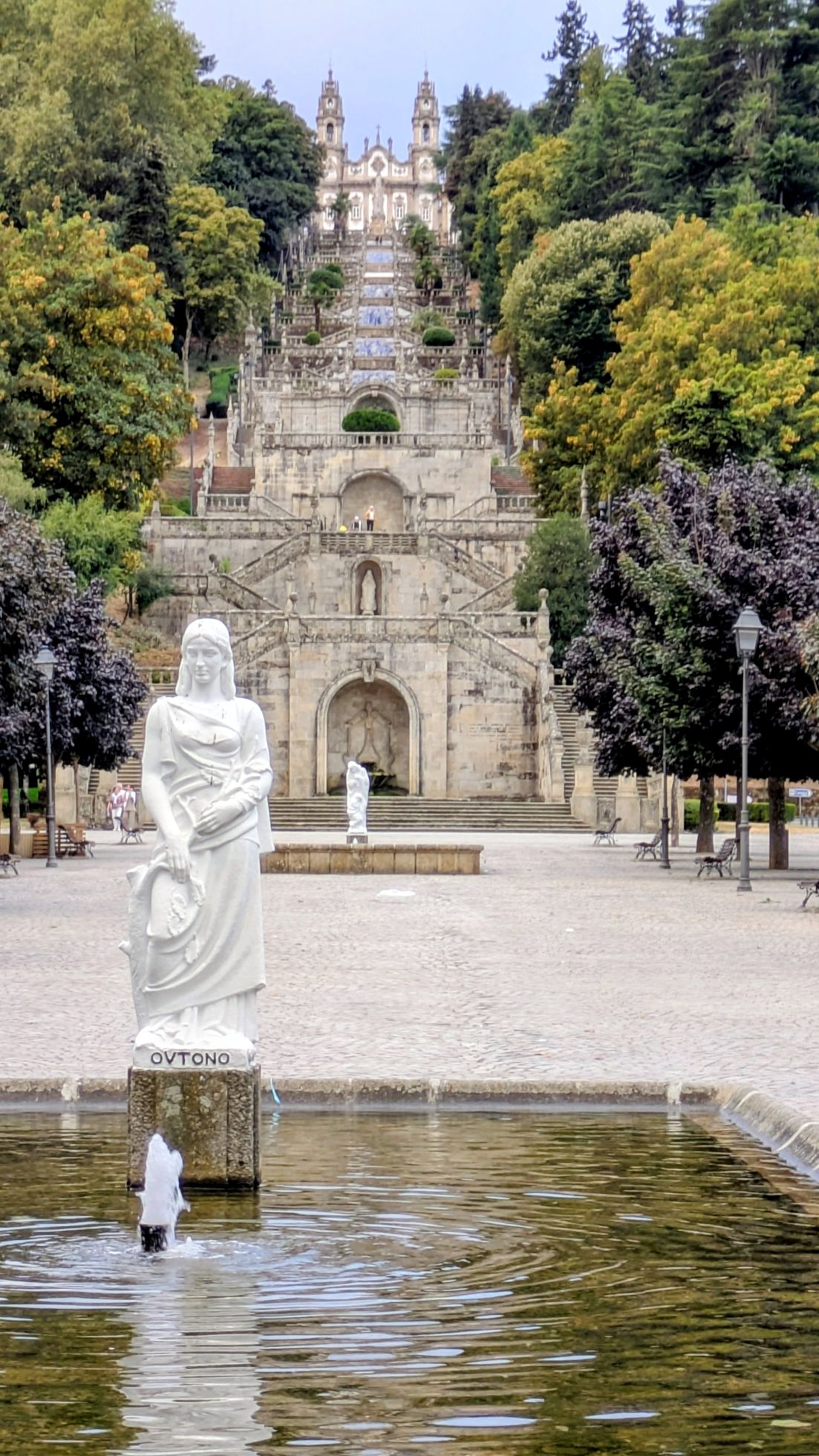
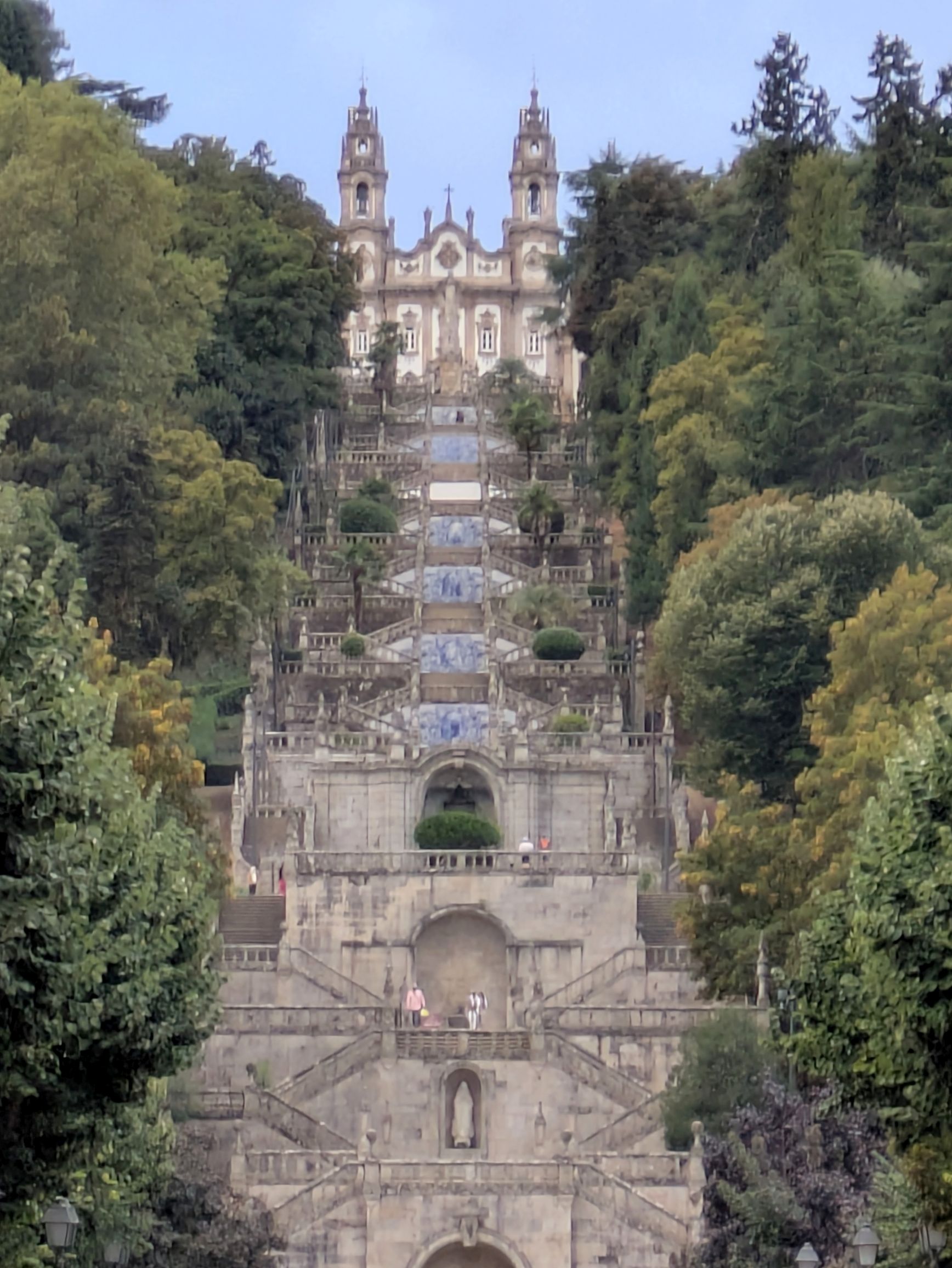
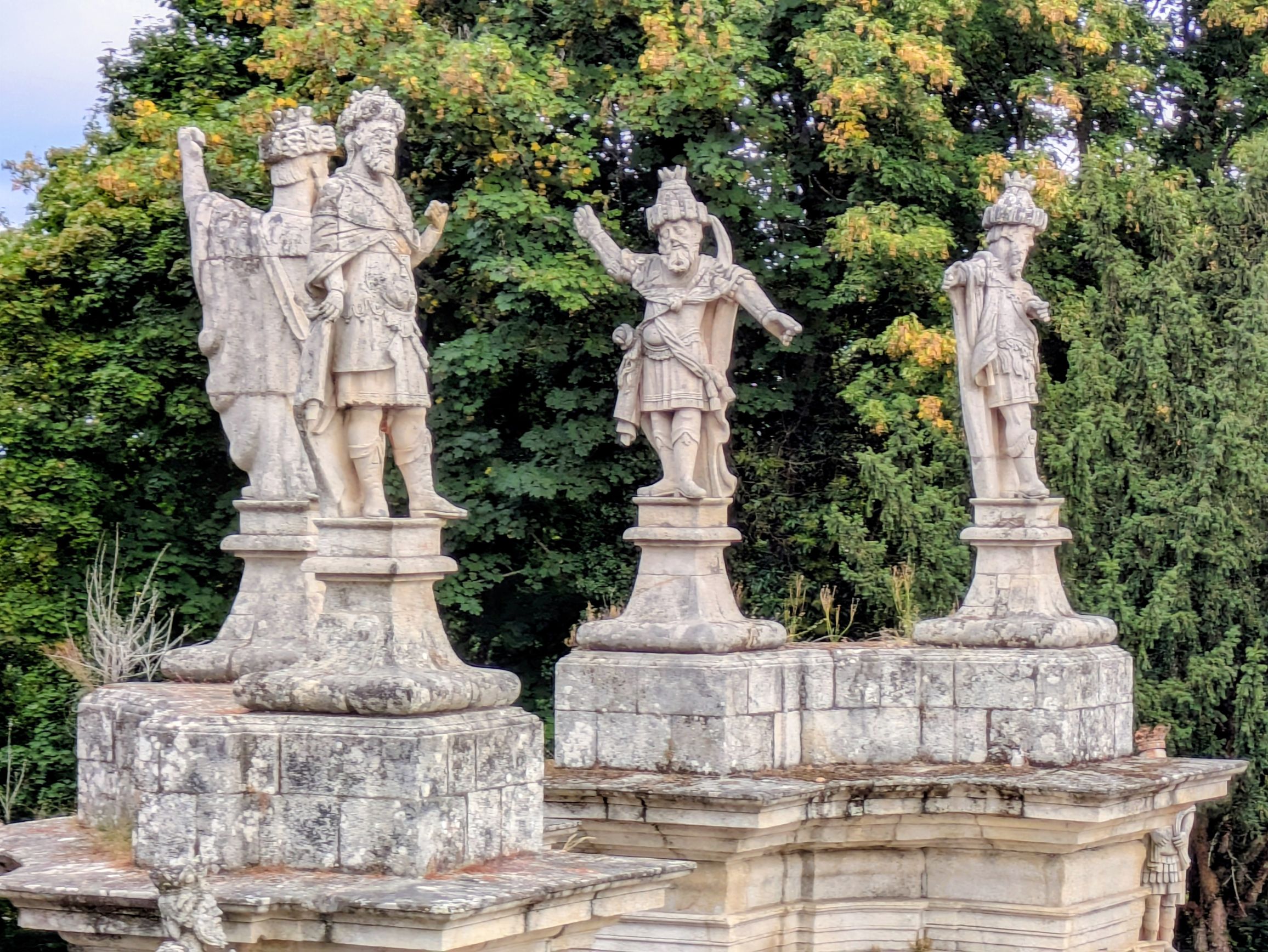
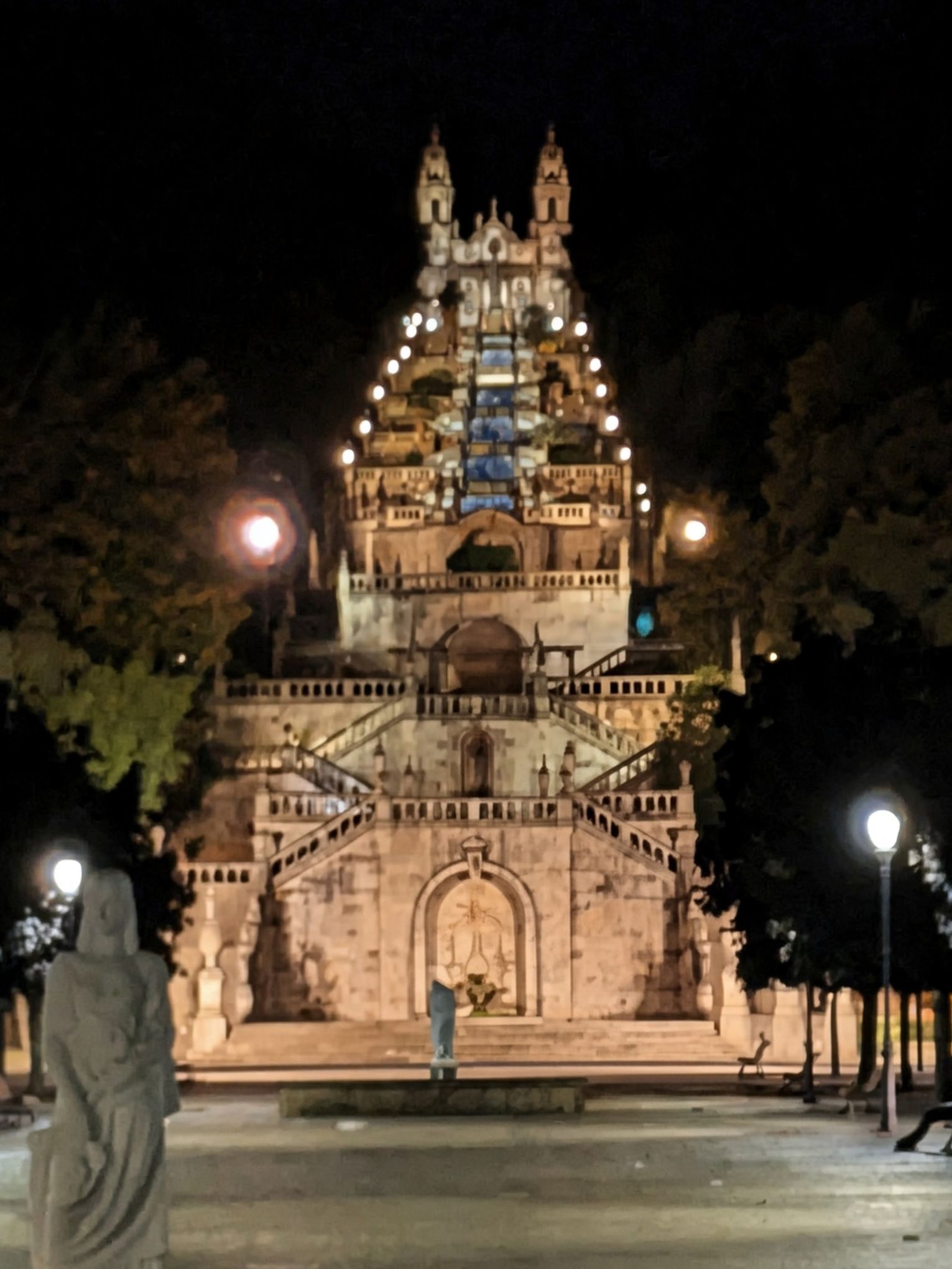
Known for its historic city center, there was one standout feature that was quite lovely: Sanctuary of Our Lady of Rémedios, built in 1750. We saw it during the day and lit up at night, which was beautiful!
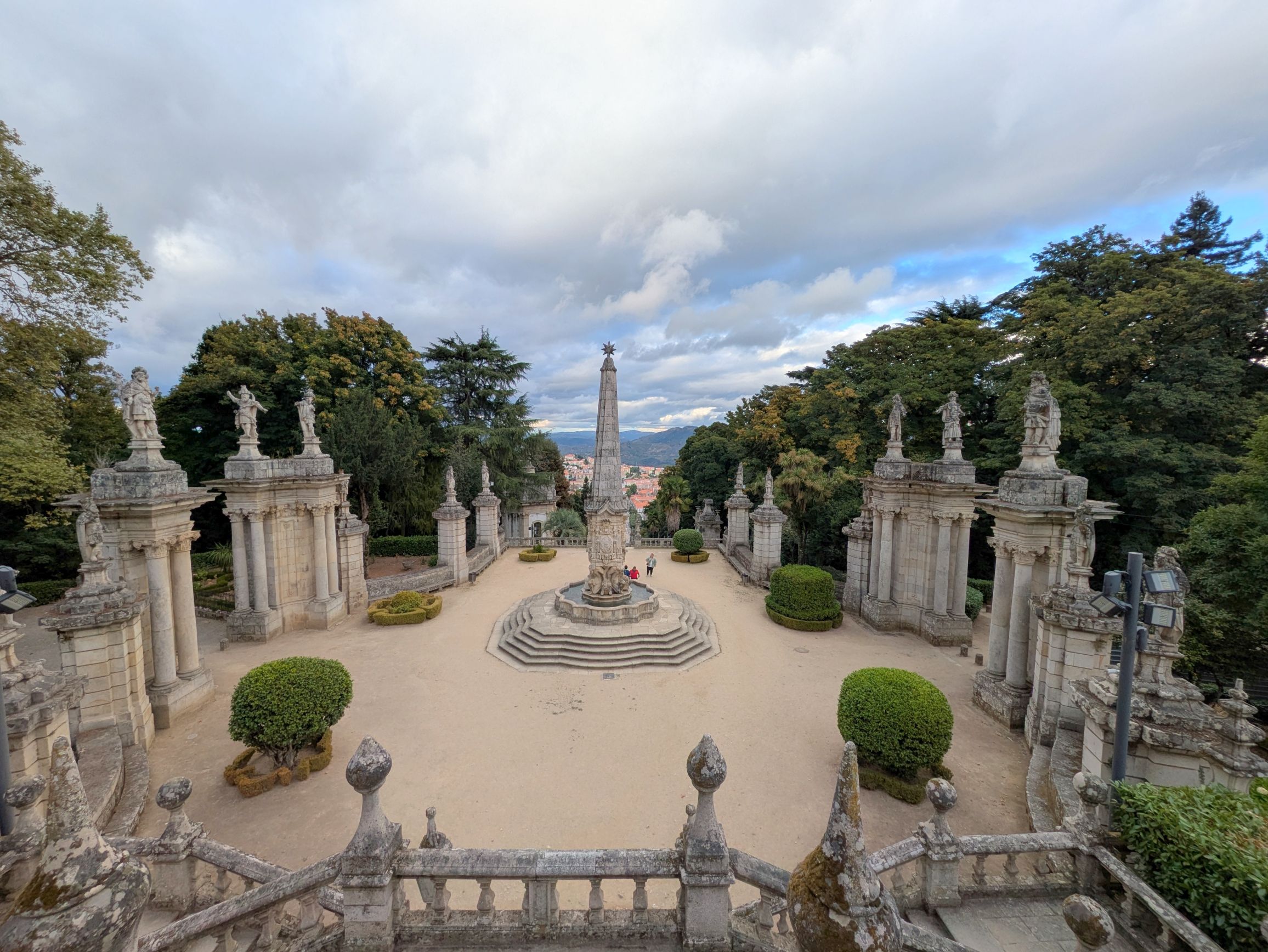
The view from the top looking down the stairs was fabulous!
The Cathedral of Our Lady of the Assumption was built in 1129
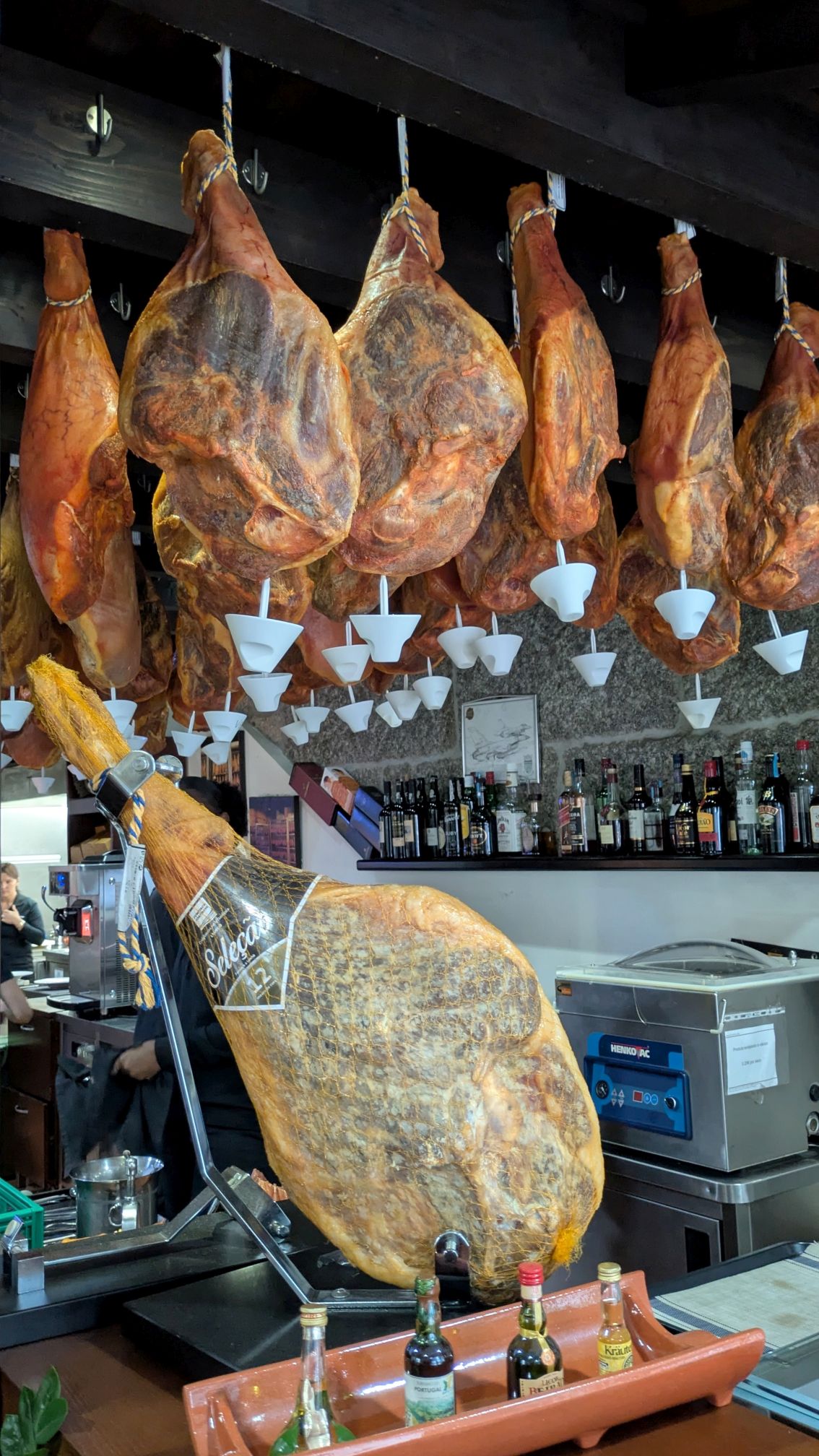
The first thing we saw when we walked into the restaurant where our group was eating dinner
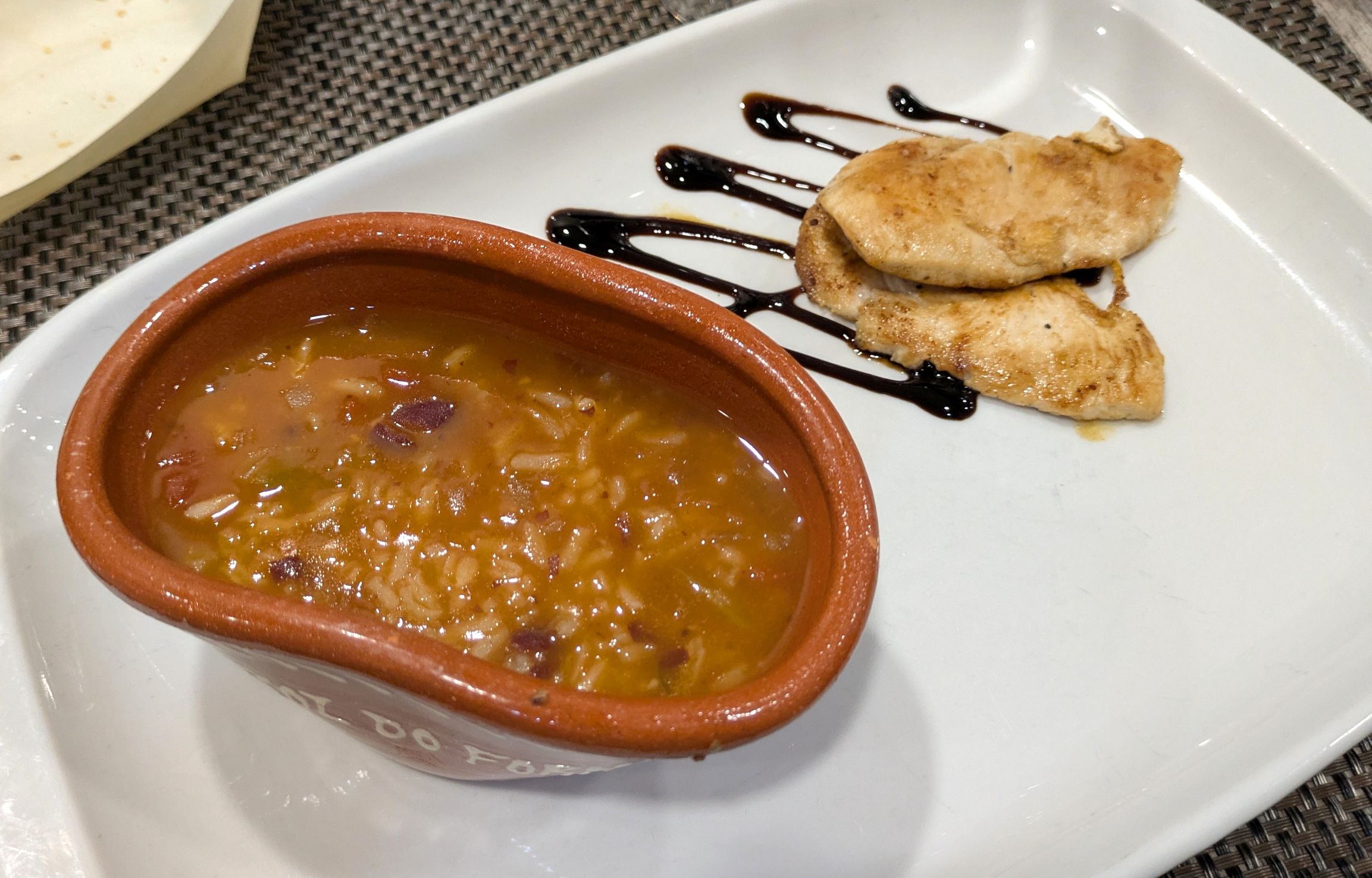
More my taste; a delicious bean soup!
Coming up next: SOUTHWEST FRANCE, NORTHERN SPAIN & PORTUGAL #22: A DELIGHTFUL DOURO RIVER CRUISE & A WONDERFUL WINE-FILLED LUNCH
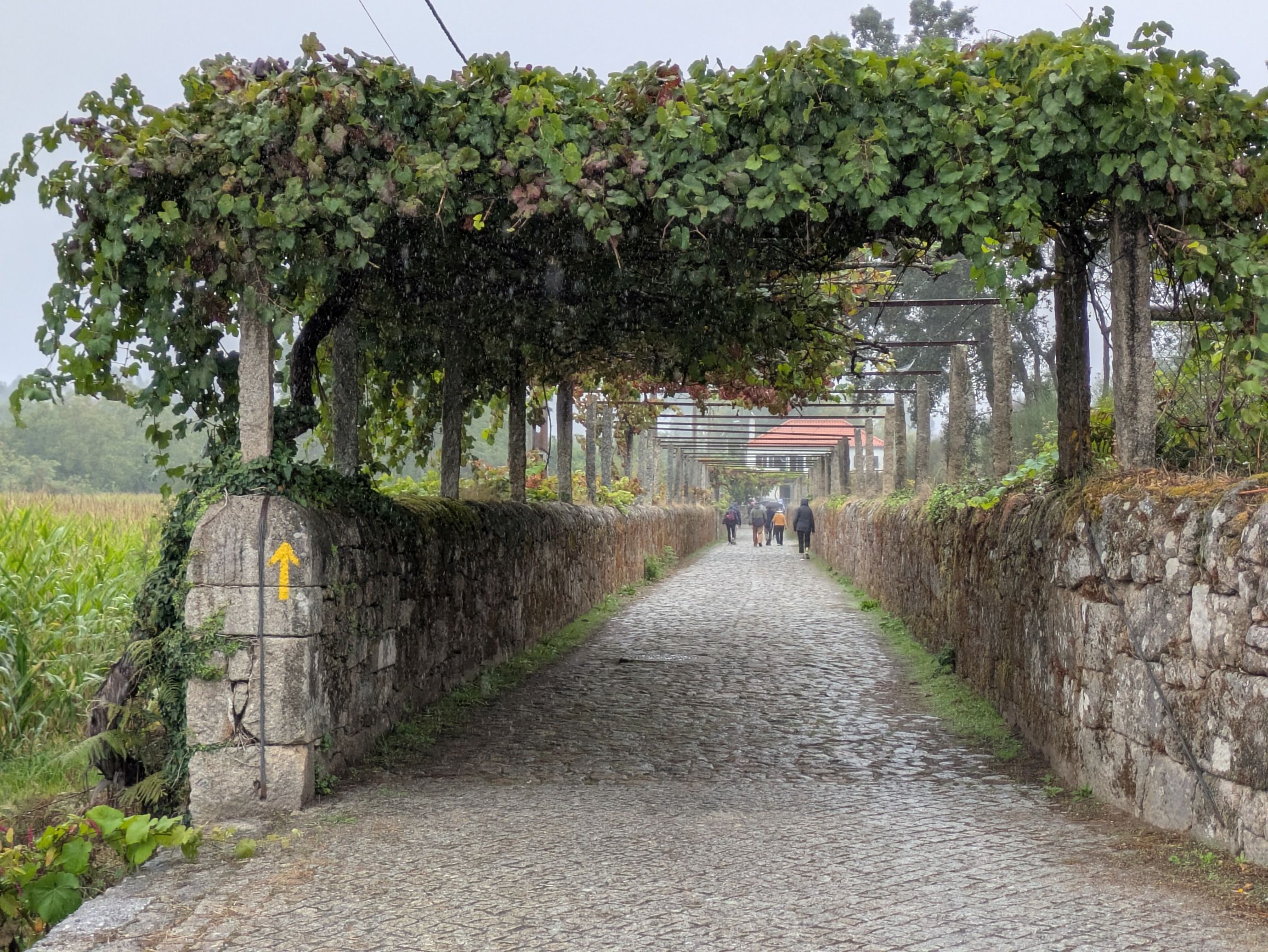
Our third (and final) country on this tour was Portugal, and the Douro Valley was our first stop. Along the way, our bus dropped us off so we could walk along Camino Portugués (Portuguese Way), the traditional coastal route used by pilgrims from Lisbon, Porto, and other regions of Portugal to reach Santiago de Compostela. It was a rainy day and not the best day for walking or photography, but I captured a few shots:
(For all photos, click on the image for a full screen view.)
Our group up ahead, walking the Portuguese Way through the vineyards
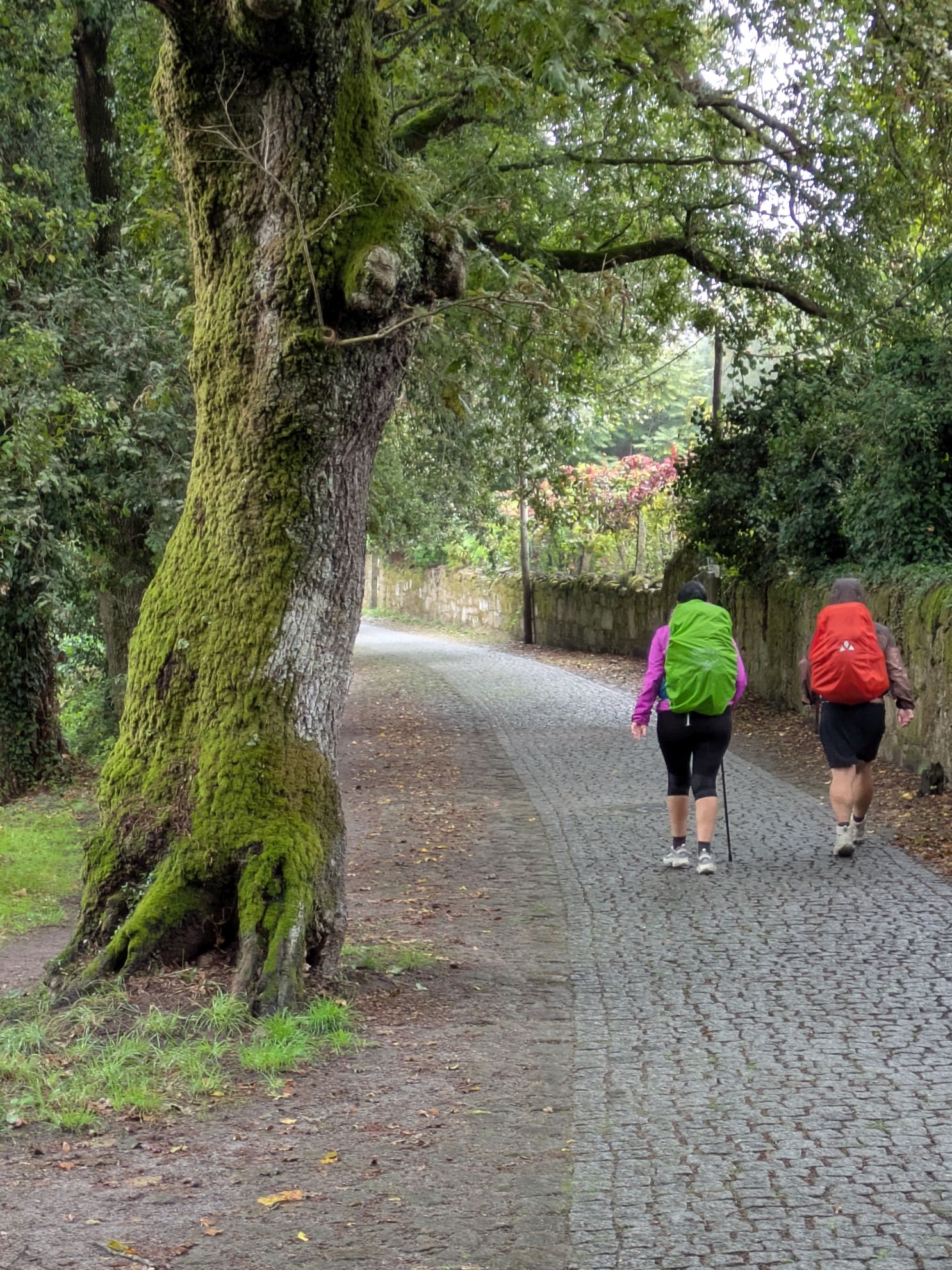
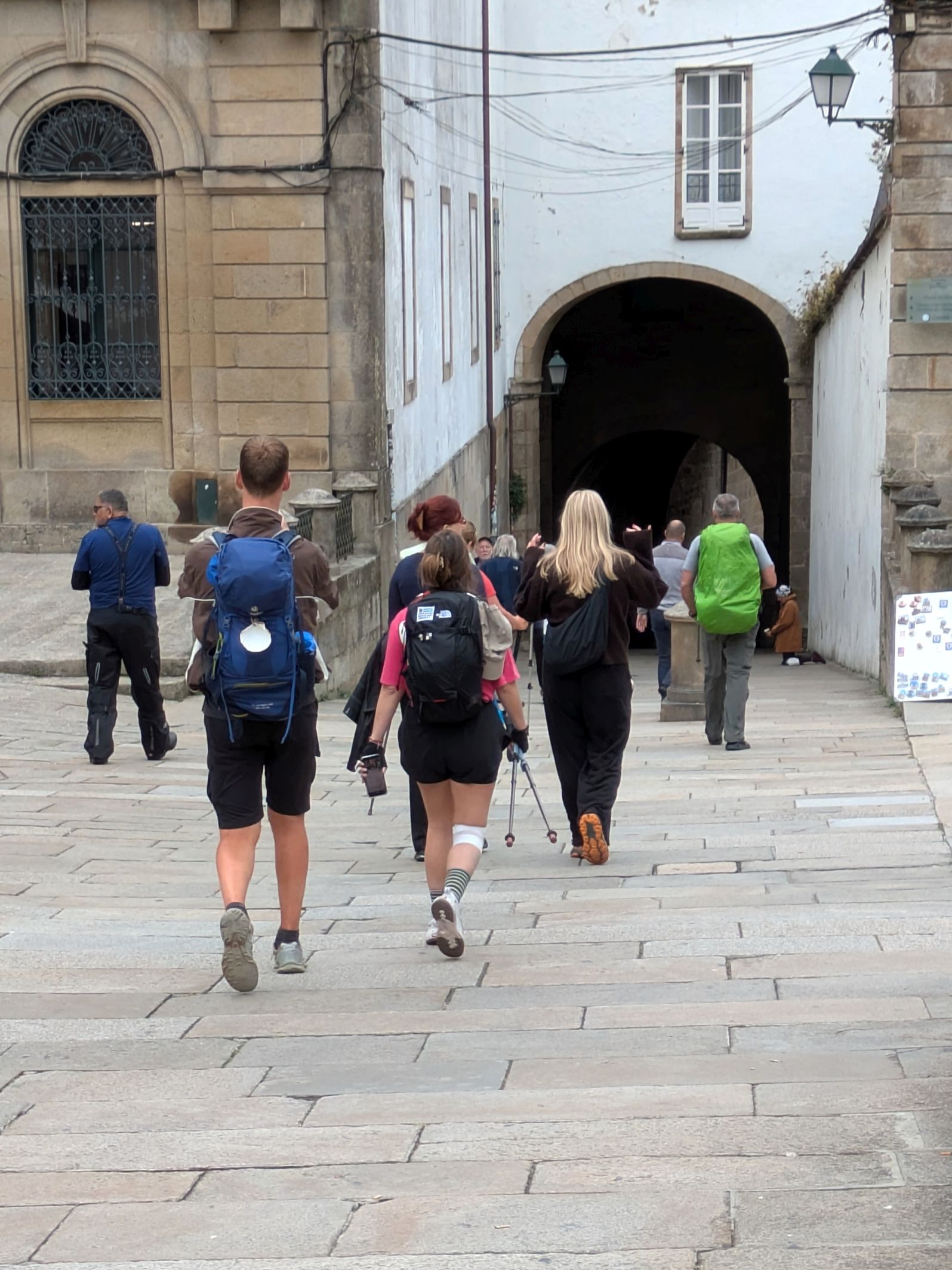
Pilgrims
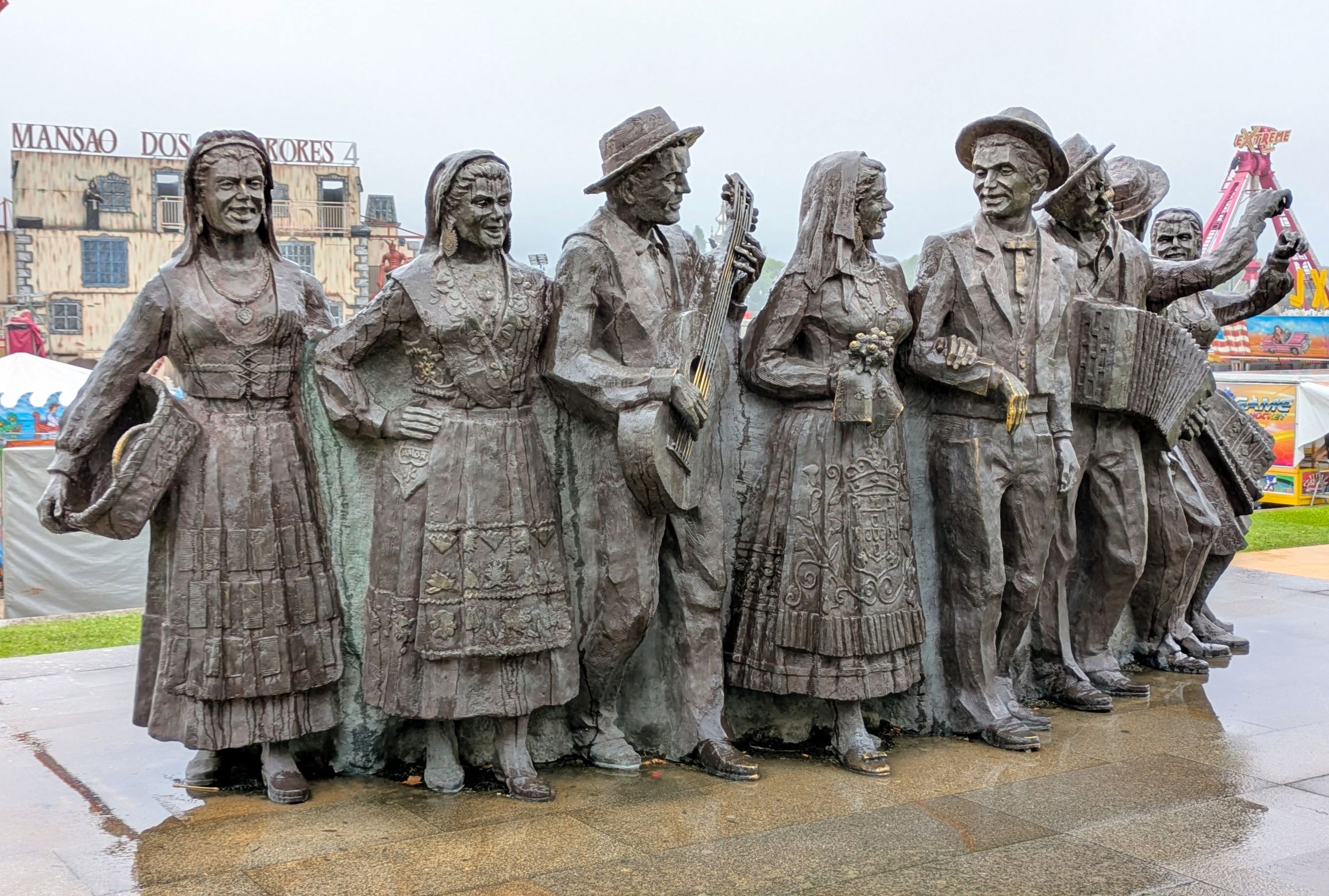
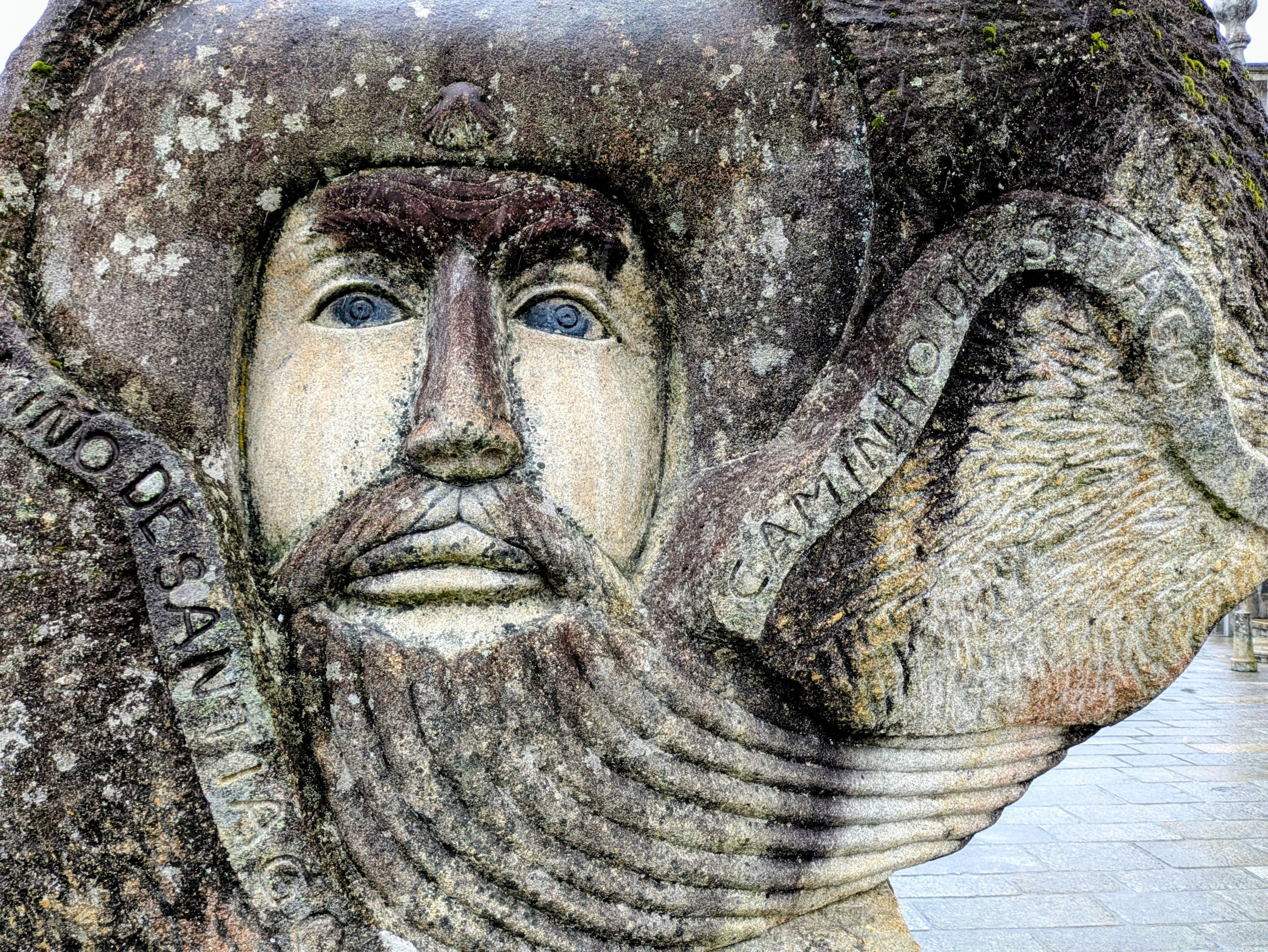
Walking through Ponte de Lima, we came across this life-sized bronze sculpture
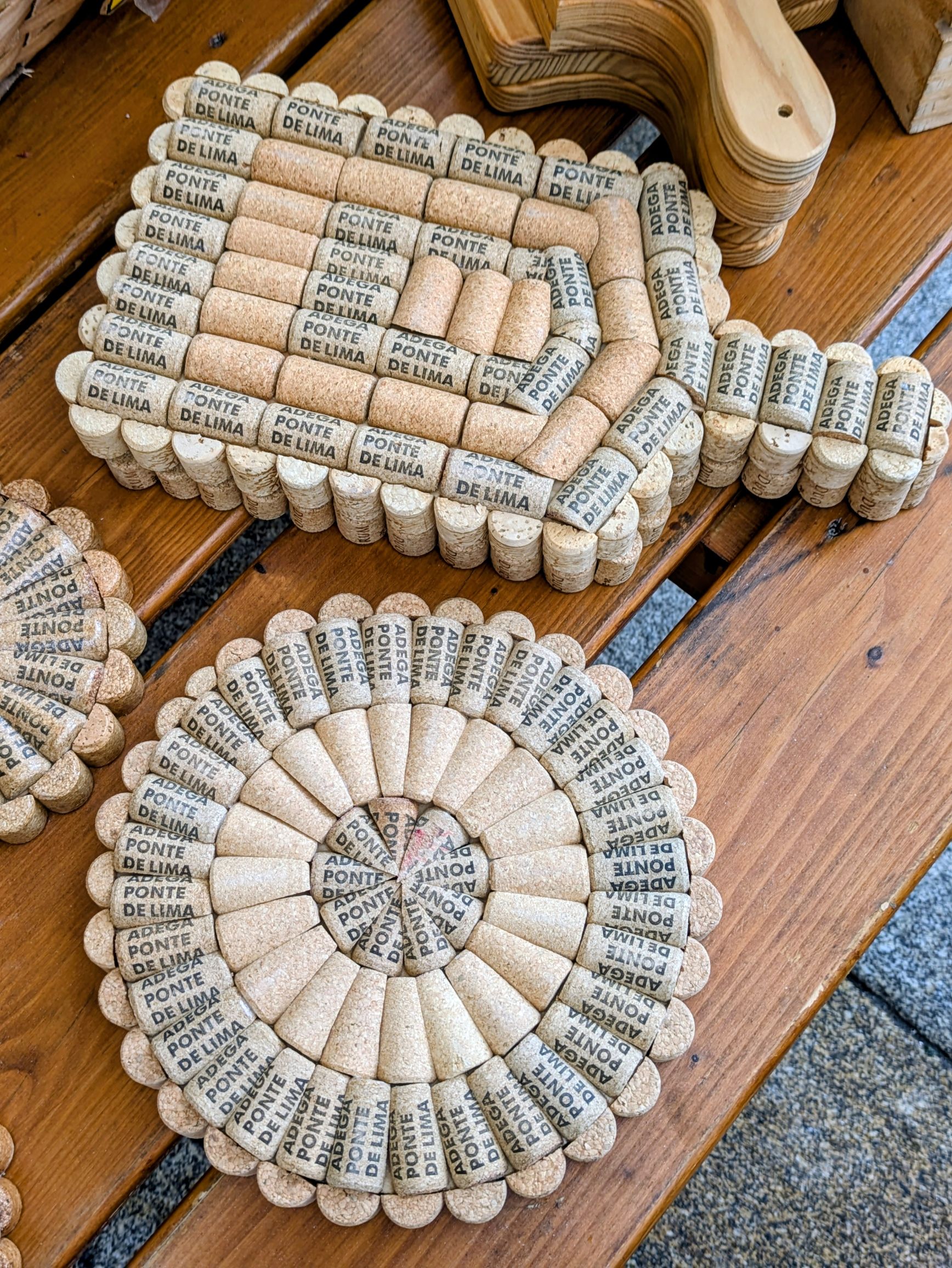
You know you’re in Portugal when you see cork items for sale in gift shops!
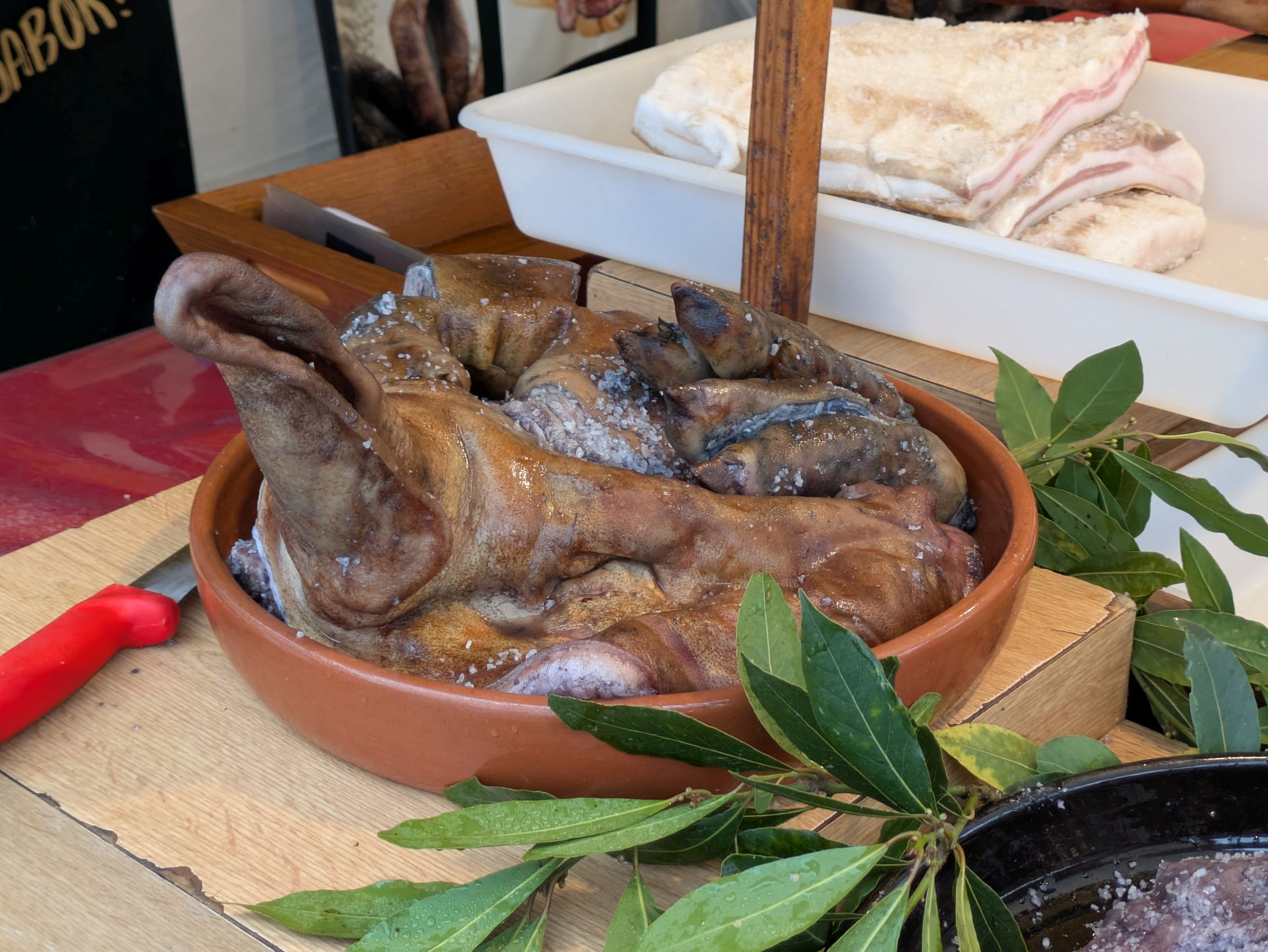
I don’t even want to know what meat was being sold by this street vendor…
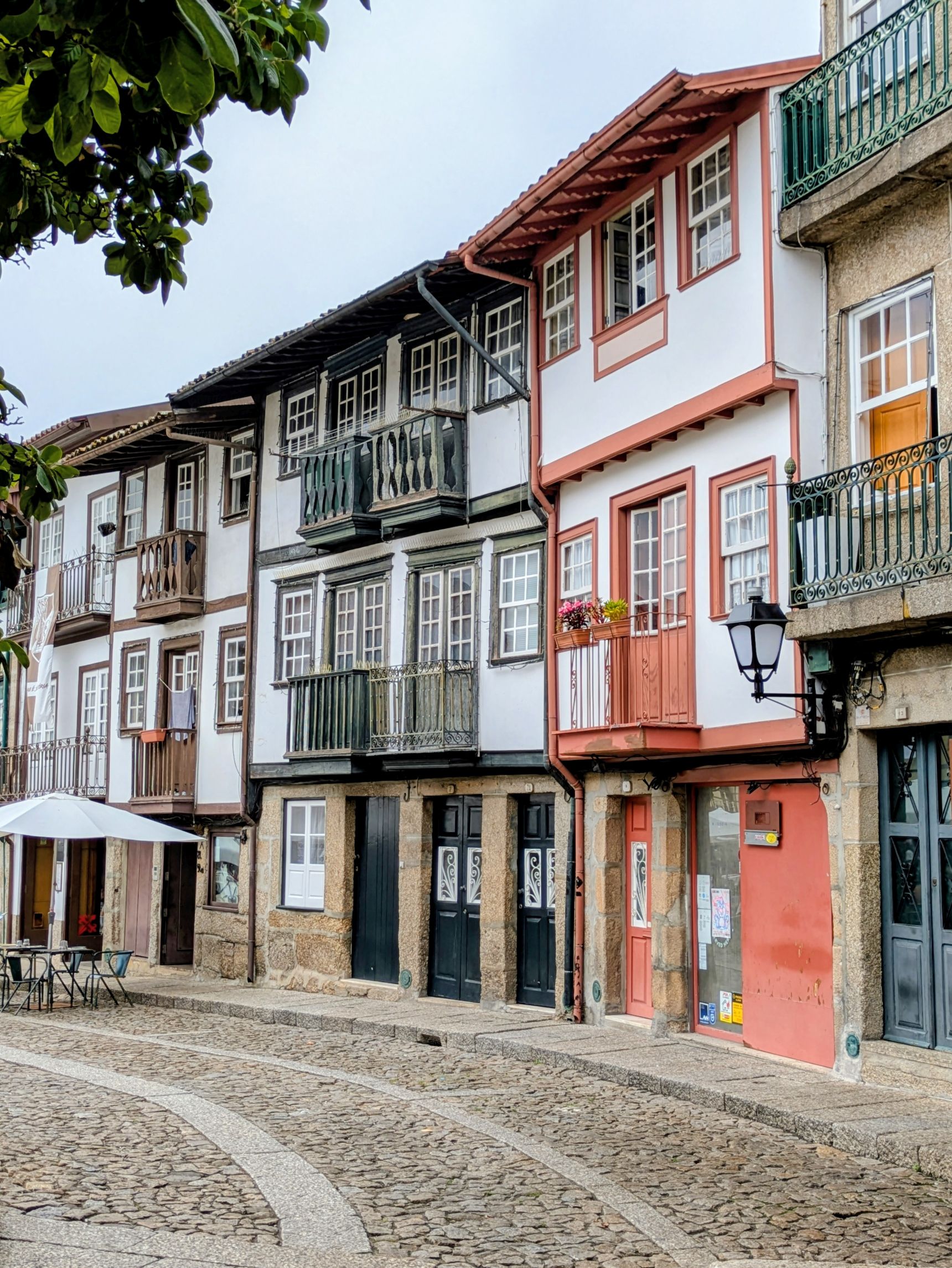
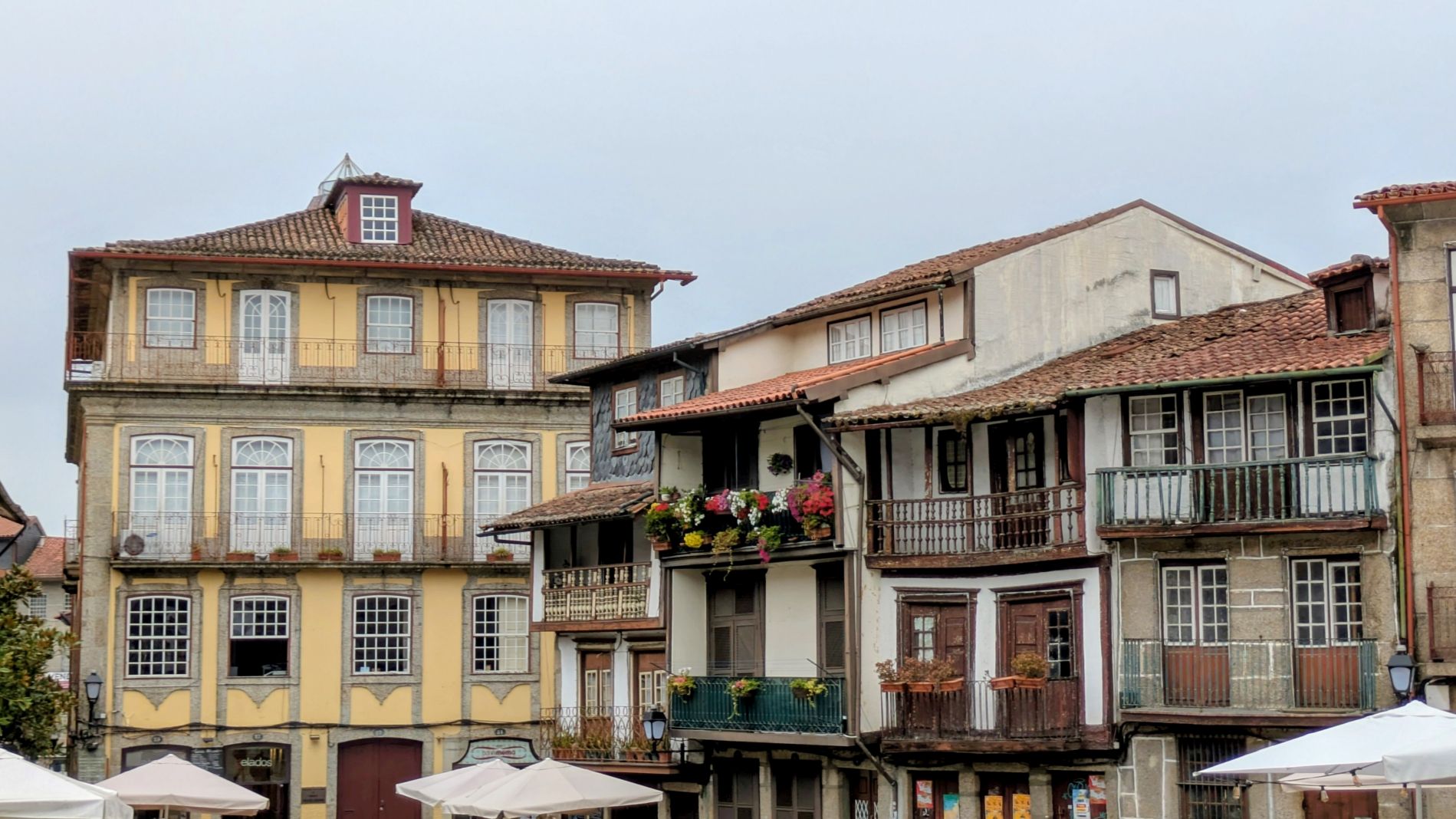
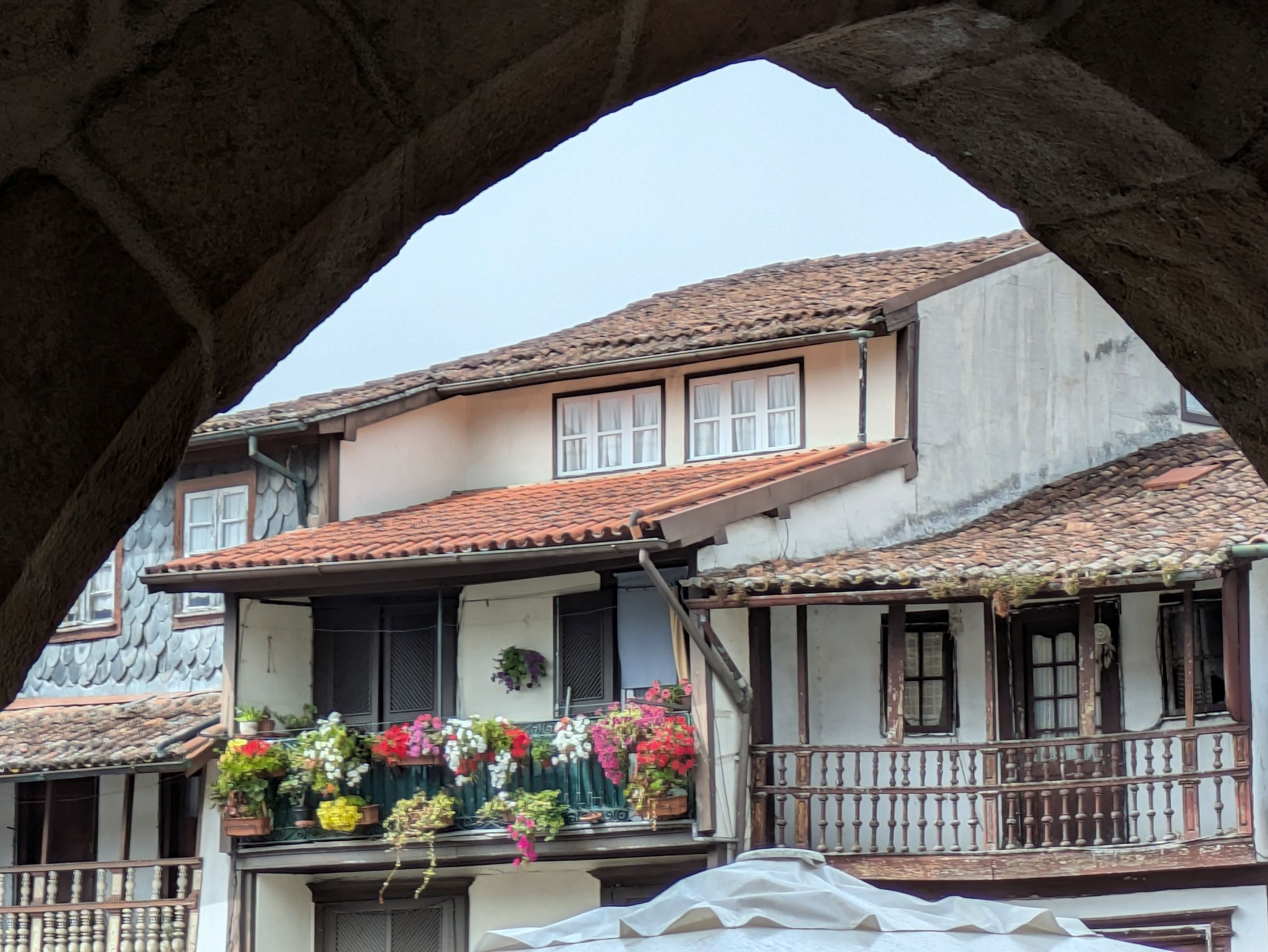
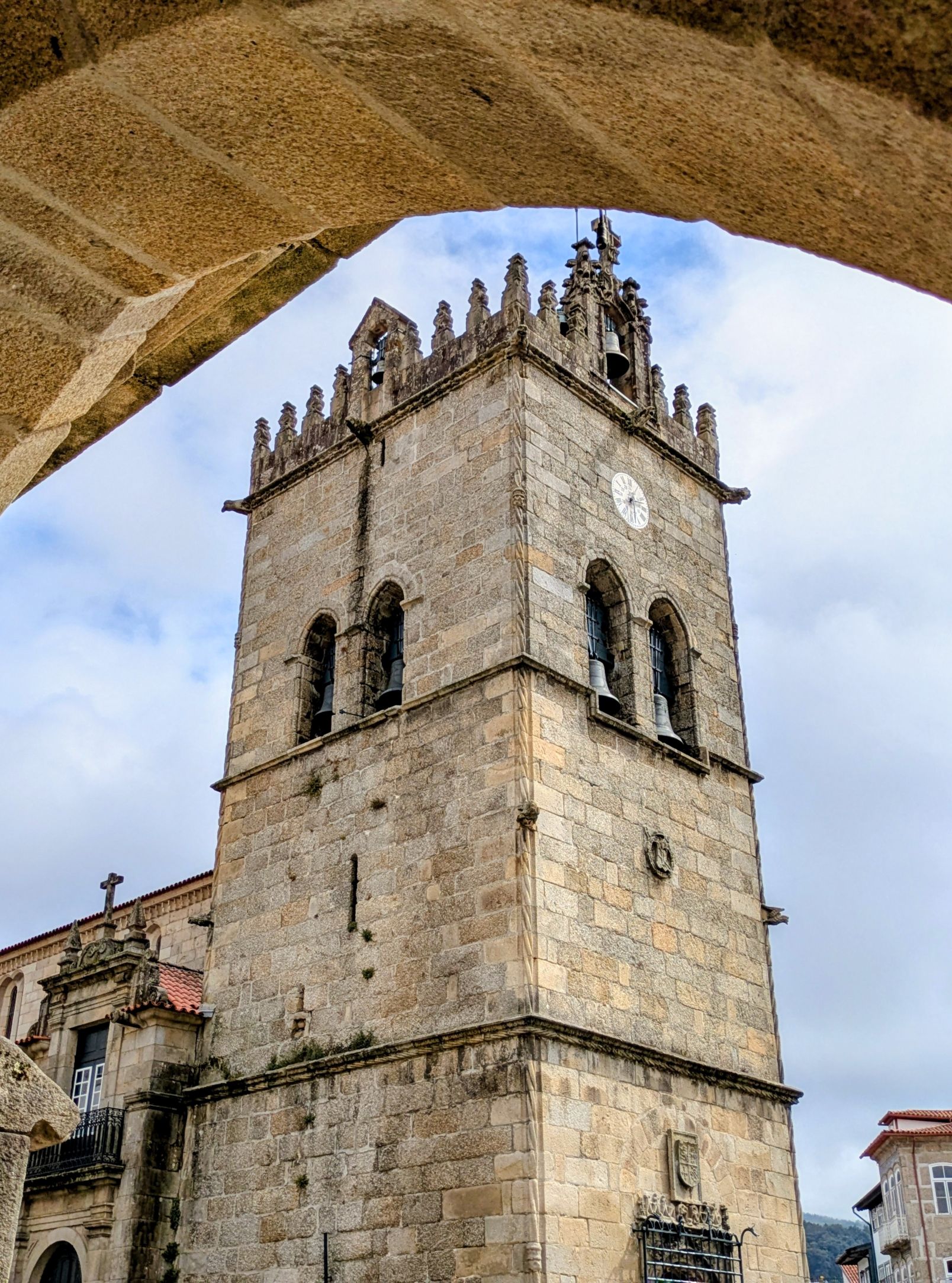
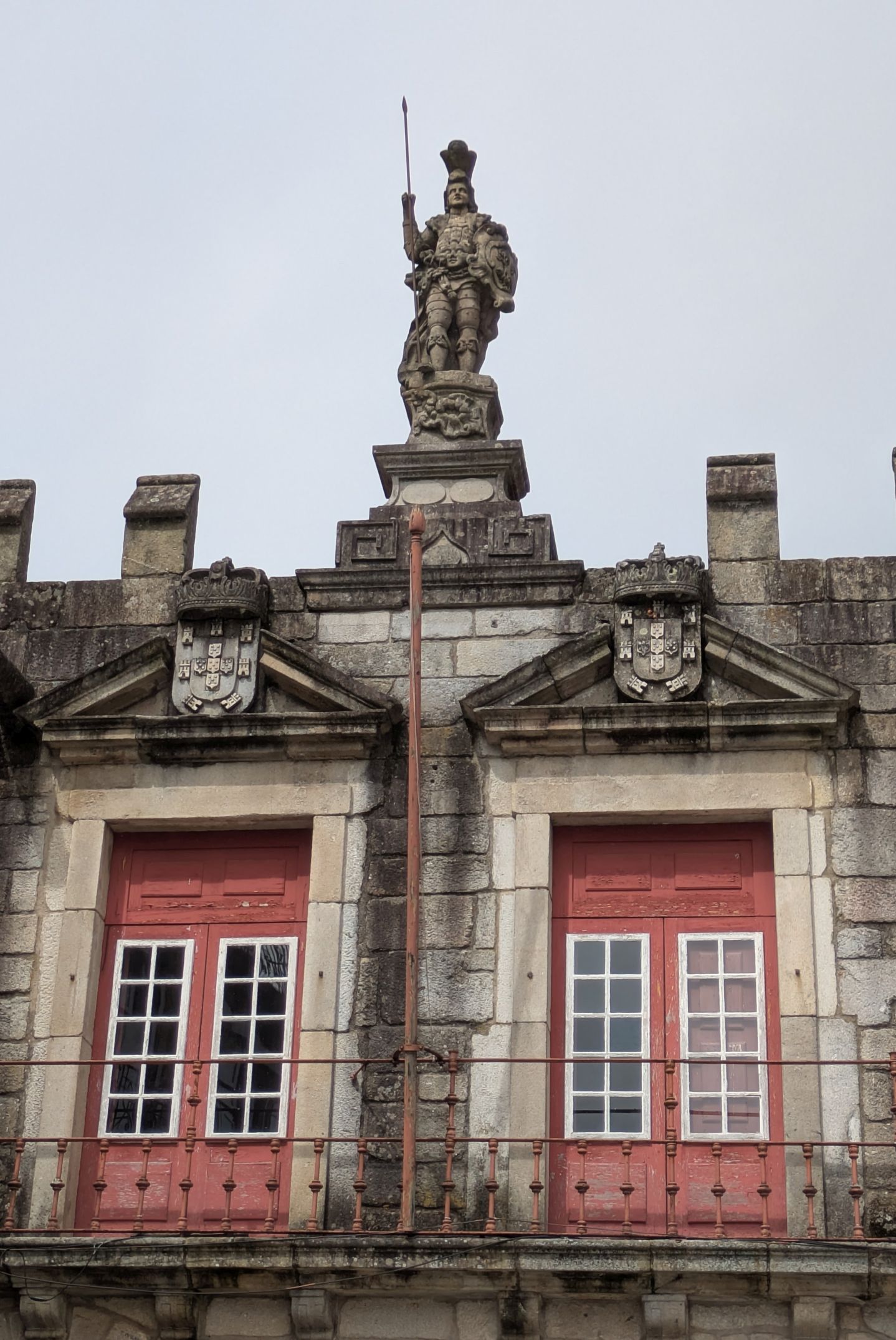
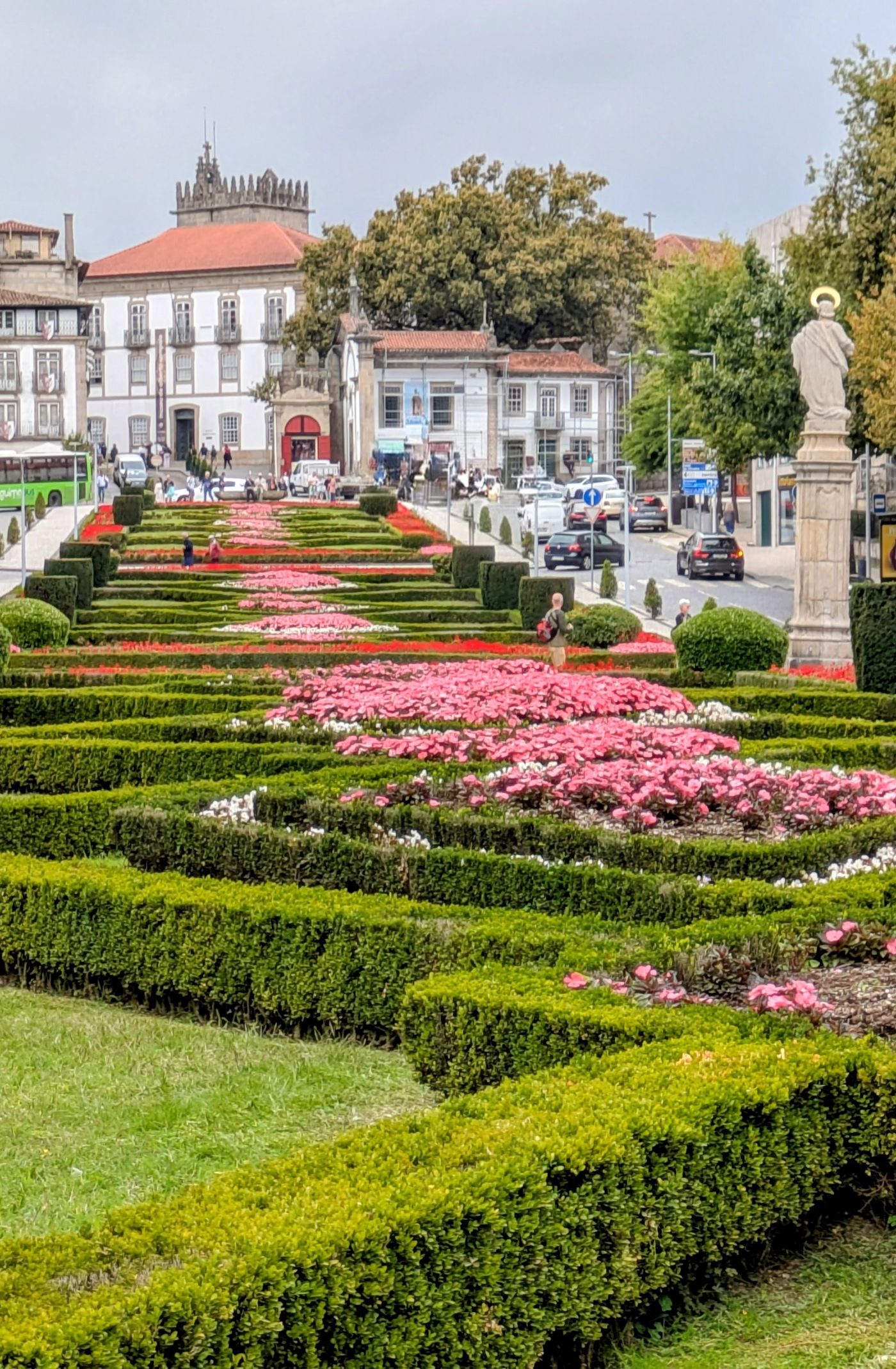
The medieval city of Guimarães was our next stop. It is considered the birthplace of Portugal, because its first independent king, Afonso Henriques, was born here in 1110. We took a walking tour of the well-preserved city center, a UNESCO World Heritage Site, and had time to explore on our own. While most of the group went to a restaurant for lunch, we opted to grab a quick bite and see more of gorgeous Guimarães.
Pointing the way to Santiago de Compostela, in Spain
Next up: SOUTHWEST FRANCE, NORTHERN SPAIN & PORTUGAL #21: LOVELY LAMEGO
For our last full day in Santiago, we had the choice of spending the day in town or taking an optional tour to Pontevedra and Combarro, which is what we chose.
Galicians consider themselves (unofficially) to be a Celtic nation and think of themselves more as Galicians rather than Spanish. They have their own distinct customs and culture; and, although they have their own language, only 17% speak it with each other.
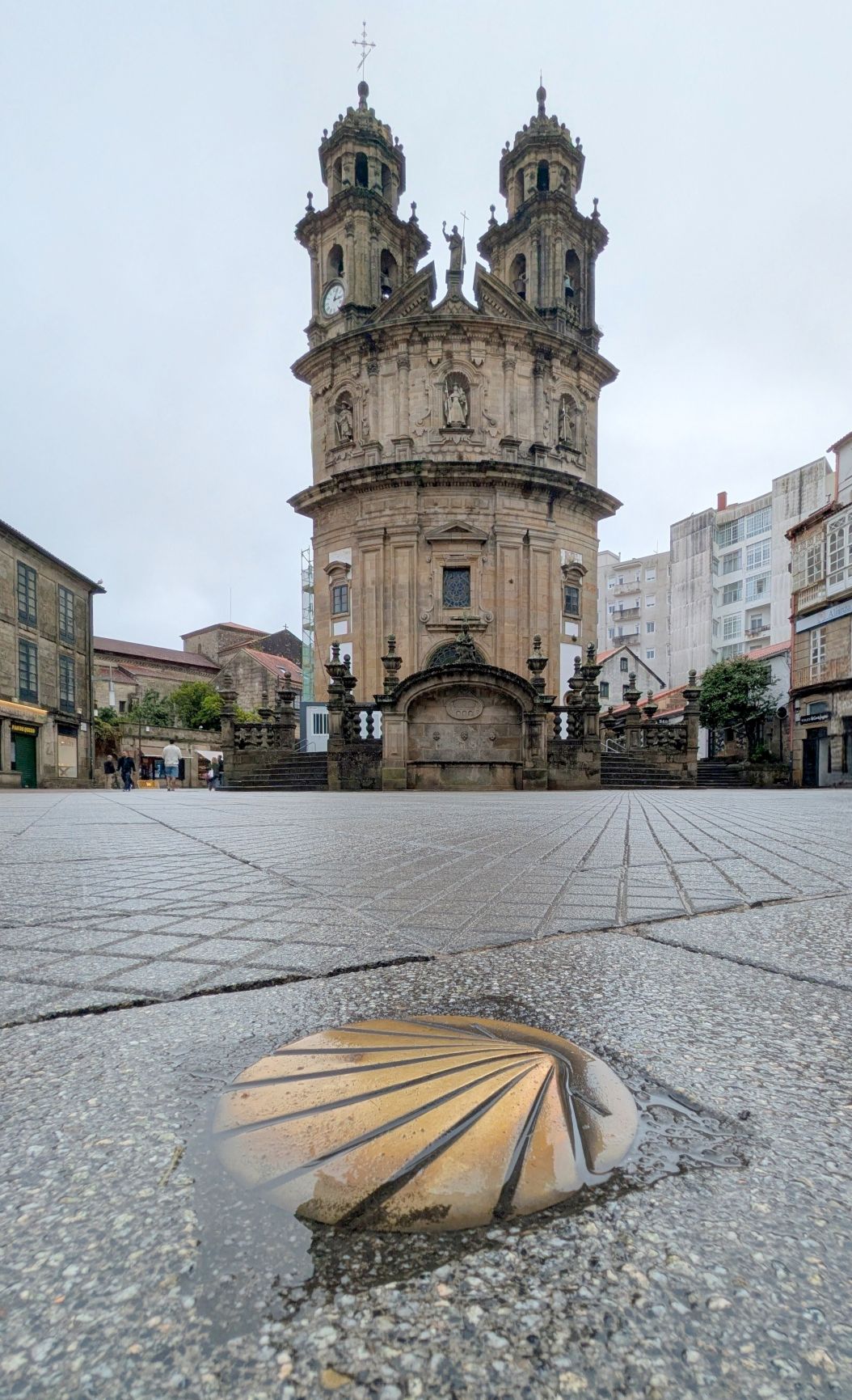
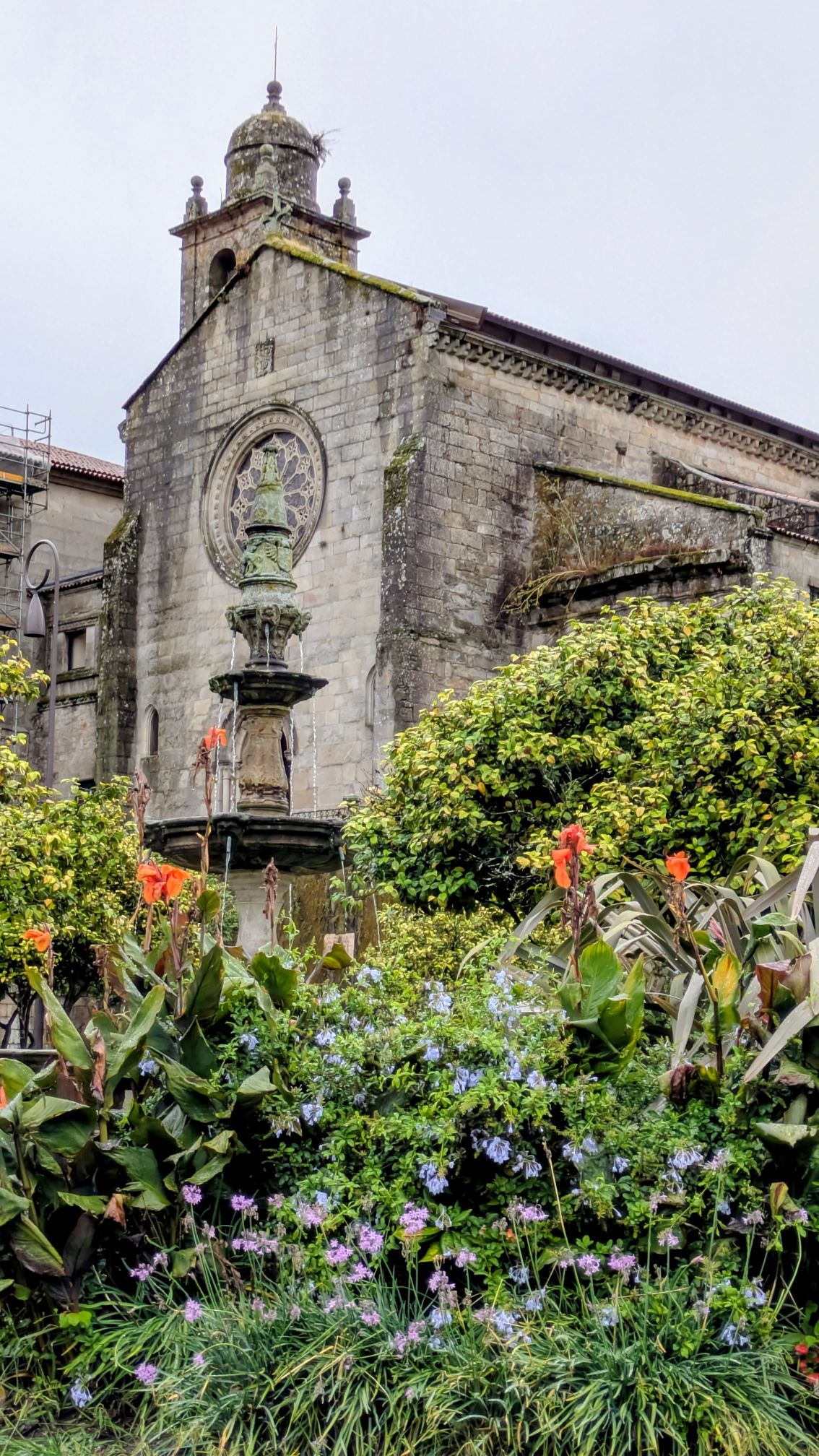
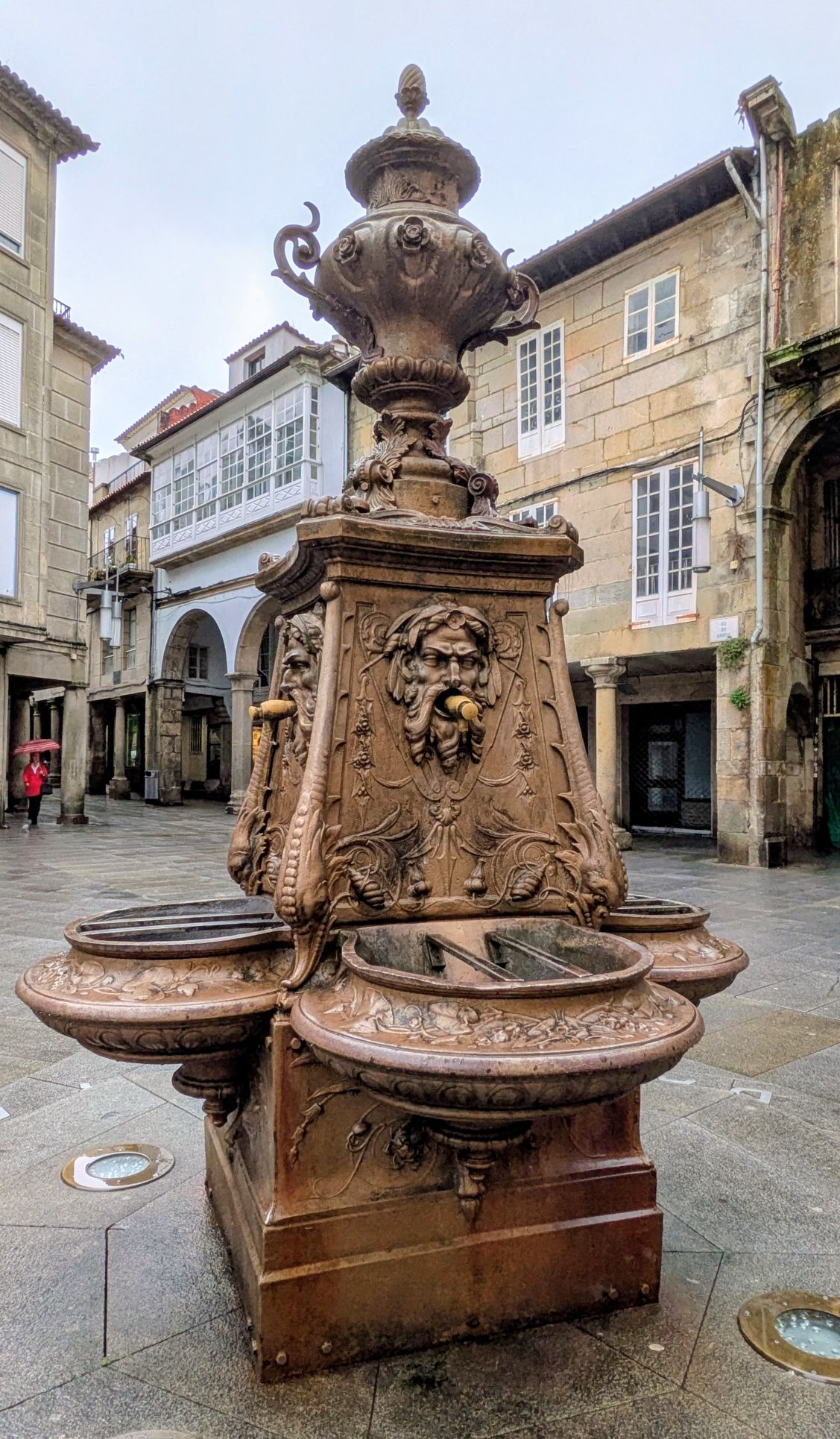
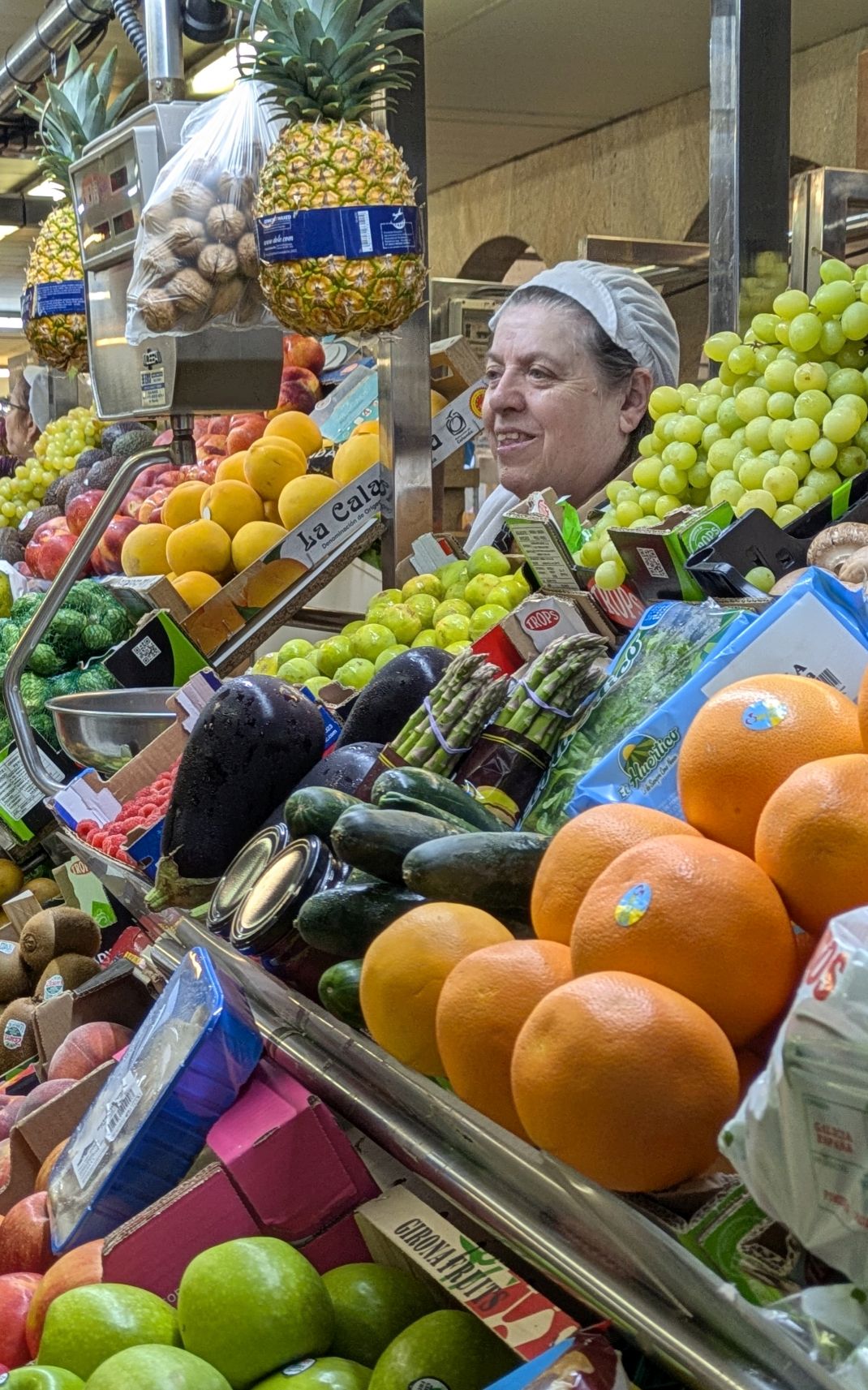
Pontevedra is a small, riverside city in northwest Spain known for its well-preserved old town. It is also a stop along the Portuguese Way. We took a walking tour of the old quarter and visited the city market.
(For all photos, click on the image for a full screen view.)
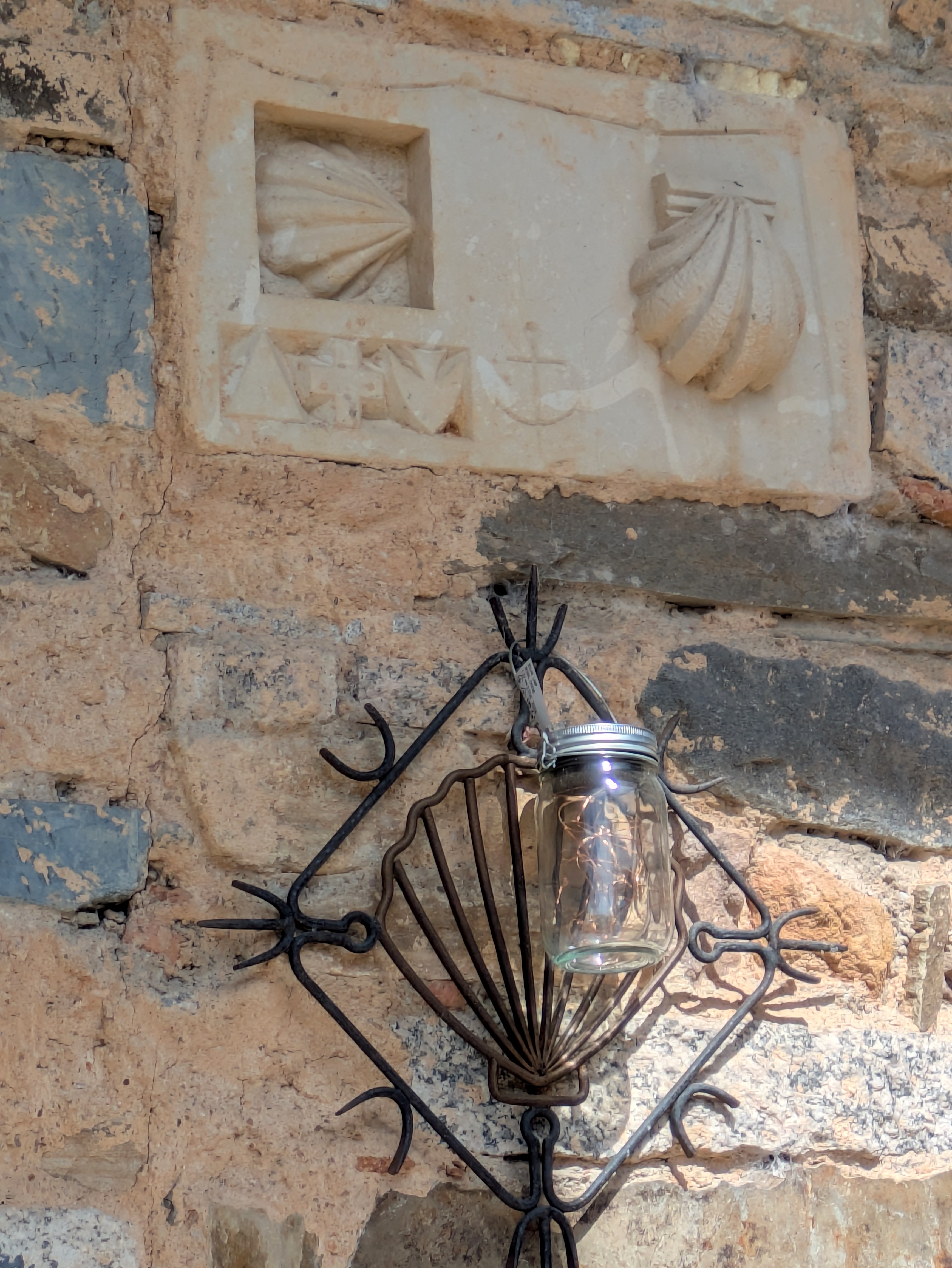
A scallop shell marker points the way for pilgrims walking the Portuguese Way to Santiago de Compostela
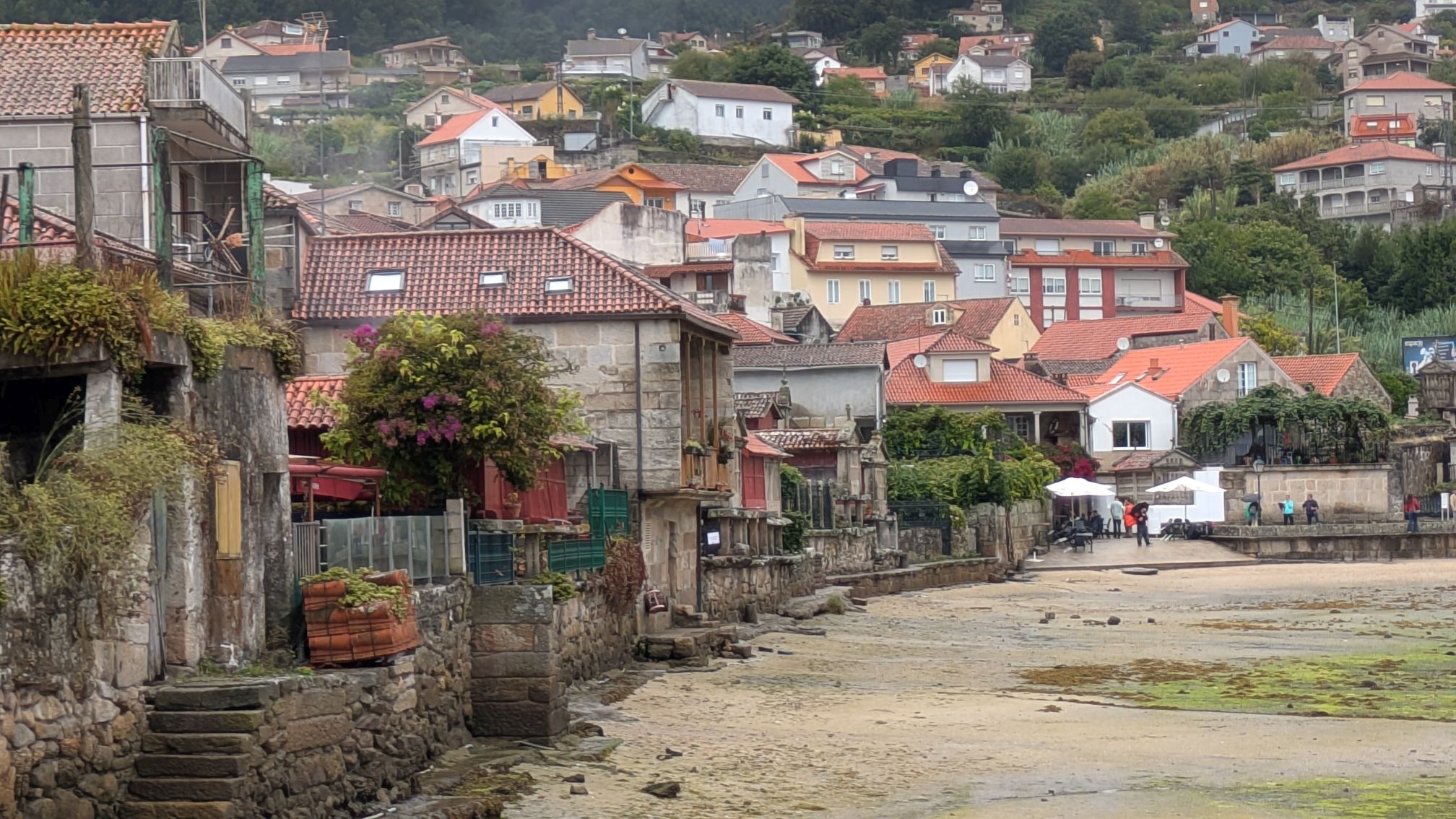
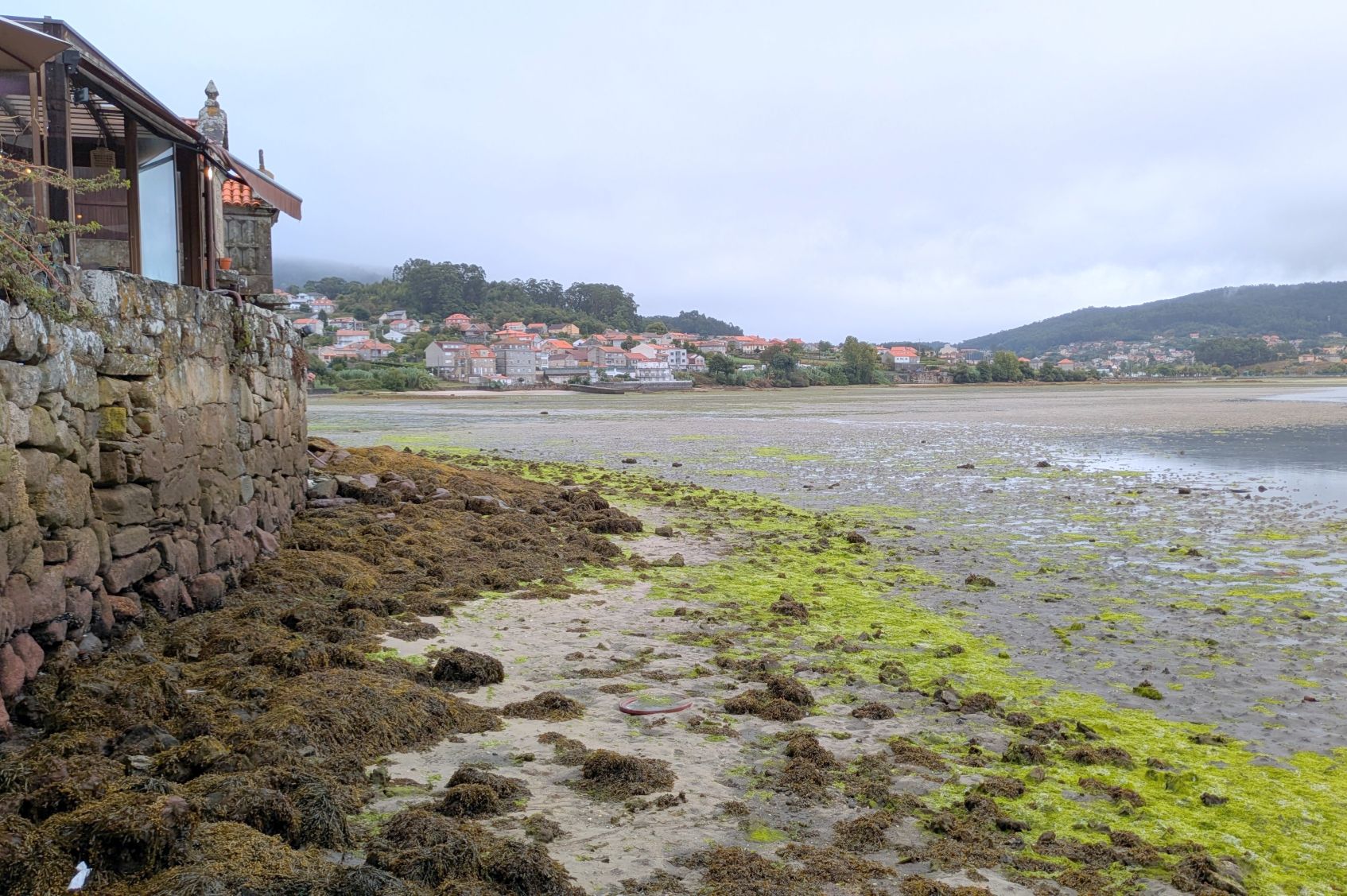
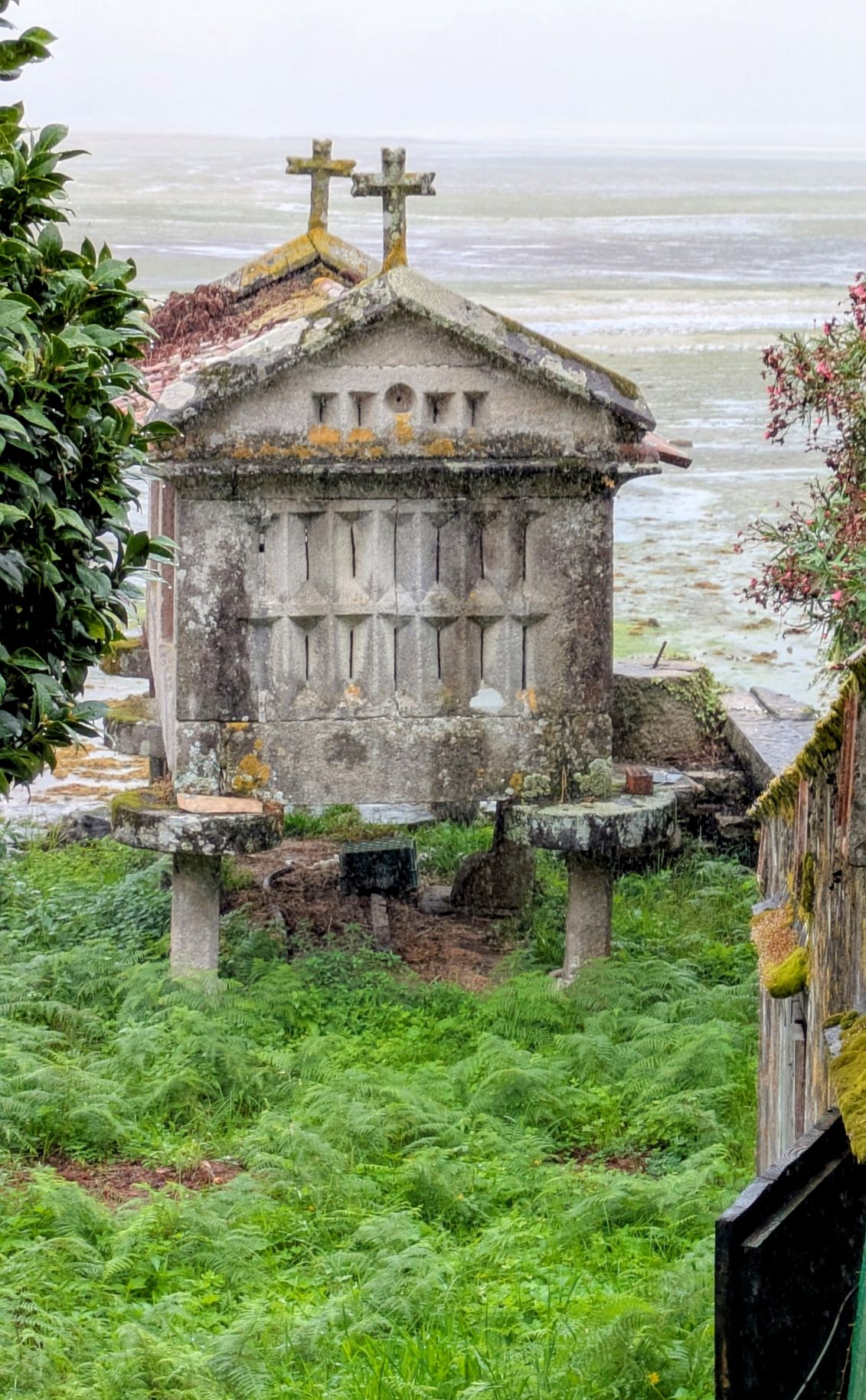
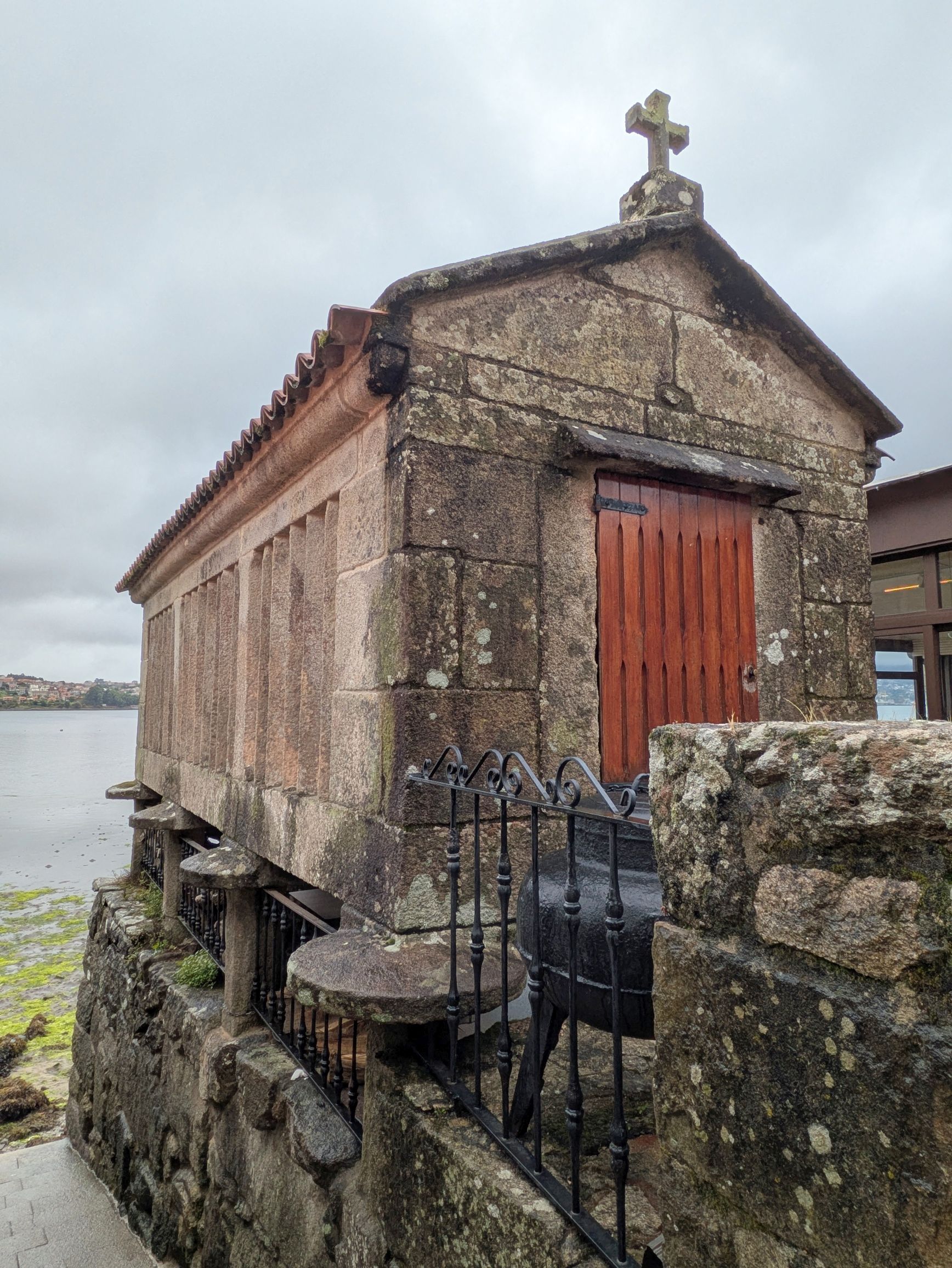
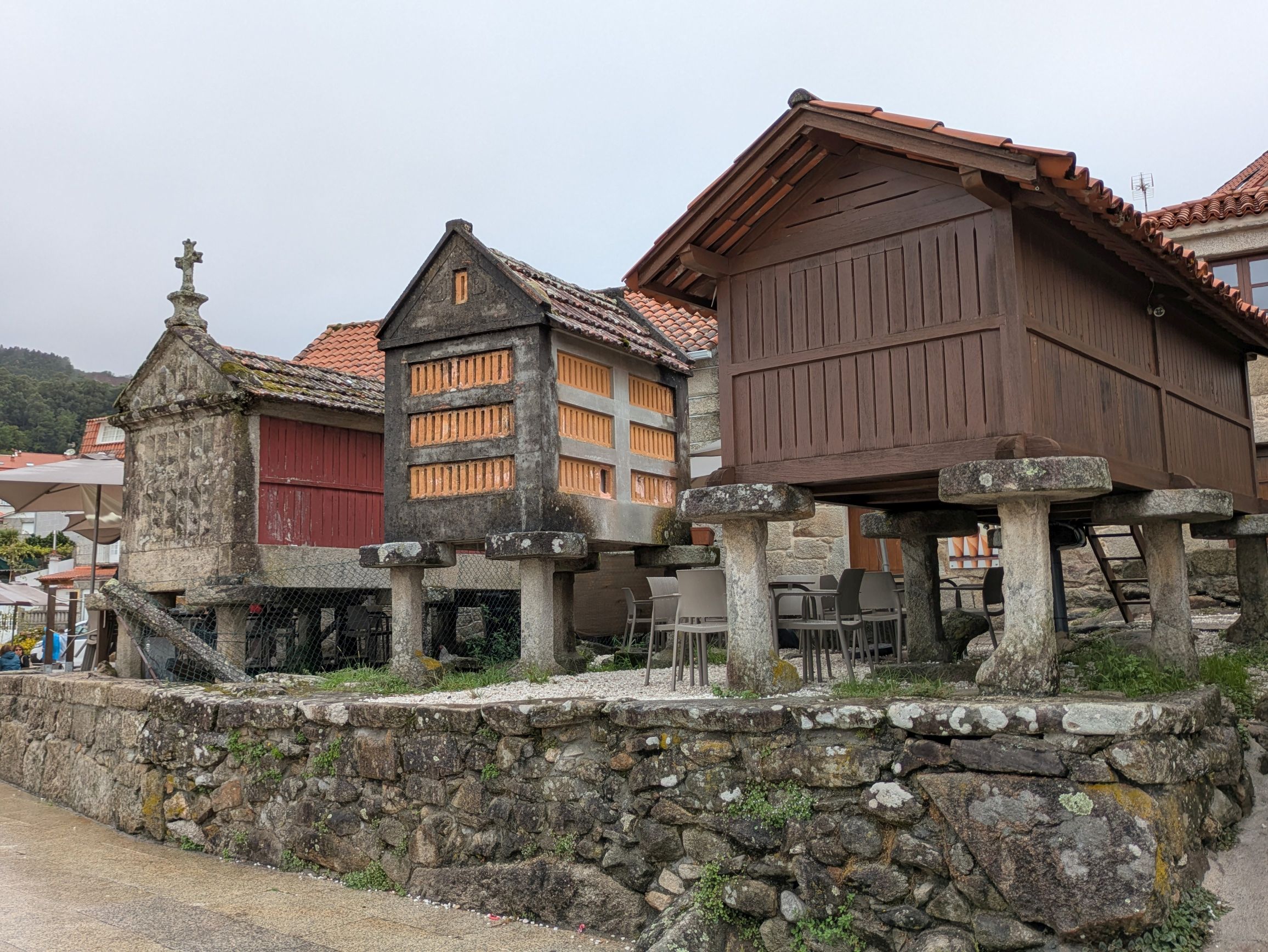
Next, we visited Combarro, a small fishing village famous for its hórreos, traditional stone grain stores on stilts. This village is one of the only towns in the region to feature this kind of stonework, and I found it to be unique and charming.
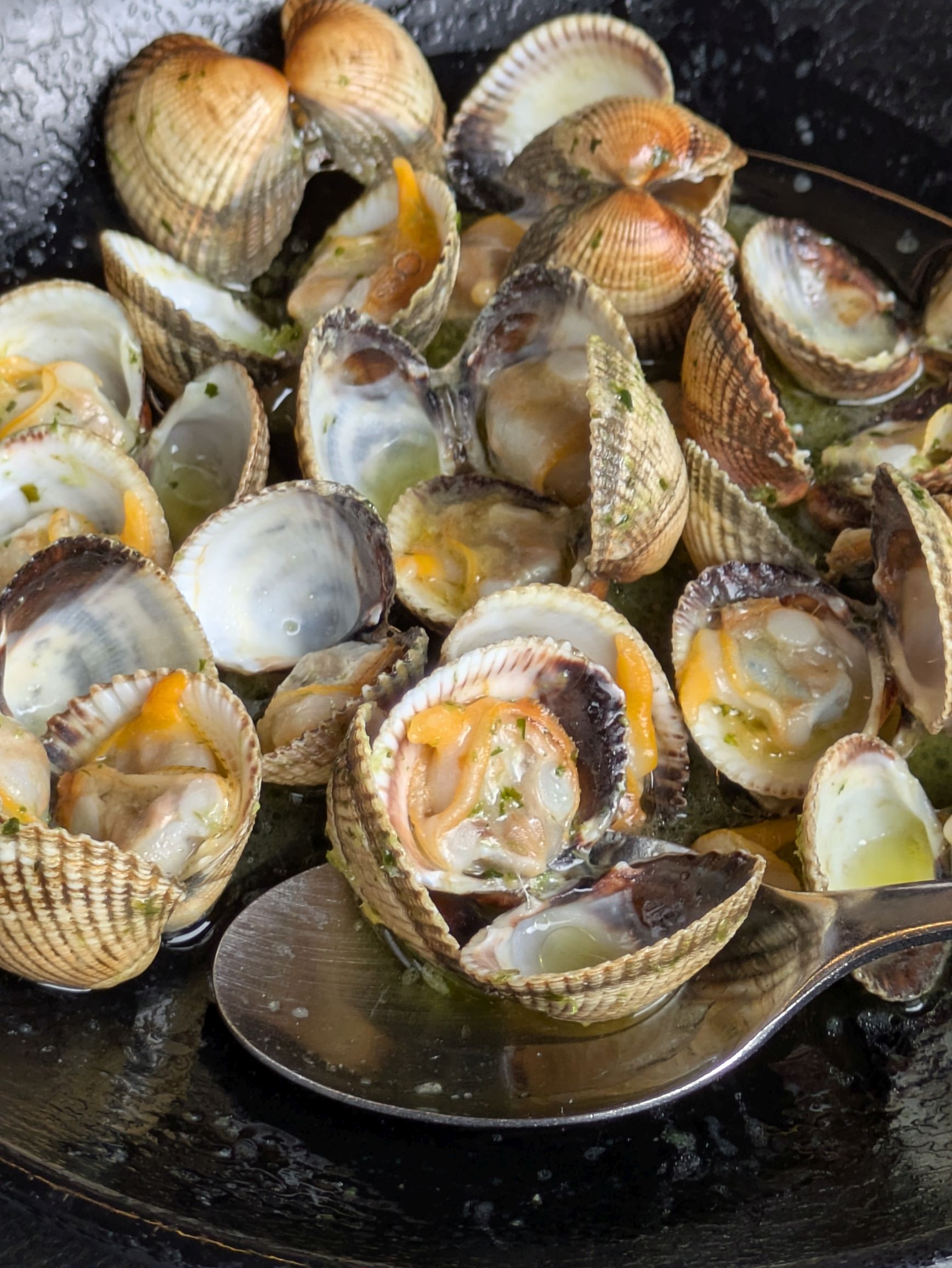
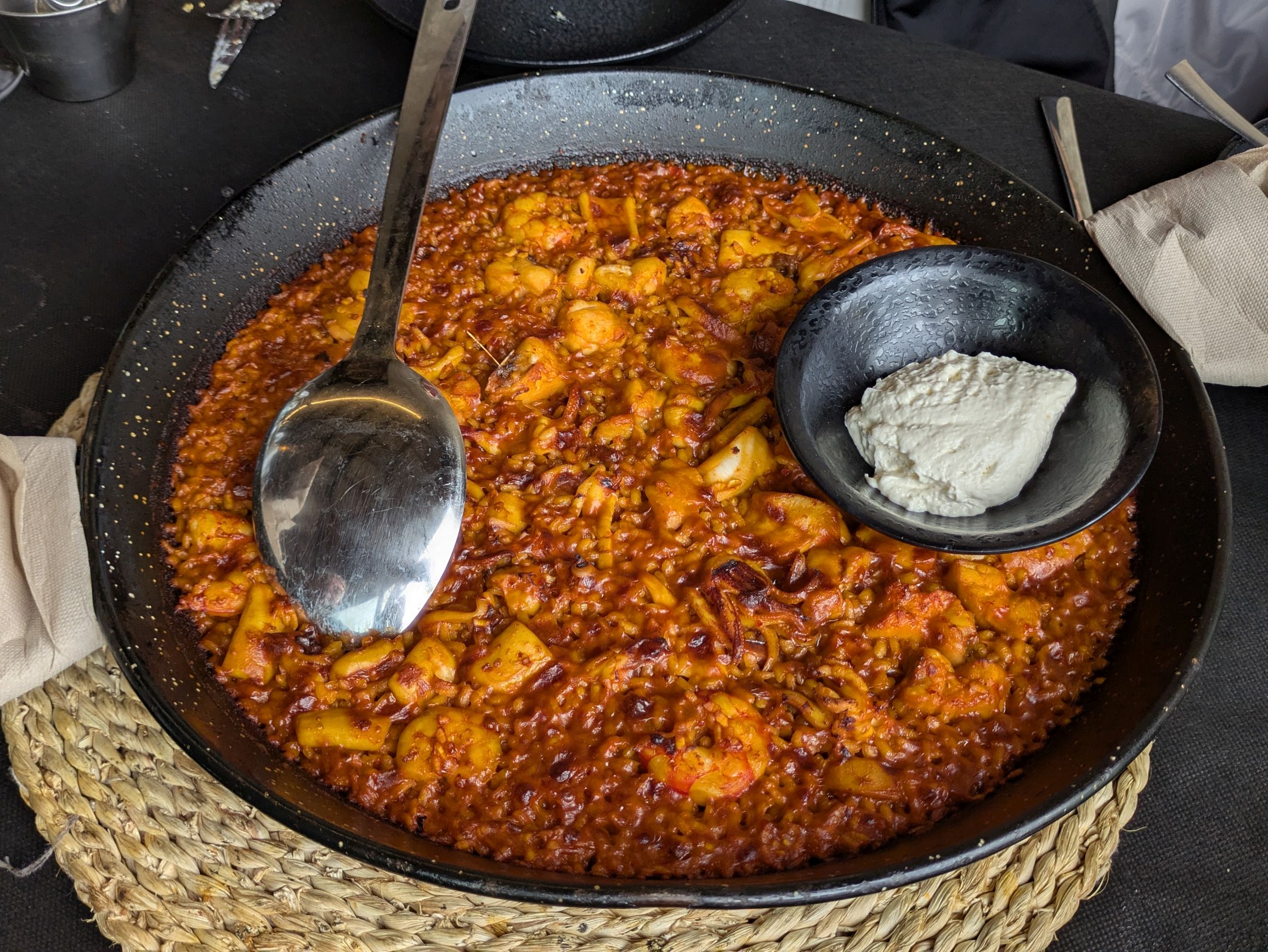
Following our walking tour, we enjoyed lunch at a seafood restaurant that specialized in Galician fish stew, which is different from Spanish seafood paella, the specialty of southern Spain. It was delicious!
Unfortunately, the cloudy skies weren’t the best for photography, but here are a few scenes photographed in the village:
Although Santiago de Compostela (“Santiago”) has become quite touristy, I enjoyed meandering around the old town, taking in the culture, seeing the sights, and doing photography.
Tourism has become an important part of Santiago’s economy, and the city has the Way of St. James (El Camino de Santiago) to thank for that, especially in Holy Compostelan Years when the Feast of Saint James falls on a Sunday. When it was a holy year in 1993, the city launched a very successful advertising campaign, and there has been a steady annual increase in pilgrims completing the route ever since. In 2010, the total was more than 272,000, and in 2024, there were 499,234 pilgrims who completed the route, according to the Pilgrim’s Office, in Santiago. This total includes only pilgrims who request a certificate for walking 75 miles of the route or more. There are many more who travel to Santiago to walk the route, but complete less of it.
The culture surrounding the Way of St. James is vibrant in the old town. I especially enjoyed visiting the Museum of Pilgrimage and just hanging out in Plaza del Obradoiro, the cathedral square, watching pilgrims as they entered the square and celebrated their accomplishment. (See my post #16 for photos.)
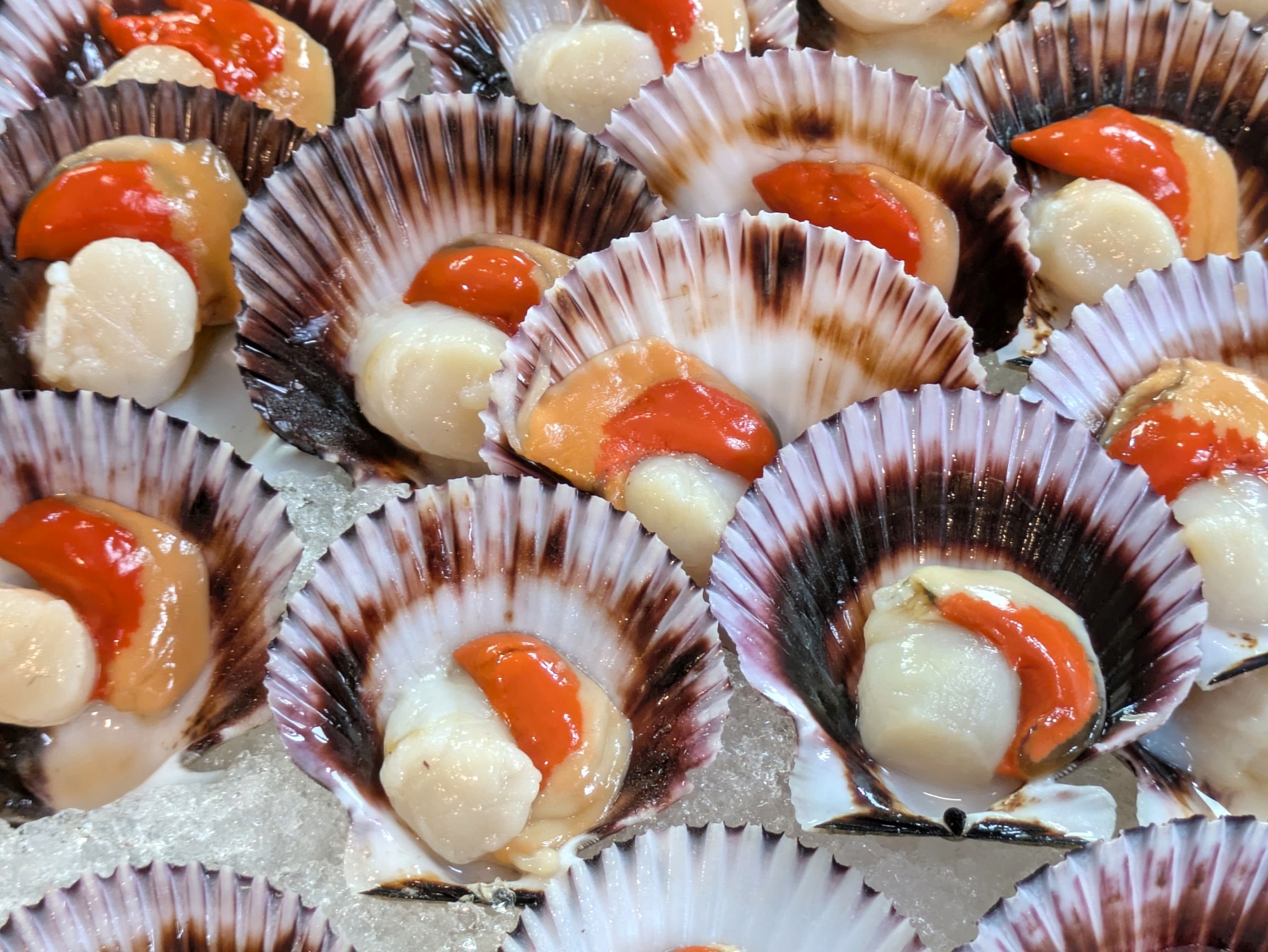
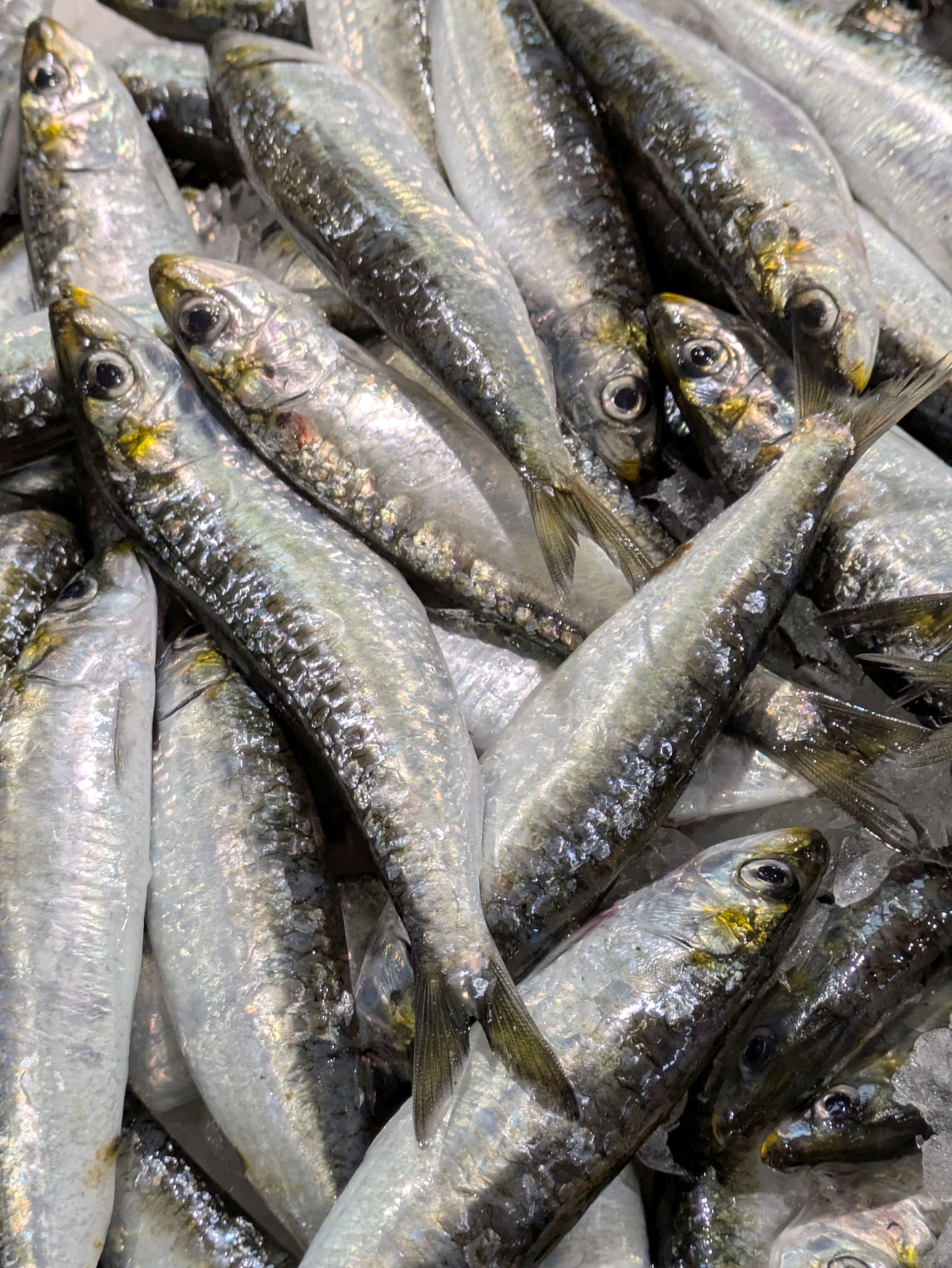
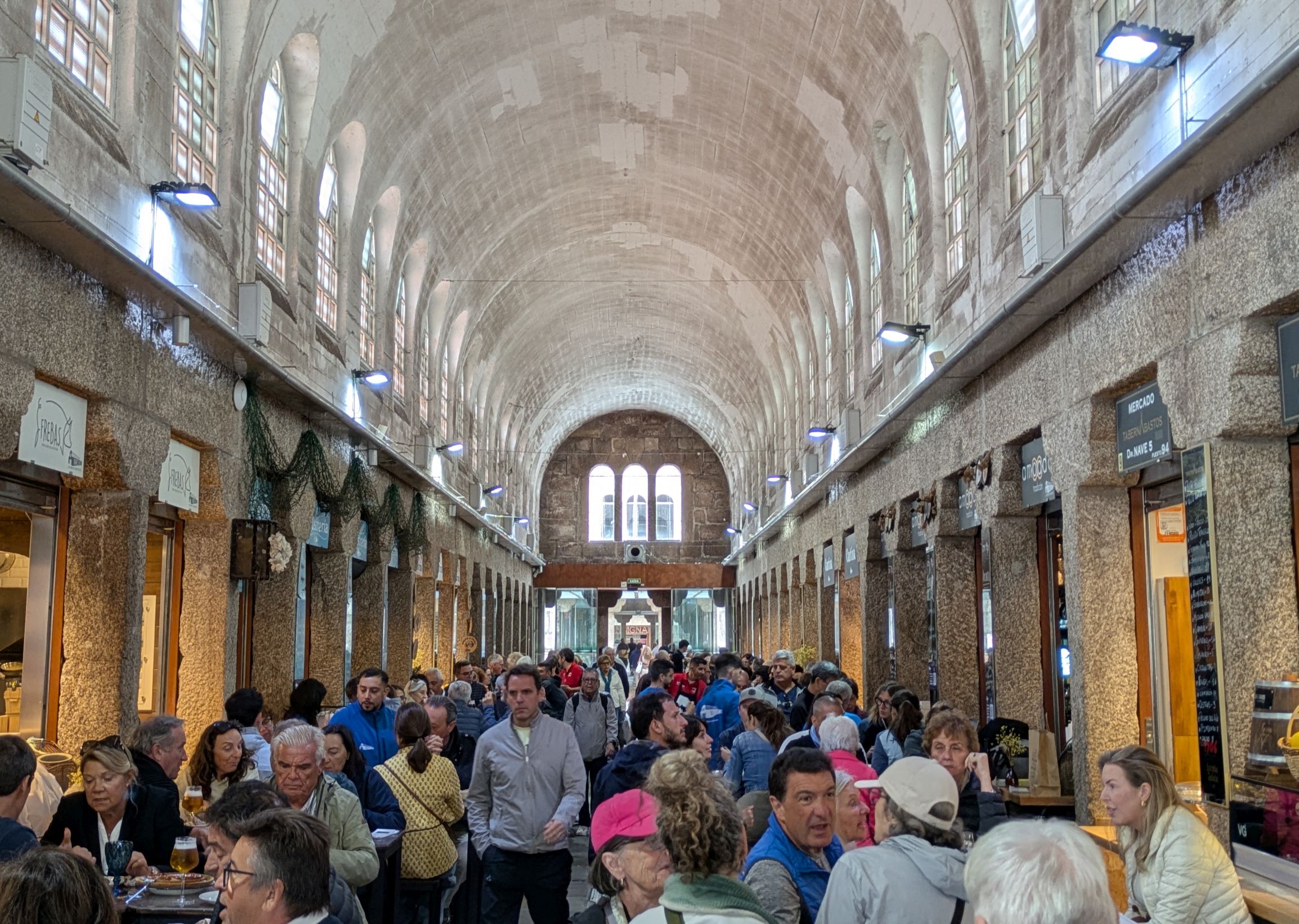
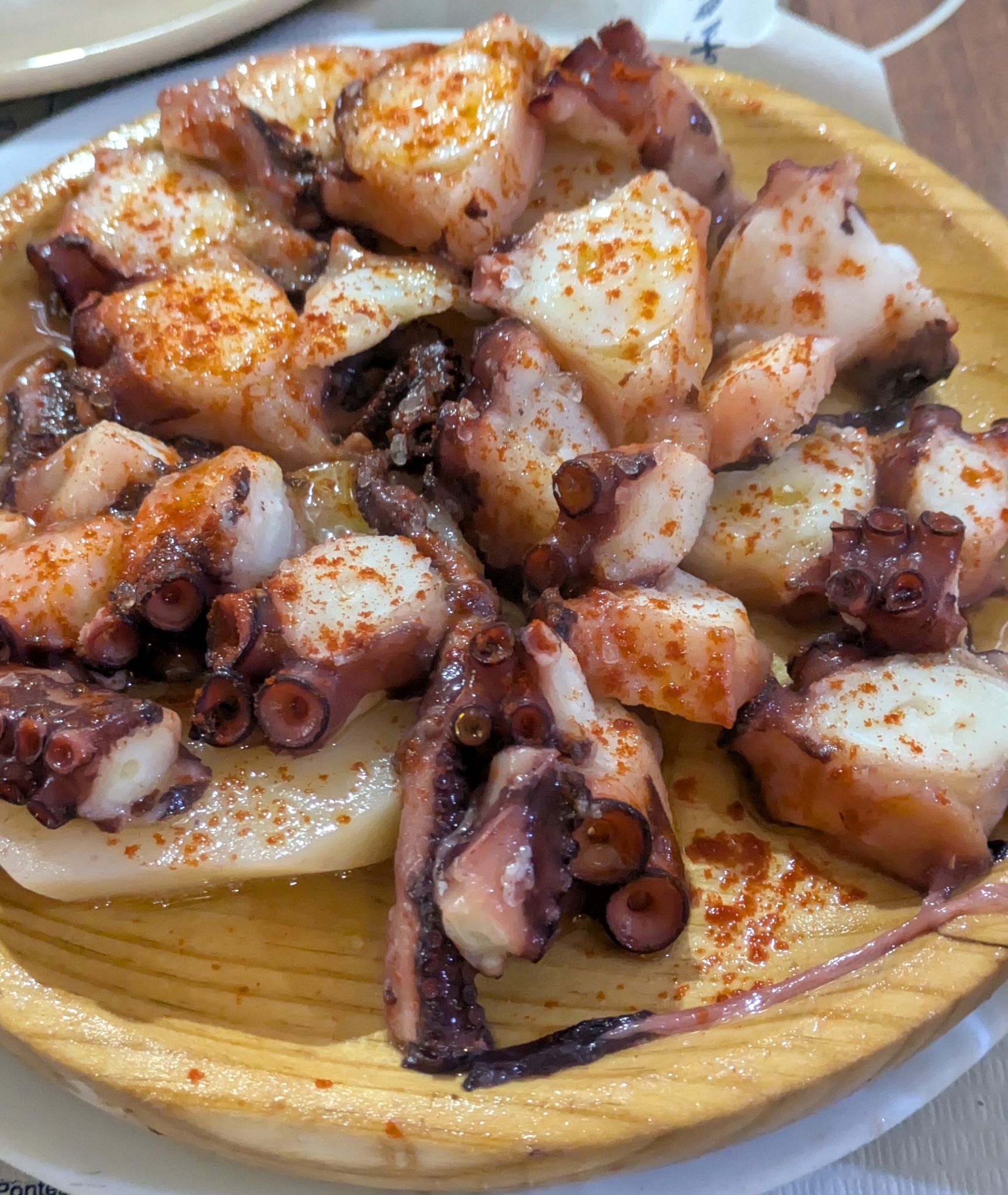
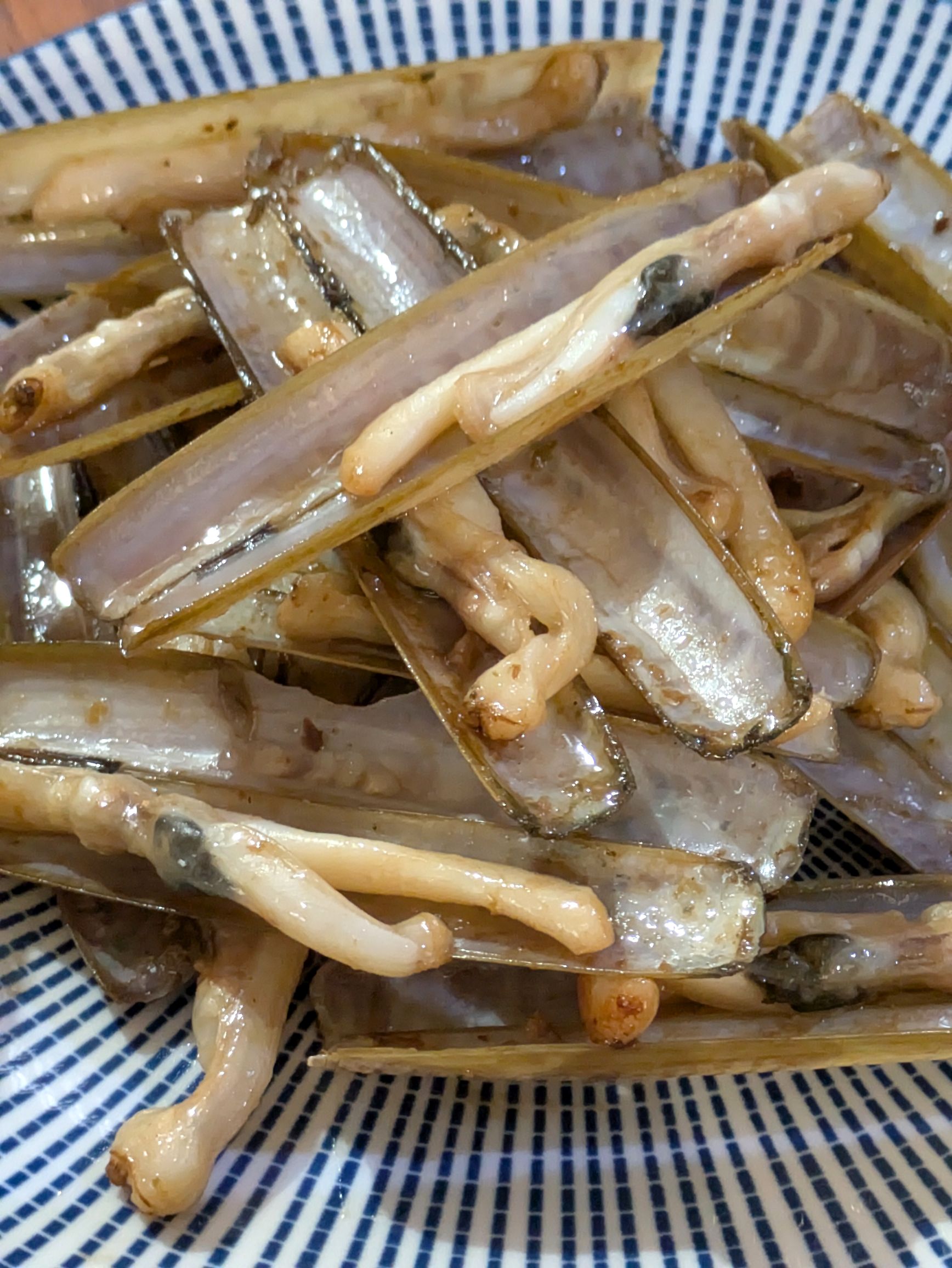
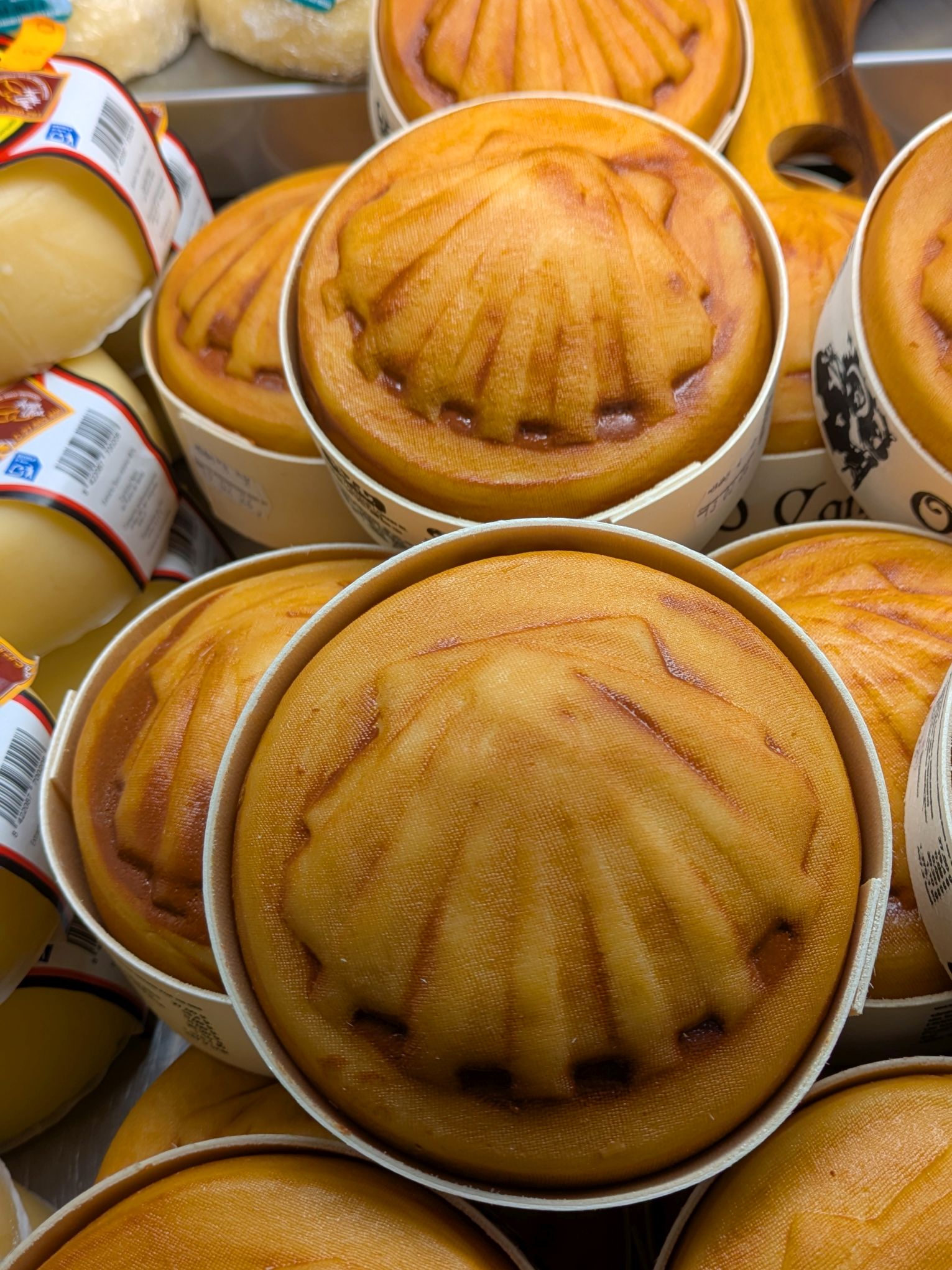
Mercado de Abastos de Santiago, the city market, was another favorite spot. We enjoy visiting city markets everywhere we travel, and this one was well worth the visit. The highlight was having lunch in the market with our group. The region is famous for its seafood, and the market had the freshest and most expertly prepared seafood I have ever had. Delicious!
Scenes from around Santiago:
(For all photos, click on the image for a full screen view.)
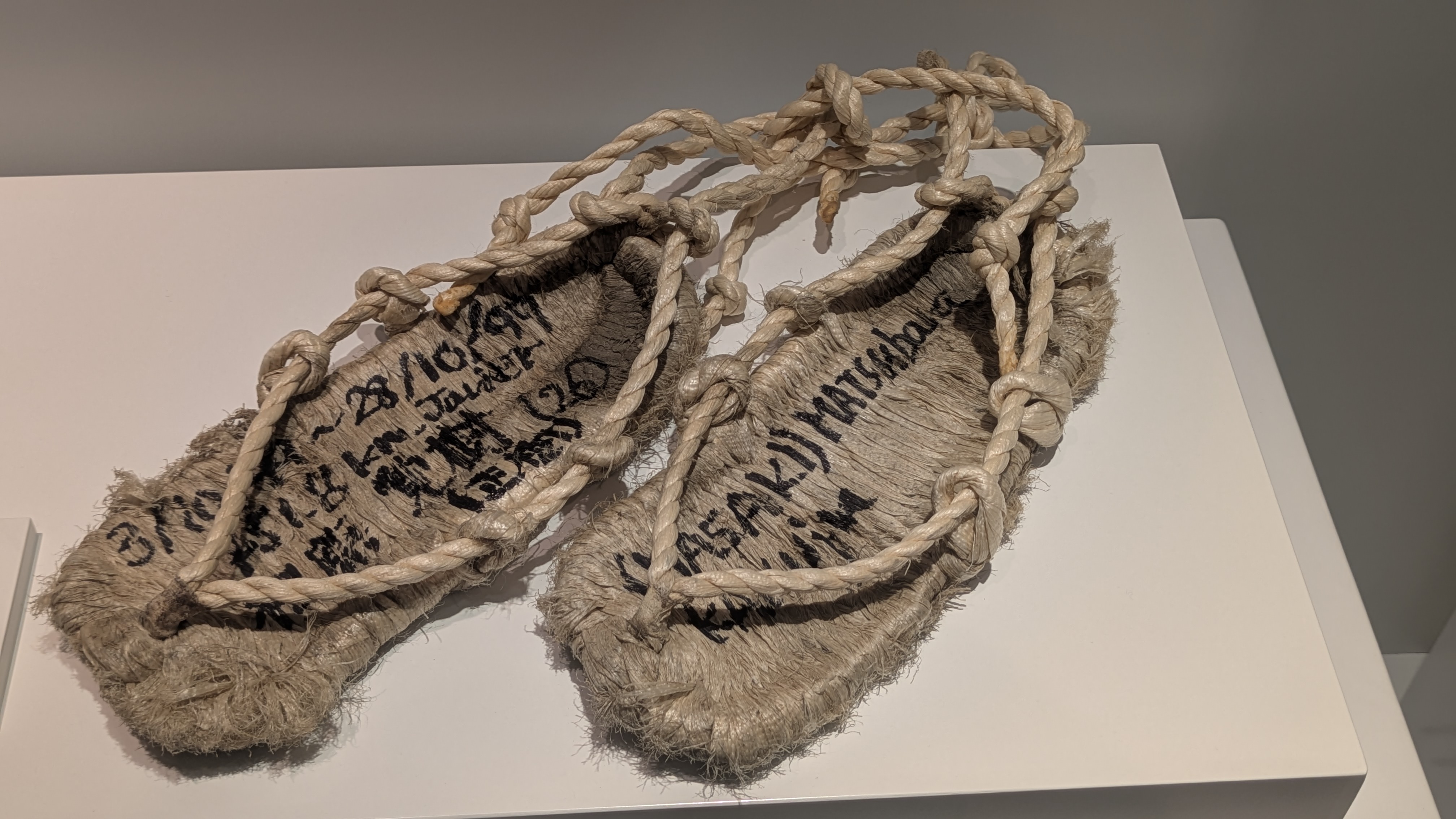
The view of the cathedral from Santiago’s city park, Parque de la Alameda (Alameda Park)At the Museum of Pilgrimage, sandals of a pilgrim from a (very!) past century were on display.
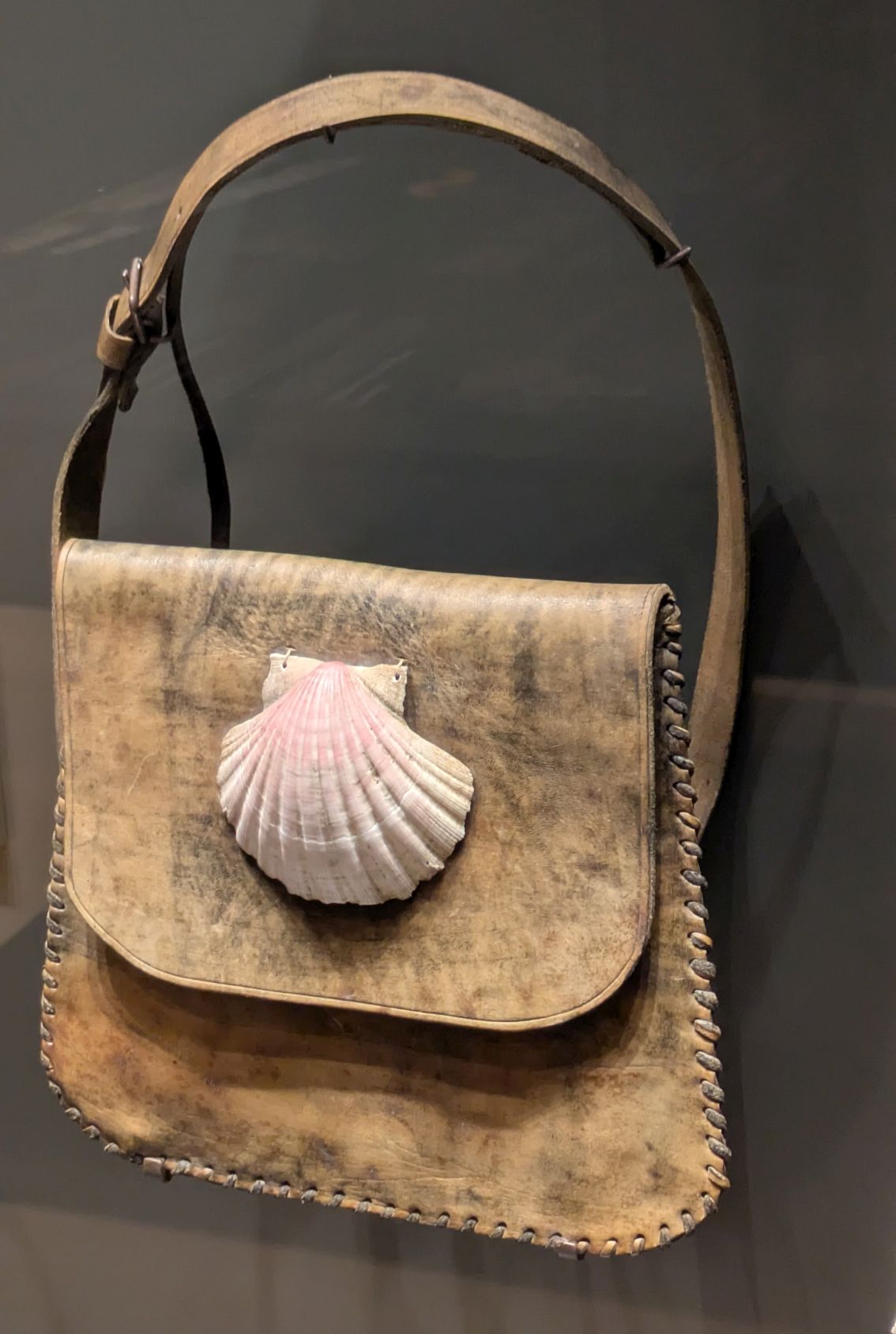
Carried by a pilgrim long ago…
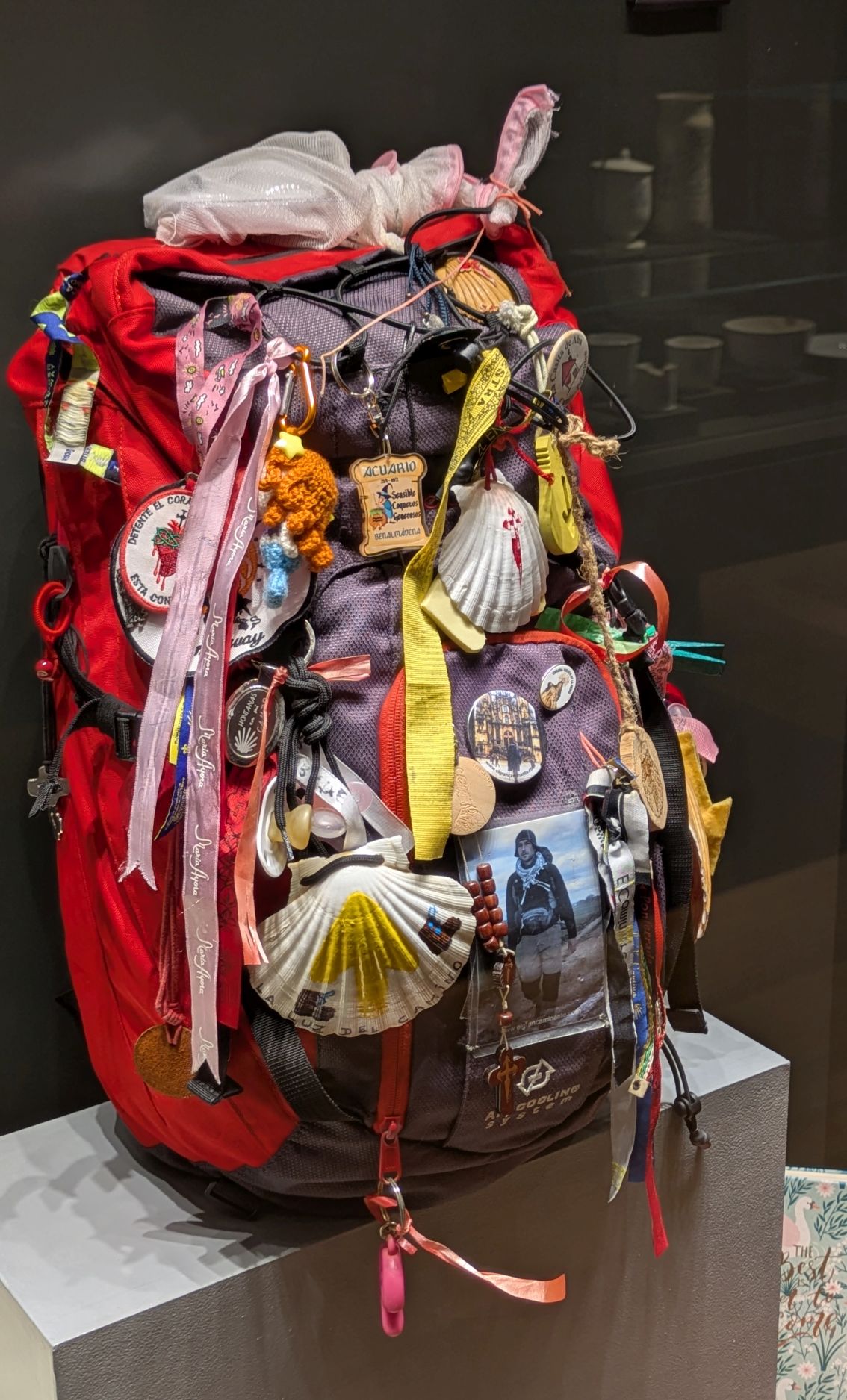
…and a backpack carried by a more recent pilgrim
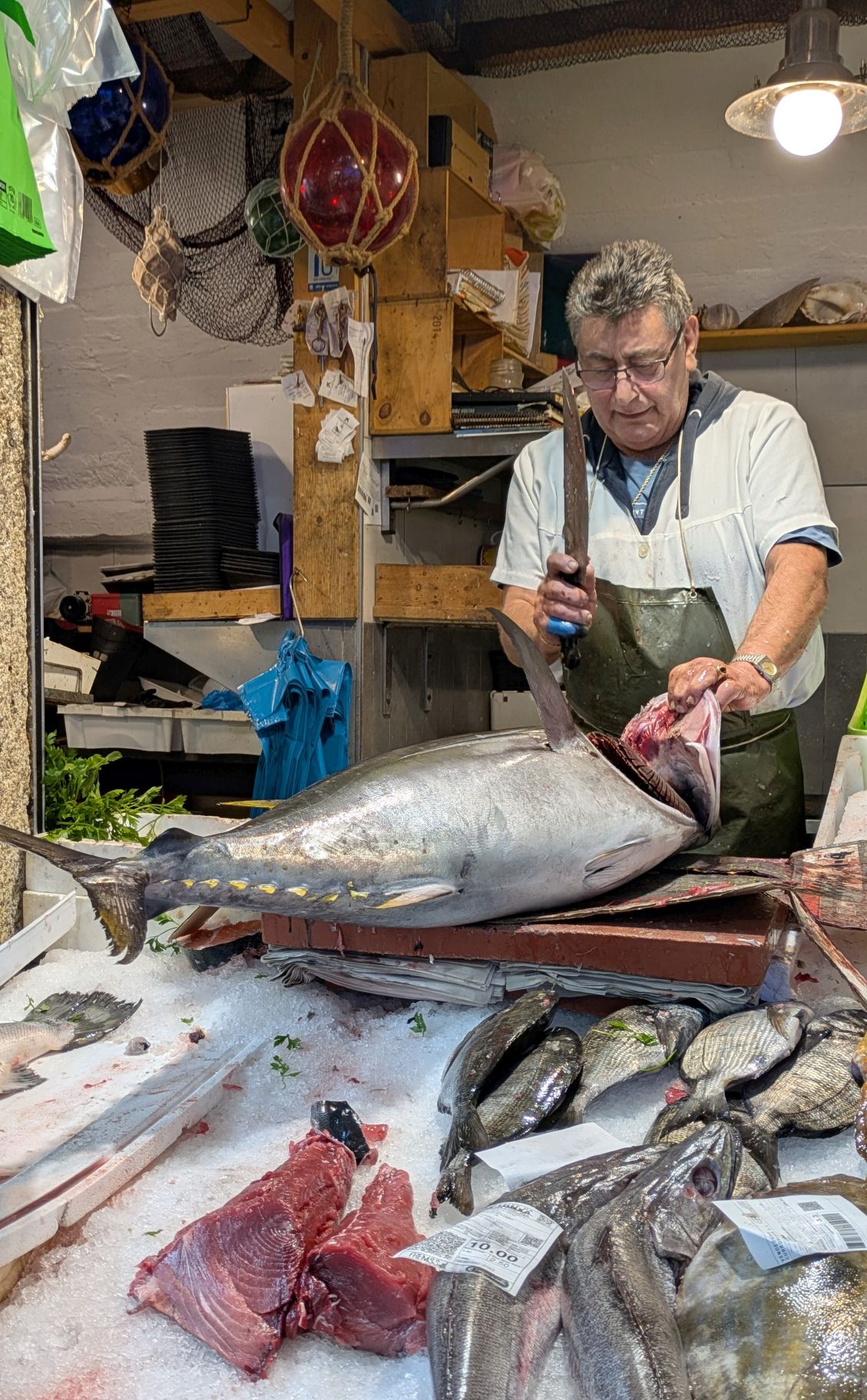
The seafood section of Santiago’s city market
Lunch at the market is an event for locals and tourists alike. That’s our group in the front, on the right.
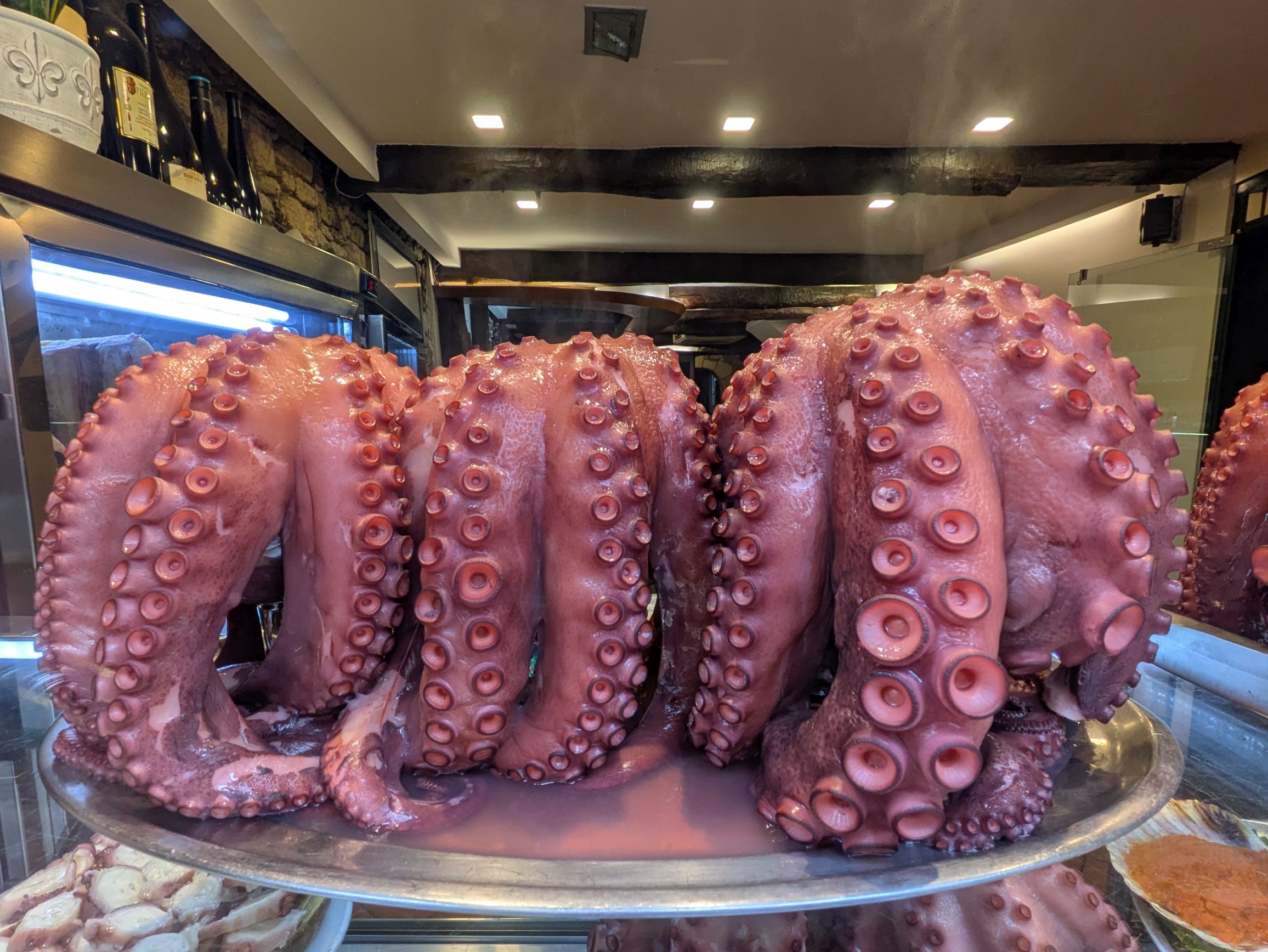
This octopus was so incredibly delicious! It was my favorite dish.
These sweet peppers weren’t too hot, and they were delicious! We were eating them like popcorn!
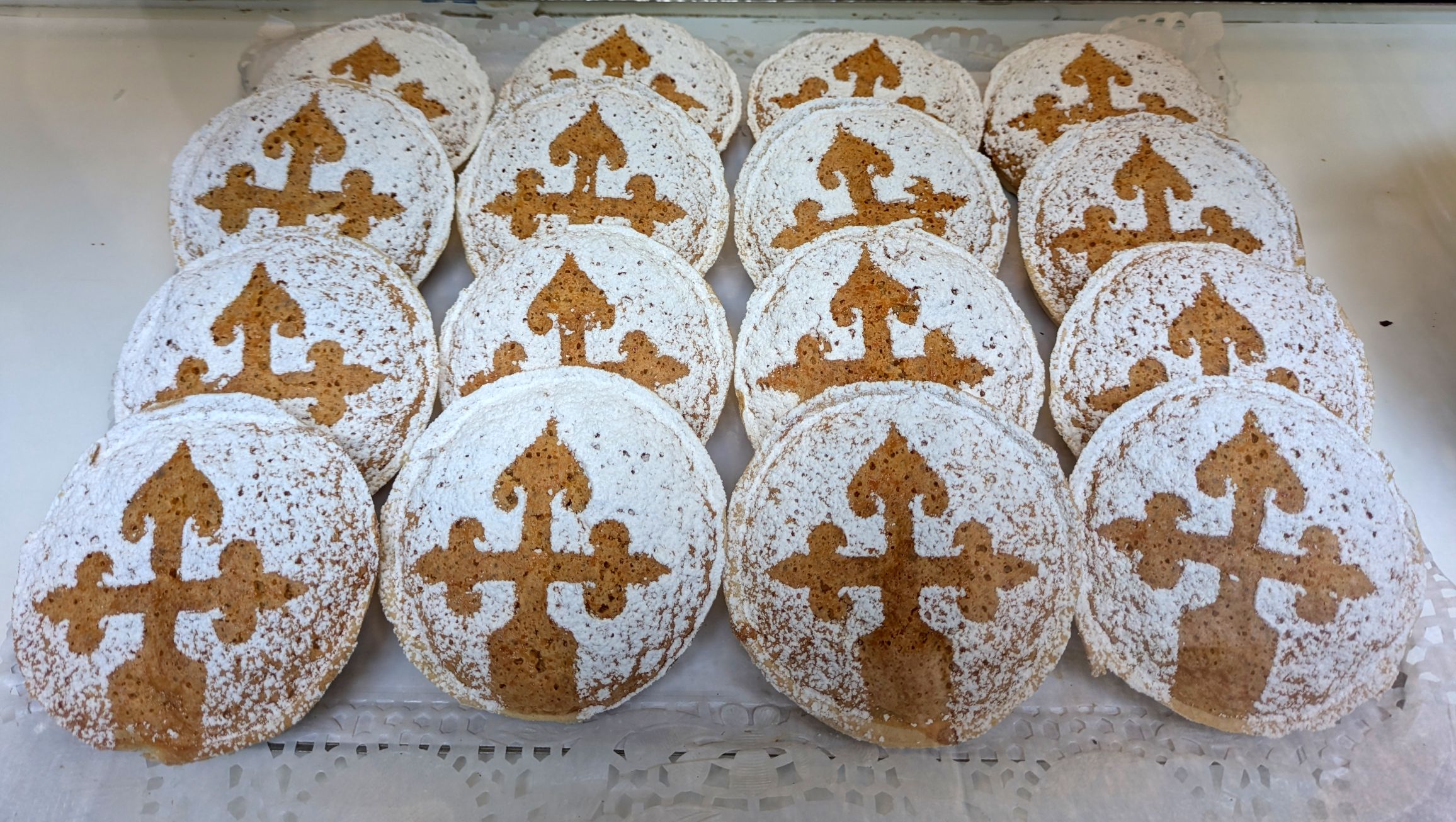
Cakes with the sword symbol of the Way of St. James
Next up: SOUTHWEST FRANCE, NORTHERN SPAIN & PORTUGAL #19: PONTEVEDRA & COMBARRO
Following our stops in Santa Colomba de Samoza and Villafranca del Bierzo (detailed in my last two posts), we arrived in Santiago de Compostela (“Santiago”) in the afternoon and had some time to have a look around before our group dinner. The following day, we explored the city on a walking tour as well as on our own.
Plaza del Obradoiro, the cathedral square, is where the exciting action was happening in town. Pilgrims walking the Way of St. James must pass through an arch at the conclusion of their journey that leads to the square. A bagpipe player plays twelve hours each day to bless the pilgrims, and it’s an emotional conclusion for those who have made the journey, especially those who have walked at least 75 miles of the camino to be recognized as a pilgrim by the church. It was wonderful seeing the joy in the eyes of pilgrims who had accomplished this exhausting goal.
(For all photos, click on the image for a full screen view.)
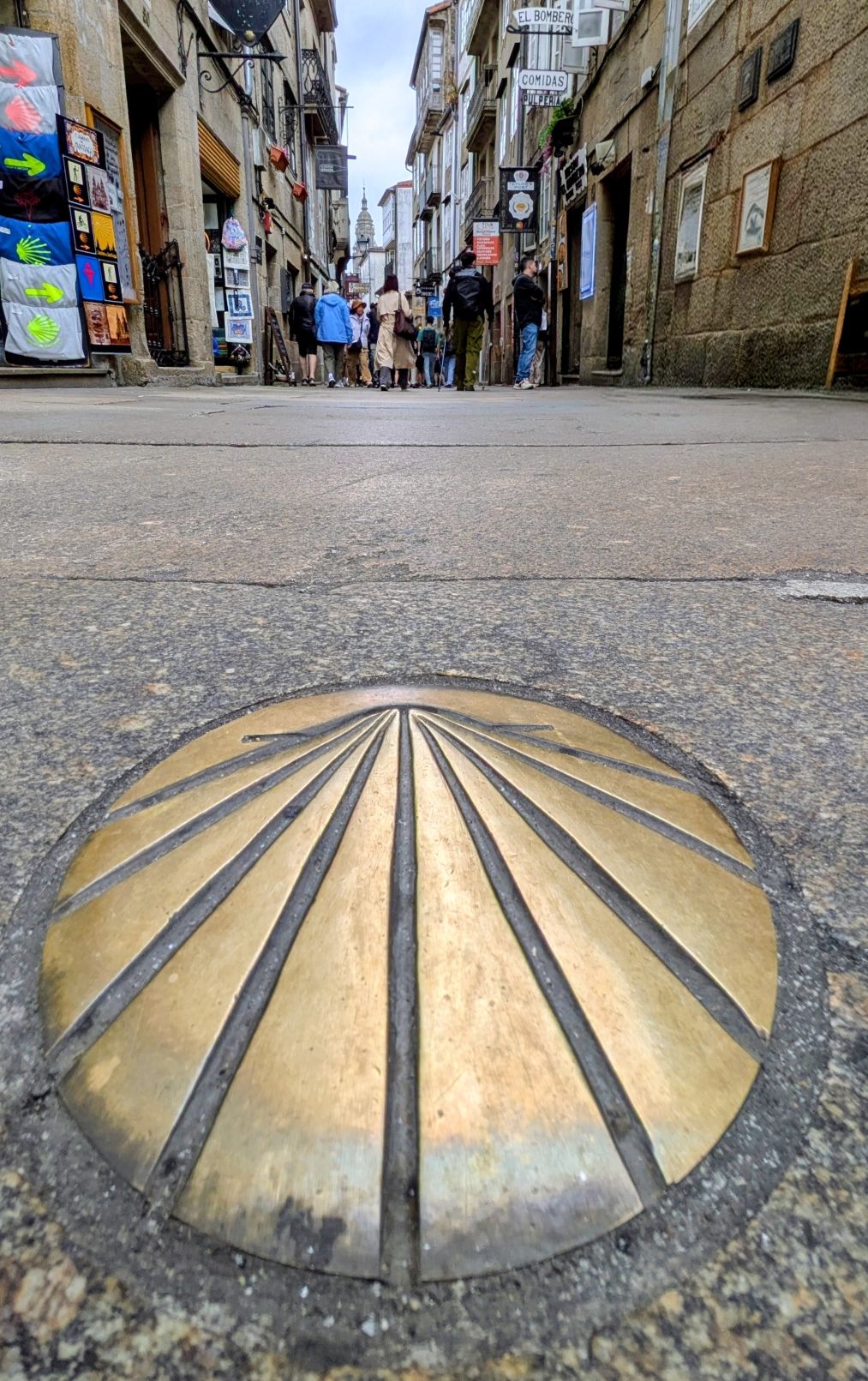
Pilgrims walking the Camino follow these navigational markers in Santiago that lead to the cathedral. The scallop shell is the symbol of the Way of St. James, and the lines represent all the different paths that lead to the cathedral.
Walking the final steps through the arch, past the bagpiper, and to the cathedral.
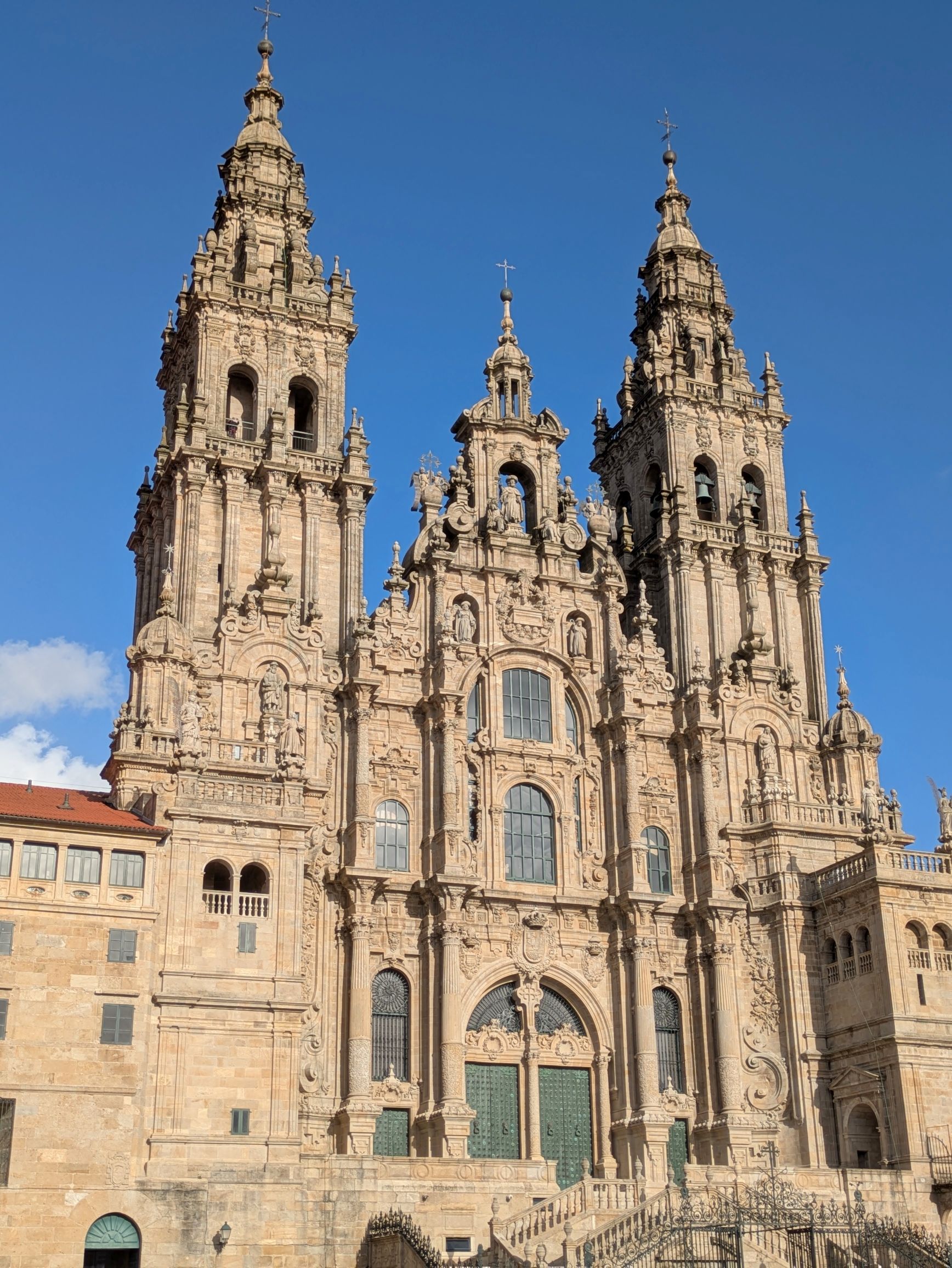
The following late afternoon was beautiful, so I returned to reshoot my photos of the cathedral. This is Cathedral Square where pilgrims conclude their journey.
At the conclusion of the journey, pilgrims pay homage to the remains of St. James, just as pilgrims had done since the Middle Ages. According to legend, a ninth-century shepherd witnessed a moving star and followed it, the light eventually leading him to a burial site. The local bishop examined the bones found there and proclaimed them to be those of Jesus’ apostle, James, the patrol saint of Spain. Hearing the news, the Spanish king ordered a cathedral to be built on the spot in 1075. In doing so, he not only transformed Santiago de Compostela into one of the most sacred Catholic destinations in the world, but he also nurtured the budding relationship between the Spanish monarchy and the Catholic Church that would eventually come to dominate Spanish history and culture.
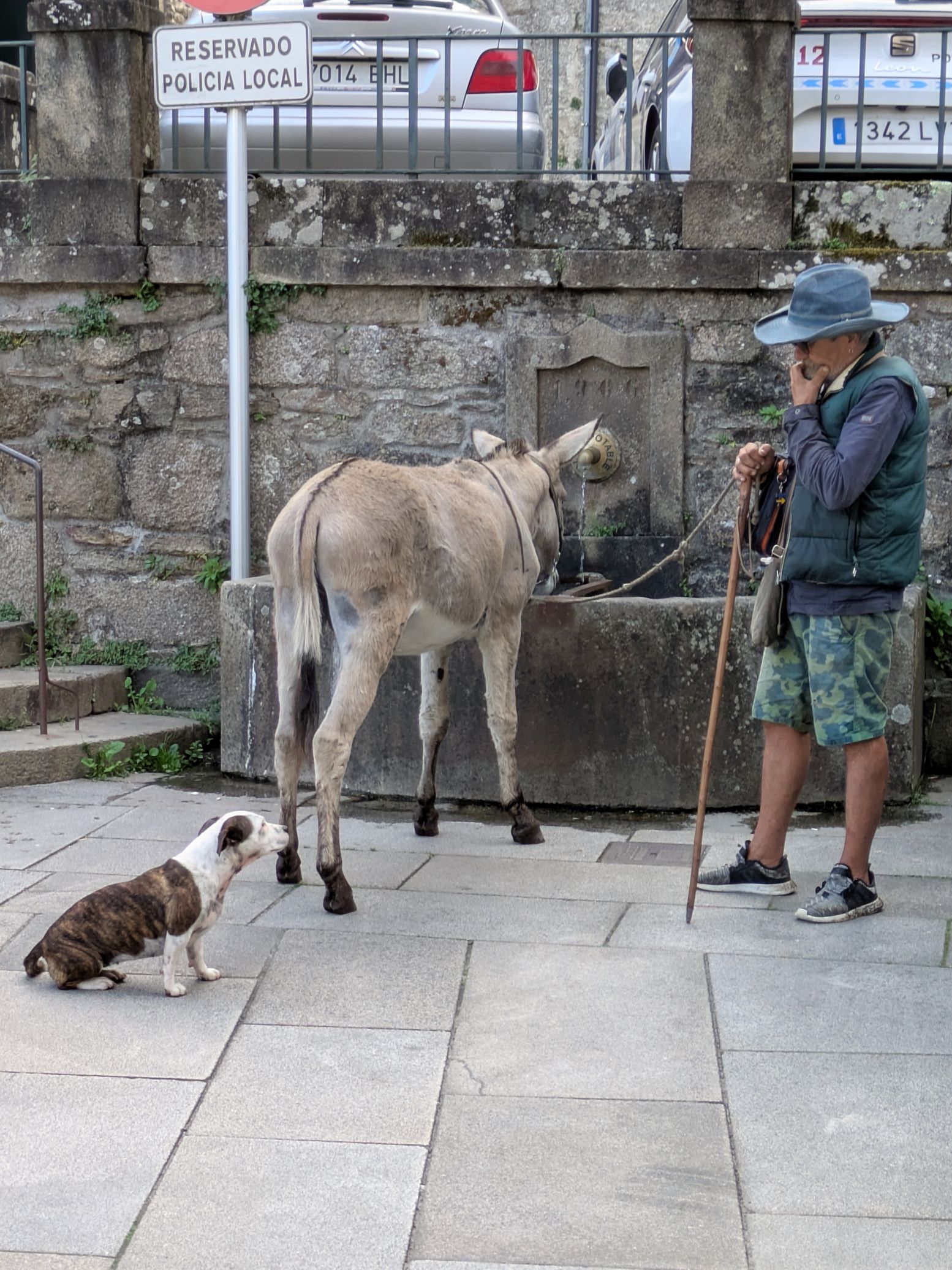
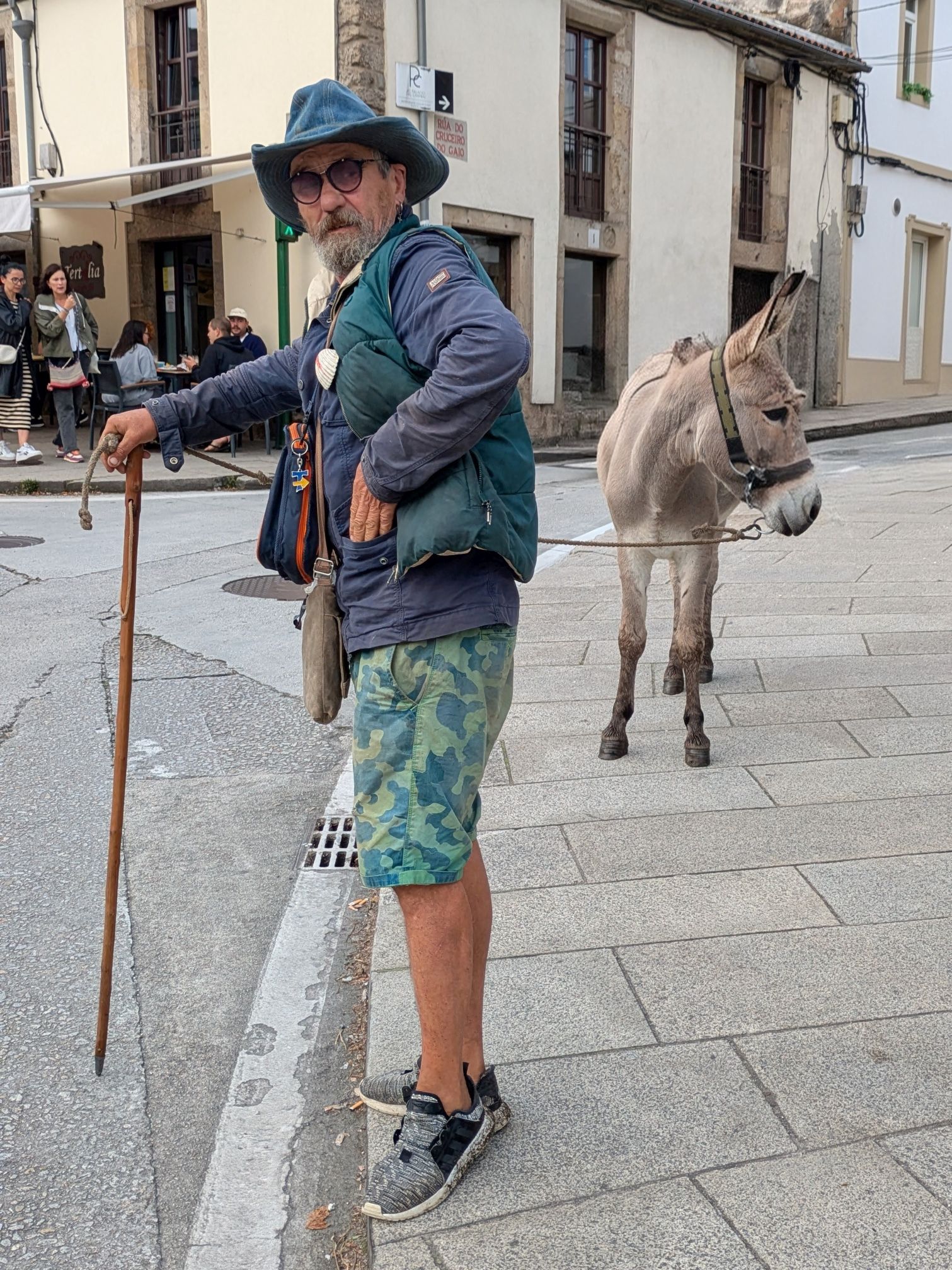
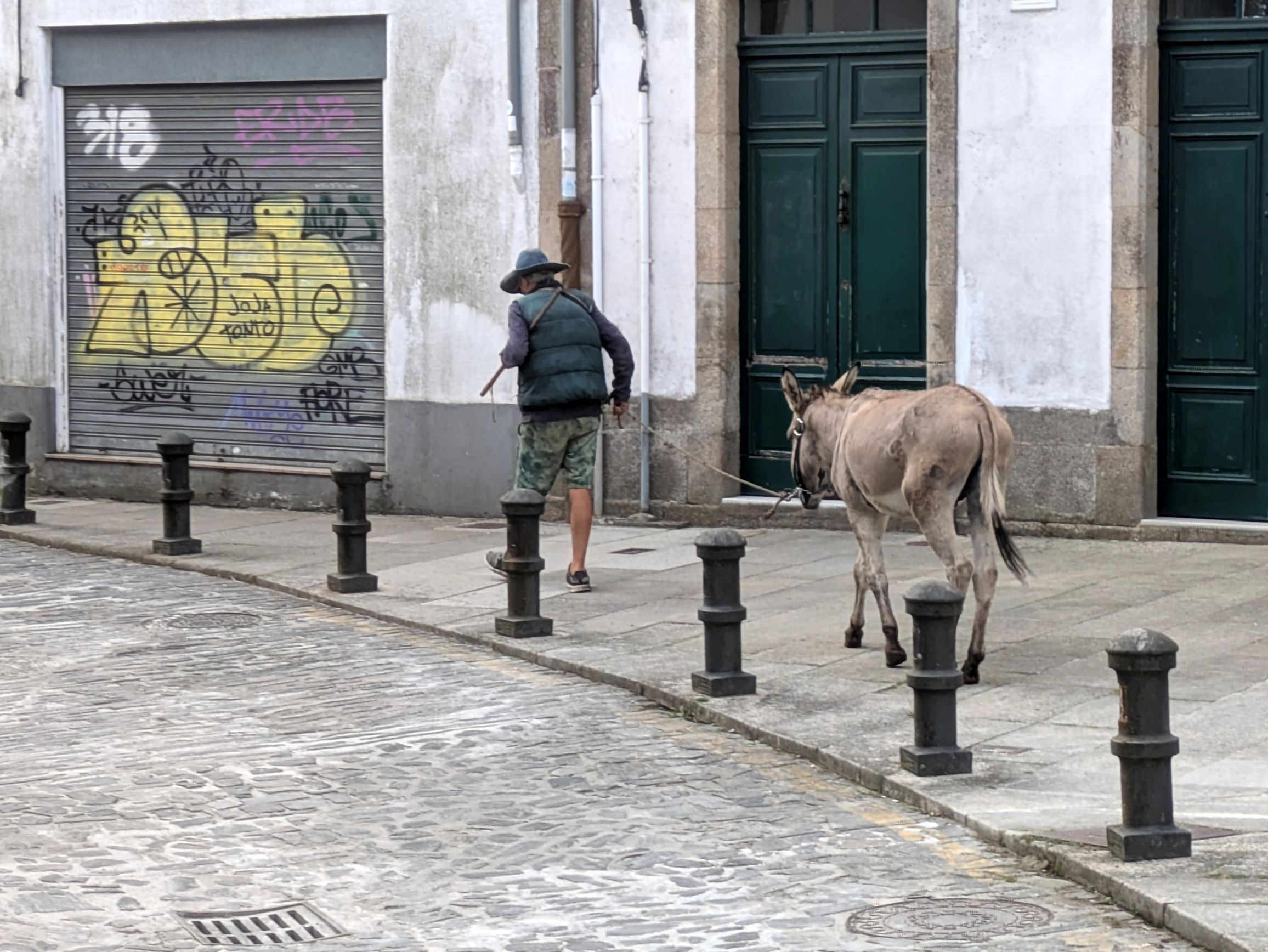
While walking with our group from the hotel to the cathedral, we came across these interesting pilgrims stopping for a drink from a fountain.
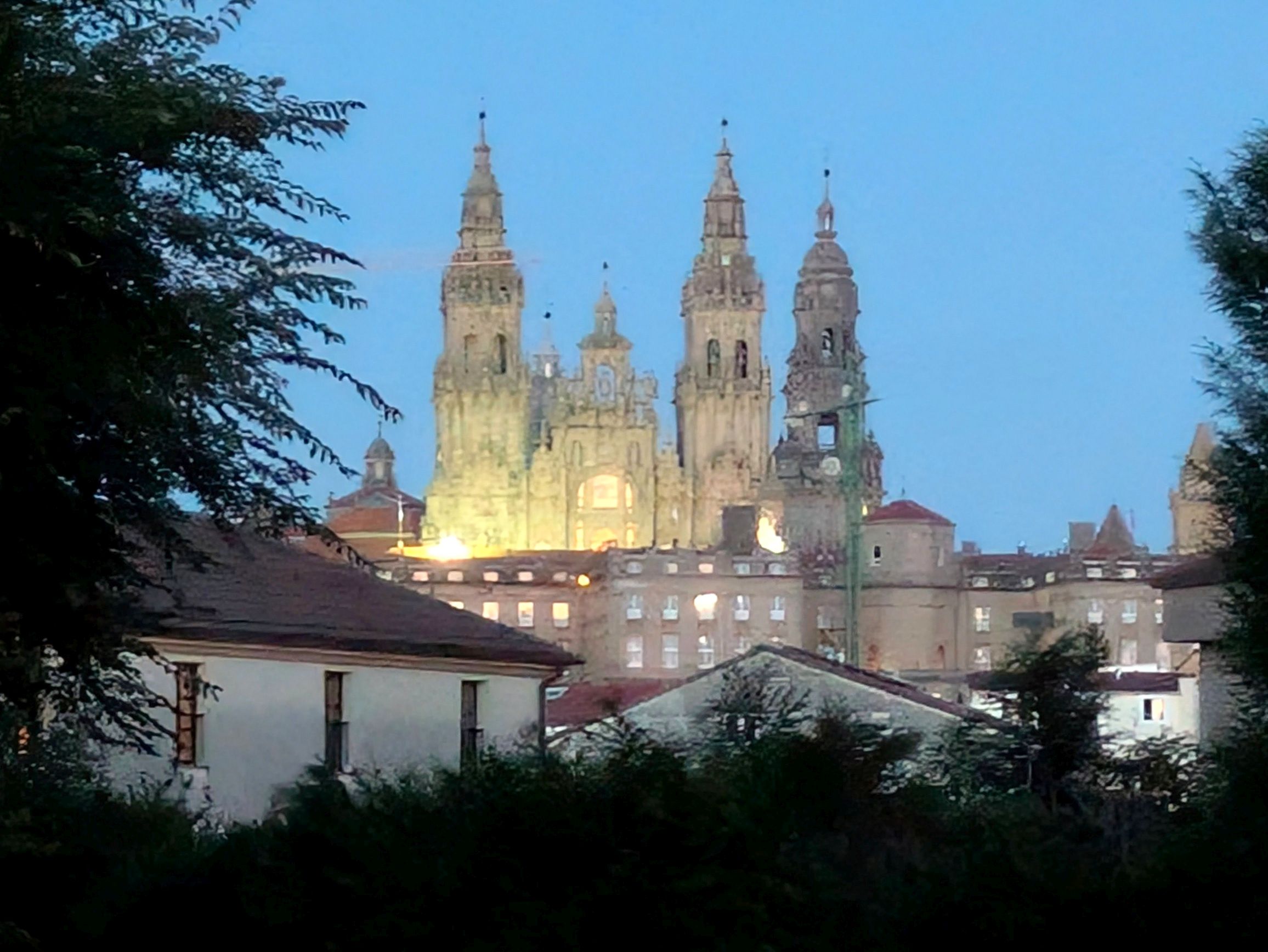
The eveninng view of the cathedral from the garden of our hotel
Coming up next: SOUTHWEST FRANCE, NORTHERN SPAIN & PORTUGAL #17: SENSATIONAL SANTIAGO DE COMPOSTELA, PART 2
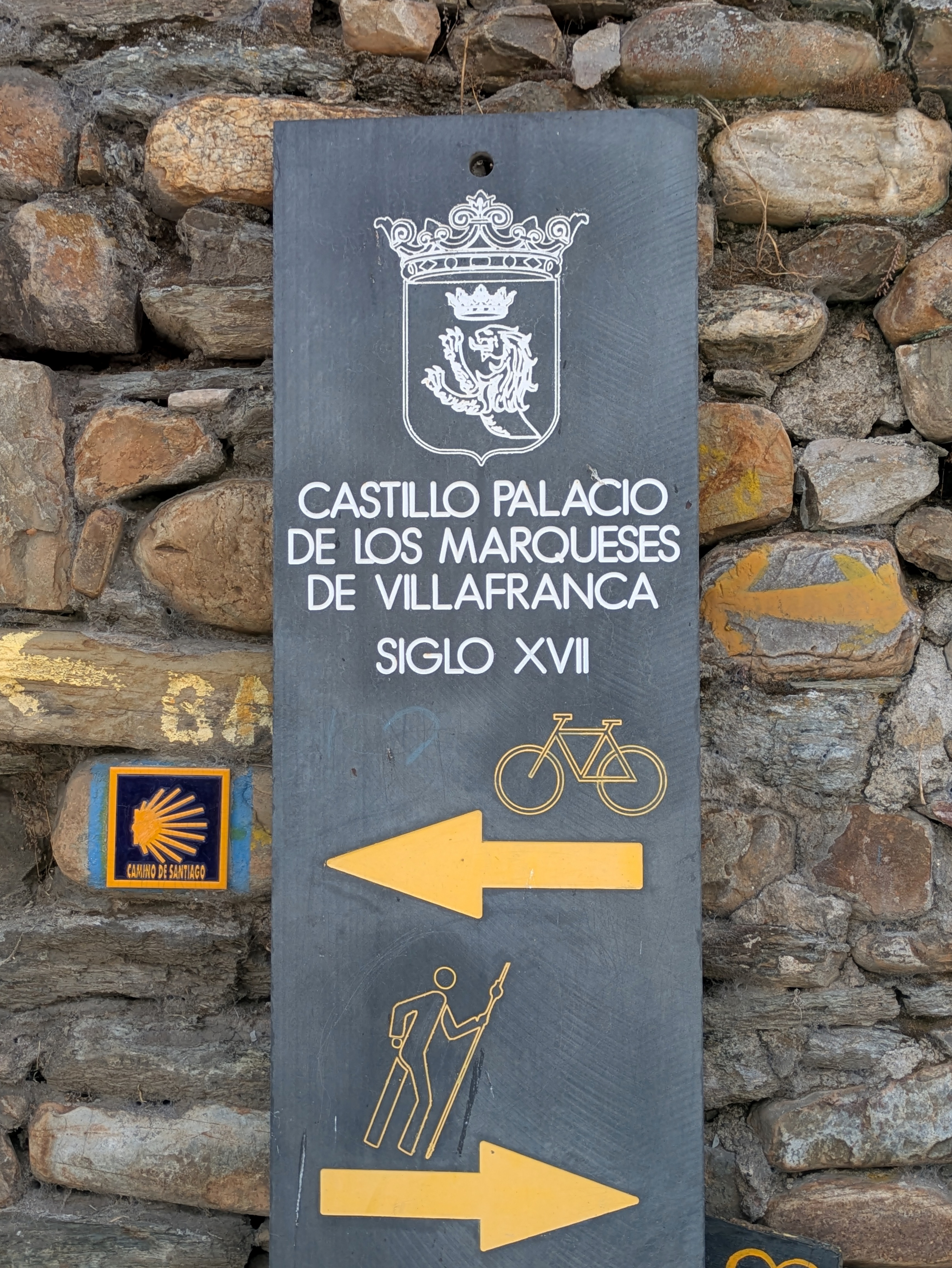
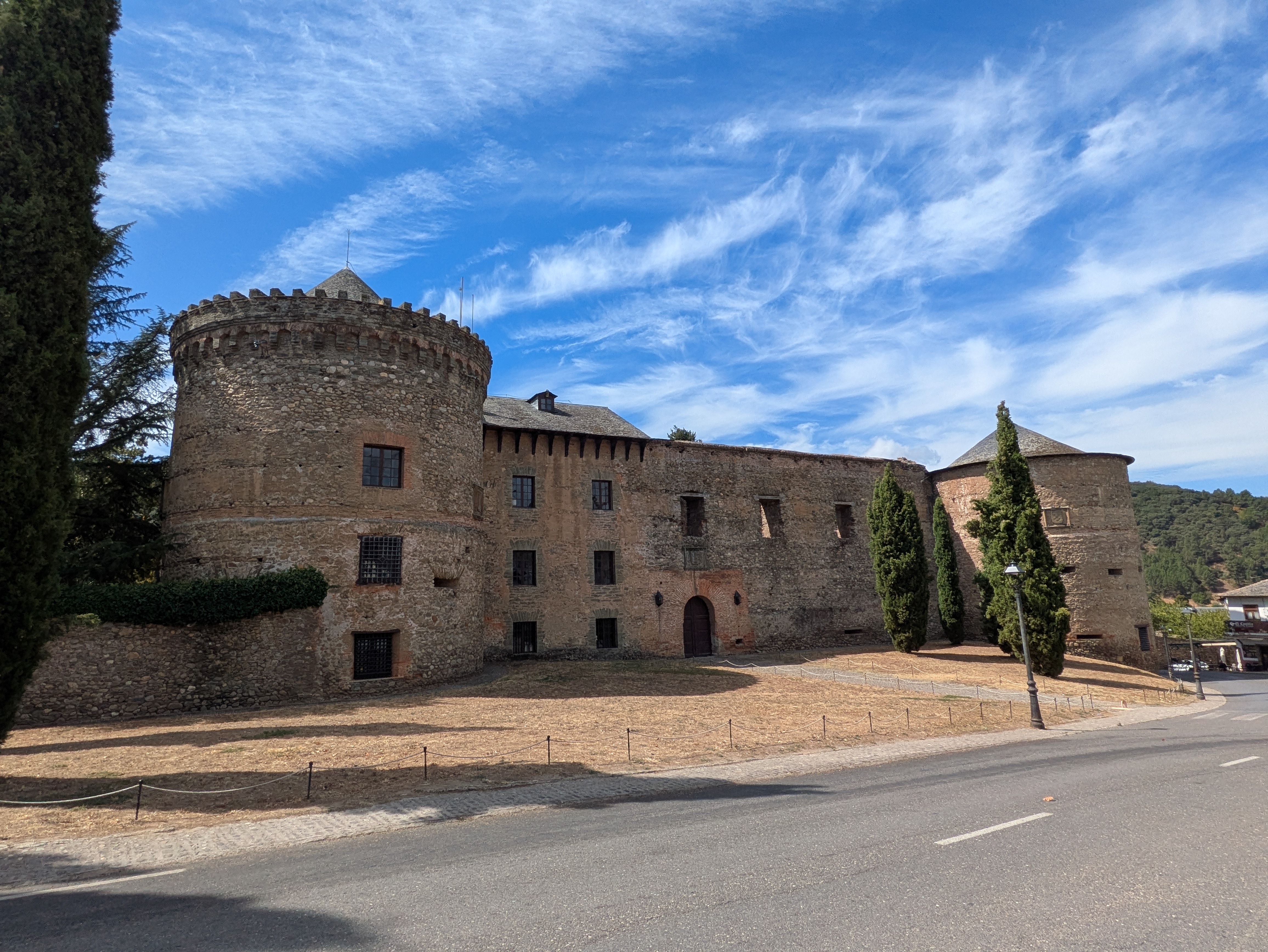
An additional stop we made on the way to Santiago de Compostela was at Villafranca del Beirzo, another village with a long name. It is the final important town along El Camino before arriving in Santiago, and it has been a rest stop for pilgrims walking the Way of St. James since the 9th century. For pilgrims walking the entire 500 miles, they still have 116 miles to walk to Santiago, once they leave this village of 2,659 people.
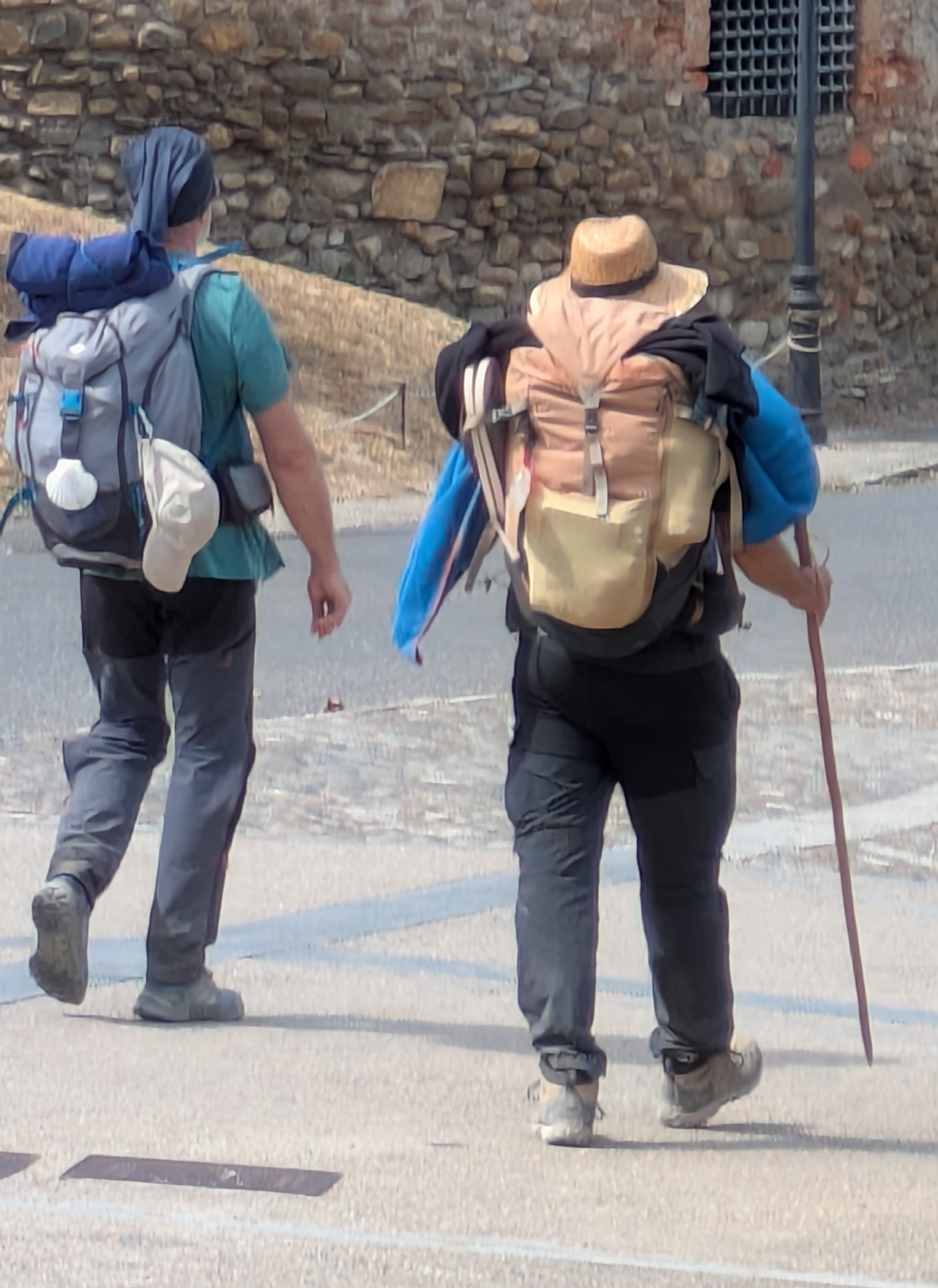
What an amazing commitment these pilgrims make to walk the entire Way of St. James! Most of the pilgrims do not complete the entire walk, and there are many more (like our group) who only walk portions as part of a tour. But for those who complete the entire walk, good on them!
(For all photos, click on the image for a full screen view.)
On our way to Santiago de Compostela, we stopped to see a small village with another long name: Santa Colomba de Samoza. Located in the historical and remote region of la Maragateria, Spain, the residents (“Maragatos”) are believed to be the last living descendants of the North African Berbers who arrived in Iberia in the eighth century.
Honey production has been an important trade in this region, and there are around 1,000 beekeepers in León, about a one-hour drive from the village. The honey that is produced is made into a sweet syrup, an ingredient in local desserts.
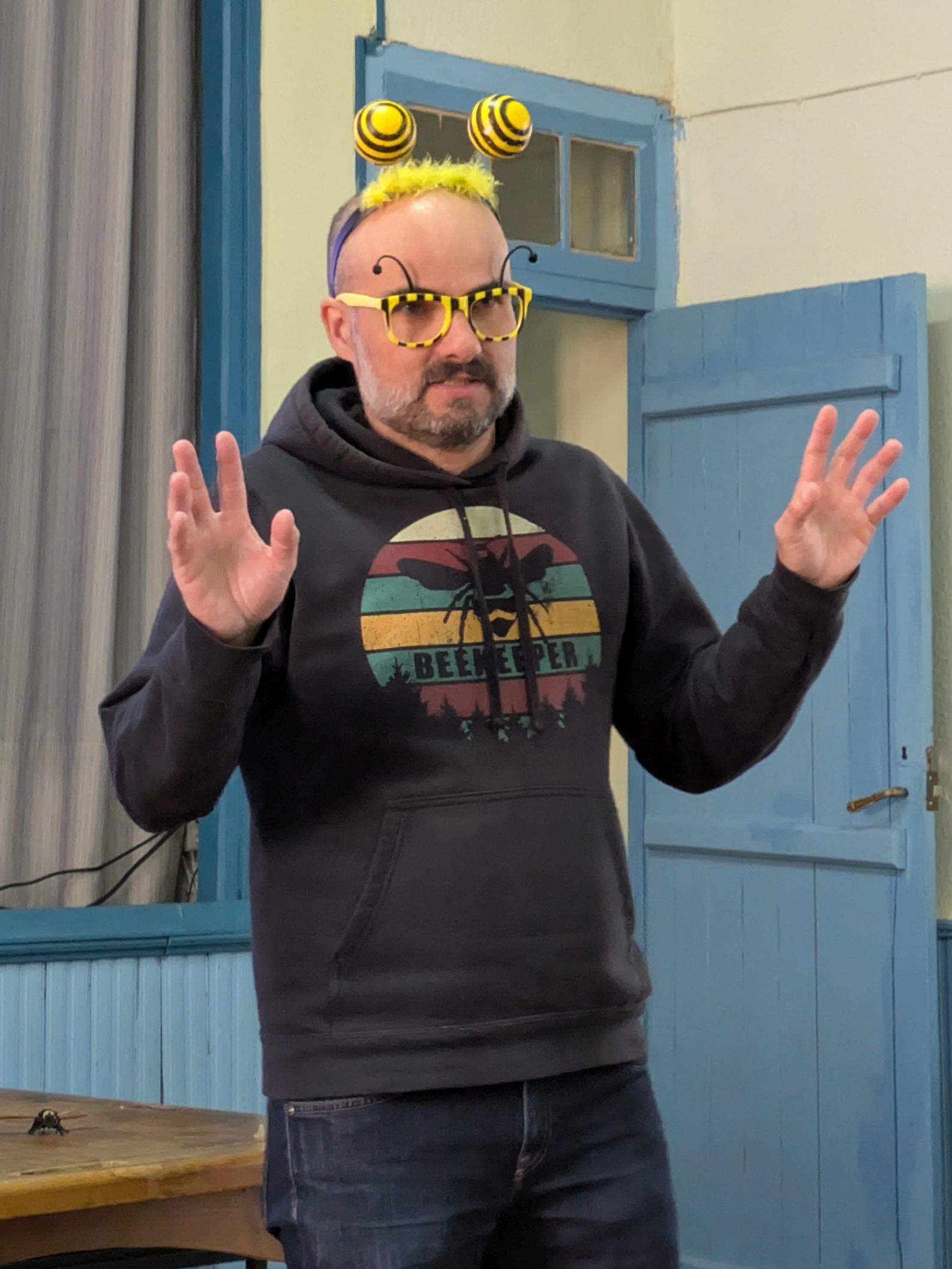
We met with a local beekeeper, Oscar, to learn about his bees and the process of collecting the honey from his hives. Like many other villagers, his family had left the village for better opportunities in the cities. Madrid had become their new home, and that is where Oscar was born. As an adult, Oscar decided to return to his family’s empty village to join the effort in rebuilding its businesses. There are only 30-40 people in the village that live there in the winter, and Oscar is one of them, trying to grow his honey business, “La Floritura.” He also speaks to schoolchildren about the importance of bees and beekeeping.
(For all photos, click on the image for a full screen view.)
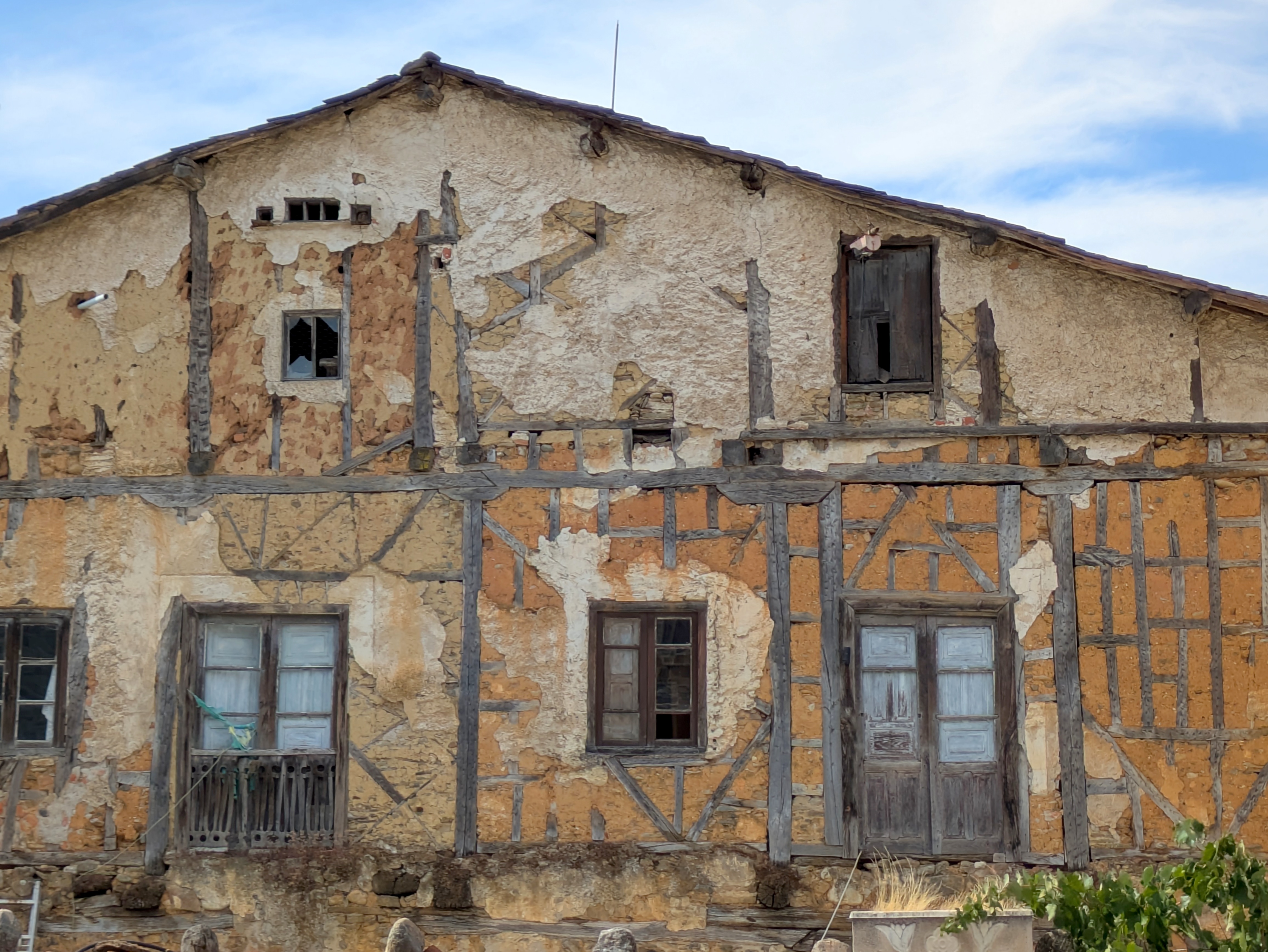
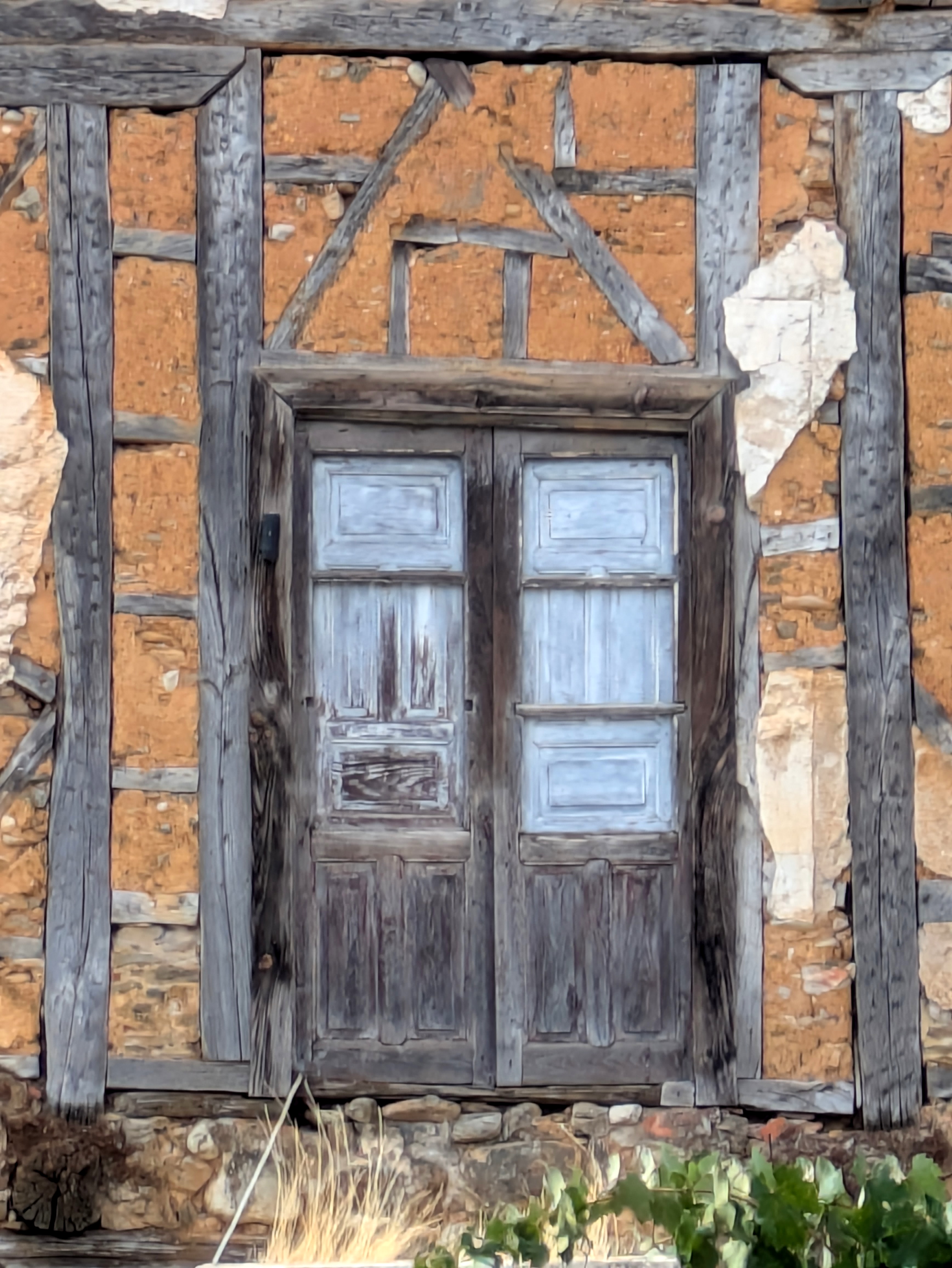
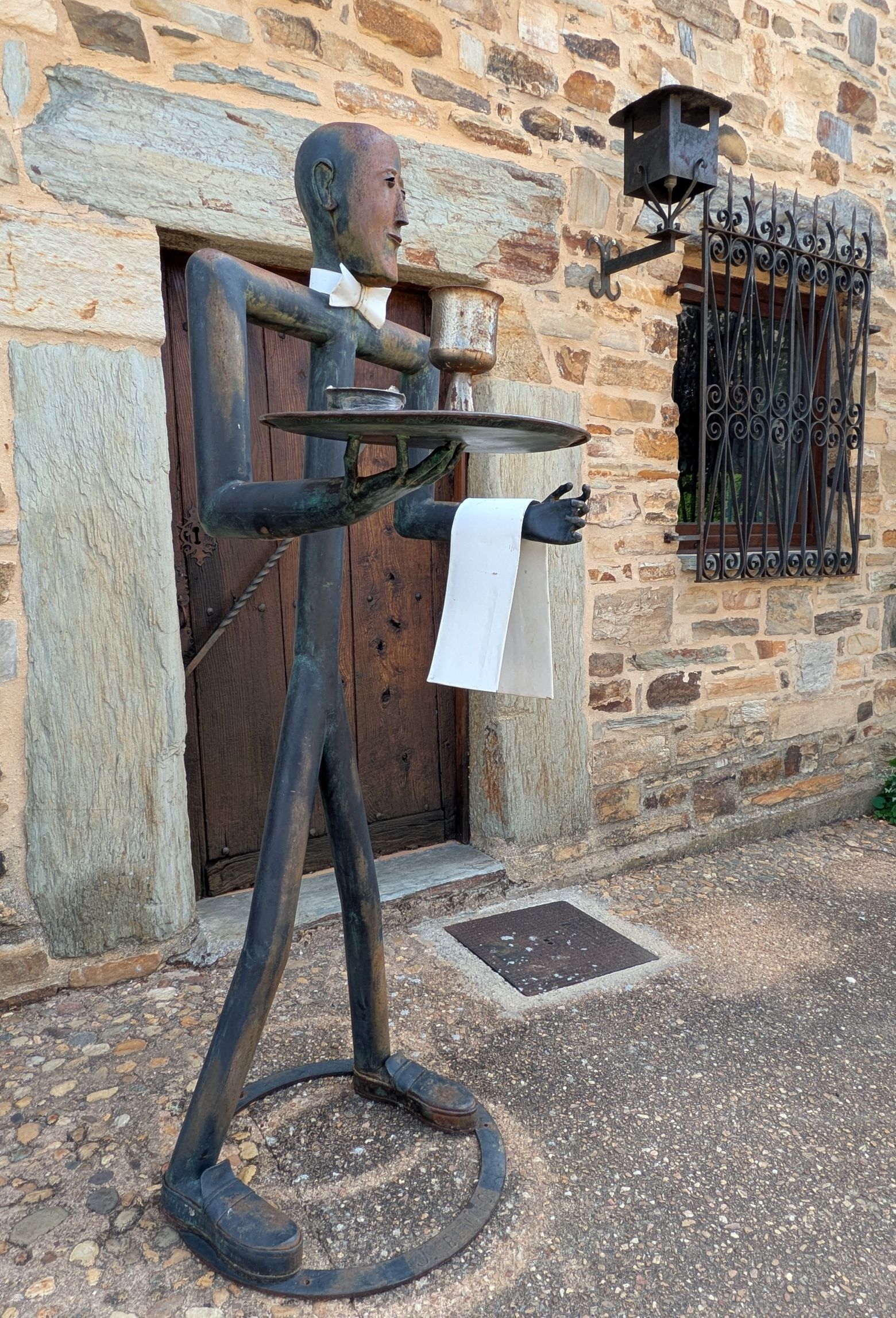
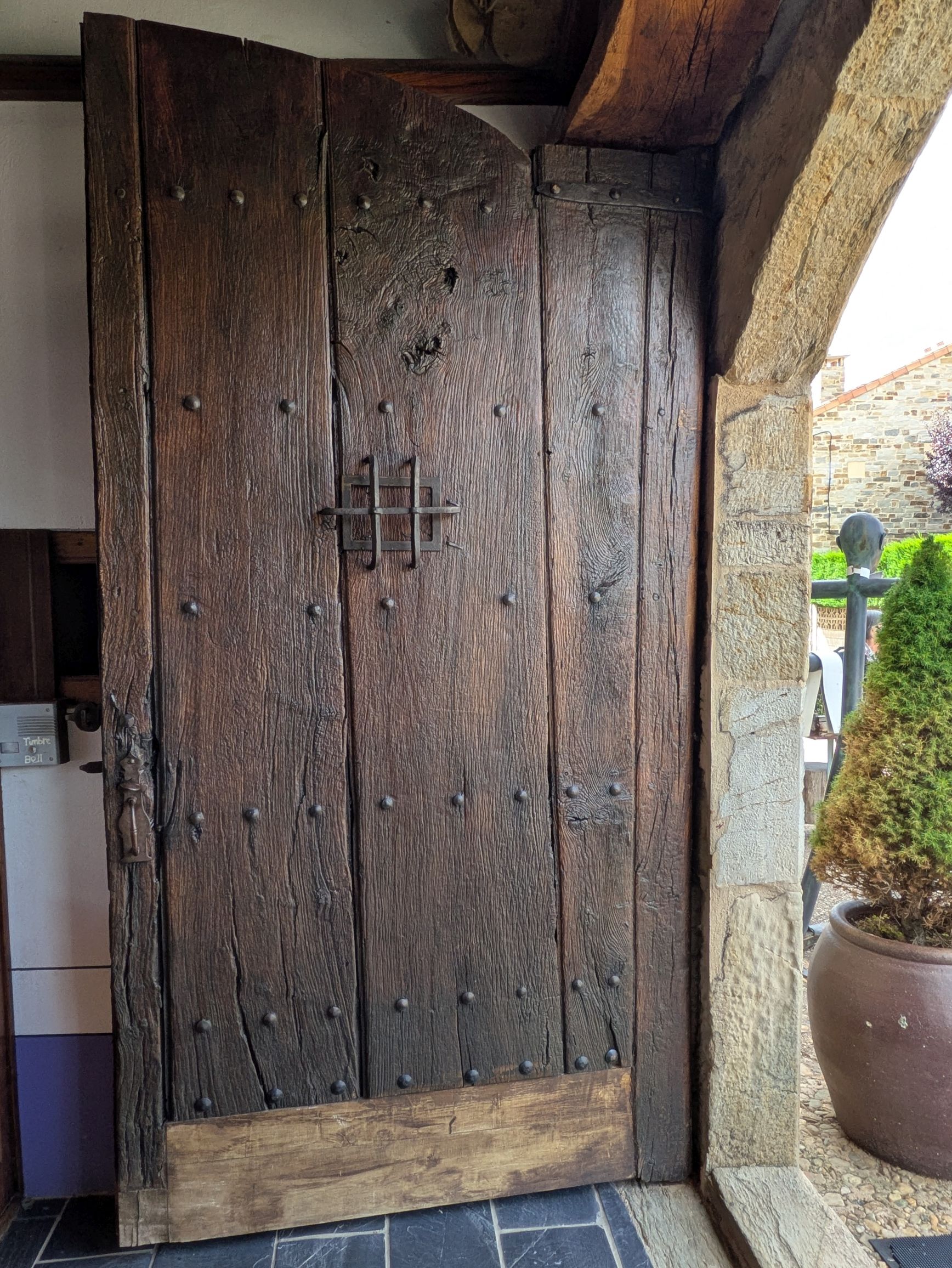
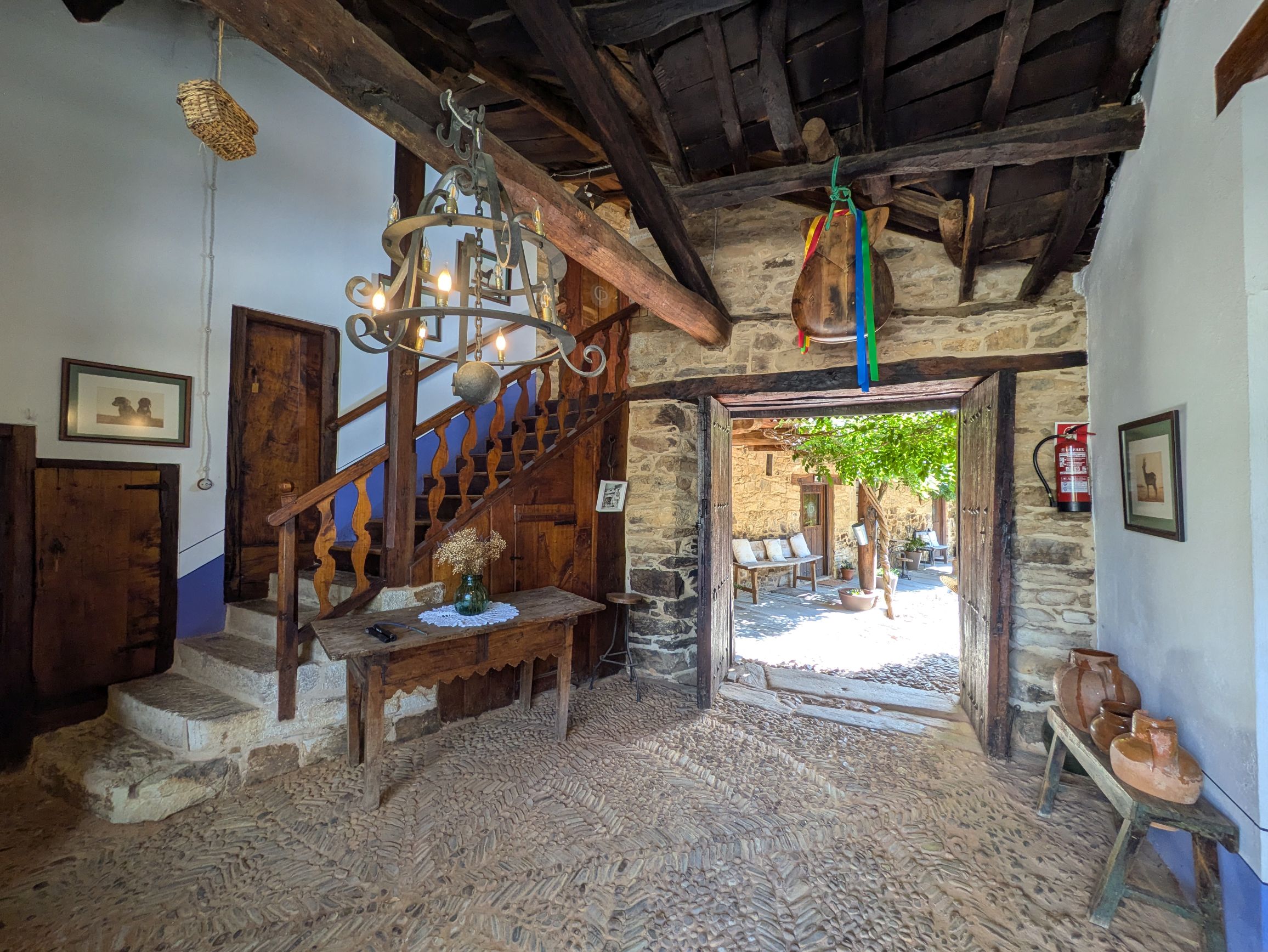
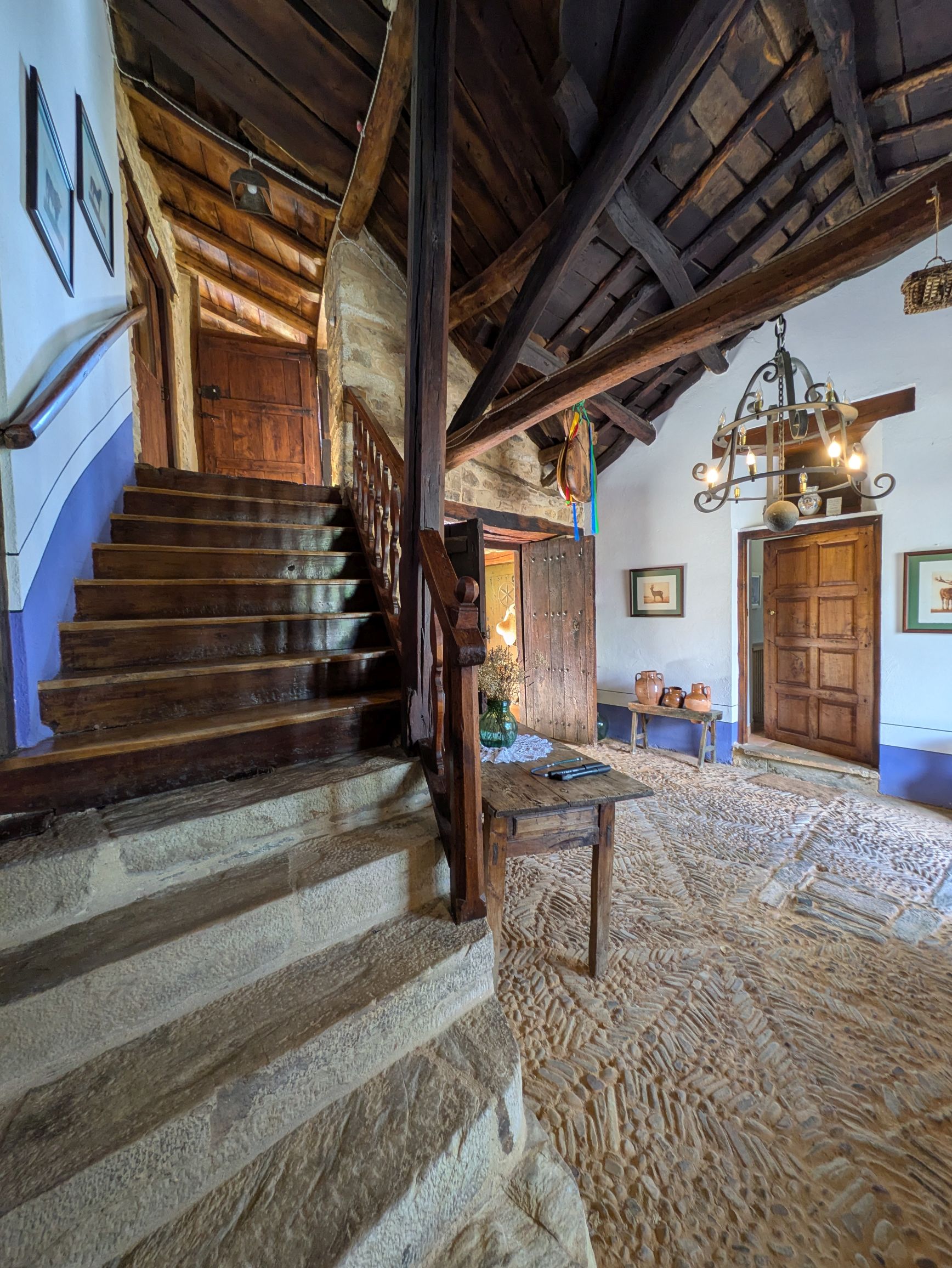
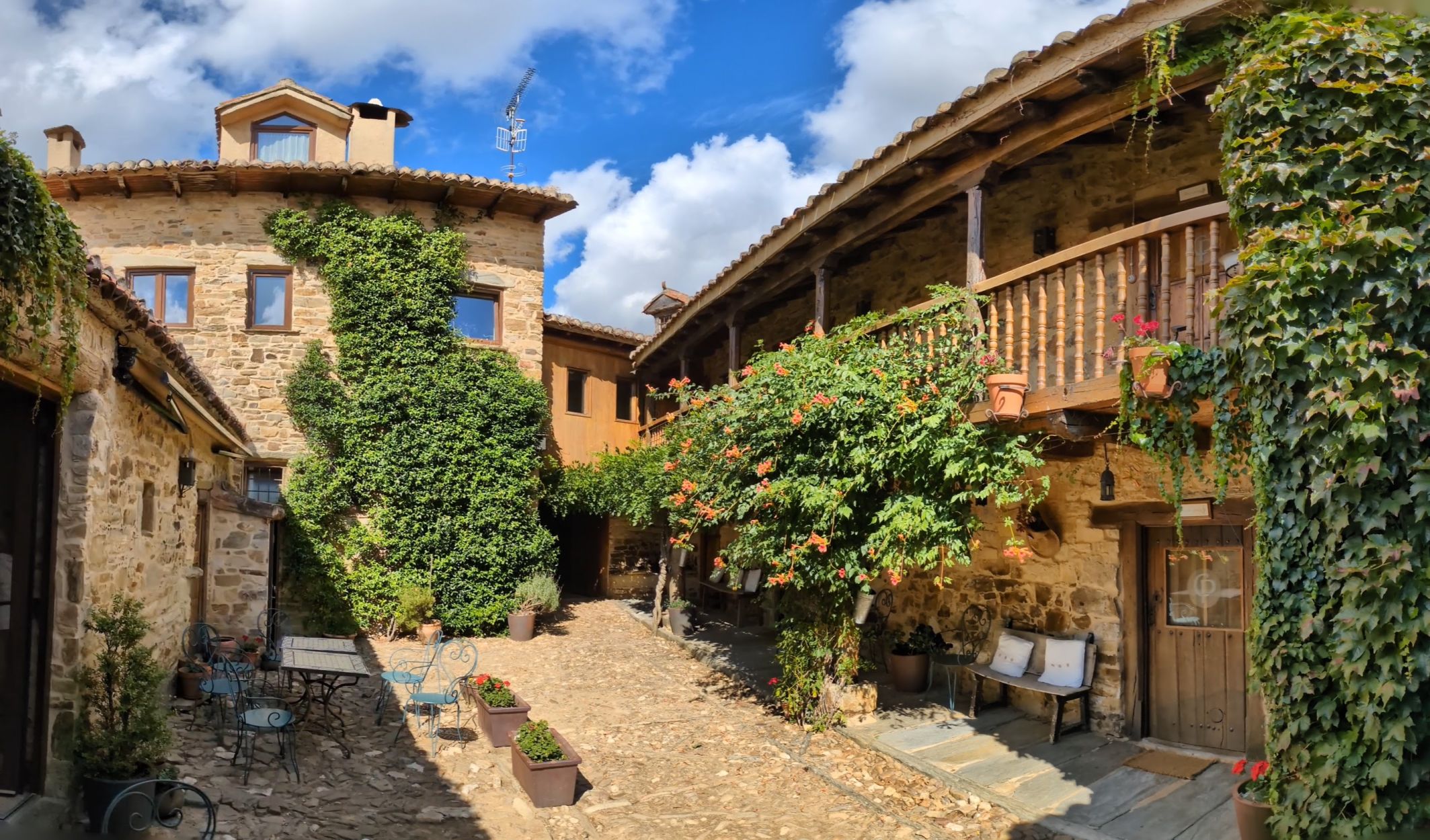
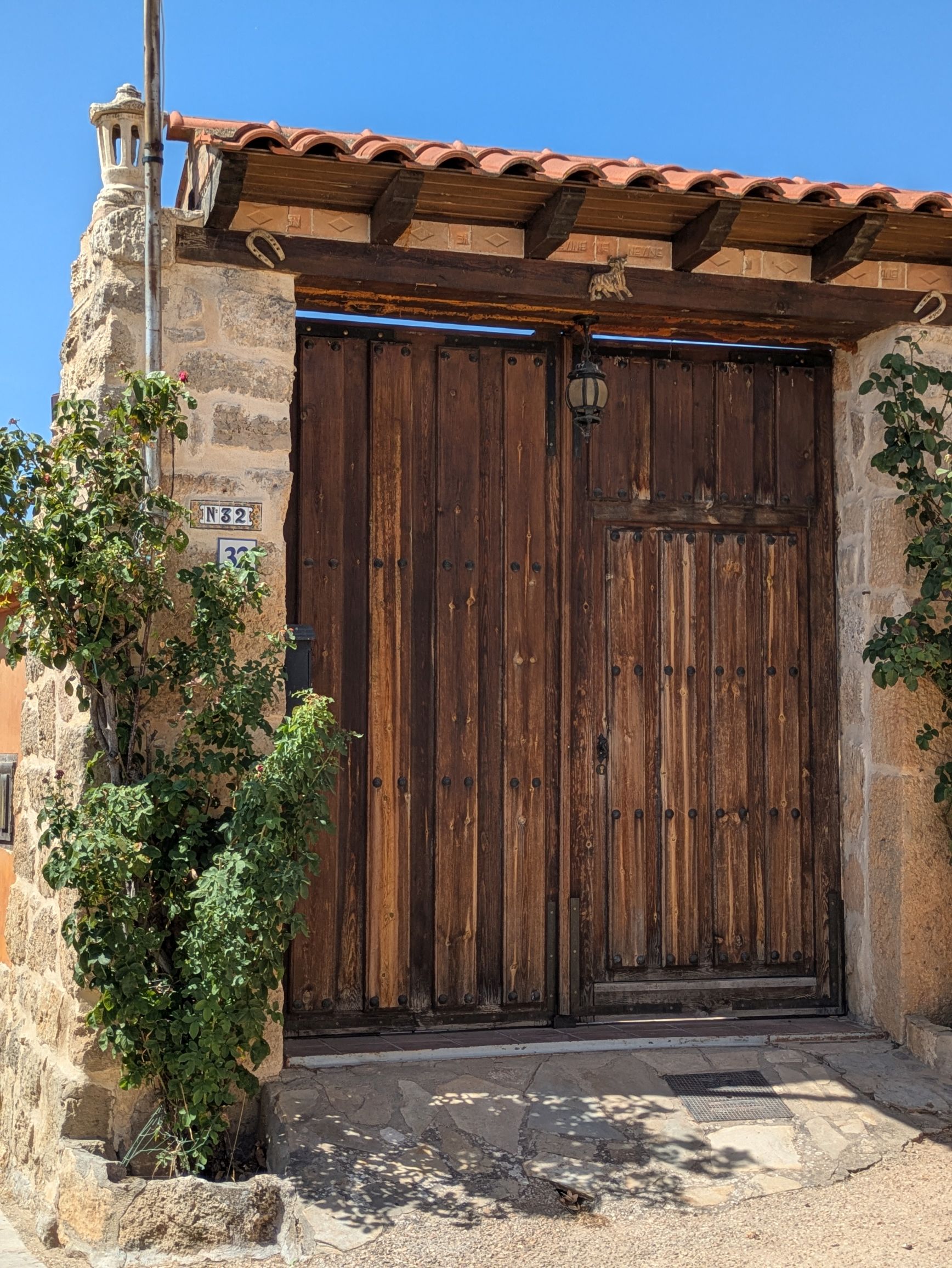
This little village was so full of character and quite photogenic. I was bringing up the rear shooting photos as we walked through the village to Casa Pepa, a 200-year-old traditional Maragato home where our group enjoyed lunch. Now a small family-run hotel and restaurant, this place was oozing with charm! It was love at first sight for me and Bruce. From the front door to the lobby to the beautiful courtyard; it was fabulous!
In the past, the villagers in this community transported fish and other food by mules that were kept in the courtyards of their homes. Out of economic necessity, many of these traditional homes have been converted into guesthouses for pilgrims making their way to Santiago de Compostela. Casa Pepa is a successful example of this.
Next up: SOUTHWEST FRANCE, NORTHERN SPAIN & PORTUGAL #16: THE VILLAGE OF VILLAFRANCA DEL BEIRZO
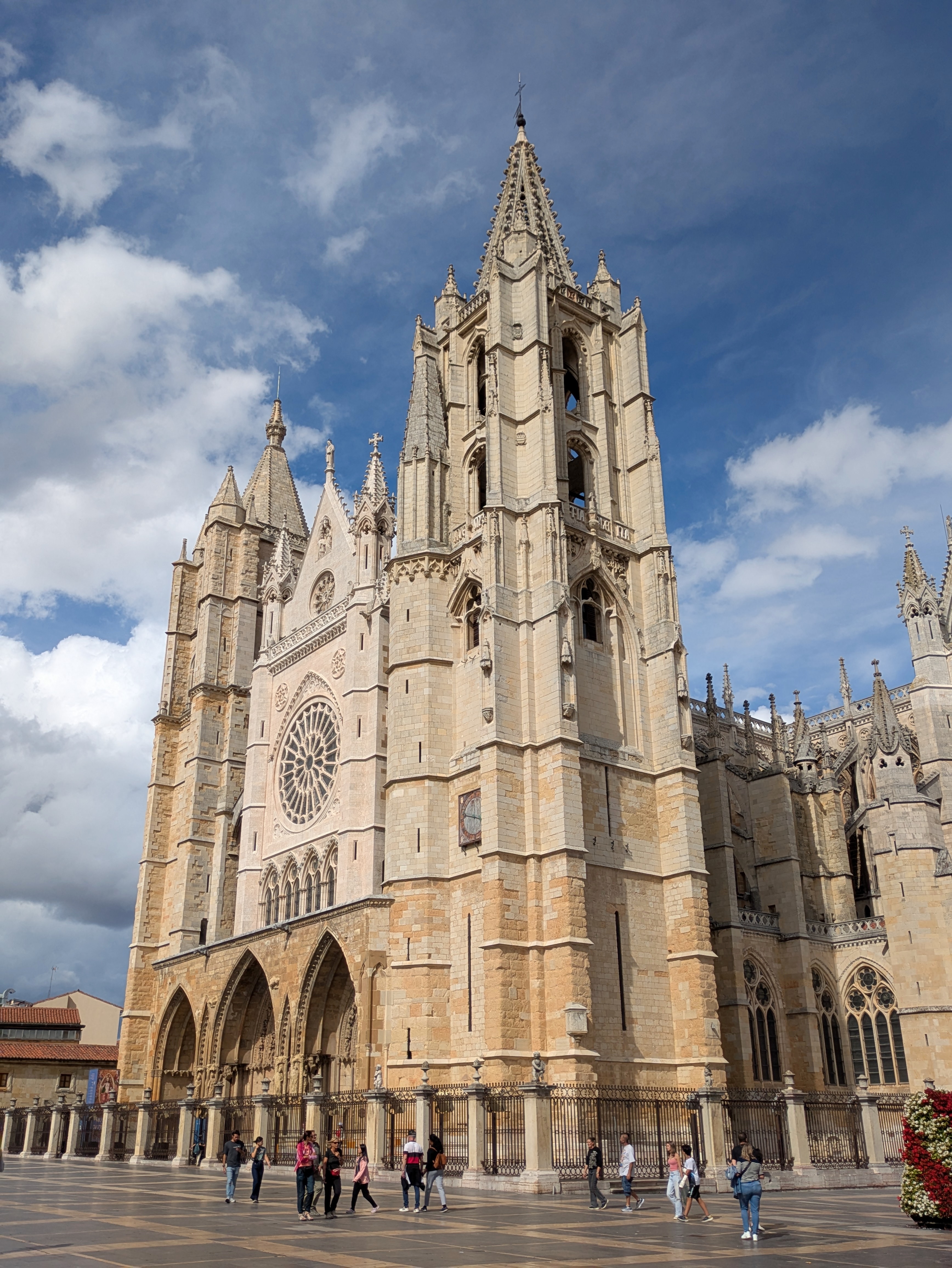
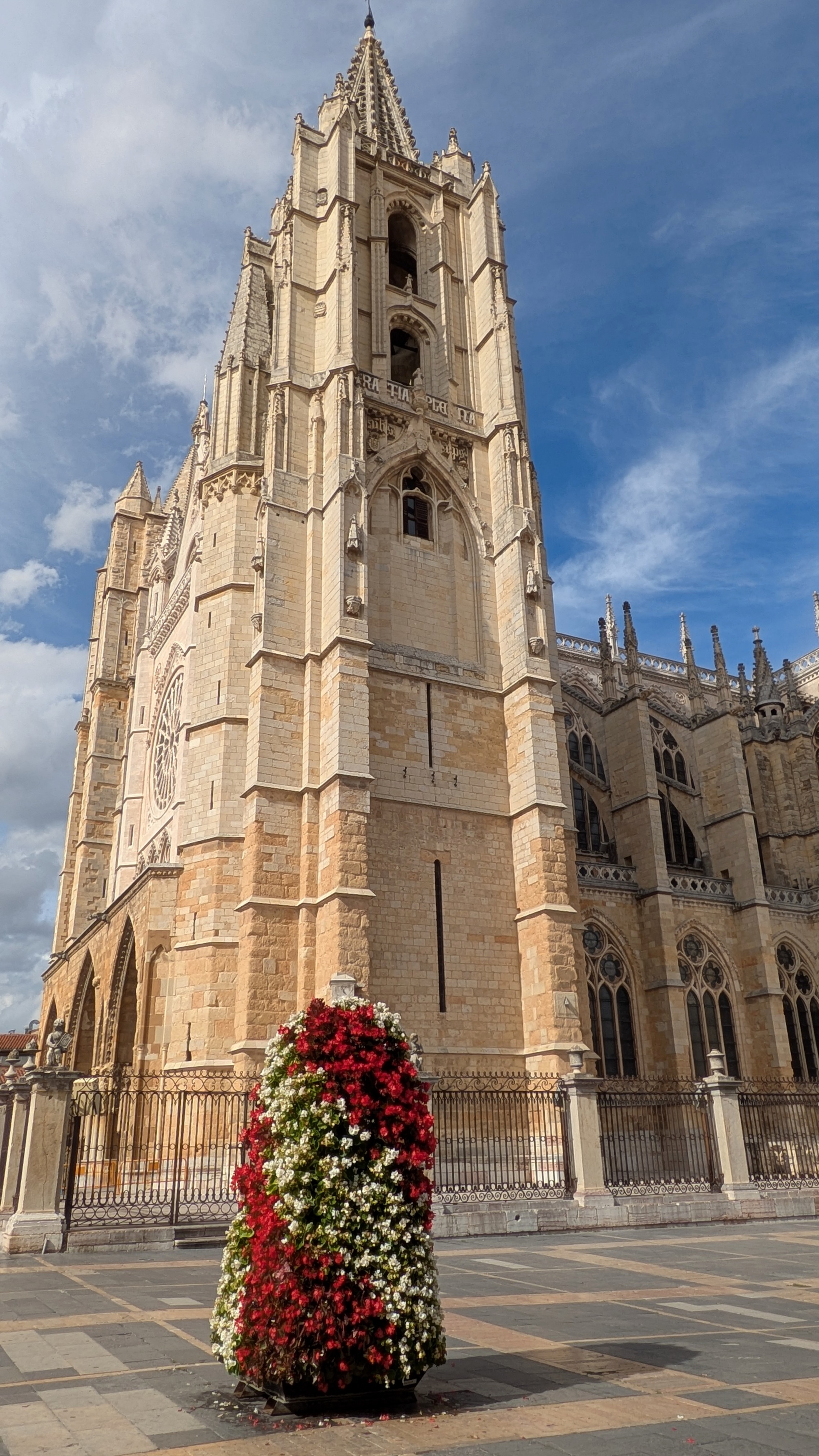
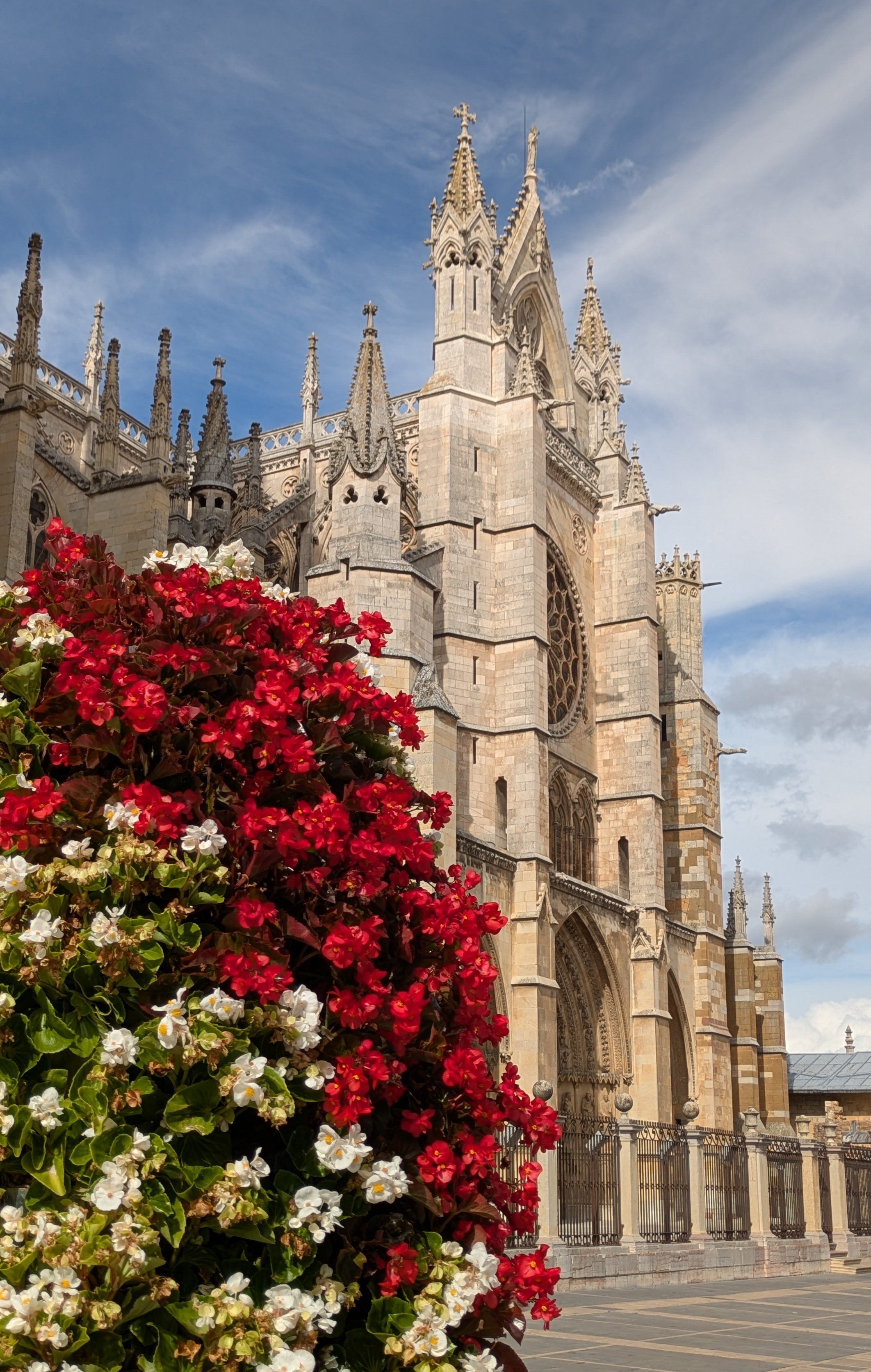
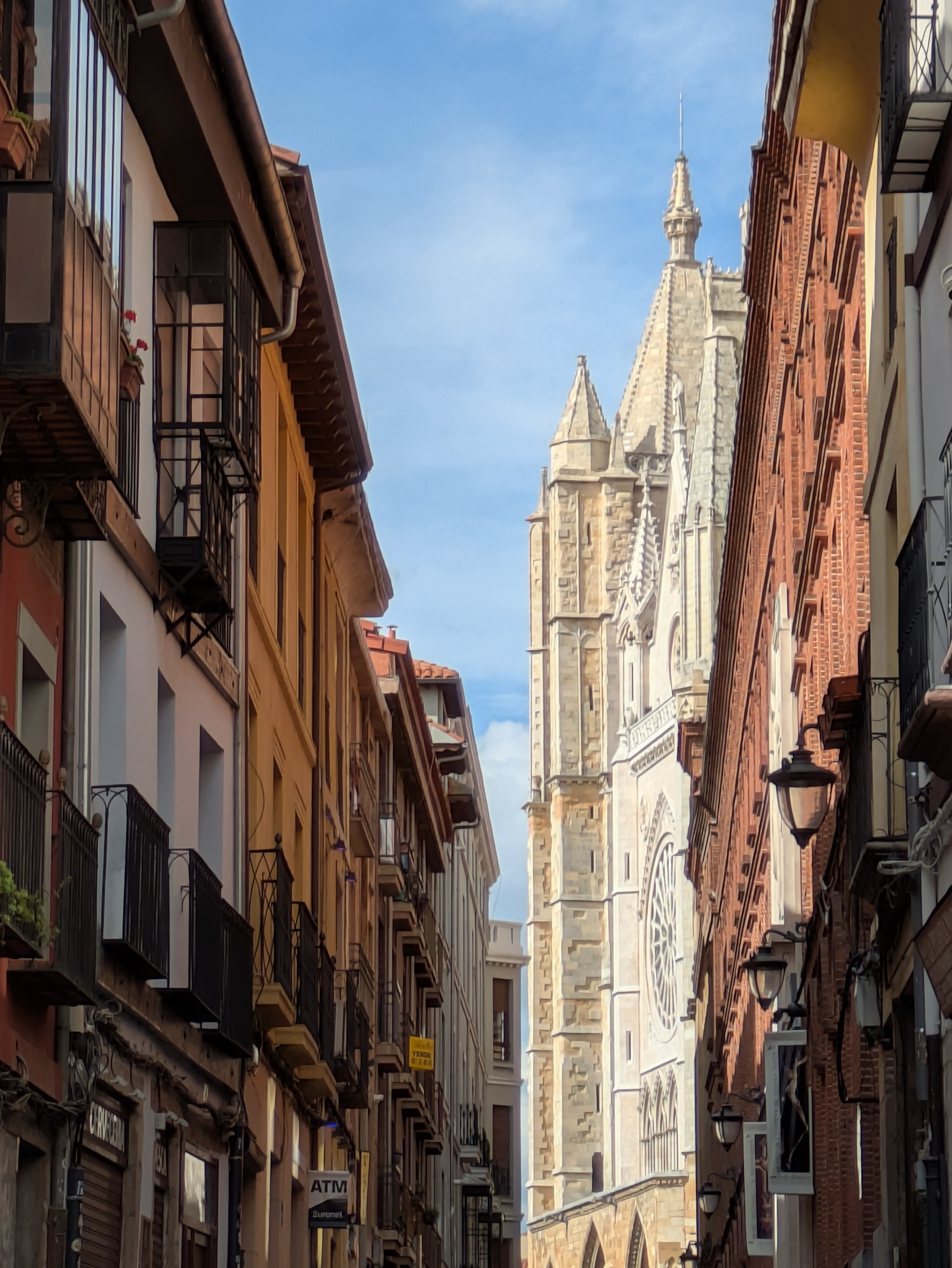
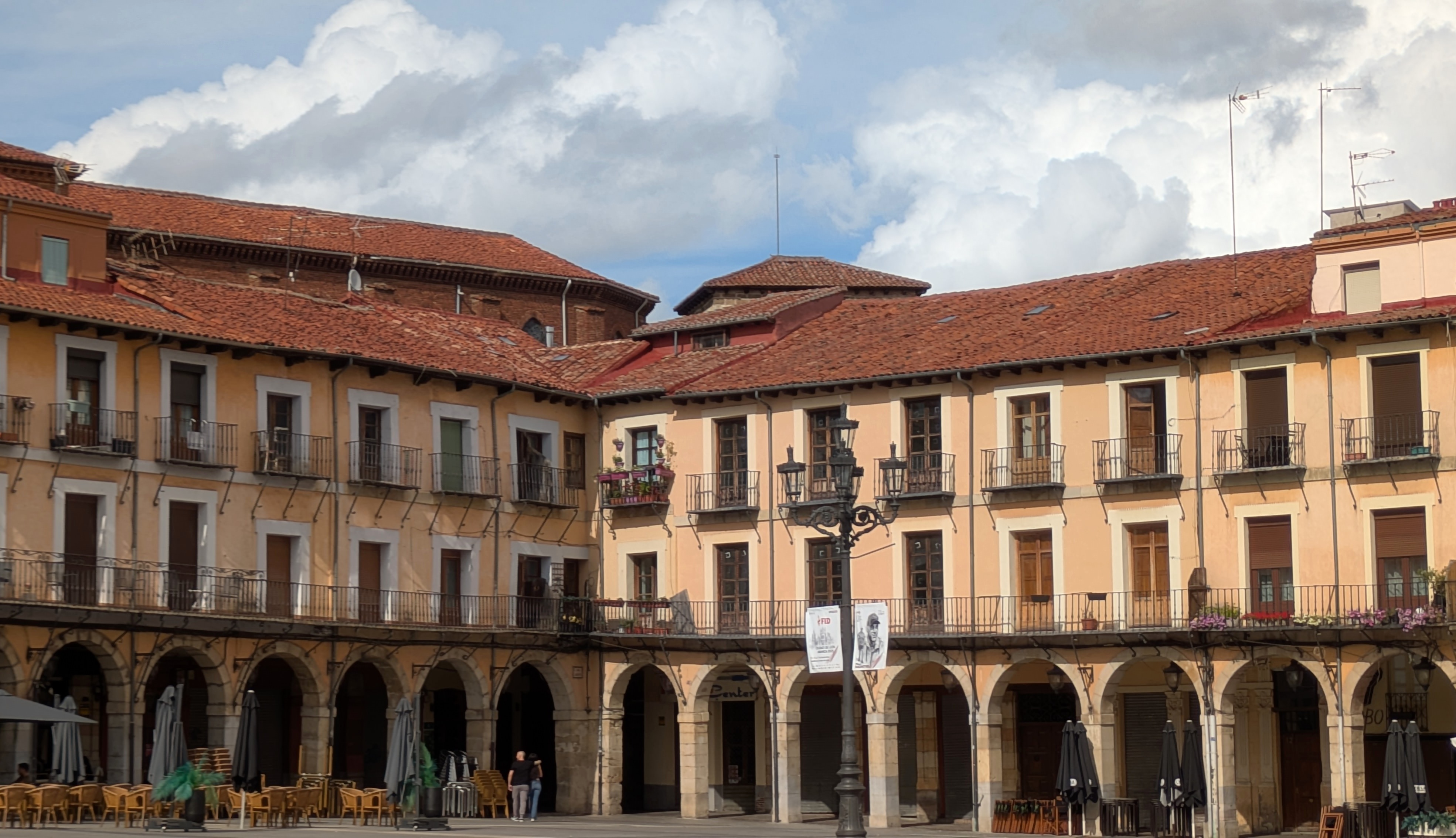
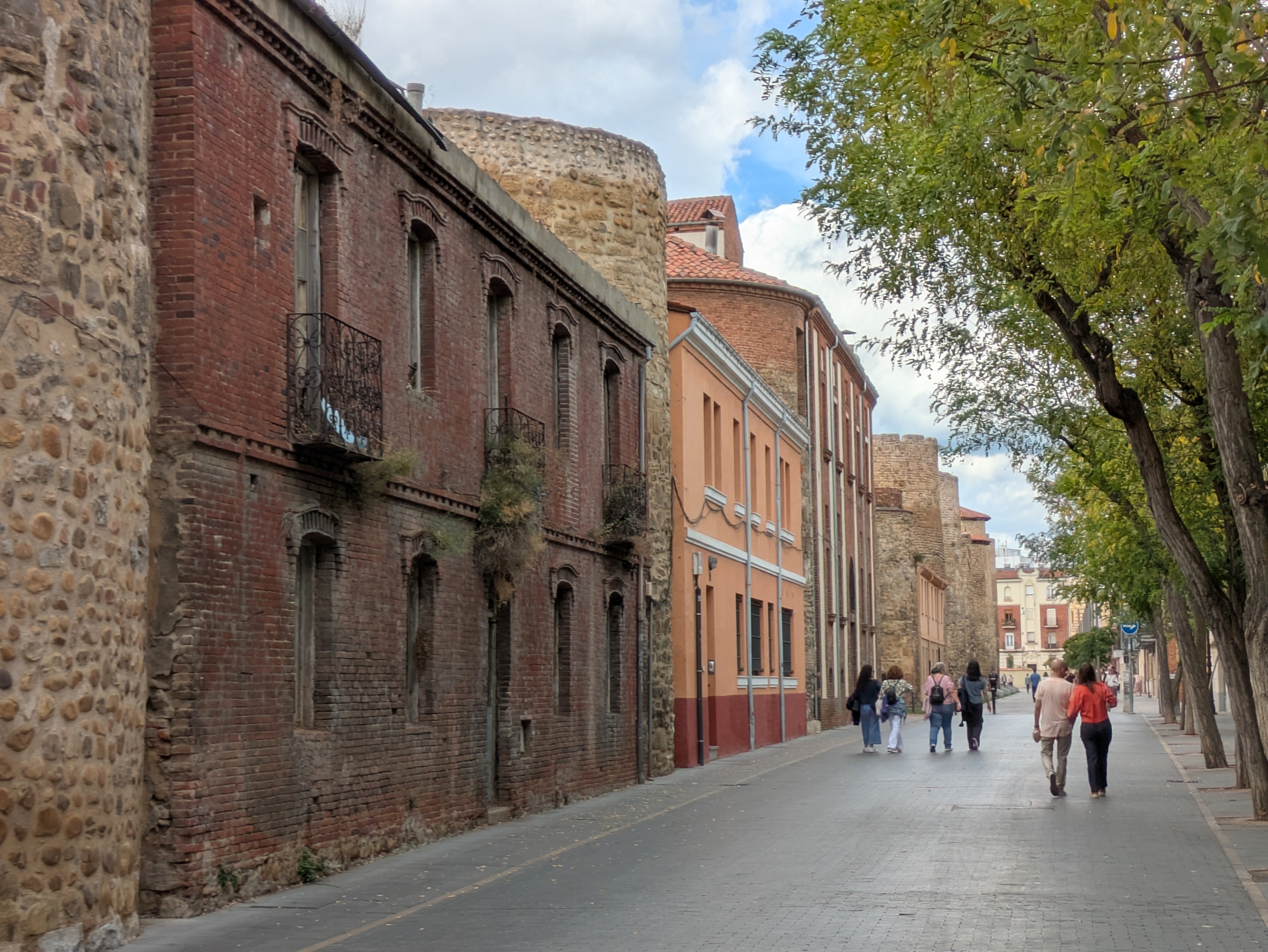
Originally founded as a Roman military base in the first century BC, León has been designated a UNESCO World Heritage Site for its place in history as the first established location of a European parliament. Seeing the architecture in León is like jumping back and forth into different periods of history. It’s a mix of medieval, Gothic, Renaissance, and Modernist with the 13th-century León Cathedral being a centerpiece of the old city. Originally home to second-century Roman baths, it became a palace in the seventh century, and then a cathedral in 1301 with the cloister, north tower, and south tower being added on later.
Like the other towns and cities we had visited, the old town center was an easy and comfortable town to navigate on foot. I enjoyed our group walking tour and going out on our own to explore further and do photography.
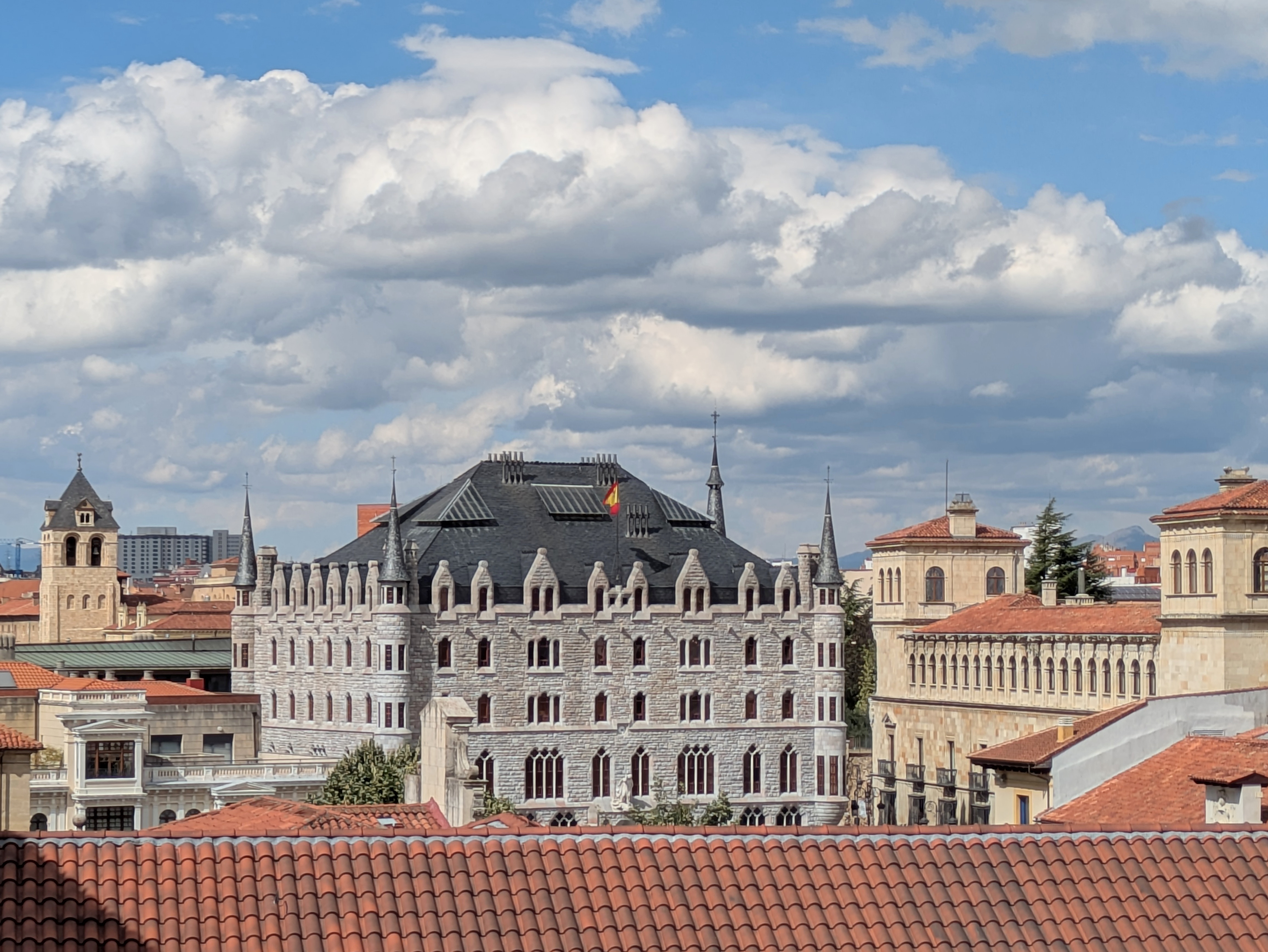
We were very fortunate to have a hotel room that gave us a beautiful view of both the cathedral and Casa Botines lit up at night. Designed by Antoni Gaudi and completed in 1892, it was originally a fabrics company and then a bank. Currently, it is a museum dedicated to Gaudi and Spanish art.
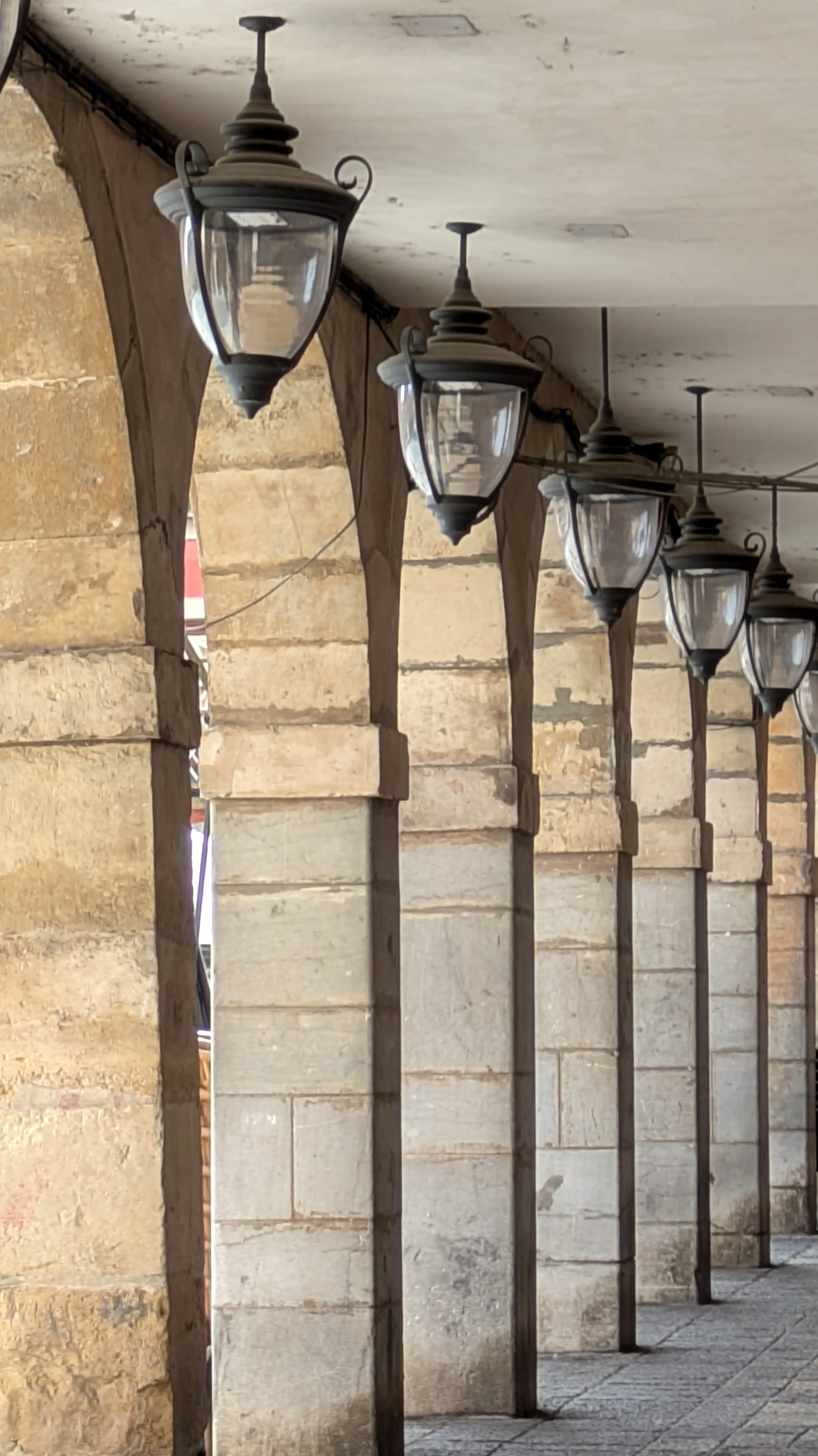
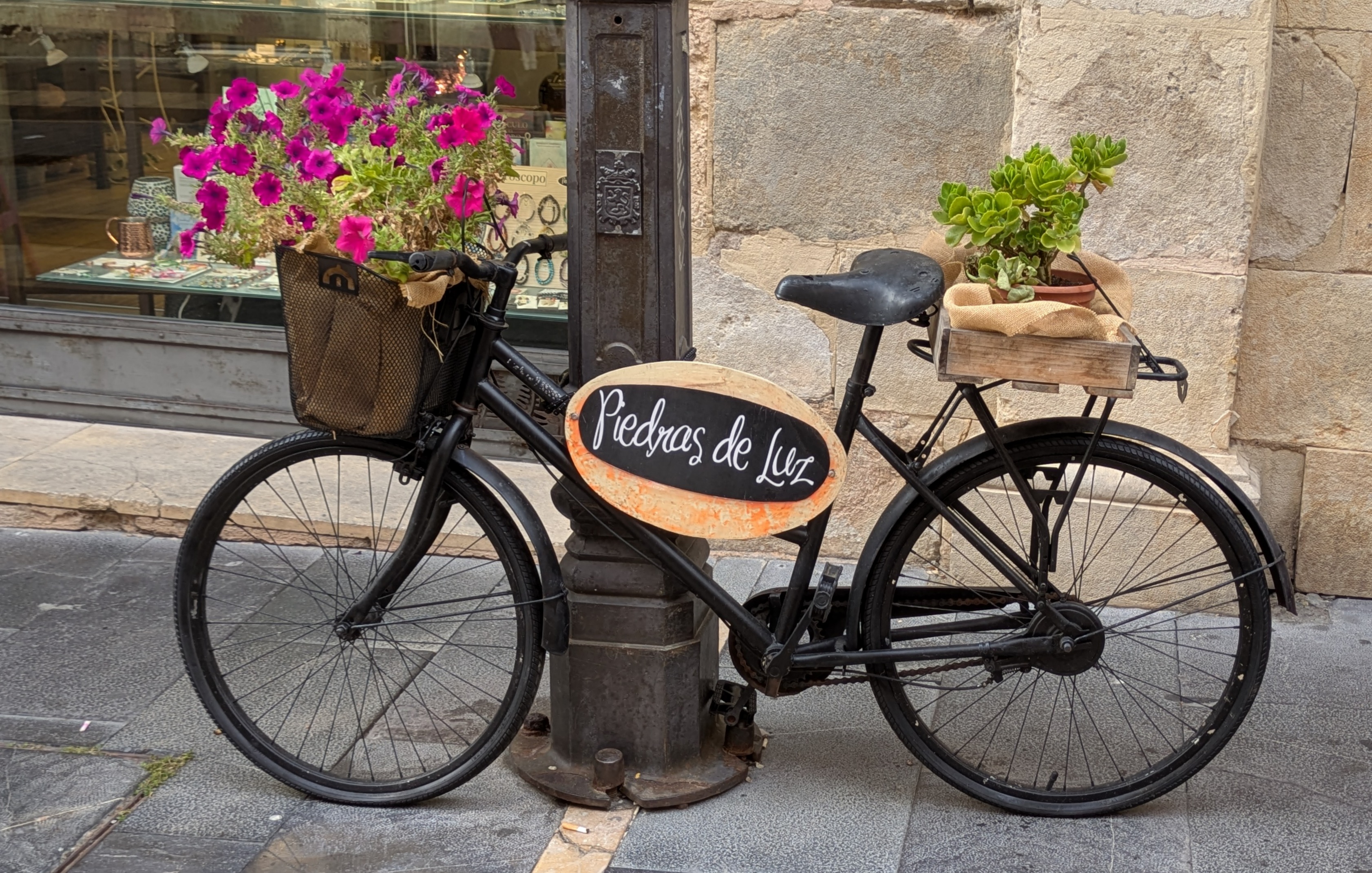
Scenes around León over two days:
(For all photos, click on the image for a full screen view.)
The view of Casa Botines from our hotel room window
Casa Botines, close up.
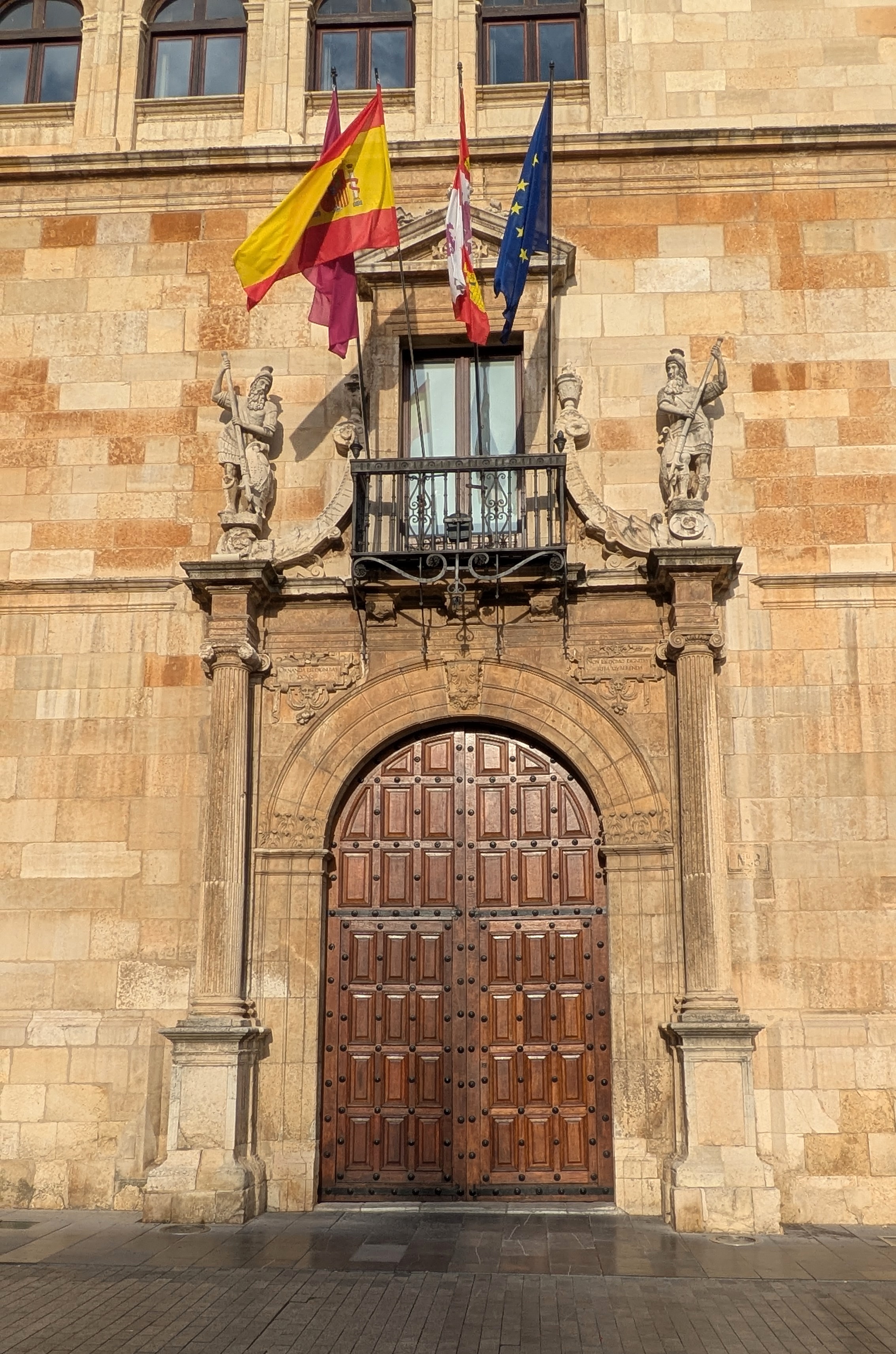
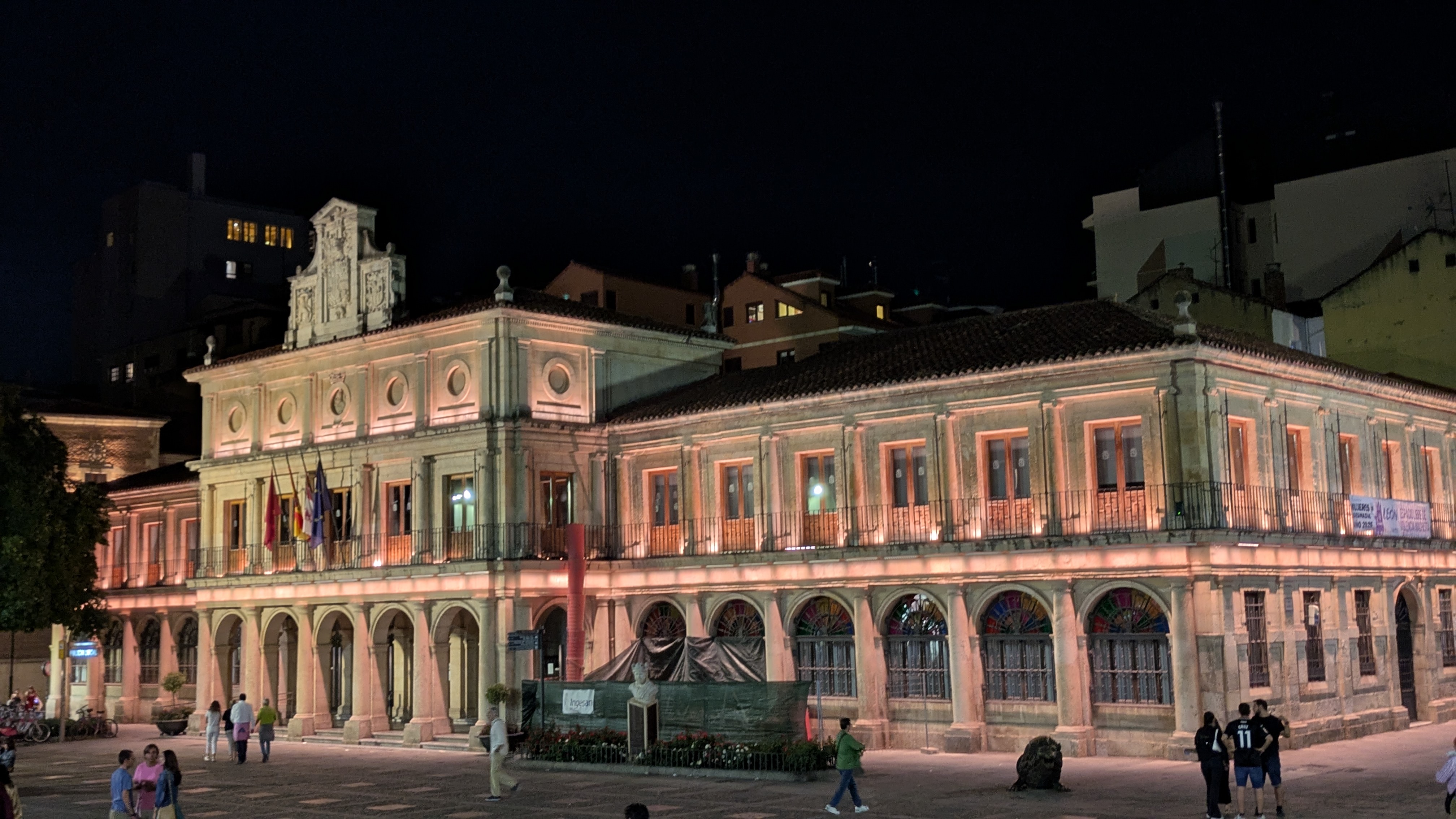
A local government office, adjacent to Casa Botines at sunset.
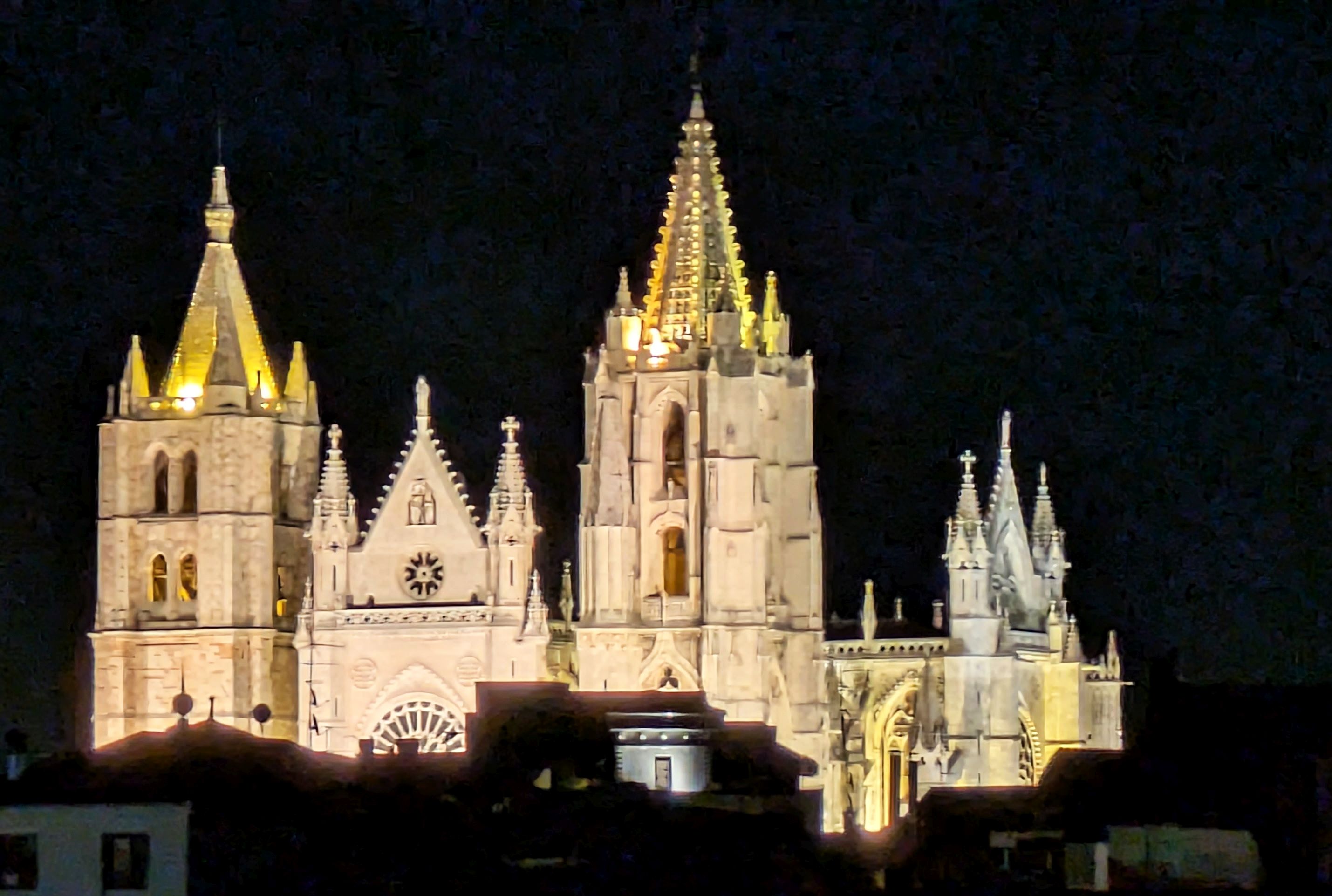
Leon Cathedral
The view out to the right from our hotel room windowThe view of Casa Botines at night from our window
Coming up next: SOUTHWEST FRANCE, NORTHERN SPAIN & PORTUGAL #15: Santa Colomba de Samoza
Unless you have walked this particular route of the Camino de Santiago, you probably haven’t heard of Ubidea, one of the smallest towns in the Basque Country with just 175 inhabitants. Surprisingly, there is an archaeological center there! We visited the laboratory and met with an archaeologist to learn about the history of the skeletal remains that were discovered in the region.
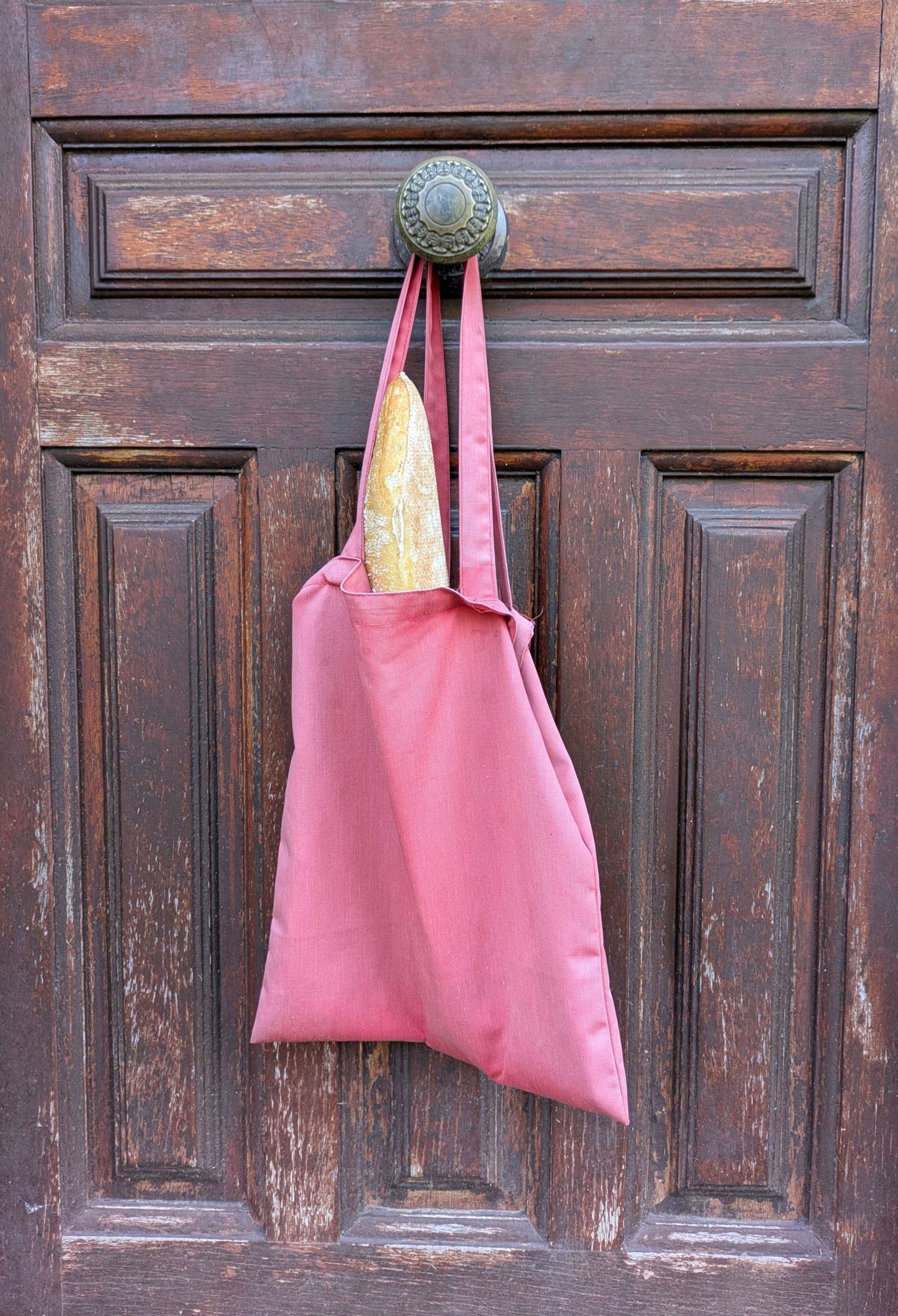
While walking from the bus to the center, I noticed a bag hanging from the front door of a home that contained a baguette. This is how bread is delivered! The baker stops by, collects payment from the bag, and then replaces it with the homeowner’s order.
(For all photos, click on the image for a full screen view.)
For lunch, we dined at the village tavern:
On our way to León, we walked a stretch of the Camino Frances, the French Way of the Camino de Santiago (The Way of Saint James), through the small village of Castrojeriz. Founded in 882, the town has a lot of history and character. Since many pilgrims walking the Camino pass through, there are also hostels where they can stop for the night.
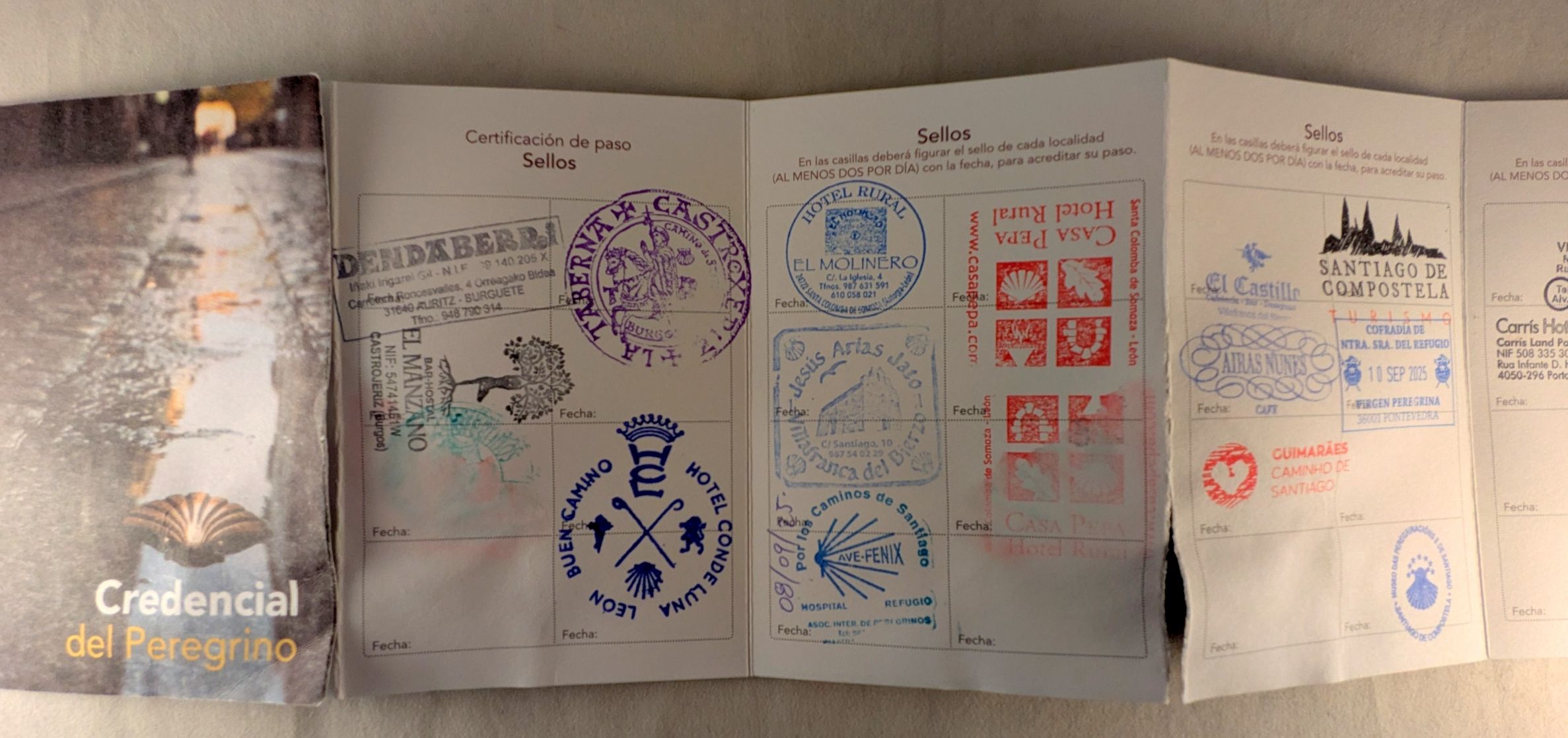
Serena gave us each a credential at the beginning of the Camino, a little booklet that we could get stamped during each of our walks. Hostels, restaurants, shops, and churches offer these stamps to Camino walkers, a nice way to remember the experience.
.
Next up: SOUTHWEST FRANCE, NORTHERN SPAIN & PORTUGAL #14: LOVELY LEÓN
Our group took a side trip from Pamplona to Roncesvalles, in the Pyrenees to walk the beginning of the Camino de Santiago, one of Europe’s most important pilgrimage routes. “The Way of St. James,”(in English), is a series of walking routes that lead from various locations in Spain, Portugal, and France to the Cathedral of Santiago de Compostela, reputed to be the burial place of Saint James the Great, one of apostles of Jesus Christ. The most popular trek is the French Way, which crosses the Pyrenees.
Although many people follow the route for spiritual reasons, it is also popular for hikers and cyclists from all over the world. The route is 500 miles long, and 65% of those who walk it are women, many of them older, walking while grieving losses or experiencing important life changes. Serena, our tour leader, walked the Camino while mourning the loss of her grandmother.
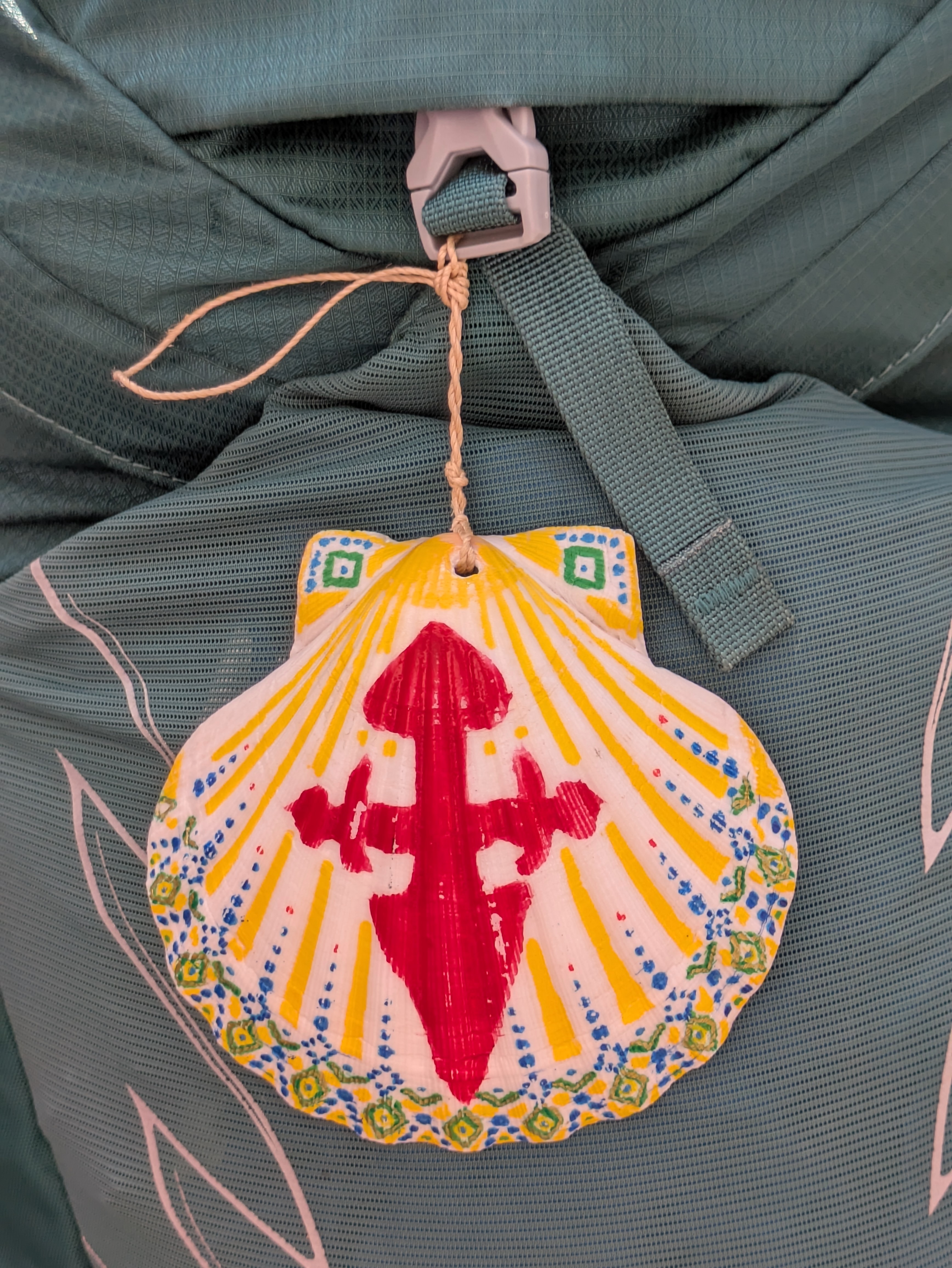
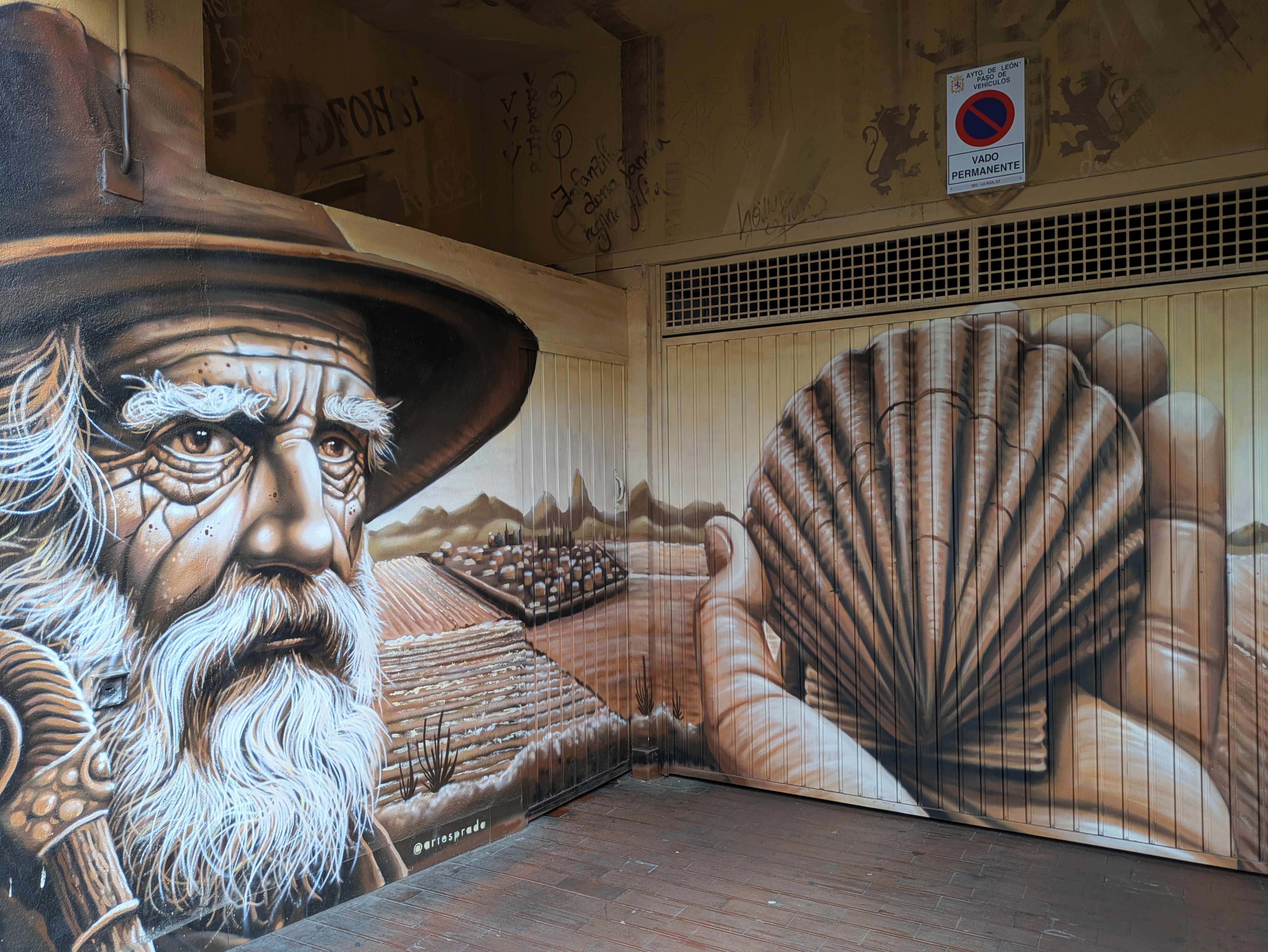
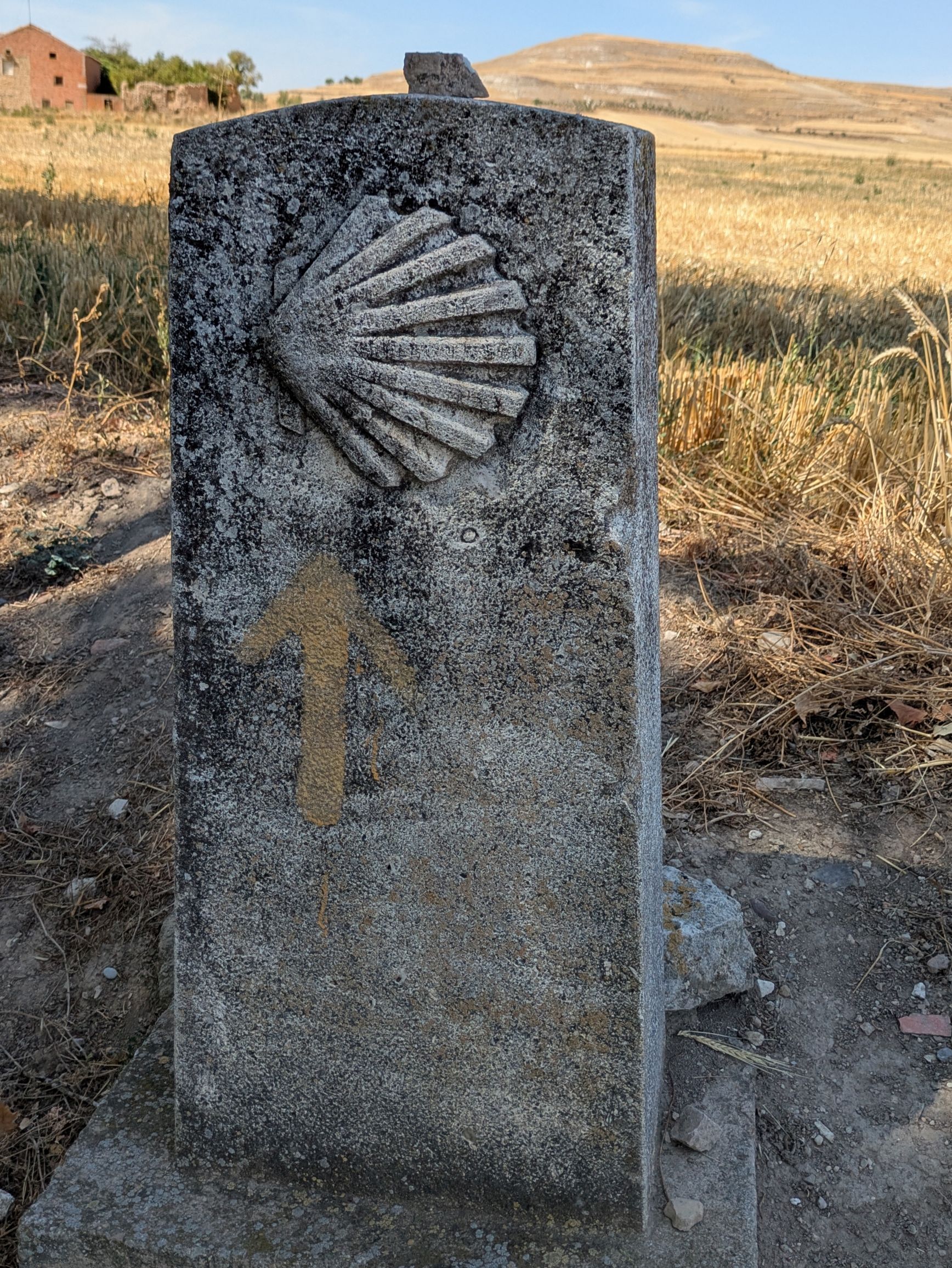
The symbol of the walk is a sword, because a sword was used to cut off James’s head. A scallop shell is also a symbol, because it could only be found at the end of the route—proof that you walked the entire Camino. The shell itself was used as a plate to receive food, a symbol of charity. Today, many walkers buy a shell painted with the sword symbol and tie it to their backpacks at the beginning of their trek to indicate they are walking the Camino de Santiago. In addition, the scallop shell is the symbol used on directional signs along the route as well as on the front of hostels on the route that house pilgrims overnight.
Roncesvalles, where we walked the first mile of the route, is a small town in the beautiful Pyrenees mountains. Later, we took a second, two-mile walk through the gorgeous northern Spanish forests.
(For all photos, click on the image for a full screen view.)
This little pooch was a pilgrim along with her person and carried her own gear.
We started our walk here at this unusual church and were a bit surprised to see this beast cross our path without a care in the world. We were glad he kept his horns to himself!
My favorite window at a church we saw along the way
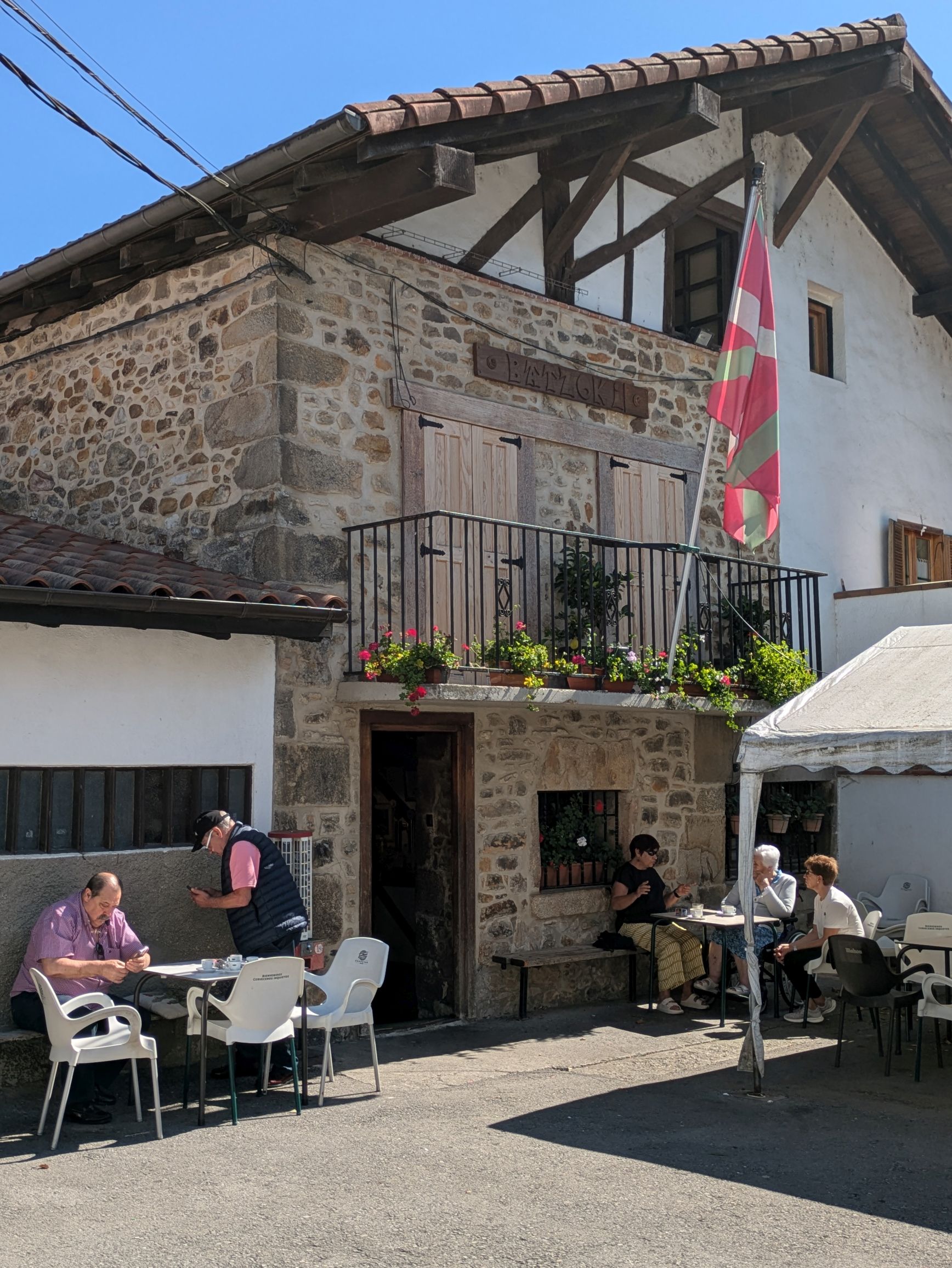
For lunch, we met up with Serena’s friend, Gonzalo Santoma, a photographer and musician, in a charming little village.
After explaining and demonstrating the Basque sport of Jai Alai in the village gym, we took a stroll to a restaurant for a Basque lunch.
A mobile produce vendor
Gonzalo entertained us with his guitar-accompanied singing, which turned into a duet when a local joined in for a song:
Coming up next: SOUTHWEST FRANCE, NORTHERN SPAIN & PORTUGAL #13: EXPLORING UBIDEA & CASTROJERIZ, ON THE WAY TO LEON.