The day began with a drive out to a town with a very long name: Hellisheidarvirkjun. Don’t ask me how to pronounce it; I’m lucky if I can spell it correctly! Here, we visited a geothermal power plant and saw an exhibition with a much simpler name: ON. (Actually, that’s an acronym for “Orka Natturunar.”).
We learned from our guide that only 15% of power plants in Iceland are owned by private companies; the government owns the rest. The country runs 100% on renewable energy (geothermal and hydropower), making it one of the greenest countries in the world.
It was interesting to learn how geothermal steam is used to produce electricity. Iceland is fortunate to have such an amazing natural resource! But, it was the oil crisis of the 1970’s that motivated them to take advantage of this resource and build geothermal power plants to harness this energy.
To give you an idea of how economical geothermal energy is for the consumer, it costs 0.10 -0.12 (U.S.) per unit. For comparison, fixed rate plans where I live are running about .65 per unit and up.
Homes in Reykjavik do not need water heaters; the water comes hot directly from the plant via insulated pipes that carry the water 15 miles from the plant to their homes.
I was surprised to hear that just 17% of the energy produced in Iceland is taken up for residential use. Industry uses the rest – especially aluminum smelters. They import boxite from Australia to smelt aluminum, and then export the aluminum to Germany. Hmmm…
After hearing a presentation about how geothermal energy is produced, we had free time to see the exhibits.
Our next stop was to tour the Arbaer Open-Air Museum. Here, we learned about the living and working conditions of Icelanders in the past. Notice how these turf houses were very short with low roofs. They were built this way to save money, because wood was very expensive. How unfortunate for those who were tall!
(For all pictures, click on the image to see full screen view.)
Next up: Basking in the Beautiful Blue Lagoon
Note: If small group travel is of interest to you, I highly recommend Overseas Adventure Travel (OAT). Although Bruce and I travel together, they do not charge a single supplement for those who travel on their own. Singles also get their own room at hotels. If you book, you can get $100 off your trip by providing my name and customer number (Elaine Krugman, #3018126) as the person who referred you. I will also get $100 off future travel– a win-win!
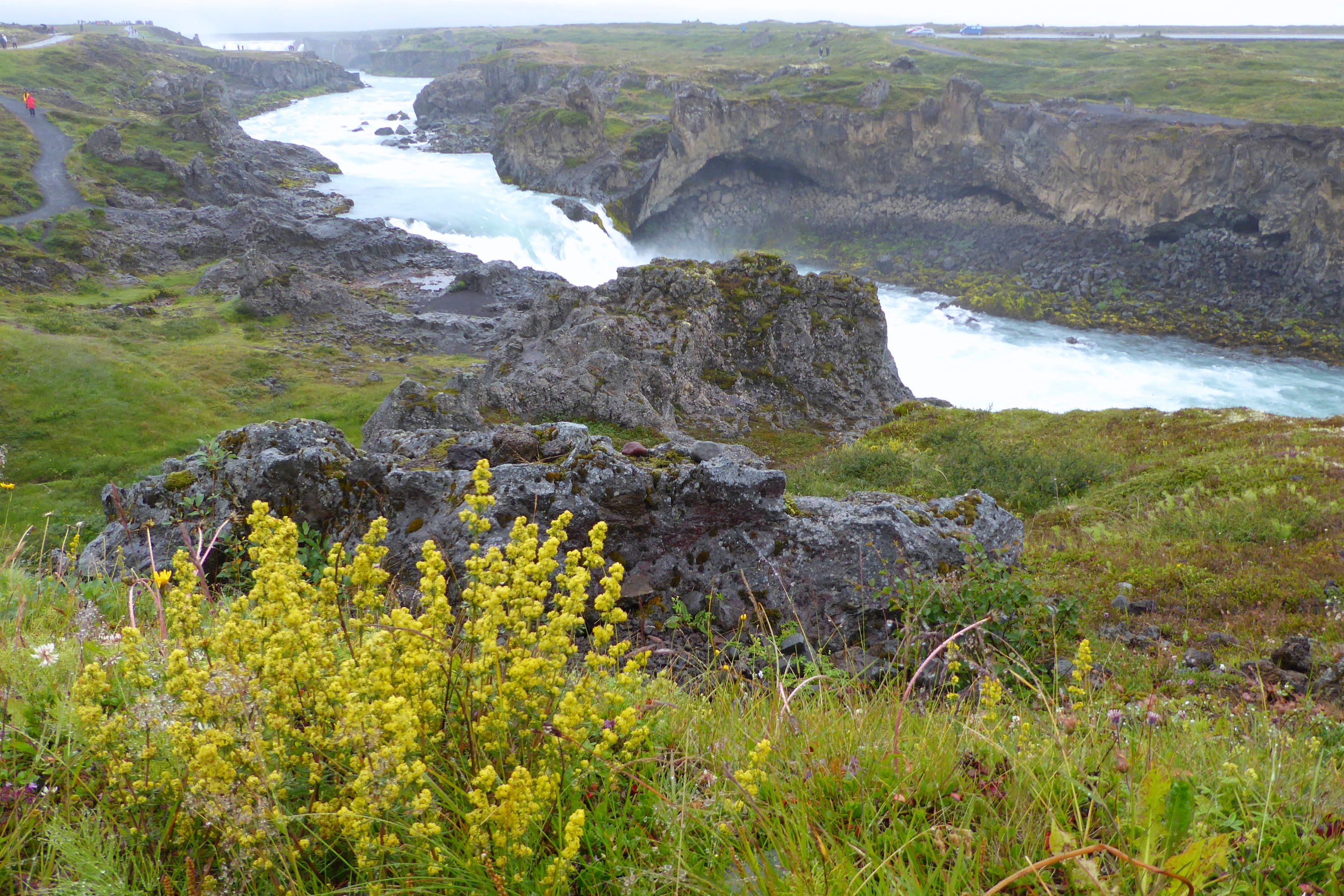
If I could have swapped one of our sunny days in Selfoss for this day instead, it would have been perfect. Godafoss Waterfall would have been beautiful on a sunny day, but it was raining; not the best conditions for photography. Still, what an amazing sight! We hiked the path up one side, and then doubled back, crossed the bridge, and hiked up the other side. The volume of rushing water was so powerful that the sound was mesmerizing. I shot a short video, just so I could hear the sound of that water again when I returned home.
(For all pictures, click on the image to see full screen view.)
At one point during the days’ travels, we passed through a five-mile-long tunnel through a geothermal area. The temperature was 51degrees outside of the tunnel, but 66 degrees inside the tunnel!
Our next stop was interesting. We observed the process of harnessing geothermal energy to bake Hverabraud (Icelandic rye bread) in the ground. The best part (of course!) was getting to taste it. Quite dense, the bread was piping hot, sweet and tasted great with butter.
Historically, the bread was baked in a wooden vessel, but now, buckets with lids are used. Sites for baking bread can be found around hot springs close to villages in the Icelandic countryside. Each family has their own hole in the ground in which they bake their bread.
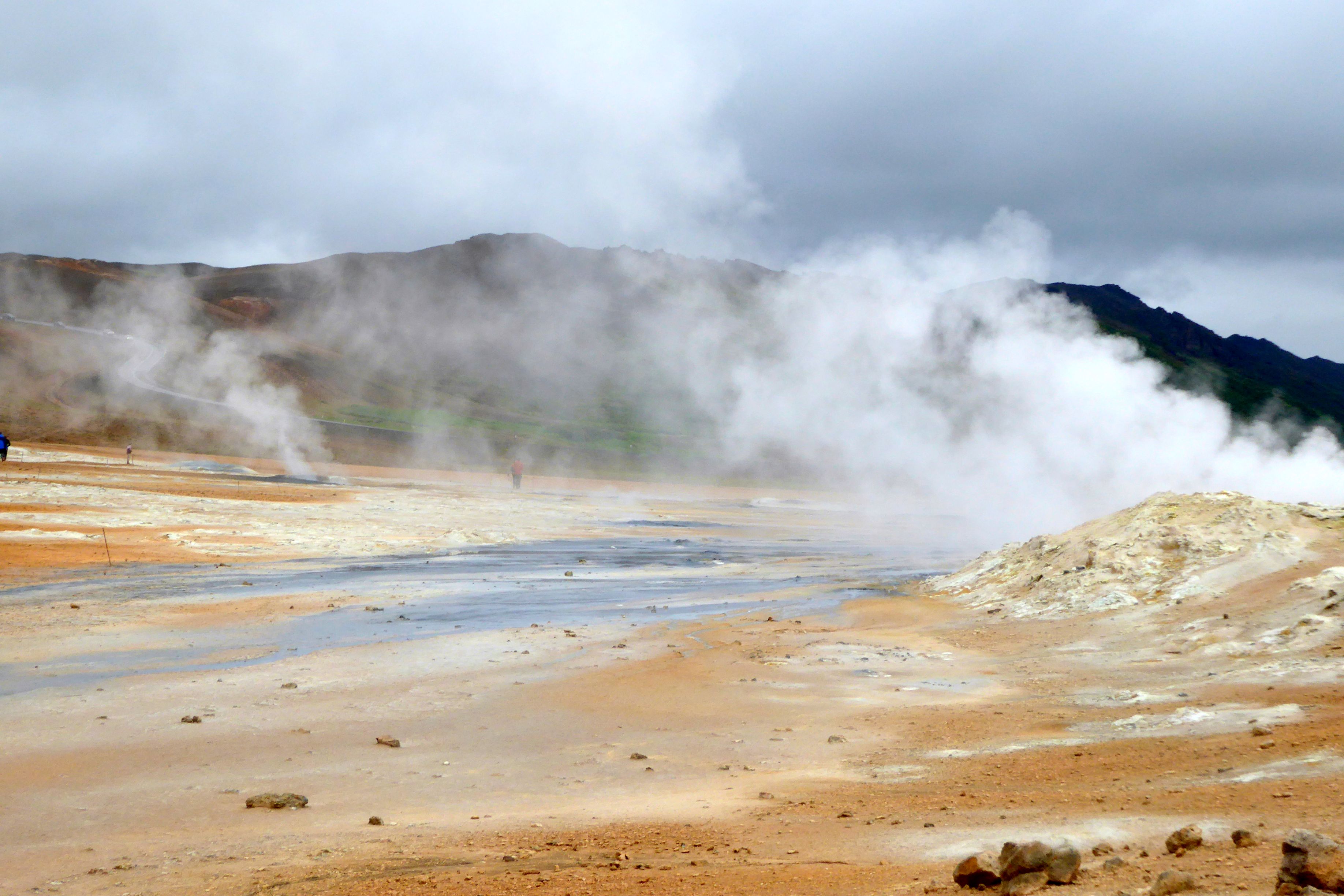
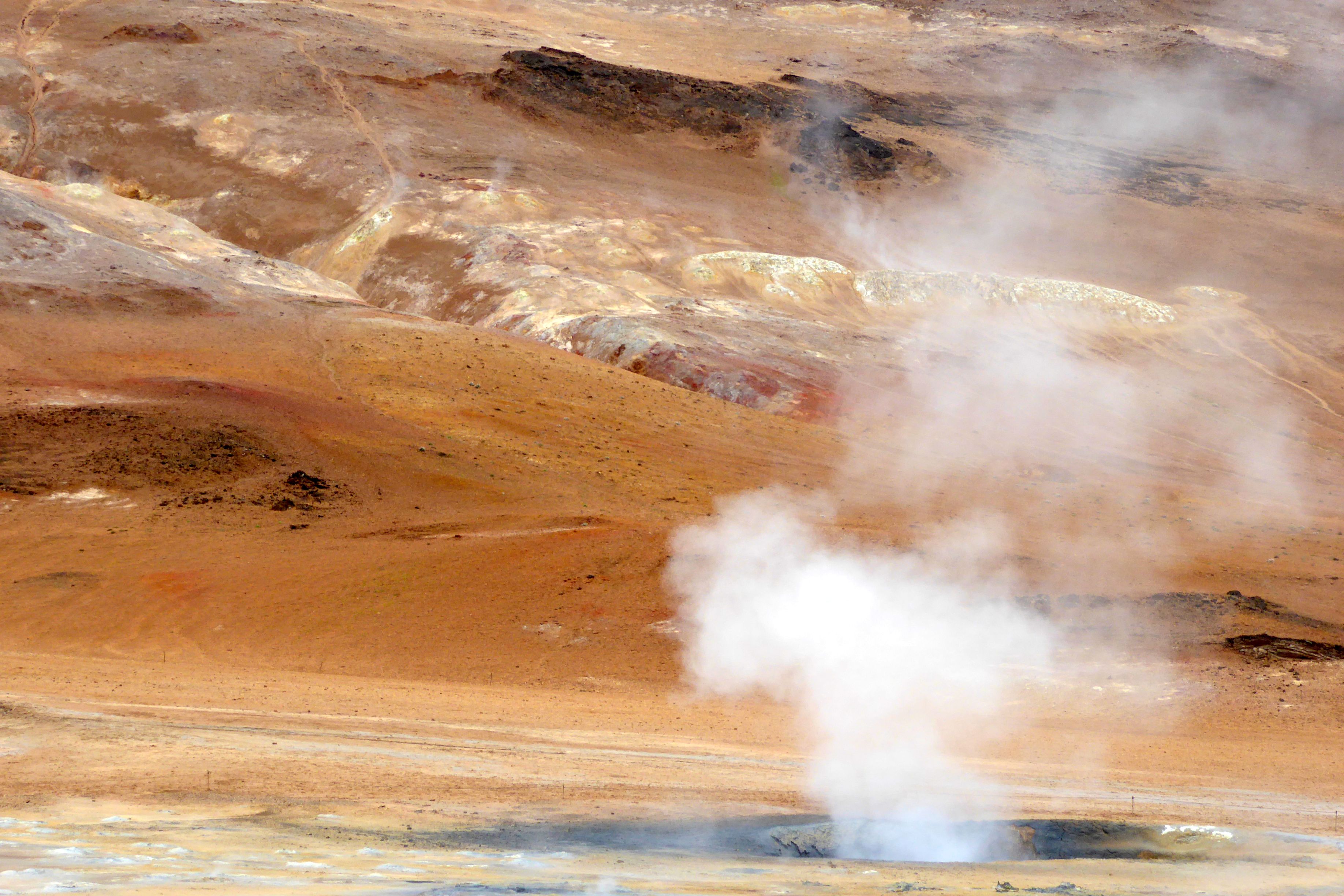
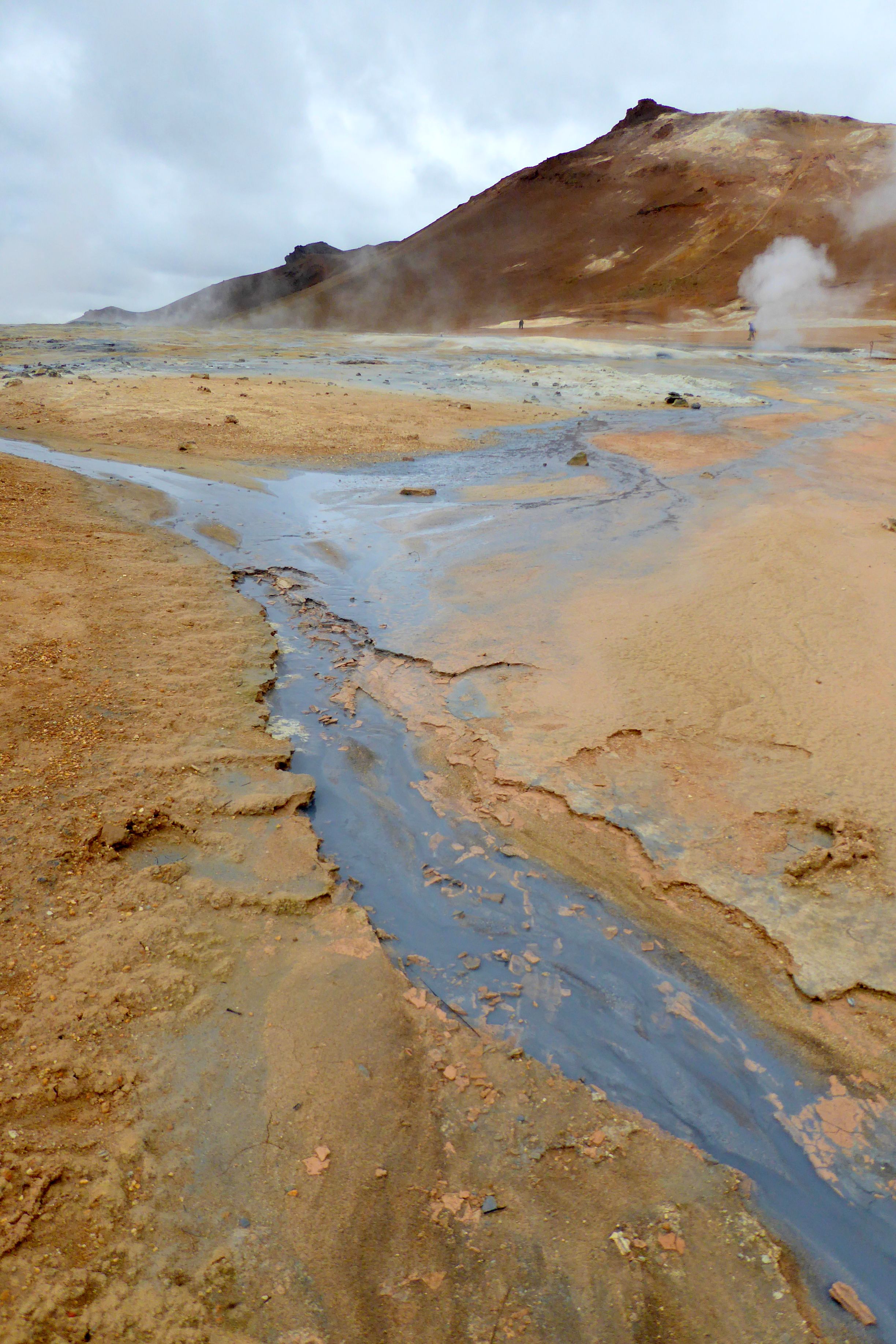
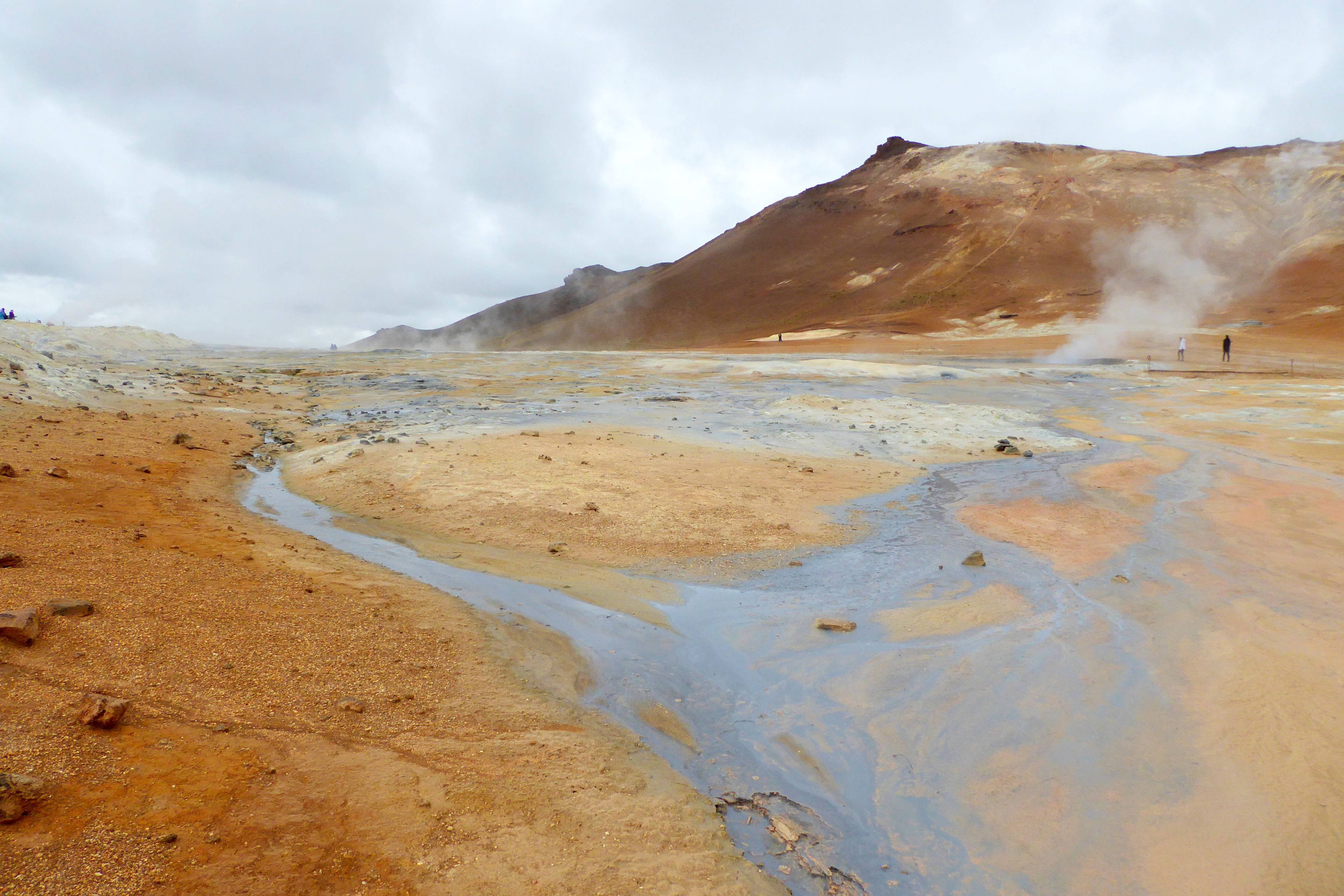
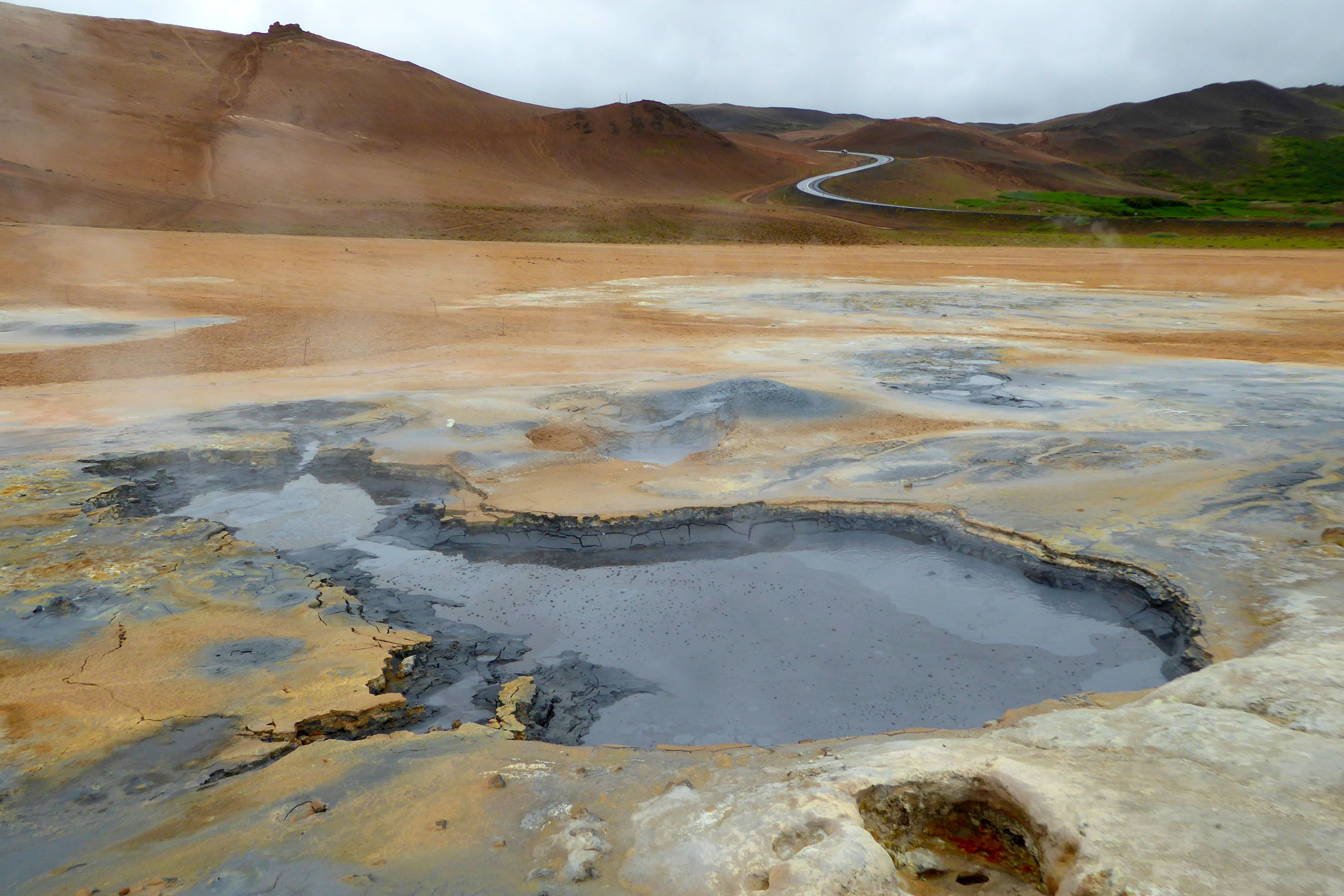
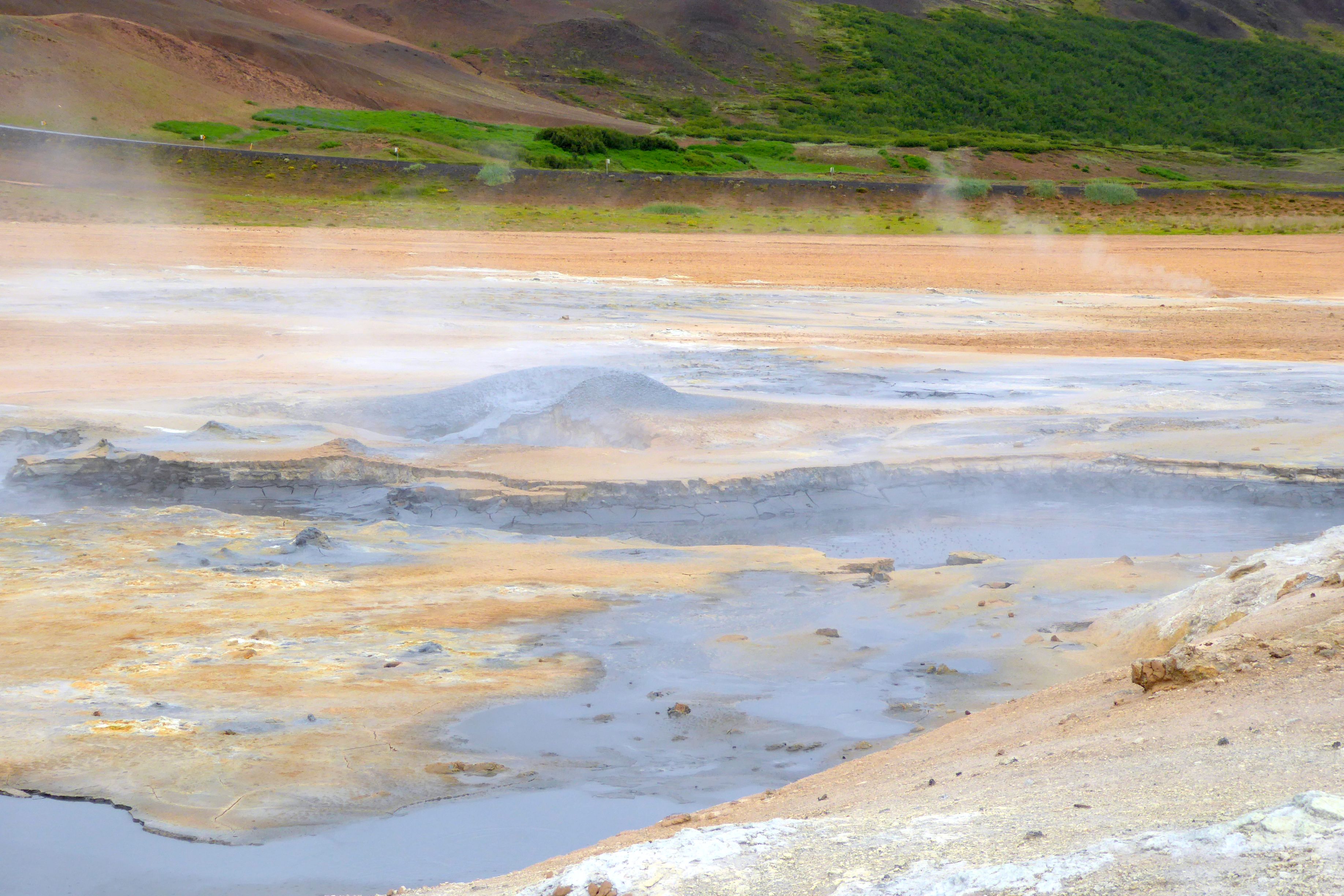
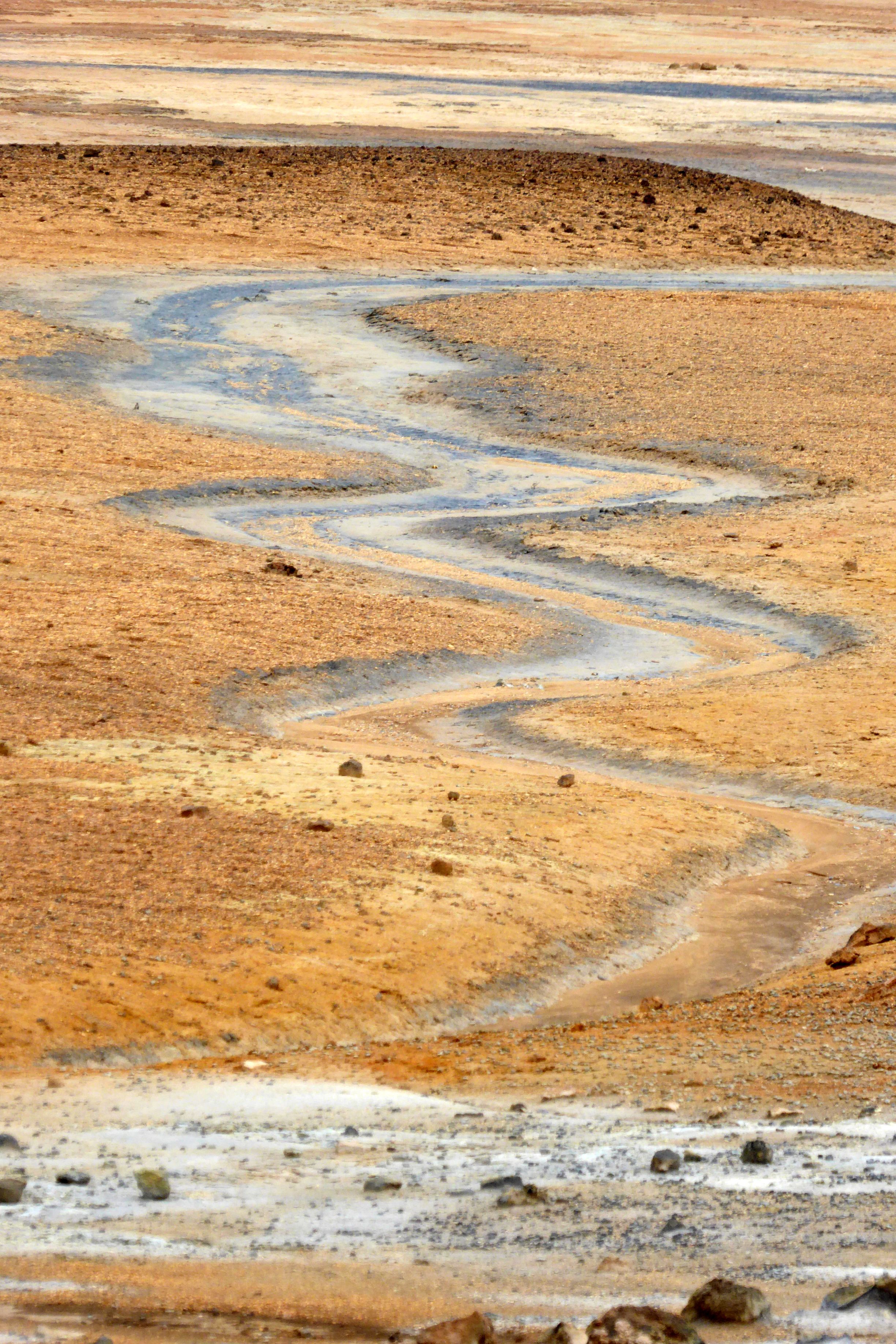
Namafjall, the next place we visited, fascinated me. Watching the bubbling hot mud pools in this geothermal area and seeing the variations in the earth made it feel like we were on another planet. Three thousand feet below the surface, the temperature is about 400 degrees! Due to the hydrogen sulfide in the steam, it smelled like eggs – not the most pleasant odor; but, it was worth enduring to see this fascinating area.
We continued on to Dimmuborgir, and I experienced the same feeling I had at the mud pools and several other places we had visited in Iceland: I was on another planet! But, isn’t that what travel is all about? I love experiencing the unfamiliar!
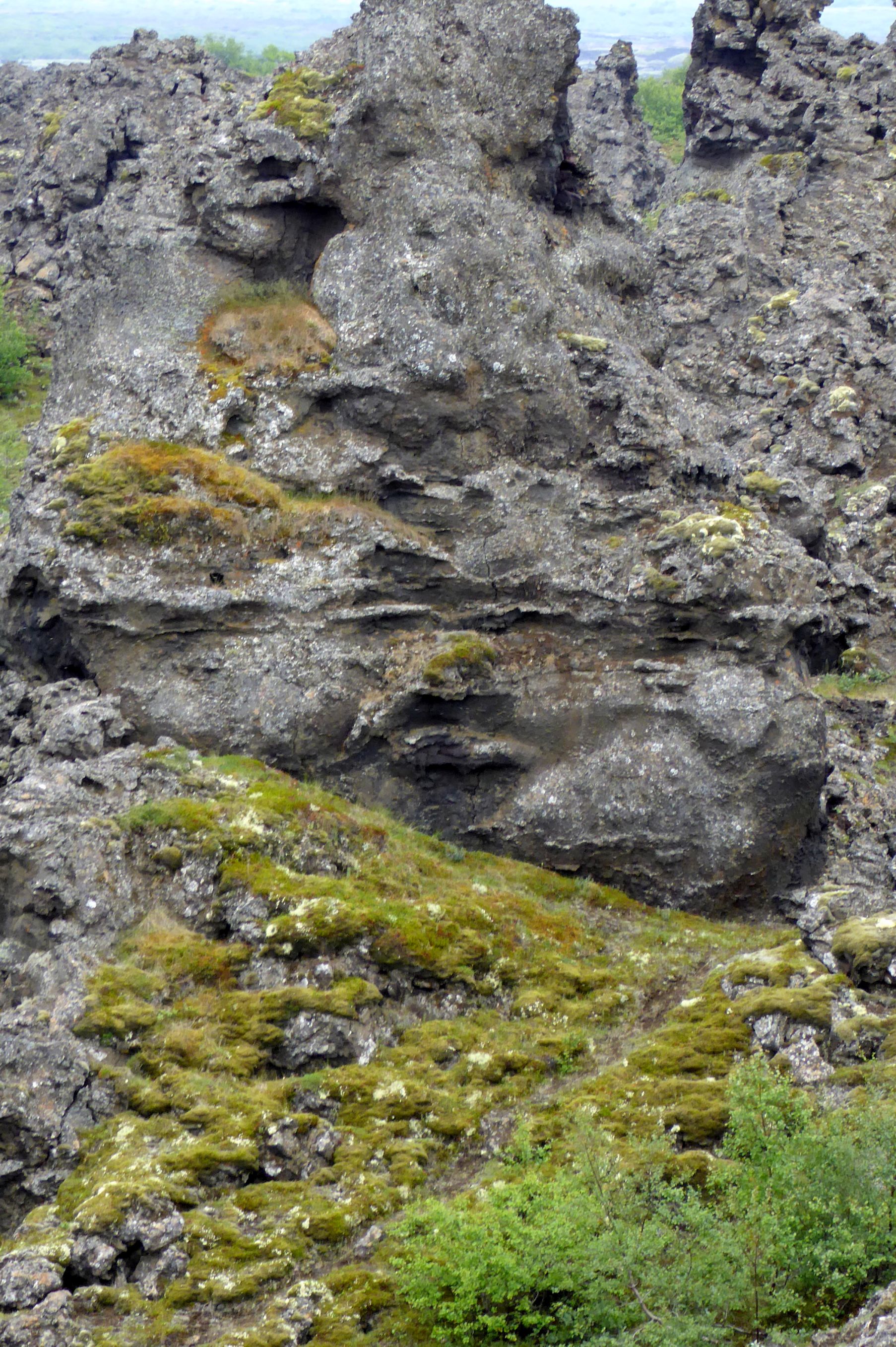
Dimmuborgir is full of whimsical “black castle” lava formations created when the crater row erupted around 2,300 years ago. Our group had fun spotting faces in the lava. Can you see the curvy lips and full cheeks in this one? (Hint: They appear just above the grassy area.)
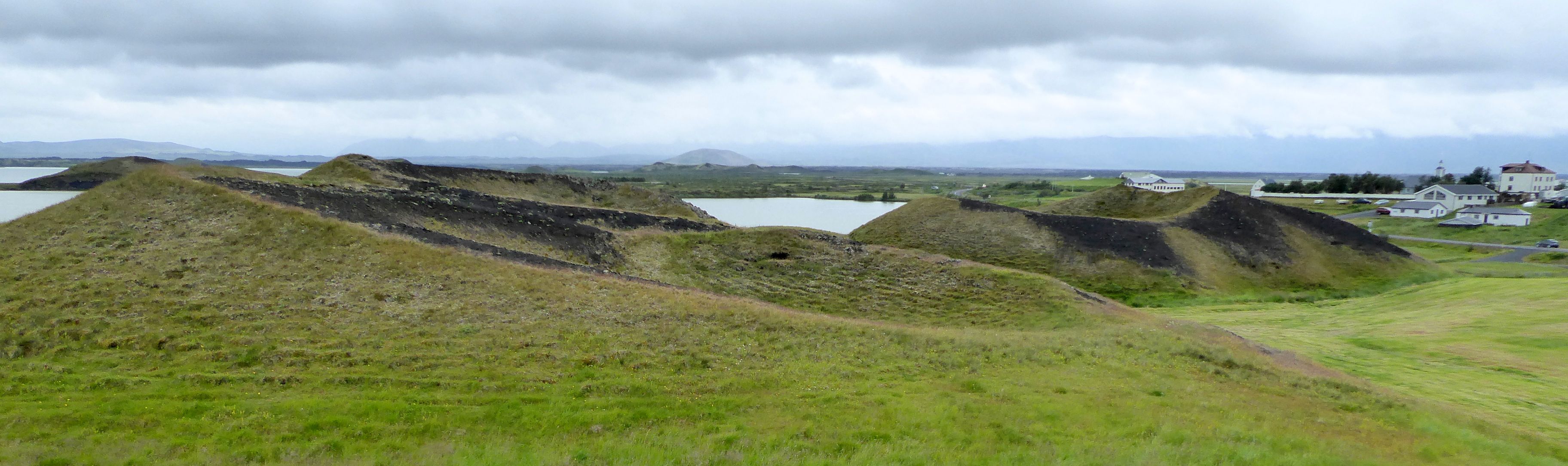
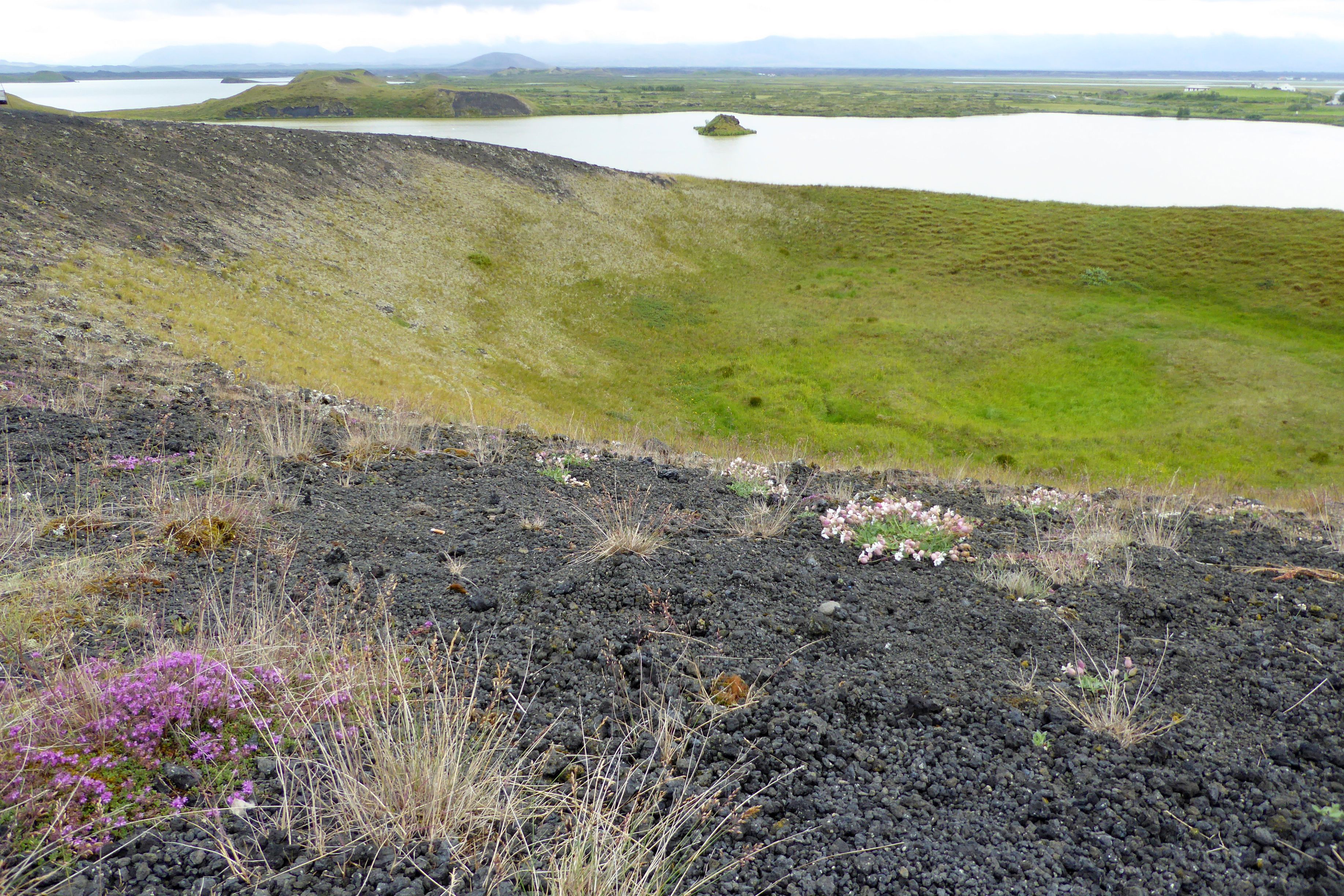
Our final other-worldly visit was to Skutustadir. Click on the link to see an awesome aerial shot taken on a sunny day. These pseudo craters are in the Lake Myvatn area near the Krafla volcano system. During eruptions, lava ran across the area, which at the time was swampy wetlands. The heat caused steam eruptions, which resulted in their crater-like shape.
Bruce and I enjoyed hiking around the area and taking in the views from the tops of the craters.
We also enjoyed stopping here after our hike for some homemade Icelandic ice cream…
…and visiting their pets.
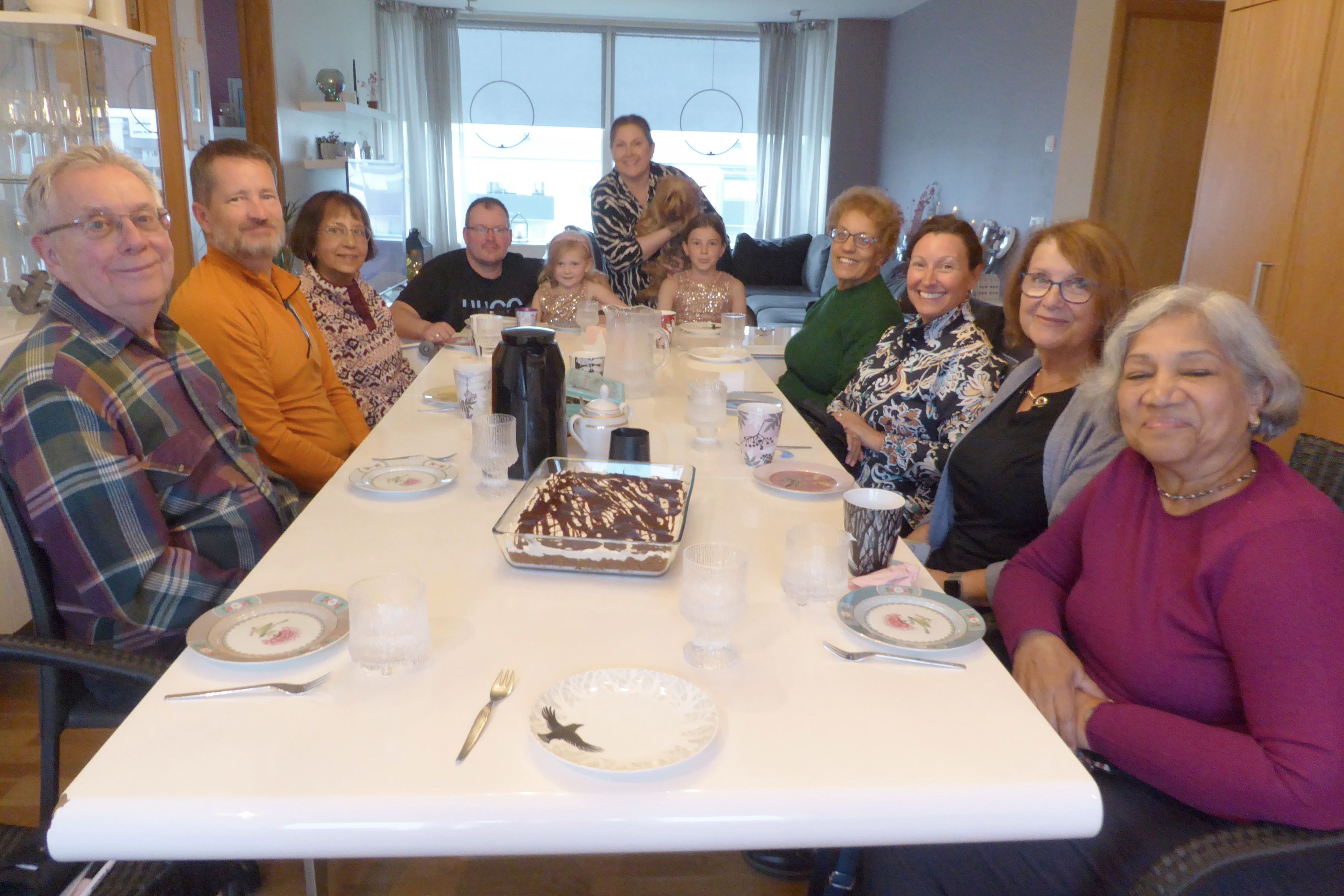
In the evening, our group was split in half for home-hosted dinners at two homes. Our group was hosted by Esther, Gunnar, and their two adorable daughters, Berglind (9) and Elizabeth (4). They were such a sweet family, and they lived in a lovely apartment.
Throughout the evening, their TV was tuned into the video cam of the erupting volcano – such an amazing sight that had us enthralled in between conversation and petting their cute dogs.
Esther is studying computer science to become a programmer, and Gunnar is a commercial fisherman. He caught a huge cod for our delicious dinner that was prepared by Esther. Berglind kept busy as our server and did a great job! Bruce gave Esther and Berglind each a pair of his fused glass stud earrings as a gift, and I gave Gunnar some of my photo cards to share with Elizabeth.
It was such a fun evening, and a highlight of the trip (as always!). Looking back, my favorite travel memories have been of the home-hosted visits I have done with Overseas Adventure Travel, and previously, Vantage Travel, when we traveled with them (before their bankruptcy).
Esther, Gunnar, Berglind, and Elizabeth: Thank you for such a special evening I will always remember!
Next up: Watching Wonderful Whales!
Note: If small group travel is of interest to you, I highly recommend Overseas Adventure Travel (OAT). Although Bruce and I travel together, they do not charge a single supplement for those who travel on their own. Singles also get their own room at hotels. If you book, you can get $100 off your trip by providing my name and customer number (Elaine Krugman, #3018126) as the person who referred you. I will also get $100 off future travel– a win-win!
After two amazing days seeing so many beautiful places, I will have to admit I wasn’t excited about our first stop of the day on our way to the Snaefellsness Peninsula. On Overseas Adventure Travels tours, “Controversial Topics” are a feature, and they are often very interesting and memorable. This one about blood mares, however, left me feeling sad.
We visited a co-op hardware and farm supply store to listen to the store’s manager, a veterinarian, speak about this husbandry practice that she is very much against. She was excellent; the topic was not. It involves impregnating horses for the sole purpose of harvesting their blood (a weekly draining of up to five liters in the span of just a few minutes), which contains a rare hormone coveted by veterinarians (the bad type, in my opinion), who use it to improve the fertility of other livestock. Iceland is one of the only countries in the world—and the only country in Europe—where this practice is legal.
Animal rights activists, for good reason, find the procedure cruel. I agree. The worst part is the foals that are birthed are sent to the slaughterhouse, because the farmers have no other use for them.
I needed some comic relief after that talk, so I visited the toy section of the co-op that carried just about everything one would want. These guys (see below) are members of Iceland’s rescue team, the largely volunteer crew that keeps quite busy when a volcano is erupting on Iceland. During the previous eruption two years ago, there were numerous rescues, because many inexperienced and unfit hikers ventured out on long hikes to see the volcano, but didn’t bring water with them (Idiots!) and couldn’t make it back.
This time, while we were in Iceland, another volcano was erupting (we saw it from a distance while on the road), and the authorities were cracking down on the sightseeing tourists, making it as inconvenient as possible for the casual, inexperienced hiker.
(For all pictures, click on the image to see full screen view.)
Since we couldn’t see the volcano close up, I photographed the TV in our hotel’s lobby.
Missing from my trio of rescue team heroes was the female lifeguard, in a package complete with her lifesaving buoy and paddleboard. She was on a different shelf, and I neglected to take a photo of her. Darn; the photo that got away. I regret skipping that photo op, because I wanted to be a lifeguard when I was kid growing up in Long Beach, California. She brought back good memories of my summer days on the beach.
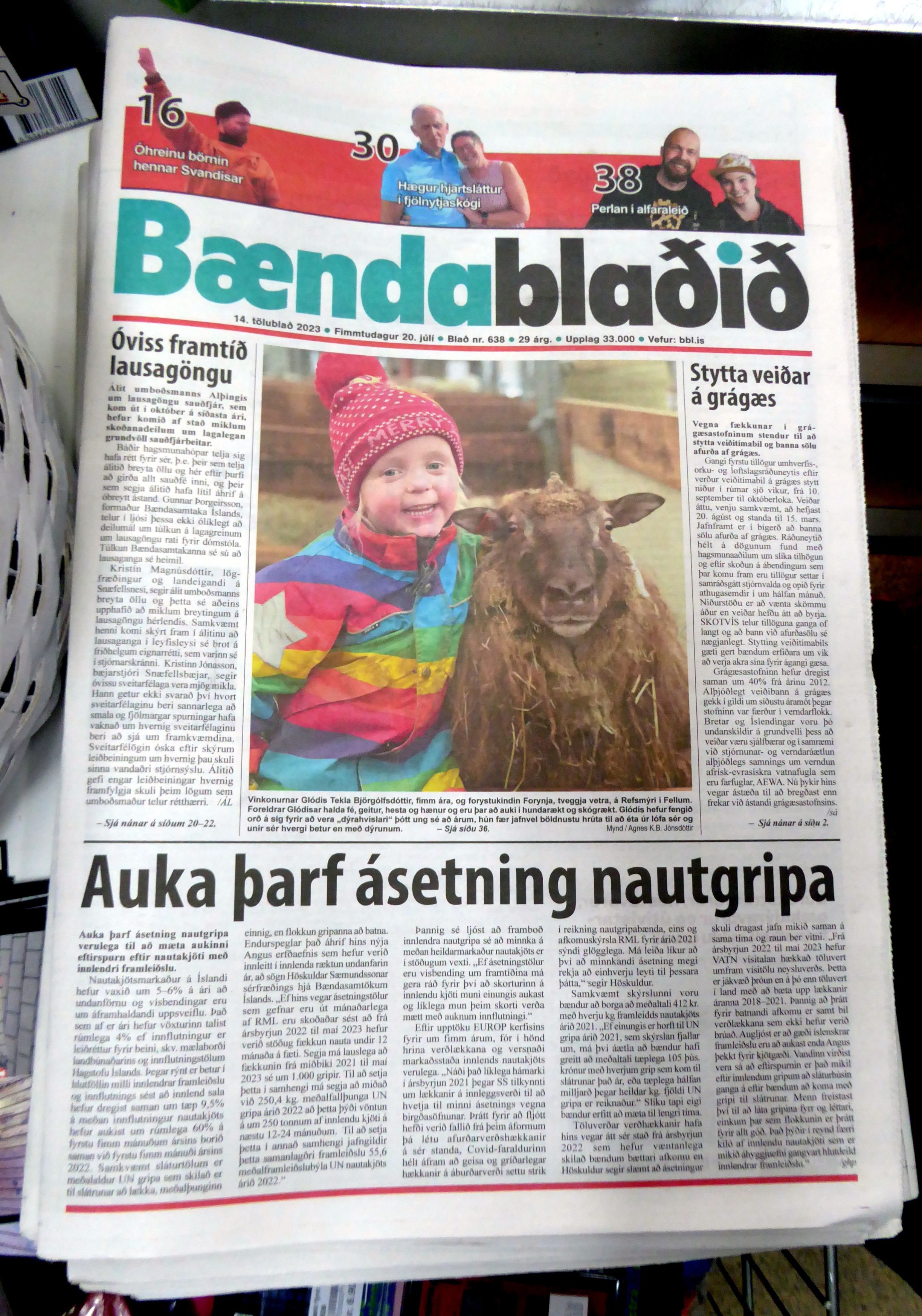
This adorable girl and sheep captured my attention! As you can see, the Icelandic language has some different characters adding to the difficulty of the language.
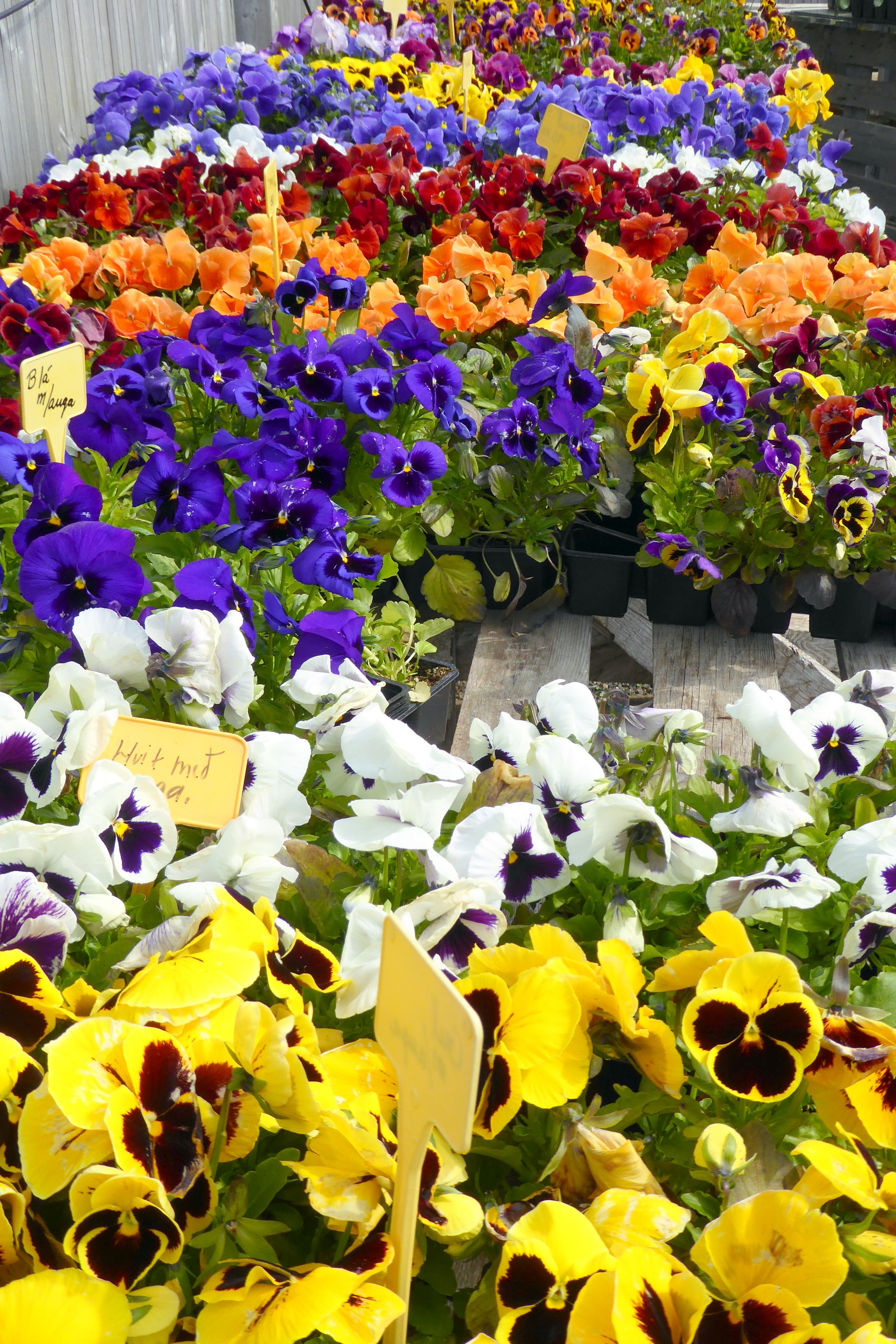
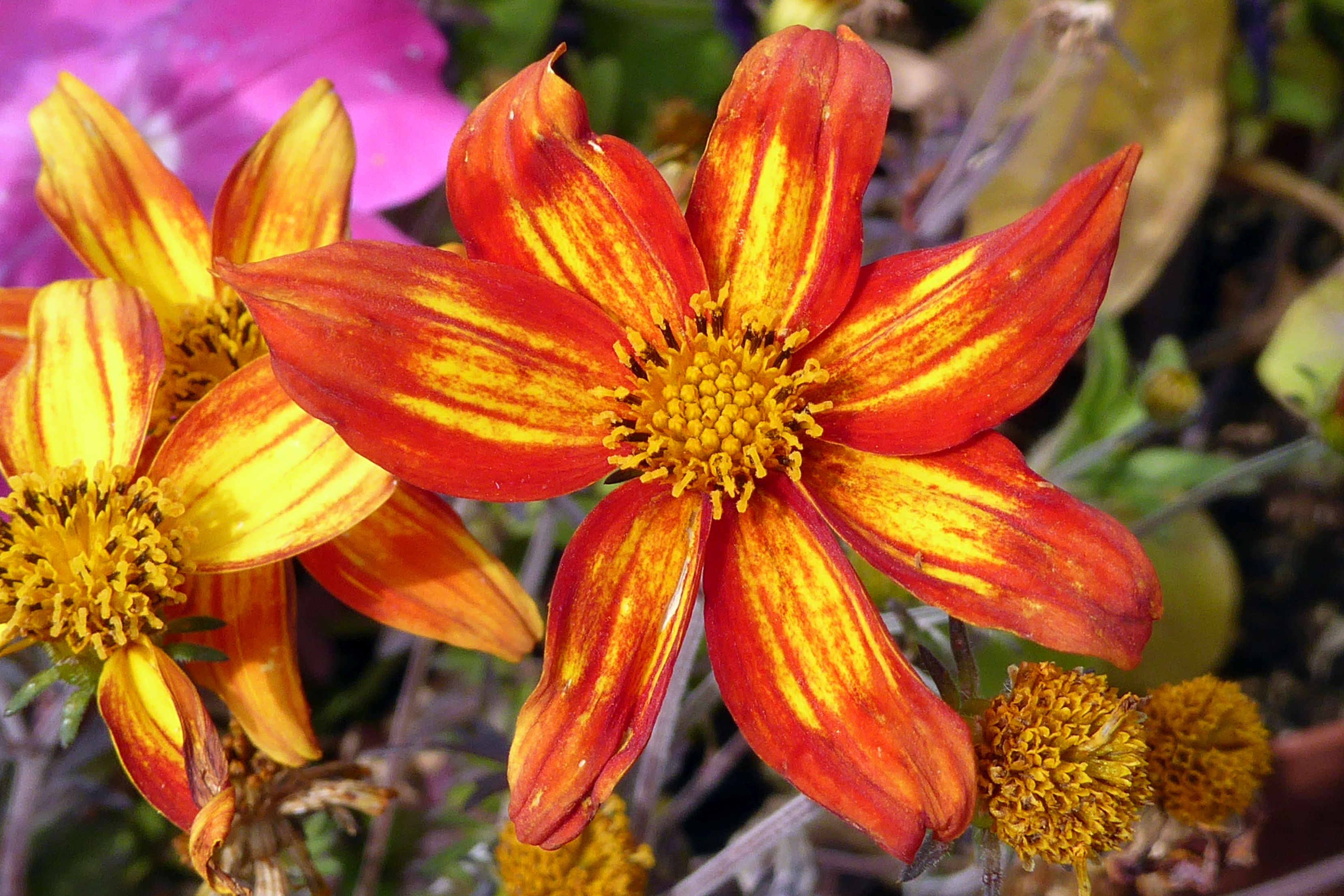
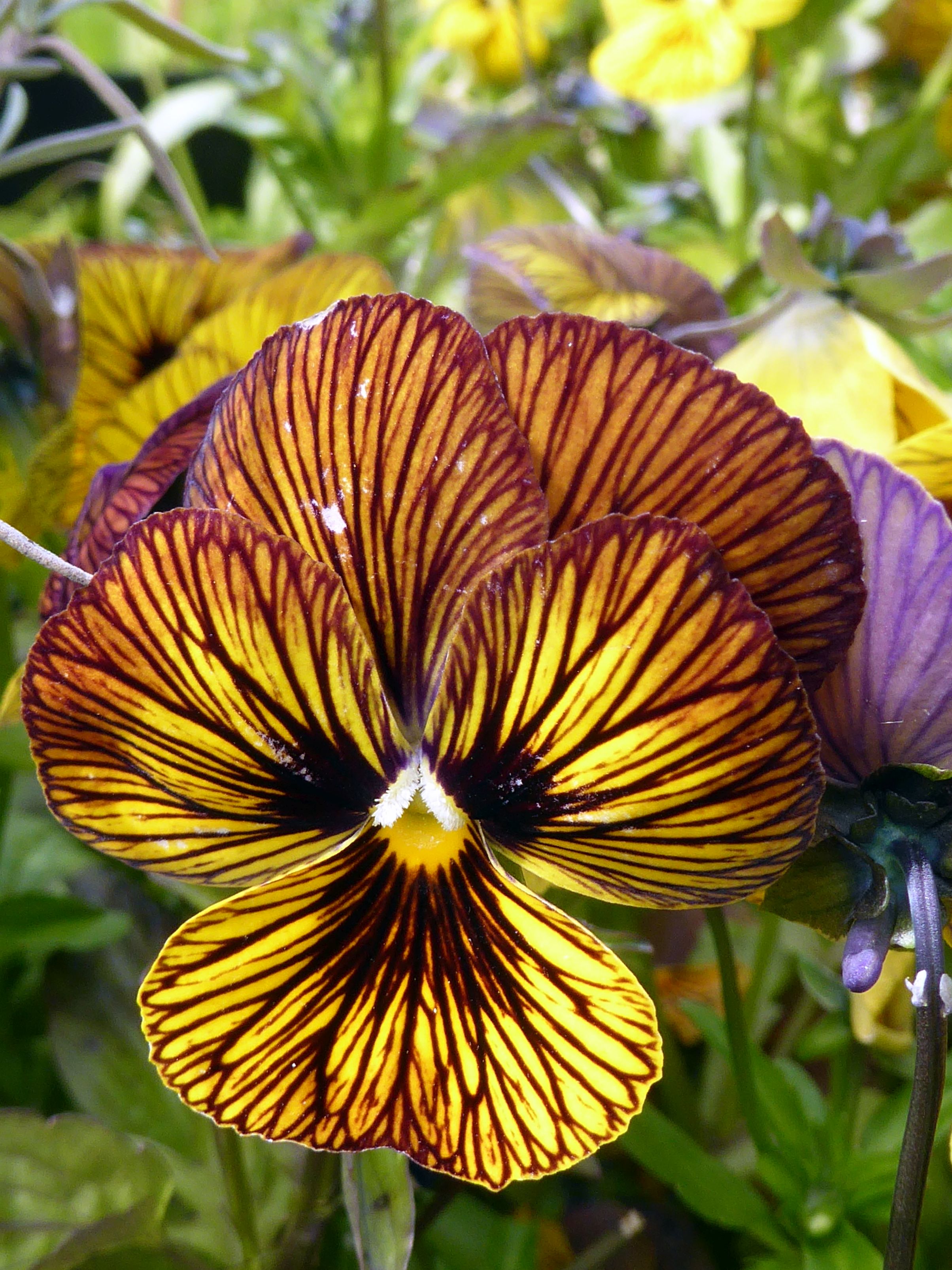
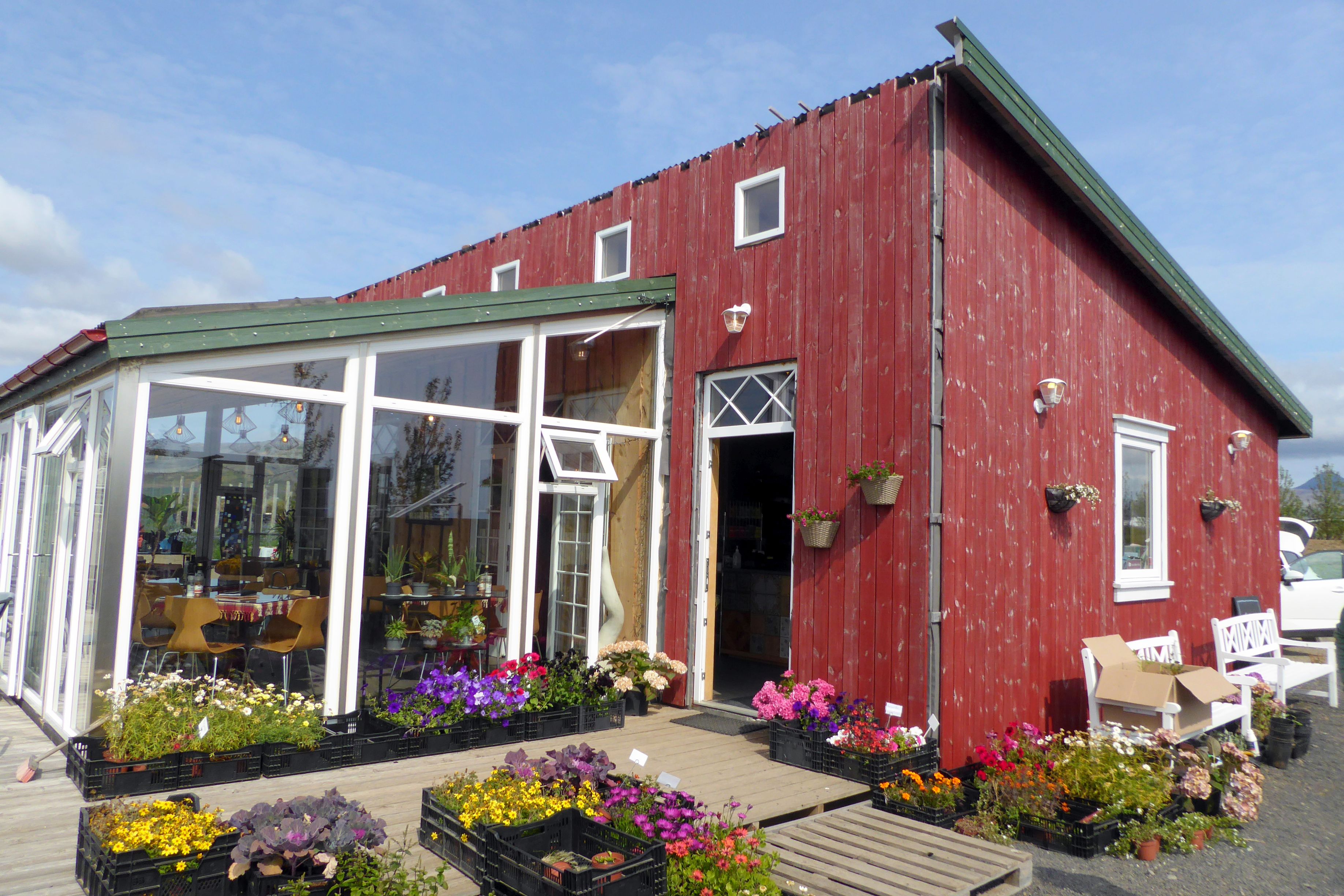
Leaving the blood mare conversation behind, we were off on our drive to the Snaefellsness Peninsula. On the way, we stopped for a visit to a greenhouse to learn about the challenges of growing plants, flowers, and produce in Iceland. The couple who owns the greenhouse and a café rely on heated groundwater from deep beneath the surface for its daily operations, and much of what they raise is grown hydroponically.
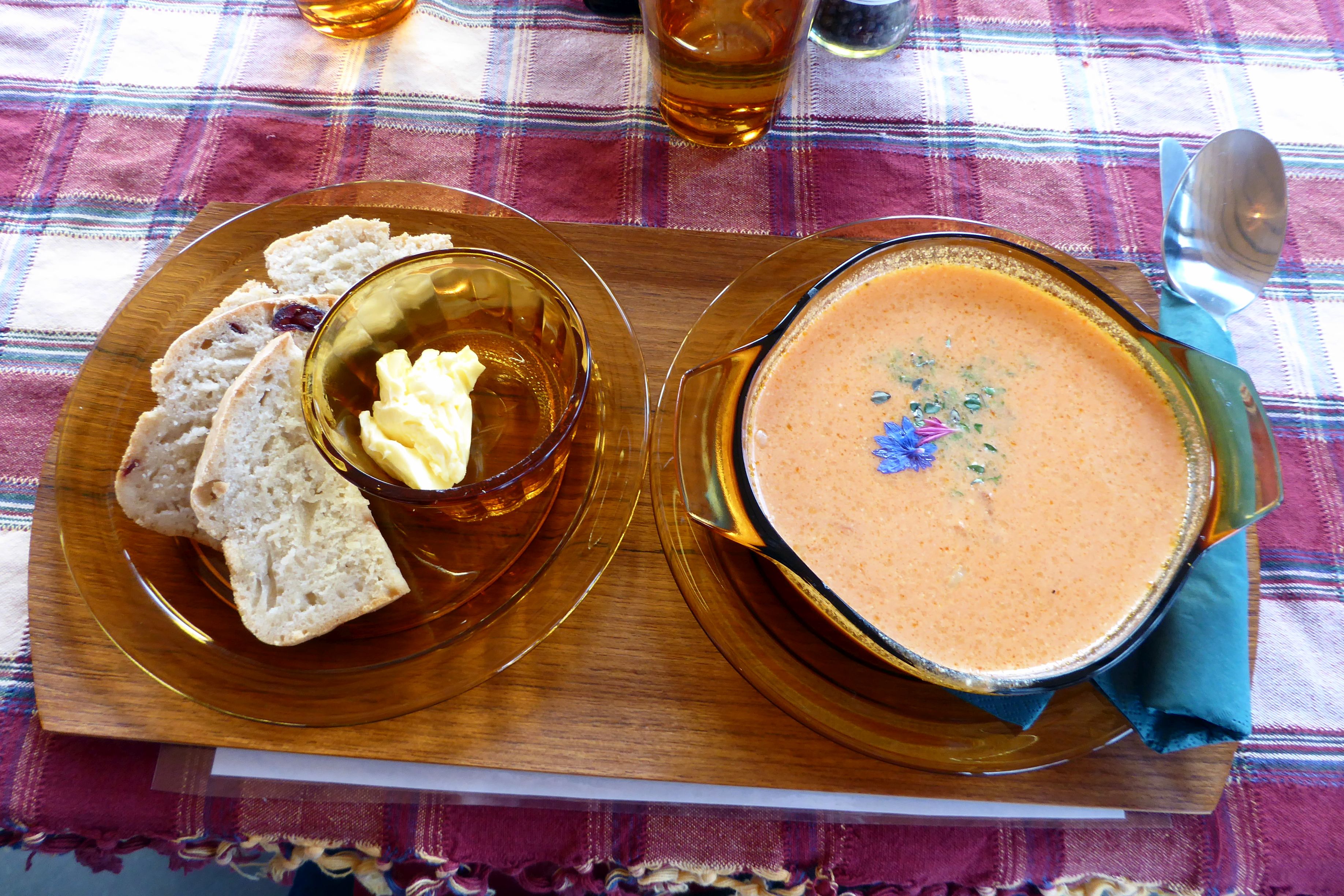
The lunch afterward was so fresh and delicious! We started with a beautiful salad of just-picked greens topped with edible flowers, and was then served this delicious curry soup and fresh-baked bread:
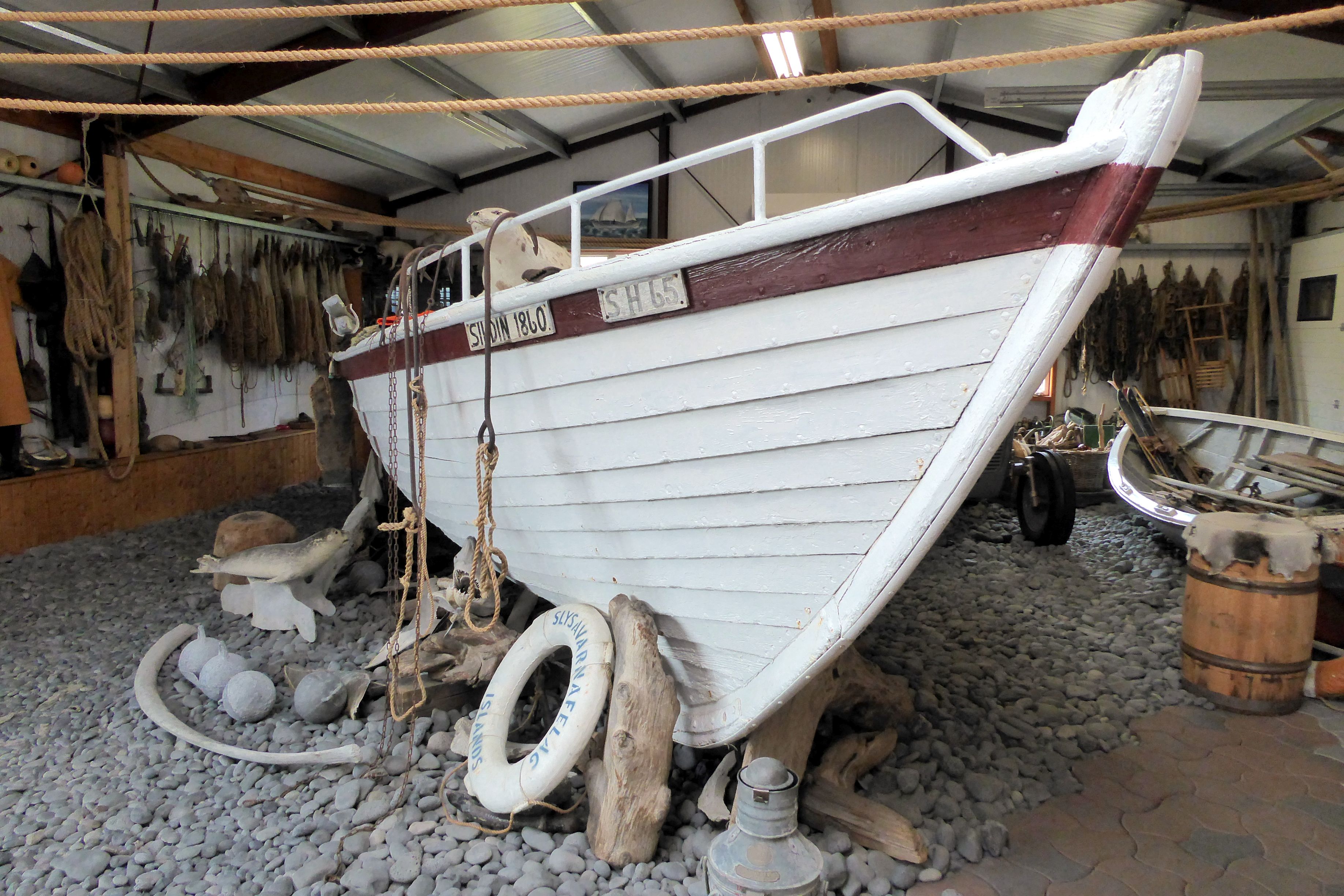
Continuing on our drive, we passed through several fishing villages and stopped at the Bjarnarhofn Shark Museum, where we learned about fishing for Greenland sharks and processing shark meat.
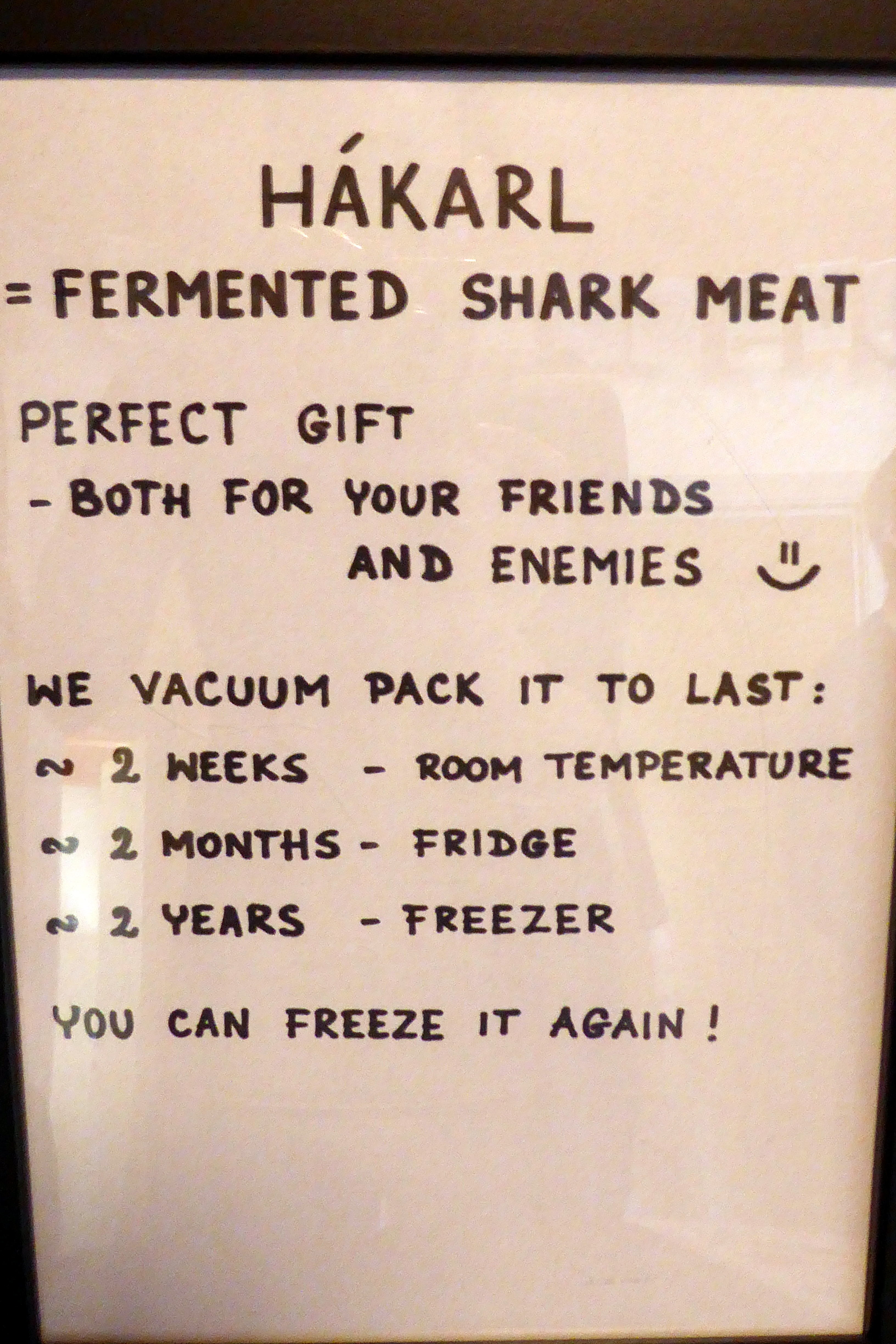
Hakarl, aged shark meat, is a national delicacy. It takes between 4-6 months to process and is traditionally consumed with Brennivin, at one time the only hard liquor found in Iceland and often referred to as “Black Death.”
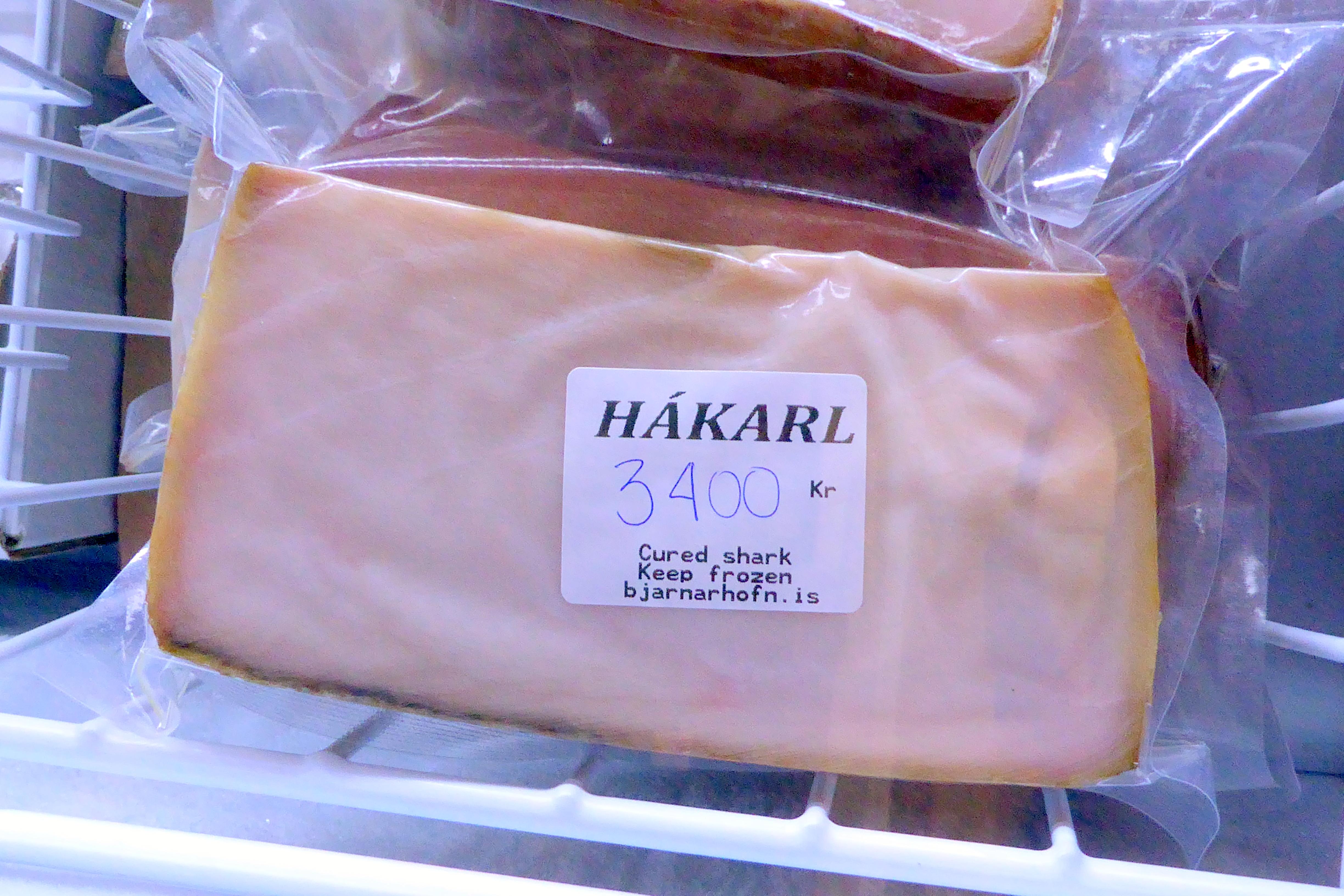
This chunk cost about $25
We had the opportunity to taste Harkarl, first with a piece of rye bread, next, by itself, and finally, with liquor. Most of our group either passed on the opportunity or couldn’t get past the first taste. I get it; the smell was bad, and the taste was horrible. I wanted to see if I could handle tasting the shark meat all three ways, so I forged ahead. I’m not sure what was worse, the shark meat or the liquor chaser – definitely an acquired taste I had no intention of acquiring.
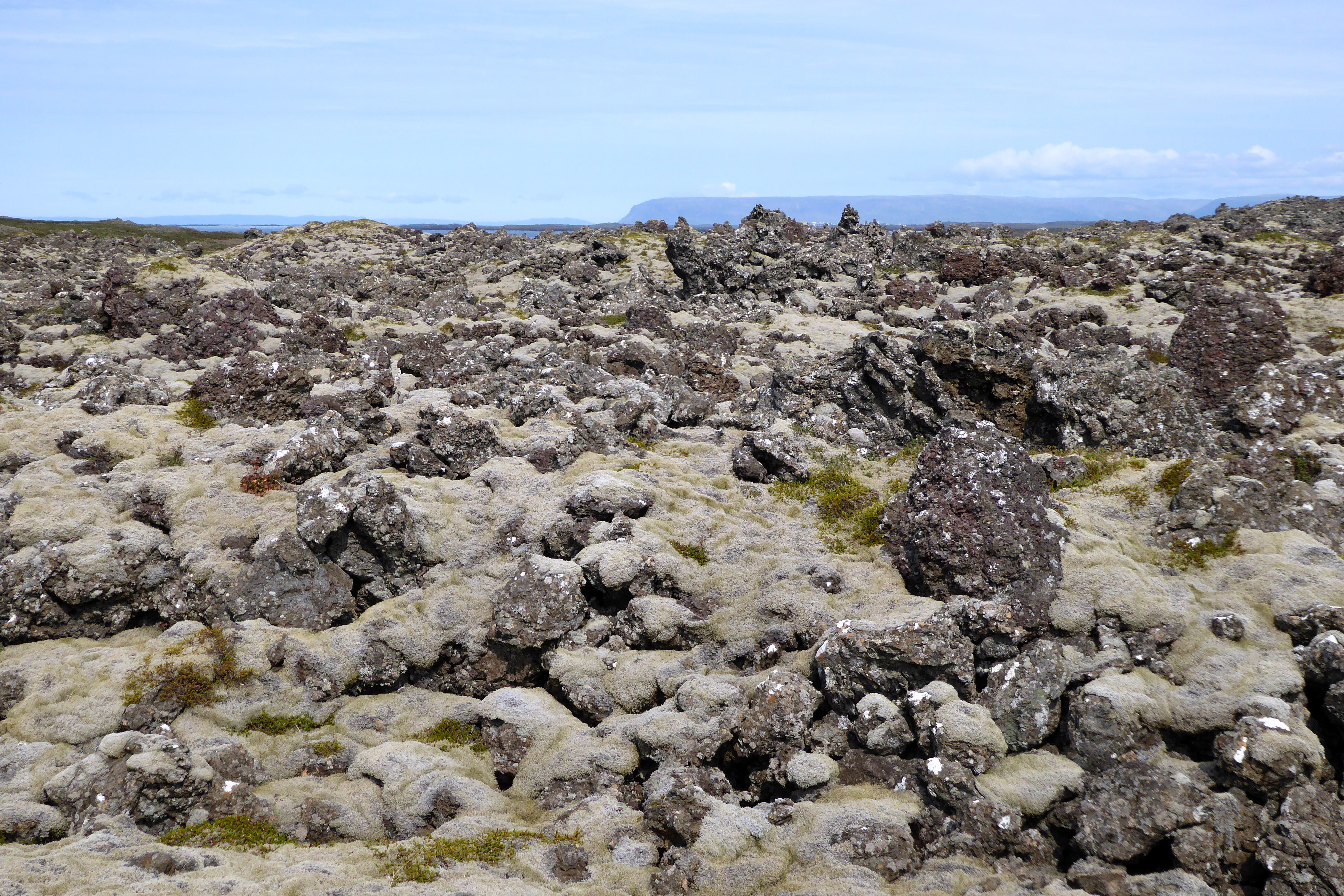
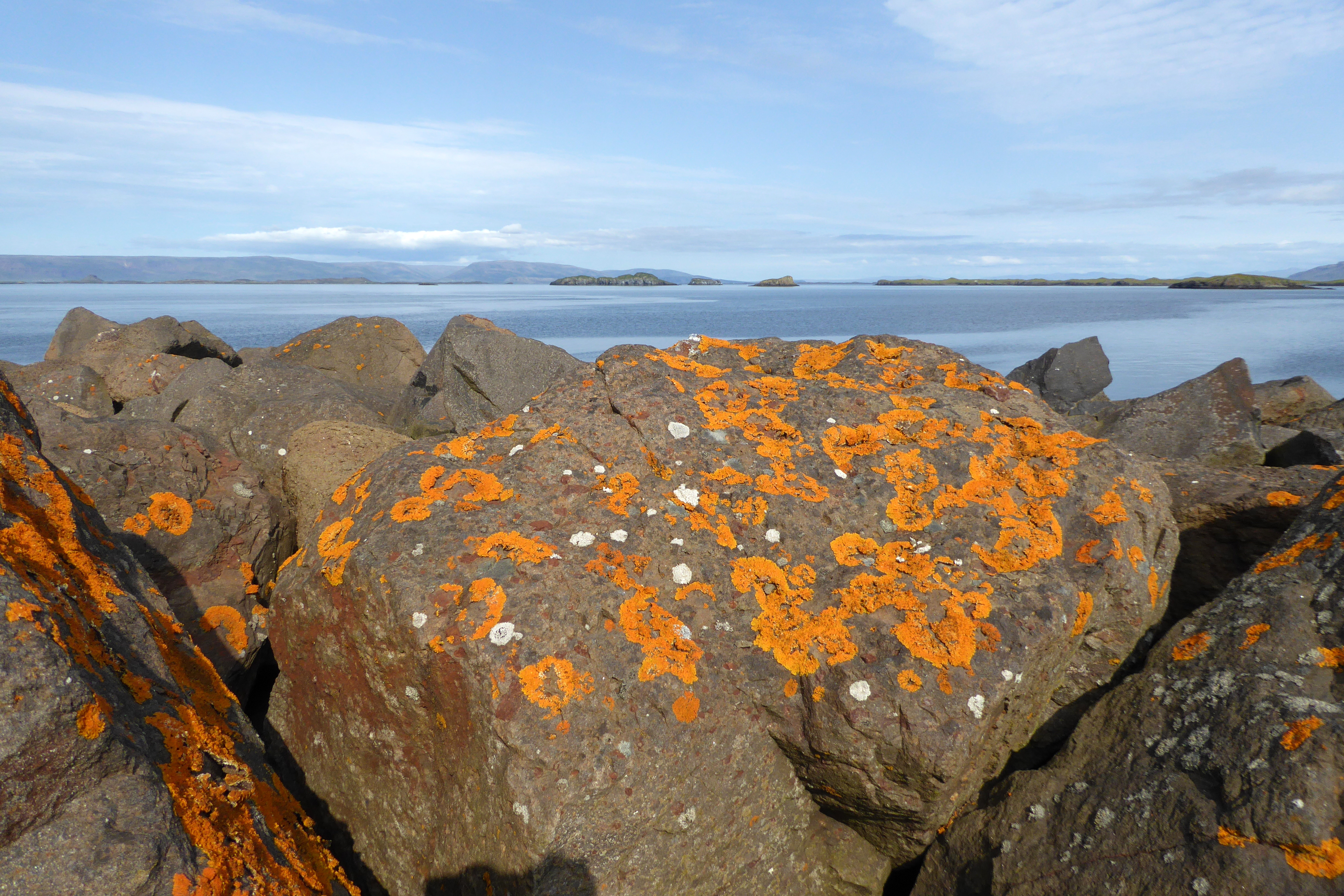
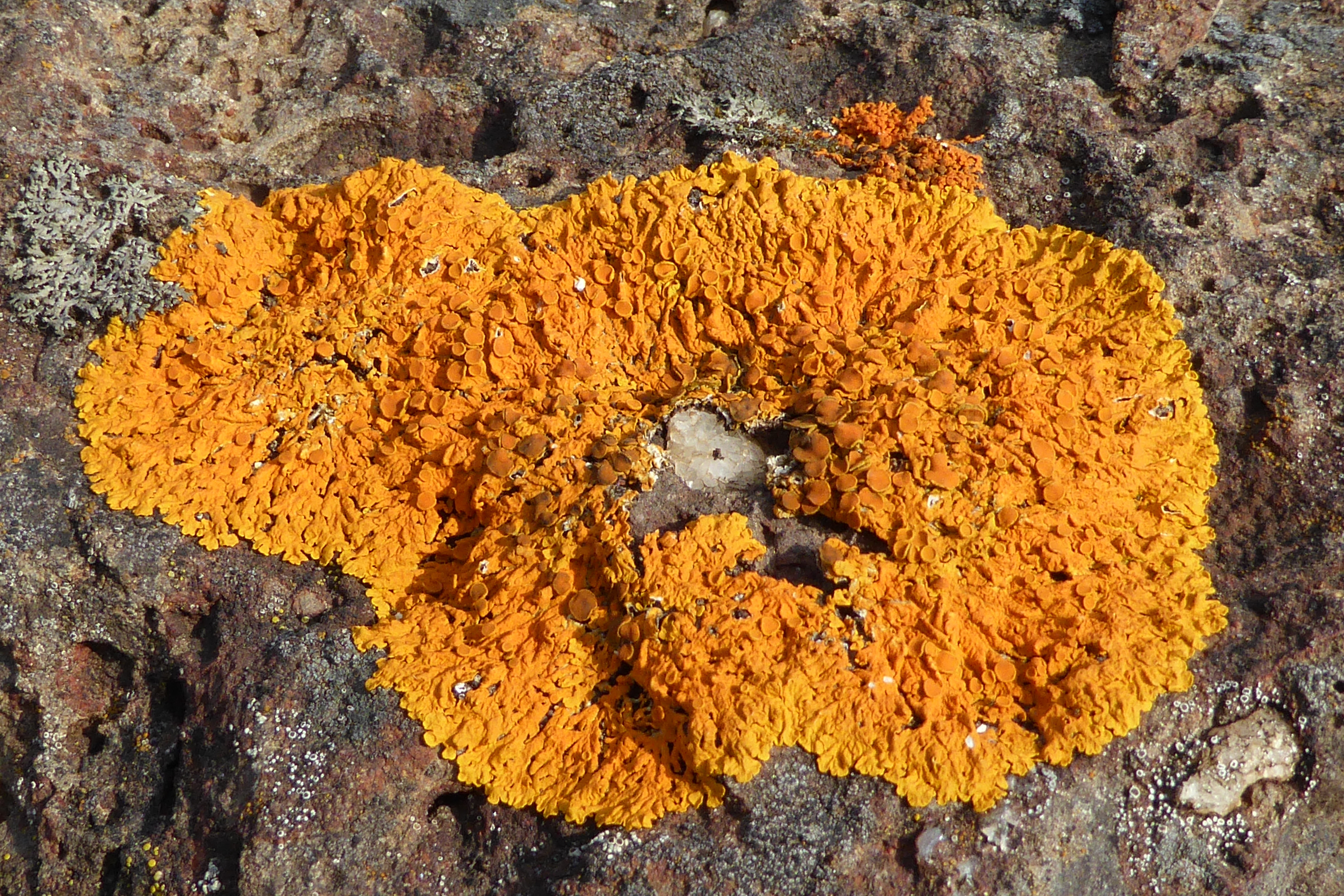
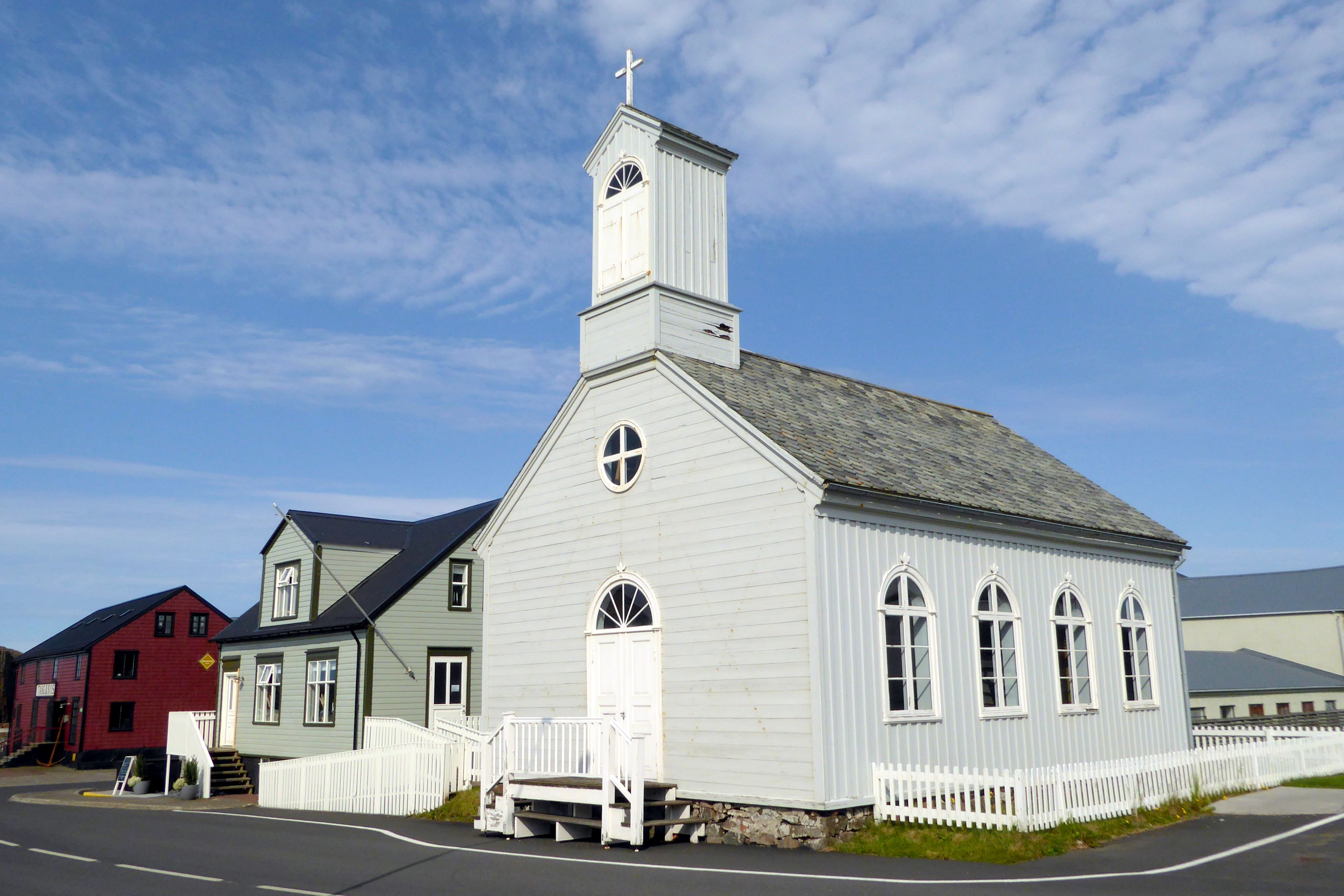
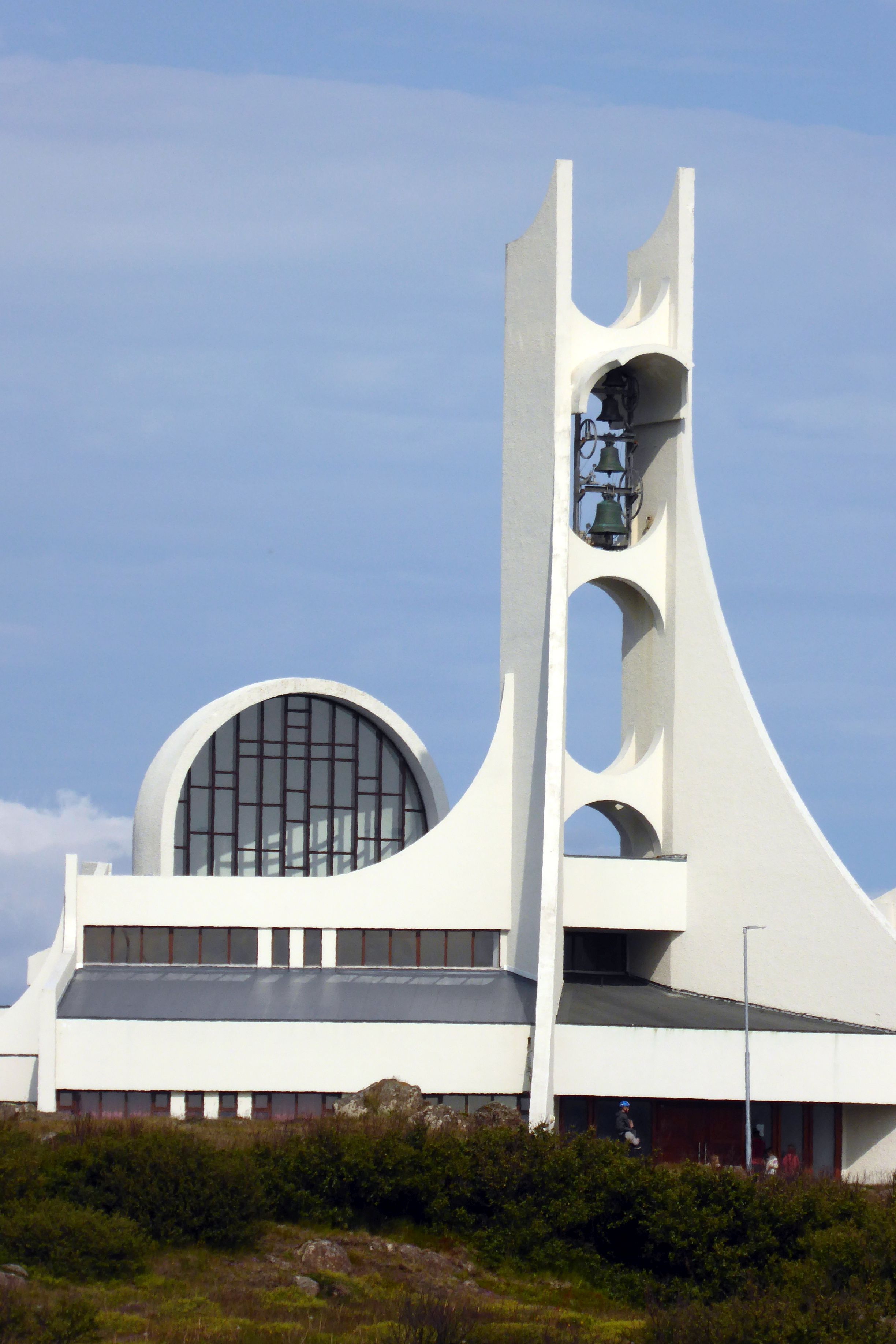
This cute little church was near the museum, so I took a walk out to get a closer look.On the way to Stykkisholmur, we stopped to get a closer look at the volcanic landscape with lichen and moss growing on it.
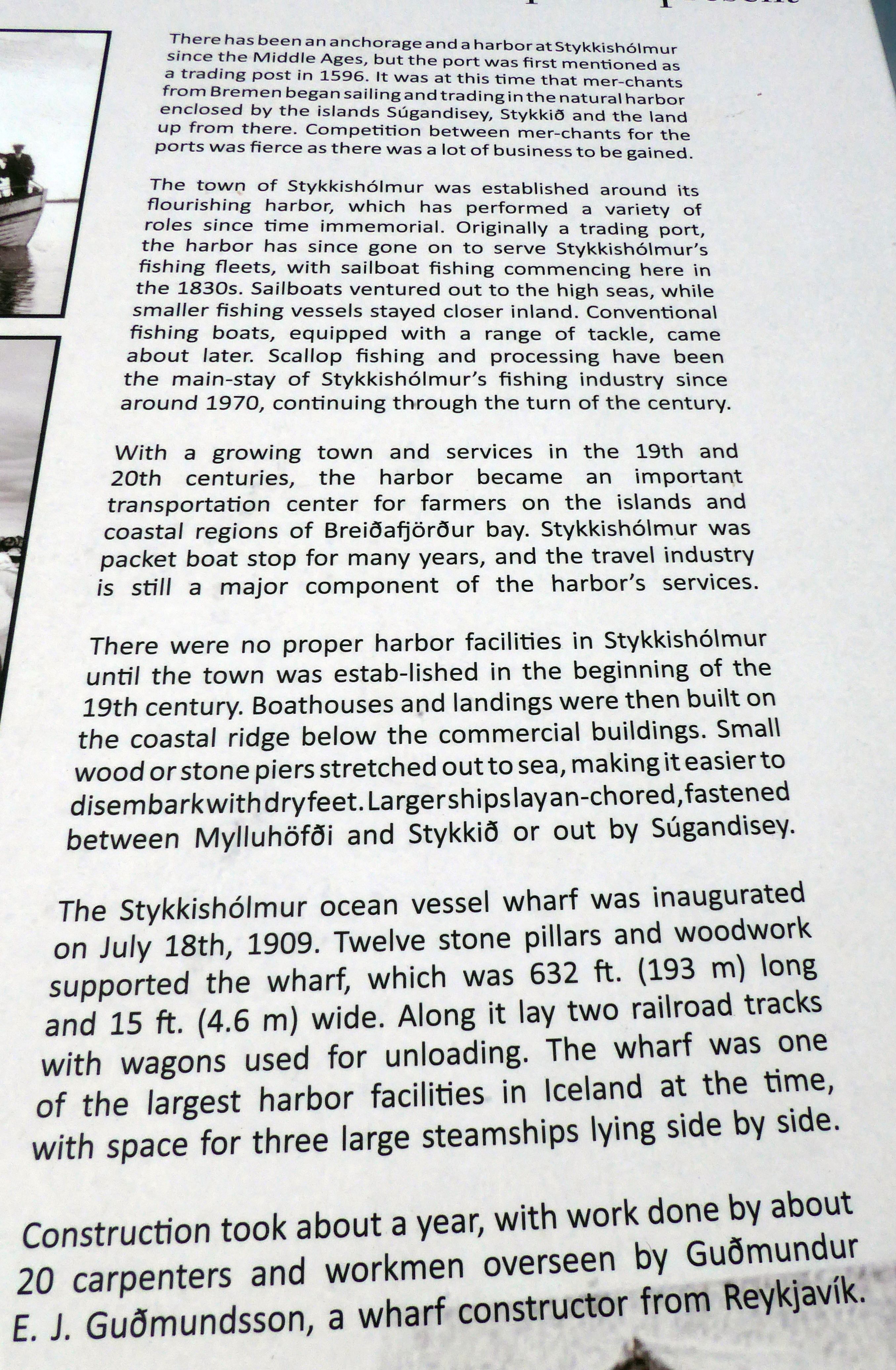
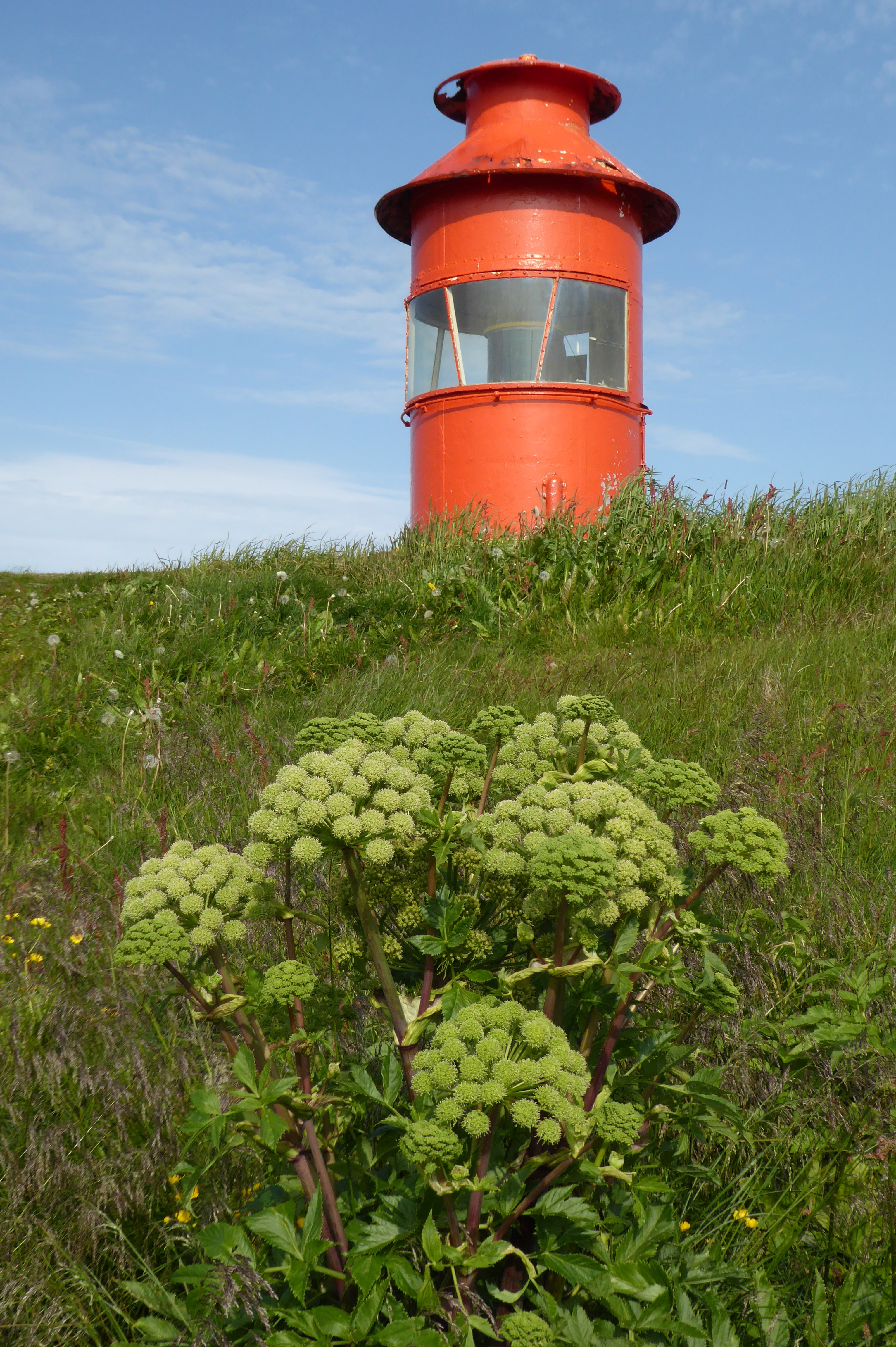
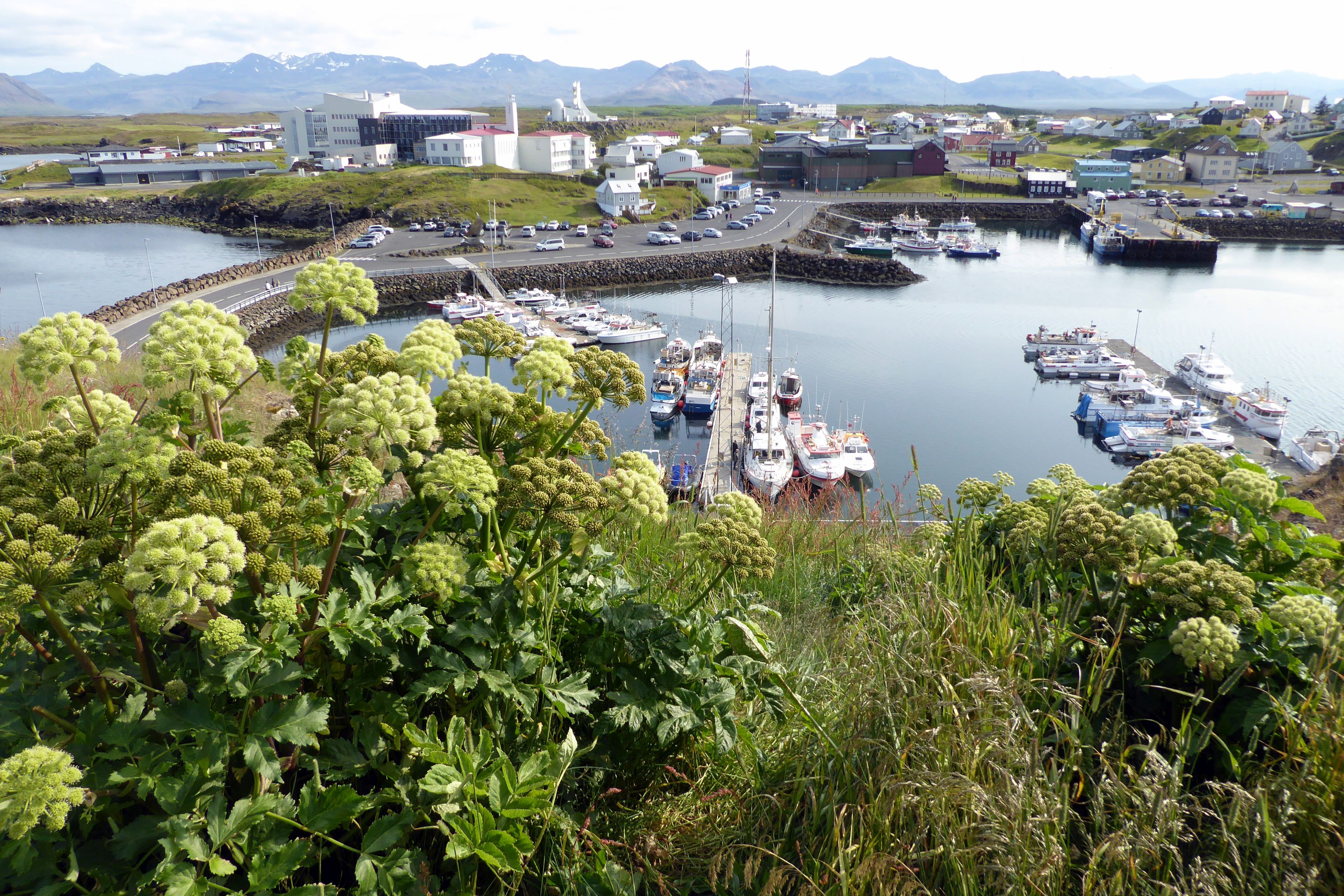
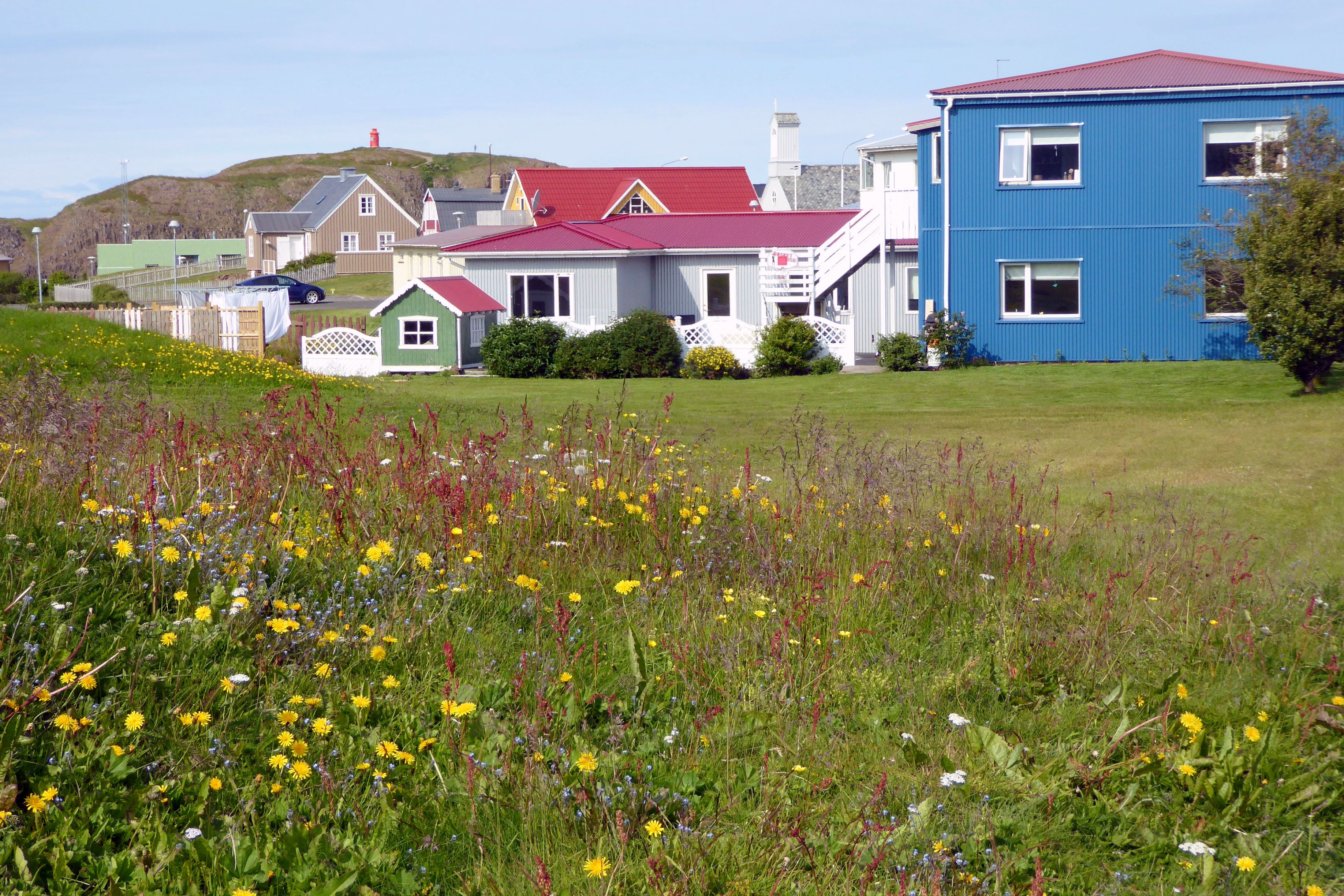
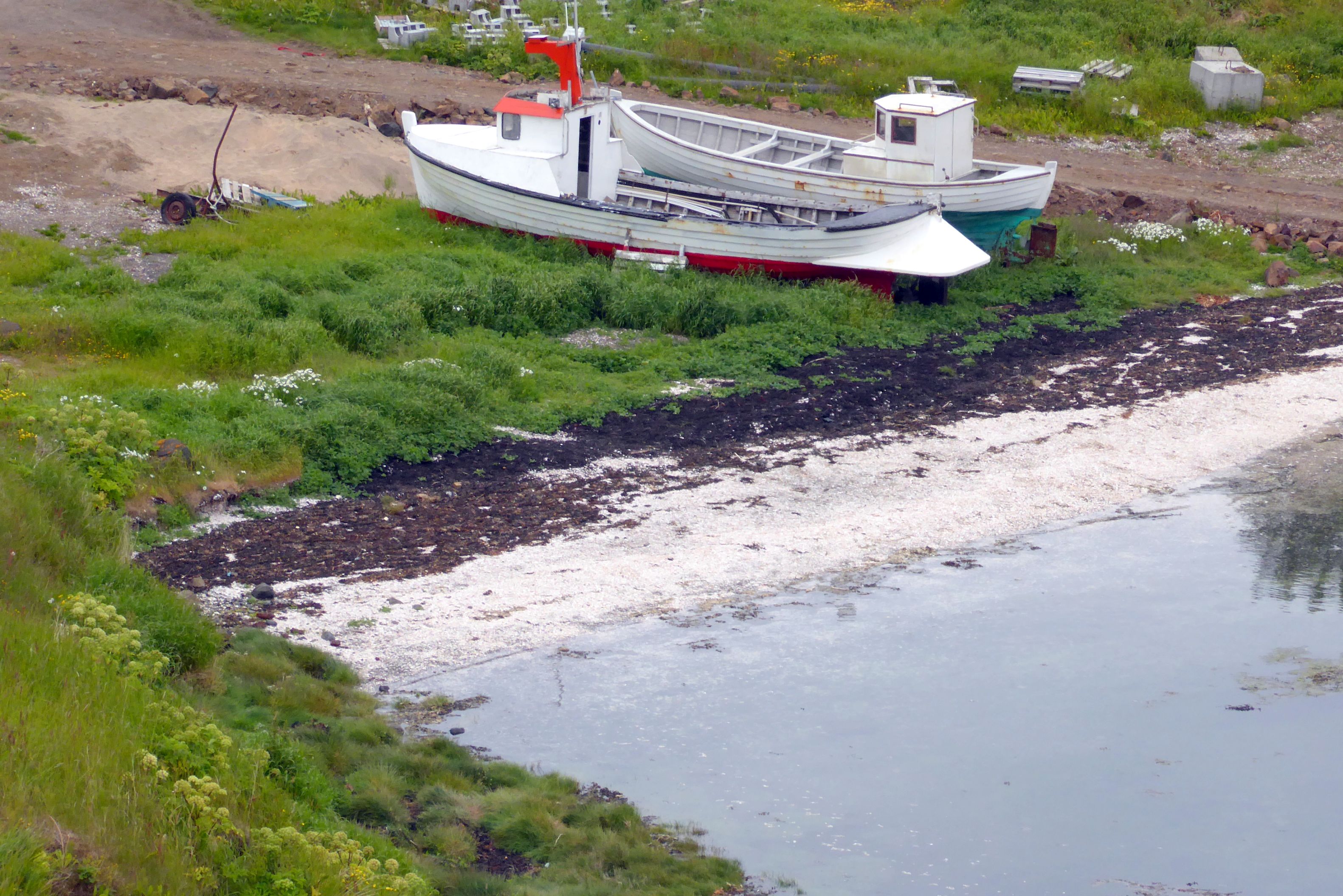
By the time we got to Stykkisholmur, I was ready to leave blood mares and aged shark meat behind and go for a nice, refreshing walk. It was a beautiful afternoon, and this little fishing town was calling our name. The walk around the harbor and up to the lighthouse was joyful!
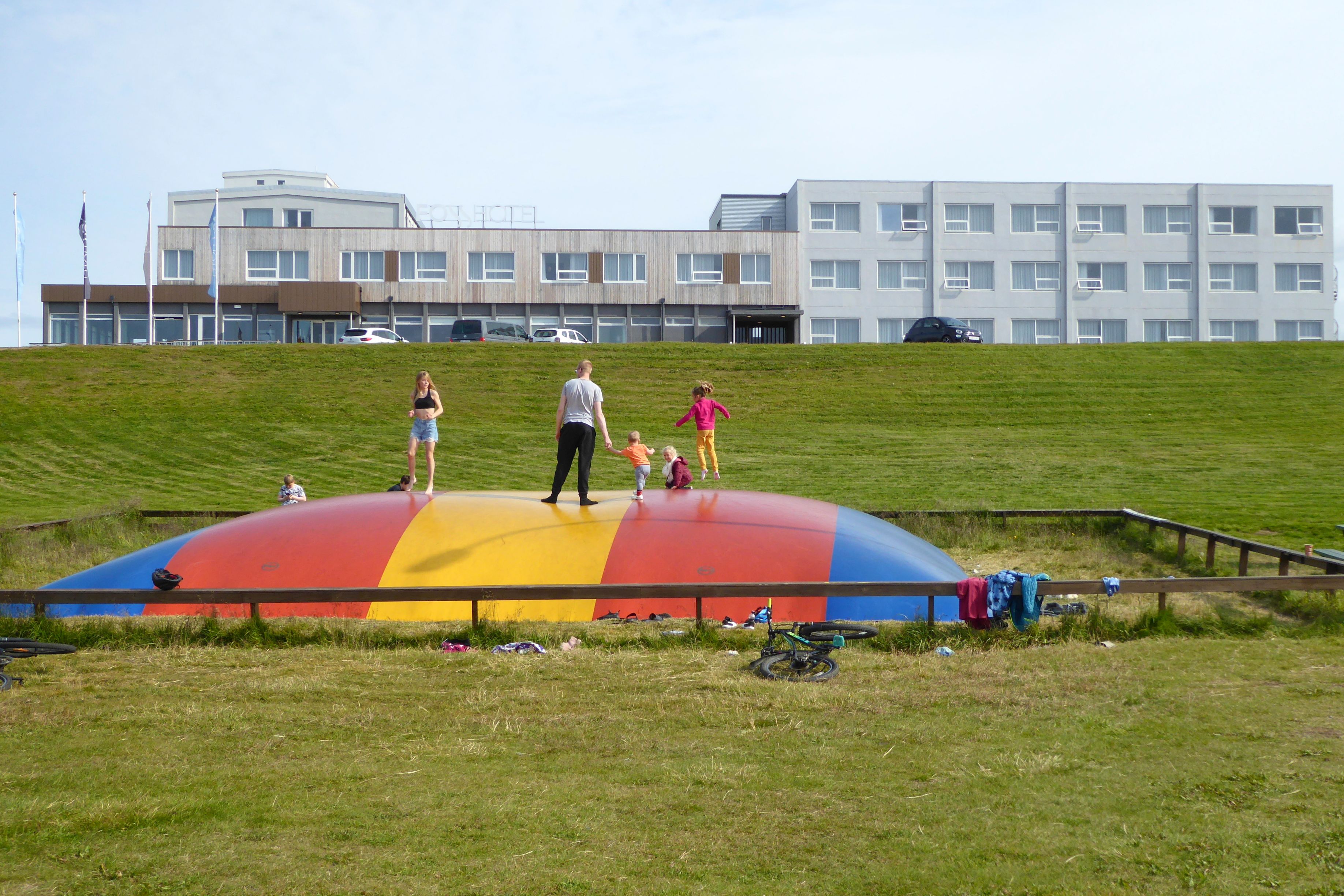
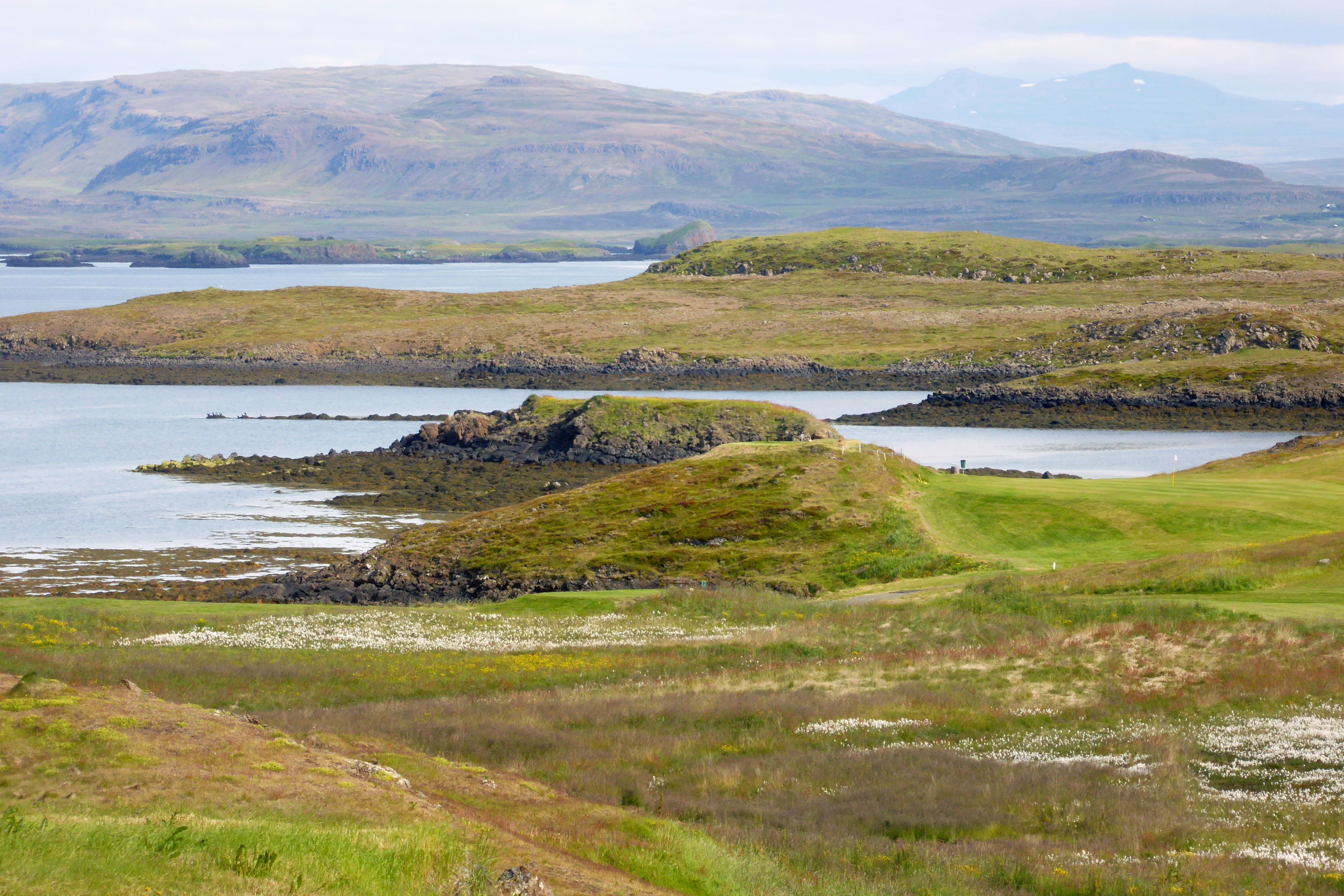
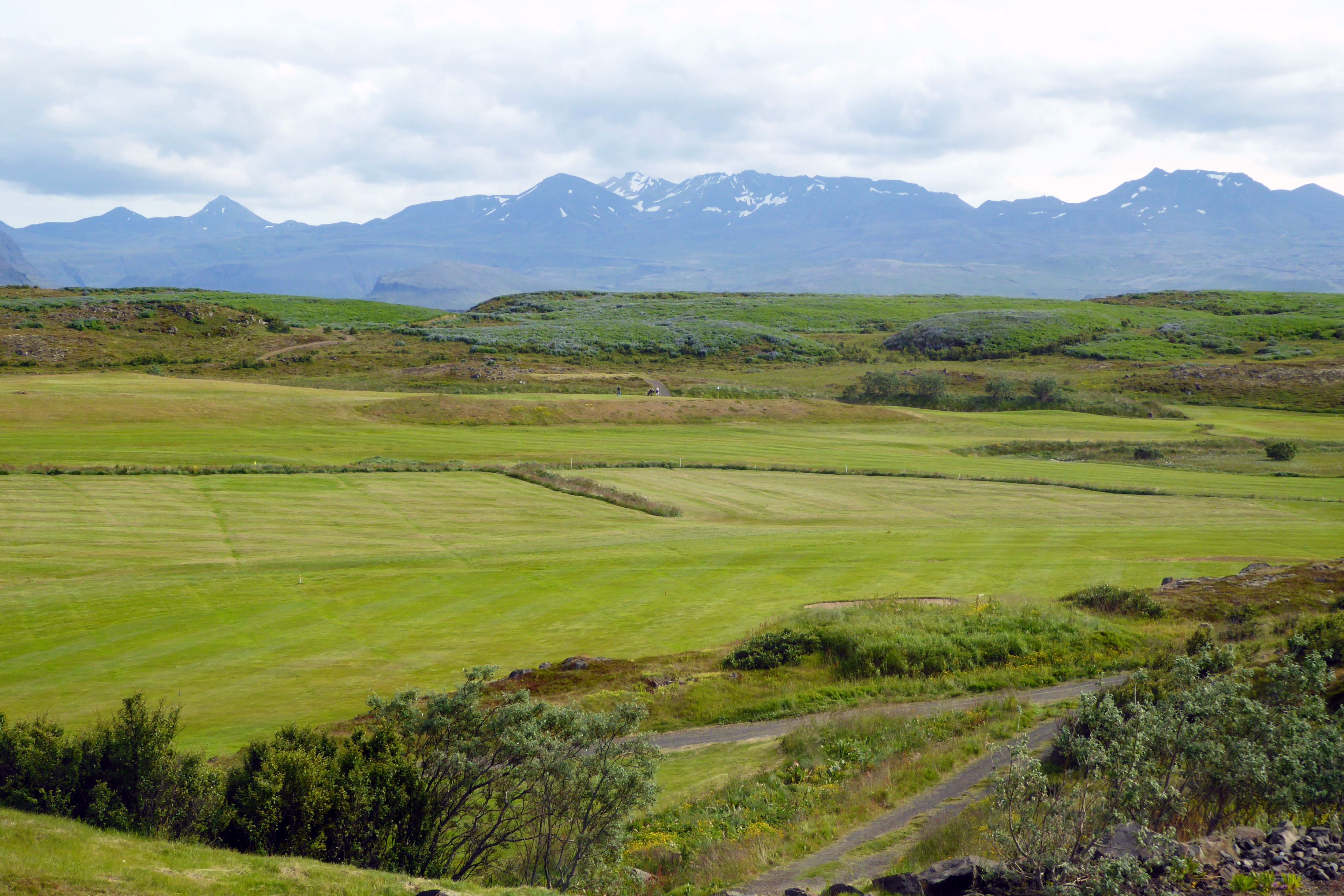
That’s our hotel in the background. We saw these inflatable bounce playgrounds in just about every town’s recreation center. The pool was right behind me; very convenient!The views behind our hotel. There was a golf course off to the right.I loved this simple and clever bread and butter display at dinner.
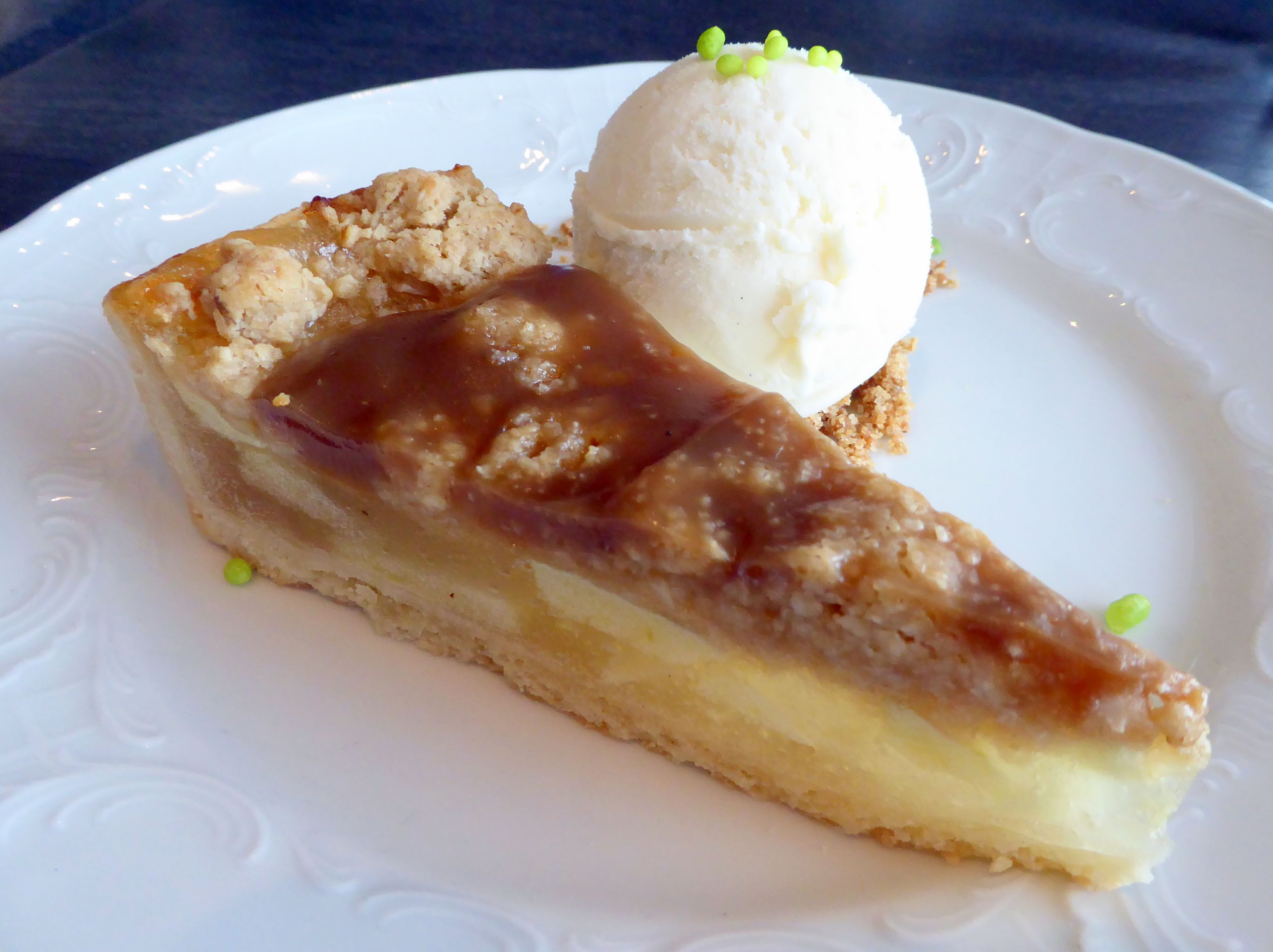
This dessert was heavenly!
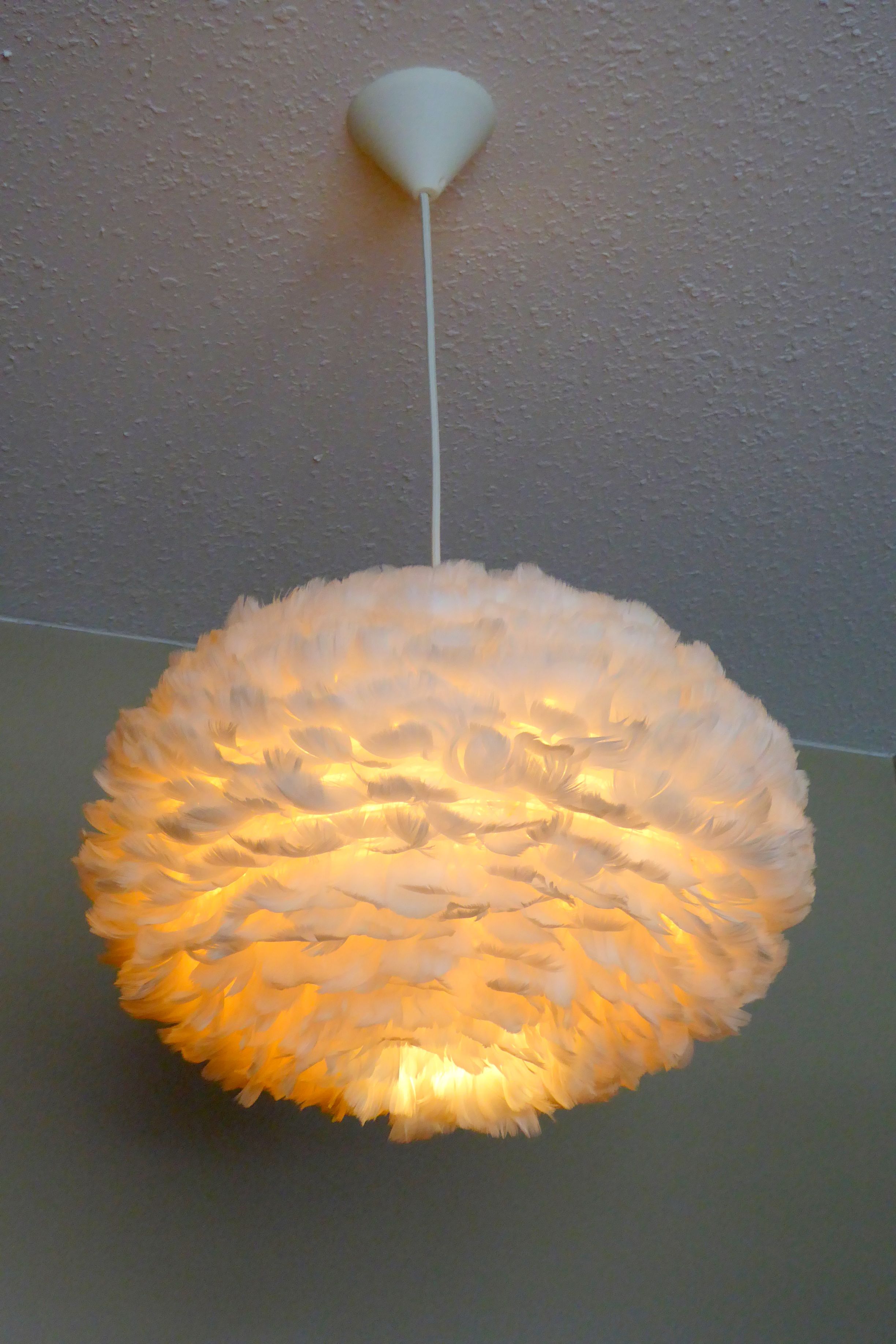
How about this feather-covered lamp in our hotel room? It reminded me of one of Bjork’s outfits.
Following our group dinner at the hotel, the beautiful evening was beckoning me for another walk. It was lovely to be able enjoy Iceland’s long summer day well into the evening.
Next up: Scenic Snaefellsness (Part 2)
Note: If small group travel is of interest to you, I highly recommend Overseas Adventure Travel (OAT). Although Bruce and I travel together, they do not charge a single supplement for those who travel on their own. Singles also get their own room at hotels. If you book, you can get $100 off your trip by providing my name and customer number (Elaine Krugman, #3018126) as the person who referred you. I will also get $100 off future travel– a win-win!
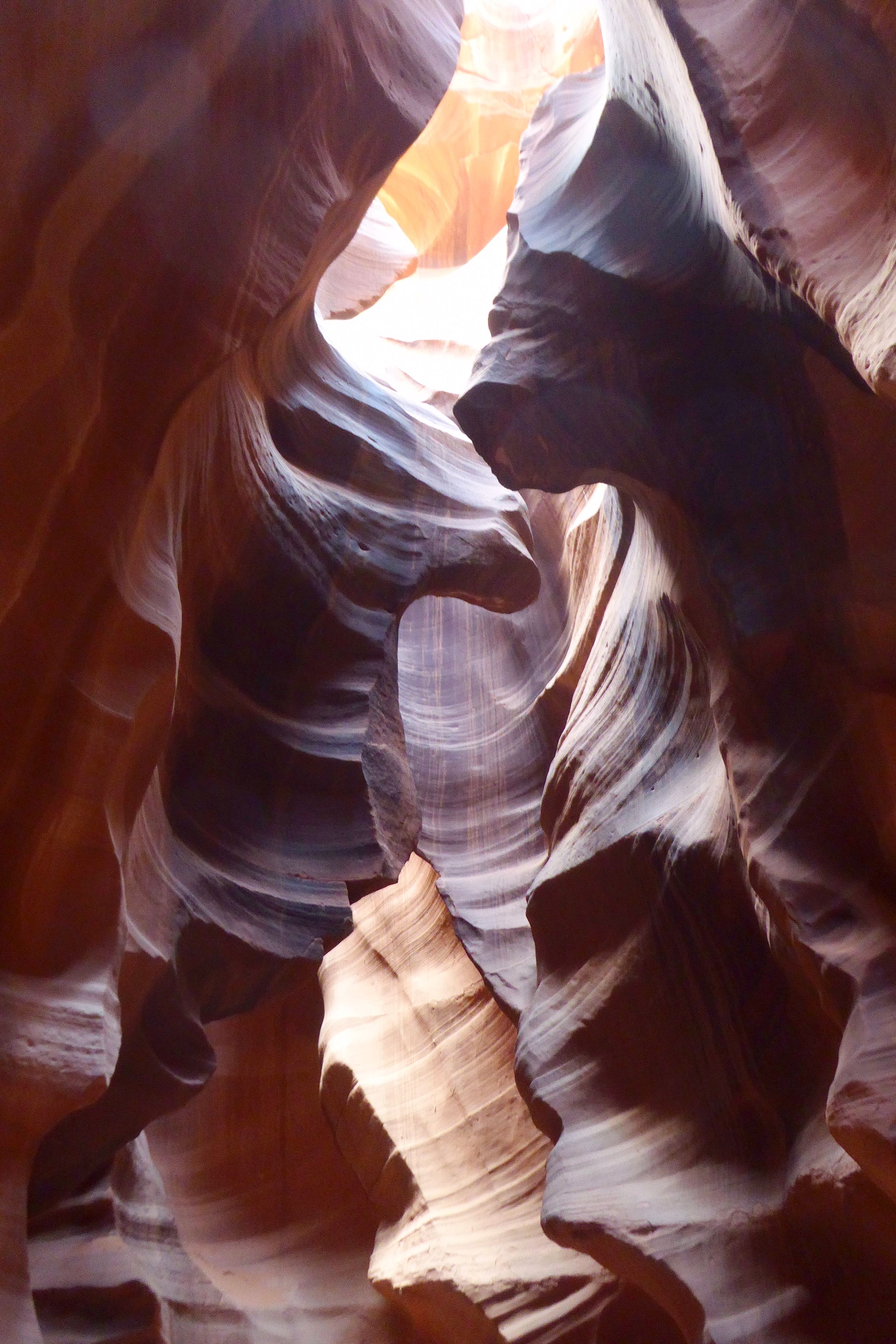
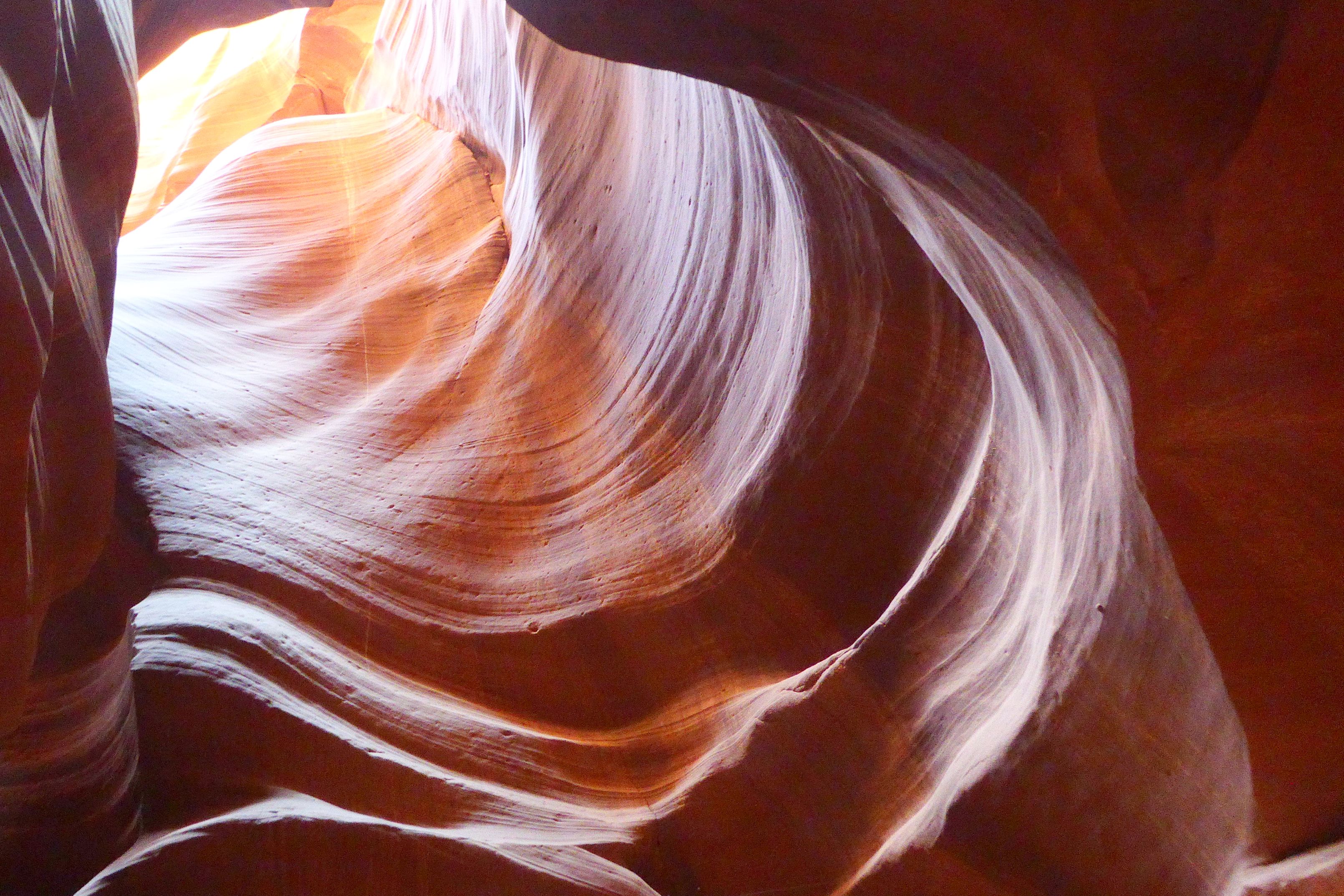
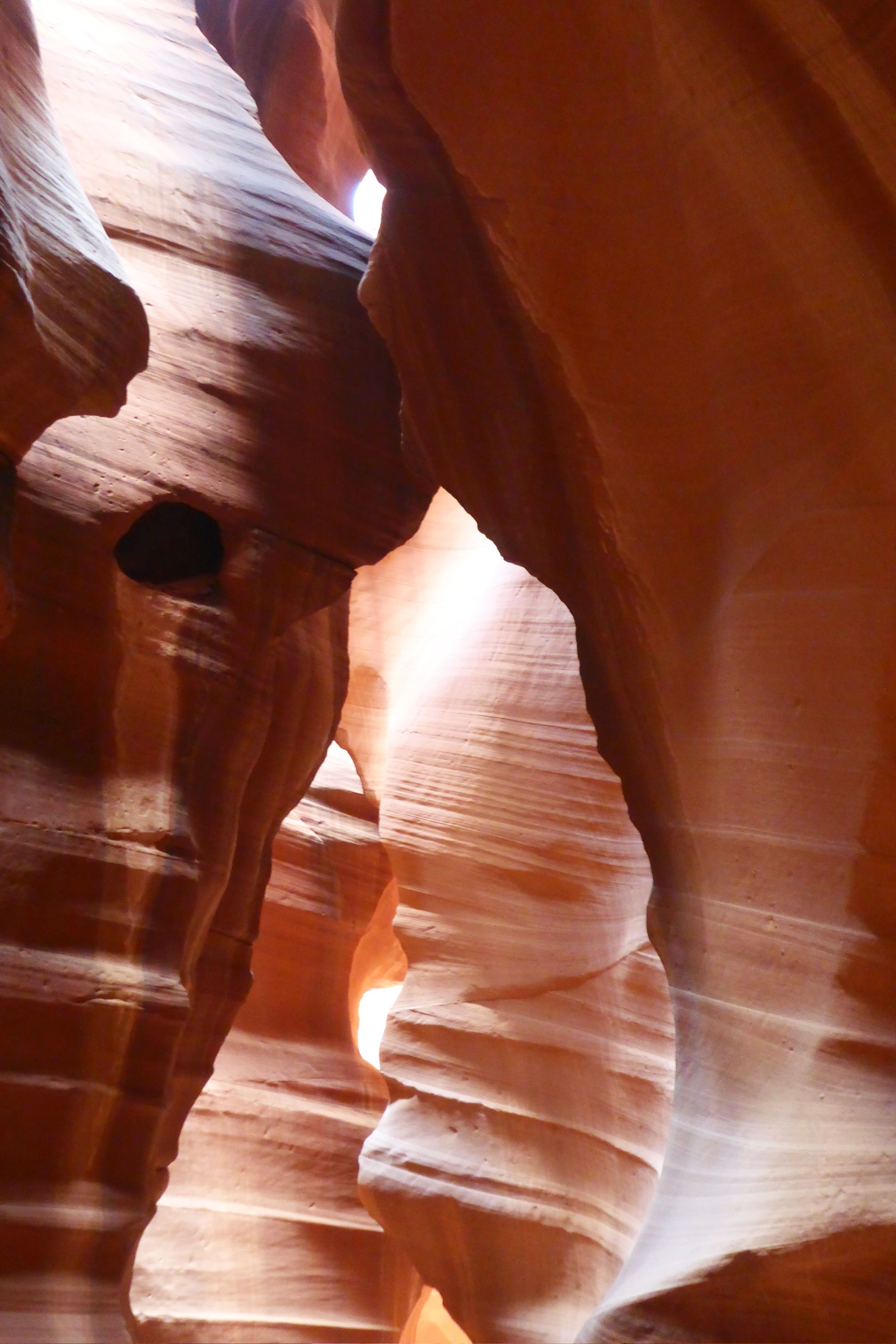
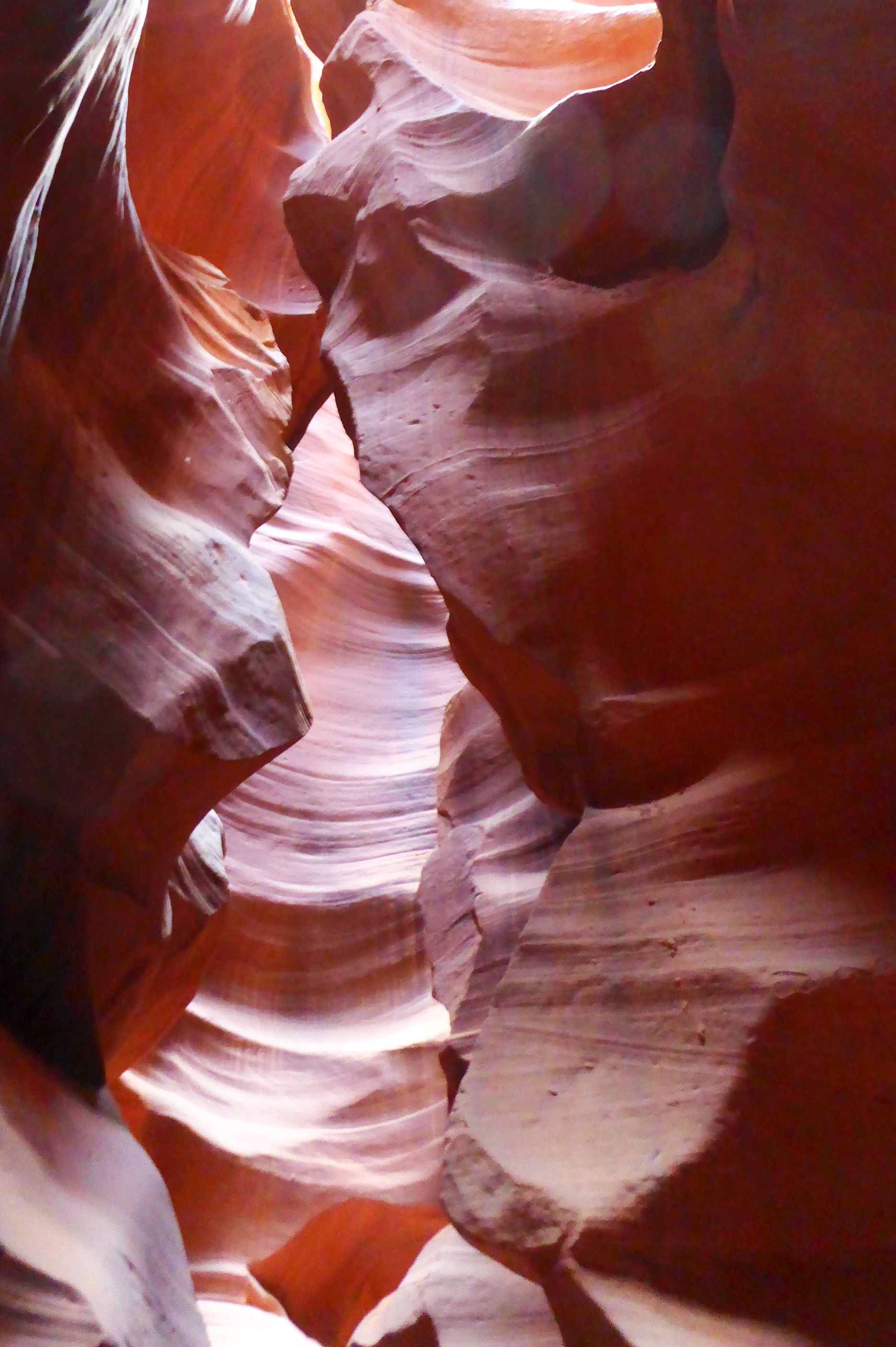
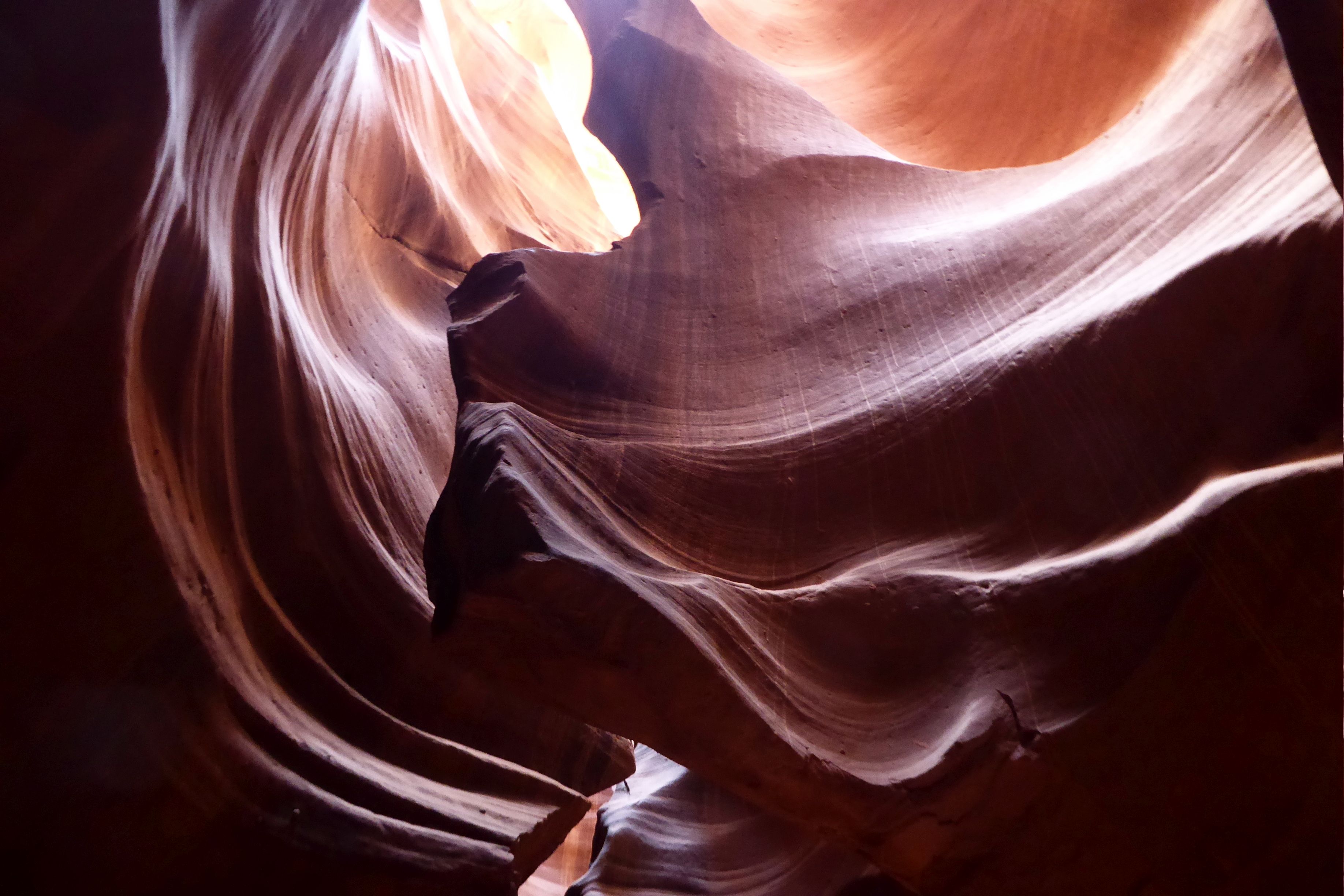
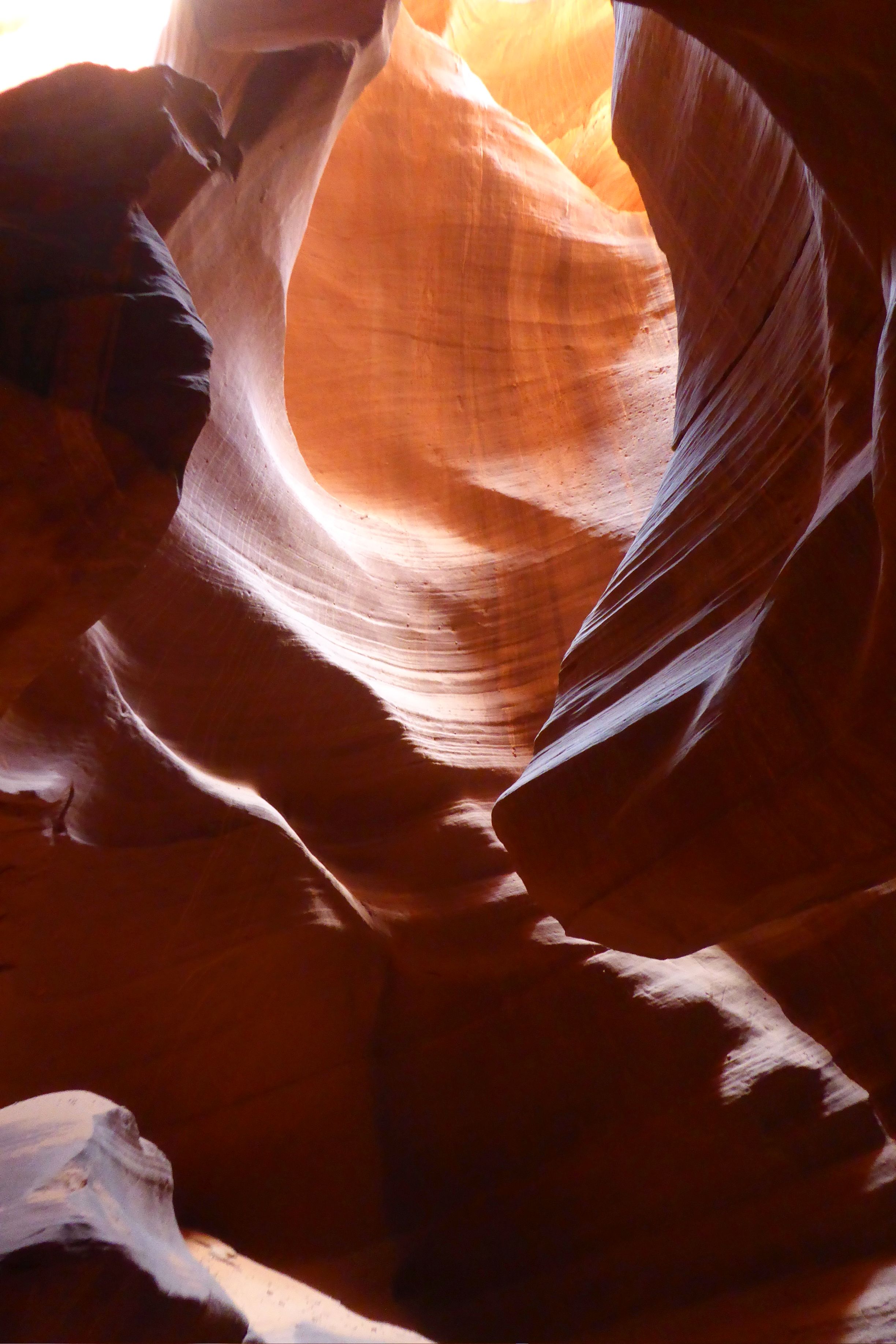
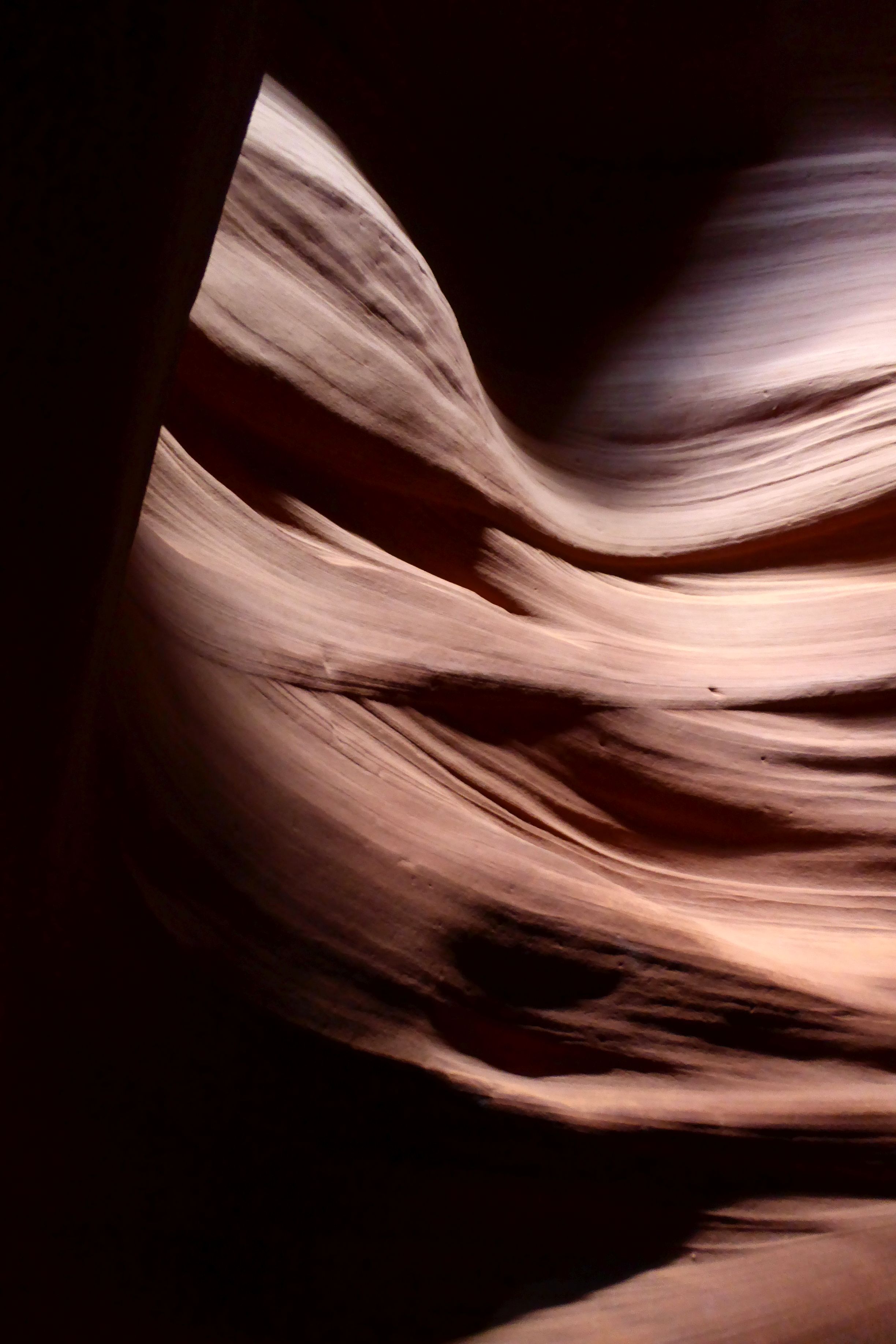
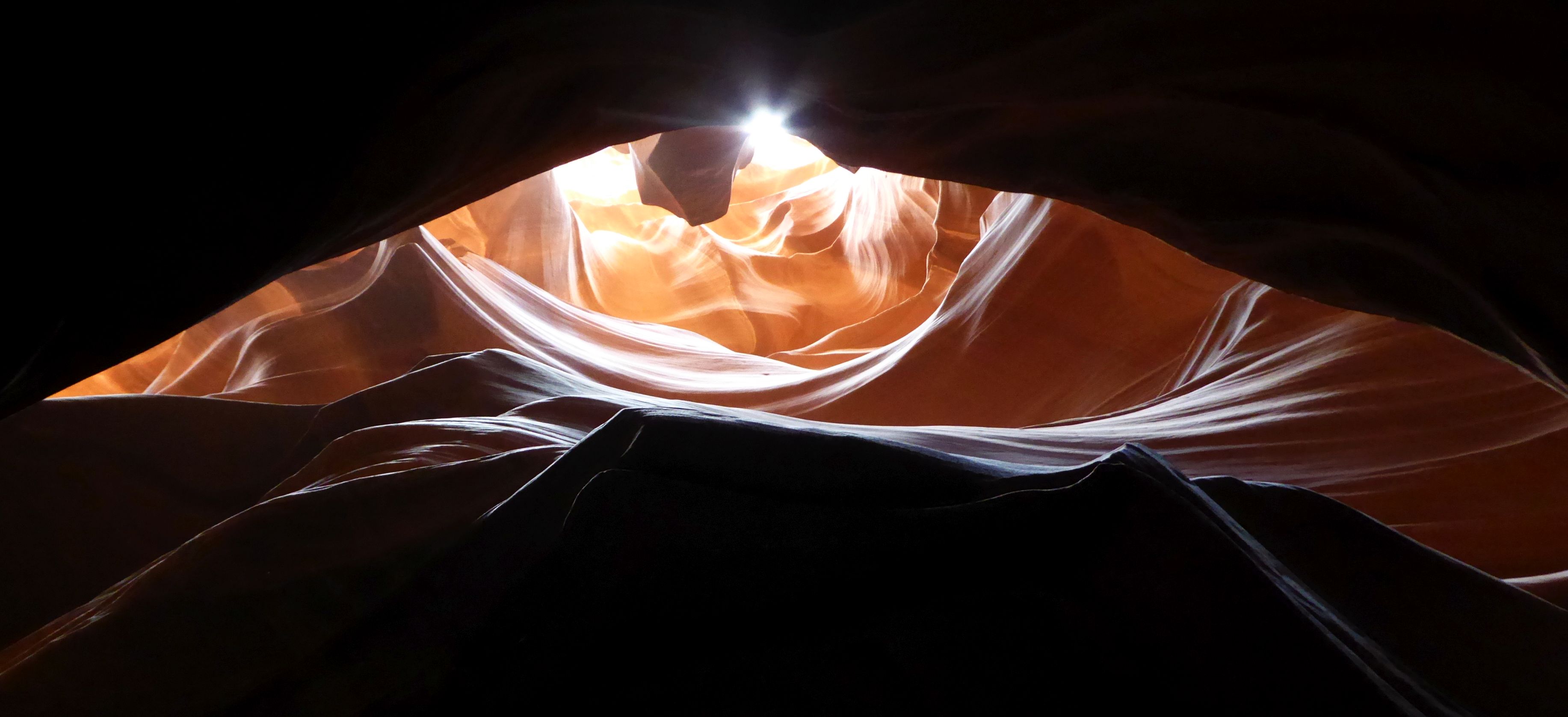
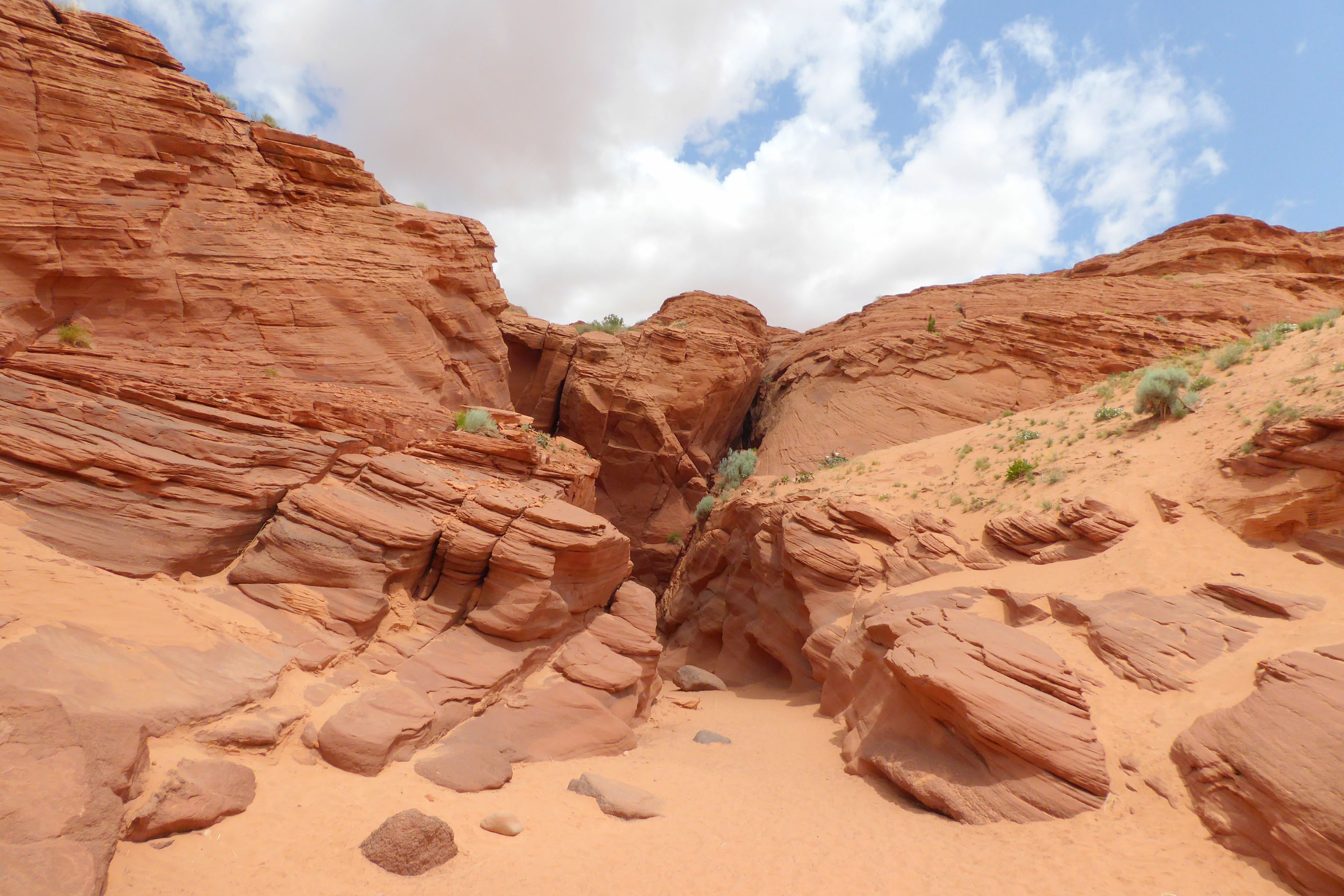
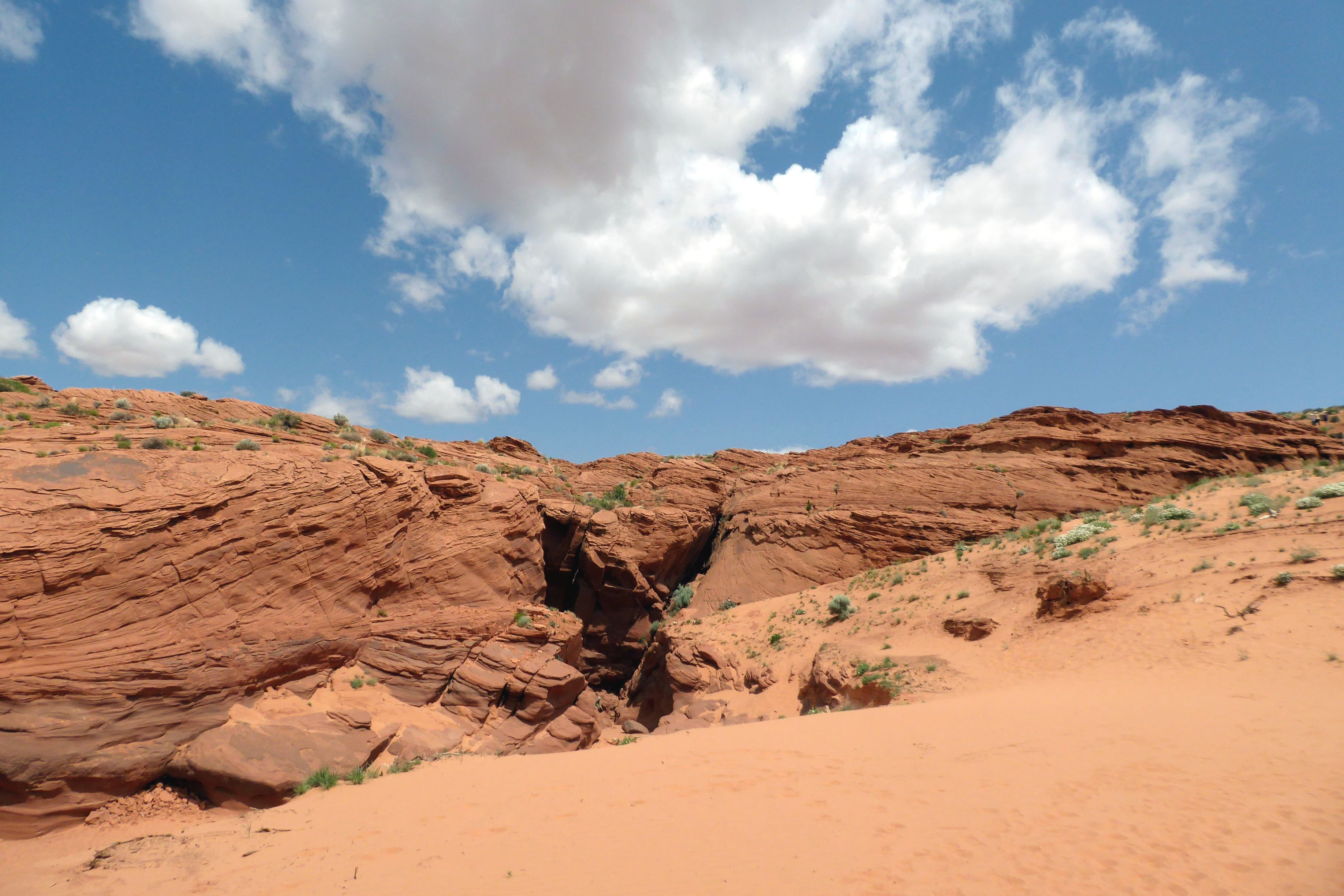
Contrary to how I titled this post (well, we were mostly in the Utah National Parks), we were actually still in Arizona, within the LeChee Chapter of the Navajo Nation, at Upper Antelope Canyon. The Navajo name for it is Tse’ bighanilini, which means “the place where water runs through rocks.”
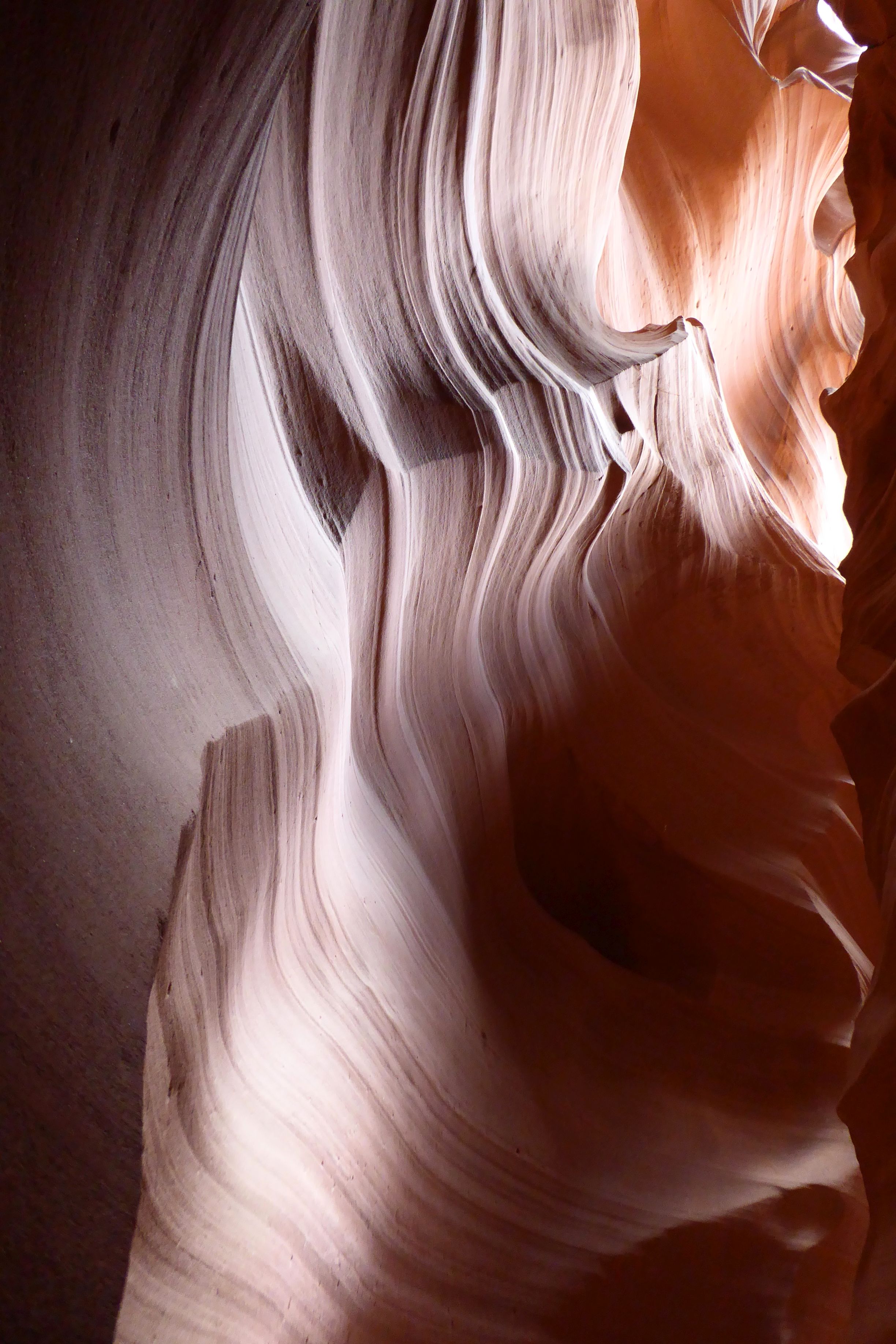
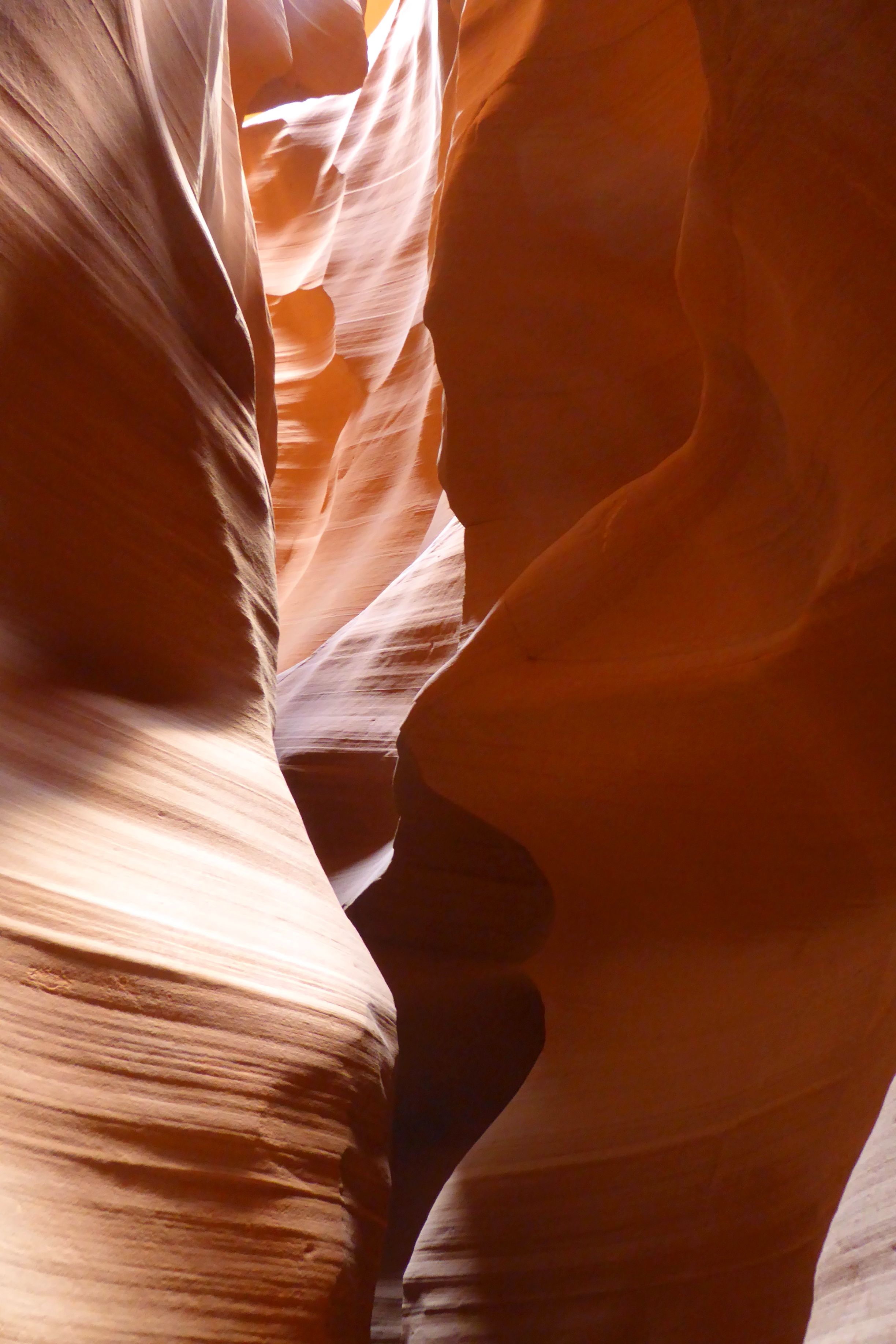
The sandstone walls are breathtakingly beautiful, rising 120 feet above the sandy trail that runs 660 feet long. It is the most photographed slot canyon in the Southwest, and I added to that statistic during our last day of the tour, along with everybody else being led through the canyon by Navajo Nation tour guides.
Tourism to this slot canyon is tightly controlled and has been run by the Pearl Begay Family since 1983. In 1997, the Navajo Tribe made it a Navajo Tribal Park, and it has been an important source of income for them.
Photography is difficult in the canyon due to the wide exposure range made by light reflecting off the canyon walls. My compact travel camera was challenged by these light rays, but I managed to get some shots that will hopefully give you an idea of the beauty of this canyon.
(For all pictures, click on the image to see full screen view.)
Entrance to Upper Antelope Canyon
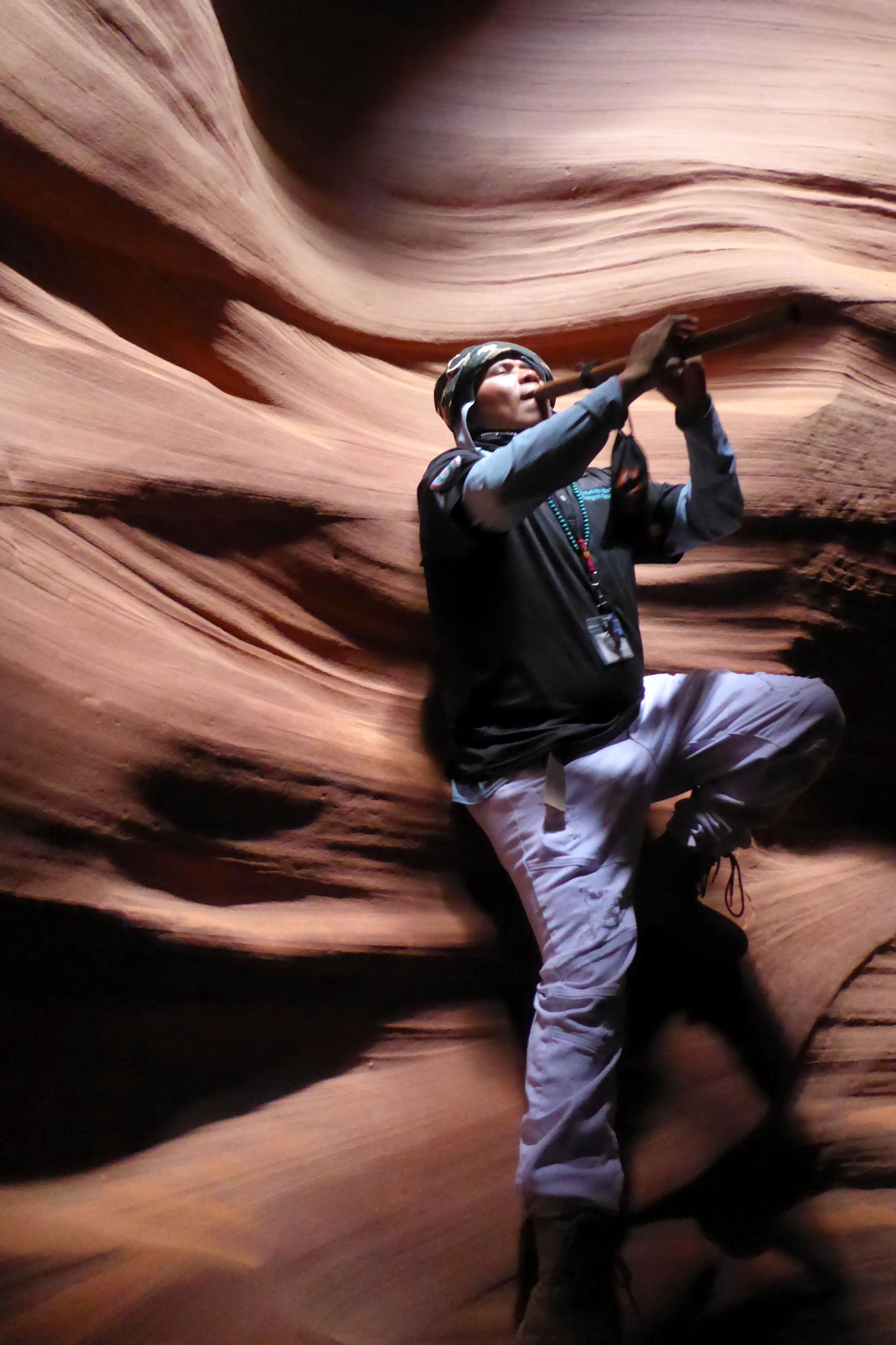
Our guide playing a wooden Native American flute
This is where we came out of the slot canyon.
Following our hike back out of the canyon, we returned to St. George, Utah, for our final night, which included a farewell dinner with the group. In all, we had traveled 1,272 miles during our Grand Circle trip.
Thankfully, it was cool in more ways than one. I was grateful to Bruce for reminding me to add my cooling scarf to the packing list for this trip, because it saved me from what could have been a heat intolerance disaster.
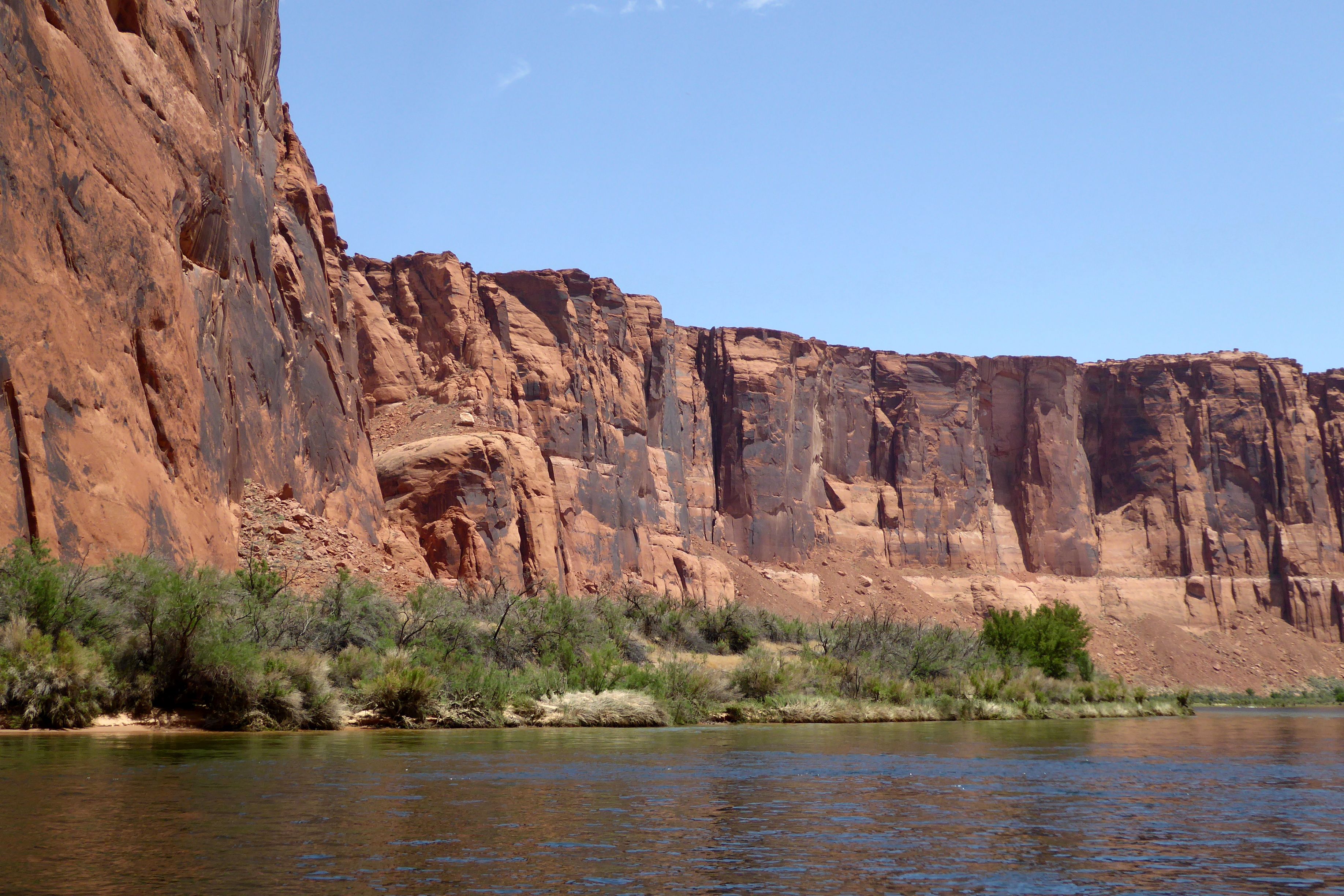
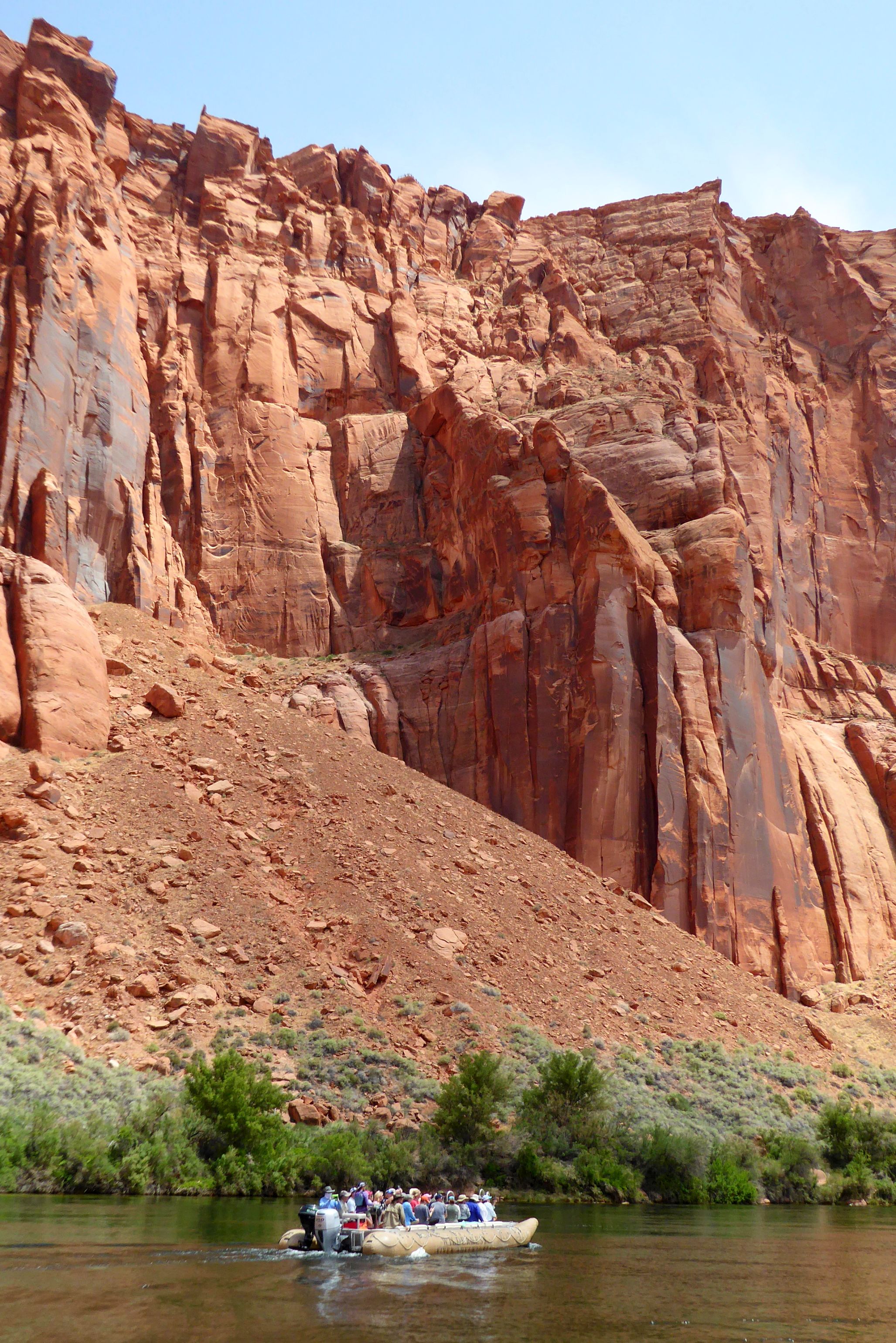
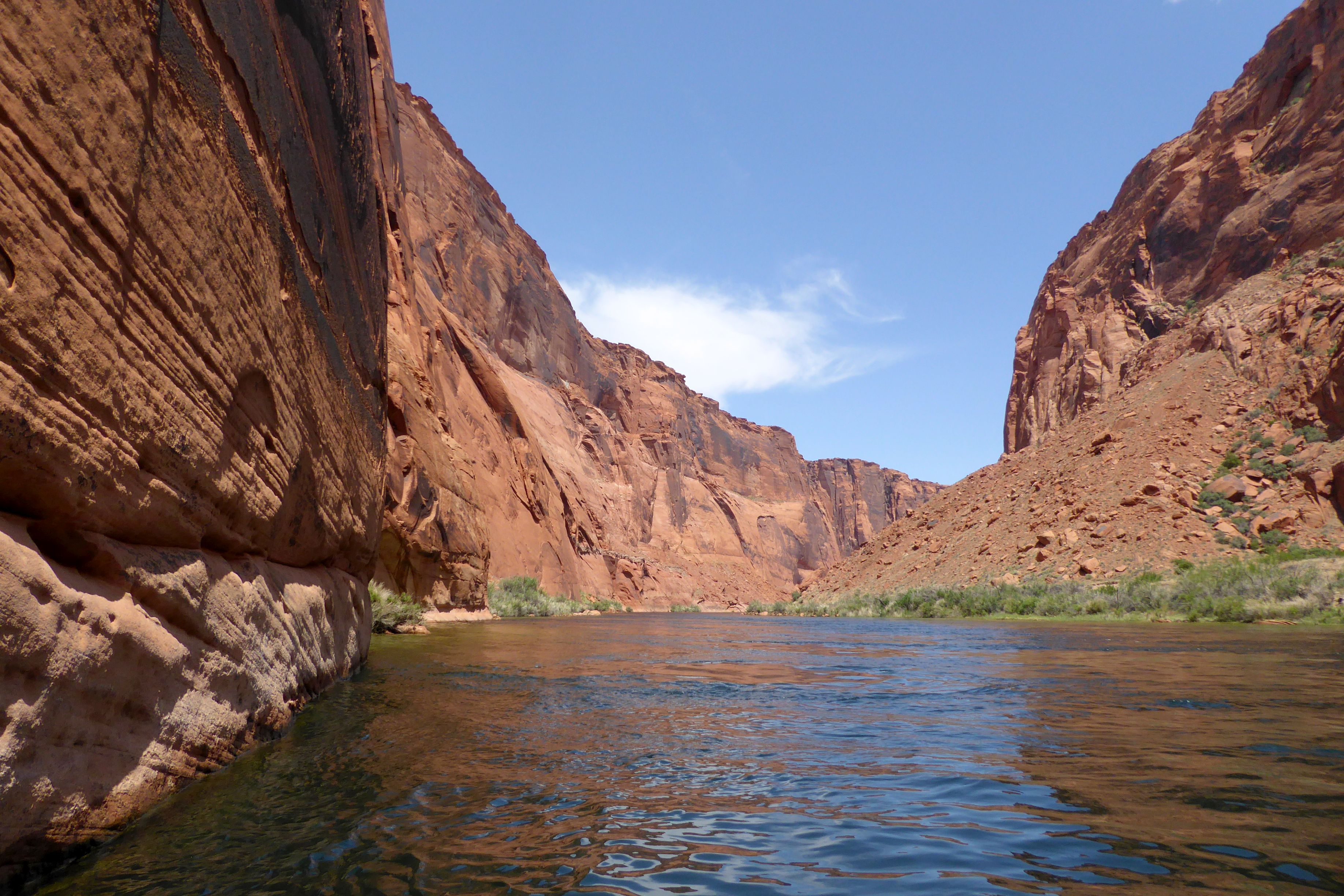
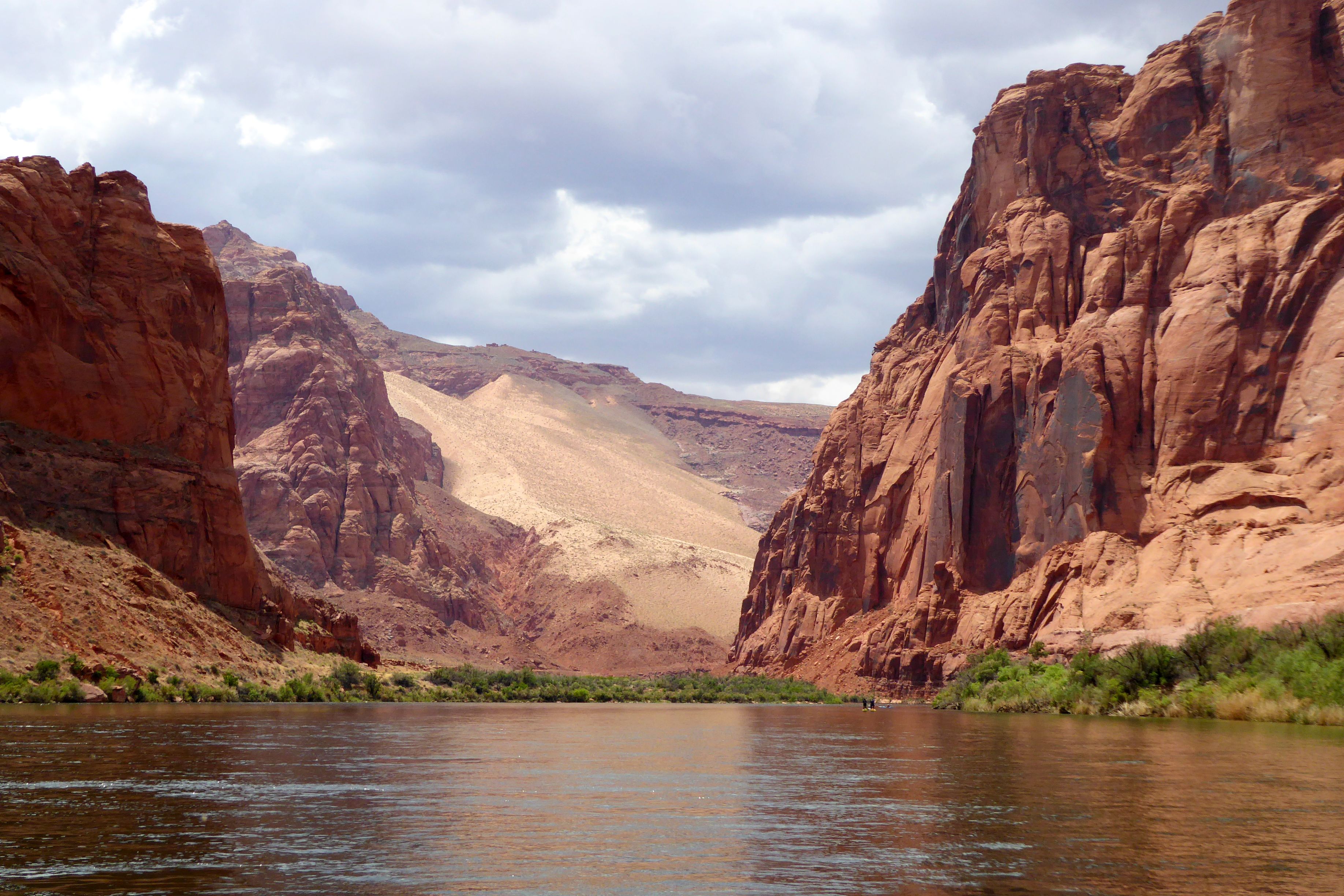
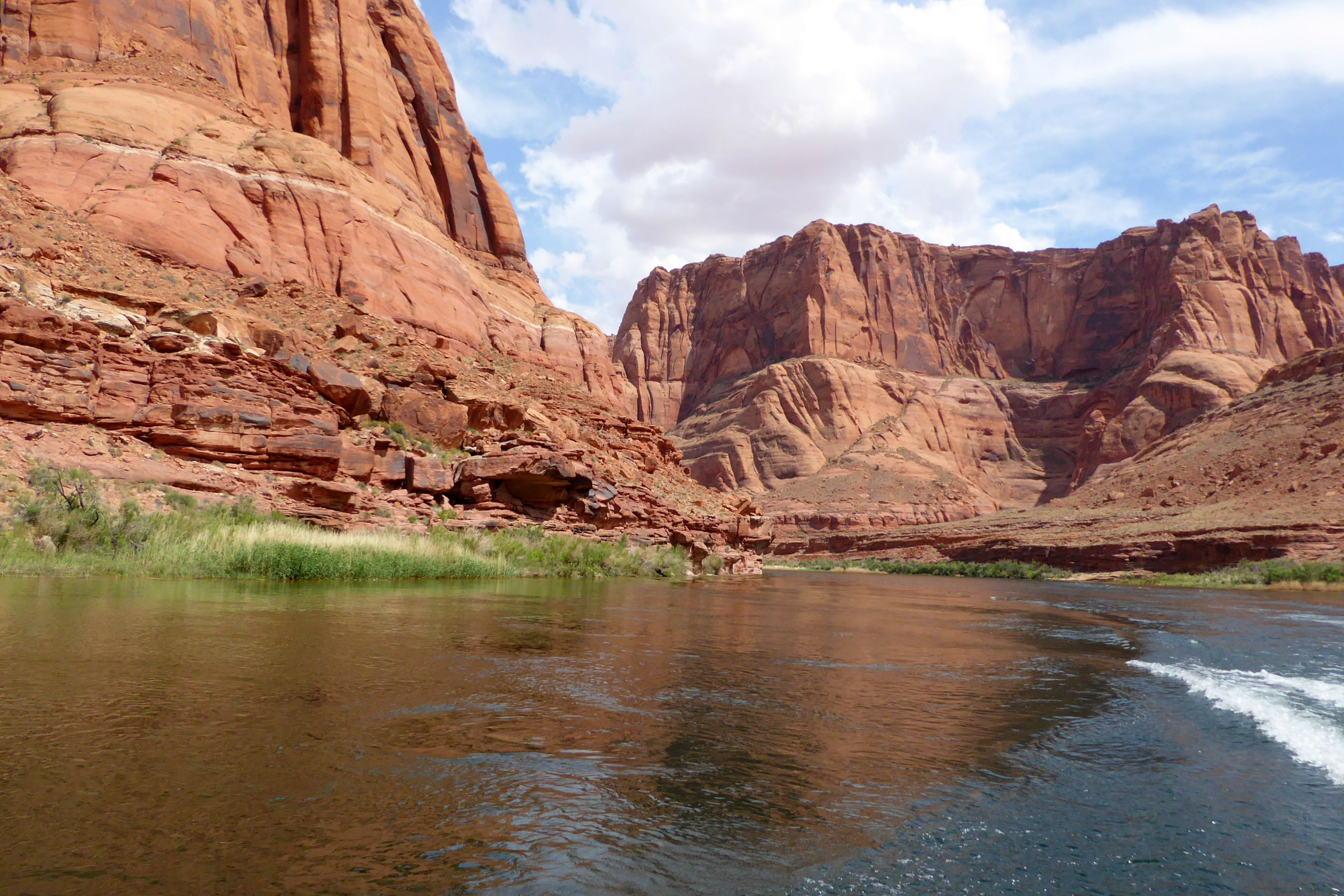
Our tour leader had warned us about sitting in the front of the pontoon raft, because of the spray coming off the water and the possibility of getting wet. I gladly volunteered. I figured not only would the spray keep me cool; but, I would also have the best vantage point for photography. I had my waterproof camera, just in case, but it stayed in my pack. I used my usual Panasonic Lumix travel camera and had no problem keeping it spray-free.
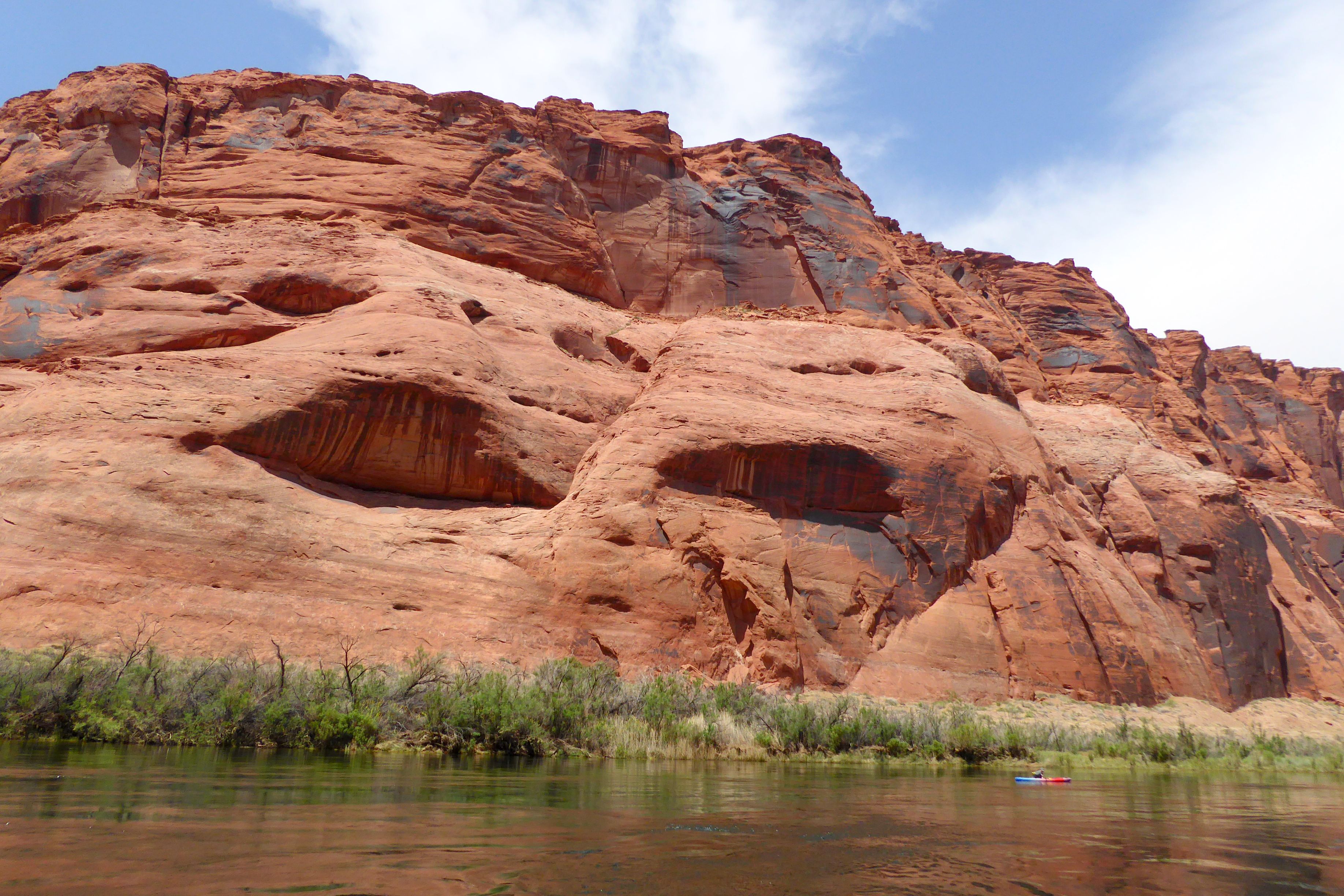
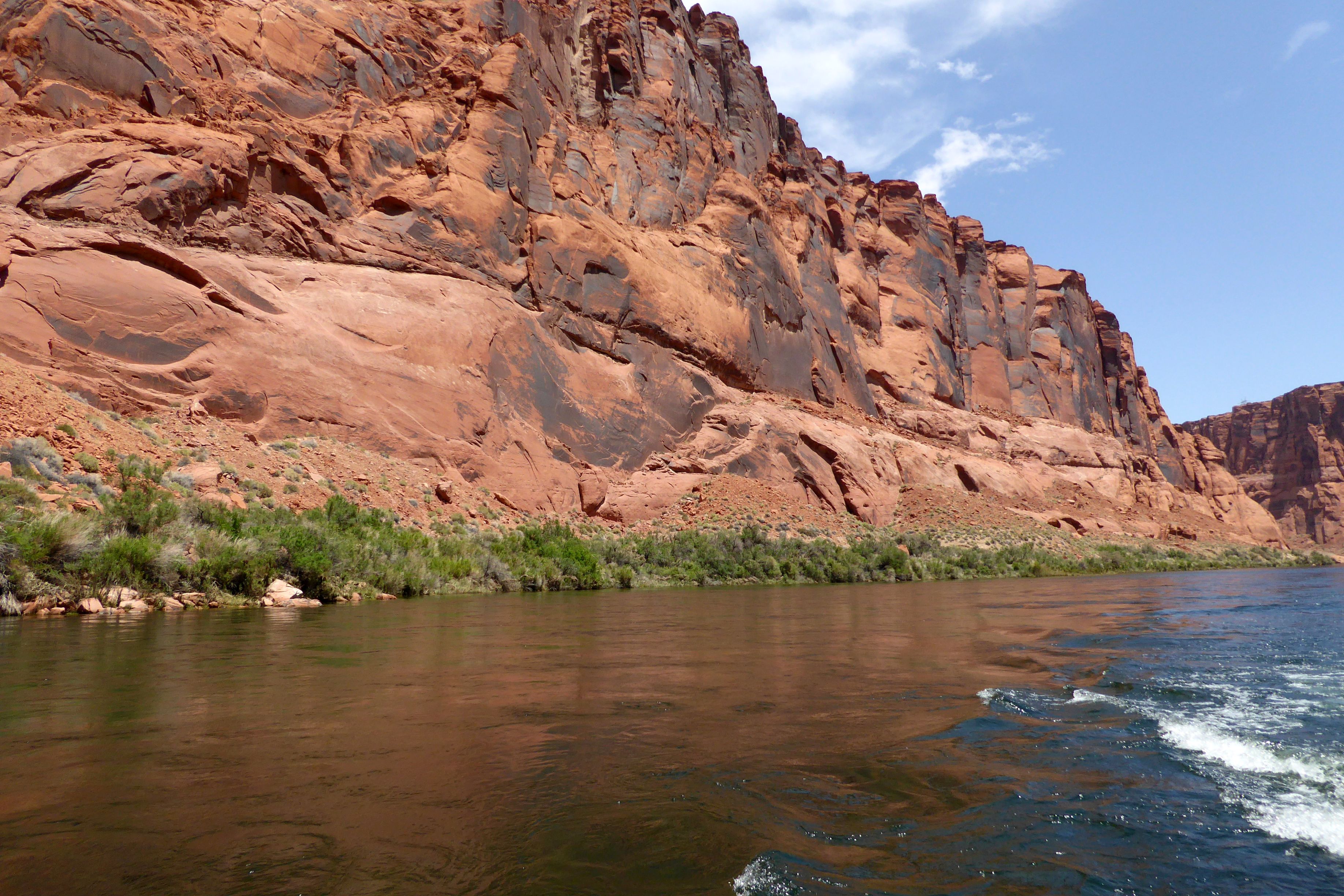
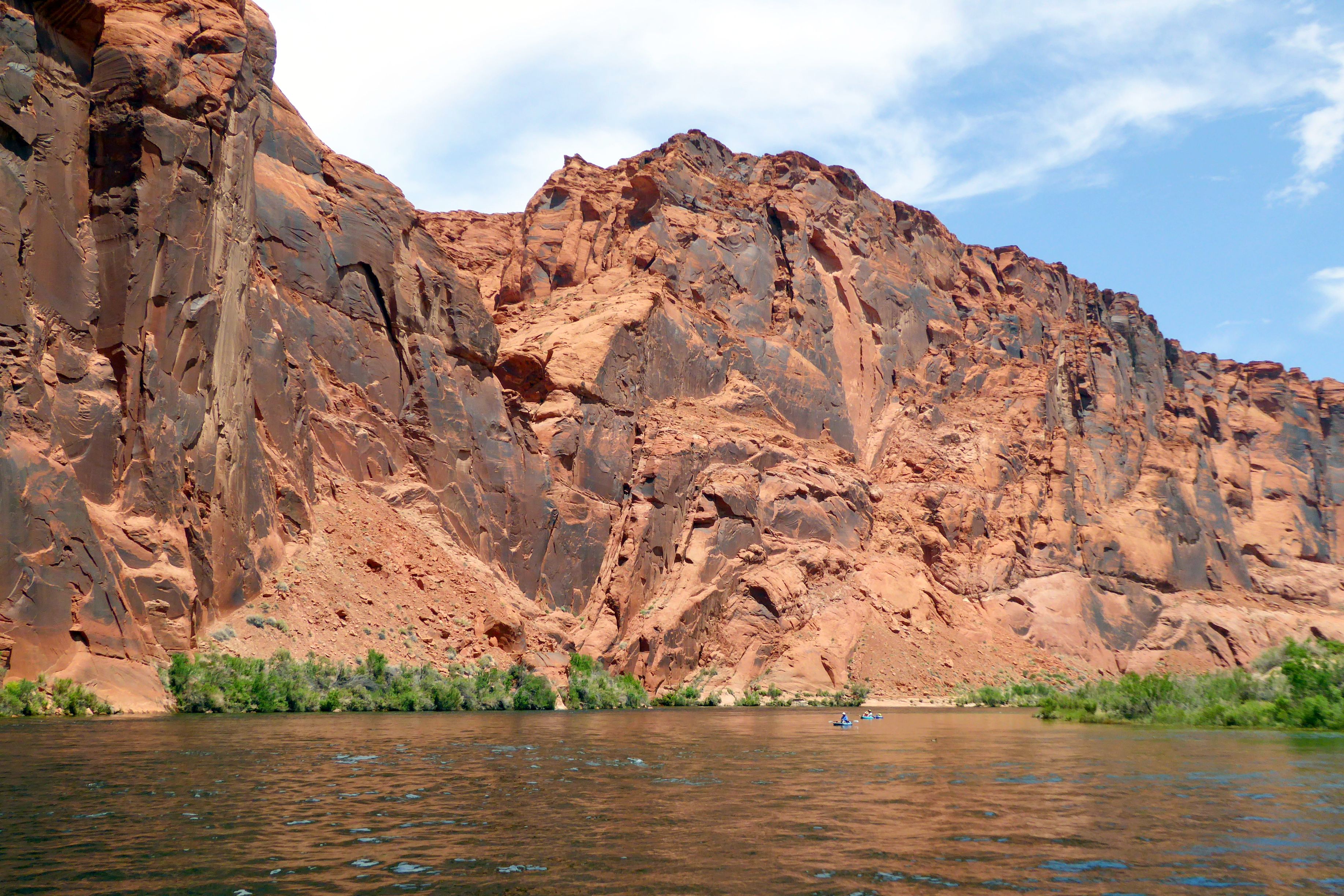
While the air temperature on this hot, sunny day hovered around 90 degrees, the water temperature was refreshingly cold—perfect for dipping my scarf in to keep my neck and head cooled off. Our sunscreen did a great job, too; I didn’t get a square-inch of pink skin during our three-hour, 15-mile raft float down the Colorado River.
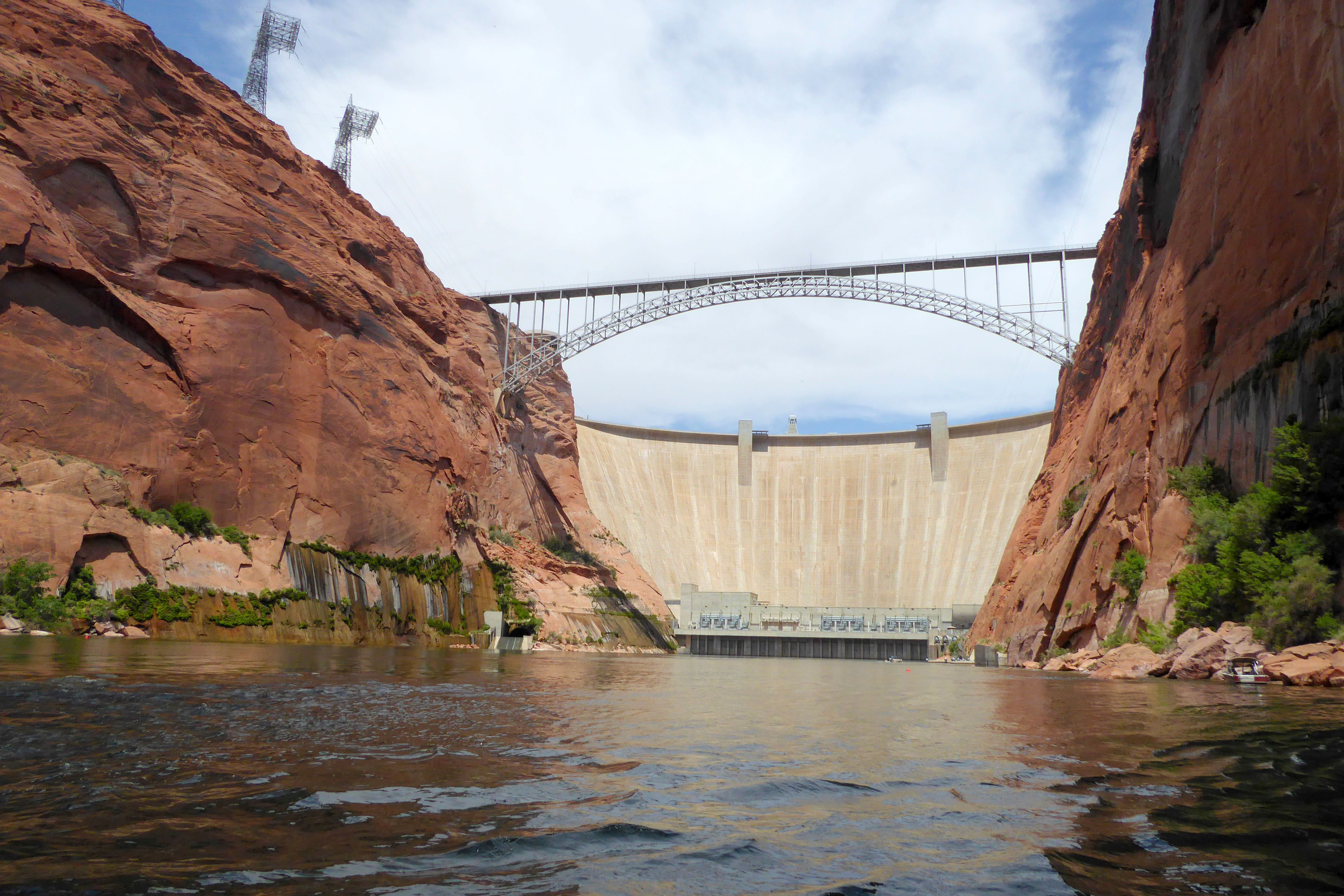
We were actually in Arizona; we had arrived in Page the night before. Located near our hotel, we had boarded the tour company’s bus for a ride to the boat launch through a two-mile long Glenn Canyon Dam access tunnel. We then boarded a motorized pontoon raft.
Soaring 700 feet above us was the dam and the Glenn Canyon Dam Bridge that we had just driven across. It was quite a sight being dwarfed by such gigantic structures!
(For all pictures, click on the image to see full screen view.)
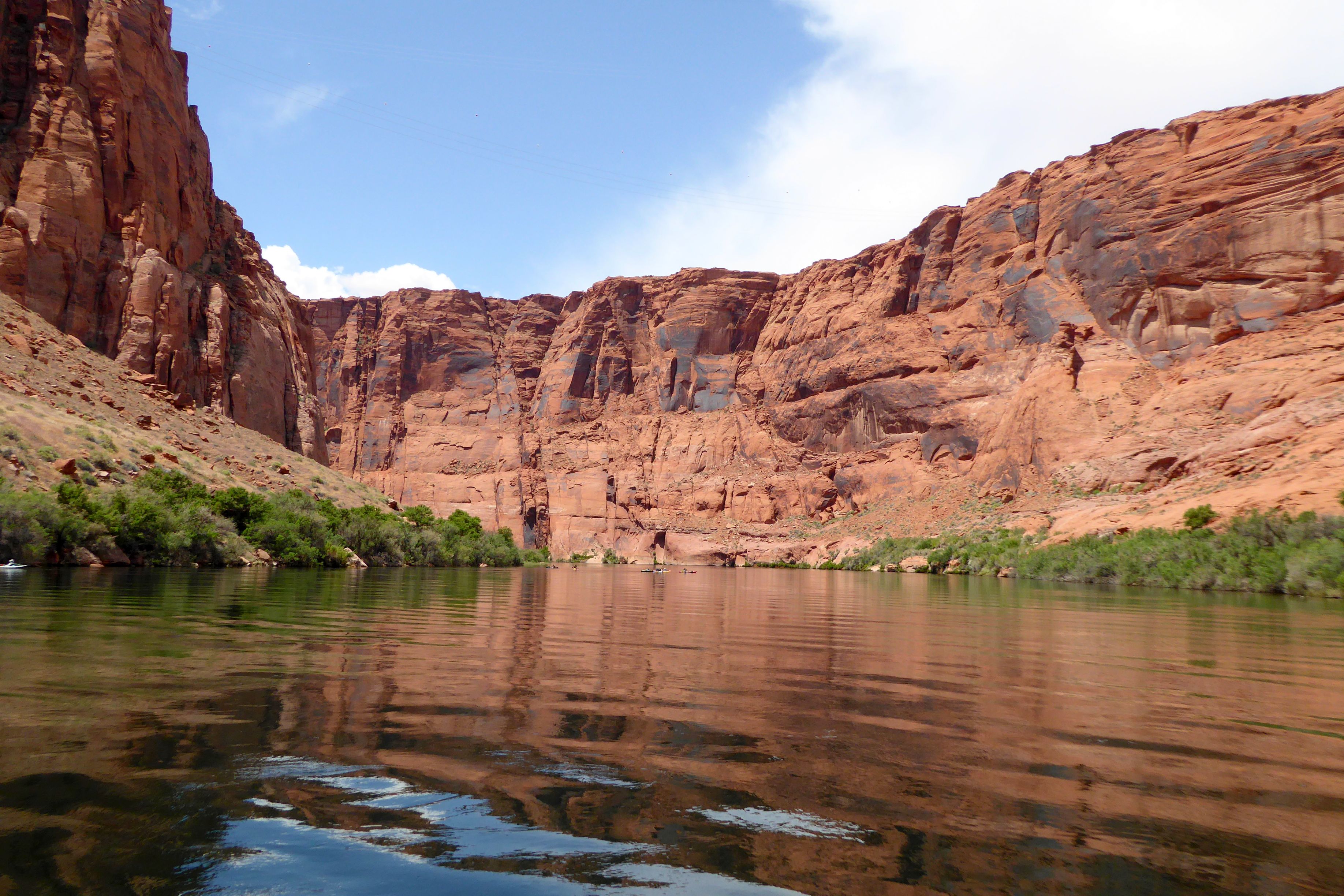
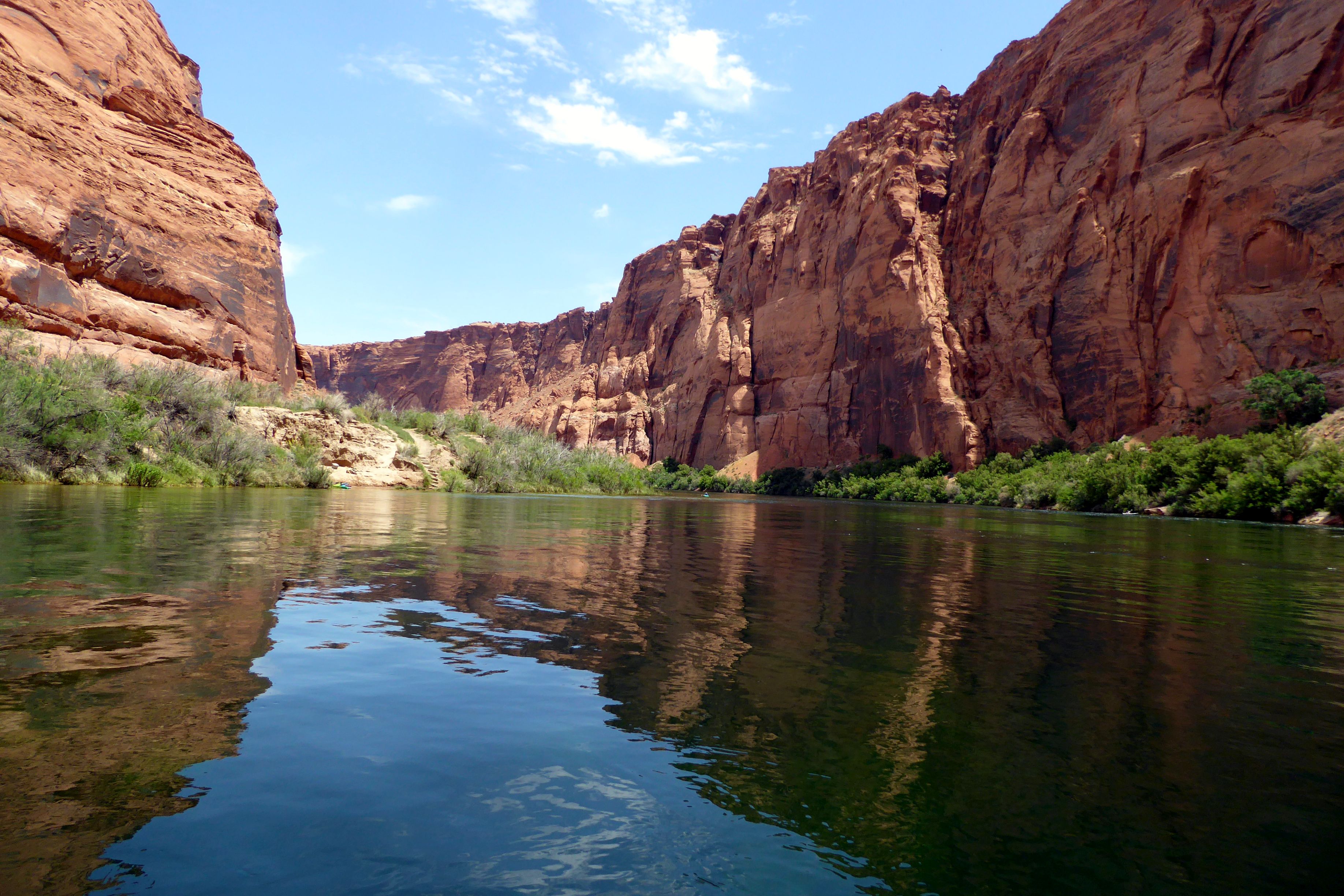
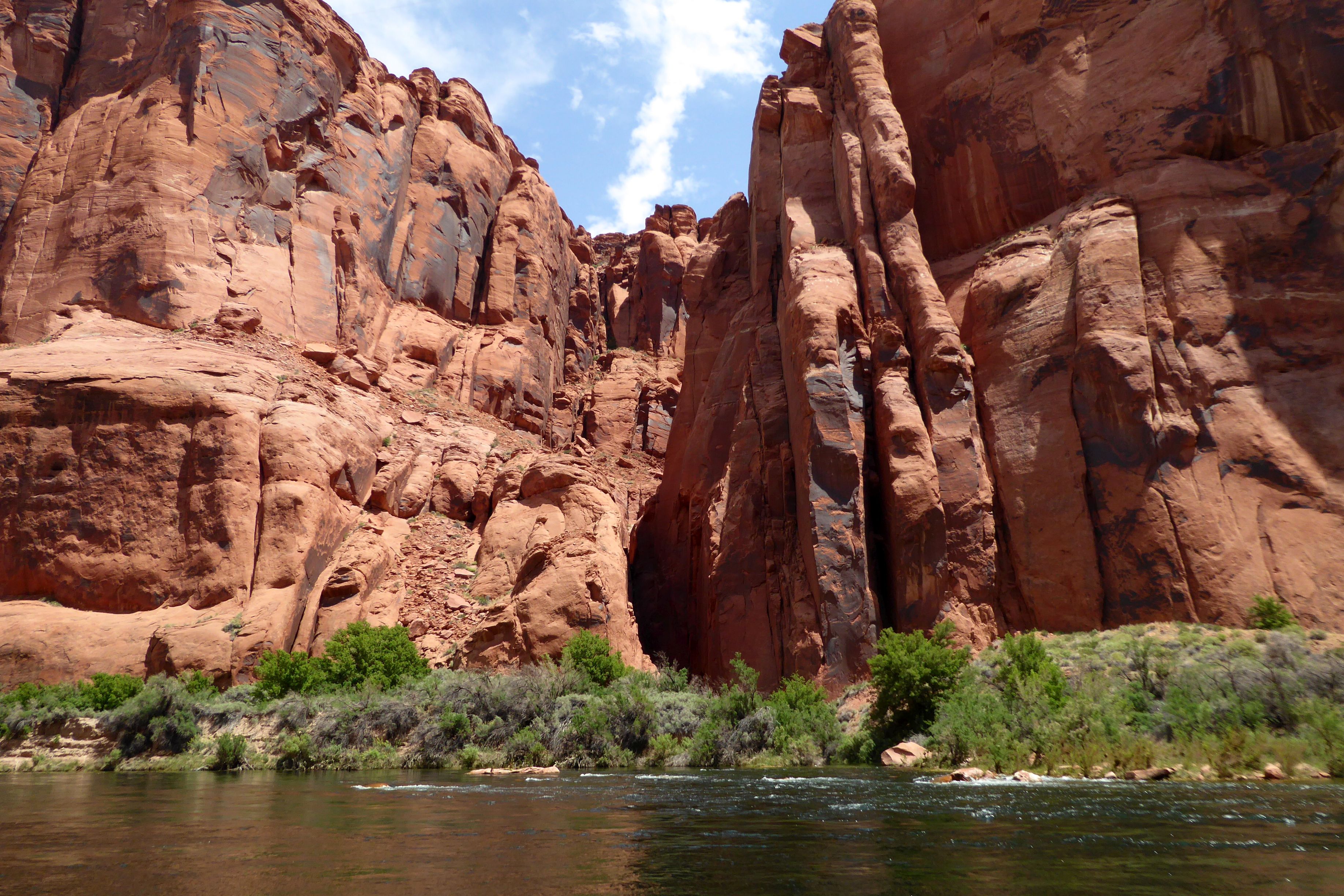
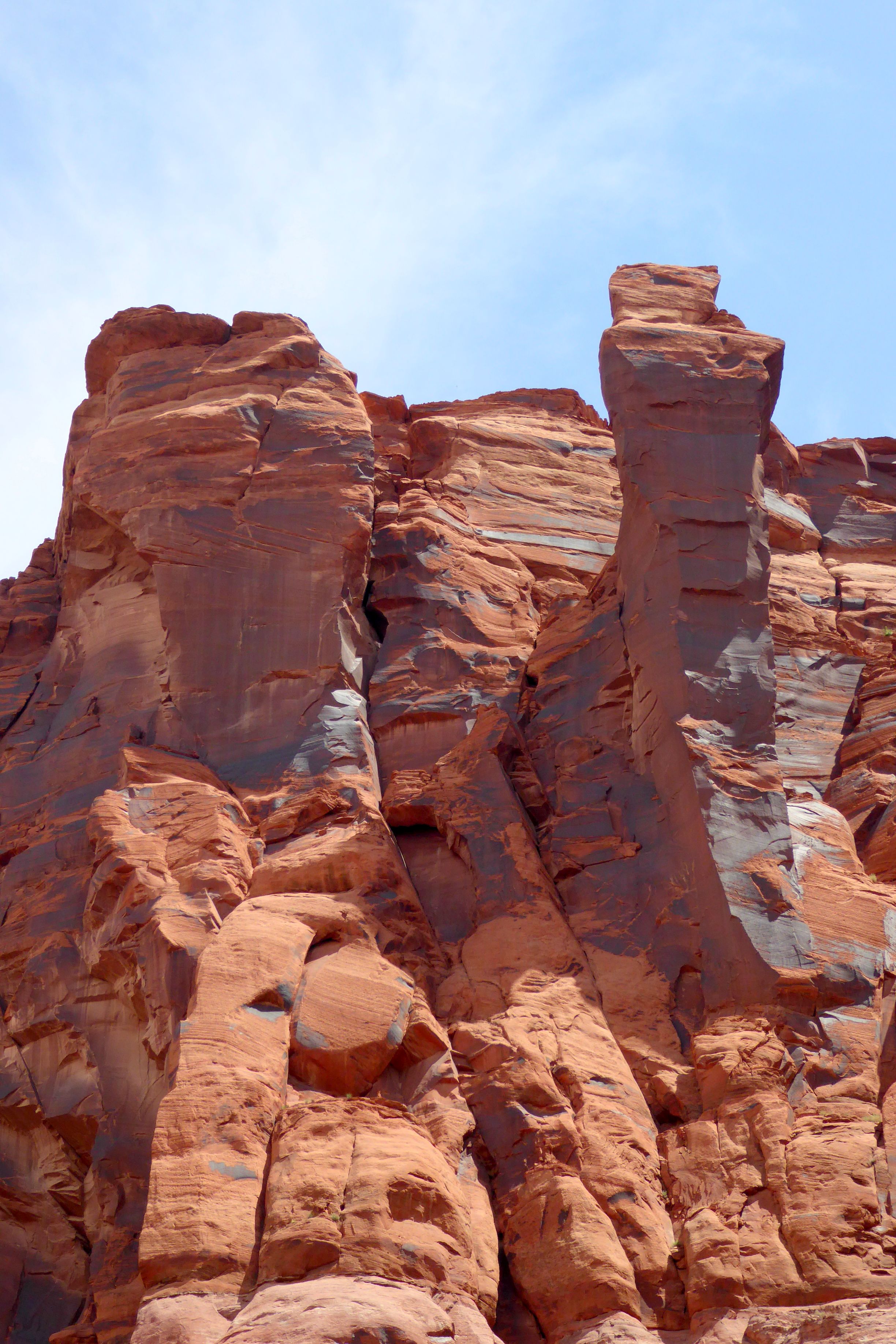
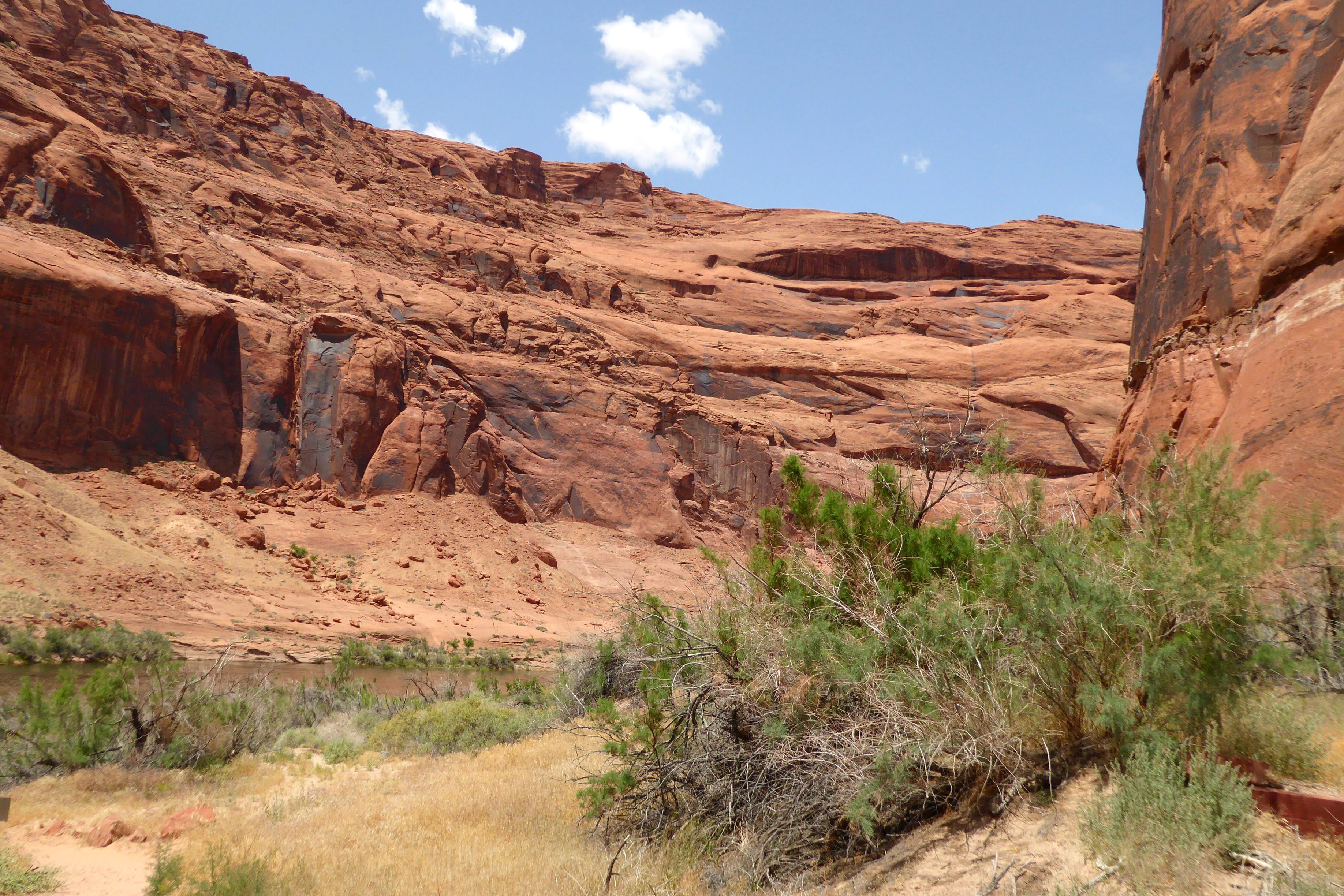
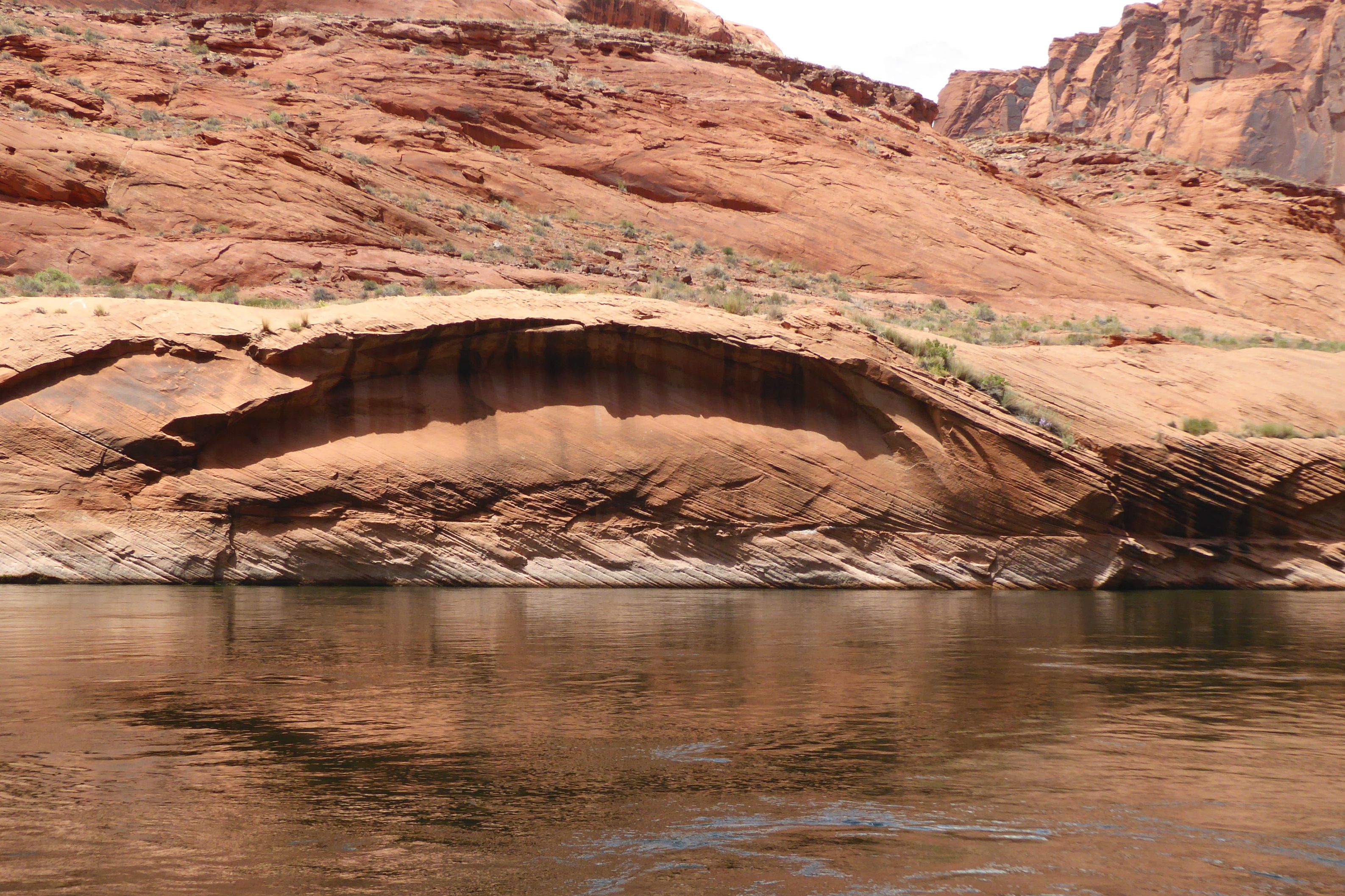
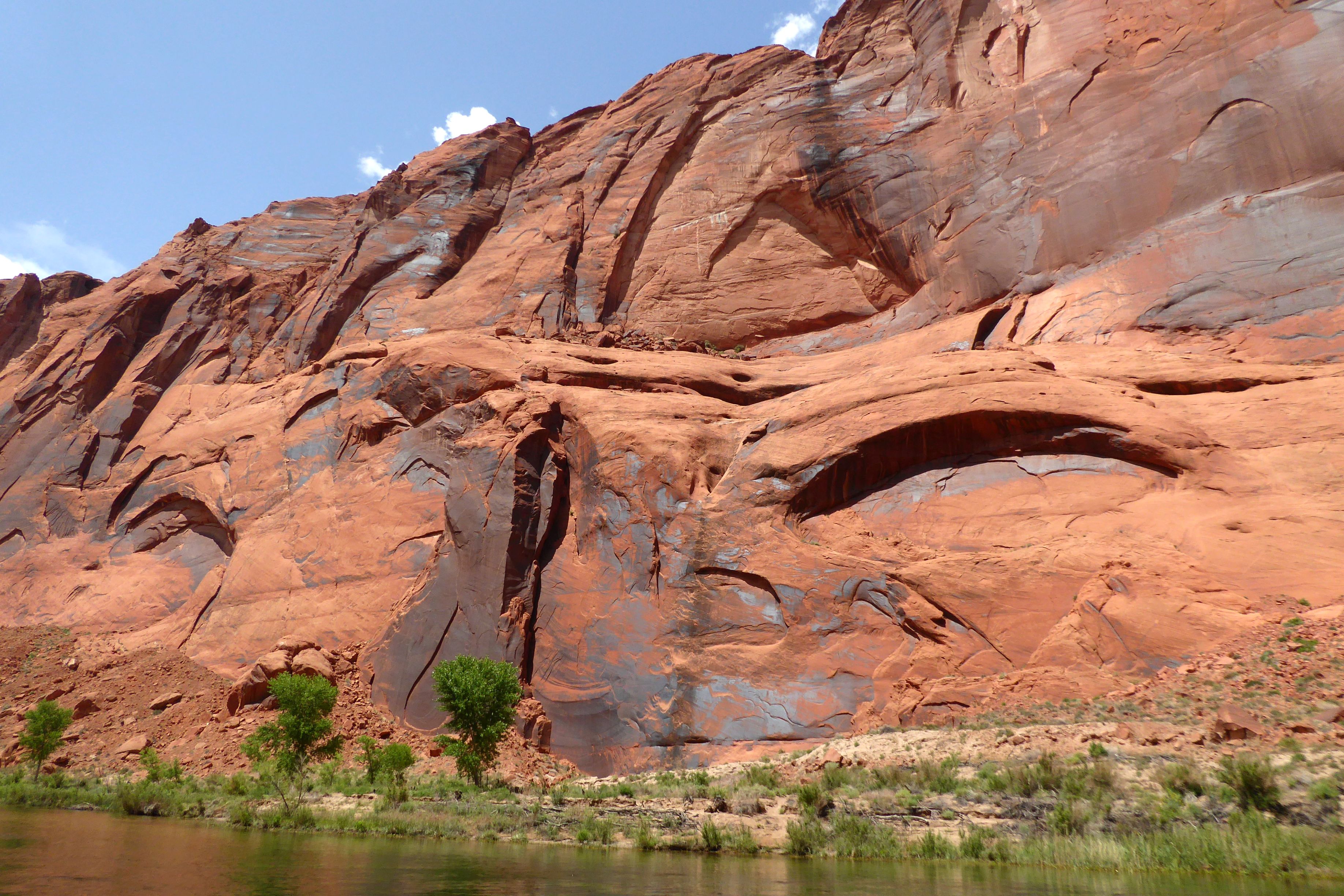
We were off to explore the Horseshoe Bend portion of the river, reputed to be one of the most dramatic stretches of river found in the western United States. Our river guide told us about Major John Wesley Powell’s exploration of the river. We also learned about the sandstone cliffs, former habitation by native cultures, wildlife; and, about the Southwest’s water and power delivery system.
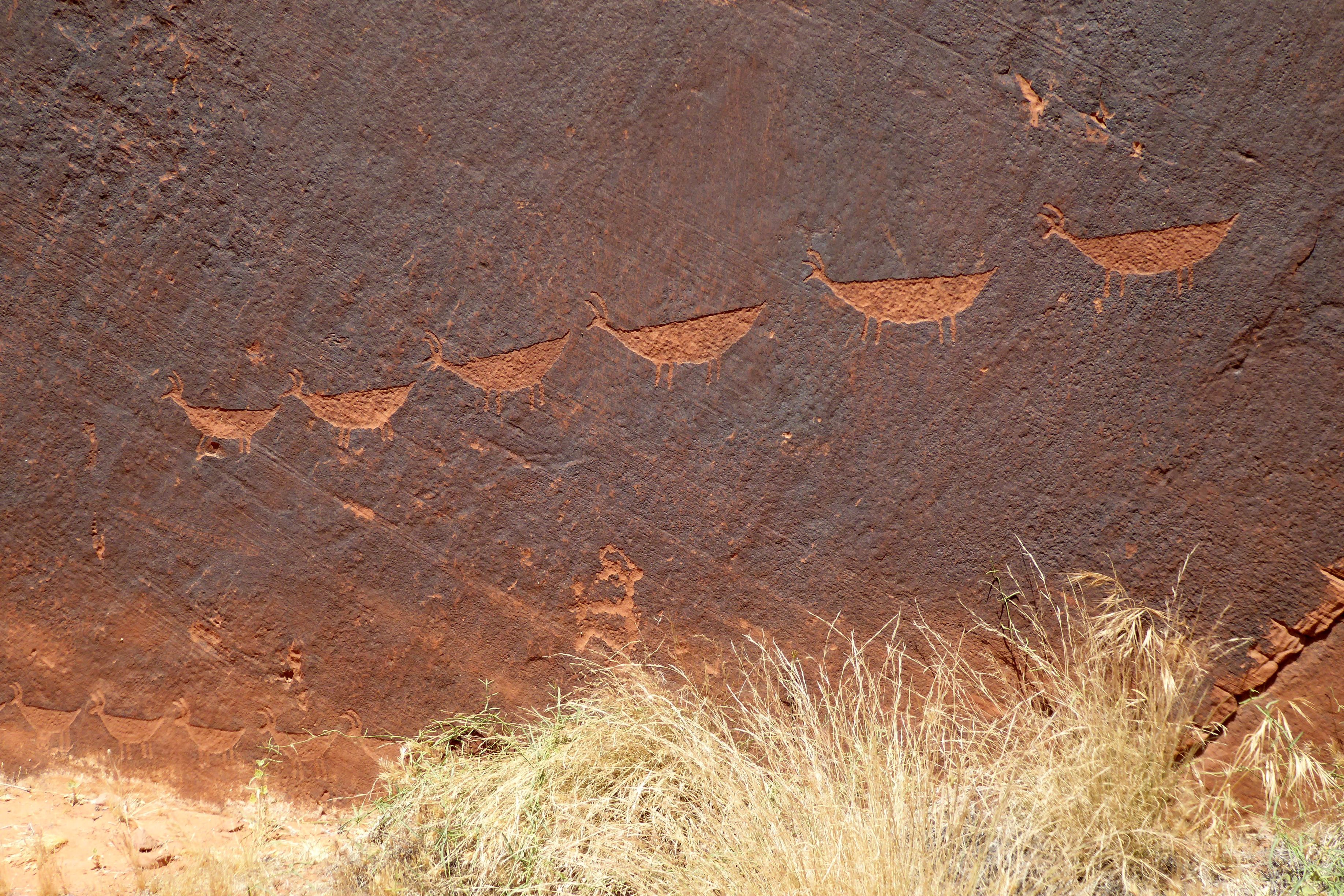
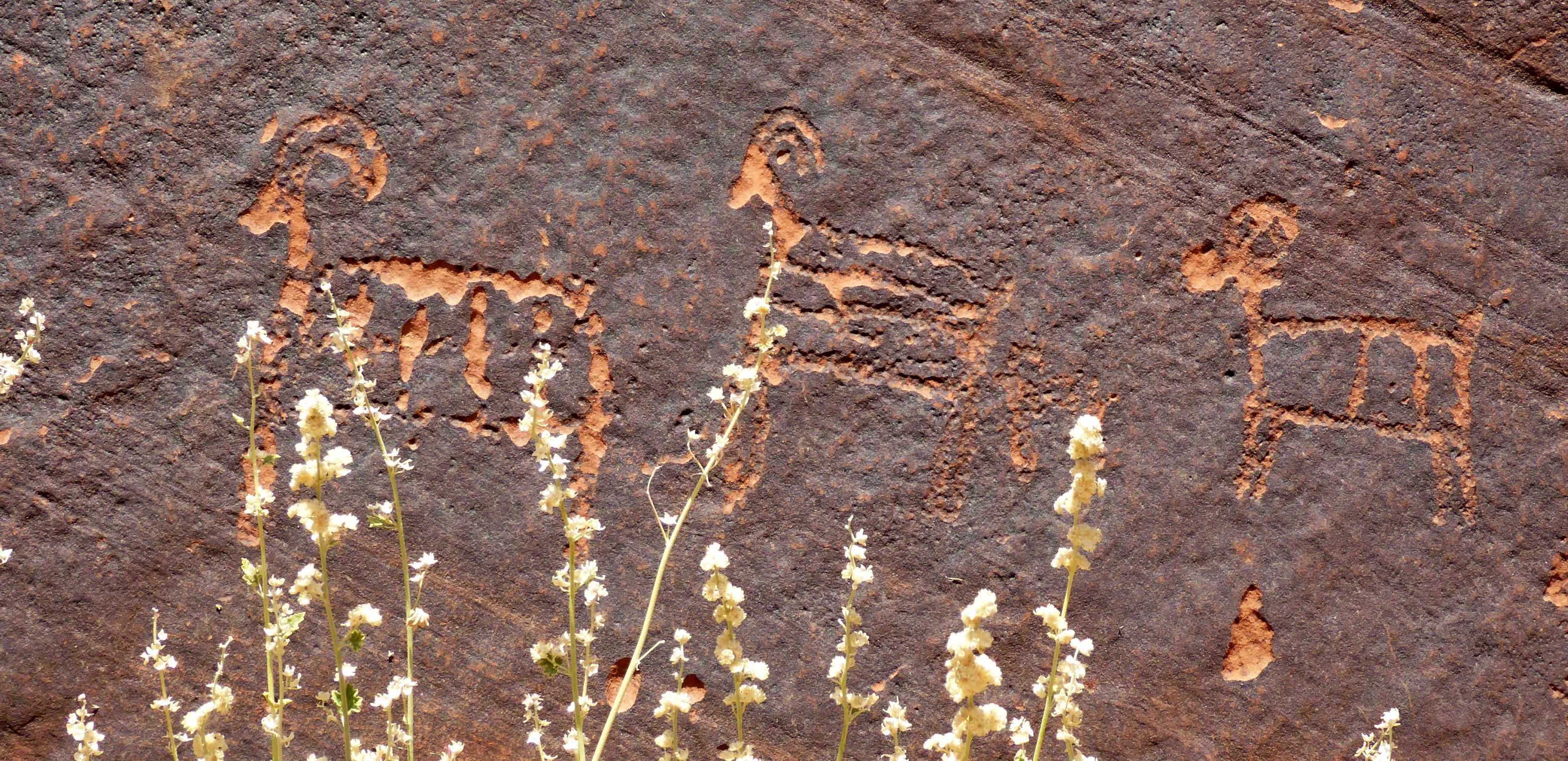
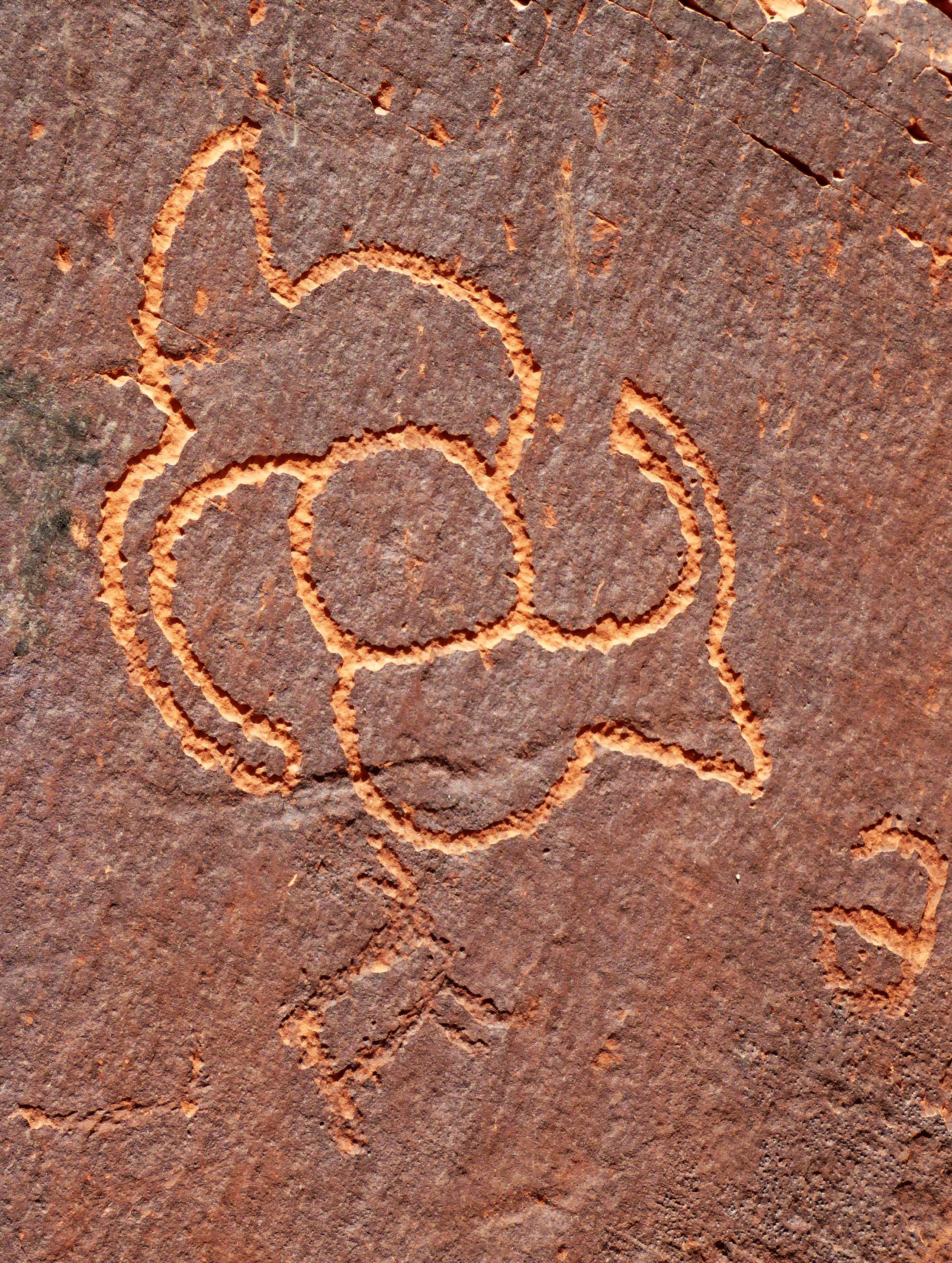
Halfway through our enjoyable journey, we beached the raft for a “comfort stop” and to take a short hike to see these petroglyphs:
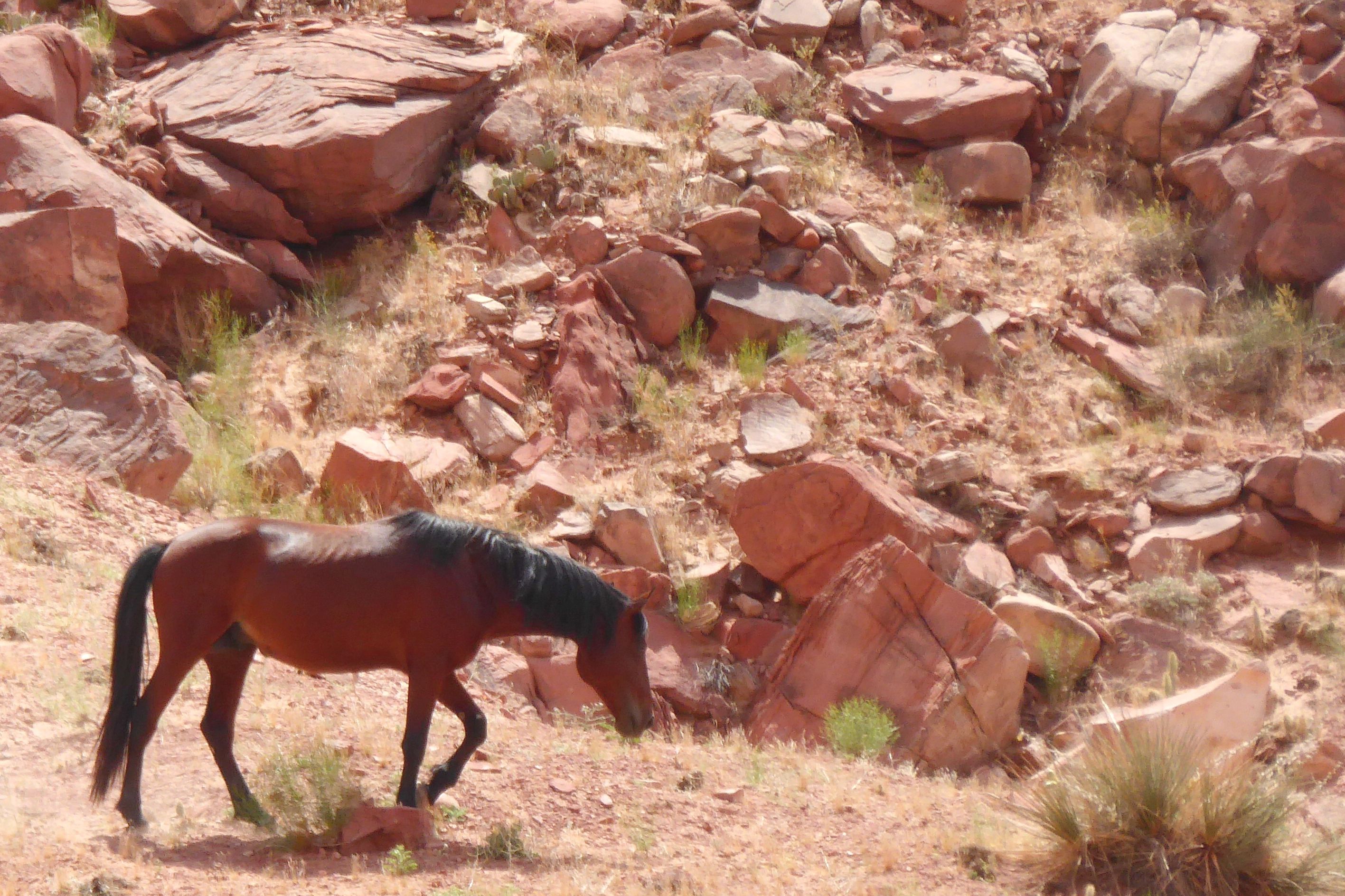
Wild horses are common in this area.
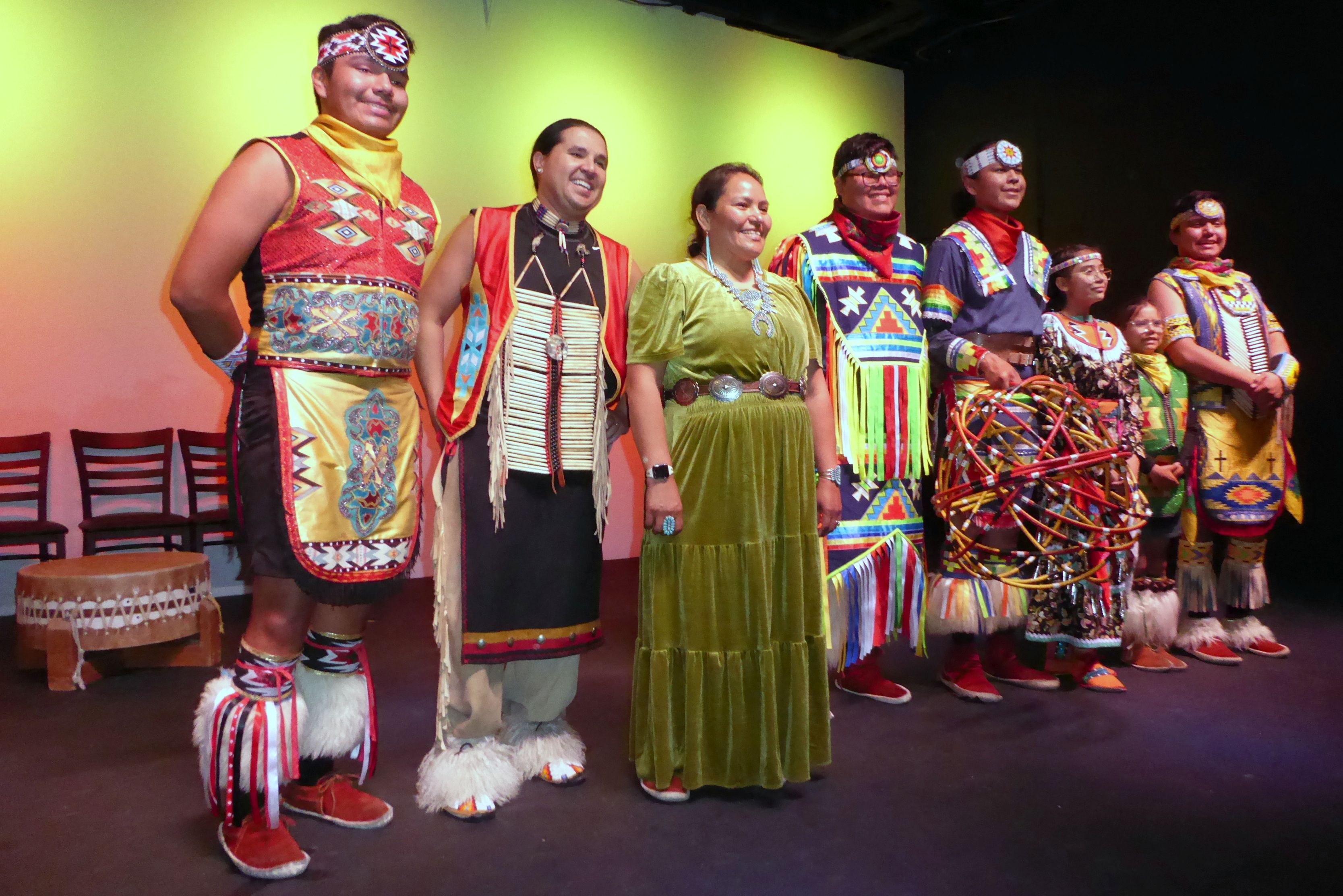
We disembarked at Lees Ferry, returned to our hotel for a break, and then went to the Red Heritage Indigenous Entertainment Hallfor an evening of Native American history, culture, music, dance, and a dinner of Navajo Tacos. The cultural history was excellently presented and very interesting; and, the entertainment was fun to watch. To see a sampling, check out this video I shot during the performance. (Yes, shooting videos was warmly welcomed!).
Red Heritage Indigenous Entertainment Hall A family owns and runs this dinner theater.
Given the choice, I would rather visit a museum showcasing crafts rather than fine art, whether they be of ancient peoples or contemporary. My favorite Smithsonian Museum in Washington, D.C., at the time of our visit was the Renwick Gallery, which featured American crafts from the 19th century to the present. It was fabulous!
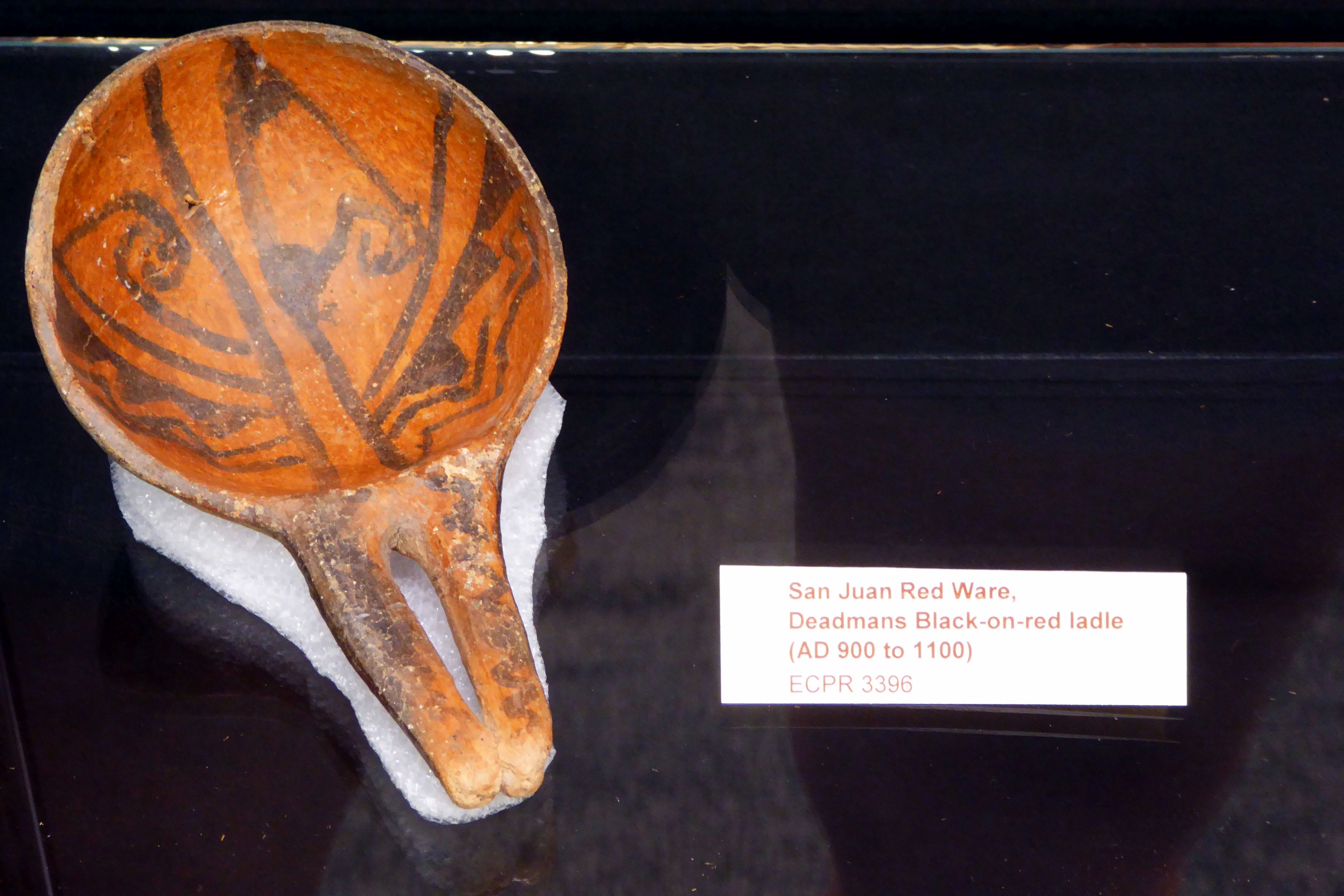
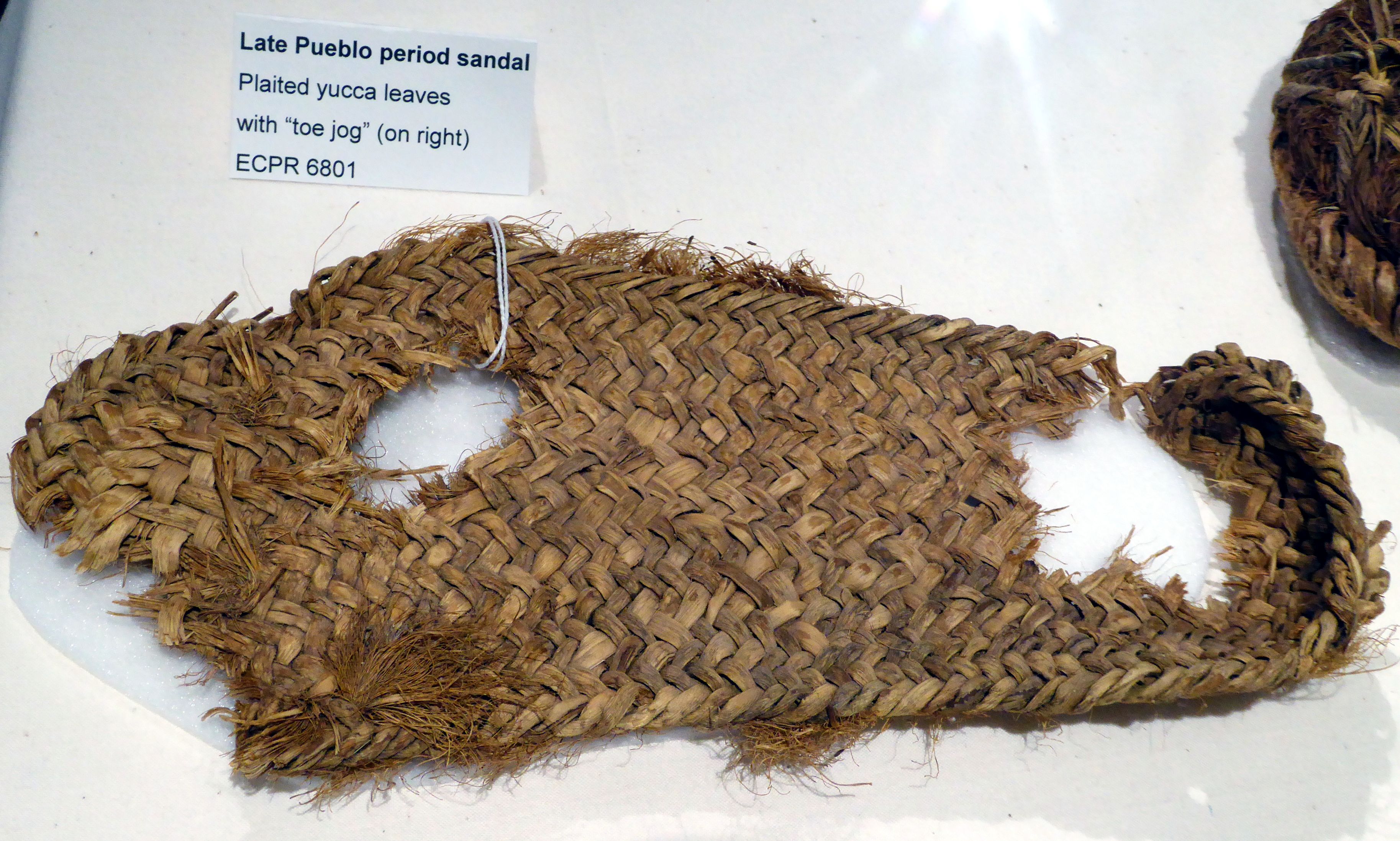
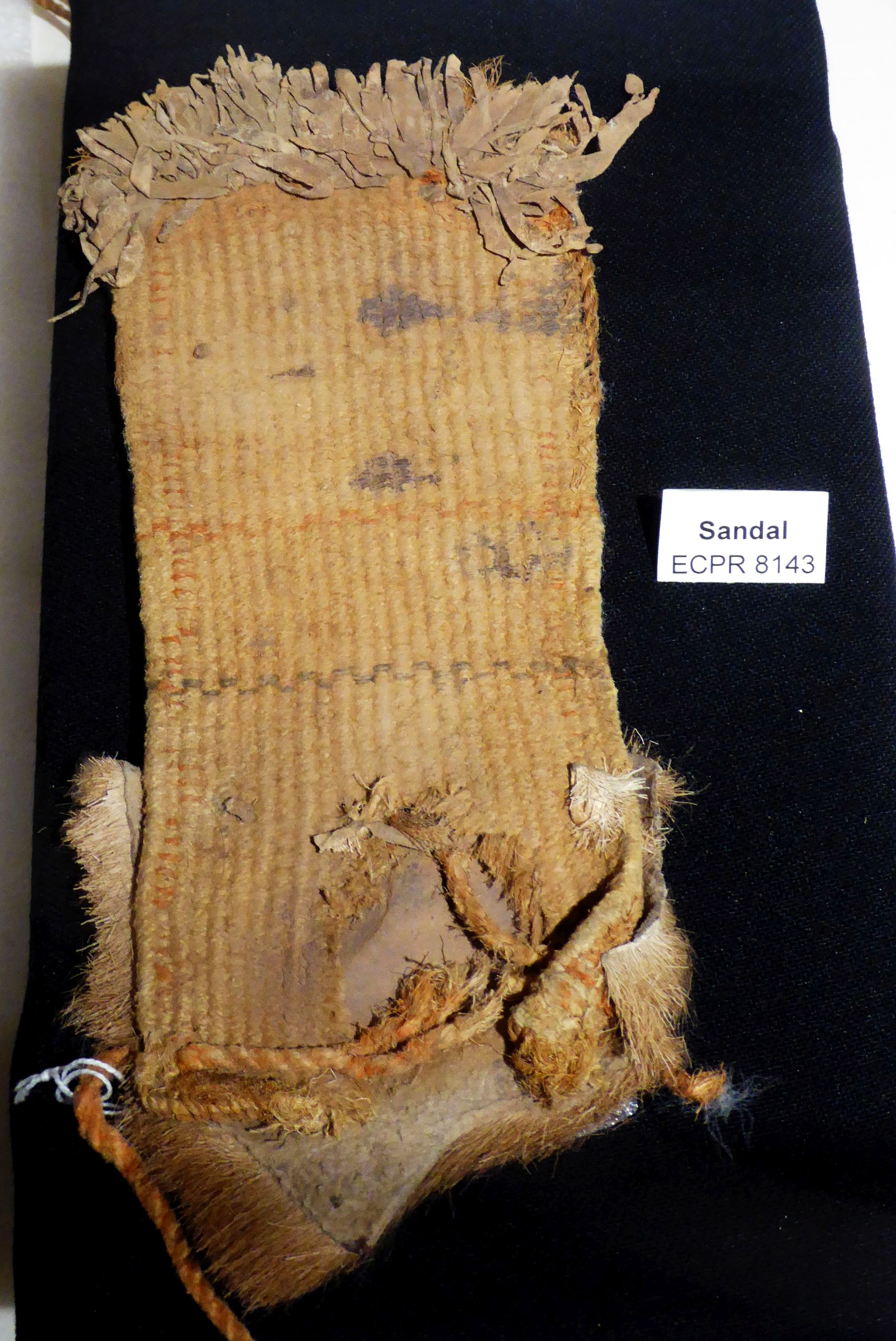
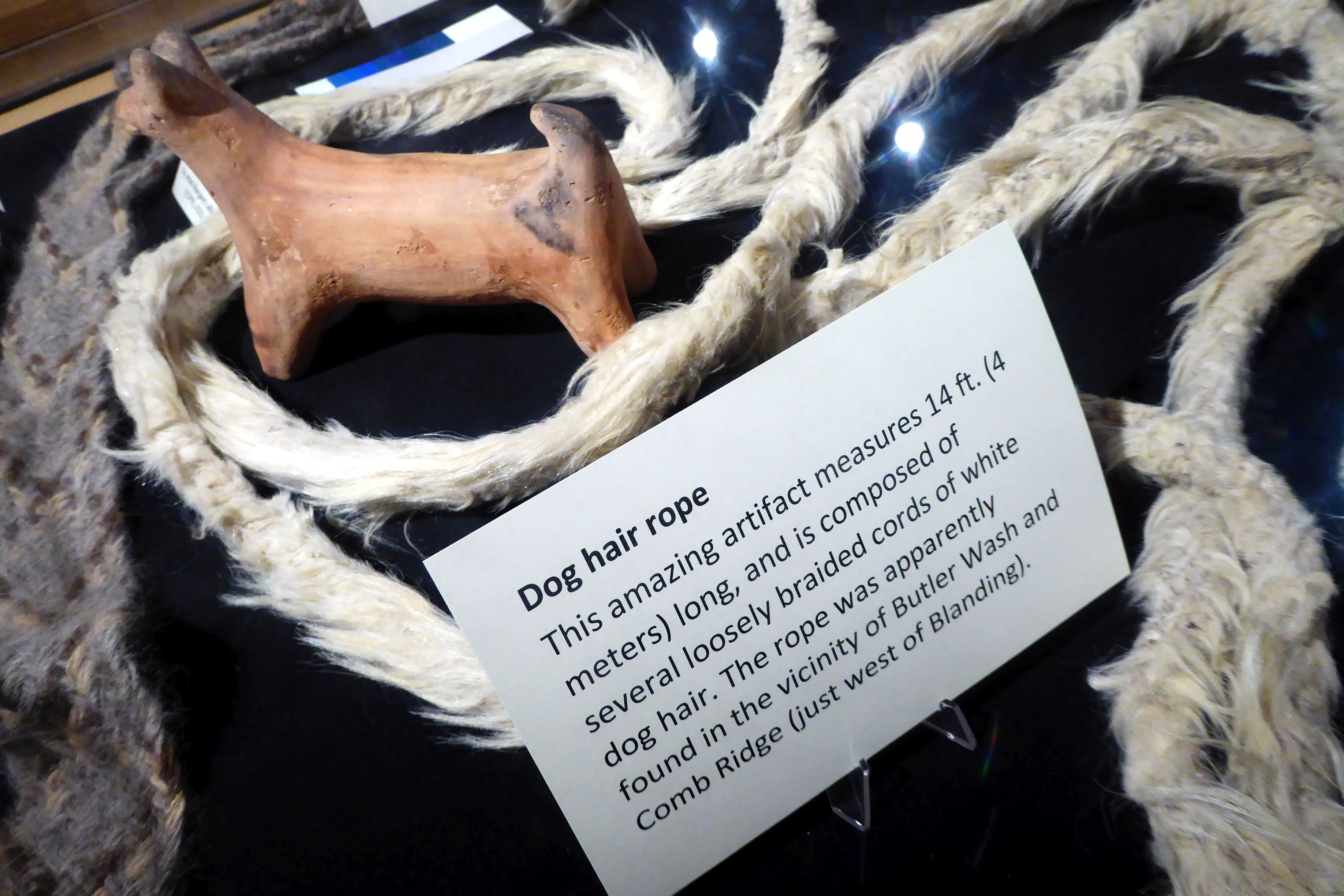
My eyes lit up when we stepped into the Edge of the Cedars State Park Museum, in Blanding, Utah. It has the largest collection of intact Ancestral Puebloan pottery found in the Four Corners region of the U.S. as well as archaeological sites and repository.
Ancestral Puebloan is the term for an ancient American Indian people—the people who were here first in this country. The modern Pueblo Indians of New Mexico and Arizona are their descendants.
The 1906 American Antiquities Act made the unauthorized removal of artifacts from public land a felony. The 1979 Archaeological Resources Protection Act (ARPA) specifically made the removal of artifacts or damage to archaeological sites on public lands punishable by fines or imprisonment. The laws recognize the significance of our nation’s cultural heritage sites and the value in preserving and protecting them. Two great laws!
Unfortunately, these laws have not stopped people from looting priceless ancient artifacts from this area. More crimes covered under the ARPA have been prosecuted in Utah than anywhere else in the United States. Experts estimate that more than 80% of American Indian archaeological sites dating back as far as 17 centuries have been looted.
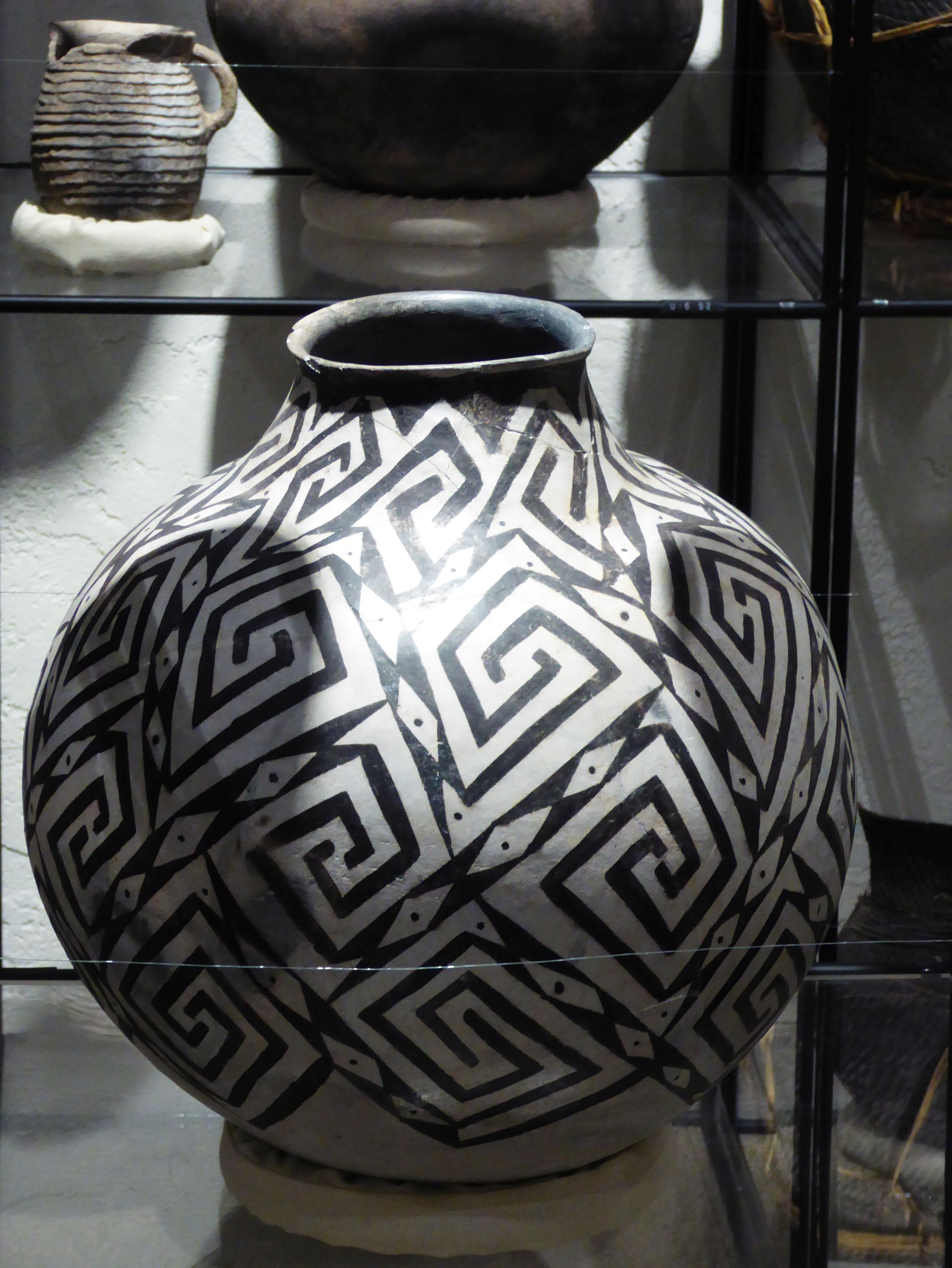
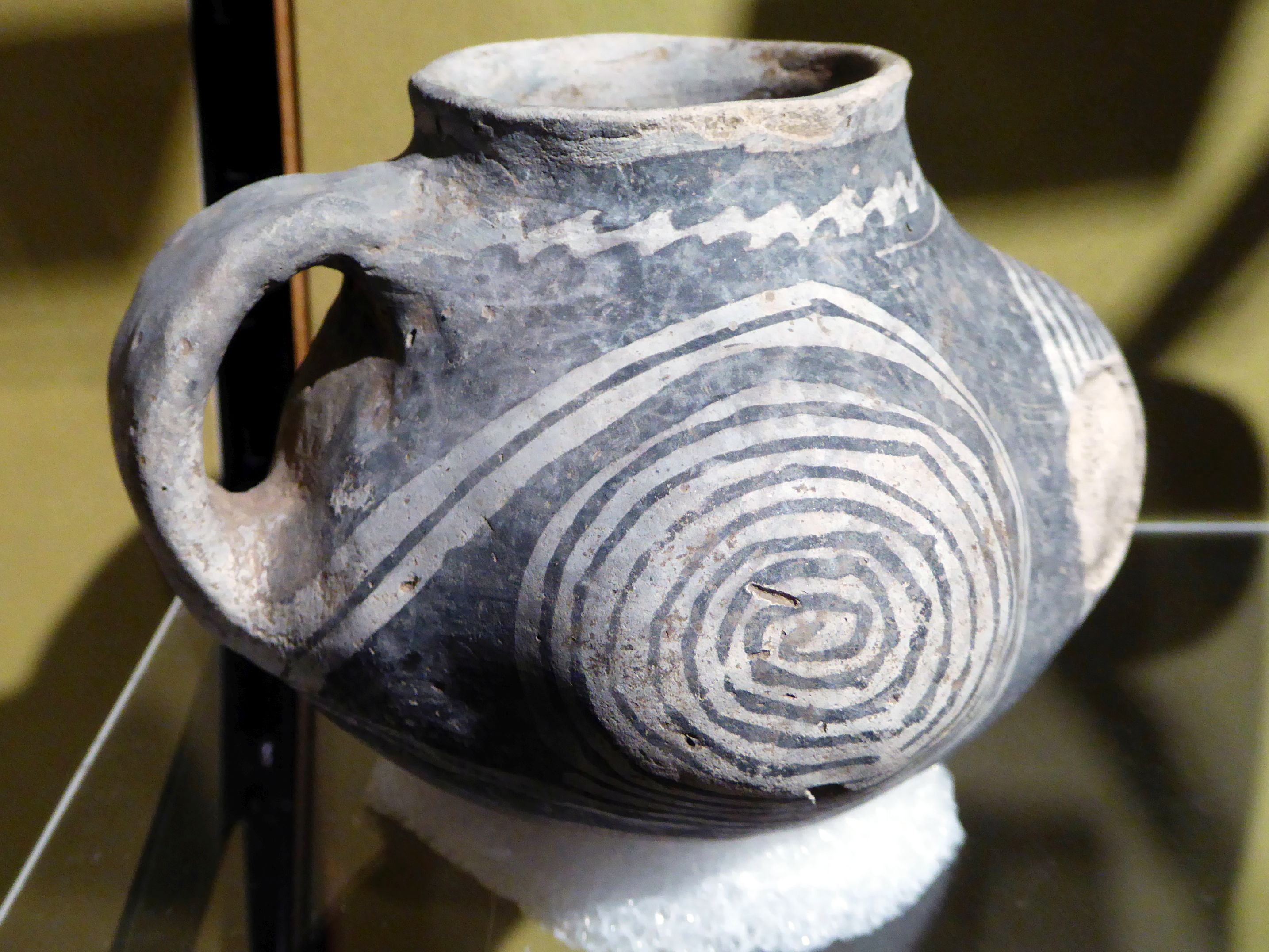
It was wonderful to be able to see these artifacts up close. The repository was behind a huge glass wall with items lined up and numbered. In front of the room, there was a computer kiosk available where each item could be looked up in the database. I wish I would have had more time to spend reading more about this gorgeous pottery.
(For all pictures, click on the image to see full screen view.)
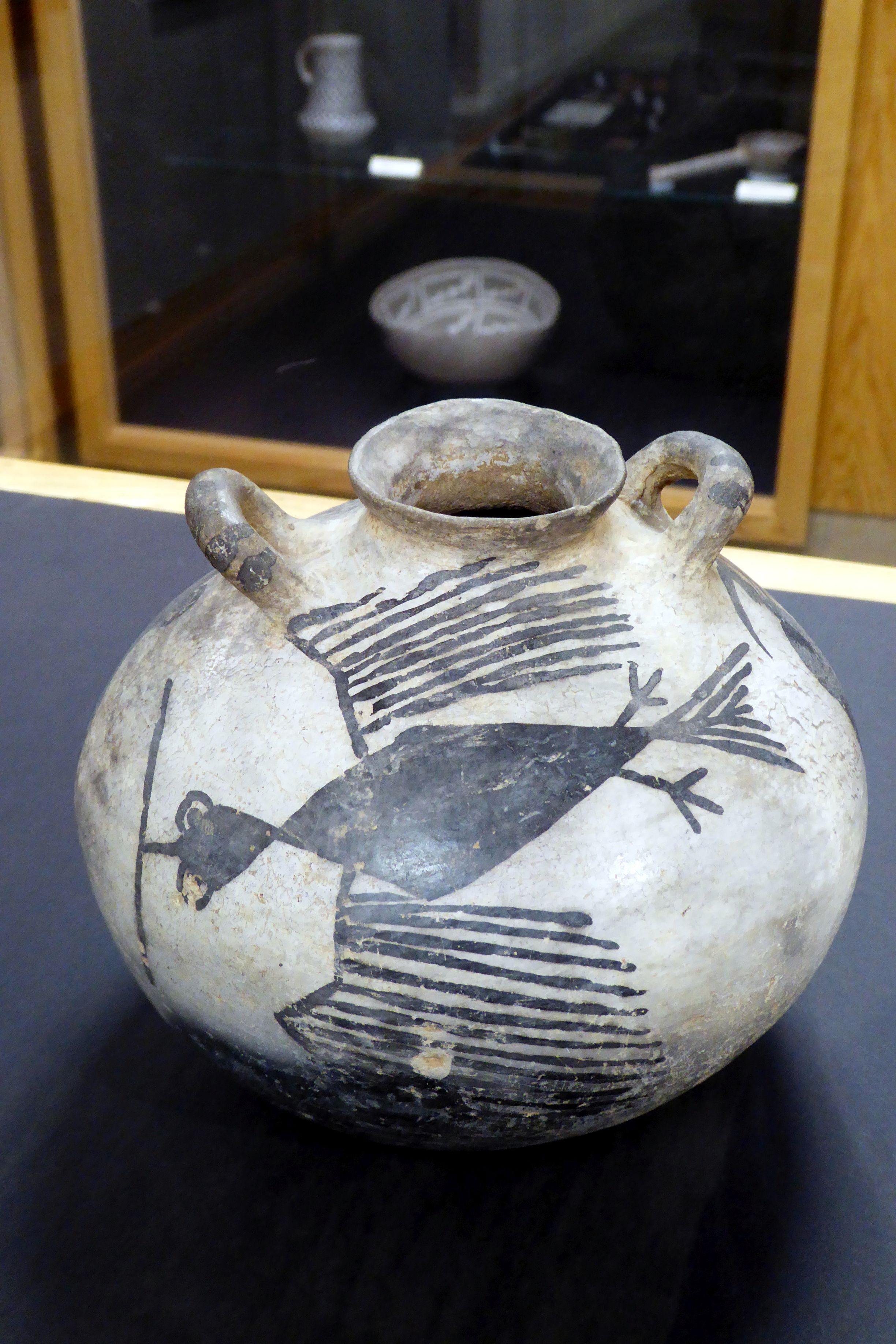
I did learn that all Ancestral Puebloan ceramics were shaped by hand and the surfaces of serving bowls and some jars were decorated with painted designs.
The Kayenta people are best known for finely painted black-on-white or black-on-orange ceramics.
Tsegi Orange Ware
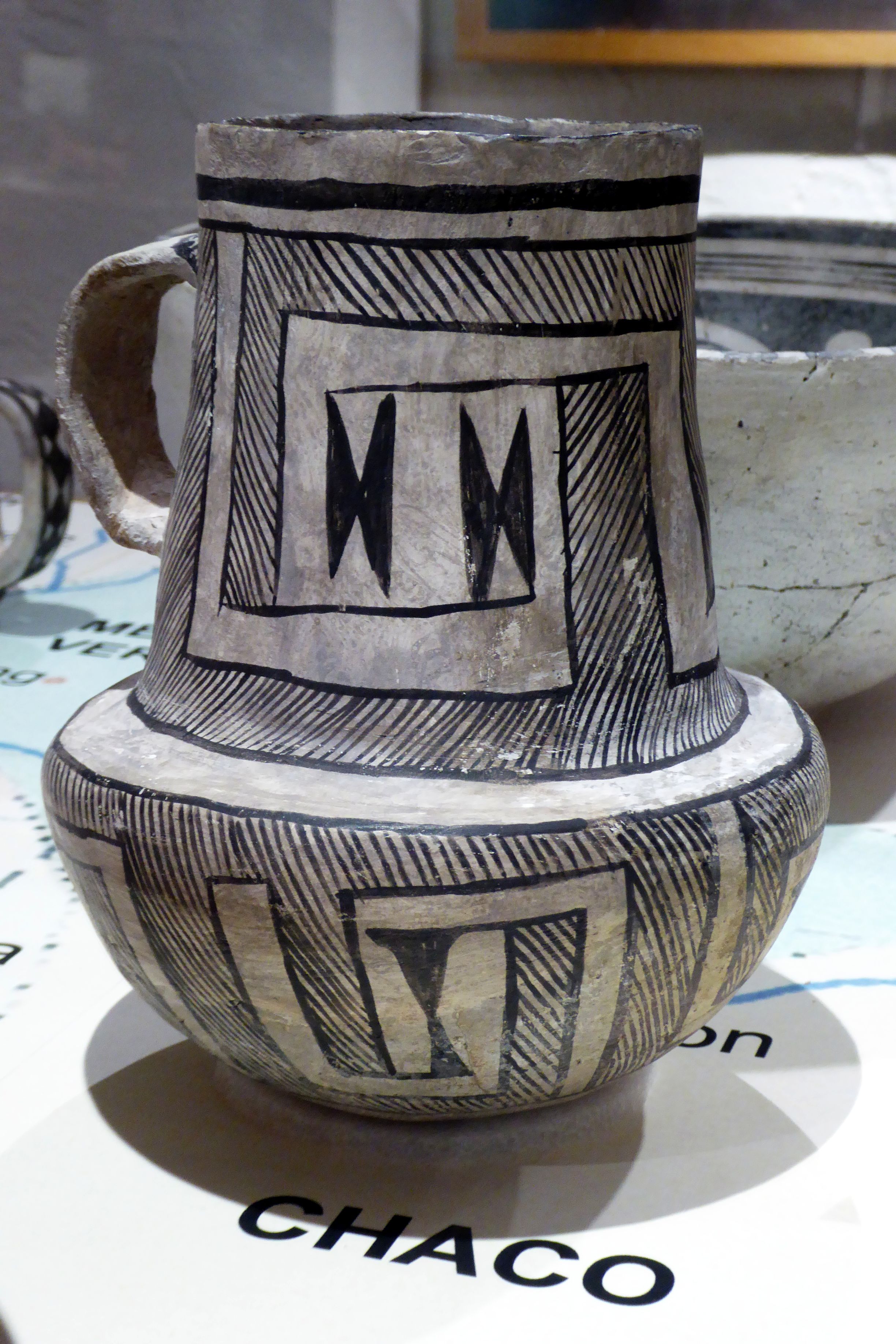
Chaco ceramics are also black-on-white. Their most distinctive style involved bounded fields filled with hachured or parallel lines. Geometric scrolls are common motifs, and curvilinear designs also occur. Cylindrical vases and cylindrical-necked pitchers are unique to the Chacoan style and may have been produced by specialists.
Mesa Verde ceramics underwent centuries of change in design style. The ceramics produced between A.D. 1200-1300 are generally considered the most stylistically distinctive. These are black on white, painted with complex geometric designs.
Mesa Verde White Ware
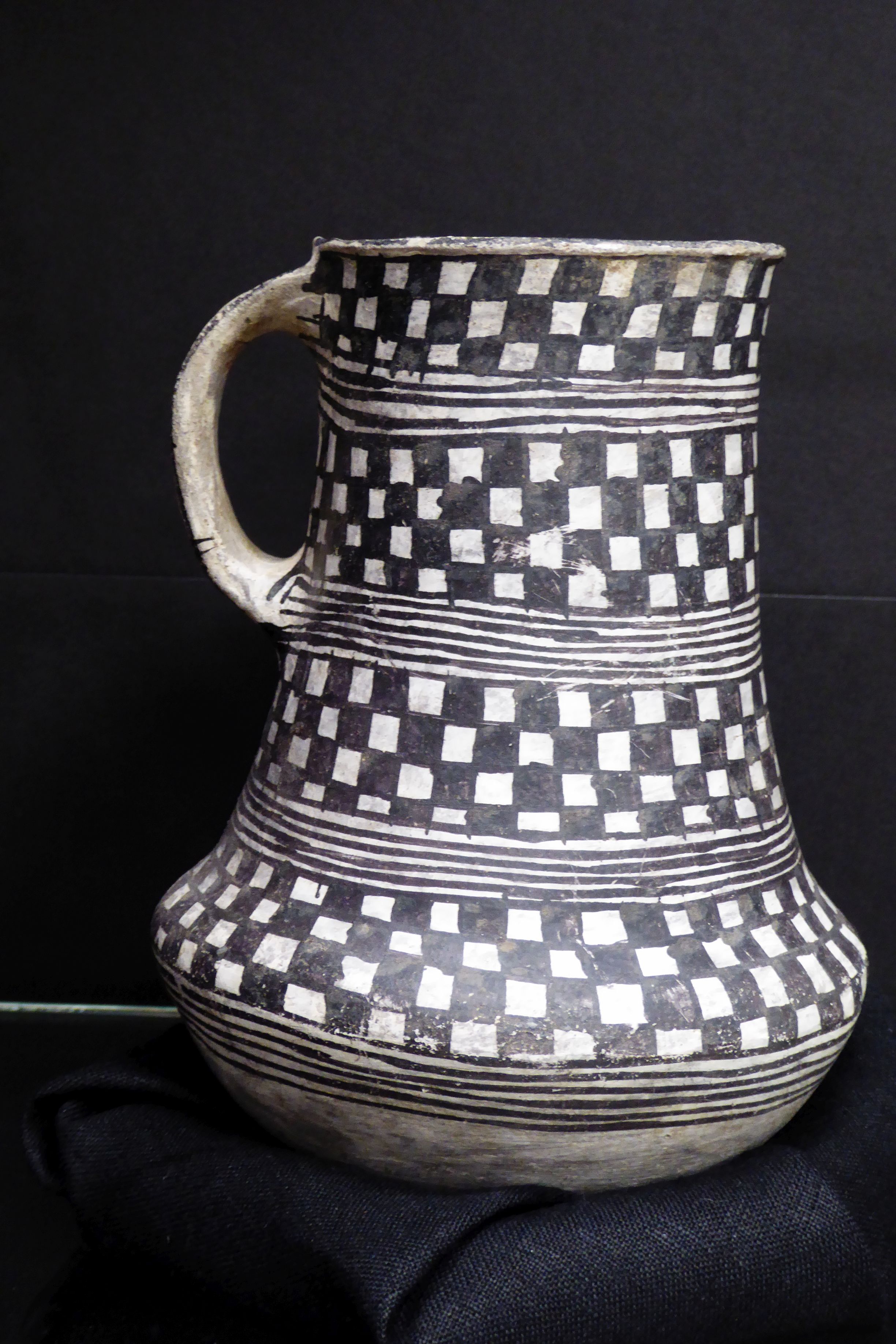
White ware mugs were specific to the Pueblo III period and not made after A.D. 1280
Mancos Pitcher (AD 950 to 1150)
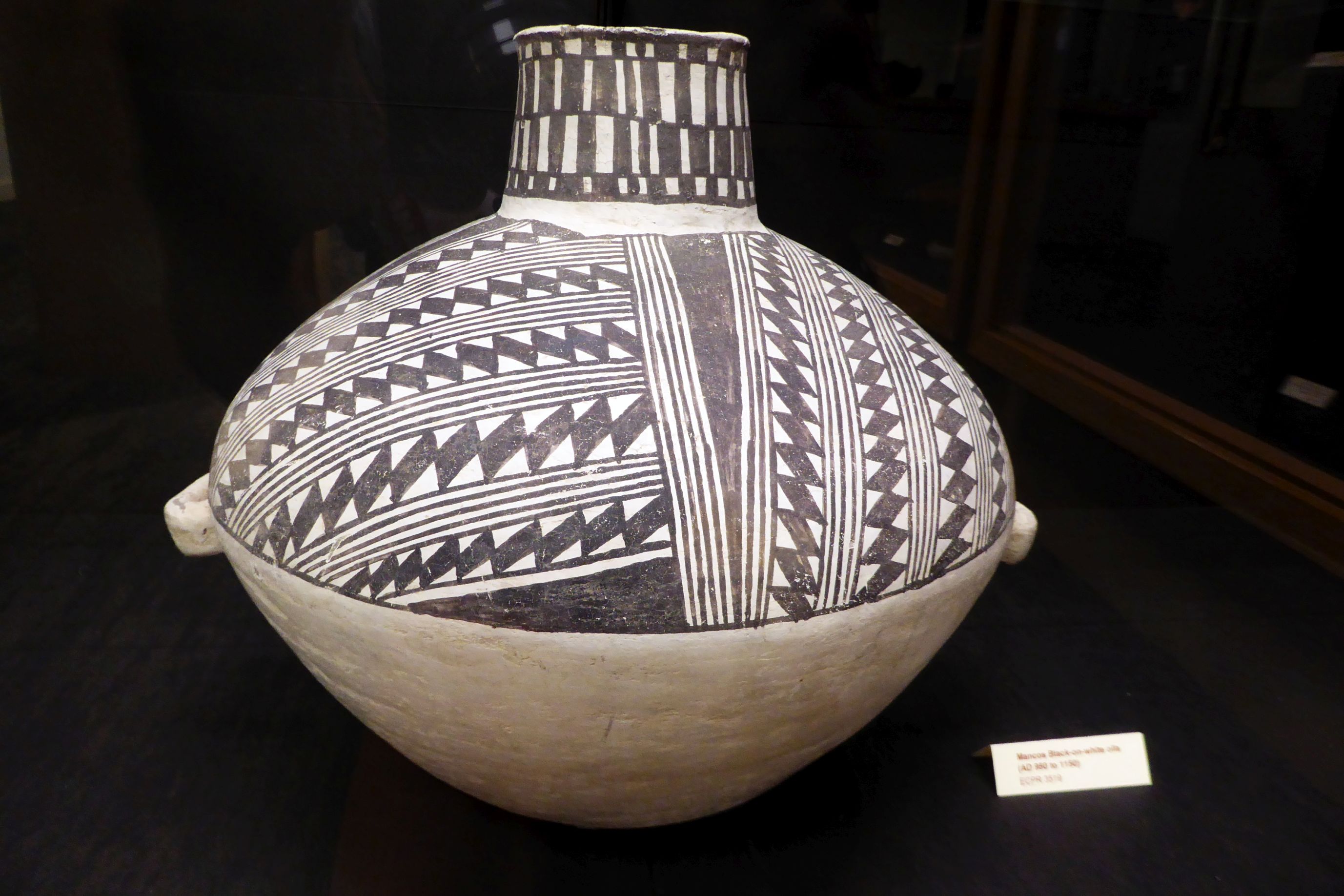
Mancos olla (AD 950 to 1150)
The other artifacts in the museum were also striking. This colorful macaw feather sash really caught my eye. I have never seen anything like it! The technique of using featured cords is known from only a few Basketmaker Period cave sites (A.D. 750-950). Radio-carbon dating confirmed a date of A.D. 1150 for this sash.
The feathers are from the Scarlet Macaw, a parrot native to Mexico, indicating there was trading going on between the Ancestral Puebloan and Aztecs.
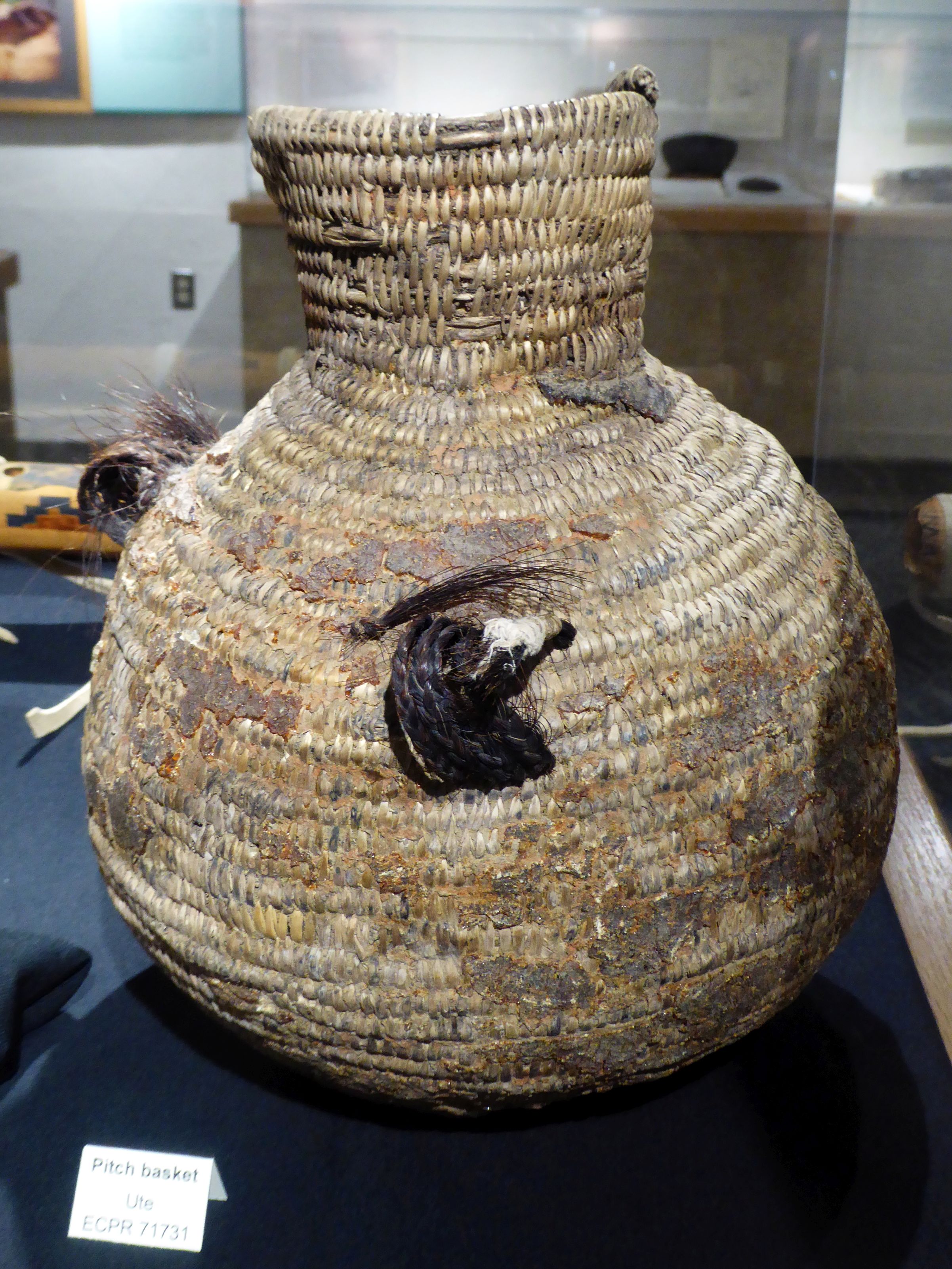
The museum also featured a rare collection of baskets found at a site in Manti La Sal National Forest. It dates back to A.D. 1150, which is amazing, considering the excellent condition of these baskets.
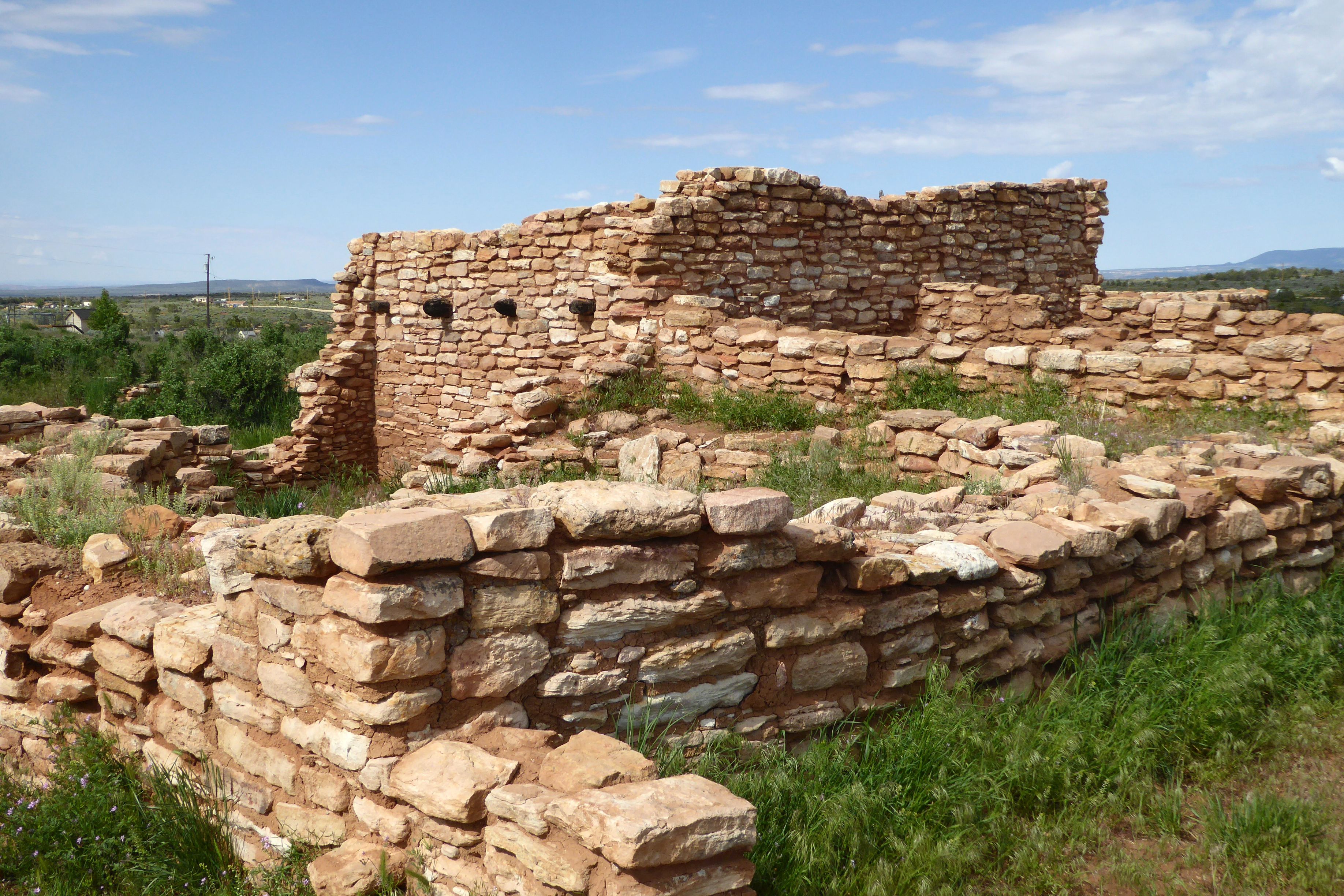
Behind the museum is a Chacoan great House and great kiva, dating back to the 1000’s. The great house was originally a multistory building used by the Chacoan community, and the kiva was a subterranean round room used for rites and political meetings. I climbed down into the kiva to see where these meetings took place so many centuries ago.
I was curious about this:
The sculpture replicates prehistoric archaeoastronomy sites found in the Southwest and acts as a laboratory to chart the sun’s yearly migration. Archaeoastronomy is the study of prehistoric cultural connections with the sun, moon, and stars.
The people who lived at this site may have used solar markers to determine when to plant and harvest crops.
A view from the bus…… and, another view from the bus
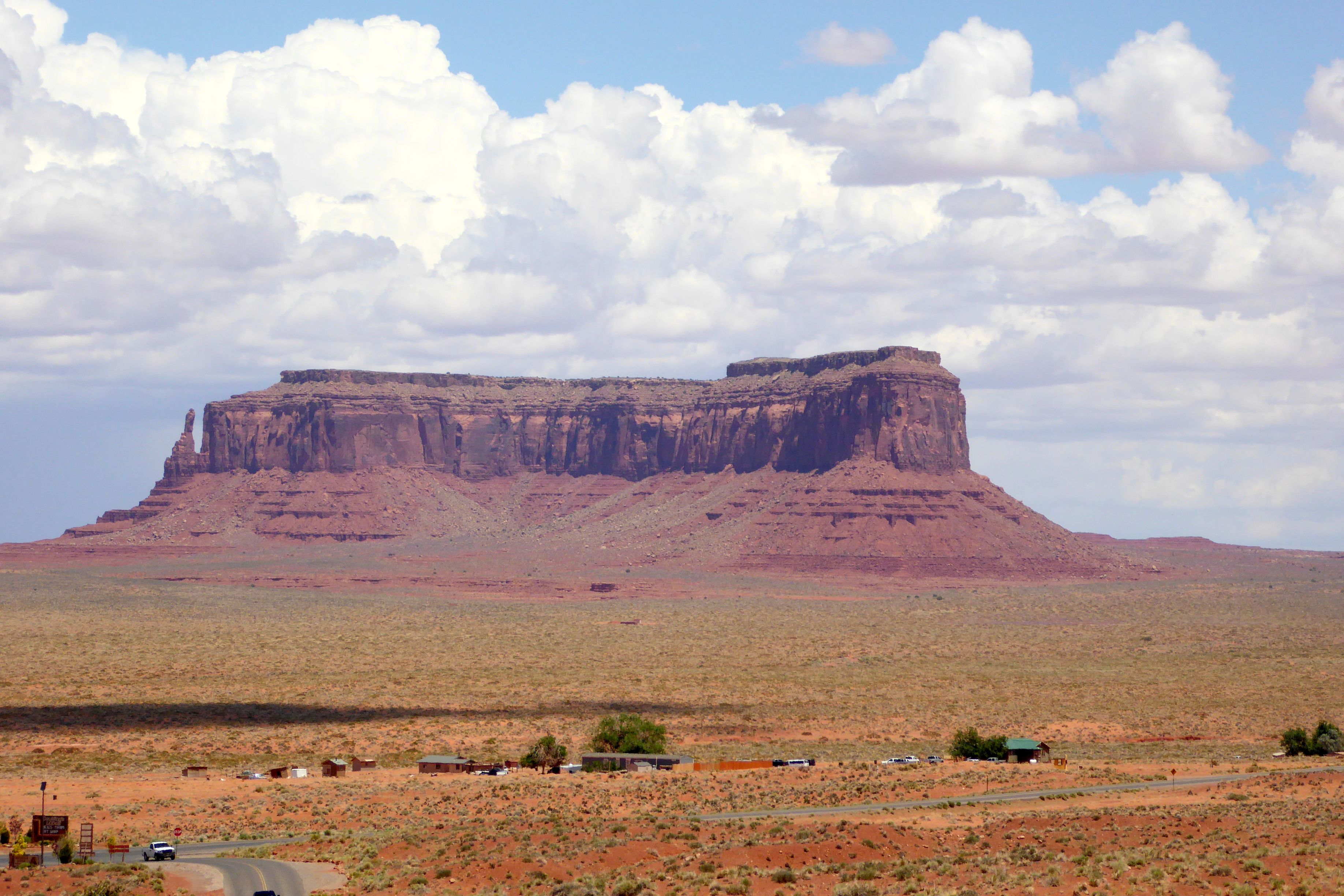
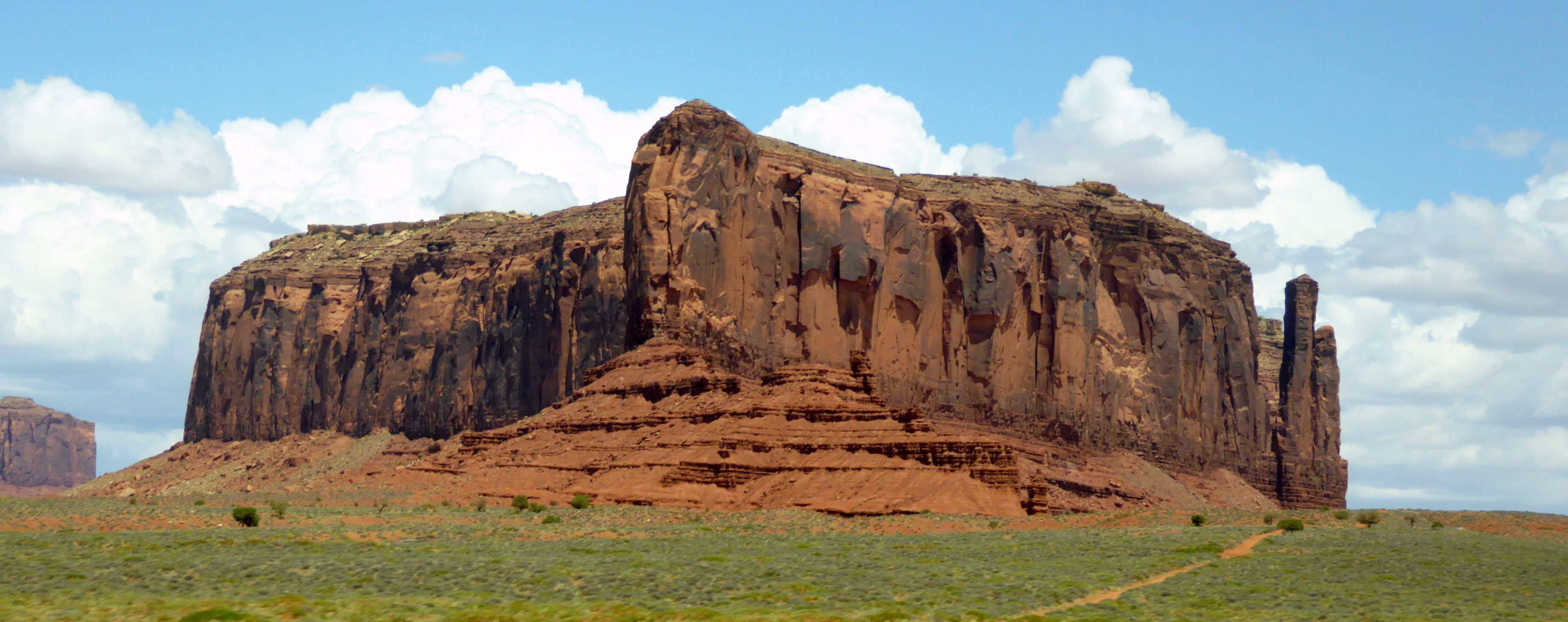
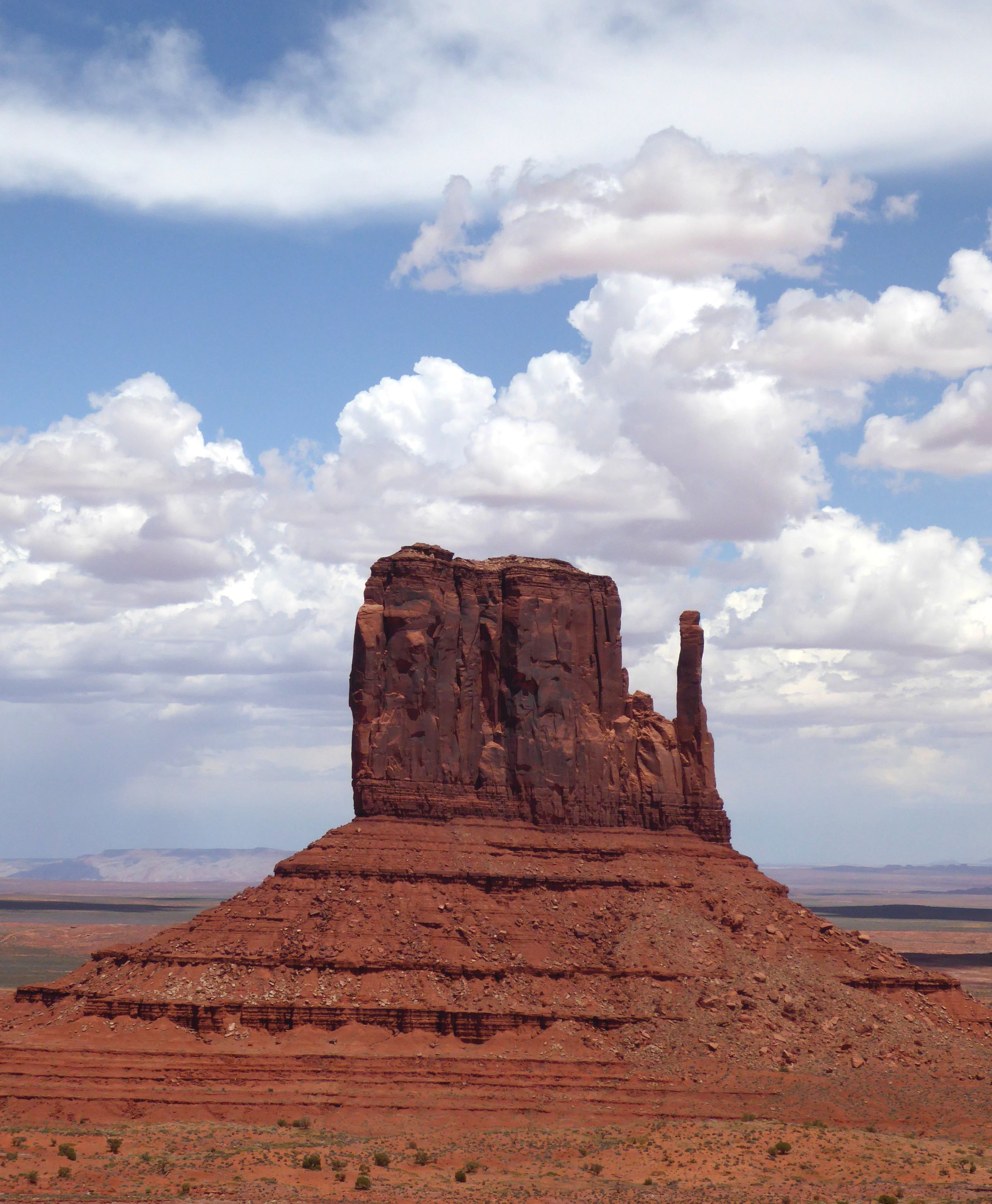
The valley features sandstone buttes that range from 400 to 1,000 feet high. Two of the butters are shaped like mittens, so they are appropriately named Mitten Buttes.
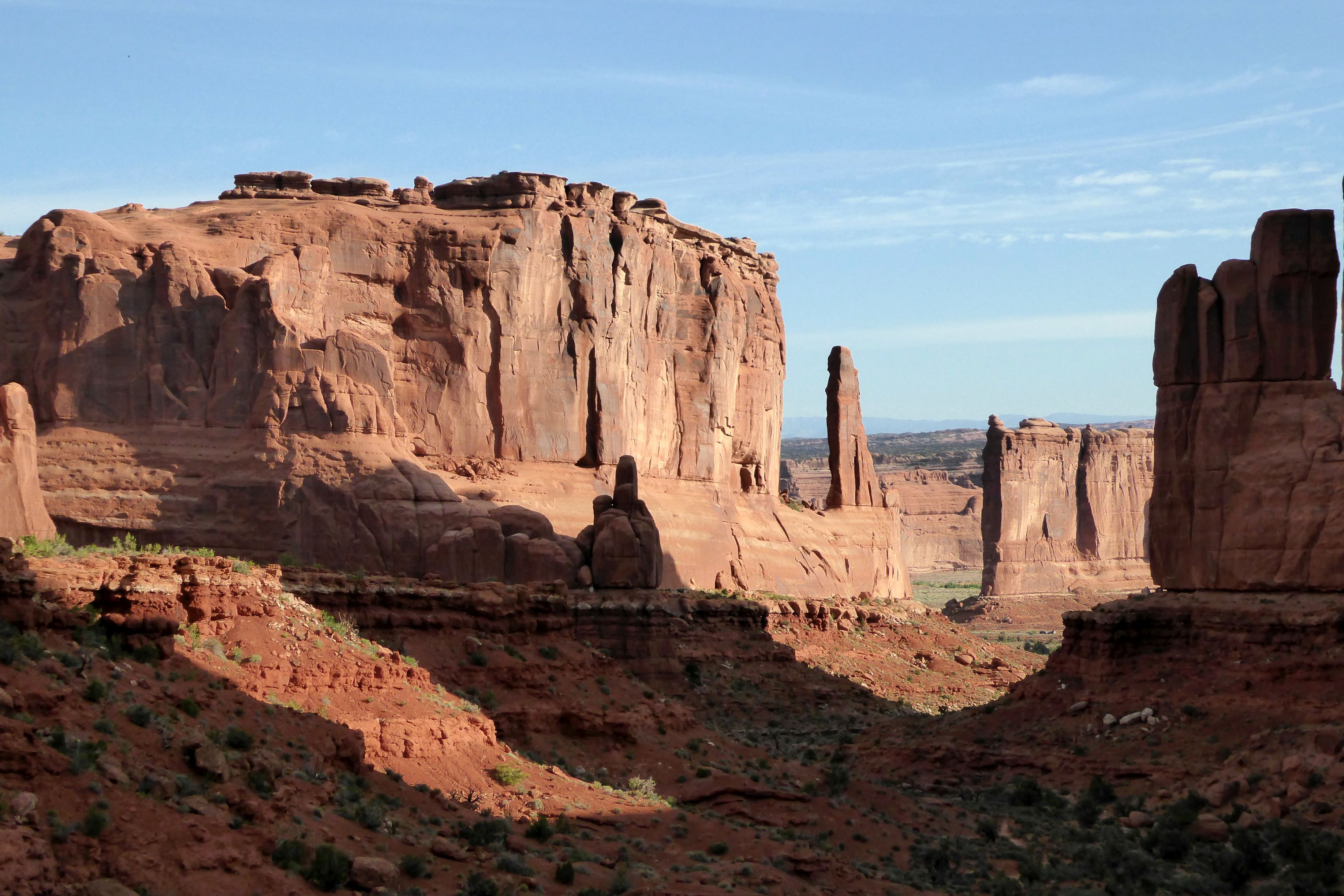
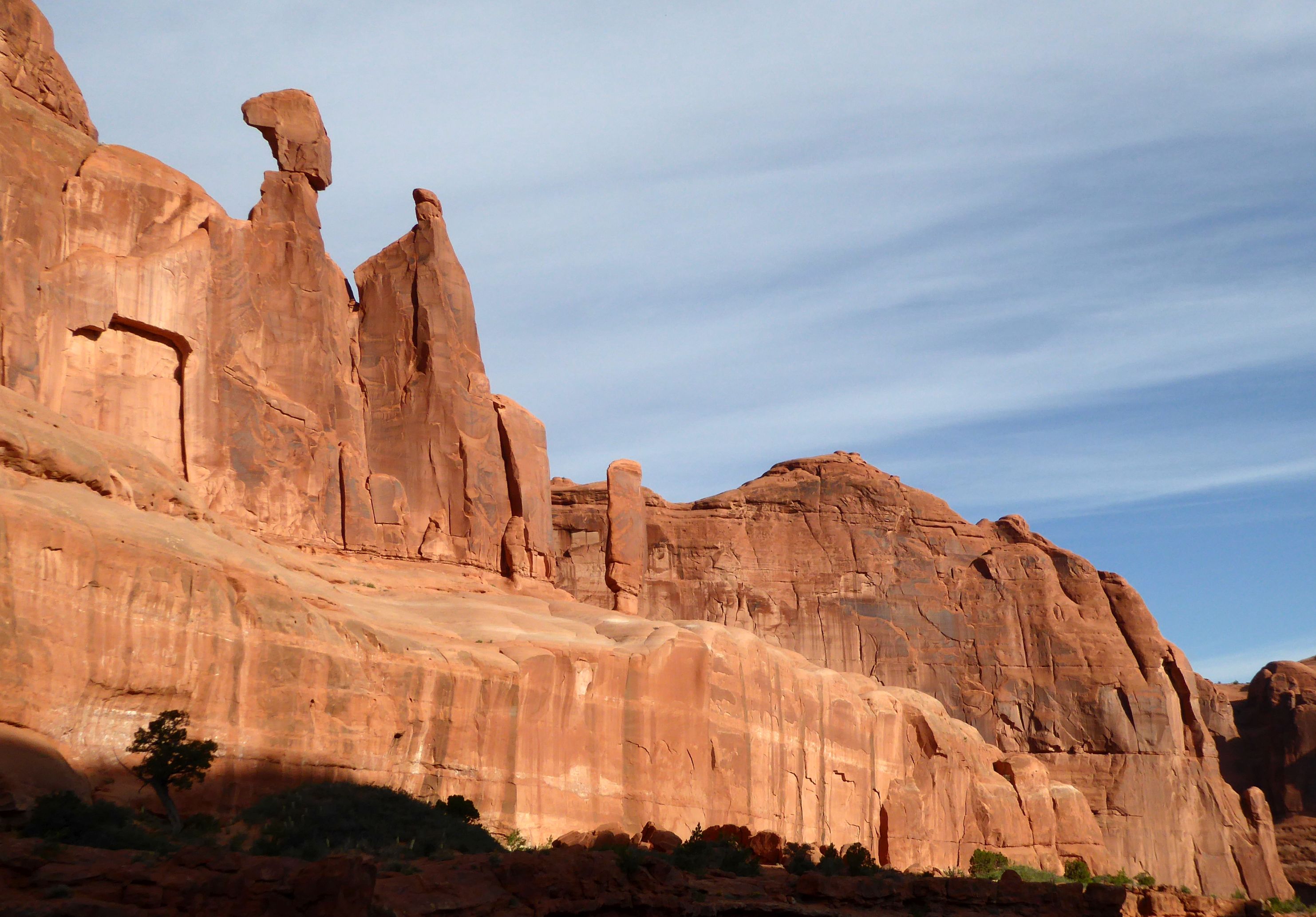
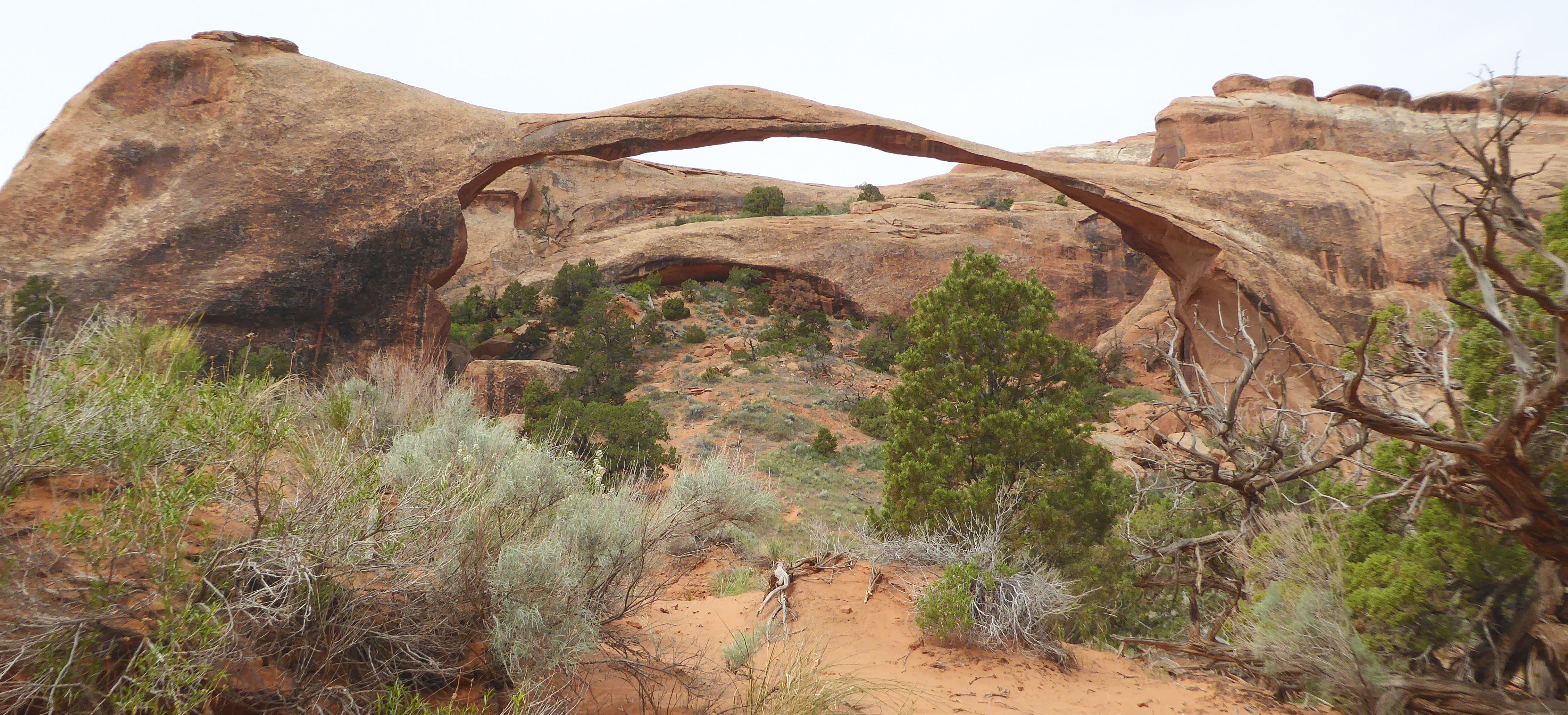
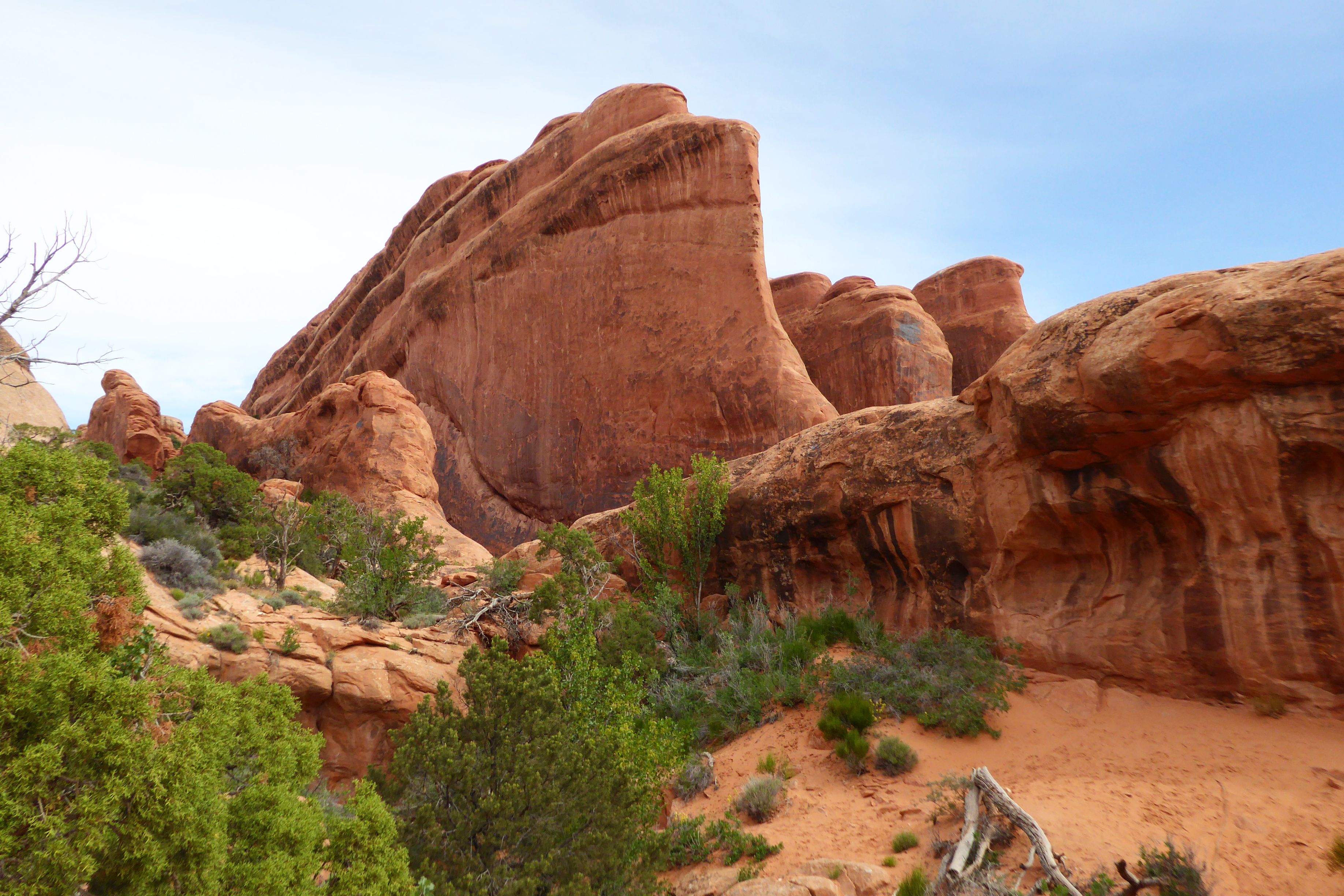
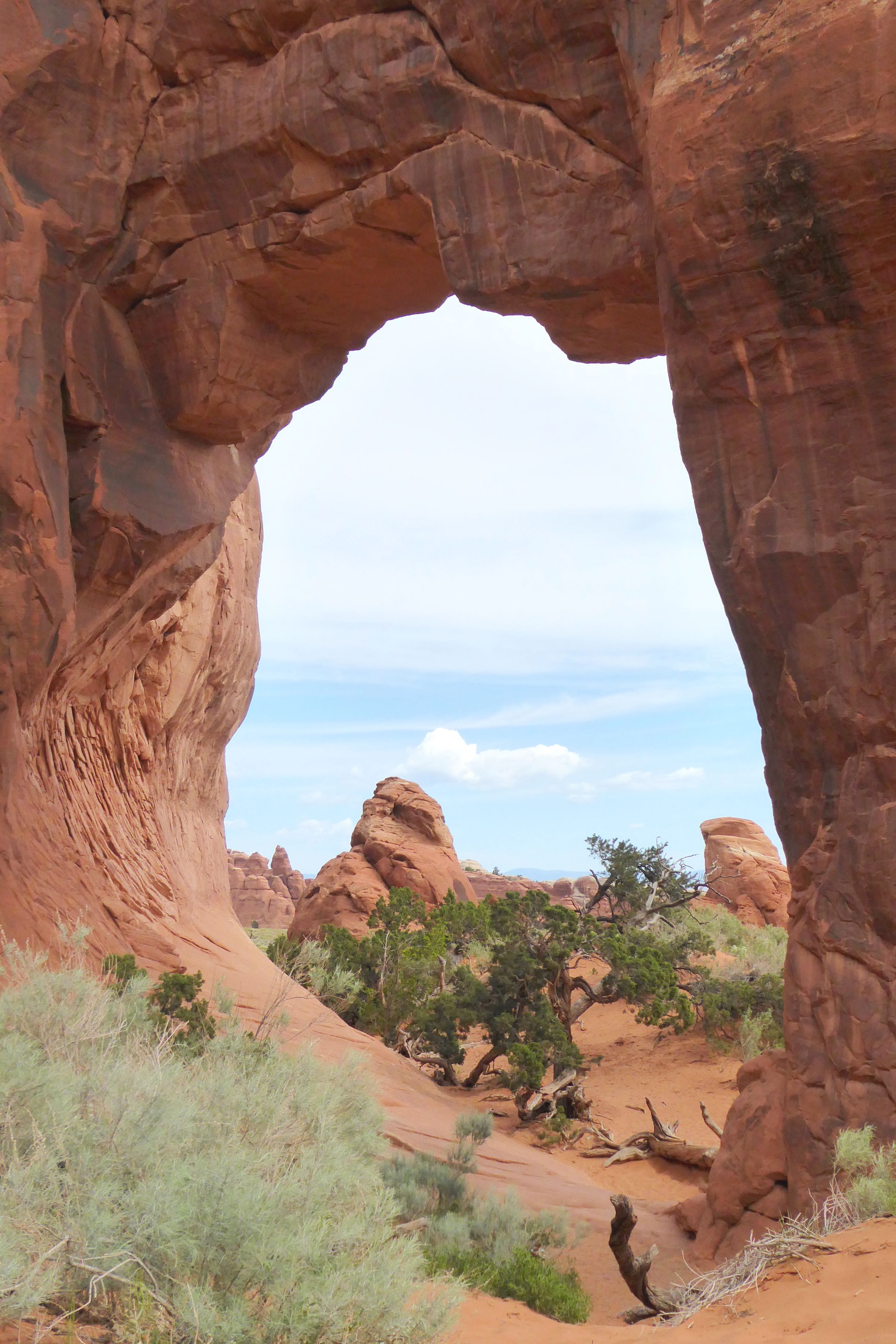
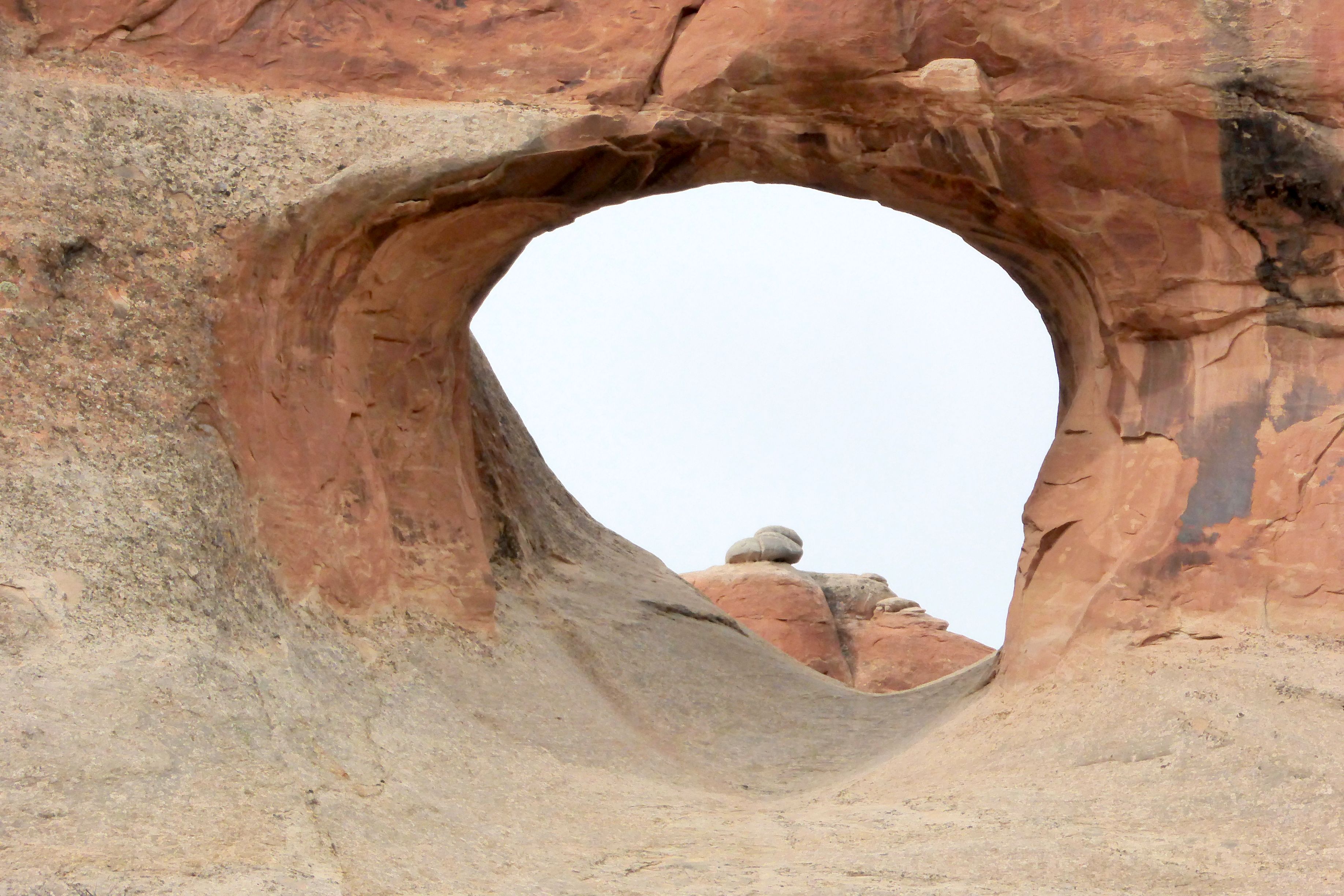
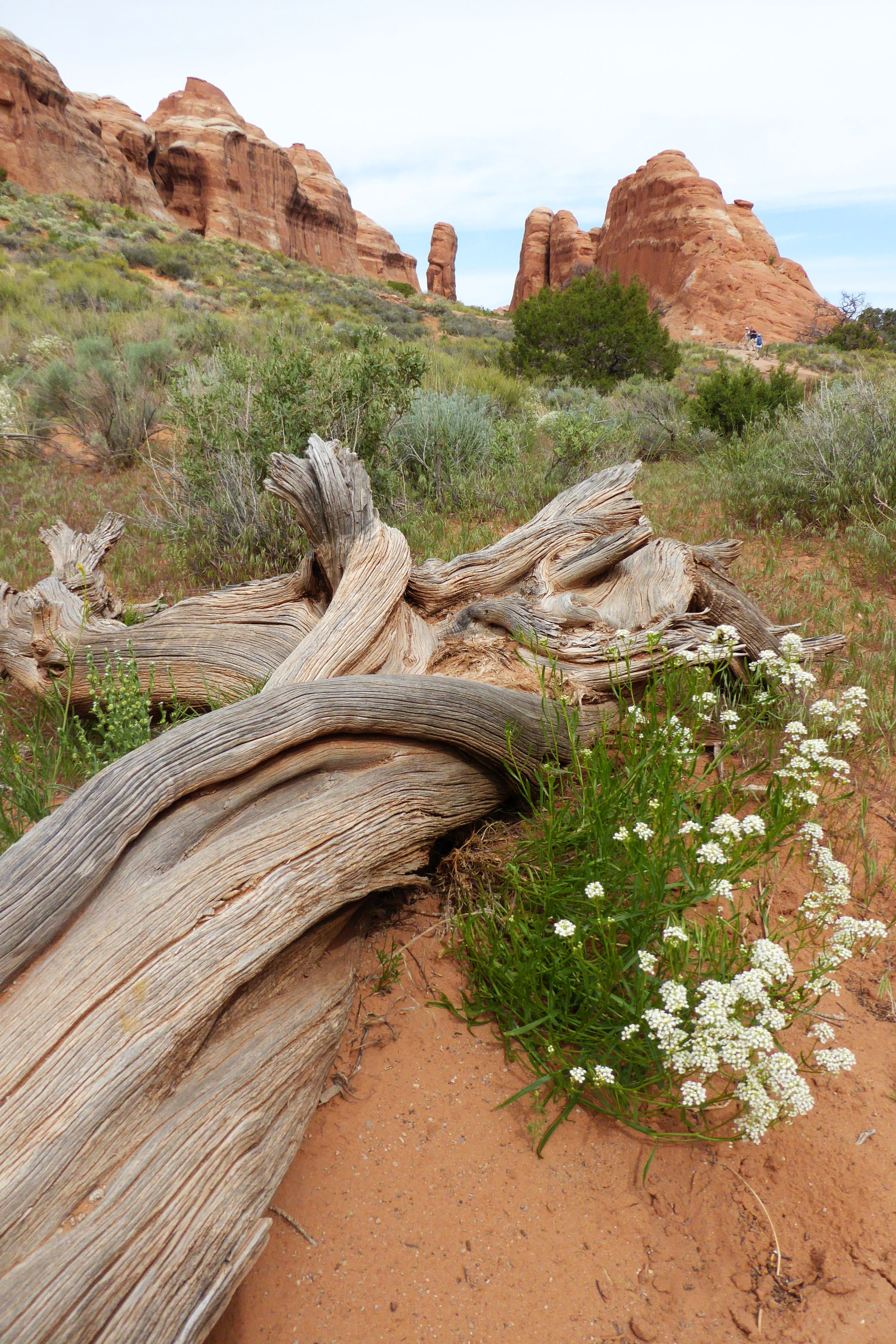
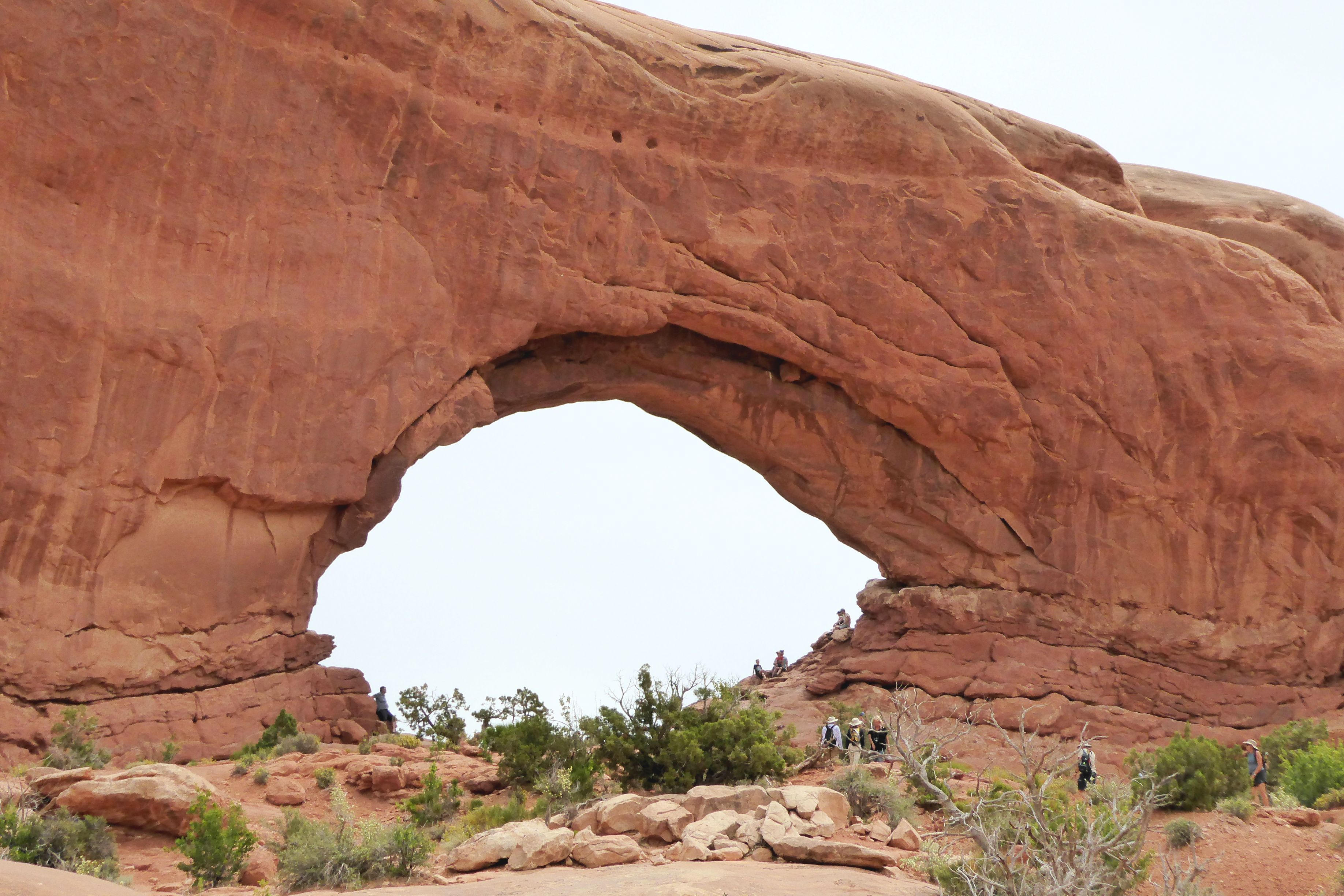
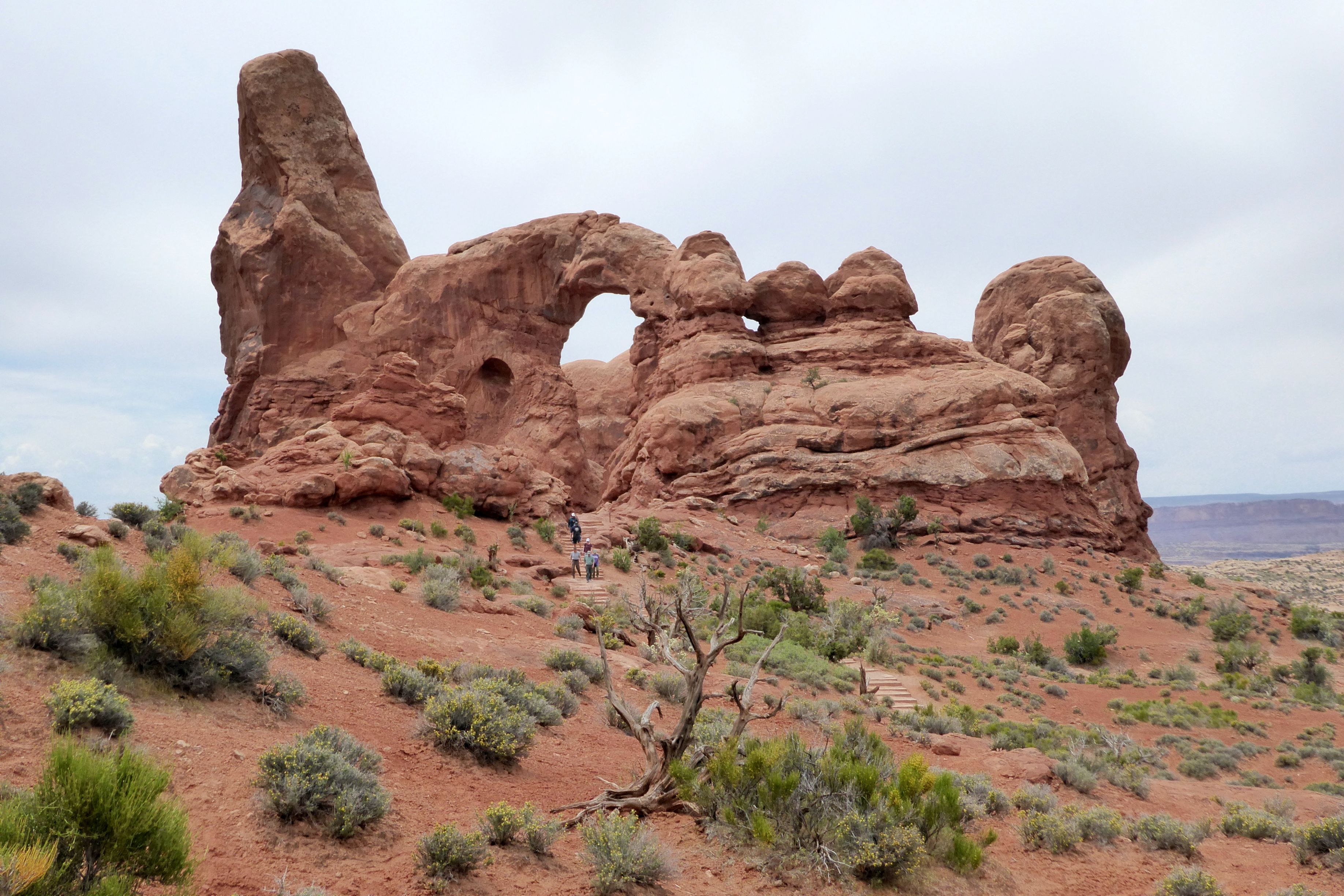
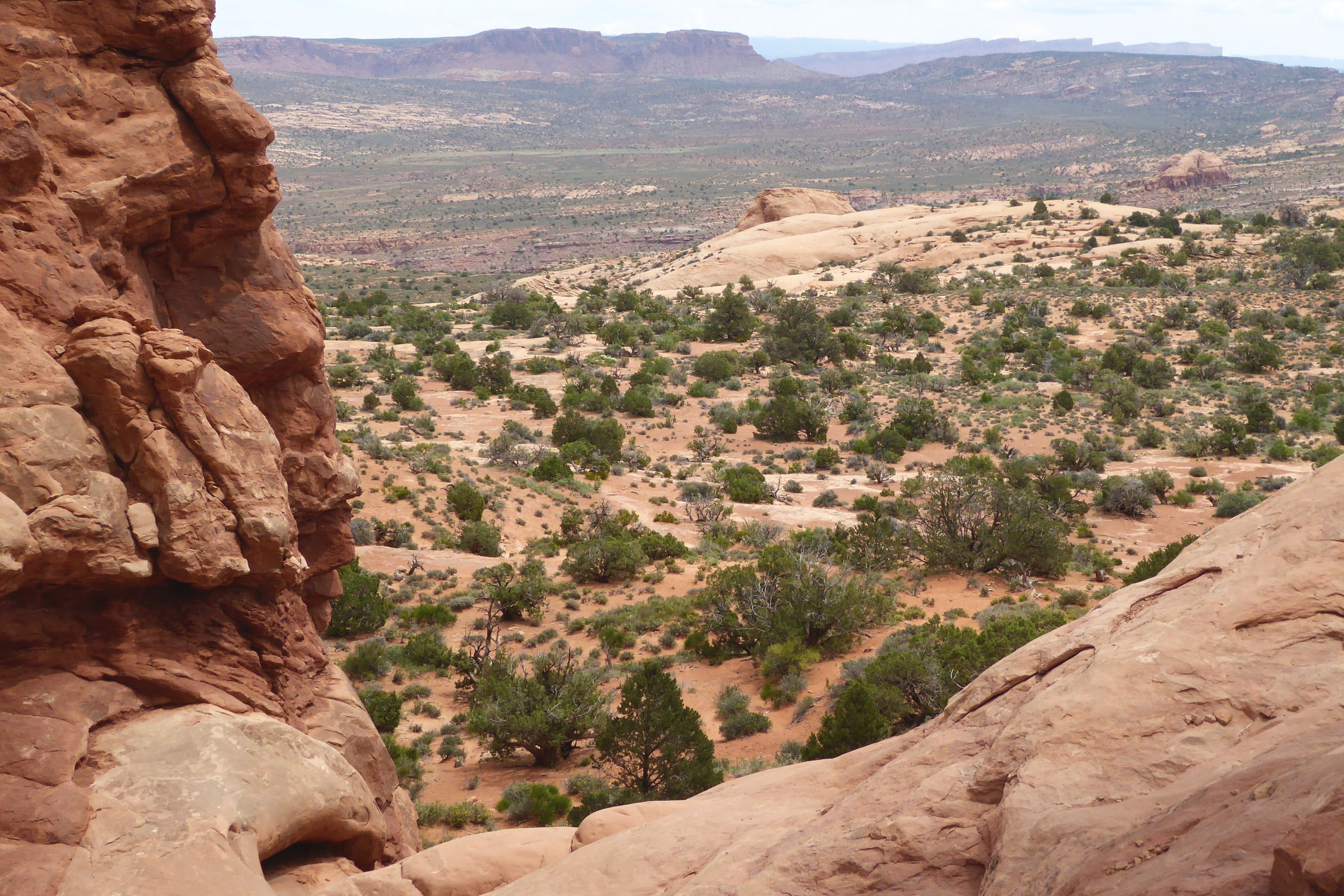
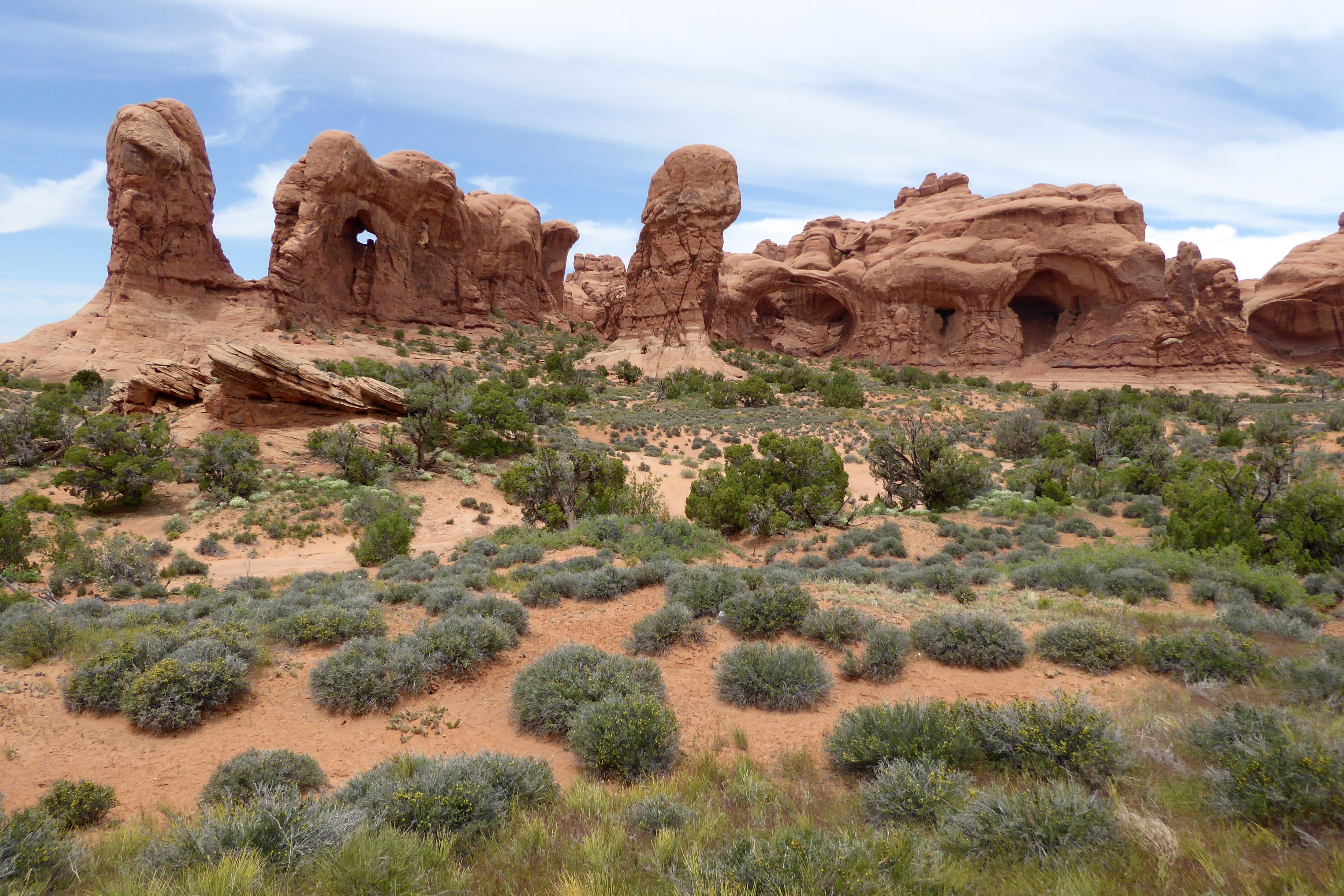
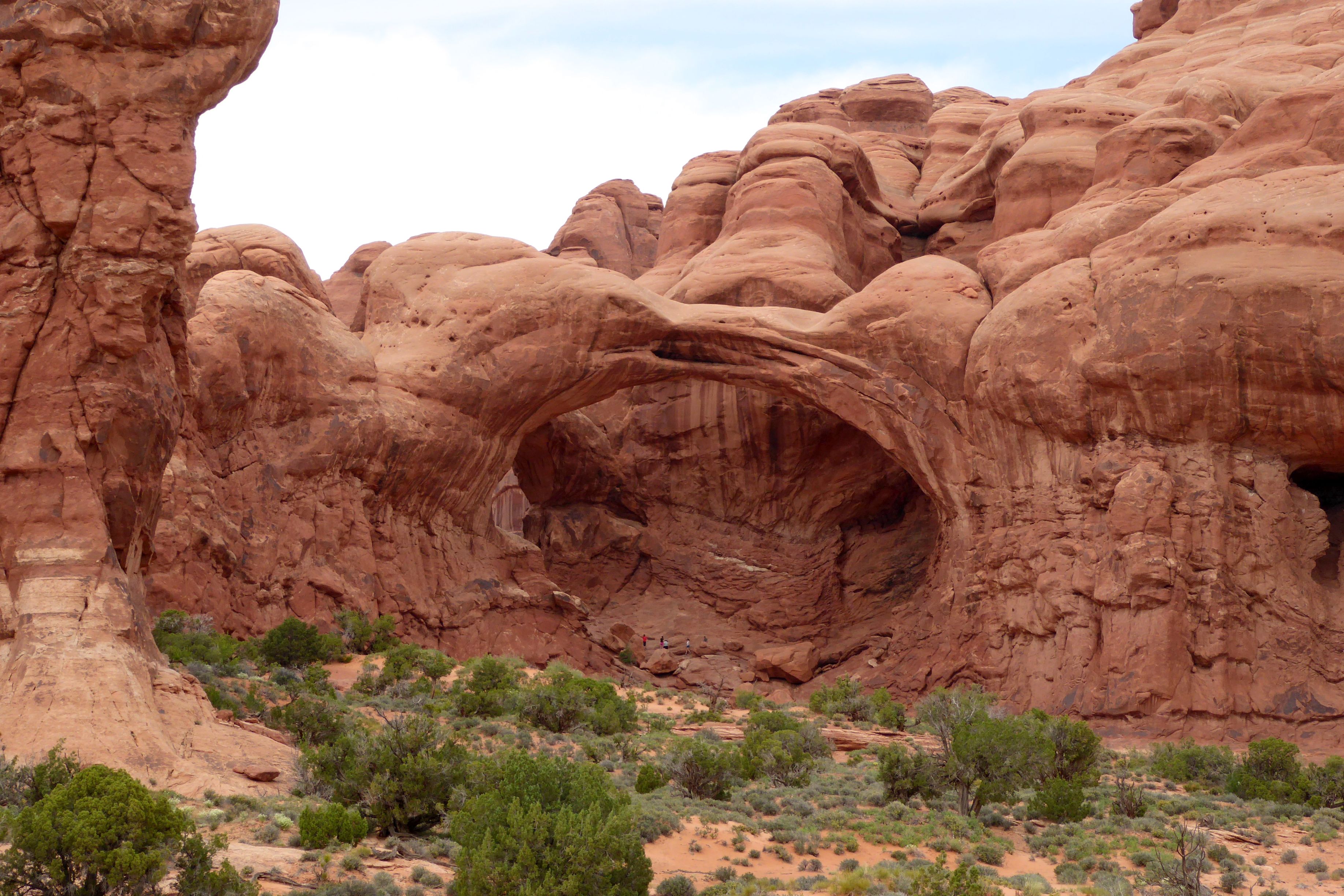
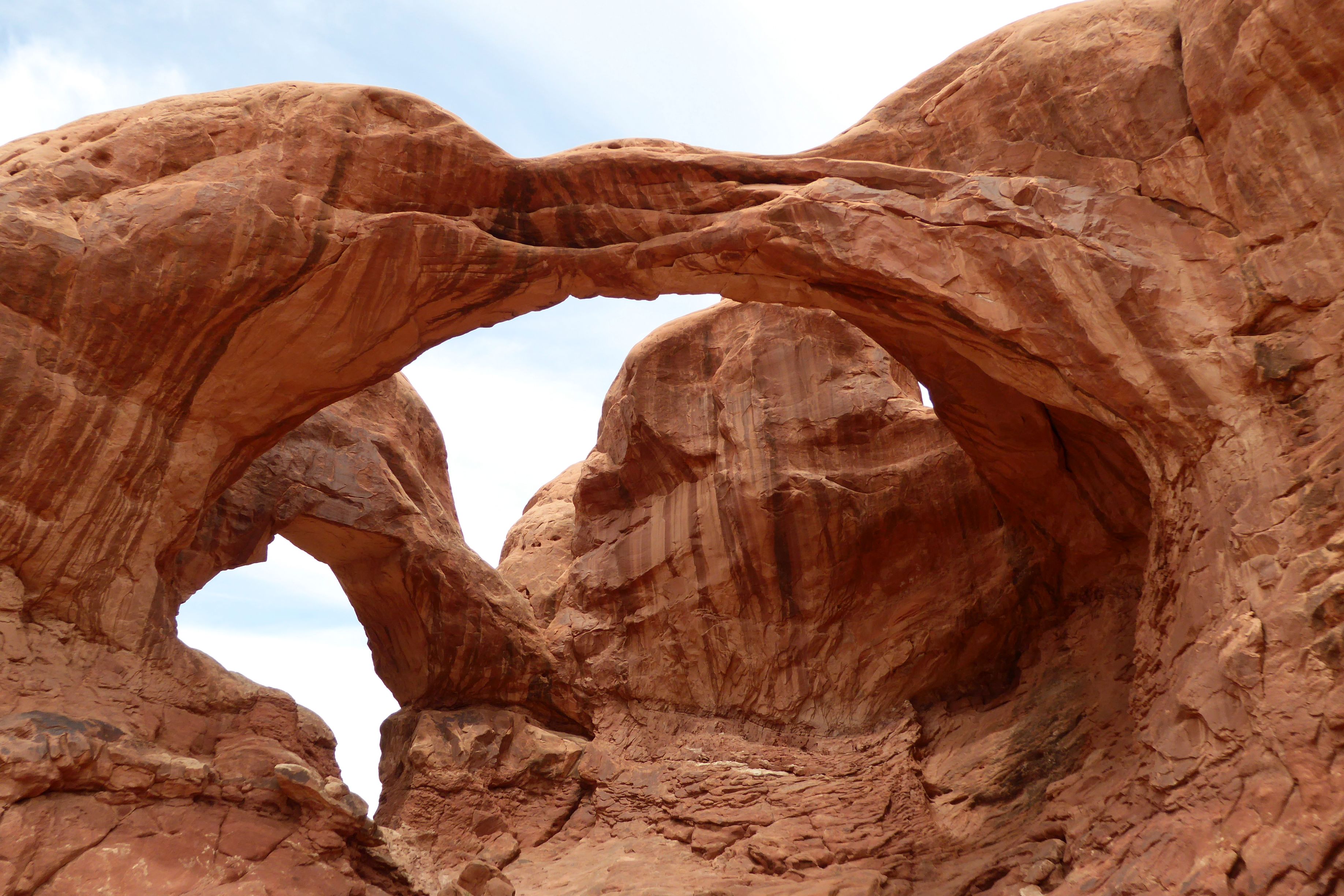
Arches National Parkis one of those places that you have to see in person to really grasp how amazing it is. There are over 2,000 natural Entrada Sandstone arches, in addition to all of the other magnificent rock formations.
This is an easy park to get to; it’s only four miles from Moab, Utah. Get there early, though, because the parking lots fill up fast. We were fortunate to be on a bus and not have to worry about that.
The explanation of how these arches were formed over 300 million years is too involved to explain in this post, but it is quite interesting. Check it out here.
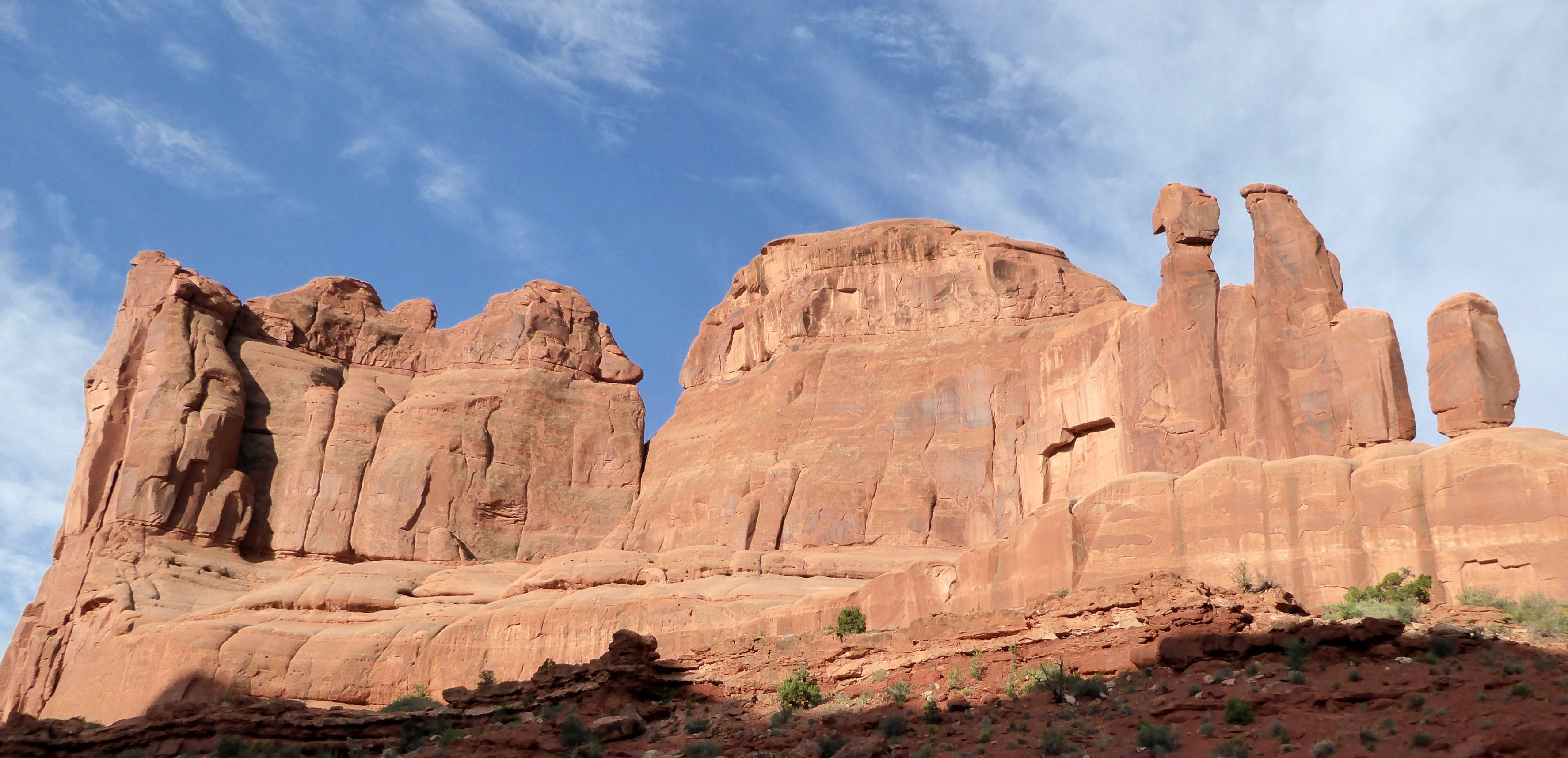
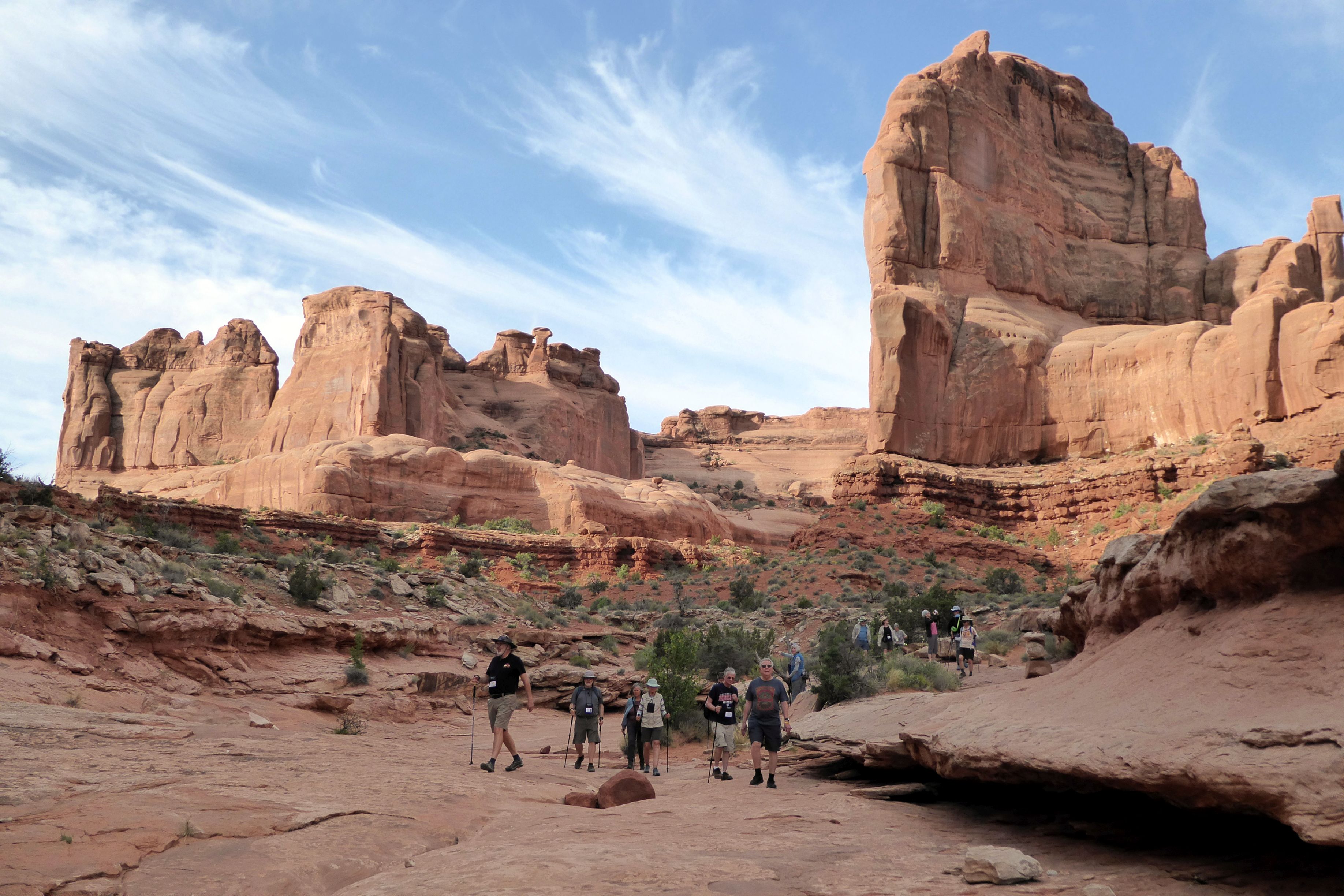
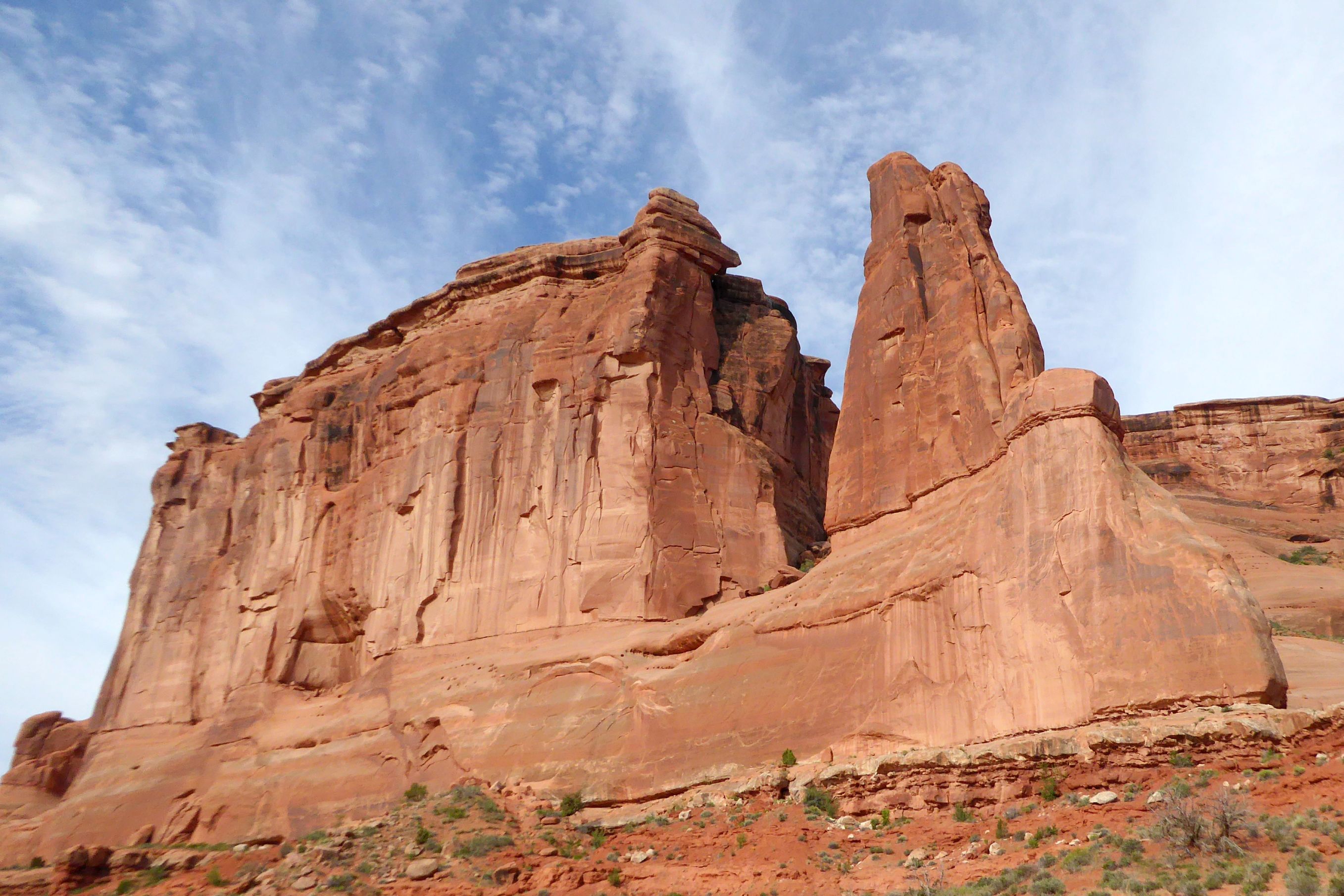
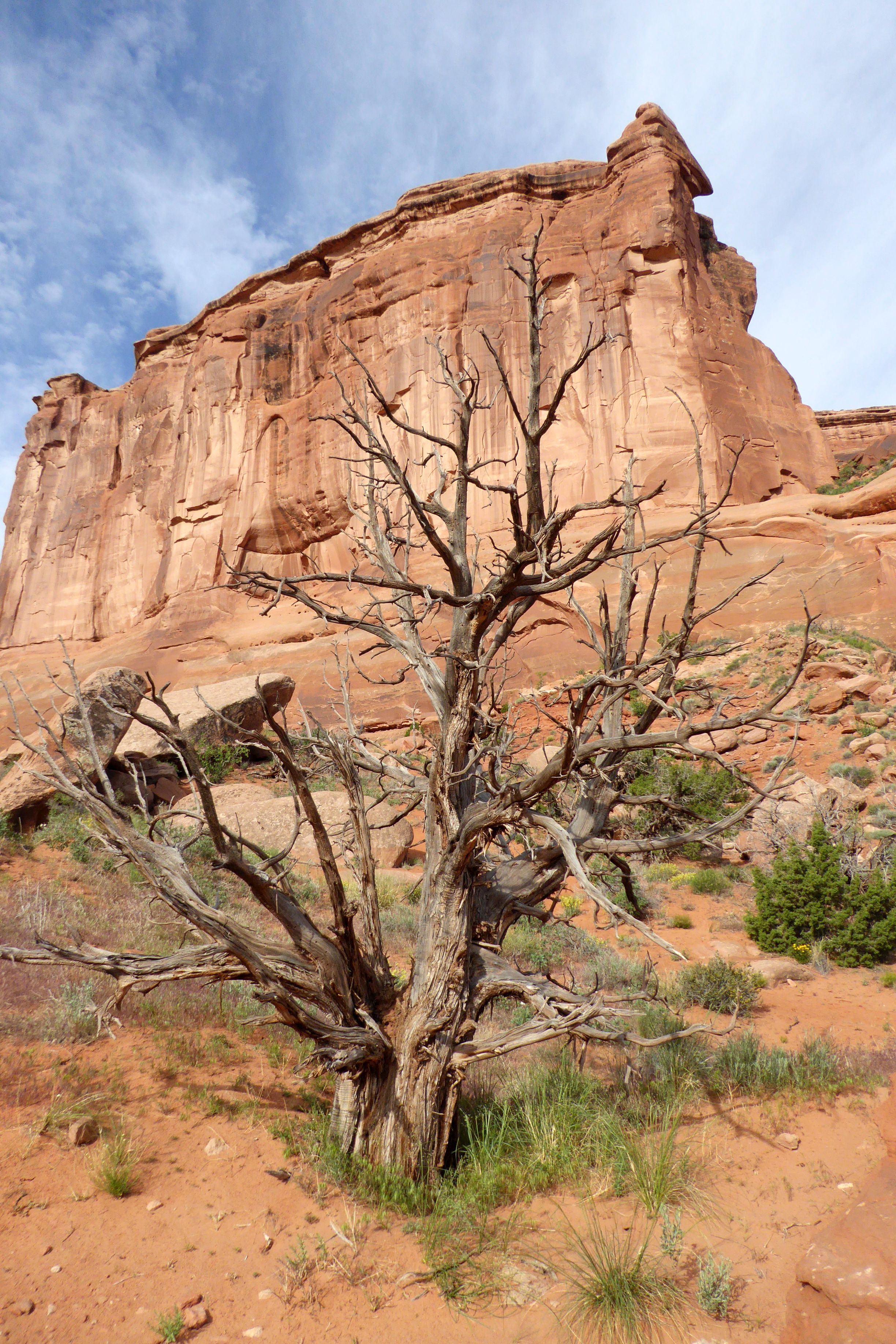
For now, I will just leave you with my favorite photos from the day, beginning with a hike we did on Park Avenue. No, not that Park Avenue!
(For all pictures, click on the image to see full screen view.)
This was the most unique bathroom stop ever! And, yes, it really is carved into real rock.
Continuing on our journey, we stopped to see John Wesley Powell Museum, in Green River, Utah. Powell first explored and mapped the area in the 1870’s. The museumis located on the river, and they had a lovely walking path we wandered along to take in the views of the river.
(For all pictures, click on the image to see full screen view.)
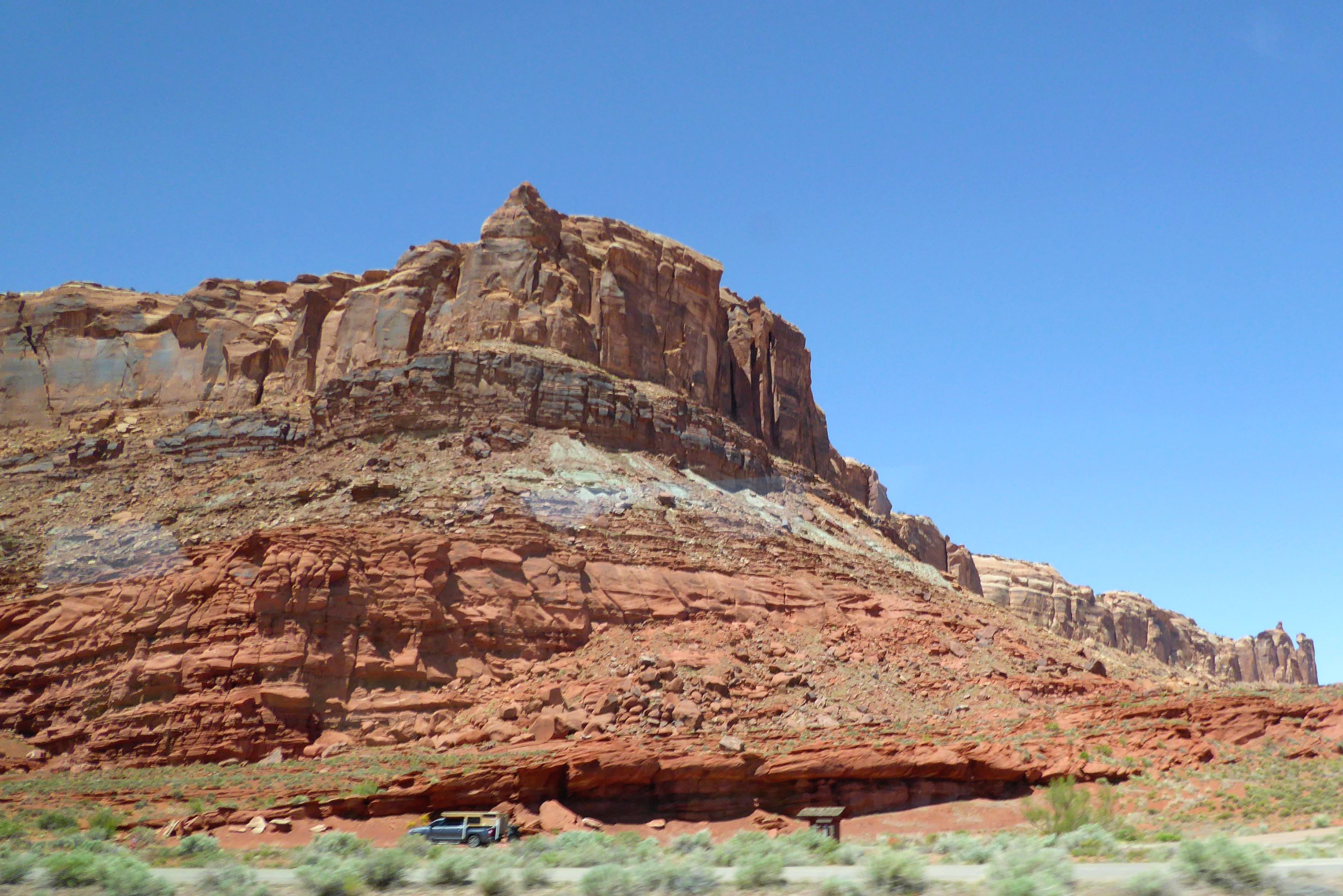
Shot from the bus window on the way to Dead Horse Point State Park
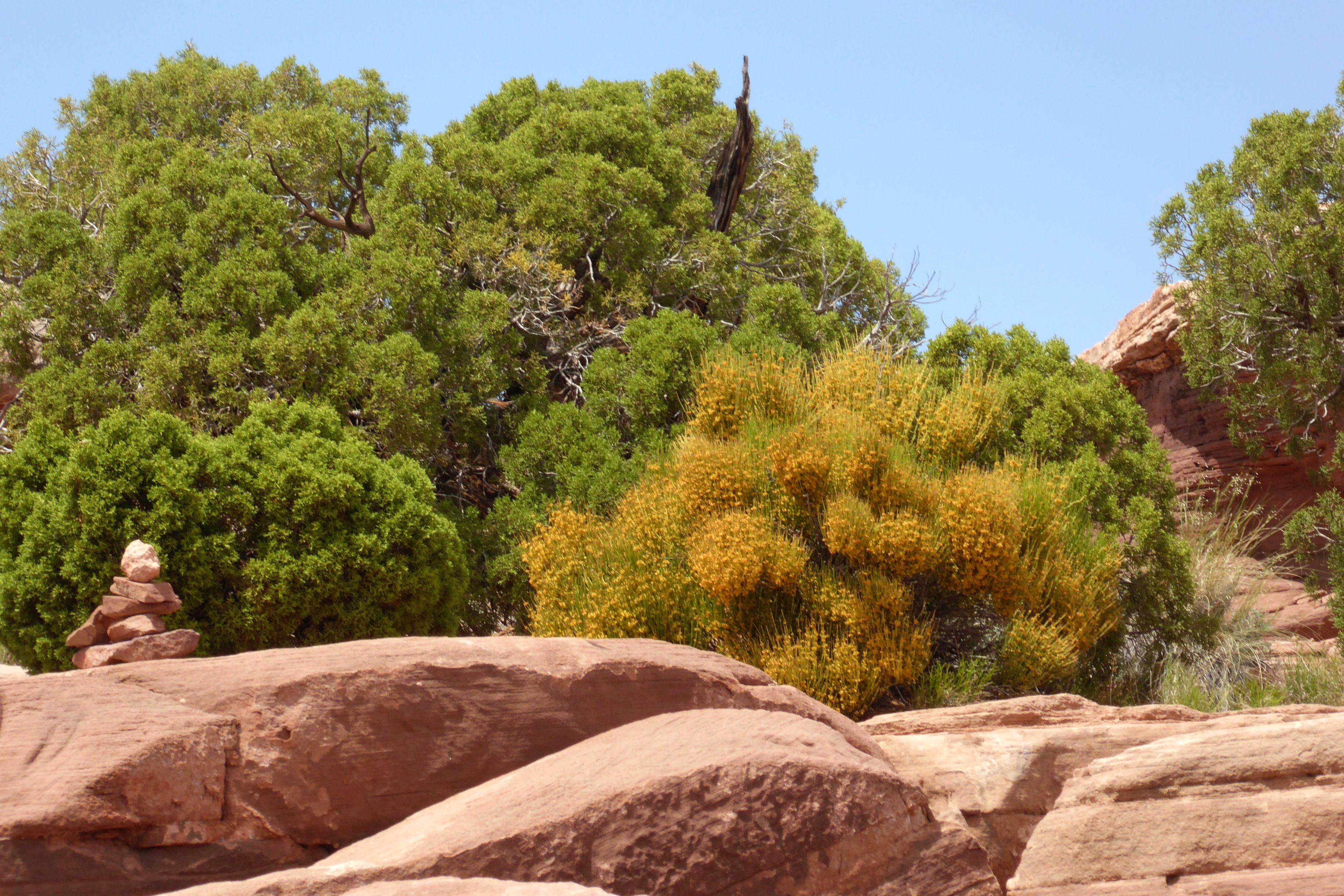
Dead Horse Point State Park was our next stop; and, yes, the “dead horse” was delightful! The park gets its name from a rock formation that looks like a horse, when viewed from up above at a distance. We took in the spectacular views from the visitor center, which had an attractive walking path with beautiful blooming cacti and trees all around.
Can you see the horse? It’s a profile, and the ear is in the upper left quadrant.
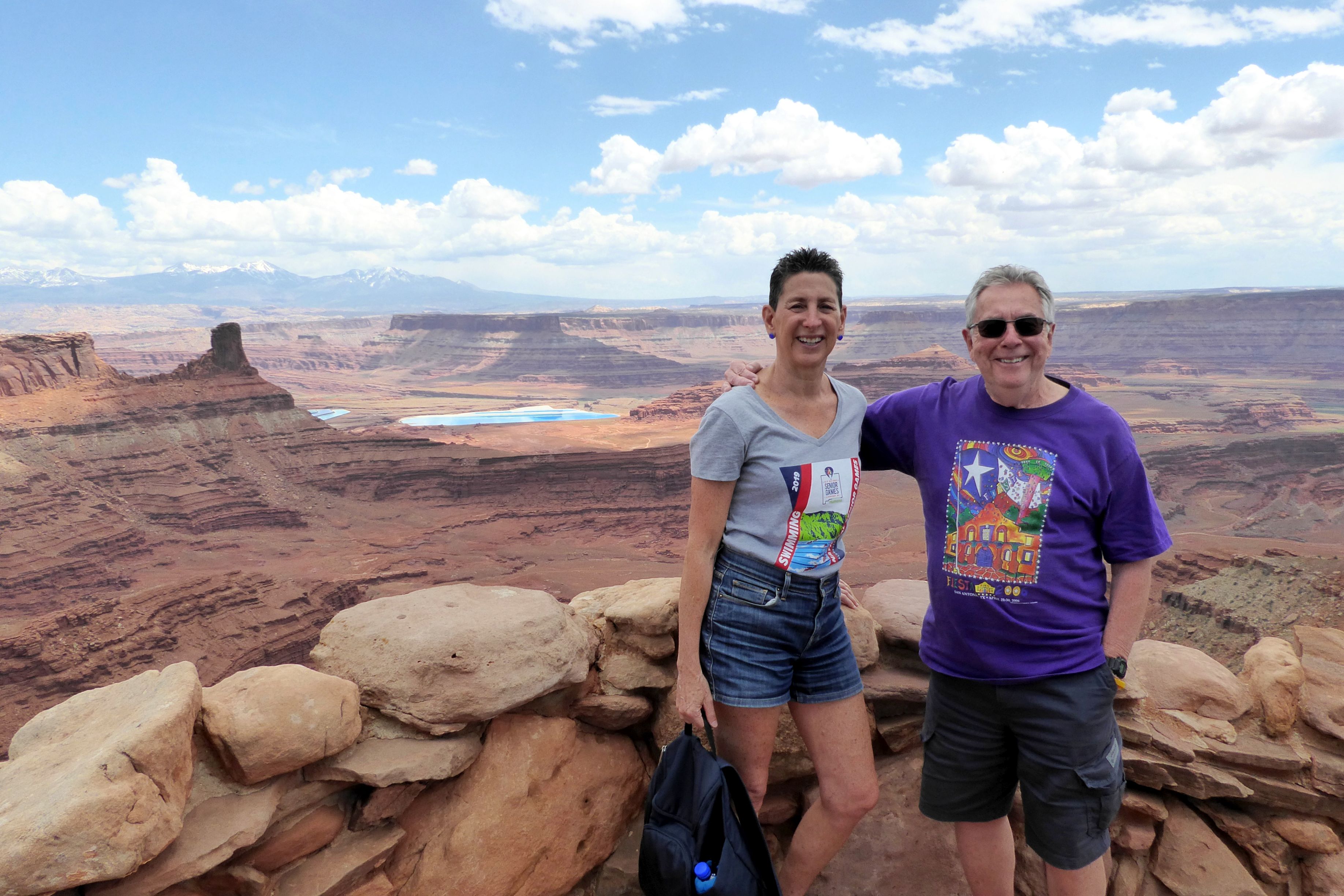
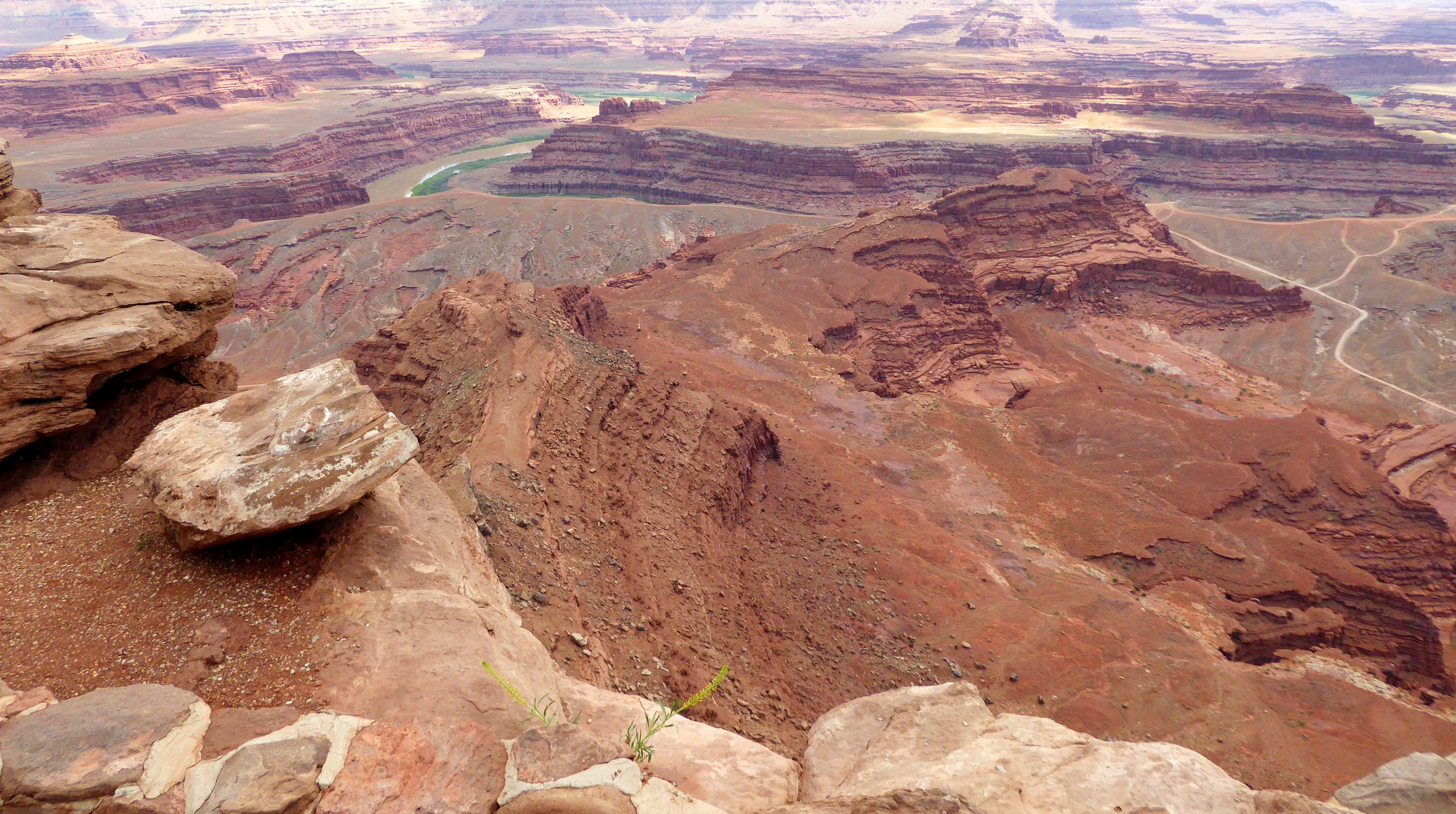
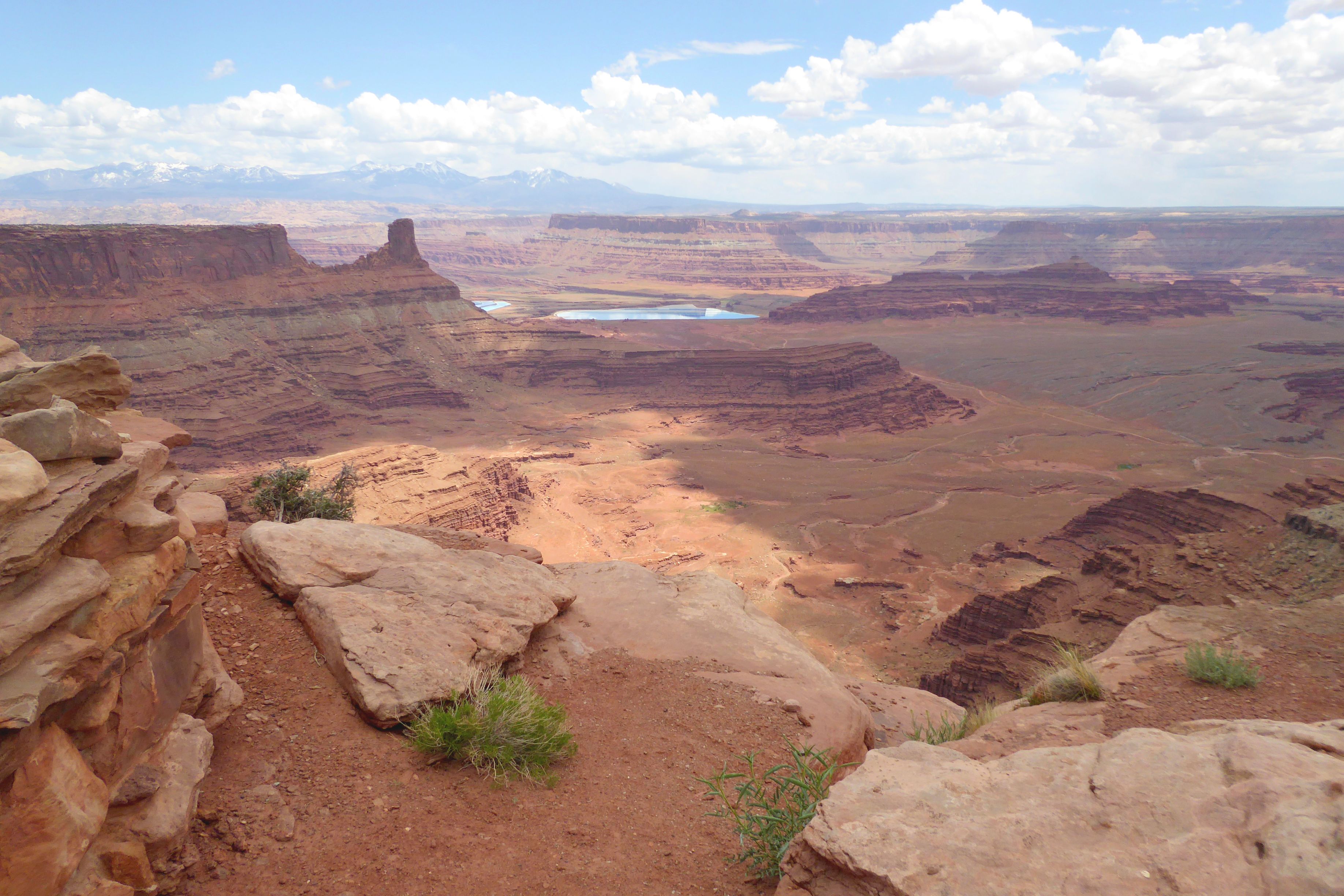
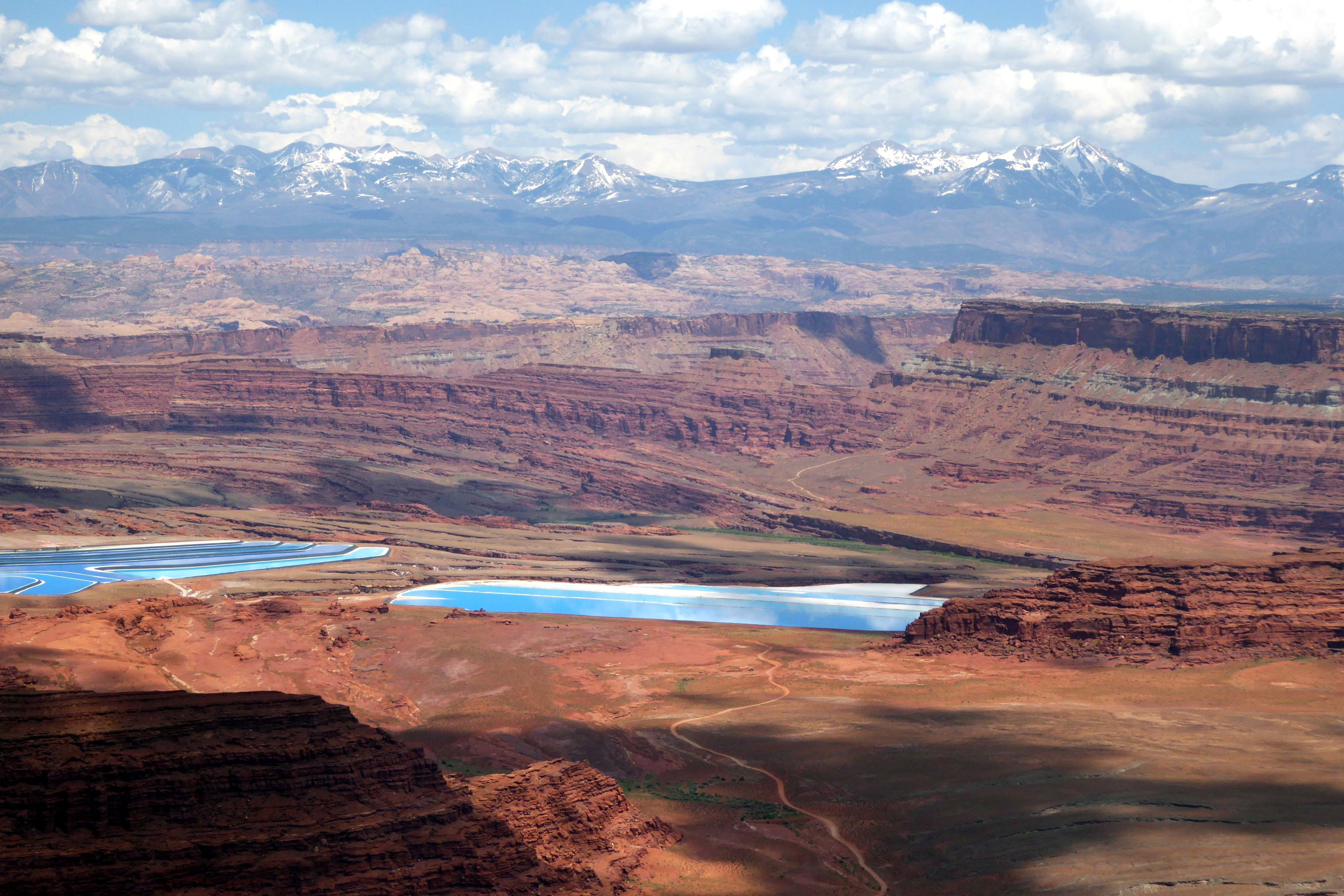
On a clear day, the visibility from the viewpoint can reach nearly 100 miles. It was hazy off in the distance, but we could see snow on the mountain tops. There were also a couple of bright blue pools that seemed completely out of place. They were solar evaporation ponds for a mine owned by Intrepid Potash, Inc. Potash is potassium chloride, a salt found in the Paradox Formation. Salt deposited from ancient seas made up this formation as it evaporated and was buried by other sediments.
Off in the distance, you can see the bright blue pools.
Water is pumped down into the formation to dissolve the salt. This salt water is then pumped into the shallow, vinyl-lined ponds. A blue dye is added to speed up evaporation.
Finally, twenty-ton scrapers, guided by lasers, harvest the dry salt. A local refinery transforms this concentrated form of potassium chloride into plant fertilizer.
I was truly baffled, seeing this in the middle of a state park. I didn’t know what to think…
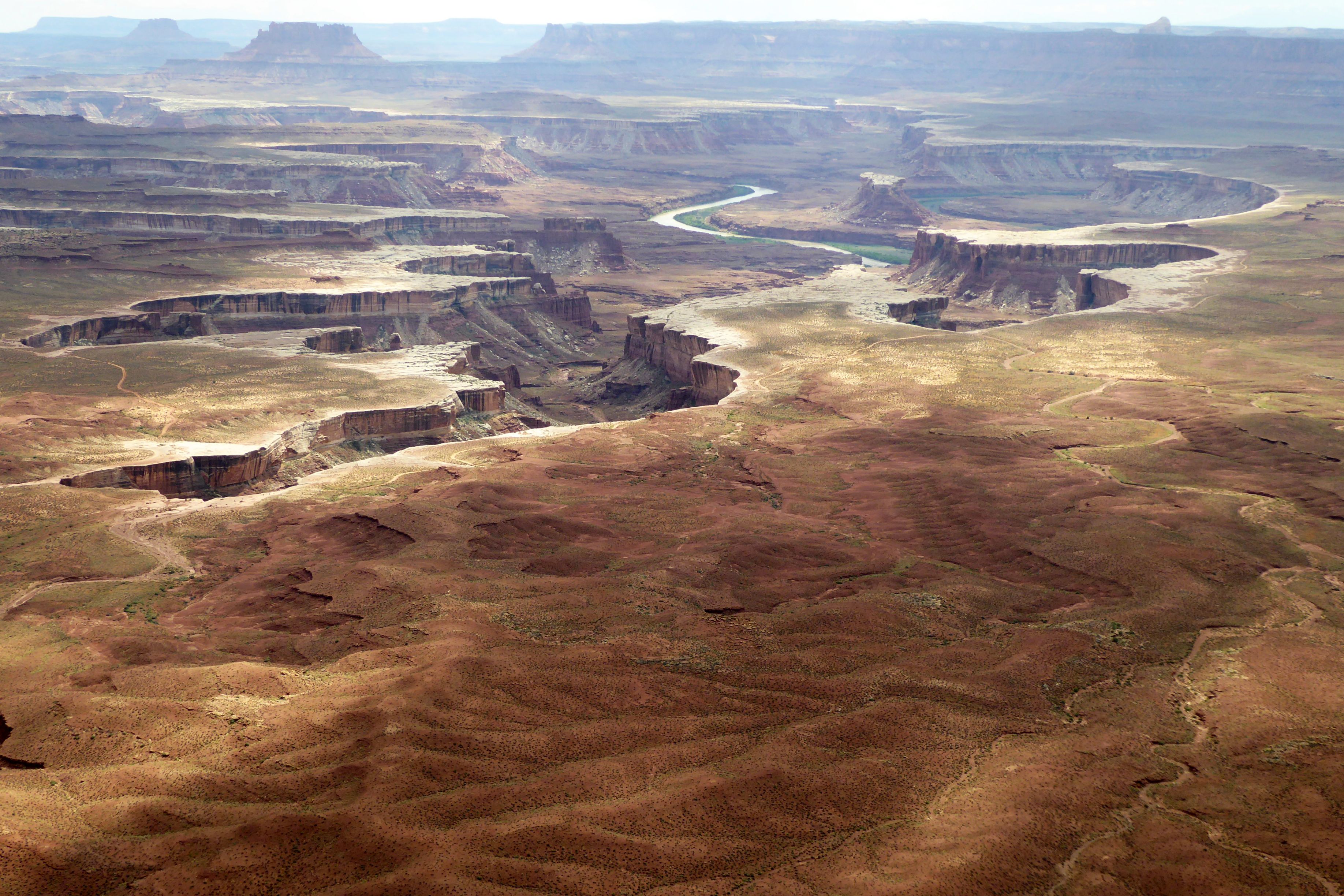
Green River Overlook was our last stop in Canyonlands. At 6,000 feet elevation, it provided a great perspective of Green River down below – especially since we had walked along the riverbank earlier in the day.
We continued on to Moab, our base for the next two nights. Moab Diner had good ratings on Trip Advisor, and I enjoyed a tasty, fresh salad there; so, it deserves a shout-out and my last photo of the day.
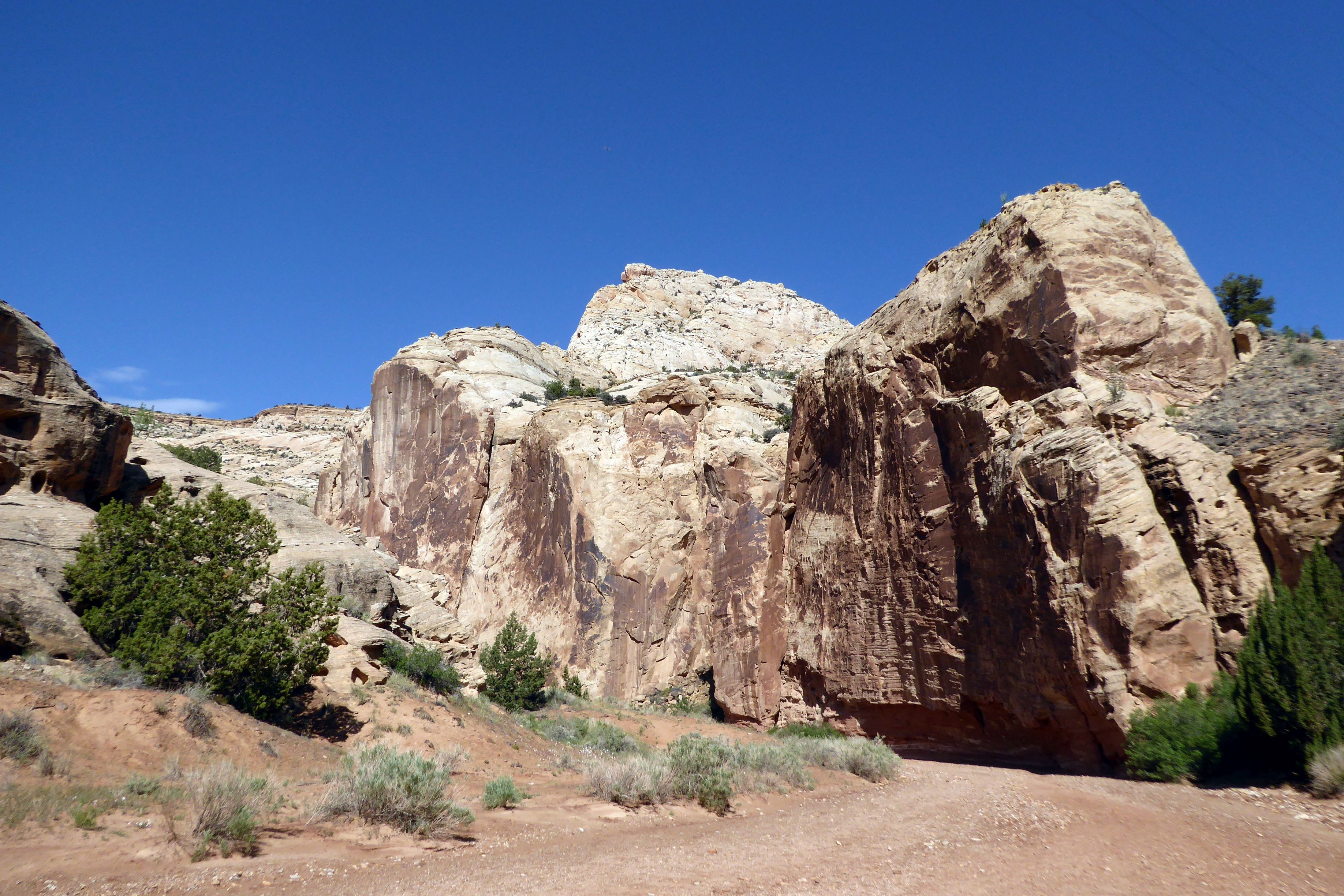
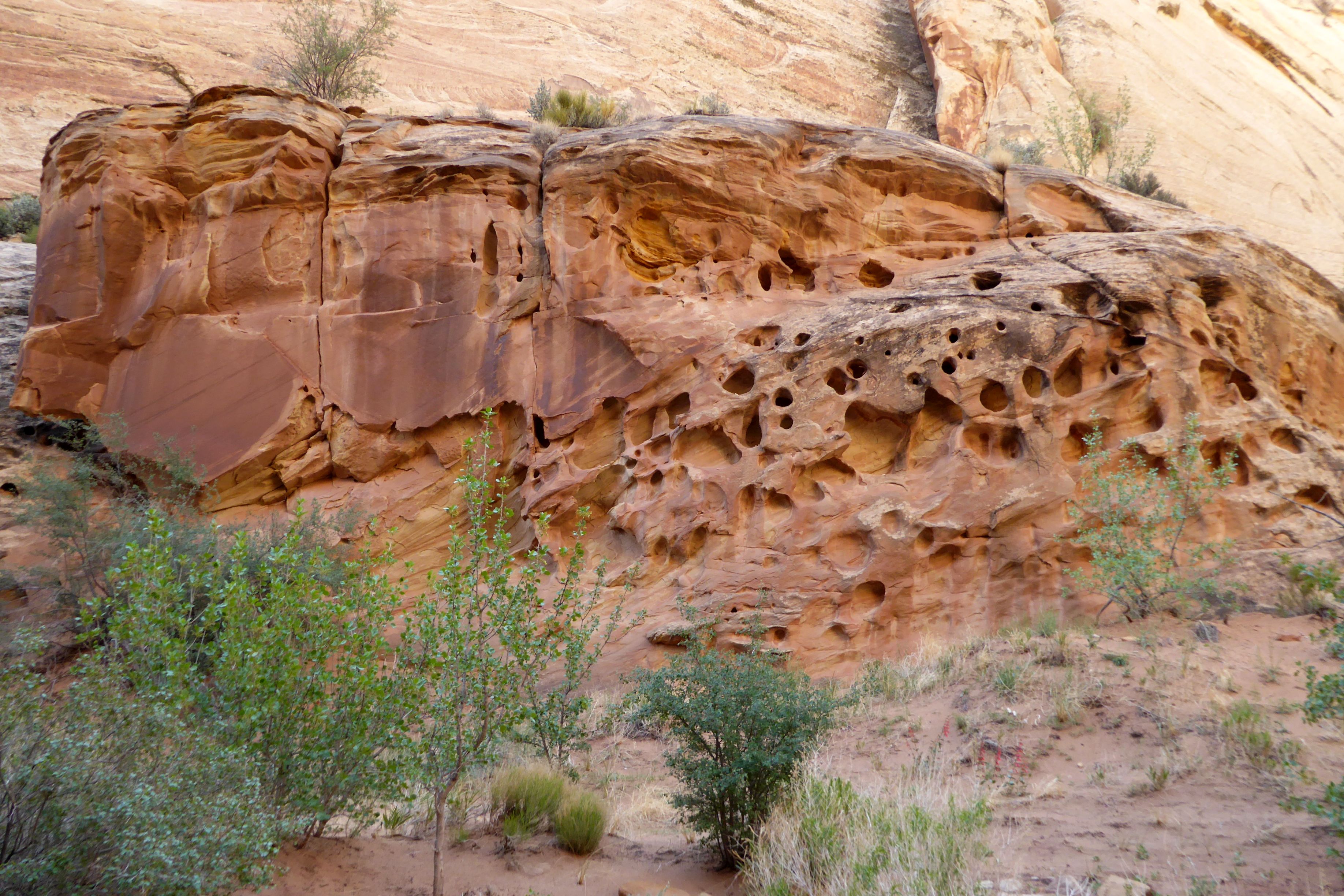
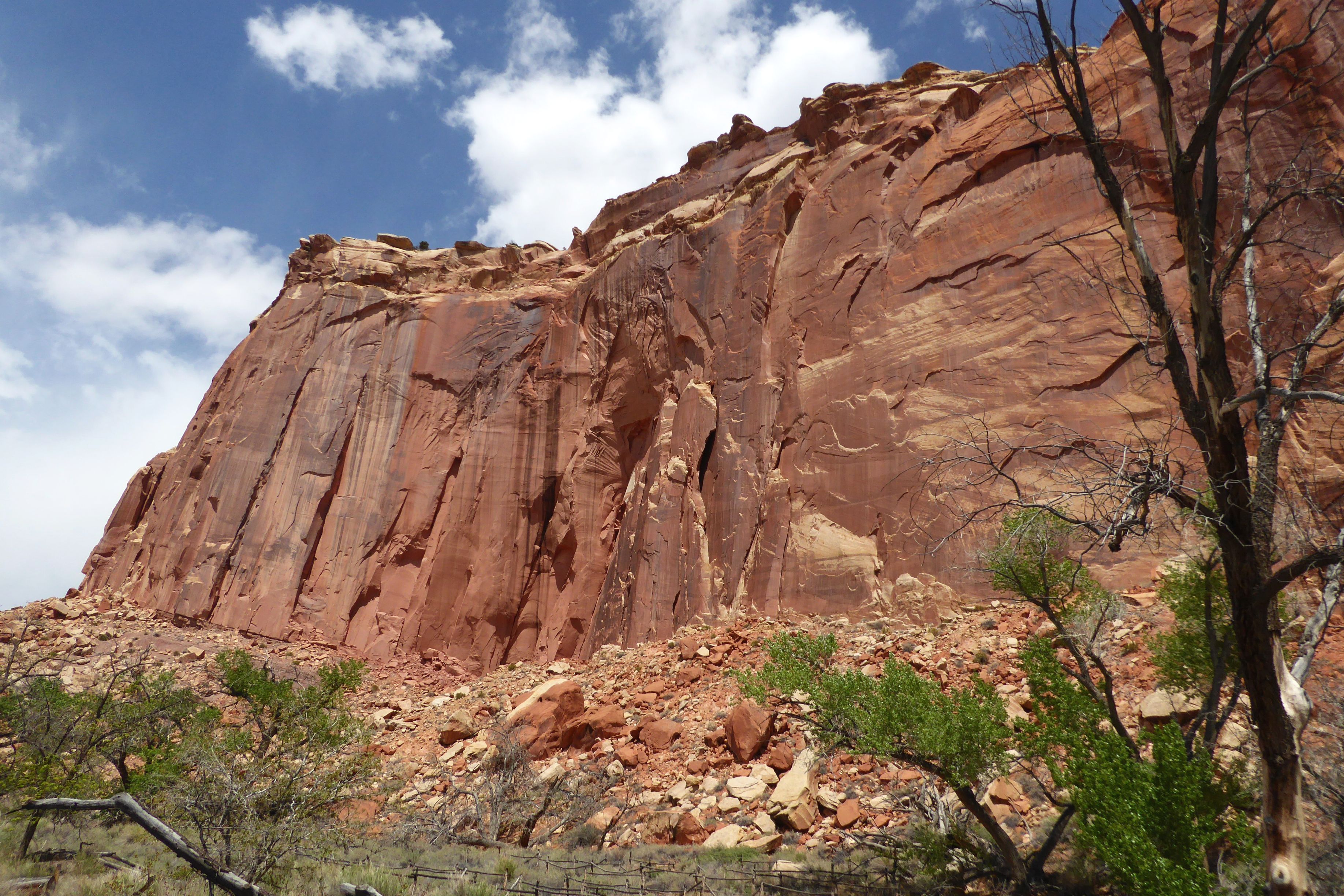
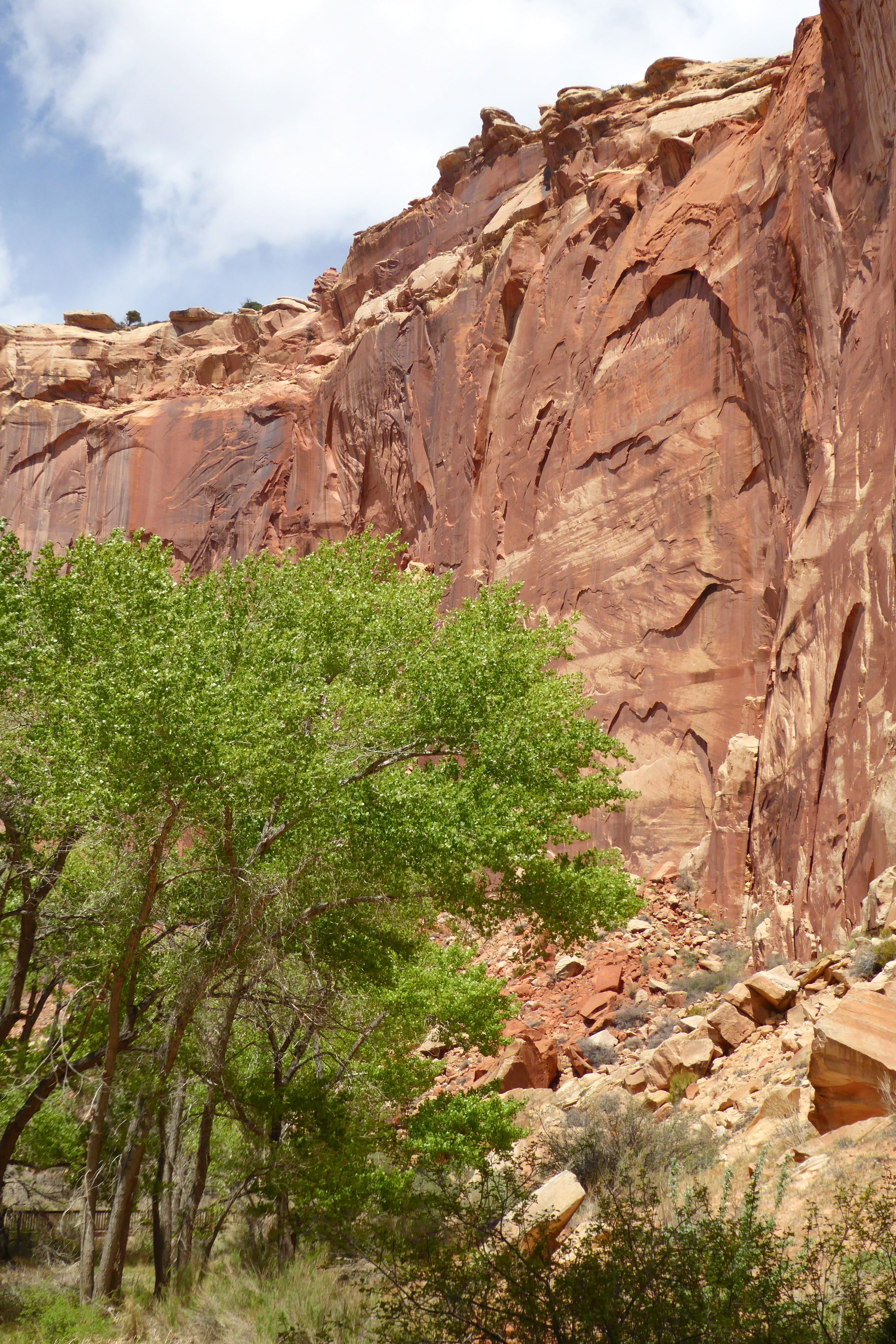
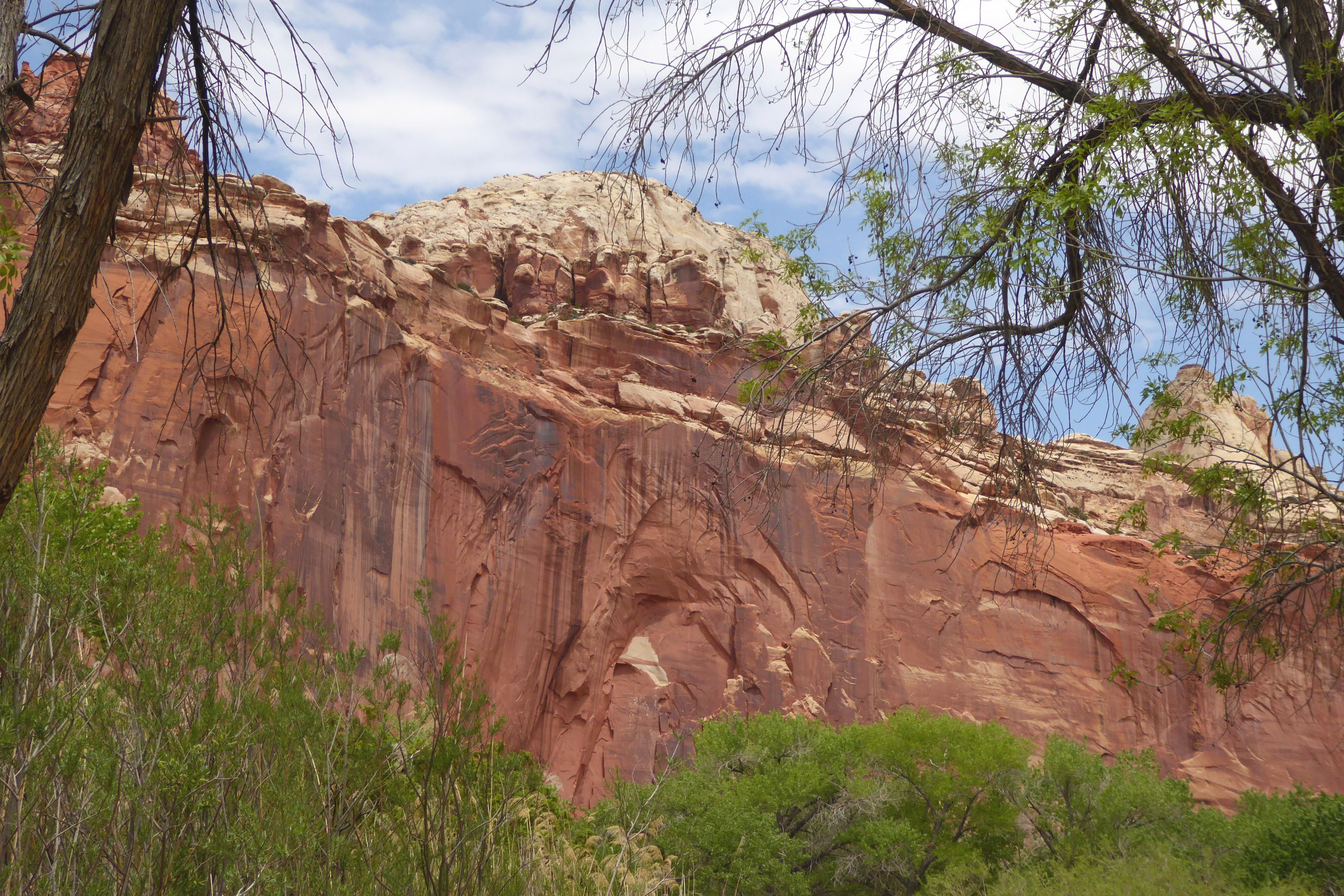
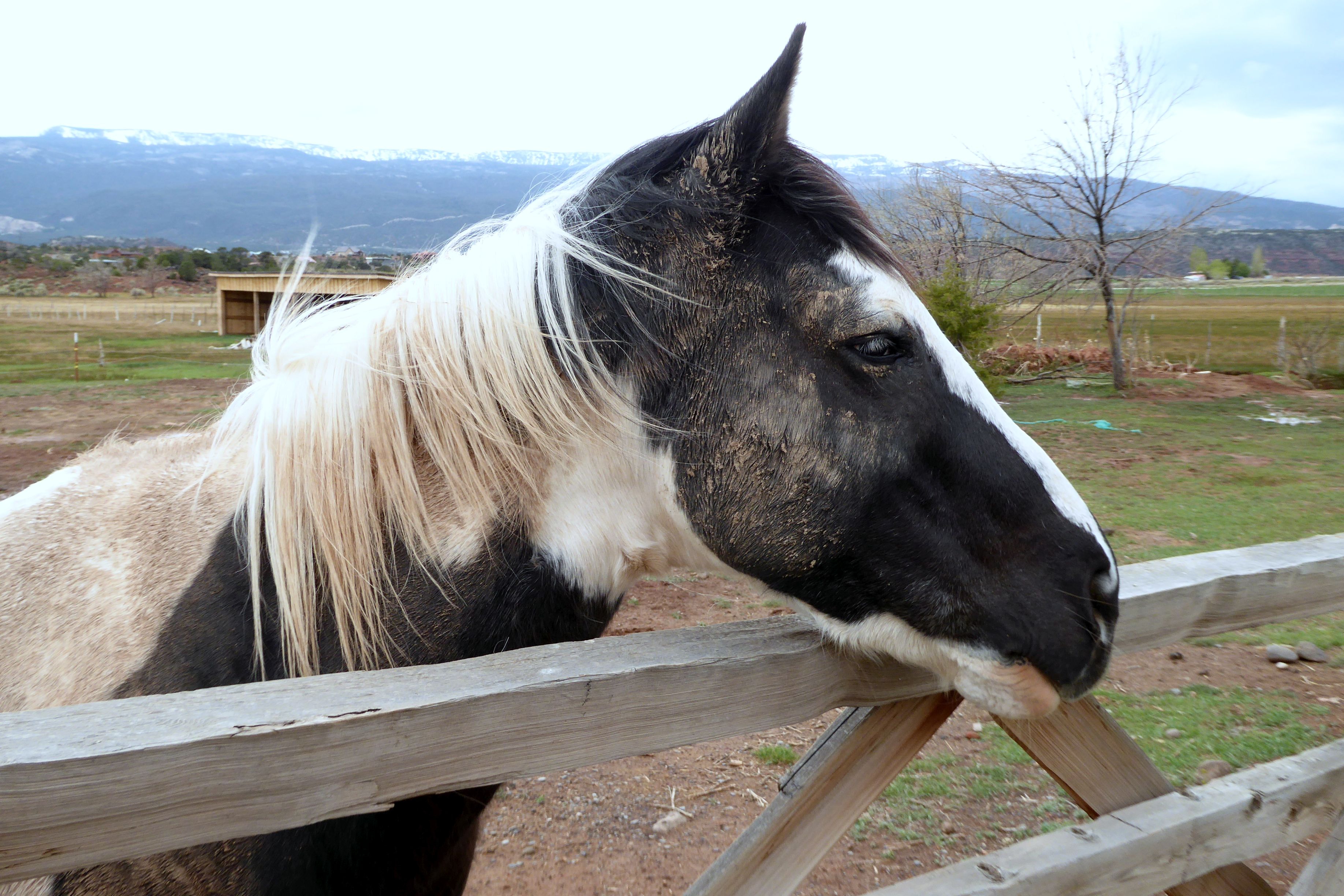
Following a morning greeting (and feeding) to my new friend in back of our hotel, we were off for an easy hike in Grand Wash at Capitol Reef National Park. The gorge cuts through Waterpocket Fold, a nearly 100-mile-long fold in the Earth’s surface. This uplift contains numerous eroded basins or pockets that hold rainwater and snowmelt.
Early pioneers provided the park’s namesake — “capitol” for the white domes of Navajo Sandstone that resemble the capitol dome in Washington, D.C., and “reef” for the rocky cliffs that are a barrier to travel, like an ocean reef.
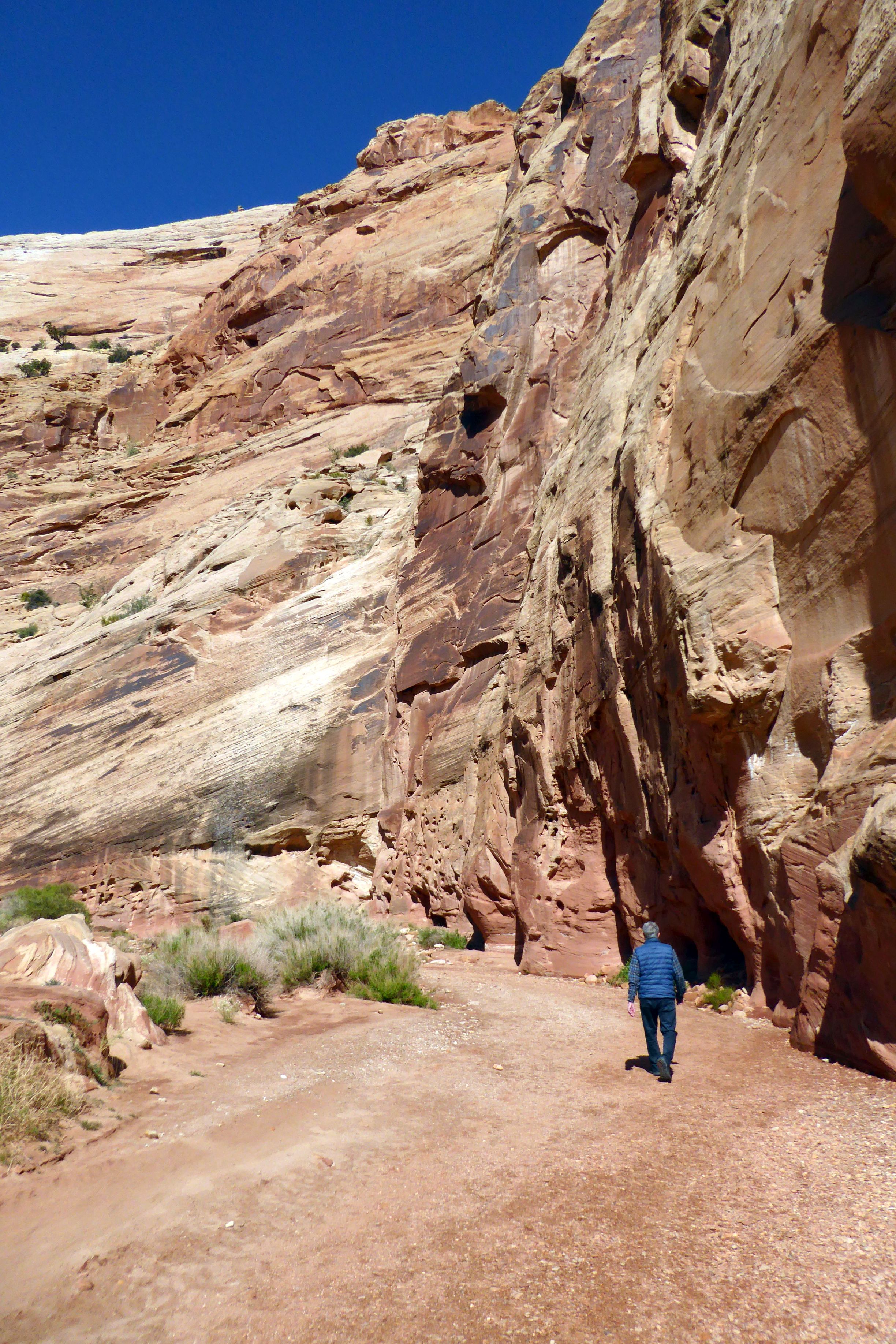
We hiked through the Grand Wash Narrows portion, where we were surrounded by massive rock formations. The only way to grasp the size was to give it some sense of scale. Thanks, Bruce!
(For all pictures, click on the image to see full screen view.)
That’s Bruce, way off in the distance.
Since Bruce and I were the fastest walkers in the group, we were able to get far ahead, which, because of time constraints, was to our advantage. We really wanted to see the Narrows portion of the basin, and some of our group didn’t make it that far before having to turn back. Most of the time, we were by ourselves, taking in the beauty of the colors and textures all around us. It was such a peaceful and beautiful walk.
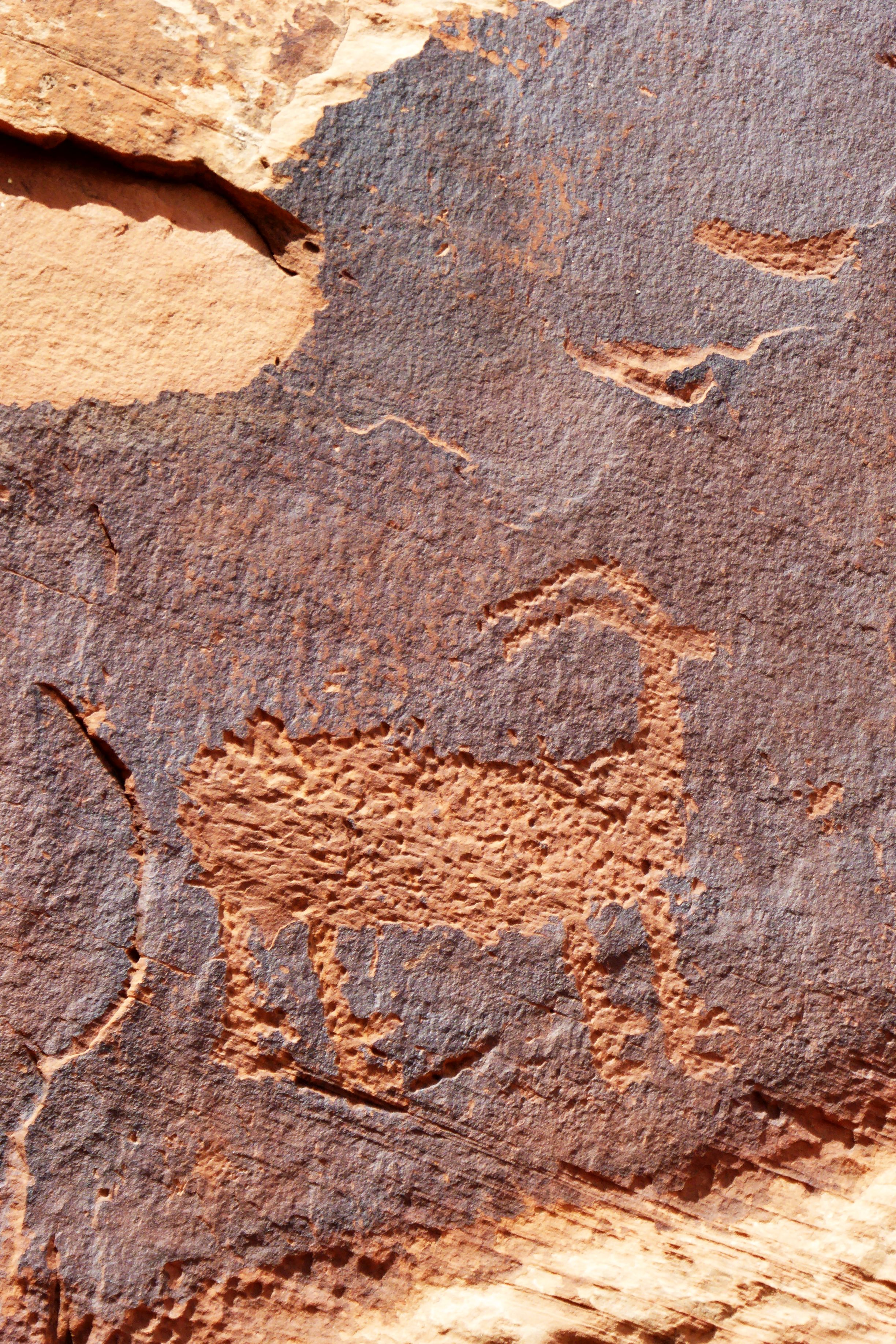
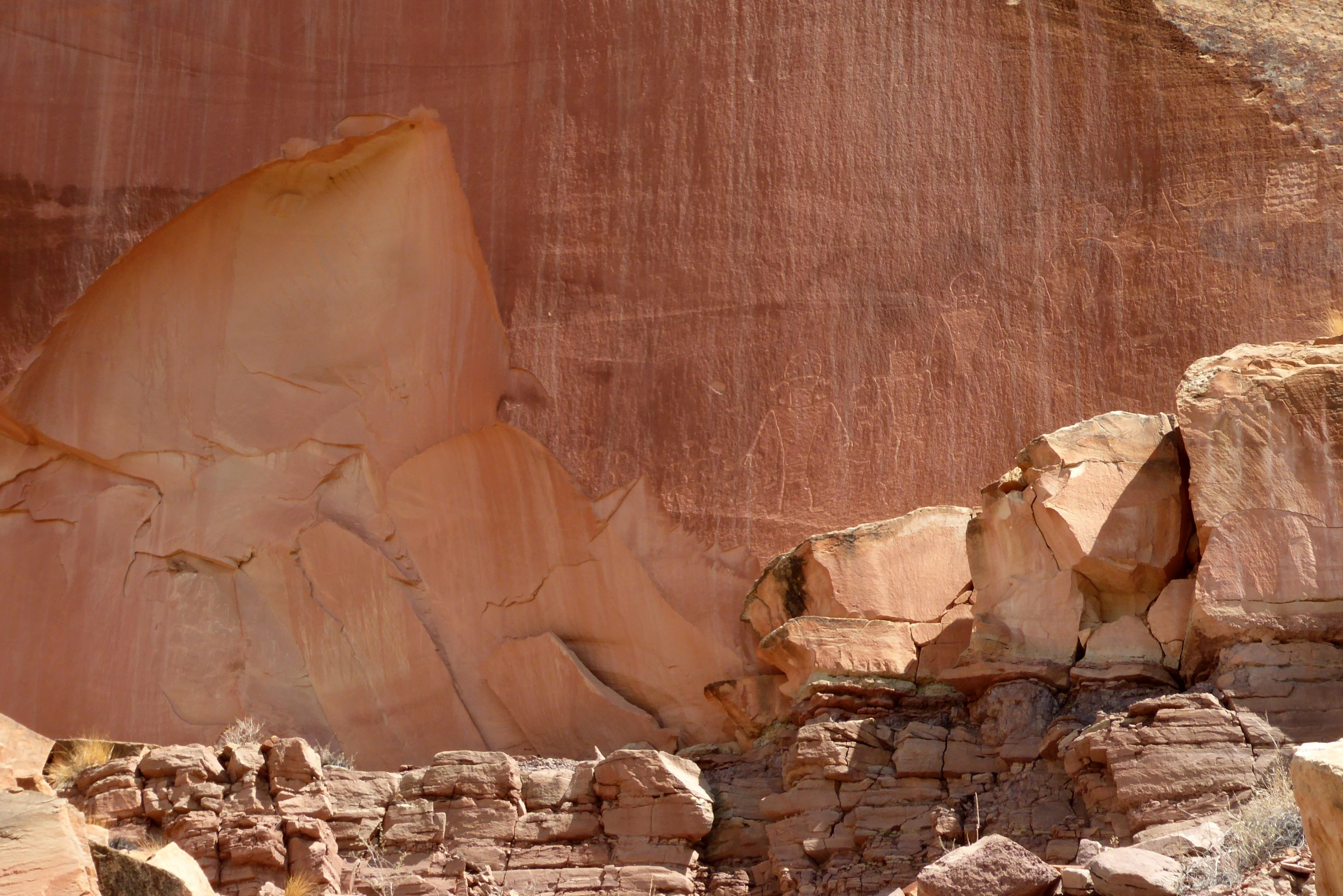
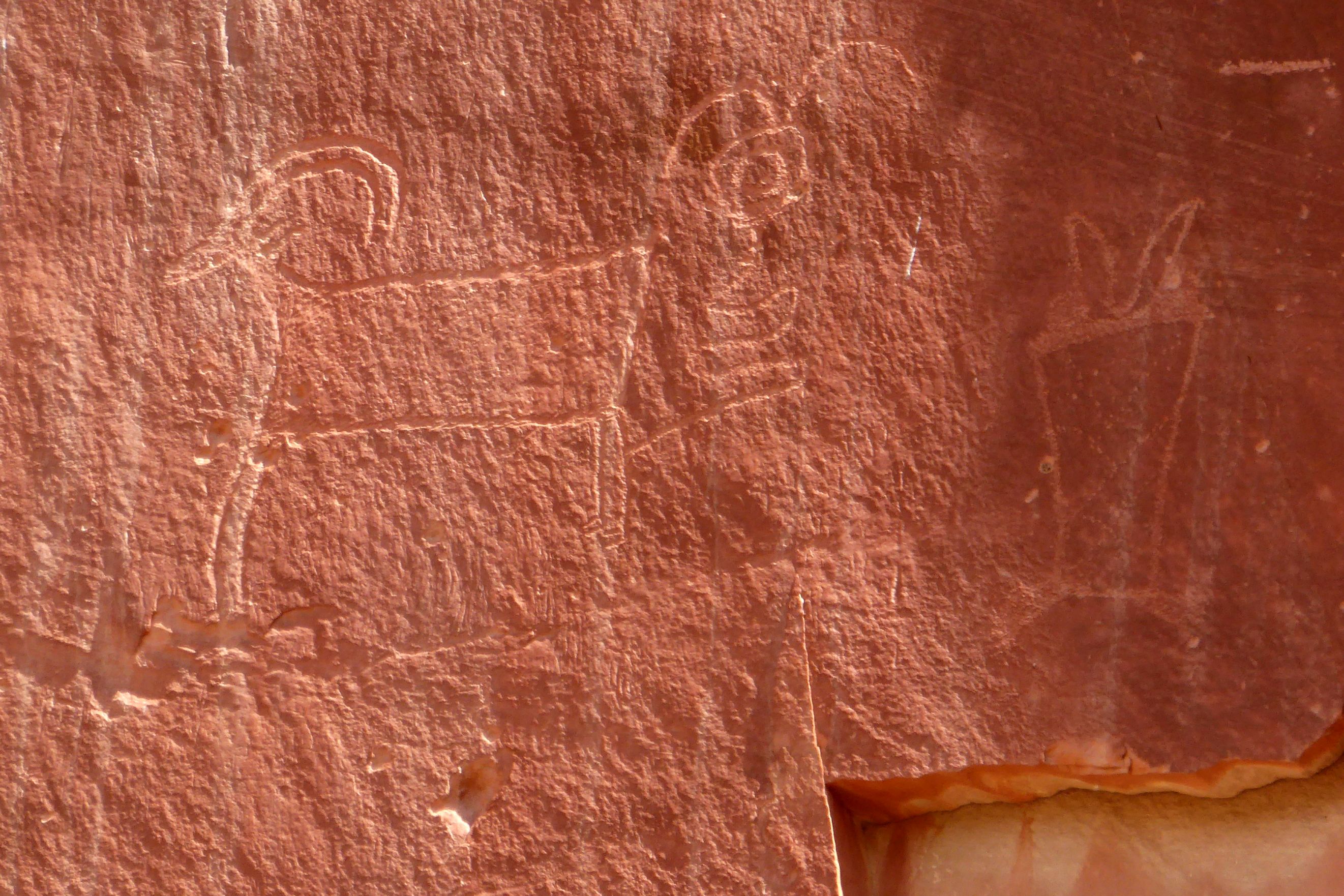
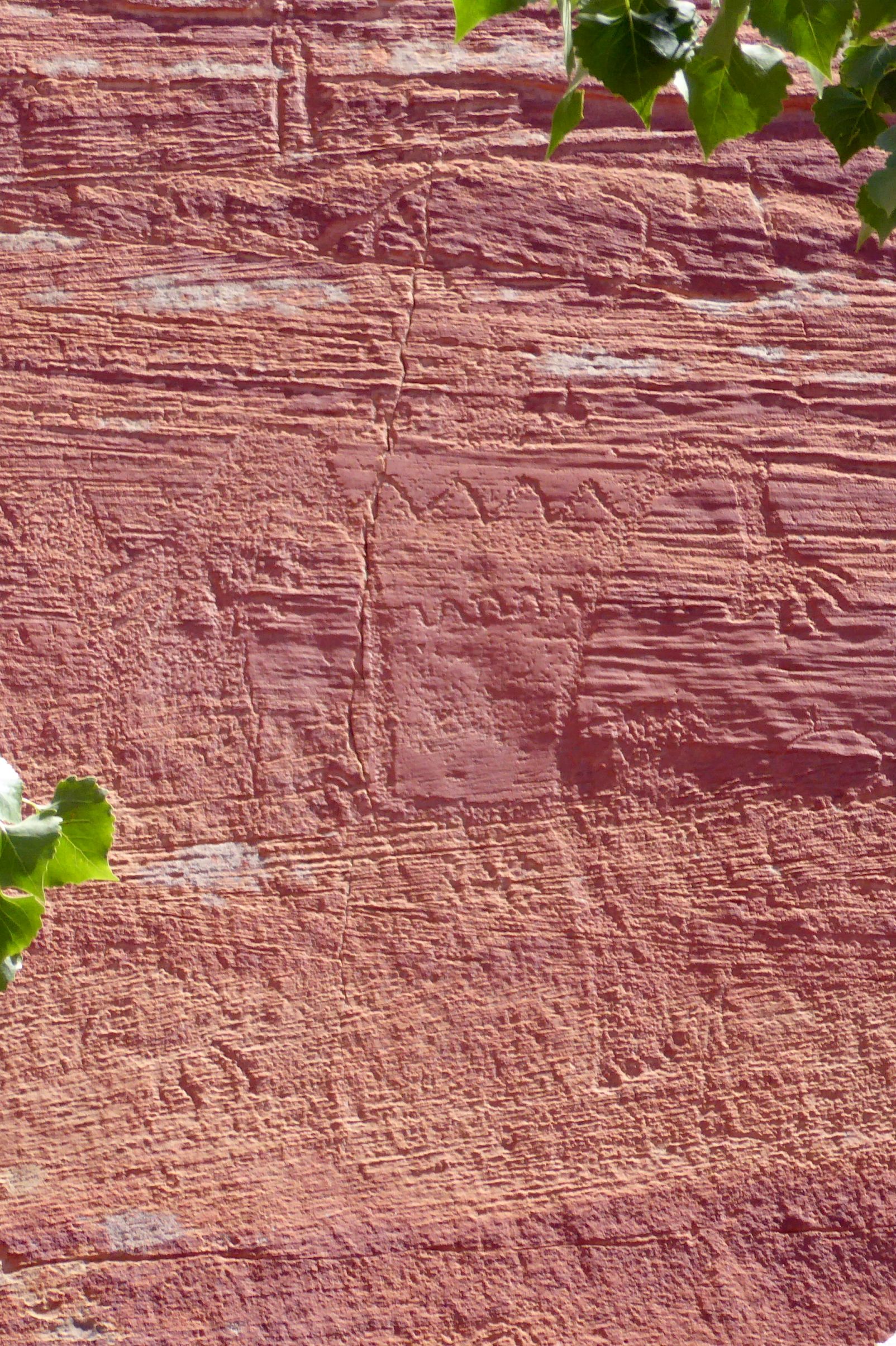
We also visited Petroglyph Panel to view ancient rock art attributed to the Fremont Culture, which existed in this area of Utah from approximately 300-1300 C.E. (Common Era).
There are petroglyphs of human figures in a diagonal, above the jagged rocks, going up towards the right corner of the photo.
We had lunch in the park near the Capitol Reef Visitors Center, and I went for a walk afterward.
Fortunately, the blue skies stayed with us until we were on the bus heading back. Our good weather luck was with us once again!
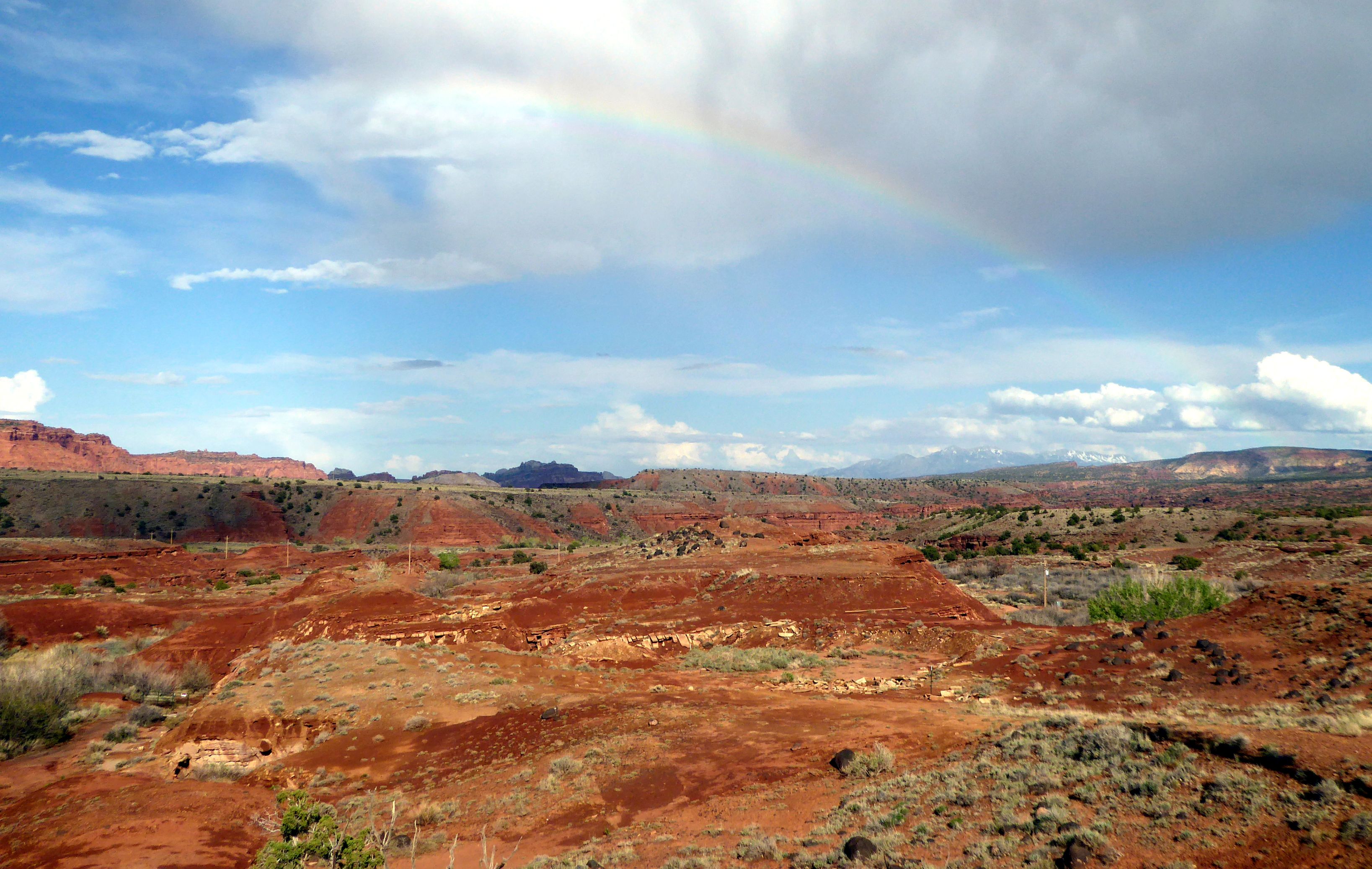
This was shot from the bus window on the way back to Torrey.A beautiful rainbow to end a beautiful day!
Coming up next: Delightful Dead Horse Point State Park & Colorful Canyonlands National Park
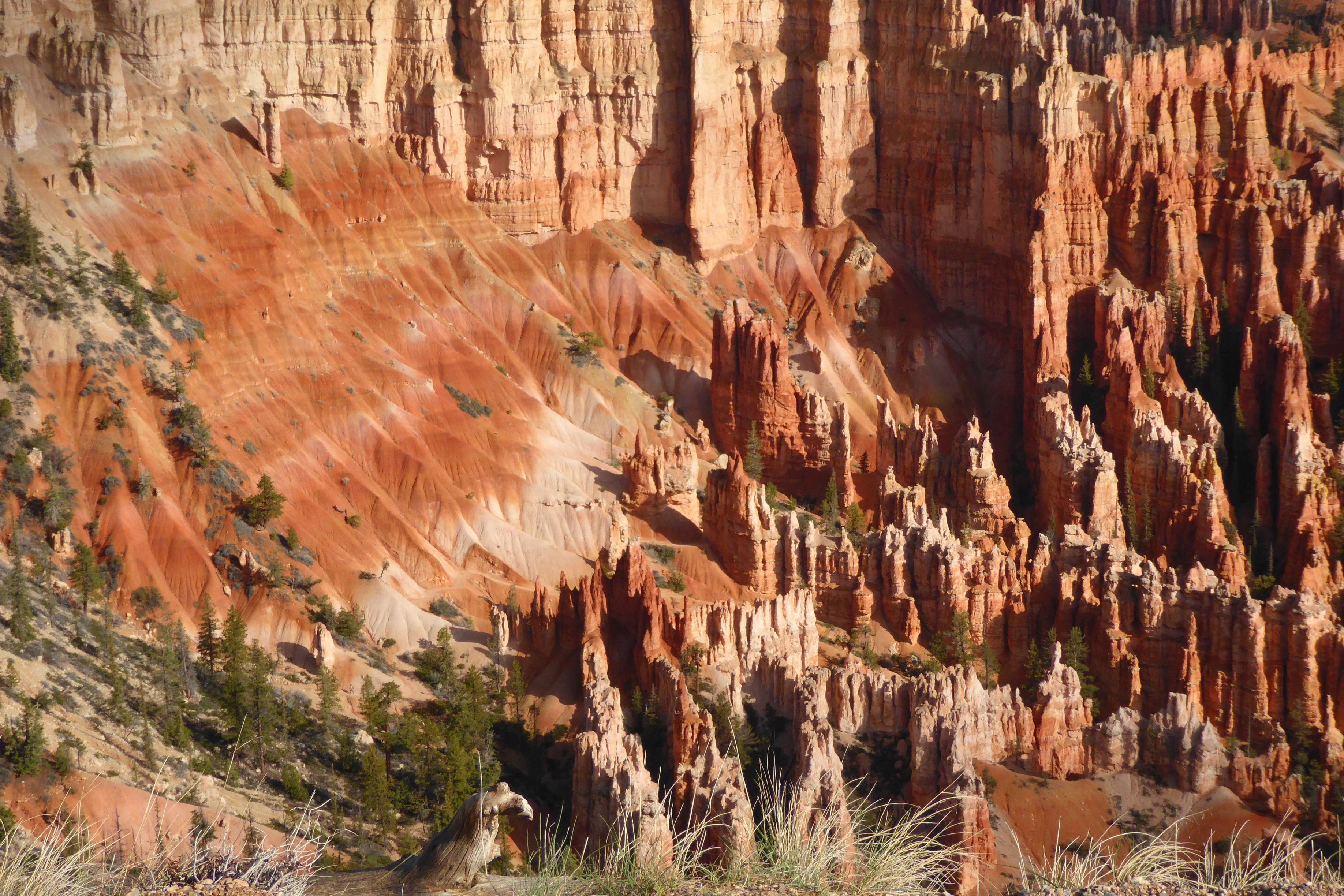
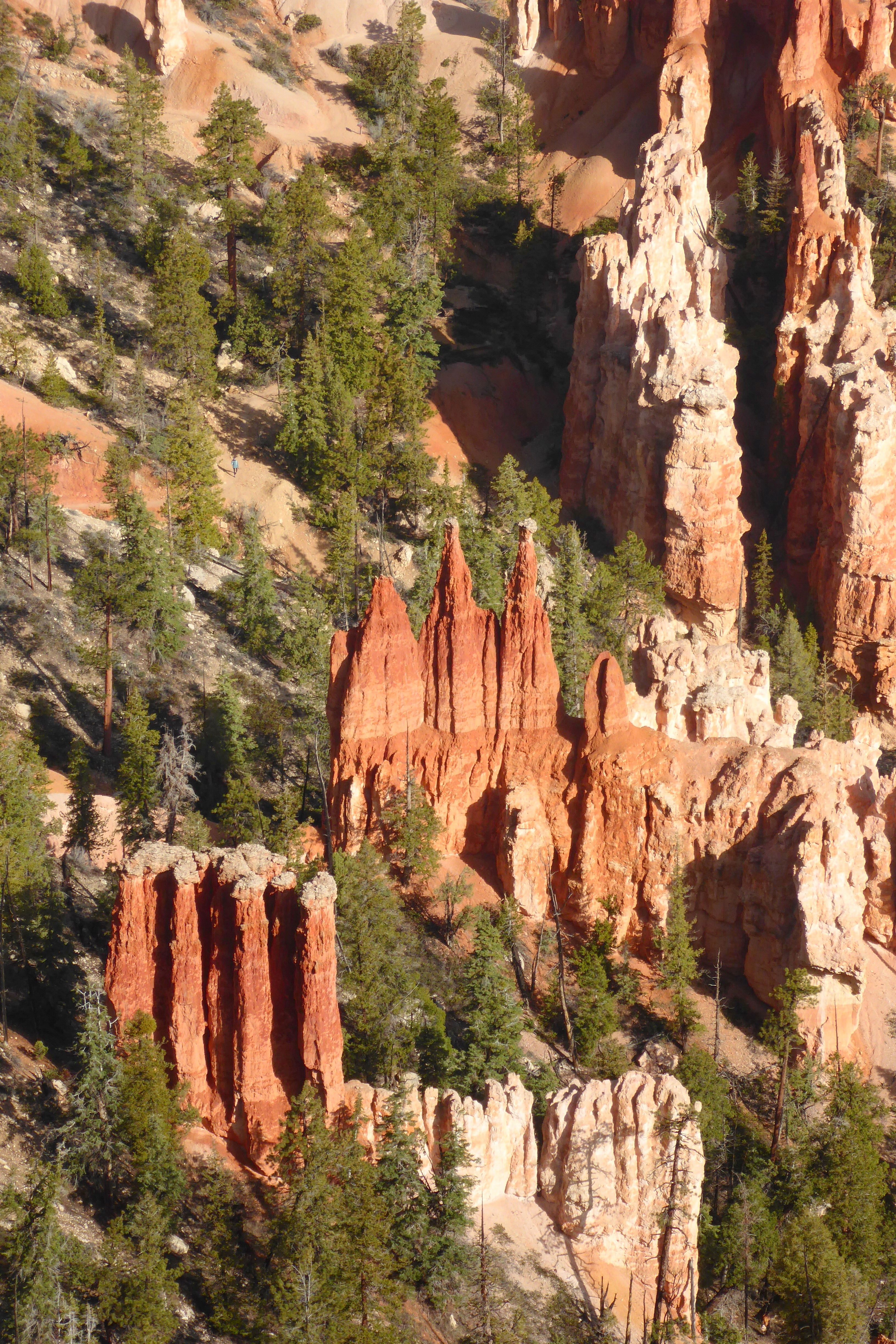
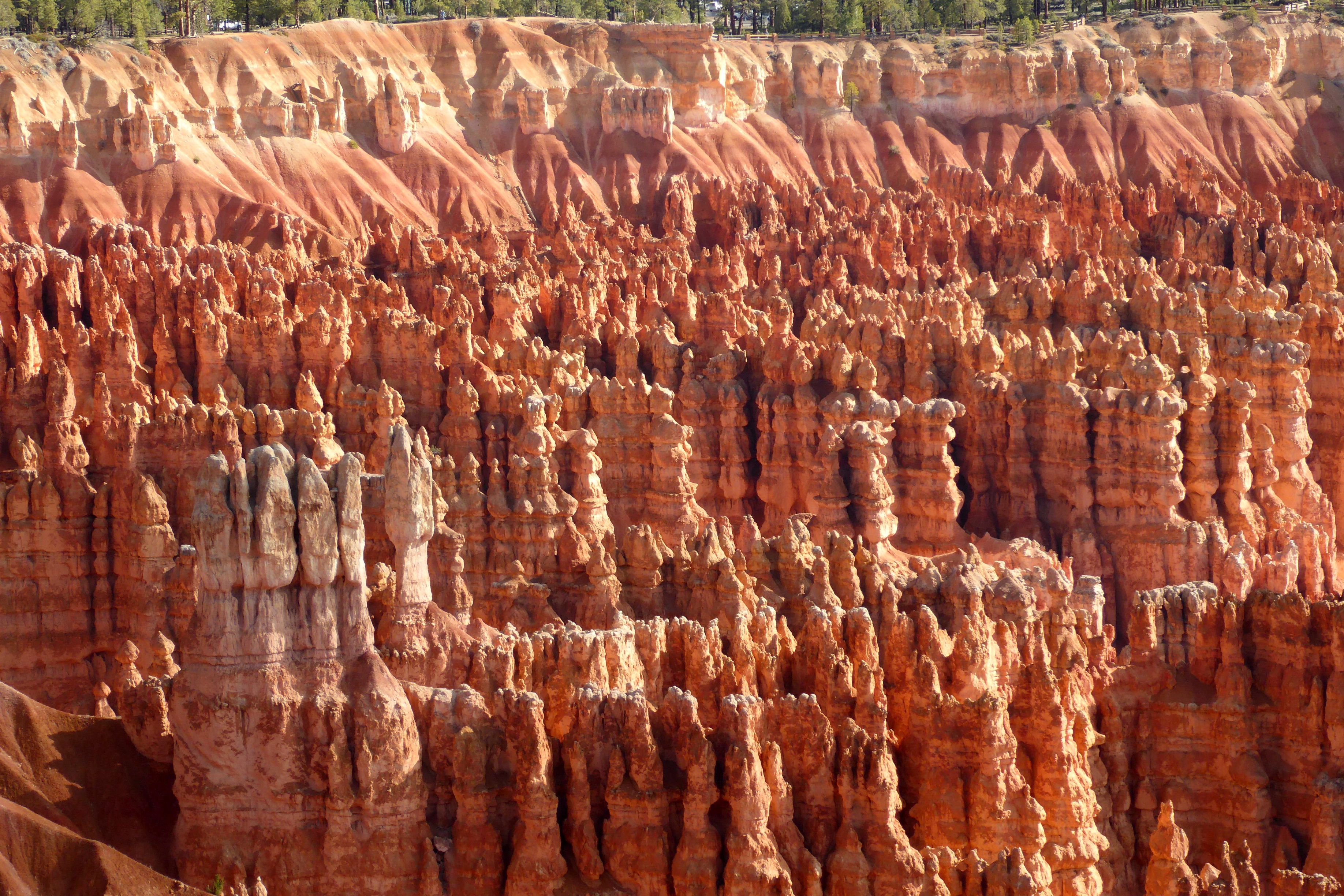
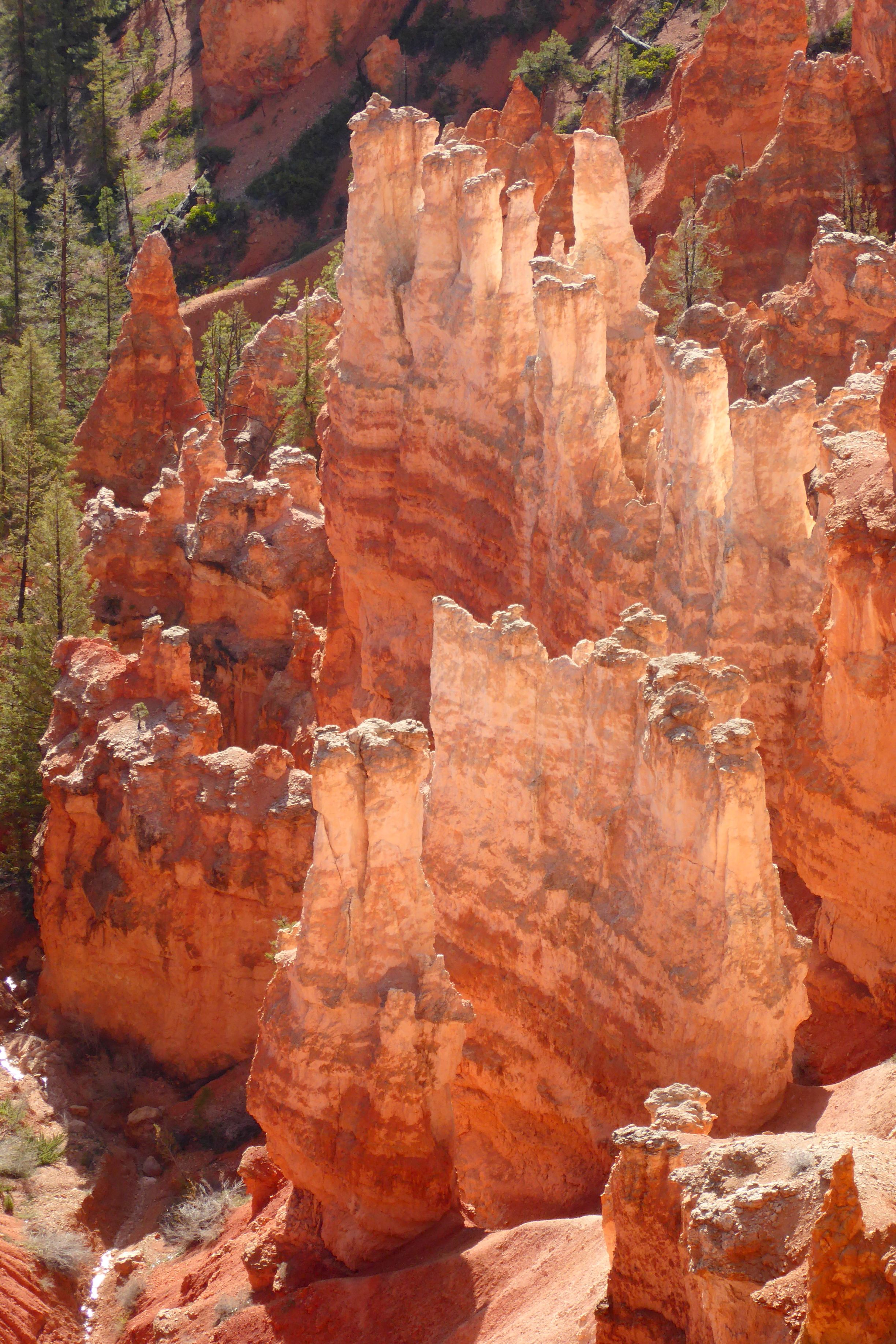
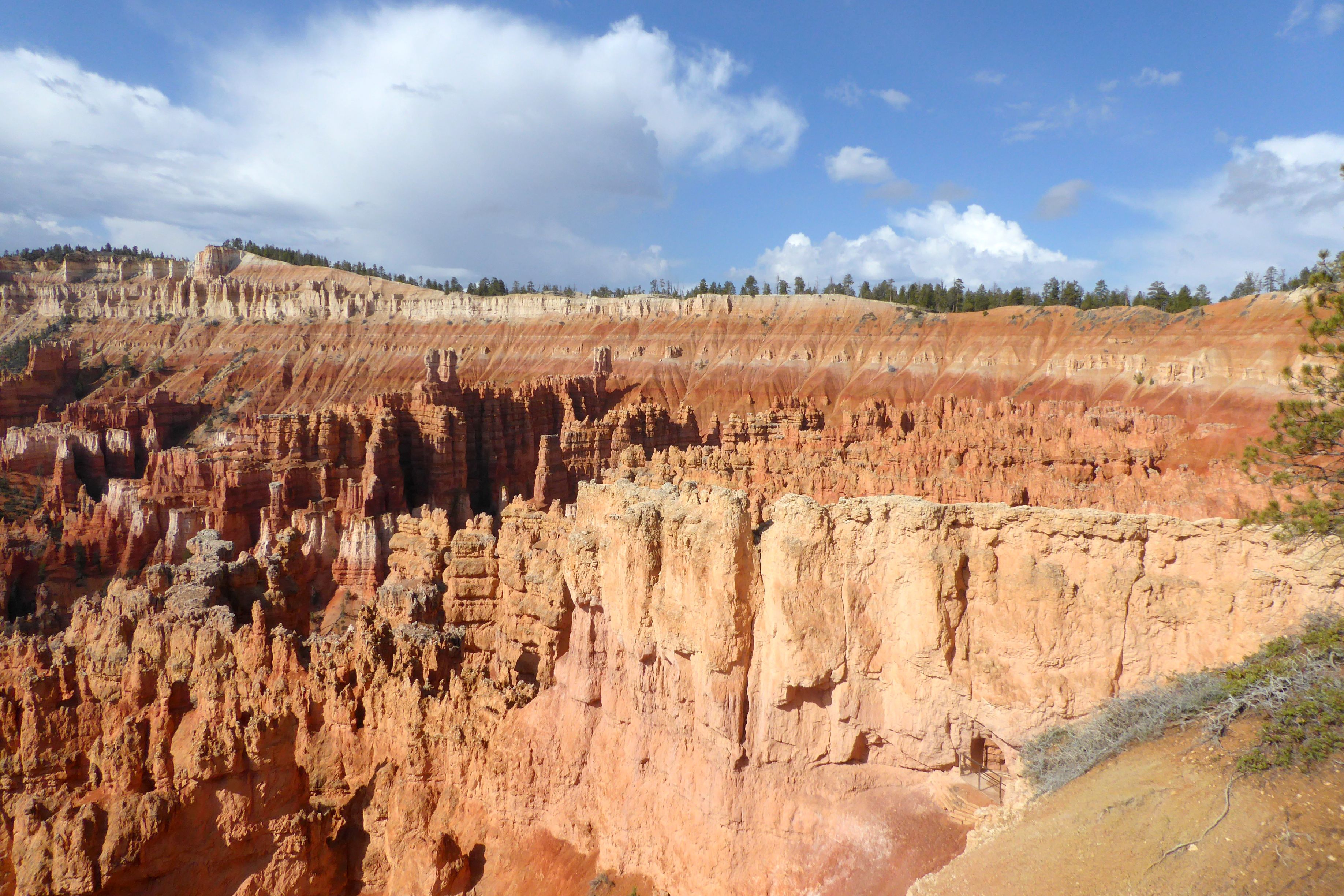
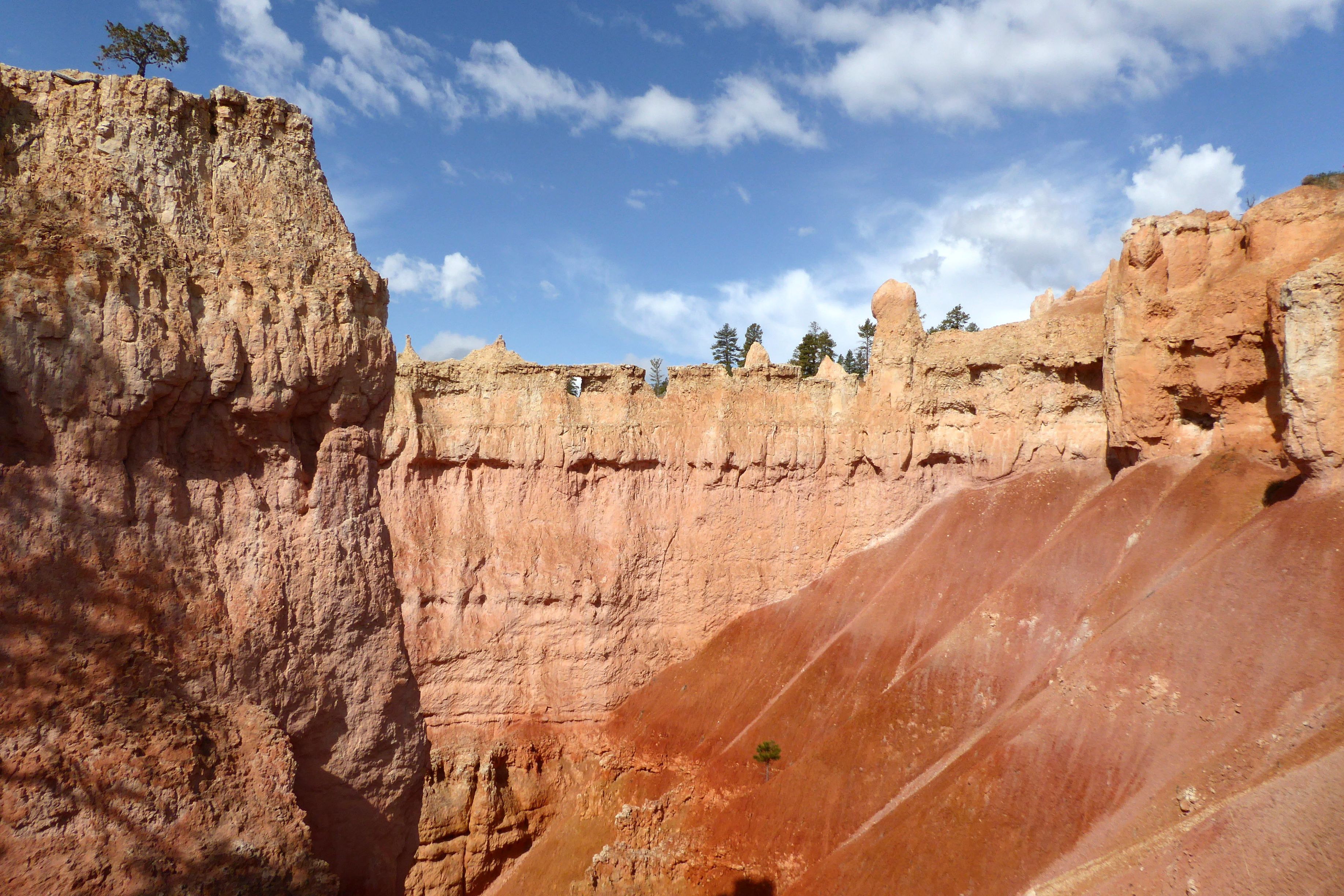
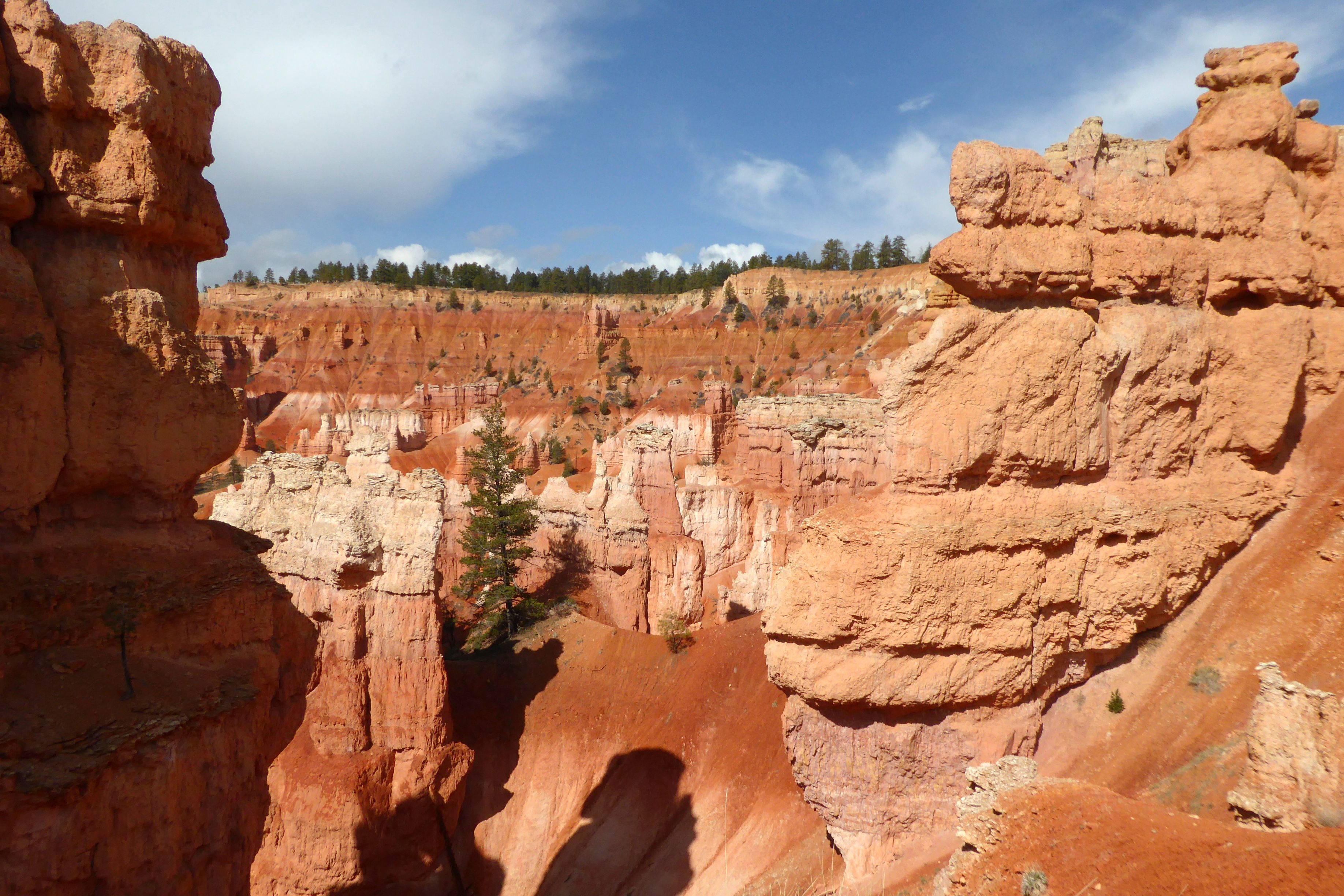
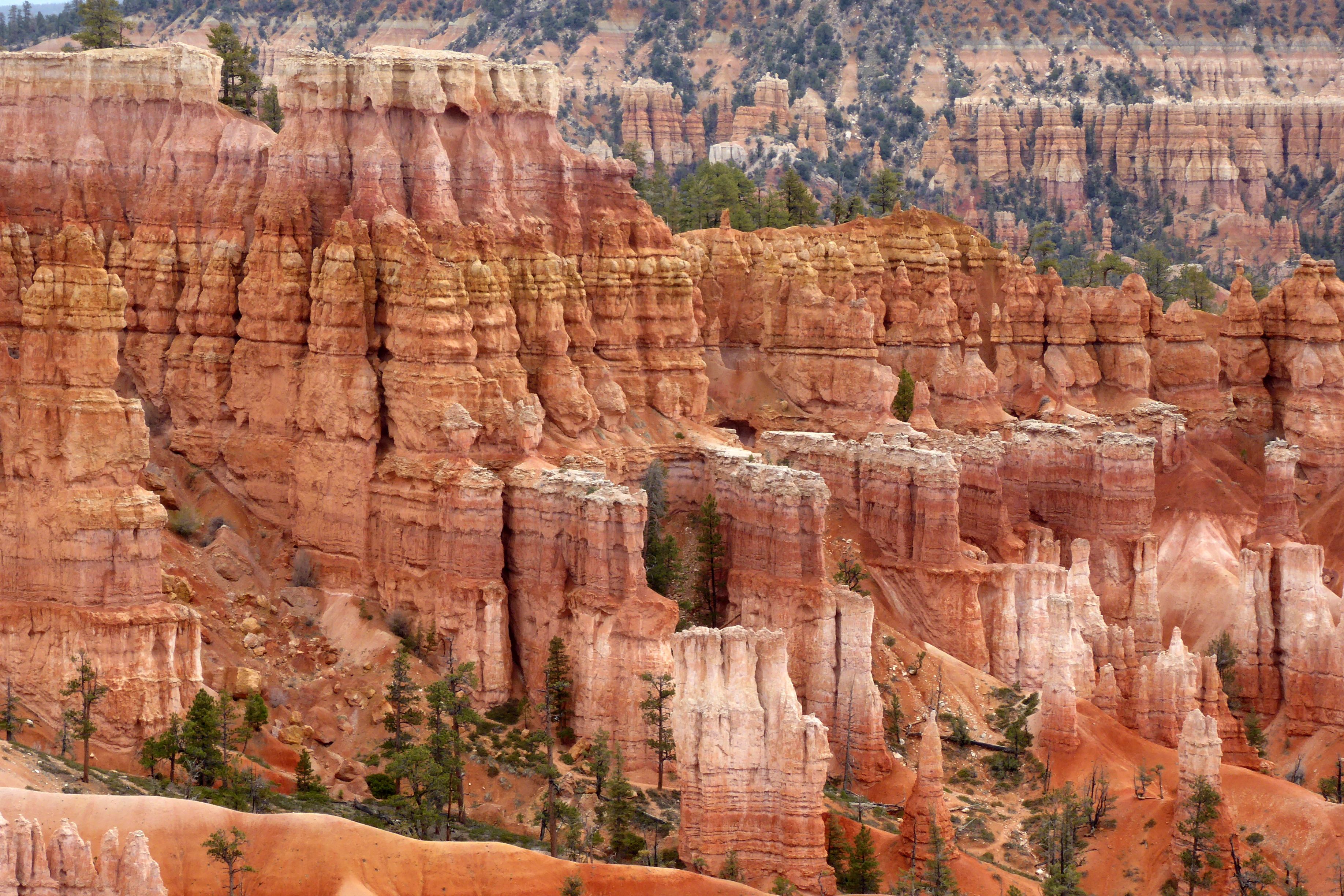
We were really looking forward to seeing Bryce Canyon National Park in person after seeing so many beautiful photos of its colorful and bizarre-looking rock formations called “hoodoos.” I can’t even type that word without immediately hearing Paul Simon’s, “Love Me Like a Rock” in my head (“Who-do, who-do you think you’re fooling?”). Bruce and I spontaneously broke out with that song when we saw hoodoos during our Canadian Rockies trip, and it happened again in Bryce. We just can’t help ourselves.
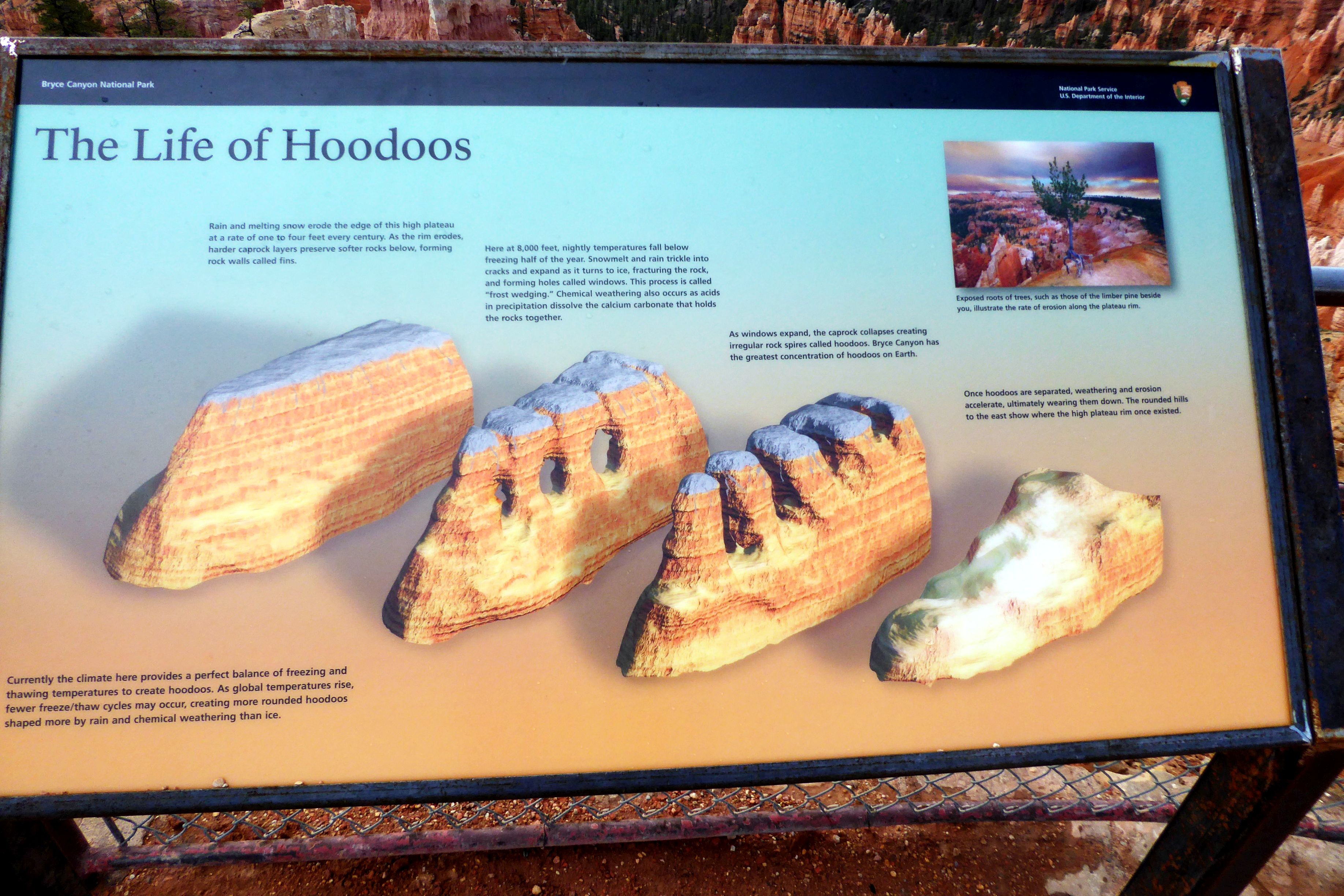
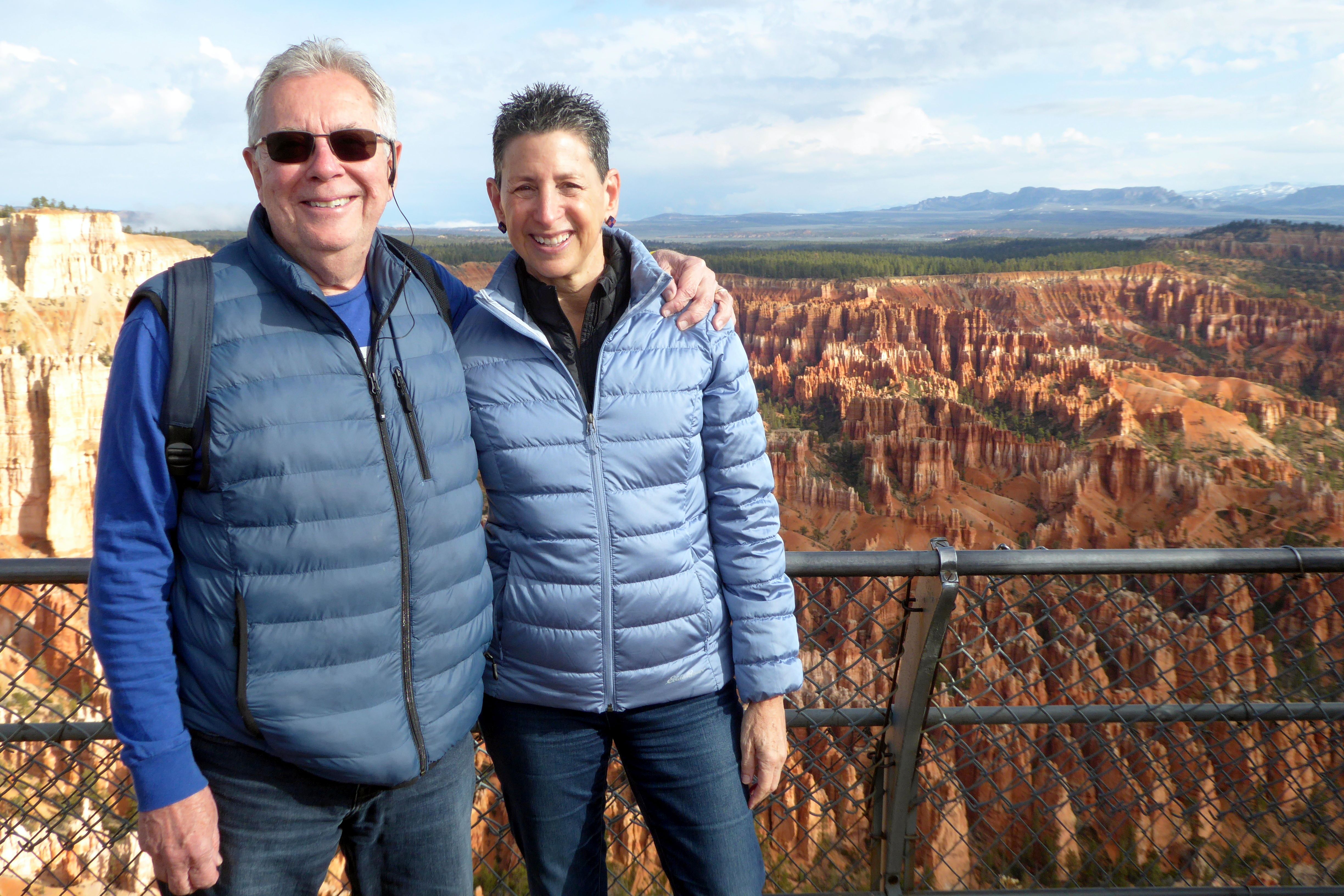
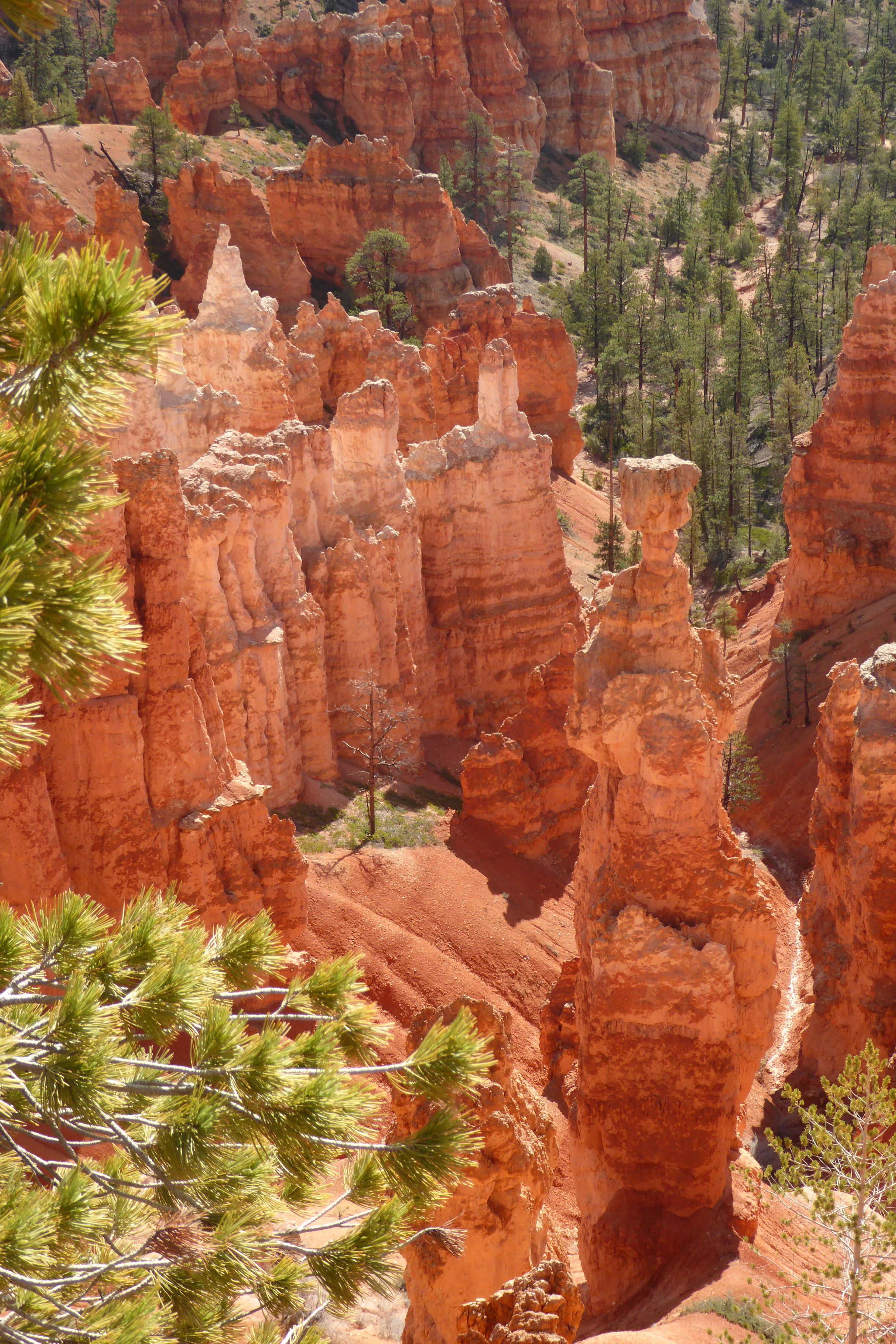
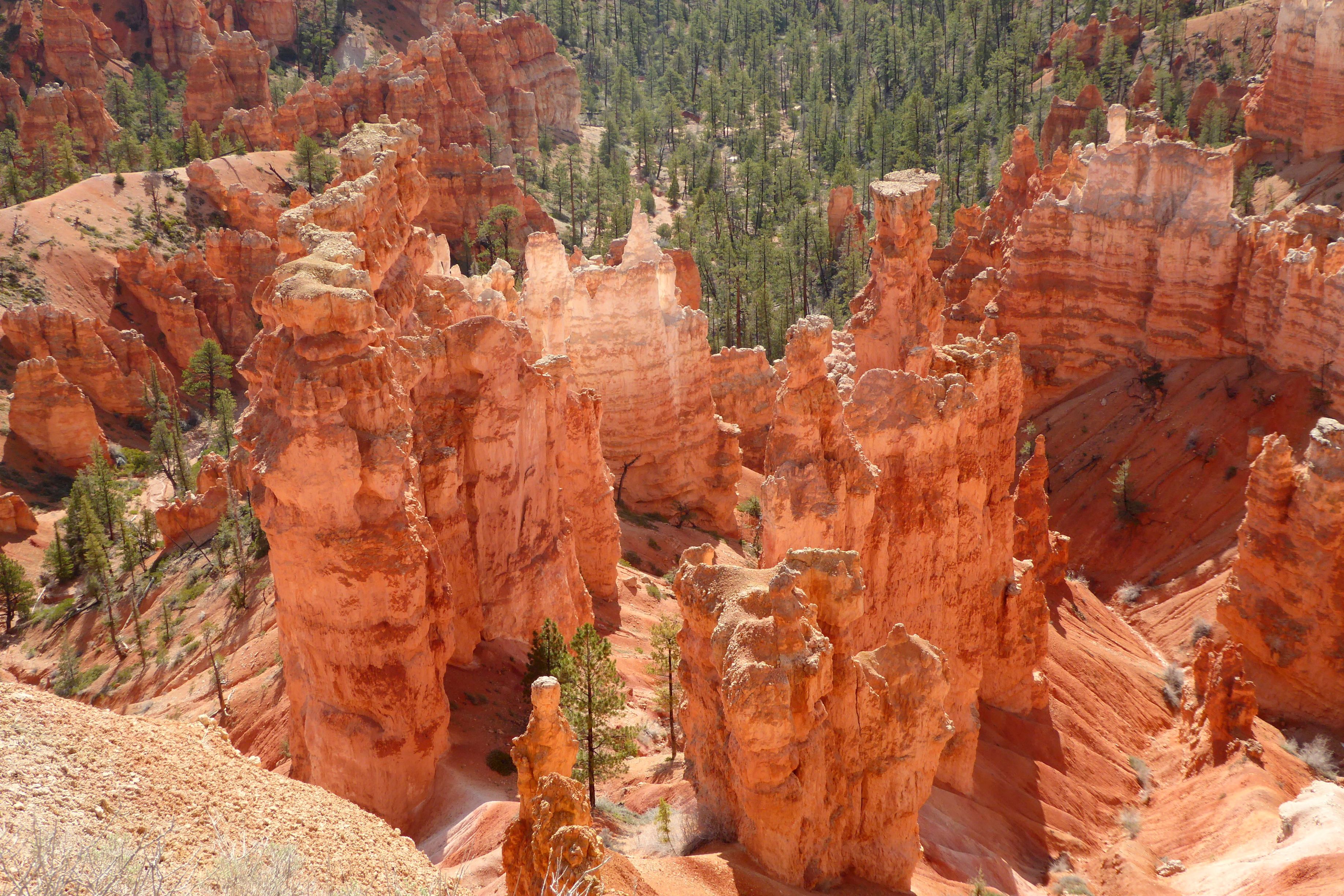
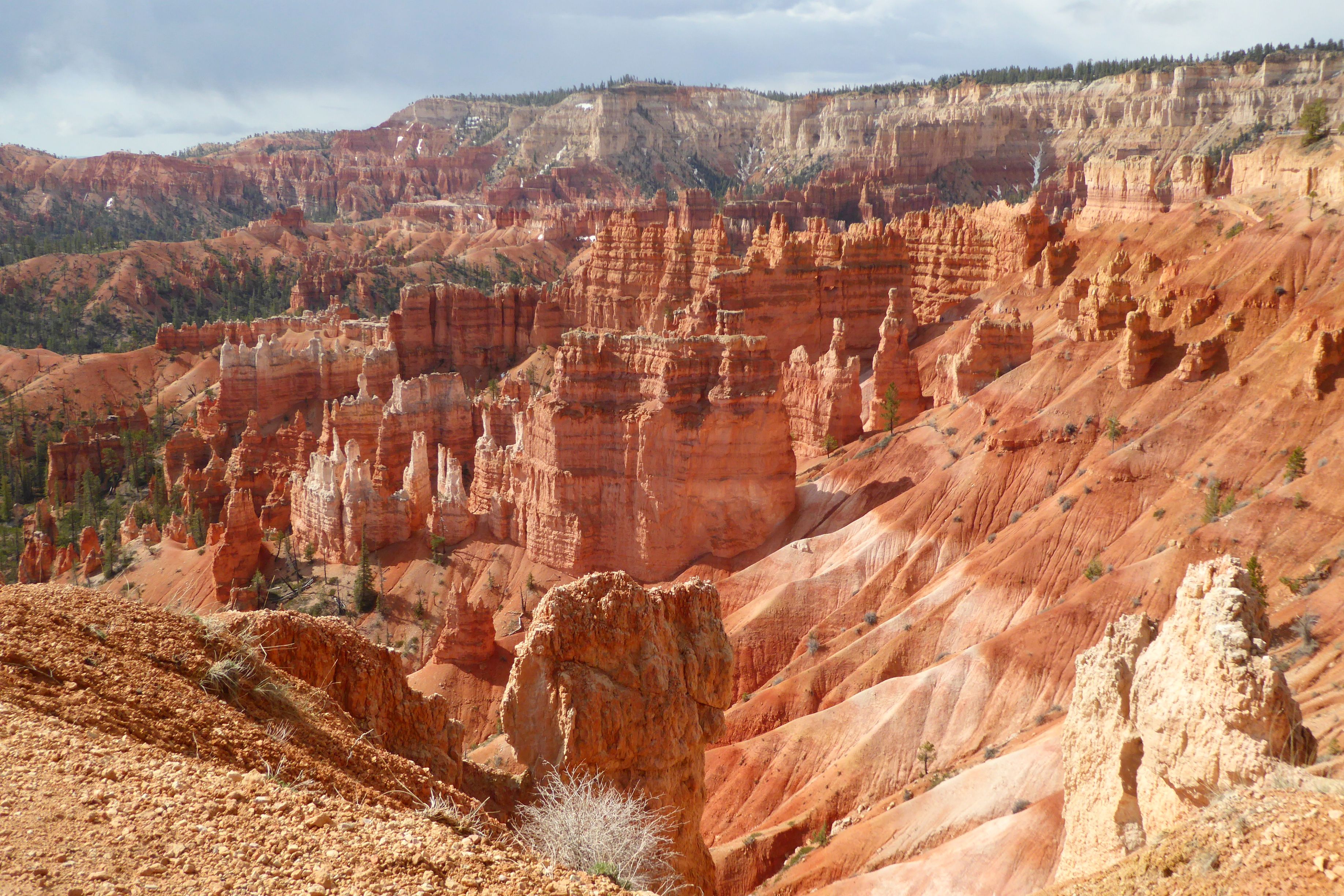
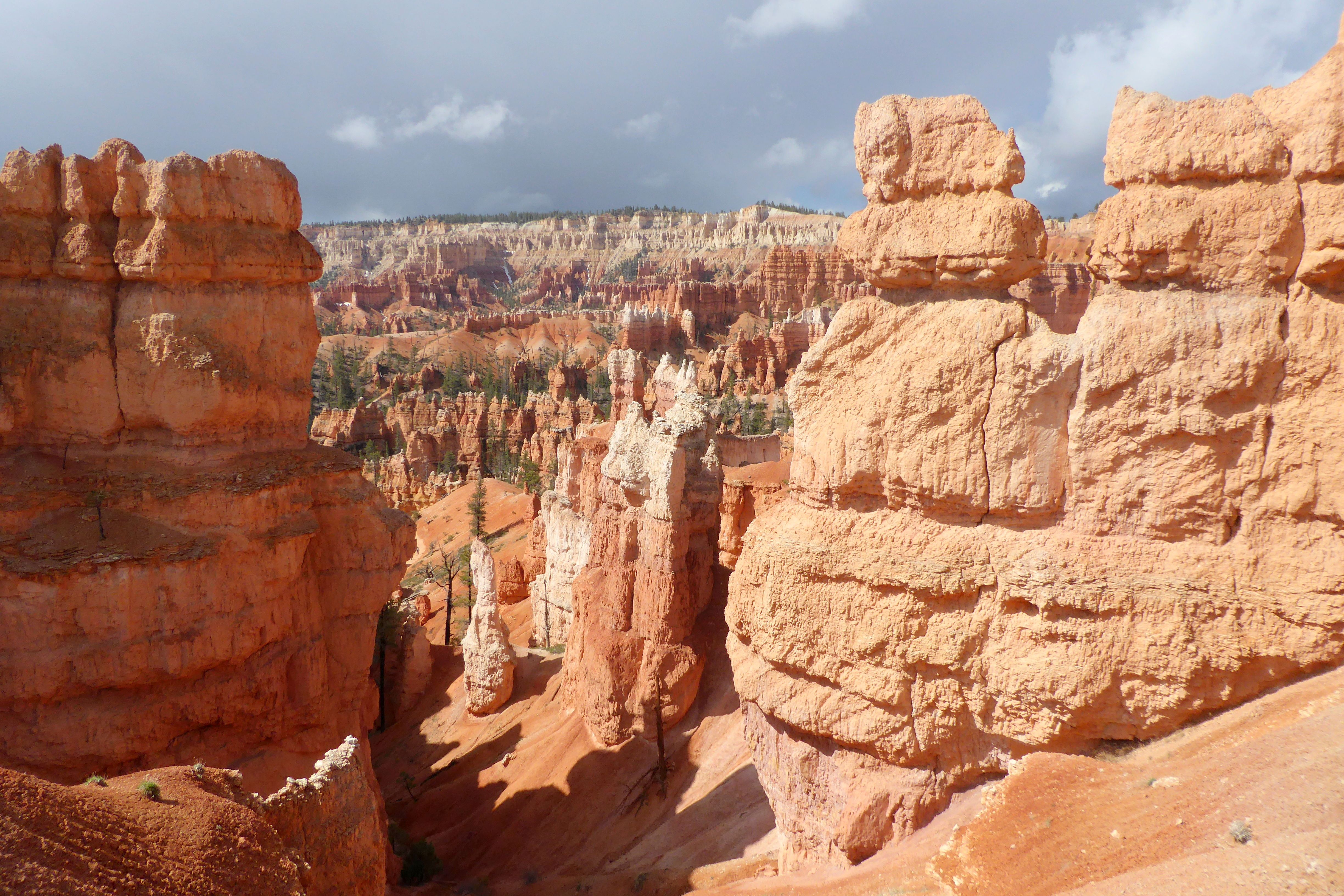
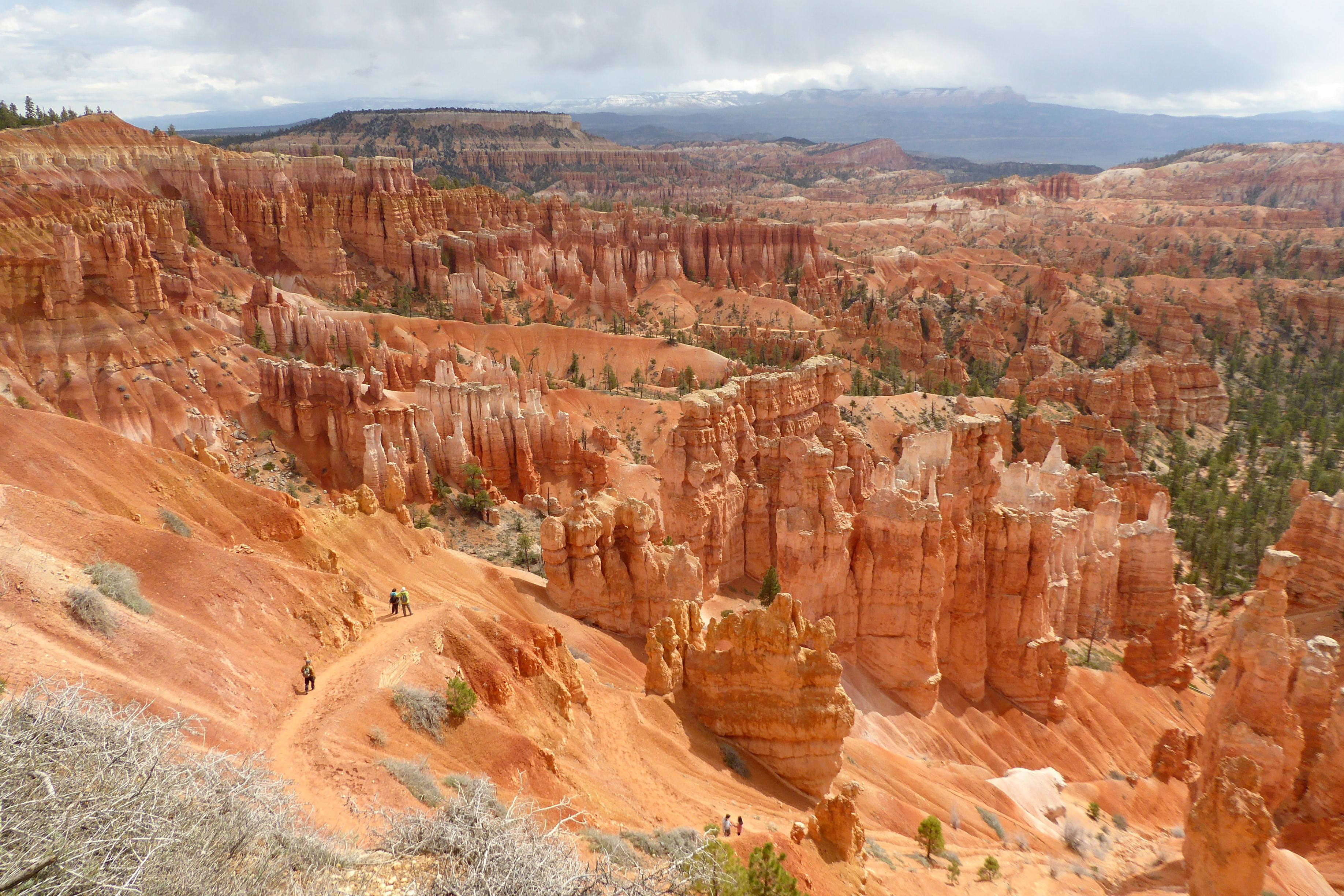
You’ve got to see it to believe it! It truly is an amazing sight, standing at the top of Bryce’s Amphitheaterand looking down into a bowl of hoodoos! These irregular-shaped rock spires consist of relatively soft rock topped by harder, less easily eroded stone that protects each column from the elements. These spires range in size from the height of an average human to heights exceeding a 10-story building.
Knowing we would be at high elevation during this trip, I came prepared, so I wouldn’t have a repeat of 2019’s huffing-and-puffing at the National Senior Games, in Albuquerque, New Mexico, elevation 5,312 feet. Competing in the 200 Yard Butterfly and 400 Yard Individual Medley, my two most difficult races, was an exercise in futility. Never had I clung to the walls in the middle of a “race” like that before; it was usually reserved for the end, after the clock had stopped. It wasn’t a pretty sight; all of us low-elevation dwellers suffered at that meet, logging in personal worst times.
After the meet concluded, we went to play tourist in Santa Fe, where I attempted a nice, relaxing, recovery workout. During my first lap, I couldn’t even make the turn. I literally clung to the wall to catch my breath—and, I was in the best condition of my life! The 7,198-foot elevation just about killed me.
Fast forward to researching and booking this trip and learning that Bryce Canyon’s elevation is at 8-9,000 feet. I knew I would be in trouble if I wasn’t prepared, so I had an idea: Train with a KN95 mask! After training hard in the pool and doing my dryland workout on deck for 2 to 2-1/2 hours each day, I would put on my mask and head up to the indoor track and hoof it at my fastest walking pace for a mile or more, if I met up with a friend for conversation. (Try walking fast while wearing a KN95 mask AND carrying on a conversation!). I have been doing that six day per week since the beginning of the year, and it made all the difference. Hiking in Bryce was a breeze, and I jogged back up the steep trail to the top with my breath intact. (I’m still walking daily with my KN95’s!)
(For all pictures, click on the image to see full screen view.)
Bryce Point Inspiration Point
View from Sunset Point
Looking out from the other side of Sunset Point
The hoodoo on the right with the flat top is “Thor’s Hammer,” a symbol in Norse mythology.
A walkway rims the top of Bryce Amphitheater, providing spectacular views of the hoodoos.Descending Queen’s Garden Trail provided a different viewing perspective of the hoodoos. As you can see from the photos, the weather kept changing drastically! It went from cloudy, to sunny, to cloudy, several times with some added precipitation sprinkled in! My day pack came in handy for cramming in and pulling out my vest and jacket several times.The view from the top of the rim after hiking back up. The mountains in the background were still topped with snow.
Bronze evening primrose
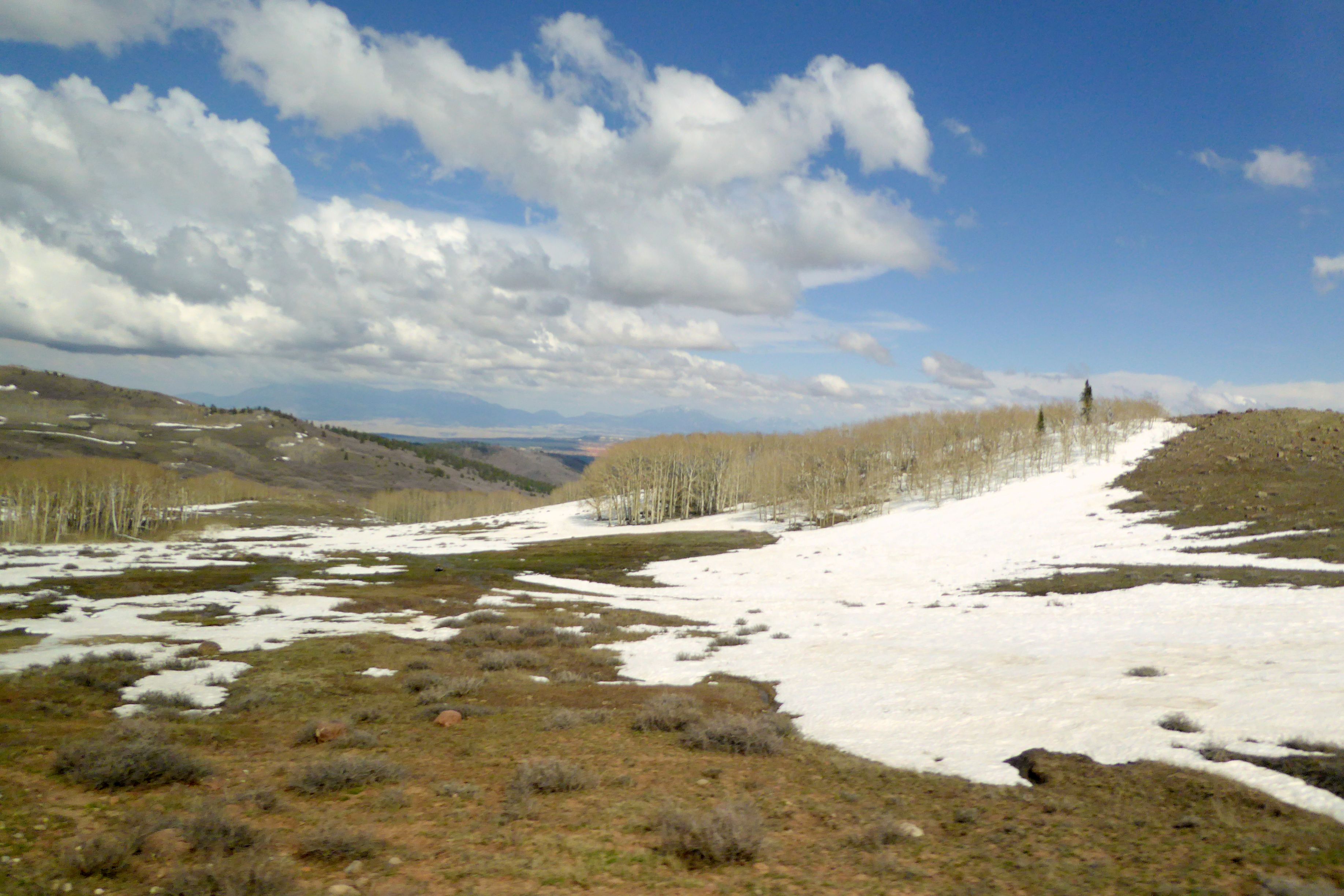
After we left Bryce, we enjoyed the views of Grand Staircase Escalante National Monument before driving through Boulder at 9,600-feet elevation. We made a brief photo stop, and I immediately ran down to pack a snowball. Nobody wanted to play catch with me, though.
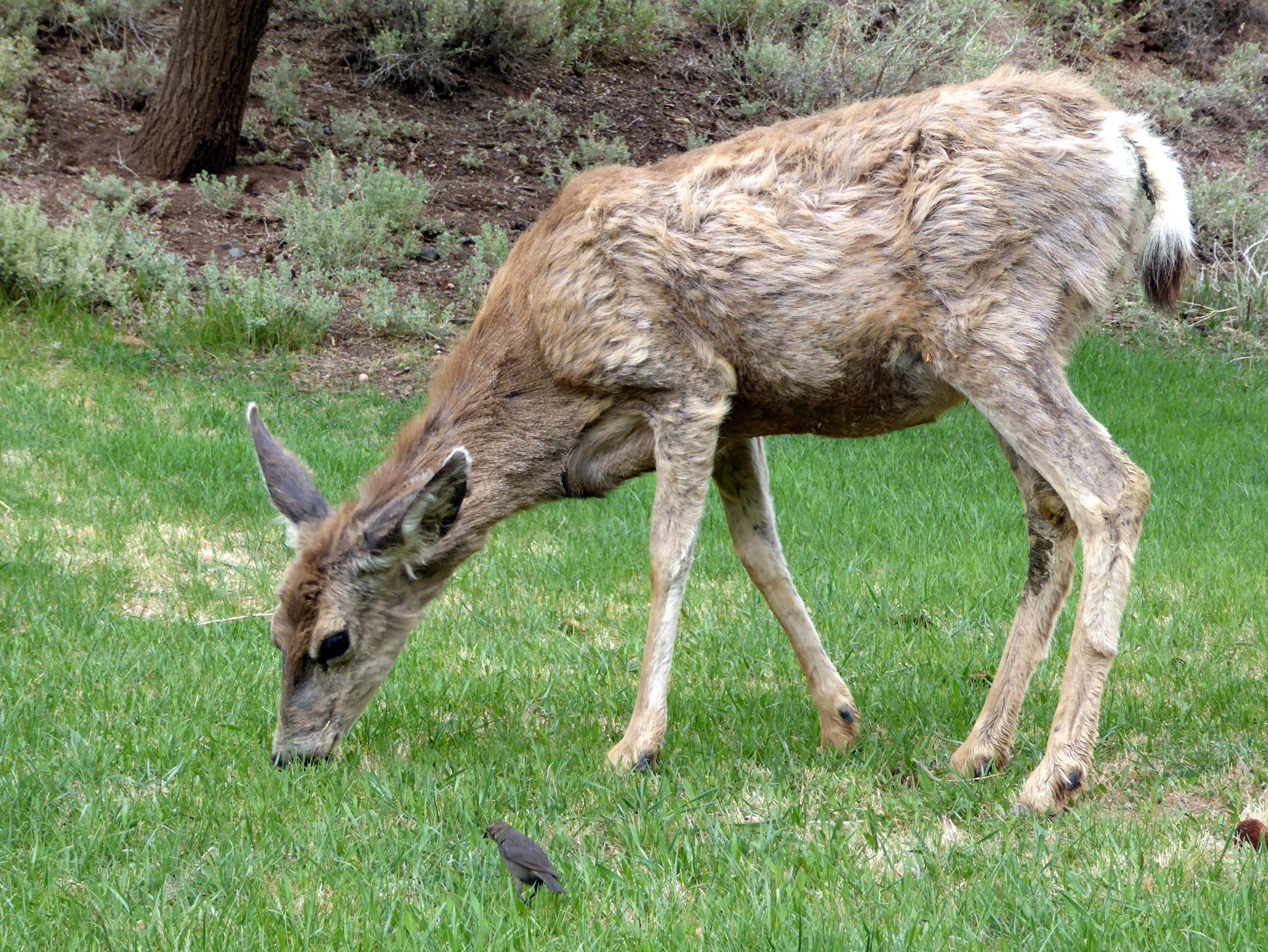
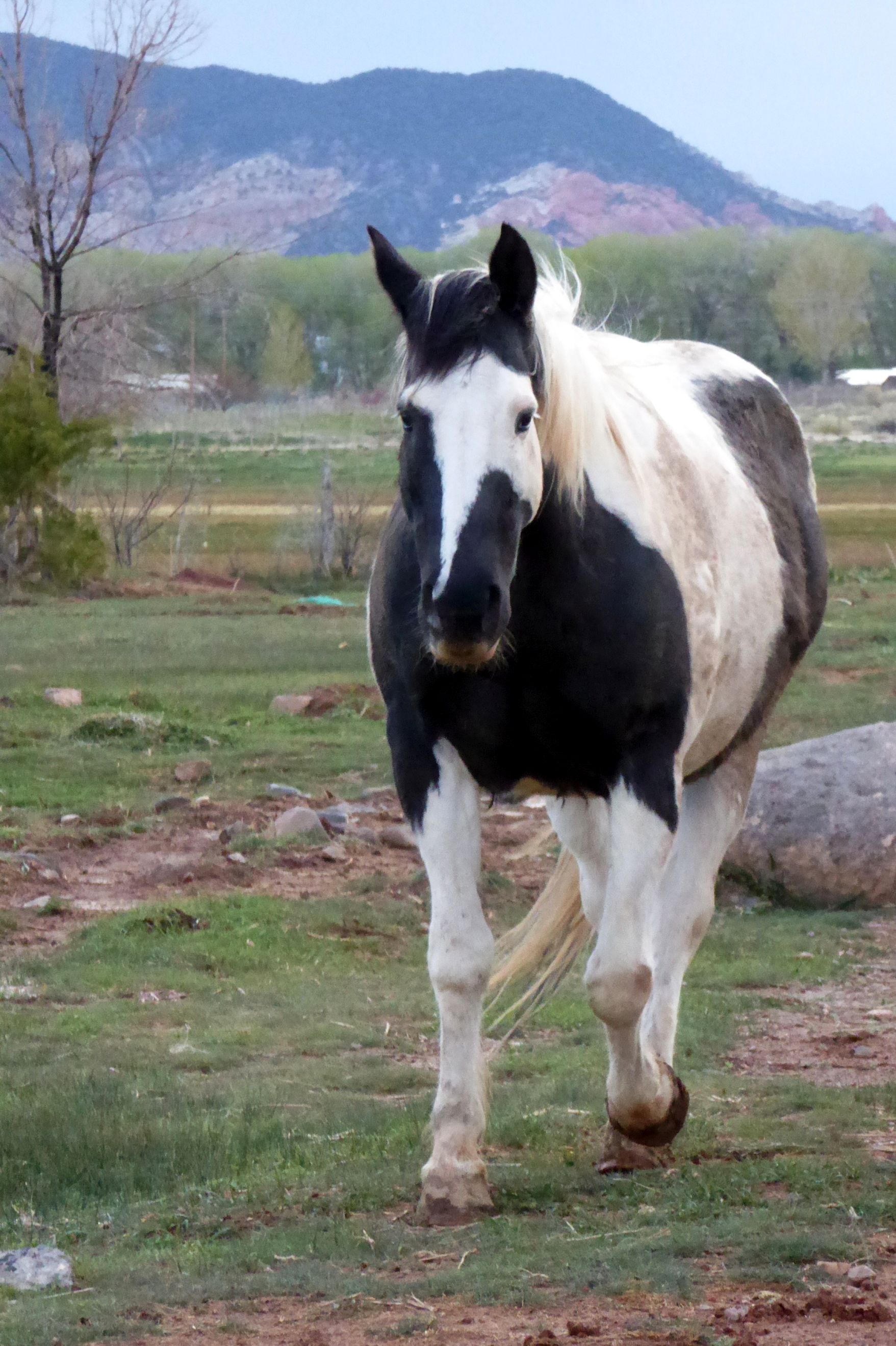
After checking in at the Red Sands Hotel, in Torrey, I gazed out the window and noticed cows and a bison off to the left, and this beautiful horse straight ahead. I went out to make a new friend.






























































































 Elaine-iaK's Travels: A Traveler's Tales of People, Places, Photos, Pools... and CHOCOLATE!