SWIMMING IN THE ZONE

DSCF0849-2


I don’t remember the last time I swam any distance in open salt water. Since swimming during the summers of my youth at the Alamitos Bay Peninsula, in Long Beach, I have kayak surfed, body surfed, snorkeled; just about everything BUT swim for any distance in anything other than a lake. So, returning to the saltwater for a good long swim was pure joy.

While Bruce fished from the shore, this morning, I swam back and forth, practicing my sighting for the upcoming Clemson open water swim, in June, and the Georgia Games 3k and 1k swim, in July. In my very first open water swim competition, last summer, I swam in the Georgia Games and swam the 3k and 1k back-to-back. Winning a silver and gold in my age group was the icing on top of a fantastic experience- and, learning I am really better suited for long distance swimming, after all.

In my first open water swimming experience since those races at Lake Ackworth, I really felt like I was swimming in the zone. The water was a perfect 78 degrees, I swam straight, and, Bruce even said a dolphin swam alongside me for awhile; something I didn’t even notice, since I was turning toward the shoreline to take my breaths and the dolphin was on the other side of me.

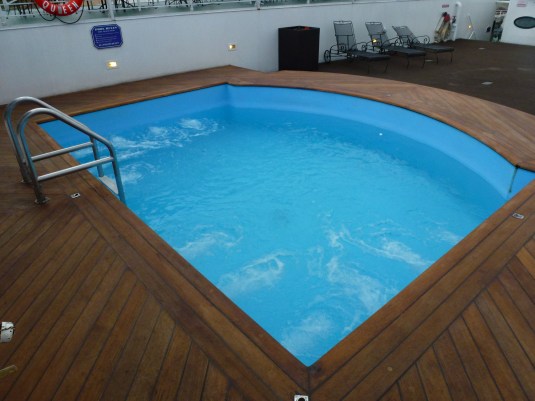
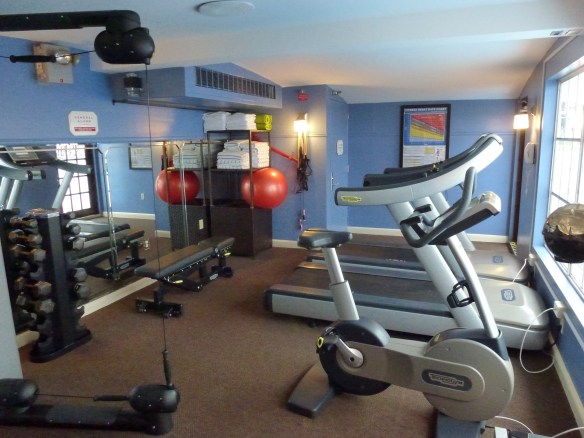
It was a beautiful morning, capped off with a pool workout and PT exercises in the gym, before heading back to Seahorse Cottages for breakfast.

DSCF0848-2

IT’S GREAT TO BE BACK!

Sanibel Island, Florida, is one of those places where, when you leave, you just know you have to go back. If you read Sanibel Island blog posts from last November (in the Domestic Travel section) and see my photos, you will understand why Bruce and I returned.

Today, we arrived for another 10-day visit and were greeted by perfect weather; it was a gorgeous day! And, the first thing we noticed when we stepped out onto the beach was that familiar scent of saltwater we enjoyed so much when we were last here; just like back in San Diego.

It’s spring now, so things look a bit different than during our November visit. There are more flowers in bloom, different birds running up and down the surf line, and less humidity- thankfully. And, no red tide!

We hear the fishing is good at the moment, so Bruce is looking forward to giving it a try in the morning, while I go for an open water swim in the perfect 78 degree water.

Just to give you a taste of what our late afternoon was like, the following are a few of my favorite photos of the day:

004

P1100743-1

P1100747-1

5

6

7

8

9

10

11


The American Queen Experience: “A” for Excellent!

How would I rate our overall experience aboard the American Queen? In one word: Excellent!

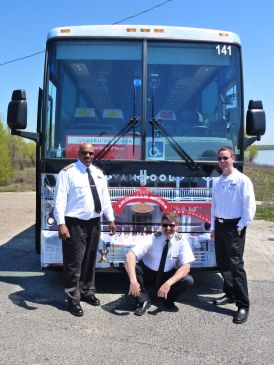
One of my favorite things about this cruise was the friendly and efficient hop-on/hop-off bus service at each port. American Queen Steamboat Company owns four tour buses that look like our ship on wheels; very cute! And, they are driven by four of the friendliest and helpful bus drivers I have ever met. The buses followed us the entire way, driving on to the next port while we cruised during the night. The drivers would stay at hotels and meet us the next morning.

238

237

Abe and Mark, pictured below, were my favorite staff members of all the AQ staff I encountered.
239

The bus system was very efficient. The night before our port, we could pick up color-coded boarding passes that were in 15 minute increments. And, the wheels on our designated bus would roll at exactly that time. This arrangement meant not having to wait in any lines- nice!

We were also given maps with the stops labeled, including attractions that we could visit that were pre-paid by the ship. Other points of interest were also labeled, as well as banks, pharmacies, and our bus stops. It was so easy and efficient, making it very relaxing and stress-free at each port. The buses would even do final sweeps around the circuit if people were missing at the designated all-aboard time. Nobody was ever left behind.

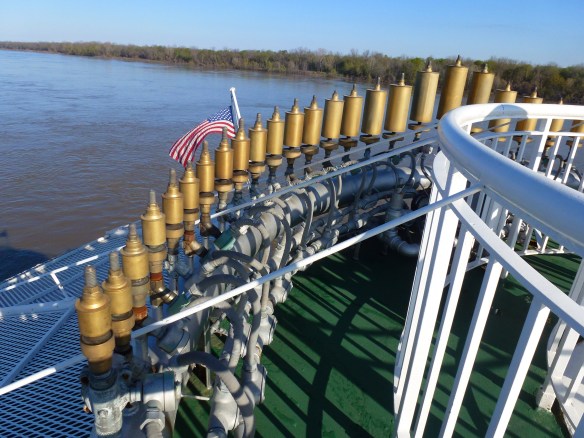
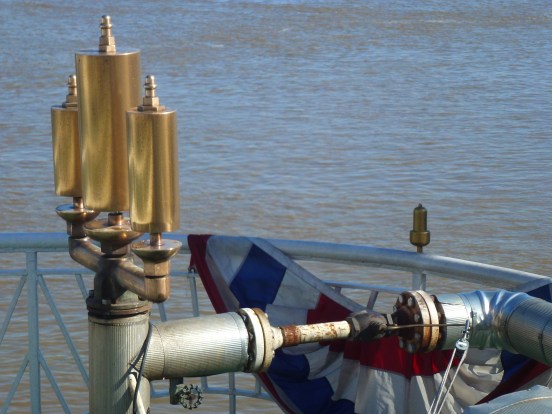
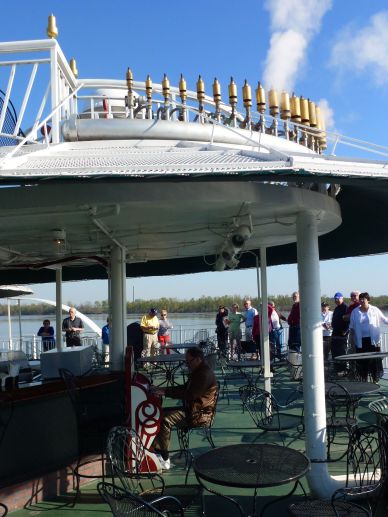
At sail away from each port, the captain would blow the steam whistle, followed by the pianist playing a calliope concert on the aft deck.
211

During one of the concerts, I noticed one of the steam pipes wasn’t working too well, so an otherwise perfectly sounding song medley was punctuated with weak/sour notes every once in a while. It was good for a lot of laughs from everybody on deck! And, there was something quite charming about that experience that I will always remember.

214

215

Another advantage of being on a riverboat rather than a huge cruise ship is the opportunity to learn about how the boat works. The engine room was open for viewing and there was always somebody available to answer questions. They even had an information sheet explaining how it all worked.

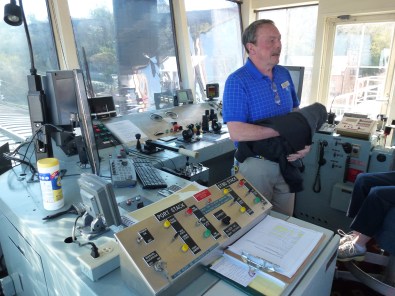
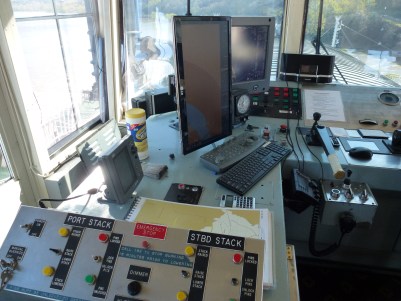
The Riverlorian also conducted tours of the pilot house each day, so we learned about the navigational system, as well.

The entertainment on board was also terrific. The staff orchestra and singers produced cruise ship quality shows and the guest entertainers were wonderful. We heard a jug band from Louisville, Kentucky, as well as a Blues Brothers tribute band and a New Orleans jazz band. It was a great variety of good ol’ Southern music. And, we especially enjoyed one of those shows by bringing our complimentary bottle of Champagne with us.

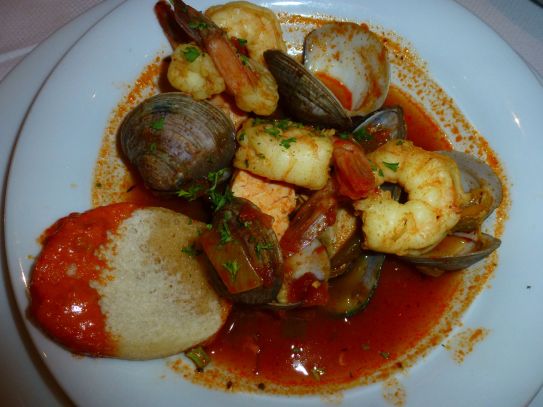
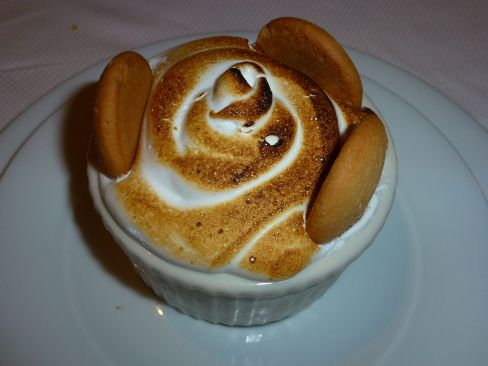
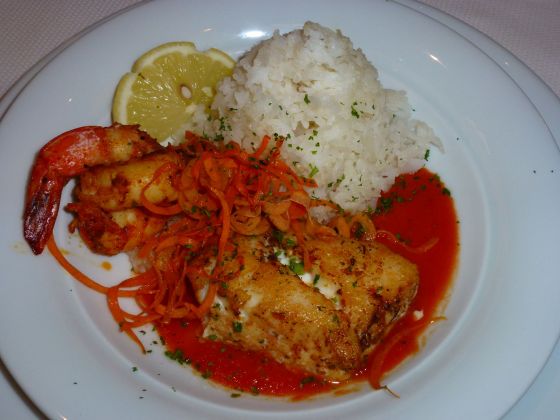
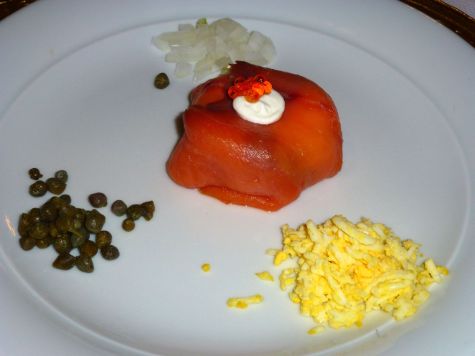
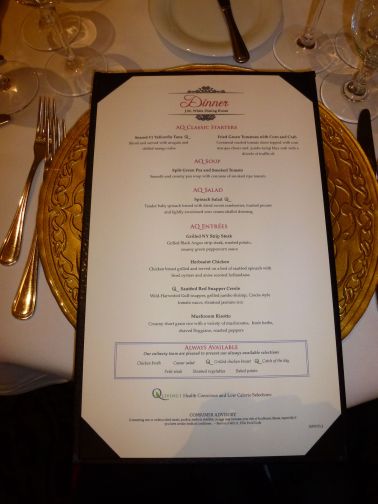
So, what about that good ol’ Southern cooking? Fabulous! Our waiter was quite good about explaining the dishes in detail and making recommendations; all which were spot-on. But, I really couldn’t imagine anything being bad, because it all looked and tasted so good! Even the assortment of rolls at dinner was too good to pass up; especially the pretzel rolls. And, don’t even get me started on dessert…

I will include a picture of one of our dinner menus, but you will need to click on it to see it enlarged. It’s worth a read; it will make your mouth water…
222

223

224

225

227

228

229

230

231


The service was friendly and efficient; especially the complimentary wine service. Those gals came around with wine constantly, so our glasses were never allowed to run dry. In my opinion, the dining room experience was a cut above most of the cruise ships I had previously sailed on.

Overall, the staff on board the American Queen was very friendly and accommodating. It was a nice surprise, given the fact it is an all-American staff that works 14-15 hour days; something most Americans are not used to doing.

Would I recommend the American Queen to my family and friends? Most definitely!
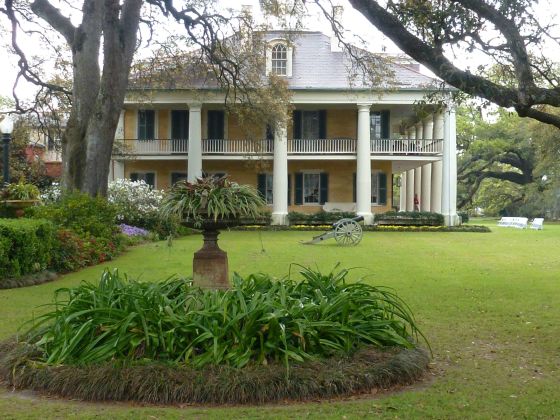
Houmas House

137

On our final day of the cruise, the American Queen tied up in front of Houmas House; a beautiful mansion that is open for tours.

At one time, the land was a huge sugar plantation that dates back to the Houmas Native Americans. The current mansion got its start when Revolutionary War Hero General Wade Hampton bought the property in 1810. The mansion was finished in 1828 and eventually became the hub for a sugar empire of more than 300,000 acres.

In 1857, the property was purchased for $1 million by Irishman John Burnside who grew the plantation to become the country’s biggest sugar producer. Fortunately for him and his property, Burnside was British and claimed immunity as a British citizen, so the mansion was spared from being burnt down during the Civil War.

A century later, in 1963, the Bette Davis film “Hush, Hush, Sweet Charlotte” was filmed on site after the building was fully restored.

138

152

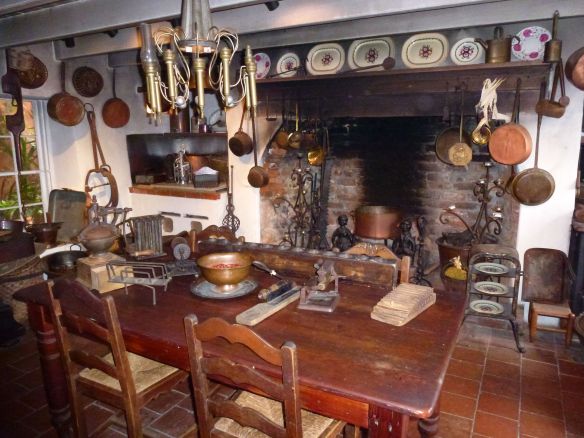
Currently, Houmas House is the home of Kevin Kelly and open to the public for tours. During the tour, we were even taken through his personal bedroom, as well as the neighboring bedroom/office. It was quite a non sequitur to walk into another room with beautiful period furniture, but also see a laptop computer on the antique desk next to piles of paperwork!

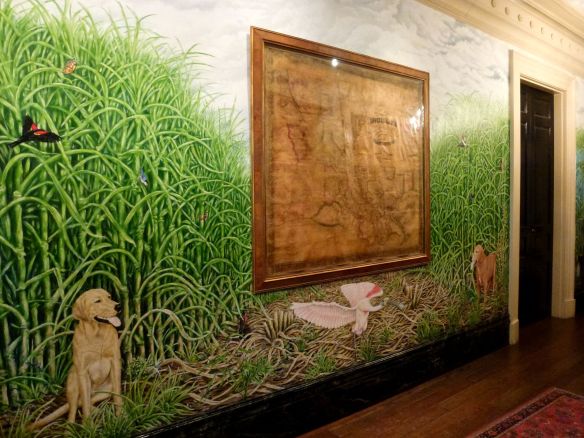
Here are a few photos of the house, beginning with the front hall wall mural:

140

148

145

151

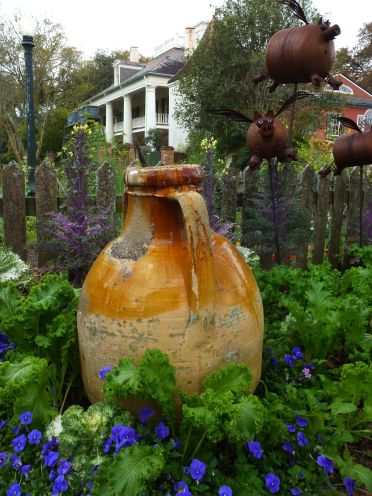
The gardens were beautifully maintained:

153

161

155

35 Miles Down the Mississippi River

P1090232.JPG

It wasn’t much of a steam down the Mississippi to get from St. Francisville to Baton Rouge; just 35 miles was all. So, we arrived at 11:00 PM and tied up for the night.

This morning, I looked out from the American Queen and saw 7 HUGE semis
And four RV-type buses lined up across the street. Elton John is in town for a concert that sold out in four hours.

Later on, as we circled Baton Rouge in our hop-on/hop-off bus, we noticed two more buses from his entourage parked in front of a hotel that we were told costs $600 per night to stay in and books out six months in advance. No worries; Elton can afford it, I’m sure…

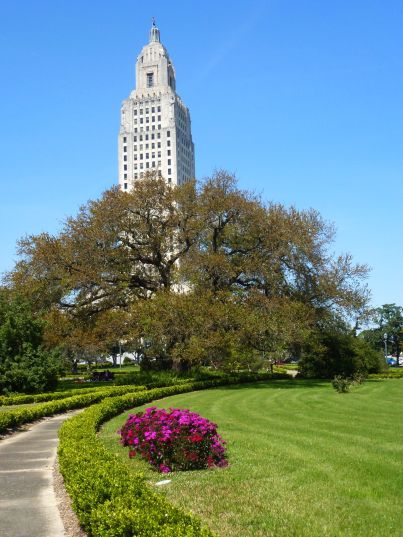
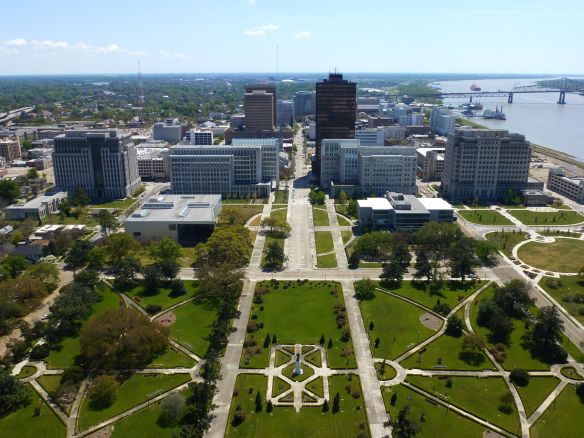
Our day in the state’s capitol could not have been more beautiful; sunny and 73 degrees with a comfortable breeze. The only downside of the day was that it was Good Friday, so most things were closed. There are a lot of Catholics in Baton Rouge, evidently, because the city looked like a ghost town. When we gazed down from the 27th floor outdoor observatory of the capitol building, there was hardly a moving car to be seen.

No worries; Baton Rouge did not strike me as a must-see city that would make my bucket list for a repeat visit. But, the day was enjoyable, anyway.

A little background about Baton Rouge: The name comes from the French words for “red stick”, in reference to a pole covered by bloody animals that marked the boundary between two Native American hunting grounds, back in 1699. French explorer Sieur d’Iberville gets credit for that lovely discovery.

Since then, it has been under the control of France, Britain, Spain, Louisiana, the Florida Republic, the Confederacy and the United States; a complicated history compared to my native state of California!

Baton Rouge has been Louisiana’s capitol since 1849. And, the push to establish the city as a hub for river traffic came under the direction of French Canadians driven from their property in the north by the British. The group was known as Cajuns and their unique cultural influence is a key component of the area today.

Although New Orleans was the most populated city in the state pre-Katrina, the hurricane drove many people out of the New Orleans area. In a very short time, Baton Rouge had an influx of 200,000 new residents, making the city one of the fastest growing for its size in the United States.

126

126-2

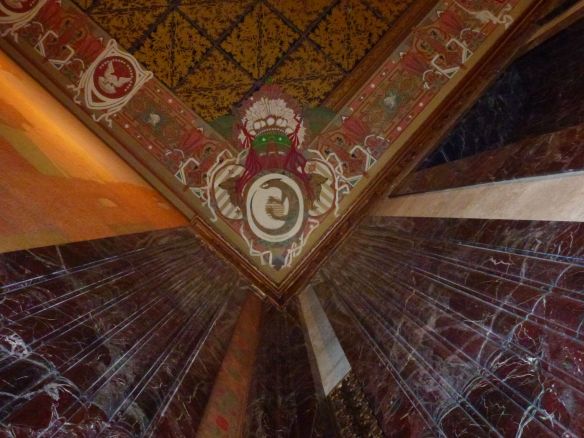
The highlight of our visit today was visiting the state’s “new” capitol building, built in 1932. It is the nation’s tallest capitol at 34 stories and has a beautiful interior of Italian marble. The floor was particularly interesting to me, as it was made of Mt. Vesuvius lava rock and travertine square tiles.

128

129

131

130

132

133

134

Other than the capitol, the only other visit of the day was a self-guided tour of the the USS Kidd, an early 1940’s destroyer that was conveniently docked next to the American Queen.

124

125

What was lacking in Baton Rouge was the Southern charm we enjoyed in our other ports. This, of course, is only based on a one day visit of just the downtown area, but it is an apples-to-apples impression, compared to our other stops.

Our final stop is just the opposite; a sugar plantation called Houmas House. More on that in my next post…

A River Runs Through It

P1090068

P1090073.JPG

105

What is the one state where the Mississippi River runs through it, rather than by it? Louisiana. And, yesterday, our journey took us to St. Francisville, Louisiana, a tiny town with an interesting history.

St. Francisville bounced between countries during its two centuries of history before becoming part of the United States. Founded in 1809 by the English, it was also claimed at one time by France and Spain. In 1810, the town served as the capital of the Republic of West Florida, an independent republic set up by settlers who resented Spanish rule. The experiment lasted less than three months before St. Francisville officially became part of the United States once and for all.

In its heyday, St. Francisville was a center of commerce for the surrounding plantations, making it a key port for steamboats. At one time, it was the busiest river port between New Orleans and Memphis.

After the Civil War the town prospered, even though many people left to escape the economically devastated region. But, a large number of Jewish immigrants who fled persecution in Germany settled in the area and became merchants.

Today, it is a quiet town with beautifully maintained Victorian homes. The entire downtown area is a National Register Historic District.

One interesting fact about this town of 1,700 mostly retired residents is that it has a K-12th grade school that ranks as one of the best in the country, even though Louisiana as a state ranks 49th overall for its education system.

St. Francisville also has four banks and a large number of attorney offices in town, due to Angola State Prison being located 20 miles away. Since St. Francisville is such a desirable place to live and has an excellent school, the attorneys would rather live and set up their offices in town, rather than near the prison. As a result, homes in the downtown area are more than double the cost of similar homes in the outskirts of town.

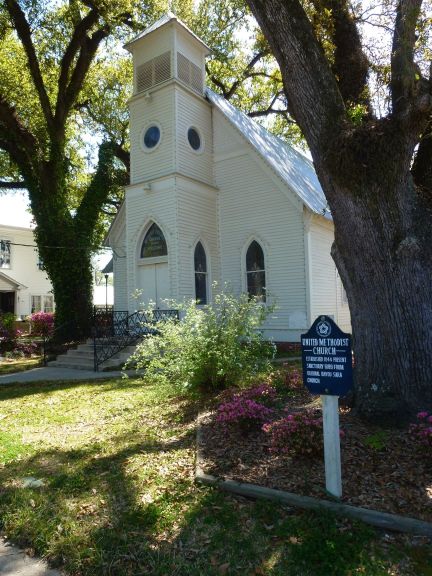
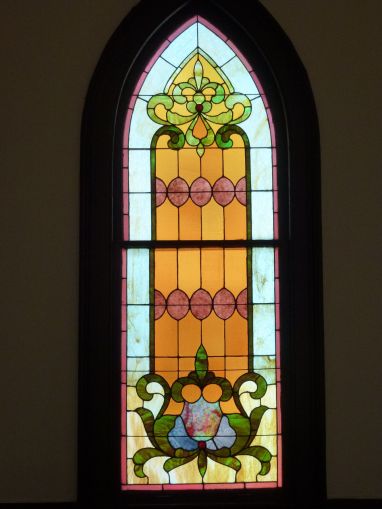
One of the highlight of our visit to St. Francisville was enjoying the beauty of this quaint little town; especially the Victorian homes and stained glass windows of the tiny Methodist church.

P1090137

107

108

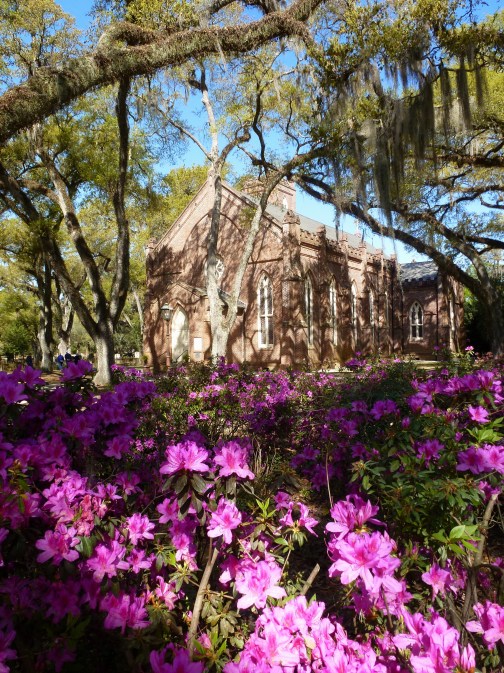
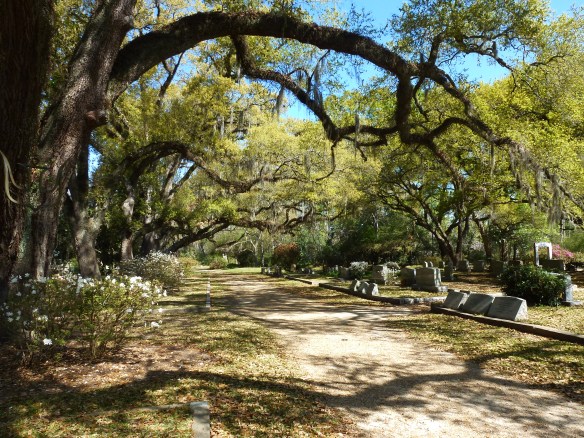
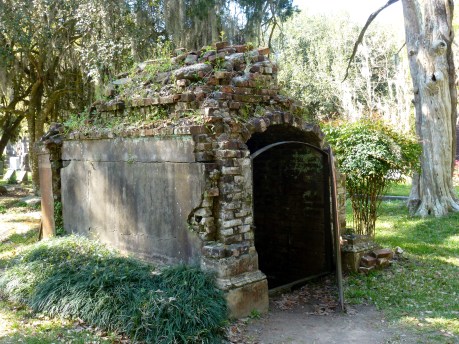
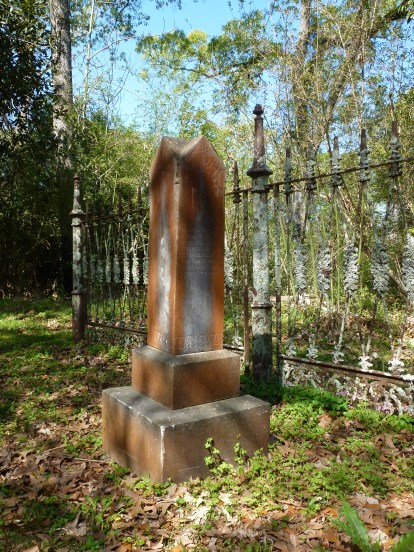
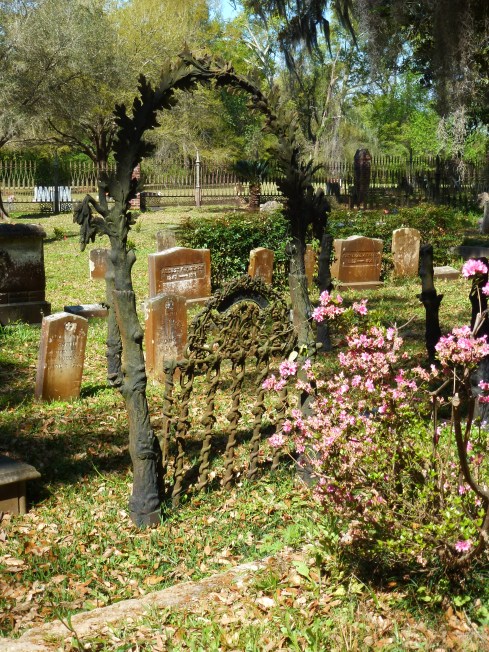
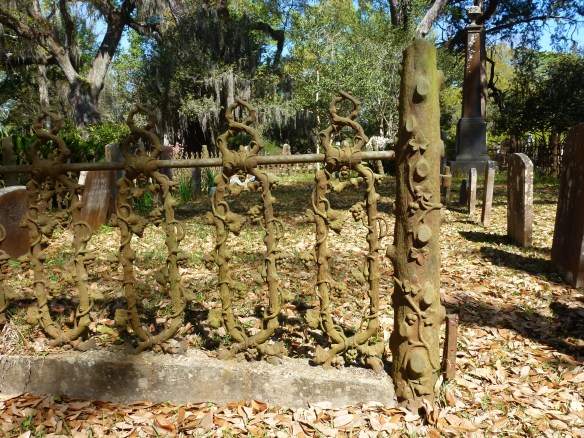
The other highlight was strolling through the gorgeous grounds of the Grace Episcopal Church cemetery.

P1090080

P1090087

P1090100.JPG

P1090108

P1090110.JPG


Natchez, Mississippi

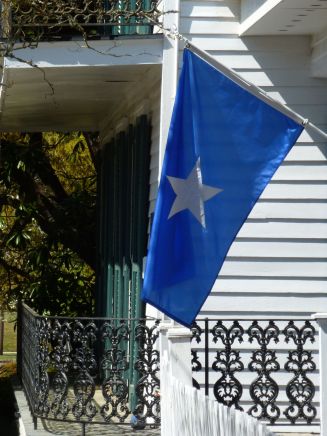
Continuing on down the Mississippi, we arrived in Natchez, a small city of less than 20,000 people that has quite an interesting history. I was fascinated to learn that Natchez has flown under several different flags: French, English, Spanish, American, Confederate, and again under the American flag.

During the 1800’s, Natchez was a frequent stop for steamboats and a major port for the loading of cotton bound for New Orleans, St. Louis and Cincinnati. The city recovered from a tornado in 1840 which killed 269 people and had more millionaires per capita than any other city in the United States prior to the Civil War. Although occupied by General Grant’s army in 1863, Natchez survived the Civil War intact and today has some of the most extensive examples of antebellum homes in the country. One of those antebellum homes is on a plantation, now owned by American Steamboat Company Chef de Cuisine Regina Charboneau. The acclaimed Southern chef now operates Twin Oaks as a bed and breakfast.

Our day was spent hopping on and off the bus and touring three different antebellum mansions, including Stanton Hall, a Greek Revival structure built in 1857.

P1090040.JPG

P1090007


We also enjoyed strolling along the streets of Natchez to enjoy the other homes of the town.

P1090020.JPG

P1090028.JPG

P1090018.JPG

P1090027.JPG


Overall, our impression of Natchez was very positive. It would be a wonderful place to return to for a stay in a bed and breakfast and to enjoy The Great Mississippi Balloon Race that takes place in late October.

From Arkansas to Mississippi

Our next stop along the Lower Mississippi River was Vicksburg, Mississippi, a charming town dating back to 1719. The French were the first inhabitants and by 1719 and built Fort Saint-Peirre on the bluffs above the Yazoo River to protect their fur trading post from Native Americans.

Several years later, the Chotaw Nation laid claim to the area. The Spanish were next, and by 1790, a small military outpost had been founded. Americans took over the small fort eight years later and the area quickly grew quickly, incorporating in 1825 as Vicksburg in honor of Newitt Vick, a Methodist minister.

During the Civil War, on July 4, 1863, Vicksburg was the site of a 47 day siege that ultimately ended in Confederate General John C. Pemberton surrendering to Union General Ulysses S. Grant. While July 4 was known as Independence Day across America, the citizens of Vicksburg viewed that date as a day of defeat and did not celebrate the 4th of July again until 1945.

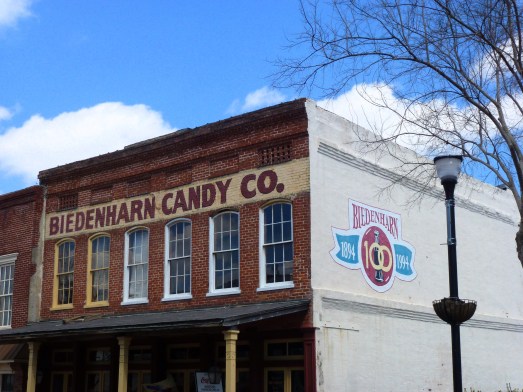
On a lighter note, Vicksburg was also the location where local candy store owner Joseph Biedenharn made history on March 12, 1894 when he bottled the first batch of Coca-Cola.

P1080868

Today, Vicksburg is a charming city with many beautiful homes and a pleasant historic downtown with attractive boutiques. My favorite feature of the main downtown shopping street was the jazz playing over speakers placed in the sidewalk landscaping. Nice touch!

P1080839.JPG

As we did in Helena, we enjoyed Vicksburg by riding one of American Queen Steamboat Company’s four hop on/ hop off buses. For the first four hours of each port day, the buses are each staffed with a local expert who narrates the circuit, in between the designated stops.

Mom and I have chosen to ride the full circuit once to hear the entire narration and plan out the stops for the second trip through. In Vicksburg, one of the scheduled trips worth hopping off for was Church of the Holy Trinity, built in 1869. In this church there were several beautiful Tiffany stained glass windows, made in the late 1890’s and early 1900’s that were later installed.

084

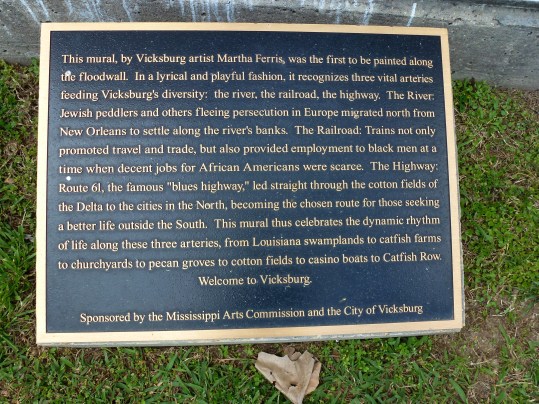
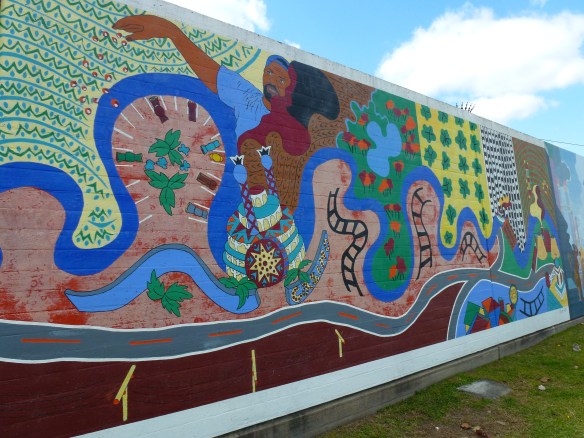
Another thing we really enjoyed about Vicksburg was the waterfront area where the American Queen was moored. Along the flood wall, there were beautifully painted murals depicting the history of Vicksburg; each one with a plaque explaining the mural. Walking along the sidewalk to see the murals was a wonderful way to learn about the history of Vicksburg.

057.JPG

058.JPG

P1080907.JPG

Steaming South on the Lower Mississippi

036

037

Our first port on this 640 mile journey along the Lower Mississippi was Helena, Arkansas, a small town that exists only because of the river itself. In the 1800’s, the river was the nation’s superhighway, long before railroads and trucks, and carried most of the nation’s goods and people through the heartland.

Although the town was prosperous then, the Civil War put an end to Helena’s prosperity when the Union Army occupied Helena.

In the 1940’s and 1950’s, a vibrant blues community developed in the city. The area has produced blues greats Robert Lee McCollum, Roosevelt Sykes, Sonny Boy Williamson II and Robert Lockwood Jr.

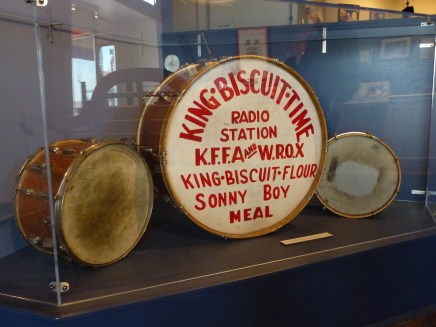
Helena is also home to King Biscuit Time, one of America’s longest running daily radio programs which first aired in 1941.

044

043

Today, Helena shows evidence of being hard hit by the recession. The only bright ray of sunshine for this town, economically, is the population explosion from 12,000 to 85,000 during its annual King Biscuit Blues Festival.

040

I always wondered how San Diego’s King Biscuit Blues Band got its name. And, when I arrived in Helena, the origins of the bands’ name finally dawned on me. A King Biscuit Blues Festival poster hung in a storefront window and the connection was made.

Strolling the Decks of the American Queen

4-4.JPG

4

3

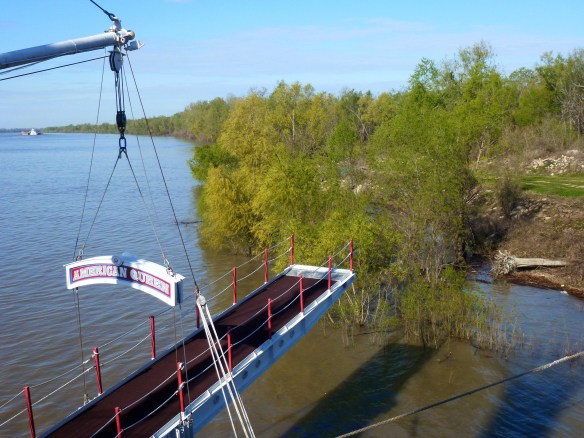
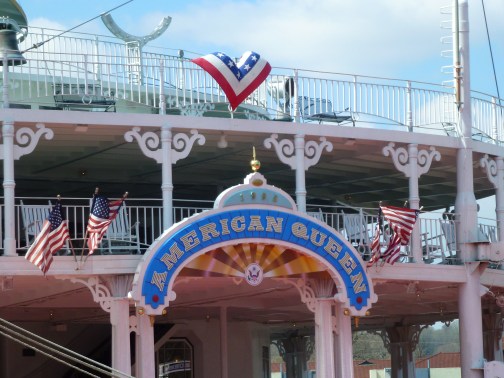
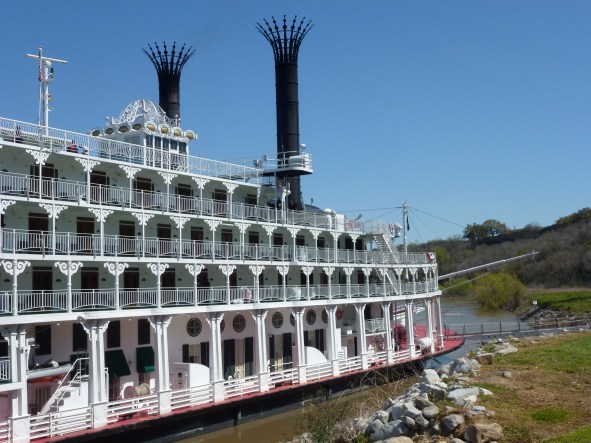
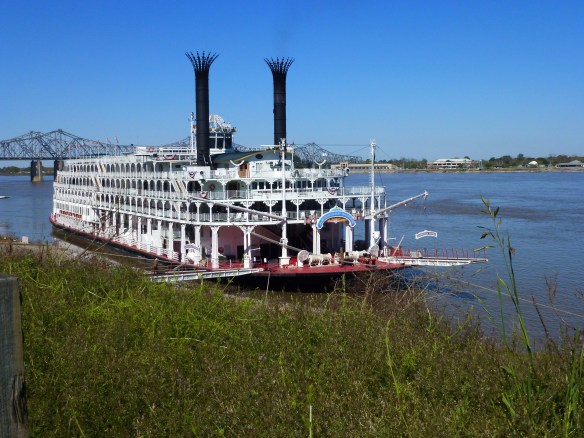
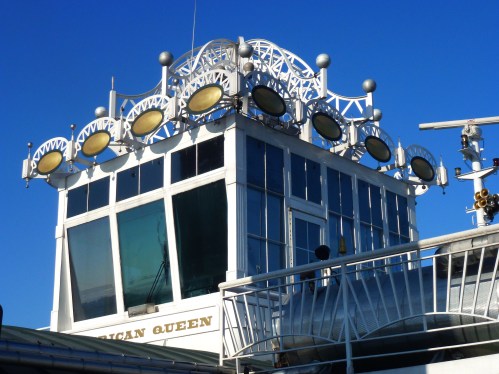
Every time I walk the decks of this beautiful ship, I am in awe. The American Queen is the largest steamboat in the world, as well as the most maneuverable one, according to Jerry, our Riverlorian who conducted a tour of the pilot house for me and a small group of passengers.

1.JPG

2

“Riverlorian”? Yes! On board, Jerry is our river historian lecturer who is an expert at everything Mississippi River. Our “lecture” yesterday was not a lecture at all, though. Instead, Jerry told stories about the river and his experiences aboard steamboats over the years. What a hoot!

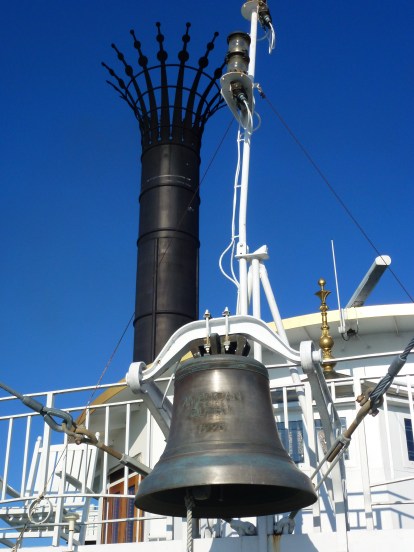
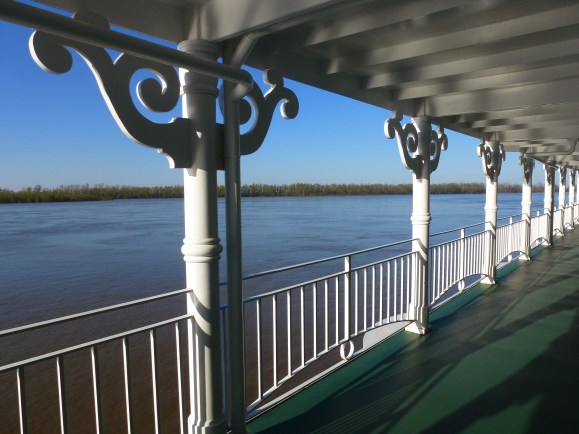
I had never traveled aboard a steamboat before, but it was love at first sight when we set sail on the Mississippi. I thoroughly enjoy strolling back and forth on the decks, exploring every detail; especially when I have my camera in hand. It is so picturesque and fun to explore photographically!

So, take a stroll along with me and explore the American Queen.

5.JPG

6.JPG

7.JPG

8.JPG

9.JPG

10

11

12

13

14

P1080682.JPG

P1080682.JPG

15.JPG