As a graduate of Recreation Administration, from San Diego State University, I have made recreation and travels my career and life’s passion. After graduation, I traveled solo for one year throughout the South Pacific, doing travel photography in a wide variety of settings. Upon my return, many of my photographs became the subjects of my newly created line of handcrafted photographic greeting cards, "Exquisite! By, Elaine", a business I have had since 1986. Check them out at: http://ExquisiteCards.fototime.com .
In 1983, I began teaming up with my mom, Goldie, teaching arts & crafts to cruise ship passengers, aboard Princess Cruises and Royal Caribbean. In addition, I lectured on travel photography, as well as Australia and New Zealand history, aboard Princess Cruises.
In 2004, I formed a new teaching team with my recently retired husband, Bruce, who serves as my "humble assistant" until 2010 when the cruise lines shifted the arts and crafts program to mostly being taught by their own staff.
Currently, our favorite mode of travel is by river boat. Along the way, we enjoy poking around small European towns, meeting the people, seeking out interesting photo subjects, and always stopping at every chocolatier to make a purchase. Adding to my chocolate label and wrapper collection is a bonus! And, as a U.S. Masters swimmer, if I can find a pool to get in a swim with the locals, all the better!
Cheers!
Elaine-iaK
~ Believing in your dreams can be far more rewarding than living by your limitations~ -Karla Peterson
Given the choice, I would rather visit a museum showcasing crafts rather than fine art, whether they be of ancient peoples or contemporary. My favorite Smithsonian Museum in Washington, D.C., at the time of our visit was the Renwick Gallery, which featured American crafts from the 19th century to the present. It was fabulous!
My eyes lit up when we stepped into the Edge of the Cedars State Park Museum, in Blanding, Utah. It has the largest collection of intact Ancestral Puebloan pottery found in the Four Corners region of the U.S. as well as archaeological sites and repository.
Ancestral Puebloan is the term for an ancient American Indian people—the people who were here first in this country. The modern Pueblo Indians of New Mexico and Arizona are their descendants.
The 1906 American Antiquities Act made the unauthorized removal of artifacts from public land a felony. The 1979 Archaeological Resources Protection Act (ARPA) specifically made the removal of artifacts or damage to archaeological sites on public lands punishable by fines or imprisonment. The laws recognize the significance of our nation’s cultural heritage sites and the value in preserving and protecting them. Two great laws!
Unfortunately, these laws have not stopped people from looting priceless ancient artifacts from this area. More crimes covered under the ARPA have been prosecuted in Utah than anywhere else in the United States. Experts estimate that more than 80% of American Indian archaeological sites dating back as far as 17 centuries have been looted.
It was wonderful to be able to see these artifacts up close. The repository was behind a huge glass wall with items lined up and numbered. In front of the room, there was a computer kiosk available where each item could be looked up in the database. I wish I would have had more time to spend reading more about this gorgeous pottery.
(For all pictures, click on the image to see full screen view.)
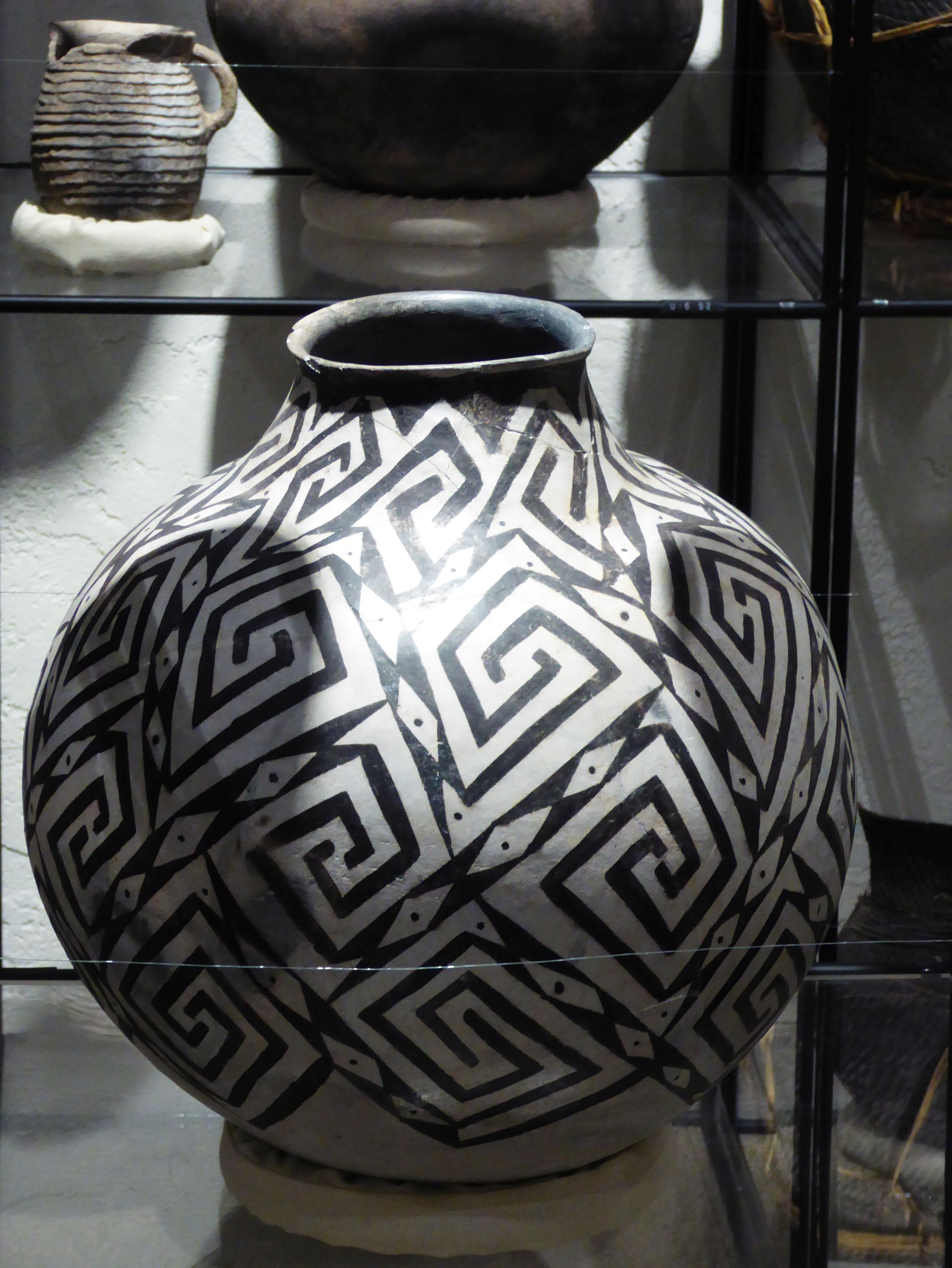
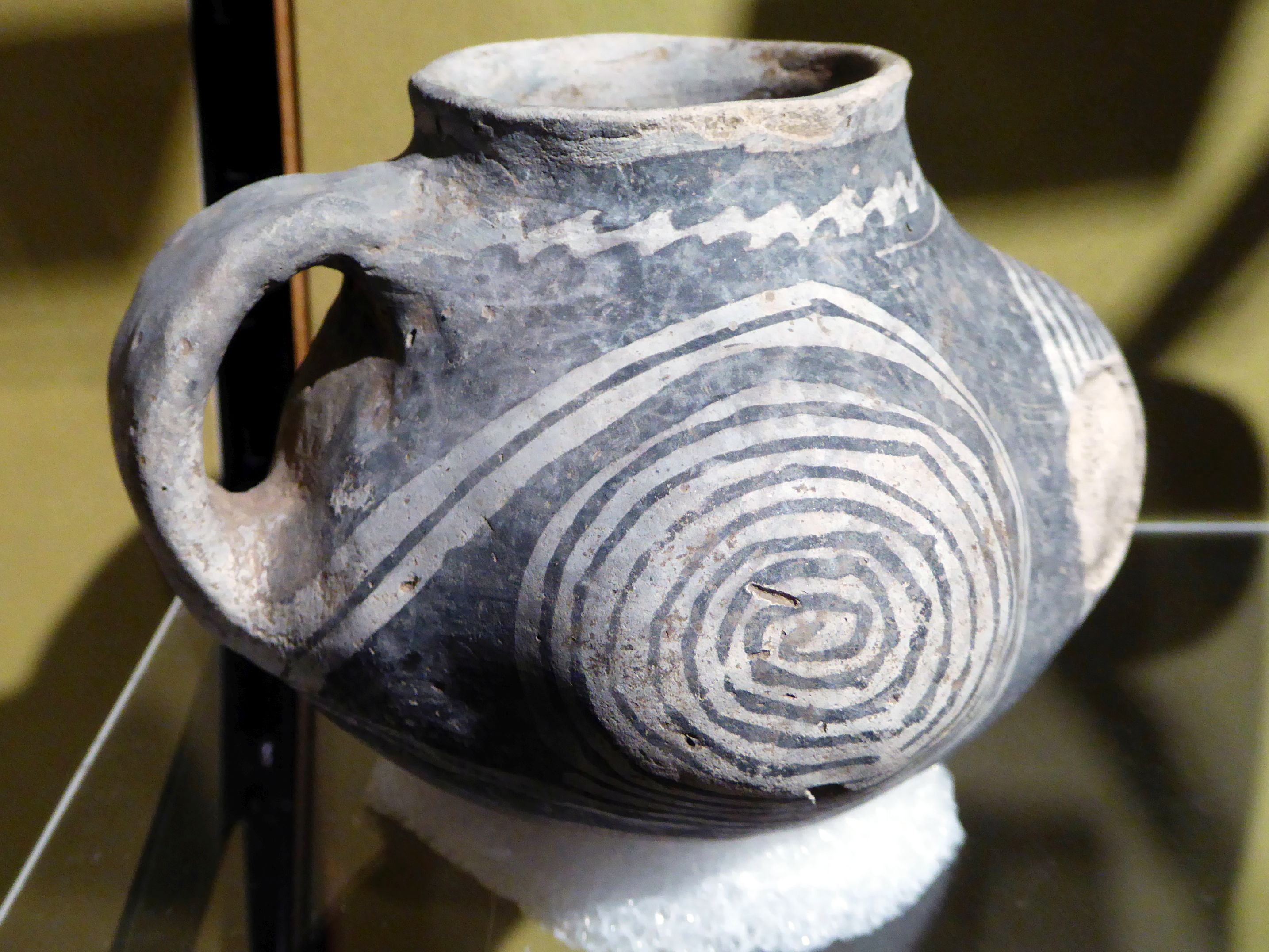
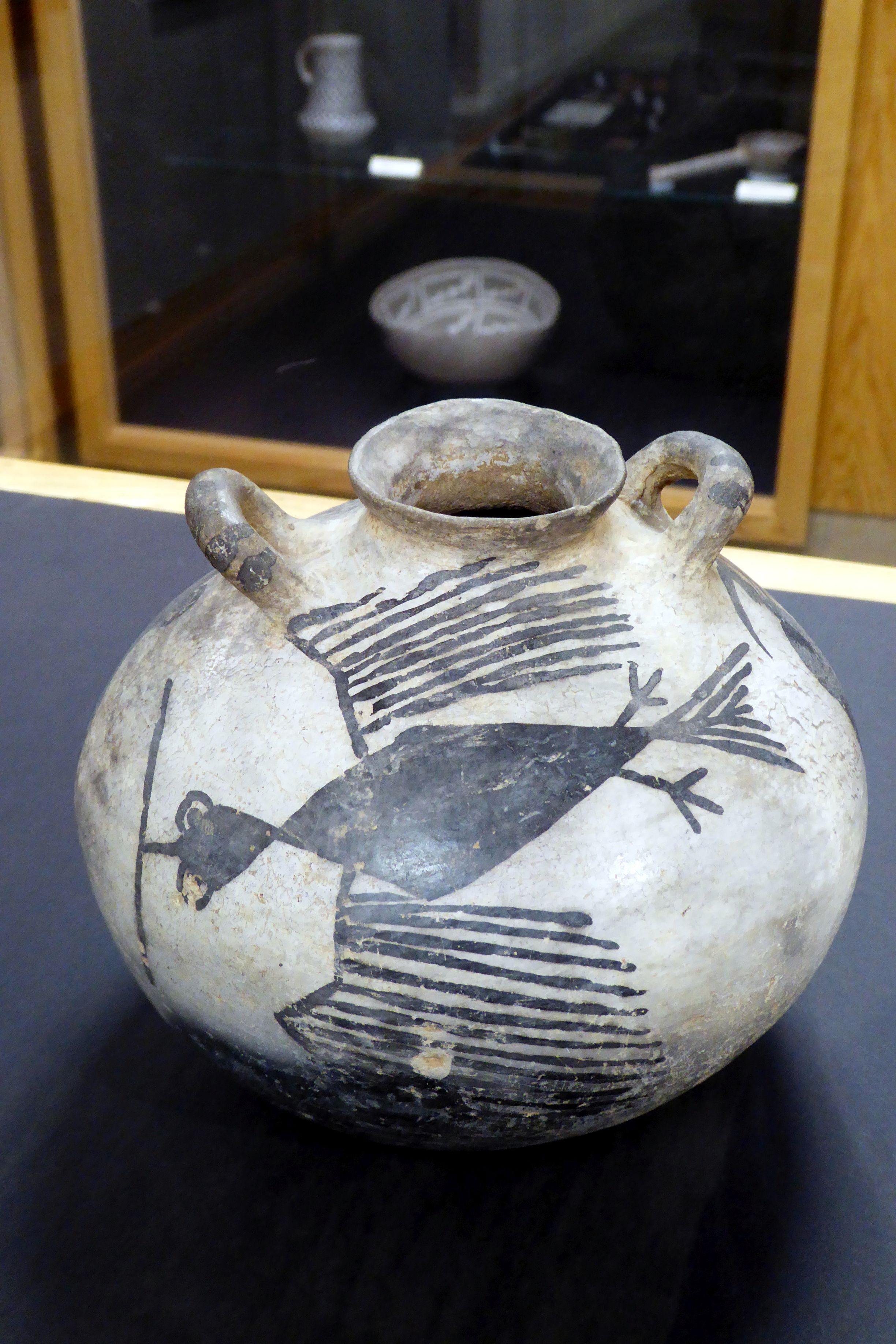
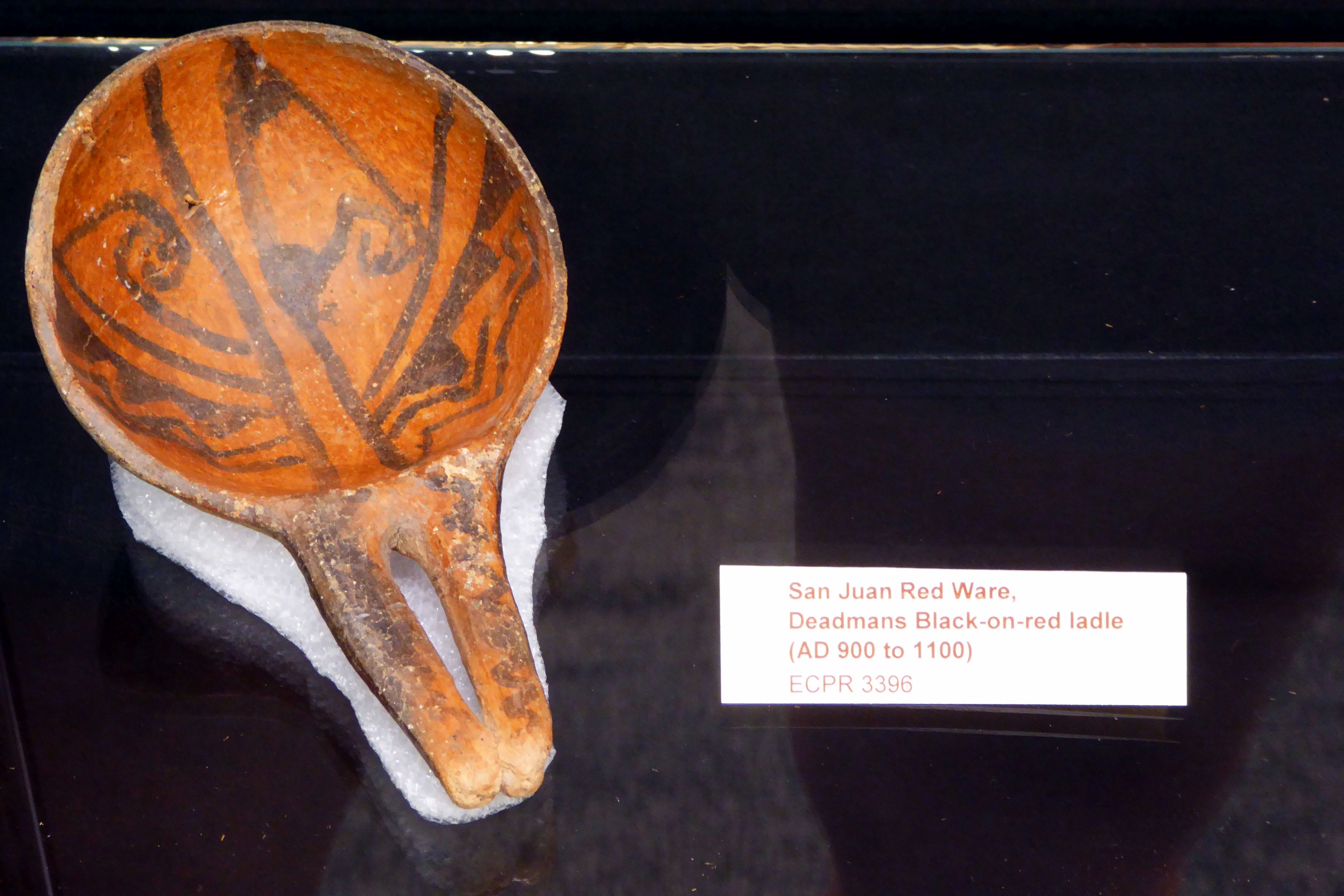
I did learn that all Ancestral Puebloan ceramics were shaped by hand and the surfaces of serving bowls and some jars were decorated with painted designs.
The Kayenta people are best known for finely painted black-on-white or black-on-orange ceramics.
Tsegi Orange Ware
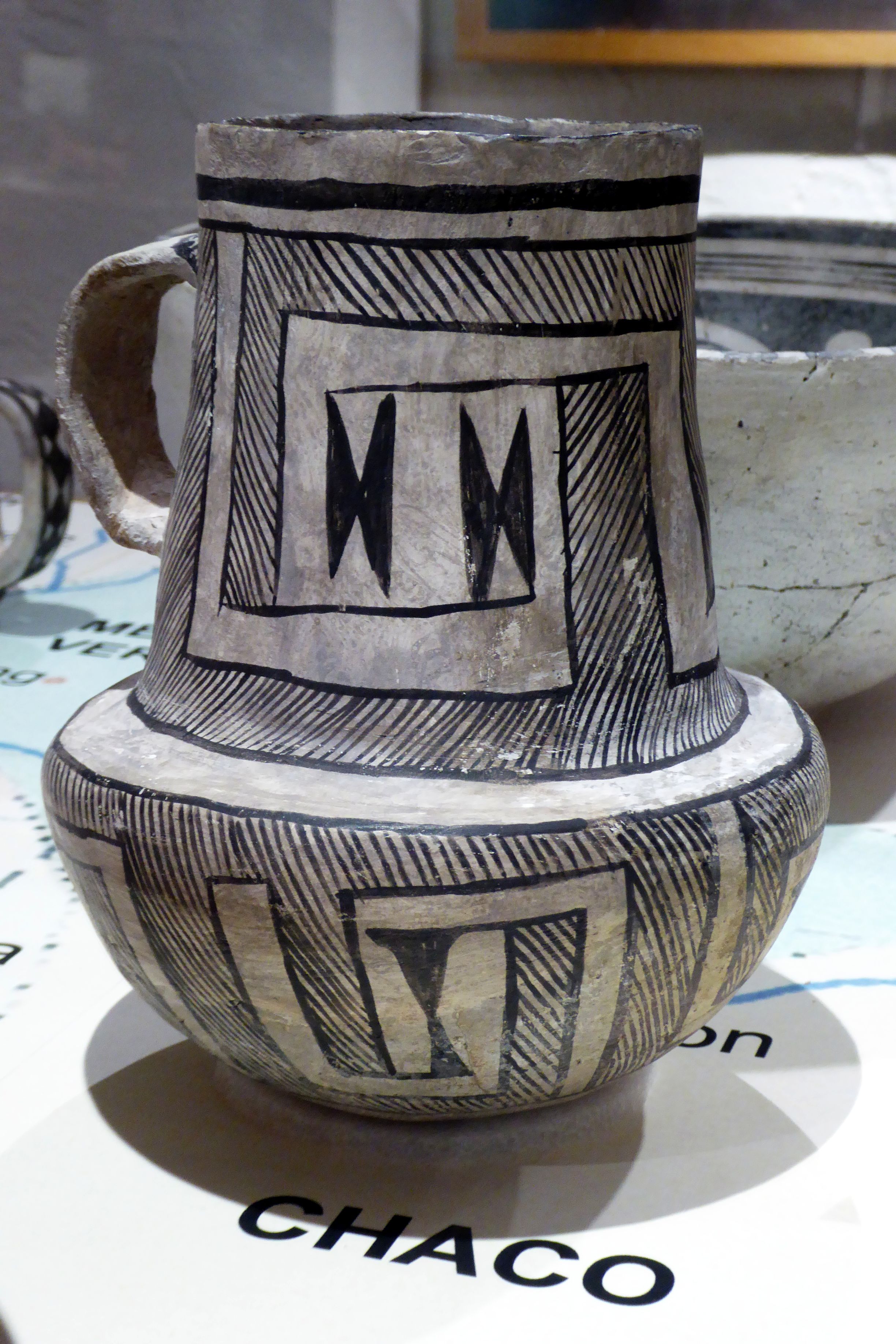
Chaco ceramics are also black-on-white. Their most distinctive style involved bounded fields filled with hachured or parallel lines. Geometric scrolls are common motifs, and curvilinear designs also occur. Cylindrical vases and cylindrical-necked pitchers are unique to the Chacoan style and may have been produced by specialists.
Mesa Verde ceramics underwent centuries of change in design style. The ceramics produced between A.D. 1200-1300 are generally considered the most stylistically distinctive. These are black on white, painted with complex geometric designs.
Mesa Verde White Ware
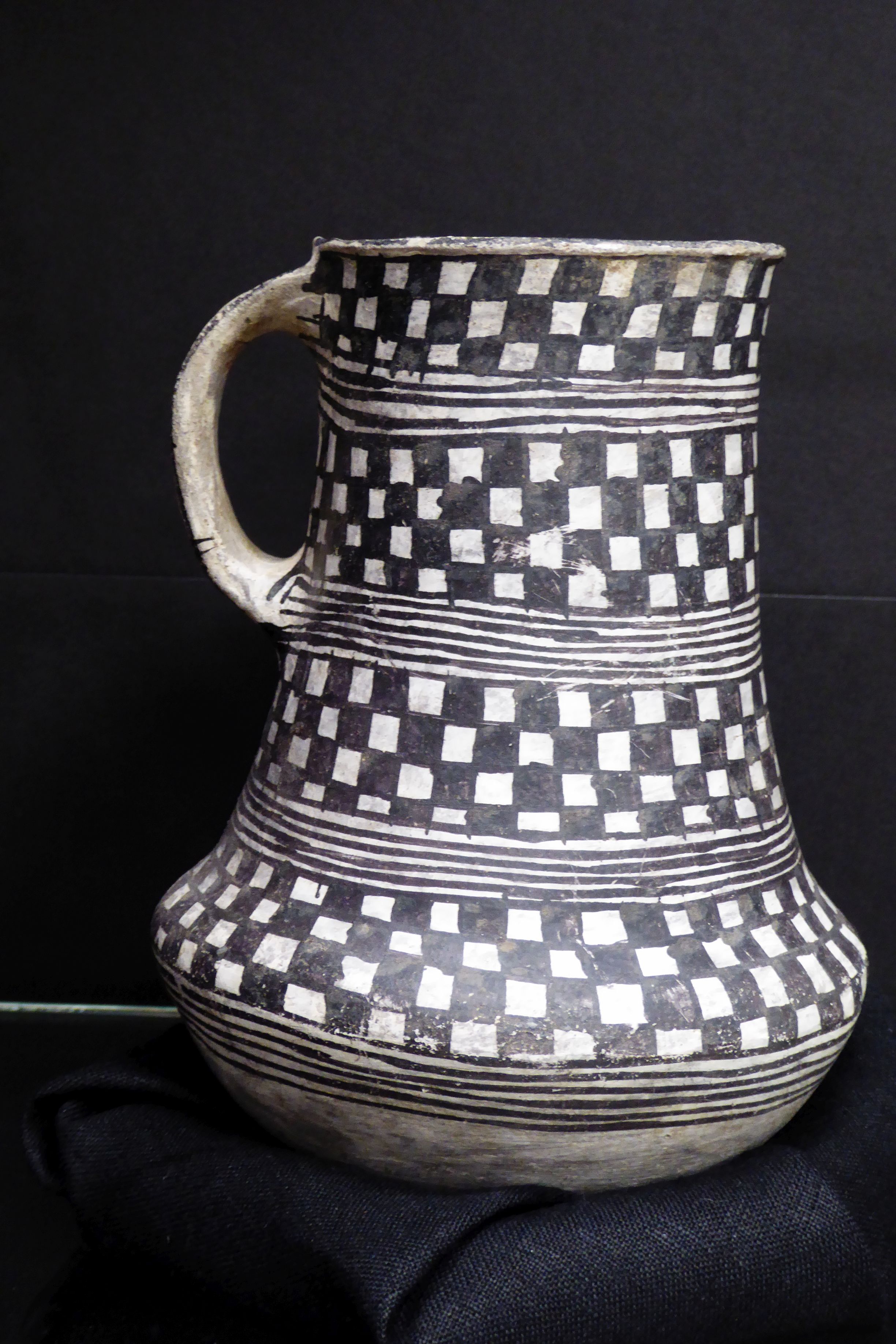
White ware mugs were specific to the Pueblo III period and not made after A.D. 1280
Mancos Pitcher (AD 950 to 1150)
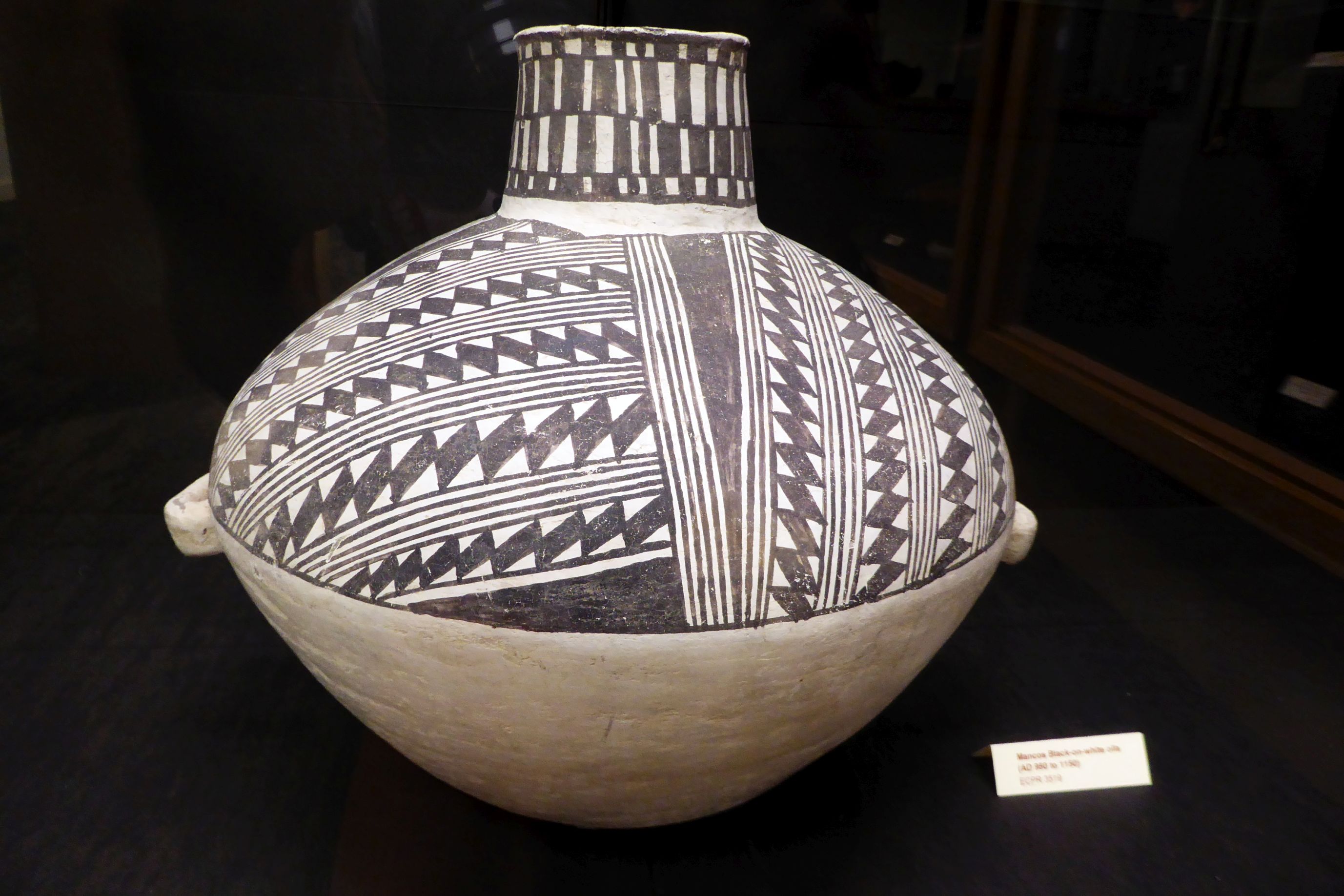
Mancos olla (AD 950 to 1150)
The other artifacts in the museum were also striking. This colorful macaw feather sash really caught my eye. I have never seen anything like it! The technique of using featured cords is known from only a few Basketmaker Period cave sites (A.D. 750-950). Radio-carbon dating confirmed a date of A.D. 1150 for this sash.
The feathers are from the Scarlet Macaw, a parrot native to Mexico, indicating there was trading going on between the Ancestral Puebloan and Aztecs.
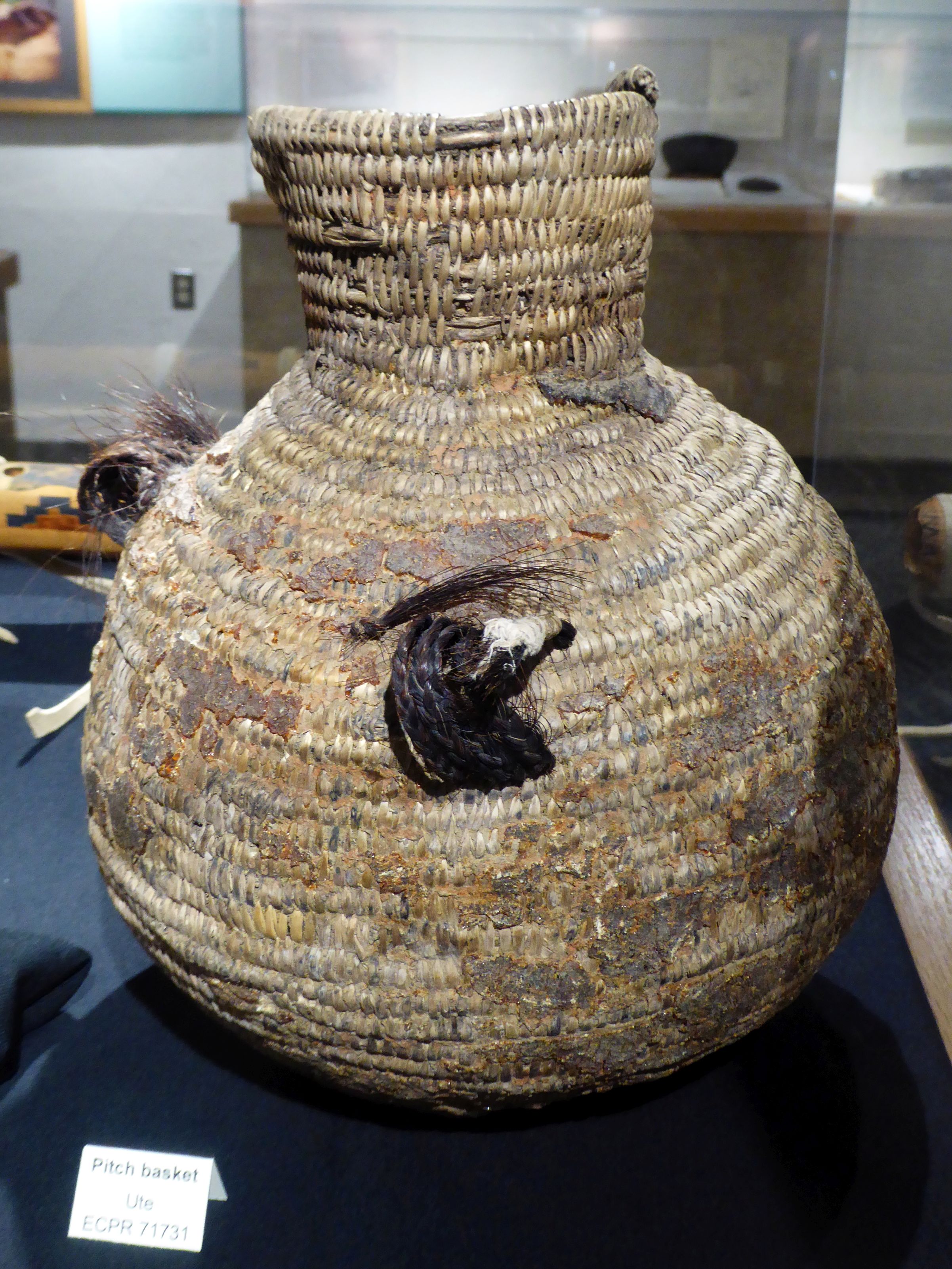
The museum also featured a rare collection of baskets found at a site in Manti La Sal National Forest. It dates back to A.D. 1150, which is amazing, considering the excellent condition of these baskets.
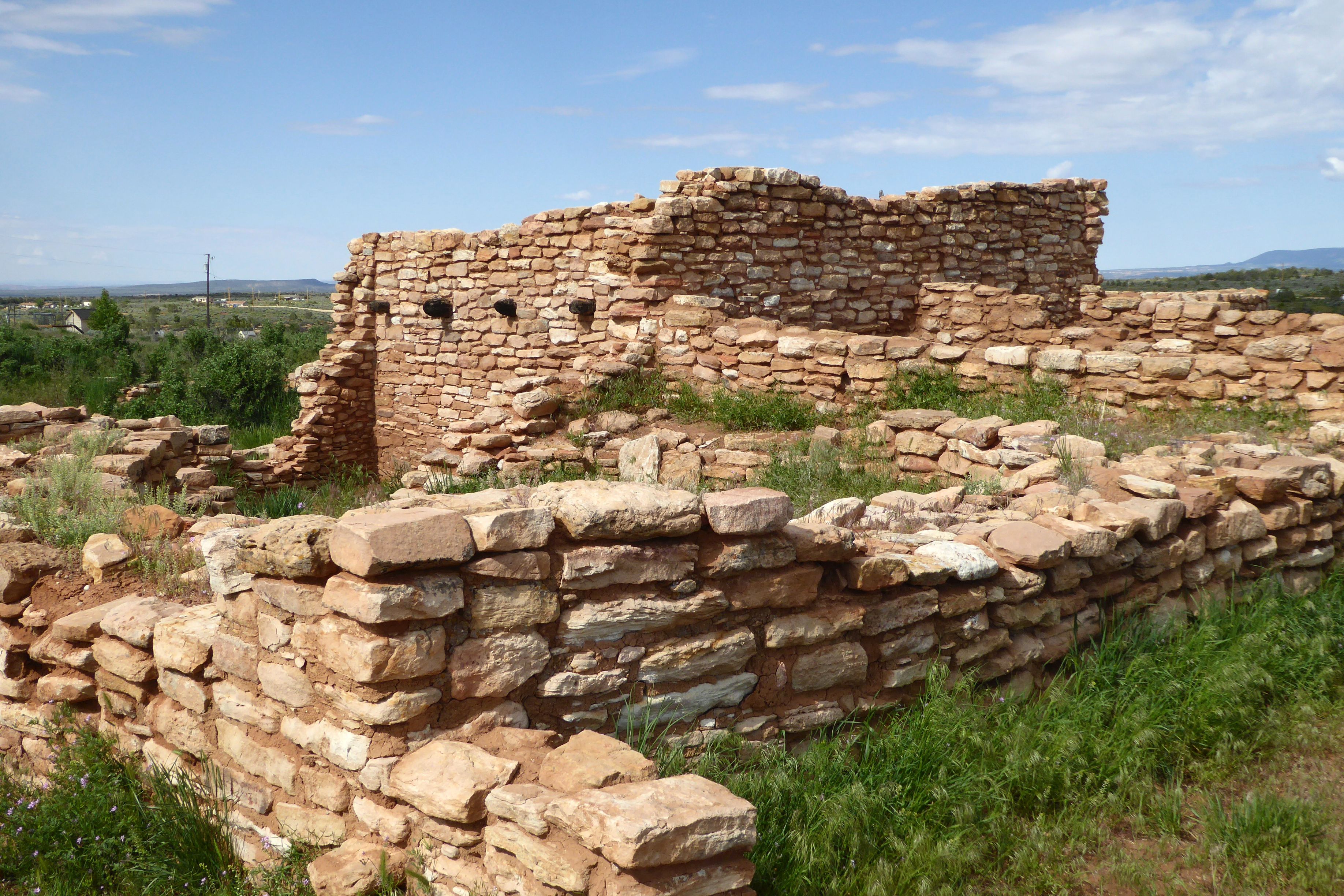
Behind the museum is a Chacoan great House and great kiva, dating back to the 1000’s. The great house was originally a multistory building used by the Chacoan community, and the kiva was a subterranean round room used for rites and political meetings. I climbed down into the kiva to see where these meetings took place so many centuries ago.
I was curious about this:
The sculpture replicates prehistoric archaeoastronomy sites found in the Southwest and acts as a laboratory to chart the sun’s yearly migration. Archaeoastronomy is the study of prehistoric cultural connections with the sun, moon, and stars.
The people who lived at this site may have used solar markers to determine when to plant and harvest crops.
A view from the bus…… and, another view from the bus
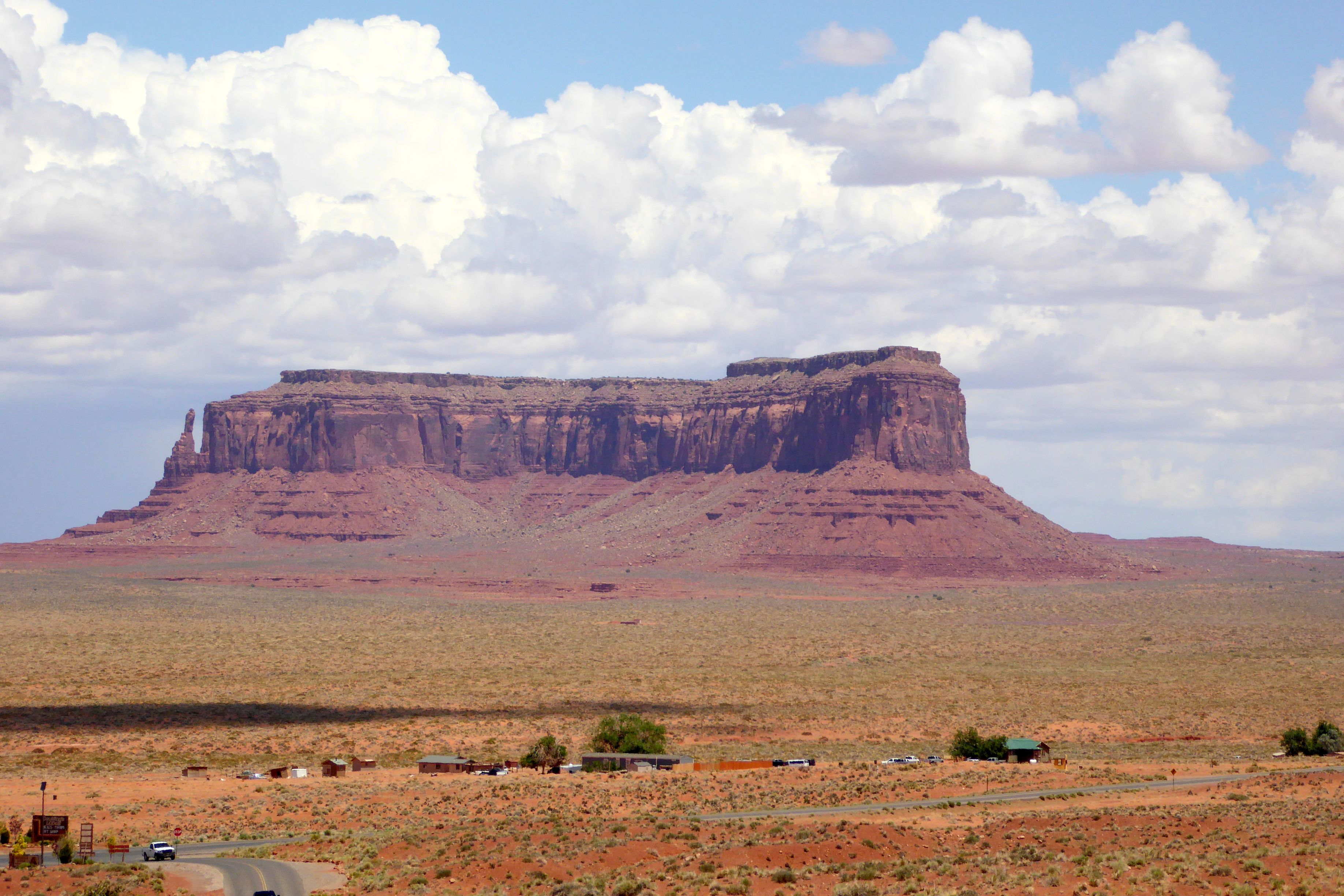
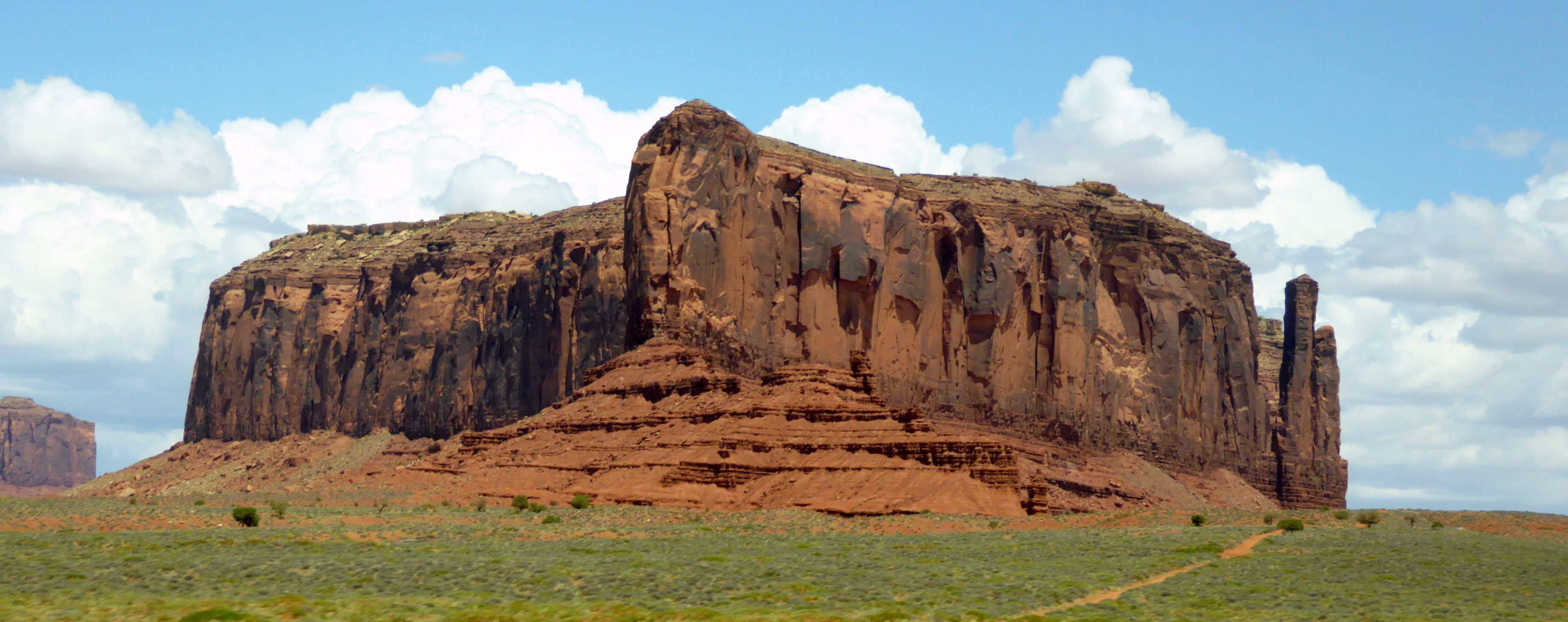
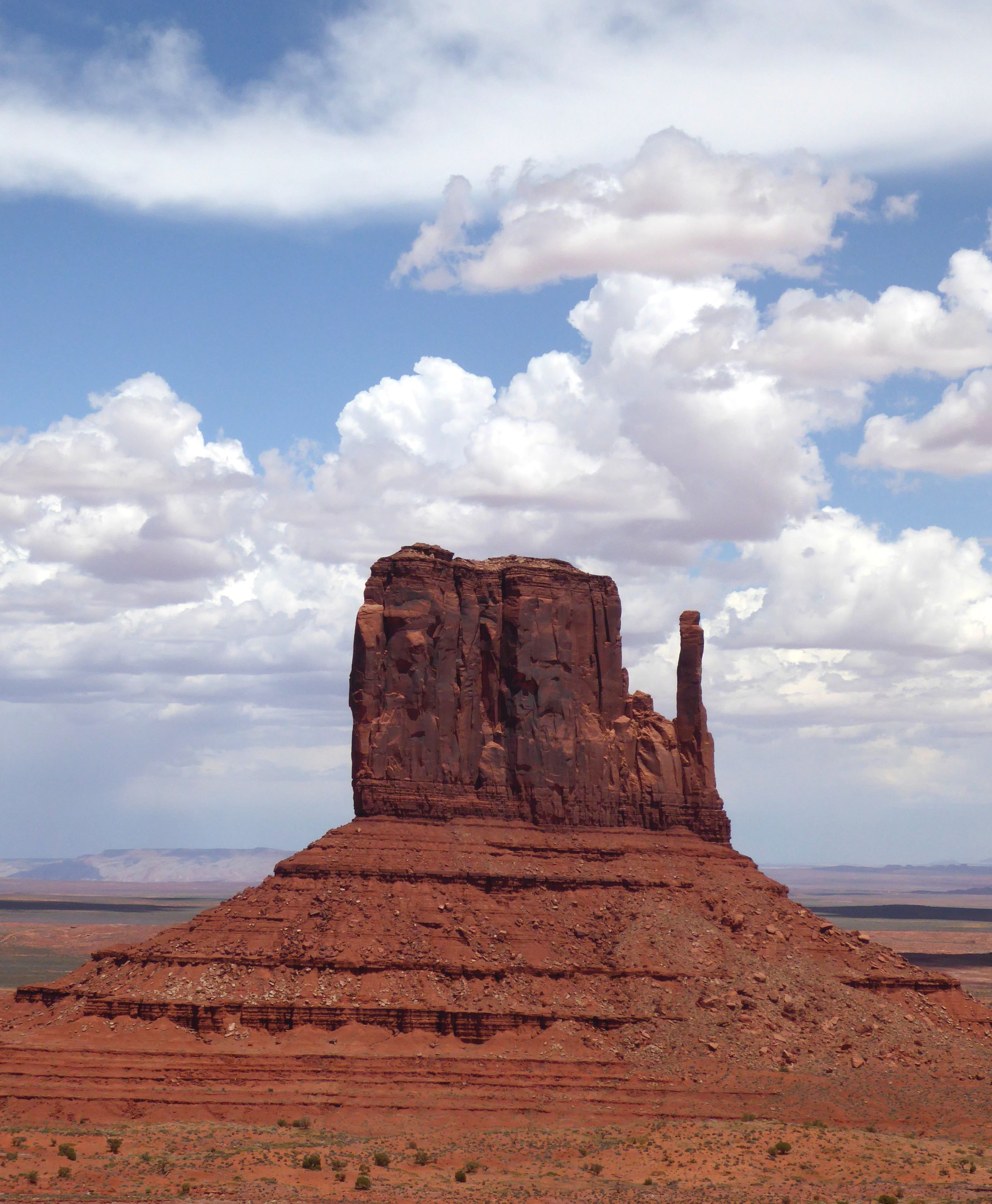
The valley features sandstone buttes that range from 400 to 1,000 feet high. Two of the butters are shaped like mittens, so they are appropriately named Mitten Buttes.
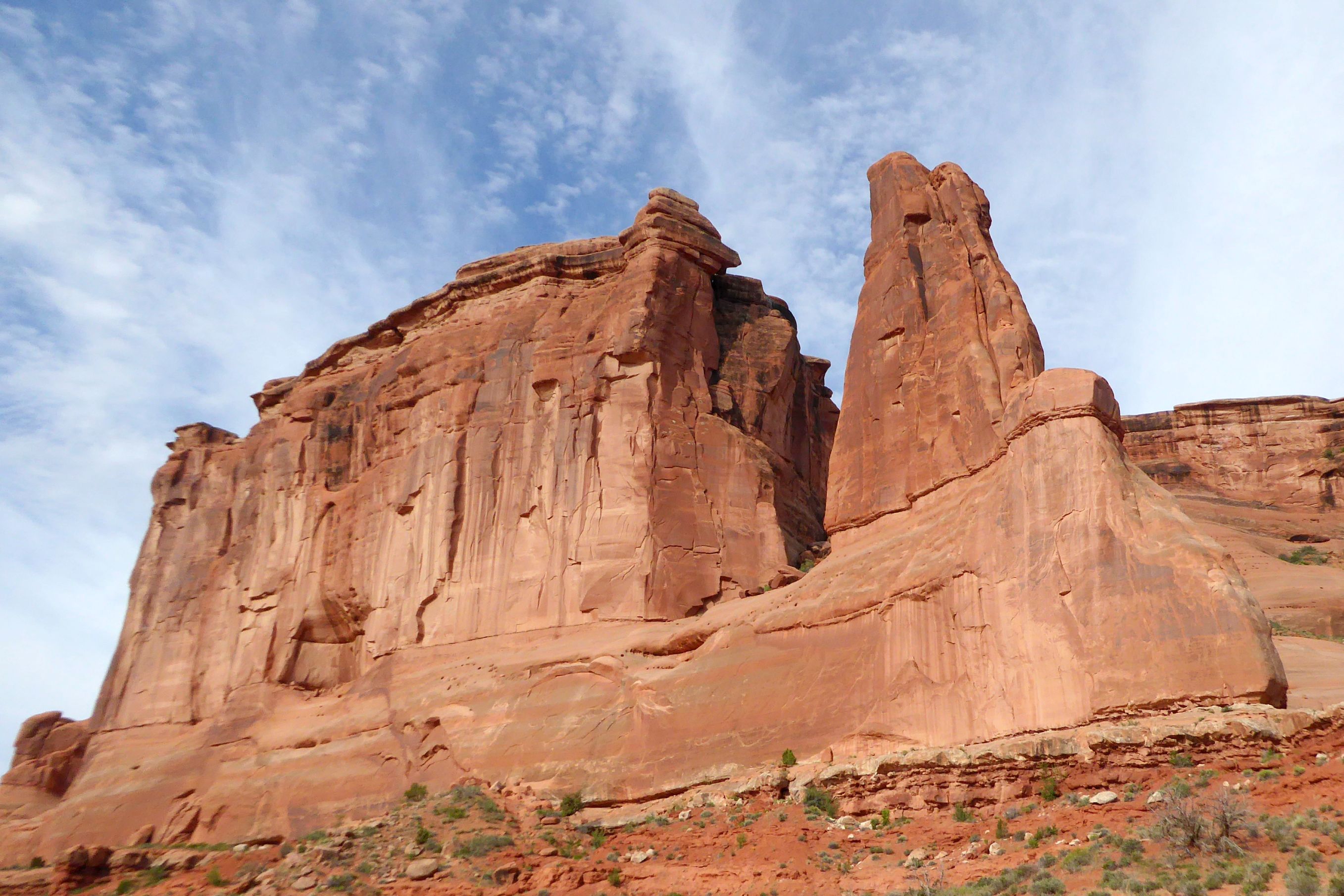
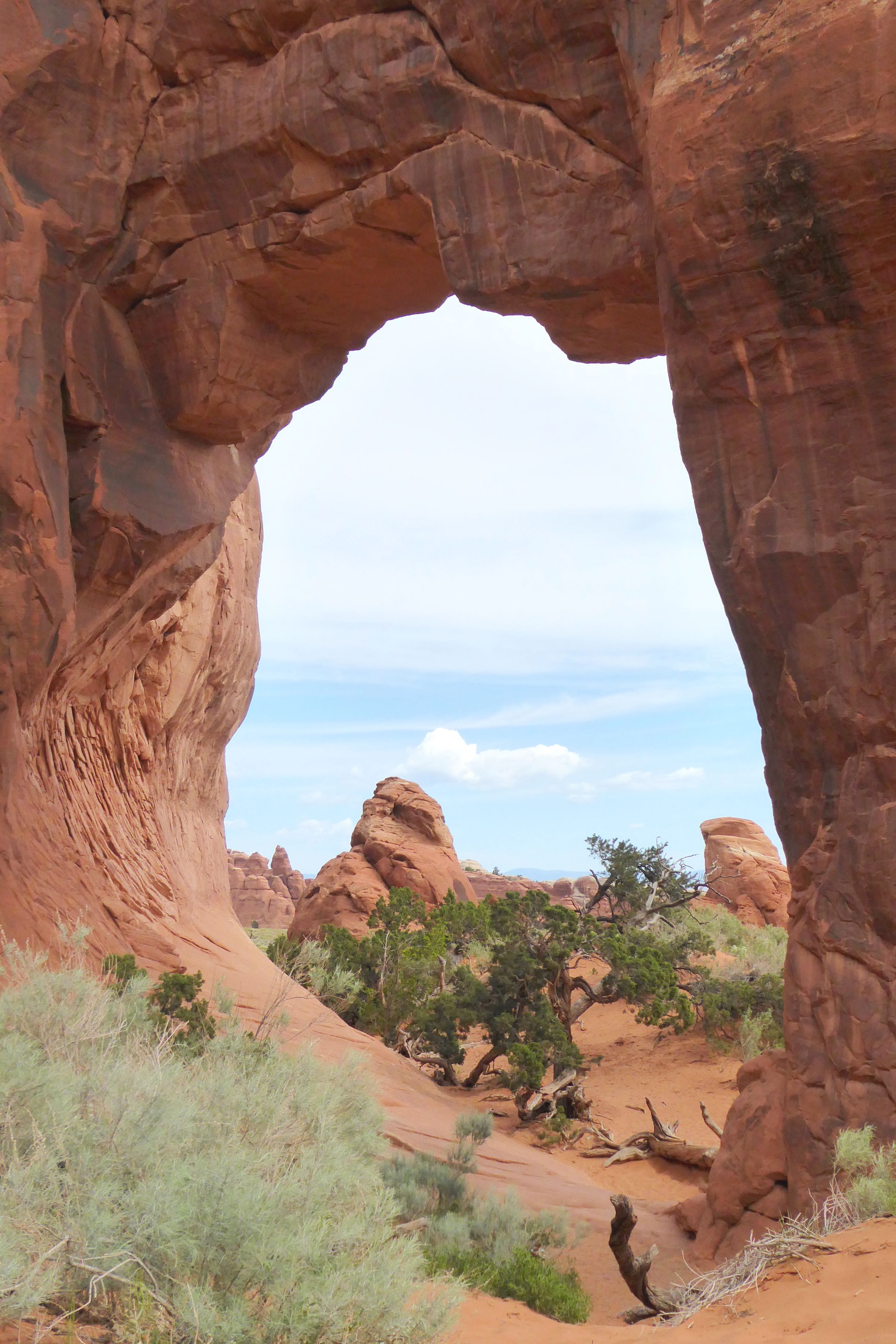
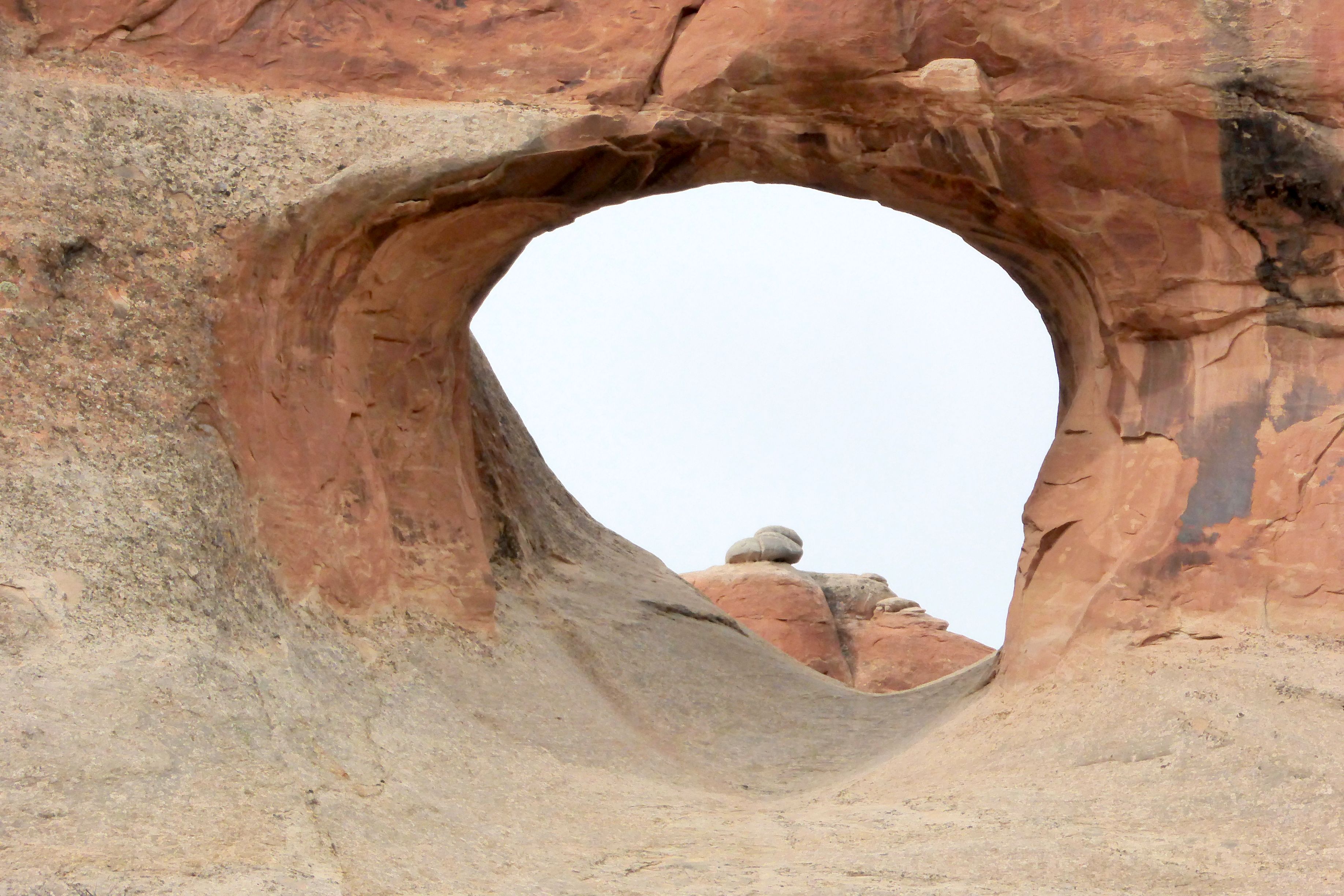
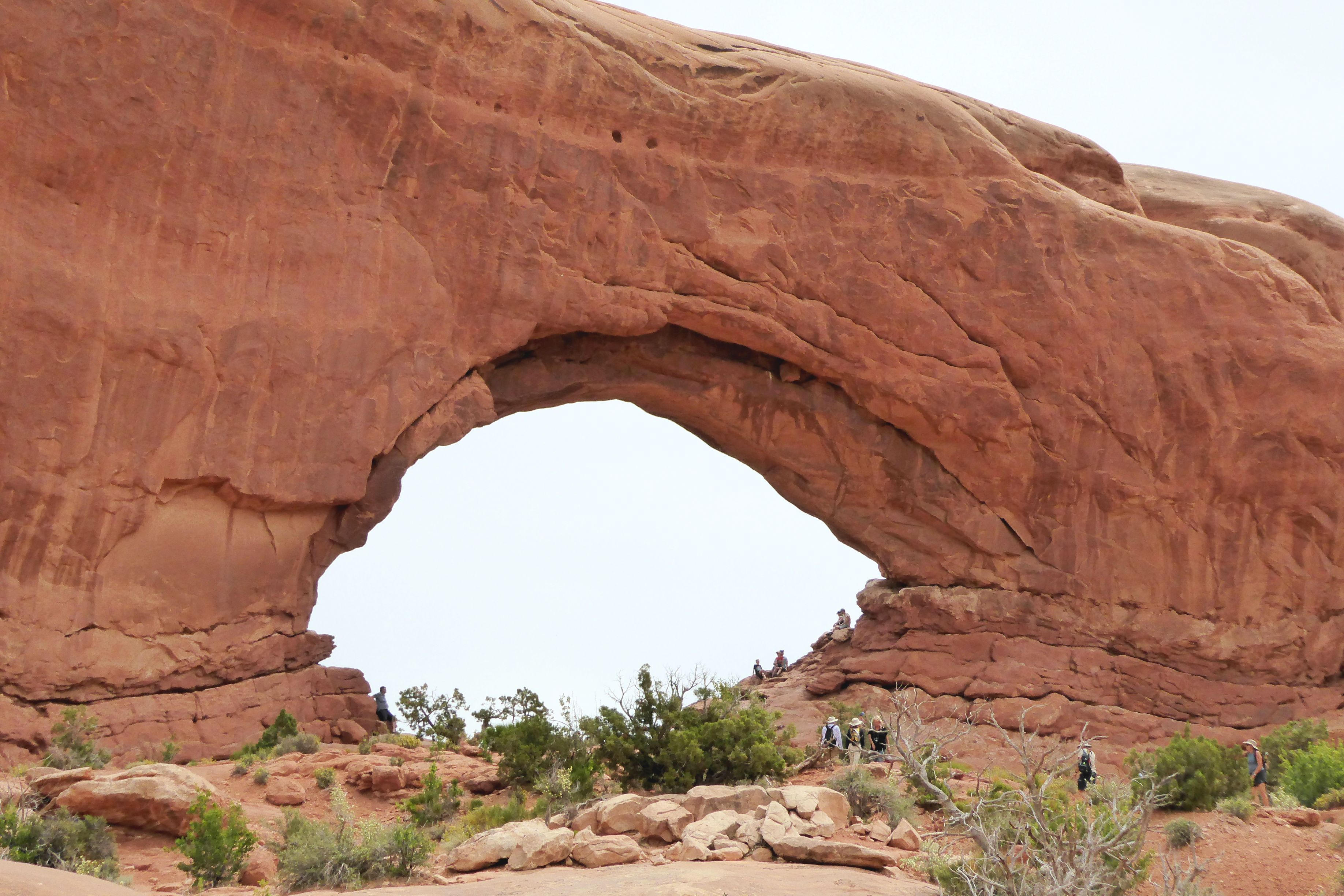
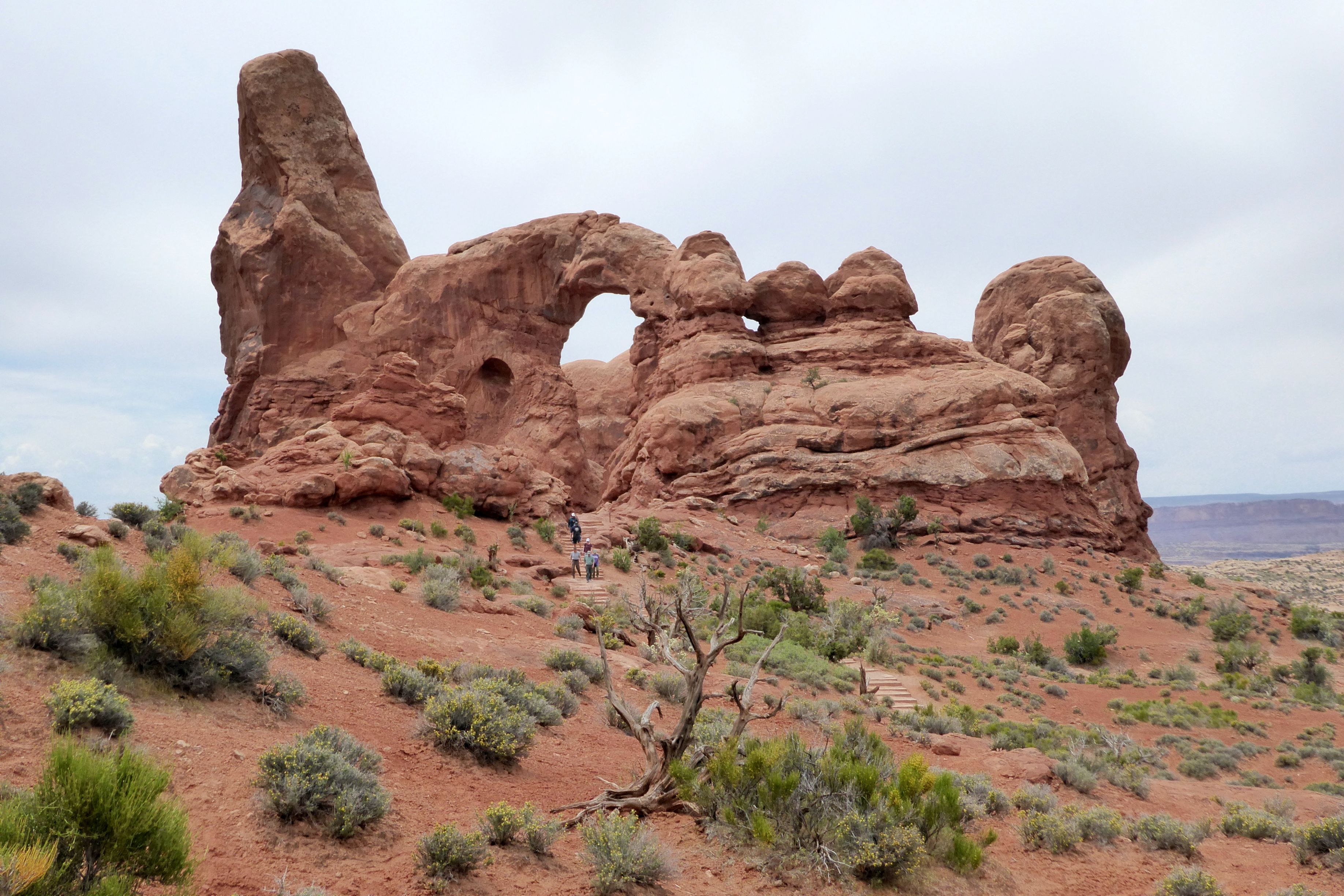
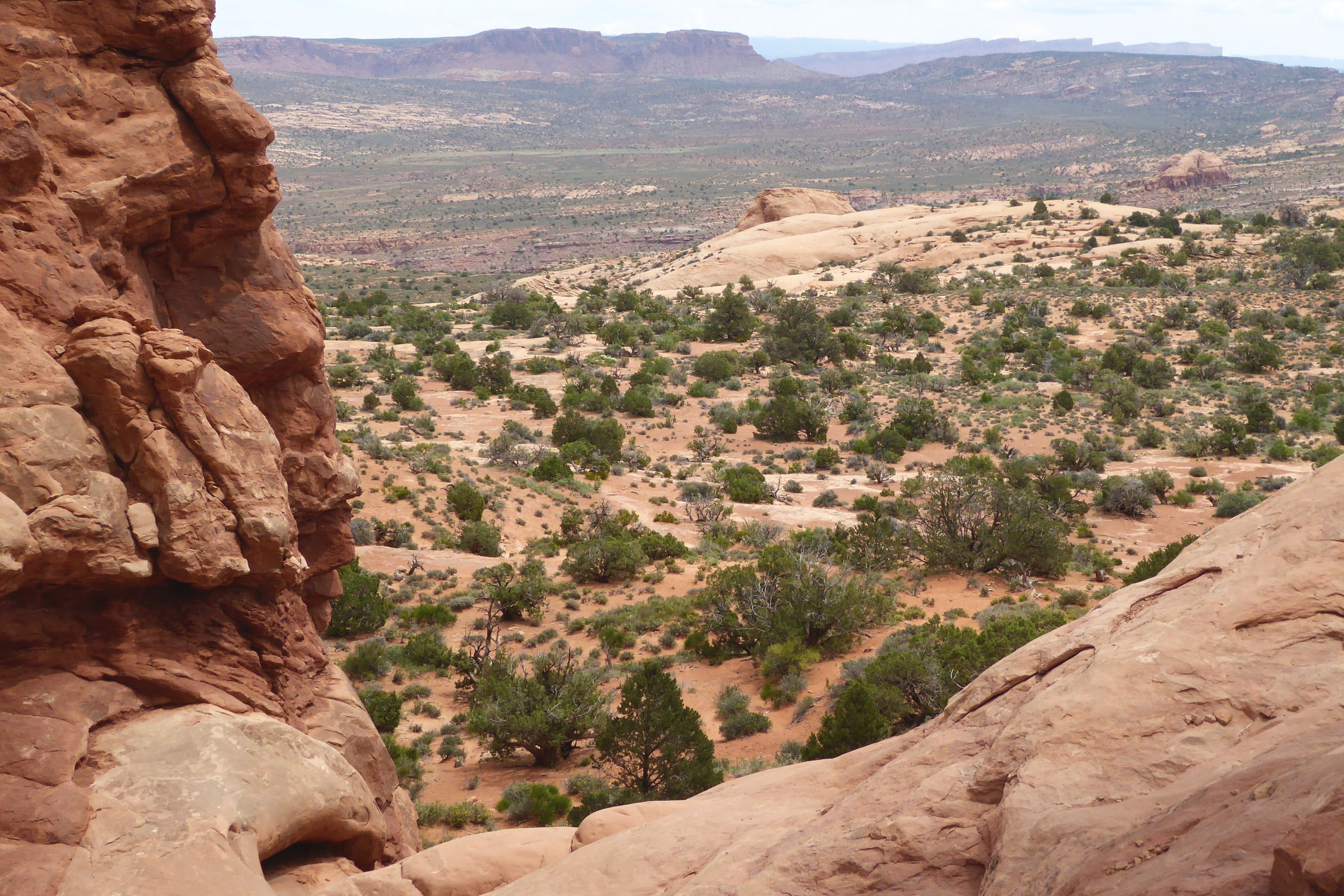
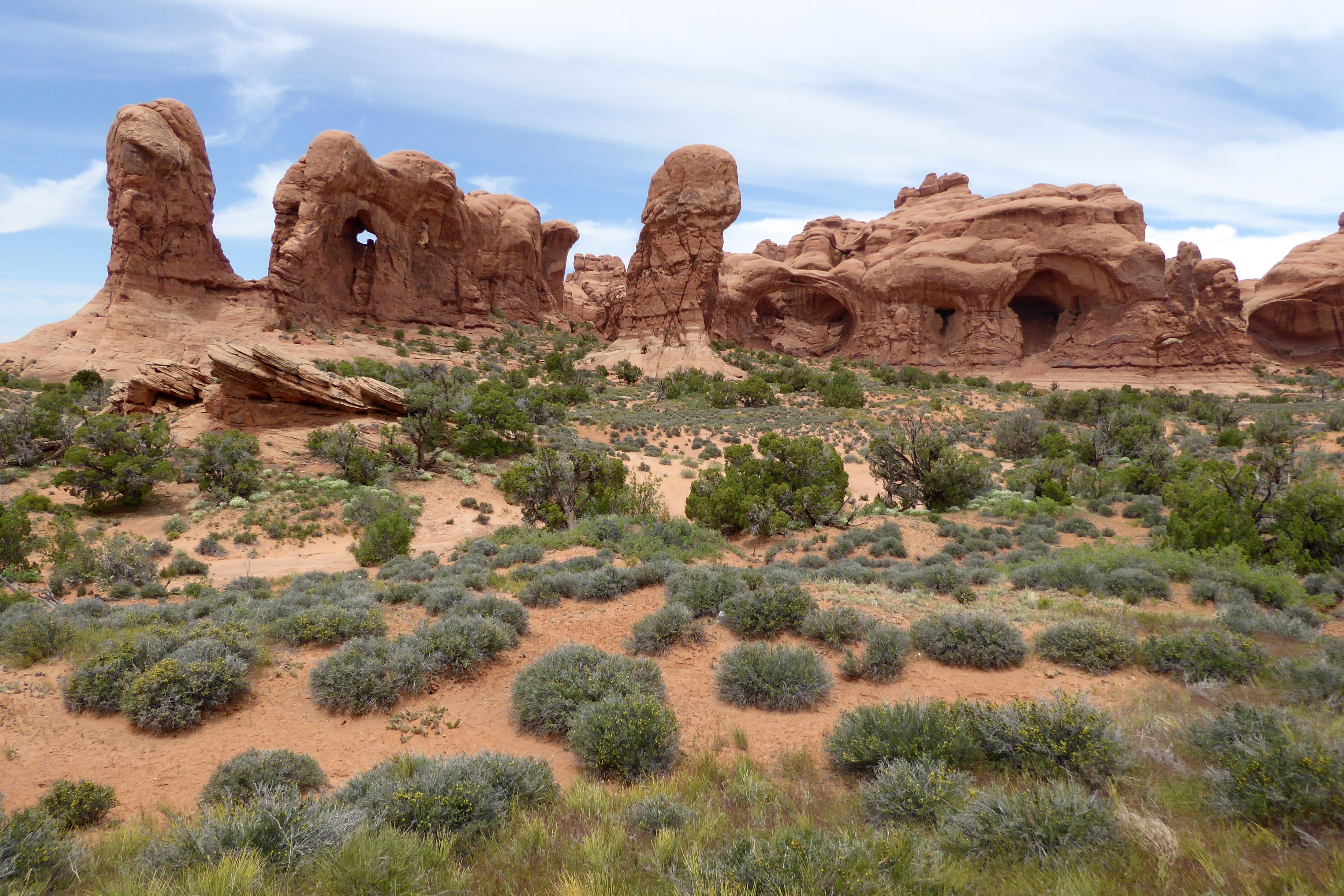
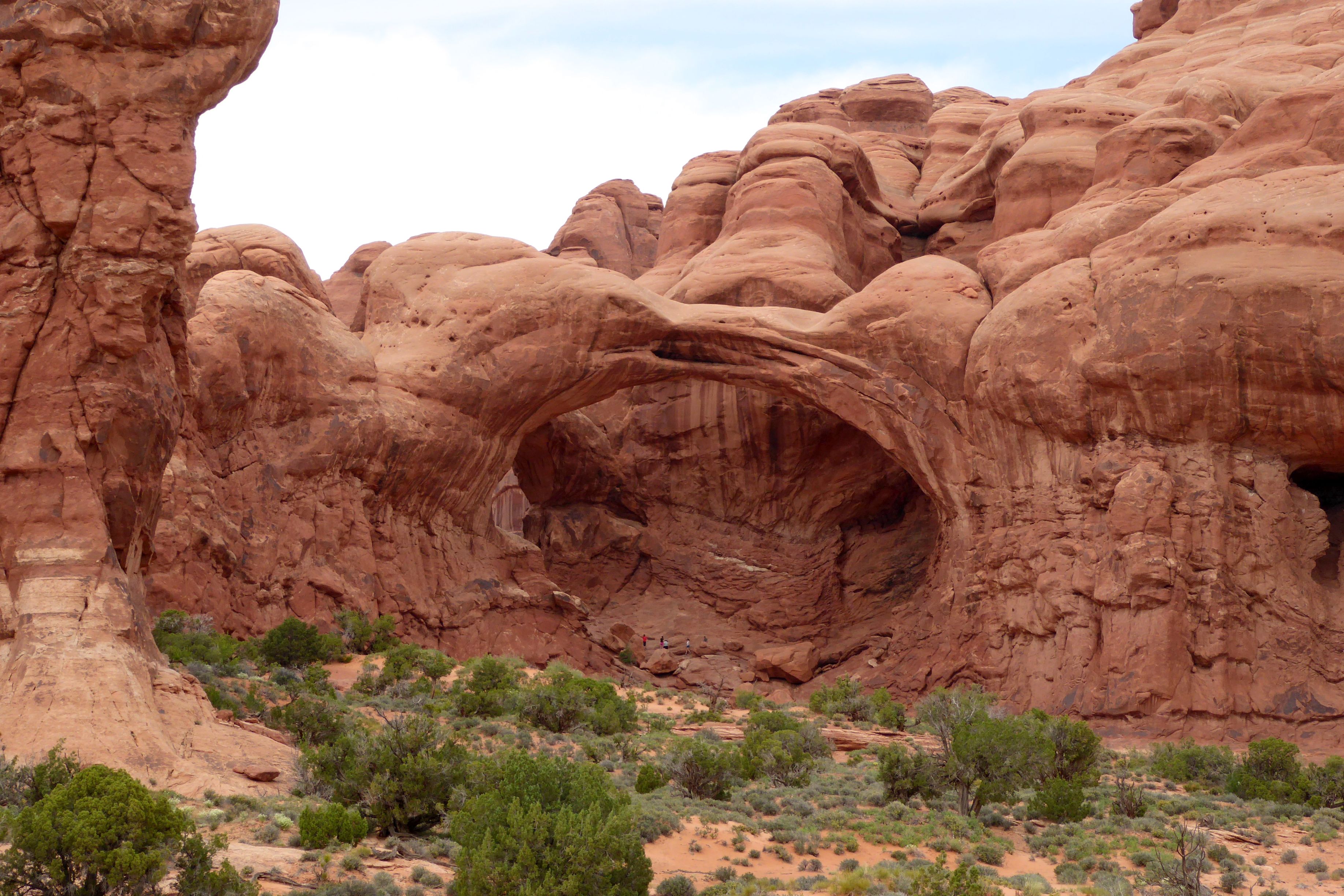
Arches National Parkis one of those places that you have to see in person to really grasp how amazing it is. There are over 2,000 natural Entrada Sandstone arches, in addition to all of the other magnificent rock formations.
This is an easy park to get to; it’s only four miles from Moab, Utah. Get there early, though, because the parking lots fill up fast. We were fortunate to be on a bus and not have to worry about that.
The explanation of how these arches were formed over 300 million years is too involved to explain in this post, but it is quite interesting. Check it out here.
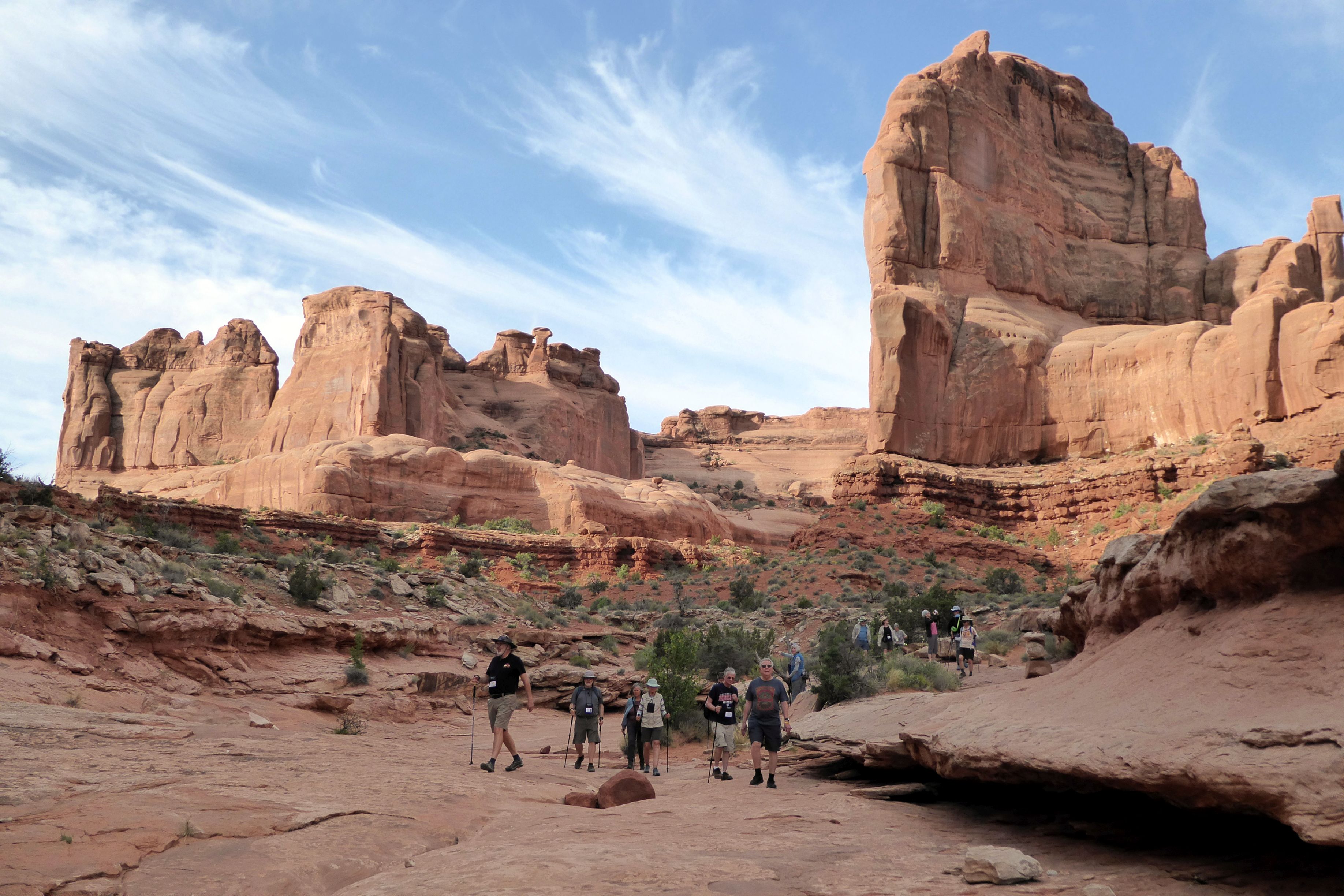
For now, I will just leave you with my favorite photos from the day, beginning with a hike we did on Park Avenue. No, not that Park Avenue!
(For all pictures, click on the image to see full screen view.)
This was the most unique bathroom stop ever! And, yes, it really is carved into real rock.
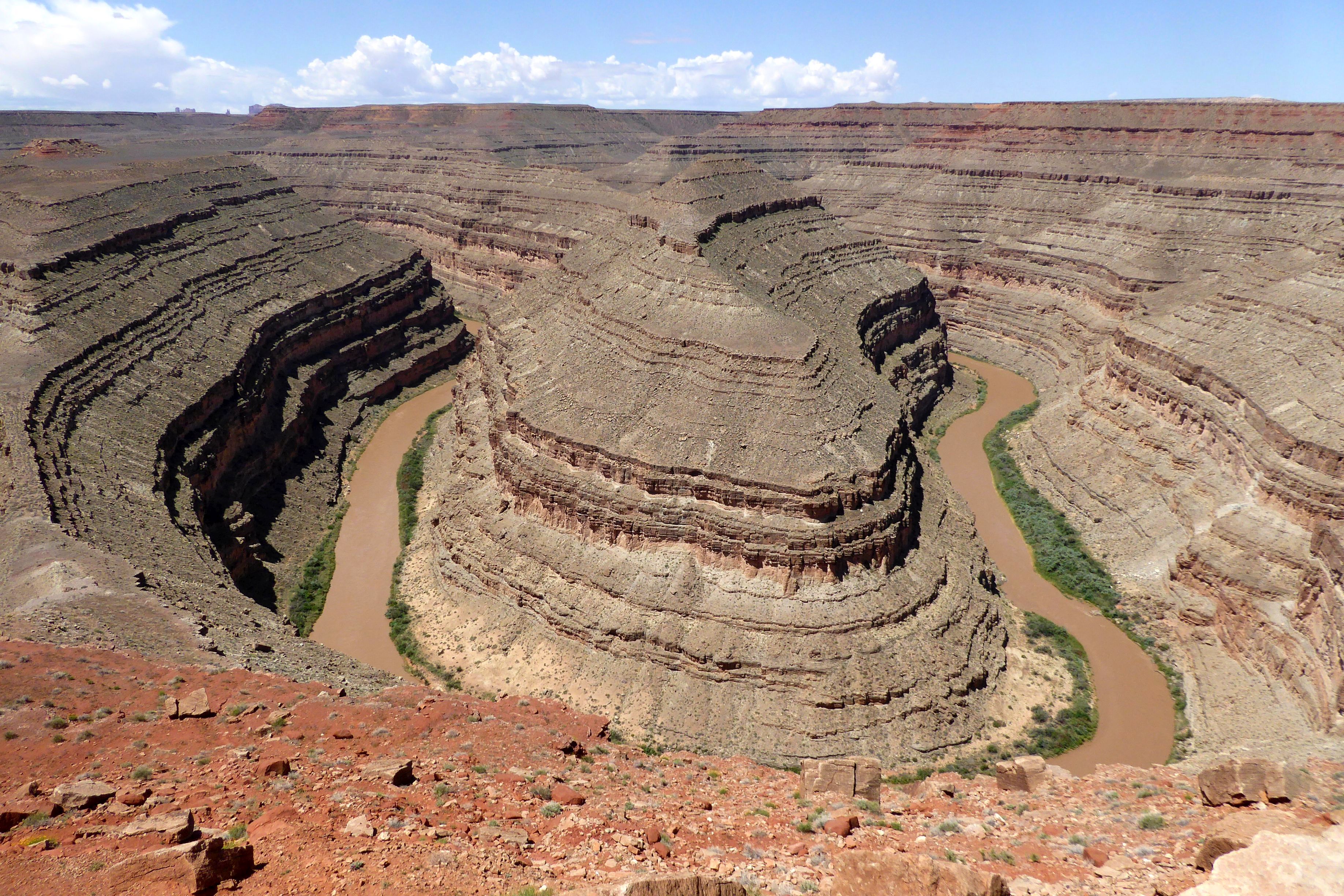
Continuing on our journey, we stopped to see John Wesley Powell Museum, in Green River, Utah. Powell first explored and mapped the area in the 1870’s. The museumis located on the river, and they had a lovely walking path we wandered along to take in the views of the river.
(For all pictures, click on the image to see full screen view.)
Shot from the bus window on the way to Dead Horse Point State Park
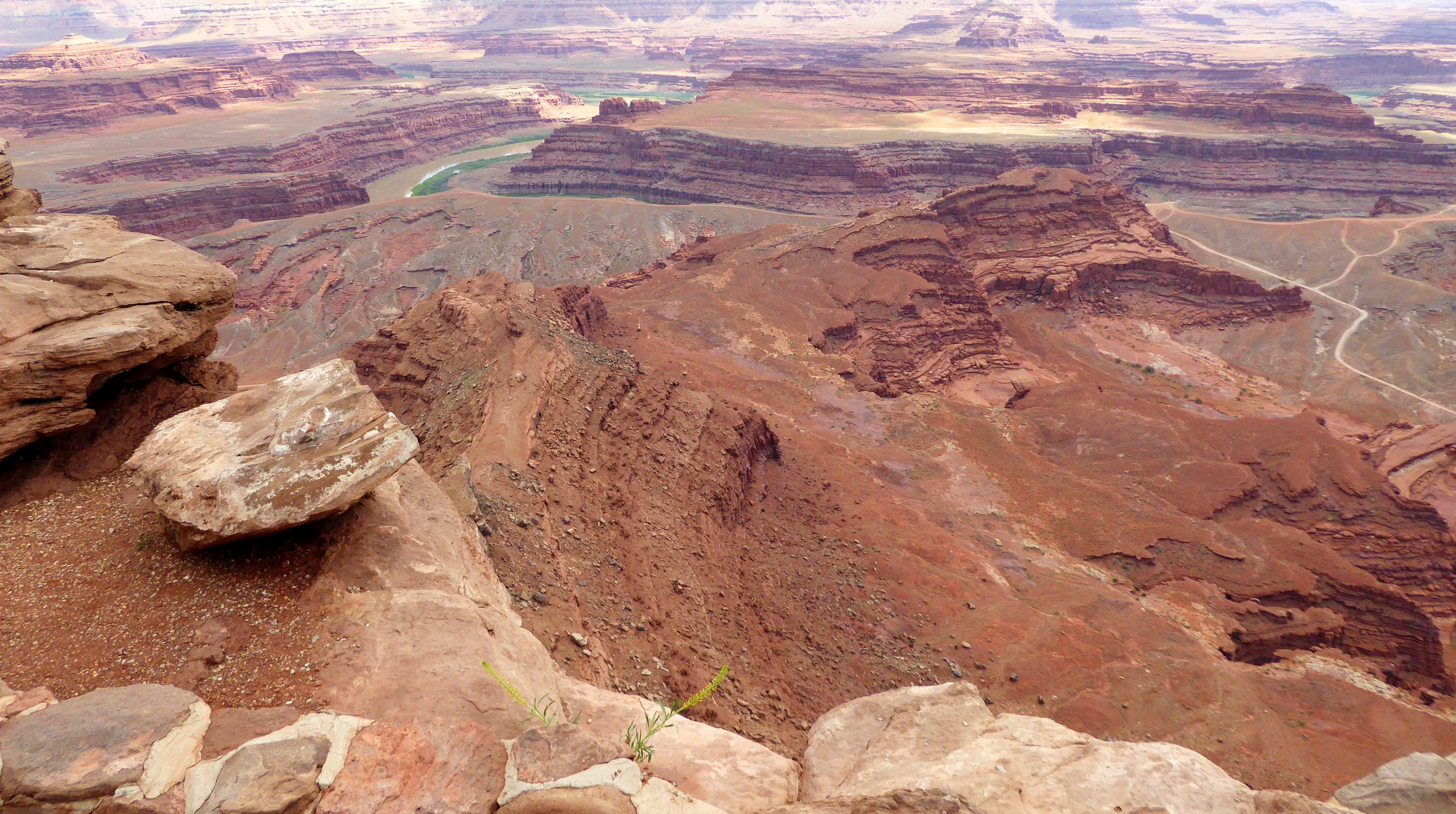
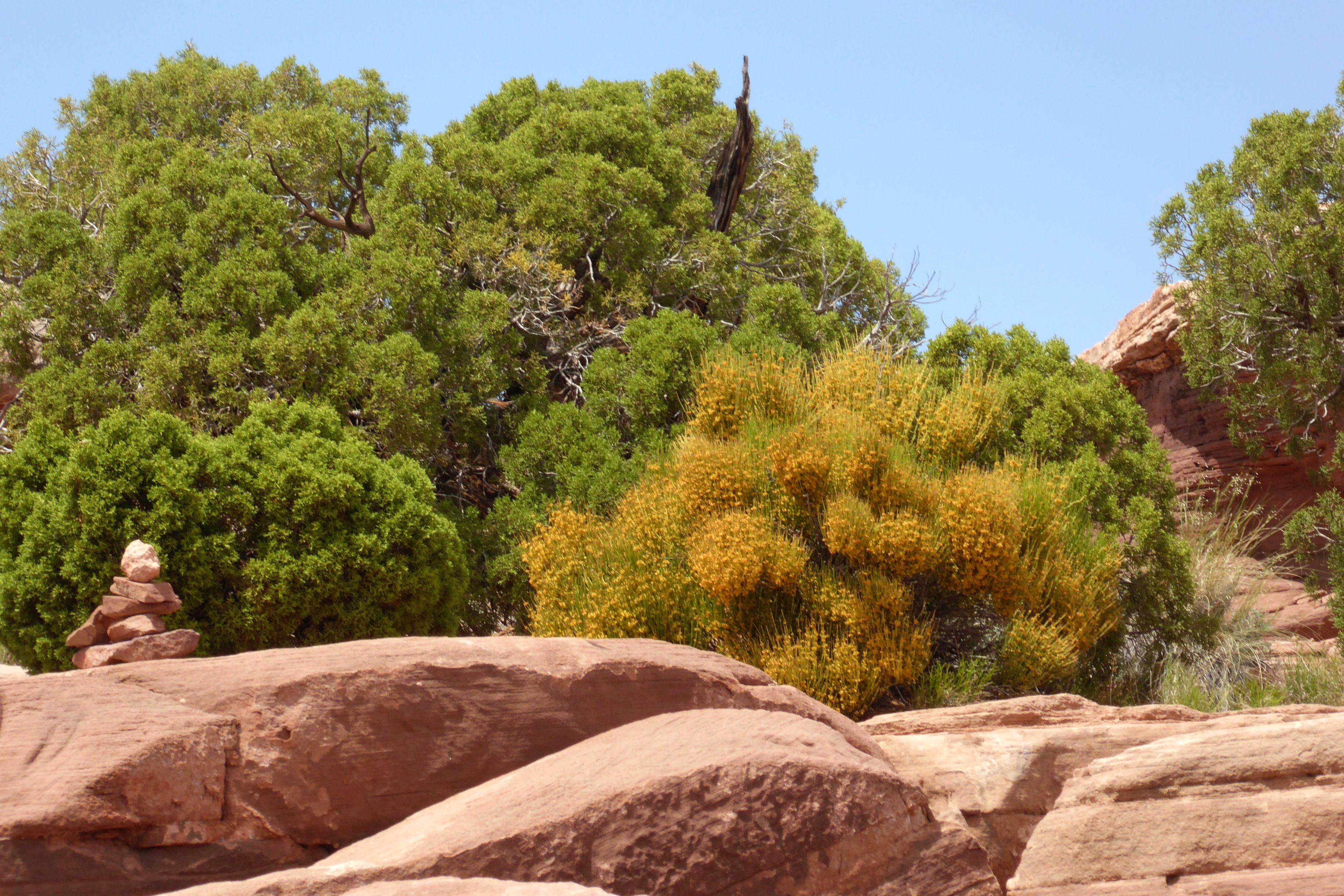
Dead Horse Point State Park was our next stop; and, yes, the “dead horse” was delightful! The park gets its name from a rock formation that looks like a horse, when viewed from up above at a distance. We took in the spectacular views from the visitor center, which had an attractive walking path with beautiful blooming cacti and trees all around.
Can you see the horse? It’s a profile, and the ear is in the upper left quadrant.
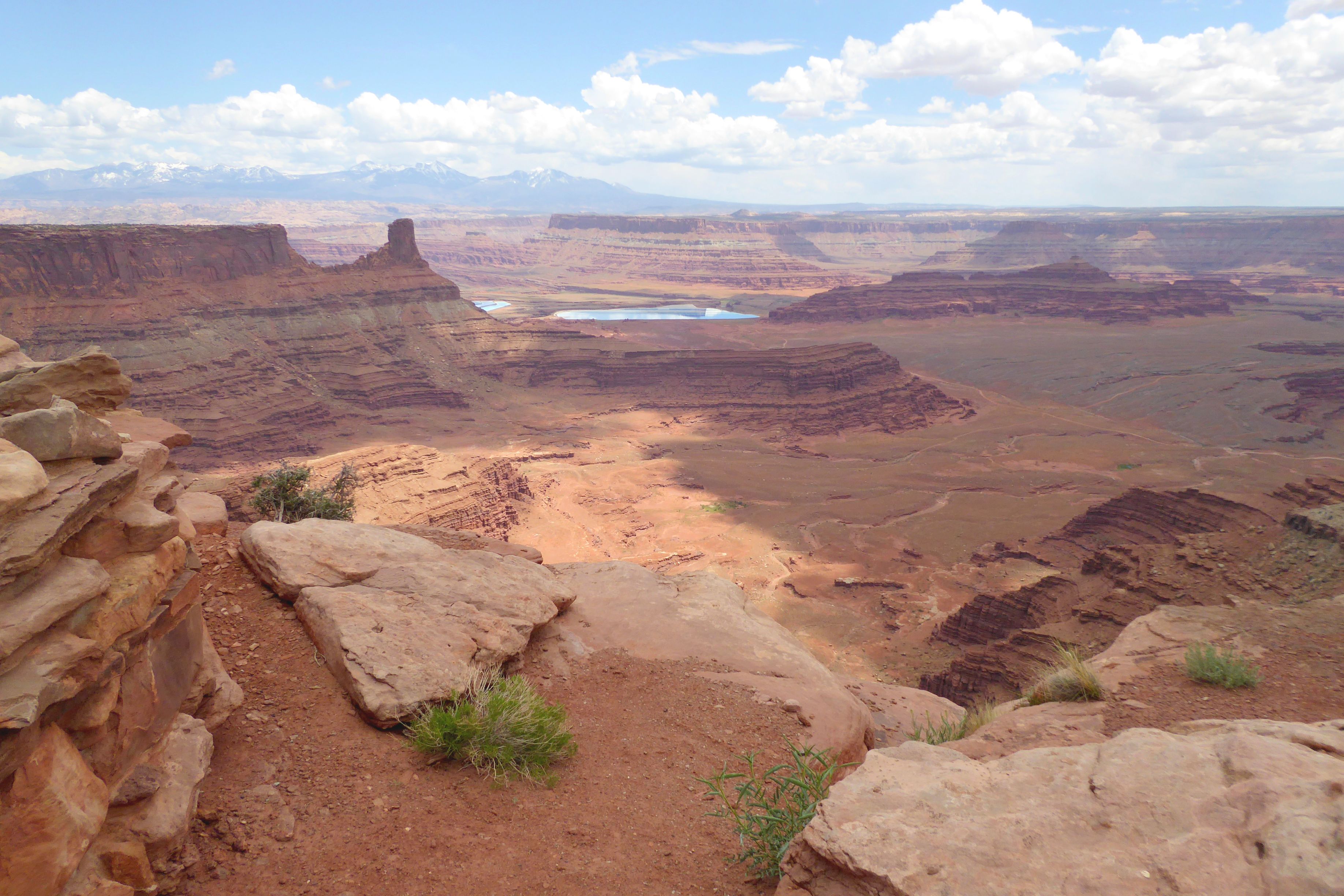
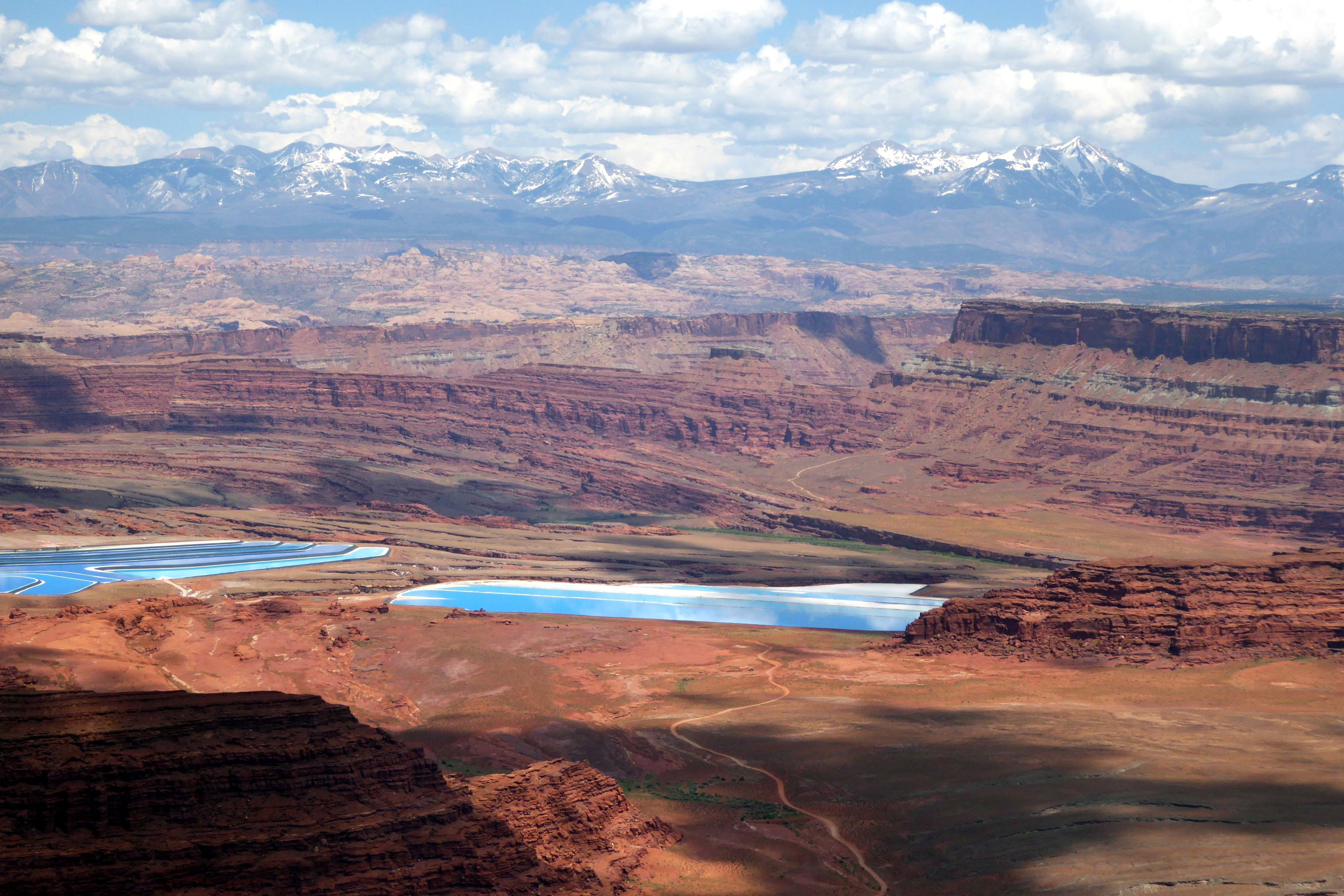
On a clear day, the visibility from the viewpoint can reach nearly 100 miles. It was hazy off in the distance, but we could see snow on the mountain tops. There were also a couple of bright blue pools that seemed completely out of place. They were solar evaporation ponds for a mine owned by Intrepid Potash, Inc. Potash is potassium chloride, a salt found in the Paradox Formation. Salt deposited from ancient seas made up this formation as it evaporated and was buried by other sediments.
Off in the distance, you can see the bright blue pools.
Water is pumped down into the formation to dissolve the salt. This salt water is then pumped into the shallow, vinyl-lined ponds. A blue dye is added to speed up evaporation.
Finally, twenty-ton scrapers, guided by lasers, harvest the dry salt. A local refinery transforms this concentrated form of potassium chloride into plant fertilizer.
I was truly baffled, seeing this in the middle of a state park. I didn’t know what to think…
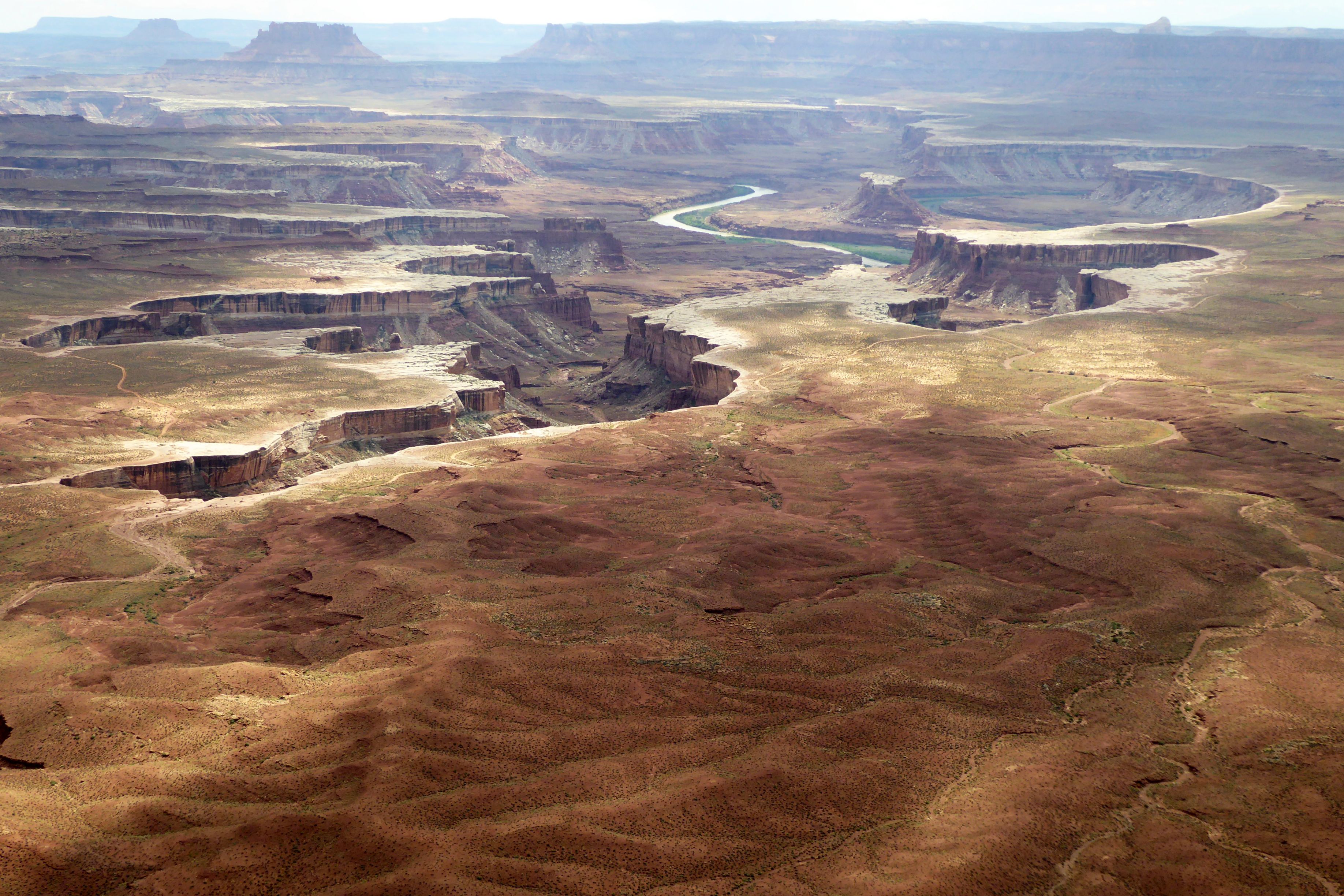
Green River Overlook was our last stop in Canyonlands. At 6,000 feet elevation, it provided a great perspective of Green River down below – especially since we had walked along the riverbank earlier in the day.
We continued on to Moab, our base for the next two nights. Moab Diner had good ratings on Trip Advisor, and I enjoyed a tasty, fresh salad there; so, it deserves a shout-out and my last photo of the day.
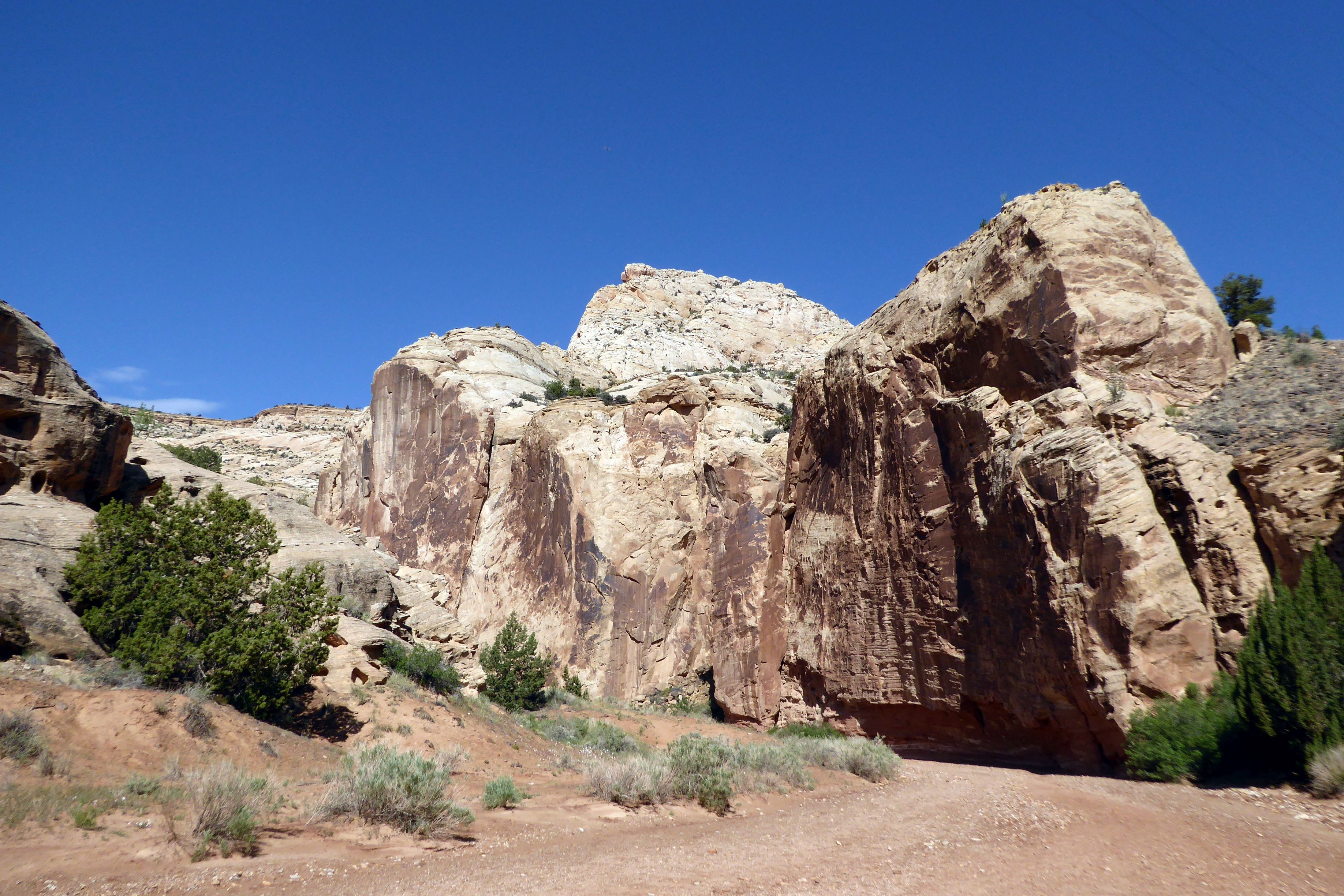
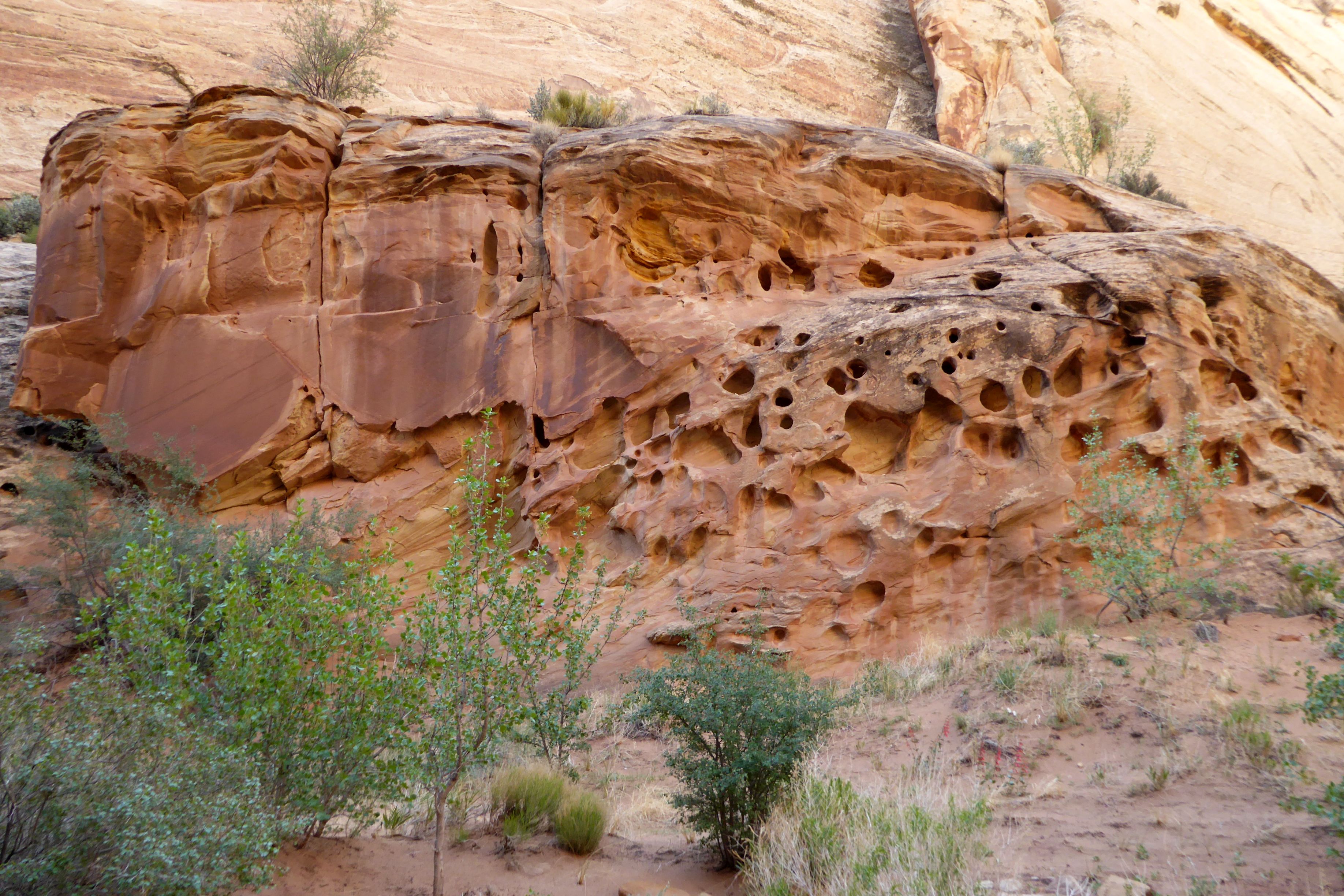
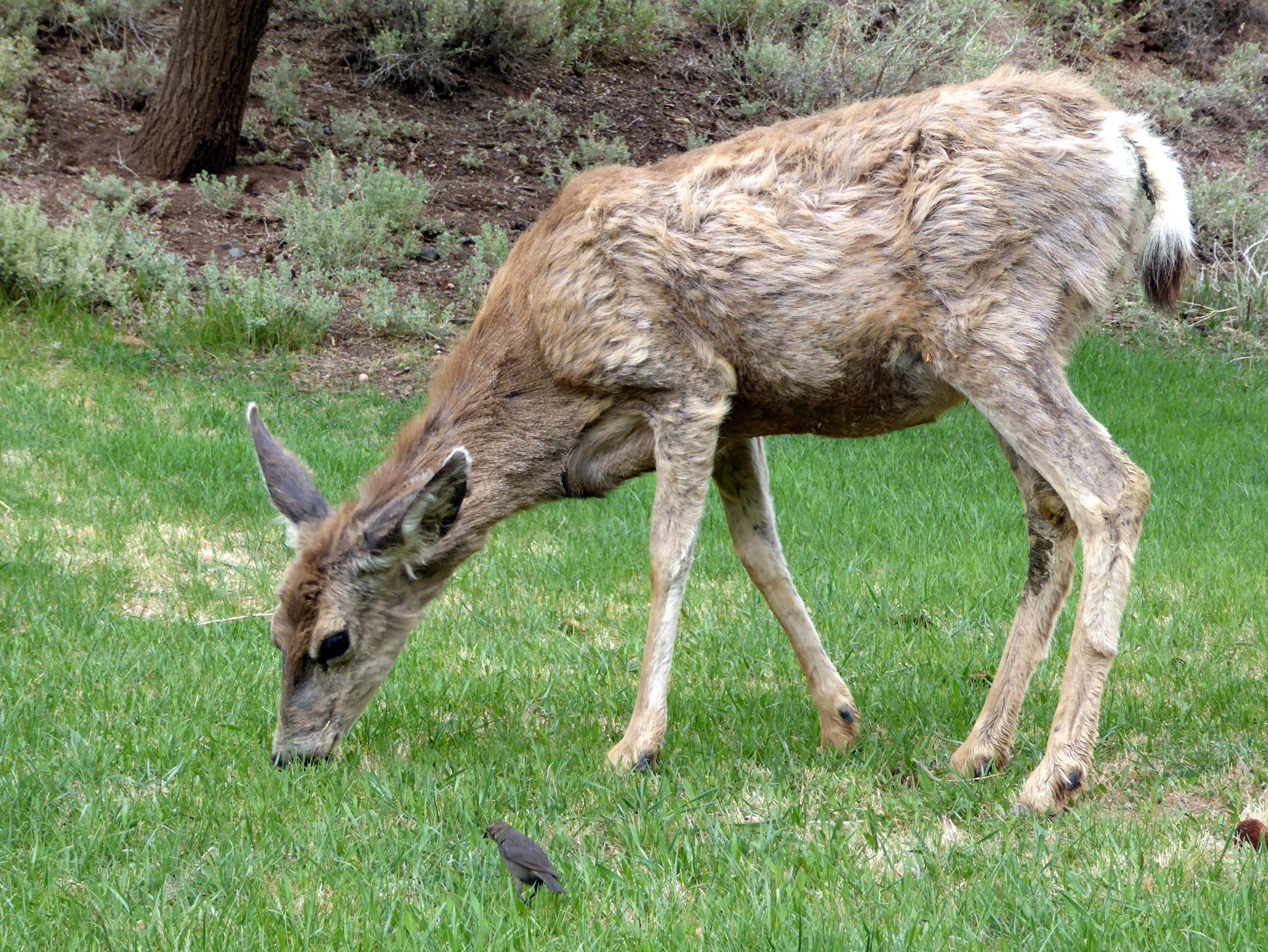
Following a morning greeting (and feeding) to my new friend in back of our hotel, we were off for an easy hike in Grand Wash at Capitol Reef National Park. The gorge cuts through Waterpocket Fold, a nearly 100-mile-long fold in the Earth’s surface. This uplift contains numerous eroded basins or pockets that hold rainwater and snowmelt.
Early pioneers provided the park’s namesake — “capitol” for the white domes of Navajo Sandstone that resemble the capitol dome in Washington, D.C., and “reef” for the rocky cliffs that are a barrier to travel, like an ocean reef.
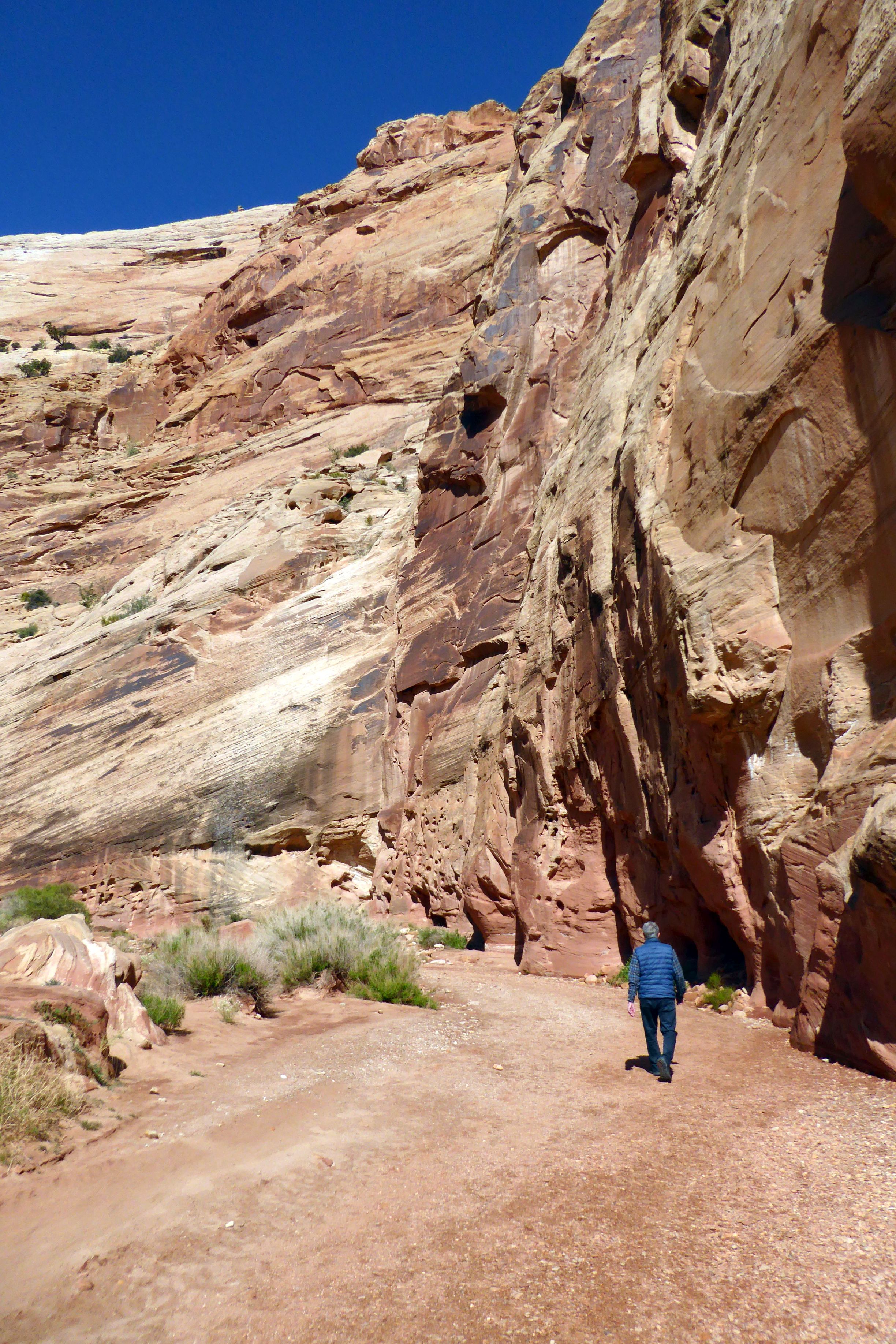
We hiked through the Grand Wash Narrows portion, where we were surrounded by massive rock formations. The only way to grasp the size was to give it some sense of scale. Thanks, Bruce!
(For all pictures, click on the image to see full screen view.)
That’s Bruce, way off in the distance.
Since Bruce and I were the fastest walkers in the group, we were able to get far ahead, which, because of time constraints, was to our advantage. We really wanted to see the Narrows portion of the basin, and some of our group didn’t make it that far before having to turn back. Most of the time, we were by ourselves, taking in the beauty of the colors and textures all around us. It was such a peaceful and beautiful walk.
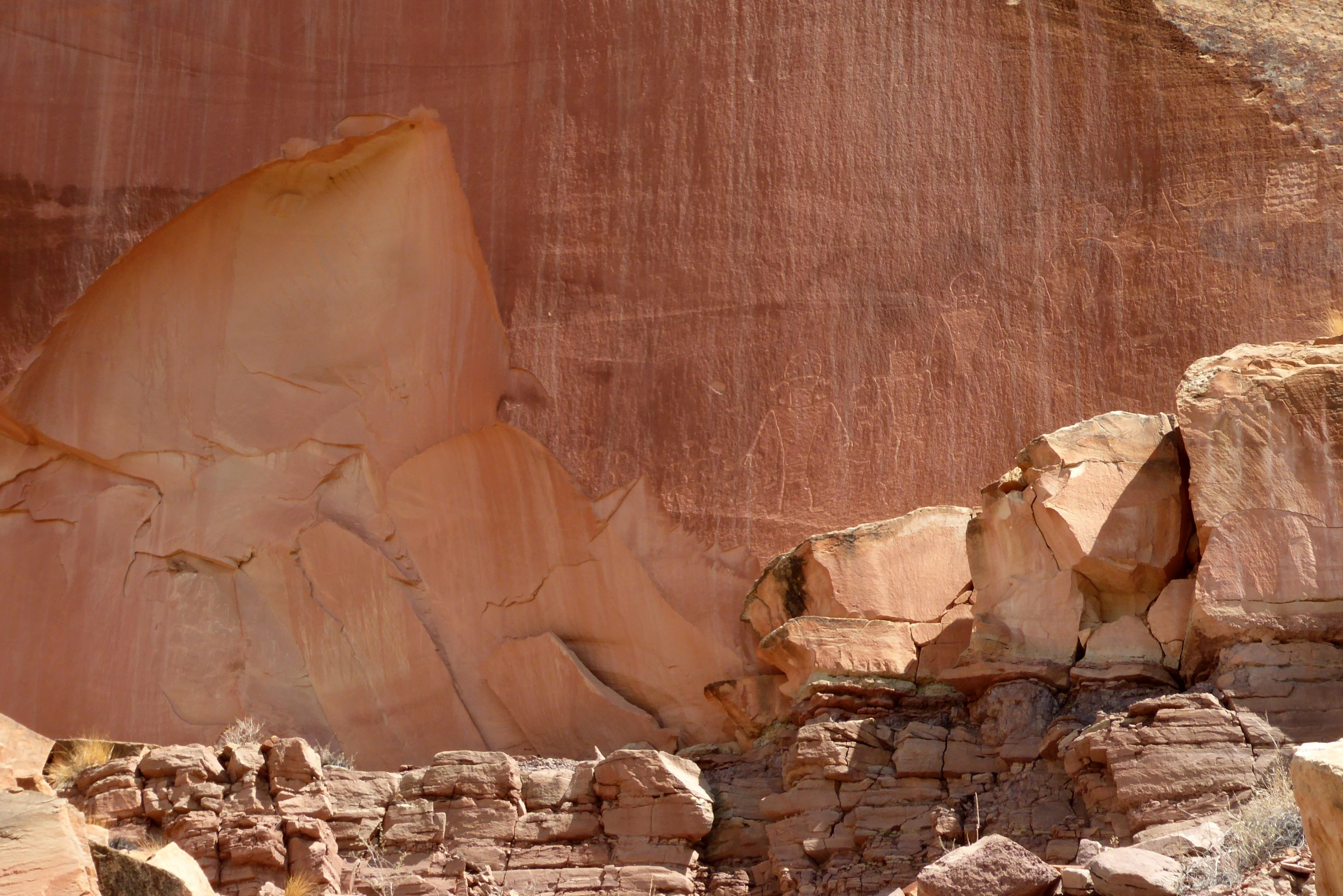
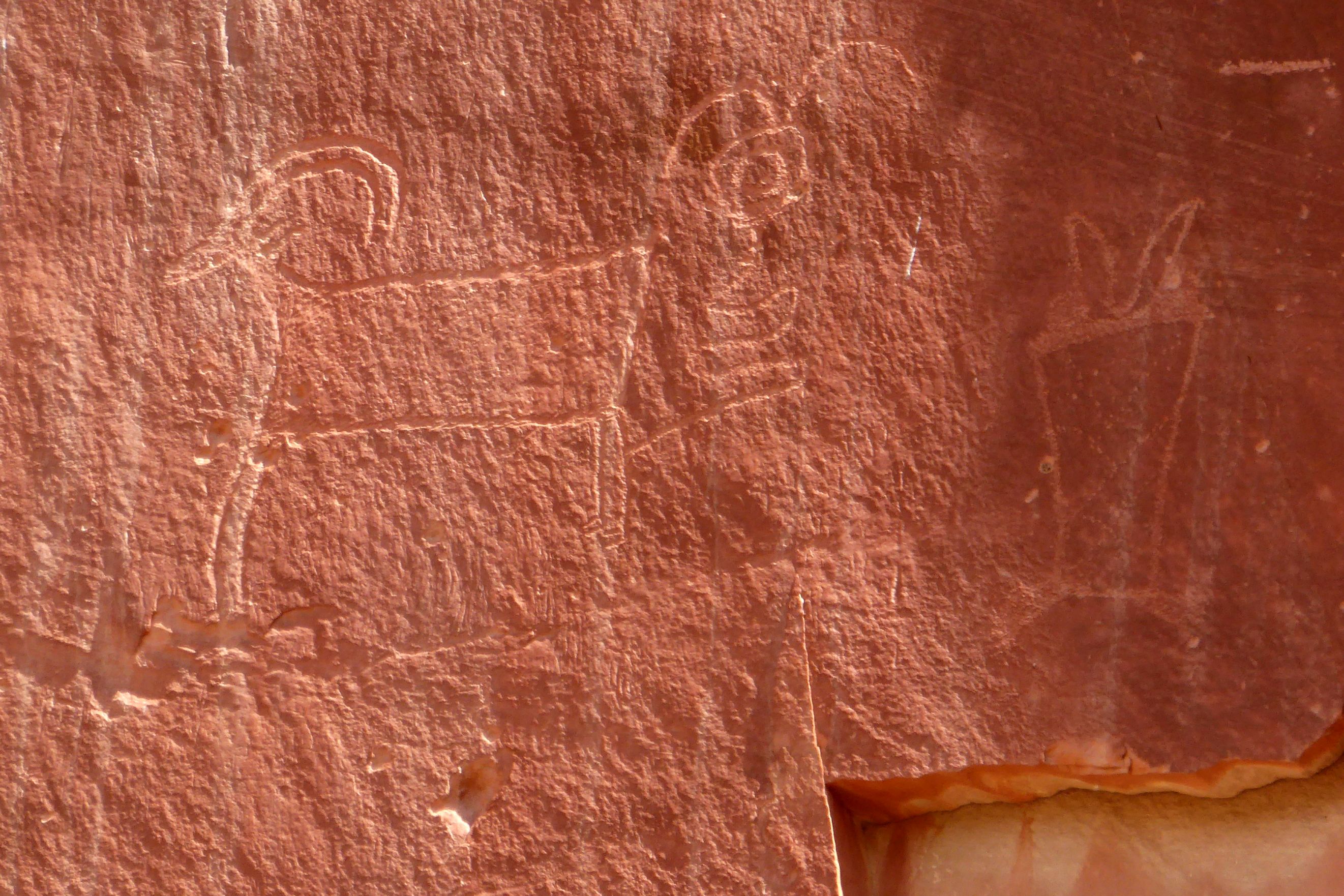
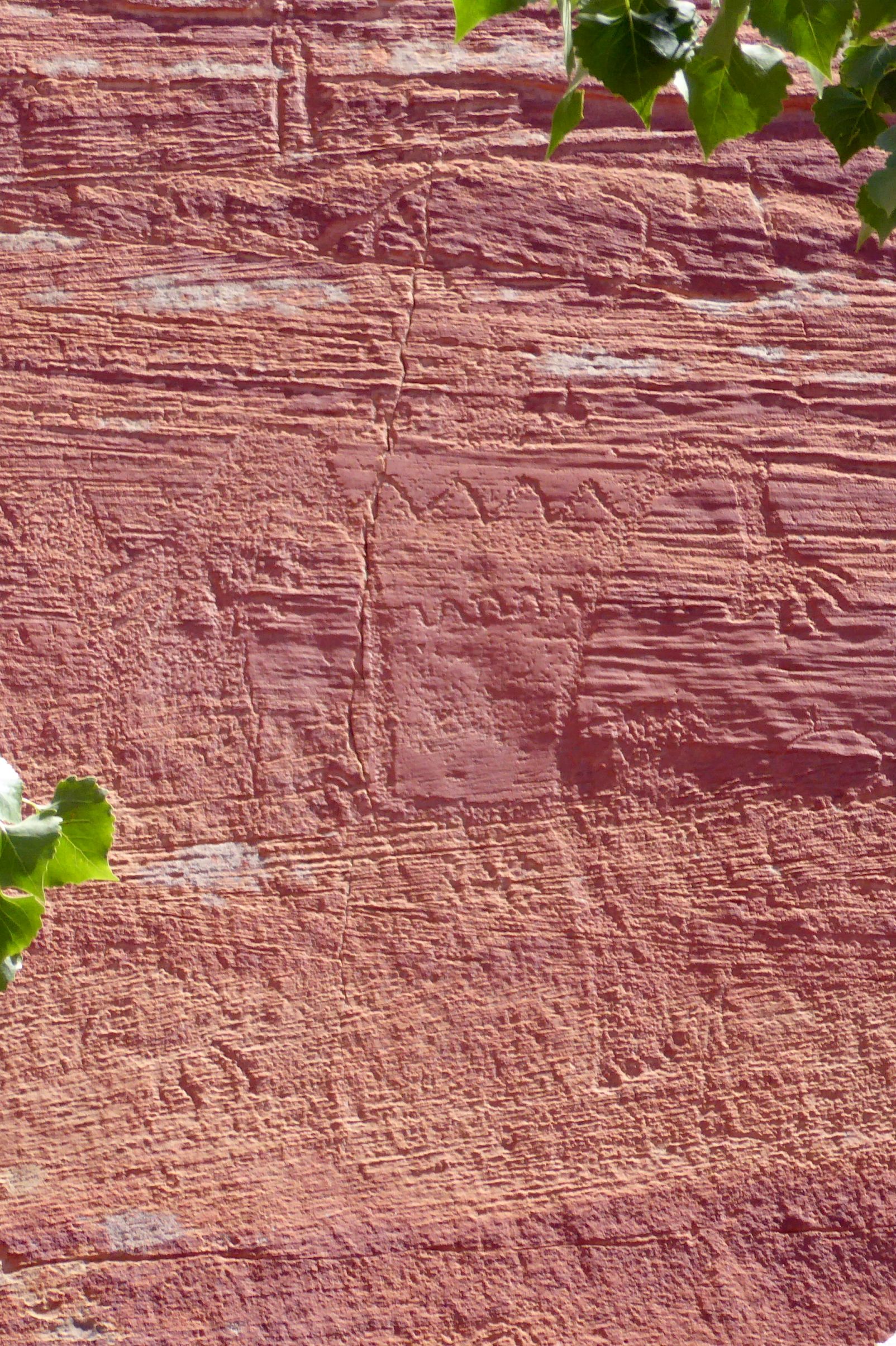
We also visited Petroglyph Panel to view ancient rock art attributed to the Fremont Culture, which existed in this area of Utah from approximately 300-1300 C.E. (Common Era).
There are petroglyphs of human figures in a diagonal, above the jagged rocks, going up towards the right corner of the photo.
We had lunch in the park near the Capitol Reef Visitors Center, and I went for a walk afterward.
Fortunately, the blue skies stayed with us until we were on the bus heading back. Our good weather luck was with us once again!
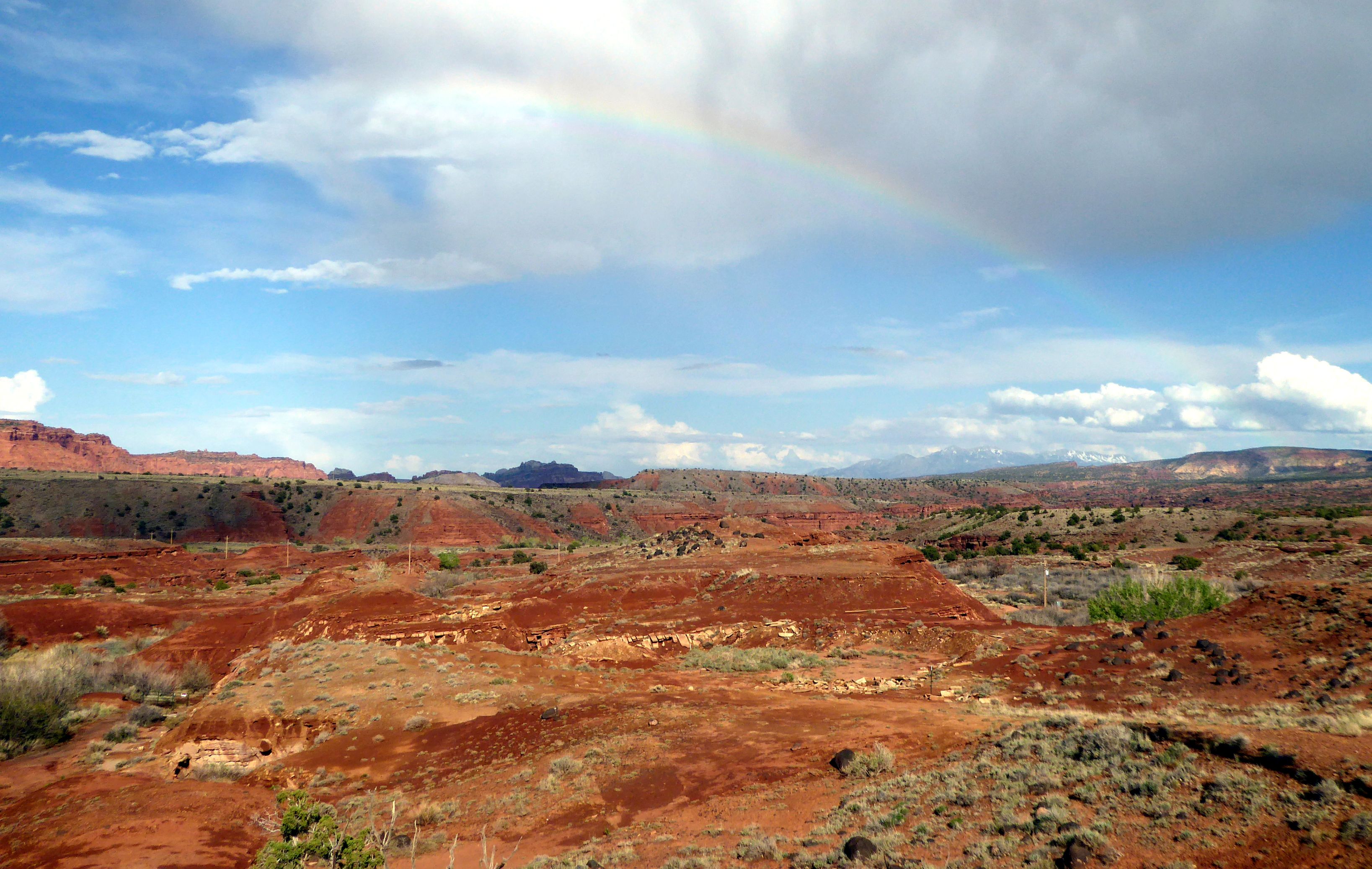
This was shot from the bus window on the way back to Torrey.A beautiful rainbow to end a beautiful day!
Coming up next: Delightful Dead Horse Point State Park & Colorful Canyonlands National Park
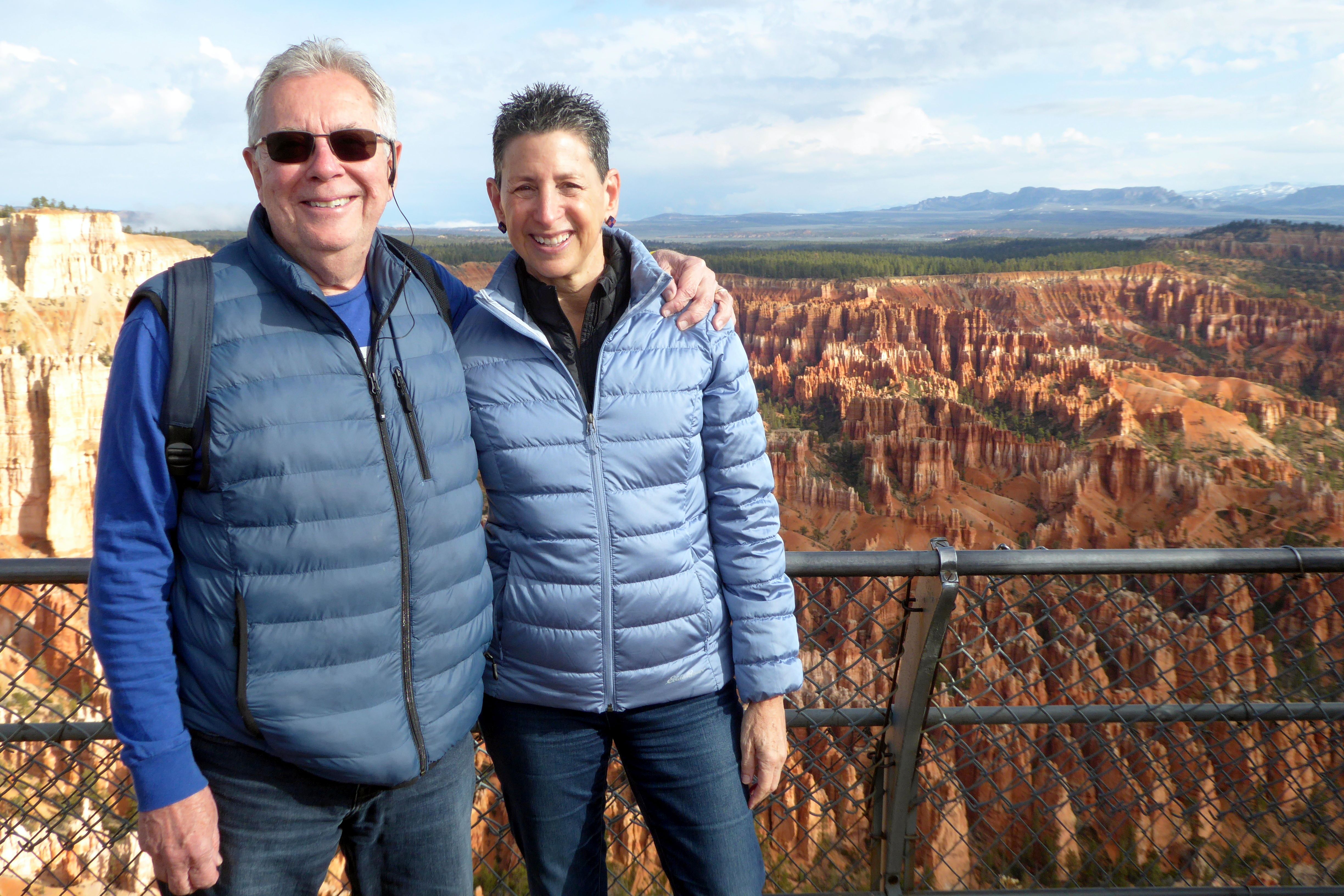
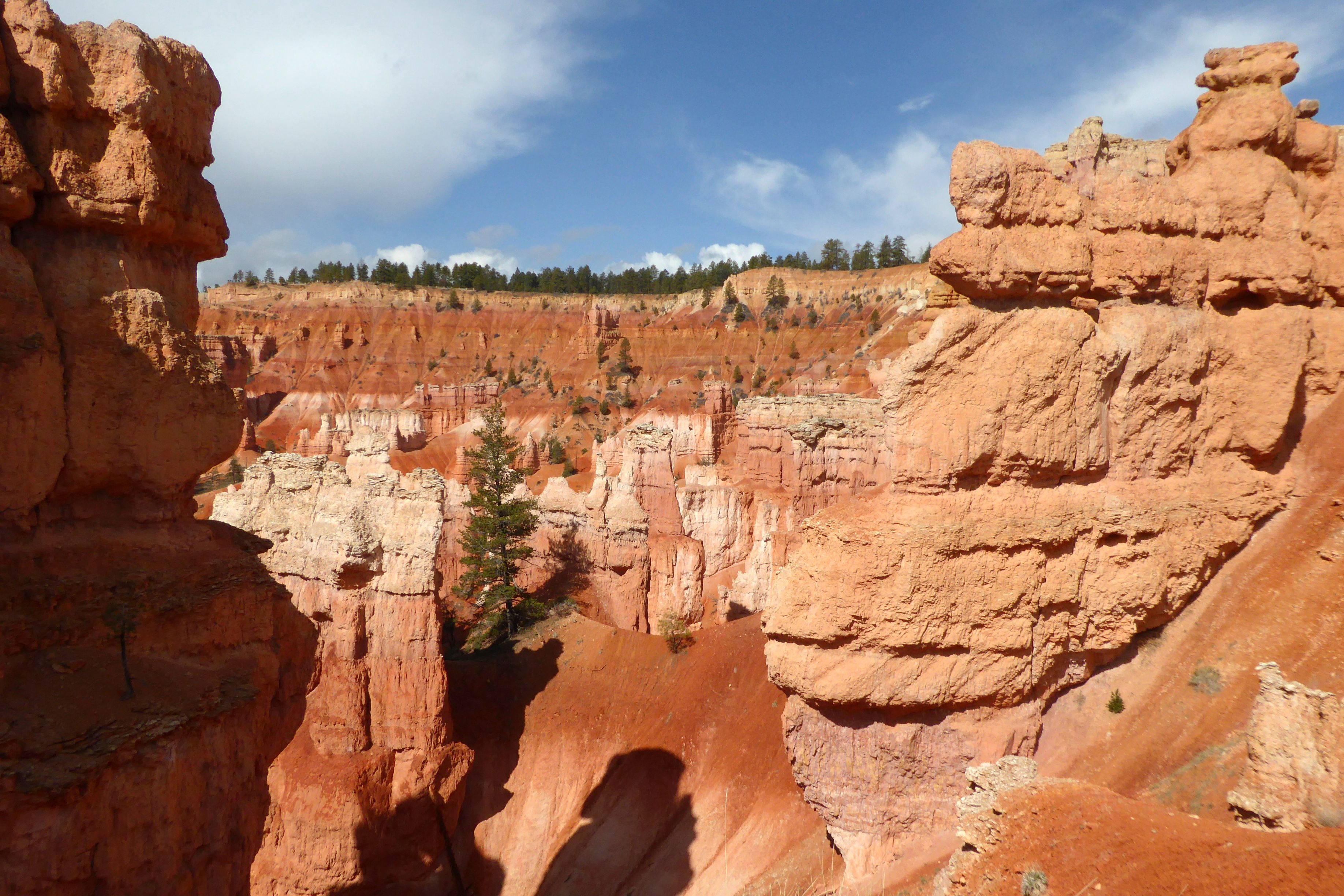
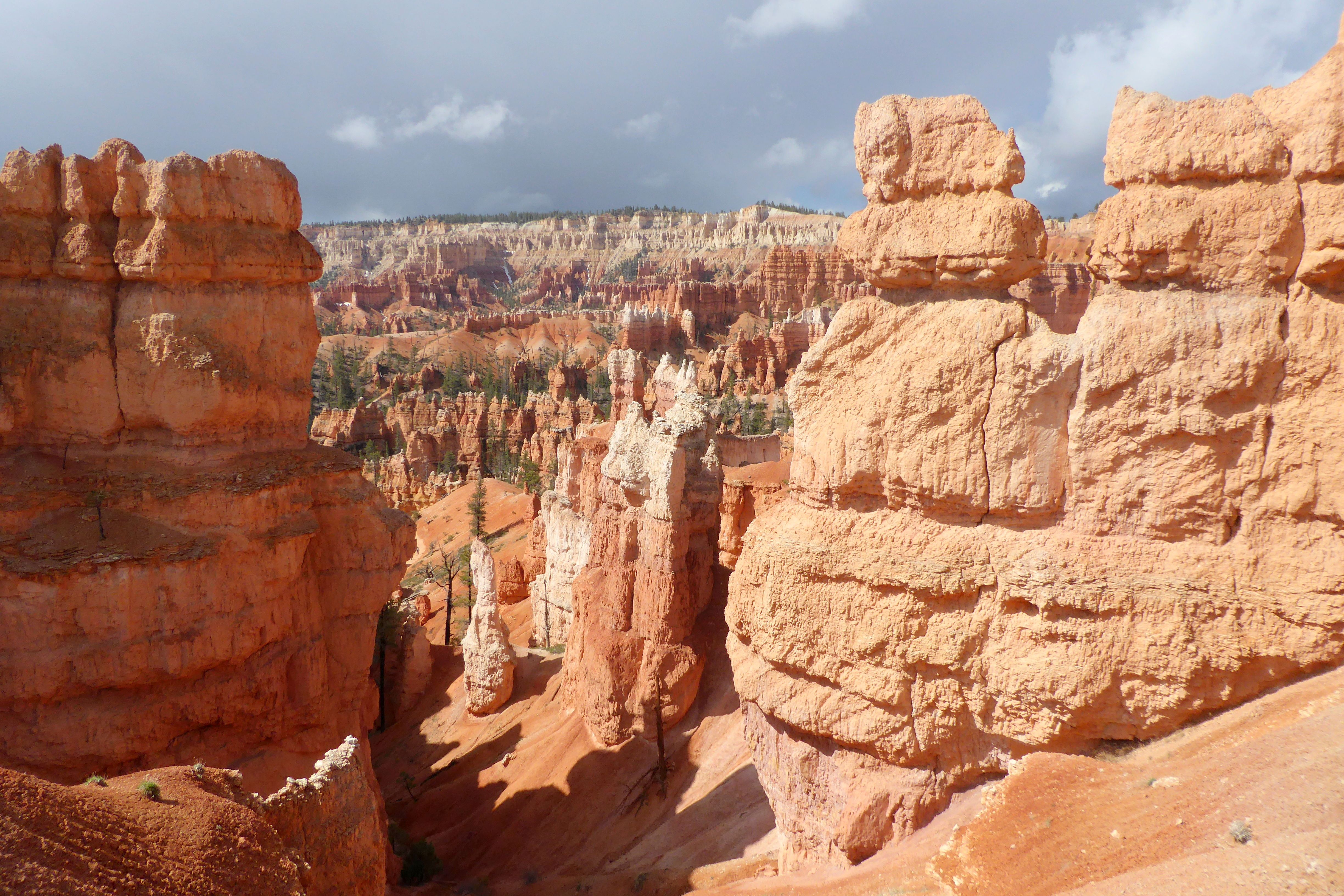
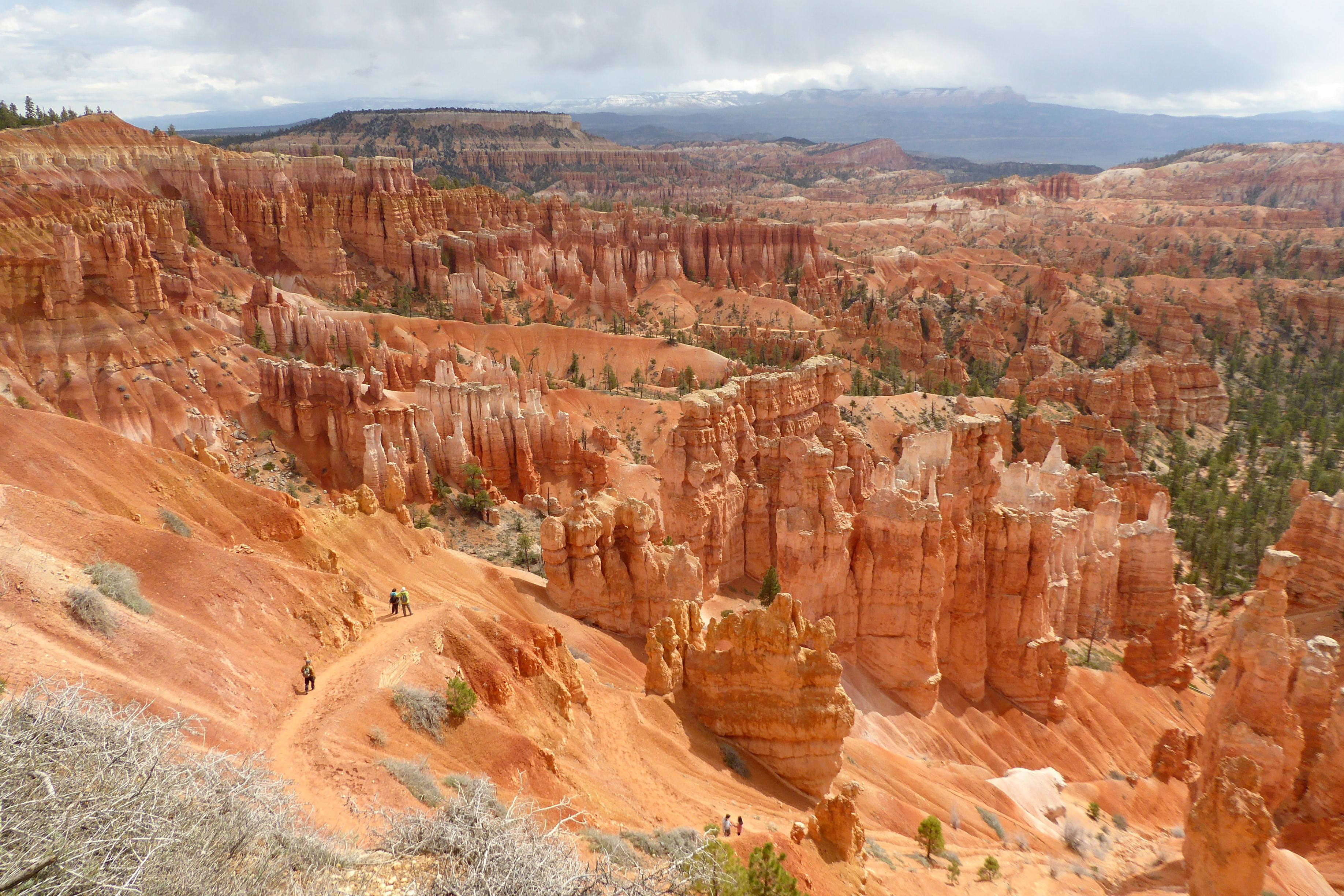
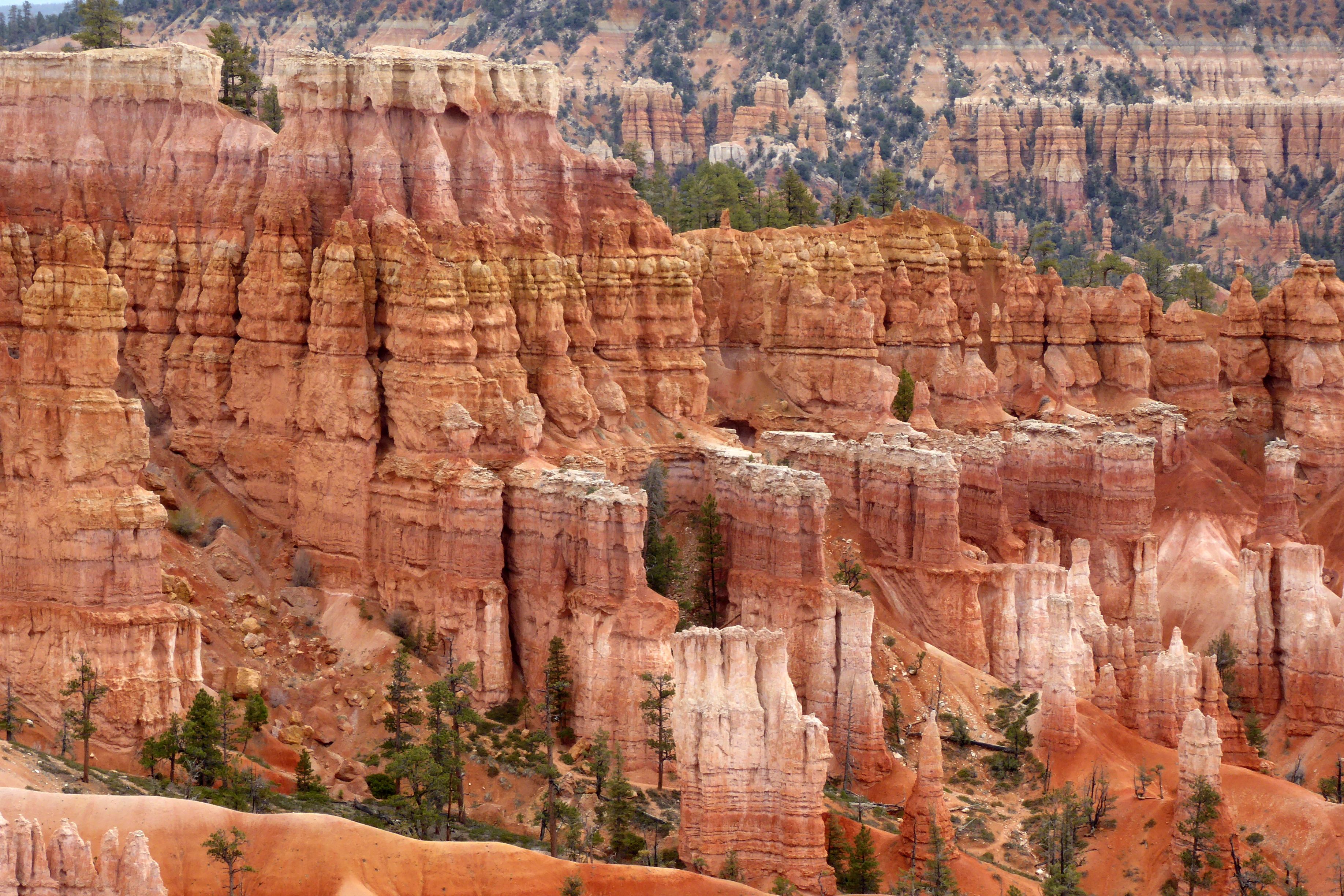
We were really looking forward to seeing Bryce Canyon National Park in person after seeing so many beautiful photos of its colorful and bizarre-looking rock formations called “hoodoos.” I can’t even type that word without immediately hearing Paul Simon’s, “Love Me Like a Rock” in my head (“Who-do, who-do you think you’re fooling?”). Bruce and I spontaneously broke out with that song when we saw hoodoos during our Canadian Rockies trip, and it happened again in Bryce. We just can’t help ourselves.
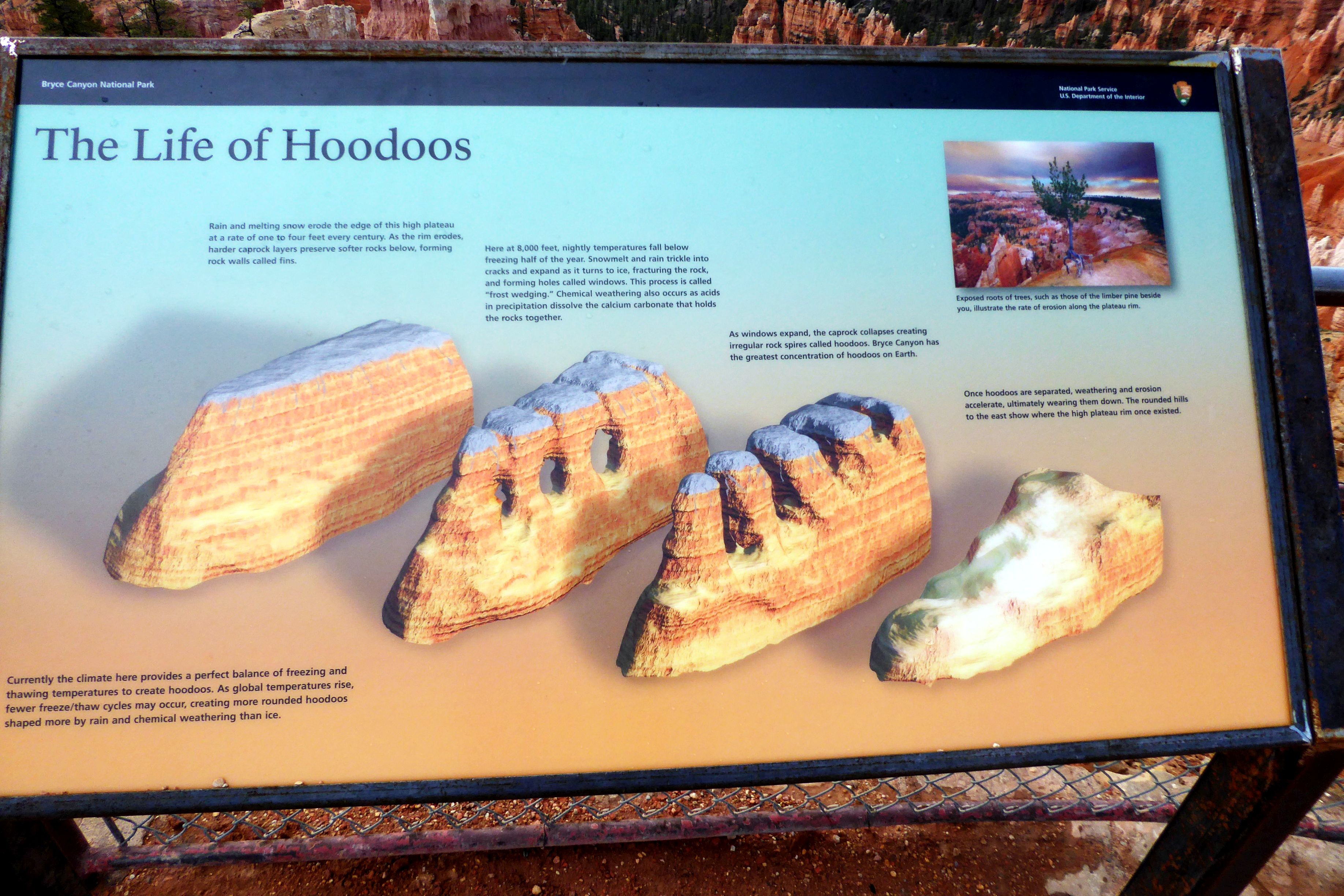
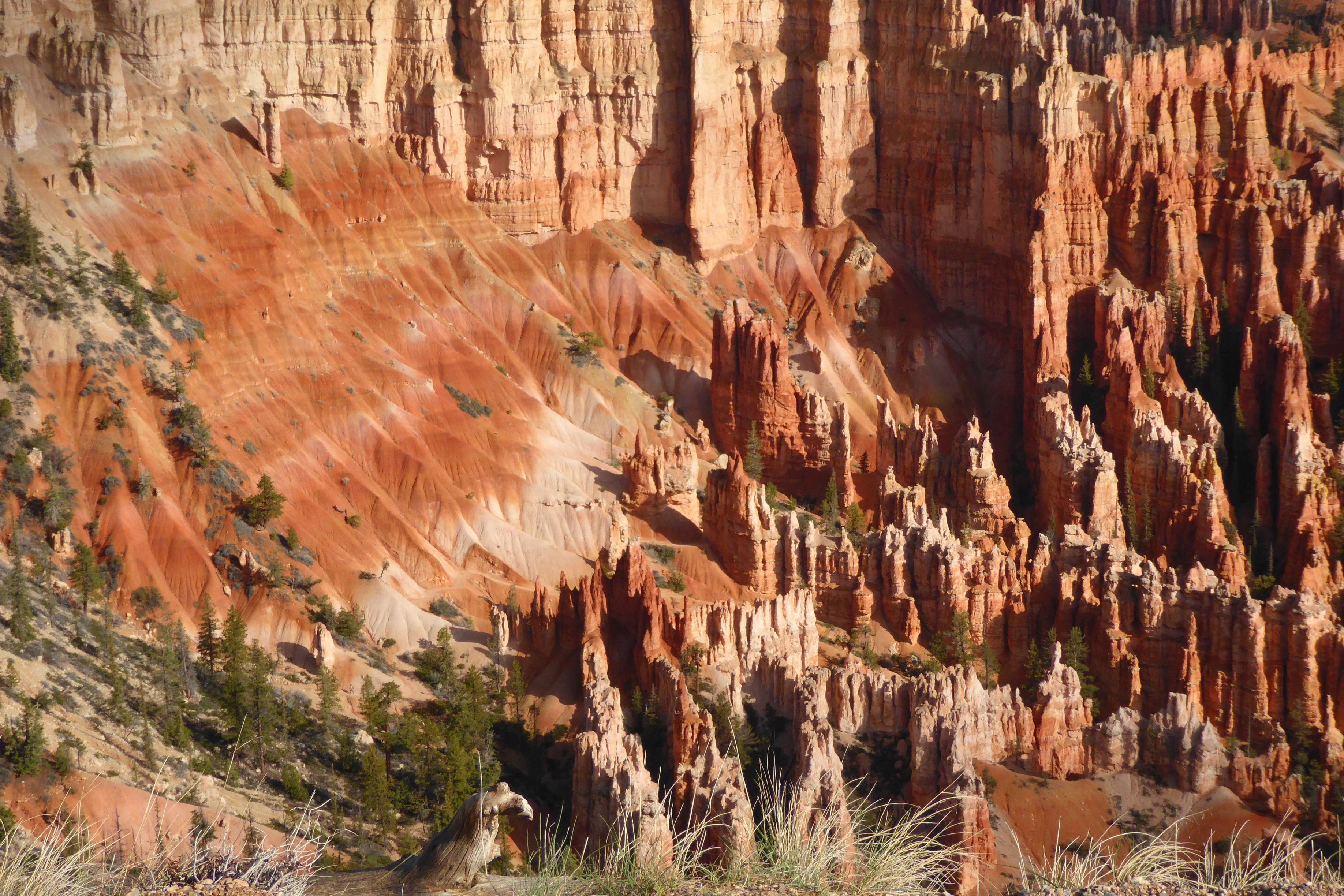
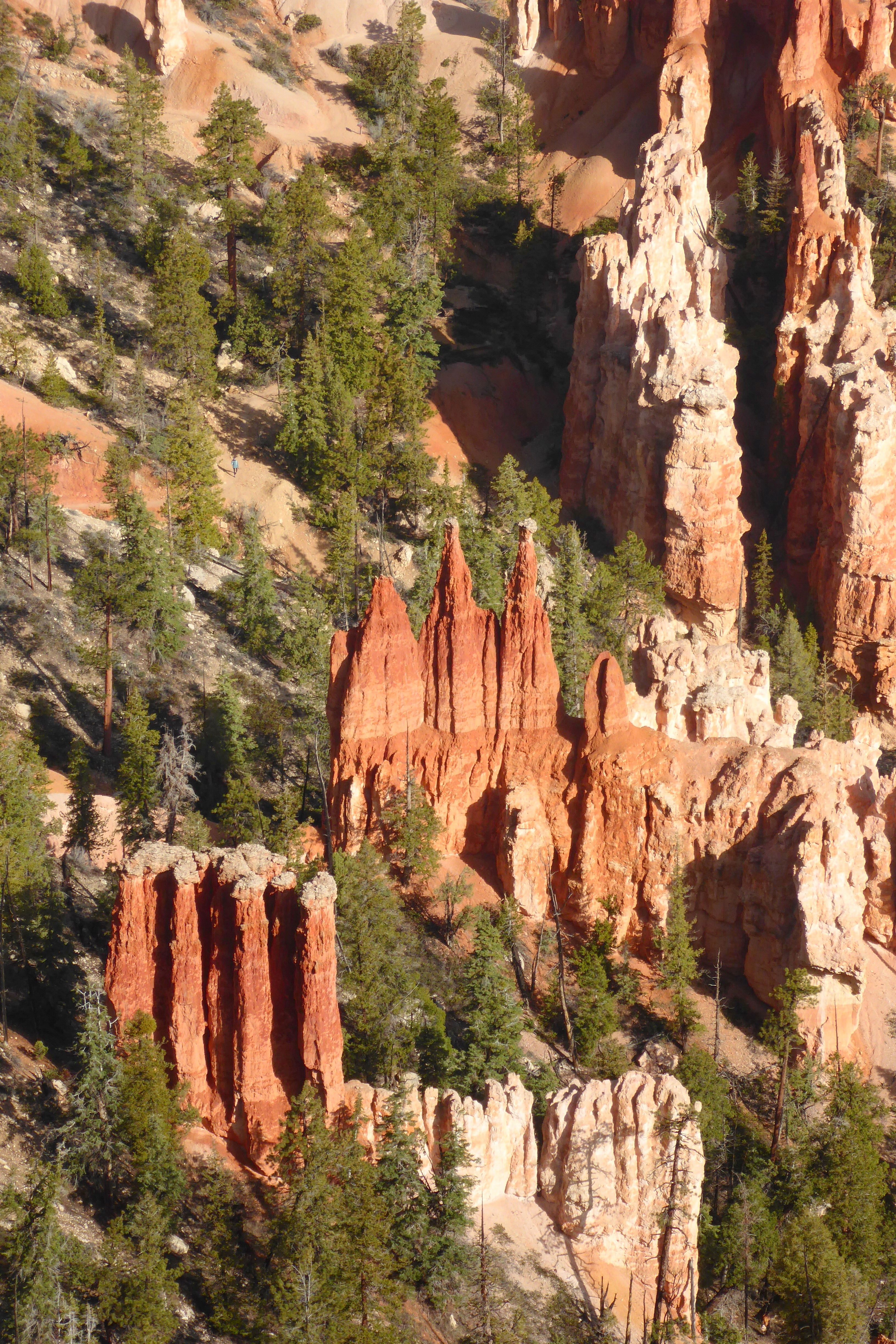
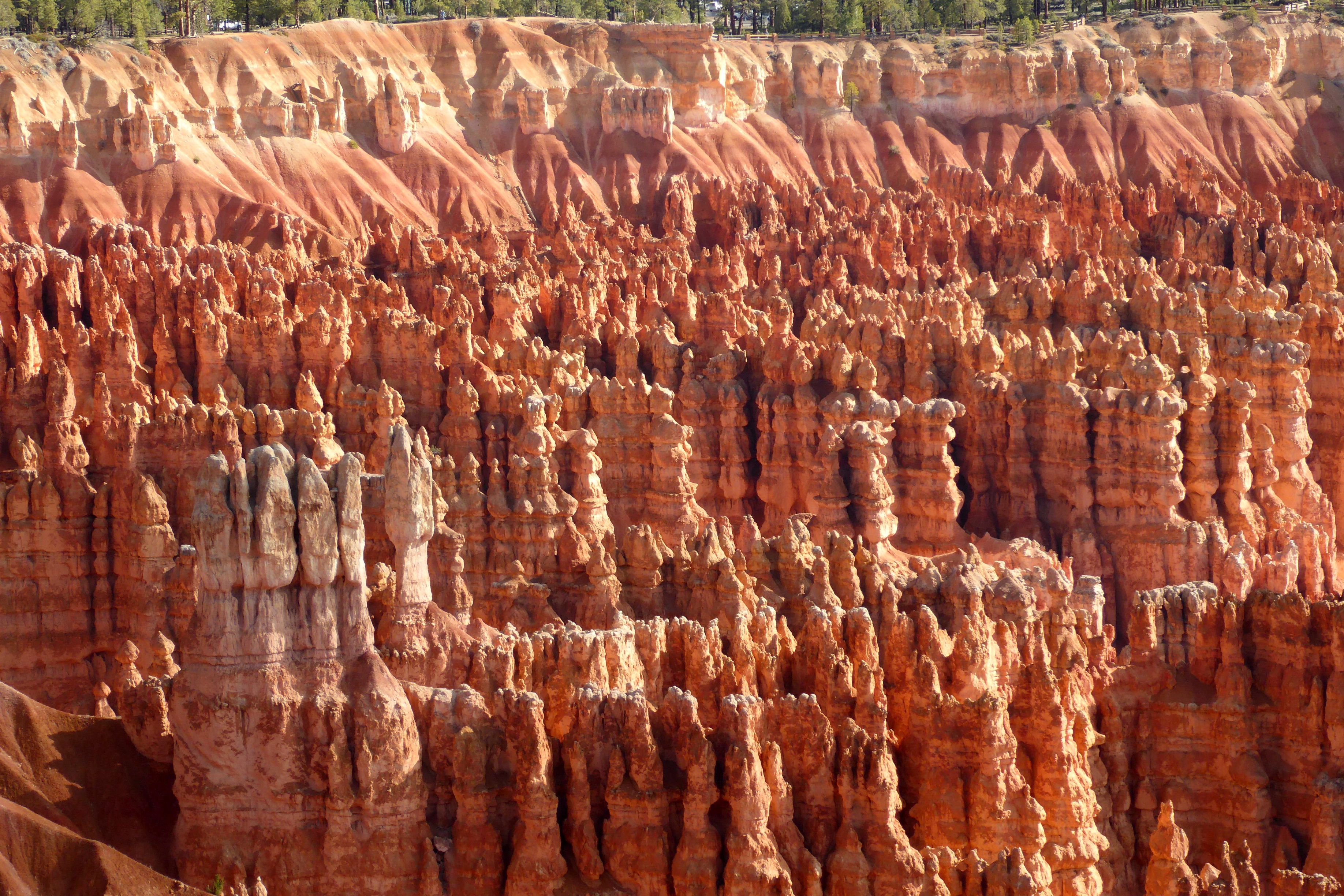
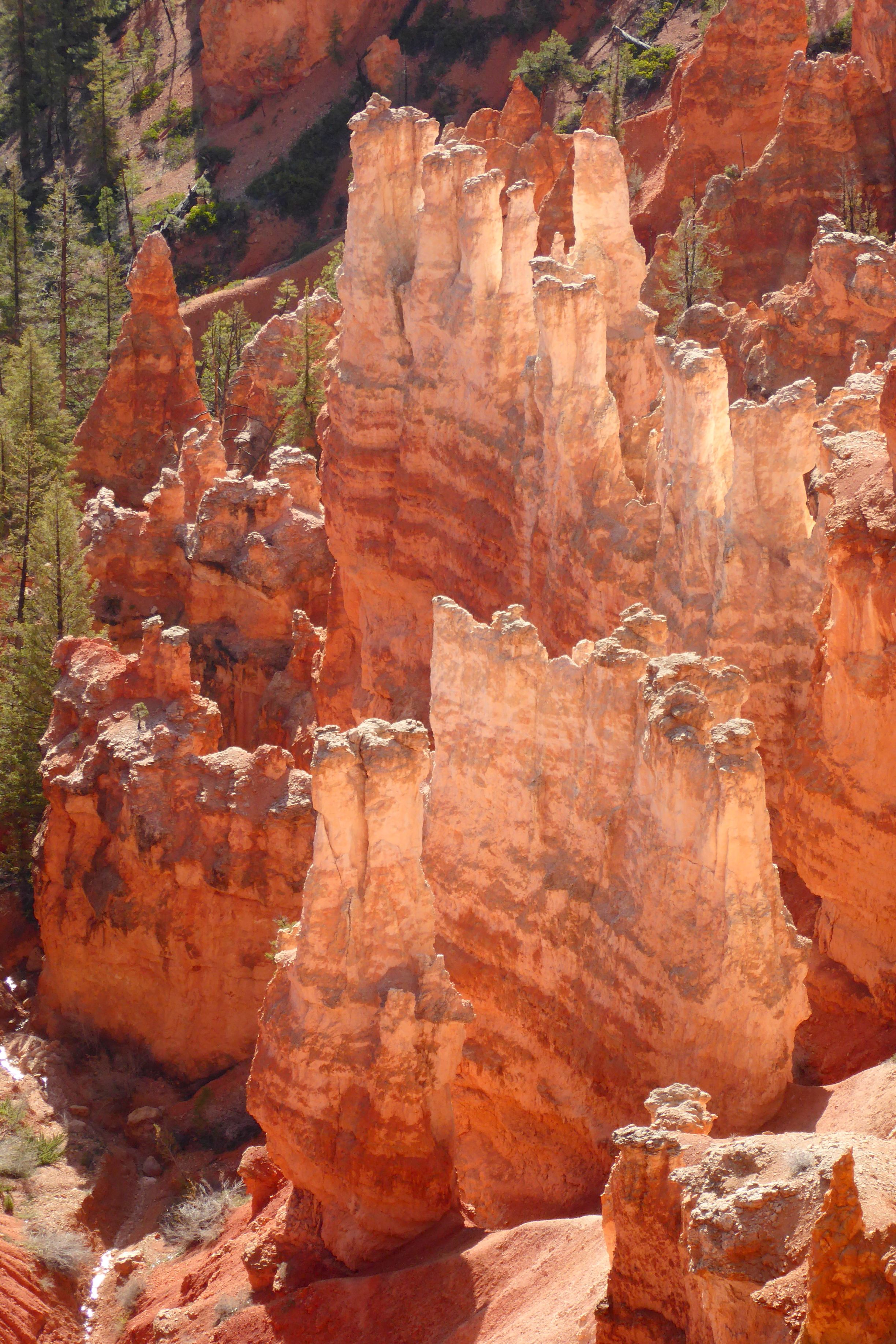
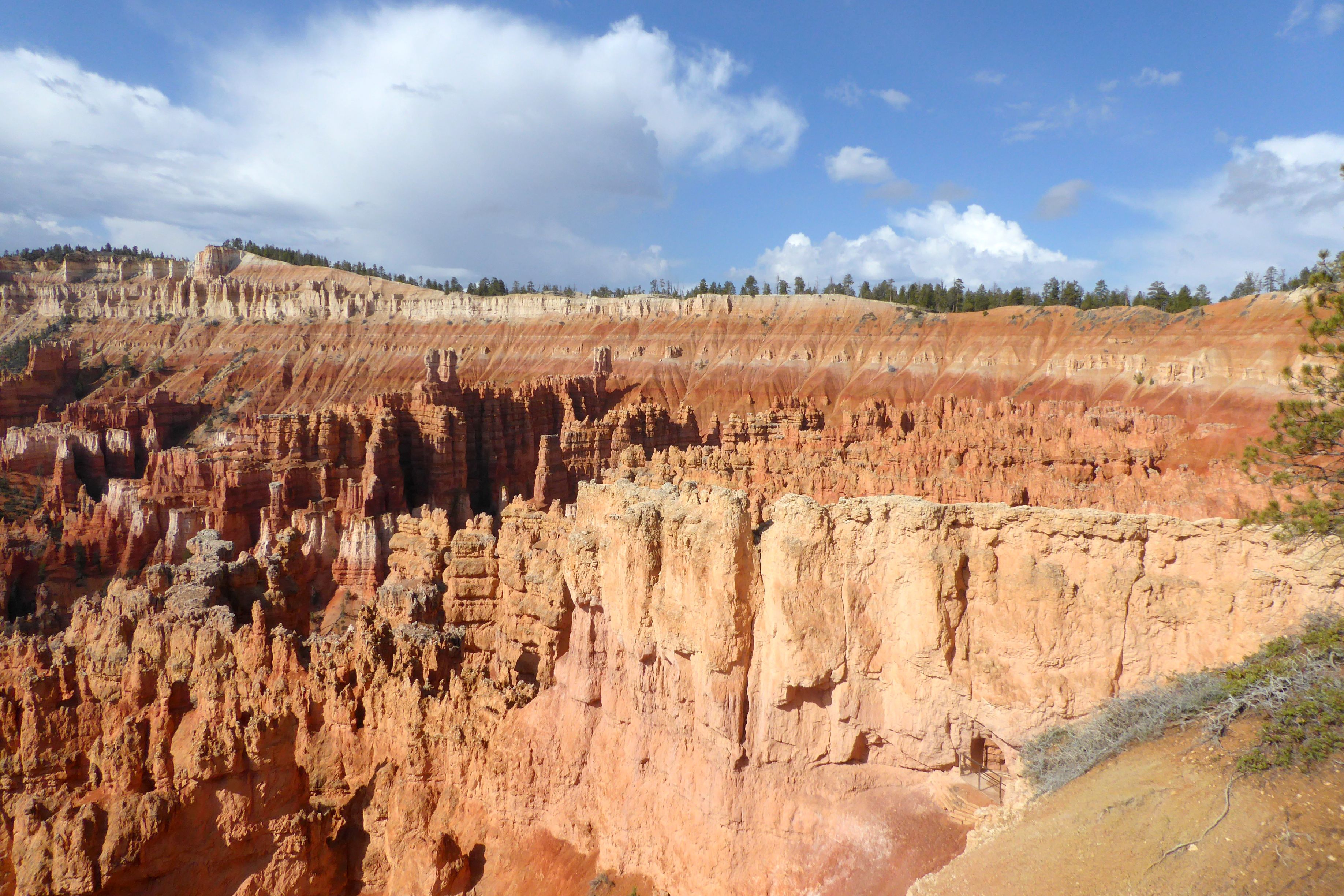
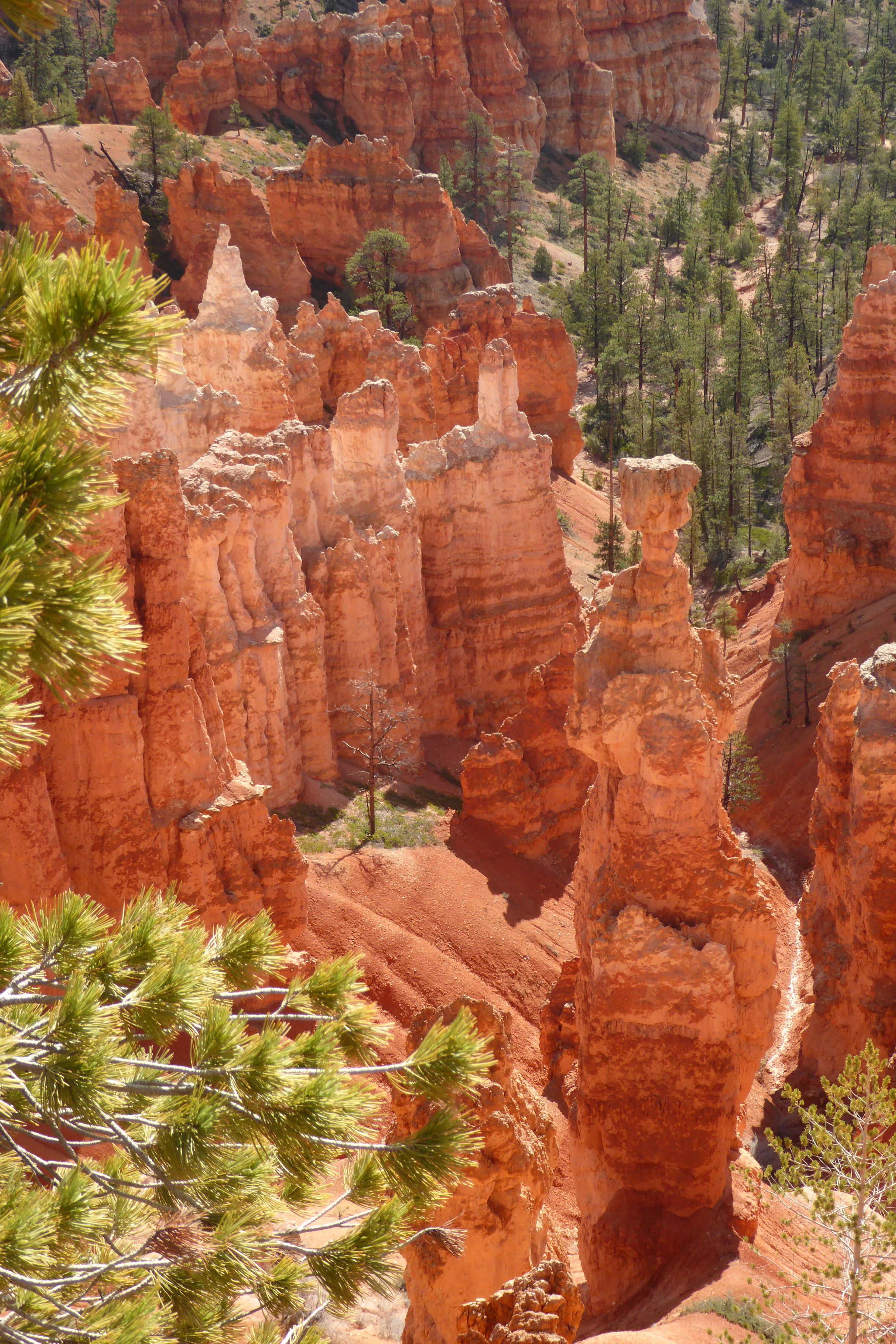
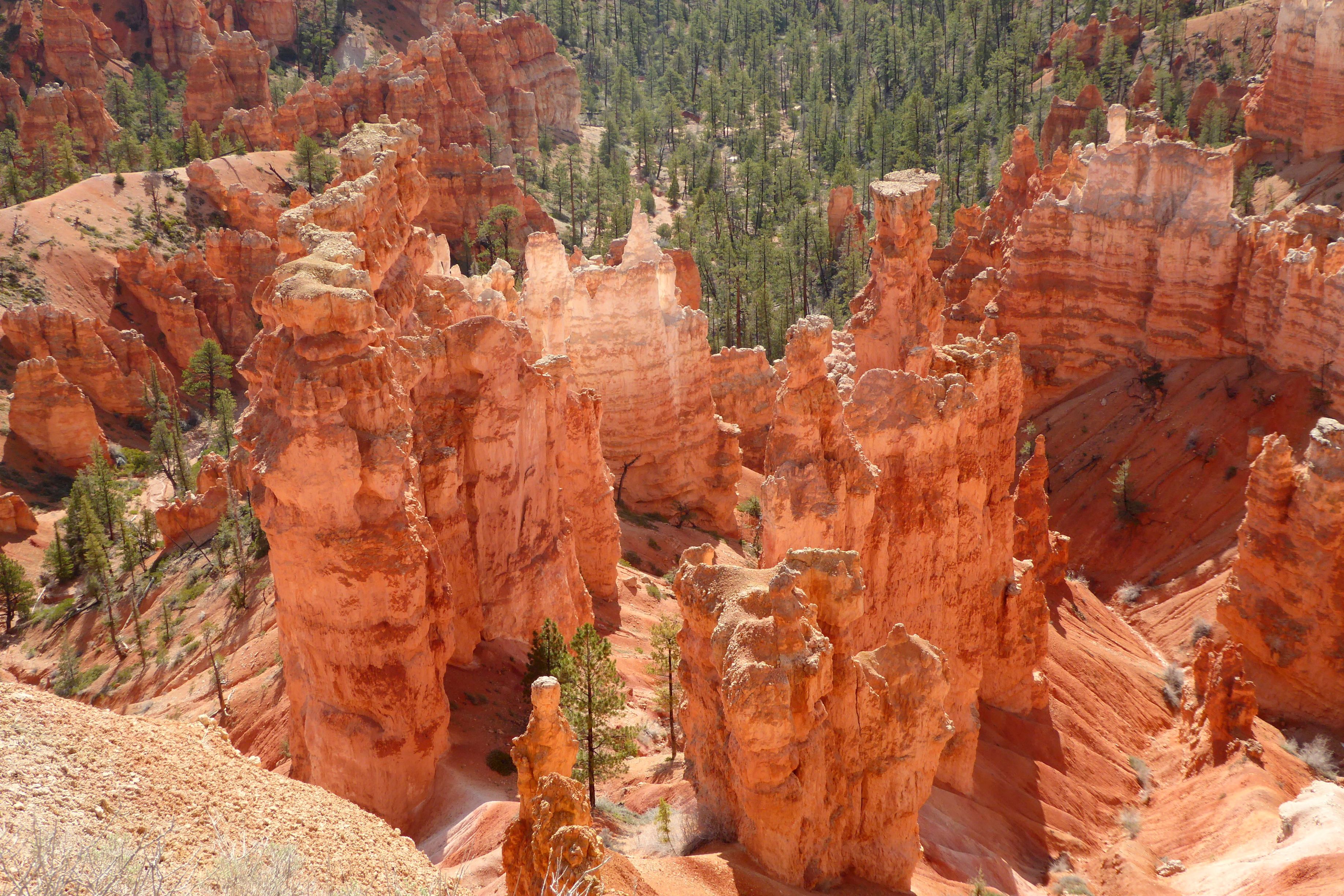
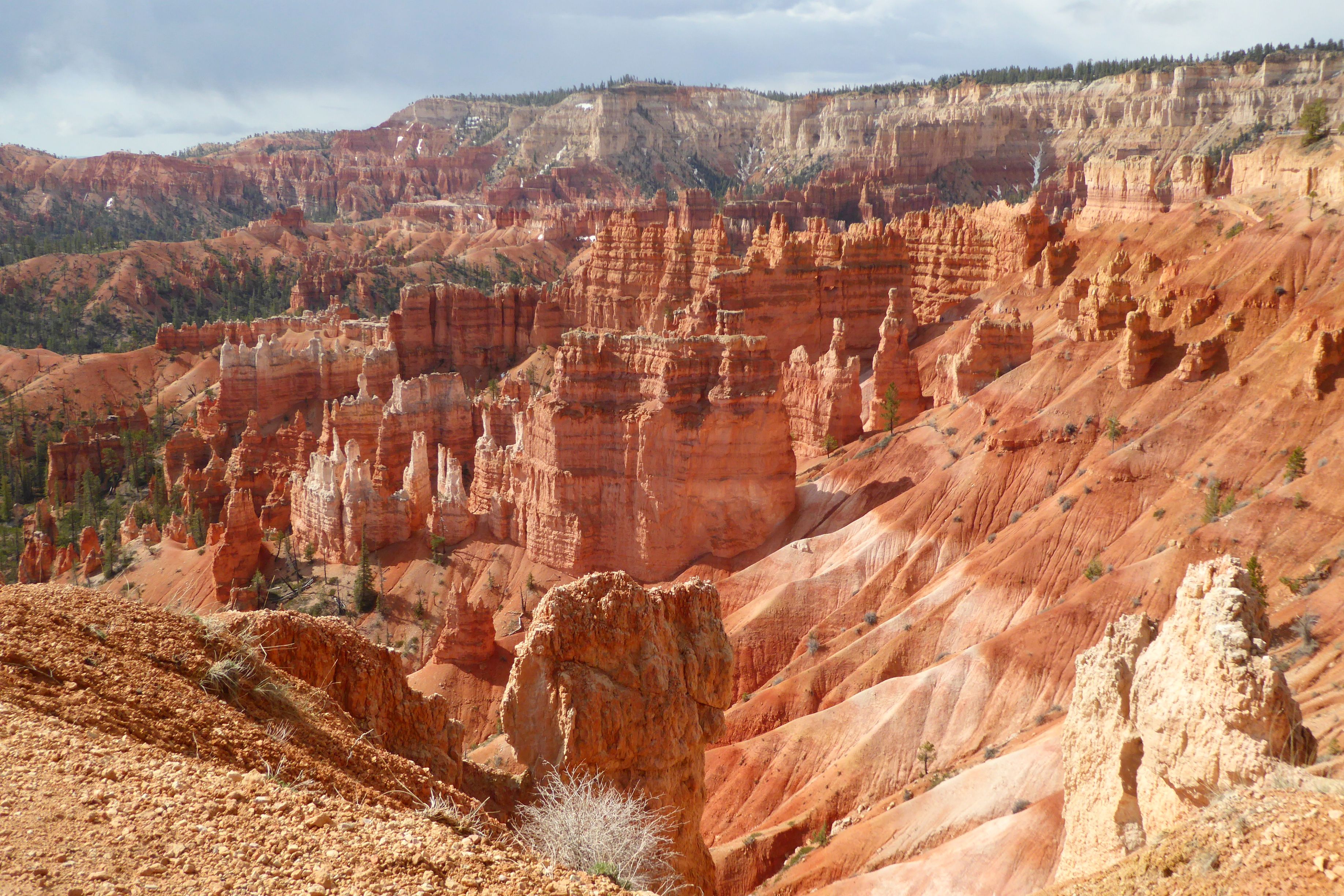
You’ve got to see it to believe it! It truly is an amazing sight, standing at the top of Bryce’s Amphitheaterand looking down into a bowl of hoodoos! These irregular-shaped rock spires consist of relatively soft rock topped by harder, less easily eroded stone that protects each column from the elements. These spires range in size from the height of an average human to heights exceeding a 10-story building.
Knowing we would be at high elevation during this trip, I came prepared, so I wouldn’t have a repeat of 2019’s huffing-and-puffing at the National Senior Games, in Albuquerque, New Mexico, elevation 5,312 feet. Competing in the 200 Yard Butterfly and 400 Yard Individual Medley, my two most difficult races, was an exercise in futility. Never had I clung to the walls in the middle of a “race” like that before; it was usually reserved for the end, after the clock had stopped. It wasn’t a pretty sight; all of us low-elevation dwellers suffered at that meet, logging in personal worst times.
After the meet concluded, we went to play tourist in Santa Fe, where I attempted a nice, relaxing, recovery workout. During my first lap, I couldn’t even make the turn. I literally clung to the wall to catch my breath—and, I was in the best condition of my life! The 7,198-foot elevation just about killed me.
Fast forward to researching and booking this trip and learning that Bryce Canyon’s elevation is at 8-9,000 feet. I knew I would be in trouble if I wasn’t prepared, so I had an idea: Train with a KN95 mask! After training hard in the pool and doing my dryland workout on deck for 2 to 2-1/2 hours each day, I would put on my mask and head up to the indoor track and hoof it at my fastest walking pace for a mile or more, if I met up with a friend for conversation. (Try walking fast while wearing a KN95 mask AND carrying on a conversation!). I have been doing that six day per week since the beginning of the year, and it made all the difference. Hiking in Bryce was a breeze, and I jogged back up the steep trail to the top with my breath intact. (I’m still walking daily with my KN95’s!)
(For all pictures, click on the image to see full screen view.)
Bryce Point Inspiration Point
View from Sunset Point
Looking out from the other side of Sunset Point
The hoodoo on the right with the flat top is “Thor’s Hammer,” a symbol in Norse mythology.
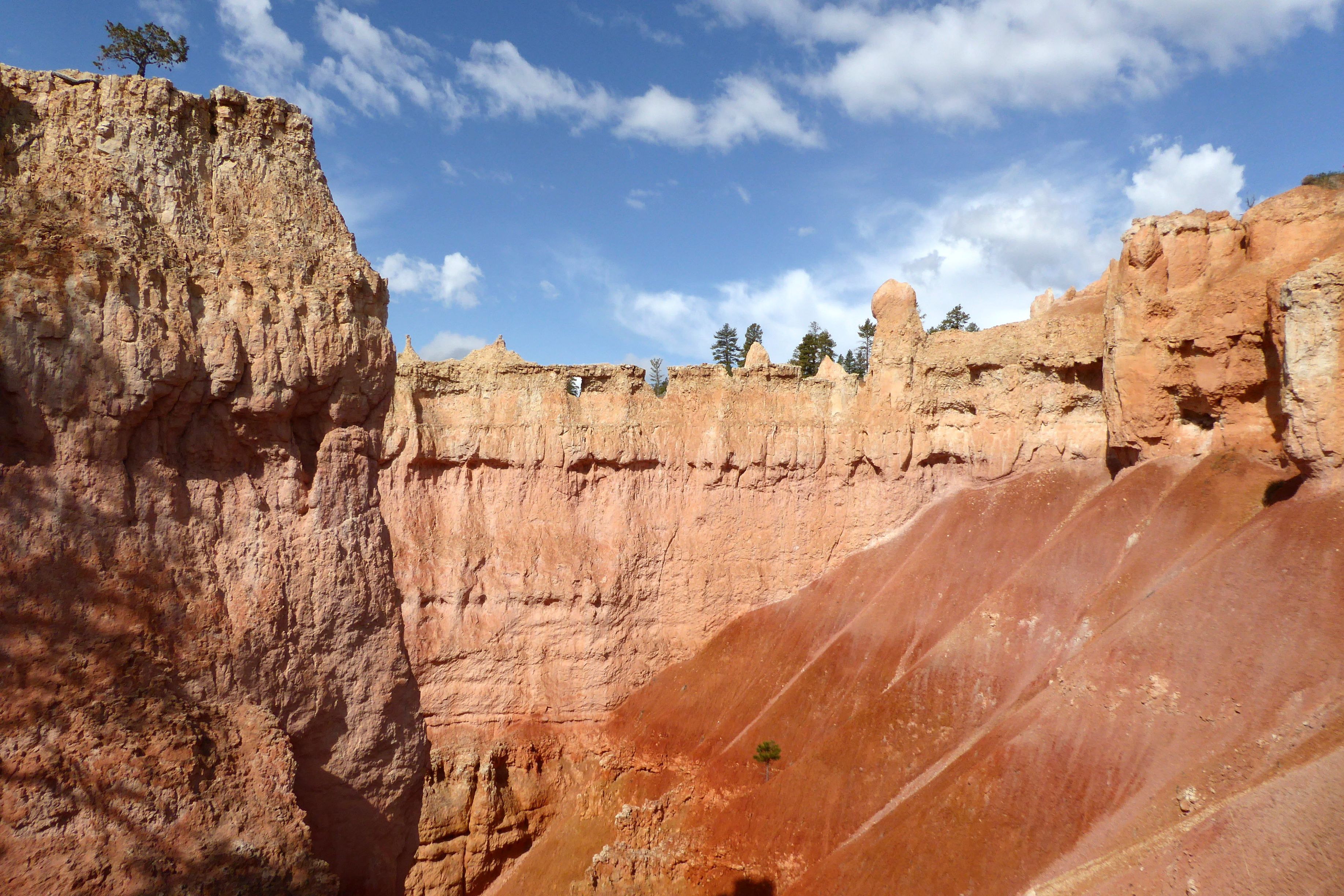
A walkway rims the top of Bryce Amphitheater, providing spectacular views of the hoodoos.Descending Queen’s Garden Trail provided a different viewing perspective of the hoodoos. As you can see from the photos, the weather kept changing drastically! It went from cloudy, to sunny, to cloudy, several times with some added precipitation sprinkled in! My day pack came in handy for cramming in and pulling out my vest and jacket several times.The view from the top of the rim after hiking back up. The mountains in the background were still topped with snow.
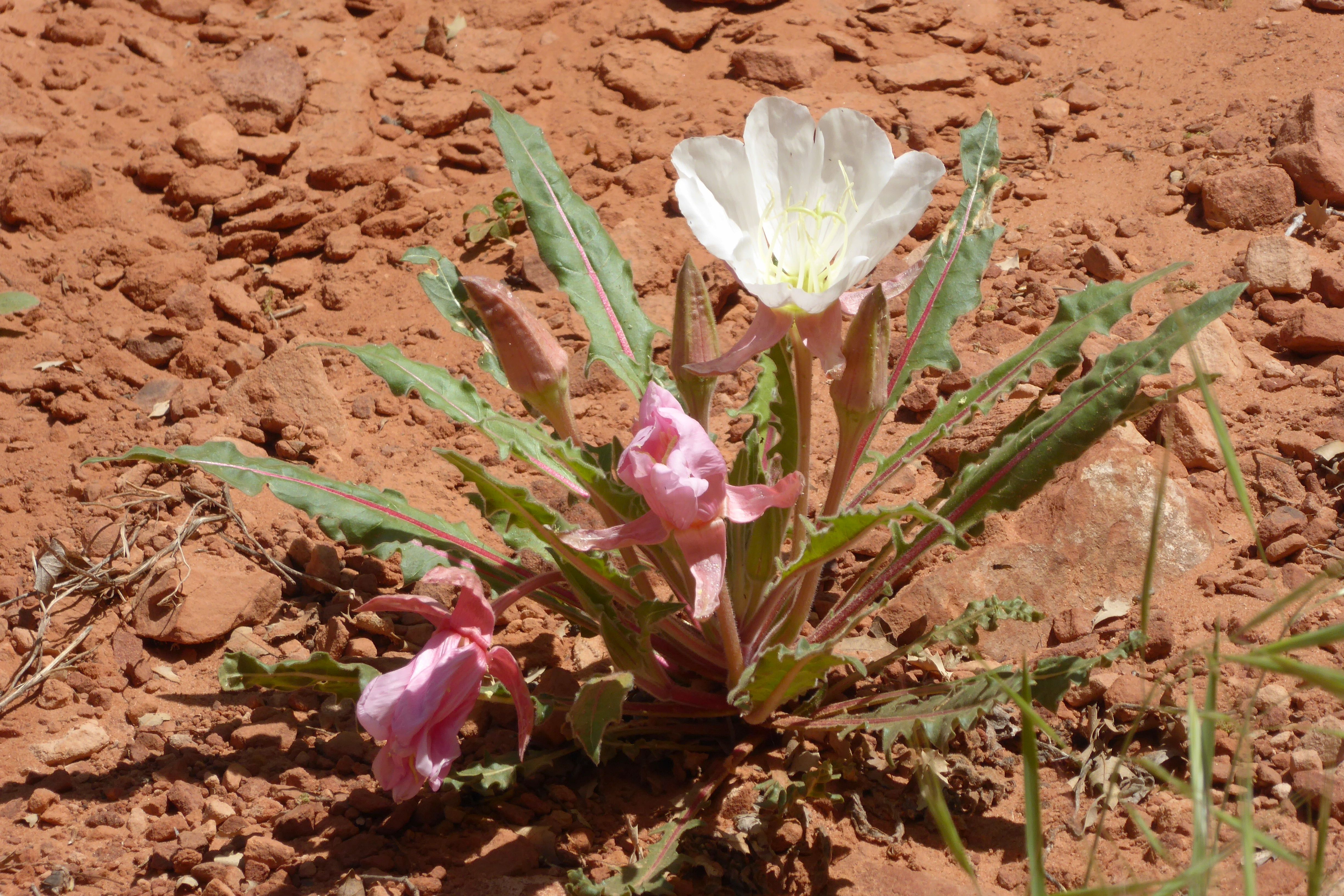
Bronze evening primrose
After we left Bryce, we enjoyed the views of Grand Staircase Escalante National Monument before driving through Boulder at 9,600-feet elevation. We made a brief photo stop, and I immediately ran down to pack a snowball. Nobody wanted to play catch with me, though.
After checking in at the Red Sands Hotel, in Torrey, I gazed out the window and noticed cows and a bison off to the left, and this beautiful horse straight ahead. I went out to make a new friend.
What makes Utah so special is the miles and miles of wide open, unspoiled land. 80% of Utah is owned by the state or Bureau of Land Management, so it is mostly undeveloped.
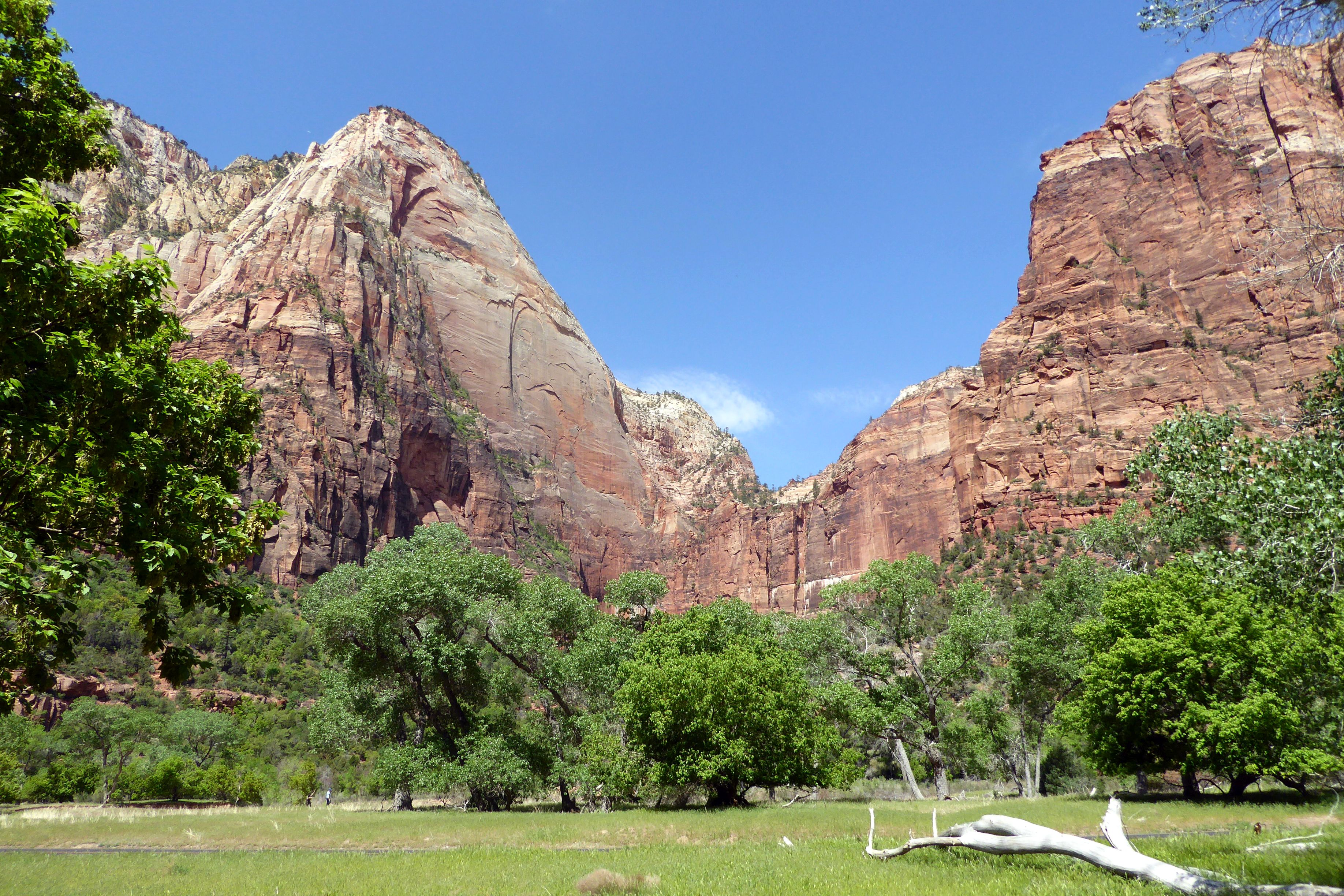
To begin our journey of the Grand Circle of Utah’s National Parks, the first national park we visited was Zion, Utah’s first national park, established in 1919. It is located in Southwestern Utah, and is characterized by deep sandstone canyons, a maze of narrow, and striking rock towers and mesas.
Native Americans were the first to inhabit the area about 8,000 yeas ago. Mormons started coming in during the late 1850’s, and called the area Zion; however, President Taft named it Mukuntuweap National Monument in order to protect the canyon. In 1918, Horace Albright, the acting director of the newly created National Park Service changed the park’s name to Zion National Park. (So much for the Native Americans being there first…)
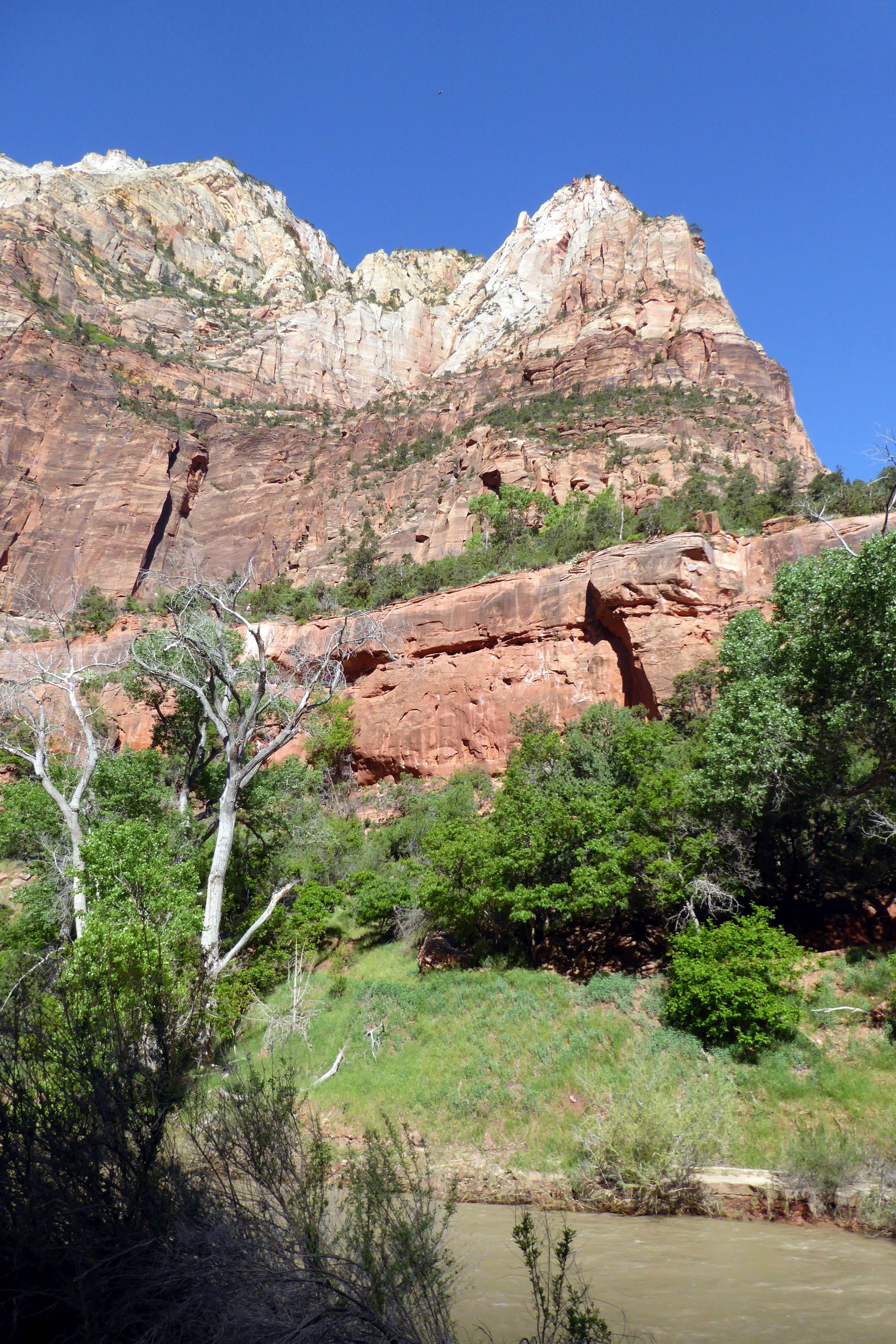
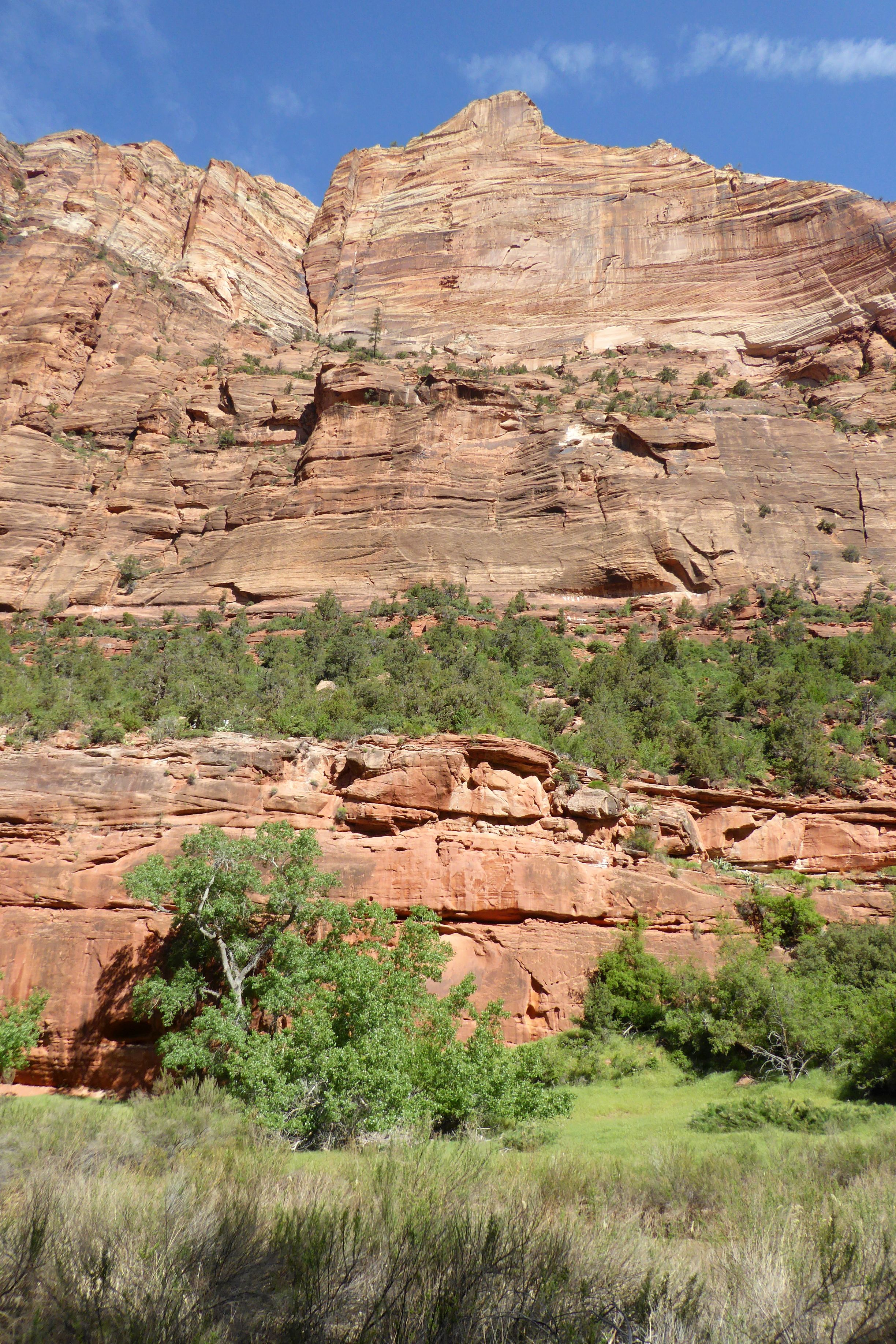
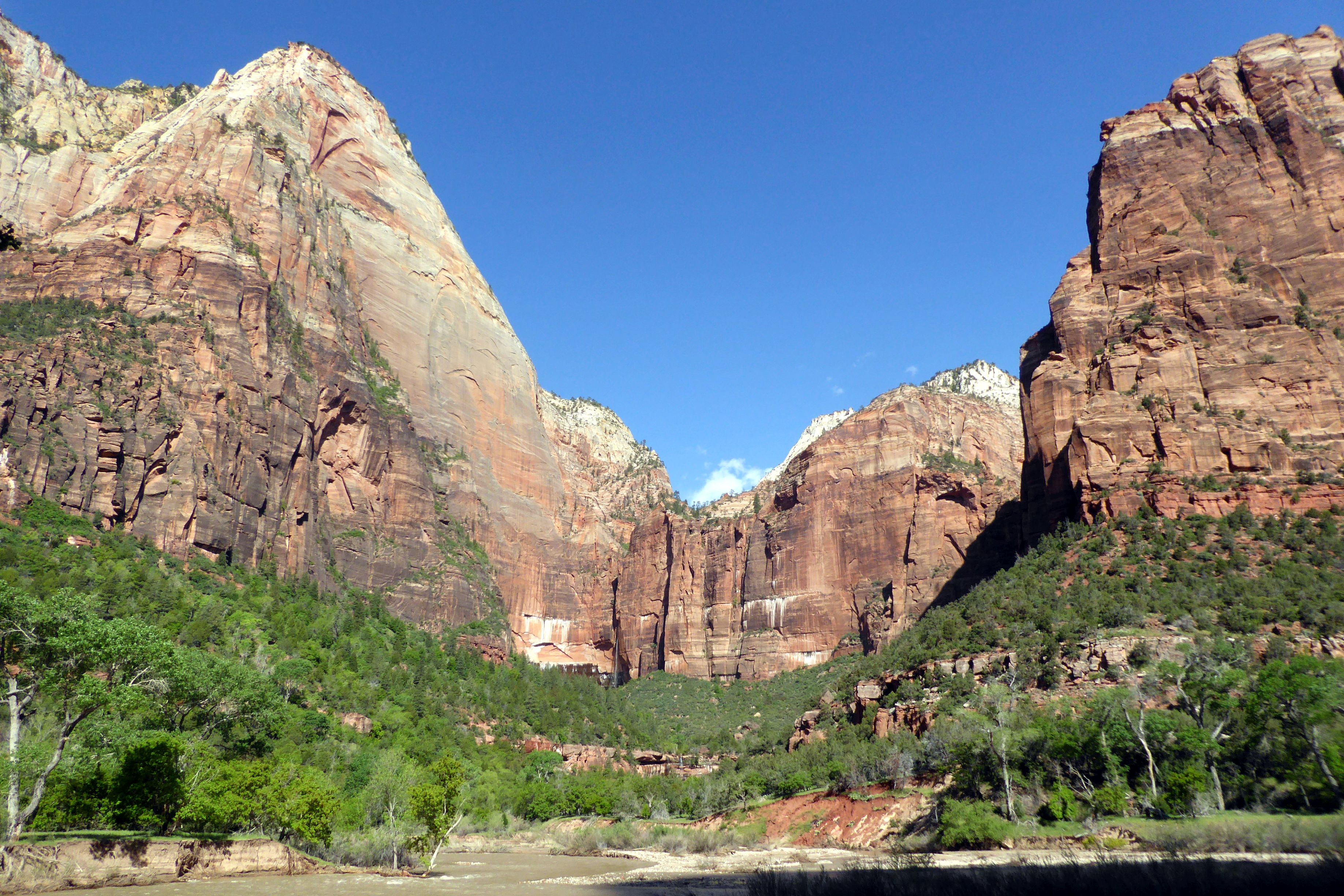
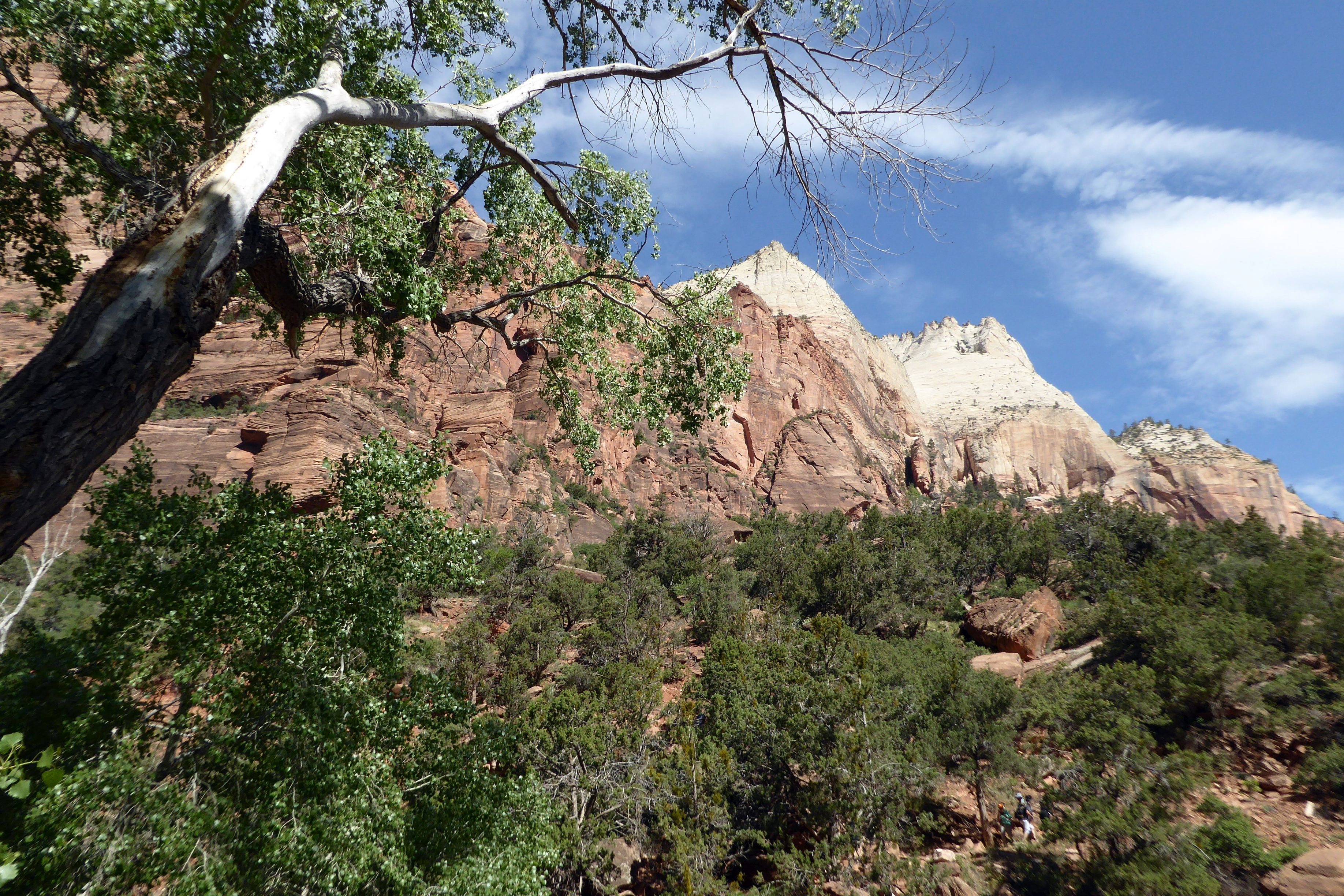
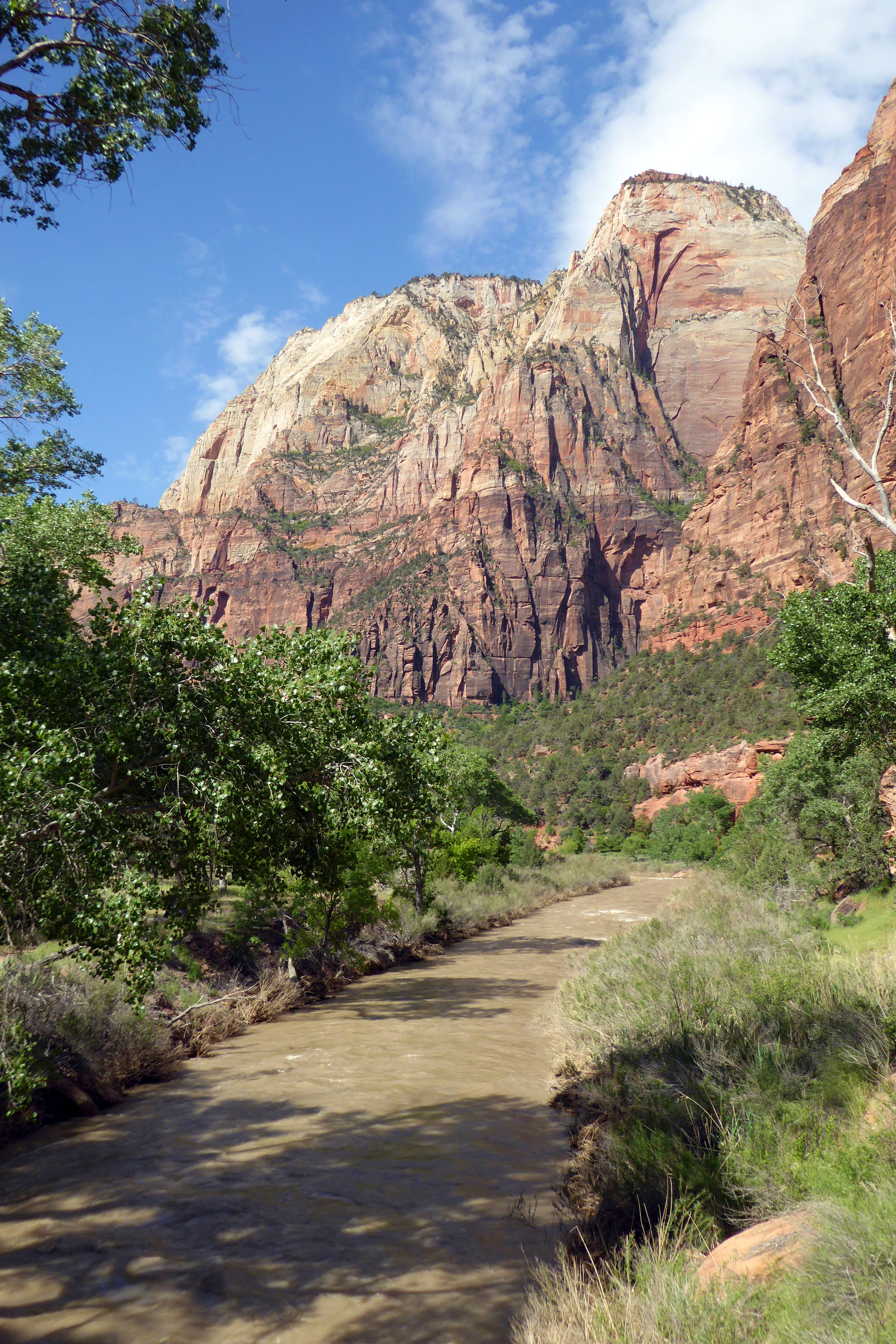
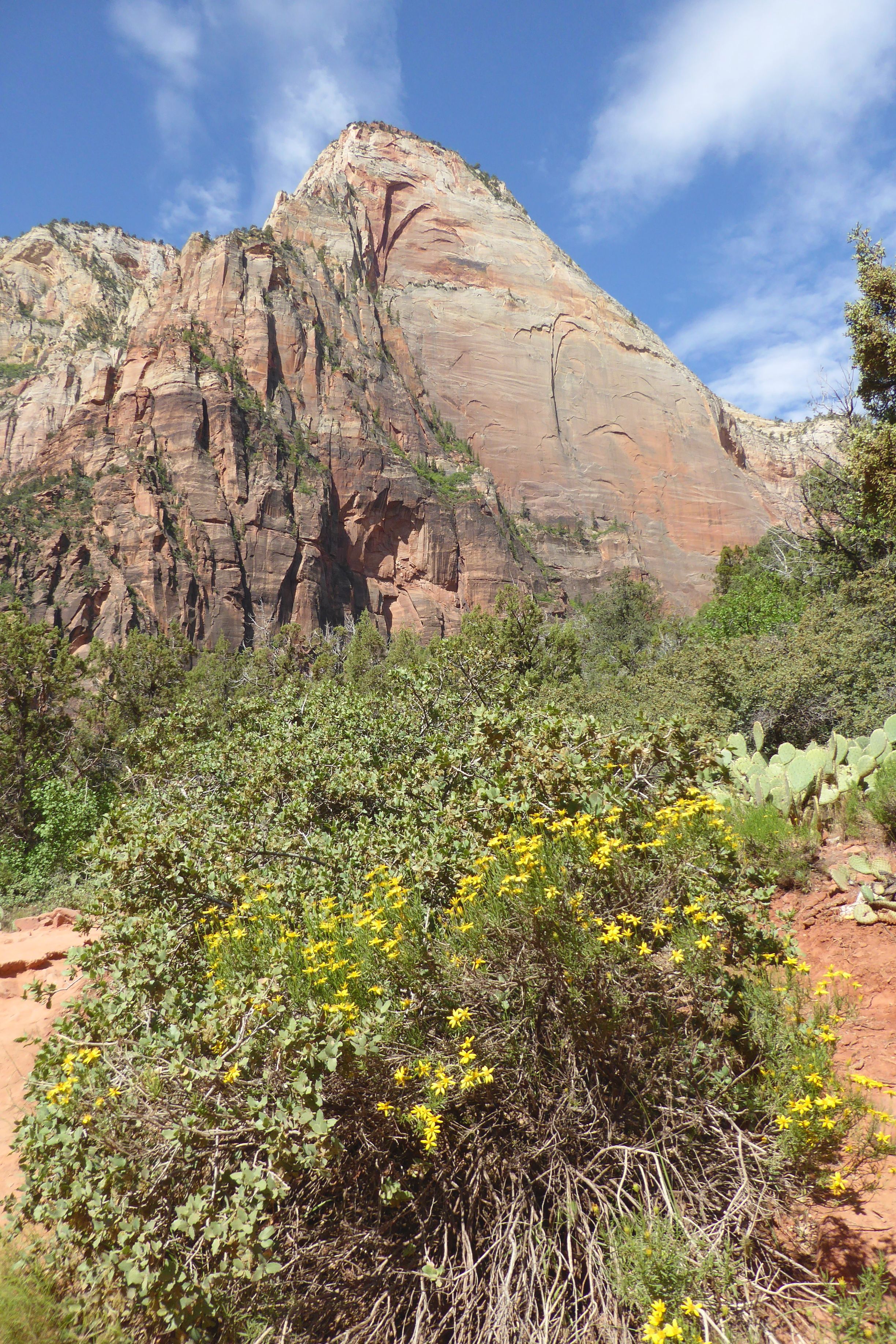
The Navajo sandstone in the rock formations is gorgeous; beautiful, rich shades of red. A Wikipedia article about Zion describes the geology as, “… nine formations that together represent 150 million years of mostly Mesozoic-aged sedimentation. At various periods in that time warm, shallow seas, streams ponds and lakes, vast deserts, and dry near-shore environments covered the area. Uplift associated with the creation of the Colorado Plateau lifted the region 10,000 feet (3,000 m) starting 13 million years ago.” I’ll take the author’s word for it. All I know is that it was gorgeous, the sky was a beautiful shade of blue, and the Navajo sandstone formations set against the blue sky was spectacularly colorful! It made for an inspiring day of photography, as we hiked to the Emerald Pools and back.
(For all pictures, click on the image to see full screen view.)
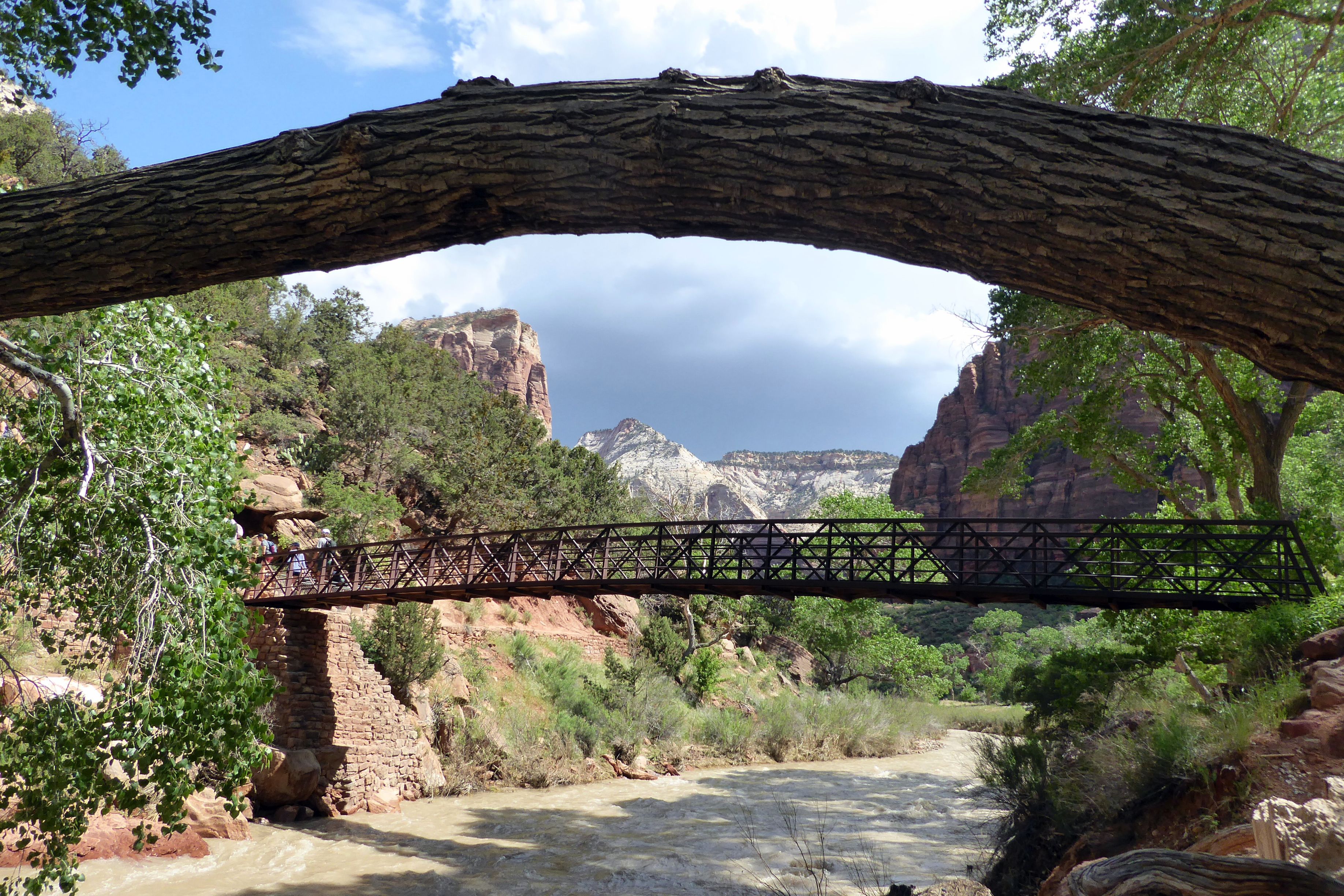
We crossed over this bridge to continue our hike to the Emerald Pools.
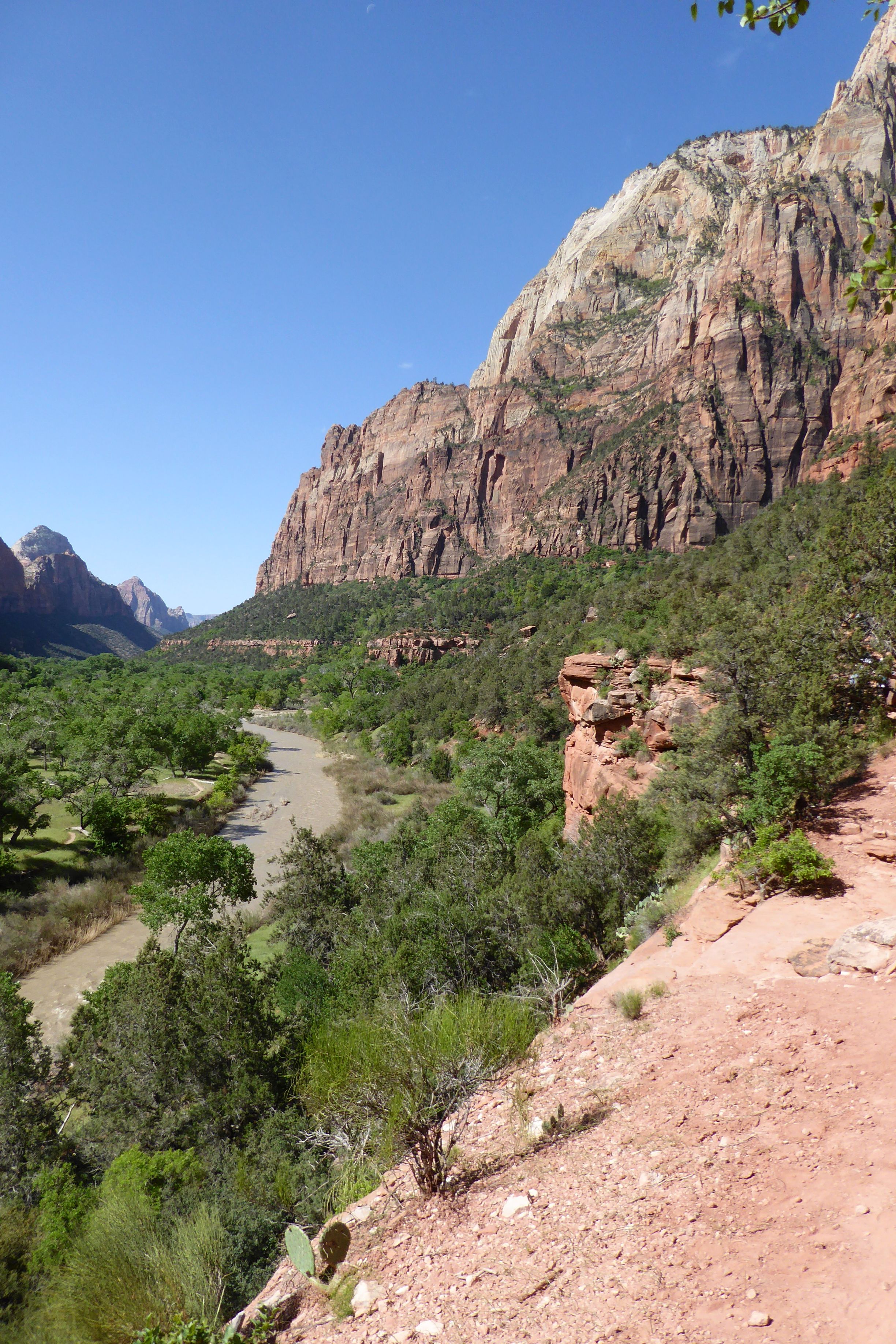
As we increased elevation, the vistas of the canyon were beautiful.
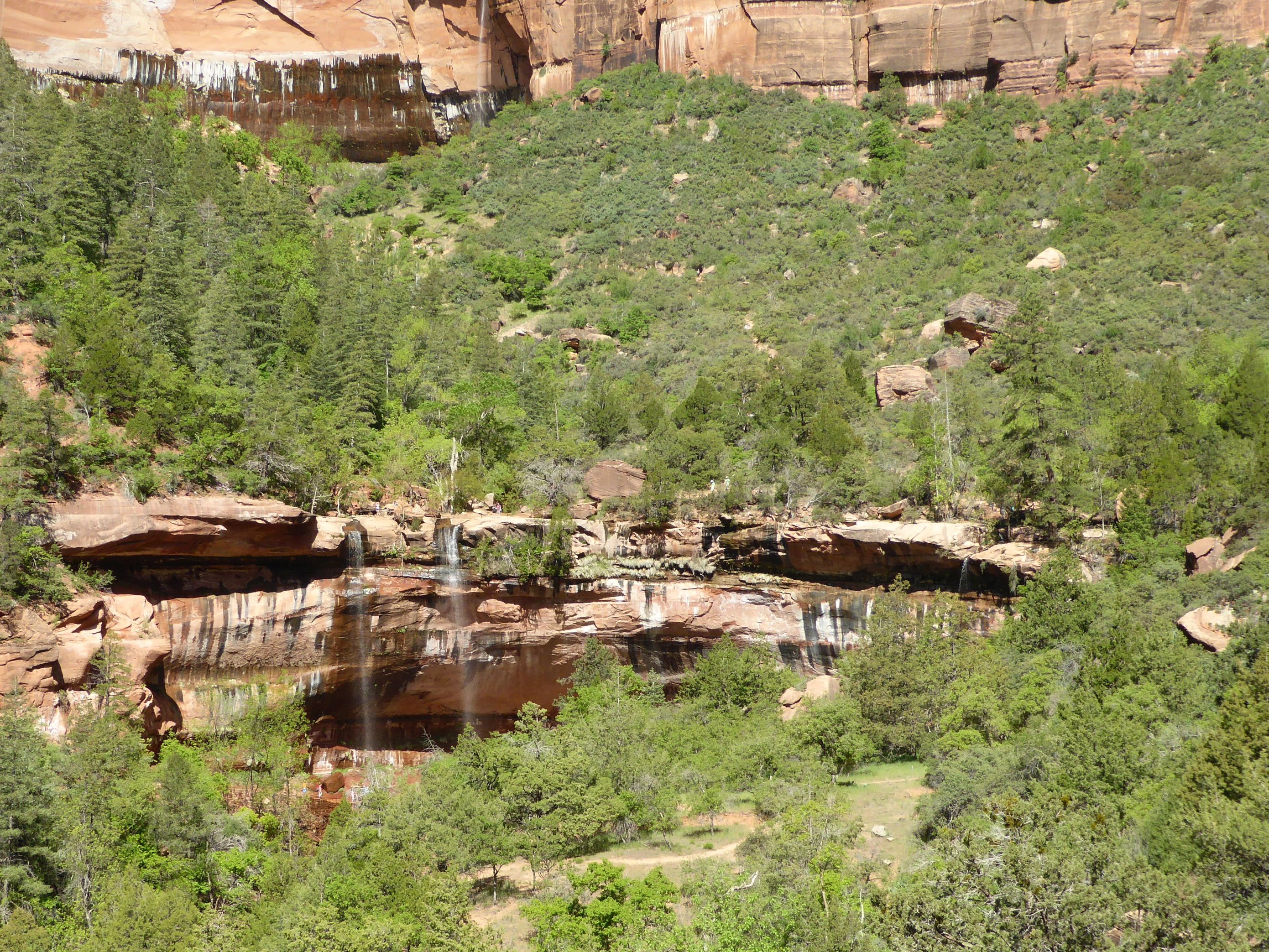
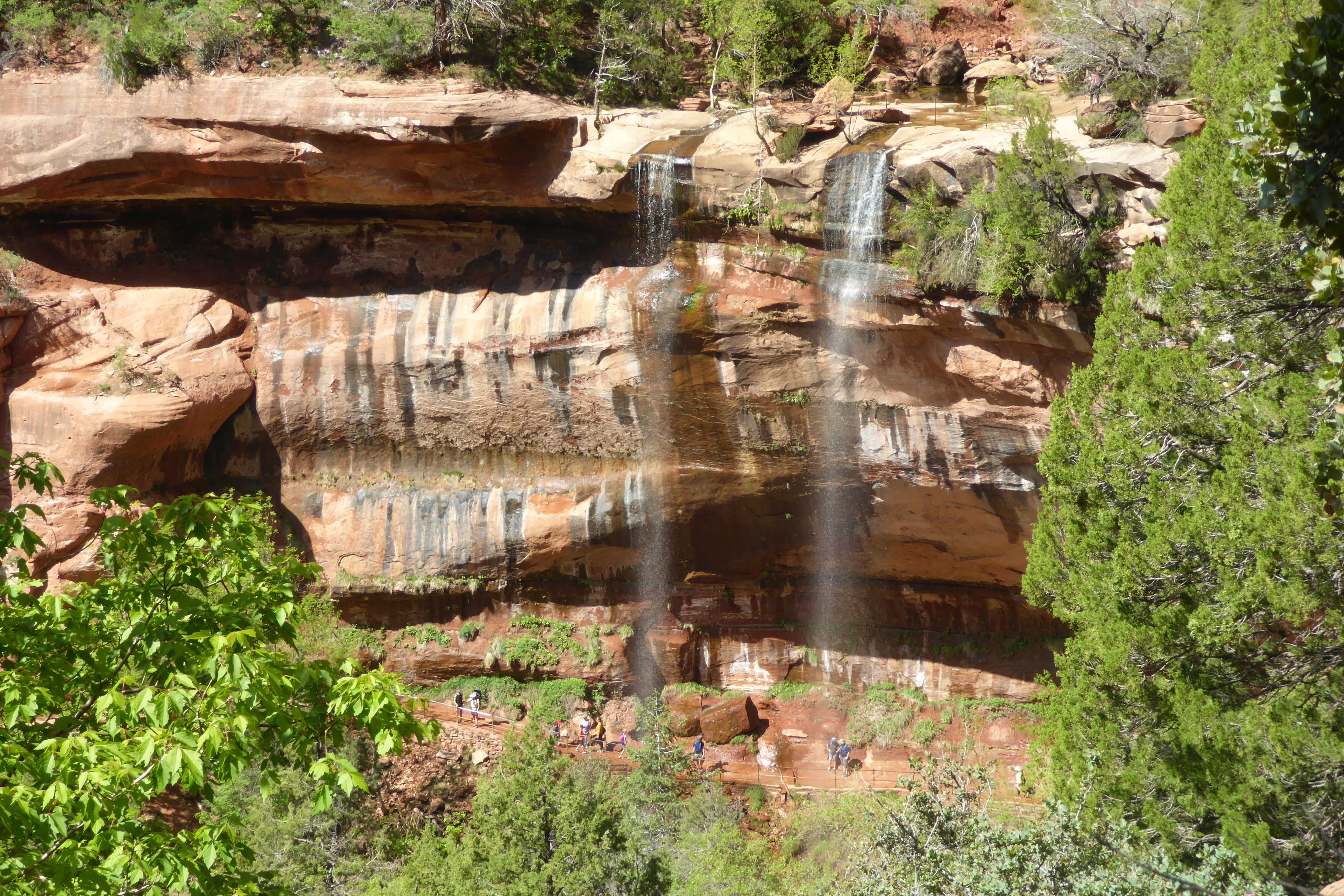
Our first sight of the Emerald Pools and waterfalls
After seeing the Emerald Pools, we took the path back down to the river, crossed the bridge, and headed back to the lodge.
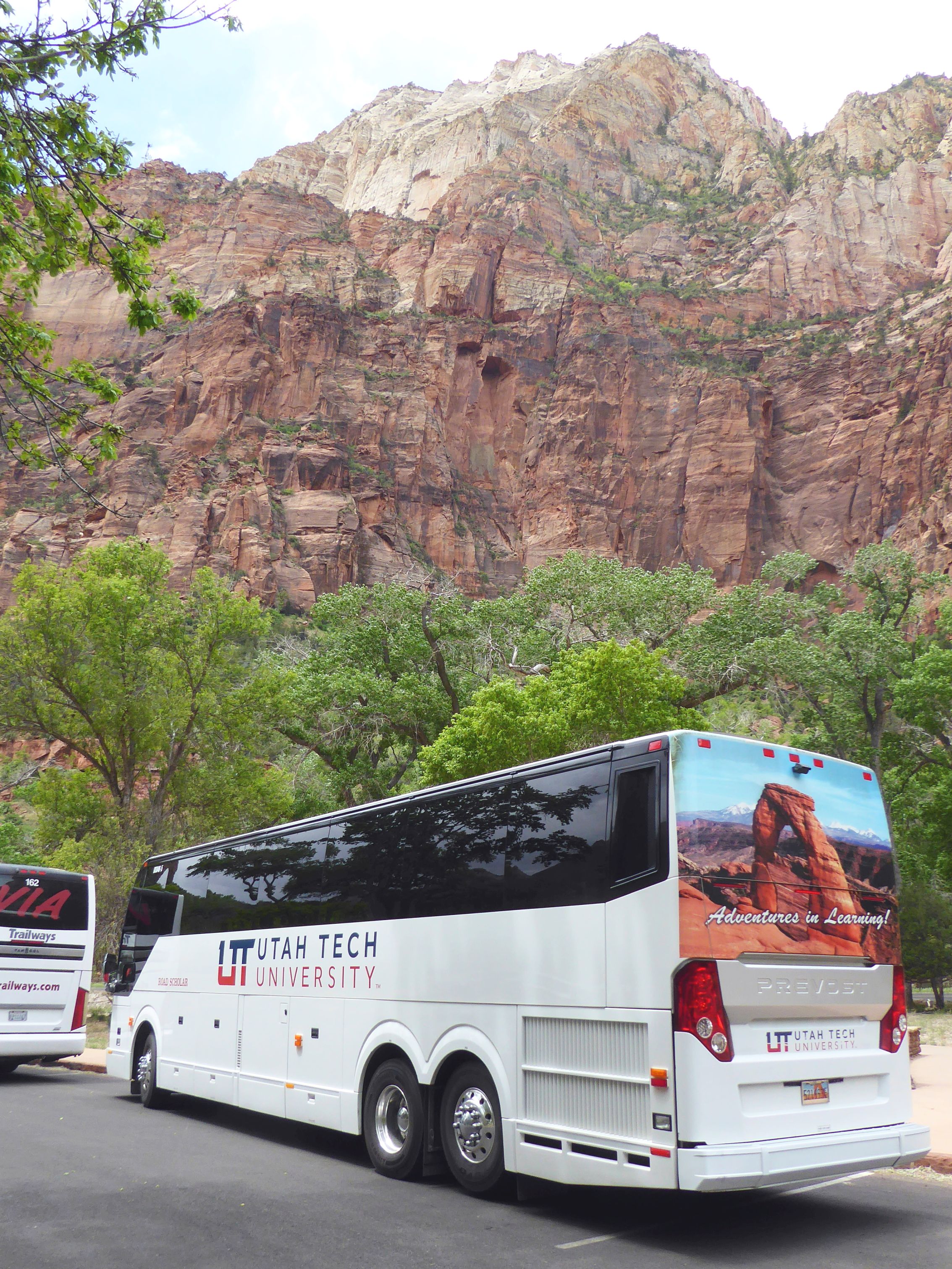
The sky clouded over after we finished our lunch and headed out– perfect timing! This was our Road Scholar tour bus for our group of 24 plus a tour leader. There was plenty of room to spread out in the back of this 45-seater.
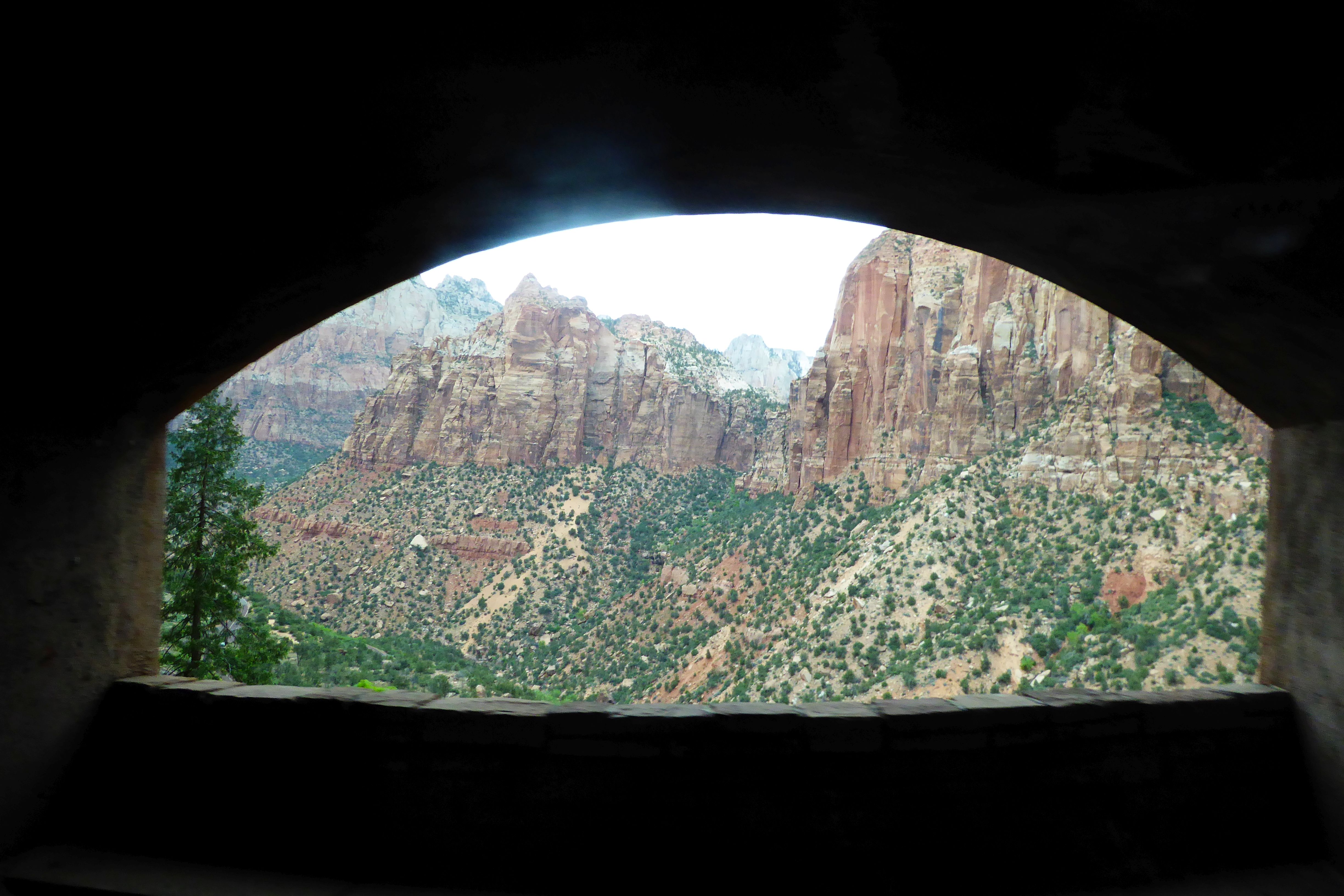
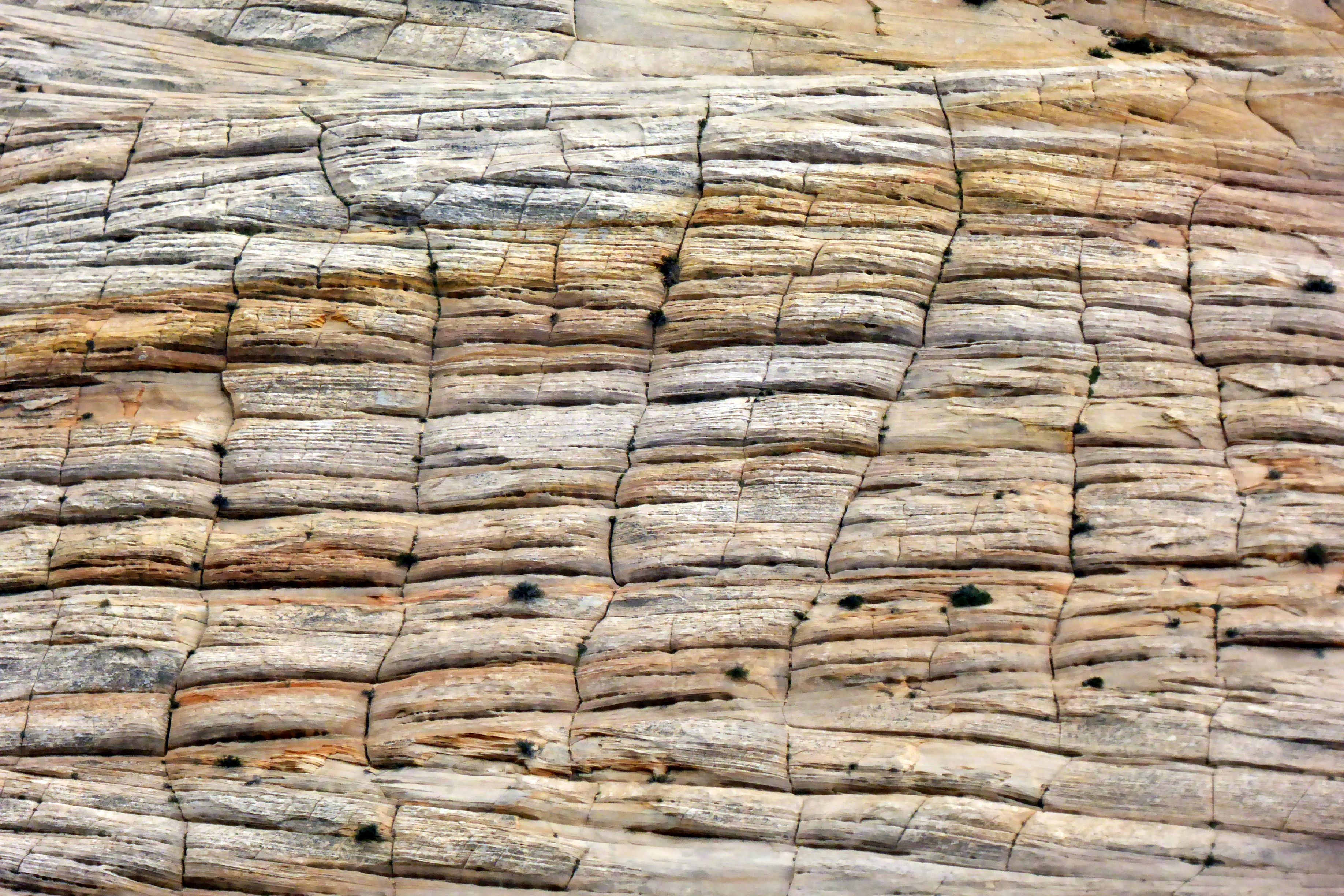
On our way to our next hotel at Bryce Canyon, we traveled through the Zion tunnel. I was able to grab this shot in the tunnel, shooting out the bus window, and through an opening. Checkerboard Mesa is at the east entrance of Zion, after leaving the tunnel. This is naturally sculpted rock. The horizontal lines is evidence of ancient sand dunes, and the vertical lines are fractures that have been enlarged over the years by runoff from rain and melting snow.
Coming up next: Beautiful Bryce Canyon National Park
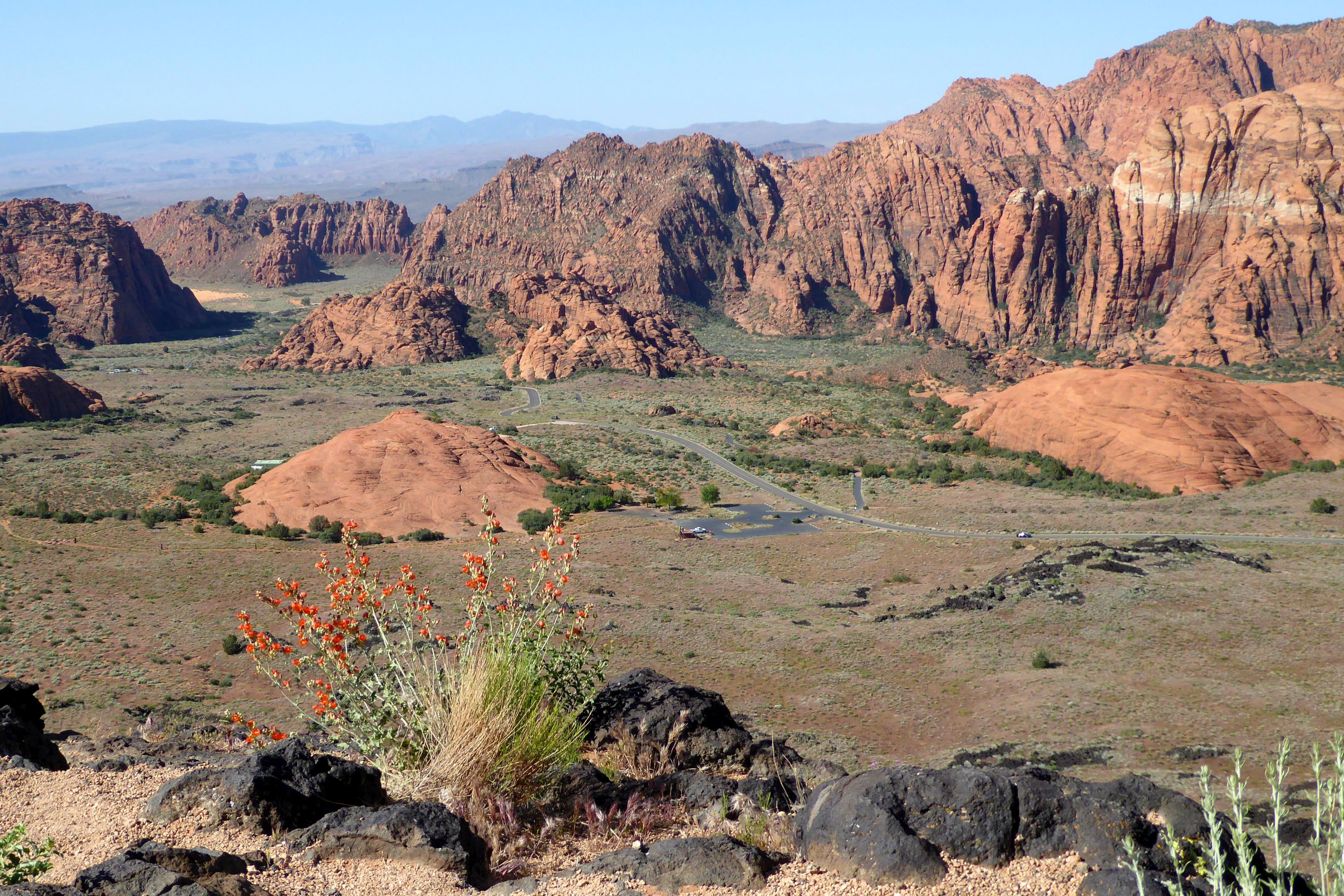
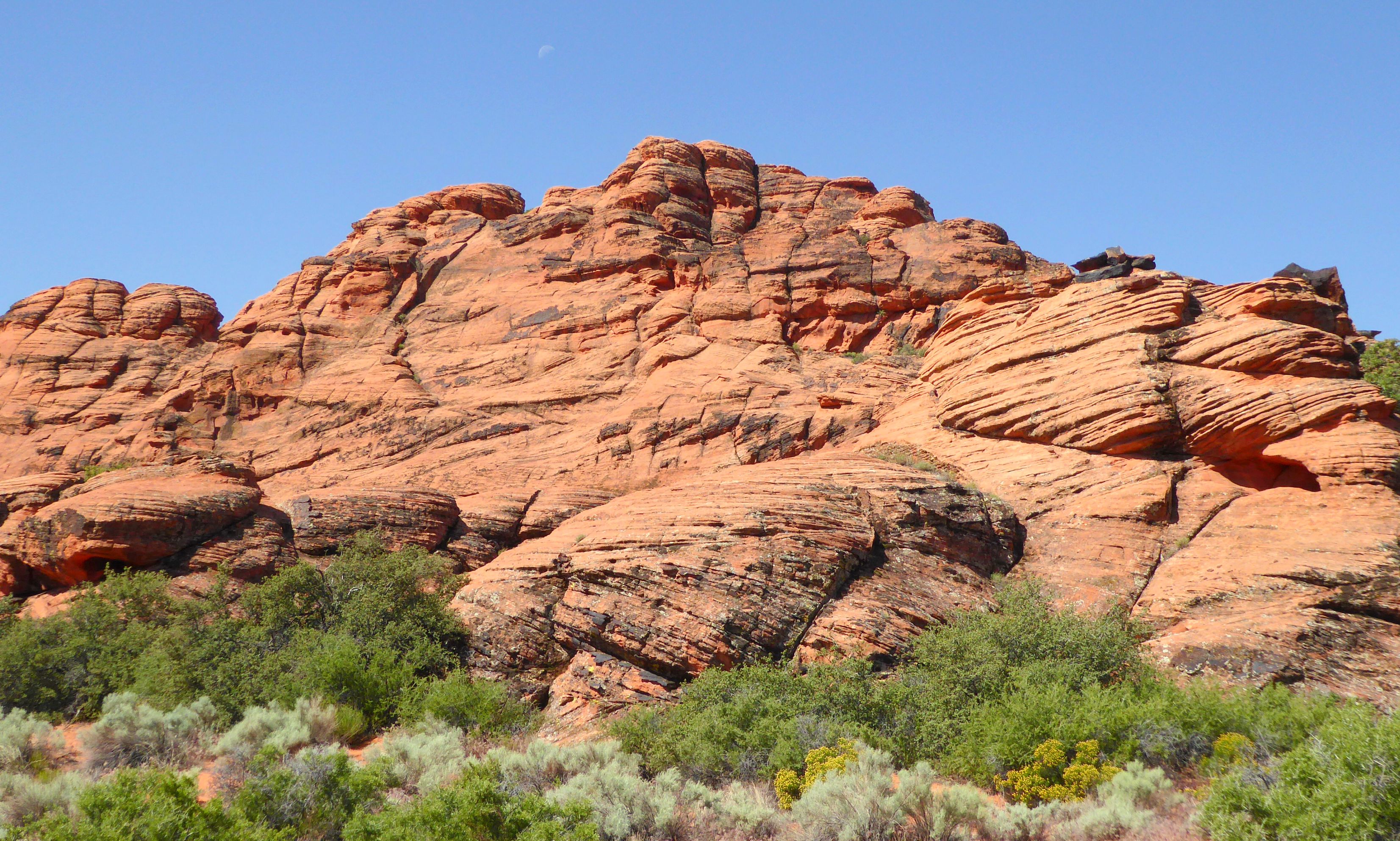
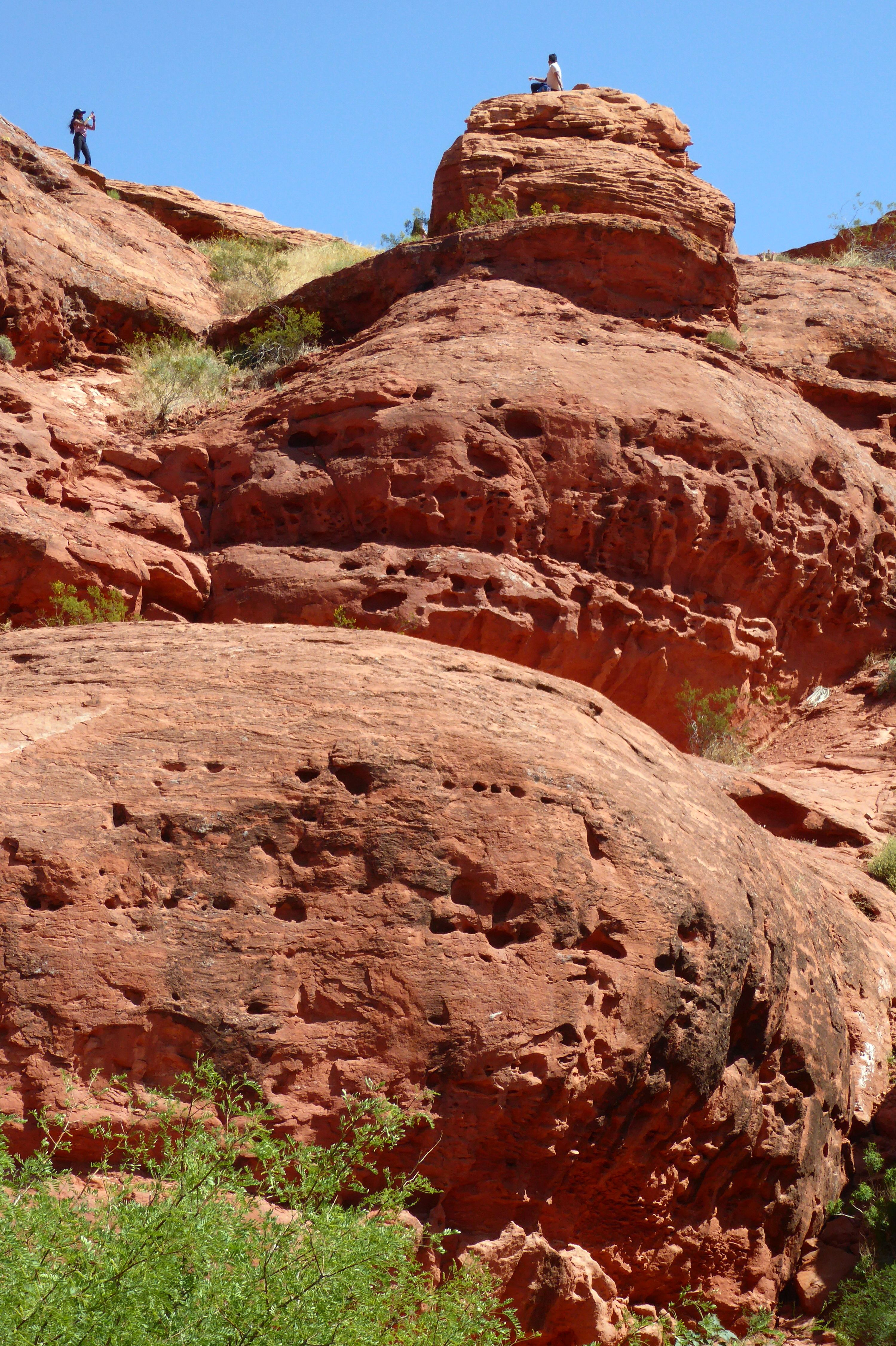
On our first full day of the tour, we learned about the geology of the parks we would be visiting, and then went to see our first park: Snow Canyon State Park, located near St. George, in the Red Cliffs Desert Reserve. The red you will see in the photos below is Navajo Sandstone.
Snow Canyon sits at the junction of Mojave Desert, Great Basin, and Colorado Plateau; so, the climate is very sunny and dry. The average rainfall is about 7.5 inches per year, and the summers can get extremely hot.
(For all pictures, click on the image to see full screen view.)
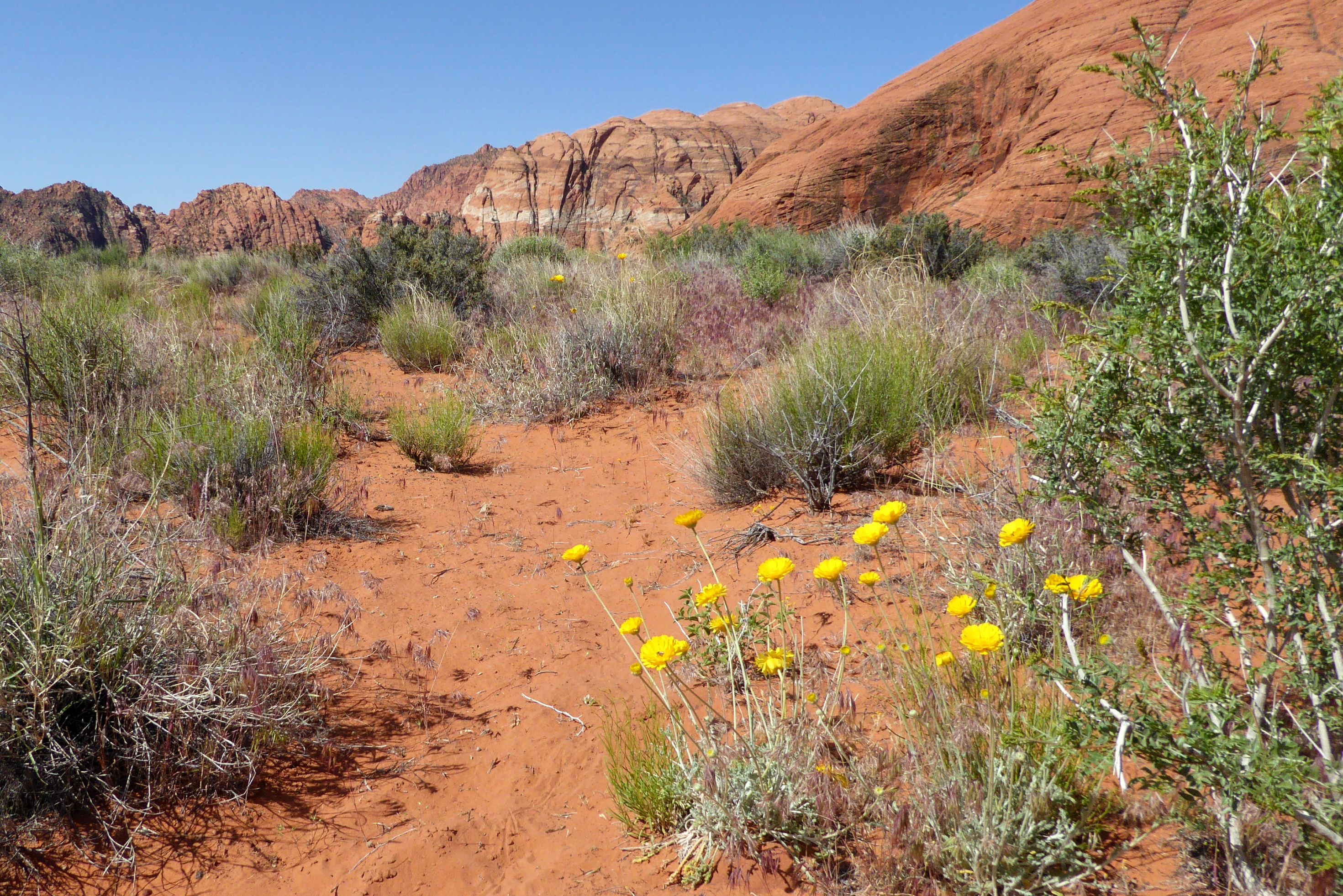
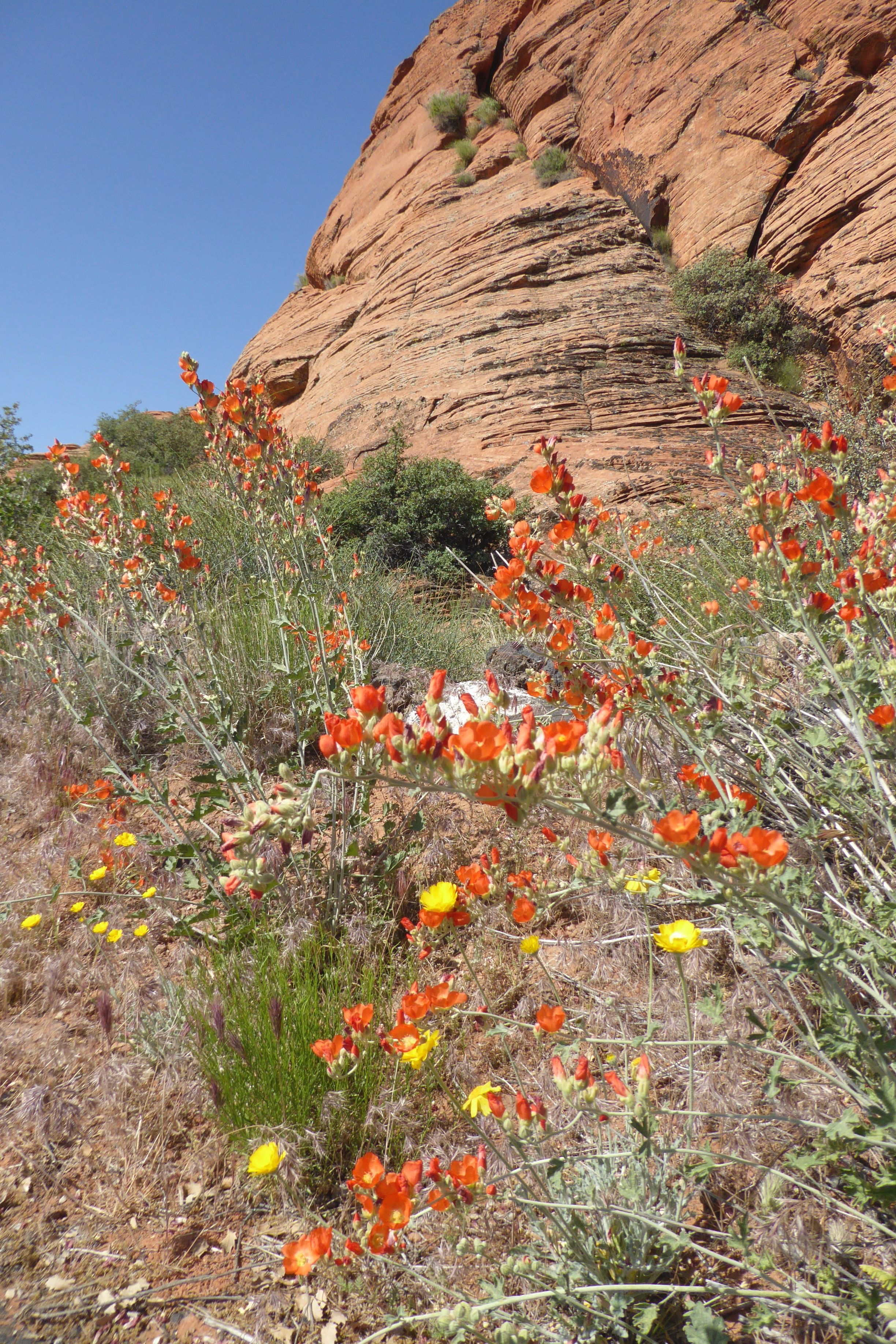
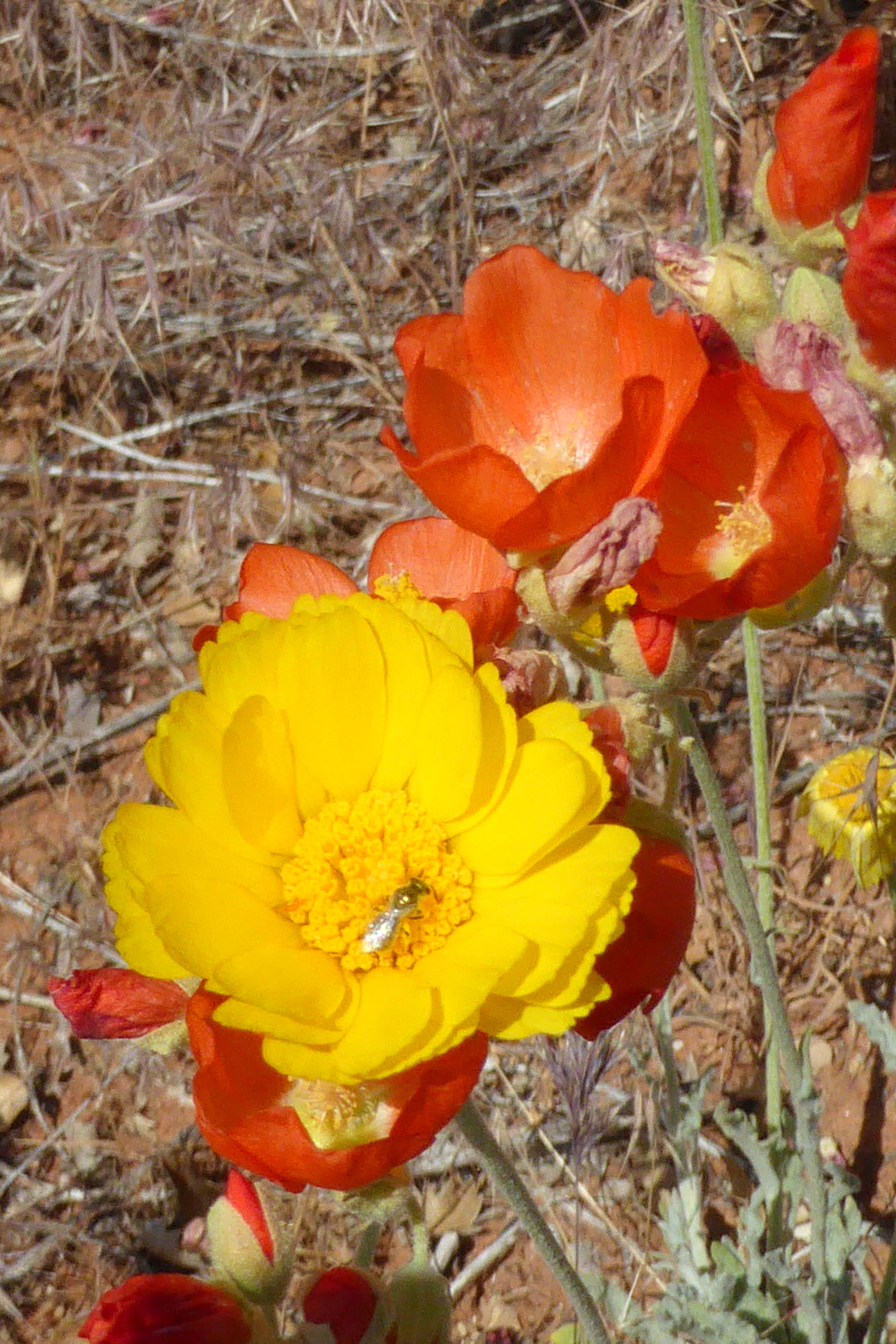
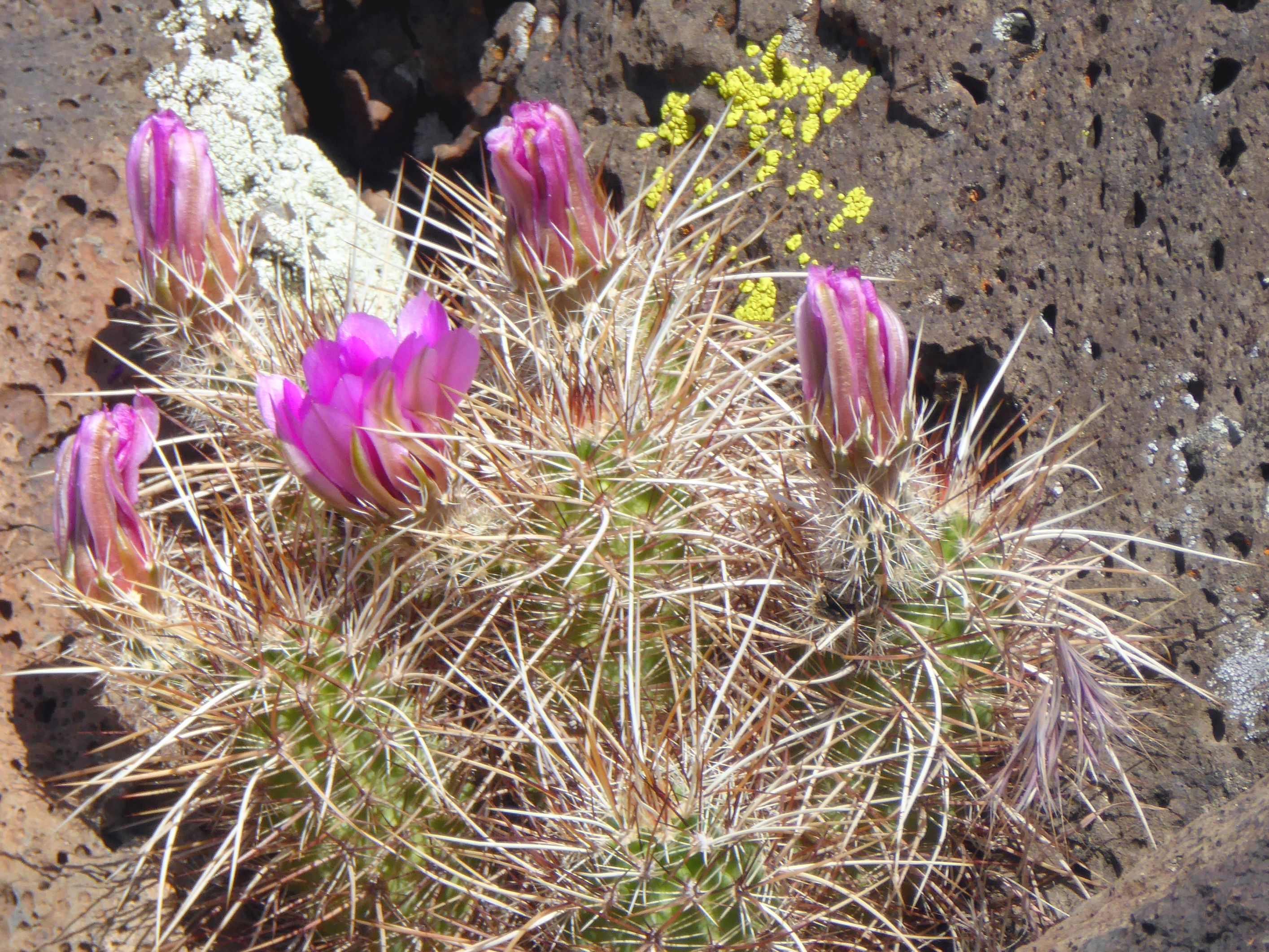
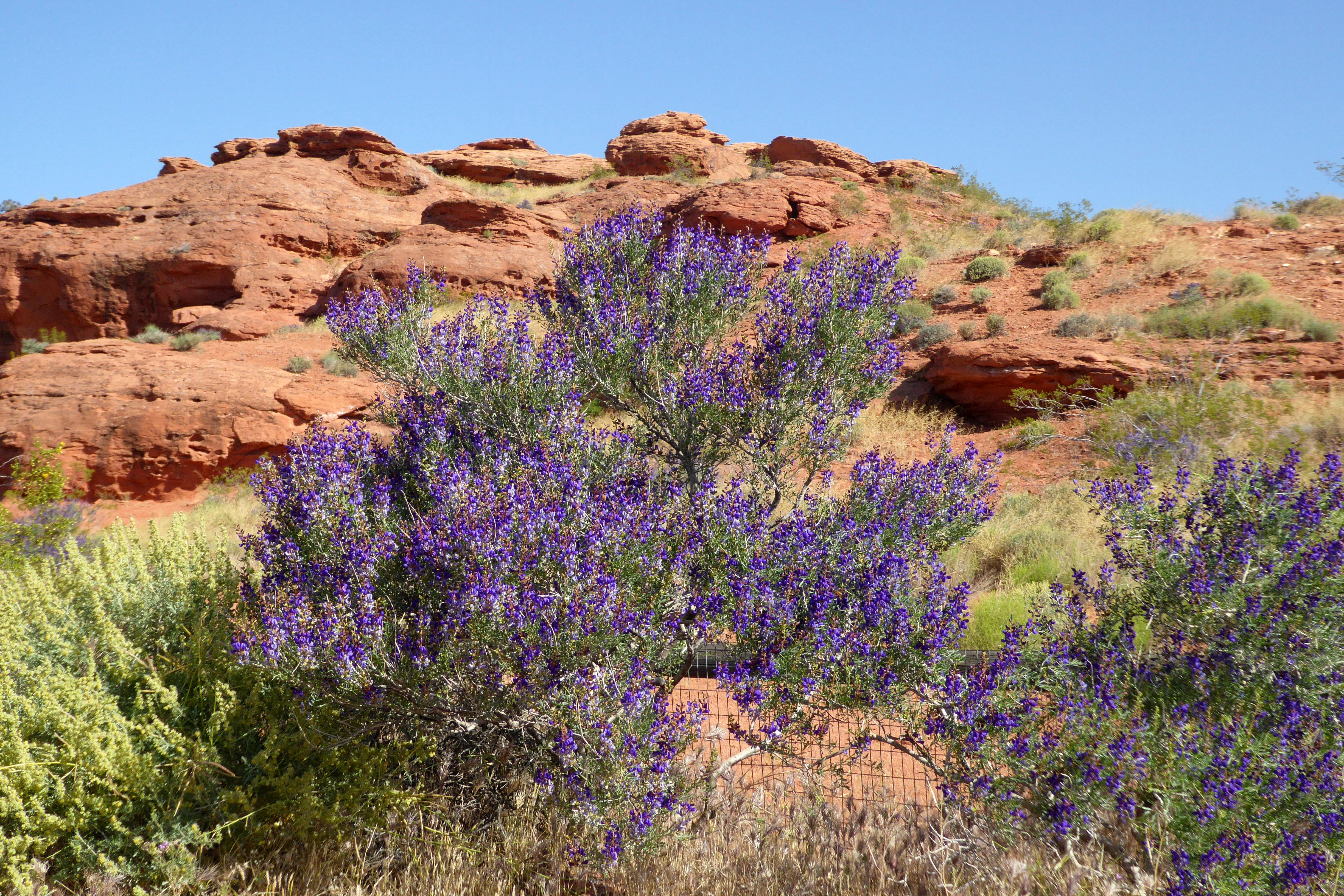
After getting a birds-eye view of the park, we went to the floor of the park’s canyon to walk a path and get close-up views of the beautiful spring desert flowers and sandstone formations. The moon was still visible against the clear blue sky, so the group enjoyed taking strategically framed photos along the way.
The black is volcanic rock.
The moon is just above the rock formation on the left.
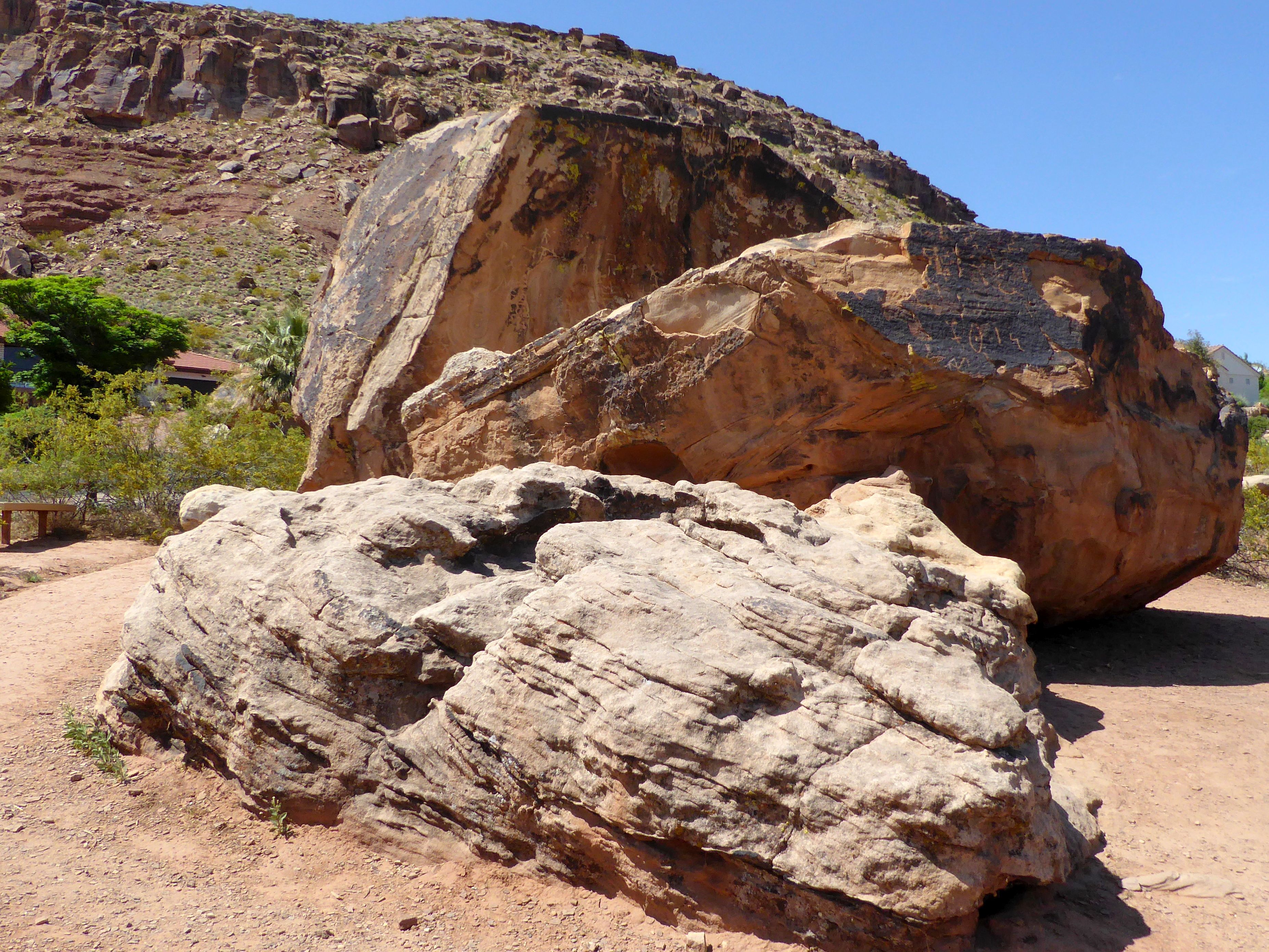
We also visited Bloomington Petroglyph Park, a very small park located in the middle of a subdivision! It was sad to me to see houses surrounding such a historical site!
You can see a small section of a roof of one of the houses surrounding the park. I did my best to cut them out of my photos!
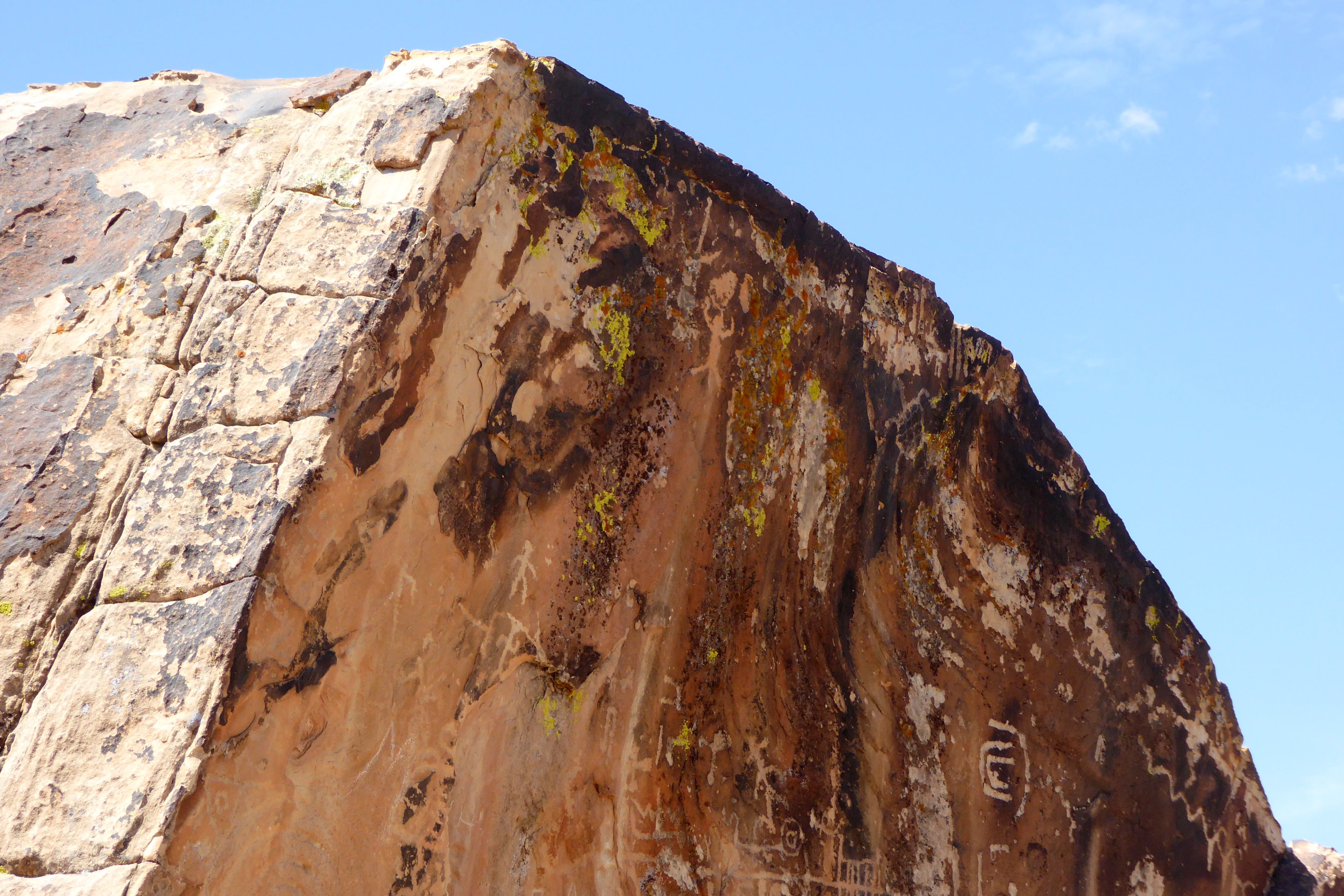
The ½ acre park highlights large boulders with petroglyphs. These carved images tell the stories of ancient peoples. Many of these carved images are of humans and animals as well as what is believed to be early trail maps. The history of these petroglyphs is unknown; however, other petroglyphs in Utah are around 2,000 years old.
(Unfortunately, the petroglyphs have been vandalized, so there are also initials carved into the rocks.)
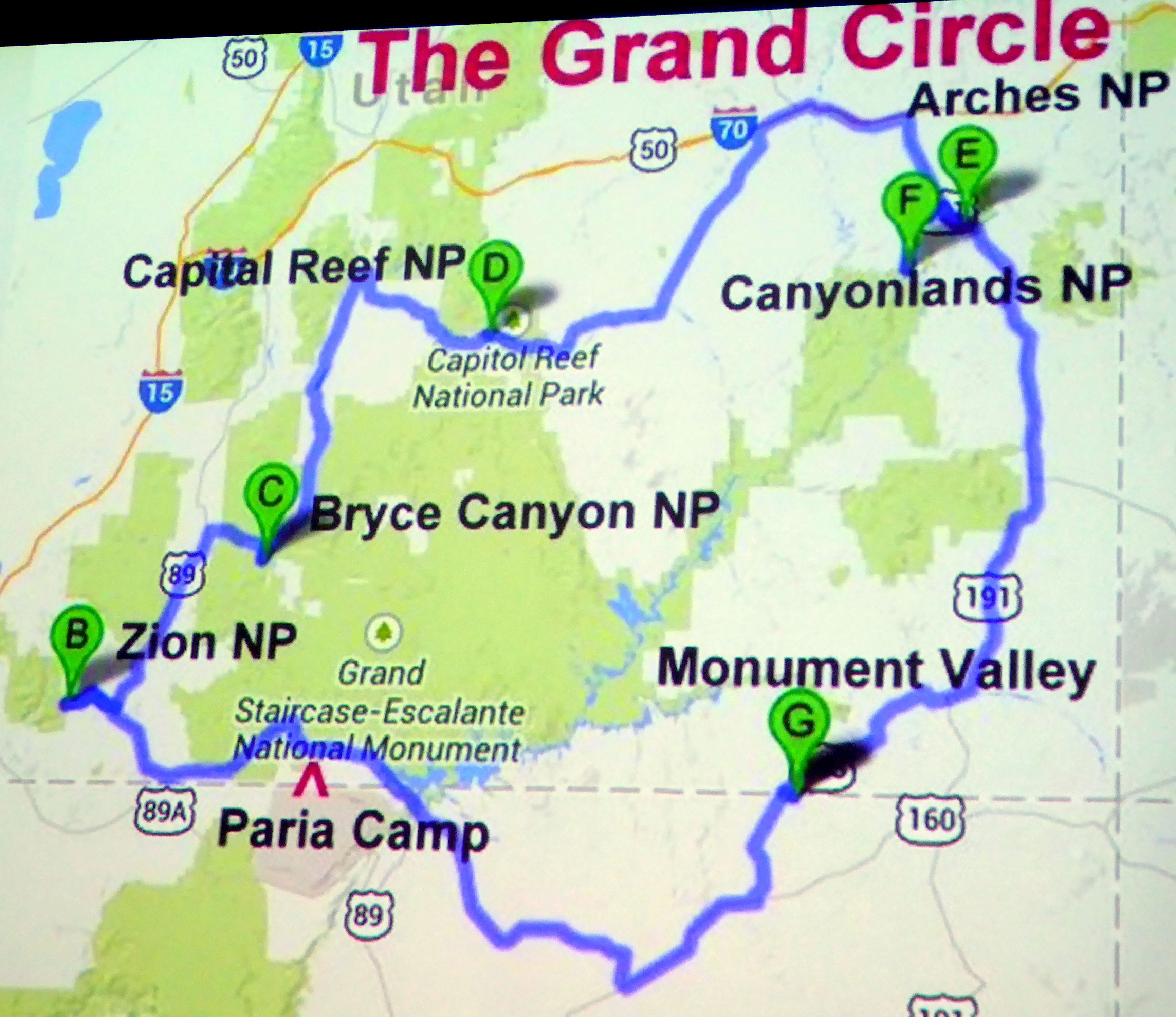
Less than three weeks after returning from Italy, we were off again to see the Grand Circle of Utah’s National Parks, along with a few state parks and monuments. This time, we did a small group tour with Road Scholar, although “small group” amounted to 24, instead of 16 like we had in Italy with Overseas Adventure Travel.
This was a completely different type of trip than Italy. Instead of a focus on the culture, cultural connections with the locals, connections with our tour leaders, incredible food, and beautiful historic sites; Utah was all about the gorgeous scenery and photography. If you would like to see more pictures and read less stories, join me for a tour of Utah’s most beautiful parks.
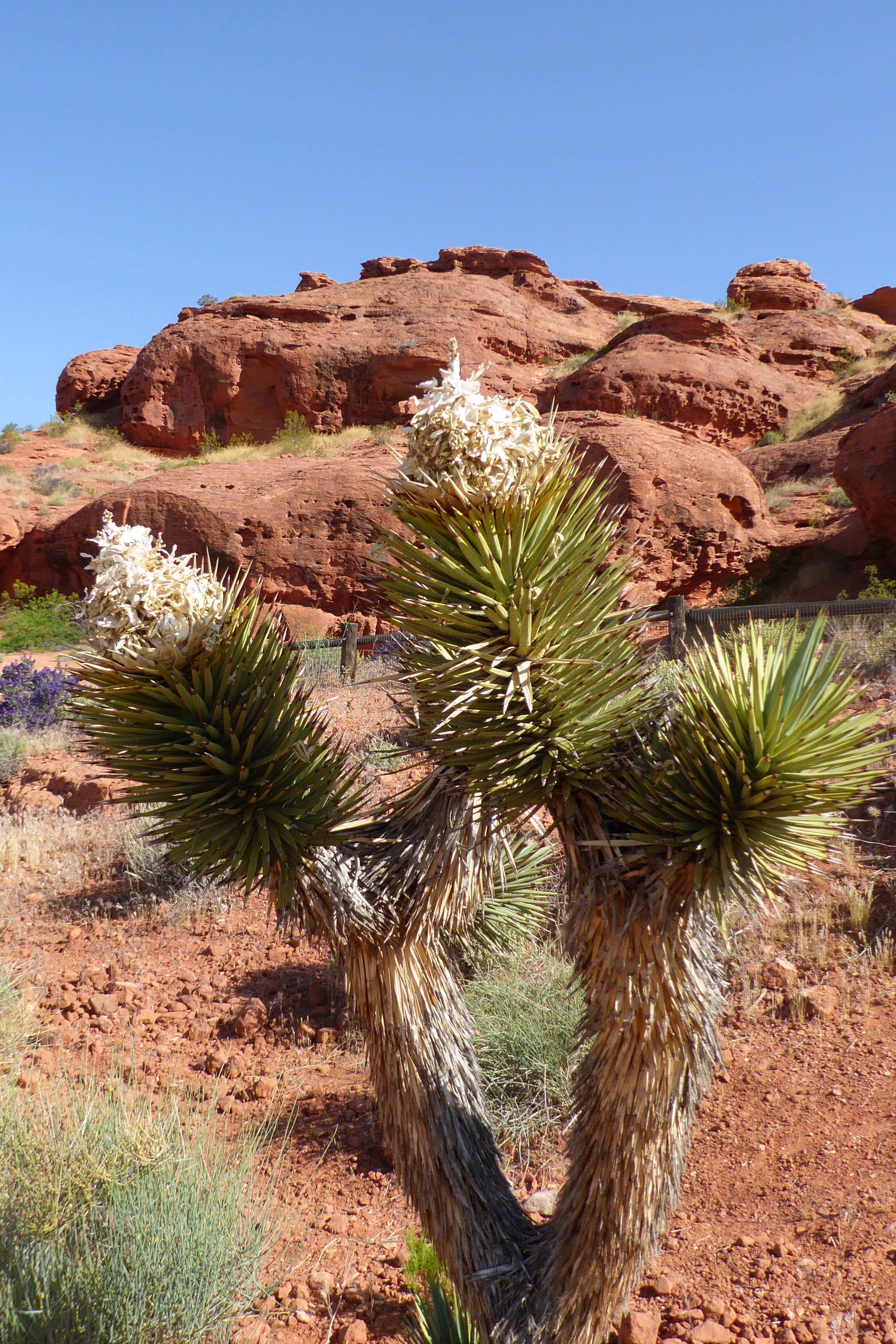
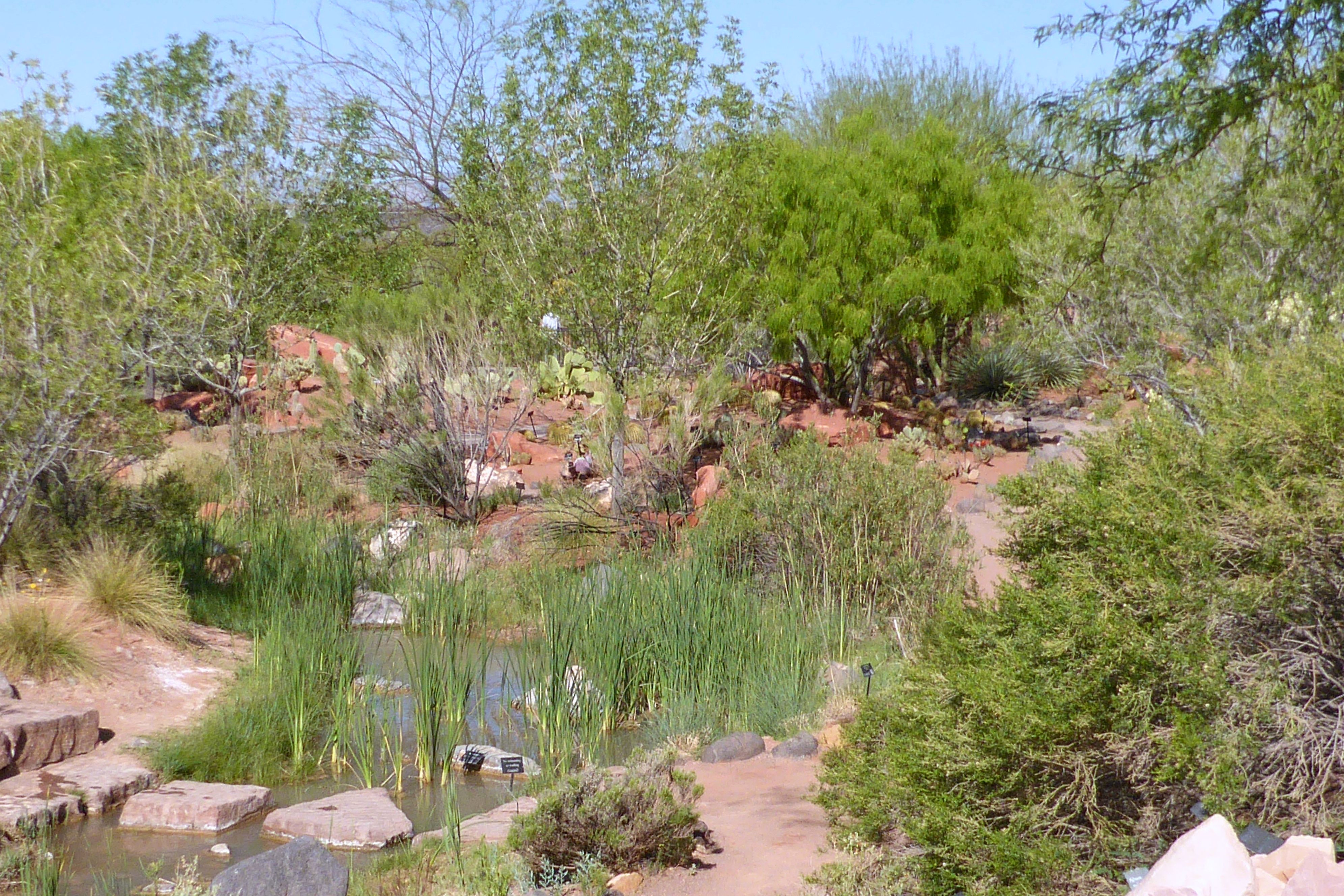
We arrived a day early ahead of the tour, so we could explore a little on our own and relax before joining what would be a busy tour. The first flight out got us in early to St. George, so we checked in at our hotel (which, thankfully, was happy to accommodate us ahead of check-in time), and hopped on a bus to town. From there, we walked up to Red Hills Desert Garden, which was ranked #1 on Trip Advisoras a “Traveler Favorites” for St. George. It was a free attraction, the weather was gorgeous, the spring flowers were in bloom, and we were up for a walk after the flight; so, what could be better than that?
Trip Advisor rarely disappoints, and the reviews were spot-on this time. It was gorgeous there! It was such a beautiful and peaceful place to wander around or sit on a porch swing and relax. I chose to put my camera in action:
(For all pictures, click on the image to see full screen view.)
This is behind Red Hills Desert Garden, a beautiful backdrop!
This, Allen, is for you, King Frog!
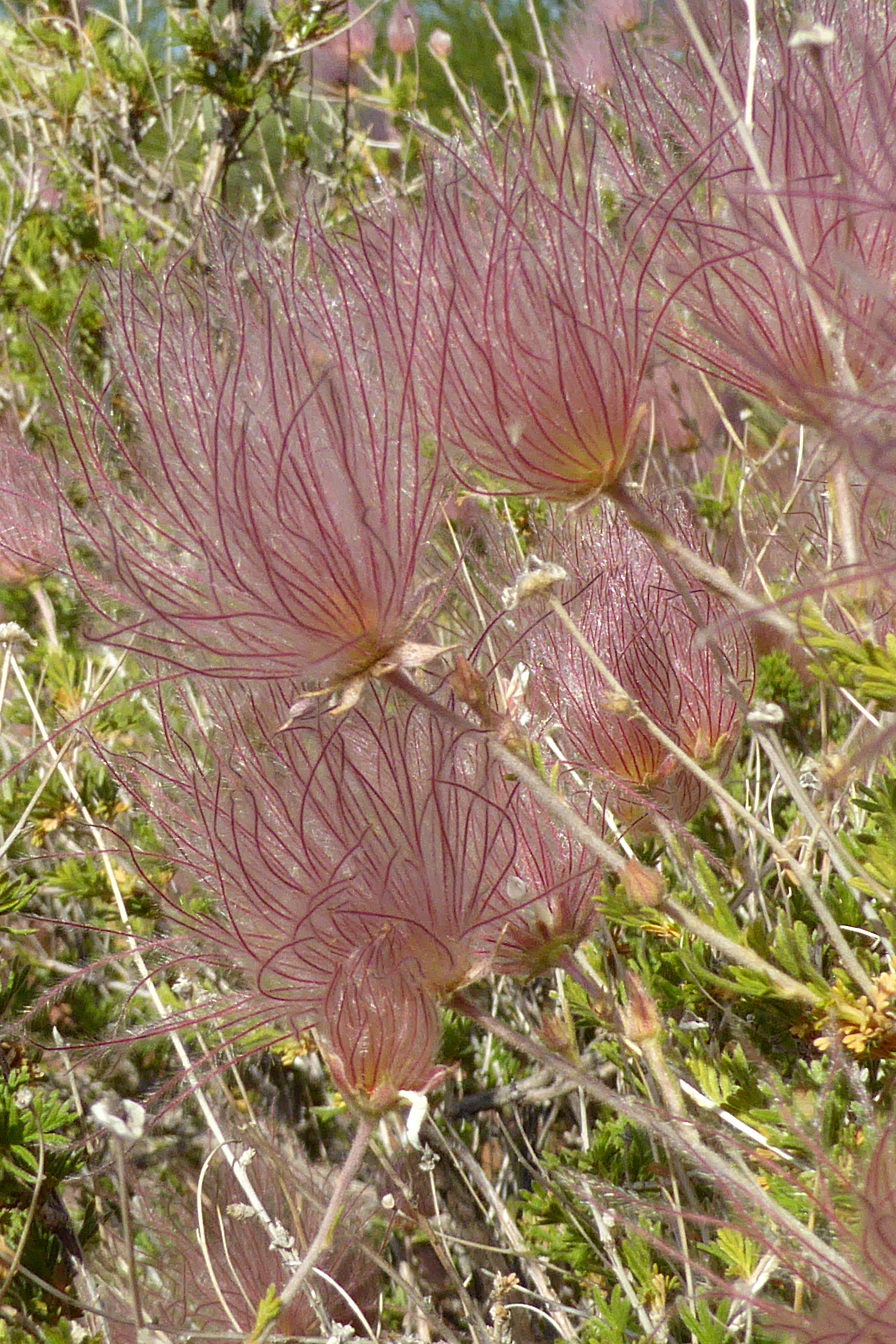
Apache Plume
Desert Museum Palo Verde
On our way back to the bus terminal, we passed by the power station and saw this “linesman” made out of parts used on power lines. Clever!
Mee-meep! Watch out for Roadrunner! This guy was out in the parking lot of the hotel.
Little did I know, the garden was on the program for the following afternoon with the group, so we returned for another visit. These are my afternoon photos:
Coming up next: Snow Canyon State Park and Bloomington Petroglyph Park
…do as the Romans do. Well, at least that’s how the saying goes. I had done that with my mom for five days in past travels, and Bruce opted not to do the Rome post-extension of our base trip. We both had decided we preferred to use our travel budget in other ways. So, our last full day in Italy was spent in Rome, before flying out the following morning.
(For all pictures, click on the image to see full screen view.)
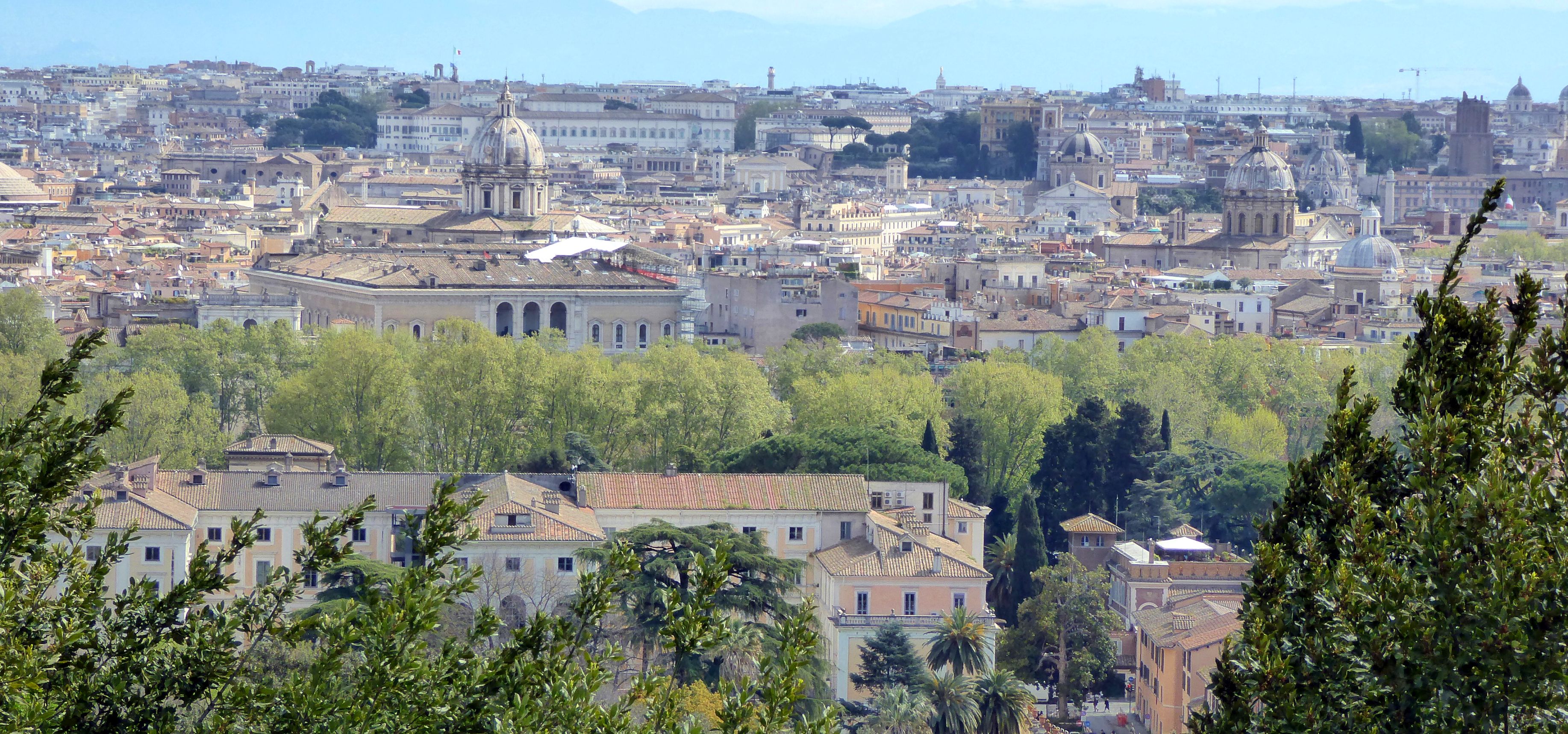
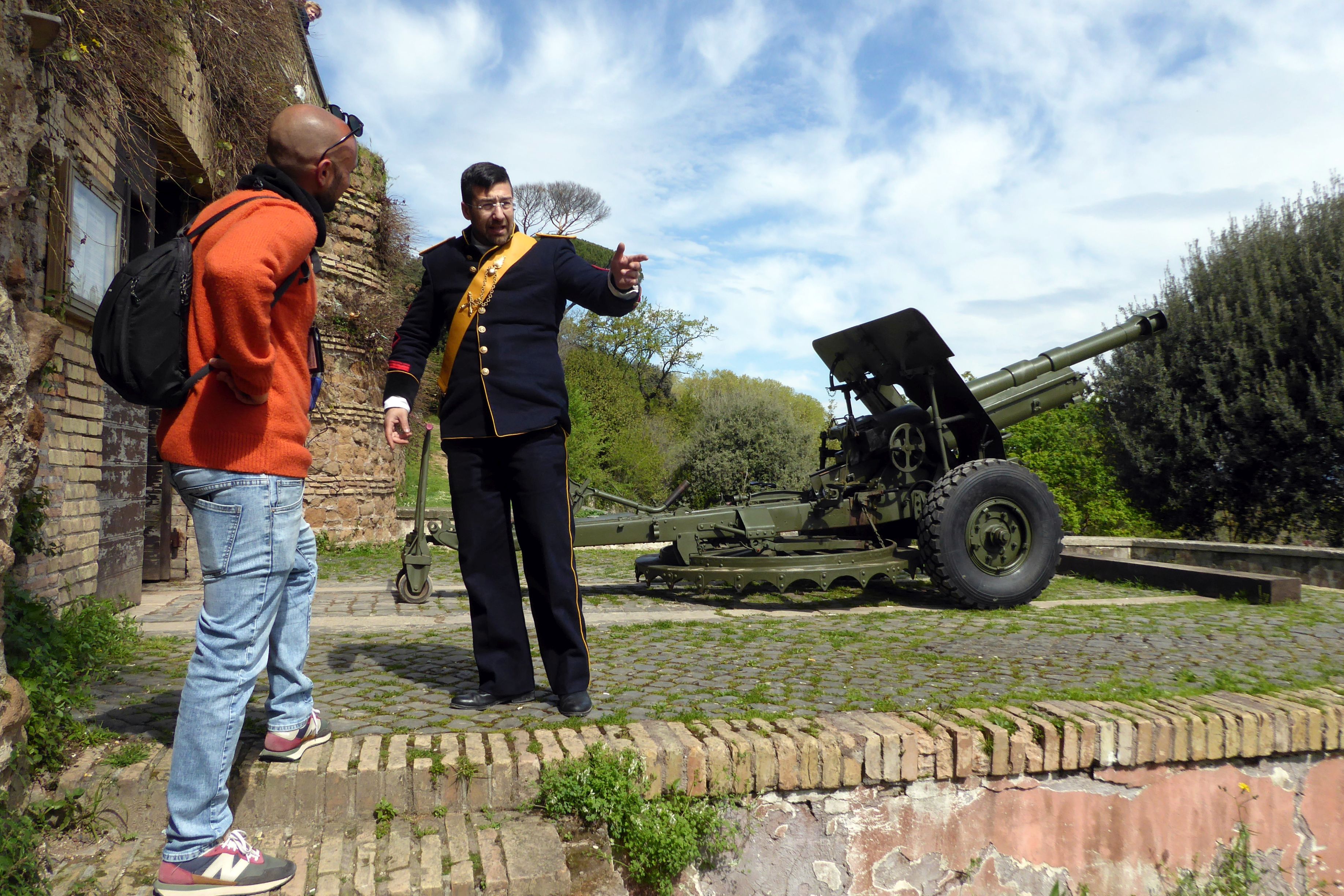
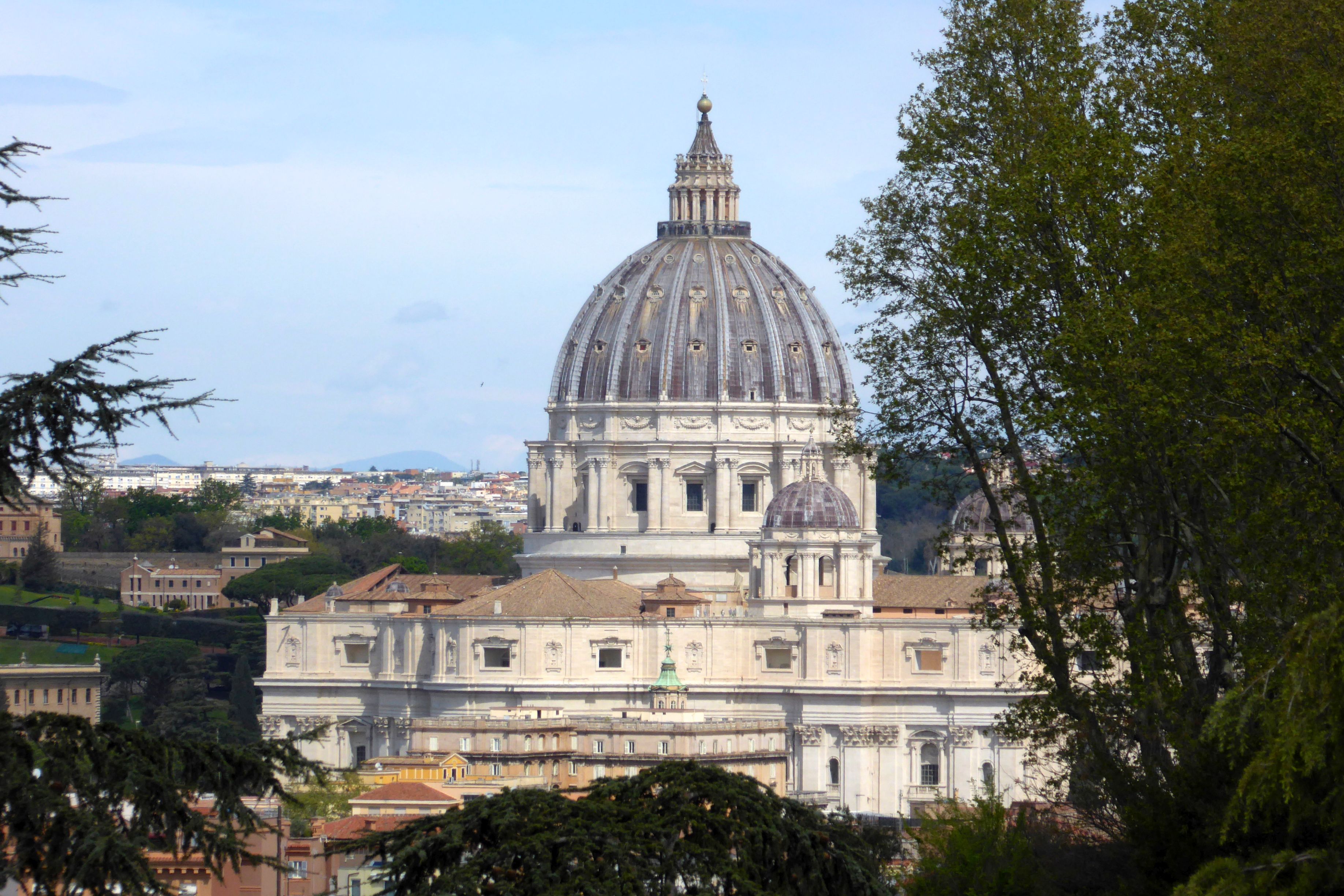
Our day in Rome began with a walking tour in the Trastevere district, conducted by a local guide. The timing was just right to be at Gianicolo Hill. Our guide was friends with the military officer in charge of firing off the noon cannon that day, so we were invited down to meet him and have a closer look.
Prior to December 1, 1847, the sound of numerous Roman tower bells would sound at noon. The thing is, “noon” meant something slightly different to each bell ringer. The ringing would go on and on. That was until Pope PIO IX decided it was time to coordinate the official time by replacing the bell ringing with a single gunshot, fired from Castel Sant’Angelo.
This traditional gunshot was kept there throughout the period of Italy reunification, until 1903. It was then transferred for a few months to the slopes of Monte Mario, and then finally to Gianicolo Hill. It is currently shot off by a 105/22 howitzer model 14/61 nicknamed “the monster.” It sounded like a monster; the shot was loud!
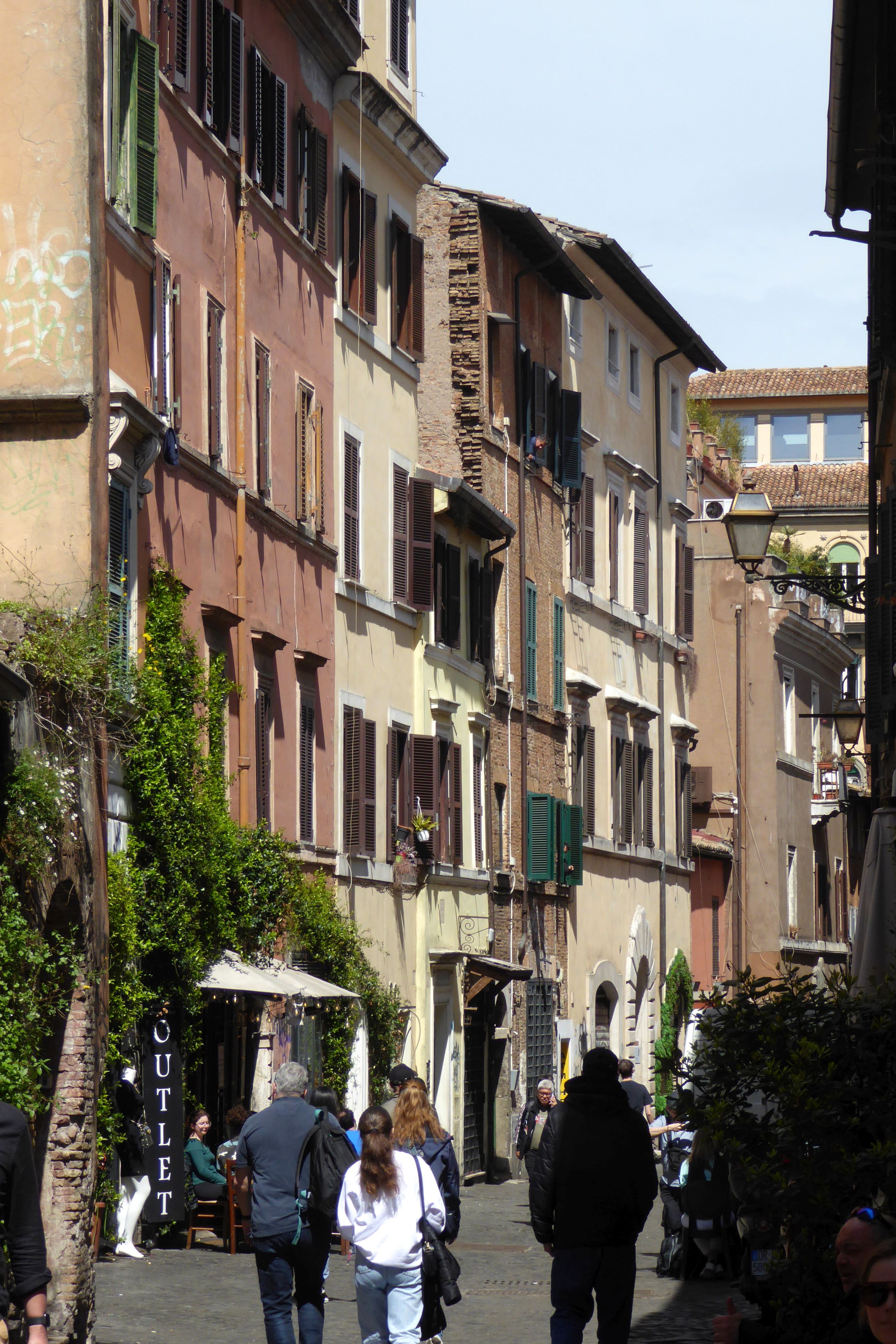
We continued walking through the quaint cobbled streets of the Trastevere district before ending our tour at Tonnarello for lunch. The place was bustling, but somehow, they cranked out delicious pasta and dessert.
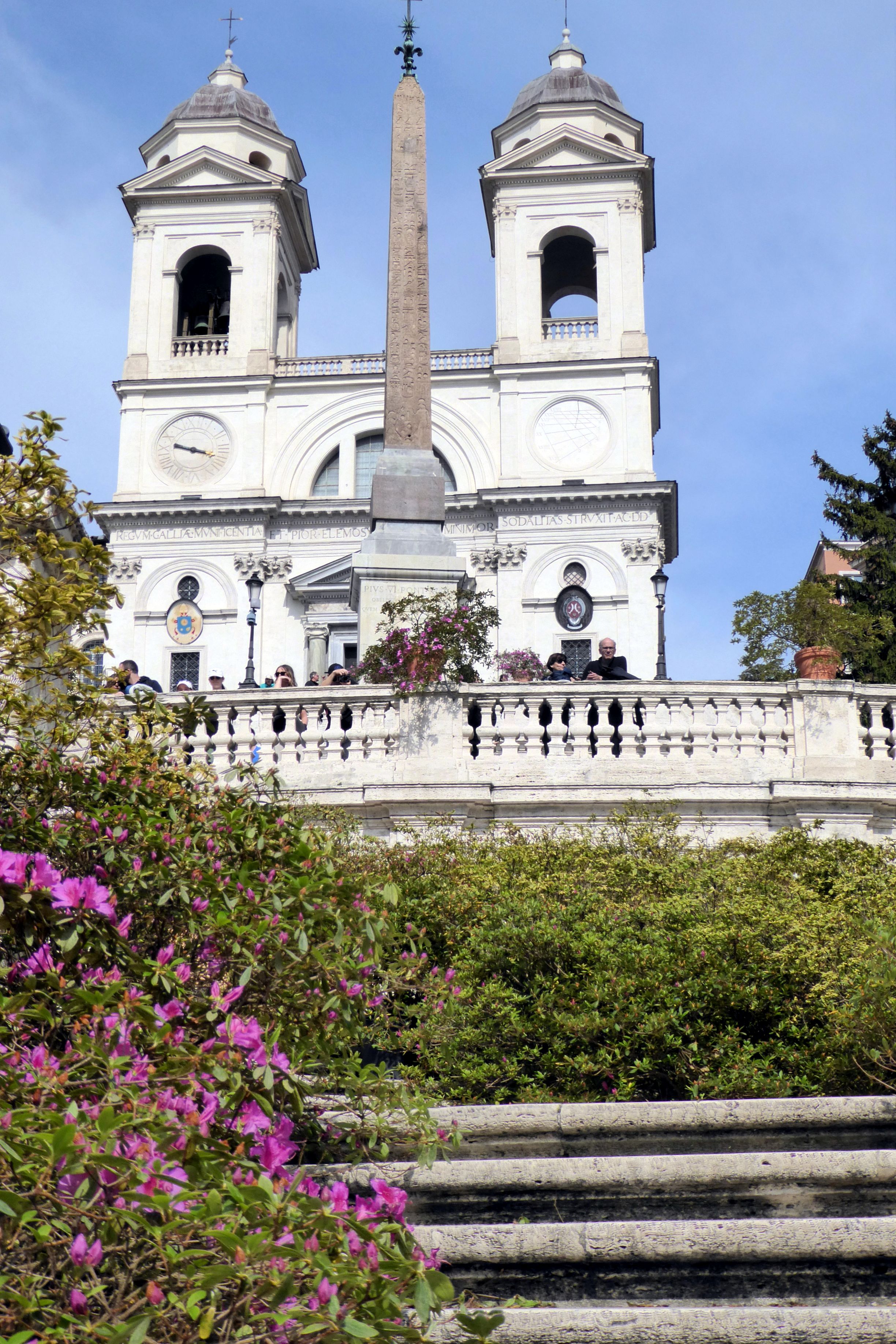
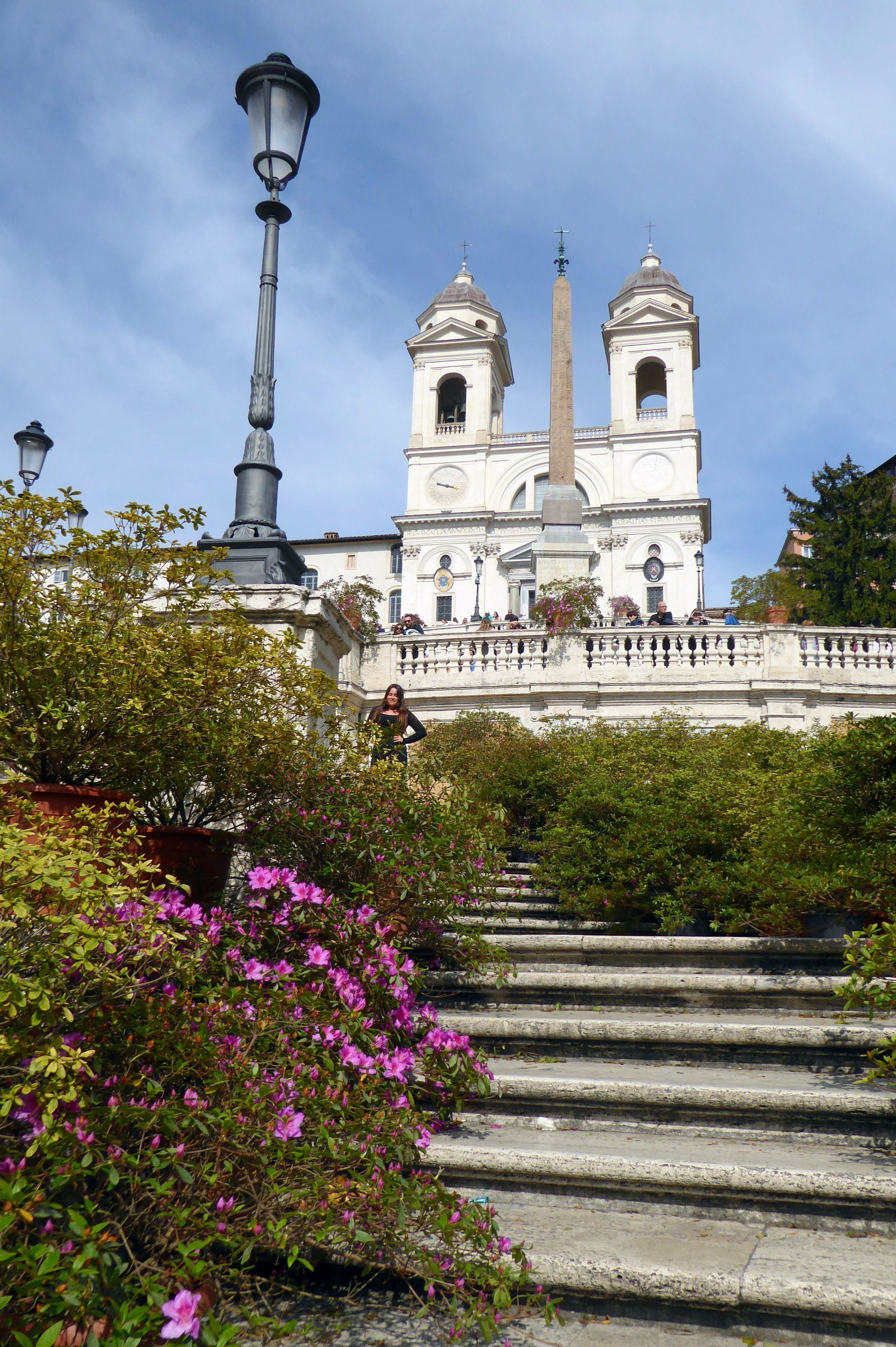
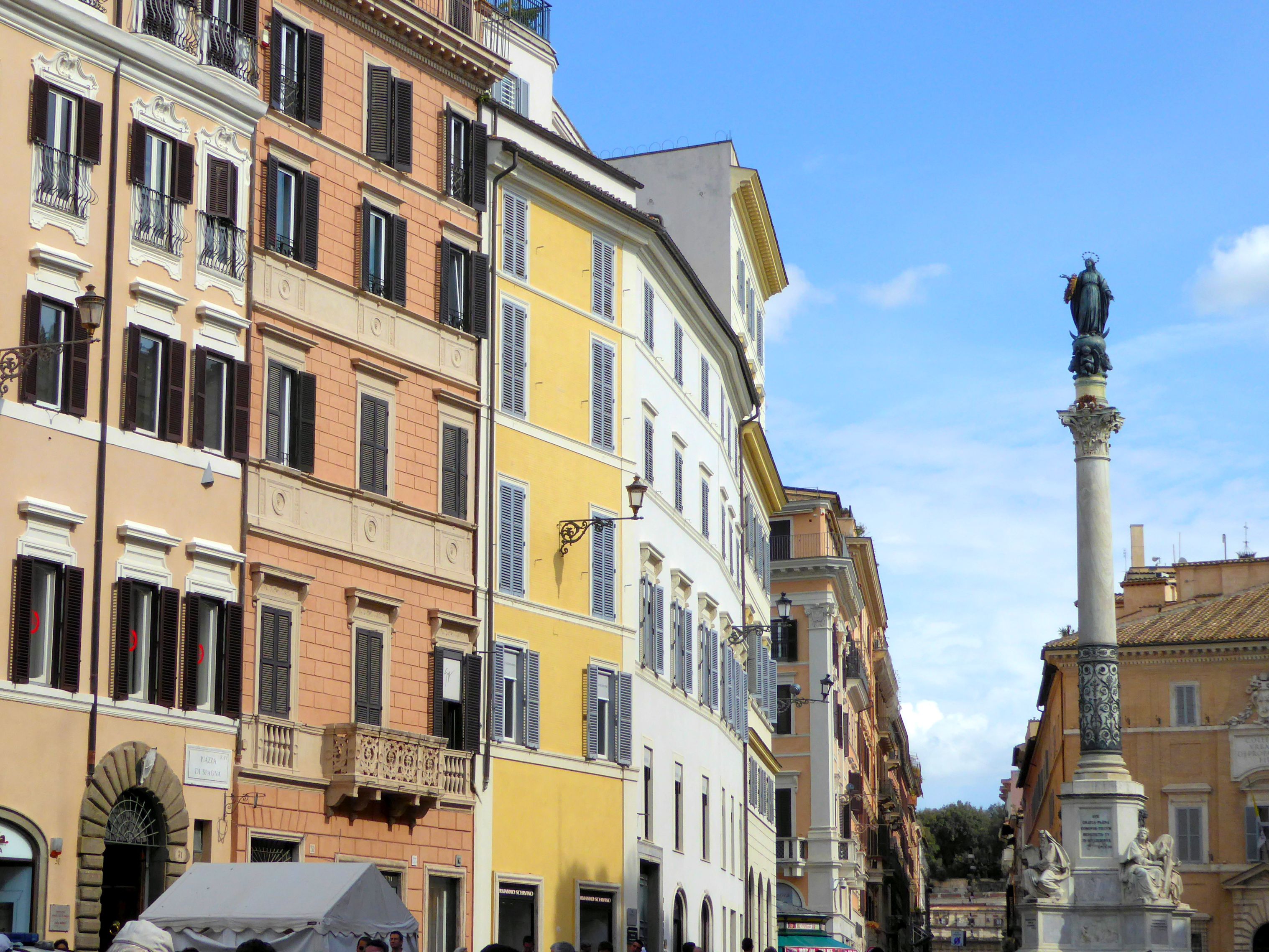
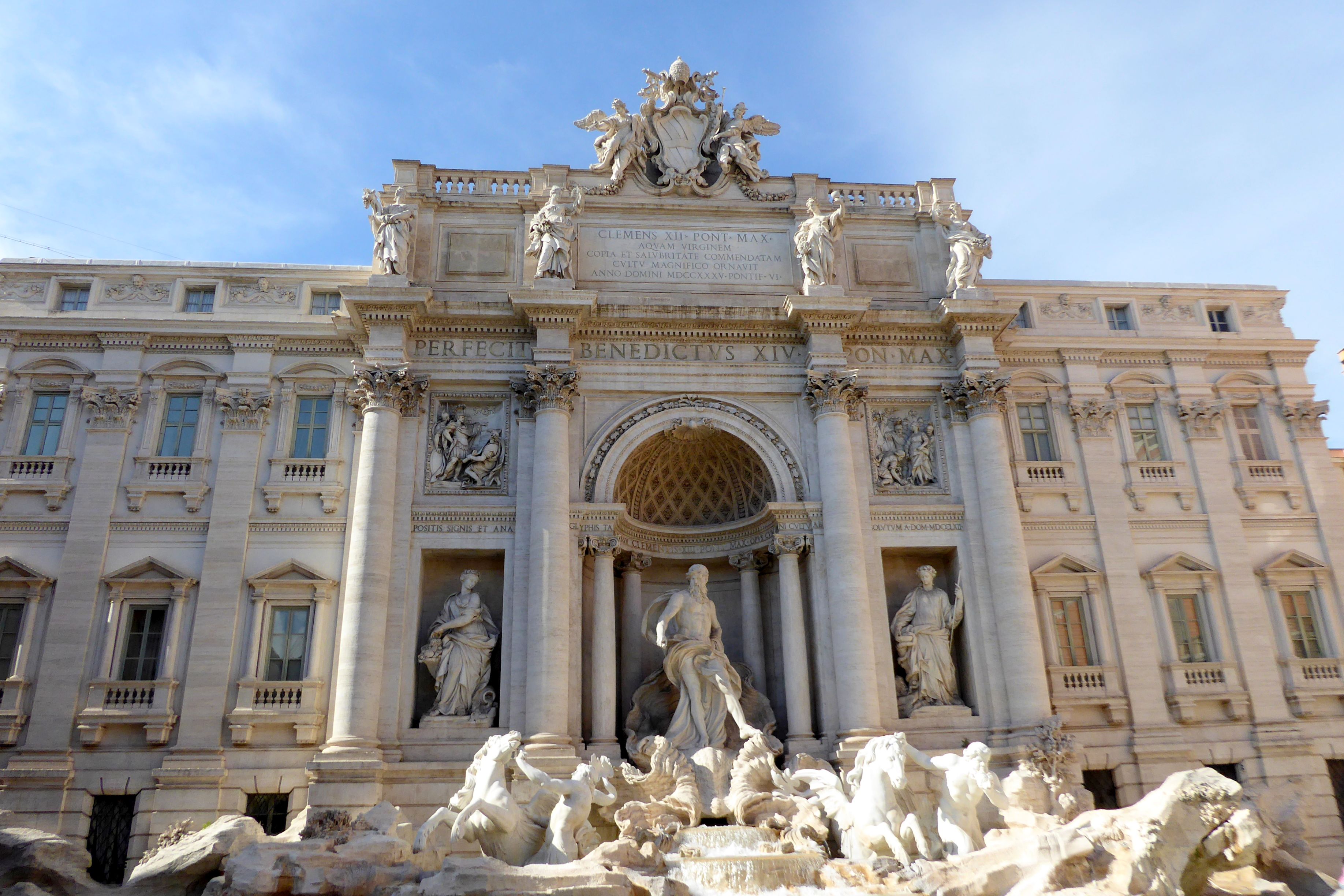
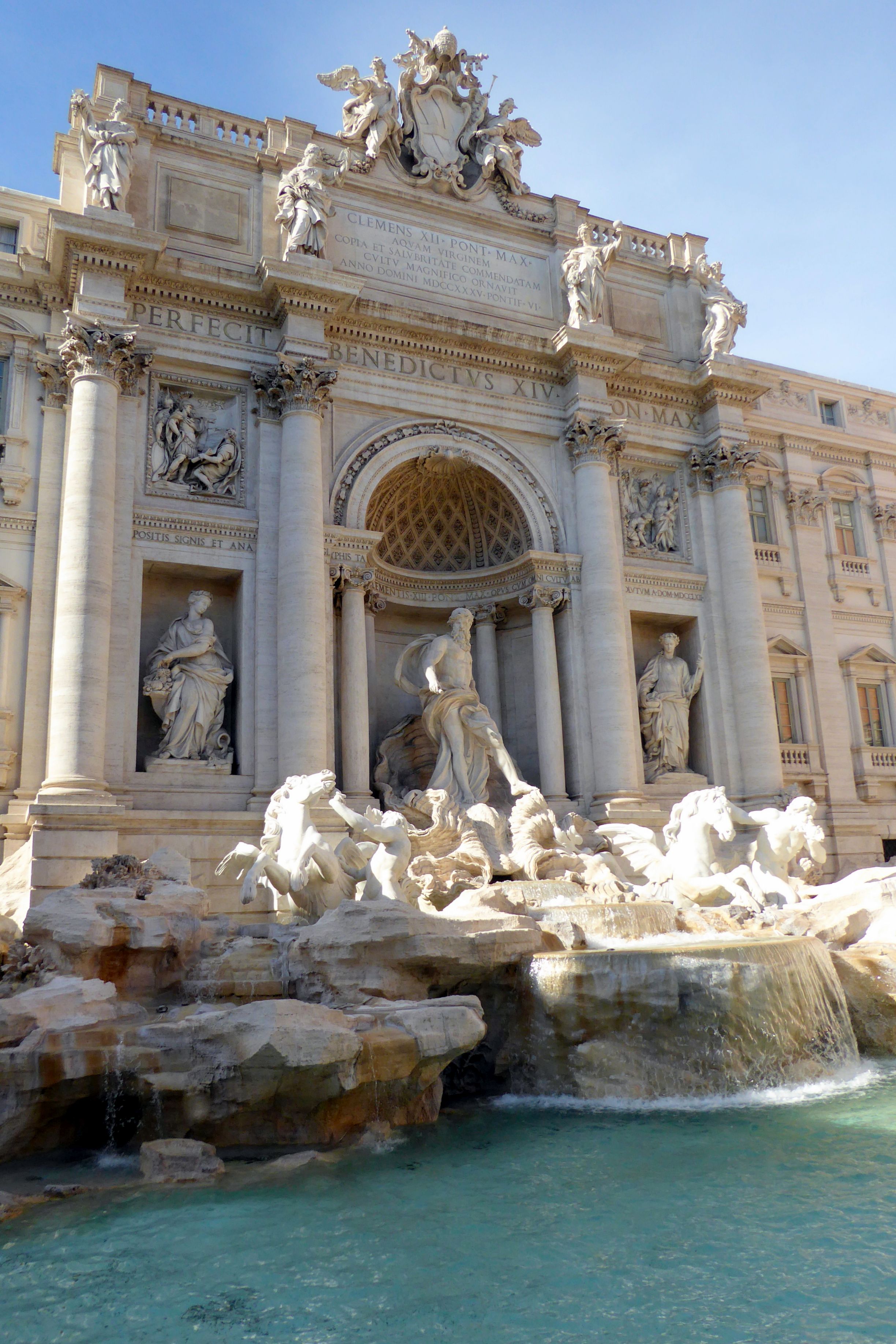
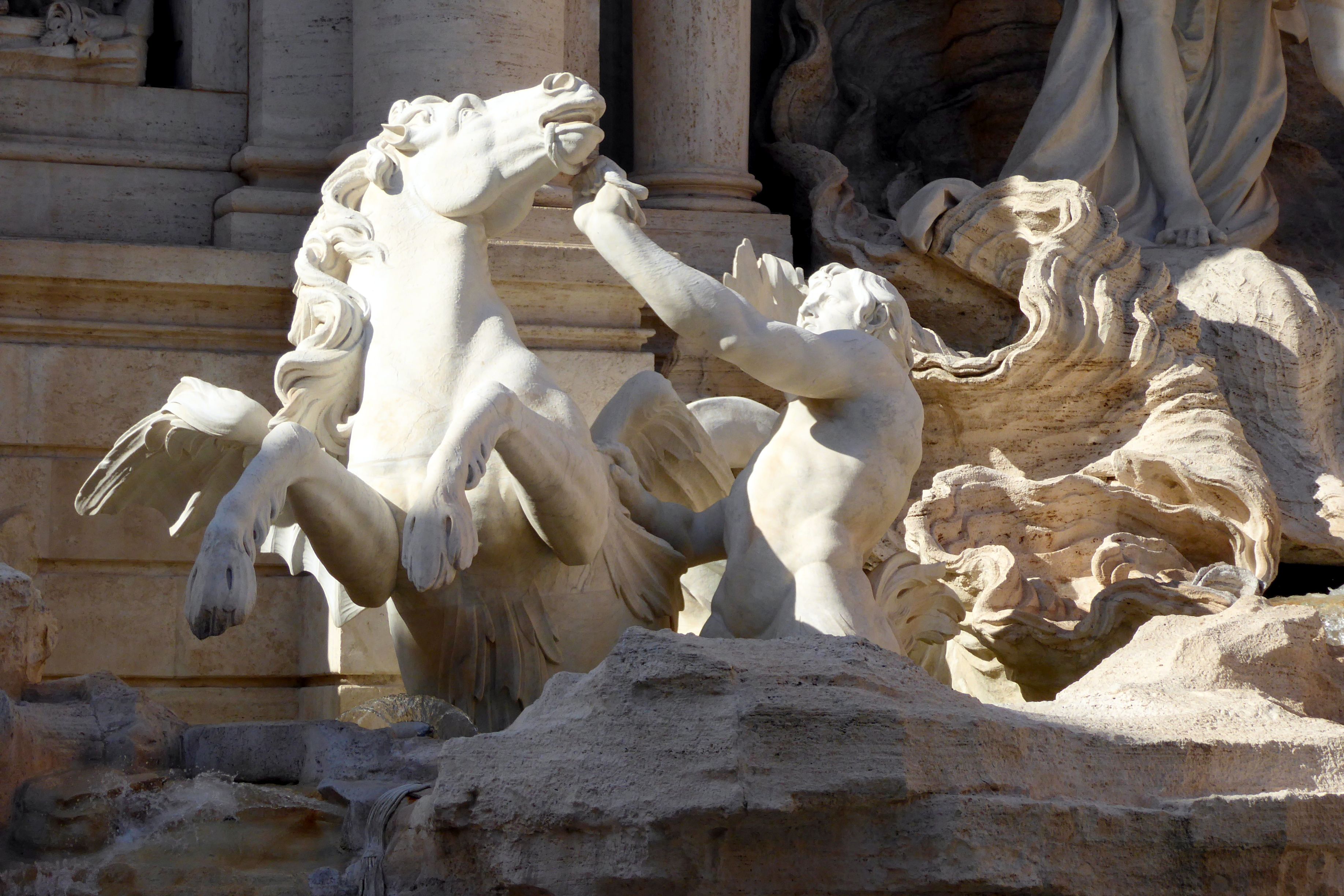
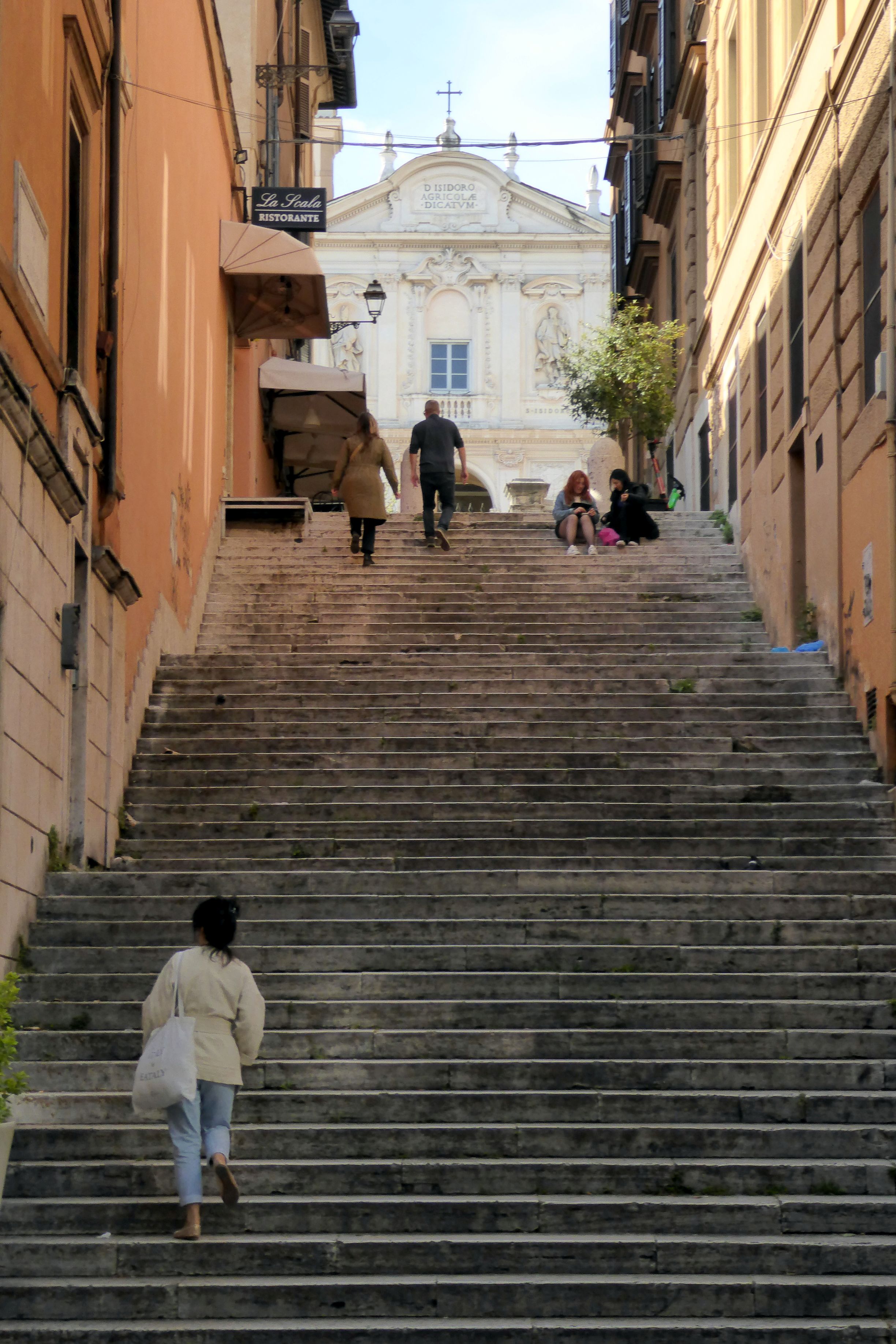
After moving on to our hotel and settling in, Ben led us through the busy streets of Rome to see the Spanish Steps and Trevi Fountain, before turning us loose on our own until our farewell dinner.
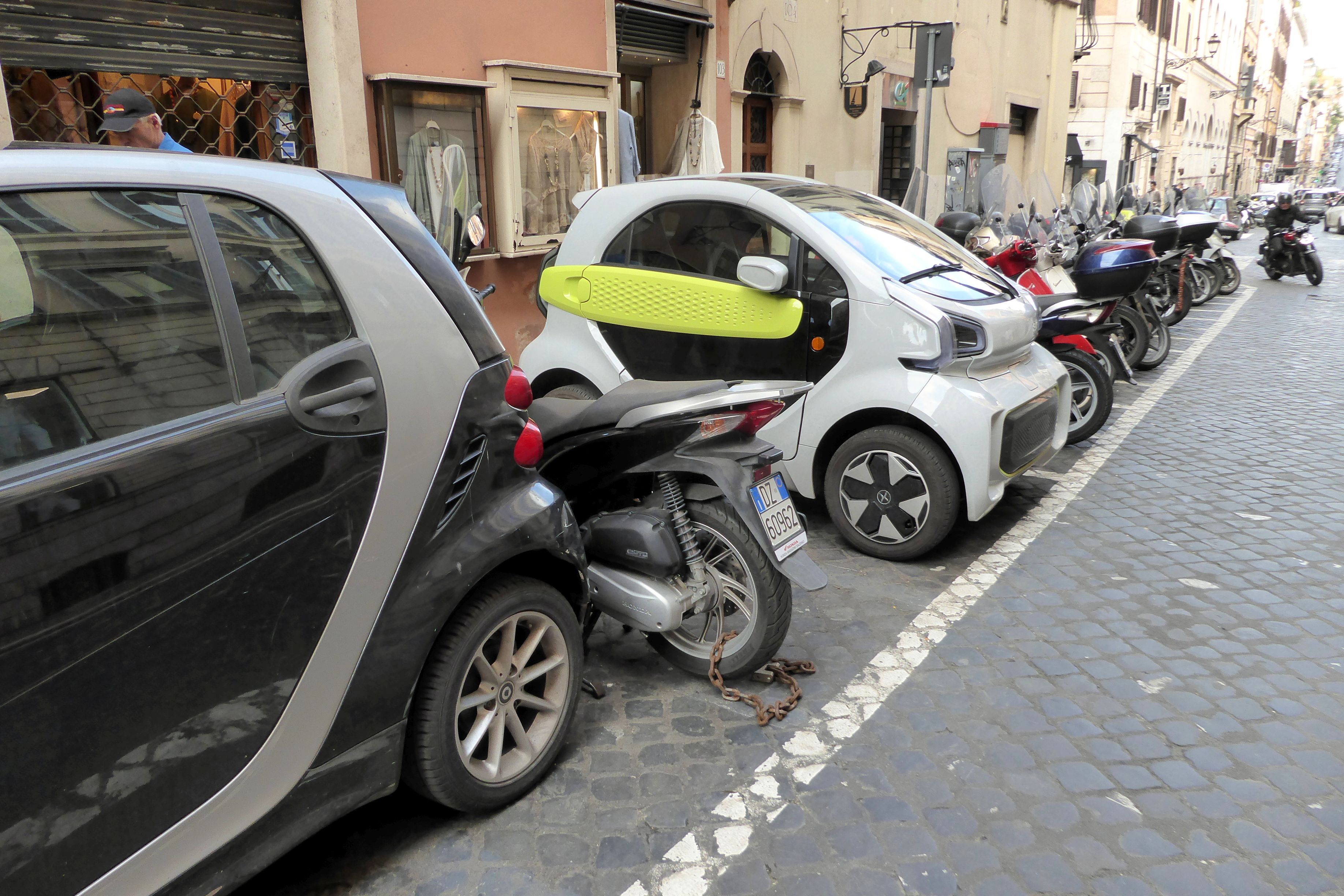
People park their cars any way and any place they can. It pays to have a Smart Car or something even smaller!
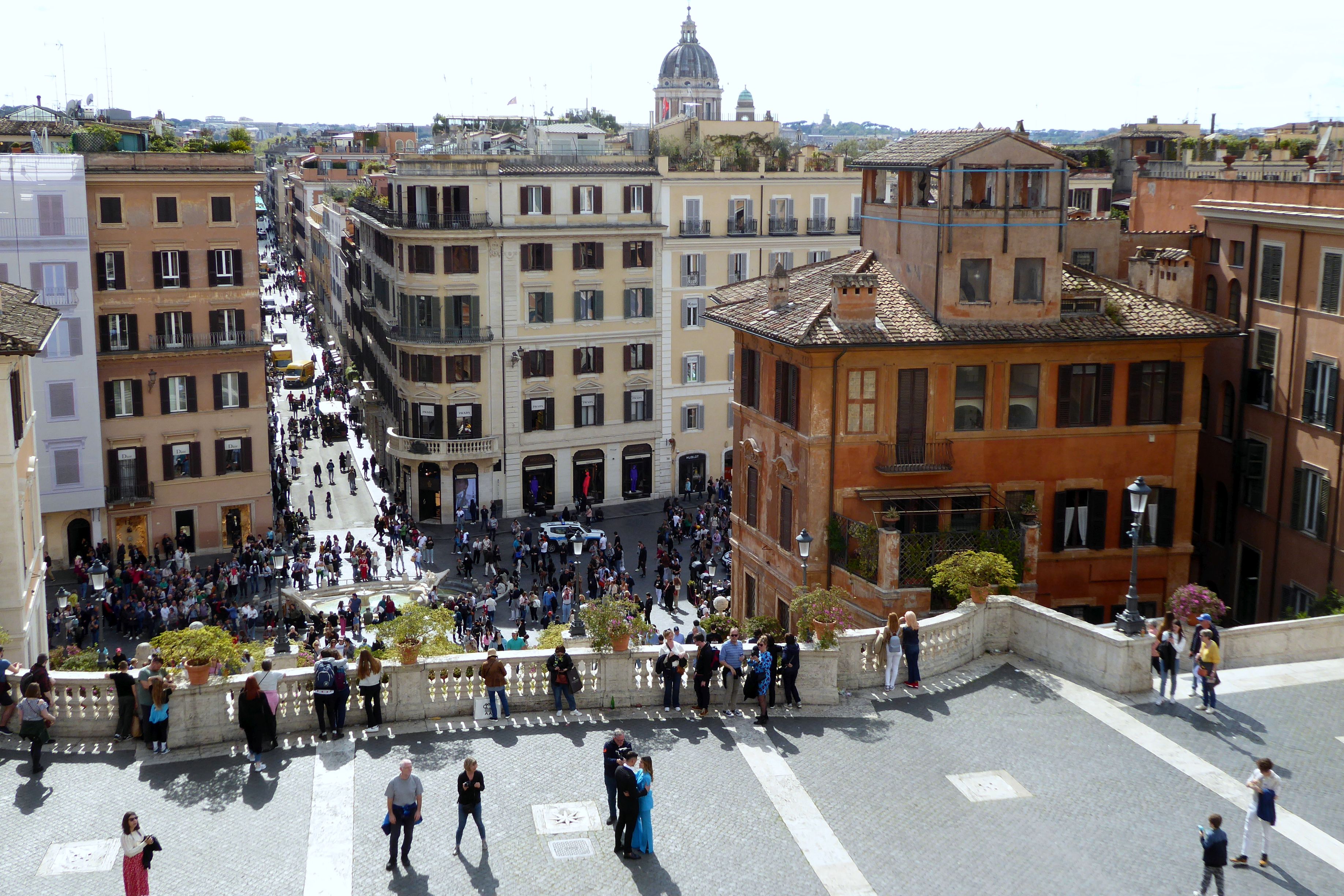
Above the Spanish Steps.
Descending the Spanish Steps and looking back up to the top.
It was too crowded at the Trevi Fountain to shoot a wide angle shot with the water, so I shot just above the heads of everybody in front of me.
I worked my way up to the front!
Being in Rome brought back memories for me—especially since I had run into people I knew when I was there last time, walking with my Mom from the Trevi Fountain to the Spanish Steps.
At the time, in 1998, I had been working at the University Club, in San Diego; and, one of the former mayors of the city, Roger Hedgecock, was a member I had served at the club. At the time, he was a radio talk show host, and had led a tour to Italy. When I saw him in Rome, he was talking with his group on a very crowded piazza. I went up to say hello, and I heard a voice from the back of the group say excitedly, “I know you! You serve us at the University Club!” It was Dr. Vance and his wife, two of my regulars at the club! Imagine, late in the afternoon, in a VERY crowded European city, running into somebody you knew from the United States. What were the chances? The story ended up in a newspaper column in the San Diego Union-Tribune.
Our wonderful Italian adventure concluded with most of our group joining together on the rooftop of our hotel for a final drink and to reminisce about our times together. It was difficult saying goodbye to our tour leader, Ben, the following day; we had bonded with our new Italian friend.
Less that three weeks after returning home, we took off again—this time with Road Scholar for a tour of the Grand Circle of National Parks in Utah. Stay tuned; I will start posting those pictures in the coming days.
Note: If small group travel is of interest to you, I highly recommend Overseas Adventure Travel (OAT). Although Bruce and I travel together, they do not charge a single supplement for those who travel on their own. Singles also get their own room at hotels. If you book, you can get $100 off your trip by providing my name and customer number (Elaine Krugman, #3018126) as the person who referred you. I will also get $100 off future travel– a win-win!
No, I’m not talking about chocolate truffles! Too bad, because I much prefer the chocolate kind, and I am always on the prowl for a good chocolatier. (By the way, chocolate “truffles” got their name, because they look similar to the real deal.)
The truffle I’m talkin’ about is the ridiculously priced fungus prized by chefs for Italian, French and other national haute cuisines. Because of their high price and strong aroma, truffles are used sparingly. They are served raw and shaved over warm, simple foods where their flavor will be highlighted, such as buttered pasta and eggs. Thinly sliced truffles are also inserted into meats or under the skins of roasted fowl. Truffles are also used in foie gras, pates, stuffings, specialty cheeses, salt, honey, and oil.
A word to the wise if you are in the market for truffles: Don’t buy truffle oil or truffles in jars. Chemicals are added to the oil to intensify the flavor and to make it last longer. Fresh truffles will only stay fresh for ten days.
So, why do chefs use truffle oil on their dishes and brag about it in their menu descriptions? Because customers expect it. But, you’re getting olive oil with a bunch of chemicals in it. Truffle oil is the biggest enemy of the truffle hunter. The Chinese are the biggest exporters of truffles; however, their truffles are flavorless, and chemicals are added to olive oil, and then added to the truffles for flavor.
And, another thing: size doesn’t matter. Big or small; they all taste the same.
I’ll be honest. There are several varieties of fungi I absolutely love, such as portabella and shiitake mushrooms; however, truffles aren’t one of them. They’re lost on me; I guess it’s an acquired taste. Perhaps it’s because they grow under the soil at the roots of trees. A bit too earthy-tasting for me.
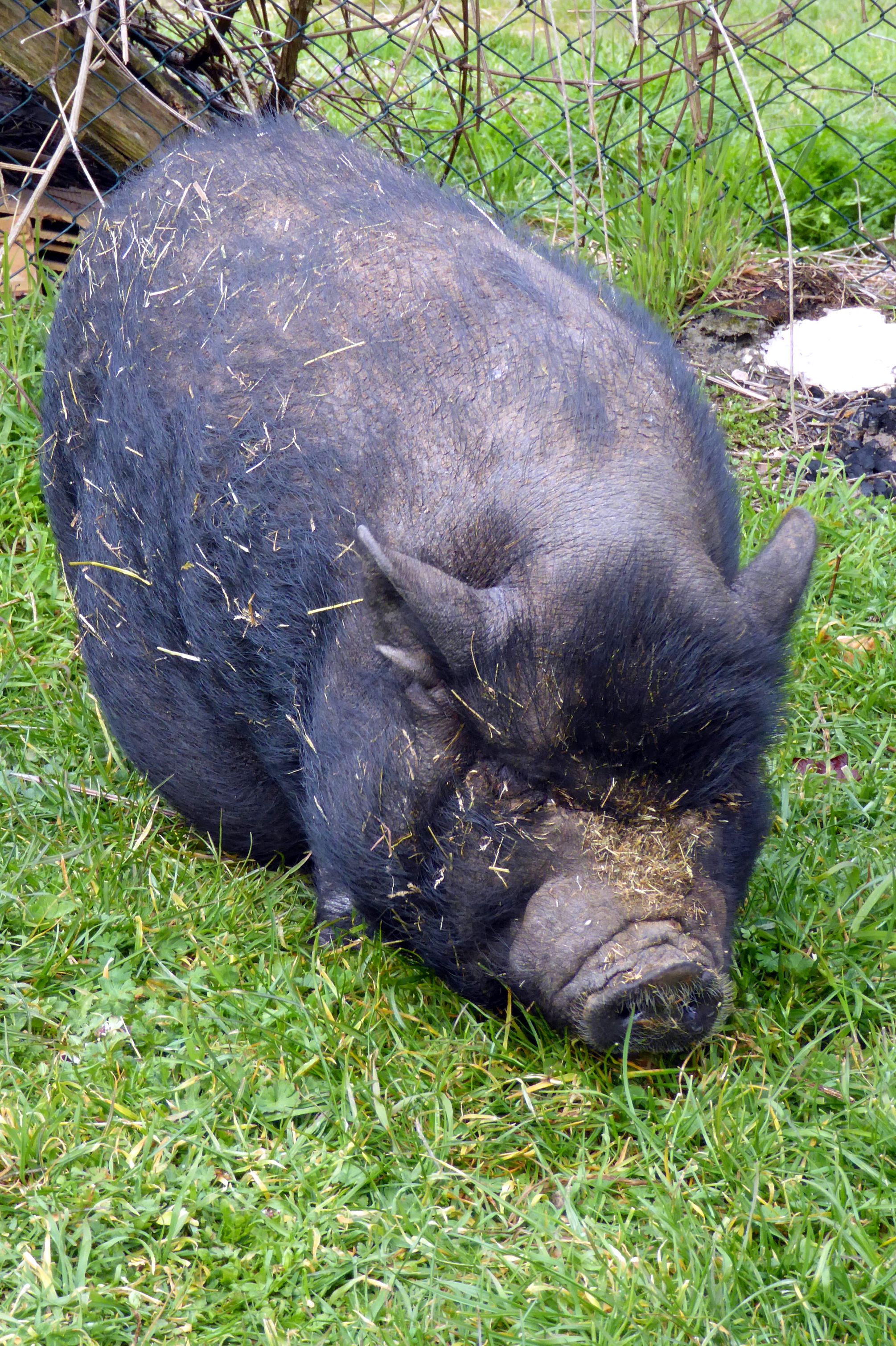
I love dogs, though, and watching them in action on a truffle hunt is a hoot! Now, you probably thought pigs do that sort of work, right? Nope! It’s actually illegal to use pigs or hogs in Italy for truffle hunting, because they tear everything up! Besides, they’ll eat the darn things when they find them. It’s much easier to extract a truffle out of the jaws of a dog than a pig, since dogs won’t eat them anyway!
The Umbria region of Italy is where the best truffles are found, so Overseas Adventure Travelincluded a truffle hunt in our itinerary. When I first saw this, I was excited to see what it was all about.
We left Spoleto for a 45-minute twists-and-turns ride up to the mountain village of Pettino, located in the Apennine Mountains at an elevation of 3,300 feet. Upon our arrival, we met Mac and Francesca at their home/ farm. We gathered in their charming old-world kitchen to hear about the truffle industry from Mac, while we enjoyed (delicious) home-baked lemon cake.
(For all pictures, click on the image to see full screen view.)
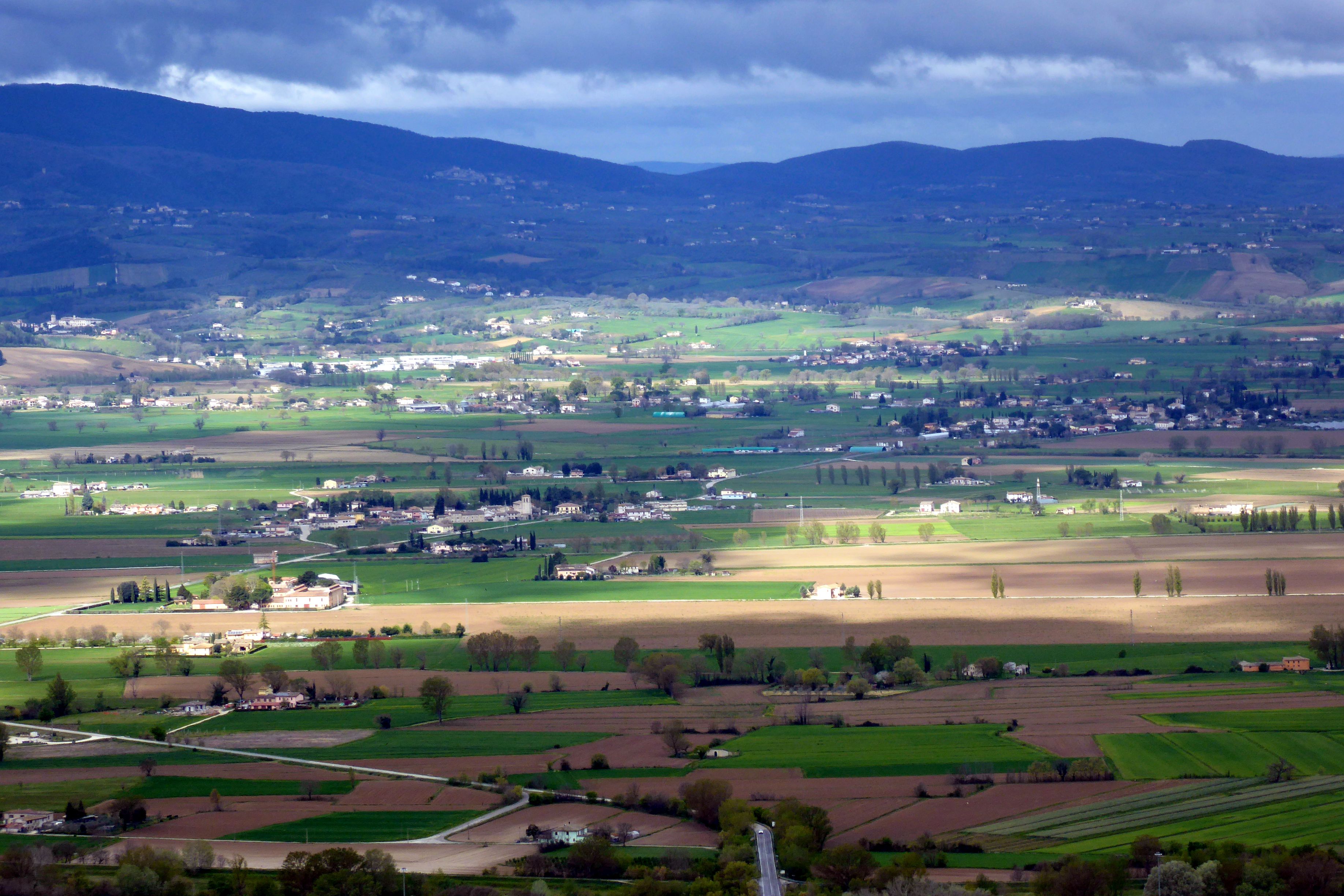
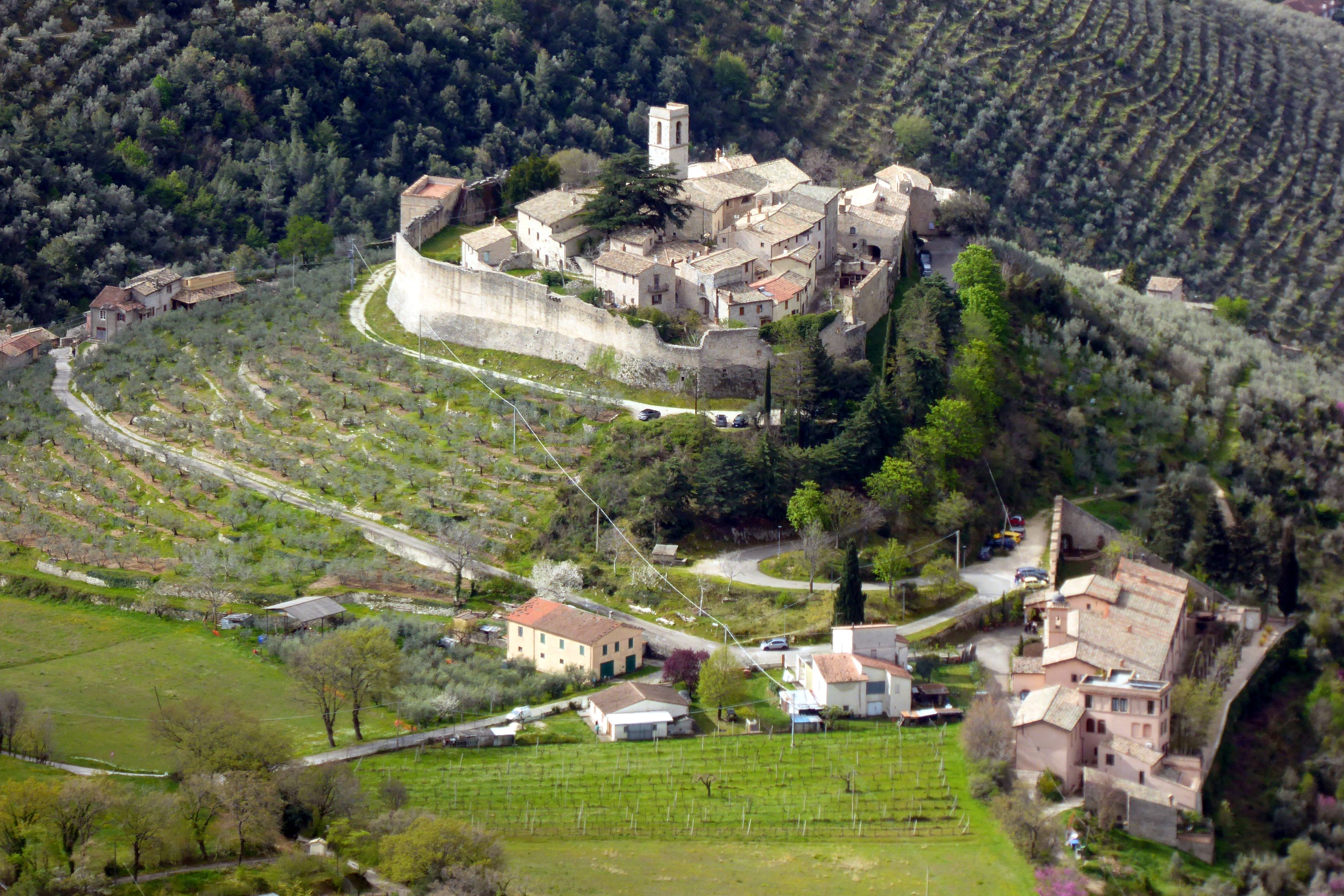
We passed this walled little village on the way up to PettinoWe stopped on the way up to take in the views.That walled village? It’s way down there!
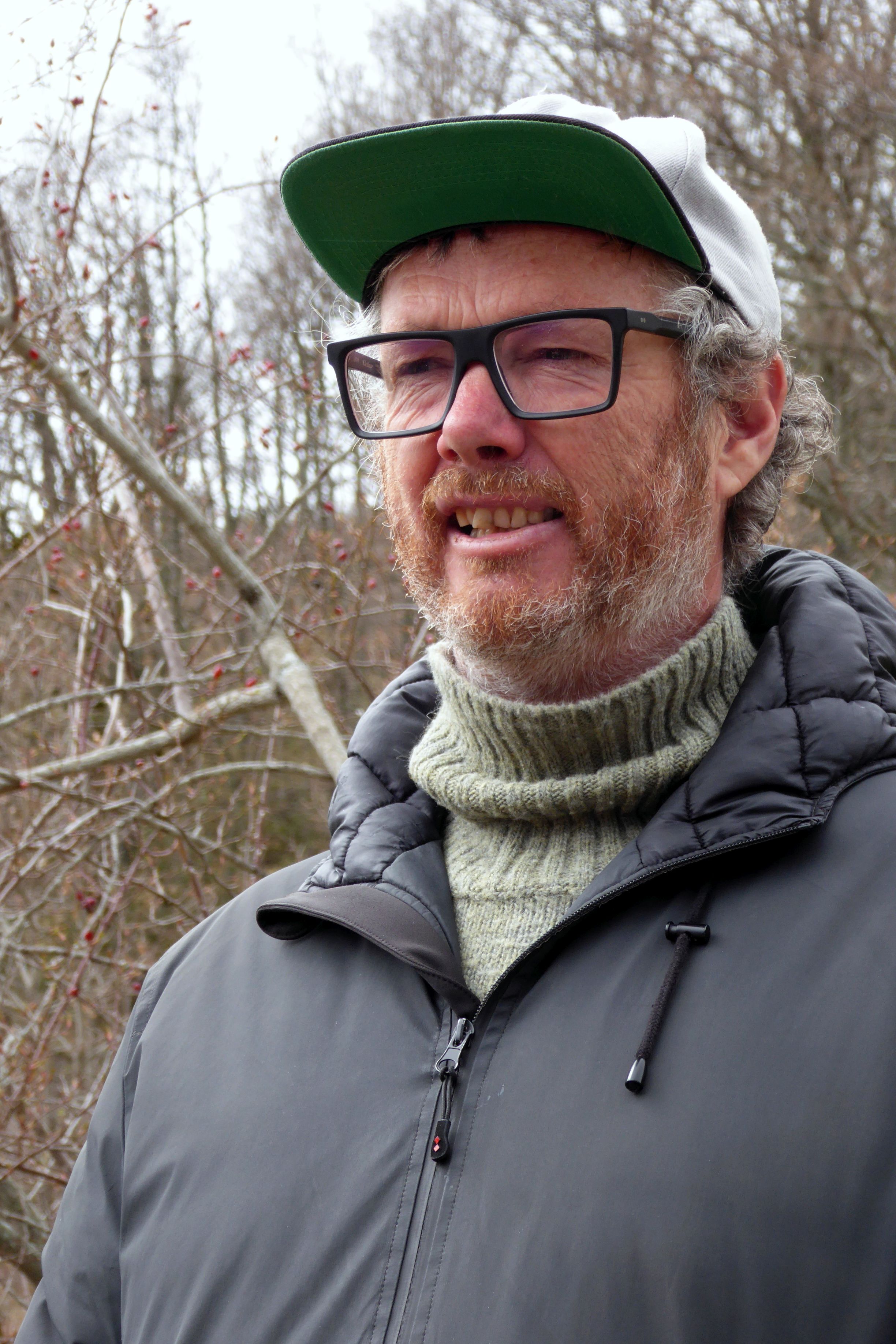
Mac is from New Zealand and was previously an artist before his passion for truffles drew him to Umbria. He learned all about the truffle industry from Francesca’s father, which is how the two met. Ultimately, they fell in love, had two children, and live on a farm in the tiny village where the traditional way of life has endured through generations. The locals still grow crops, raise sheep, and gather truffles and mushrooms in the surrounding birch forest. Francesca is the first female president of the tiny community that comprises just fifteen full-time residents, increasing to 80 in the summer. The other residents are all descendants of the original family that settled in Pettino in 1486.
Mac, the Kiwi from New Zealand
Mac & Francesca’s home and farm
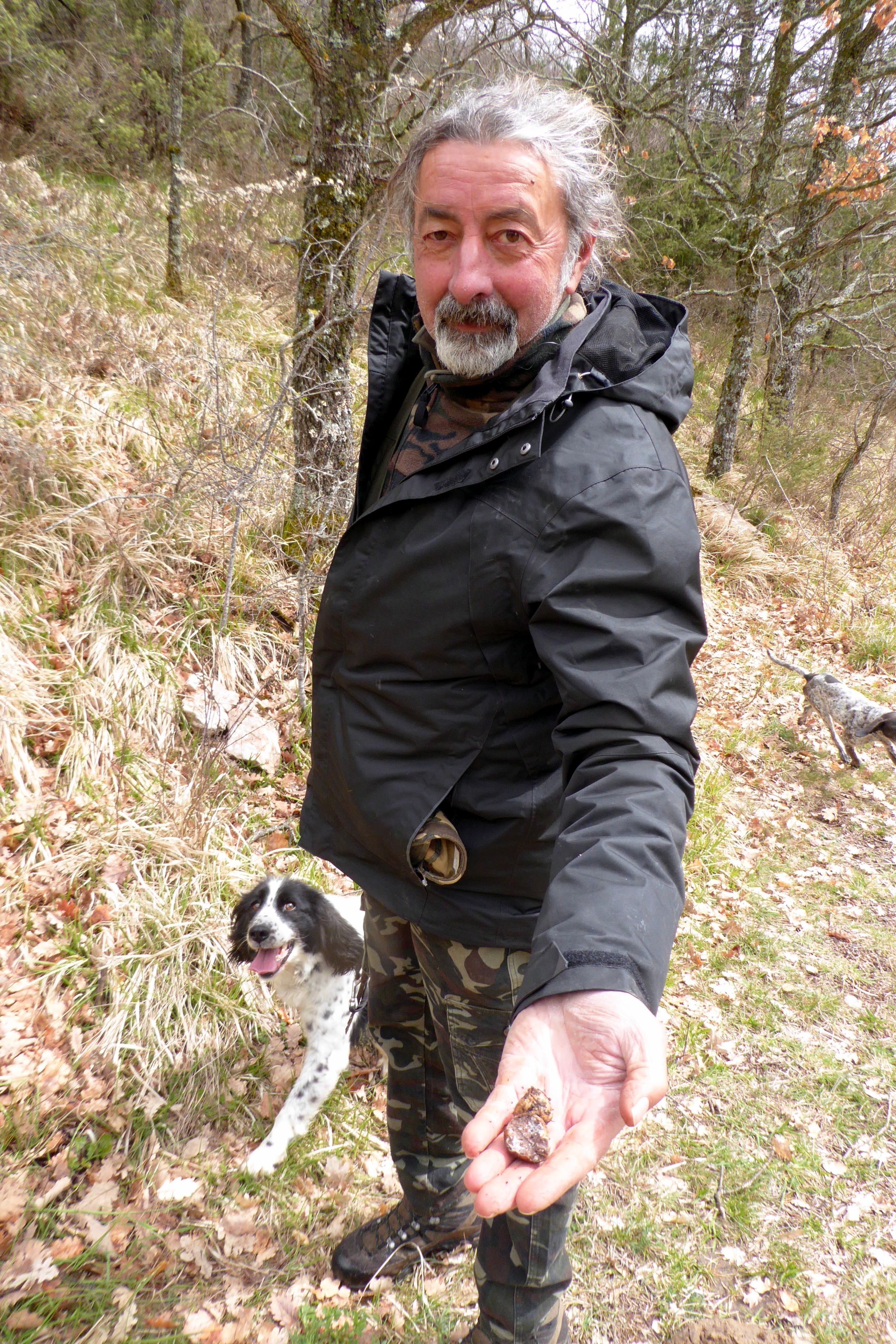
No, he doesn’t get to hunt for truffles; he would just eat them!
Only one person in each family is permitted by law to hunt truffles, and since they are so difficult to find, Mac and Francesca can’t survive on that income alone. The income from their merino wool sales pays the bills.
Truffles are worth a bunch of money when you do find them; however, the finder isn’t the keeper of most of that money. They can be worth anywhere from $30 per kg (2.2 pounds) to $5,000 per kg for prized white truffles. The large white truffles are in demand by restaurants, because they look cool. It gives them bragging rights. (Sheesh; big deal!)
Here’s the rub: The middlemen in the industry are the ones that make most of the money. The mark-up can be more than 50 times higher in the U.S. from what the farmer back in Umbria got paid. The price depends on the crop output; it’s supply and demand at work. And, the best truffles go to wholesalers for export, so they can make a ton of money. Later, I will show you a truffle that was found during our hunt. I asked what it will fetch when sold: a whopping $5. I can only imagine what it will be worth when it hits the U.S. market.
The truffle industry is also full of scandal; nighttime heists and sabotage are common, and there is a growing counterfeit trade stemming from Eastern Europe. These truffles are marketed to international distributors as Italian, which reduces the value and demand of authentic Italian truffles.
When Francesca’s father got too old to run the farm and business, Mac and Francesca took over. They now have 350 sheep (that were bred with rams) Mac’s cousin tends to, raised for the merino wool they sell and for milk to make their own pecorino cheese. Everything they raise is sustainable; good on them for that!
As Mac explained, truffles only grow a few months out of the year and require specific conditions to flourish, such as cool winters, damp springs, and hot summers with moderate rain. It can take up to seven years for a truffle to mature. No wonder why they rely on their sheep for most of their income…
The night before we arrived, it had snowed at a slightly higher elevation, and the morning was cold and blustery—39 degrees with the wind-chill factor bringing it down to 30. When we went on the hunt, we were invited to stay in the truck and keep warm if we preferred, but what fun would that have been? I hadn’t gone all the way to Umbria and up a steep and (scarily) windy road to Pettino just to sit in a truck! I bundled up in everything I had: A long sleeve shirt, puffy vest, puffy down jacket, rain jacket, gloves, thick socks, and waterproof shoes. The gloves didn’t cut it; I still got a Raynaud’s attack. (Note to self: Don’t forget the Hot Hands when I go to Iceland!)
Never mind the cold; the hunt was on!
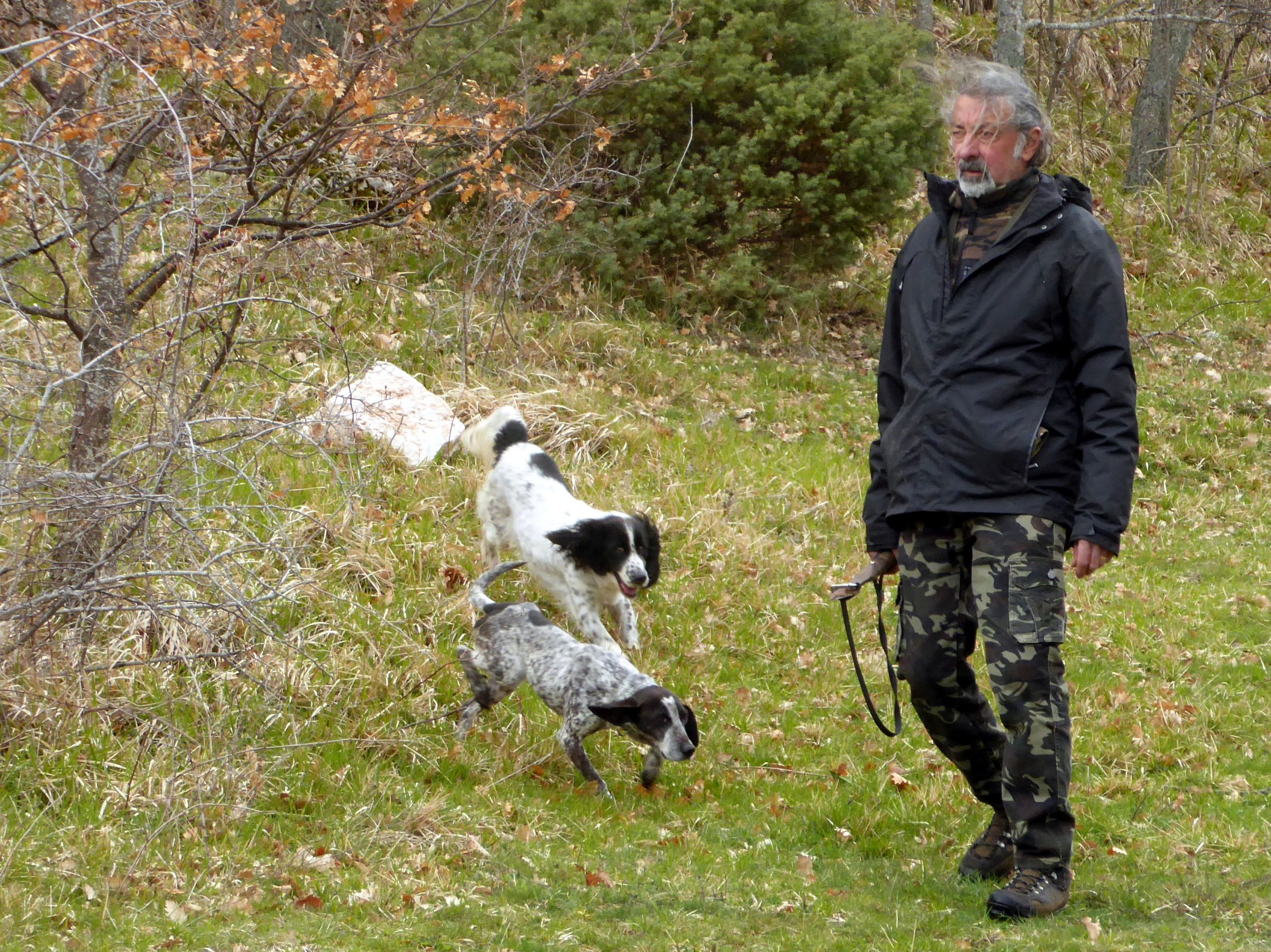
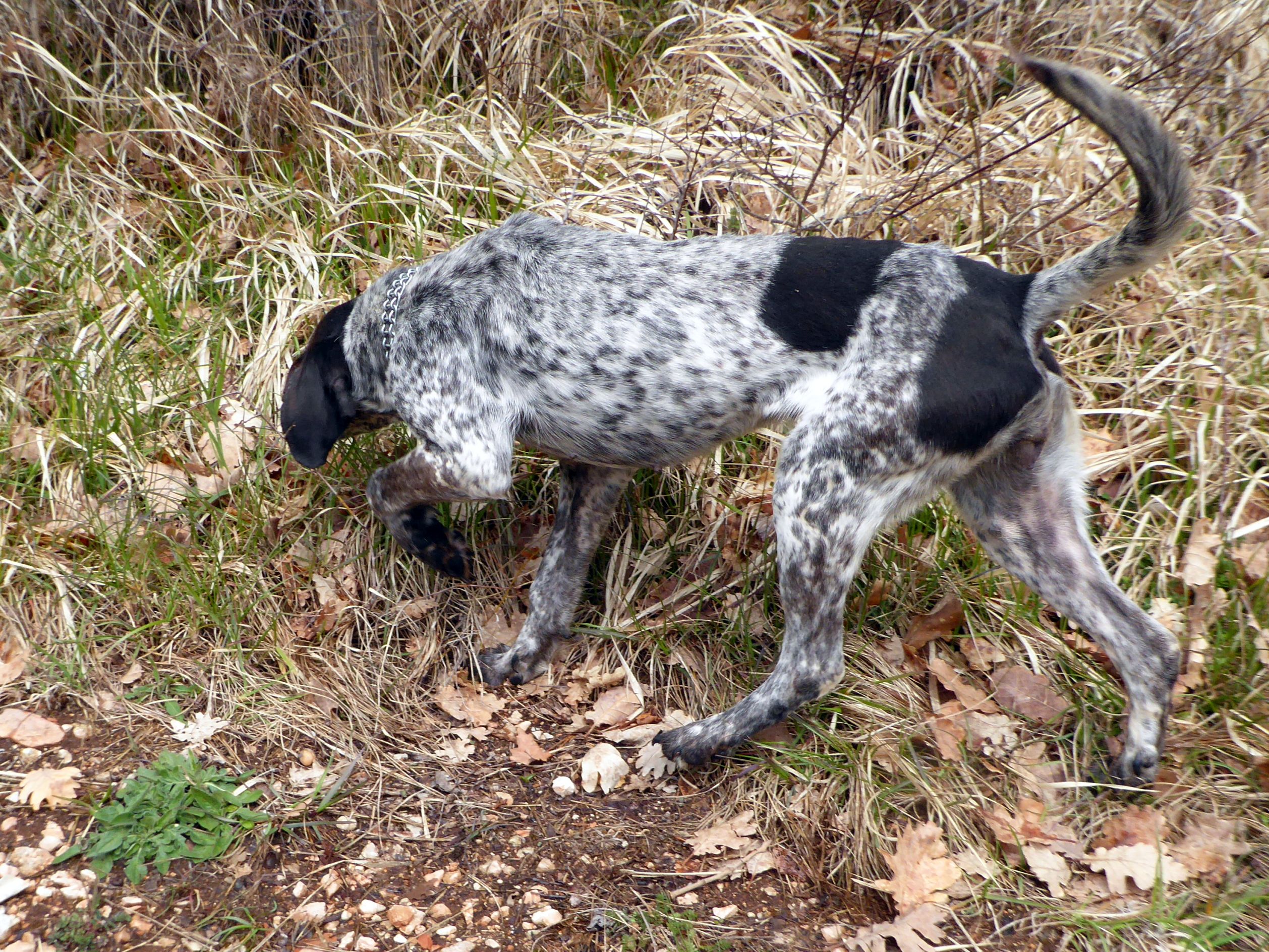
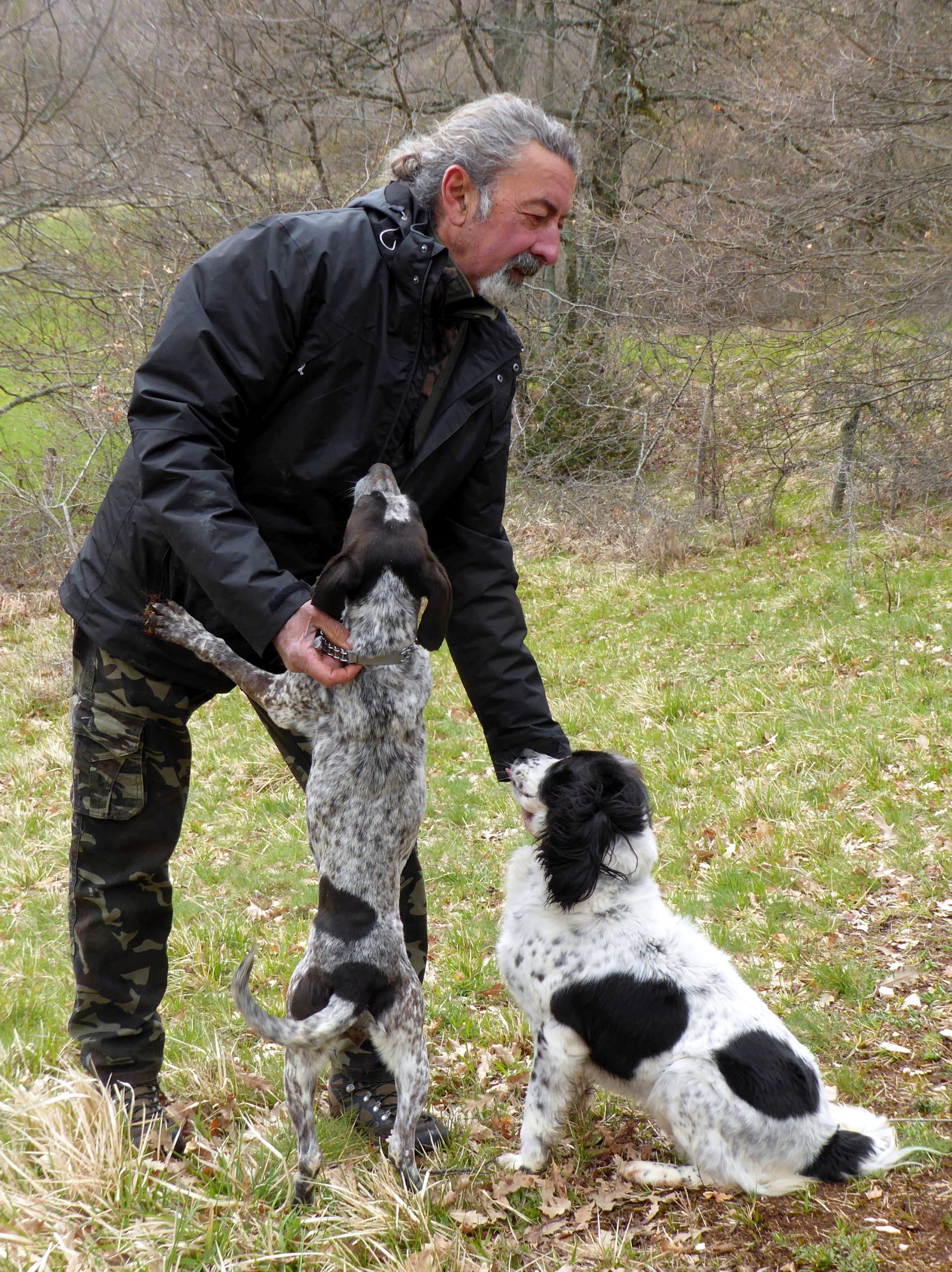
Setters and Springer Spaniels are often used as truffle-hunting dogs. I followed the Italian Pointer that was on this hunt. Actually, mutts make better hunters, so the dogs were mixes. They train the dogs by putting truffles in Kinder Surprise plastic eggs with holes poked in them. This way, they can smell the truffles but won’t bite them.
They couldn’t wait to hunt for truffles!
Purchasing a trained truffle hunting dog can run you as much as $6,000 (averaging $3-4,000), so they trained their 22 dogs themselves. Ten of the dogs go with the sheep each day, and a couple of their dogs are just lazy and hang out around the property.
Since the working dogs are quite active, they need a high-protein diet. Francesca gives them the whey from the cheese she makes, for that good protein hit.
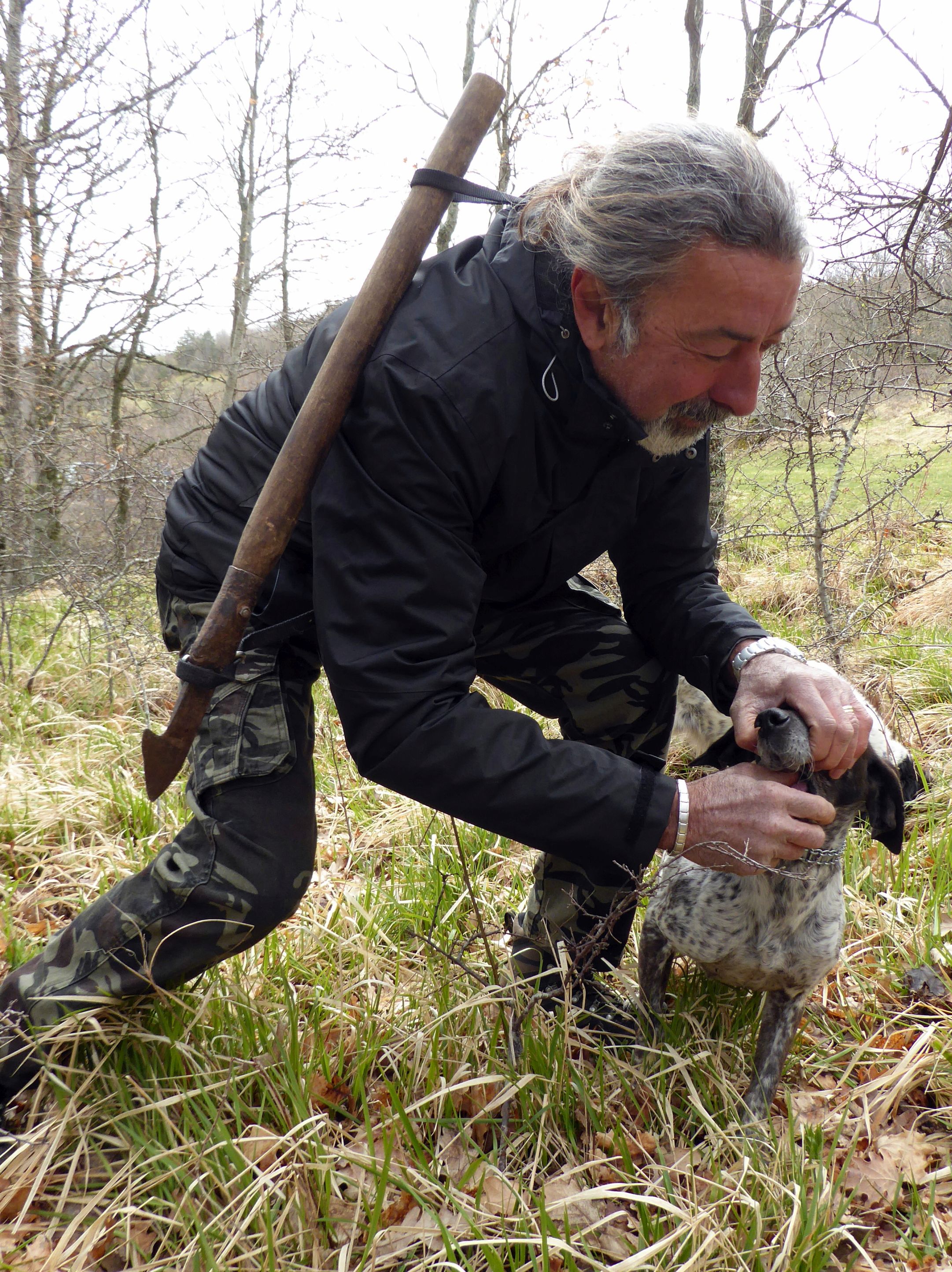
Out on the hunt, it was wild watching the dogs in action. It was a very hilly area, so trying to keep up with them was challenging, but it didn’t stop me! I got a pretty good workout trying to follow the dogs, so I could capture them in action. The funniest part was watching their excitement when they found a truffle, knowing that after they gave it up, they would get a treat. Those dogs were ALL about the treats! They live for a handout and a pat on the head.
Here they are in action:
He found one!
Do I get my treat?
Pleeeeeeease???
And, a pat on the head, too?
Look what I found!
What do you think? Did I score big?
I deserve an extra treat for this one!
Weighing the score– actually, it will only net about $5 before it is marked up by the middlemen.
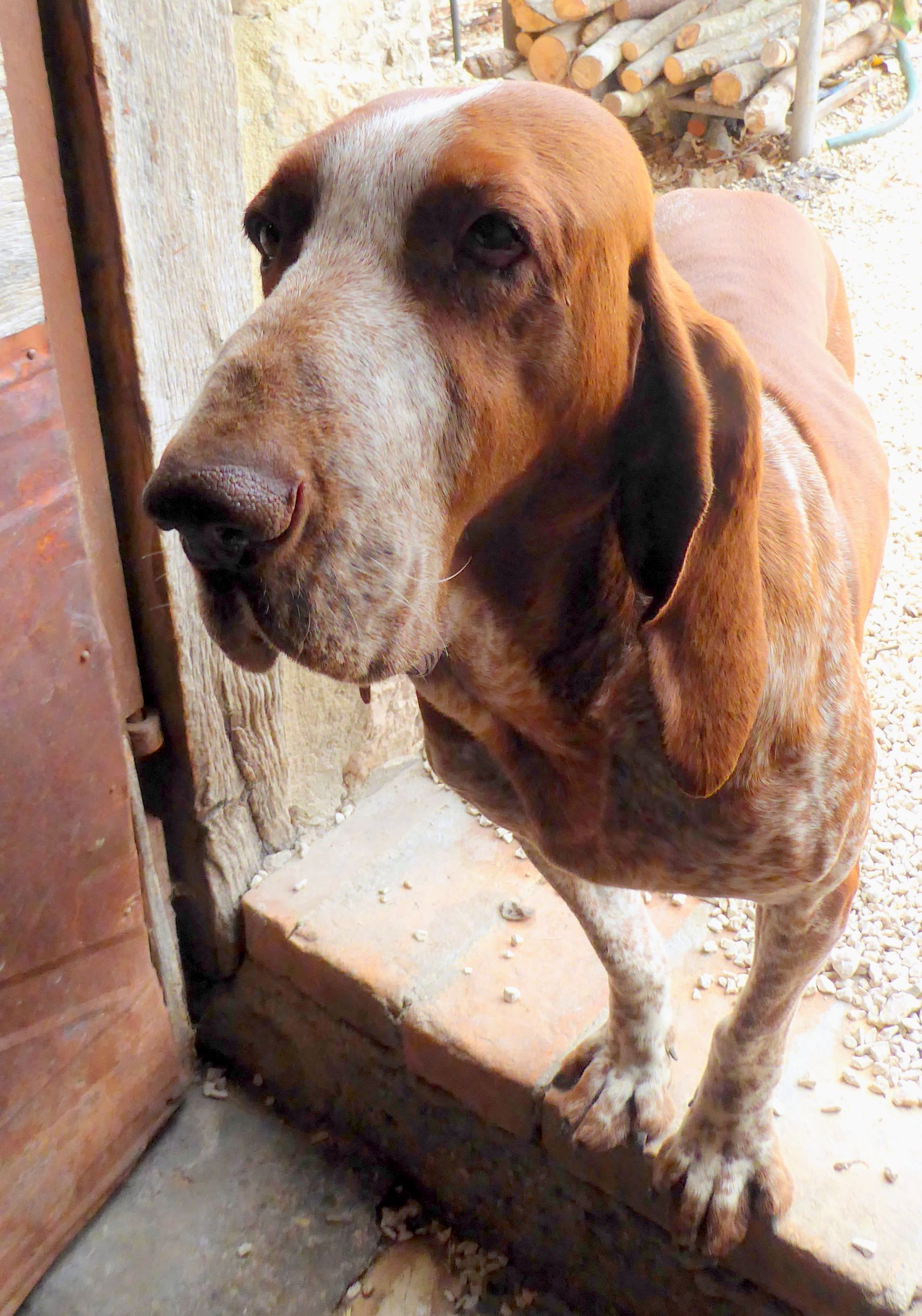
After the hunt, we returned to the farm for a delicious spread—everything homemade– of fresh-baked bread, prosciutto, pecorino cheese, eggs with shaved black truffles, wine, and then another delicious cake. It was all prepared and served by Francesca and the truffle hunters, while we gathered around to nibble on whatever was ready and passed around. Their dogs (the lazy ones) just loved getting in on the action, hoping for either a handout or to be petted. One of them was a bit better behaved, though; he just watched from the doorway, hoping somebody would notice:
Pecorino cheese being aged in the adjacent room
May I have a bite of that cheese if I behave?
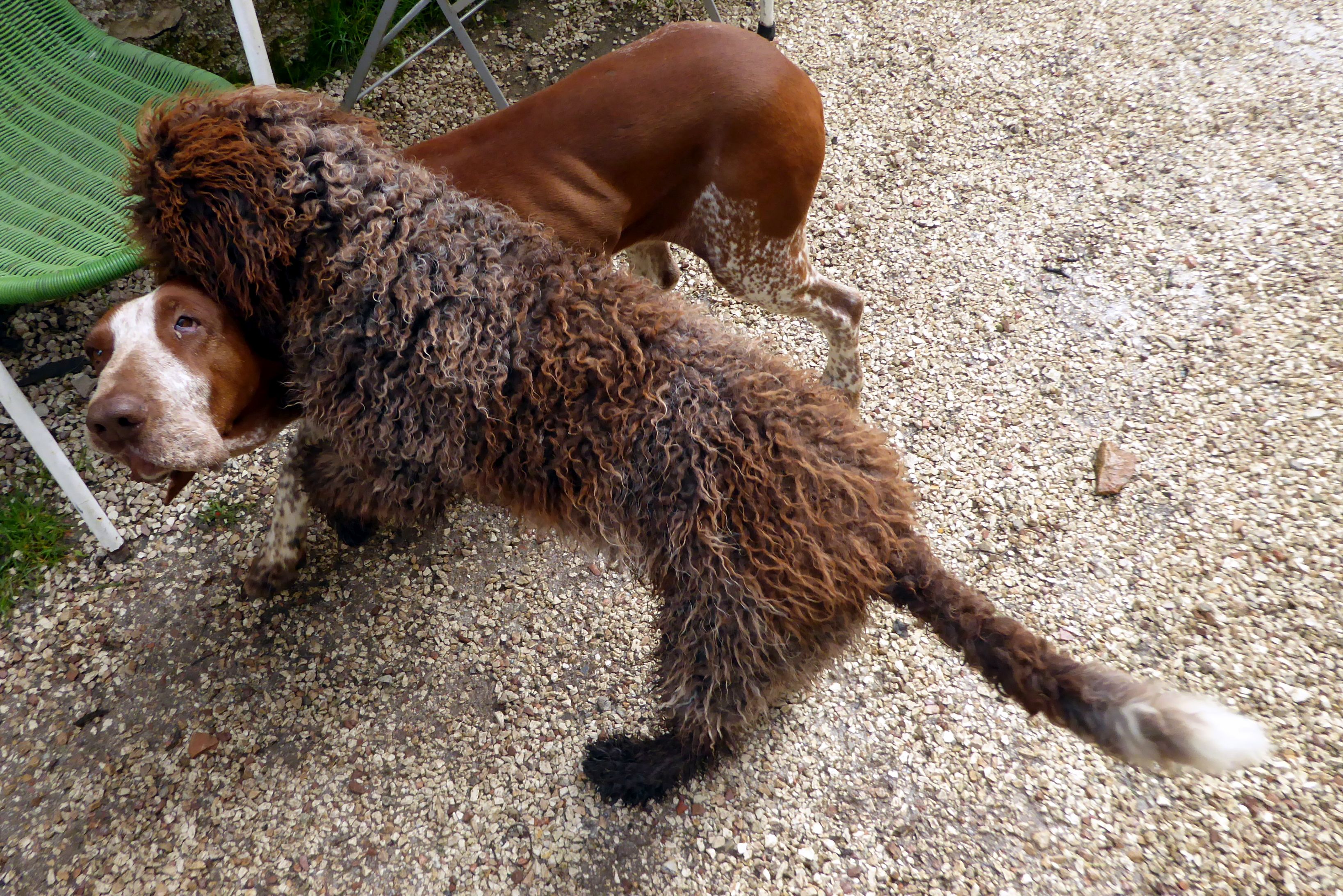
The Lagotto (curly haired dog) wanted to play.
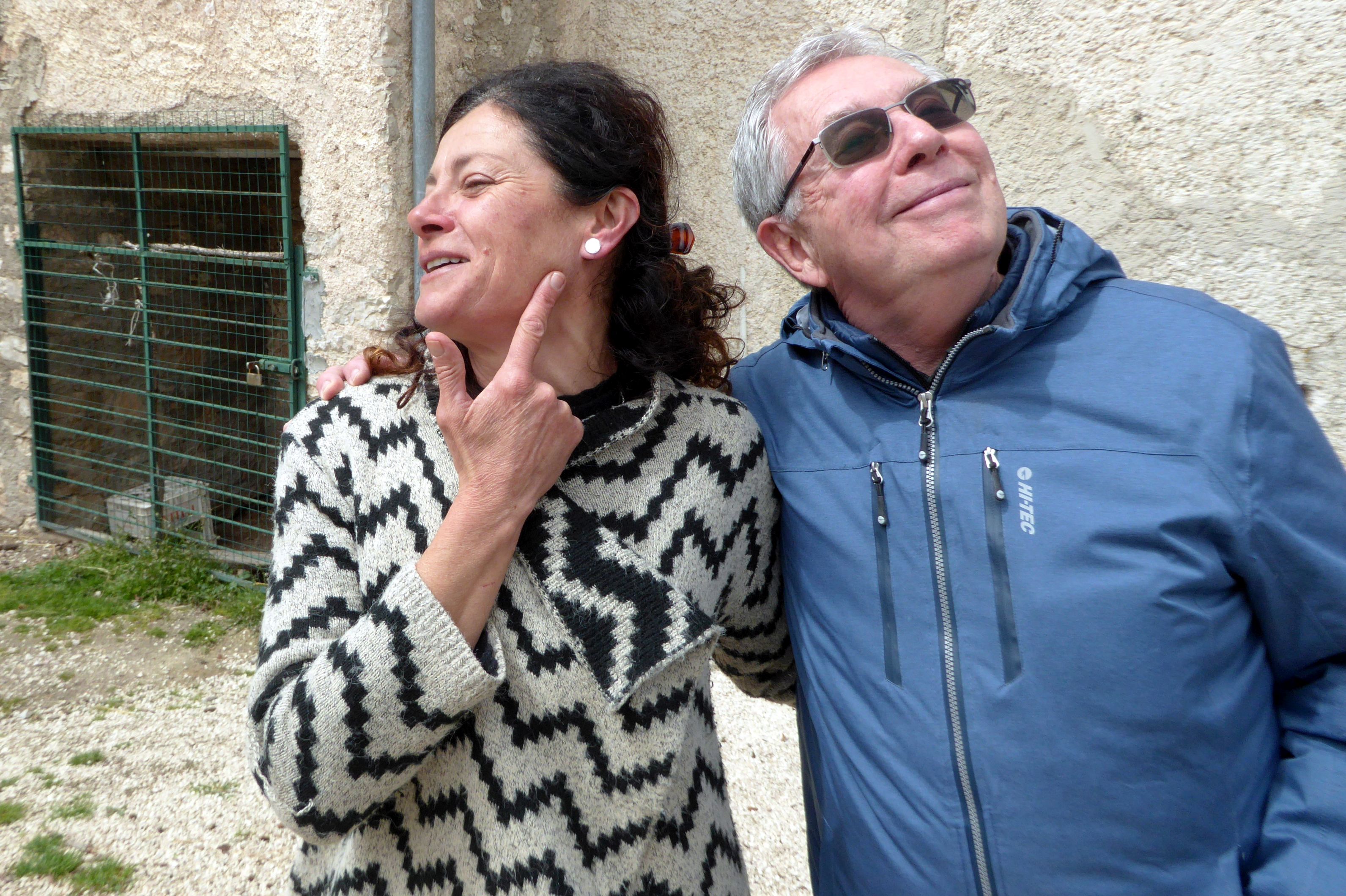
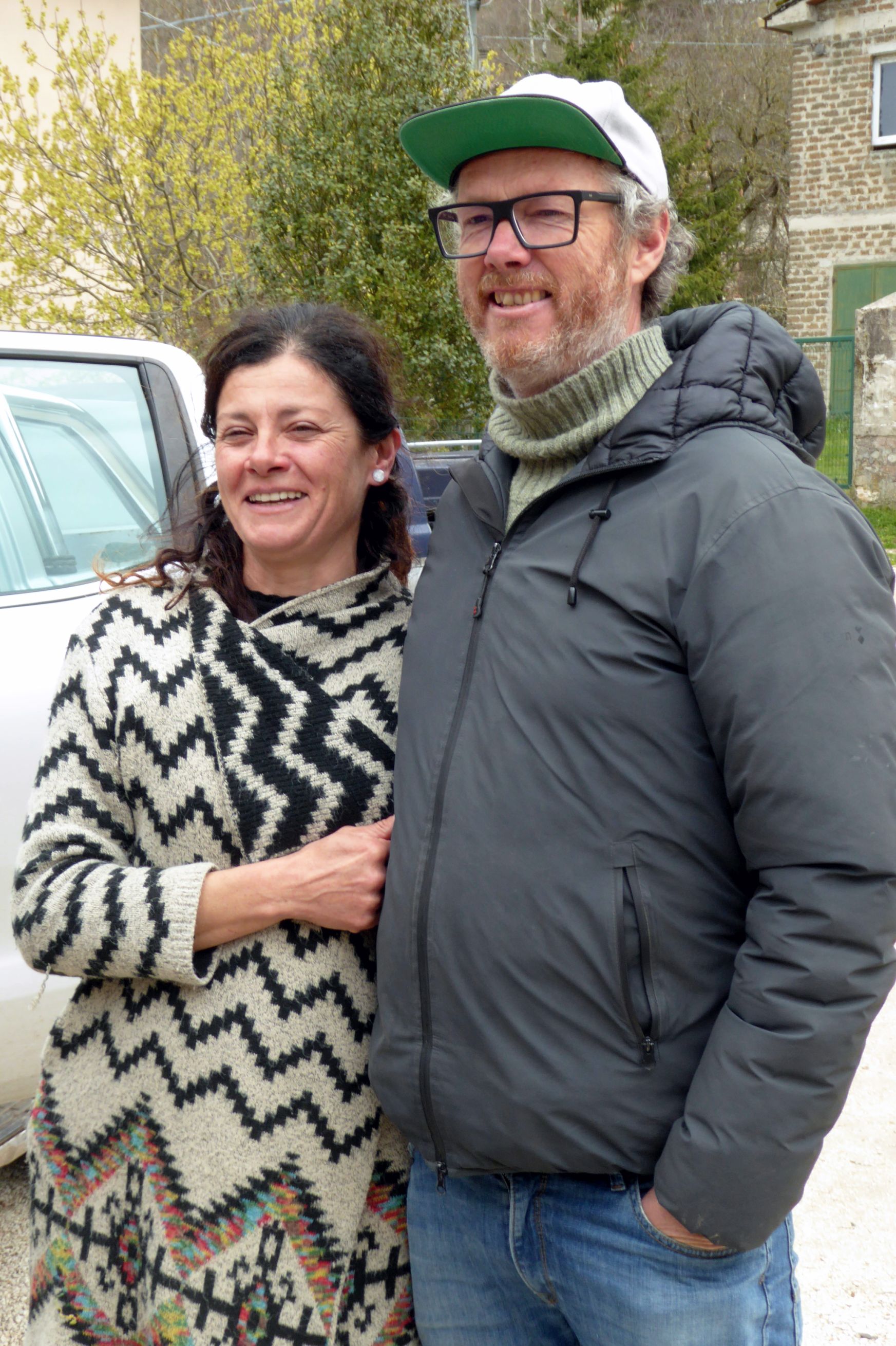
As we said our goodbyes, I gave Mac some of my photo notecards, and Bruce gave Francesca a pair of his fused glass earrings, which she promptly put on and modeled:
Francesca and Bruce
This was a day to remember! Upon reflection, this was one of the highlights of the entire trip. It was an authentically Italian— specifically Umbrian—experience. We left with what we knew would be fond memories for years to come.
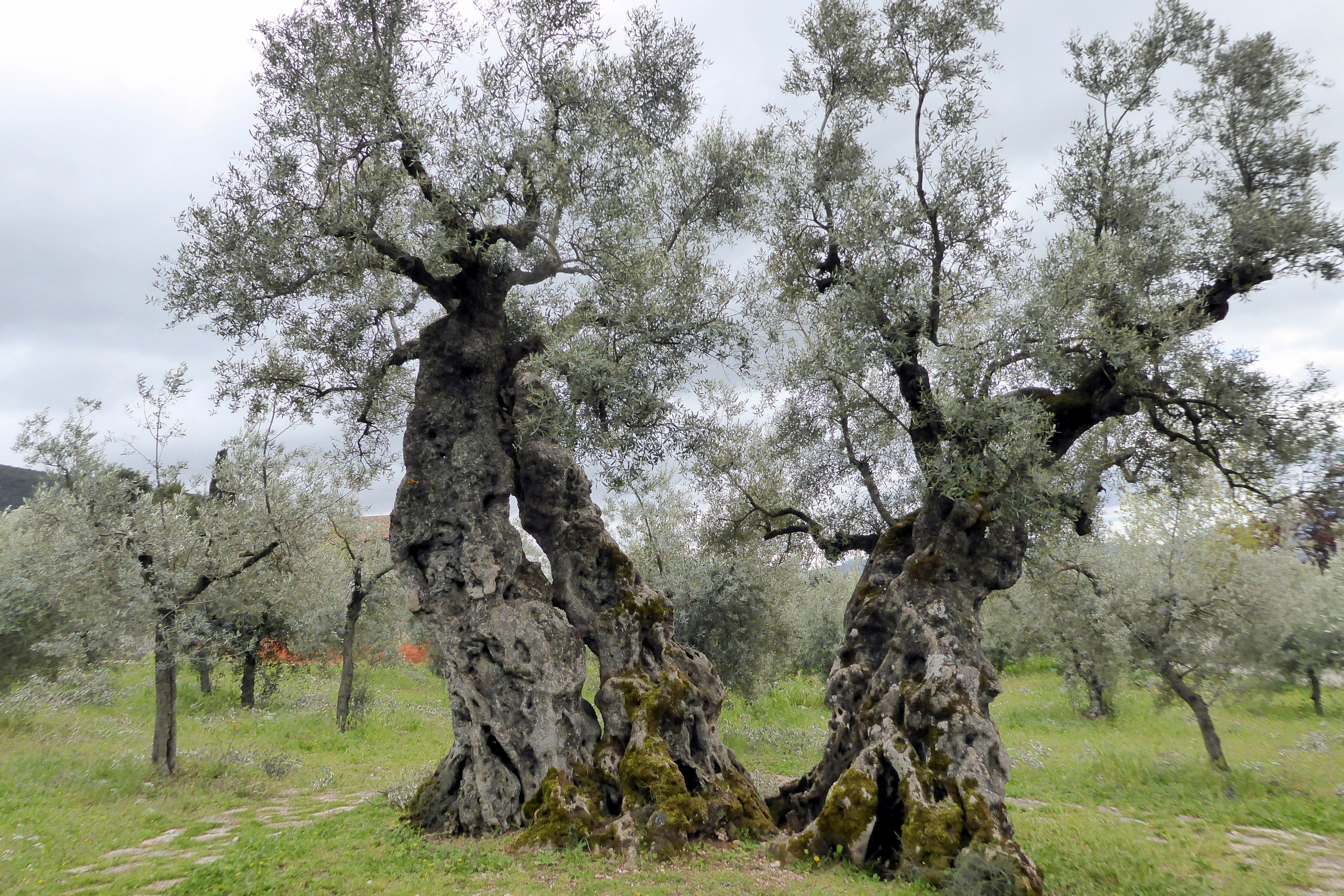
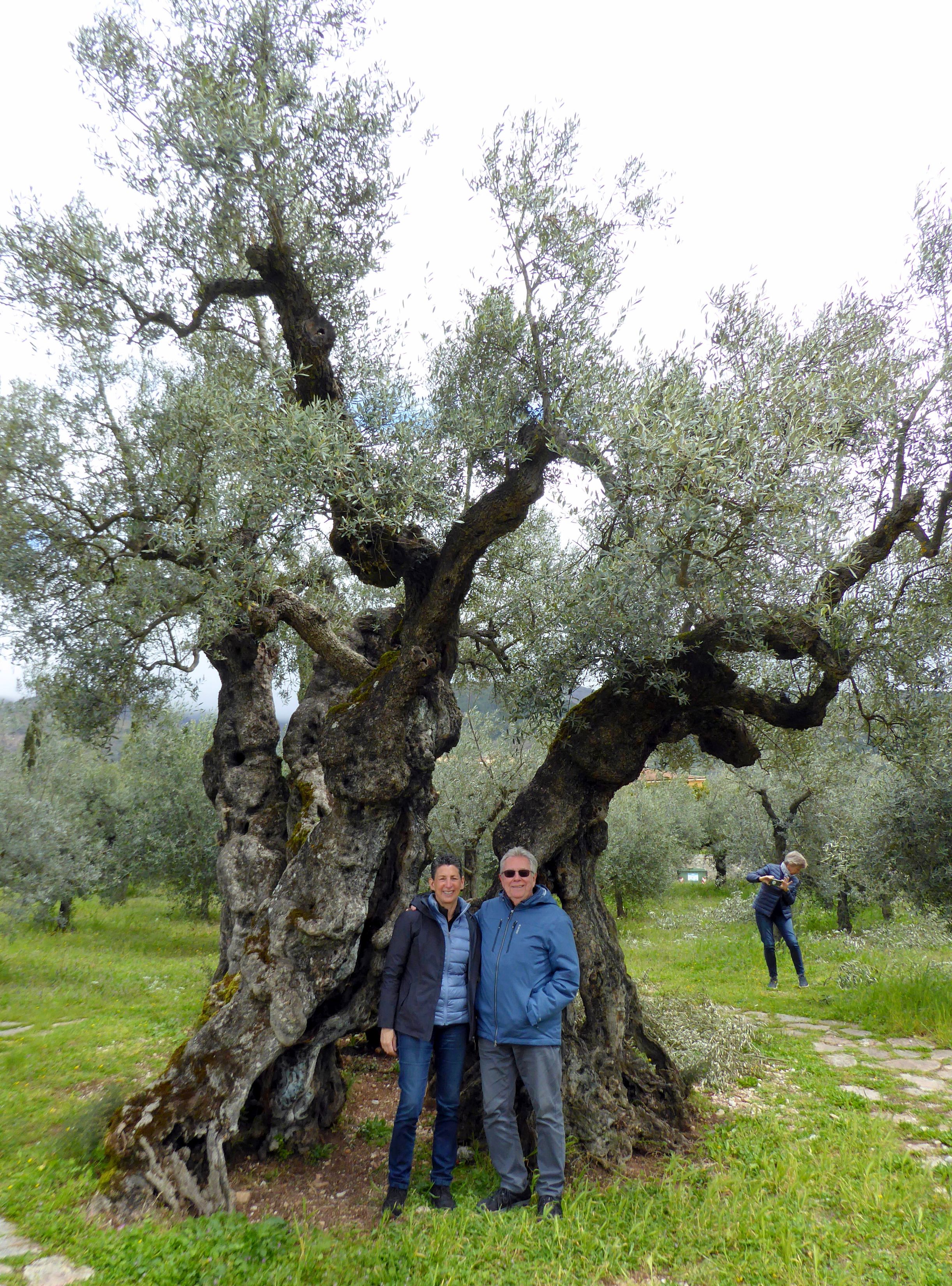
On the way back to Spoleto, we stopped to visit Ben’s “friend” in Trevi, this1,700-year-old olive tree named the Olive of Sant’ Emiliano.
Coming up next: WHEN IN ROME…
Note: If small group travel is of interest to you, I highly recommend Overseas Adventure Travel (OAT). Although Bruce and I travel together, they do not charge a single supplement for those who travel on their own. Singles also get their own room at hotels. If you book, you can get $100 off your trip by providing my name and customer number (Elaine Krugman, #3018126) as the person who referred you. I will also get $100 off future travel– a win-win!




































































































 Elaine-iaK's Travels: A Traveler's Tales of People, Places, Photos, Pools... and CHOCOLATE!