Unknown's avatar

About Elaine-iaK's Travels

As a graduate of Recreation Administration, from San Diego State University, I have made recreation and travels my career and life’s passion. After graduation, I traveled solo for one year throughout the South Pacific, doing travel photography in a wide variety of settings. Upon my return, many of my photographs became the subjects of my newly created line of handcrafted photographic greeting cards, "Exquisite! By, Elaine", a business I have had since 1986. Check them out at: http://ExquisiteCards.fototime.com . In 1983, I began teaming up with my mom, Goldie, teaching arts & crafts to cruise ship passengers, aboard Princess Cruises and Royal Caribbean. In addition, I lectured on travel photography, as well as Australia and New Zealand history, aboard Princess Cruises. In 2004, I formed a new teaching team with my recently retired husband, Bruce, who serves as my "humble assistant" until 2010 when the cruise lines shifted the arts and crafts program to mostly being taught by their own staff. Currently, our favorite mode of travel is by river boat. Along the way, we enjoy poking around small European towns, meeting the people, seeking out interesting photo subjects, and always stopping at every chocolatier to make a purchase. Adding to my chocolate label and wrapper collection is a bonus! And, as a U.S. Masters swimmer, if I can find a pool to get in a swim with the locals, all the better! Cheers! Elaine-iaK ~ Believing in your dreams can be far more rewarding than living by your limitations~ -Karla Peterson

SOUTHWEST FRANCE, NORTHERN SPAIN & PORTUGAL #7: BIARRITZ & SAINT-JEAN-DE-LUZ

The last day of our pre-trip extension began as a rainy one, so our stops along the coast of Biarritz and Bay of Biscay were a bit of a bust at first and we missed out on what would have been beautiful views.  Still, the tumultuous seas and dark skies were alluring in their own way, and I found them intriguing to photograph.  Once I was out on the old wood-slat pier looking down on the waves crashing against the rocks, I didn’t want to leave.  I could have stood there watching for hours, it was so mesmerizing. 

(For all photos, click on the image for a full screen view.)

Not leaving the pier with the rest of the group was a mistake though.  A large wave came crashing in, streams of water came rushing up through the slats of the pier and all over me.  I was drenched!  Thankfully, I was wearing quick drying travel pants, because I eventually dried out during the bus ride and while walking under the sunny skies of Saint-Jean-de-Luz.

Shot through the wet bus window while heading to our last stop in Biarritz
Biarritz is a surfing town, known for its huge waves (the second largest wave in the world) and professional surfing tournaments.

The picturesque fishing village and resort of Saint-Jean-de-Luz was a wonderful place for photography and taking in the views of the harbor and the beachfront of Bay of Biscay.  Colorful half-timbered Basque homes added to the charm.

Beachfront homes:

Scenes around town:

Biarritz is known for its striped and nautical fabrics…
…and making espadrille shoes
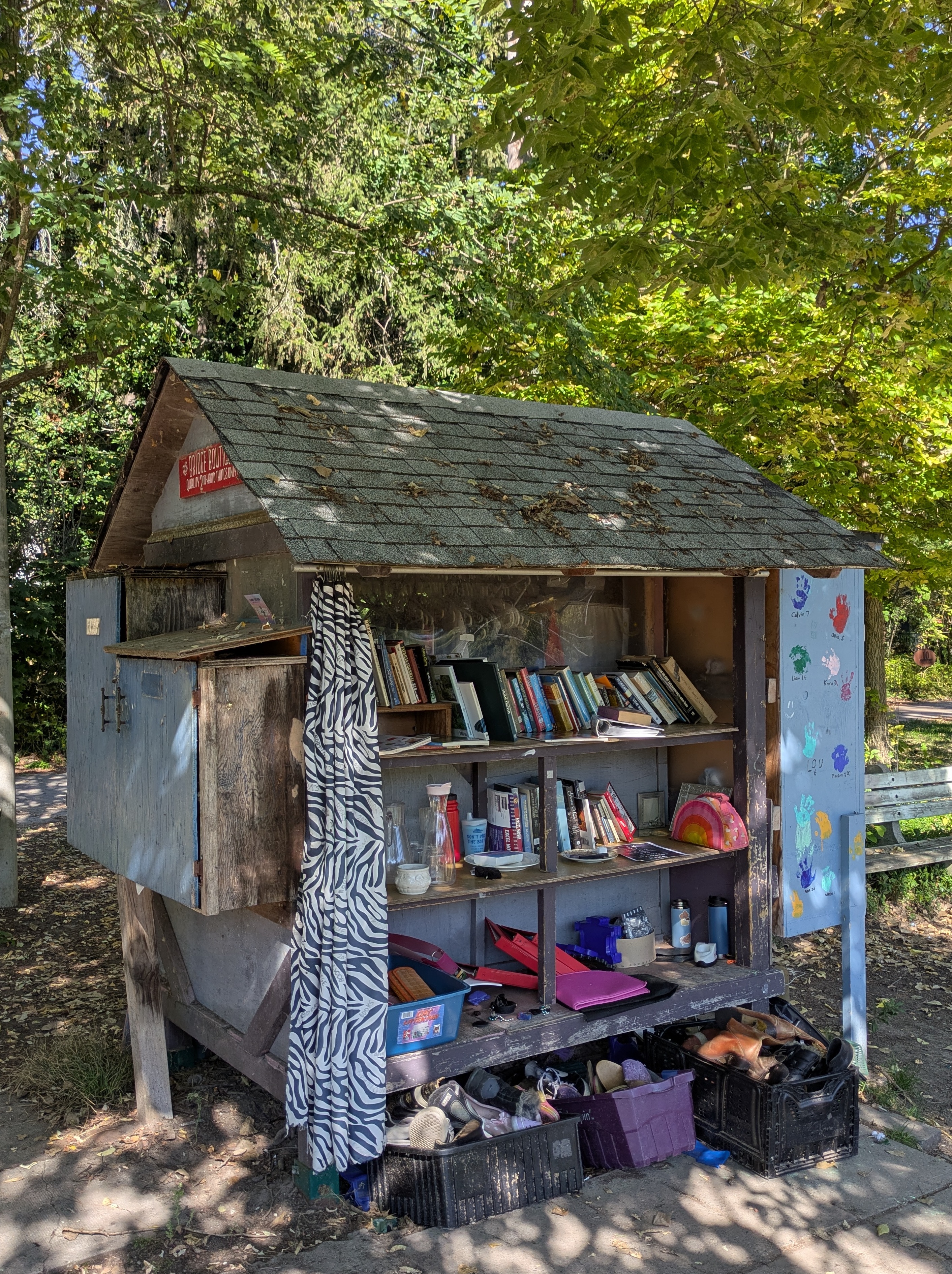
They even have their own version of the little free library!

We were so fortunate the skies had cleared for our last day in southwestern France, before continuing to Bilbao to begin our main tour!

Merci, Tom, for being a wonderful tour guide!

Next up: SOUTHWEST FRANCE, NORTHERN SPAIN & PORTUGAL #8: BRILLIANT BILBAO

SOUTHWEST FRANCE, NORTHERN SPAIN & PORTUGAL #6: MORE BEAUTIFUL BAYONNE

More scenes from beautiful Bayonne:

(For all photos, click on the image for a full screen view.)

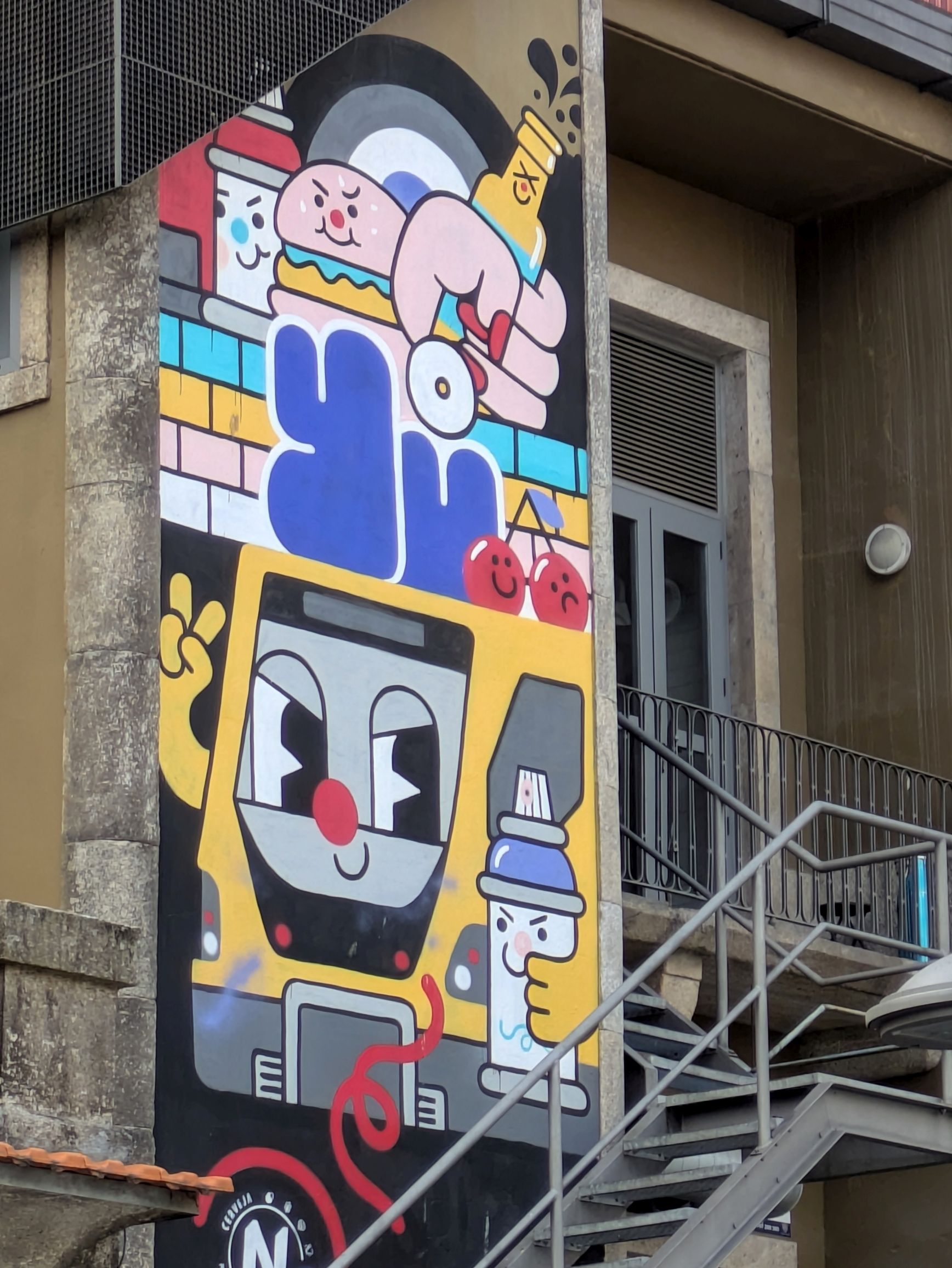
Street art around Bayonne:

This mural about our digitally overloaded world a won a world competition.

The following tile mosaics are by Invader. According to Wikipedia, “Invader is a pseudonymous French street artist. He is known for his ceramic tile mosaics modeled on the pixelated art of 1970s–1980s 8-bit video games, many of which depict the titular aliens from the arcade games Space Invaders, Pac-Man and Super Mario Bros. (the inspirations for his pseudonym). As of December 2020, his creations can be seen in highly-visible locations in 79 cities in 20 countries.[1] To accompany his citywide installations, or “Invasions”, Invader publishes books and maps as guides to the locations of his mosaics.”

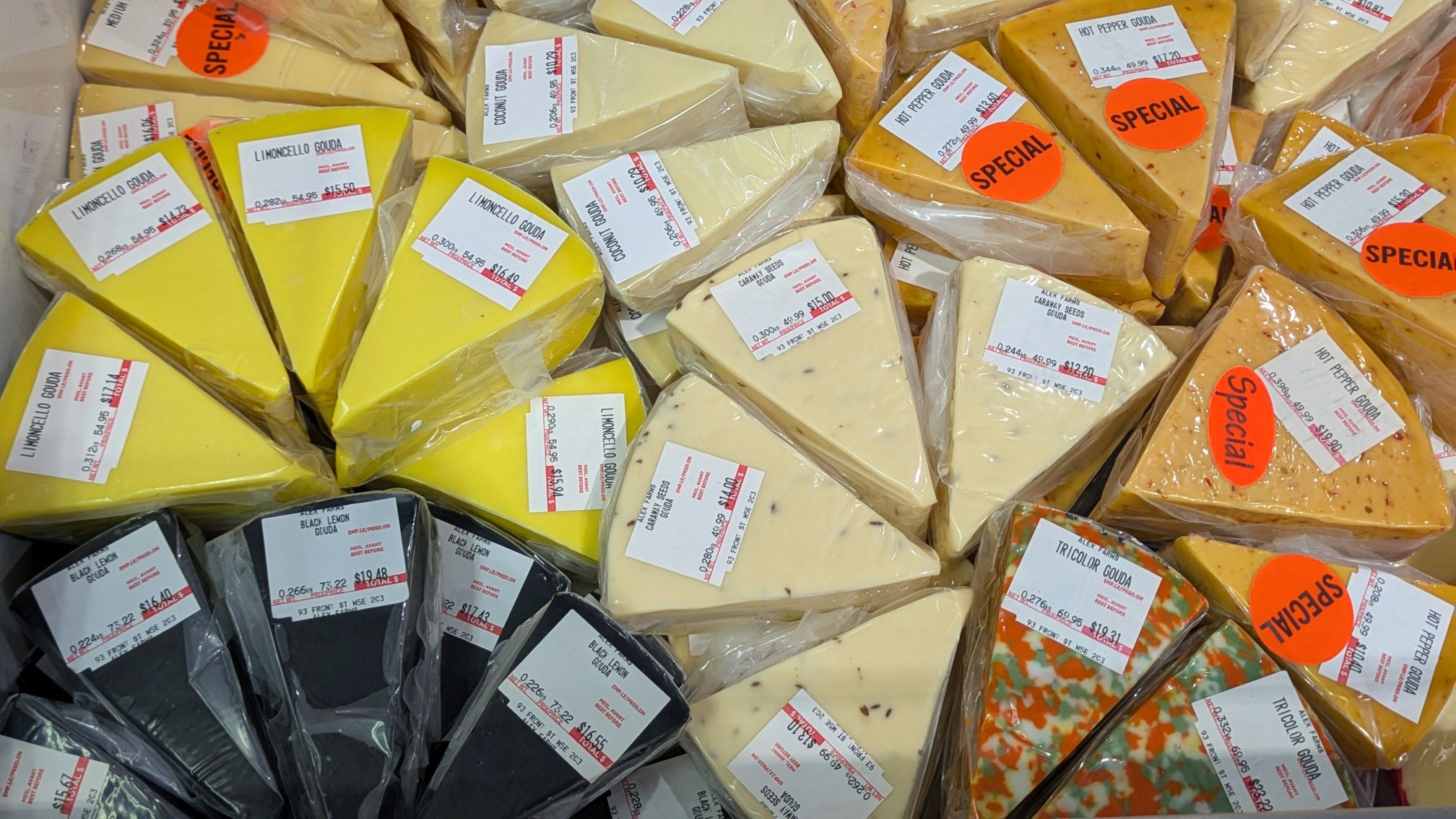
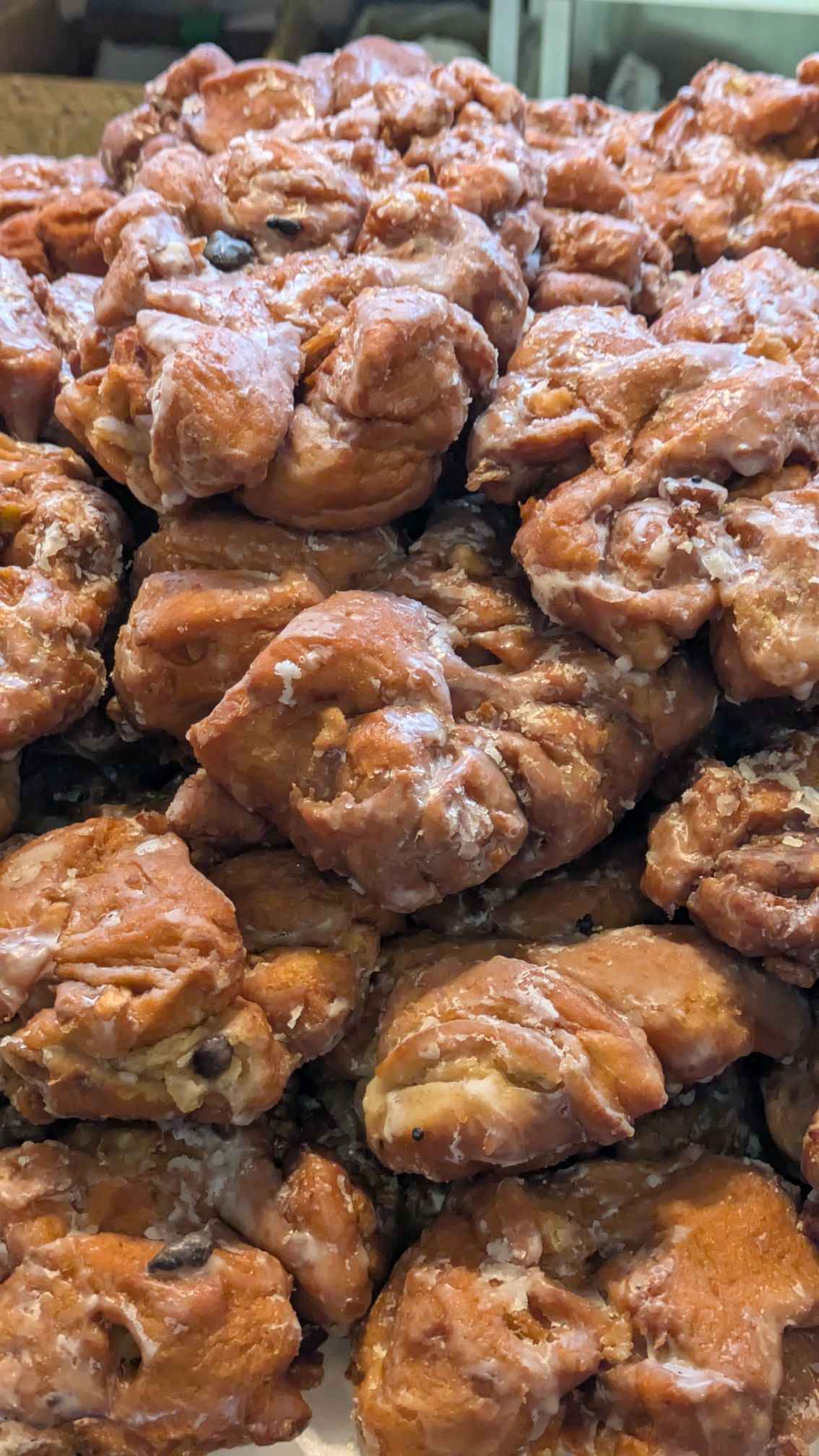
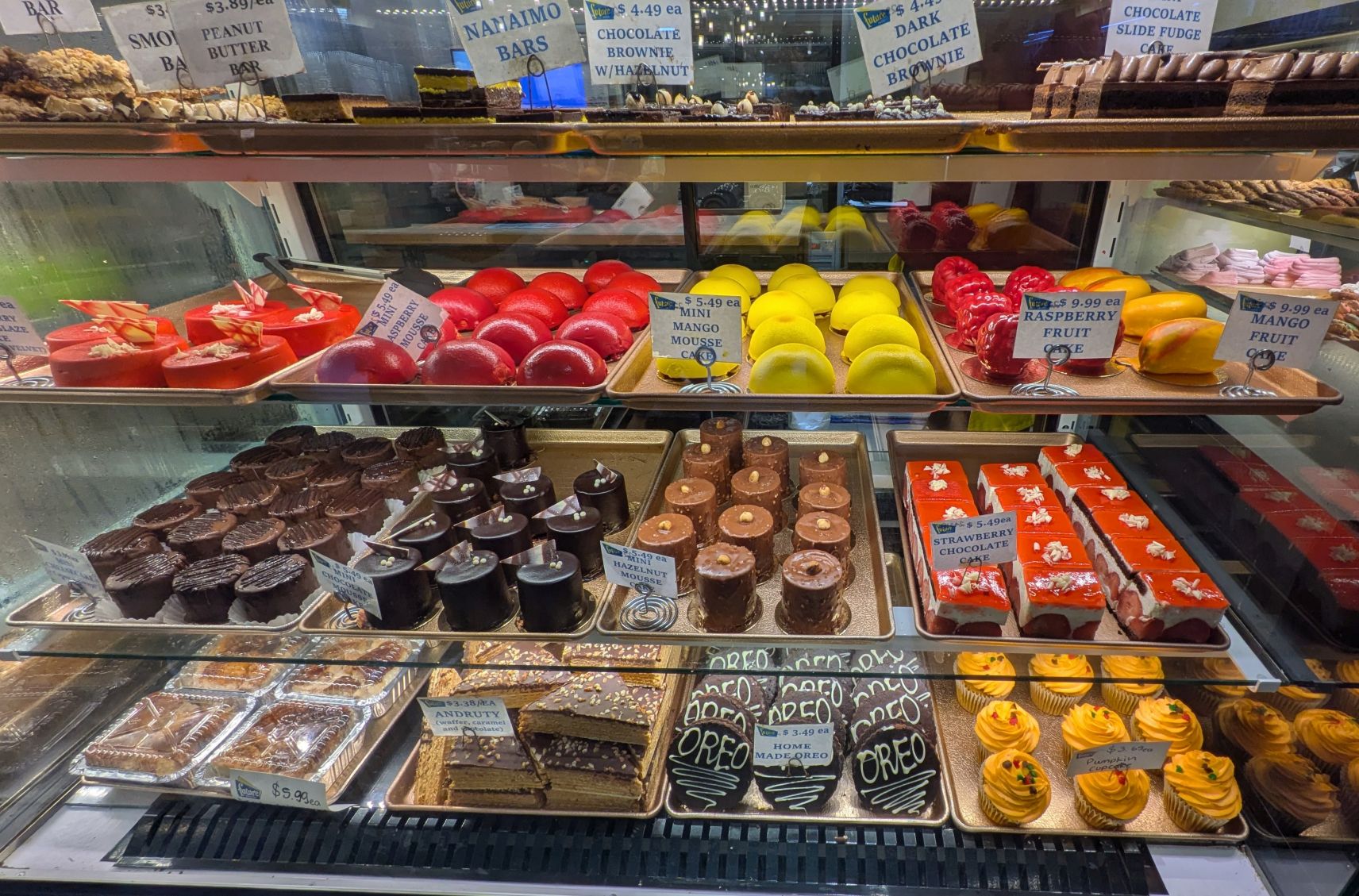
Markets & food of Bayonne:

Some of the fabulous chocolate Tom gave to the seven of us on the pre-trip extension to share.

Coming up next: SOUTHWEST FRANCE, NORTHERN SPAIN & PORTUGAL #7: BIARRITZ & SAINT-JEAN-DE-LUZ

SOUTHWEST FRANCE, NORTHERN SPAIN & PORTUGAL #5: BEAUTIFUL BAYONNE

Bayonne, like the other towns we visited in southwestern France, is in the Basque Country.  Its history stretches back more than 2,000 years, so it is full of culture, beautiful architecture.

Built along the intersection of two rivers, it is located quite close to the Spanish border and has a population of more than 53,000 people.  My favorite part of its history is that it became the unofficial chocolate capital of France in the 17th century.  Cacao beans were first brought home to Spain by the Spanish colonists upon their return from South America.  Since Bayonne was right next door, they got in on the action when Jews fleeing the Spanish Inquisition relocated in nearby Bayonne and started producing chocolate. Back then, there were 60 chocolatiers that all worked together to grow the industry, but each one had its own specialty

Currently there are about ten high-end chocolatiers in town, including Chocolat Cazenave, which has been making chocolate since 1854.  I enjoyed stopping in at a few of the chocolatiers to look at their beautiful creations but took a pass on purchasing their pricey masterpieces.

An interesting part of Bayonne’s history began in the 1930’s when the Basque people sought autonomy and started a separatist movement.  Although it culminated in a statute of autonomy in 1936, Spain’s dictator, Francisco Franco, abolished it when he came in power in 1939.  The struggle continued for another twenty years until a faction of the Basque’s National Party broke away and launched a campaign of terrorism against the Spanish central government, making Basque regionalism one of the most destabilizing forces in Spanish political life.

During our walking tour the morning following our arrival, we stopped by an ETA clubhouse and saw some of the political murals nearby, which were explained by Tom, our tour leader:

(For all photos, click on the image for a full screen view.)

Basque prisoners that were disappeared

The views of the colorful half-timbered buildings along the rivers were charming and quite photogenic, especially in the late afternoon sun:

More scenes from around Bayonne during our two days in town:

The Basque flag hangs from the balcony
Some of the businesses had plaques in the front listing the history of the owners and what type of business it was each time.
There were also signs to be respectful of those historic buildings!
Down the street from our hotel
The view from our hotel room (left)
The view from our hotel room (right)
Distorted panorama of the sweeping view to the left, and then right from our hotel window
Just before dusk
The riverfront at dusk

Coming up next: SOUTHWEST FRANCE, NORTHERN SPAIN & PORTUGAL #6: BEAUTIFUL BAYONNE

SOUTHWEST FRANCE, NORTHERN SPAIN & PORTUGAL #4: ATTRACTIVE AUCH

Our OAT group left Carcassonne with Bayonne being our final destination for the day.  Along the way, we stopped in Auch for a walking tour led by Tom, our tour leader, for the pre-extension portion of our tour.

Auch, in southwestern France, is a small, 800-year-old town of less than 23,000 people.  It was too small to spend a lot of time in, but it was a lovely day for a walking tour and an al fresco lunch.

There was a wedding in progress at the Auch Cathedral, but we quietly scampered in to have a look around the areas where we could stay out of sight.  A national monument, the interior was beautiful.

(For all photos, click on the image for a full screen view.)

It was also market day, so we had a quick look at the stalls and this clever wine bar on wheels:

More scenes from around Auch:

Another stop we made was to see the “Tour de France in the Pyrenees” (The Great Loop) sculpture by Jean-Bernard Metais. Located across from a gas station on the A64 motorway of the Pyrenees Mountains, it is quite a sight to see!

Next up: SOUTHWEST FRANCE, NORTHERN SPAIN & PORTUGAL #5: BEAUTIFUL BAYONNE

SOUTHWEST FRANCE, NORTHERN SPAIN & PORTUGAL #3: APPEALING ALBI

When we departed Carcassonne for our side trip to Albi, it was a sunny morning, so I captured some photos of the fortress as we made our way to the bus outside of the walled old city:

(For all photos, click on the image for a full screen view.)

The appeal of the medieval town of Albi is visiting the beautiful Toulouse-Latrec Museum and the magnificent Cathedral of Saint Cecilia of Albi (Albi Cathedral). By the time we arrived in Albi, it was cloudy (and sometimes rainy), so it was perfect for these (mostly) indoor activities.

A UNESCO World Heritage Site, Albi is situated along the banks of the river Tarn and has a long history.  First settled during the Bronze Age, there was a lot of growth in the town after a bridge was constructed across the Tarn in 1040.  Fast forward several centuries, and Albi did an excellent job preserving and restoring its medieval architecture, which earned it the UNESCO designation.

Formerly the Bishops’ Palace of Albi, the Toulouse-Latrec Museum is one of the oldest (13th century) and best-preserved castles in France.  It was well worth visiting the castle, even if you’re not a fan of Toulouse-Latrec’s work or any of the other art exhibited in the museum.  I enjoyed it all! 

Albi was the birthplace of Henri de Toulouse-Latrec, and the museum honors his memory in style.  Built prior to the cathedral, the palace was the residence of the Bishop of Albi and is connected to the cathedral tower.  The entire complex was built like a fortress for protection from the Cathars, a heretical sect, which originated in Albi.

In 1922, the museum received a collection of Toulouse-Latrec’s work, donated by his mother, and the museum now houses over one thousand works by and about him.

The interior of the palace is gorgeous, but the beautiful gardens are not to be missed as well. 

View from the museum

The Gothic cathedral was also a must-see marvel.  Under construction for 200 years, it was finally completed in the late 1400’s.  It is claimed to be the largest brick building in the world and has undergone many restorations over the years.

Although the interior was full of ornate art and sculpture, the wall paintings especially captured my interest.  The bold colors and geometric designs on some of the walls were such a contrast from the exterior!

There were, of course, beautiful stained glass windows as well.  (What’s a cathedral without stained glass?)  Although most of the windows date to the 19th and early 20th centuries, there is still a small amount of stained glass from the medieval period that remains.

Scenes around the medieval town:

Coming up next: SOUTHWEST FRANCE, NORTHERN SPAIN & PORTUGAL #4: ATTRACTIVE AUCH

SOUTHWEST FRANCE, NORTHERN SPAIN & PORTUGAL #2: CAPTIVATING “NEW” CARCASSONE

When I say “new” Carcassone, it’s a stretch, since the lower town below the walled fortress dates to the late medieval period.  It is newer than the old, fortified city up on the hill!

Carcassone is in the Basque Country of France, straddling the border between France and Spain on the coast of the Bay of Biscay. The region is home to the Basque people, an ethnic group with their own culture and language, which is the oldest language spoken in Europe.  They also share genetic ancestry, unique in that they have the highest percentage of Type O blood of any ethnic group.

Exploring Carcassone can be challenging for the less mobile.  It’s a bit of a steep scamper down the hill to get to the lower town on foot, but it was worth the effort to have a look around.  The walk across the bridge over the Aude river offered nice (but not photogenic on this day) views, and the pastel painted homes on the other side of the bridge were nice to photograph.  I especially enjoyed the odd choice of sculpture subject as well as the charming and colorful streamers over the streets in the center of town.

(For all photos, click on the image for a full screen view.)

Next up: SOUTHWEST FRANCE, NORTHERN SPAIN & PORTUGAL #3: APPEALING ALBI

SOUTHWEST FRANCE, NORTHERN SPAIN & PORTUGAL #1: CAPTIVATING OLD CARCASSONE

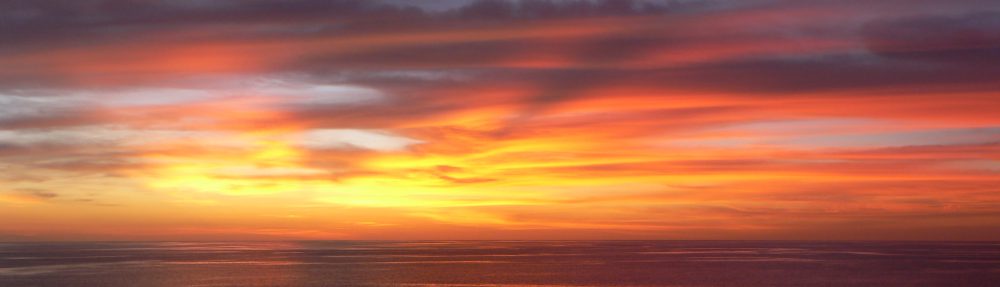
What a lovely way to begin our Overseas Adventures Travel (OAT) tour!  We were greeted with a gorgeous sunrise at the airport in Paris, following our red-eye flight from Atlanta.  Next, we boarded a flight to Toulouse, France, where we were transported by car to Carcassonne to begin our six-day pre-trip extension (in late August).

The old city of Carcassonne, located in southern France, is surrounded by a fortress high up on a hill overlooking the rest of the city.  Step inside the walls, and you will feel like you have been transported back in time to the medieval period, 2,500 years ago.
(For all photos, click on the image for a full screen view.)

Our hotel was in the old city, just a short walk from the entrance of Cité de Carcassone, the medieval citadel (or fortress).  We had arrived one day early, so we had three nights at the hotel with plenty of time to explore the charming old city on the hill as well as the newer city down below.

Although it rained during much of our time in France, we were fortunate to have some beautifully sunny periods to get in some good photography.  We also enjoyed exploring and photographing the lighted citadel walls at night.

Entering the old city– a steep climb from the new city below
Cite de Carcassone, the medieval citadel
Inside the citadel museum, there was a computer-generated slide show projected on the wall of a large room. This image shows the citadel and a portion of the old city.
The clouds were rolling in, so we bolted from the museum to get in our walk around the citadel walls before the rain arrived. This is a view down to the “new” city of Carcassone.
The old cemetery
A view of Carcassone Cathedral from the fortress wall

A look inside the citadel museum:

After getting a birds-eye view of the cathedral, we stopped in for a closer look:

A closer look at the cemetery, just outside the walls
Enjoying escargot with our group at L’Escargot; it tasted much better than it looked!
Delicious cuddlefish and potatoes
Carcassone at dusk
Carcassone at night

Coming up next: SOUTHWEST FRANCE, NORTHERN SPAIN & PORTUGAL #2: CAPTIVATING “NEW” CARCASSONE

TURKIYE #17: EXTRAORDINARY EPHESUS

For our last day in Turkiye, we visited Ephesus, a UNESCO World Heritage Site and one of the largest and best-preserved ancient cities in the world.  Ephesus was home to the Temple of Artemis, one of the Seven Wonders of the Ancient World. No longer standing, it was said to be one of the most colossal temples ever built.

Ephesus was built in the 10th century BC, so its history is very long an involved—far too much detail to delve into in this post. To learn more about this ancient city, the Wikipedia article I linked to covers it quite well.

It was quite hot the day we were there, so much of what Nuri shared with us about Ephesus didn’t register. I was more concerned about finding a corner of shade to stand in as we toured the ruins and tried not to overheat. Had I been on my own, I would have visited at night, which would have been cooler and presented an interesting photographic perspective, since the ruins are well-lit. Besides, I’m sure it would have been less crowded.

The following are scenes from the ruins:

(For all photos, click on the image for a full screen view.)

Toilets

Looking back at our two weeks in Turkiye, it was an amazing experience! A big thank you to our guide, Mehmet Nuri Guneysu, who shared so much of his culture with us. Cheers!
Coming up next: Southwest France, Northern Spain & Portugal

TURKIYE #16: TWO CONTROVERSIAL TOPICS: LGBTQ+ AND TURKS & KURDS

During every Overseas Adventure Travel (OAT) tour, there is a “controversial topic” presented by either the tour leader or a guest speaker. Nuri, our tour leader, discussed two during this tour: LGBTQ+ rights in Turkiye and the Turks / Kurds controversy.

In 2013, Turkiye ranked very low for LGBTQ+ rights—39th out of 49 countries. Eleven years later, it dropped further to 47th. Prior to 2013, there were some glimmers of hope for gays. In 1980, the Green Party, which was one of four political parties, supported gay rights. And in 1994, another political party banned the discrimination of gays, even though the government wasn’t liberal at the time. In 1999, it was the first time a transgender nominee ran for Istanbul city council. Tiny glimmers…

That hope, however, was overshadowed by overwhelming homophobia in the government of Turkiye. In 2009, the European Union denied Turkiye membership because of it.

The common citizen of Turkiye held a different view. In 2003, Turkiye was the first Muslim majority country to have a gay pride march. Only 30 people participated, but it was a start. Participation grew to 15,000 in 2013 and 100,000 in 2015! The parade was canceled after that by the government, which currently doesn’t recognize same sex marriage, even though the typical citizen has no problem with it.

Istanbul has the most tolerant population as opposed to the Kurds in eastern Turkiye who hold a zero-tolerance view of gays and same sex marriage.

That brings me to controversial topic #2: Turks / Kurds controversy. The Kurds are the world’s largest population without a state. There are 80 million Kurds living in and around Turkiye, Syria, and Iraq, and a total of 100 million in the world.

In Turkiye, since 2015, Kurds have not been allowed to speak their own language in schools, and Kurdish books are banned. Nuri nailed it when he said, “The Turkish government and Kurd terrorists are worse than each other.”

Kurds are forced to be like Turks and not allowed to be themselves. Ordinary Kurds are caught in the middle between the Turkish government and Kurd terrorists.

Nuri’s father owned two stores that handled importing fabric from Iran, making products, and then exporting the finished product back to Iran. His father wouldn’t support the Kurd terrorists financially because of their violence and killings. Instead, he supported the poor Kurd families in town. The terrorists didn’t take too kindly to that and burned down his businesses. That was in 1995, and it took Nuri’s father the next six years to build his businesses back up. He died in 2005 due to the stress of it all, and Nuri had to work two part-time jobs after school to support his younger siblings.

If Nuri’s father had supported the terrorists, the Turkish government would have retaliated. He was stuck in the middle.

Coming up next: TURKIYE #17: EXTRAORDINARY EPHESUS

TURKIYE #15: WHAT THE H*&$ WAS THAT???

Bruce and I were sound asleep during our last night on board the boat until my cell phone, which I had set to a white noise app, went ballistic. We were both startled awake by the blaring alarm that was going off. “What the H*&$ was that?” (In retrospect, I’m sure I used a more, uh, colorful word as I grabbed the phone.)

It was 2:17 AM, My phone home screen was bright red, and an “Android Alarm” statement said there had been a 5.8 earthquake, twelve miles off the coast of Rhodes, Greece, which was only 29 miles from where we were anchored off Marmaris.

As we were trying to absorb this news, we could hear the crew run by our cabin door. Still not thinking clearly due to the rude awakening, I stupidly said, “I wonder if anyone else had an alarm on their phones.” Bruce snapped back, “Who cares? I’m worried about a Tsunami!” And then it hit. “Oh my God, that’s right! WE’RE ON A BOAT!”

Meanwhile, the crew had received a call from the coast guard warning boats of large waves that were expected to come through. We were anchored in a protective cove, but I’m sure the captain kept his ear on the radio.

Not unexpectedly, the crew got us off that boat as early as they could, just in case…

As it turned out, there was no Tsunami, but when I think about what could have been, we are still, to this day, very grateful to have made it off that boat alive.

This is one of the press stories about the earthquake:

https://greekreporter.com/2025/06/03/greece-jolted-two-earthquakes-rhodes-crete-june-2025/

Relieved to be back on land (and looking forward to a cushy hotel bed), we said our farewells to the crew and made our way towards Kusadasi, a seaside resort known as the gateway to ancient Ephesus.

(For all photos, click on the image for a full screen view.)

Along the way, we stopped for lunch and free time in Sirince, a former Greek village. All the buildings are over 200 years old, so it had a lot of charm. The population is just 456, and the village is small, but it has become a successful tourist destination. In addition to tourism, they earn their income from agriculture (wine, olive oil, and peaches).

We enjoyed our lunch of Turkish cuisine while enjoying views of the mountains. During our free time, we poked around the stalls and shops, shooting a few photos along the way:

Our hotel in Kusadasi

Next up: TURKIYE #16: TWO CONTROVERSIAL TOPICS: LGBTQ+ AND TURKS & KURDS