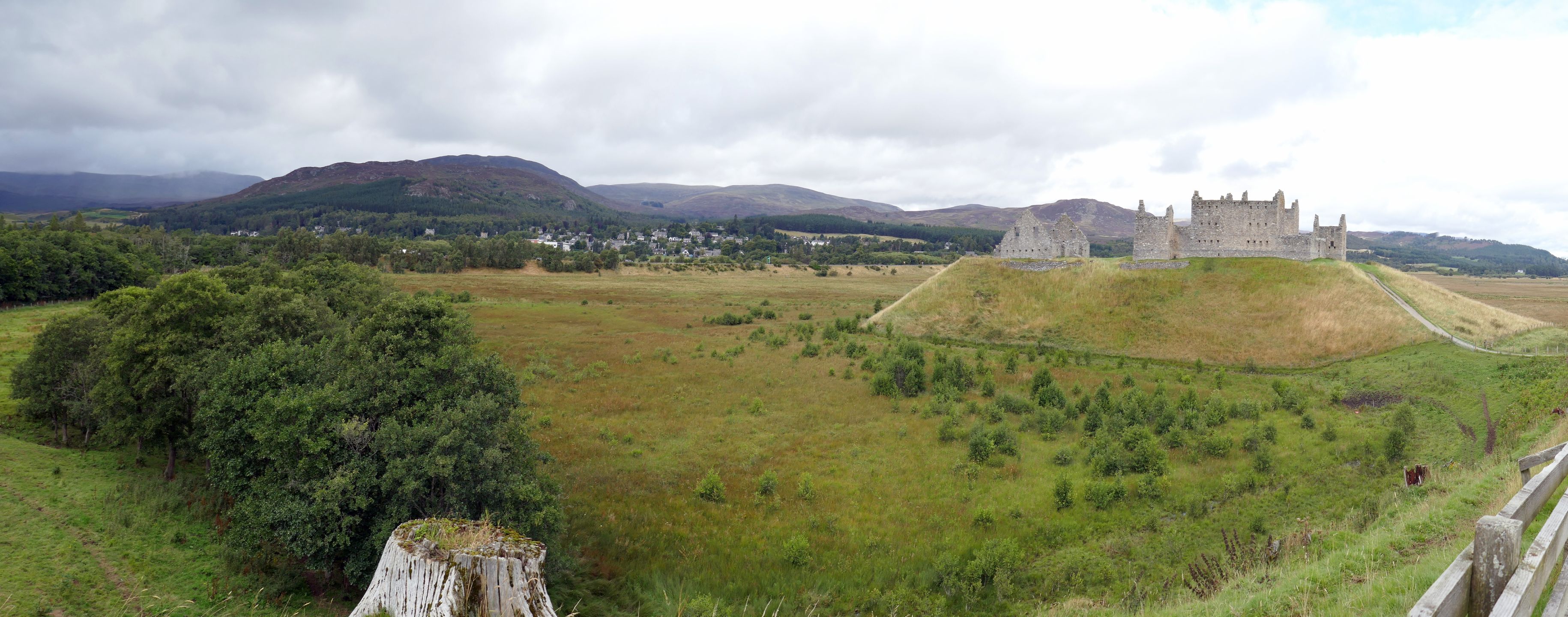
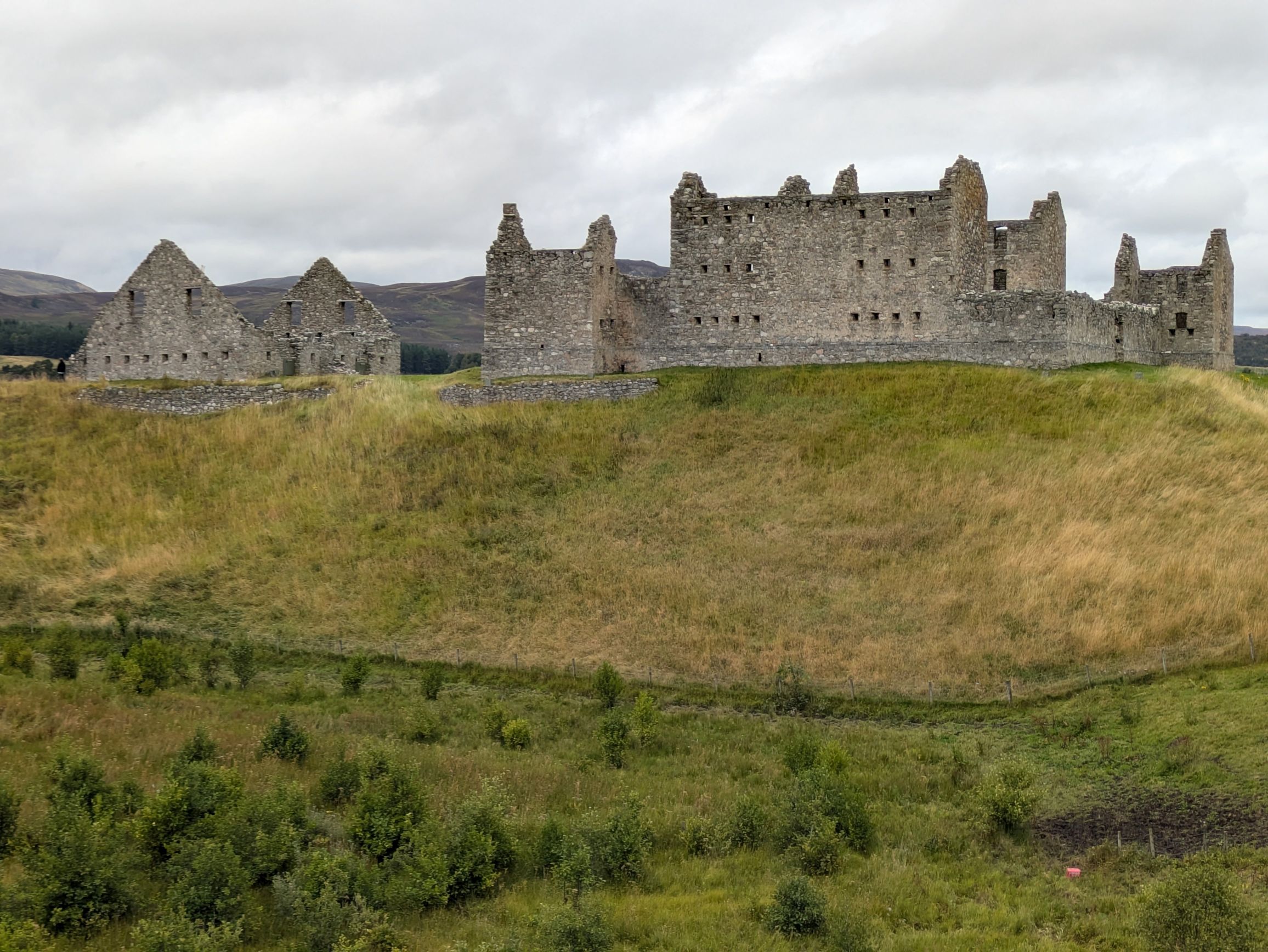
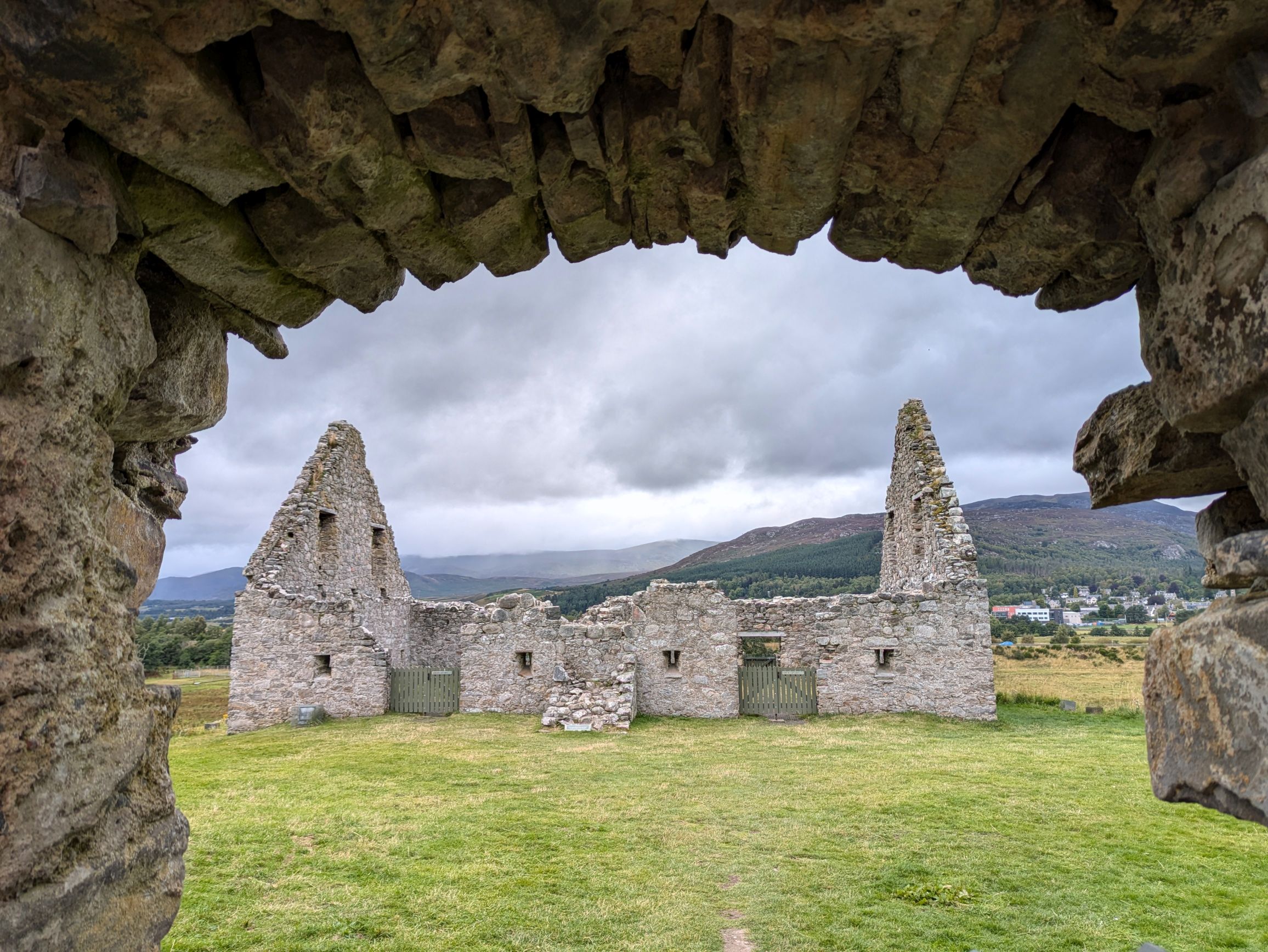
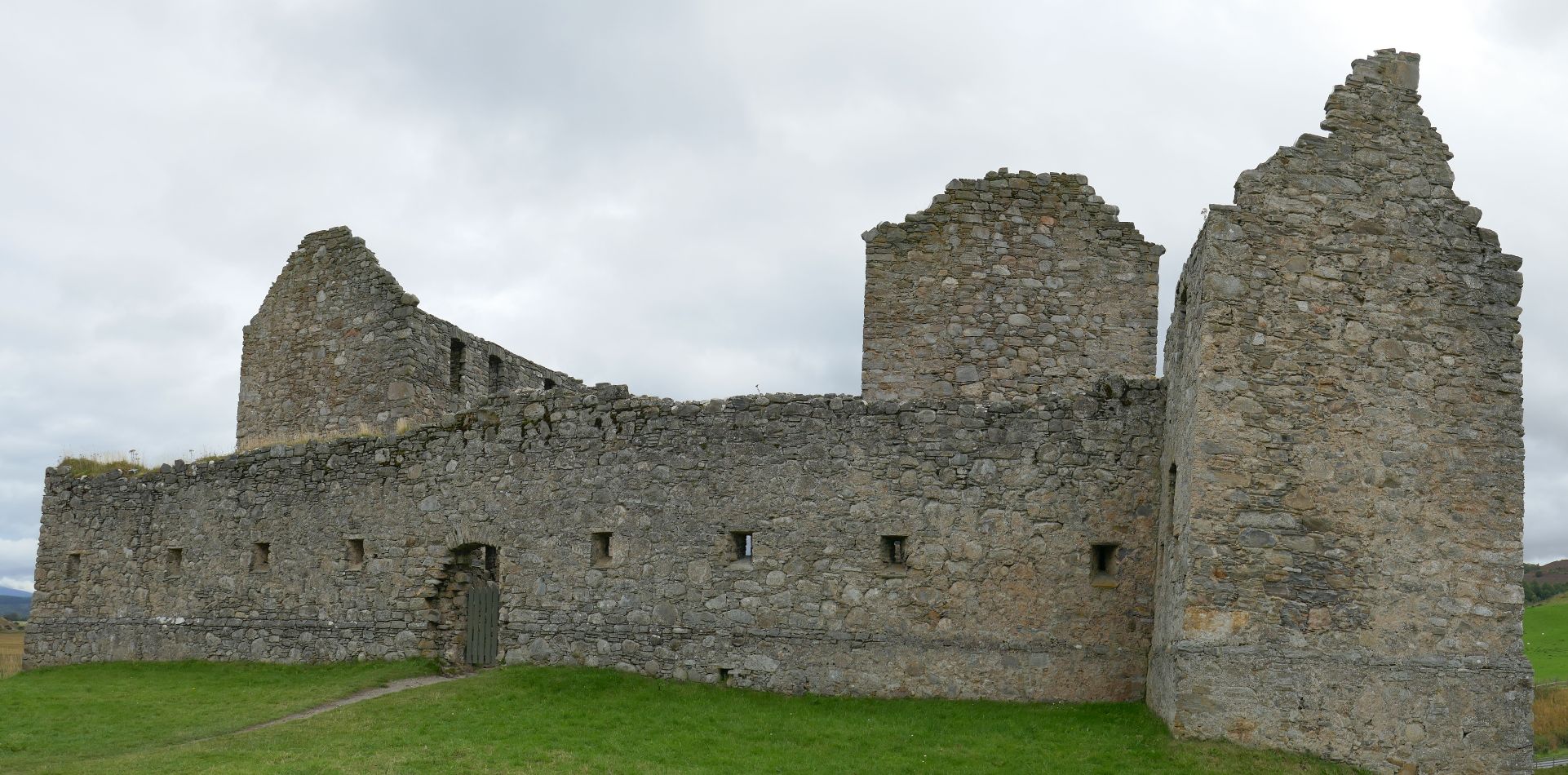
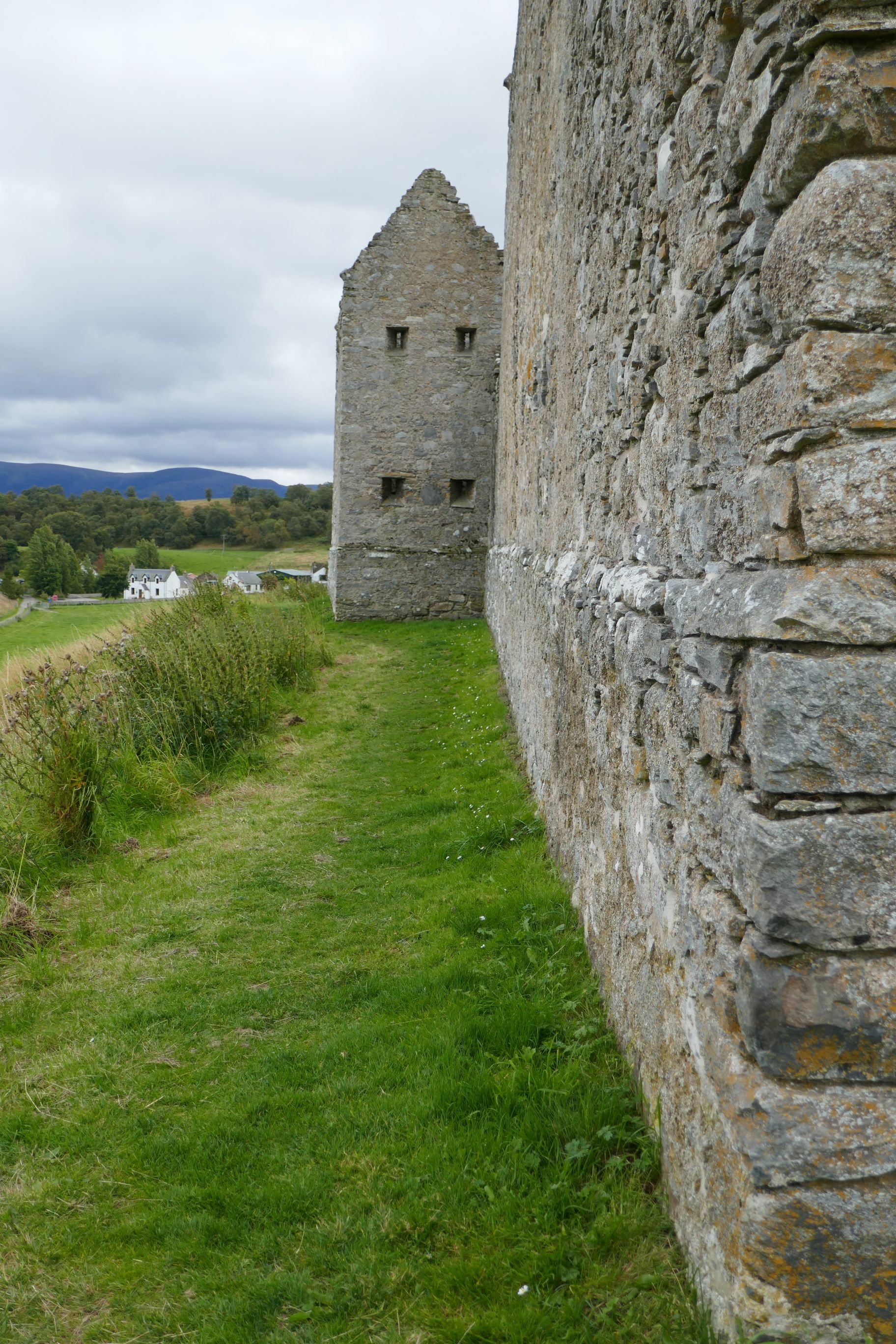
As I mentioned at the end of my last post, the afternoon continued with a visit to Ruthven Barracks. Following the Jacobite uprising in 1715, these barracks were built on an old castle mound to police the Highlands.
(For all photos, click on the image for a full screen view.)
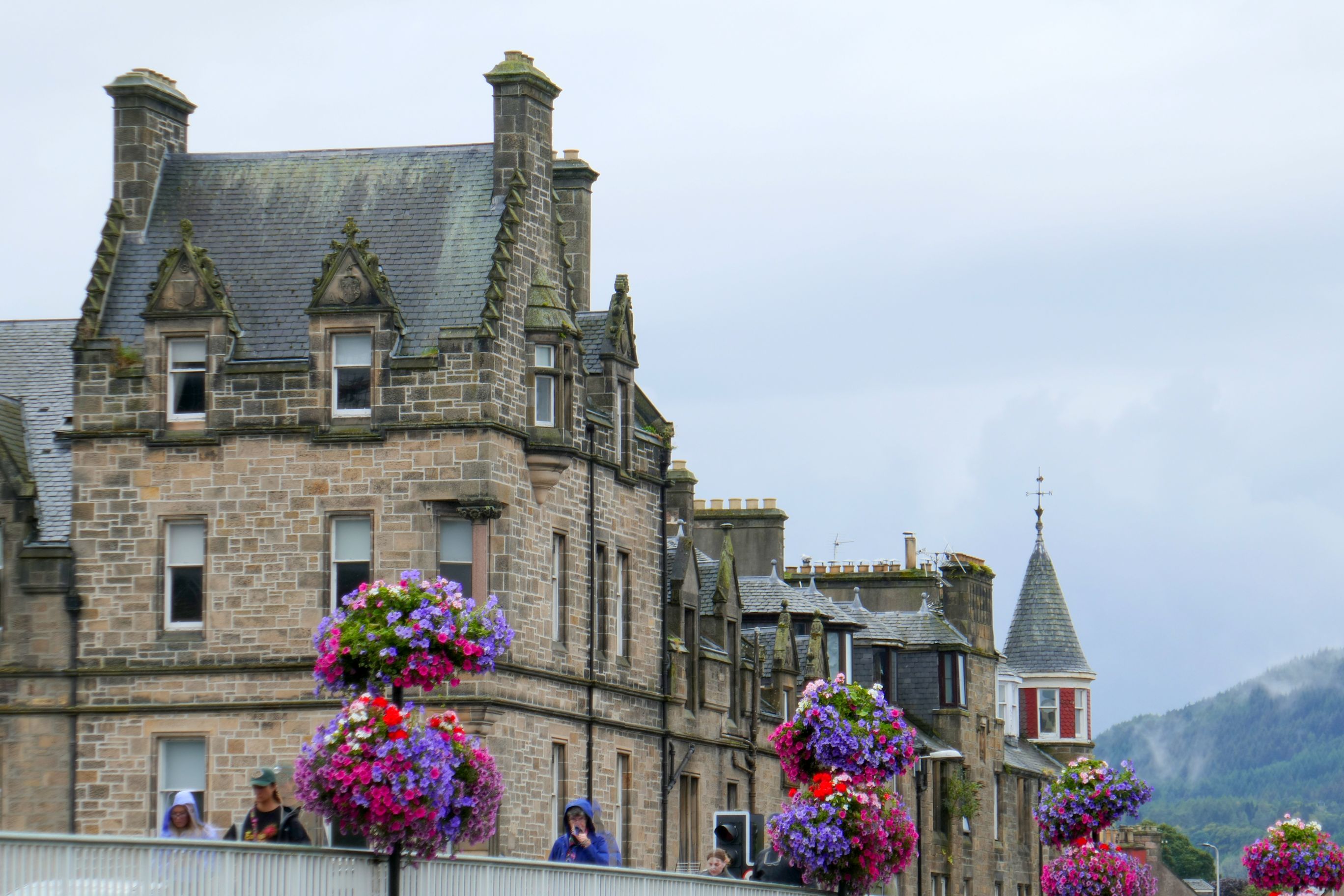
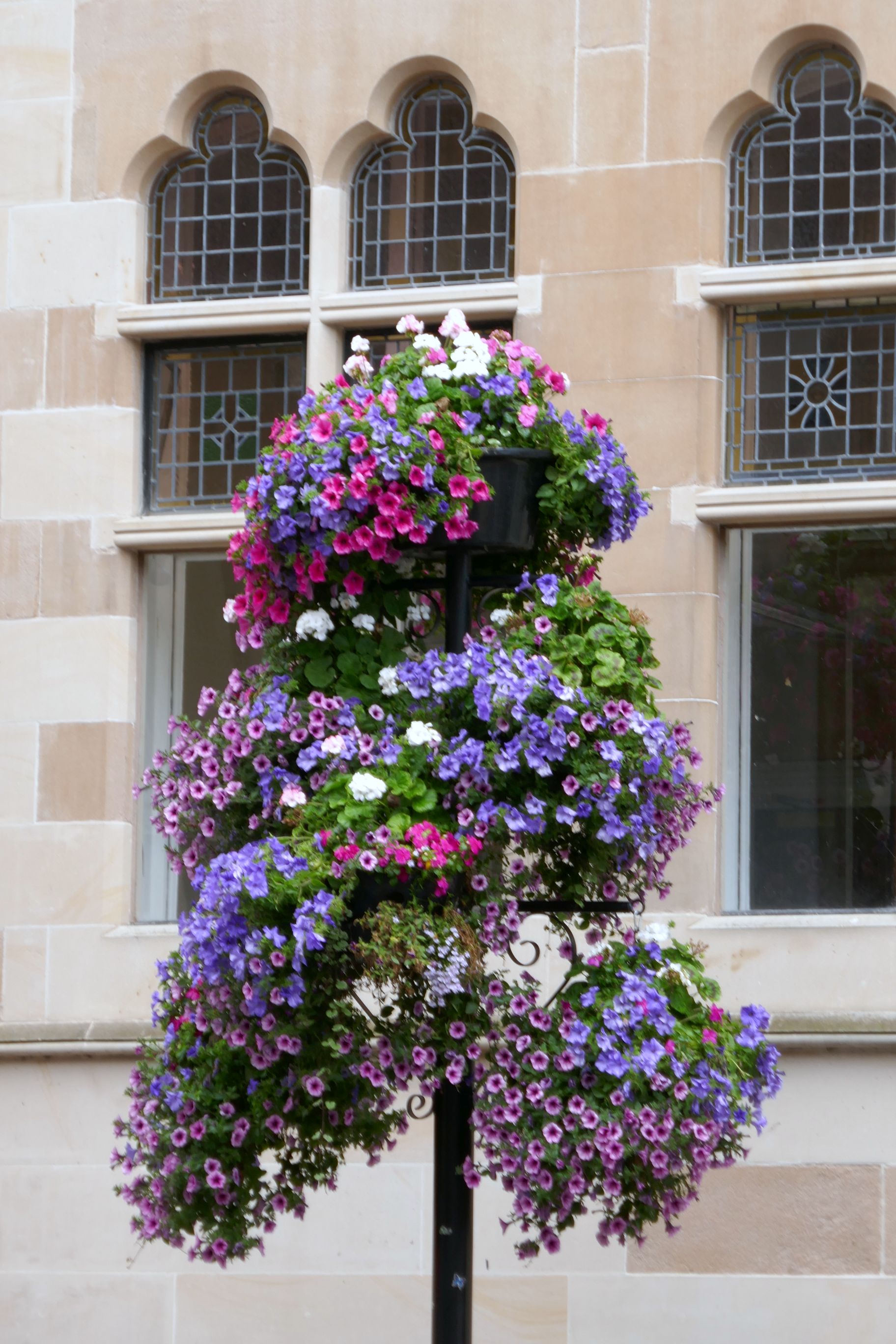
For the remainder of the afternoon and evening, we had free time to explore Inverness, a city with a population of around 50,000. The city was built along the River Ness, and some of the bridges crossing the river were filled with baskets of beautiful flowers. It was a lovely city to walk around and explore, so it served as an ideal base during the remainder of the main portion of our tour.
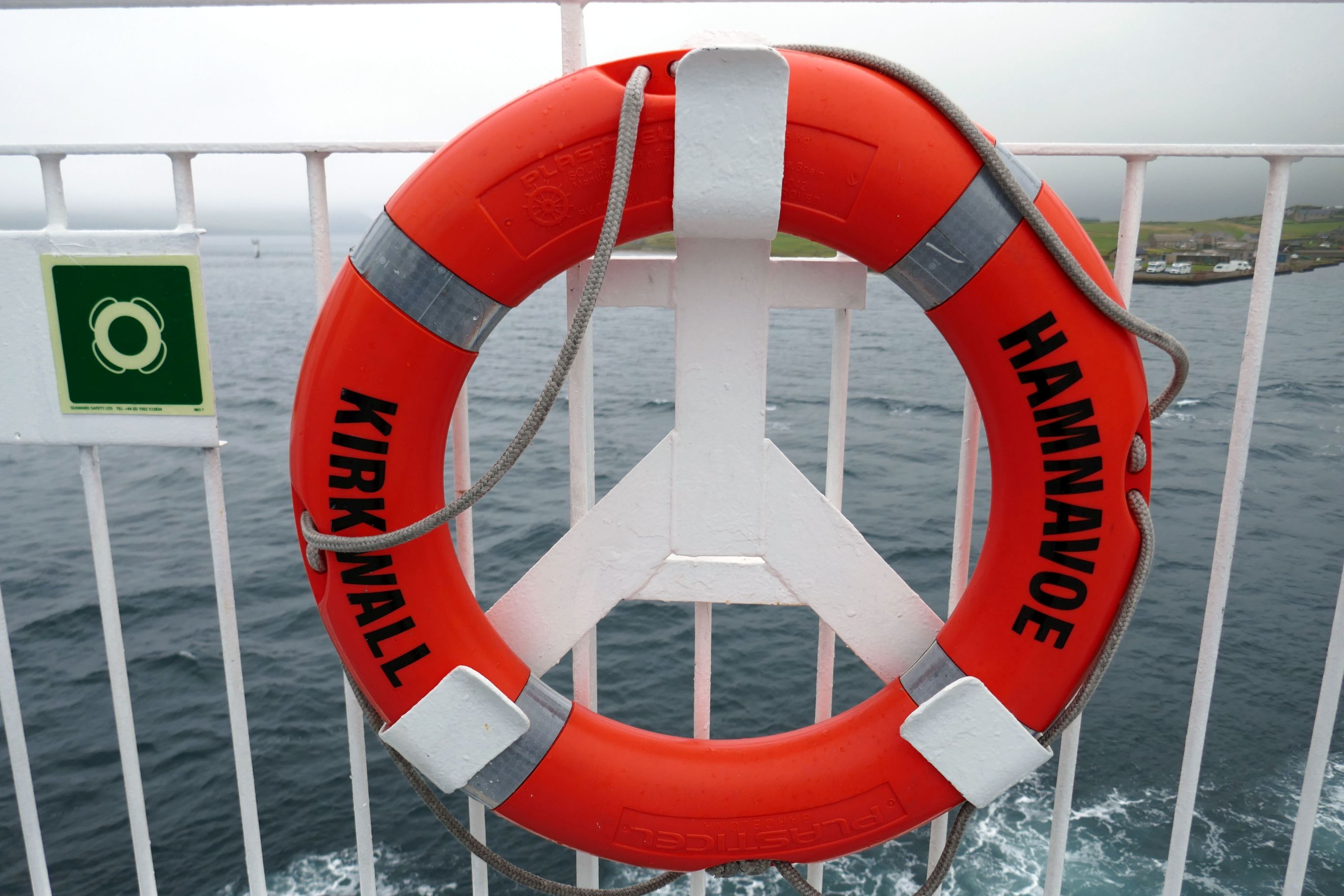
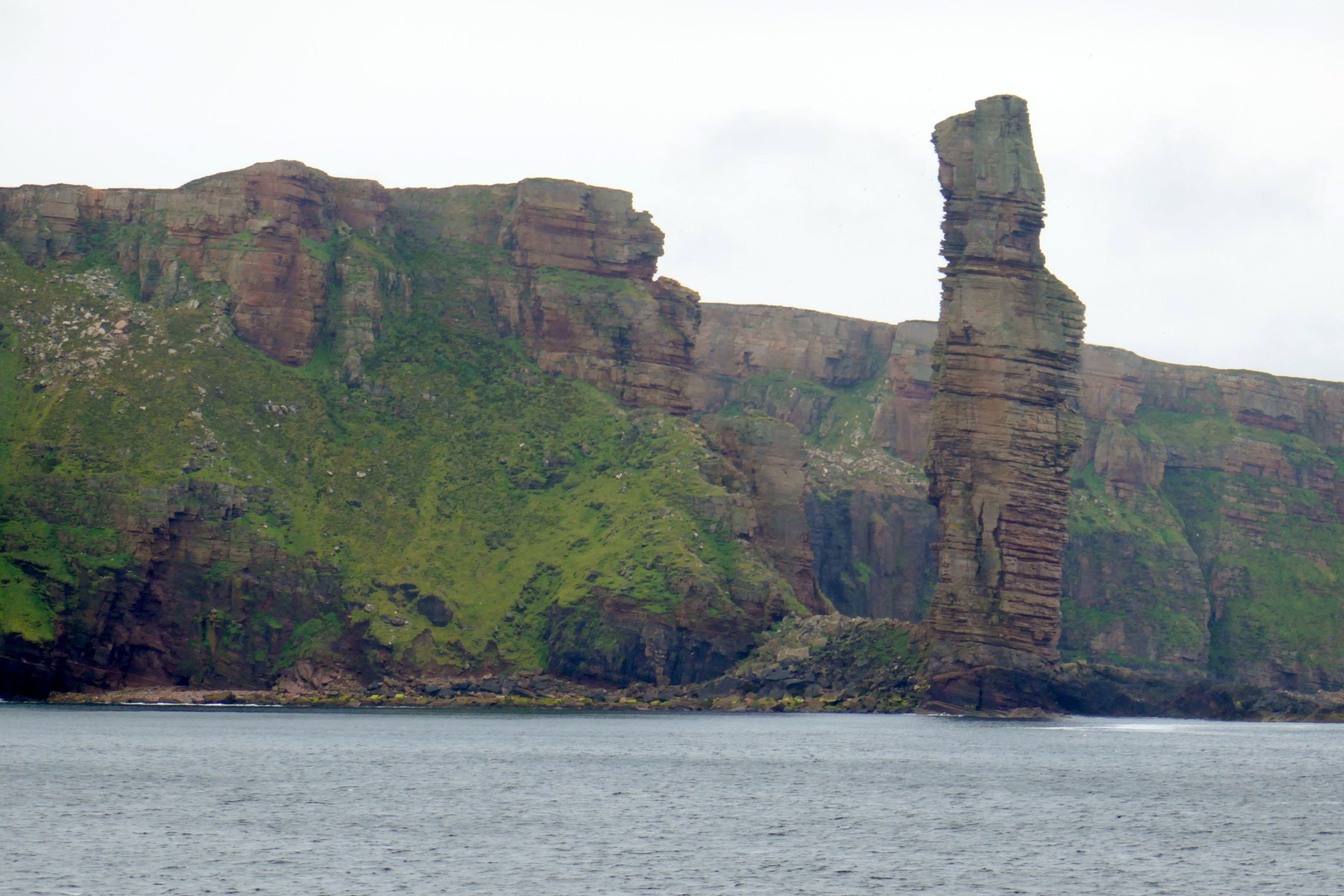
We returned to the Scottish mainland from the Orkney Islands by ferry, from Stromness to Scrabster. Nobody was looking forward to the ride, because Tom told us how rough the crossing could be. We dodged a bullet, though. It was a cold and damp day, but the waters were calm, and the ride was smooth. Whewww!
(For all photos, click on the image for a full screen view.)
Following the ferry ride, lunch, and a scotch tasting at Clynelish Distillery (Bruce and I slipped our samples to the Scotch drinkers in the group), we arrived in Inverness, our home base for four nights. (More on Inverness in my next post.)
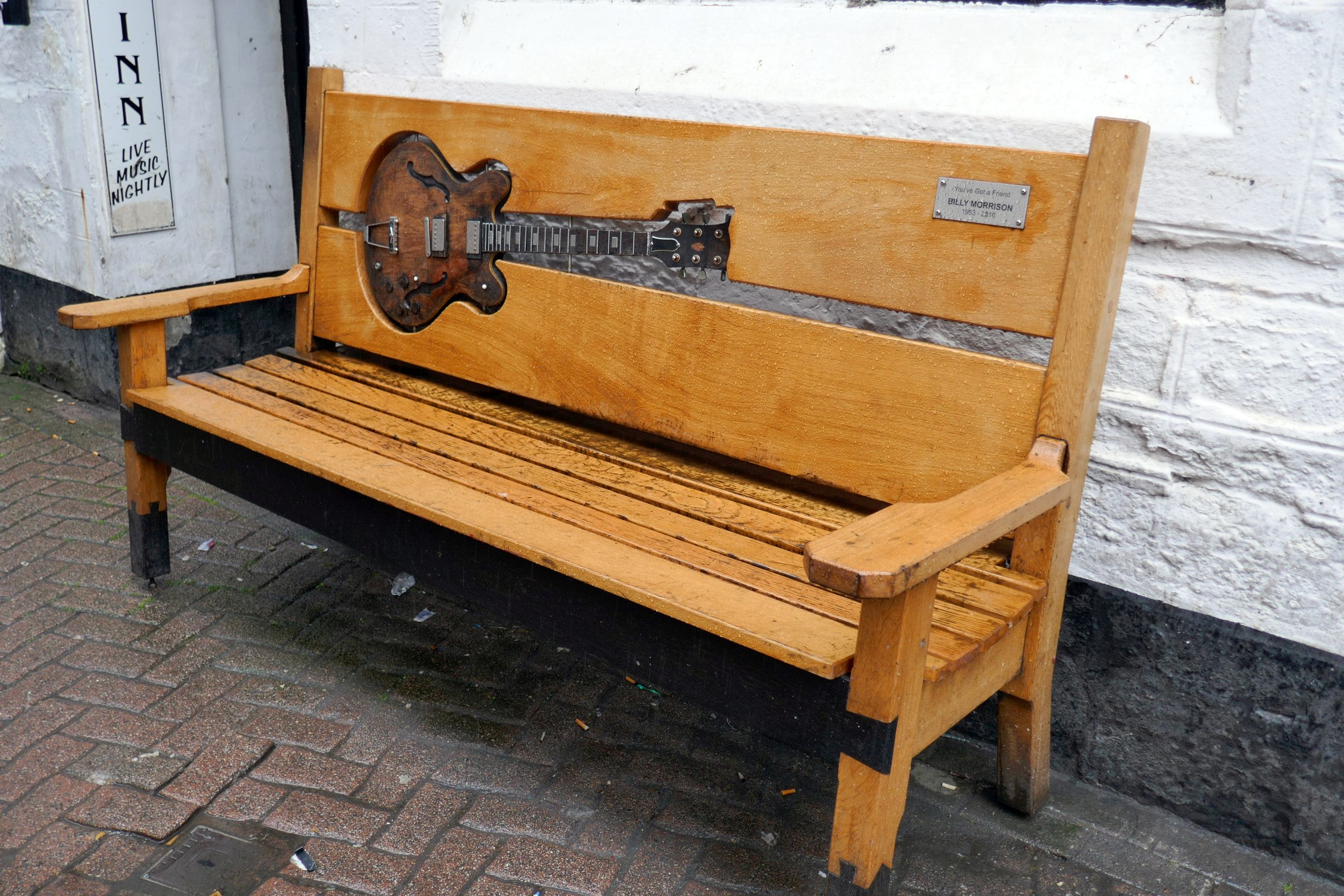
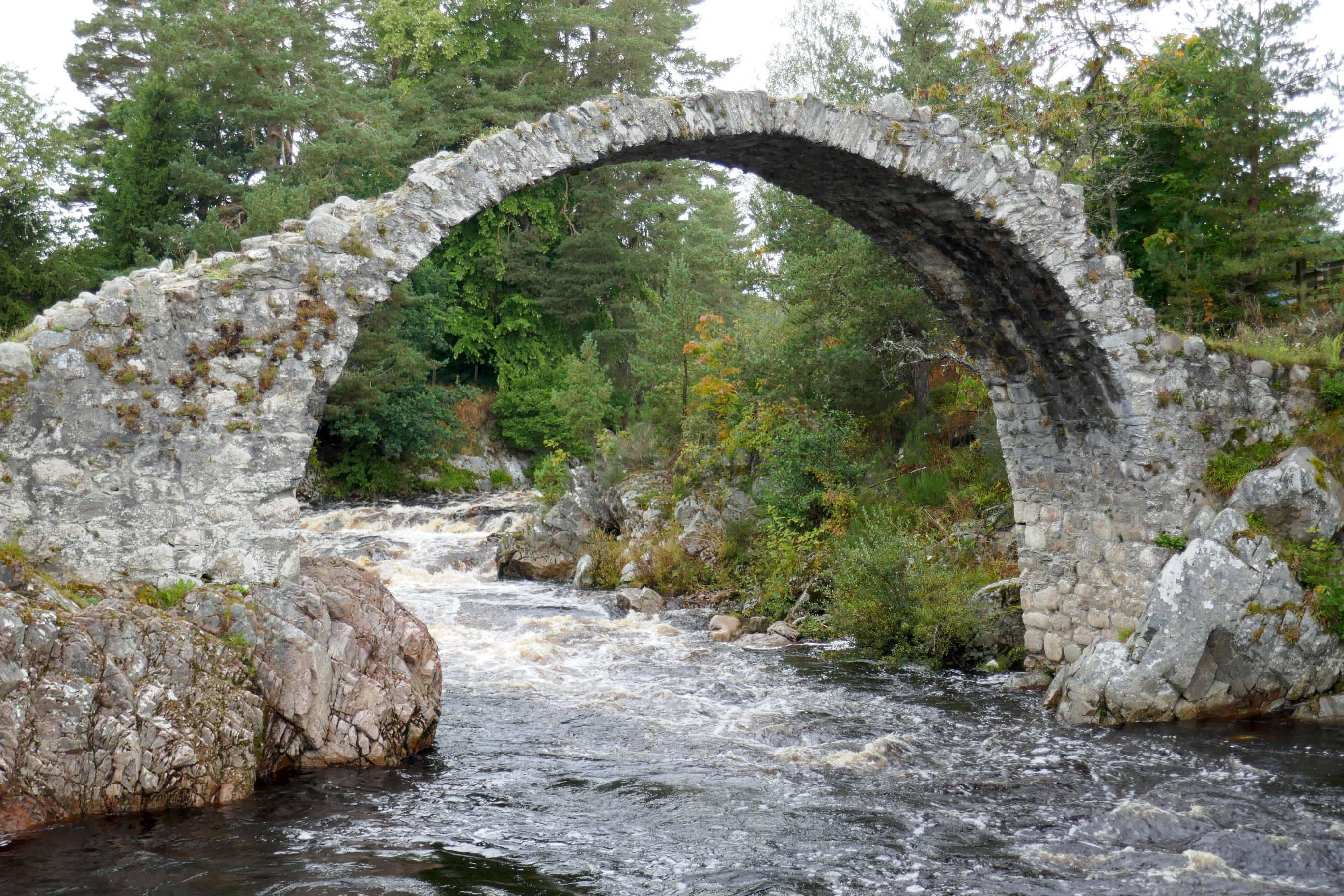
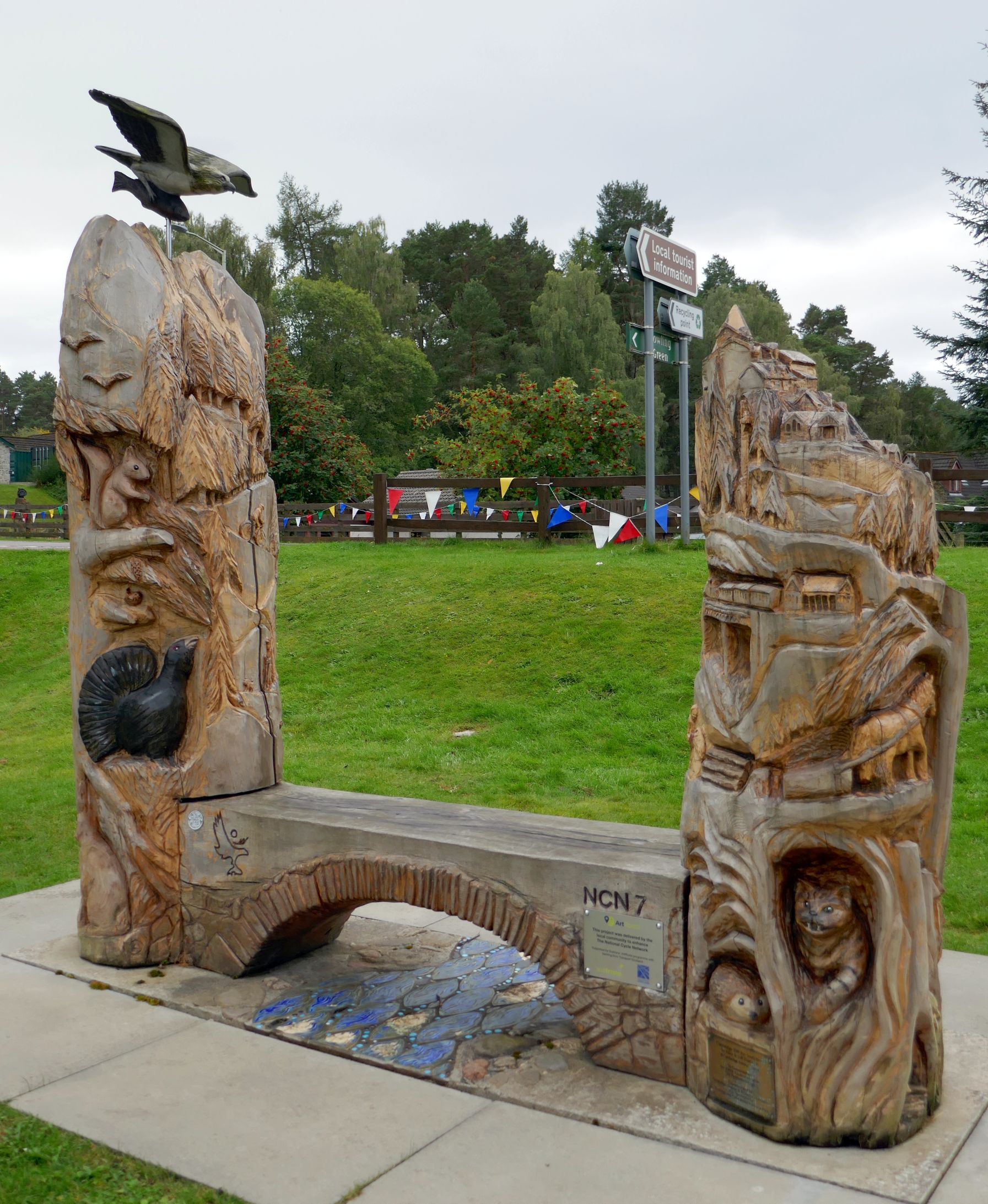
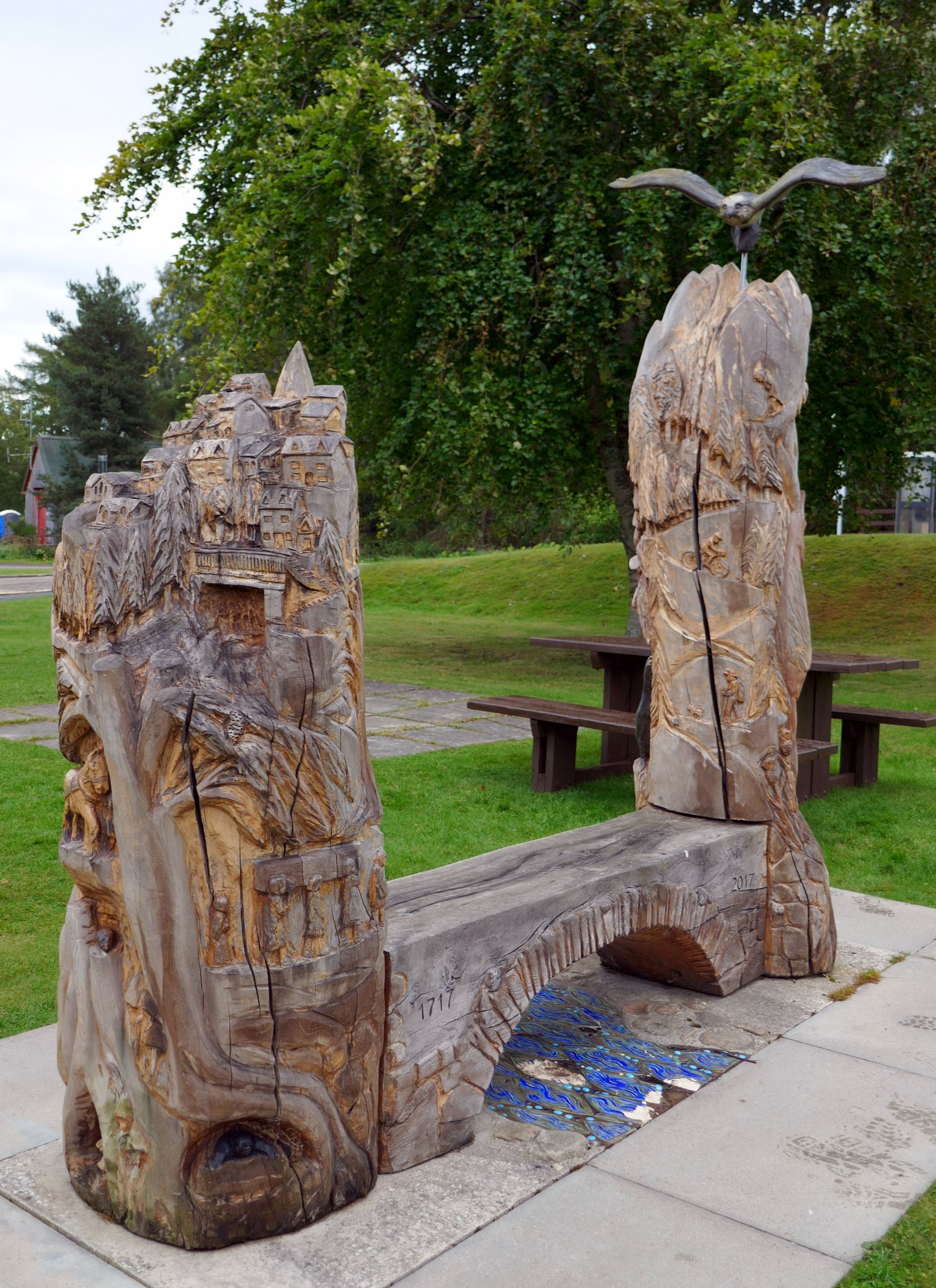
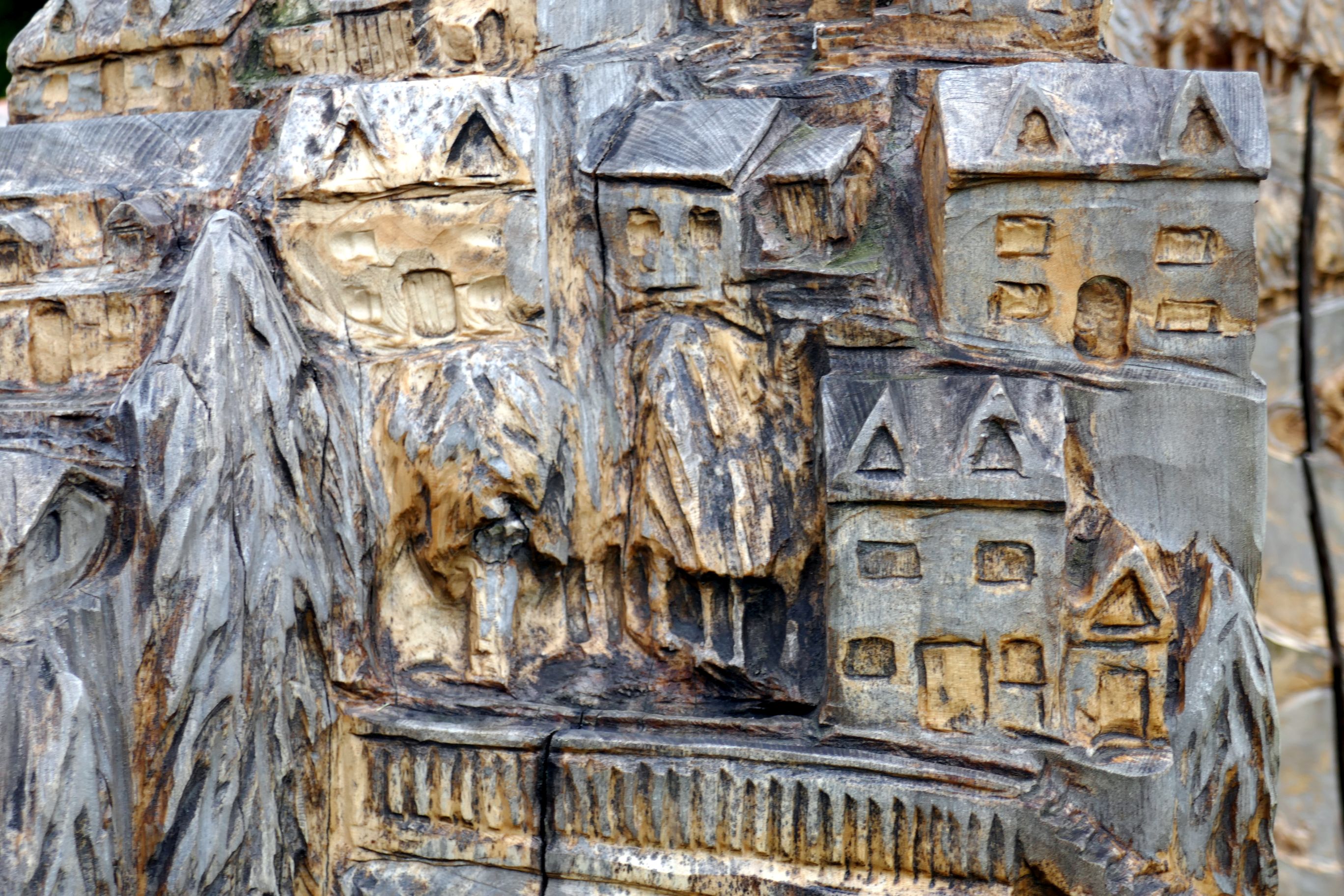
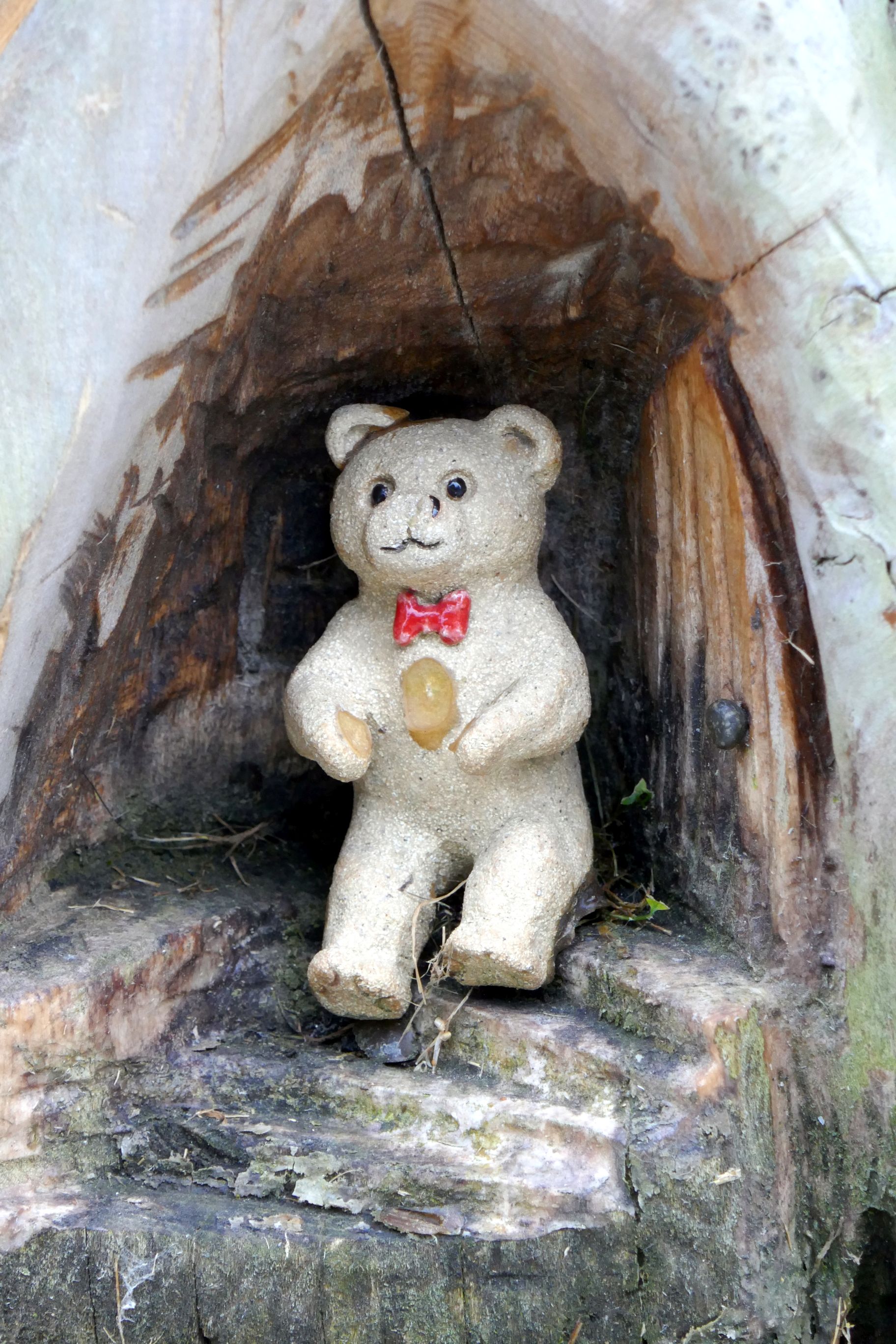
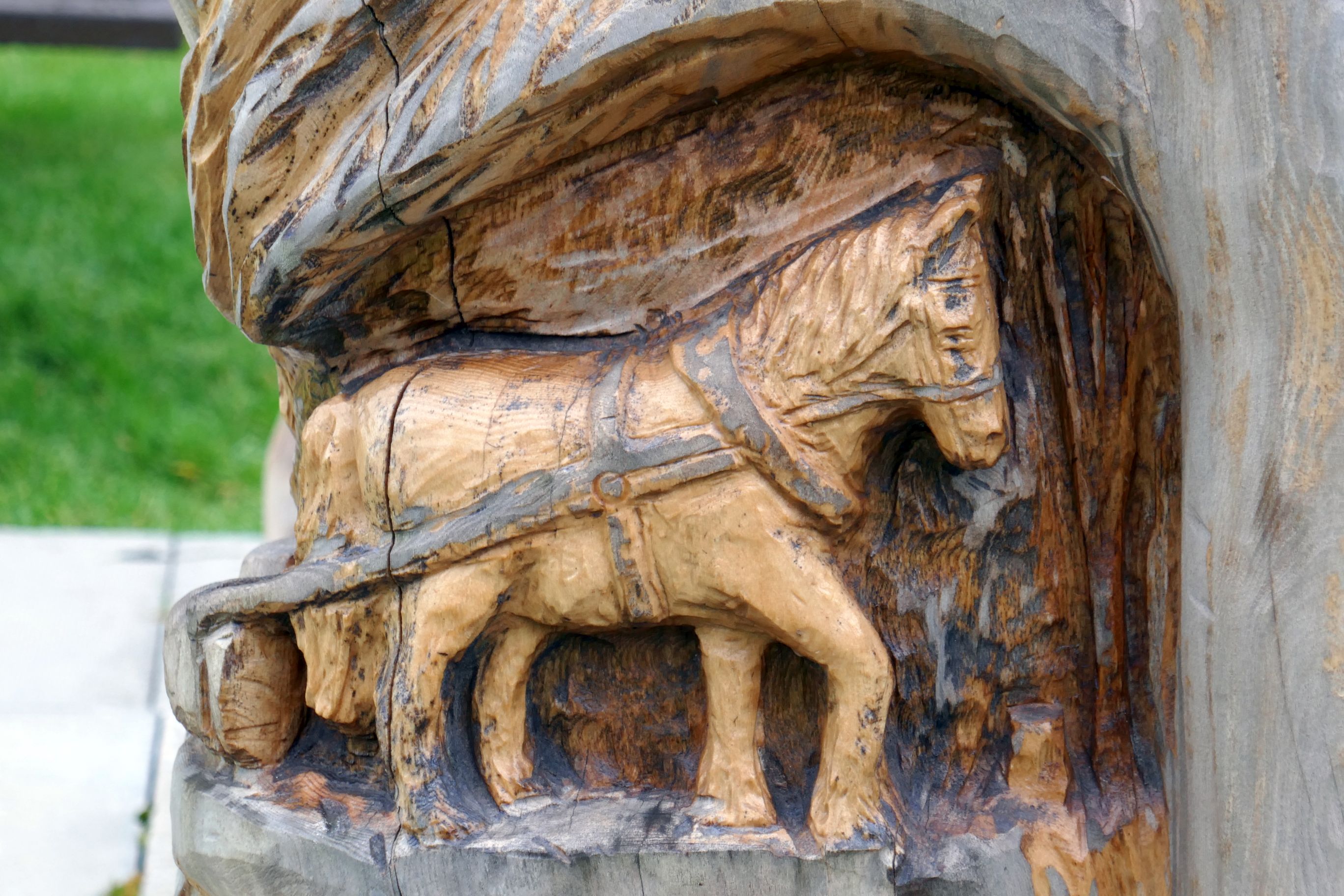
The following morning, we visited Rothiemurchus Estate. On the way, we stopped in the nearby little town of Carrbridge to see a beautiful stone bridge that dates back to 1719 and crosses the River Spey. We also saw an amazing carved bench that was the winner of the Carve Carrbridge Open Chainsaw Carving Competition and captured the attention of all of us. I wonder how many pictures we all took of this incredible masterpiece!
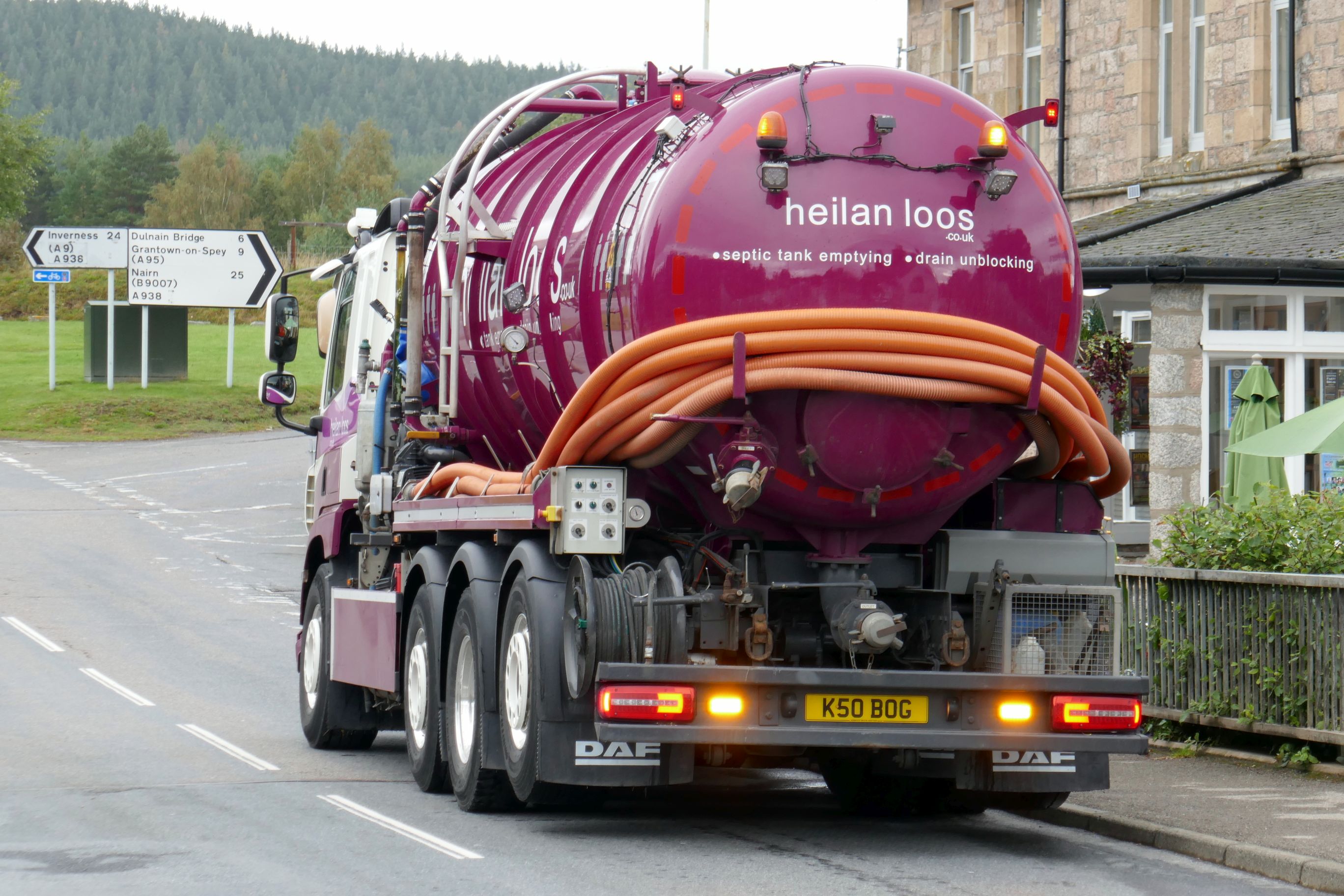
“Heilan COOS” are the Scottish name for the famous Highland Cows of Scotland. I love their sense of humor!
The Rothiemurchus Estate is privately owned and nestled in the heart of Cairngorms National Park. It has been in the Grant family for eighteen generations, and the latest owner opened it for recreation.
We took a lovely hike through the beautiful forest with a local guide.
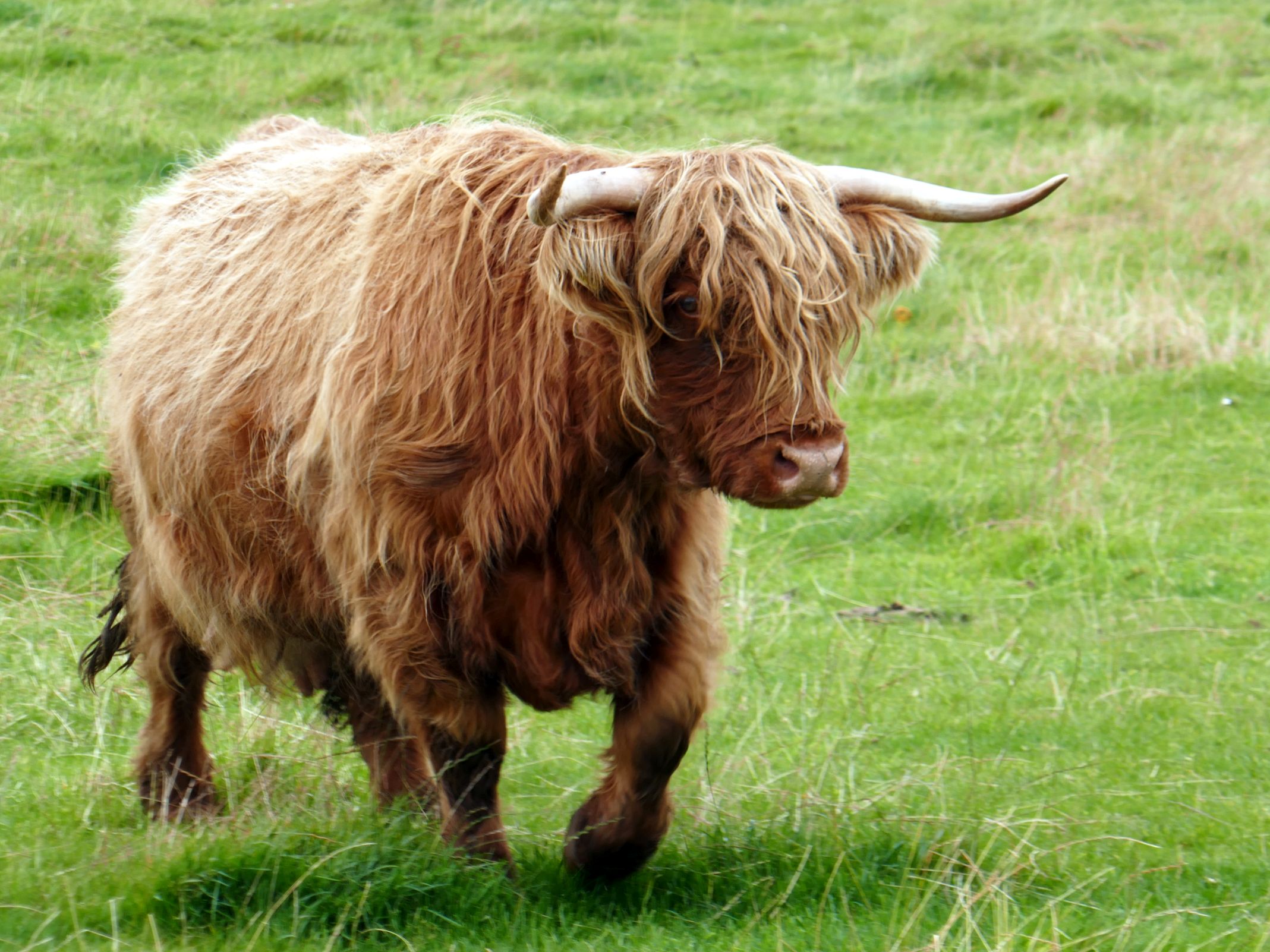
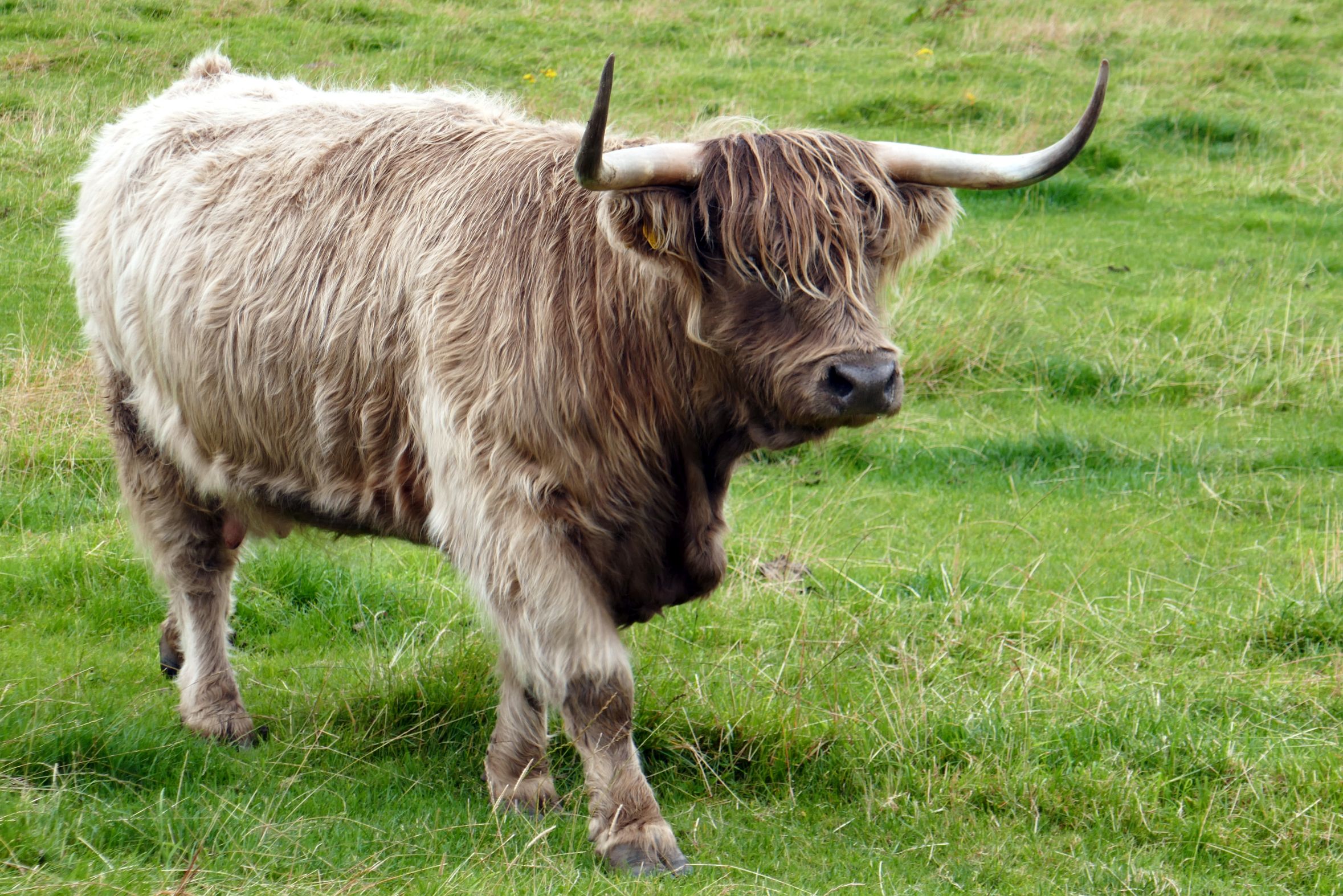
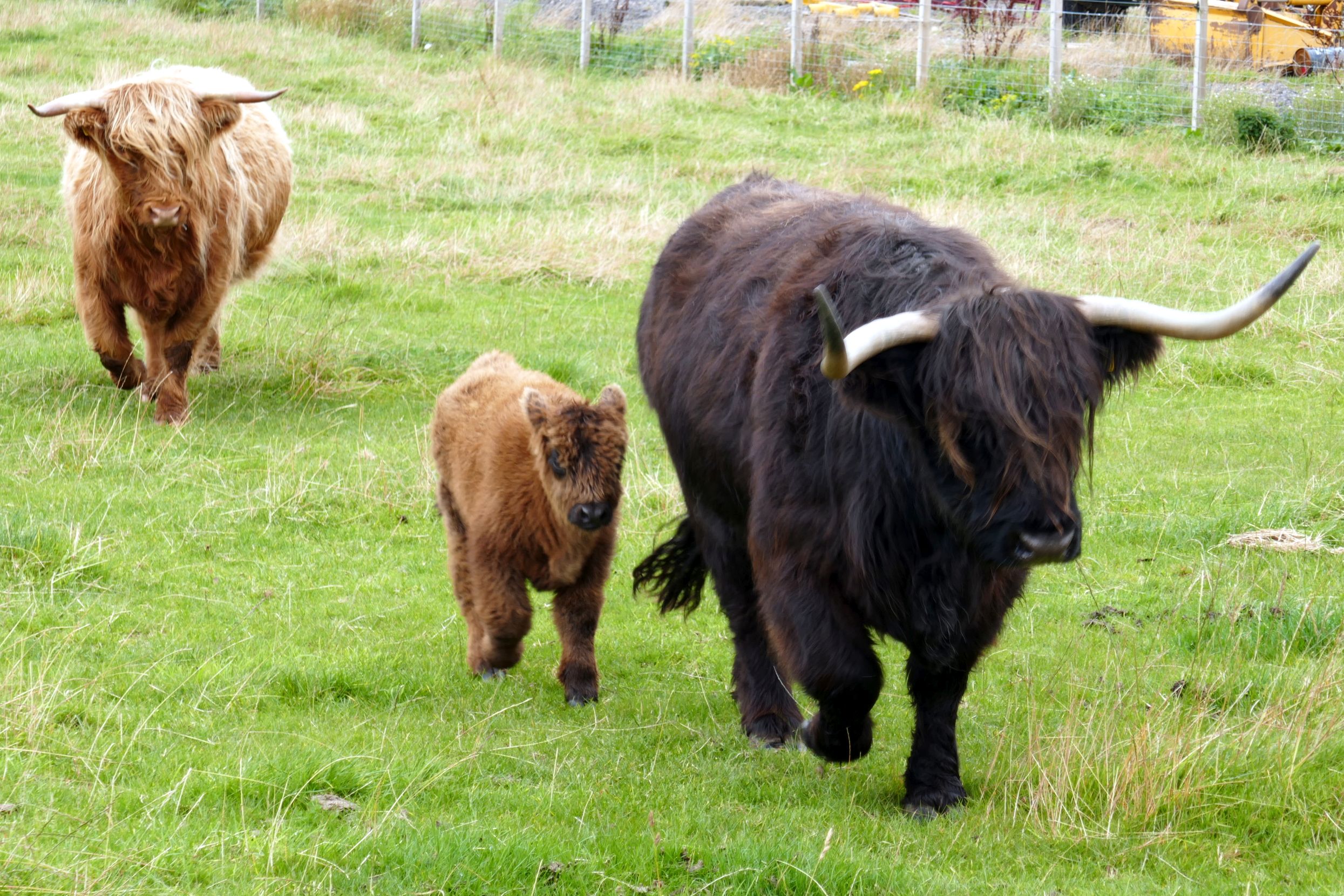
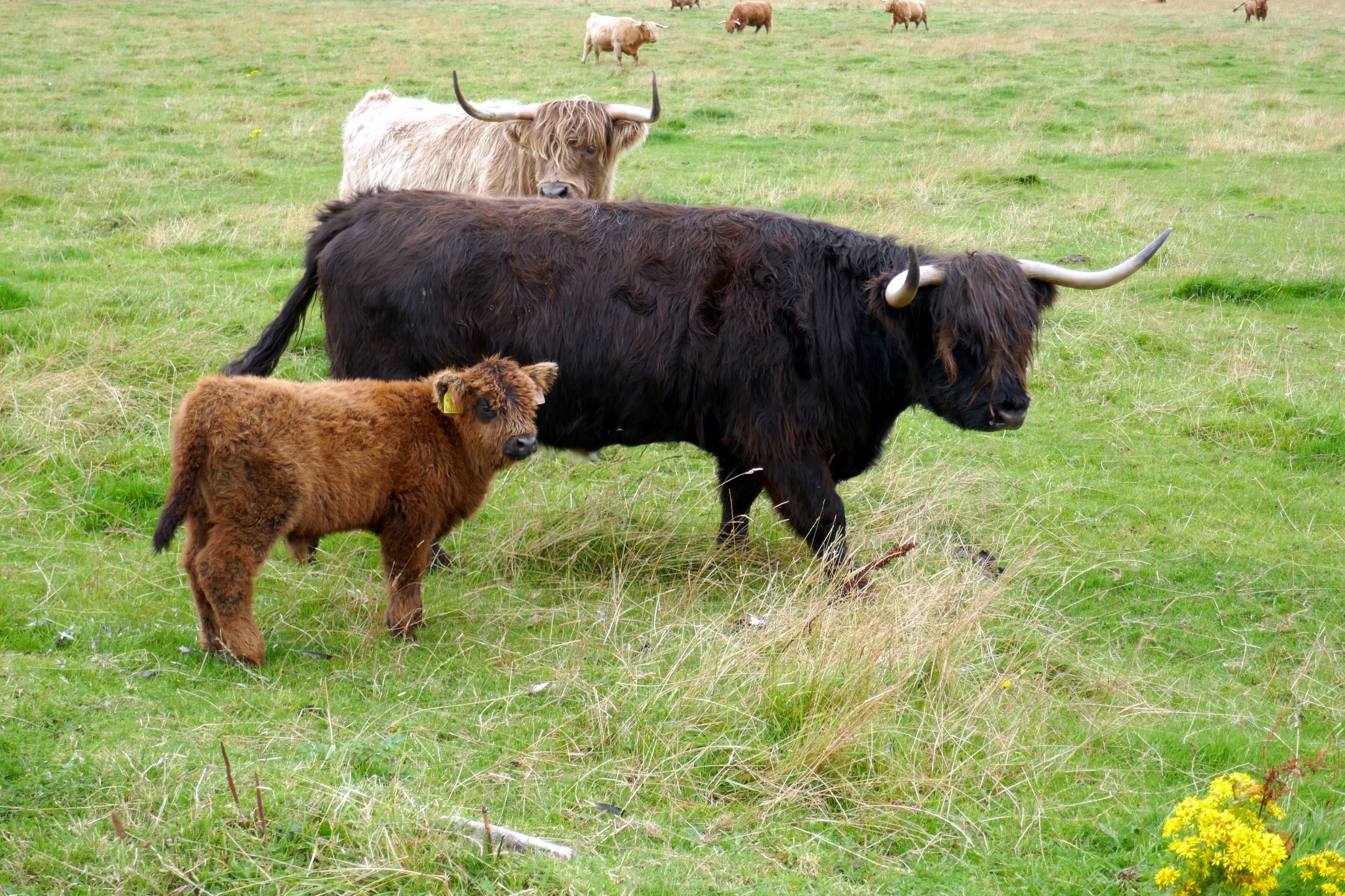
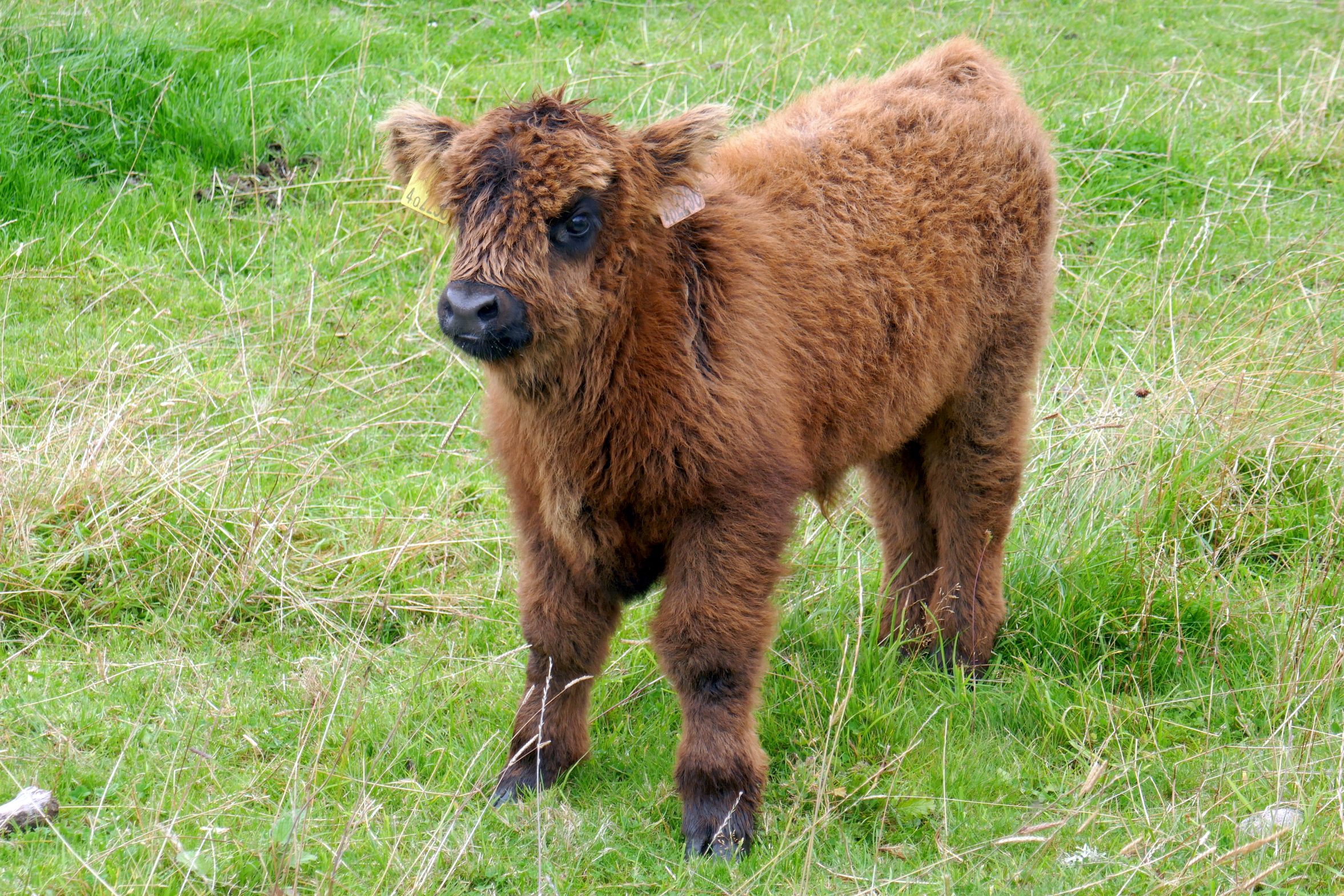
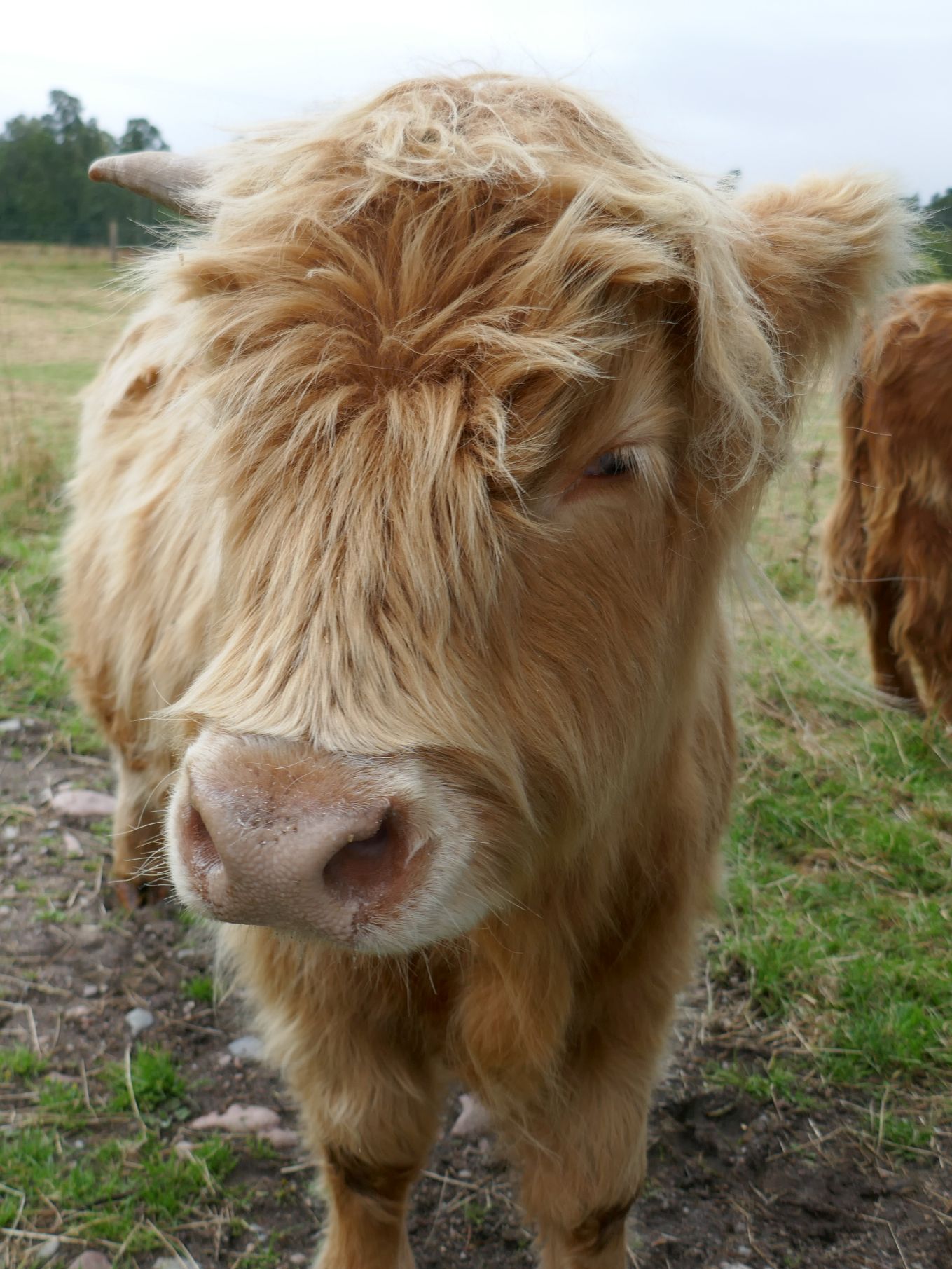
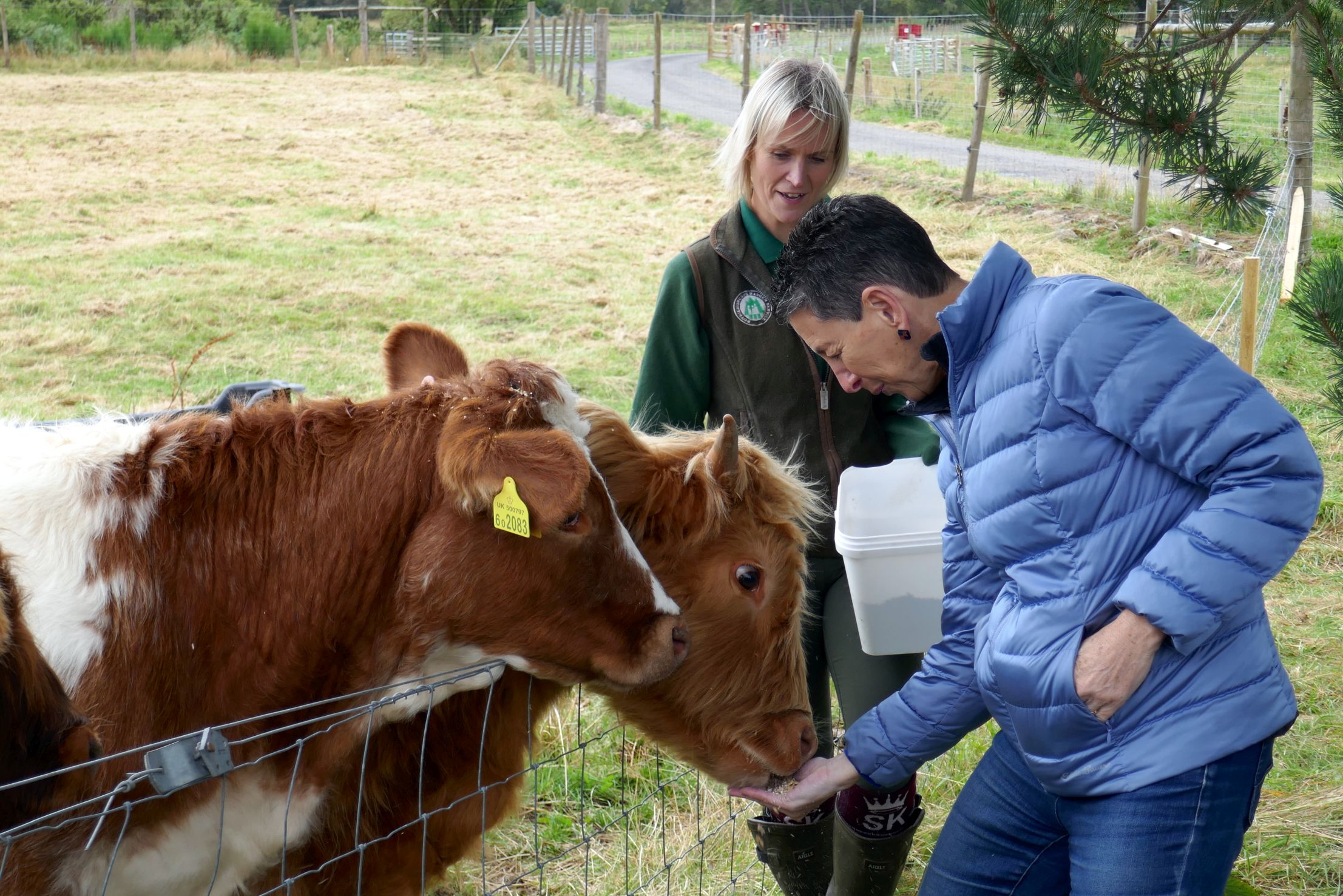
What came next tickled us all: Getting to see and feed Heilan Coos (instead of just that Heilan Loo truck cruising through town)!
“Heilan Coo” is Scottish for Highland Cow, a Scottish breed of rustic cattle that have adorably long, wavy hair and long horns to match. They are a hardy breed that can tolerate the frigid winter temperatures of the Scottish Highlands.
The remainder of the day will be the subject of my next post: UNITED KINGDOM #13: RUTHVEN BARRACKS & INVERNESS
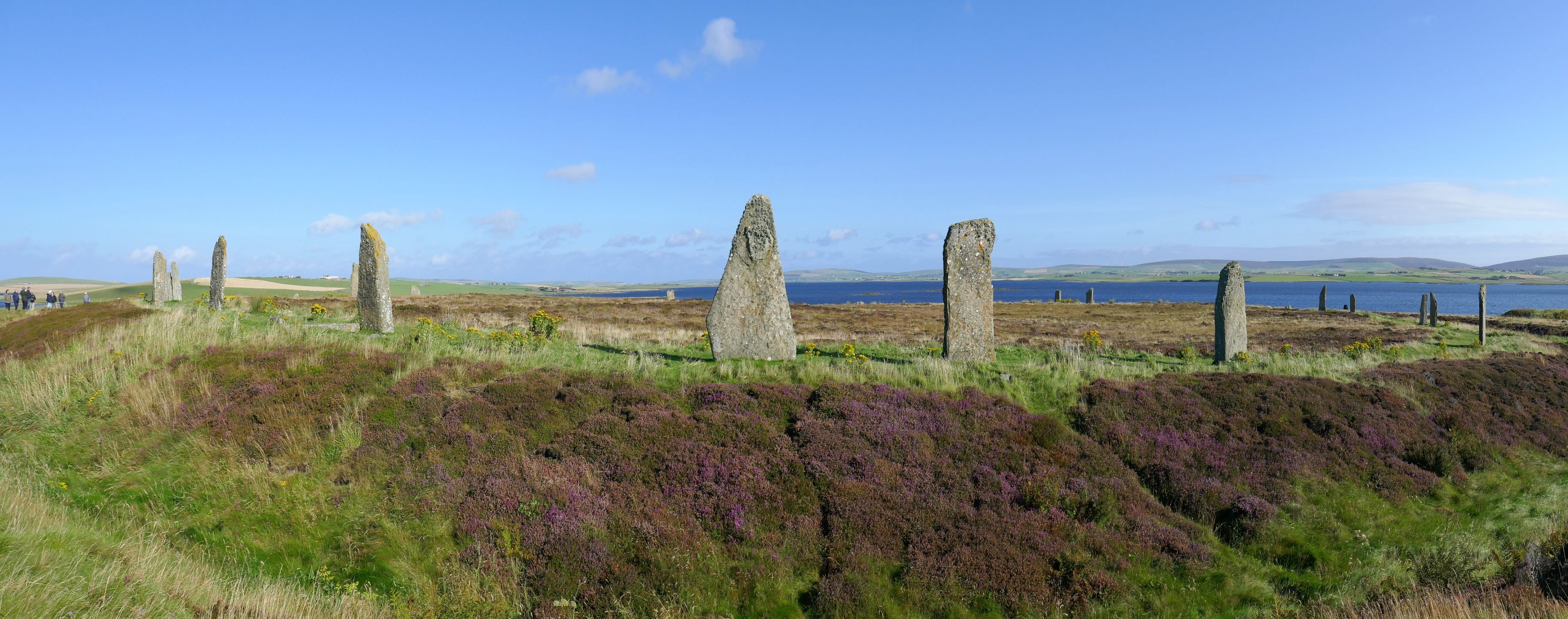
This was a day of seeing stones and rocks- and lots of them! We began at the Stones of Stennes, a stone circle raised about 5,000 years ago, thought to be used as a ceremonial site.
(For all photos, click on the image for a full screen view.)
Thankfully, it was another gorgeous day, because the views from the Stones of Stennes and our next stop, the Ring of Brodgar, were beautiful. This Neolithic henge and stone circle is thought to be between 4,400 and 4,600 years old and is a UNESCO World Heritage Site.
Not being a big stone circle history buff, I just enjoyed walking around the circle, taking photographs, and enjoying the views.
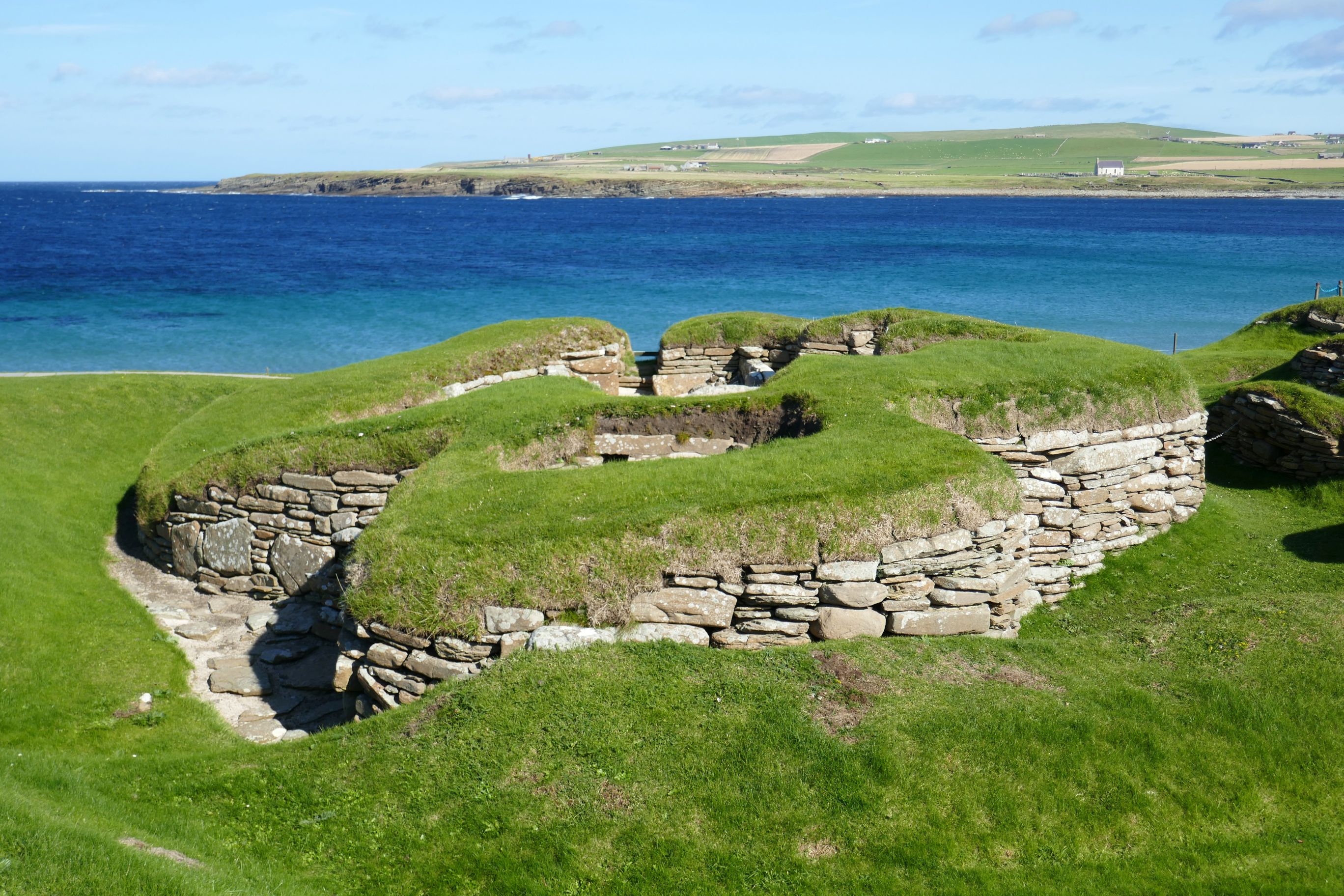
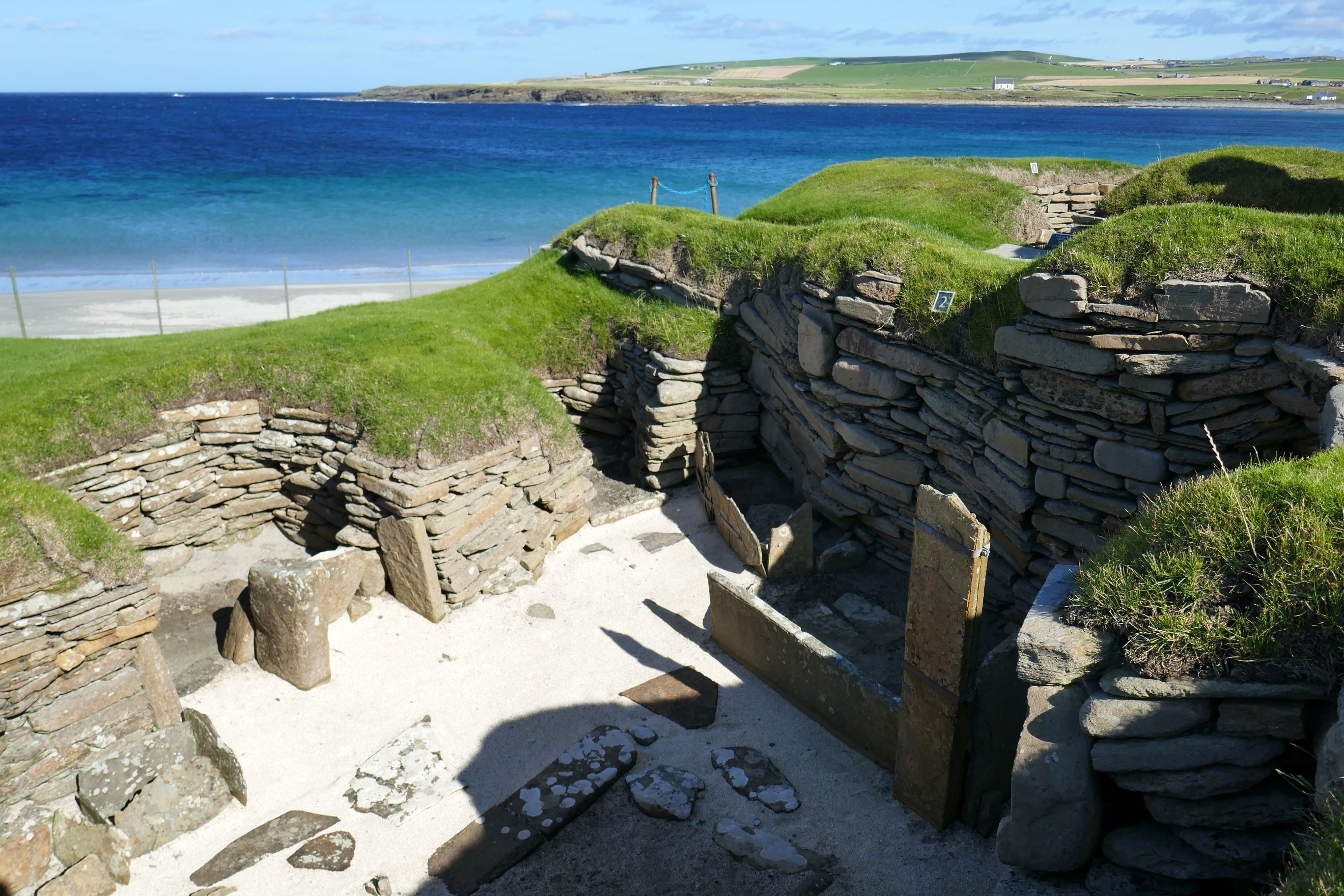
Skara Brae was a fascinating archaeological site with more amazing views! This 5,000-year-old settlement is so fragile, we were only permitted to view it from the walkway above.
Archaeologists think that a small community of 50-100 people lived on this site, and that it was inhabited for several centuries. Ten structures remain, and it is Europe’s most complete Neolithic village. Another UNESCO World Heritage Site, it is older than Stonehenge and was discovered when a historic storm scoured away sand revealing the site.
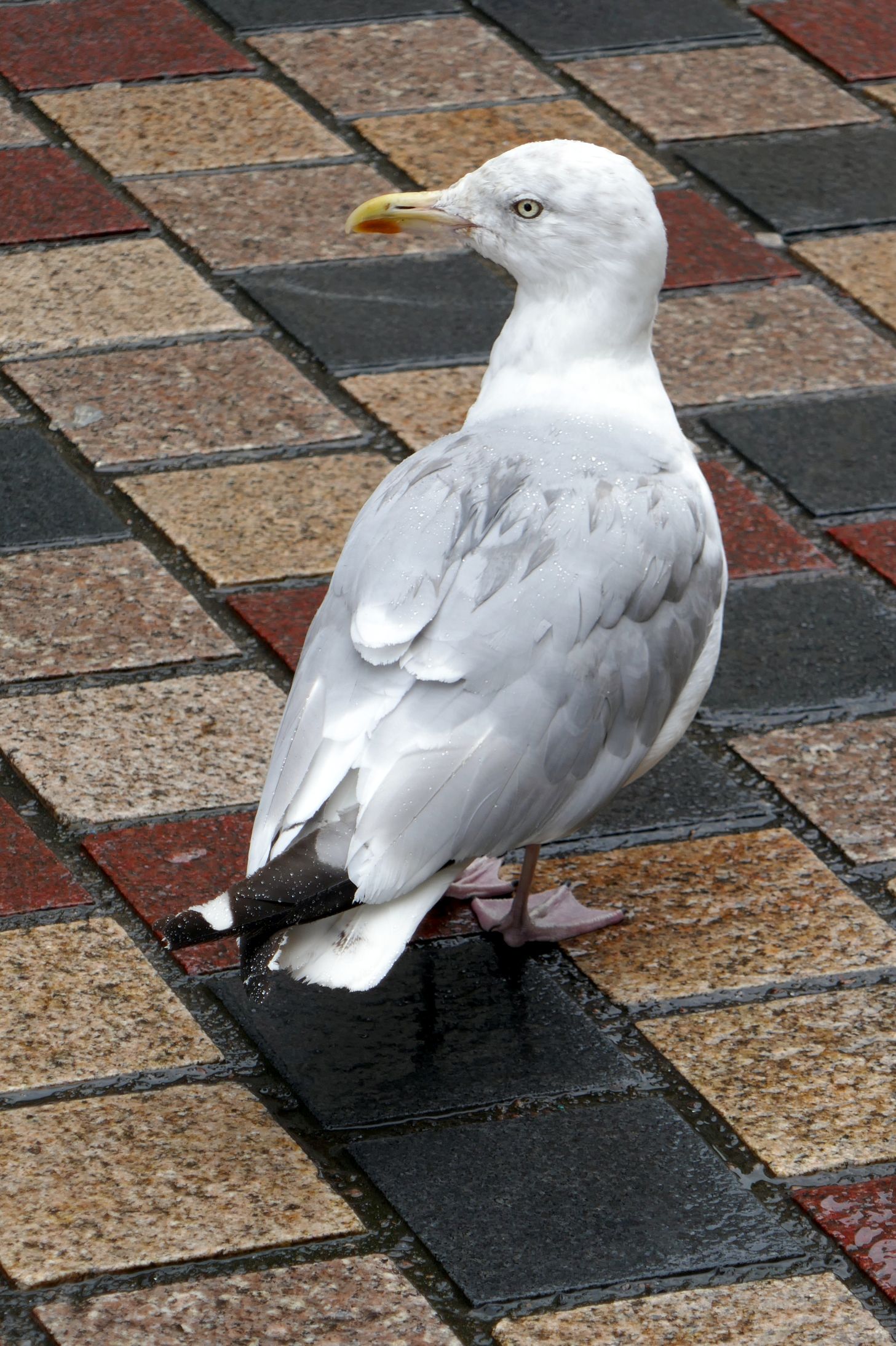
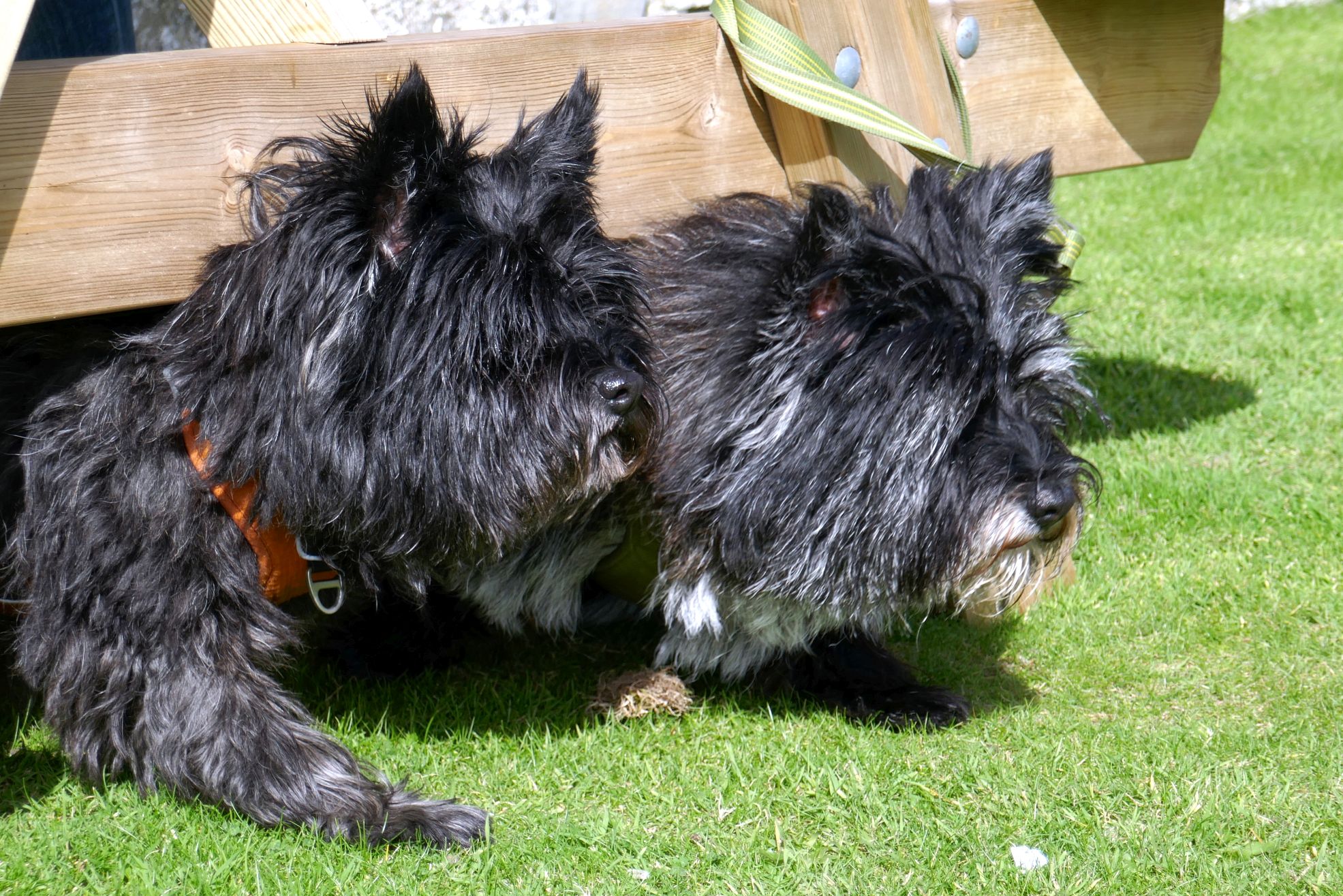
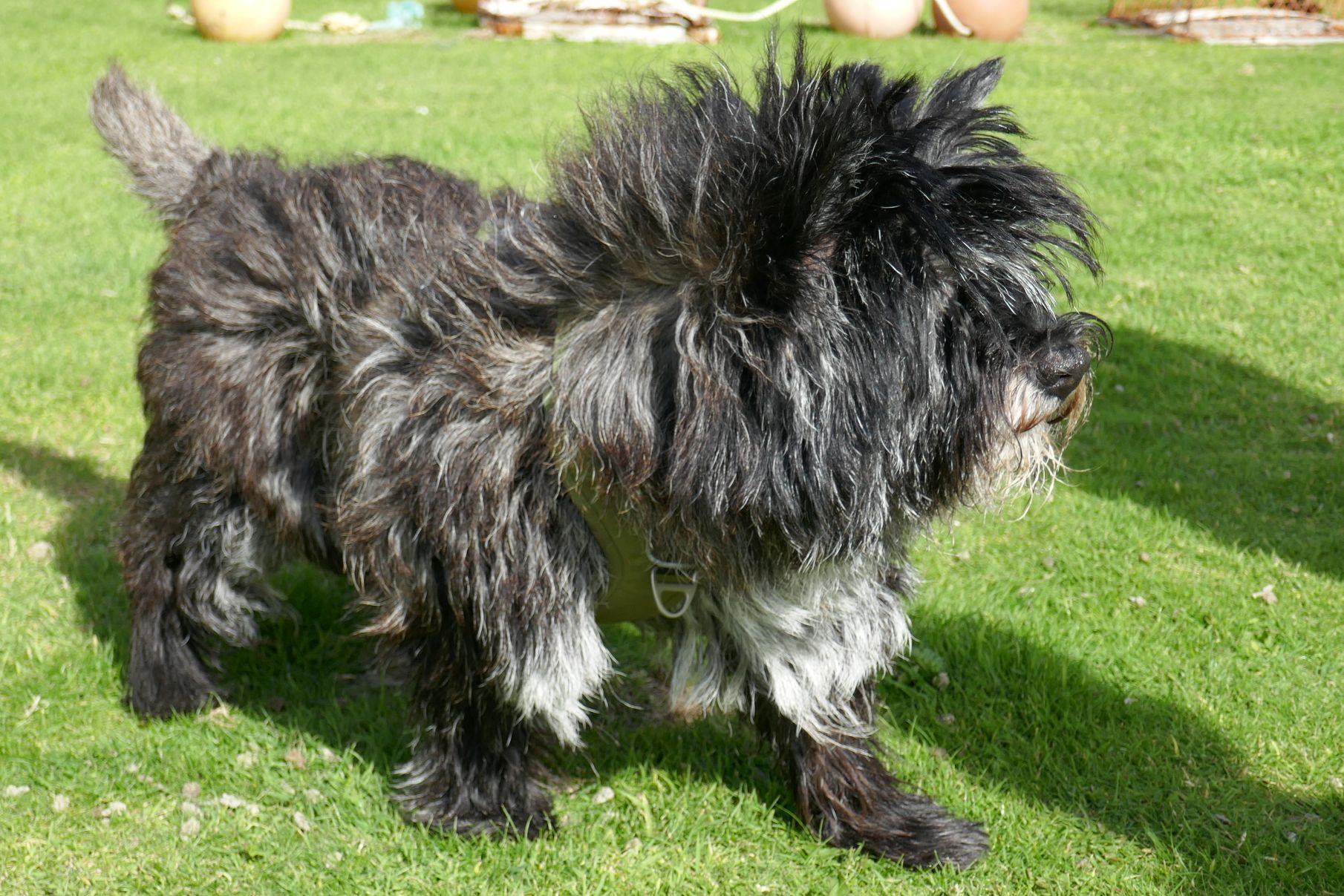
Two new friends I made at our lunch stop:
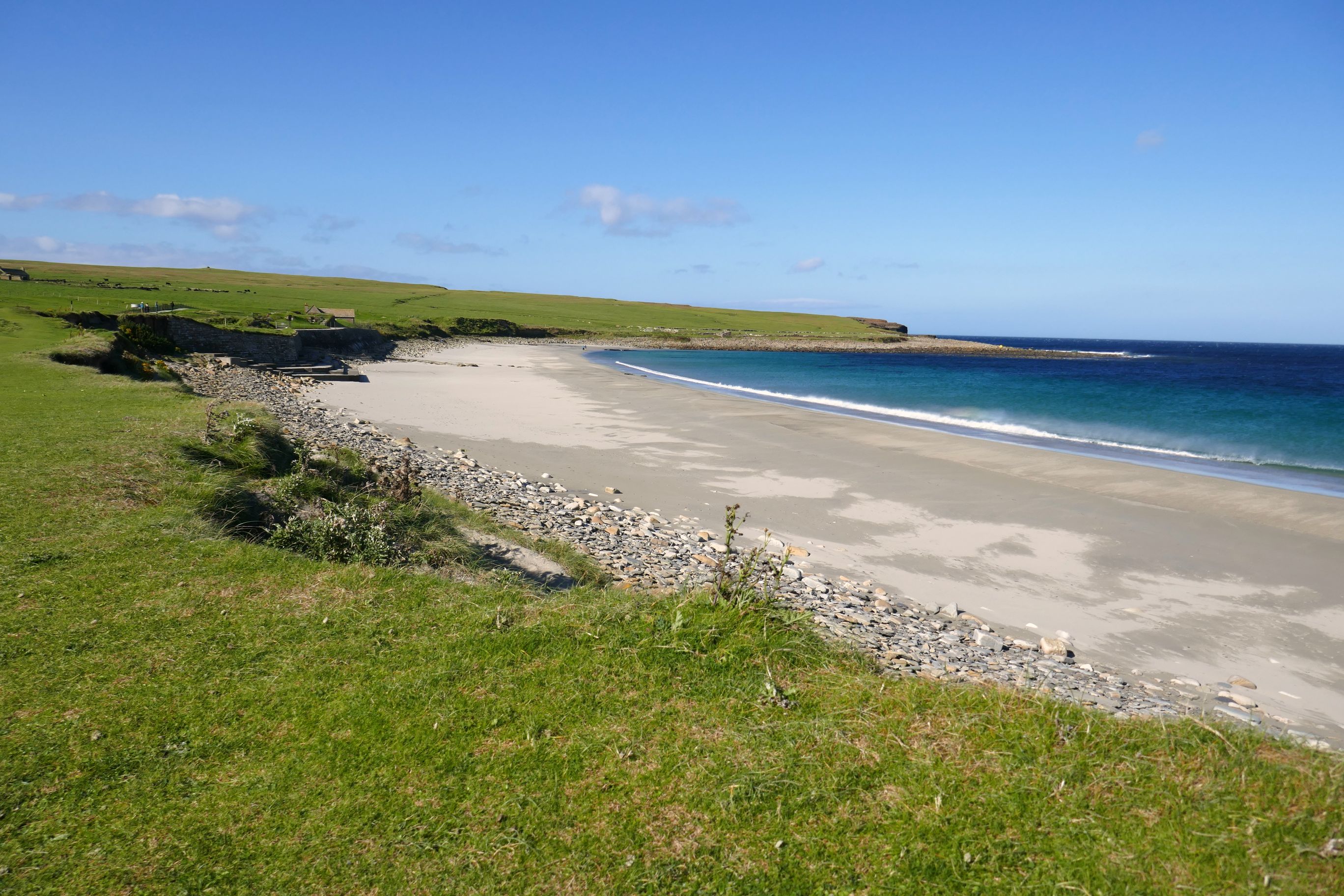
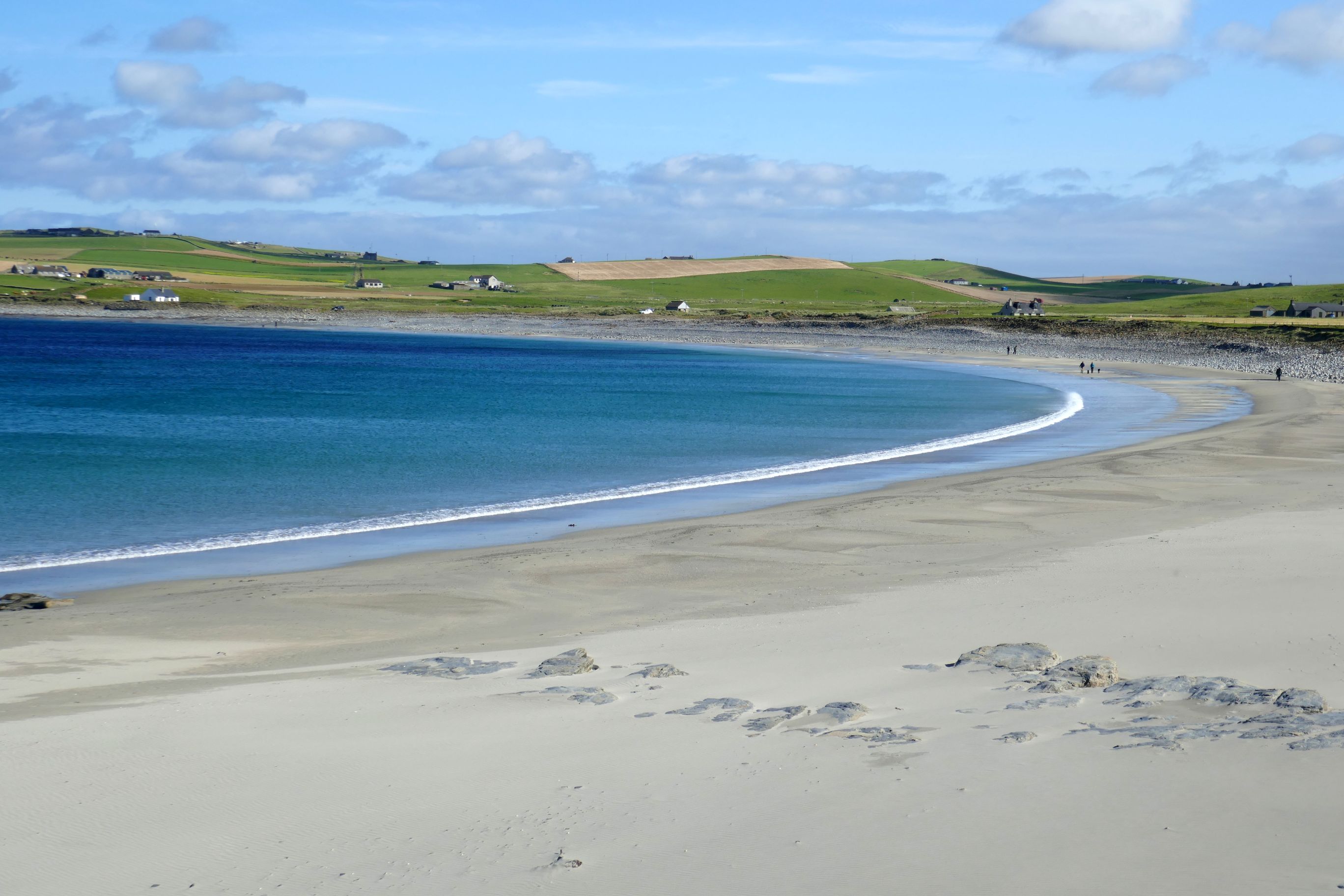
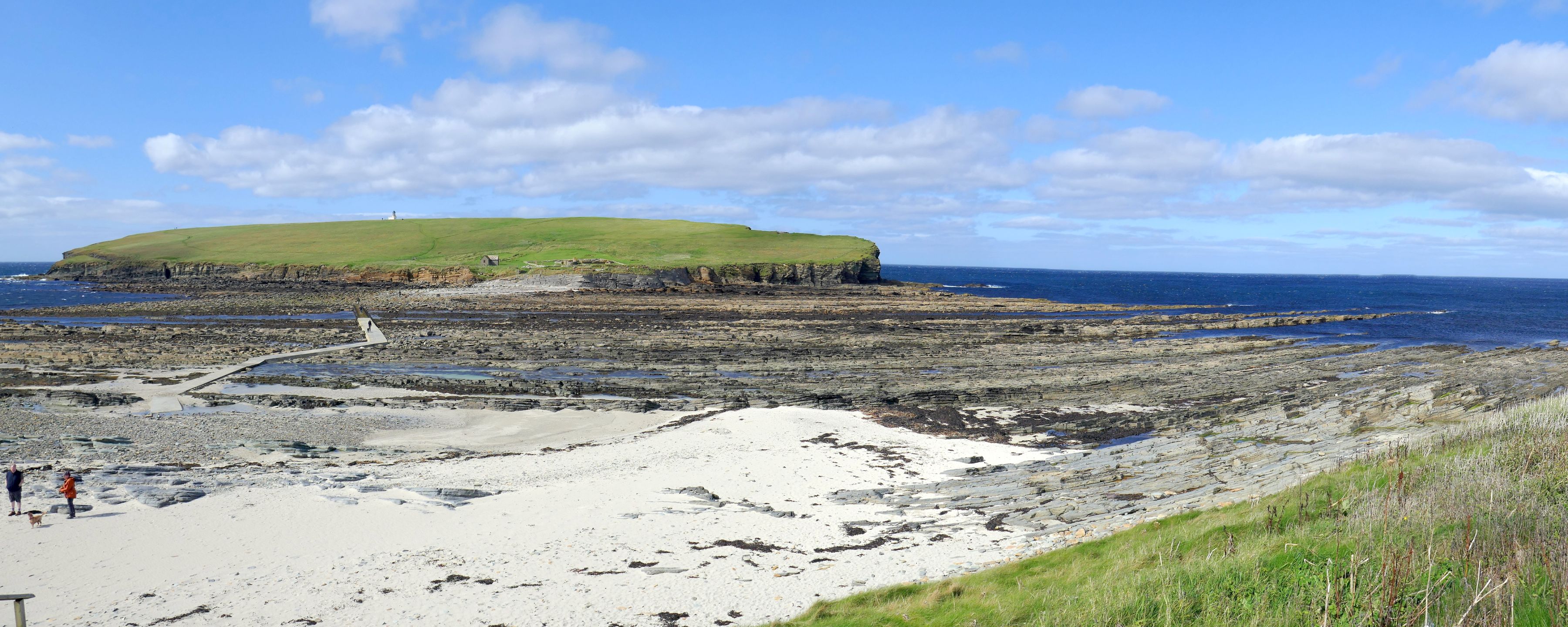
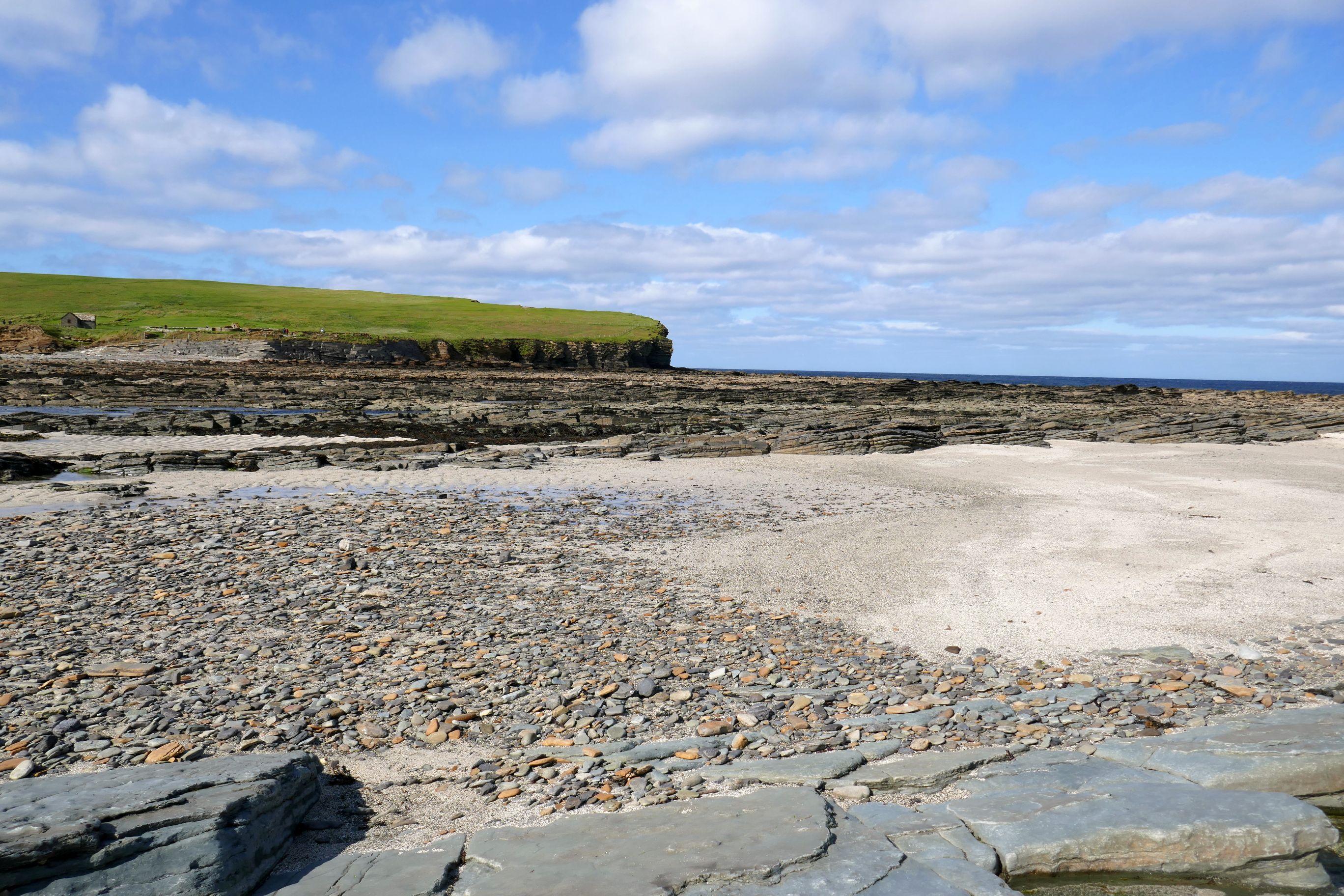
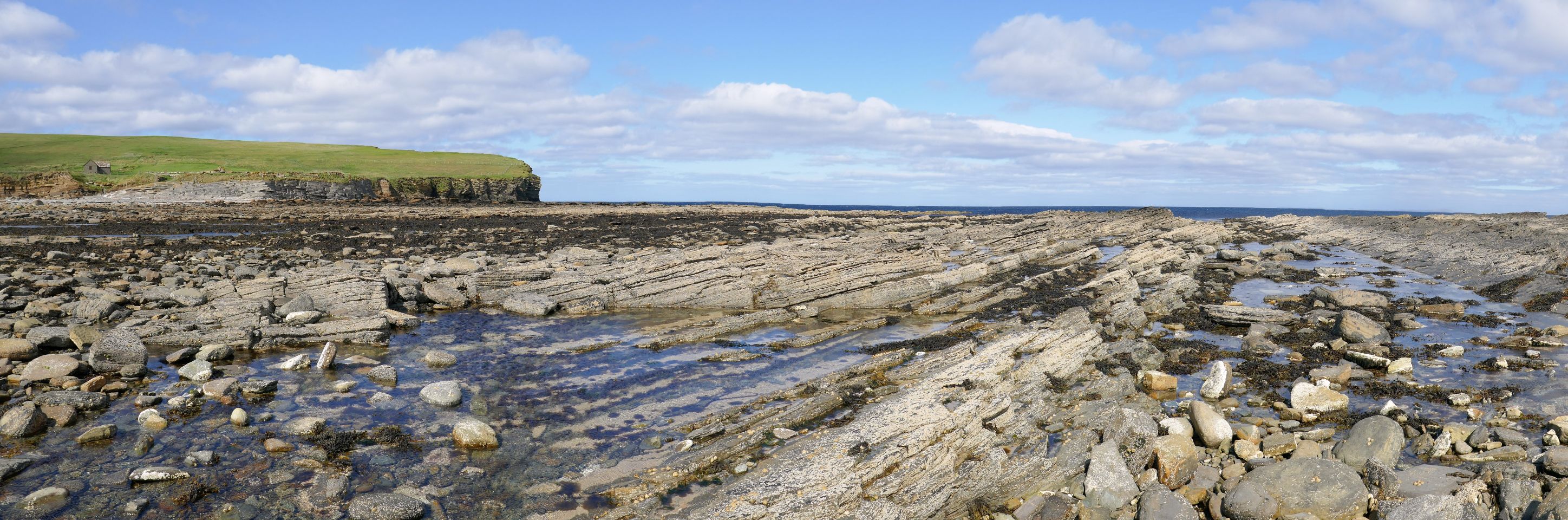
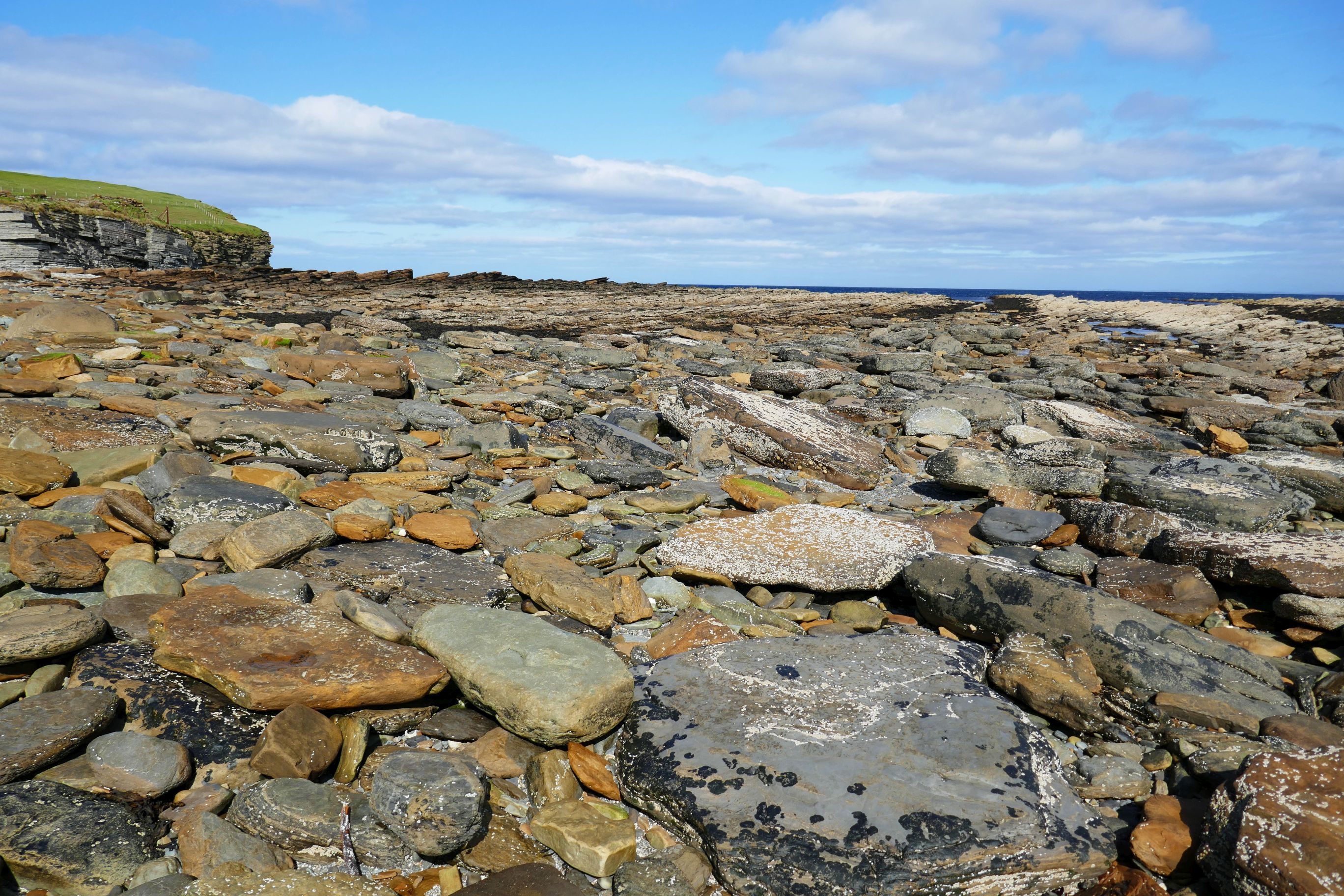
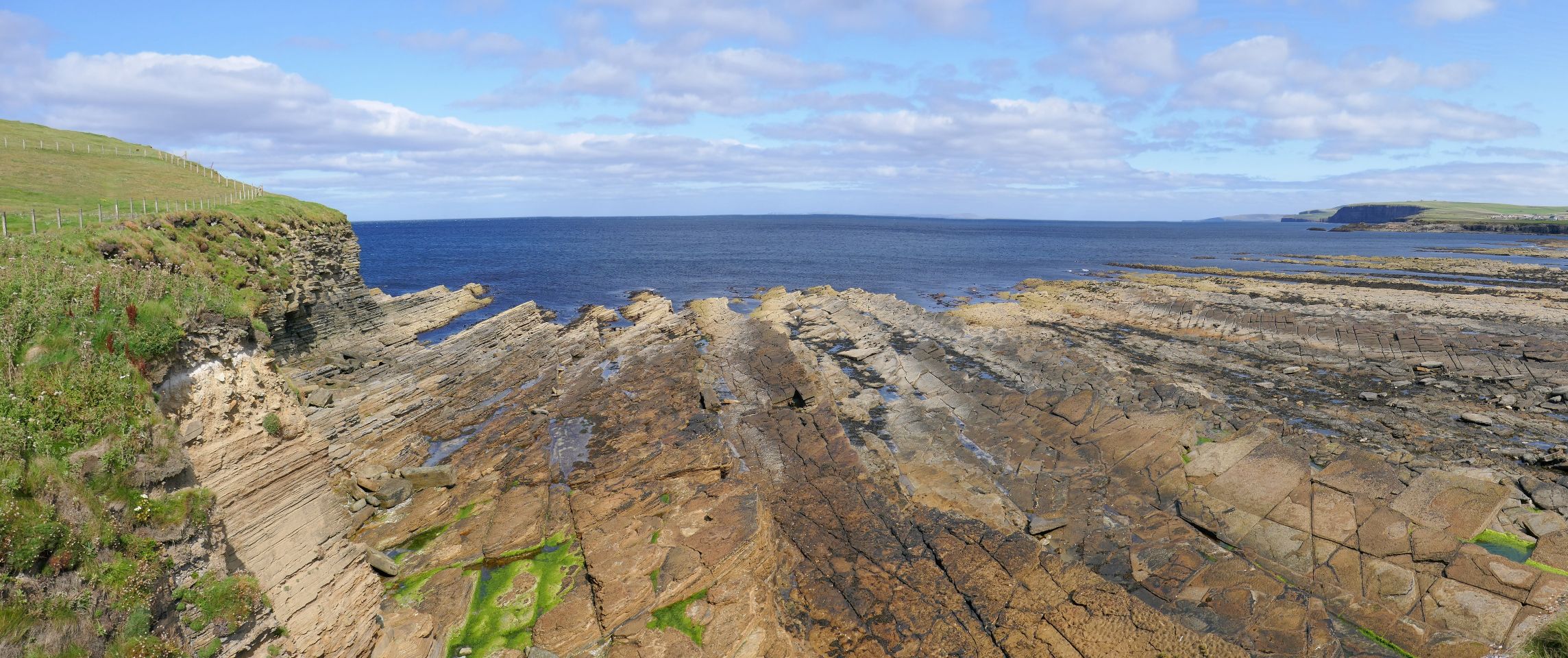
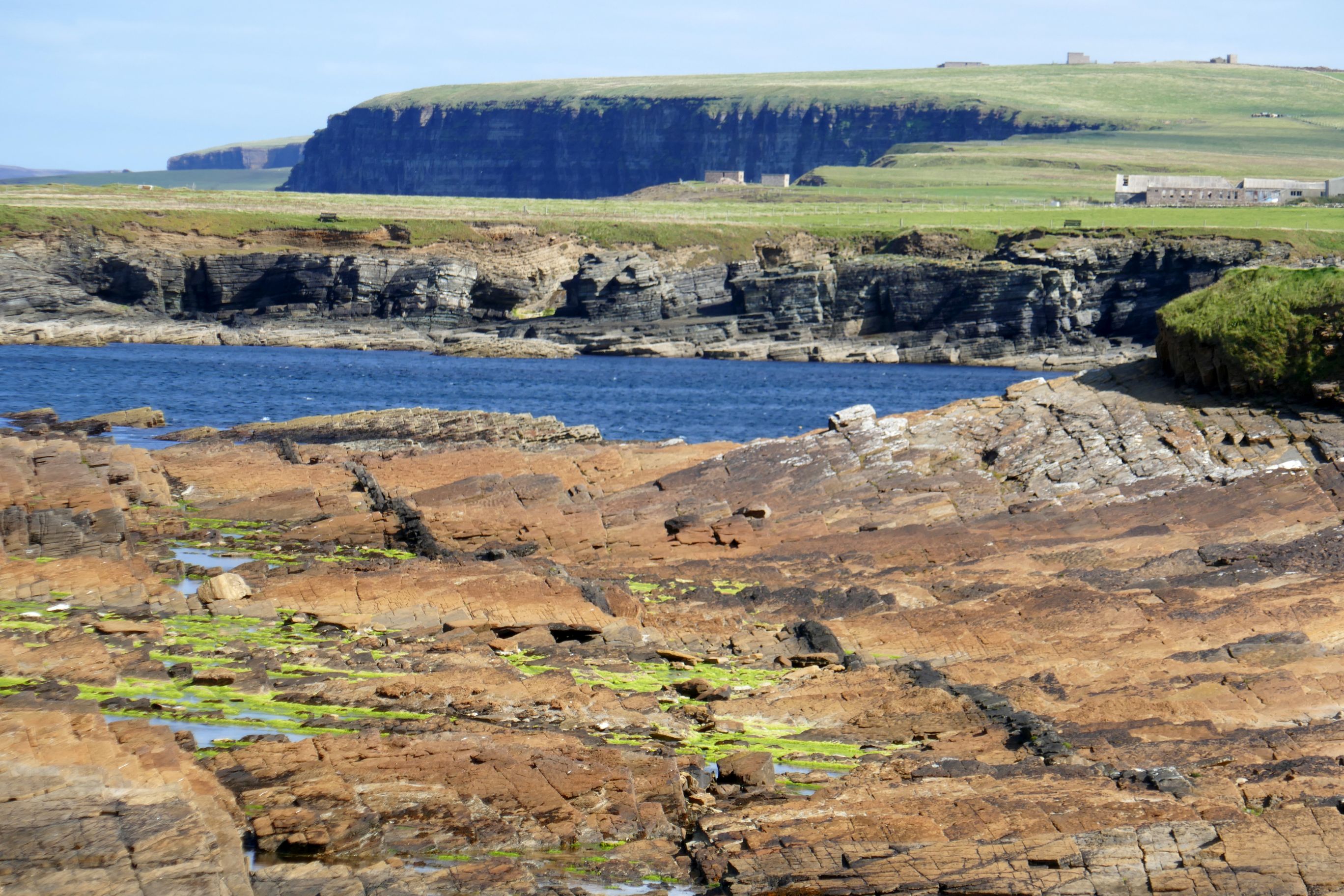
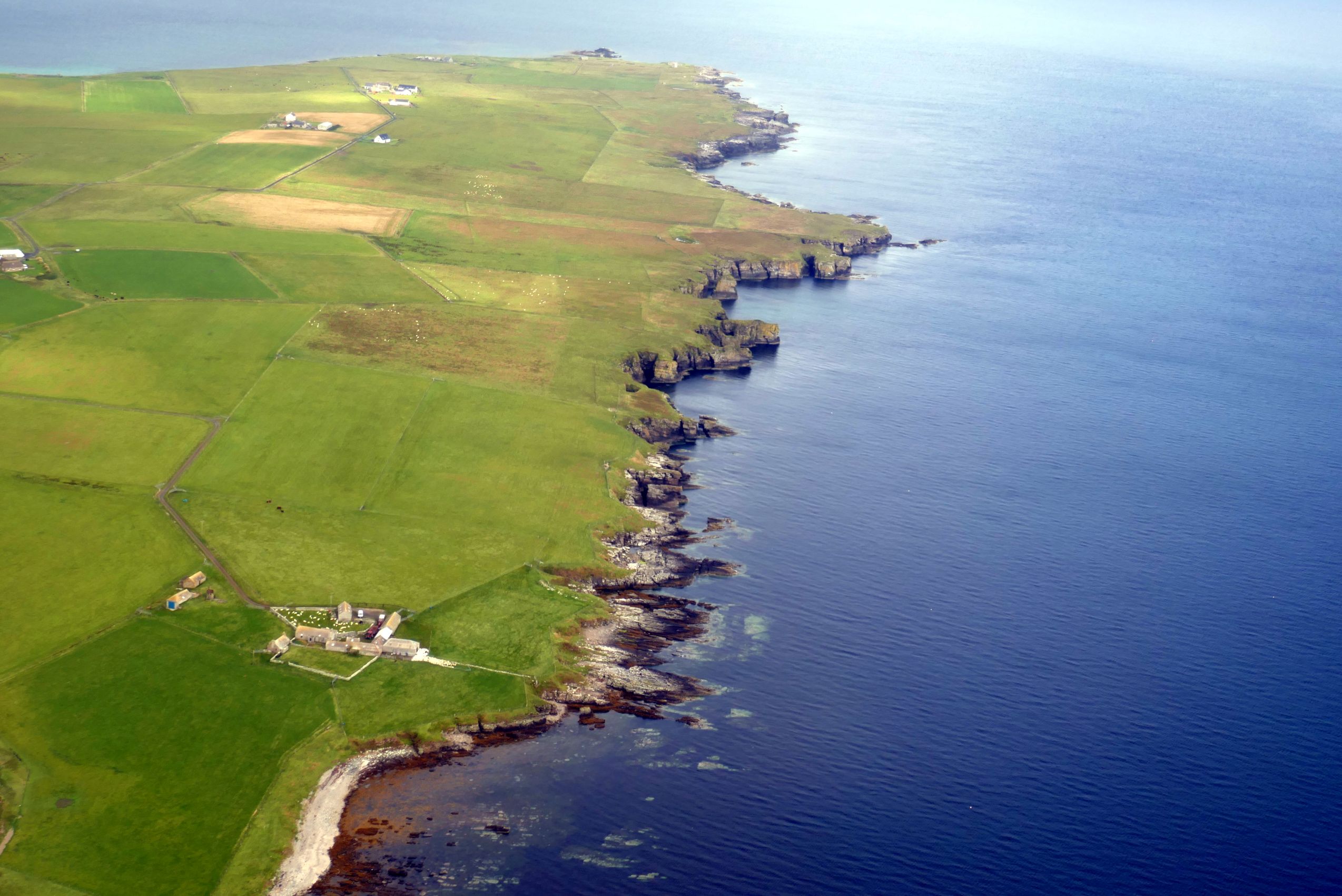
Our final stop was my favorite, and it wasn’t even scheduled! The walk out to Brough of Birsay can only be done at low tide. The conditions must also be calm to avoid being swept away off the rocks by winds and the sea. We hit it just right, so off we went for one of the most beautiful coastal hikes I have ever done!
The Birsay coast faces the Atlantic, so it suffers from high levels of coastal erosion in certain places. Sadly, there have been numerous archaeological sites that have fallen into the sea. The area is being monitored closely by the University of the Highlands and Islands (UHI) Archaeology Institute.
How fortunate we were to be able to hike to Brough of Birsay and back! Once we were out there, I had a choice to either listen to the local guide talk about the history of the area or make a beeline up the steep grassy hill to see the lighthouse. Thankfully, my swimmers’ lungs allowed me to run up the 150 feet to the top for a quick view of the 1925-era lighthouse and spectacular views of the coast below. The run back down, I must admit, was a lot easier!
I was very much in my element in Birsay and it was one of the highlights of our visit to the Orkney Islands. The ocean, beautiful coastline, hiking, and taking photos; it was fabulous!
Coming up next: UNITED KINGDOM #12: FERRY TO INVERNESS& CAIRNGORMS NATIONAL PARK
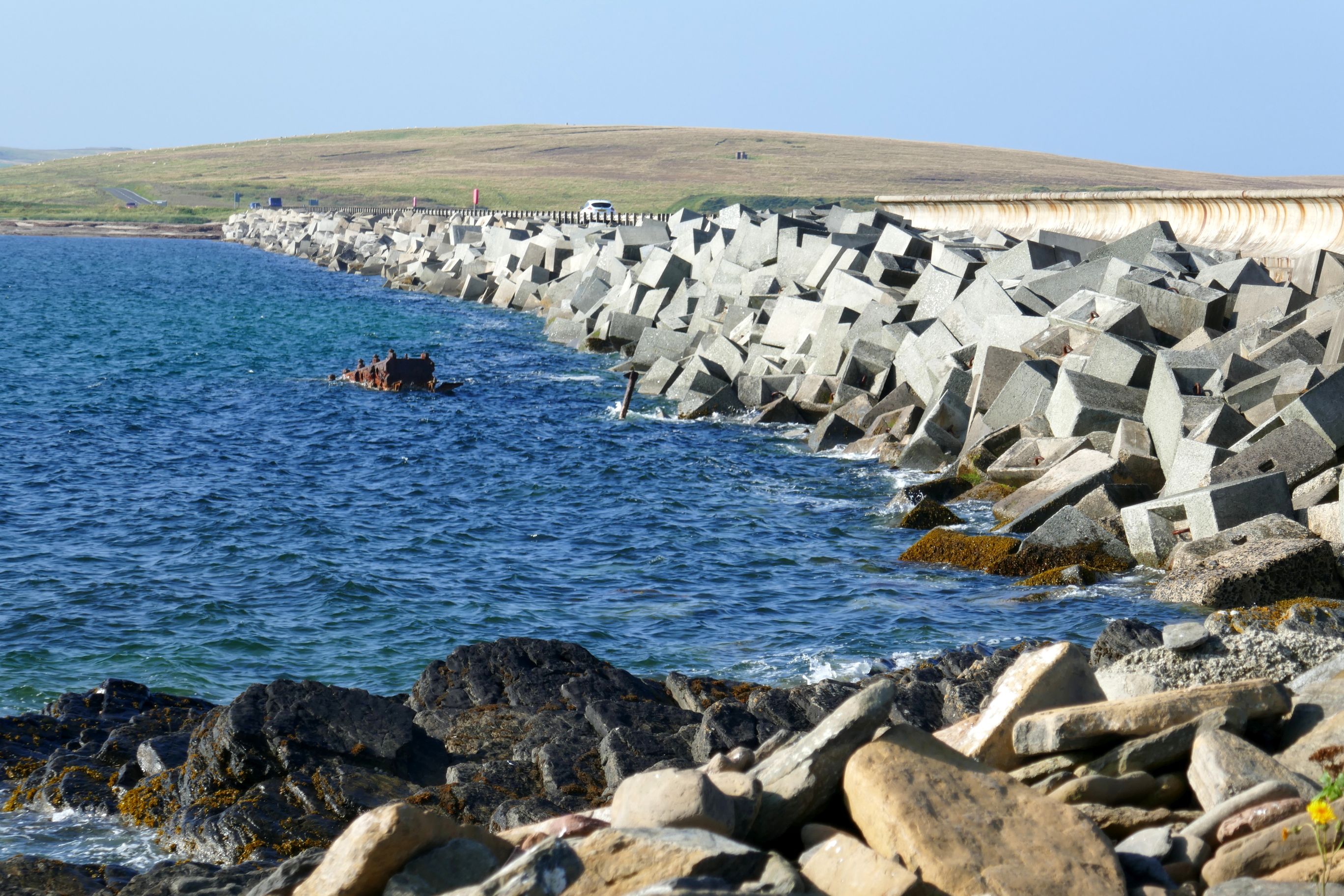
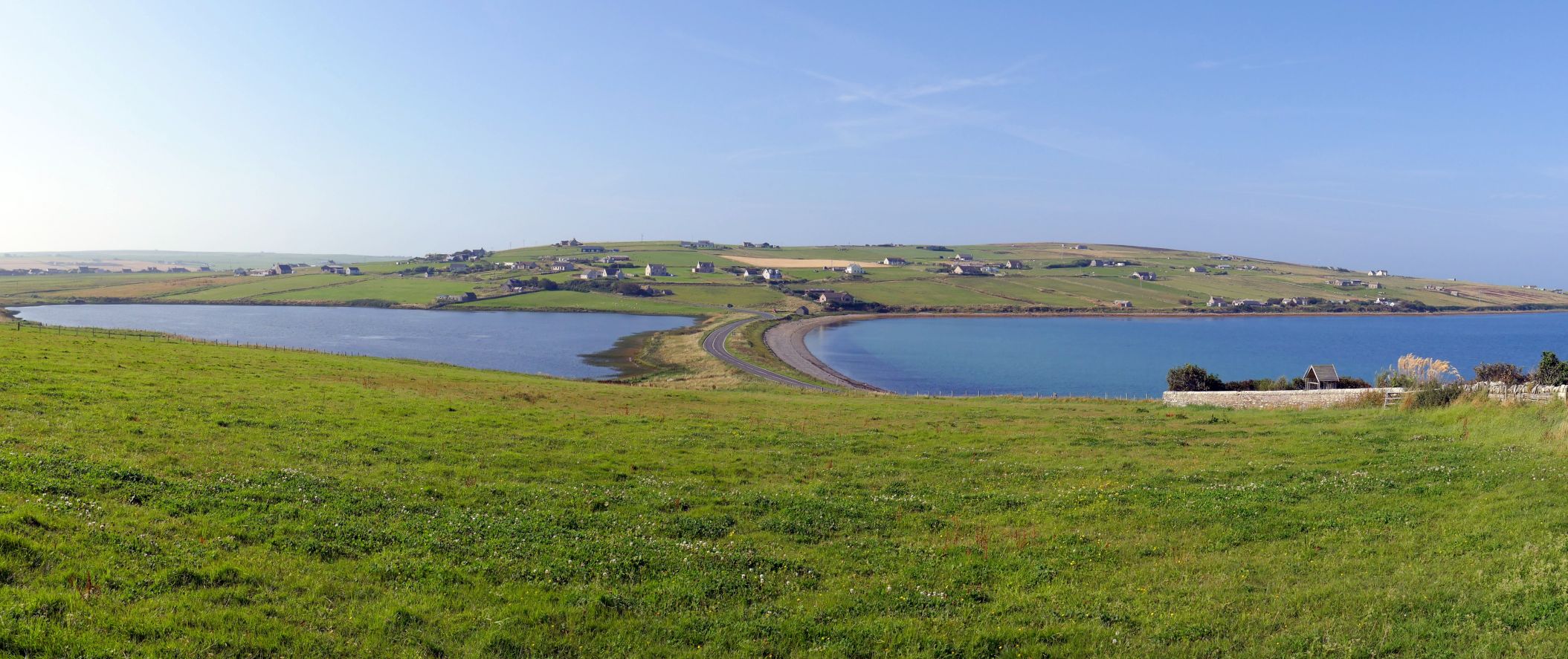
In 1939, the Royal Navy battleship HMS Royal Oak was sunk by a German U-boat at her moorings within the natural harbor of Scapa Flow, in the Orkney Islands. This led to the First Lord of the Admirality, Winston Churchill, ordering permanent barriers to be built, linking the mainland of Orkney to four of the south isles, enabling the Royal Navy to better defend the vital anchorage of Scapa Flow.
It took nearly one million tons of rock and concrete to form the Churchill Barriers by 1000 Italian prisoners of war.
(For all photos, click on the image for a full screen view.)
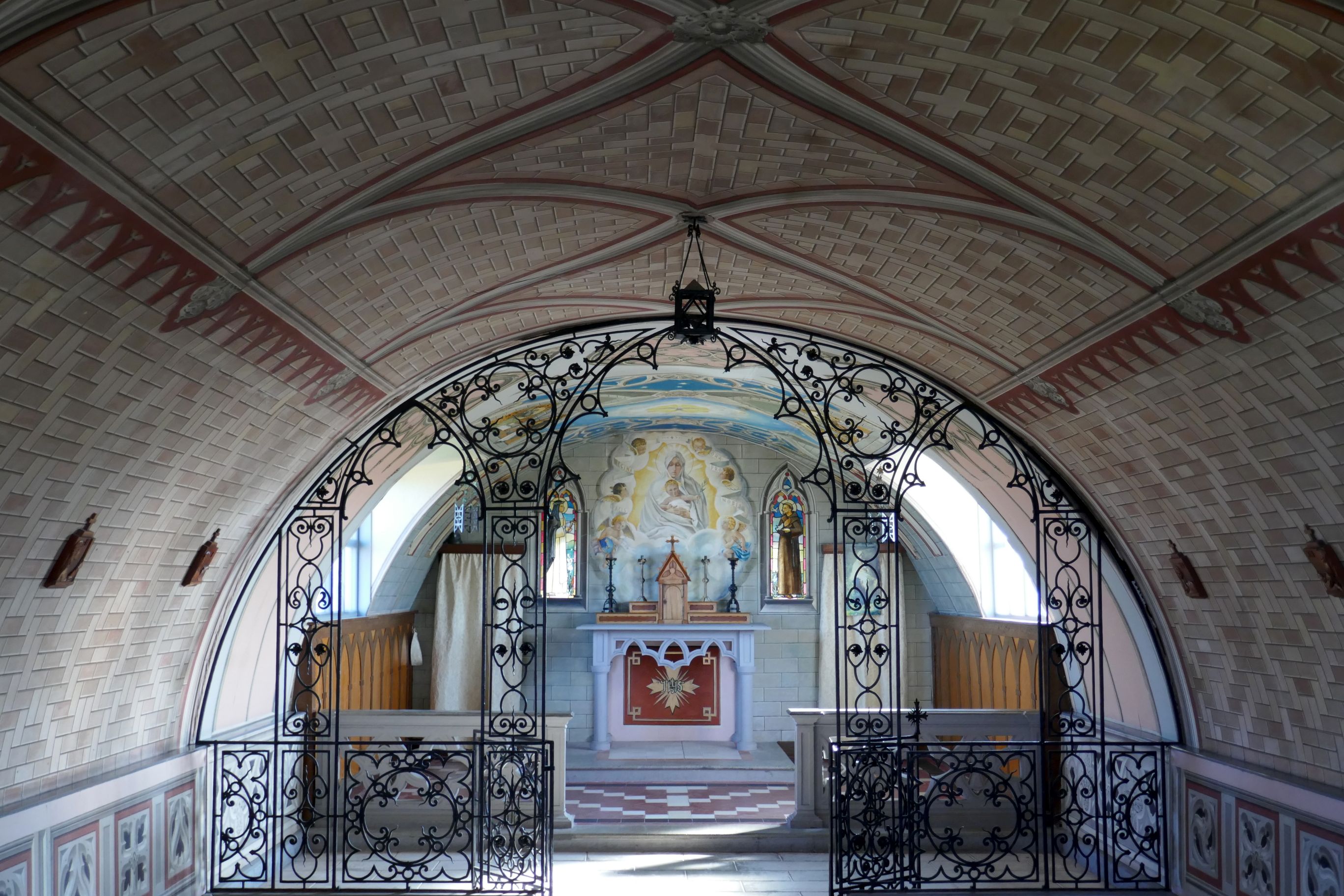
The Italian Chapel is the only building that remains of Camp 60, a Prisoner of War (P.O.W.) camp constructed in 1941 to house these Italian P.O.W.’s. The prisoners, thousands of miles from their homeland, deeply felt the need for a place of worship. Led by Domenico Chiocchetti, an artist, a team of the prisoners built the sanctuary of concrete and scrap wood from a wrecked ship. The alter is Chiocchetti’s masterpiece. It is based on Nicolo Barabino’s Madonna of the Olives from a small picture given by his mother to Domenico, which he carried with him throughout the war.
It was heartwarming to learn that during the time the Italians were in Orkney, friendships formed between the prisoners and Orkney residents; and, the British were supportive of the Italians and the chapel.
Fast-forward to Orkney today, I found it interesting that Orkney residents feel ignored by Scotland and feel more a part of Norway, which is located just 300 miles away.
Here’s a fun fact: Would you like to know what the world’s shortest regularly-scheduled flight is? It’s a flight in Orkney Islands, from Westray Island to Papa Westray, just 1.7 miles away. The flight is only 53 seconds long. Personally, I would rather be on that flight than the world’s longest commercial flight, Singapore Airlines route between New York (JFK) and Singapore, which averages 18 hours and 40 minutes!
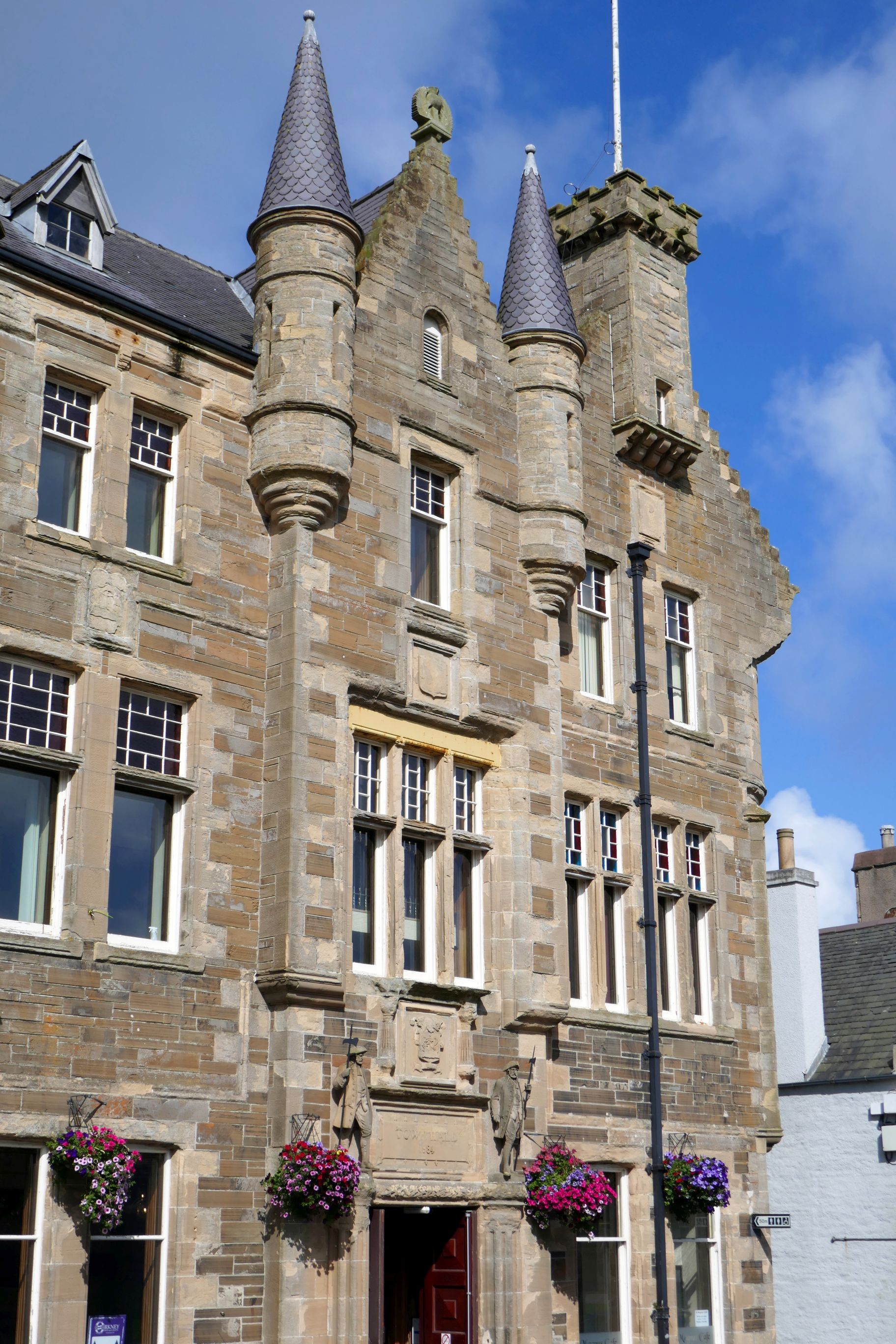
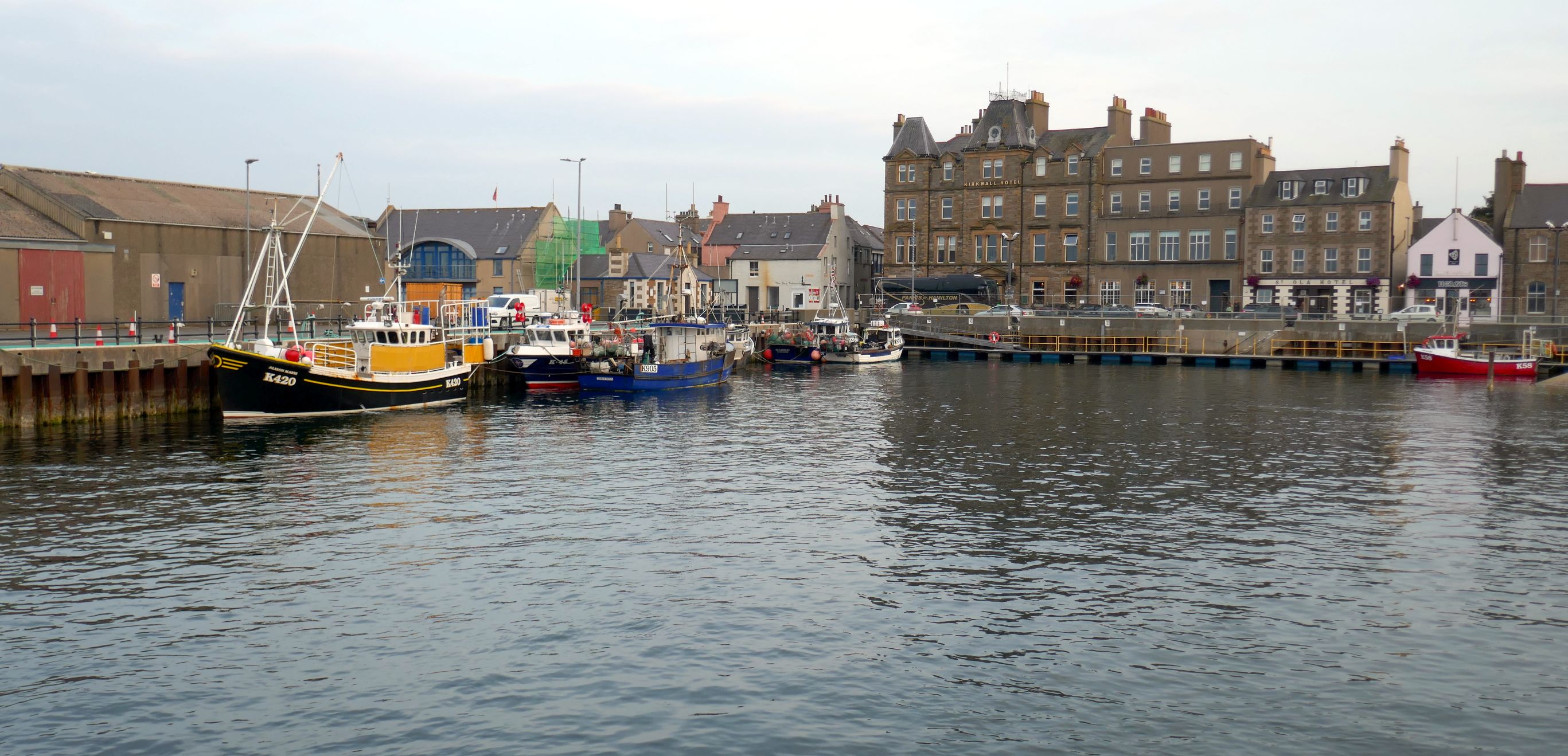
It was a beautiful day to fly to the Orkney Islands! Located off the northeastern coast of Scotland, Orkney is an archipelago made up of 70 individual islands, only 20 of which are inhabited. Kirkwall, our home base for three nights, is the largest town of the islands with a population of 8-9,000. A total of 23,000 people live on the Orkney Islands.
(For all photos, click on the image for a full screen view.)
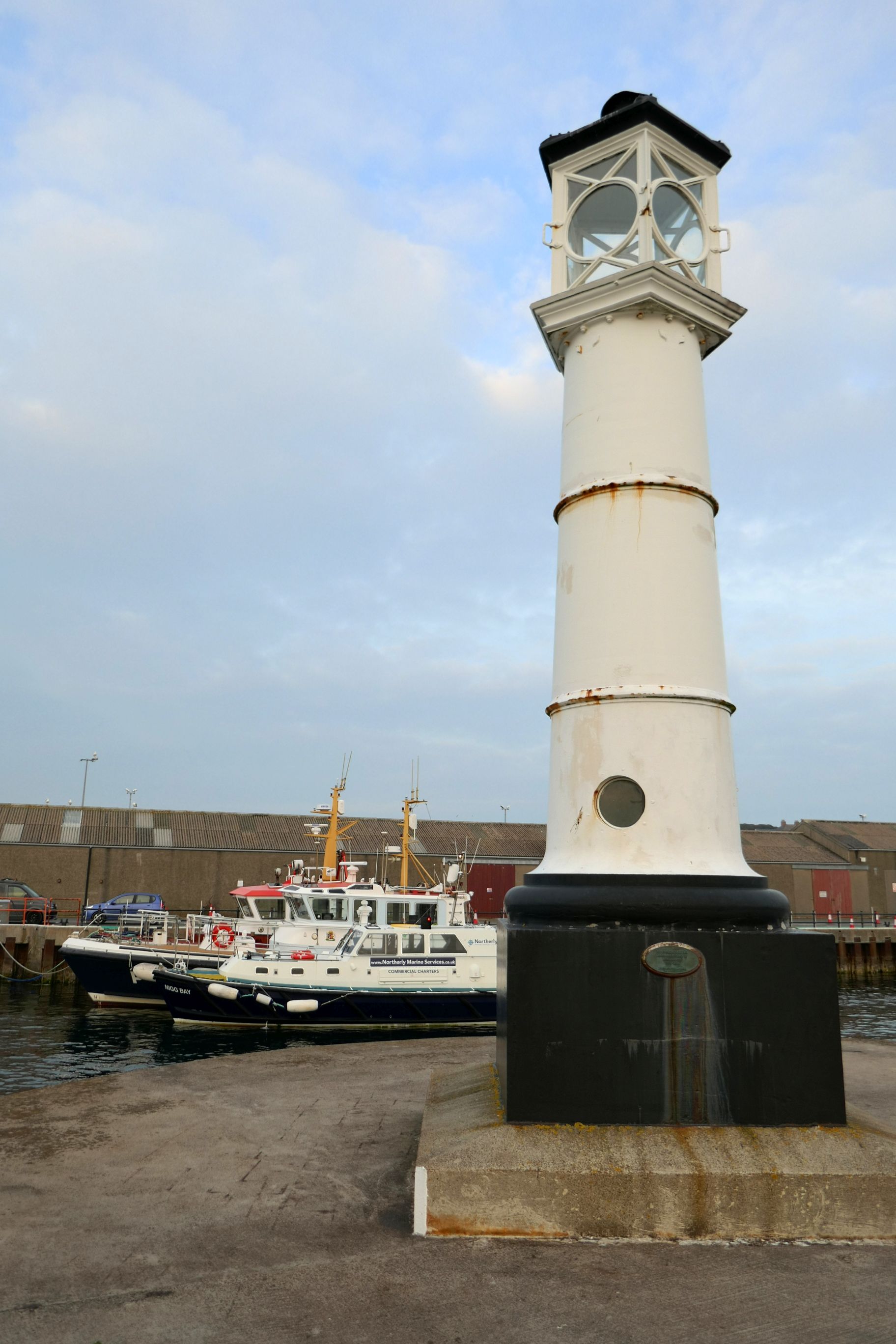
Tom took us on an orientation of the little town; it’s hard to get lost! Still, his orientation tour was a great way to get the lay of the land and get filled in on the history of the place.
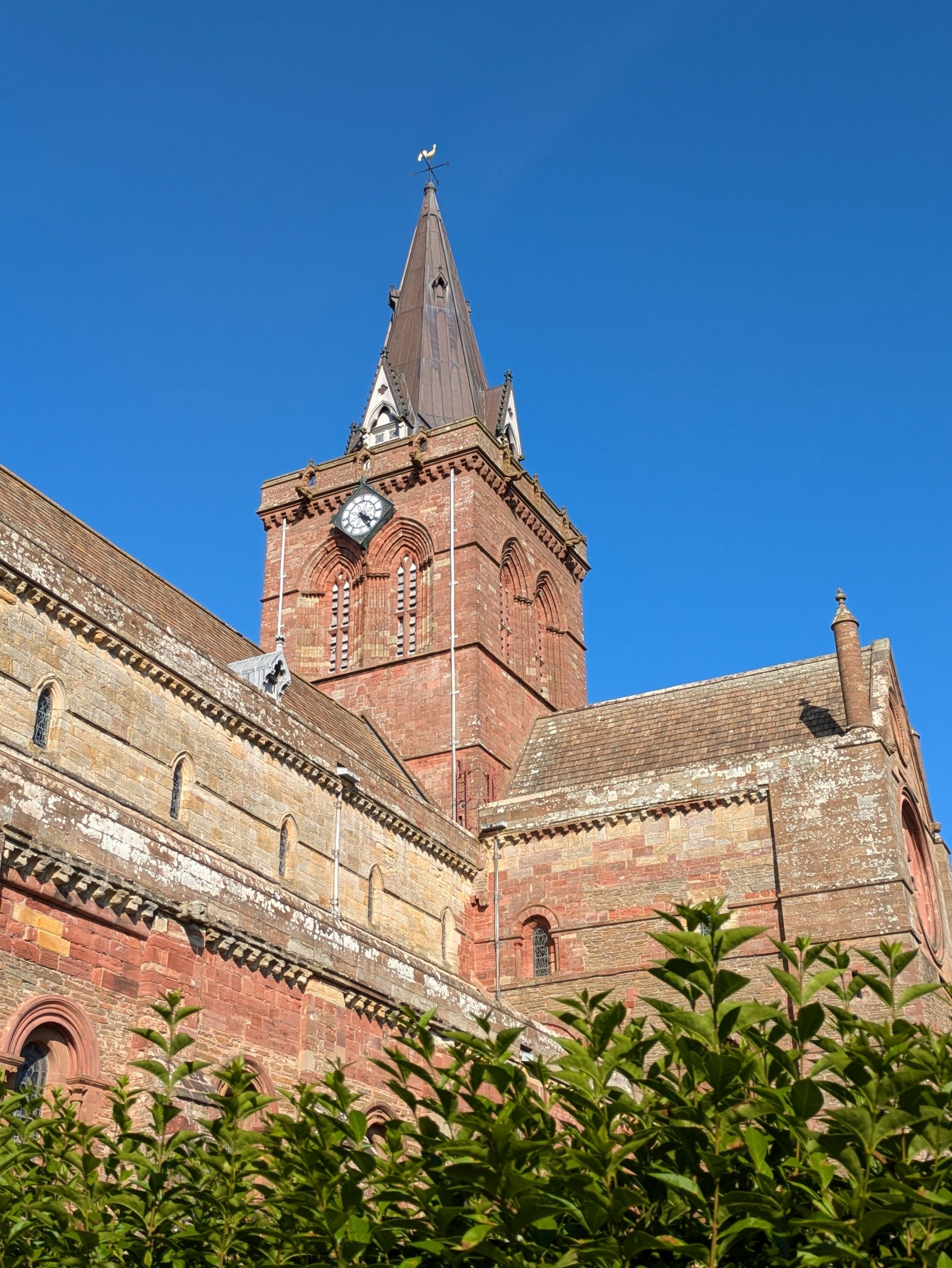
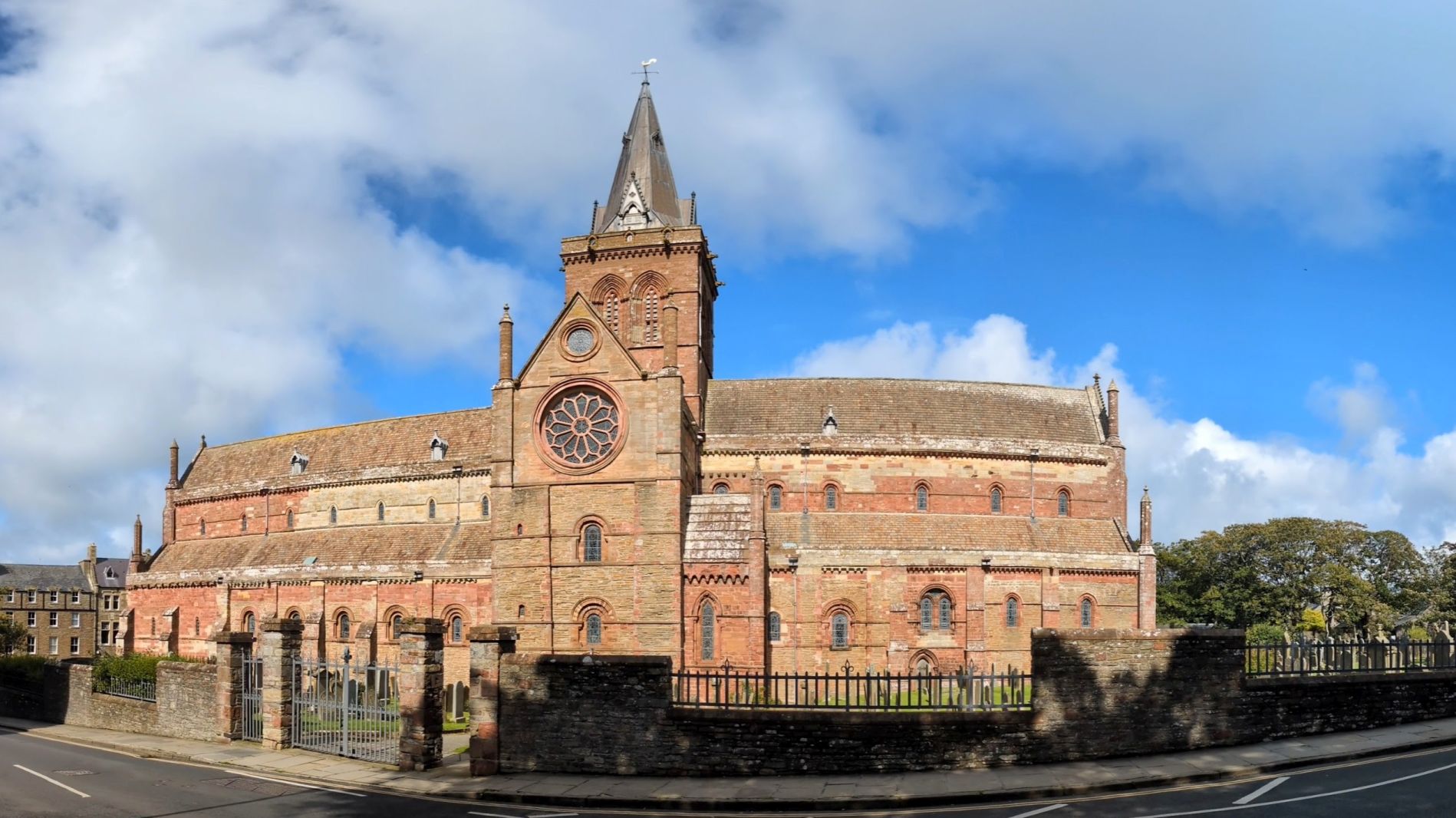
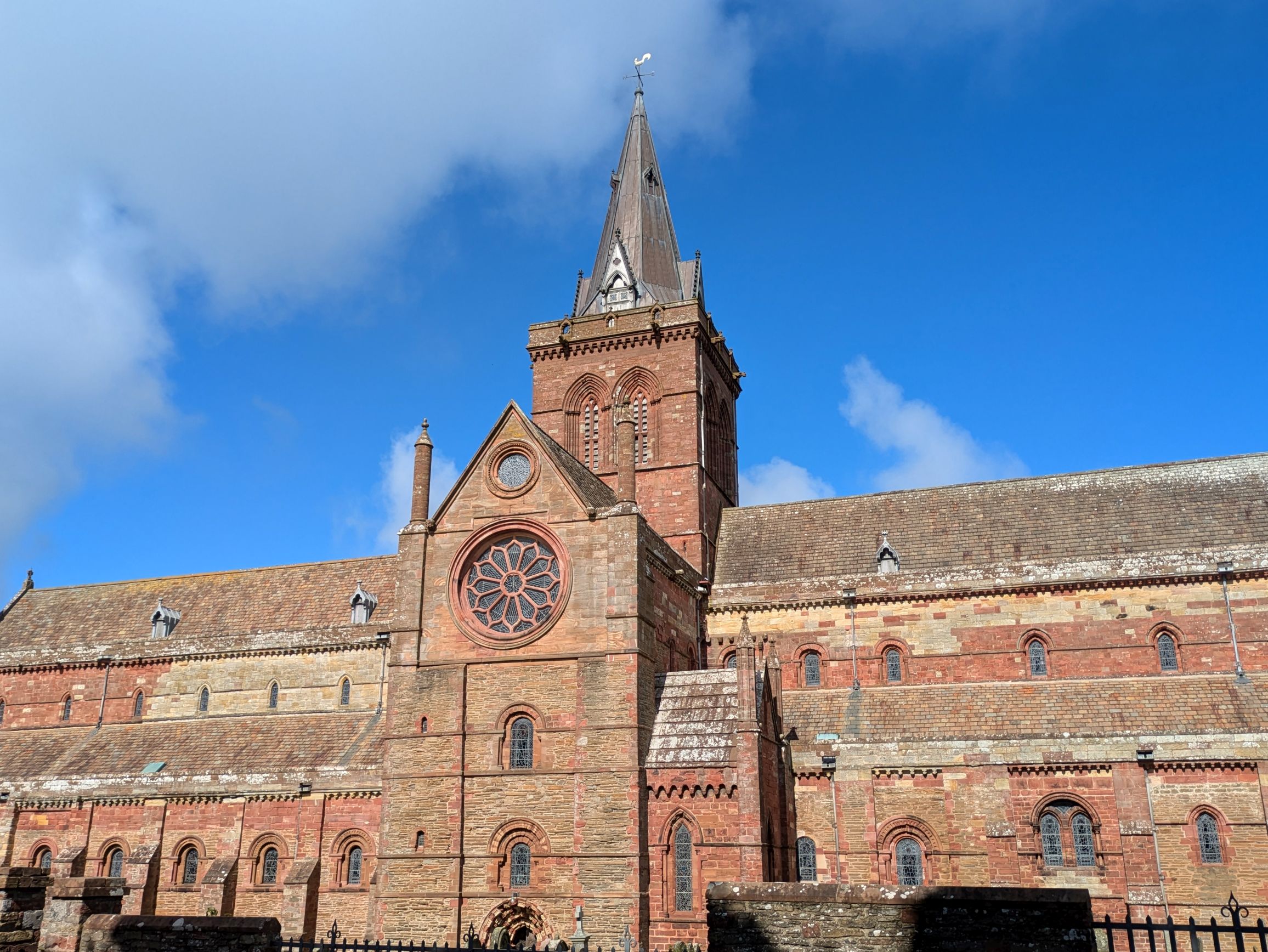
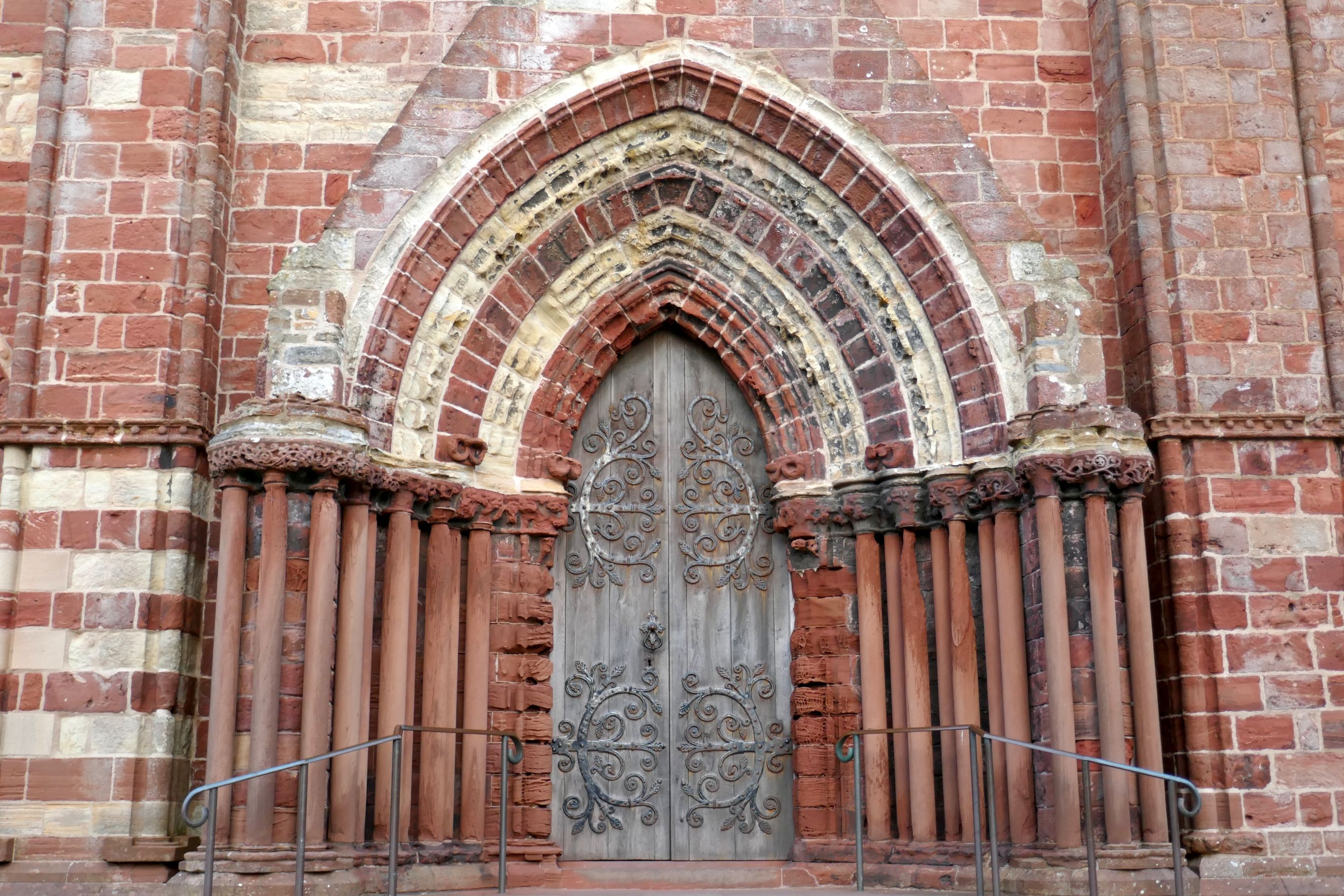
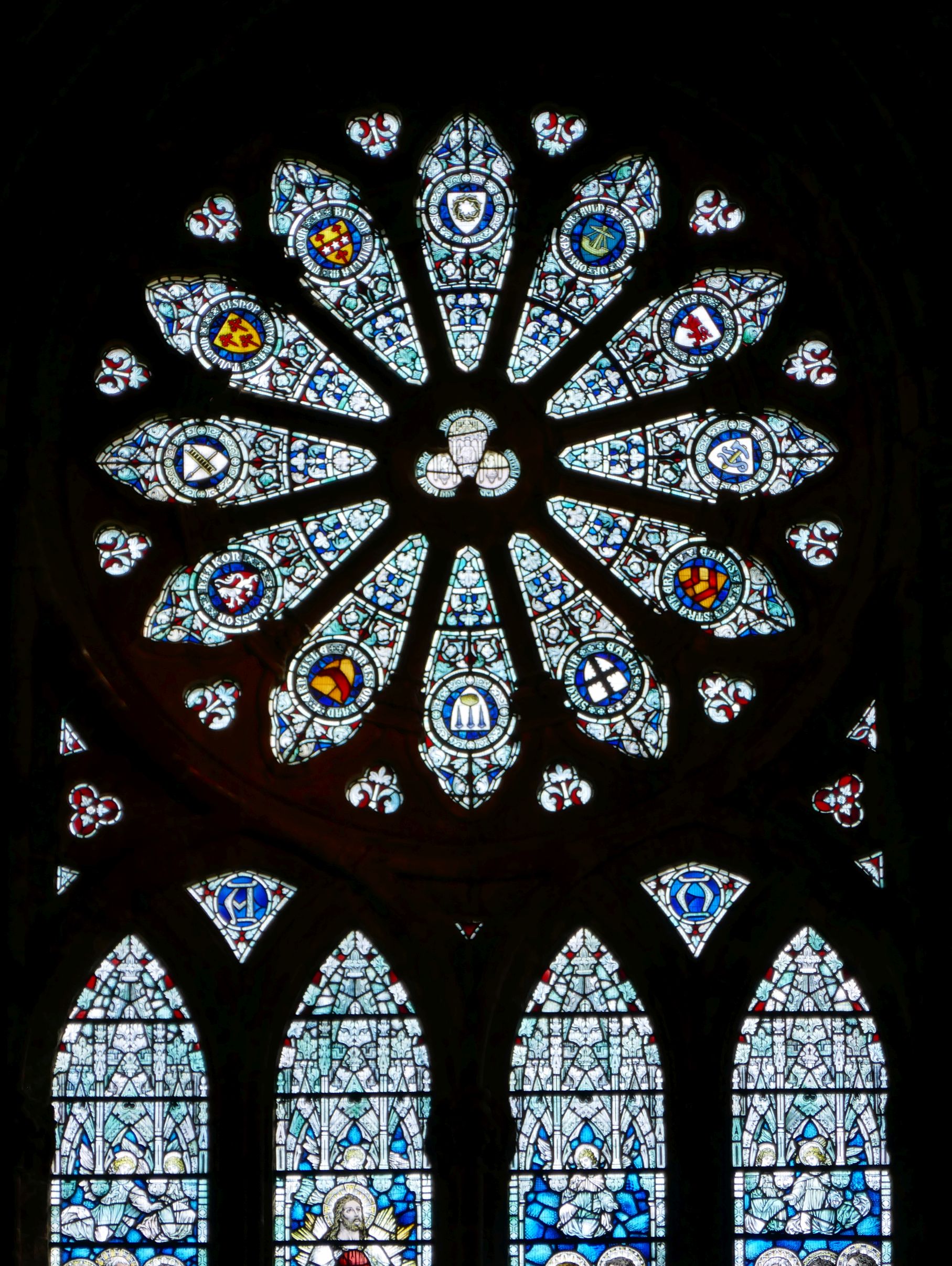
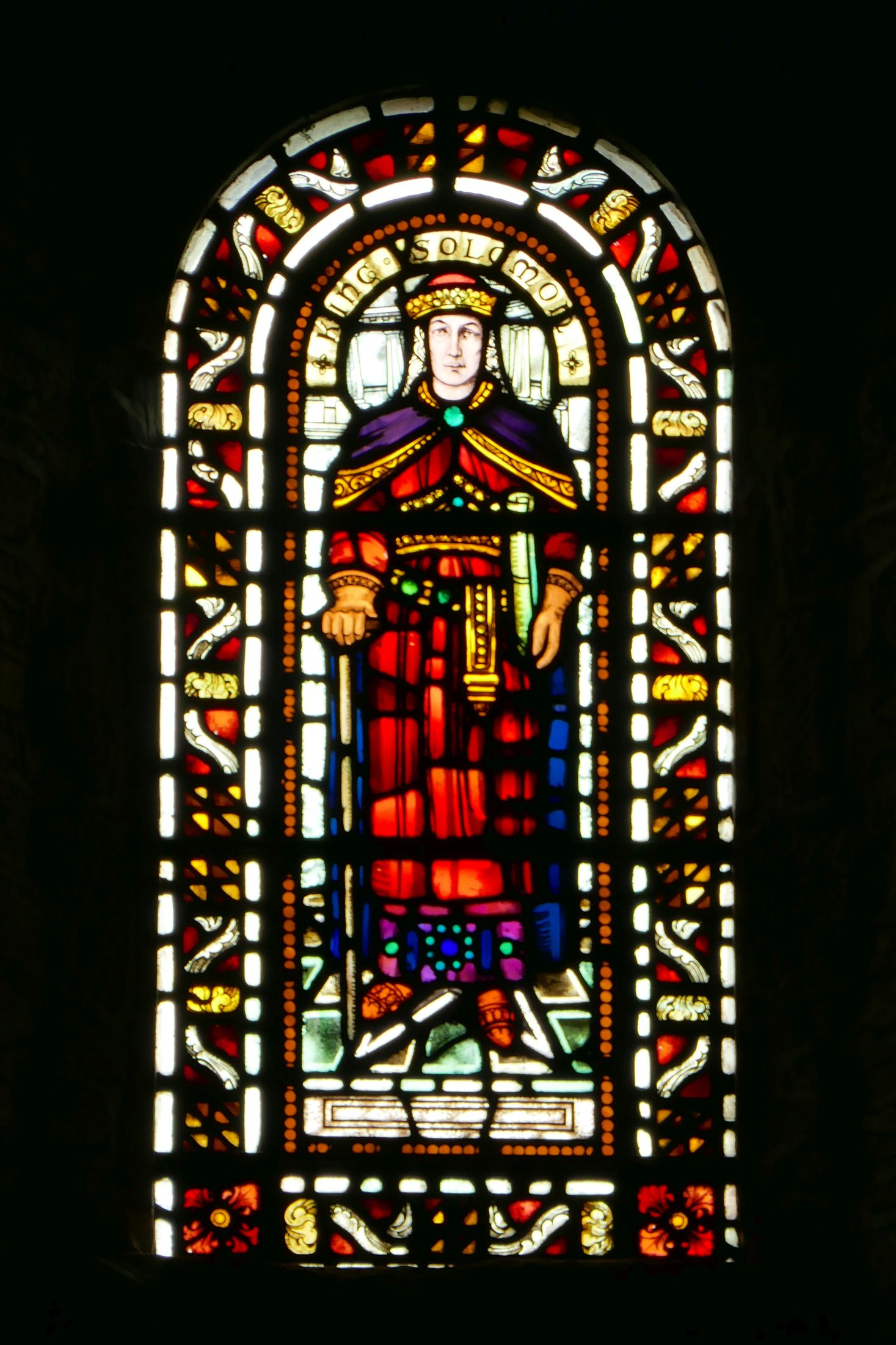
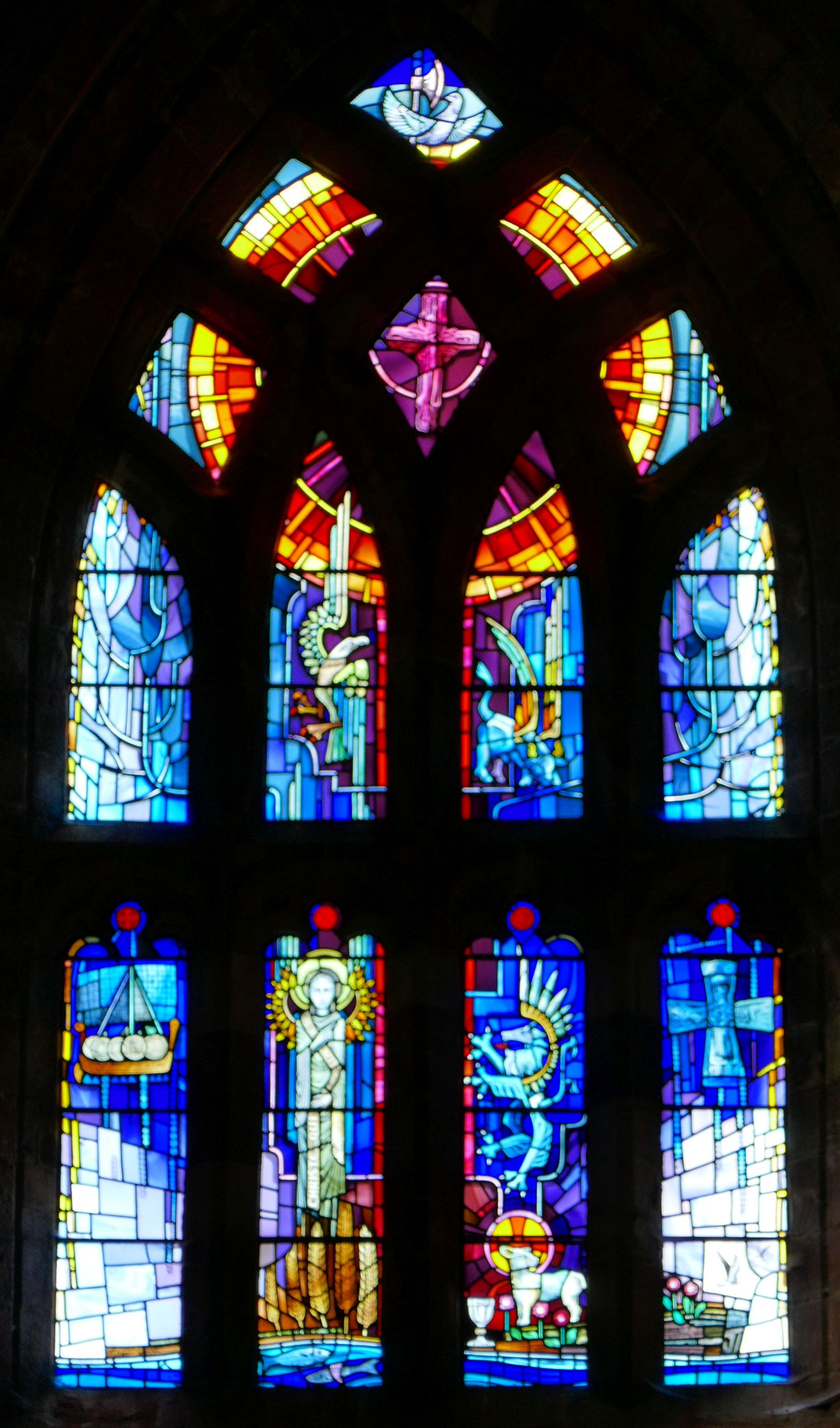
The highlight of Kirkwall is St. Magnus Cathedral, the oldest cathedral in Scotland. Founded in 1137, it was originally Roman Catholic and built when the islands were ruled by the Norse Earls of Orkney. Today, it is owned by the burgh of Kirkwall rather than by any church.
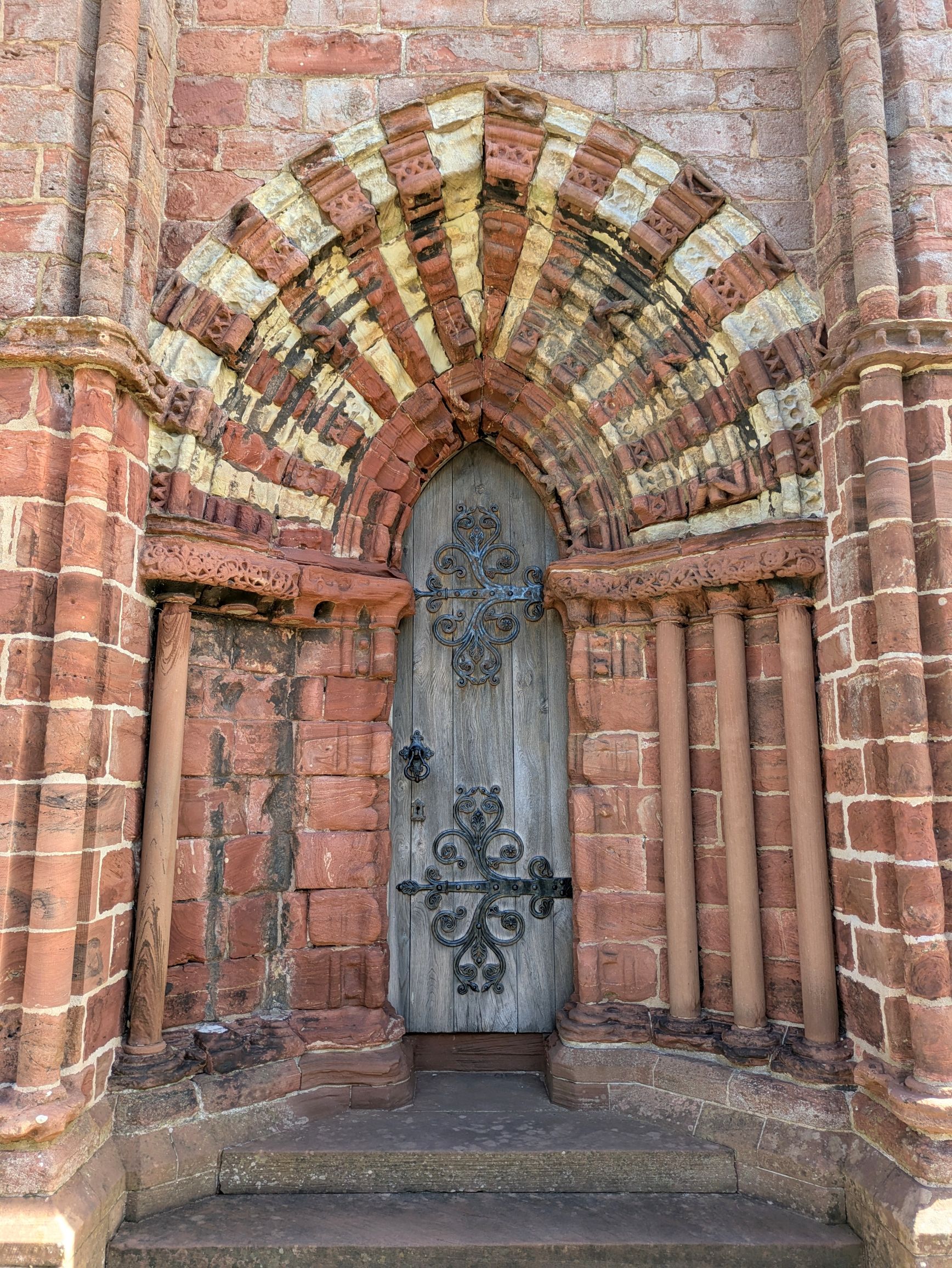
Built of local red sandstone, the Norman architecture of the cathedral is gorgeous. We enjoyed returning on a couple of occasions during the following two days, just so we could see it in different light—especially in the late afternoon and early evening.
Following our orientation of the town, we walked up to the University of Highlands and Islands (UHI) to meet with Laura who works in the Culinary Department where they teach hospitality and restaurant business. They have a restaurant on site that students run, and customers give feedback on the service and food. Another wonderful program the university offers is remote courses on TV that are linked with other universities. Kirkwall is quite isolated, it’s expensive for students to travel to the mainland, and there is a housing crisis in Scotland; so, being able to go to UHI and “attend” class on TV is very helpful.
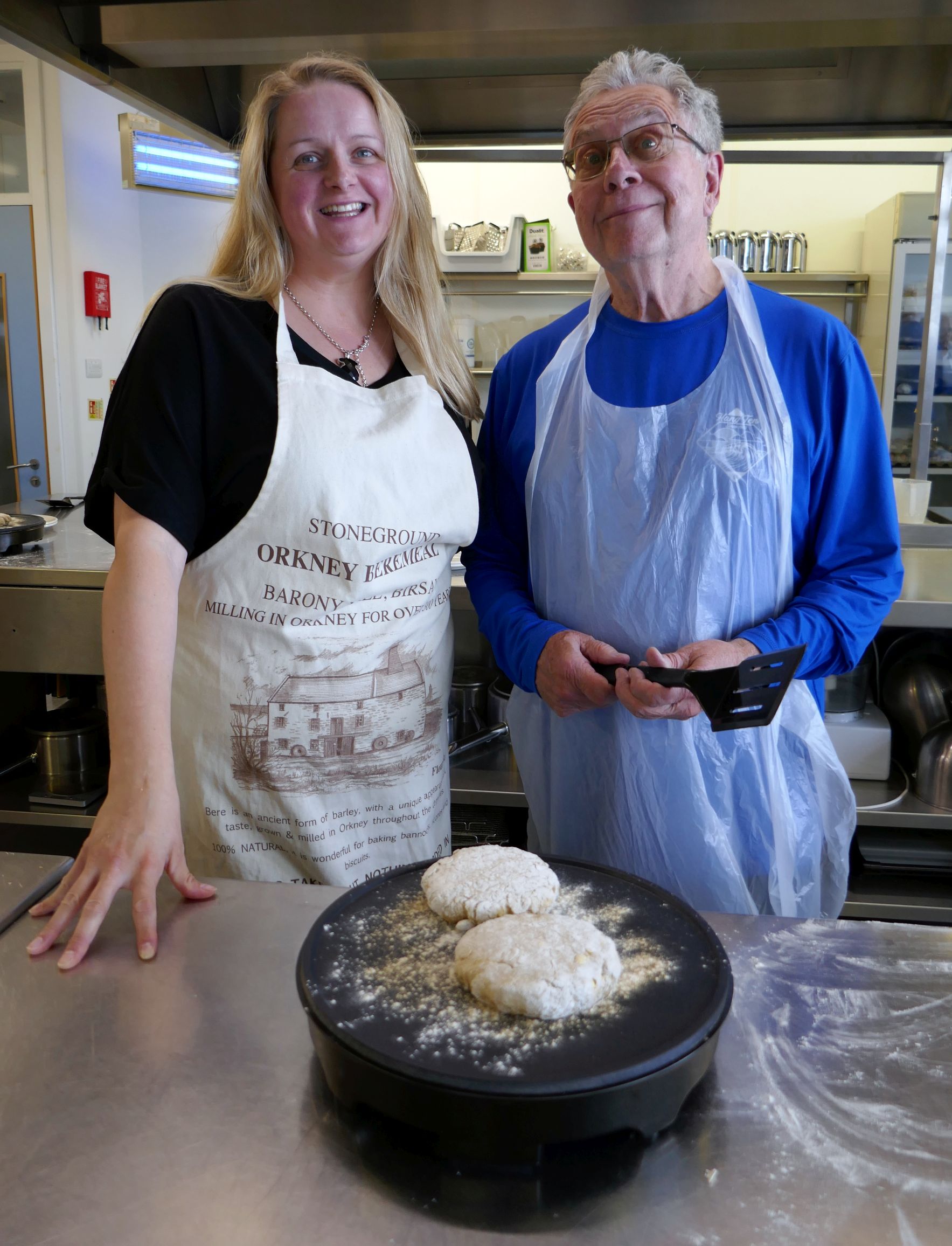
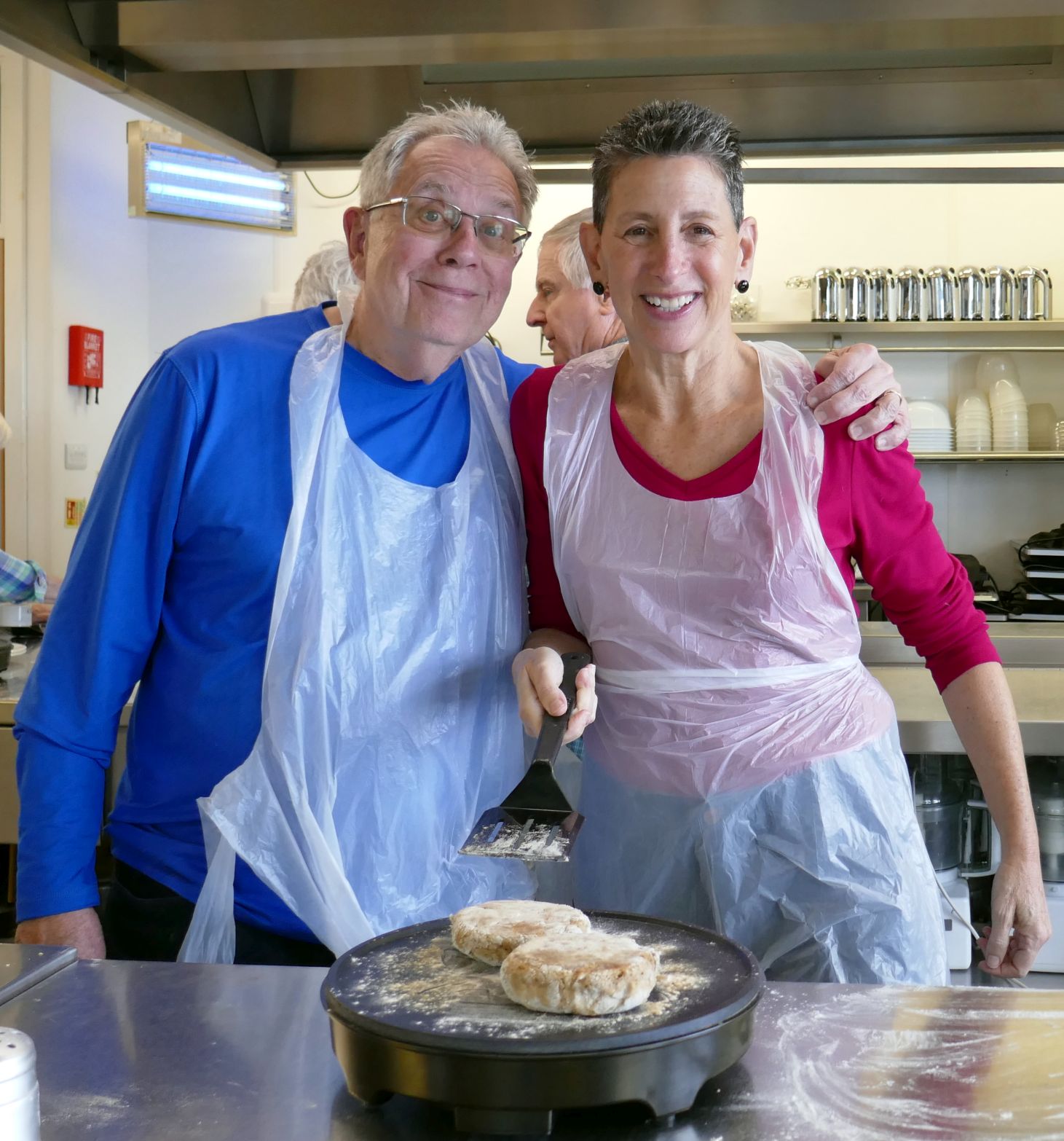
After learning a bit about the university and Laura’s background (She’s a huge Yankees fan and got married in Central Park!), she taught us how to make Bannocks, a Scottish bread made from bere barley, which is grown in Orkney and milled at Barony Mill, the only mill for bere in the world. Bruce and I teamed up, and ours came out tasty!
Throughout our U.K. tour, in addition to the history, we learned a lot of interesting facts from Tom that baffled us as much as it baffles him! Check this out:
Electricity that is generated by wind turbines in Scotland doesn’t stay in Scotland. It goes to the grid in England for their benefit. Scotland actually pays more for electricity, even though they produce it! Ditto for oil. Profits from oil drilled in Scotland go to England.
Wales gets the same shaft from England, but in their case, it’s water. Wales water gets transported to England, and then it’s sent back to Wales at a premium cost. What the…?
Although Wales could not survive independence, Scotland has the resources to be completely independent, but England won’t allow them to vote on it. Go figure…
Here are some final sunset scenes around town:
Coming up next: UNITED KINGDOM #10: ORKNEY’S CHURCHILL BARRIERS& ITALIAN CHURCH
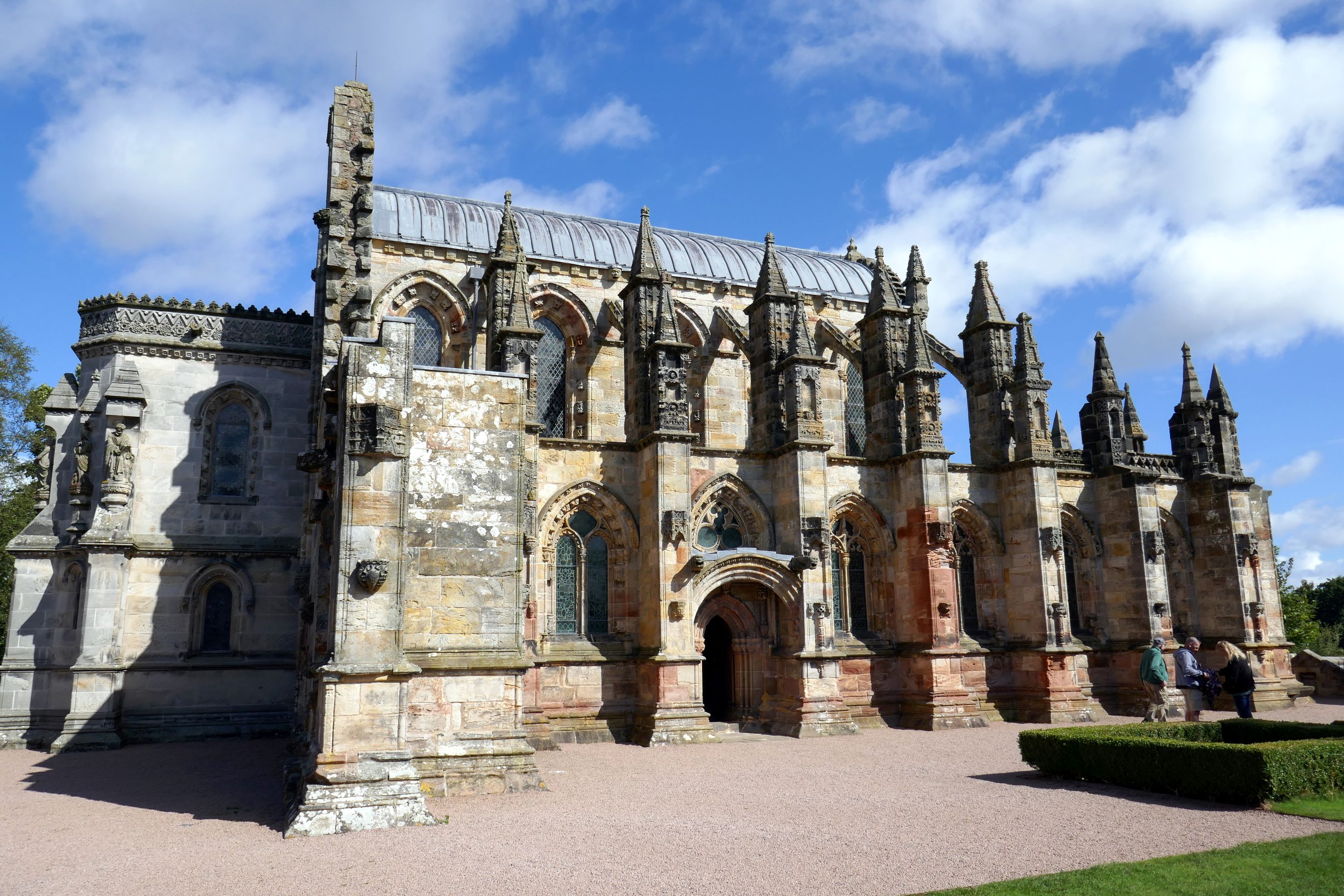
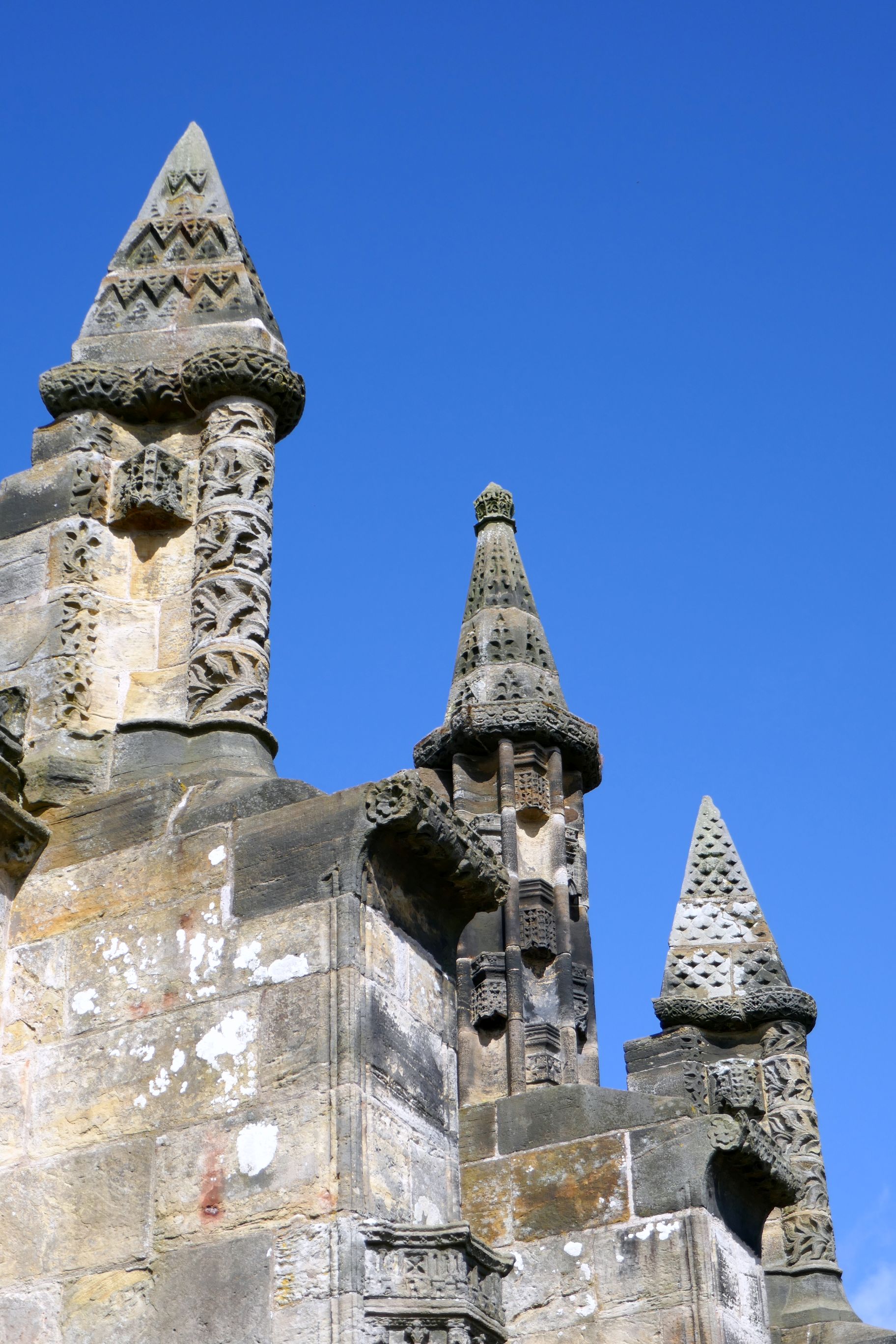
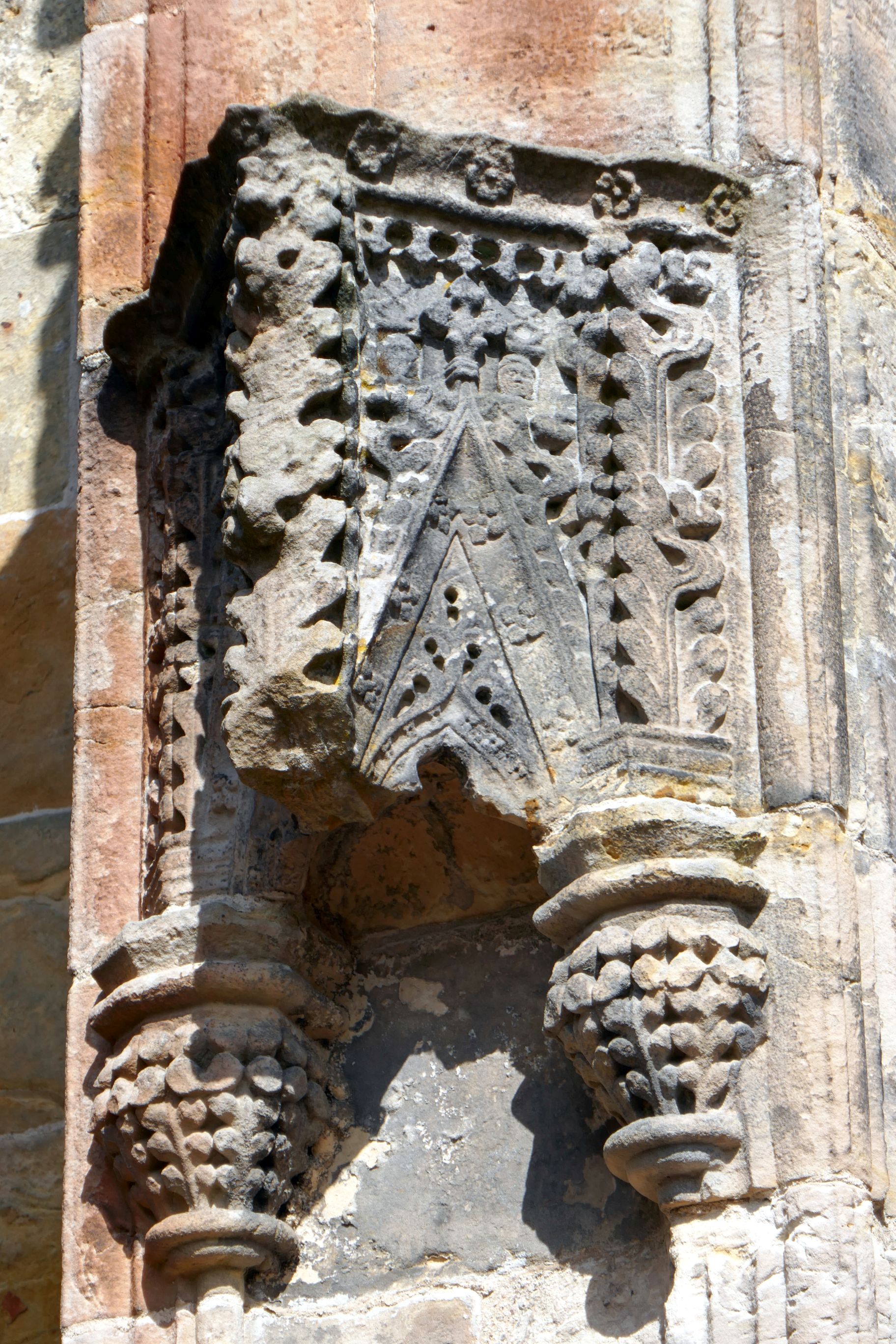
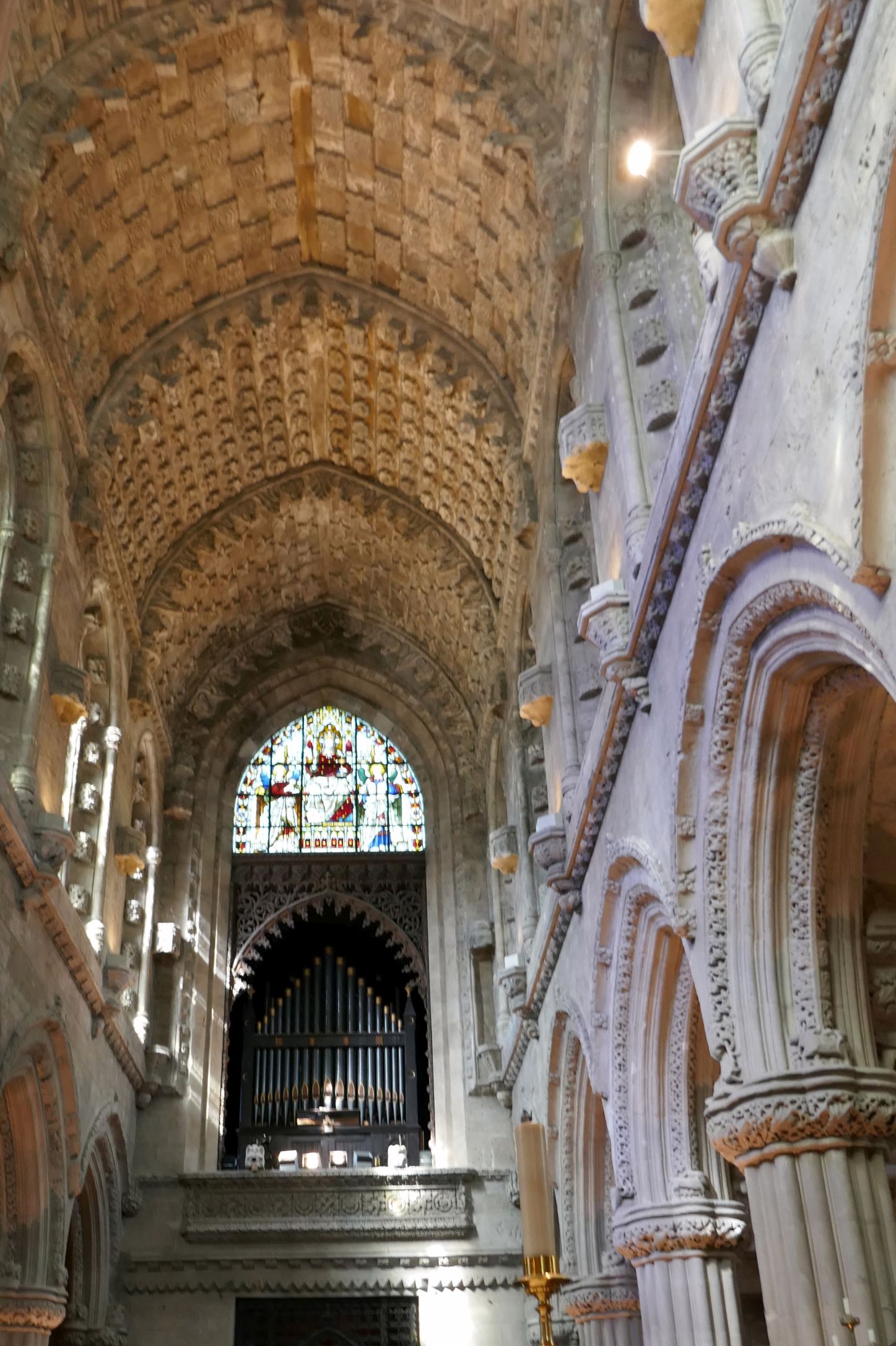
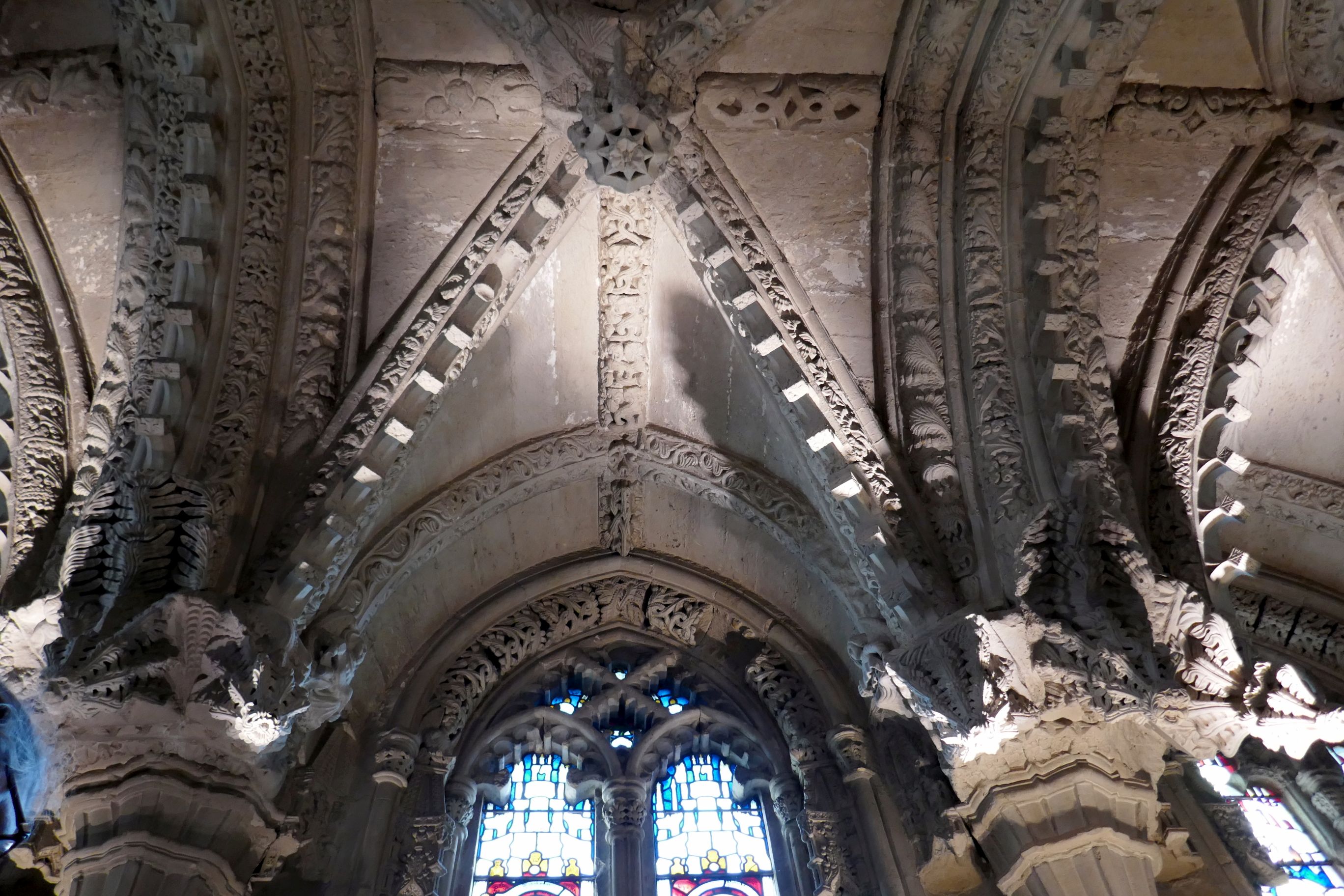
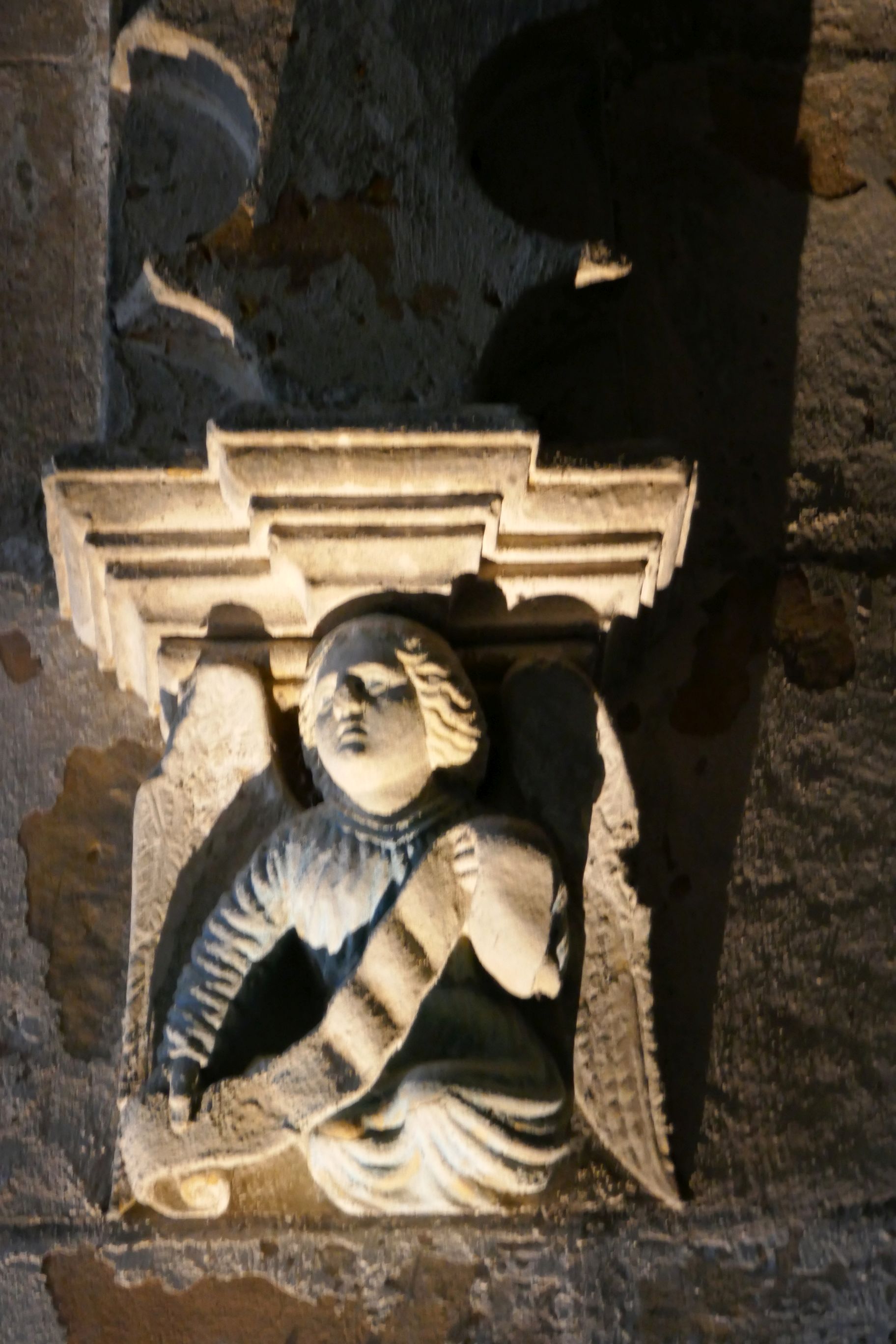
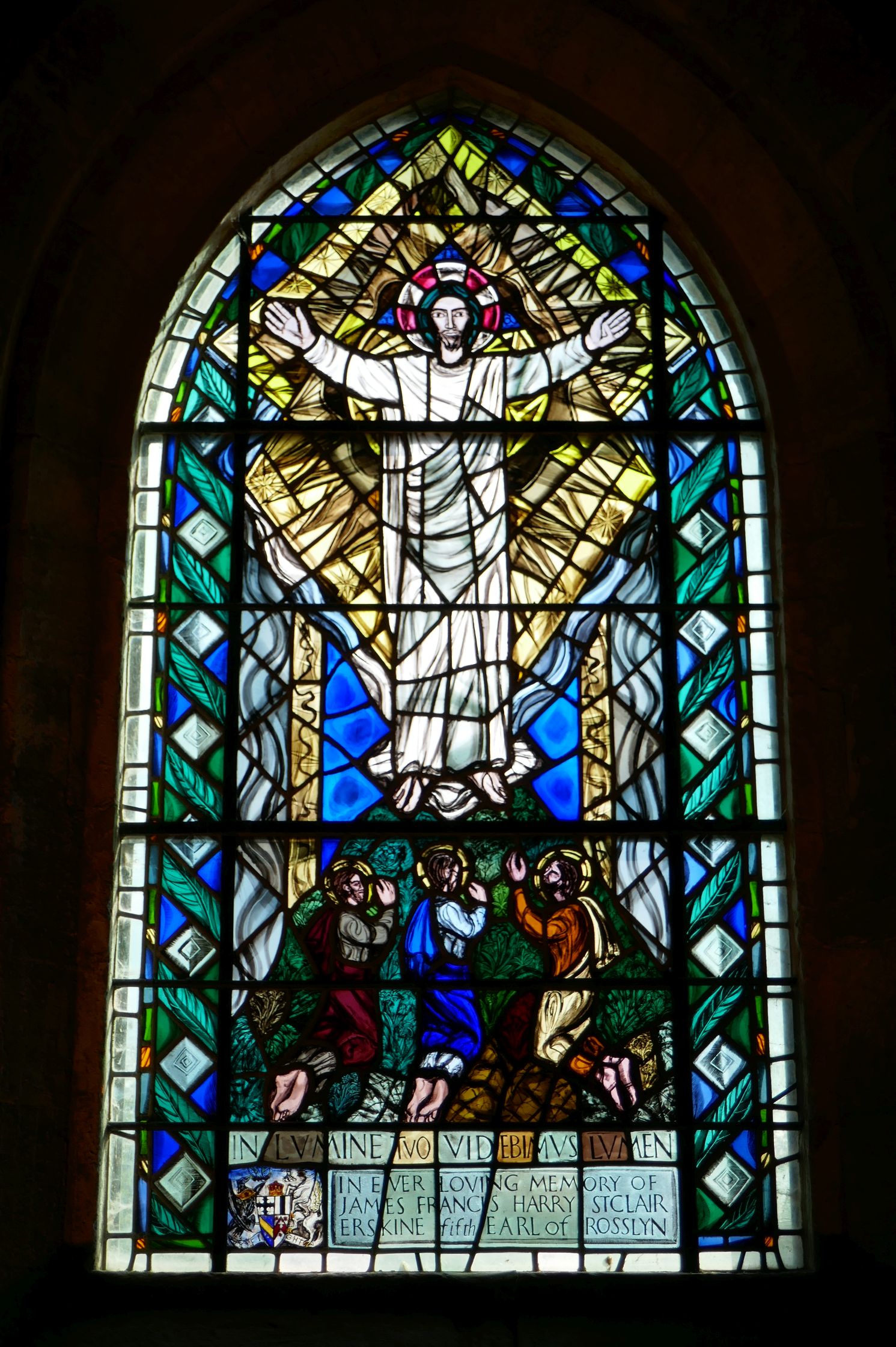
Have you ever read the best-selling novel, The DaVinci Code, by Dan Brown, or seen the movie adaptation of the book? Rossyln Chapel is the setting for the finale. Founded in the mid-15th century, the chapel is famous for its interior of intricate stonework and vibrant stained-glass windows.
Located in the village of Roslin, in Midlothian, Scotland, the Episcopal chapel is still an active place of worship. It was founded by William Sinclair, but largely abandoned after the Scottish Reformation in 1560. Centuries later, Queen Victoria took a liking to it during her visit, so she rededicated it in 1860.
There is much more to the chapel’s history, but fast-forward to the 1980’s, and speculation circulated that the chapel was connected to the Knights of Templar and the Holy Grail, and Freemasonry—something medieval historians say has no basis in fact.
Regardless, the book and movie made the chapel a famous destination for visitors. It’s worth the visit; the stonework is amazing!
(For all photos, click on the image for a full screen view.)
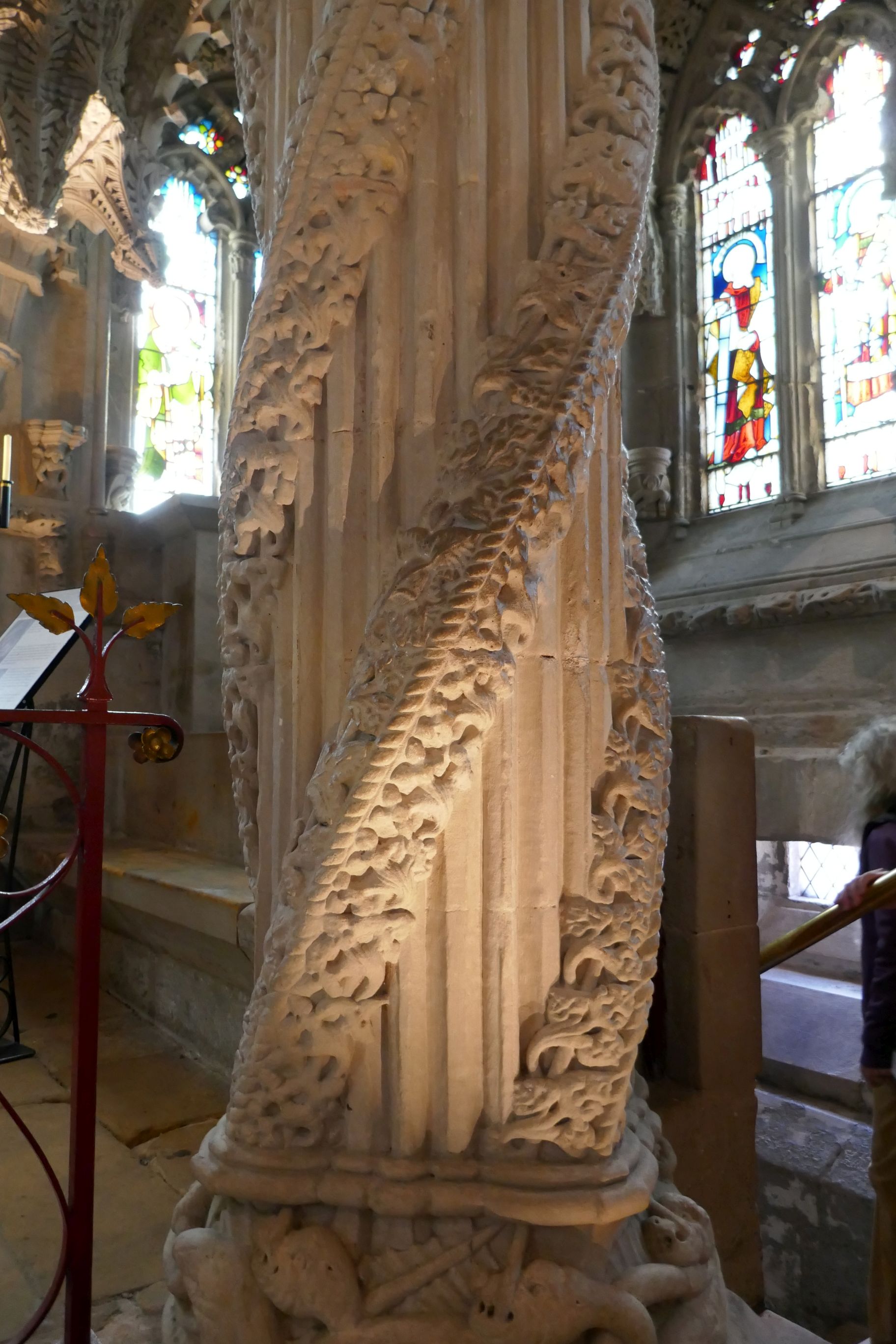
Although they don’t permit photography inside the chapel (“Please note that there is no photography or video allowed inside Rosslyn Chapel, as this can distract and inconvenience other visitors.”), I discreetly sneaked a few photos when nobody noticed.
Inspired by a dream, an apprentice mason is said to have carved this pillar in his master’s absence. On his return, the master mason flew into a jealous rage killing the apprentice.
This was located in the basement museum.
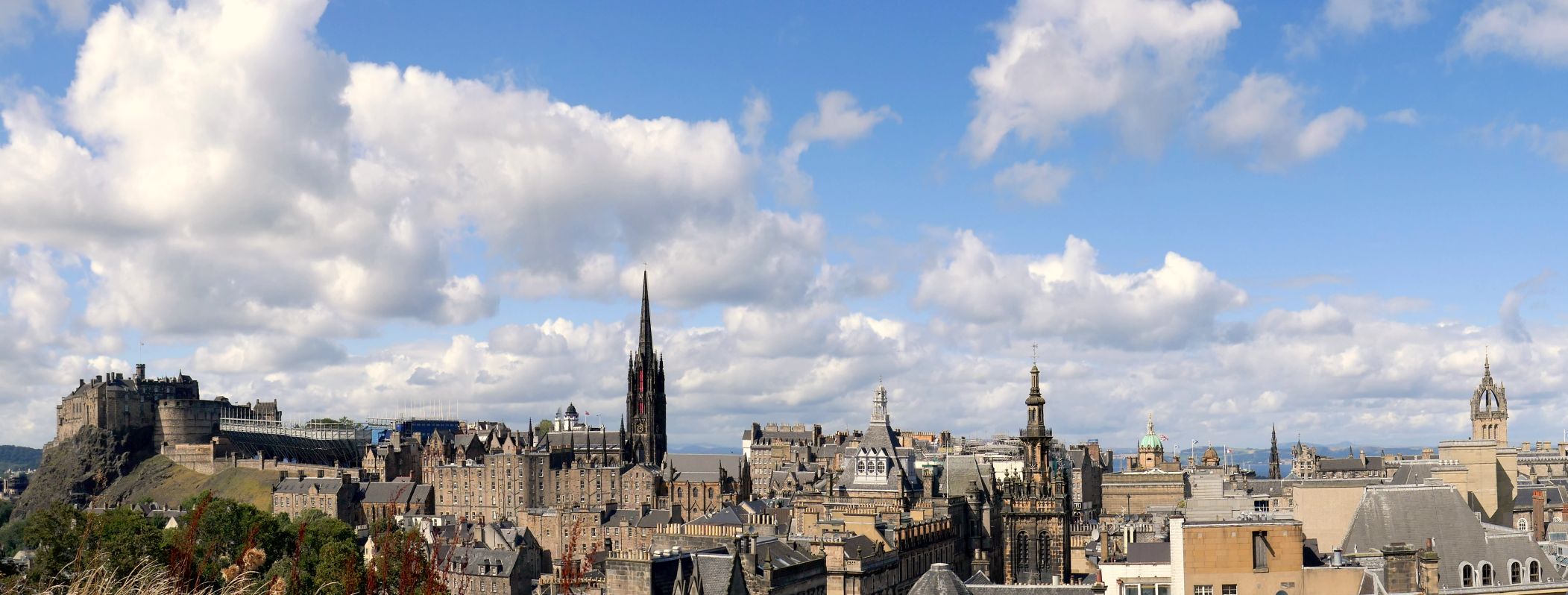
The remainder of the afternoon and evening were free, so Bruce and I took a walk into Old Town and revisited the fabulous National Museum of Scotland and took advantage of the gorgeous day to get this shot from the rooftop terrace:
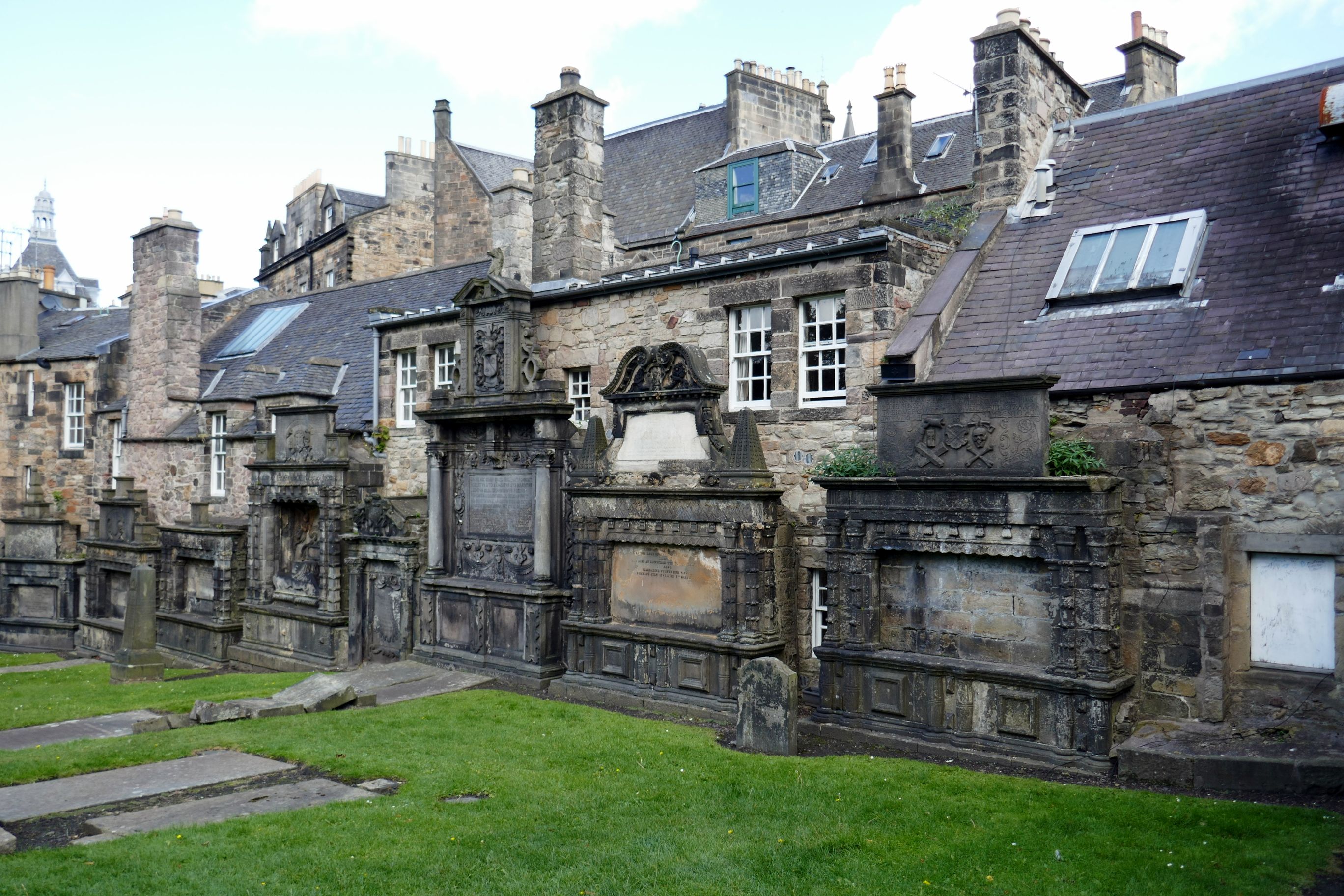
A cemetery located near the museum.
Next up: UNITED KINGDOM #9: ONWARD TO ORKNEY ISLANDS
For those who have followed my travels, you may remember last year’s blog posts on Scotland. We hadn’t planned on returning so soon; however, Edinburgh is on Overseas Adventure Travel’s U.K. itinerary. It was great getting to see this enchanting city again!
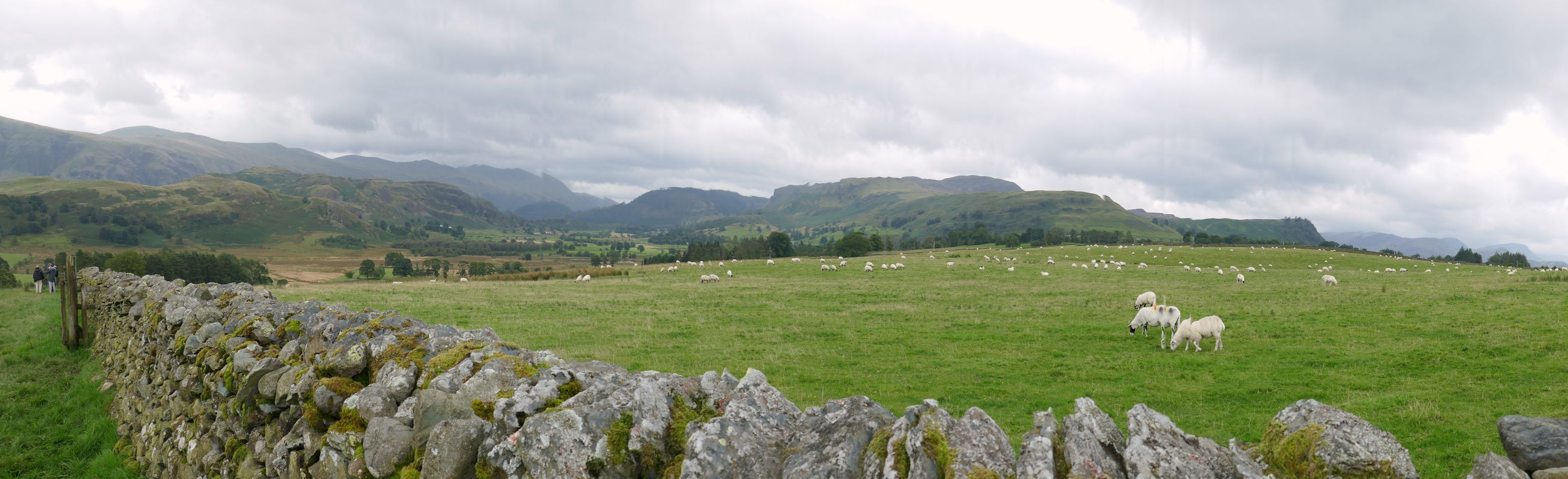
If you first travel through the Lake District of England, and then continue to Scotland like we did, you will notice some differences. The small fields of sheep in the Lake District become larger fields of mostly cattle, and the land is flatter. The accent is different, too. “Carlisle” is pronounced “Car-lyle” by the English and “Ker-leel” by the Scottish.
Scotland has 1/3 the land mass but only 8% of the population of the United Kingdom. Their population is a well-educated one, too– the most educated workforce in Europe.
Even though the country is in the United Kingdom, it still has a degree of independence, because it voluntarily joined the U.K. They can choose what they keep independent, such as their legal system.
Unfortunately, like in many other cities around the world, Edinburgh is experiencing an extreme housing shortage, and it is very expensive to buy or rent in the city. A one bedroom/ one bath rental apartment south of the city will cost you 1,500 – 1,600 British pounds ($1,900 – $2,000+). There are many Edinburgh workers that live in Glasgow and commute to Edinburgh—a 45-60 minute drive each way.
We began our first day with a walking tour of Edinburgh’s Old Town, a UNESCO World Heritage Site, revisiting the places I wrote about in Scotland #1, Scotland #2, and Scotland #5. It was a beautiful day until the clouds and drizzle moved in during the late afternoon, so I found myself shooting many of the same subjects again. Déjà vu!
(For all photos, click on the image for a full screen view.)
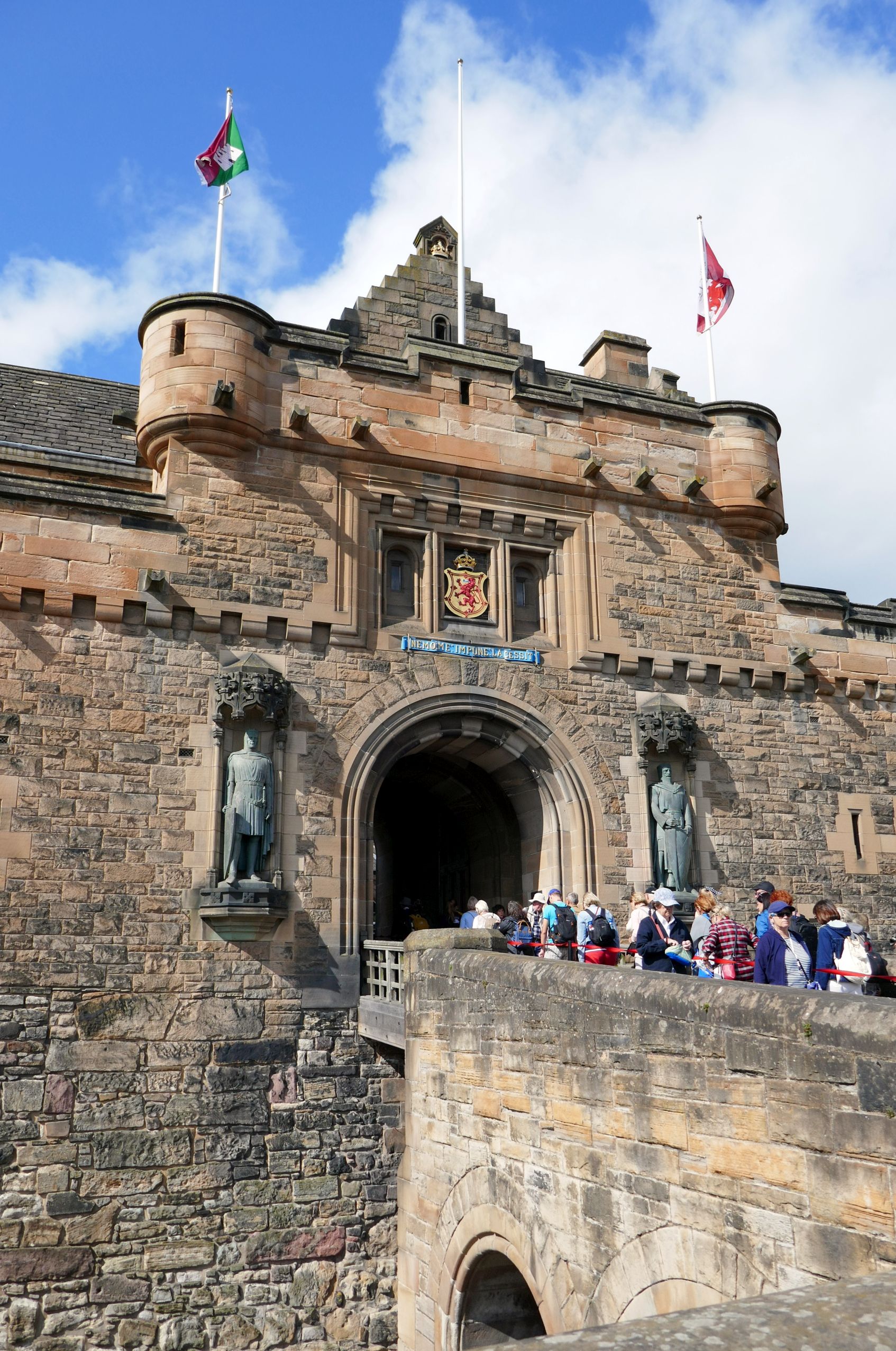
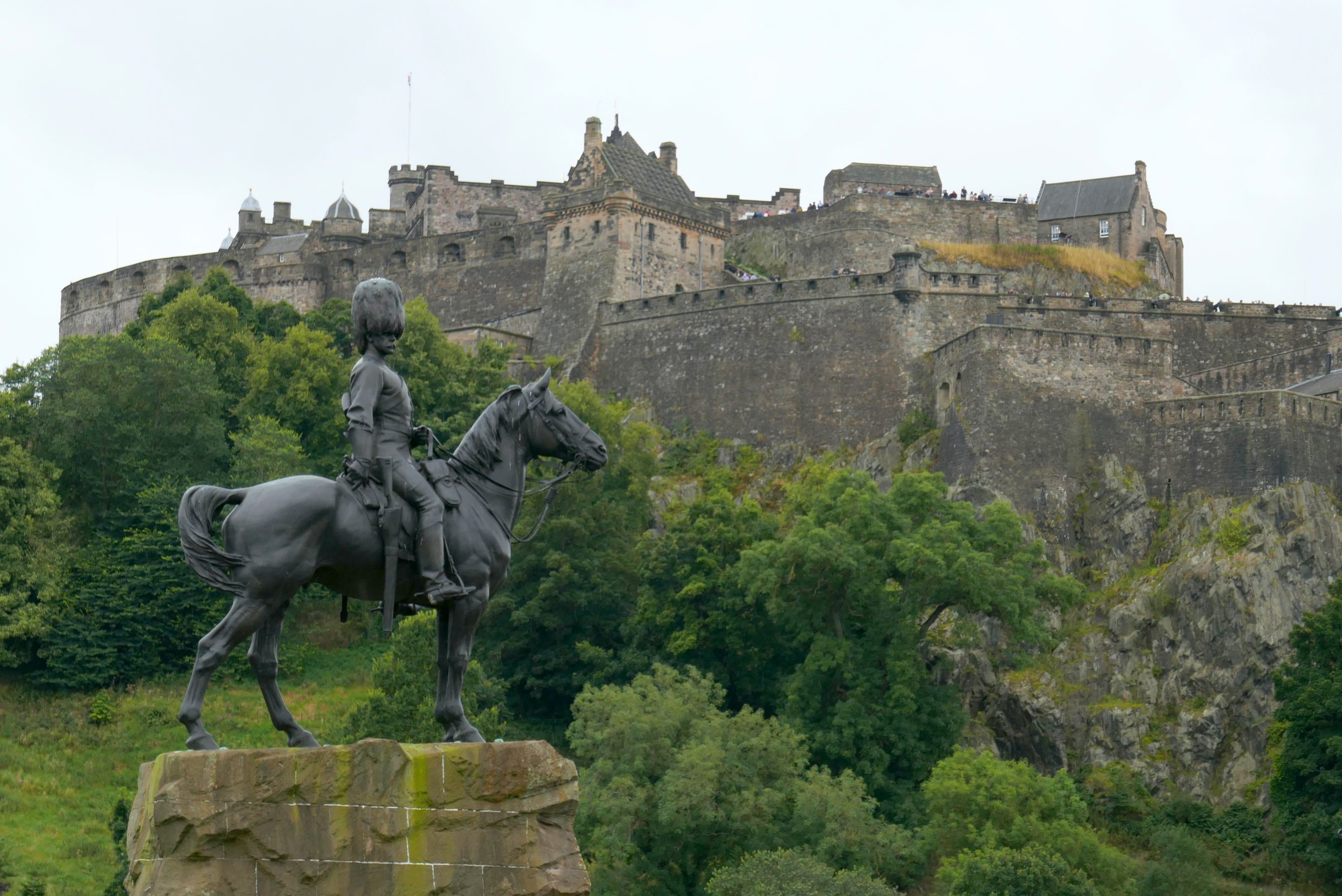
Edinburgh Castle
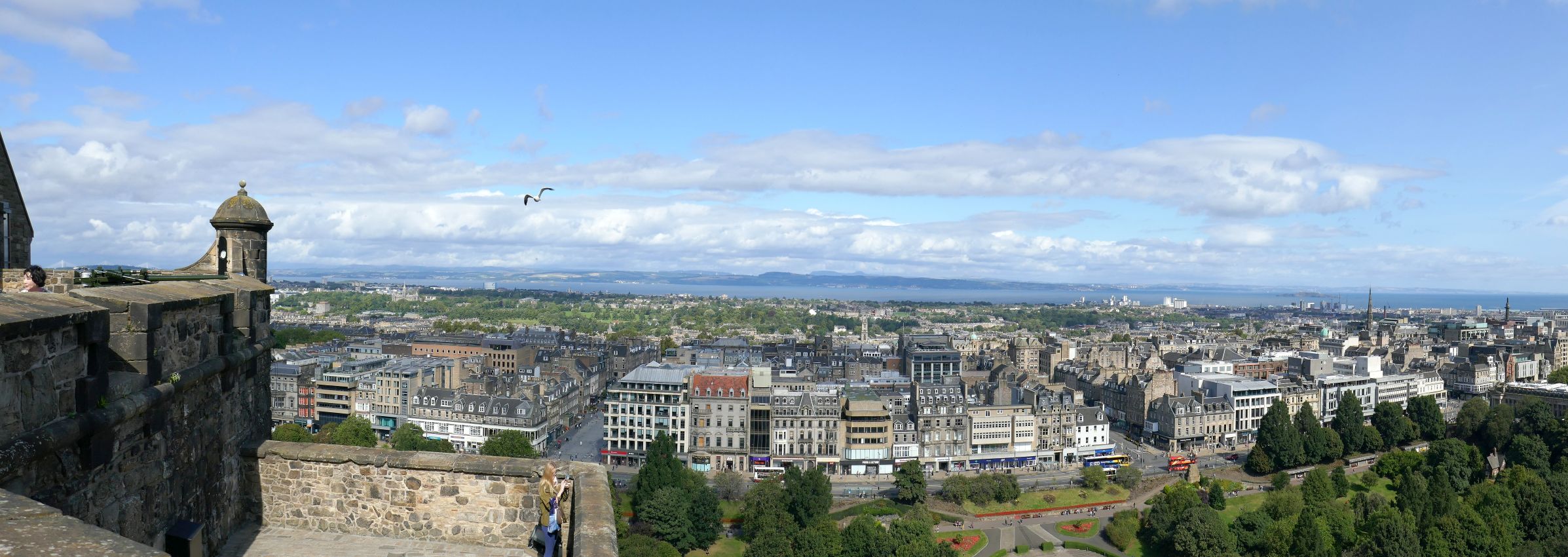
The view from the castle looking down on Edinburgh
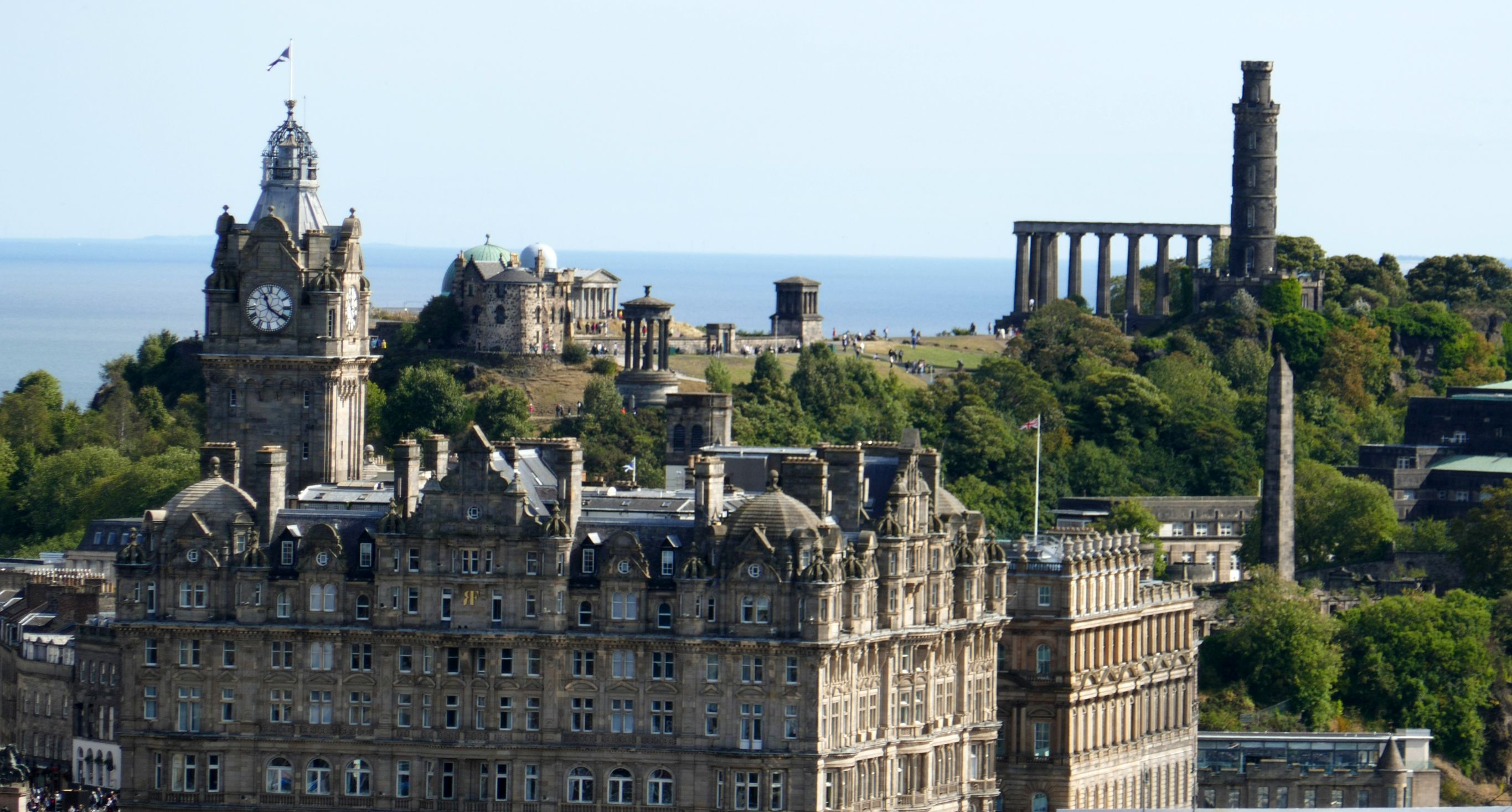
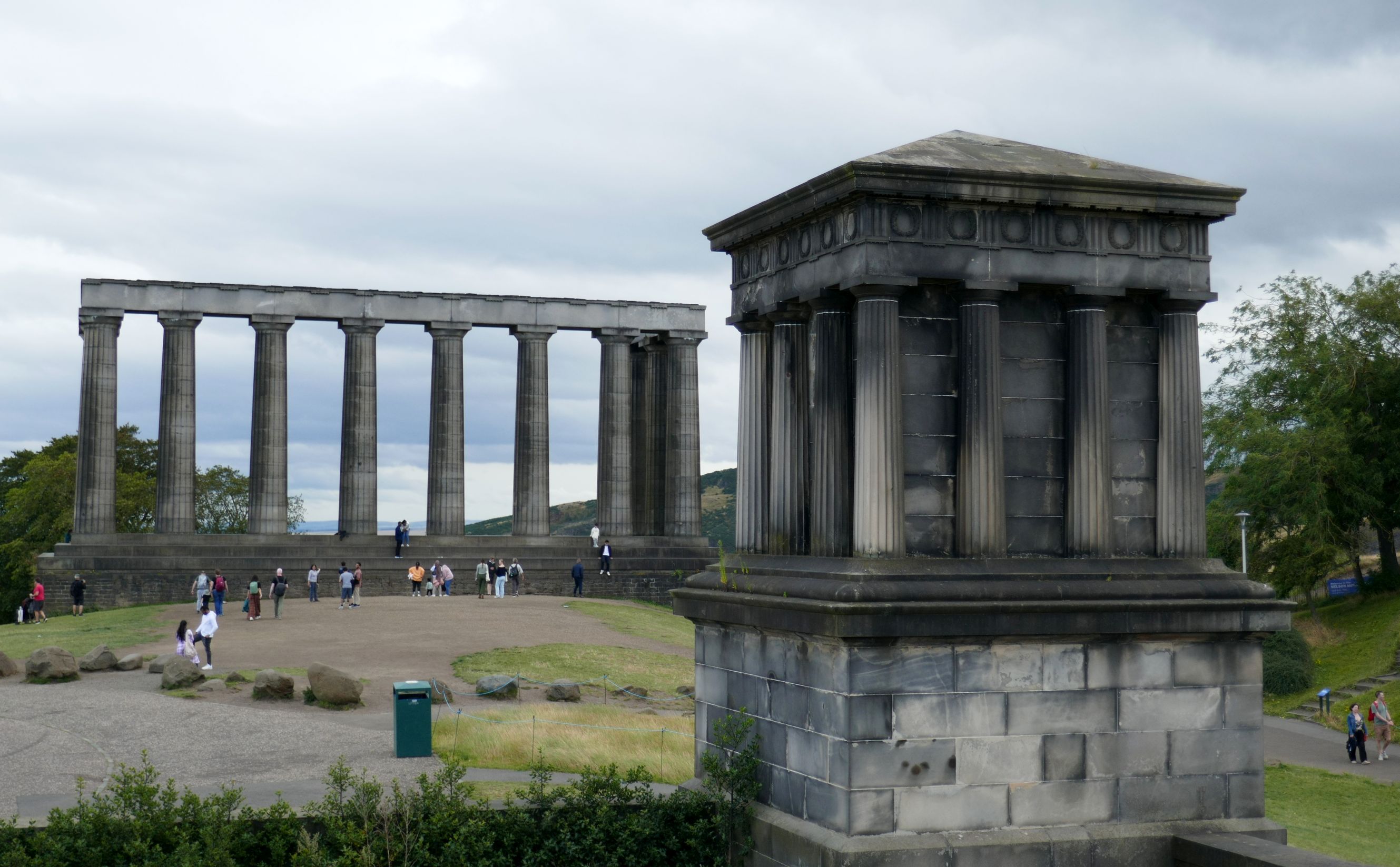
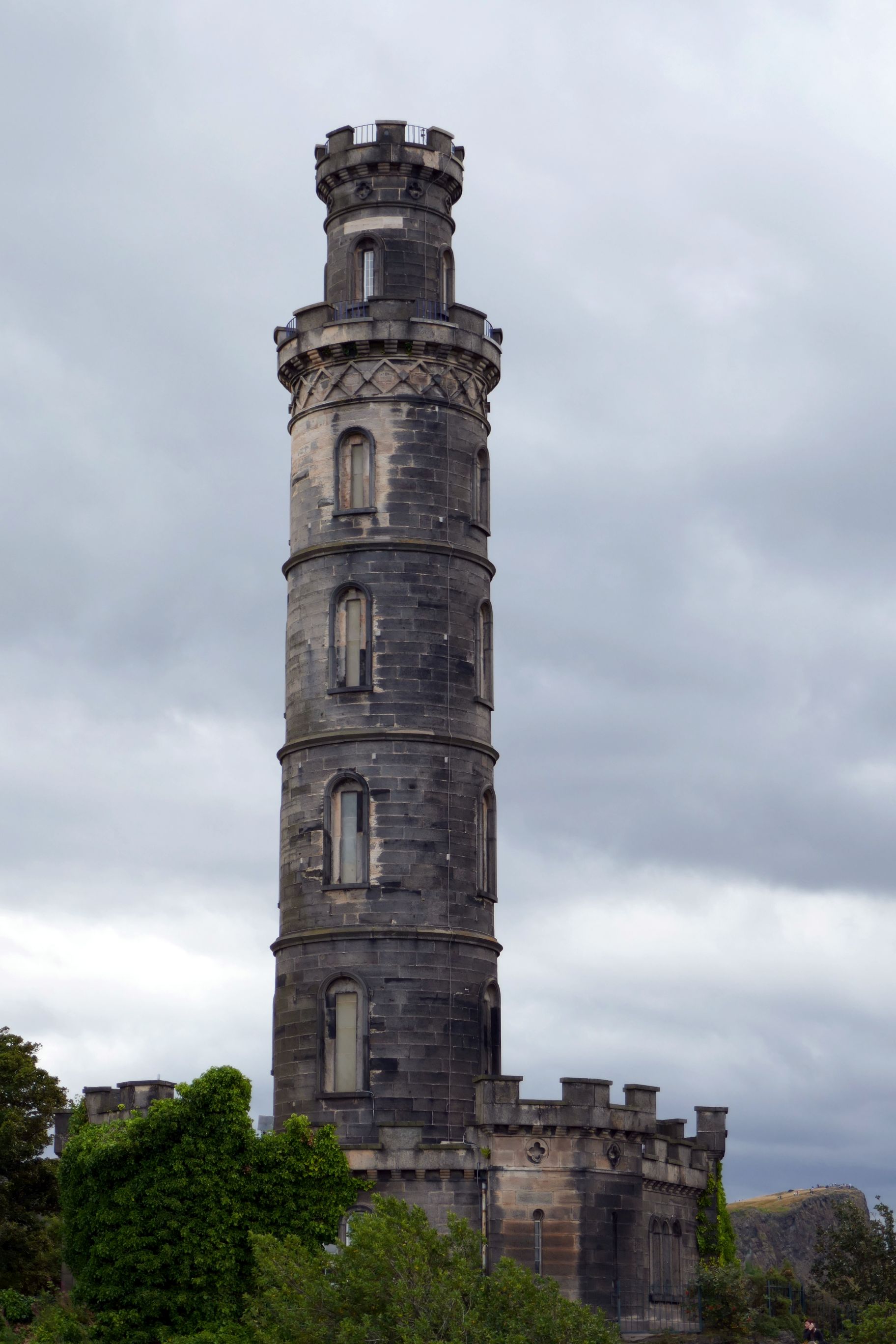
Victoria StreetCalton Hill
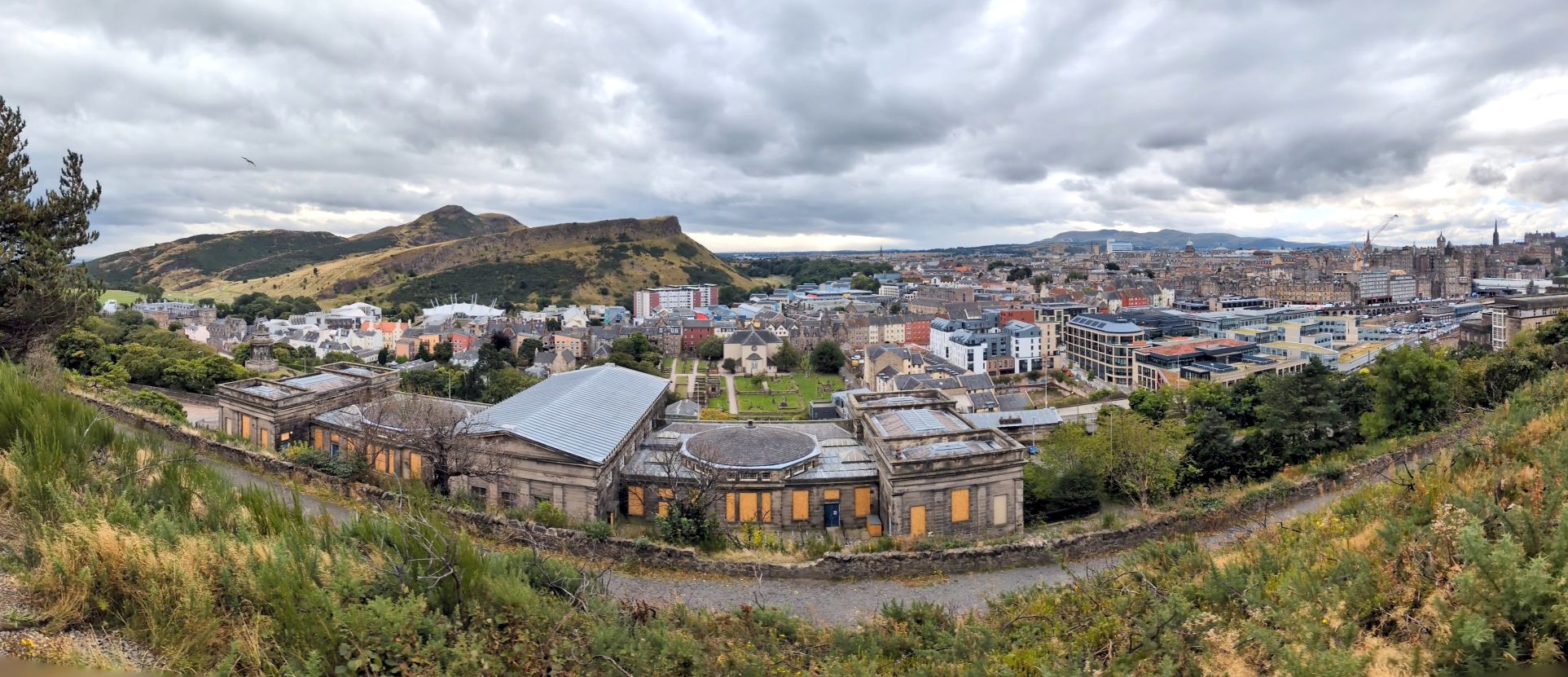
The view from Calton Hill to Arthur’s SeatHolyrood Palace
As always on an OAT tour, we experienced a home-hosted meal, and on this itinerary we visited a home in Edinburgh. We were hosted by a lovely young couple, Ashley and Ian, and Ian’s father, Ross, a cool guy who shared our taste in music. The dinner was at Ross’s home, but Ashley and Ian did the cooking. They are working towards growing their catering business to eventually opening a vegan restaurant, so they tried out some recipes on us. I especially enjoyed the dessert—chocolate mousse made with 350 grams (12 ounces) of silken tofu, 150 grams (5.3 ounces) of dark chocolate, and 3 tablespoons of maple syrup. Whip it up in a food processor and chill! How easy is that?
You can’t tell by these pictures, but this was the day our luck with weather ran out. It was bitterly cold and windy, and at one point while we were at Hadrian’s Wall, we all gave up on our local guide and asked if we could go back to the bus to listen to the rest of his talk. I didn’t wait that long; I was already on the bus by the time the rest of the group followed my lead.
(For all photos, click on the image for a full screen view.)
Thankfully, the blustery cold was a one-and-done. The weather was (mostly) fabulous (by U.K. standards) the remainder of our trip!
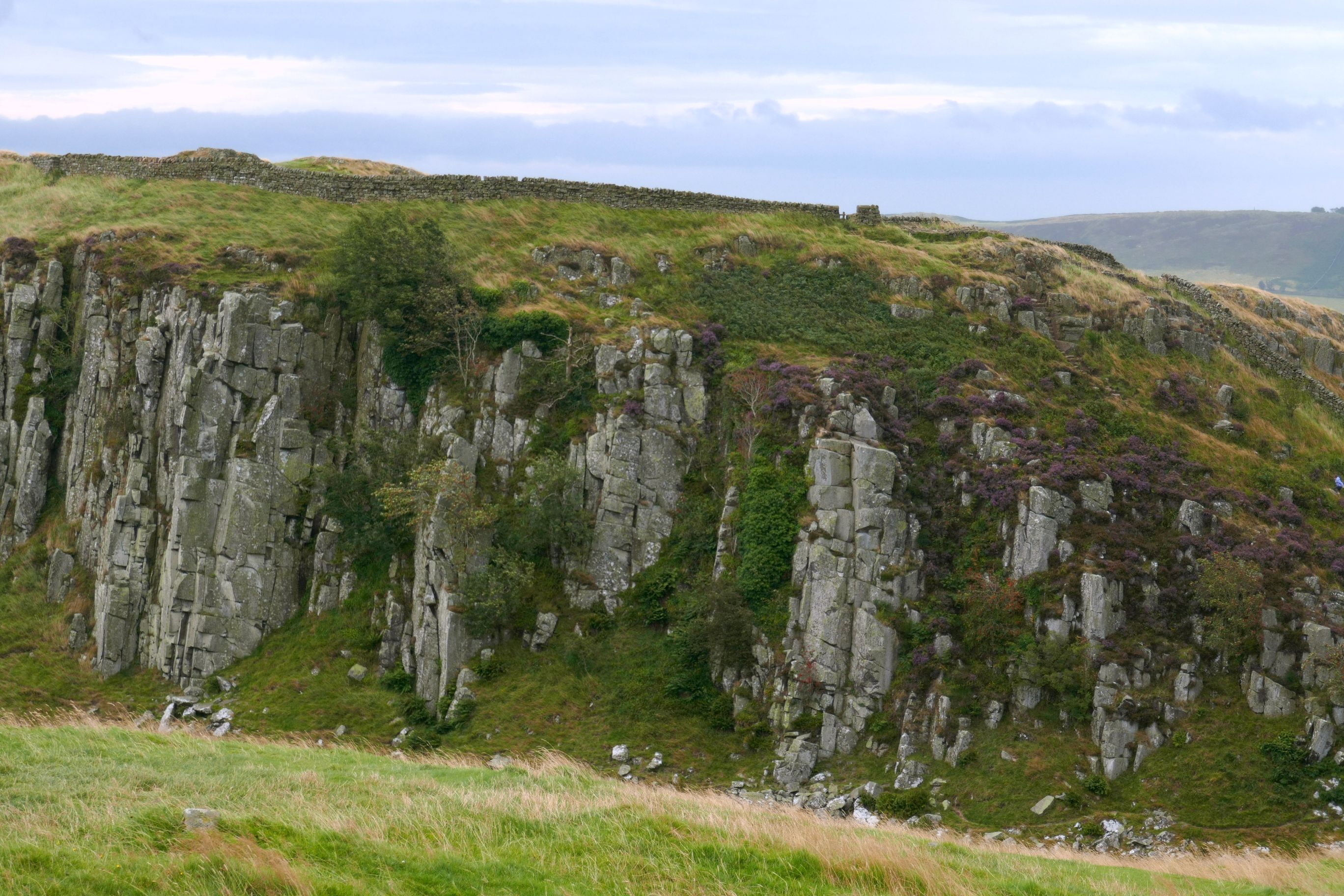
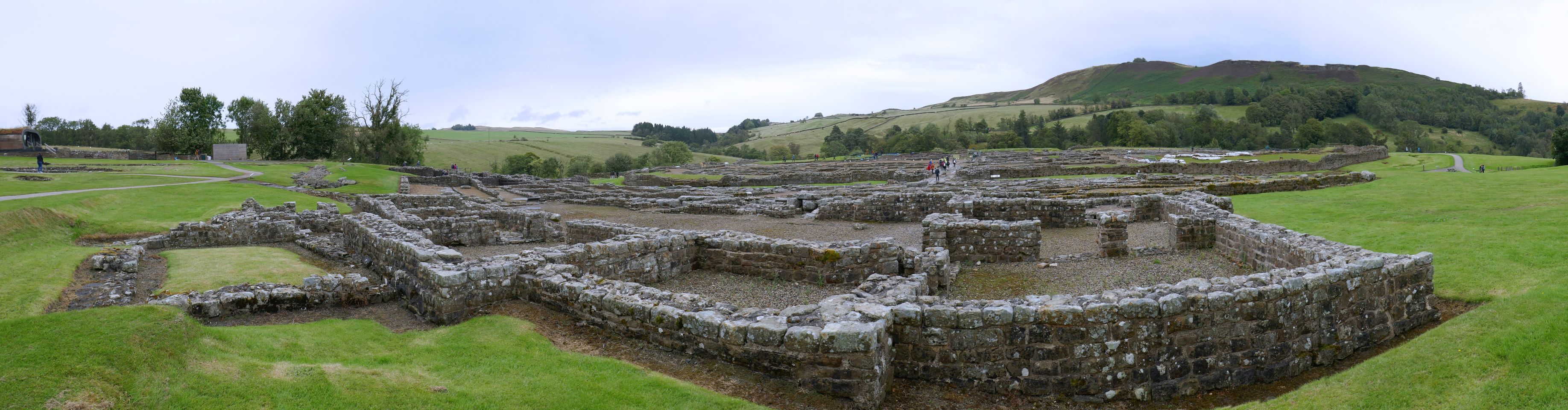
Back to Hadrian, he was a Roman emperor from AD 117 to 138 and the first ruler to divide Britain. The wall he had built (I’m sure he didn’t lift a finger) beginning in AD 122 was a 73-mile-long stone defensive fortification that runs east to west. It is now a UNESCO World Heritage Site.
It amazed me that so many centuries ago, this barricade was just part of a multi-cultural military zone comprised of forts, barracks, towers, and small towns.
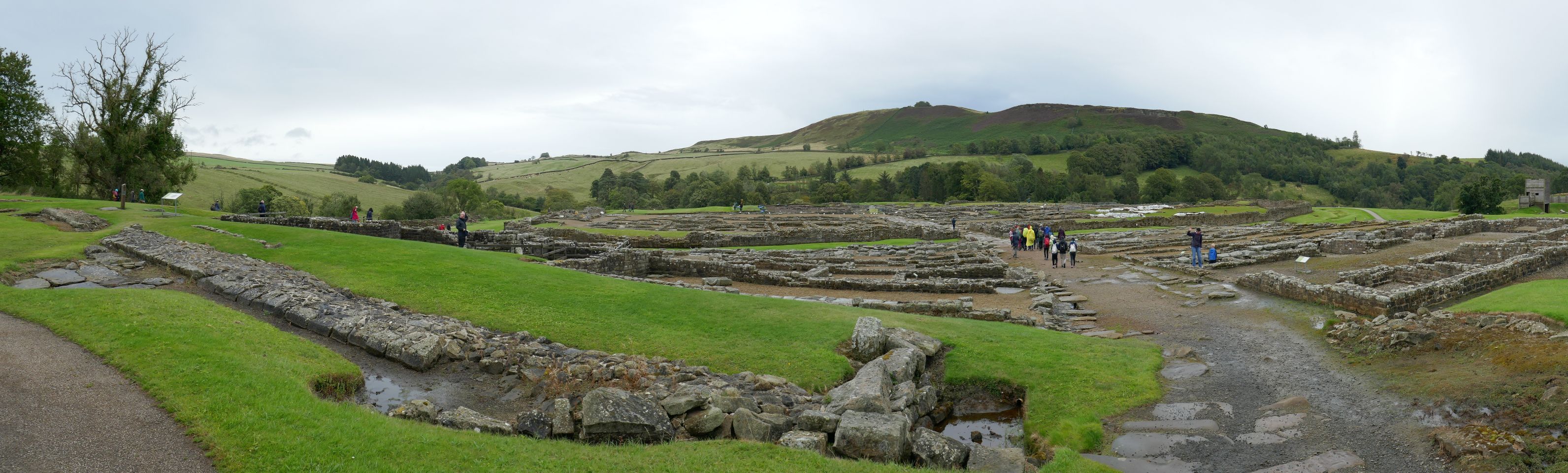
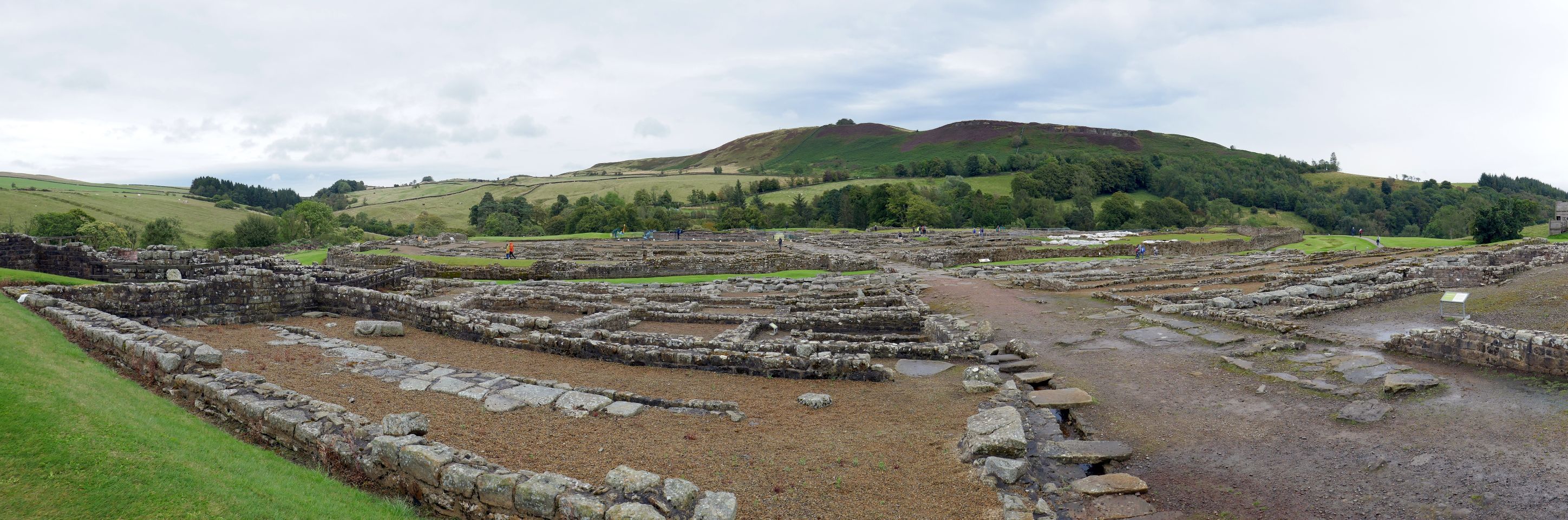
After we thawed out, we visited Vindolanda, near Hadrian’s Wall. It was a Roman auxiliary fort that dates back 40 years prior to Hadrian’s Wall and was occupied until around AD 370. It is considered one of Europe’s most important ancient Roman archaeological sites.
Ongoing excavations have unearthed many amazing artifacts which we were able to see in the adjacent museum—a welcome reprieve from the cold!
Vindolanda has the largest collection of leather items found anywhere in the Roman empire.
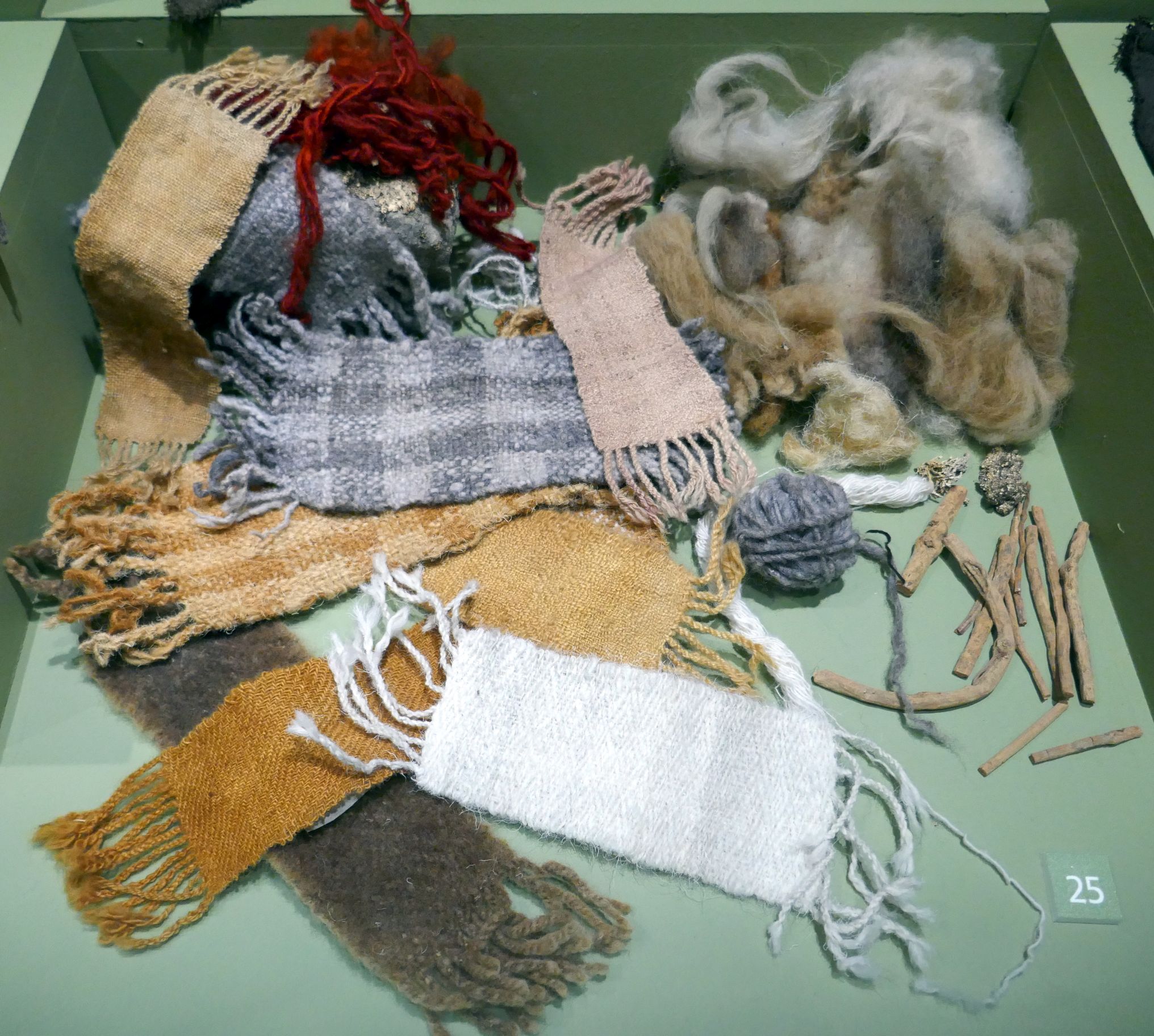
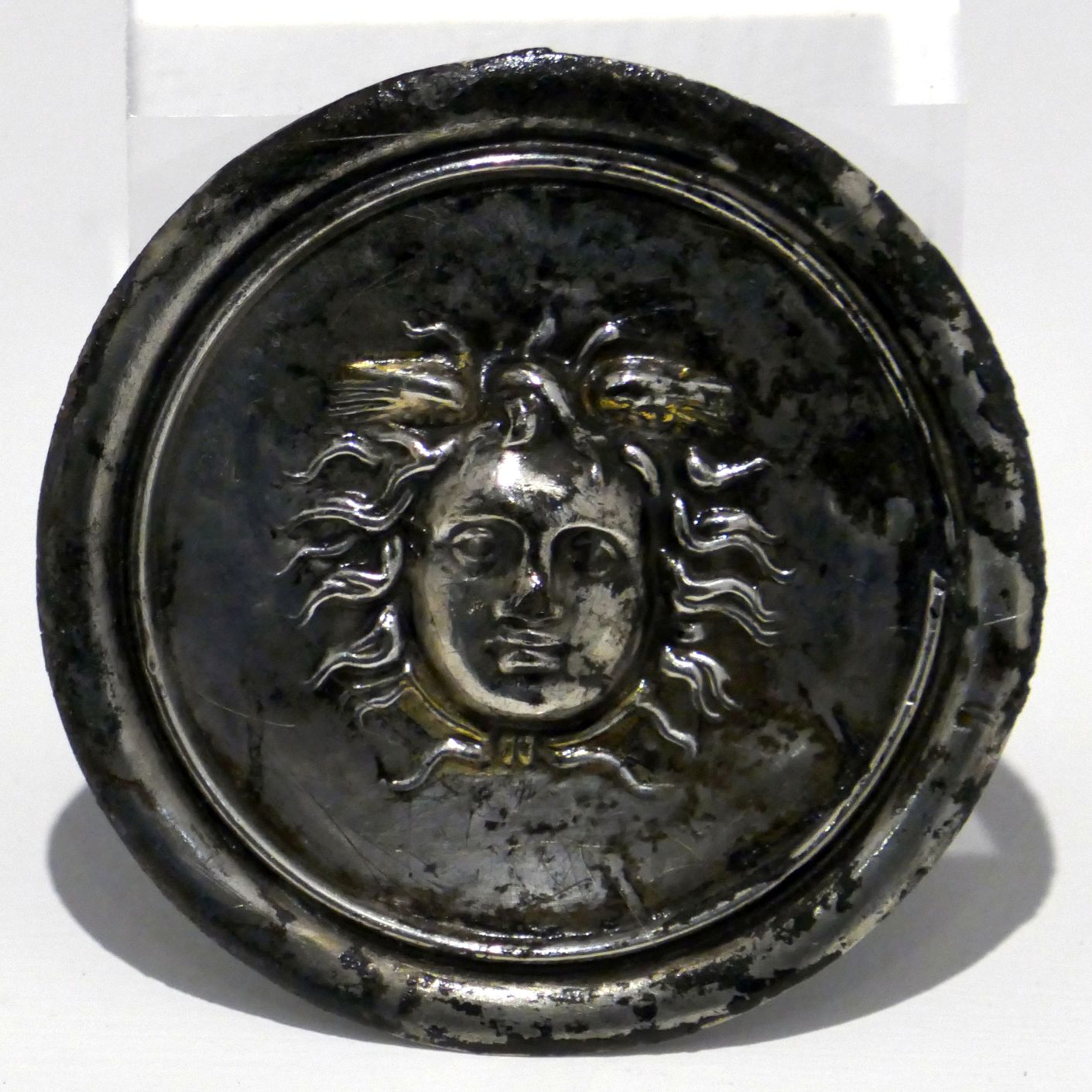
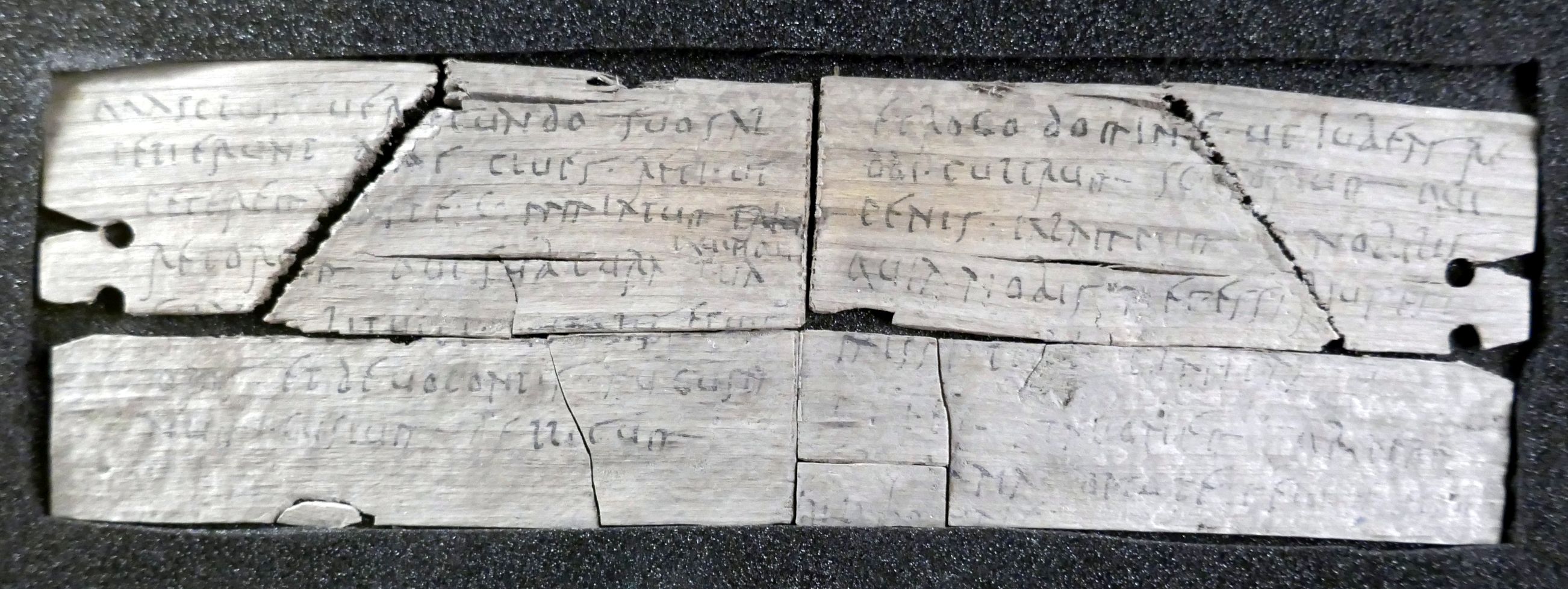
Some of these coins date back to 100 BC! The Romans used a variety of different dyes and chemical treatments to color their textiles. The root of the madder plant was used to produce red dye and lichen was used for purple. A variety of tree barks, lichens and heathers were used for yellow dye. Thanks to the ground conditions at Vindolanda, these textiles survived where they would have completely decayed anywhere else after so many centuries. This is a silver military award depicting Medusa and dates back to AD 105-120.The Vindolanda tablets have been voted Britain’s Top Treasure by the British Museum.
Next, we continued our drive to Edinburgh, Scotland, the subject of my next post:
(For all photos, click on the image for a full screen view.)
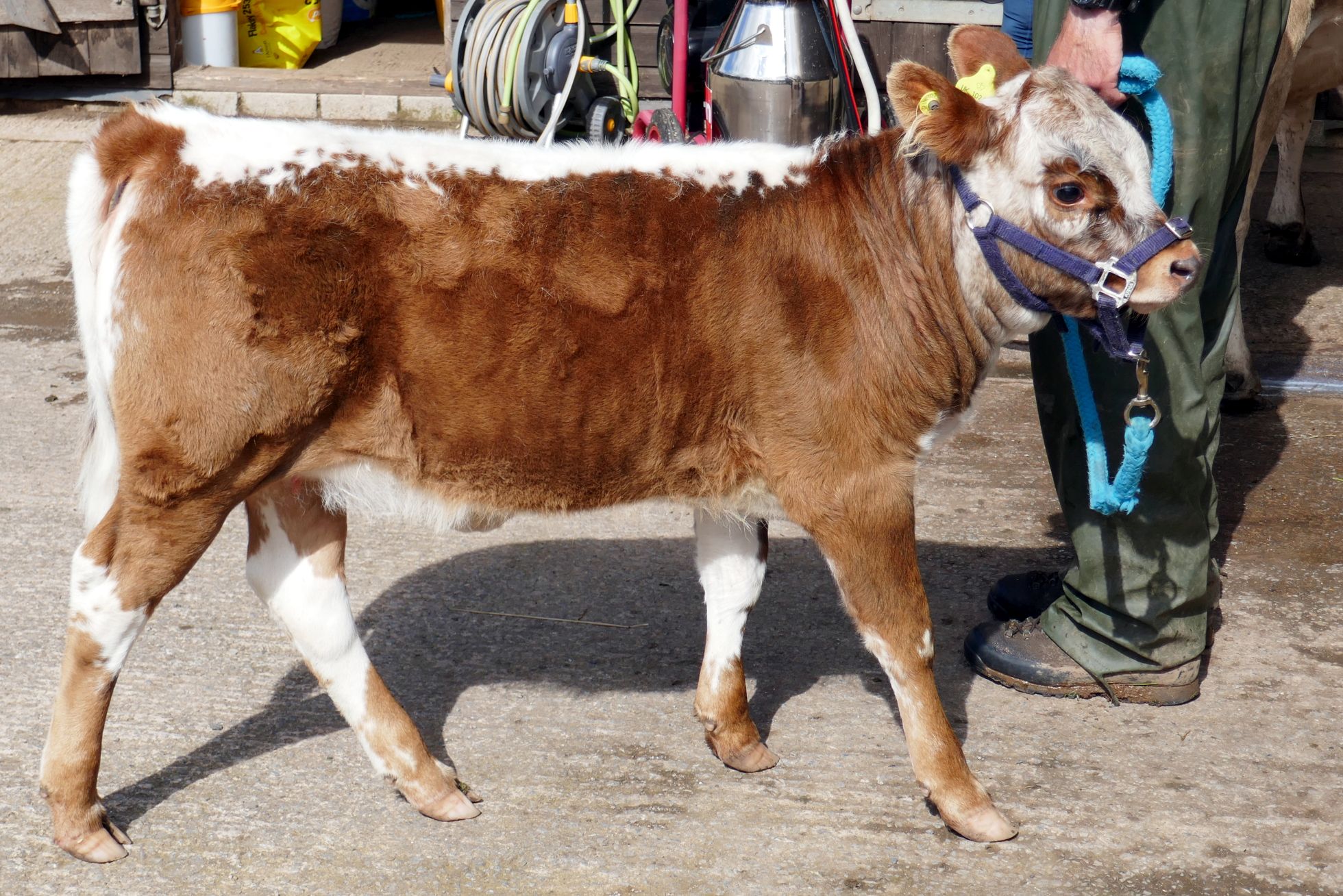
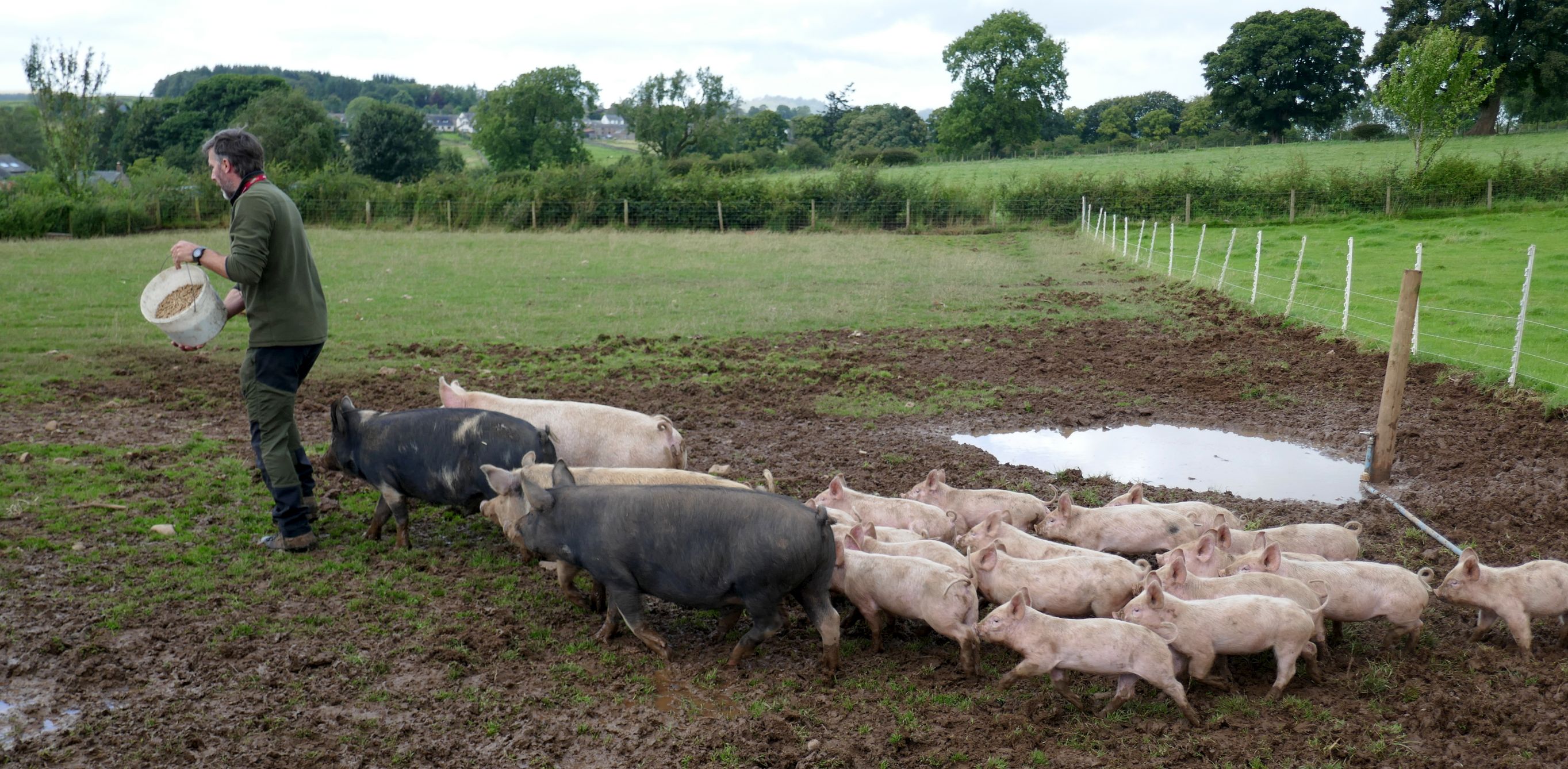
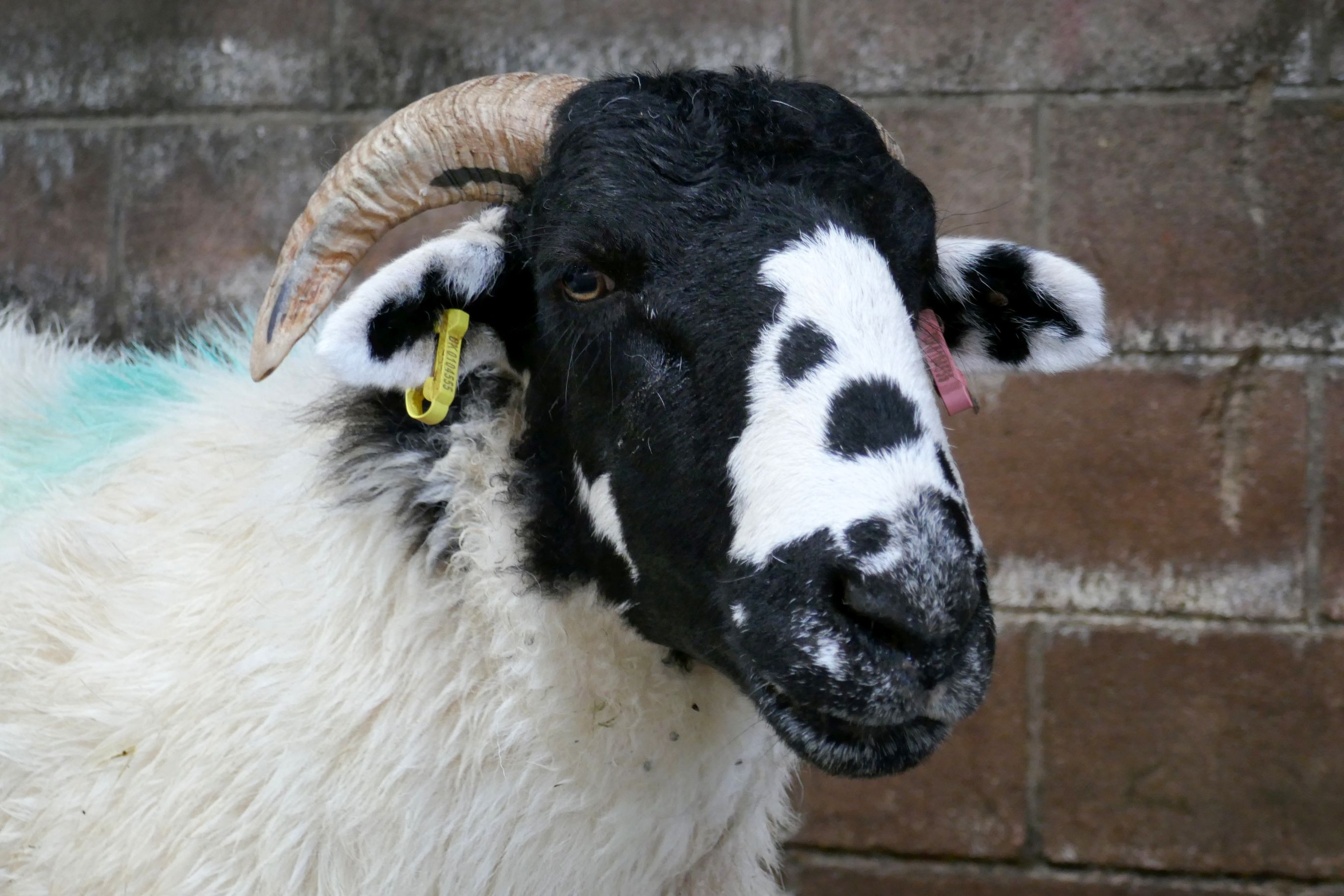
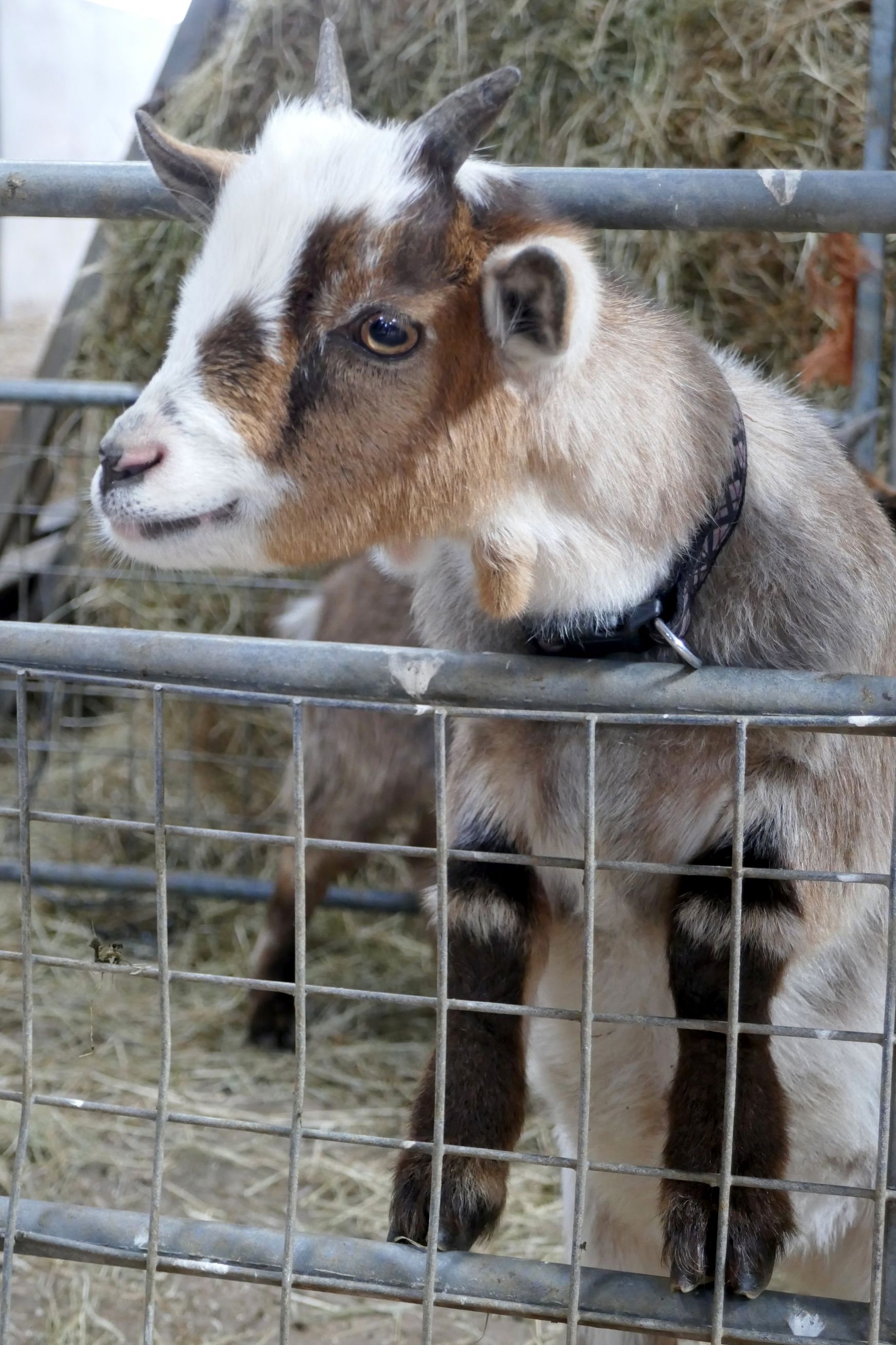
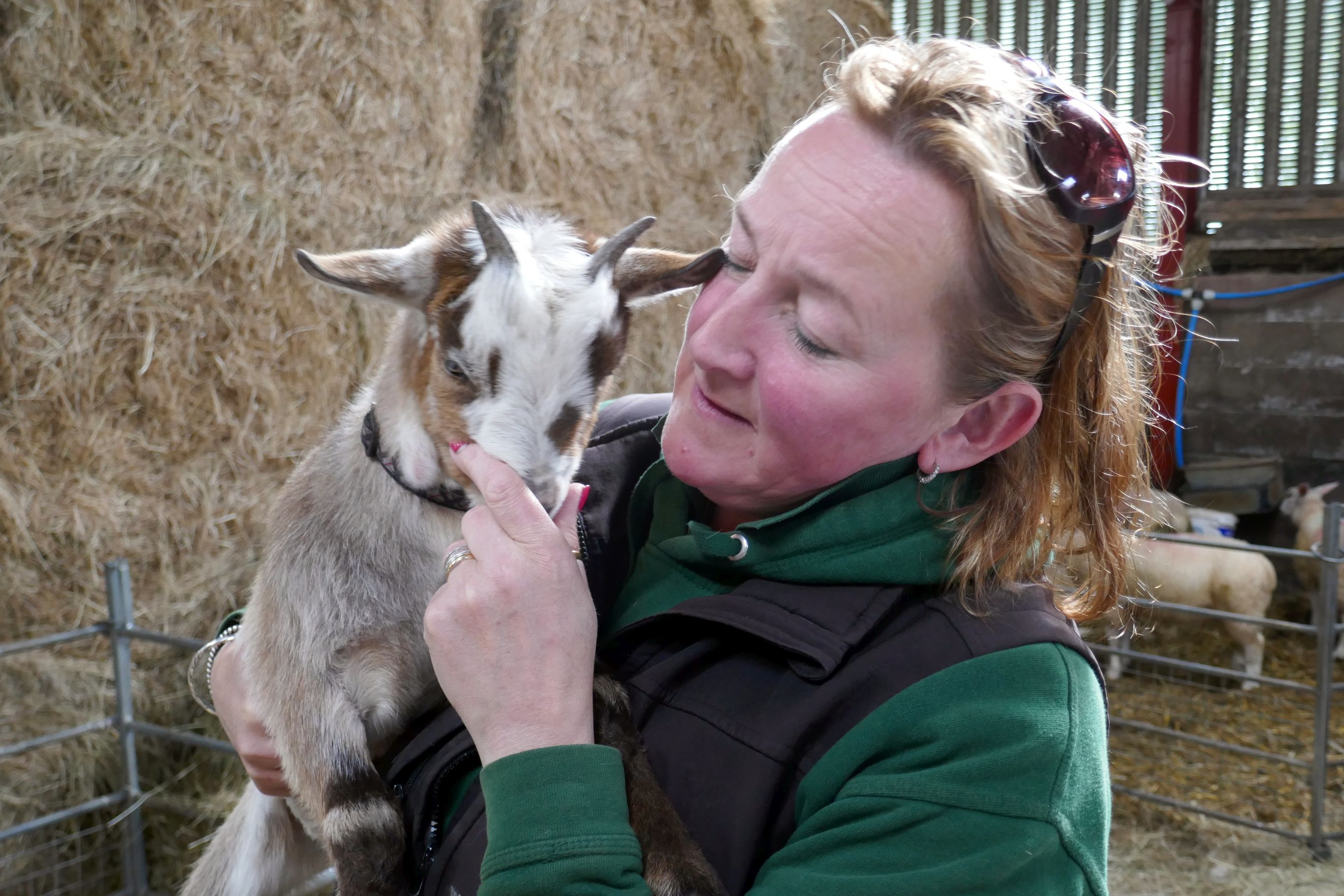
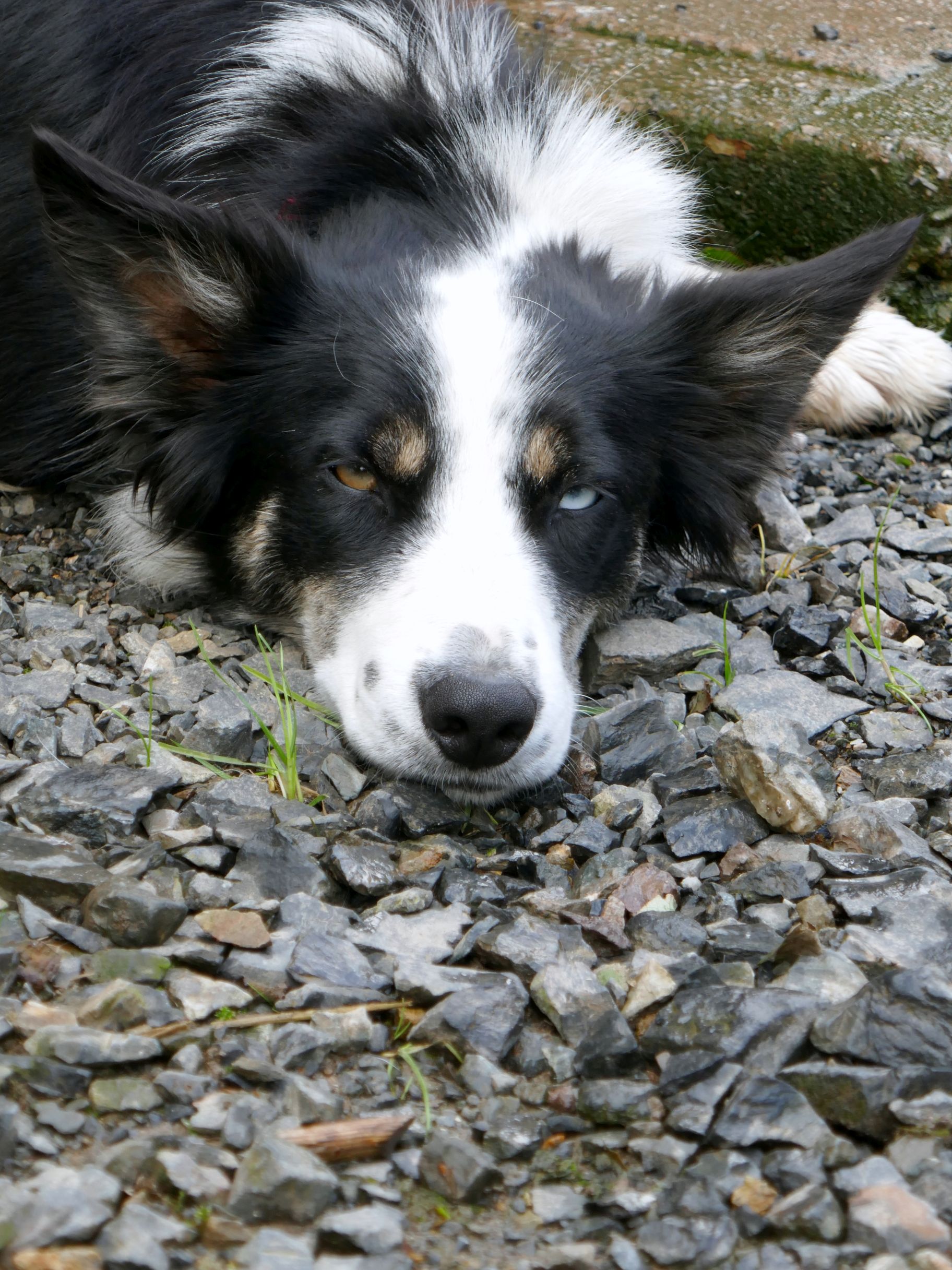
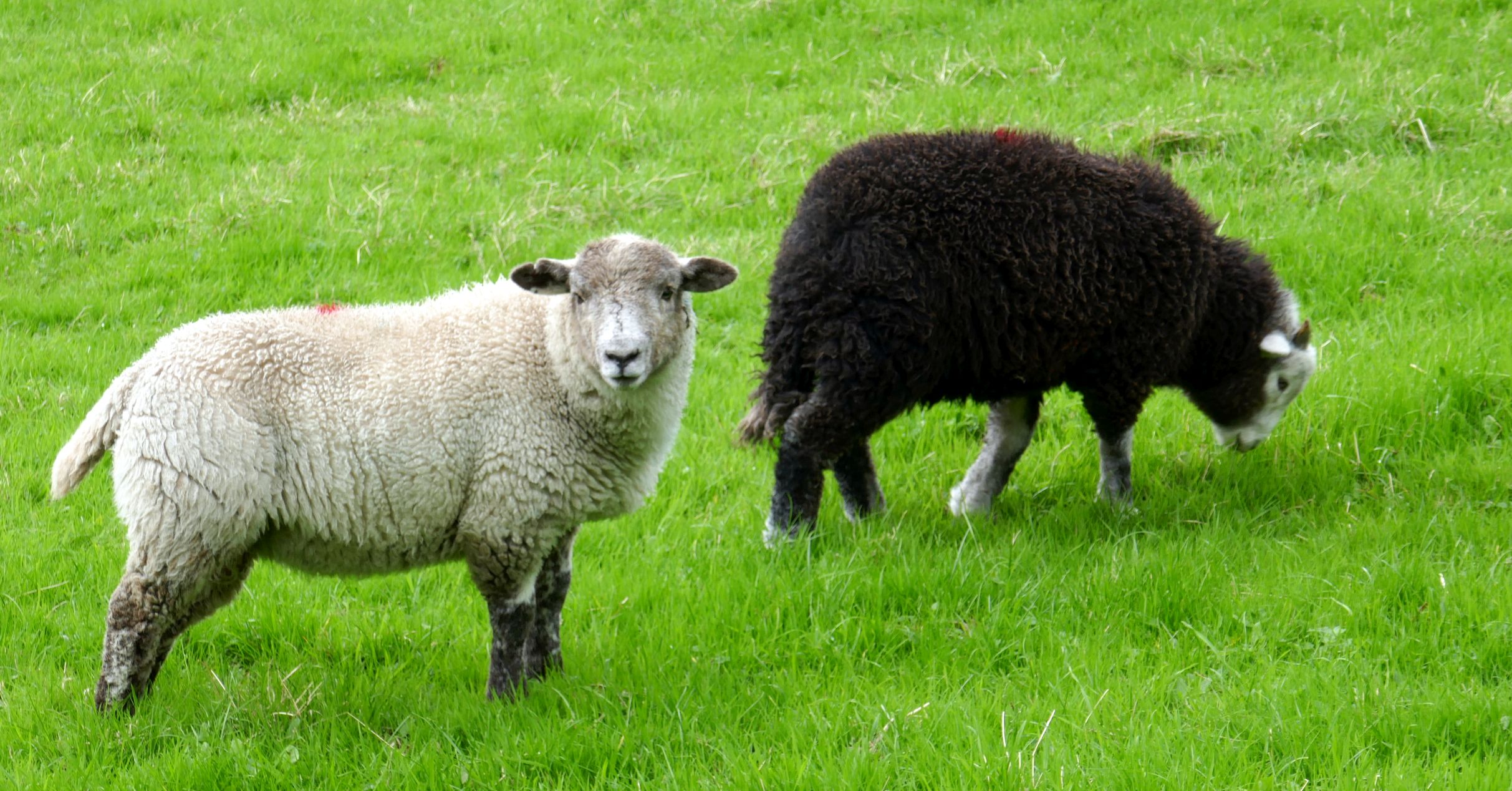
Their story is an interesting one. They are first generation farmers by choice rather than inheritance like many other farmers. Farming is a passion for the Millers and their four kids. They have 600 sheep (which produce about 400 lambs each season), 11 sheep dogs, 6,000 free range hens for egg production, cattle, pigs, horses, and beehives.
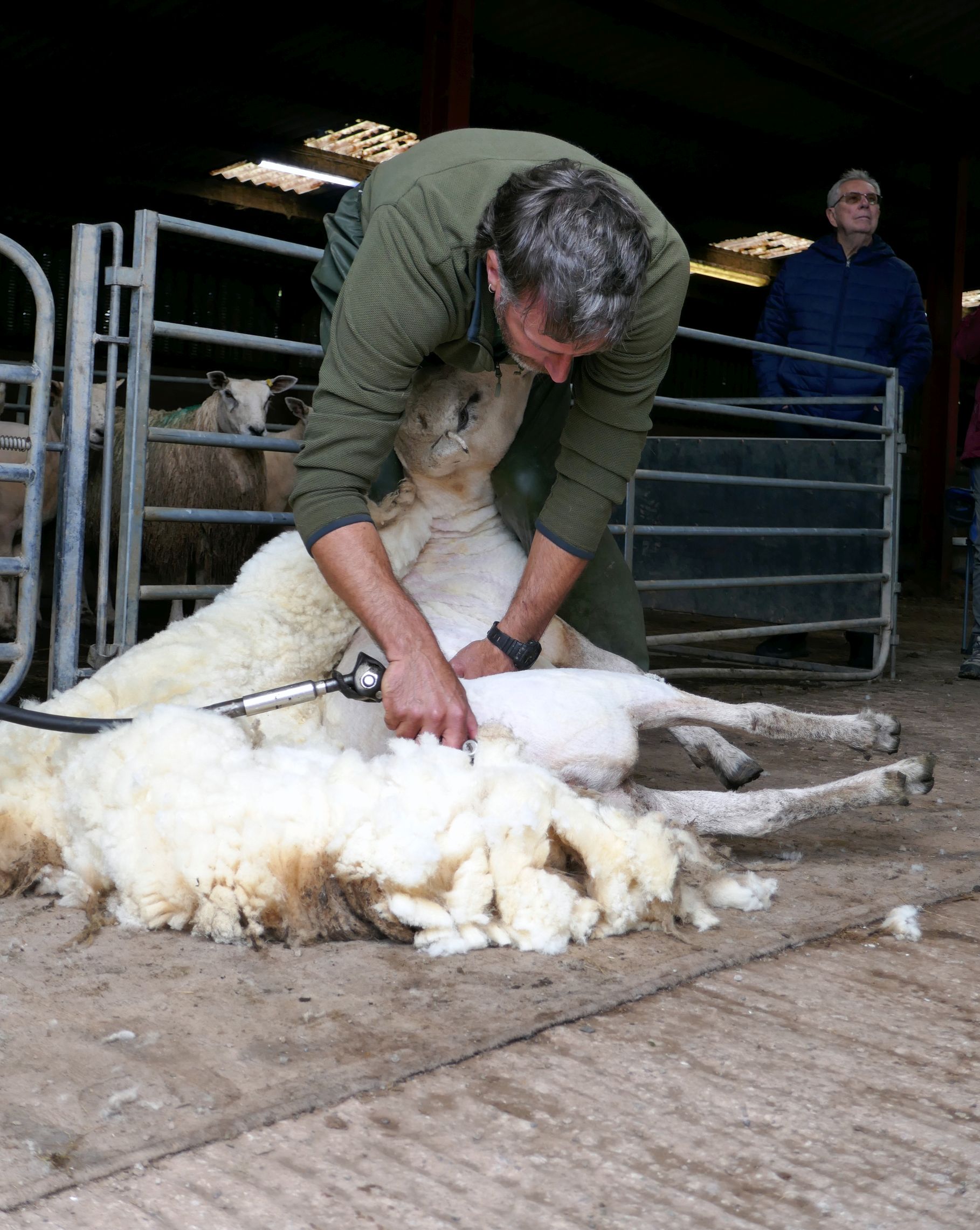
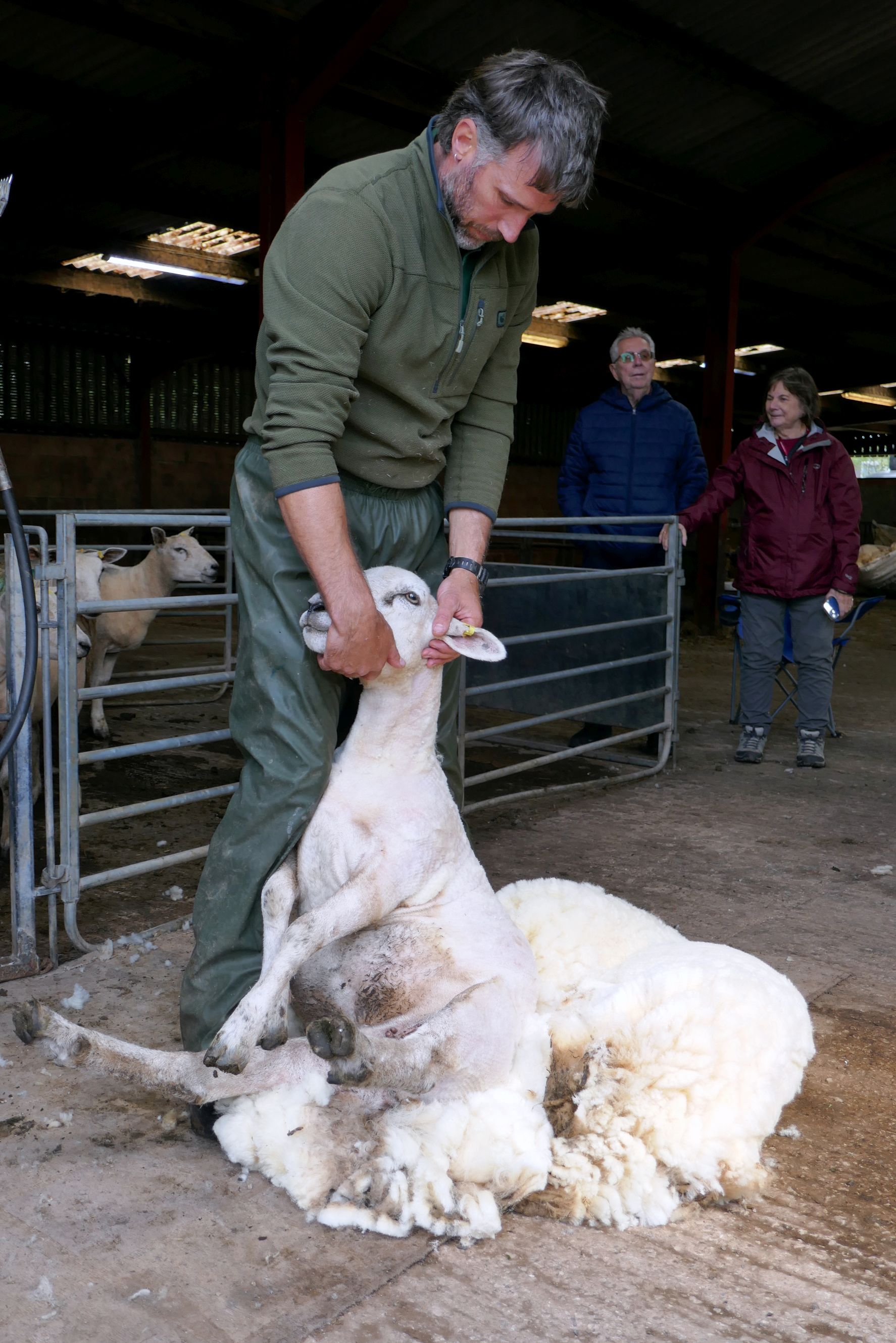
While touring the farm and meeting their animals, Gary demonstrated how he shears his sheep. This guy looked quite naked after losing his full coat of wool!
Unfortunately, wool is no longer worth enough to sell (thanks to synthetics being used for clothing), so they raise their sheep for lamb, which is more lucrative.
Their eggs produced by the 6,000 hens are mostly sold to McDonald’s; however, they make more money selling them directly to the public at local farmers markets.
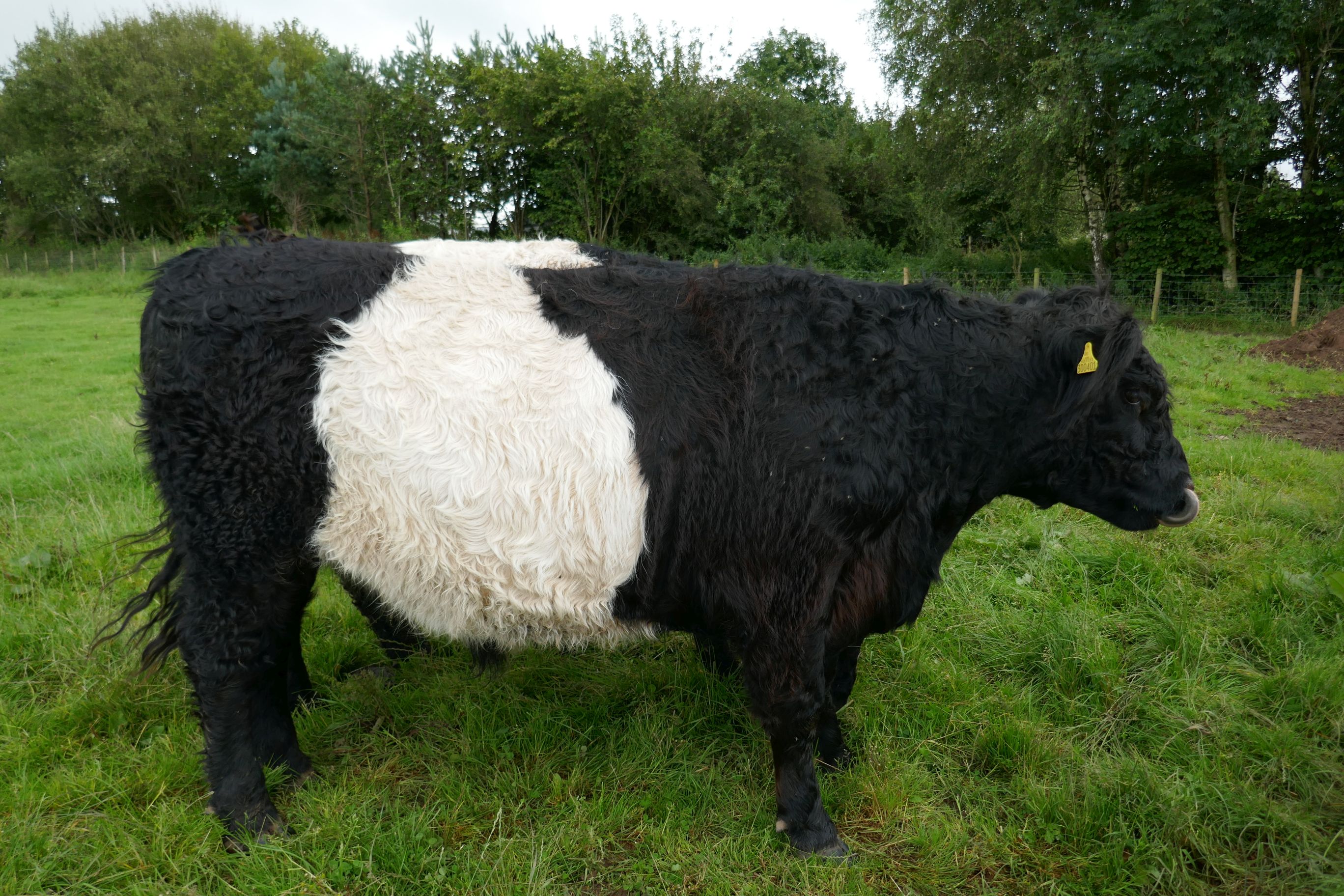
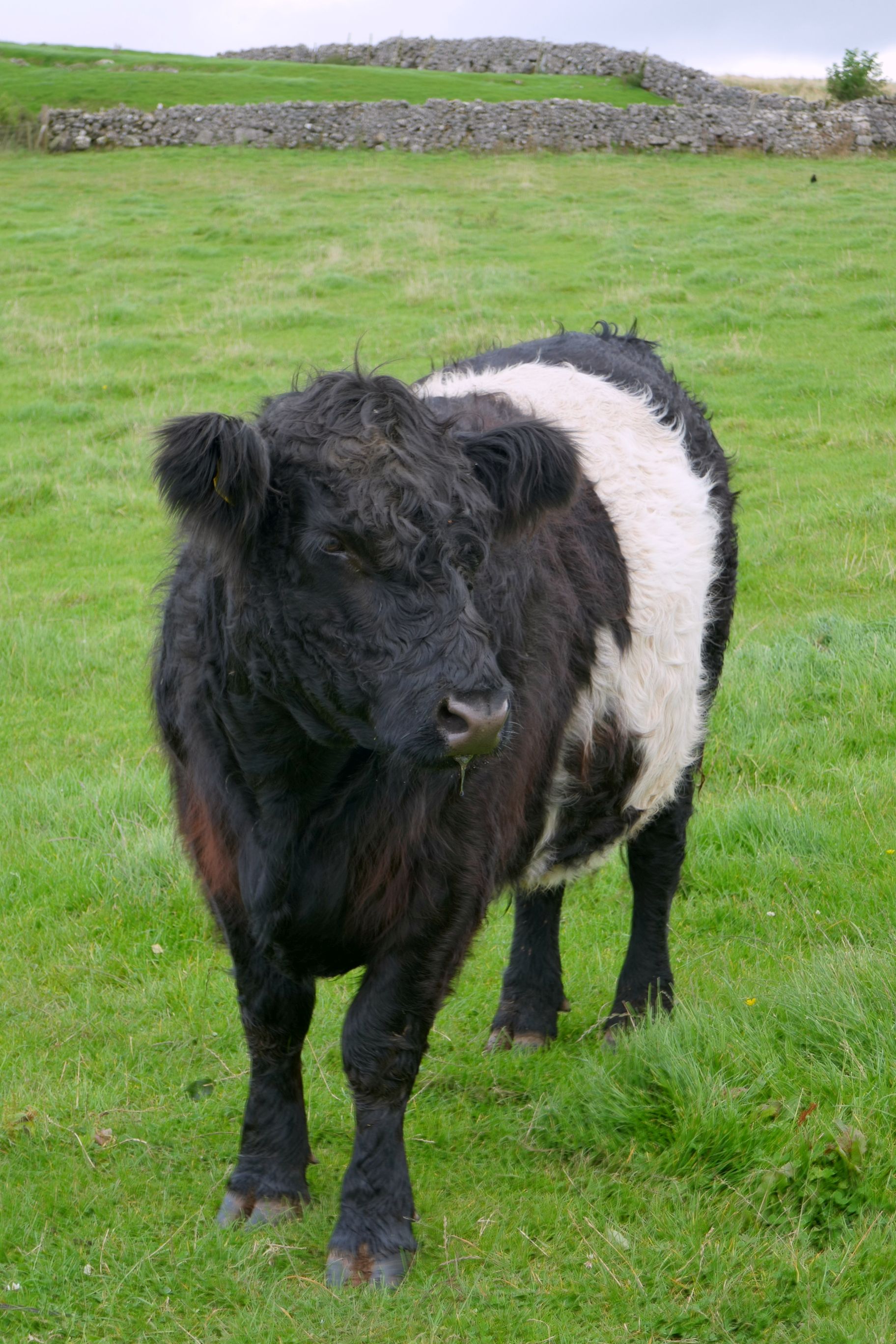
It was fun getting to meet all of their animals, including the Belted Galloway cows, better known as “Oreo” cows. I’m sure you can see why they got that nickname:
Gary’s wife, Hazel
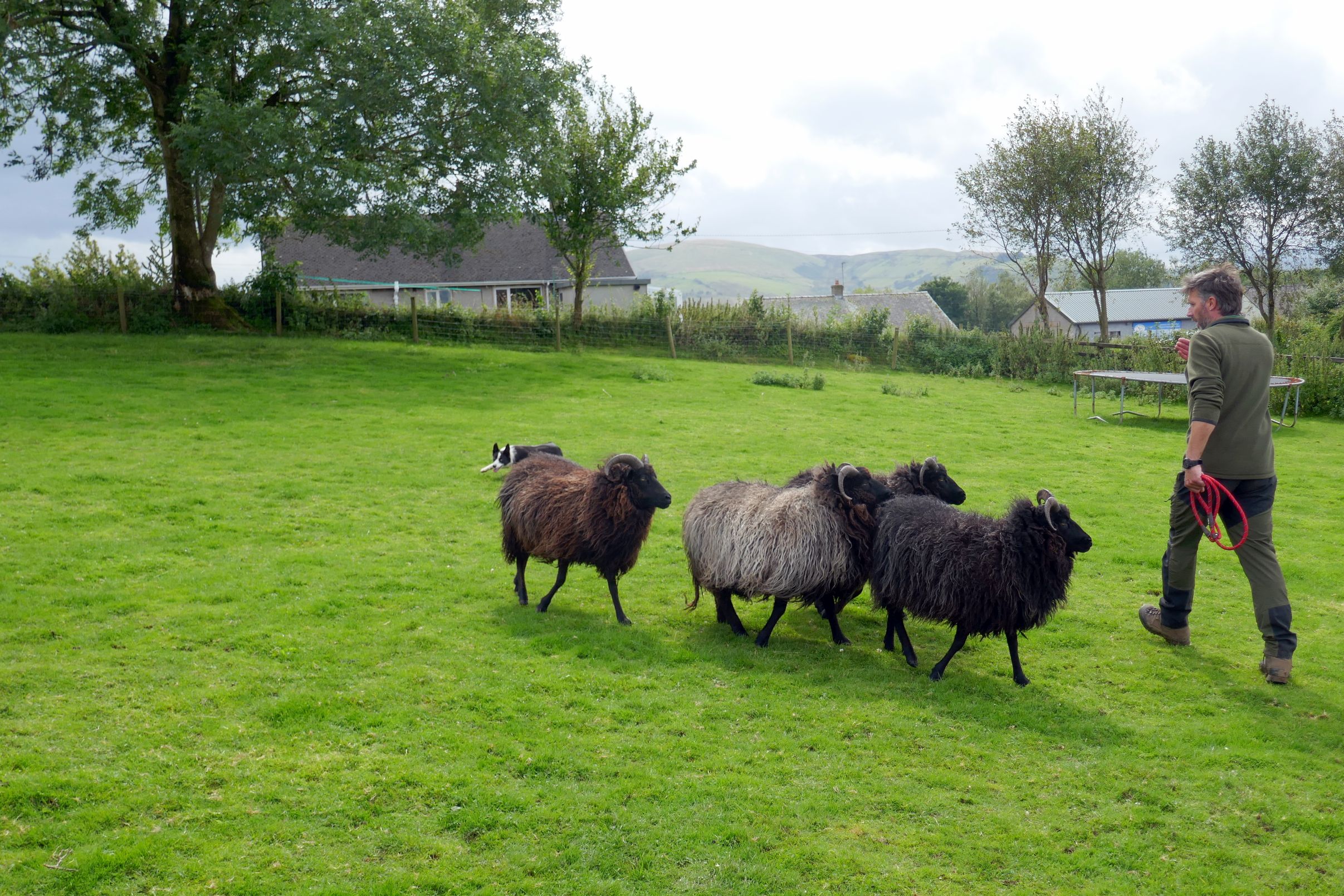
To diversify their income, they do farm tours and sheep dog demonstrations. Gary is also a plumber by trade and still does plumbing work, because it’s tough trying to make a living on just the farm alone.
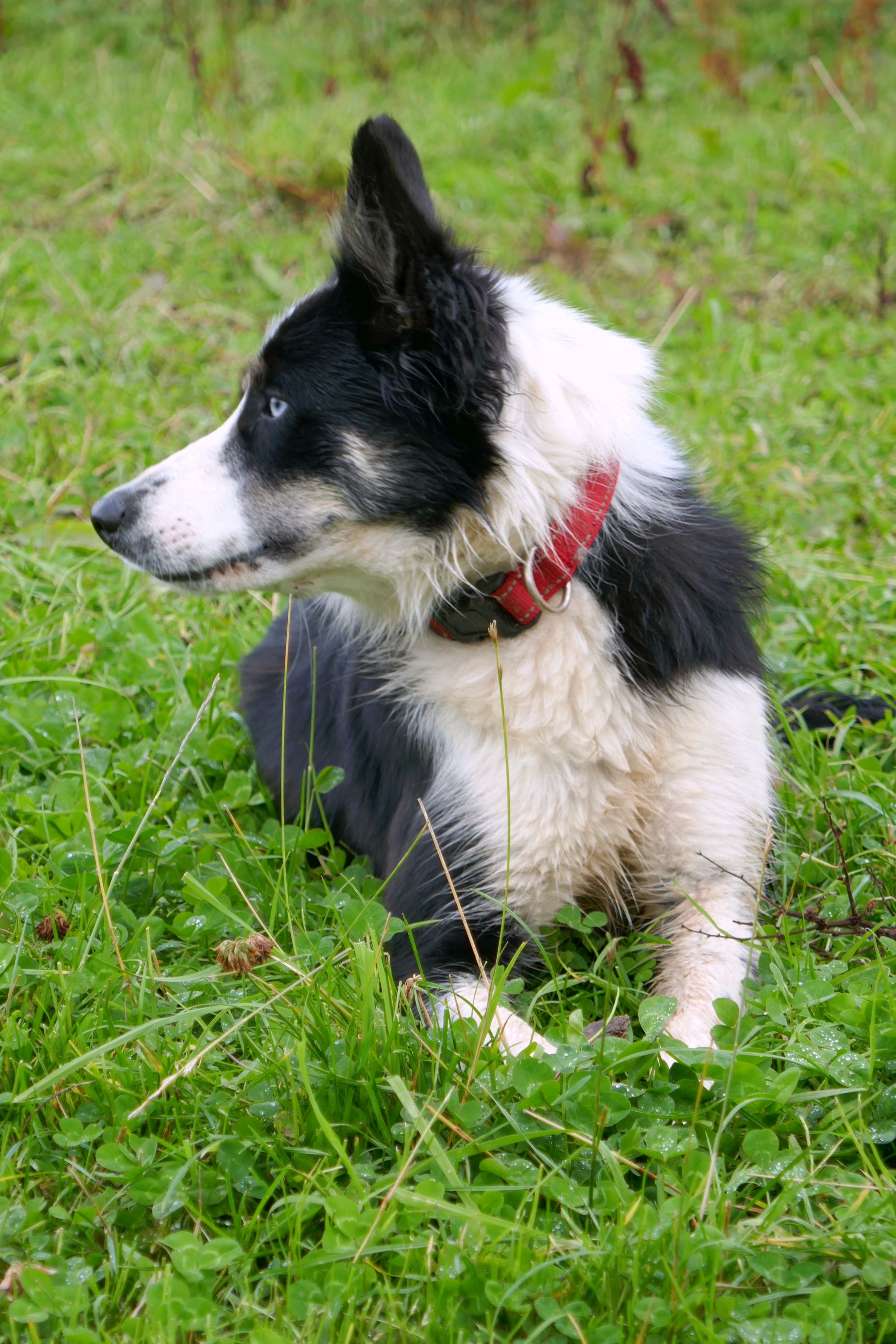
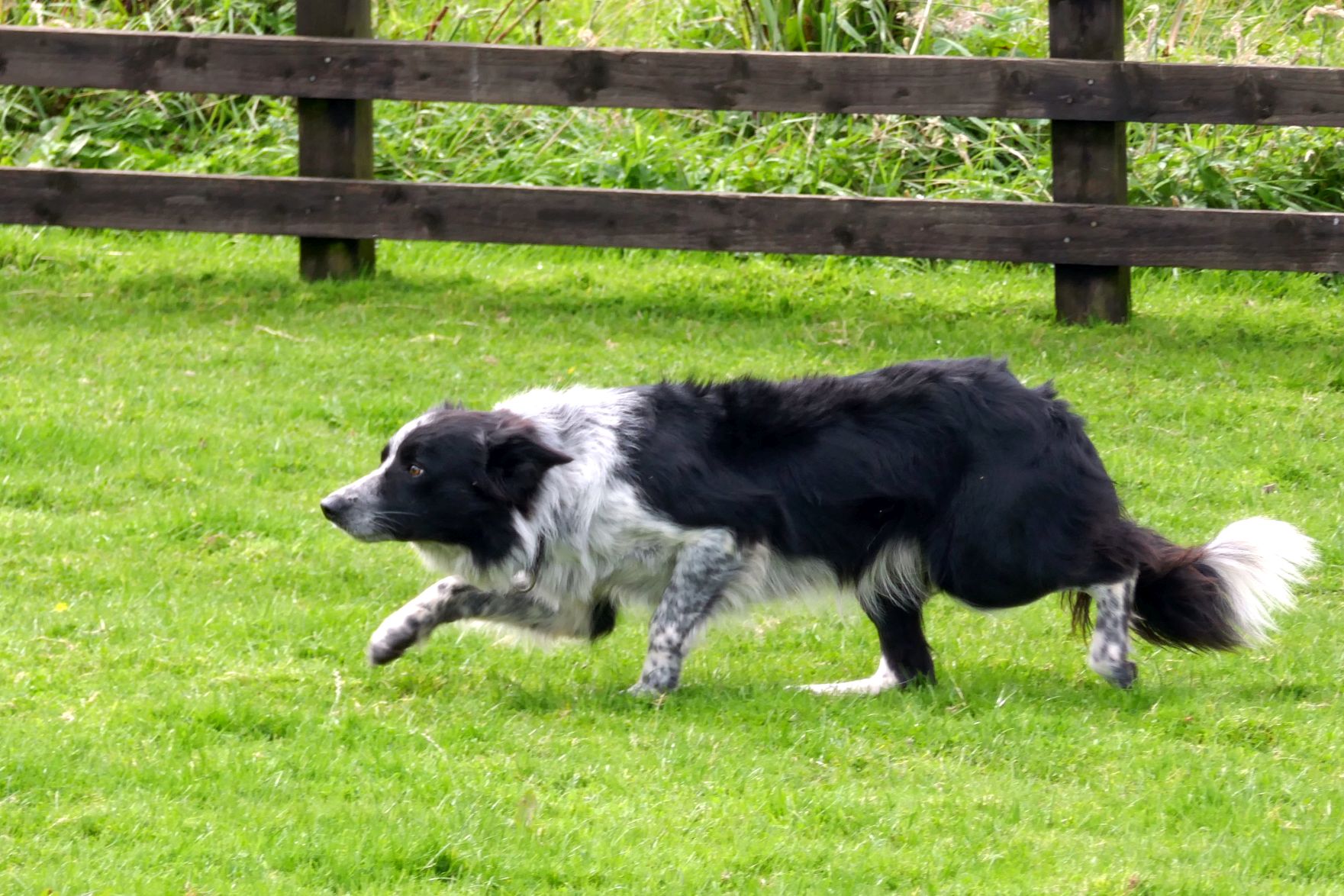
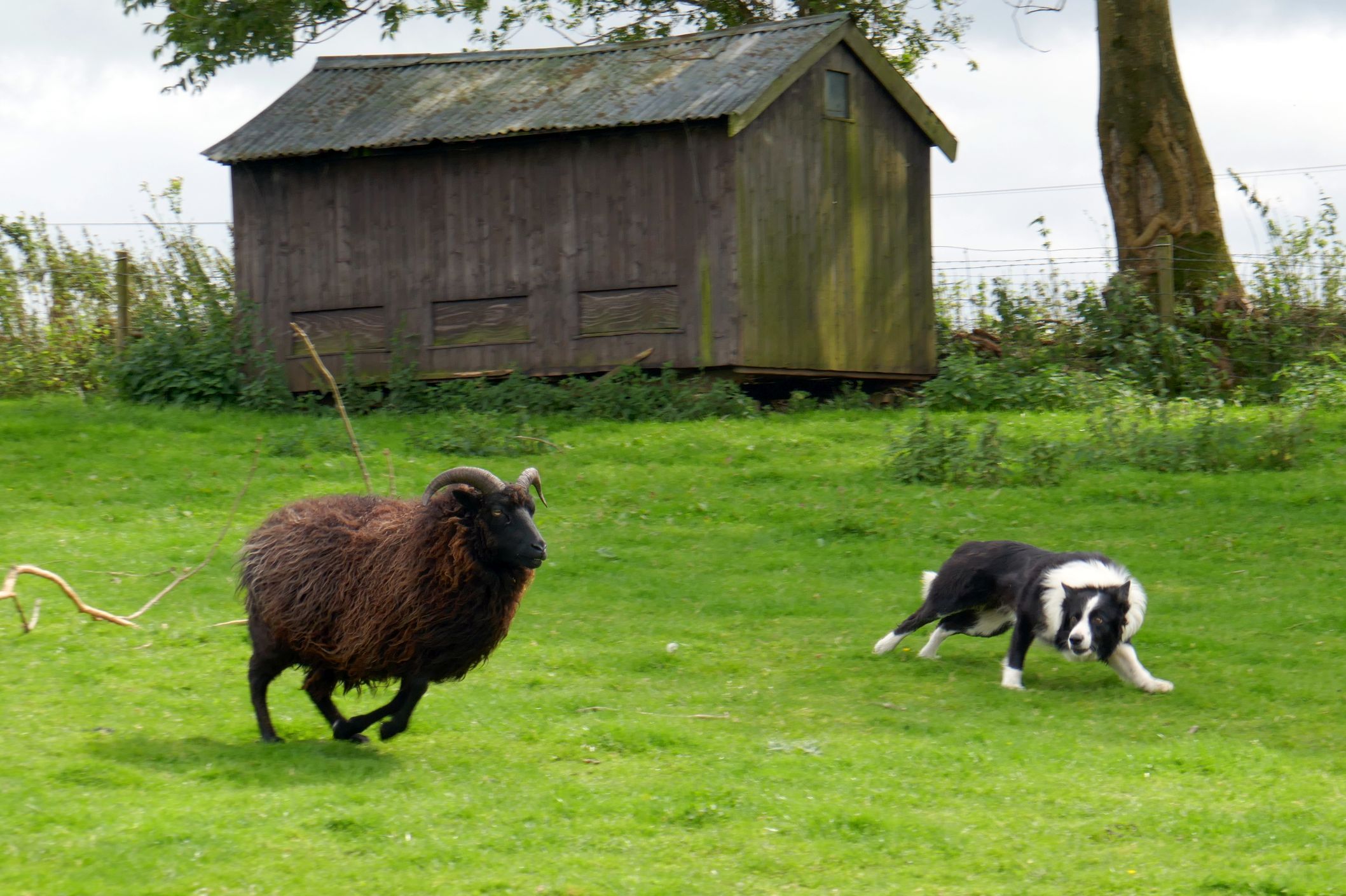
The sheep dog demonstration was the most enjoyable part of our visit! Gary is self-taught at training sheep dogs and has done well in competition, placing 3rd at the English national competition one year. Here’s Gary in action: https://youtu.be/tydPhrQZEJI
Following our farm visit, we had free time in the afternoon to explore the town of Grasmere. The weather had improved, so I also took a hike in the hills behind our hotel.
Swan Hotel
Coming up next: UNITED KINGDOM #6: HISTORICAL HADRIAN’S WALL & VINDOLANDA FORT
This was one of the few days it rained during our six weeks in the UK and Ireland. We had expected it to rain a lot, and we figured we were due after having such great luck with the weather during our travels this year.
Our bus ride took us through the Yorkshire Dales National Park, a beautiful region in northern England known for its white limestone cliffs, rivers, and lush green valleys (“dales”). Had it not been raining I would have snapped photos through the window during the drive.
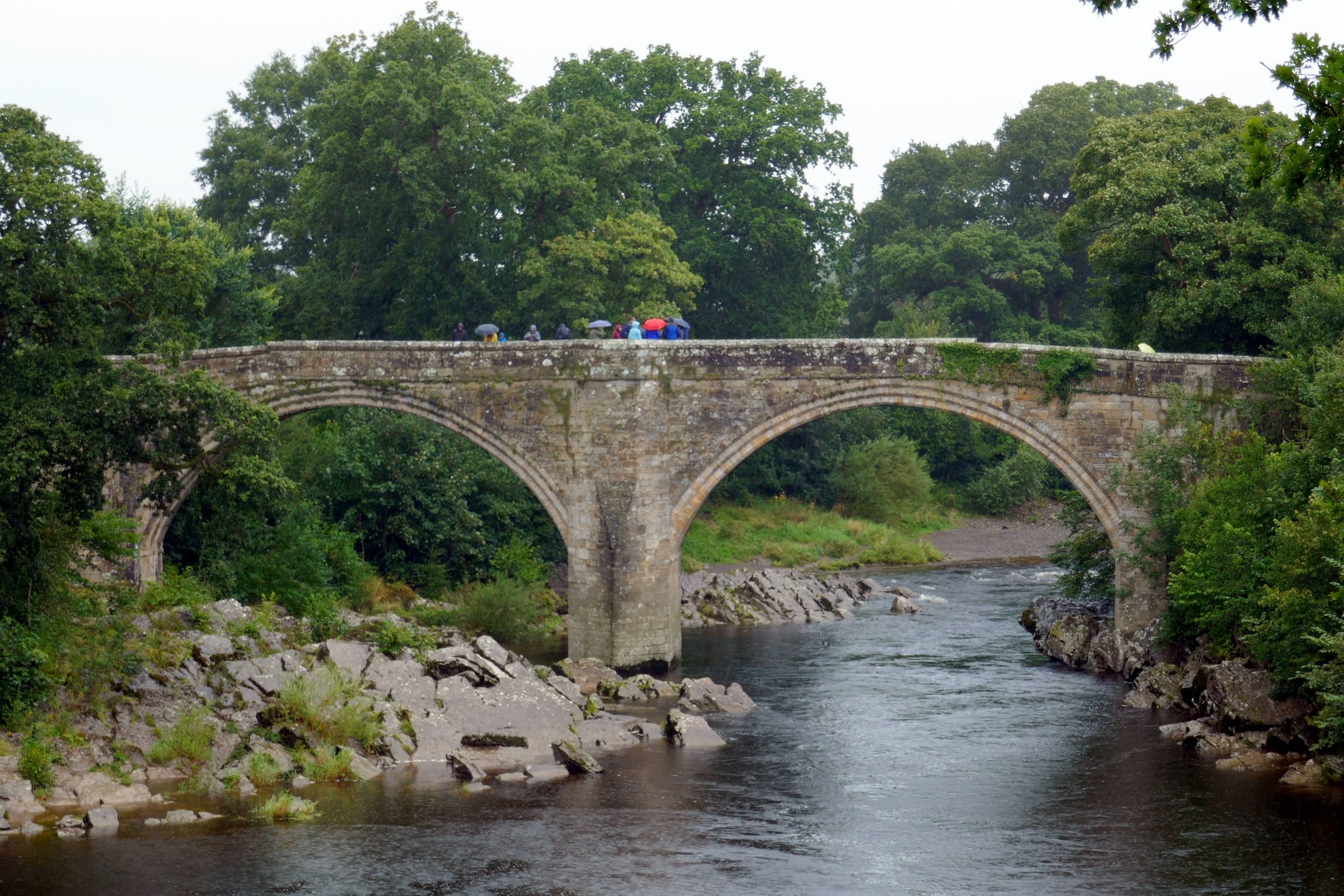
I did manage to capture a few scenes in the rain when we stopped for a hike to see Devil’s Bridge in Kirby Lonsdale. This 3-arched bridge is said to date back to the 13th century.
(For all photos, click on the image for a full screen view.)
We continued our drive to the quaint Swan Hotel in Grasmere, our base for two nights. Typically, our guide would take us on an orientation walk upon arrival in a town; however, we opted to pass on it until the following day, since it was raining and the paths would be muddy.
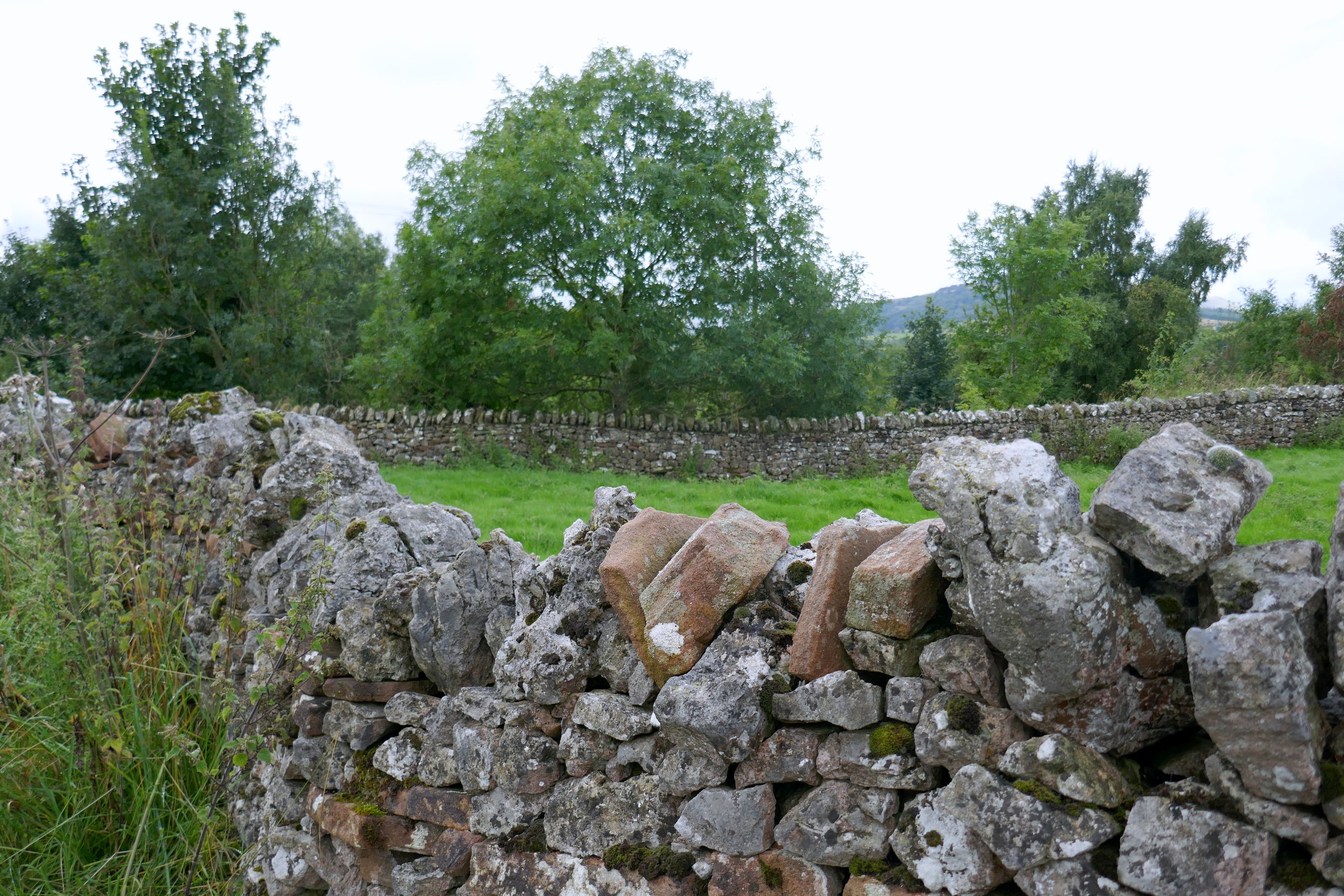
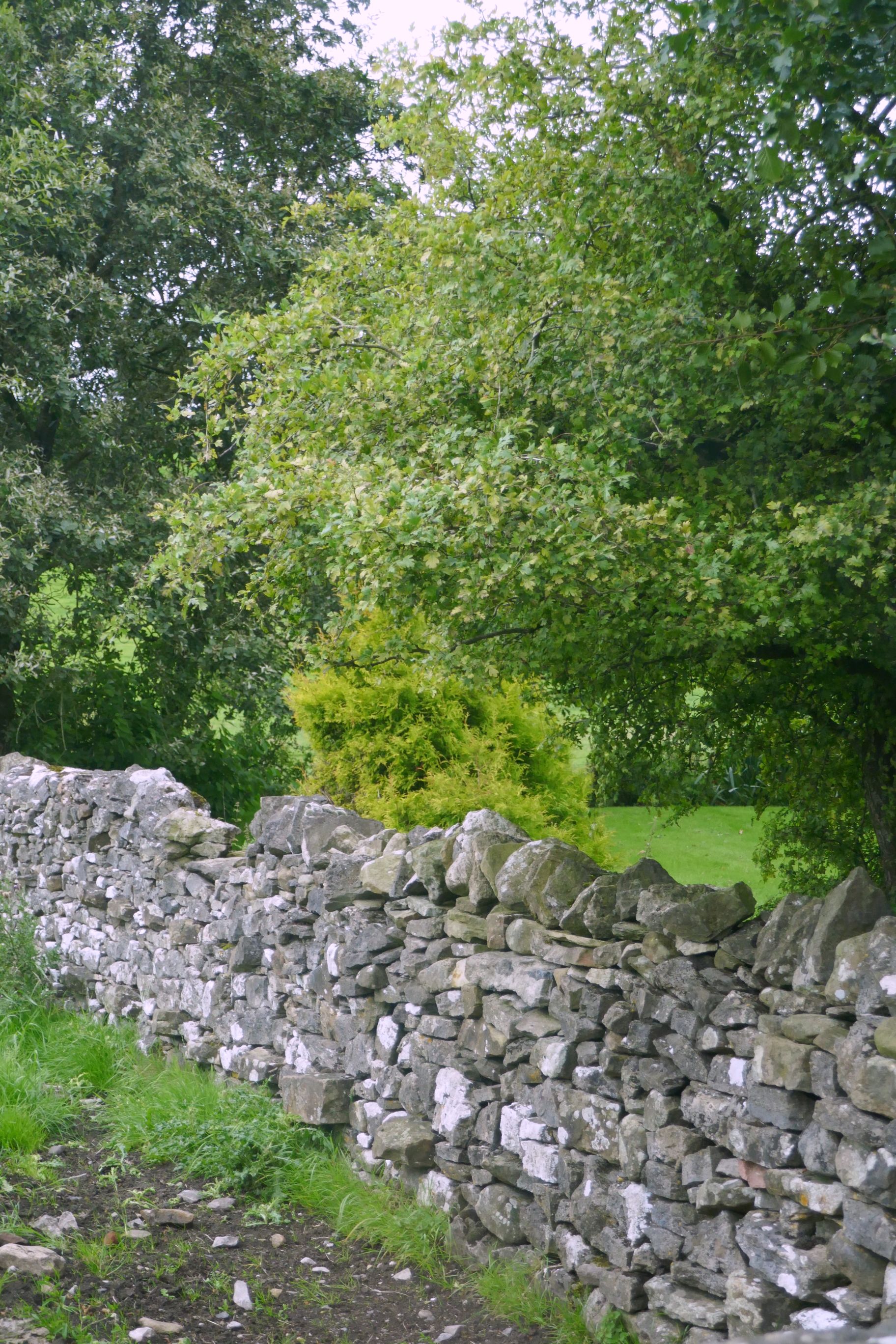
Prior to dinner at the hotel, we met with Robert, a local dry stone waller, to learn about his craft. A potentially boring topic turned out to be fascinating and fun, because this character injected much humor into his presentation. And, the information he shared stuck with us all; we found ourselves commenting on and judging the quality of the many miles of dry stone walls we saw throughout northern England!
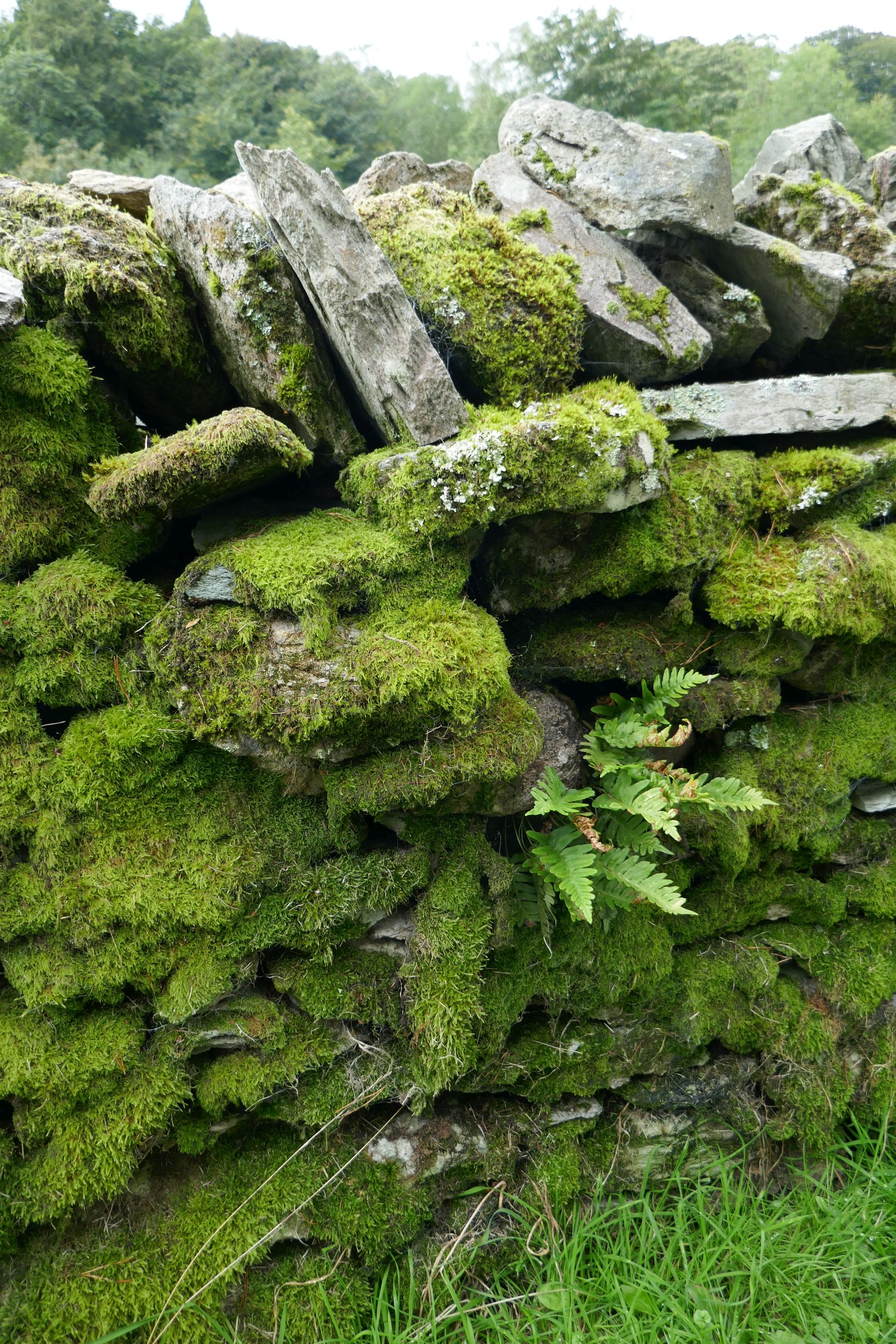
These walls are difficult to construct and require a skilled and experienced craftsman, because no mortar is used to hold the walls together. Instead, the stones are expertly fitted together and locked in place without concrete—a very time-consuming process. Unfortunately, this age-old craft may become a thing of the past, because fewer people are learning this difficult technique.
This was just the first of many stone walls photographed in the coming days!
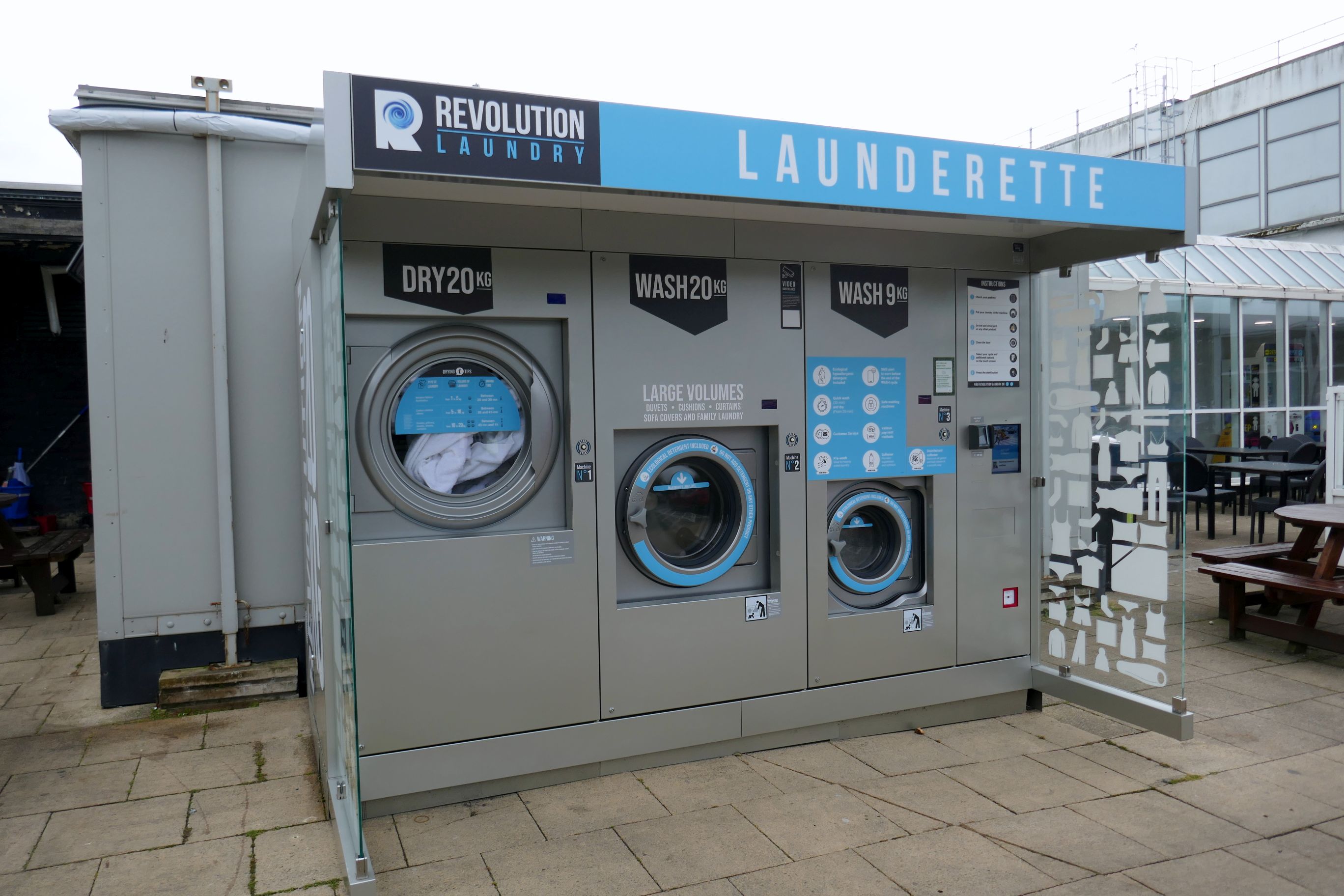
What a clever idea! This outdoor launderette was located at a truck stop/ gas station where we stopped for a restroom break.
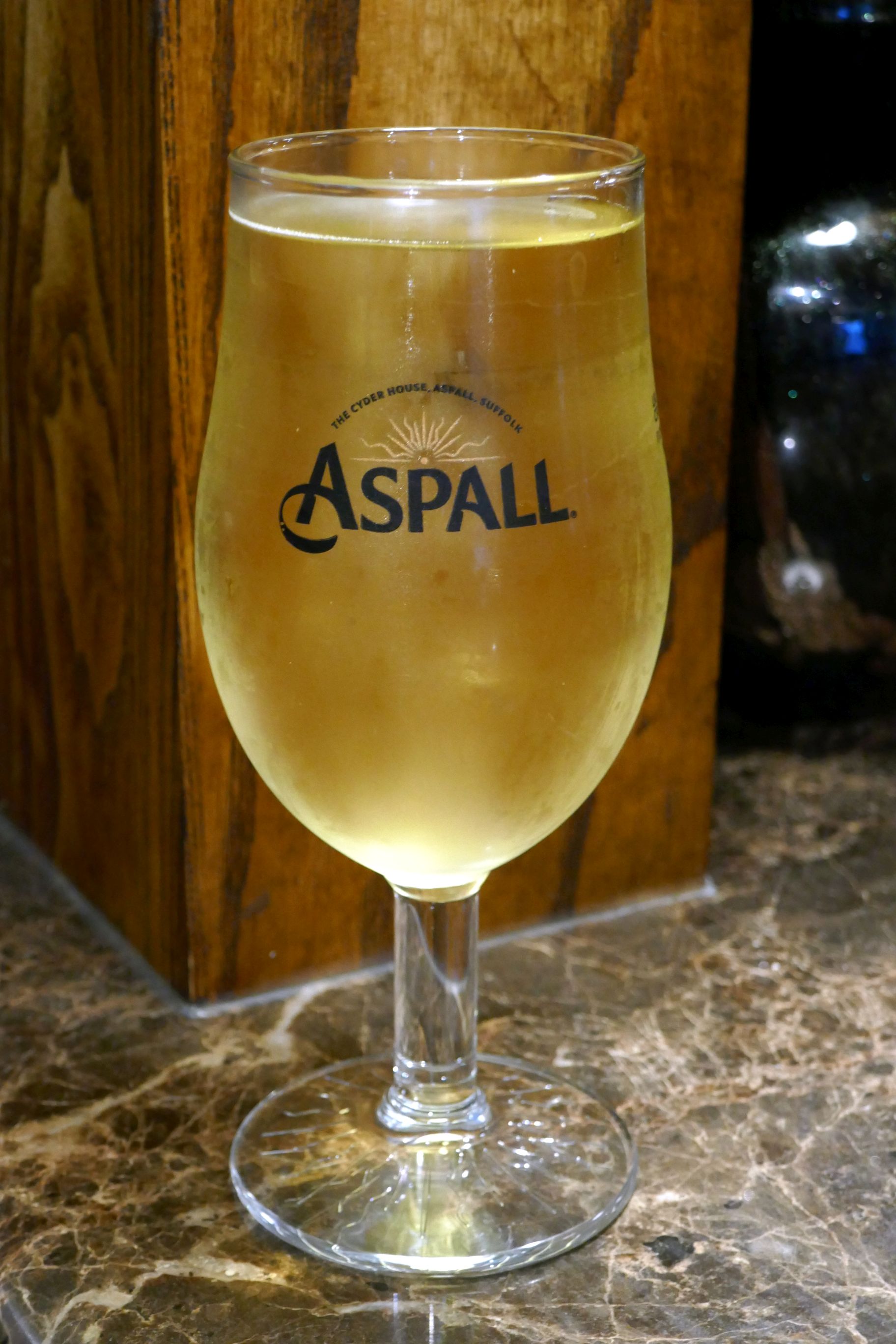
One of the hard ciders we sampled in the U.K and Ireland– a popular alternative to beer and wine.
Next up: UNITED KINGDOM #5: A DAY IN THE LIFE OF A LAKE DISTRICT FARM







































































 Elaine-iaK's Travels: A Traveler's Tales of People, Places, Photos, Pools... and CHOCOLATE!