This was one of those days where we had all types of weather. The cloudy and cold morning gave way to beautiful, sunny skies in the afternoon.
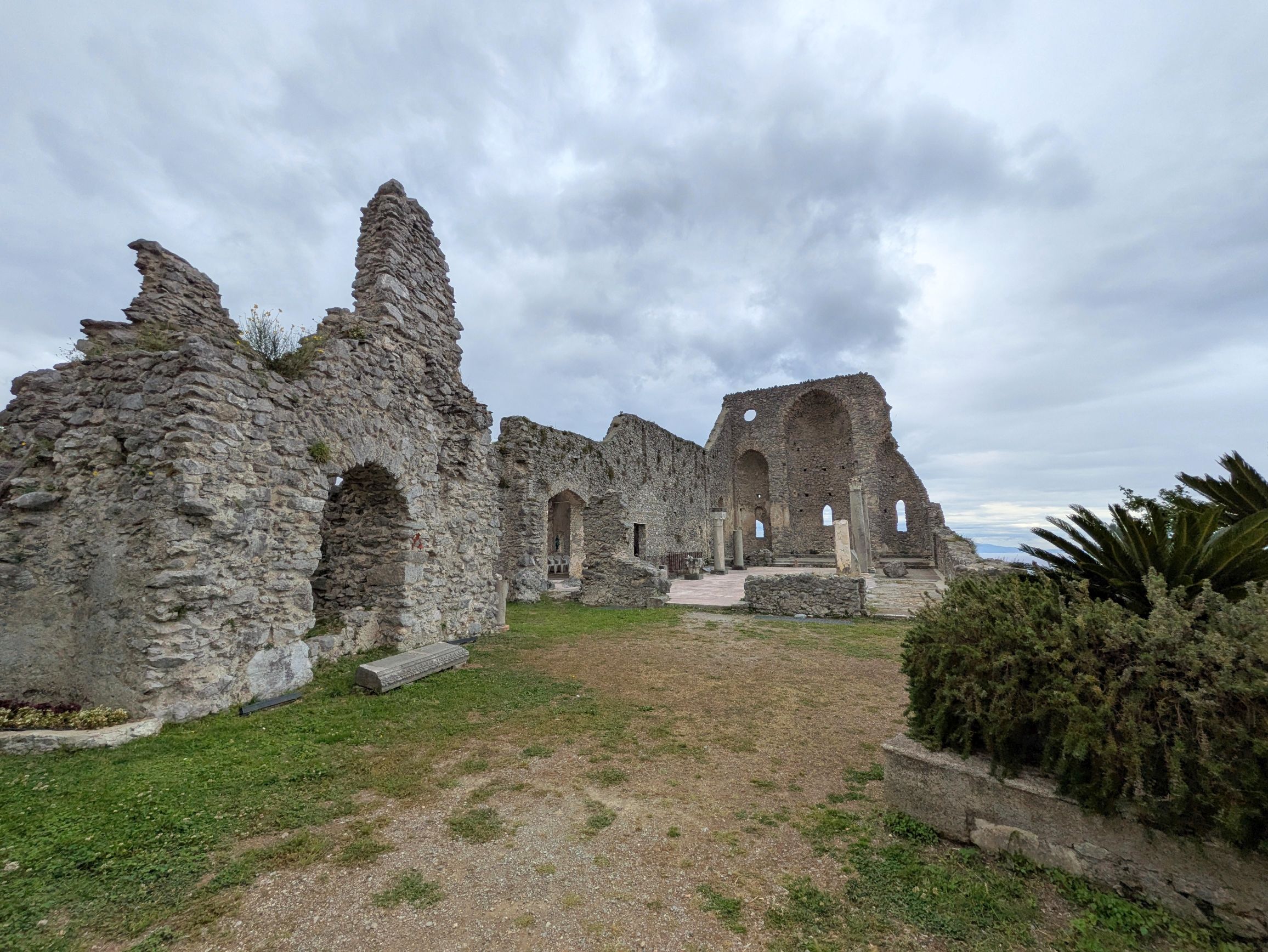
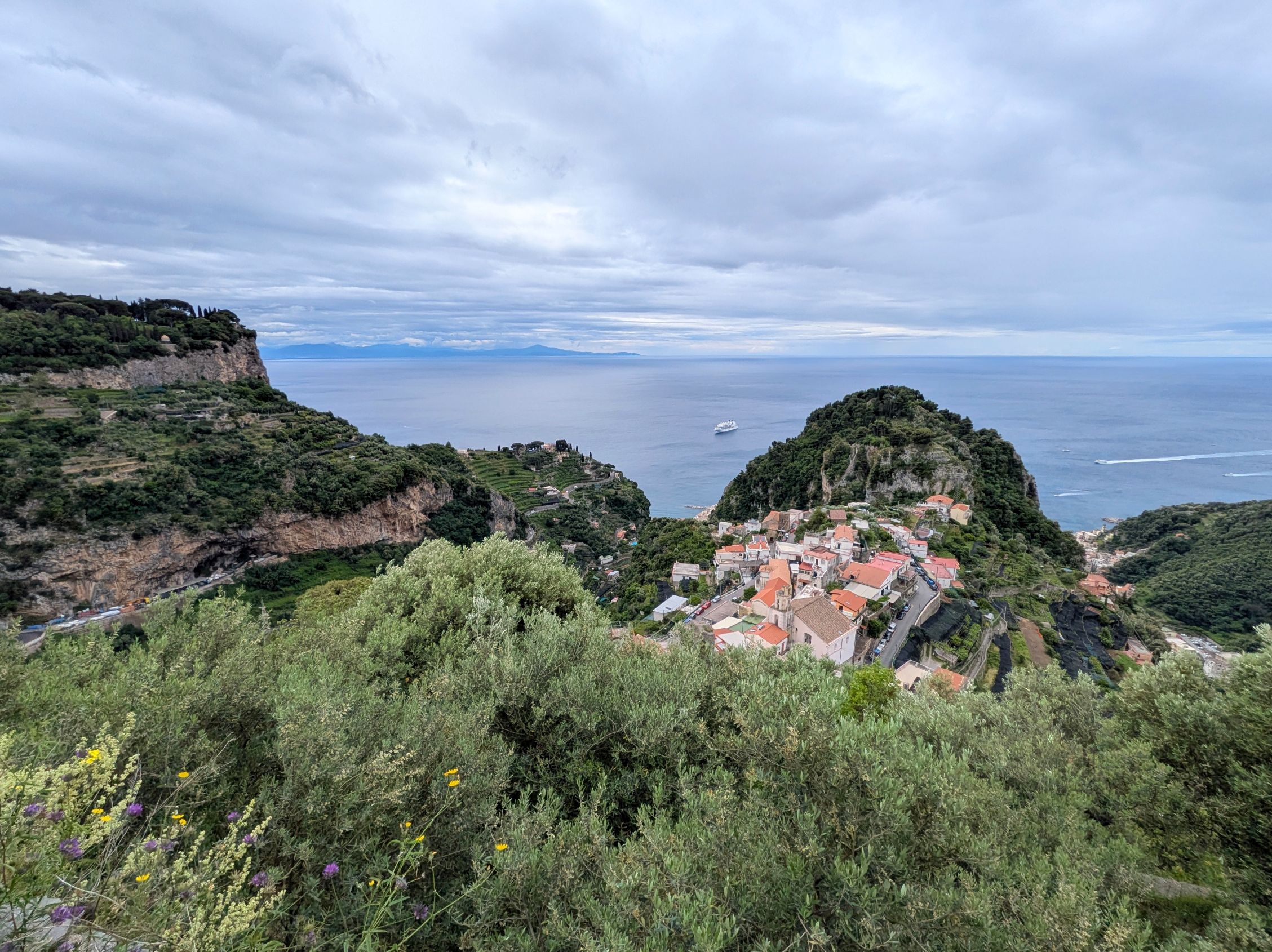
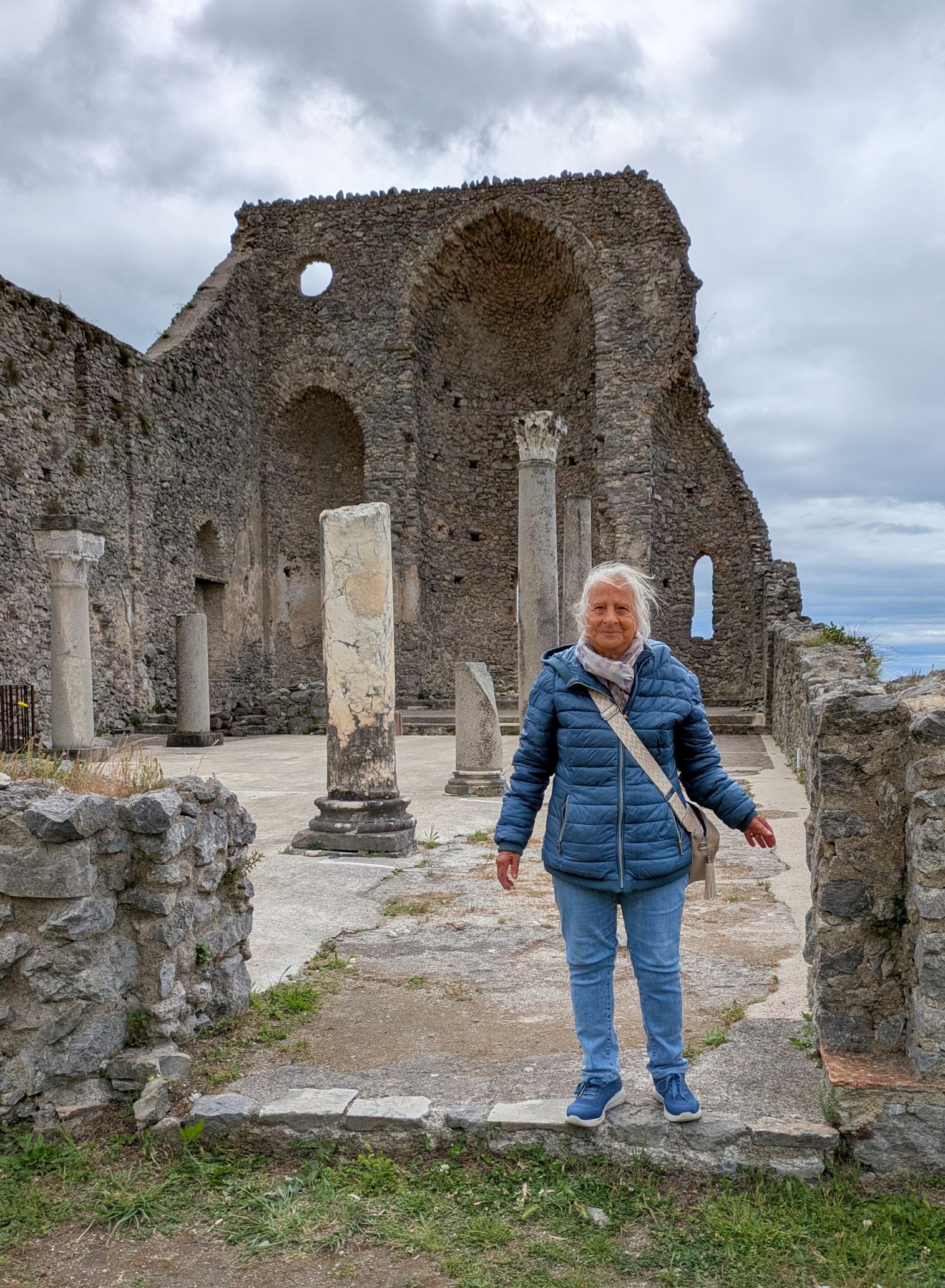
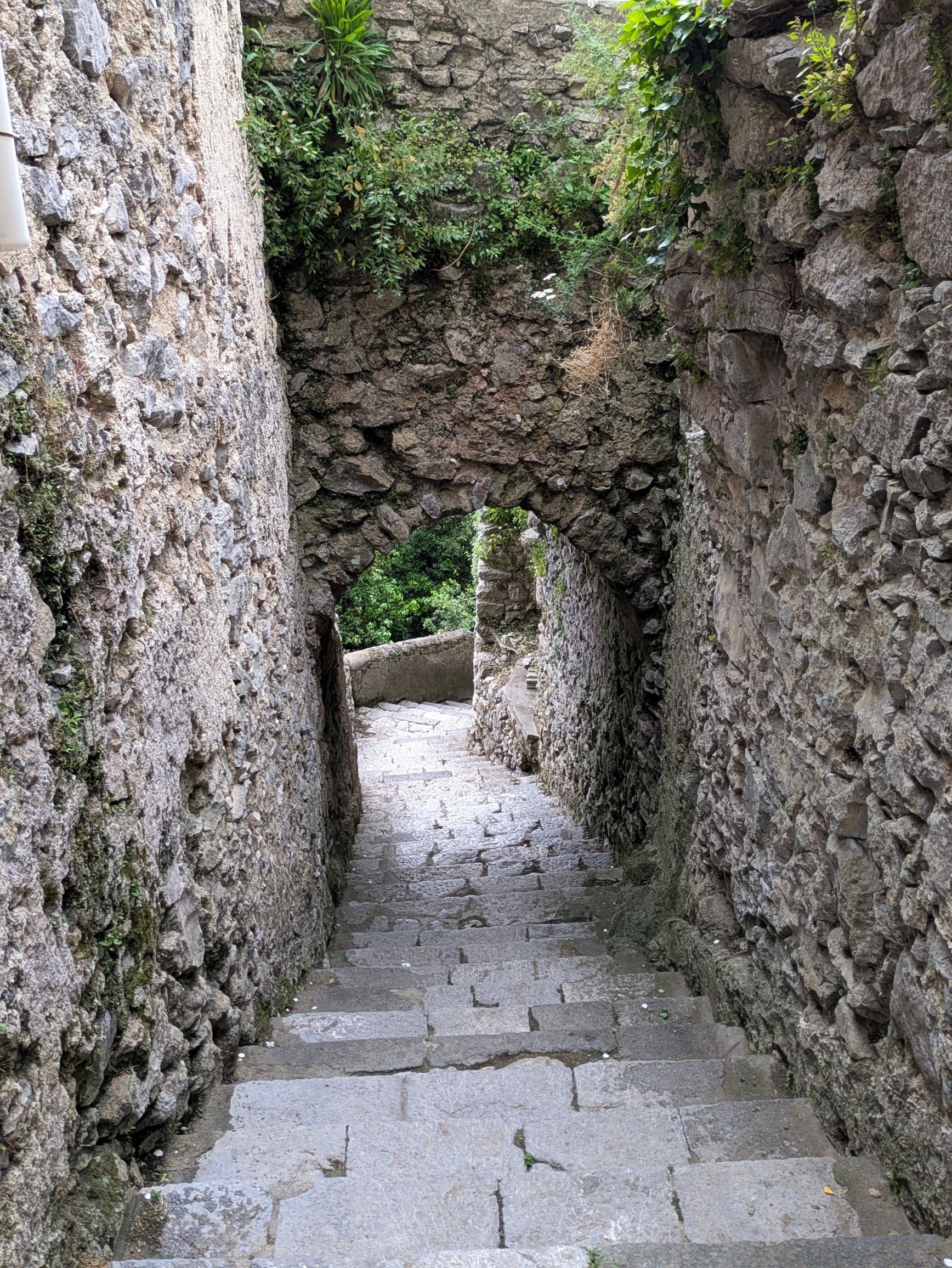
Our day began in Scala, the oldest village on the Amalfi Coast and perched 1,500 feet above sea level on a steep hillside. We hiked 600 steps down from the bus to get to the bottom of the village (I didn’t count, but I took Francesco’s word for it!), visiting the ruins of the Romanesque Basilica of St. Eustachio along the way.
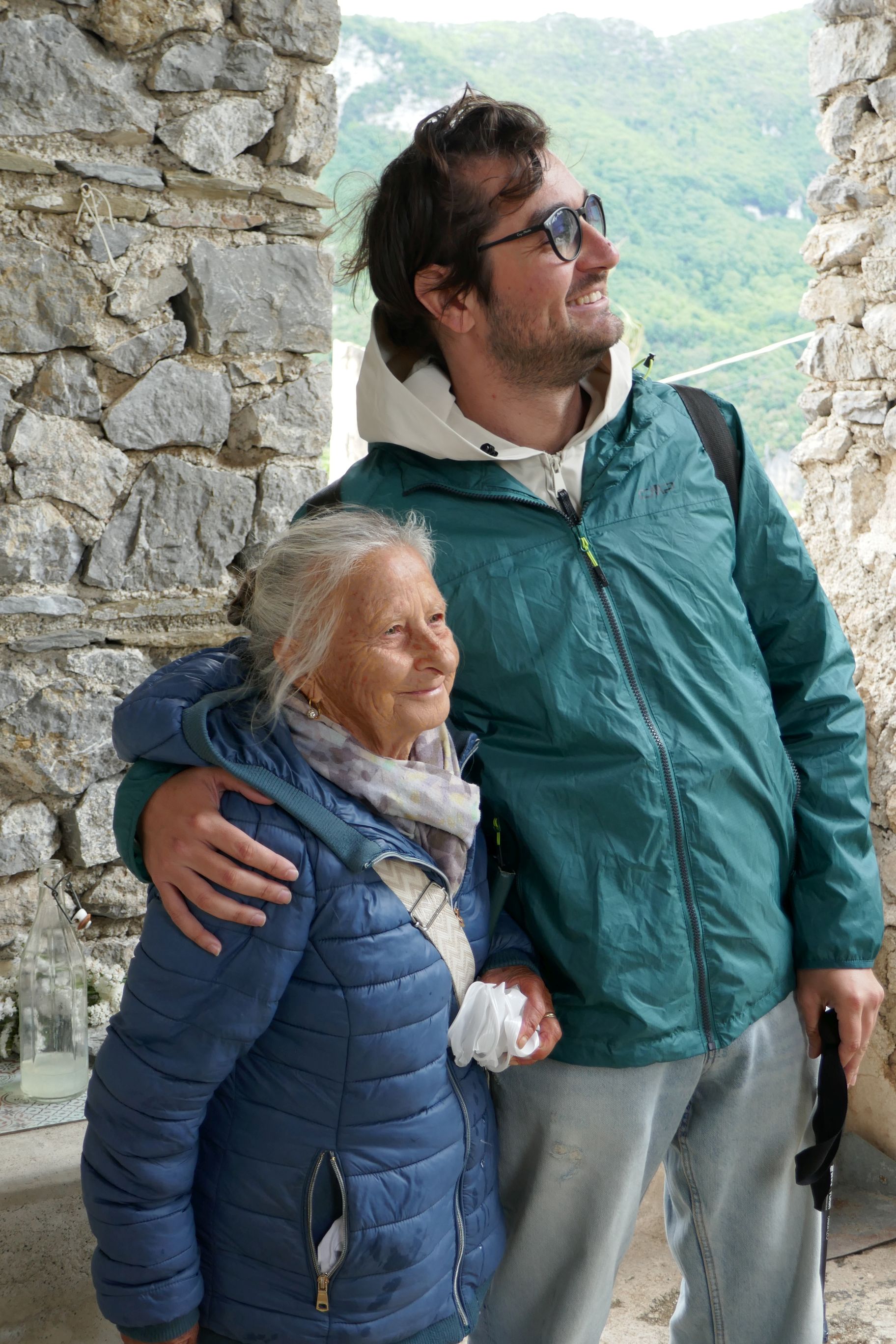
Consecrated in 1244, there is not much left to the basilica, but the views from the ruins were spectacular. When we arrived, a sweet little lady greeted us with candy. She has been volunteering at the site for years and was happy to see Francesco and greet the group.
(For all photos, click on the image for a full screen view.)
Walking down the steps through this historic village felt so authentic Italy, and what I loved the most was not seeing anyone else except our group and a few locals.
The skies magically cleared!
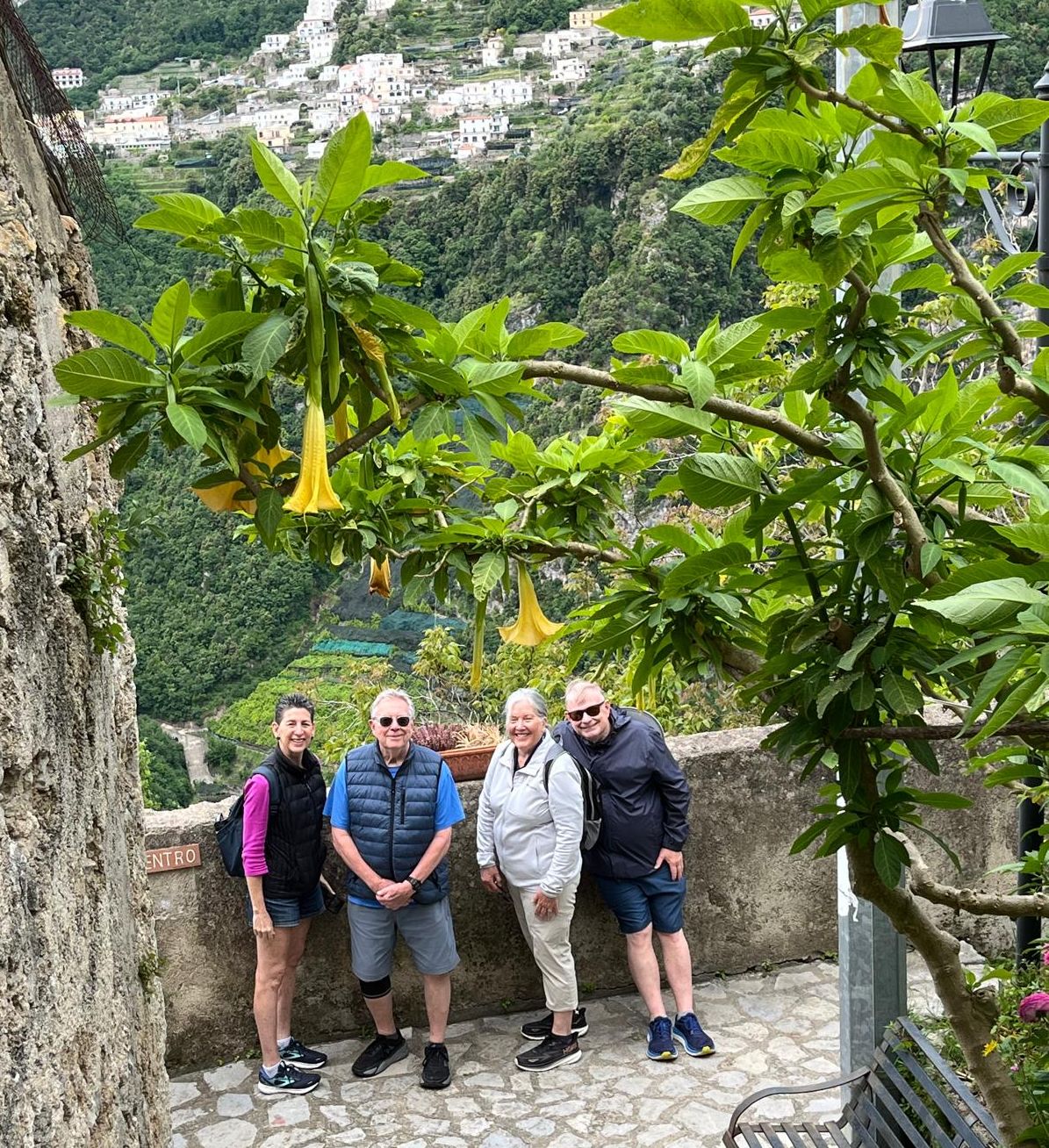
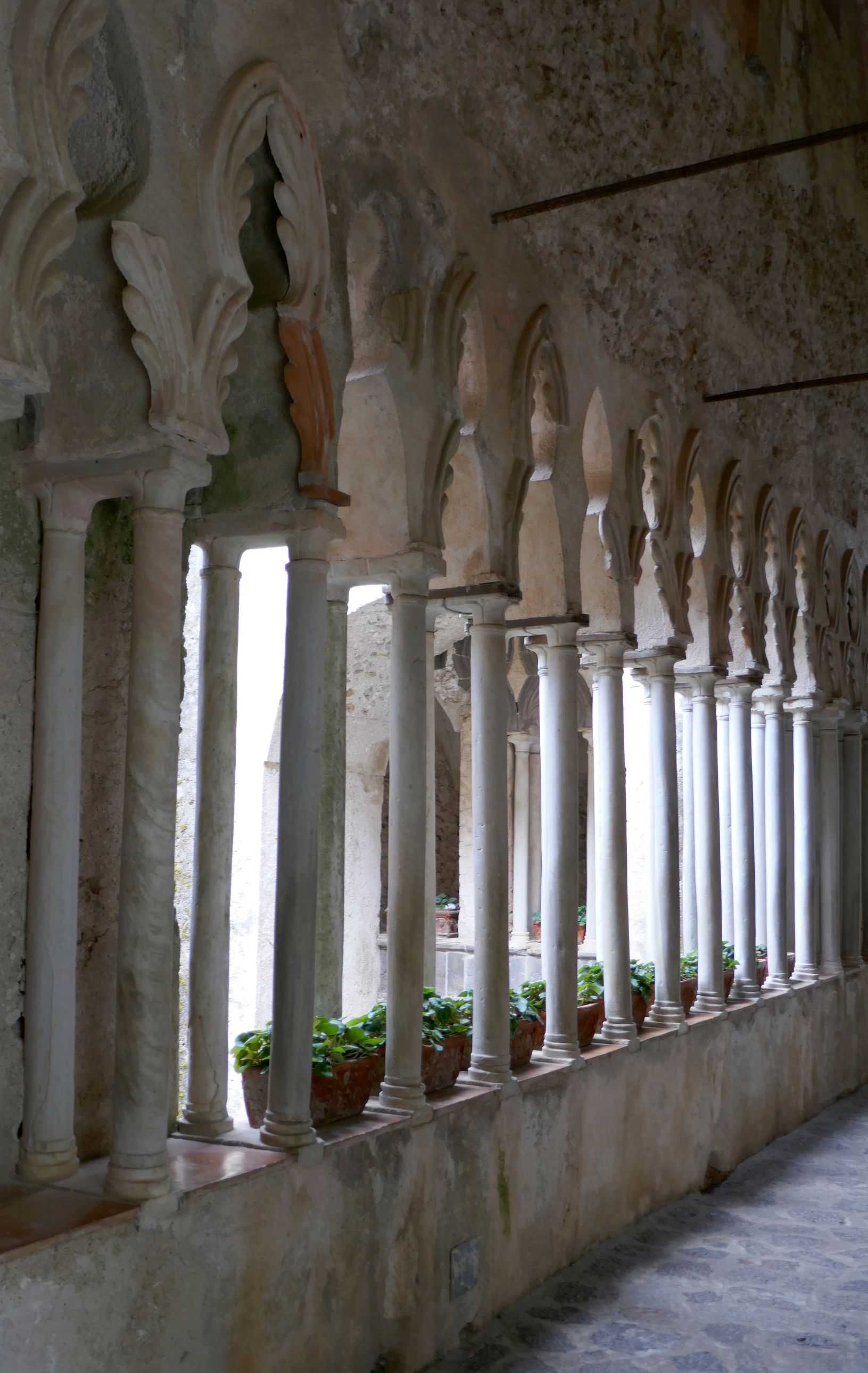
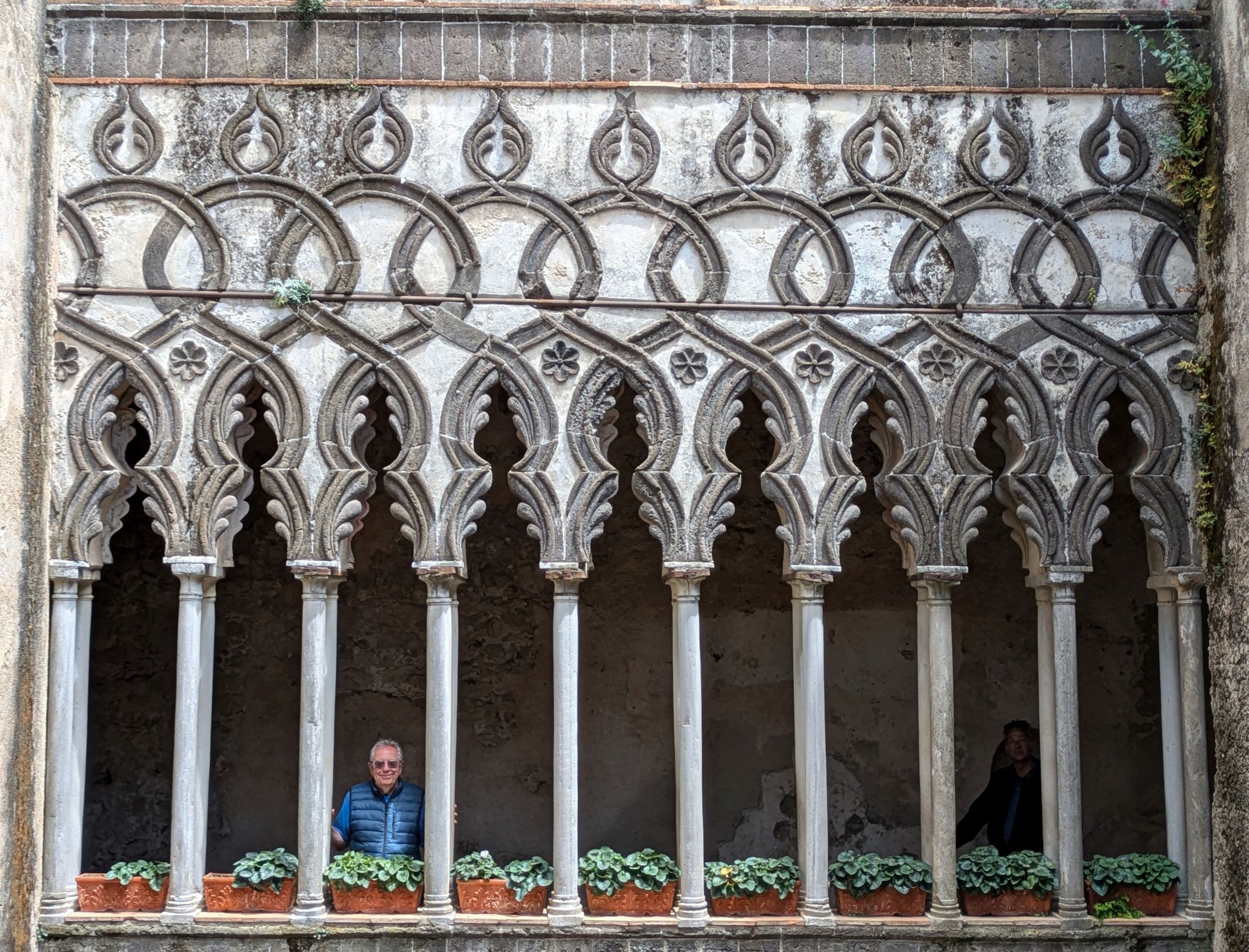
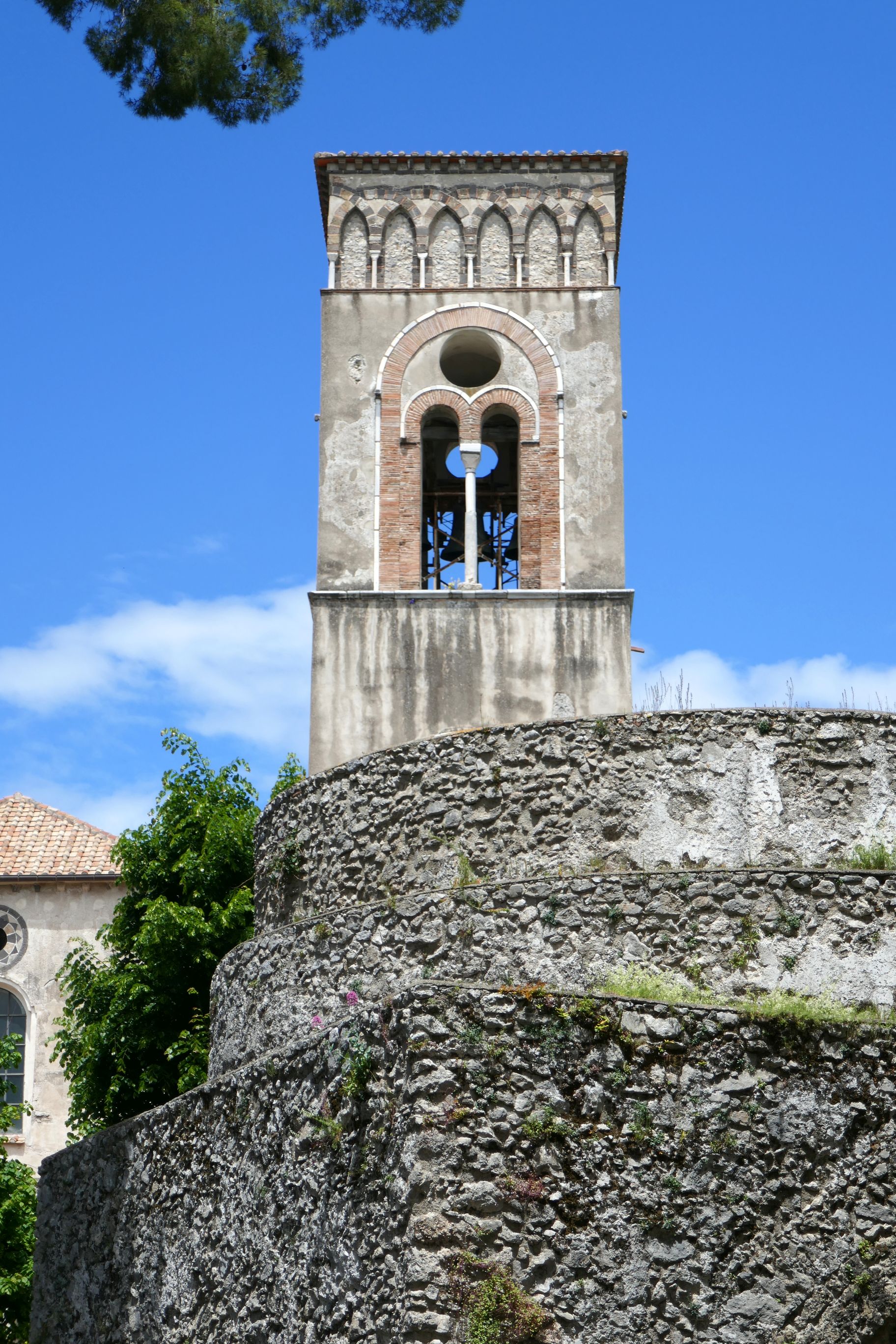
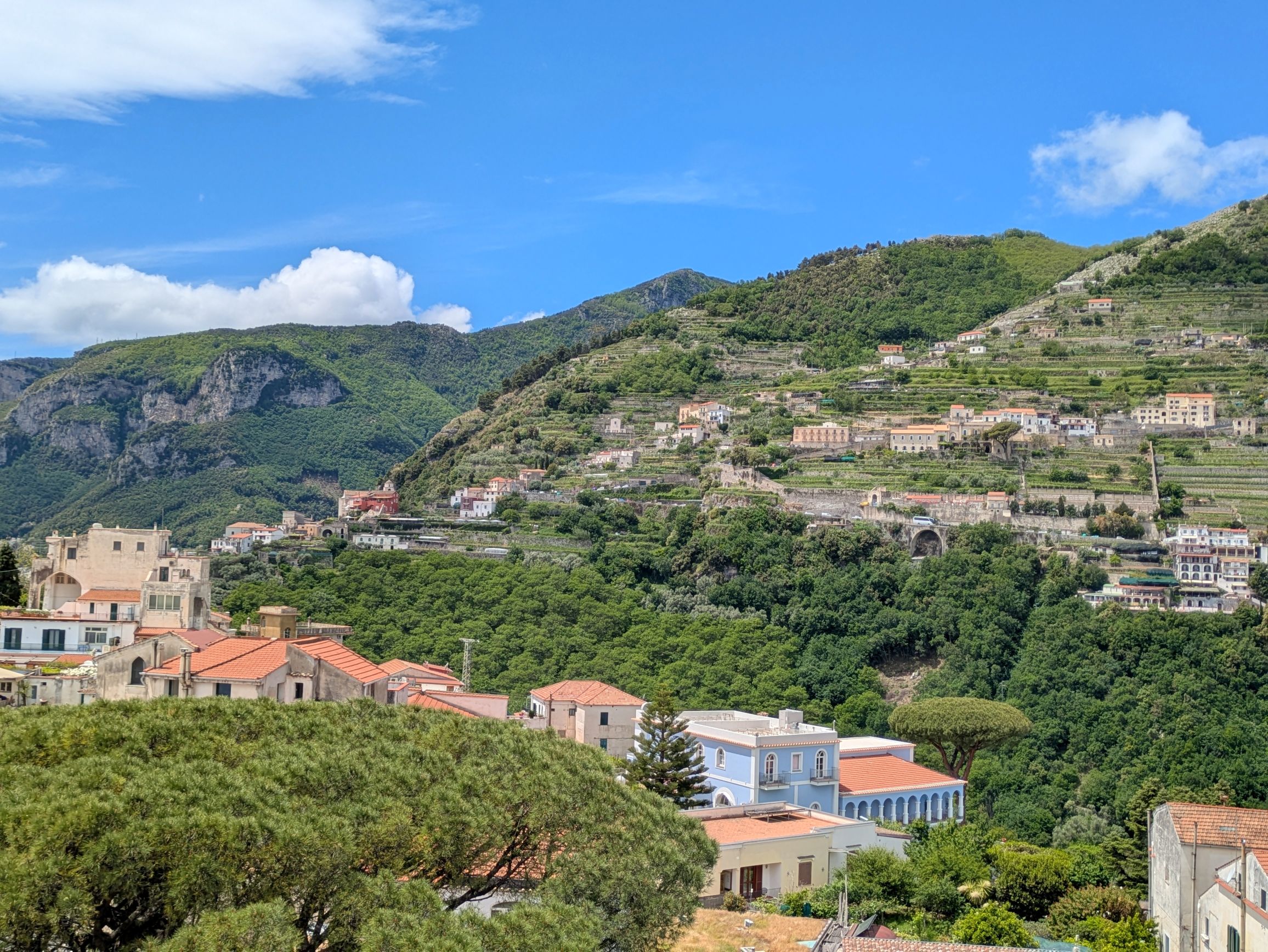
Our group continued to the town of Ravello, which is also situated in the hills with beautiful views of the Amalfi Coast and Scala. The best views were from 13th—century Villa Rufolo where we took a self-guided tour. The skies hadn’t quite cleared yet here, but the views were no less gorgeous from the villa.
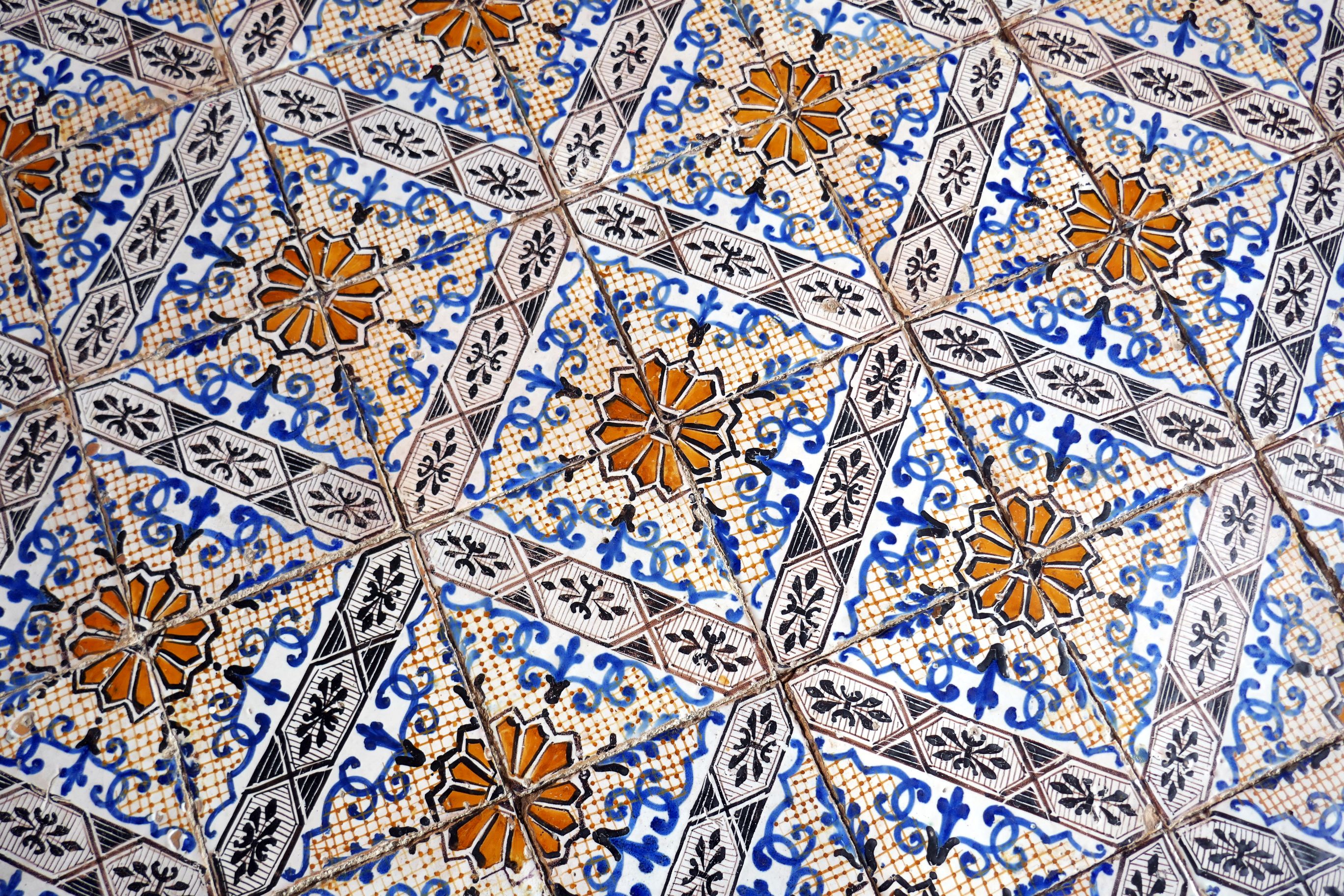
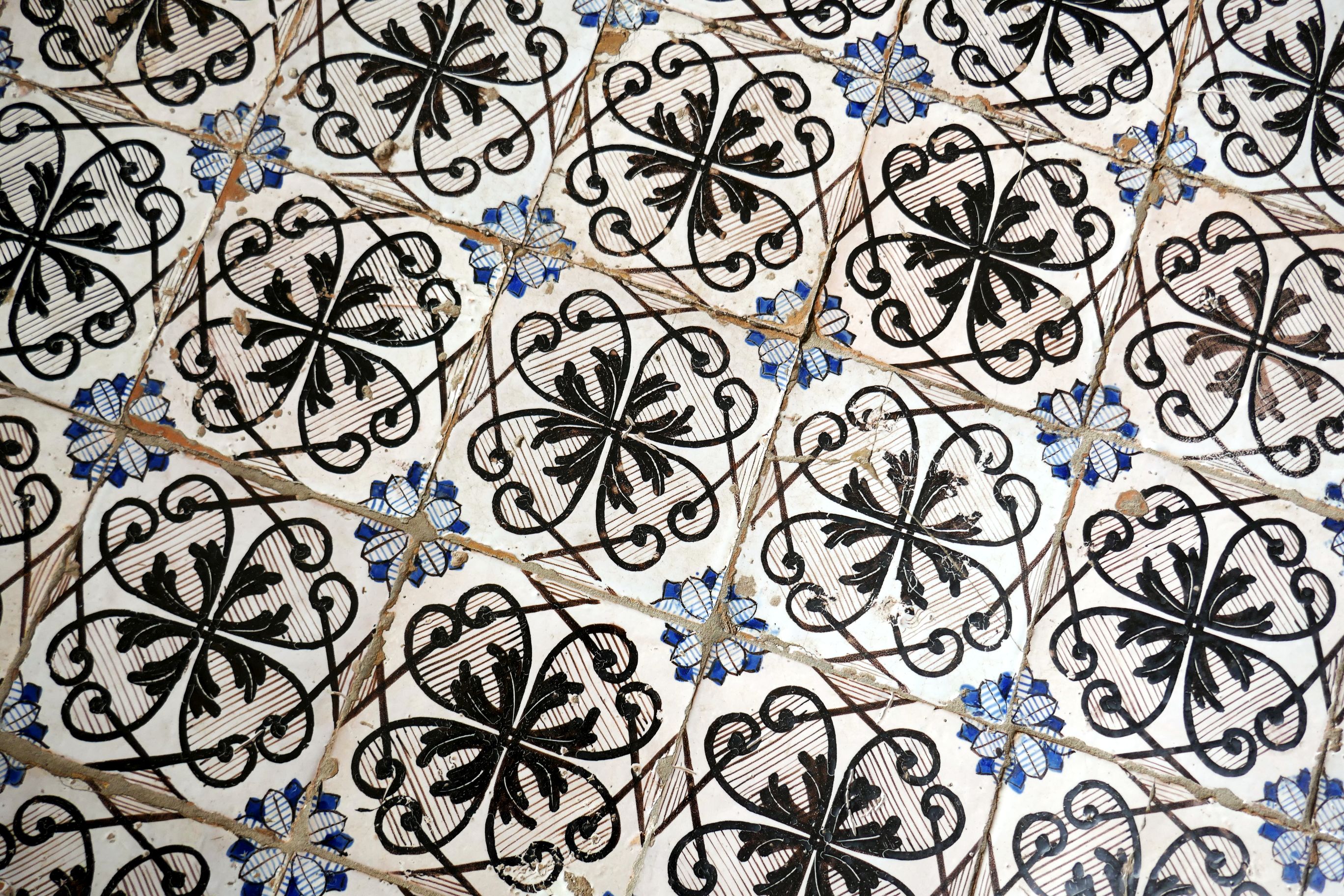
Tile floors inside the villa.
Ravello is a small town of just 2,500 people and is listed as a UNESCO World Heritage Site. Founded in the 5th century as a shelter place against the barbarian invasions, it later became known for producing wool. The history is long and quite involved, but Ravello became a destination for artists, musicians, and writers. It is quite popular with tourists now, partly because of the beautiful views.
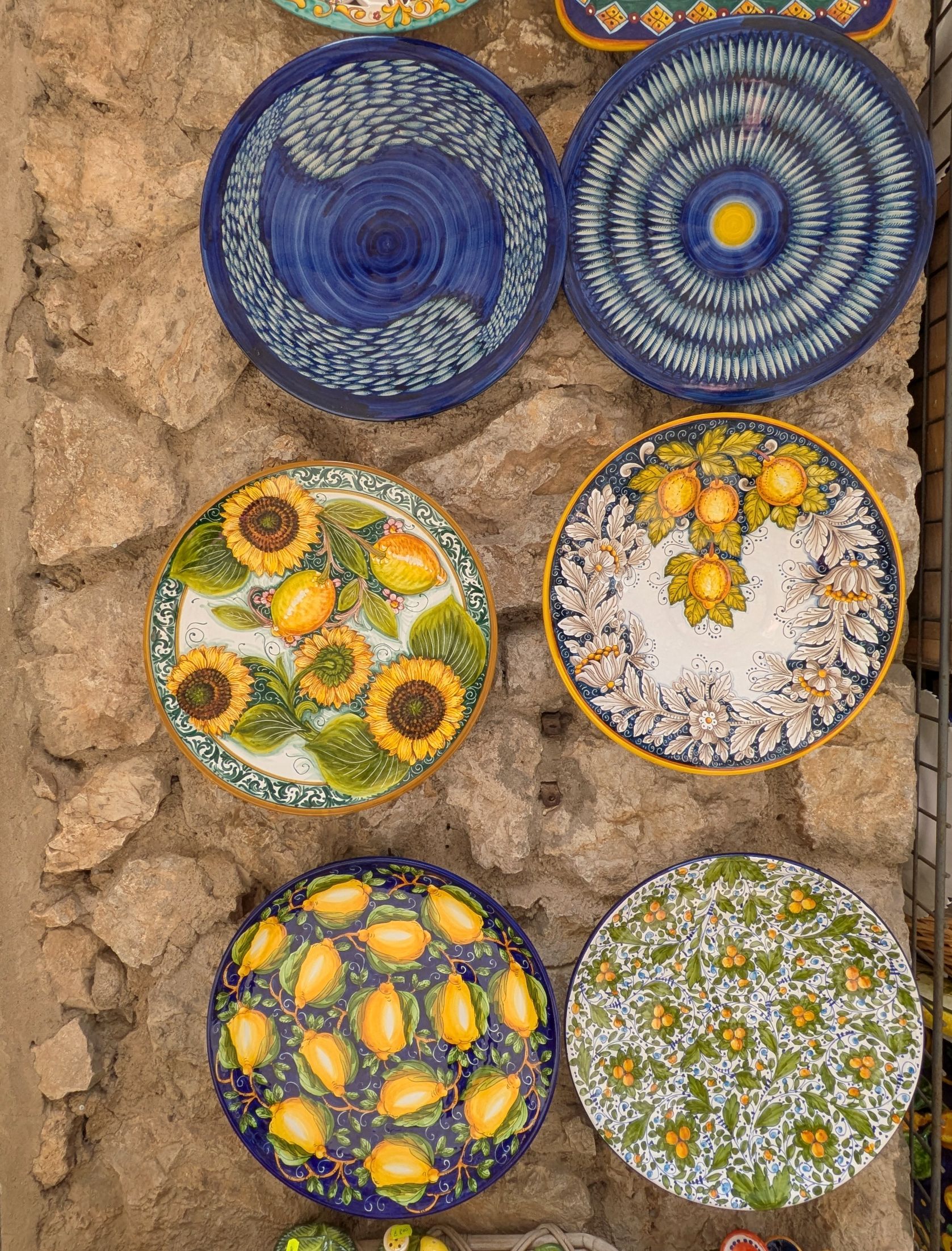
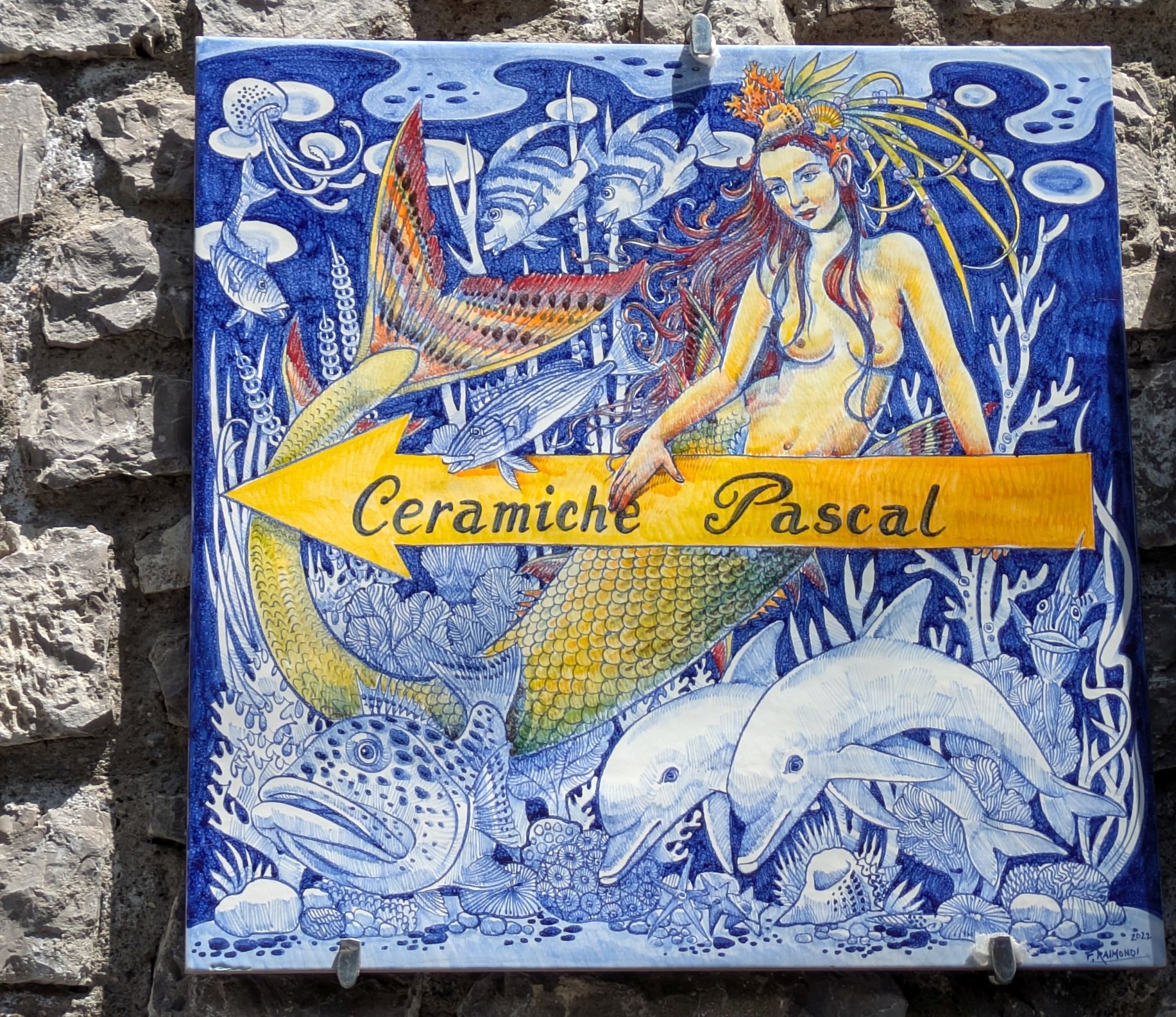
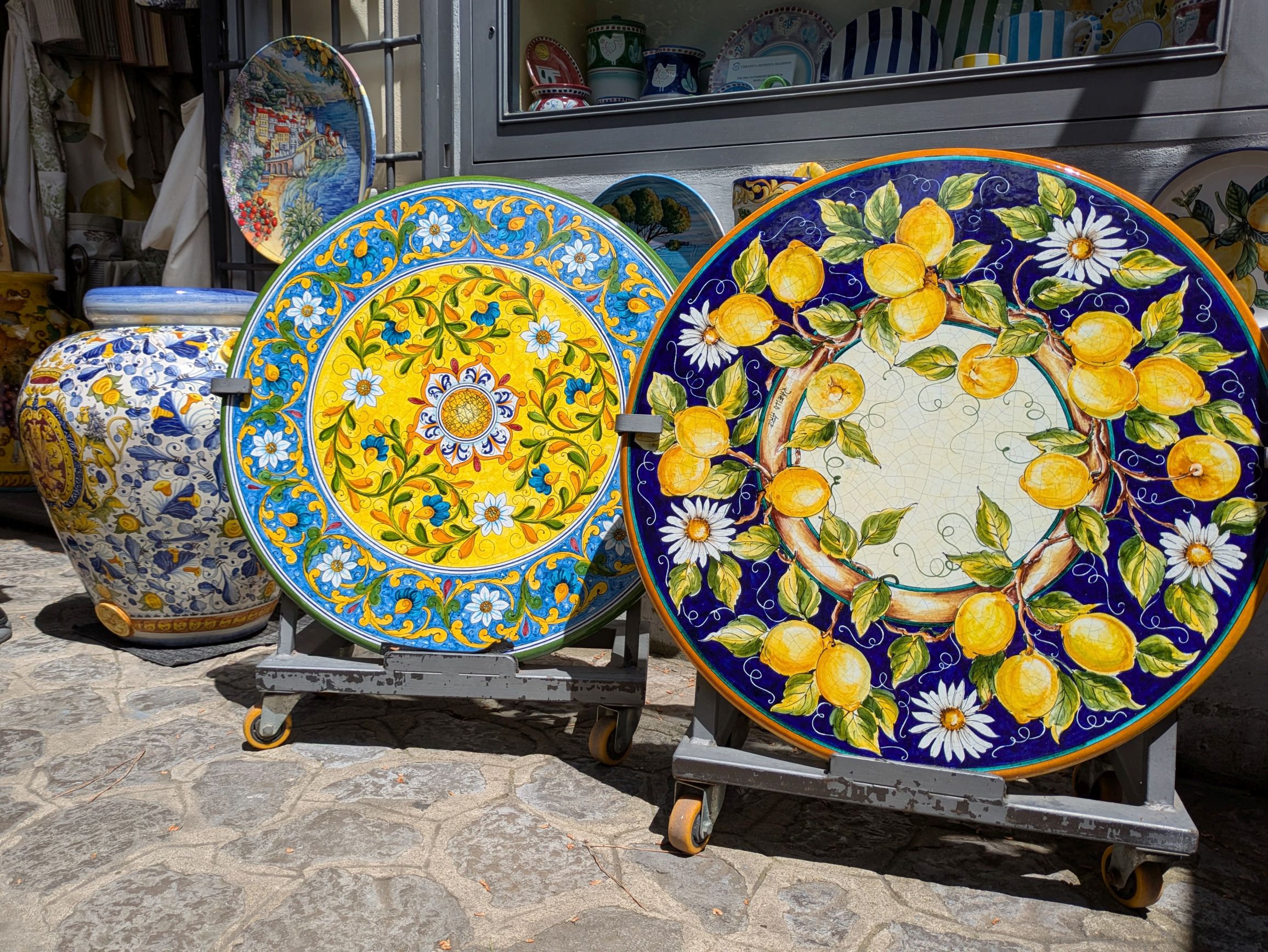
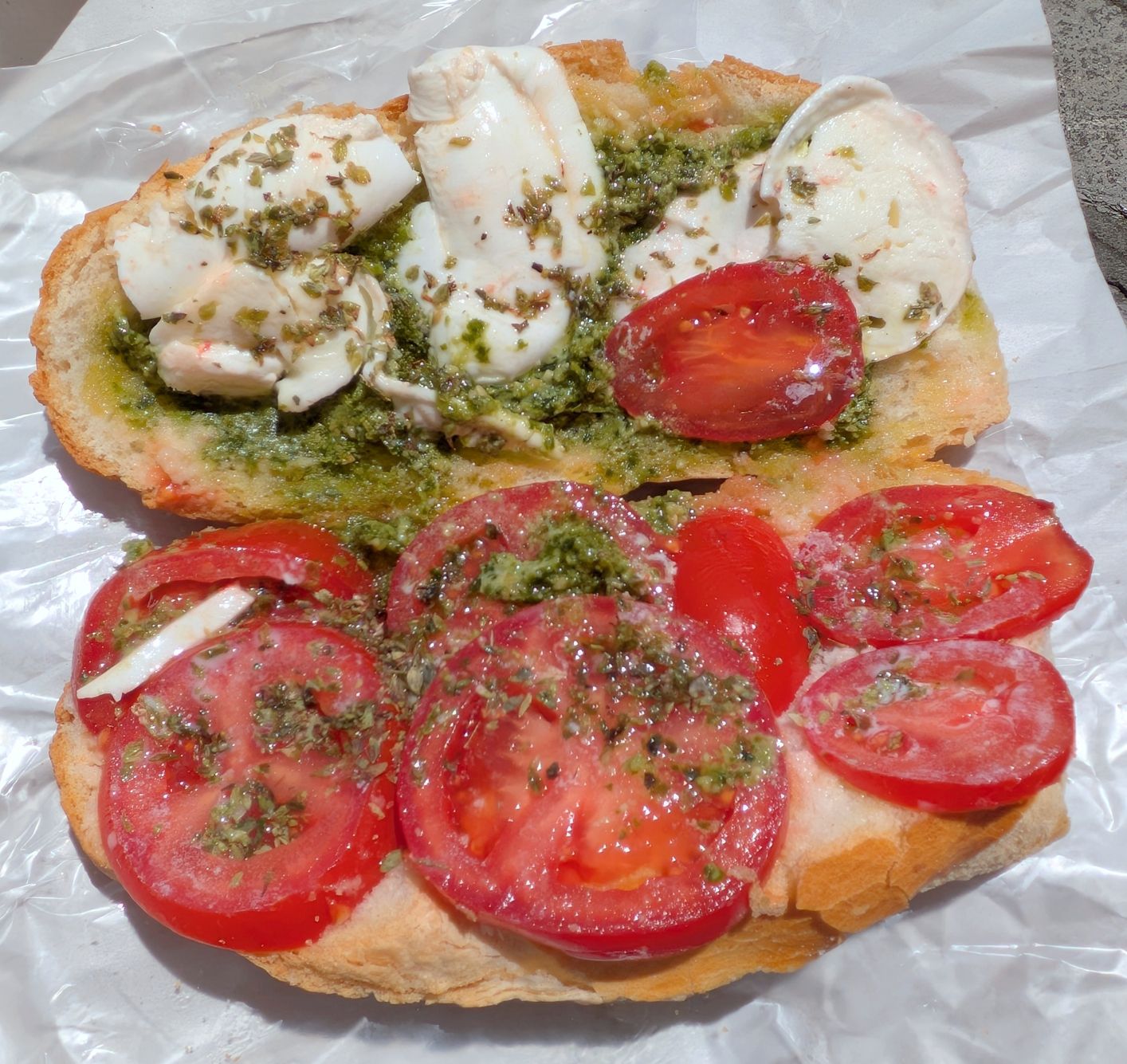
Bruce and I found the town to be quite charming, and we enjoyed browsing through the ceramic shops and galleries. Rather than take the time to dine at one of the outdoor cafes on the piazza, we opted to grab a sandwich from the Italian deli and watch the cats beg and compete for the scraps the café diners tossed to them. It was quite entertaining to watch, and our sandwich was delicious!
Coming up next: SICILY & AMALFI COAST #25: PERSERVERING THROUGH POMPEII
After two weeks of stellar weather in Sicily, our luck was bound to run out sooner or later. This was the day, unfortunately, because a boat ride along the Amalfi Coast was on the agenda and blue skies would have been beautiful! Instead, it was cloudy, and it rained a little bit here and there.
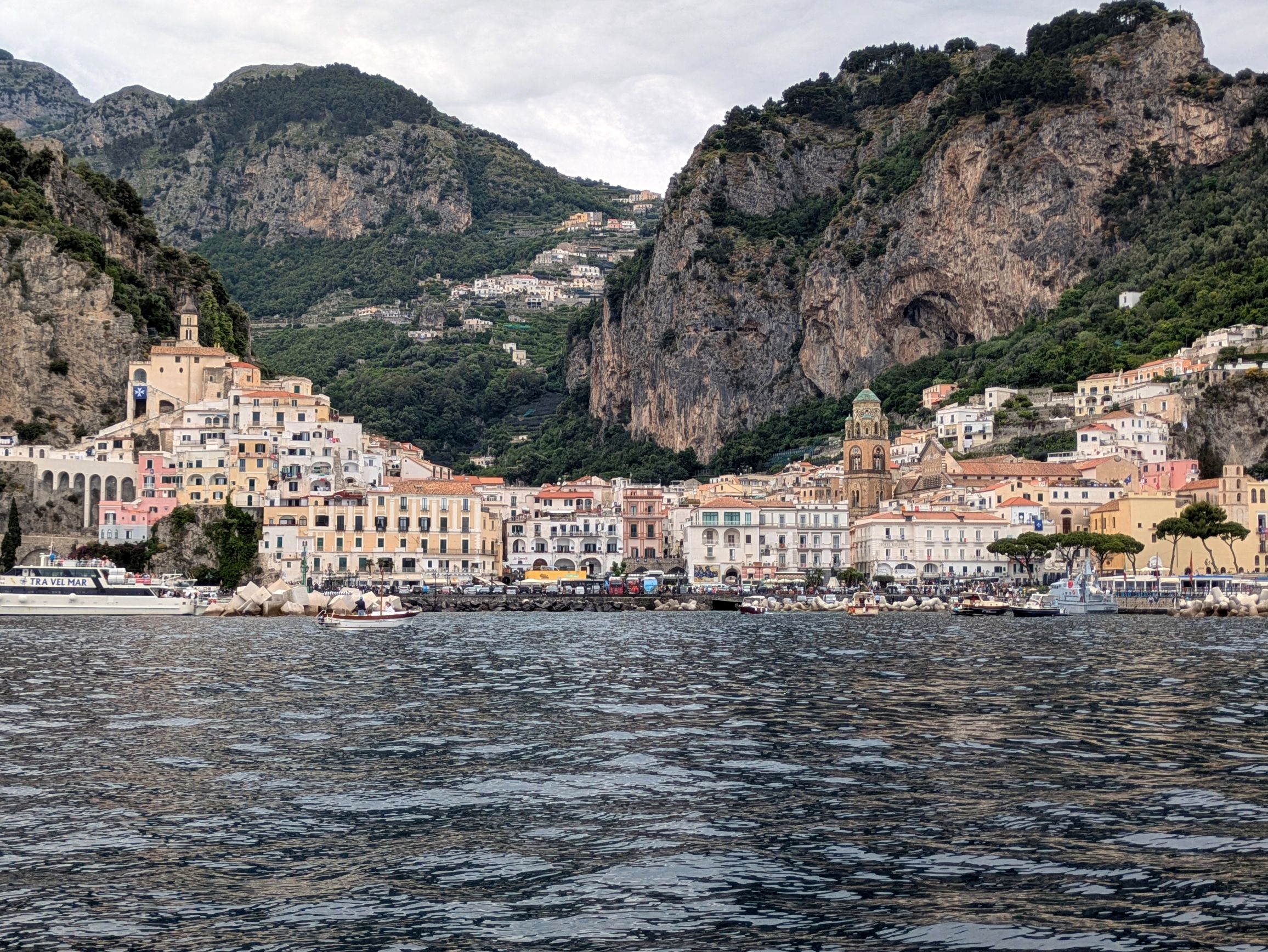
The village of Amalfi, namesake of the Amalfi Coast and a UNESCO World Heritage Site, was our morning destination. Located on the southwest coast of Italy, Amalfi, in the Campania region, faces the Gulf of Salerno. Having a population of under 5,000 people, it’s a small, intimate village in the off season, and we were told the favorite winter “sport” is gossip. Evidently, there isn’t much work available in the winter, because it is a seasonal destination, so the locals have a lot of time on their hands…
High season is a different story. Tourists flock to what is reputed to be the most beautiful coastline in Italy, and the place is hoppin’! We got a taste of that, having visited in mid-May, just ahead of the high season. The streets were crowded with tourists! Still, it was love at first sight. What a charming and colorful place!
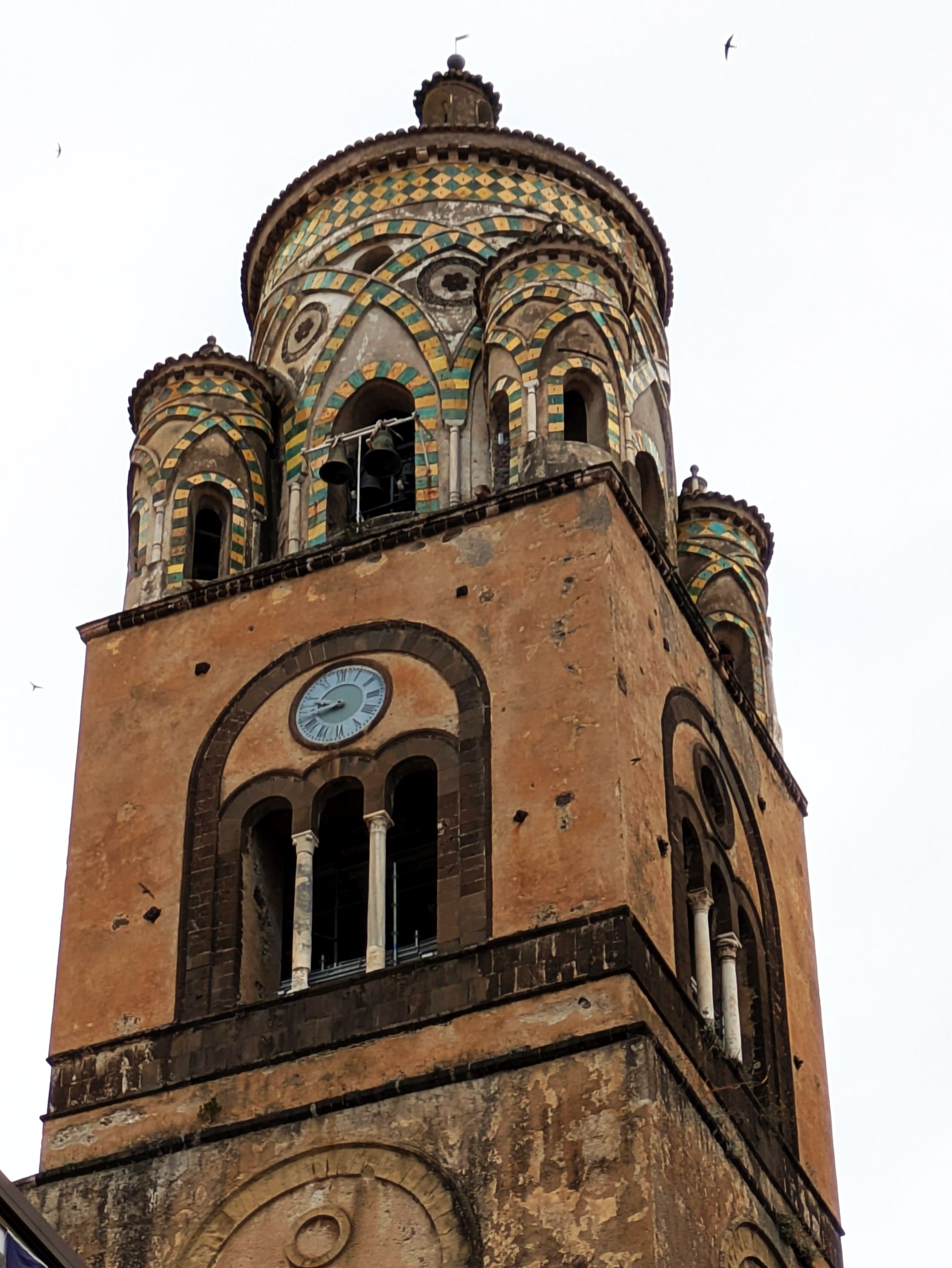
Amalfi is very mountainous, giving the village a lot of character. Steep staircases led us to winding streets we enjoyed exploring and poking around to see what discoveries would make us smile and break out the camera. I took so many photos; it was hard to edit them down. So, strap in; this is a long post of pictures!
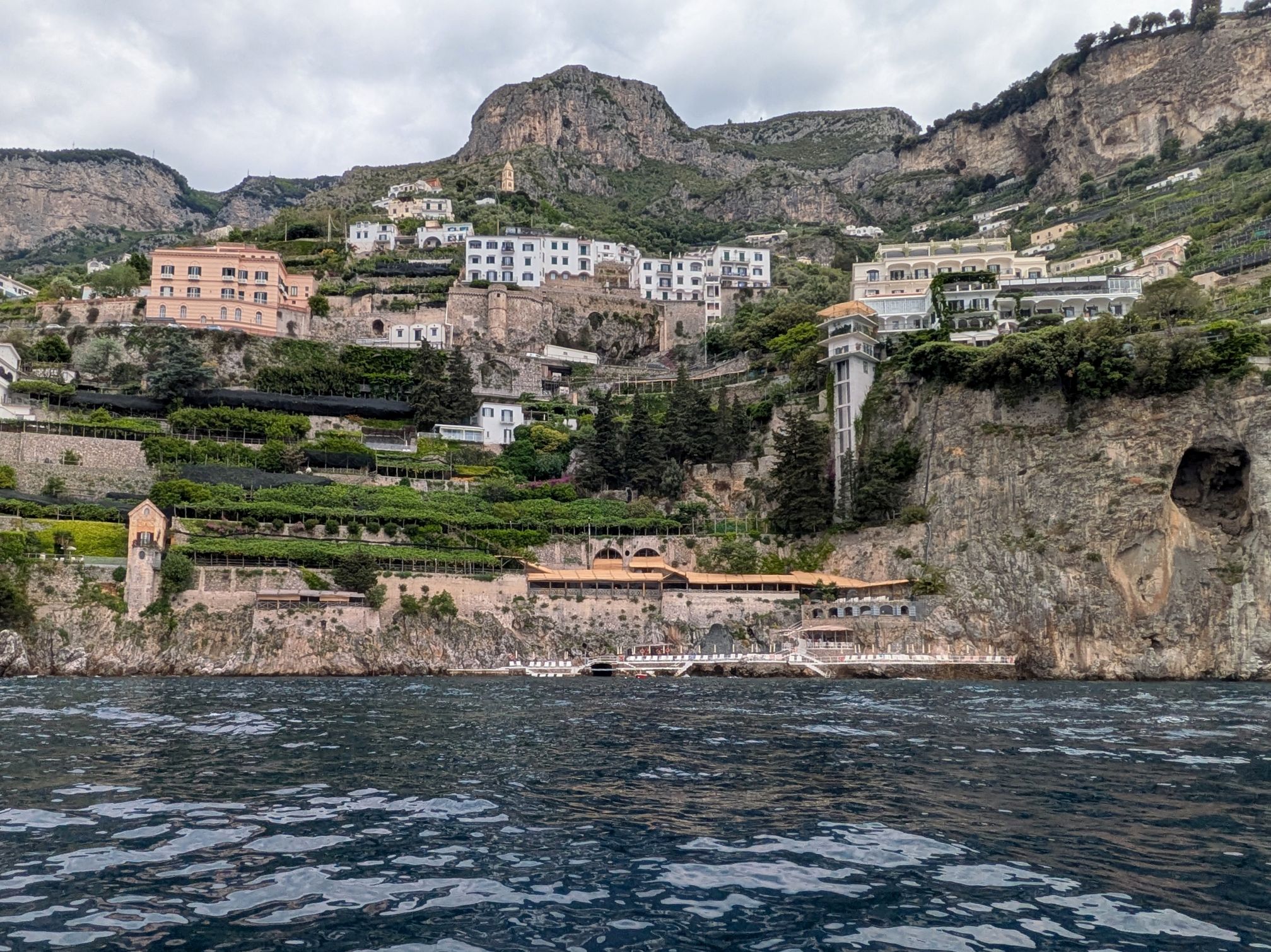
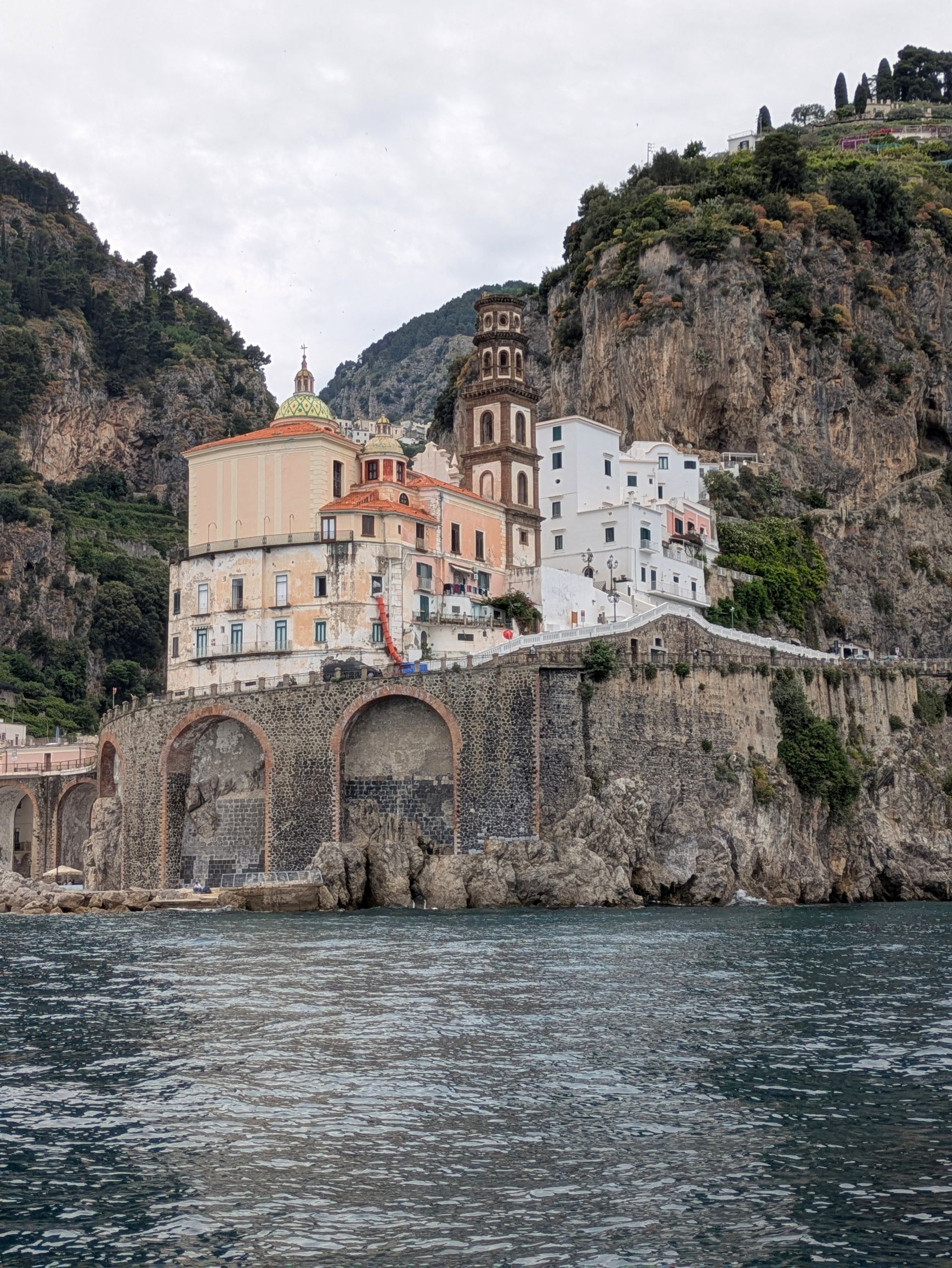
First, the boat ride, for views of the coastline:
(For all photos, click on the image for a full screen view.)
The village of Amalfi
Would you like to stay at this hotel? It will set you back 2,000 Euros per night!
I strolled into this gentleman’s studio, smiled, and bid him, “Buongiorno!” He immediately offered the cherries he had been snacking on from the plastic box. I politely declined, but he insisted. I am so glad he did, because they were the most delicious cherries I had ever tasted, and we shared a magical moment I won’t soon forget.
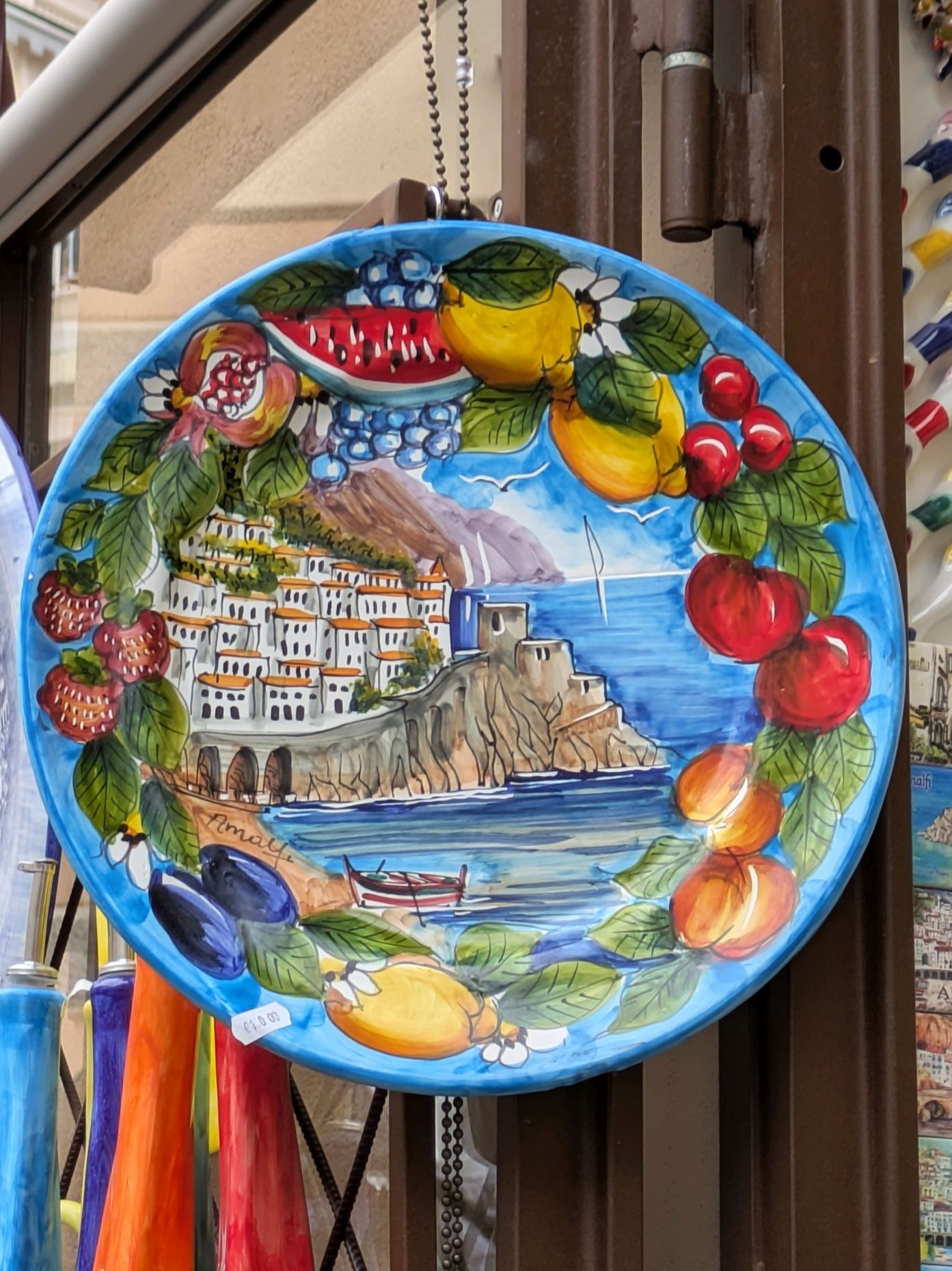
He painted this beautiful plate with the paints in the photo below.
The mirror reflects the stairs in front of it.
This fountain was nothing short of bizarre but fun! It’s hard to see the detail in this photo, but the picture below is just one small part of this entire scene of little figures of people and animals. Read all about it here.
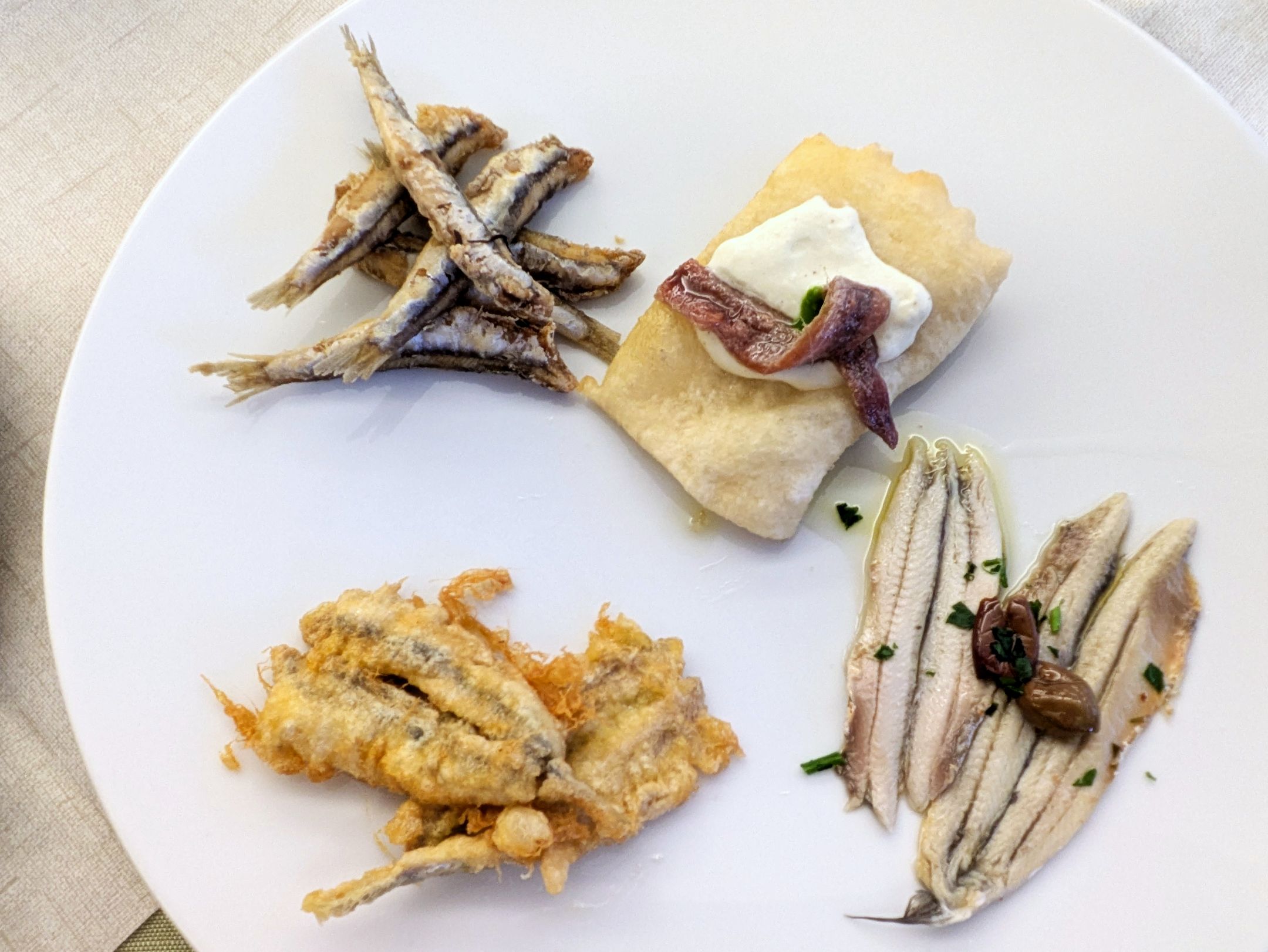
After returning to Maiori, we regrouped following our afternoon of free time to enjoy dinner at a local restaurant. This was the appetizer: Anchovies prepared four ways.
I’m baaack! Sorry for the long delay in between posts, but I was in Des Moines, Iowa, competing in swimming at the National Senior Games (Olympics). Happily, not only did I have a great time, but I won a bronze medal in the 200 Yard Backstroke and a silver in my 200 Mixed Medley Relay!
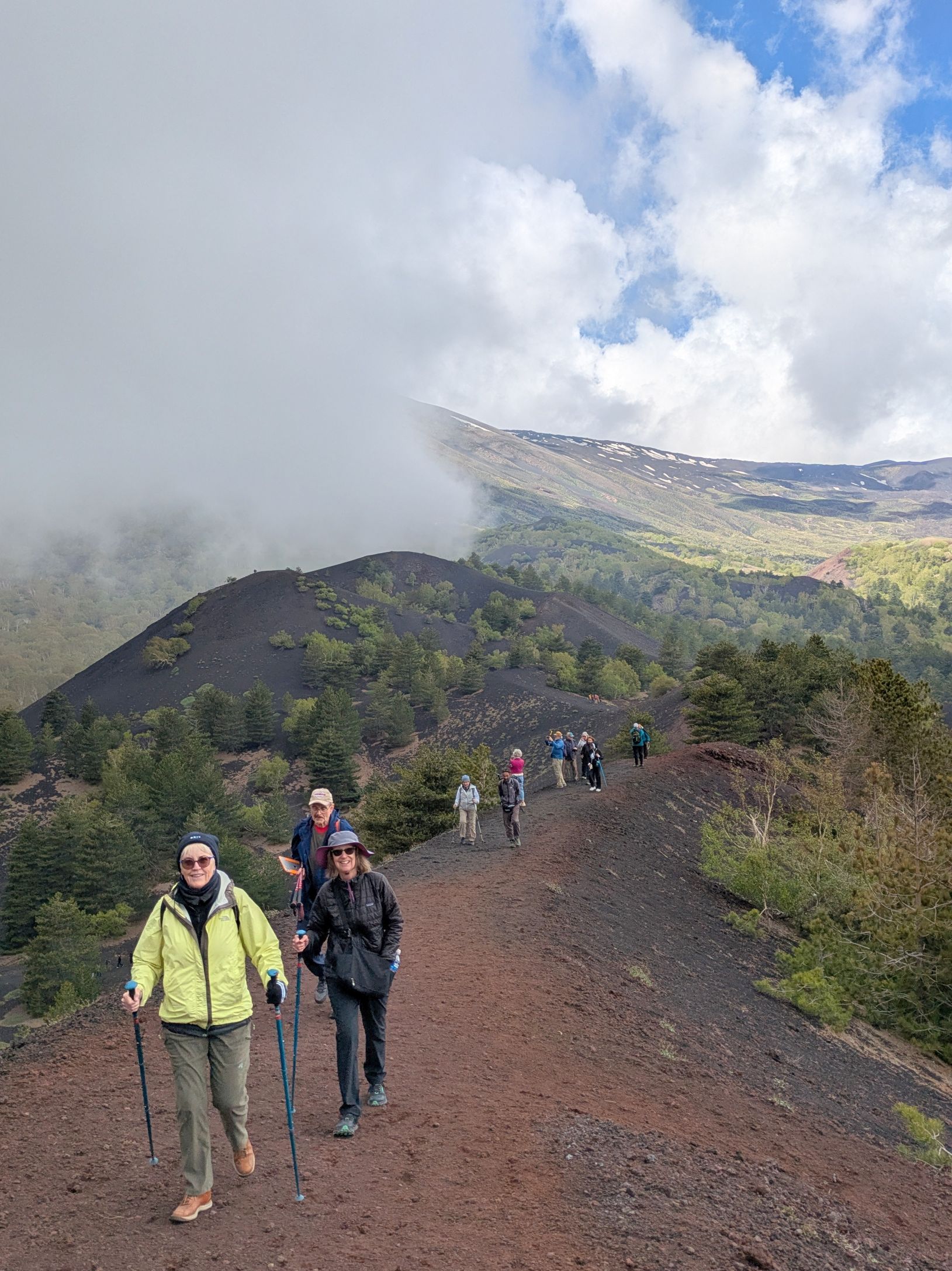
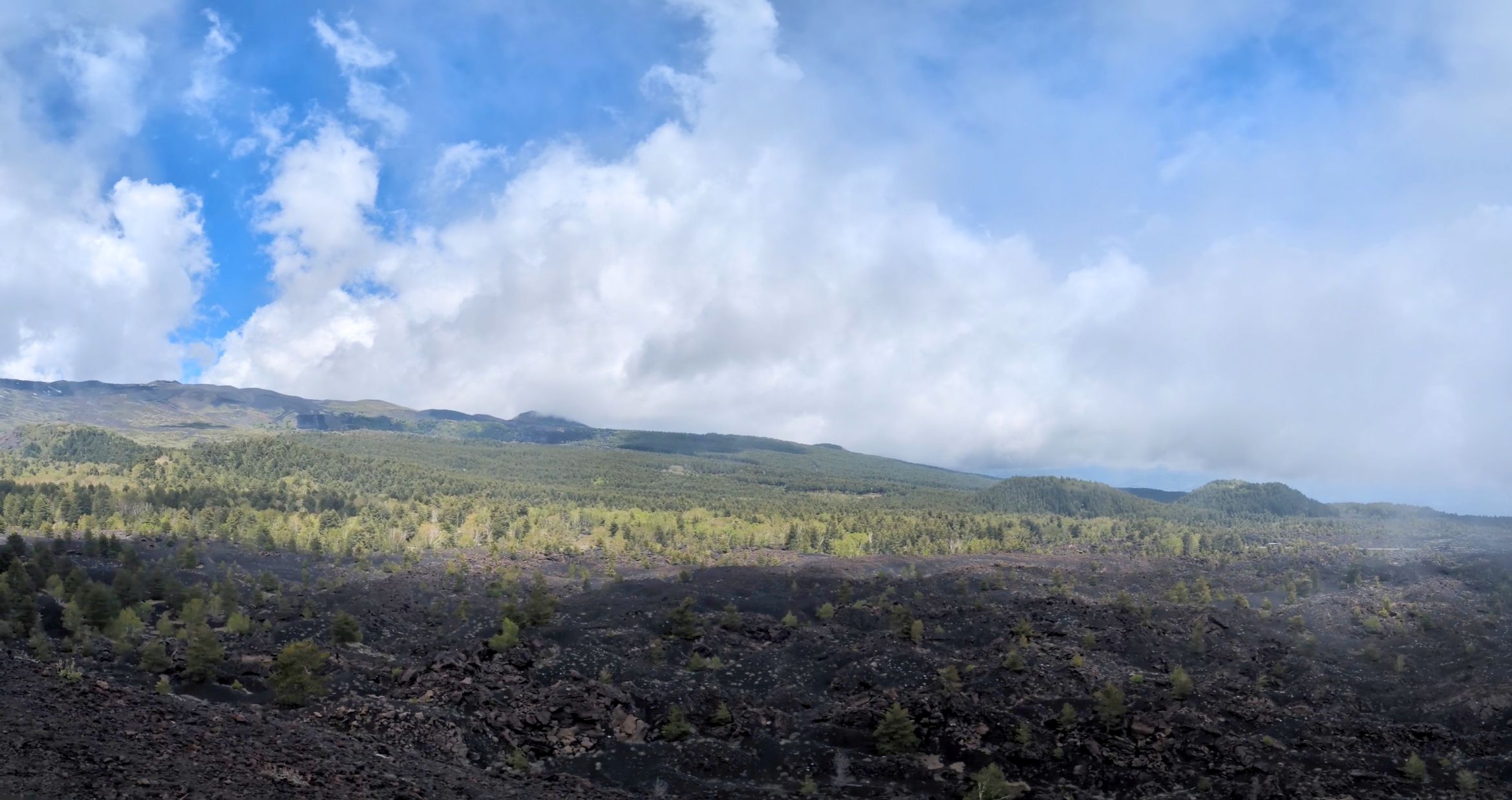
Back to Sicily, our last day on the island before heading over to the Amalfi Coast was spent hiking Mount Etna. As you may have heard, the volcanic Etna erupted again, but we were fortunate to have visited a couple of weeks before that happened.
A UNESCO World Heritage Site, Etna is the highest Italian mountain south of the Alps at more than 10,000 feet in elevation and one of the most active volcanoes in the world.
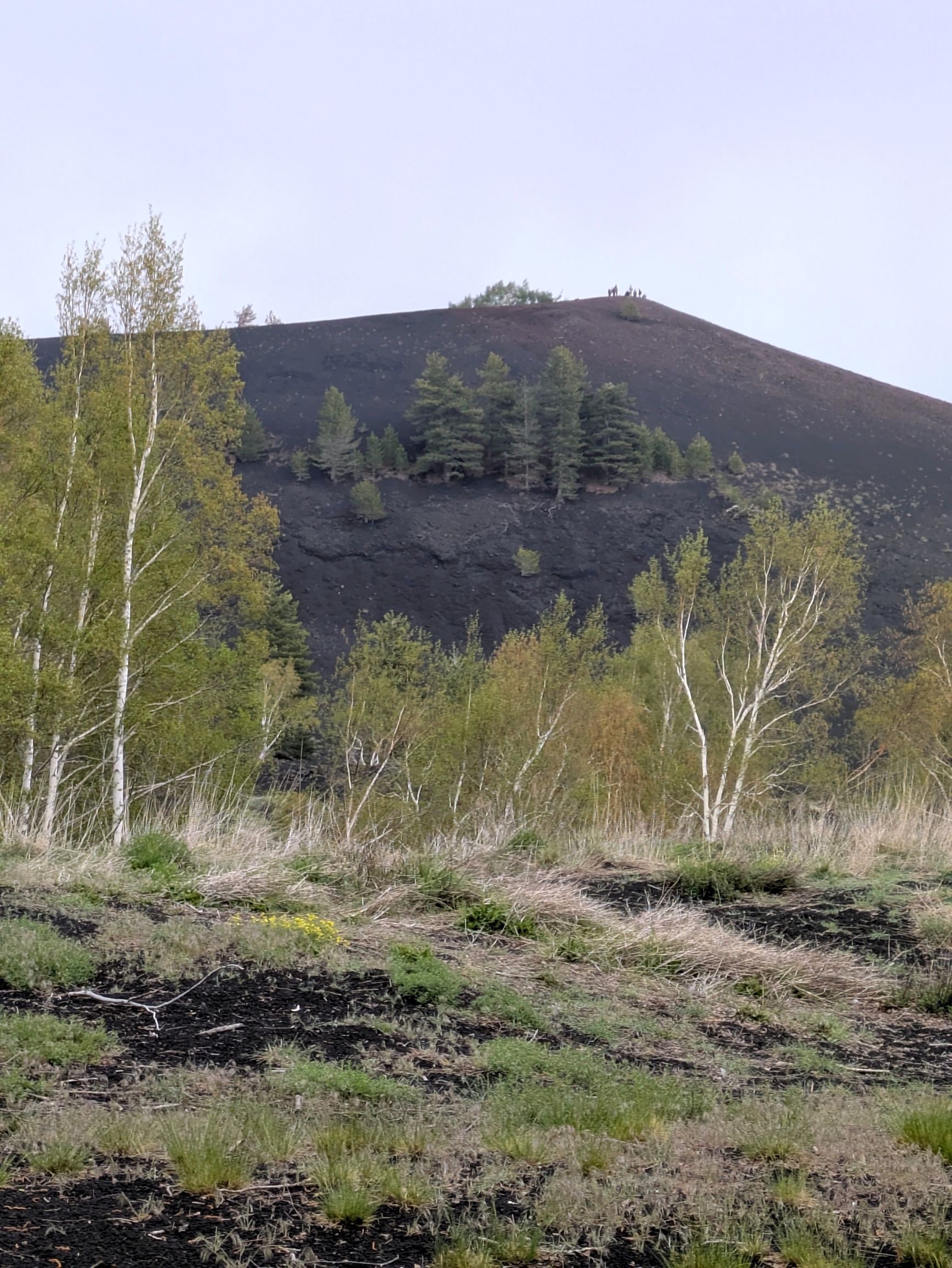
To reach the volcano, we took a 4-wheel-drive vehicle and were joined by a local nature guide, stopping to see a lava flow along the way before hiking to the top of one of Etna’s four summit craters.
(For all photos, click on the image for a full screen view.)
Few volcanoes change as rapidly and dramatically as Etna, and we experienced the changing weather pattern during the steep hike to the top. In the short time we were at the top, the beautiful sunny sky clouded over by a wall of fog that rolled through. Soon, it passed, and it was sunny again!
After every eruption, five million cubic meters of lava ash must be cleared from the villages below and packed in plastic bags for disposal. From February to November of 2021, 53 volcanic eruptions required the removal of lava. There was another eruption outbreak in May 2023, July and August 2024, and for a month in February and March of 2025. During that eruption, the volcanic explosion was 7.5 miles high, and the ash blew to Africa and Greece. The temperature of the lava flow reached 1,000 degrees Celsius! Lava flows only 100 meters per day, though, so there was plenty of warning for the villagers below. Fortunately, none of the 1 million in population surrounding Etna were killed during those eruptions. In 1928, that wasn’t the case, and an eruption destroyed the village below.
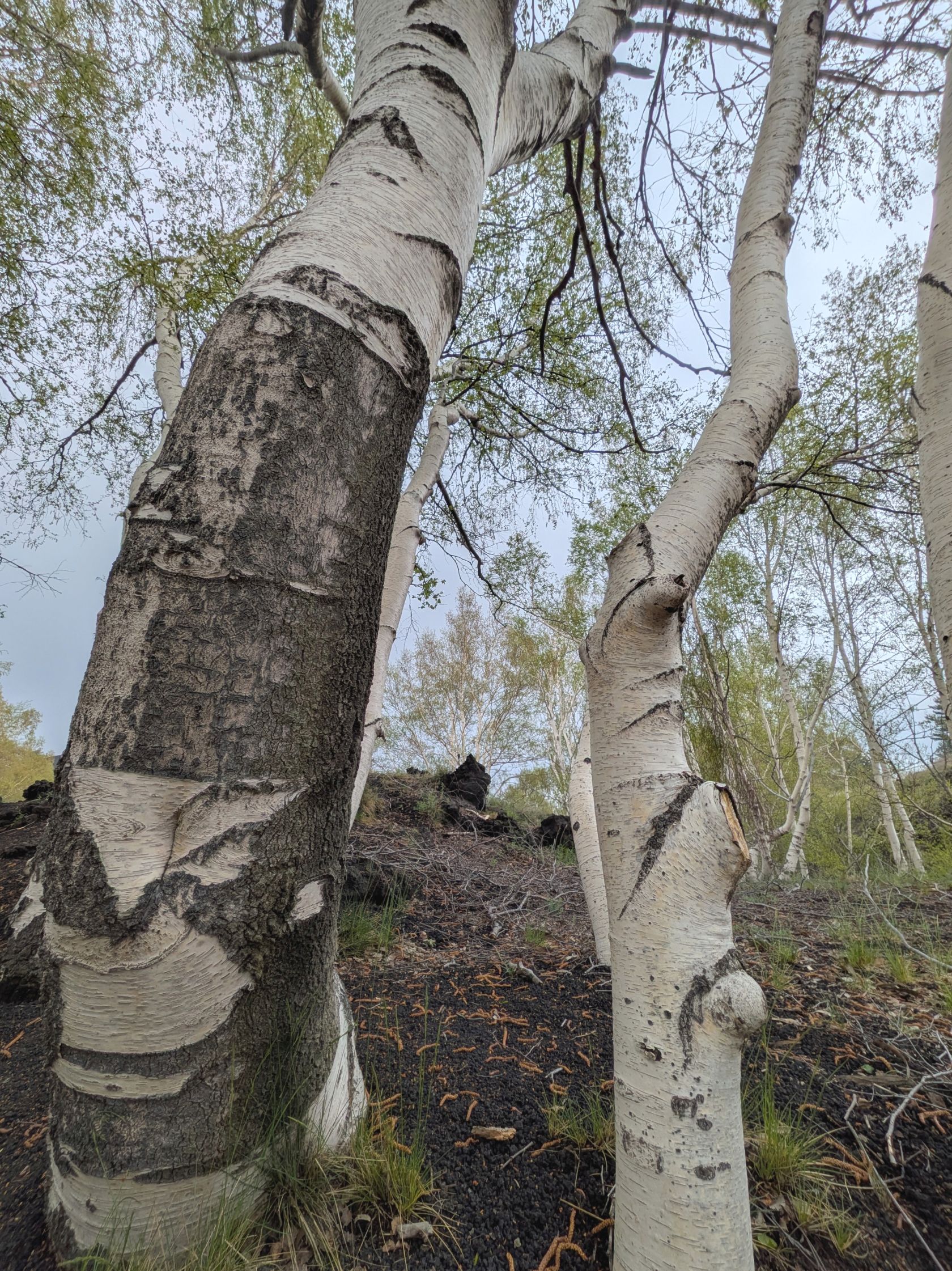
With all those eruptions, it makes you wonder why one million people continue to make Etna their home. It’s because the snow during the winter on Mount Etna provides a good source of water and the soil is very fertile, so it’s a great wine growing area. One thousand different plants—many specific to Etna—grow in the area, and volcanic rock provides an excellent building material. Fifteen million people visit Mount Etna each year, so it also provides a good source of tourism revenue for the locals.
Visiting Mount Etna and hiking to the crater summit was an awesome experience, one I will never forget!
Beginning the steep climb up to the summit
We’re almost there!
The summit, just before the fog wall rolled in.
Looking back at hikers up at the summit on our way back down.
That’s where we were, way at the top!
Next up: SICILY & AMALFI COAST #22: SICILY SLIDE SHOW
Siracusa, the capital of the province of Siracuse, was one of the most powerful ports of the ancient Mediterranean world. It dates back 2,700 years, so the city has a long, rich history. The architecture is a mix of Greek, Roman, and Baroque—one of the reasons UNESCO added the city to its list.
Just across the small bridges is the quaint and charming island of Ortigia (Ortygia), which is the historical center of Siracusa. Full of ancient landmarks, a wonderful mix of architecture, and a whole lot more (as you will see), we thoroughly enjoyed our walking tour and free time exploring this little island.
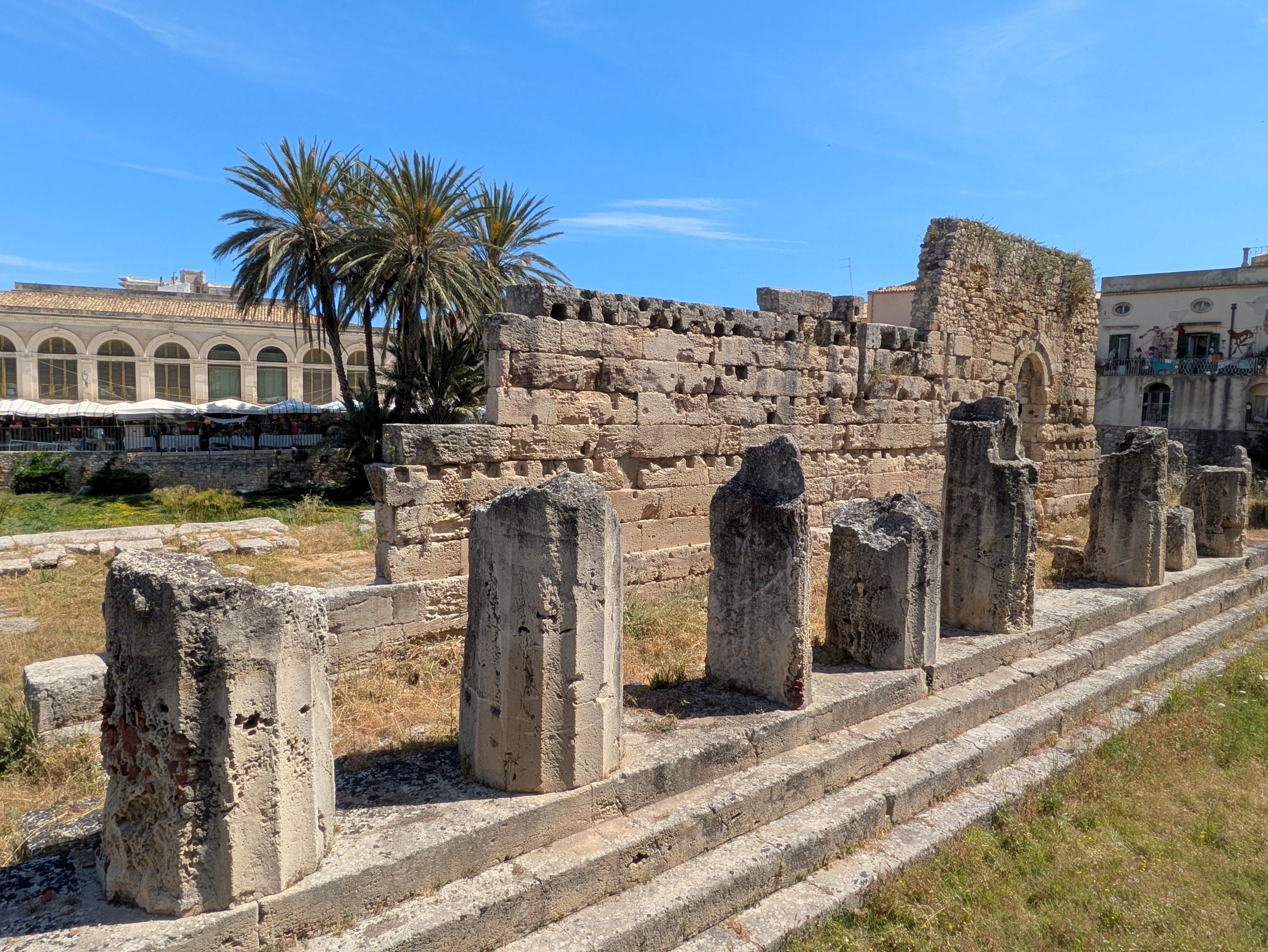
To begin our walking tour, we passed by the ruins of Temple of Apollo, a UNESCO World Heritage Site dating back to the 6th century BC. This Doric temple is one of the oldest in Sicily.
(For all photos, click on the image for a full screen view.)
The following are more highlights from our time on the island:
This is one of the places where “ogling” occurred!
I fell in love with this little painting on scrap wood and bought it from the artist.
Inside this store, the owner posted a sign that read, “Please photograph and post on social media!” I am gladly obliging. Unfortunately, I forgot to photograph the name of the store!
Bruce and I thoroughly enjoy markets as my regular readers know. We seek them out wherever we travel, whether they are historic open-air farmers markets, or modern foreign grocery stores. We found another one!
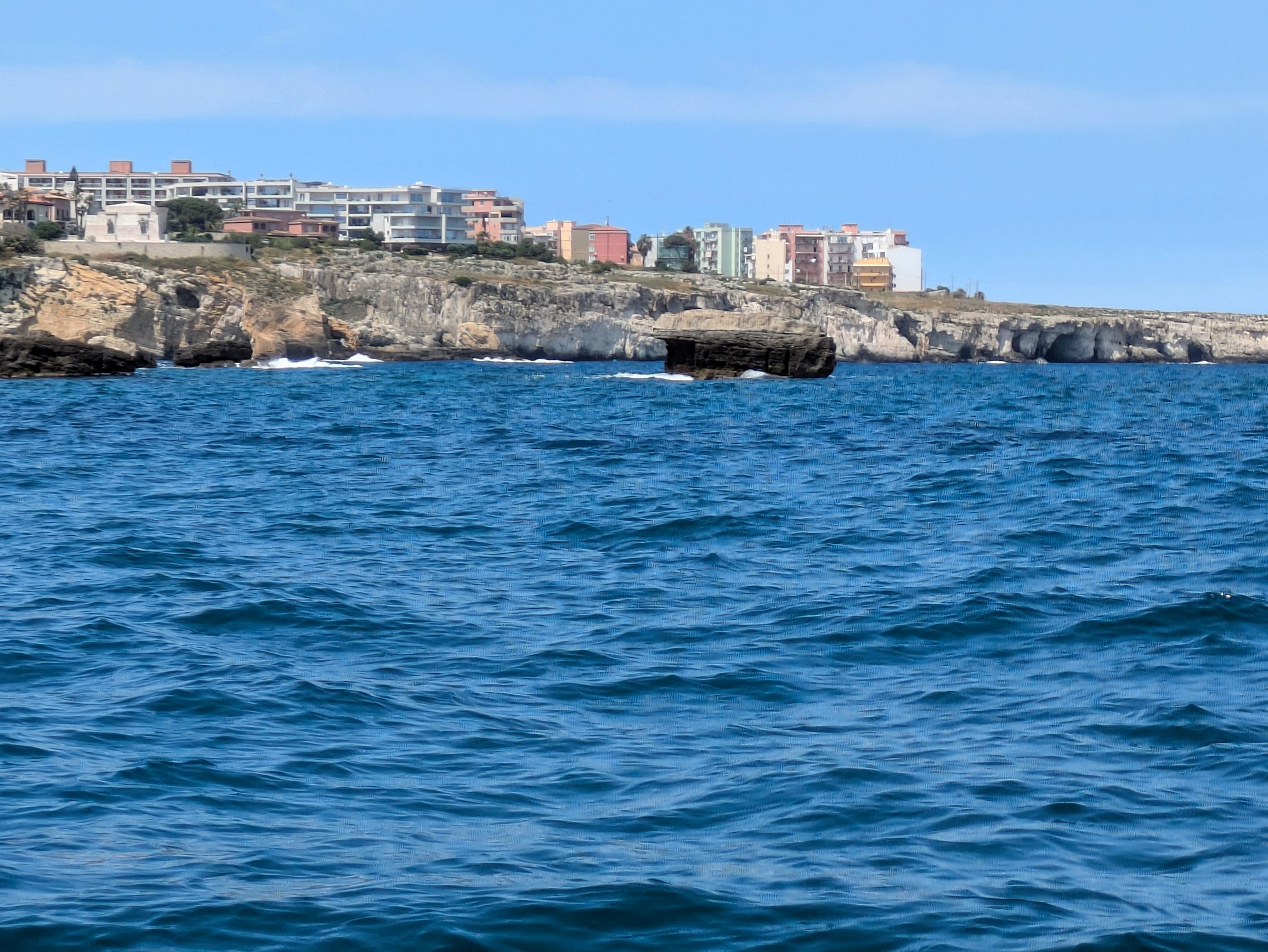
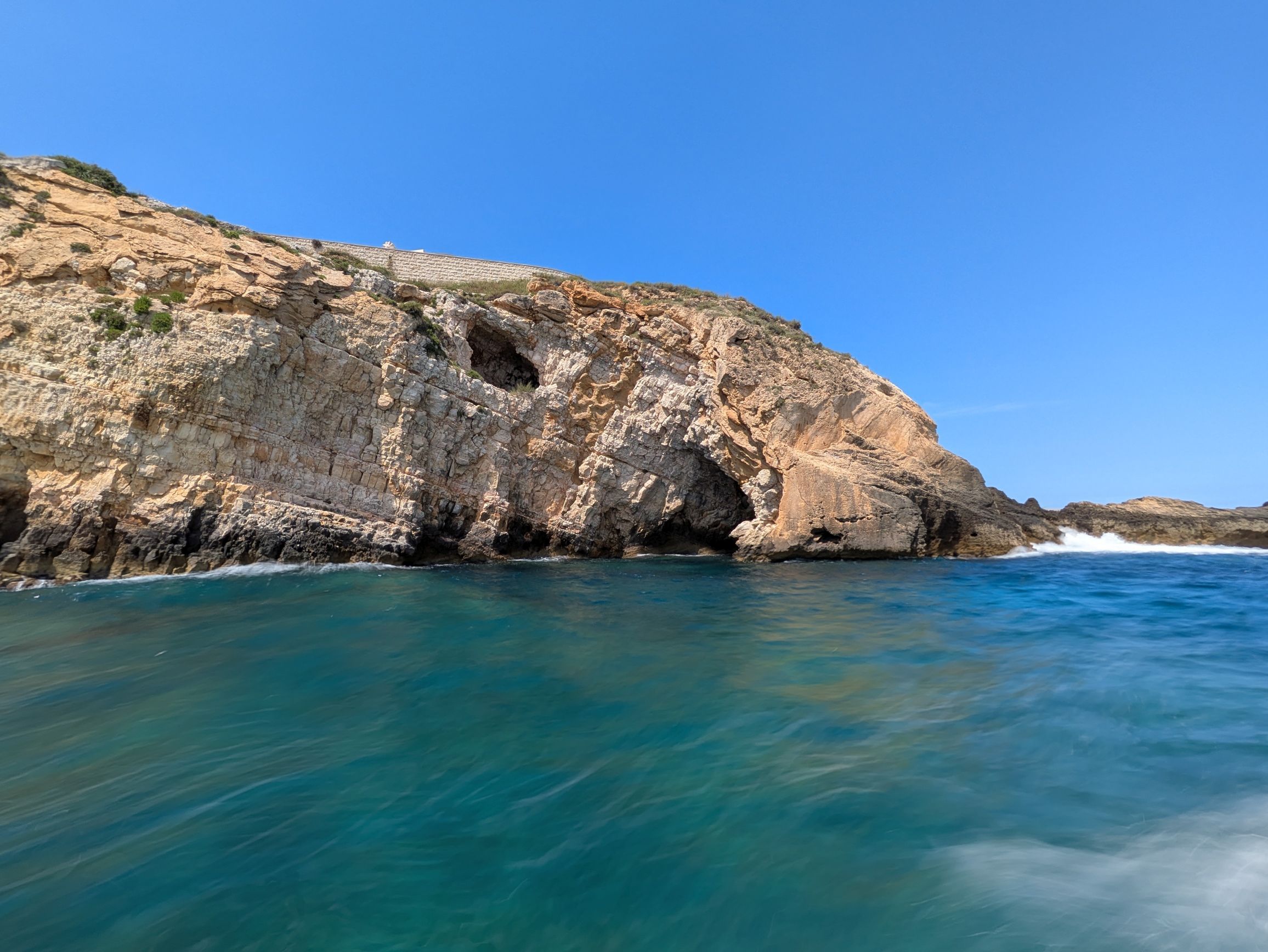
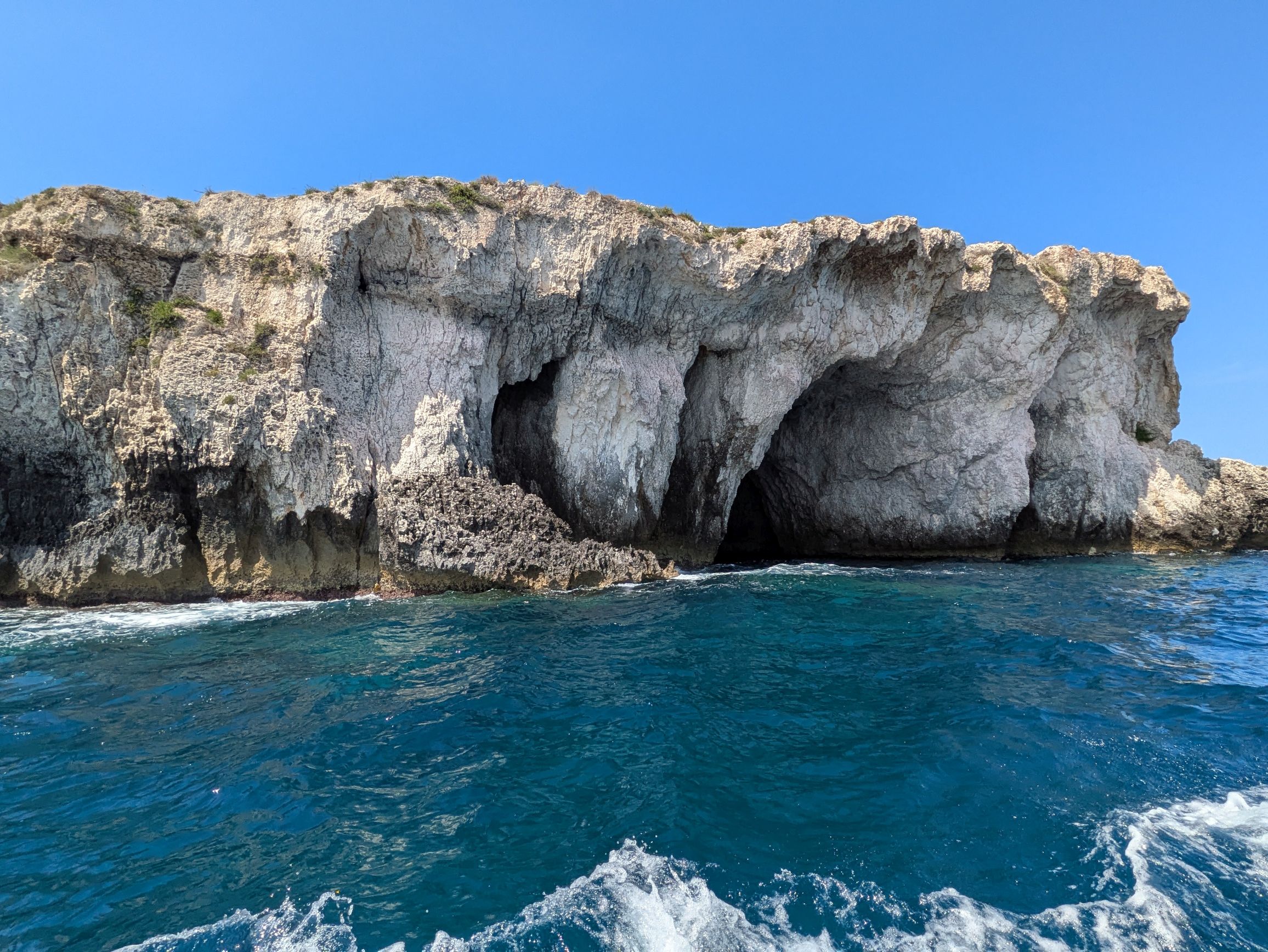
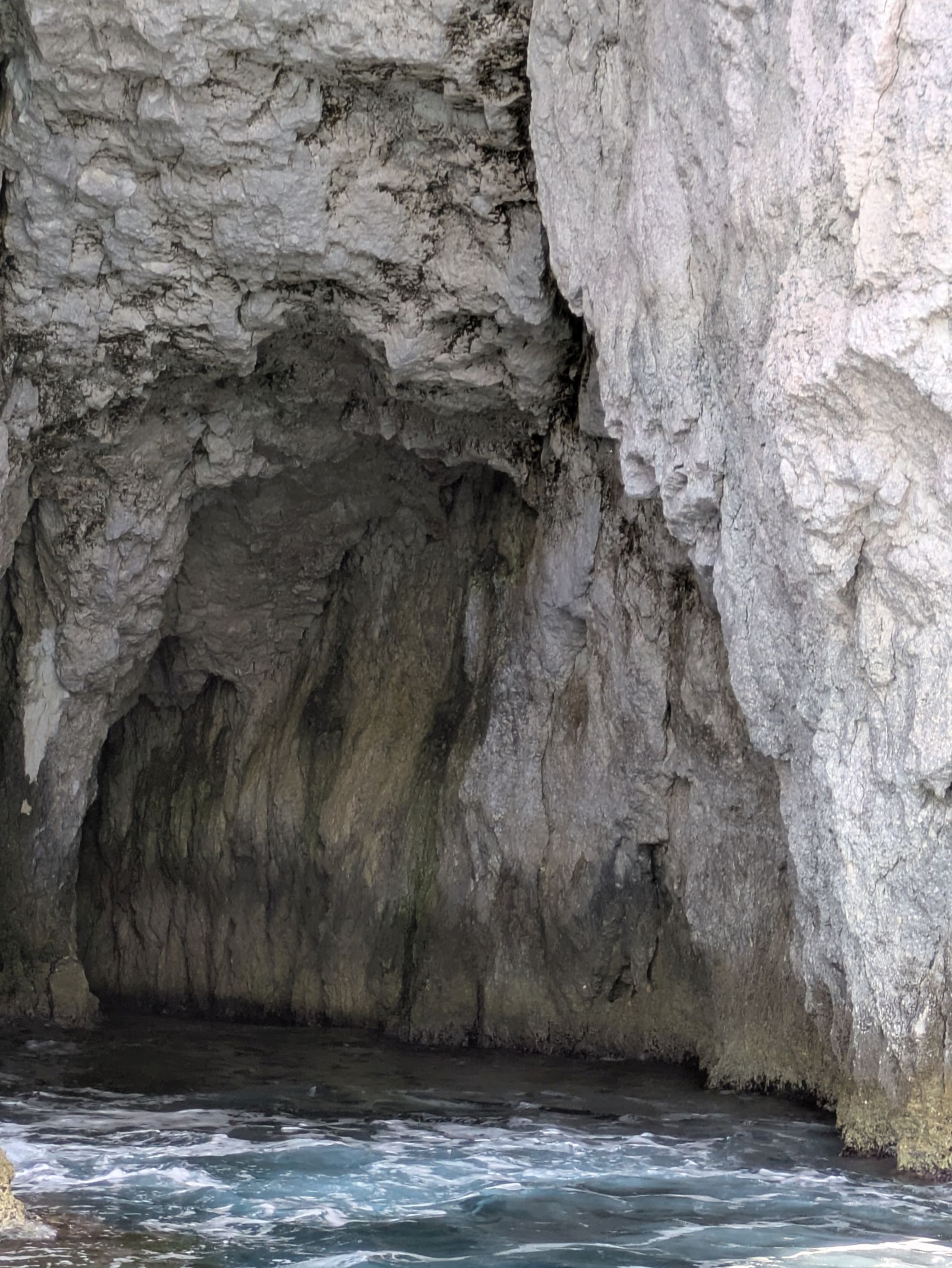
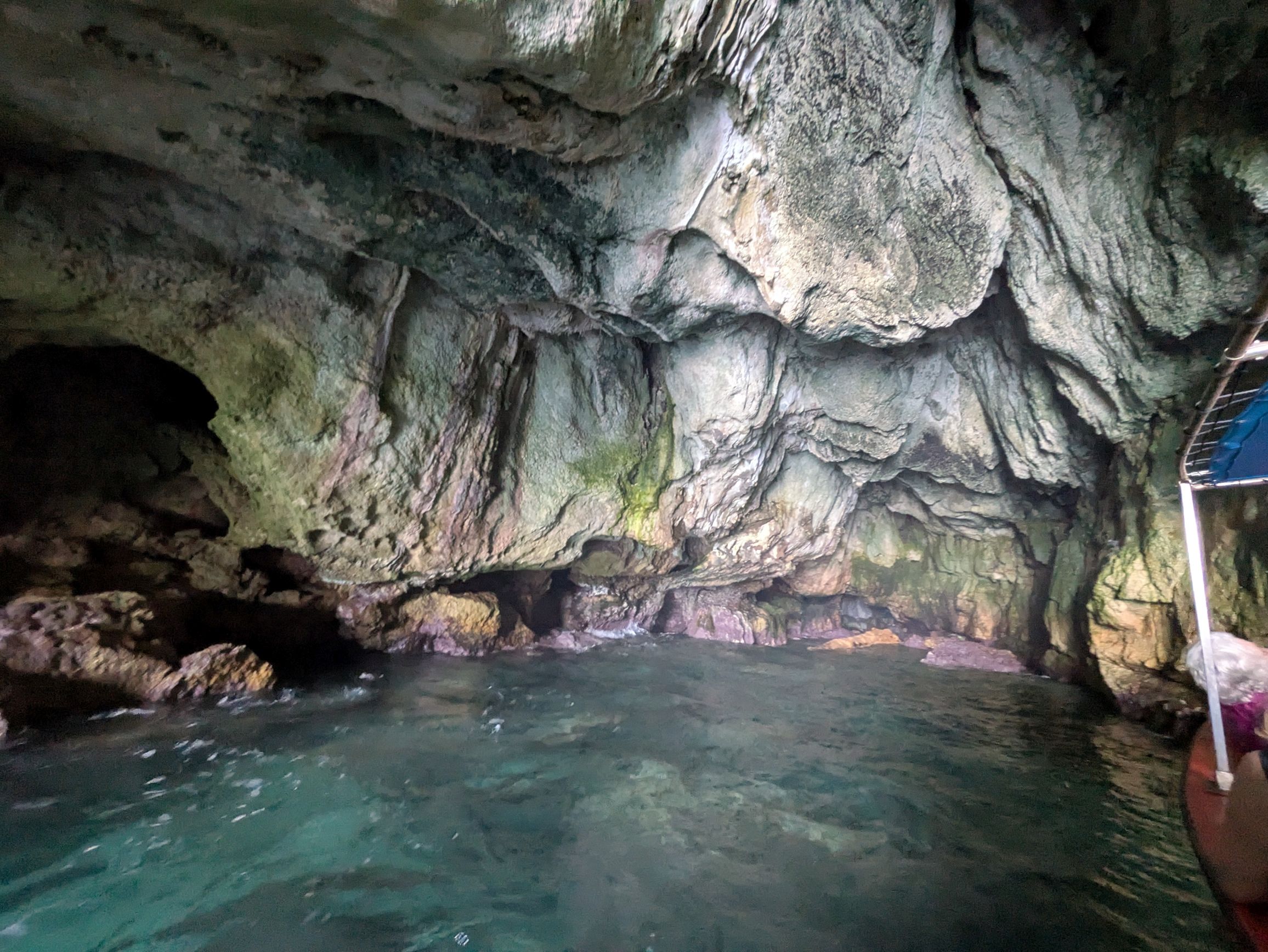
Since it was yet another beautiful day, our group was able to conclude our visit with a scenic boat tour of the island’s rocky cliffs and grottos along the Ionian Sea. Were we ever fortunate and grateful! According to our tour leader, Francesco, this was only the second time in three years for him as a tour leader the water was calm enough to go inside the caves—one of the highlights of the trip for me and Bruce!
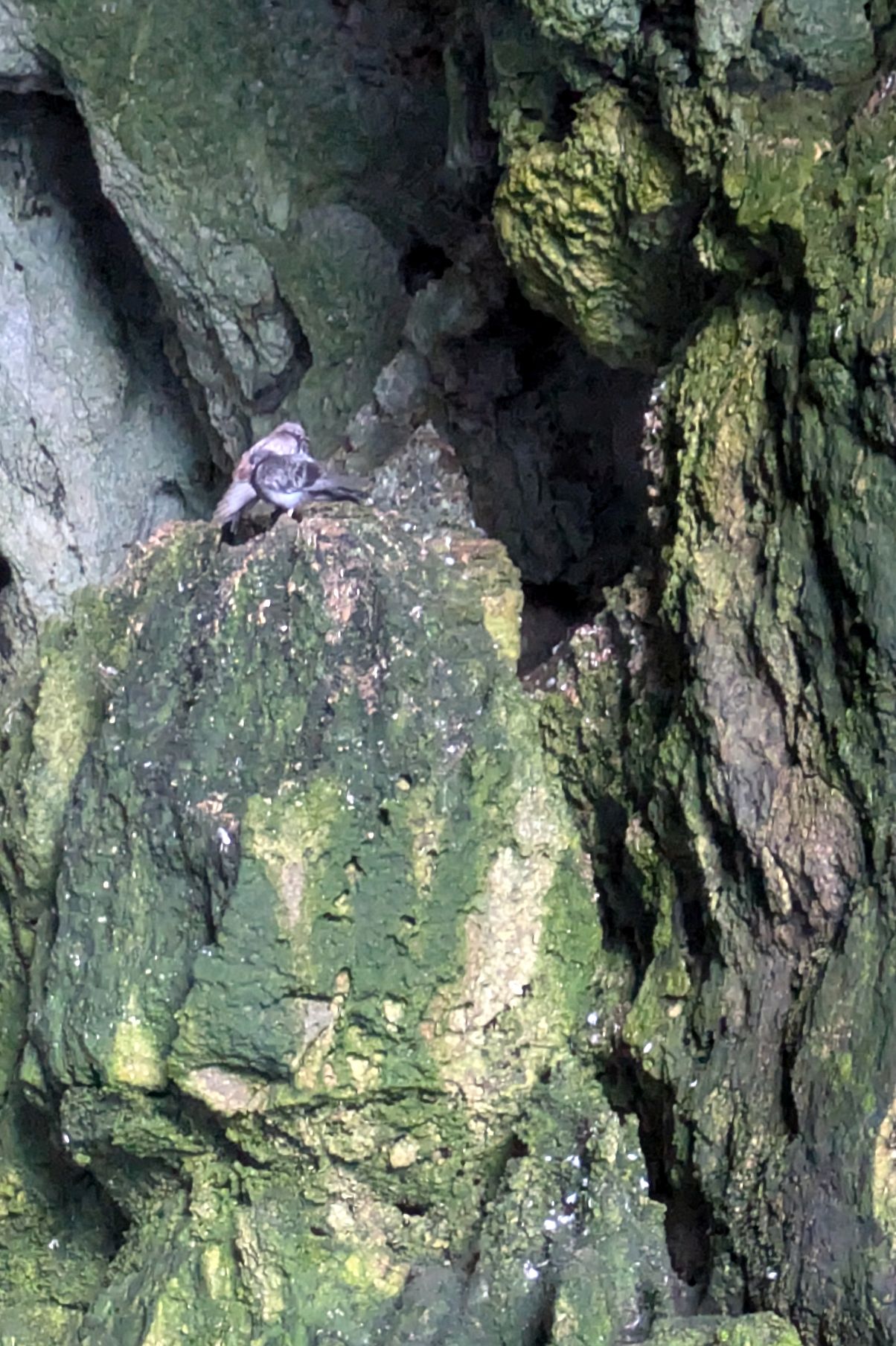
Those are birds up towards the top nesting inside the cave.
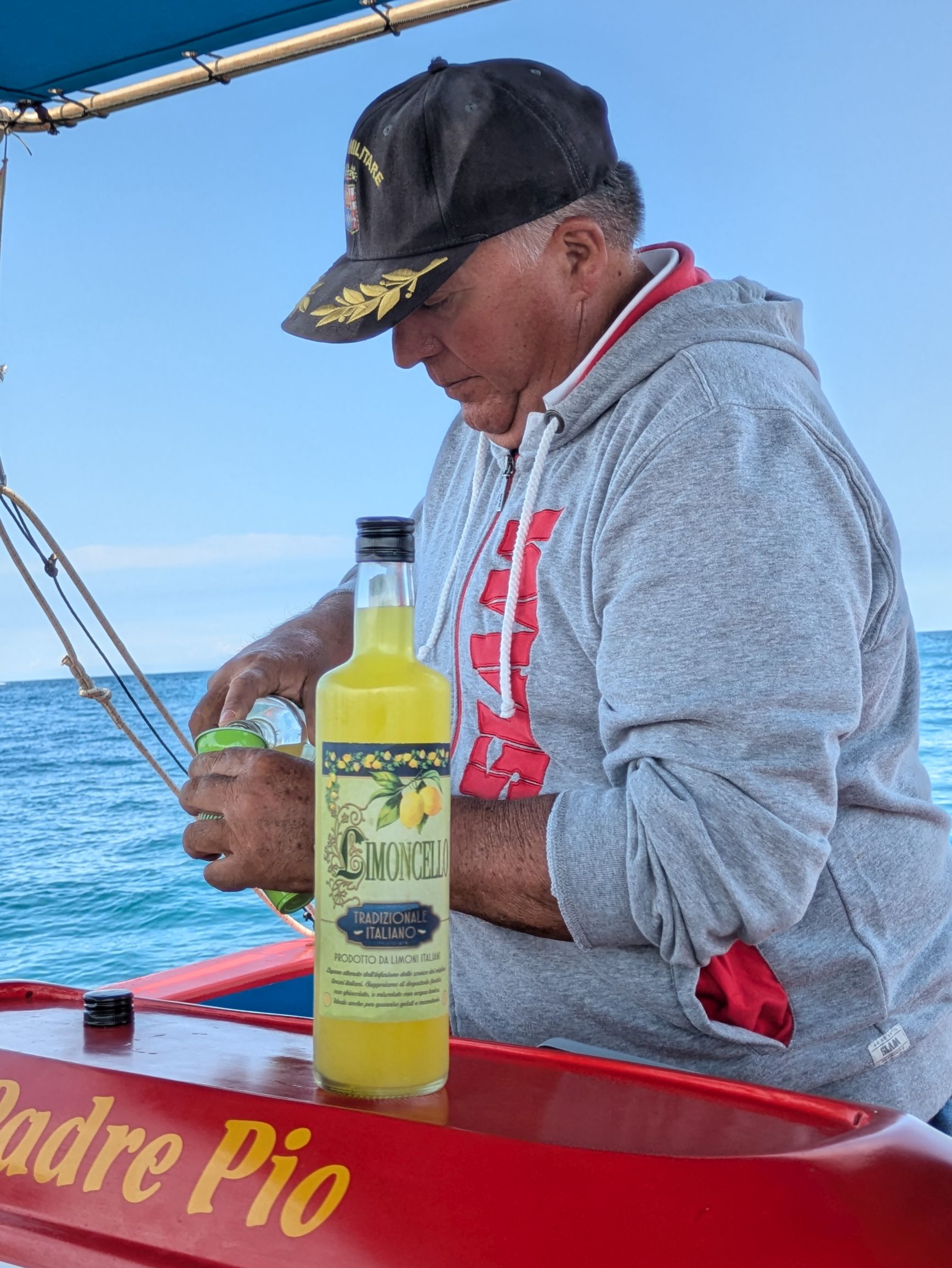
That’s our captain pouring us a celebratory Limoncello.
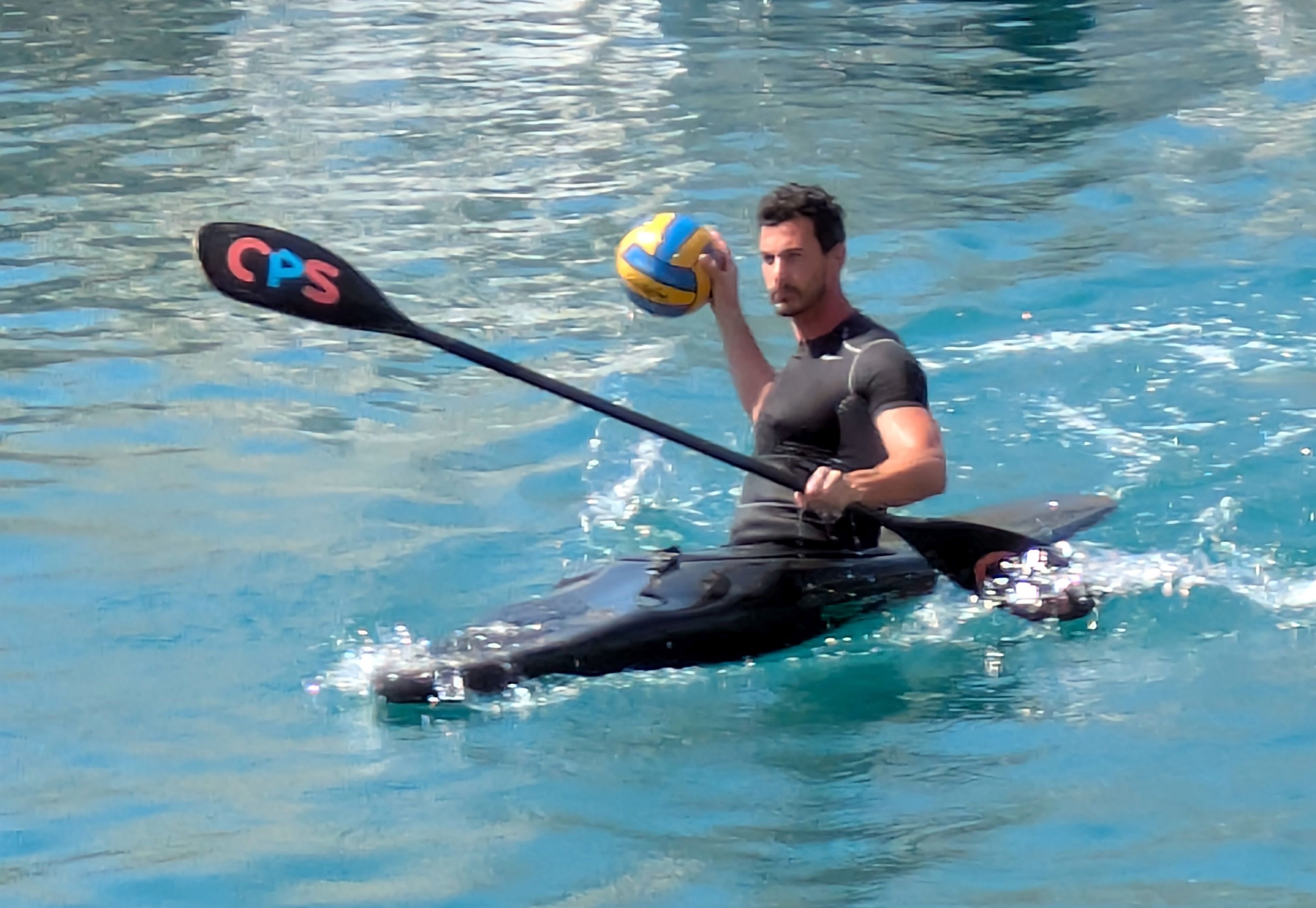
As a former kayak surfer in San Diego, as soon as I saw this guy and his friend playing what Iooked like kayak water polo, I wanted to join in! What a blast!
Coming up next: SICILY & AMALFI COAST #18: CULTURAL CATANIA
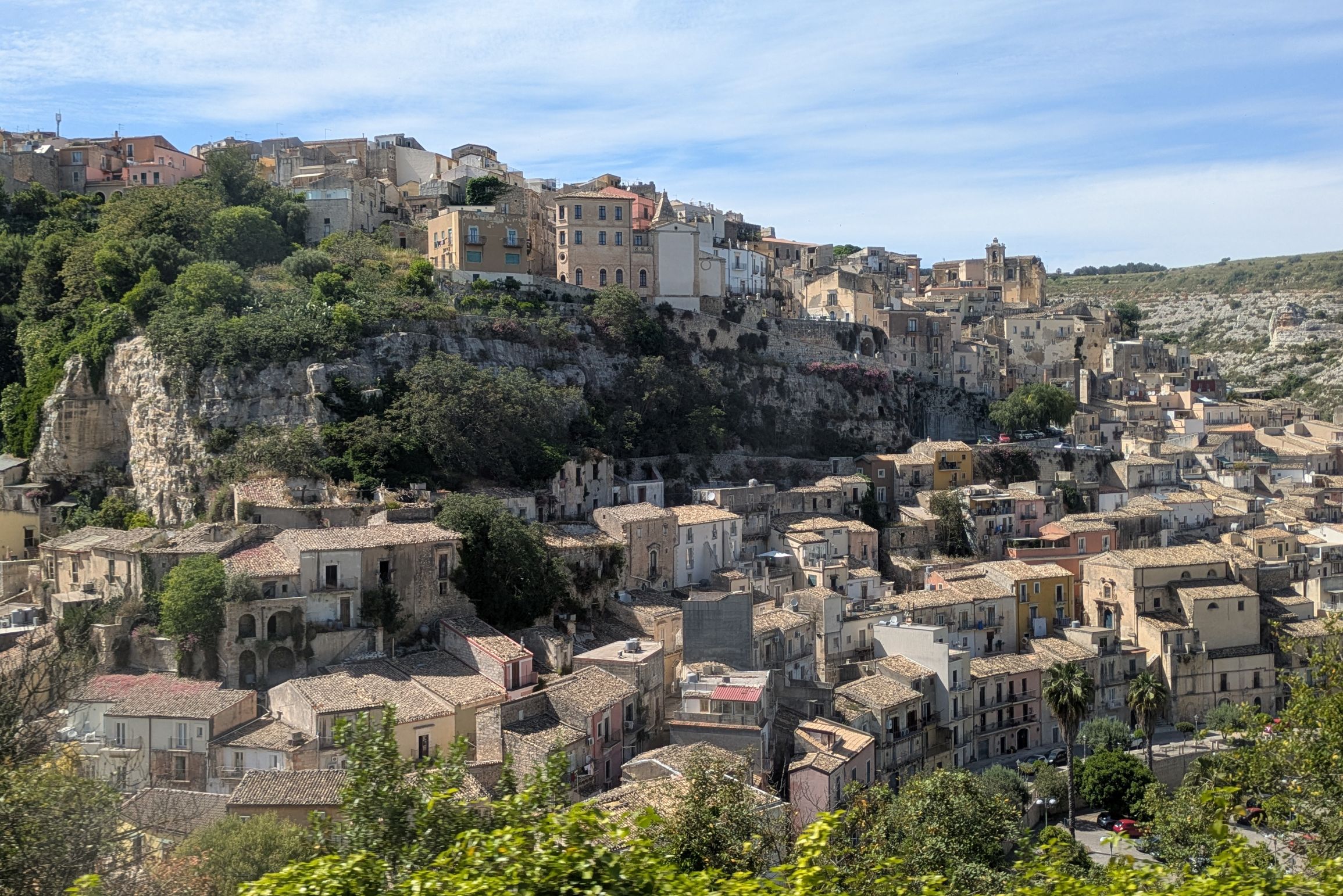
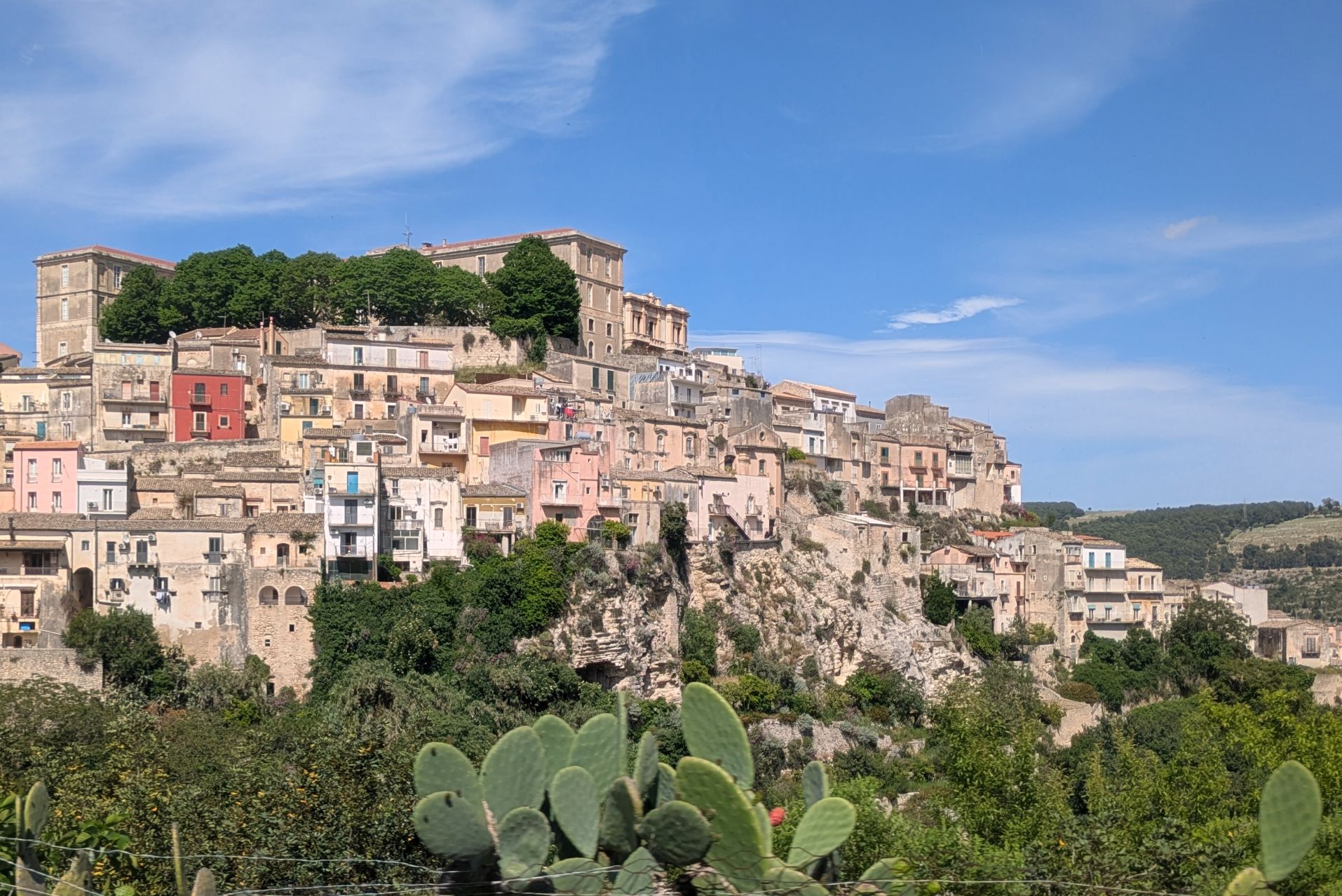
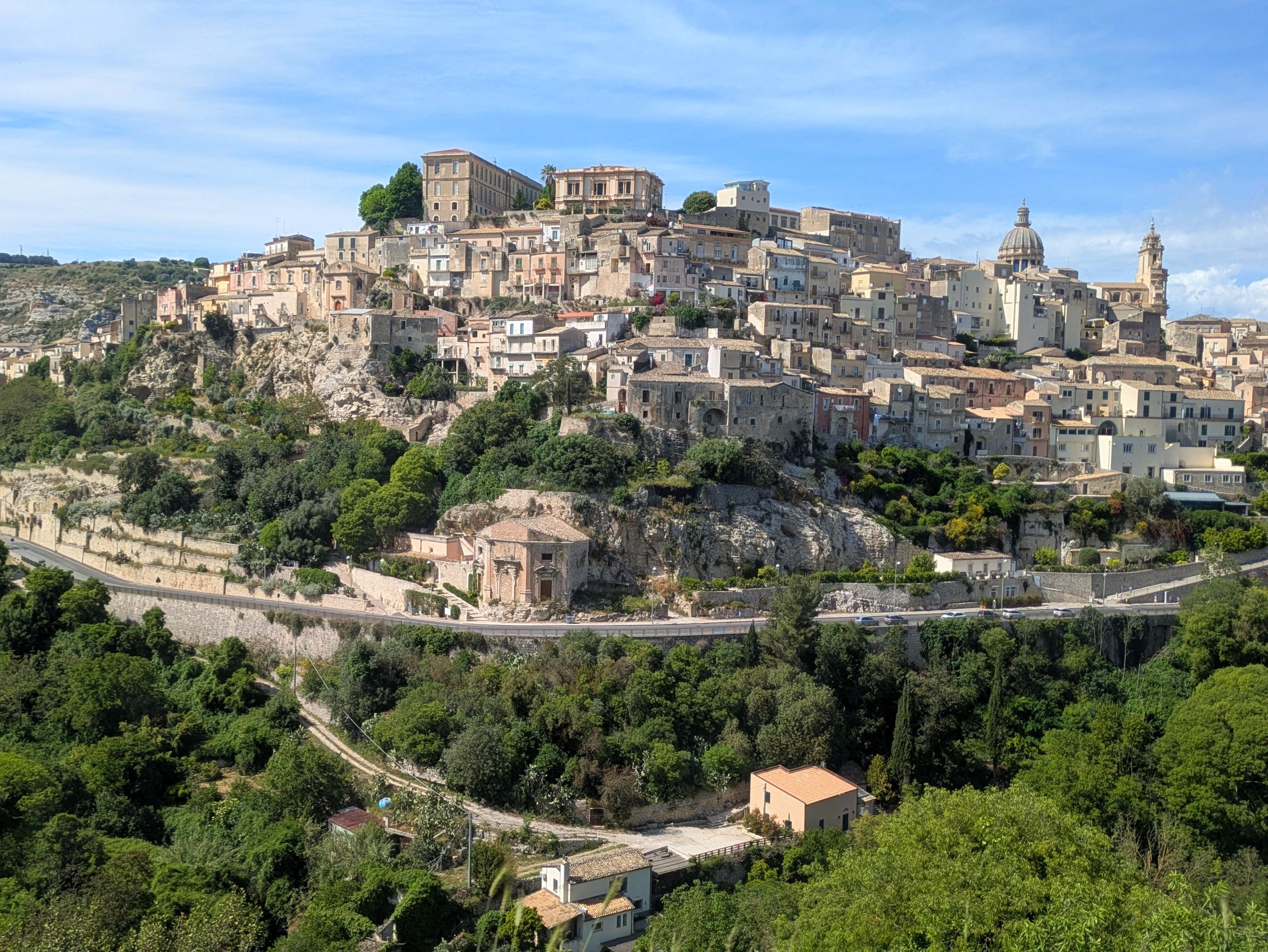
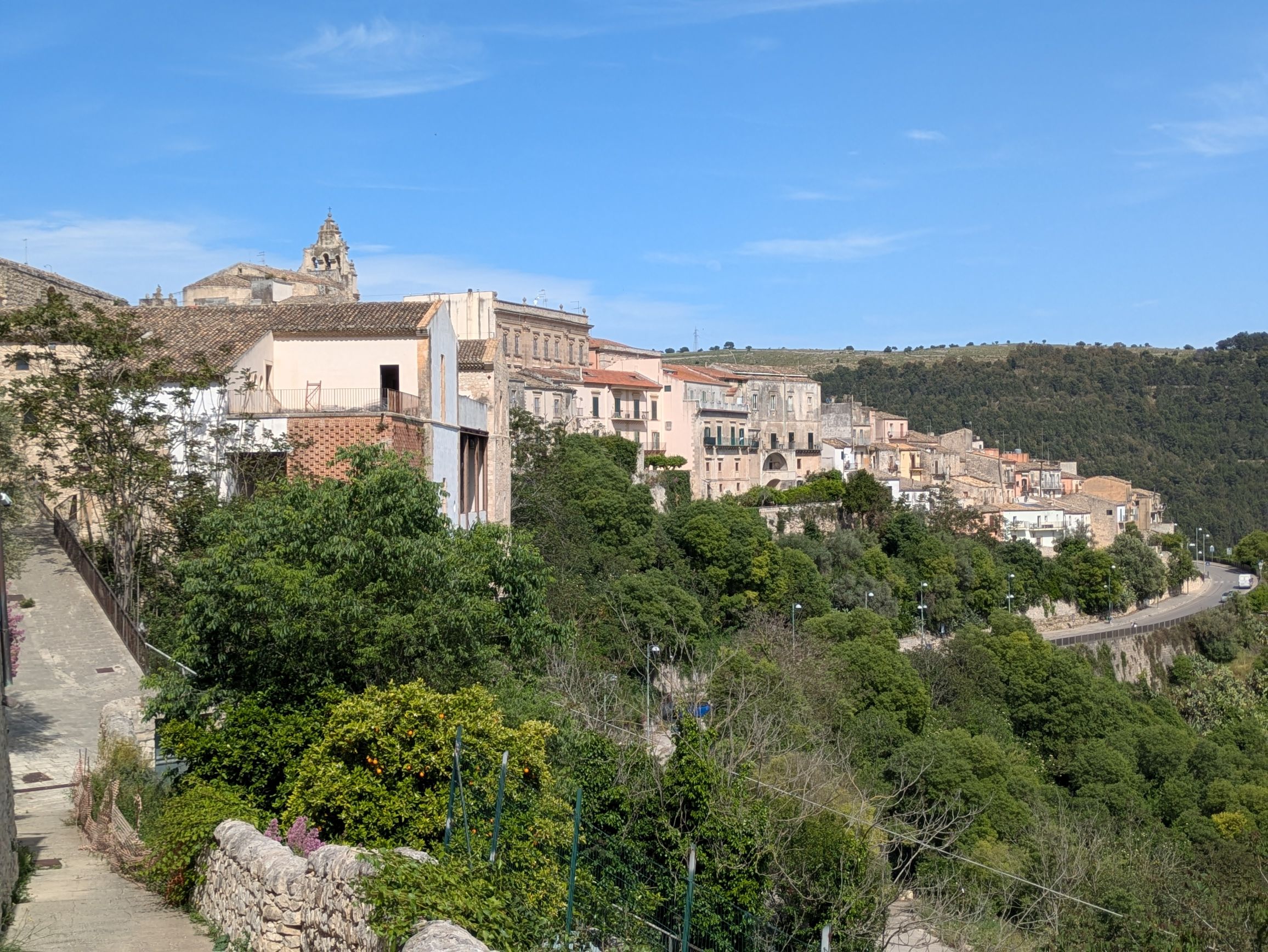
We arrived in Ragusa during a beautiful late afternoon. Around every turn was a spectacular view, which I was able to capture out the bus window:
(For all photos, click on the image for a full screen view.)
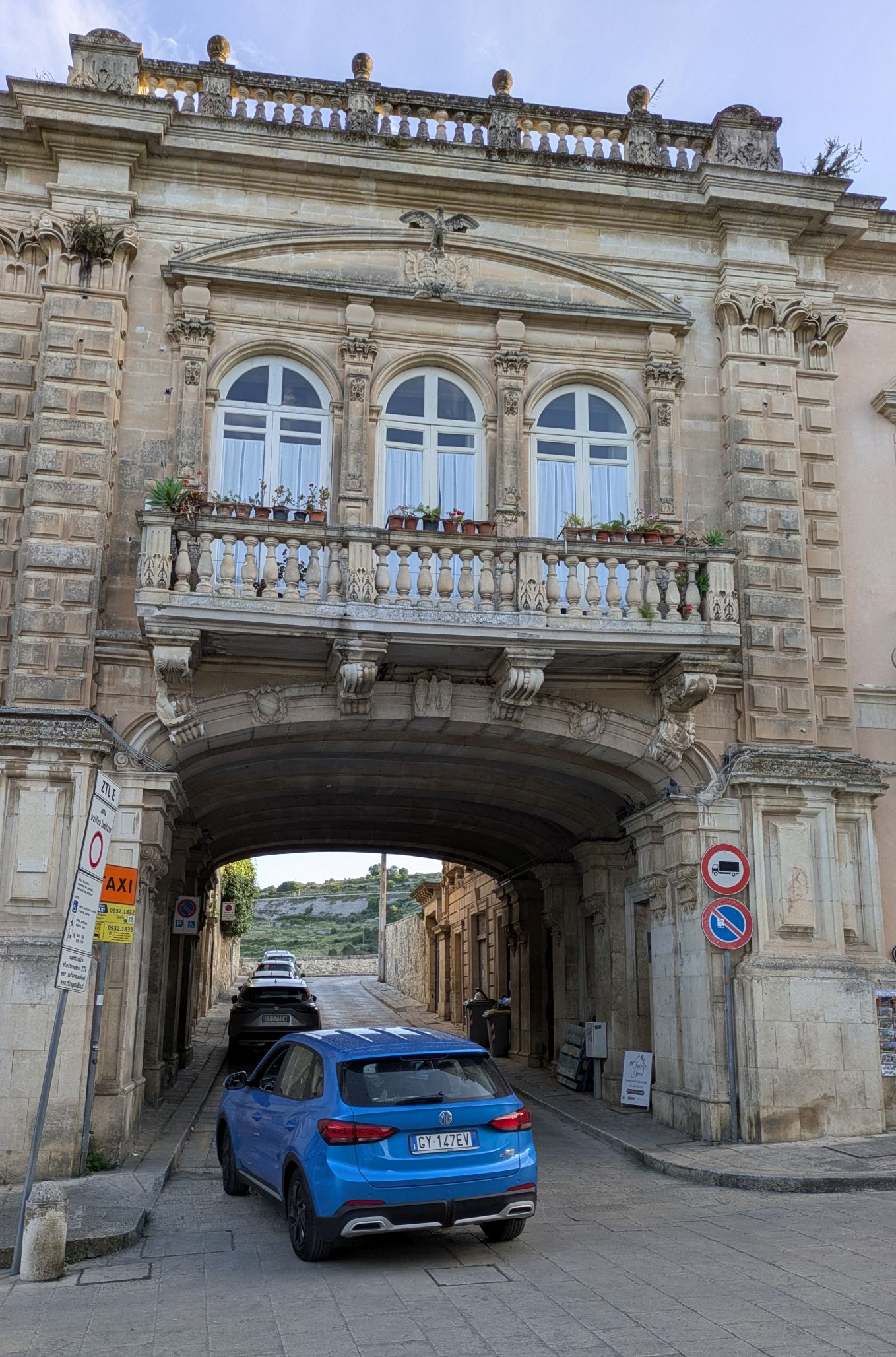
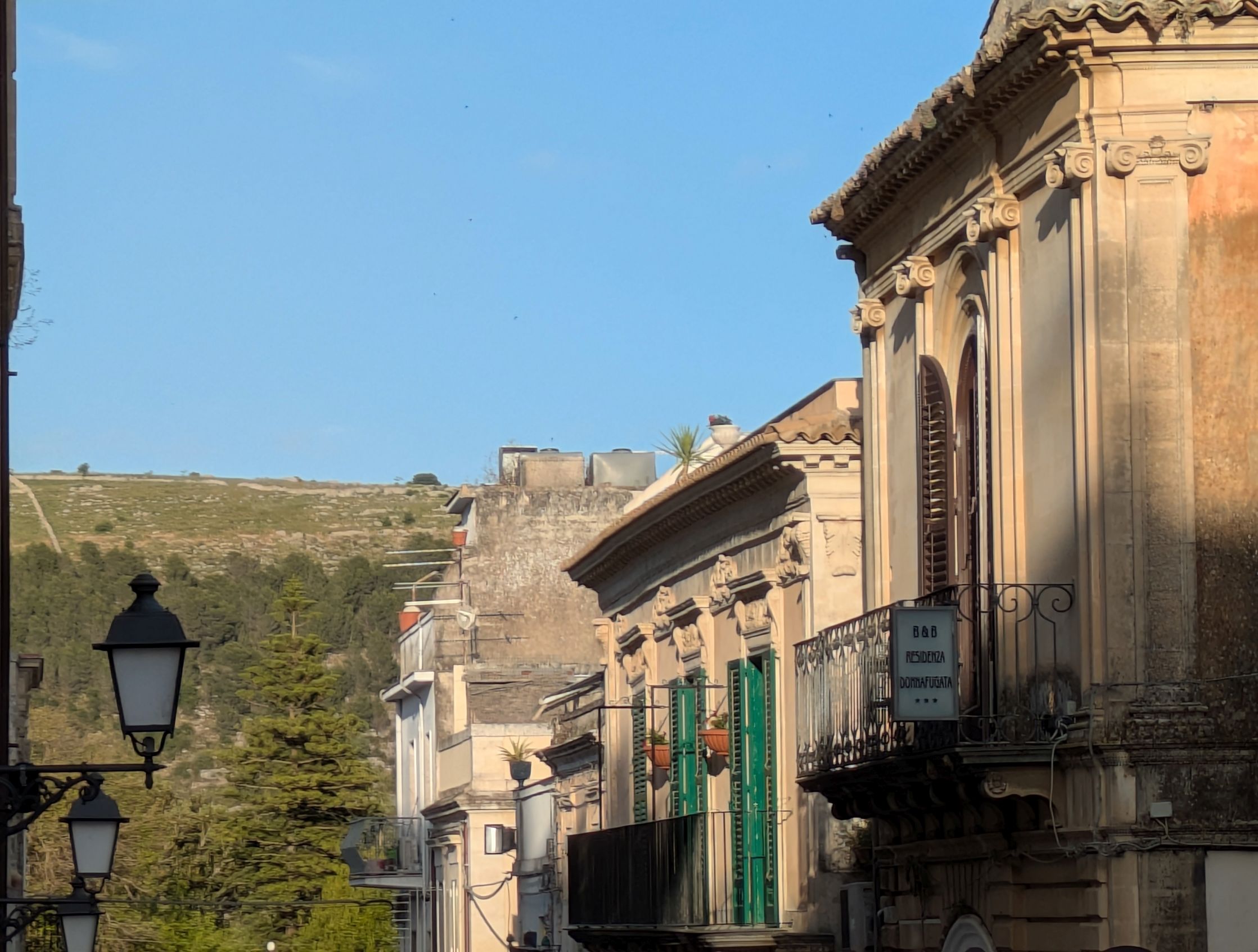
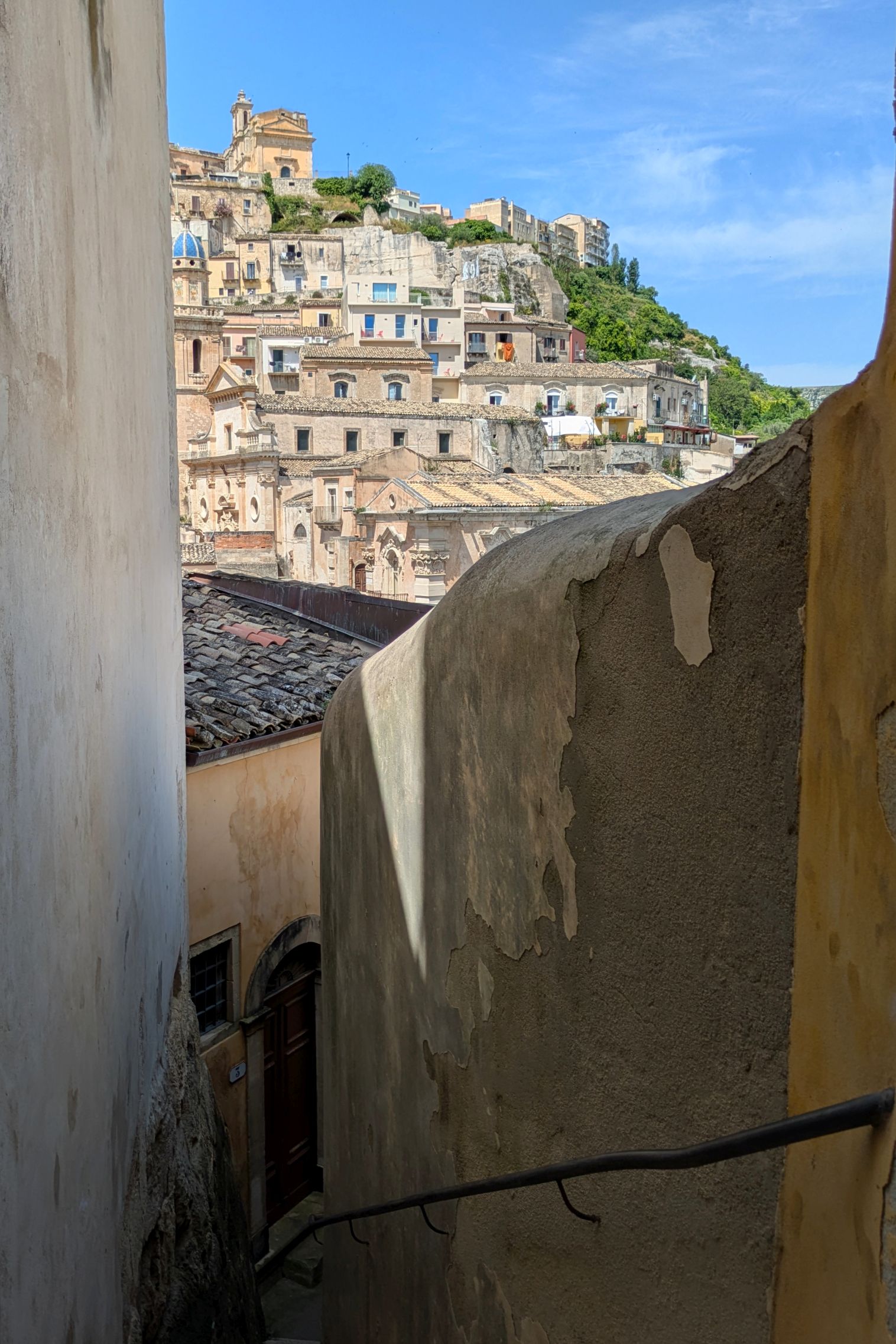
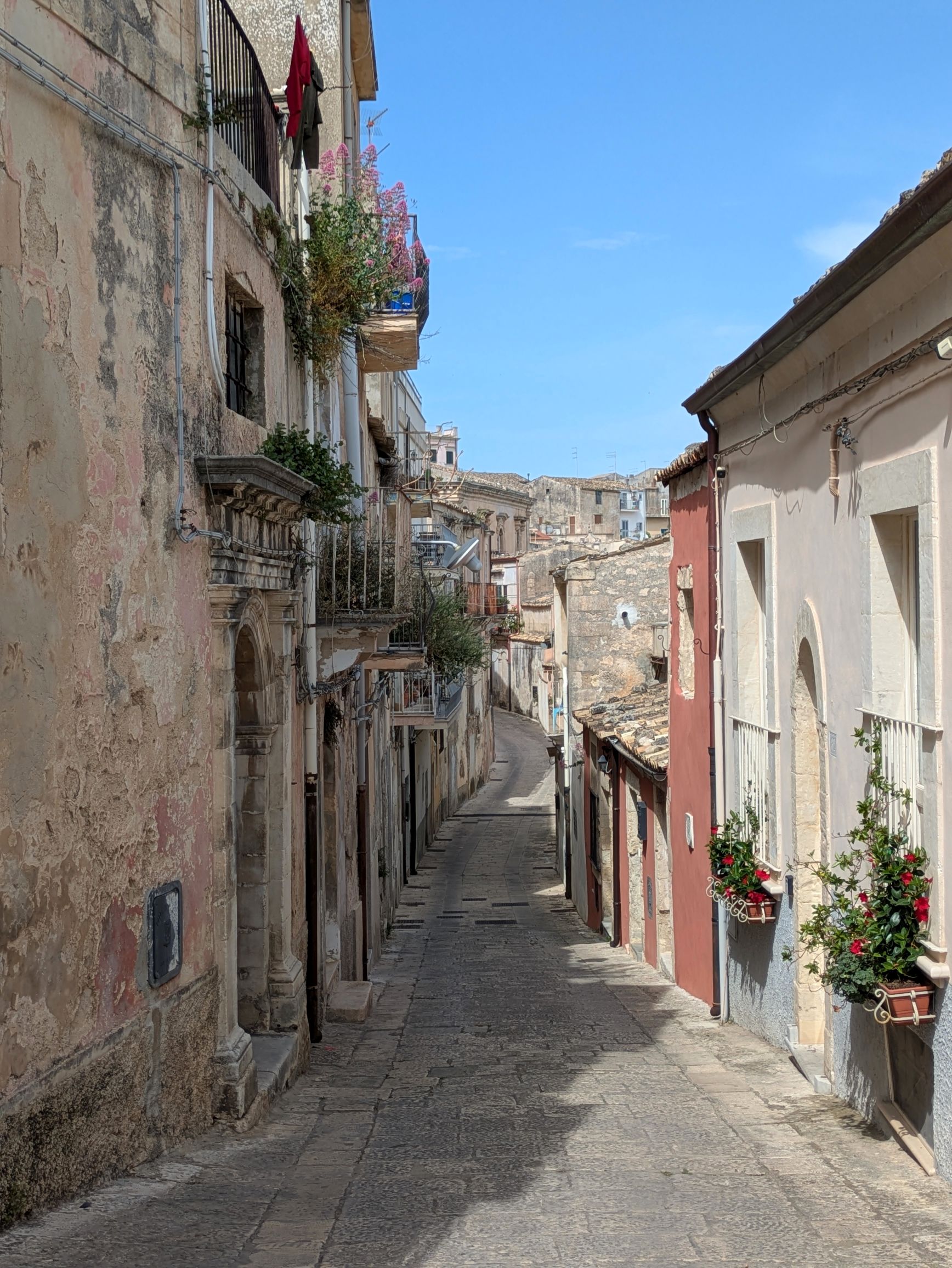
Located in the province of the same name, Ragusa is a city of just under 74,000 people. I was instantly attracted to the hilliness of it and how the homes and businesses were built into the hillsides. Having grown up in flat-as-a-pancake, gridded lot-and-block of Lakewood, California, I loved the steep and narrow windy roads and abundance of staircases. It was all so charming to me!
The entire city is a UNESCO Heritage Site for its cultural and historical significance. The origins of Ragusa can be traced back to the 2nd millennium BC. In 1693, a massive earthquake leveled the city killing 5,000 people, so it was rebuilt in the Baroque style of architecture. Many of those buildings still stand today.
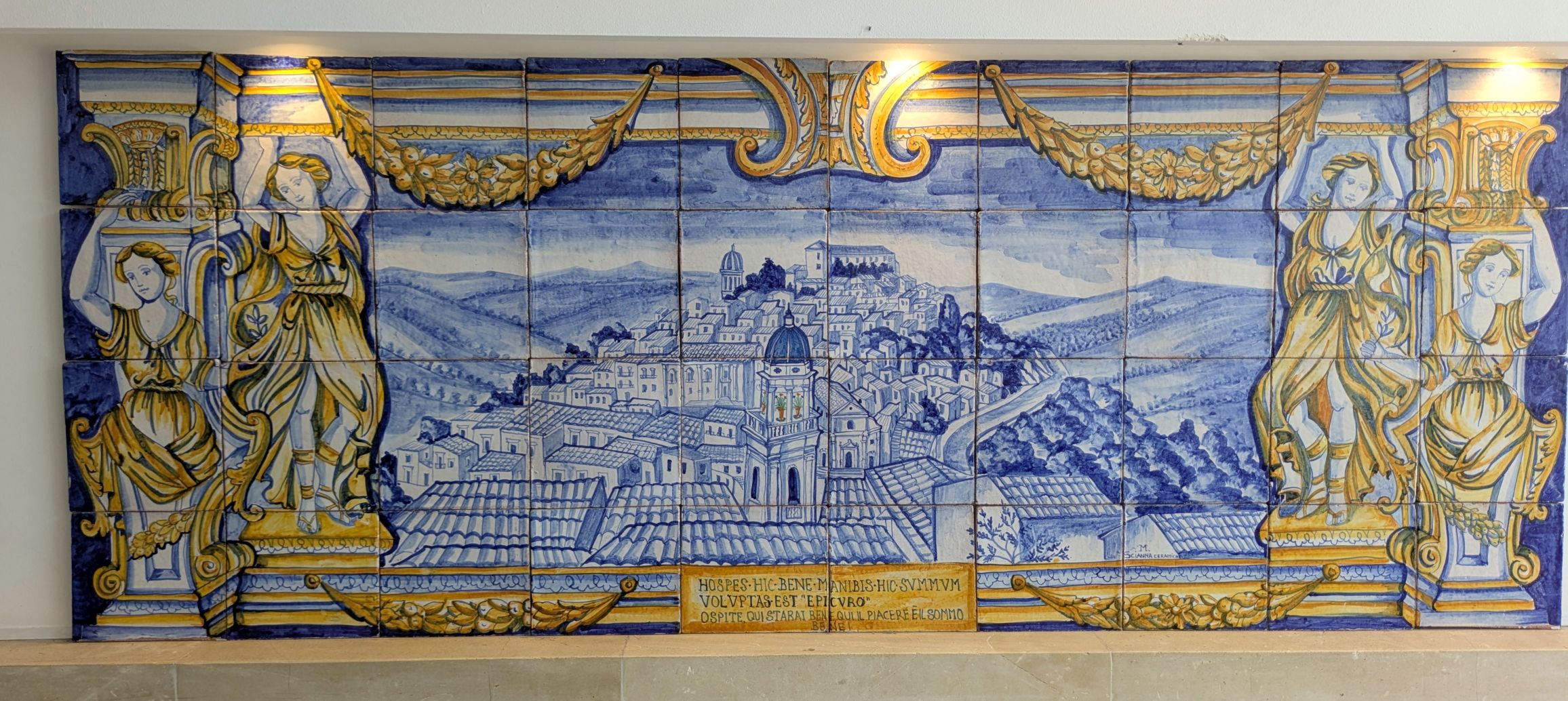
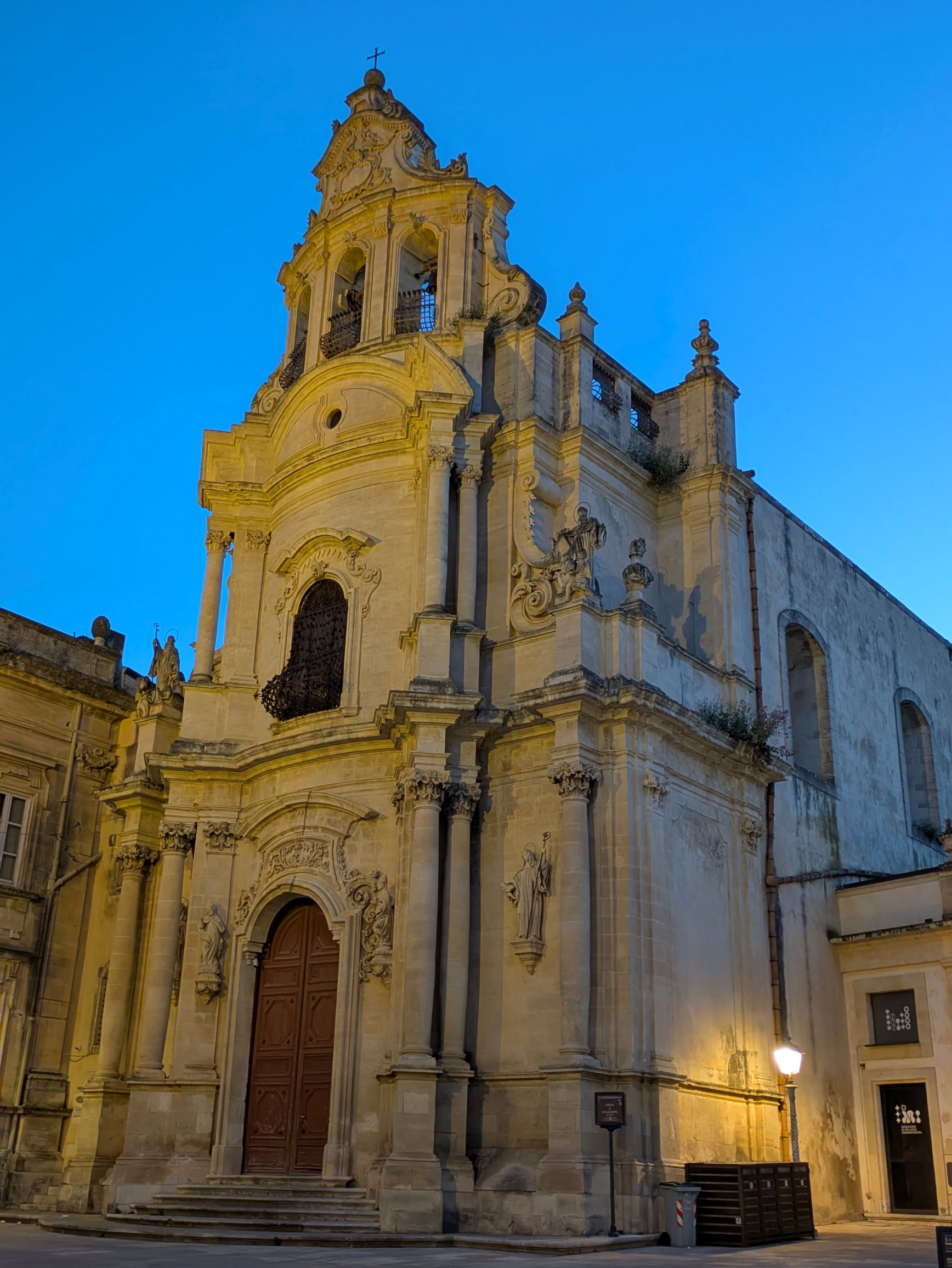
After settling into our hotel room, Francesco led our group on an orientation tour before dining al fresco at a restaurant with a lovely view of San Giusseppe Church.
Lobby of our hotelThe view out to the side from our hotel room patio
This sign says, “No peepee no poopoo/ Don’t be a bitch, pick it up”
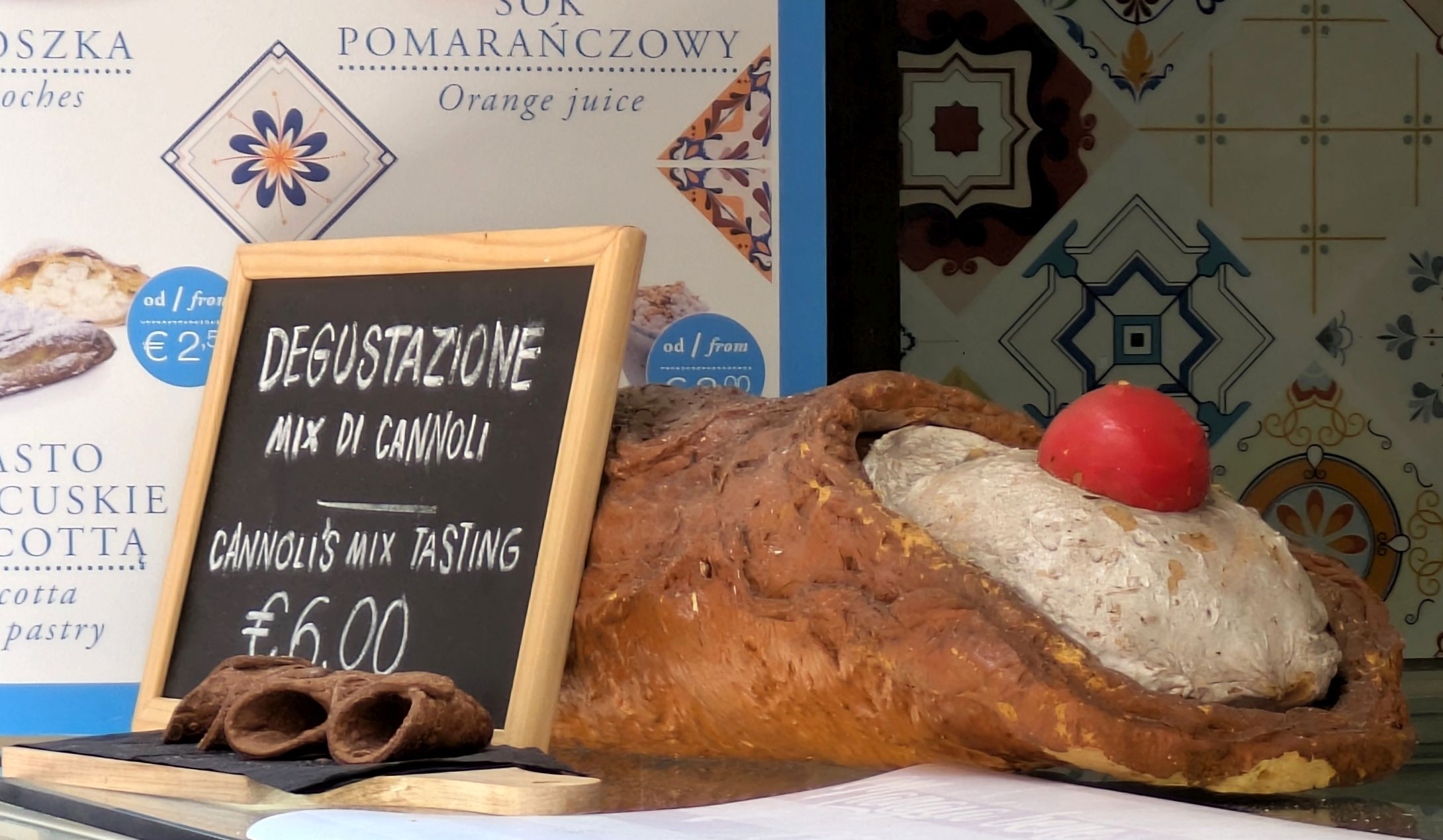
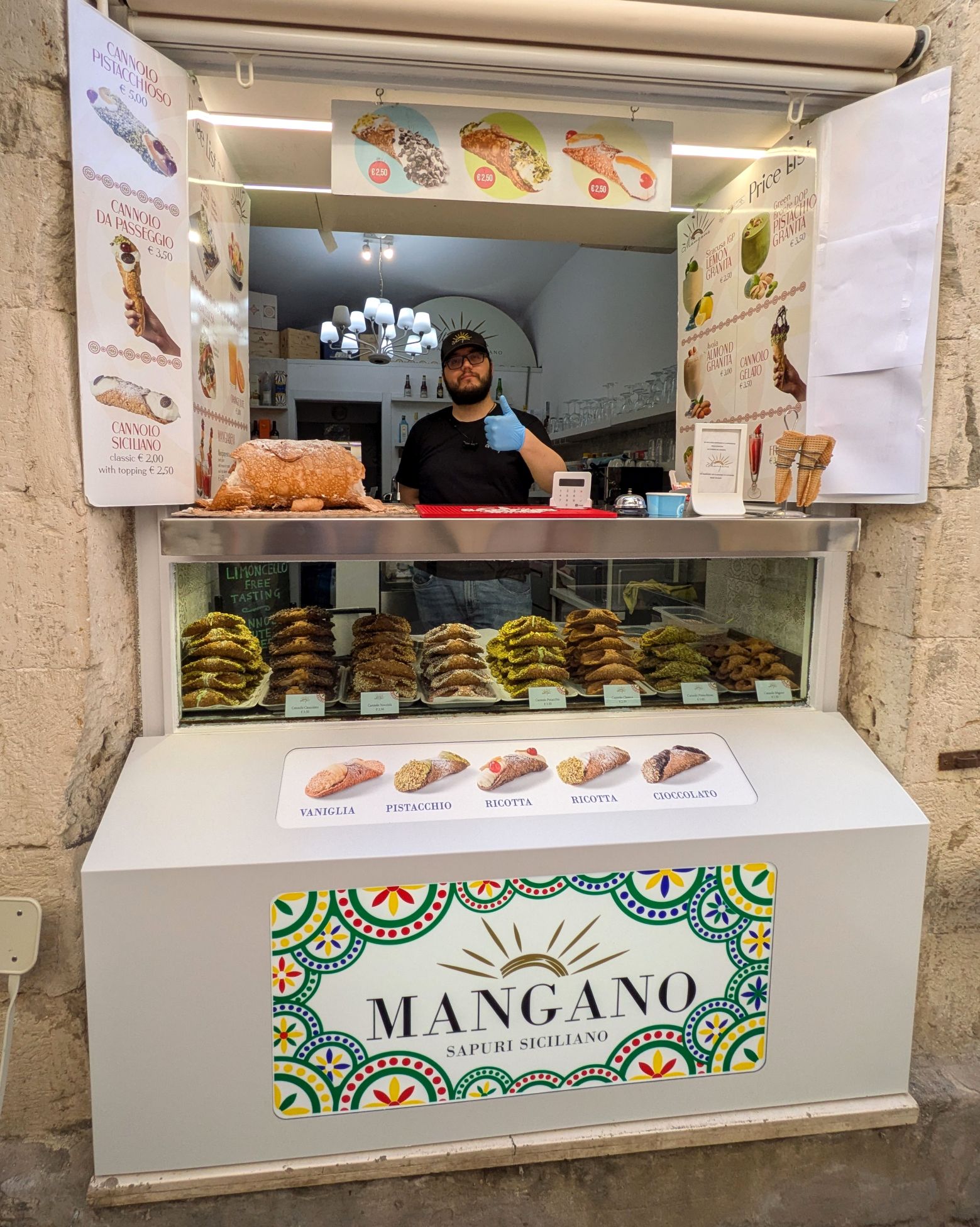
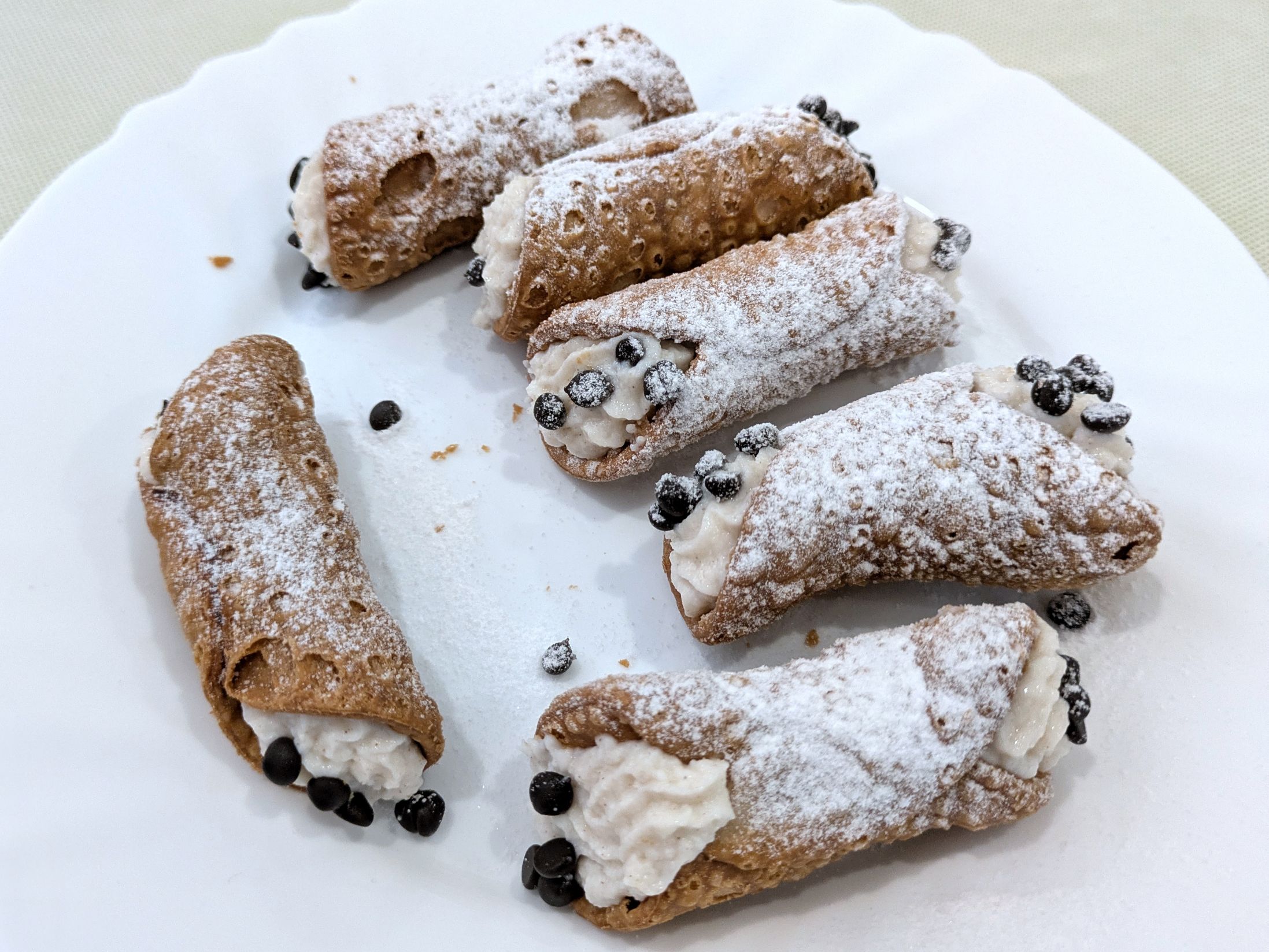
Dinners throughout Sicily were always a treat; they take their cooking and baking seriously! I hadn’t been a big fan of cannolis in the past, but the Sicilian bakers won me over. It makes my mouth water just looking at them!
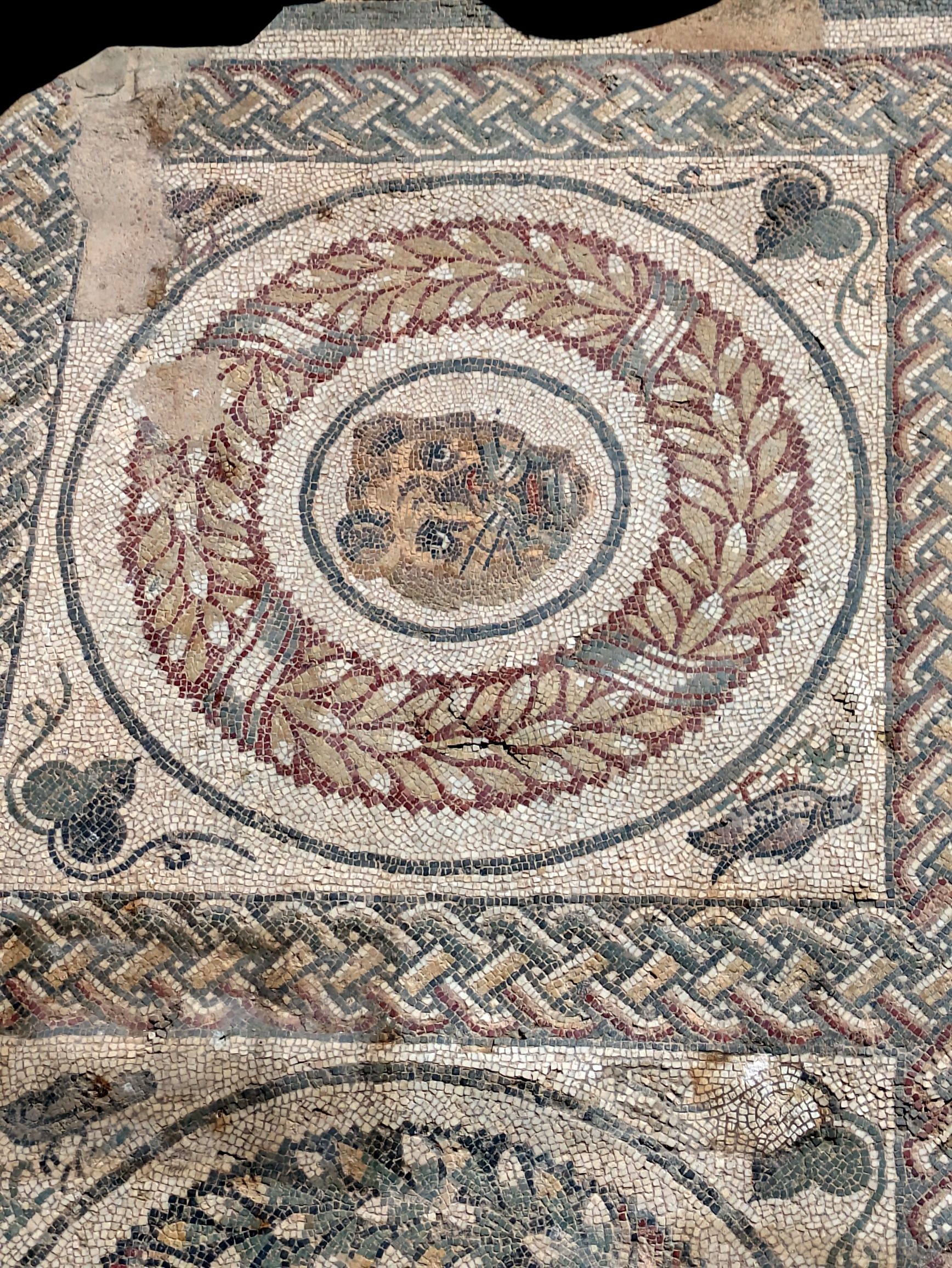
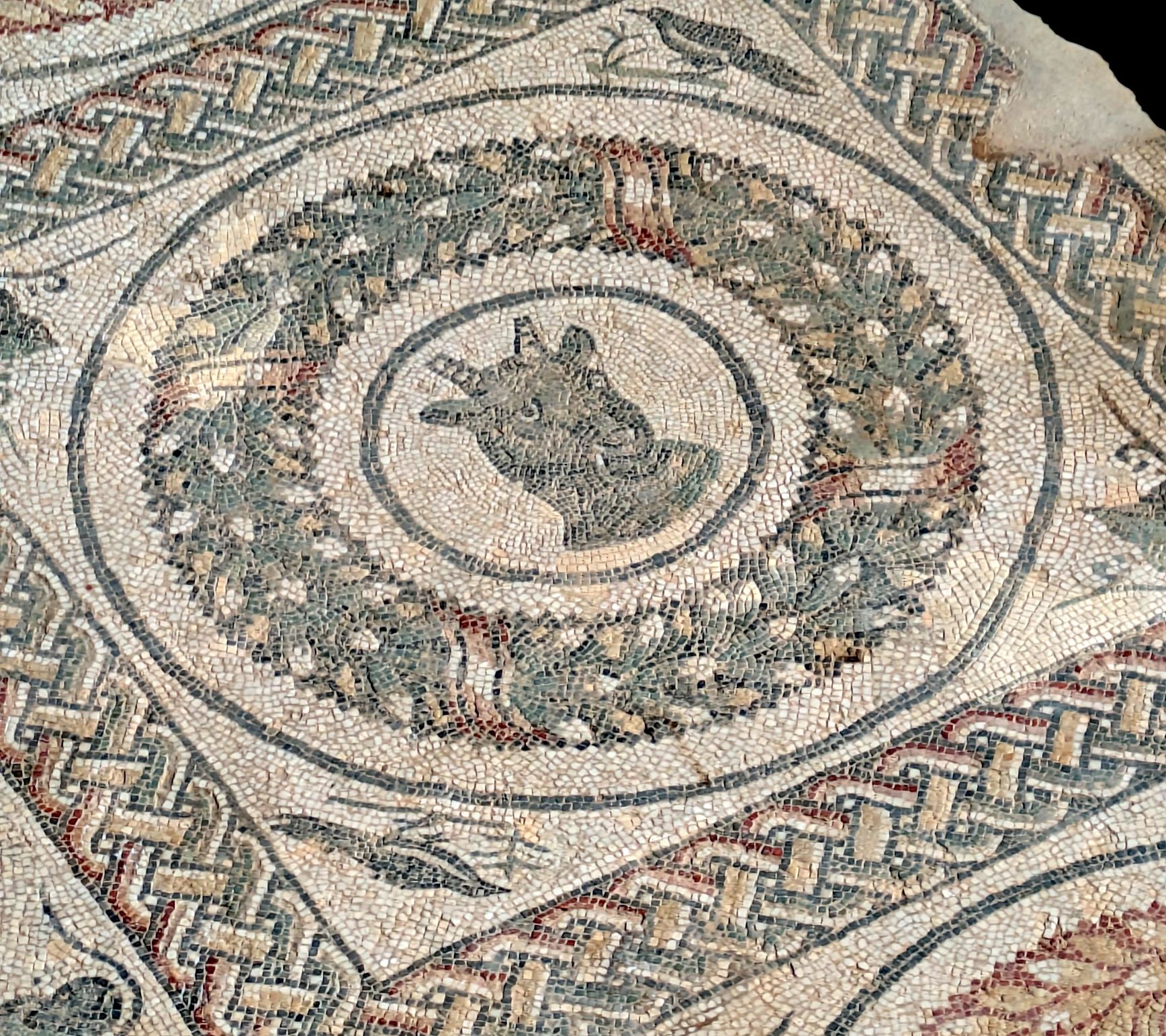
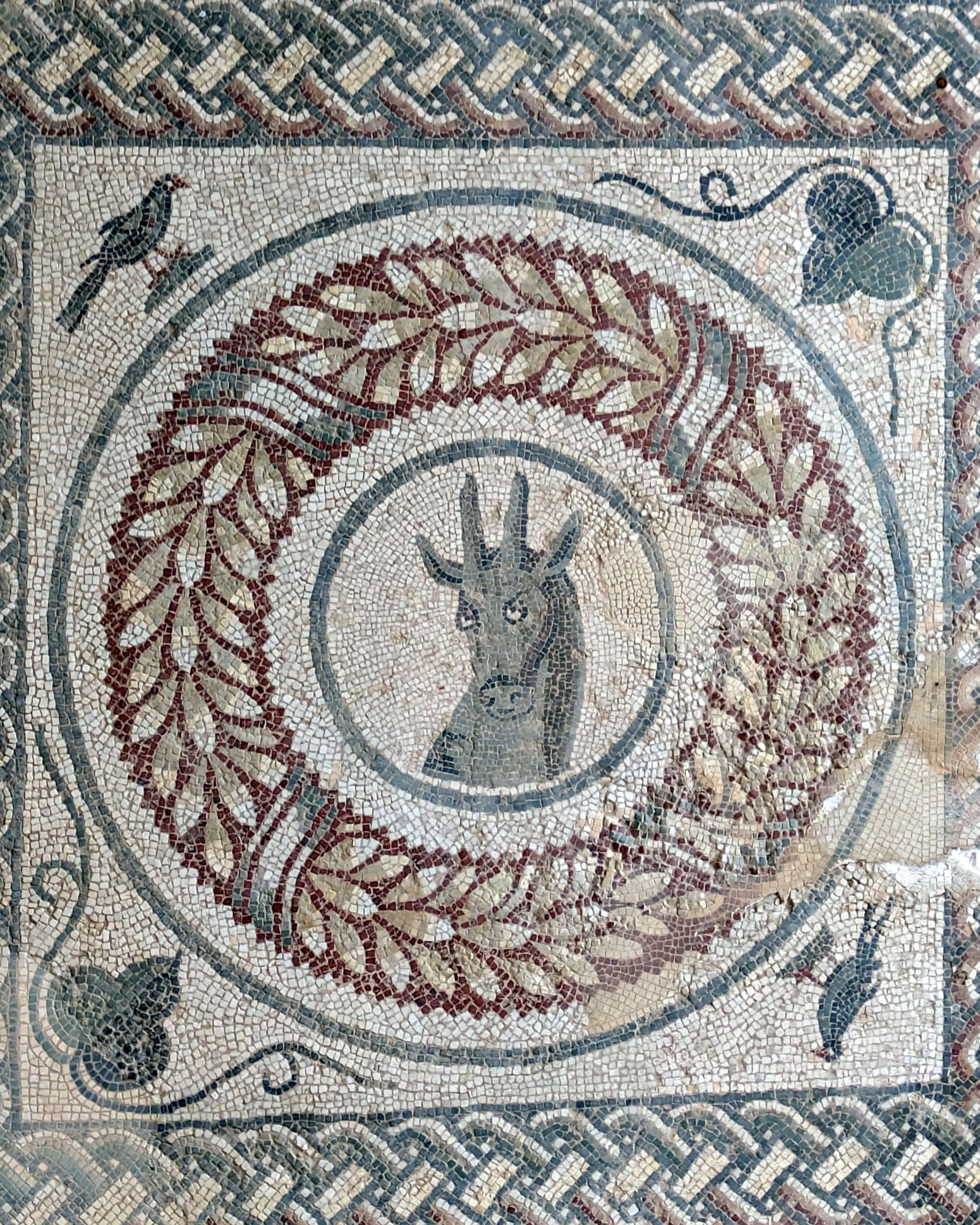
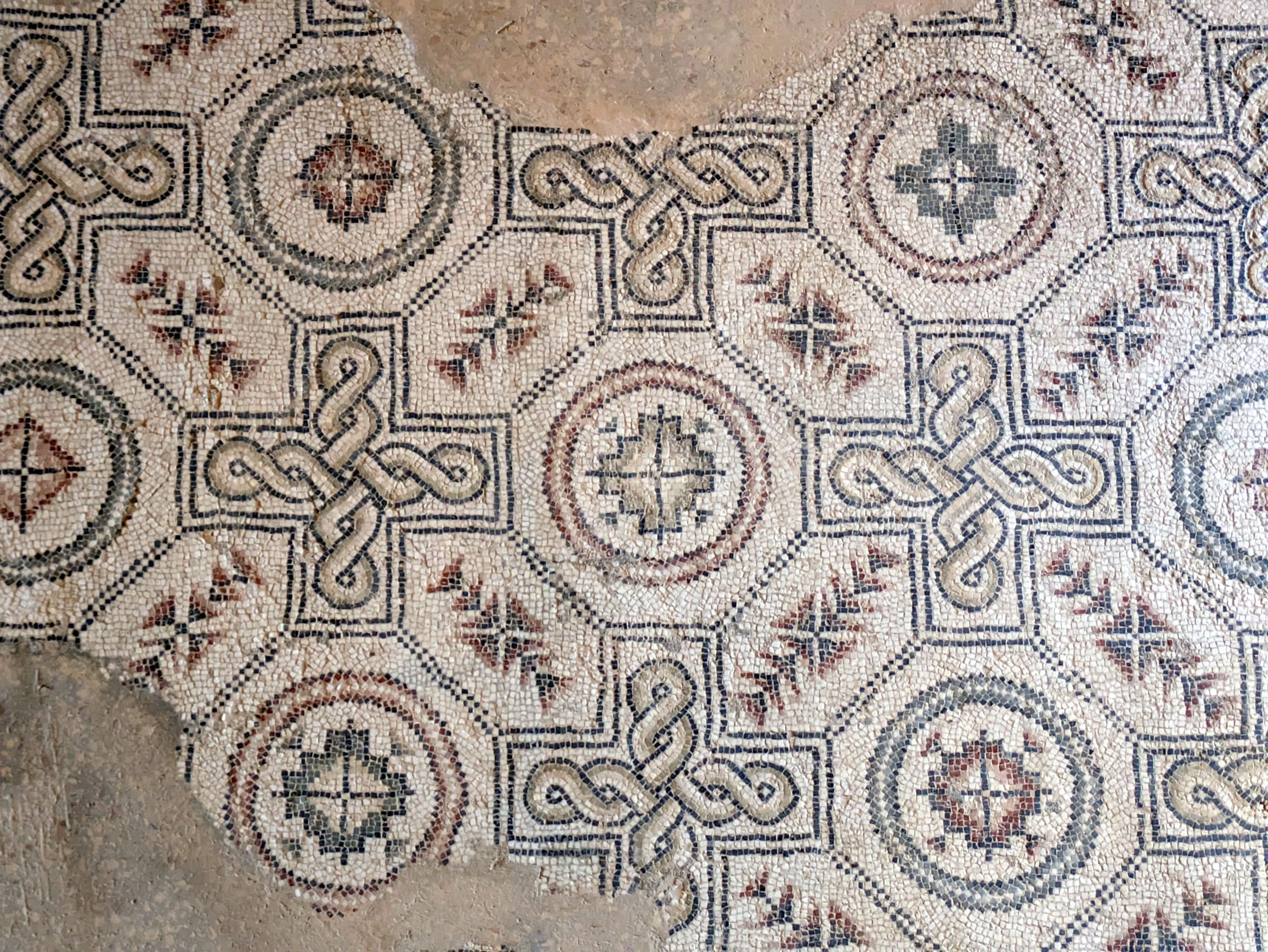
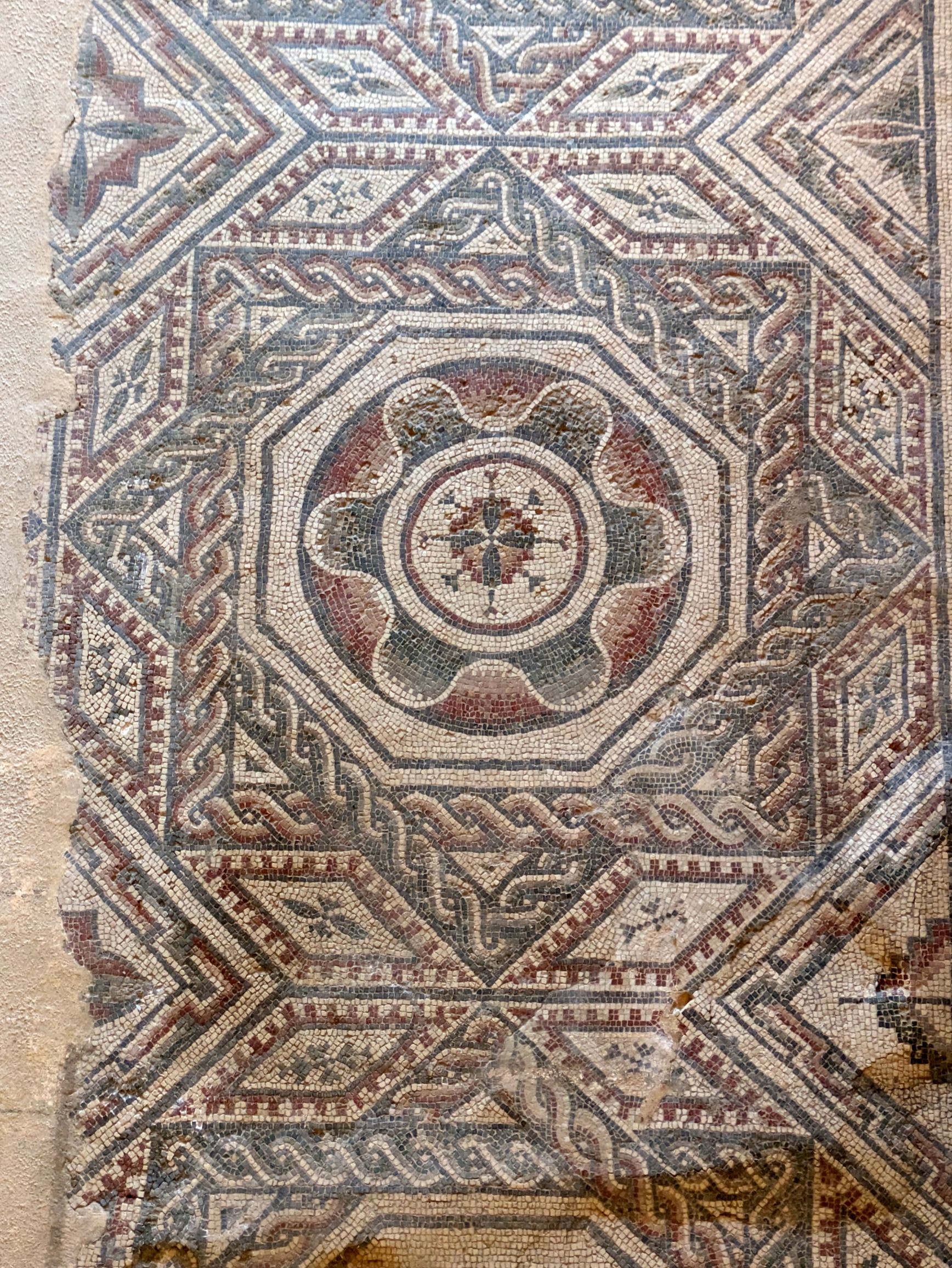
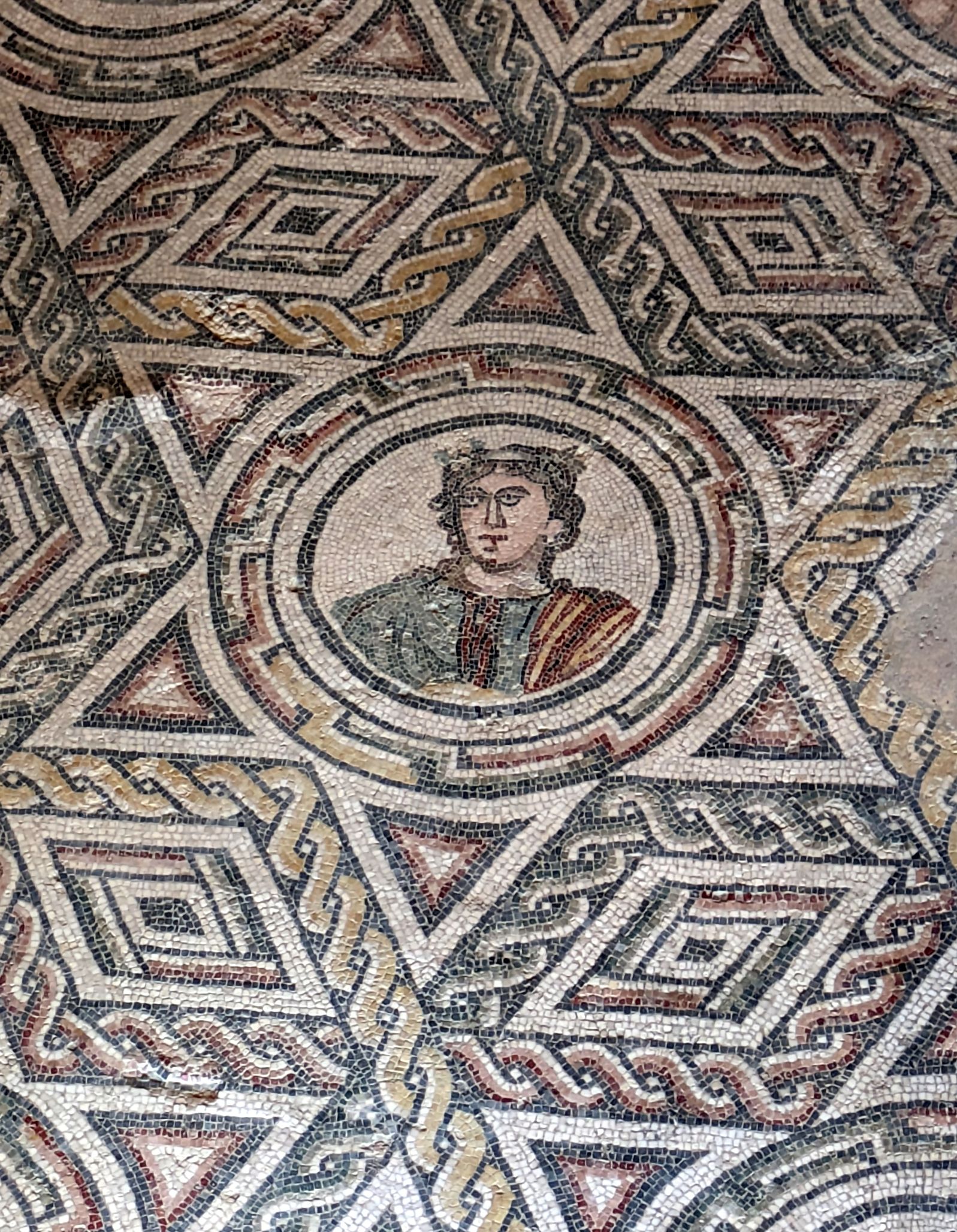
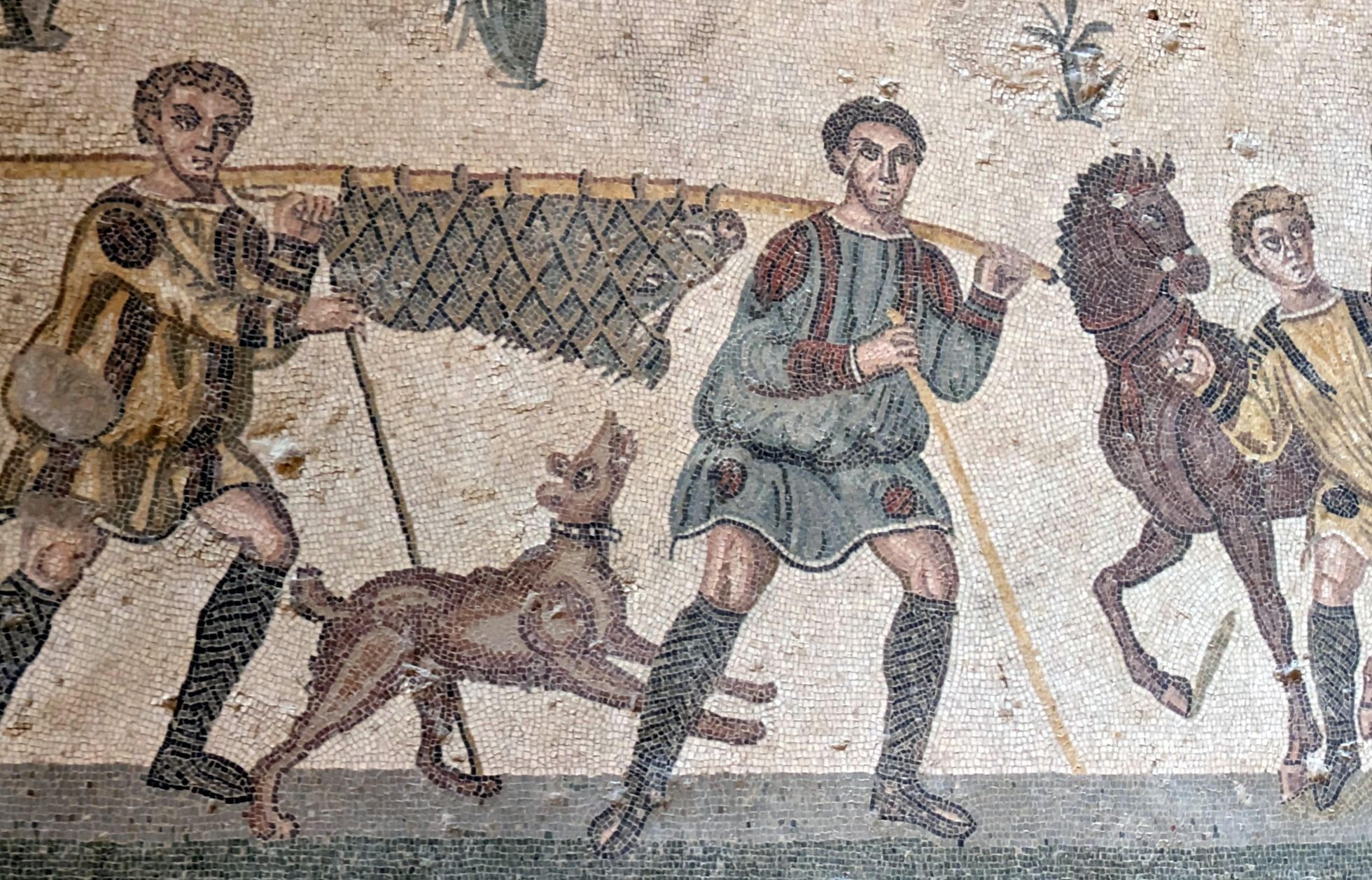
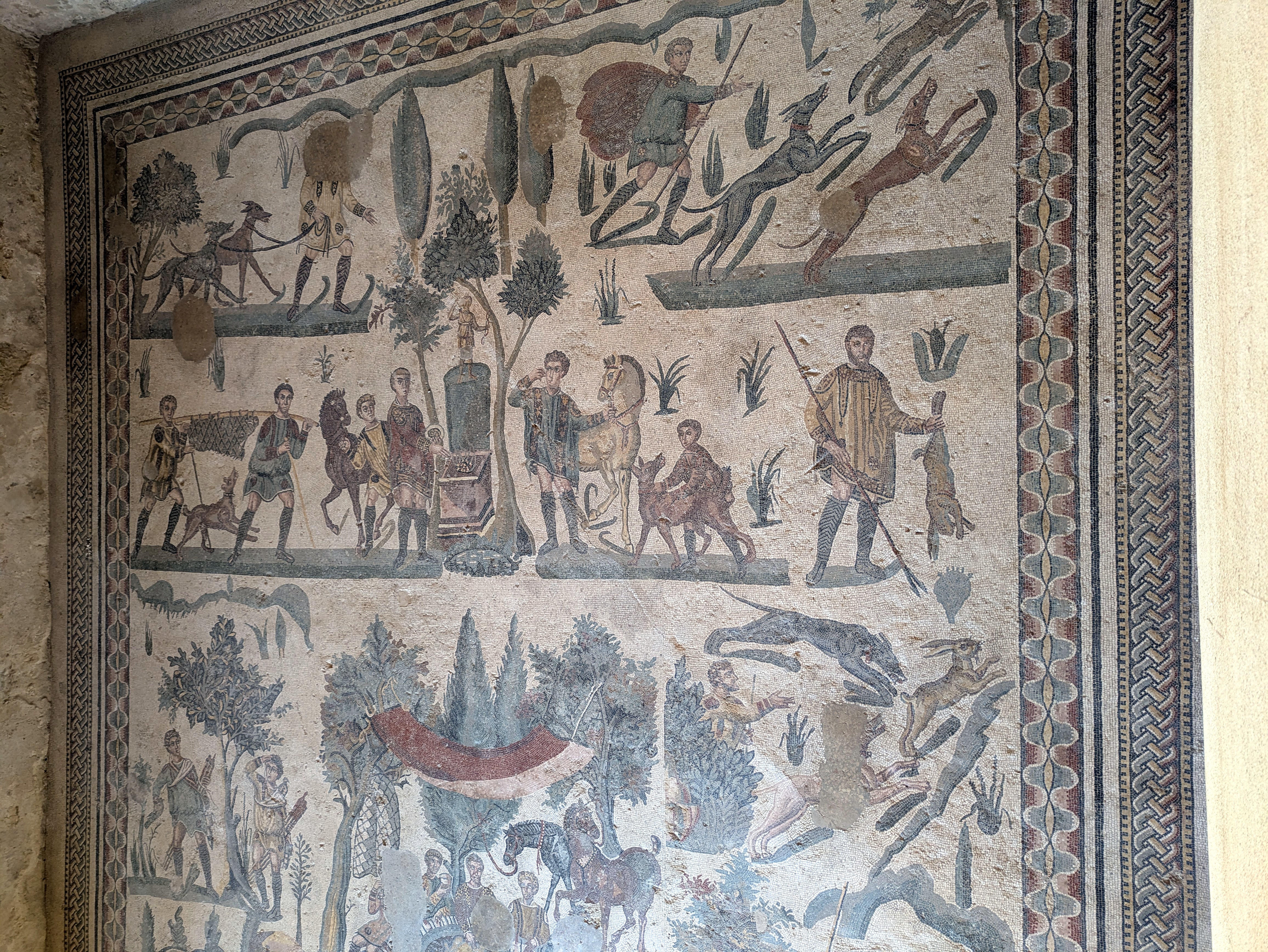
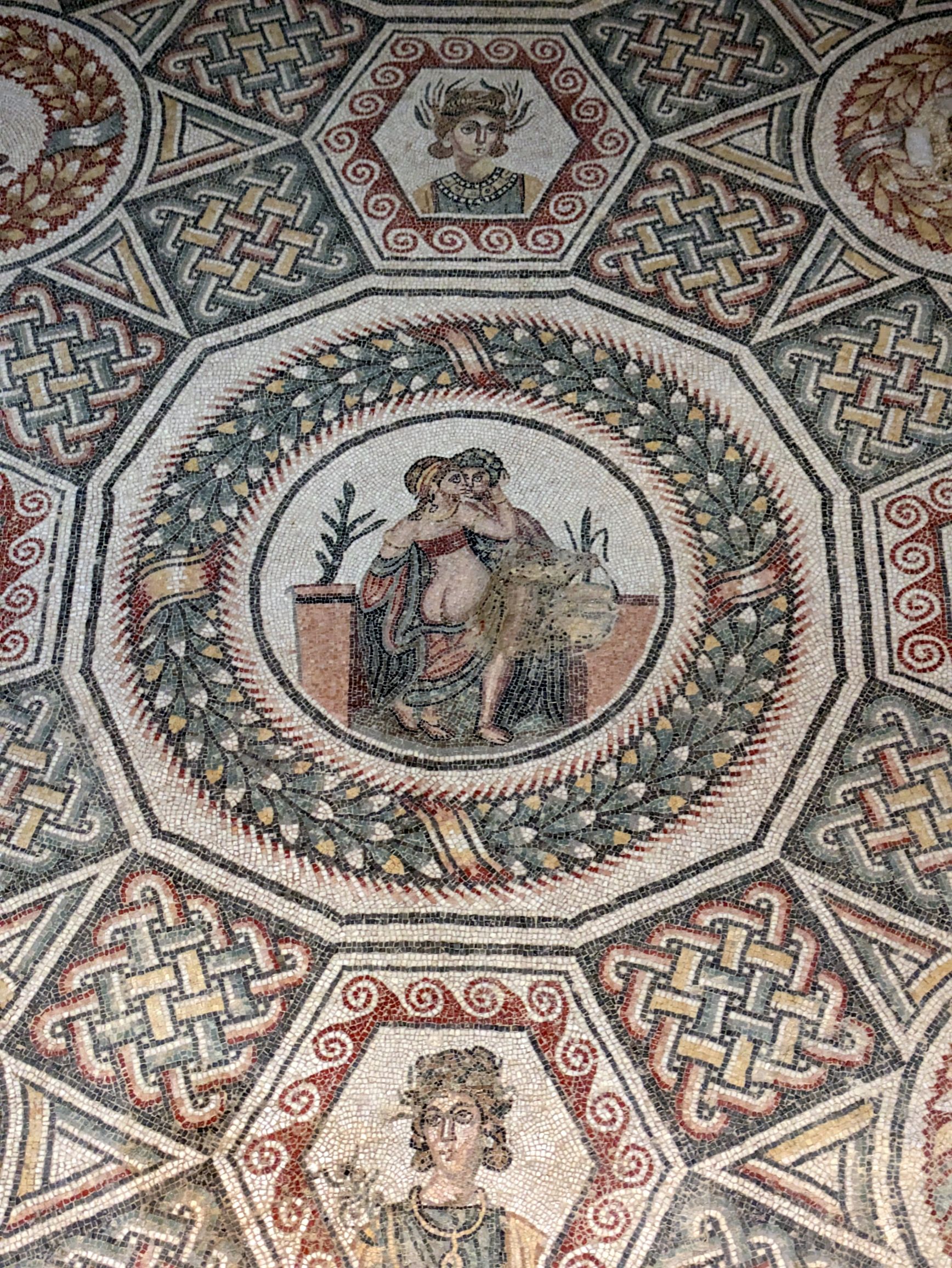
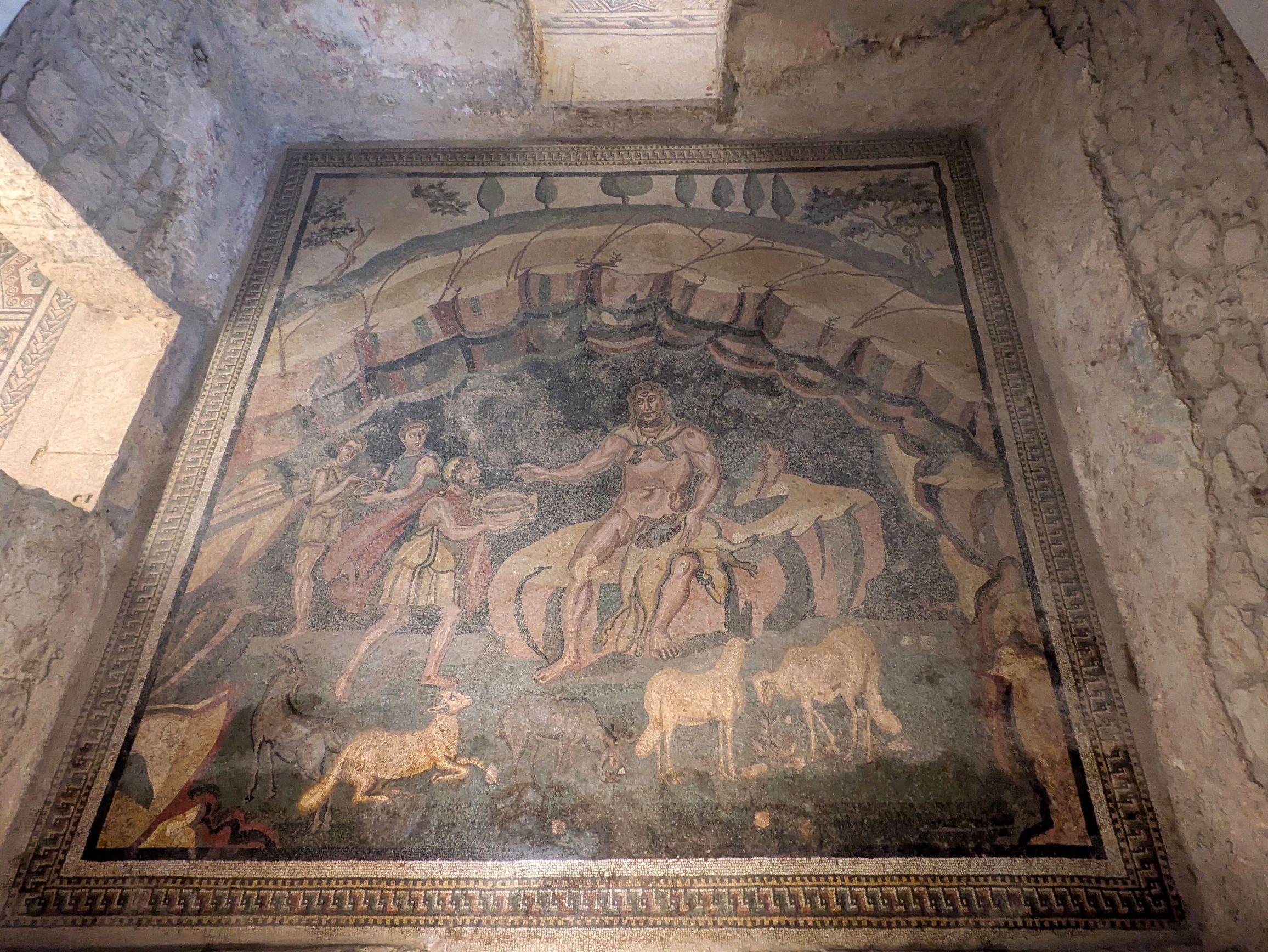
Mosaic is a form of art that has always captured my interest and admiration, so the mosaics we had seen thus far in Sicily greatly inspired me. Little did I know what I was about to see when we visited the Villa Romana del Casale. I had read in our itinerary that we would see “…some of the finest examples of Roman mosaics in all of Europe,” but I hadn’t done any further research (very uncharacteristic of me) or seen photos (even more uncharacteristic!), so I didn’t have any expectations. I’m glad, because, wow, I sure was surprised—in a fabulous way!
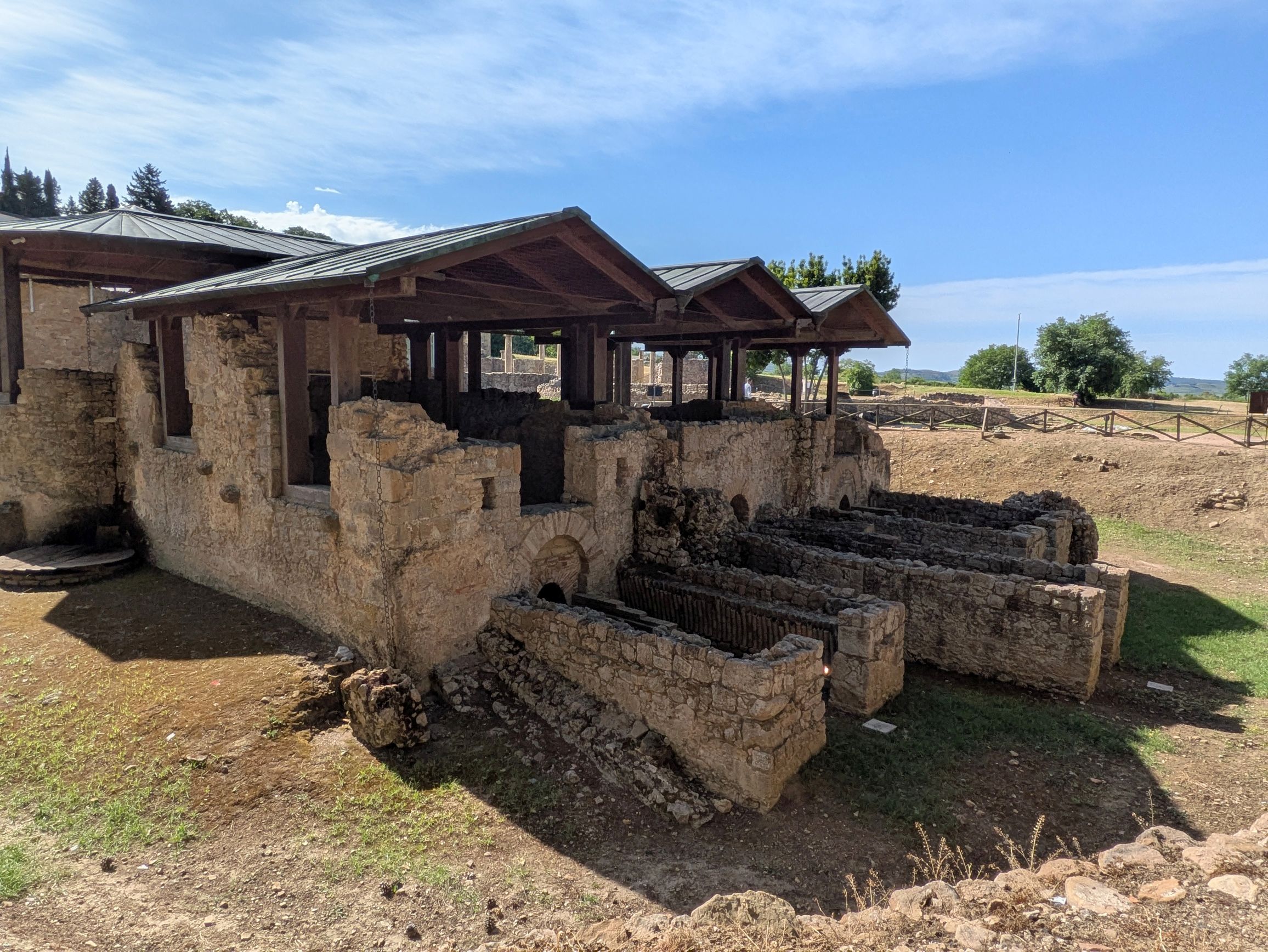
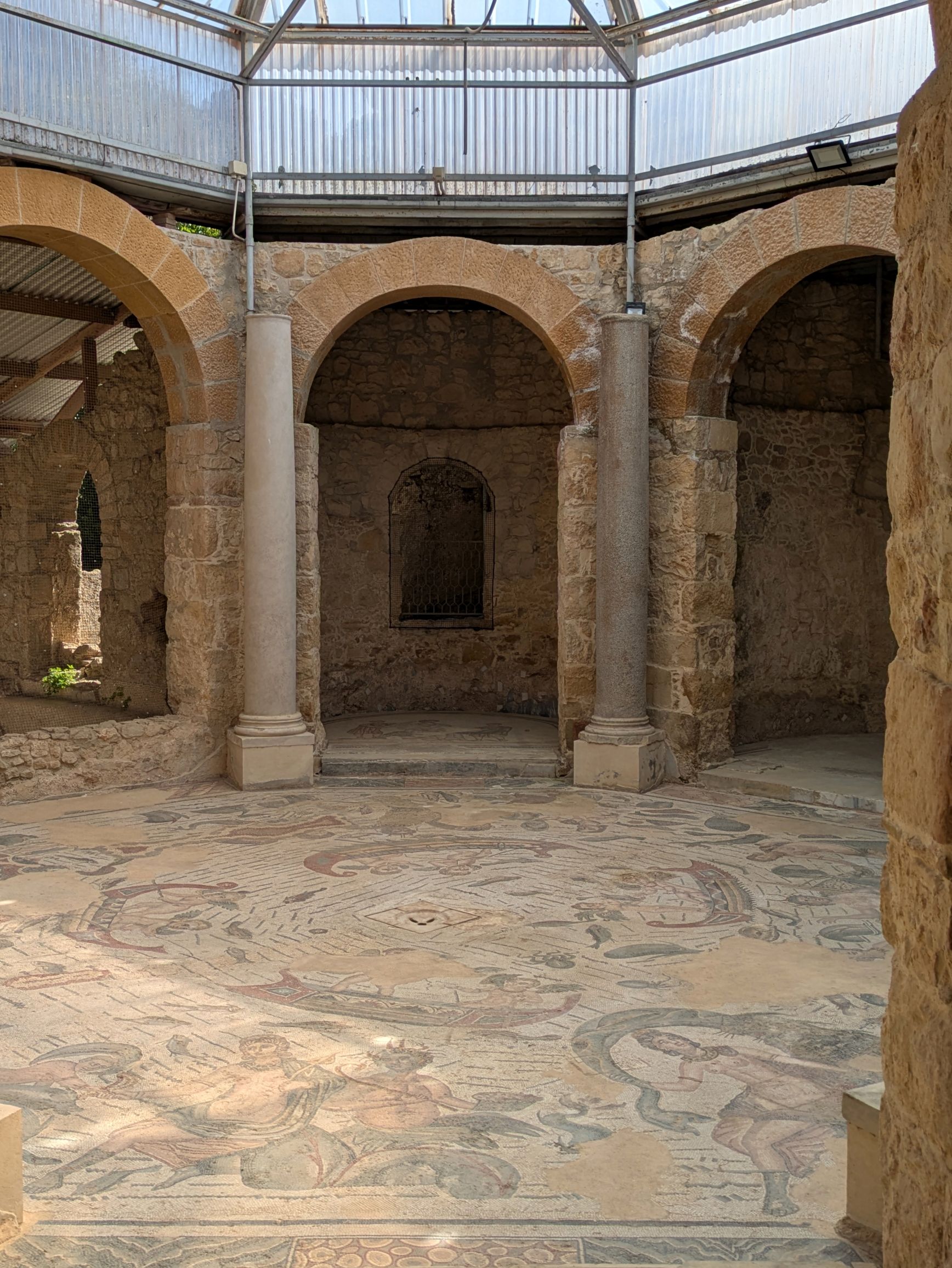
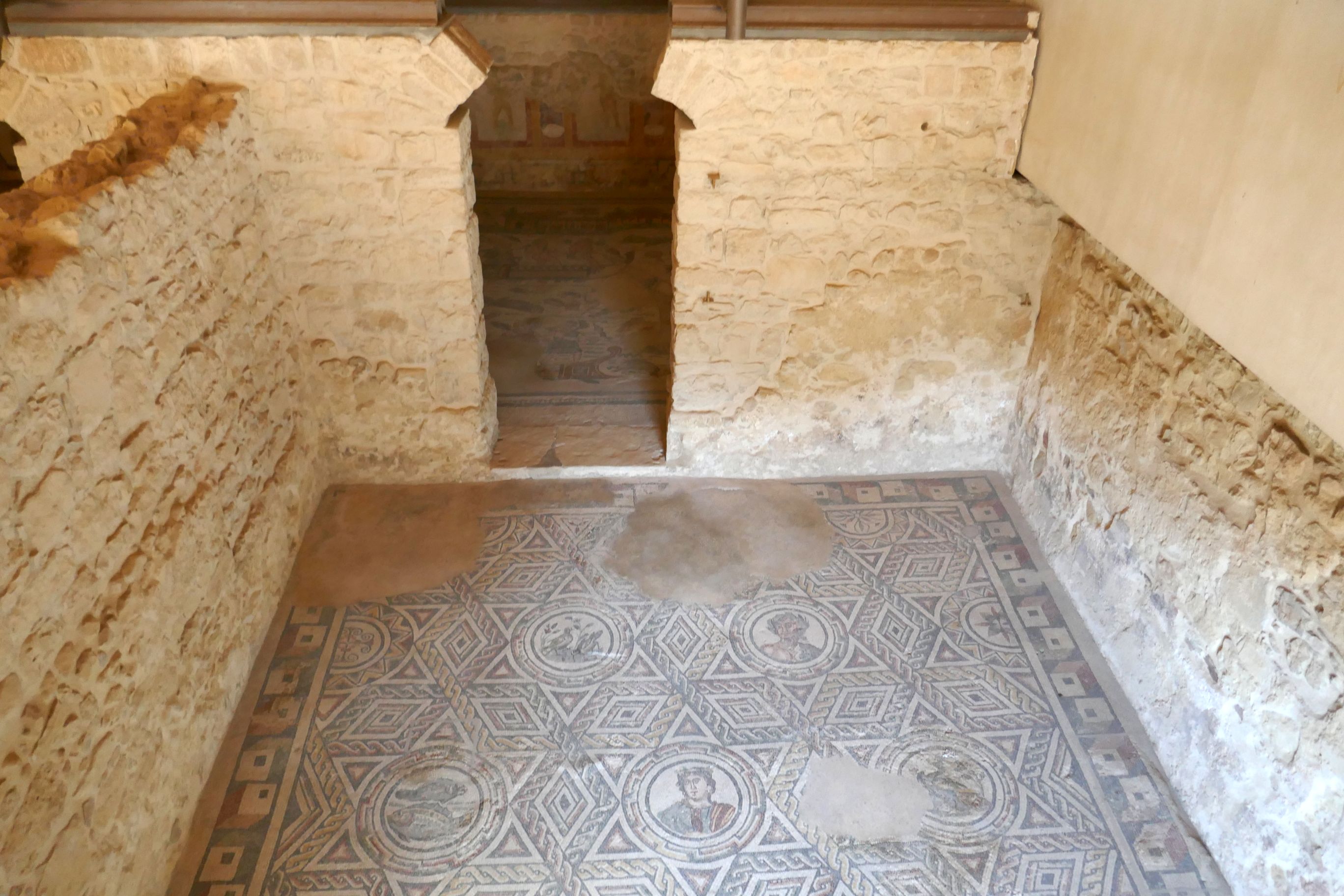
A UNESCO World Heritage Site, the villa (now in ruins) was constructed in the middle of the fourth century AD as a hunting lodge. Tragically, the “lodge” was covered by a landslide in the twelfth century, but nearly 800 years later, excavations began to reveal these incredible, well-preserved mosaics. We were in awe of just how good they looked! Thanks to the landslide and floods that covered them for centuries, the mosaics were protected from wear and tear.
Nobody knows for sure, but experts hypothesize the villa took about ten years to build, and the mosaics another five years to complete. The home was built by slaves that had an average life span of about forty years. (How sad that 25% of their lives were spent building this summer home!)
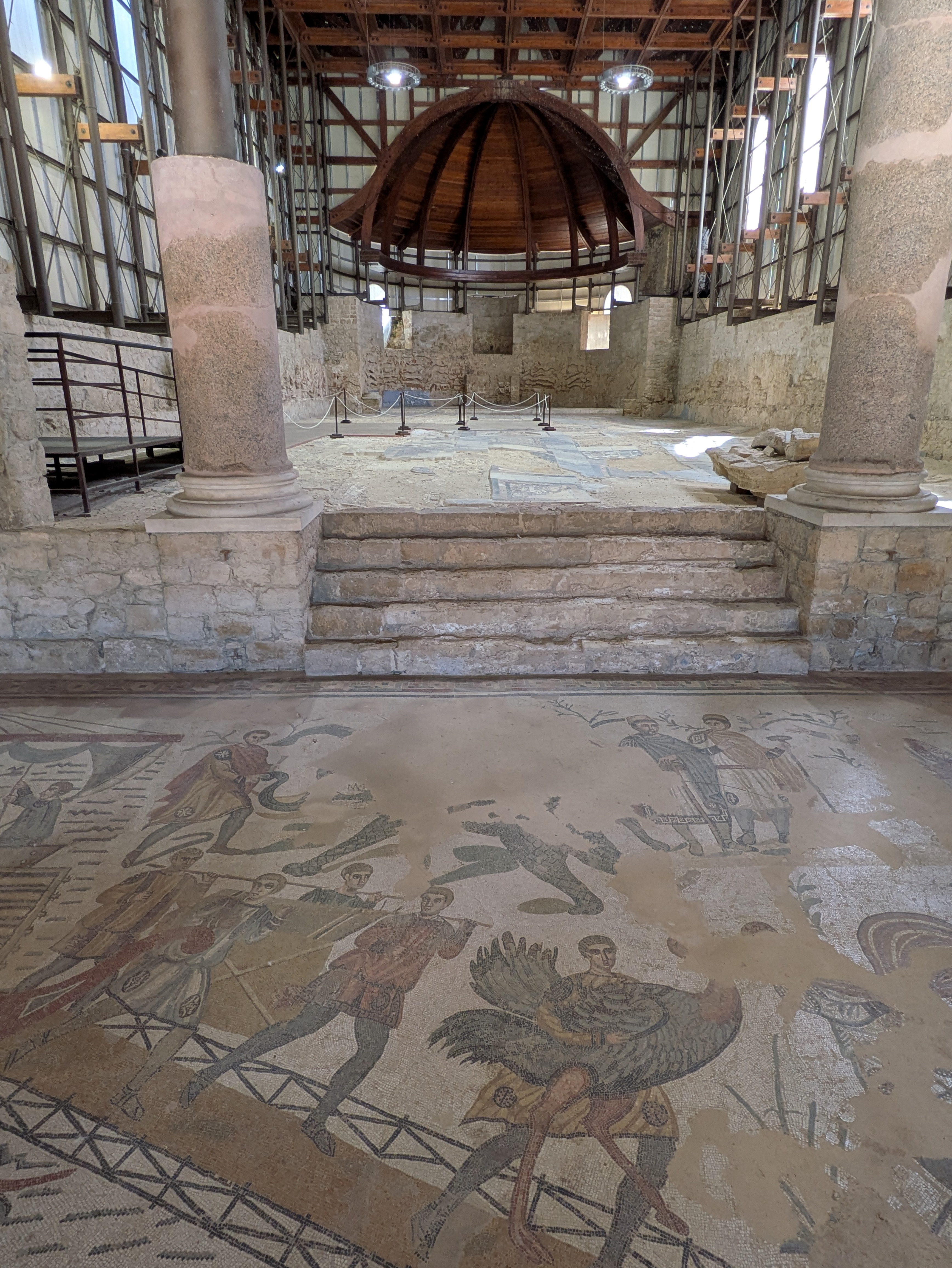
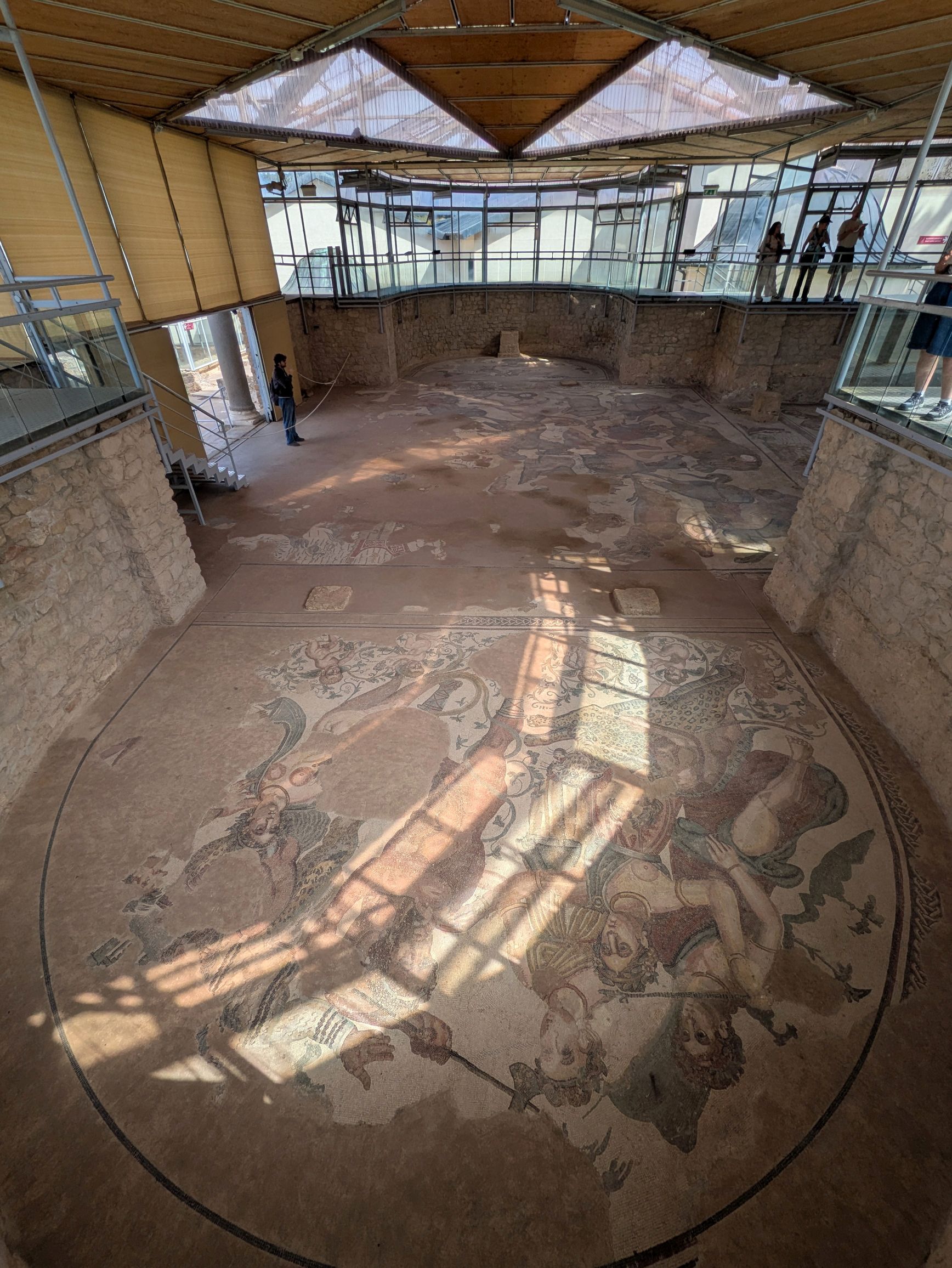
The facility structure built around the ruins and mosaics was impressive. Not only was it covered to protect it from the sun, but walkways were built up high so visitors could look down into the rooms of the villa. We were protected from the sun and had great views and photographic vantage points of each mosaic.
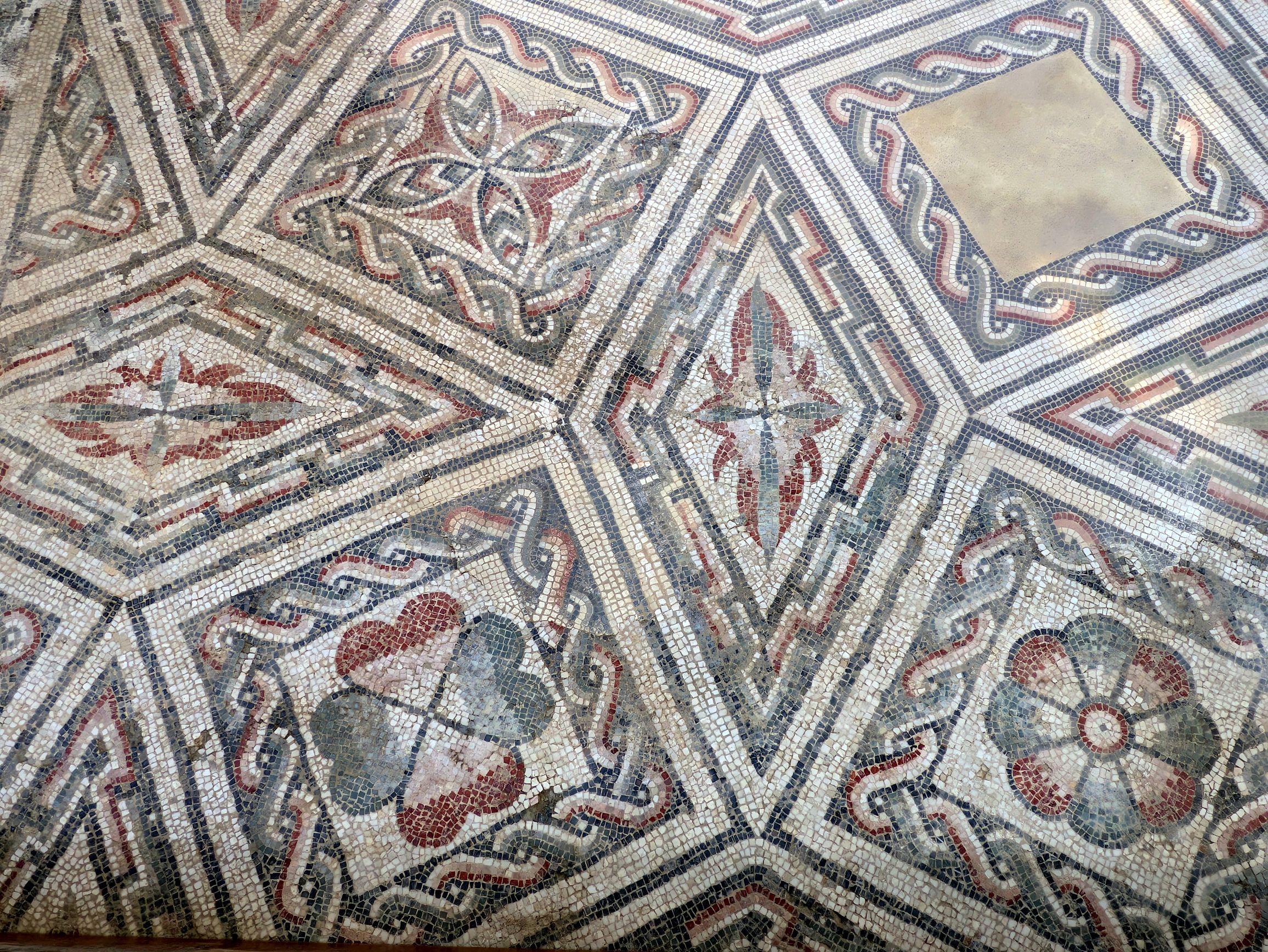
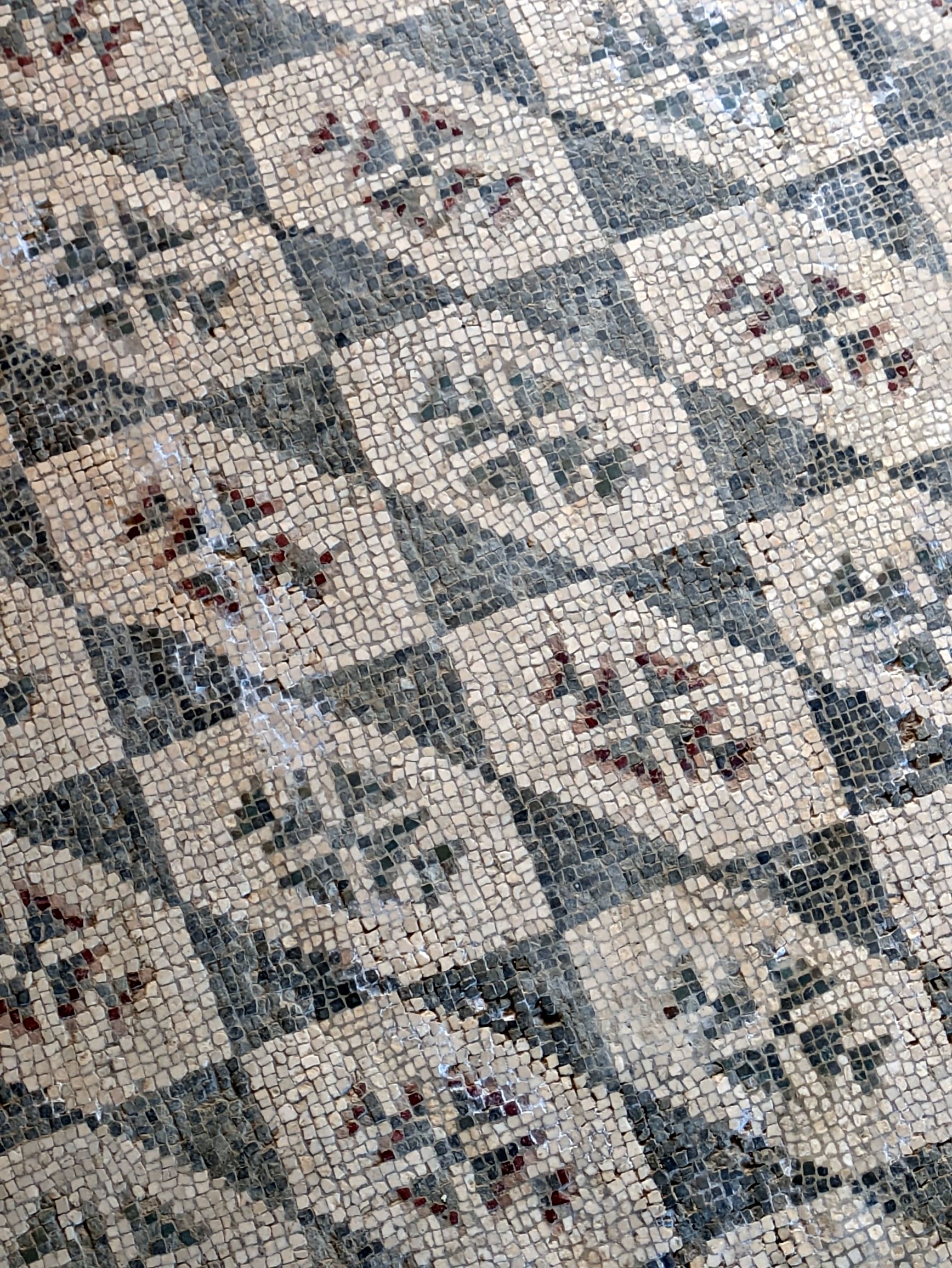
A note about the photos: Due to the natural light coming in, there was a lot of glare on some of the mosaics causing my photos to wash out, giving the mosaics a very faded look. To show you the details of these incredible works of art I have edited my pictures by increasing the contrast in them. All of the mosaics you will see are from the floors of the rooms, and they appear in the order of our tour through the ruins of the villa.
(For all photos, click on the image for a full screen view.)
Looking down on the floor of a walkway.
This photo has been rotated, so you can see the scene right side up, but it is a floor mosaic
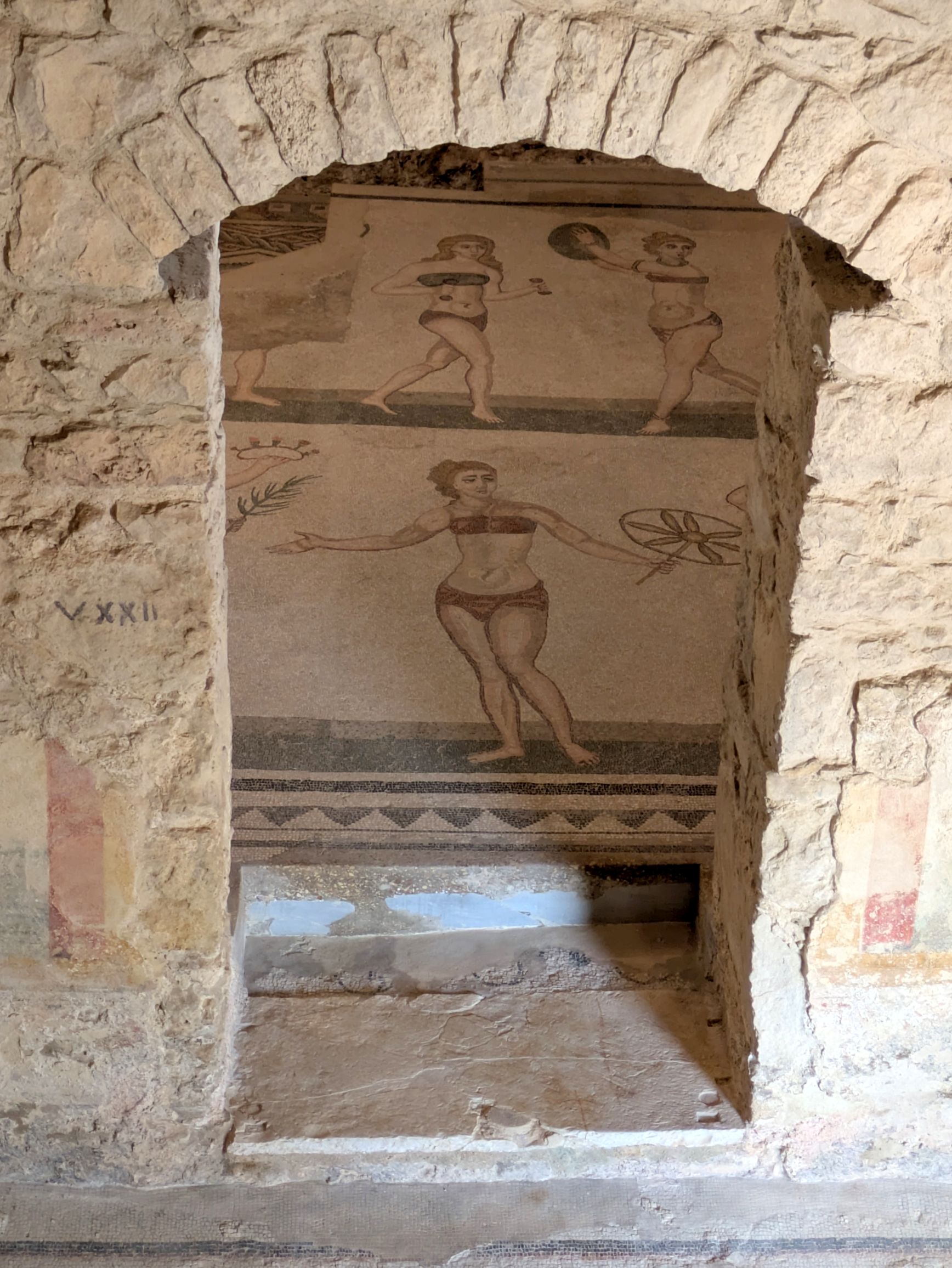
Meet the “Bikini Girls”!
The “Bikini Girls” are actually athletes wearing an outfit used in athletic competitions. You GO girls!
I loved the colors of these ornaments sold by a vendor on the way out to our bus after visiting the ruins.
Following our tour of the ruins, we enjoyed lunch at Tenute Senia Winery, a family-run winery currently in its seventh generation. The two Mortilla sisters inherited the winery from their father. One of the sisters handled the service of our lunch, and the other introduced herself, “I’m the blah-blah person of the winery!”
Winemaking in Sicily is very much a male-dominated industry, but these two sisters have won numerous awards and recognitions for their wine.
Delicious cannellonis for desert!
In the afternoon, we continued our ride through the countryside to Ragusa, the subject of my next post.
Next up: SICILY & AMALFI COAST #13: RAMBLING AROUND RAGUSA
Located along the southern coast of Sicily, outside of the city of Agrigento, the Valley of the Temples is not a valley at all! The archaeological and landscape park is located on a ridge overlooking the city.
Extending over 1300 hectares, this UNESCO World Heritage Site includes ruins of the ancient city of Akragas and its surrounding territory. One of Sicily’s main attractions, the park is the largest archaeological park in Europe and the Mediterranean basin and receives about one million visitors each year.
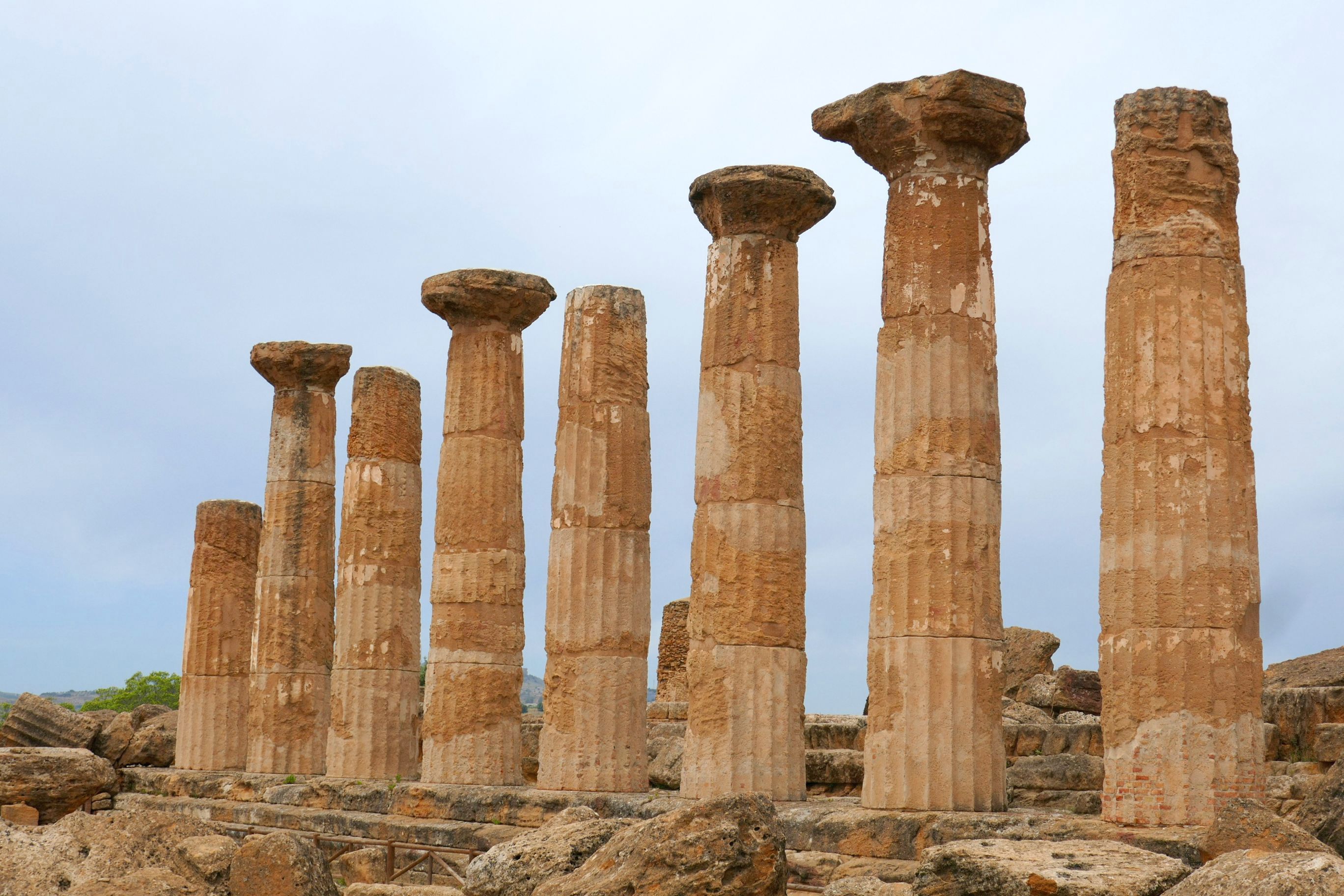
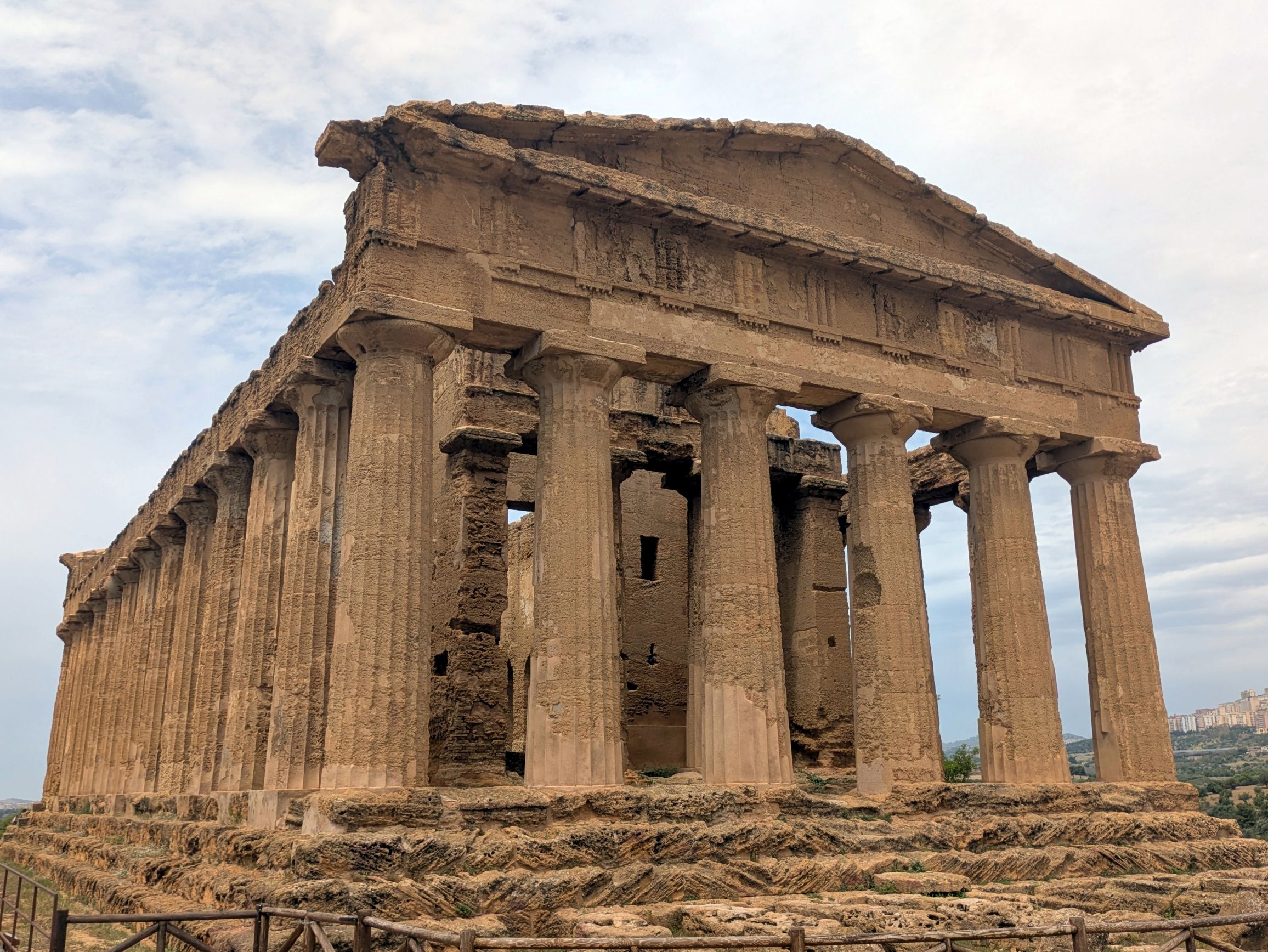
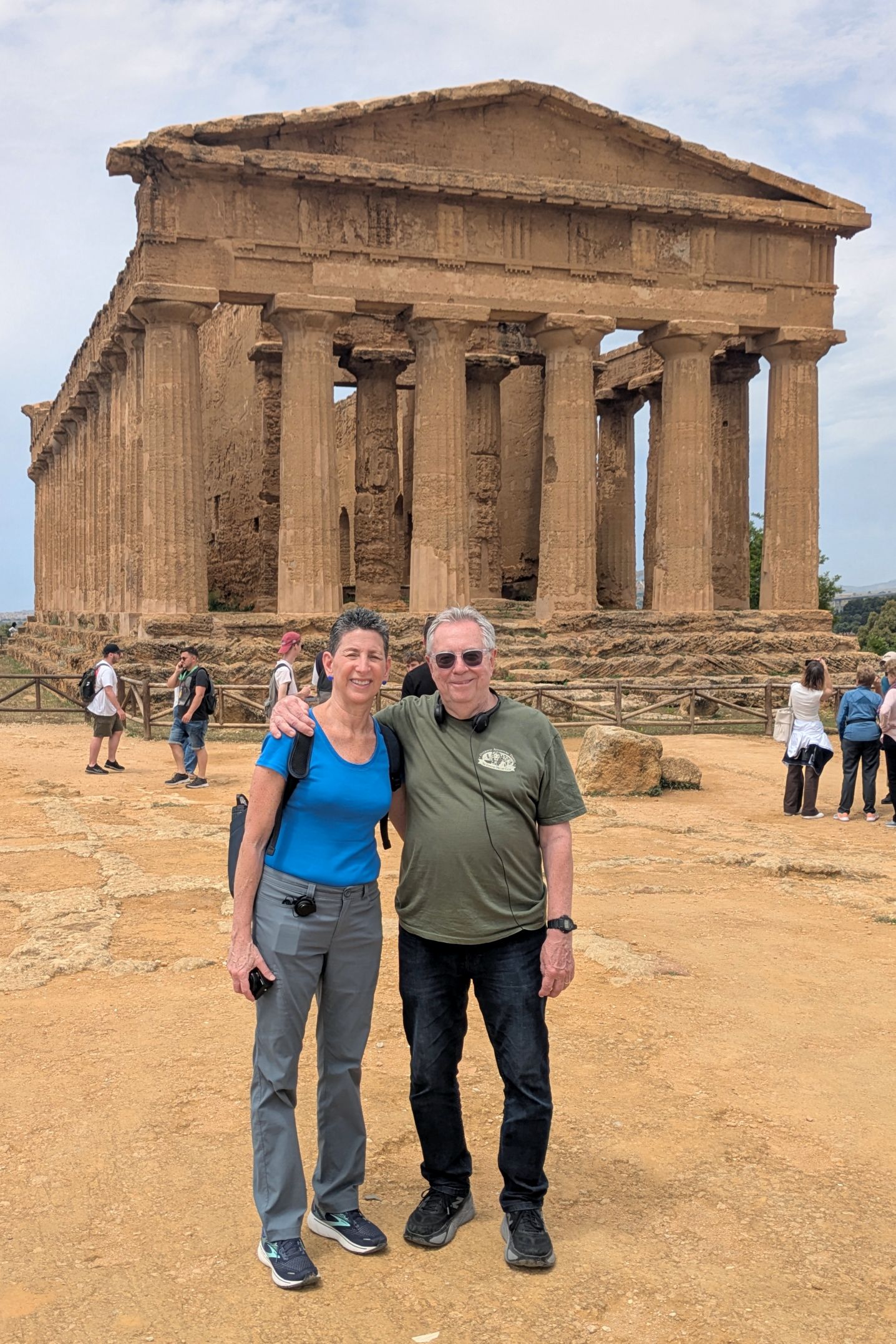
The Valley includes the remains of seven temples that date back to the 5th century BC. The Temple of Concordia is the best preserved and was the highlight of our guided walking tour through the park.
(For all photos, click on the image for a full screen view.)
The Temple of “Hera” dates back to 450 BC
Temple of HeraclesTemple of Concordia
Surrounding the temples were beautiful century-old olive trees:
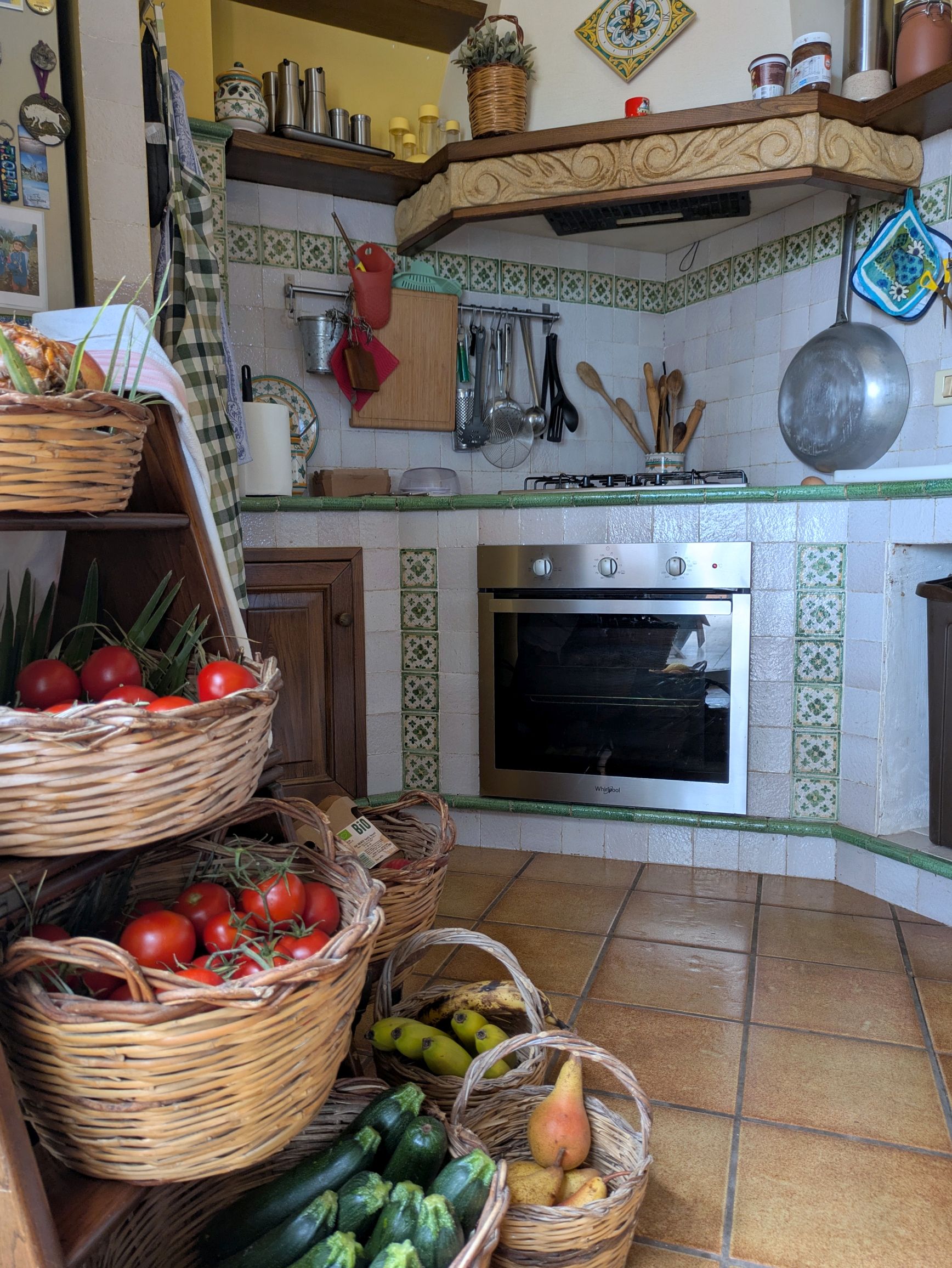
Following our visit to the valley, our lunch, which was originally listed as being “at a local restaurant in Agrigento” turned out to be a wonderful surprise! We were brought instead to the home of Marcello and Rita who grew the vegetables used in the delicious multi-course home-cooked lunch for us.
Home grown and made sundried tomatoes and bruschetta were just a couple of the appetizers to start off our tasty lunch.
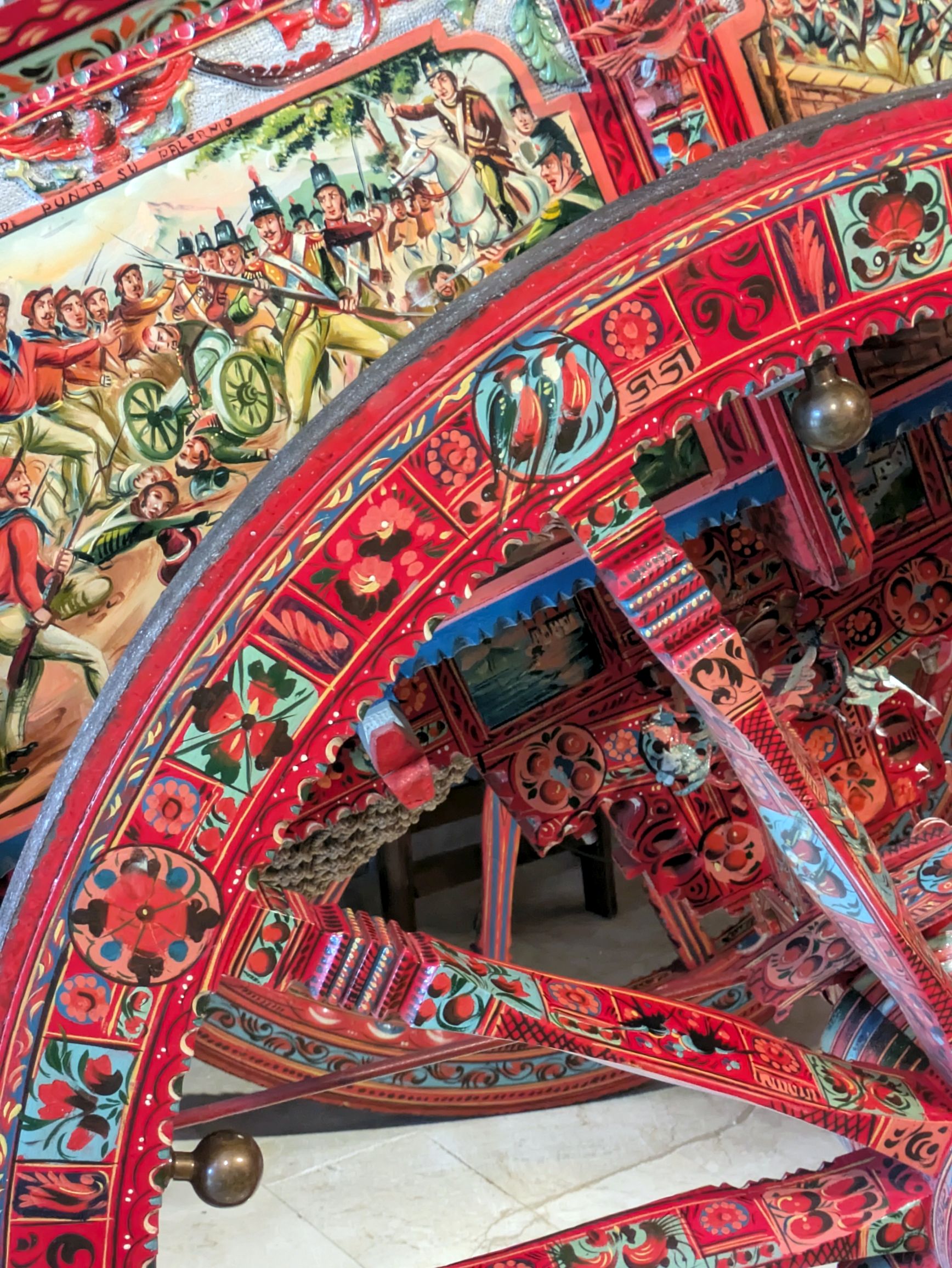
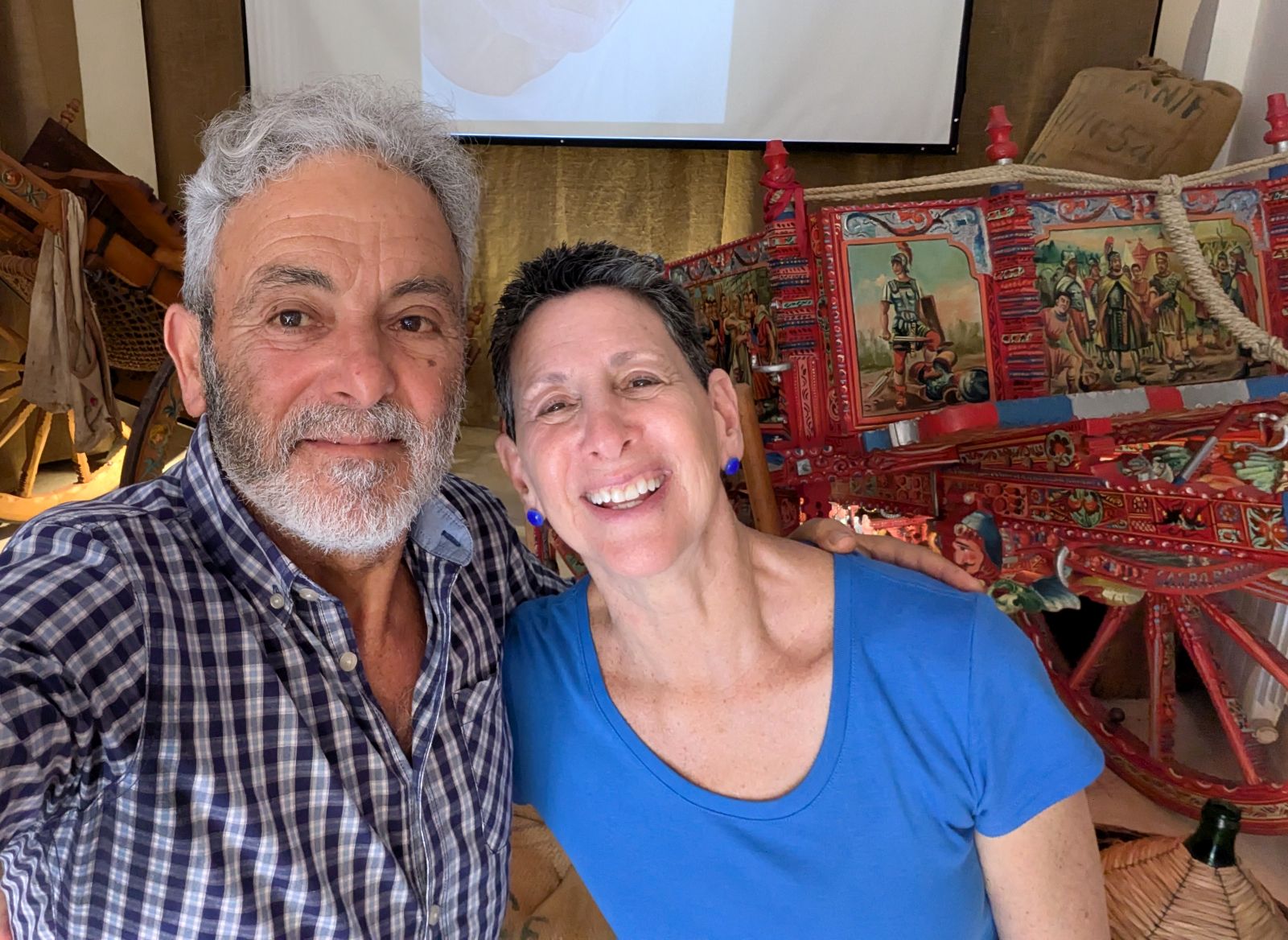
After lunch, we were led downstairs to a workshop to see a beautiful collection of “carretti,” Sicilian horse and donkey carts that were made by his father, Raffaele, and to hear the story about them. His collection is recognized by UNESCO and was stunning!
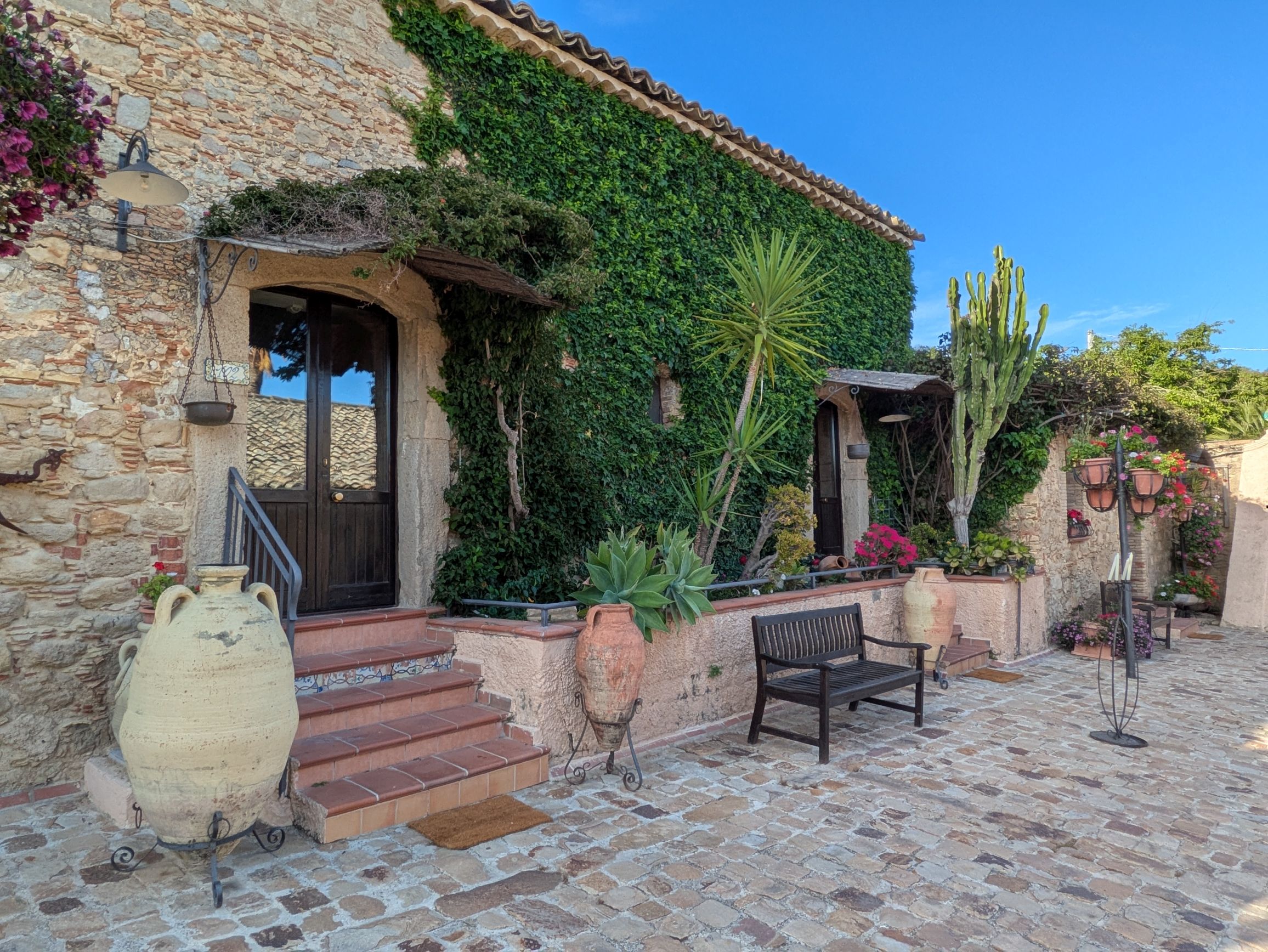
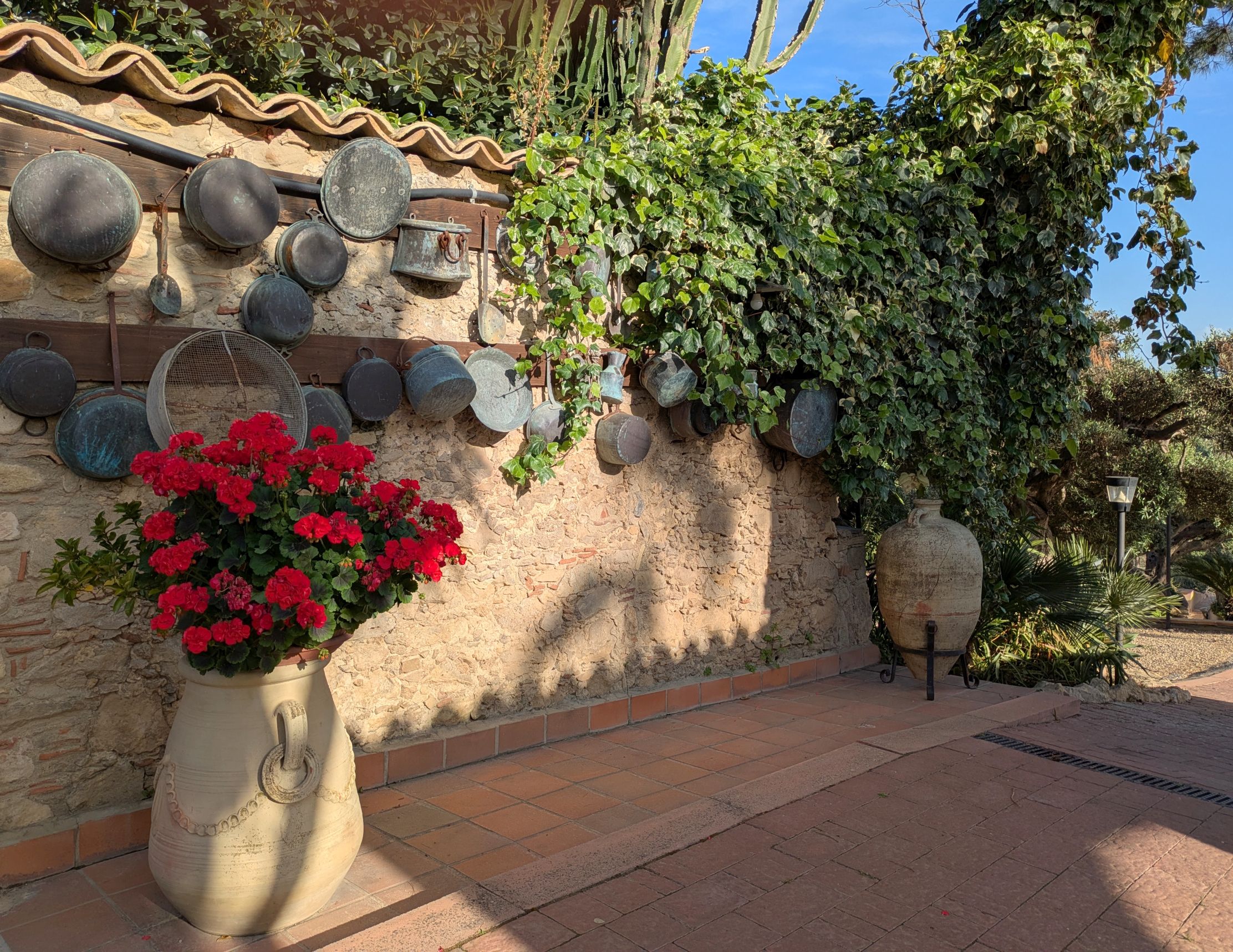
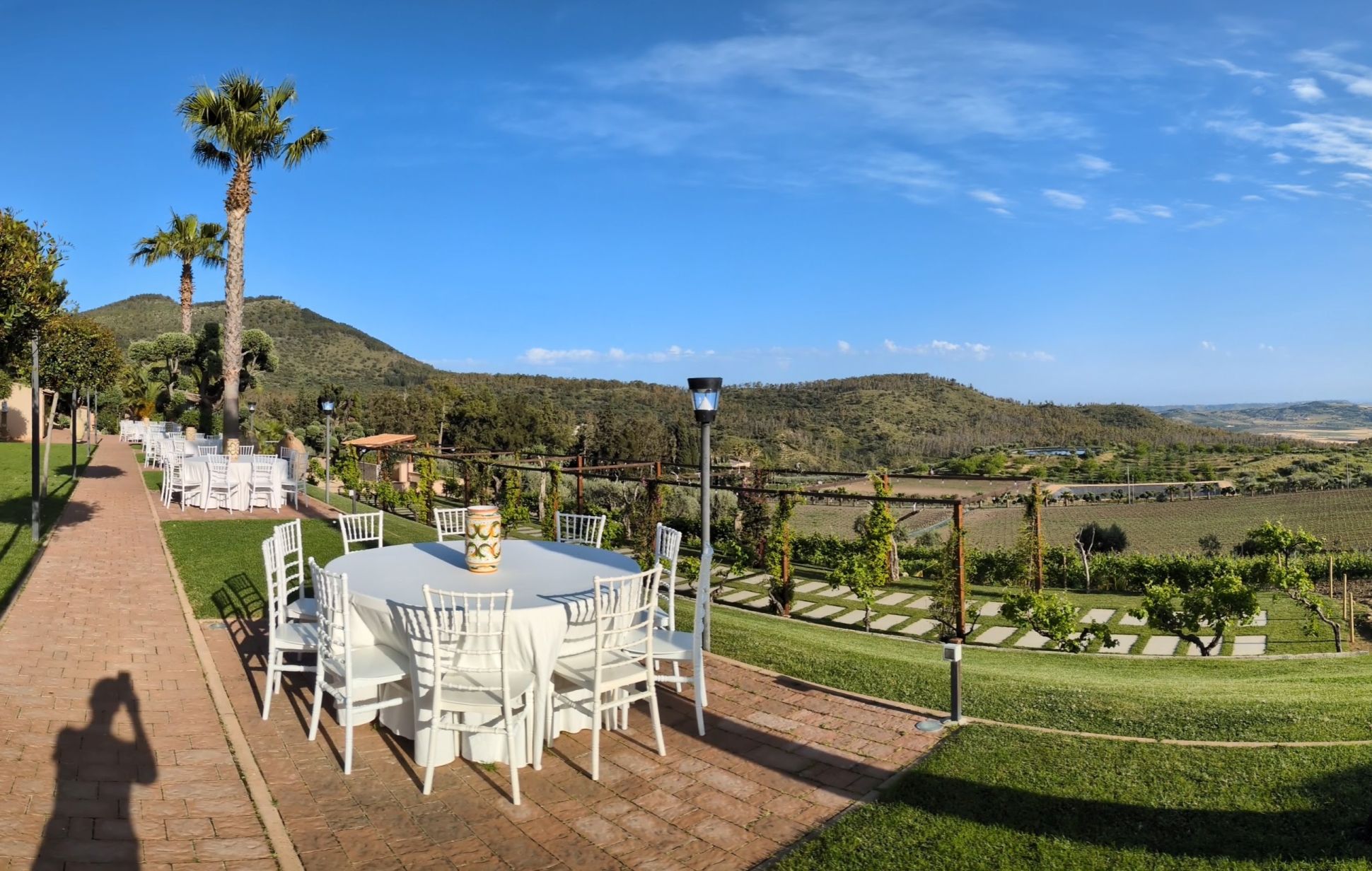
Our home for the night was at Vecchia Masseria an agriturismo (farm stay). Incredibly picturesque and charming, this was our favorite accommodation of the trip. There are hundreds of pictures of the property posted on Trip Advisor, but I thoroughly enjoyed exploring the property, so I can bring you some of my own:
Coming up next: SICILY & AMALFI COAST #12: MARVELOUS MOSAICS & A WONDERFUL WINERY
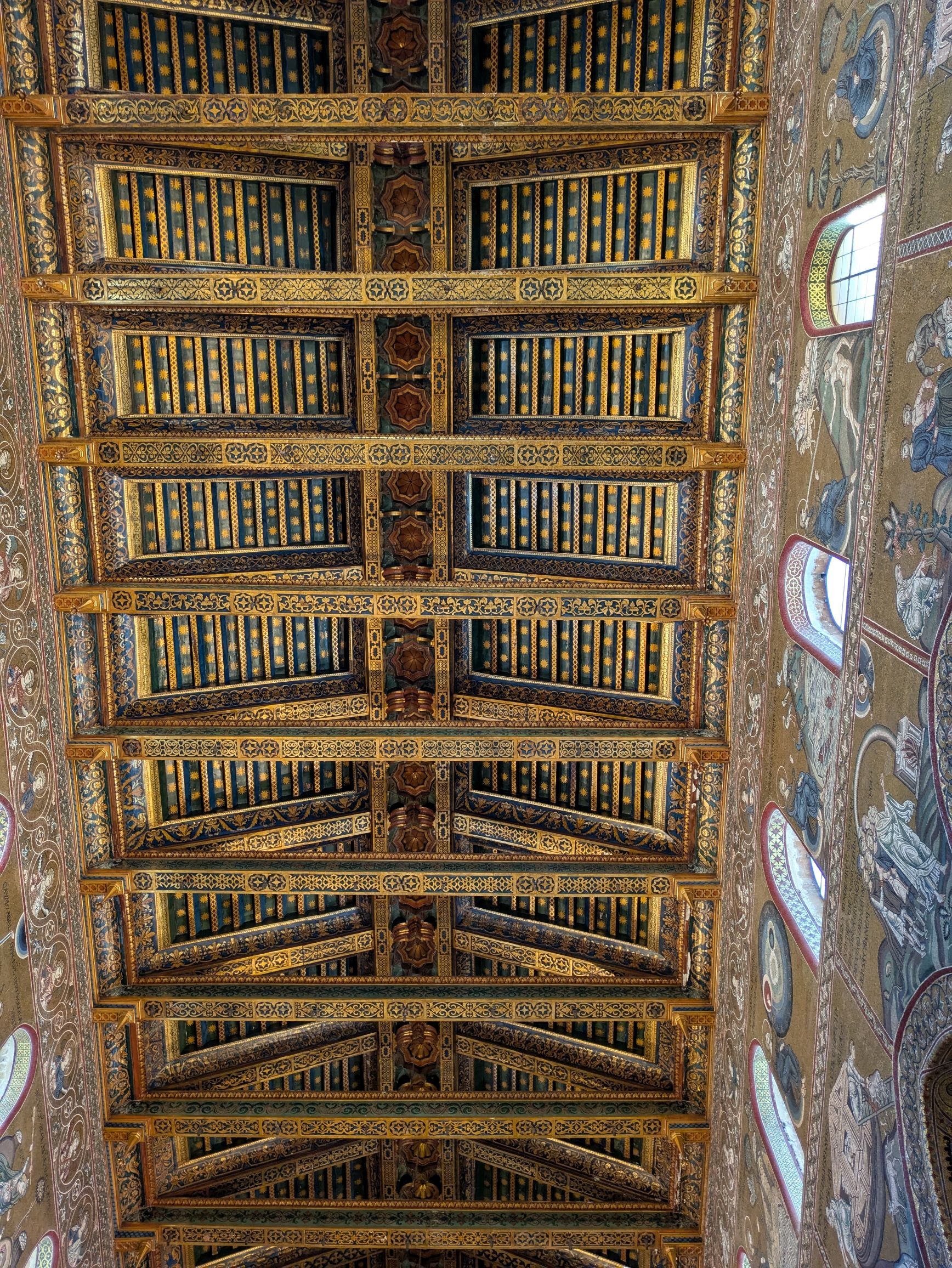
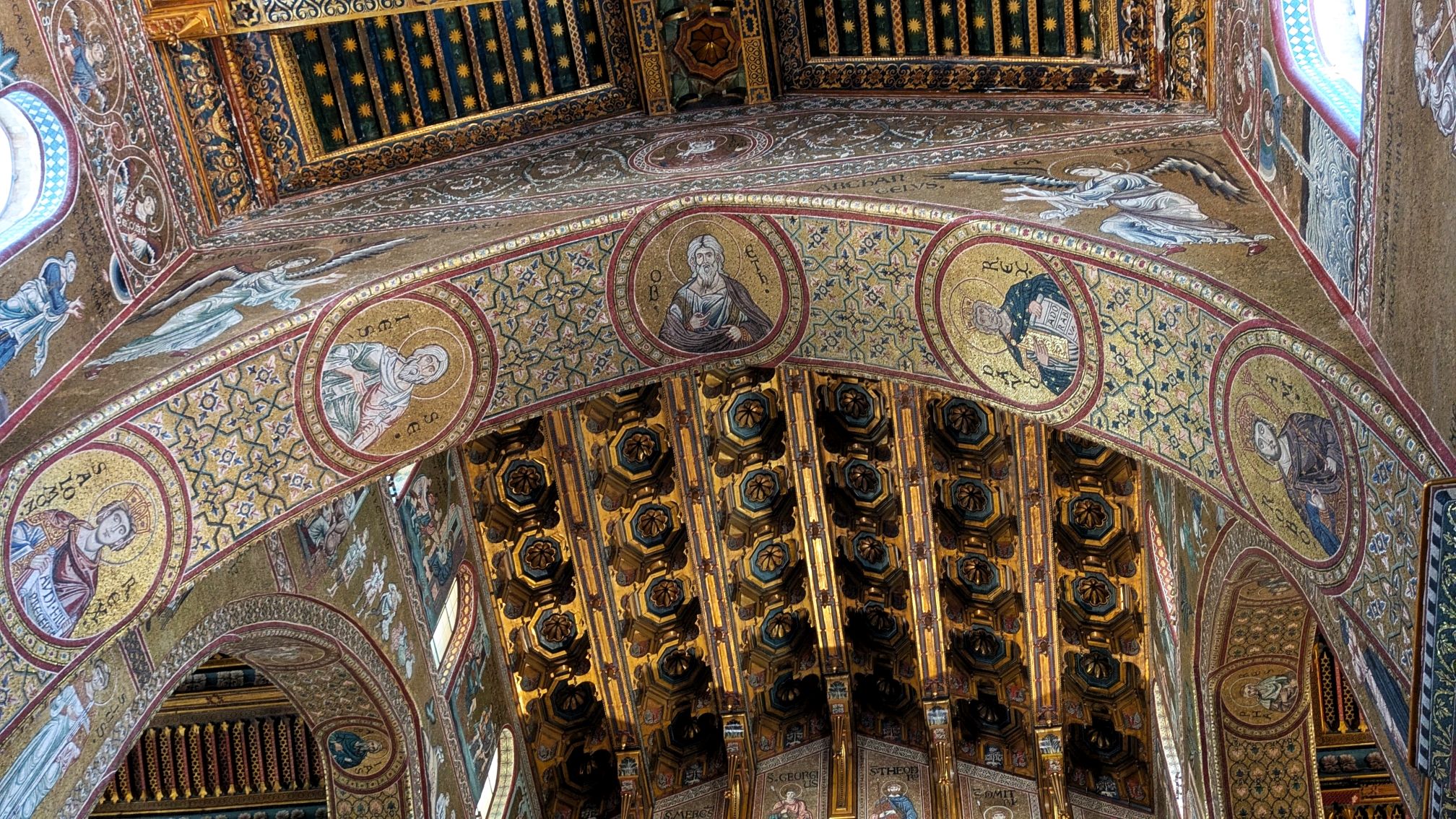
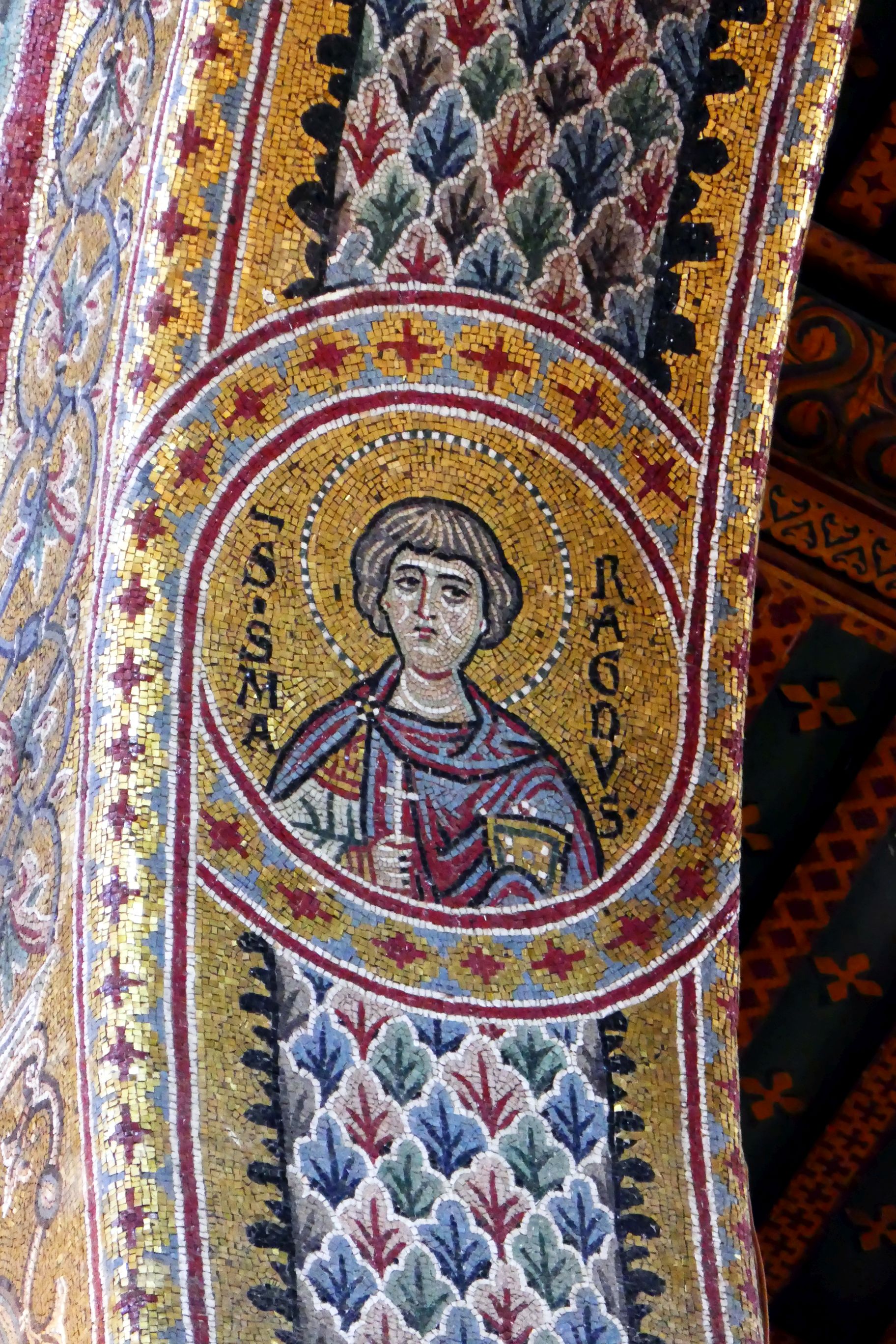
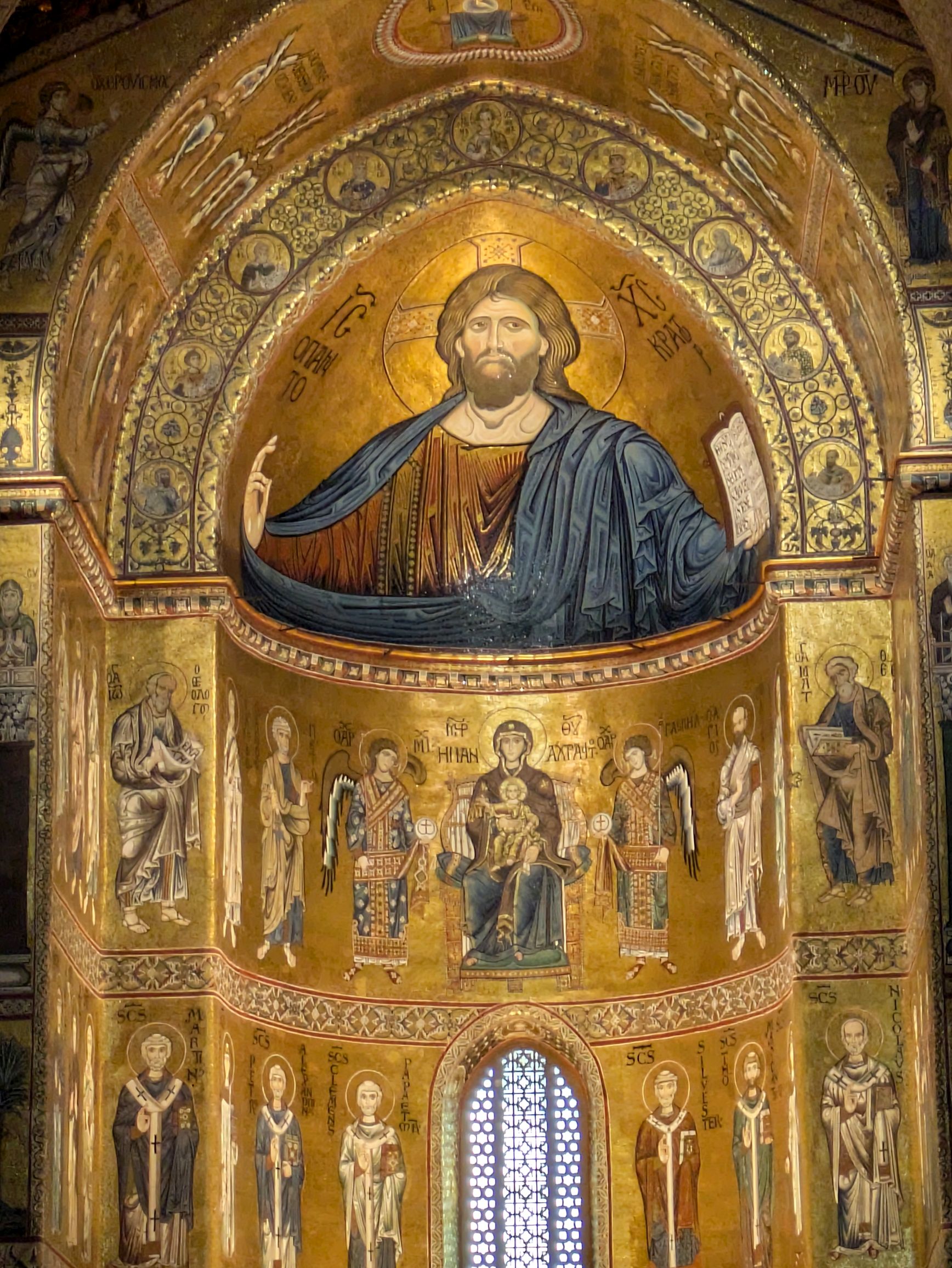
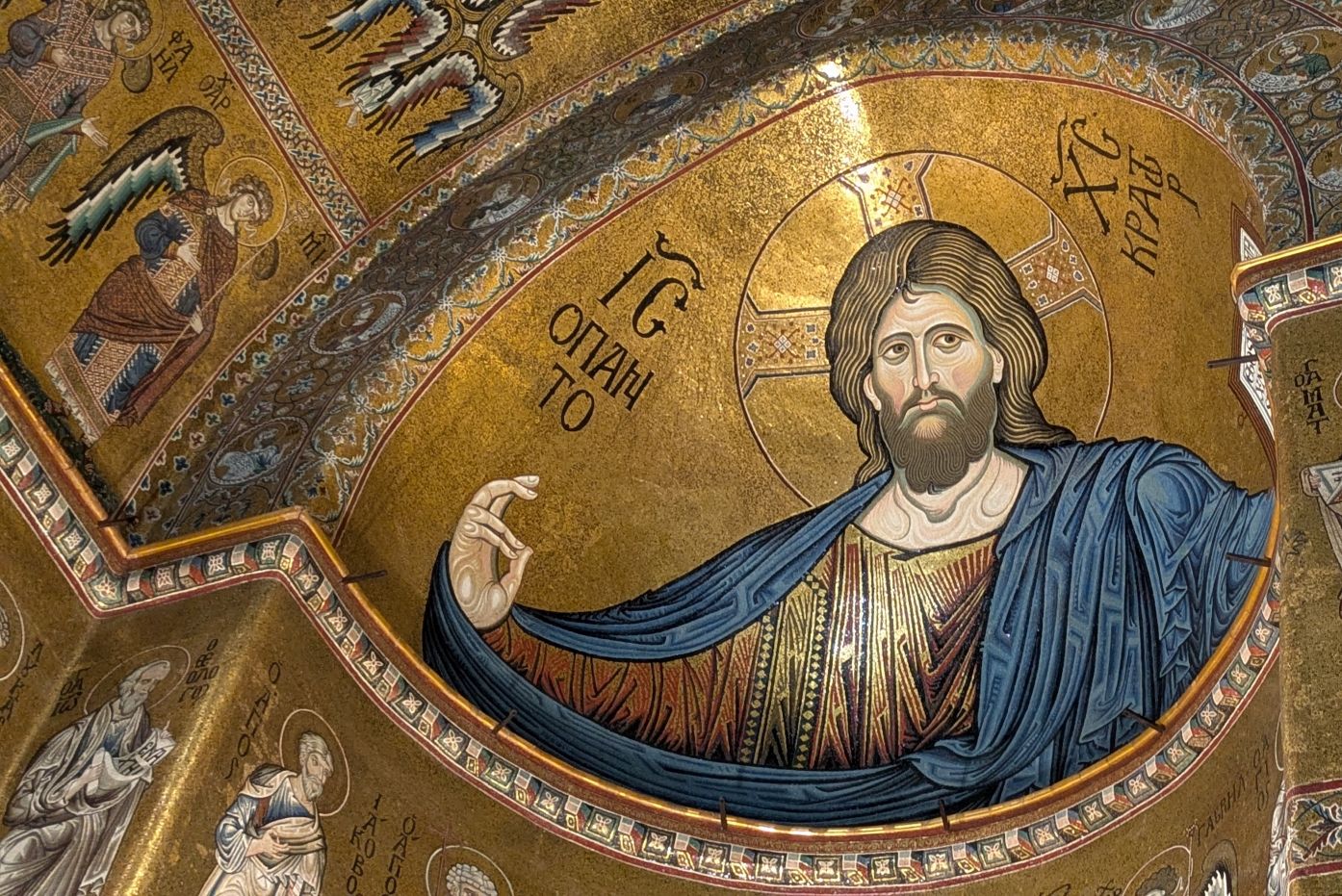
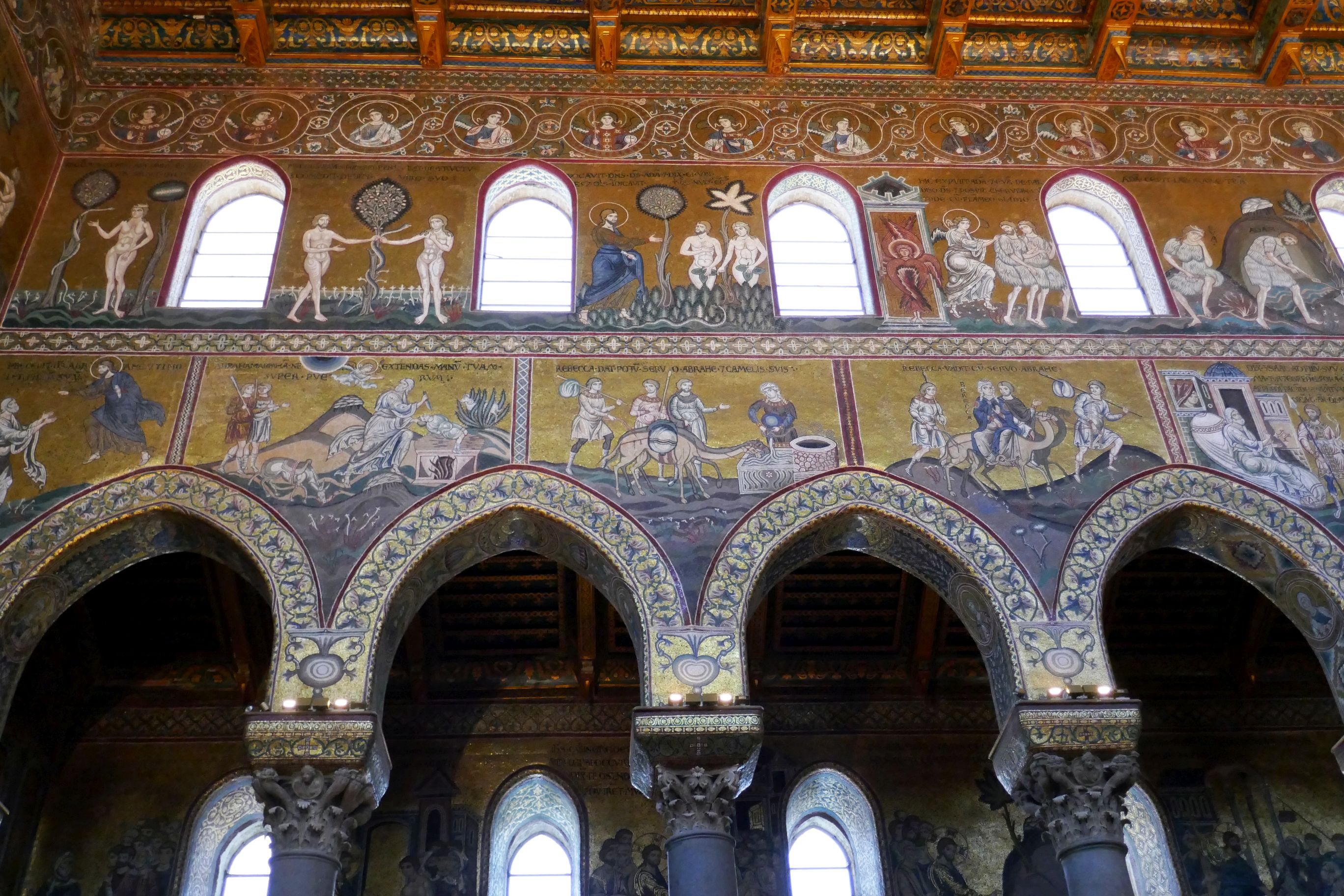
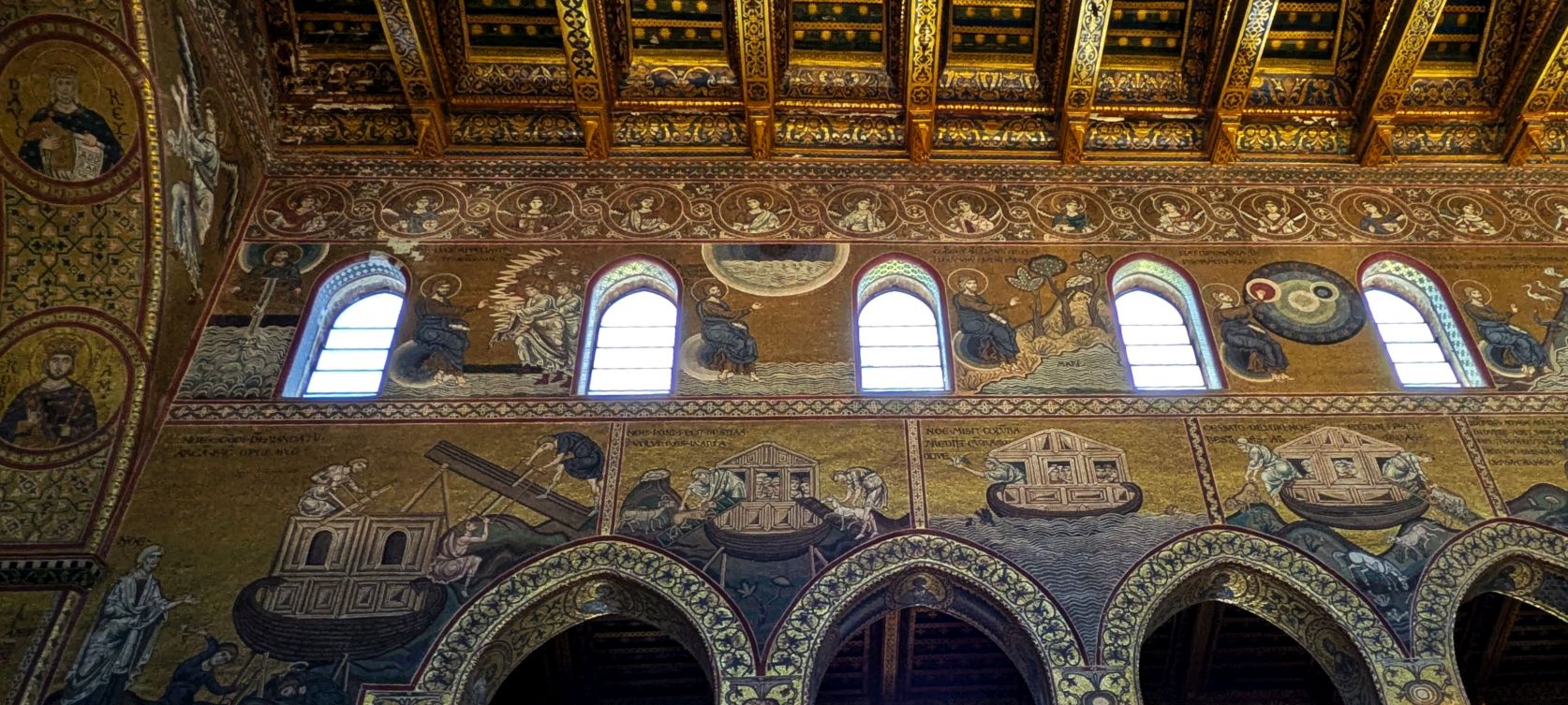
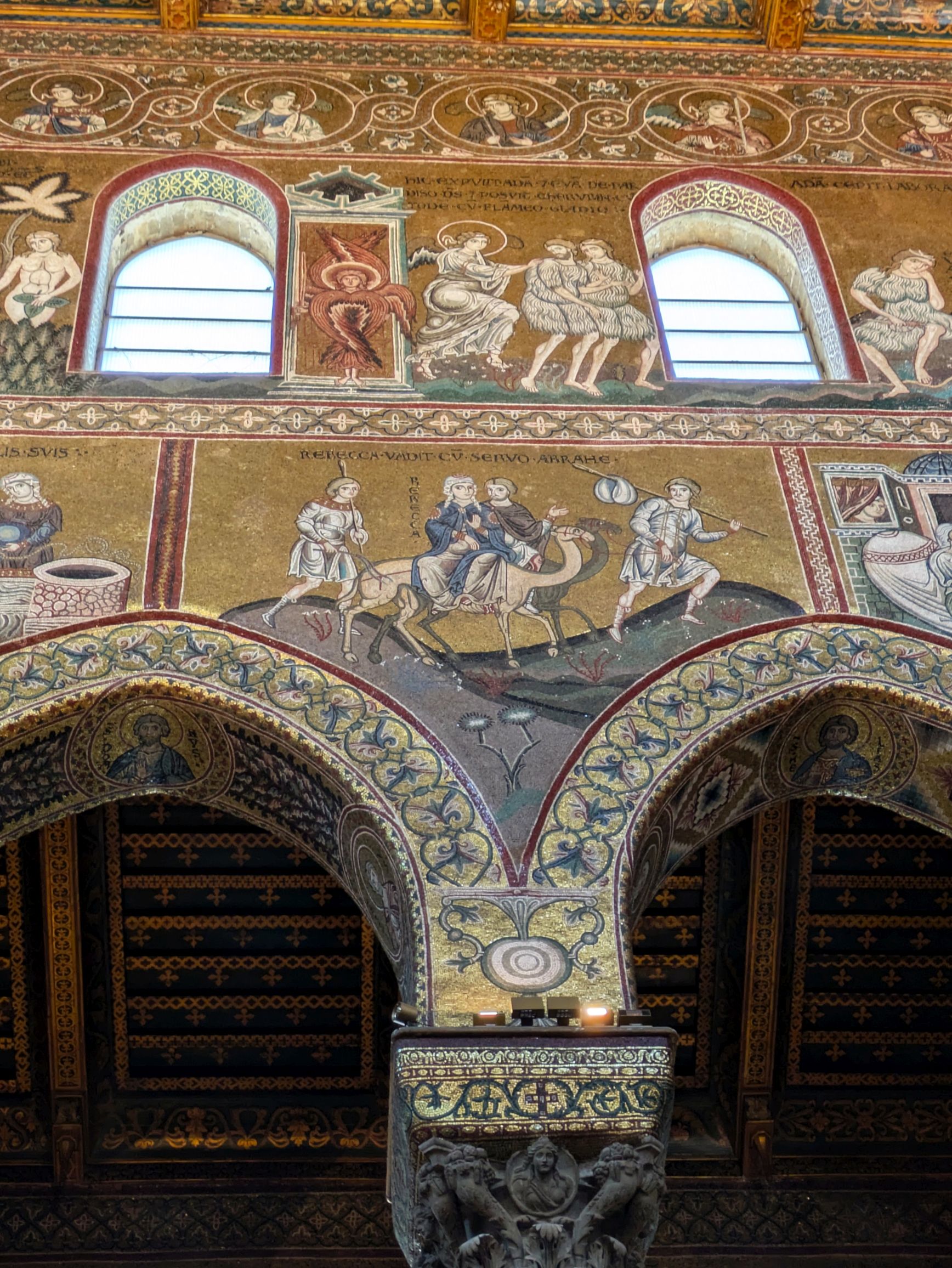
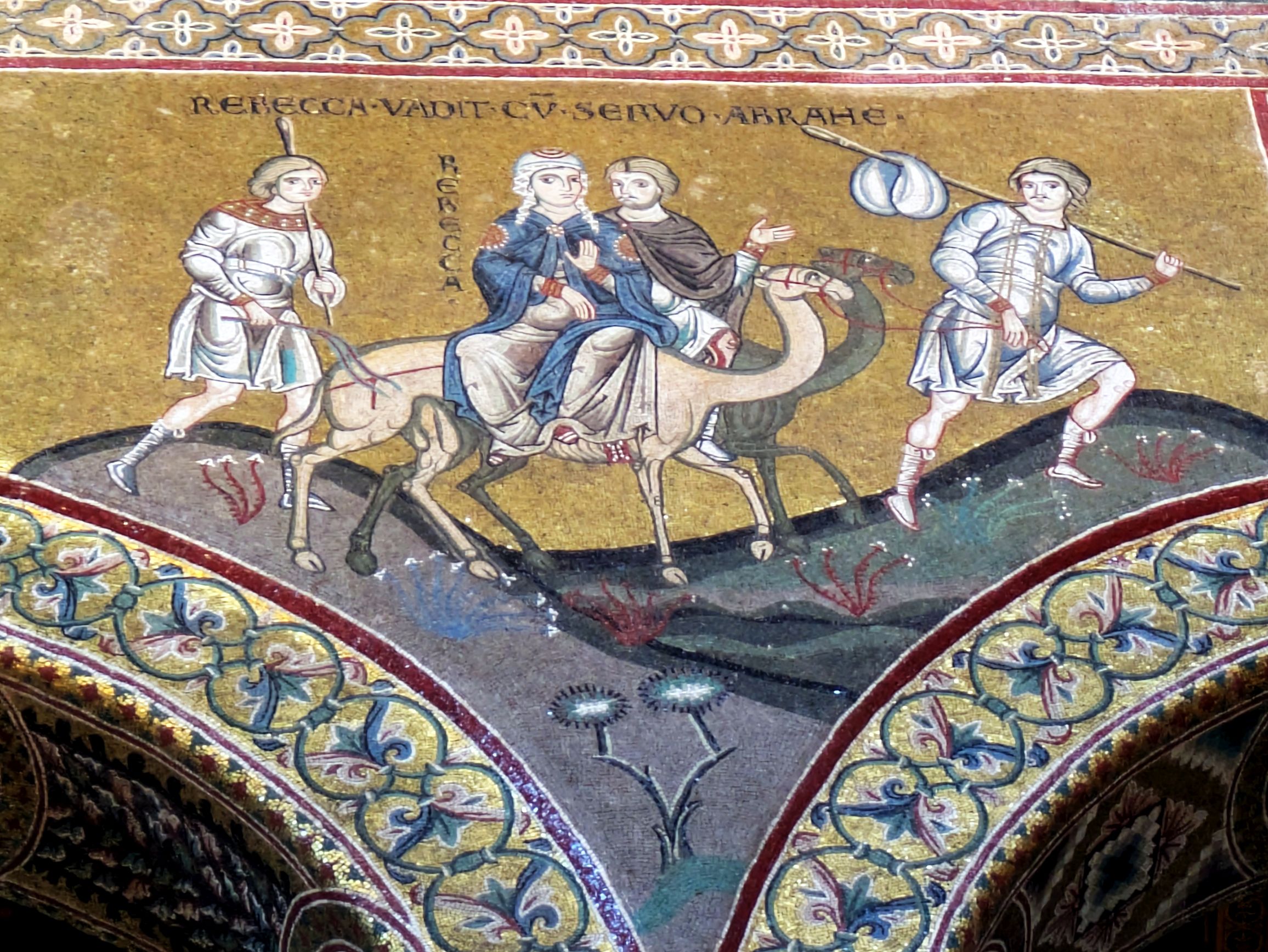
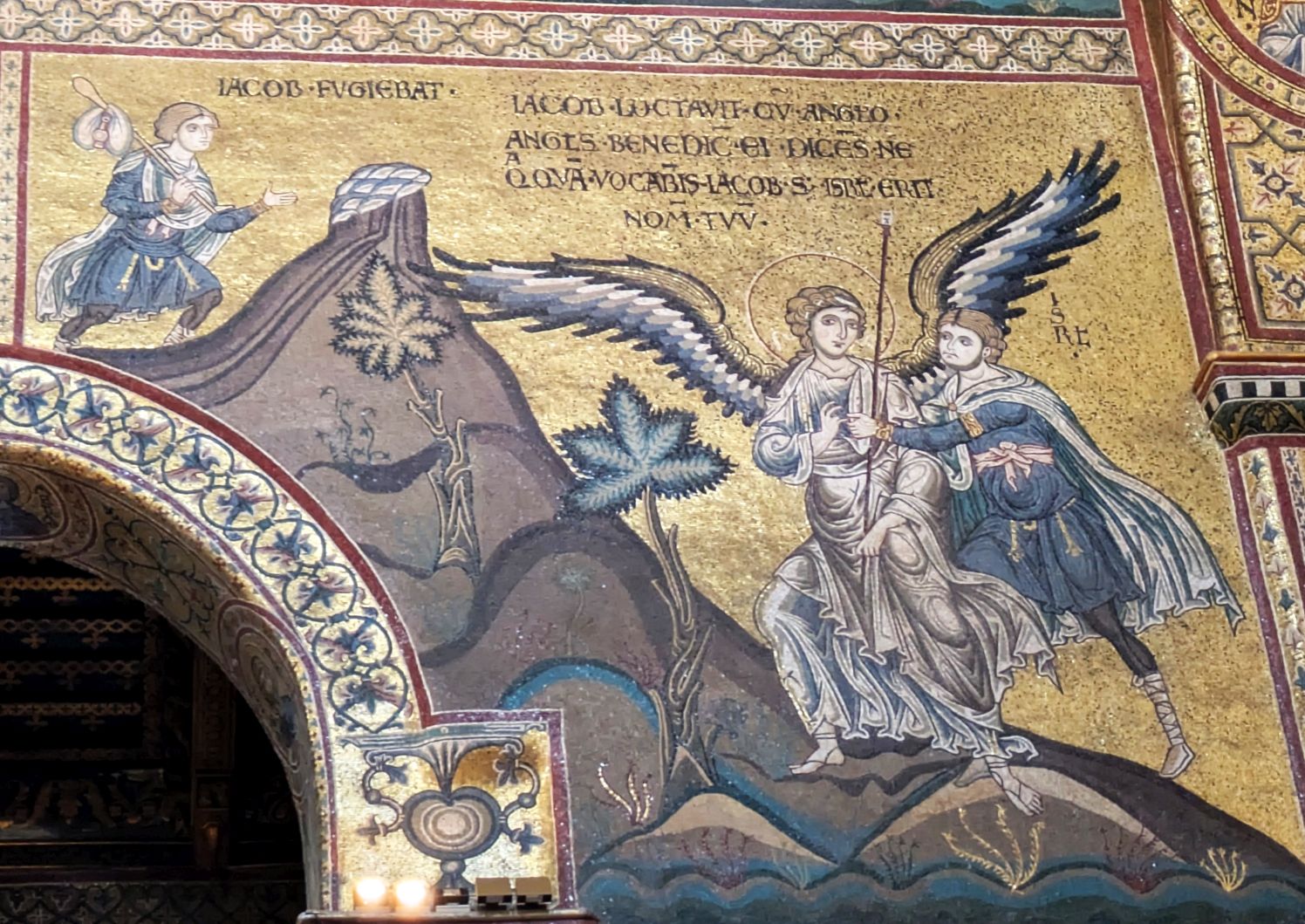
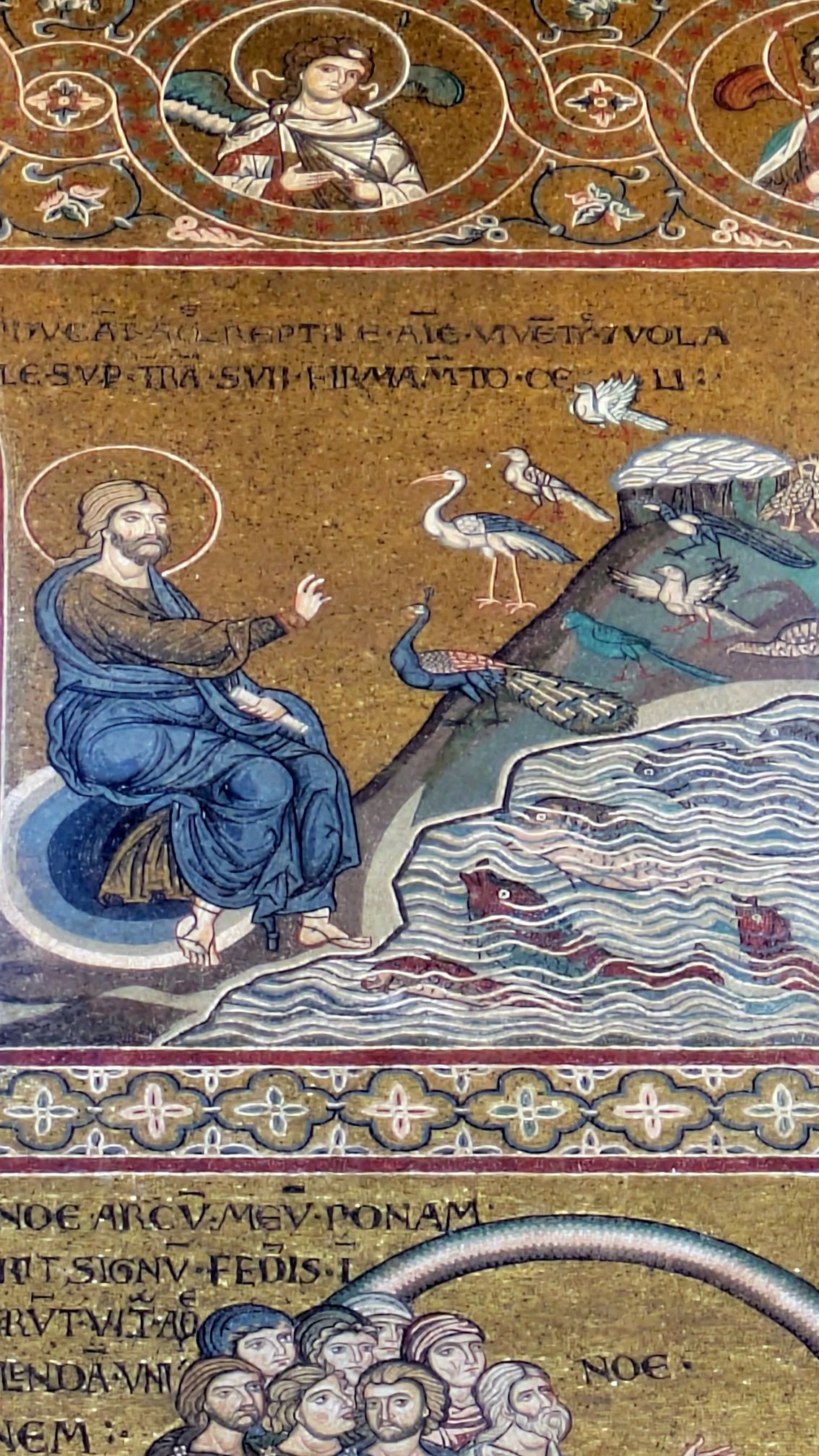
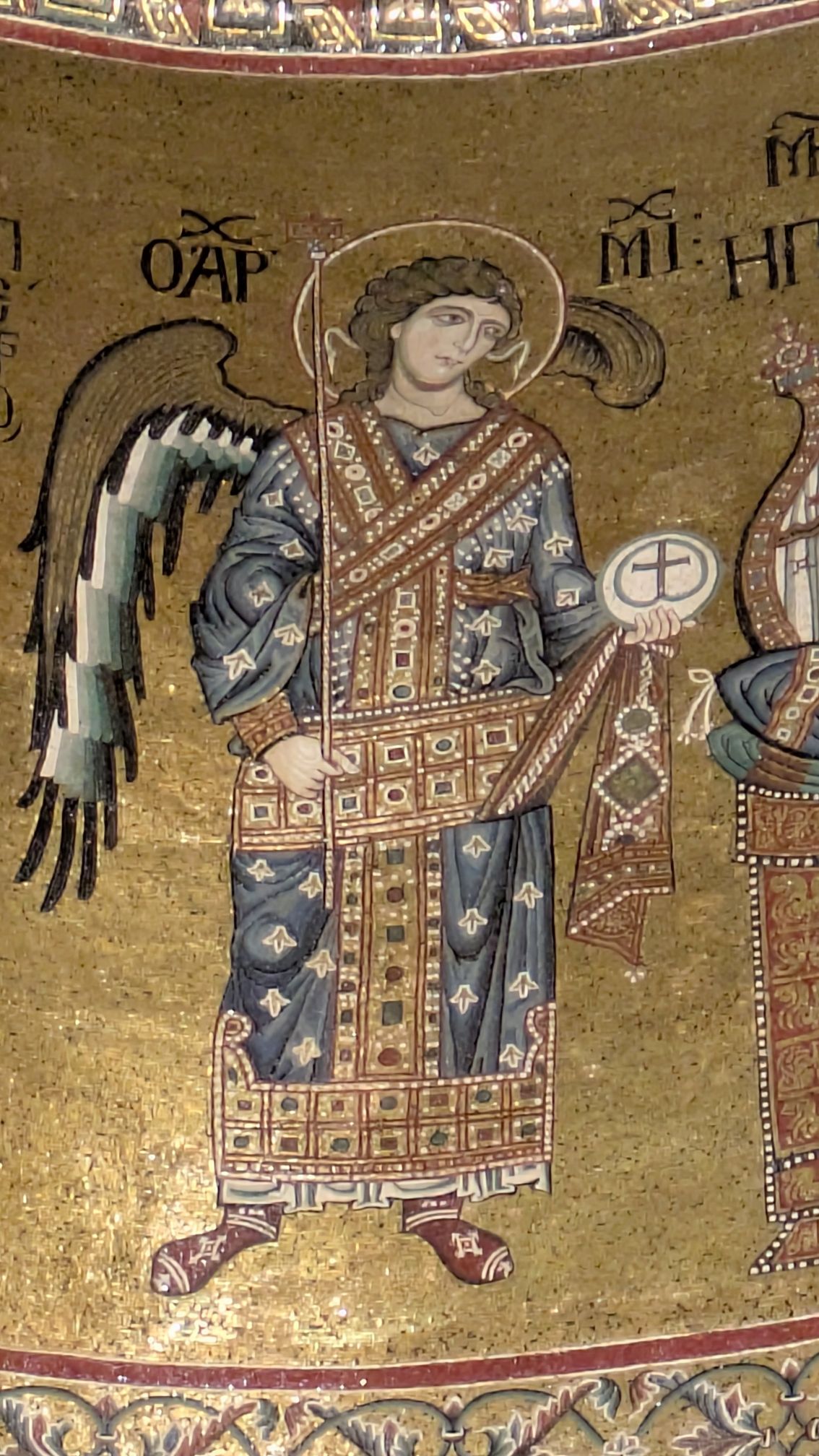
“Amazing” doesn’t begin to describe the enormous mosaics inside Monreale Cathedral, in Palermo, Sicily. One step inside, and we were all in awe. Our local tour guide did a fabulous job detailing the history and explaining the stories depicted in the mosaic scenes throughout the huge cathedral.
Considered one of the greatest examples of Norman architecture, construction of the cathedral began in 1172 and was completed in 1267. It is just one of many UNESCO World Heritage Sites in Sicily.
The Byzantine-style glass mosaics, totaling 70,000 square feet, were created between the late 12th and the mid-13th centuries by both local and Venetian masters. These 24 carat gold leaf mosaics are the largest in the world.
The cathedral is incredibly well preserved thanks to it being built on a hill away from the sea and not being a military target.
(For all photos, click on the image for a full screen view.)
This is just a part of the cathedral and doesn’t include most of the sides and huge area behind me.
Celling
Floor mosaic
Following our excellent tour, we had time on our own to explore the streets surrounding the cathedral.
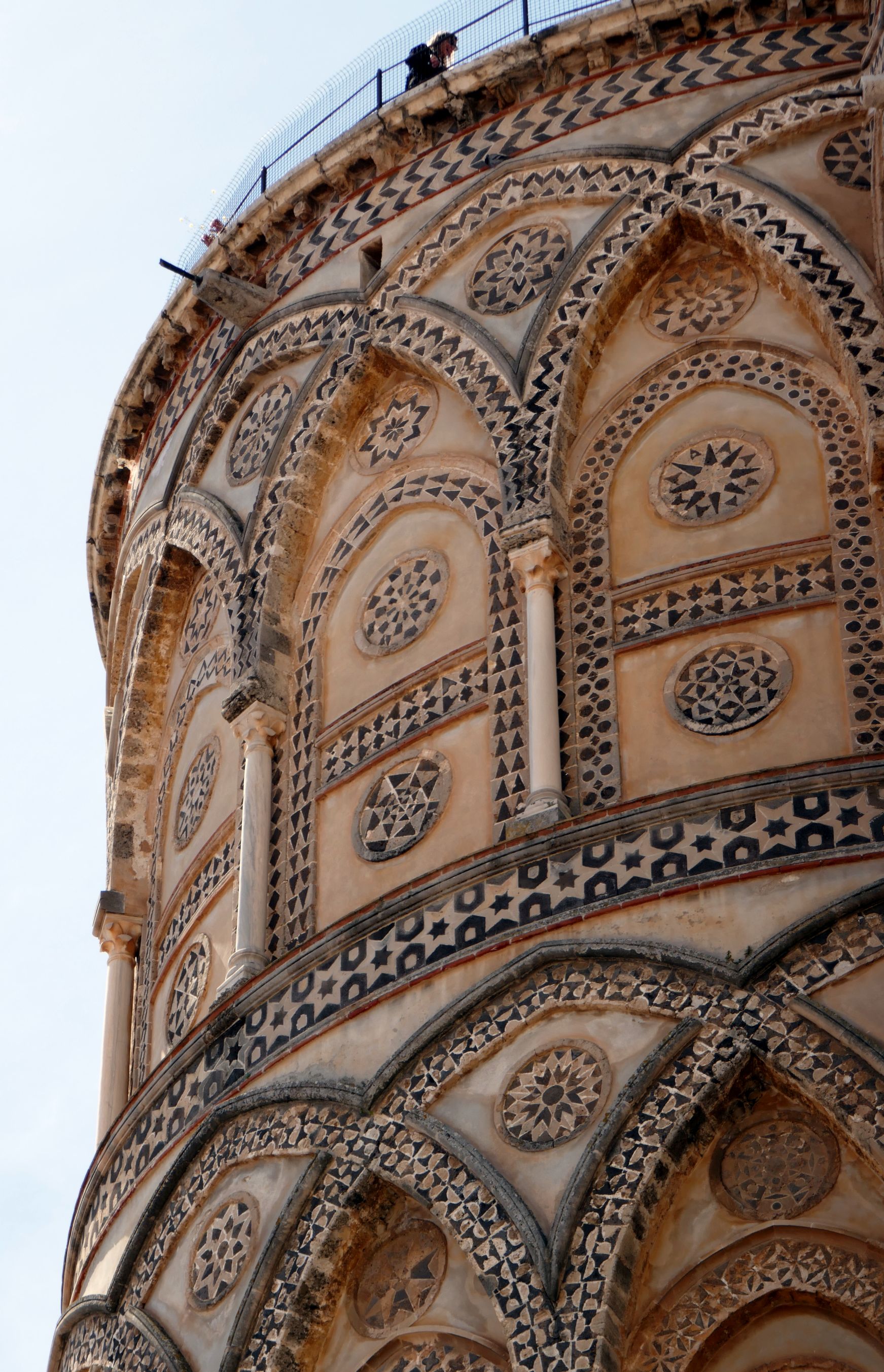
Looking up at a very small portion of the cathedral’s exterior
View from outside the cathedral.
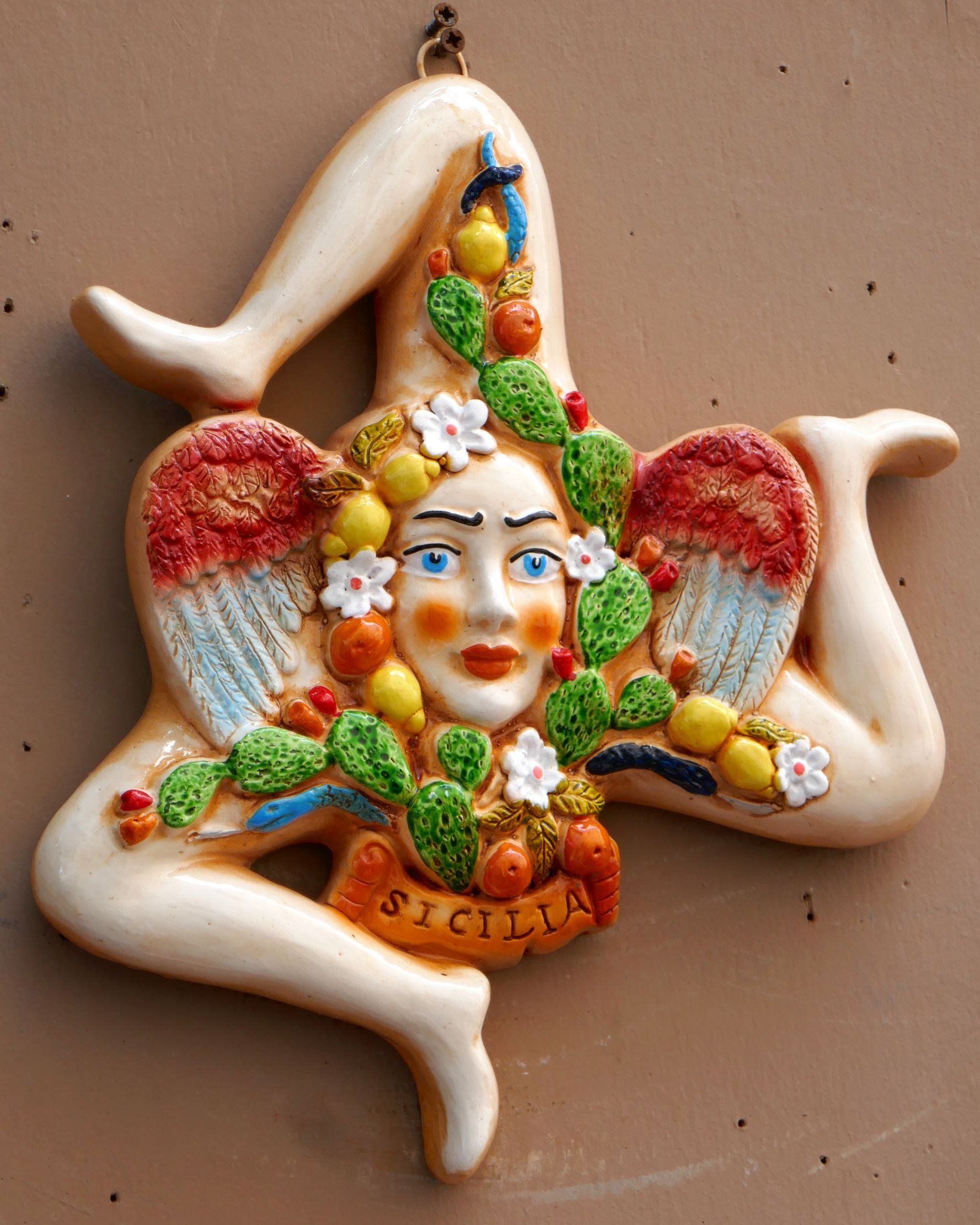
This is Trinacaria (meaning 3 points), the symbol of Sicily. It represents the shape of the island, which resembles a triangle. Click here to read more.
In the afternoon, we continued to Segesta, the topic of my next post.
Next up: SICILY & AMALFI COAST #7: SCENES OF SEGESTA
After another day of poking around Palermo on our own and getting adjusted to the seven-hour time difference, our tour with Overseas Adventure Travel began. We met our tour leader, Francesco, and the other fourteen members of our tour group, before setting out on a walking tour of the city. Although Francesco is a Palermo native and knows his city like the back of his hand, Italy requires separate tour leaders and tour guides, each being licensed in a separate classification. So, our tour guide met us at our hotel and led the group through the city, with Francesco bringing up the rear.
Palermo is the fifth-largest city in Italy, so our walking tour covered just some of the highlights—a few which I wrote about in my previous posts; so, I will skip those and show you what was new for us.
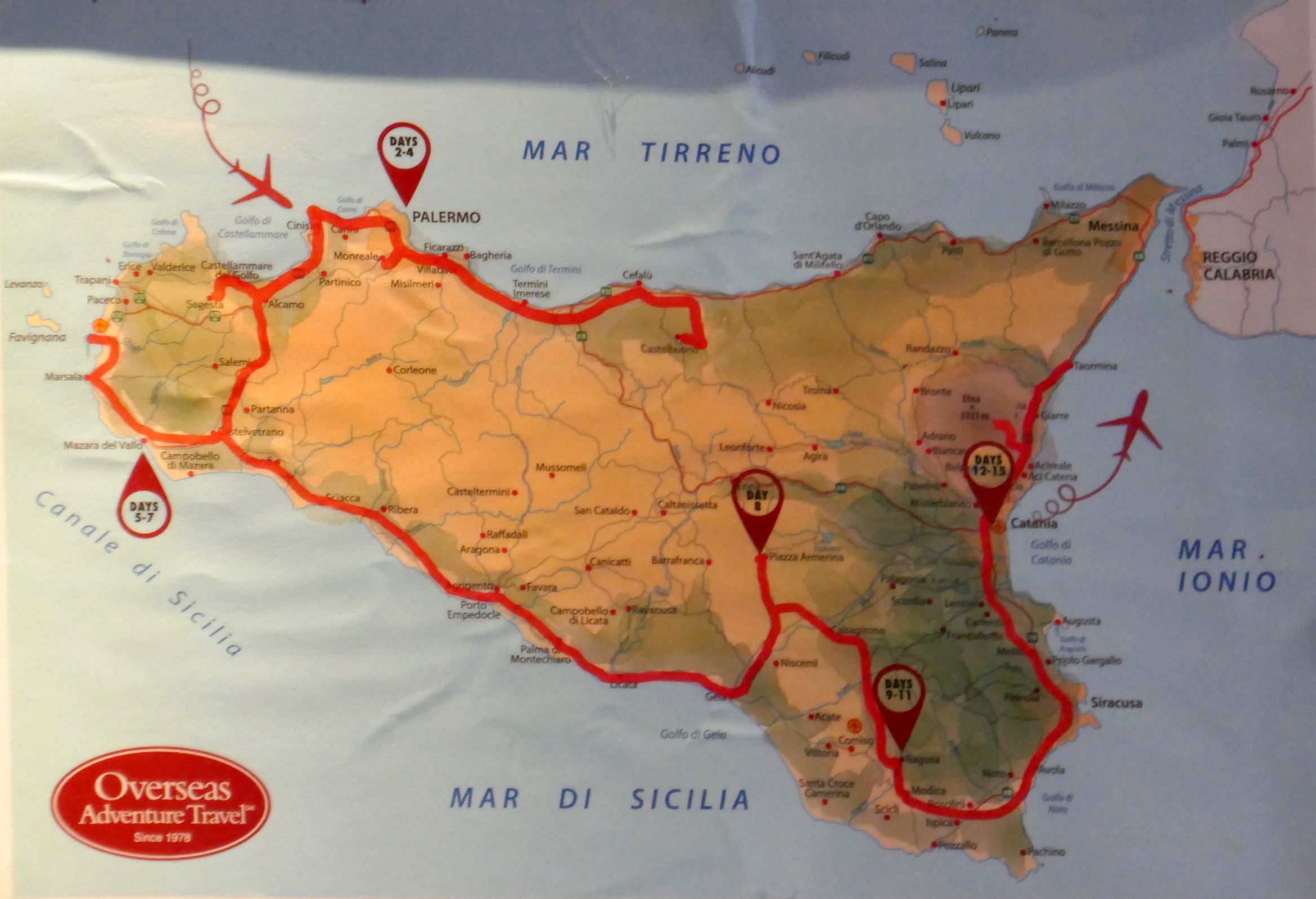
First, a little bit about Sicily and Palermo. This map highlights the itinerary of our tour in red:
(For all photos, click on the image for a full screen view.)
Sicily, located off the peninsula of mainland Italy, is an island of 4.7 million people in the Mediterranean Sea. First and foremost, although Sicilians are Italian and the island is part of Italy, the locals think of themselves as Sicilians first, and Italians second. They are very proud to be Sicilian and even have their own dialect, which they speak in addition to Italian.
Another thing Sicilians are clear about: They aren’t fond of northern Italians (and the feelings are mutual), which has its roots dating back to the 1860’s. Government power, including the police and army, shifted from southern Italy to the north, and economic wealth was (and still is) centered there as well. The south, including Sicily, is poor, which created a vacuum for the mafia to step in.
One of the reasons Sicily is poor is because Sicilian government is corrupt. Politicians get paid more in Sicily than anywhere else in Italy or the rest of Europe. Basically, they are ripping off the taxpayers, so the politicians and mafia (often the same) are the only Sicilians making out financially. If you get elected to parliament in Sicily, it’s like winning the lottery. You would serve a 2-year term but get paid for the rest of your life. The bottom line is the system doesn’t work for the benefit of the people, only for the politicians. One example of this is the money distributed to Italy and Sicily by the European Union. The politicians skim off the top before the rest trickles down in a way that benefits the common Sicilian.
The unemployment rate in Sicily is also steep—38% for the 18-35 age group. In contrast, it is only 2.9% in Switzerland. Overall, Italian unemployment is the highest in Sicily and the Calabria region, also located in the south.
It is most difficult to get a job in the private sector, because they will only hire experienced workers. New college graduates don’t have experience, but they don’t want to work outside of their field of study; so, they won’t work. Many go on earning additional advanced degrees and live with their parents.
Now, a bit about Palermo: Located in northwest Sicily, it was founded in 735 B.C., and the current population is around 626.000 with its metropolitan area totaling about 1.2 million. The city is Sicily’s economic and cultural capital, full of UNESCO World Heritage Sites.
The city has quite a complicated history. Due to its strategic location in the Mediterranean, it was the victim of a succession of invaders: The Phoenicians, Carthaginians, Greeks, Romans, Normans, Swabians, and French all conquered Palermo at one time or another. Fast forward to World War II, the city was heavily bombed. Sheesh! The poor city couldn’t catch a break.
One of the things I enjoyed about Palermo was the way vehicle traffic was diverted away from the main streets of the old city center until late at night. Pedestrians could walk down the middle of the streets without the noise, pollution, and chaos of traffic. It didn’t stop the e-bikes and scooters from whizzing past, though, at times nearly colliding with pedestrians stopping to take a photograph or to talk with each other. I’m guessing that all of us in the group had a close call at one time or another!
Following our walking tour and free time in the afternoon, we regrouped for our “Controversial Topic,” one of OAT’s features on each tour. I’ll give you one guess as to what that topic would be… I’ll tell you all about it in my next post!
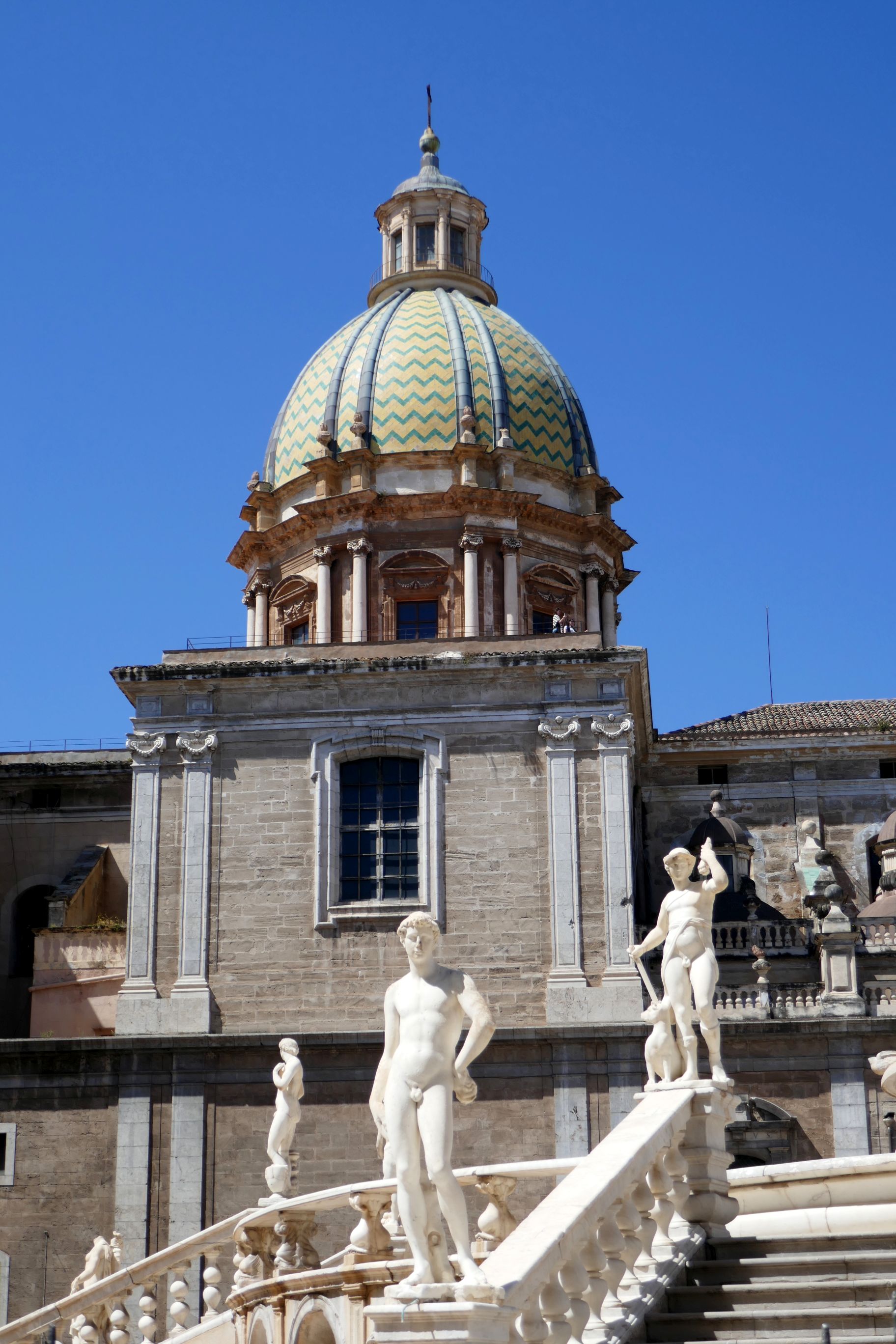
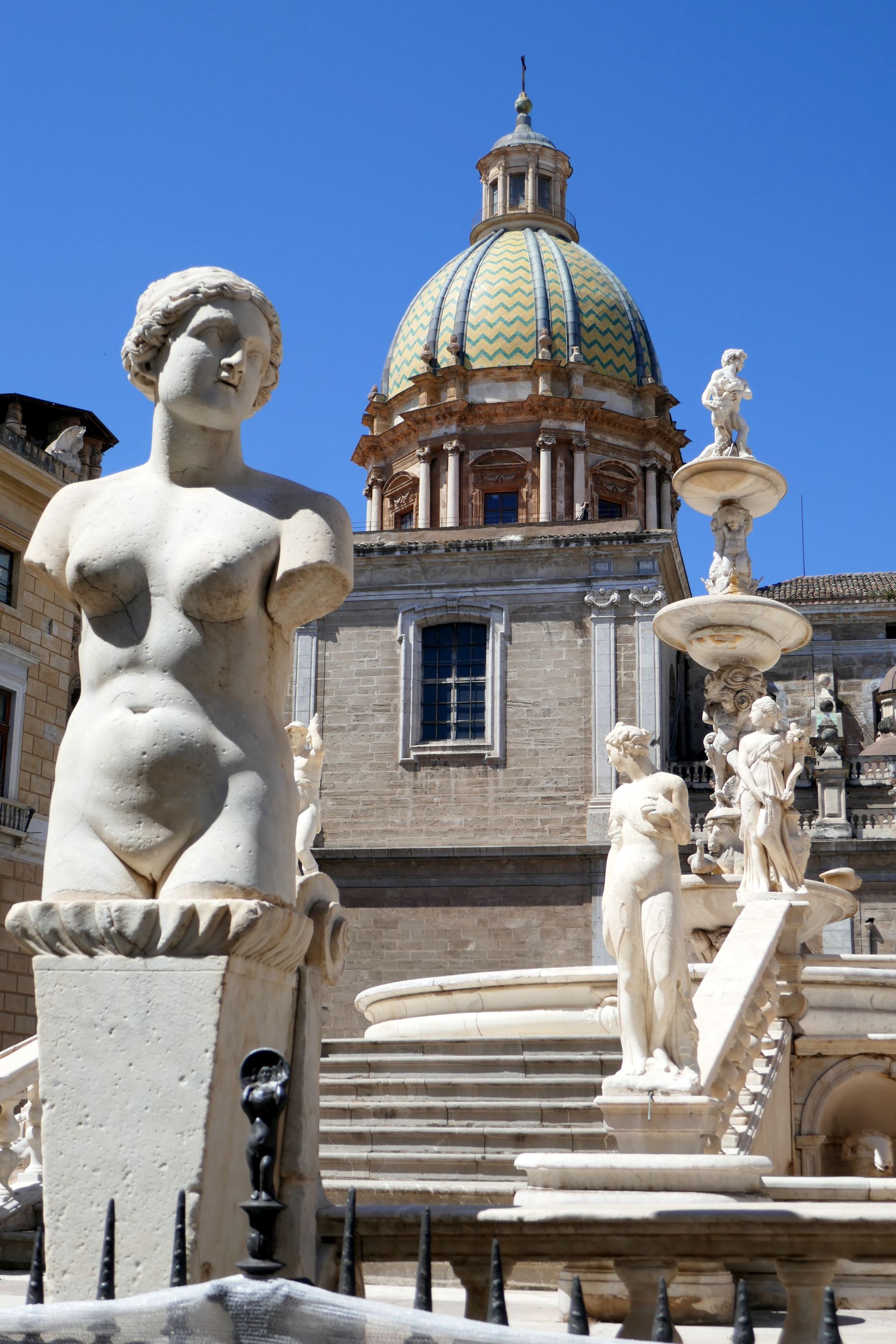
Meanwhile, here are some photos shot around Palermo:
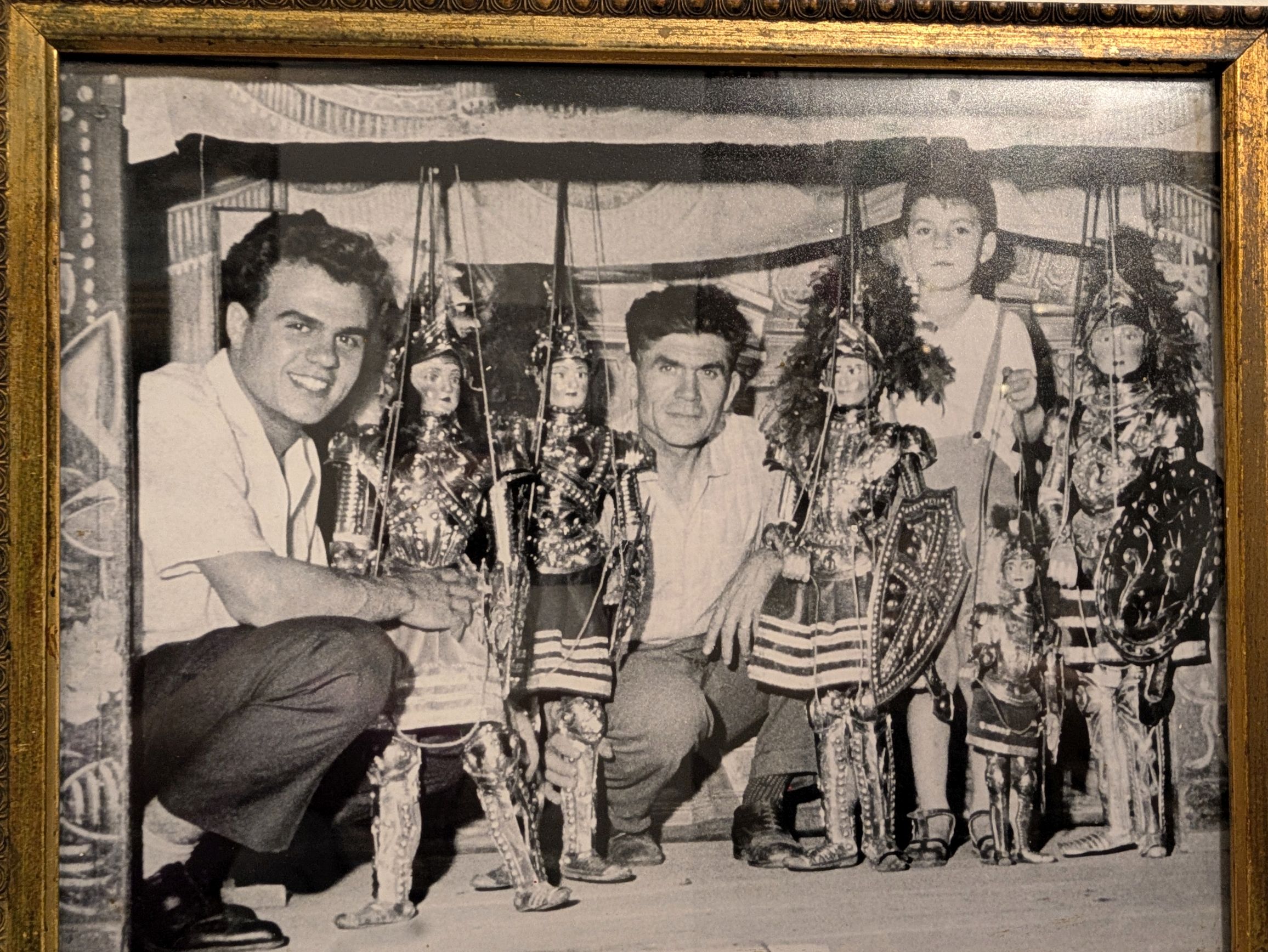
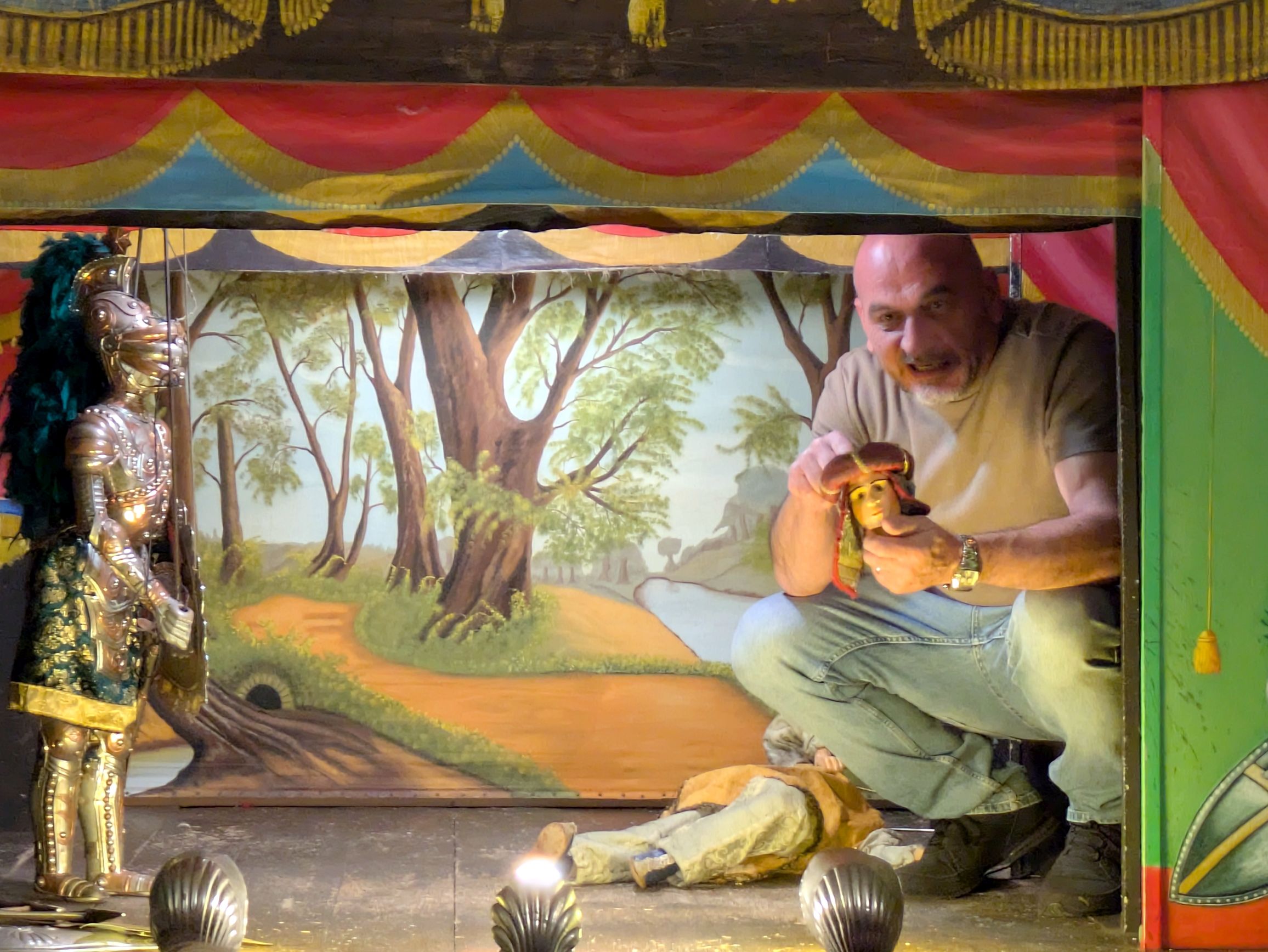
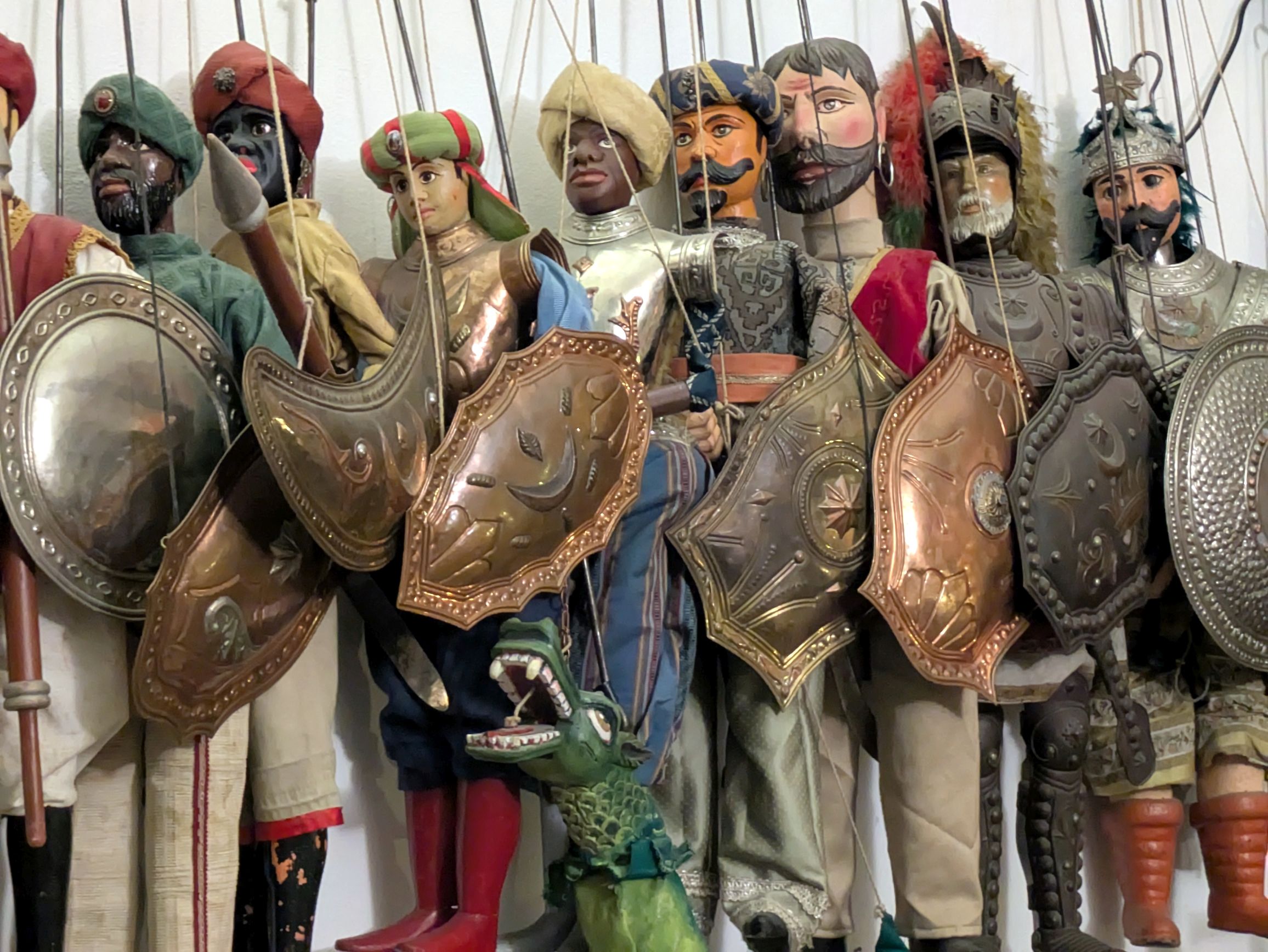
Our group had a private visit at the wonderful Opera Dei Pupi, a family-run puppet theater that has been passed down through the generations:
Our private demonstration and Q&A session with the owner was hilarious!
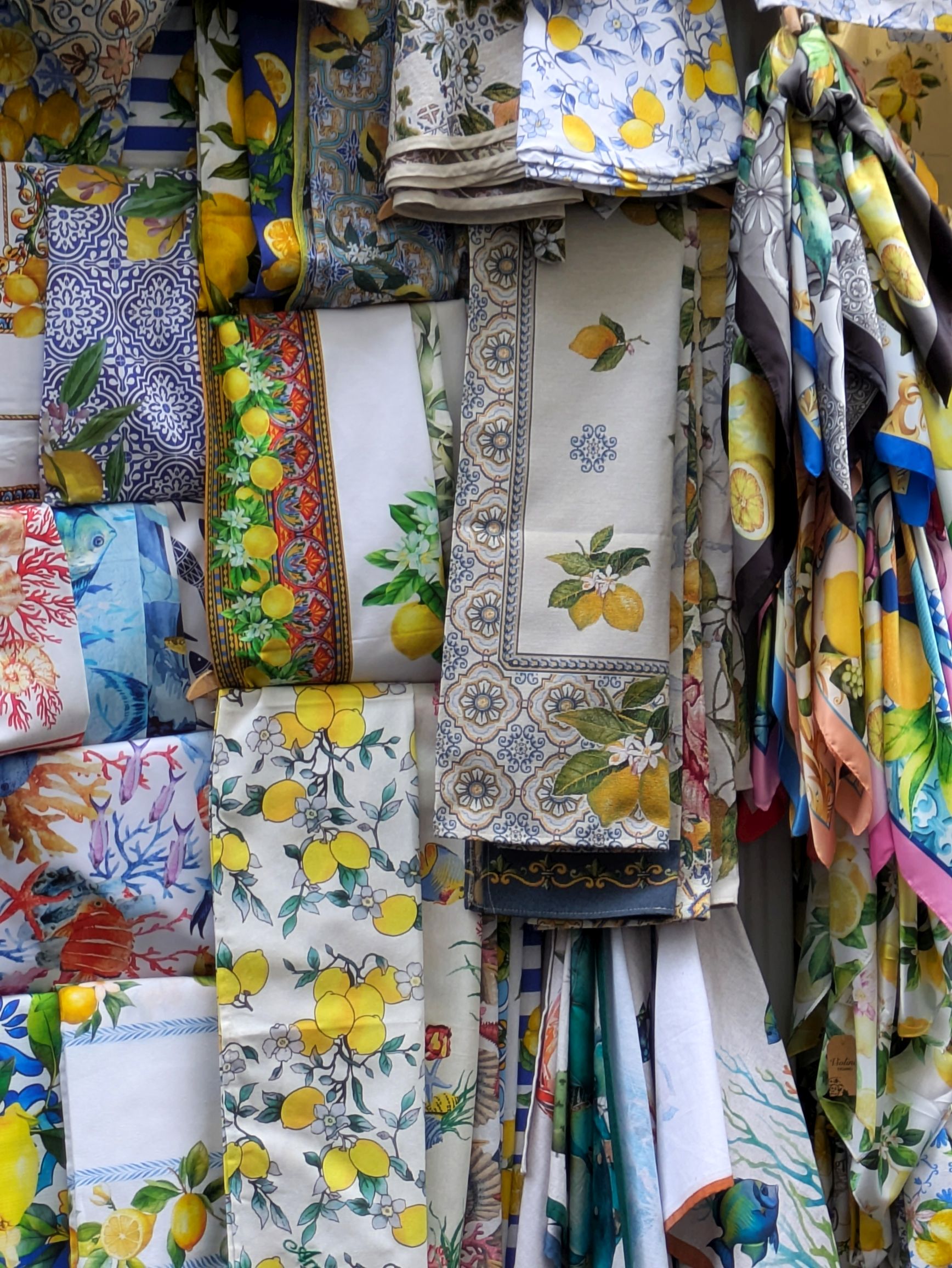
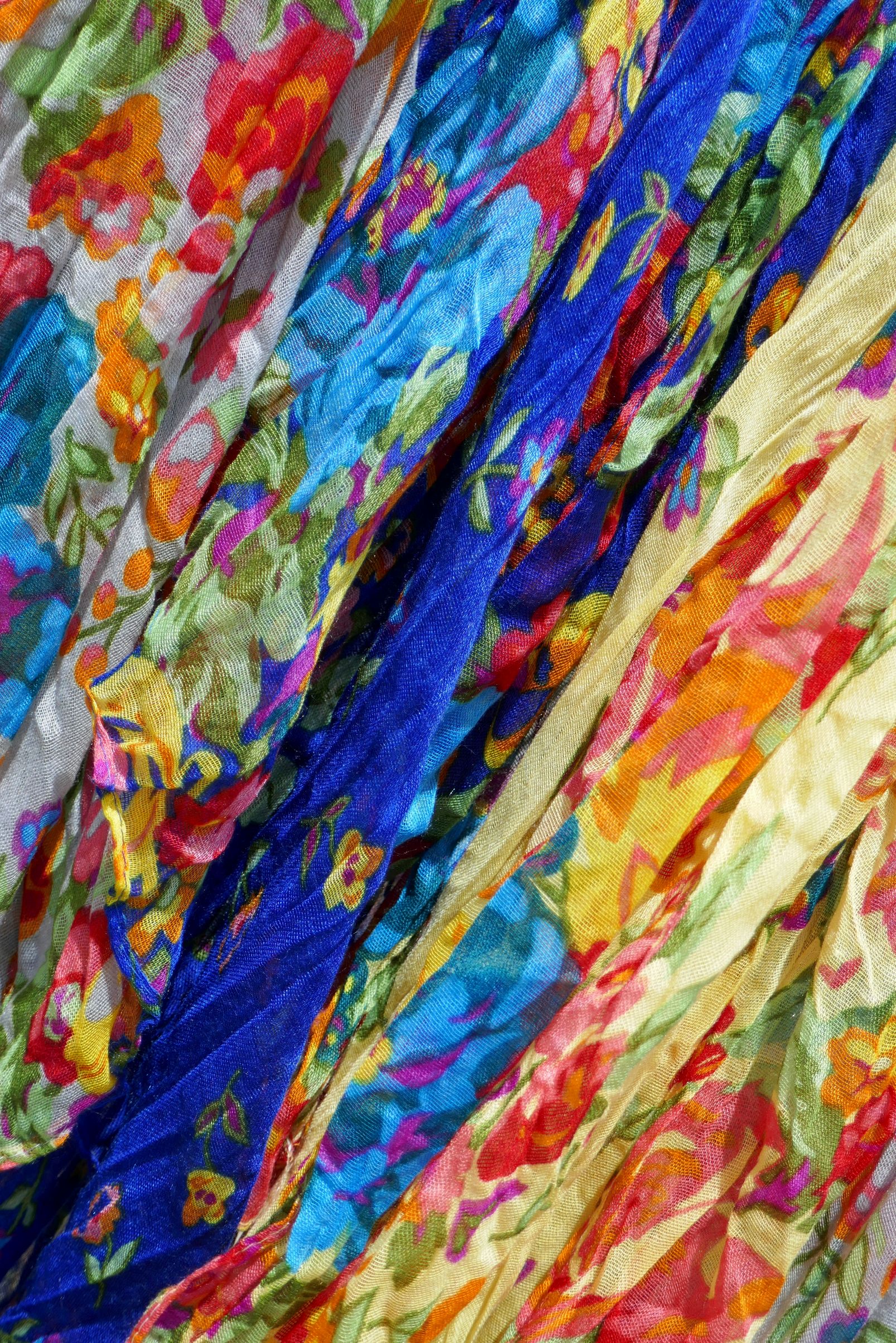
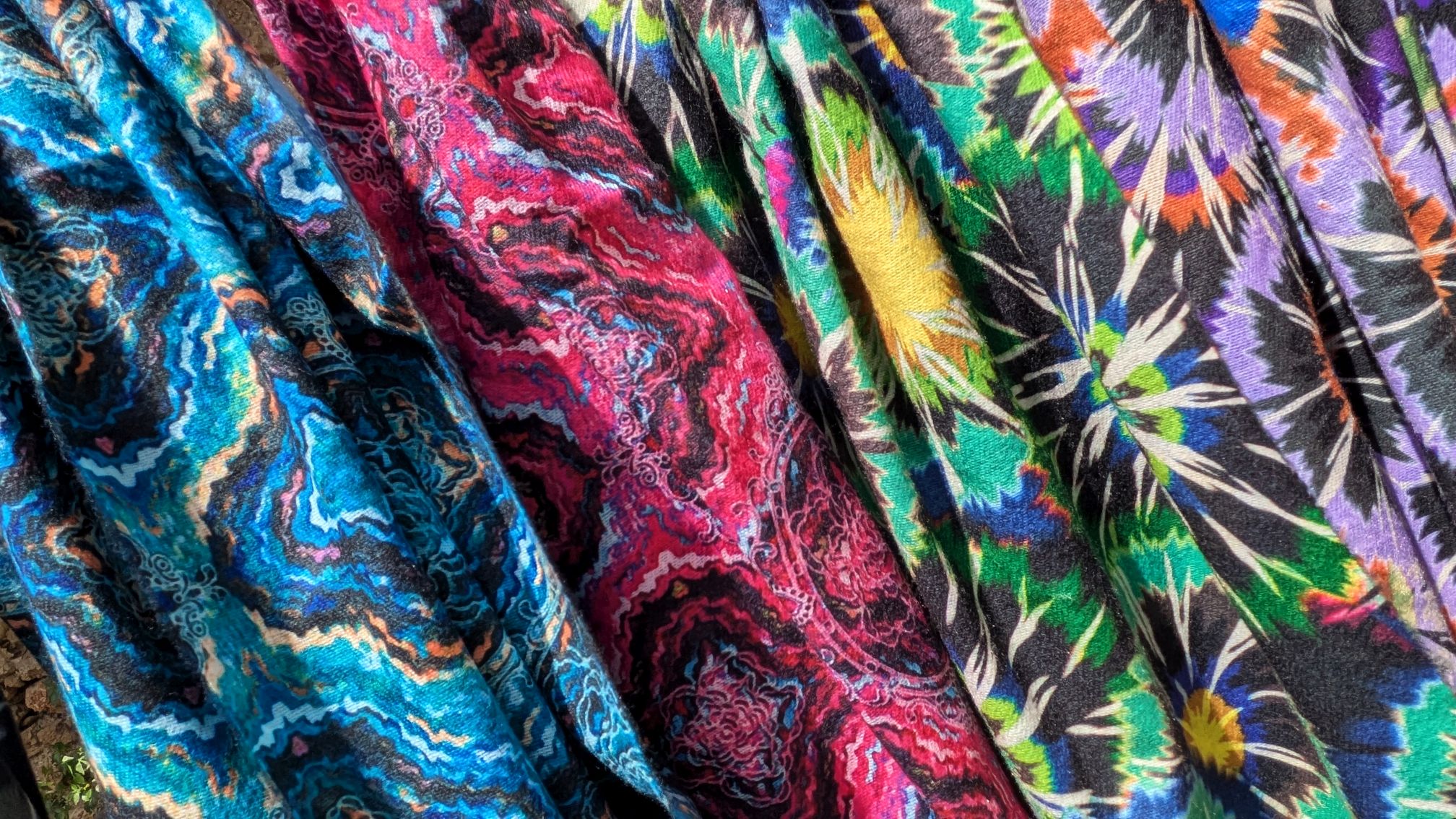
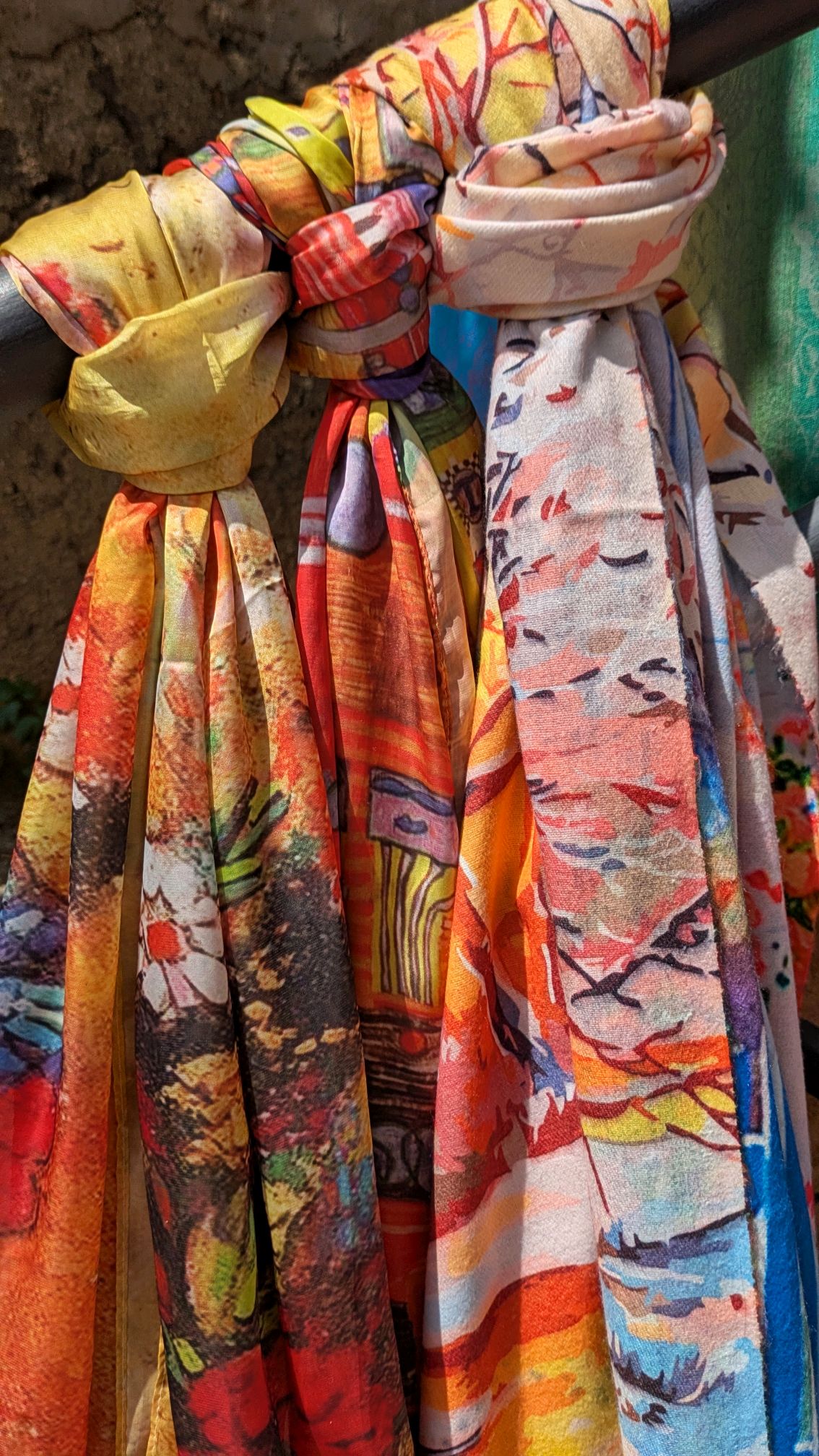
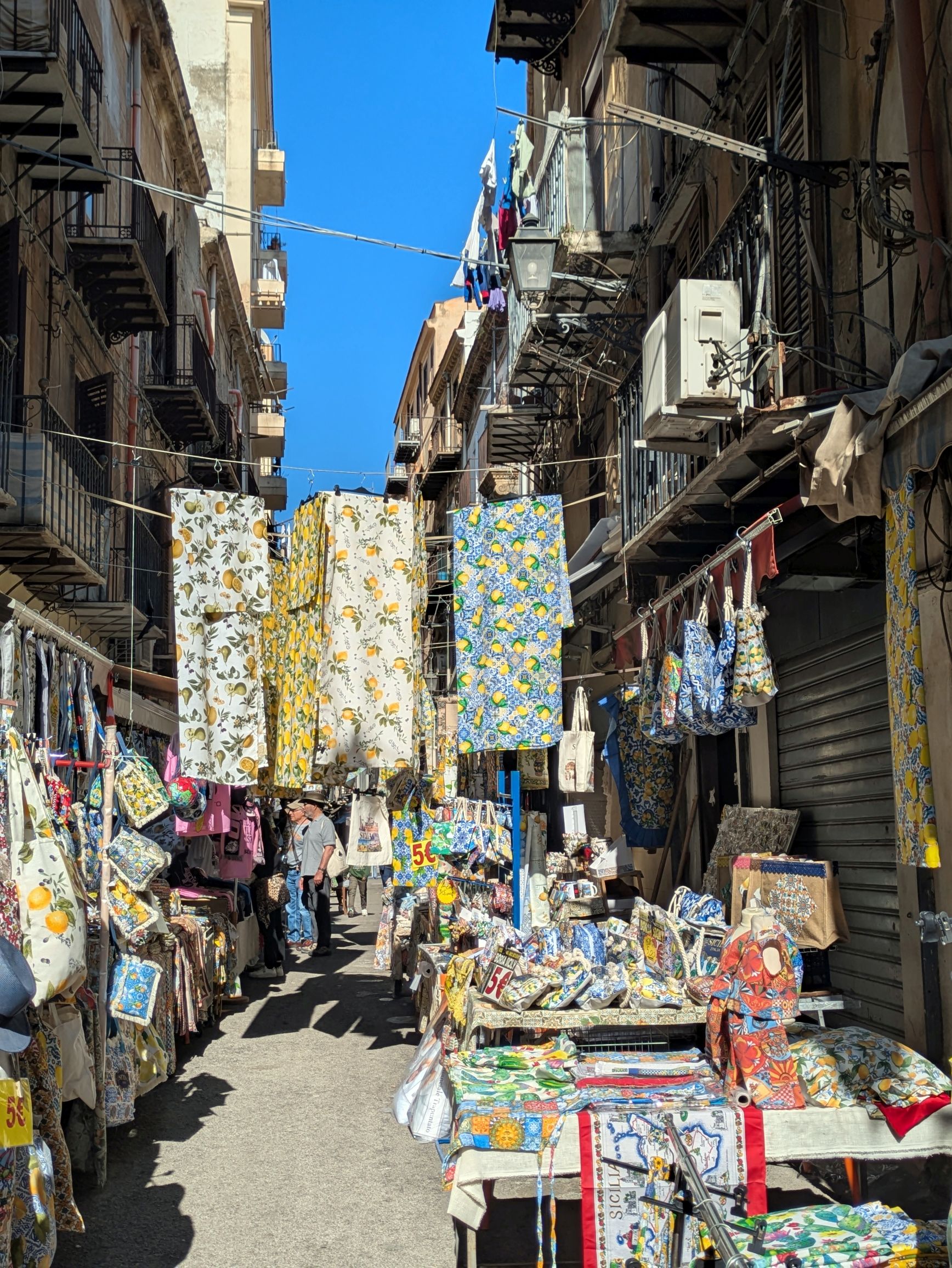
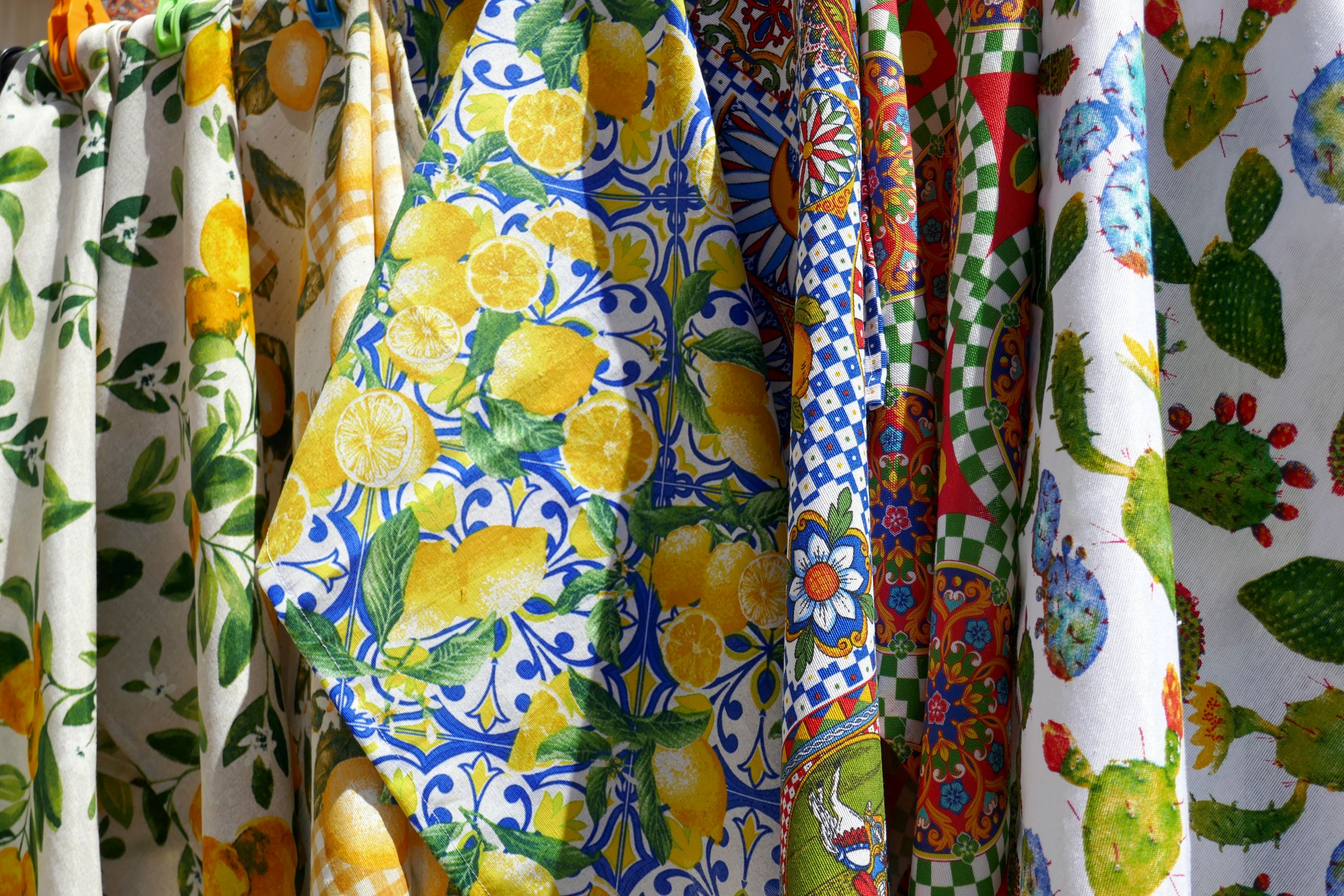
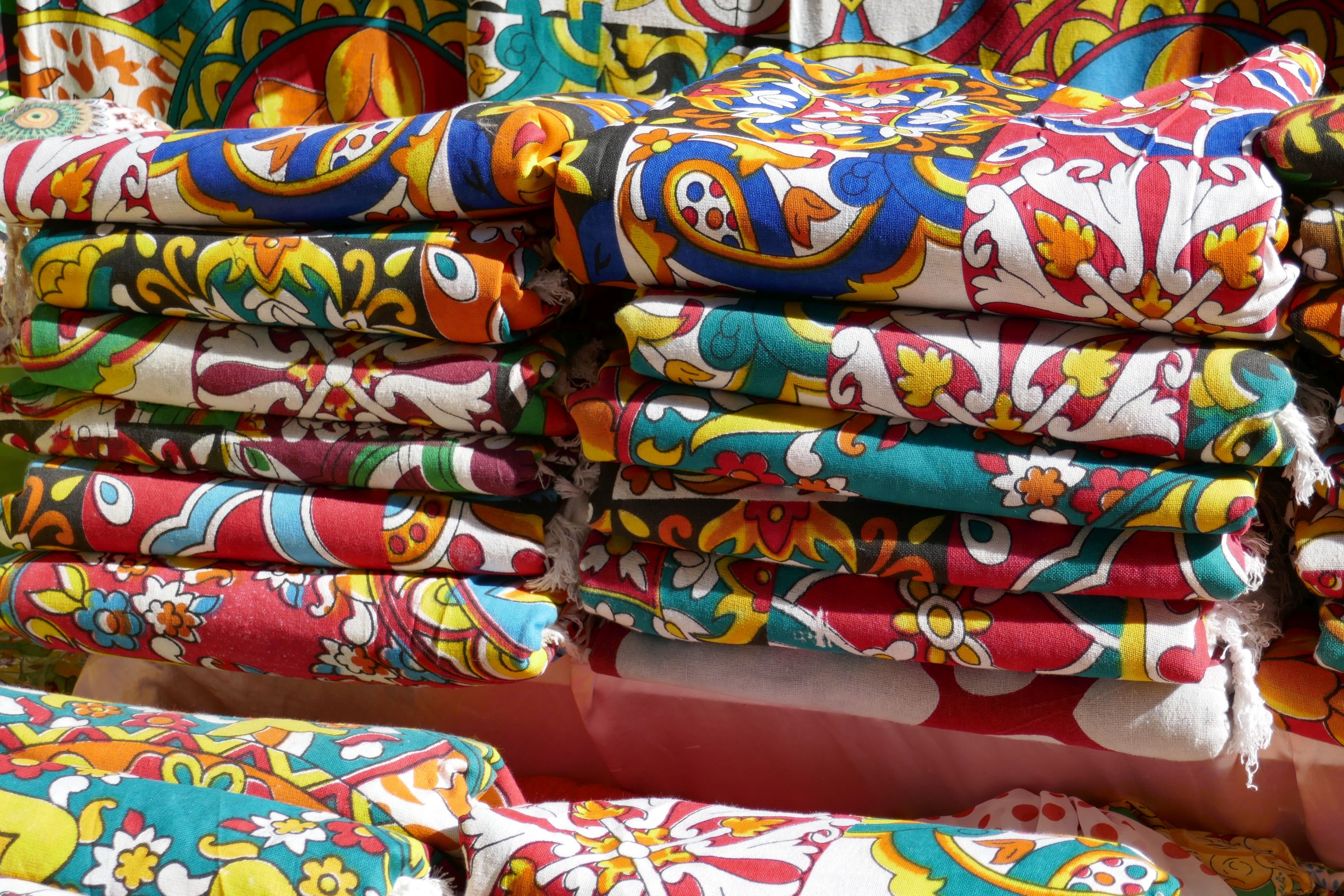
During my free time, I stumbled upon a street lined with shop after shop of seamstresses sewing table cloths and other items made from bolts of colorful fabrics– many with a lemon motif, which is a symbol of Sicily. There are lemon trees everywhere on this island!
Next up: SICILY & THE AMALFI COAST #4: THE SAVAGE SICILIAN MAFIA
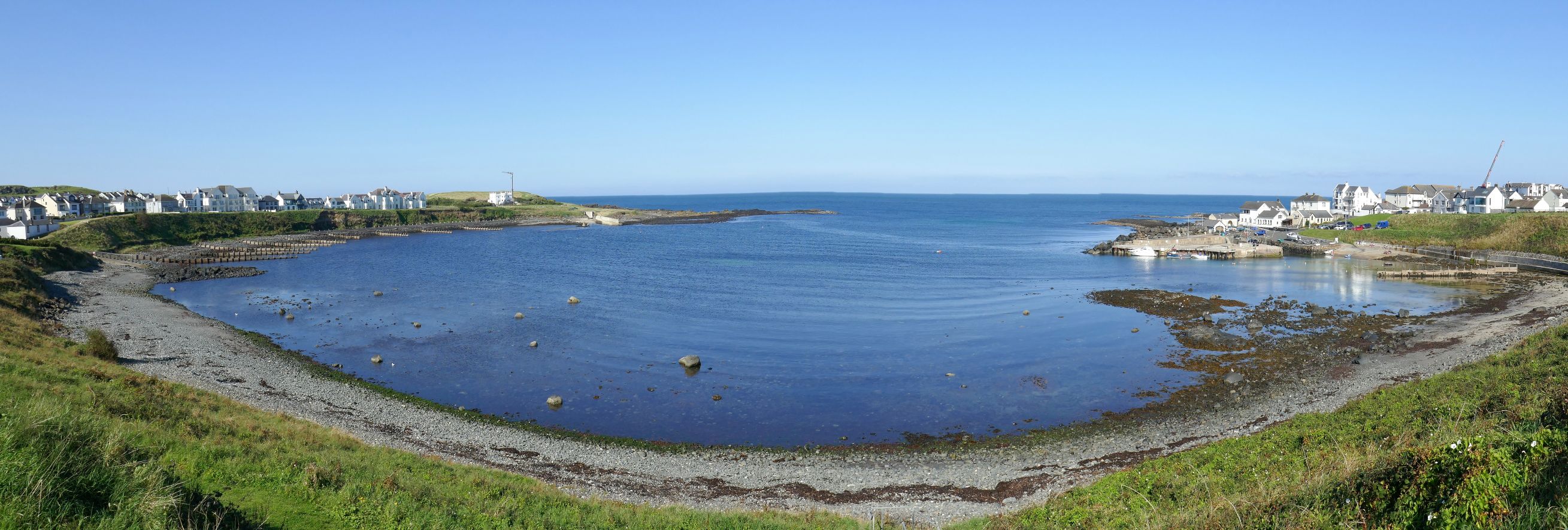
I looked forward to seeing theAntrim Coast, the northernmost coast of Ireland, because I had read that it was designated as anArea of Outstanding Natural Beauty. Departing Belfast, we traveled north, stopping along the way to see a few sites before continuing to Giant’s Causeway.
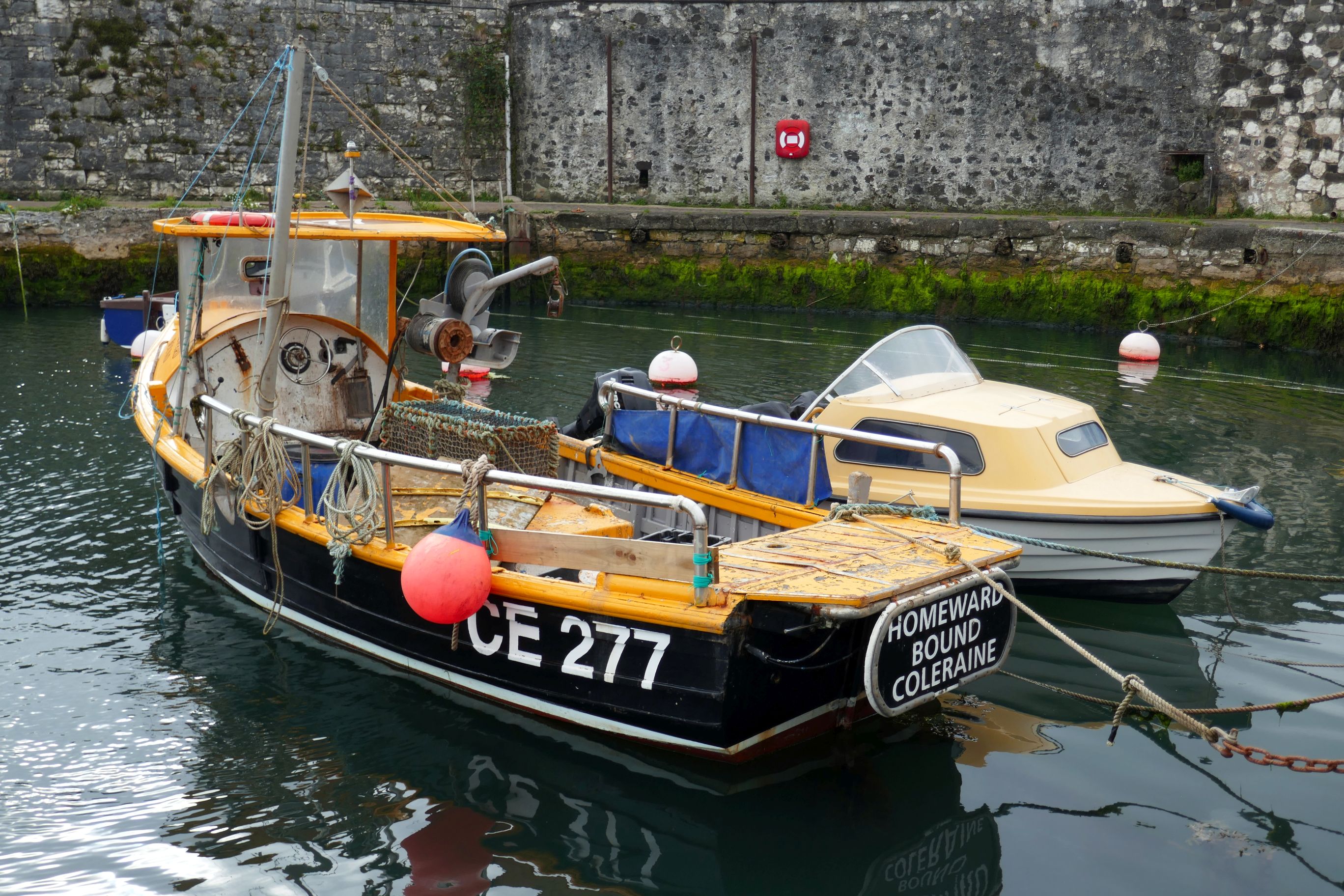
Carrickfergus, a medieval walled town, was our first stop. The stone walls, dating back to 1608 are some of the best-preserved historic town walls in Ireland. The castle is over 800 years old.
(For all photos, click on the image for a full screen view.)
We continued to the small port town of Larne, a charming and photogenic place with a long history. The coastal area around the town is thought to have been one of the earliest inhabited areas of Ireland.
There was one more little town we stopped at for a lovely walk along the waterfront, but I neglected to write down the name. If you recognize it, please let me know!
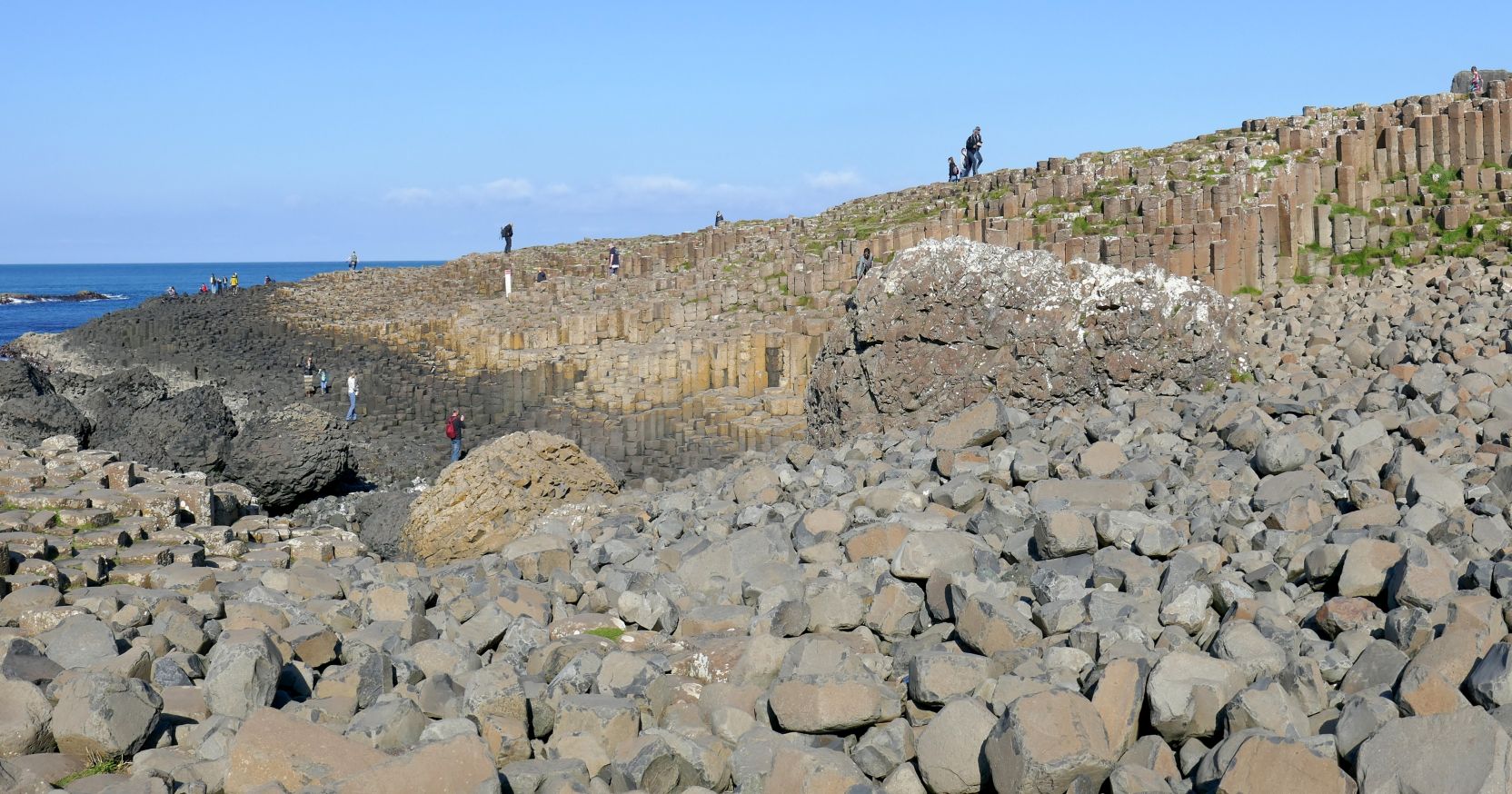
It wasn’t until after our lunch at a local restaurant that we arrived at the Giant’s Causeway, so it was (unfortunately!) quite busy with tourists. (I get that they were probably saying the same thing about me; however, I don’t take selfies, and I don’t ask to have my picture taken where it is going to get in the way of others. Obsessive selfie shooters are a pet-peeve of mine, and several of these tourists were dominating the most photogenic basalt columns, and they wouldn’t move.
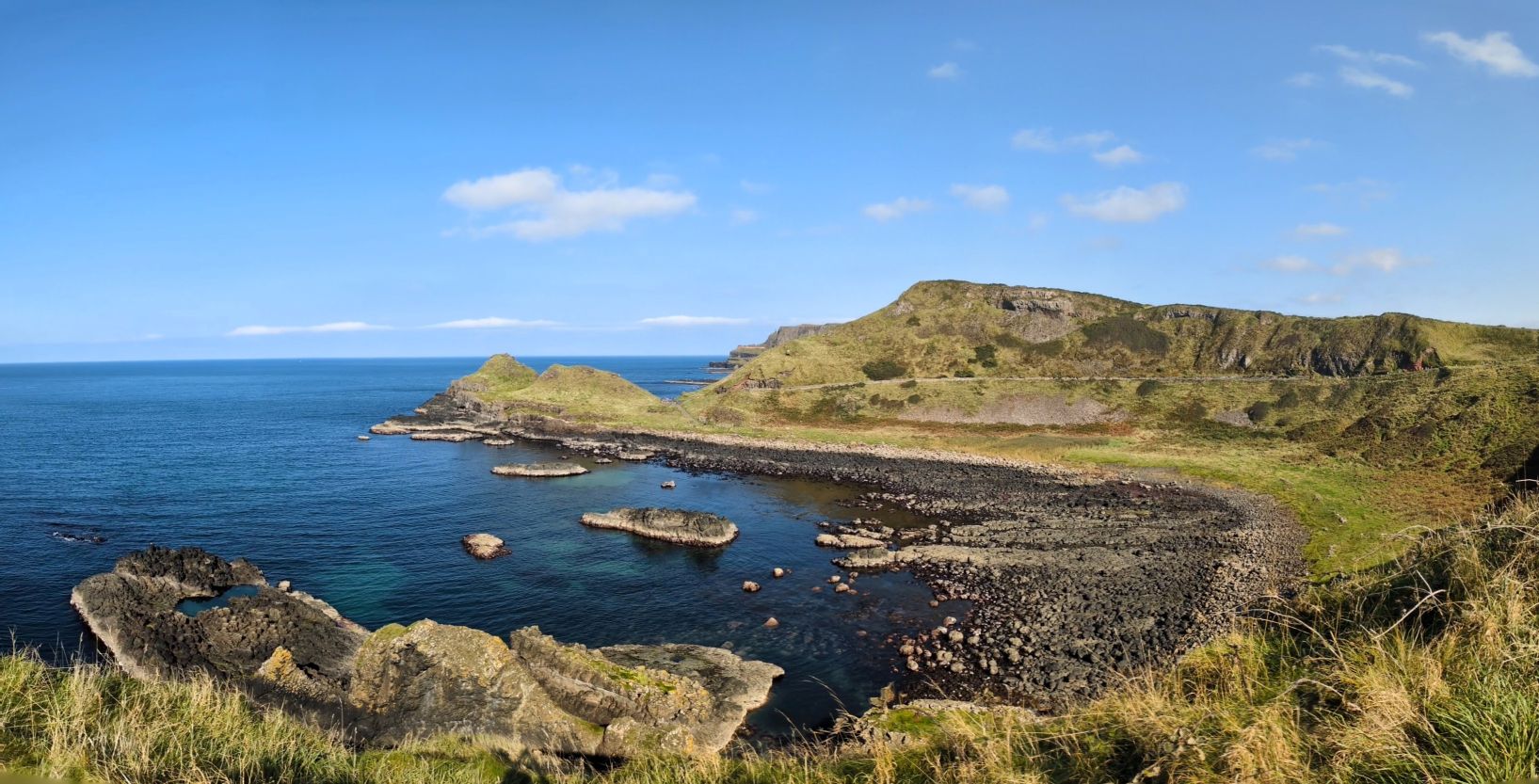
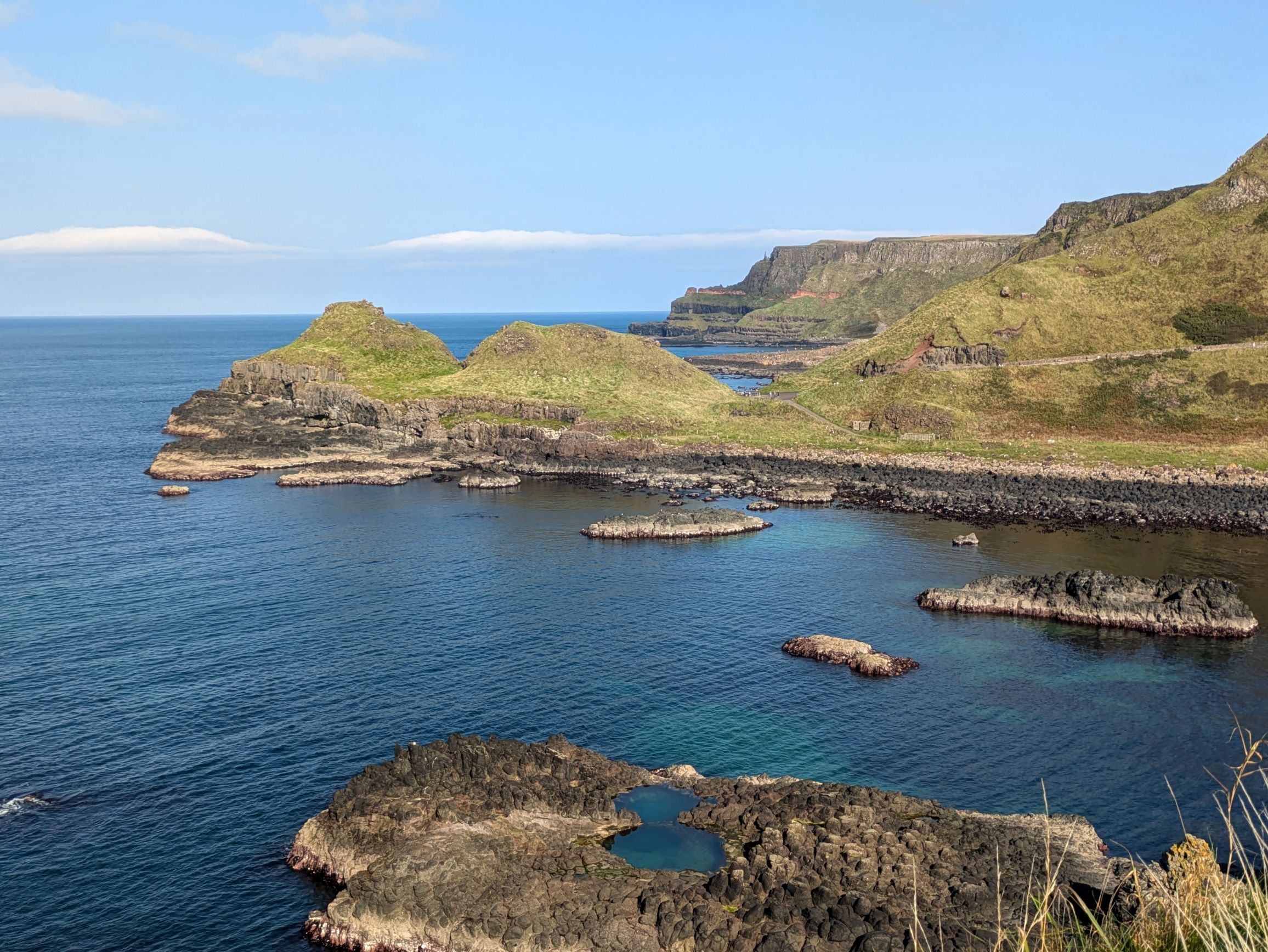
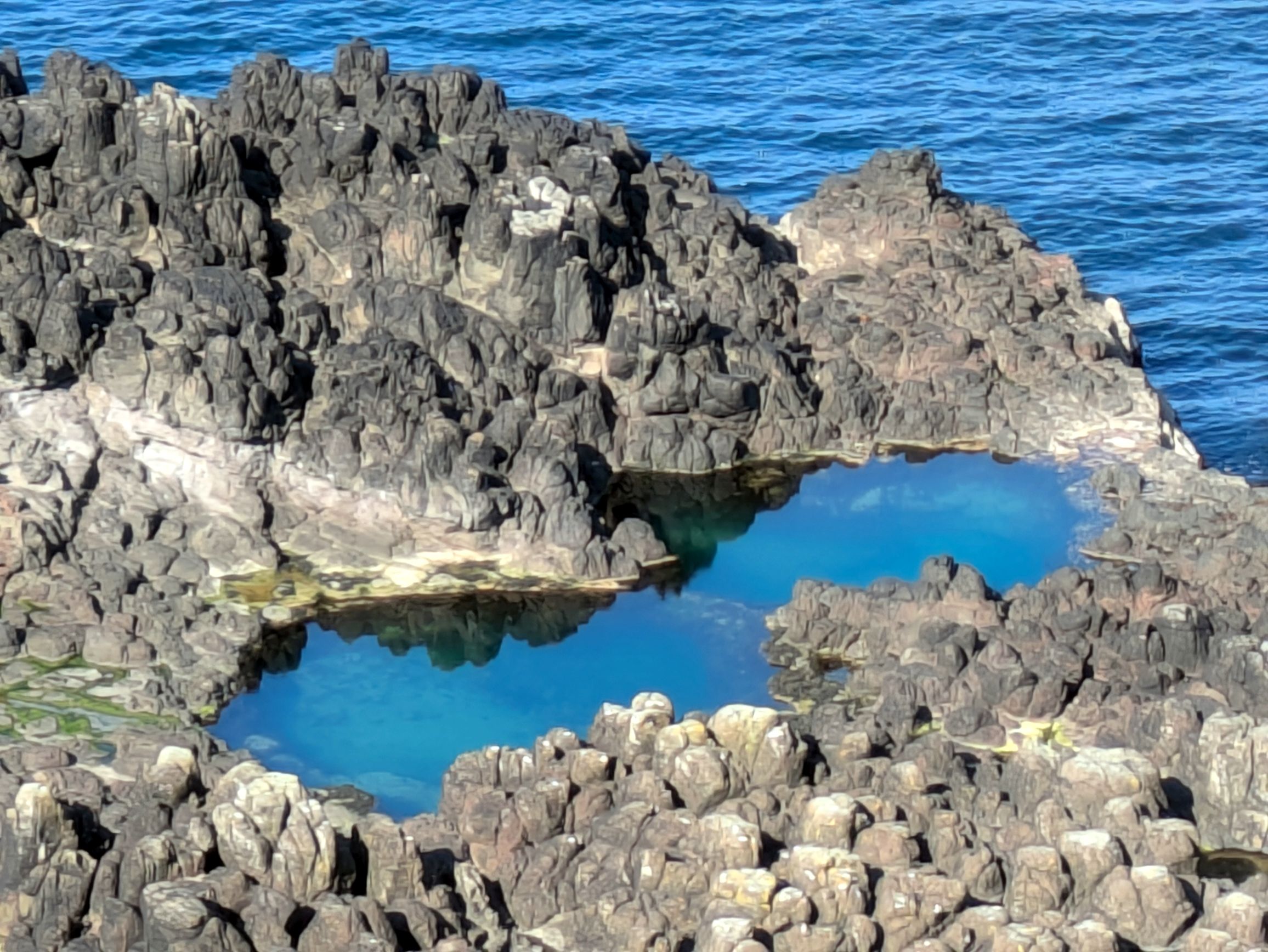
I am glad I opted to walk rather than take the shuttle from the visitor’s center each way, because I was able to get some nice seascape shots from above. Besides, the lines were long, and I would have wasted a lot of time waiting for the shuttle. The exercise I got walking down and back up the hill was a great bonus!
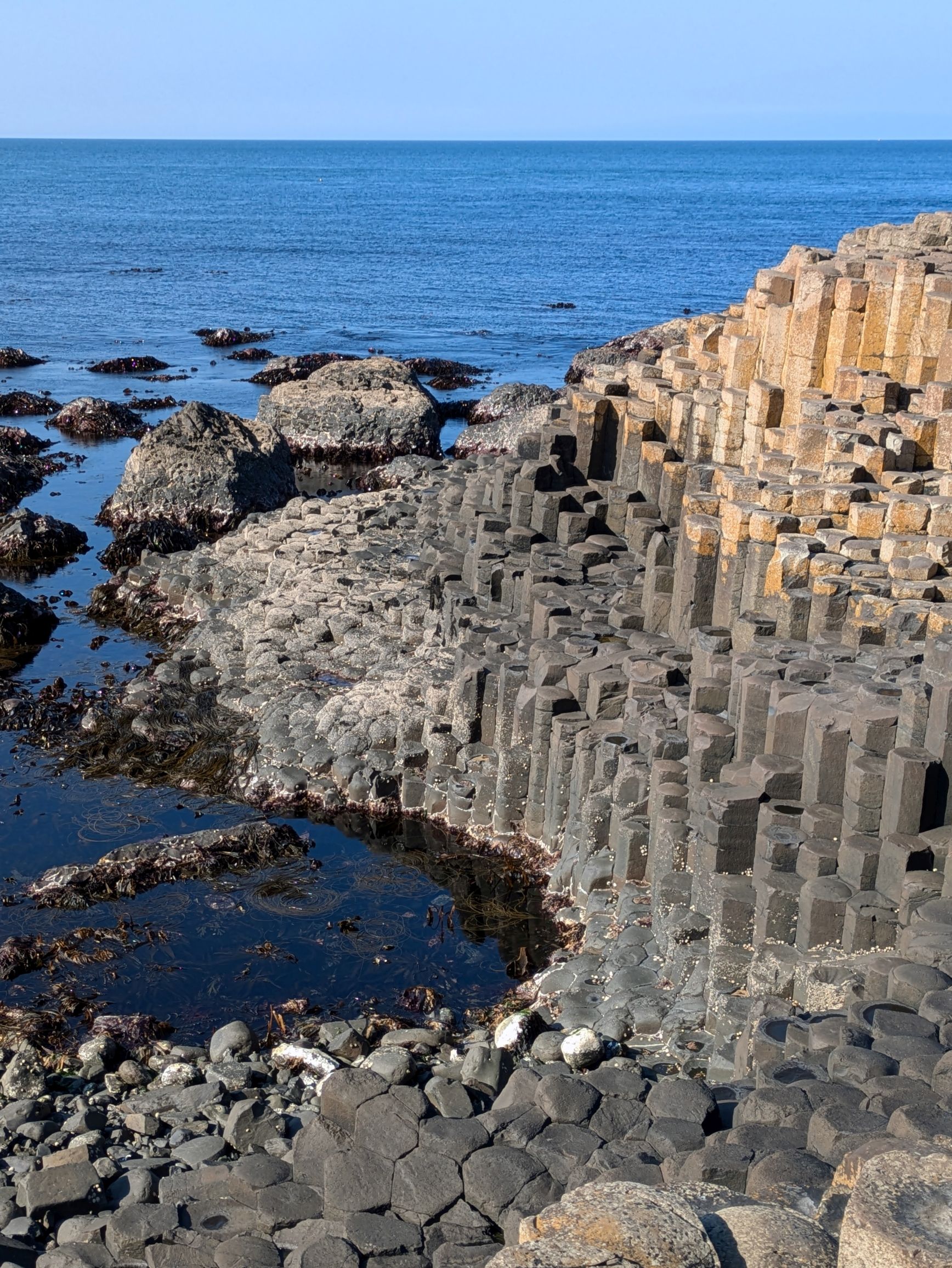
Now, a bit about why Giant’s Causeway is such a popular attraction in Northern Ireland. In addition to being gorgeous coastline and a UNESCO World Heritage Site, there are 40,000 interlocking basalt columns—some as high as 39 feet tall—that are fascinating to see. It is very photogenic—if you can snap some photos without people in them.
I thoroughly enjoyed hiking around the area and enjoying the scenic vistas from the cliffs. Again, we were fortunate to have yet another beautiful day!
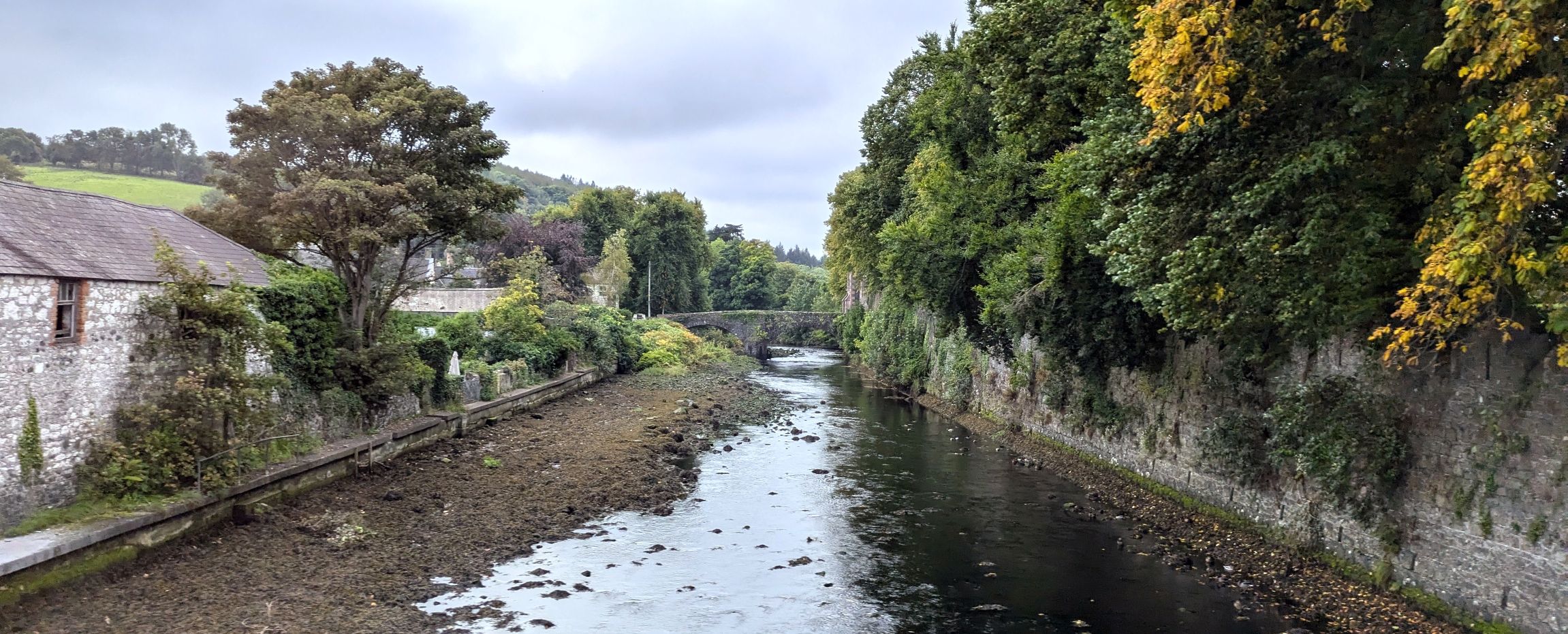
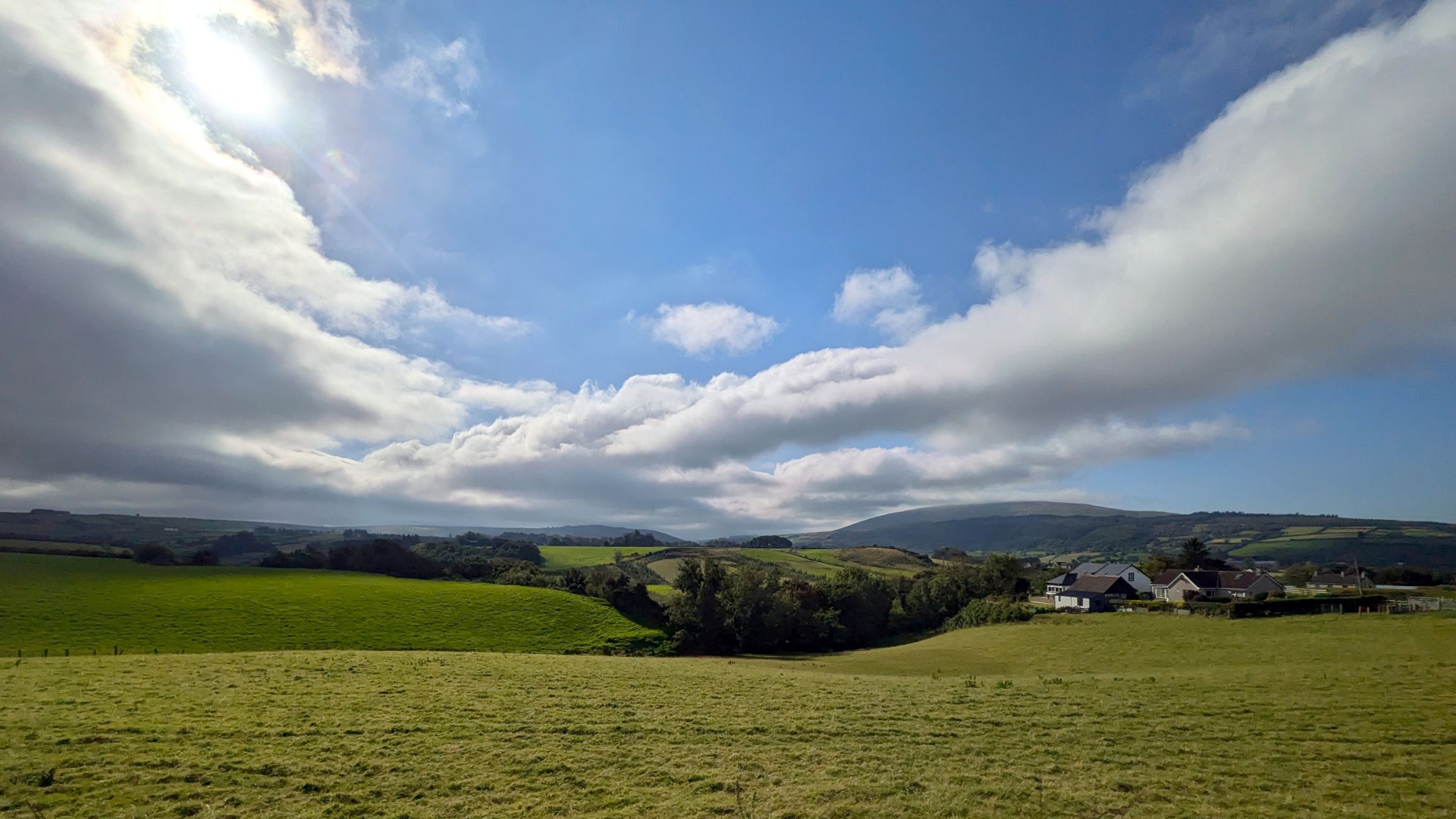
I will leave you with a couple of random scenes shot from the bus window:

















































































































 Elaine-iaK's Travels: A Traveler's Tales of People, Places, Photos, Pools... and CHOCOLATE!