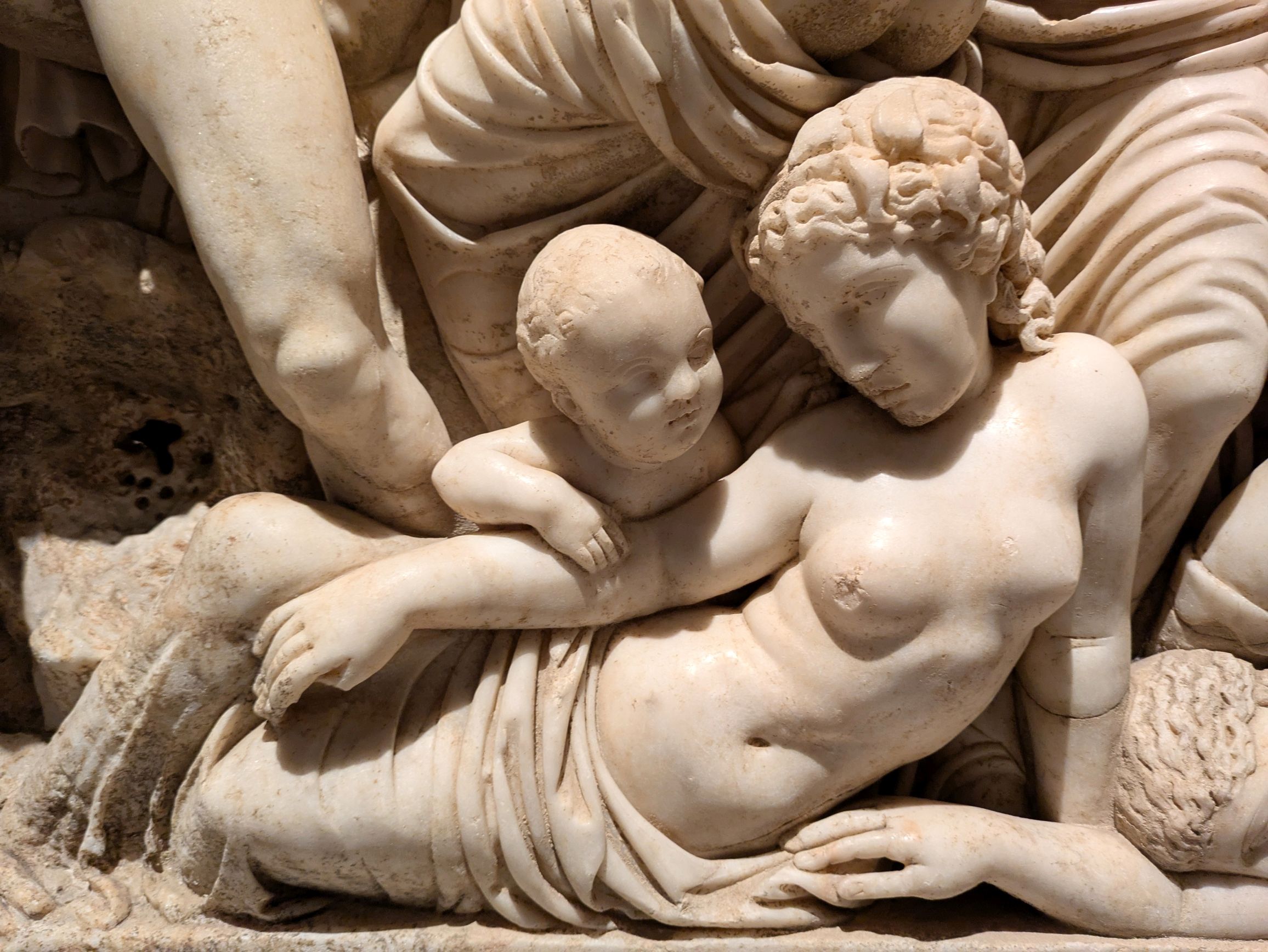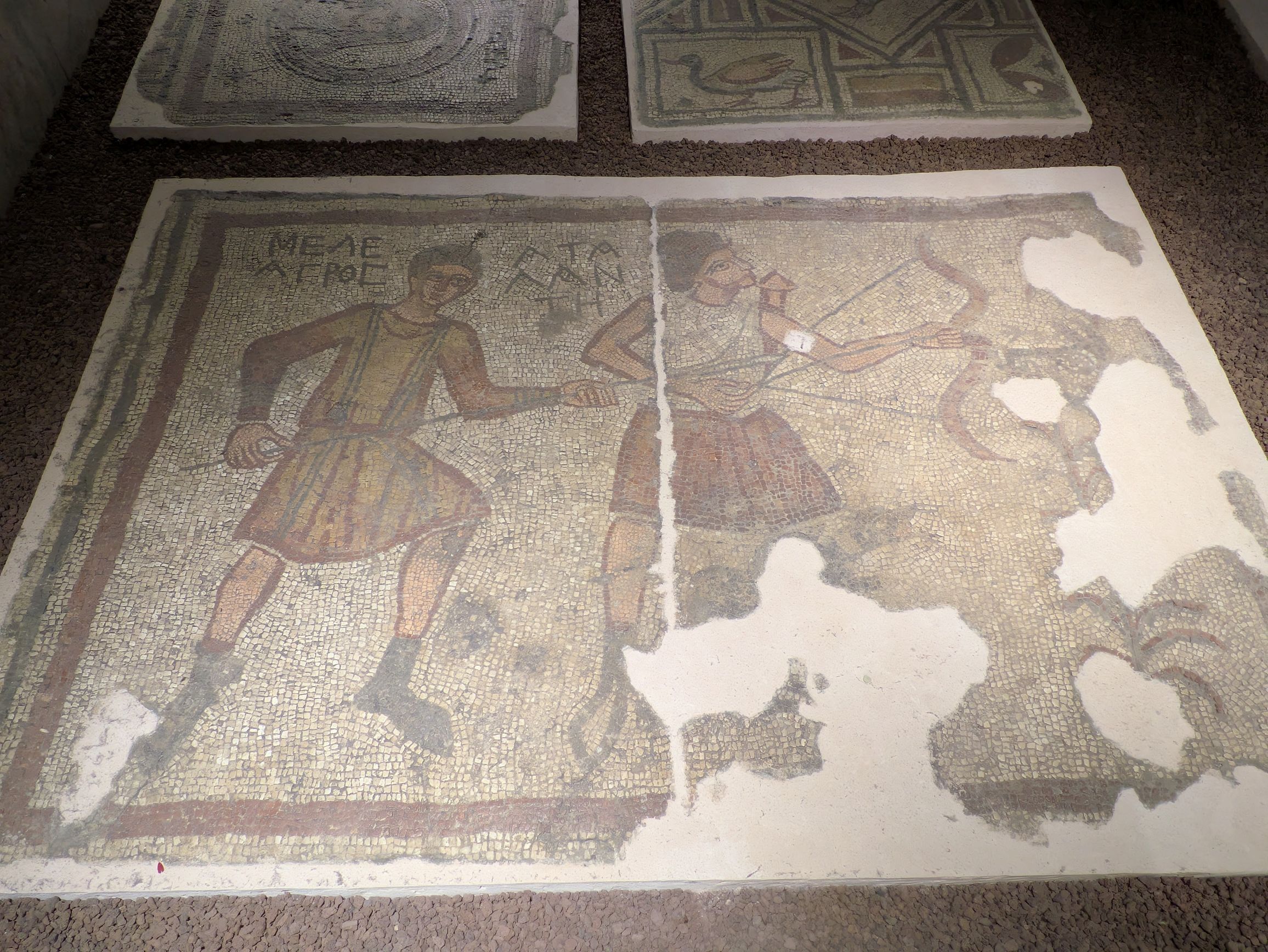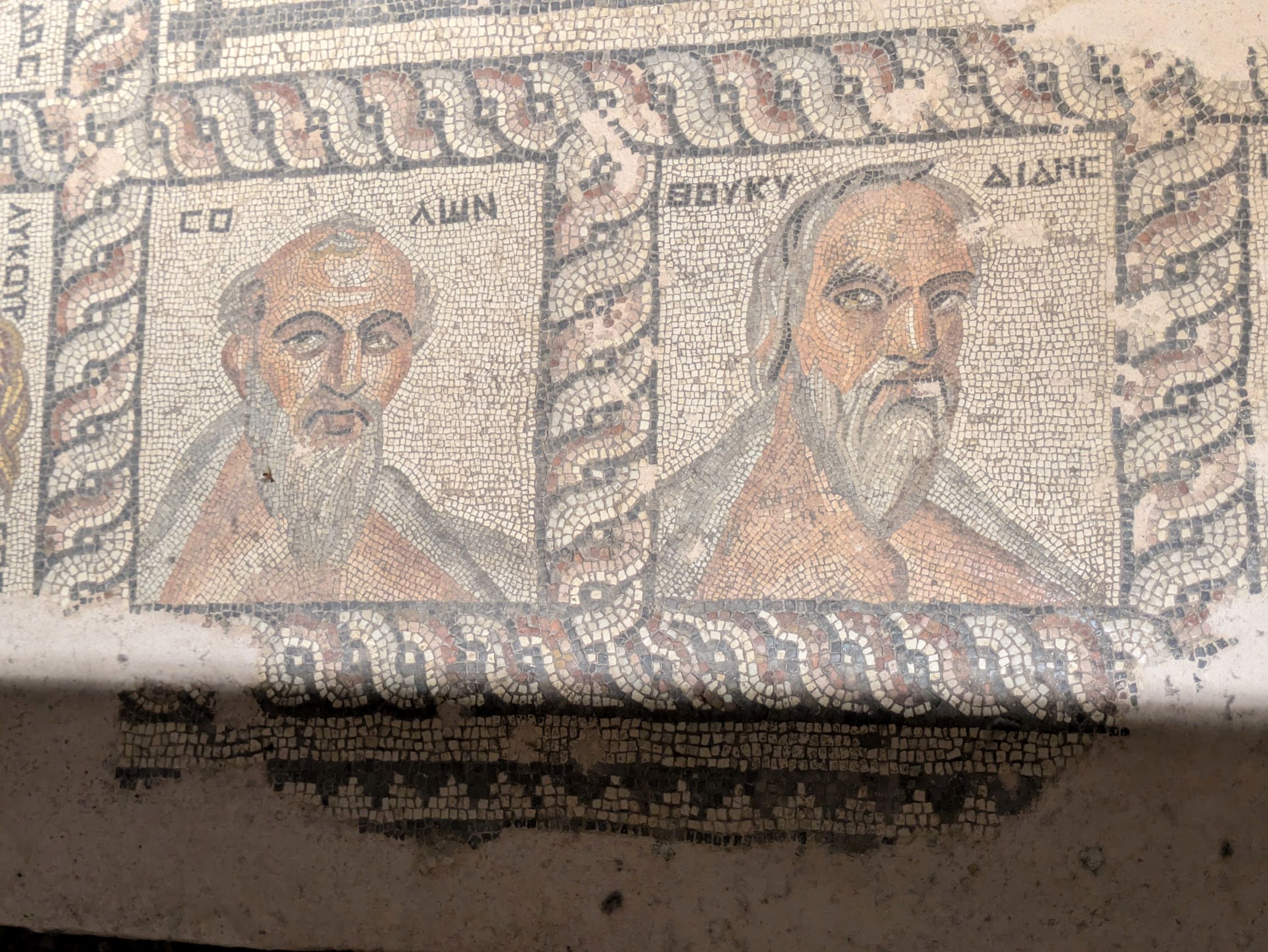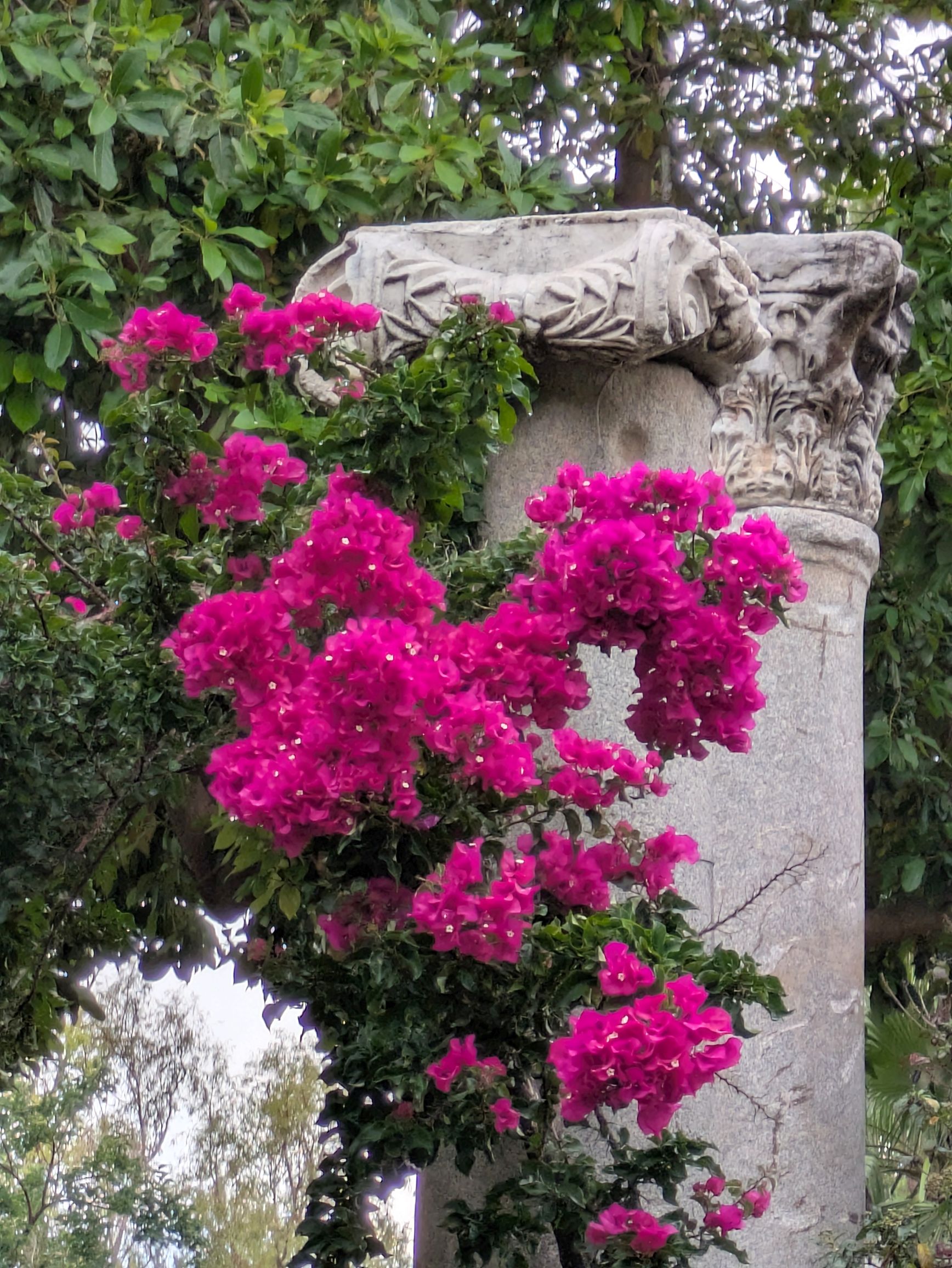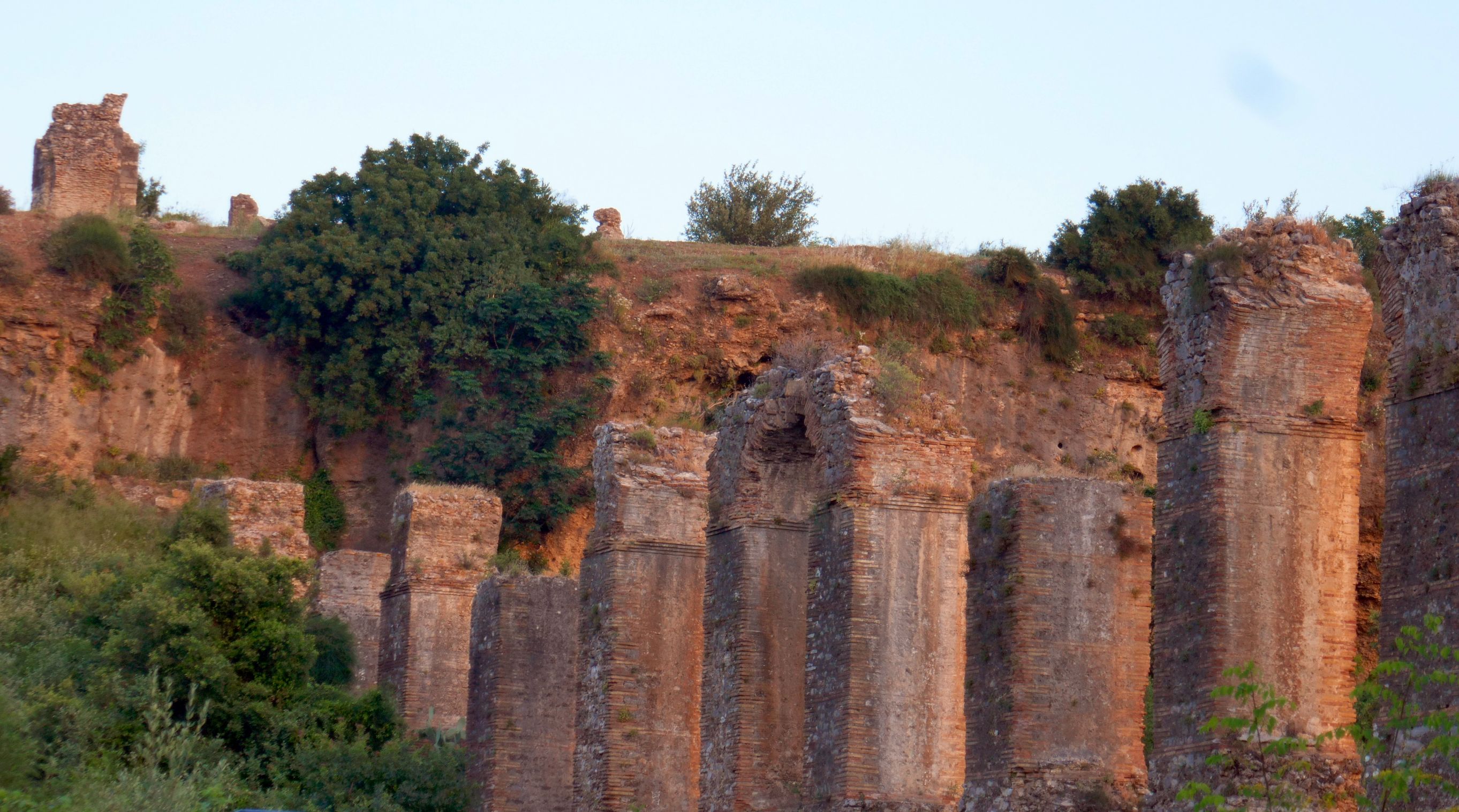
TURKIYE #17: EXTRAORDINARY EPHESUS

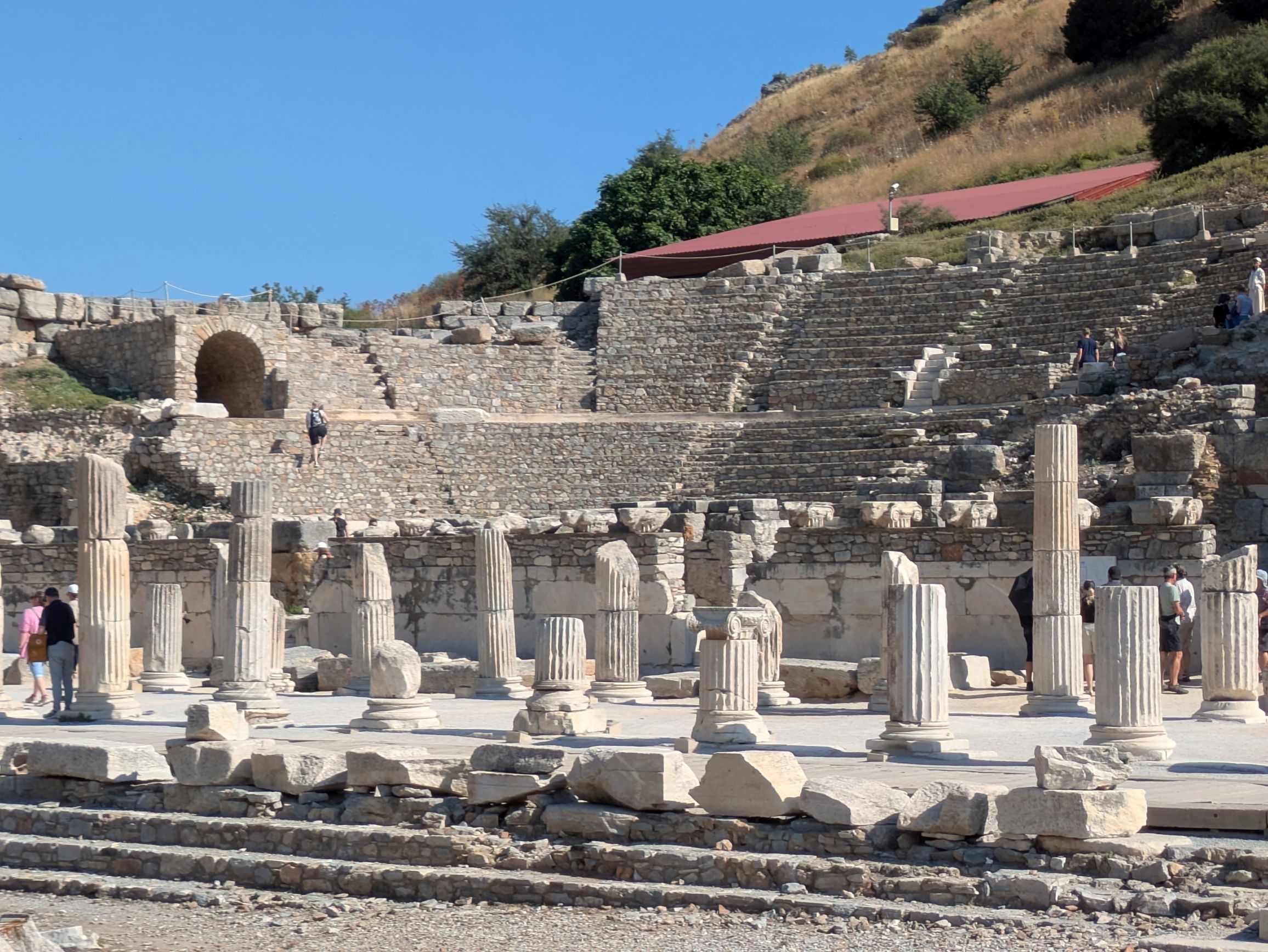
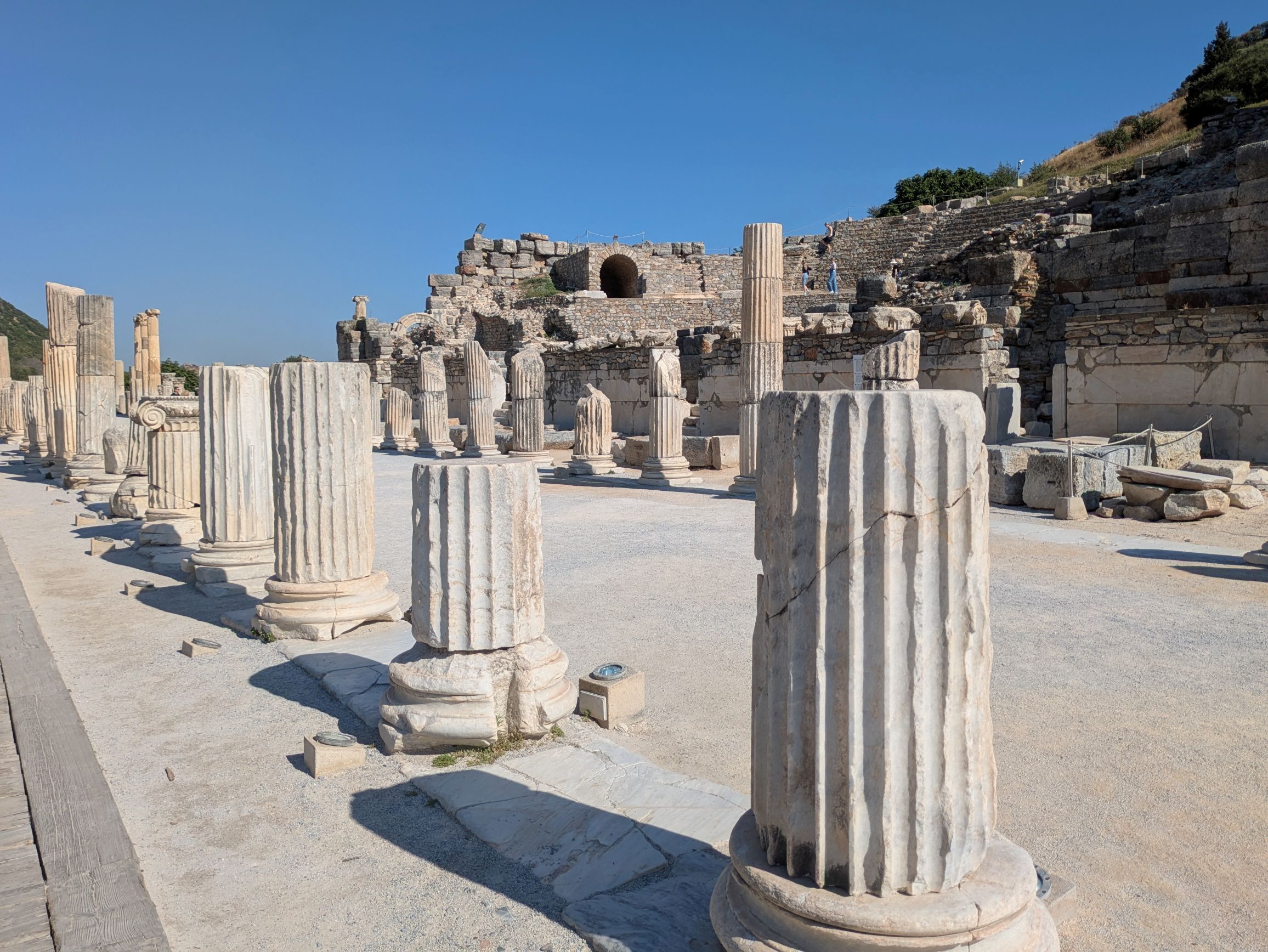
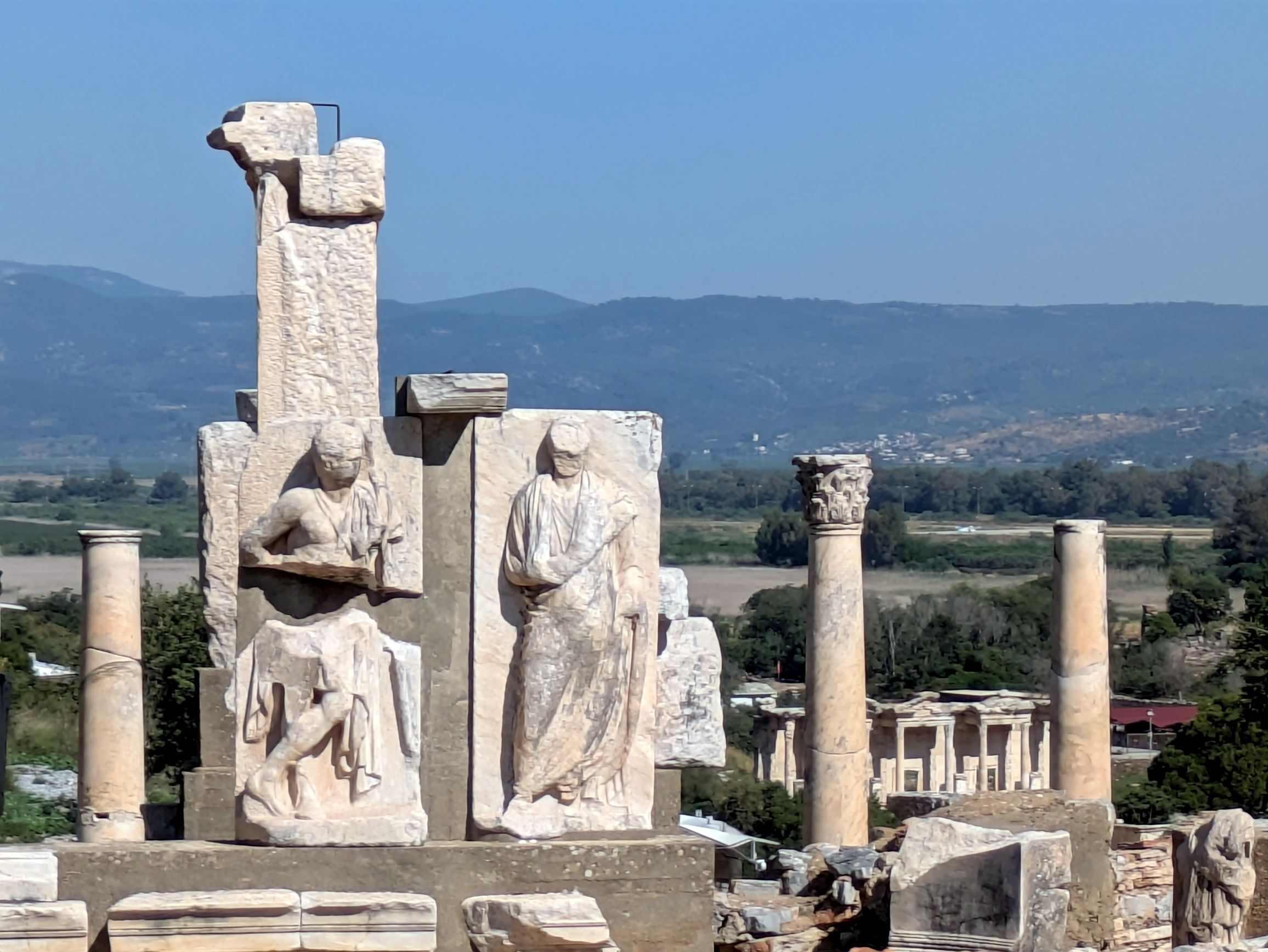
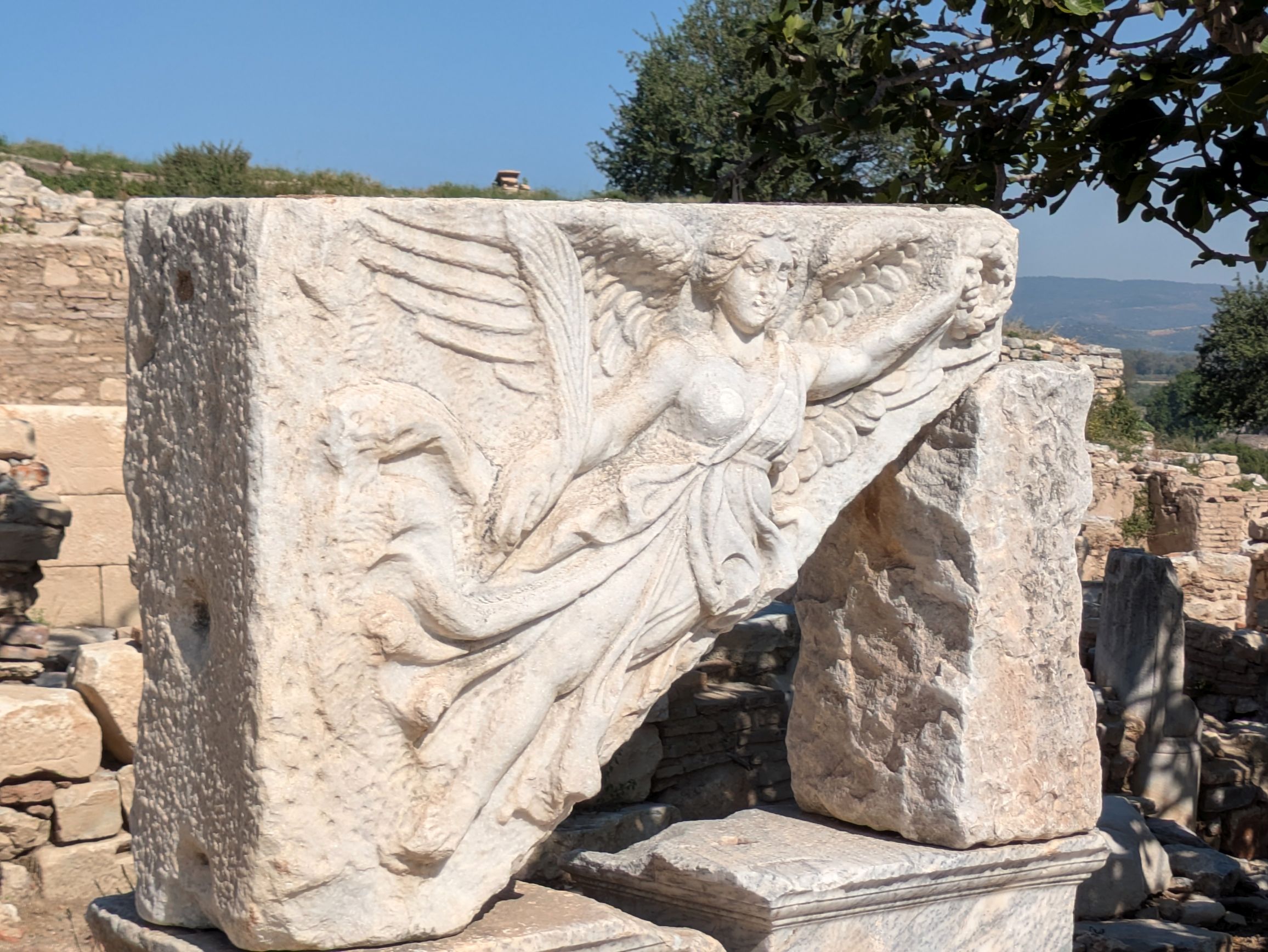
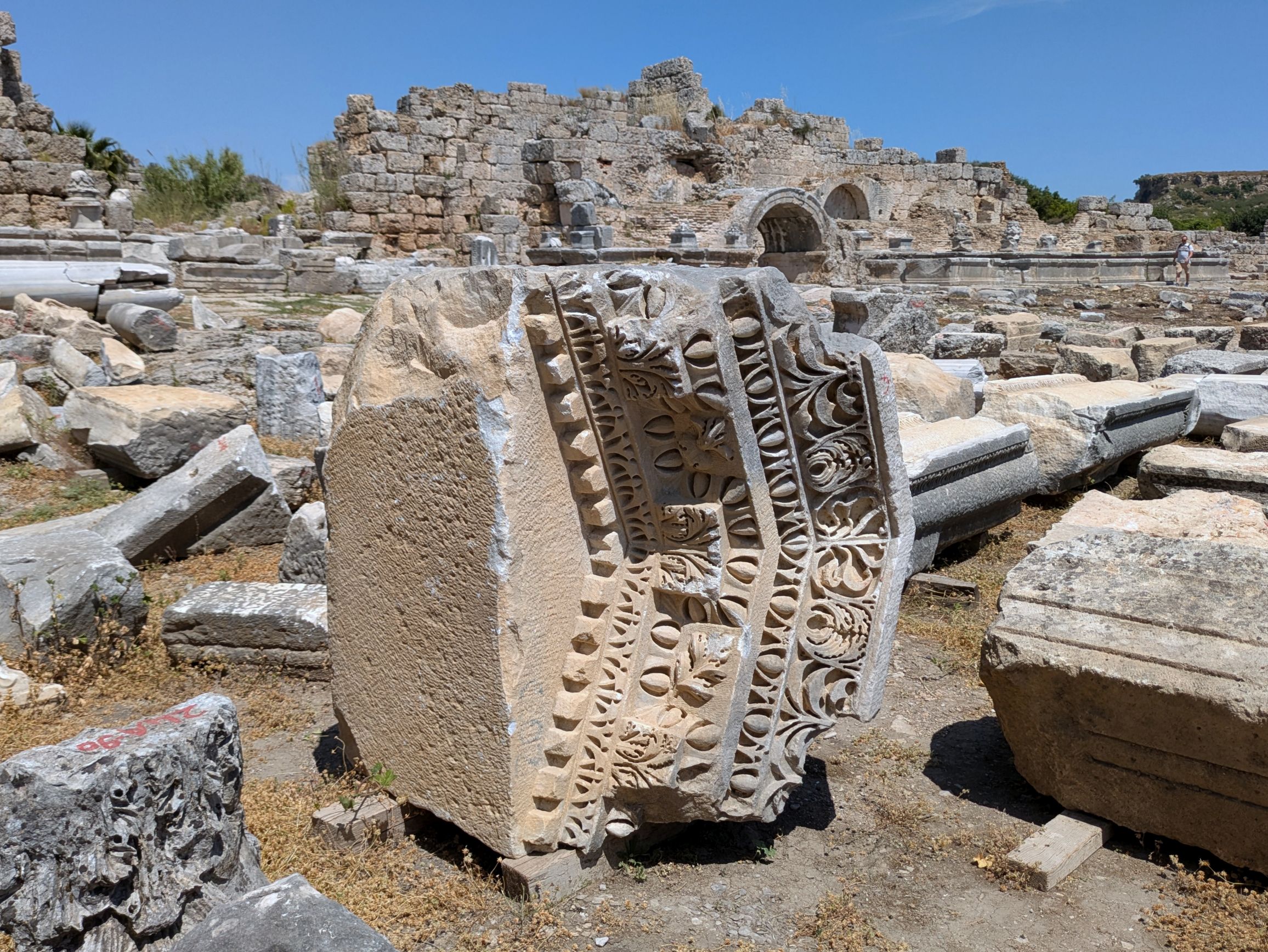
For our last day in Turkiye, we visited Ephesus, a UNESCO World Heritage Site and one of the largest and best-preserved ancient cities in the world.  Ephesus was home to the Temple of Artemis, one of the Seven Wonders of the Ancient World. No longer standing, it was said to be one of the most colossal temples ever built.

Ephesus was built in the 10th century BC, so its history is very long an involved—far too much detail to delve into in this post. To learn more about this ancient city, the Wikipedia article I linked to covers it quite well.

It was quite hot the day we were there, so much of what Nuri shared with us about Ephesus didn’t register. I was more concerned about finding a corner of shade to stand in as we toured the ruins and tried not to overheat. Had I been on my own, I would have visited at night, which would have been cooler and presented an interesting photographic perspective, since the ruins are well-lit. Besides, I’m sure it would have been less crowded.

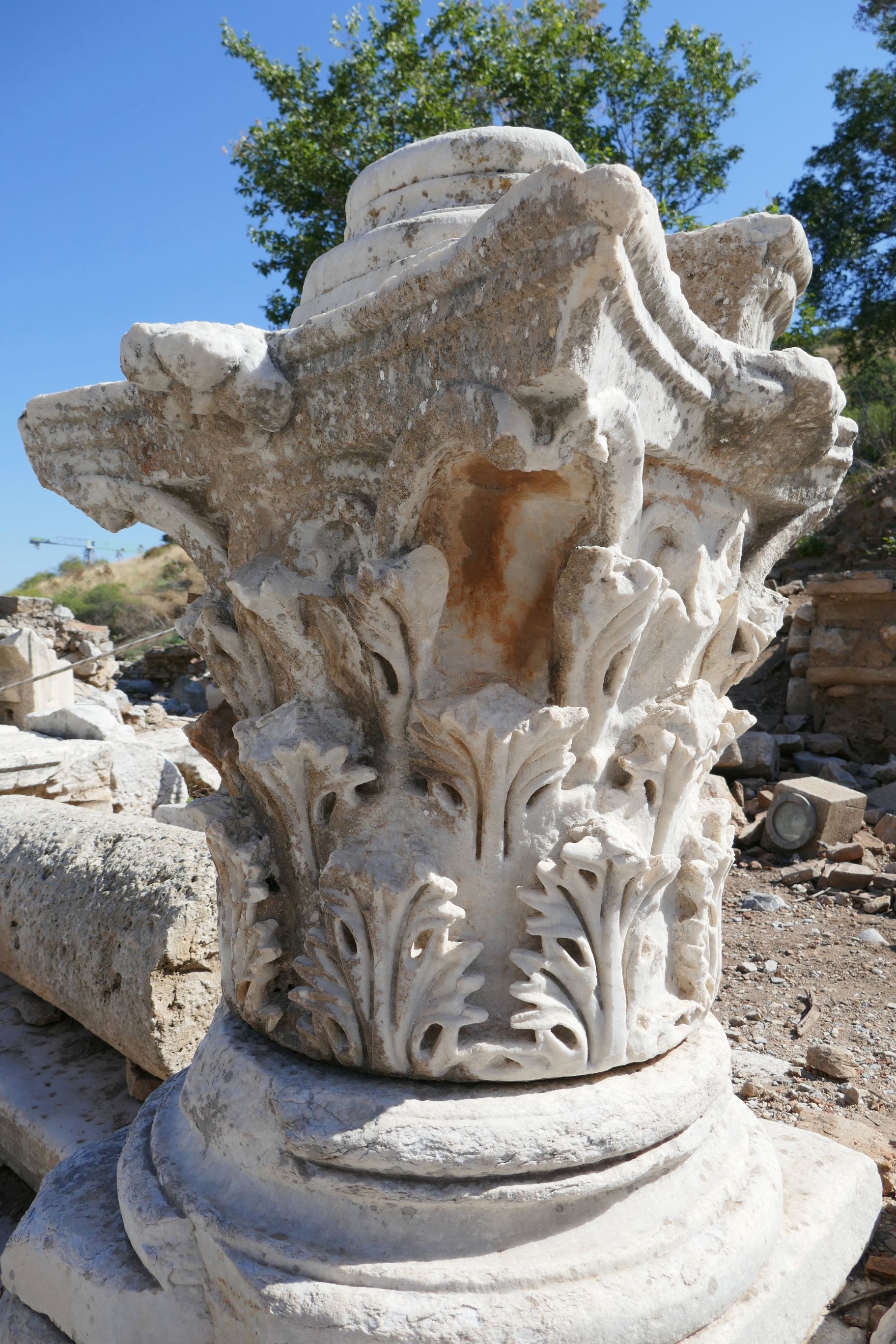
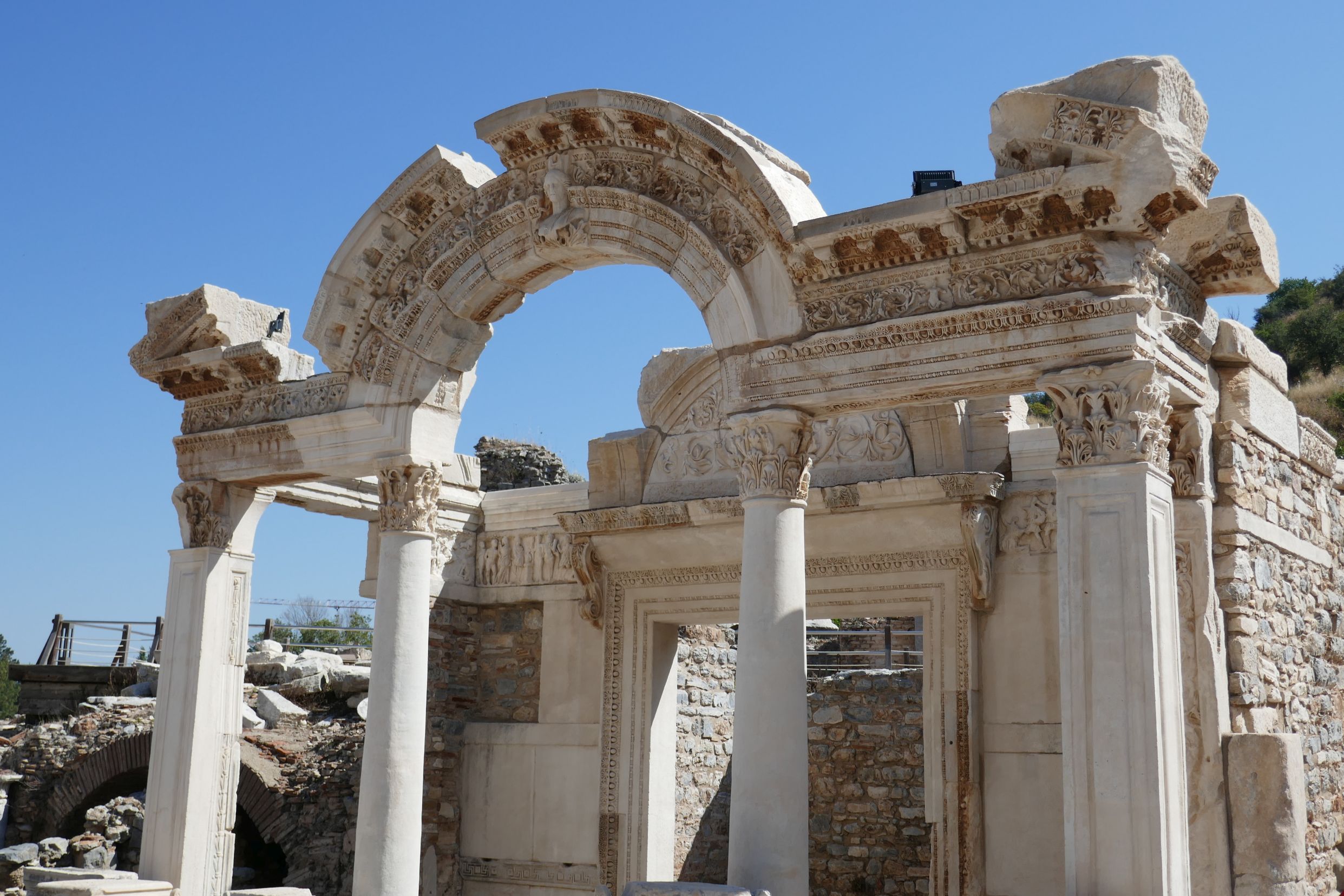
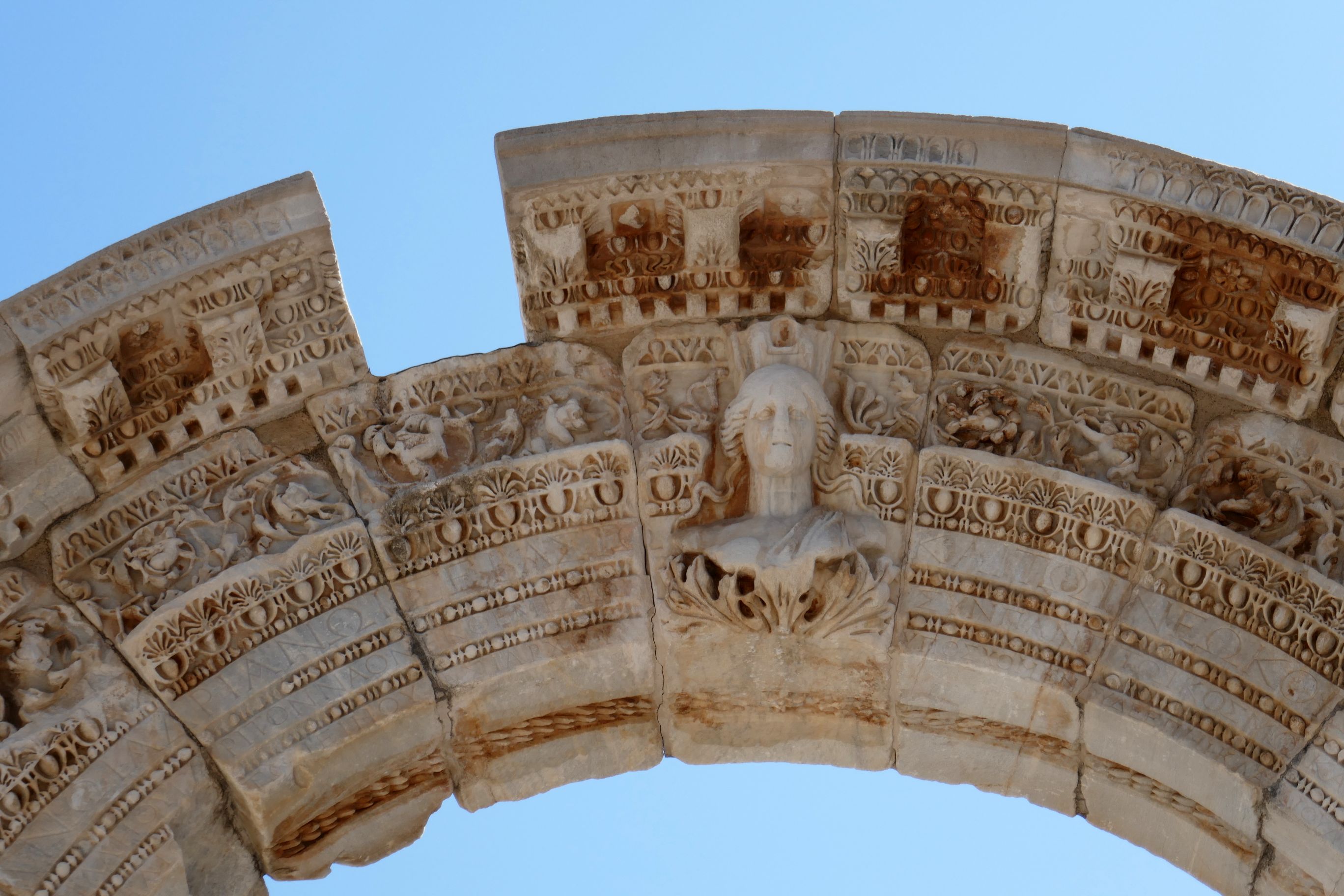
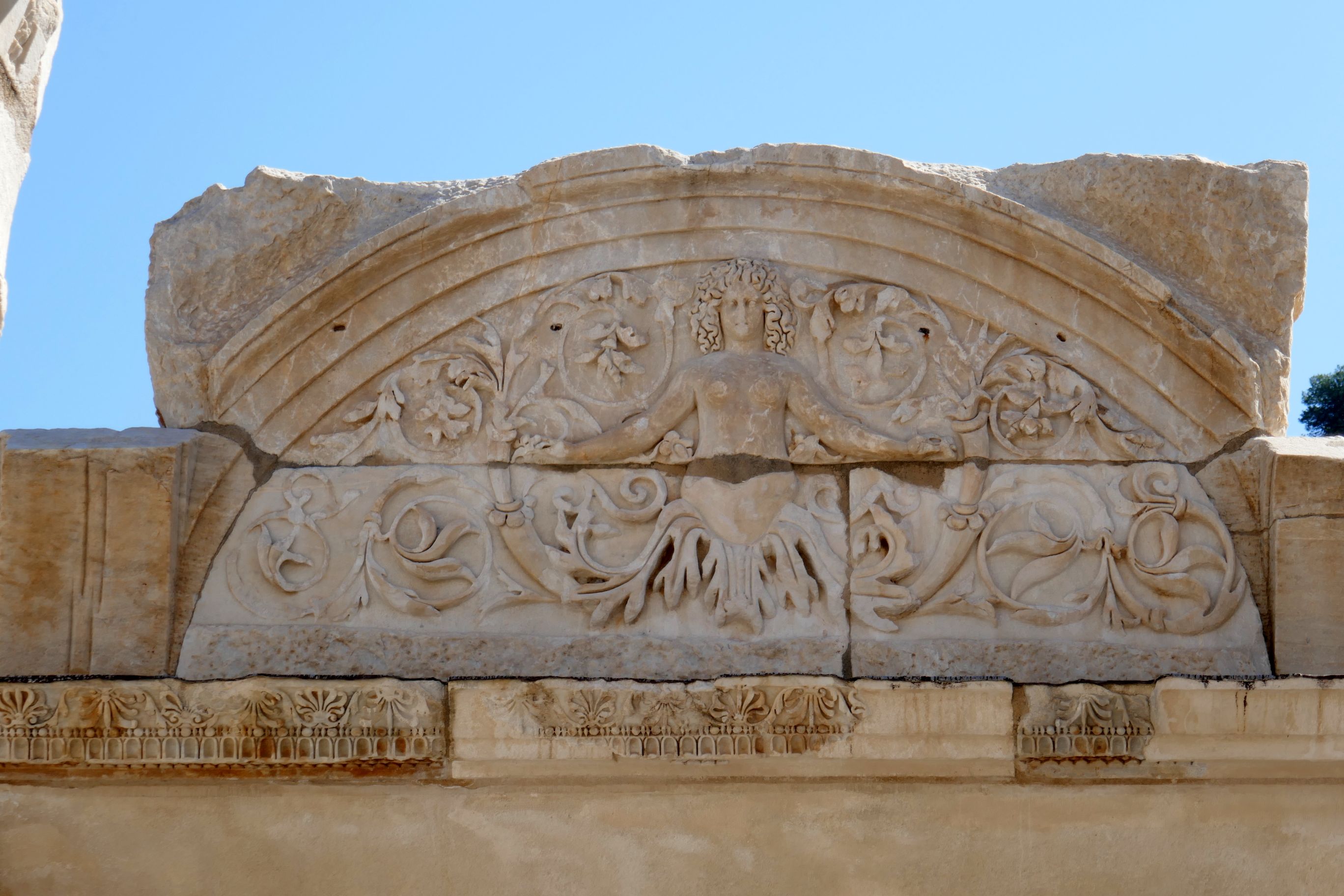
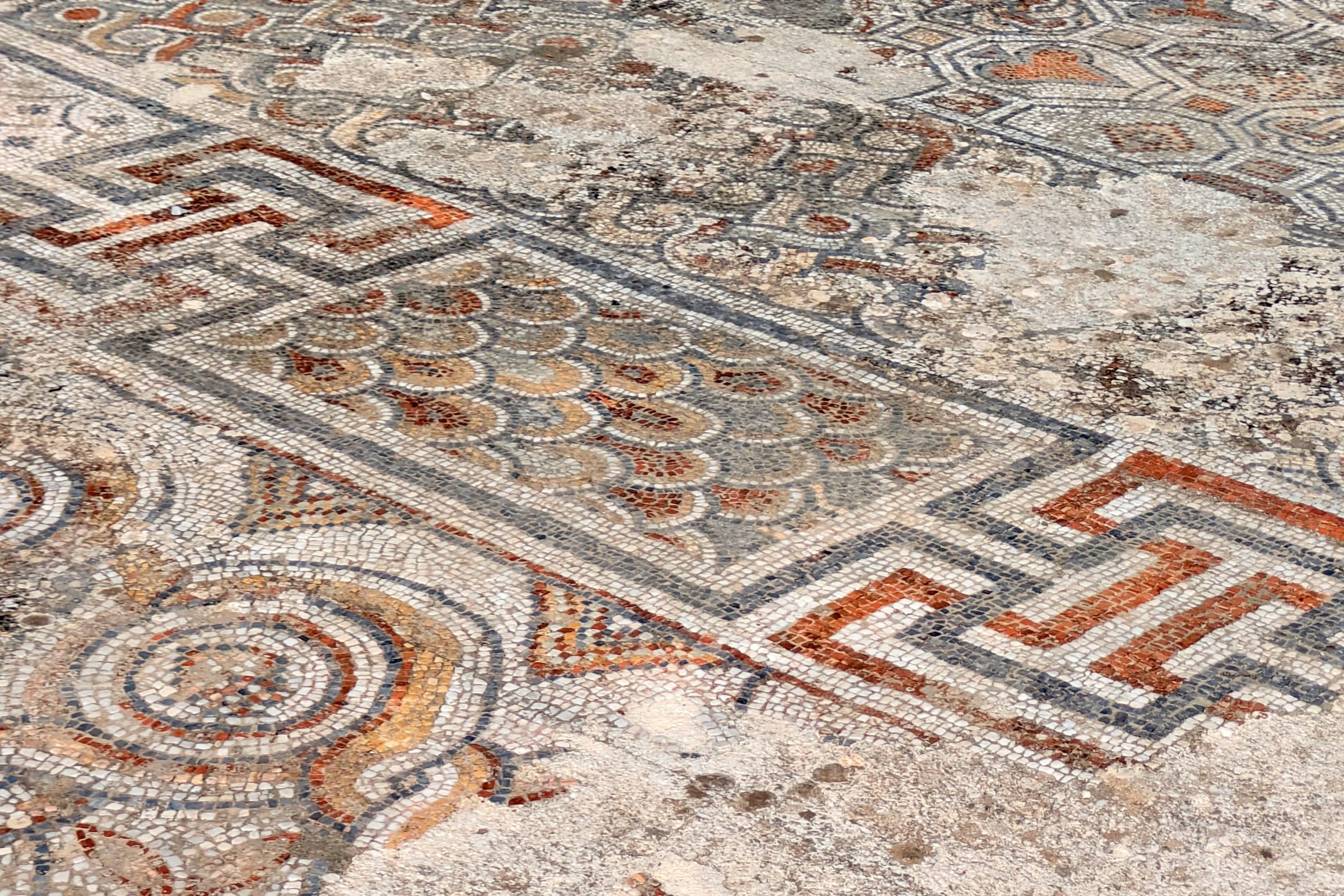
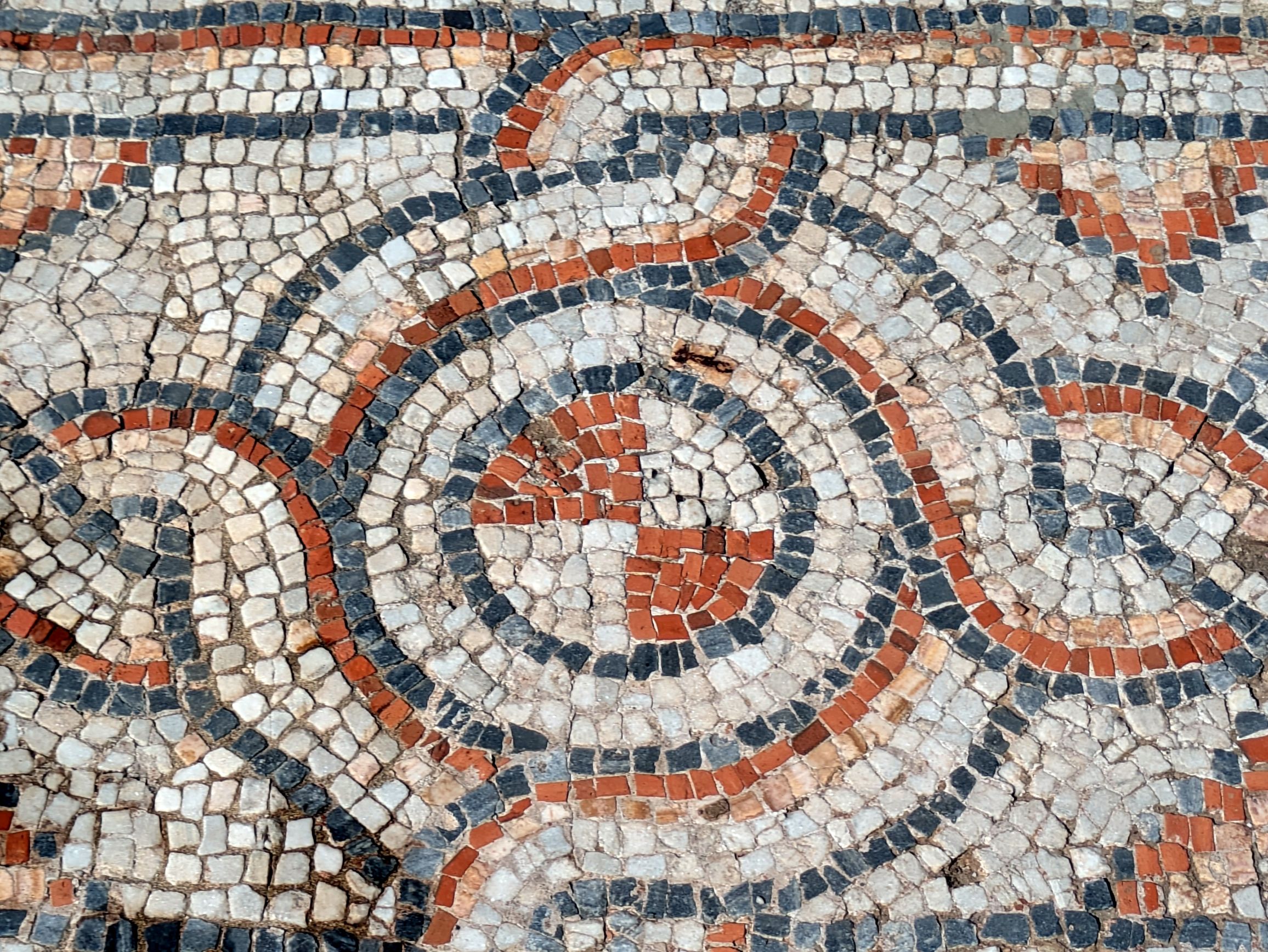
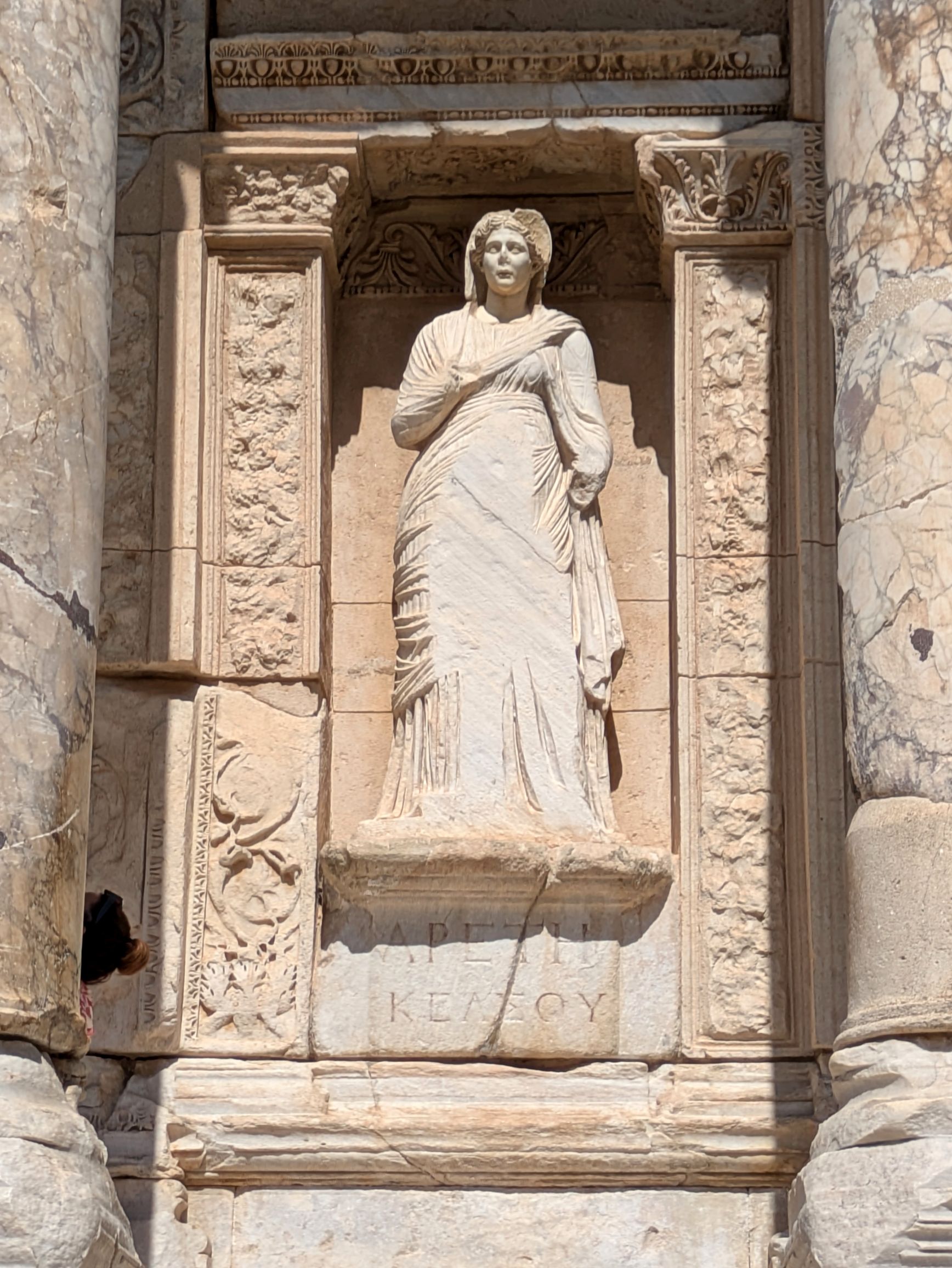
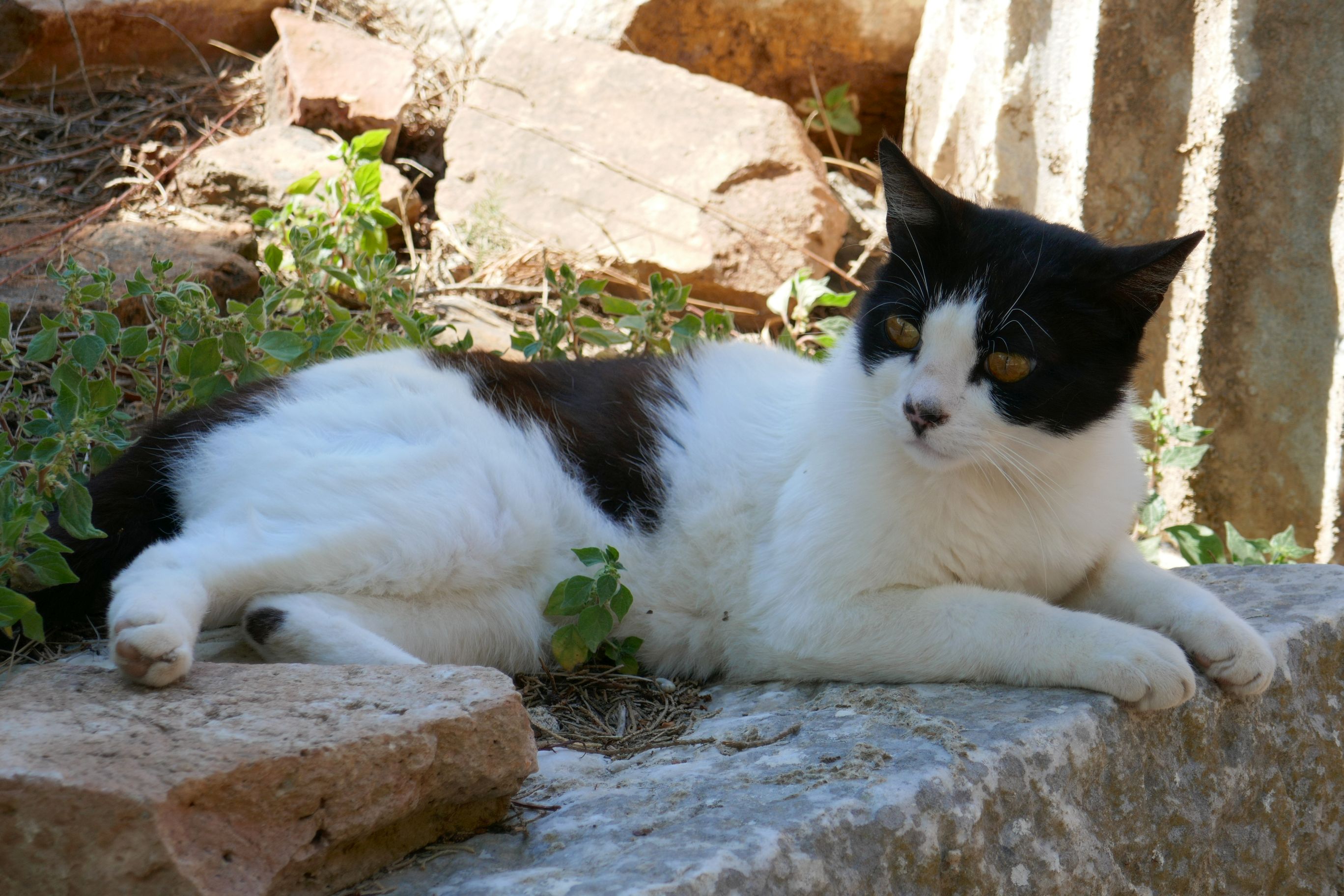
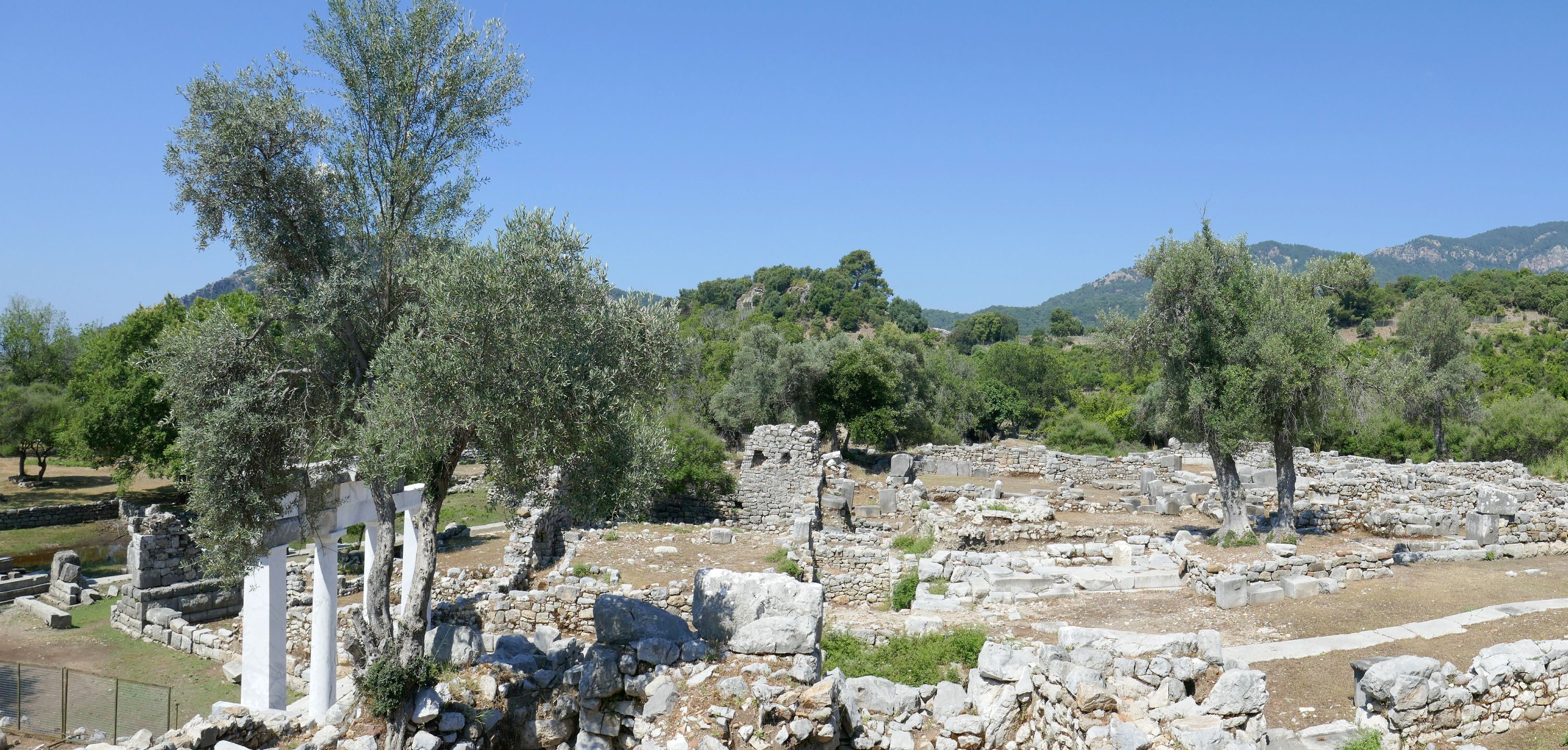
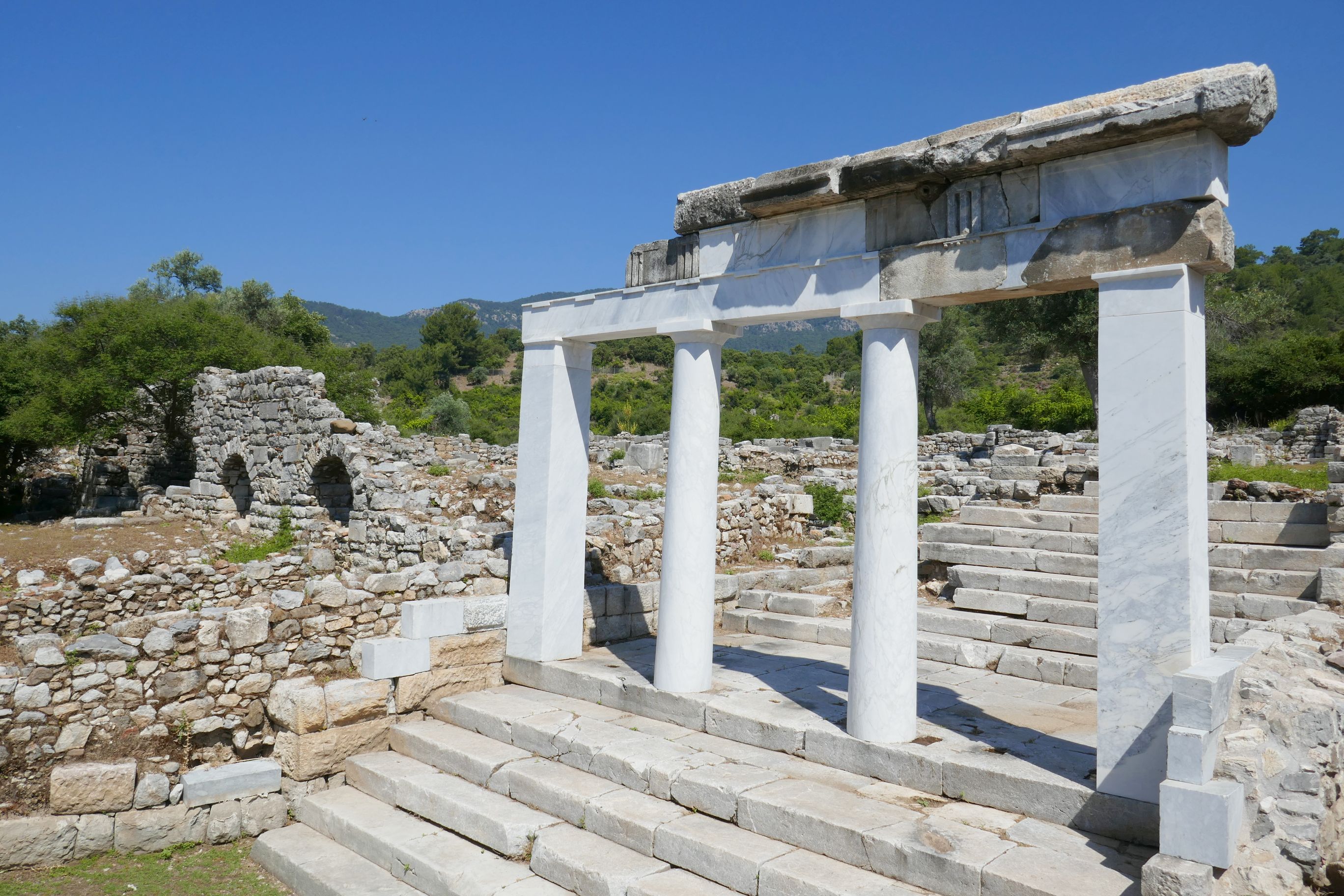
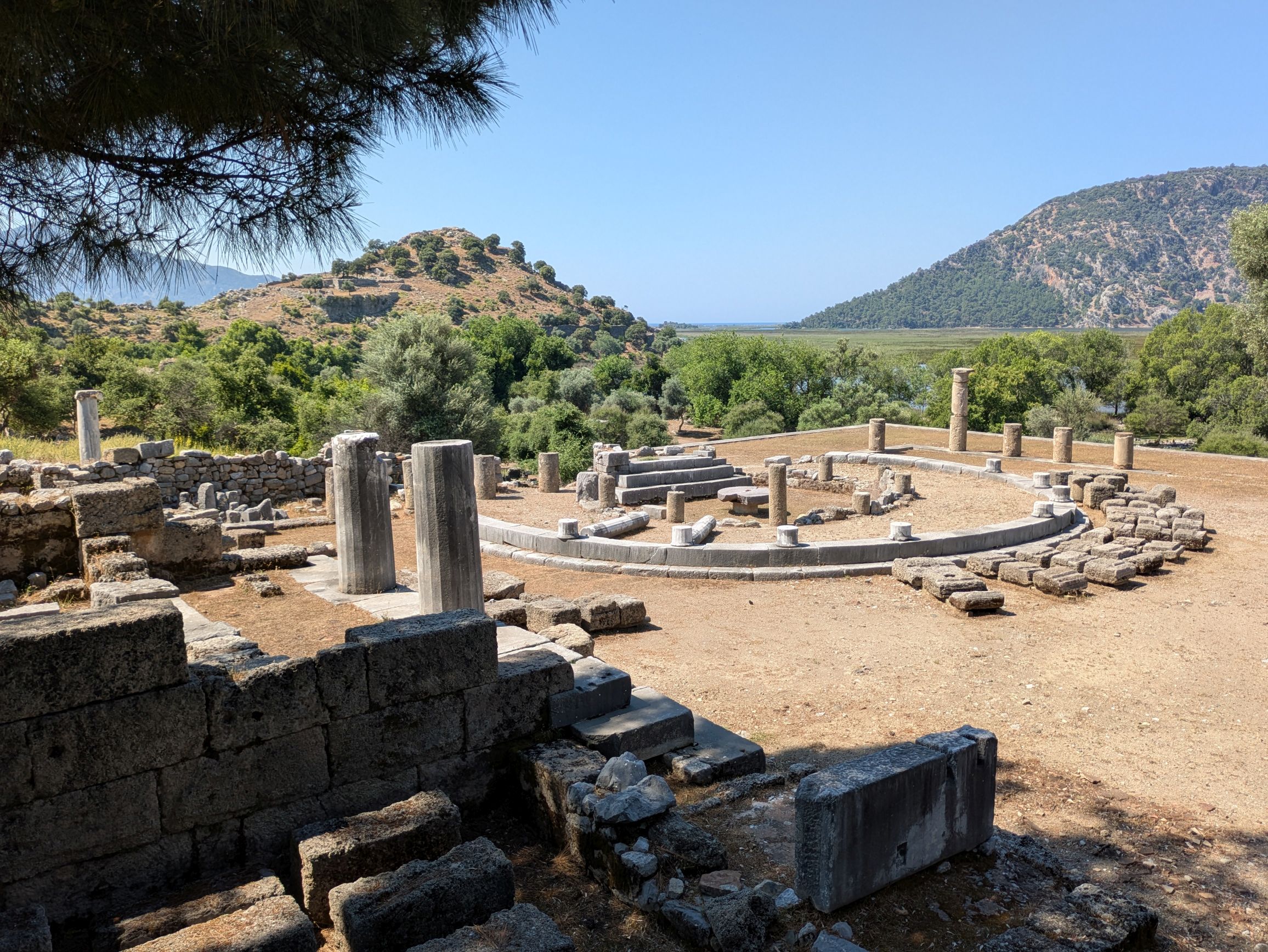
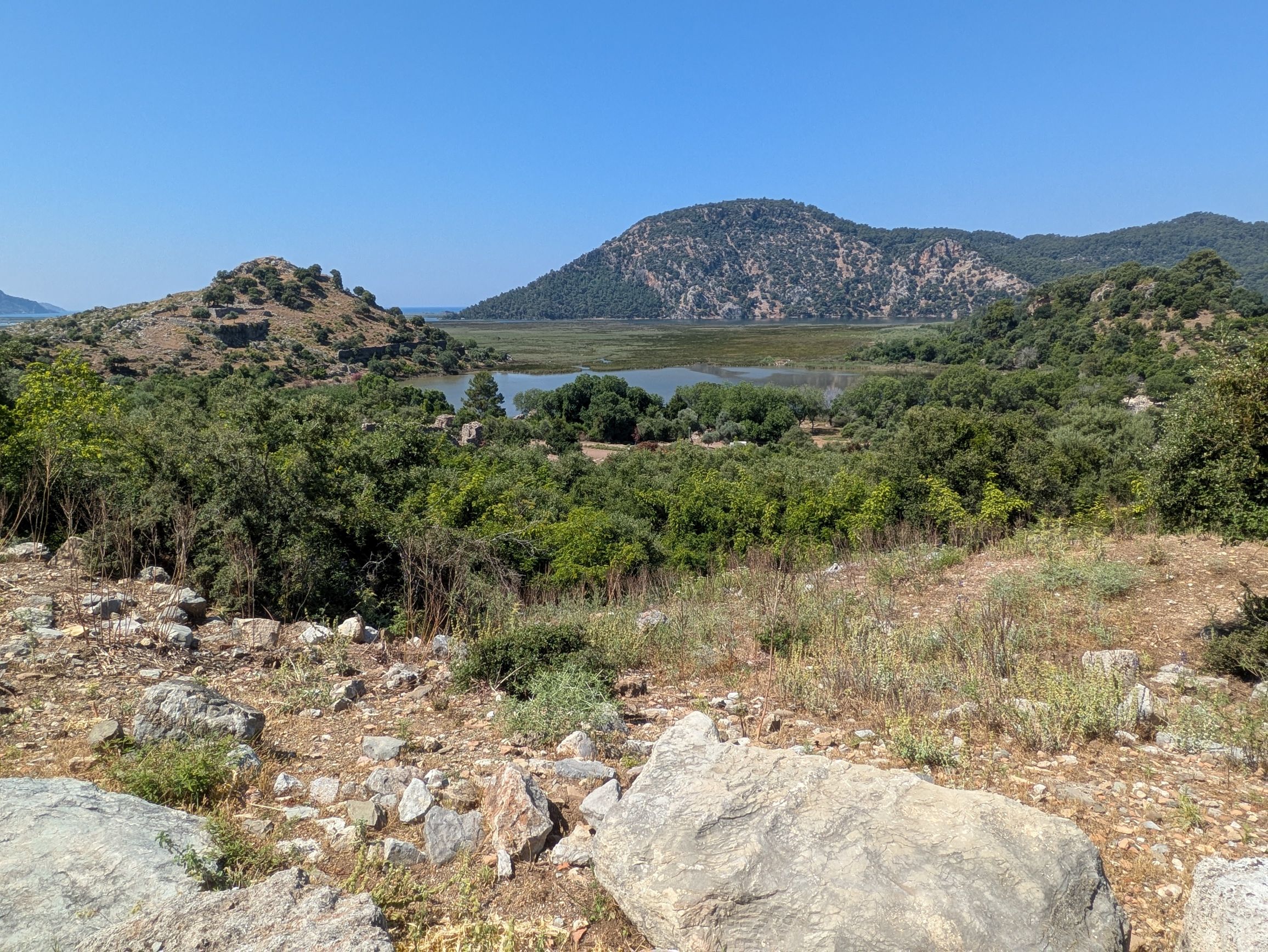
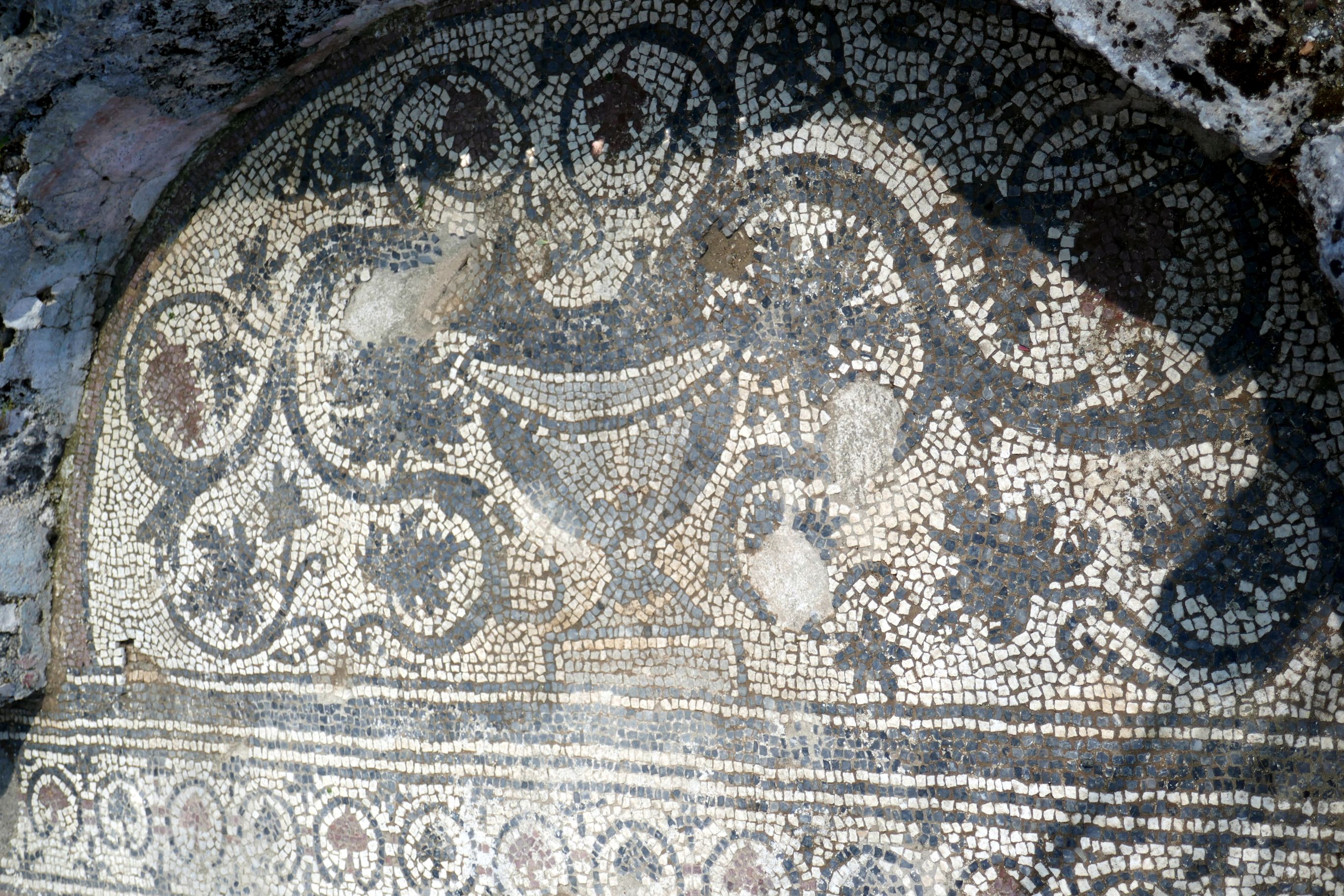
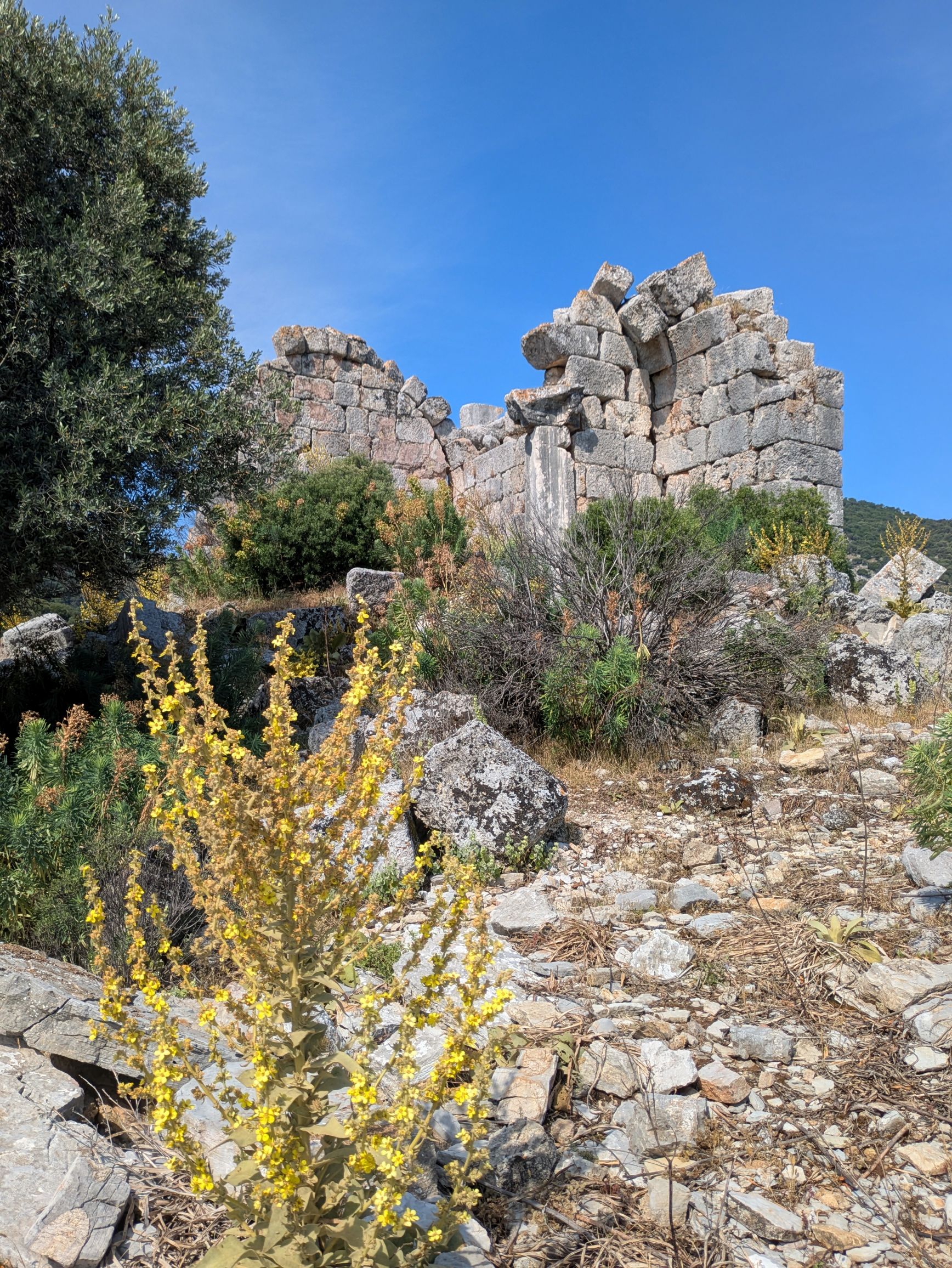
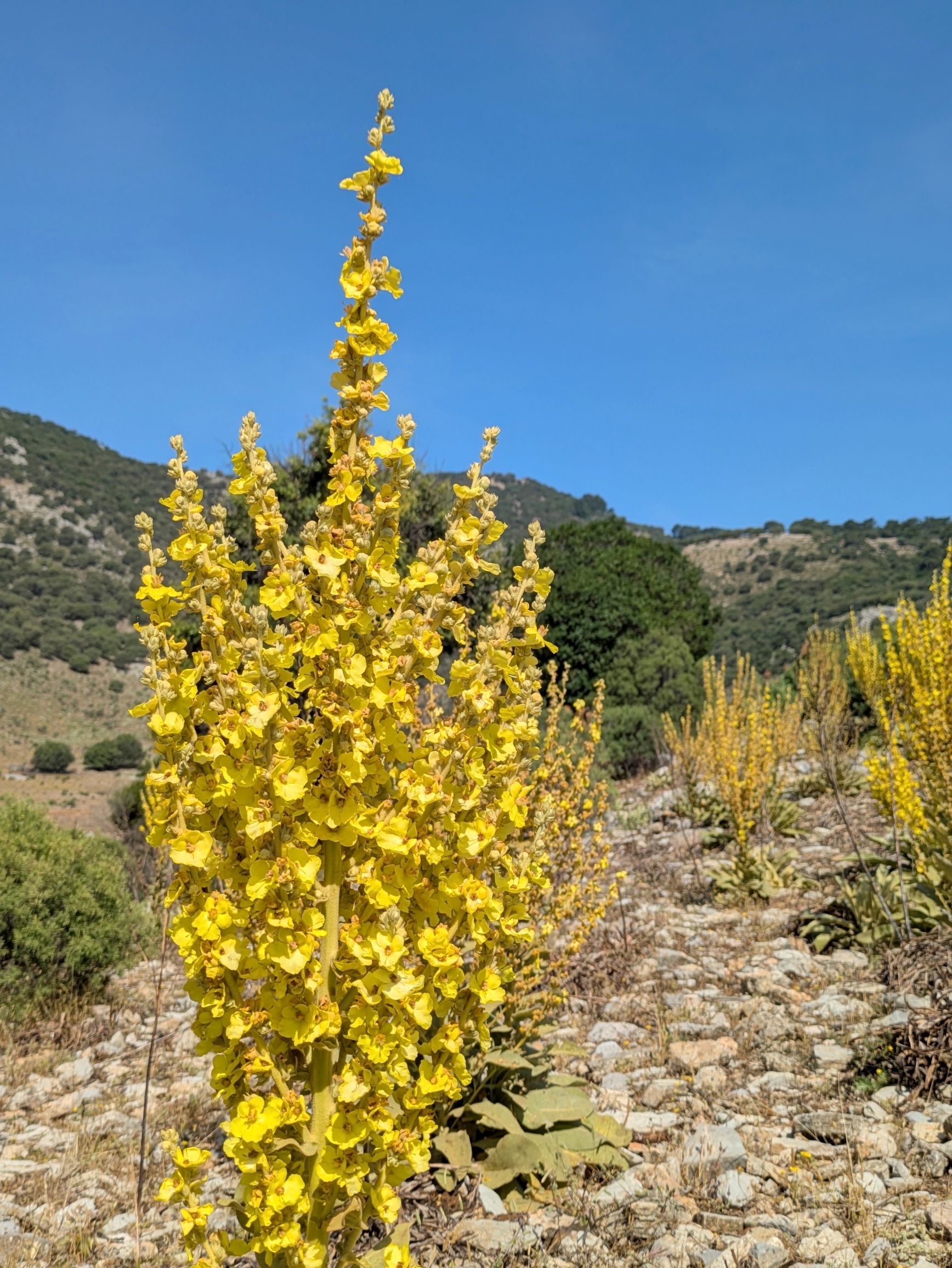
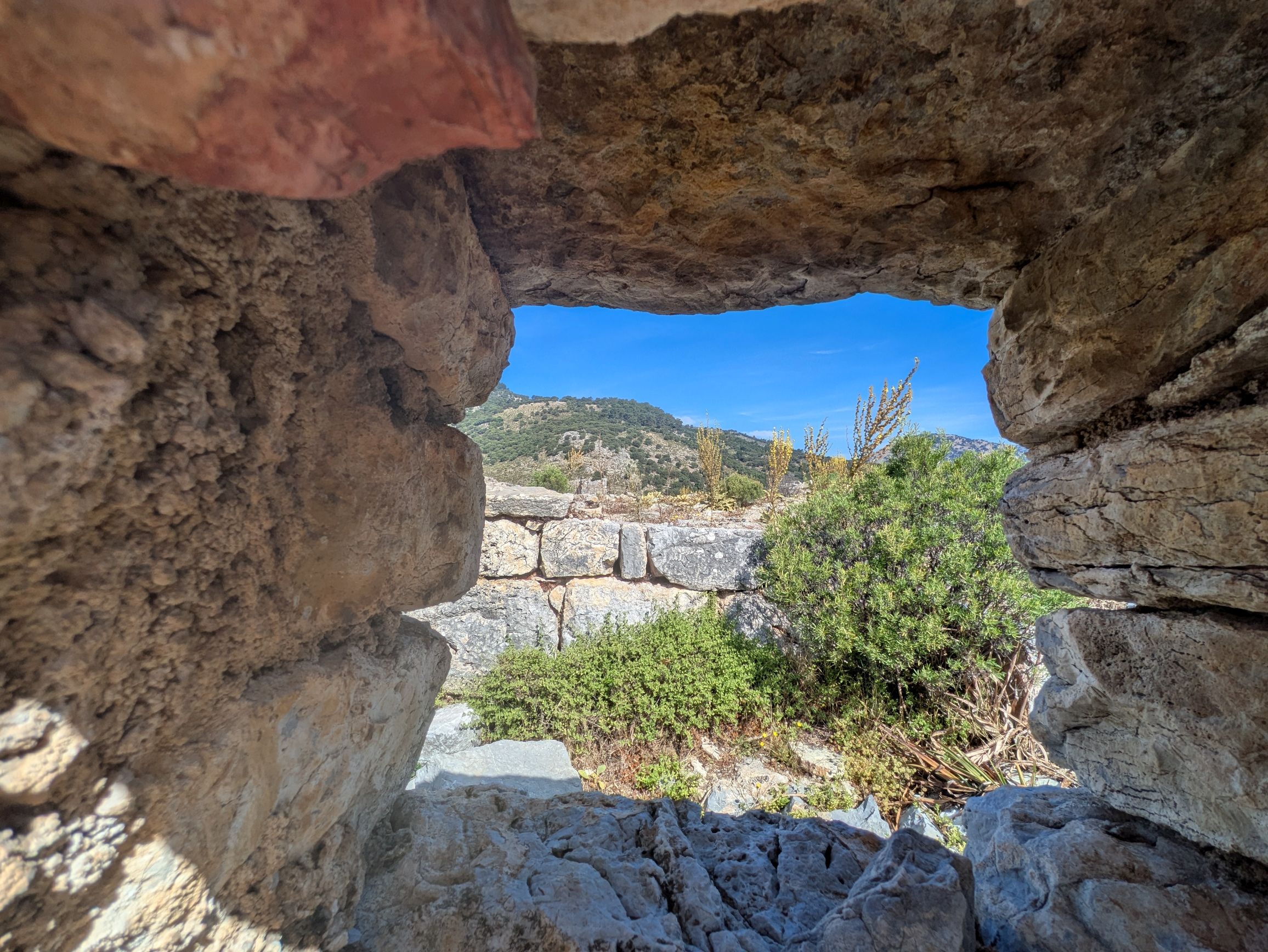
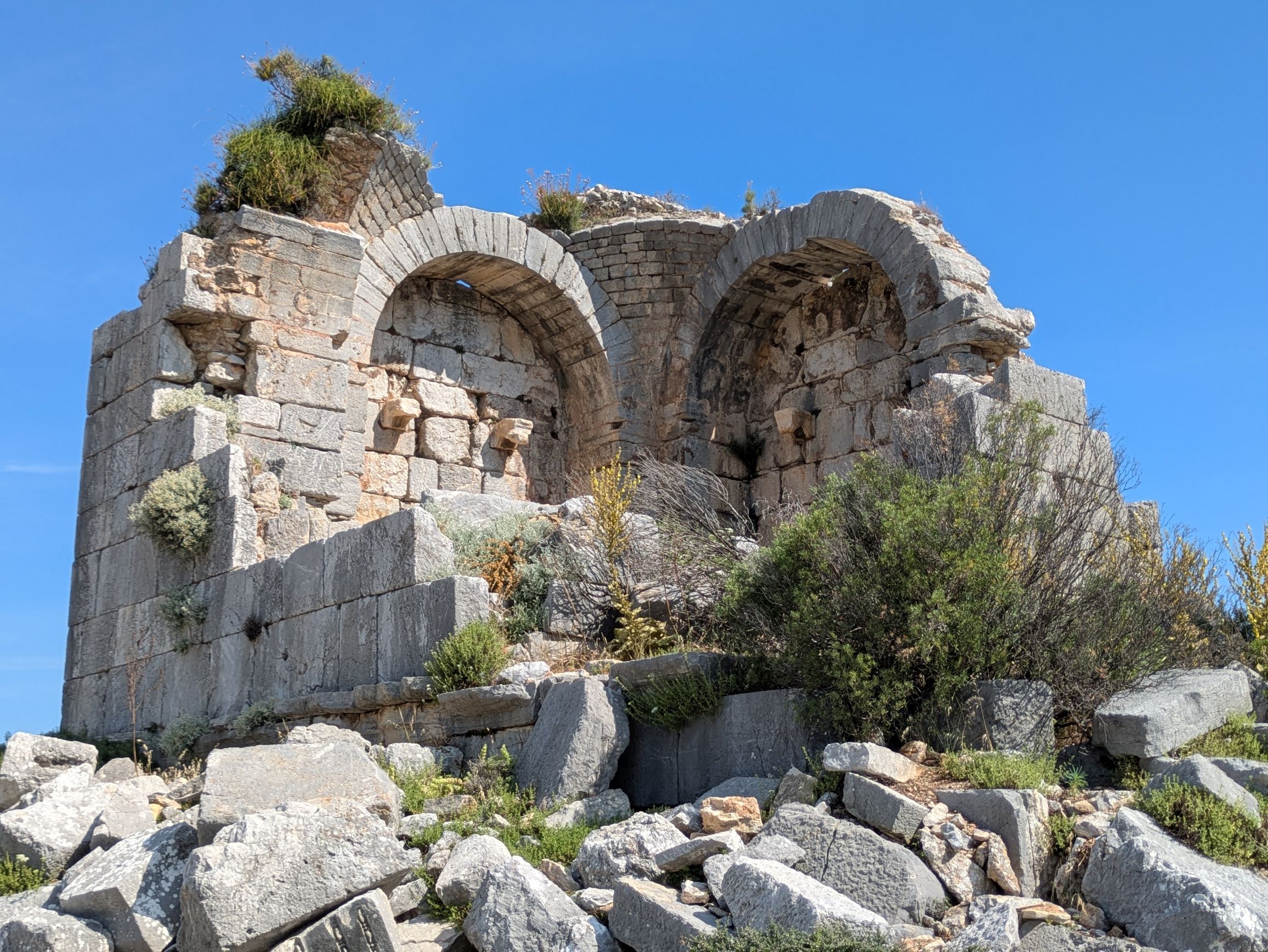
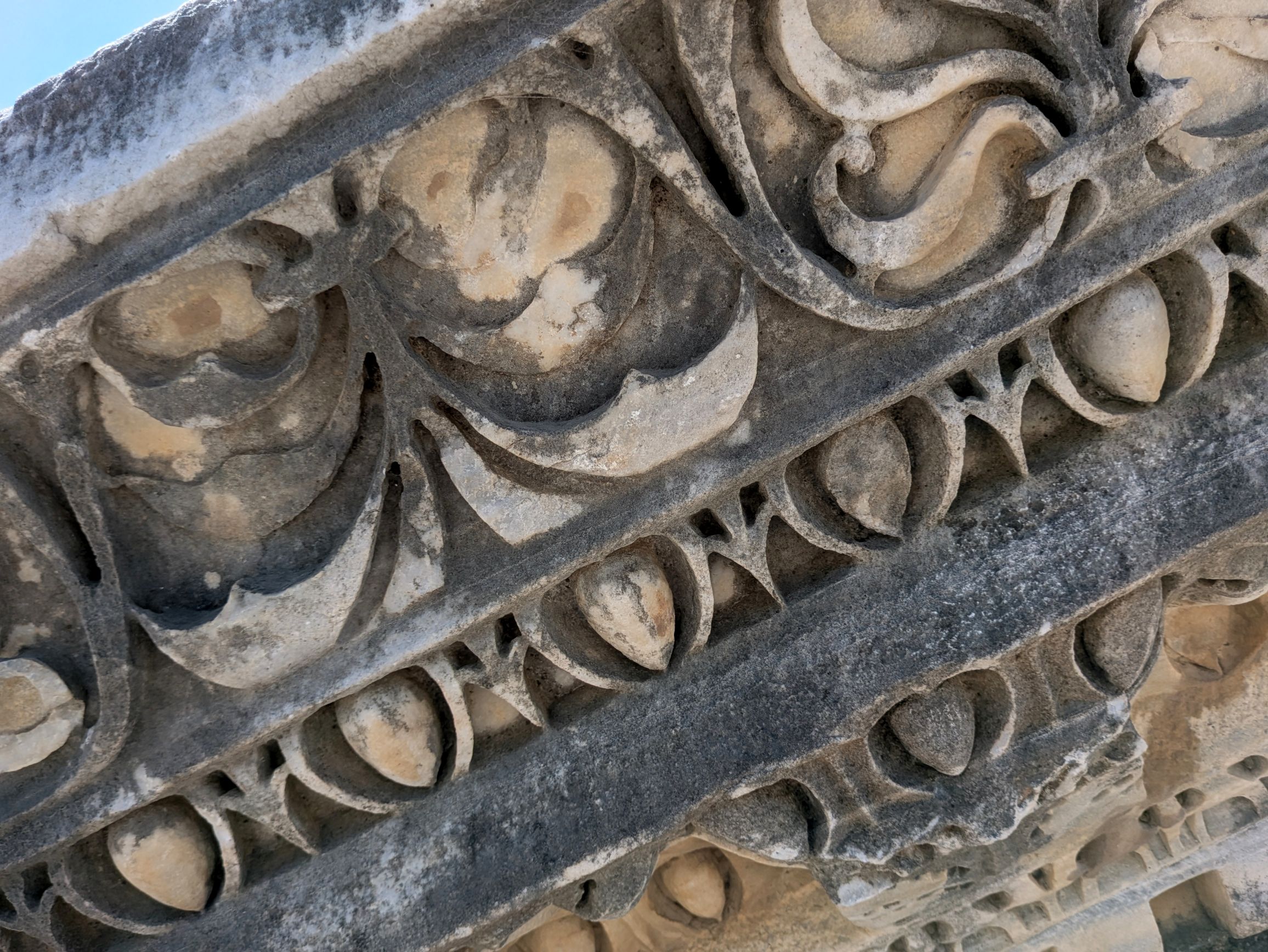
The following are scenes from the ruins:

(For all photos, click on the image for a full screen view.)

Toilets

Looking back at our two weeks in Turkiye, it was an amazing experience! A big thank you to our guide, Mehmet Nuri Guneysu, who shared so much of his culture with us. Cheers!

Coming up next: Southwest France, Northern Spain & Portugal

TURKIYE #16: TWO CONTROVERSIAL TOPICS: LGBTQ+ AND TURKS & KURDS

During every Overseas Adventure Travel (OAT) tour, there is a “controversial topic” presented by either the tour leader or a guest speaker. Nuri, our tour leader, discussed two during this tour: LGBTQ+ rights in Turkiye and the Turks / Kurds controversy.

In 2013, Turkiye ranked very low for LGBTQ+ rights—39th out of 49 countries. Eleven years later, it dropped further to 47th. Prior to 2013, there were some glimmers of hope for gays. In 1980, the Green Party, which was one of four political parties, supported gay rights. And in 1994, another political party banned the discrimination of gays, even though the government wasn’t liberal at the time. In 1999, it was the first time a transgender nominee ran for Istanbul city council. Tiny glimmers…

That hope, however, was overshadowed by overwhelming homophobia in the government of Turkiye. In 2009, the European Union denied Turkiye membership because of it.

The common citizen of Turkiye held a different view. In 2003, Turkiye was the first Muslim majority country to have a gay pride march. Only 30 people participated, but it was a start. Participation grew to 15,000 in 2013 and 100,000 in 2015! The parade was canceled after that by the government, which currently doesn’t recognize same sex marriage, even though the typical citizen has no problem with it.

Istanbul has the most tolerant population as opposed to the Kurds in eastern Turkiye who hold a zero-tolerance view of gays and same sex marriage.

That brings me to controversial topic #2: Turks / Kurds controversy. The Kurds are the world’s largest population without a state. There are 80 million Kurds living in and around Turkiye, Syria, and Iraq, and a total of 100 million in the world.

In Turkiye, since 2015, Kurds have not been allowed to speak their own language in schools, and Kurdish books are banned. Nuri nailed it when he said, “The Turkish government and Kurd terrorists are worse than each other.”

Kurds are forced to be like Turks and not allowed to be themselves. Ordinary Kurds are caught in the middle between the Turkish government and Kurd terrorists.

Nuri’s father owned two stores that handled importing fabric from Iran, making products, and then exporting the finished product back to Iran. His father wouldn’t support the Kurd terrorists financially because of their violence and killings. Instead, he supported the poor Kurd families in town. The terrorists didn’t take too kindly to that and burned down his businesses. That was in 1995, and it took Nuri’s father the next six years to build his businesses back up. He died in 2005 due to the stress of it all, and Nuri had to work two part-time jobs after school to support his younger siblings.

If Nuri’s father had supported the terrorists, the Turkish government would have retaliated. He was stuck in the middle.

Coming up next: TURKIYE #17: EXTRAORDINARY EPHESUS

TURKIYE #15: WHAT THE H*&$ WAS THAT???

Bruce and I were sound asleep during our last night on board the boat until my cell phone, which I had set to a white noise app, went ballistic. We were both startled awake by the blaring alarm that was going off. “What the H*&$ was that?” (In retrospect, I’m sure I used a more, uh, colorful word as I grabbed the phone.)

It was 2:17 AM, My phone home screen was bright red, and an “Android Alarm” statement said there had been a 5.8 earthquake, twelve miles off the coast of Rhodes, Greece, which was only 29 miles from where we were anchored off Marmaris.

As we were trying to absorb this news, we could hear the crew run by our cabin door. Still not thinking clearly due to the rude awakening, I stupidly said, “I wonder if anyone else had an alarm on their phones.” Bruce snapped back, “Who cares? I’m worried about a Tsunami!” And then it hit. “Oh my God, that’s right! WE’RE ON A BOAT!”

Meanwhile, the crew had received a call from the coast guard warning boats of large waves that were expected to come through. We were anchored in a protective cove, but I’m sure the captain kept his ear on the radio.

Not unexpectedly, the crew got us off that boat as early as they could, just in case…

As it turned out, there was no Tsunami, but when I think about what could have been, we are still, to this day, very grateful to have made it off that boat alive.

This is one of the press stories about the earthquake:

https://greekreporter.com/2025/06/03/greece-jolted-two-earthquakes-rhodes-crete-june-2025/

Relieved to be back on land (and looking forward to a cushy hotel bed), we said our farewells to the crew and made our way towards Kusadasi, a seaside resort known as the gateway to ancient Ephesus.

(For all photos, click on the image for a full screen view.)
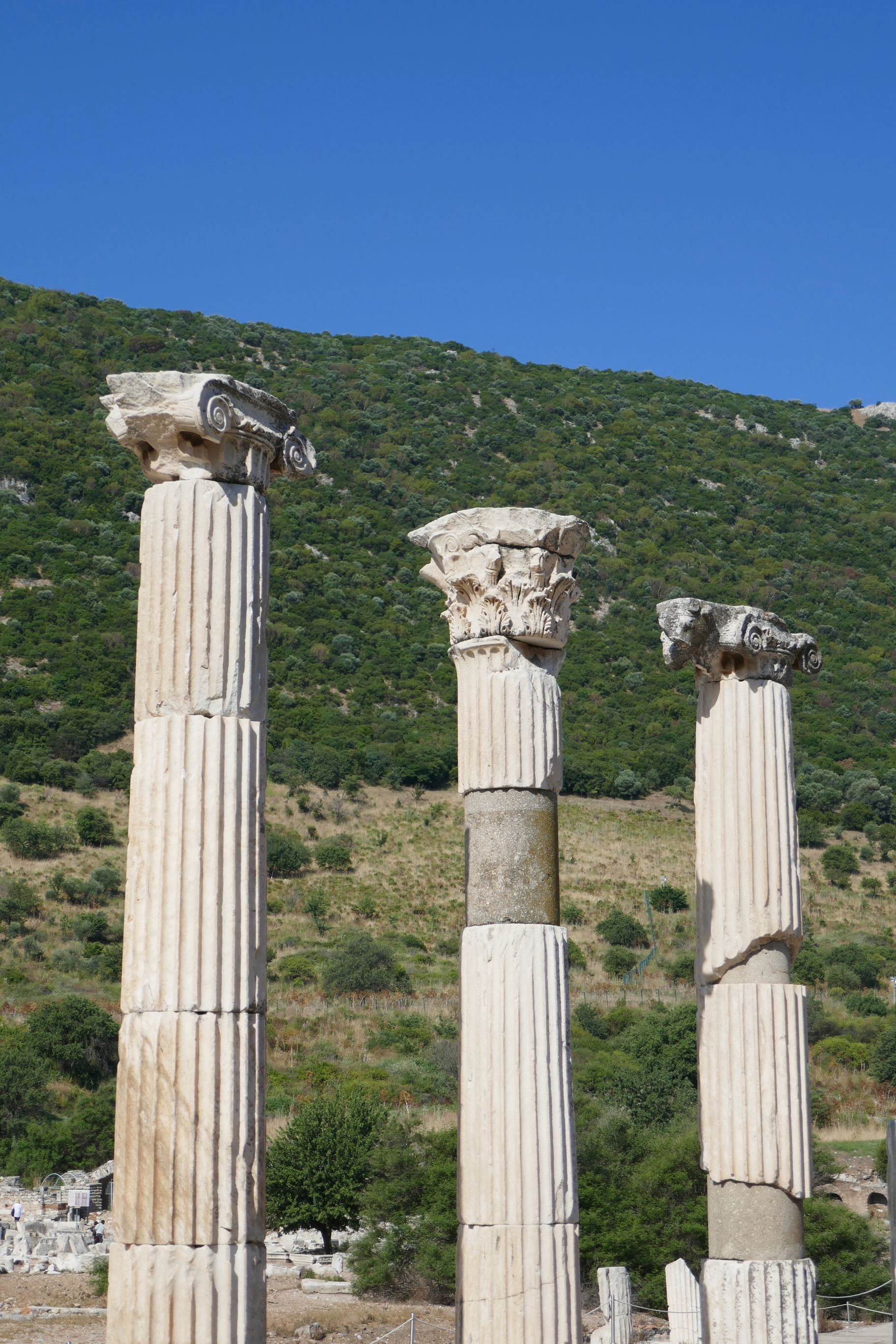
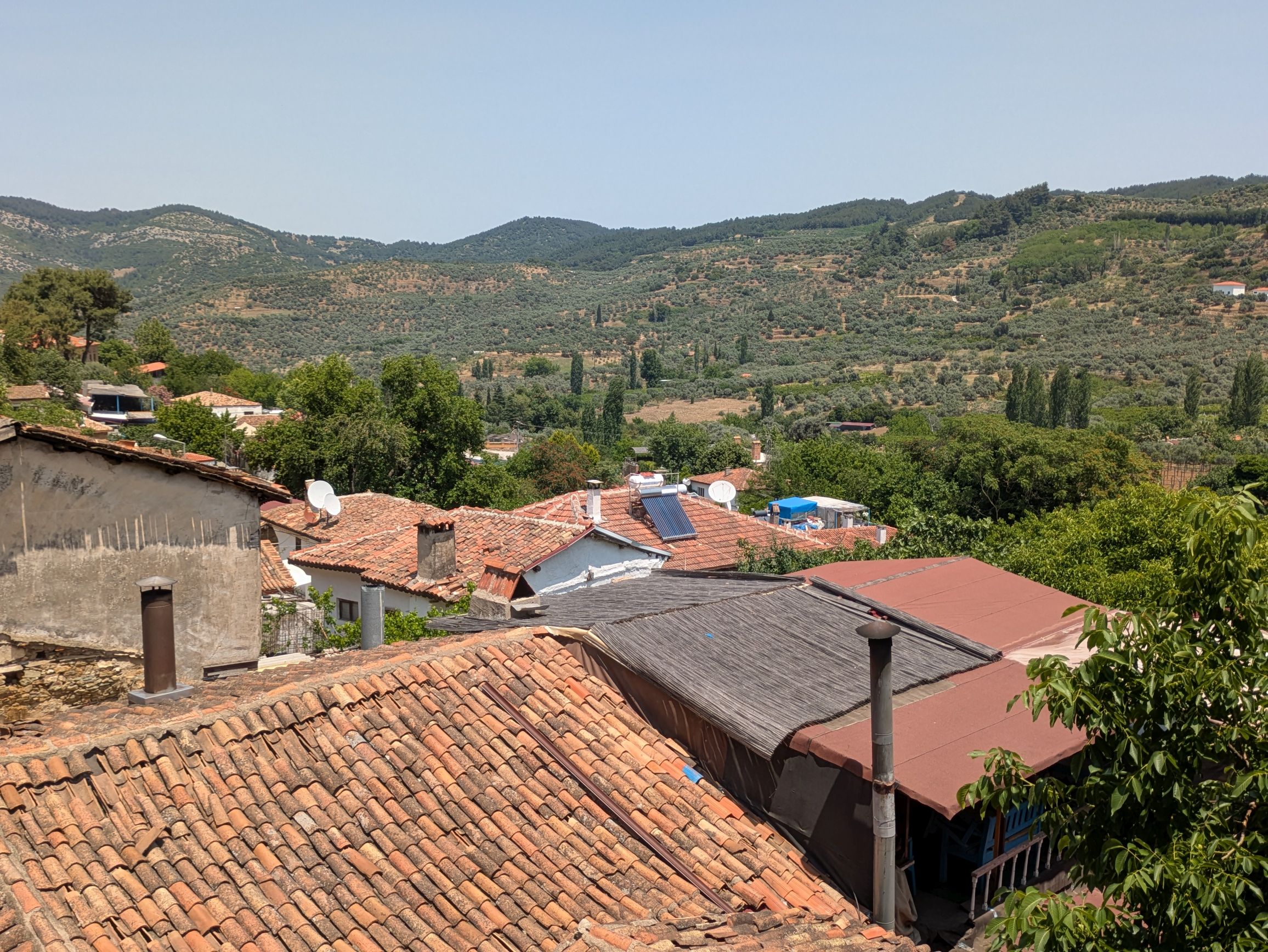
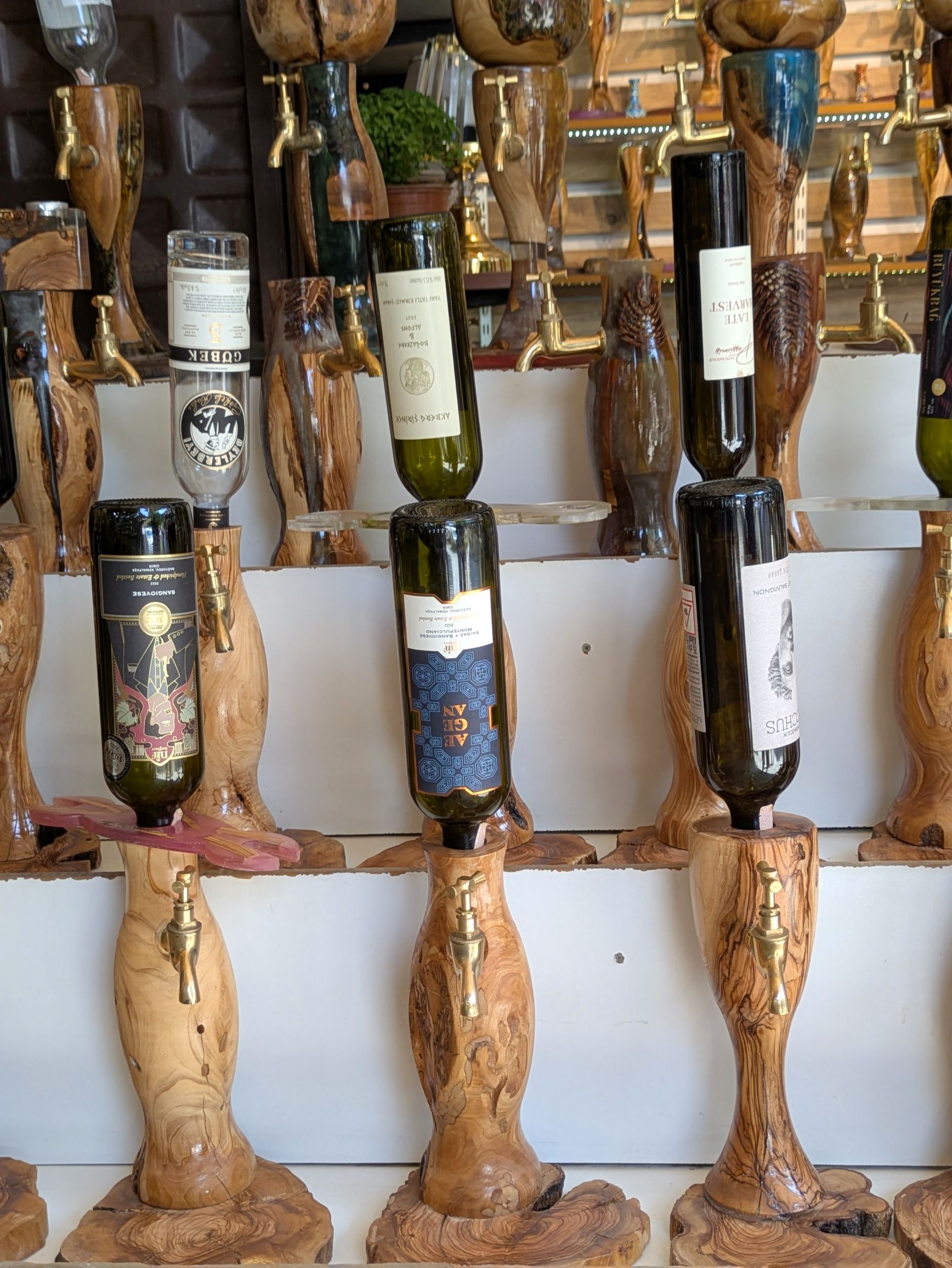
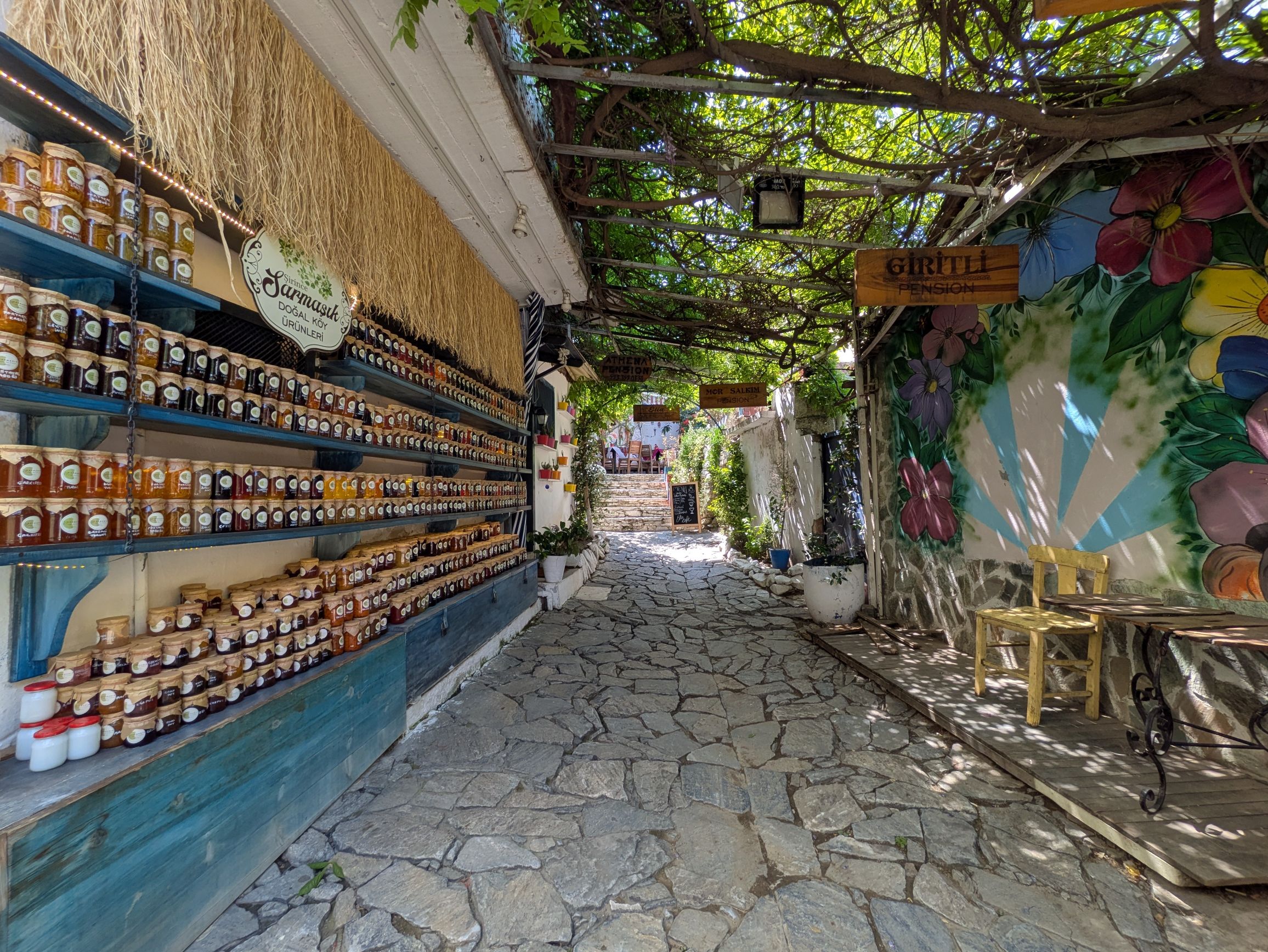
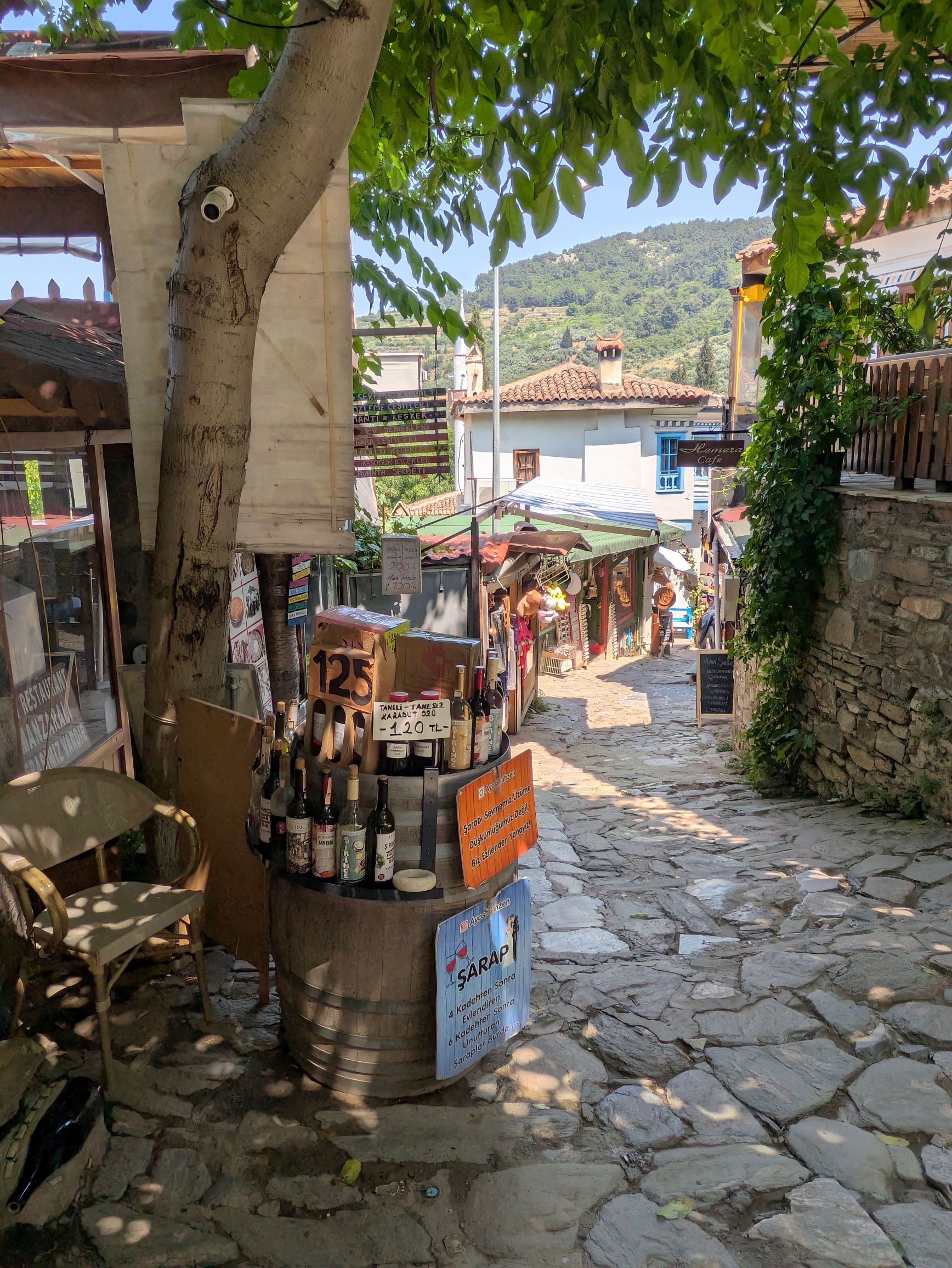
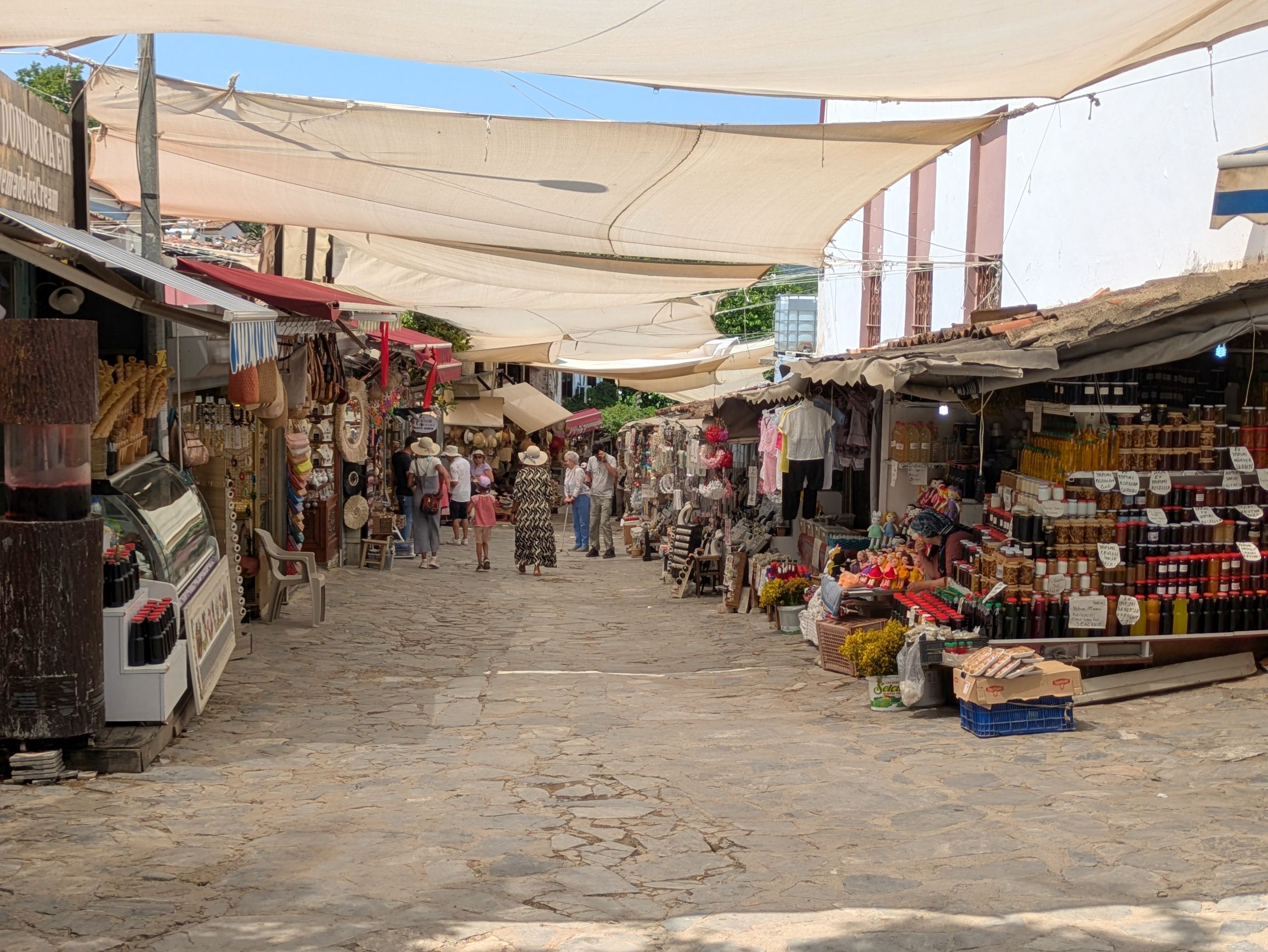
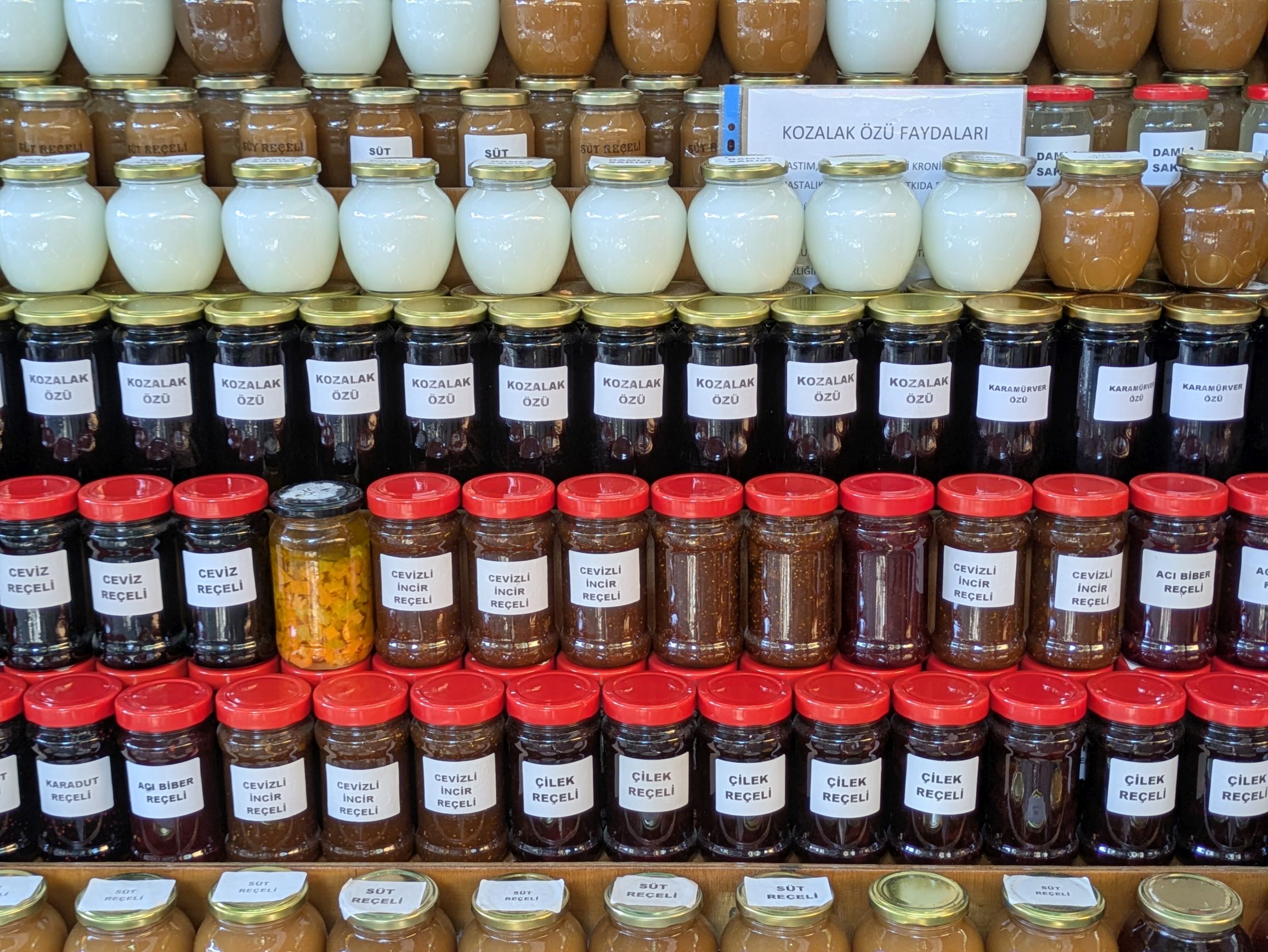
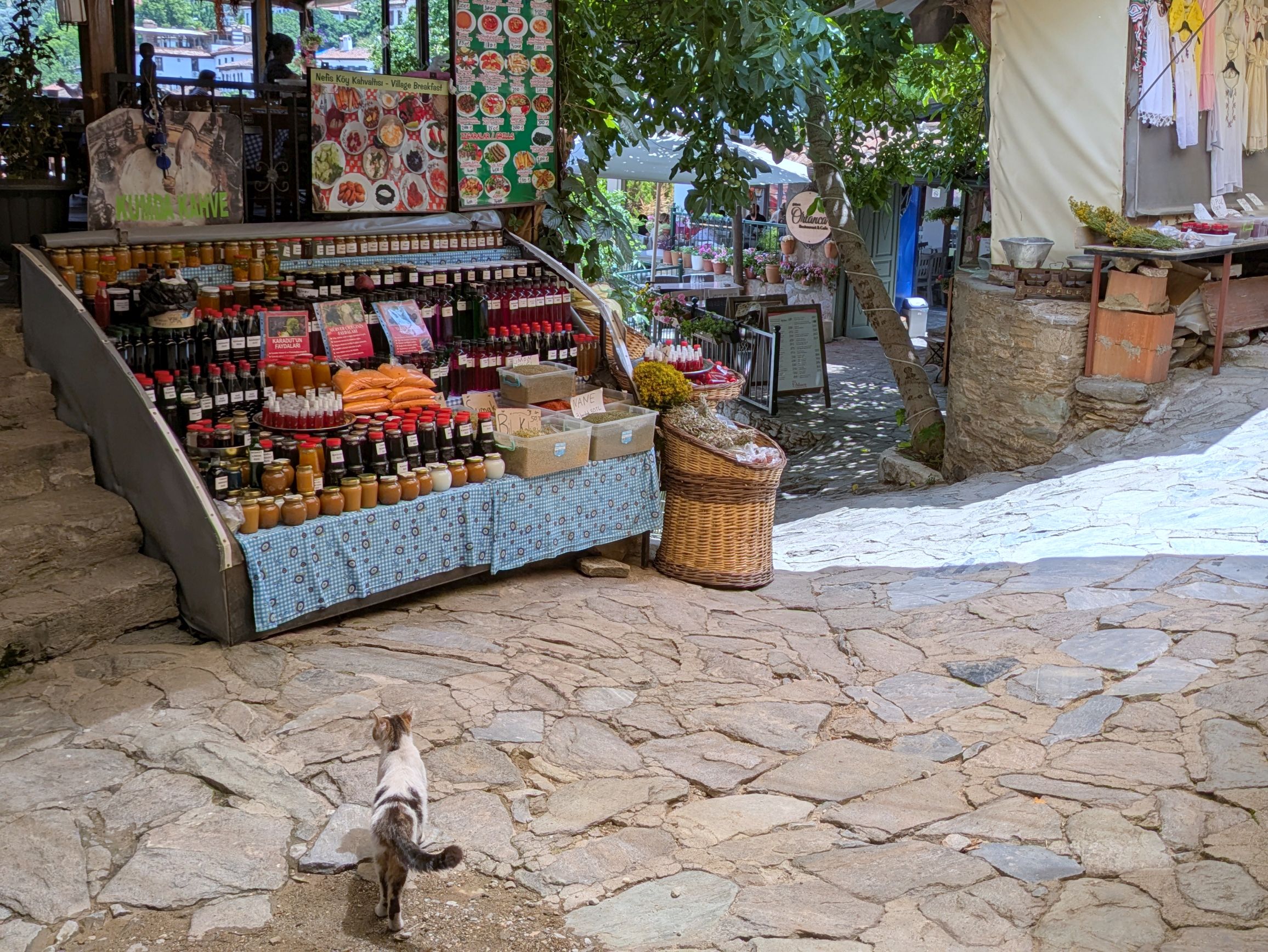
Along the way, we stopped for lunch and free time in Sirince, a former Greek village. All the buildings are over 200 years old, so it had a lot of charm. The population is just 456, and the village is small, but it has become a successful tourist destination. In addition to tourism, they earn their income from agriculture (wine, olive oil, and peaches).

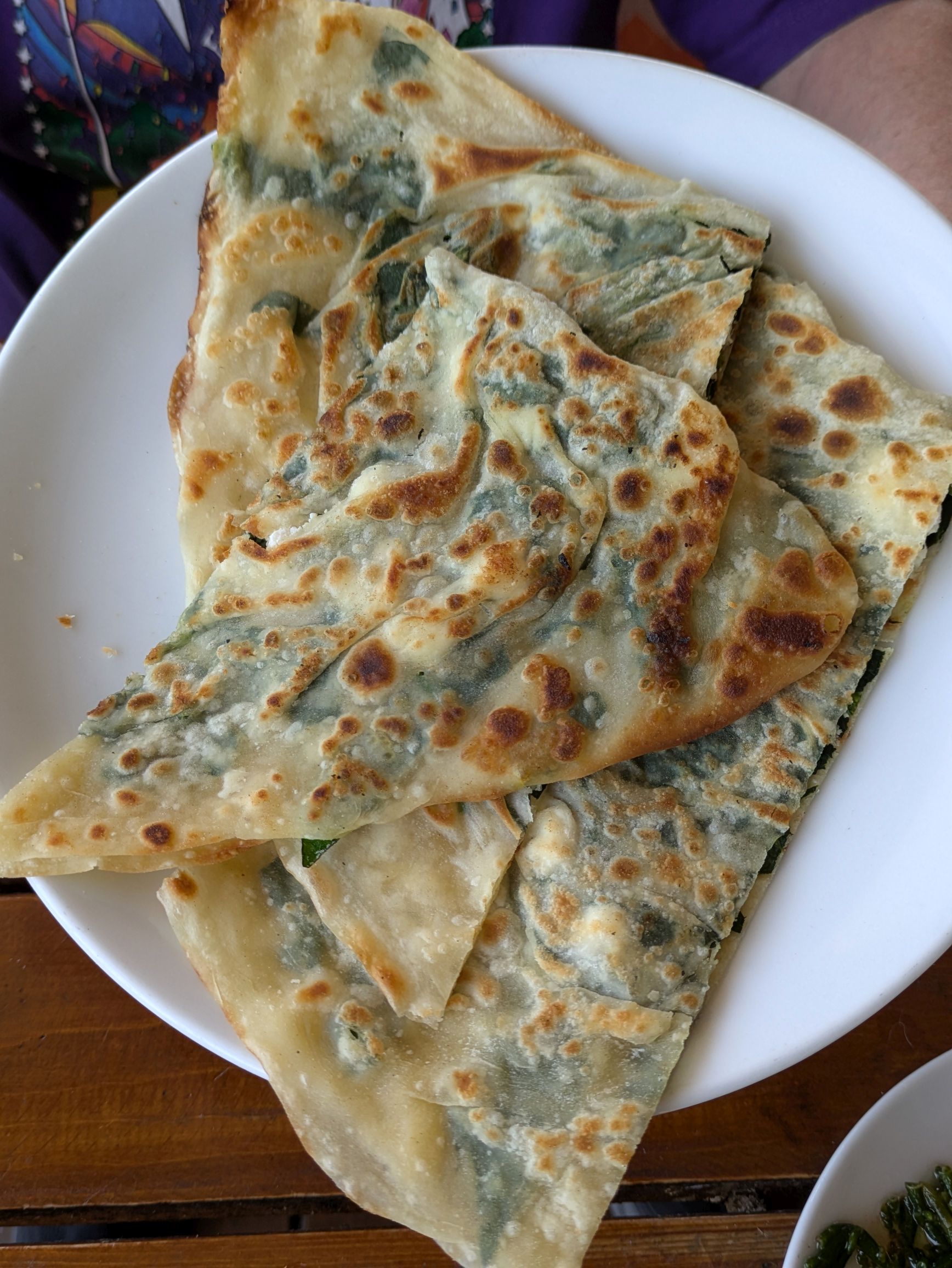
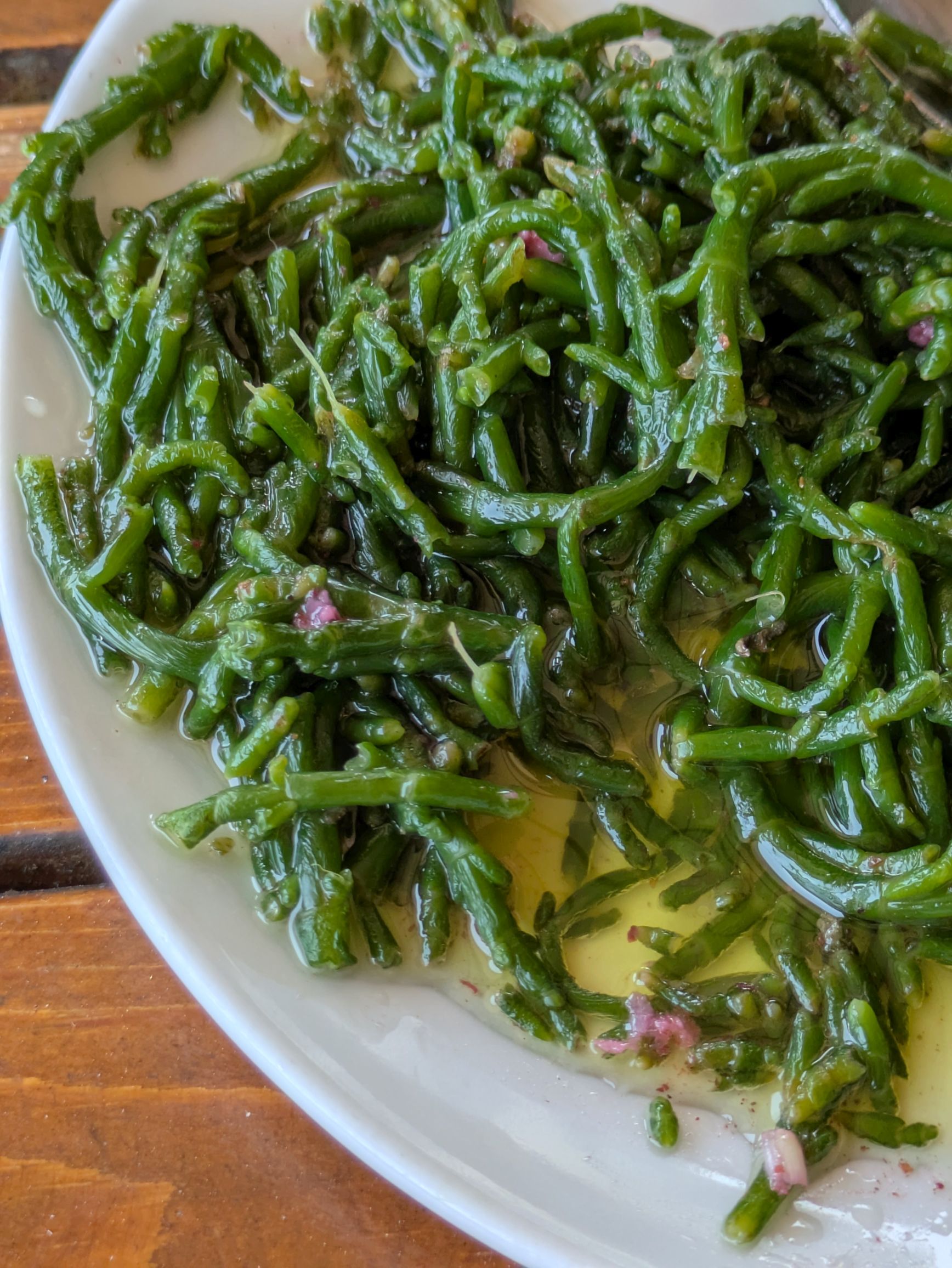
We enjoyed our lunch of Turkish cuisine while enjoying views of the mountains. During our free time, we poked around the stalls and shops, shooting a few photos along the way:

Our hotel in Kusadasi

Next up: TURKIYE #16: TWO CONTROVERSIAL TOPICS: LGBTQ+ AND TURKS & KURDS

TURKIYE #14: A RIDE UP THE DALYAN RIVER TO KAUNOS

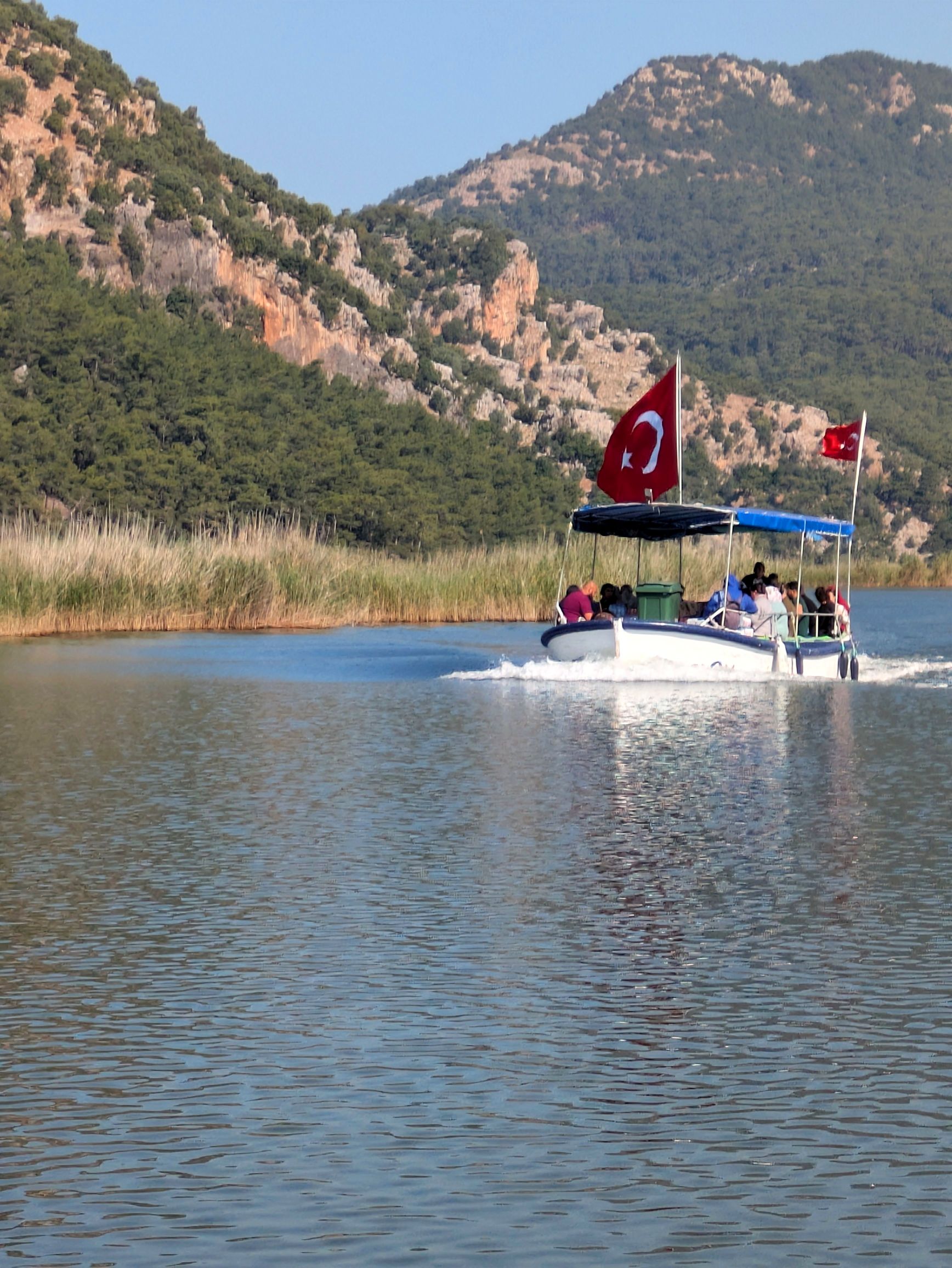
We hopped onto a smaller boat for a cruise up the Dalyan River to Kaunos, an ancient seaport city dating back to the 10th century BC. Archaeologists, however, found coins that date to the 4th century BC.

Nuri took us around to see the remains of a theatre, acropolis, Roman bath, and other ruins:

(For all photos, click on the image for a full screen view.)

The palm tree and flower- lined path to Kaunos Archaeological Park reminded me of San Diego, my former home.

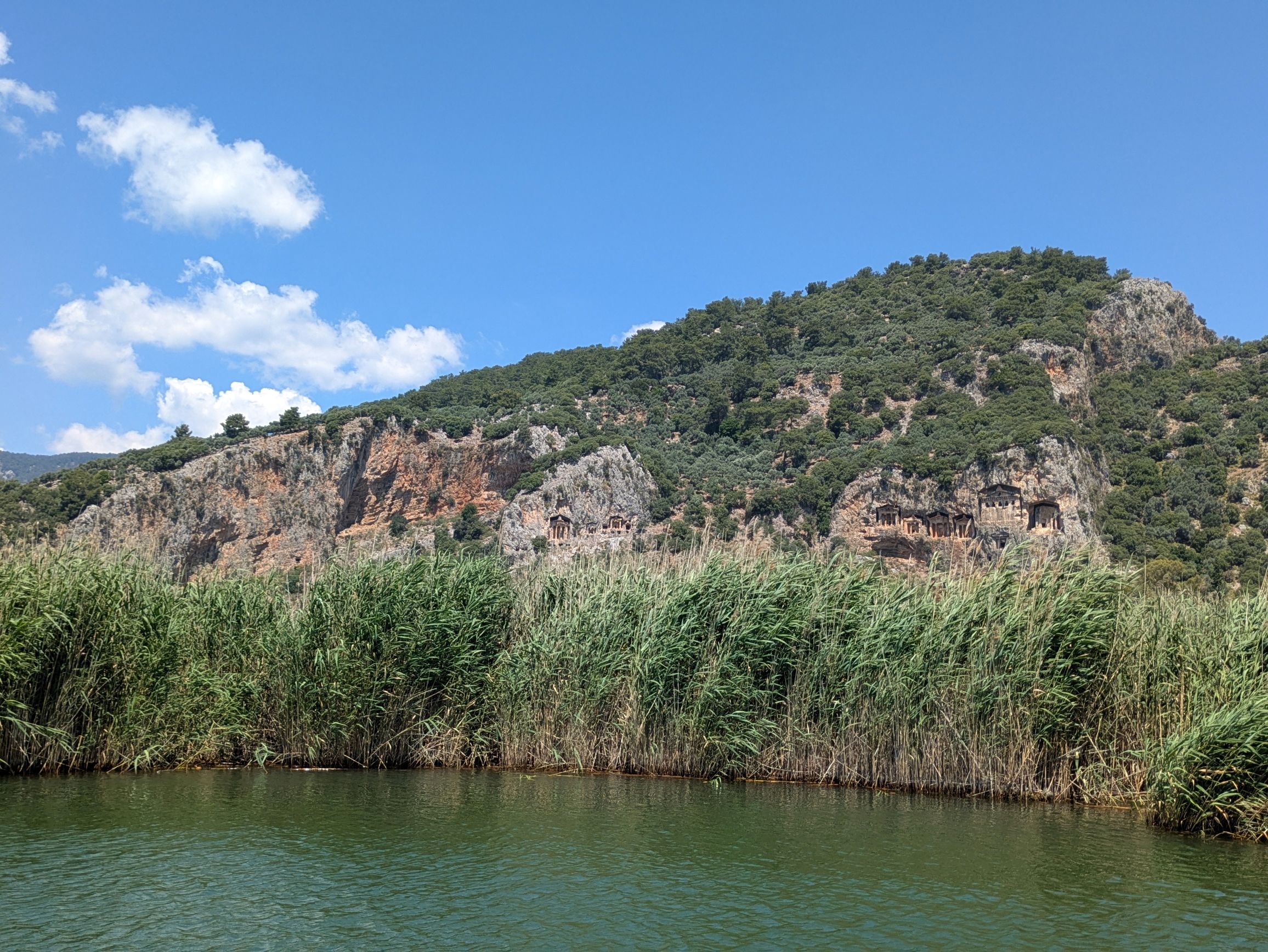
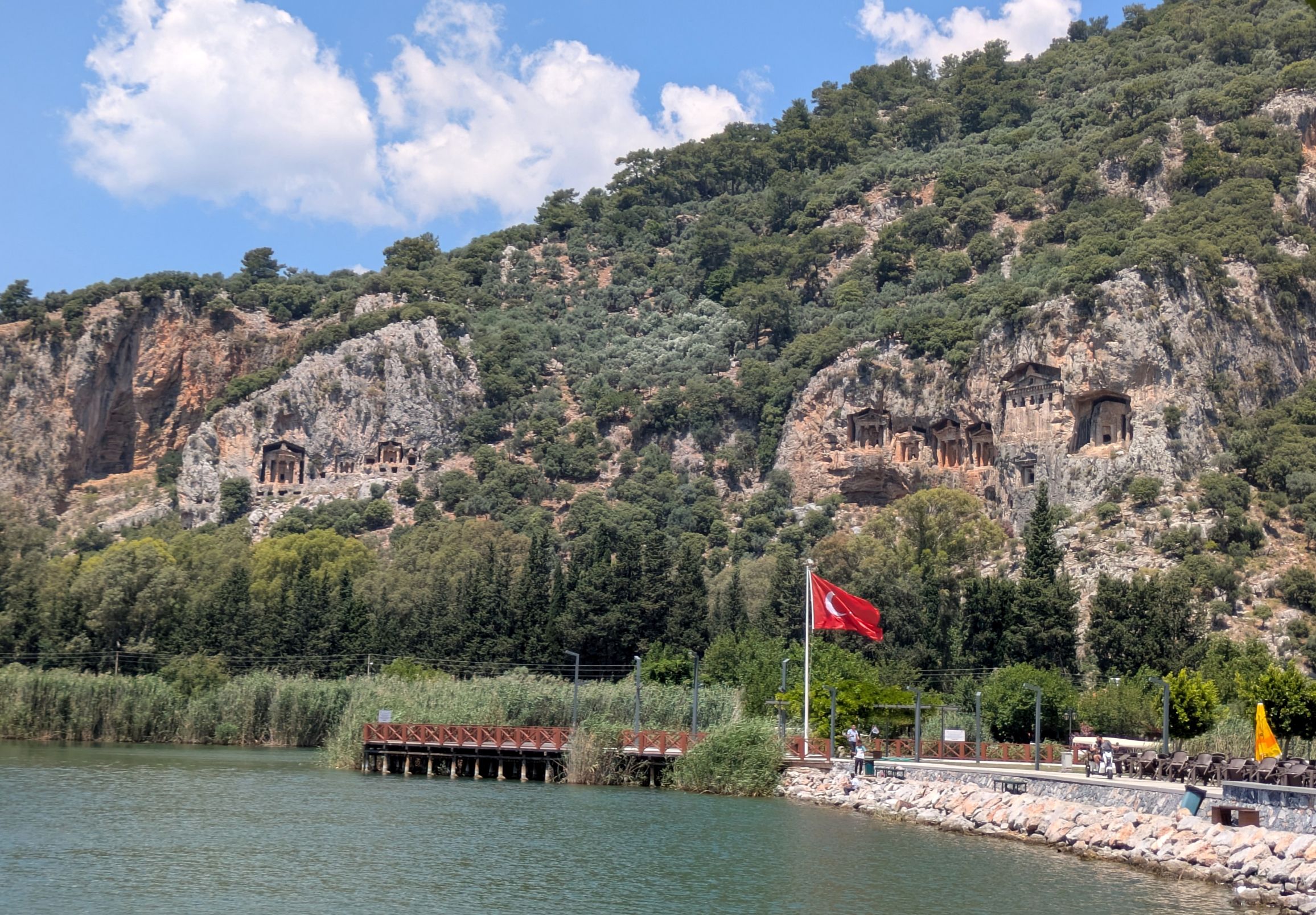
Kaunos bordered ancient Lycia, so we were able to get a great view of the Lycian rock cut tombs in the cliffs, when we arrived in the resort town of Dalyan. I had never seen anything like it, and it amazed me!

The town of Dalyan was a typical resort town—touristy. Back in 1987, developers wanted to build a luxury hotel on the nearby Iztuzu Beach; however, there was an outcry from conservationists, because it was a breeding ground for endangered loggerhead sea turtles. Thankfully, the island has been declared a protected area. Loggerheads have existed for about 45 million years, and hopefully, they will live on for 45 million more—that is, if humans don’t destroy our planet first.

Sign in the stall of a restaurant bathroom

I felt fortunate to get to see this loggerhead swimming by our boat during our ride back to the cove where our gulet was anchored.

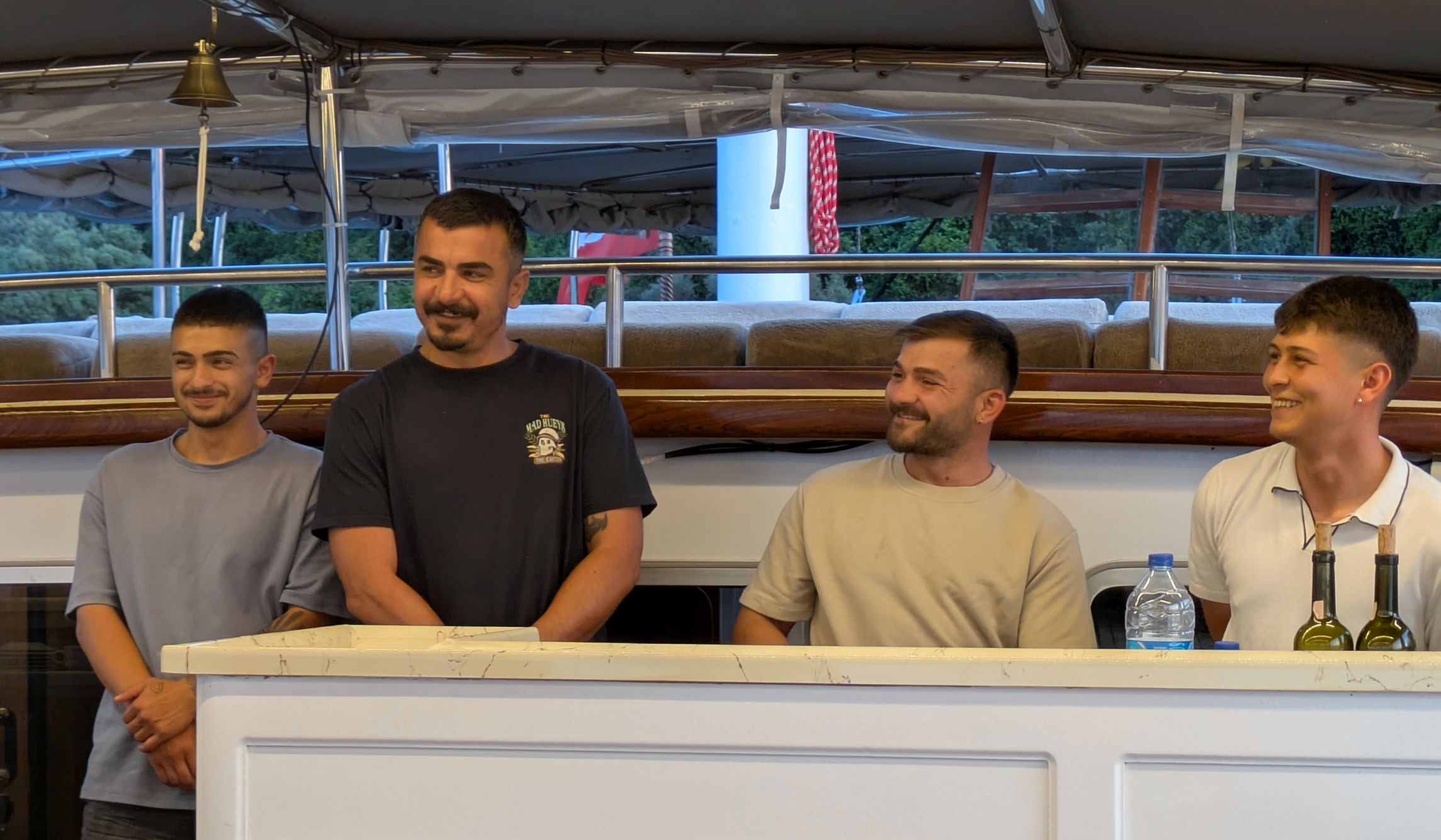
This was our final night aboard our boat, so we thanked the crew and enjoyed one last dinner while relaxing in the protected cove. It was the calm before a different kind of “storm” …

Traditional Turkish dessert

Next up: TURKIYE #15: WHAT THE H*&$ WAS THAT???

TURKIYE #13: HIKING & SWIMMING THE TURQUOISE COAST

Another beautiful day in paradise—at least while we were on a hike and during our swim.

Today’s hike was quite a workout, but well worth it once again! This time, only four of us joined Nuri, while the remainder of our group stayed on board the boat and relaxed.

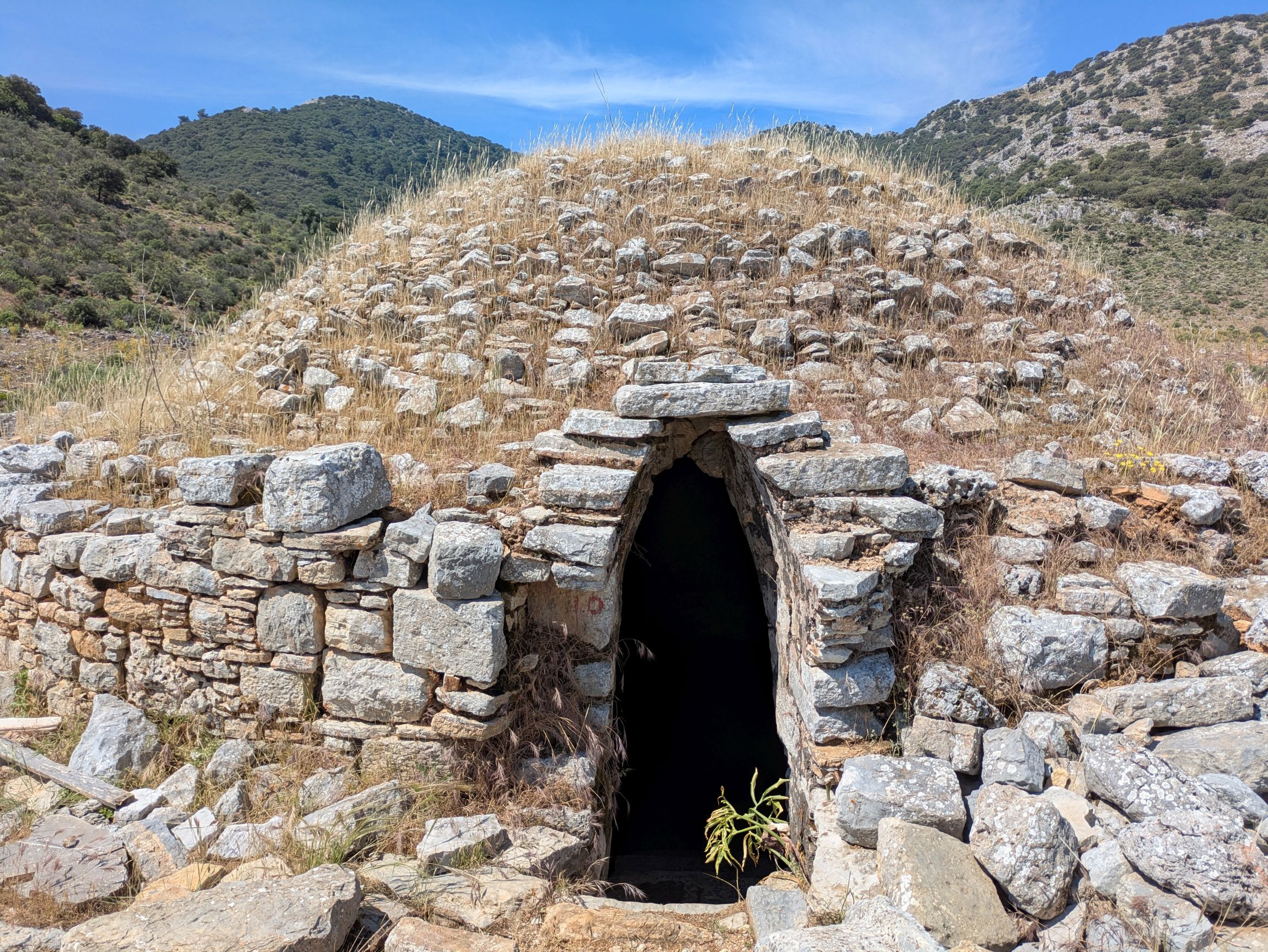
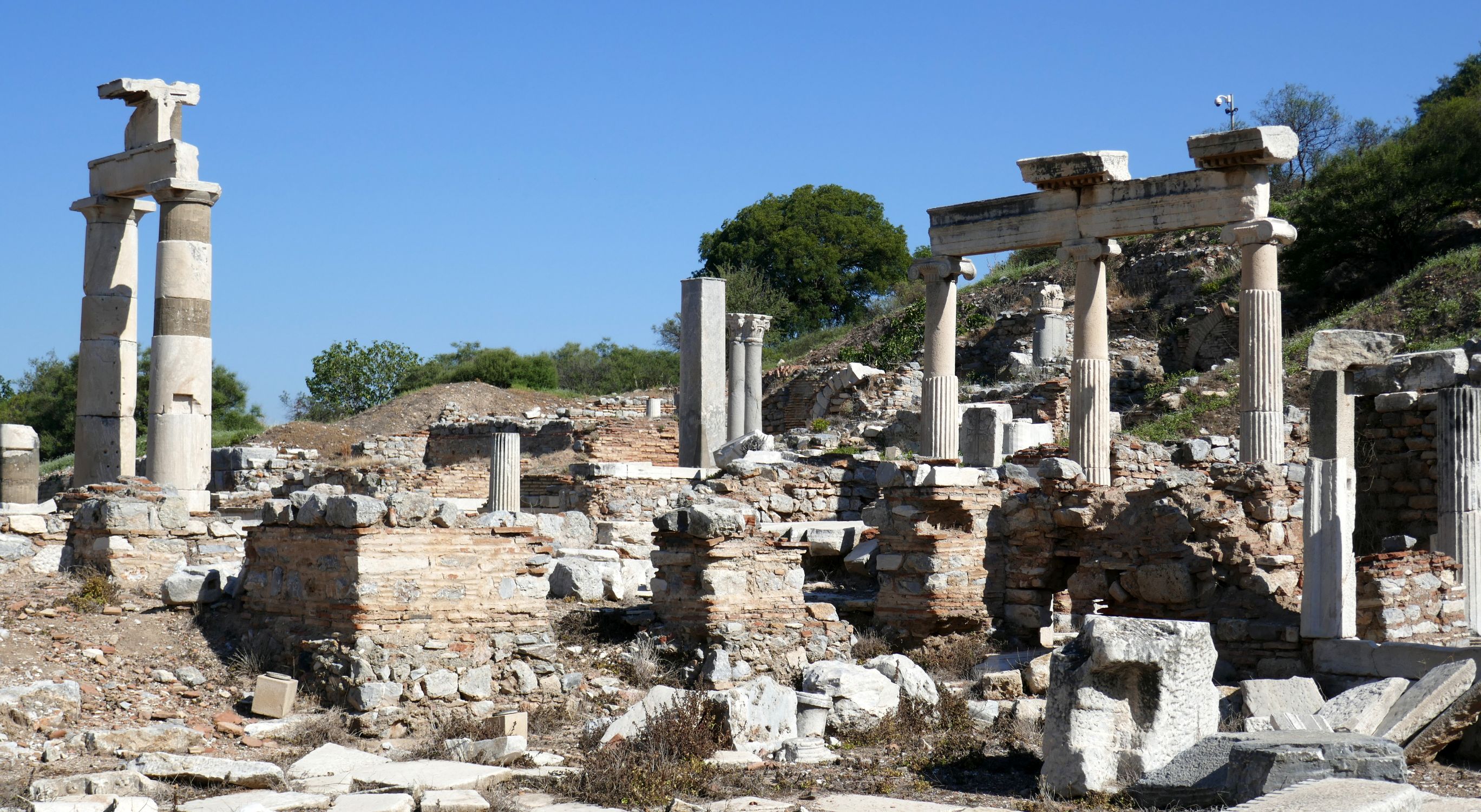
Following a steep climb up and over the mountain, we descended into a valley and explored the ruins of Lydia, a 4th century BC city. Due to its remote location, we never saw any other tourists during our hike, and it was wonderful! (That would change at Ephesus!)

(For all photos, click on the image for a full screen view.)
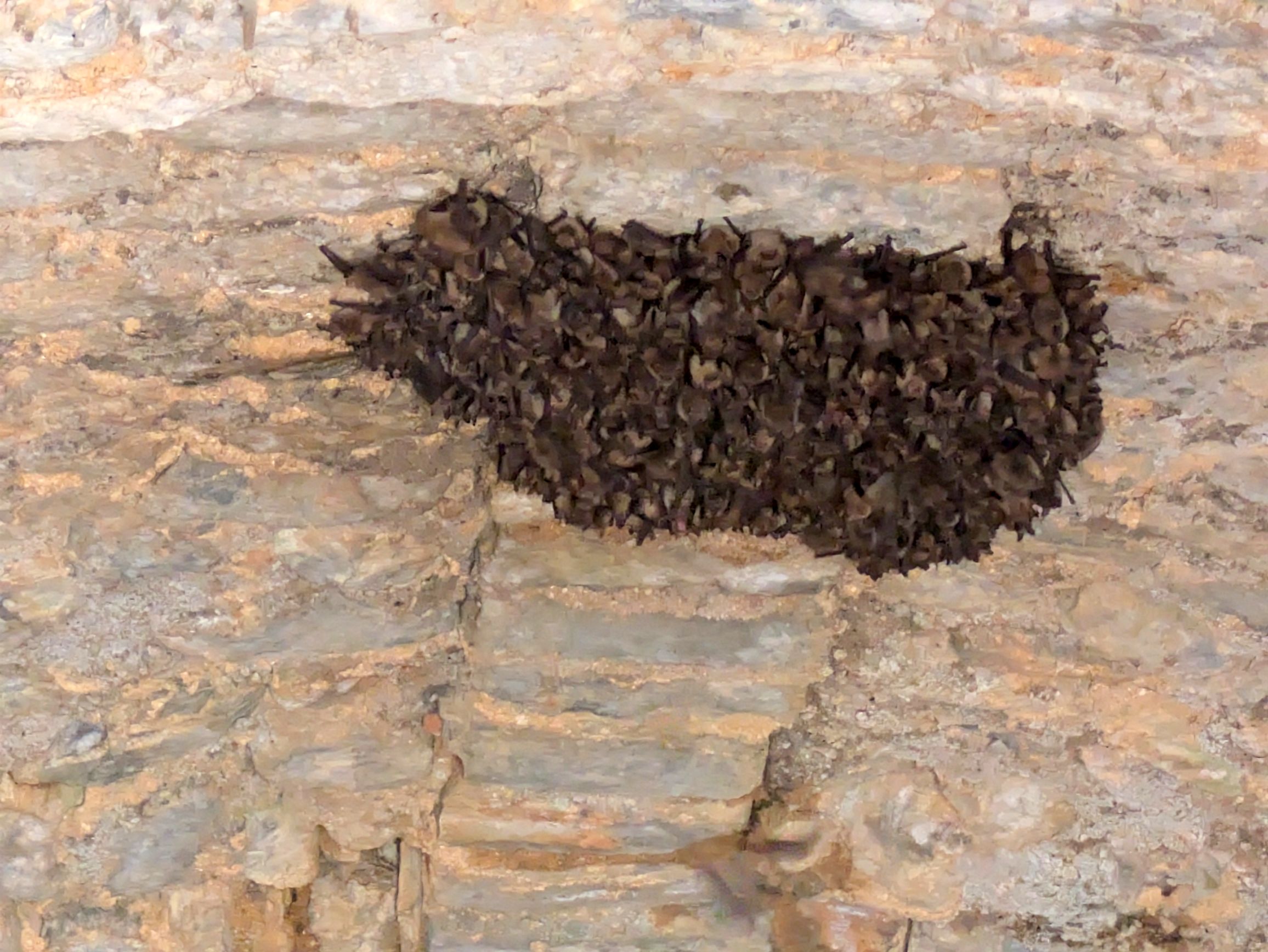
We did, however, see some (surprising!) wildlife. There were bats:

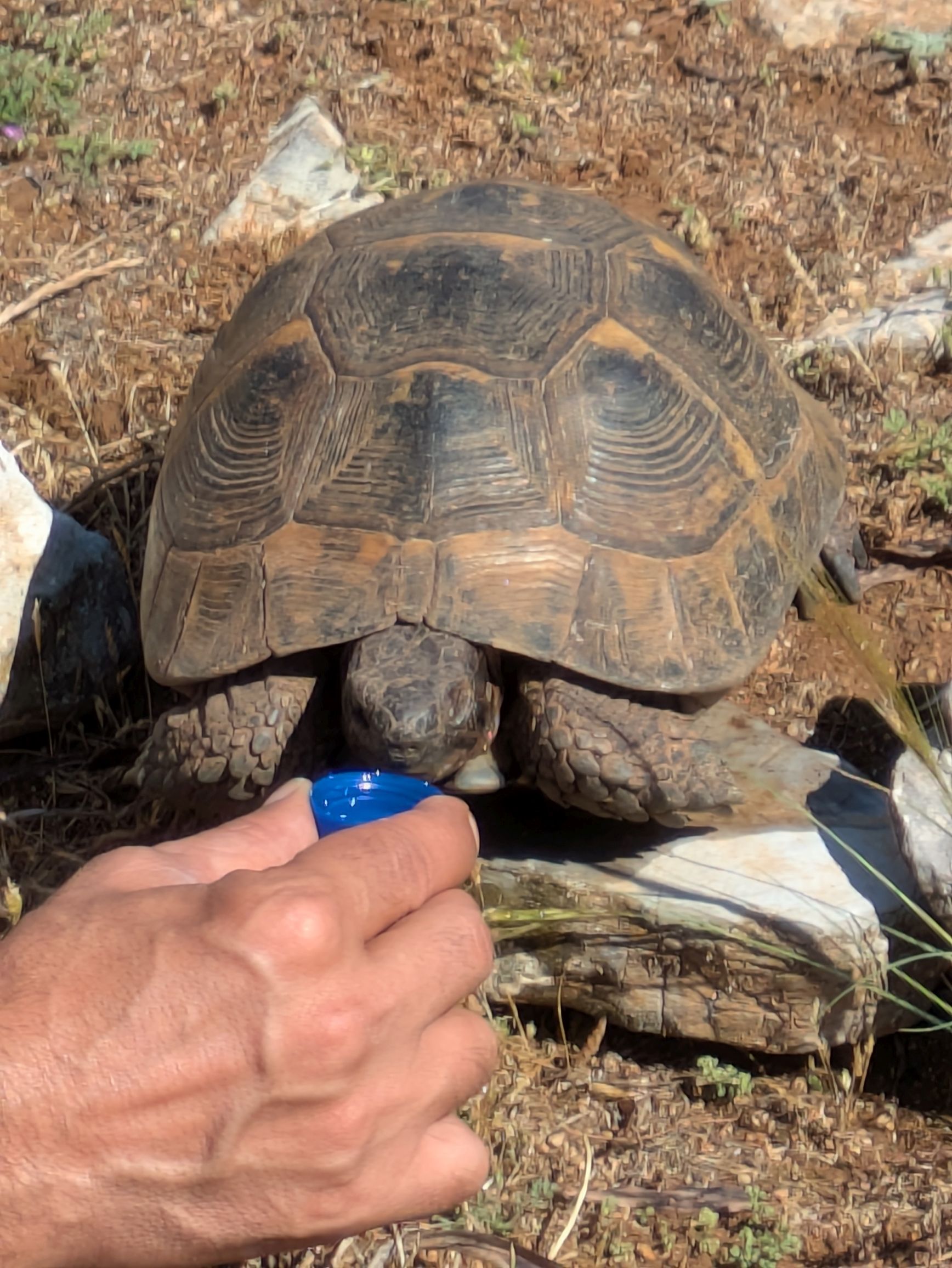
And a few tortoises. Nuri, a softie, shared his bottle of water with one of them:

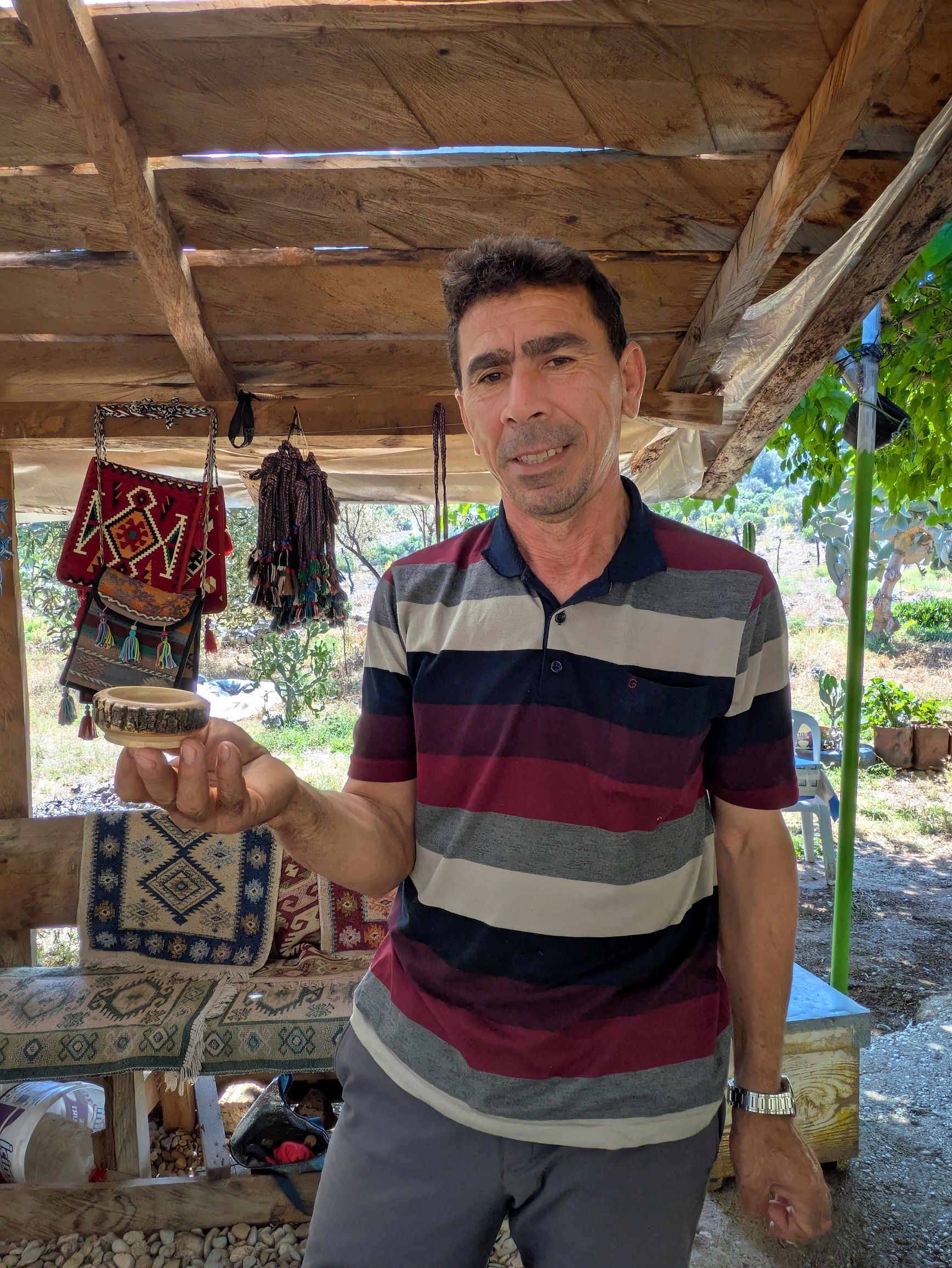
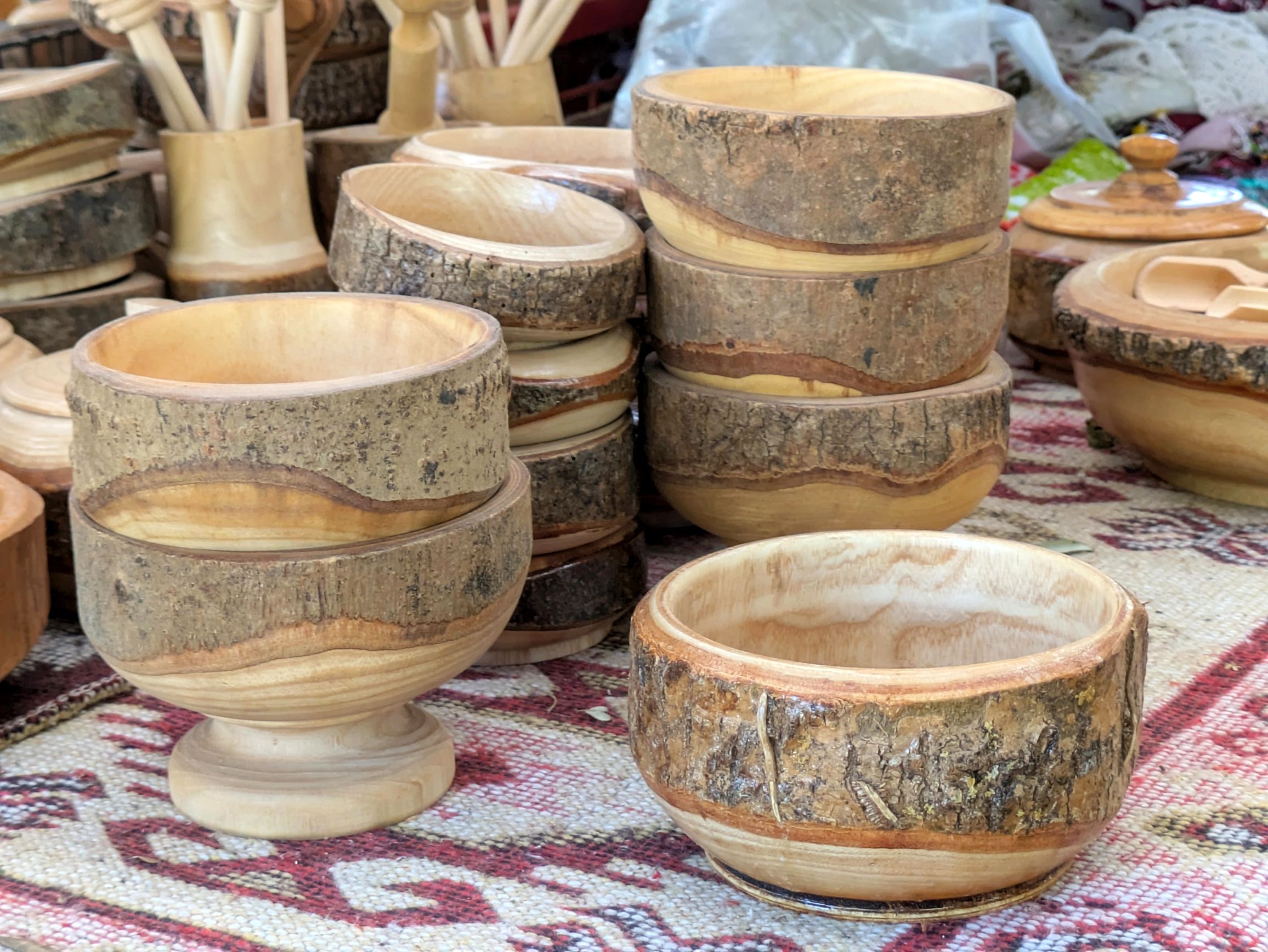
In the valley, we saw our first house, the home of a couple. They earned a living by farming as well as selling handmade walnut woodcraft to hikers passing by. Mutlu, invited us into his yard for hot tea and to see his handicrafts. The bonus was also getting to meet their two very sweet dogs! And I was pleased to purchase a small bowl Mutlu had made—a nice way to remember the trip.

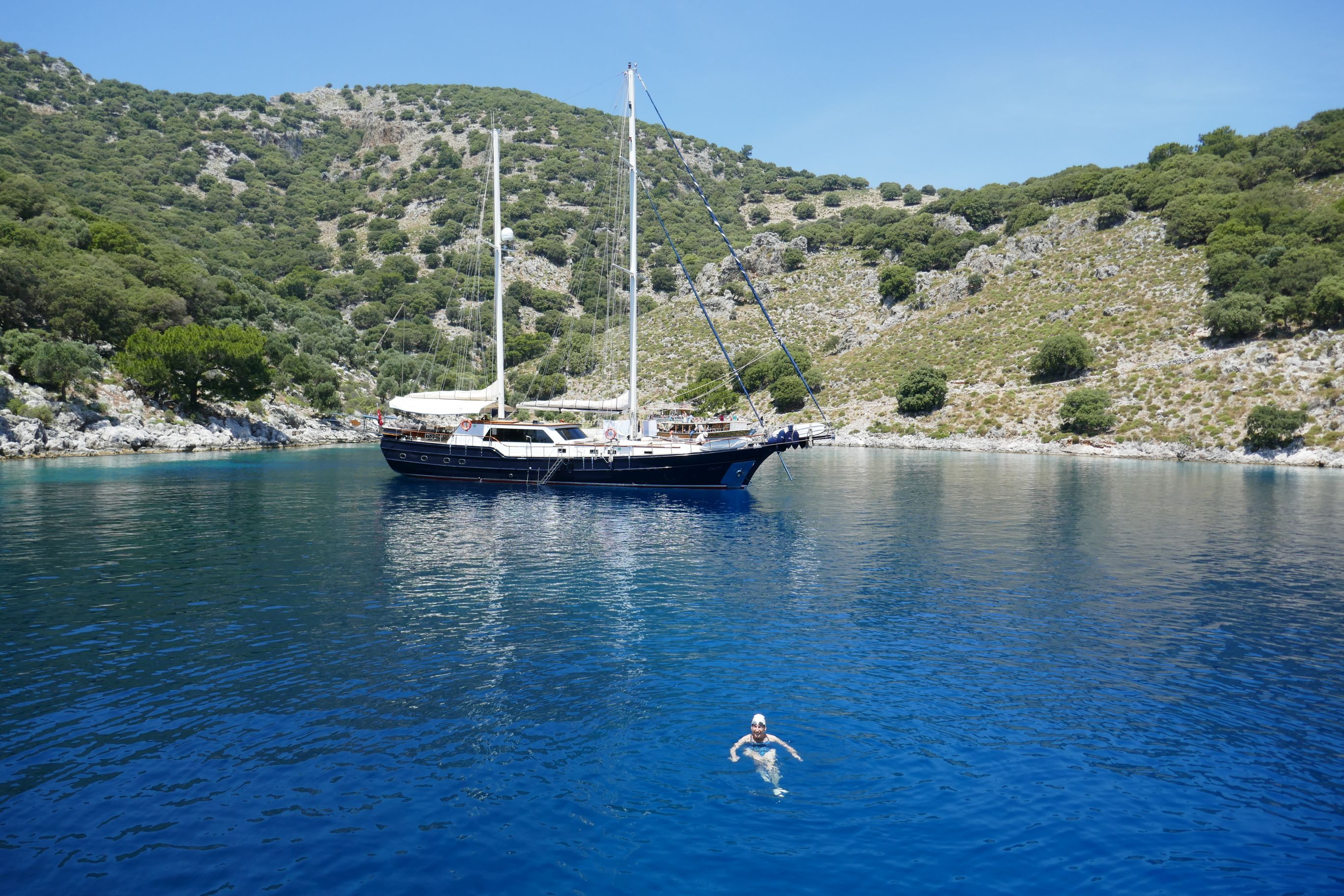
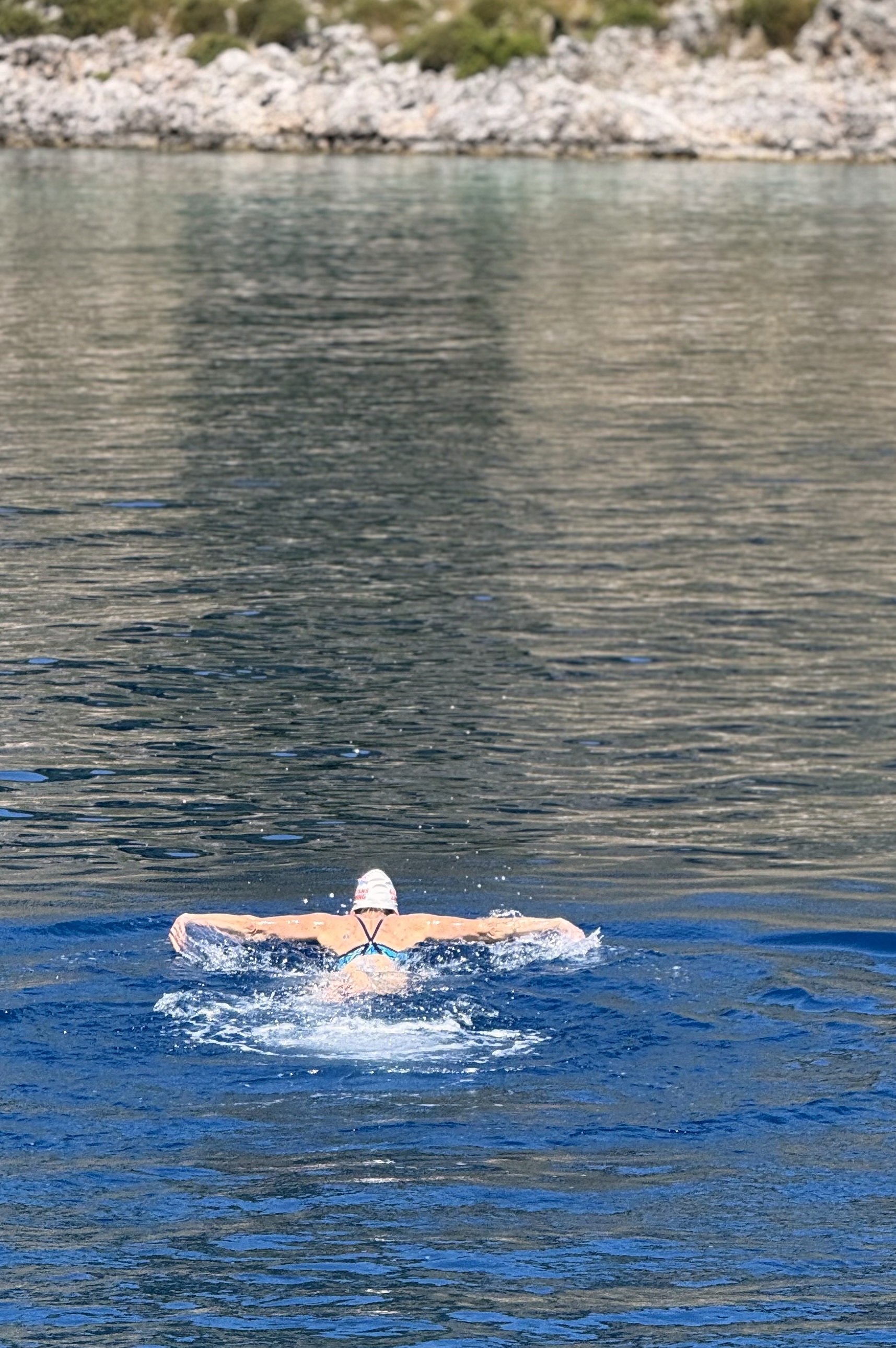
I was ready for a refreshing swim following our return to the boat, and refreshing it was! Brrr!

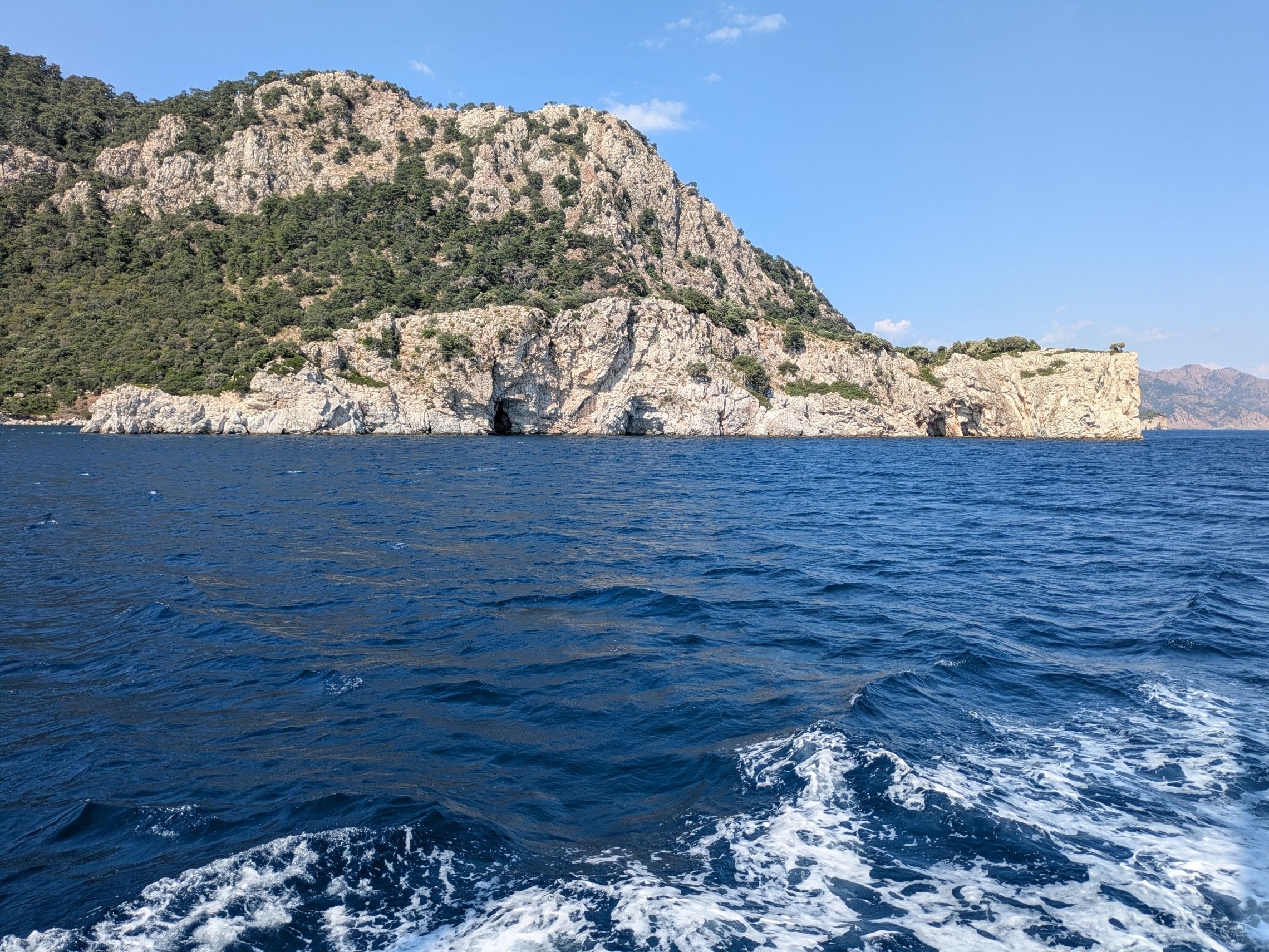
The afternoon ride to our next destination along the Turquoise Coast was a wet one. A storm had blown in, the seas were rough, and the rain came down in sheets! Along with two others from our group, we rode out the storm in the plastic-enclosed dining area on deck, keeping our eyes on the horizon to help prevent seasickness.

It started out nice enough…
…until it wasn’t.

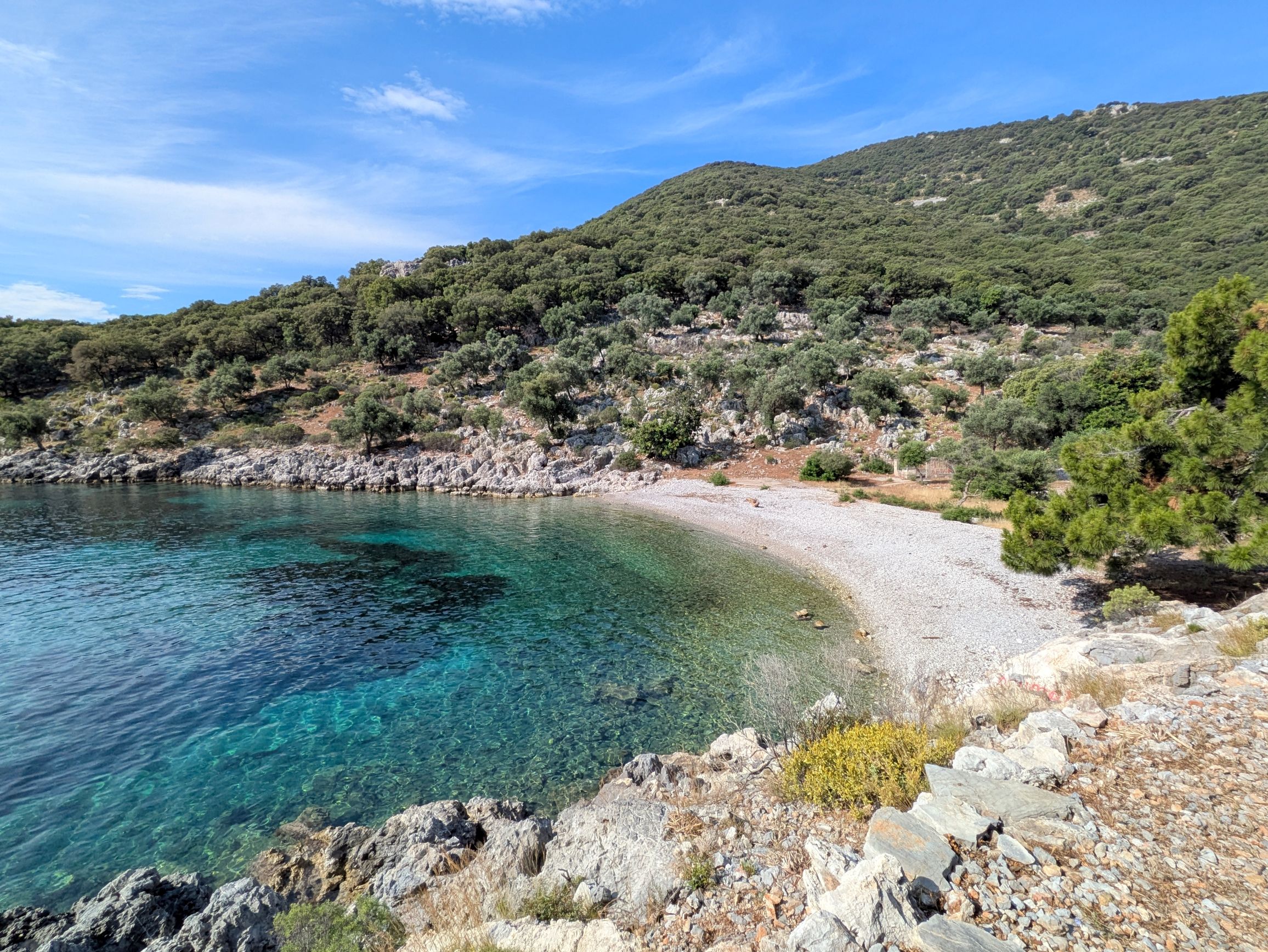
Once the storm cleared and we arrived at a cove for the night, it was gorgeous! Thankfully, it was nice and calm, so we could enjoy our dinner on deck.

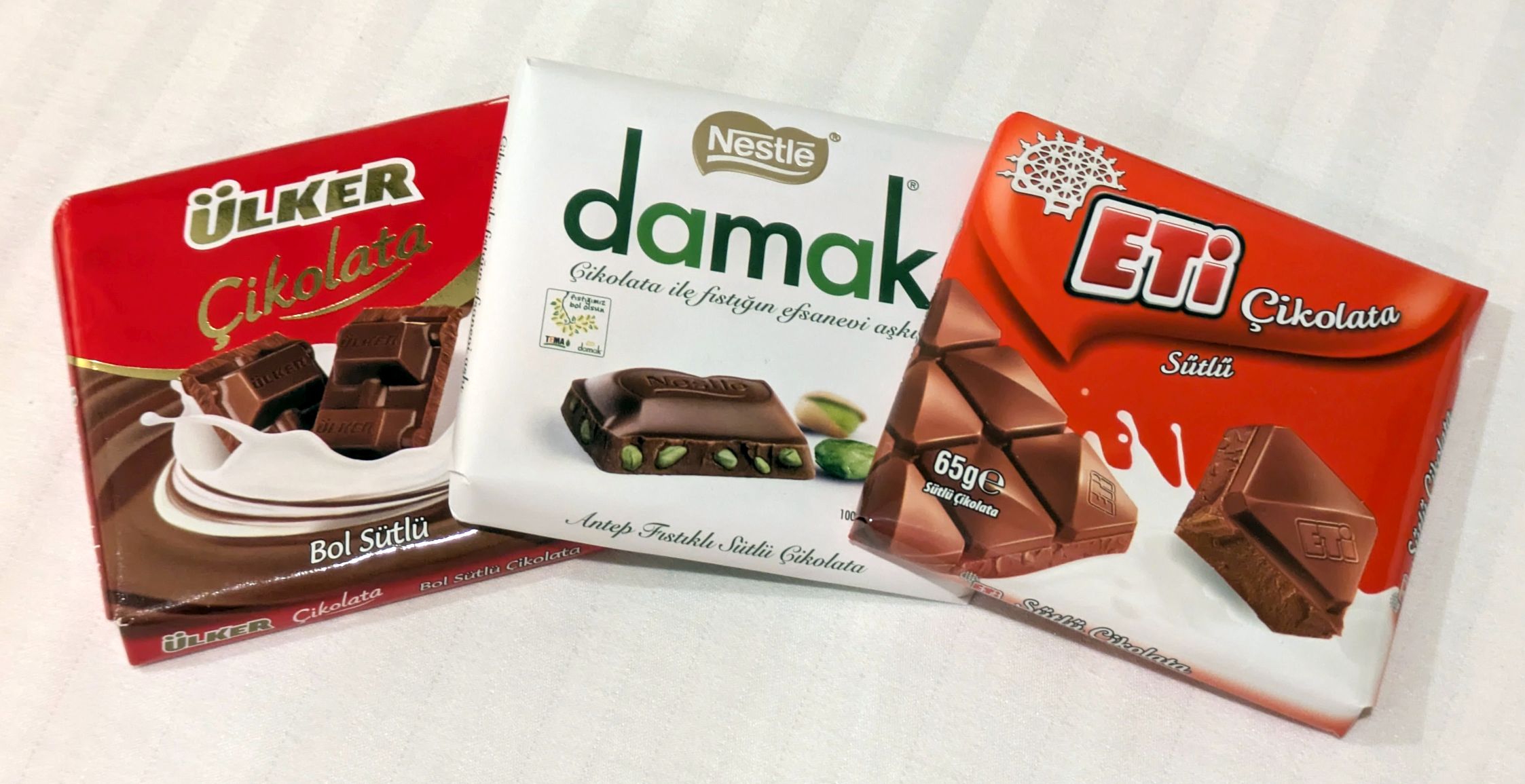
For my post-dessert dessert, I pulled out some of my chocolate haul from around Turkiye. Ulker (on left) is the company that bought Godiva and produces it for the U.S.A. in a town outside of Istanbul.

Coming up next: TURKIYE #14: A RIDE UP THE DALYAN RIVER TO KAUNOS

TURKIYE #12: HIKING KAYAKOY, A GREEK “GHOST TOWN”

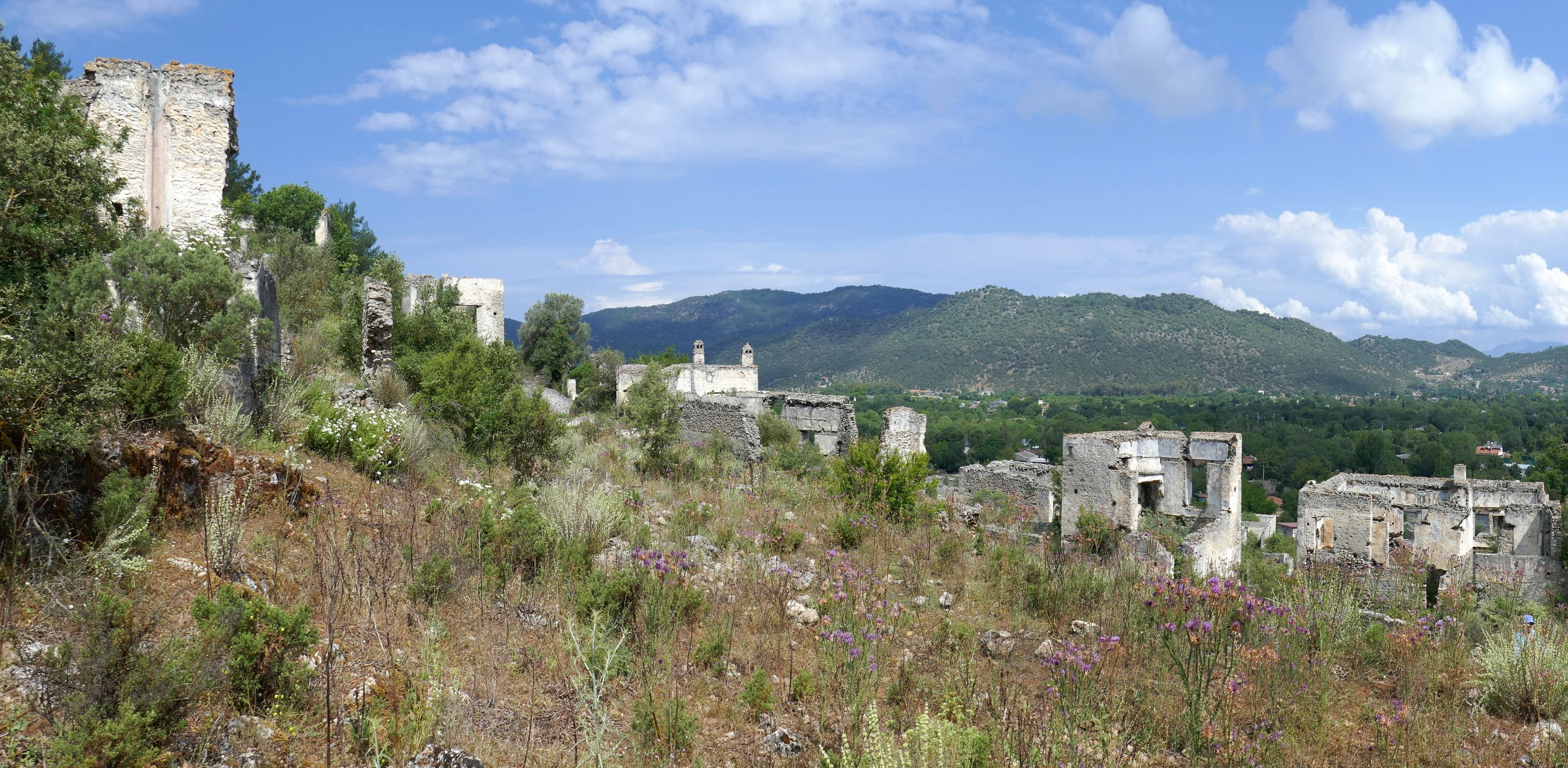
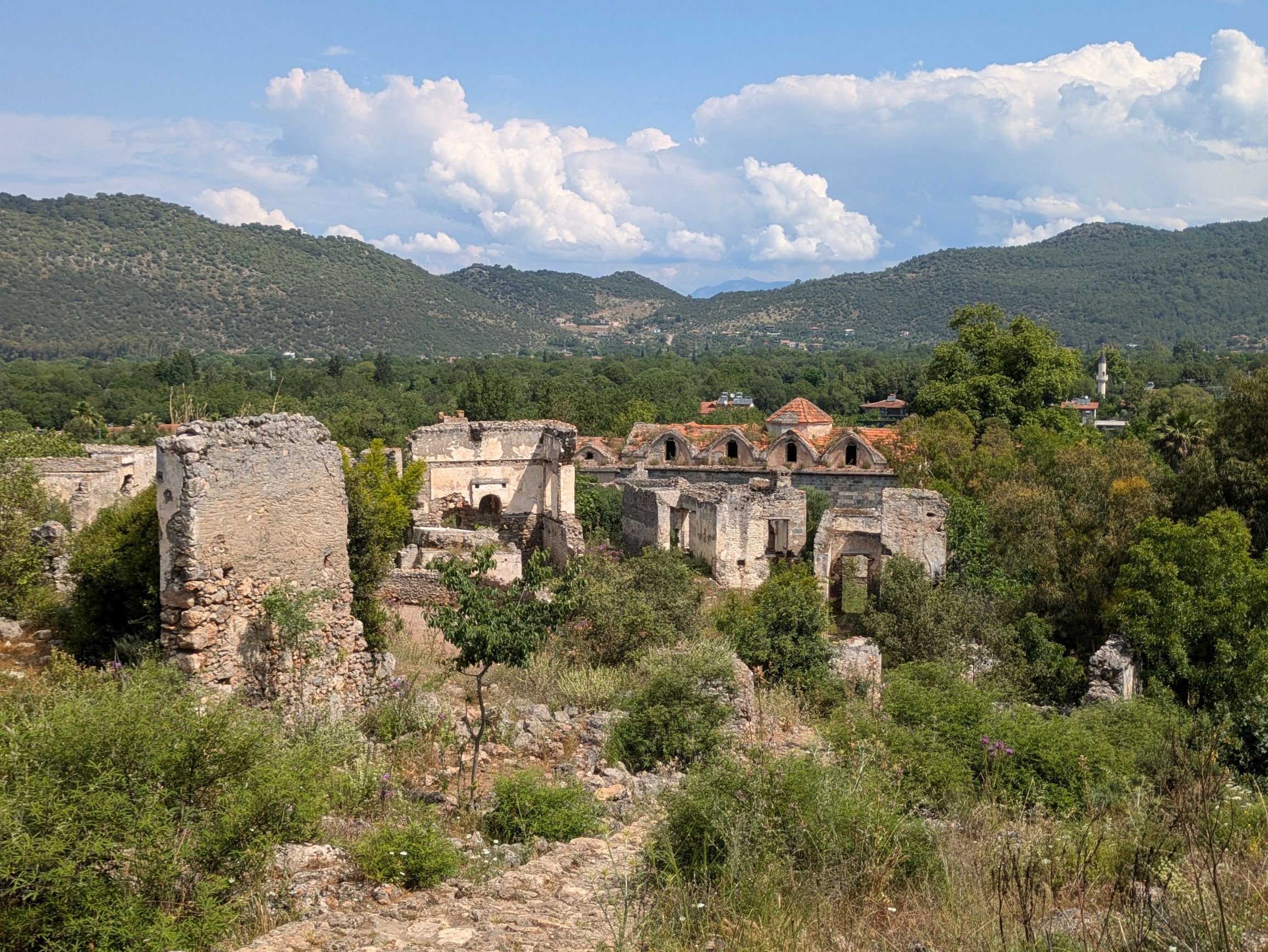
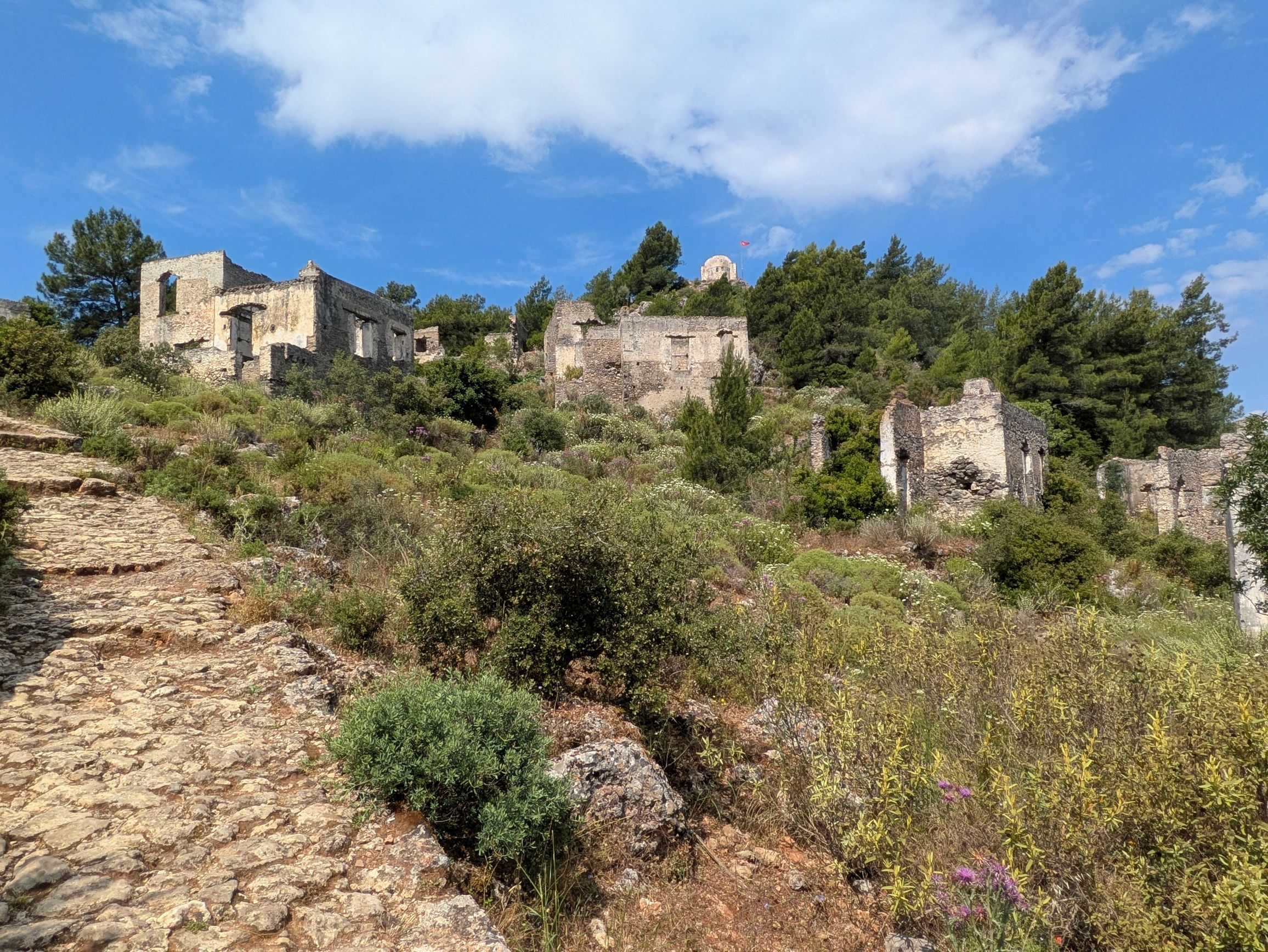
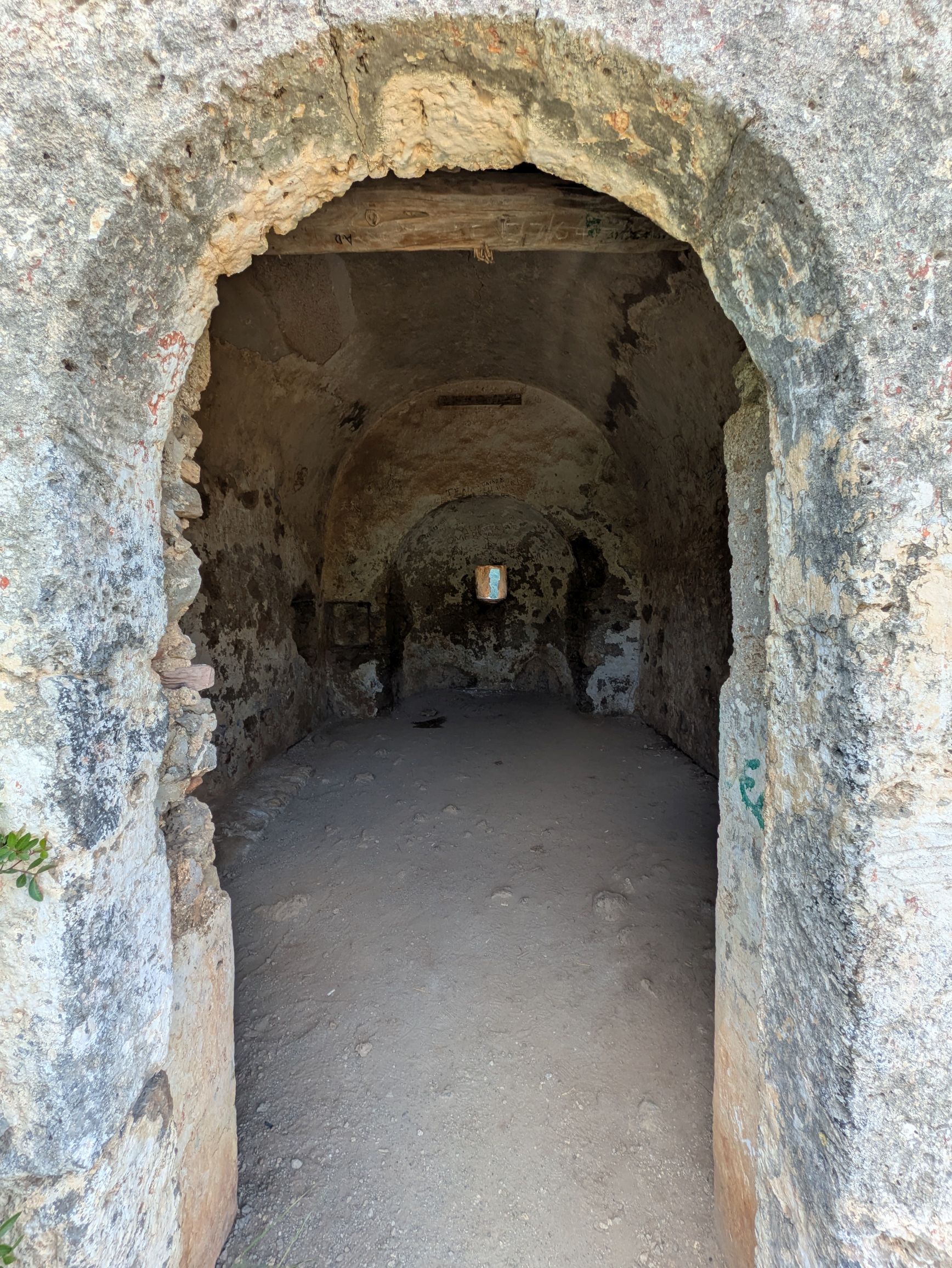
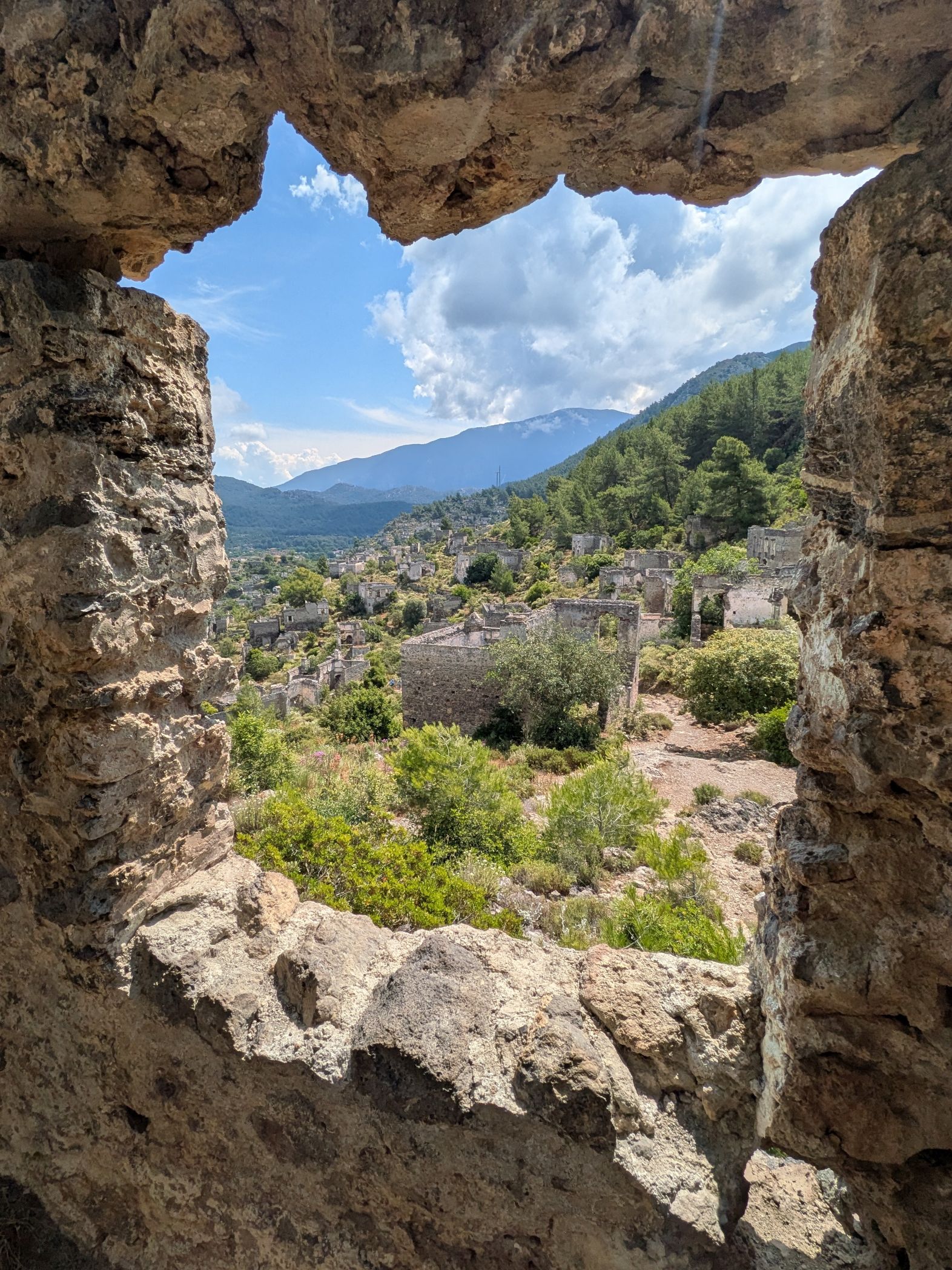
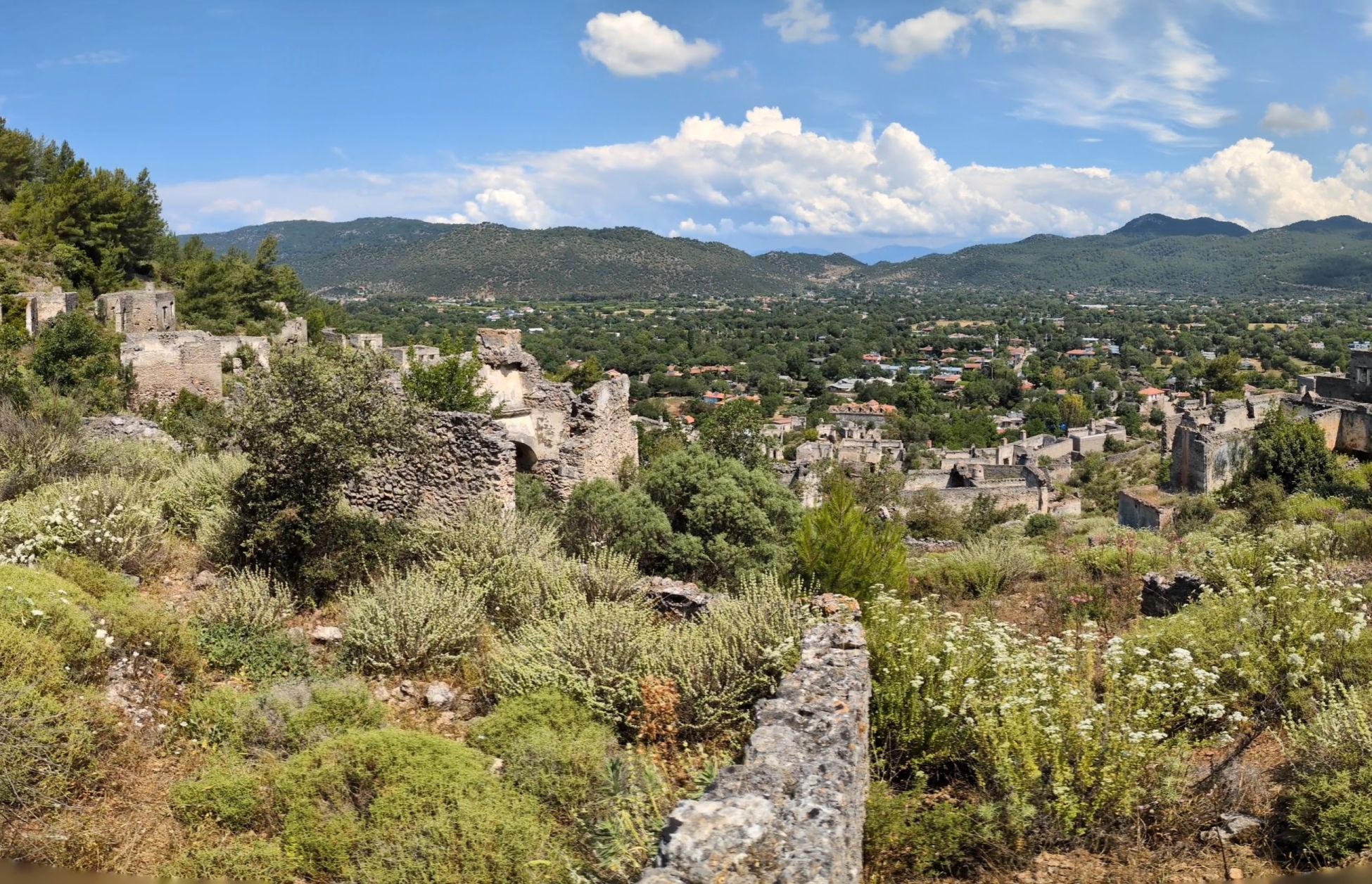
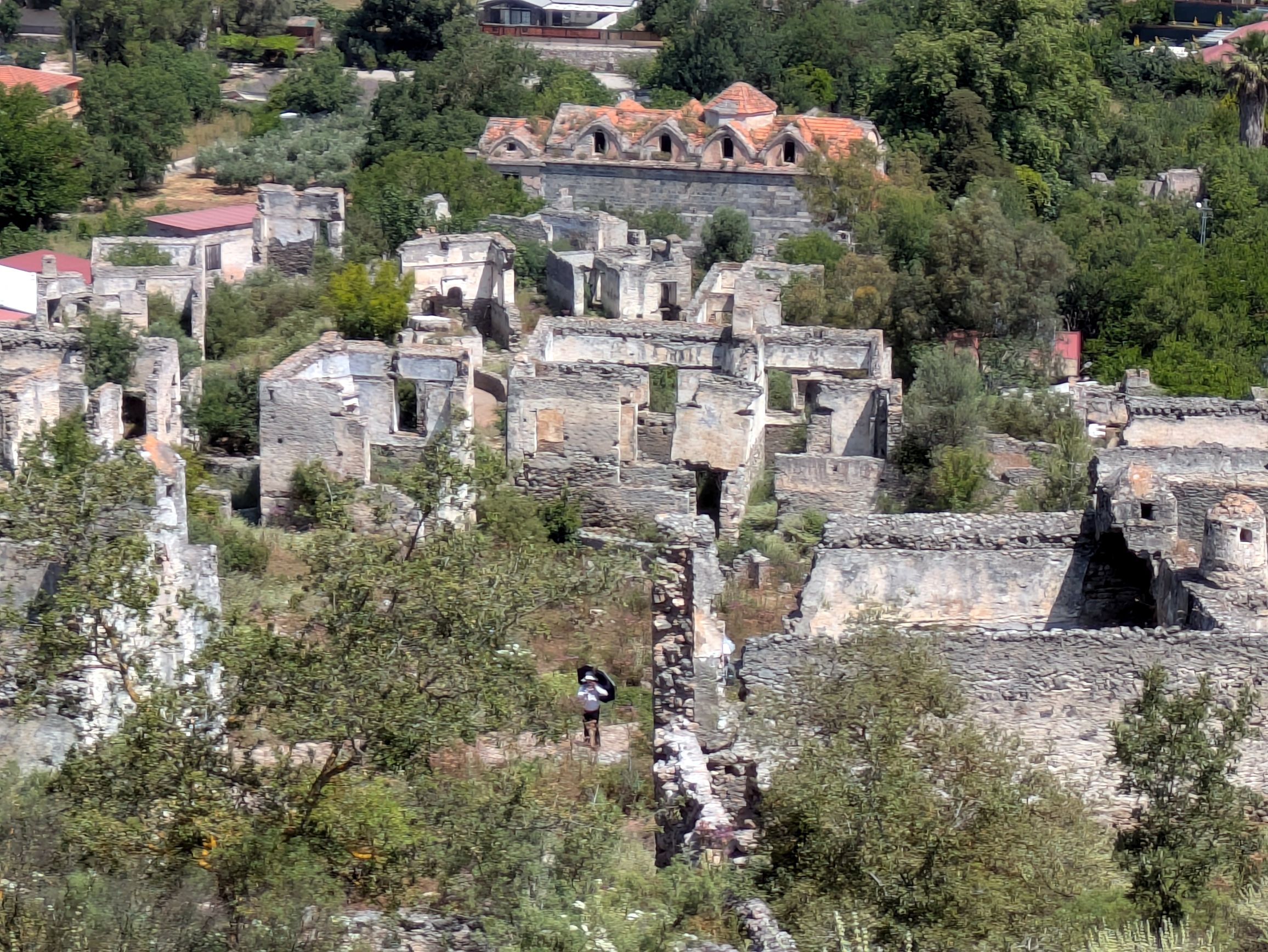
Our boat was anchored in a quiet cove overnight, and we were fortunate to wake up to such a beautiful day for our hike in the Greek “ghost town” of Kayakoy, located south of Fethiye. Following breakfast on board, the crew took us to shore, and we were transported to Kayakoy by minibus.

(For all photos, click on the image for a full screen view.)
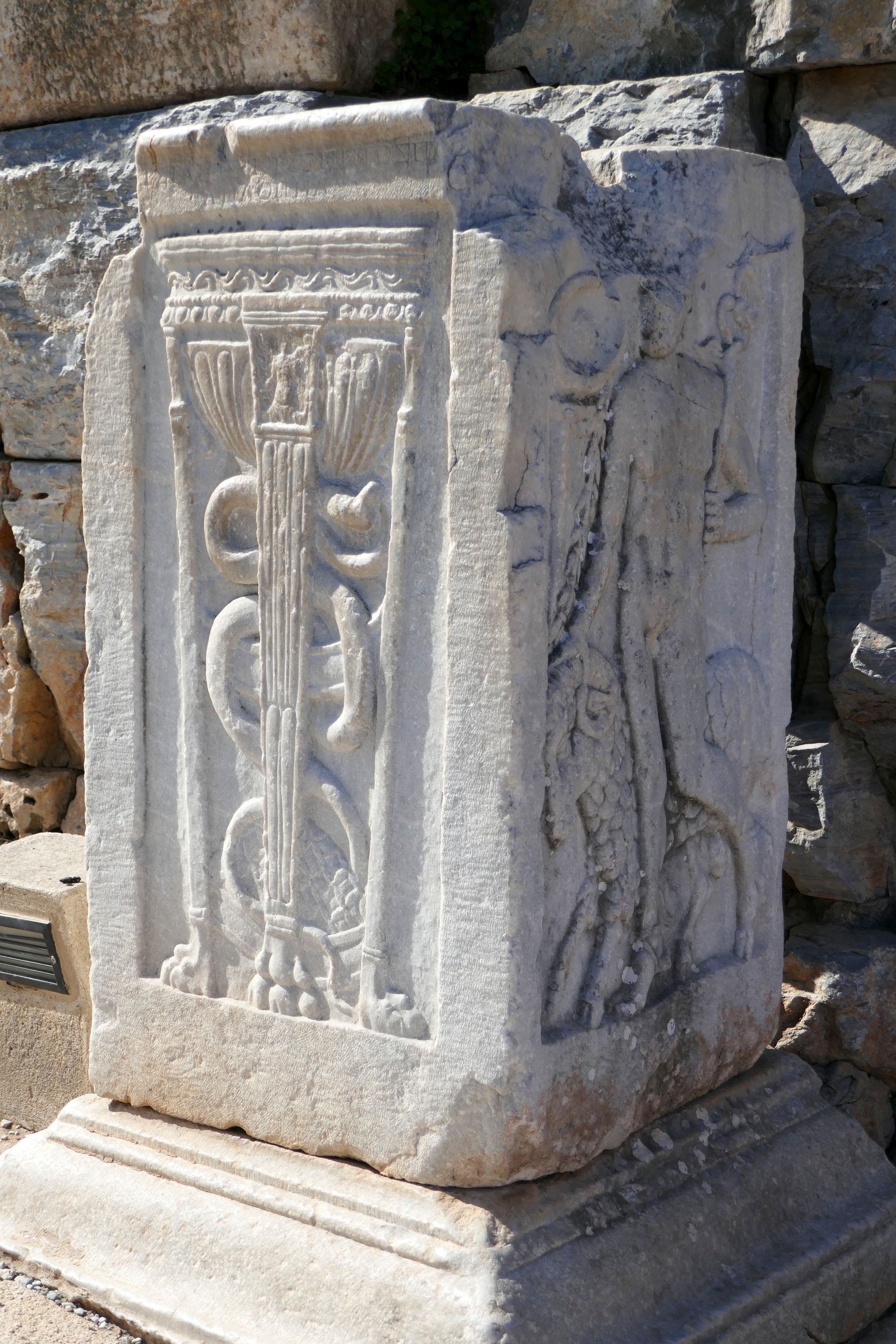
Kayakoy has such an interesting—but sad—history. The people of this town were Greek Orthodox Christians and lived in relative harmony with their Turkish-speaking Muslim Ottoman rulers from the 14th century until the 20th century. In 1914, a campaign was started by the Muslims who wanted the Greek Christians out of Turkiye. In 1919, 6,500 villagers from Kayakoy (as well as other Greek Christians in Turkiye) were forced to leave by the government, and many died walking the 110 miles to cross Turkiye’s border. Others were forced into Ottoman labor.

From 1919-1923, the city depopulated, and then in 1923, the Greek and Turkish governments agreed on a population exchange. The Greeks living in Turkiye were relocated to Greece, and the Muslims in Greece were sent to Turkiye. All these people were forced out of their homes, soon to be occupied by newly exchanged residents. The Muslims who were sent to Turkiye refused to live in the homes of the previous Greek occupants, however, because many Greeks had died in their homes.  They said there were “ghosts” in those houses, so that is how it became an abandoned “ghost town.”

In 1954, some of the regulations of the treaty were lifted, so some of the victims returned to what they had viewed as their country—the place they had lived their entire lives until they were forced into exile.

Currently, 925 people live in the village, but most of the previously abandoned structures sadly remain that way.

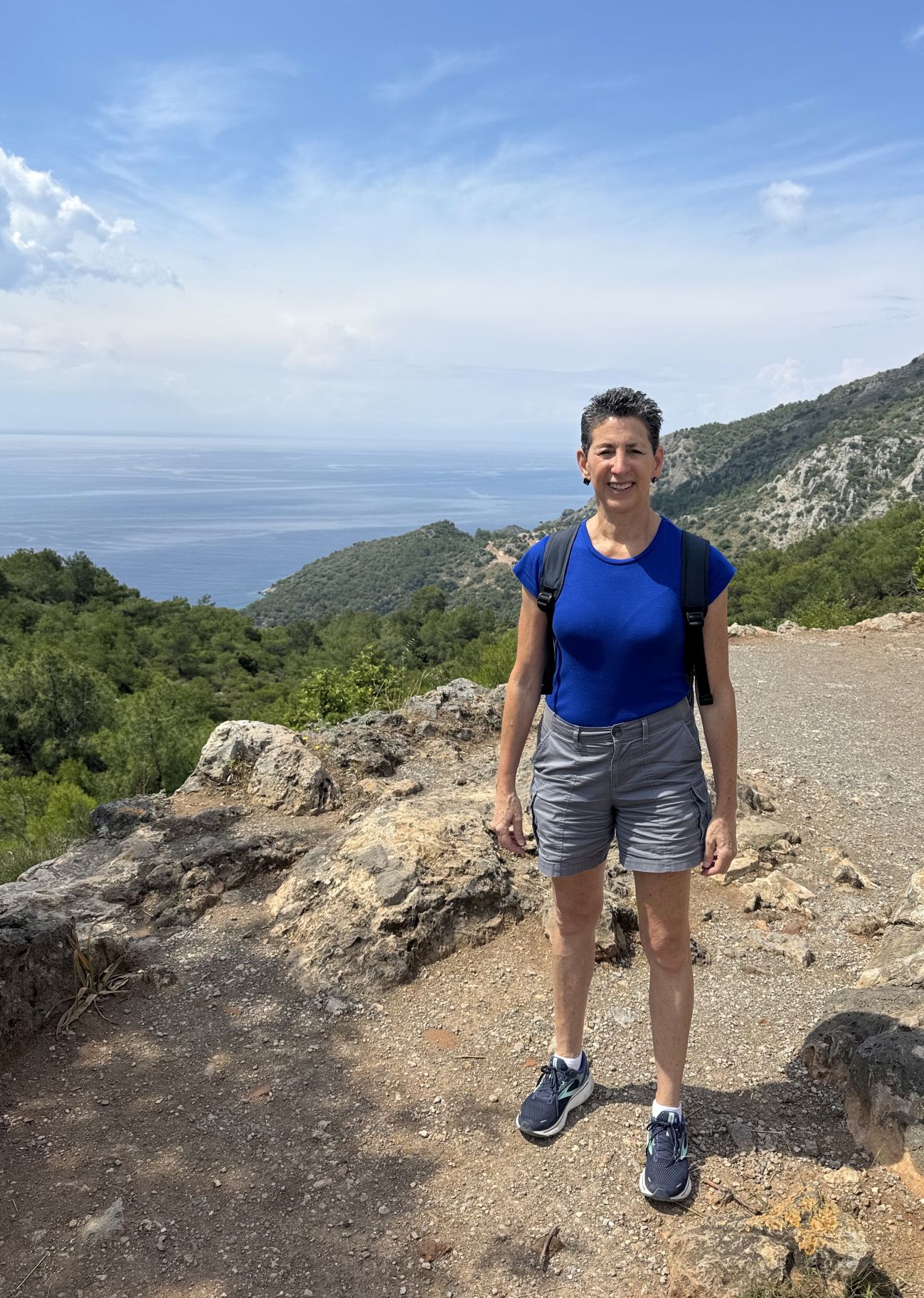
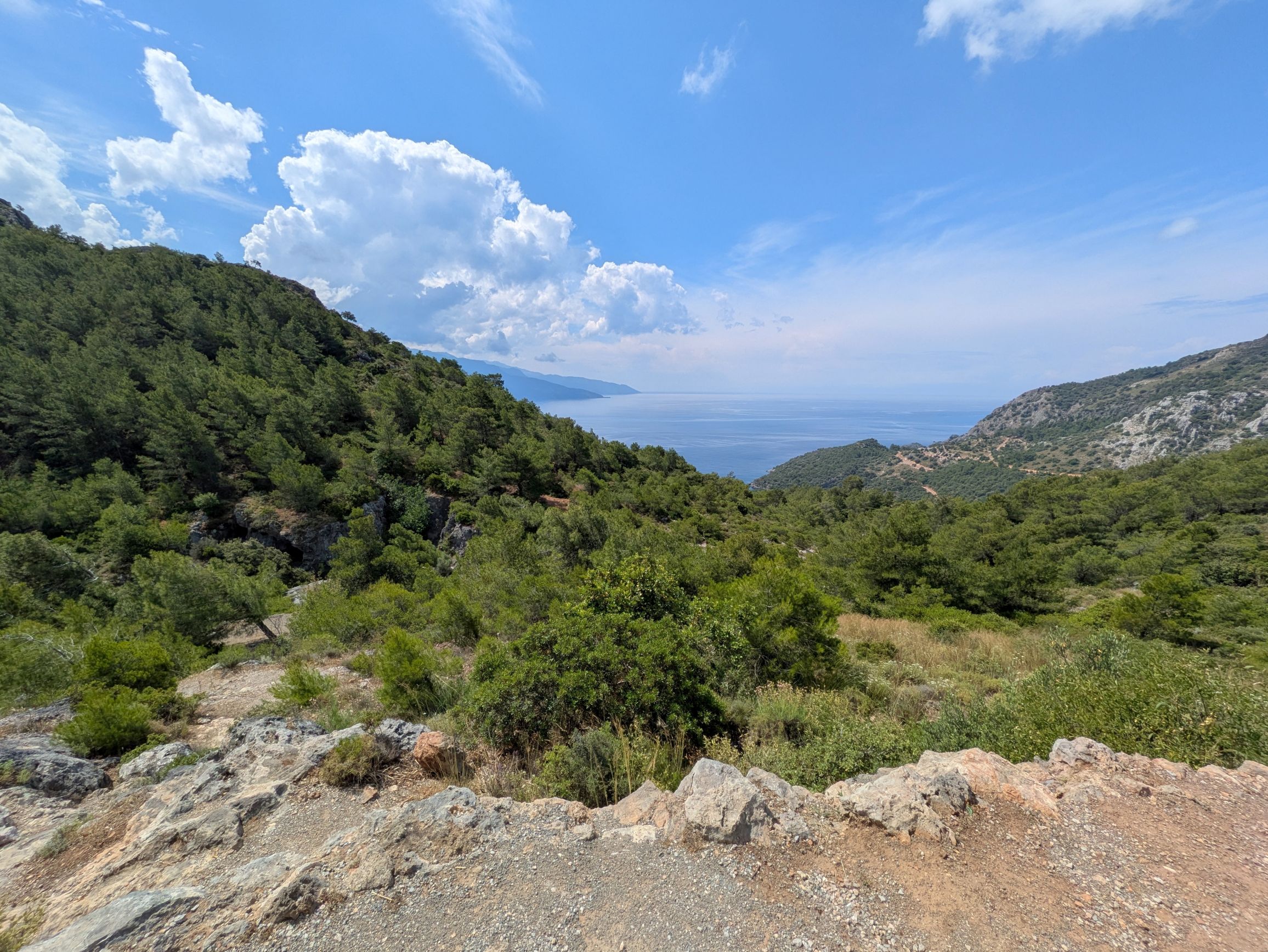
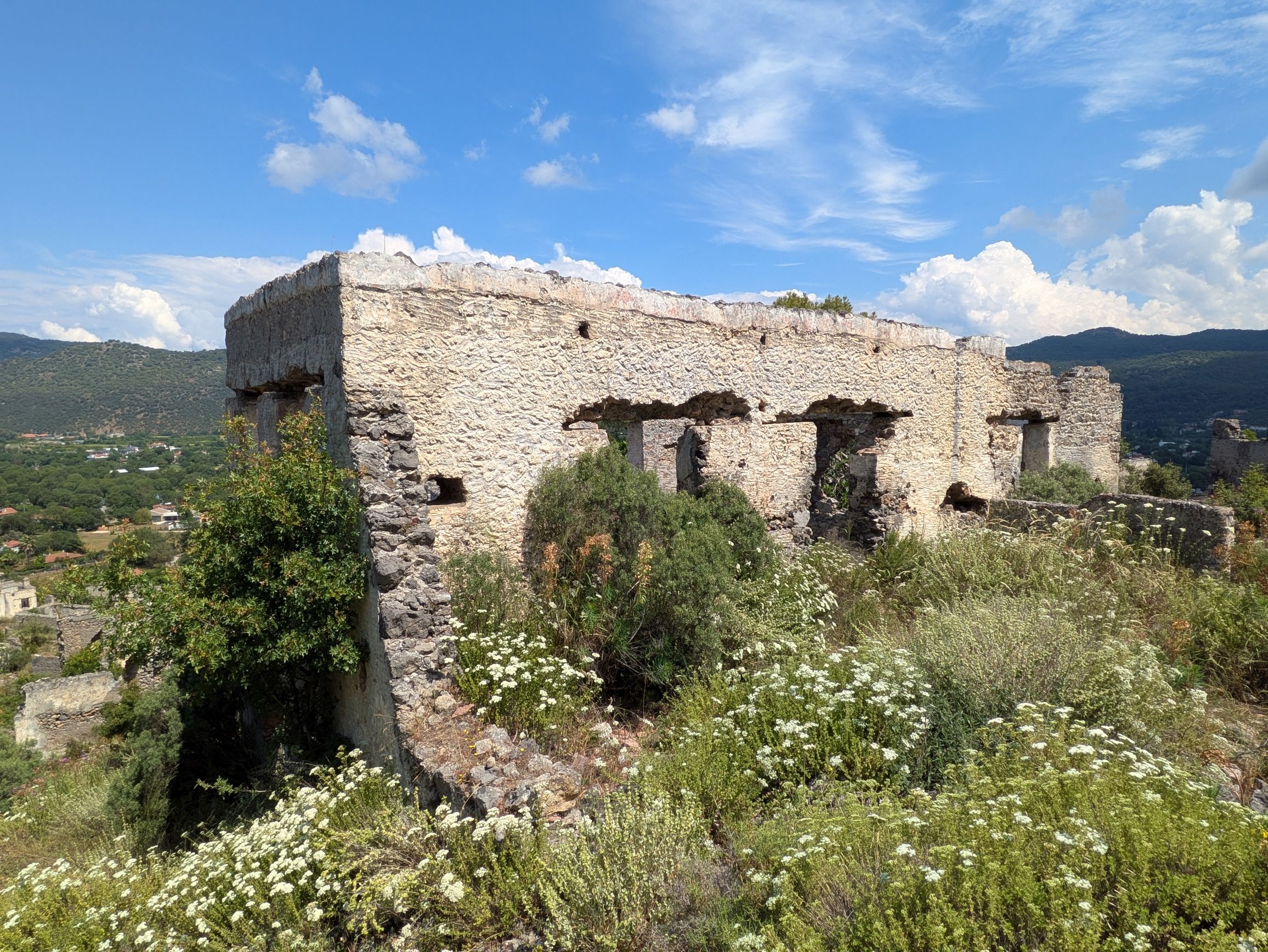
The hike, very steep at times, was beautiful and well worth the effort. The views were spectacular at the top, and the abandoned homes were quite photogenic.

The building with the flag at the top of the hill was our destination. It was a steep climb!
I’m almost there!
I made it!
This view was our reward.
Another hiker offered to take our group photo.

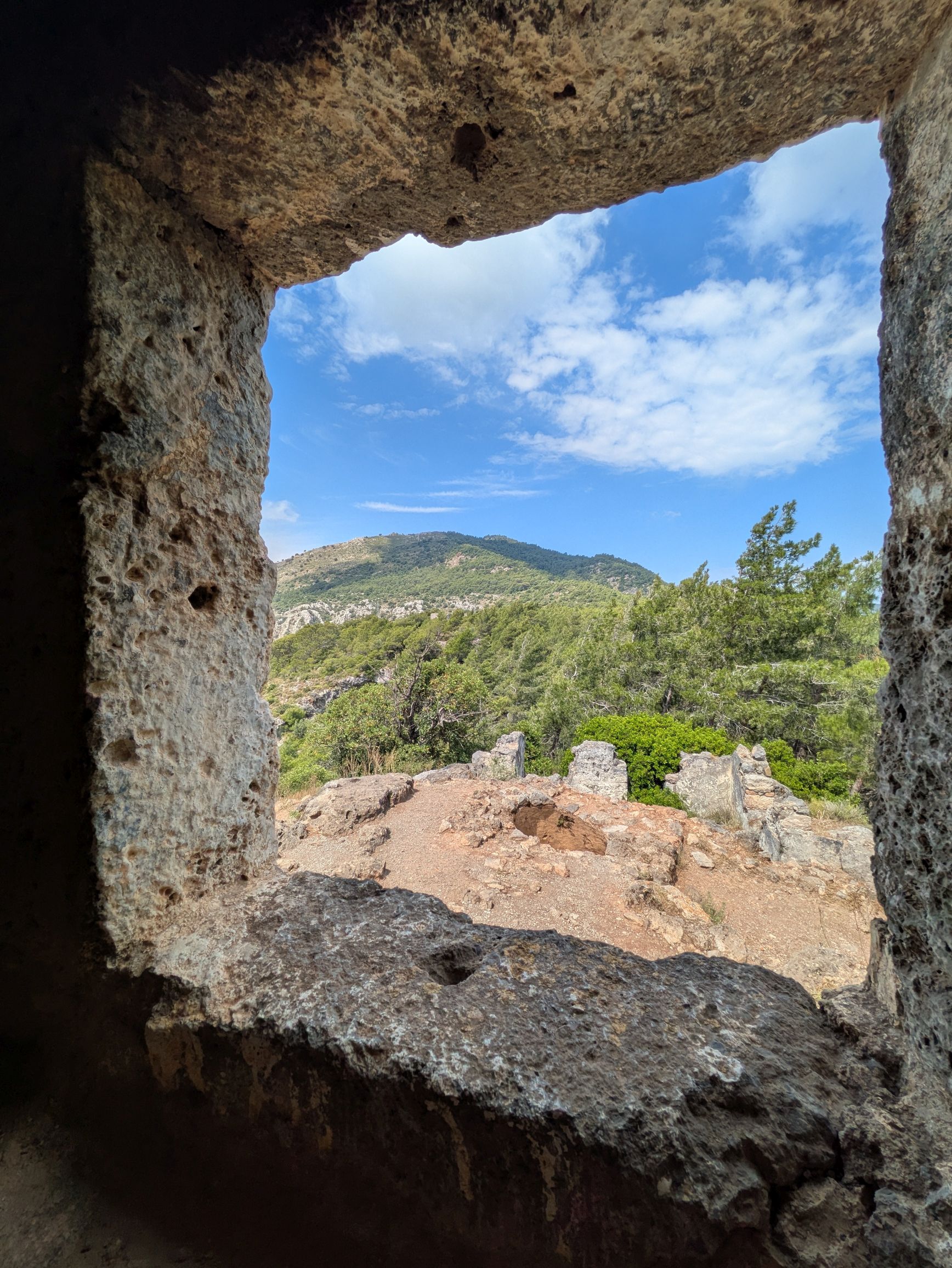
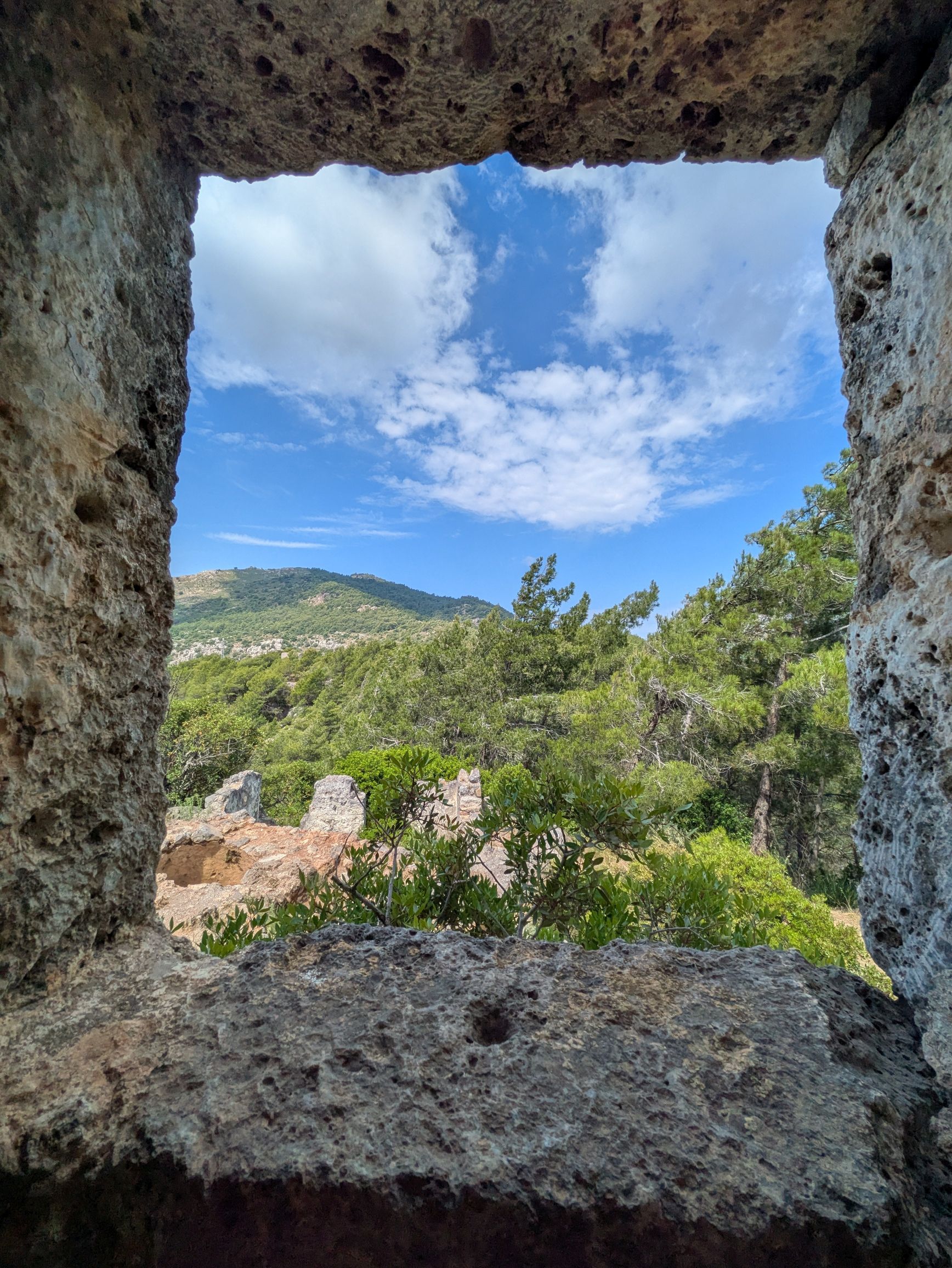
Views from the inside looking out:

Nuri, our tour leader, leading the way

Back in the little village of Kayakoy, we had some free time to wander around:

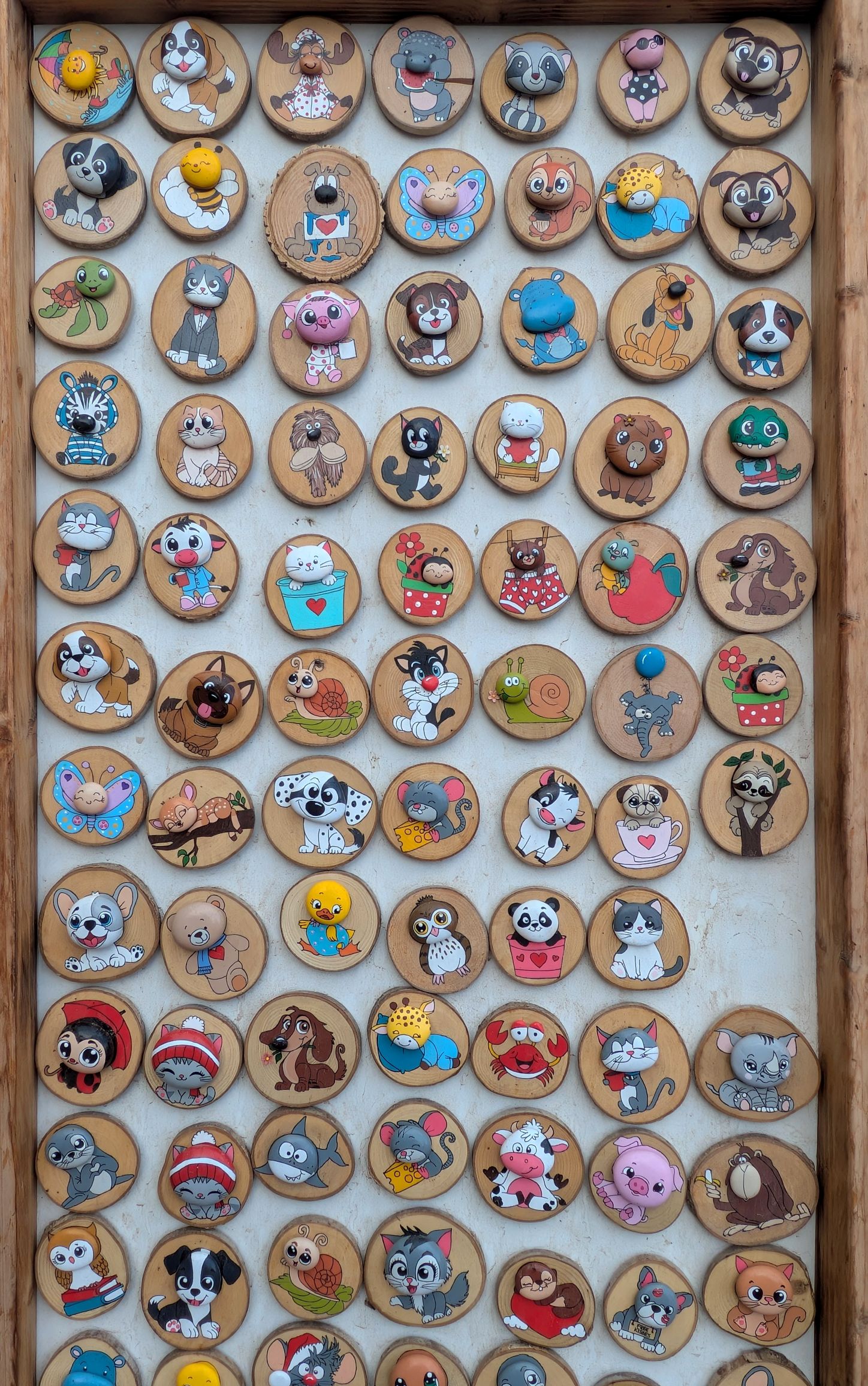
I fell in love with these hand-painted wood and stone magnets and purchased a couple of them.
The view from the bus on our ride back to the boat,

Next up: TURKIYE #13: HIKING & SWIMMING THE TURQUOISE COAST

TURKIYE #11: TRAVELING TO THE TURQUOISE COAST

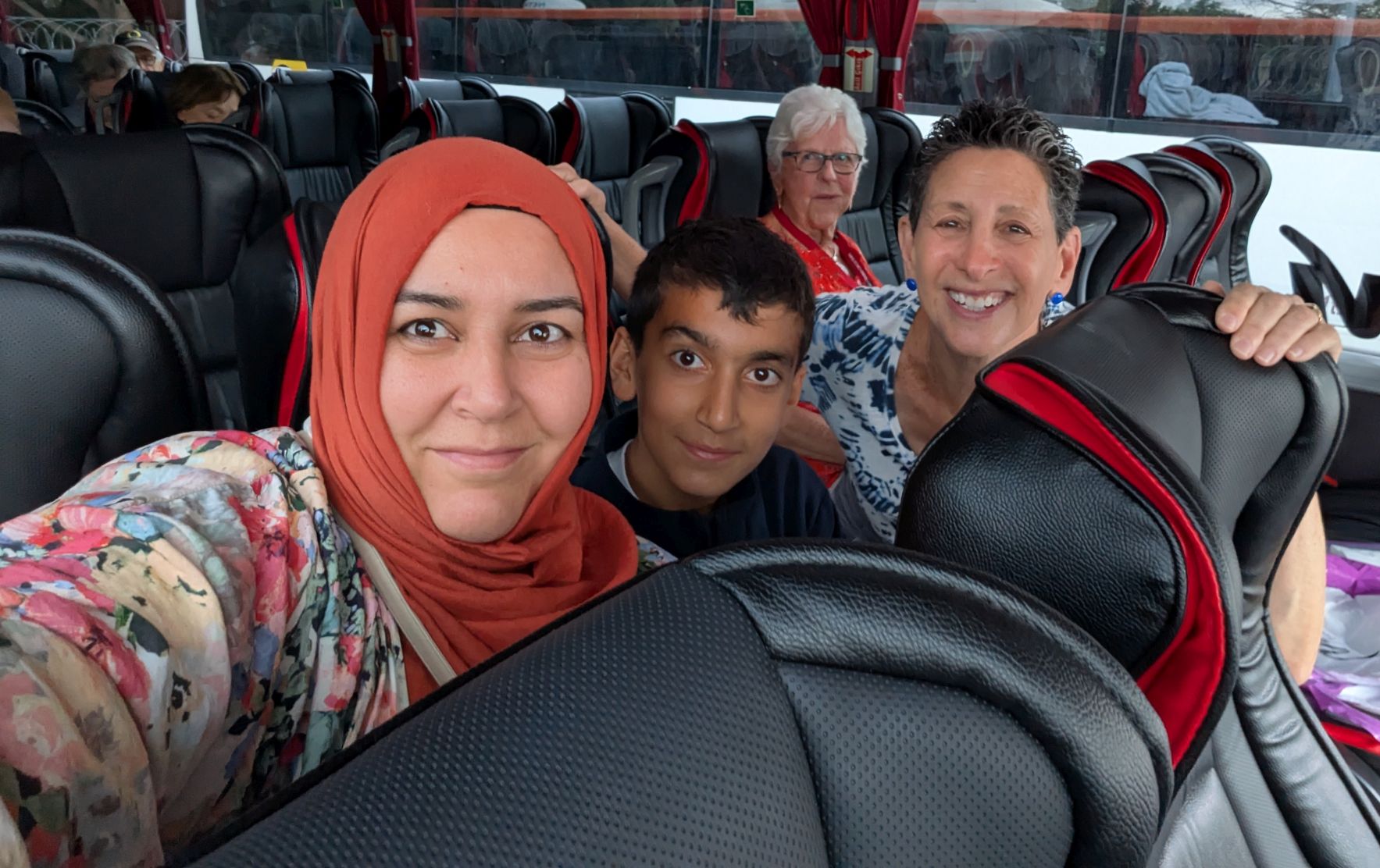
Traveling days on the bus are opportunities to learn about the culture of the country and towns we are visiting from our tour leader. Throughout our tour, Nuri shared a lot of interesting information about Turkiye. The following are a few completely unrelated tidbits:

English Language: Although English is taught in the schools beginning in the fourth grade and continues through university, there are no English-speaking countries surrounding Turkiye. In the small towns where English-speaking tourists rarely visit, there are no opportunities for the locals to practice conversational English, so they end up losing what they learned.

Homelessness: There are very few homeless in Turkiye, because of their belief that every Turkish citizen has a right to a home. The only homeless seen in Turkiye are most likely Syrian refugees.

Health Tourism: Turkiye is one of the top eight countries for “health tourism.” IVF costs only $5,000. Need more hair? A full hair transplant will set you back only $3-4,000. Prefer eye surgery or a dental implant? Turkiye is popular for those reasonably-priced procedures as well. In all, approximately five million people travel to Turkiye for health tourism each tour. The numbers spiked post-COVID for vaccines and health care.

Godiva Chocolate: In 2018,the Godiva company was purchased by Ulker, a Turkish brand of chocolate and cookies. Currently, all Godiva chocolate exported to the U.S.A. is currently made in a small city outside of Istanbul.

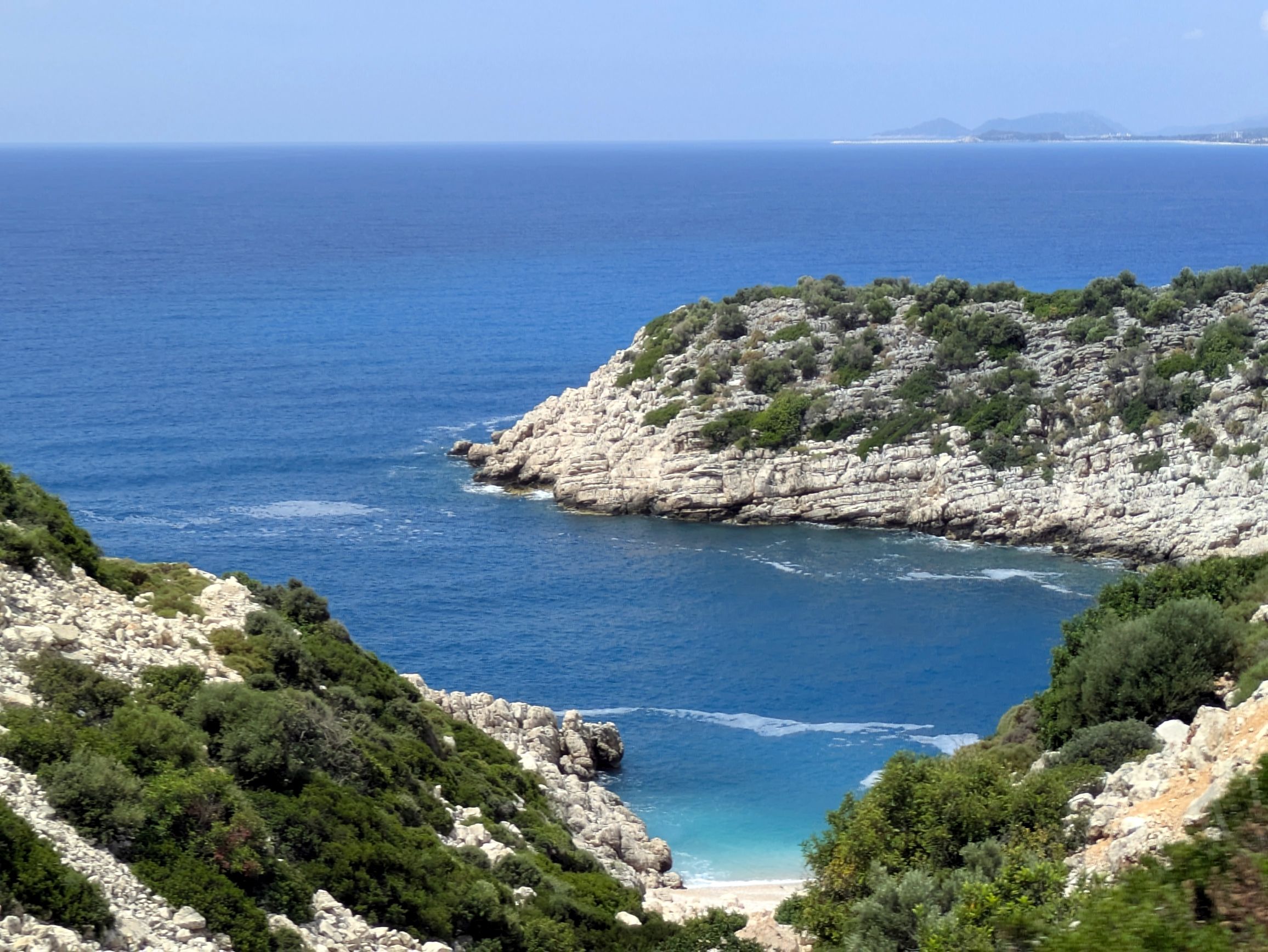
Longest Cable Car in Europe: From the Turquoise Coast, known as the “Turkish Riviera,” there are beautiful views of the Taurus Mountains, which we saw during our bus ride. On Mt. Olympos, they have the longest cable car ride in Europe, descending from an altitude of 7,759 feet and traveling 14,301 feet. You can throw snowballs at the top and go swimming in the sea when you get to the bottom!

(For all photos, click on the image for a full screen view.)
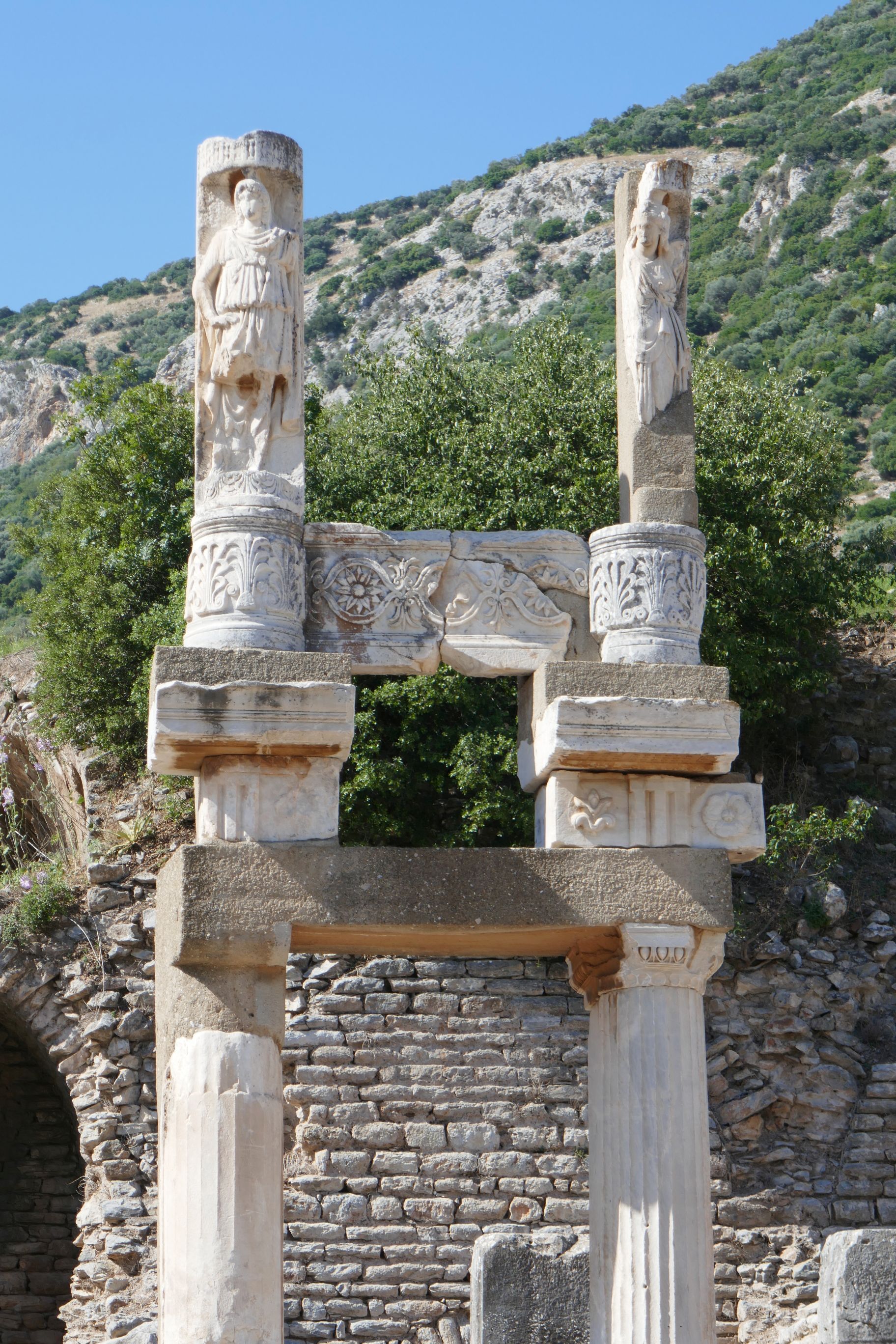
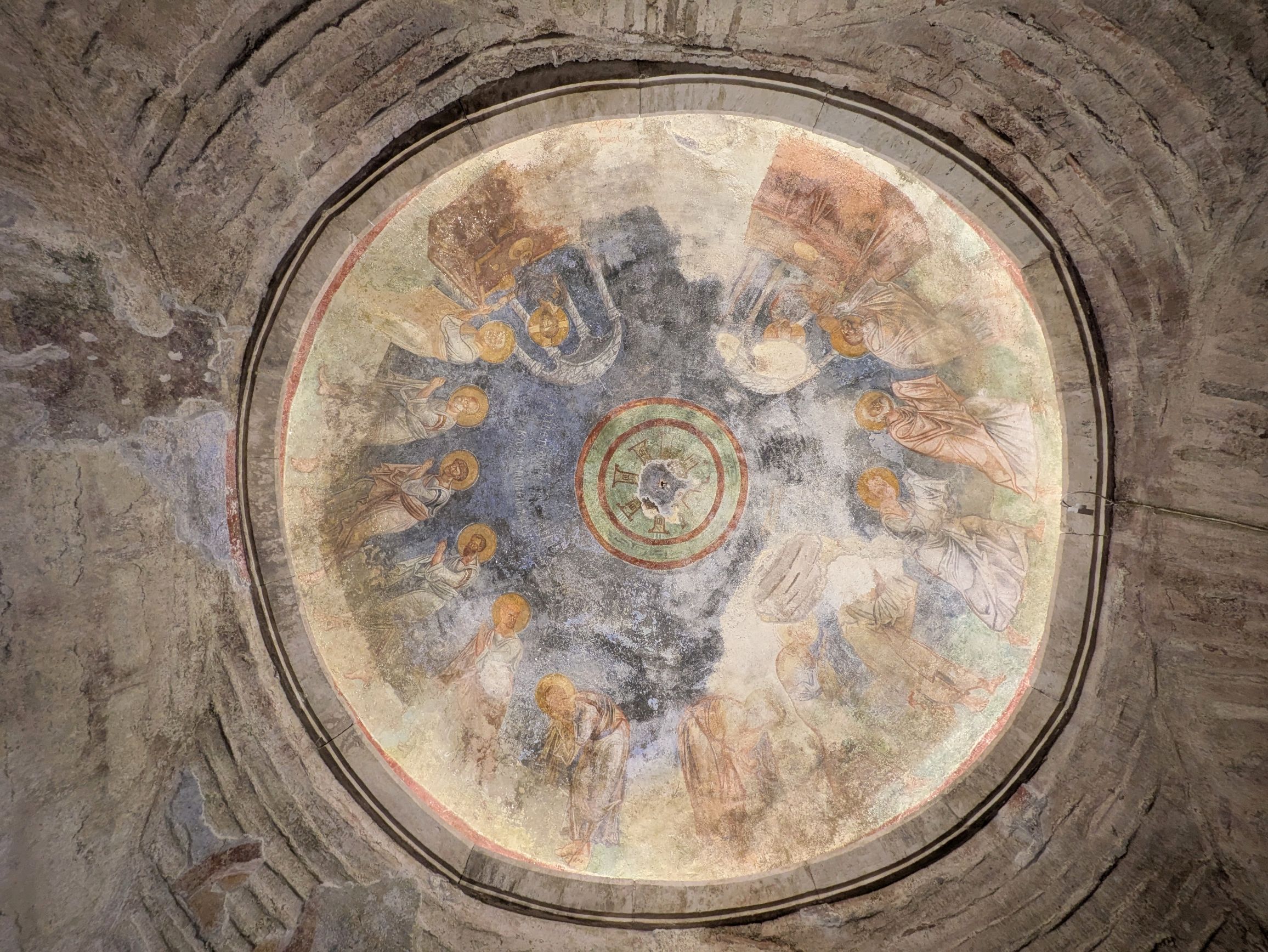
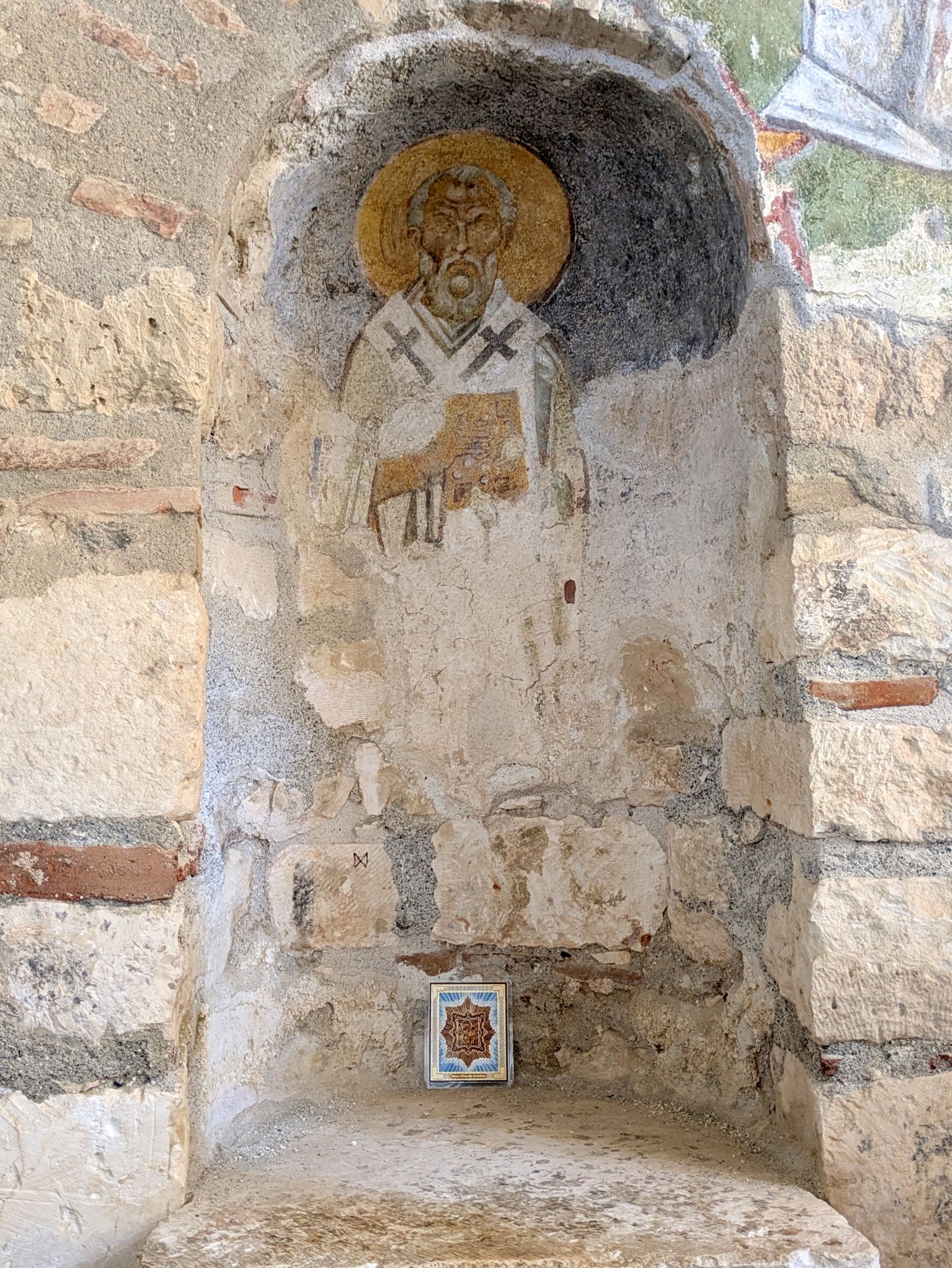
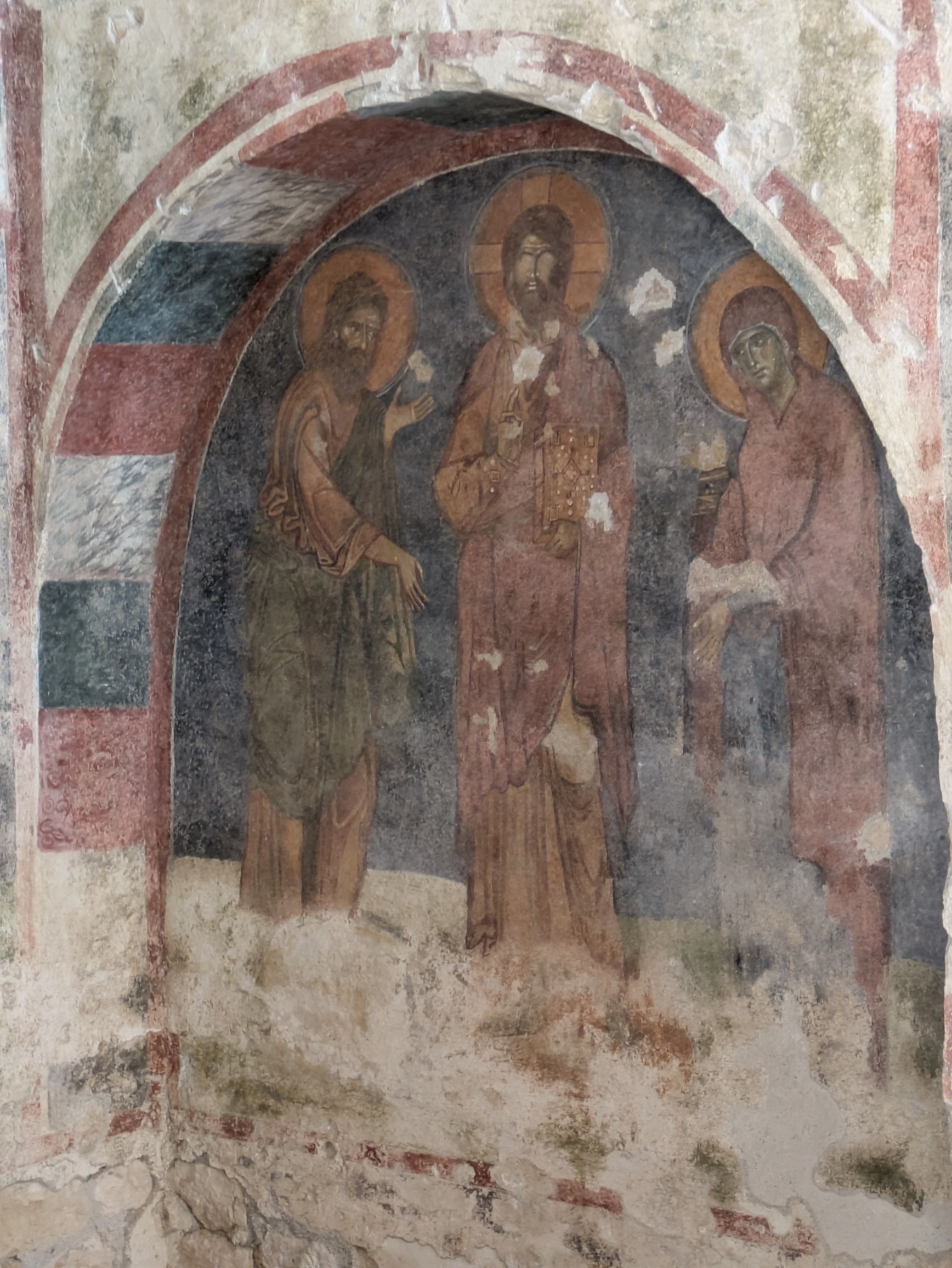
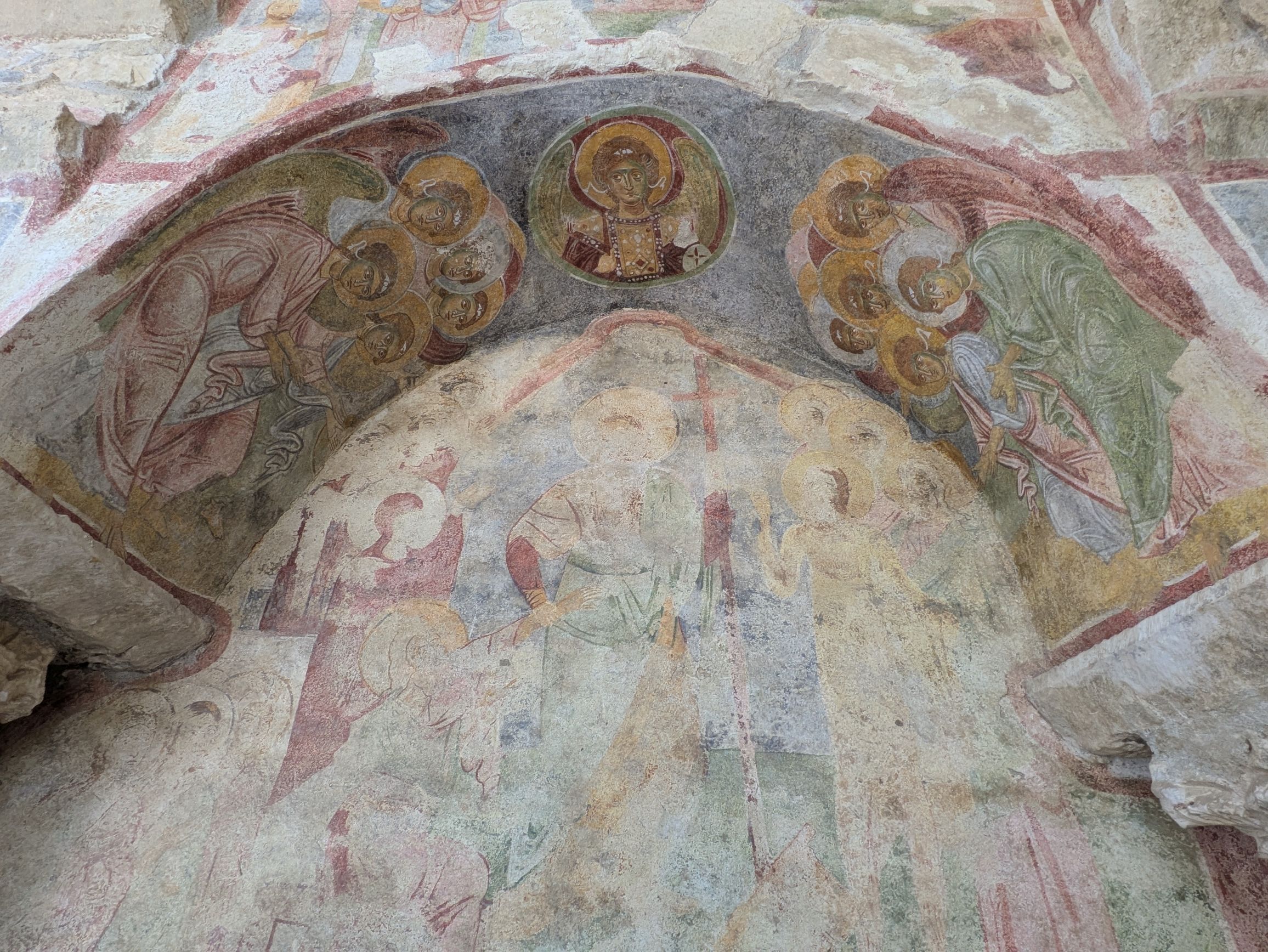
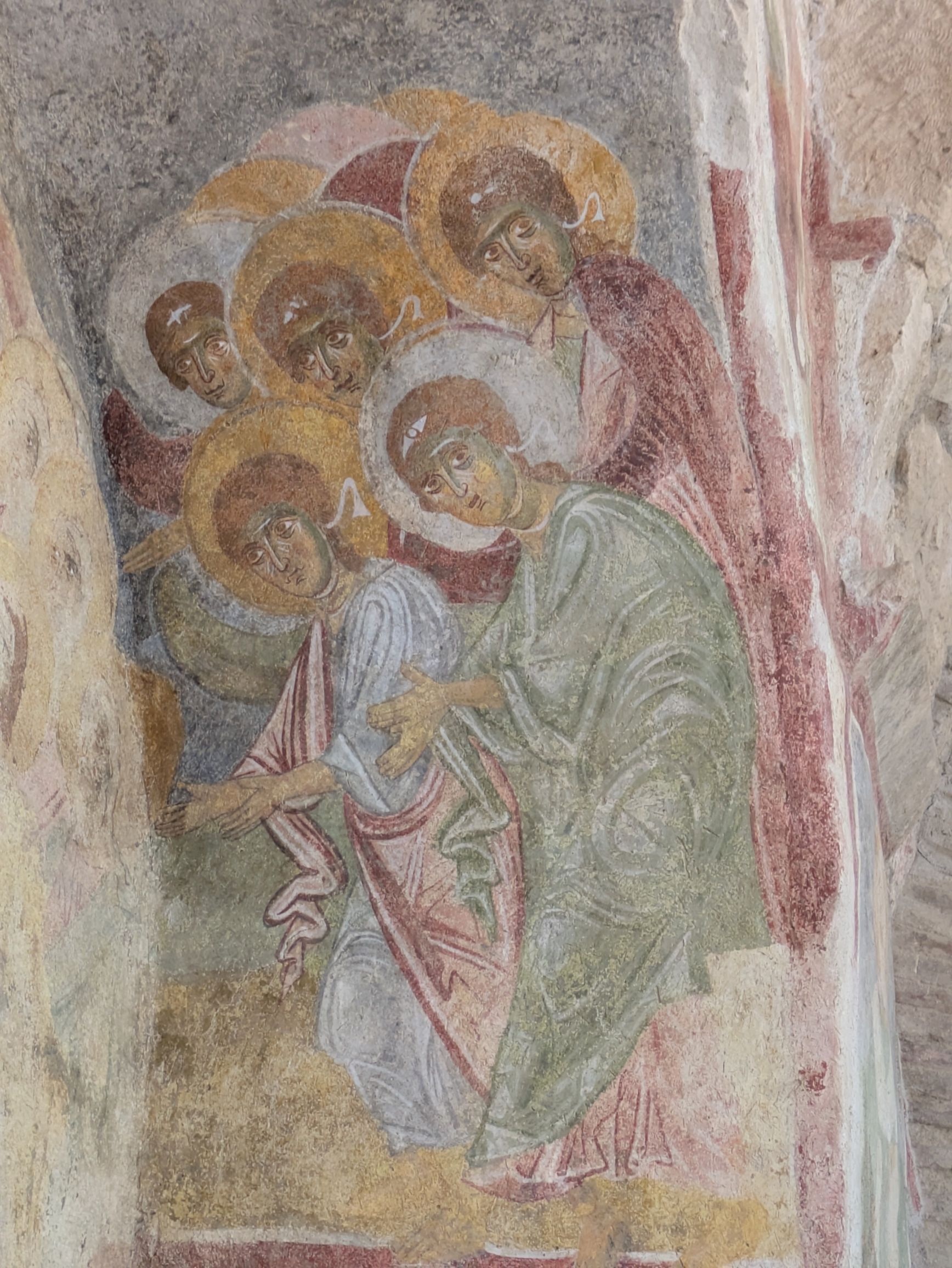
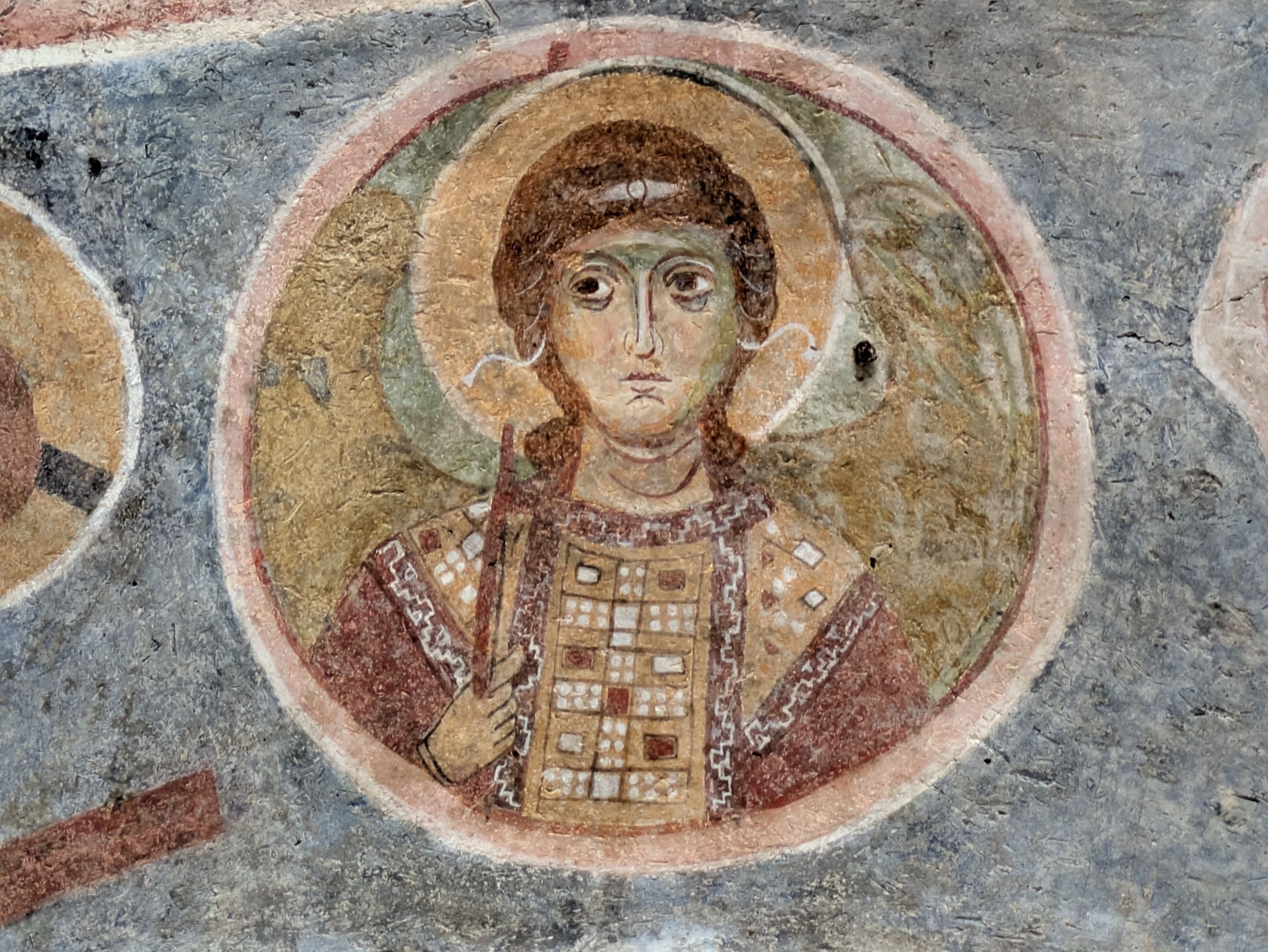
Along the way to the Turkish Coast, we stopped in Demre, the birthplace of St. Nicholas, to visit St. Nicholas Church. Built in phases beginning in the 6th century, the original building was damaged during an earthquake as well as attacks. It was then reconstructed in the 9th or 10th century. The wall paintings in the church date back to the 12th and 13th centuries and were remarkably well-preserved.

Domed ceiling

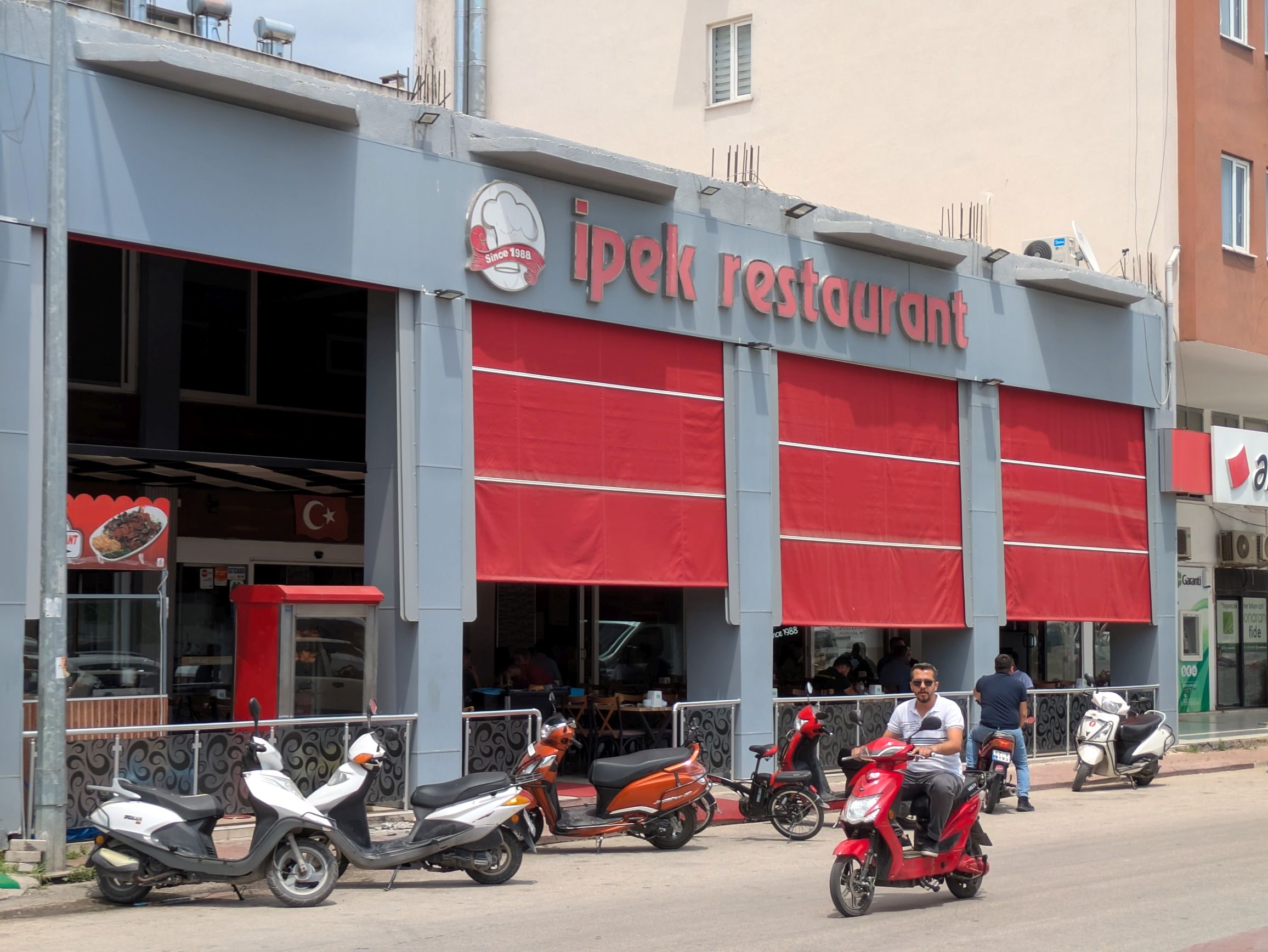
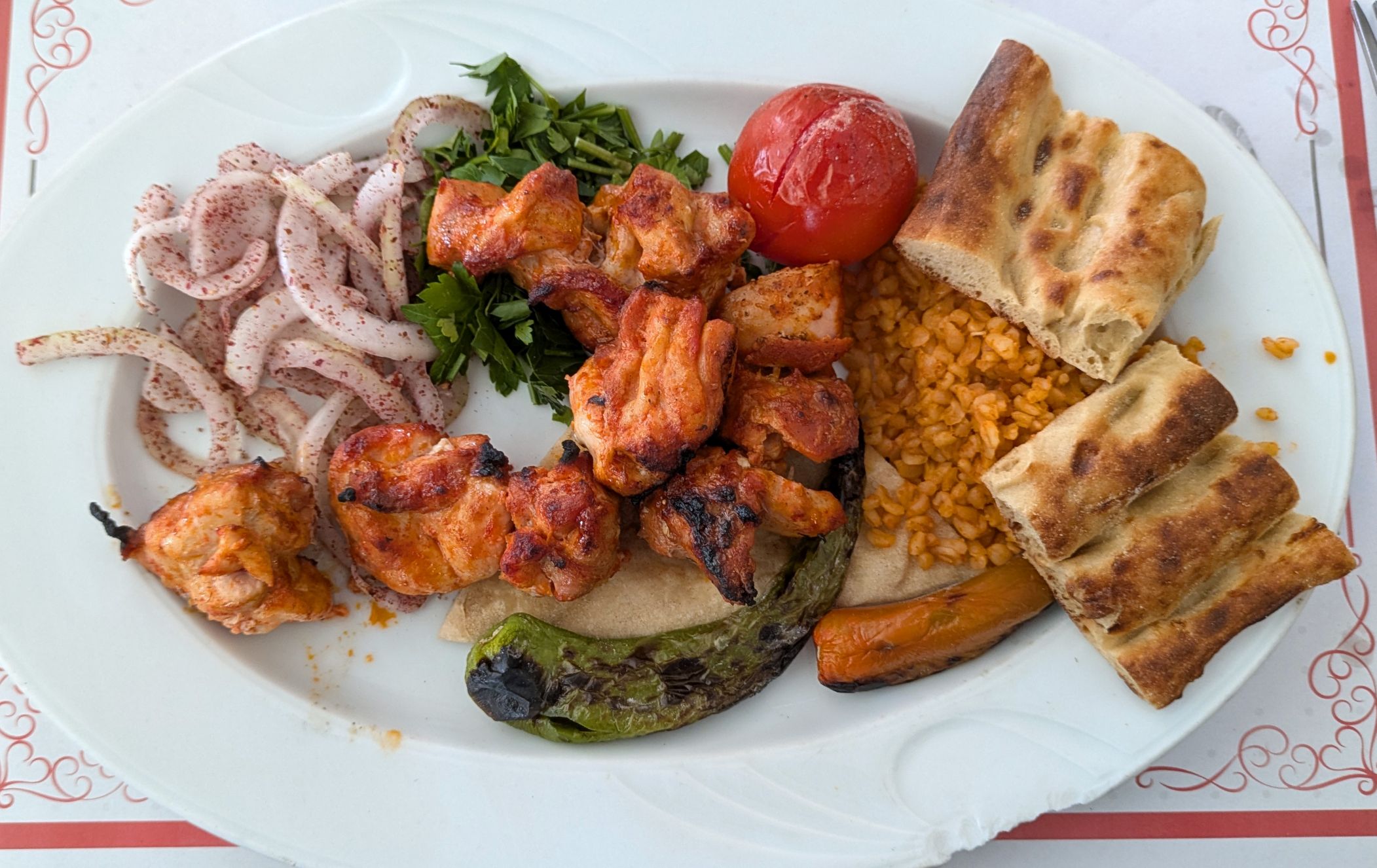
While in Demre, our group had lunch at Ipek Restaurant, a popular restaurant for local workers on their lunch break. From what I could tell, we were the only tourists. For U.S. $10.23 per person, we feasted on appetizers with hot pita, salad, and chicken kabob with rice and vegetables. Baklava was included for dessert, and it was all delicious!

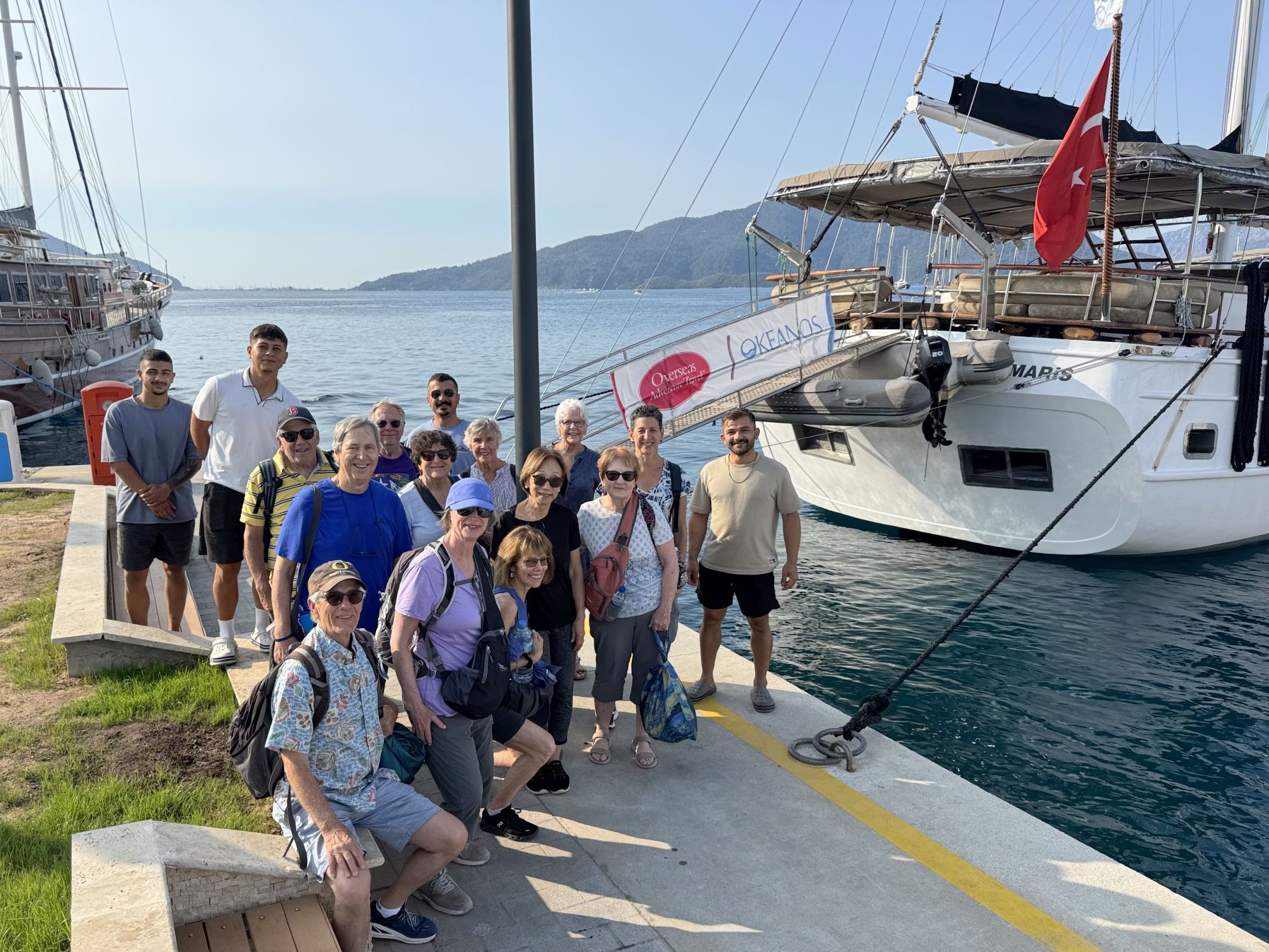
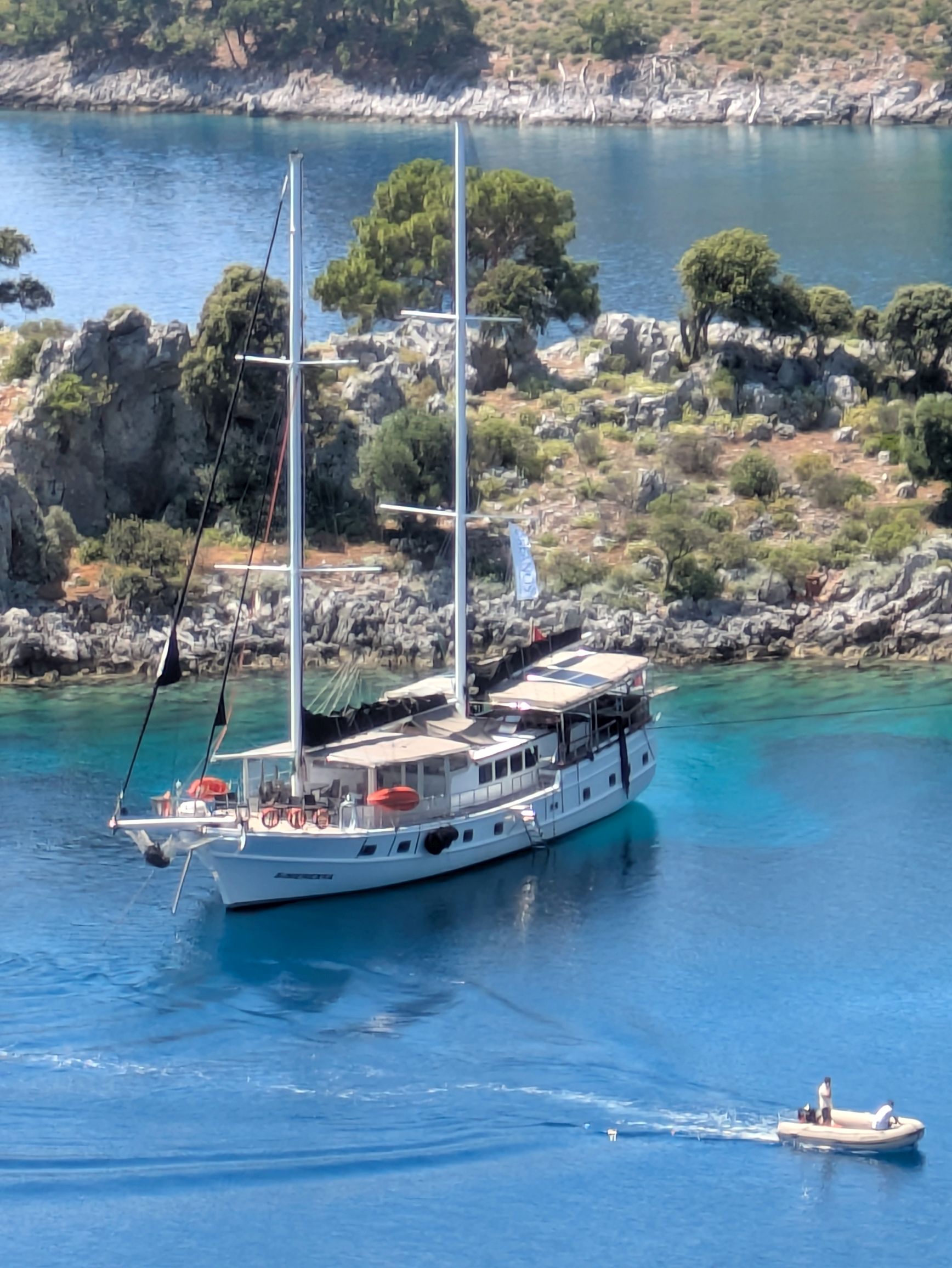
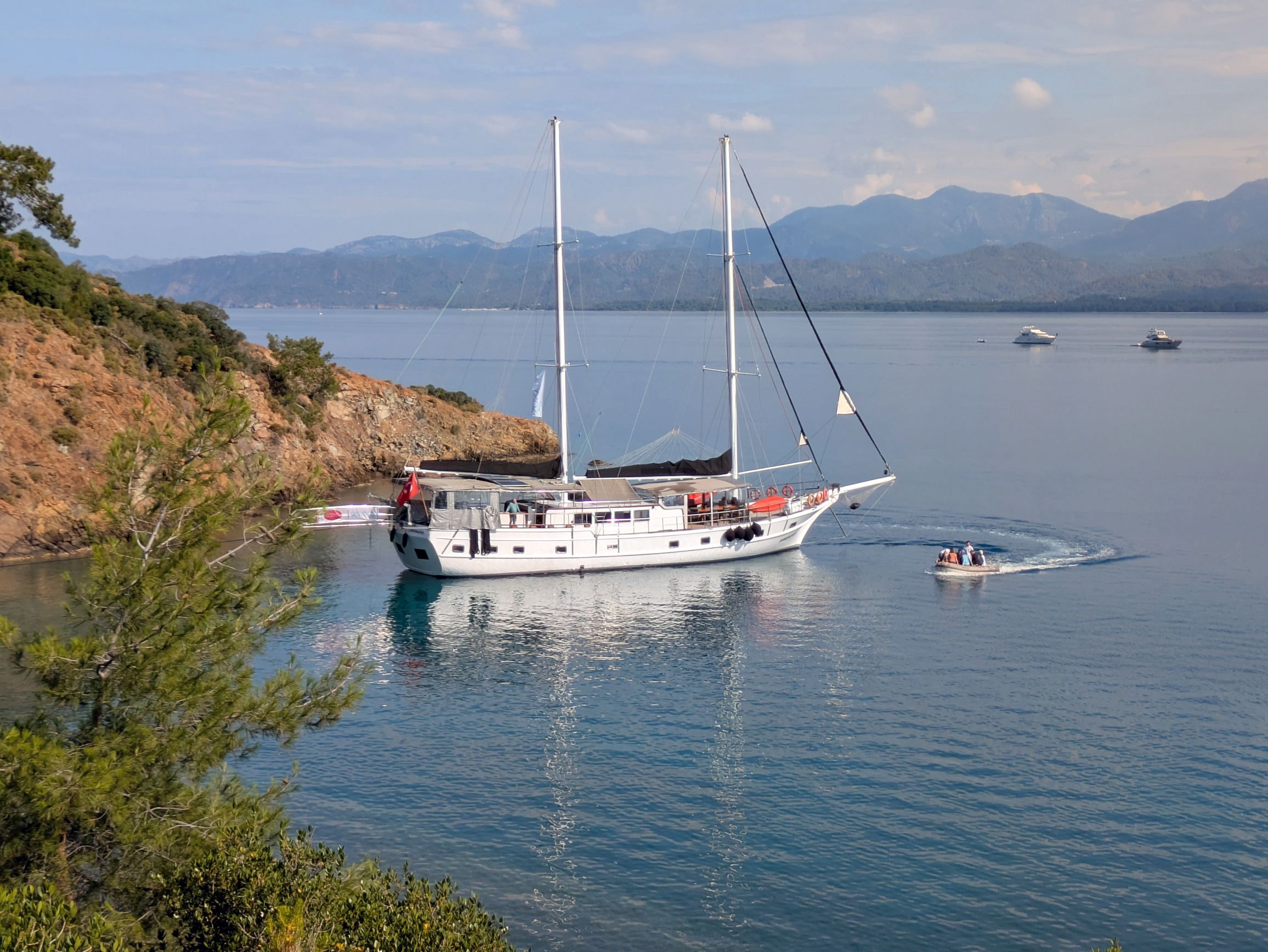
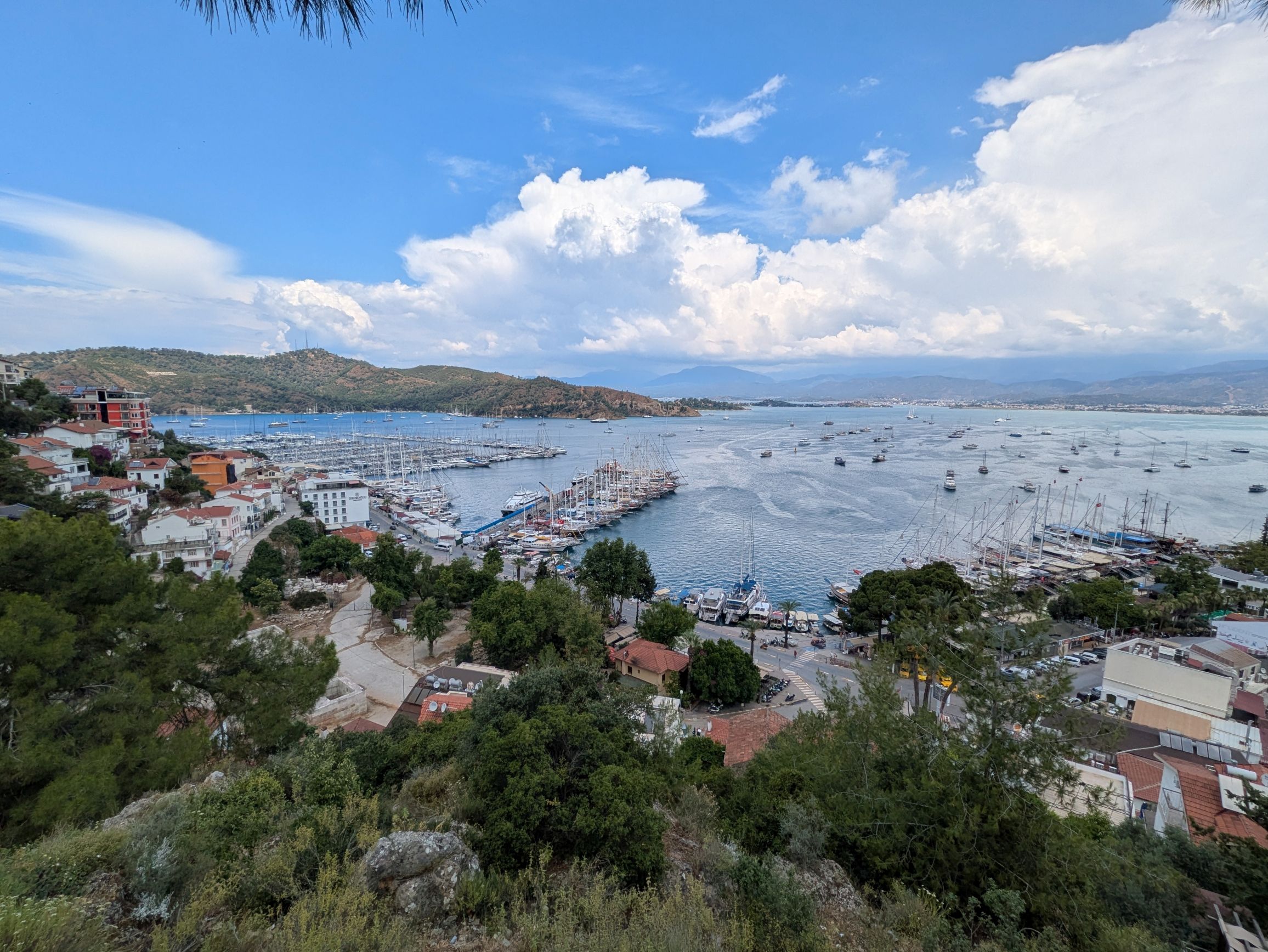
Onward ho to Fethiye we go to embark on a four-day gulet charter from Okeanos Yachting. After settling in to our tiny cabin, we motored to a protected cove for the night and enjoyed dinner on deck with views of the setting sun. Lovely!

Our bus driver was such a nice guy and a fabulous driver; I was sad to say goodbye before we boarded the gulet.
These are all charter gulets

Coming up next: TURKIYE #12: HIKING KAYAKOY, A GREEK “GHOST TOWN”

TURKIYE #10: ANTALYA ARCHEALOGICAL SITE & MUSEUM

During our two days in Antalya, we visited the Perge archaeological site and Antalya Muzesi (museum). Originally settled by the Hittites around 1500 BC, Perge was abandoned in the seventh century and has been excavated systematically by Istanbul University since 1946.

(For all photos, click on the image for a full screen view.)

This “race” was Nuri’s idea; he shot the photo!

Antalya Muzesi is a renowned archaeological museum full of amazing artifacts from the Stone and Bronze Ages to Byzantium. In 1988, the museum won the esteemed European Council Special Prize.

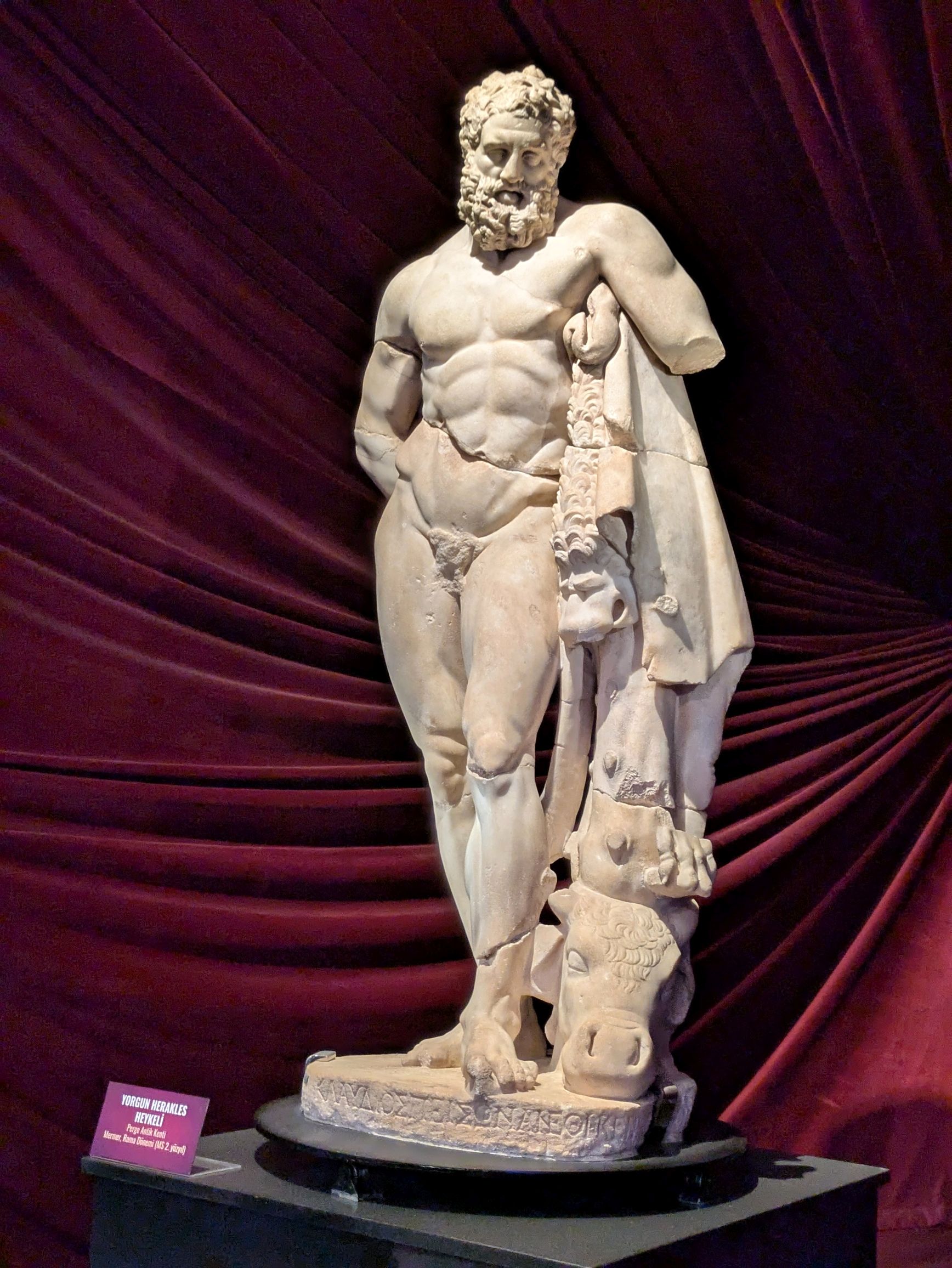
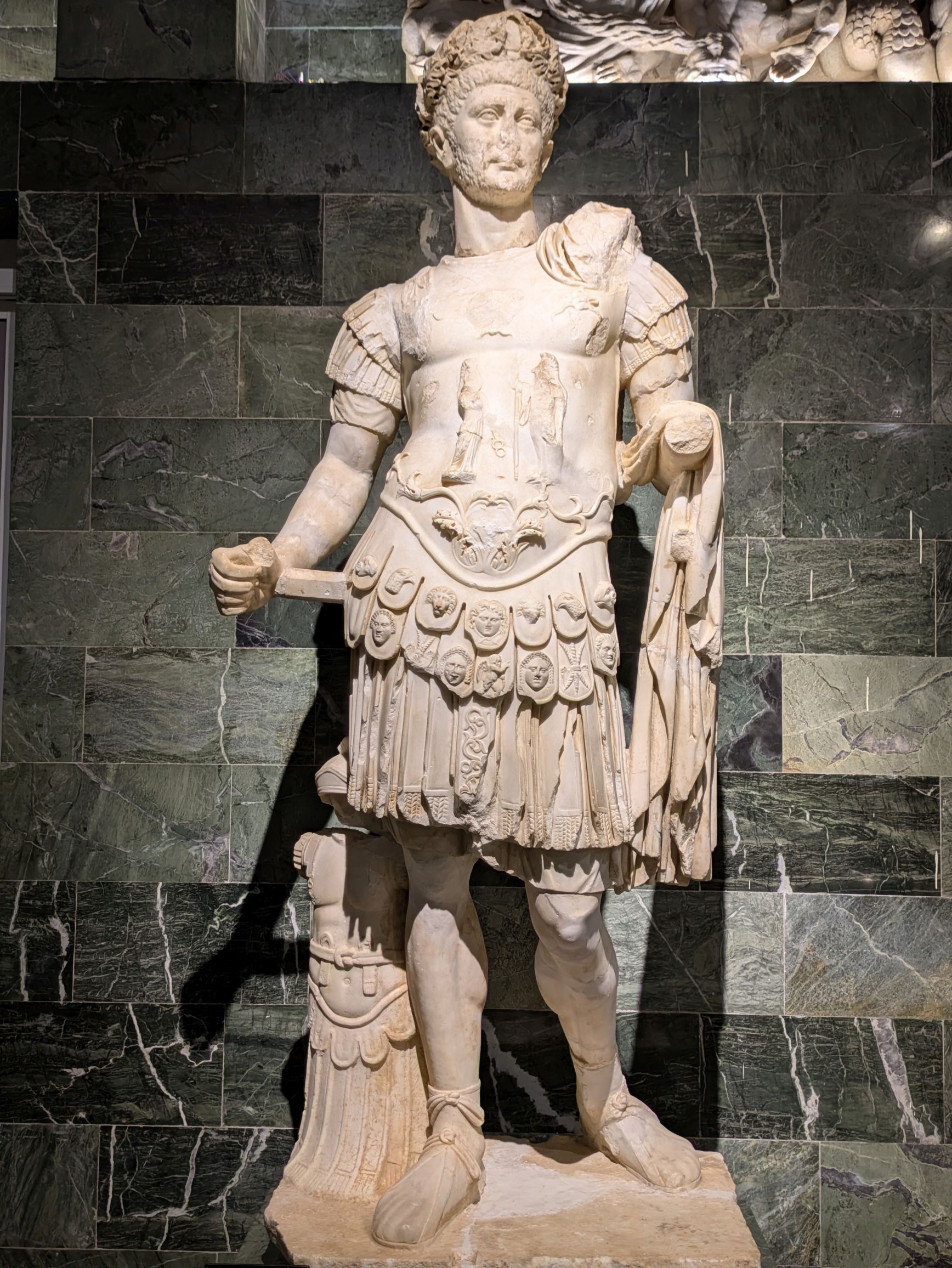
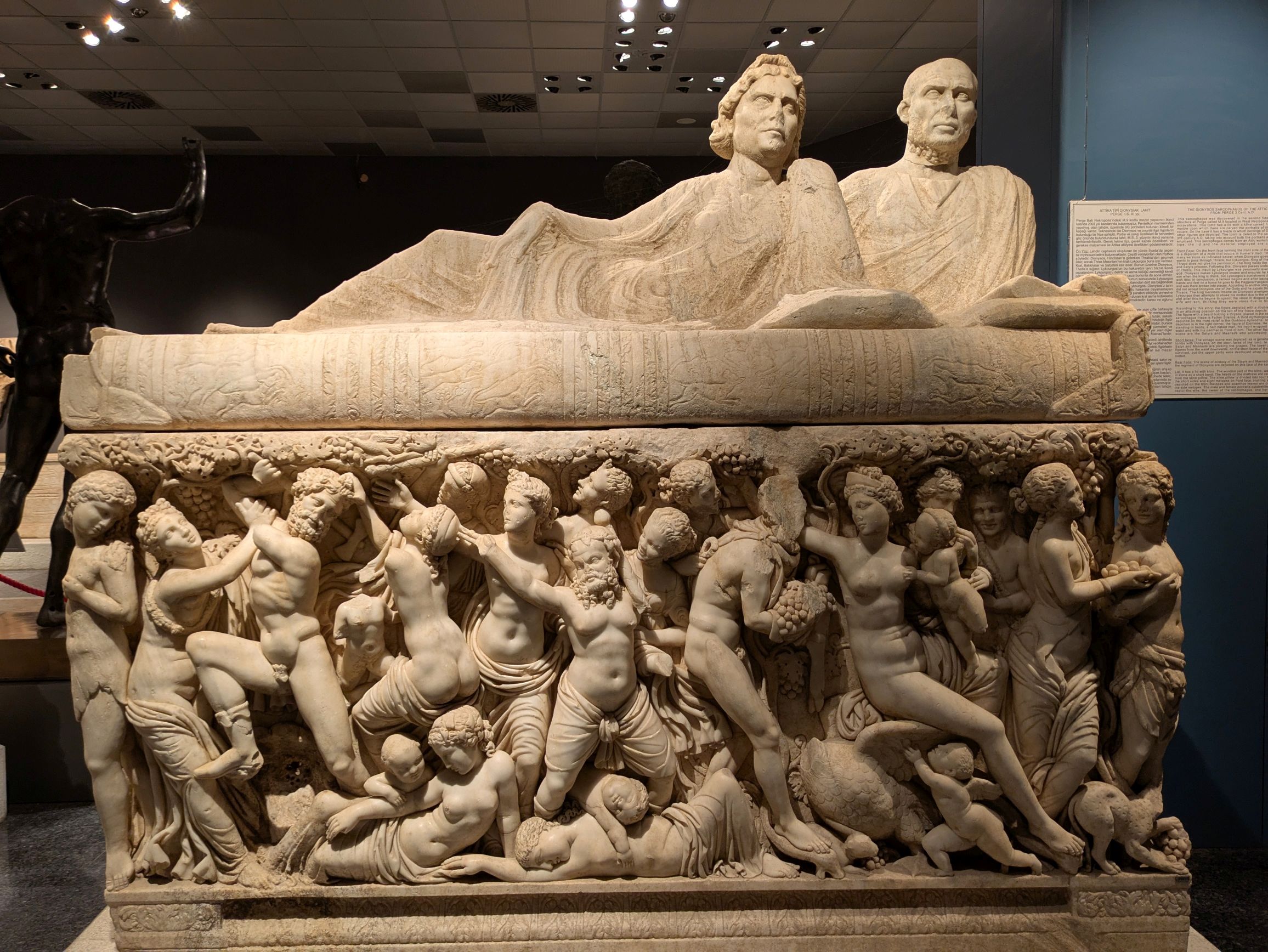
Sculptures in the museum dating back to 2nd century AD (Roman Times) are from Perge, and they were quite impressive!

Emperor Hadrian, 2nd century AD

Artemes & Hermes:

Trajan
The Sarcophagus of Domitias Lulianus and Domita Philiska
Mosaics
These lekythos, produced between 5th-4th century BC, were used for perfume and oil, and then later placed inside the graves of the deceased.
6th Century BC
5th – 15th century AD
Nuri and his family live nearby, so his wife and son joined us for the visit to the museum.

Next up: TURKIYE #11: TRAVELING TO THE TURQUOISE COAST

TURKIYE #9: ATTRACTIVE ANTALYA

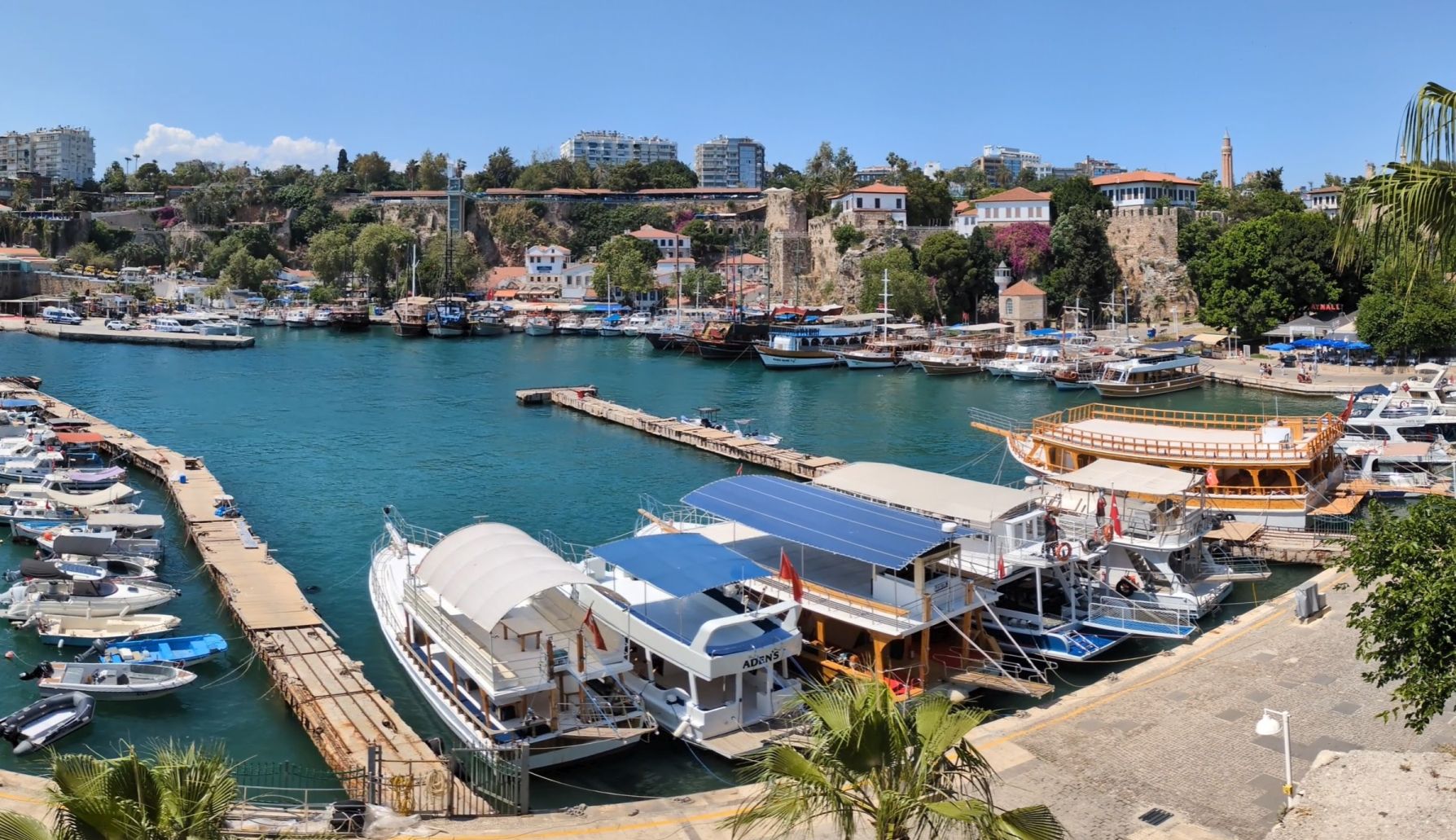
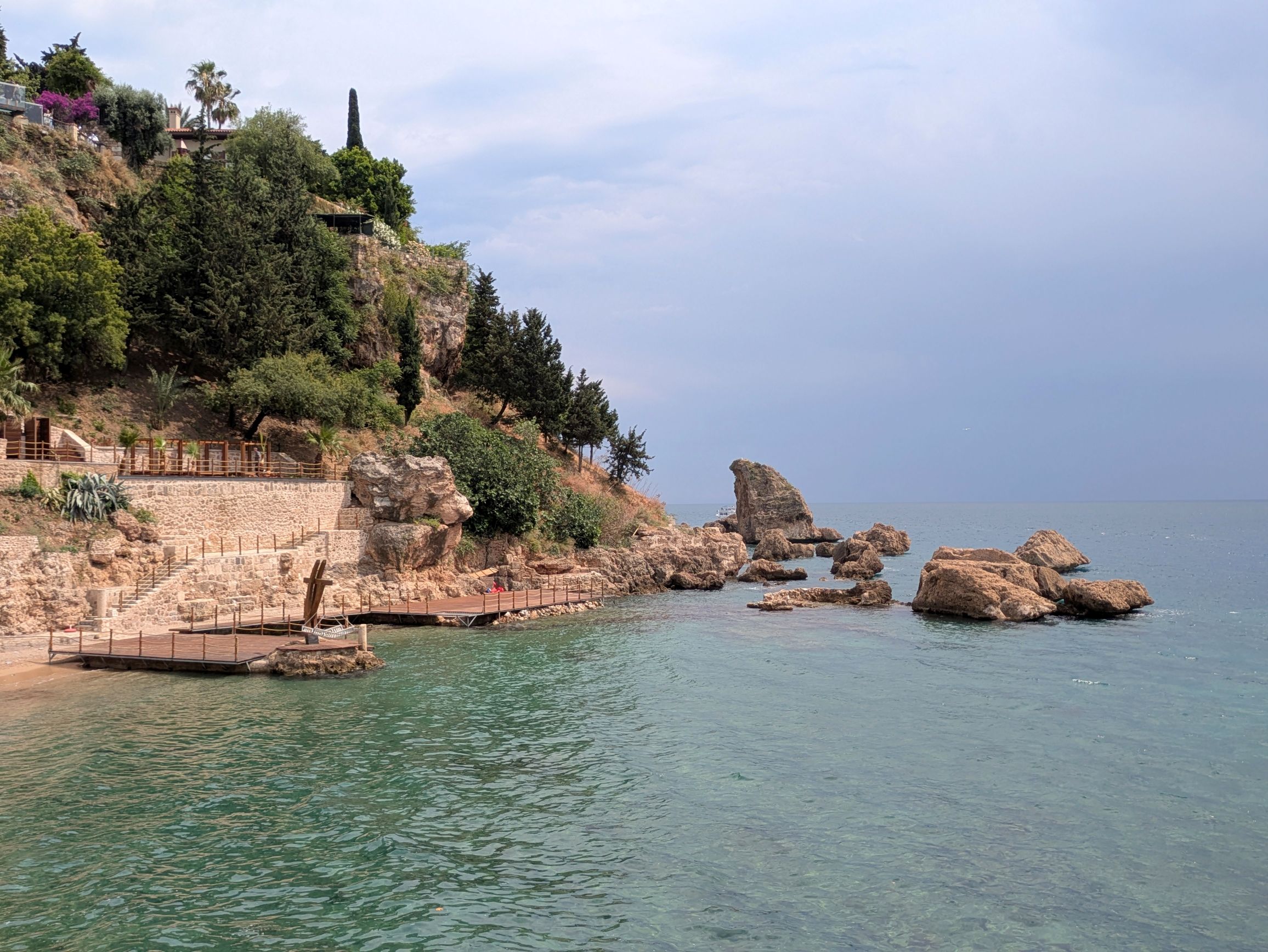
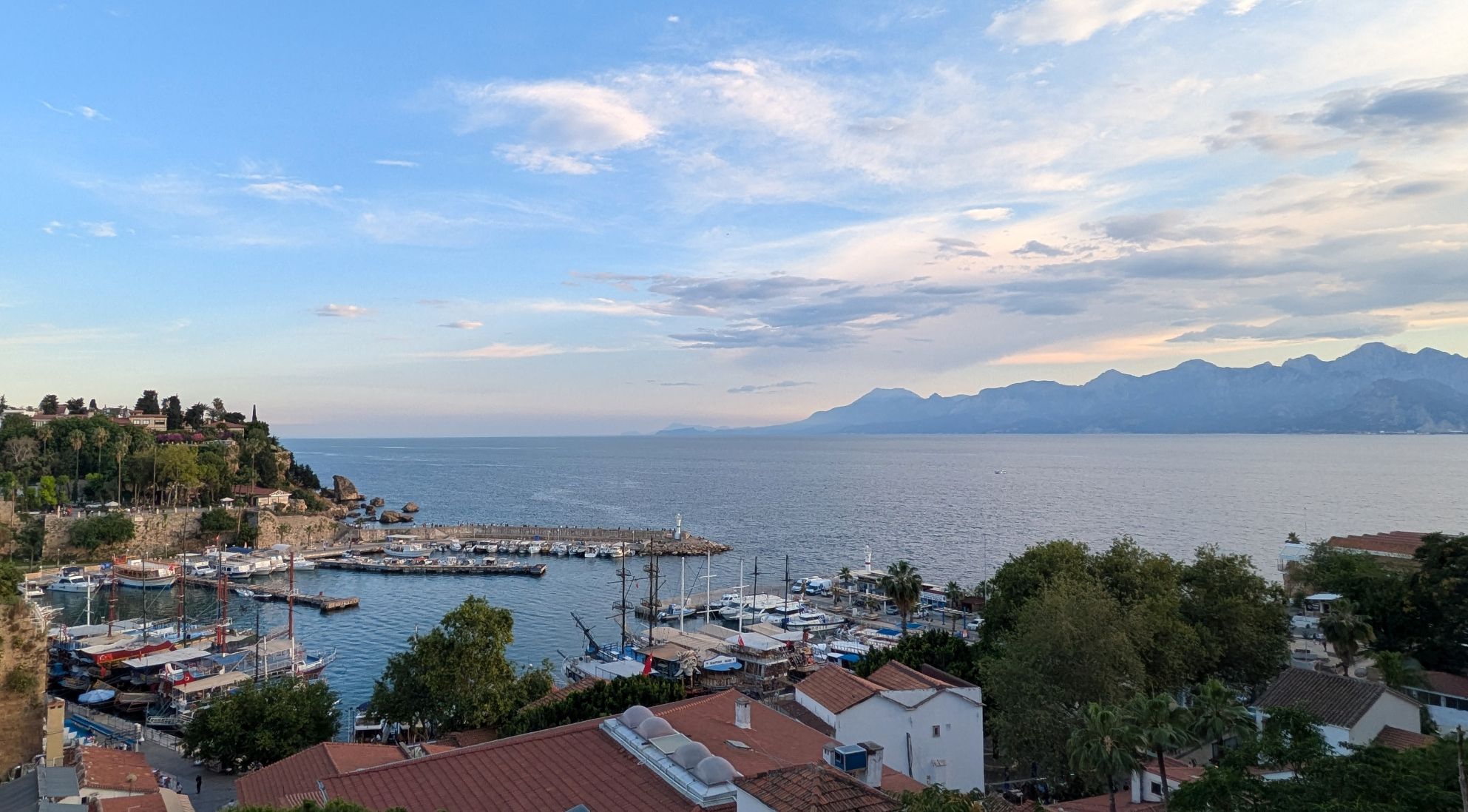
Once an old fishing village, Antalya is currently the fourth-most visited city in the world, trailing behind only London, Istanbul, and Dubai. Eclectic architectural styles, both old and new, reflect more than 2,000 years of history in Antalya’s walled Old Town and extremely popular international seaside resort.

The following are scenes photographed along the harbor and in Old Town during our three nights and two days in Antalya:

(For all photos, click on the image for a full screen view.)

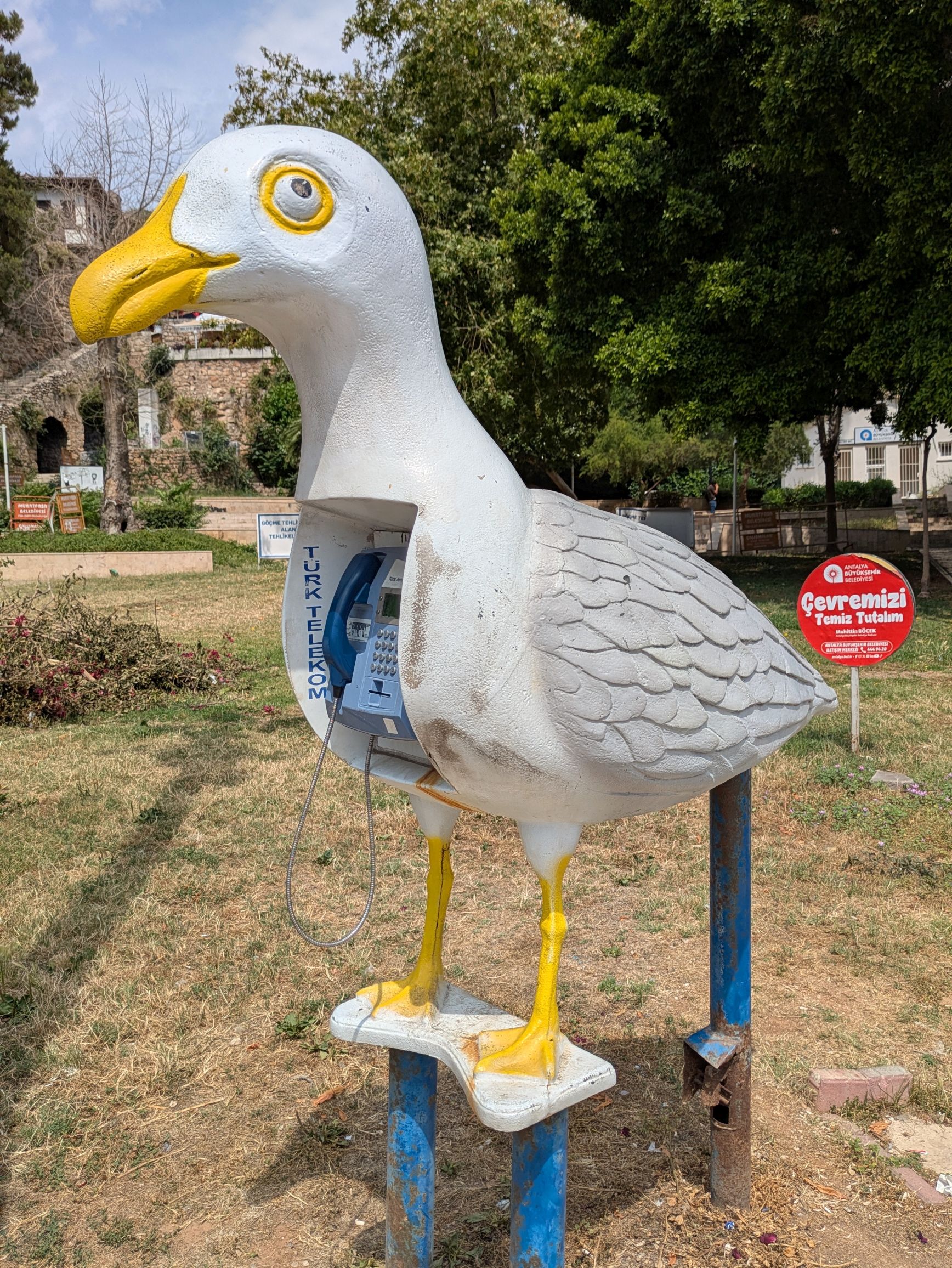
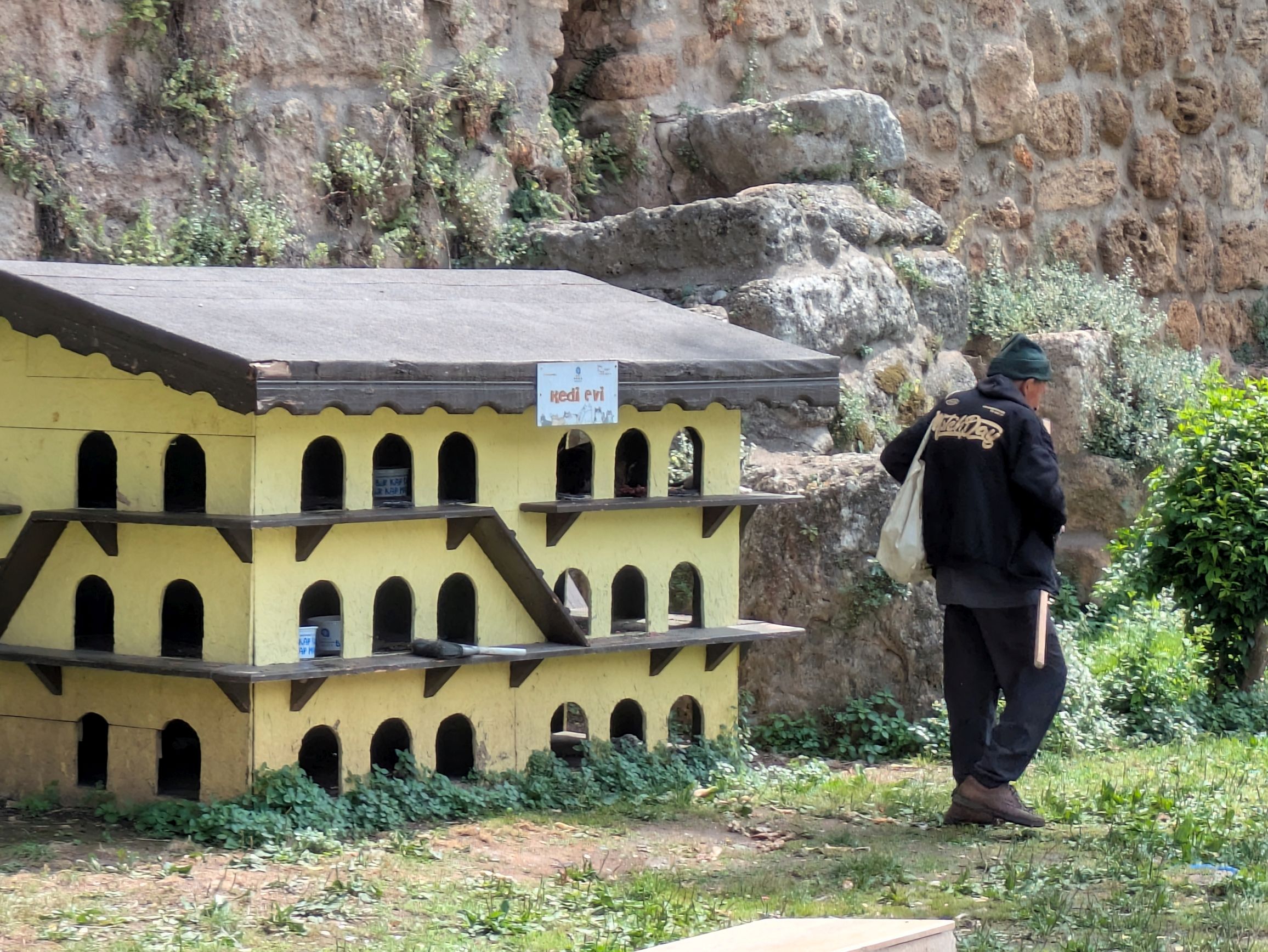
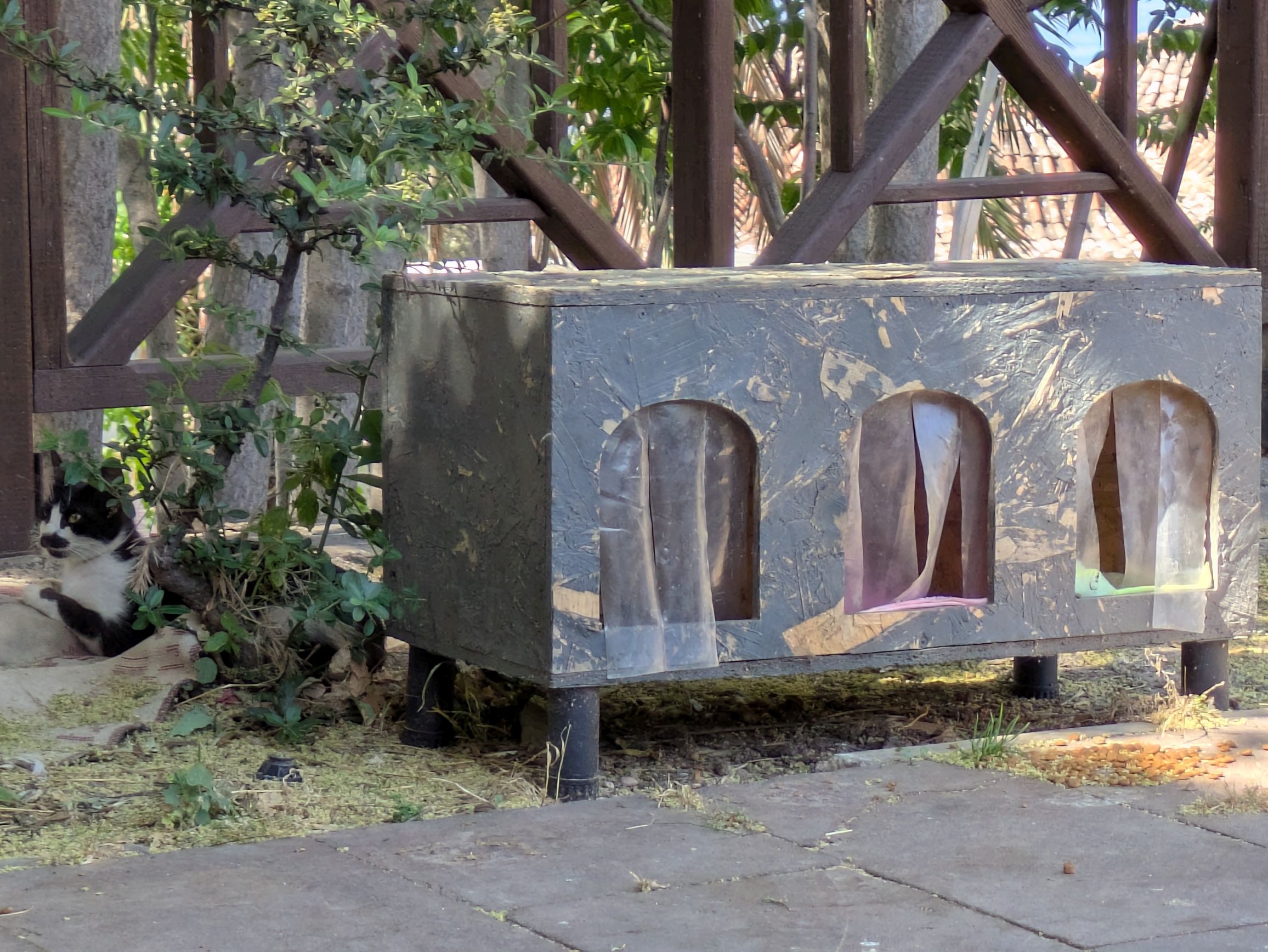
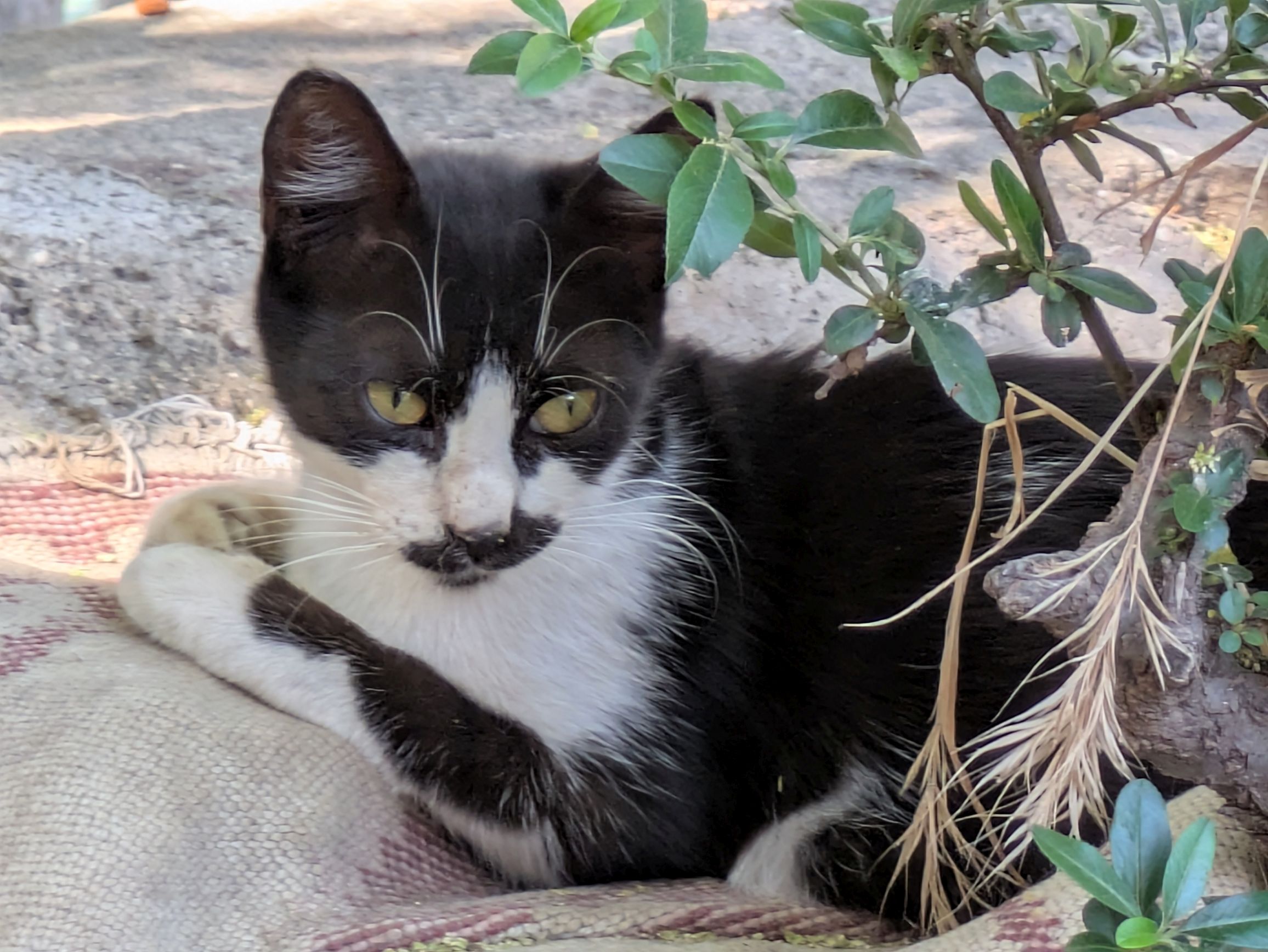
Along the harbor front, this cat condo was home to stray cats that were cared for by a city employee.
There was another one up in town– a triplex.
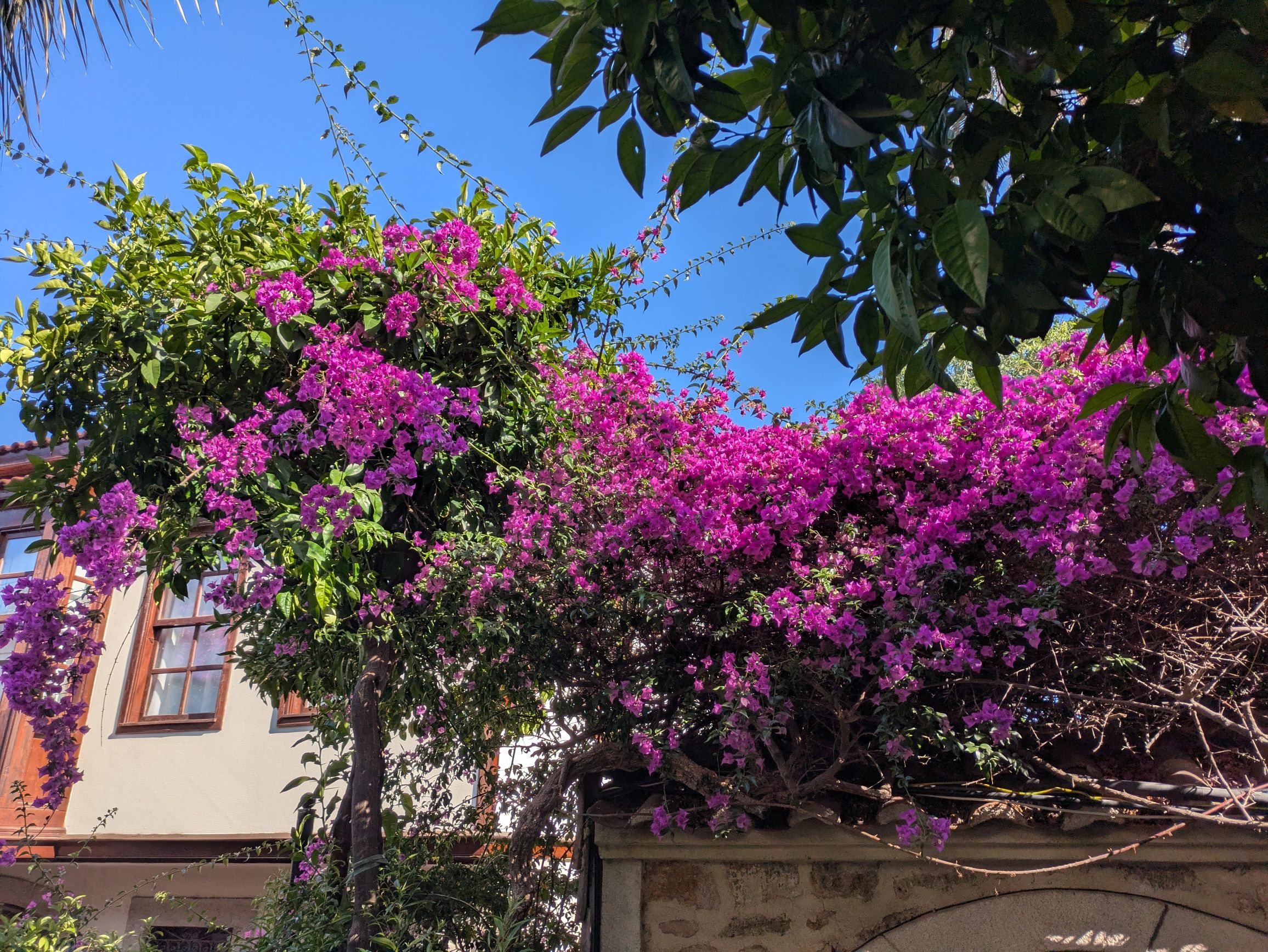
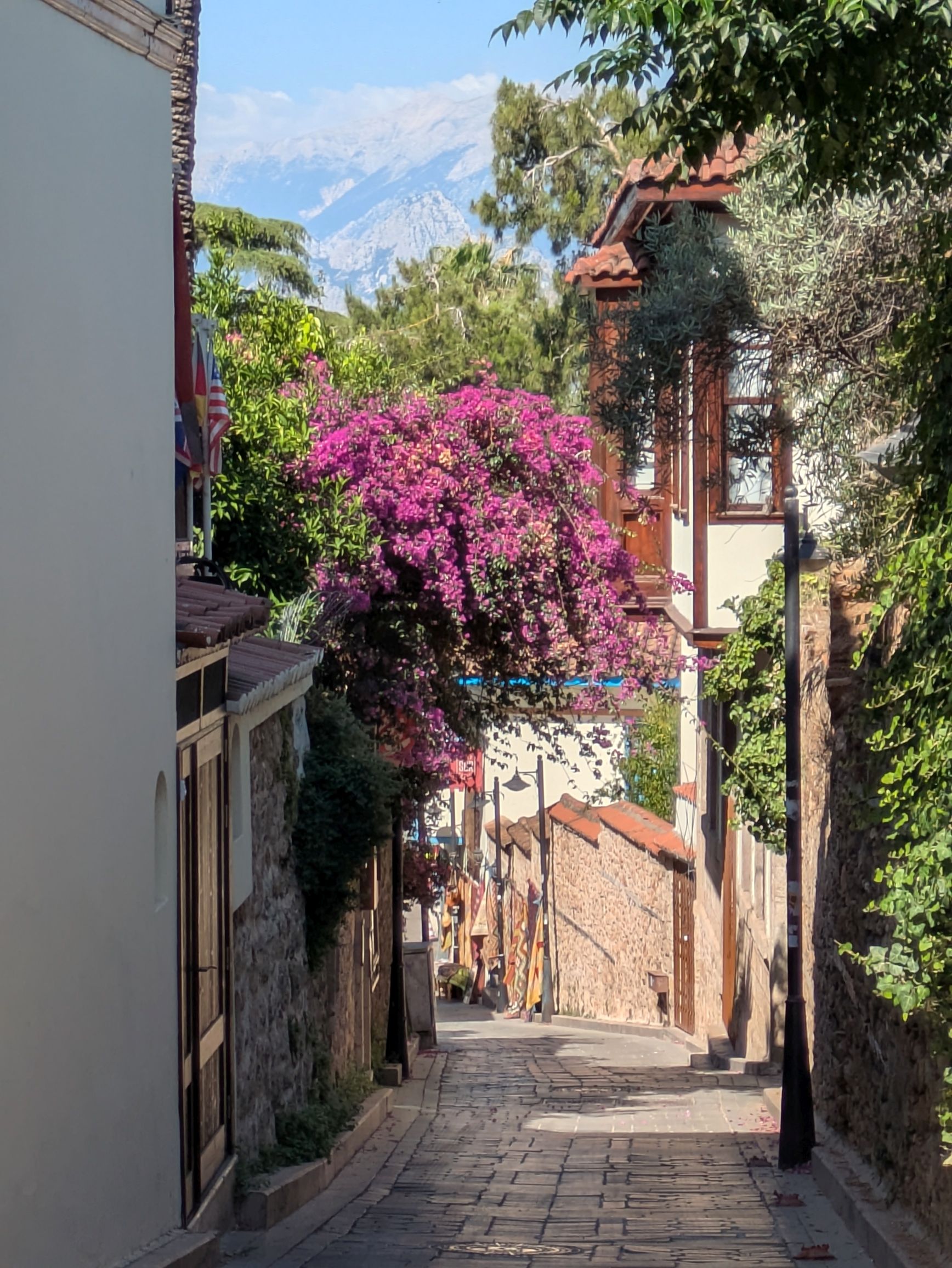
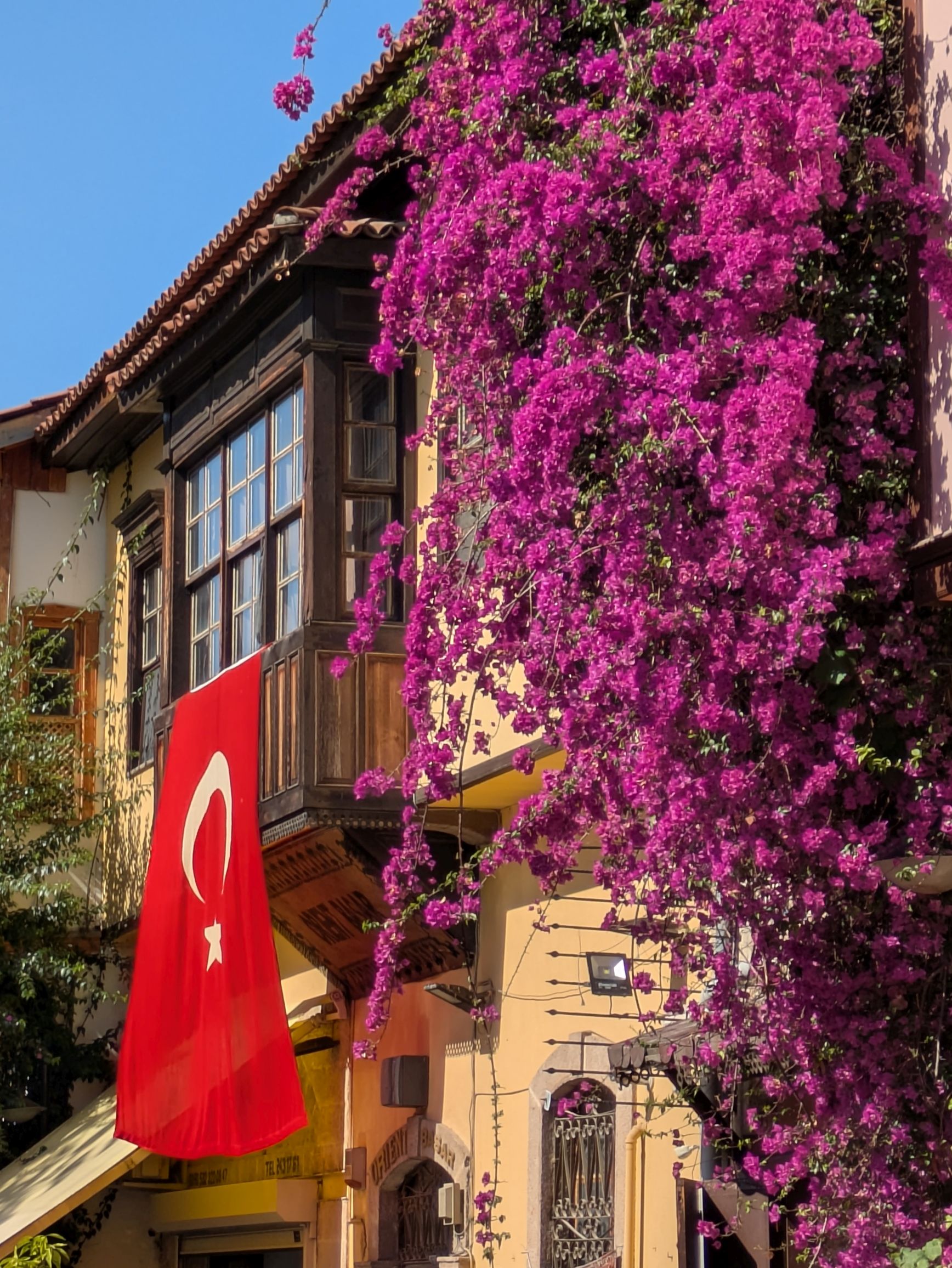
We were there during late spring, a perfect time to enjoy the beautiful weather and colorful bougainvillea.
Our hotel had a beautiful patio and outdoor restaurant surrounded by bougainvillea and morning glories (below). This is our group; Nuri, our tour leader, is in the front on the right.

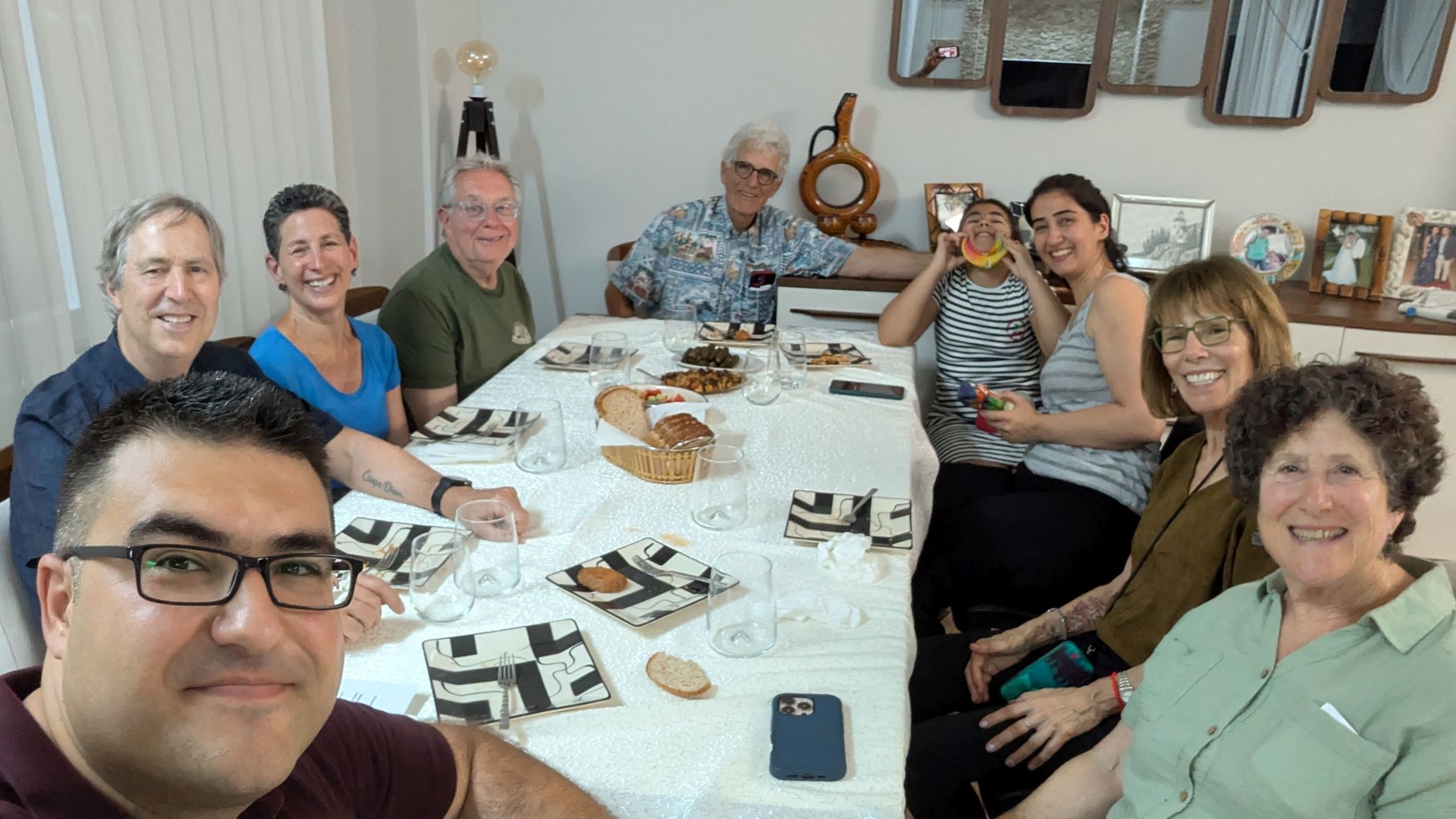
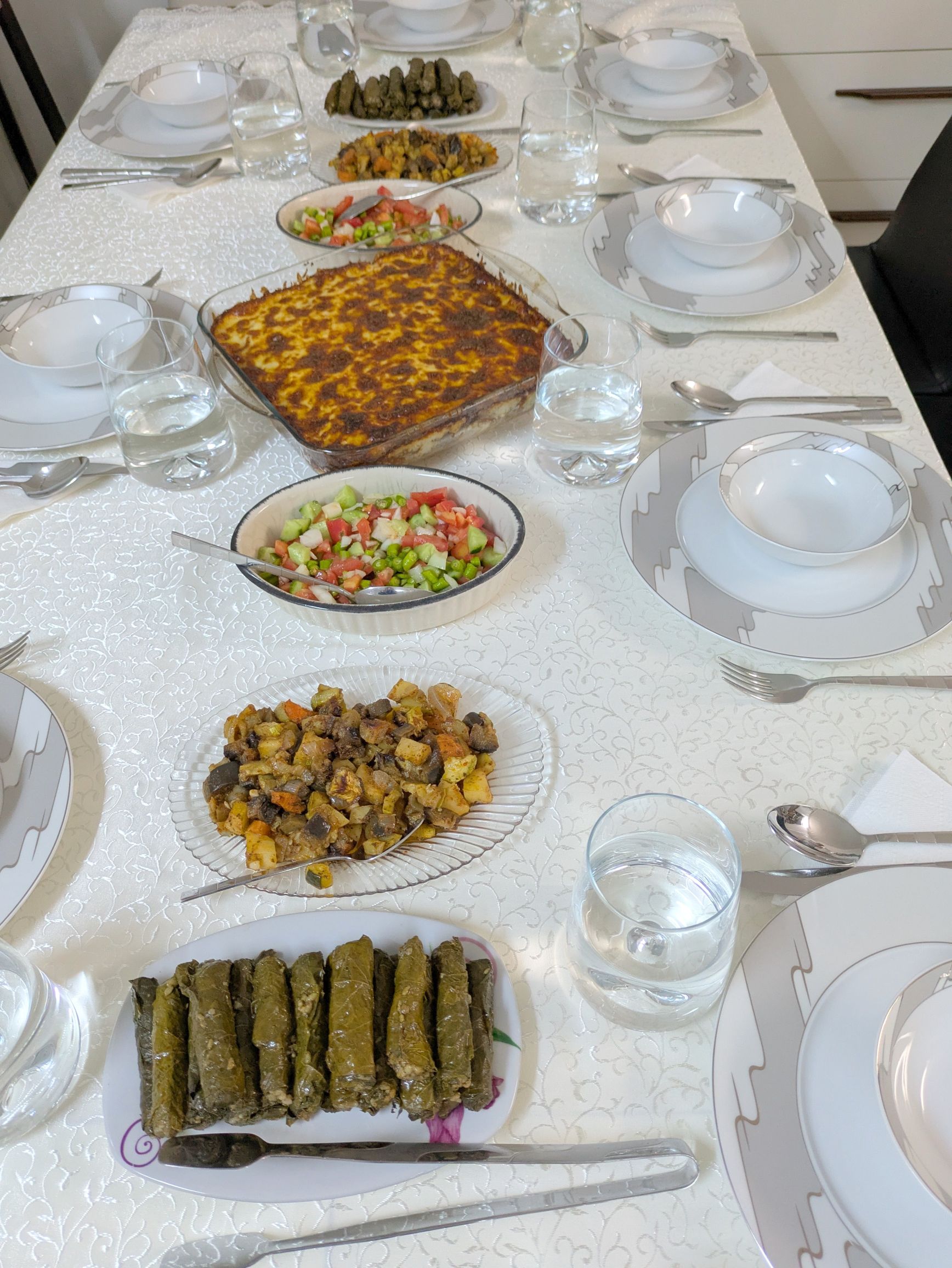
We had a lovely evening enjoying a Turkish dinner at the home of a young couple and their daughter, along with two other couples from our group and a translator.

The following evening, our group dined al fresco with a gorgeous view below:

Coming up next: TURKIYE #10: ANTALYA ARCHEALOGICAL SITE & MUSEUM

TURKIYE #8: KICKING IT IN KONYA & OVERLAND TO ANTALYA

What I like about transfer days to another destination on our itinerary is that we don’t just hop on the bus and drive for hours at a time. The drive is always broken up with interesting stops along the way and a group lunch at a good restaurant where we get to enjoy local cuisine.

On this day, we traveled across the Taurus Mountains, stopping in the city of Konya, capital of the Konya province and located in central Turkiye. Inhabited since the third millennium BC, it was ruled by several different groups until the 11th century, when the Seljuk Turks conquered the area.

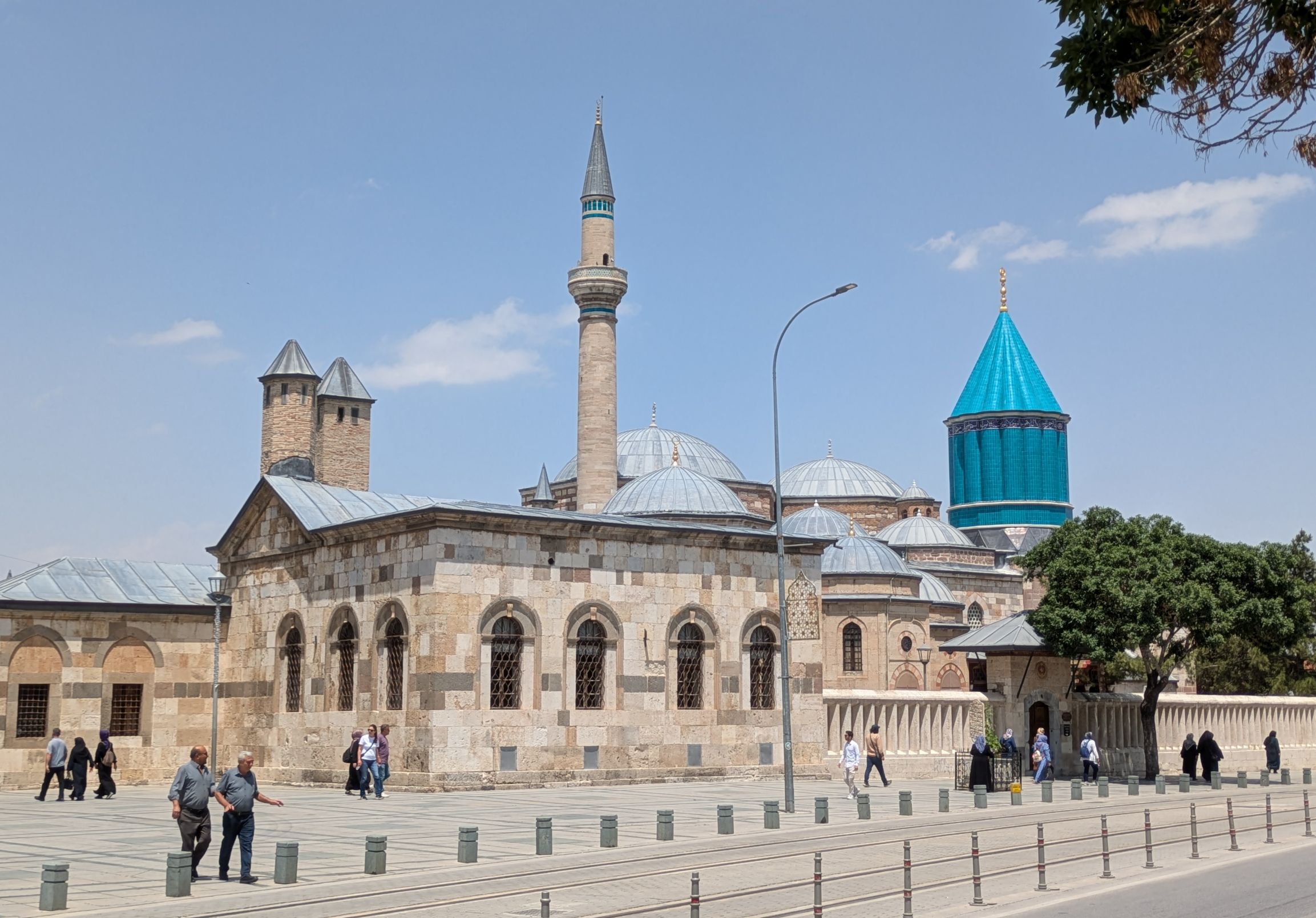
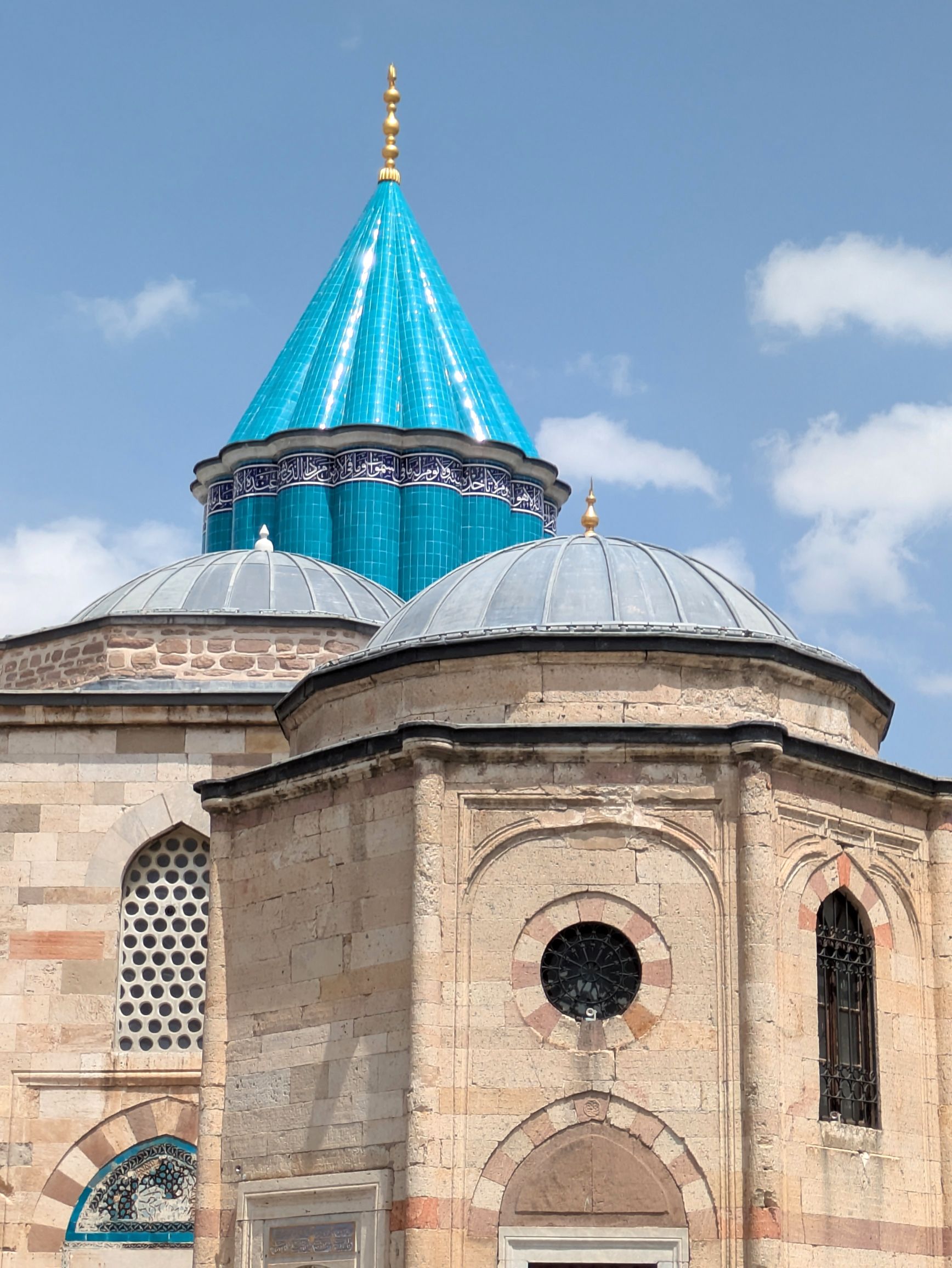
Konya is a bastion of Seljuk culture and home of the Mevlevi order, known as the “whirling dirvishes” due to their famous practice of whirling while performing dhikr (remembrance of God).

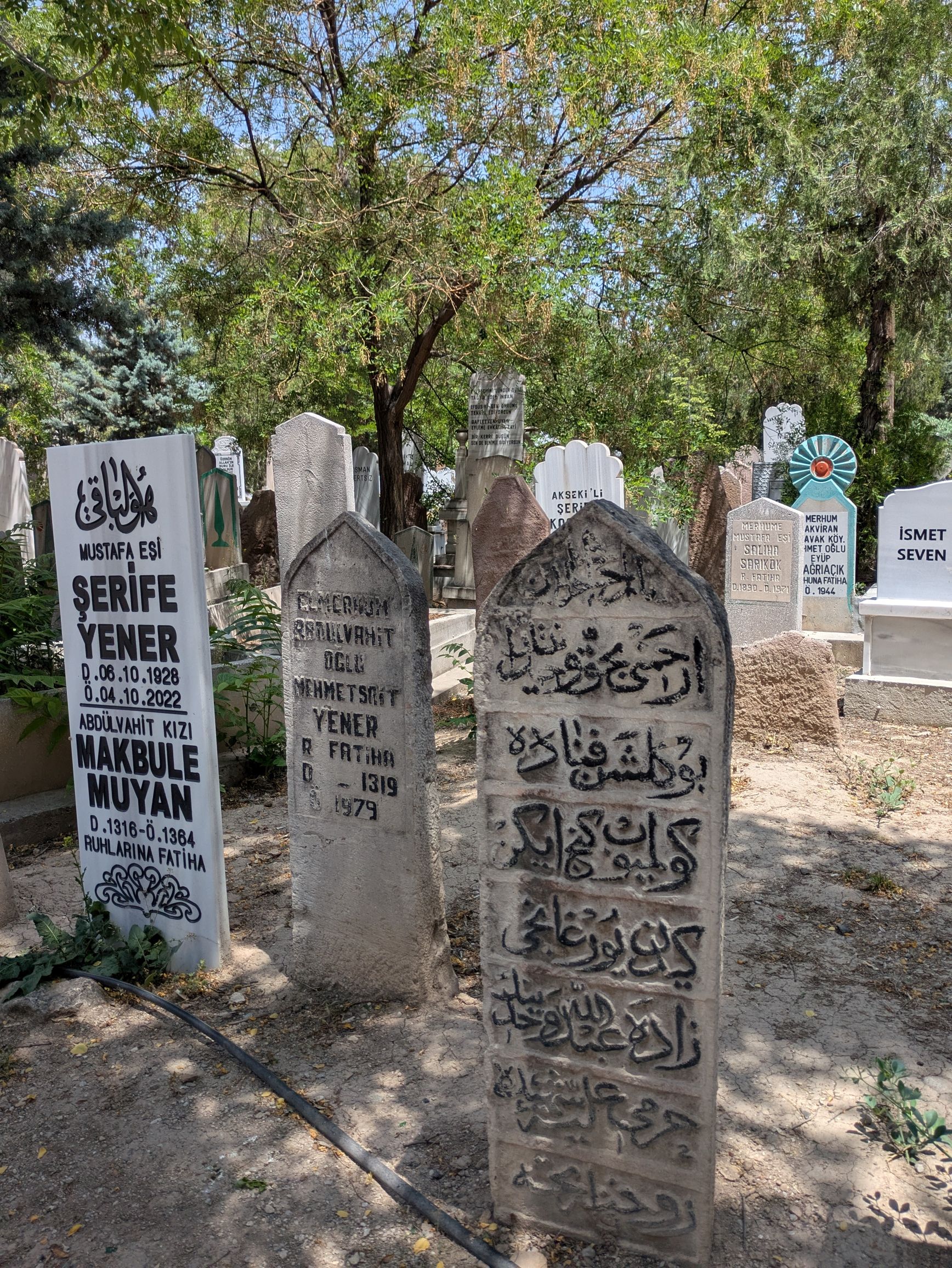
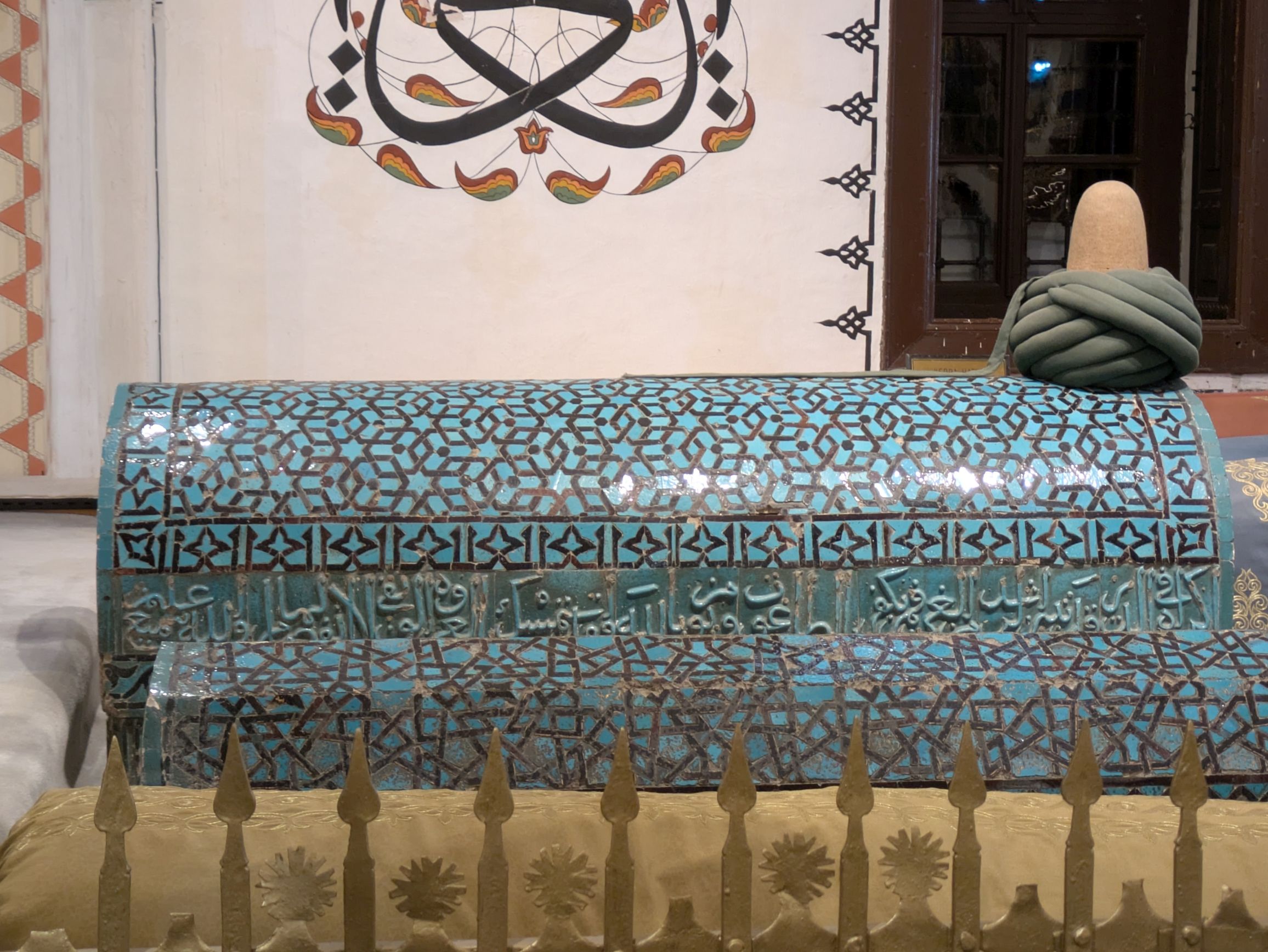
We visited the Mevlana Muzesi (museum), which is dedicated to Celaleddin Rumi, the founder of the Mevlevi order and remembered as one of the greatest literary and spiritual figures of all time. More than a million and a half Turks come here to pray each year.

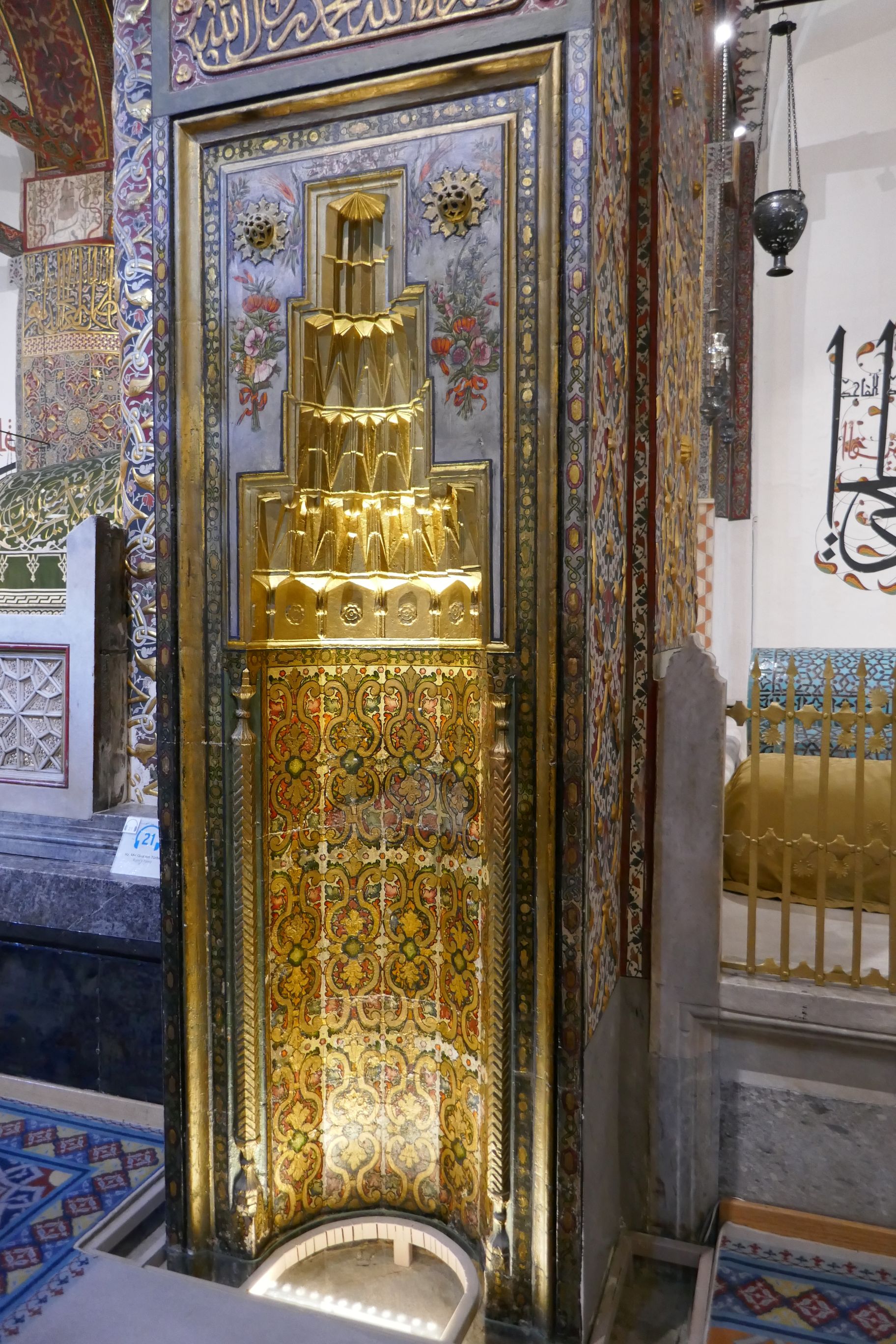
The museum houses the mausoleum of Rumi, and while touring the museum, it became quite evident that the Seljuks were quite wealthy!

(For all photos, click on the image for a full screen view.)

Domed ceiling
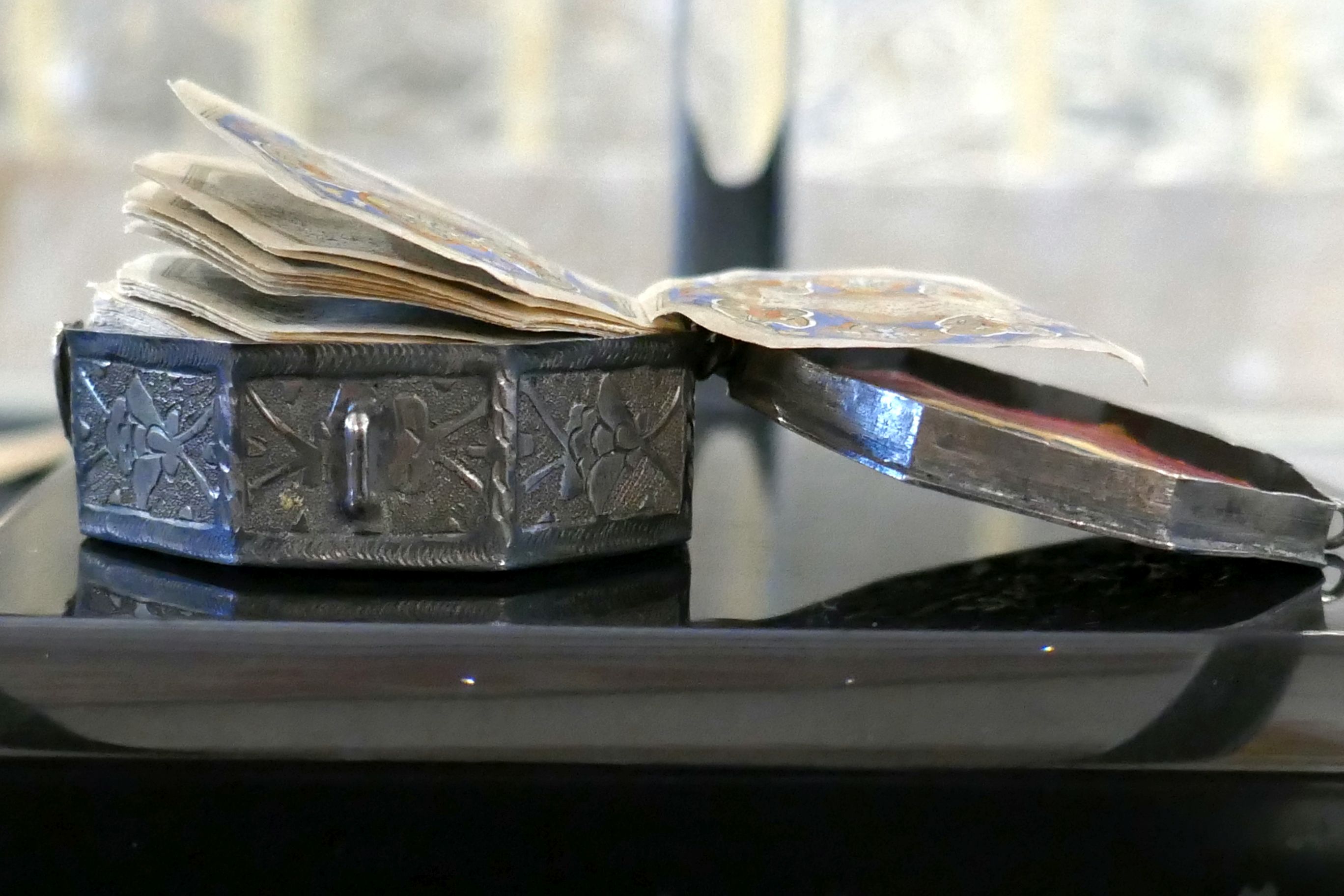
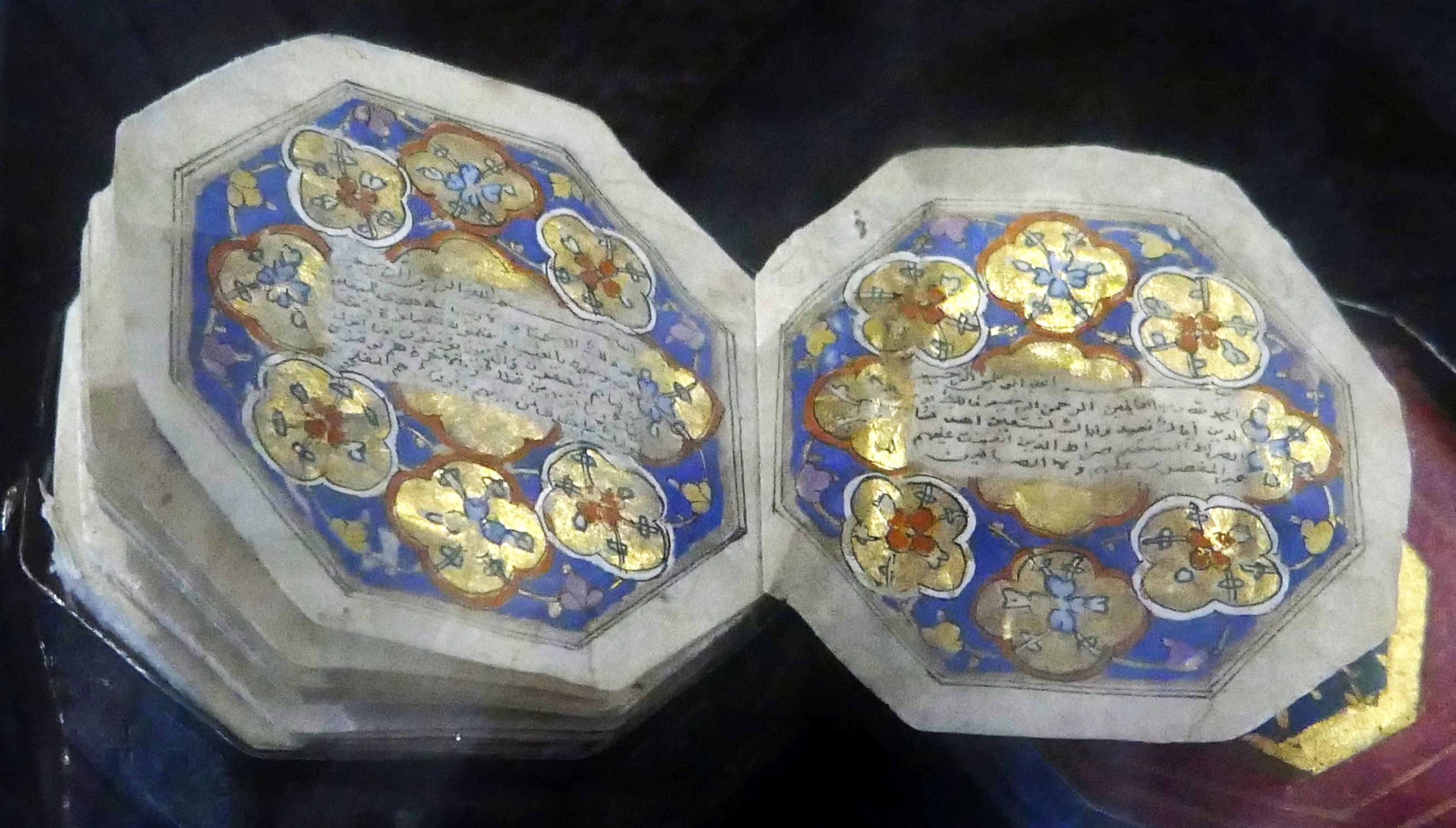
World’s smallest Quran
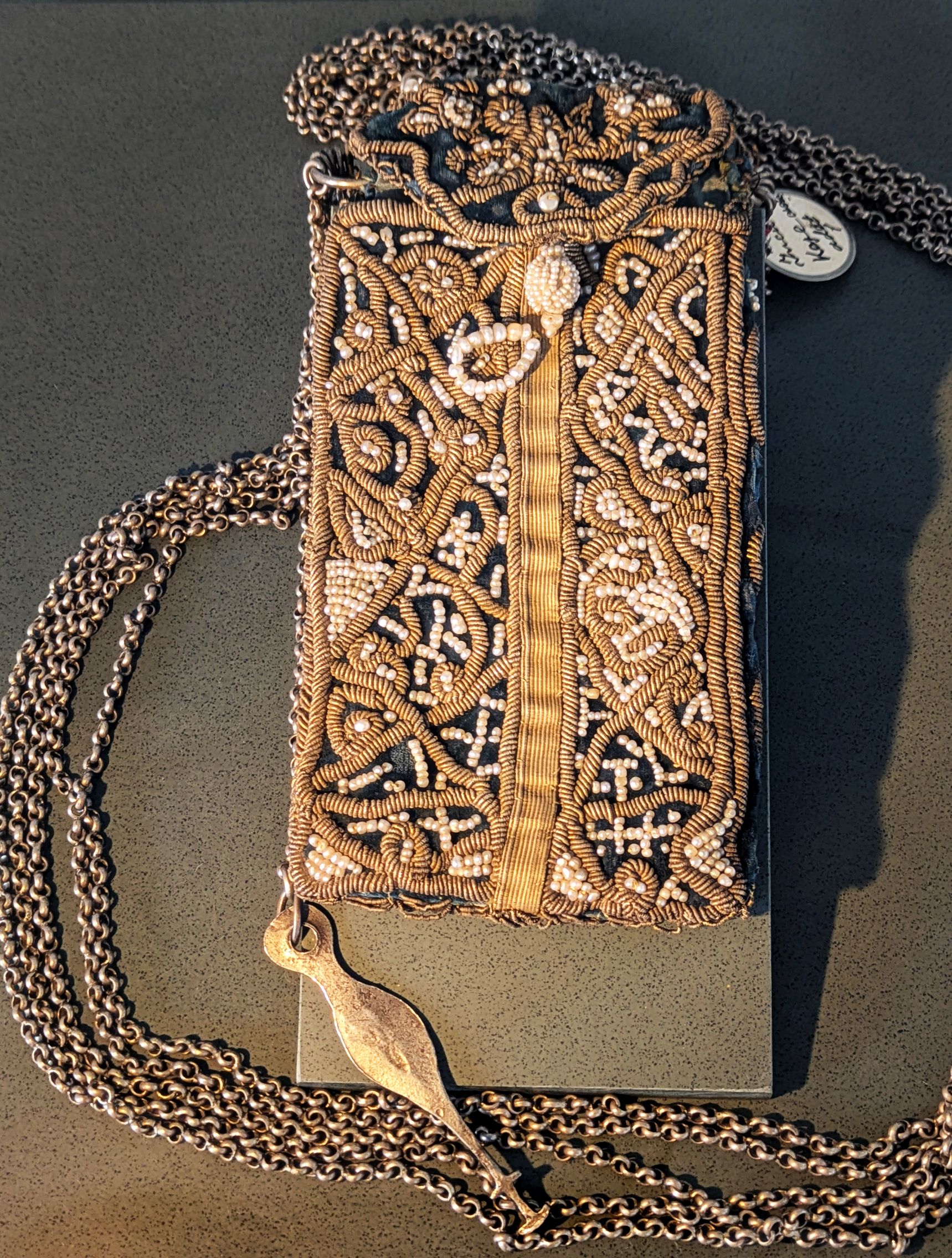
Key purse with pearls, 18th Century
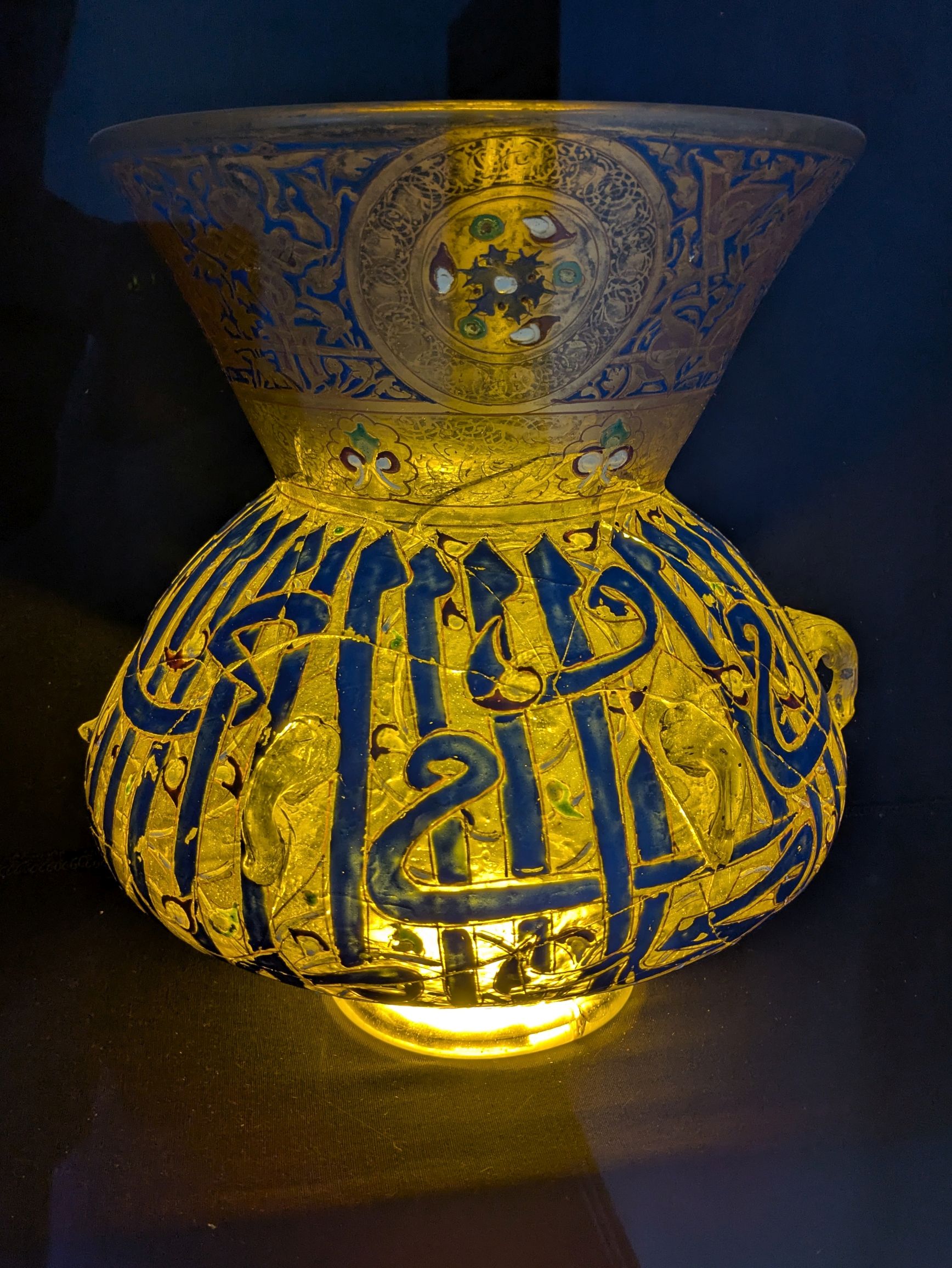
Glass lamp, 15th Century

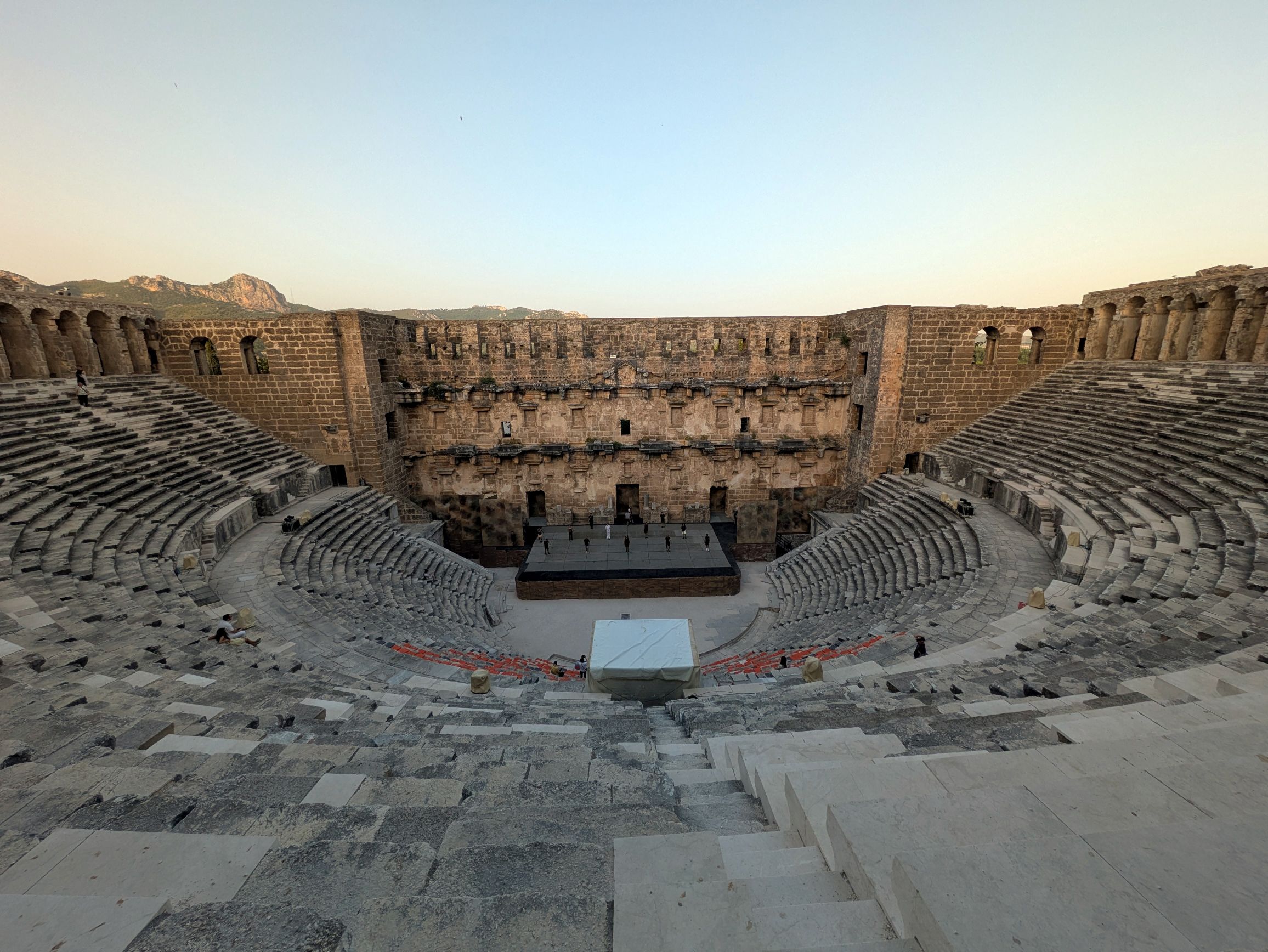
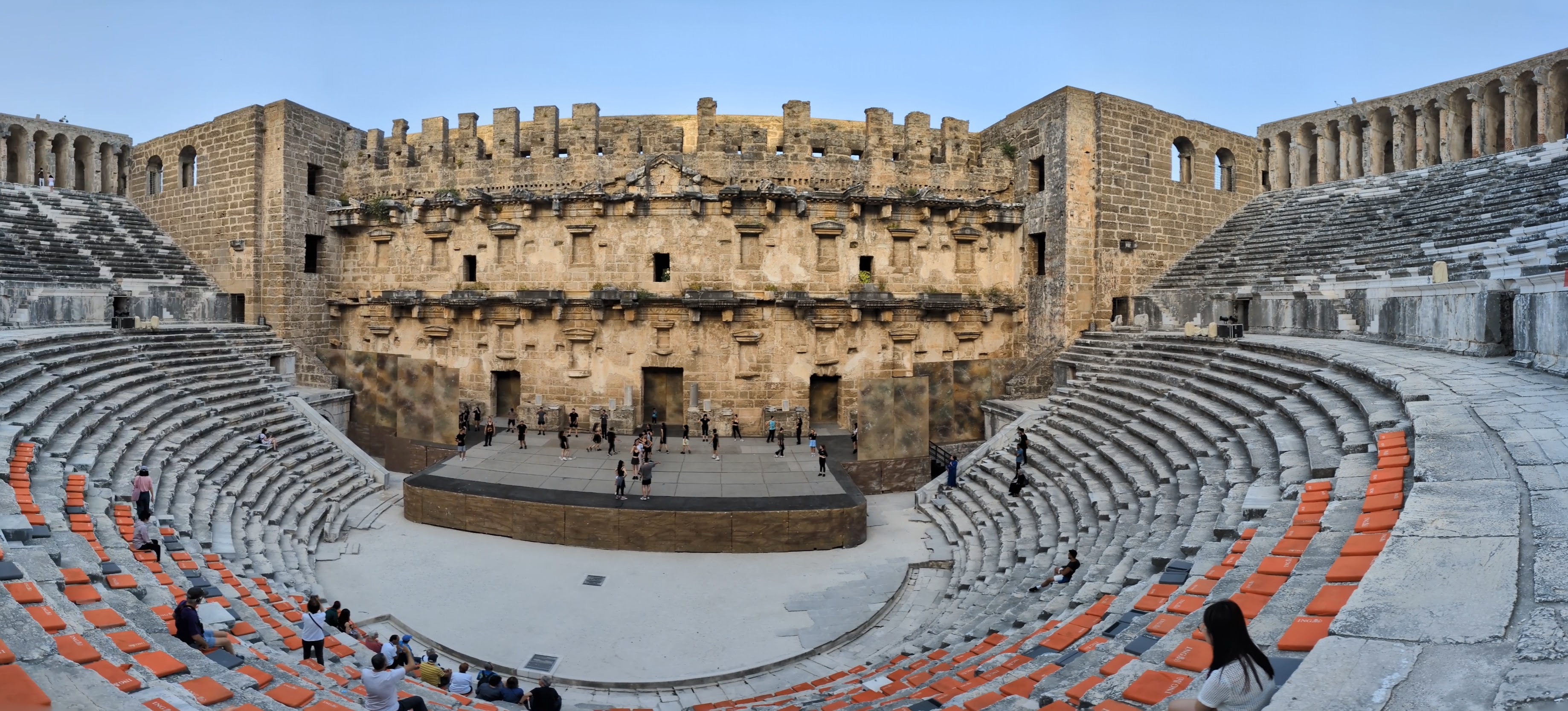
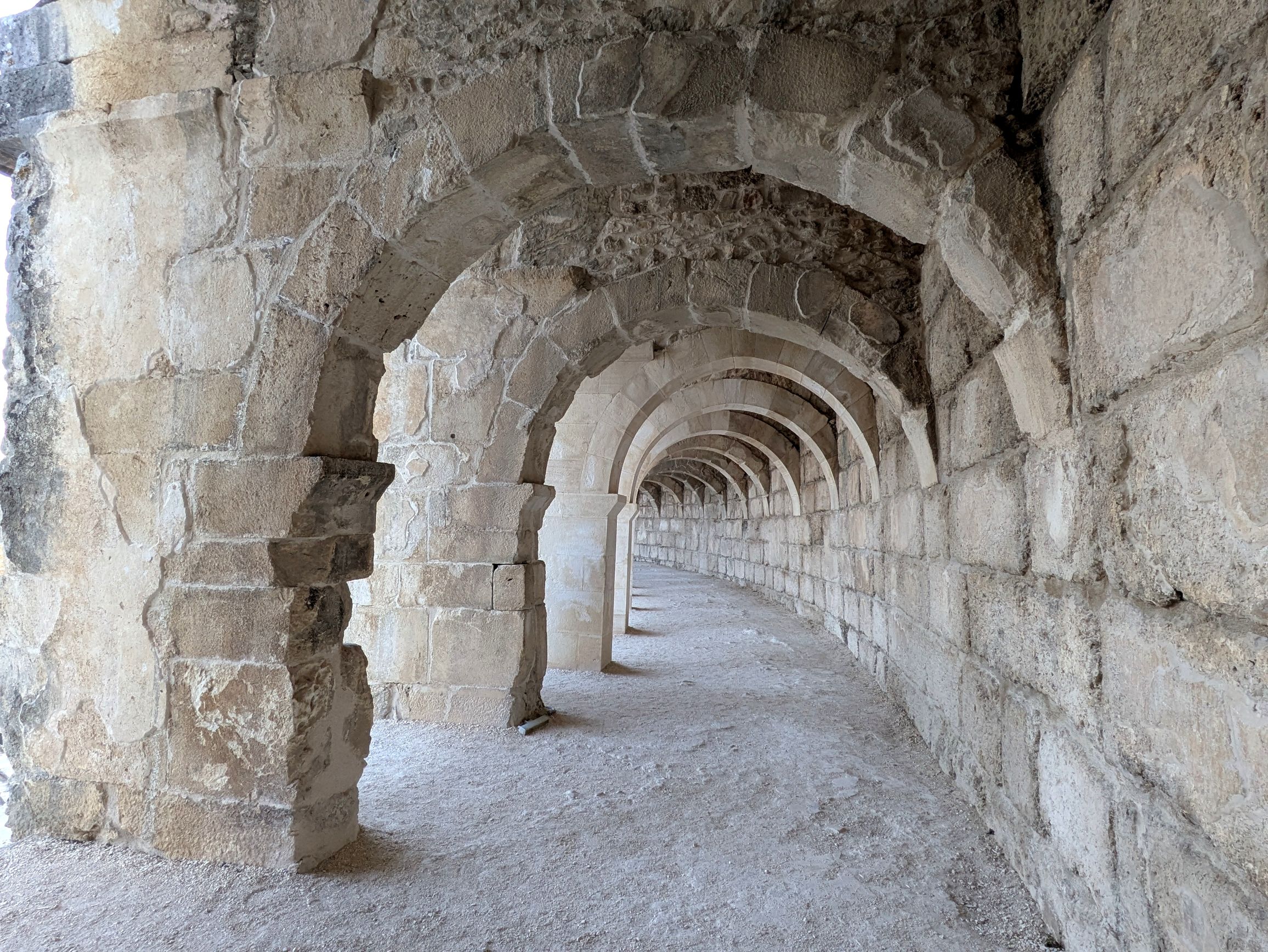
Following lunch, we continued towards Antalya, stopping late in the afternoon to see the Aspendos Antique Theater, the best-preserved Roman theater of the ancient world. Constructed during the reign of the Roman emperor Marcus Aurlius, between 160-180 AD, it was quite a sight to see all these years later, in 2025!

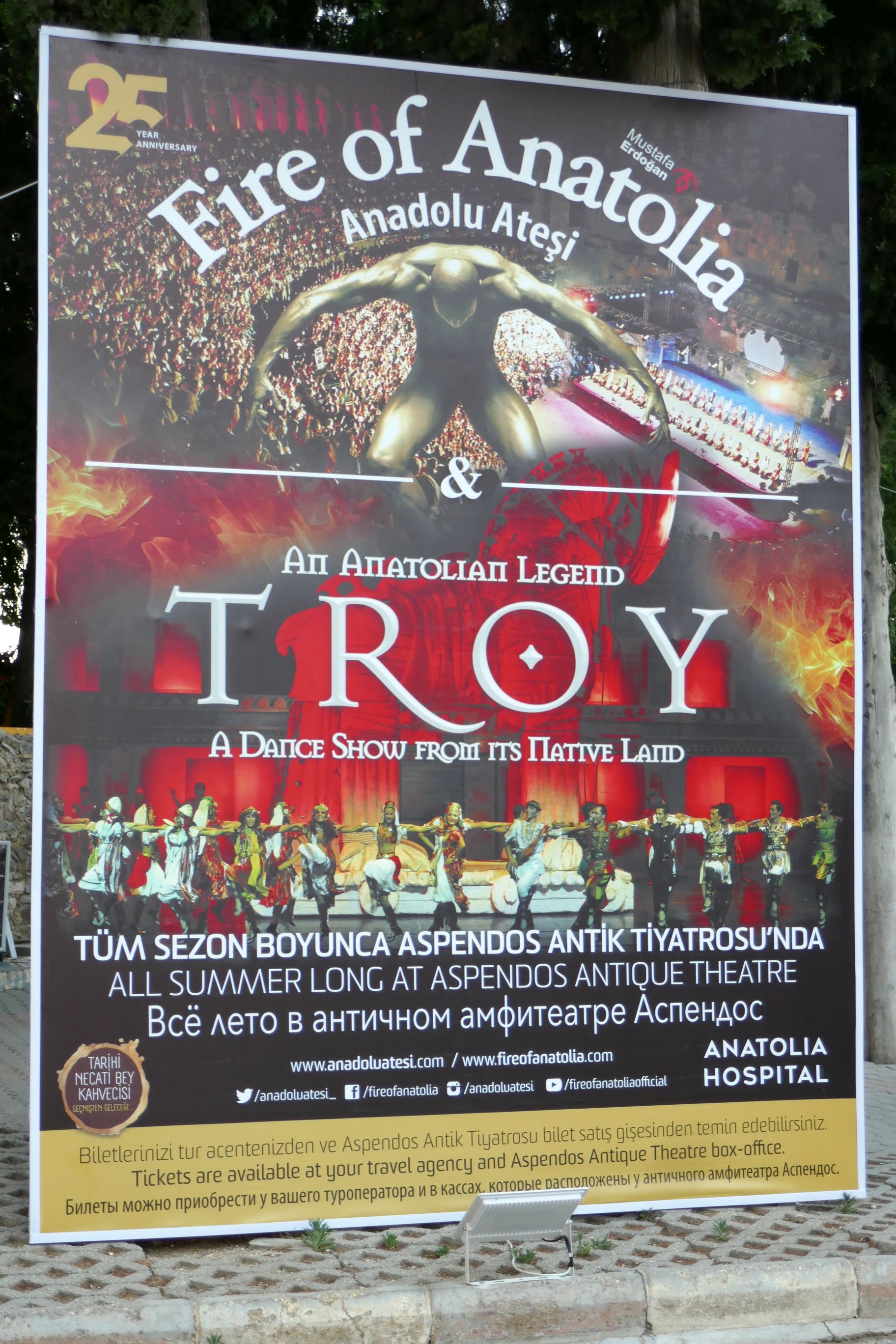
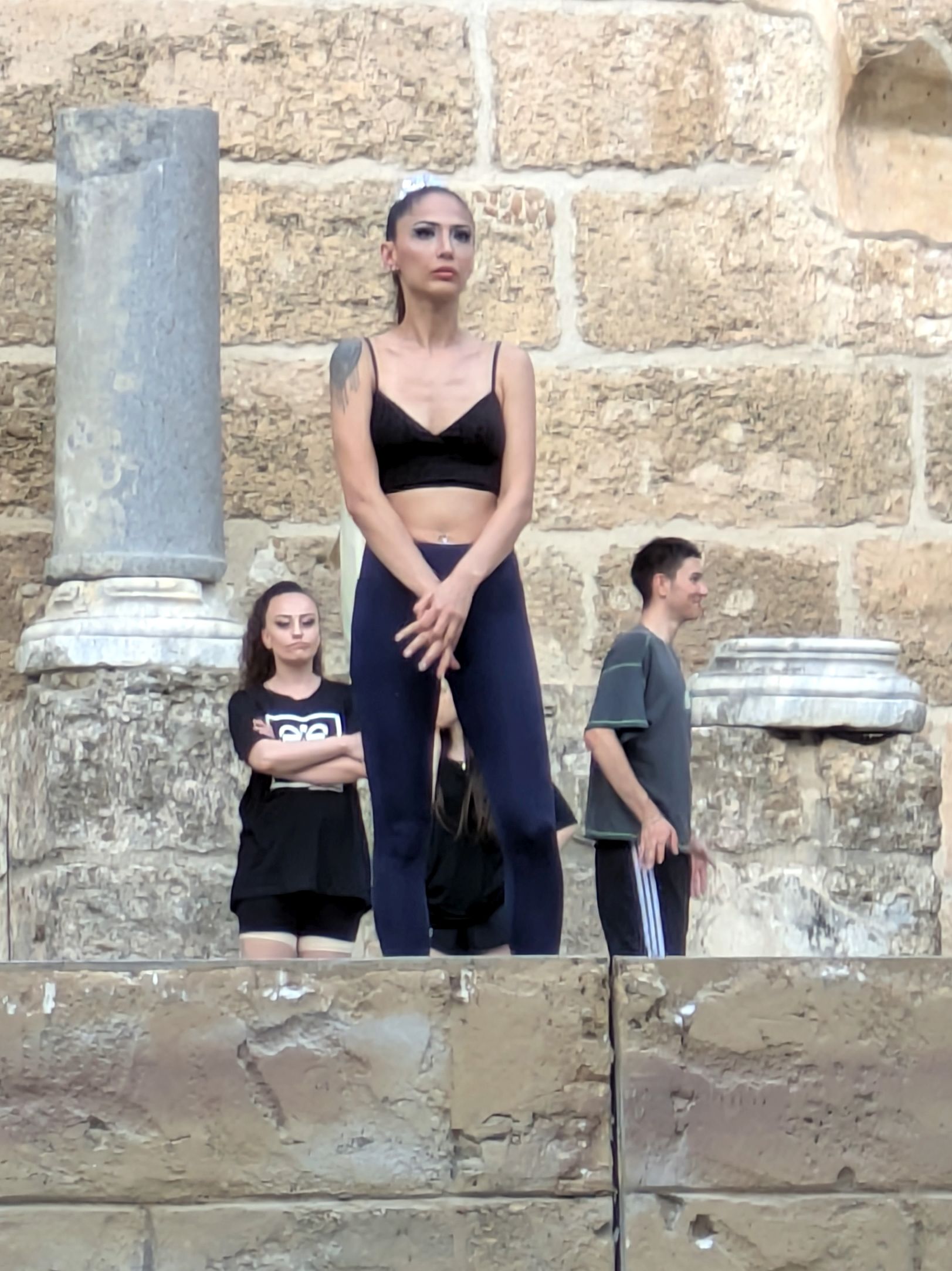
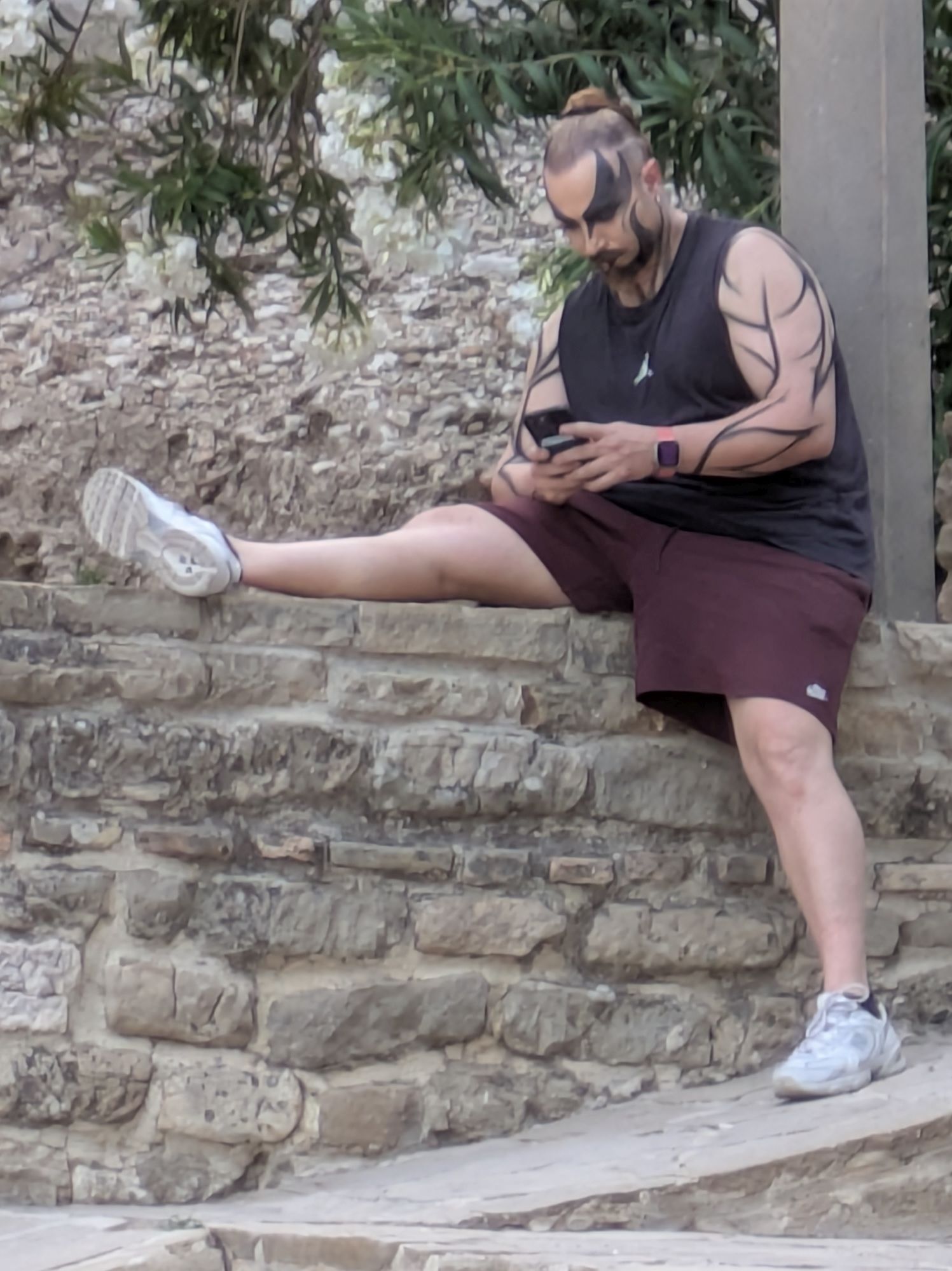
The theater is still in use, and we were fortunate to be able to get in to see it before closing for the day to tourists.  Our group of sixteen were the only ones in the theater—that is, besides the “Fire of Anatolia” dance group rehearsing for and “Troy,” “a dance show from its native land.”

There are 120 dancers in Fire of Anatolia, and they have performed in more than 85 countries. They hold two Guiness records, one for the fastest dance performance with 241 steps per minute and another for the largest audience—400,000!

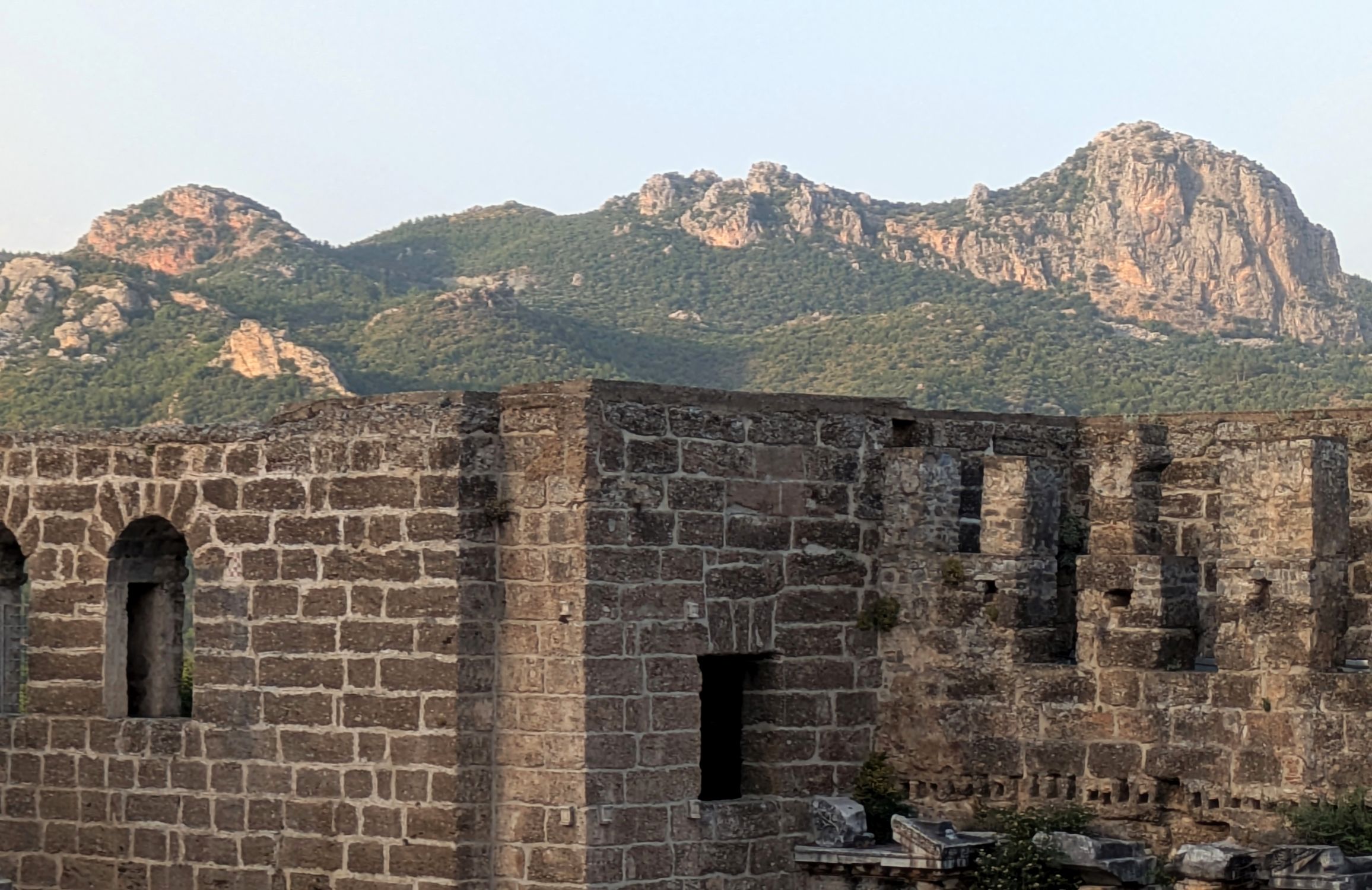
A few of us braved the steep climb to the top level of the theater to photograph the architecture, take in the views, watch the rehearsal, and snag a short video clip of it:

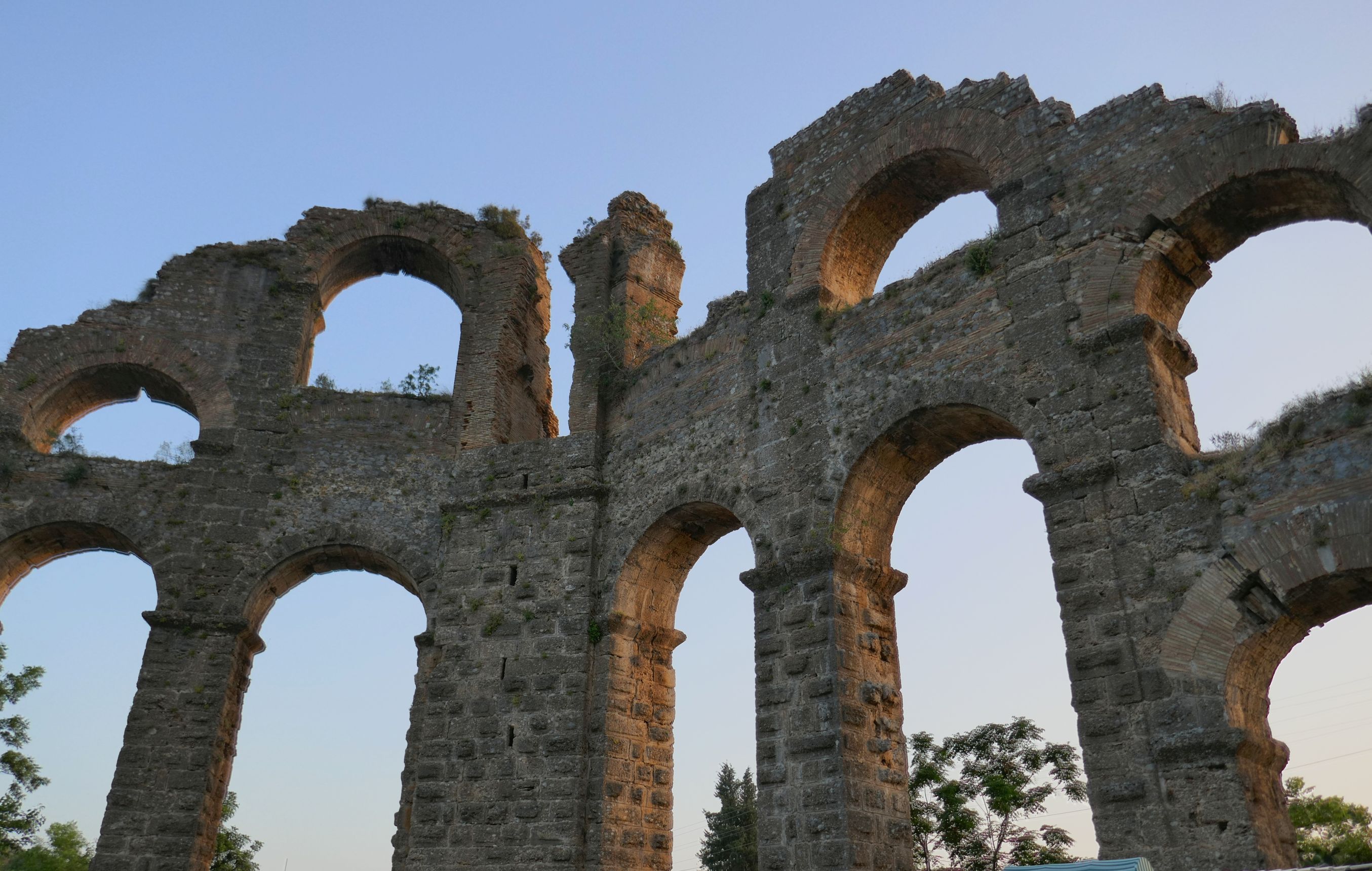
Just before sunset, we saw what remained of an ancient aqueduct near the theater.

Although we were scheduled to arrive in Antalya late in the afternoon, we all got so caught up watching the rehearsal and seeing the theater that we didn’t arrive until nighttime. Fortunately, we were still able to grab dinner at the restaurant just before it closed at 9:30 PM!
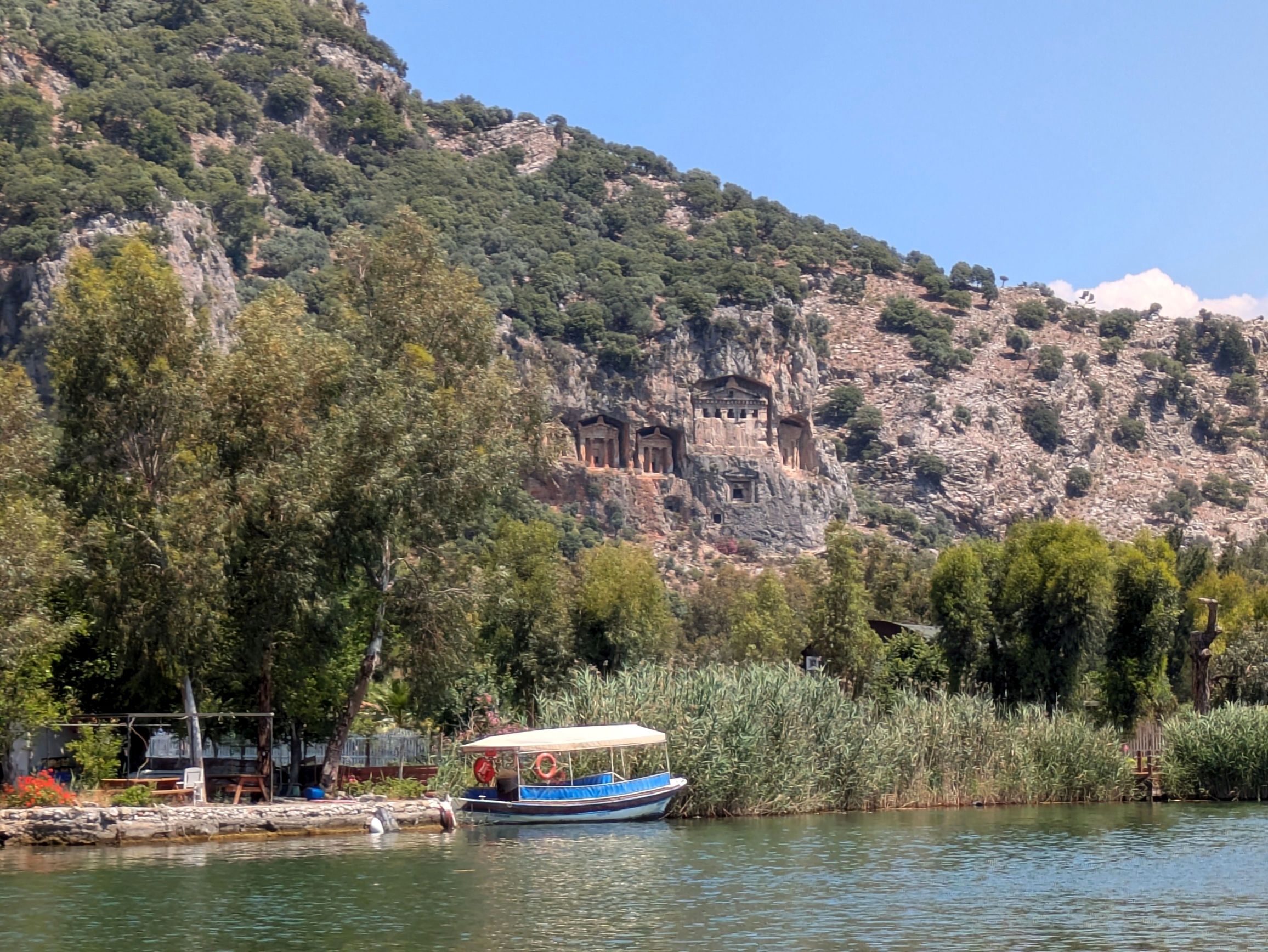
Next up: TURKIYE #9: ATTRACTIVE ANTALYA