On of my favorite experiences during each international travel journey is seeing how people live in different countries and learning about their work and daily life. Traveling with Overseas Adventure Travel (OAT) assures us plenty of opportunities to do this on each tour.
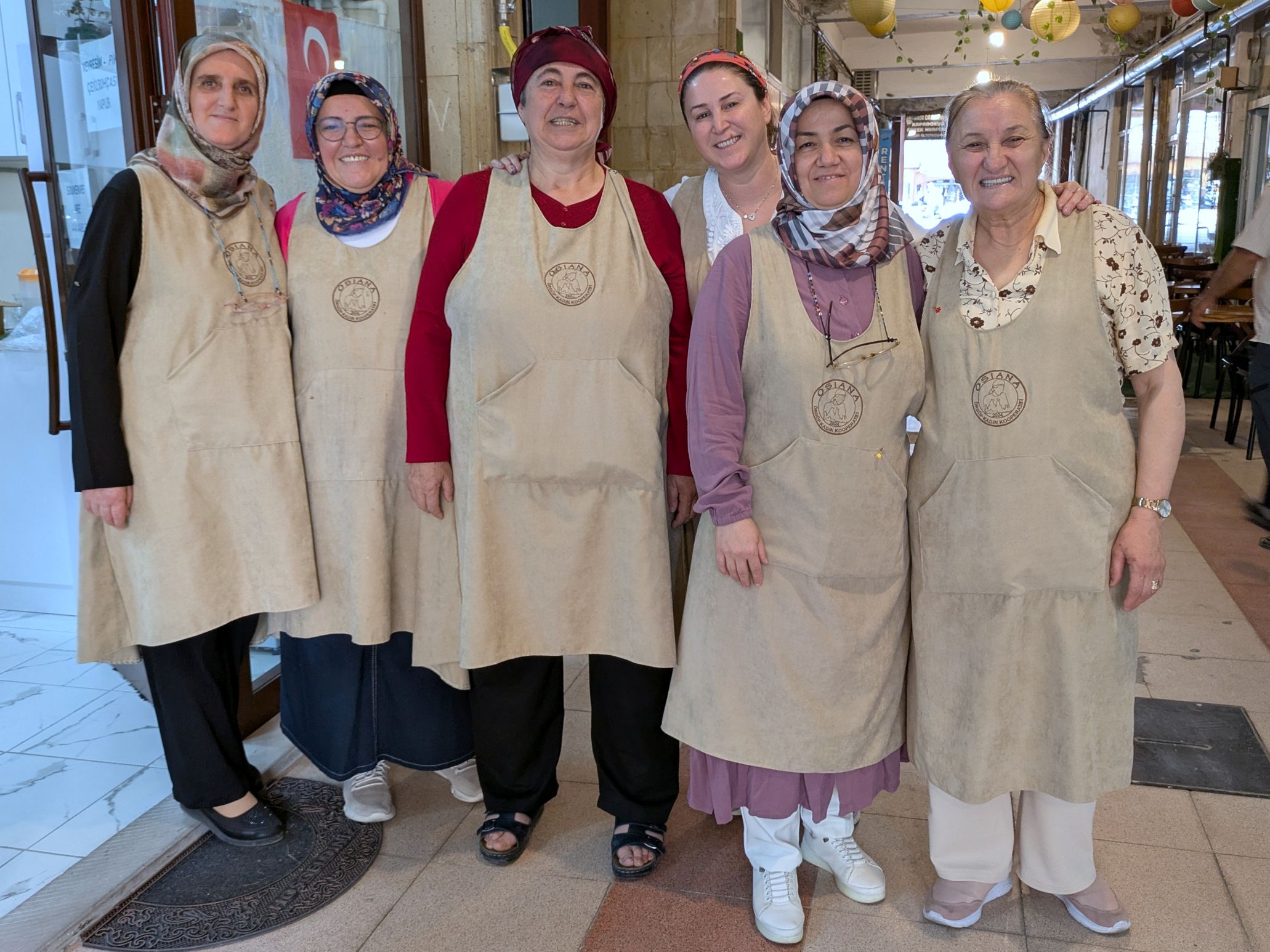
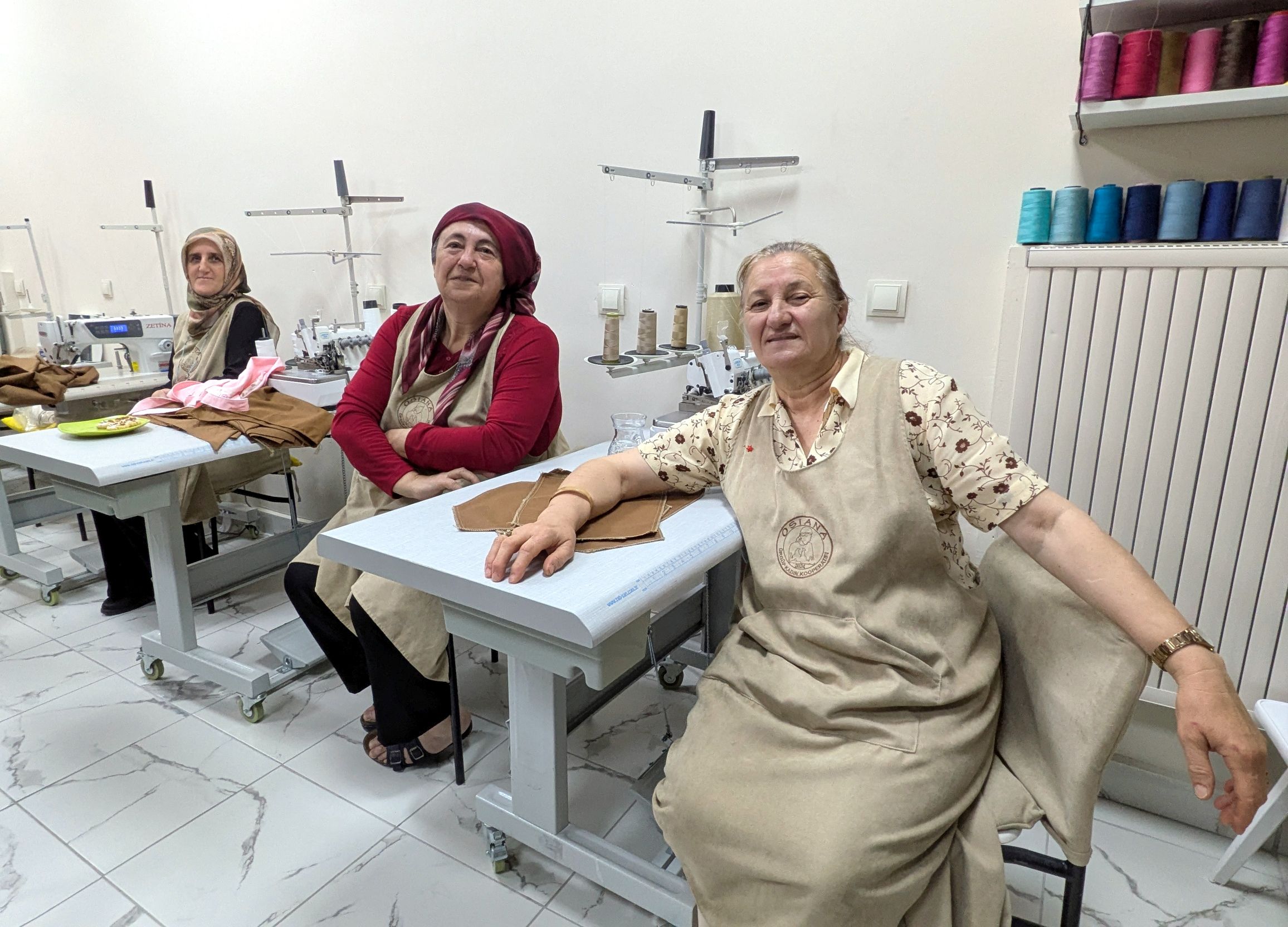
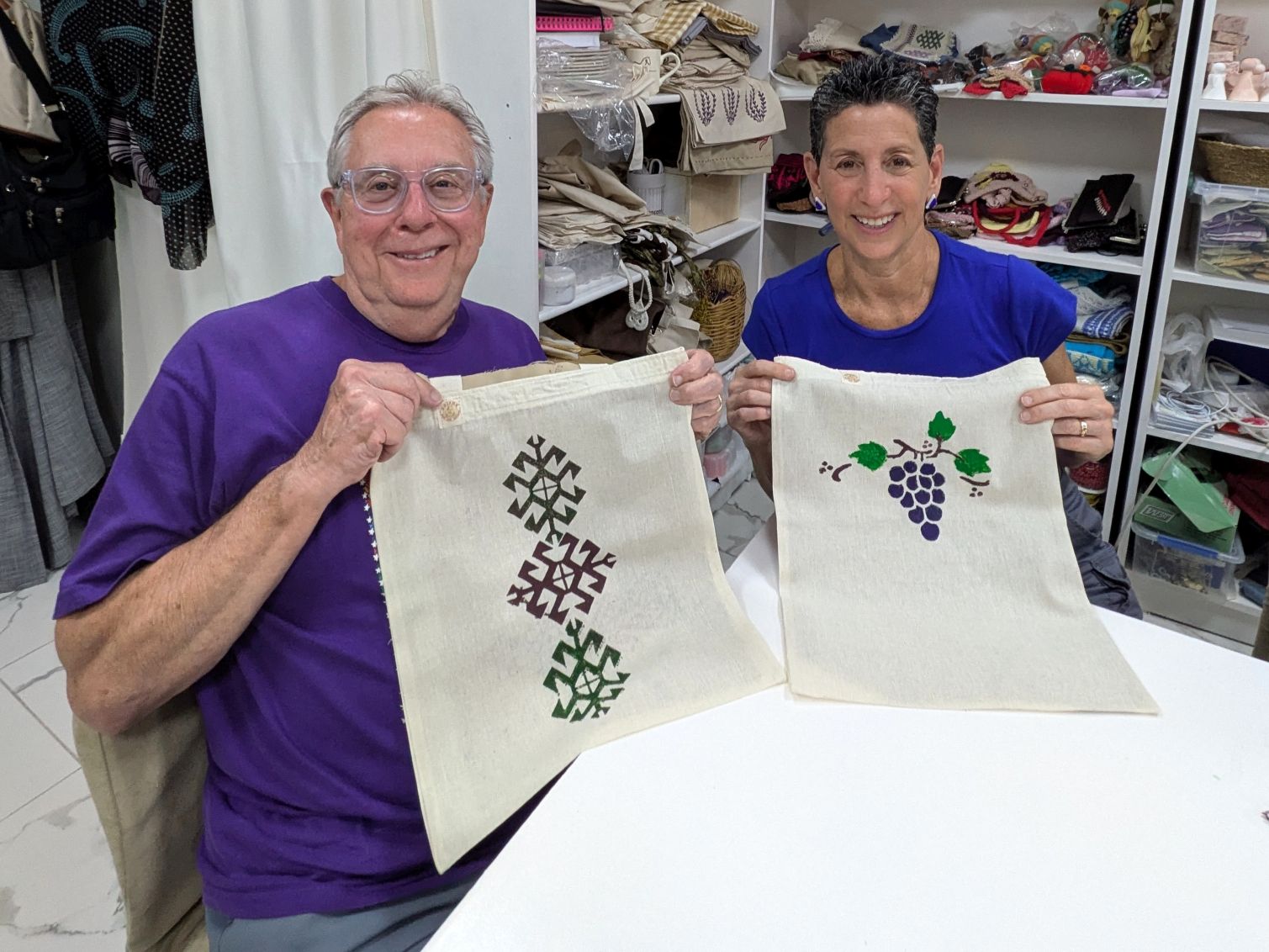
First, we visited Osiana, a women’s cooperative that was founded in 2024 and became a beneficiary of Grand Circle Foundation (OAT is owned by Grand Circle). The foundation donates equipment and fabrics to Osiana, so the women can make products to sell at local farmers markets, empowering them to be financially independent. The cooperative is open to any woman in the community, and the ladies can make whatever products they would like.
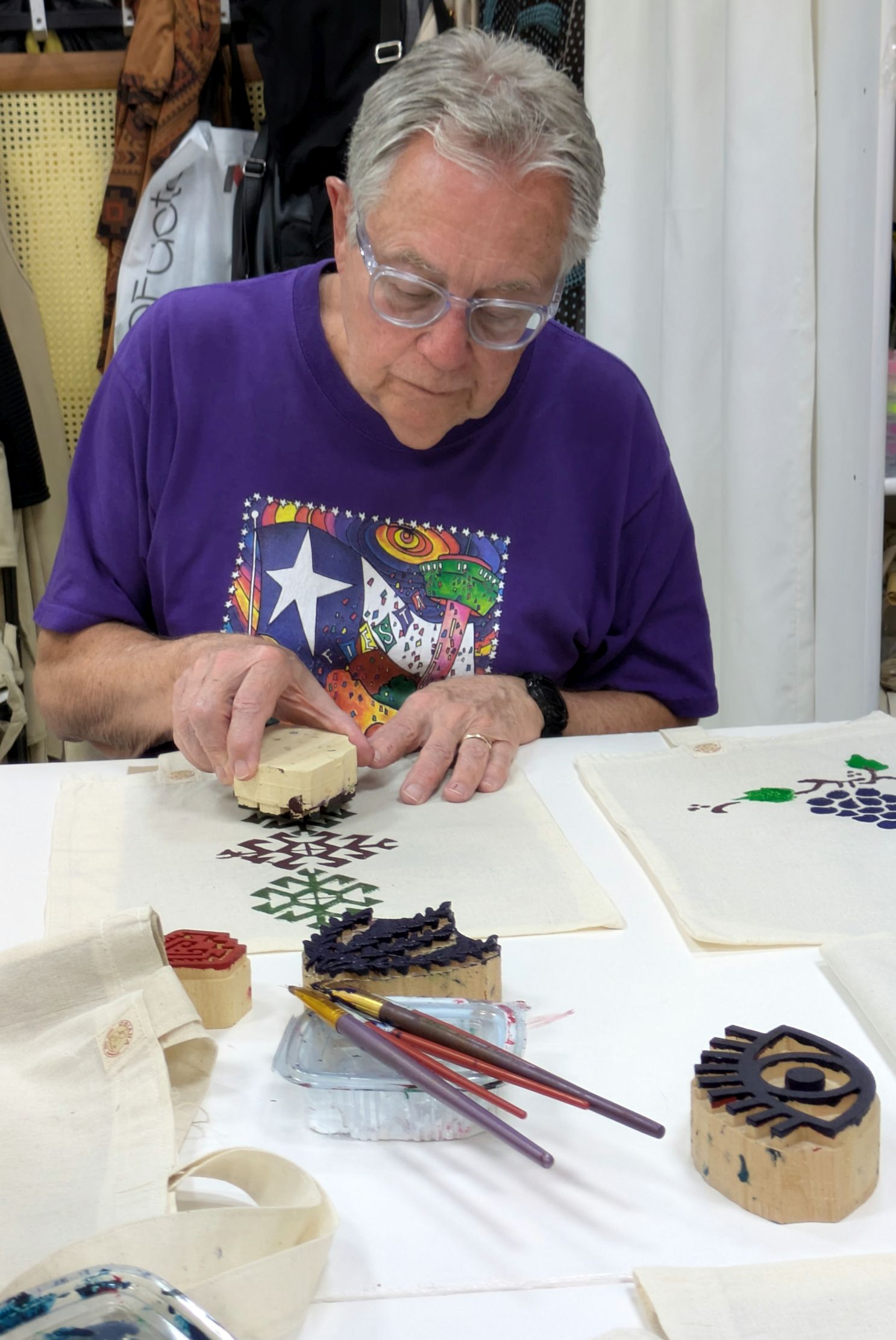
Hand-stamped tote bags are one of the products, and we had the opportunity to make our own bags with their handmade wood block stamps dipped in paint.
(For all photos, click on the image for a full screen view.)
This lady made this cute little hot air balloon key chain, which I purchased for $6:
Tote bags in hand, we headed to the countryside to visit a family and learn about life on their farm. Irfan and Zeliha Abdullah, along with Irfan’s parents, grow grapes to sell for making wine. Cappadocia produces the best wine in Turkiye; other crops in the region are potatoes, peanuts, and pumpkin (grown for seeds).
After learning how to make Gozleme, we enjoyed a wonderful lunch with the family. Don’t know what Gozleme is? See for yourself by watching a short four-minute slide show I made that will appear in the next post, Turkiye #7 (Part 2).
Zeliha, especially, made quite an impression on me. She was so full of joy; lots of smiles and laughter! We really connected, even though we didn’t speak each other’s language.
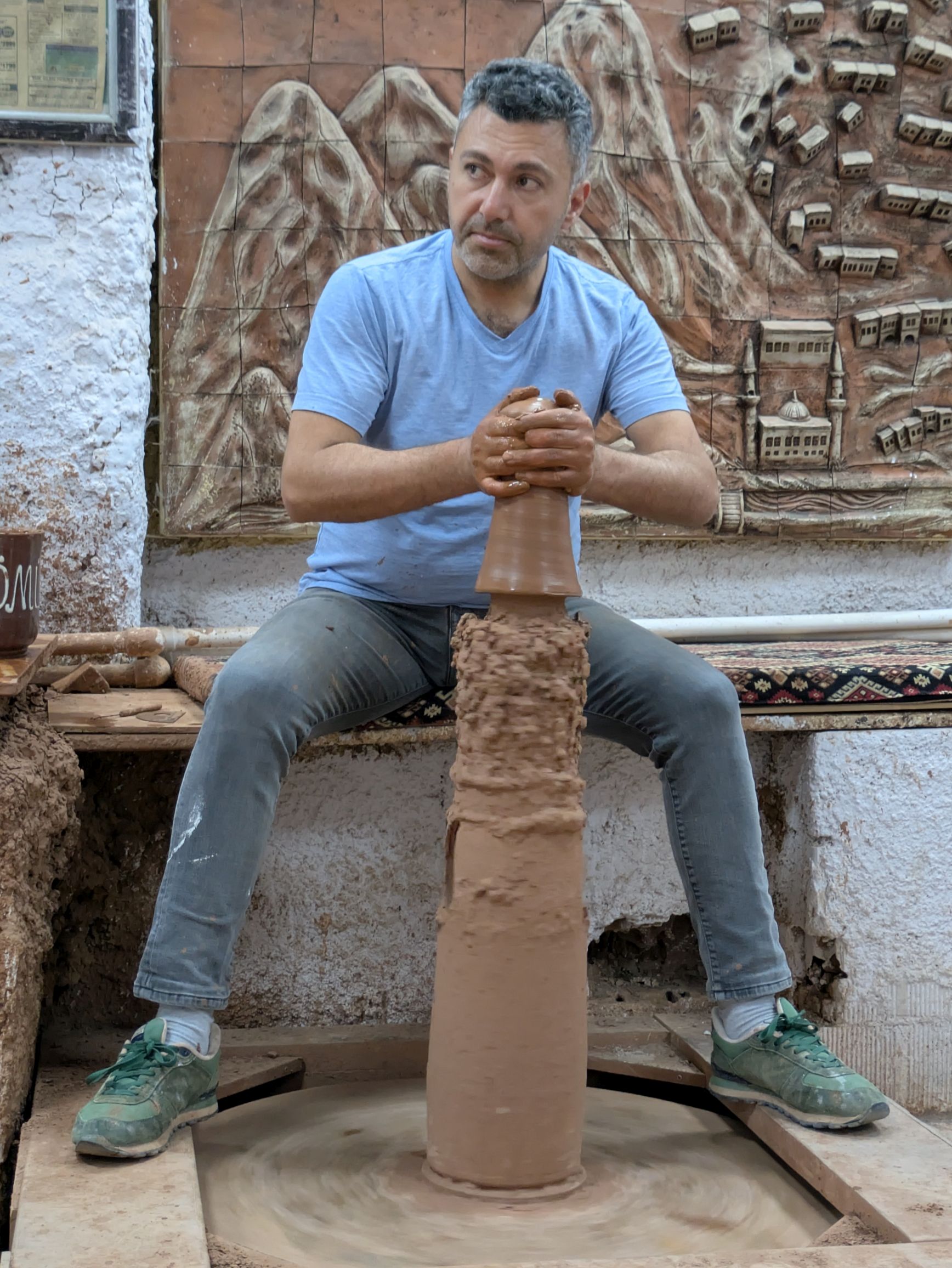
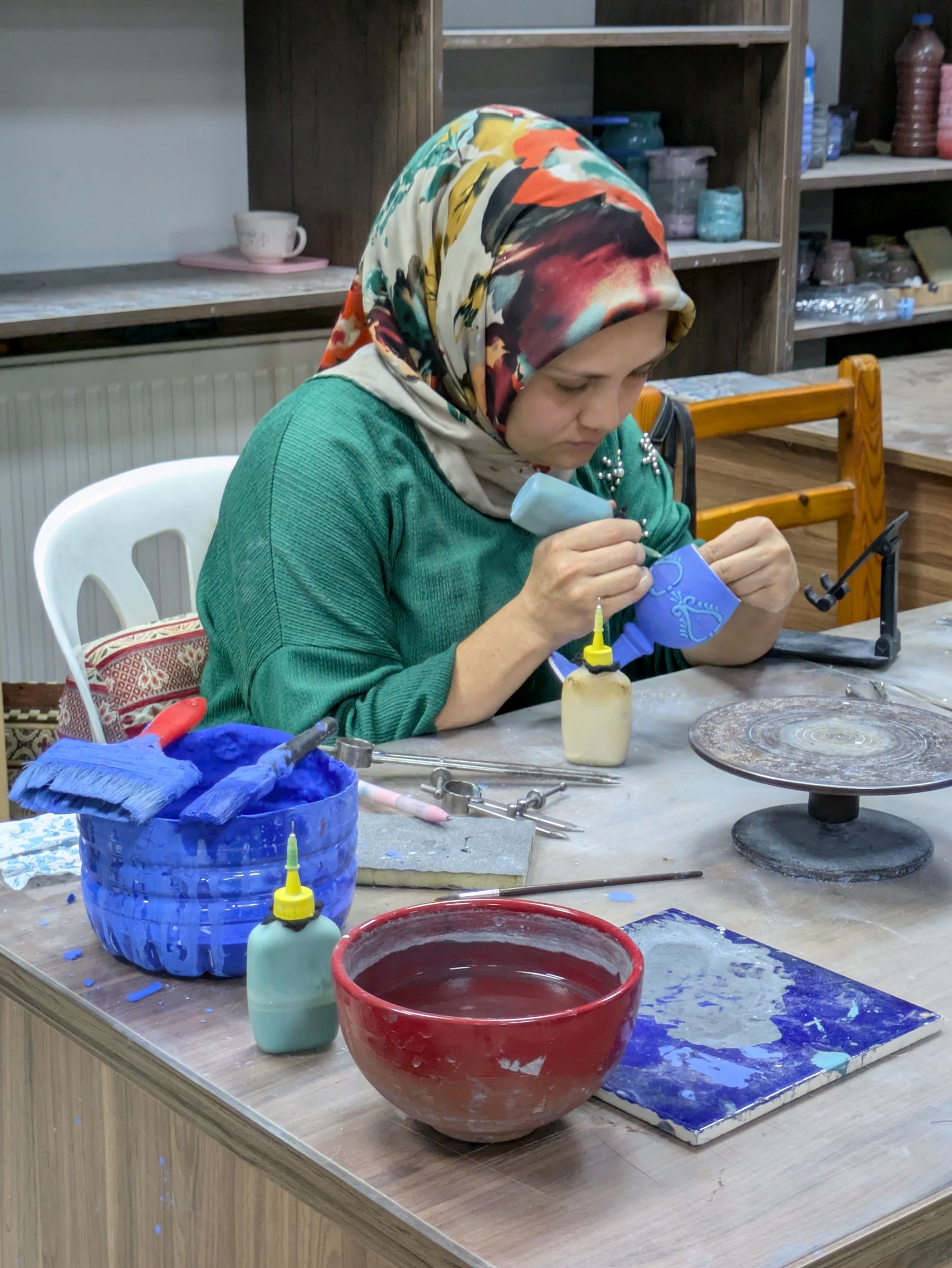
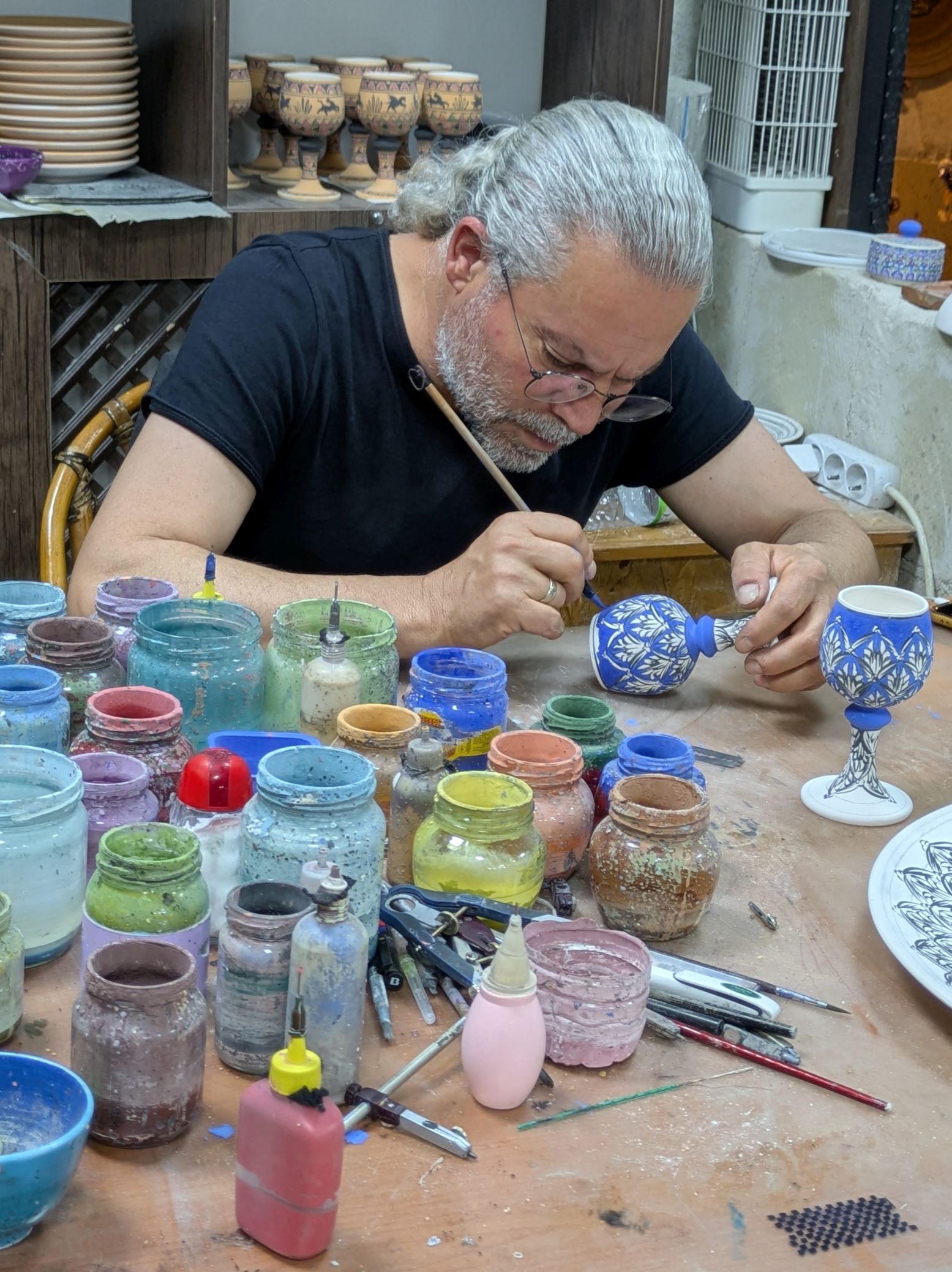
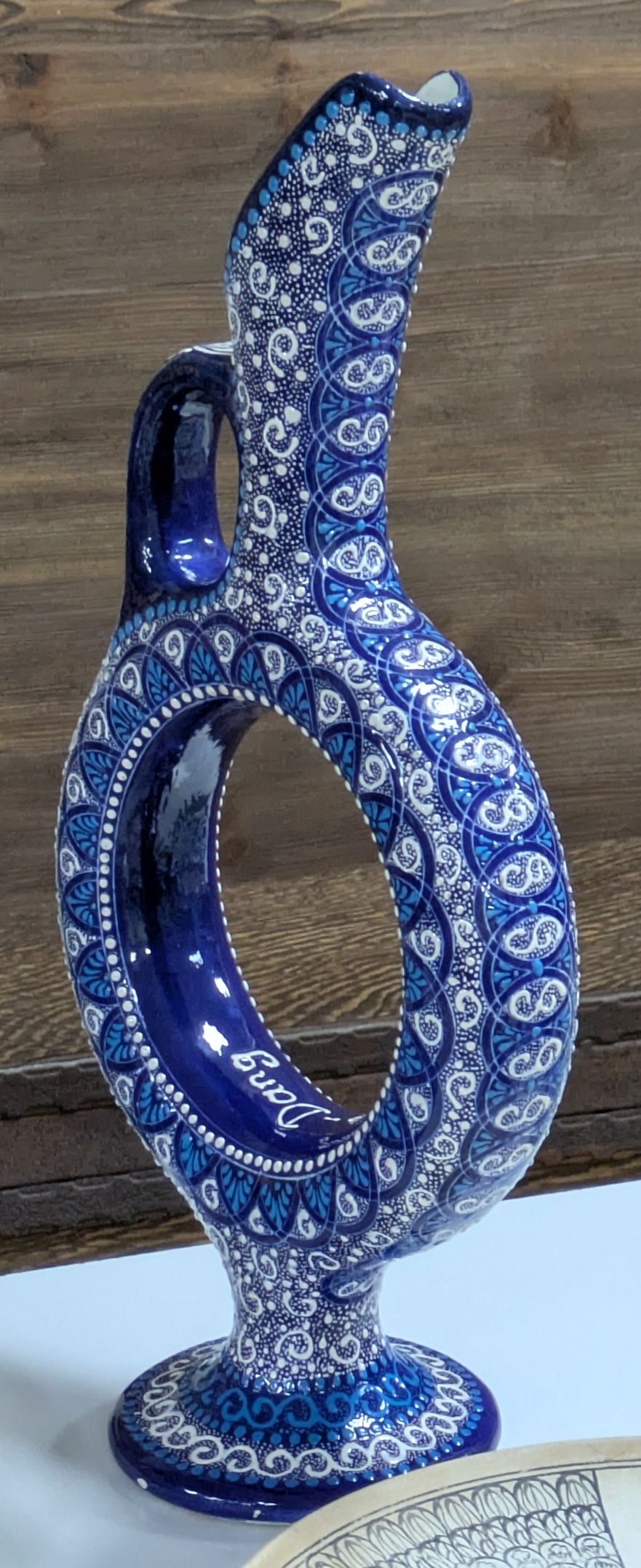
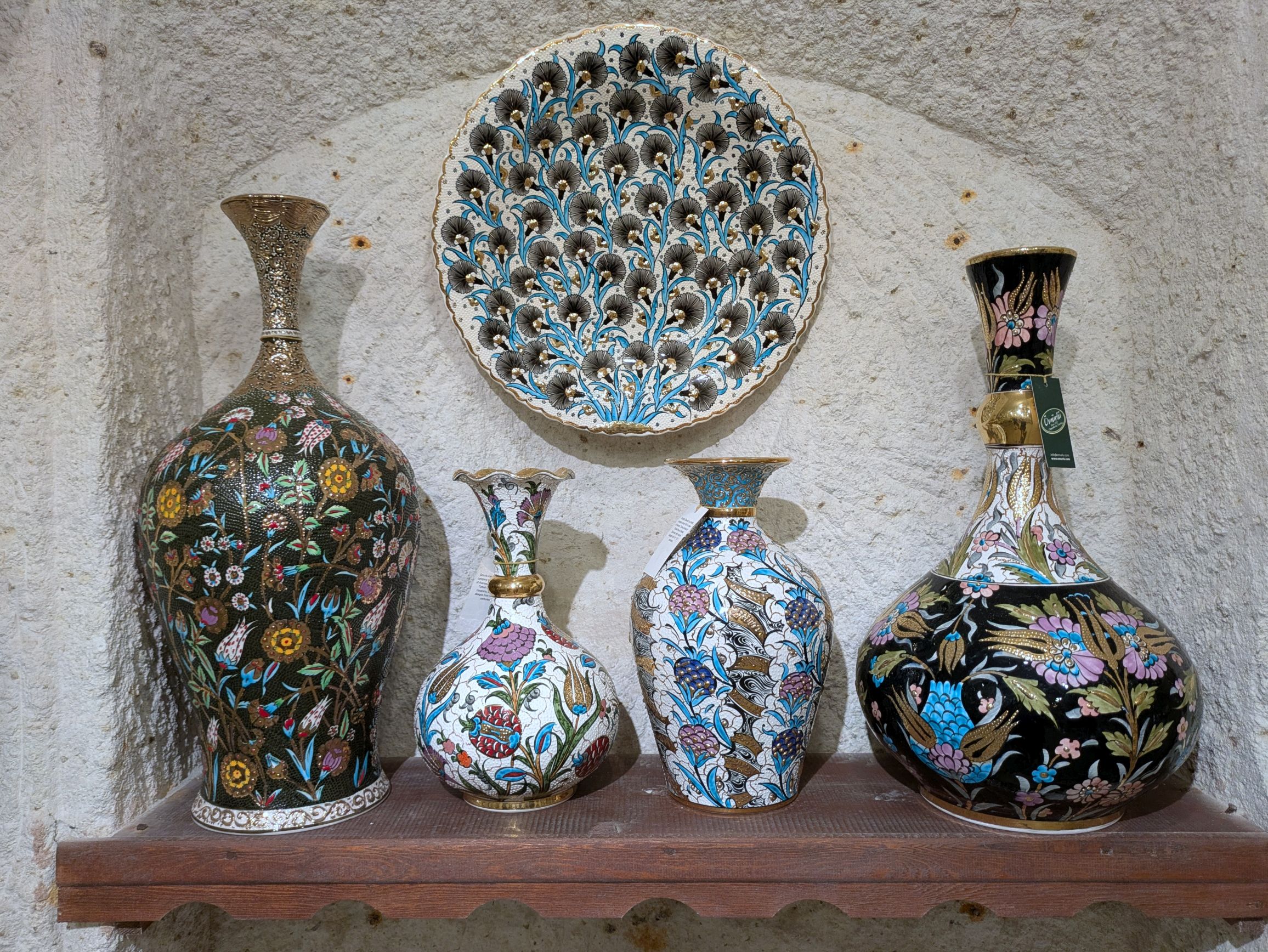
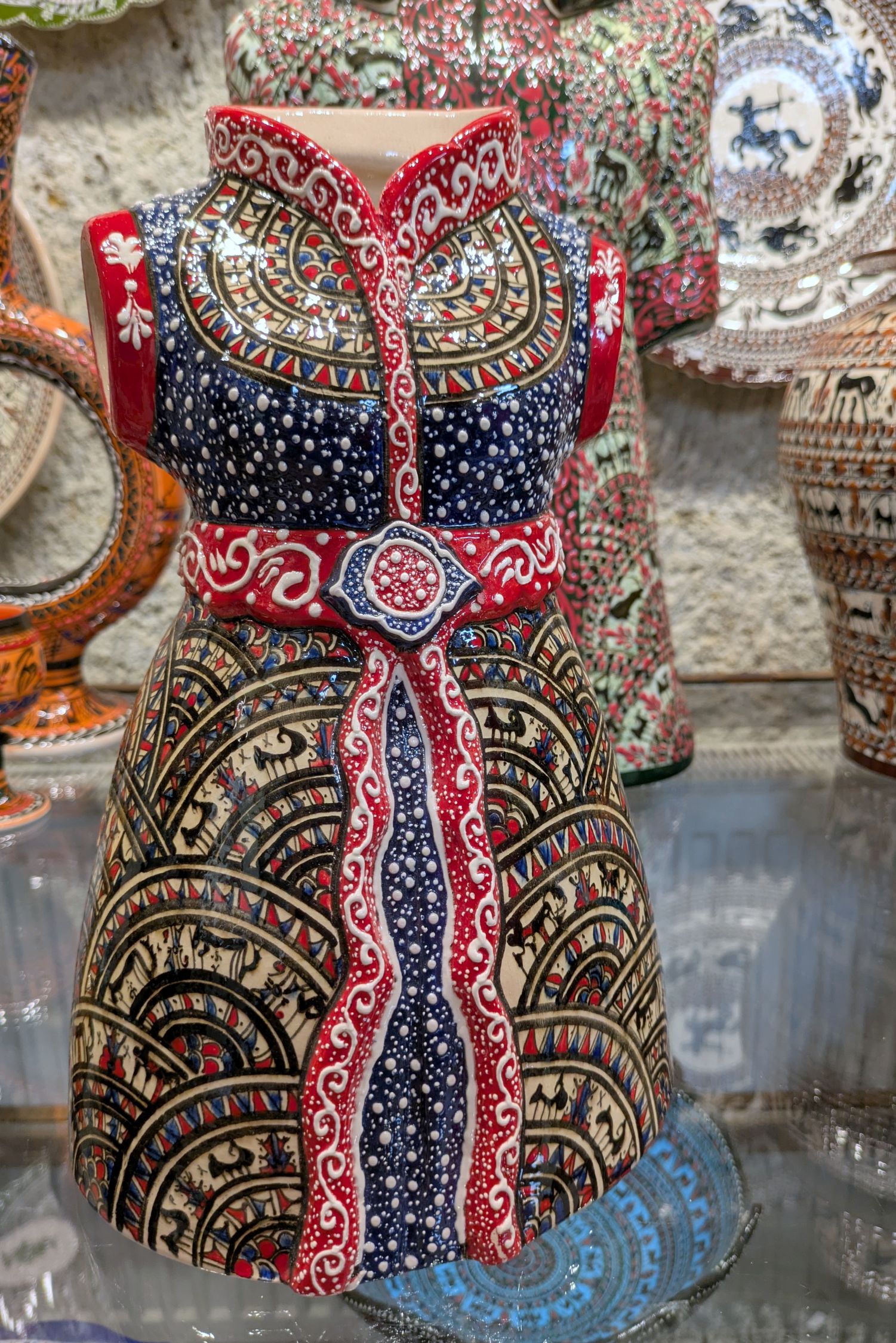
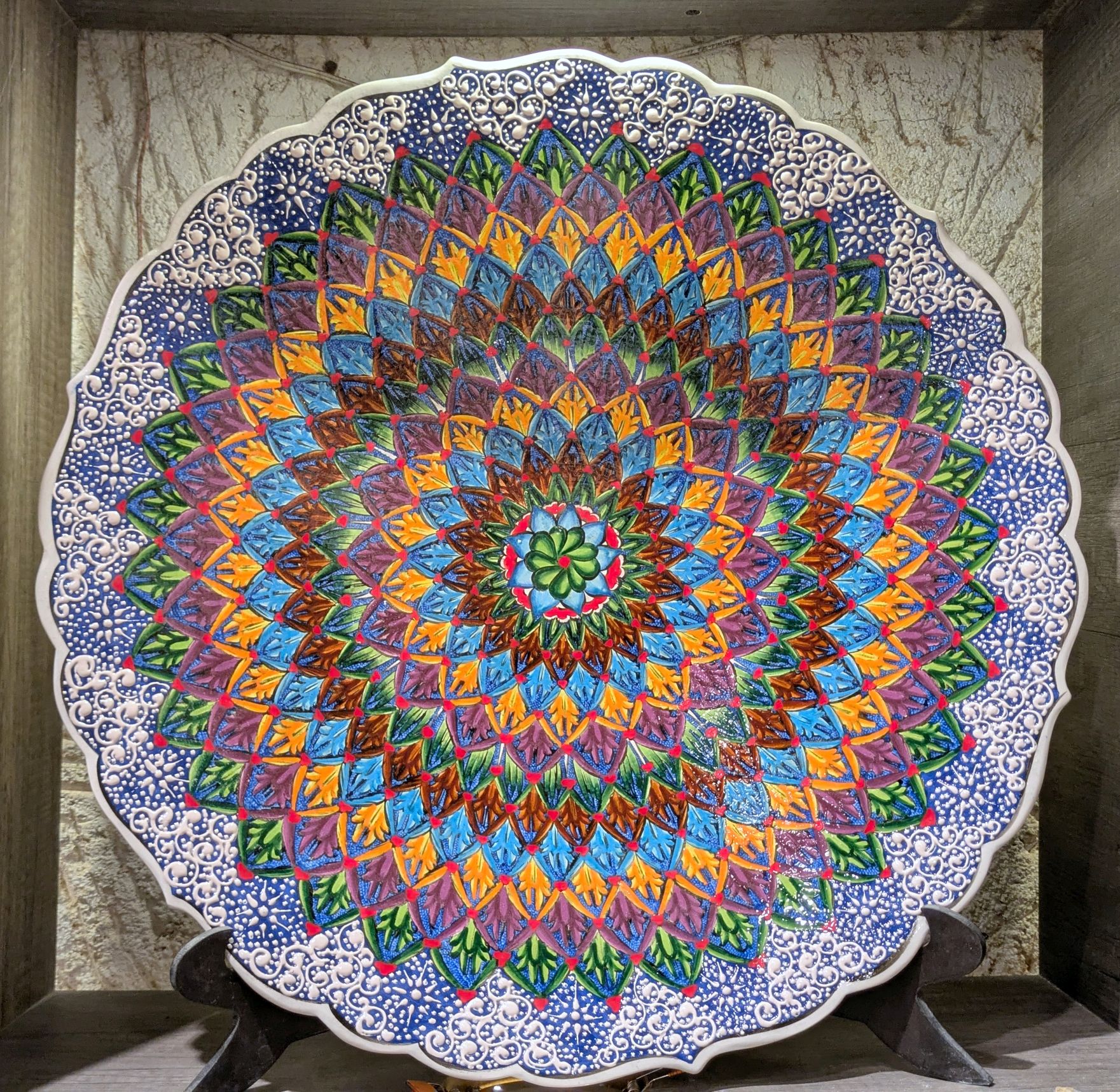
Next, we visited Omurlu Ceramics, a family business that began in 1807 and now has 20-25 potters and artists and is in its seventh generation. Such beautiful works of art!
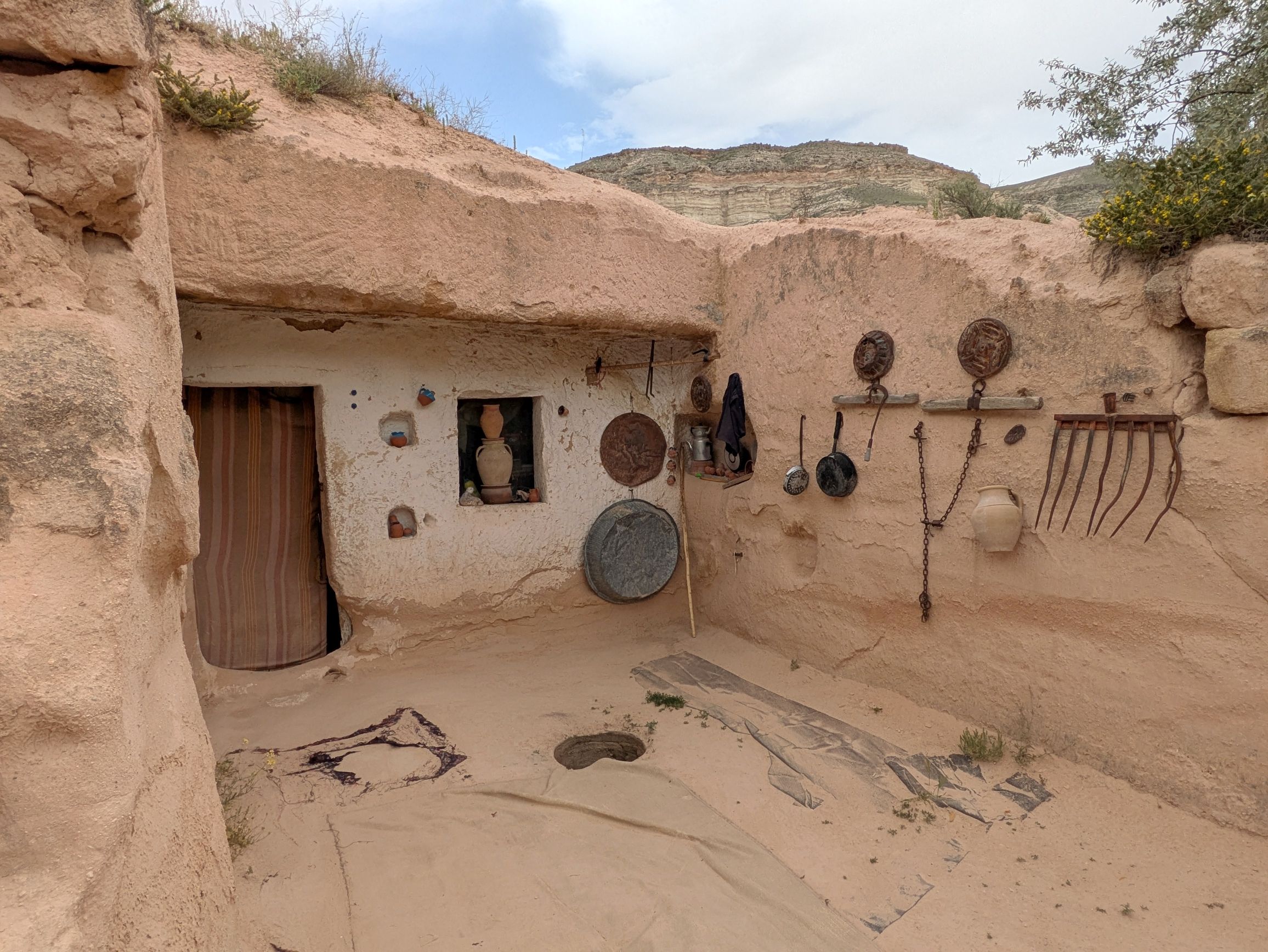
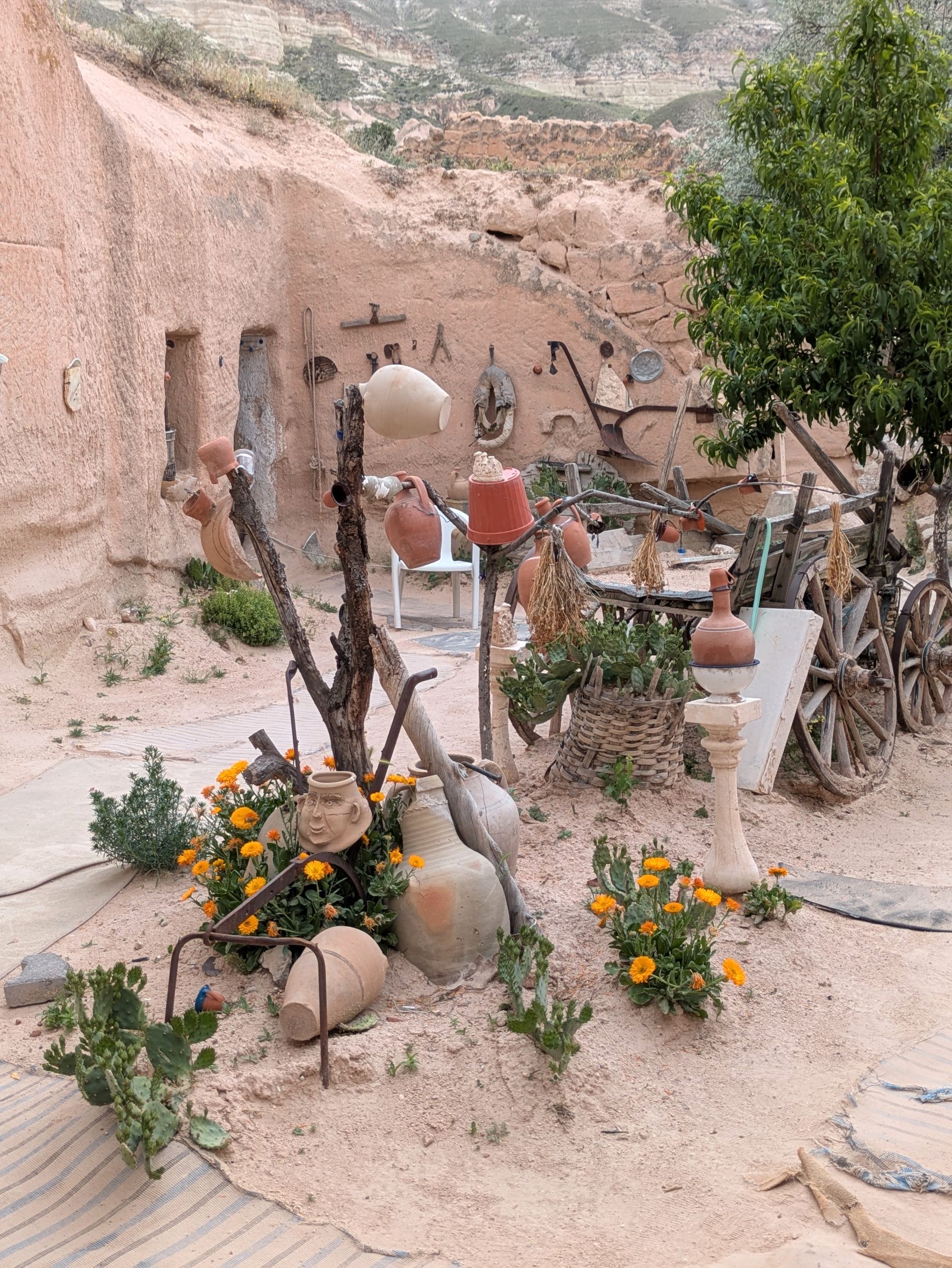
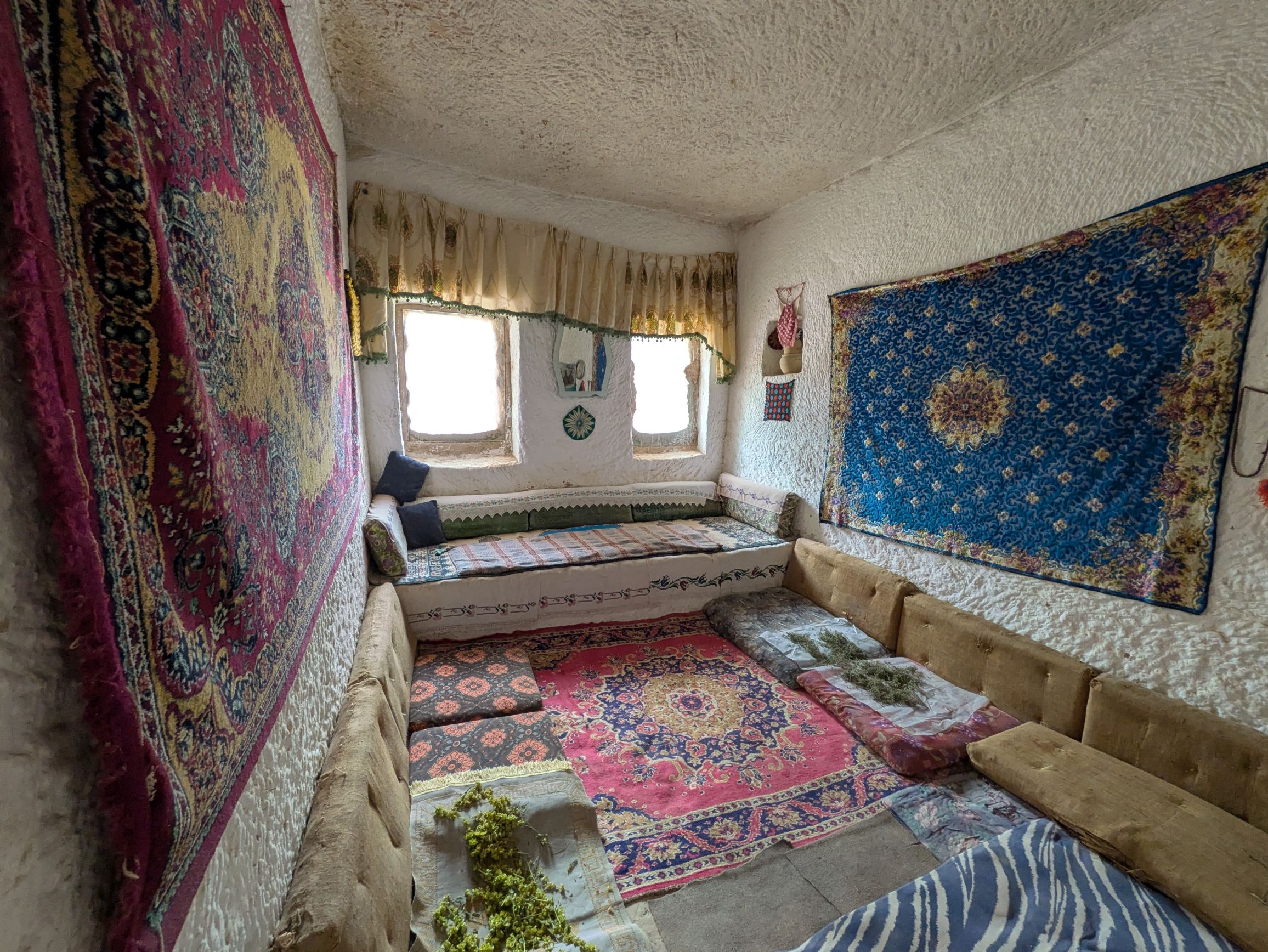
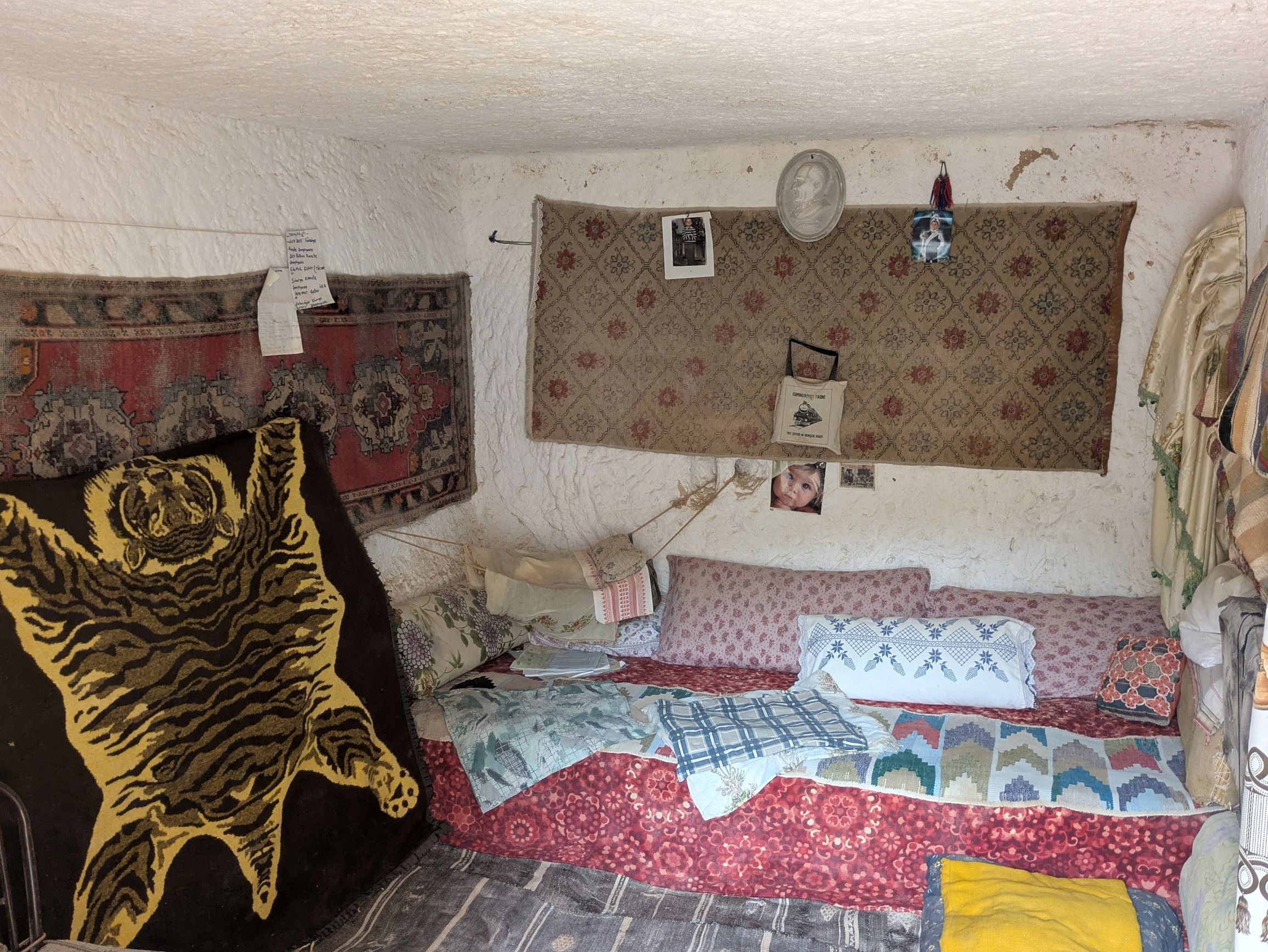
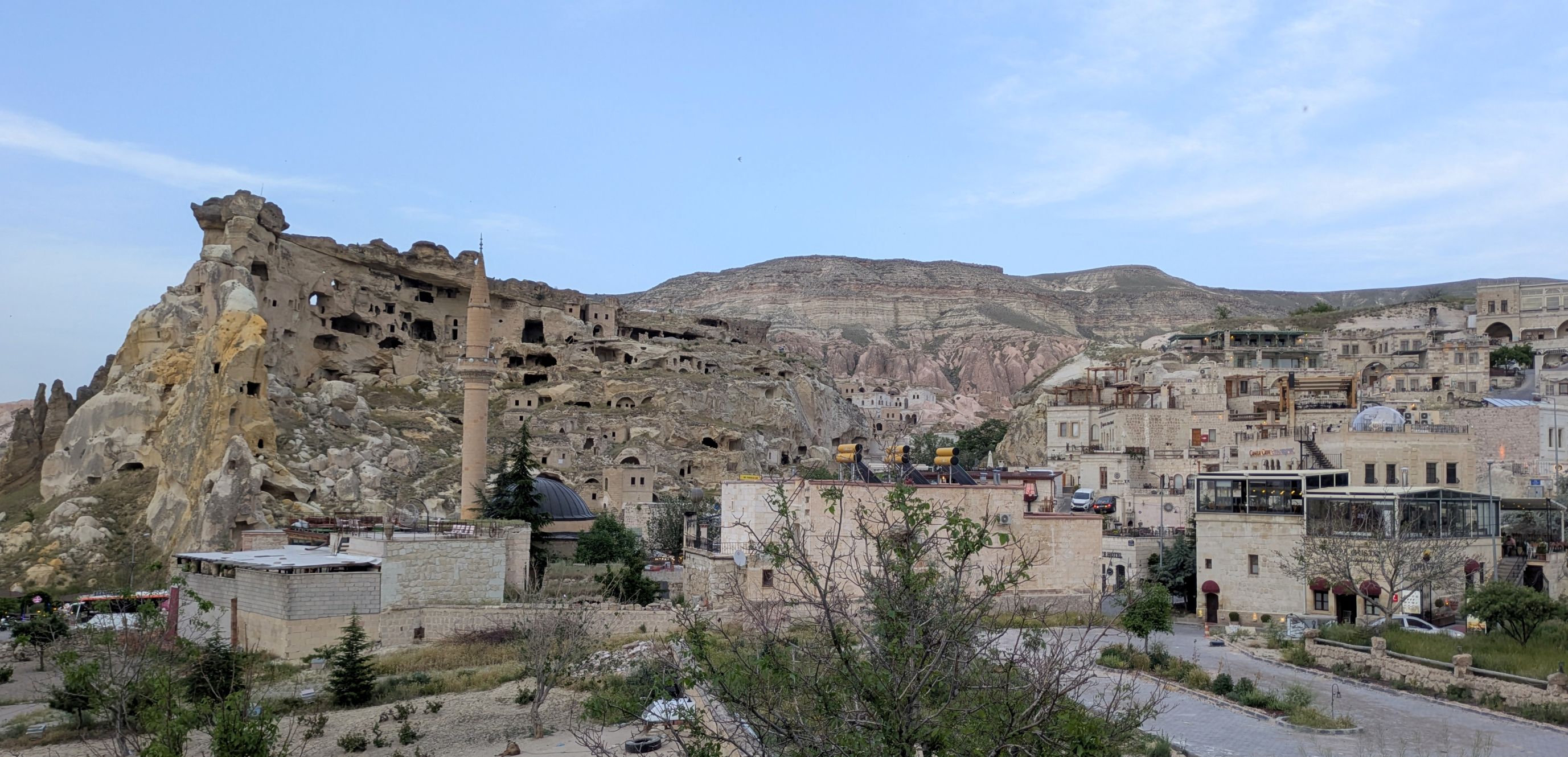
Our final stop was to tour a cave home that has been in the family since the 1800’s. The current family has lived there since 1954, and they earn money by inviting small tour groups or individuals to tour their home. They also have a small gift shop in an adjacent room.
An abandoned cave house
This was up the street from our hotel.
What a fabulous day!
Next up:TURKIYE #7 (PART 2): A DAY IN THE LIFE OF CAPPADOCIA- A SLIDE SHOW
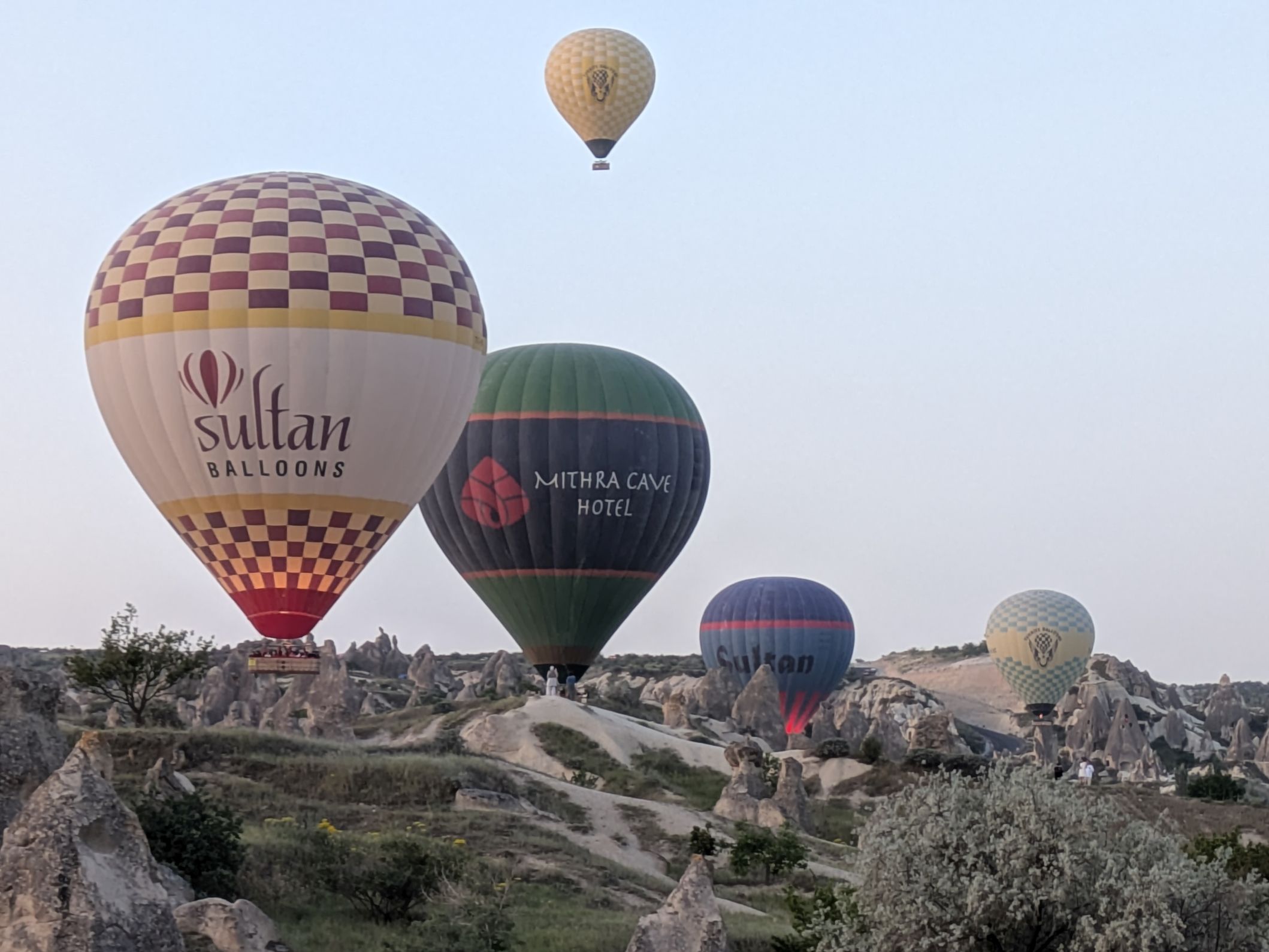
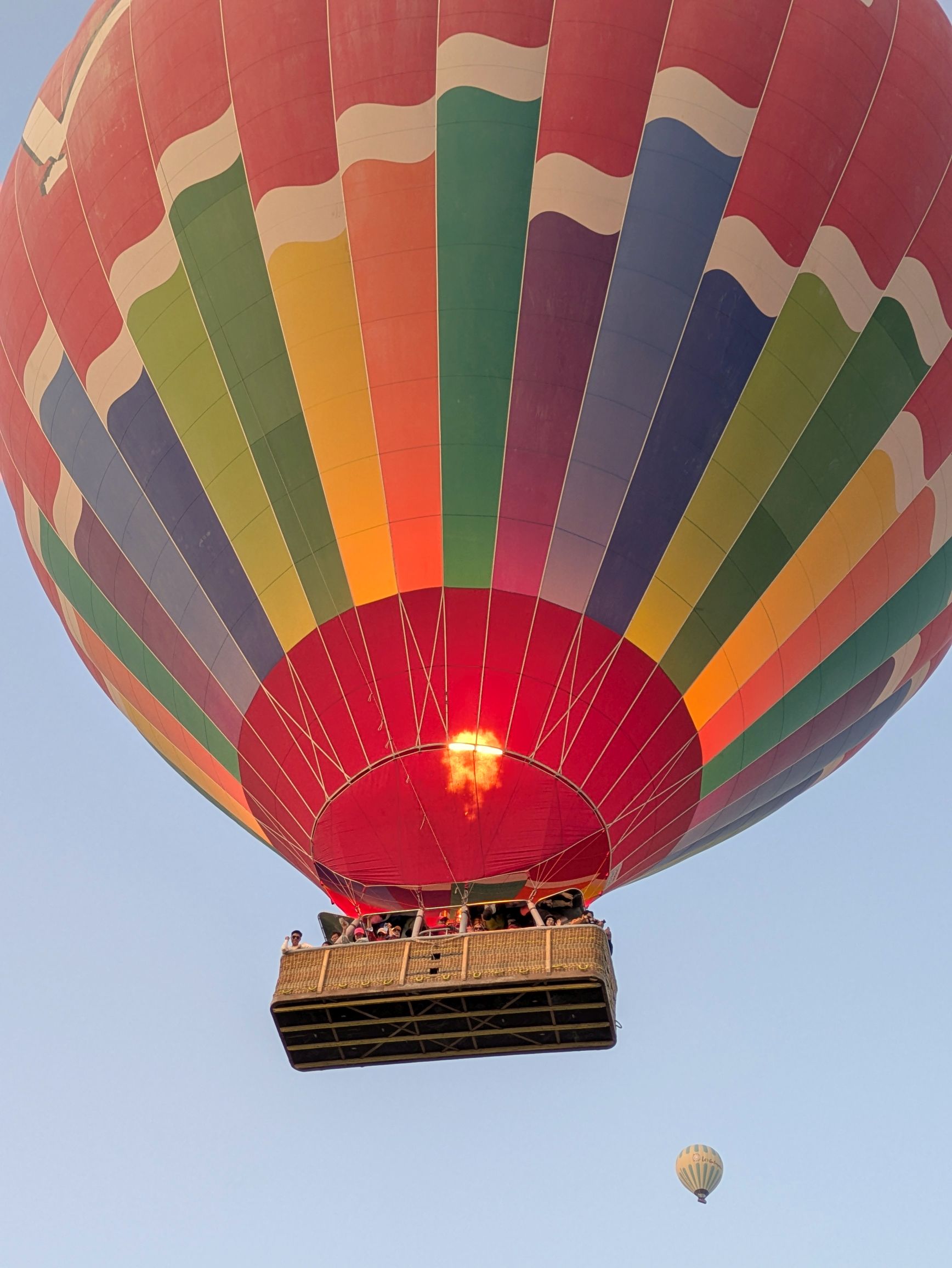
Cappadocia is famous for its hot air ballooning, and I can see why. In addition to the favorable wind conditions for pilots, the landscape is quite a draw for photographers and anybody looking to enjoy a fabulous view. Bruce dislikes being at heights like that, so we opted to take a hot air balloon watching tour. This way, we could enjoy the views of the launch from the ground as well as at a spot overlooking the valley. I didn’t mind; it was my idea! I had been hot air ballooning a few times before—the best experience at the Albuquerque Hot Air Balloon Fiesta, where I joined a friend who worked for Nikon. He got us both press passes, allowing us to go up in the balloons for free. So, rather than go ballooning on my own and spend $300 to possibly get stuck in the middle of the 20-passenger balloon, we spent a fraction of that on the small group tour.
The first stop was to see the launch, which was beautiful. It was still quite dark when most of the balloons took off, so I just watched and enjoyed the beauty of it all. It was quite a sight!
(For all photos, click on the image for a full screen view.)
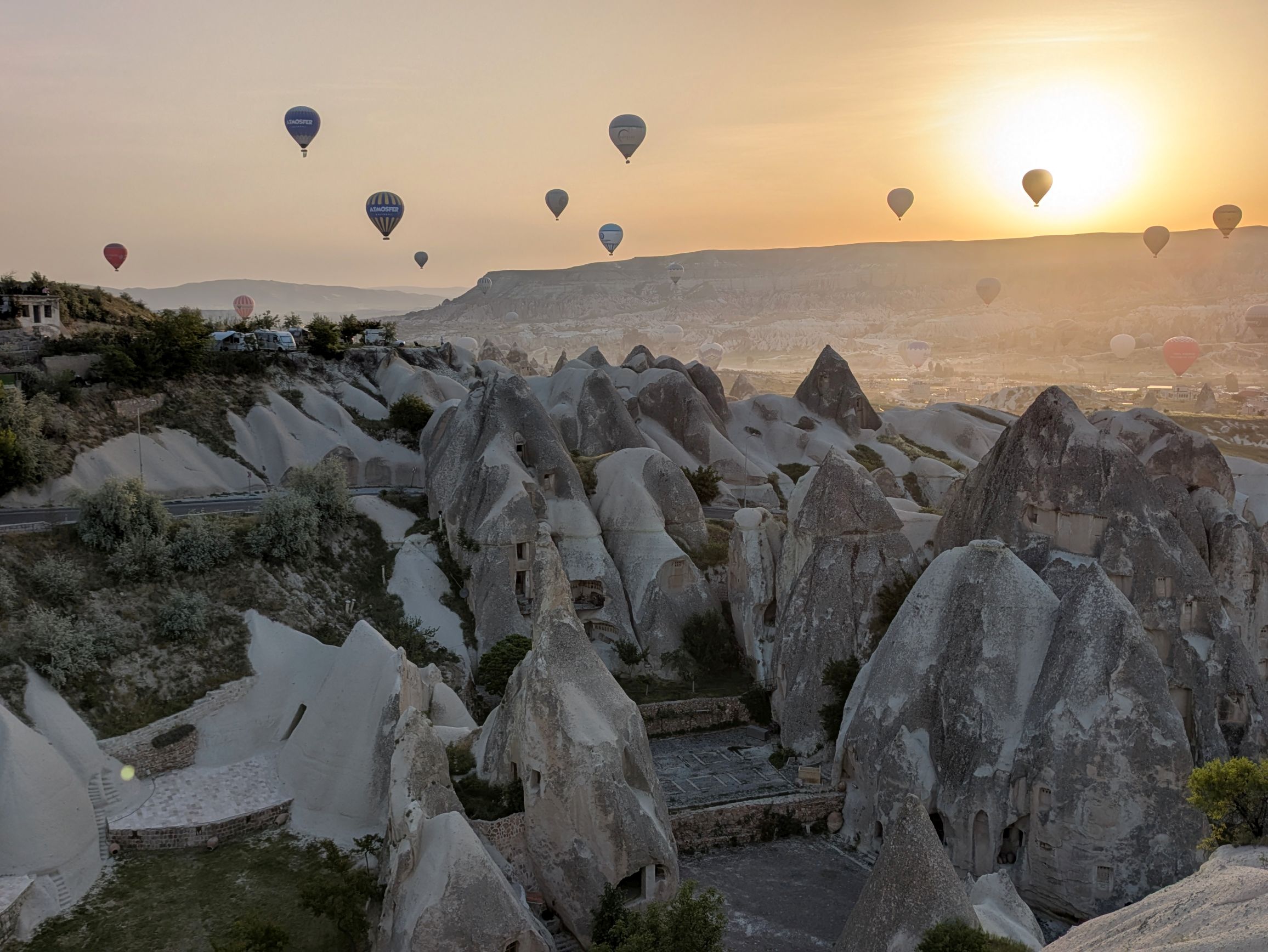
After the balloons had launched, we hopped back into the van to drive a short distance to a gorgeous overlook to see the balloons flying in front of the rising sun. Spectacular!
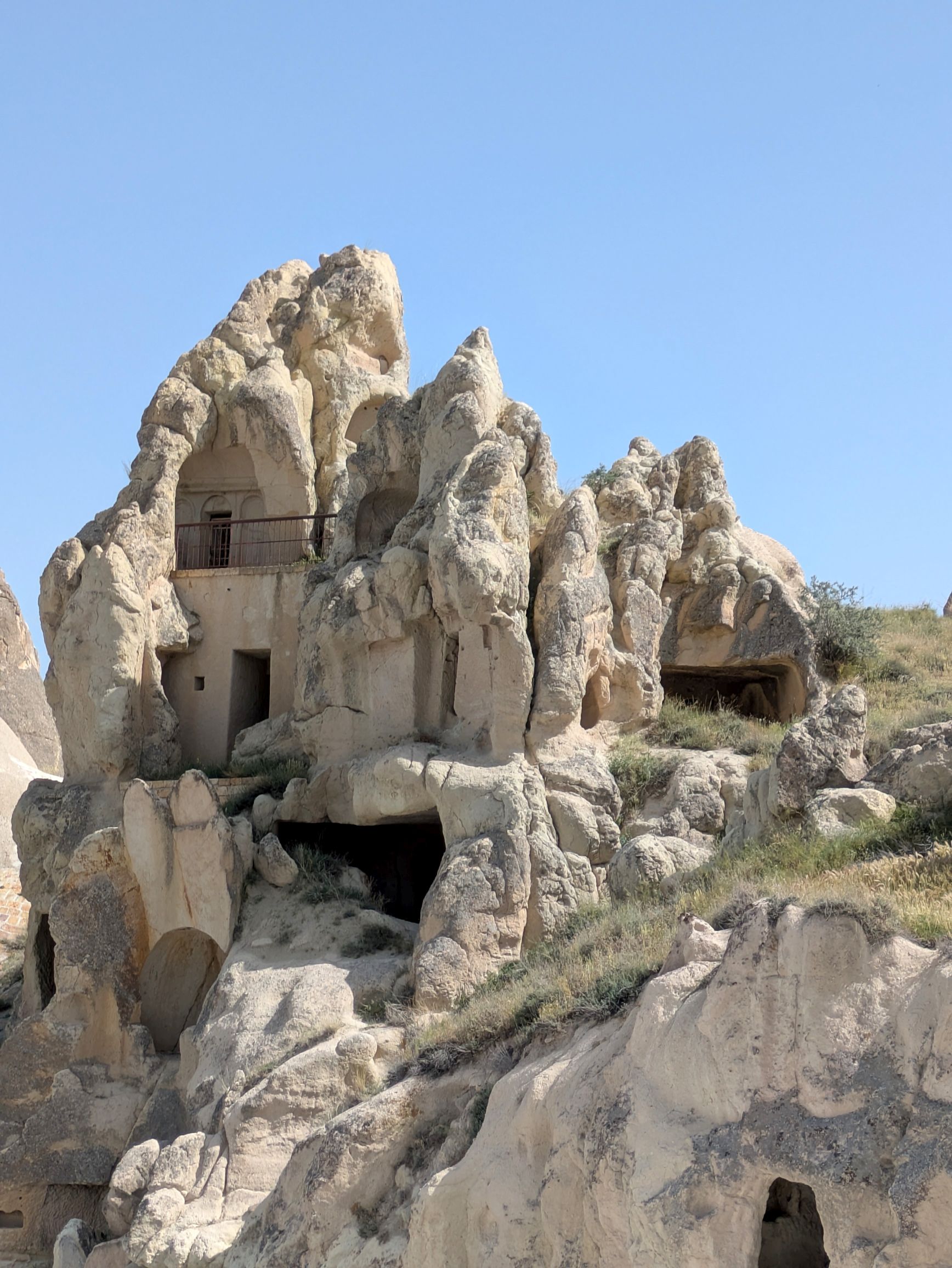
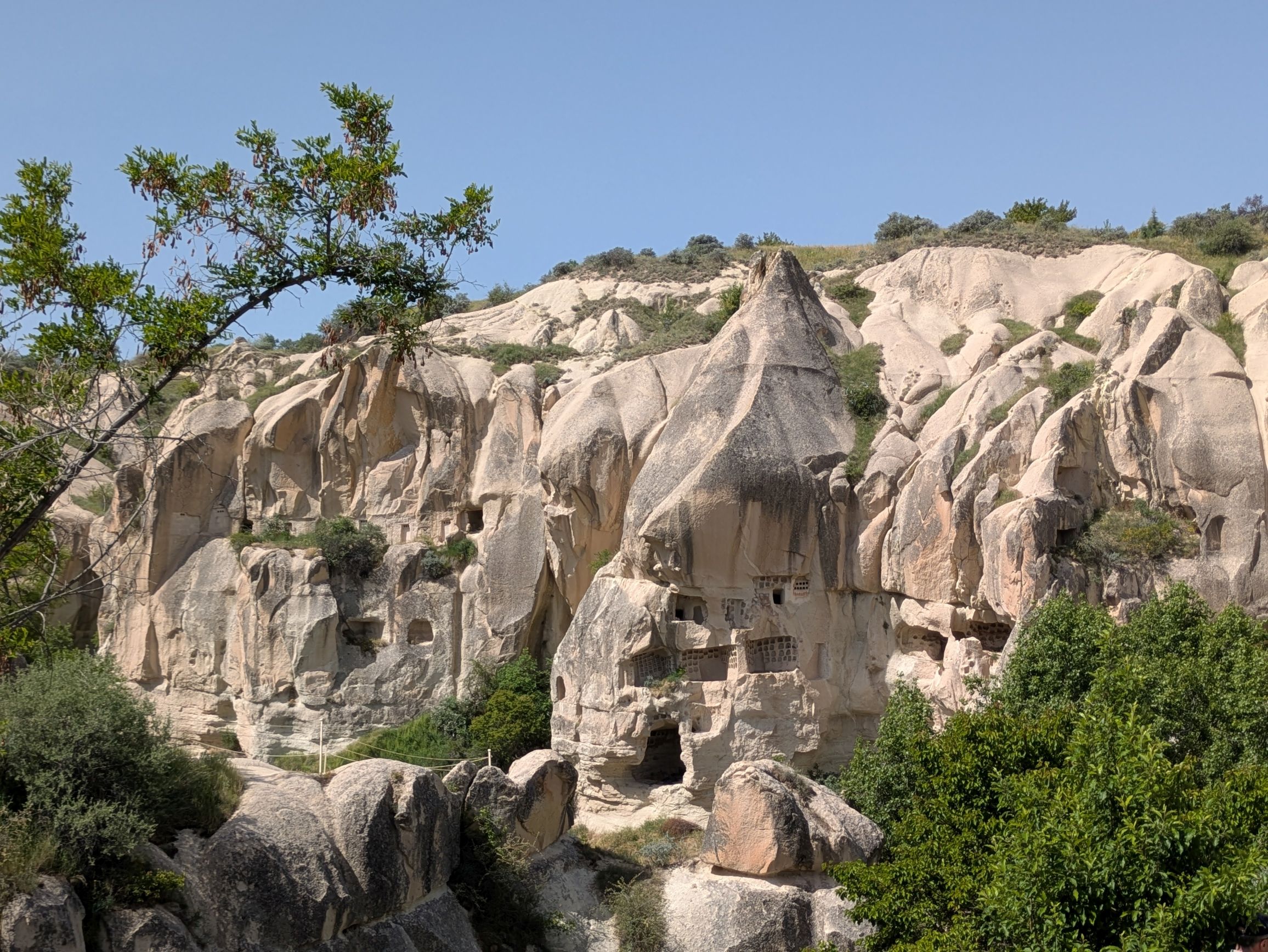
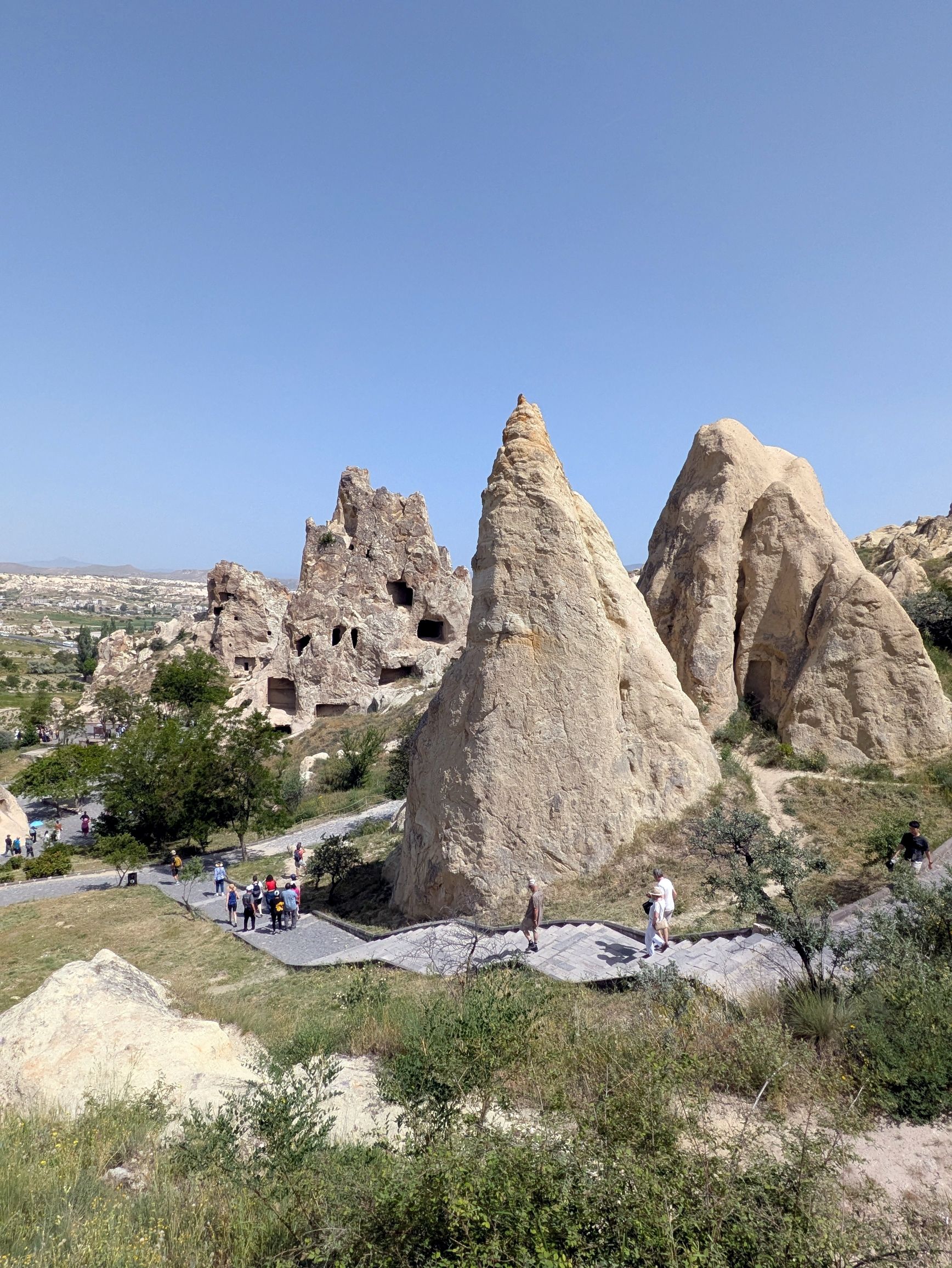
We rejoined the group after breakfast to visit the Goreme Open-Air Museum, Cappadocia’s most visited attraction. Within the museum grounds, there were fifteen cave churches and eleven rectories dating back to the 11th century. At the time, they were used extensively as Christian churches, but they were abandoned until it later became a Turkish village community.
Jumping ahead to the 1970’s, scholars came to analyze the cave churches, and the Turkish government took steps to preserve them. Tourism increased when Cappadocia was declared a “Privileged Region for Touristic Development.” It became a UNESCO World Heritage Site in 1985, which has increased tourism to over one million visitors every year.
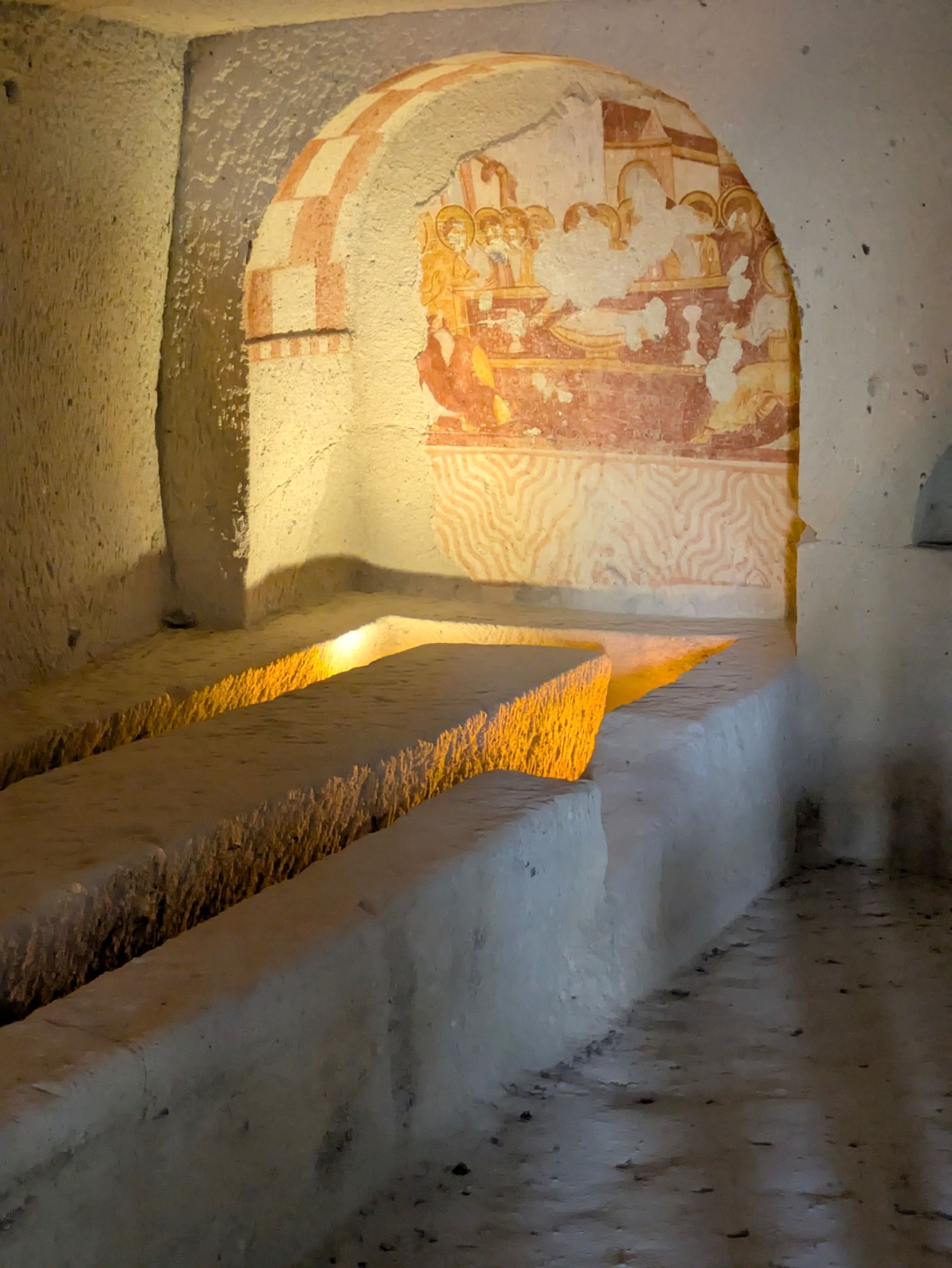
A water system built inside one of the cave churches
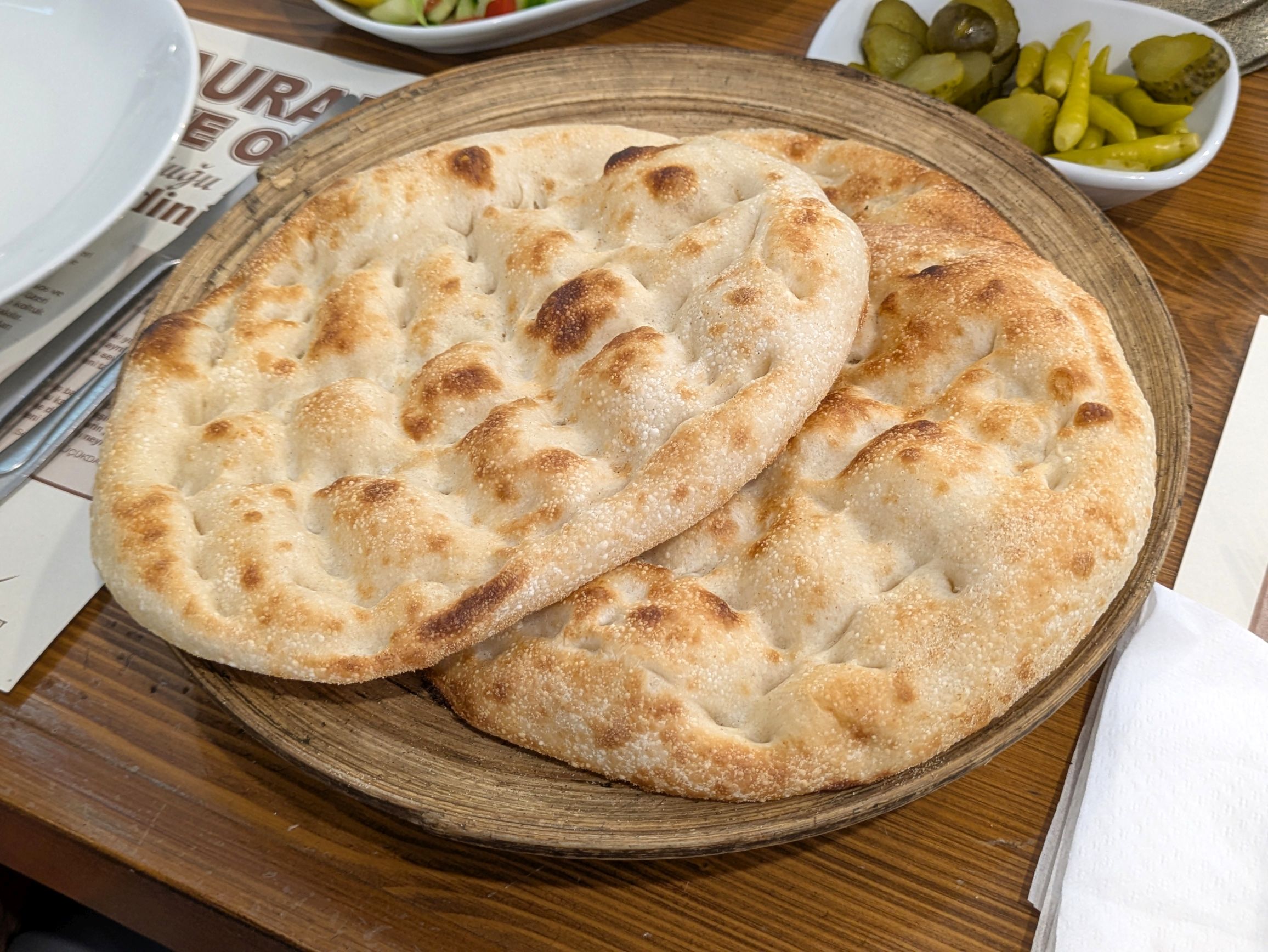
For lunch, we were driven to a traditional Turkish restaurant to enjoy Turkish cuisine cooked in clay pots and bazlama (Turkish flatbread). It was all so delicious!
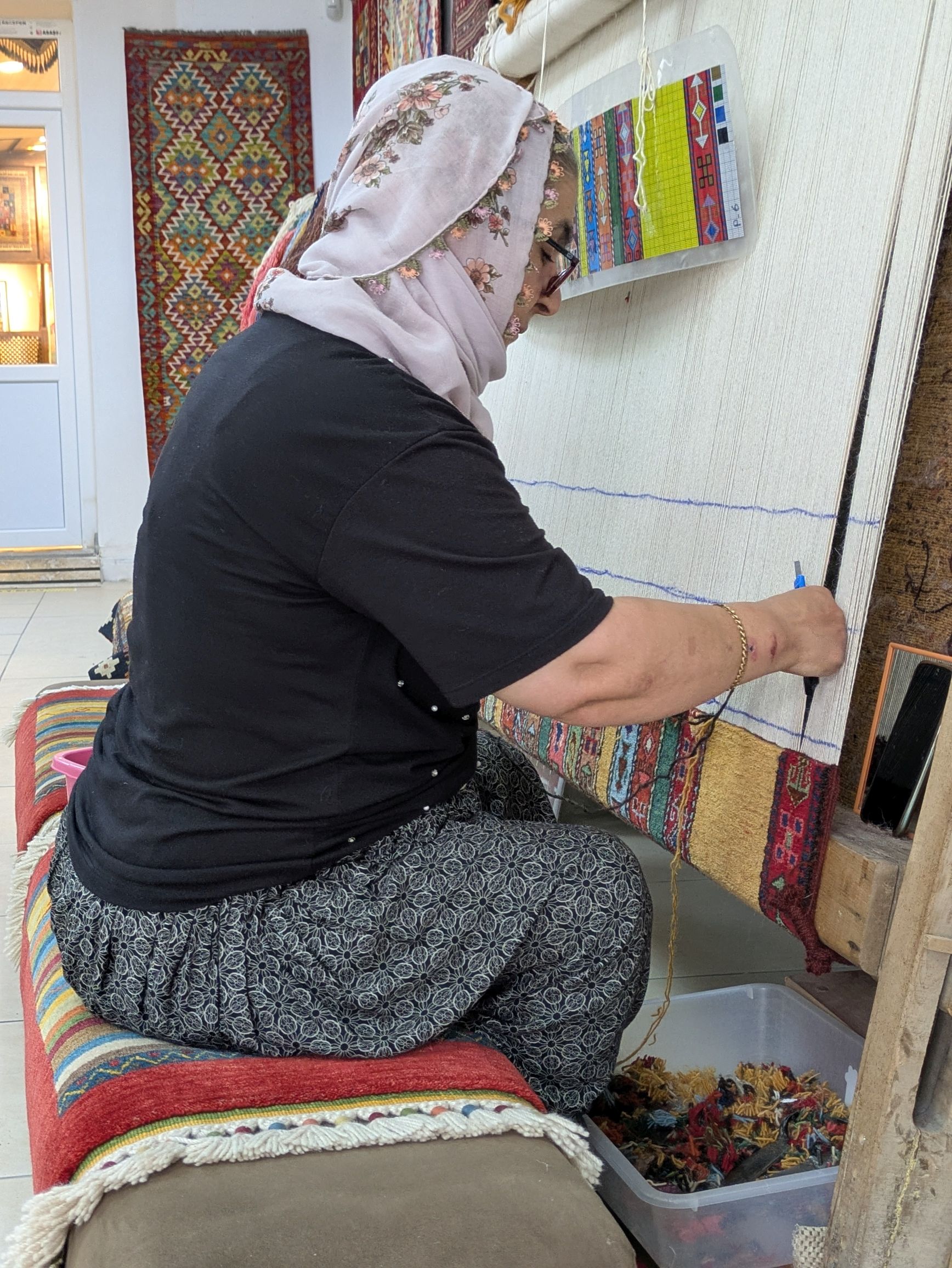
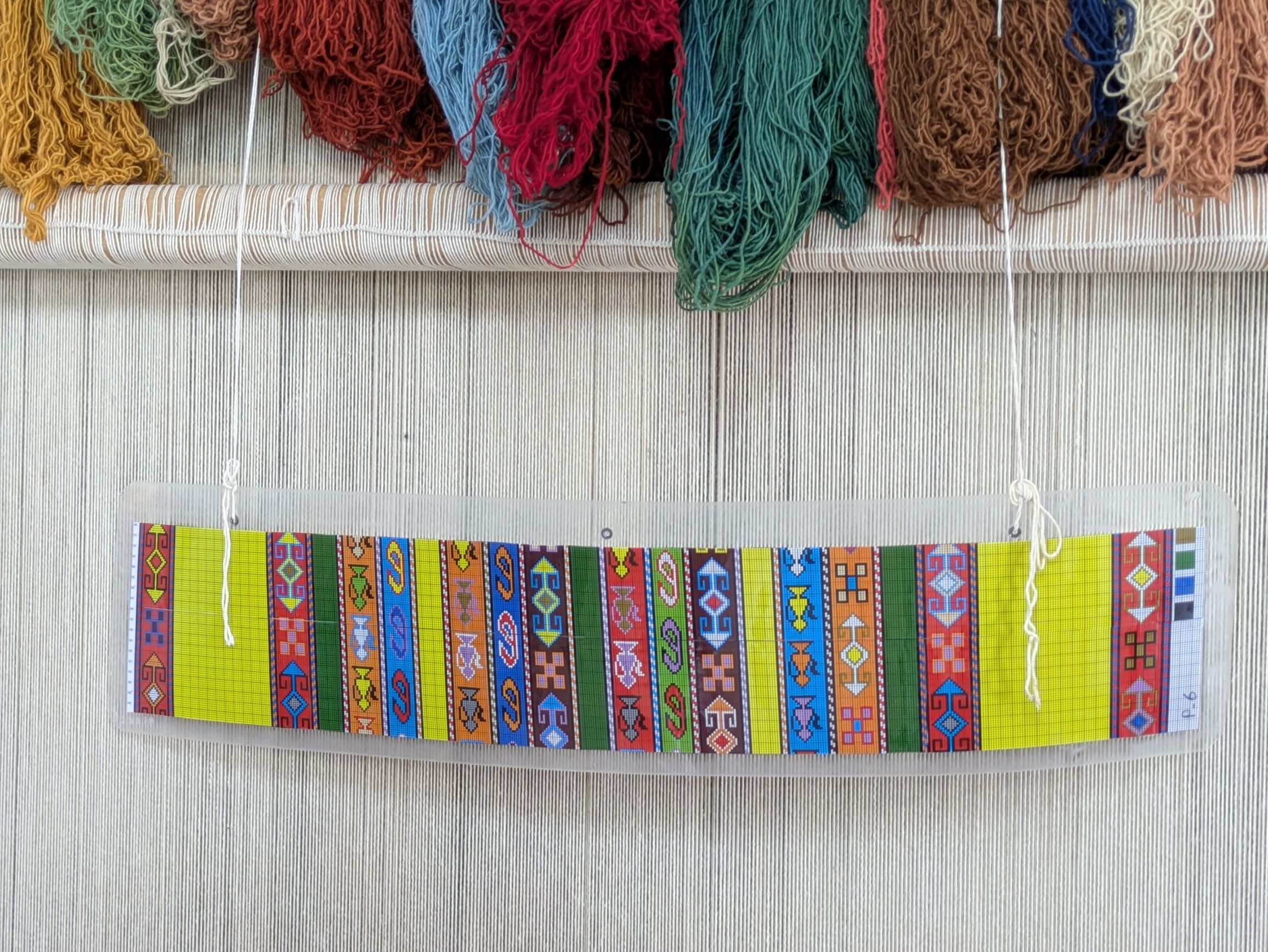
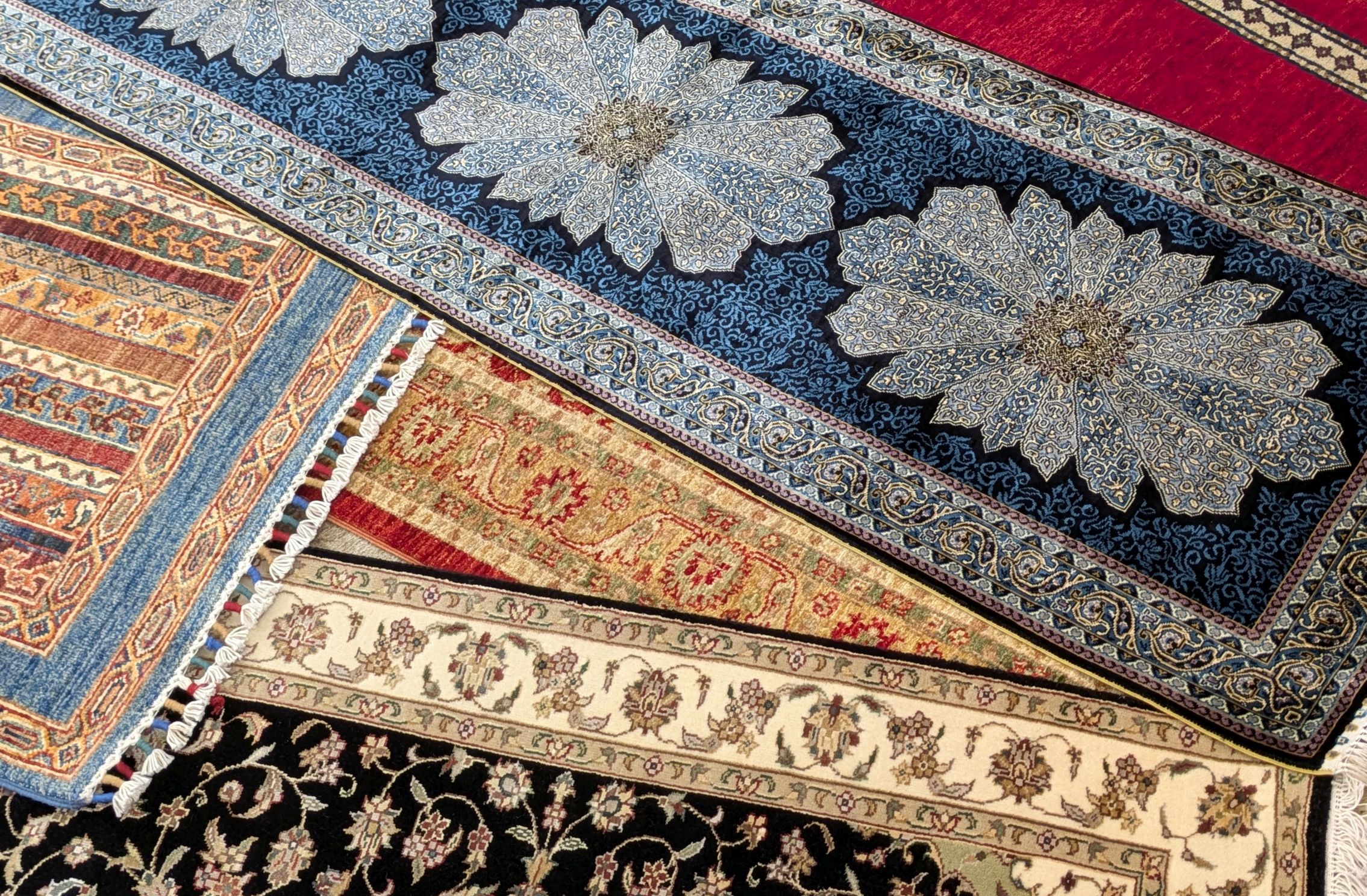
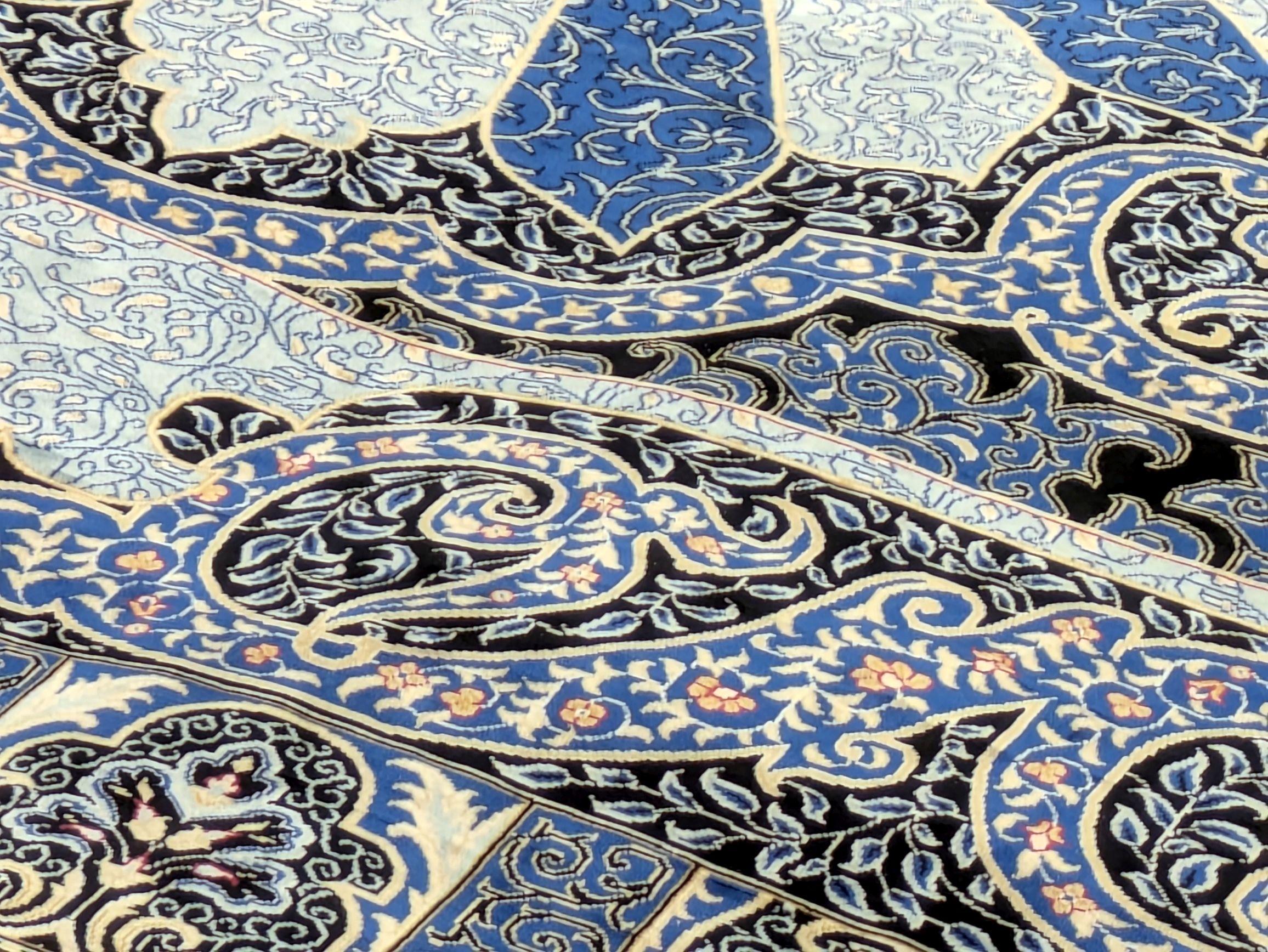
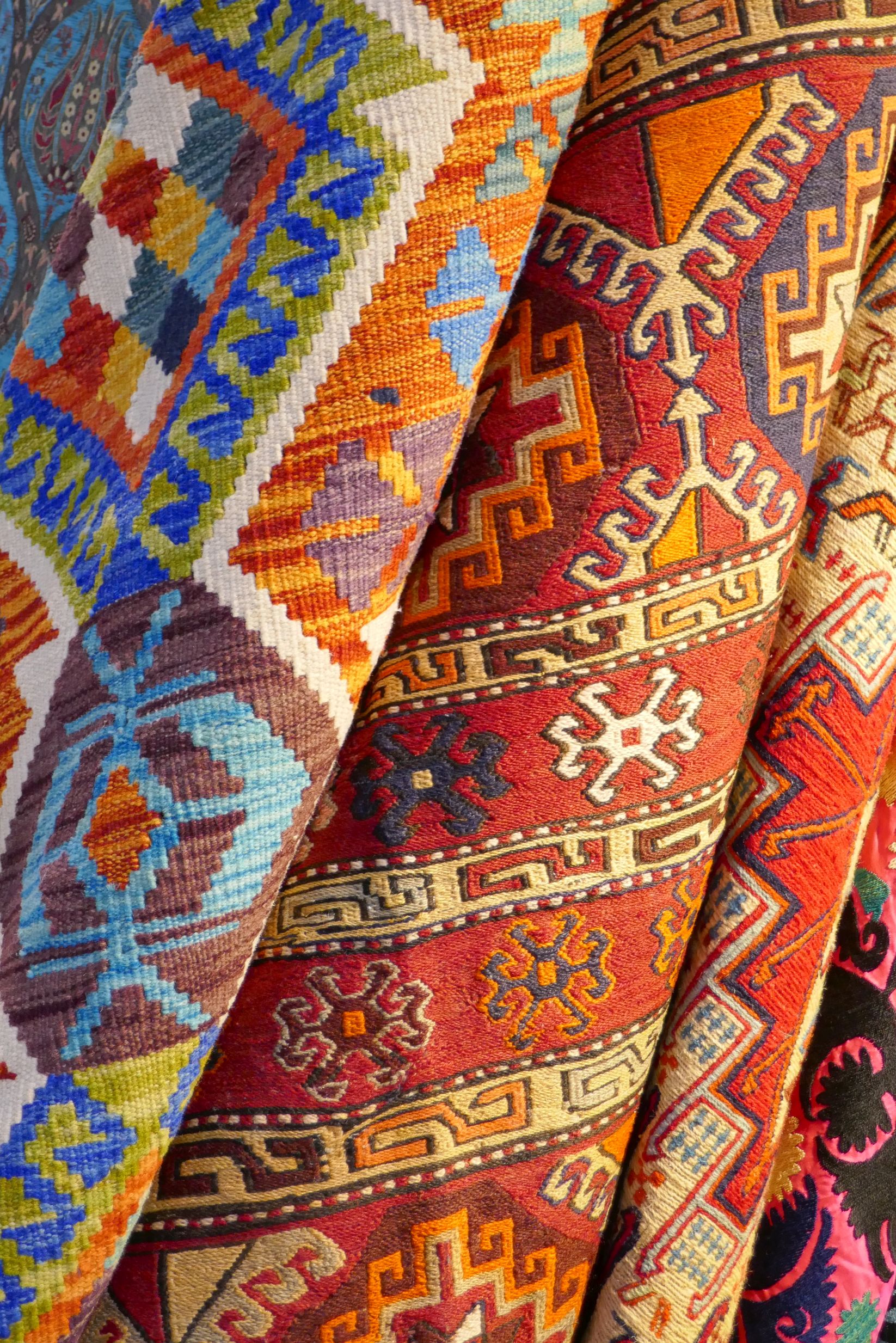
Next, we visited a carpet cooperative where they weave and sell beautiful Turkish carpets with colorful and intricate designs. Also known as Anatolian rugs, they are made in the region historically dominated by the Ottoman Empire. An important part of Turkish culture, these carpets have a long and extensive history.
I found it interesting that Turkish carpets are the masterpiece of a dowry. When a woman gets engaged to be married, two weeks before the wedding, women in the neighborhood and family are invited to see the dowry her parents are giving to the couple. Everybody brings gifts, but the star of the party is the Turkish carpet that the family members made. Everybody in attendance wants to see it and learn if the bride made the carpet.
At the carpet cooperative we visited, the women are paid by the number of knots they tied. They can either work at the store or at home; however, if they work at the store, they receive benefits. The women who choose to work at home get paid only for the completed rug.
The rugs are woven with only natural fibers such as wool, silk and cotton (and sometimes even goat and camel hair), and the spinning is done by hand. The dyes used are obtained from plants, insects, and minerals. Red dye, for example, is made from Madder roots. The price of the rug depends on the type of fiber used and the number of knots. Silk is the most expensive, because it is fine. It requires 100 knots to produce just one square centimeter! The benefit, however, is that a silk rug is the most durable.
From balloon watching to visiting Goreme and then learning about Turkish carpets; it was a full and enjoyable day! We capped it off with a memorable group dinner at a restaurant in a small village. The view of the volcanic rock formations was spectacular, just out the window next to where I was sitting at the end of the table. Across from me sat our bus driver, who didn’t speak any English, but seemed so kind and always greeted us with a friendly smile. While waiting to be served, I broke my self-imposed rule of no phones at the tables and brought mine out. (Don’t even get me started with how I feel about my dining companions taking calls, texting, or checking emails while we are having a conversation!) I quickly opened Google Translate, so we could have a conversation we both could understand. We learned a lot about each other, his family, work, and dreams for the future, while dining on Turkish cuisine and passing the phone back and forth. It was truly memorable and an example of what I felt was an appropriate way to use technology.
Next up: TURKIYE #7: A DAY IN THE LIFE OF CAPPADOCIA
To get from Istanbul to Cappadocia, our group took a short flight, about one hour and twenty-five minutes. The flight may have been short, and we may have been traveling from one Turkish location to another; but we arrived at what appeared to be an entirely different planet.
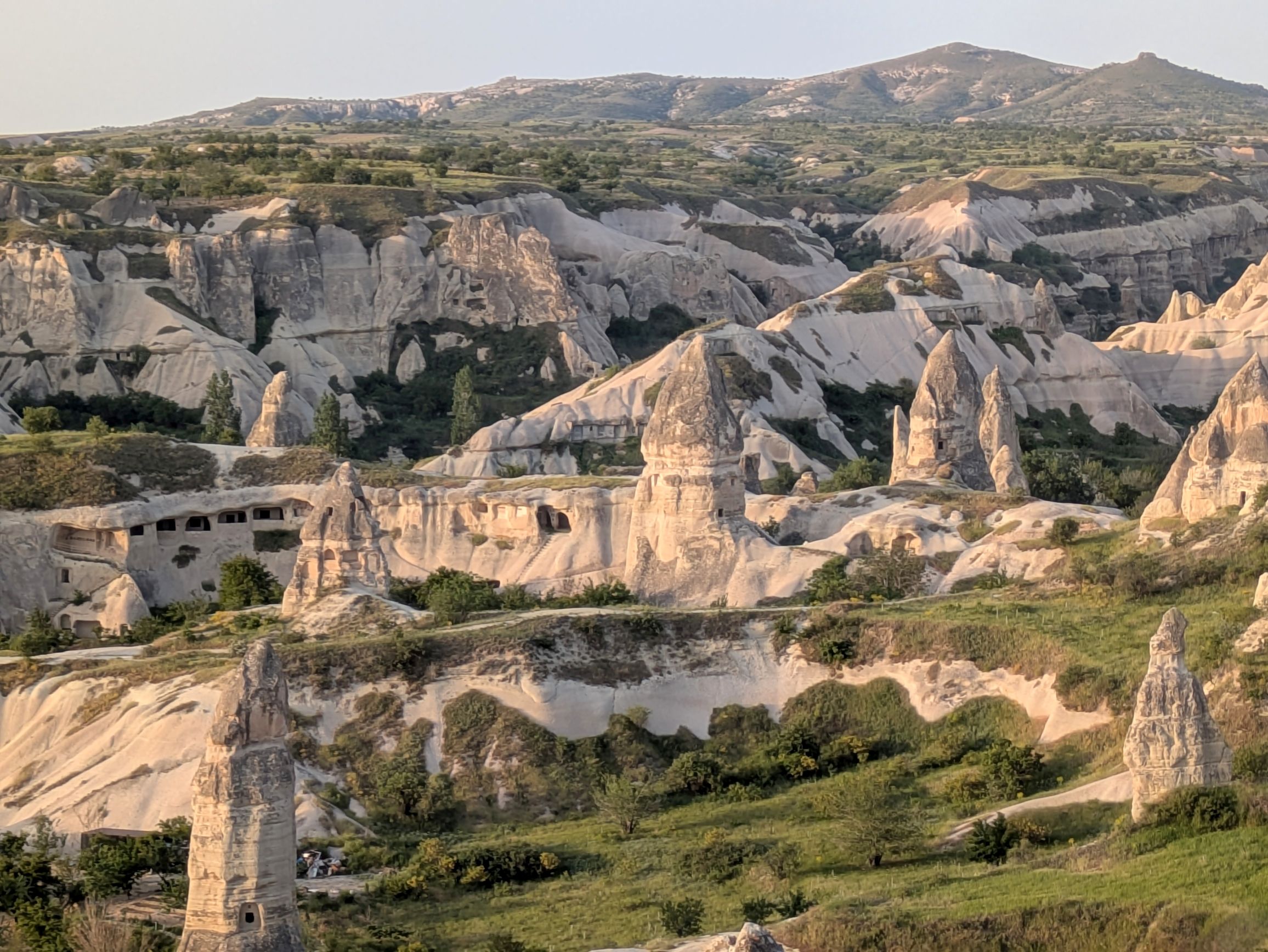
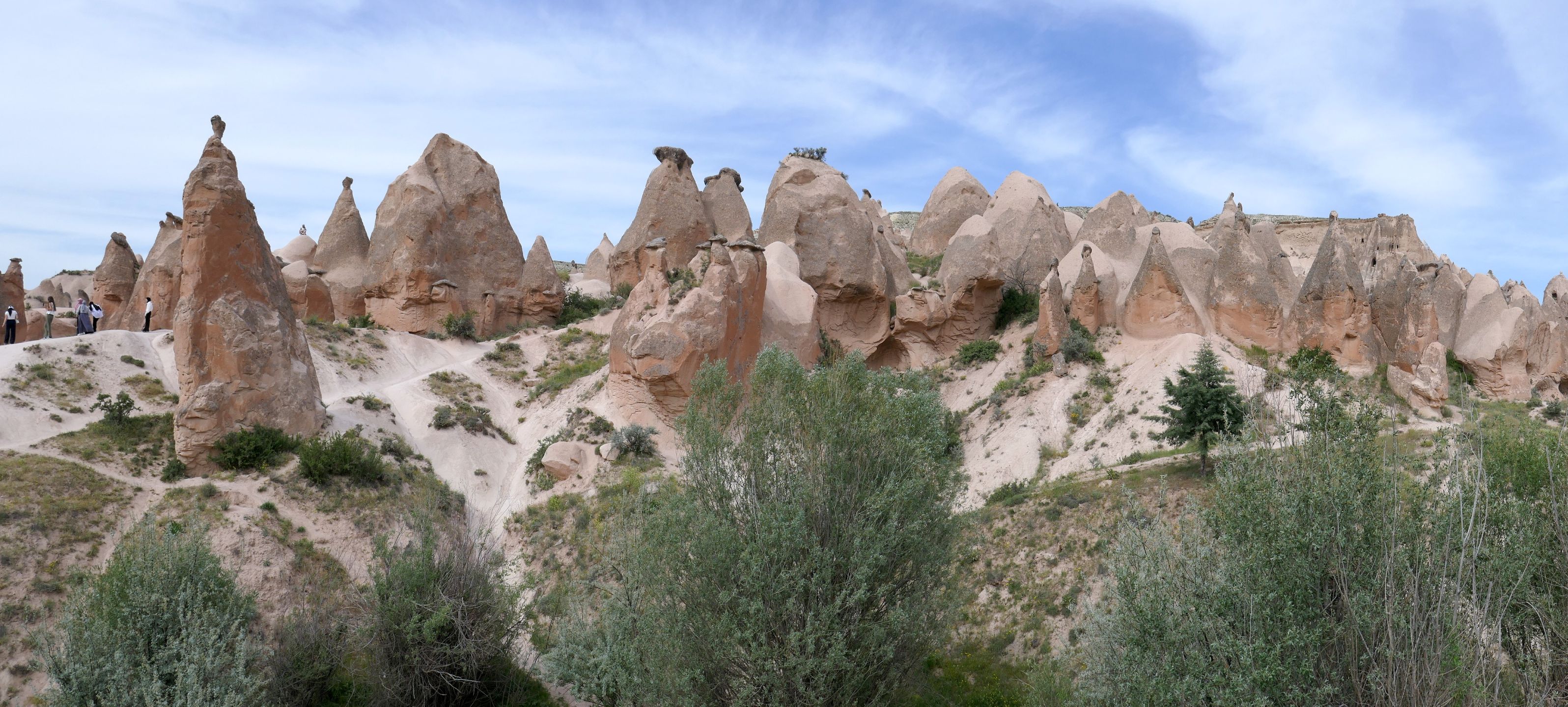
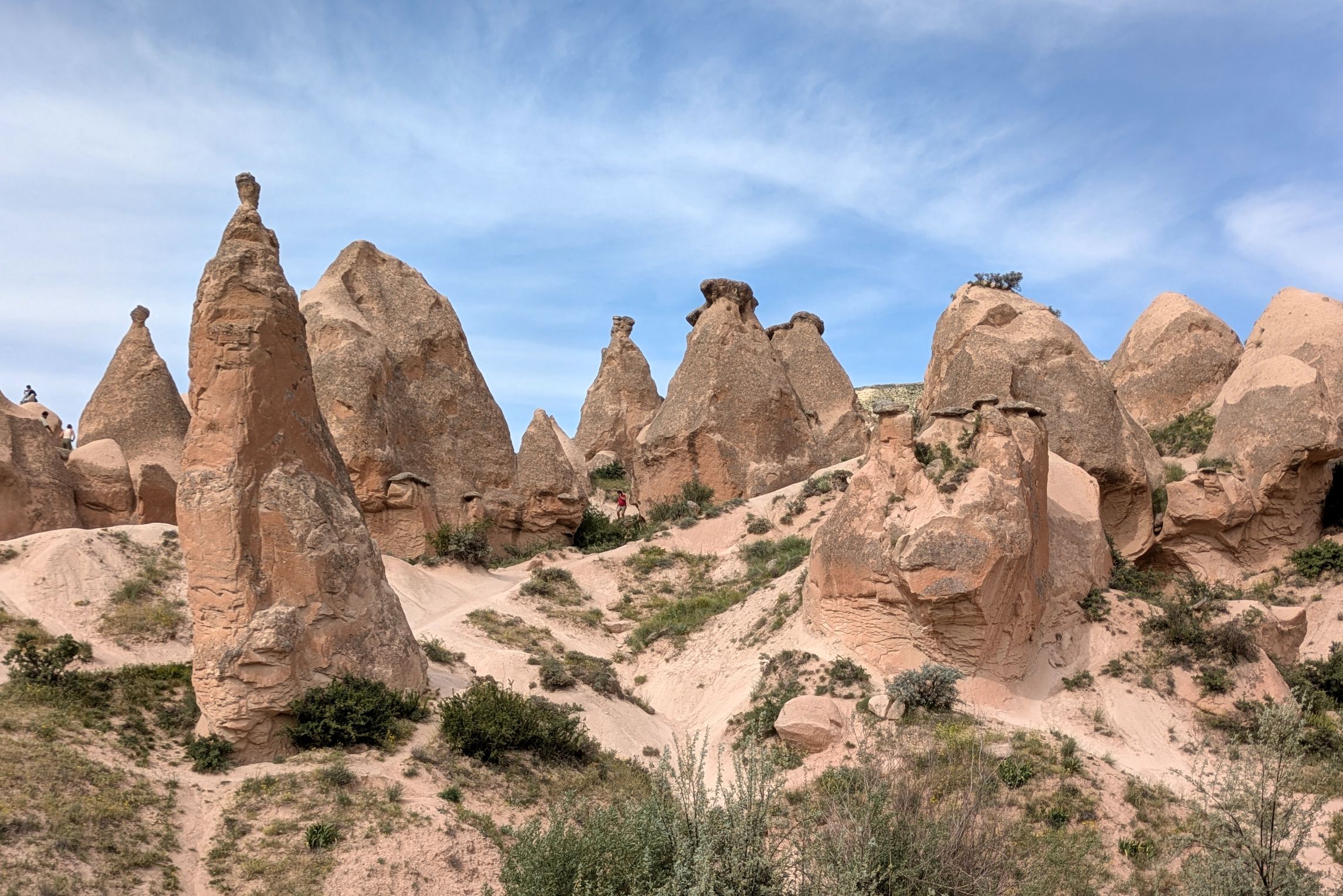
Located on the plateau of the Taurus Mountains, the geology is what made me feel like we had left planet Earth. Soft volcanic rock of the landscape had eroded into towers, cones, valleys, and caves—all very dramatic and photogenic.
The volcanic rock was the result of three volcanic eruptions over a period of 10,000 years—the last one being in 1854.
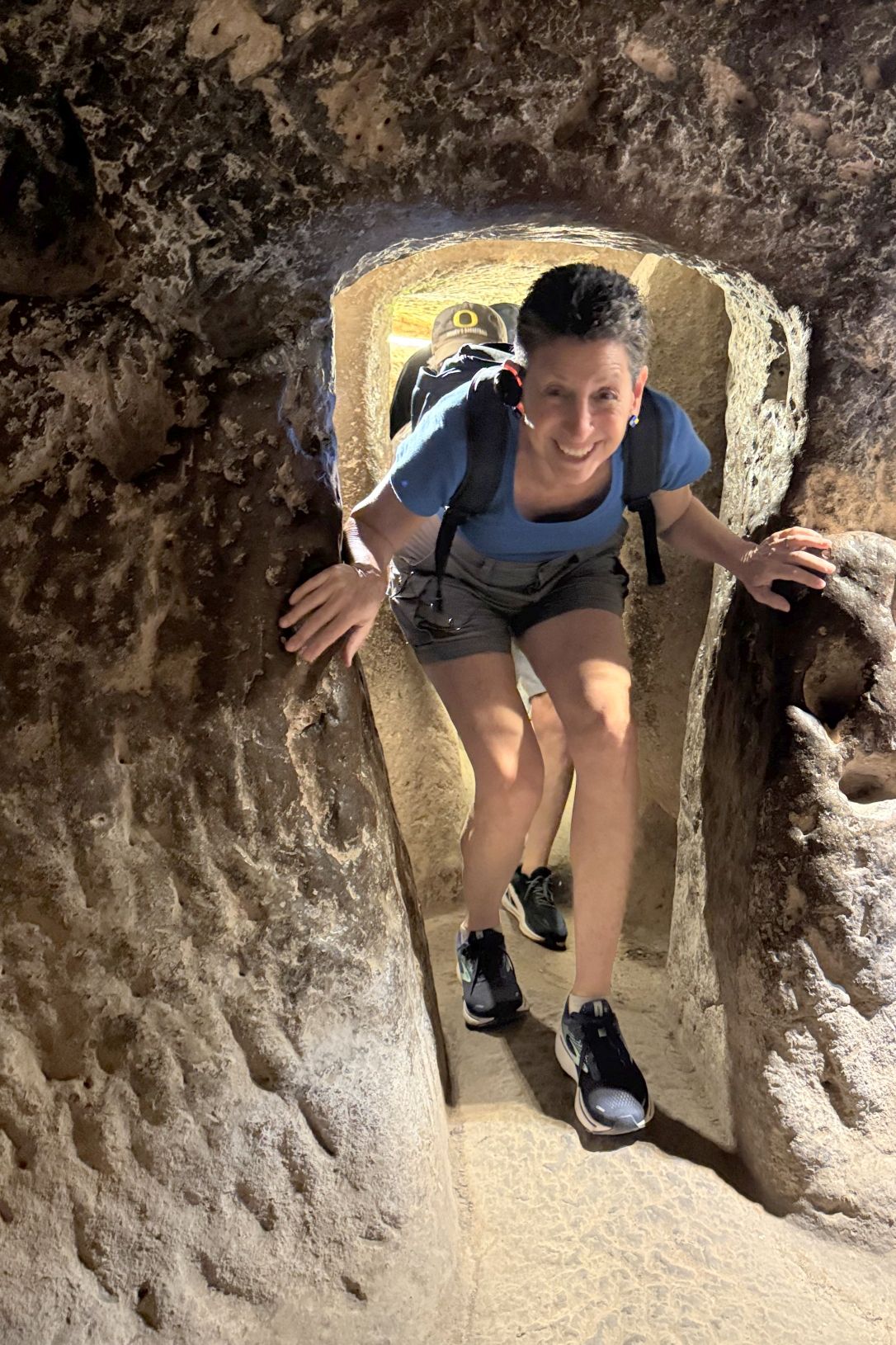
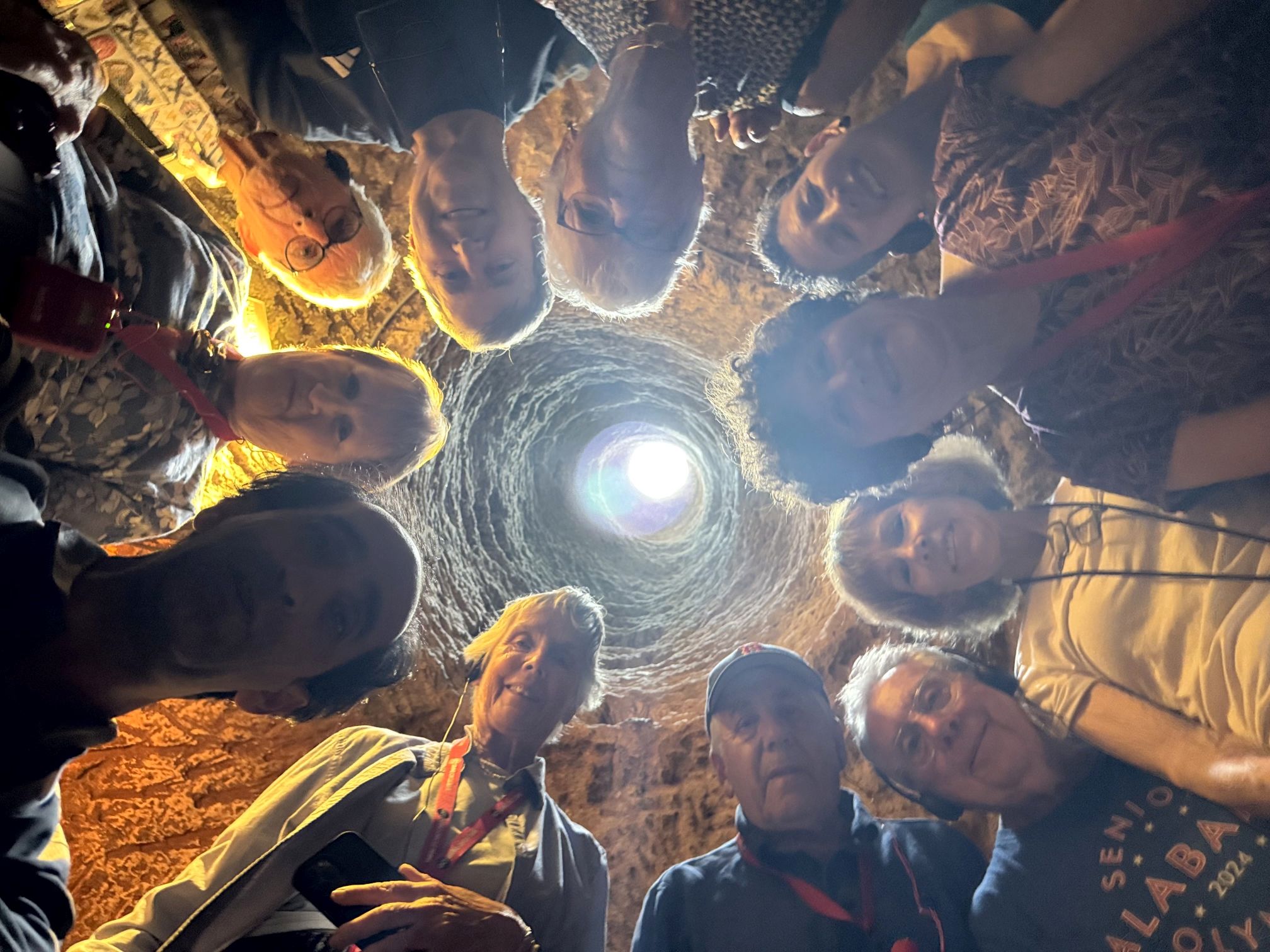
Throughout the countryside, there are rock churches and underground tunnel complexes that date back to the Byzantine and Islamic eras. We stopped to visit Ozkonak, one of these ancient underground cities.
(For all photos, click on the image for a full screen view.)
These are all photos taken by our tour leader, Nuri:
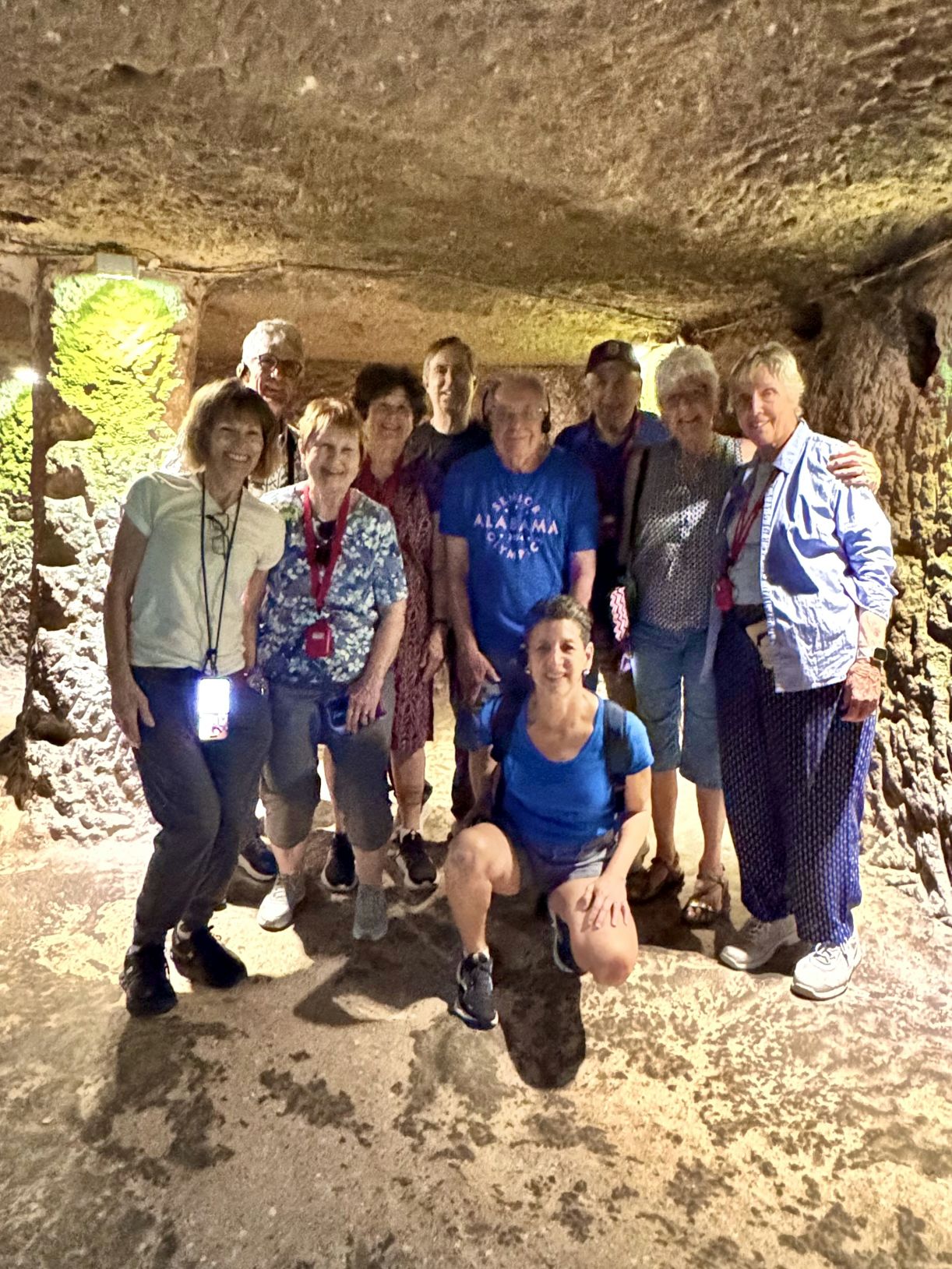
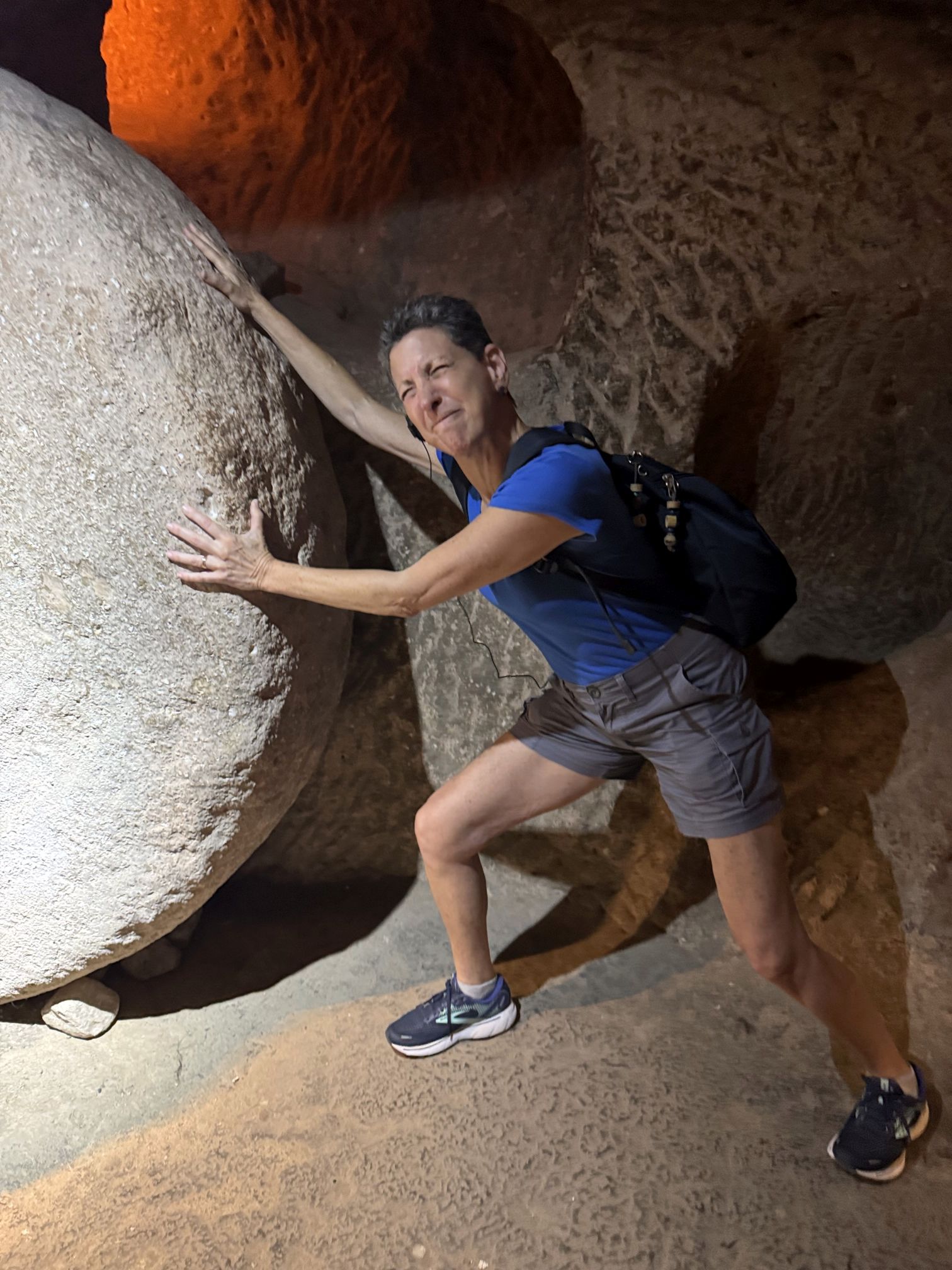
Although the age of this particular complex is uncertain, it was probably built during the Byzantine era for protection from enemies. It was discovered in 1972 by a local farmer who was curious about where his excess crop water was disappearing to. He discovered an underground room, which ultimately revealed a large city that could have housed 60,000 people for up to three months during a siege. Imagine his surprise at that discovery! The complex contains ten floors, to a depth of 40 meters; however, only four floors are open.
This volcanic granite city is connected by tunnels and contains a pipe communication system reaching each of its levels—a unique feature of this particular complex. Each carved room had ventilation provided by further piping when the city was sealed during sieges.
Another unique feature was the holes above the tunnels that were used for dumping hot sand on the enemy. The complex also has a water well, winery and moving stone doors.
After visiting Ozkonak, we continued our drive to Cappadocia, stopping along the way to see some of the volcanic formations along the roadside:
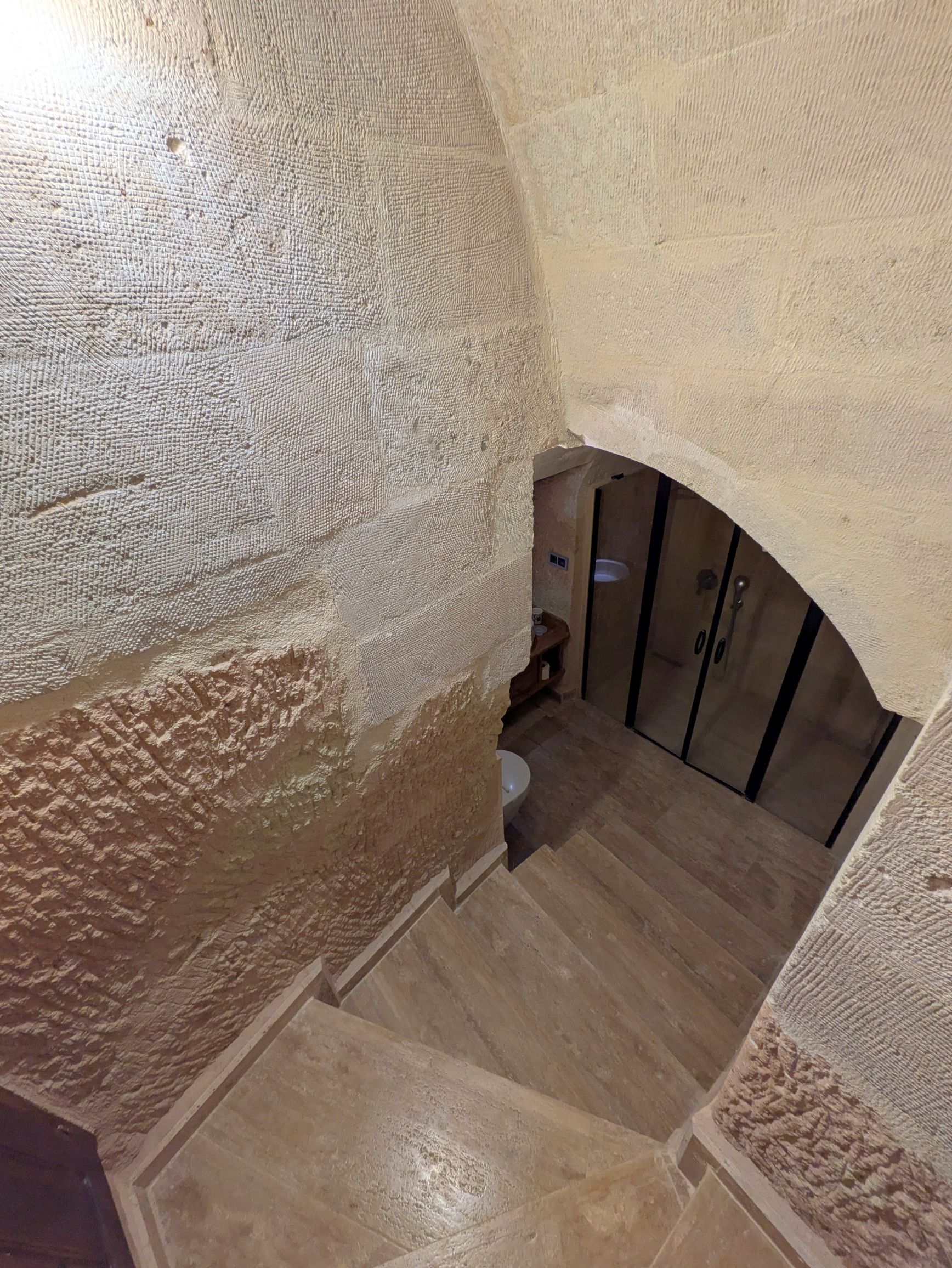
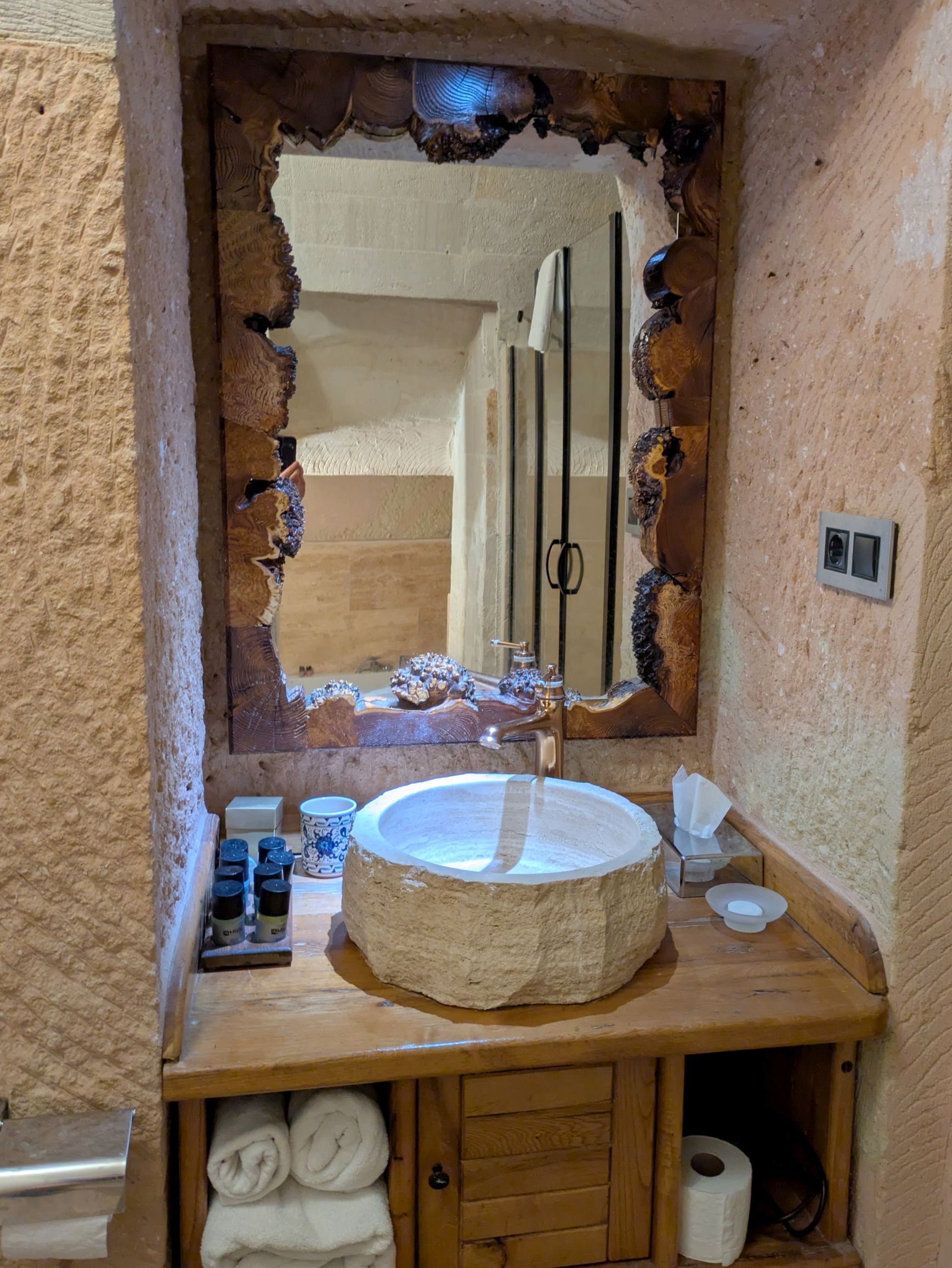
Misty Cave Hotel, our base for three nights, was the most unusual hotel I had ever seen! The rooms were built into a volcanic rock hillside and our bathroom was downstairs, underground. Each room was completely different, so our group enjoyed visiting each other and checking them out. This was something we will never forget!
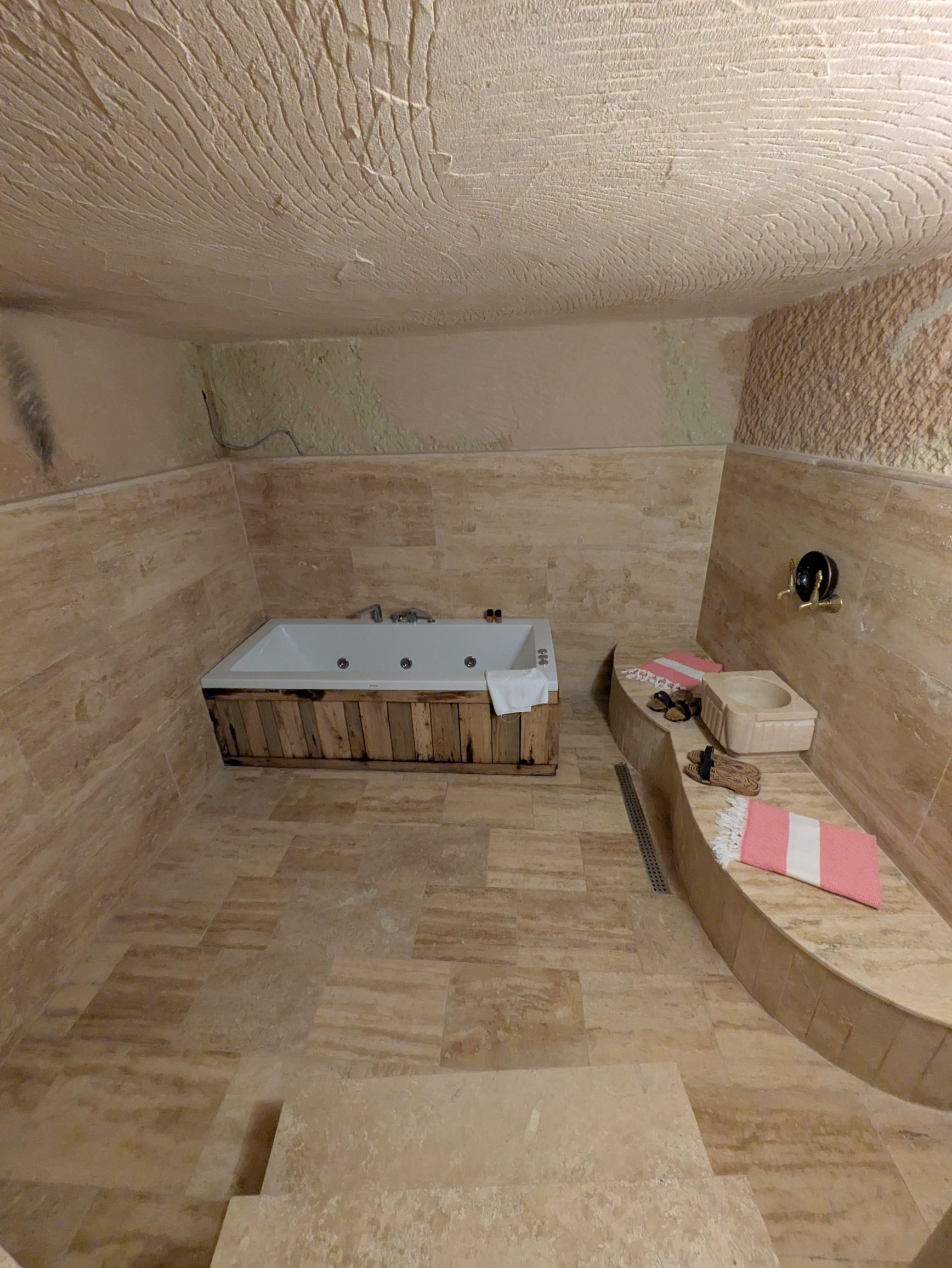
Although there was a walk-in shower next to the sink (which we used), we got a kick out of this huge room that could be used for a Turkish or American-style bath.
As I mentioned in my first post on Istanbul, the Bosporus Strait separates Europe from Asia, and Istanbul is located on both continents. That would make an interesting trivia question, don’t you think? “In what city can you be on two different continents but never leave the city?” Answer: “Istanbul.” Cross a bridge or take a ferry and be in Asia and Europe without ever leaving Istanbul! I wonder if that question has ever been on Jeopardy…
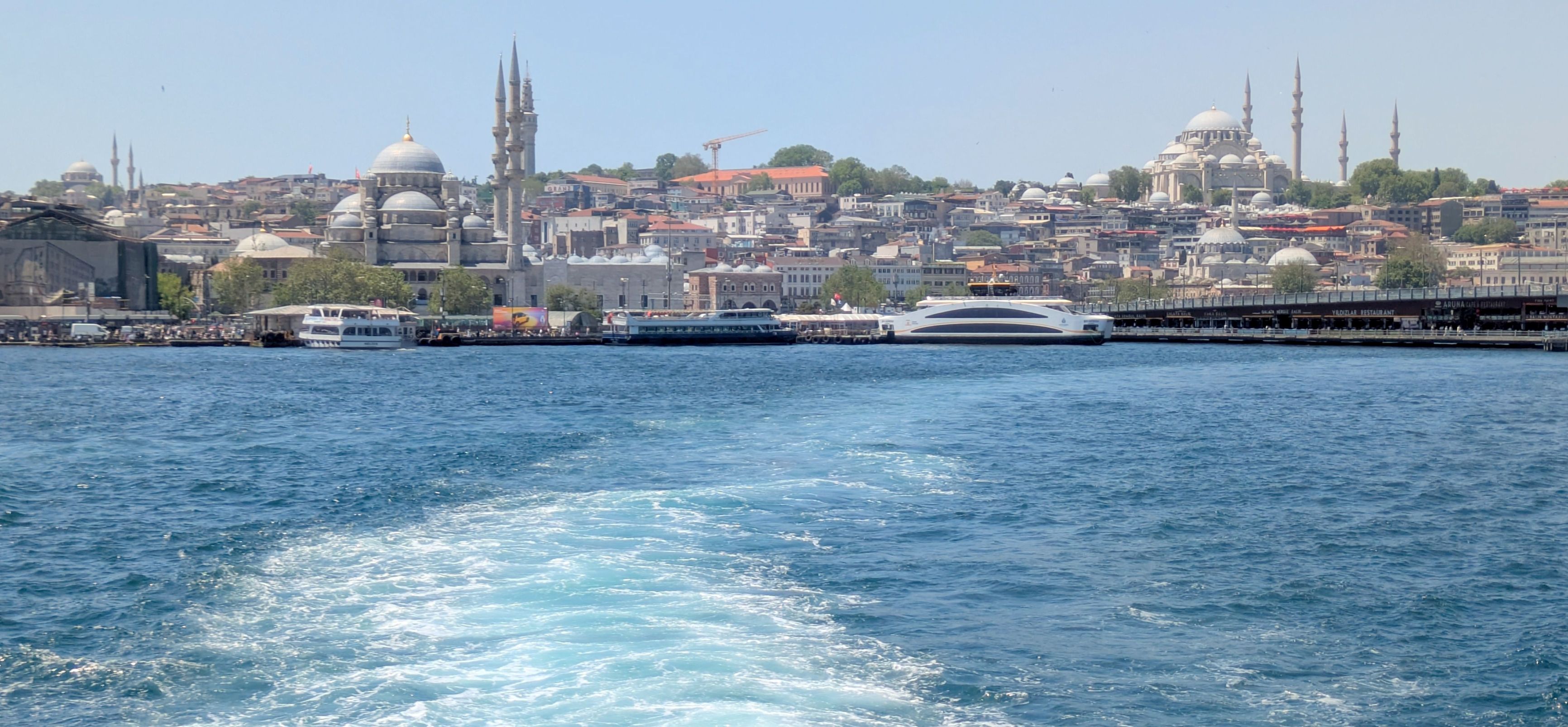
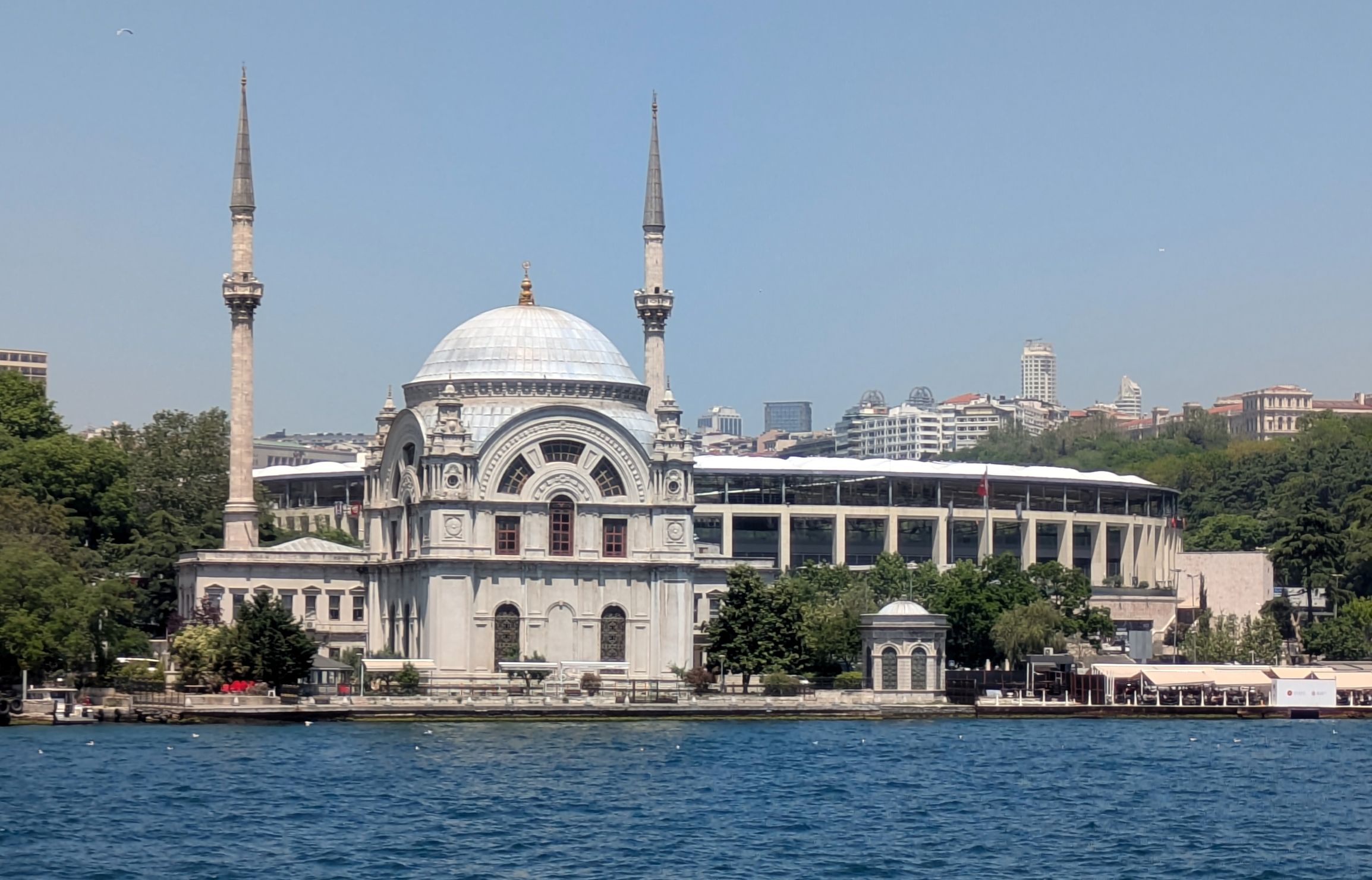
We didn’t visit the Asia side of the city, but we did take a sightseeing cruise with Nuri as our guide. It was nice; we had the entire boat for ourselves and enjoyed a gloriously sunny day!
During our cruise, we learned that the Bosporus is a very important maritime waterway, because it connects from the Black Sea to the Mediterranean and the Atlantic Ocean via Gibraltar, and the Indian Ocean through the Suez Canal.
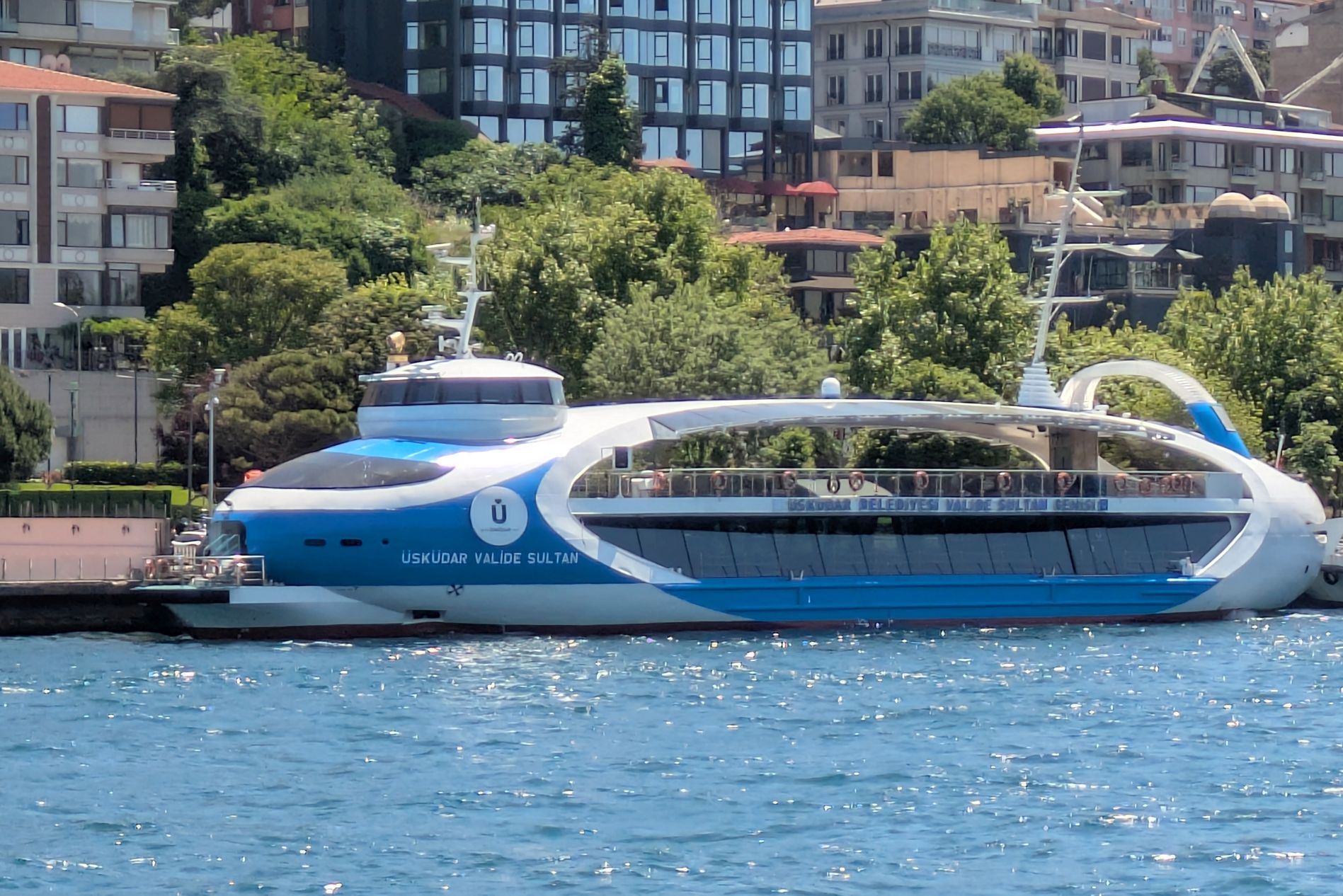
The Bosporus is well-traveled by everything from freighters and tankers carrying goods and oil, to ferries carrying cars and people back and forth between the two continents. Throw in all the sightseeing tourist boats, fishing boats, and yachts out for a pleasure cruise; there is never a dull moment!
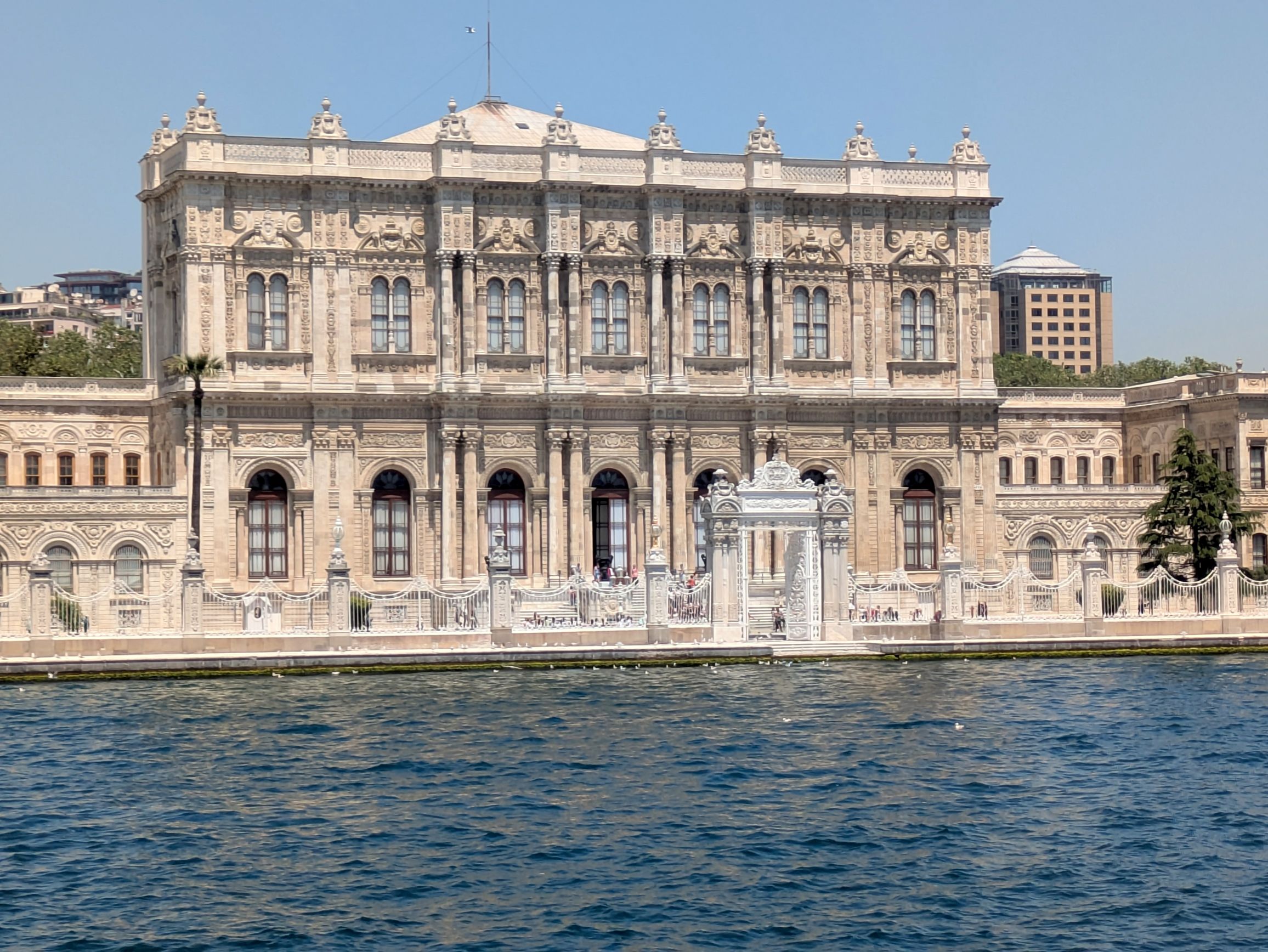
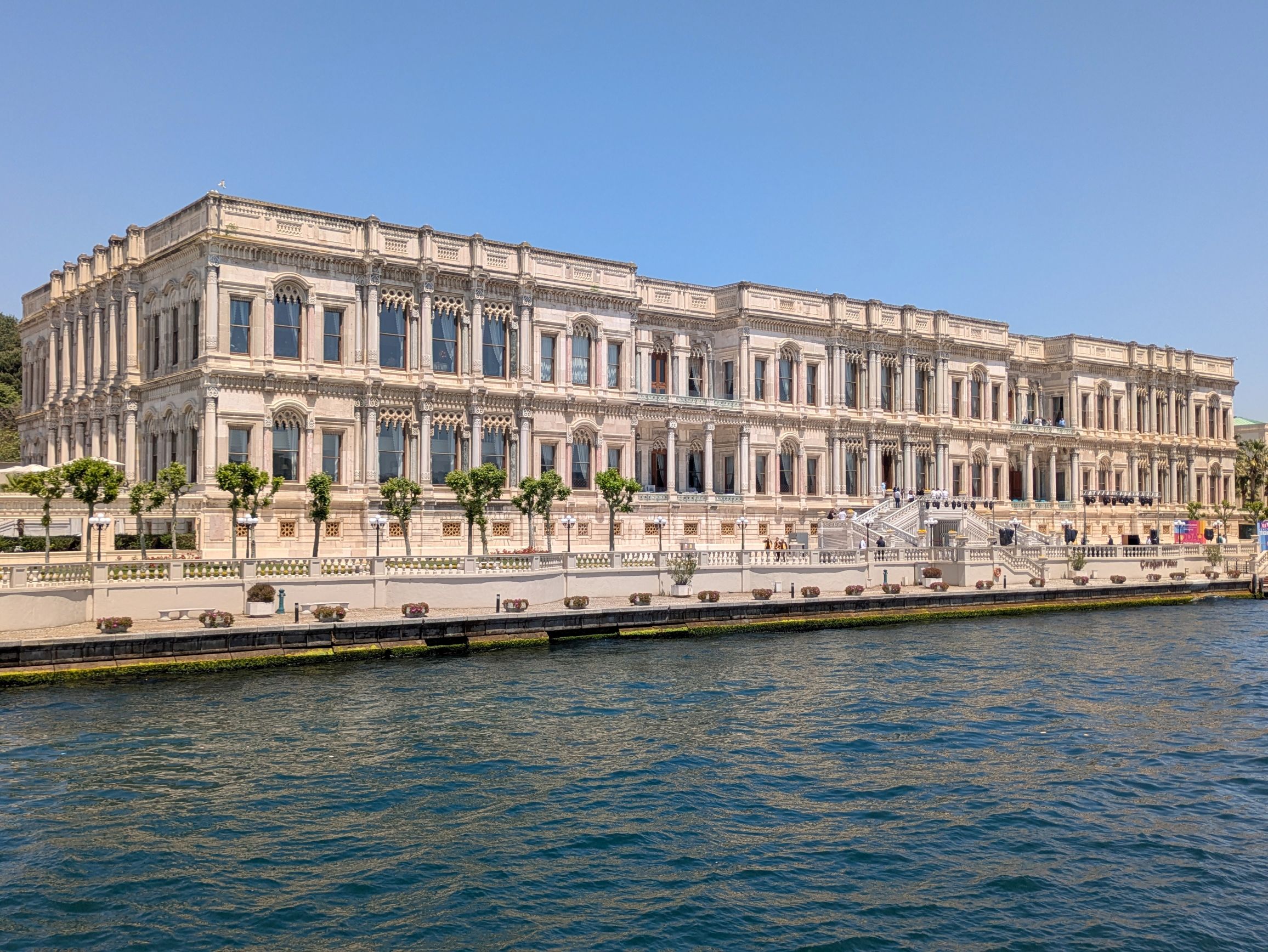
Would you like to live in a home overlooking the Bosporus, so you could take in the views of all those boats passing by? Although it’s less expensive to live on the Asia side of the river, it will still set you back a minimum of $2 million. The most expensive homes on the Bosporus are as much as $100 million! It is the most expensive real estate in the country. On the other side of the hill from the Bosporus, however, a two bed / two bath flat will cost you about $150,000.
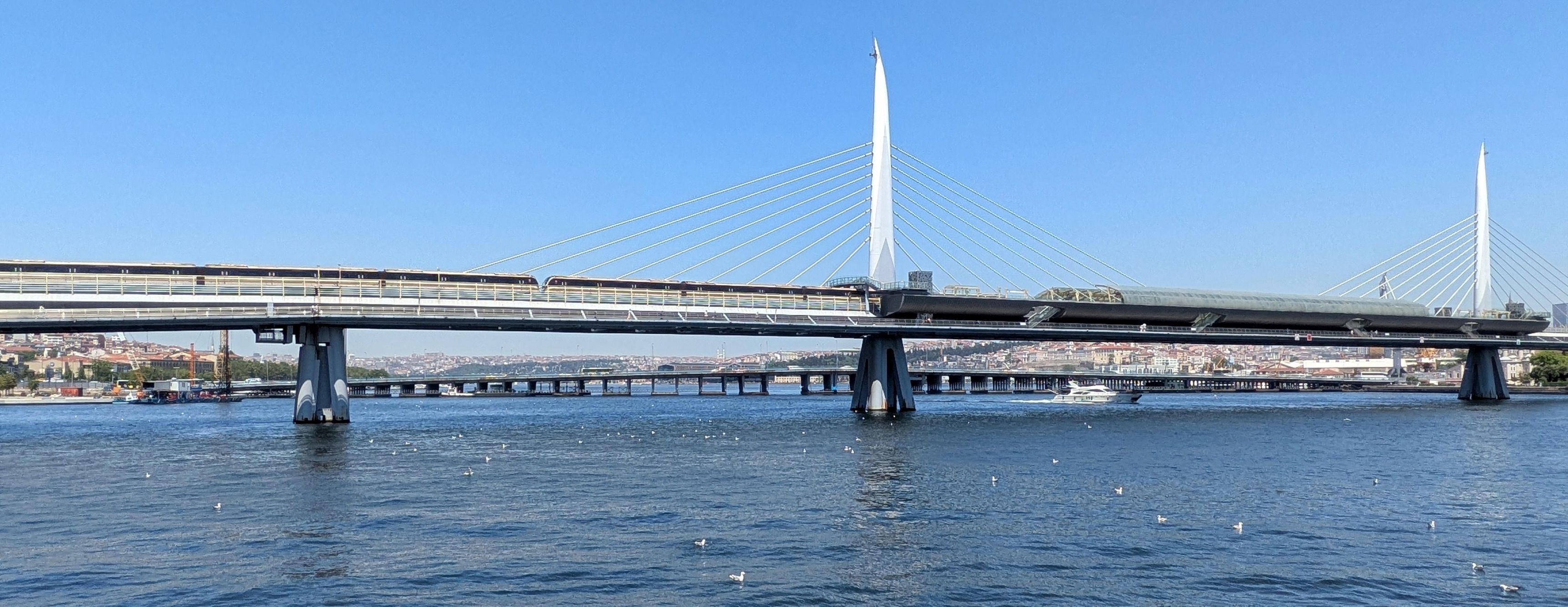
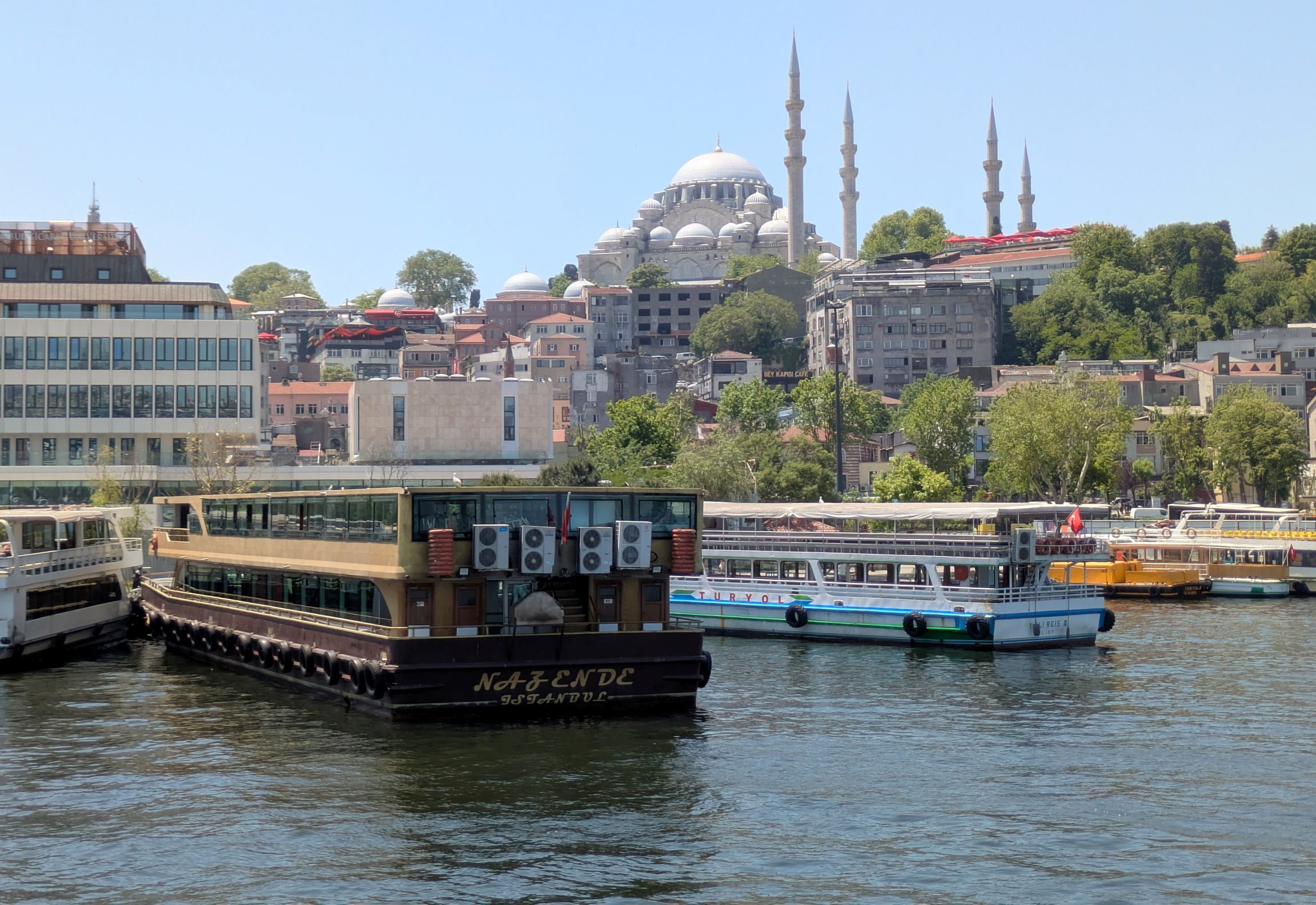
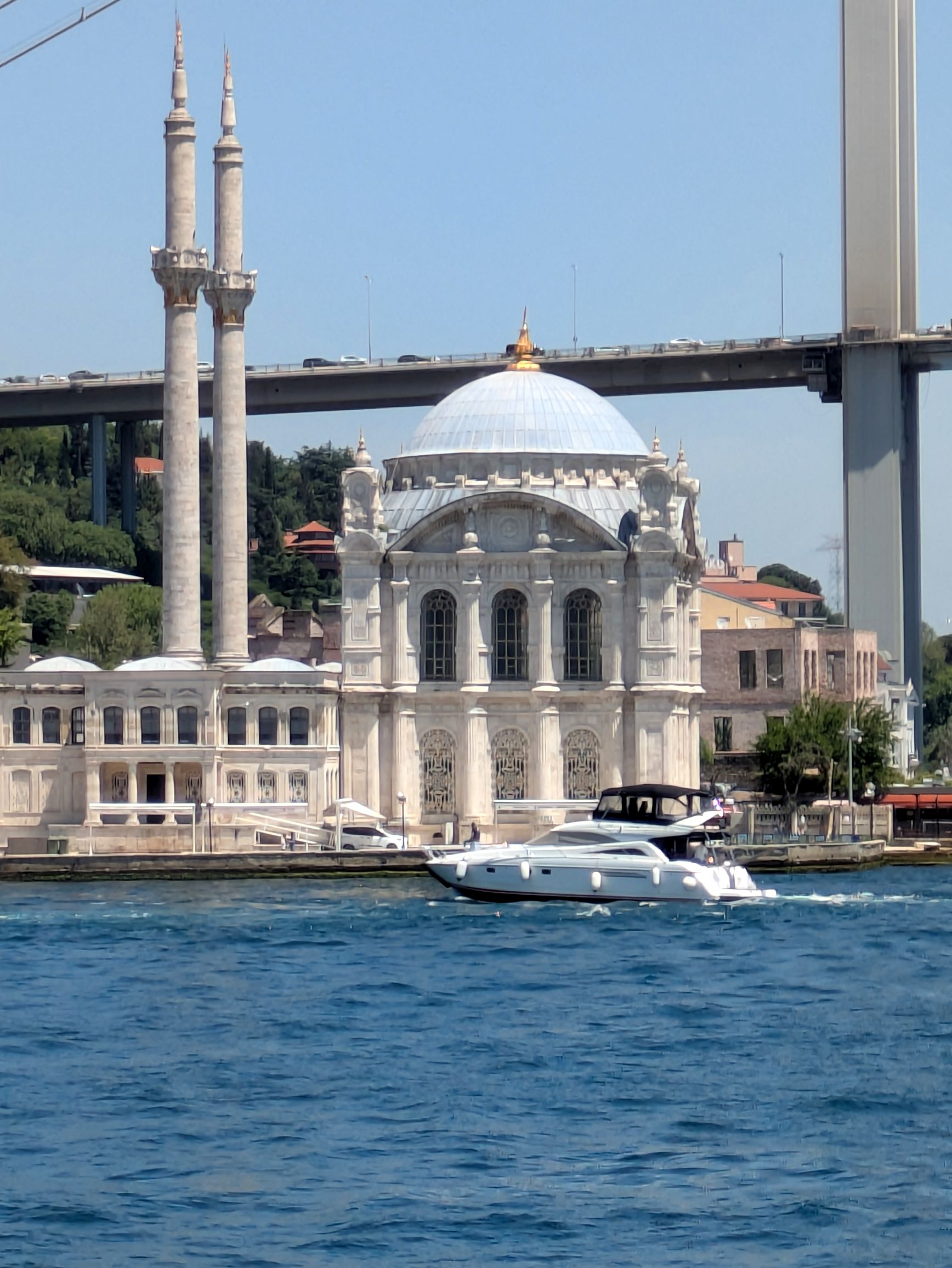
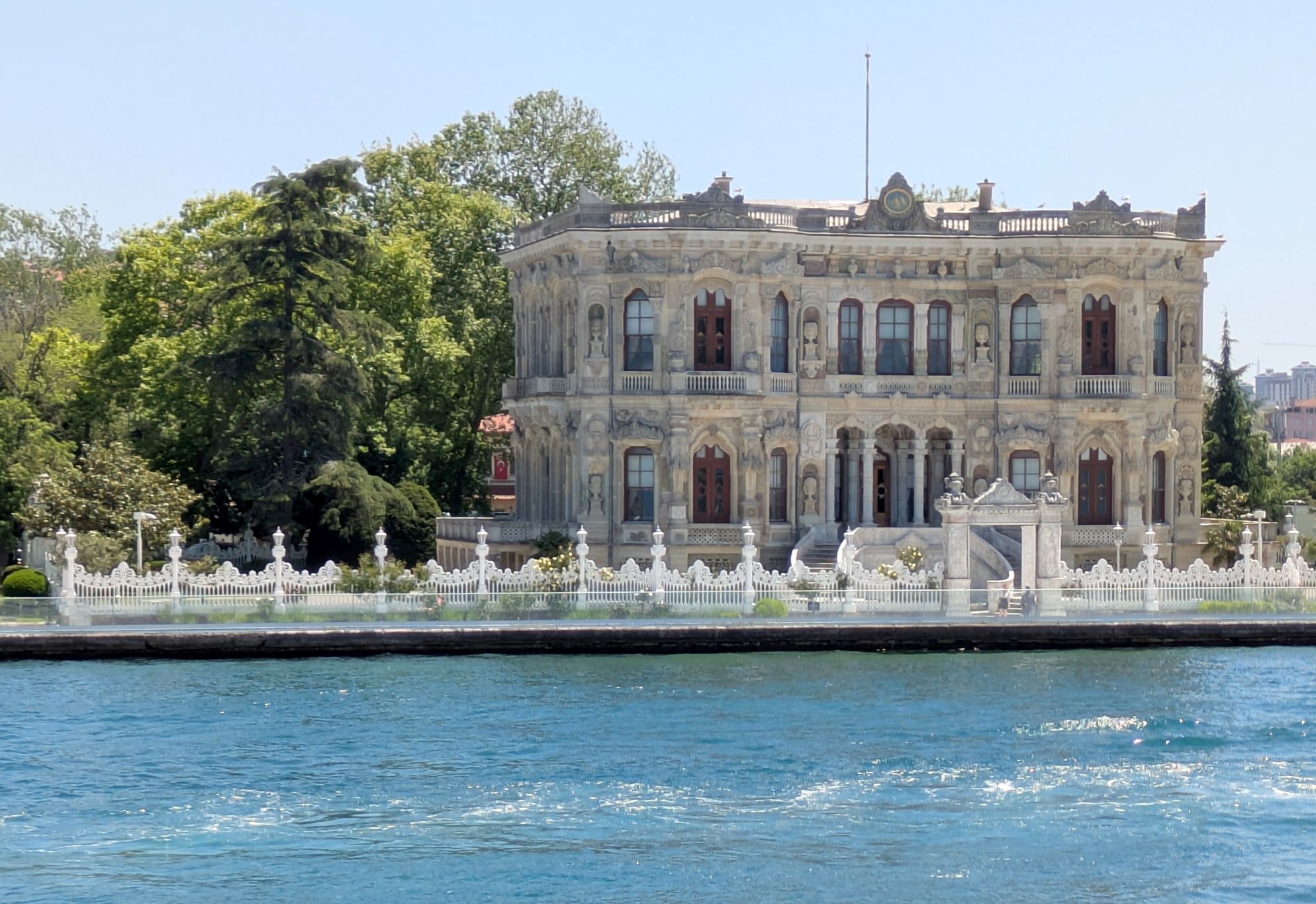
Here are some scenes along the Bosporus, in the order they were shot on our round-trip boat ride:
(For all photos, click on the image for a full screen view.)
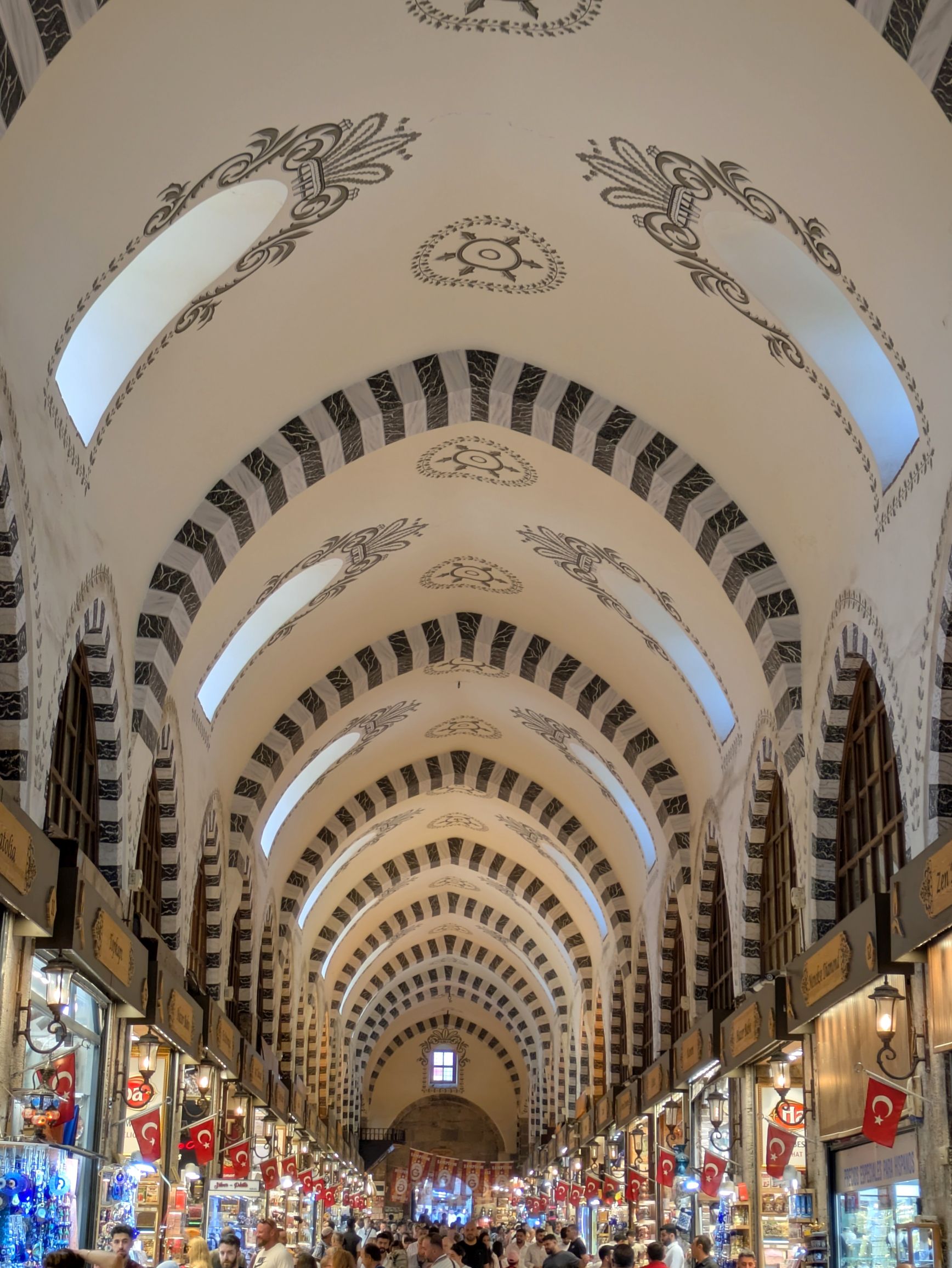
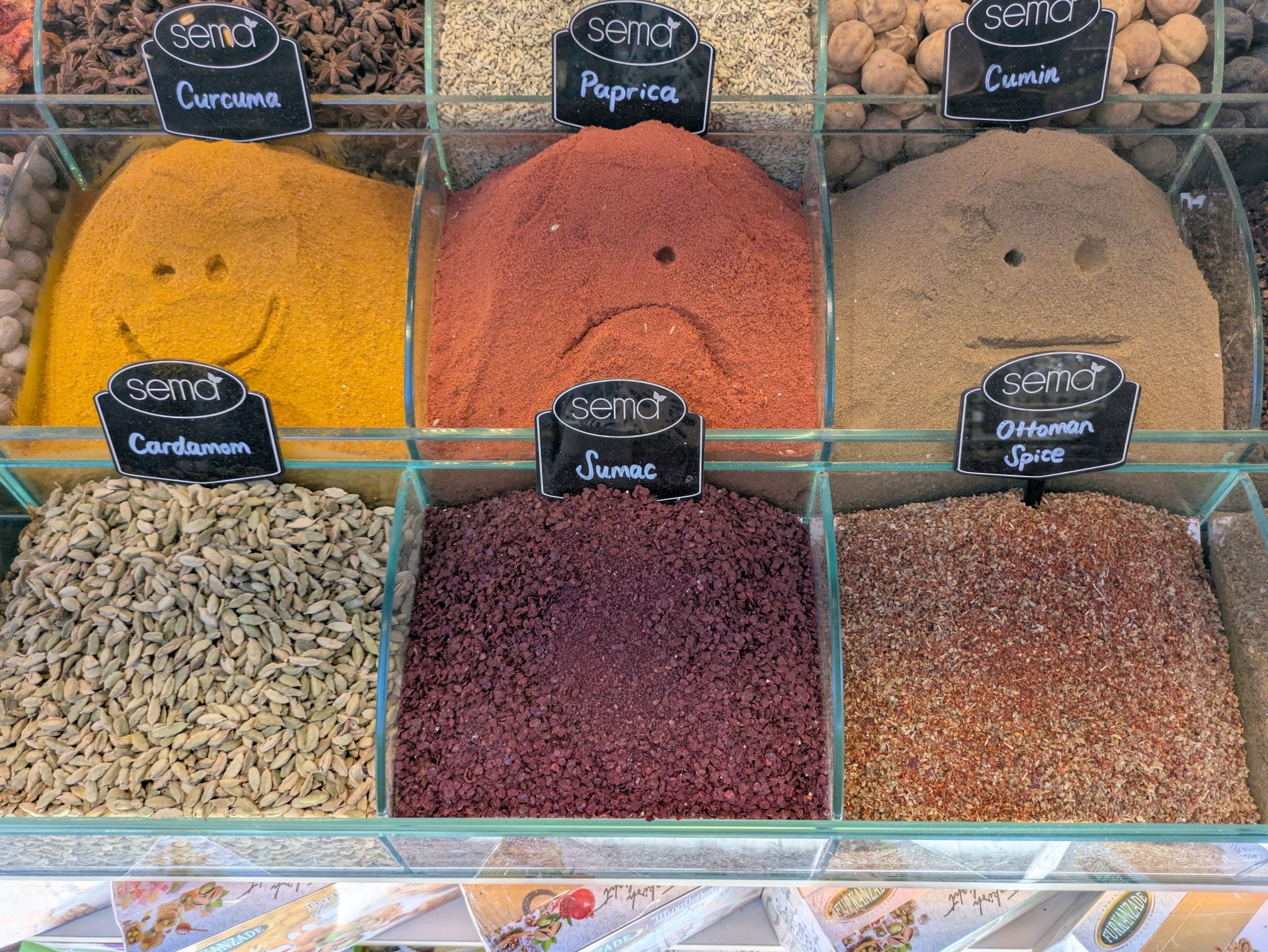
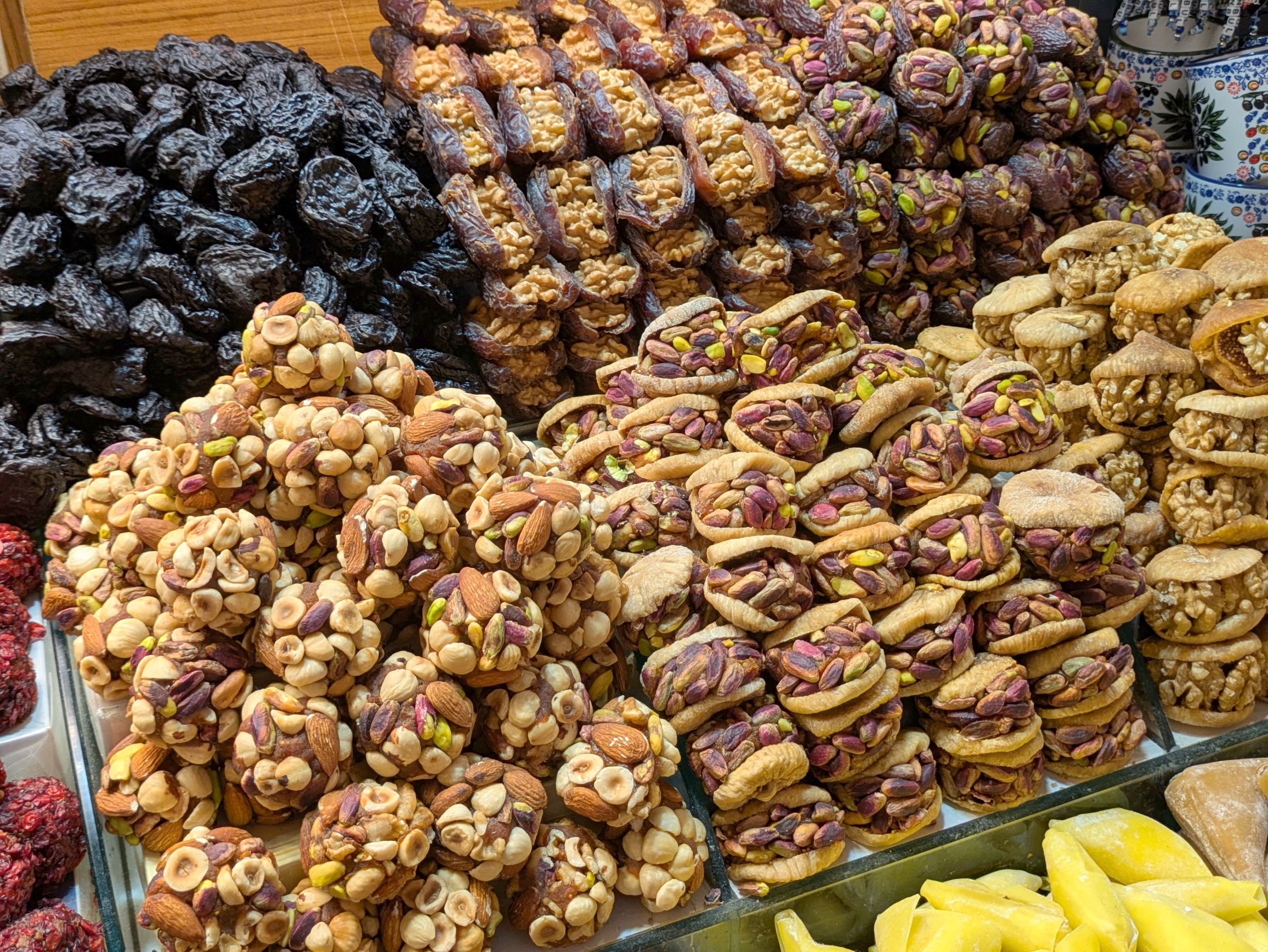
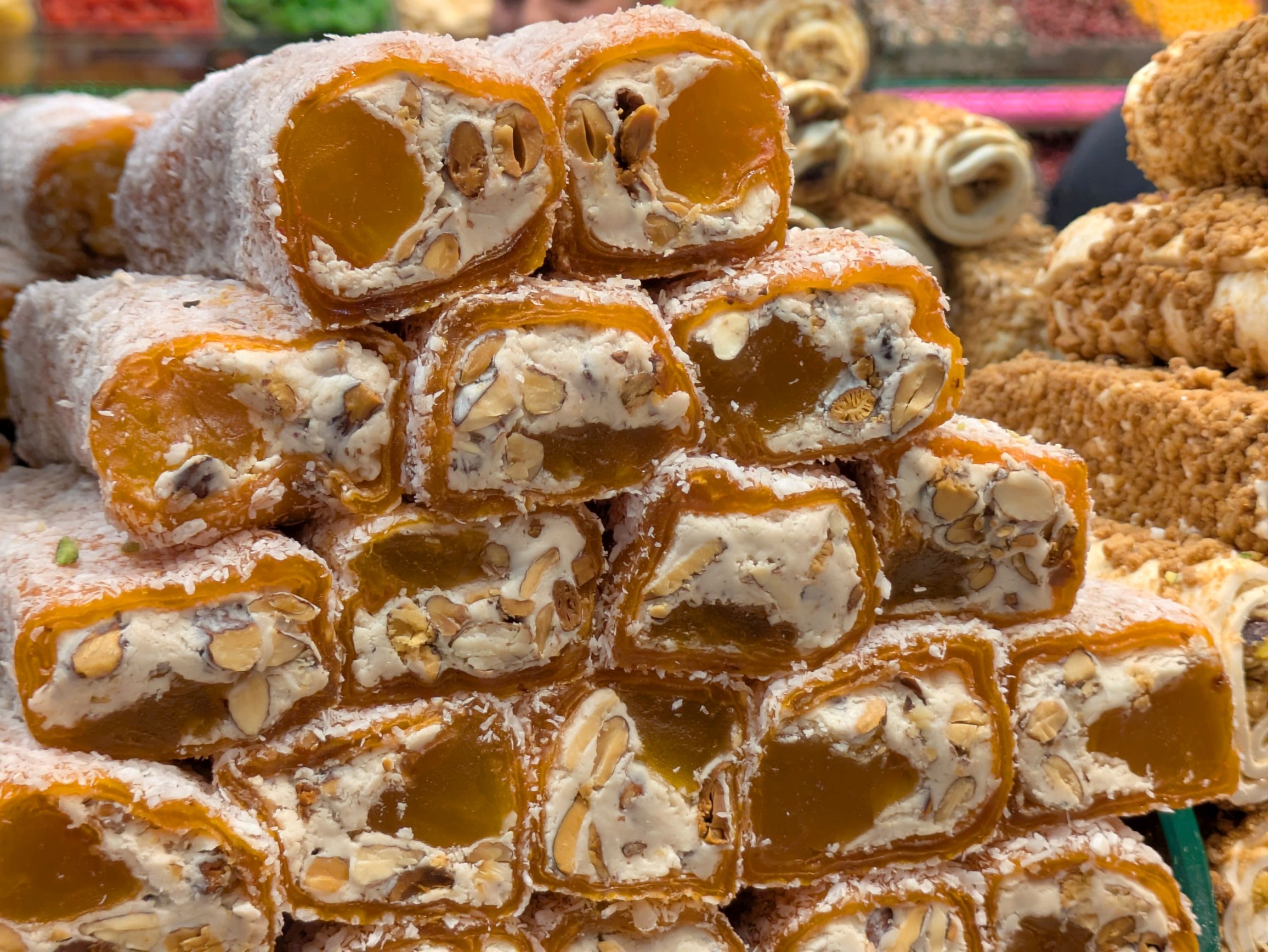
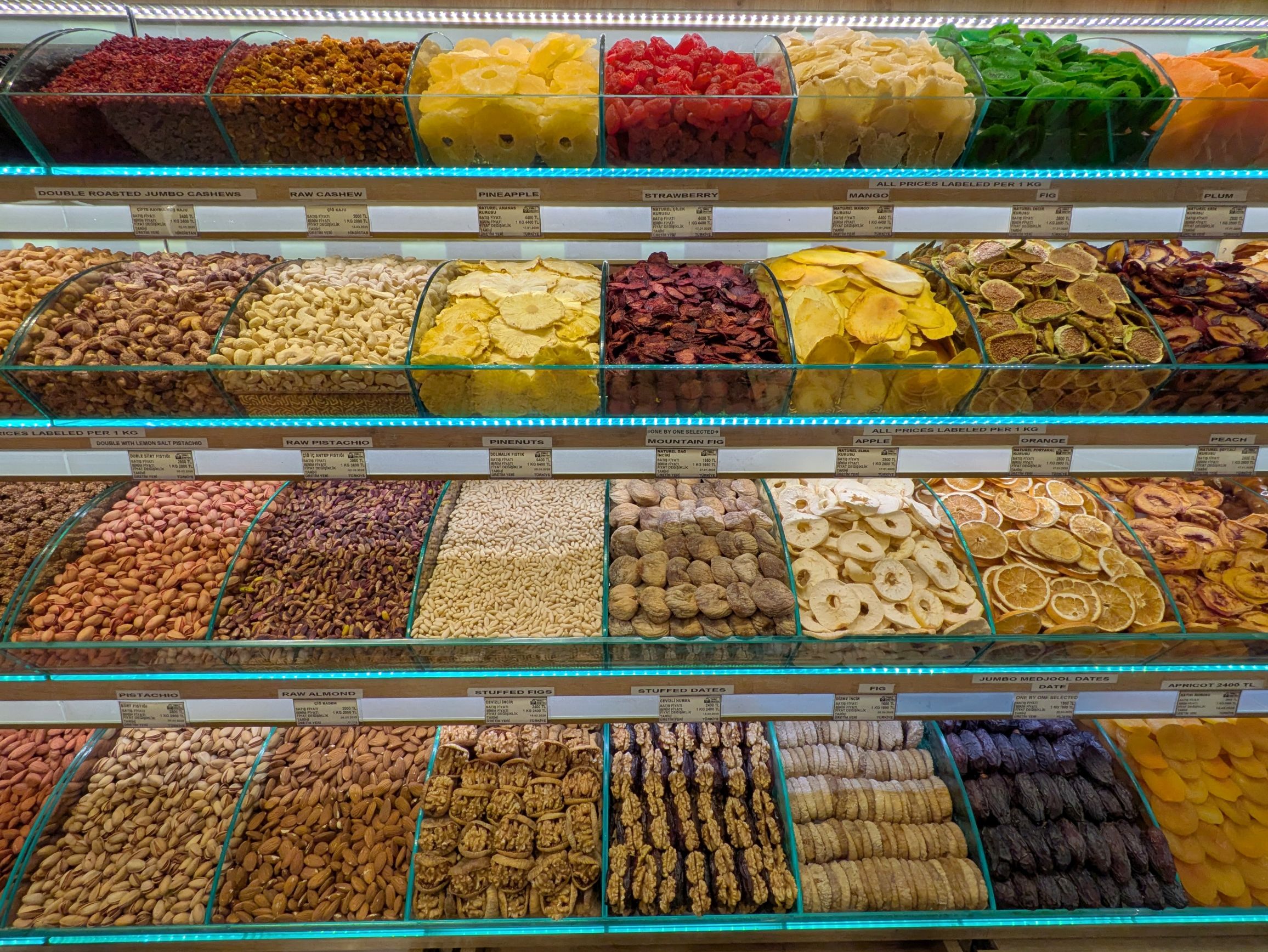
I previously mentioned that we also visited the Spice Bazaar while we were in Istanbul. Known to locals as the Misir Carsisi, it dates back to 1660 and is one of the largest bazaars in Istanbul. It was very similar to the Grand Bazaar in its display of spices and Turkish delight, so I combined those photos in Turkiye #2.
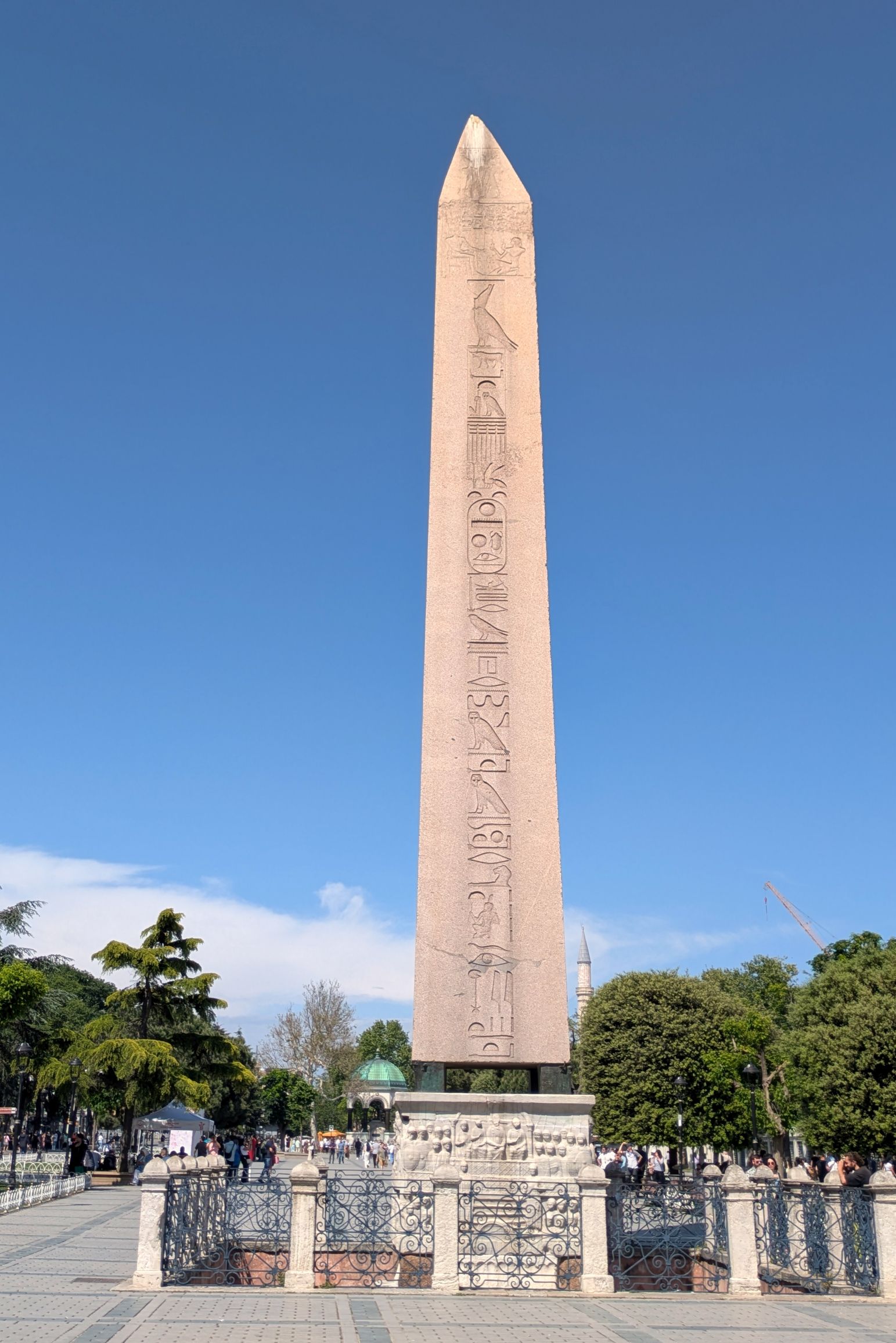
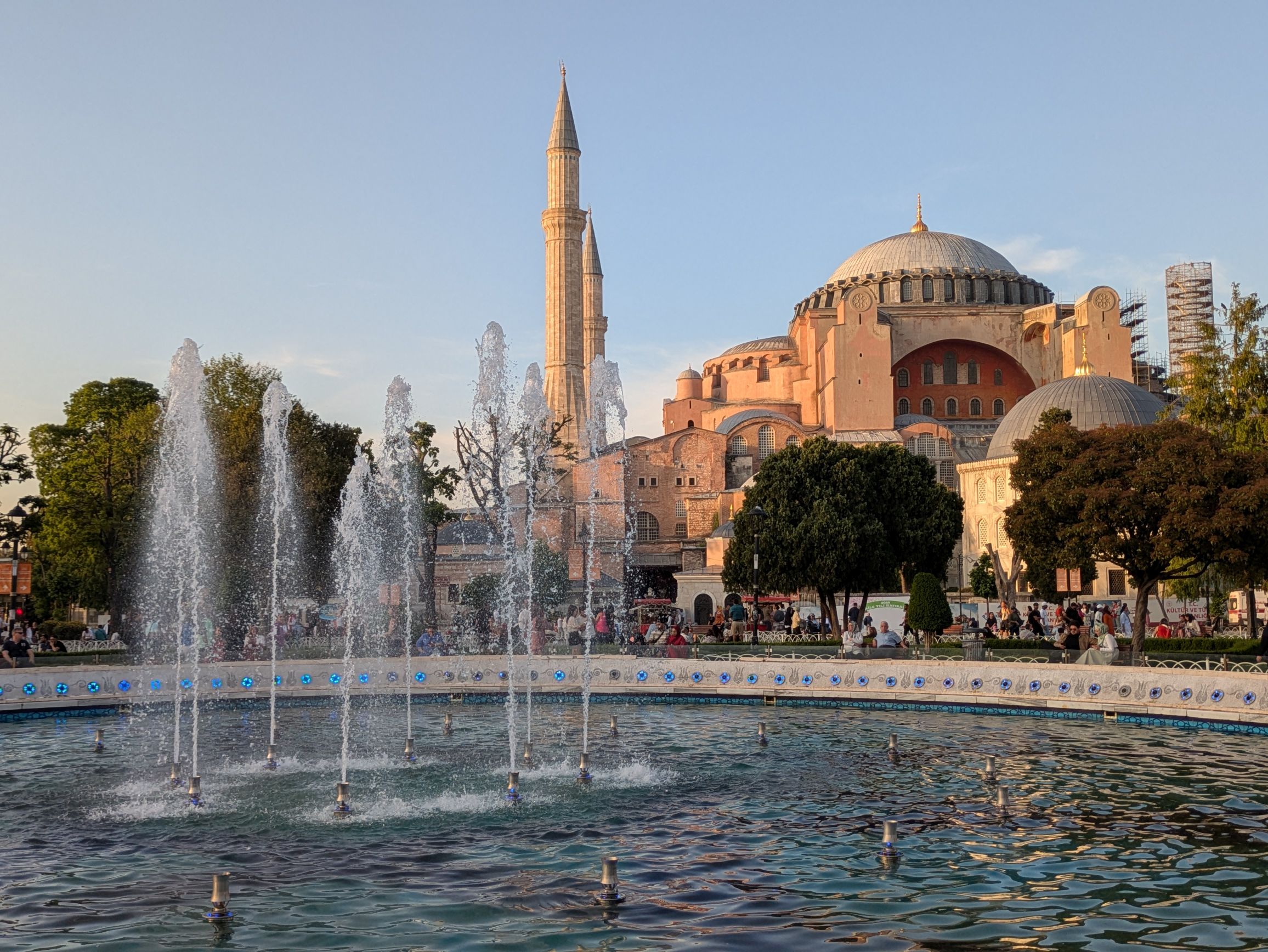
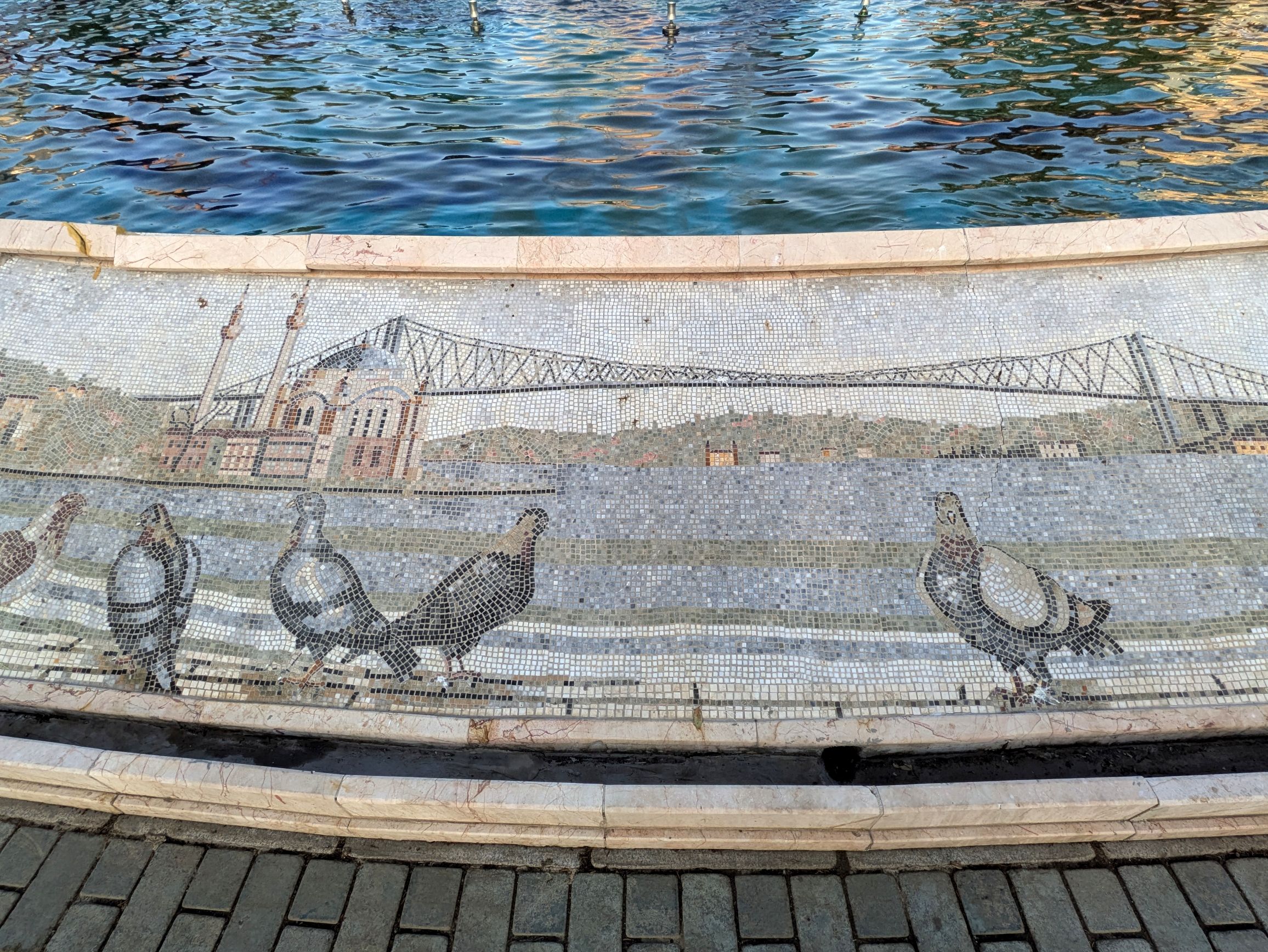
The following are more scenes around the Hippodrome (central square):
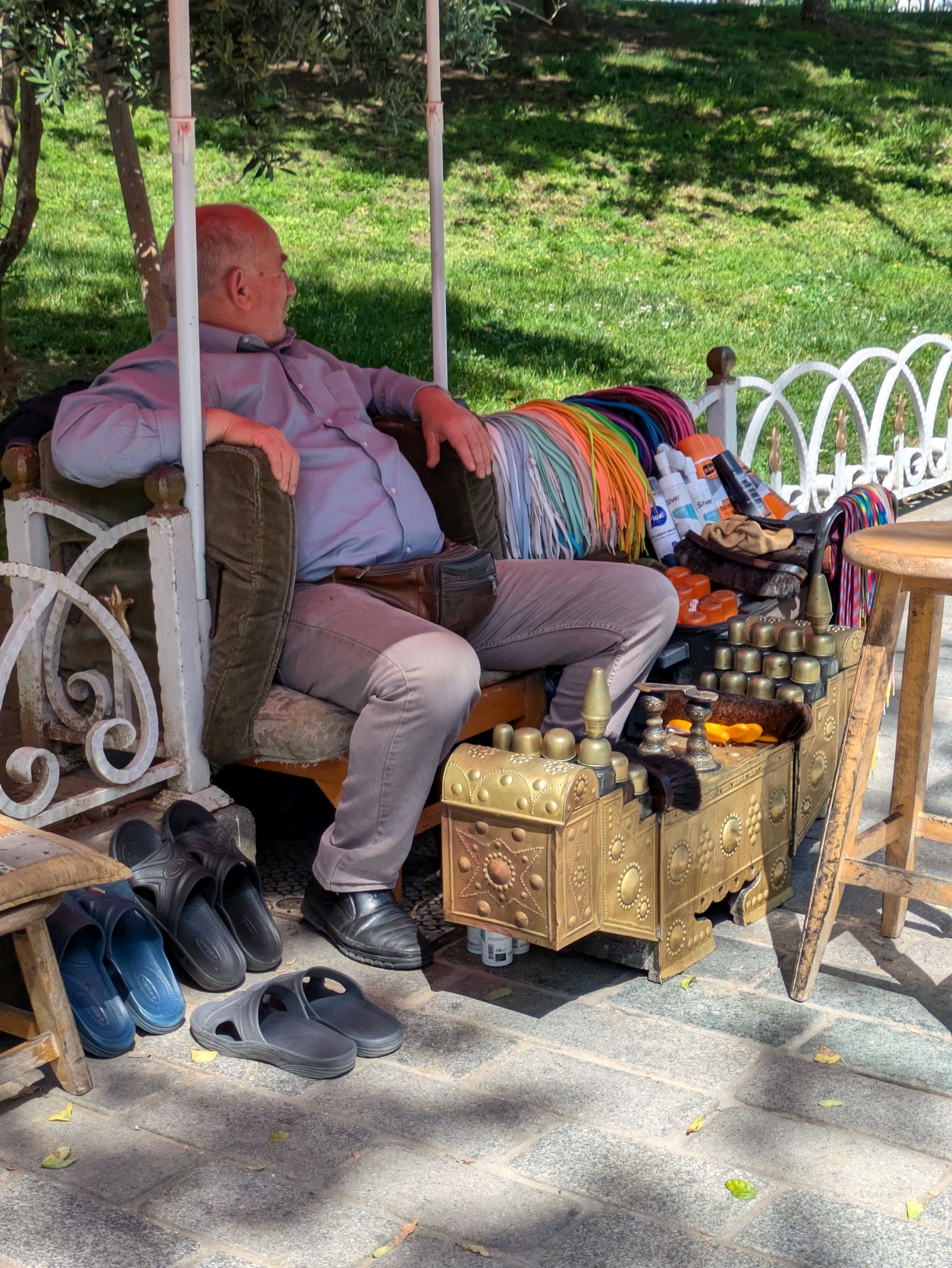
A traditional Turkish shoe shine stand
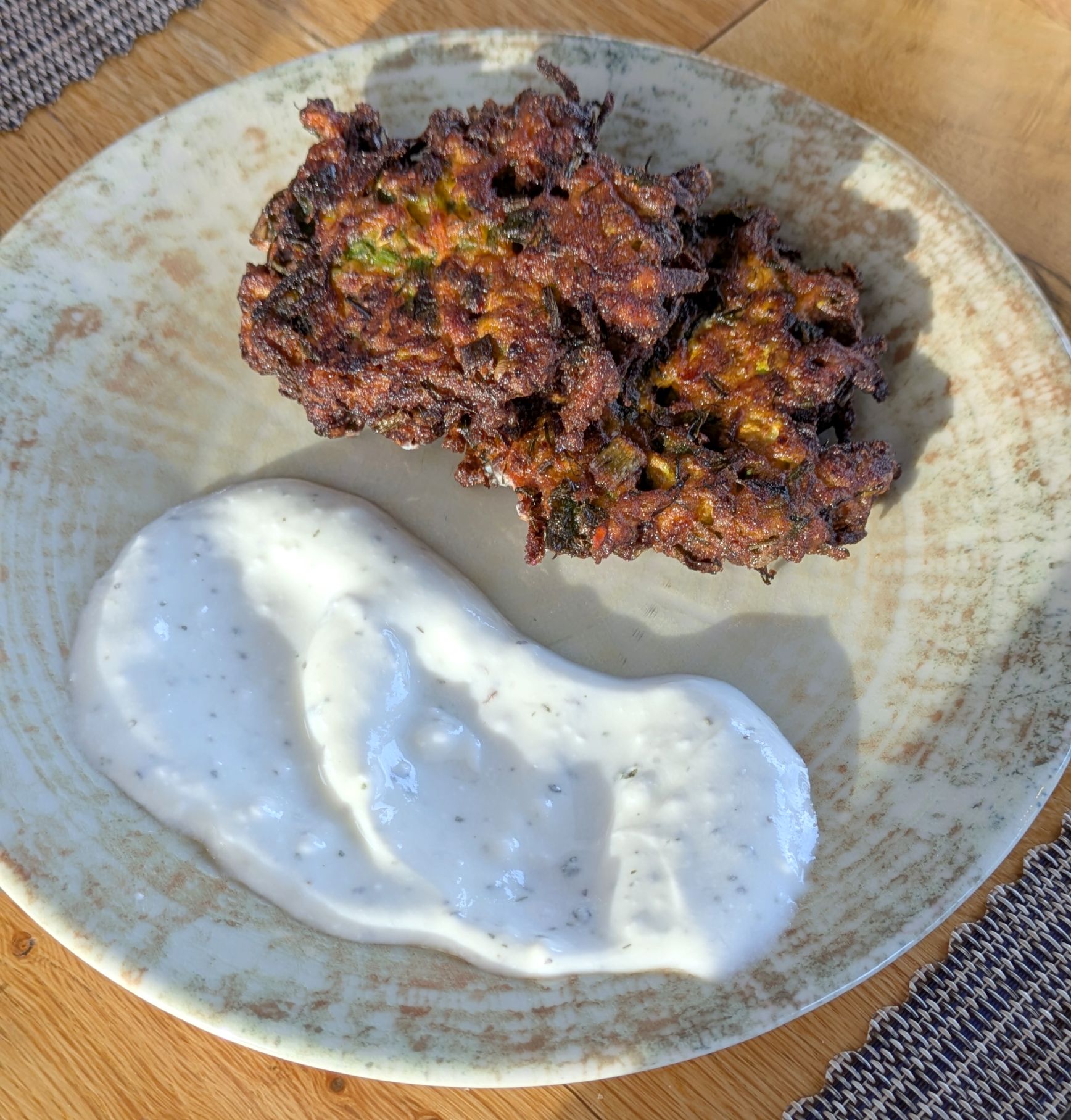
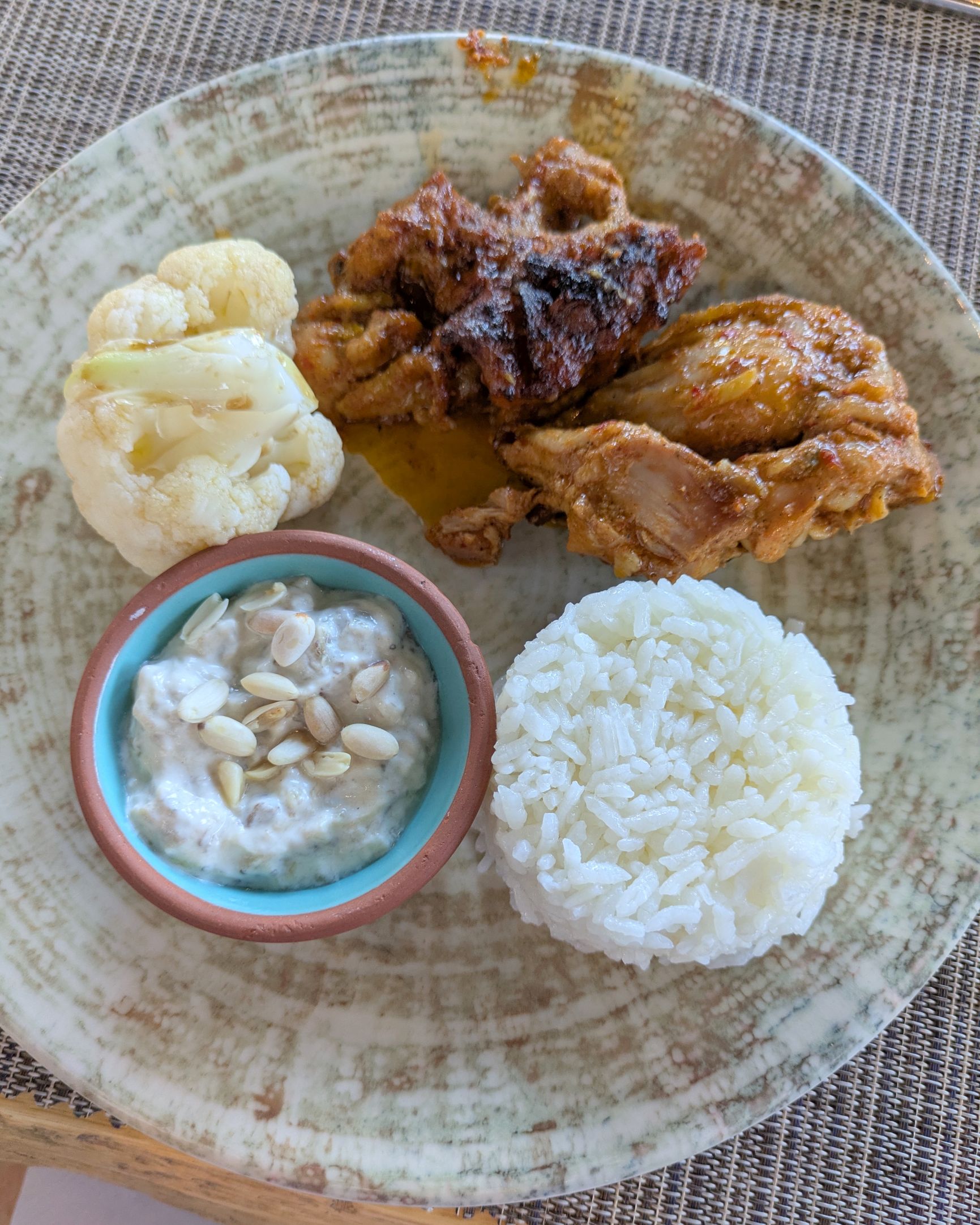
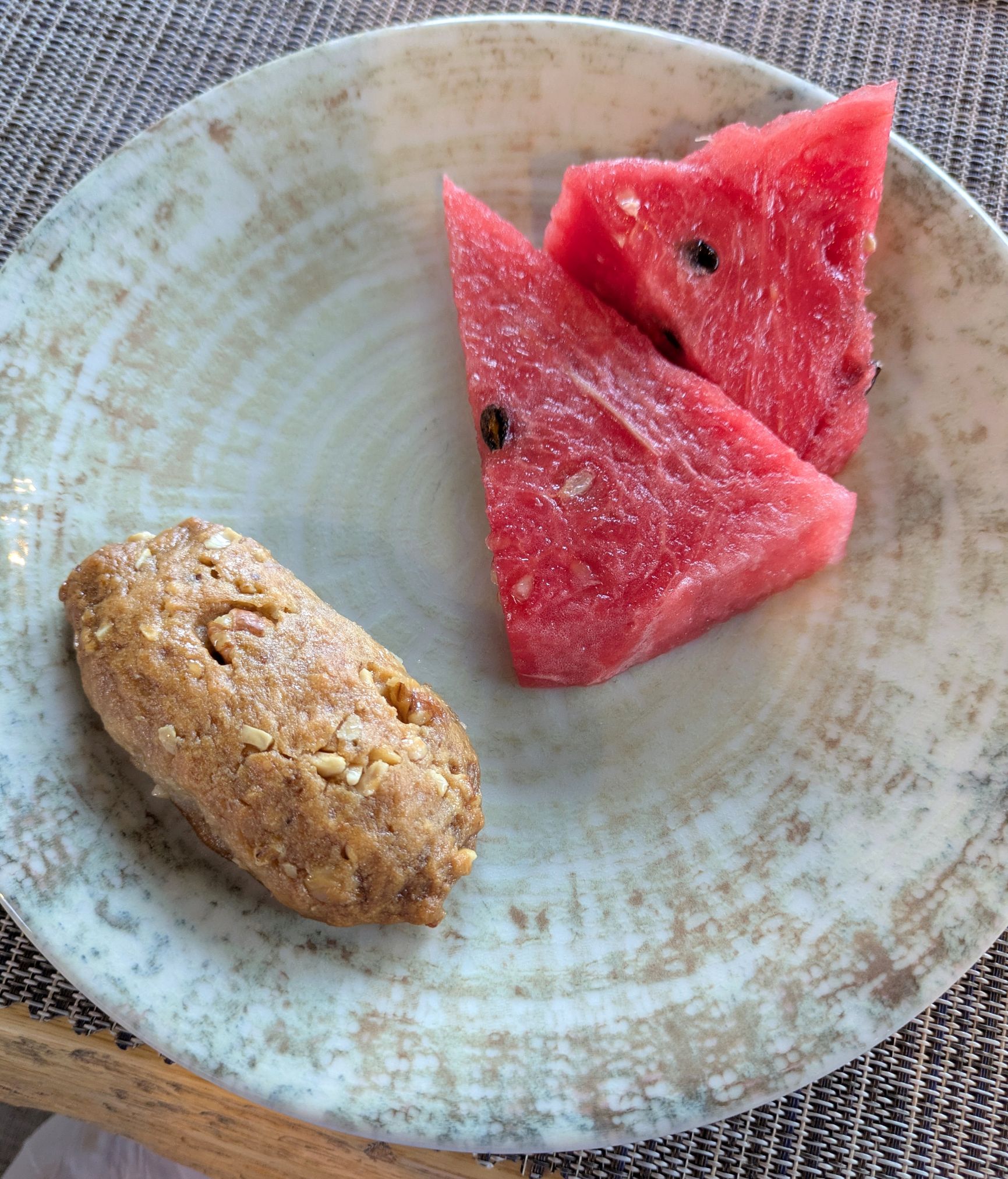
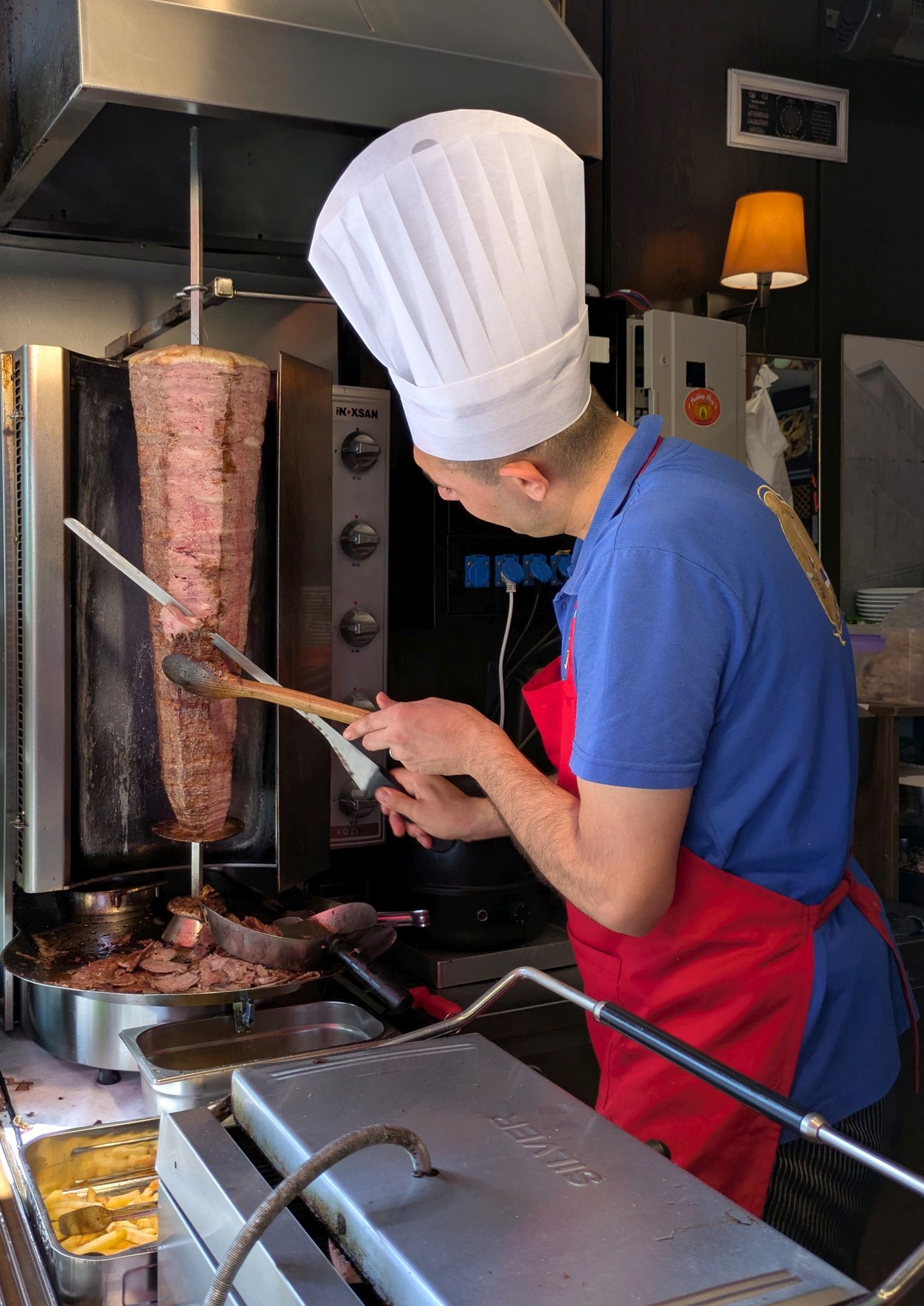
We enjoyed the food in Istanbul very much!
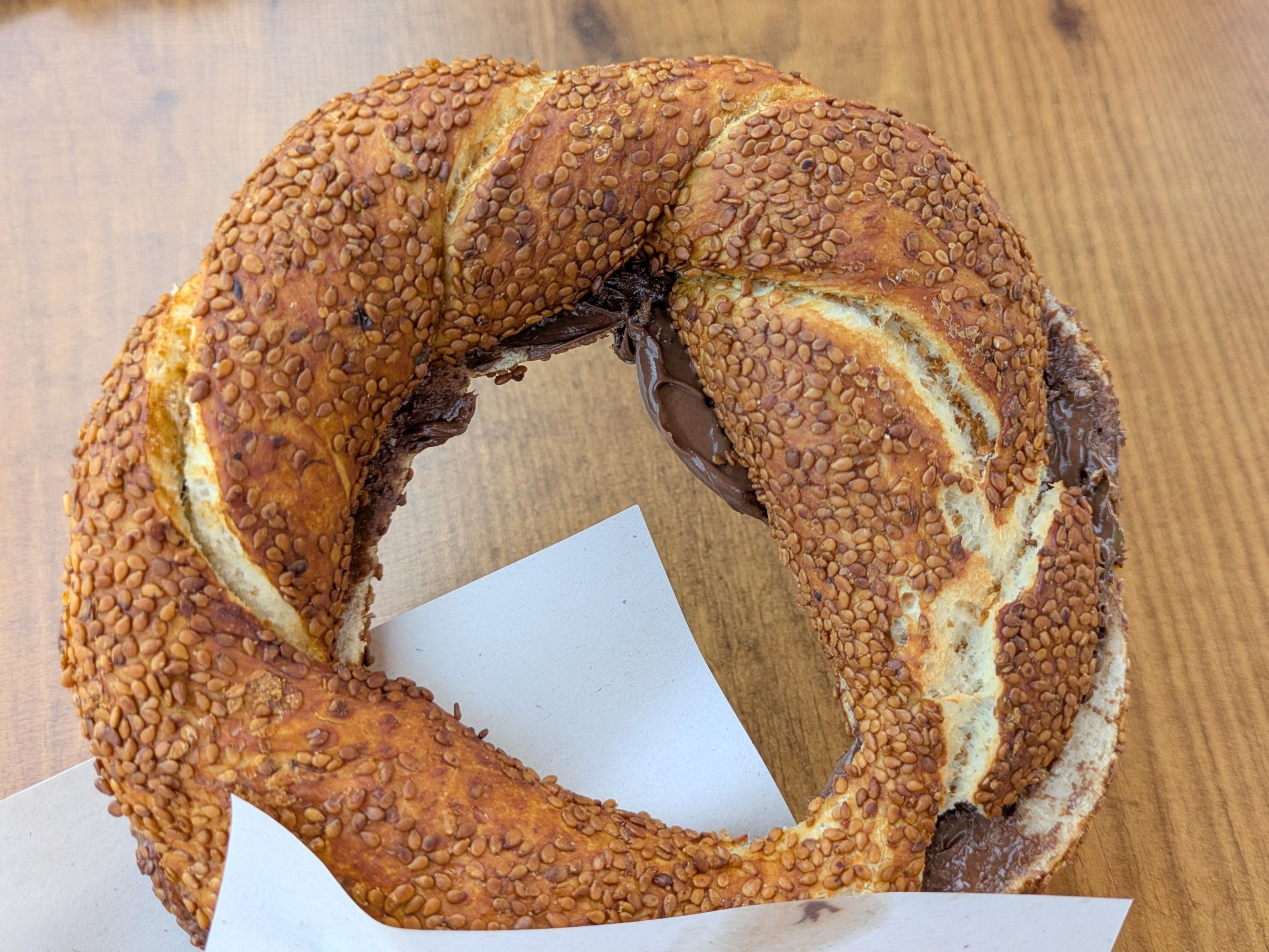
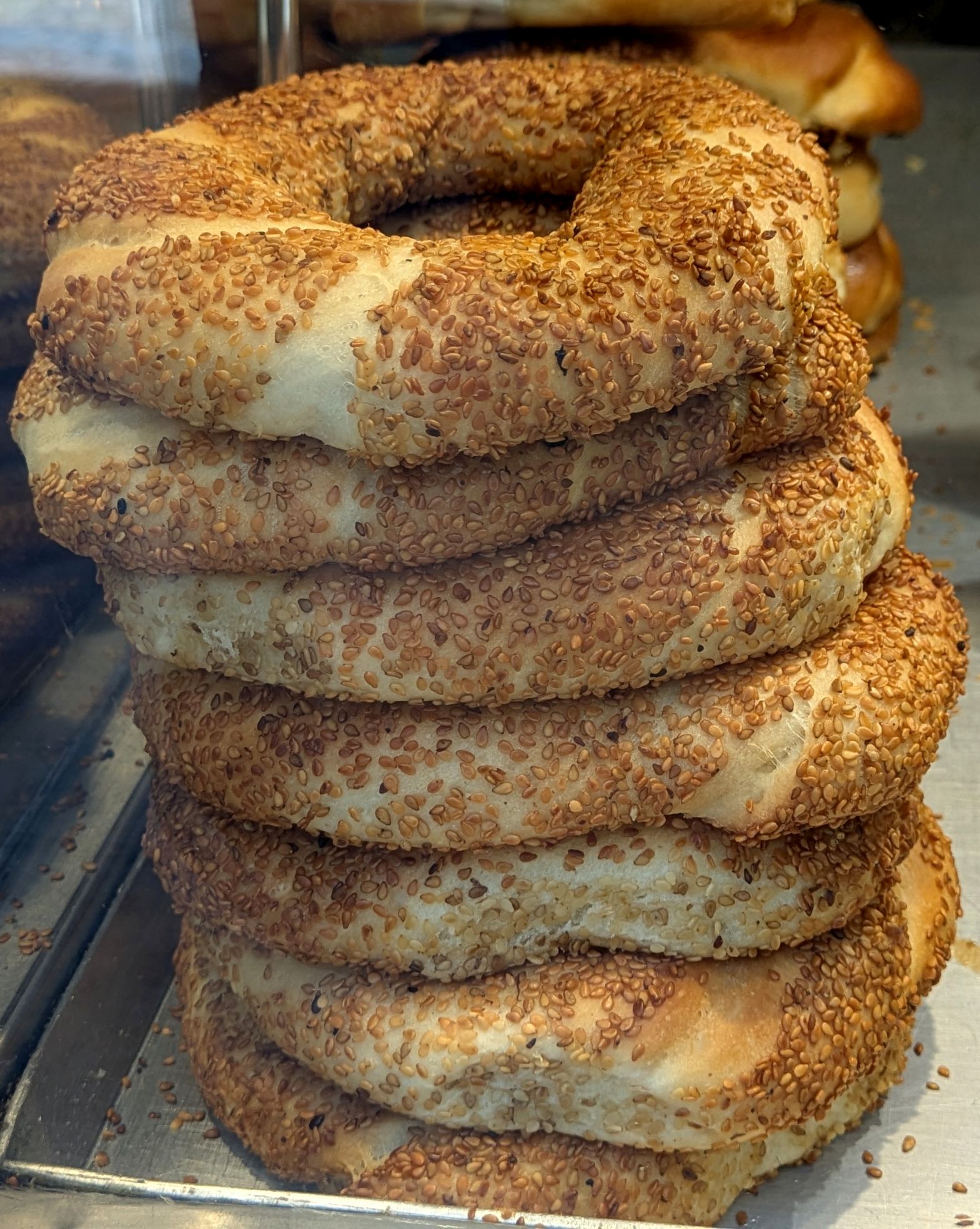
This is a Simit, sort of like a bagel, but they are larger and the dough is twisted. This one was purchased from a cart in the HIppodrome. Plain simits were the equivalent of 50 cents, but one filled with Nutella only set us back an extra 25 cents for a delicious and very inexpensive snack!
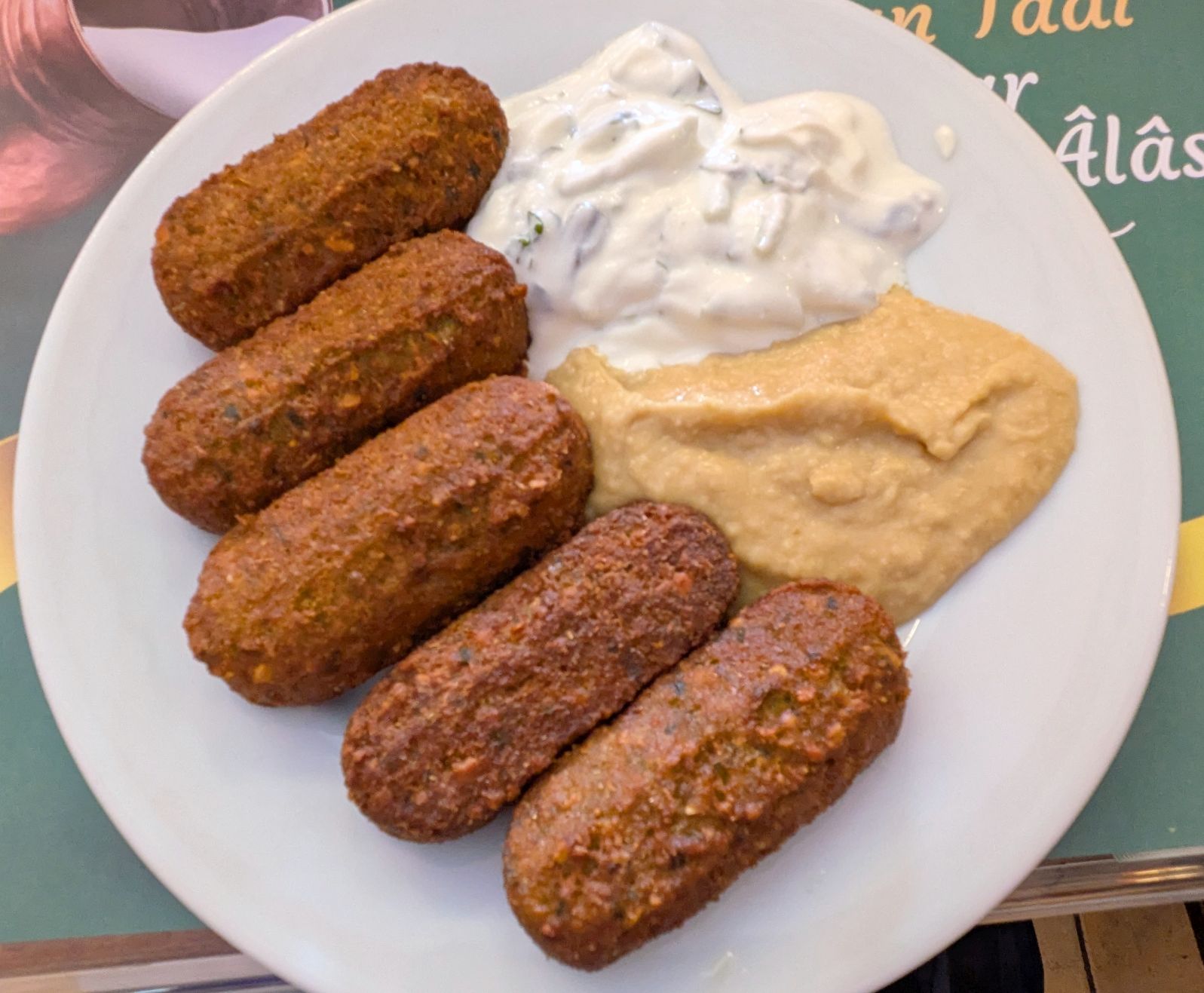
Although I opted for falafels instead, I had to grab this shot!
Falafels
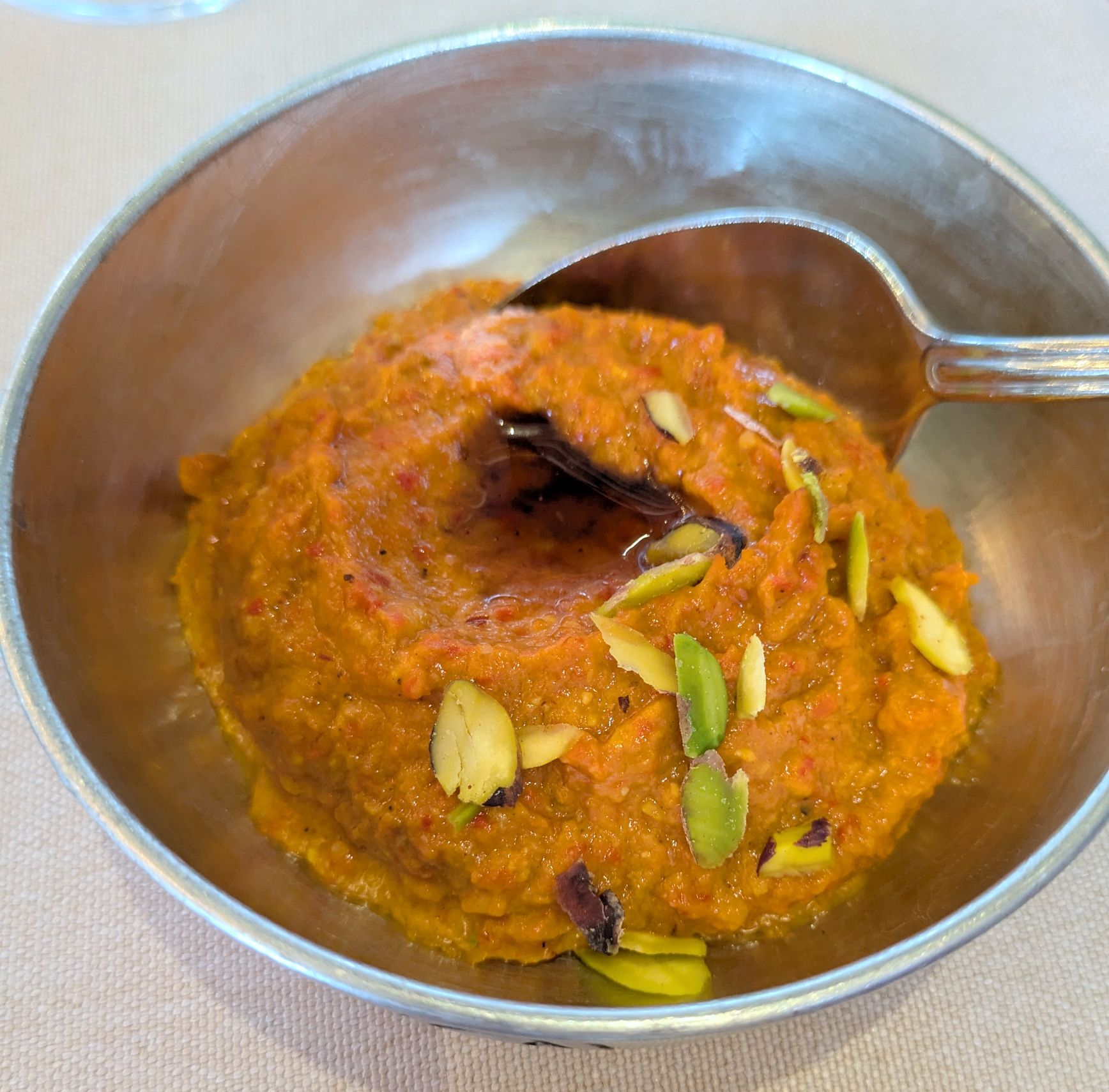
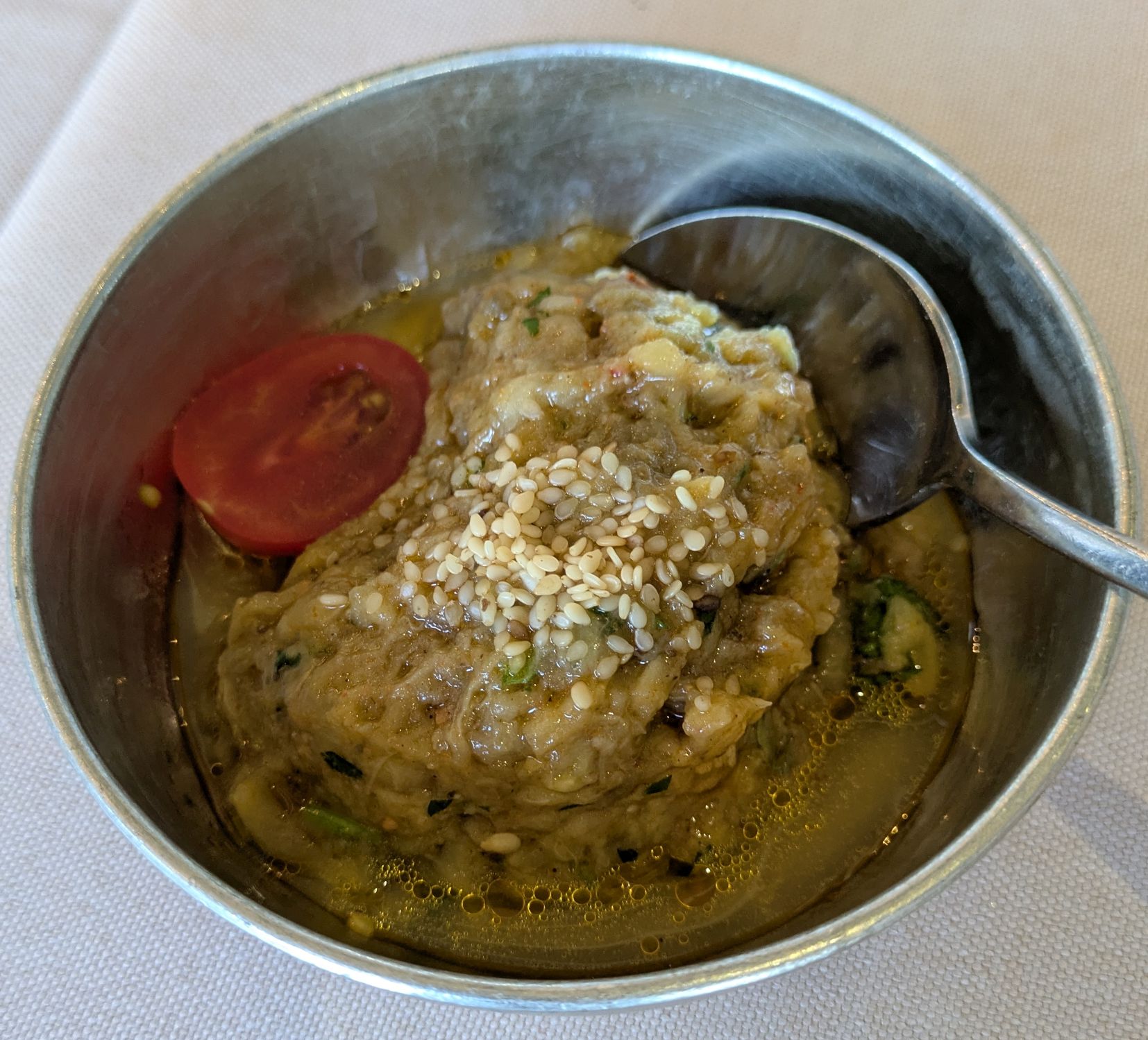
These were various different spreads and condiments that tasted so good!
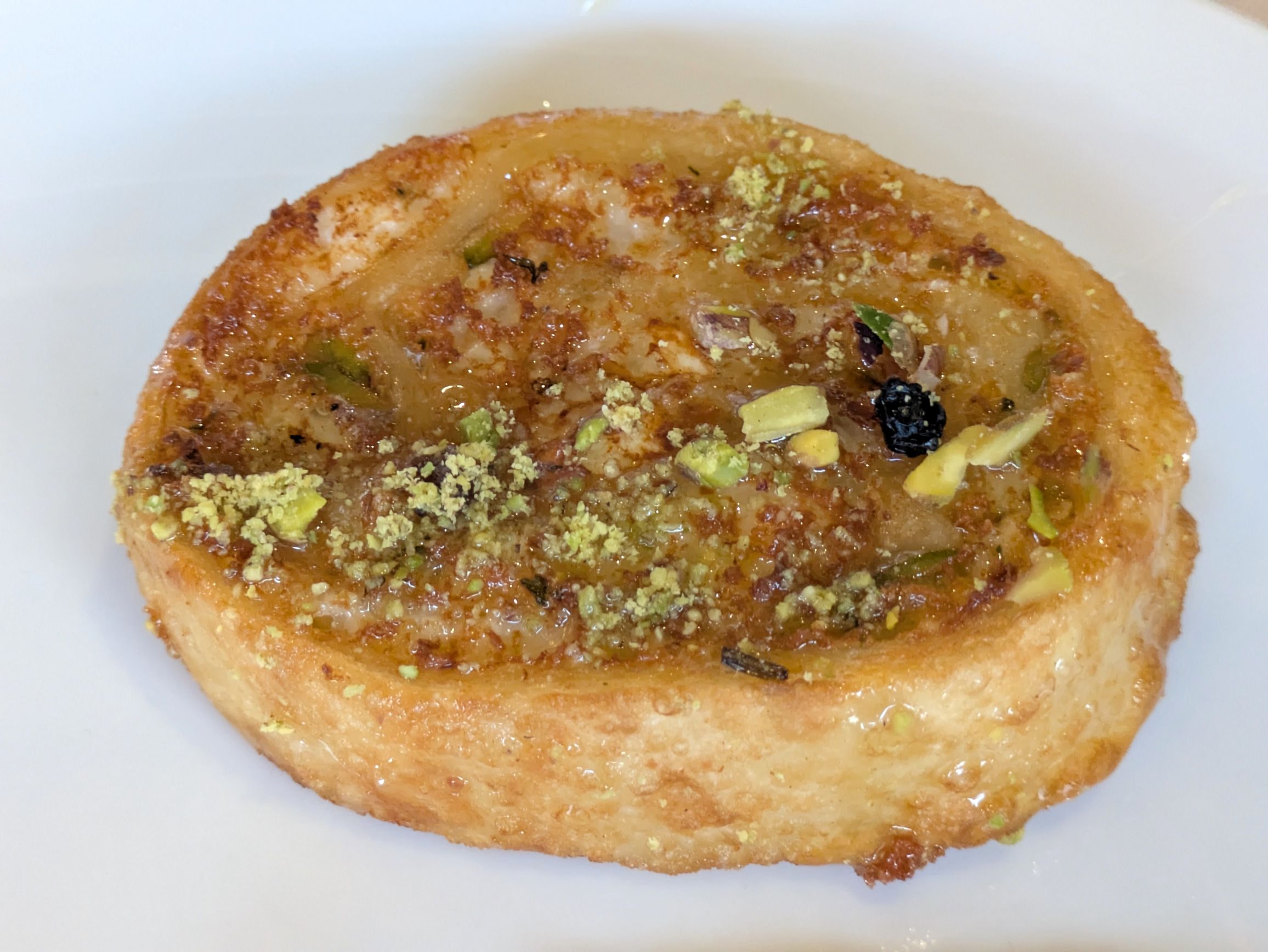
Hot appetizer of pastry with cheese and honey. DELICIOUS!
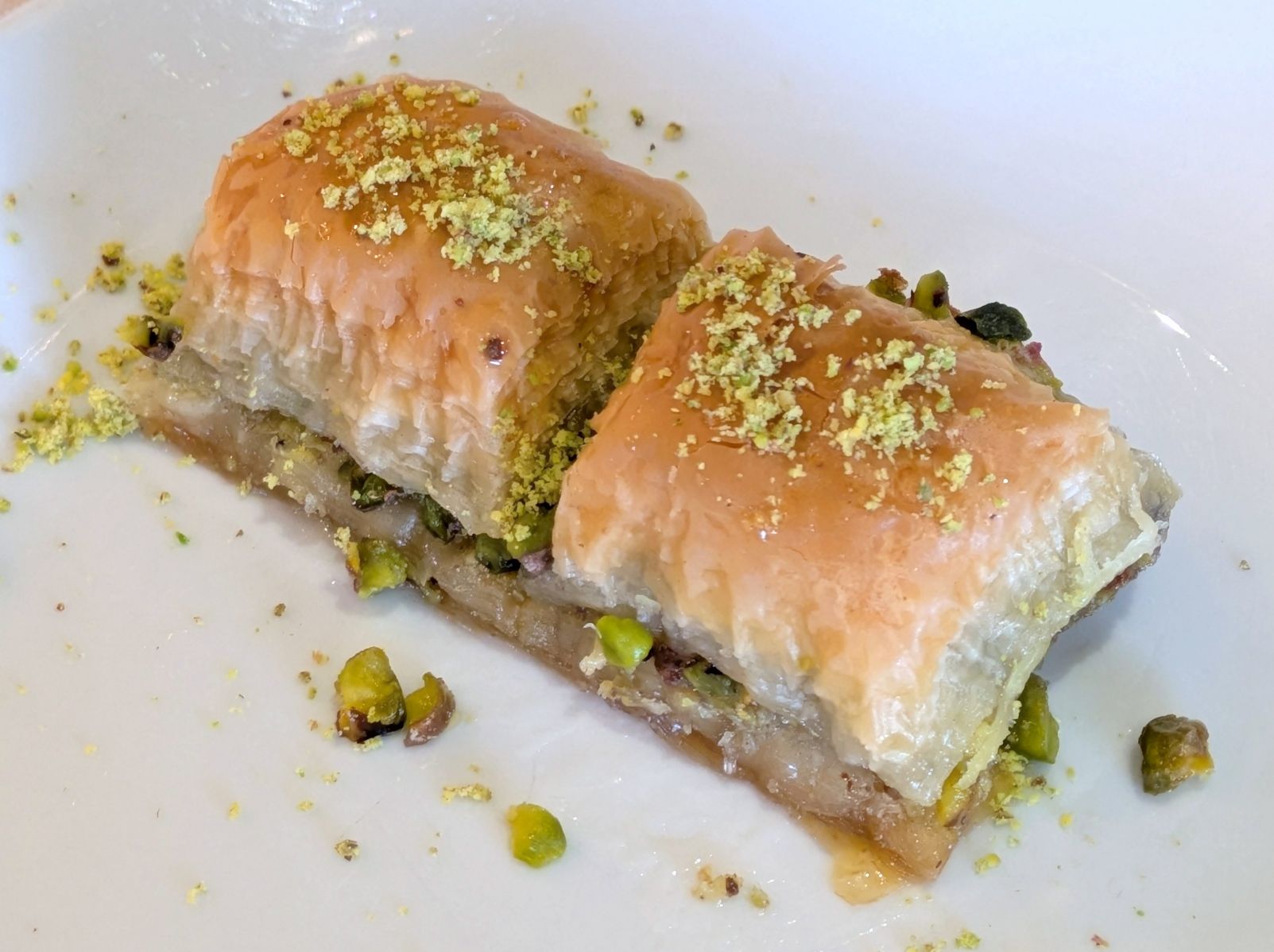
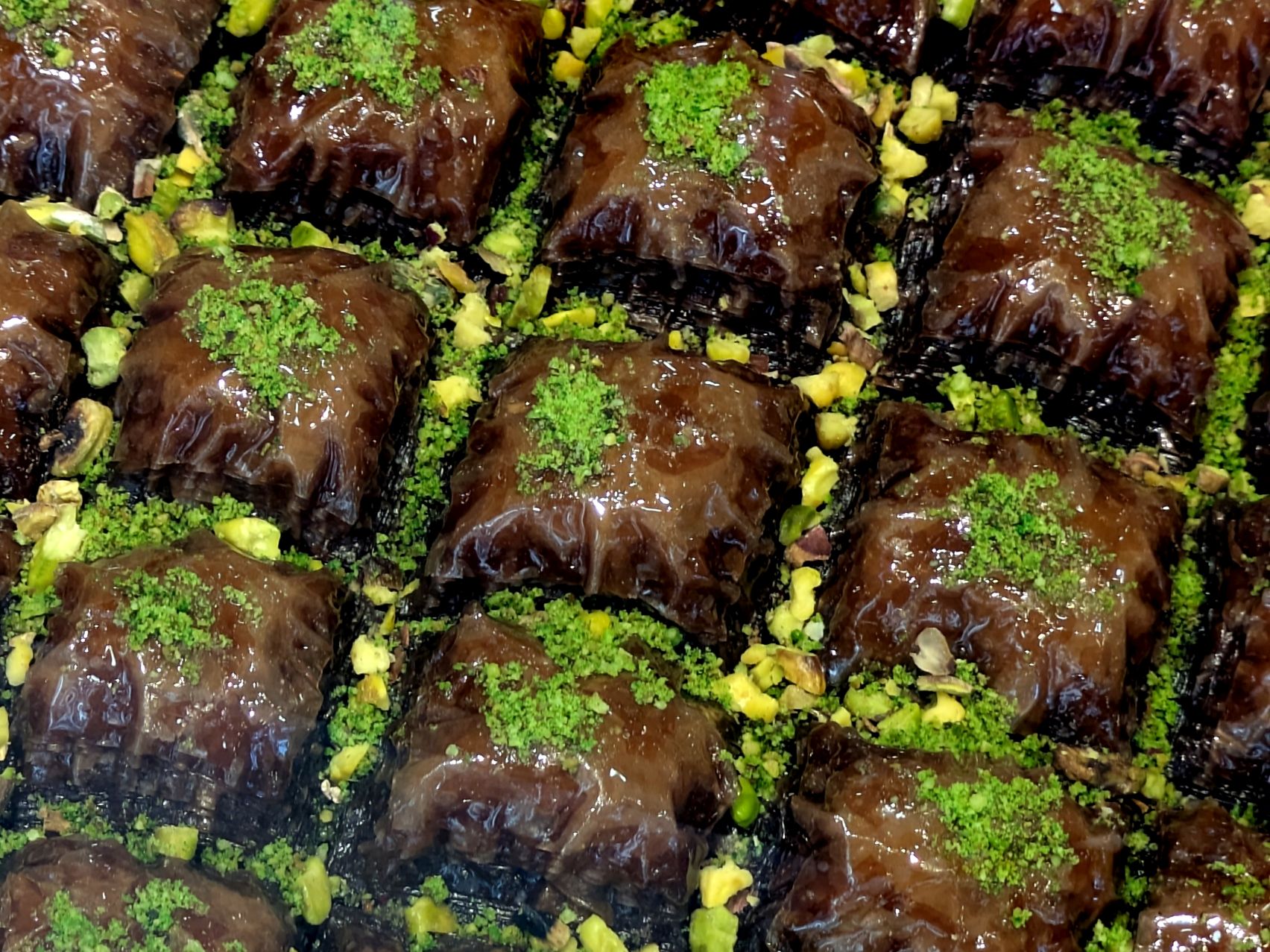
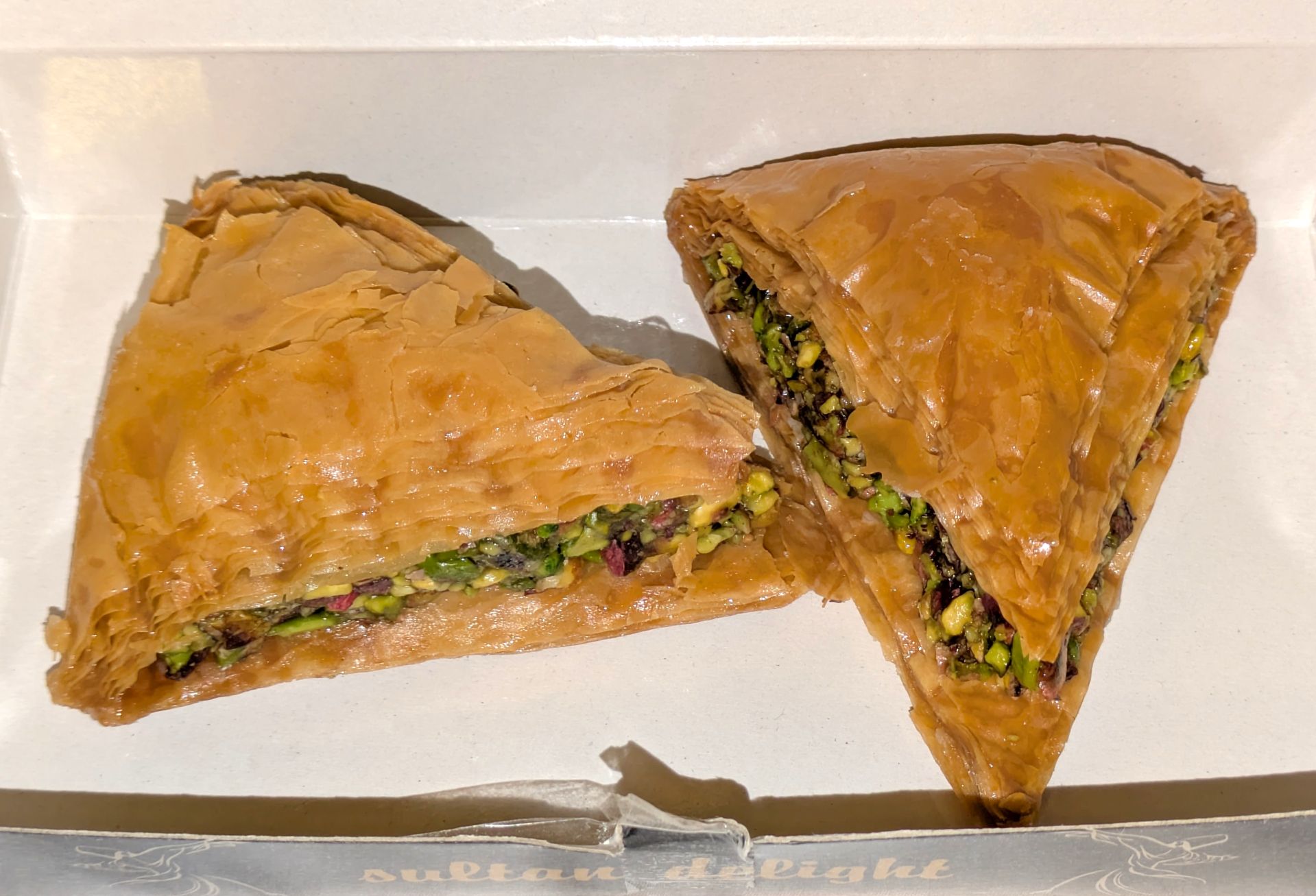
Baklava, which is phyllo dough pastry, honey syrup, and pistachio nuts
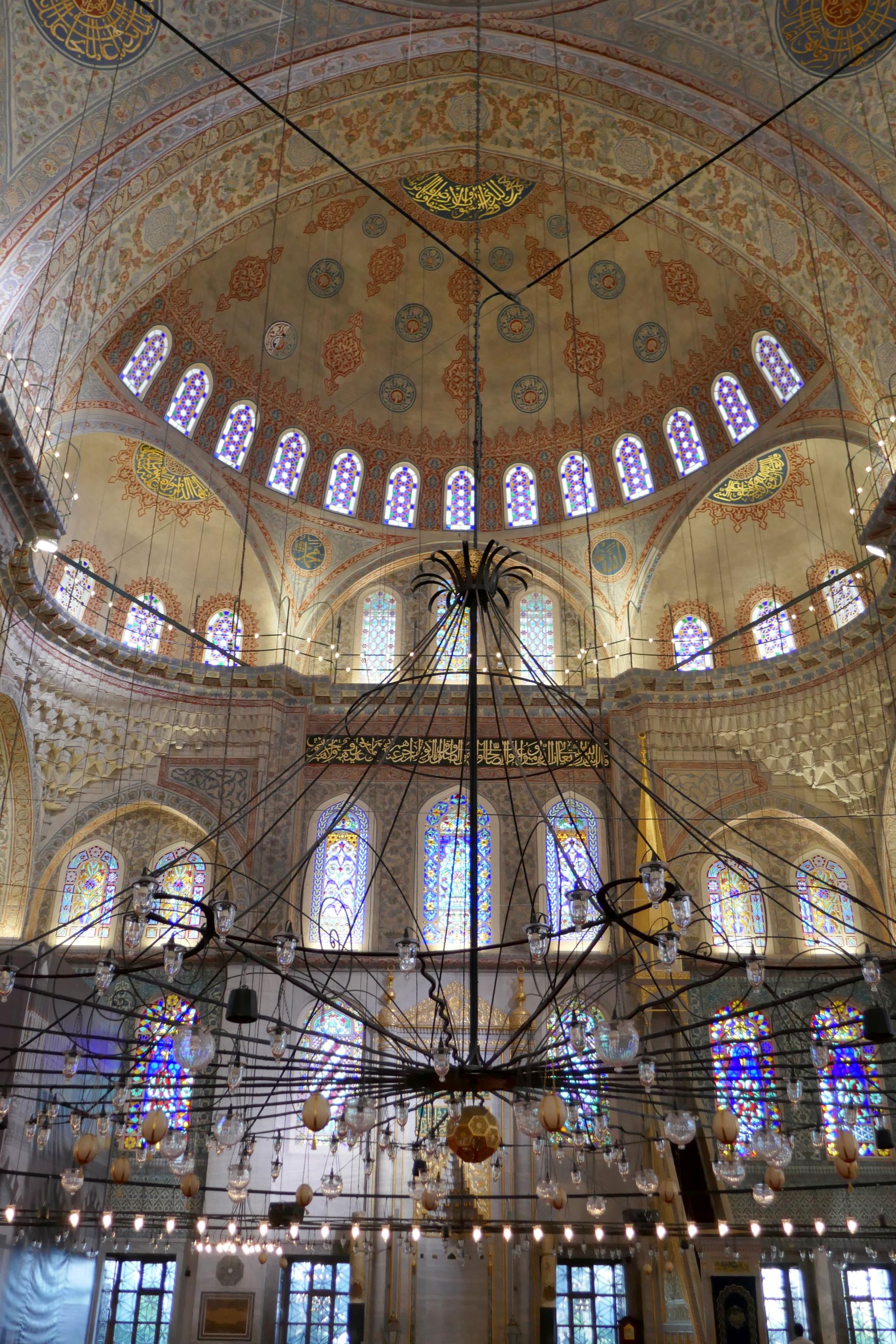
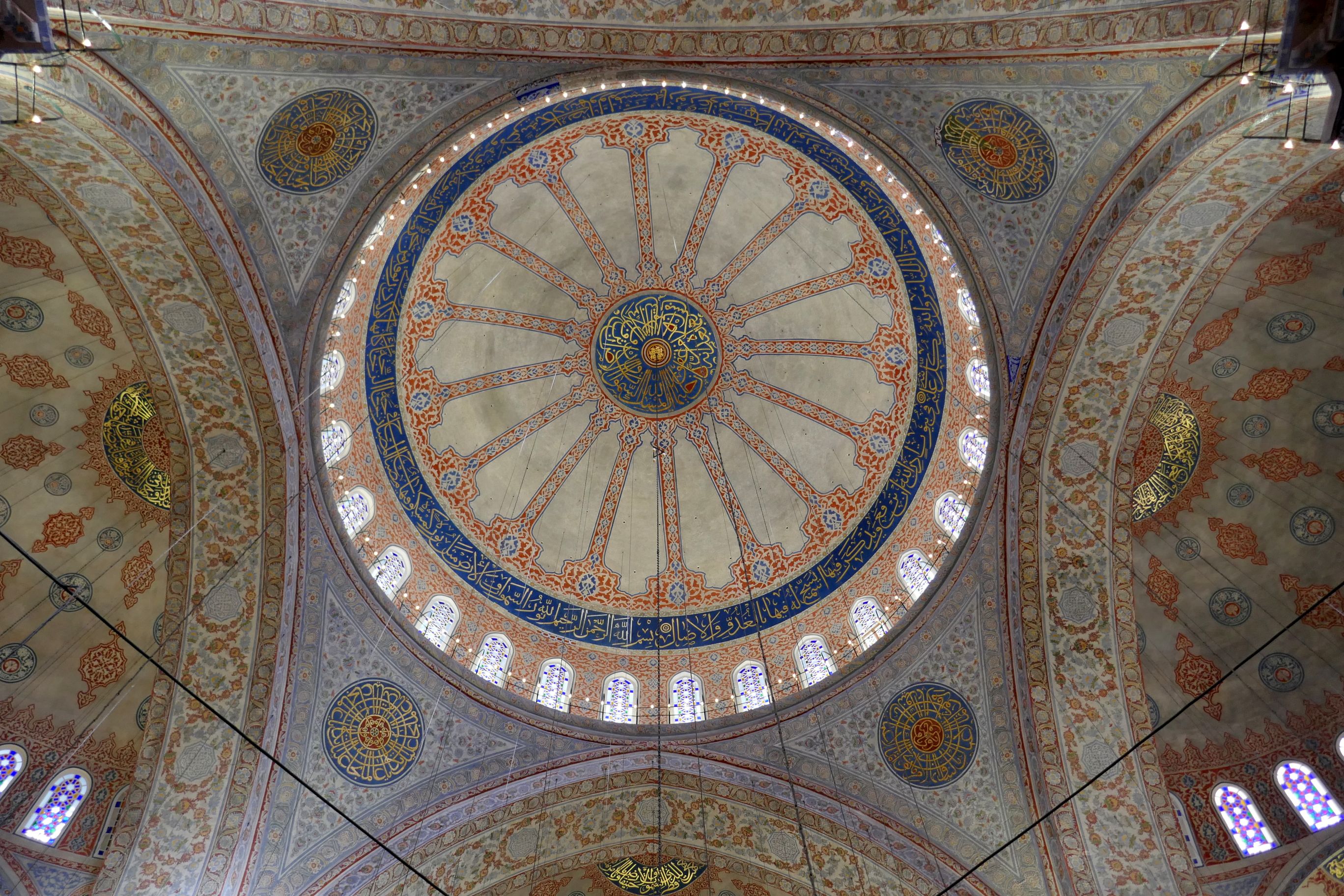
During our free time in Istanbul, Bruce and I explored the Sultan Ahmed Mosque, better known as the “Blue Mosque,” listed as a UNESCO World Heritage Site under the name “Historic Areas of Istanbul”. This is the mosque we saw lit up when we arrived at our hotel at night, and we were eager to see the mosque’s interior.
This Ottoman-era mosque, completed in 1617, is an iconic attraction in Istanbul because of its history and architecture. The central dome is surrounded by four semi-domes over the prayer hall, and it’s quite a sight to see when you step inside. The Iznik tile work itself makes this a must-see destination if you are ever in Turkey.
(For all photos, click on the image for a full screen view.)
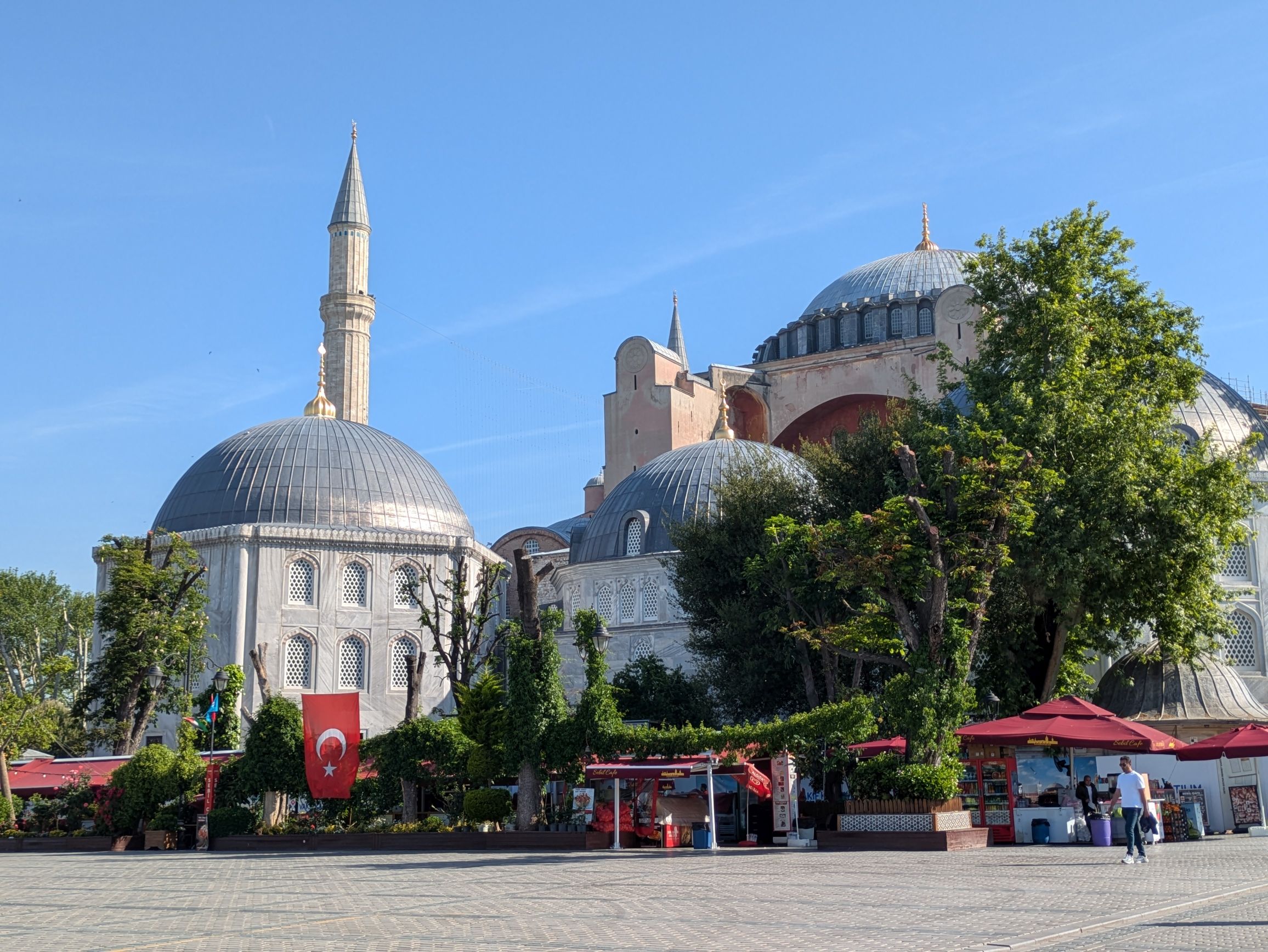
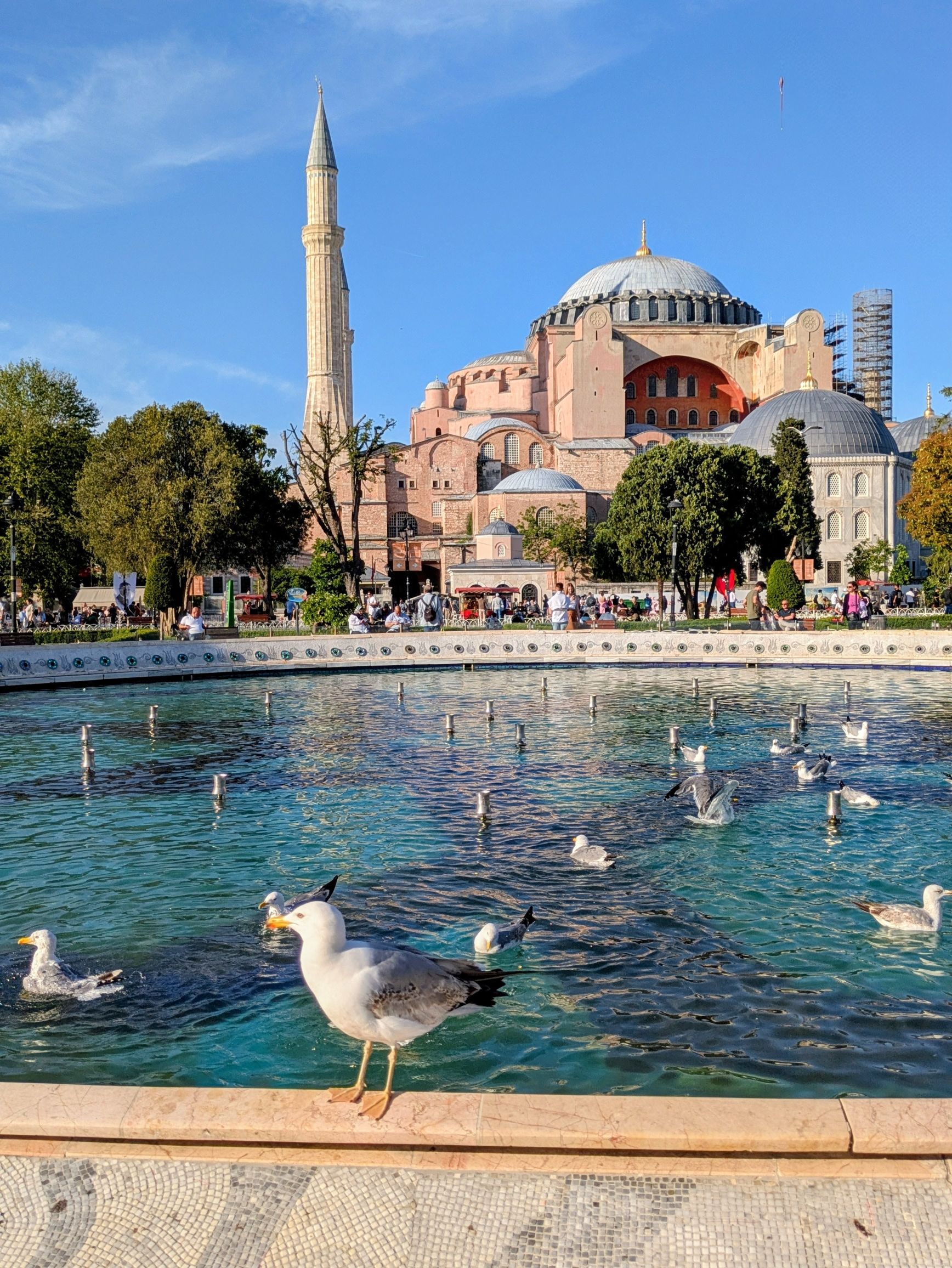
Nuri, our tour leader, led our group on guided tours of Hagia Sophia and Topkapi Palace during the following two days in the city. Although we didn’t tour the Hagia Sophia until our final day, it is located just across the Hippodrome (central square) from the Blue Mosque, so I will tell you about it first.
Nuri, our tour leader
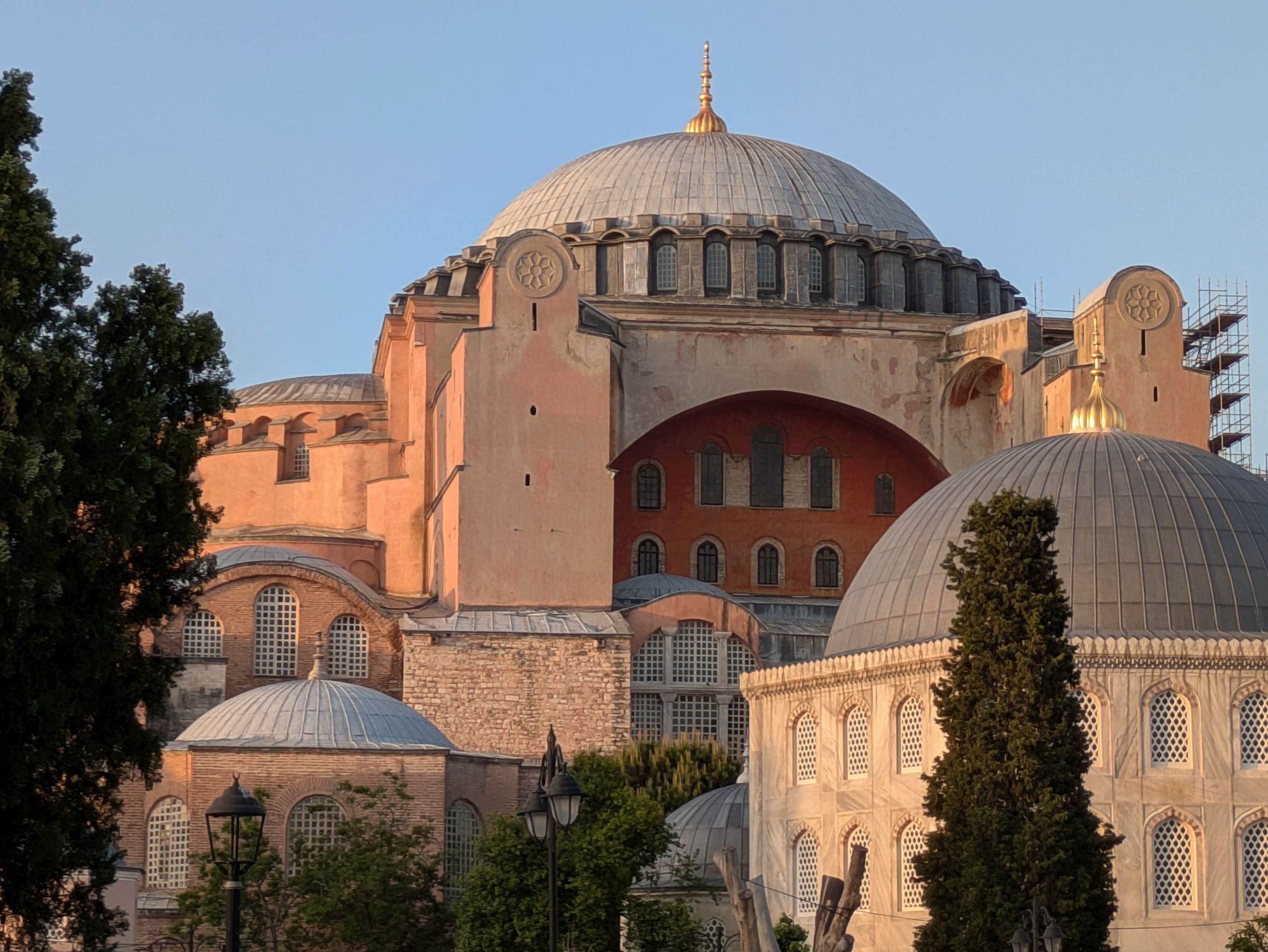
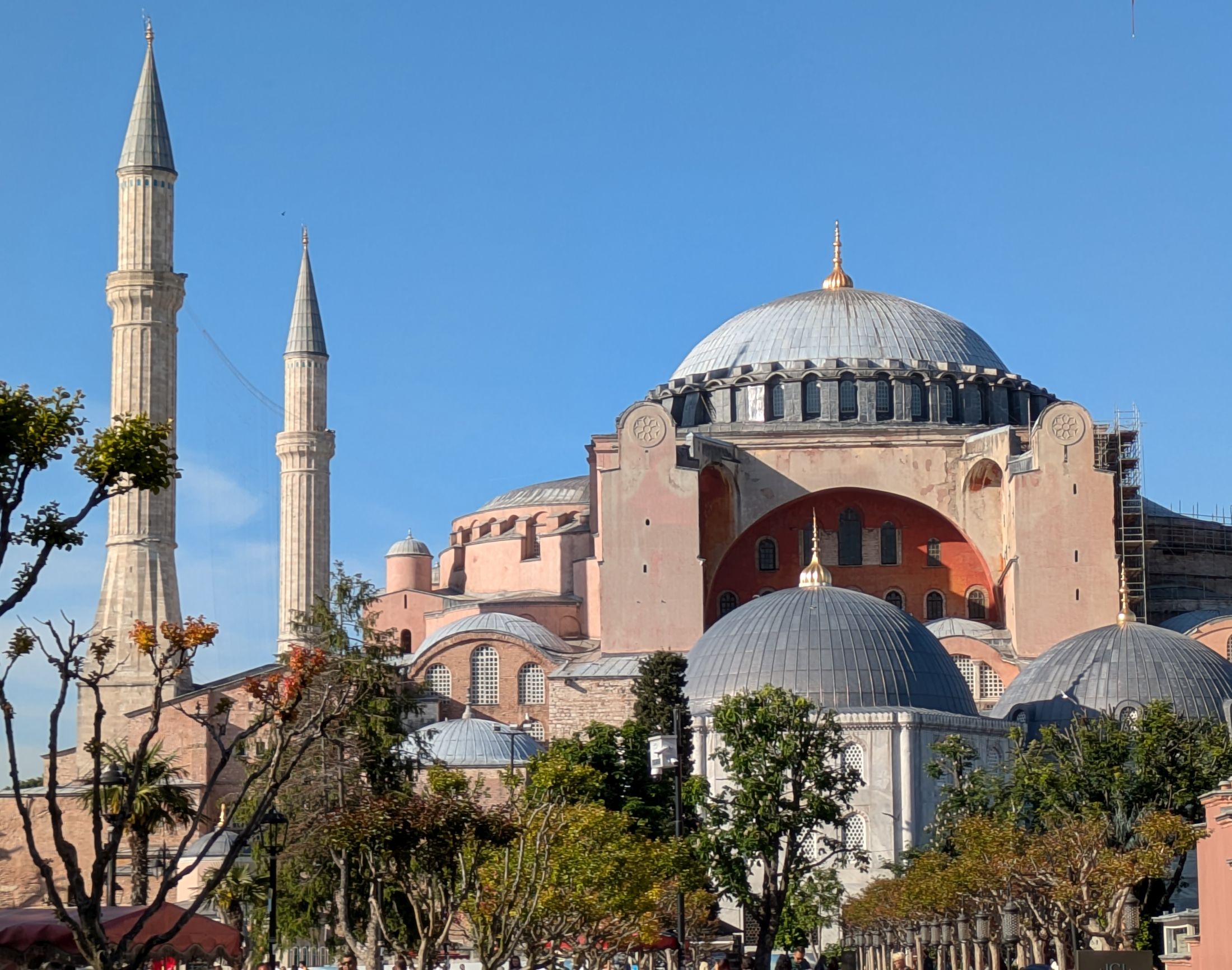
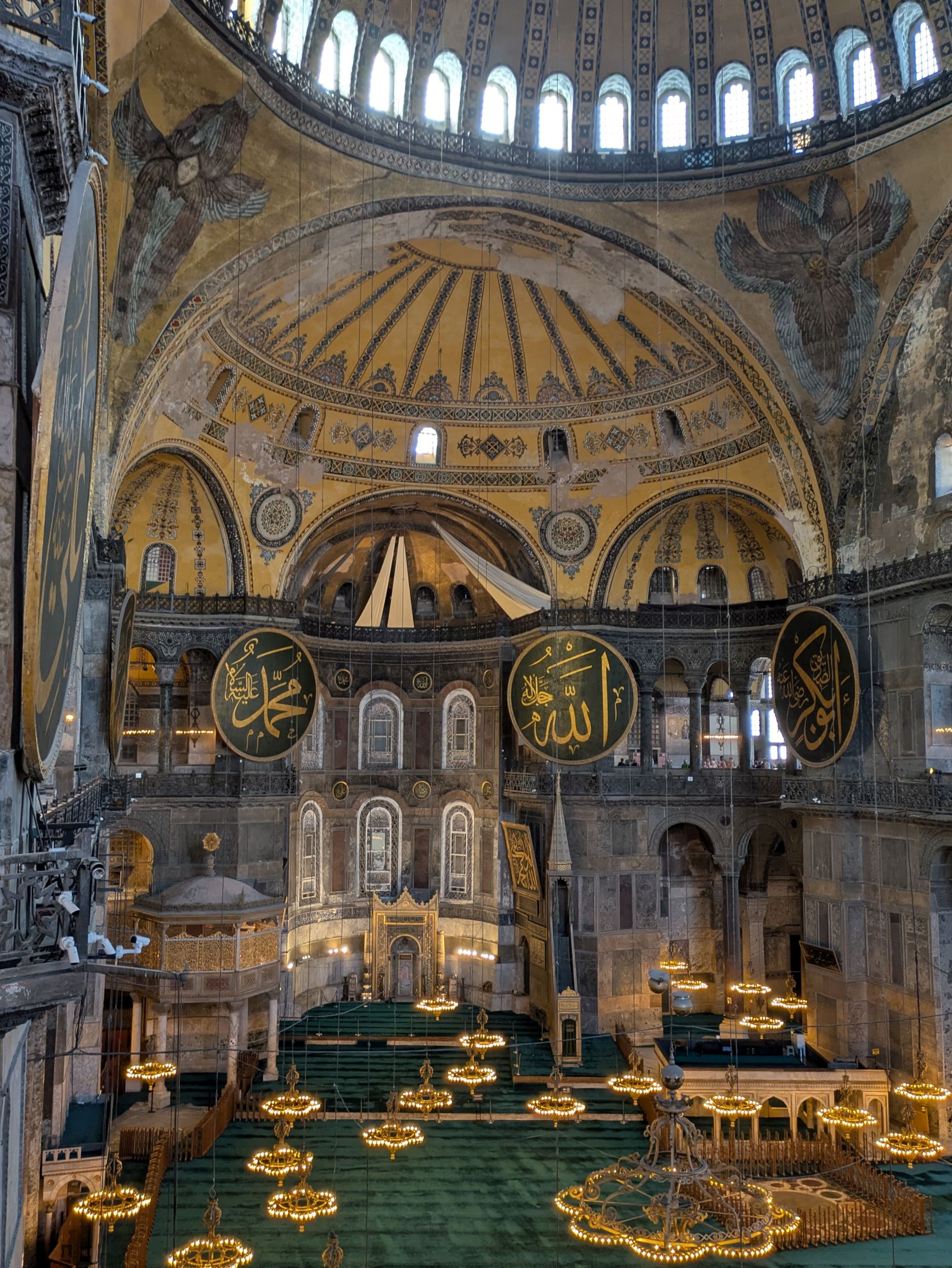
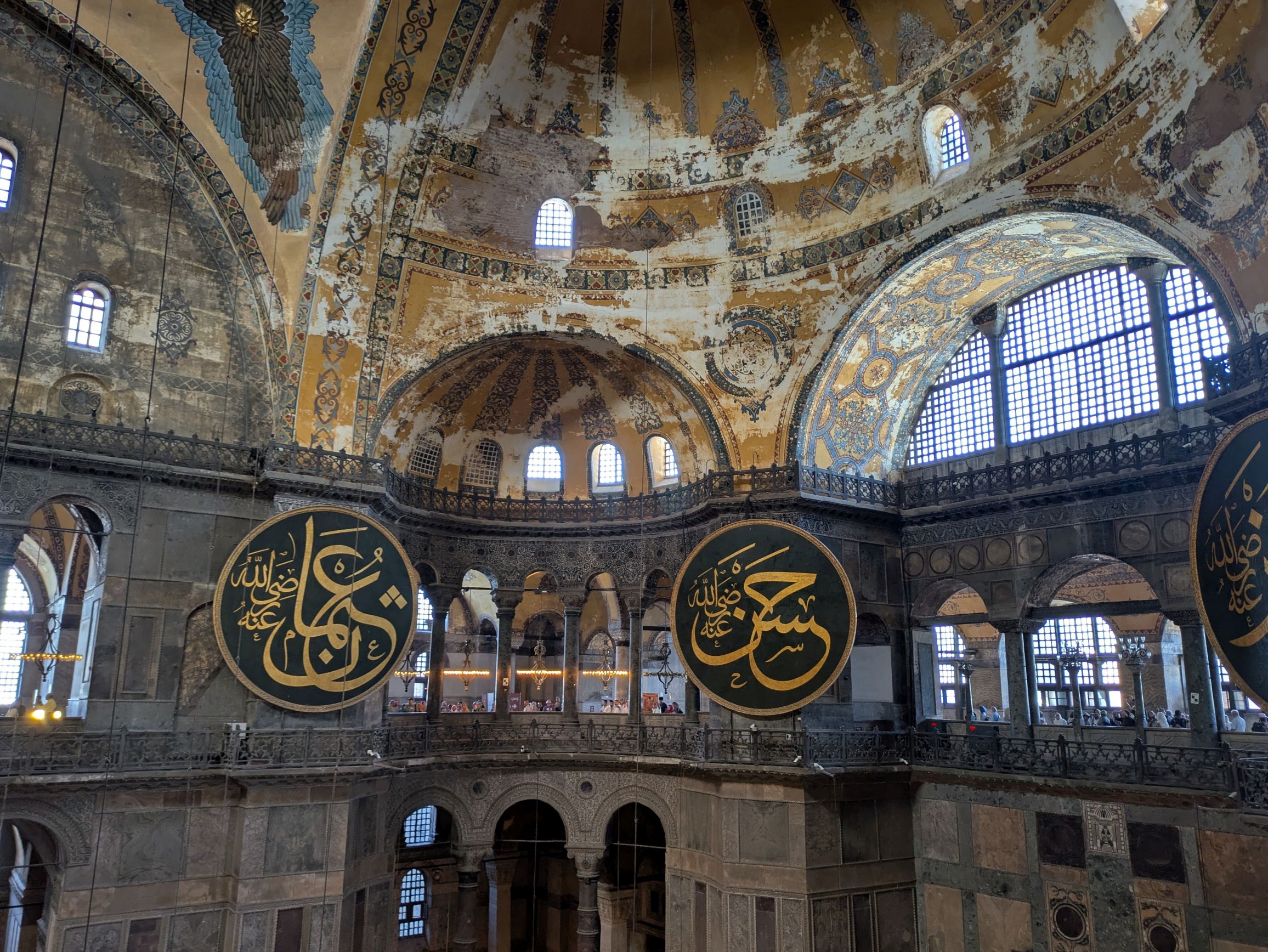
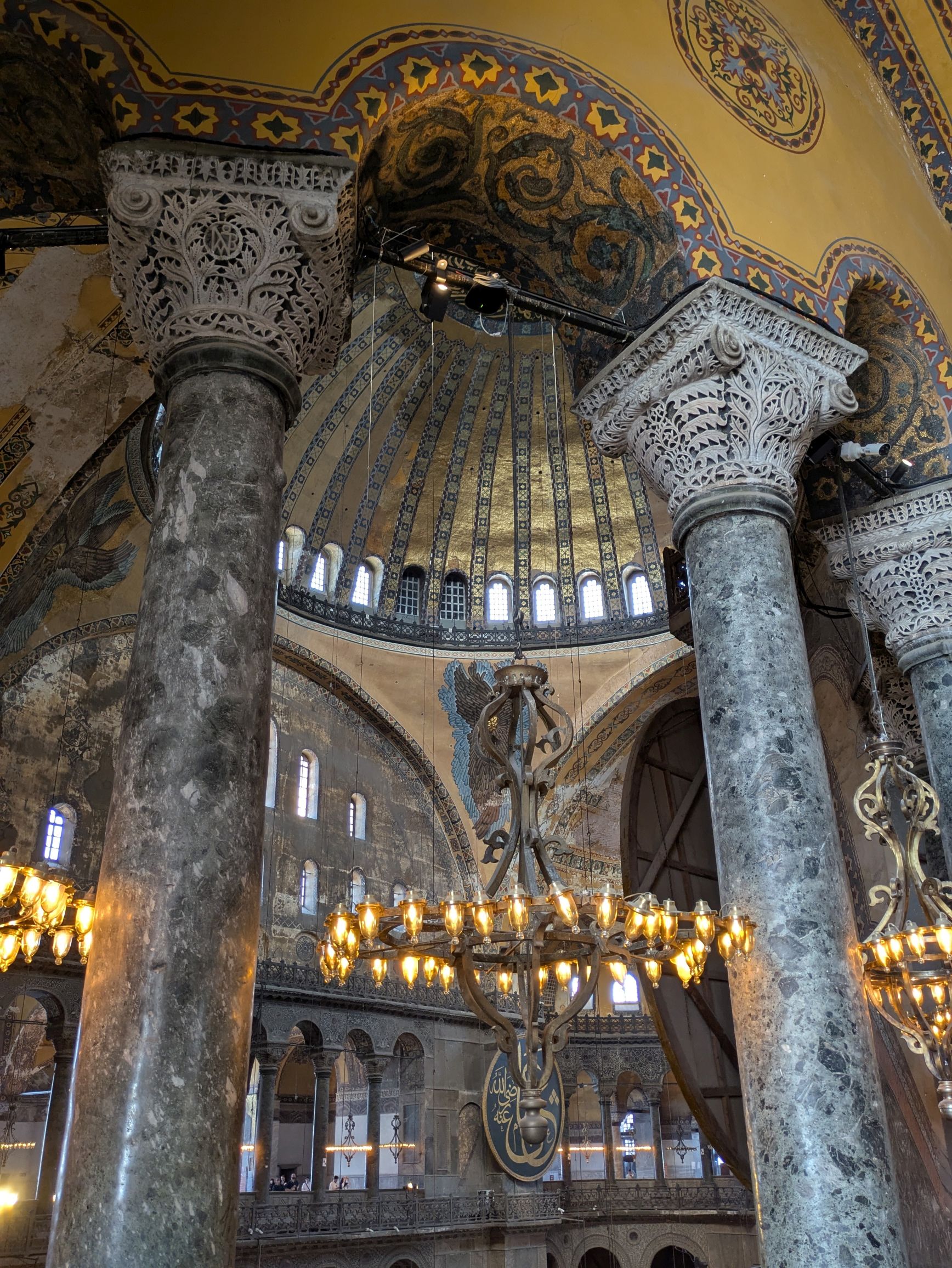
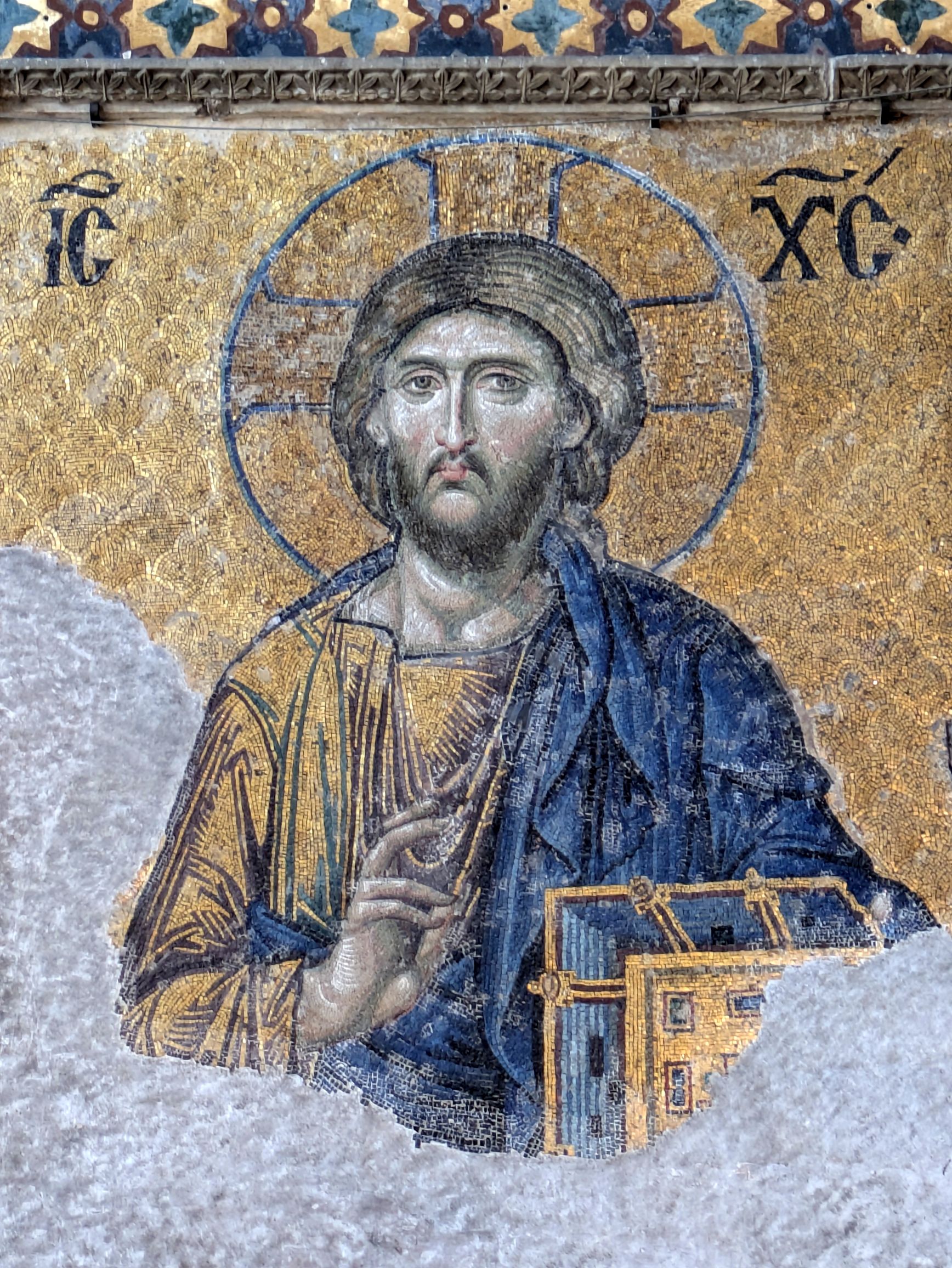
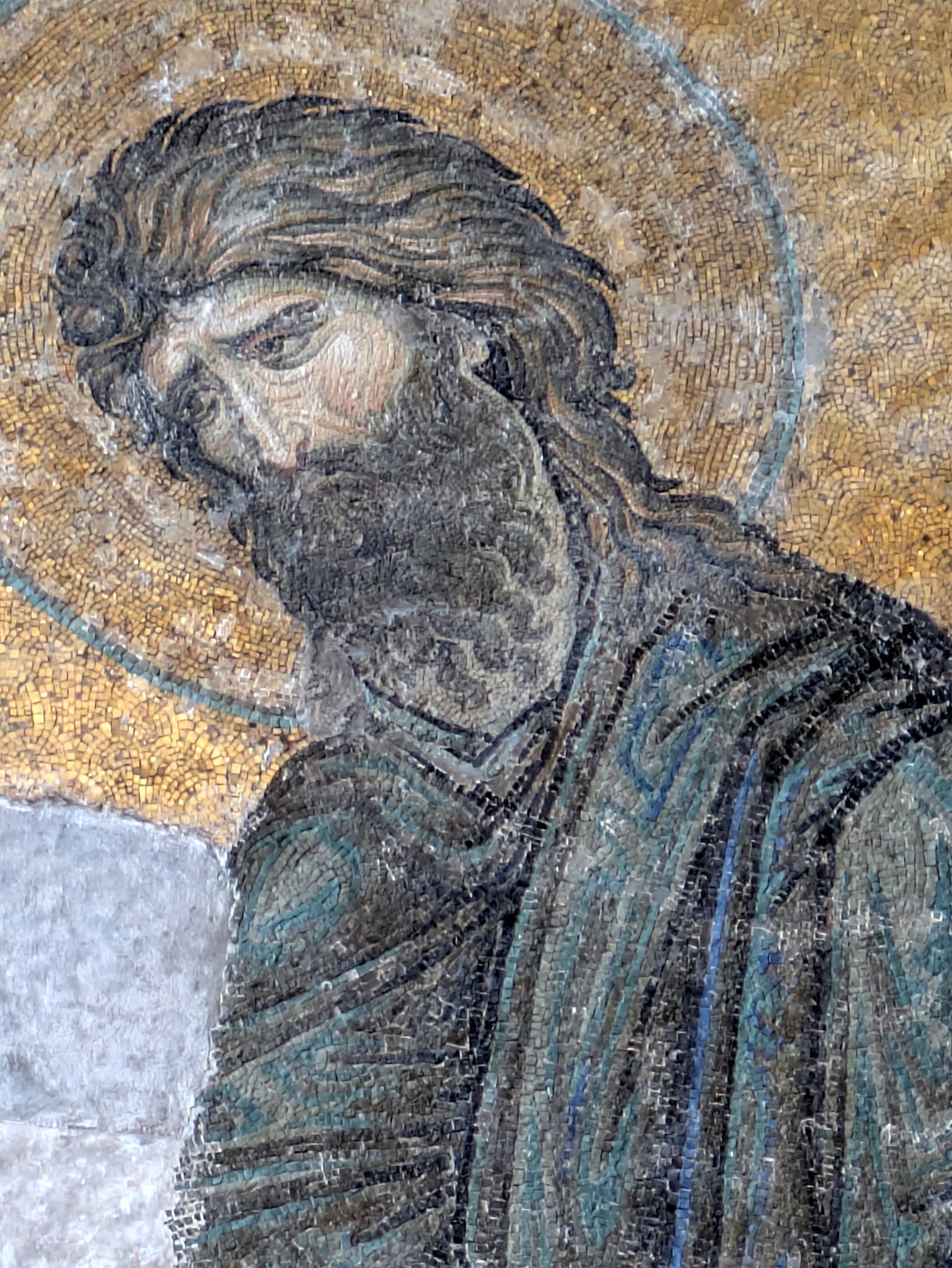
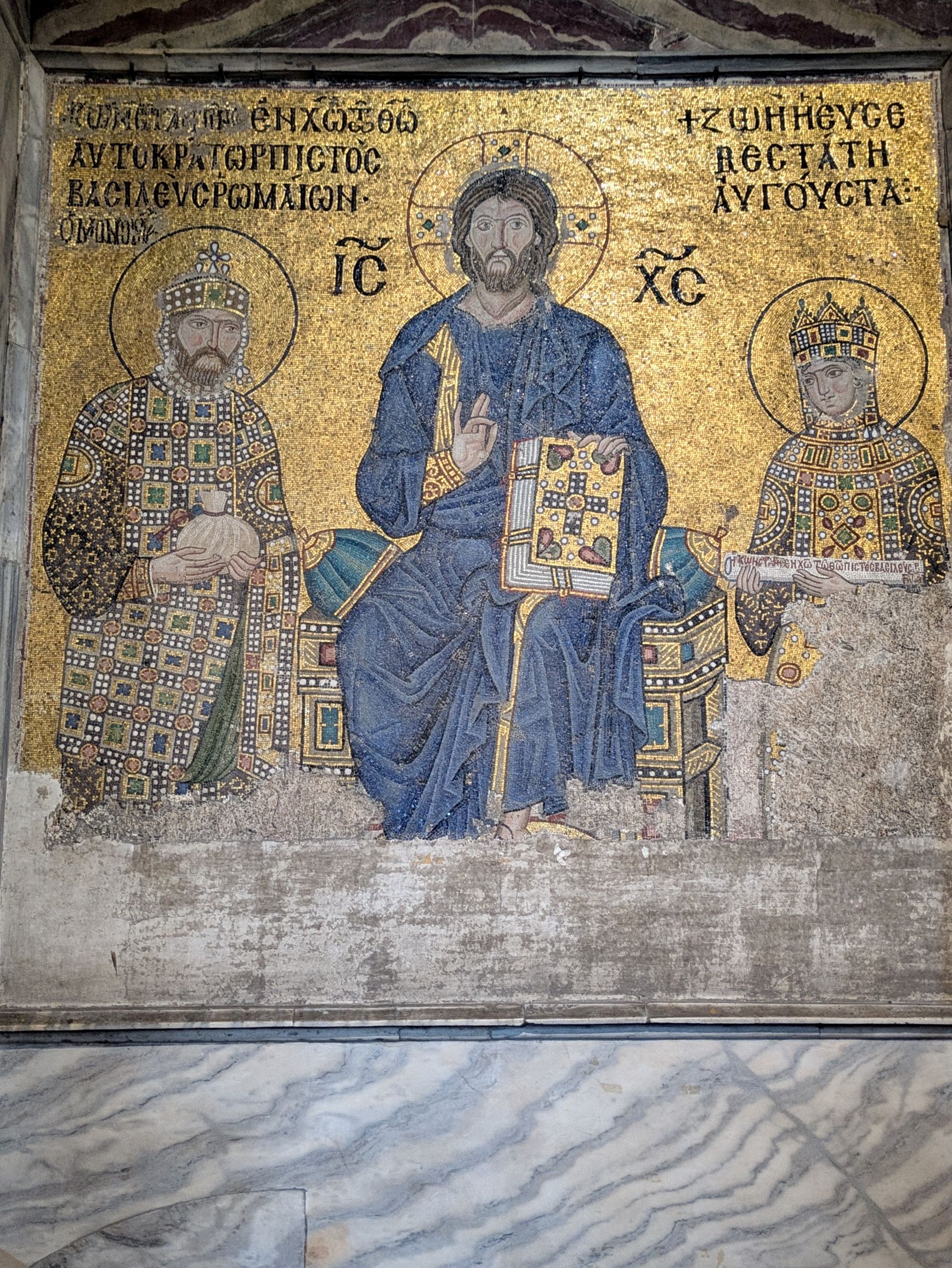
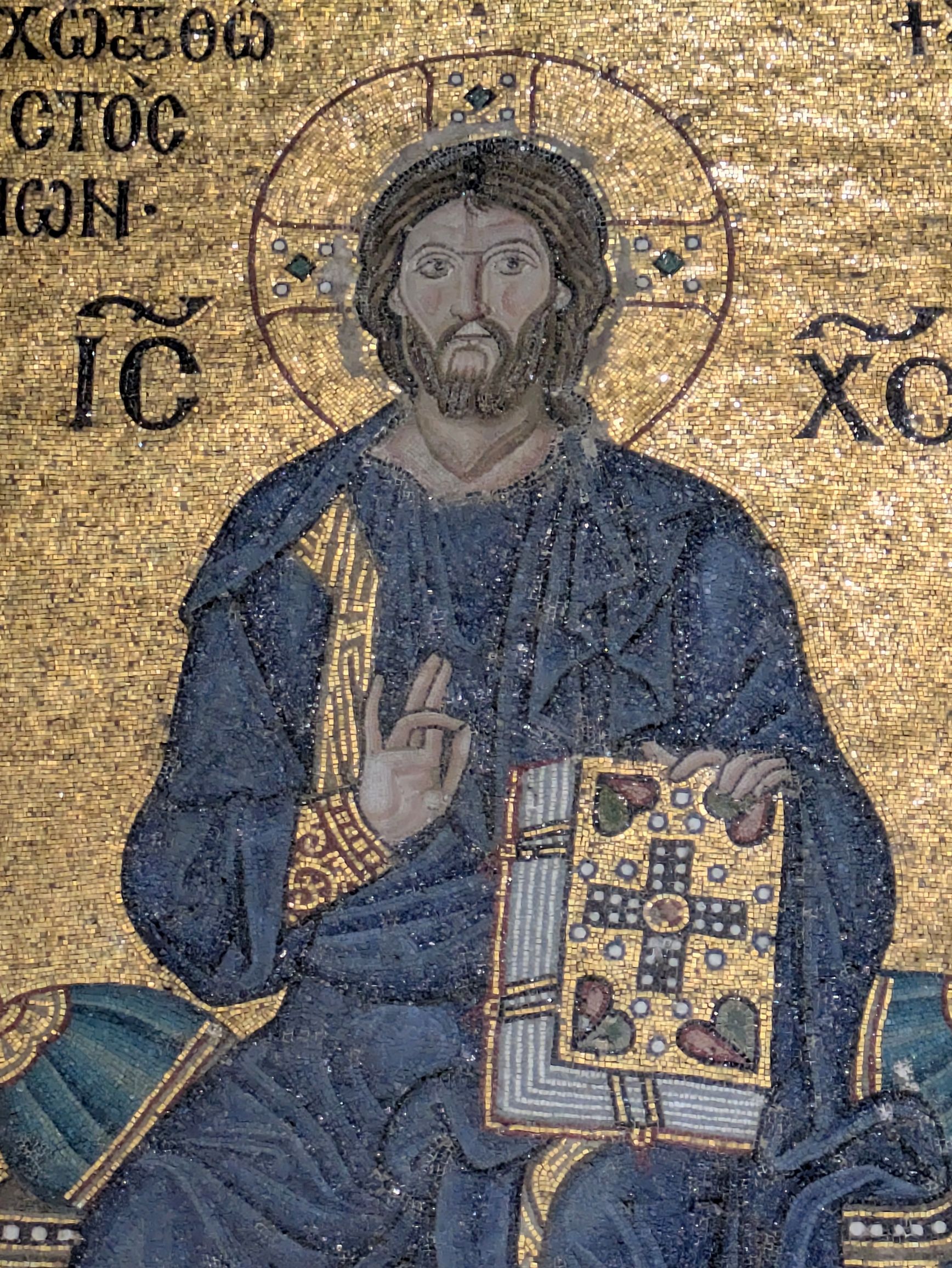
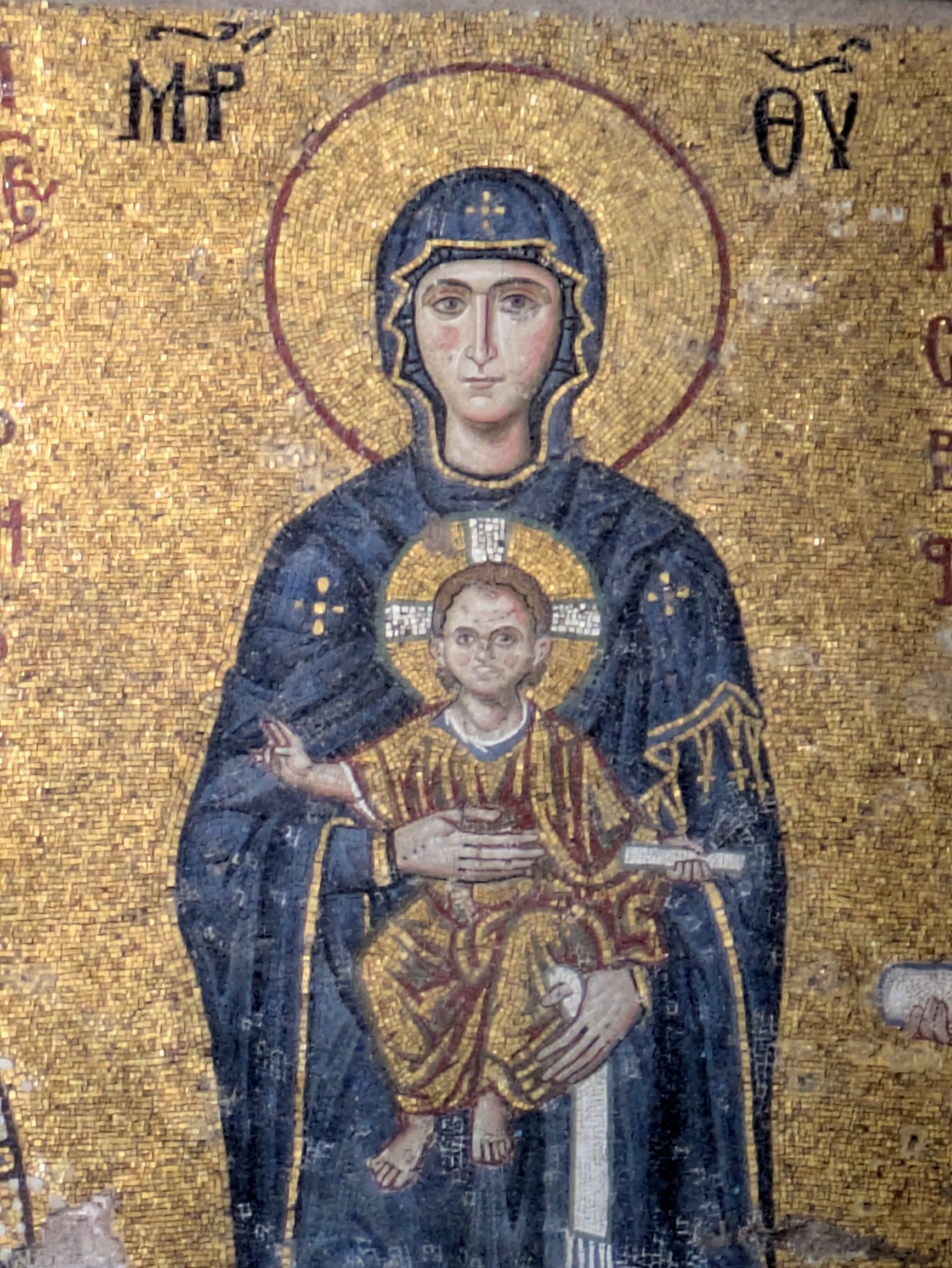
Hagia Sophia Grand Mosque (also a UNESCO World Heritage Site) is considered the epitome of Byzantine Architecture. The first building of the complex was built in AD 537, and until the fall of Constantinople in 1453, Hagia Sophia served as a cathedral. It was a mosque until 1935 when it became a museum. In 2020, it was redesignated as a mosque, but in 2024, the upper floor of the mosque began serving as a museum once again.
As we toured the interior, we were in awe of the architecture, mosaics, marble pillars and floors as we learned about the history—far too detailed and complicated to write about here.
Mosques have strict rules about the attire permitted to be worn by visitors, but Hagia Sophia’s guards had an interesting way of determining who was permitted in from our group without purchasing a paper covering and who was not. Bruce’s shorts were the same length as the other “Bruce” in our group, but he was permitted in without the fashionable coverings the others got to wear. I brought a scarf for my head, so I was good to go.
The same day we toured Hagia Sophia, we visited the spice bazaar and took a cruise on the Bosphorus Strait. More about that in my next post.
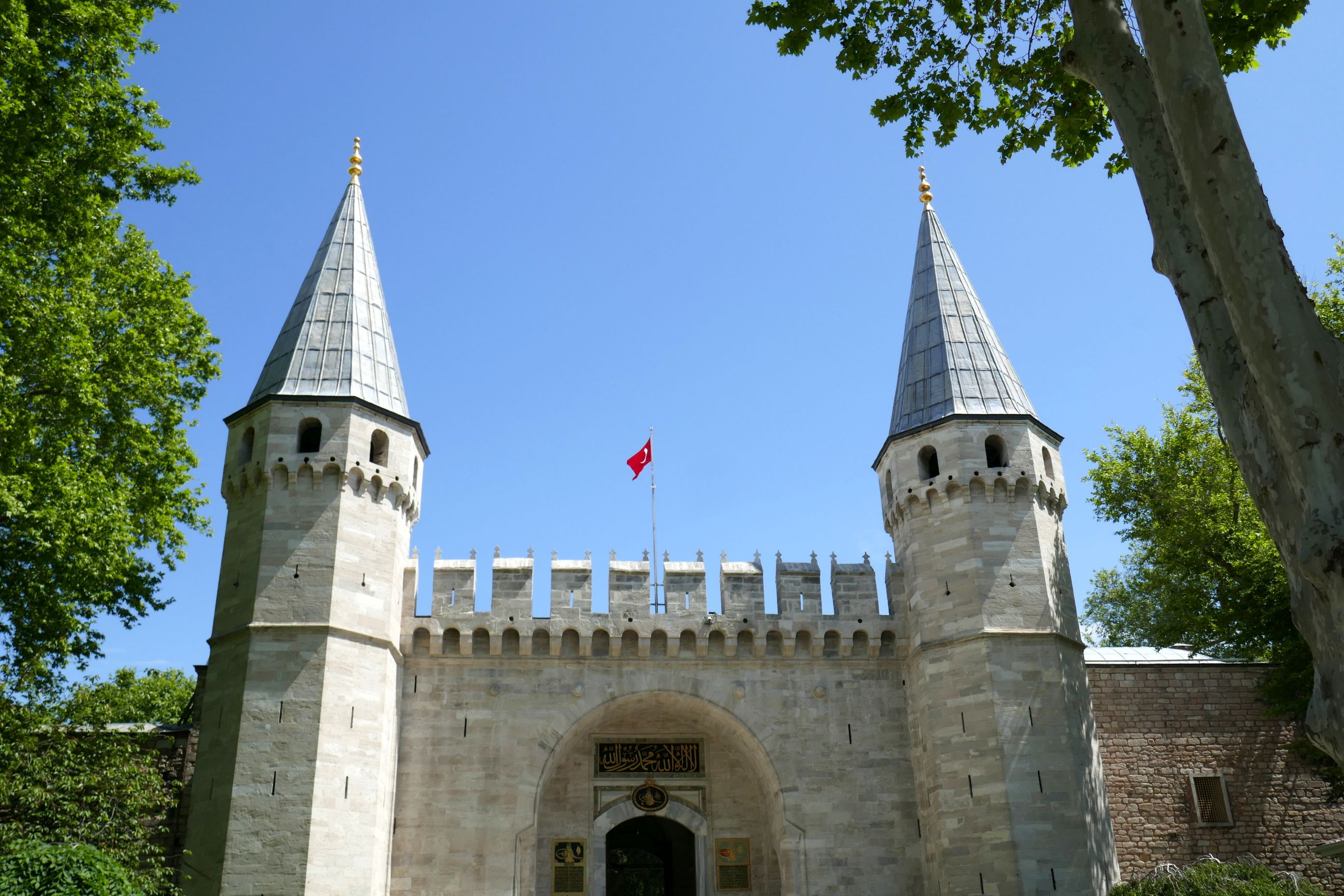
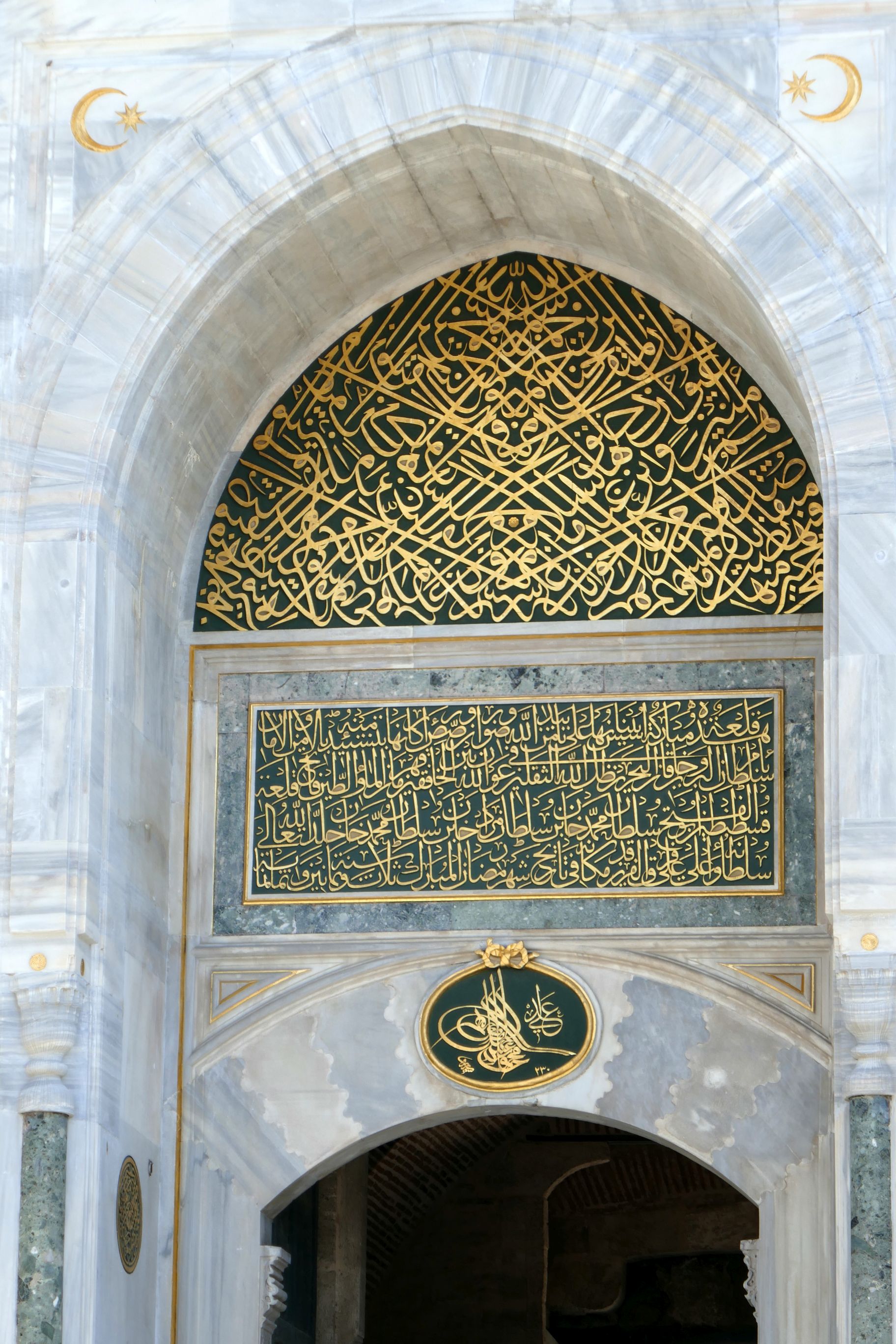
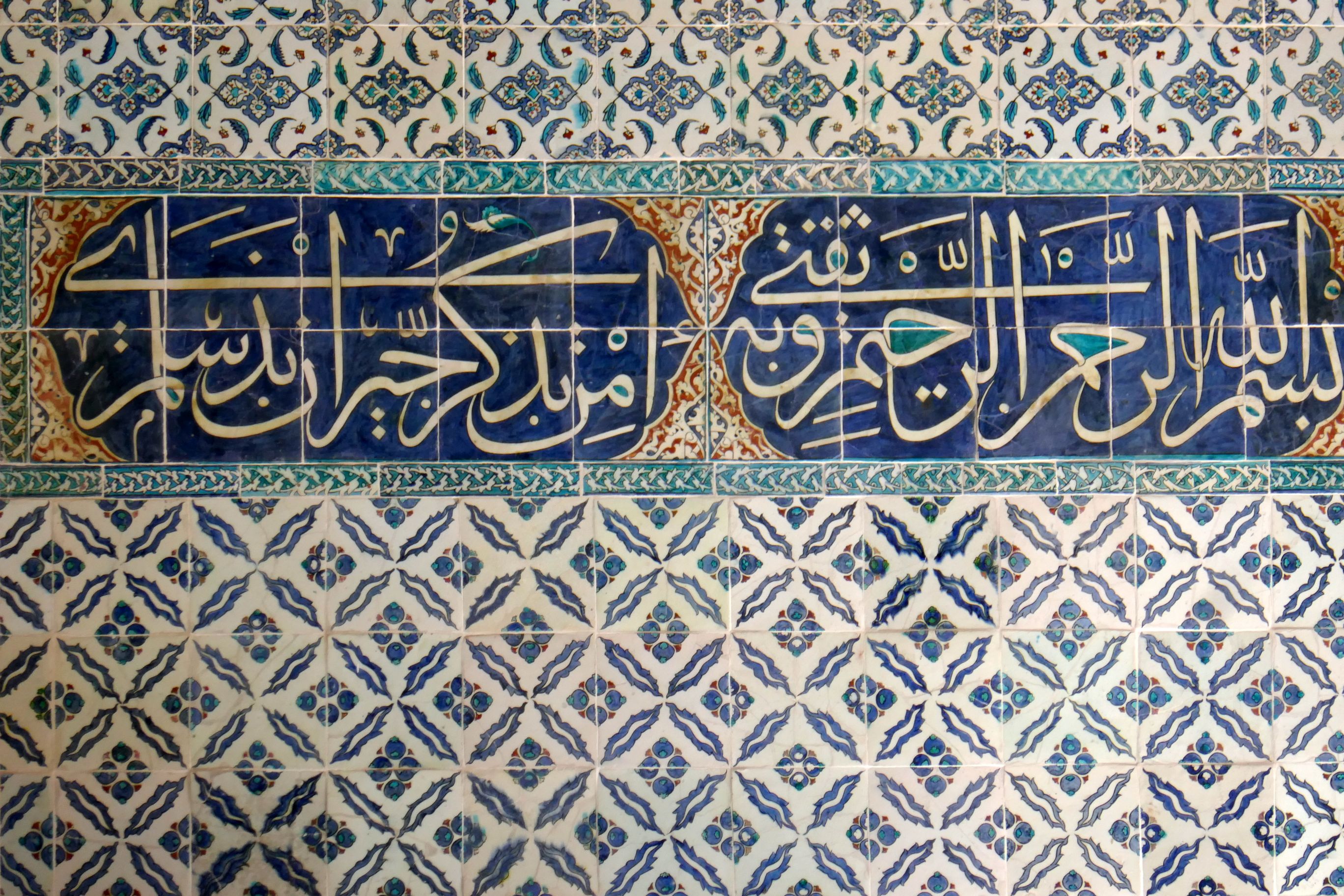
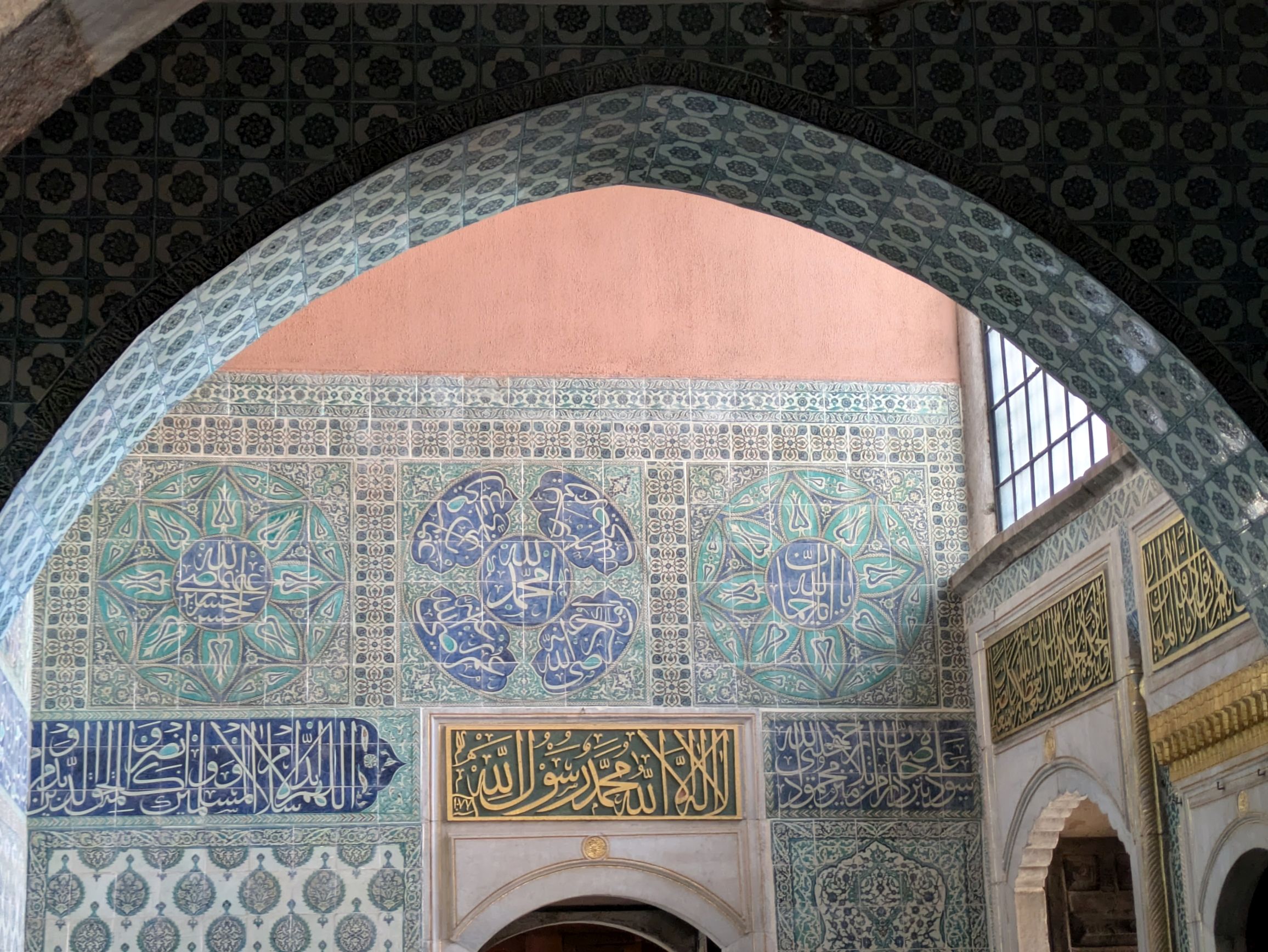
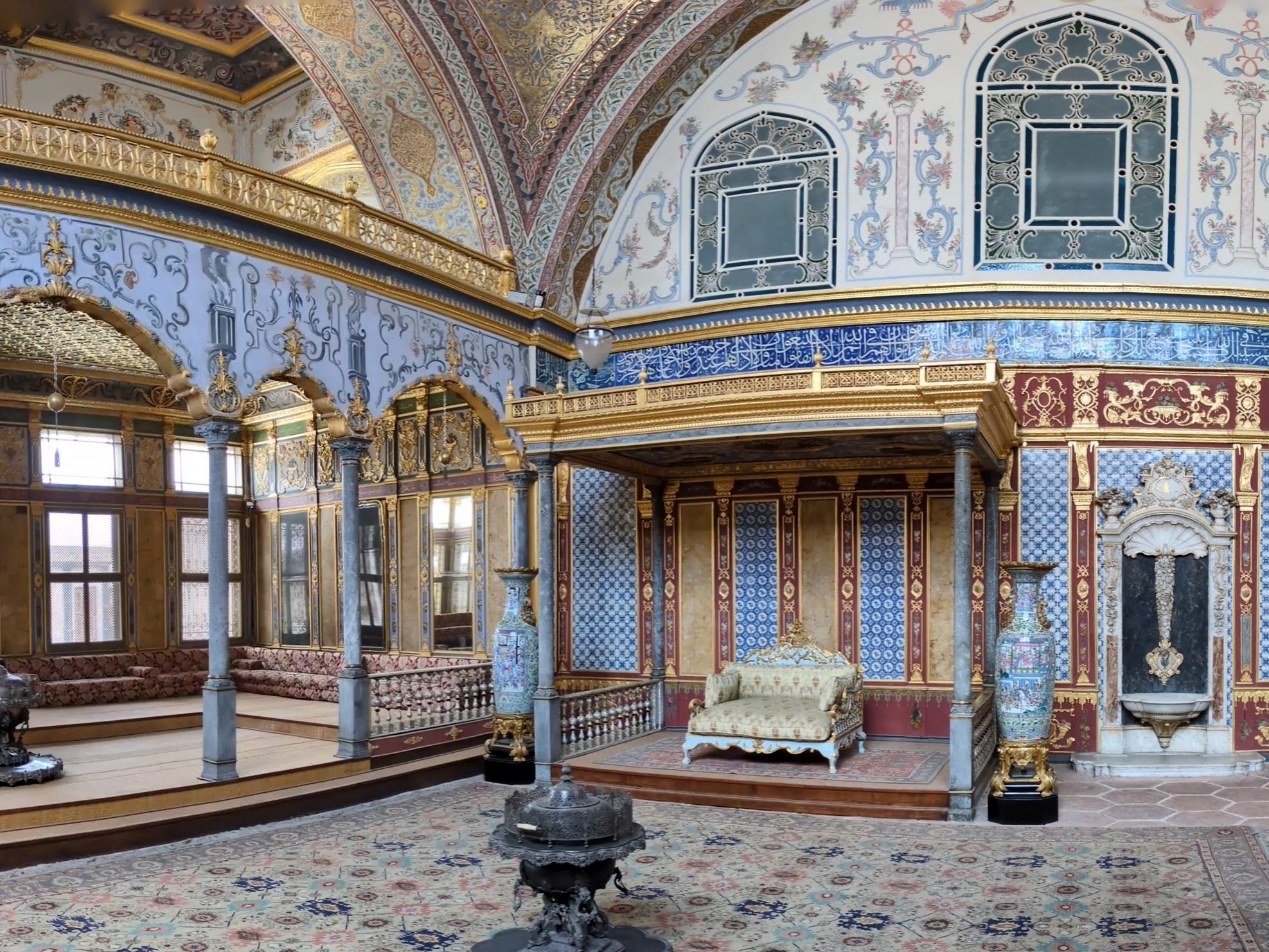
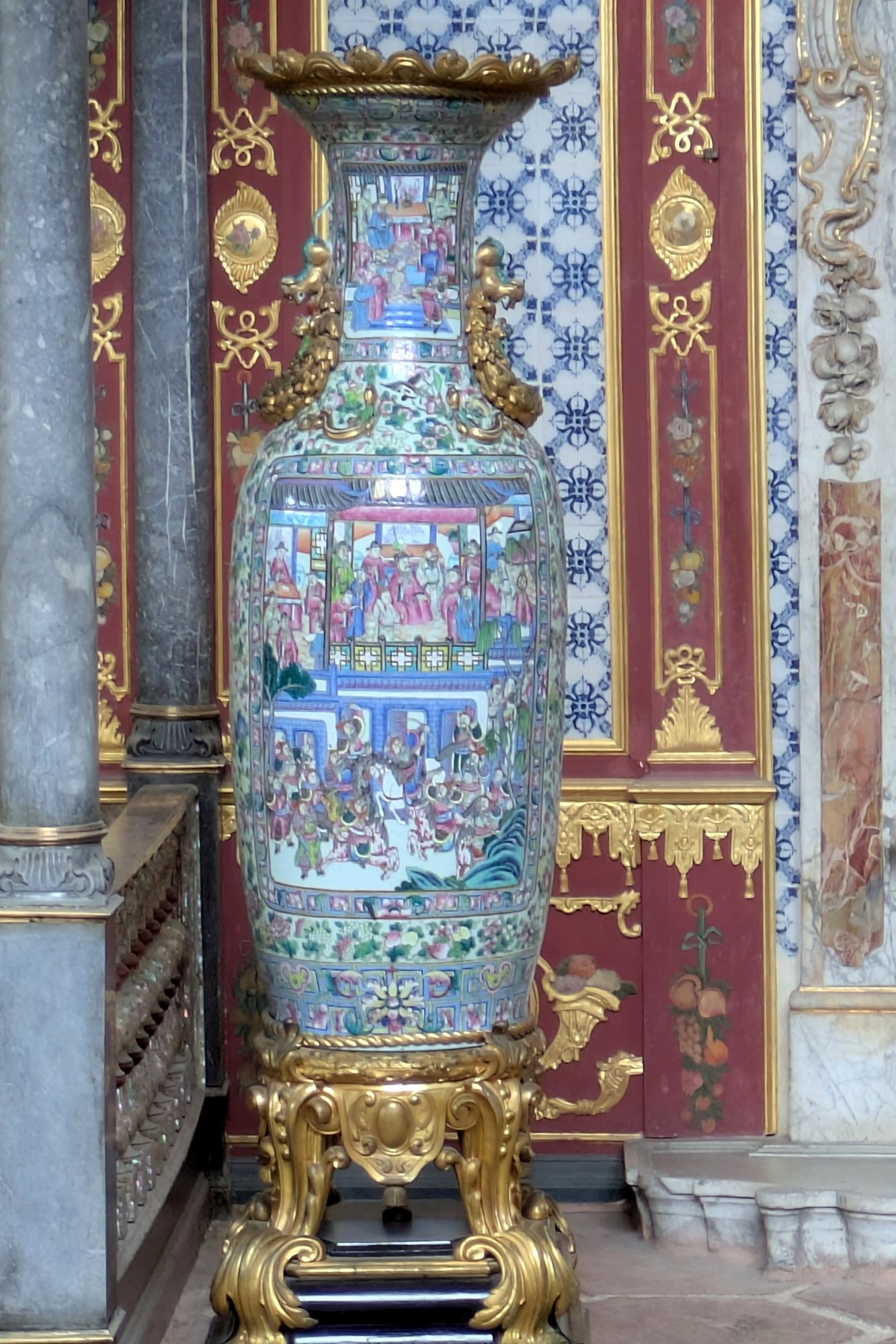
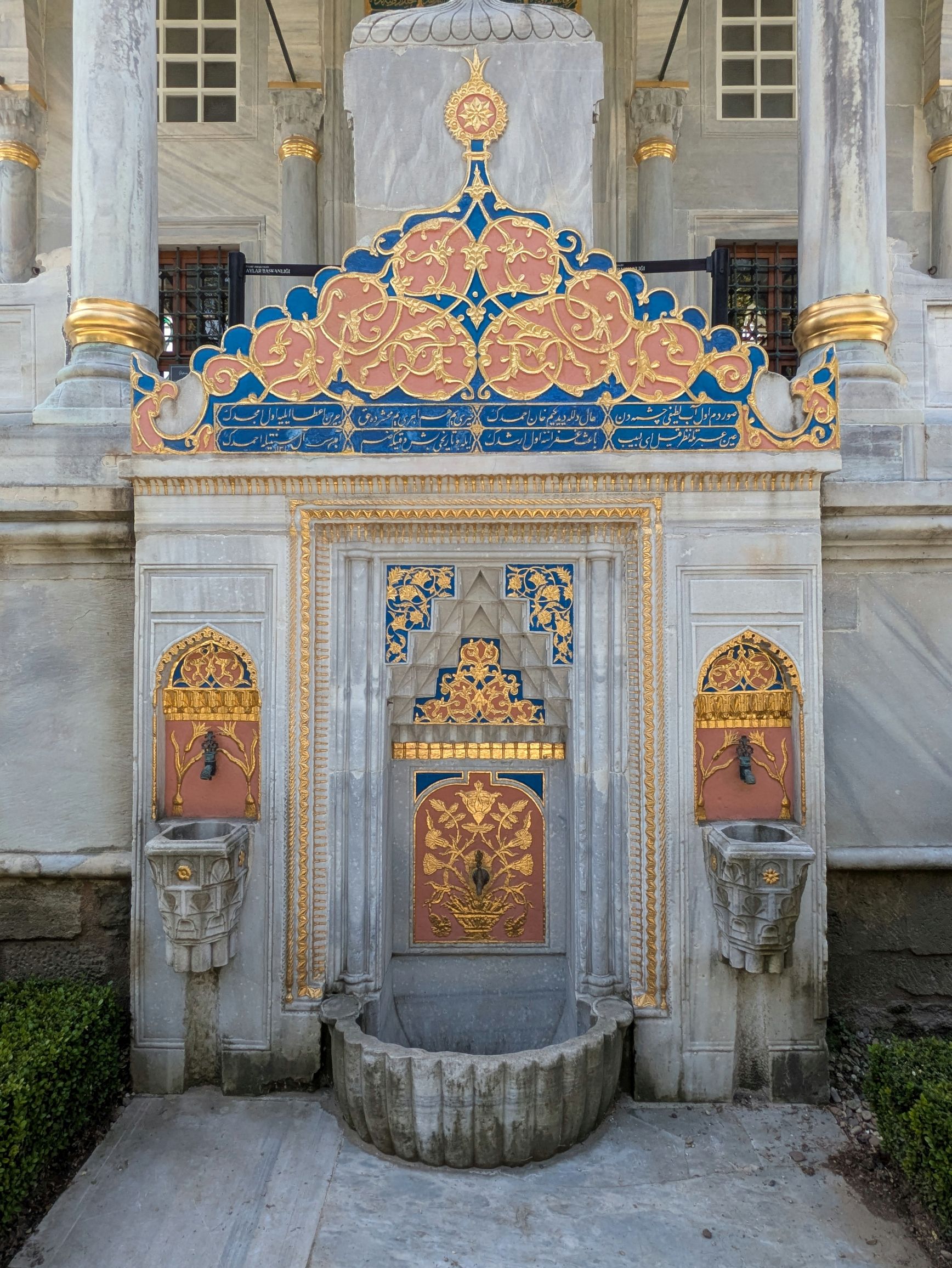
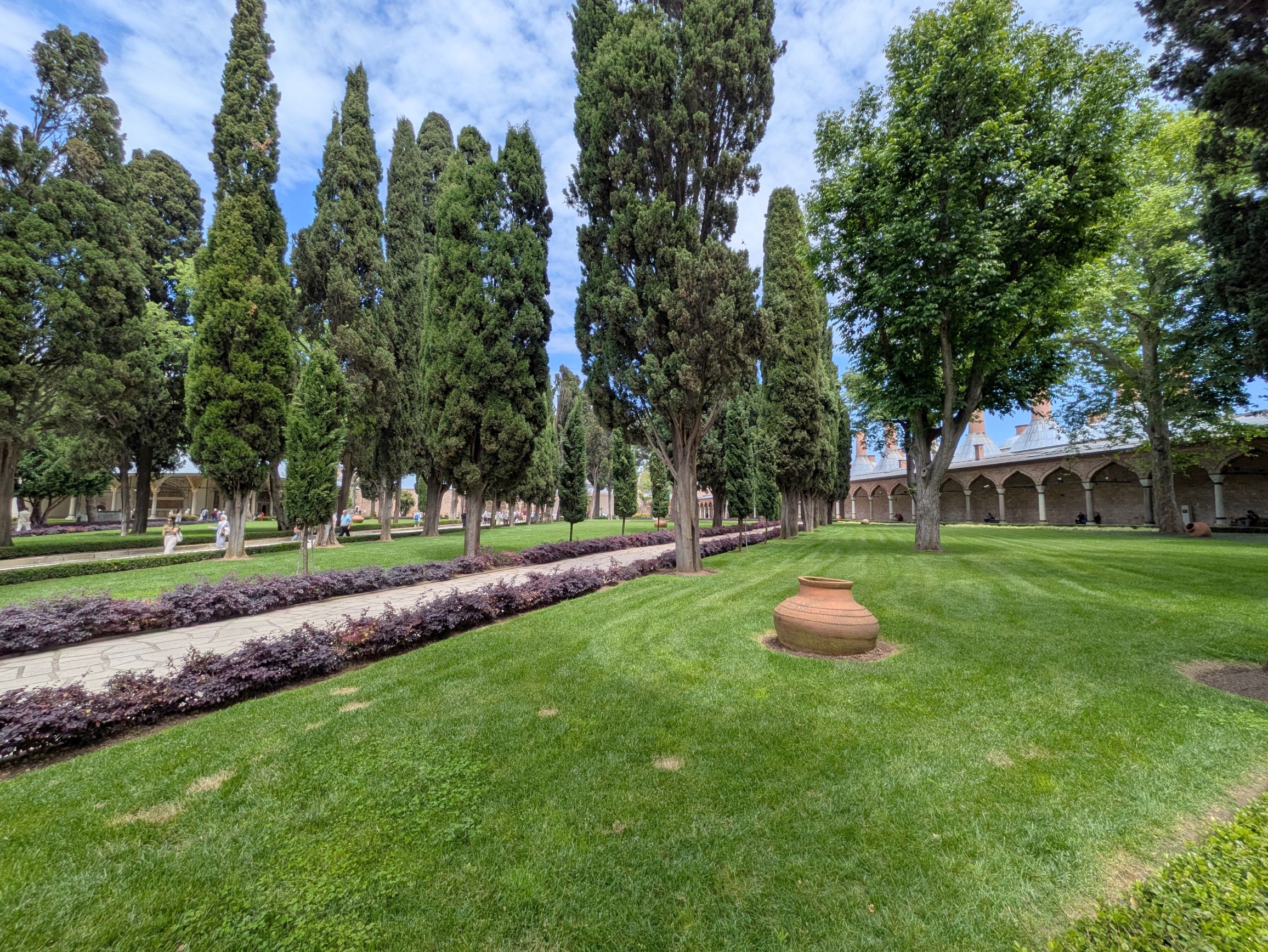
On our first day with the group, we toured Topkapi Palace, which served as the administrative center of the Ottoman Empire and was home to its sultans. Six years after the conquest of Constantinople, Mehmed the Conquerer ordered the place to be built. For several centuries, the complex expanded, but a AD 509 earthquake and 1665 fire required the palace to be renovated. Fast-forward to 2025, and the complex now consists of four main courtyards, many smaller buildings, and is another UNESCO World Heritage Site. Again, we were in awe!
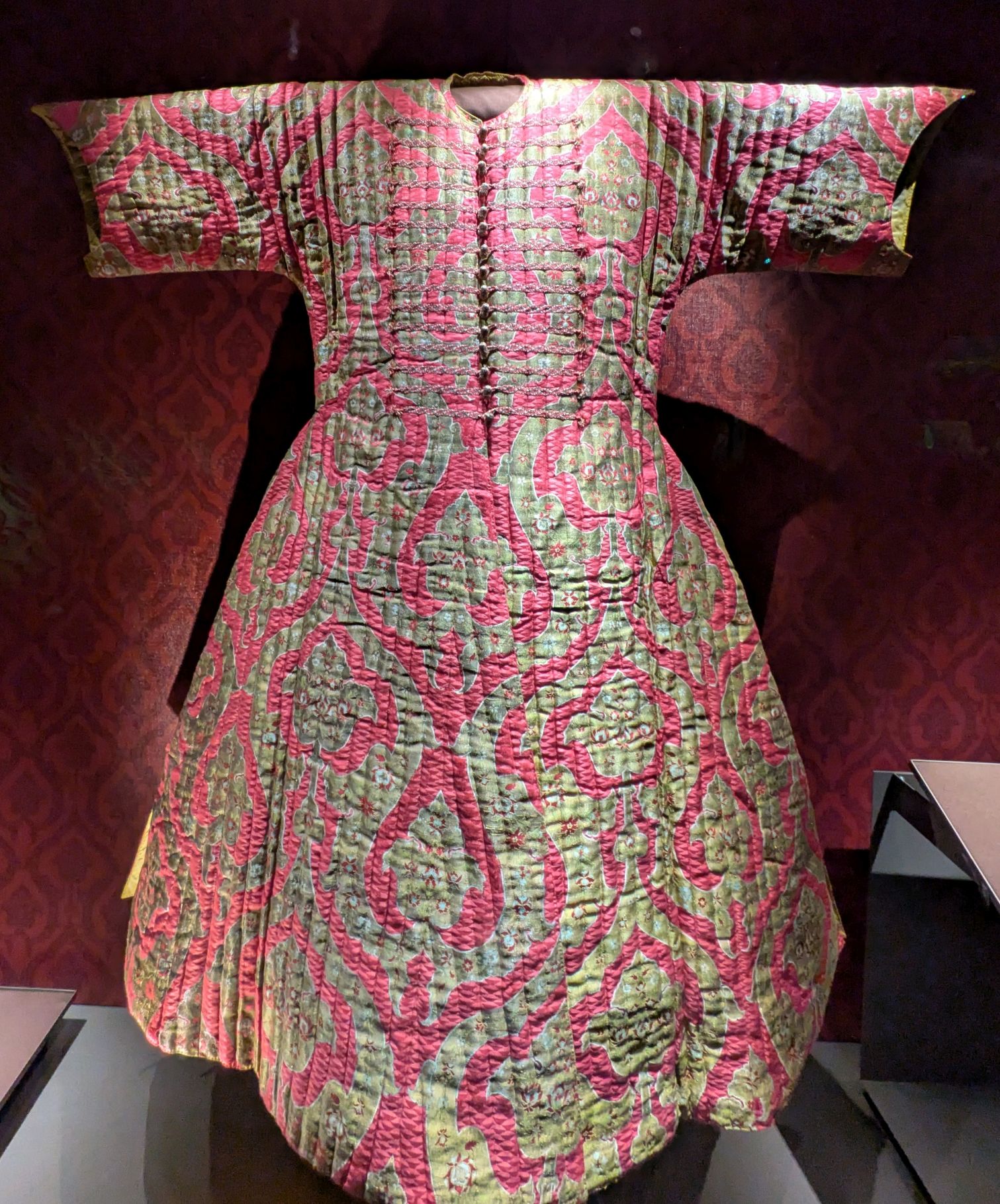
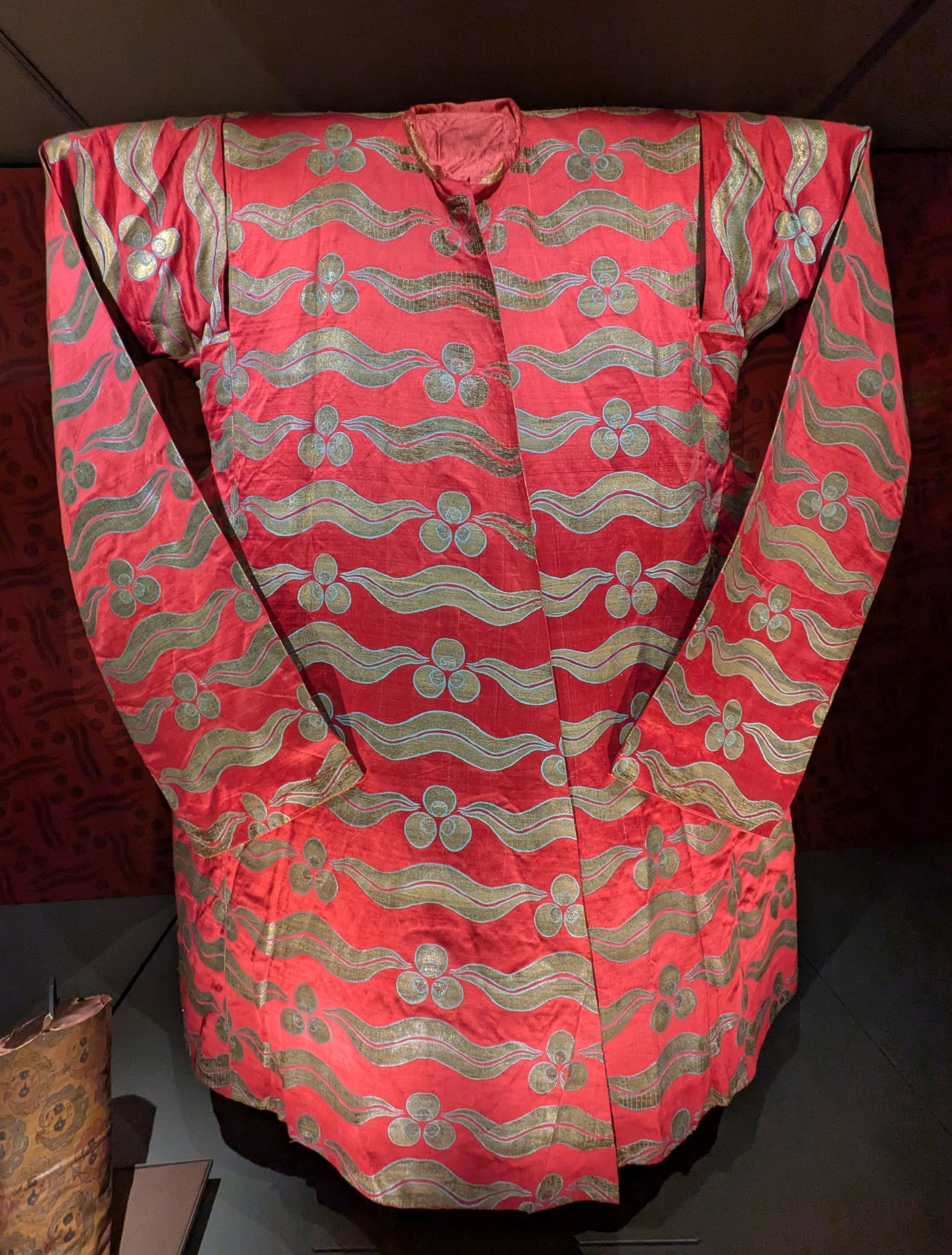
The following are all from the 1600’s and on display in the museum of the palace:
Coming up next: TURKIYE #4: THE BEAUTIFUL BOSPHORUS STRAIT & MORE ABOUT ISTANBUL
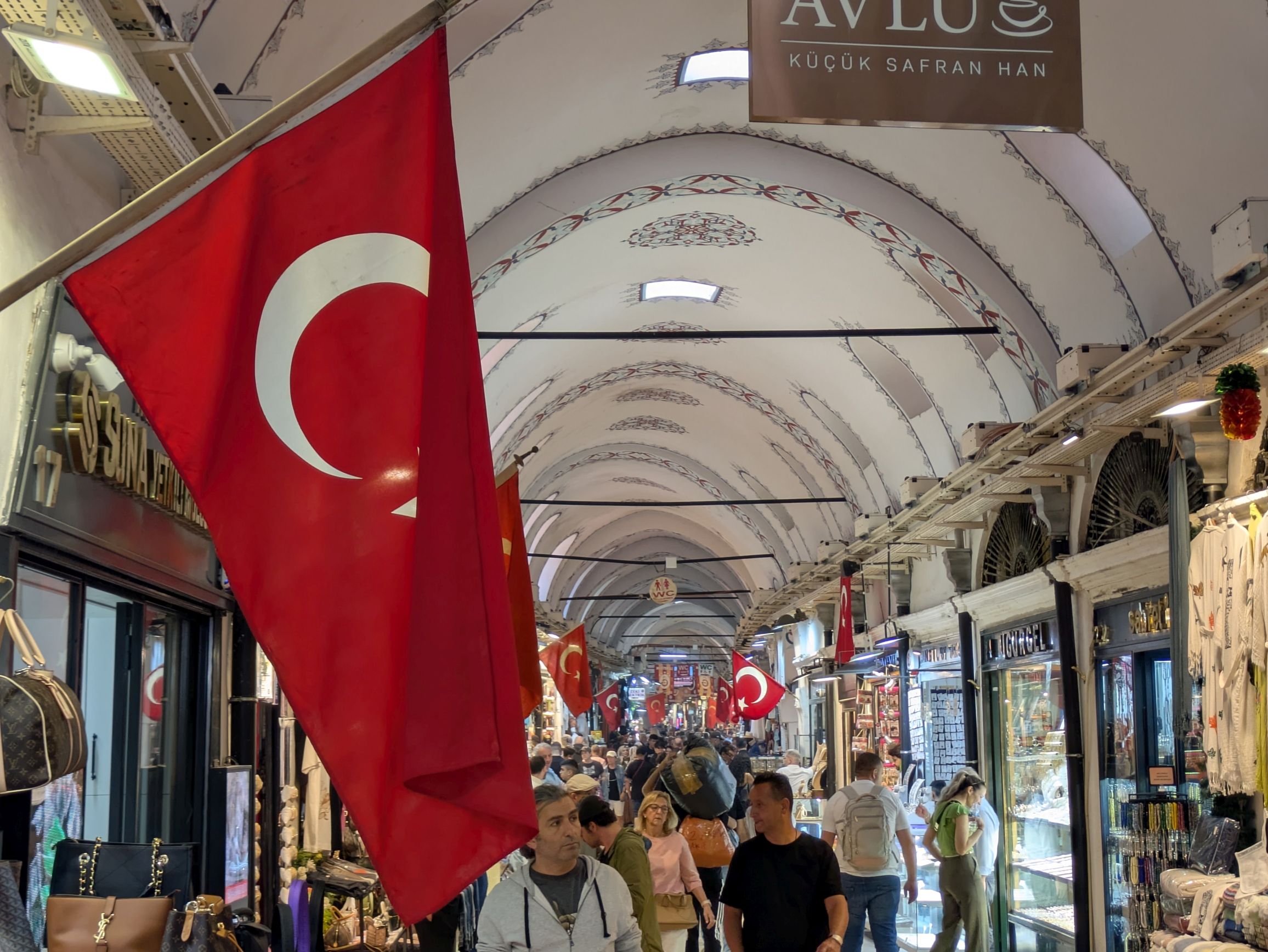
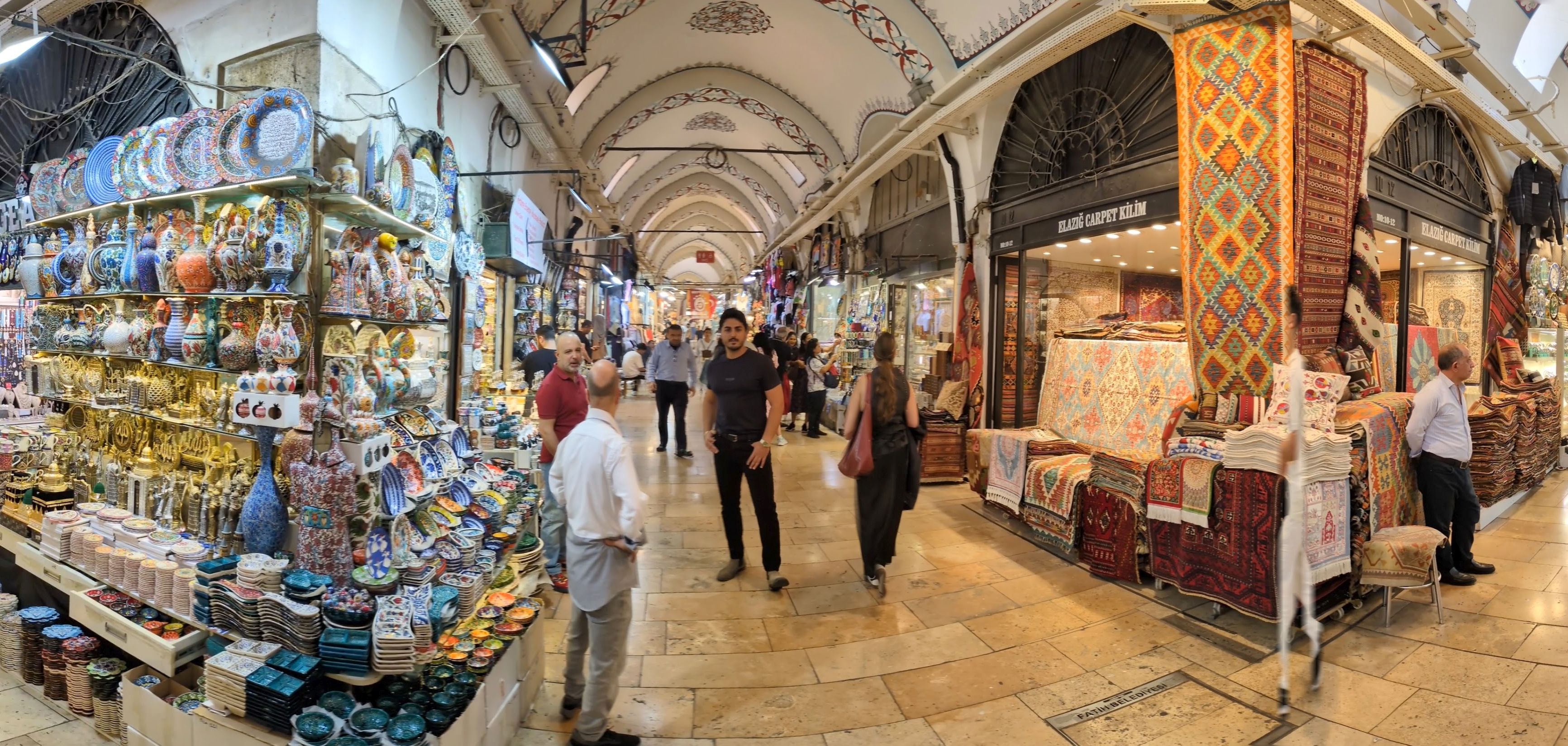
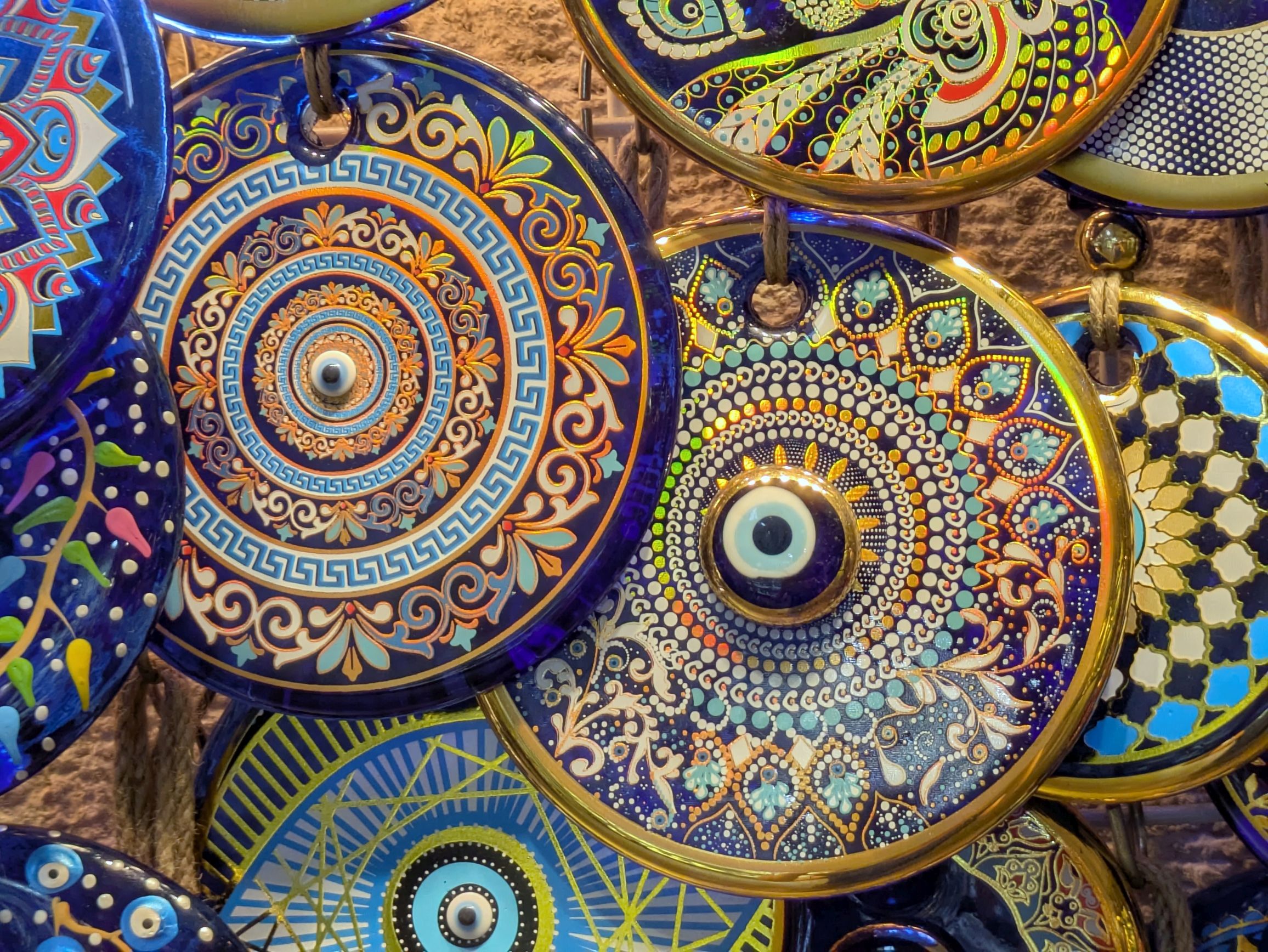
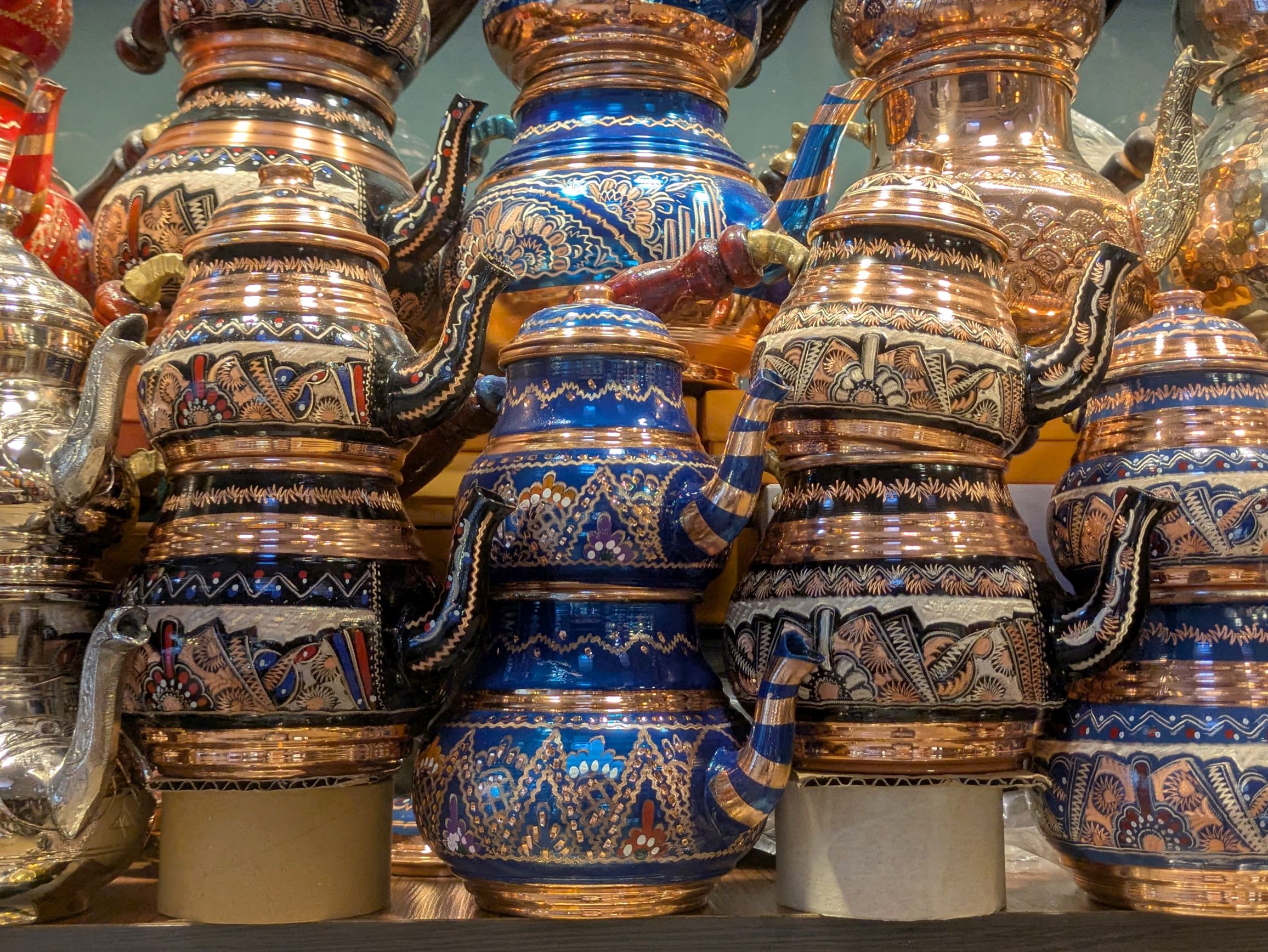
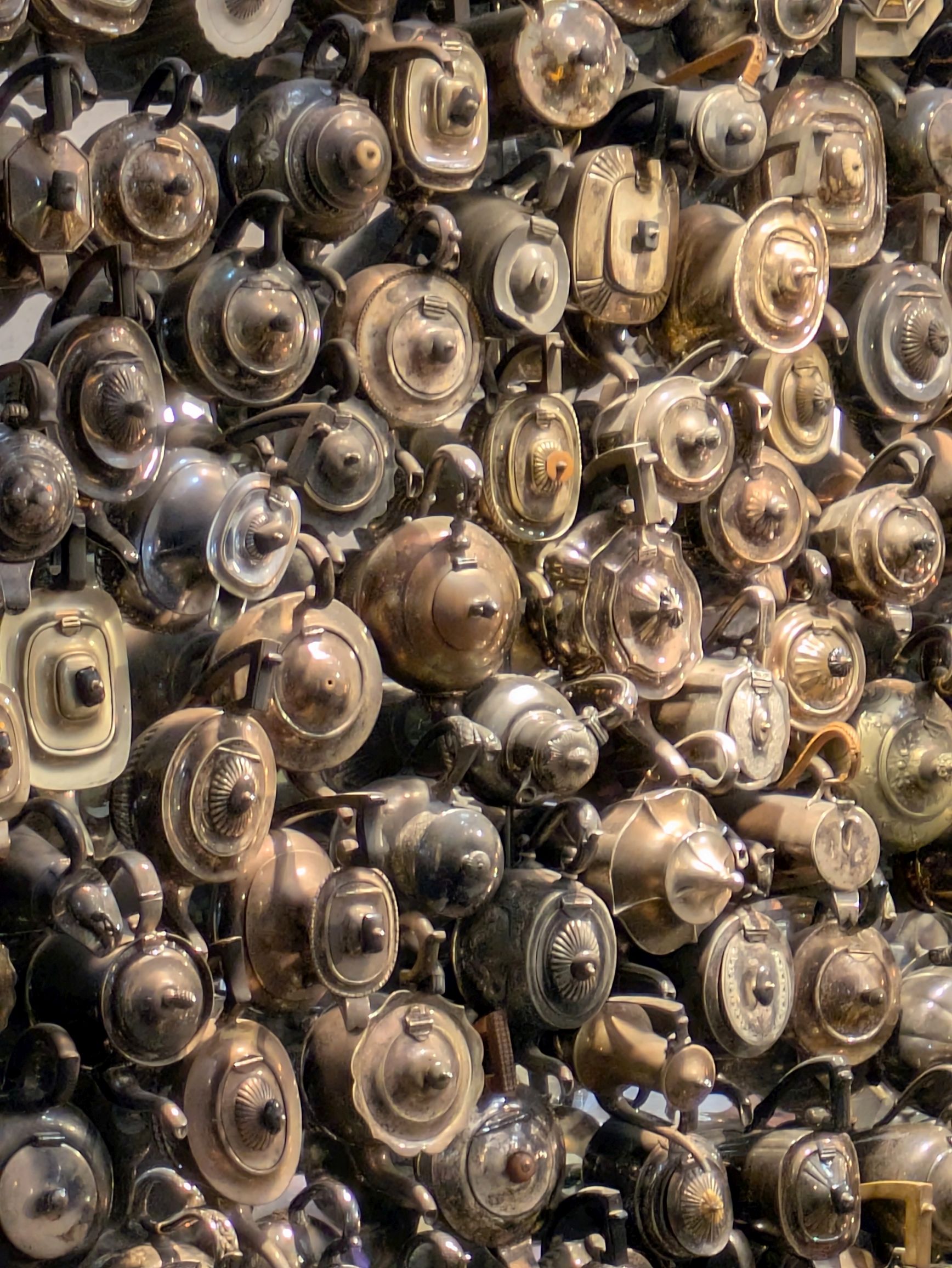
Take one step into Istanbul’s Grand Bazaar, and it’s hard to imagine that it began as a warehouse ordered to be built by Mehmed the Conquerer in 1461. One of the first shopping malls in the world, it is also one of the largest covered markets, with 61 covered streets and over 4,000 shops. Annually, the Grand Bazaar is visited by approximately 91,250,000 people, making it one of the most visited tourist attractions in the world.
The architecture of the main part of the bazaar is beautiful and quite nice to walk around, even if you don’t like to shop. Besides, if you like to people watch, this is THE place to go! But make sure to look up and around, because the architecture and tile work is lovely.
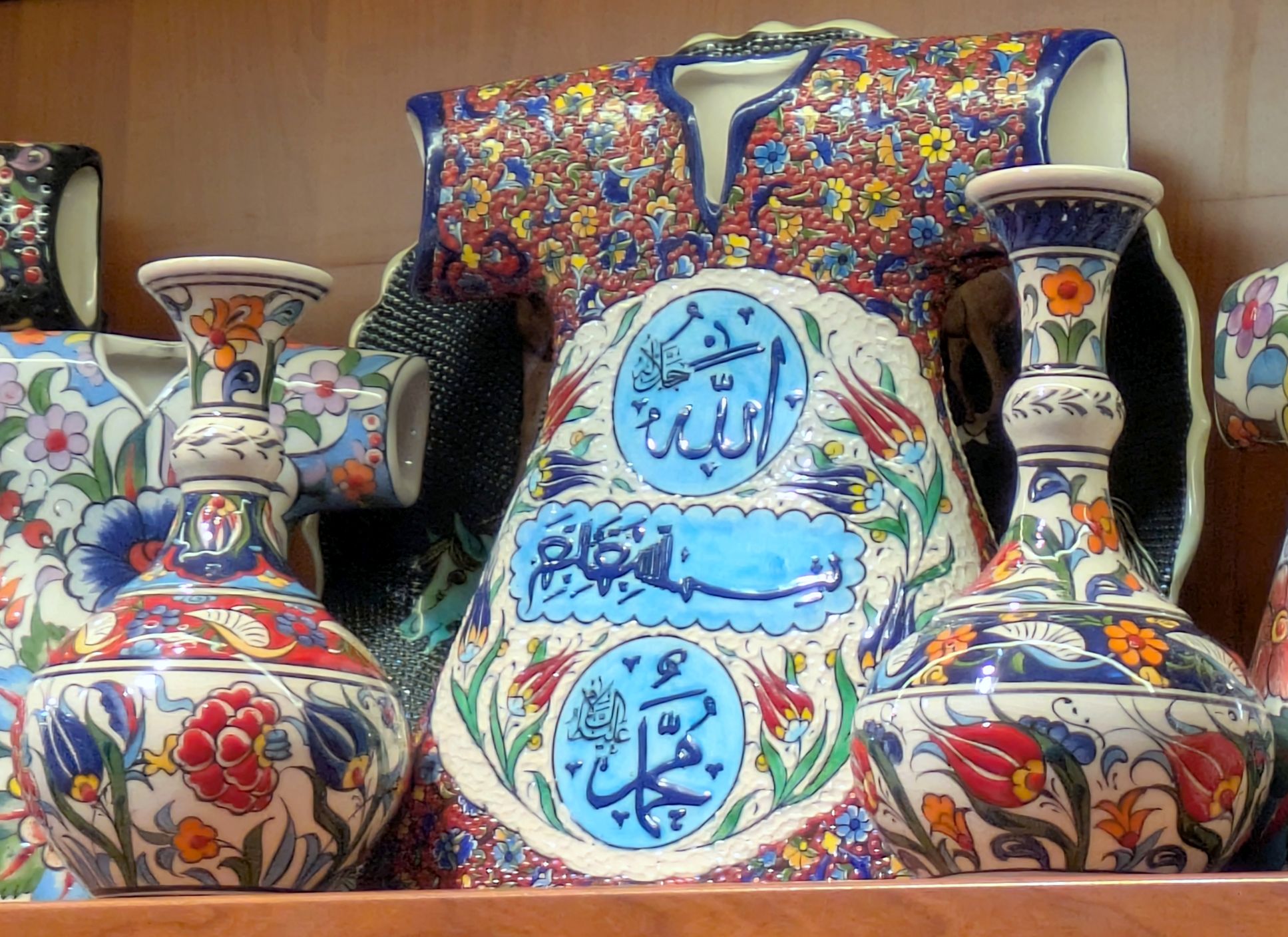
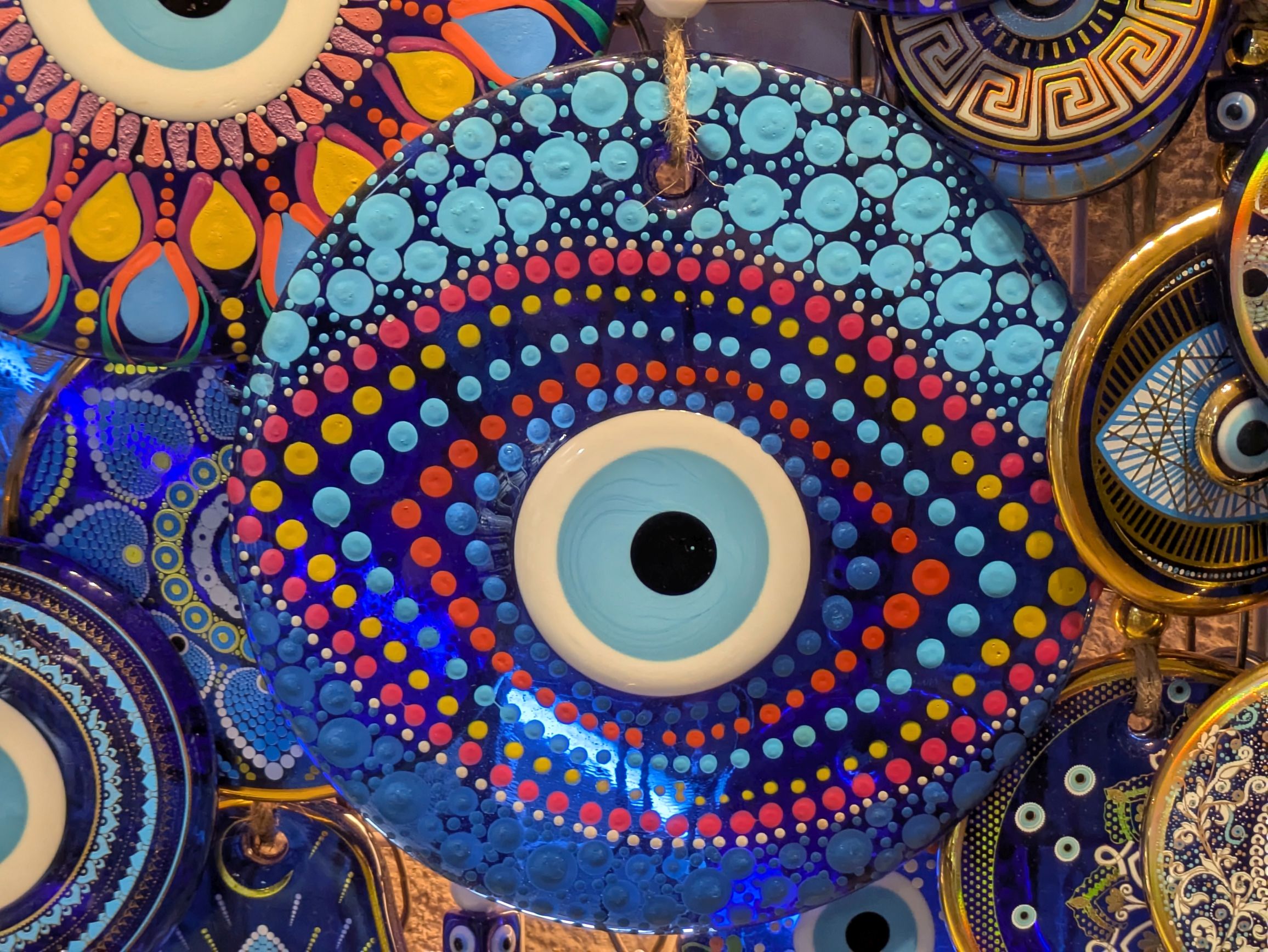
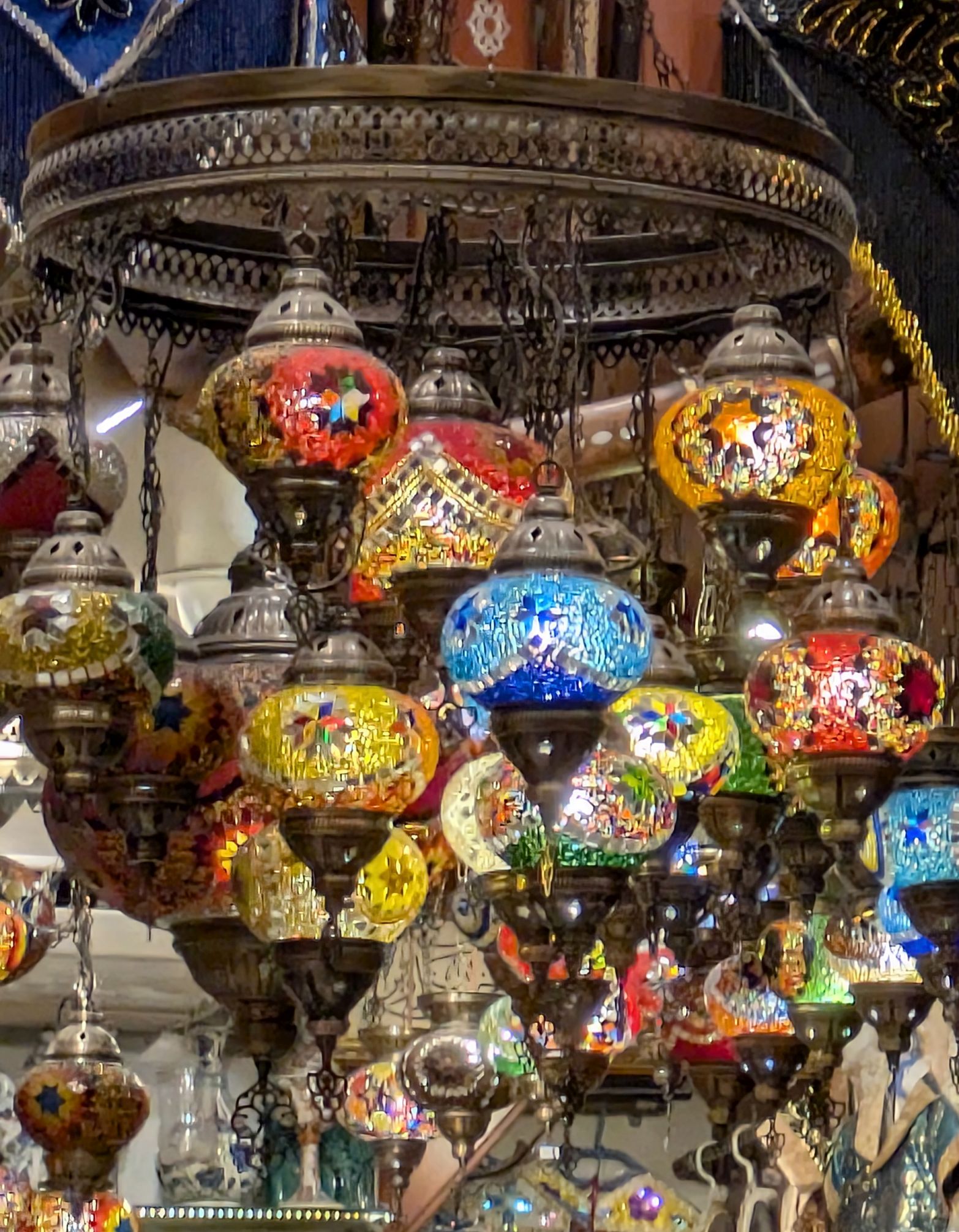
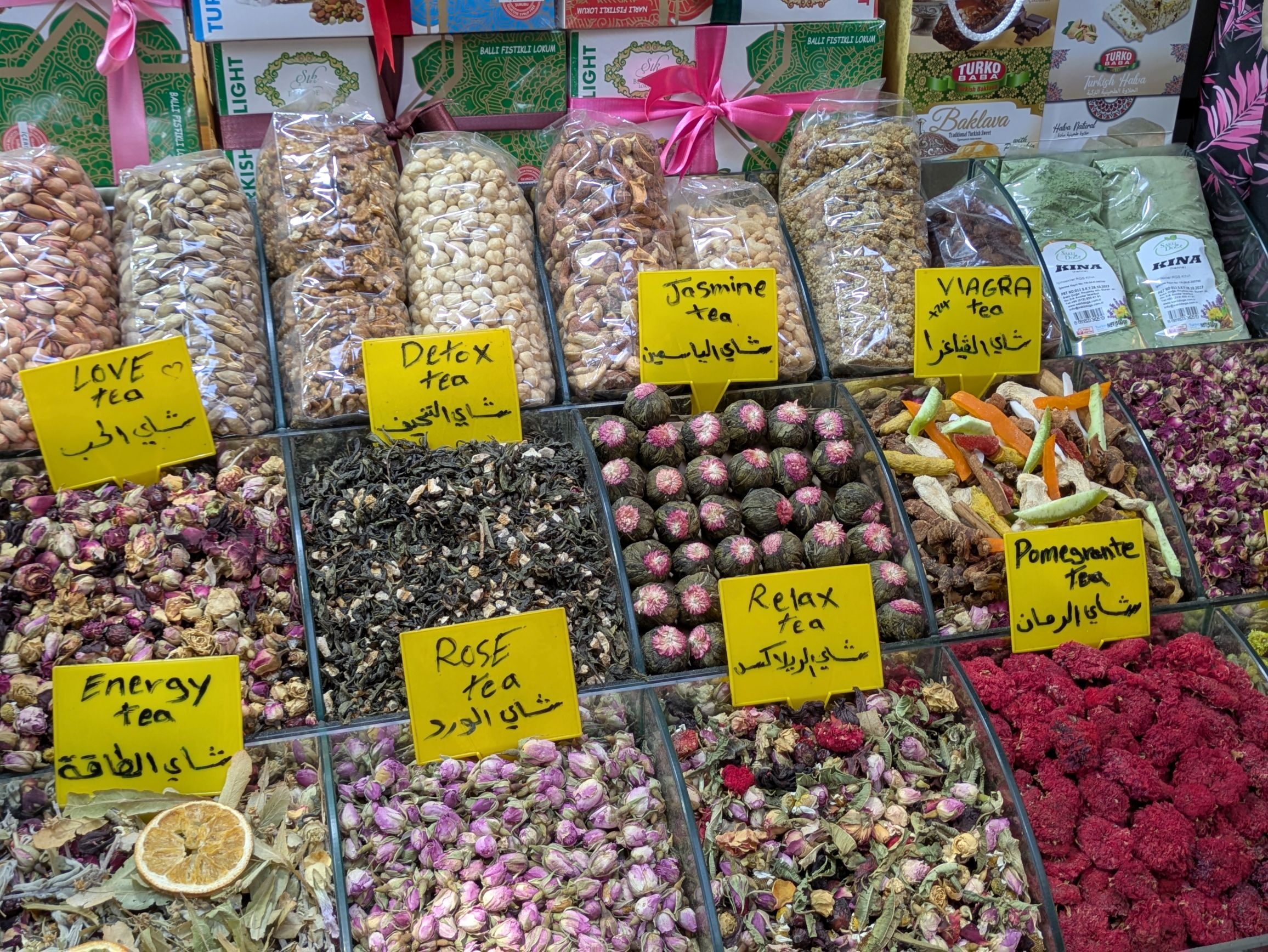
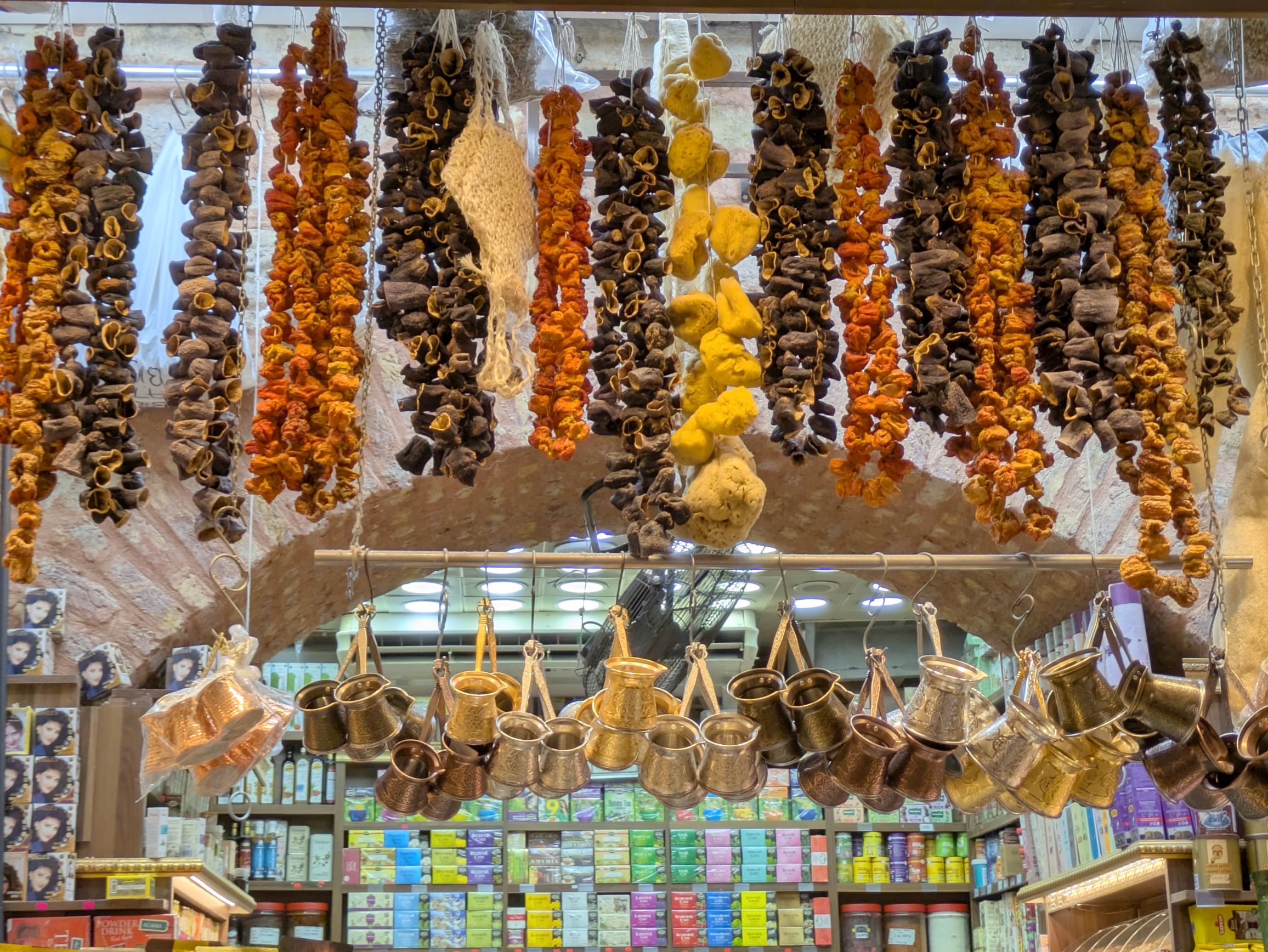
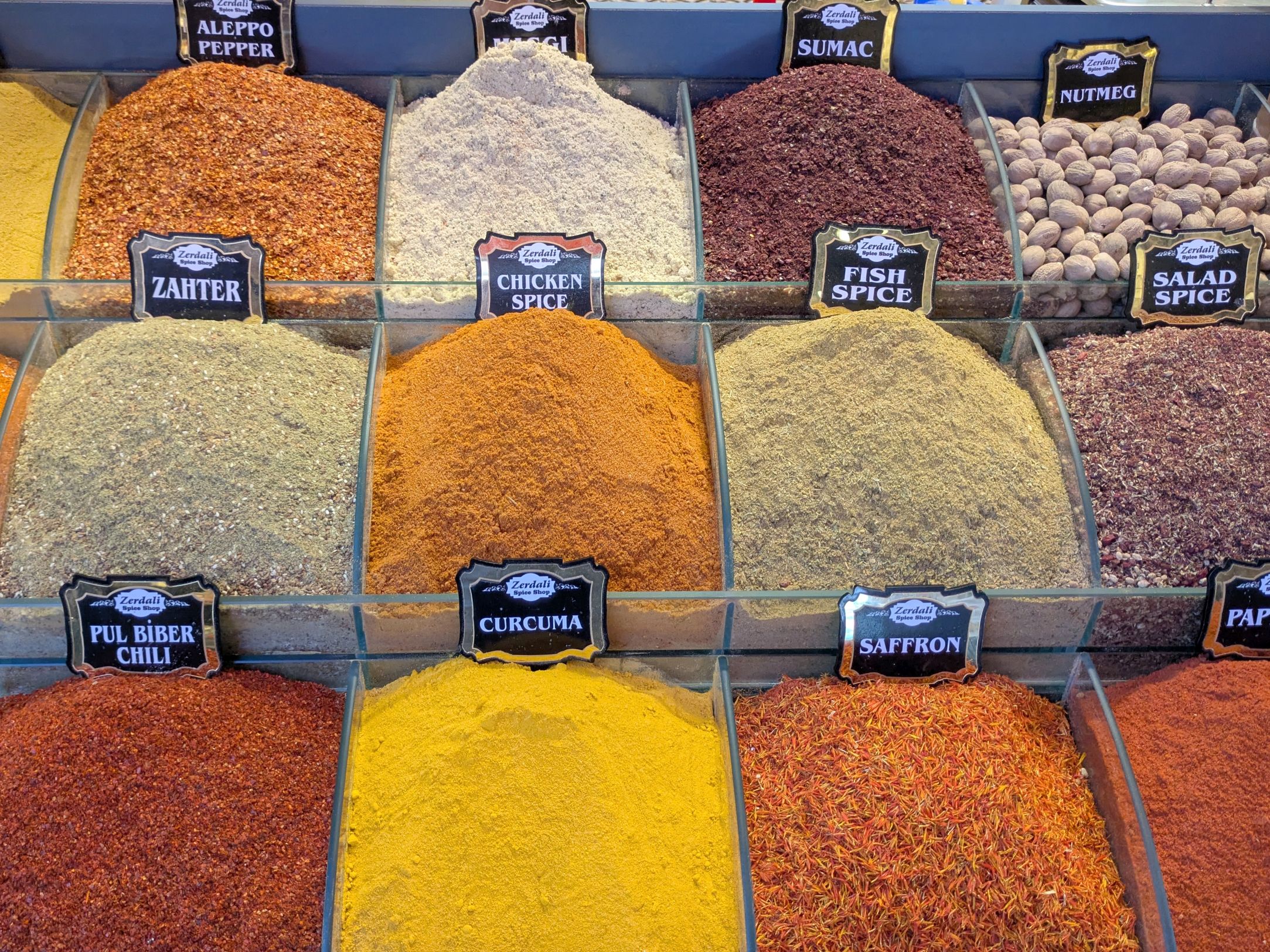
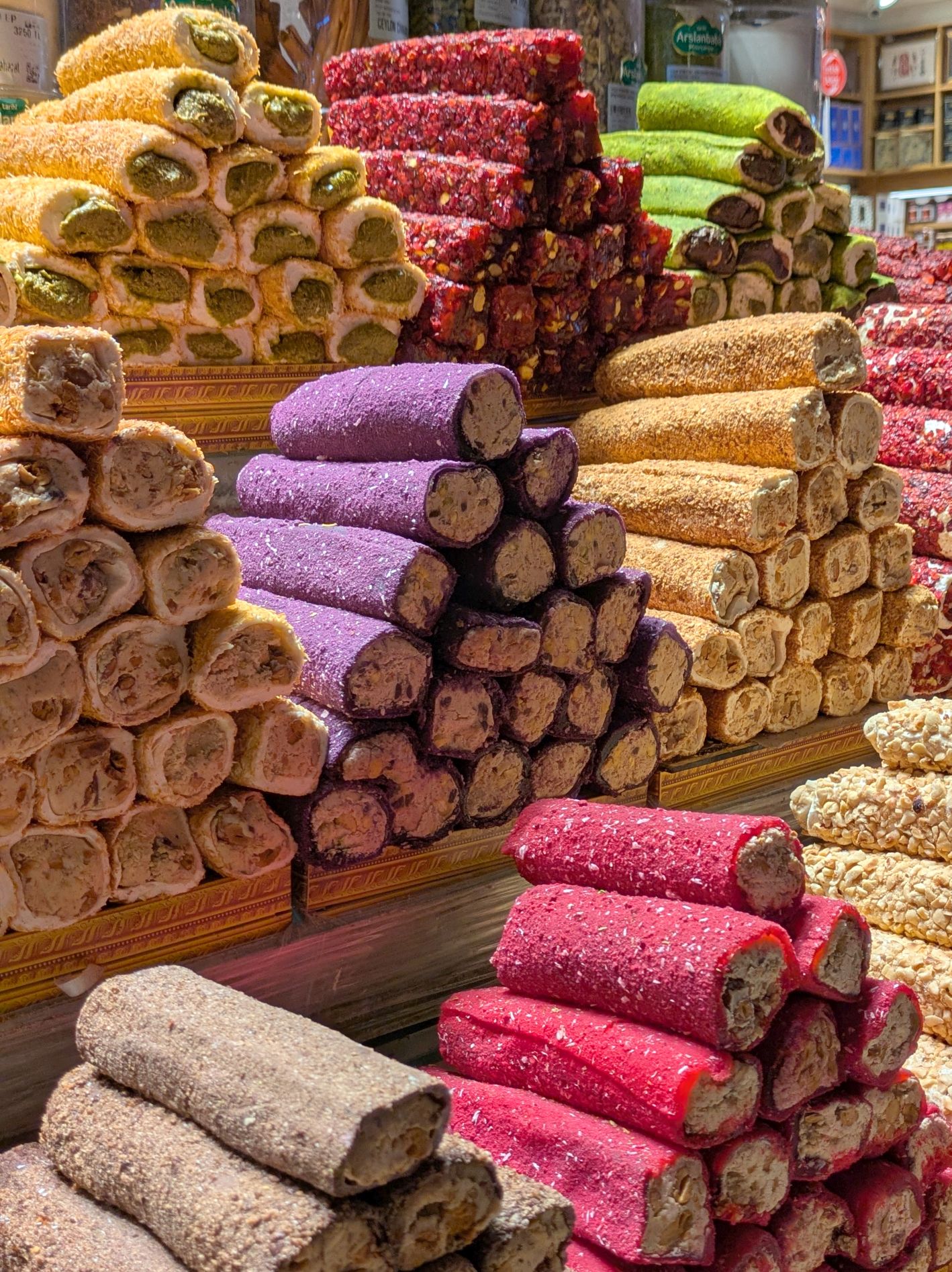
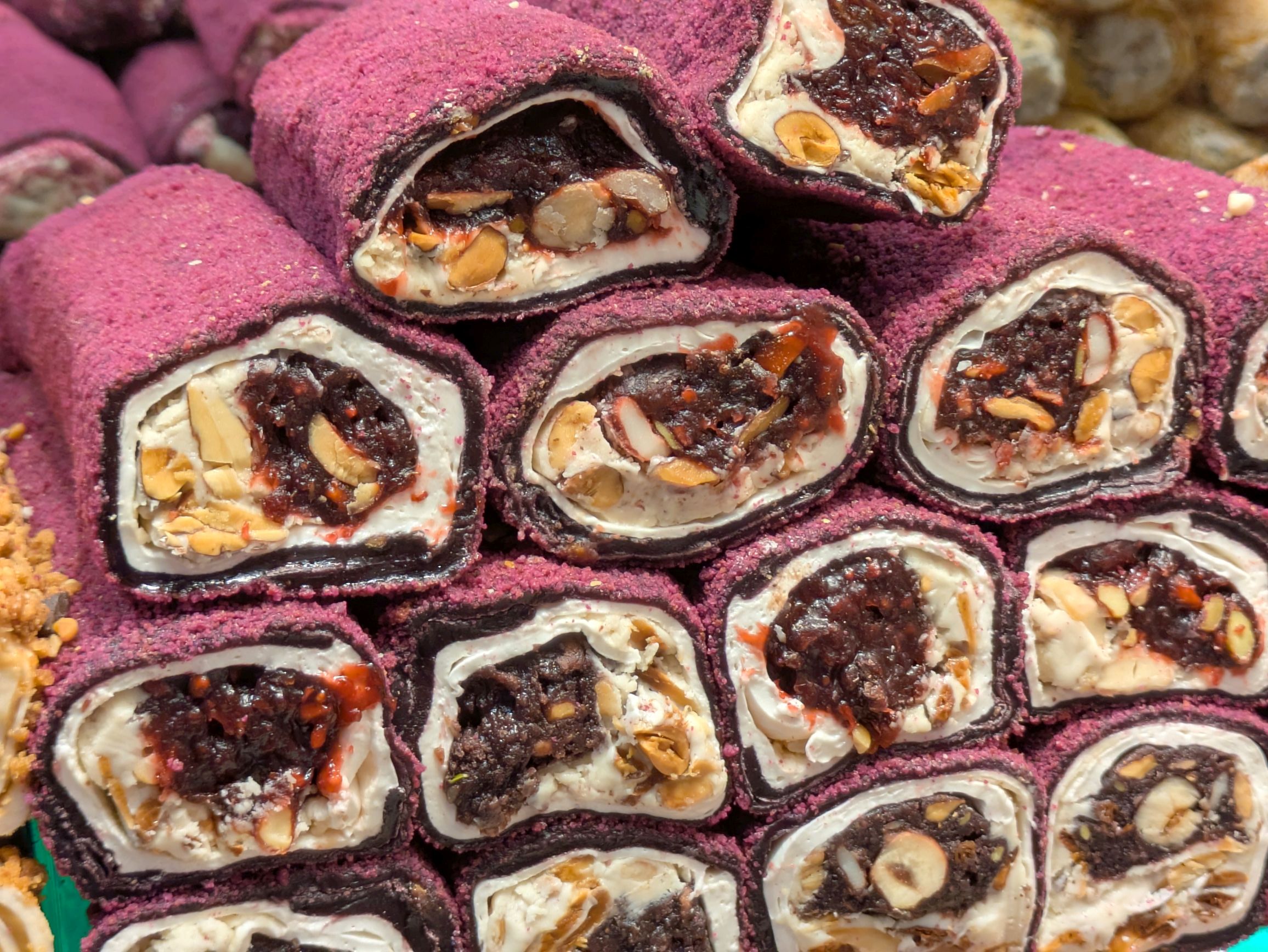
To say the bazaar is gigantic is an understatement. It was difficult for us to grasp; we didn’t even make it to most of those covered streets. We were, in one word, overwhelmed. What an assault on the senses, and I mean all of them! Visually, it was incredibly stimulating—eye candy for photography, especially photographing the colorful candy!
I could have spent days exploring the bazaar and doing photography, so perhaps I misspoke when I stated in my last post that three full days was a good amount of time to spend in Istanbul. It definitely wasn’t enough.
I will give you one guess as to why I was M.I.A. since my last post… Yes! I was traveling again! This time, we were in the Basque country of France, northern Spain, and Portugal for 23 days. After that fabulous tour, we were home for one week and then took off for eight days to Toronto. Those blogs will eventually be posted, but I last left you in Sicily, and on our way to Turkiye for a back-to-back tour.
Yes, it is now spelled “Turkiye” rather than “Turkey” (like our Thanksgiving bird). Although the country has been spelled “Turkiye” since it became a republic in 1923 (surprise!), the country pushed the rest of the world to recognize and adopt that spelling in 2021. Other countries have been asleep at the switch, however, still hanging on to the incorrect spelling. The United Nations didn’t recognize the “new” spelling until 2024, and Overseas Adventure Travel, the company we use for small group tours, spelled the country “Turkey” in its “Final Document Booklet” they sent us prior to departure. Wake up, World!
It was dark when we arrived at Sultanahmet Palace Hotel, in Istanbul, and when we stepped out of the car, this was the first thing we saw, just across the street from the hotel’s entrance:
(For all photos, click on the image for a full screen view.)
We knew this was going to be a very interesting city…
Istanbul, the largest city in Turkiye, is home to more than 15 million people, most of whom are ethnic Turks with Kurds being the largest minority. Another minority represented in Istanbul are Sepharic Jews, which date back to 390. Unlike Jews in Europe, Ottomon Jews were allowed to work in any profession, and they excelled in commerce and trade as well as medicine. Although 10% of the population in Istanbul were Jews at its highest point, there are now less than 15,000 Jews due to emigration to Israel.
What I didn’t realize is that geographically, Istanbul is situated on two continents— Europe and Asia. About two thirds of the population resides on the Europe side, and the rest live in Asia. The World’s narrowest straight used for international navigation, the Bosporus, separates the two continents, and it’s a bustling waterway.
Our hotel was perfectly situated, just a short walk from the Hippodrome of Constantinople, the central square, where we enjoyed exploring the mosques, doing photography (day and night), and just watching all the people during our free time. Four nights and three full days was a good amount of time for the planned activities with the group and seeing what we wanted to on our own in the historic city center, which is a UNESCO World Heritage Site.
Never did either of us feel unsafe in the city center, day or night, even when I went out on my own to do photography. We thoroughly enjoyed this interesting city!
These are just some of the scenes from our first day in Istanbul before joining our group.
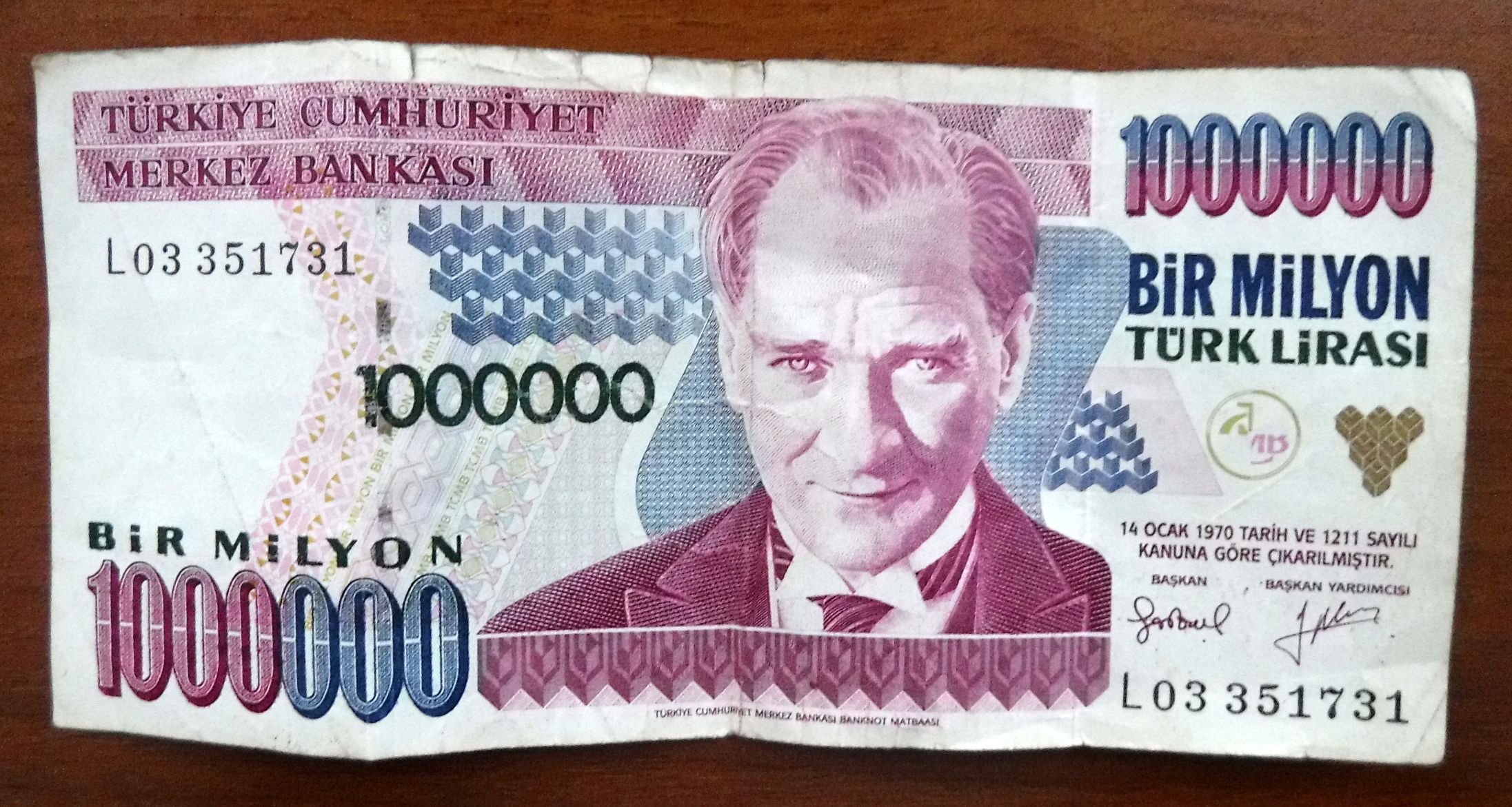
Before leaving home, a friend gave me this 1970 Turkish note. Little did he know, the zeros have since disappeared, and this is now worth about ten cents with the exchange rate!
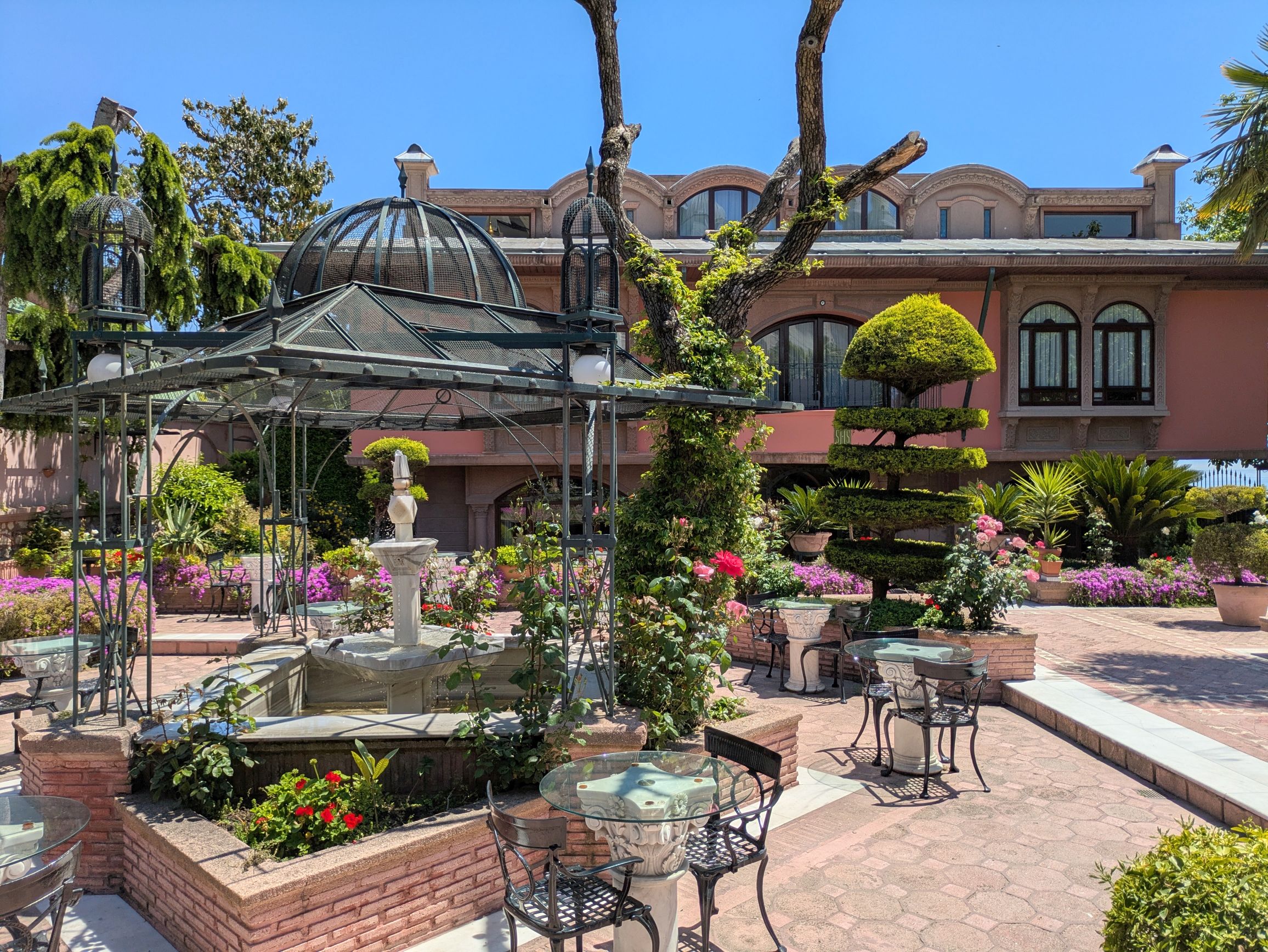
The front patio of our hotel
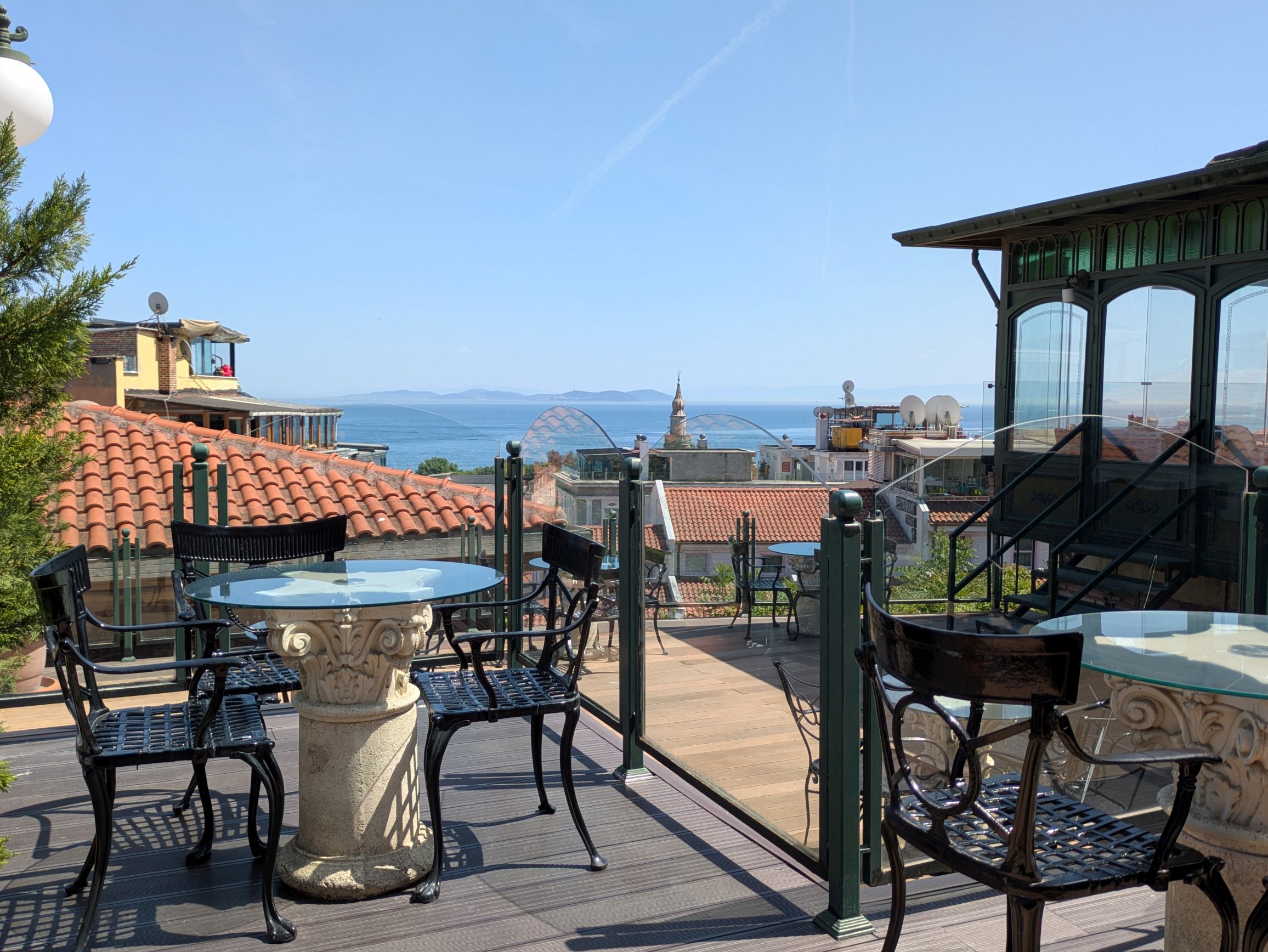
The back patio of our hotel where we ate breakfast had quite a view!
The ceiling of the restaurant patio where we enjoyed our first Turkish meal.




































































 Elaine-iaK's Travels: A Traveler's Tales of People, Places, Photos, Pools... and CHOCOLATE!