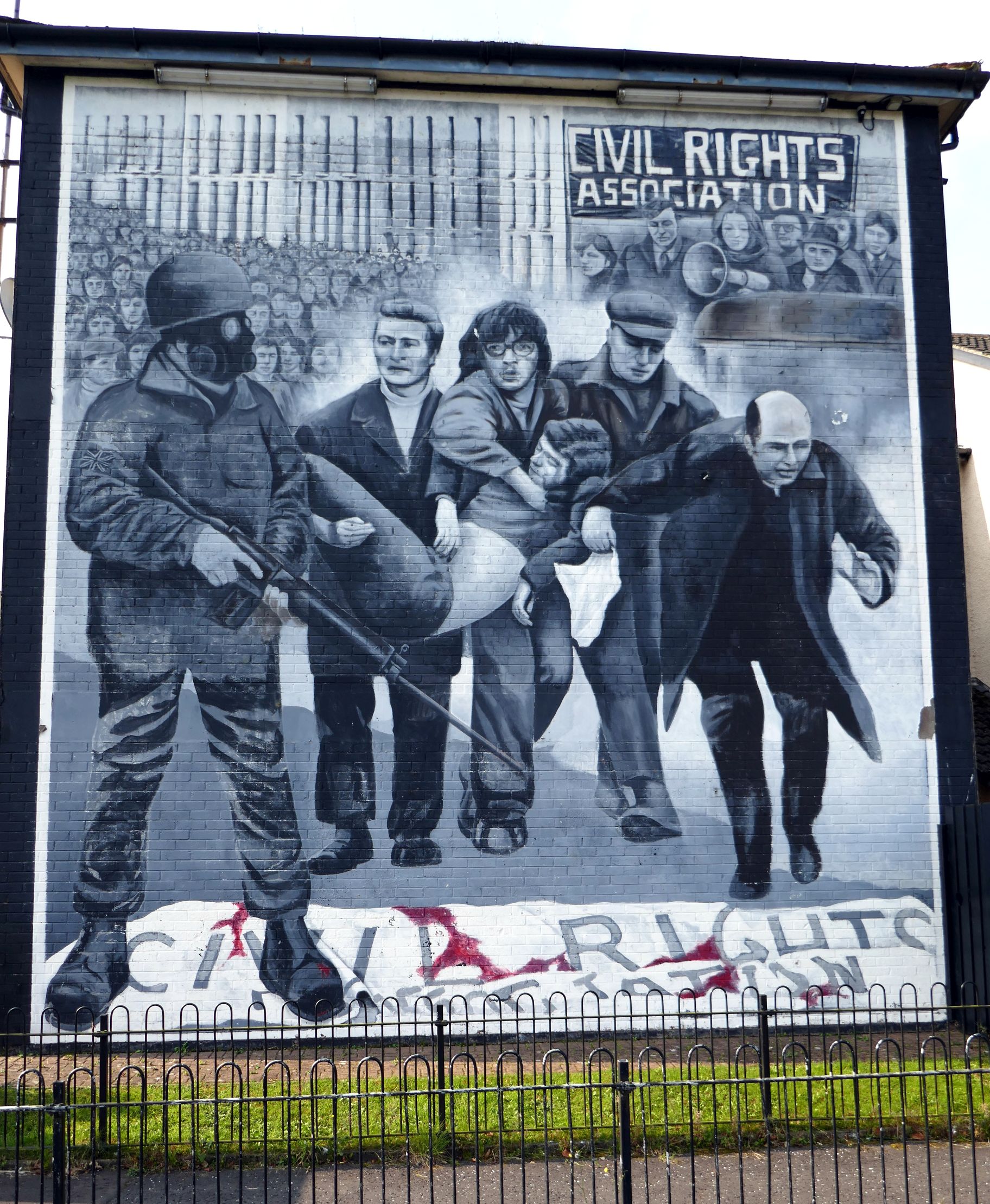
This post is about the 1972 Bloody Sunday Massacre that occurred in Derry, Ireland, 70 miles from Belfast, in Northern Ireland. We visited the Museum of Free Derry and listened to the experiences of an Irish Catholic who witnessed it that day.
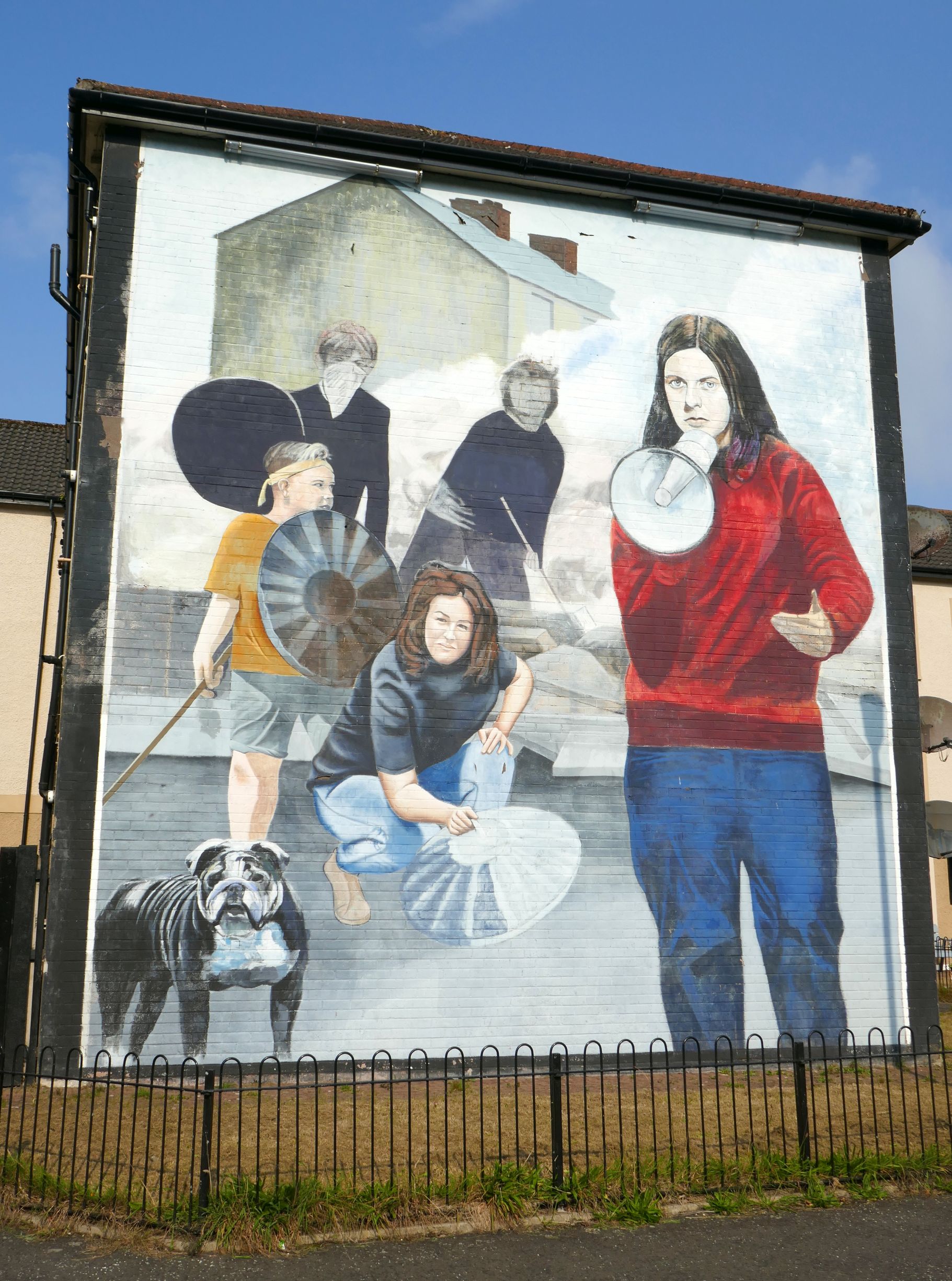
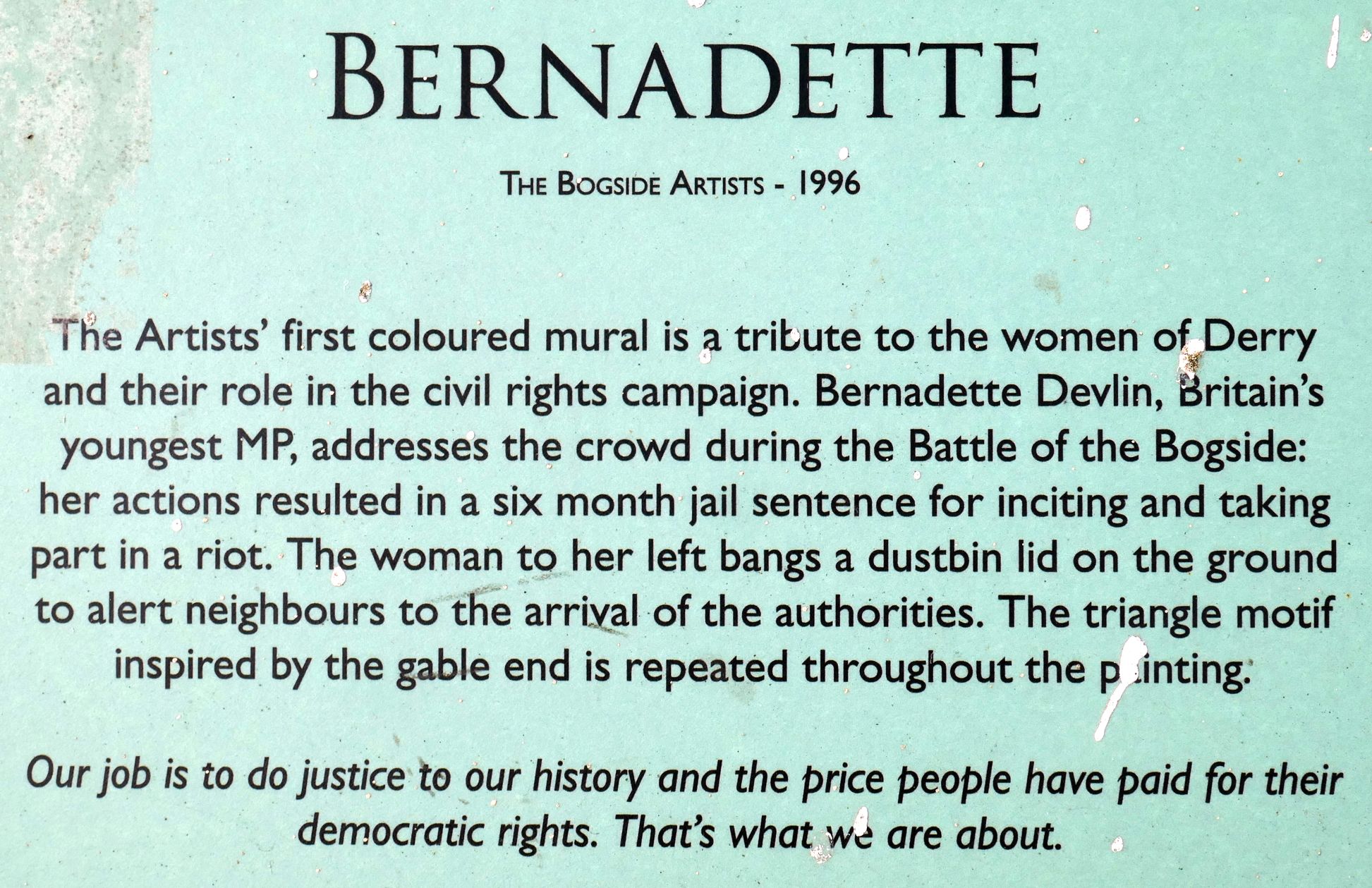
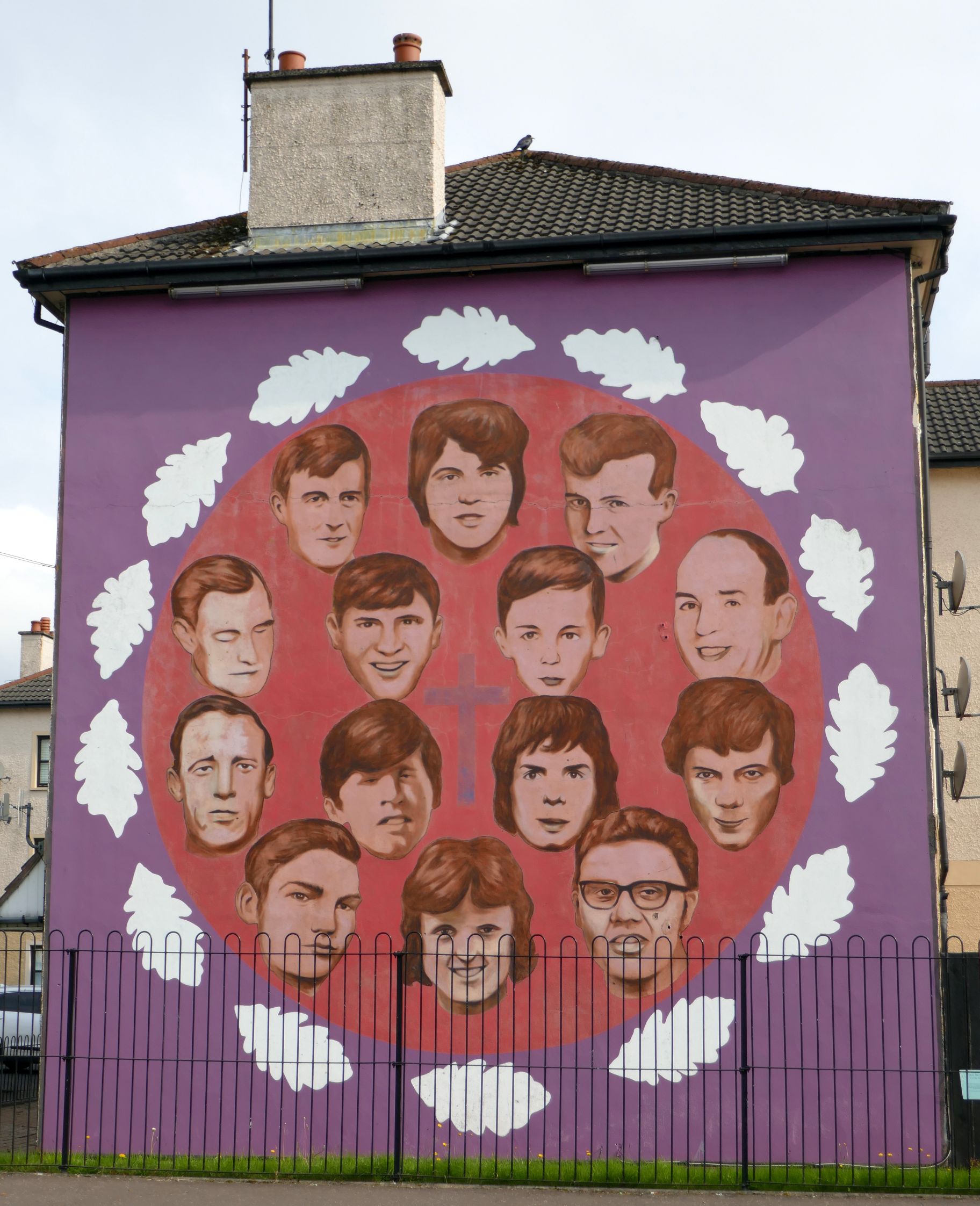
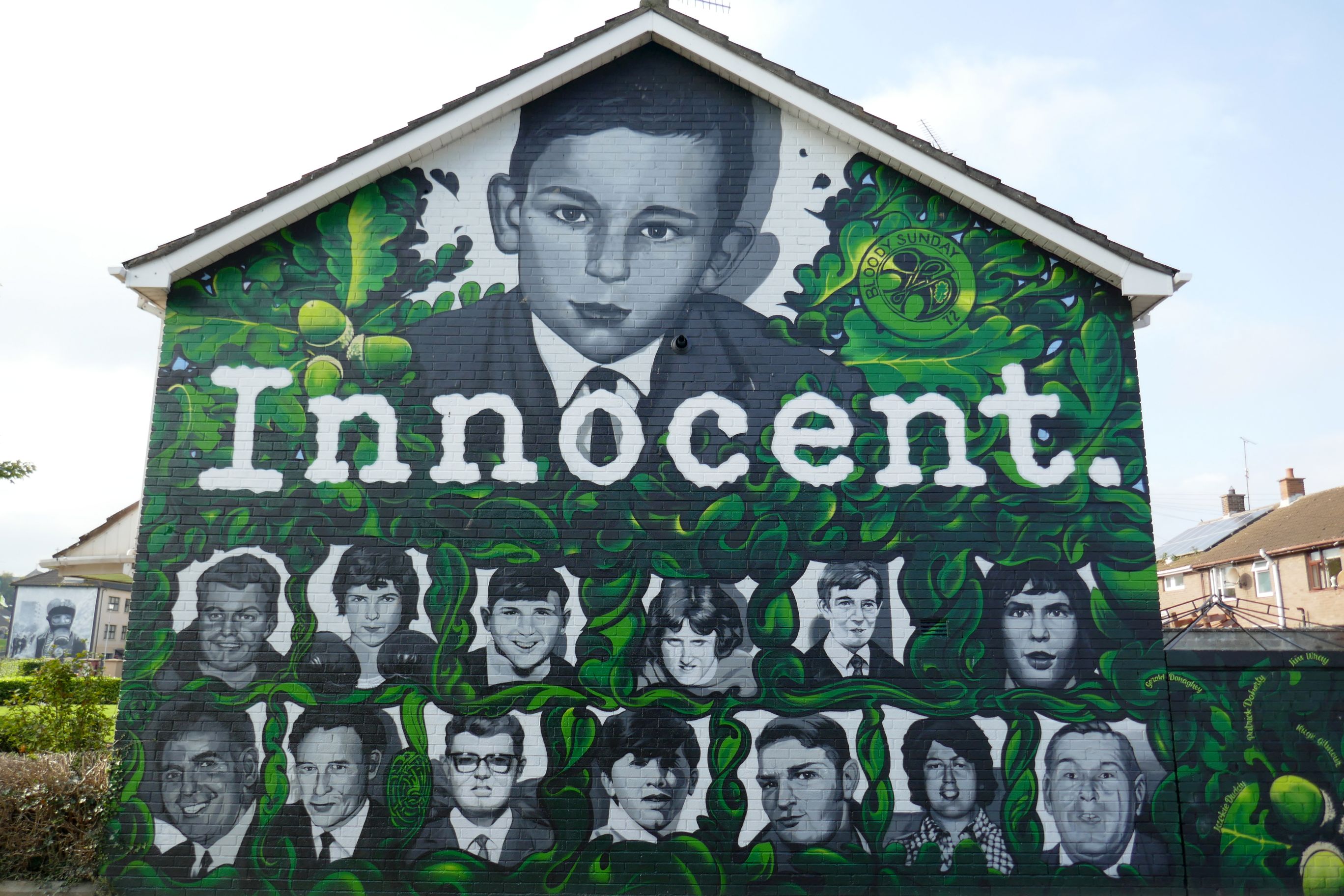
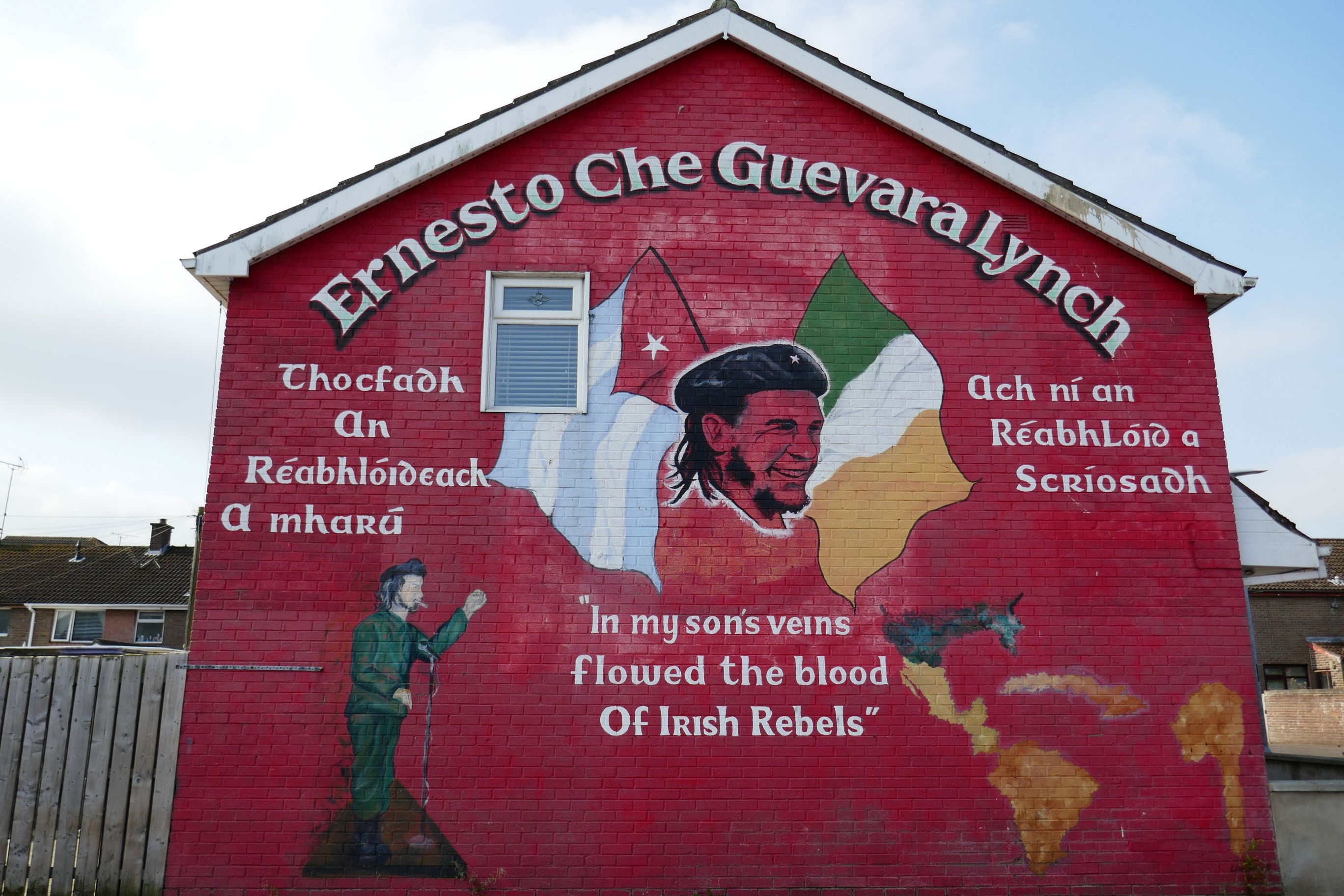
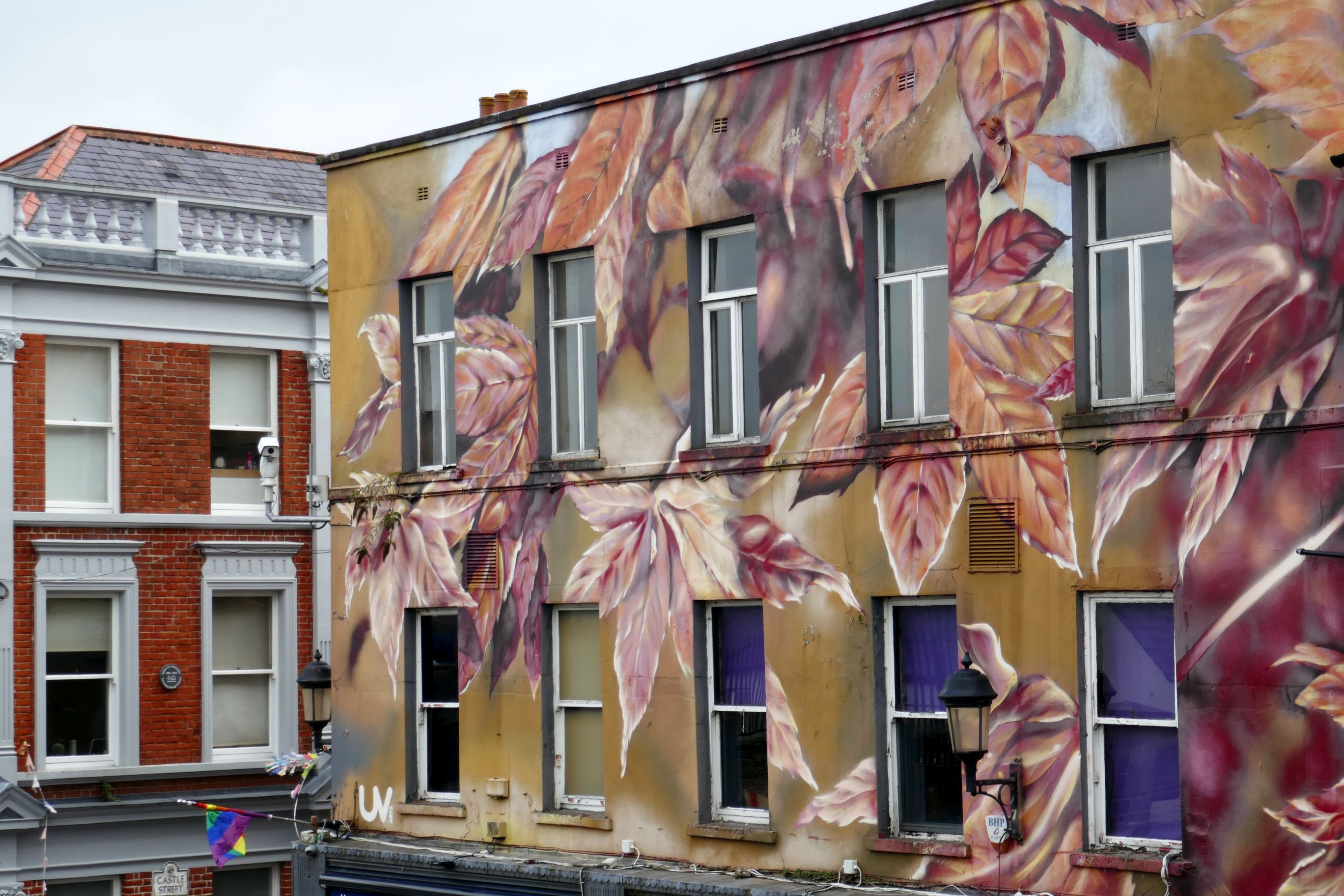
The Museum of Derry documents the history and events of the struggle of the Irish Catholics, as do the murals I photographed along the streets surrounding the museum. Powerful, thought-provoking, and all too familiar, considering what transpired during the same time in the U.S.A.
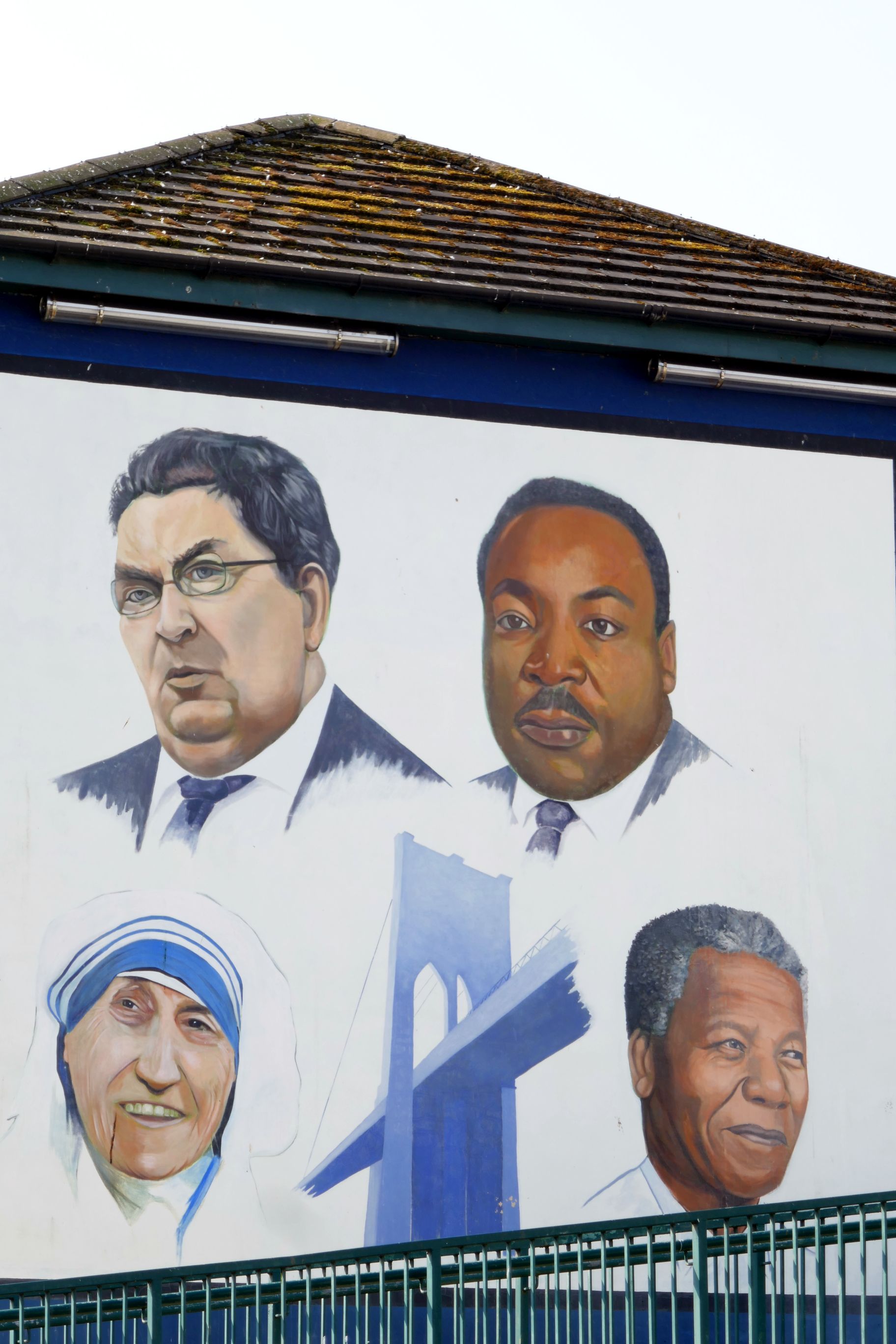
Derry (previously called “Londonderry” by the British from London who had settled there), is 85% Irish and is seen as an Irish city, even though it is part of Northern Ireland and the United Kingdom. Although it should have been part of the Republic of Ireland, the British maintained a hold on the city through gerrymandering. As a result, the Irish Catholics had to stand up to the British for their civil rights, including equal pay for equal work, equal right to jobs without discrimination, and the right to vote without being a landowner. They modeled their movement after the United States civil rights movement led by Dr. Martin Luther King Jr., and marchers would sing, “We Shall Overcome.”
In 1969, Protestant loyalists marched into the Bogside district, a marsh land outside the walls of Derry, sparking violence with the Catholic residents. Formerly known as the Battle of the Bogside, this attack would become the starting point of The Troubles, and the Irish civil rights movement for equality that culminated in the 1972, Bloody Sunday Massacre. The massacre occurred when 15,000 protesters took to the streets in the Catholic Bogside neighborhood of Derry to march against an internment law granting the British government the authority to imprison Northern Irish dissidents without a trial. The crown deployed soldiers to police the march, and after a day of escalating violence, the army fired upon the unarmed crowd, shooting 108 live rounds that left 14 dead and many more injured. To make matters worse, an official British inquiry cleared the soldiers who murdered these unarmed protesters. All the British officials had to say about what happened was that the soldiers’ behavior was “bordering on the reckless.” Despicable.
Only one British soldier was ever charged with a crime for the 14 Irish Catholics who were murdered during the 20-minute period of Bloody Sunday. To this day, there are Derry residents, including those who started and run the museum, who continue to fight for those who lost their lives on that day (and throughout the Irish civil rights movement)—especially the children who were murdered while just trying to get to safety during the violence.
(For all photos, click on the image for a full screen view.)
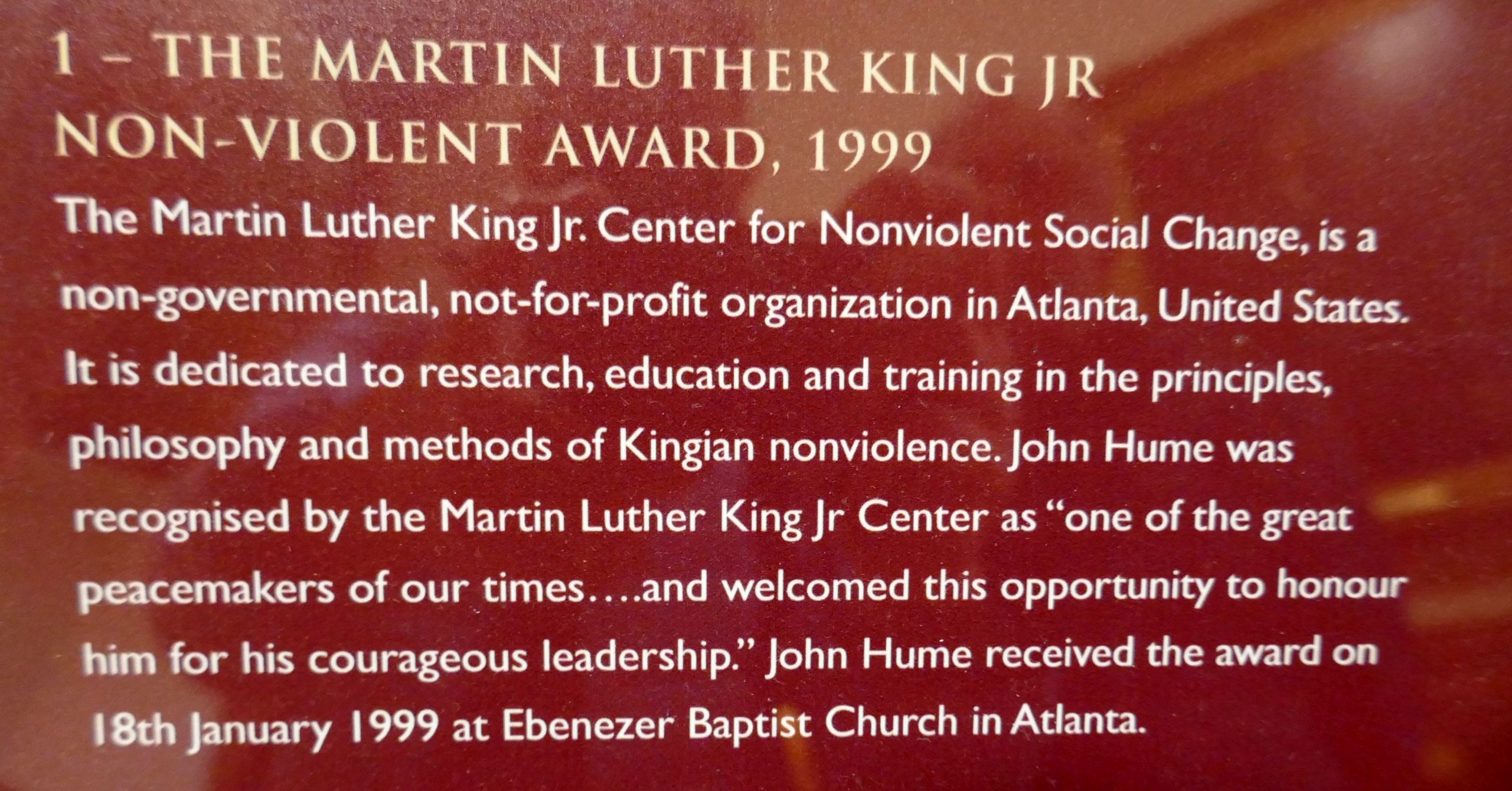
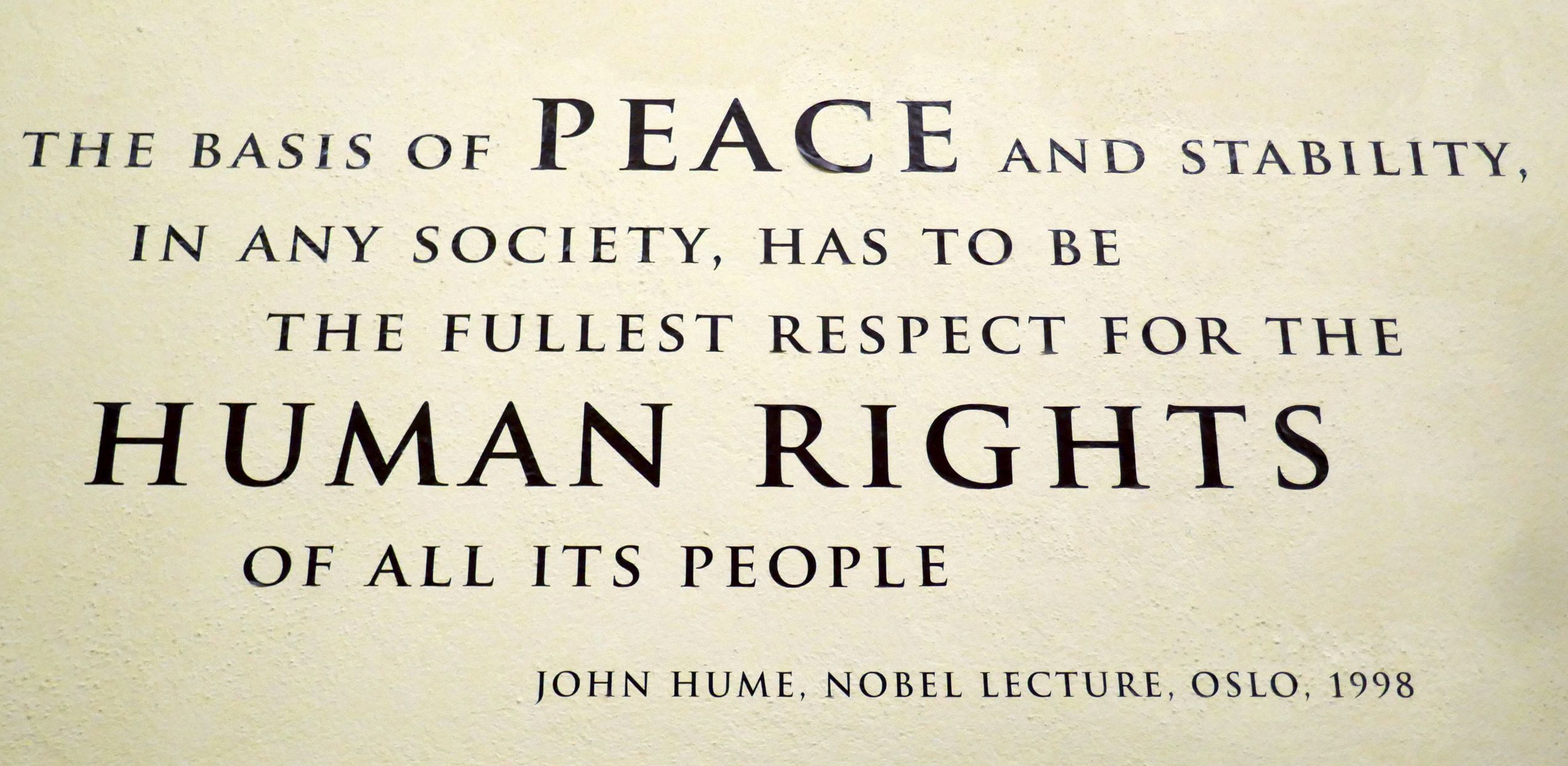
The man in the upper left is John Hume; see next photo, taken at a display at Guildhall honoring him.
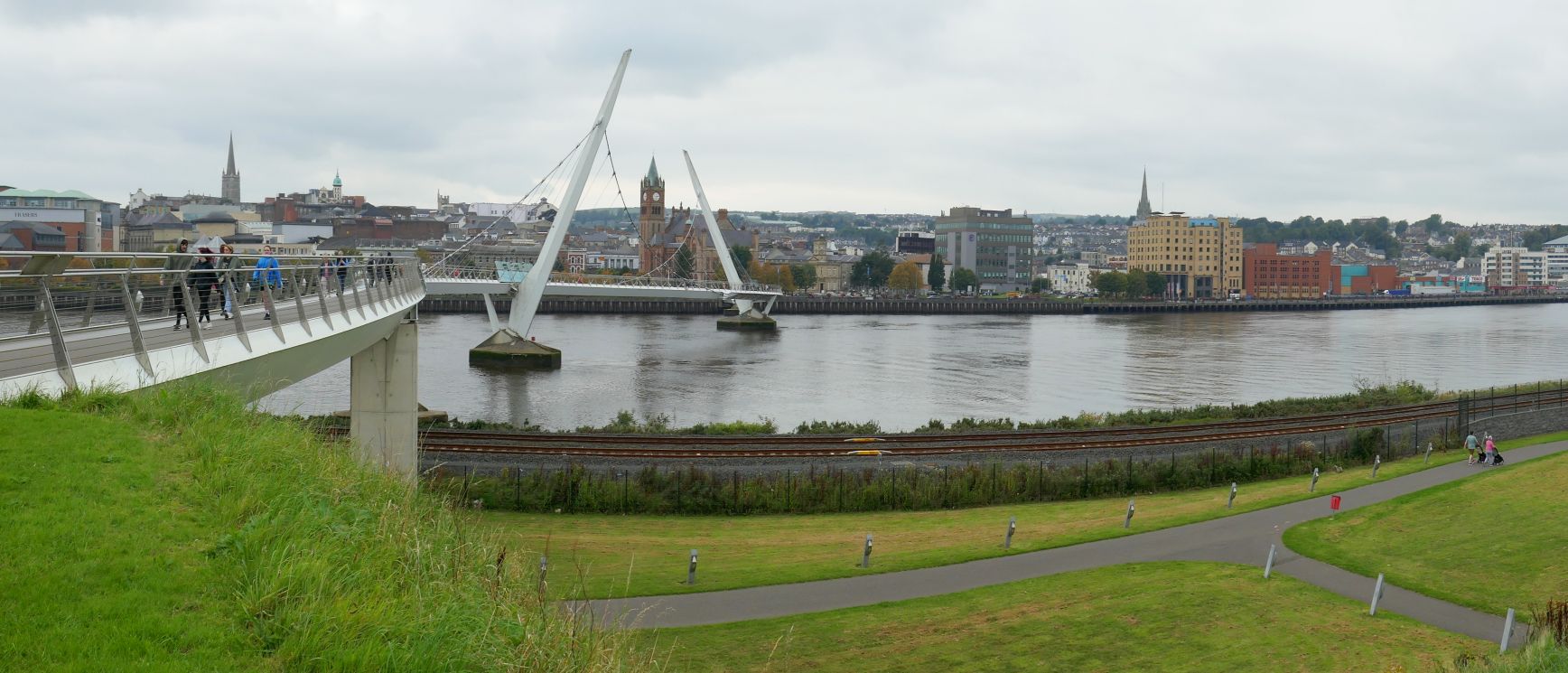
It wasn’t safe for Irish Catholics to walk the streets until 1998 when the British army finally moved out of Derry. Their army barracks were located across the river from town, and there is now a bridge, built in 2011, connecting the two sides, called the “Peace Bridge.”
Thankfully, there is full equality now for the Irish Catholics, but following the war, there was a high rate of PTSD, drug addiction, and alcoholism.
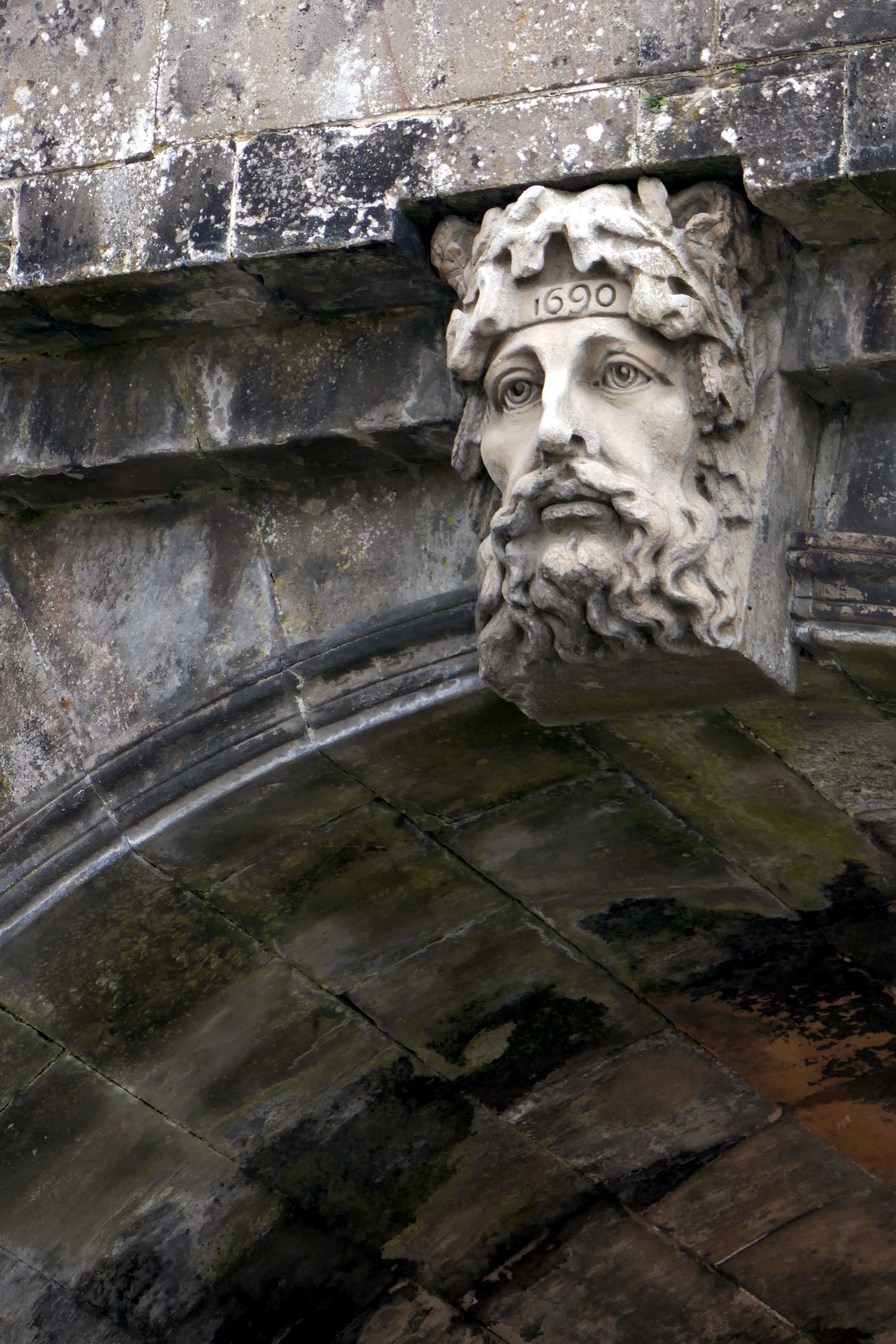
Derry is surrounded by stone walls that were built between 1613 and 1619. Following our visit to the museum, we went on a walking tour of the walls with a local guide. He pointed out that the well-off British Protestants lived inside the city walls, and the Catholics lived outside. At 9:00 PM, a bell would ring to alert any Catholics working or visiting inside the city that they had to leave and return to their ghetto. Notice the difference between the neighborhoods outside the walls and inside, in the pictures below. This first shot was taken from on top of the city wall, looking down to where the Bloody Sunday Massacre took place in the Irish Catholic neighborhood, outside of the walls.
Derry Walls
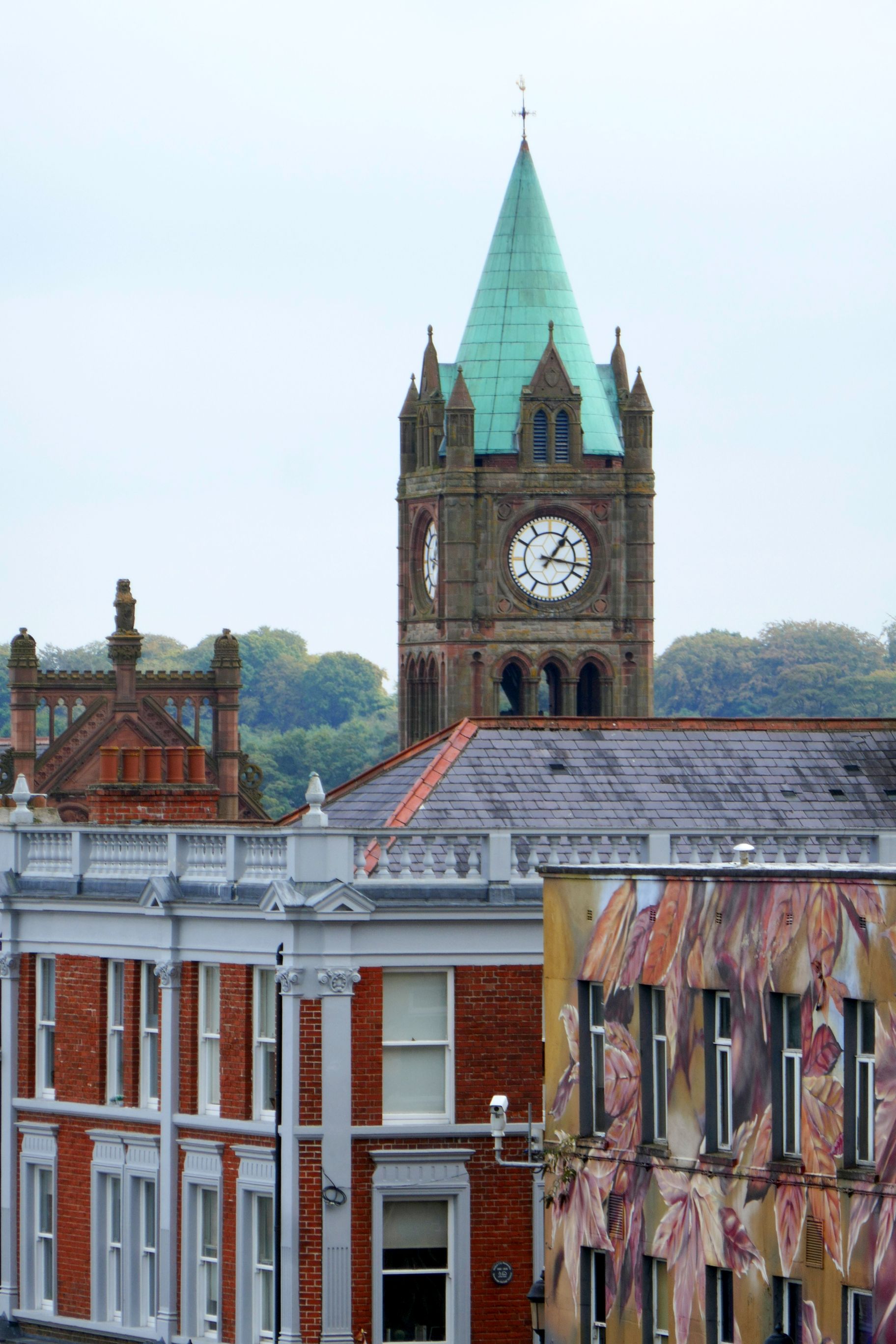
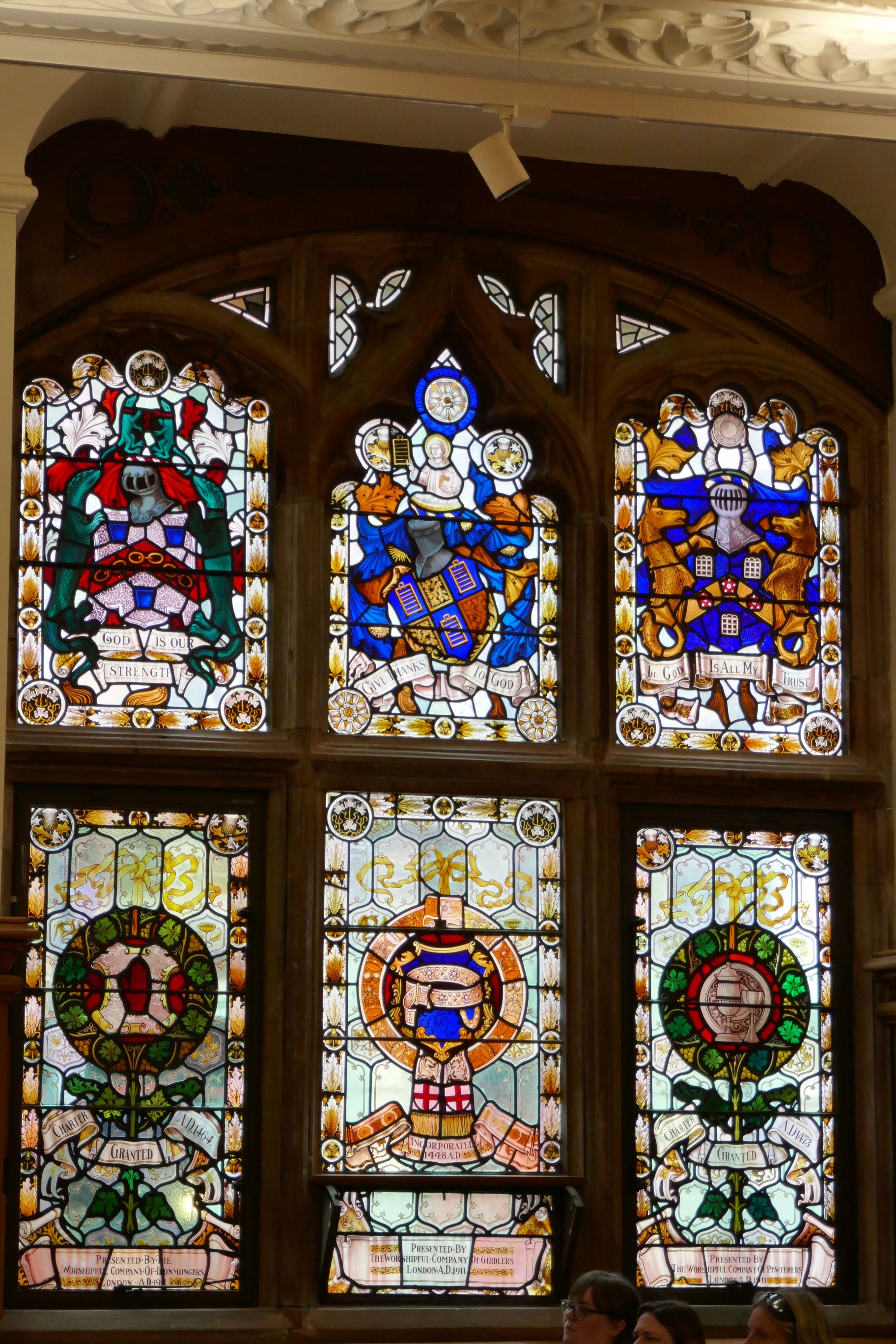
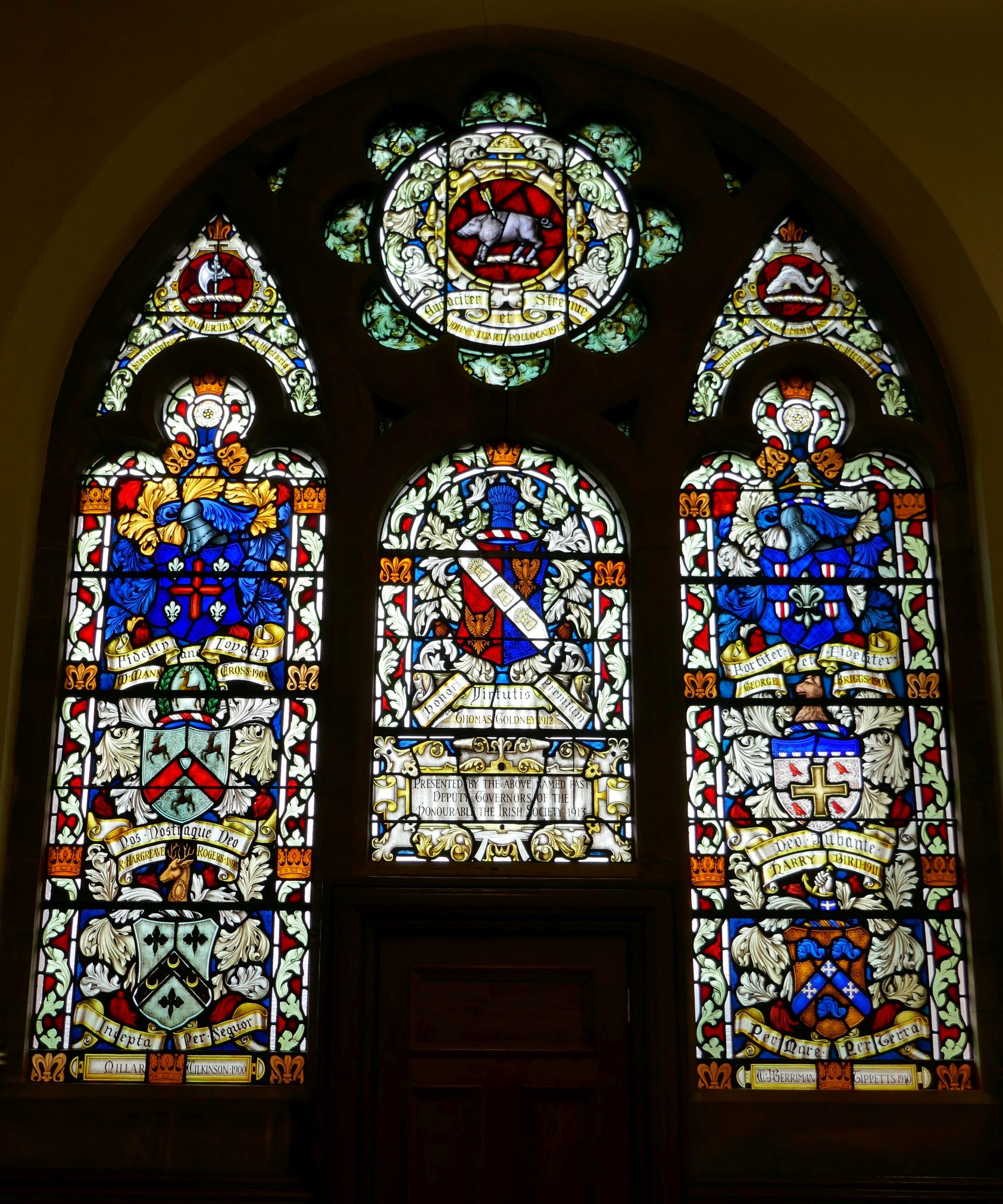
Guildhall, built in 1887, is Derry’s civic center. Below are some of its stained glass windows.
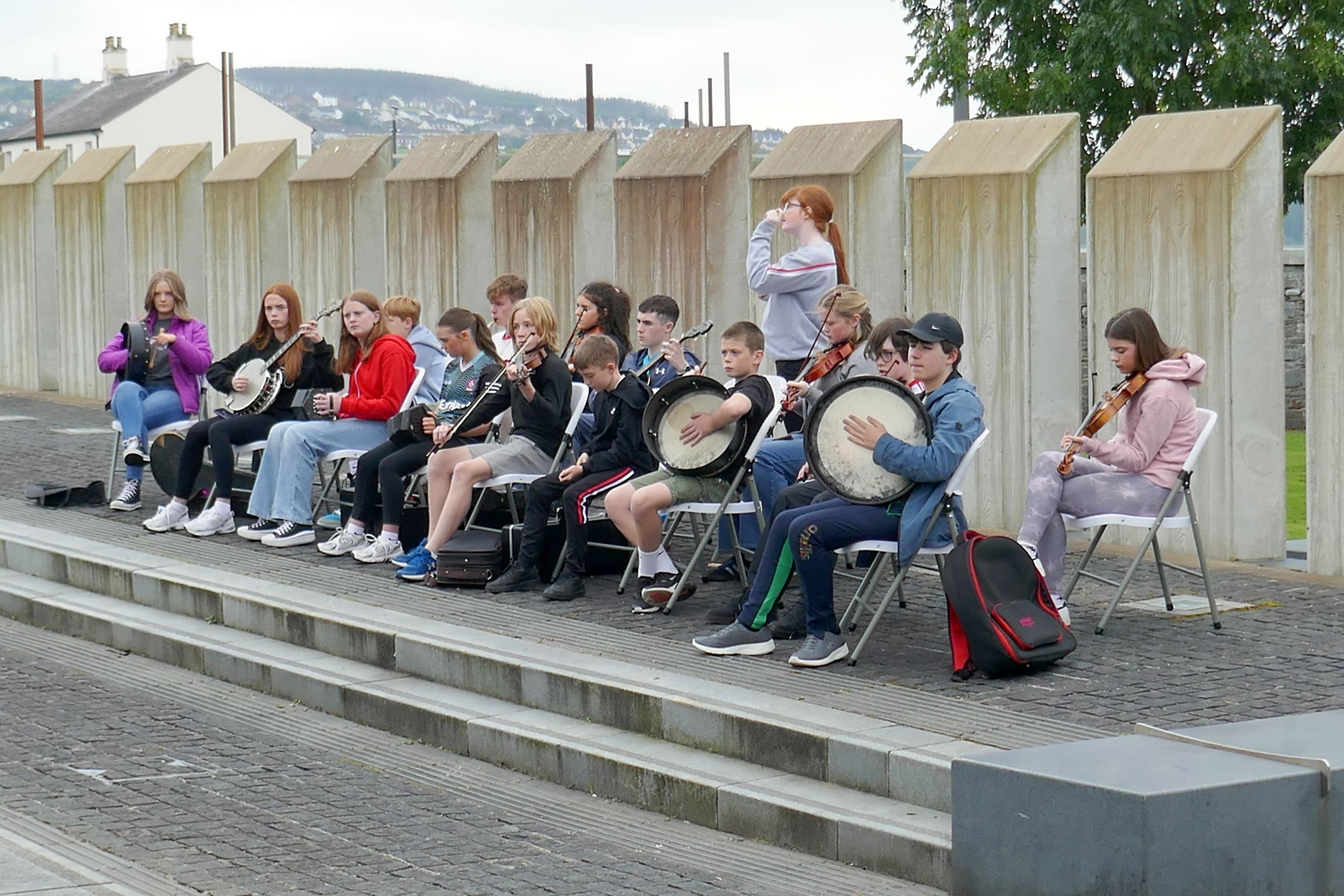
The Peace Bridge is in the background, and we walked it to the other side of the river.When we arrived, this youth band was playing traditional Irish music.A view across the Peace Bridge back to the city center and Guildhall.
Following time on our own to walk the Peace Bridge, we continued our overland to Donegal, Ireland, the subject of my next post: IRISH ADVENTURE #11: A DAY IN DONEGAL
The day we toured the West Belfast war zone where the militant faction of the Irish Republican Army (IRA) fought the Ulster Volunteer Force UVF, a paramilitary group of extremists sympathetic to the British, was a day I will never forget. “Impactful” doesn’t begin to describe the experience of seeing the sites and hearing the stories from those who were in the trenches when it all happened in the 1970s.
During the height of “The Troubles” (war, more accurately; 3,000 died and 50,000 were injured), public buses stopped serving West Belfast’s Catholic neighborhoods. Taxis stepped up to offer their services back then, and now, both Catholic and Protestant taxi drivers conduct tours of where it all took place.
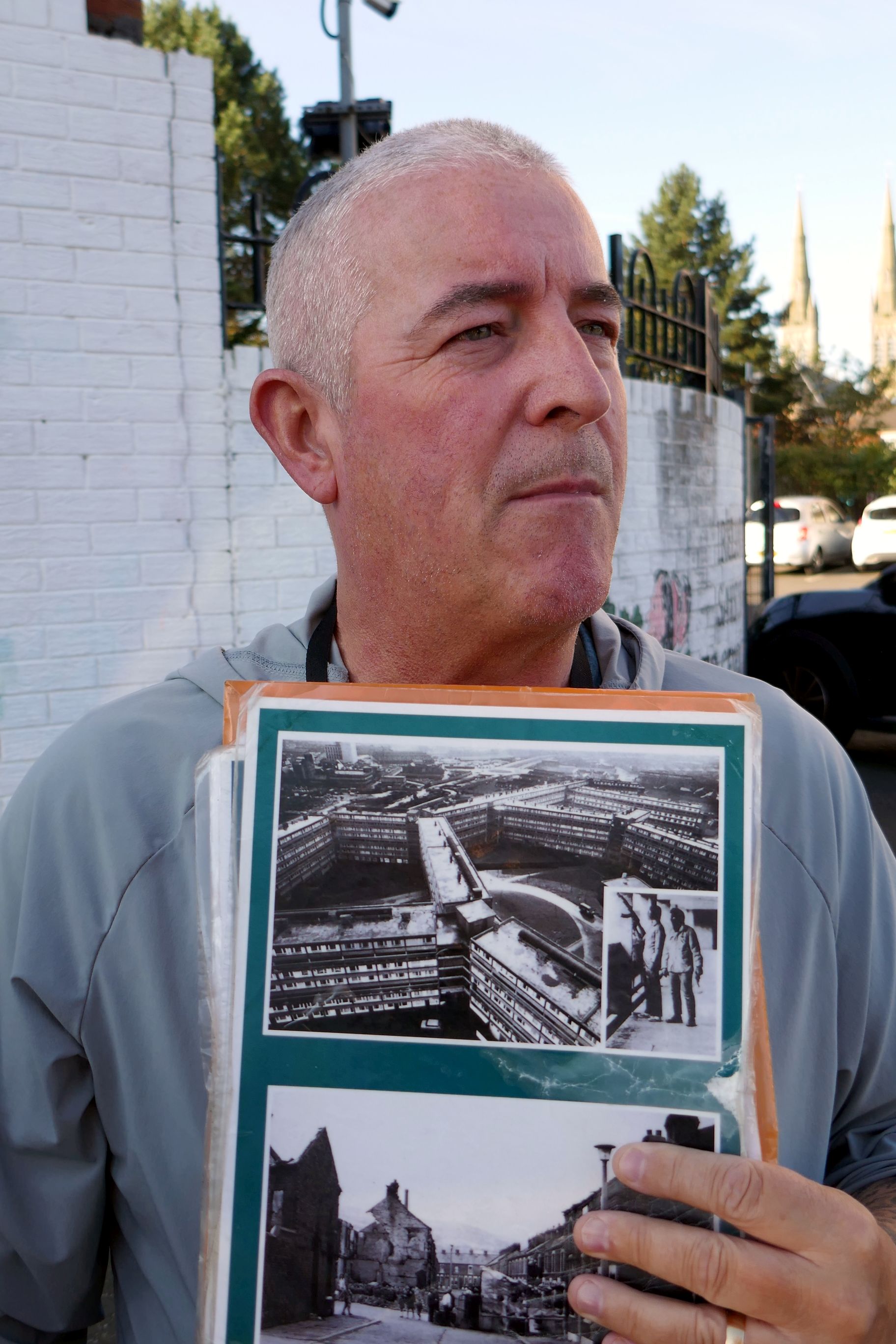
Our group of 14 split up into several cabs, and ours just had me, Bruce, and another member of our group. Billy was our driver and guide, and after listening to what the others said about their experiences, we felt very fortunate to have had him.
Our tour through the West Belfast Catholic neighborhoods (where most of the violence took place) and the Protestant neighborhoods of East Belfast was fascinating, because we heard Billy’s perspective of what happened and what he experienced during the Troubles. As a Catholic who grew up poor, life was difficult for his family, and he told us many stories about what it was like leading up to when the violence began and the aftermath.
Billy explained how the British, on a few different occasions, said they would leave Ireland to be an independent nation. The British living in Ireland, however, wanted Ireland to stay under British rule. (Ultimately, as you know, England did keep Northern Ireland.)
If you were Irish living in the north, you were considered a second-class citizen, and it was illegal to fly the tri-colored Irish flag. From 1964—1972, Catholics had no civil rights, and 50 walls were built in Belfast to completely separate the Catholics from the Protestants. (Today, it’s mixed about 80%/20% on each side, and everybody gets along. The minority on each side, however, keeps a low profile, they don’t fly the “wrong” flag, and they do not wear jerseys representing their “wrong” side. And, although there is peace, there is massive mistrust.)
Billy’s father was a member of the IRA, but the family never knew it until his parents died and they learned at the funeral. His father never talked about it and shielded his family from his involvement.
Although the Catholics and Protestants were on opposing sides of the conflict, the clash between the two was not about religion, as Billy explained. It was all about civil and human rights, which the Catholics fought for due to being oppressed by the British (and many before them) who have tried to maintain supremacy.
Where the religion come into it is that if you were British and wanted to serve in the British government, you could only serve if you were Protestant and worshipped at an Anglican church. So, power and supremacy were tied to the Anglican church.
The Irish Catholics fought for voting rights for all, not just for homeowners and those with certain jobs, which is what the British dictated. Catholics were blatantly discriminated against—especially the poor with large families; but, when they protested, they were murdered on the streets, because protesting was illegal. Many were imprisoned and beaten. When the British army came to West Belfast, supposedly to be peacekeepers, they murdered the Catholics instead.
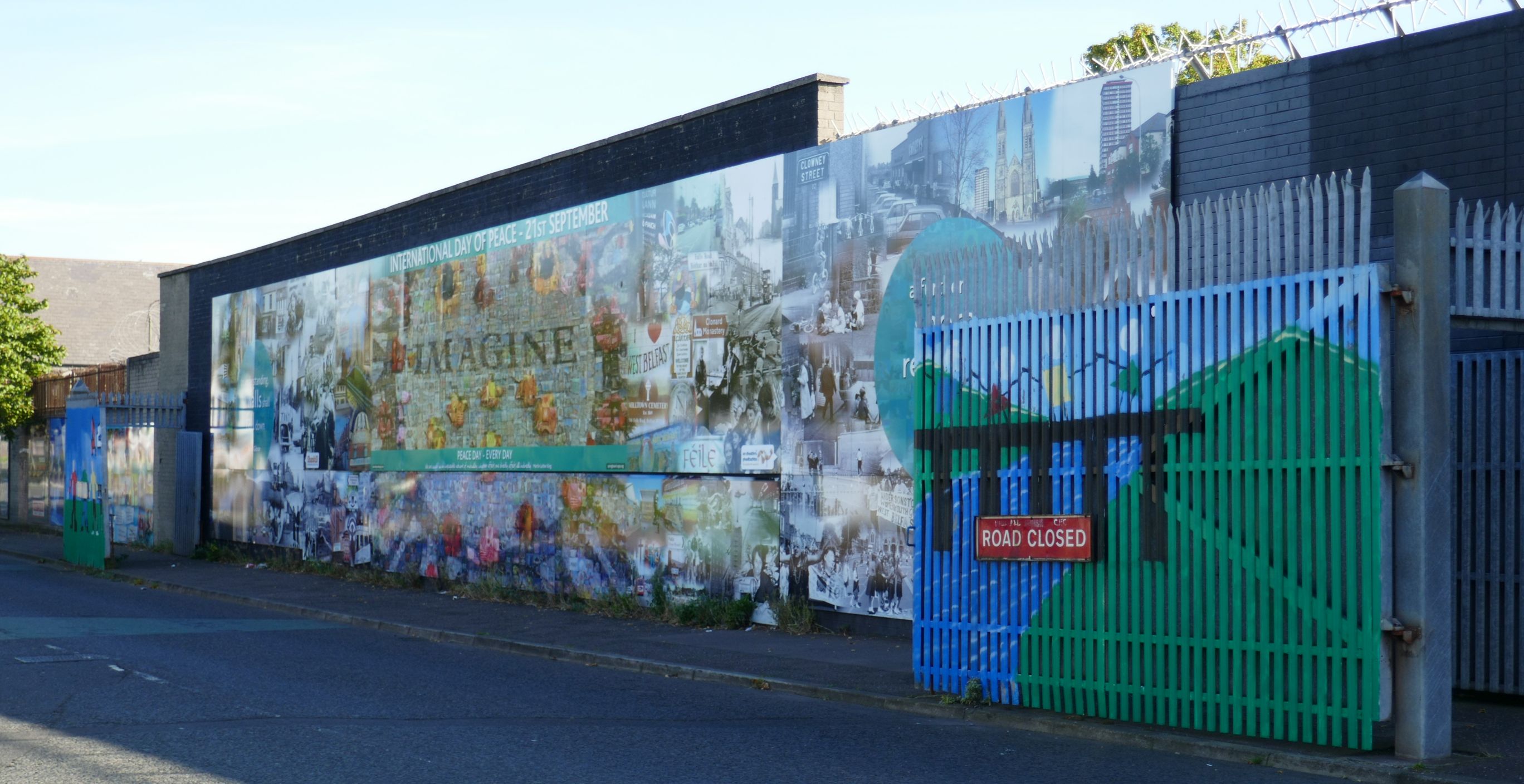
Billy showed us the street intersection where the worst of the violence took place as well as the walls that separate the Catholics of West Belfast and the Protestants of East Belfast who were loyal to the British. During The Troubles, when a wrong turn might have taken you across the dividing line between the Catholic and Protestant sections, it would have resulted in physical abuse or death.
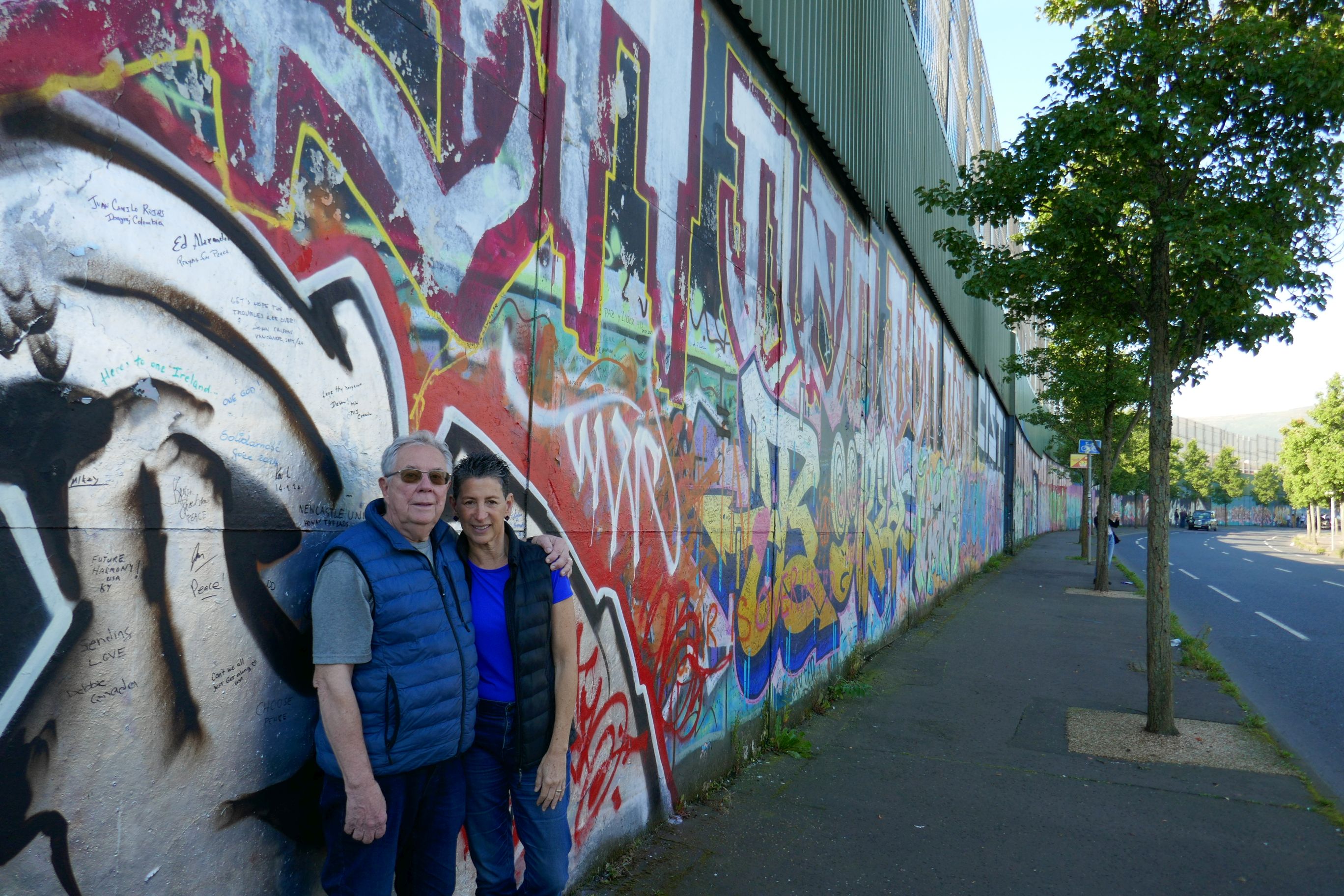
Today, these walls still stand, and many people refer to them as “peace walls” to maintain the peace. They want the walls to continue segregating the poorer Catholics in West Belfast from the wealthier Protestants in the eastern section of the city. Although you can still pass between the two sections during the day when the gates are open, the gates of the main three-mile-long wall are closed and locked at 10:00 PM each night.
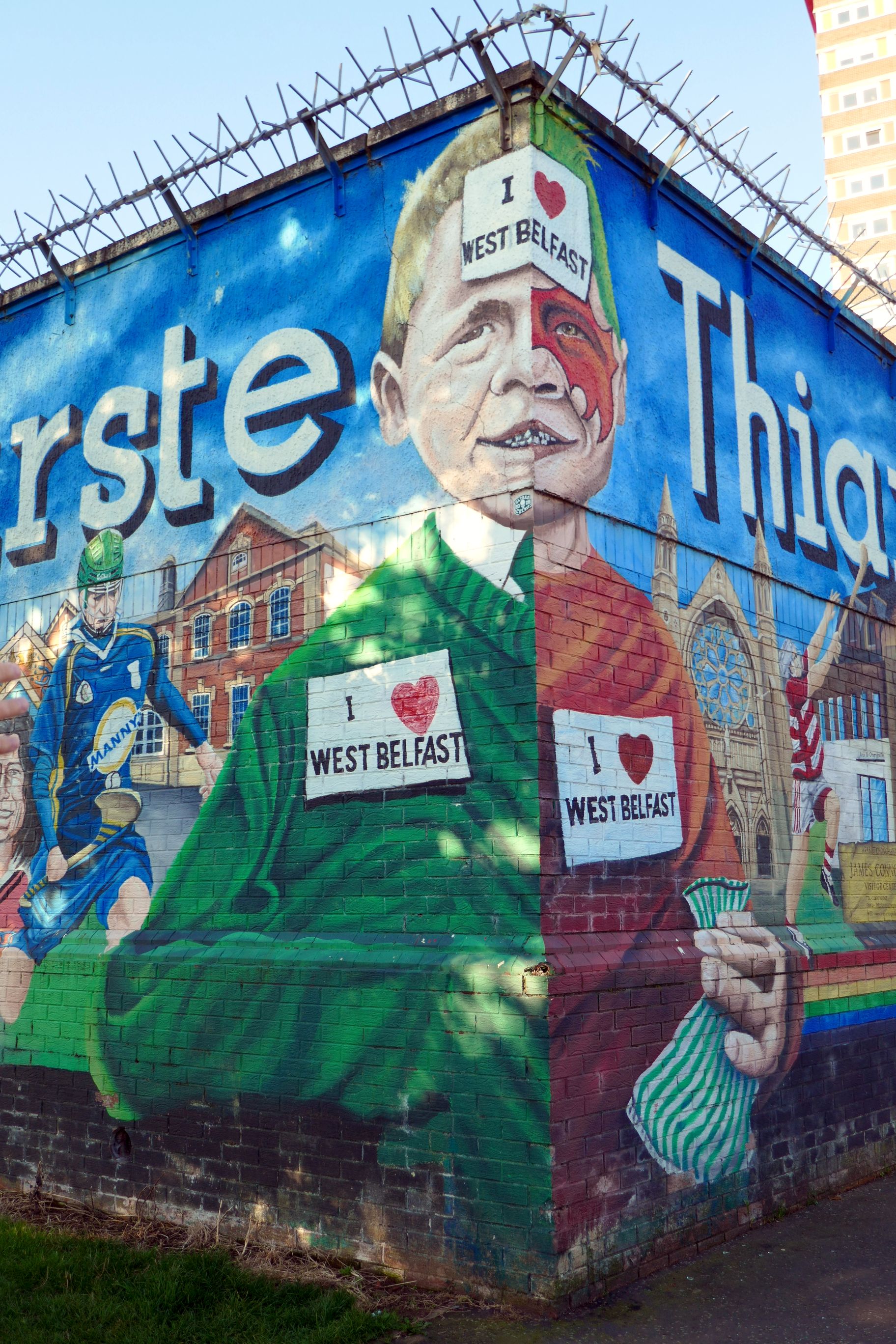
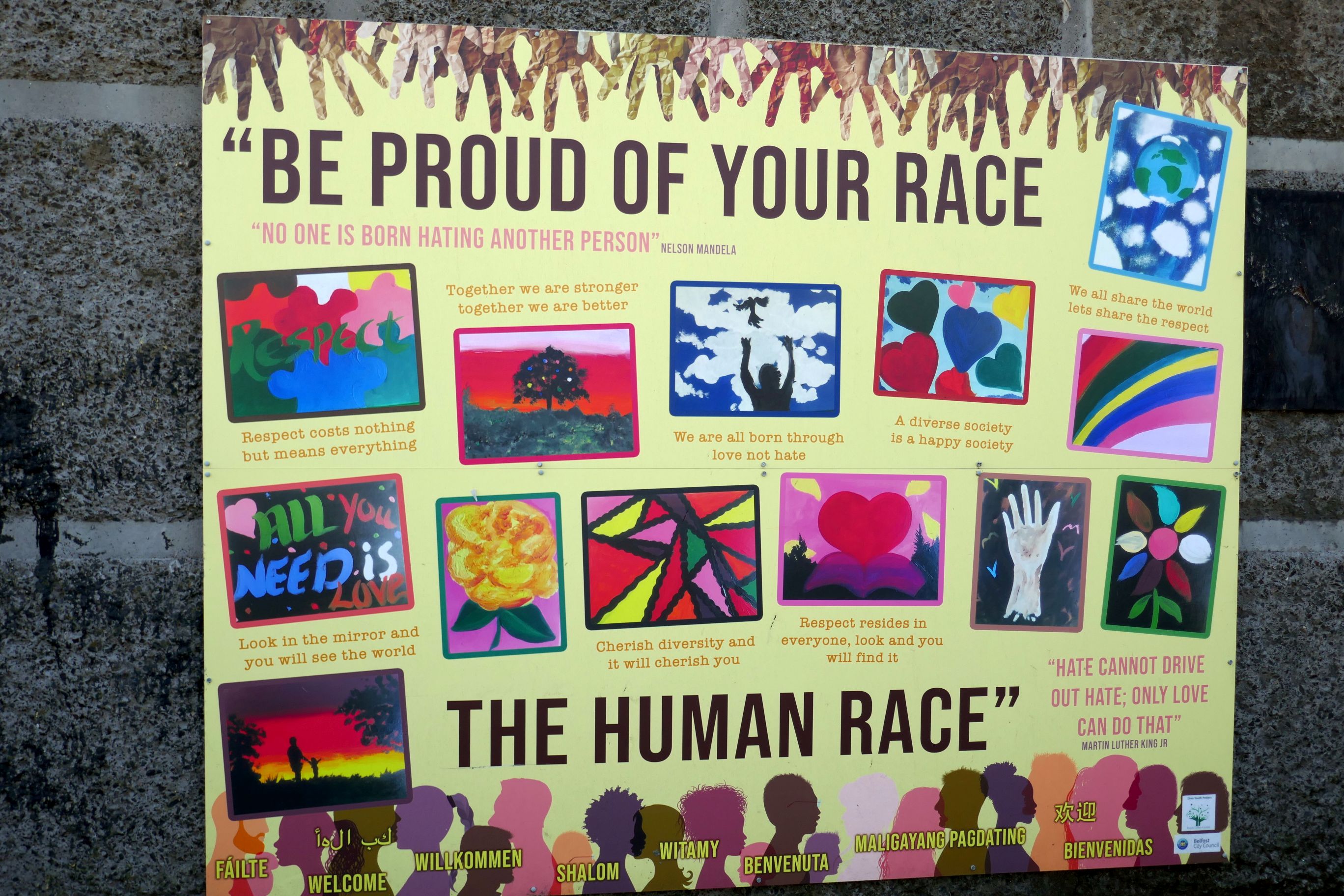
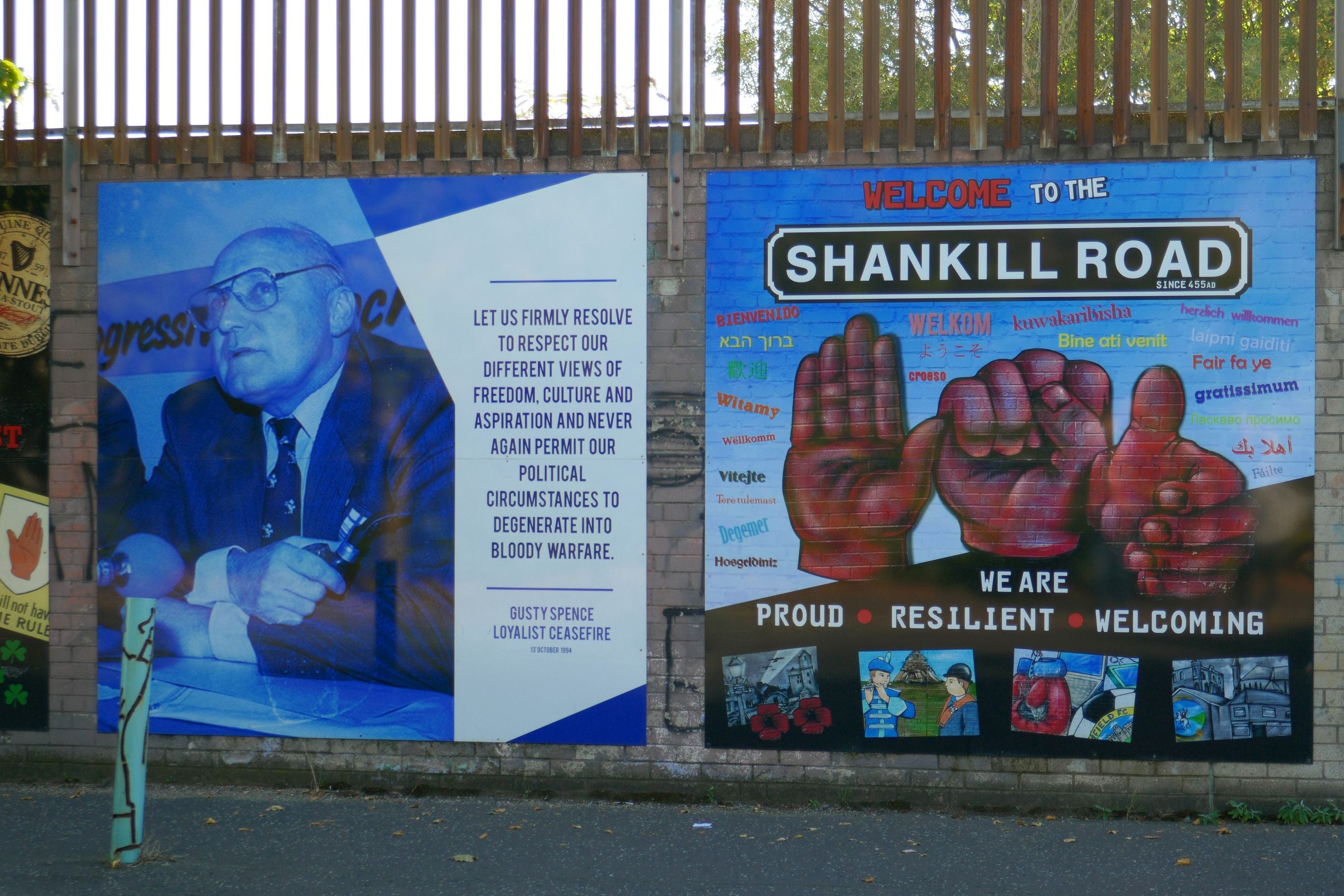
Every inch of these walls is covered in murals, and Billy explained the meaning behind several of them. I found it interesting that on the Catholic side, there were some pro-Palestinian murals, and on the Protestant side, they were pro-Israel. There are a lot of parallels between the two wars…
(For all photos, click on the image for a full screen view.)
Billy
These gates that separate the Catholics from the Protestants are closed at night for security.
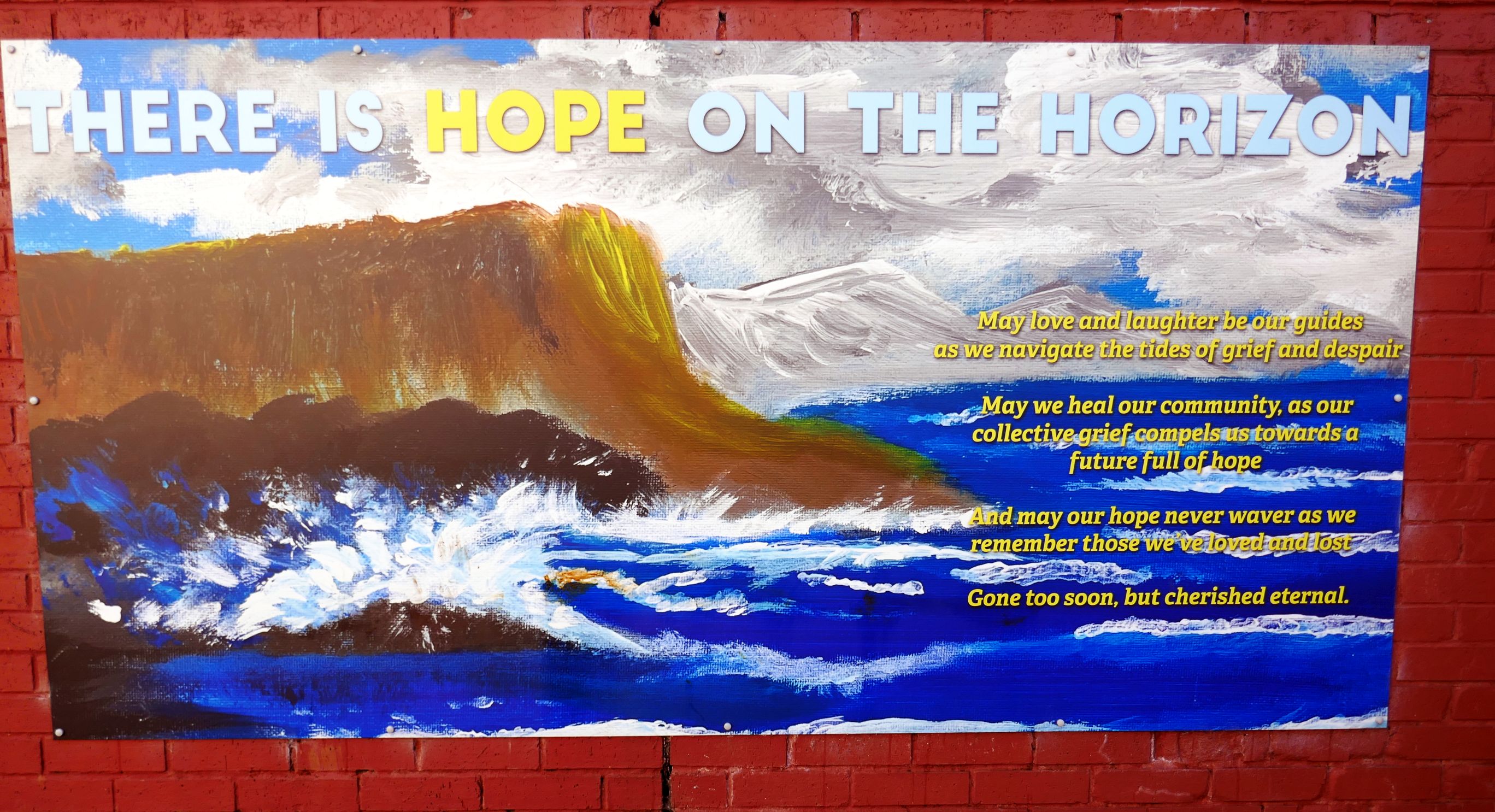
Bruce and I added our hope for peace to this wall.
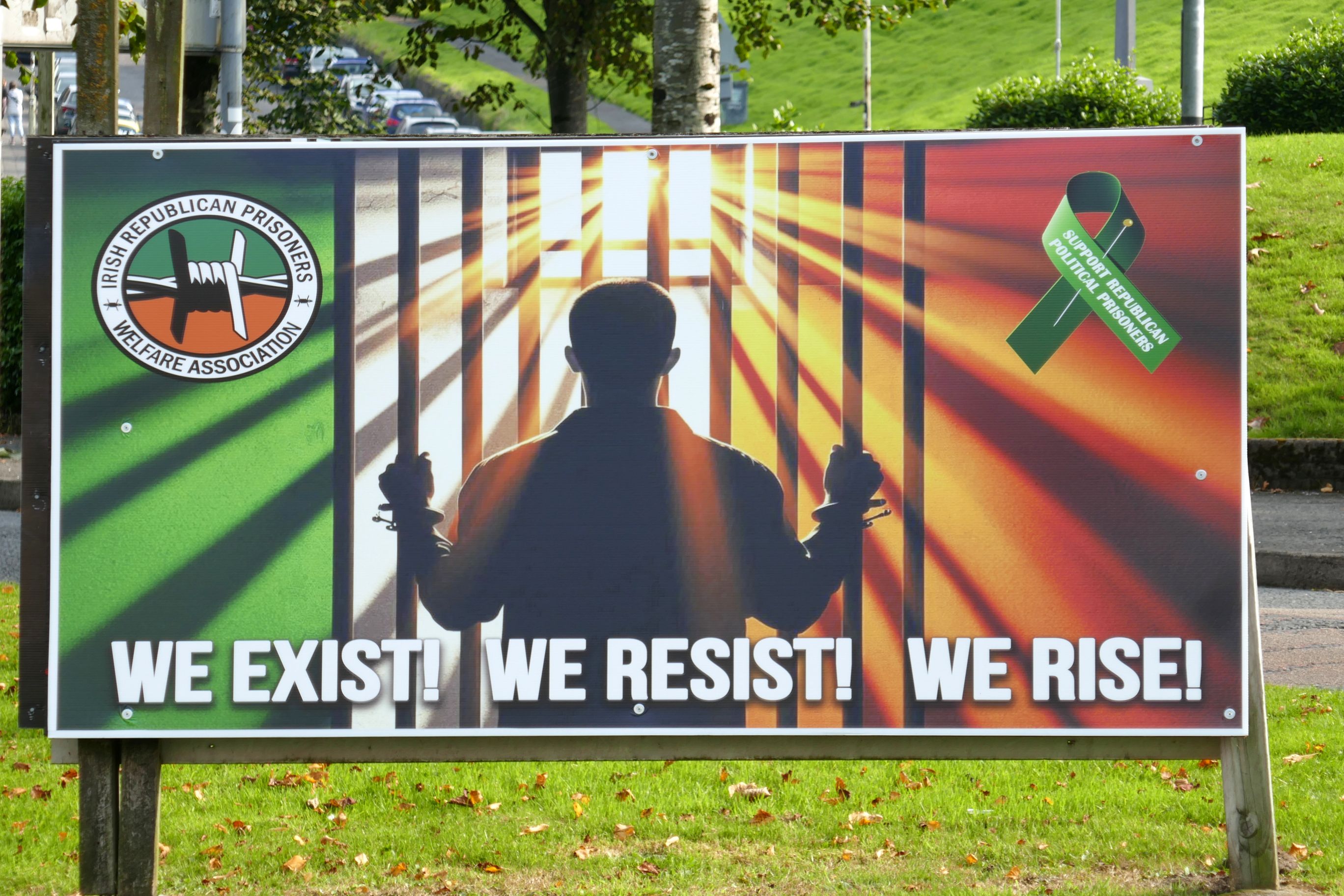
Following our tour, we met up with our group at the Felons Club where we had a panel discussion with three men who were in opposition at the time of The Troubles but now volunteer with an organization working to promote peace between the groups. The Felons Club was established as a meeting place for Irish Republicans who had been imprisoned for their political or militant activities.
Robert, Gerald, and Glenn
Gerald, 74, is Catholic, and he marched for civil rights. He was arrested in 1972 for protesting and imprisoned until 1975. He was re-arrested (mistaken identity) and broke out of prison in 1983 after he was beaten.
Glenn, 57, was a former member of the British army and is a current member of Veterans for Peace. He was born near the wall on the Protestant side and raised by his grandparents. Although Glenn considers himself Irish, he agreed with the British, even though he was working class. He was just five years old when the IRA detonated a bomb injuring him, and he thought of the IRA as a murder gang.
Glenn says he grew up ignorant of the British goals and efforts of supremacy and power over the Catholics; and he was angry at the IRA for injuring him and other children. In 1984, he enlisted in the British army, which you could join at age 16. Although Glenn wanted to fight the IRA, he ended up in Lebanon to fight the PLO. At age 17, he became a combat veteran and left the army in 1994 with a diagnosis of complex PTSD. Meanwhile, his uncle had been tortured and killed by the IRA.
When Glenn returned home, he got involved in a unionist (British) organization that helped broker the Good Friday Agreement, the 1998 peace agreement that ended the violence.
Robert, a 69-year-old unionist, grew up near Gerald on the border between the two groups. In 1971, at the age of 15, a bomb detonated by the IRA went off that motivated him and his friends to join the unionists the following year for revenge. At age 20, Robert was sent to prison and served a 15-year sentence. After he was released, he went to college in London and then returned to Belfast unaware of what had transpired while he was away. He still hated the IRA, but he didn’t know people on his own side were also murdering people. This inspired him to get involved in a volunteer force with other former prisoners to work towards peace. Currently his group talks with young people to educate them about the conflict and make changes for a better future.
It was amazing to me that these three men sat side-by-side in peace to share their experiences with us and answer questions. When asked if they want to see the walls come down, they explained there are 109 “peace walls” in Ireland (not just Belfast) and hope they eventually can come down, but “not today.” They explained that it will be up to the people living closest to the walls whose lives were most affected by the violence—many of them losing family members in the violence. Although it is too raw and fresh for them, they still see the walls as security, and their hope is for the walls to come down for their grandchildren in the future. (It is interesting to note that the highest use of antidepressants in the U.K. is in areas closest to the walls.)
Gerald is a member of Sinn Fein, a political party active in both Northern Ireland and Ireland. He hopes for peace, harmony, and unification between the two, which can only happen if England pulls out of Northern Ireland.
Glenn would need more clarity before he would support unification. He’s quite leery because of the Brexit fiasco. If England pulls out, will they still pay his pension that he earned after working 36 years and paying into the system? Financially, will it work? He feels it should be up to the people to vote on rather than a referendum.
Robert grew up under the Union Jack flag and can’t envision Northern Ireland united with Ireland—emotionally, financially or economically. He says his generation still carries hurt and pain from the IRA bombings, but he doesn’t want to pass that to the next generation. “Let the next generation decide what they want for their future,” he says. In Northern Ireland, though, polls show that only 34% want unification. Gerald asked, “Do our own emotions get in the way of progress for future generations?” They agreed that the three of them have worked hard on this, but the current generation can’t get over the past and forgive—the reason they are working with younger people to influence them towards a peaceful future.
Coming Up Next: IRISH ADVENTURE #7: BEAUTIFUL BELFAST





















 Elaine-iaK's Travels: A Traveler's Tales of People, Places, Photos, Pools... and CHOCOLATE!