SOUTHWEST FRANCE, NORTHERN SPAIN & PORTUGAL #18: SENSATIONAL SANTIAGO DE COMPOSTELA, PART 2

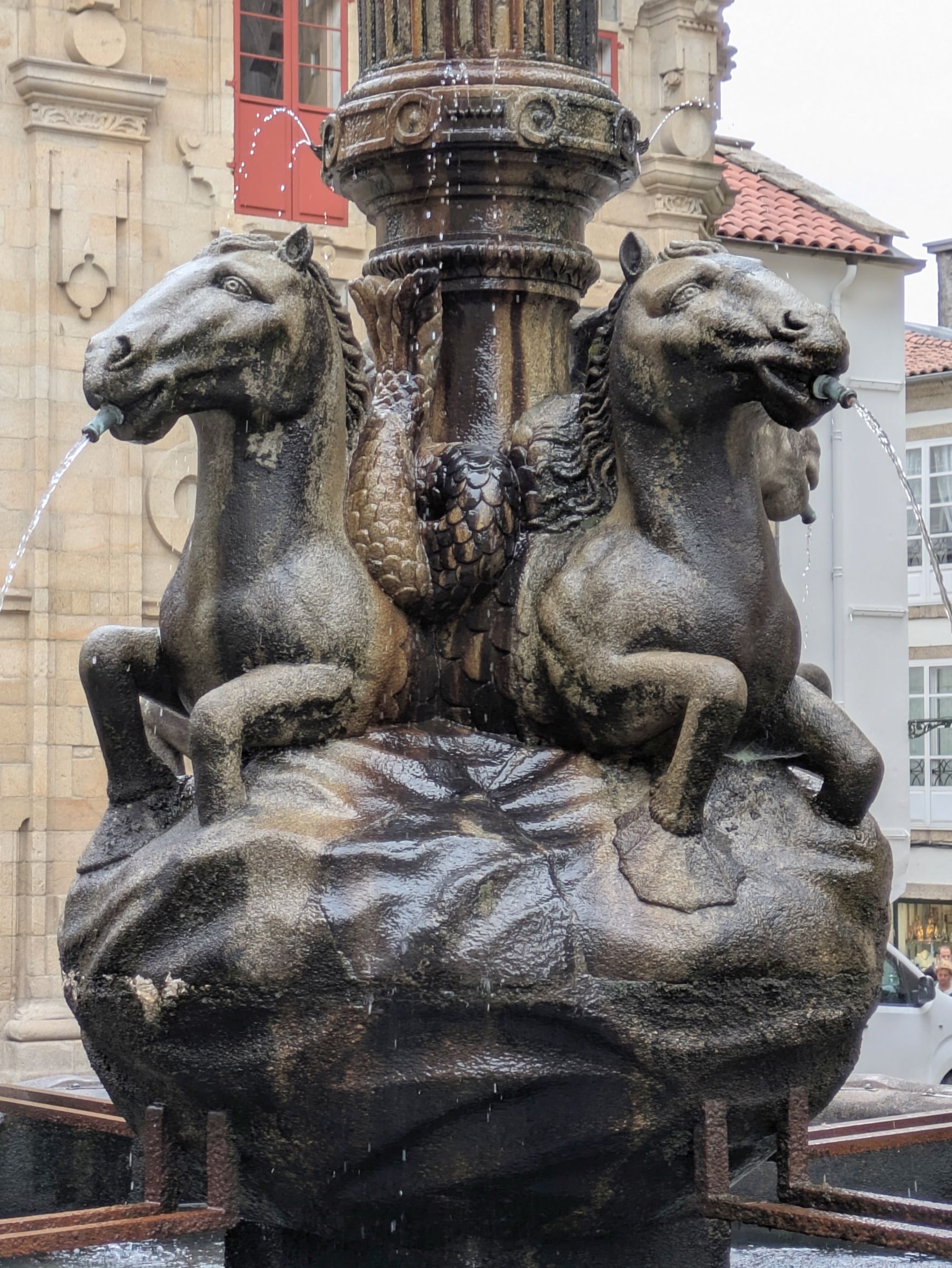
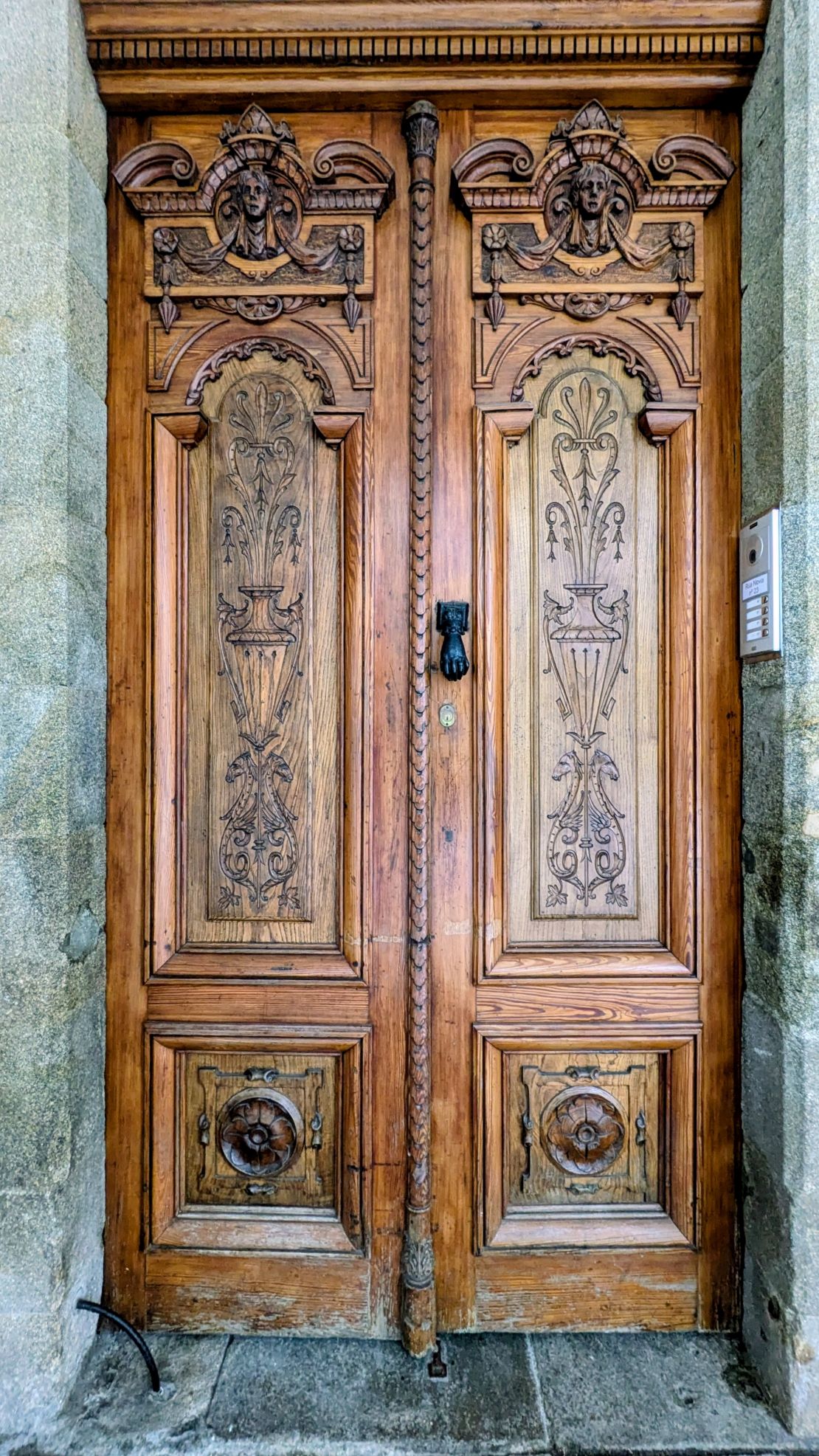
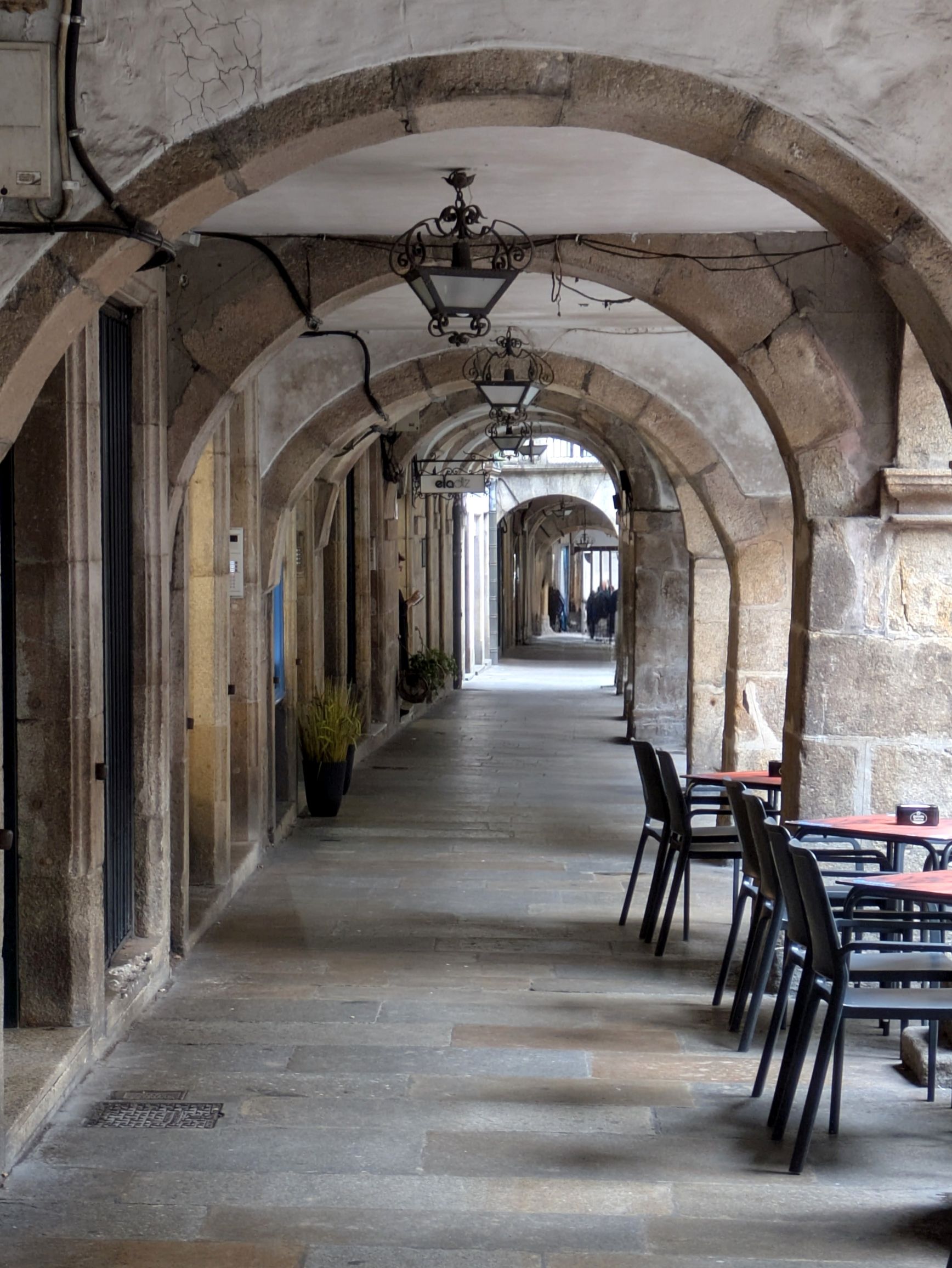
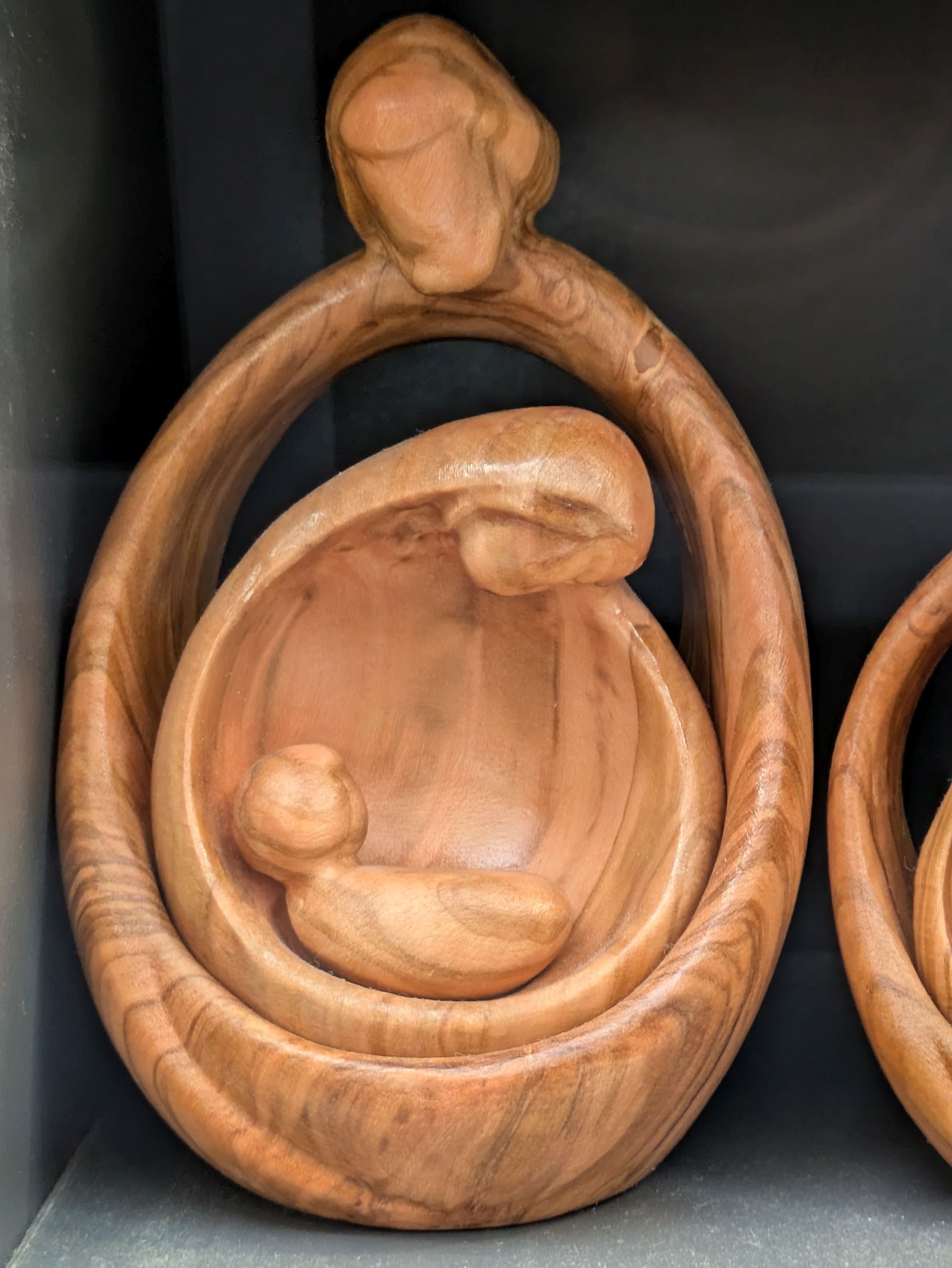
Although Santiago de Compostela (“Santiago”) has become quite touristy, I enjoyed meandering around the old town, taking in the culture, seeing the sights, and doing photography. 

Tourism has become an important part of Santiago’s economy, and the city has the Way of St. James (El Camino de Santiago) to thank for that, especially in Holy Compostelan Years when the Feast of Saint James falls on a Sunday.  When it was a holy year in 1993, the city launched a very successful advertising campaign, and there has been a steady annual increase in pilgrims completing the route ever since.  In 2010, the total was more than 272,000, and in 2024, there were 499,234 pilgrims who completed the route, according to the Pilgrim’s Office, in Santiago.  This total includes only pilgrims who request a certificate for walking 75 miles of the route or more.  There are many more who travel to Santiago to walk the route, but complete less of it.

The culture surrounding the Way of St. James is vibrant in the old town.  I especially enjoyed visiting the Museum of Pilgrimage and just hanging out in Plaza del Obradoiro, the cathedral square, watching pilgrims as they entered the square and celebrated their accomplishment.  (See my post #16 for photos.)

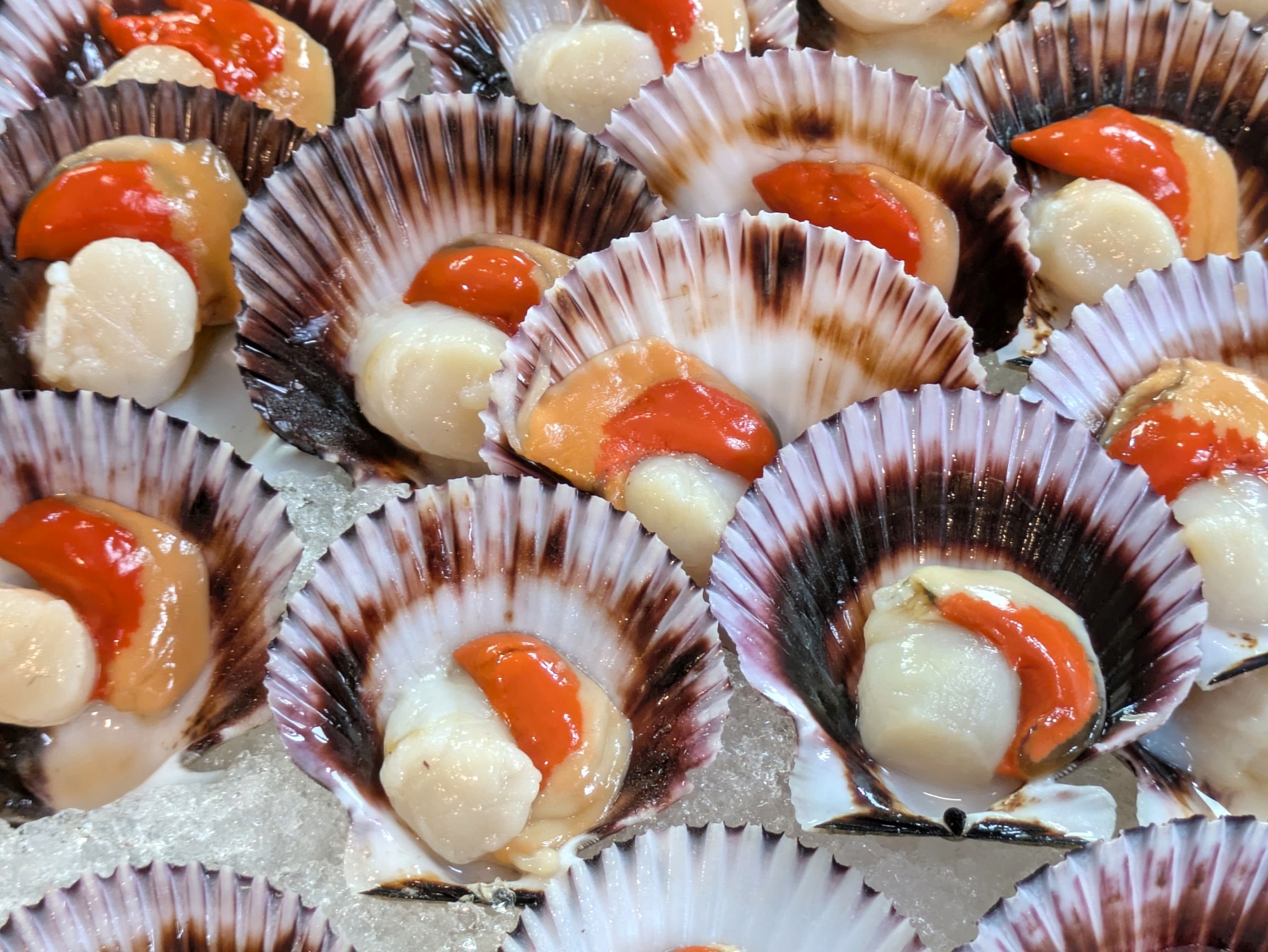
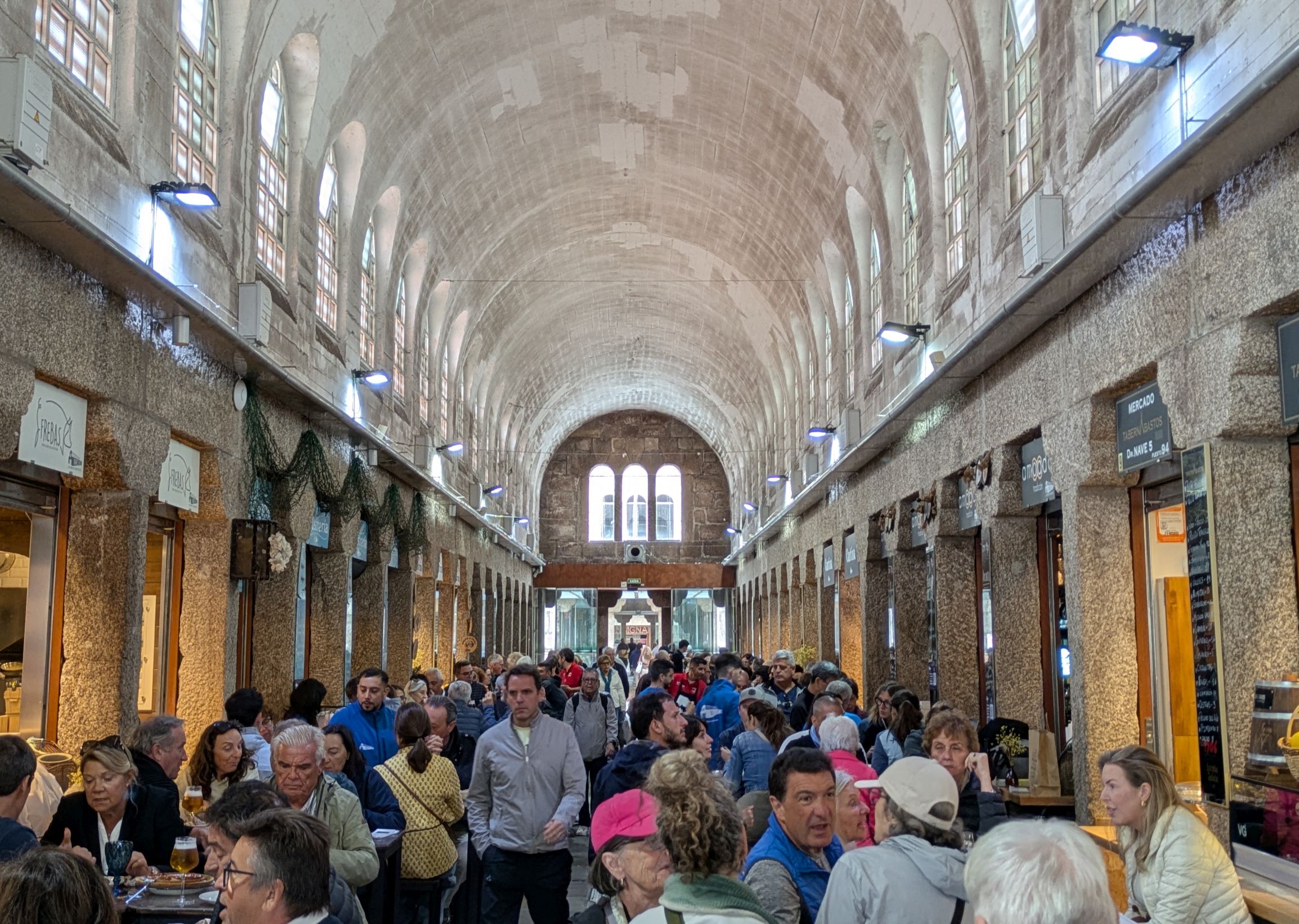
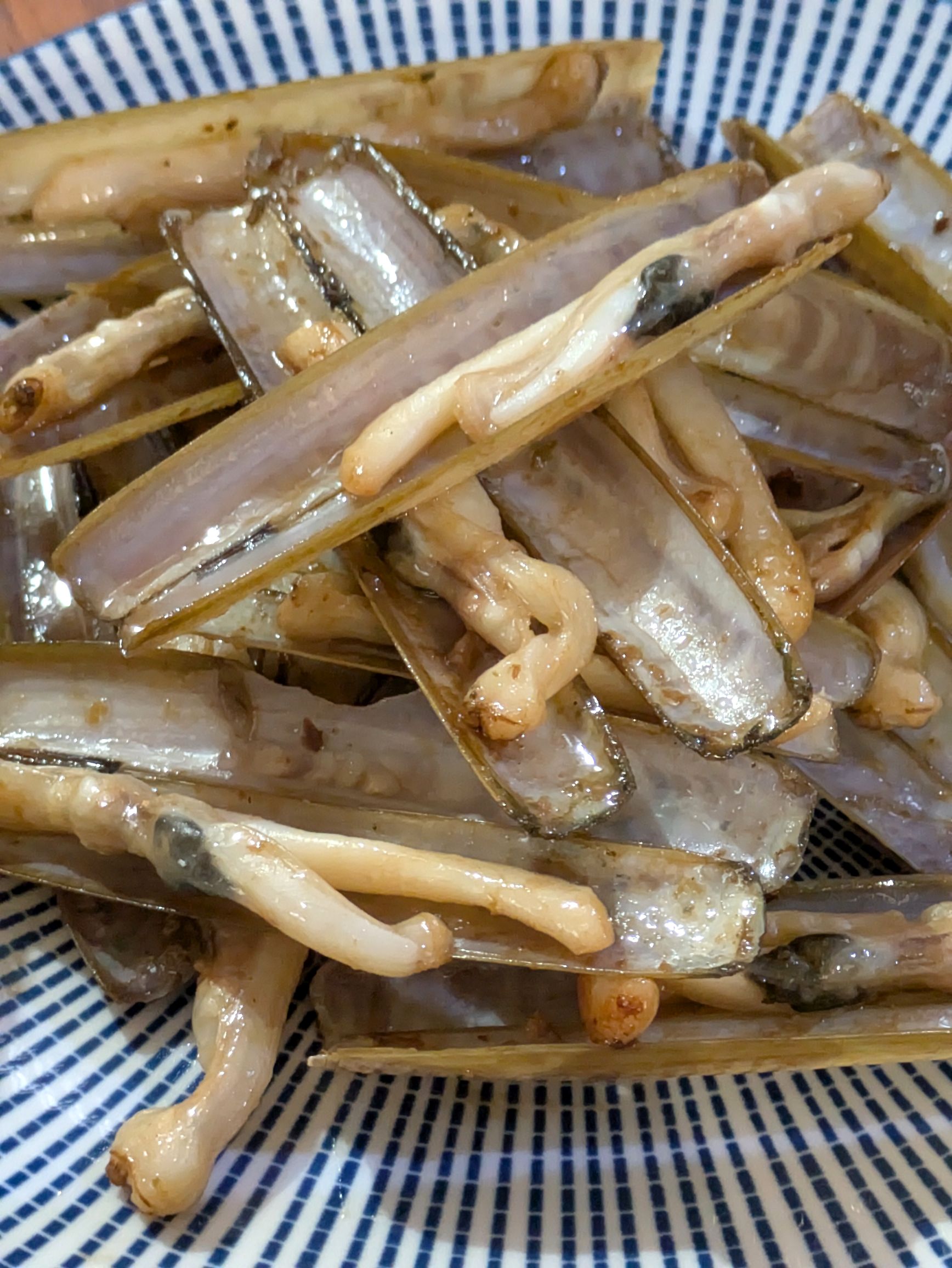
Mercado de Abastos de Santiago, the city market, was another favorite spot.  We enjoy visiting city markets everywhere we travel, and this one was well worth the visit.  The highlight was having lunch in the market with our group.  The region is famous for its seafood, and the market had the freshest and most expertly prepared seafood I have ever had.  Delicious!

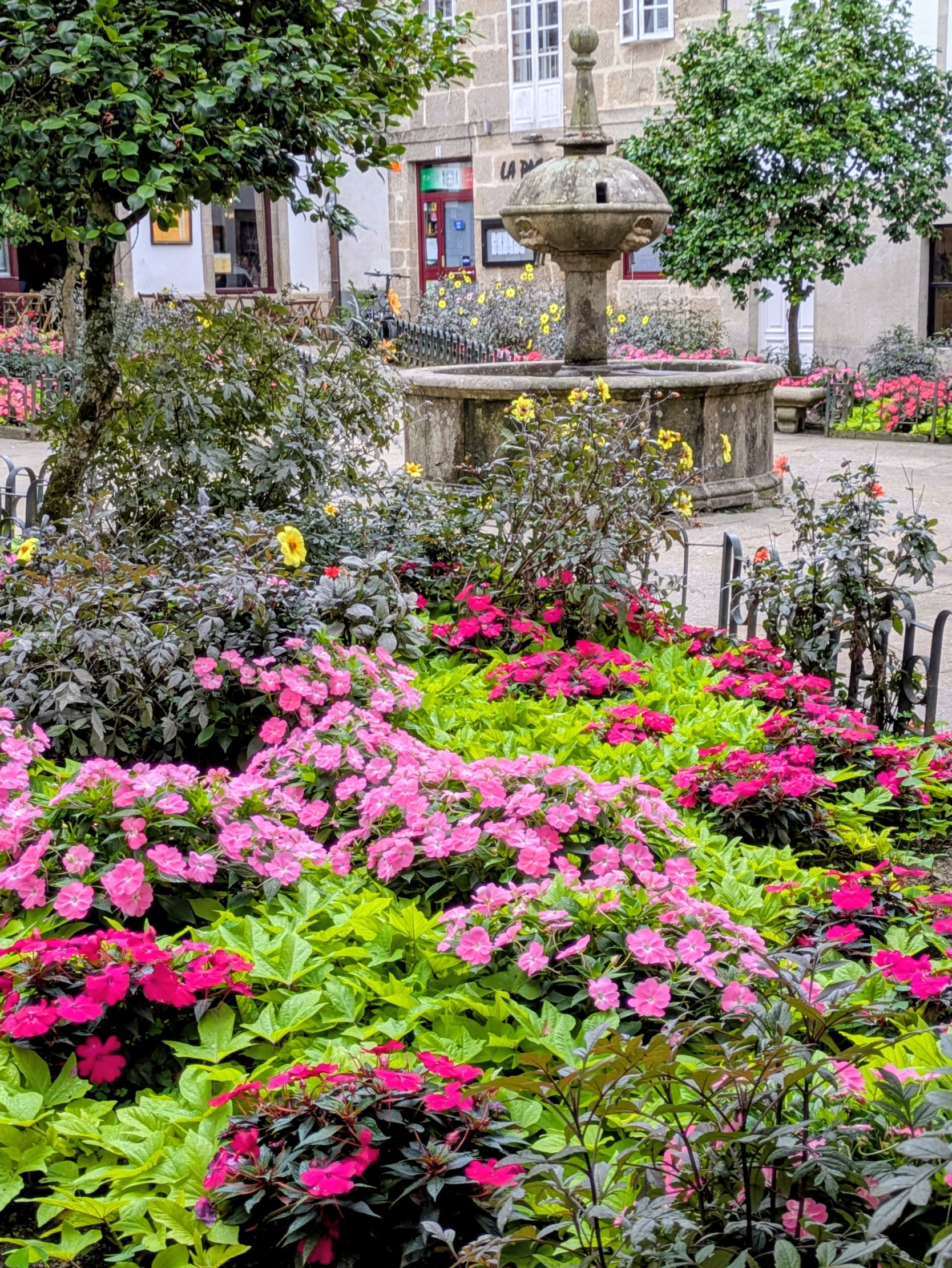
Scenes from around Santiago:

(For all photos, click on the image for a full screen view.)

The view of the cathedral from Santiago’s city park, Parque de la Alameda (Alameda Park)
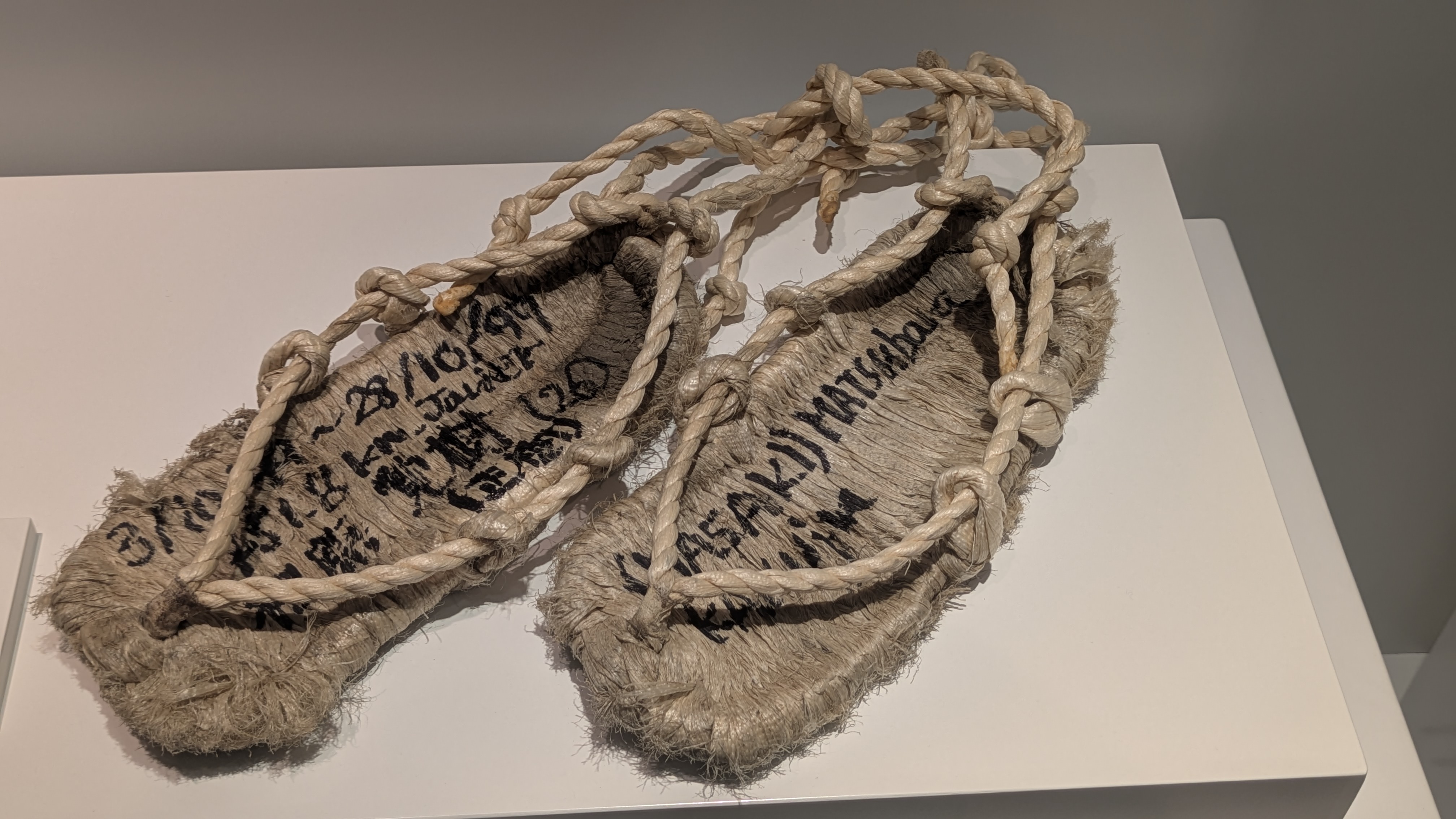
At the Museum of Pilgrimage, sandals of a pilgrim from a (very!) past century were on display.
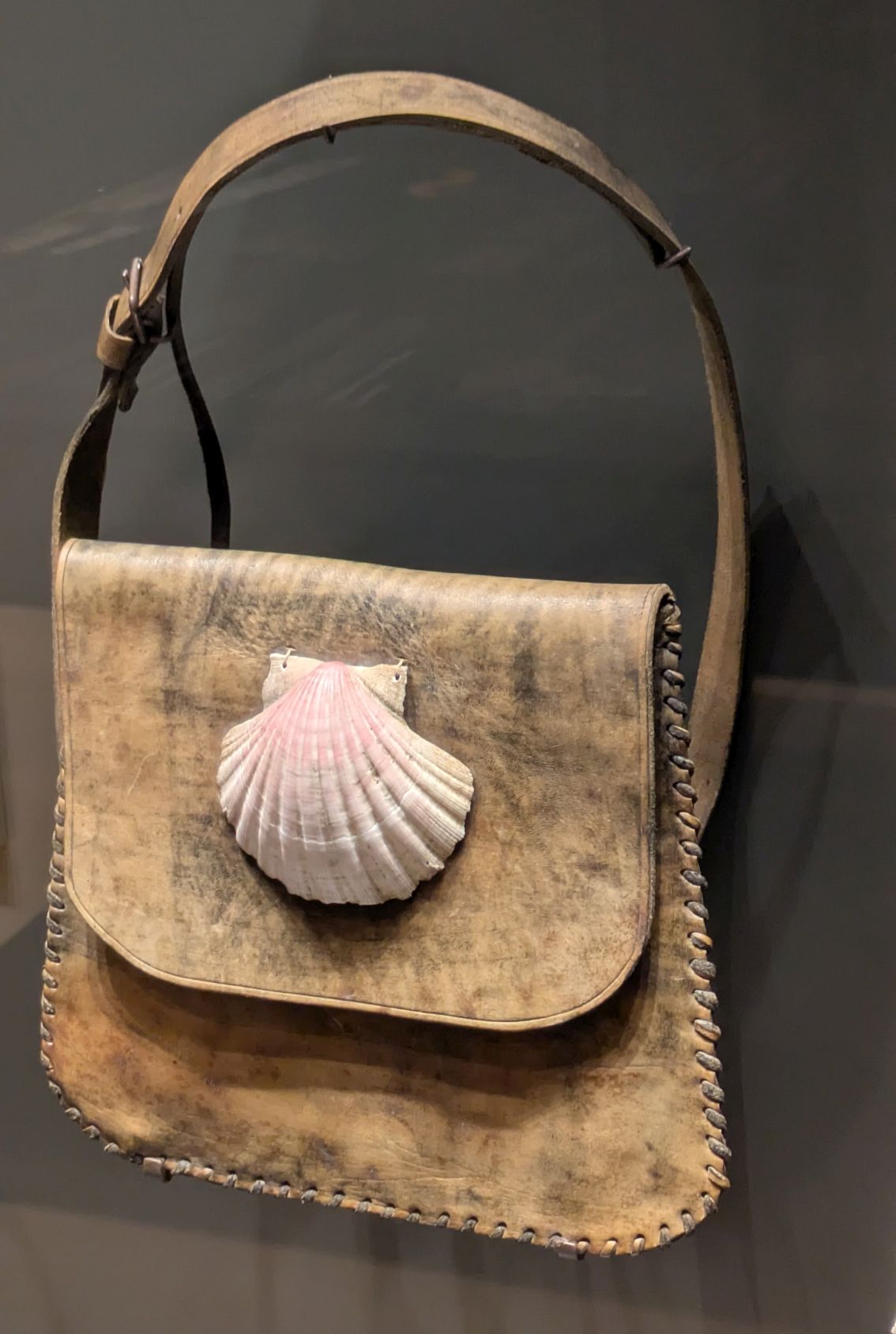
Carried by a pilgrim long ago…
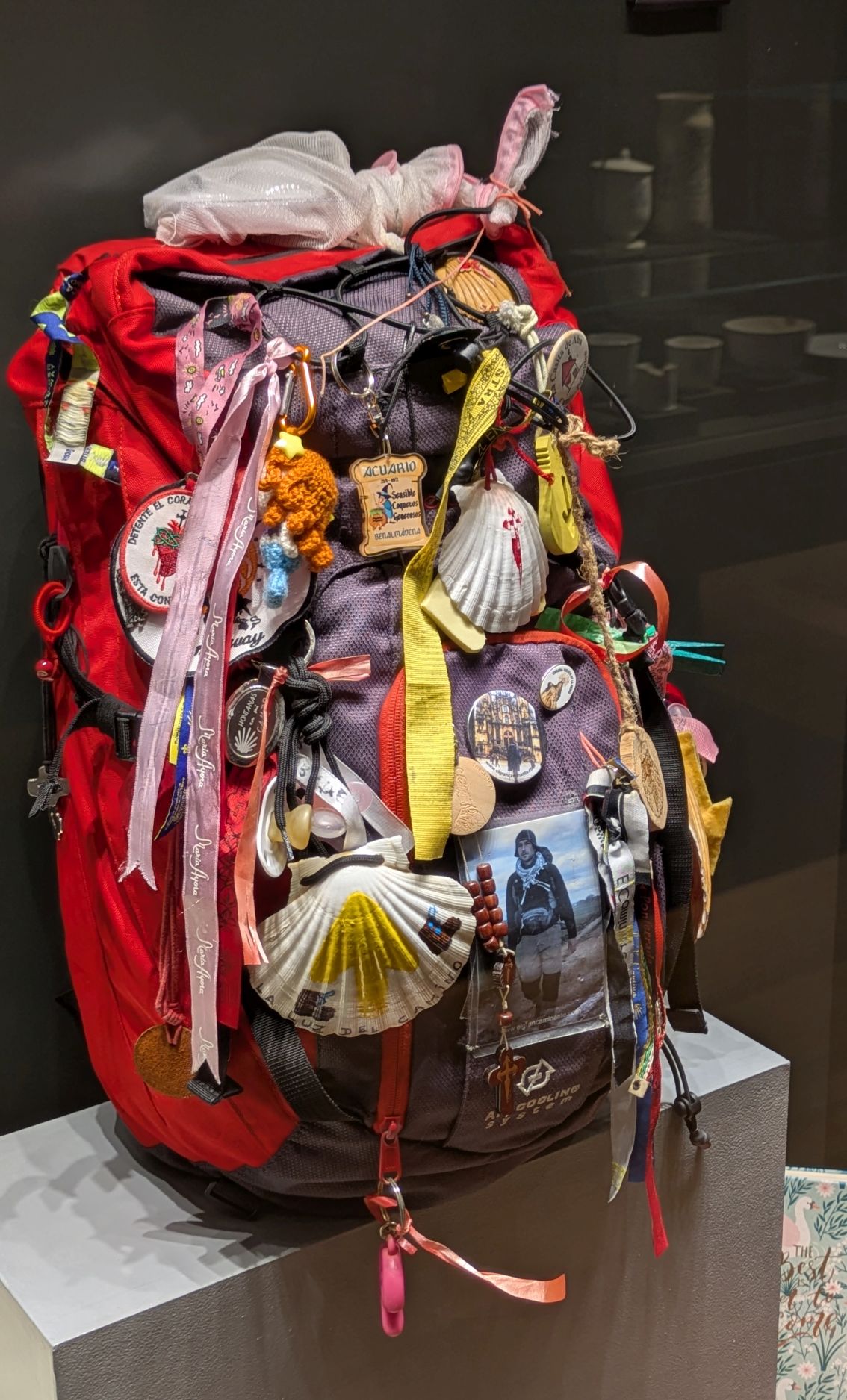
…and a backpack carried by a more recent pilgrim
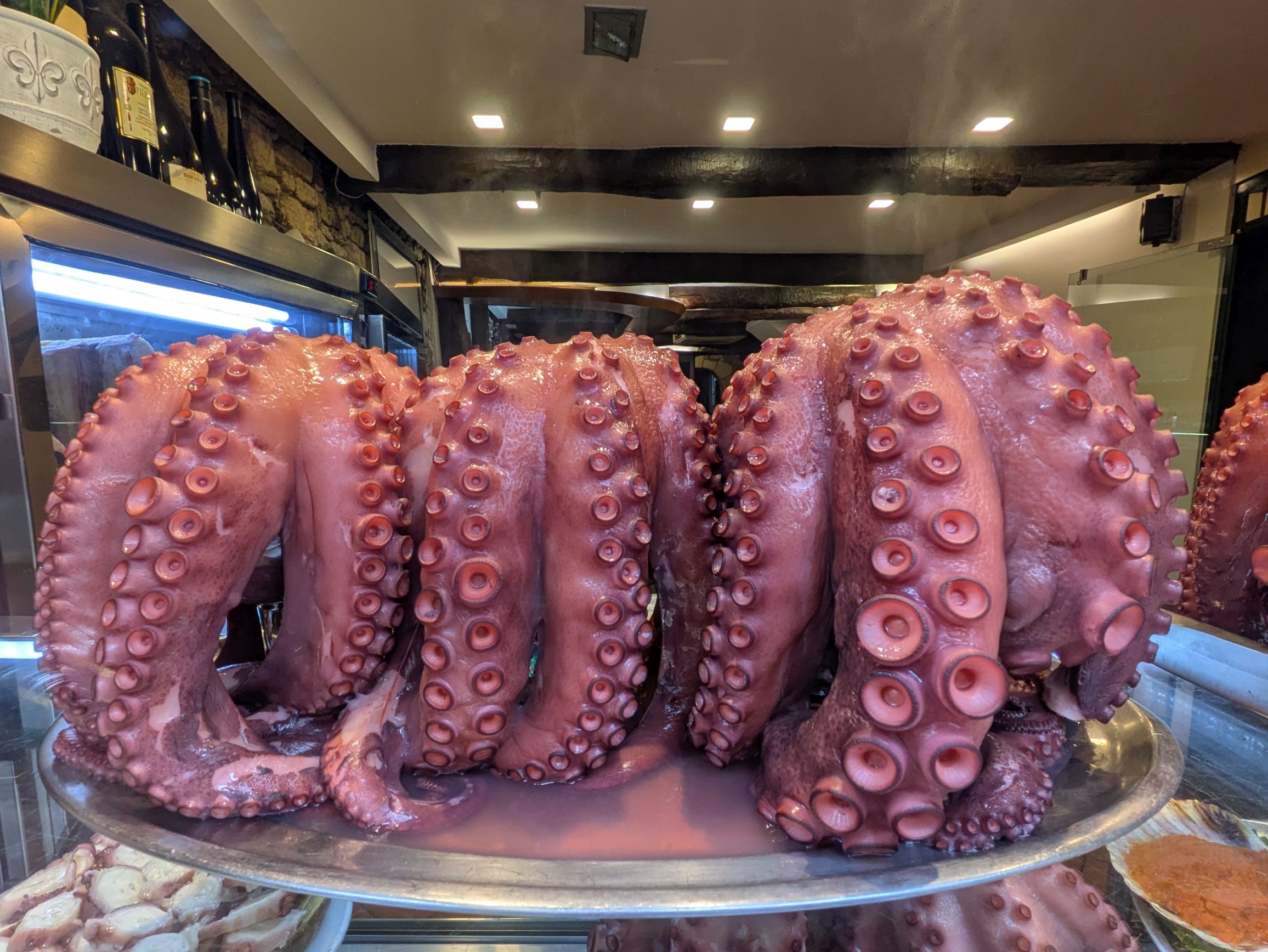
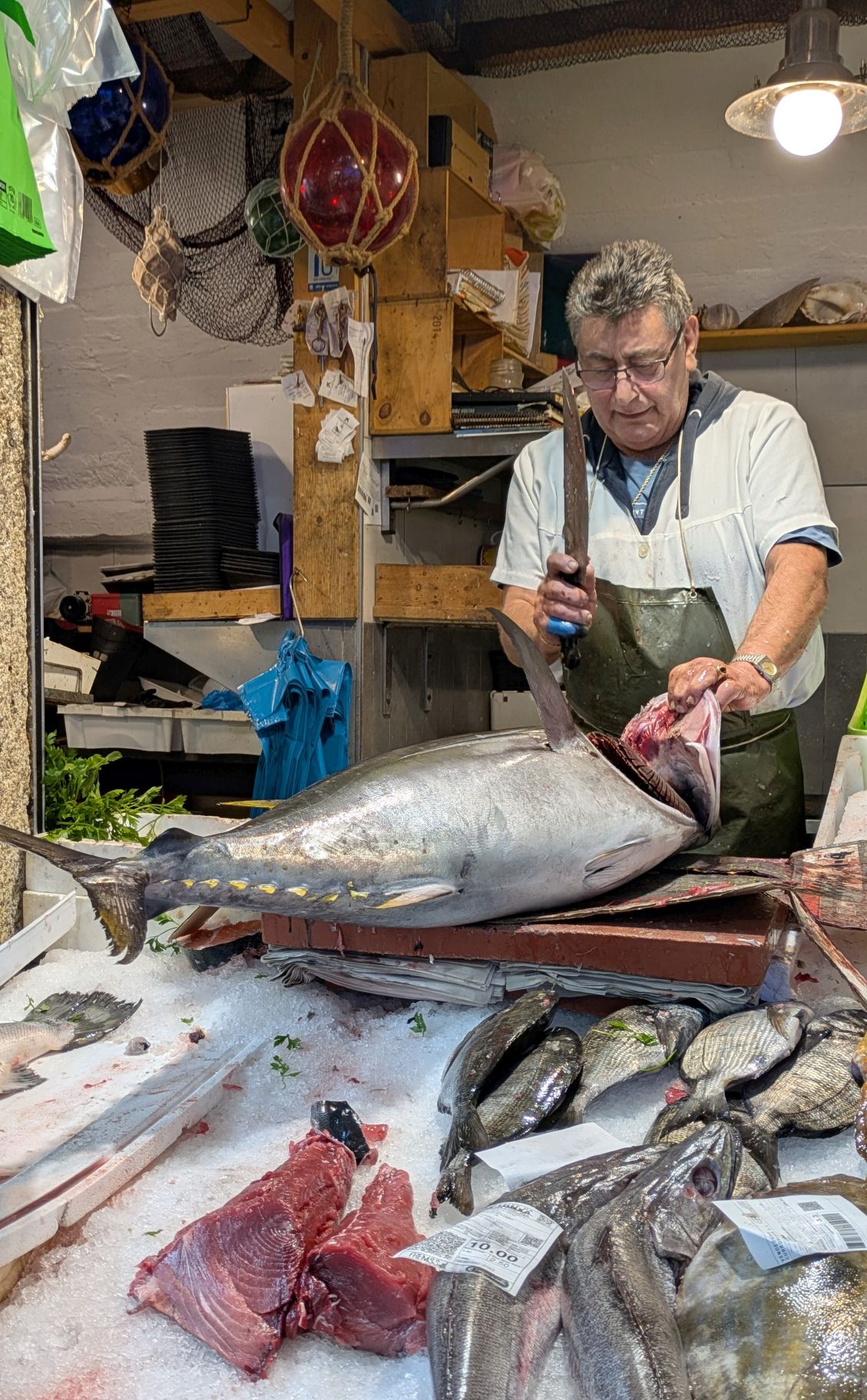
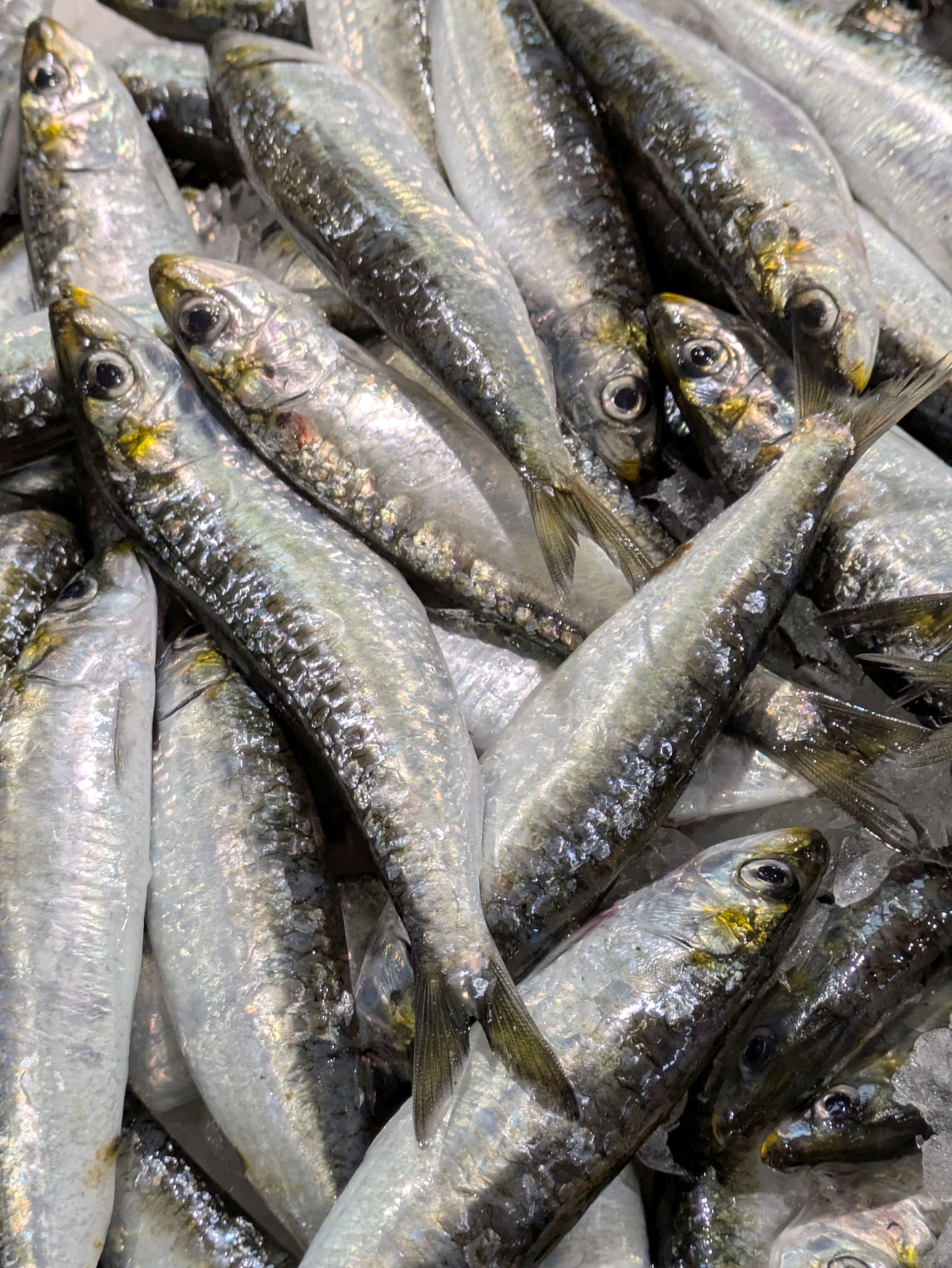
The seafood section of Santiago’s city market
Lunch at the market is an event for locals and tourists alike. That’s our group in the front, on the right.
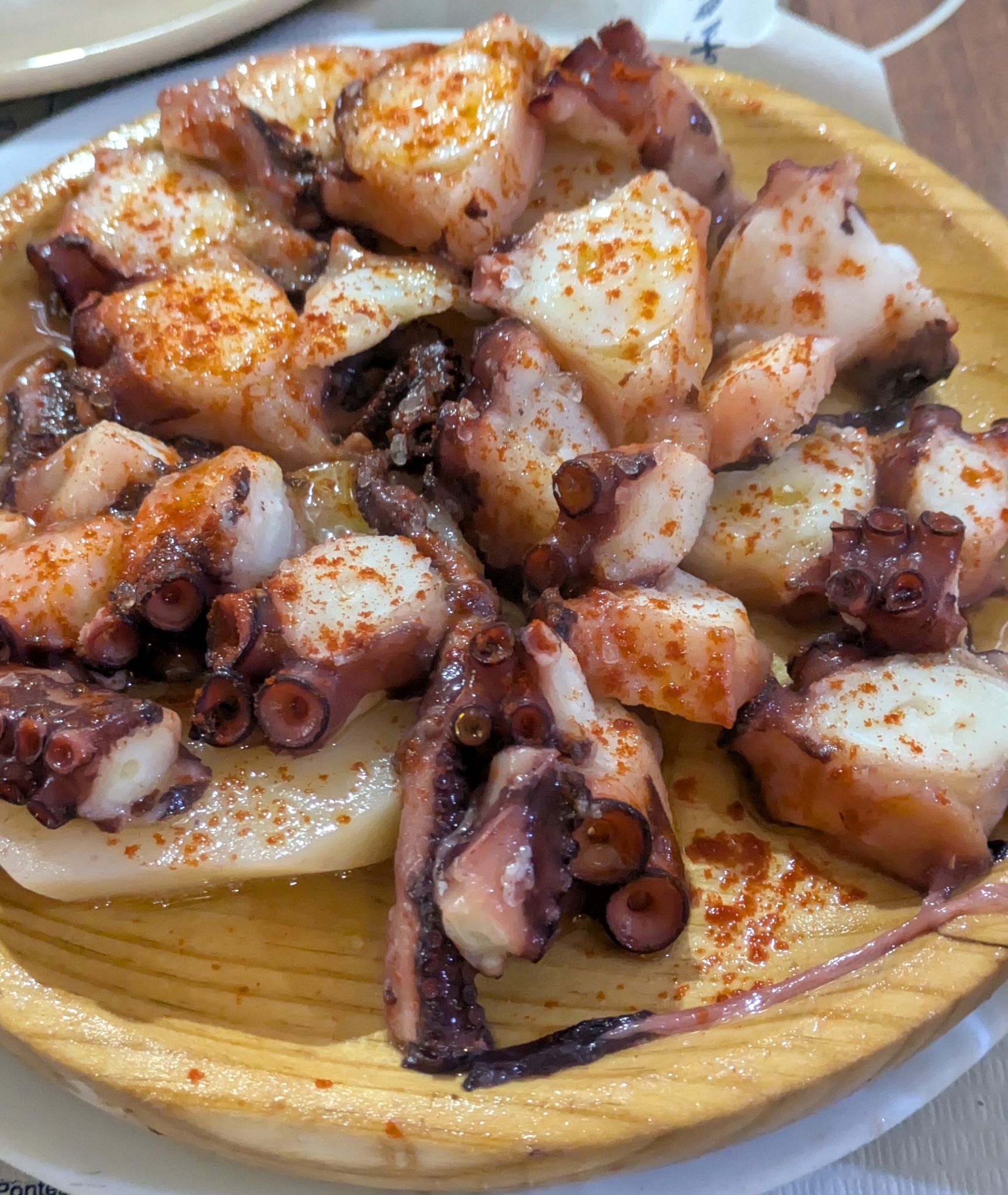
This octopus was so incredibly delicious! It was my favorite dish.
These sweet peppers weren’t too hot, and they were delicious! We were eating them like popcorn!
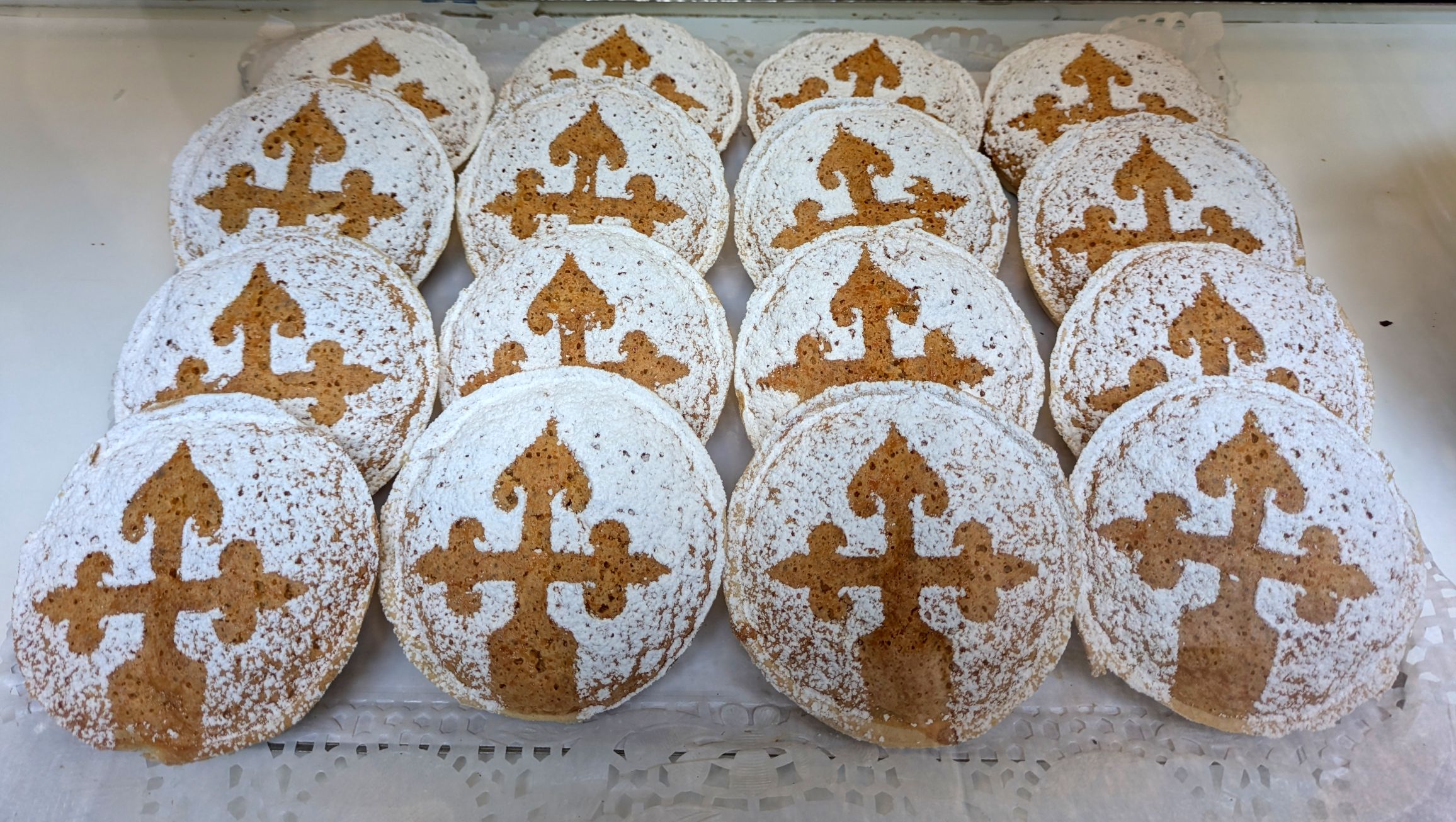
Cakes with the sword symbol of the Way of St. James

Next up: SOUTHWEST FRANCE, NORTHERN SPAIN & PORTUGAL #19: PONTEVEDRA & COMBARRO

SOUTHWEST FRANCE, NORTHERN SPAIN & PORTUGAL #16: THE VILLAGE OF VILLAFRANCA DEL BEIRZO

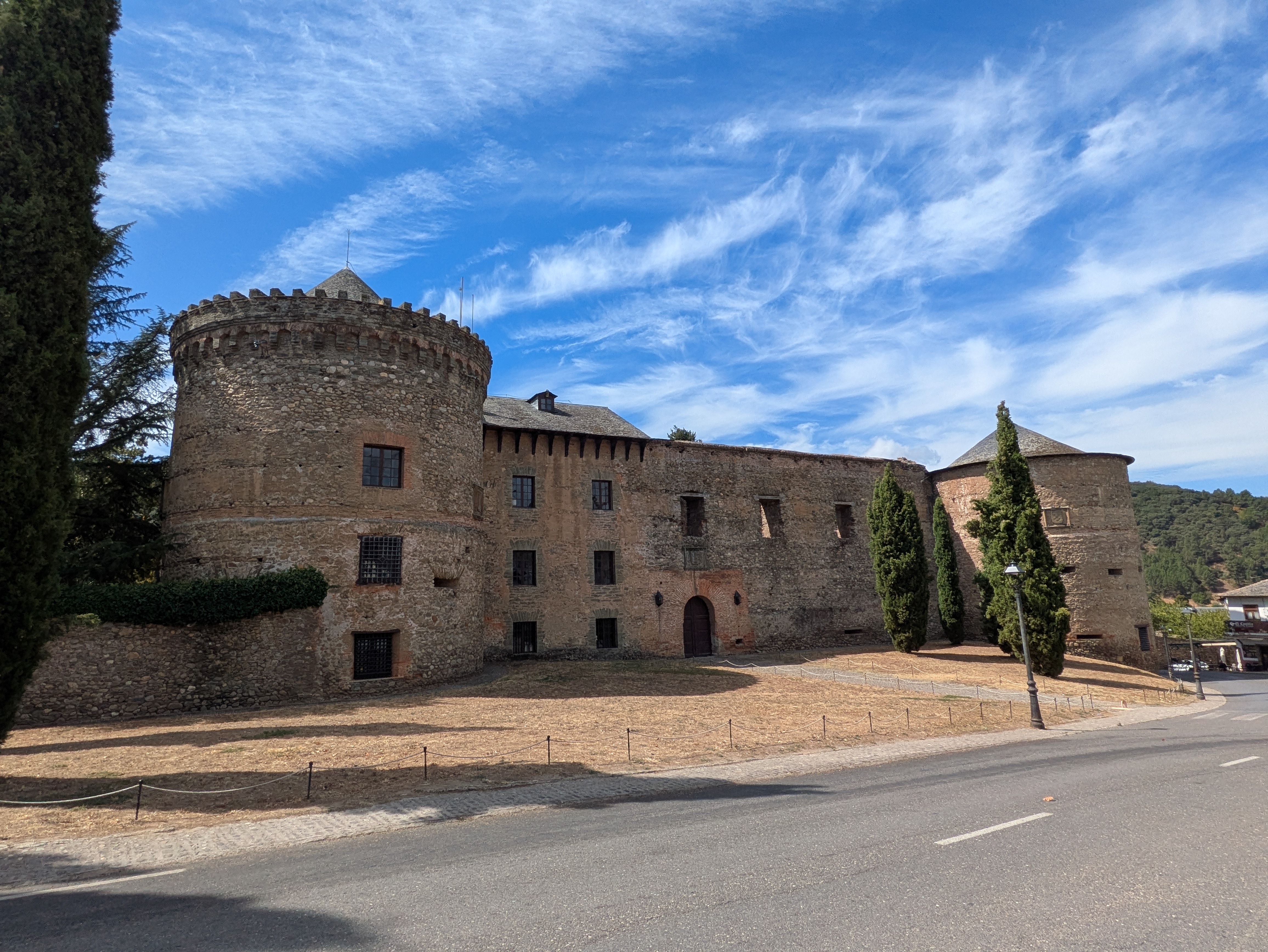
An additional stop we made on the way to Santiago de Compostela was at Villafranca del Beirzo, another village with a long name.  It is the final important town along El Camino before arriving in Santiago, and it has been a rest stop for pilgrims walking the Way of St. James since the 9th century.  For pilgrims walking the entire 500 miles, they still have 116 miles to walk to Santiago, once they leave this village of 2,659 people. 

What an amazing commitment these pilgrims make to walk the entire Way of St. James!  Most of the pilgrims do not complete the entire walk, and there are many more (like our group) who only walk portions as part of a tour.  But for those who complete the entire walk, good on them!

(For all photos, click on the image for a full screen view.)
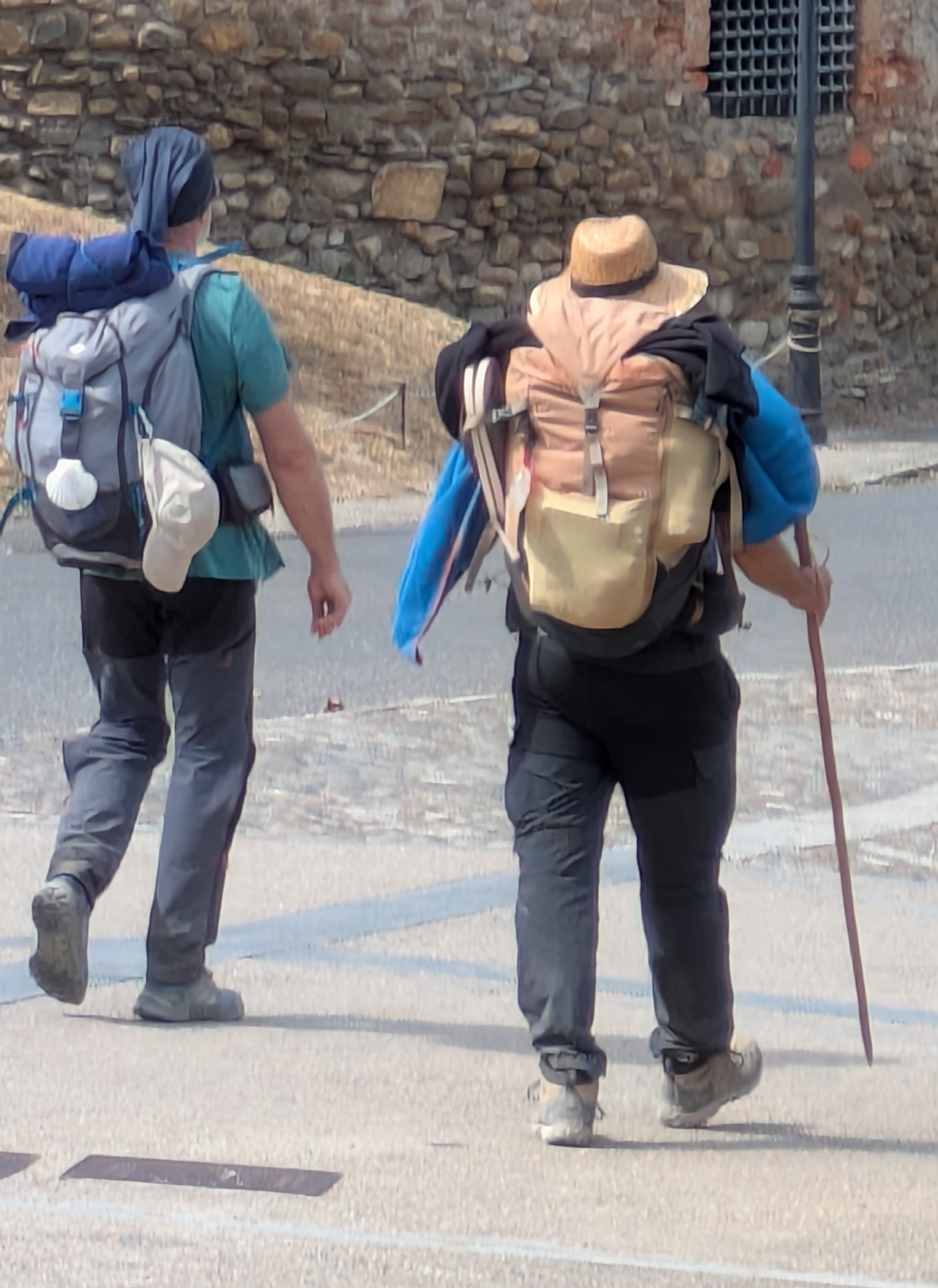
The scallop shell, on the backpack of the pilgrim in the two photos above, is a symbol of the Way of St. James
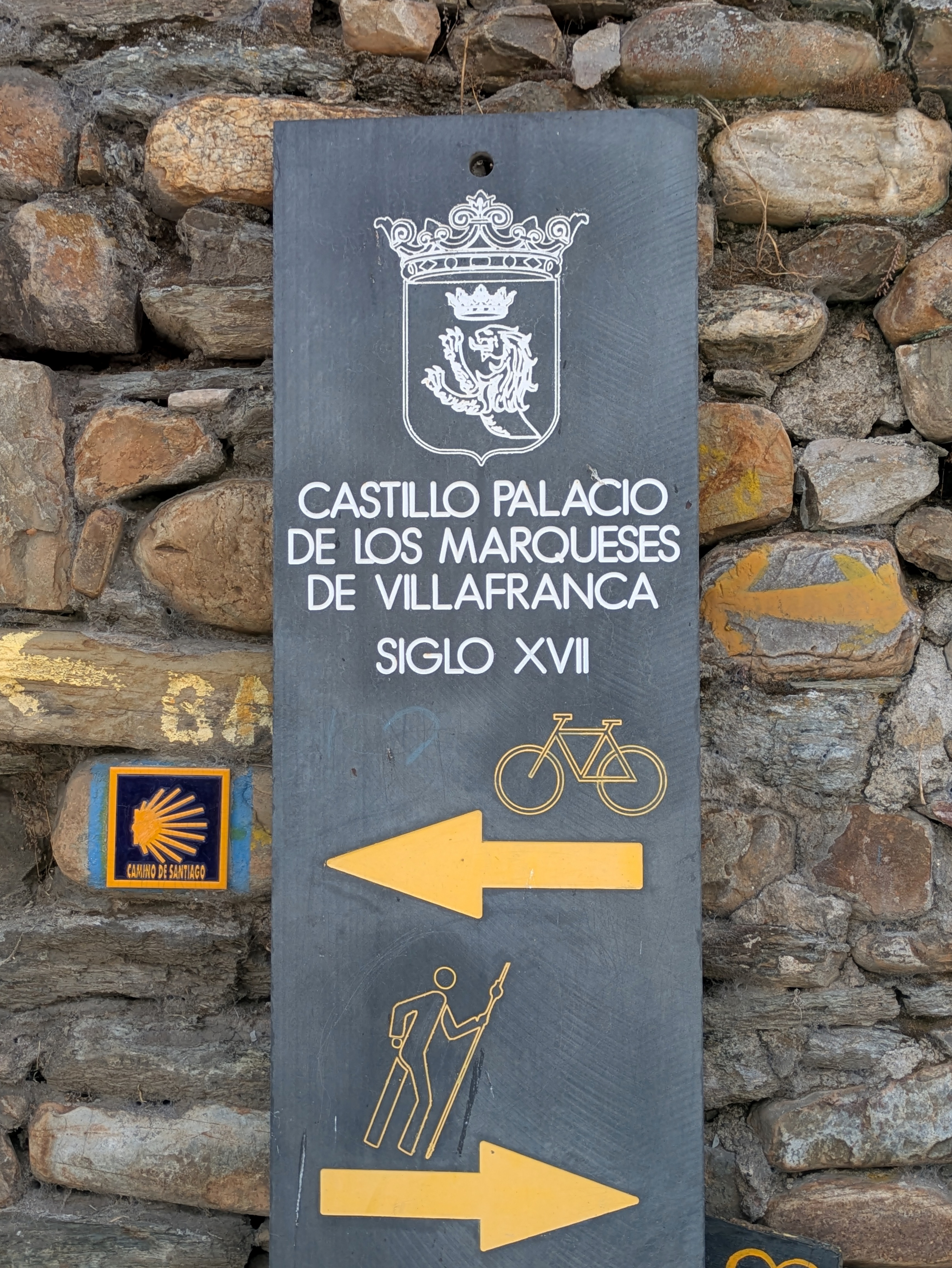
Villafranca Castle

Next up: SOUTHWEST FRANCE, NORTHERN SPAIN & PORTUGAL #17: SENSATIONAL SANTIAGO DE COMPOSTELA

SOUTHWEST FRANCE, NORTHERN SPAIN & PORTUGAL #12: WALKING THE BEGINNING OF THE CAMINO DE SANTIAGO

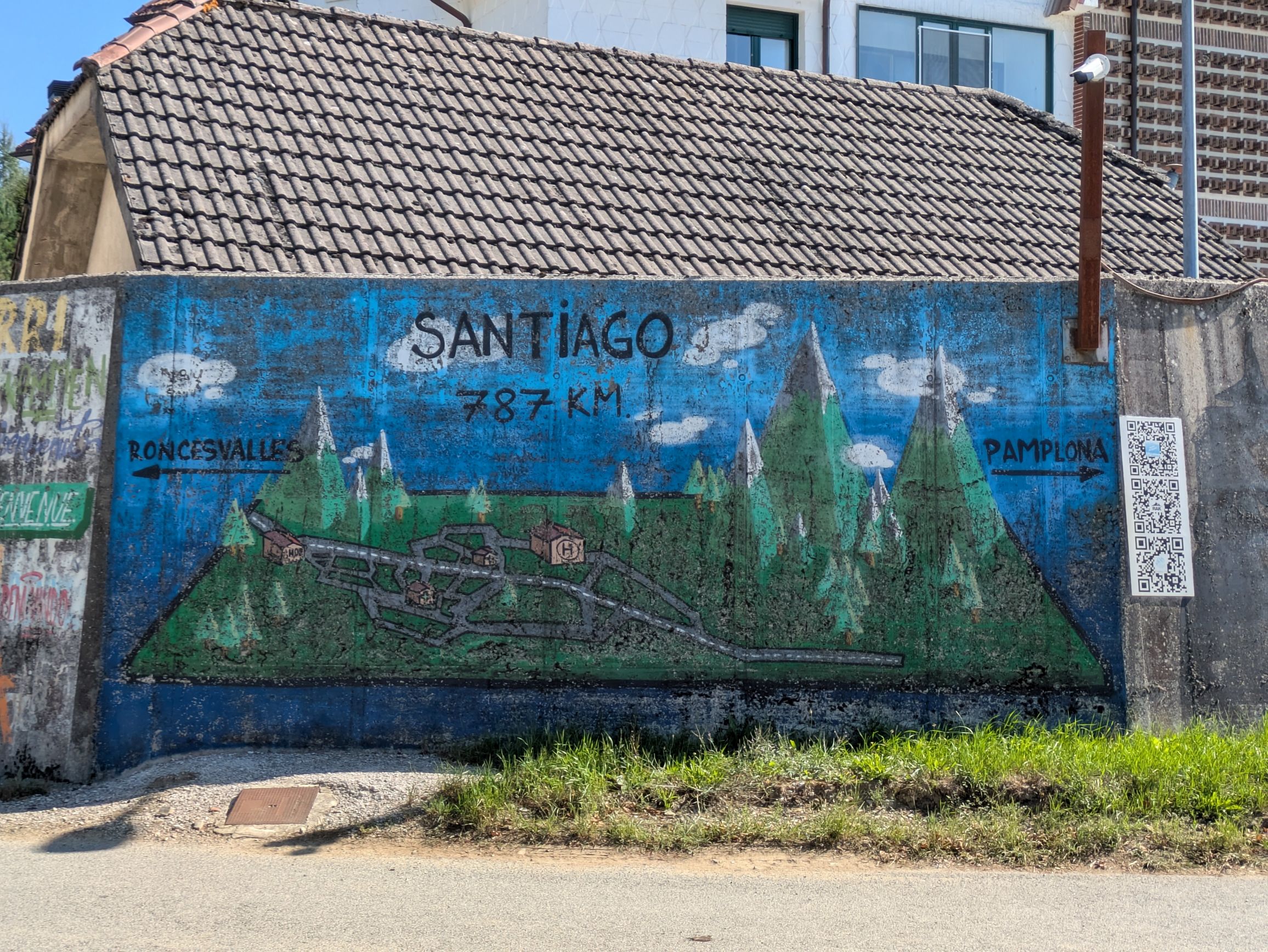
Our group took a side trip from Pamplona to Roncesvalles, in the Pyrenees to walk the beginning of the Camino de Santiago, one of Europe’s most important pilgrimage routes.  “The Way of St. James,”(in English), is a series of walking routes that lead from various locations in Spain, Portugal, and France to the Cathedral of Santiago de Compostela, reputed to be the burial place of Saint James the Great, one of apostles of Jesus Christ.  The most popular trek is the French Way, which crosses the Pyrenees.

Although many people follow the route for spiritual reasons, it is also popular for hikers and cyclists from all over the world.  The route is 500 miles long, and 65% of those who walk it are women, many of them older, walking while grieving losses or experiencing important life changes.  Serena, our tour leader, walked the Camino while mourning the loss of her grandmother.

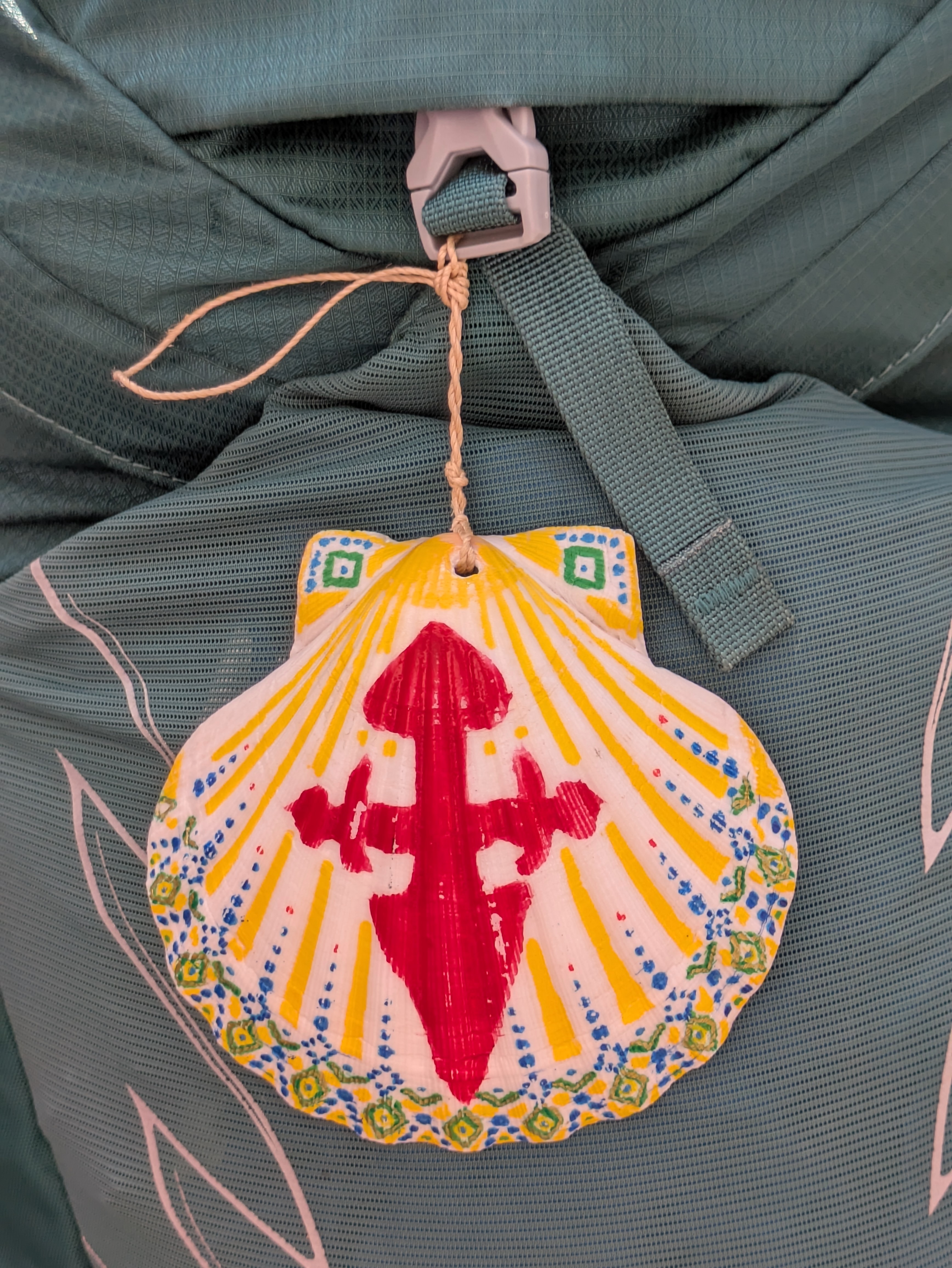
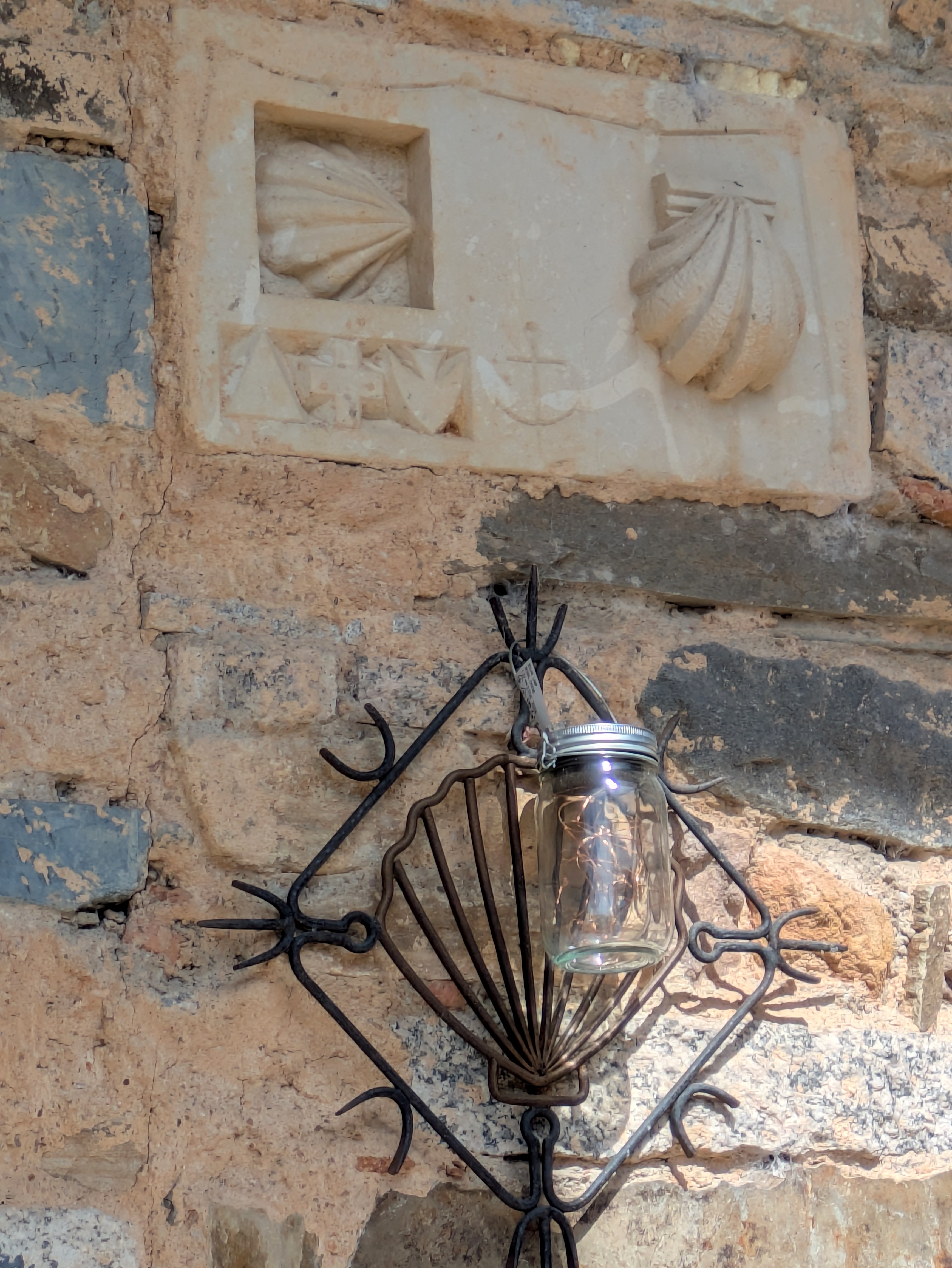
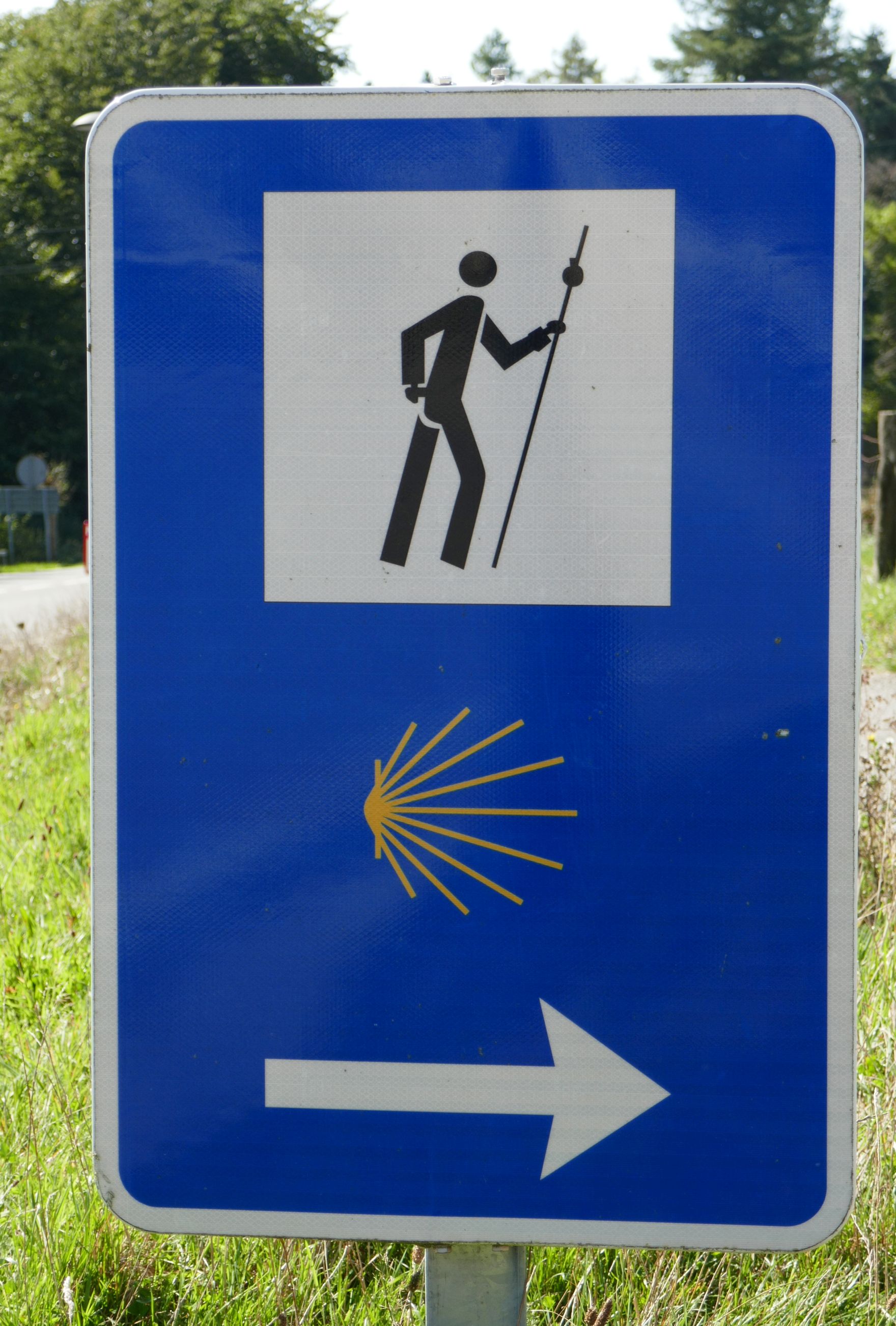
The symbol of the walk is a sword, because a sword was used to cut off James’s head.  A scallop shell is also a symbol, because it could only be found at the end of the route—proof that you walked the entire Camino.  The shell itself was used as a plate to receive food, a symbol of charity.  Today, many walkers buy a shell painted with the sword symbol and tie it to their backpacks at the beginning of their trek to indicate they are walking the Camino de Santiago.  In addition, the scallop shell is the symbol used on directional signs along the route as well as on the front of hostels on the route that house pilgrims overnight.

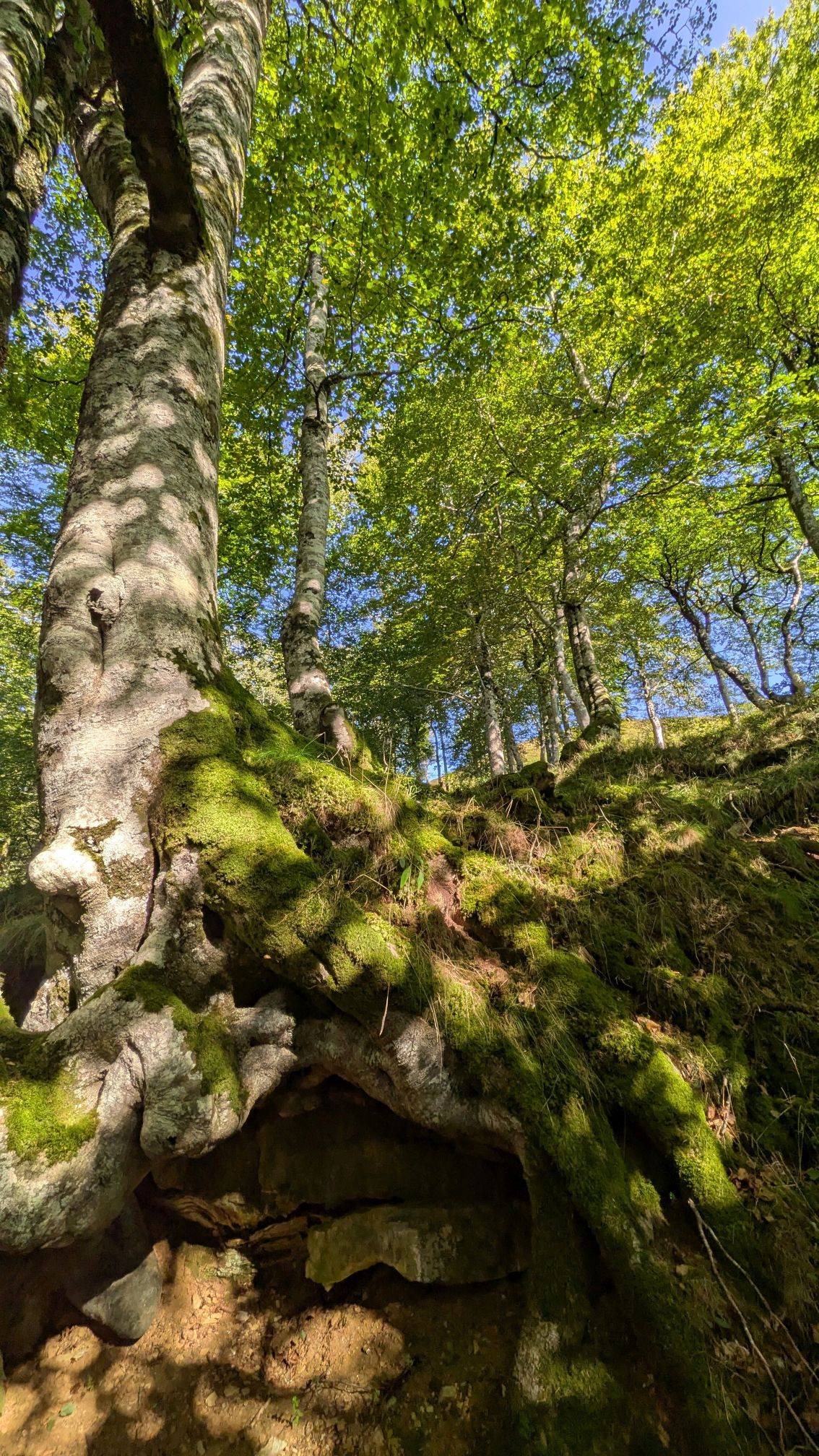
Roncesvalles, where we walked the first mile of the route, is a small town in the beautiful Pyrenees mountains.  Later, we took a second, two-mile walk through the gorgeous northern Spanish forests.

(For all photos, click on the image for a full screen view.)

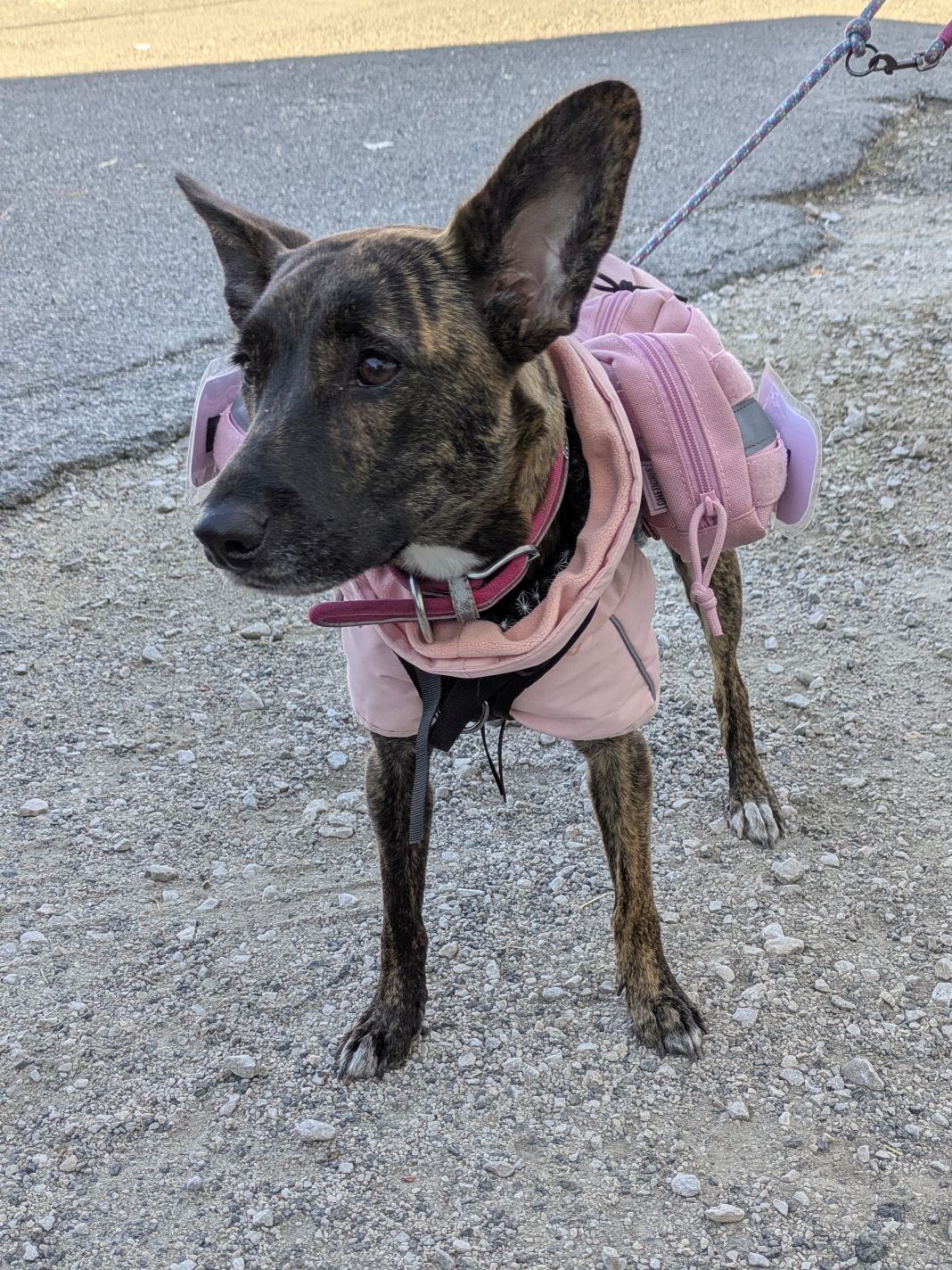
This little pooch was a pilgrim along with her person and carried her own gear.
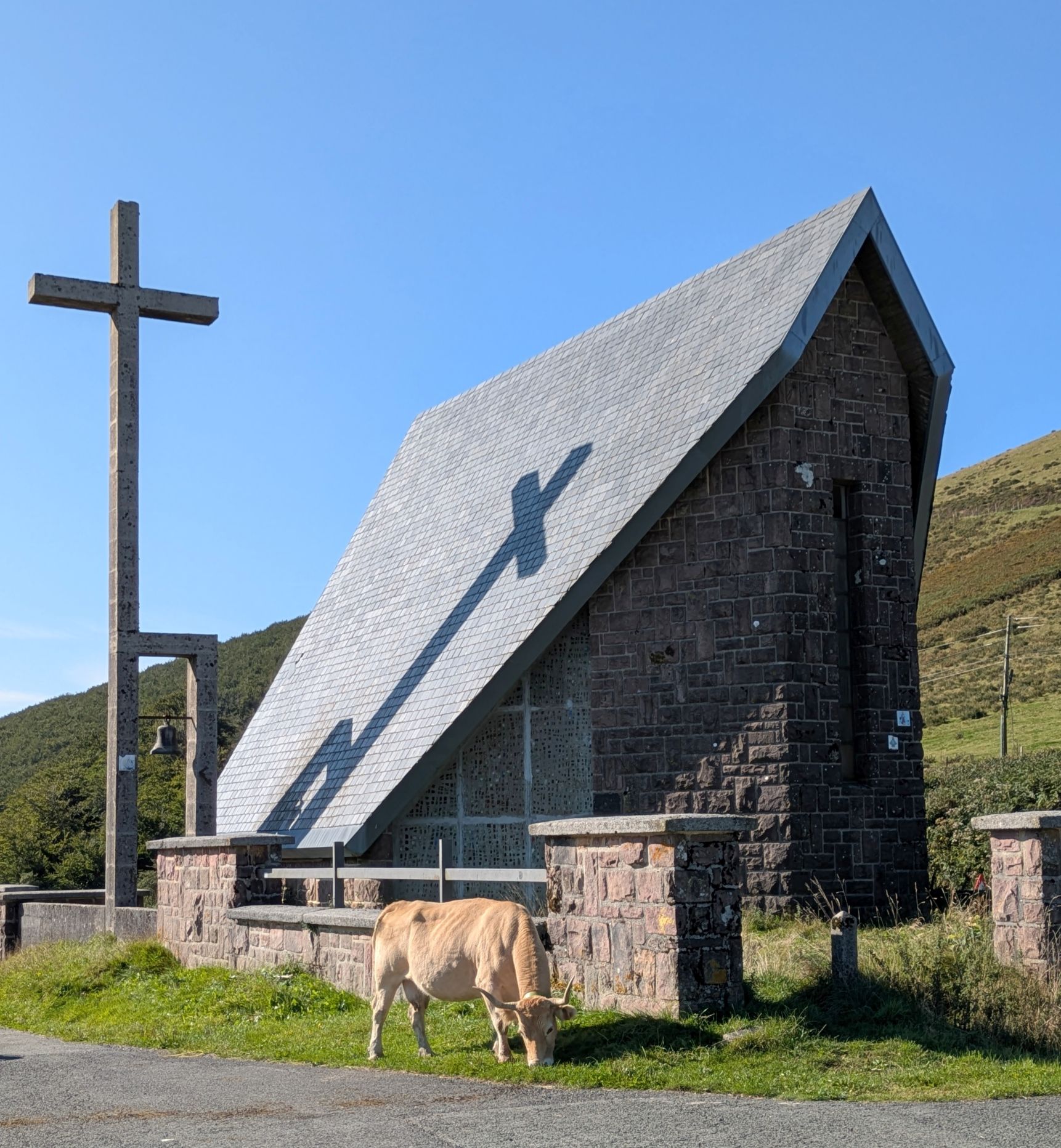
We started our walk here at this unusual church and were a bit surprised to see this beast cross our path without a care in the world. We were glad he kept his horns to himself!
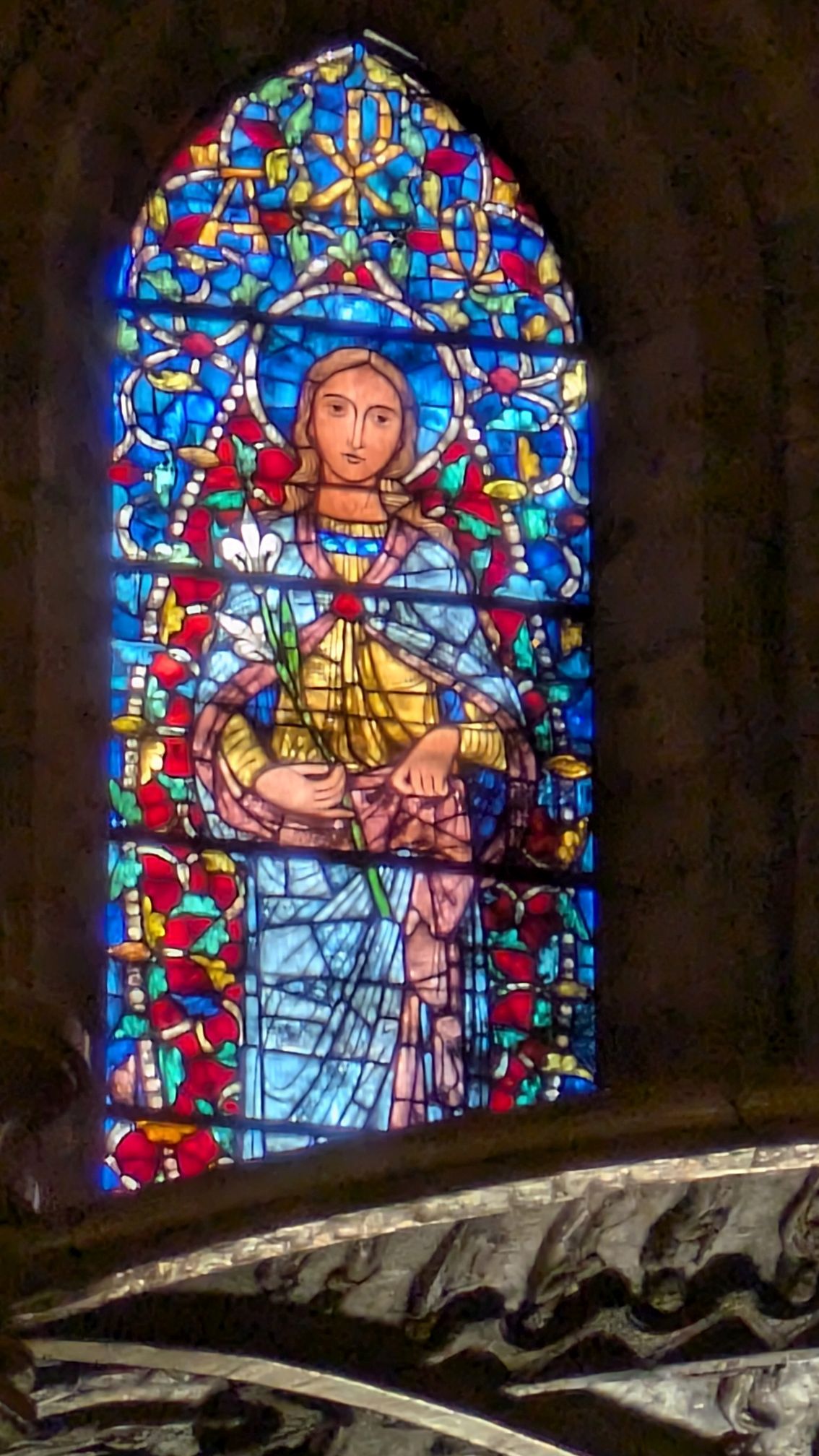
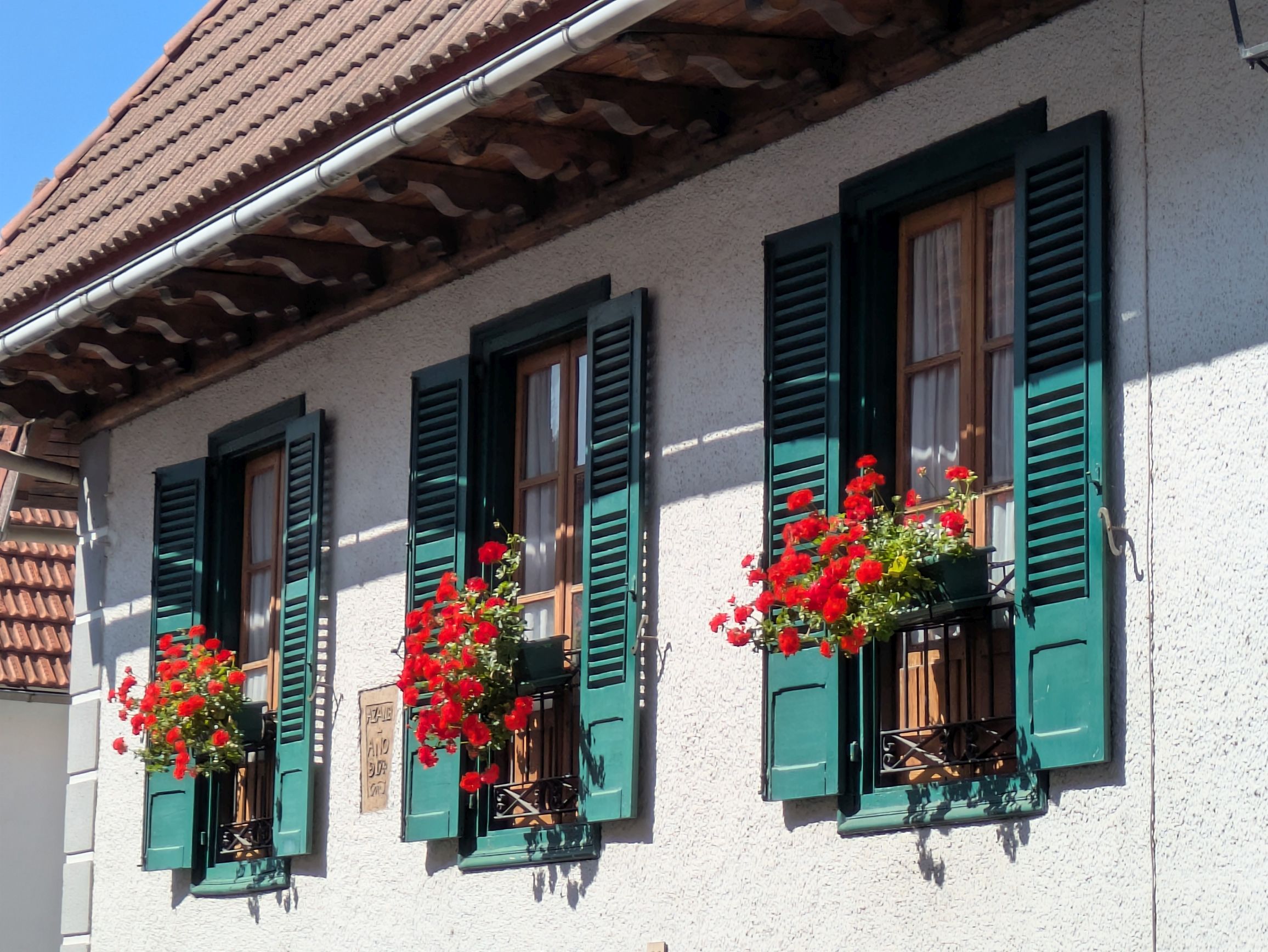
My favorite window at a church we saw along the way

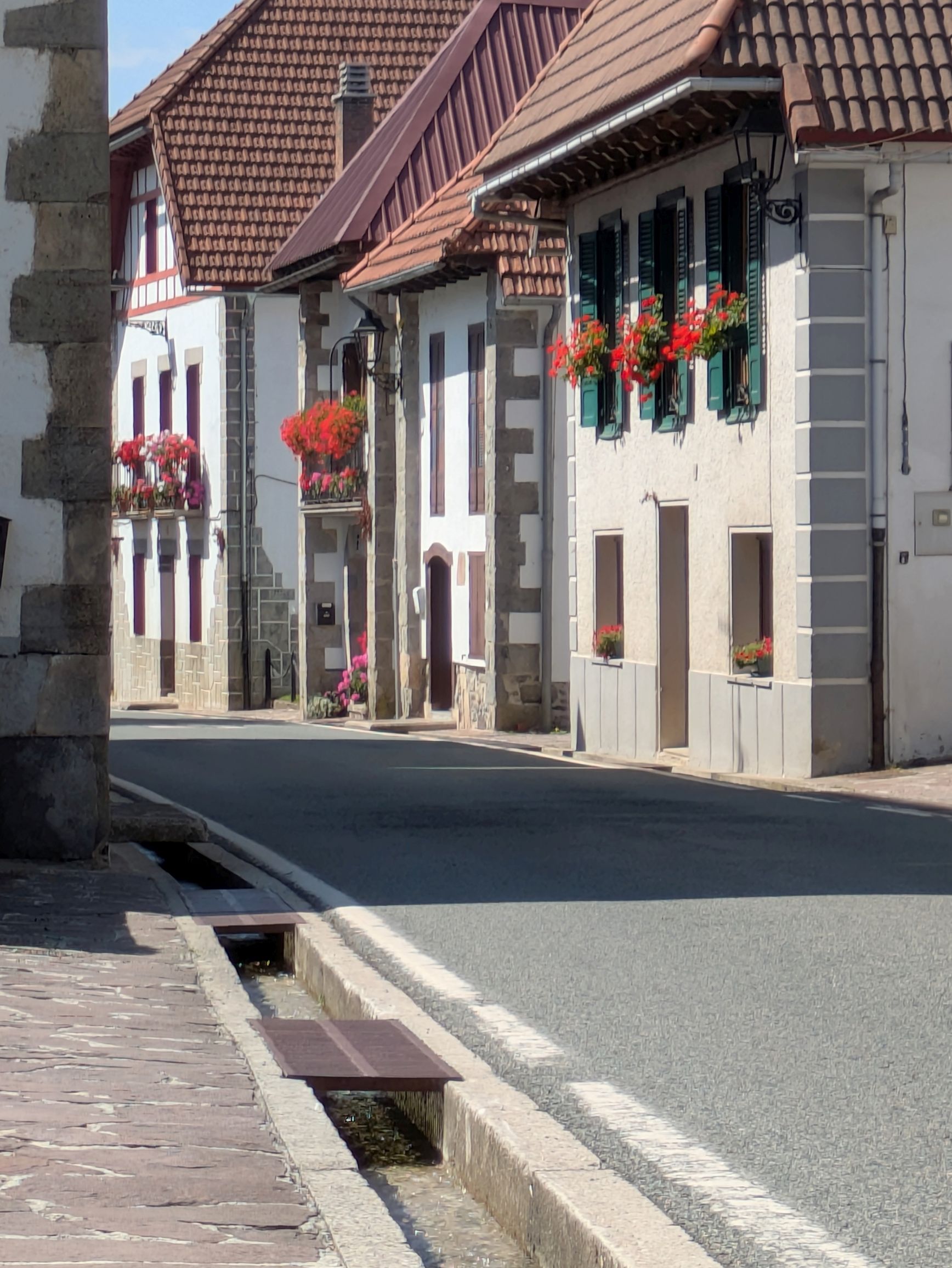
For lunch, we met up with Serena’s friend, Gonzalo Santoma, a photographer and musician, in a charming little village. 

After explaining and demonstrating the Basque sport of Jai Alai in the village gym, we took a stroll to a restaurant for a Basque lunch. 

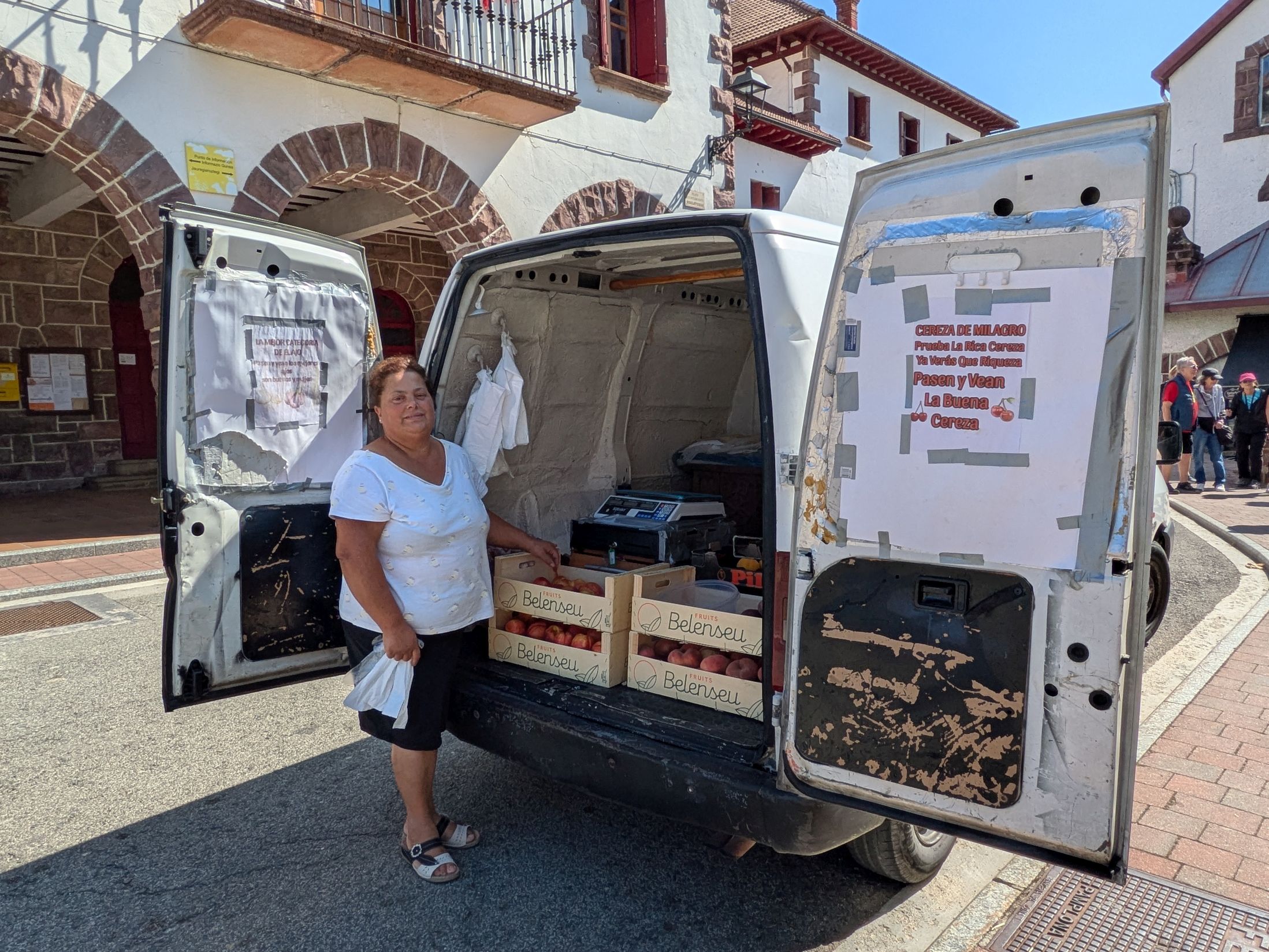
A mobile produce vendor

Gonzalo entertained us with his guitar-accompanied singing, which turned into a duet when a local joined in for a song:

Coming up next: SOUTHWEST FRANCE, NORTHERN SPAIN & PORTUGAL #13: EXPLORING UBIDEA & CASTROJERIZ, ON THE WAY TO LEON.