UNITED KINGDOM #11: EXPLORING ORKNEY’S ARCHAEOLOGICAL SITES

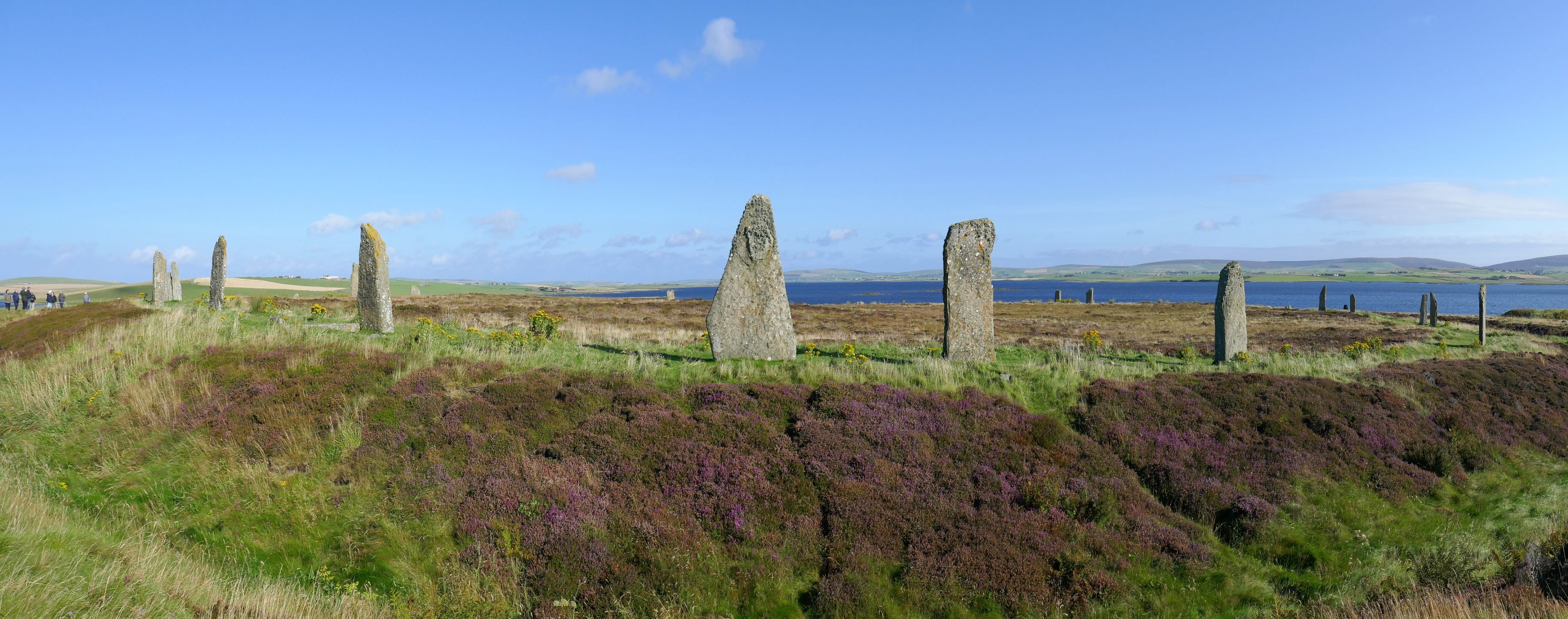
This was a day of seeing stones and rocks- and lots of them!  We began at the Stones of Stennes, a stone circle raised about 5,000 years ago, thought to be used as a ceremonial site.

(For all photos, click on the image for a full screen view.)

Thankfully, it was another gorgeous day, because the views from the Stones of Stennes and our next stop, the Ring of Brodgar, were beautiful.  This Neolithic henge and stone circle is thought to be between 4,400 and 4,600 years old and is a UNESCO World Heritage Site

Not being a big stone circle history buff, I just enjoyed walking around the circle, taking photographs, and enjoying the views.
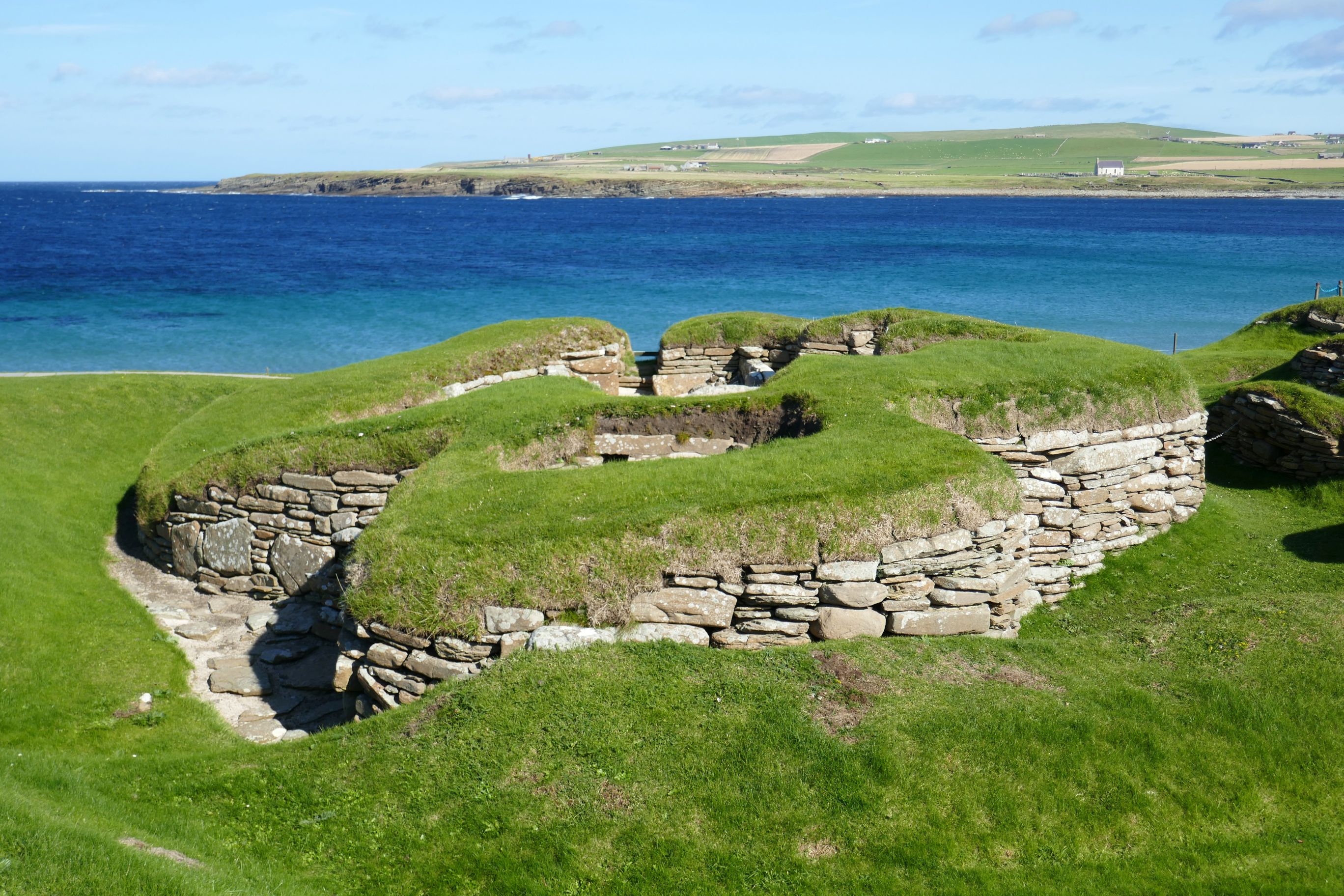
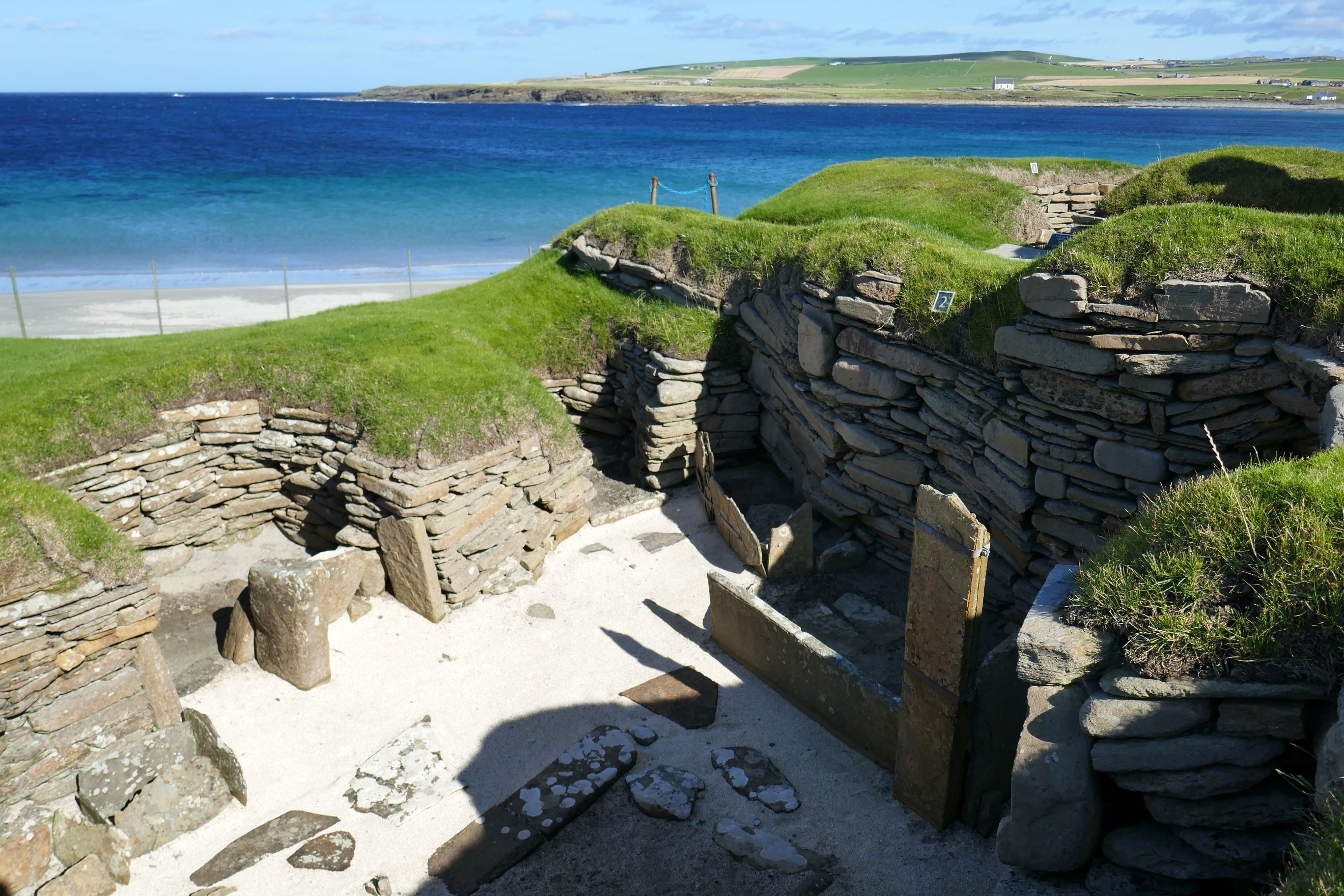
Skara Brae was a fascinating archaeological site with more amazing views!  This 5,000-year-old settlement is so fragile, we were only permitted to view it from the walkway above.

Archaeologists think that a small community of 50-100 people lived on this site, and that it was inhabited for several centuries.  Ten structures remain, and it is Europe’s most complete Neolithic village.  Another UNESCO World Heritage Site, it is older than Stonehenge and was discovered when a historic storm scoured away sand revealing the site. 
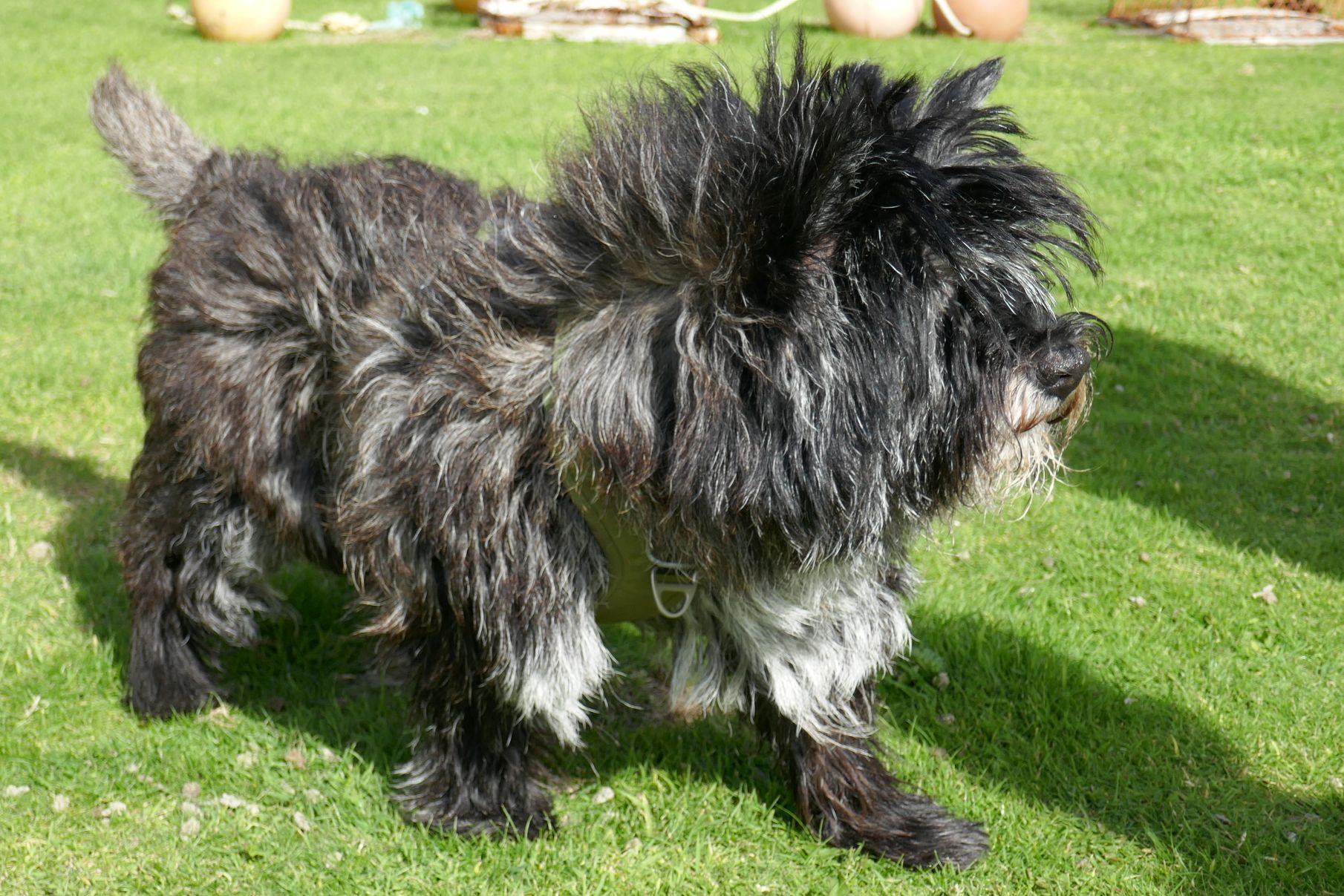
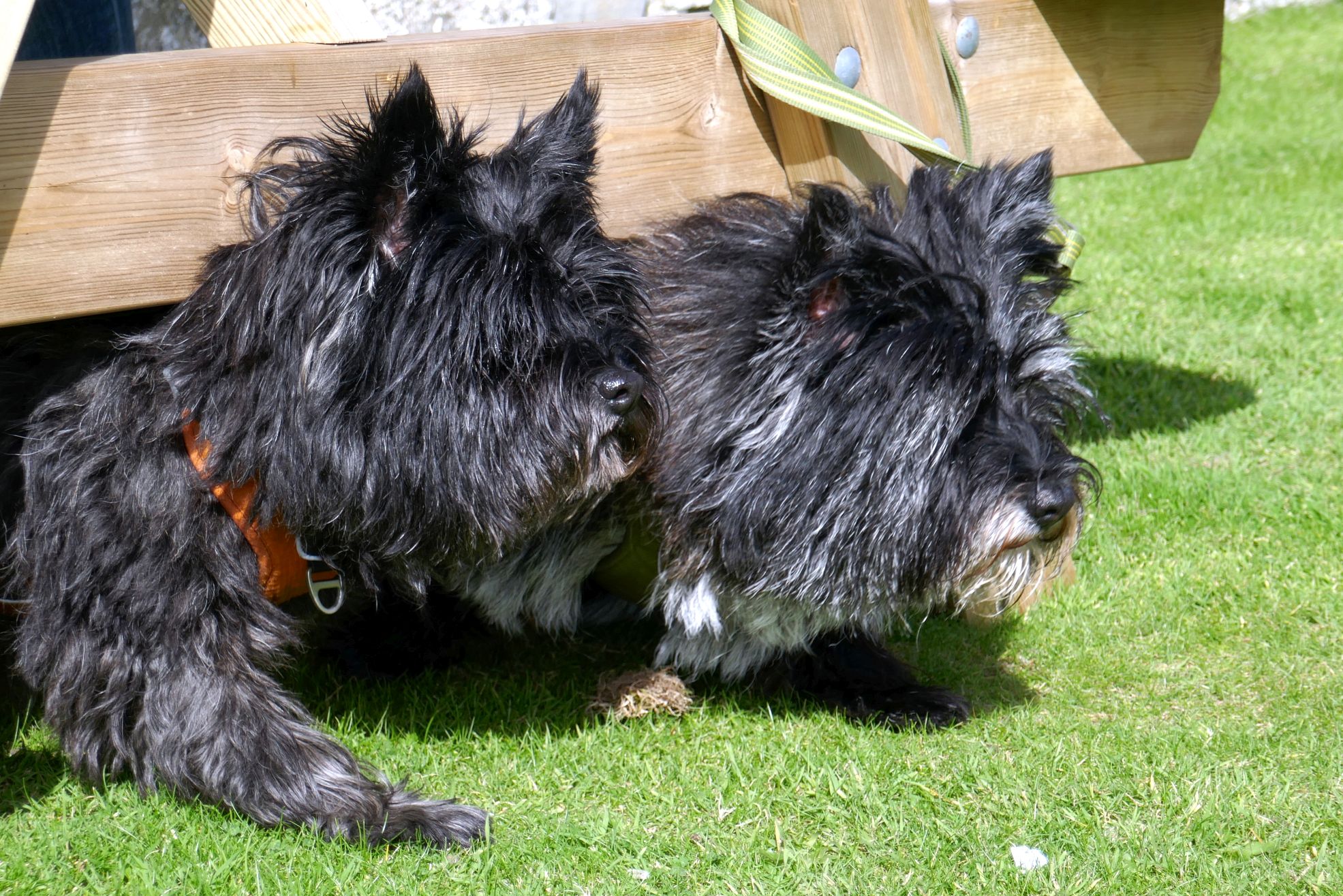
Two new friends I made at our lunch stop:
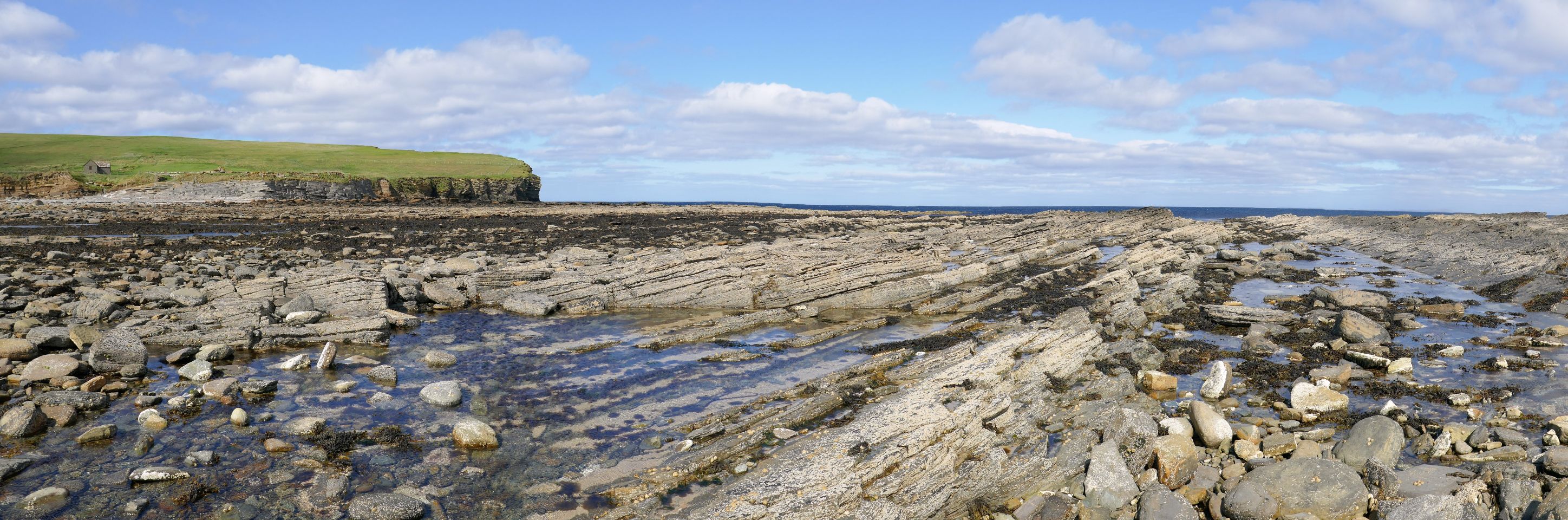
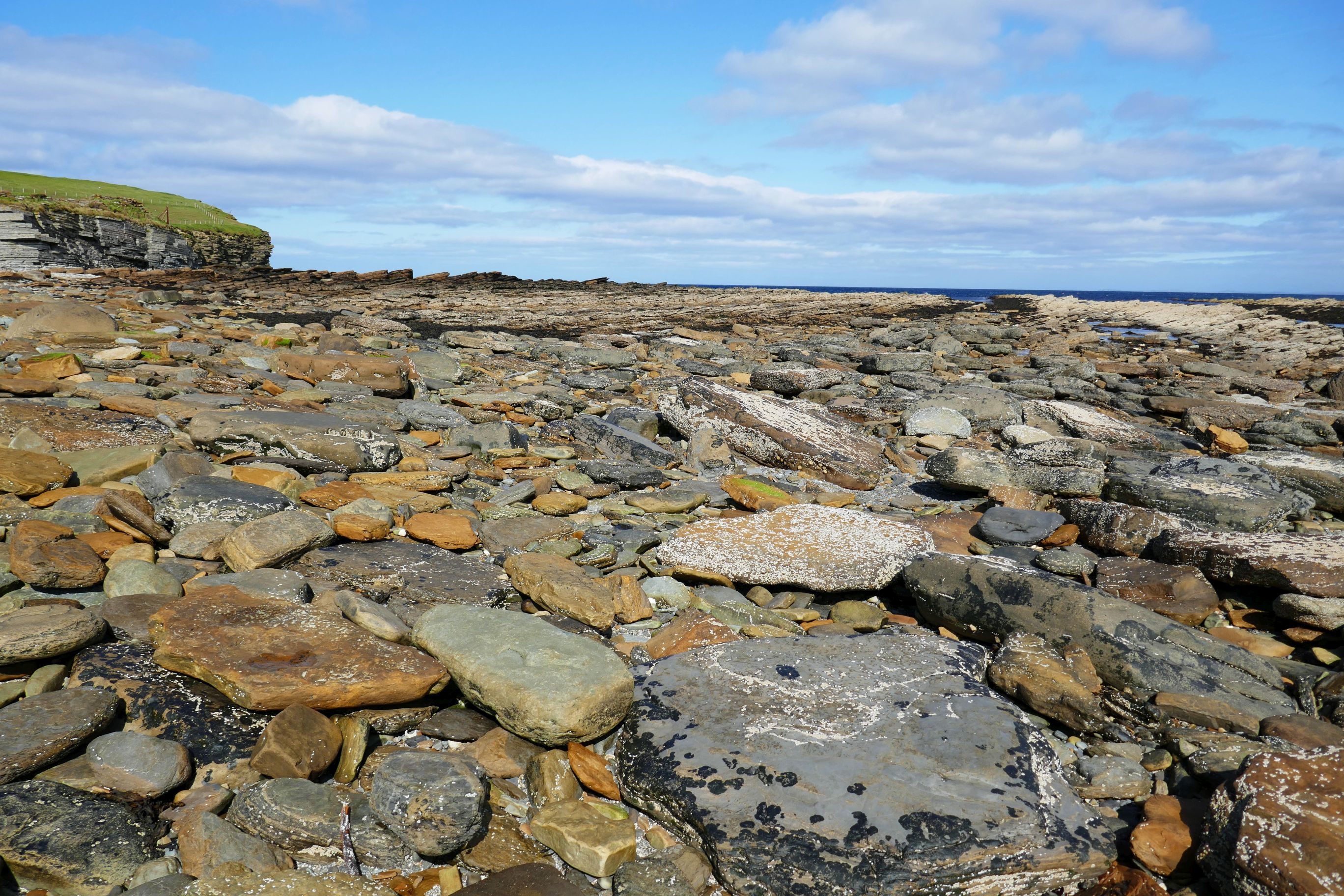
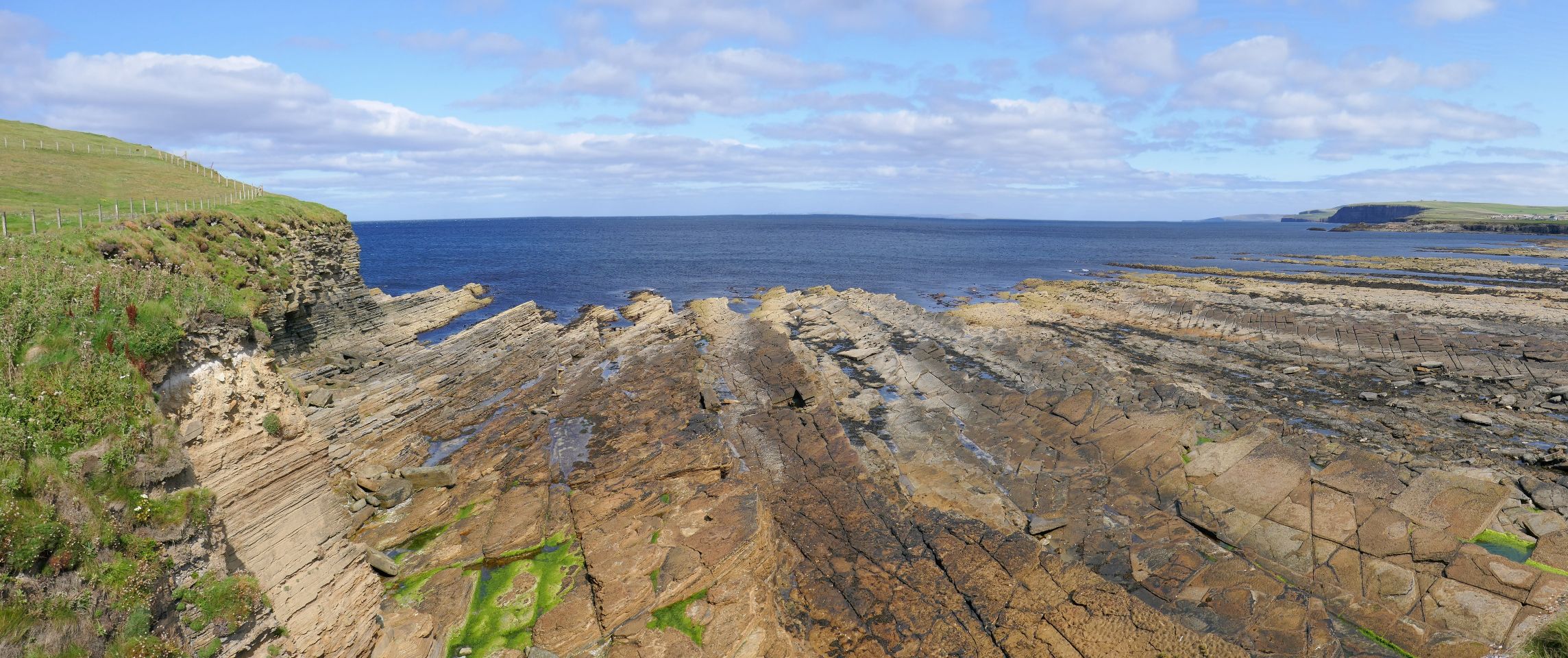
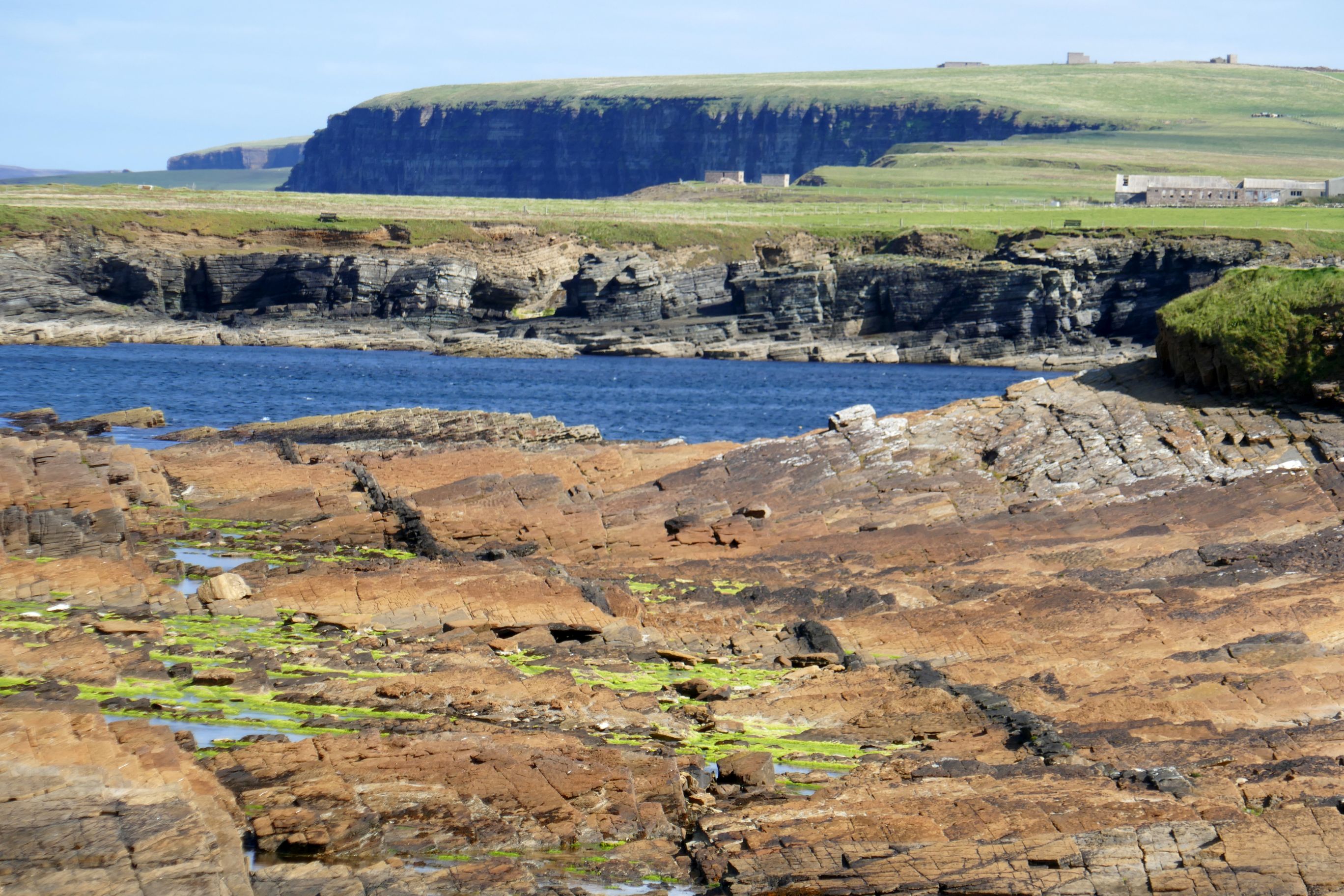
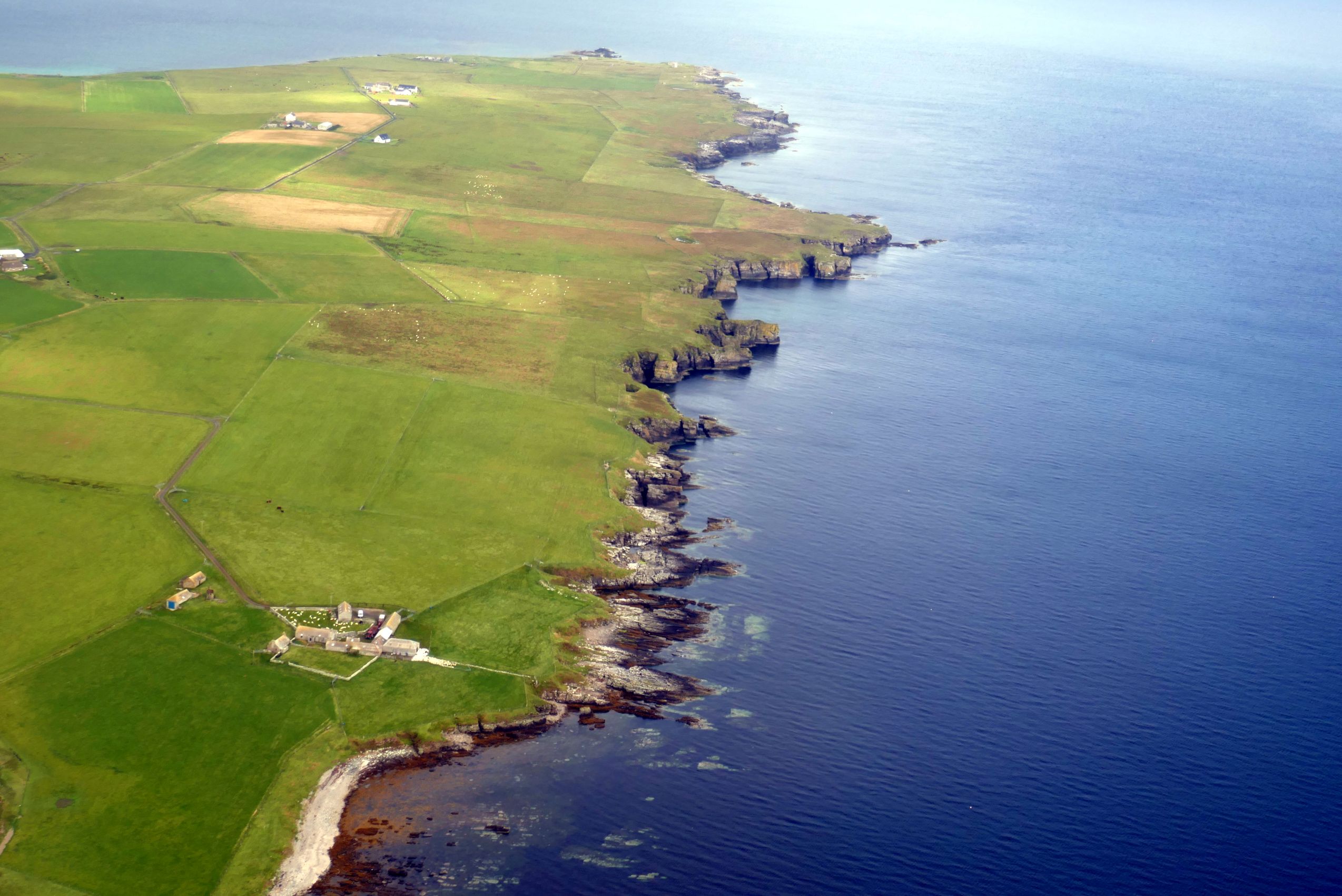
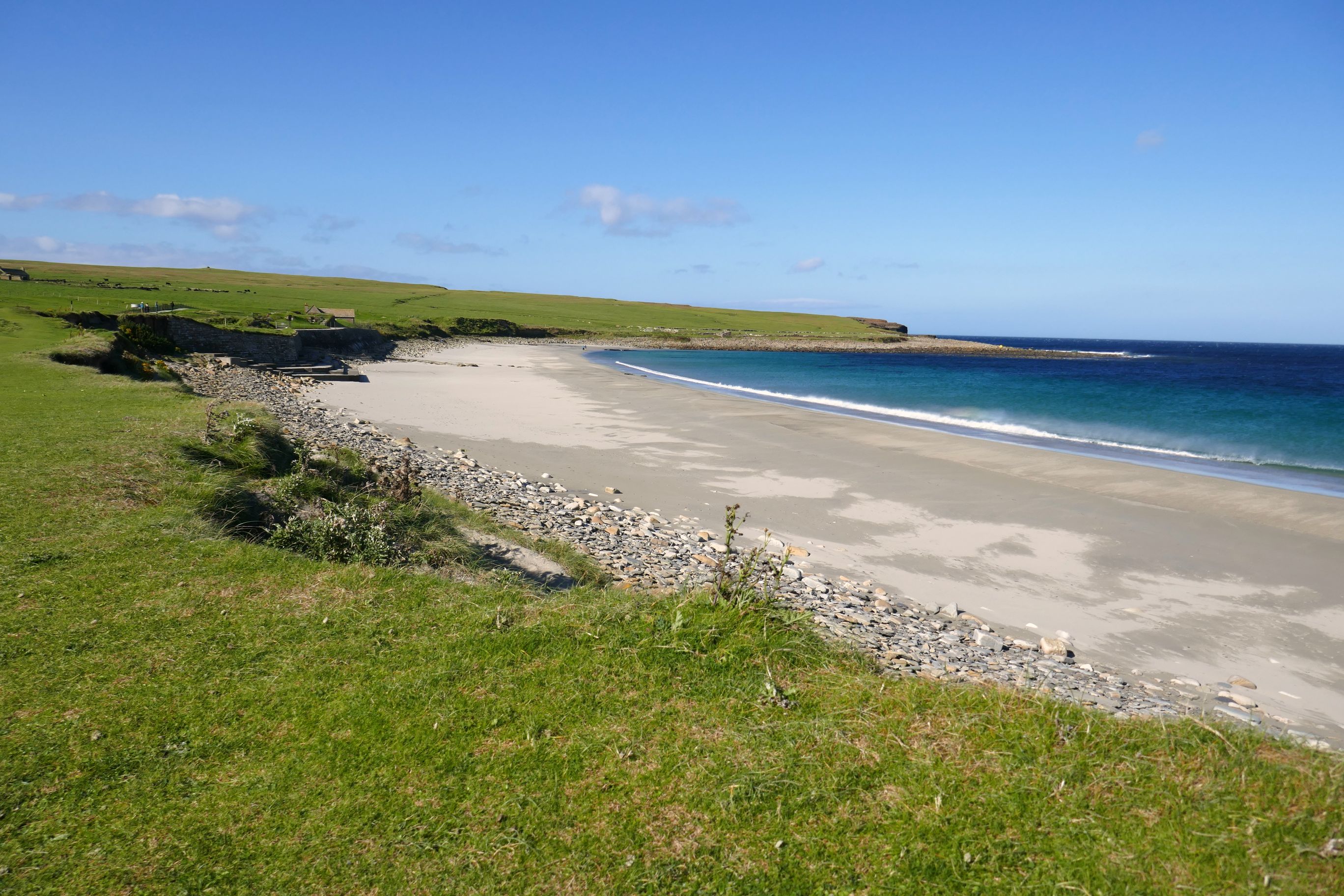
Our final stop was my favorite, and it wasn’t even scheduled!  The walk out to Brough of Birsay can only be done at low tide.  The conditions must also be calm to avoid being swept away off the rocks by winds and the sea.  We hit it just right, so off we went for one of the most beautiful coastal hikes I have ever done!
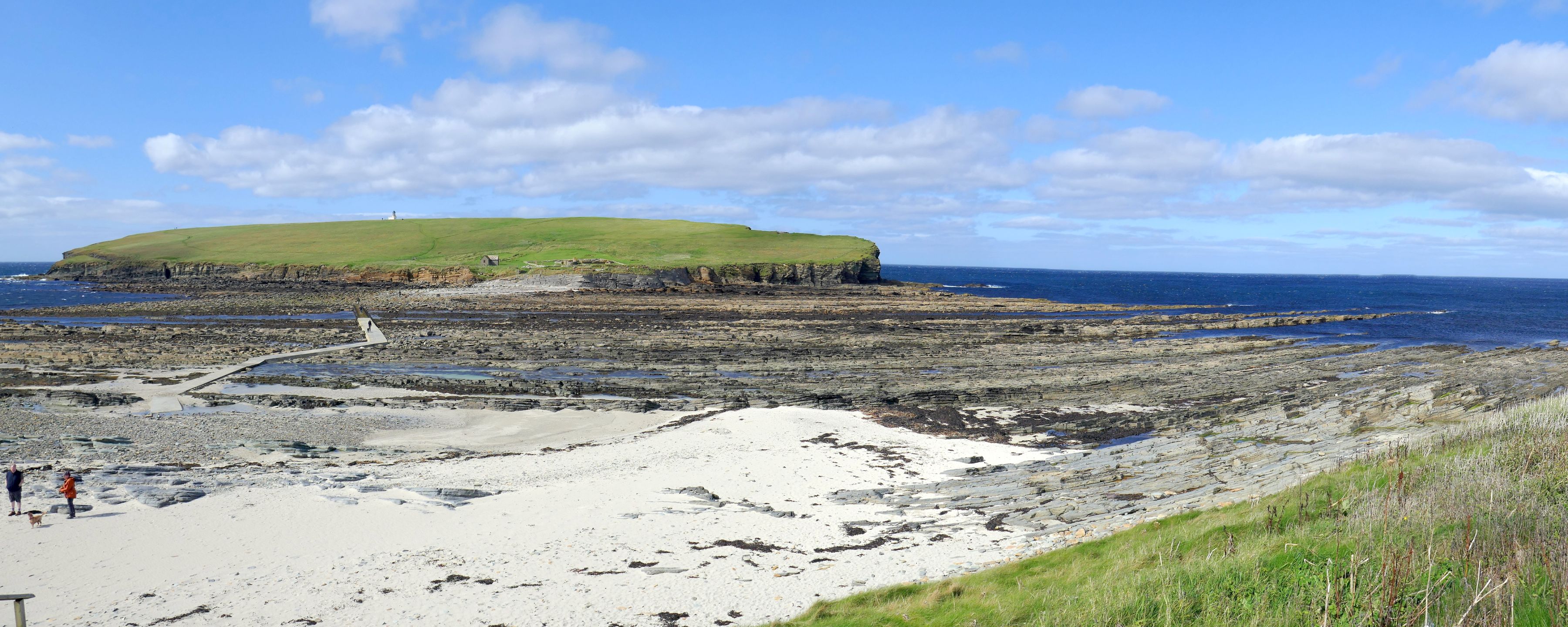
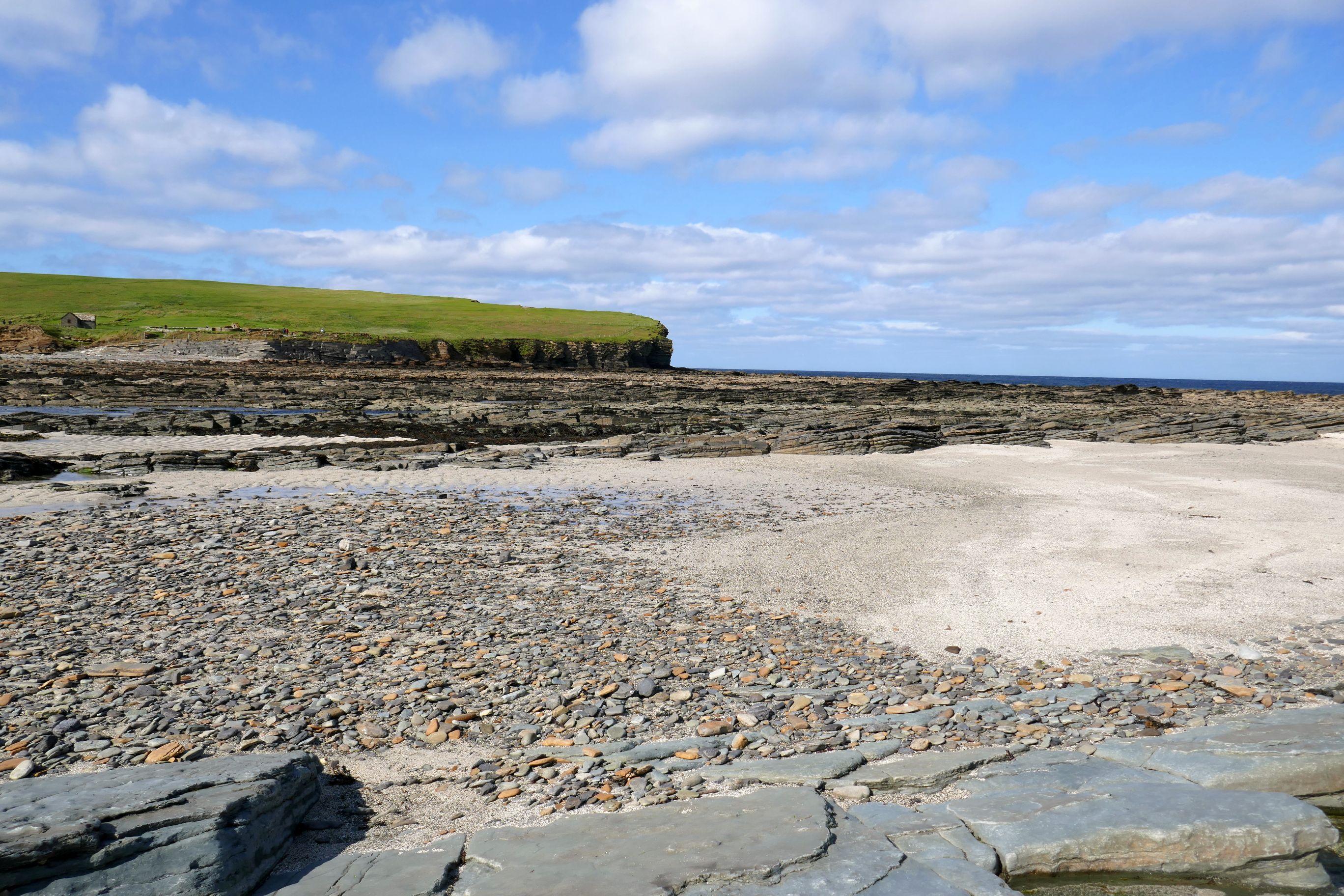
The Birsay coast faces the Atlantic, so it suffers from high levels of coastal erosion in certain places.  Sadly, there have been numerous archaeological sites that have fallen into the sea.  The area is being monitored closely by the University of the Highlands and Islands (UHI) Archaeology Institute.

How fortunate we were to be able to hike to Brough of Birsay and back!  Once we were out there, I had a choice to either listen to the local guide talk about the history of the area or make a beeline up the steep grassy hill to see the lighthouse.  Thankfully, my swimmers’ lungs allowed me to run up the 150 feet to the top for a quick view of the 1925-era lighthouse and spectacular views of the coast below.  The run back down, I must admit, was a lot easier!

I was very much in my element in Birsay and it was one of the highlights of our visit to the Orkney Islands.  The ocean, beautiful coastline, hiking, and taking photos; it was fabulous!

Coming up next: UNITED KINGDOM #12: FERRY TO INVERNESS & CAIRNGORMS NATIONAL PARK
UNITED KINGDOM #10: ORKNEY’S CHURCHILL BARRIERS & ITALIAN CHURCH

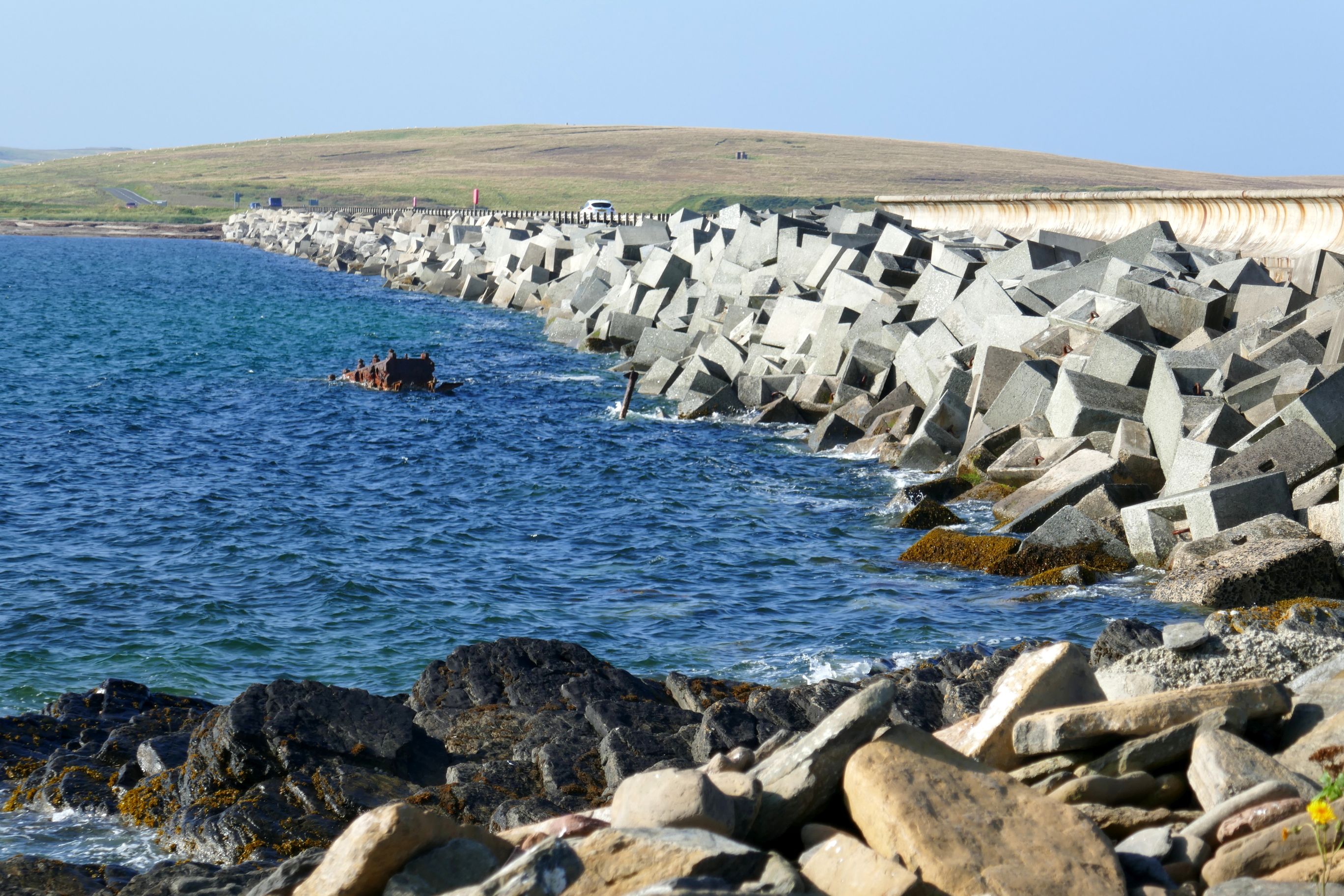
In 1939, the Royal Navy battleship HMS Royal Oak was sunk by a German U-boat at her moorings within the natural harbor of Scapa Flow, in the Orkney Islands.  This led to the First Lord of the Admirality, Winston Churchill, ordering permanent barriers to be built, linking the mainland of Orkney to four of the south isles, enabling the Royal Navy to better defend the vital anchorage of Scapa Flow.

It took nearly one million tons of rock and concrete to form the Churchill Barriers by 1000 Italian prisoners of war.

(For all photos, click on the image for a full screen view.)

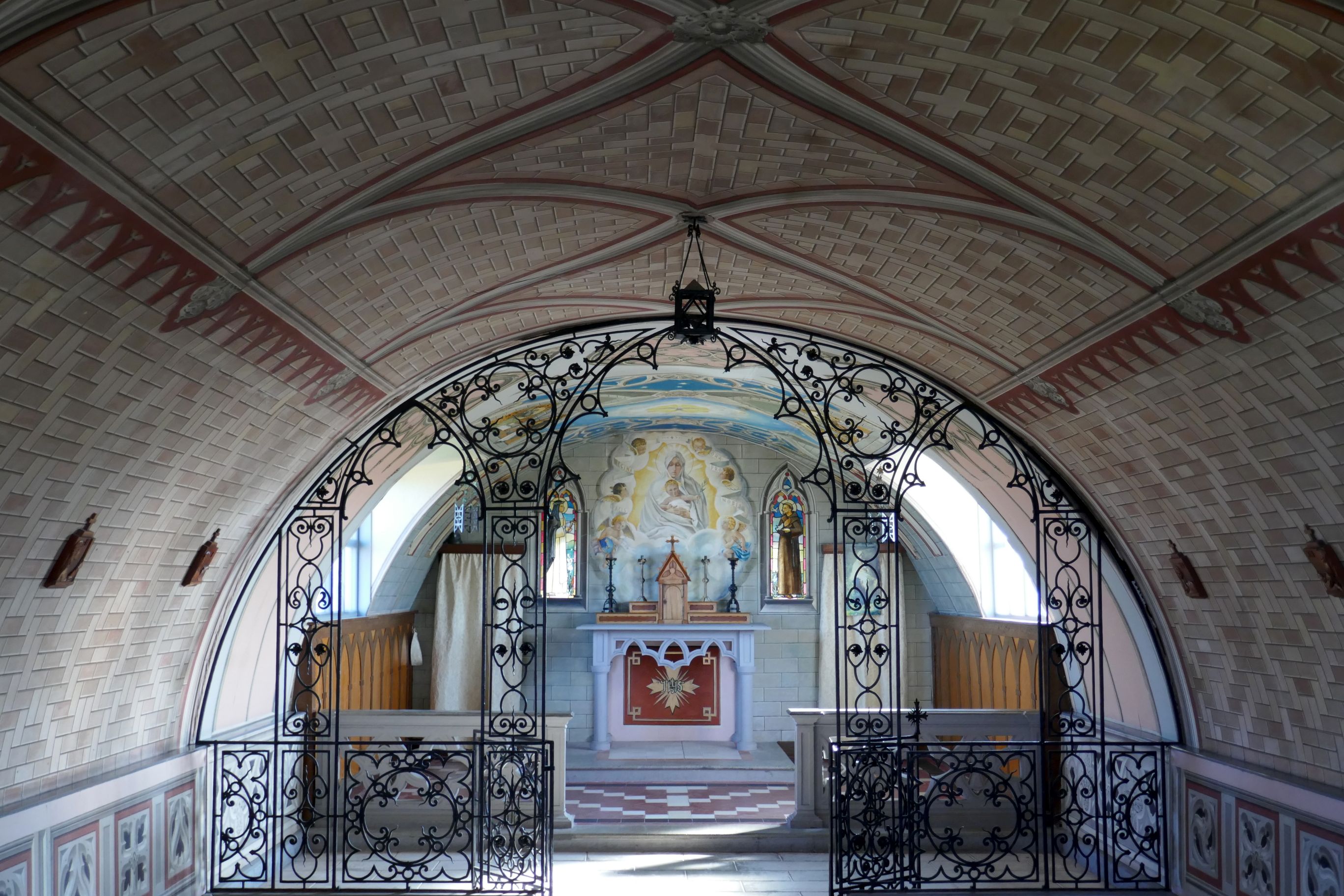
The Italian Chapel is the only building that remains of Camp 60, a Prisoner of War (P.O.W.) camp constructed in 1941 to house these Italian P.O.W.’s.  The prisoners, thousands of miles from their homeland, deeply felt the need for a place of worship.  Led by Domenico Chiocchetti, an artist, a team of the prisoners built the sanctuary of concrete and scrap wood from a wrecked ship.  The alter is Chiocchetti’s masterpiece.  It is based on Nicolo Barabino’s Madonna of the Olives from a small picture given by his mother to Domenico, which he carried with him throughout the war.

It was heartwarming to learn that during the time the Italians were in Orkney, friendships formed between the prisoners and Orkney residents; and, the British were supportive of the Italians and the chapel.

Fast-forward to Orkney today, I found it interesting that Orkney residents feel ignored by Scotland and feel more a part of Norway, which is located just 300 miles away.

Here’s a fun fact:  Would you like to know what the world’s shortest regularly-scheduled flight is?  It’s a flight in Orkney Islands, from Westray Island to Papa Westray, just 1.7 miles away. The flight is only 53 seconds long.  Personally, I would rather be on that flight than the world’s longest commercial flight, Singapore Airlines route between New York (JFK) and Singapore, which averages 18 hours and 40 minutes!

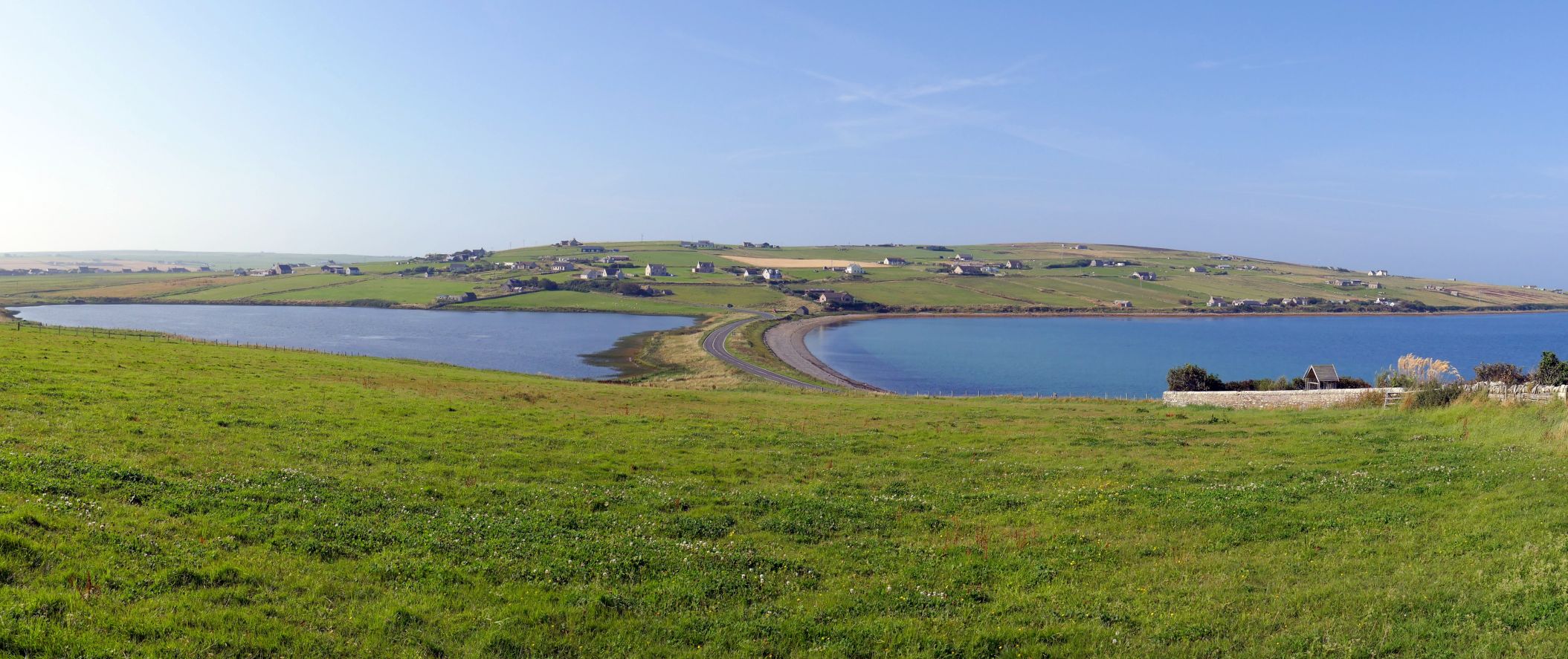
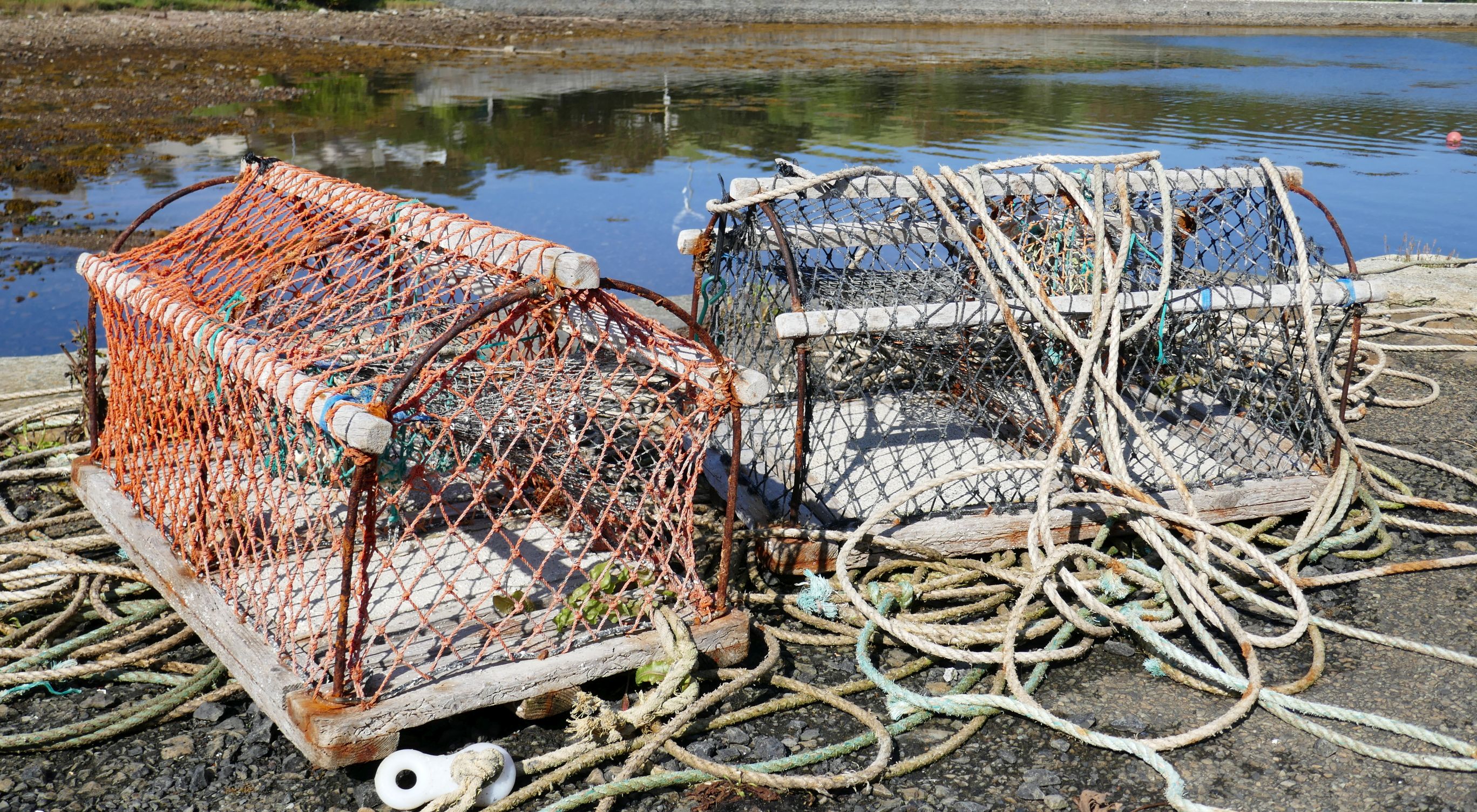
Scenes around Orkney:

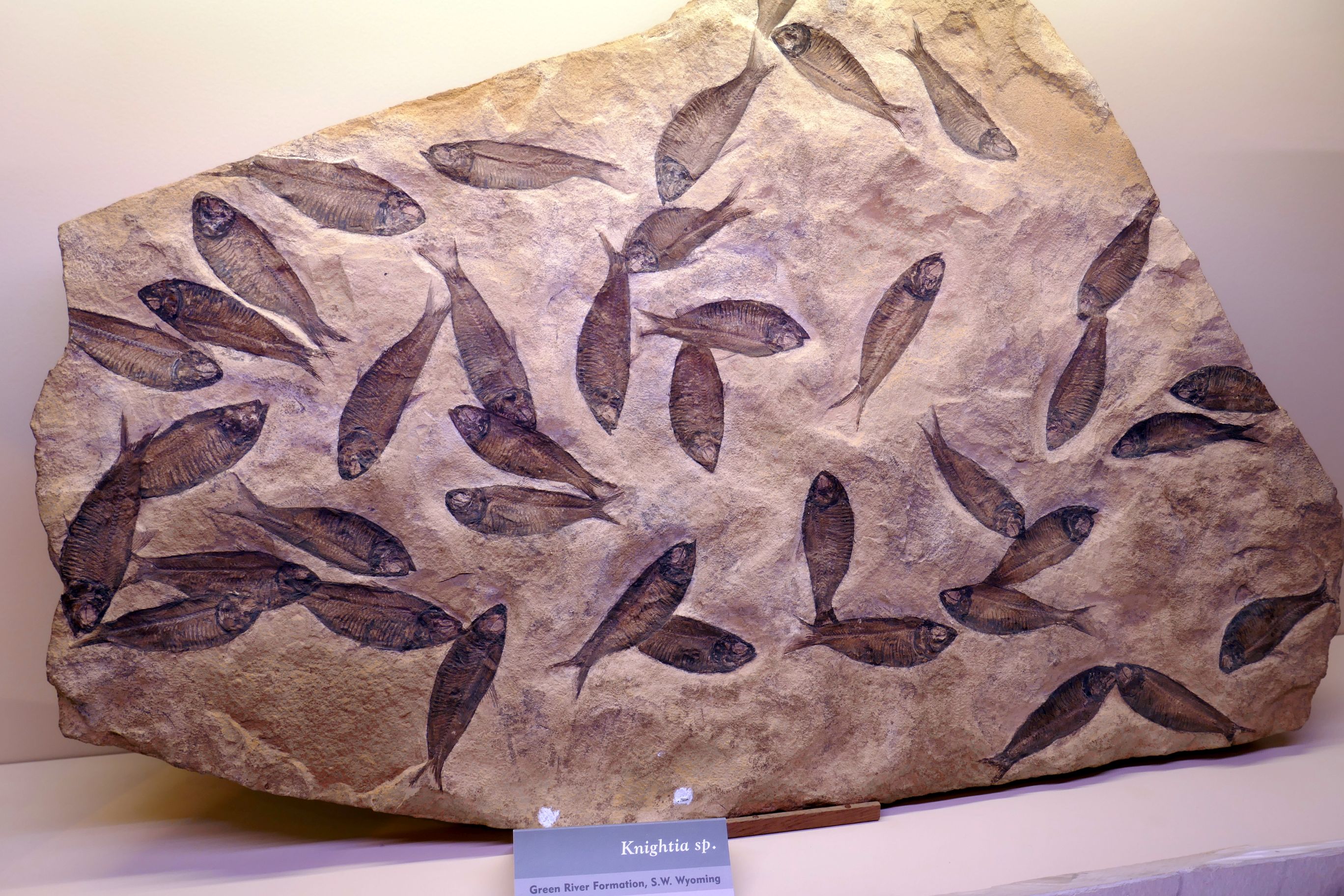
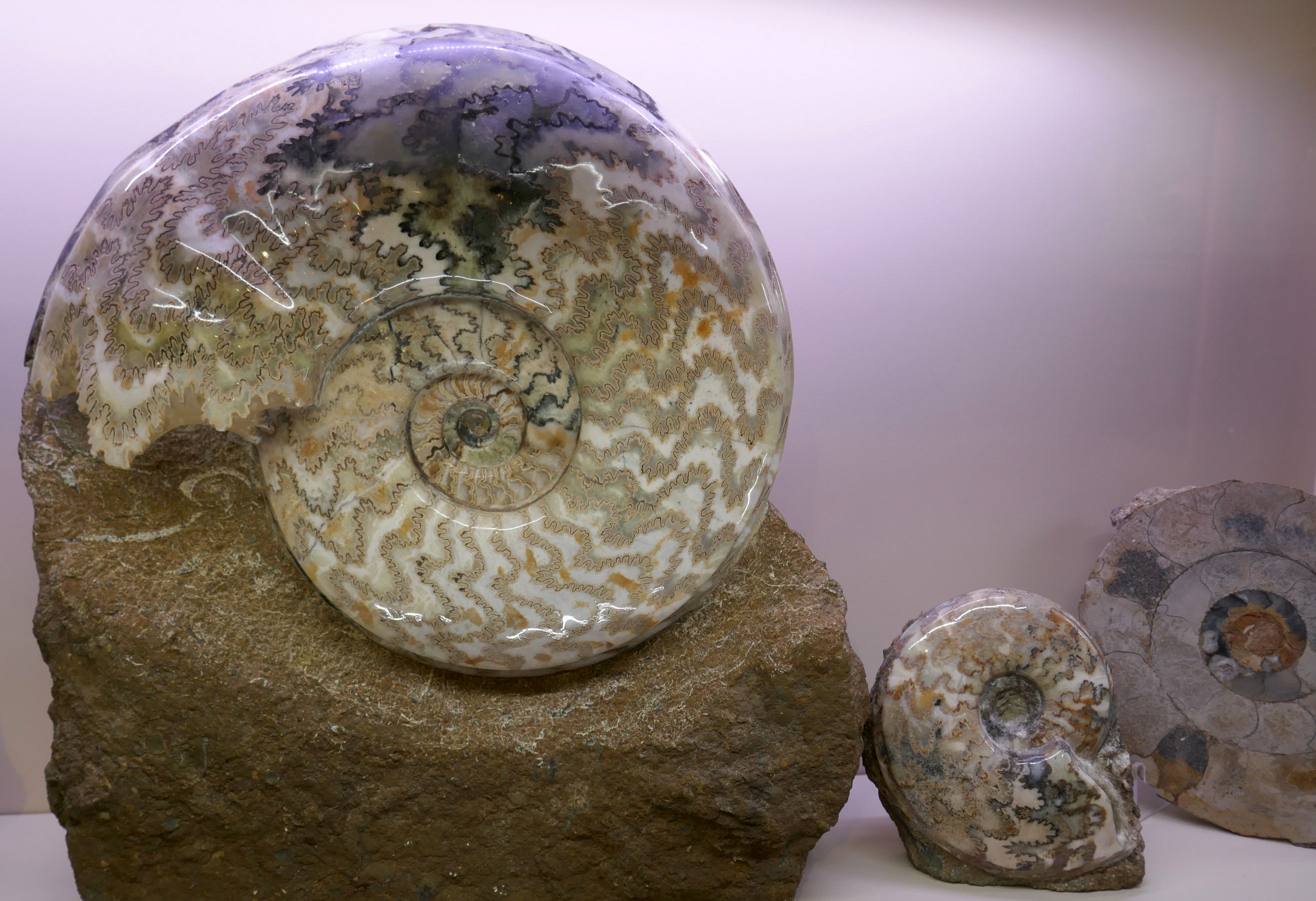
Orkney Fossil & Heritage Centre:

Next up: UNITED KINGDOM #10: EXPLORING ORKNEY’S ARCHAEOLOGICAL SITES

UNITED KINGDOM #9: ONWARD TO ORKNEY ISLANDS

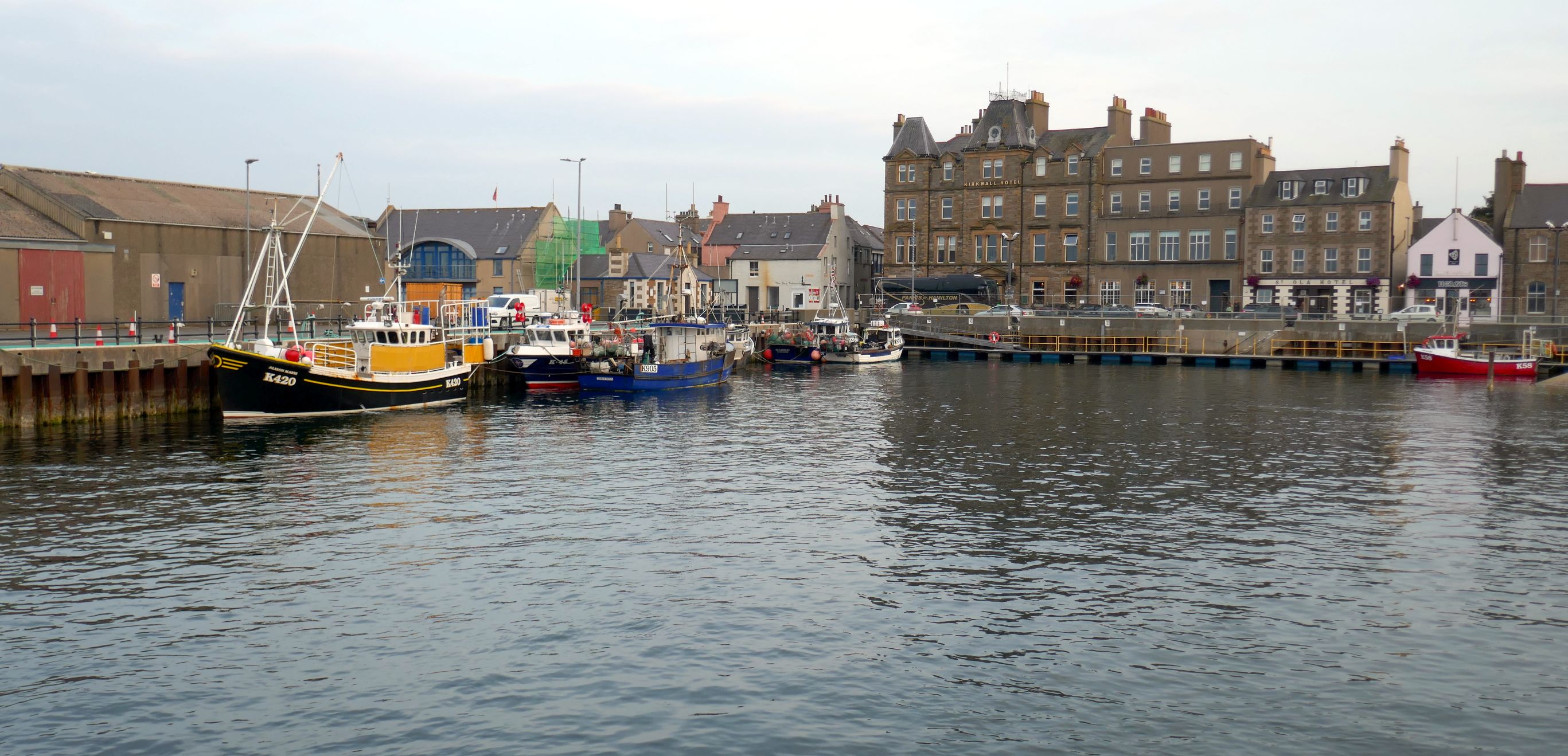
It was a beautiful day to fly to the Orkney Islands!  Located off the northeastern coast of Scotland, Orkney is an archipelago made up of 70 individual islands, only 20 of which are inhabited.  Kirkwall, our home base for three nights, is the largest town of the islands with a population of 8-9,000.  A total of 23,000 people live on the Orkney Islands.

(For all photos, click on the image for a full screen view.)

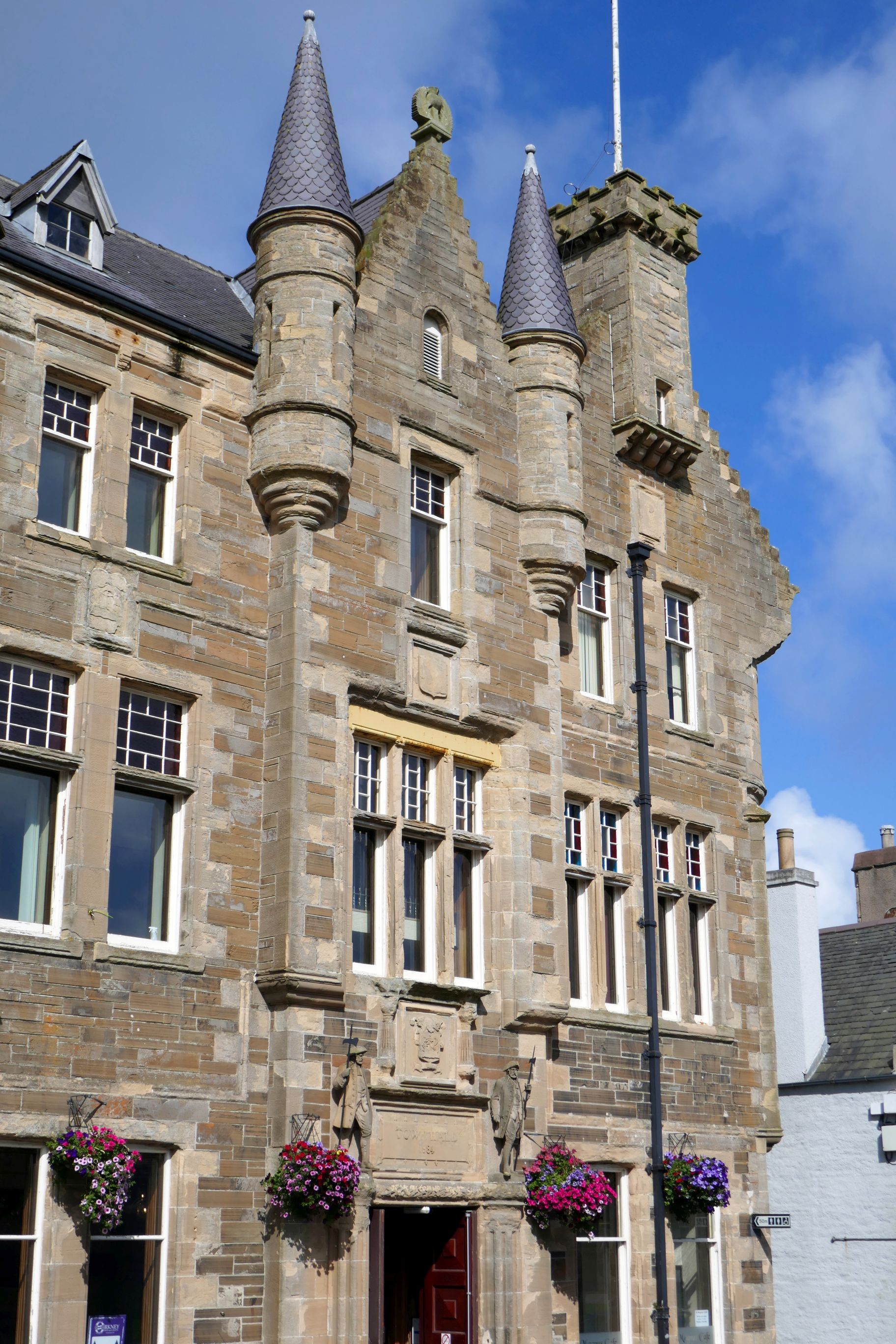
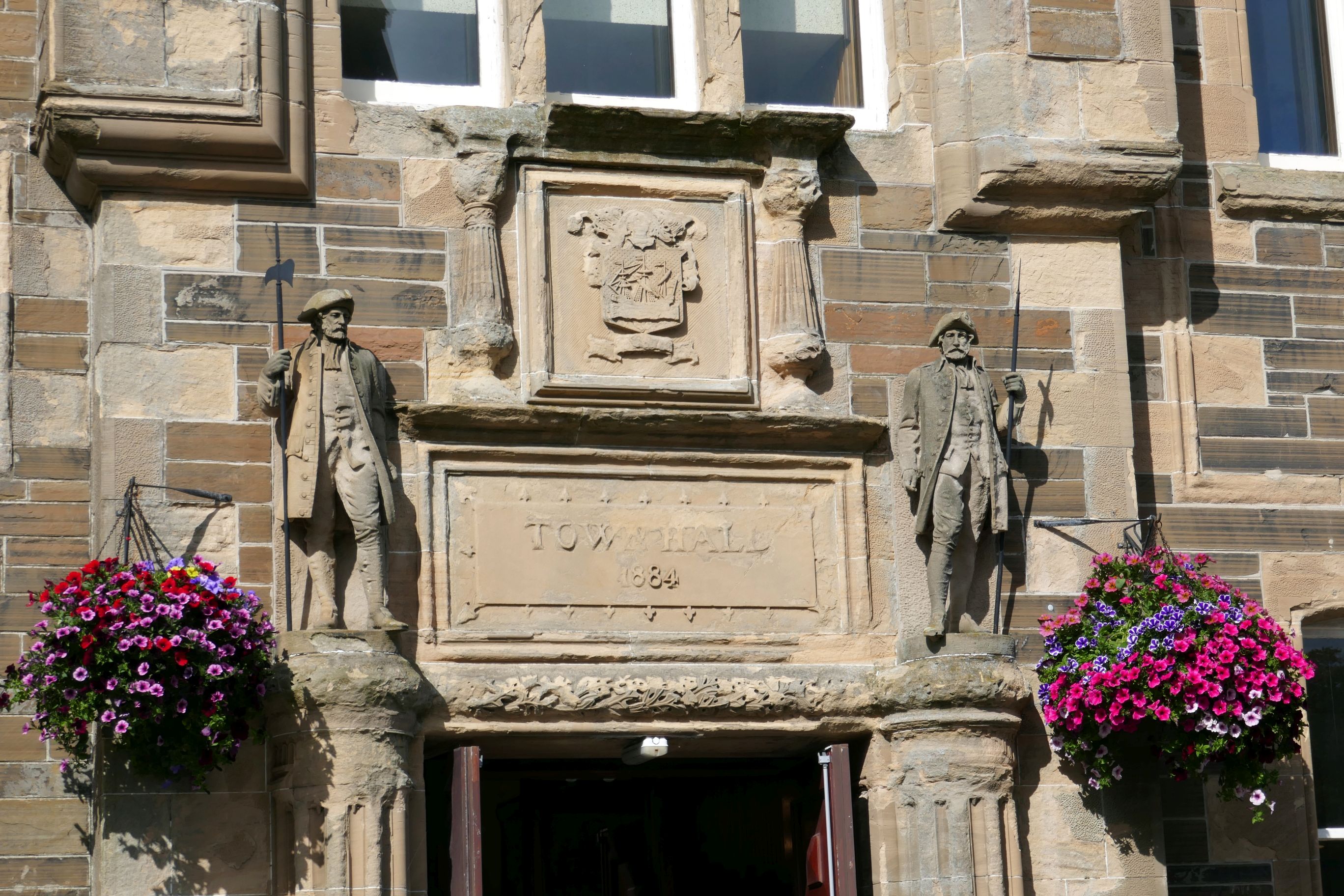
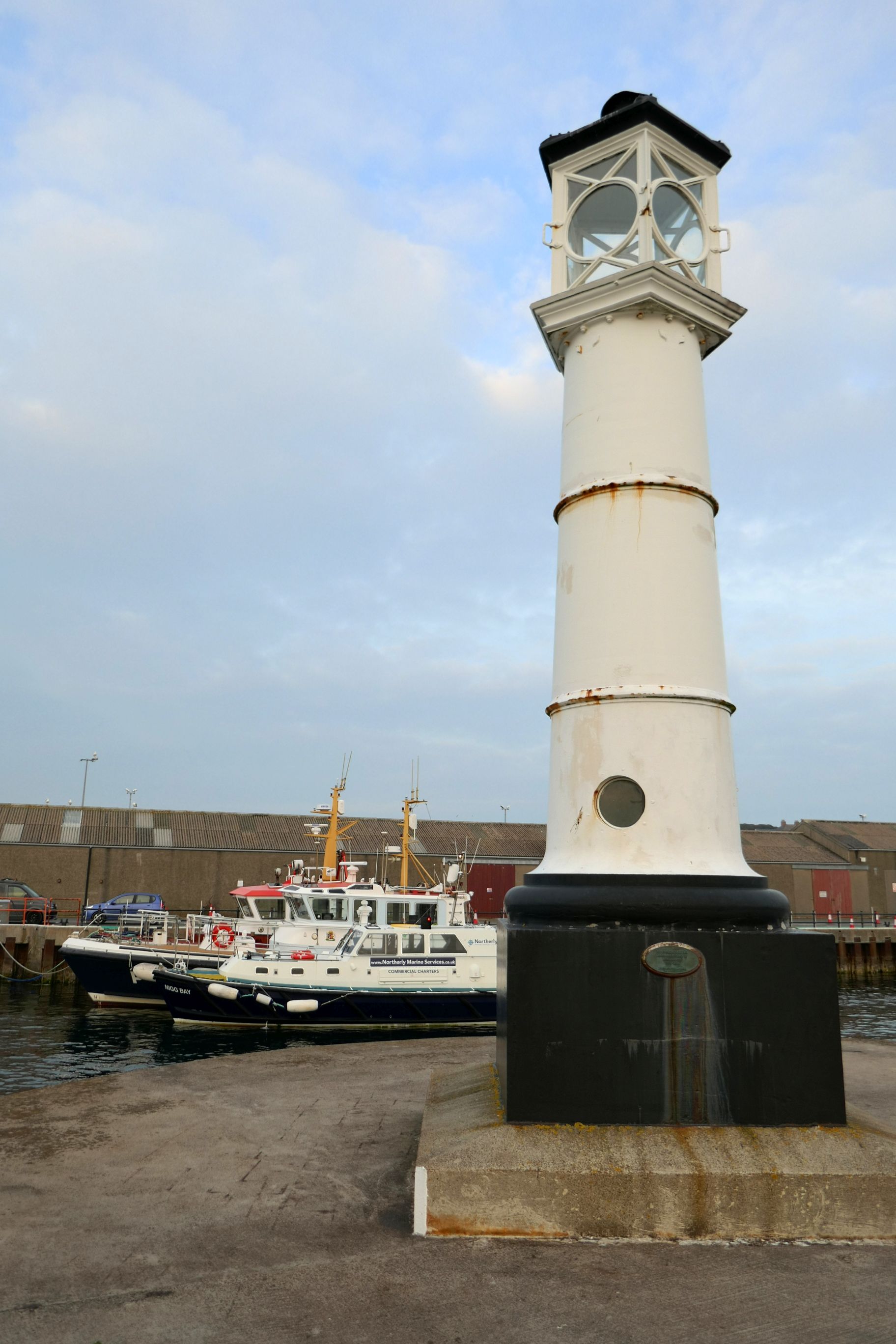
Tom took us on an orientation of the little town; it’s hard to get lost!  Still, his orientation tour was a great way to get the lay of the land and get filled in on the history of the place.

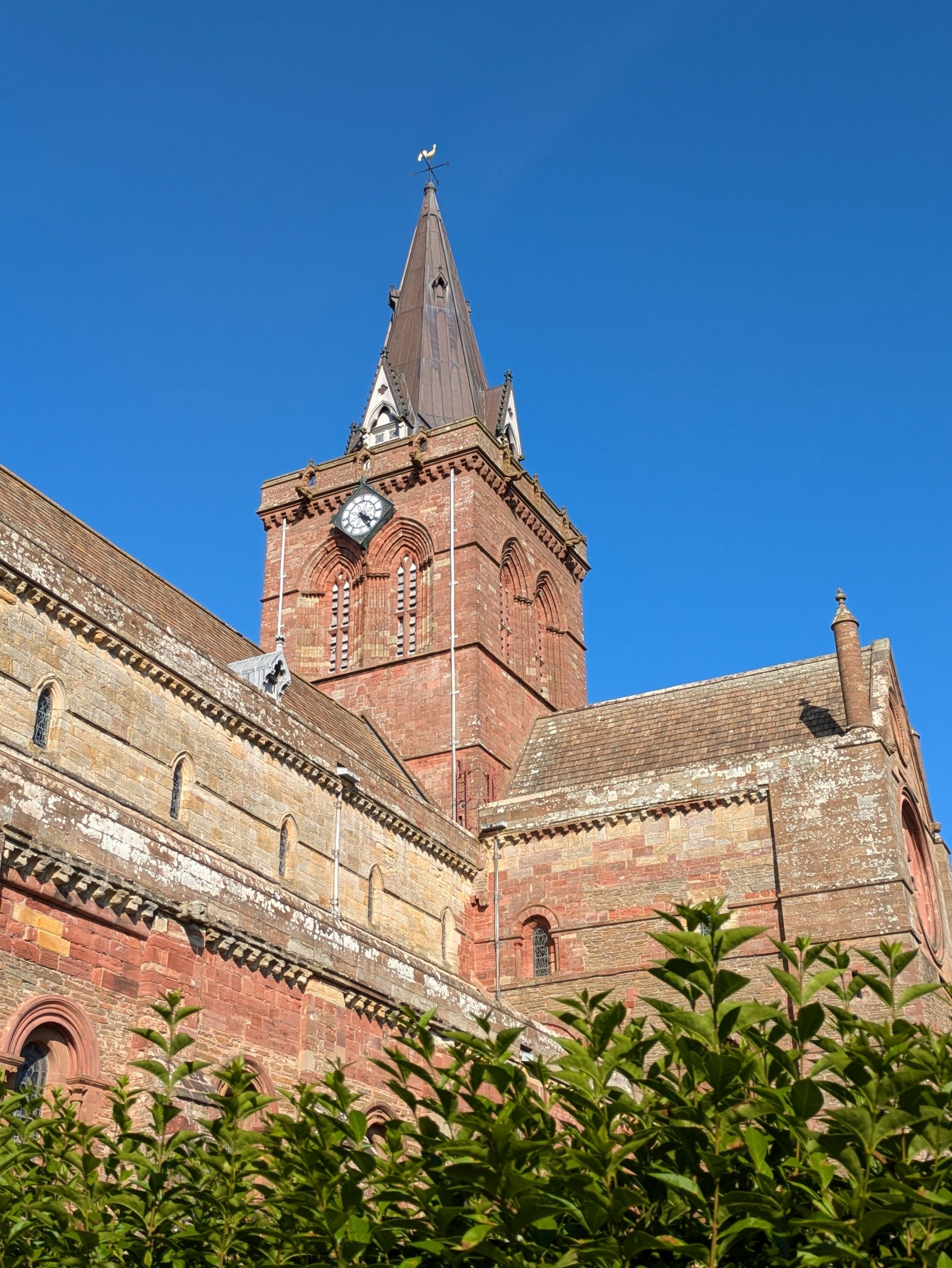
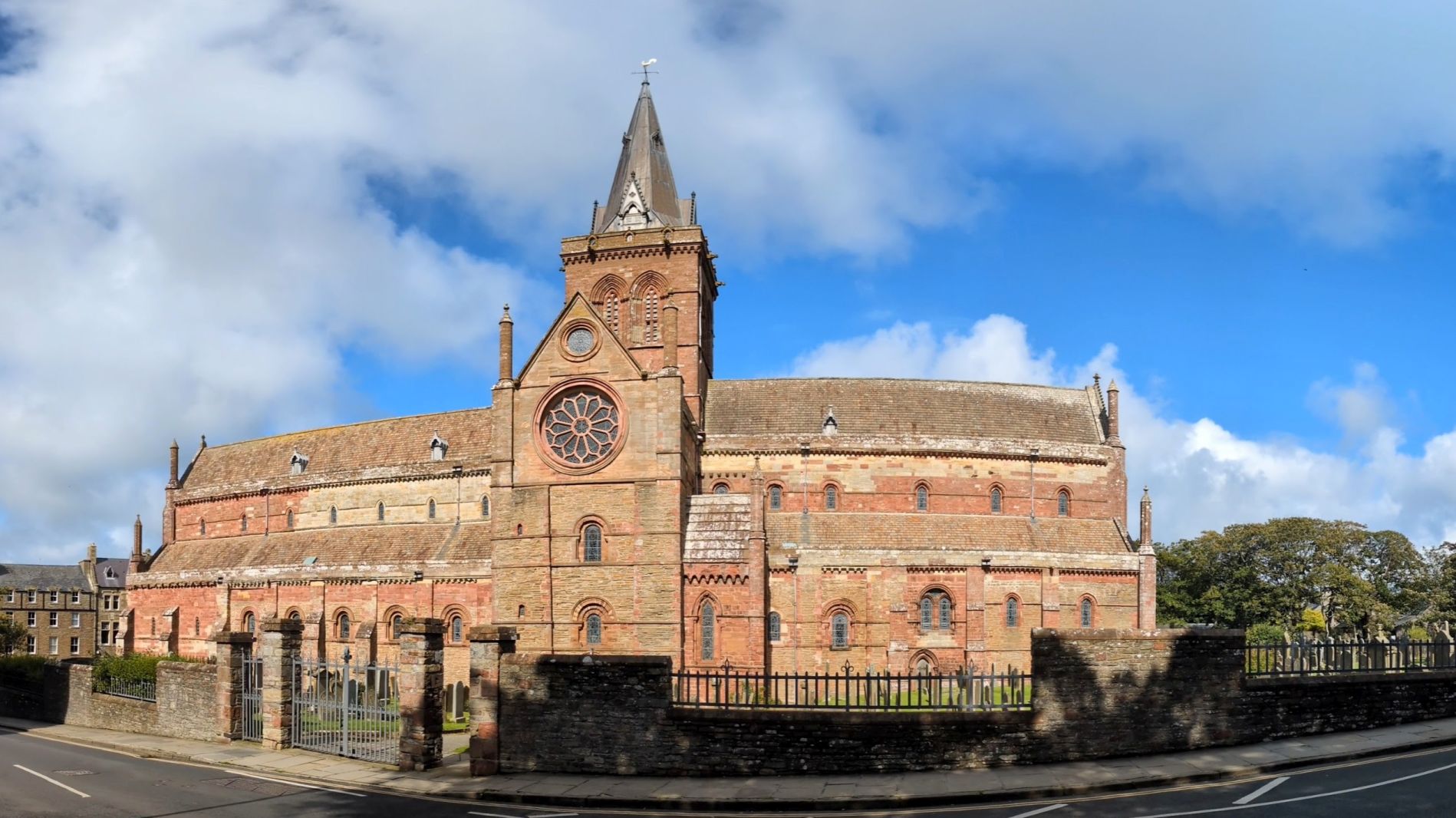
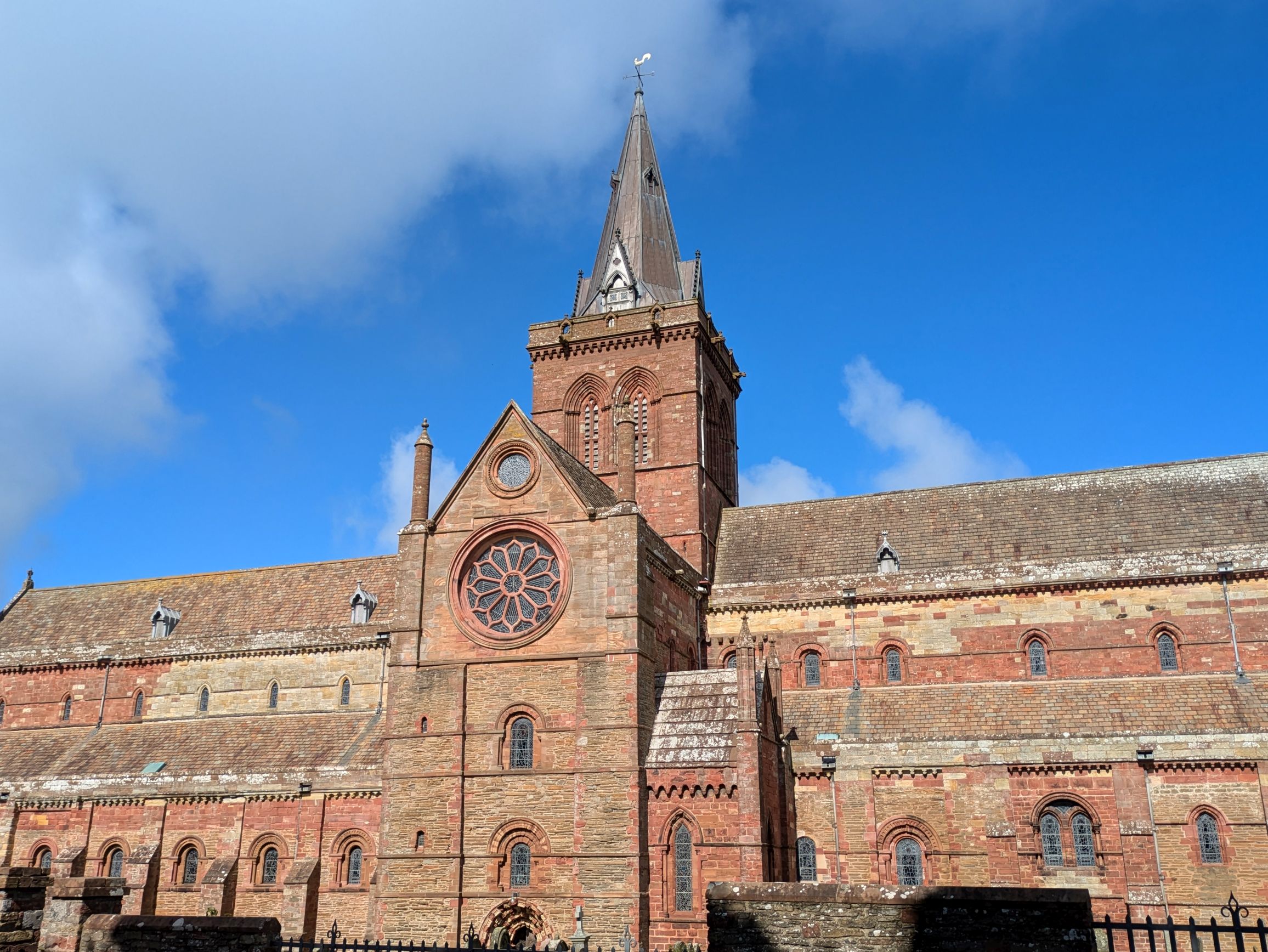
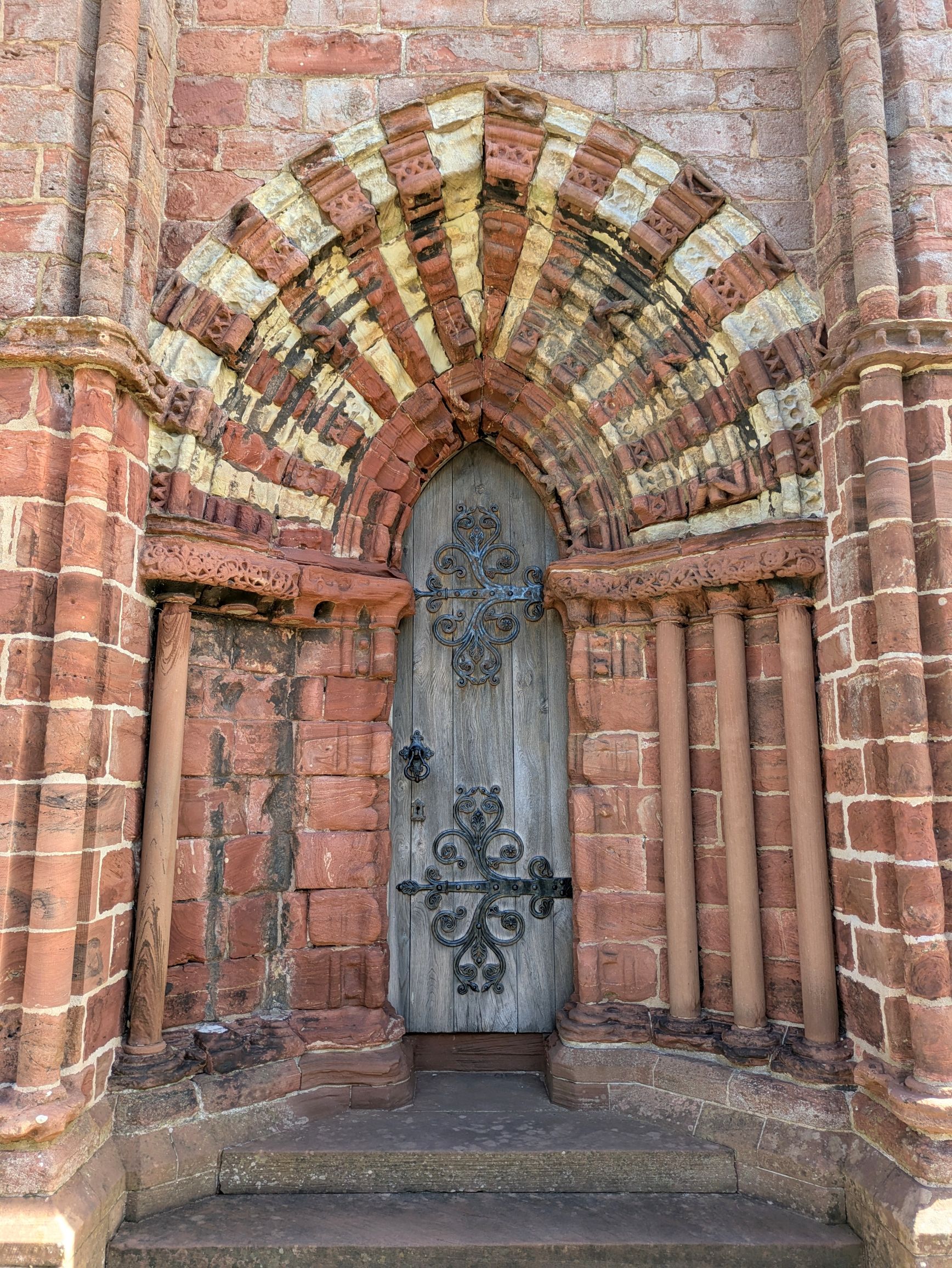
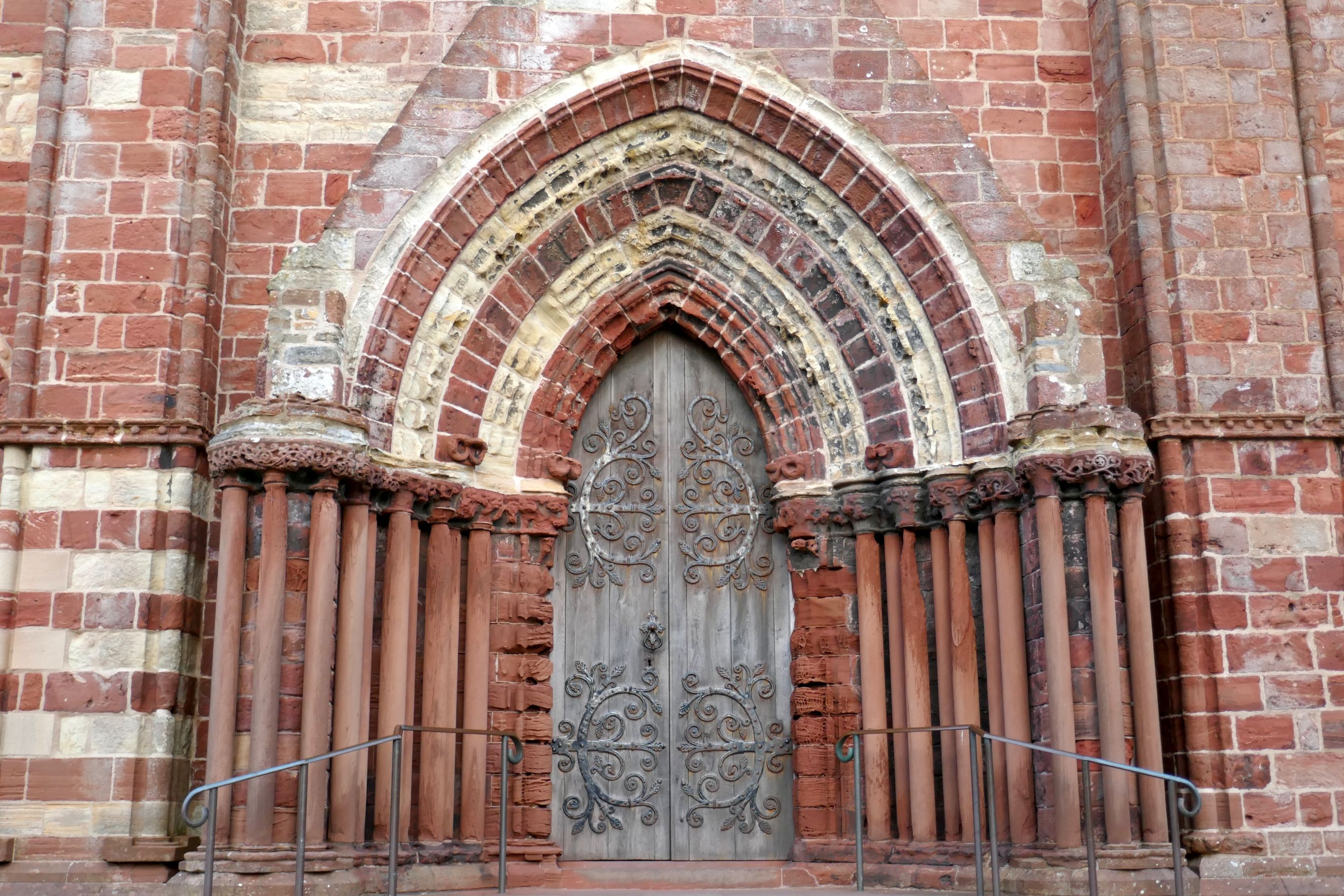
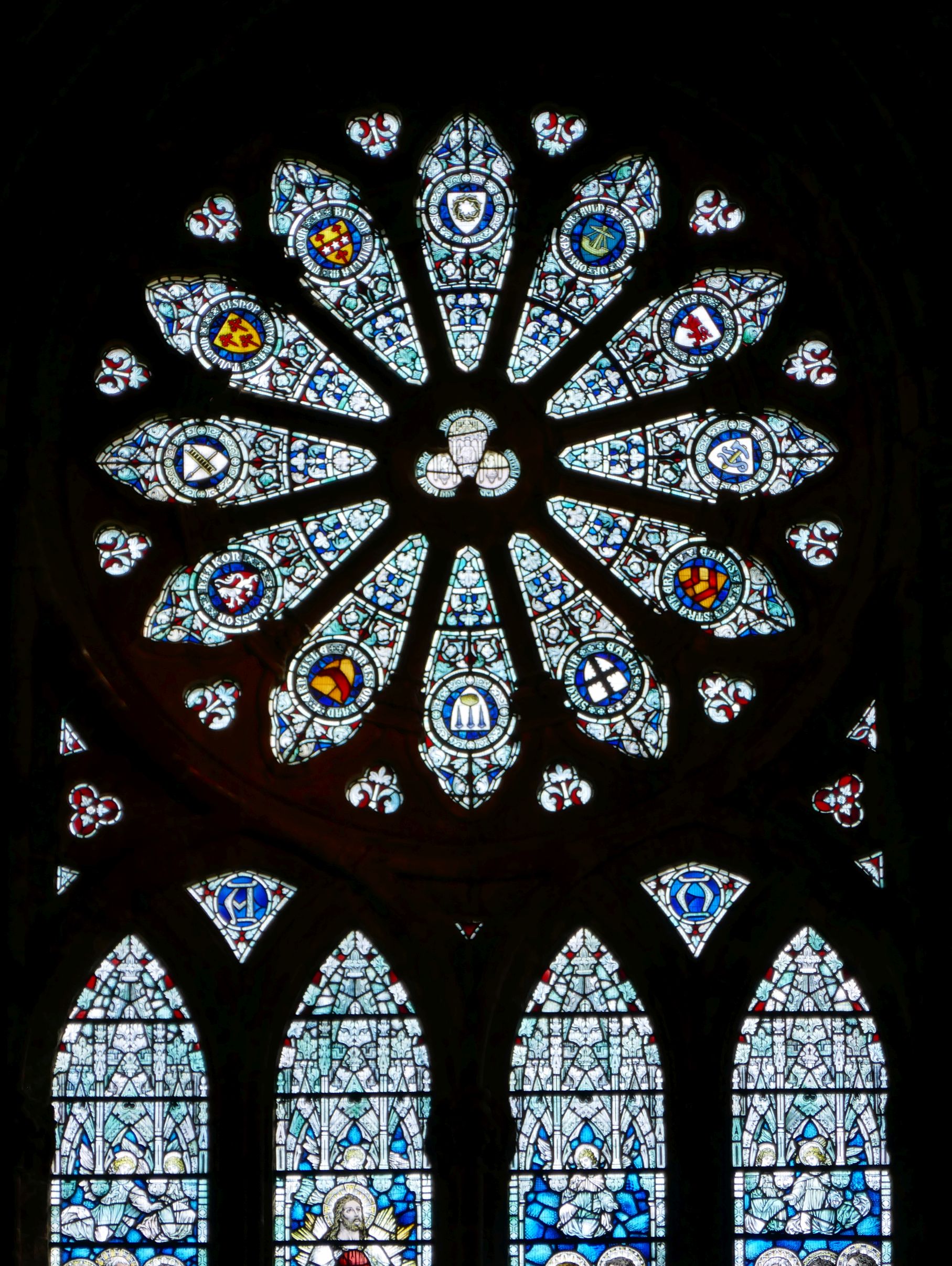
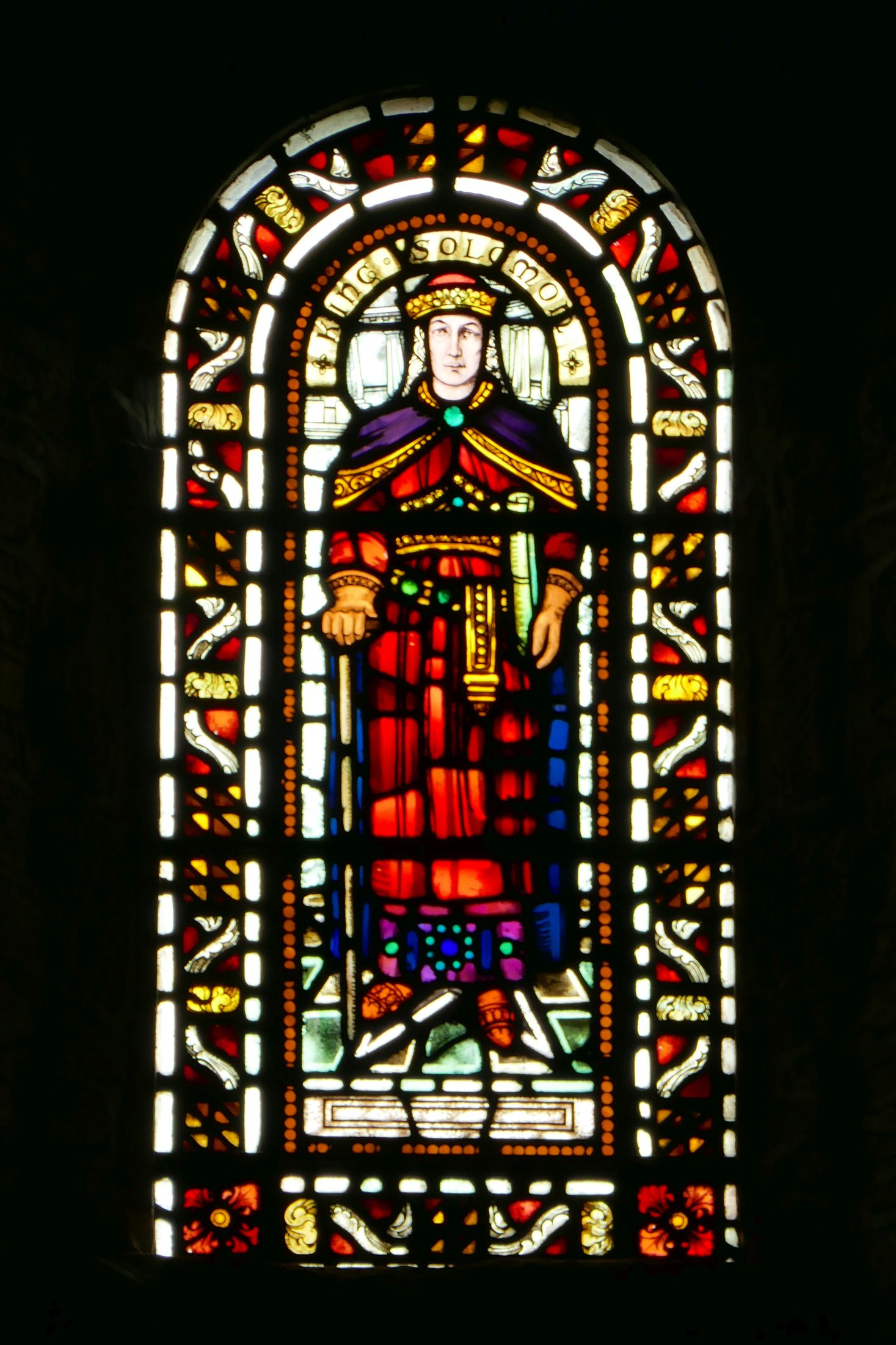
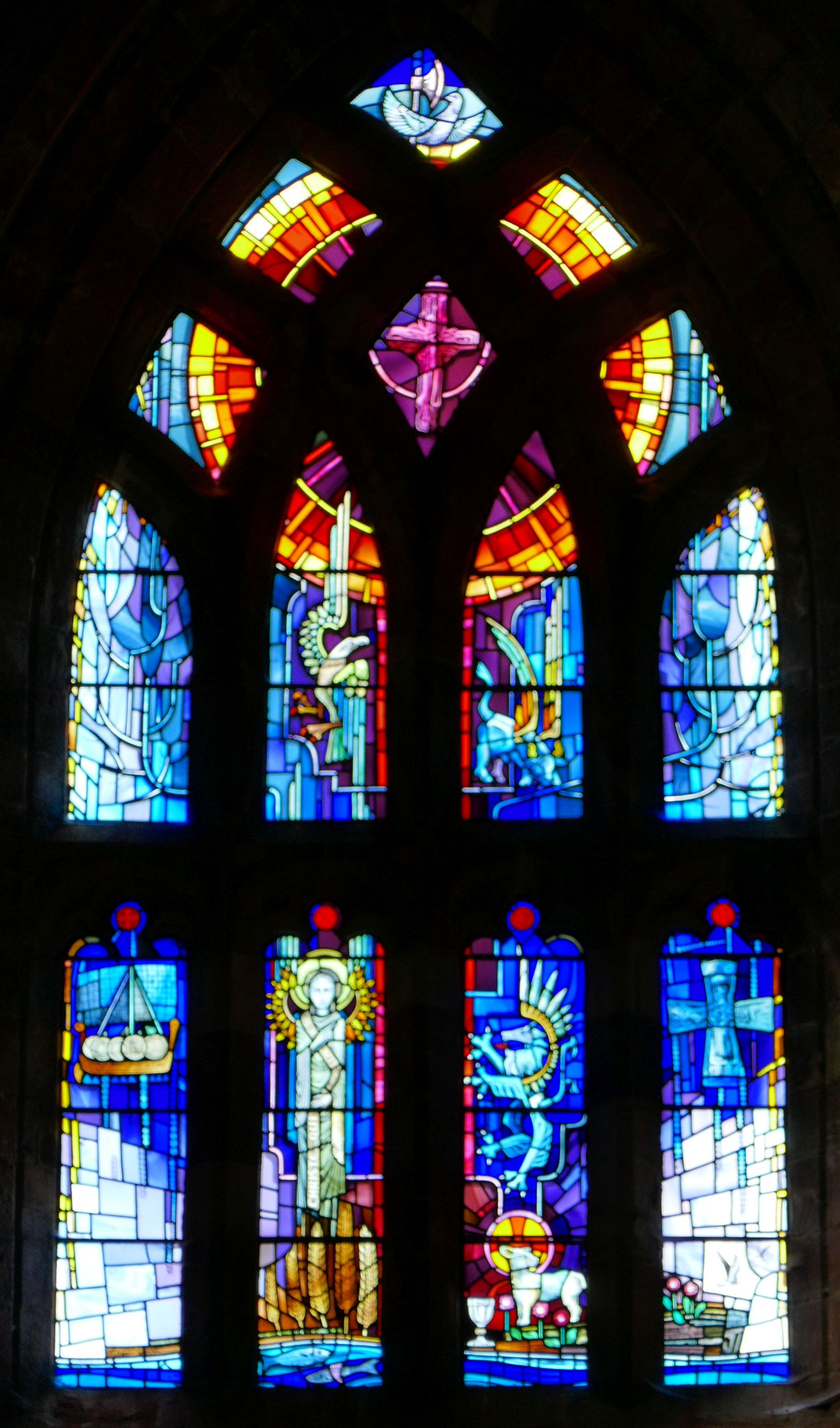
The highlight of Kirkwall is St. Magnus Cathedral, the oldest cathedral in Scotland.  Founded in 1137, it was originally Roman Catholic and built when the islands were ruled by the Norse Earls of Orkney.  Today, it is owned by the burgh of Kirkwall rather than by any church. 

Built of local red sandstone, the Norman architecture of the cathedral is gorgeous.  We enjoyed returning on a couple of occasions during the following two days, just so we could see it in different light—especially in the late afternoon and early evening.

Following our orientation of the town, we walked up to the University of Highlands and Islands (UHI) to meet with Laura who works in the Culinary Department where they teach hospitality and restaurant business.  They have a restaurant on site that students run, and customers give feedback on the service and food.  Another wonderful program the university offers is remote courses on TV that are linked with other universities.  Kirkwall is quite isolated, it’s expensive for students to travel to the mainland, and there is a housing crisis in Scotland; so, being able to go to UHI and “attend” class on TV is very helpful.

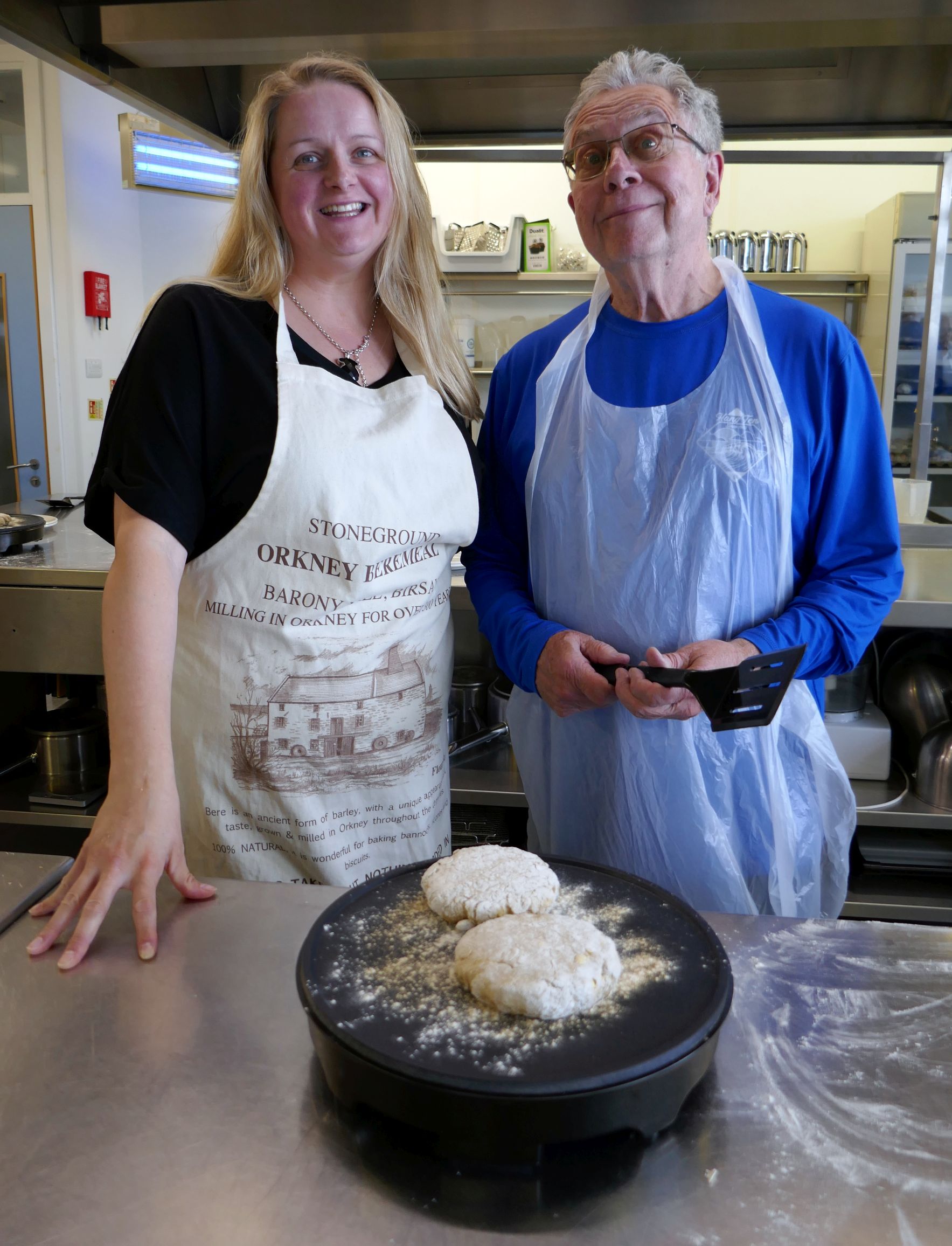
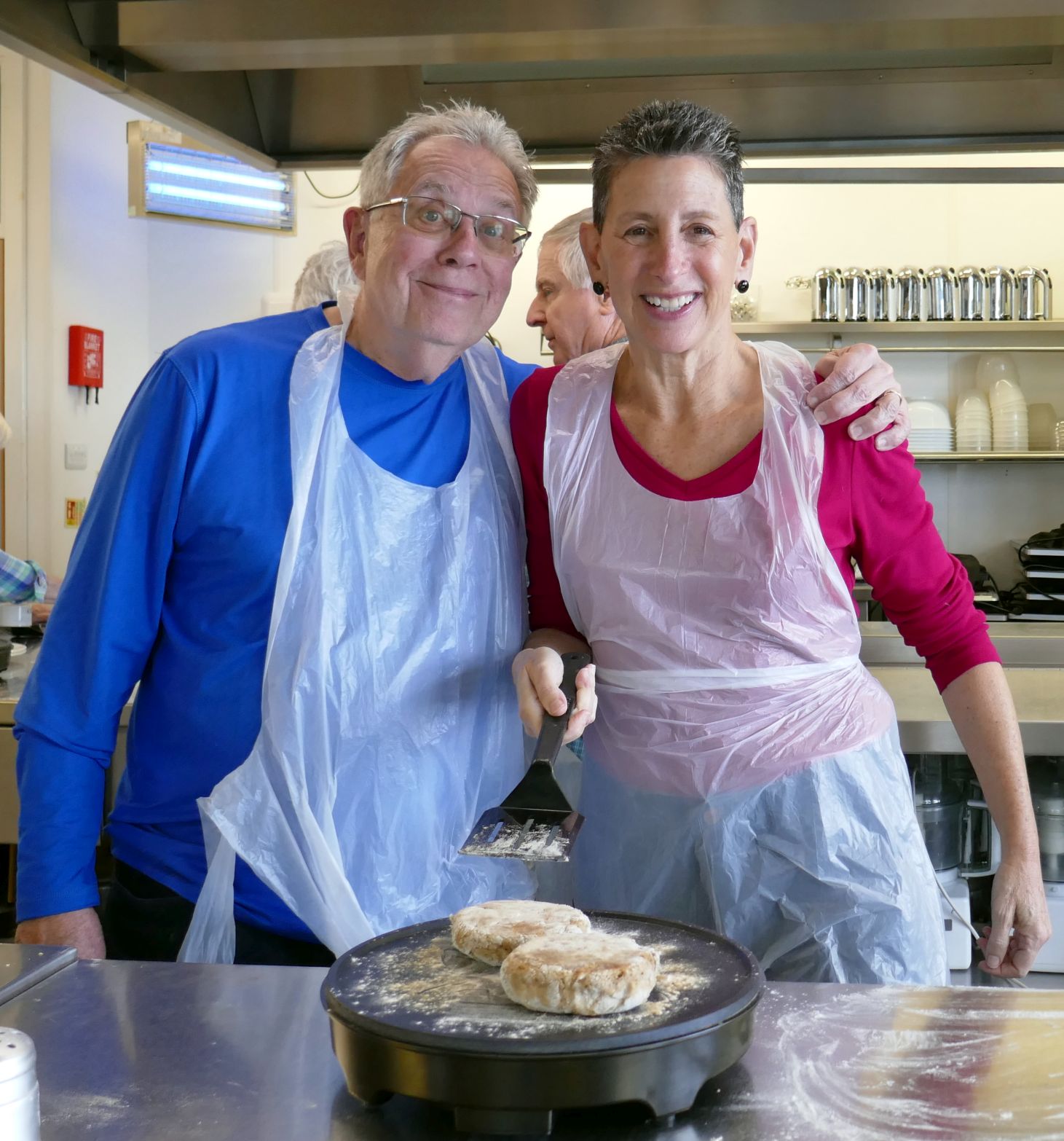
After learning a bit about the university and Laura’s background (She’s a huge Yankees fan and got married in Central Park!), she taught us how to make Bannocks, a Scottish bread made from bere barley, which is grown in Orkney and milled at Barony Mill, the only mill for bere in the world.  Bruce and I teamed up, and ours came out tasty!

Throughout our U.K. tour, in addition to the history, we learned a lot of interesting facts from Tom that baffled us as much as it baffles him!  Check this out:

Electricity that is generated by wind turbines in Scotland doesn’t stay in Scotland.  It goes to the grid in England for their benefit.  Scotland actually pays more for electricity, even though they produce it!  Ditto for oil.  Profits from oil drilled in Scotland go to England.

Wales gets the same shaft from England, but in their case, it’s water.  Wales water gets transported to England, and then it’s sent back to Wales at a premium cost.  What the…?

Although Wales could not survive independence, Scotland has the resources to be completely independent, but England won’t allow them to vote on it.  Go figure…

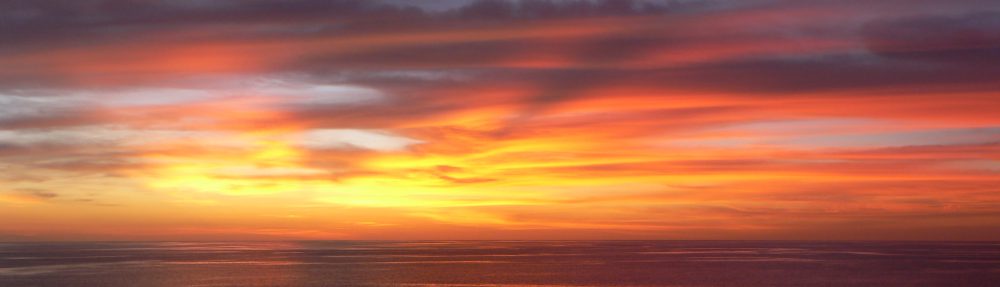
Here are some final sunset scenes around town:

Coming up next: UNITED KINGDOM #10: ORKNEY’S CHURCHILL BARRIERS & ITALIAN CHURCH