A River Runs Through It

P1090068

P1090073.JPG

105

What is the one state where the Mississippi River runs through it, rather than by it? Louisiana. And, yesterday, our journey took us to St. Francisville, Louisiana, a tiny town with an interesting history.

St. Francisville bounced between countries during its two centuries of history before becoming part of the United States. Founded in 1809 by the English, it was also claimed at one time by France and Spain. In 1810, the town served as the capital of the Republic of West Florida, an independent republic set up by settlers who resented Spanish rule. The experiment lasted less than three months before St. Francisville officially became part of the United States once and for all.

In its heyday, St. Francisville was a center of commerce for the surrounding plantations, making it a key port for steamboats. At one time, it was the busiest river port between New Orleans and Memphis.

After the Civil War the town prospered, even though many people left to escape the economically devastated region. But, a large number of Jewish immigrants who fled persecution in Germany settled in the area and became merchants.

Today, it is a quiet town with beautifully maintained Victorian homes. The entire downtown area is a National Register Historic District.

One interesting fact about this town of 1,700 mostly retired residents is that it has a K-12th grade school that ranks as one of the best in the country, even though Louisiana as a state ranks 49th overall for its education system.

St. Francisville also has four banks and a large number of attorney offices in town, due to Angola State Prison being located 20 miles away. Since St. Francisville is such a desirable place to live and has an excellent school, the attorneys would rather live and set up their offices in town, rather than near the prison. As a result, homes in the downtown area are more than double the cost of similar homes in the outskirts of town.

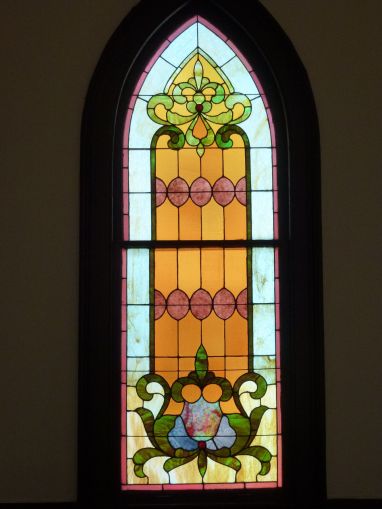
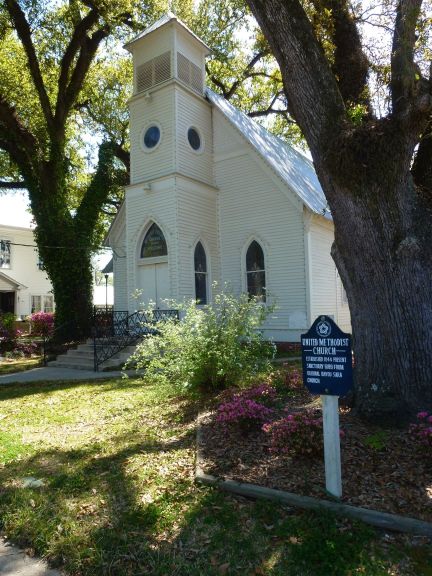
One of the highlight of our visit to St. Francisville was enjoying the beauty of this quaint little town; especially the Victorian homes and stained glass windows of the tiny Methodist church.

P1090137

107

108

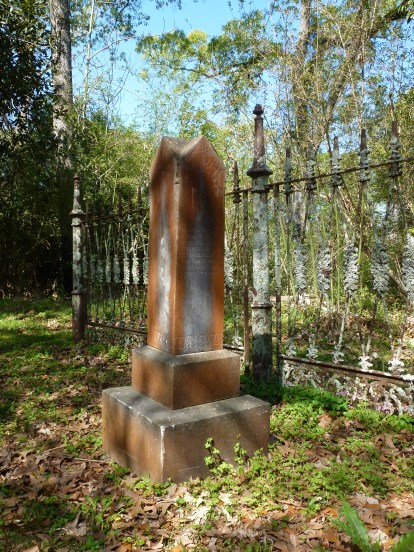
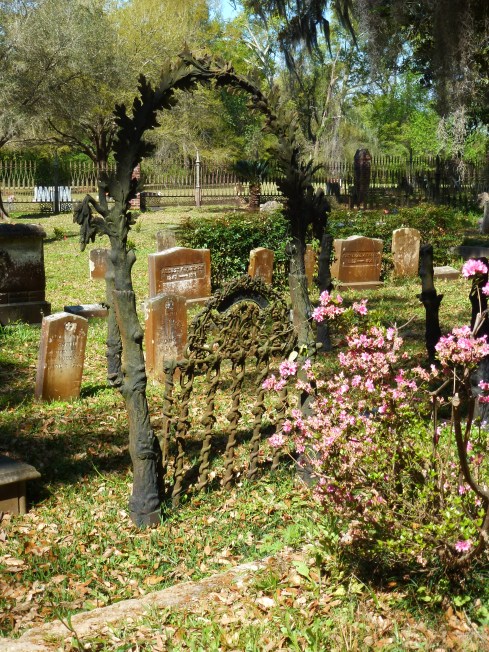
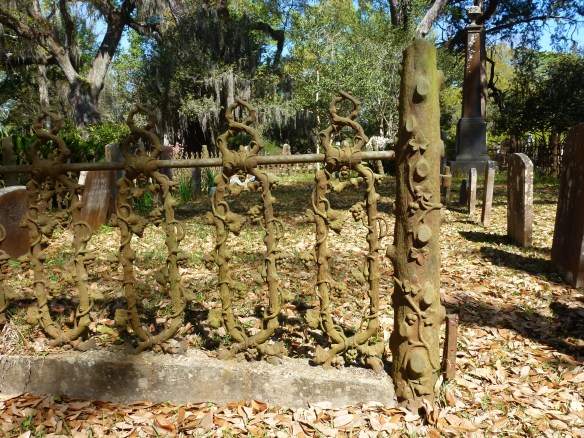
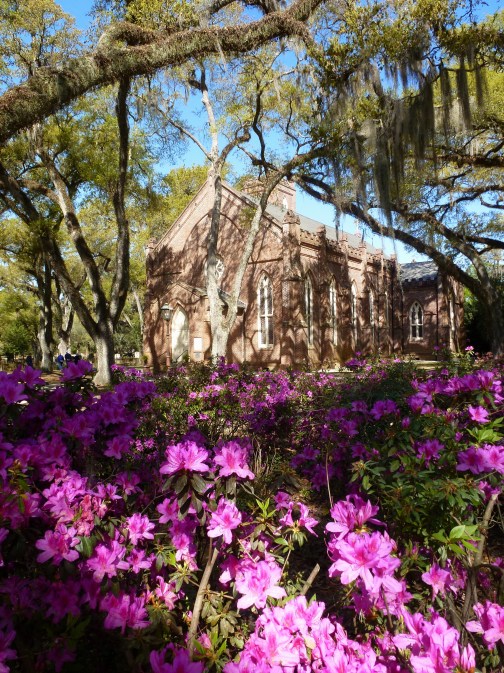
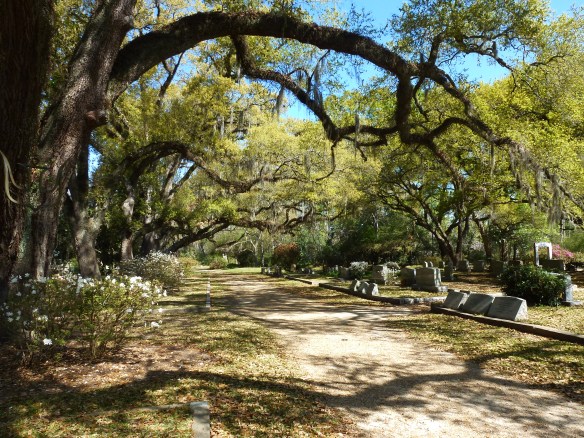
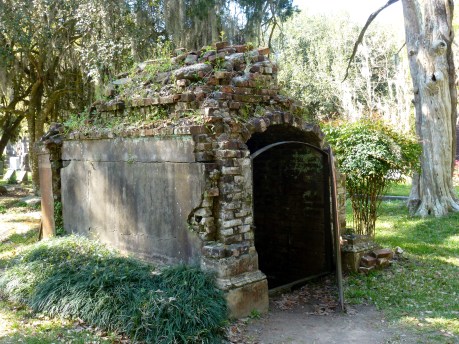
The other highlight was strolling through the gorgeous grounds of the Grace Episcopal Church cemetery.
P1090080

P1090087

P1090100.JPG

P1090108

P1090110.JPG


Natchez, Mississippi

Continuing on down the Mississippi, we arrived in Natchez, a small city of less than 20,000 people that has quite an interesting history. I was fascinated to learn that Natchez has flown under several different flags: French, English, Spanish, American, Confederate, and again under the American flag.
During the 1800’s, Natchez was a frequent stop for steamboats and a major port for the loading of cotton bound for New Orleans, St. Louis and Cincinnati. The city recovered from a tornado in 1840 which killed 269 people and had more millionaires per capita than any other city in the United States prior to the Civil War. Although occupied by General Grant’s army in 1863, Natchez survived the Civil War intact and today has some of the most extensive examples of antebellum homes in the country. One of those antebellum homes is on a plantation, now owned by American Steamboat Company Chef de Cuisine Regina Charboneau. The acclaimed Southern chef now operates Twin Oaks as a bed and breakfast.
Our day was spent hopping on and off the bus and touring three different antebellum mansions, including Stanton Hall, a Greek Revival structure built in 1857.

P1090040.JPG

P1090007


We also enjoyed strolling along the streets of Natchez to enjoy the other homes of the town.

P1090020.JPG

P1090028.JPG

P1090018.JPG

P1090027.JPG


Overall, our impression of Natchez was very positive. It would be a wonderful place to return to for a stay in a bed and breakfast and to enjoy The Great Mississippi Balloon Race that takes place in late October.

From Arkansas to Mississippi

Our next stop along the Lower Mississippi River was Vicksburg, Mississippi, a charming town dating back to 1719. The French were the first inhabitants and by 1719 and built Fort Saint-Peirre on the bluffs above the Yazoo River to protect their fur trading post from Native Americans.

Several years later, the Chotaw Nation laid claim to the area. The Spanish were next, and by 1790, a small military outpost had been founded. Americans took over the small fort eight years later and the area quickly grew quickly, incorporating in 1825 as Vicksburg in honor of Newitt Vick, a Methodist minister.

During the Civil War, on July 4, 1863, Vicksburg was the site of a 47 day siege that ultimately ended in Confederate General John C. Pemberton surrendering to Union General Ulysses S. Grant. While July 4 was known as Independence Day across America, the citizens of Vicksburg viewed that date as a day of defeat and did not celebrate the 4th of July again until 1945.

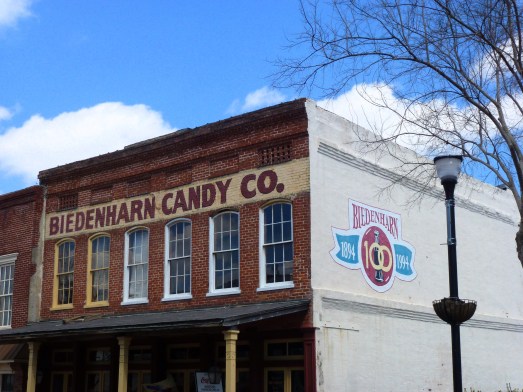
On a lighter note, Vicksburg was also the location where local candy store owner Joseph Biedenharn made history on March 12, 1894 when he bottled the first batch of Coca-Cola.

P1080868

Today, Vicksburg is a charming city with many beautiful homes and a pleasant historic downtown with attractive boutiques. My favorite feature of the main downtown shopping street was the jazz playing over speakers placed in the sidewalk landscaping. Nice touch!

P1080839.JPG

As we did in Helena, we enjoyed Vicksburg by riding one of American Queen Steamboat Company’s four hop on/ hop off buses. For the first four hours of each port day, the buses are each staffed with a local expert who narrates the circuit, in between the designated stops.

Mom and I have chosen to ride the full circuit once to hear the entire narration and plan out the stops for the second trip through. In Vicksburg, one of the scheduled trips worth hopping off for was Church of the Holy Trinity, built in 1869. In this church there were several beautiful Tiffany stained glass windows, made in the late 1890’s and early 1900’s that were later installed.

084

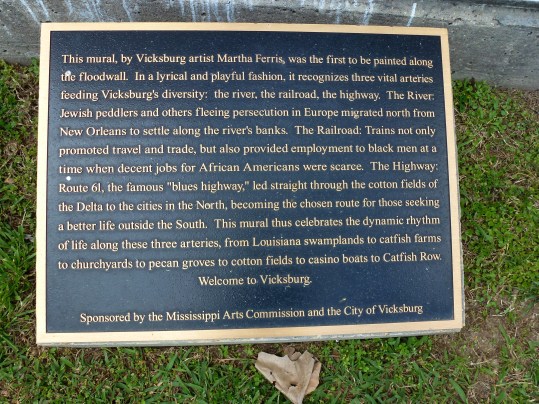
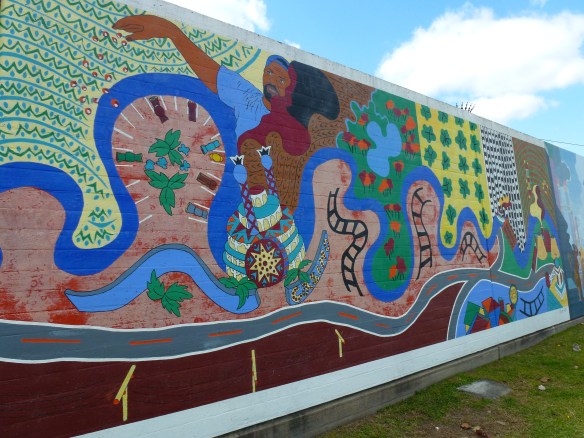
Another thing we really enjoyed about Vicksburg was the waterfront area where the American Queen was moored. Along the flood wall, there were beautifully painted murals depicting the history of Vicksburg; each one with a plaque explaining the mural. Walking along the sidewalk to see the murals was a wonderful way to learn about the history of Vicksburg.

057.JPG

058.JPG

P1080907.JPG

Steaming South on the Lower Mississippi

036

037

Our first port on this 640 mile journey along the Lower Mississippi was Helena, Arkansas, a small town that exists only because of the river itself. In the 1800’s, the river was the nation’s superhighway, long before railroads and trucks, and carried most of the nation’s goods and people through the heartland.

Although the town was prosperous then, the Civil War put an end to Helena’s prosperity when the Union Army occupied Helena.

In the 1940’s and 1950’s, a vibrant blues community developed in the city. The area has produced blues greats Robert Lee McCollum, Roosevelt Sykes, Sonny Boy Williamson II and Robert Lockwood Jr.

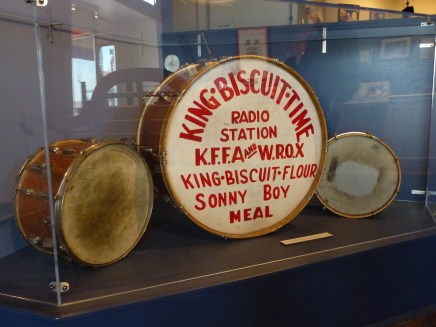
Helena is also home to King Biscuit Time, one of America’s longest running daily radio programs which first aired in 1941.

044

043

Today, Helena shows evidence of being hard hit by the recession. The only bright ray of sunshine for this town, economically, is the population explosion from 12,000 to 85,000 during its annual King Biscuit Blues Festival.

040

I always wondered how San Diego’s King Biscuit Blues Band got its name. And, when I arrived in Helena, the origins of the bands’ name finally dawned on me. A King Biscuit Blues Festival poster hung in a storefront window and the connection was made.

Strolling the Decks of the American Queen

4-4.JPG

4

3

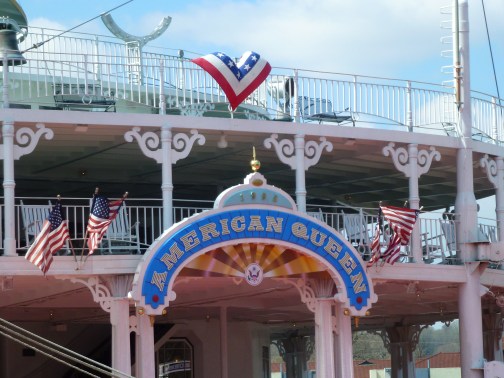
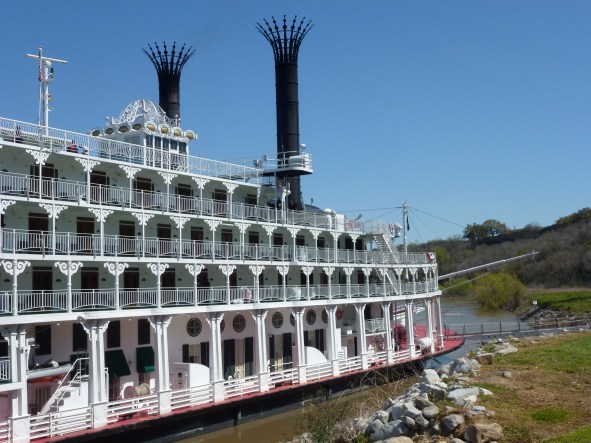
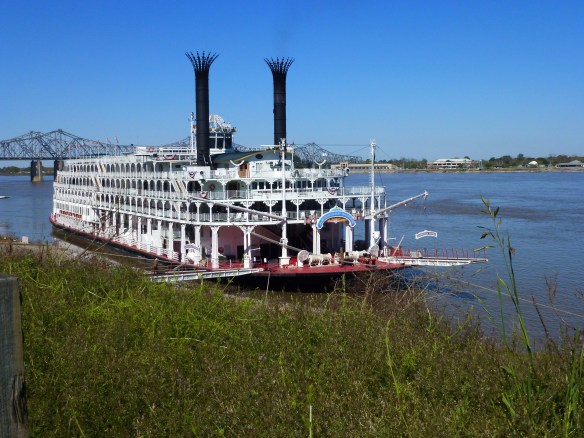
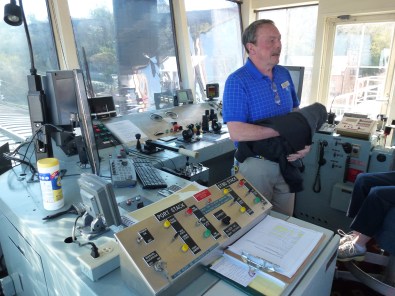
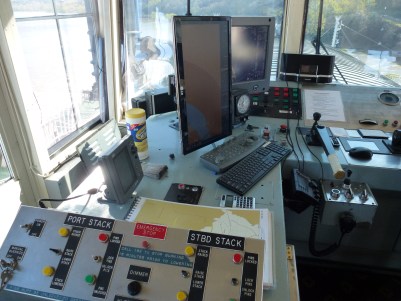
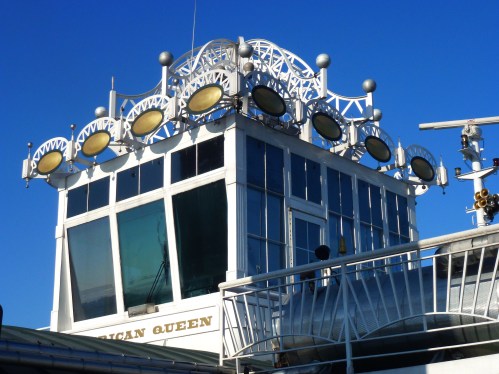
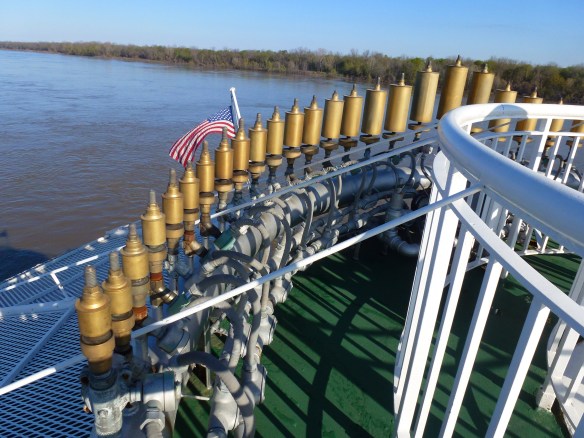
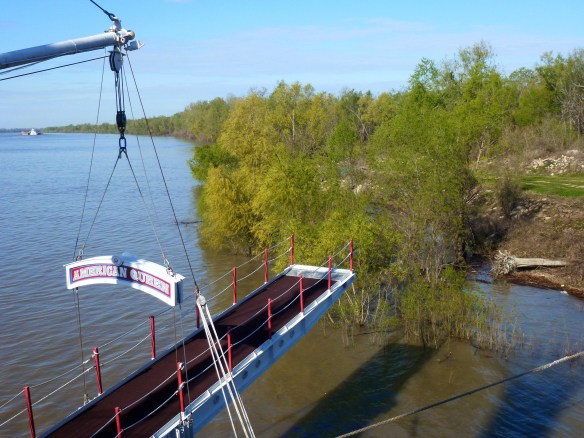
Every time I walk the decks of this beautiful ship, I am in awe. The American Queen is the largest steamboat in the world, as well as the most maneuverable one, according to Jerry, our Riverlorian who conducted a tour of the pilot house for me and a small group of passengers.

1.JPG

2

“Riverlorian”? Yes! On board, Jerry is our river historian lecturer who is an expert at everything Mississippi River. Our “lecture” yesterday was not a lecture at all, though. Instead, Jerry told stories about the river and his experiences aboard steamboats over the years. What a hoot!

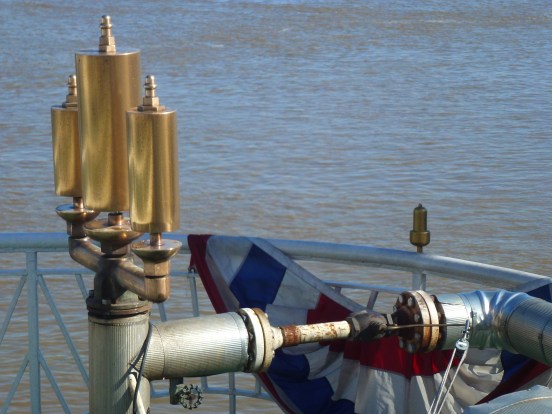
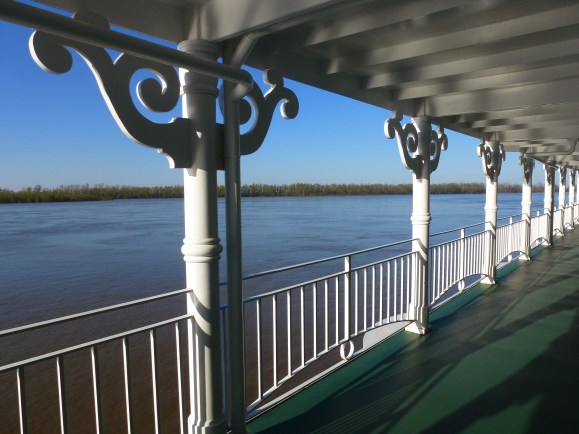
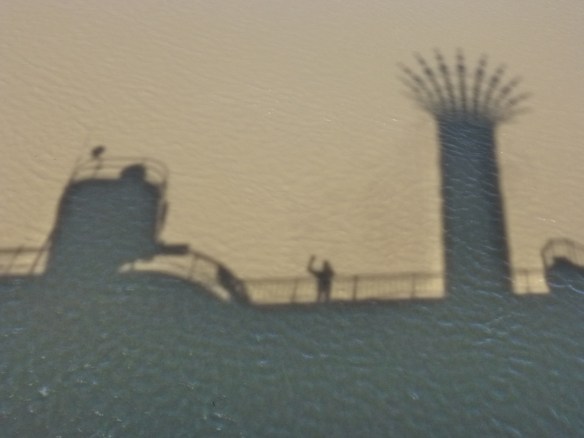
I had never traveled aboard a steamboat before, but it was love at first sight when we set sail on the Mississippi. I thoroughly enjoy strolling back and forth on the decks, exploring every detail; especially when I have my camera in hand. It is so picturesque and fun to explore photographically!

So, take a stroll along with me and explore the American Queen.

5.JPG

6.JPG

7.JPG

8.JPG

9.JPG

10

11

12

13

14

P1080682.JPG

P1080682.JPG

15.JPG

All Aboard…

… as the American Queen sets sail along the southernmost area of the Mississippi River.  My mom and I will be aboard the 432 passenger paddlewheel, on March 24, after spending one night in Memphis, Tennessee.

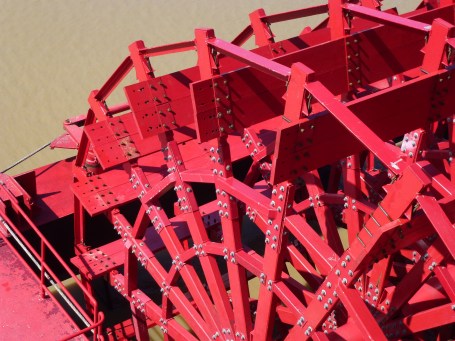
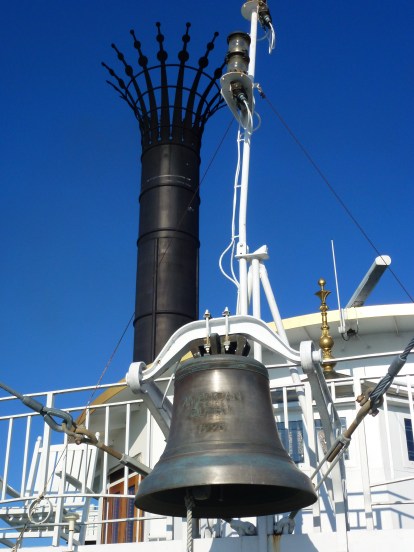
Longer than a football field and six decks high, The American Queen is the largest riverboat in the world.  She is a beauty, complete with gingerbread trim, fluted stacks, and a giant red paddlewheel giving her an old-fashioned appeal, even though she was built in 1995 and refurbished last year.

As a (former) California girl who feels right at home in the northwest or northeast areas of our country, living aboard the American Queen for one week will be as foreign to me as I felt observing a Balinese cremation ceremony and walking the old city streets of Casablanca.  I live in a house with rattan furniture, handicrafts from my world travels, and fused art glass.  The American Queen, in contrast, will be like stepping back in time to “Gone with the Wind”.

This is precisely the motivation for booking passage aboard the American Queen steamboat:  Experiencing something completely different and not expecting it to be like home.  There is nothing more frustrating to me when I travel than hearing other Americans whine and complain about how, “At home, in the U.S.A., the food is (fill in the blank), and the hotels are (fill in the blank), and the service is (fill in the blank).”  BLAH, BLAH, BLAH!  What I wish to tell those people, at that point is, “Well, then, you should have stayed home!”

Traveling, to me, is all about stepping outside of my comfort zone and trying new things.  Not that an American Queen cruise is exactly roughing it.  But, to me, the Deep South is like being in a foreign country; not unlike the experience of living in Texas, when we lived there for four years.  Culturally, the people of Texas and Griffin, Georgia, where we have lived for the past four years, are more culturally different from Californians than many of the foreign countries I spent a lot of time in, including Australia and New Zealand.

It’s all good!  I absolutely love the experience of living and traveling in new and different places.  Ever since I spent one year traveling the South Pacific, solo, with my backpack, I have craved new adventures.  Whether it be trying exotic foods, traveling to experience different cultures or moving from the 7th largest city to a town of 23,000; I have been up for it all.

So, on Saturday, I leave my casually and comfortably furnished home (and healthy food… and swim training…) for an ornately decorated steamboat and good ol’ southern cooking.

All aboard!

BrochureCoverItinerary