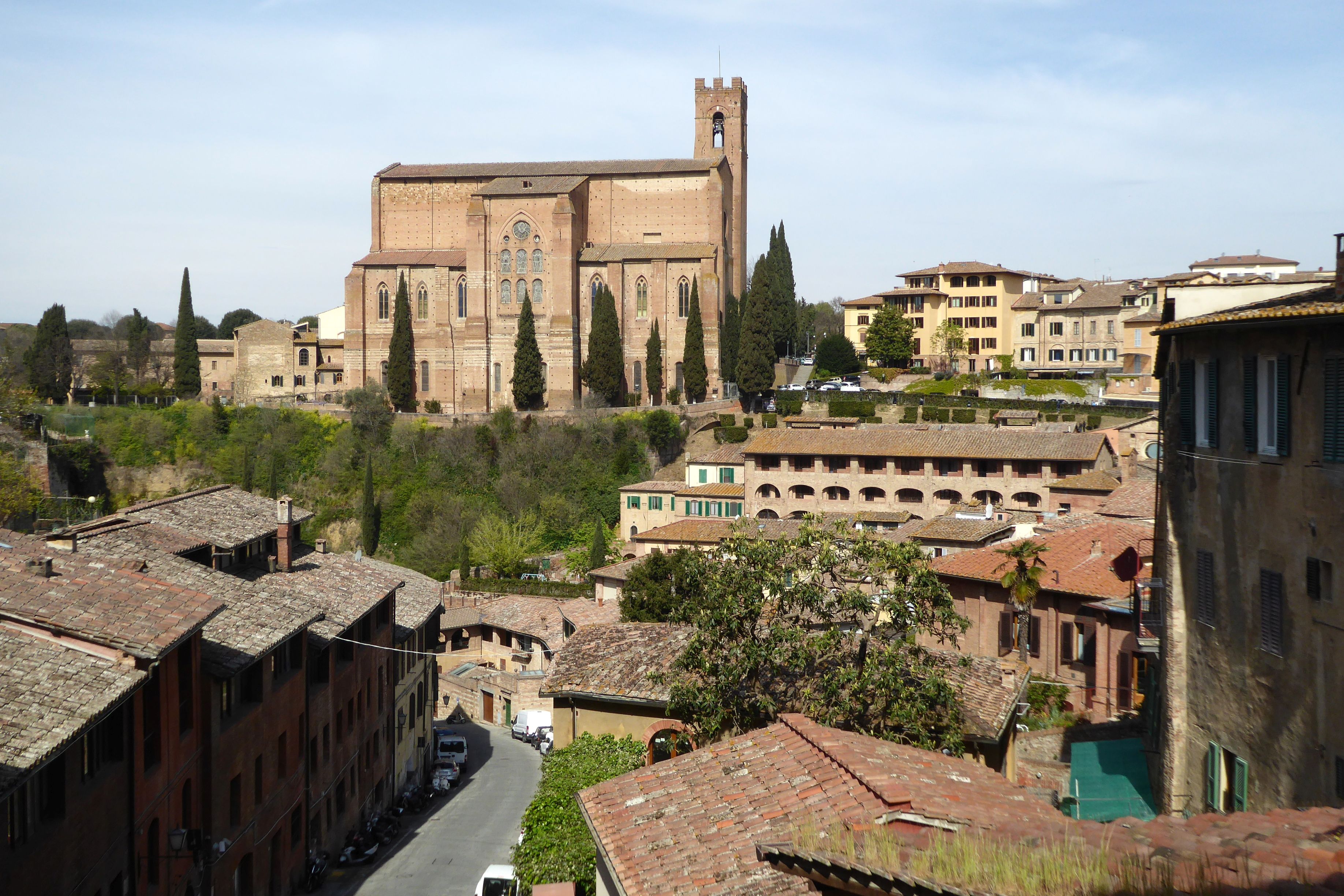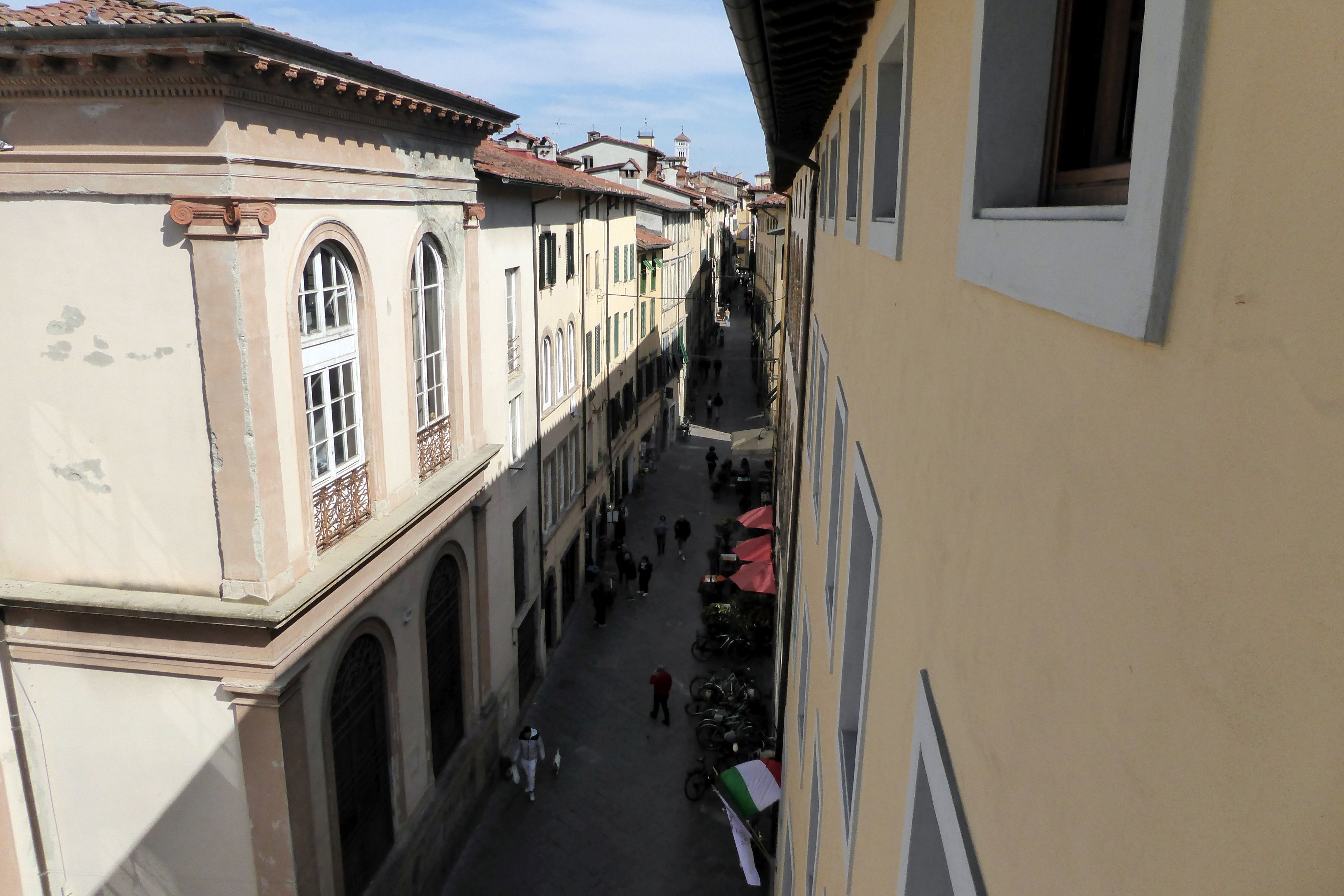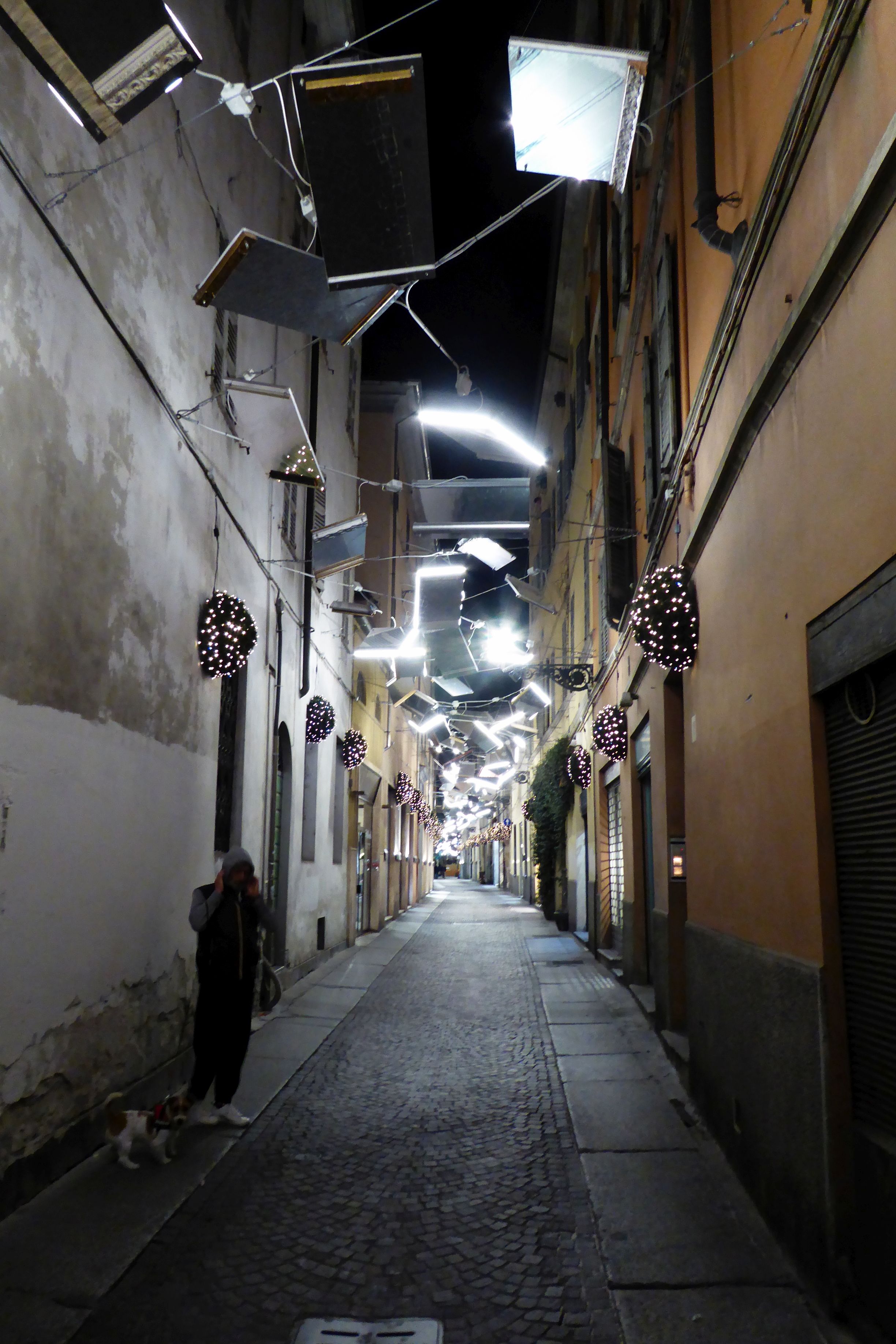
ITALY #15: THE SCENIC STREETS OF SIENA

I’m back, after stepping away from my blog to tour Utah’s Grand Circle of National Parks and a few state parks—the topic of my next blog series.

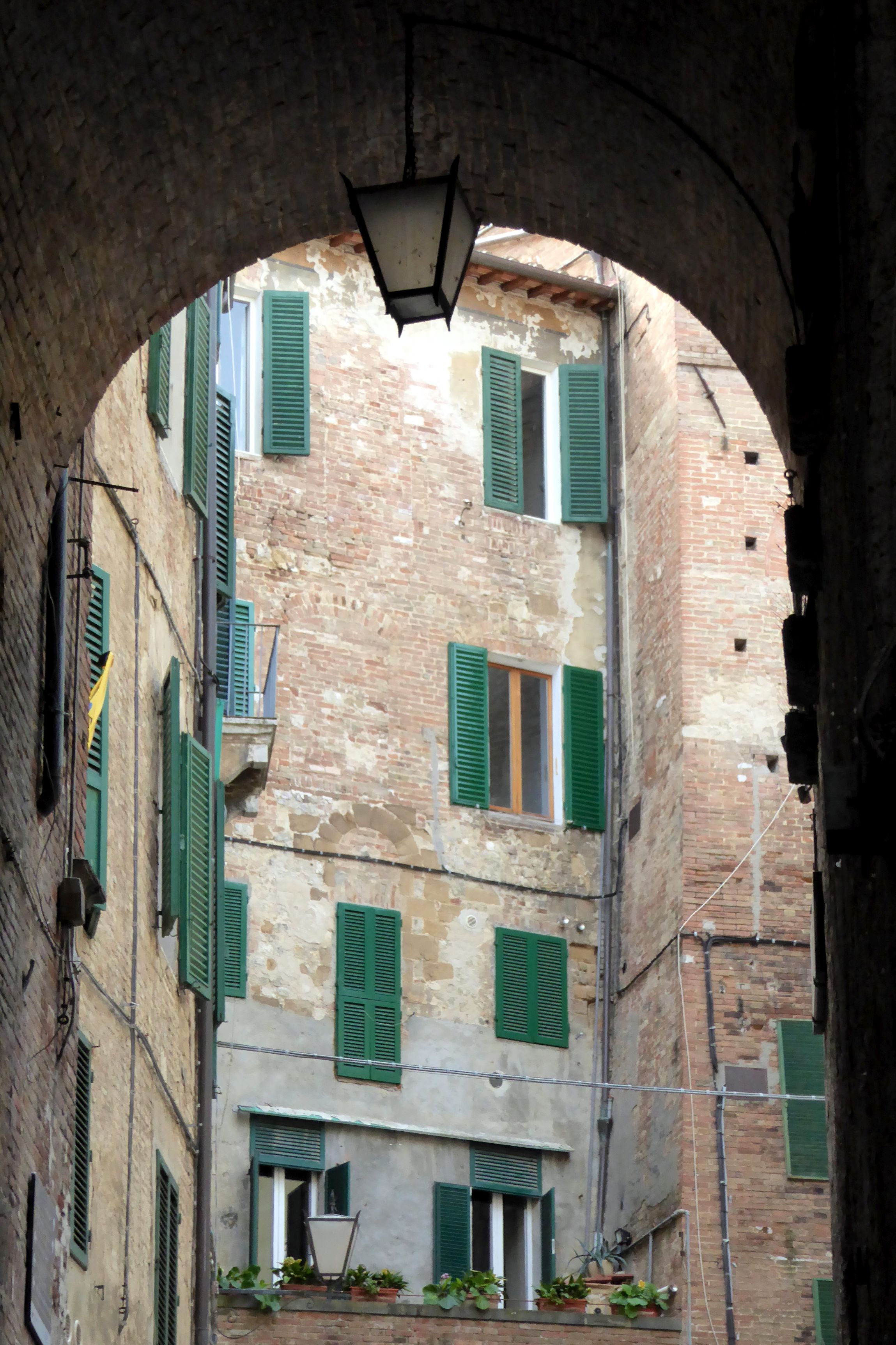
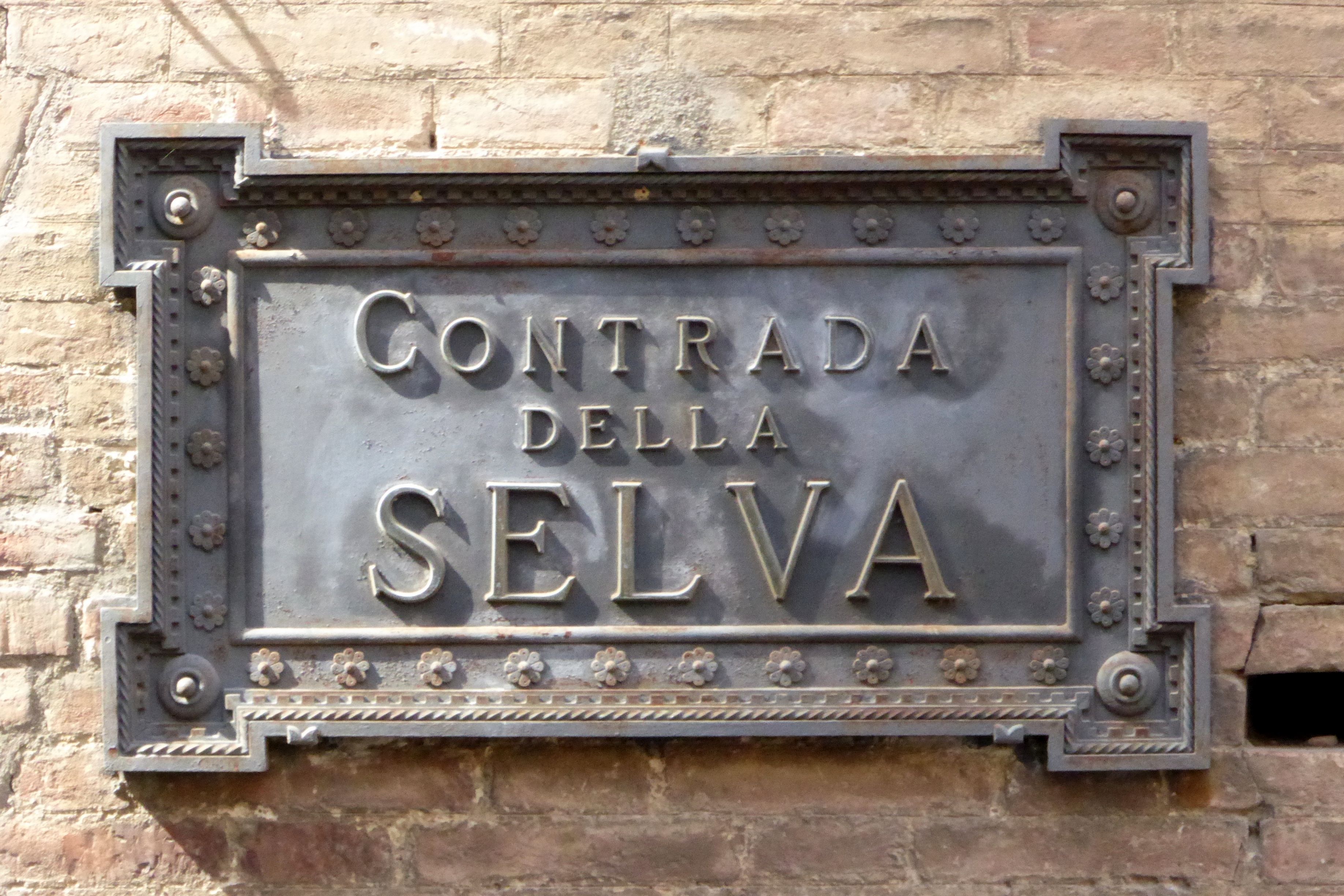
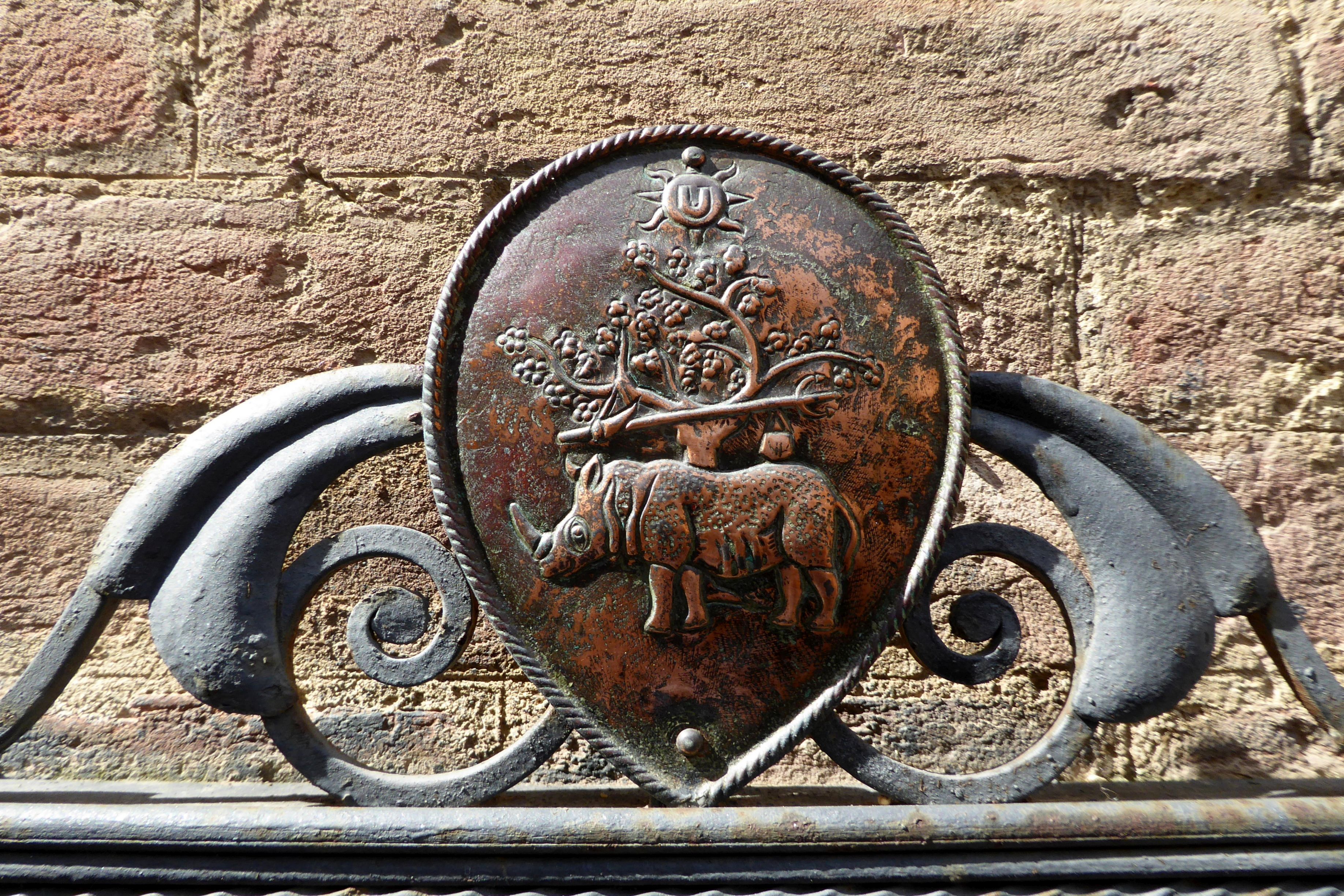
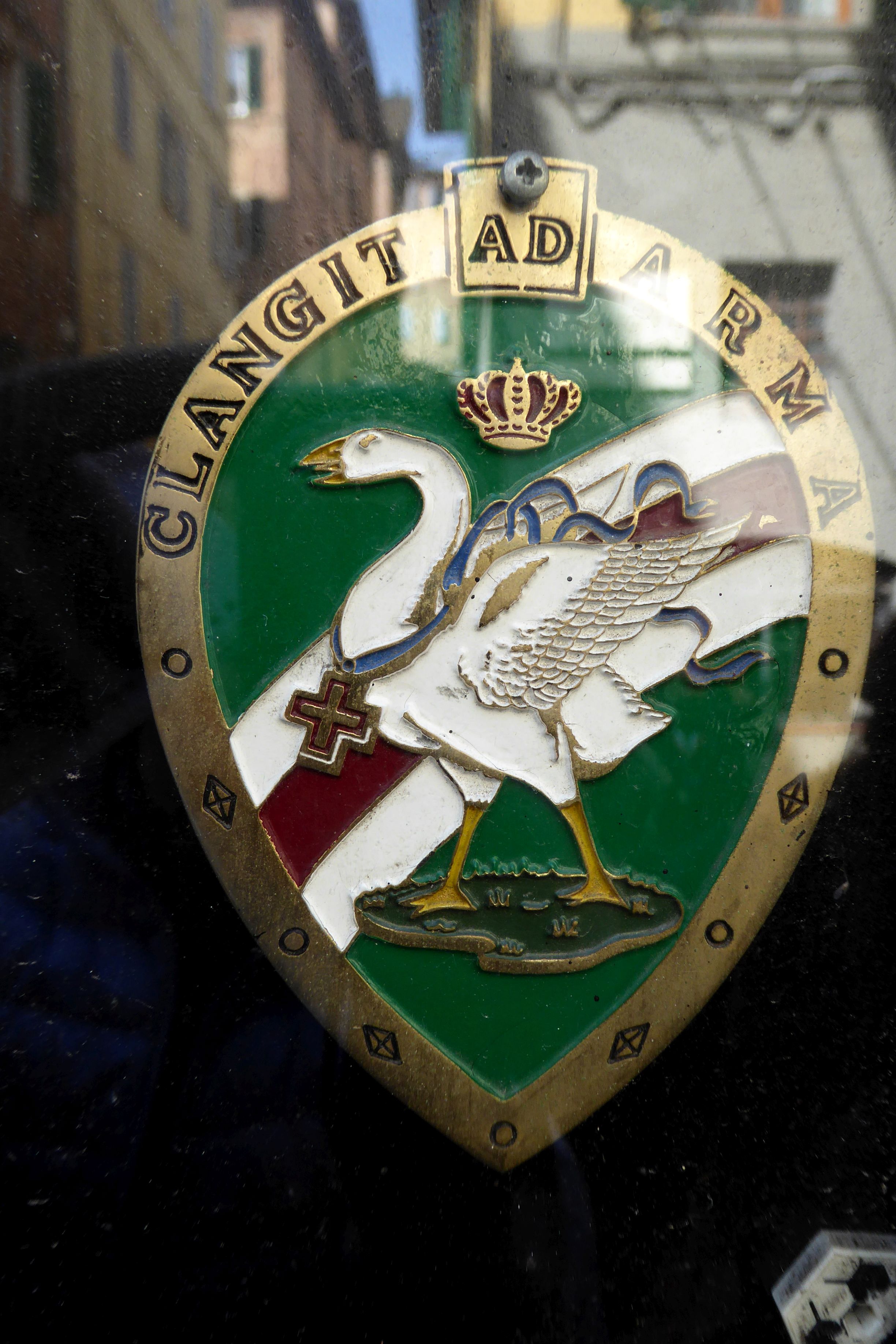
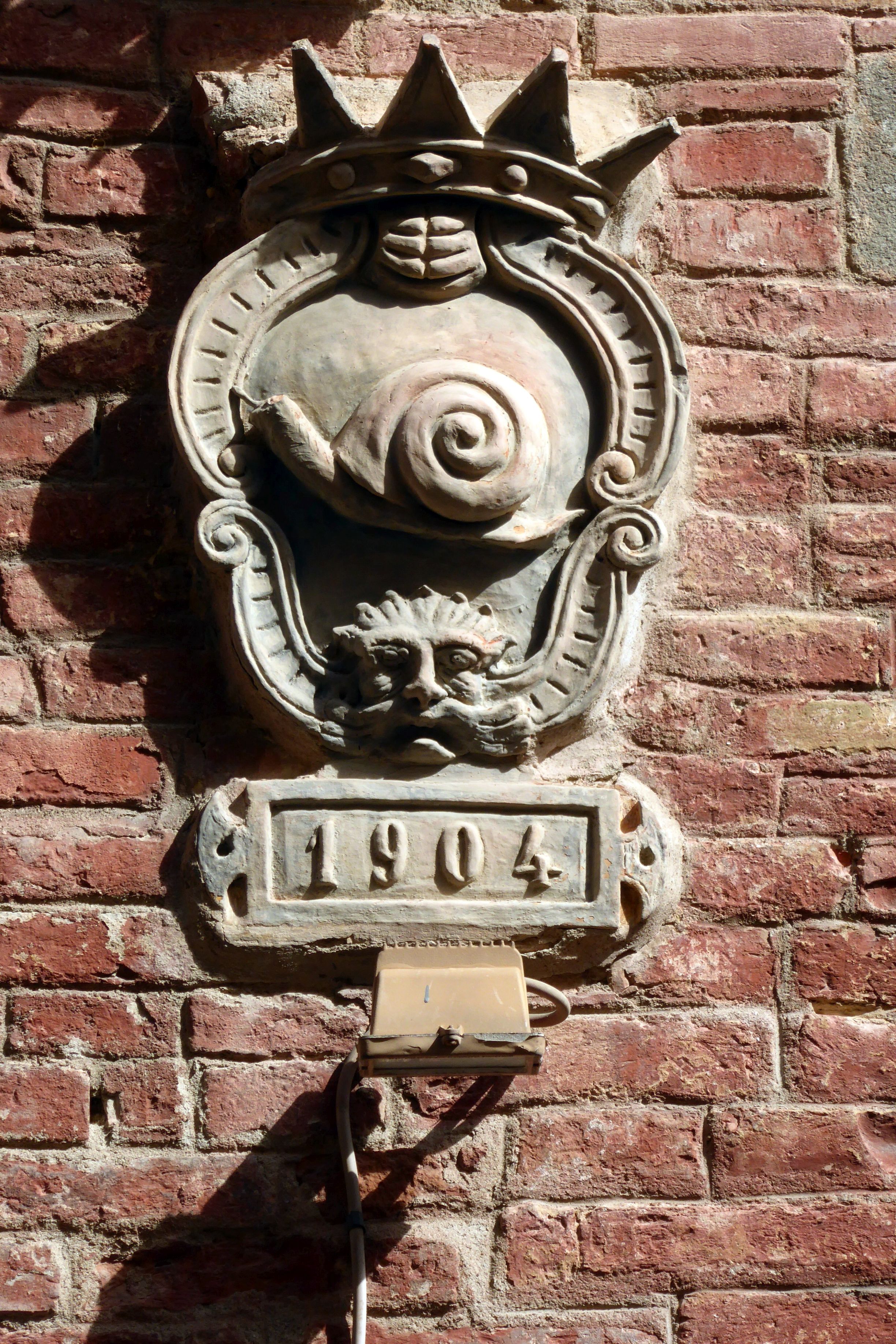
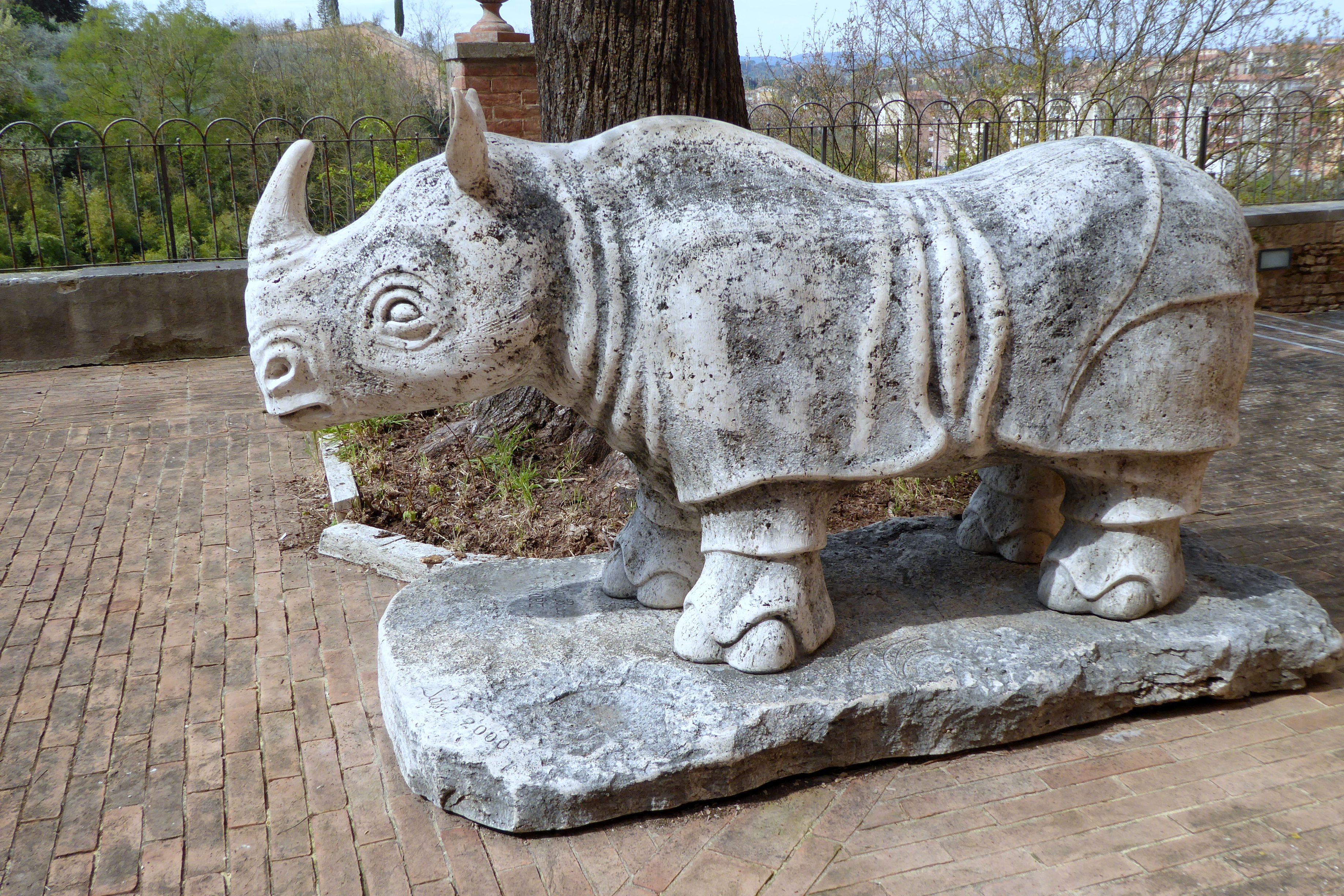
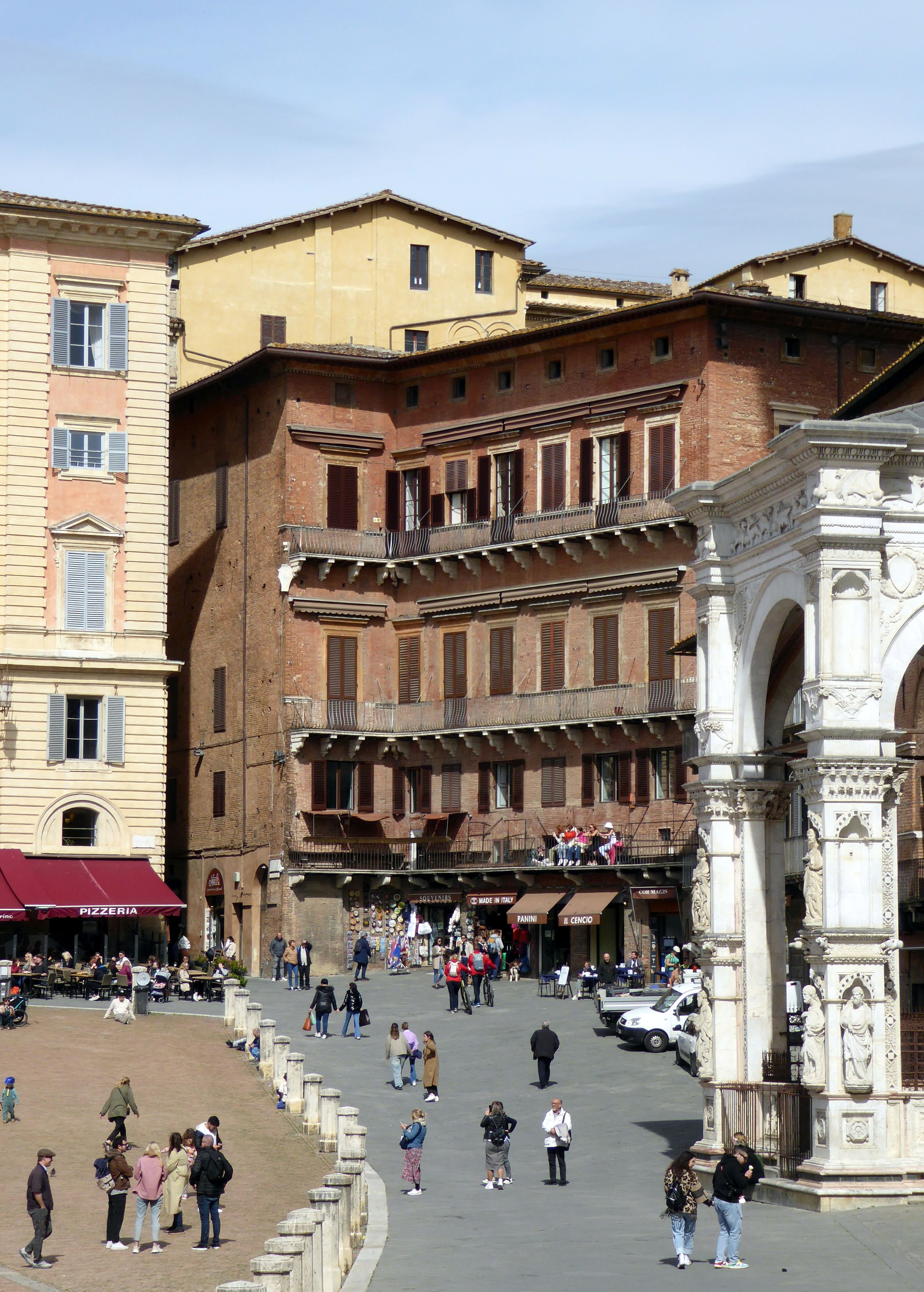
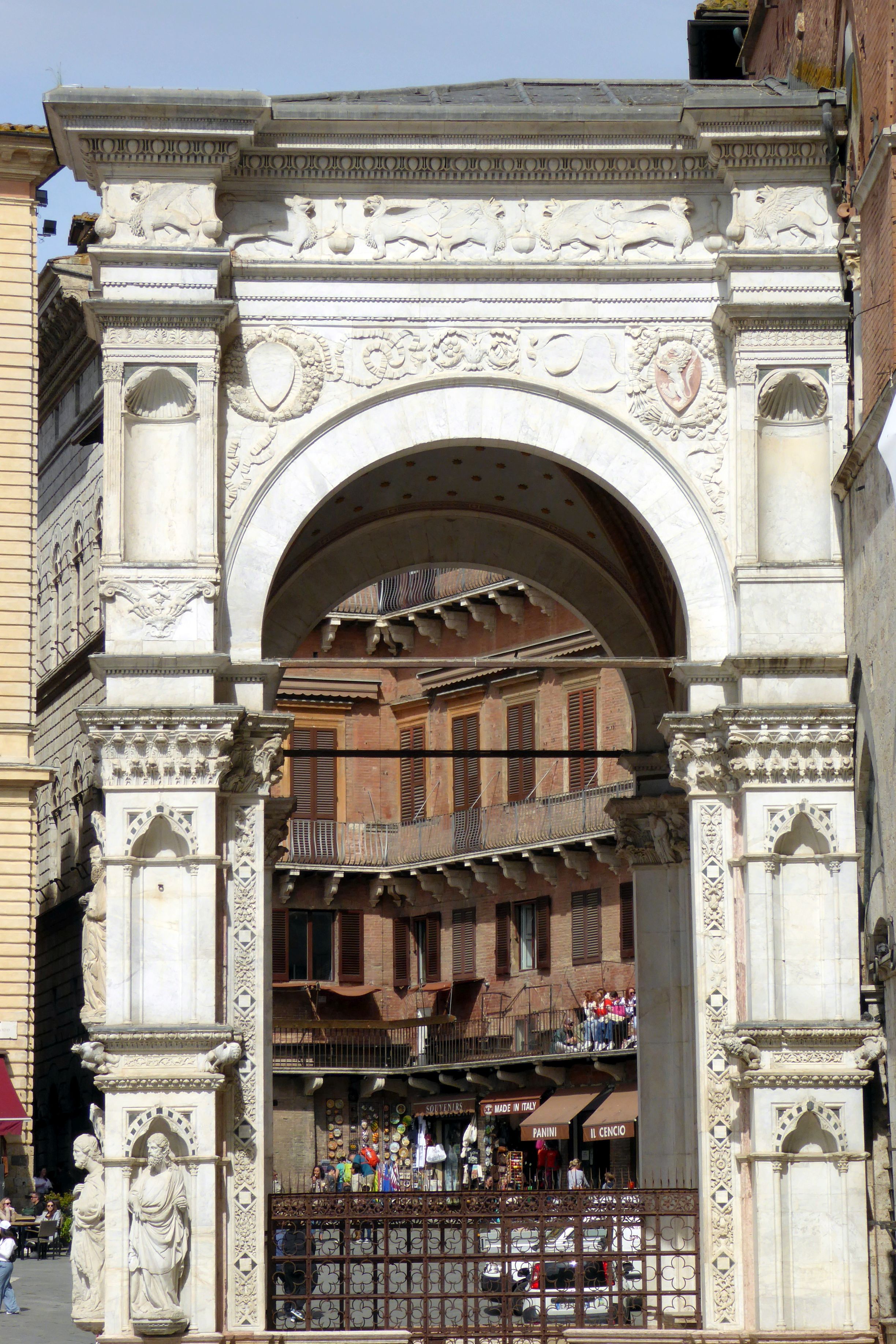
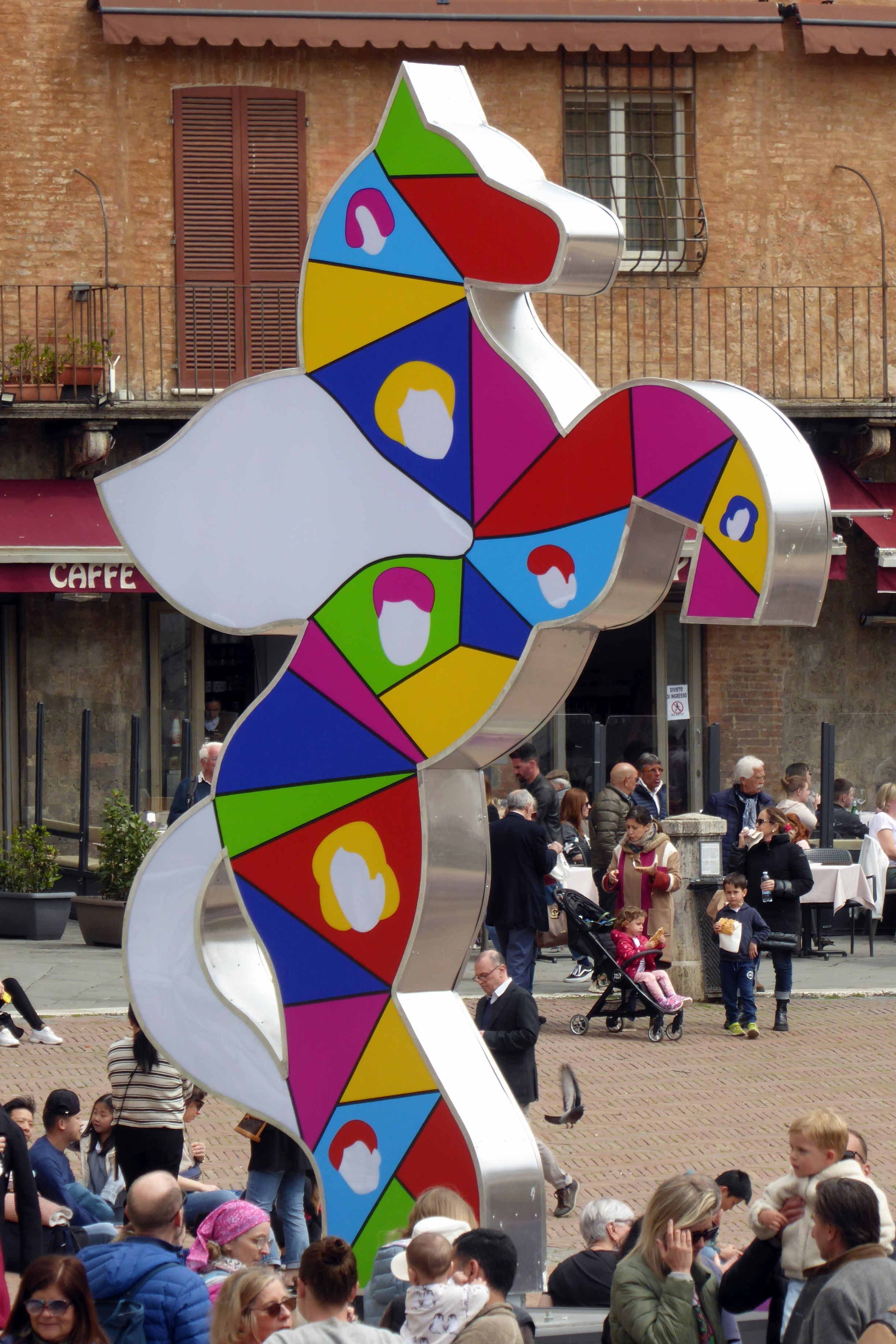
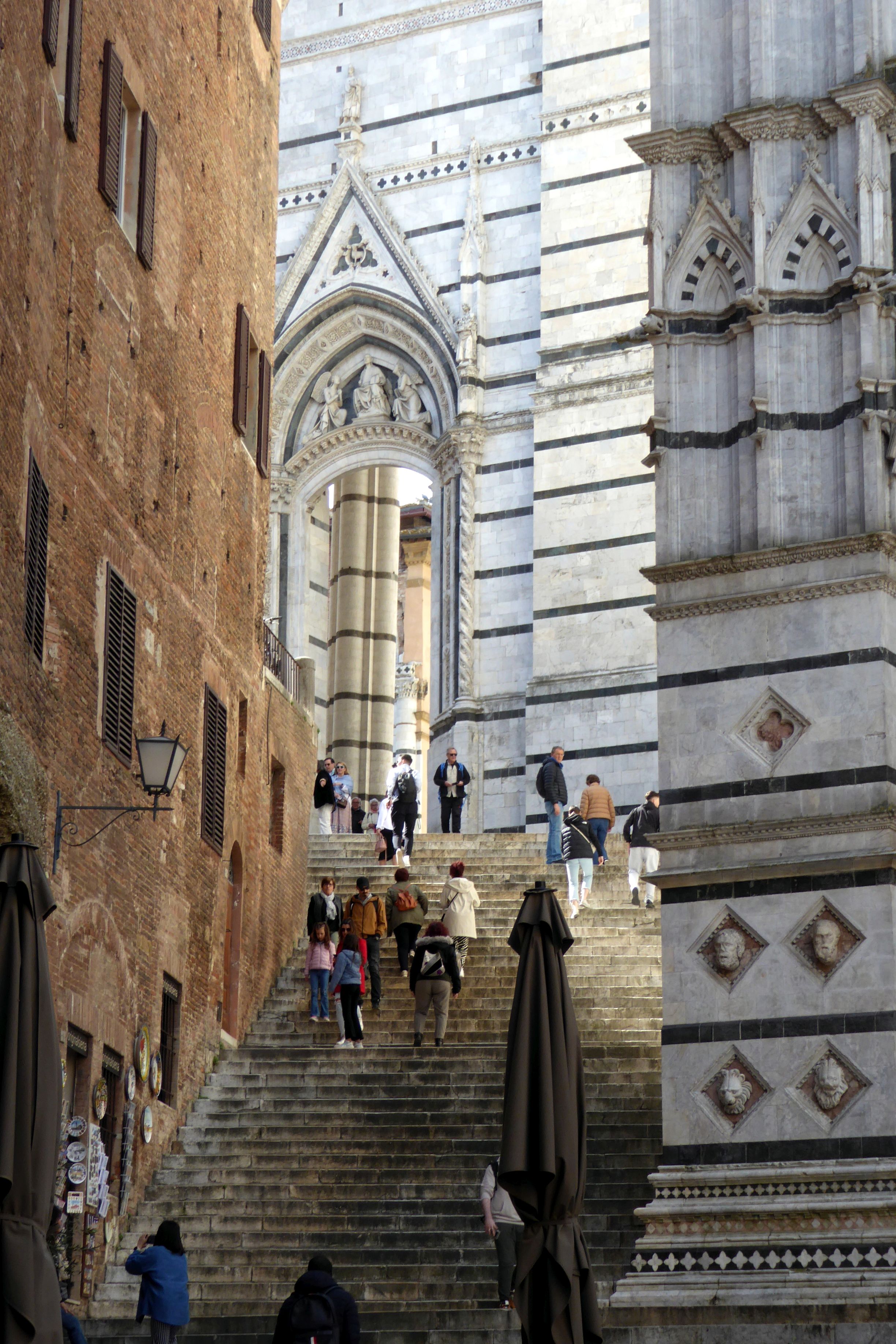
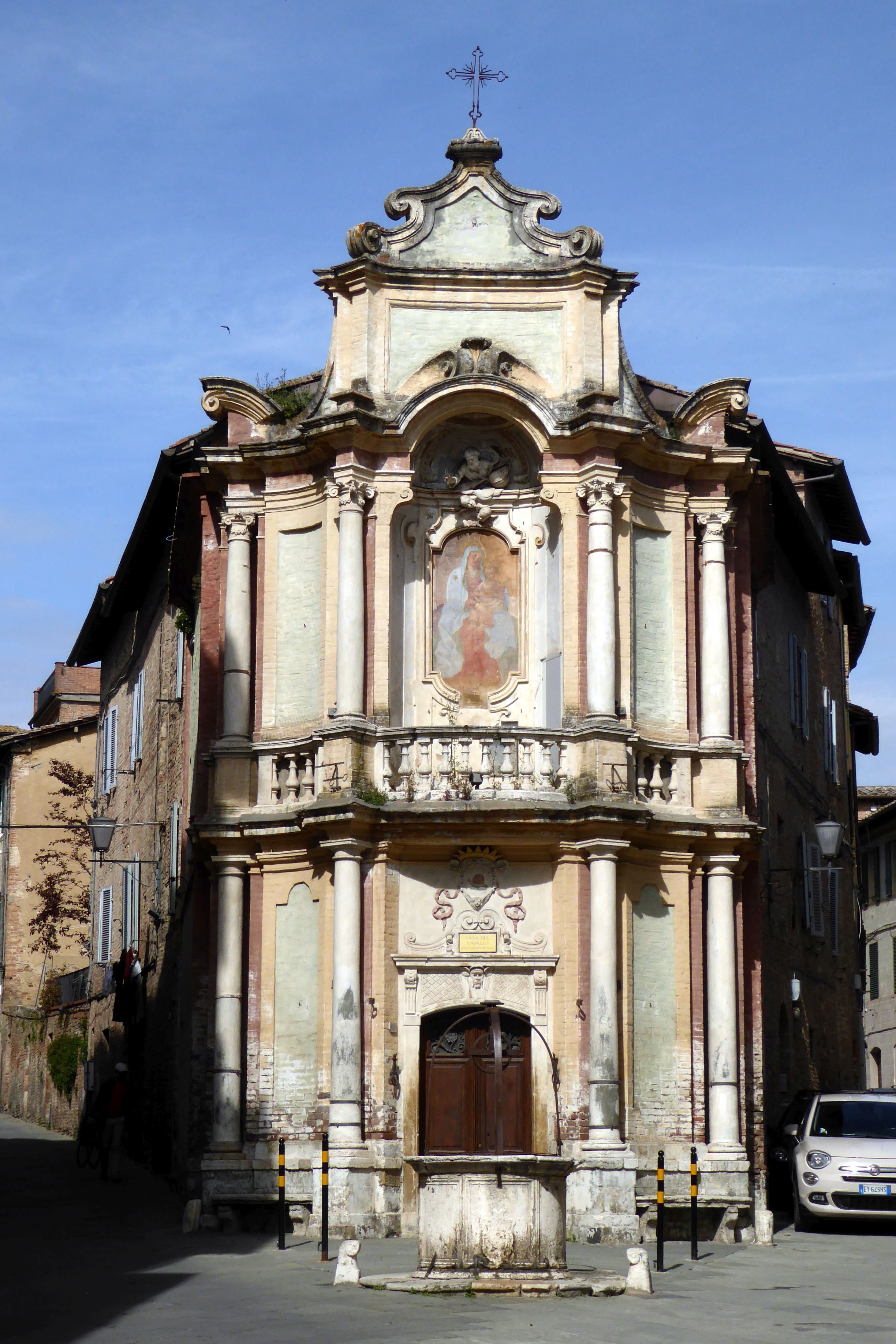
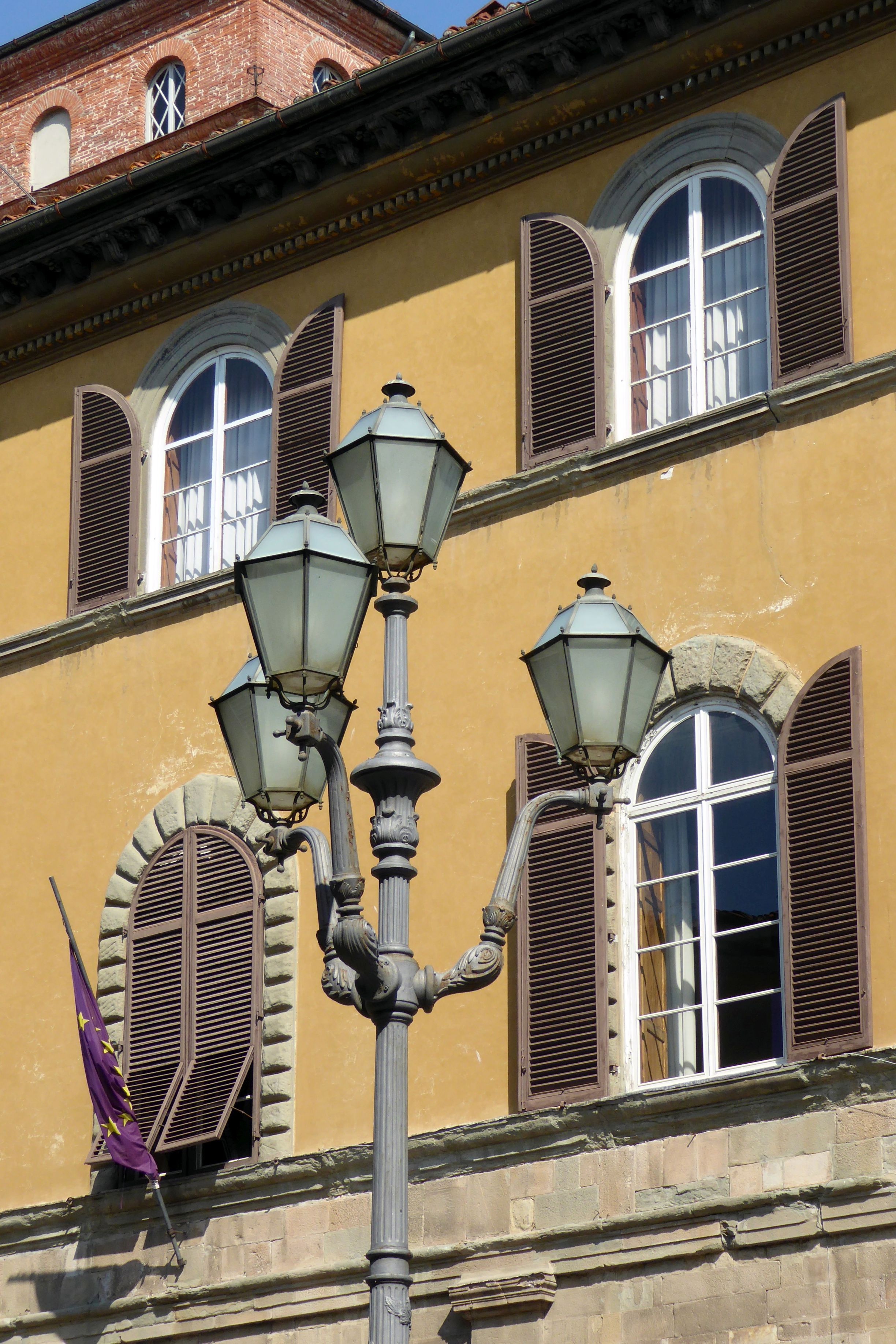
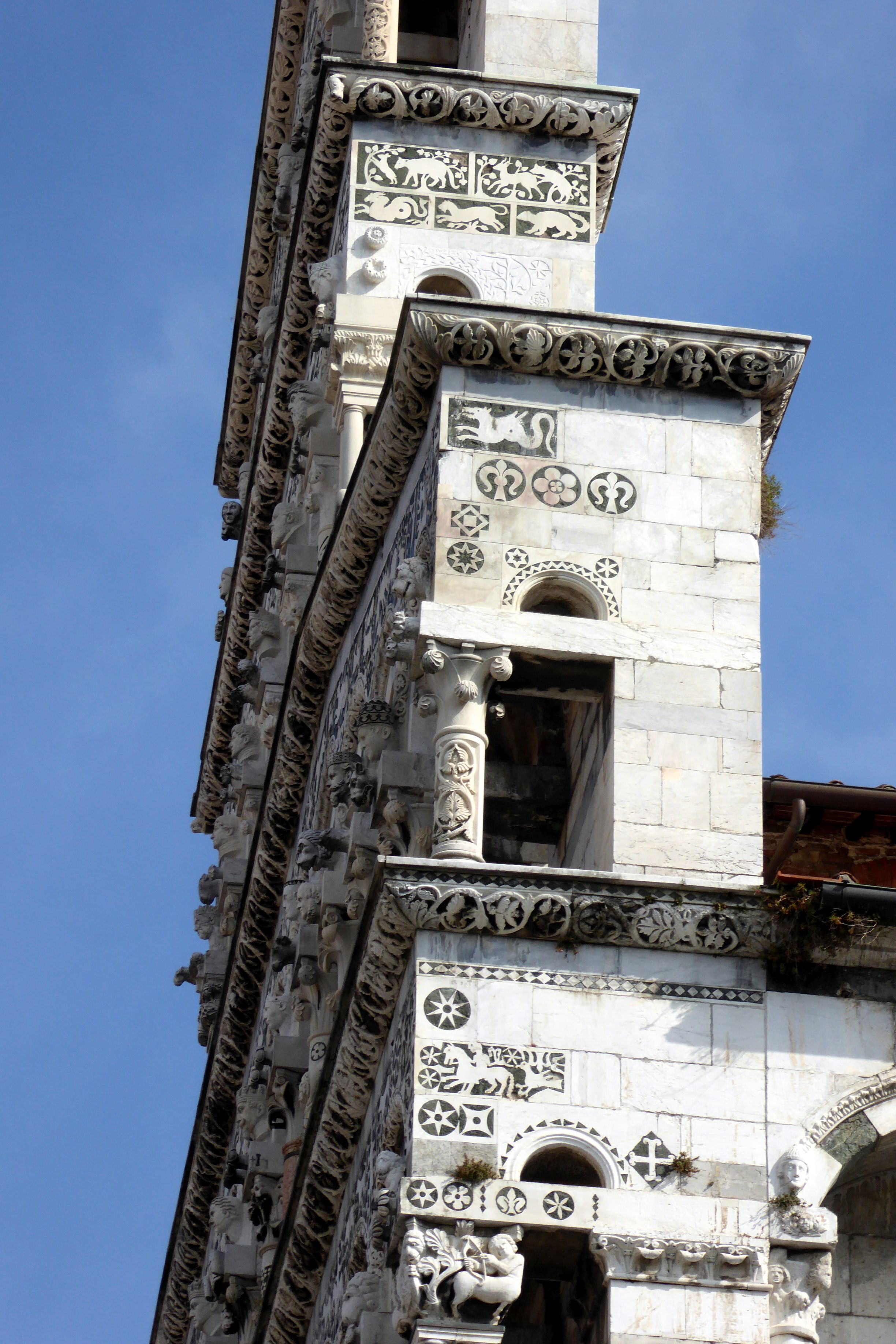
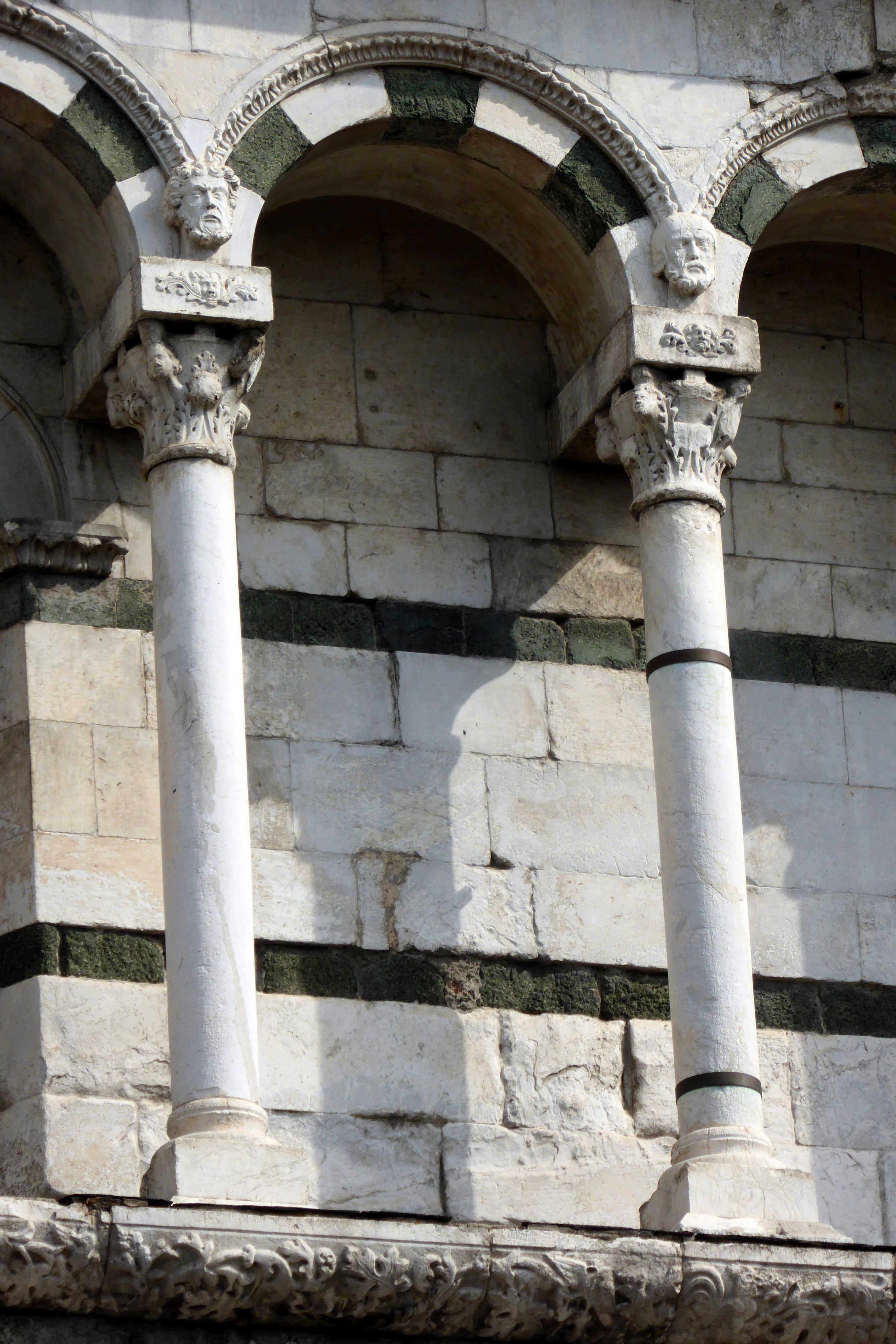
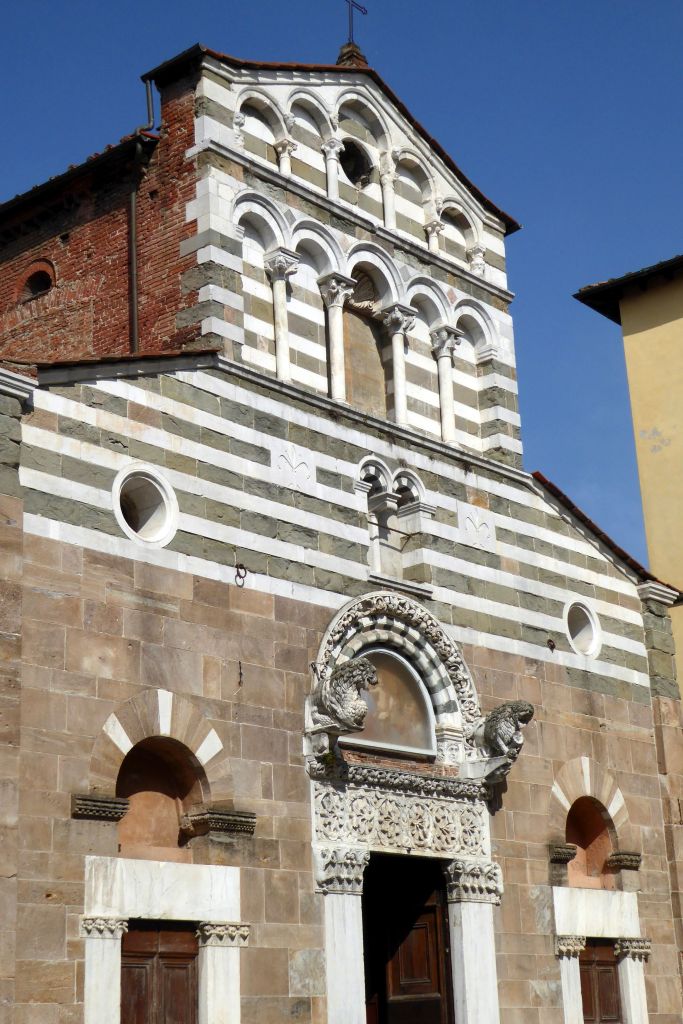
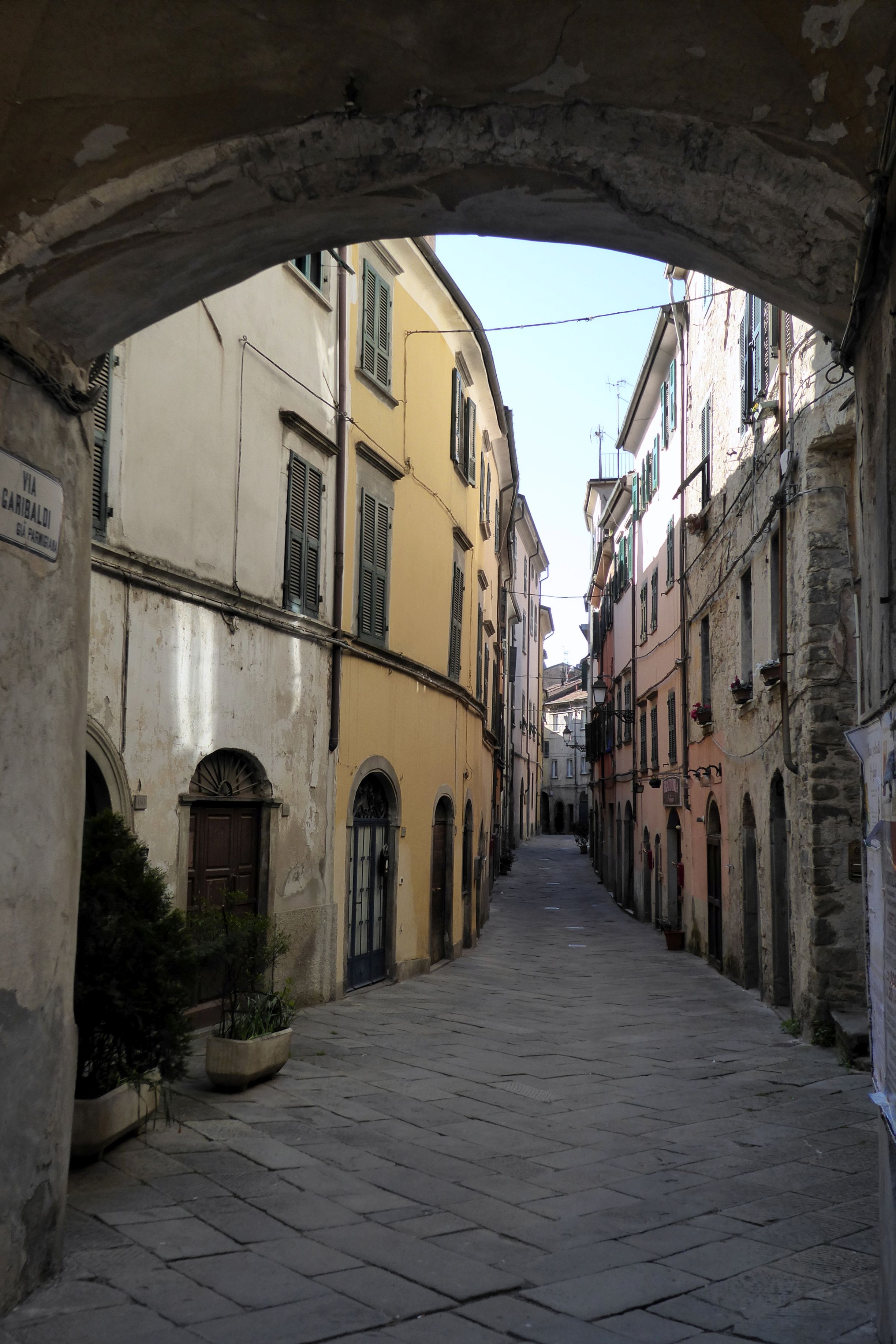
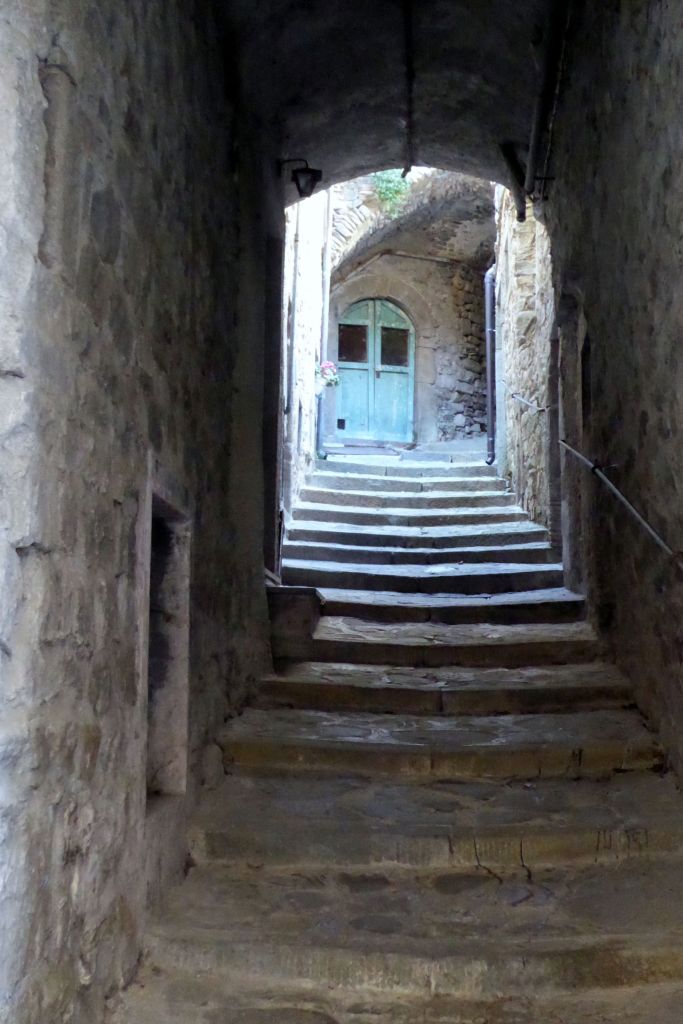
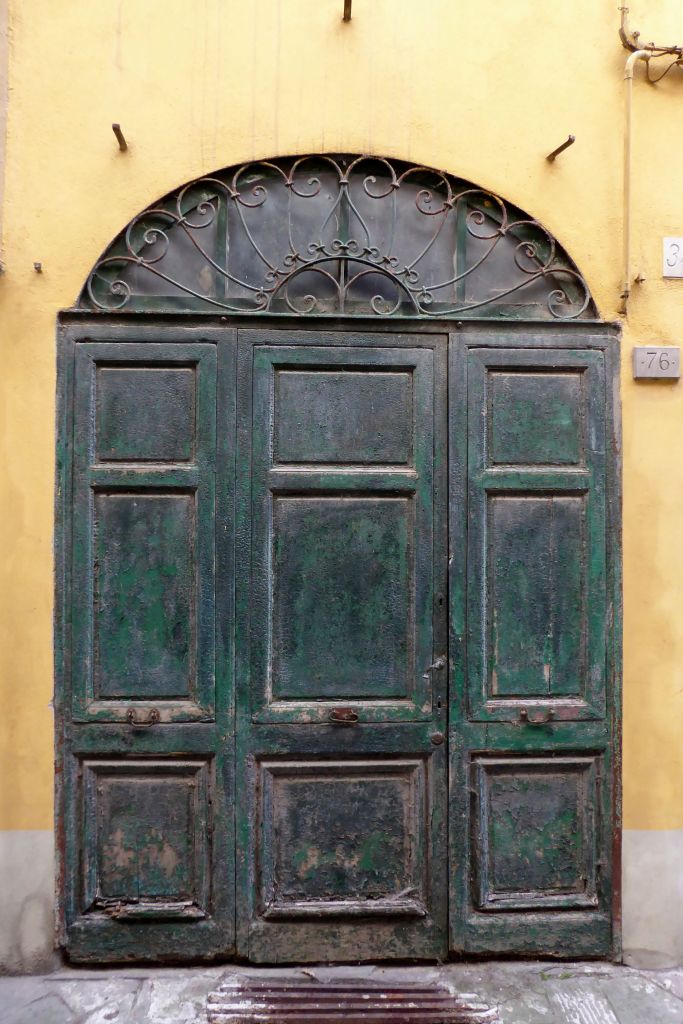
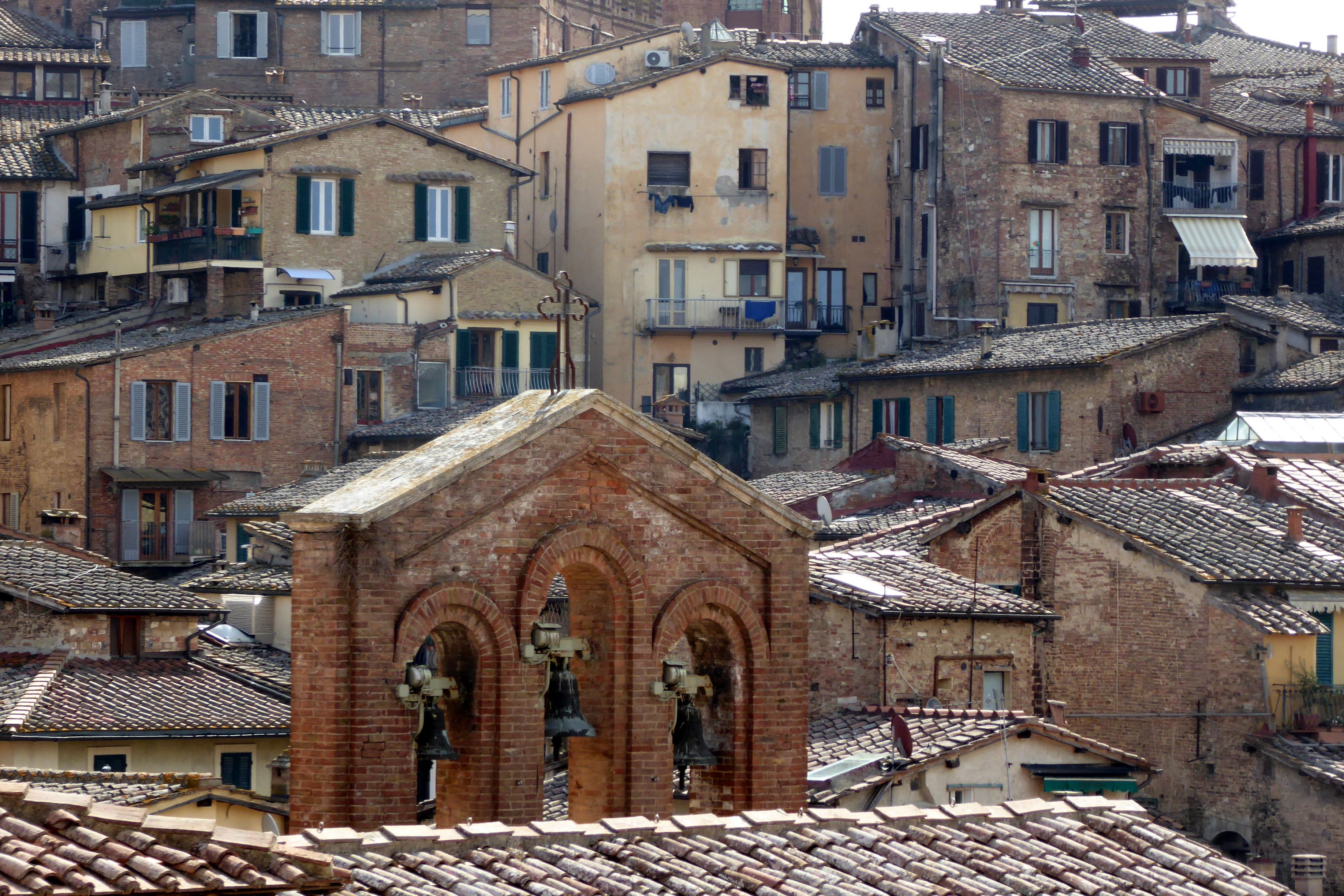
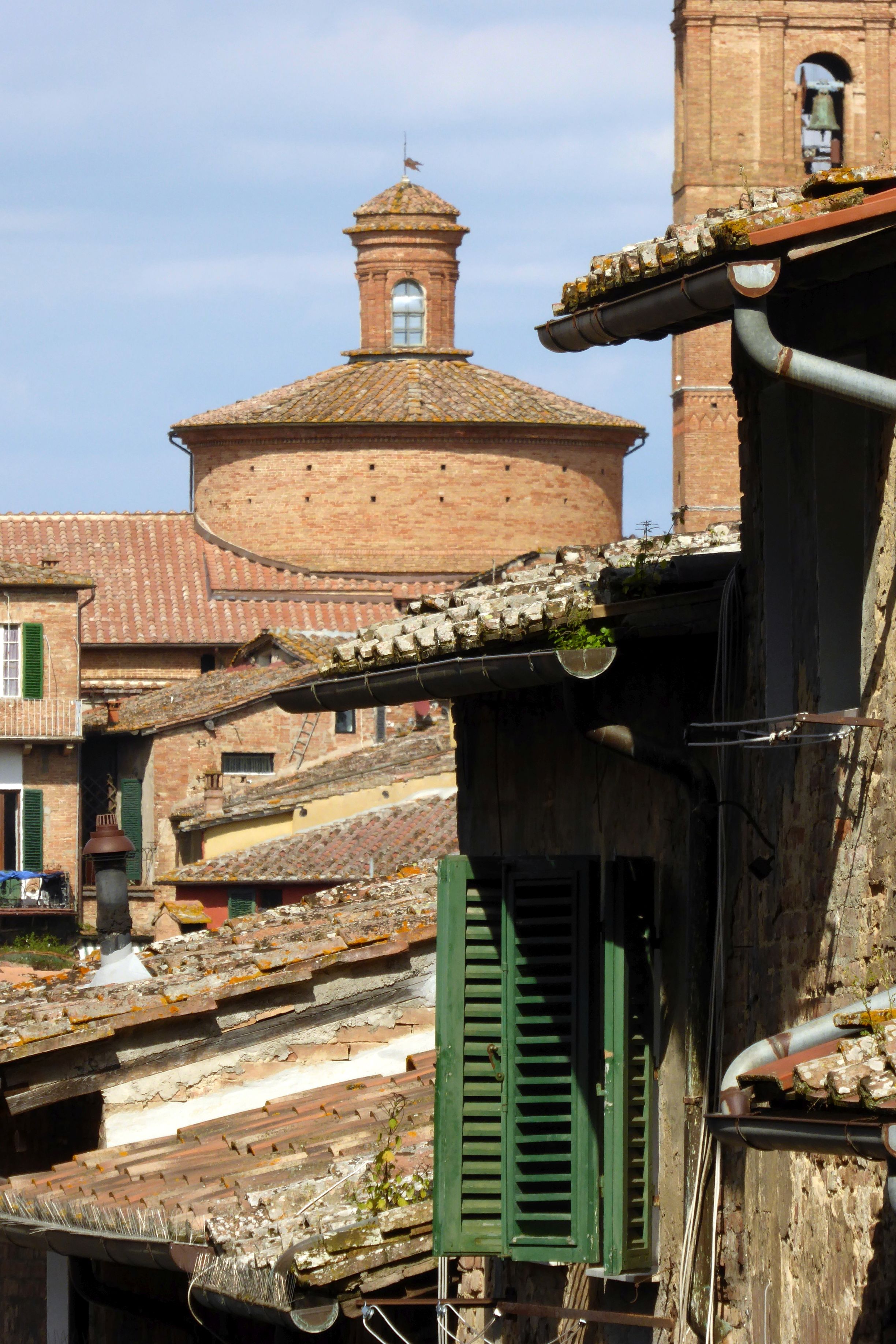
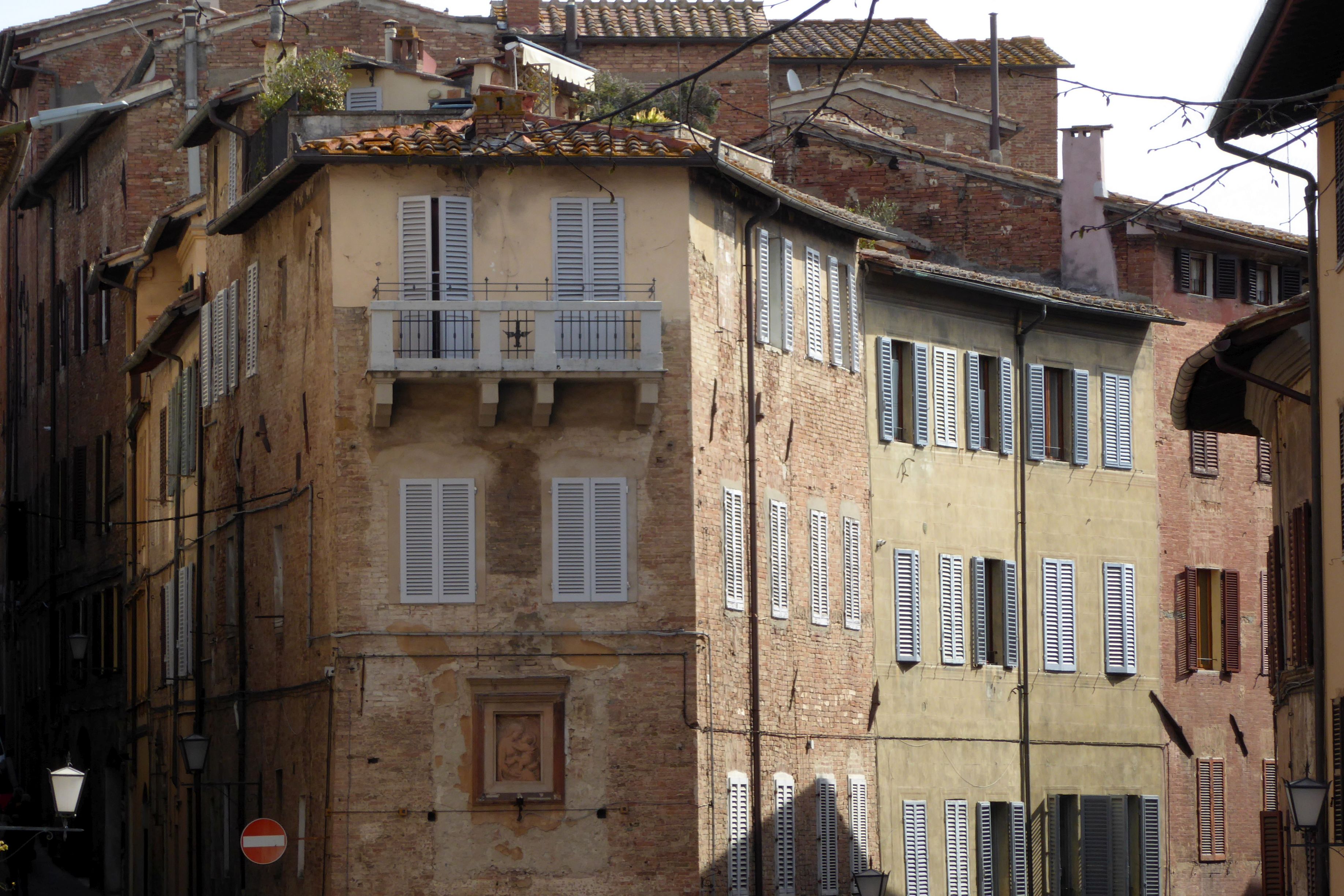
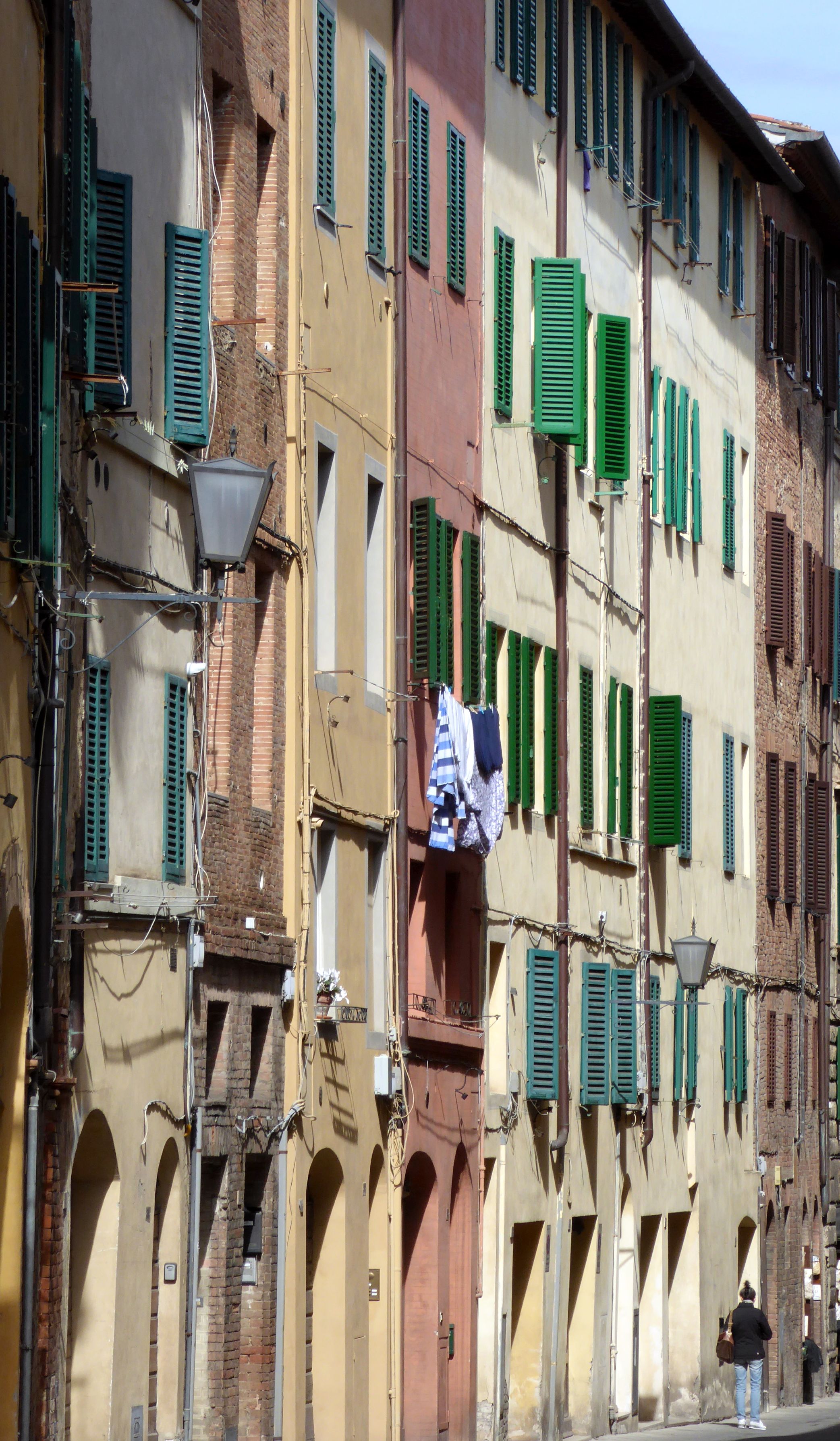
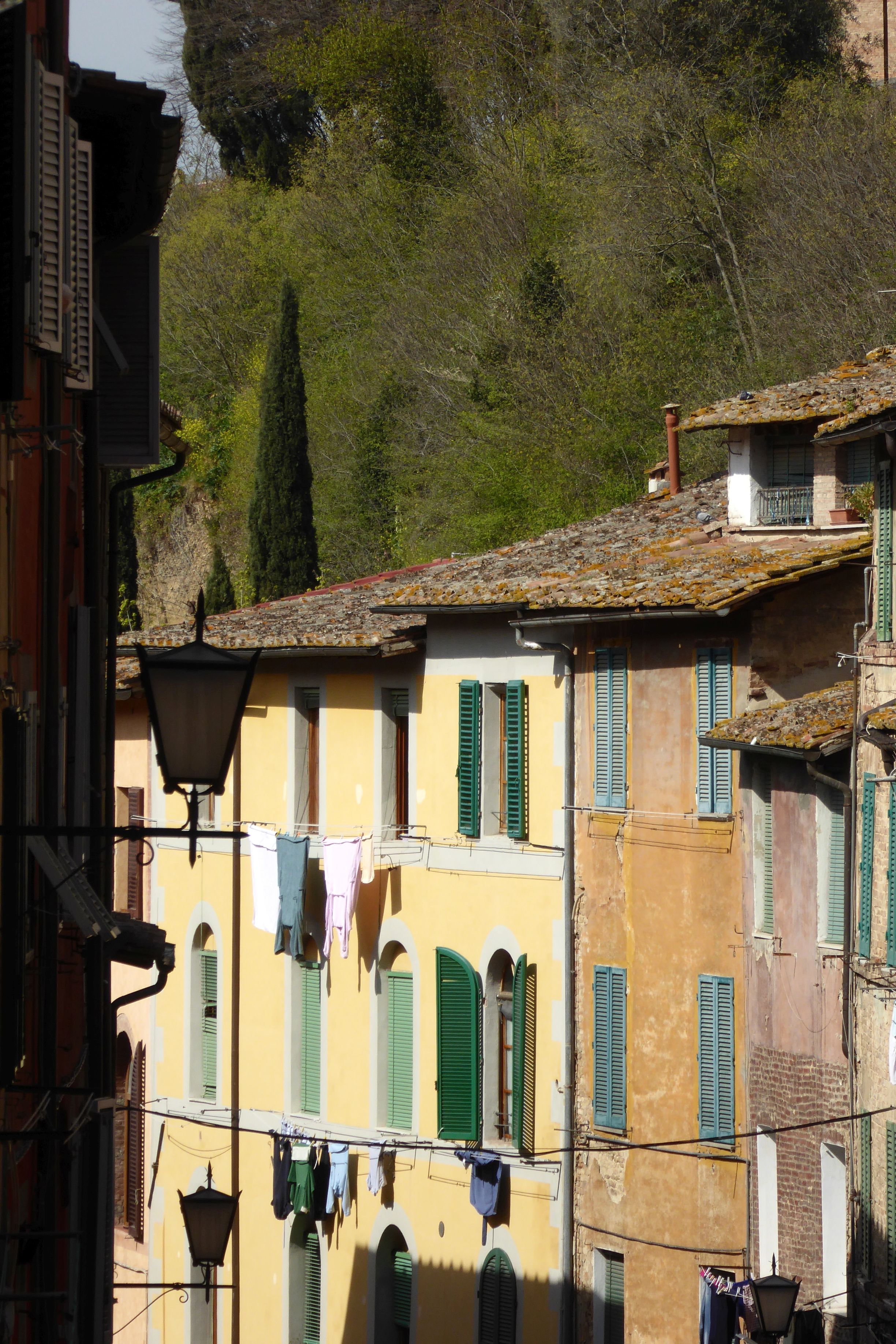
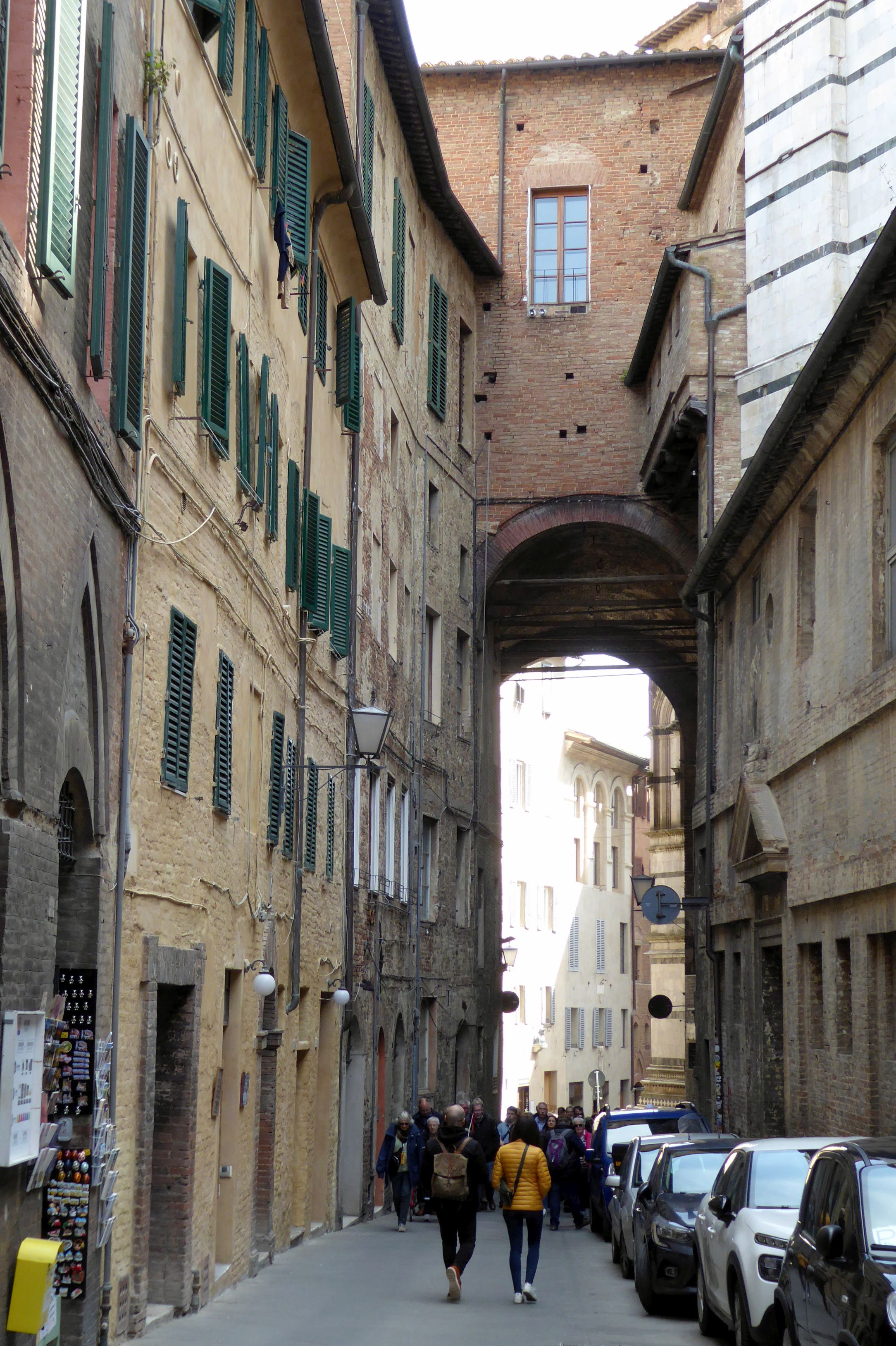
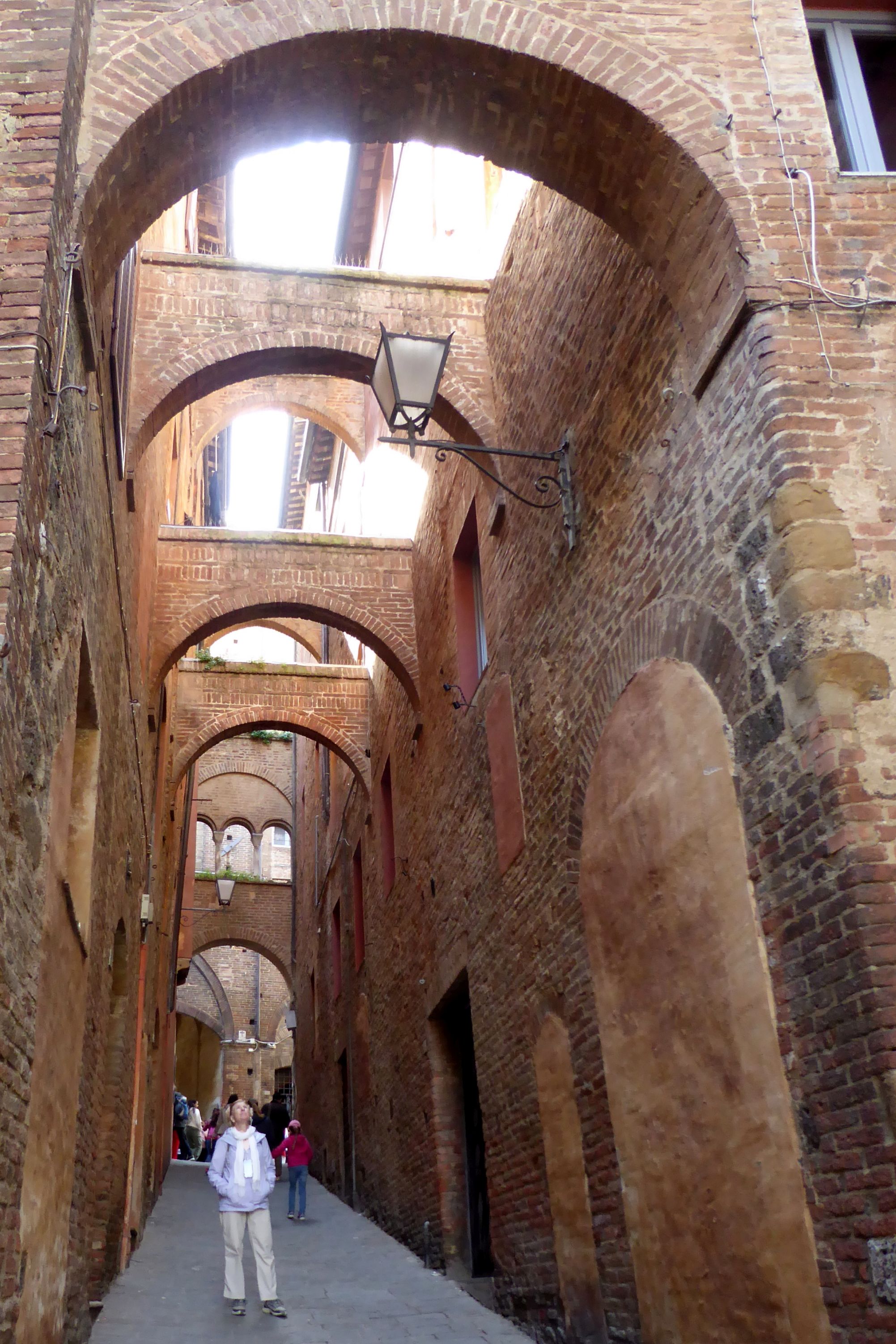
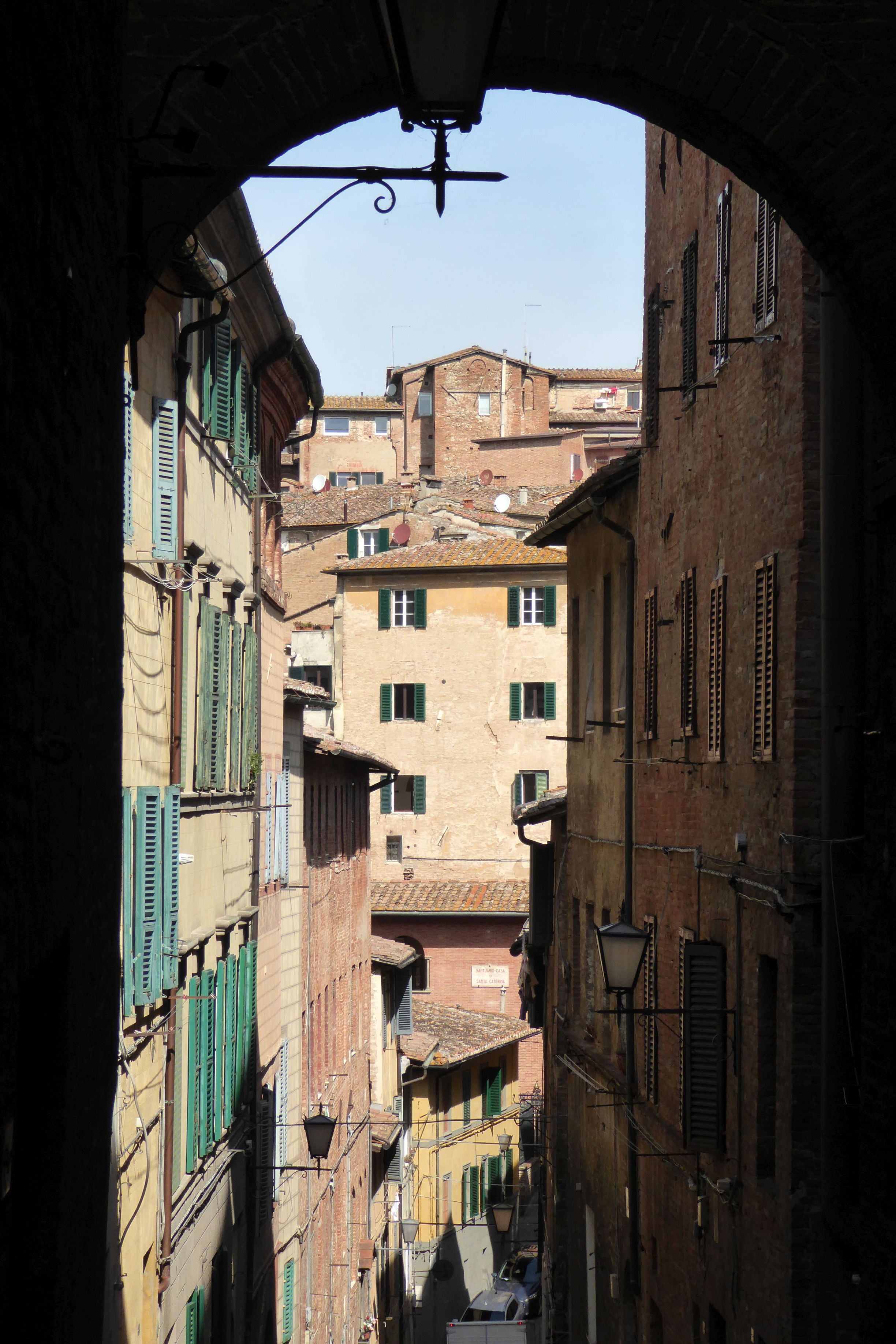
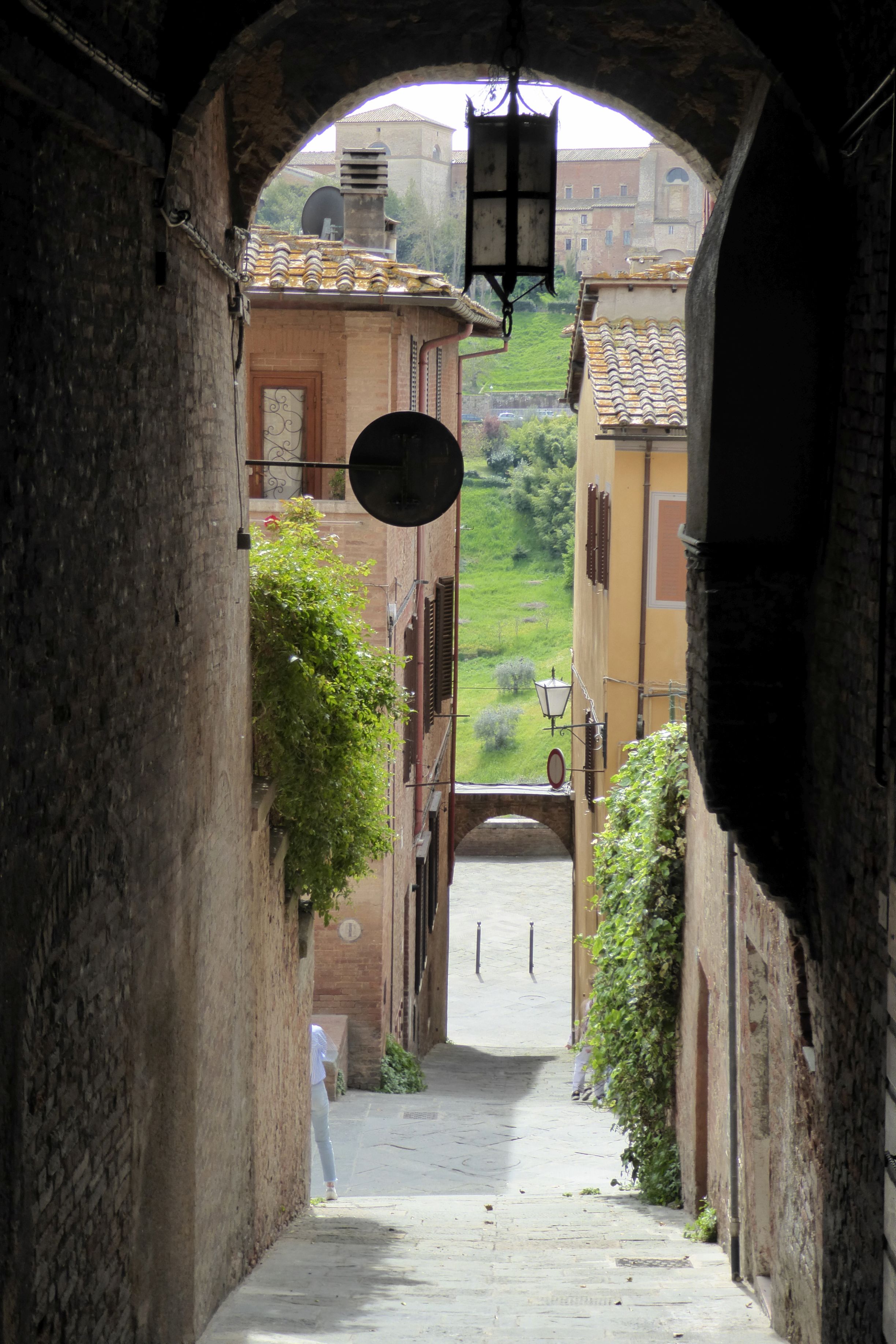
Meanwhile, there is so much more to write about Italy, so I will continue where I left off: Siena.  What a special and unique place this is!  If you have ever been to New Orleans and learned about its unique history, culture, and traditions; you would have to agree there is no other place like it.  The same can be said for Siena, especially its Old Town, a UNESCO World Heritage Site.  Paved with cobblestones, the city is built over five hills and has a unique districting system.  Each of its 17 districts, or contrade, is named after an animal or symbol, such as a rhinoceros, goose, snail, or giraffe.

(For all pictures, click on the image to see full screen view.)
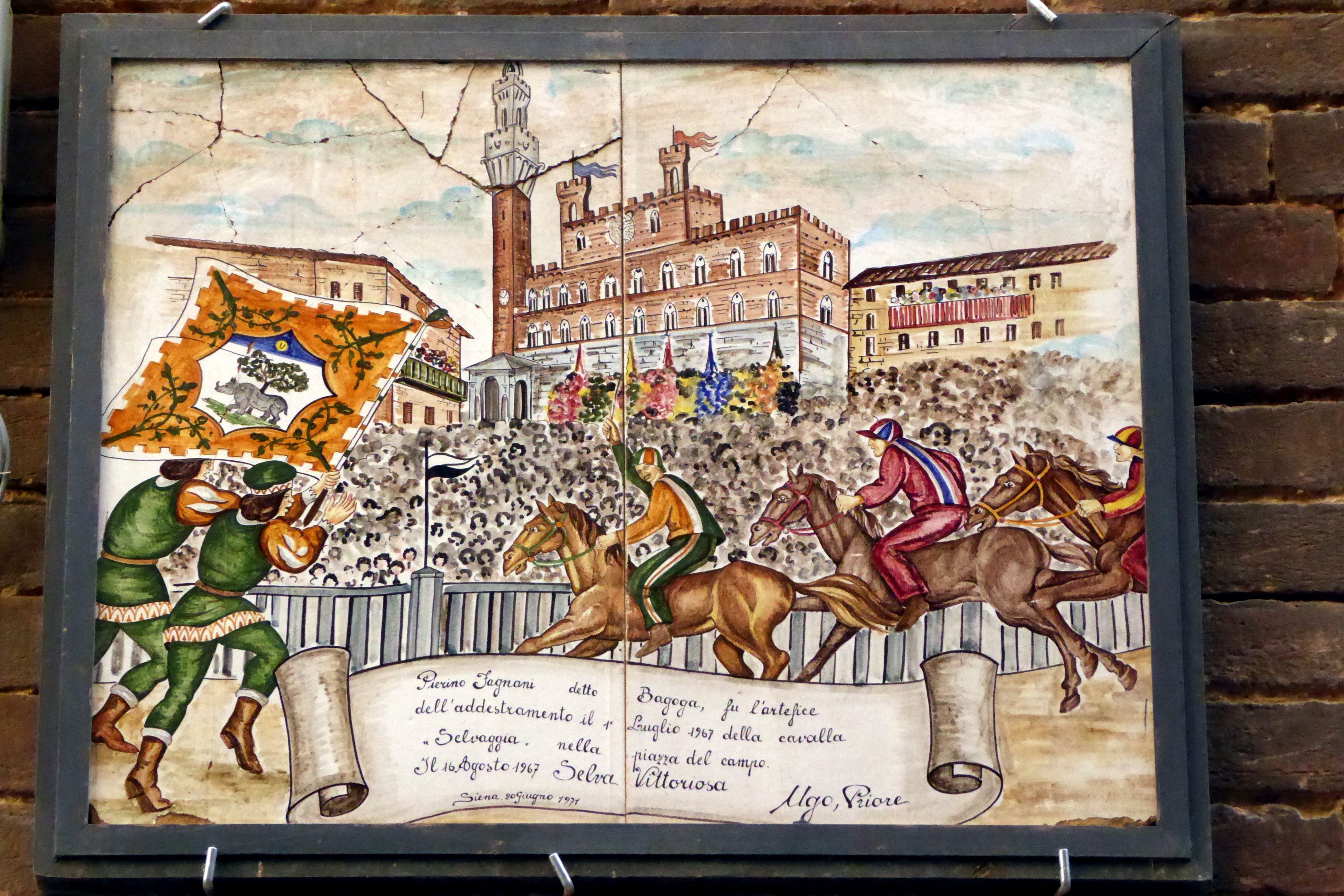
The rhinoceros is the symbol of Contrada Della Selva

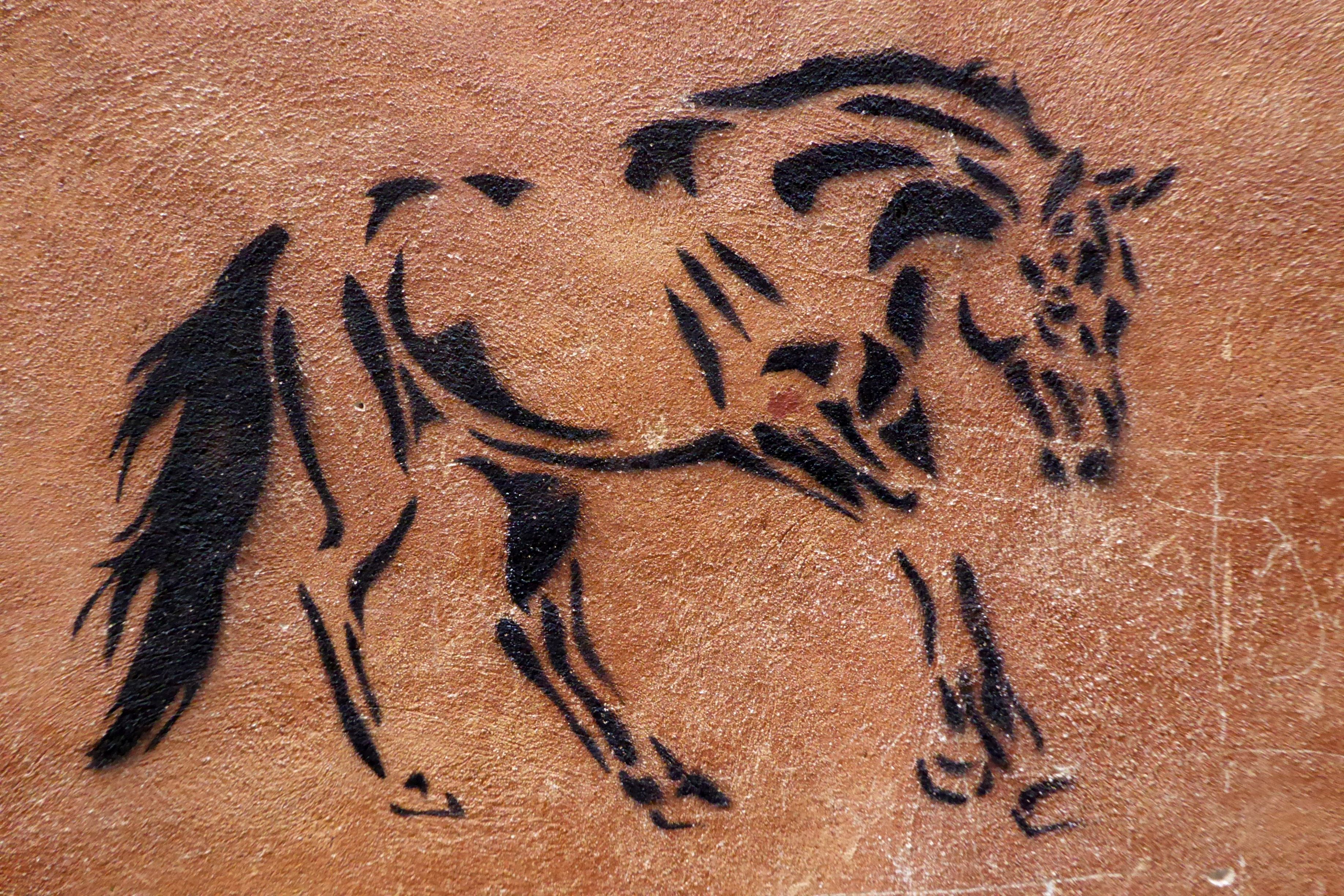
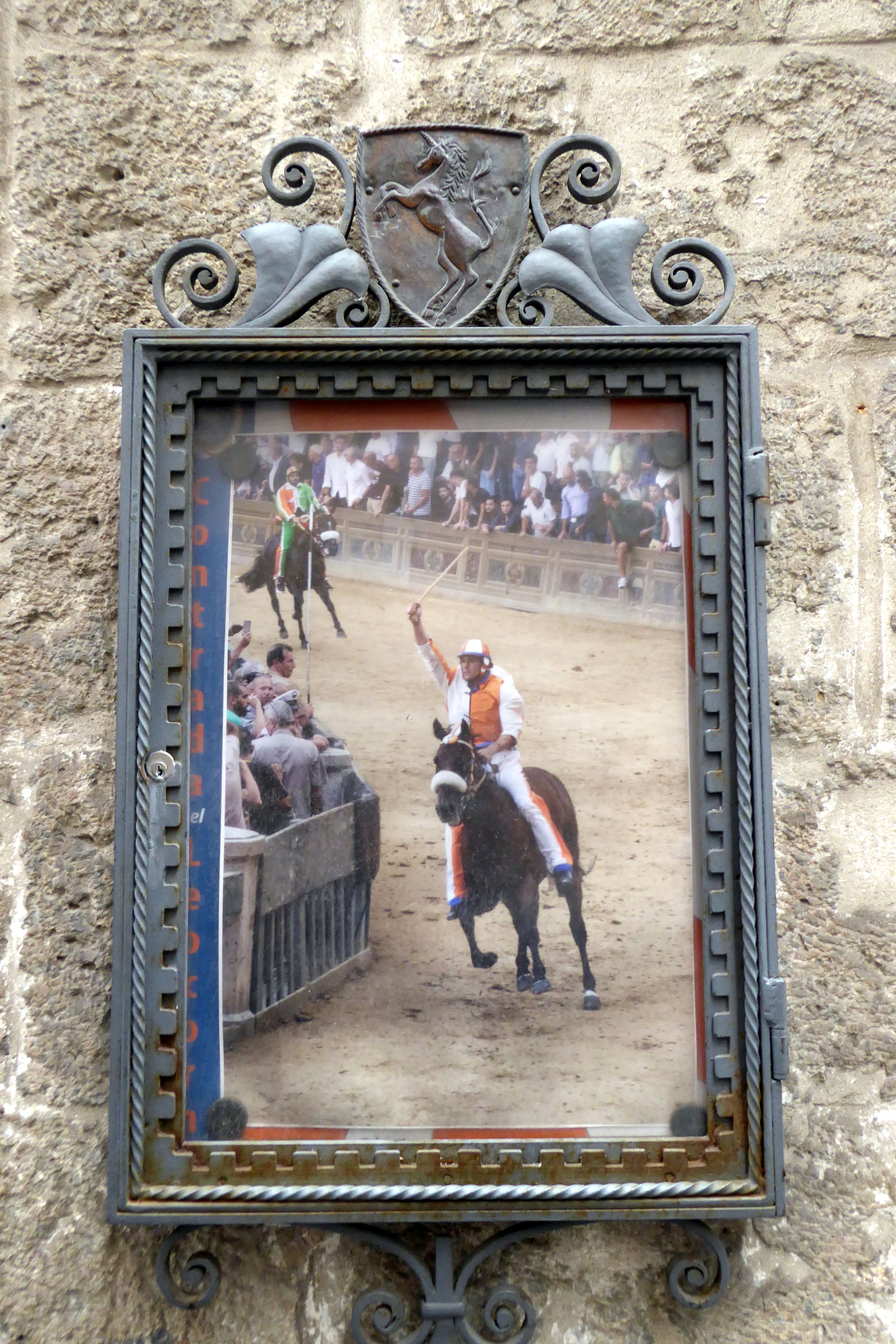
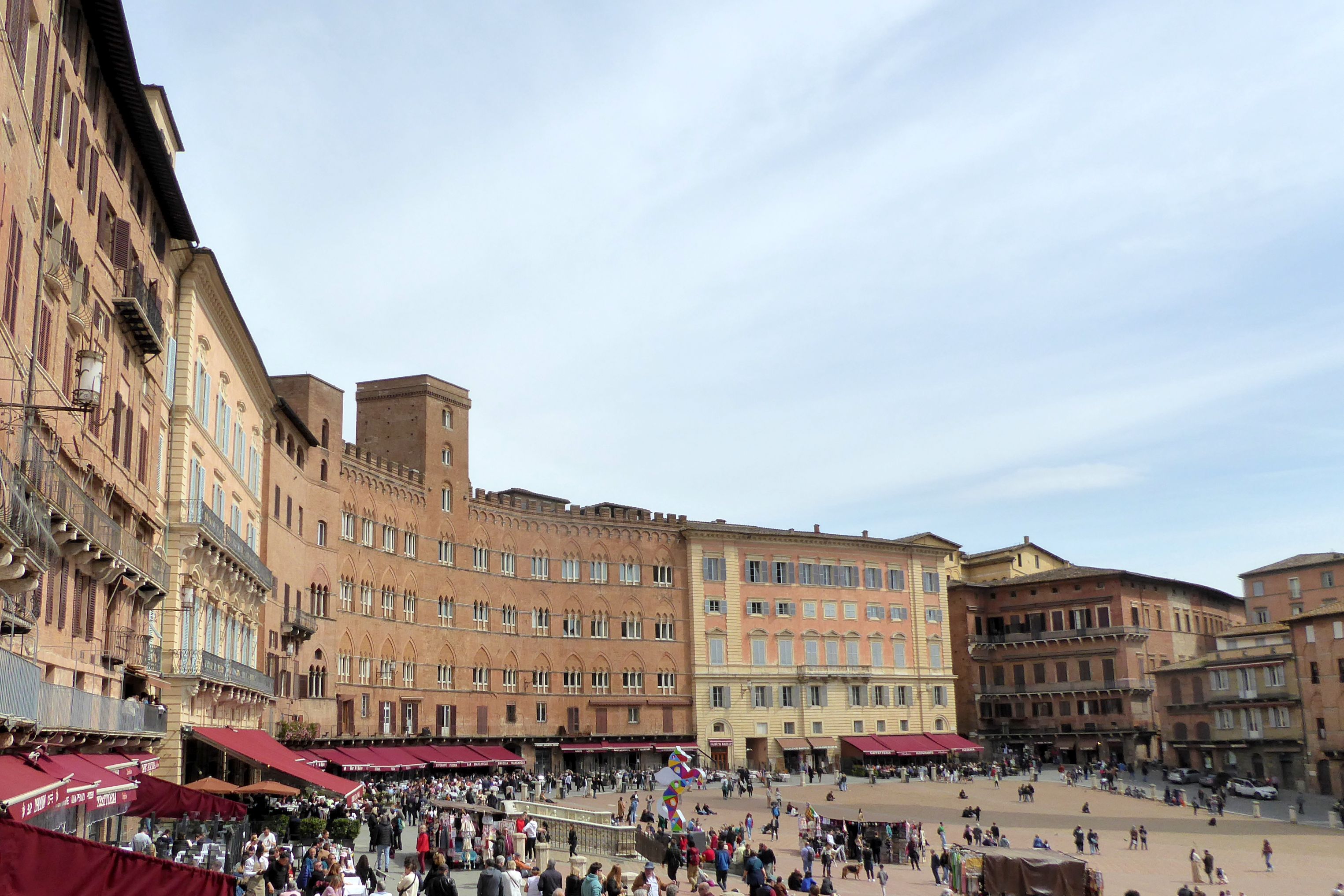
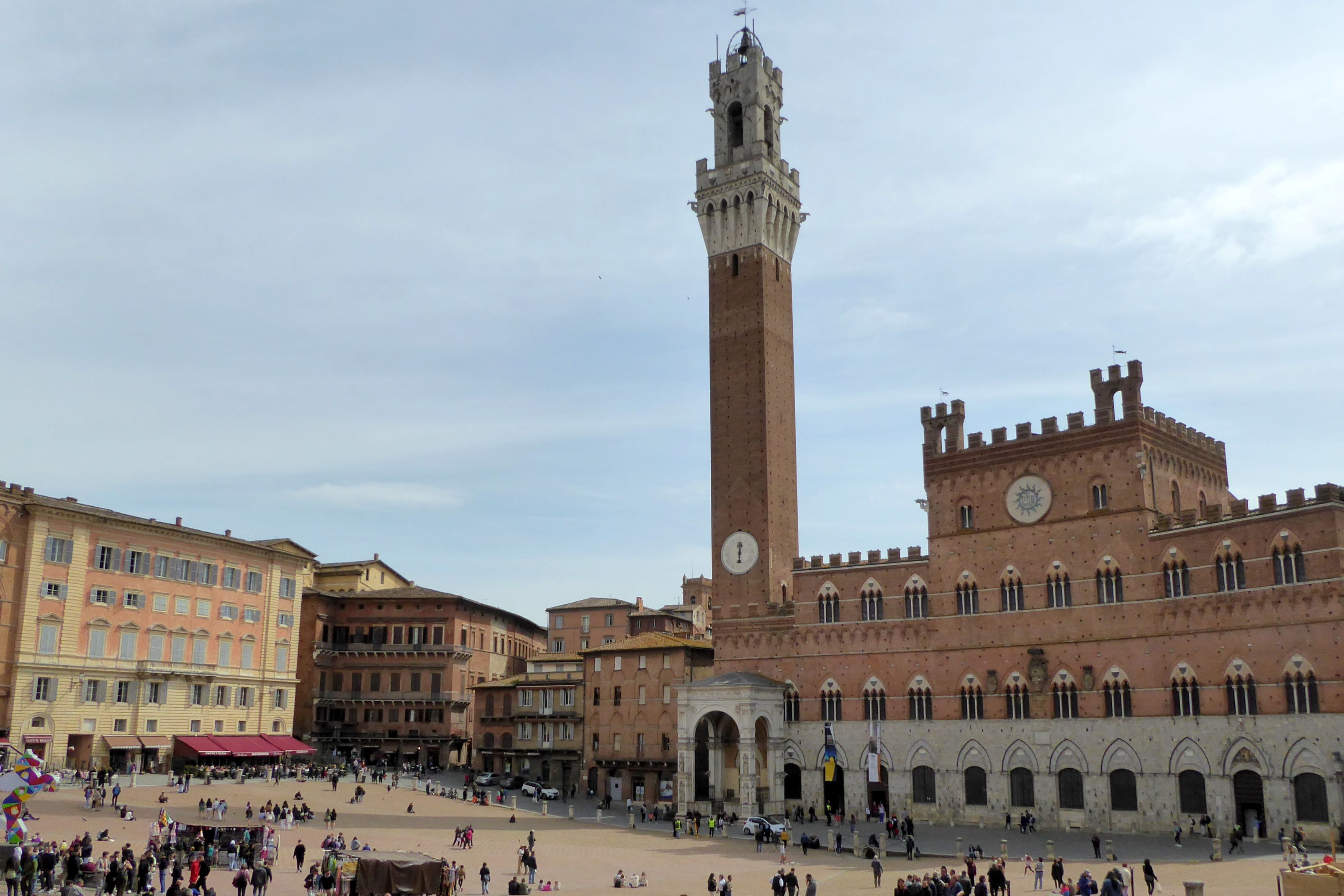
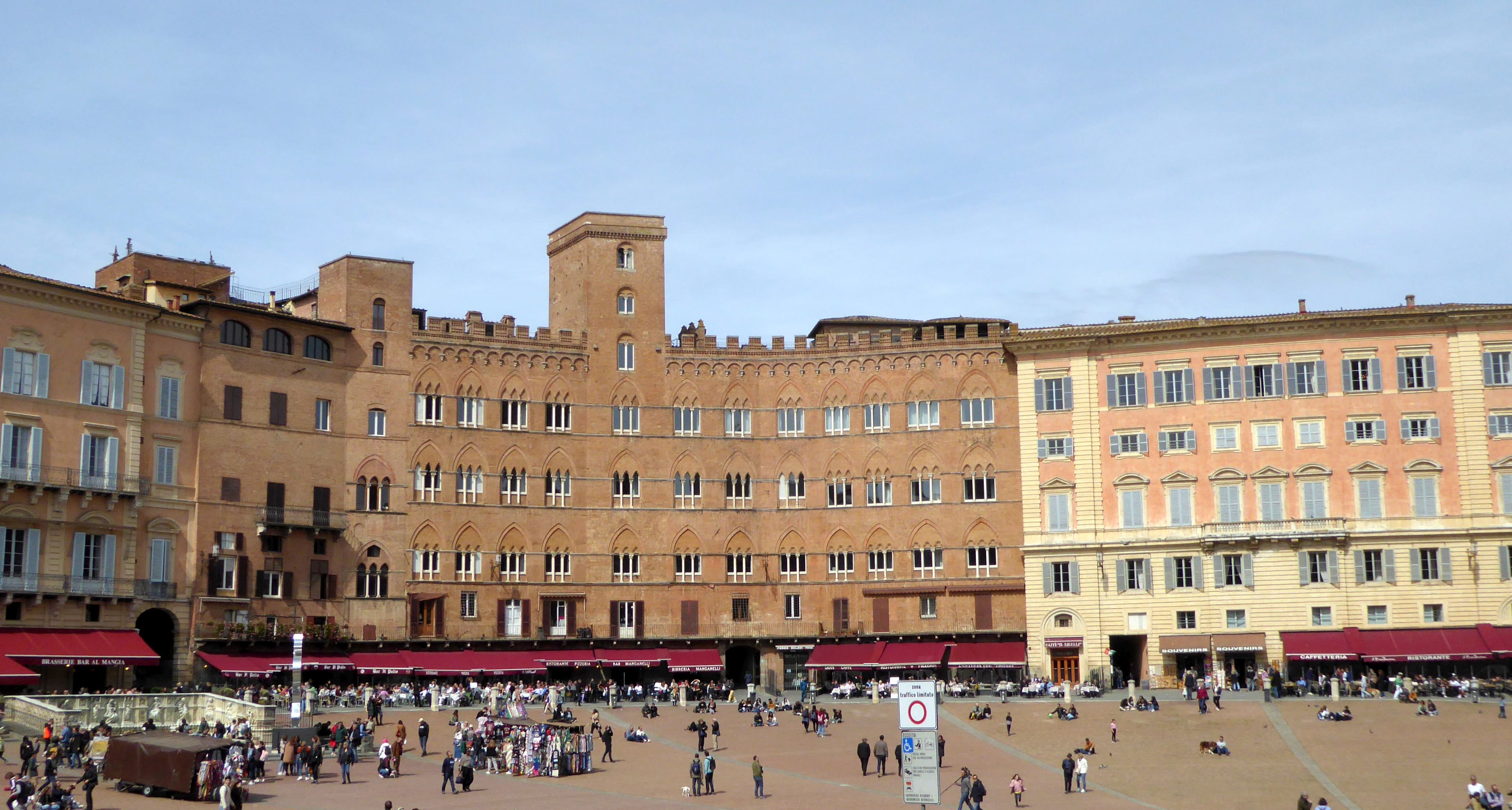
These contrade were originally set up during the Middle Ages for military purposes when Siena fought to preserve its independence from Florence.  Over the years, they became a source of civic pride and patriotism. Within the contrada, everybody looks out for each other as an extended family.  Each contrada has their own symbol, colors, flags, motto, museum, church, fountain, and festivals; and, most importantly, a horse entered in the all-important and most-celebrated festival of all, the Palio.  These people live for the summer Palio, an approximately 70-90-second bareback horse race of three laps of mayhem around the dirt-filled Piazza del Campo that takes place on July 2 and August 16.  The turns are sharp, and it’s typical to see jockeys thrown off their horses.  No worries; it’s the horse that wins, not the jockey, and riderless horses have won on several occasions. 

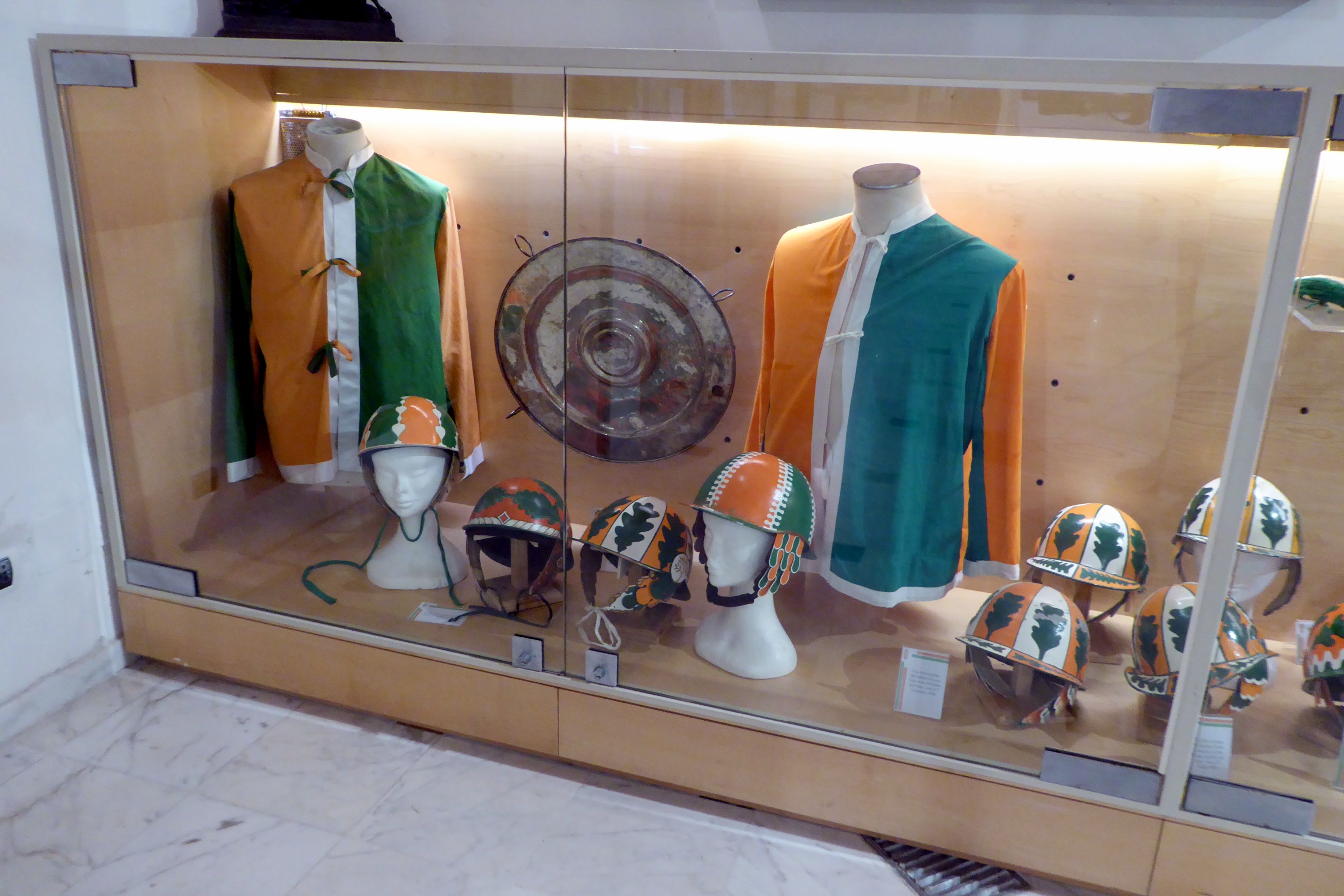
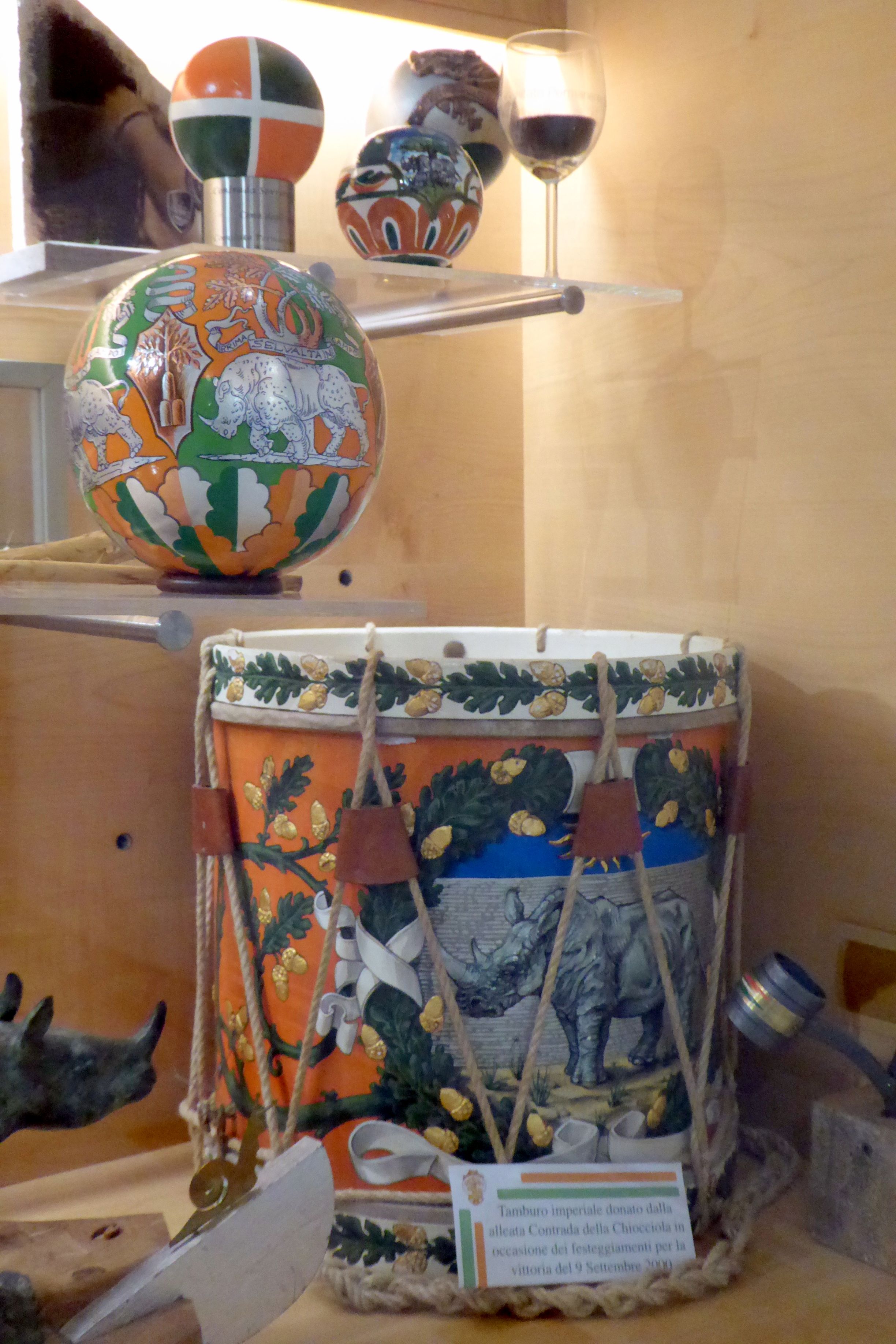
Green and orange are the colors of Contrada Della Selva as shown in their museum display.
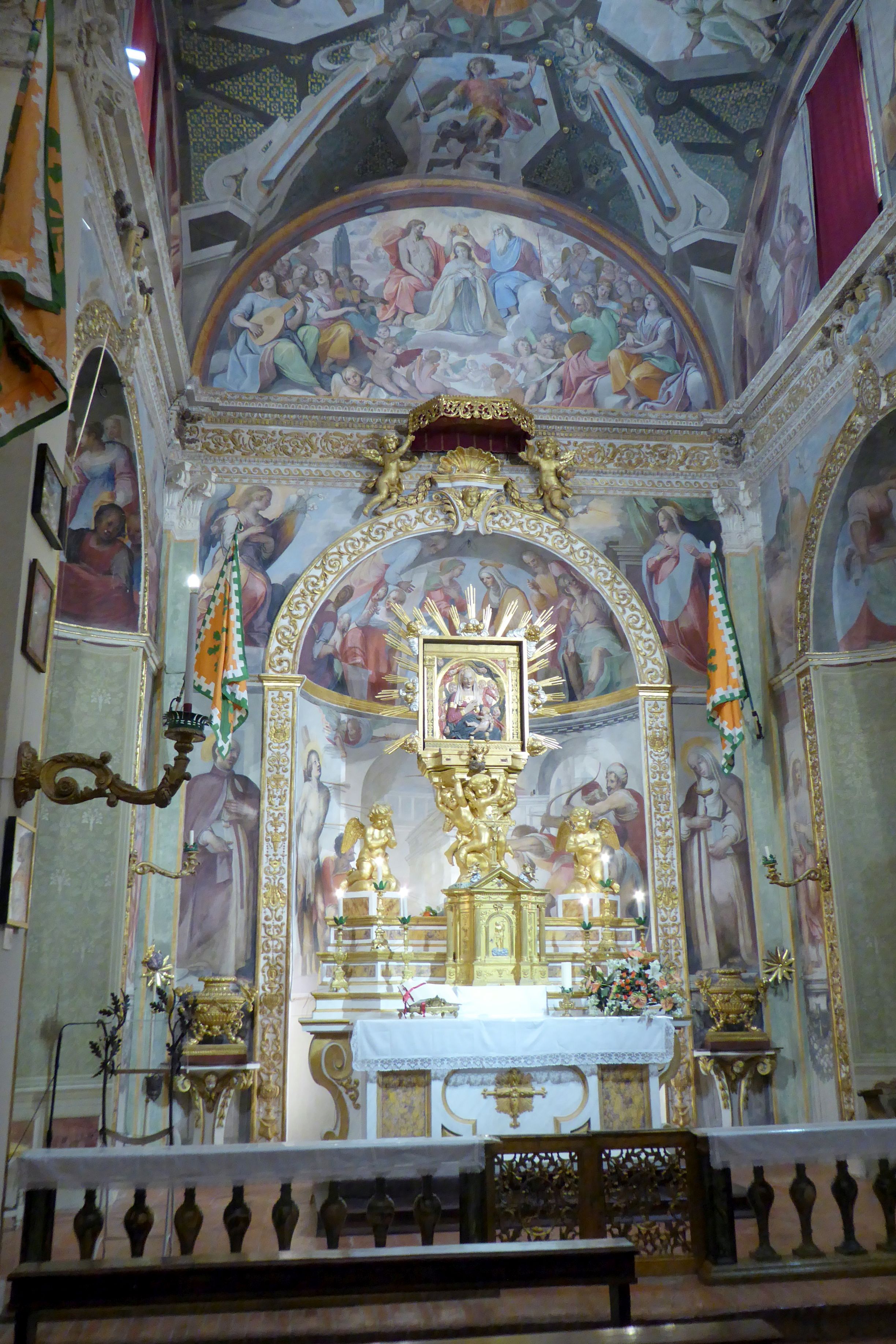
Contrada Della Selva displays green and orange flags in their church.
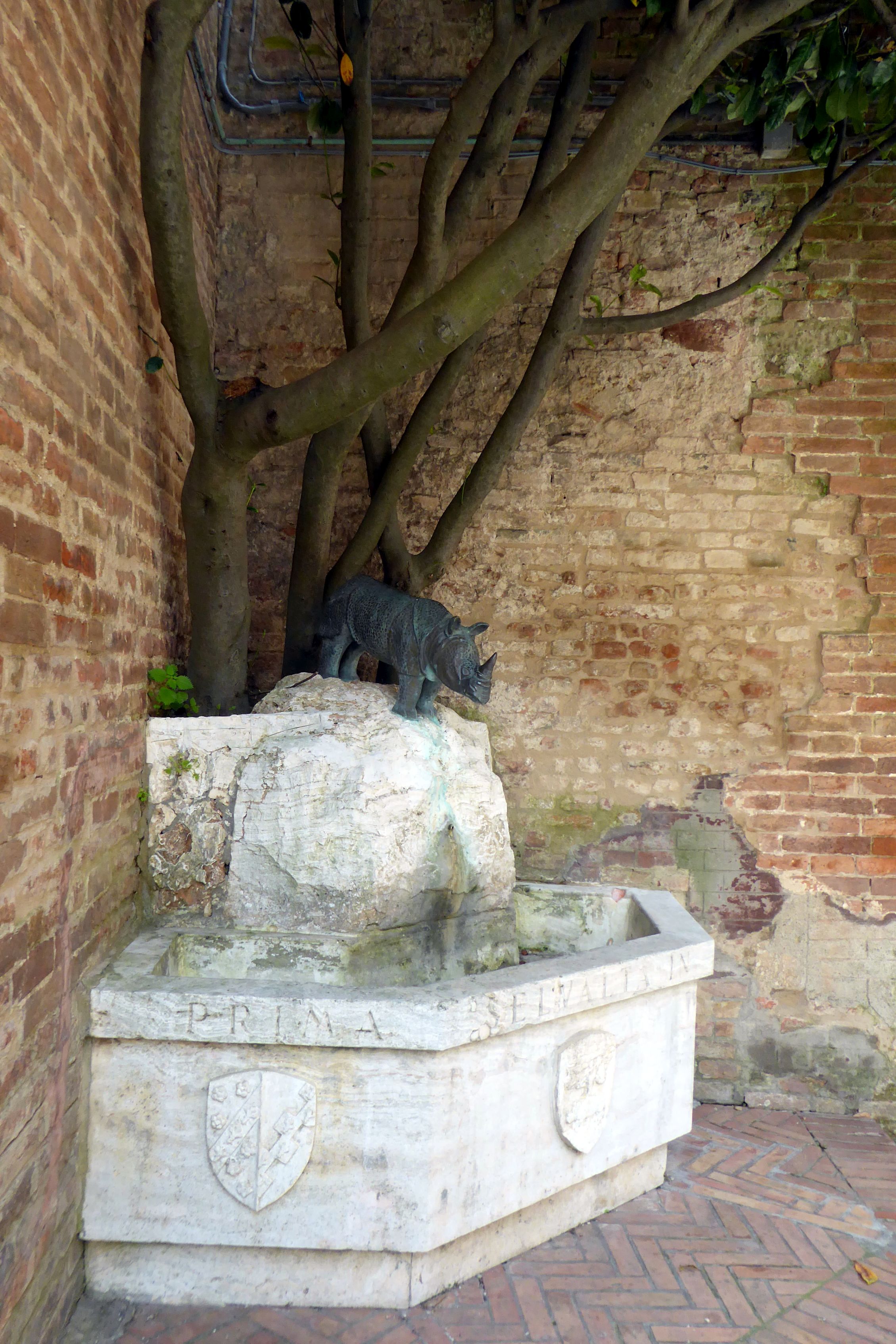
Contrada Della Selva’s baptisms are conducted in this fountain.

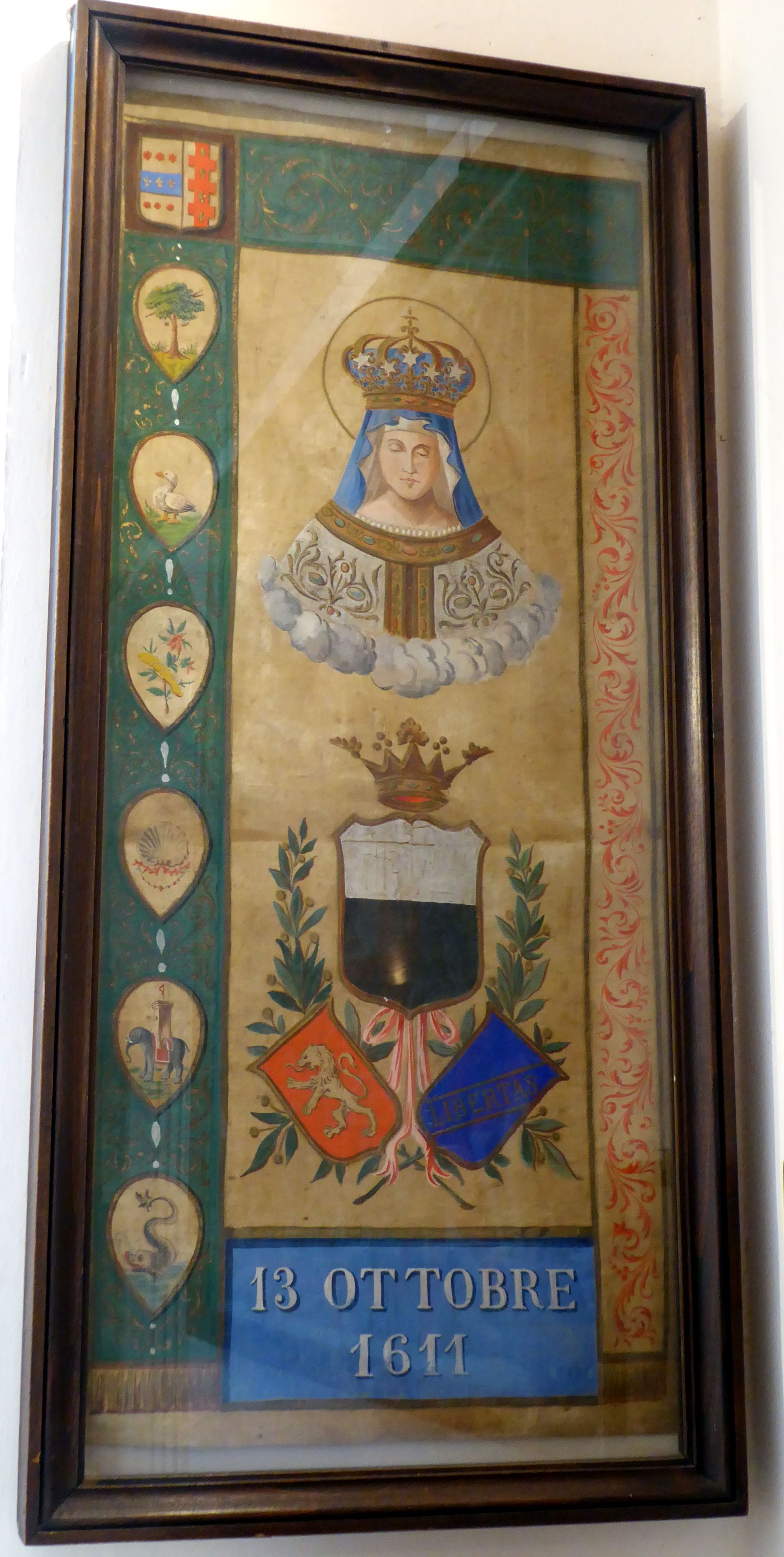
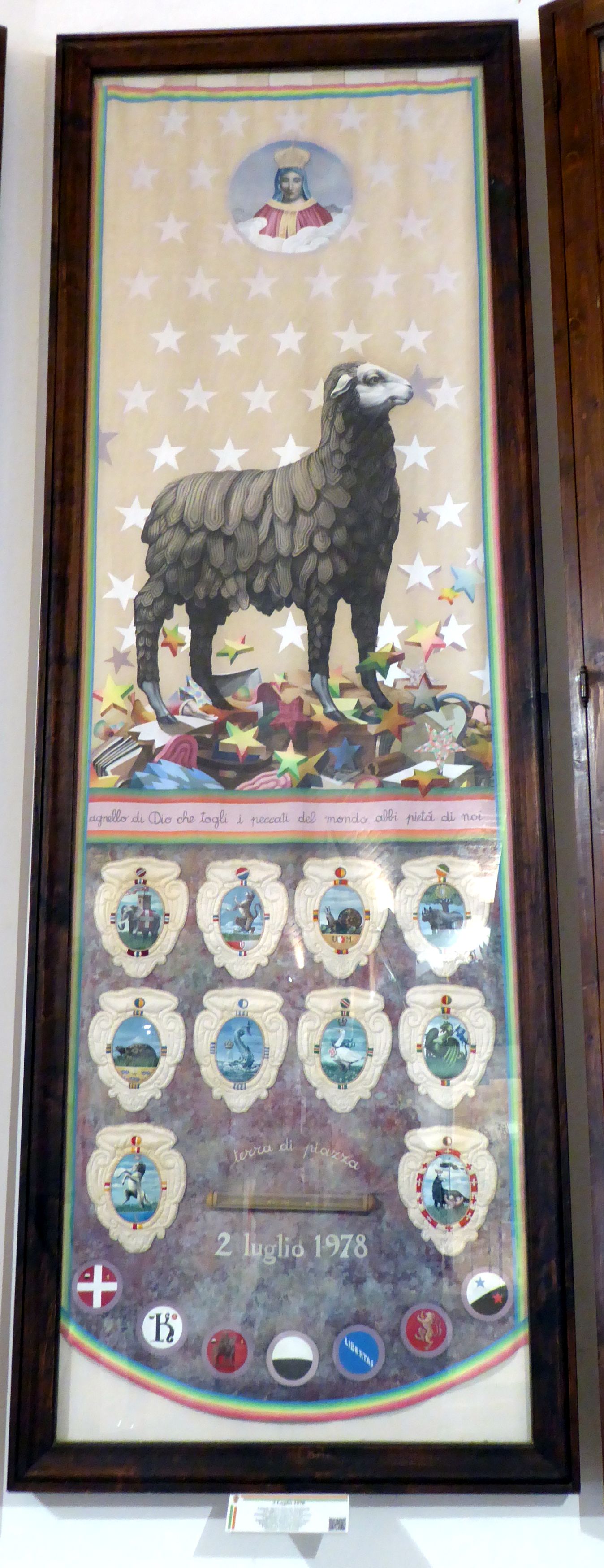
Anything goes during these races, including trying to knock a rival jockey off his horse.  It’s chaos, and the celebration afterward is as crazy as the race itself.  The winning contrada hosts a very festive banquet in their streets, and the alcohol flows.  They are awarded with a banner that gets displayed in their museum.  Local artists compete for the honor of designing the winners’ banner for the July race, and international artists compete for the August race banner.

This banner was won in the 1611 Palio.

What’s even crazier than the actual race is the shenanigans (“legal corruption”) that takes place before each Palio.  District members donate money to help buy a good jockey, and the jockeys negotiate (bribe?) to get a better pole position or conspire to block another horse.

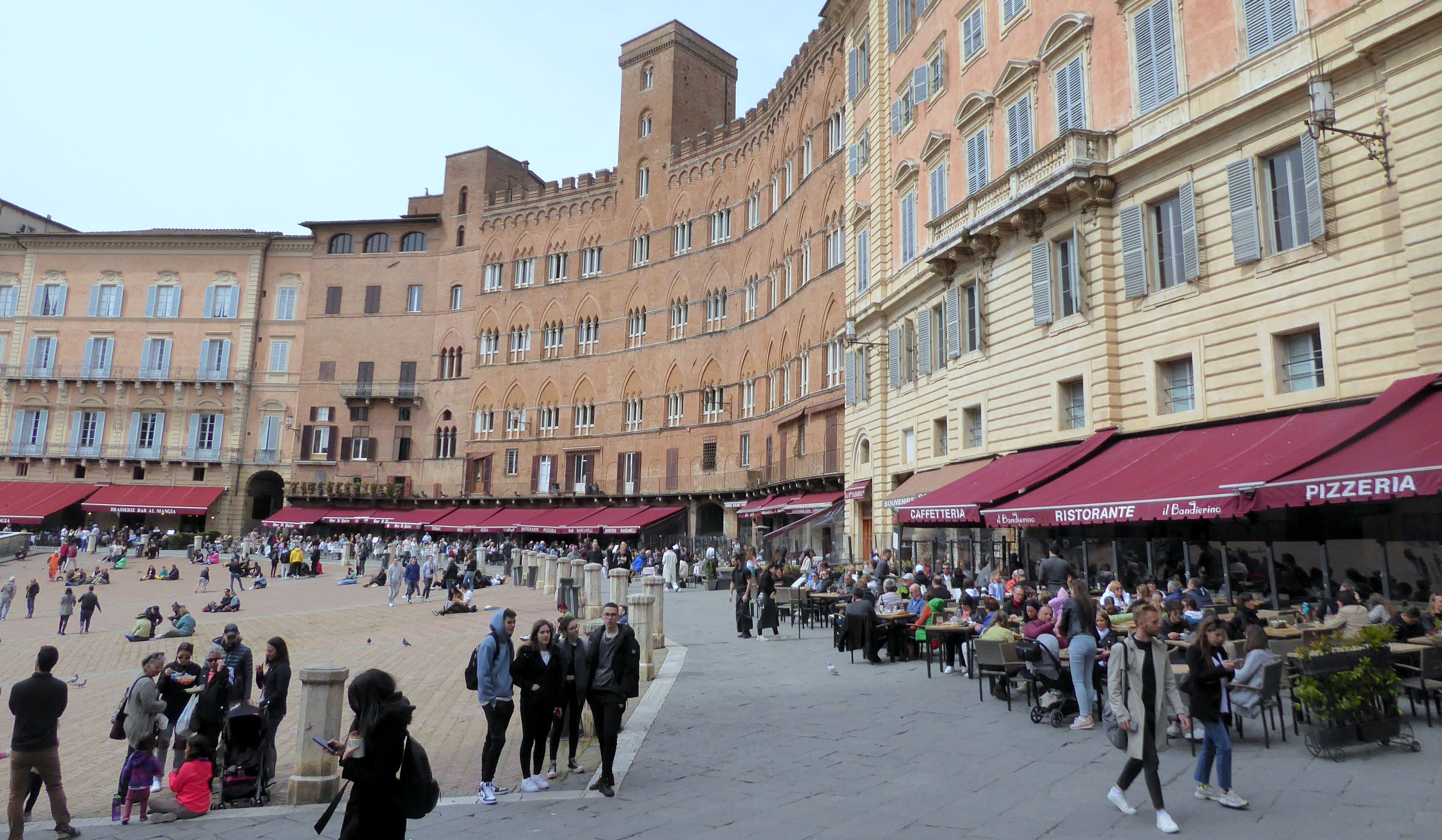
Piazaa del Campo, home of the Palio horse race

Check out 2022’s Palio here.  You have to see it to believe it.

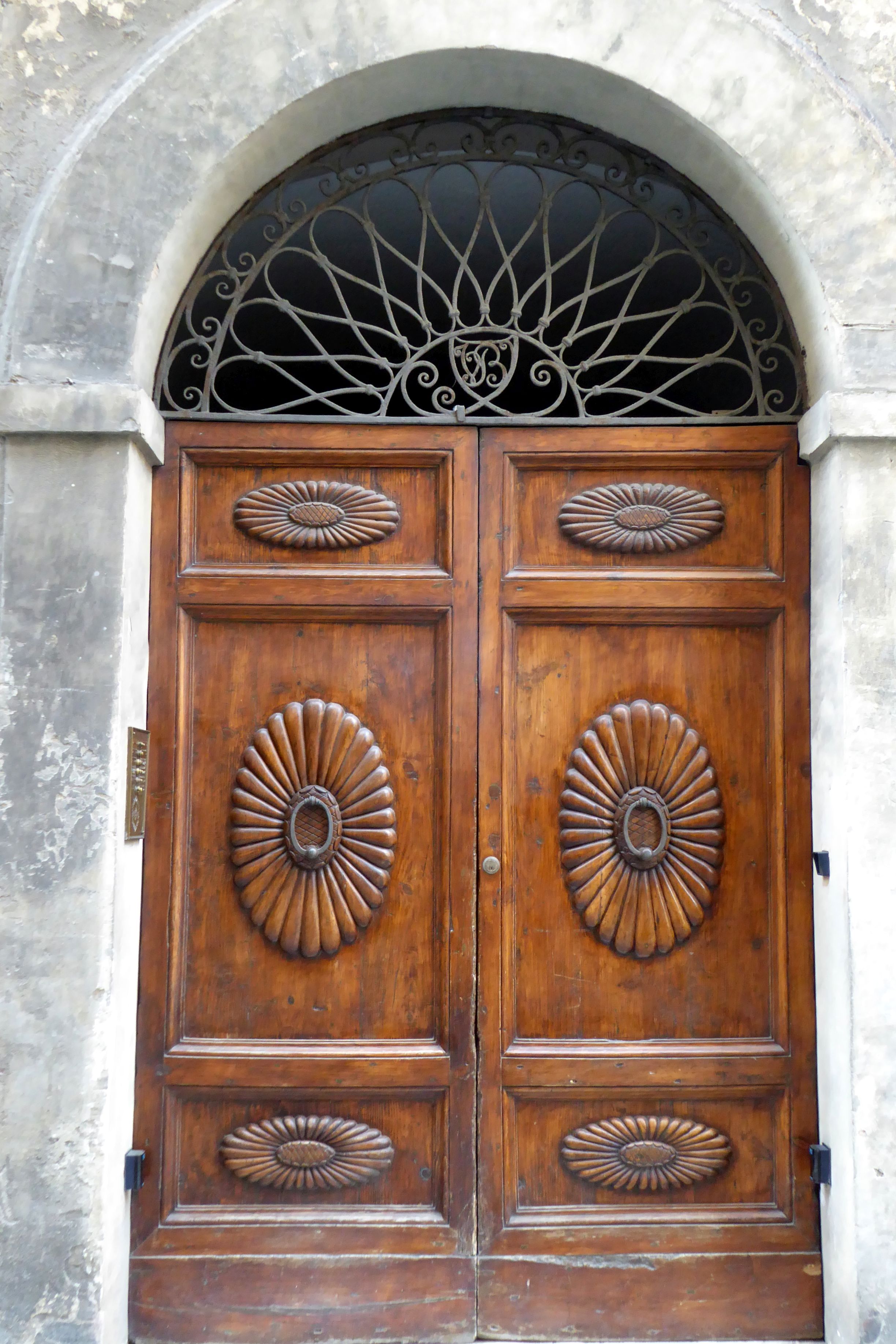
As we walked through a few of the contrade during our walking tour, I got a sense of team spirit and community.  Homes displayed their contrada’s flag and symbol; and, there was a palpable pride within each district, especially if they had won a past Palio.

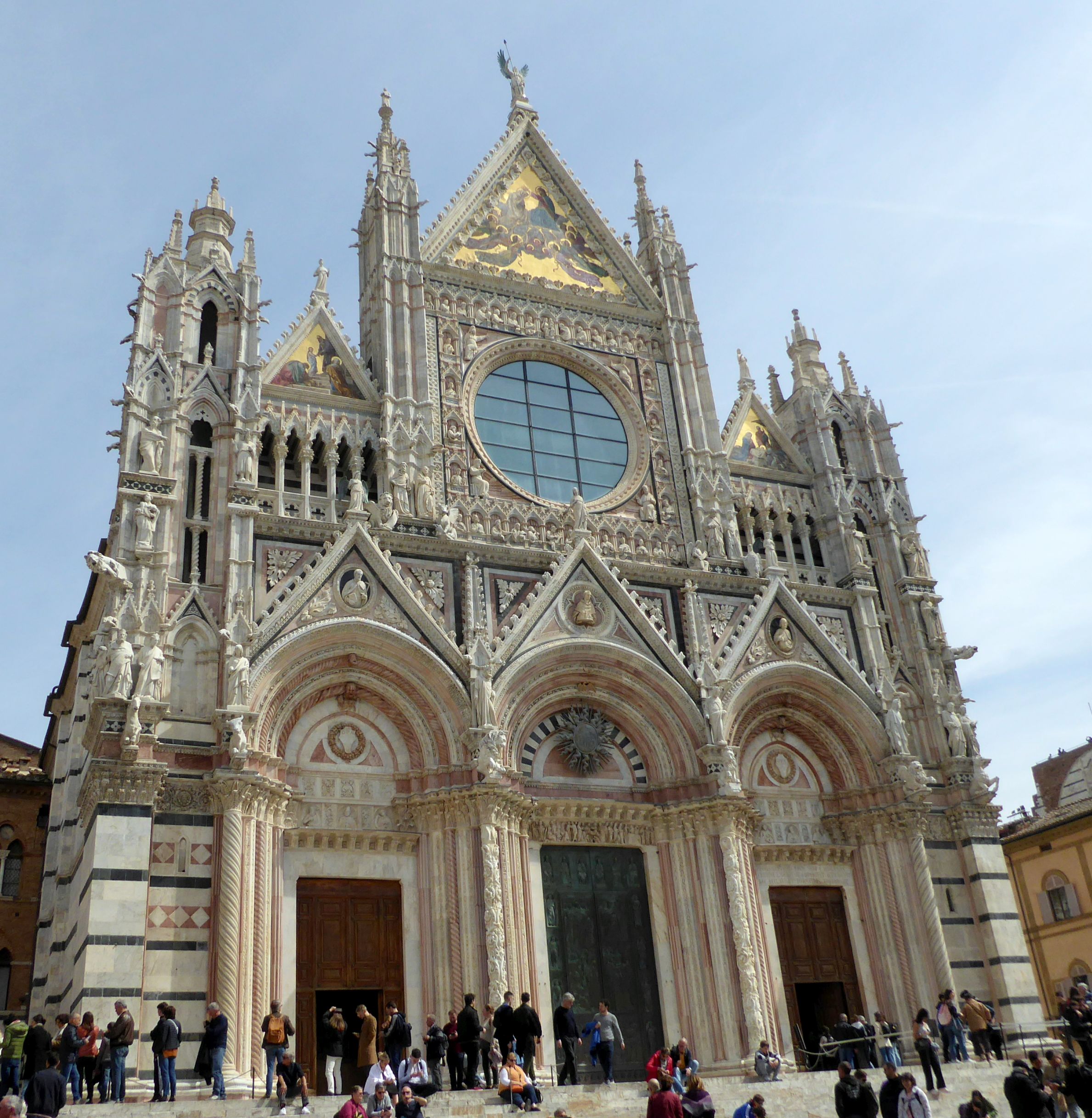
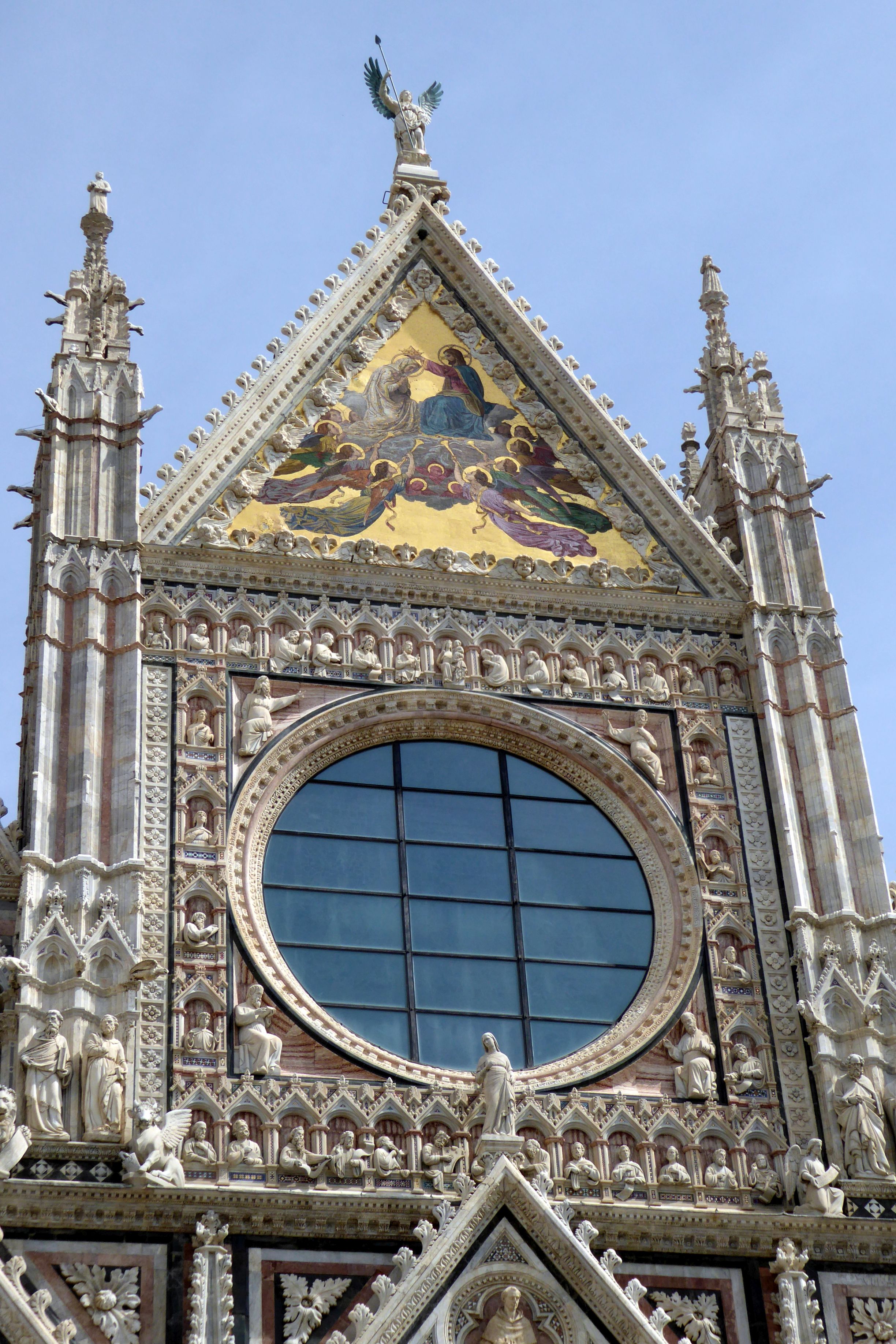
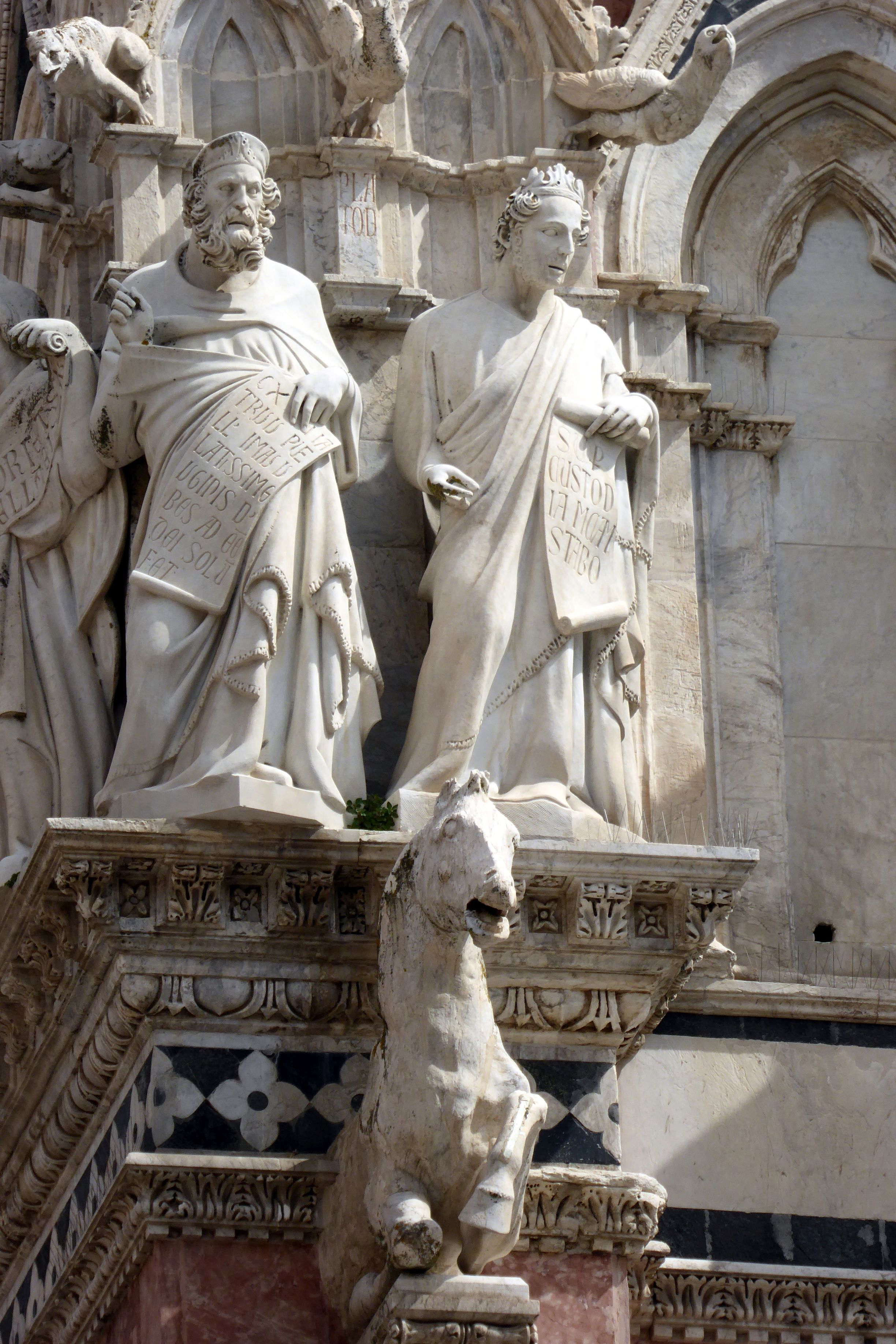
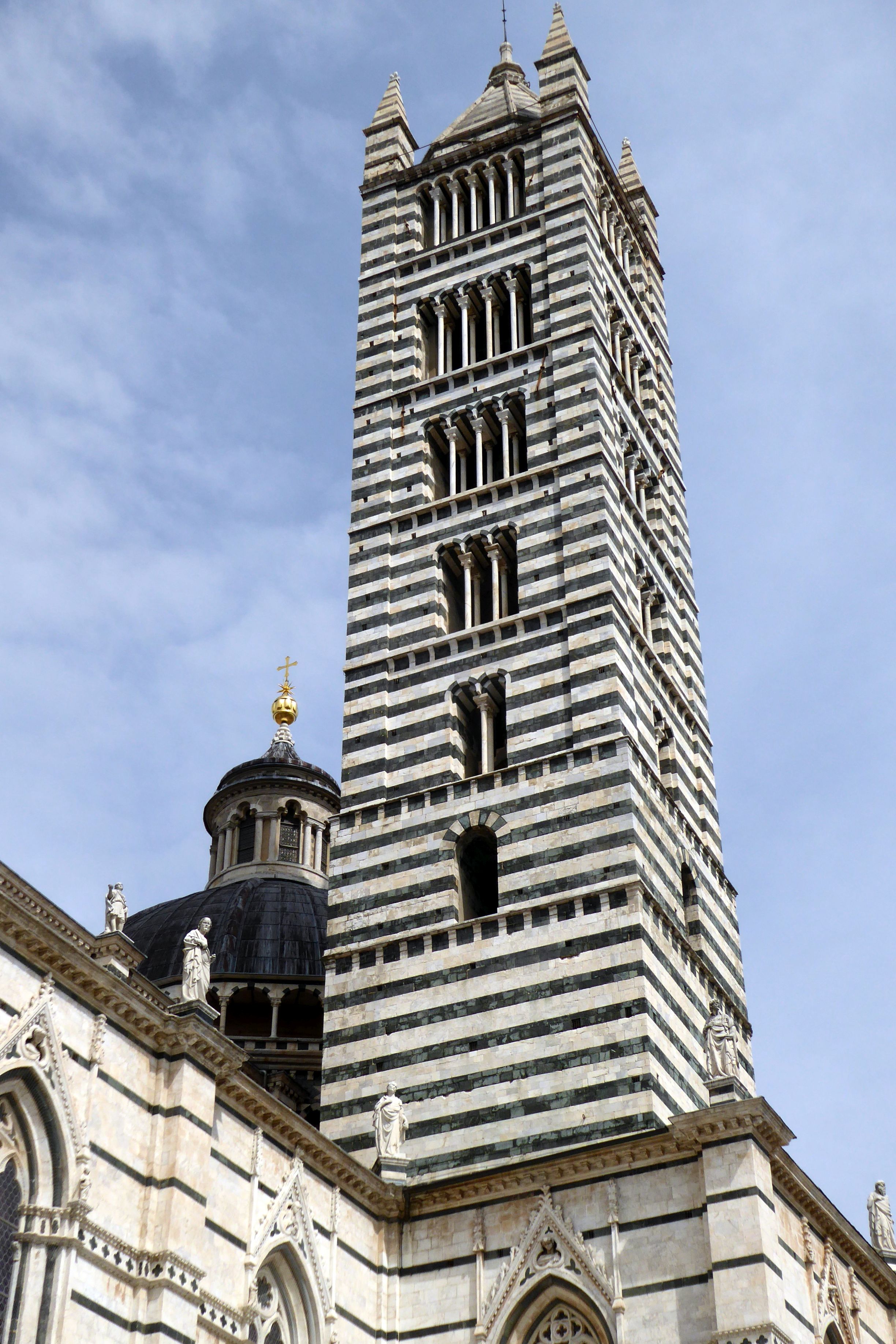
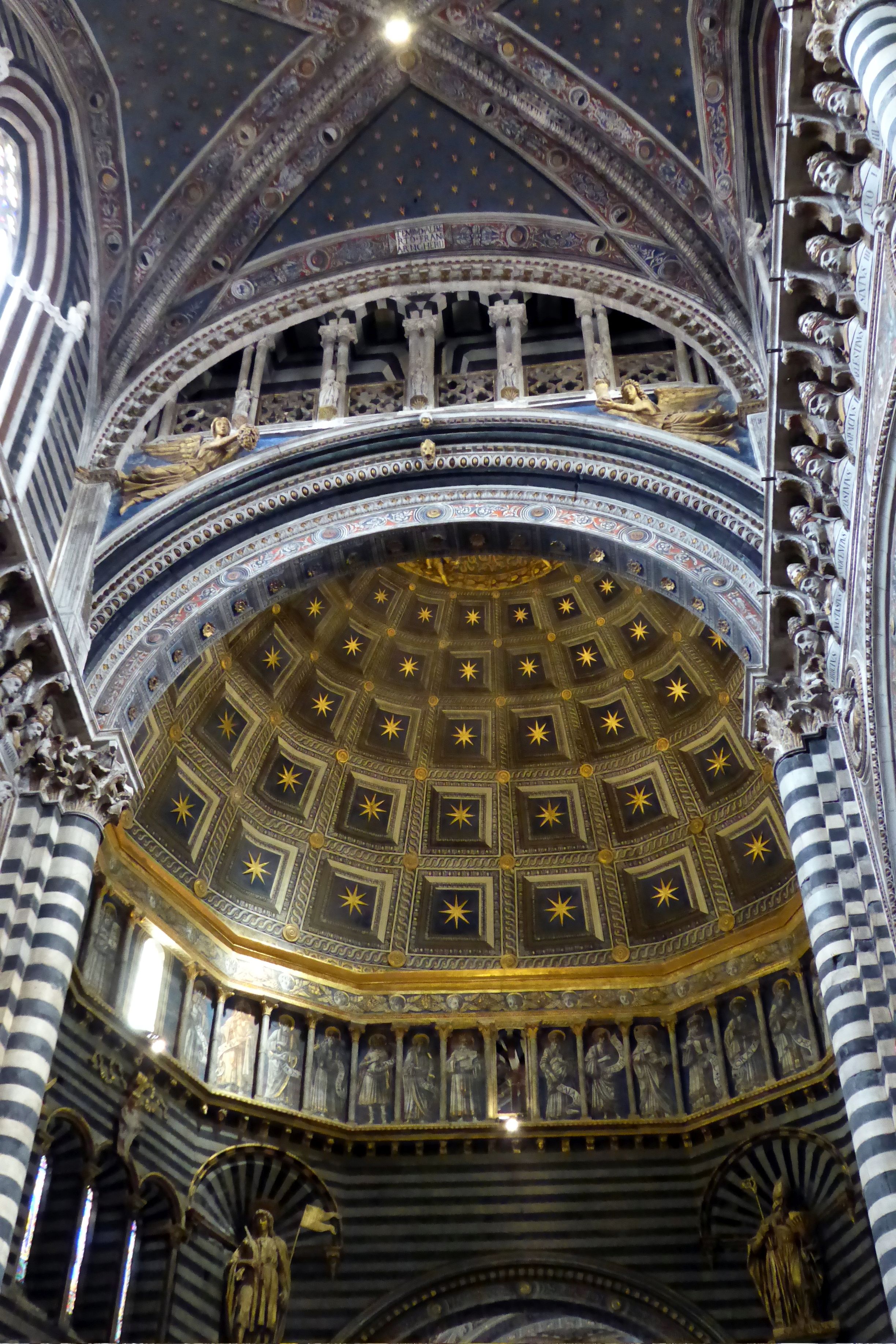
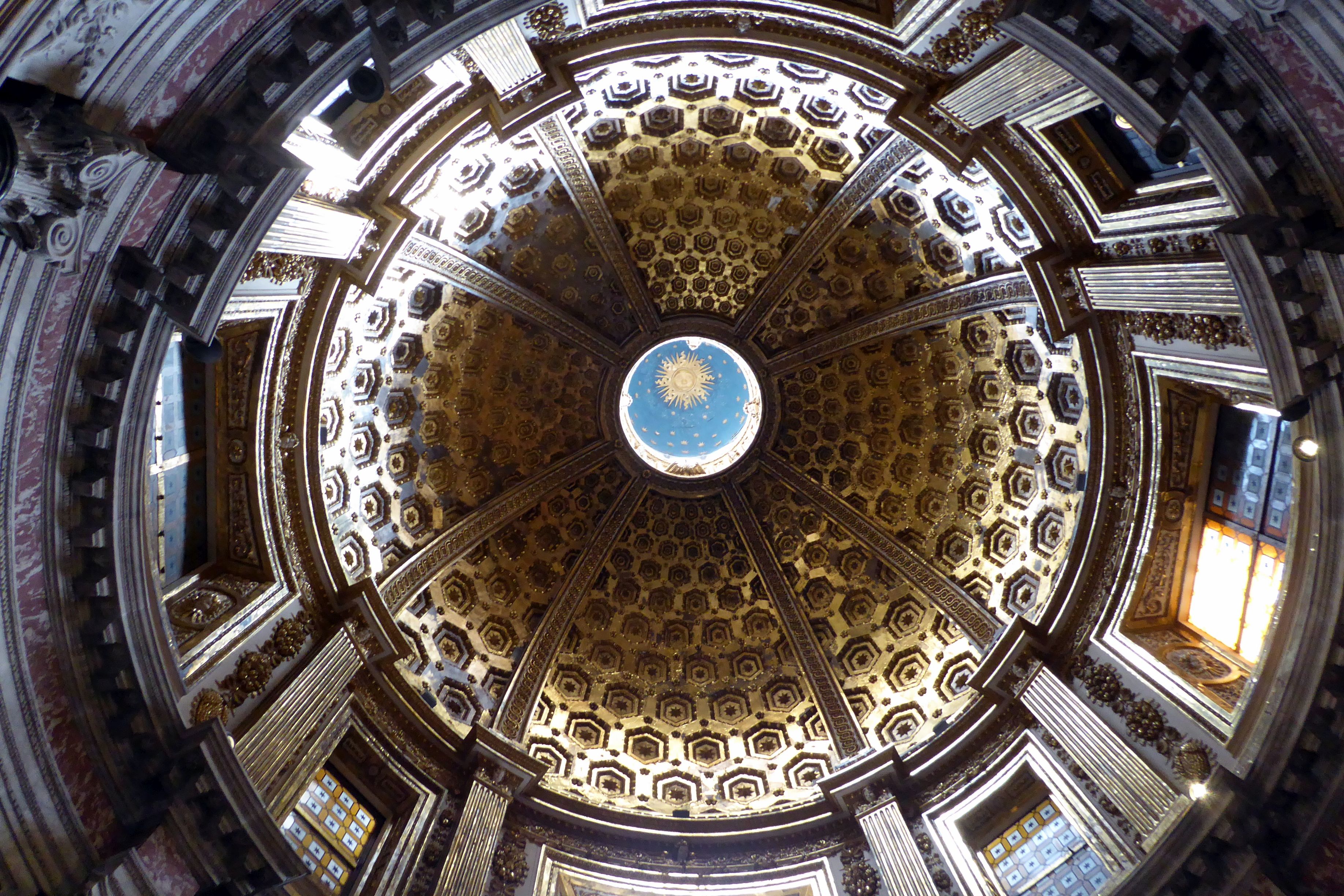
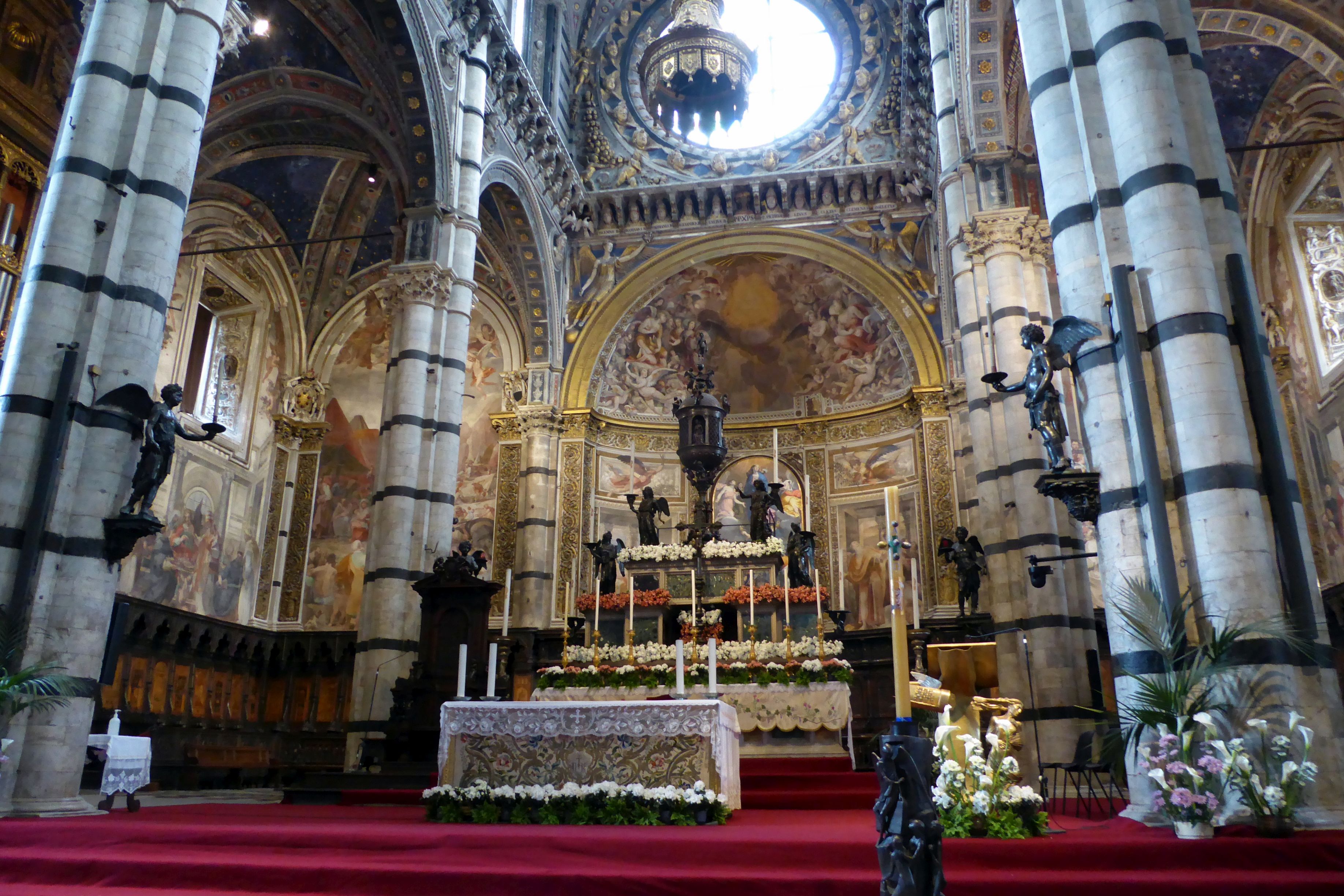
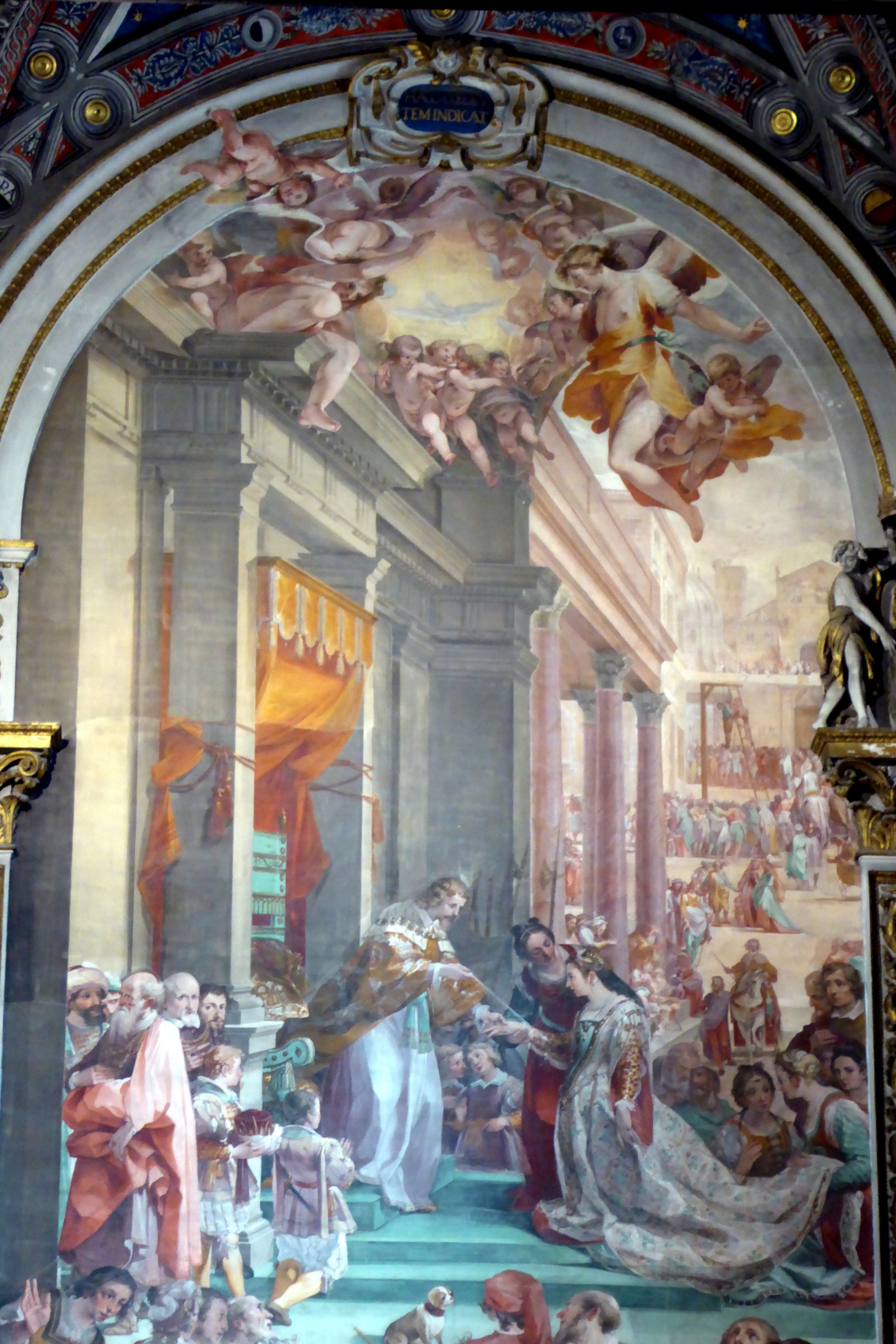
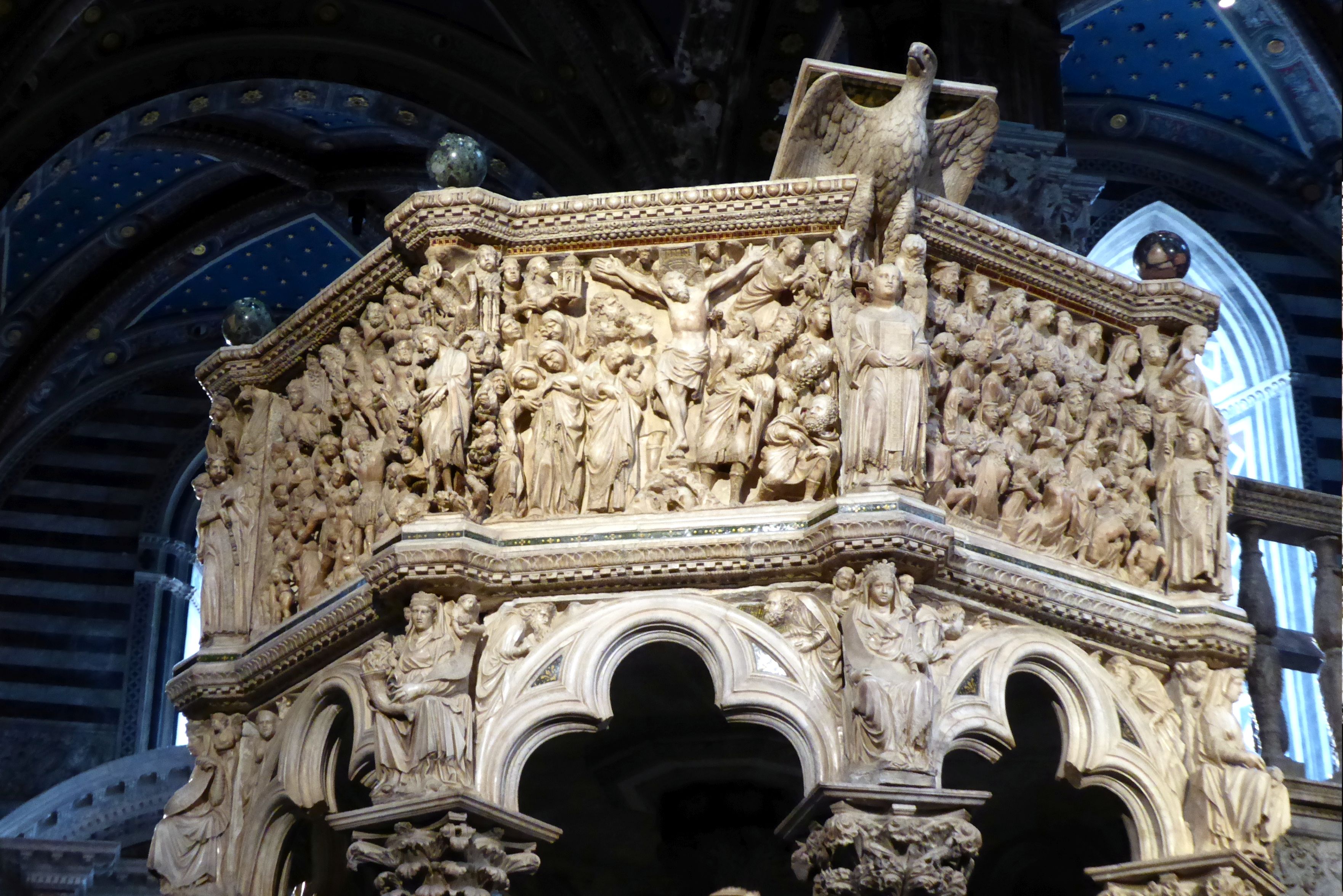
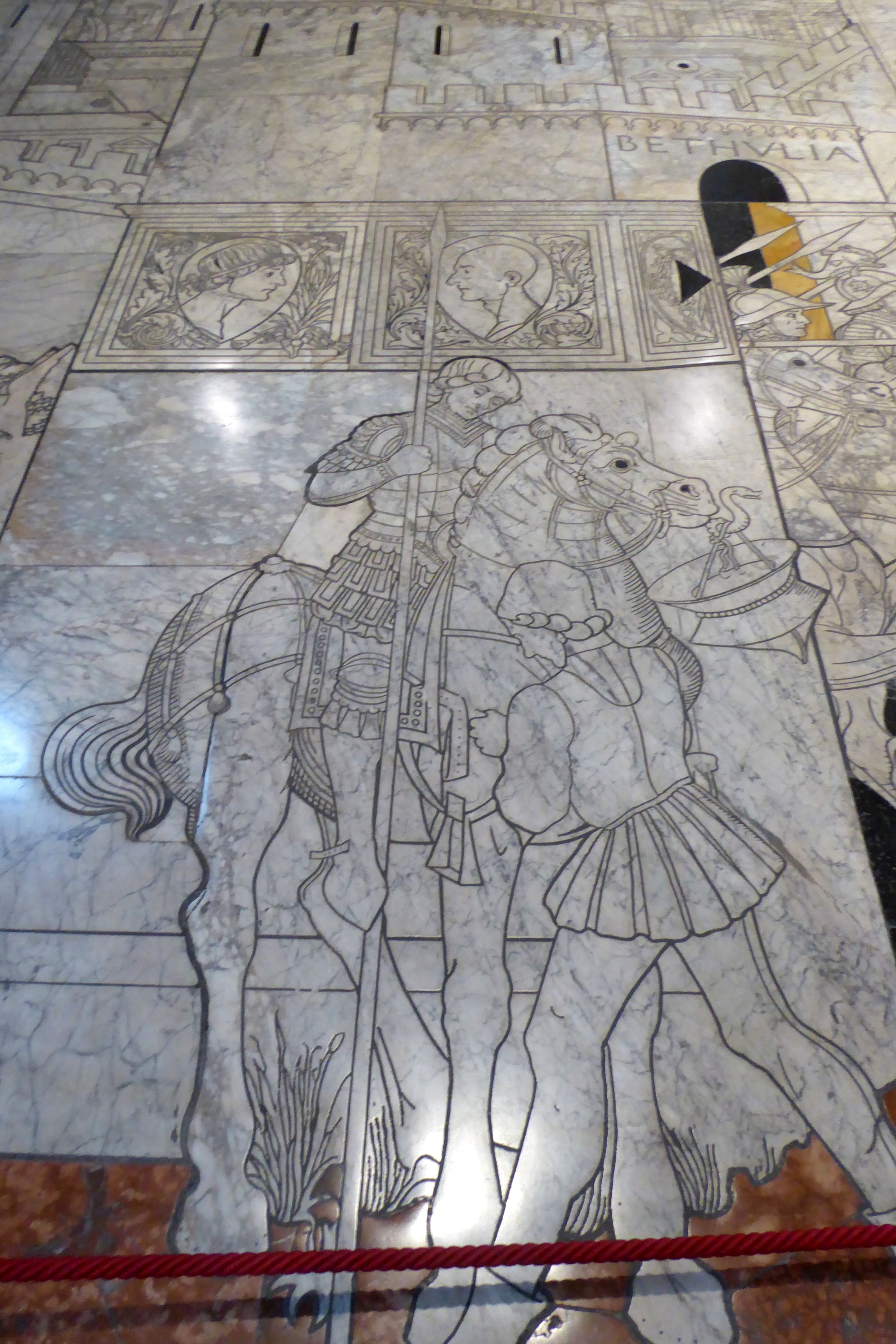
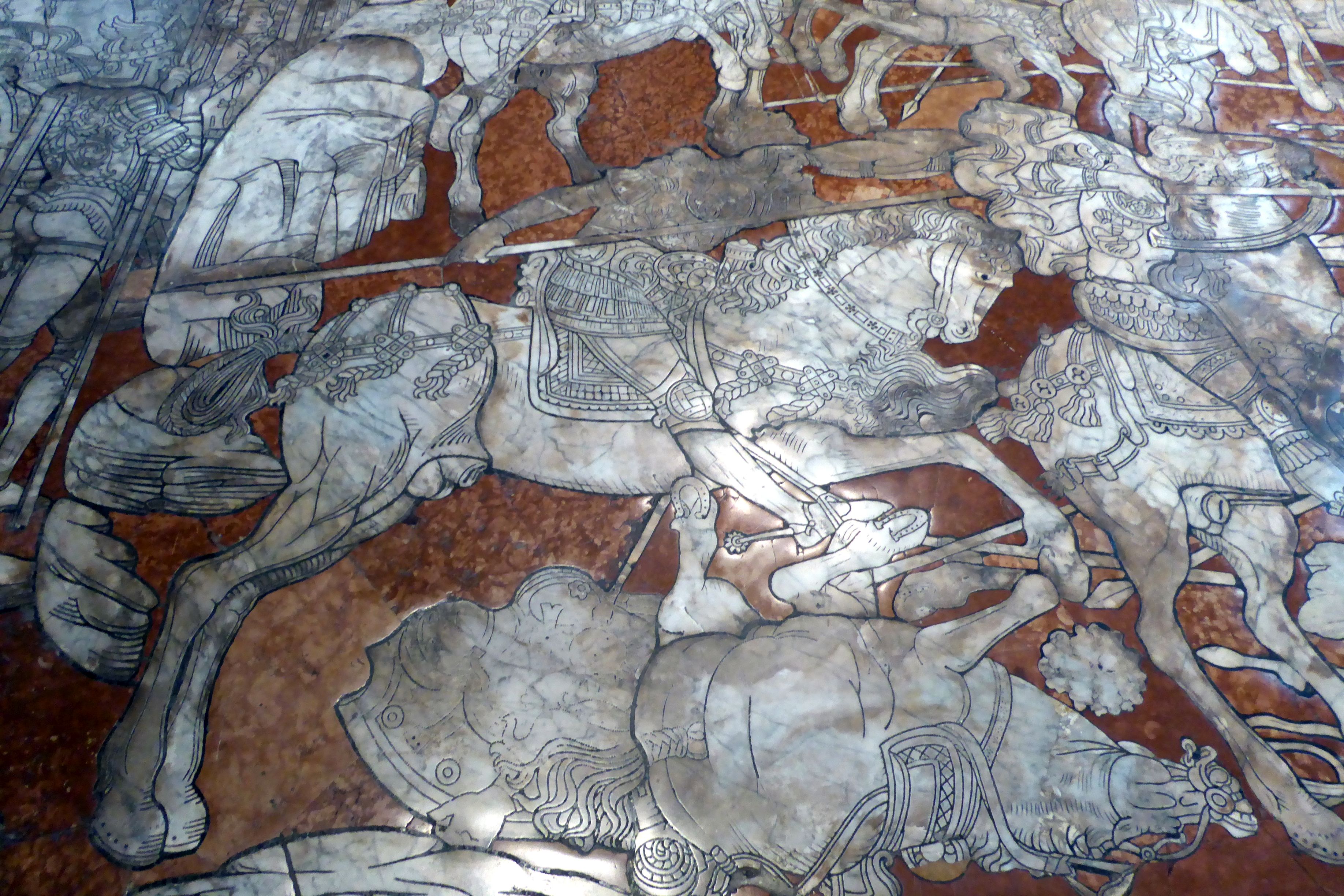
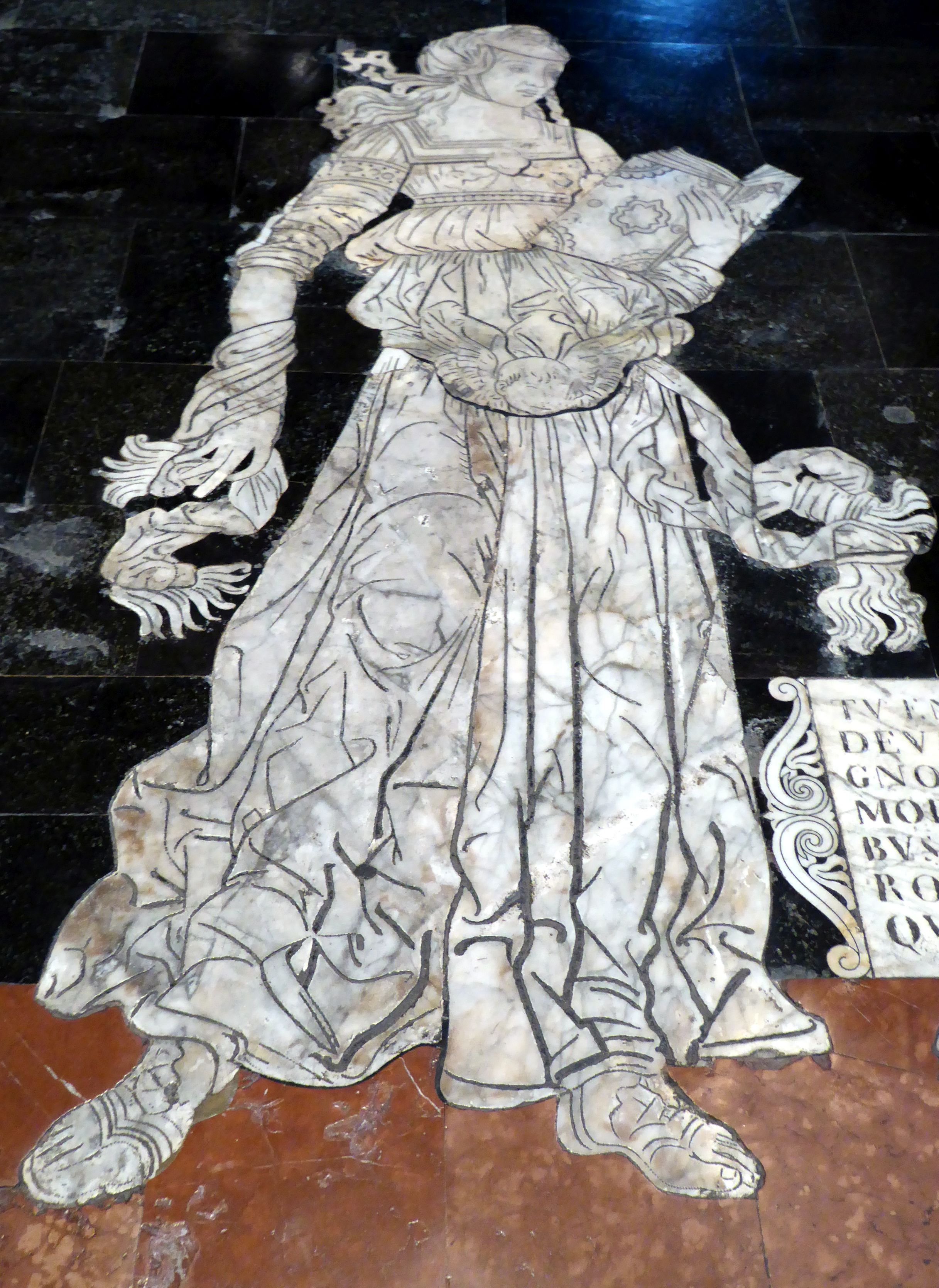
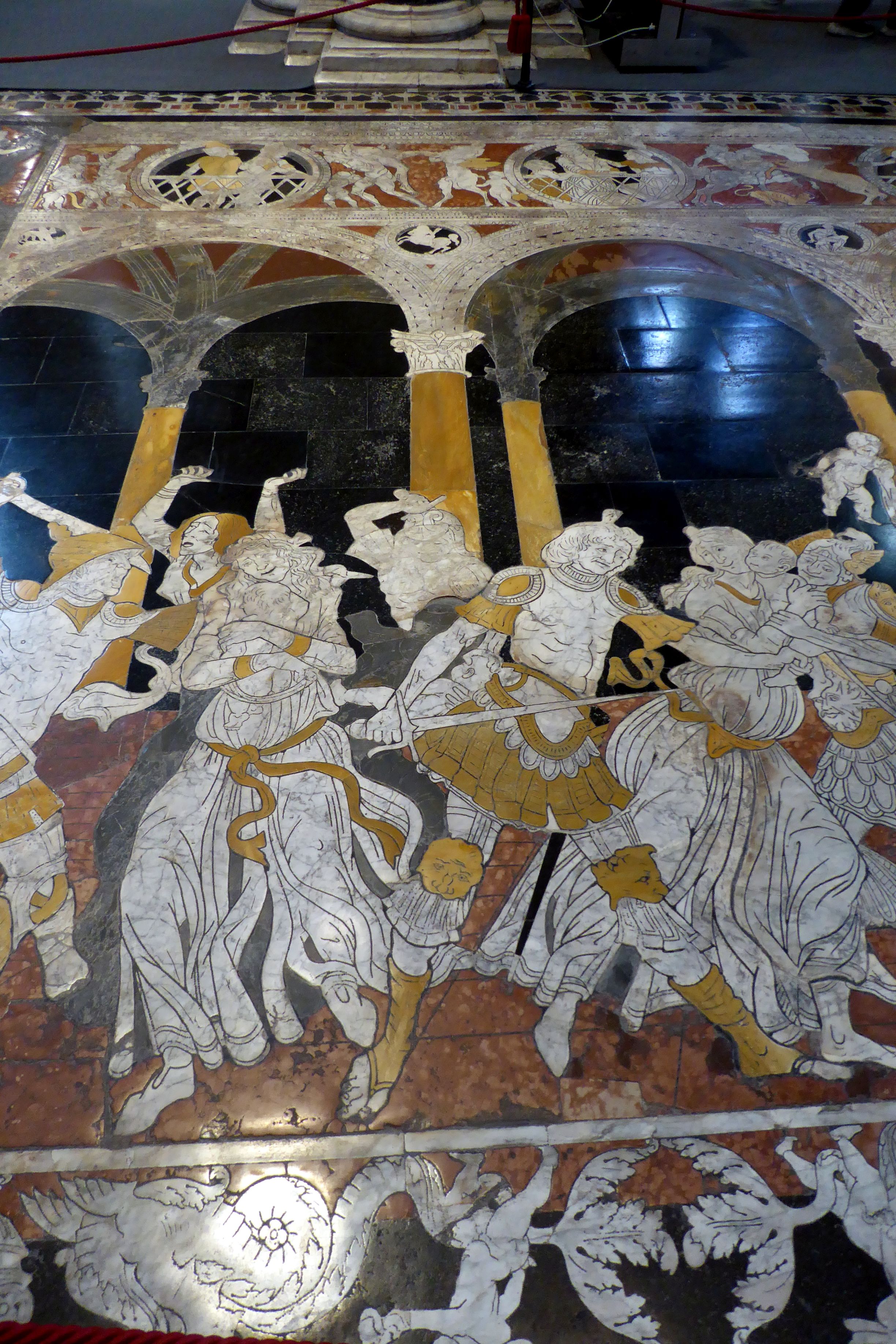
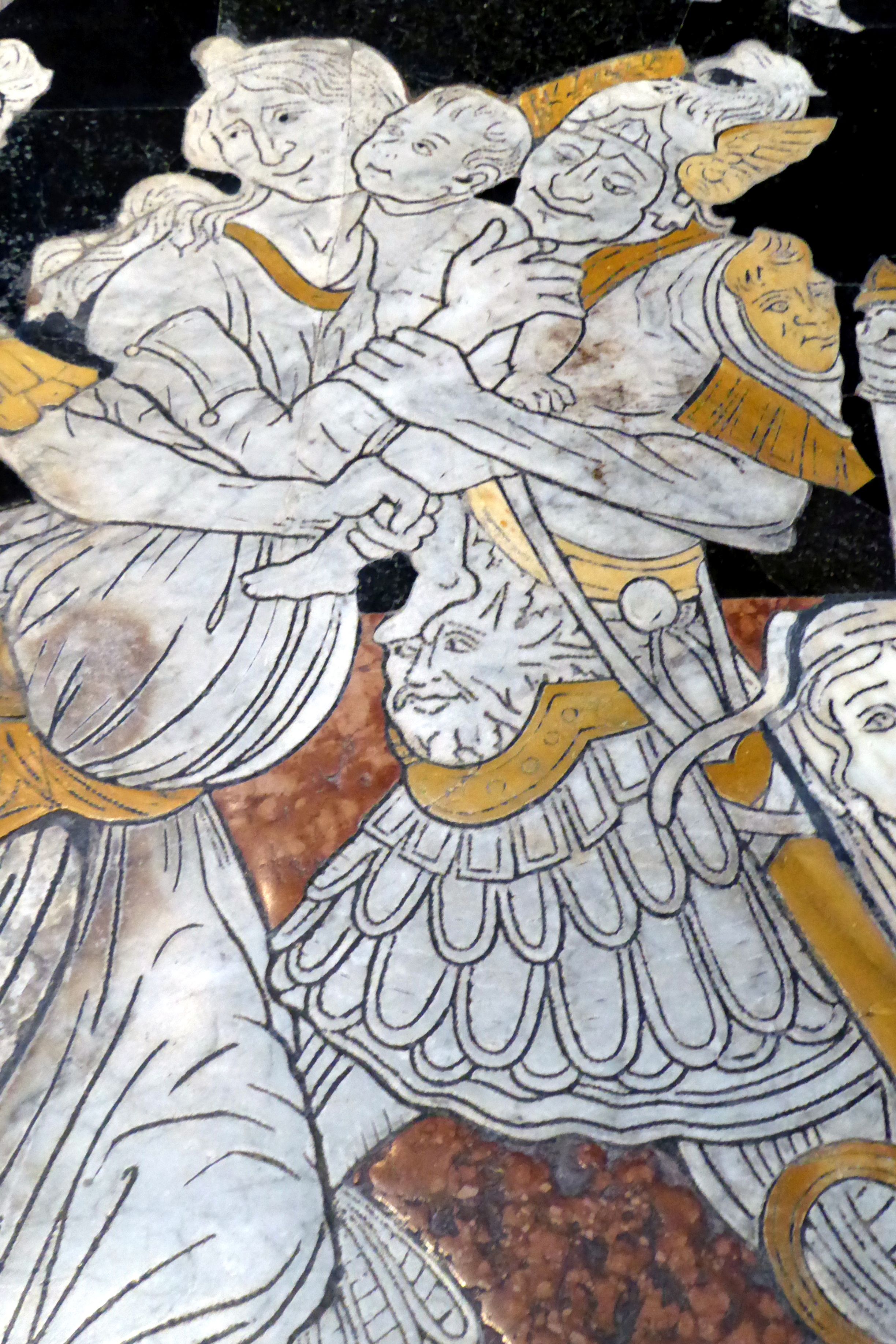
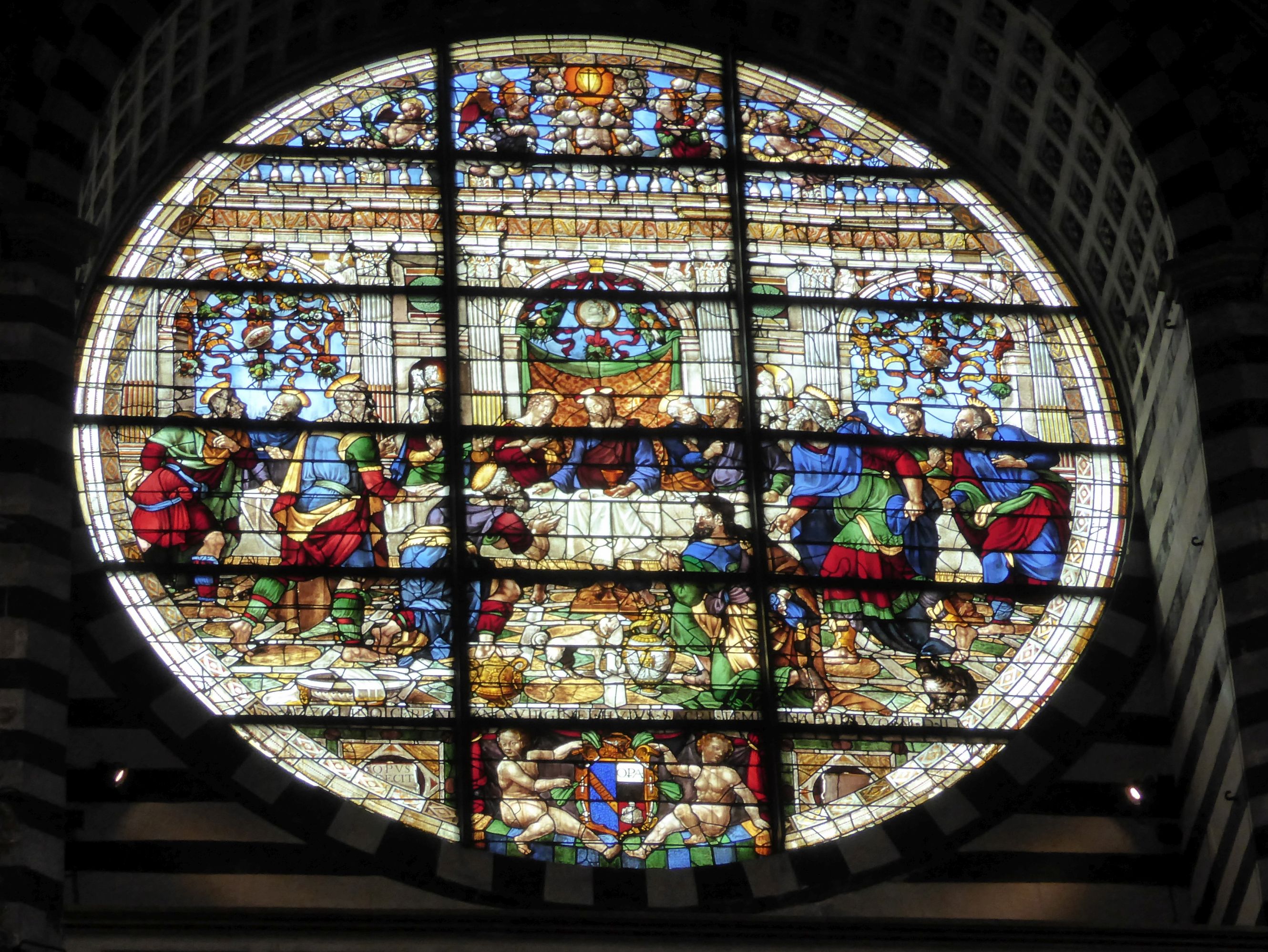
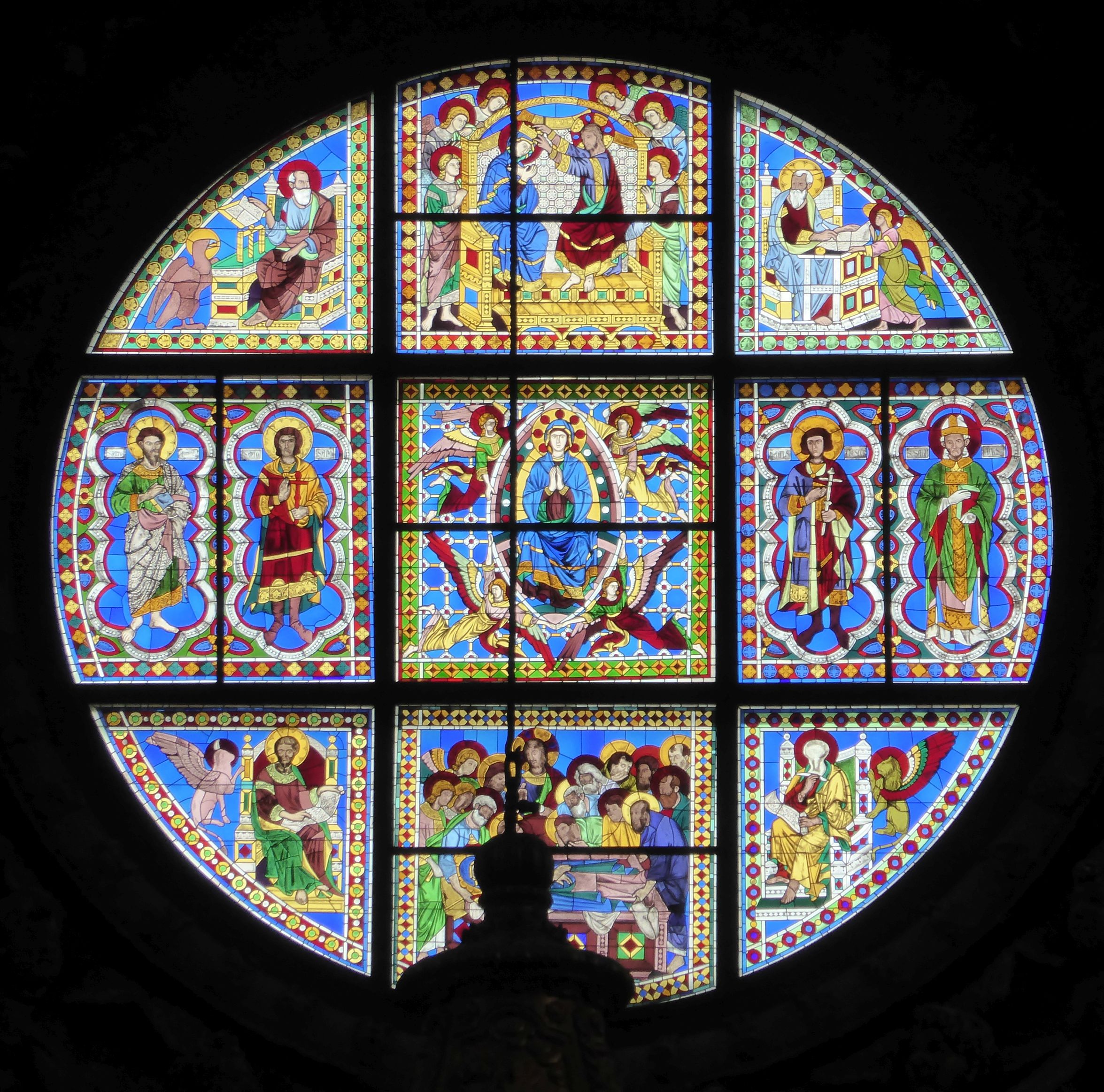
Visiting the Siena Cathedral was another memory that stood out for me.  Dating back to the 1200’s, it was an amazing work of art—especially the inlayed stone floors that were created in the 1300’s.  There were entire scenes and stories depicted in large rectangular areas of the floor that were stunning—and something usually created as painted murals on cathedral ceilings.

On the way to Siena Cathedral
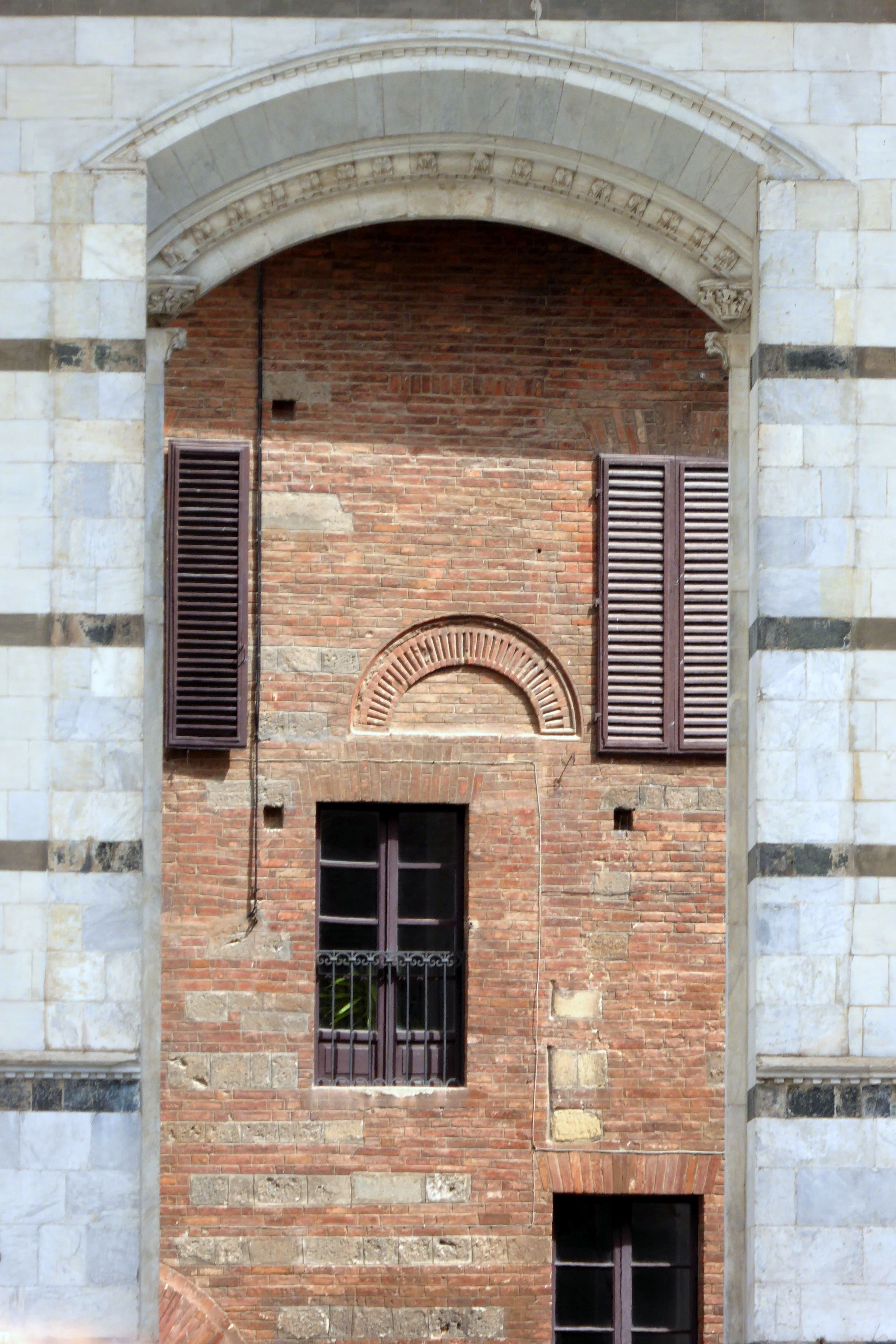
Looking through an opening of the facade of the unfinished section of the cathedral
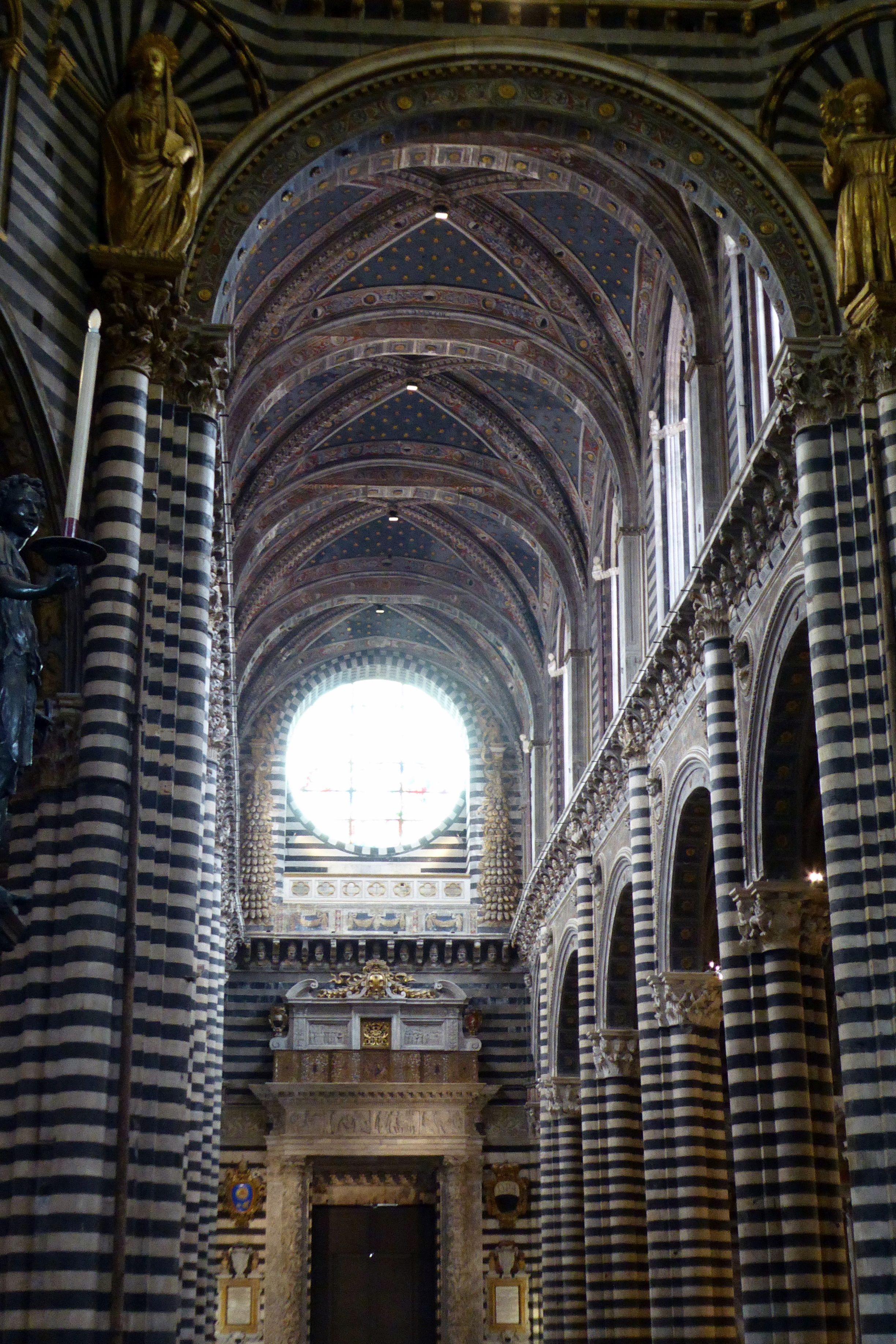
Inside the cathedral
Inlayed stone floors of the cathedral

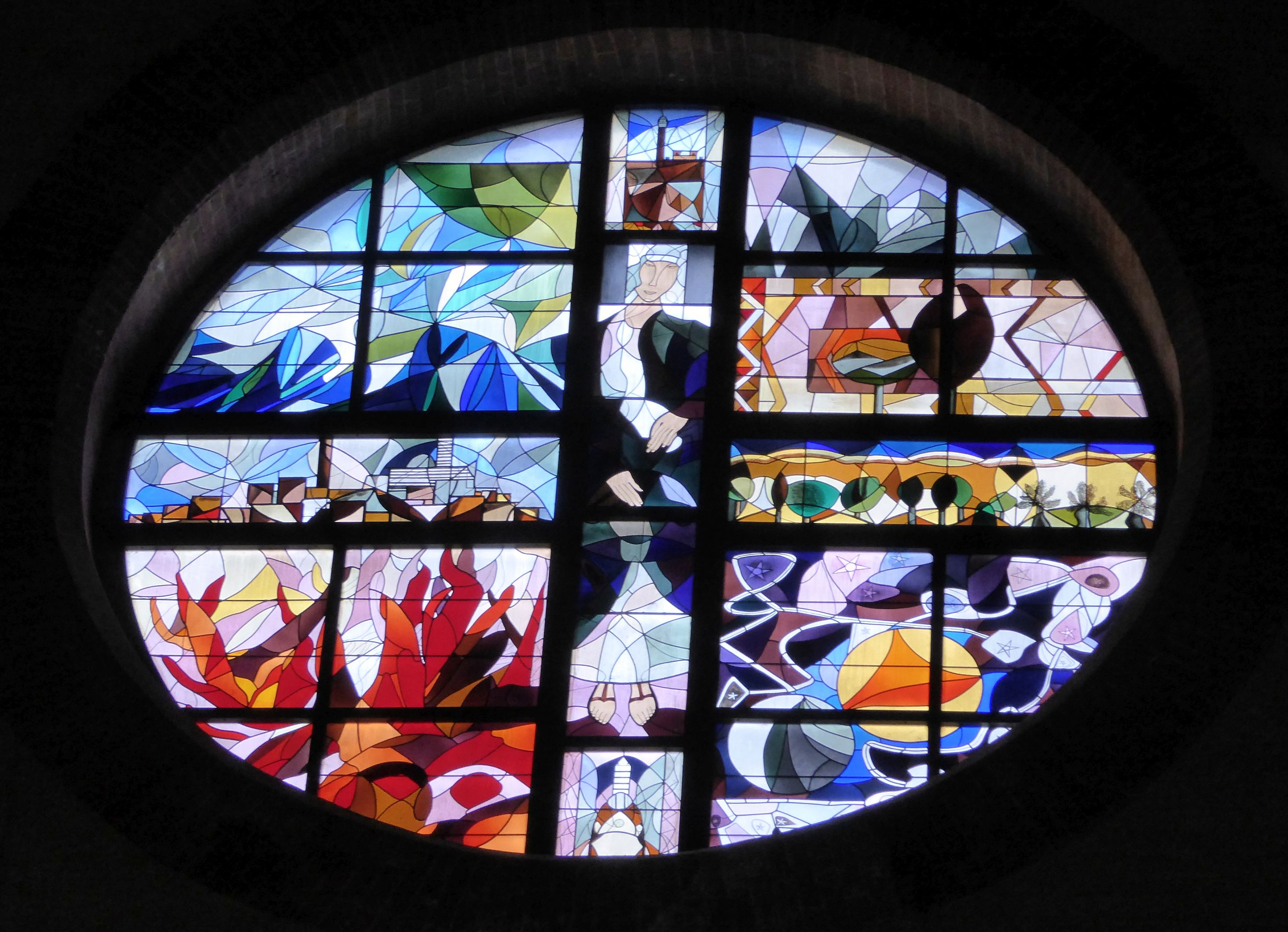
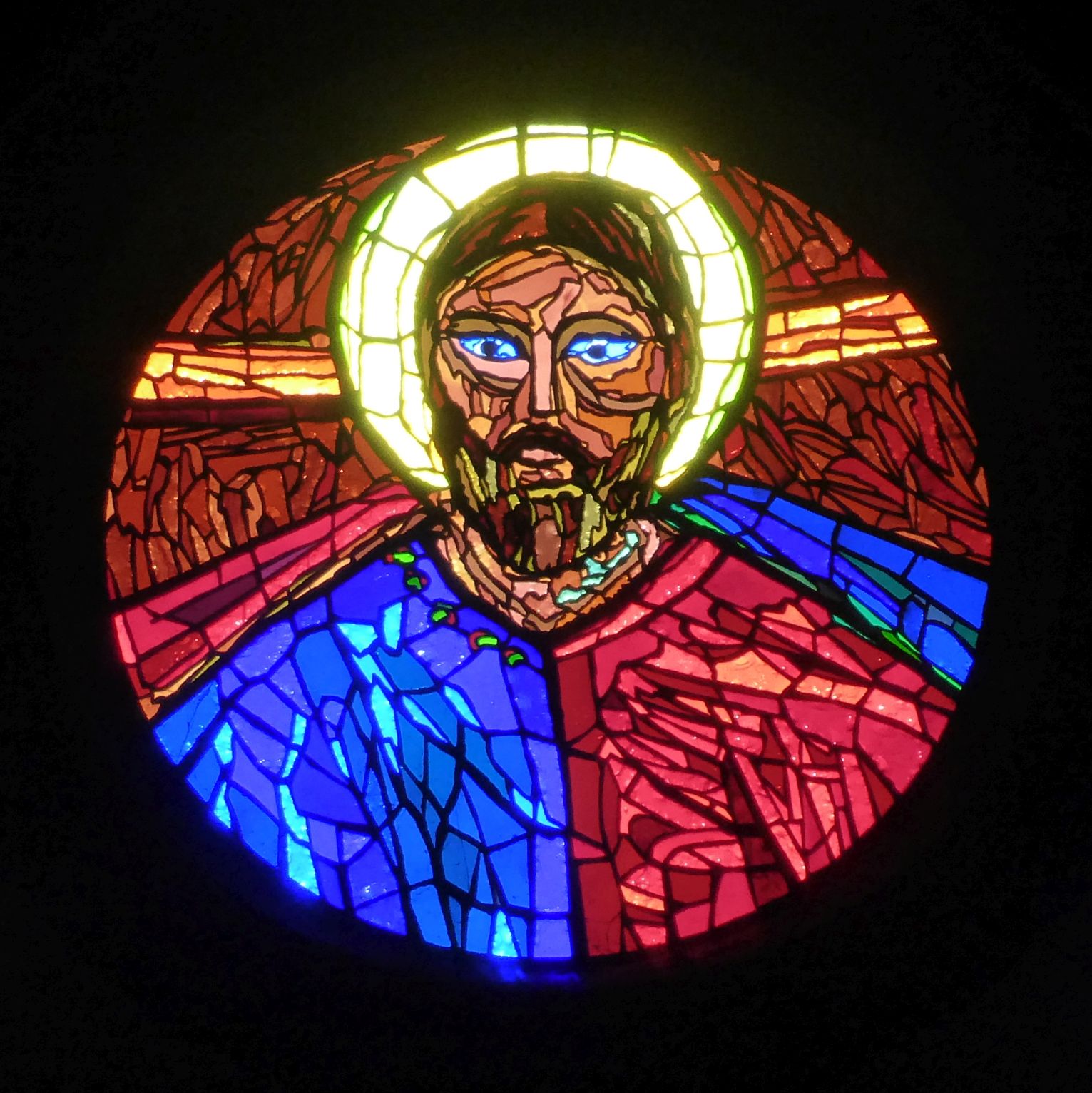
During our morning walking tour, we toured Basilica di San Domenico
Inside Basilica di San Domenico
This used to be a church, but it now houses stables for their contrada’s Palio horses!

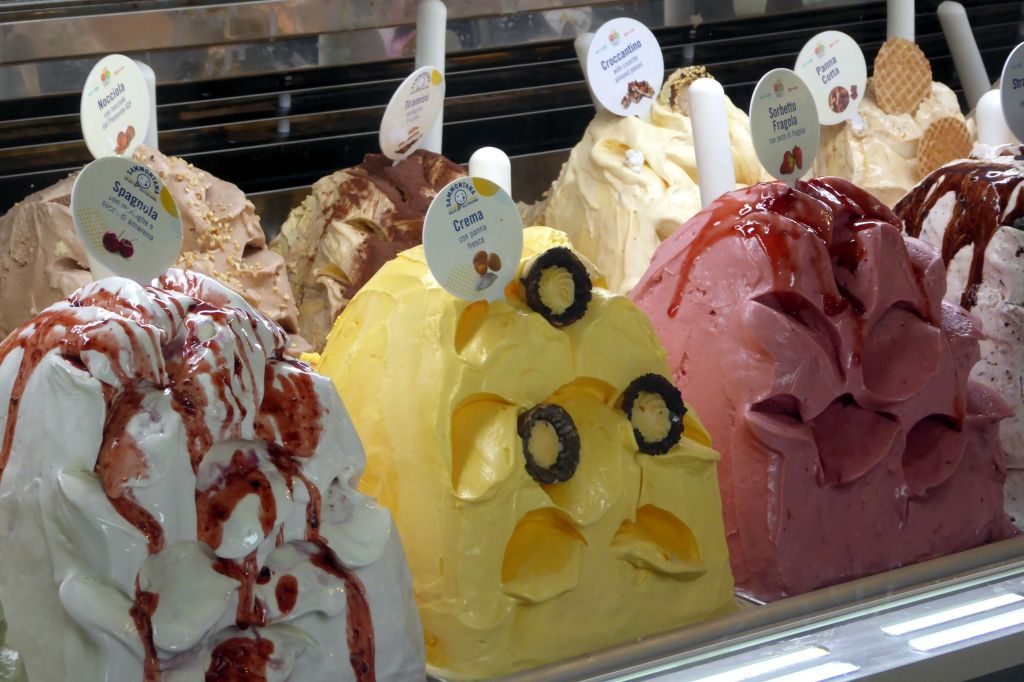
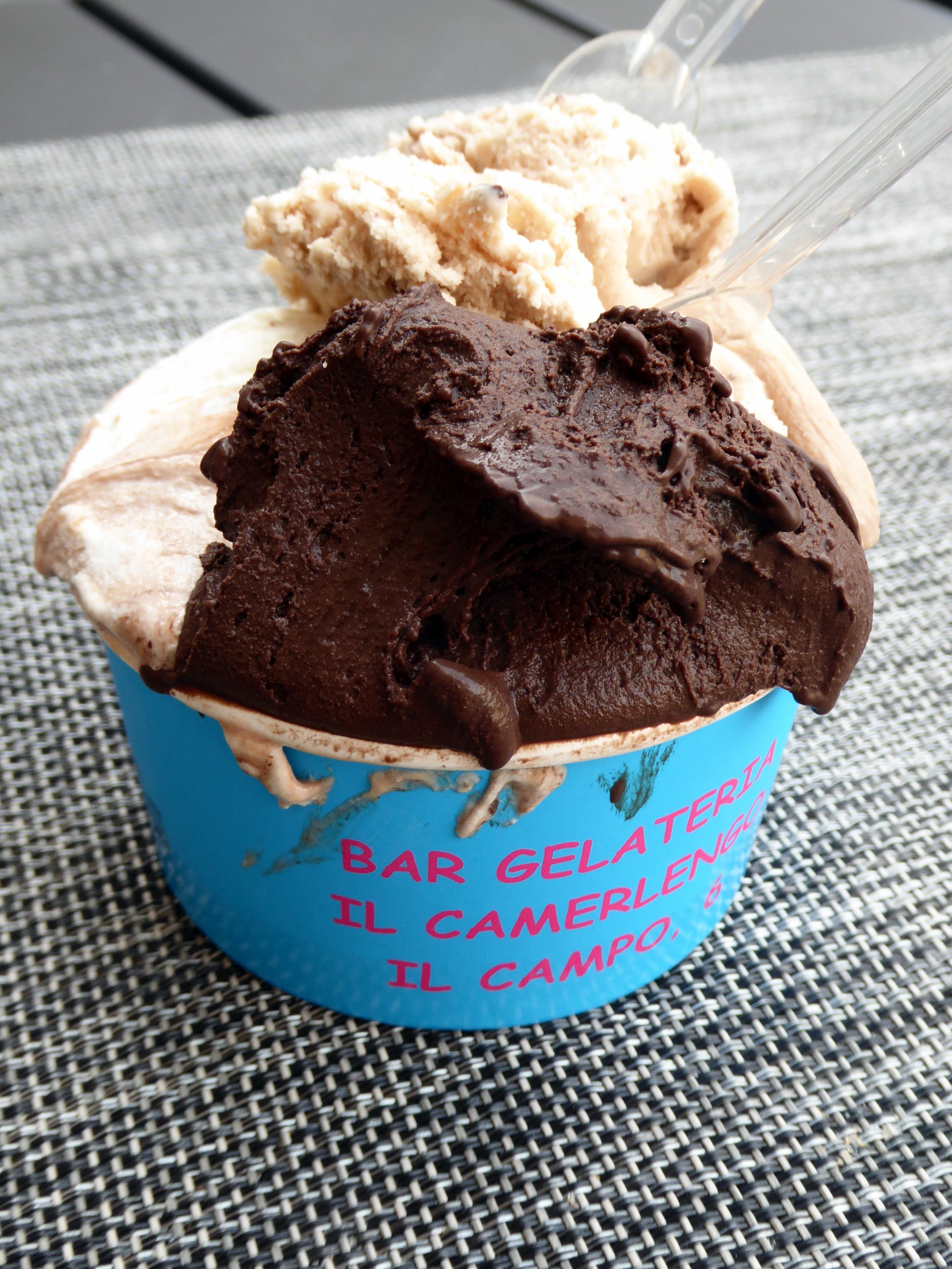
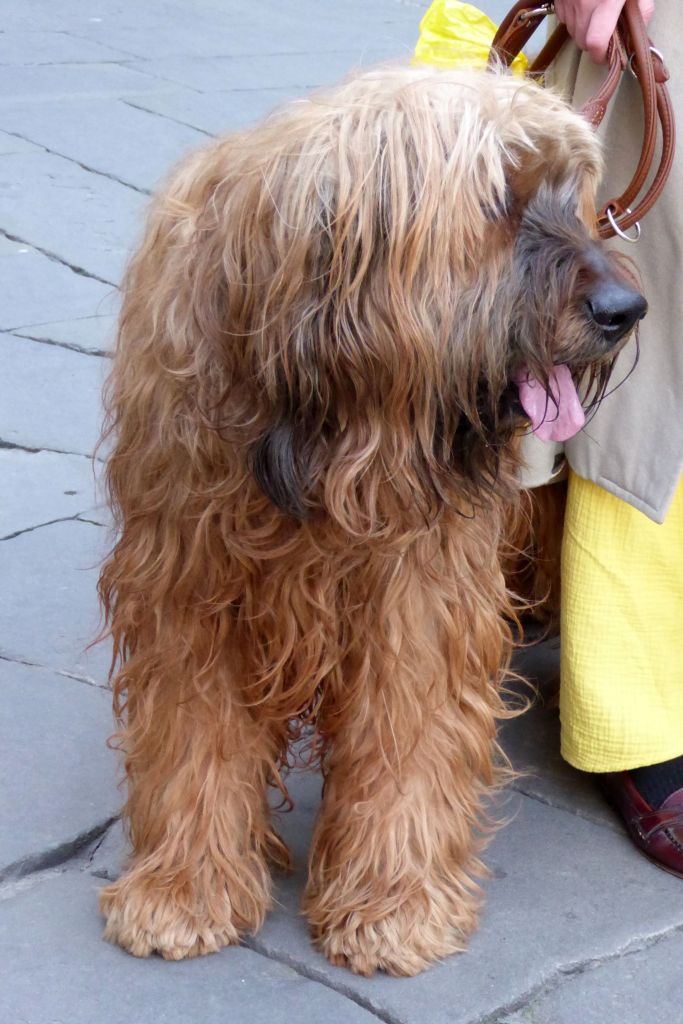
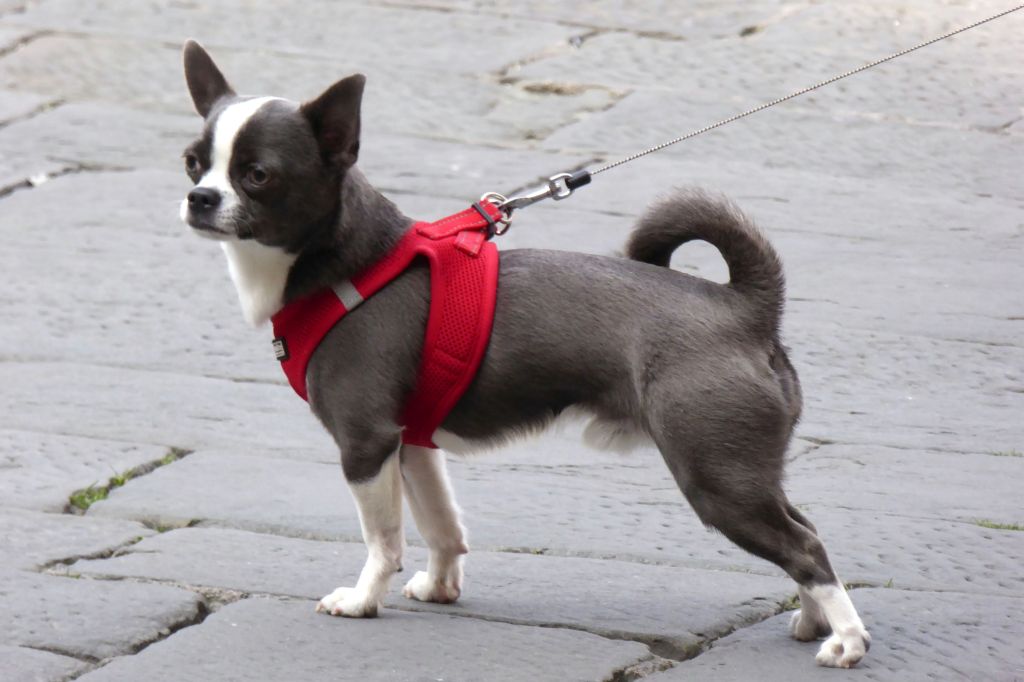
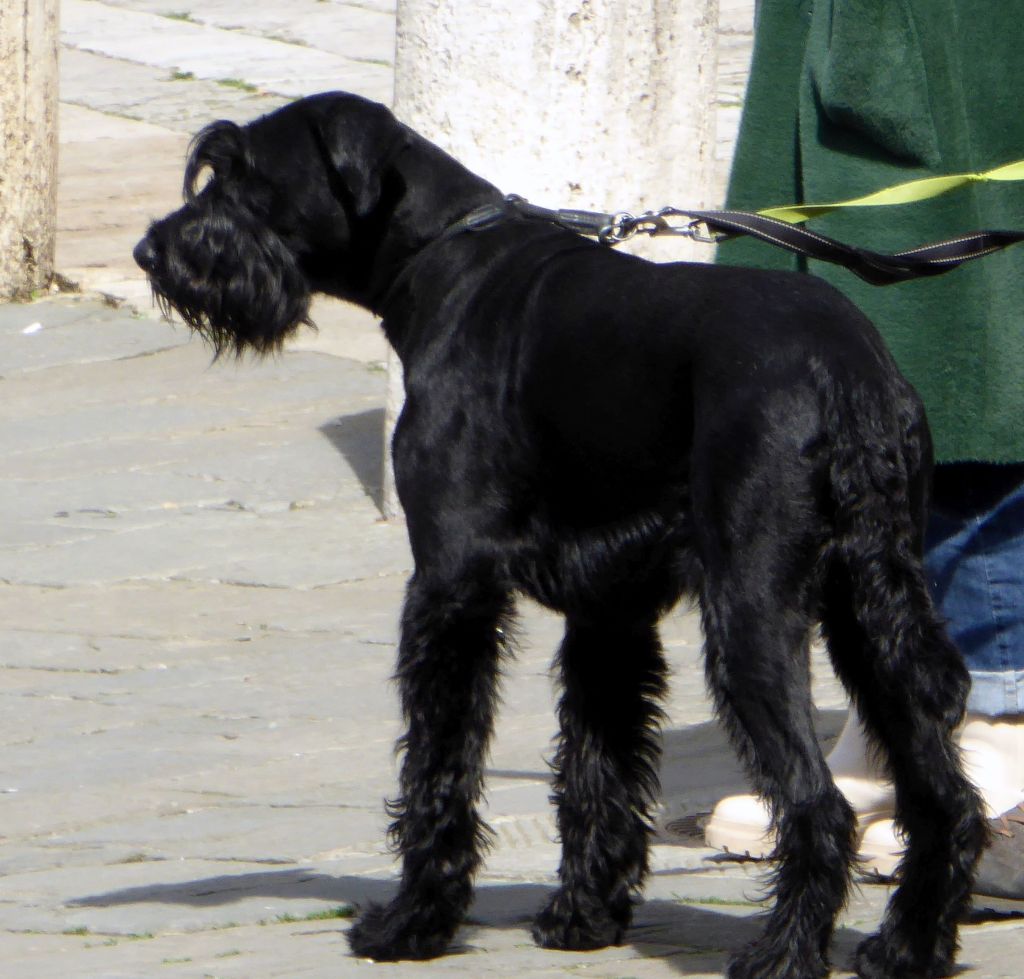
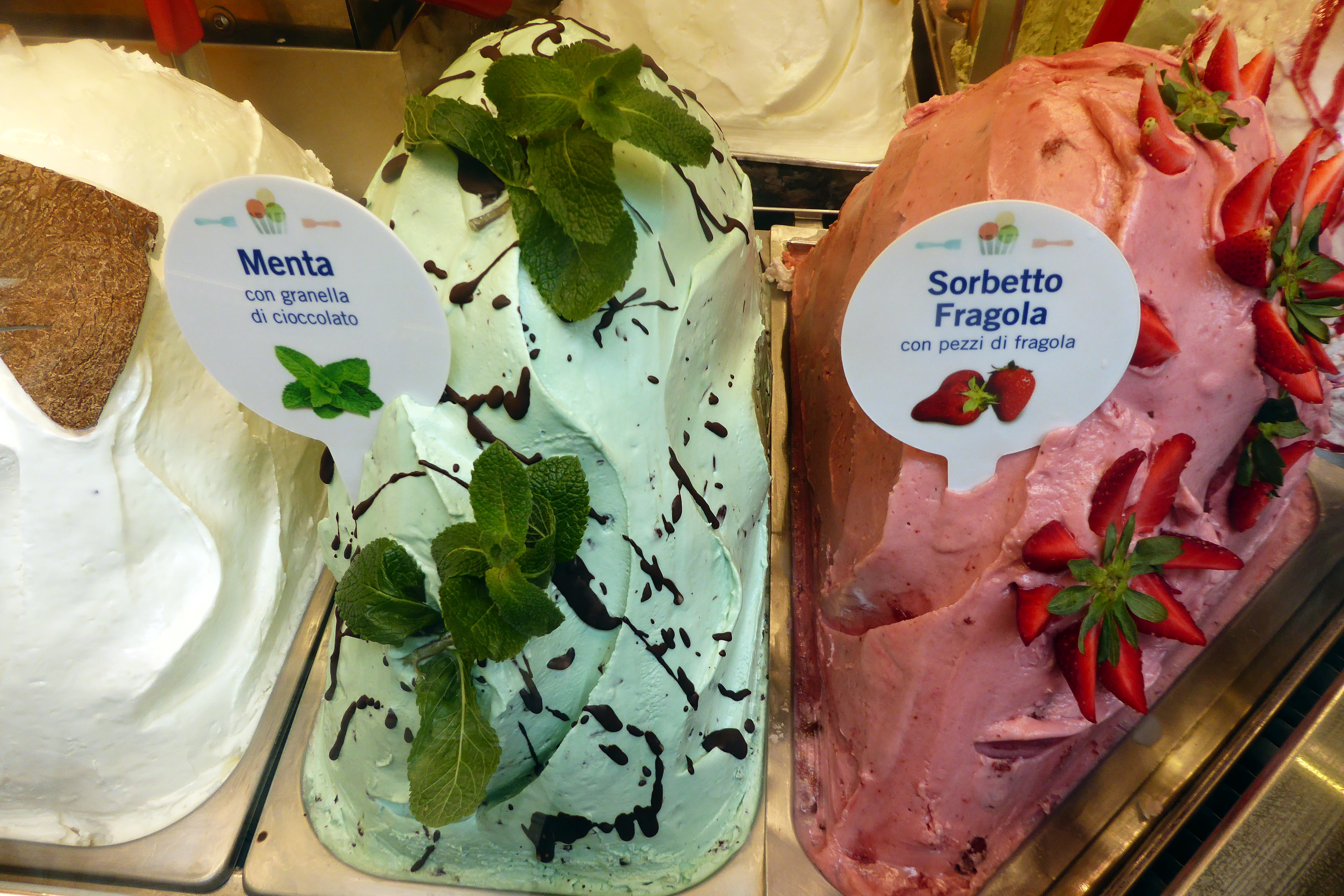
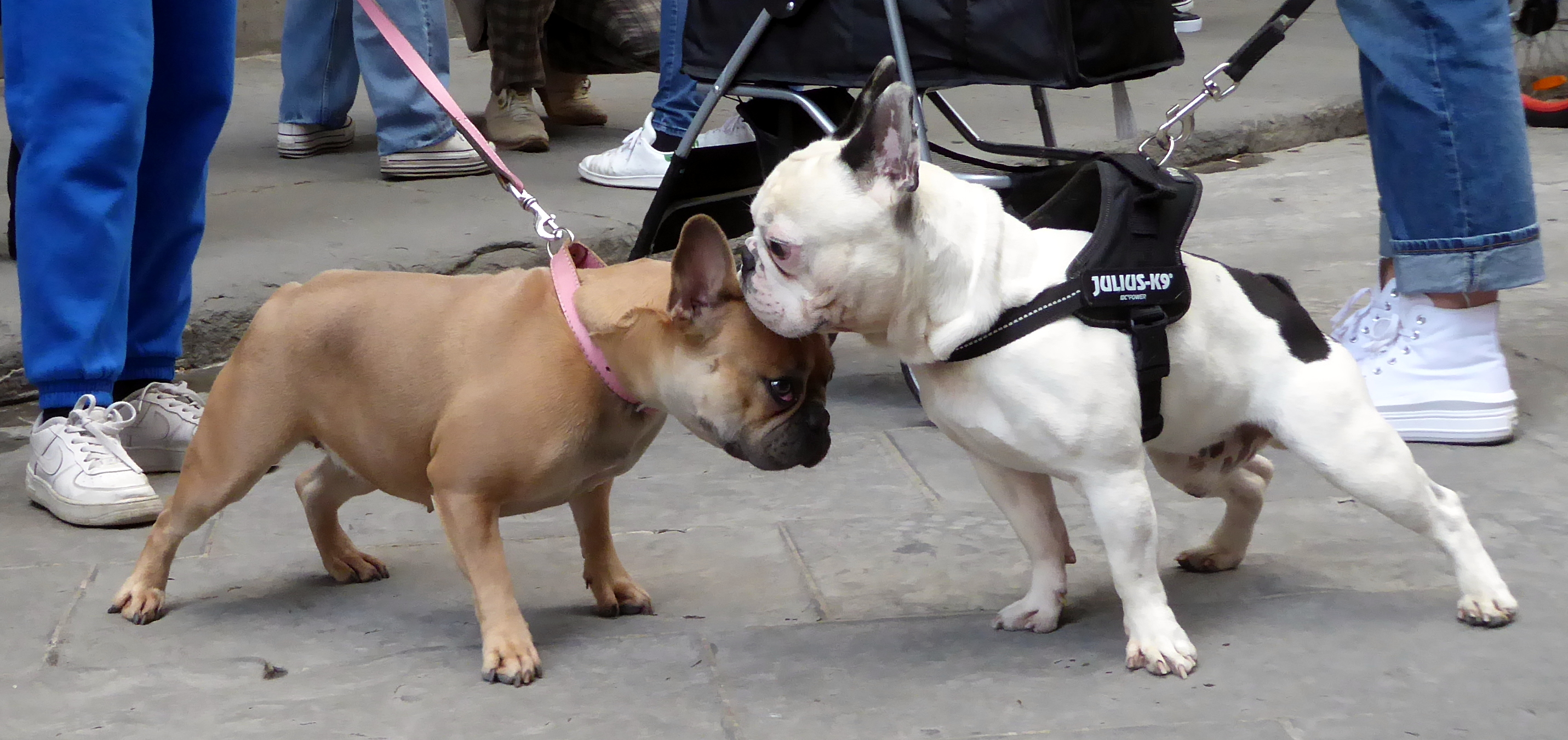
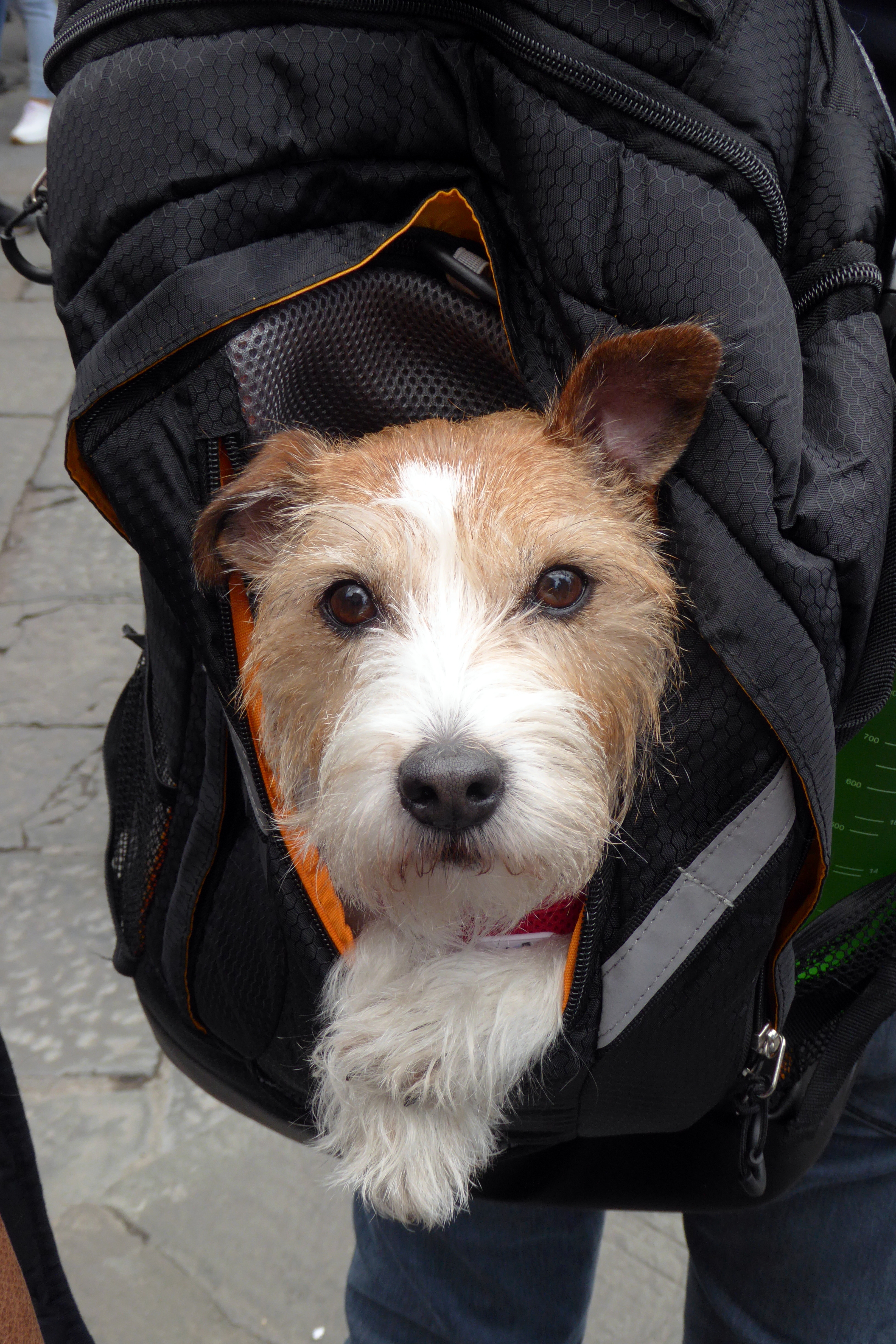
One thing I especially appreciated about touring with Overseas Adventure Travel was the free time allotted in each place for independent exploration.  We took advantage of this in Siena, opting to grab a pizza slice on the go rather than dine in a restaurant, so we could visit the cathedral and roam through a few contrade.  There was even time at the end to enjoy a gelato and watch the dogs walking their owners in the Piazza del Campo.

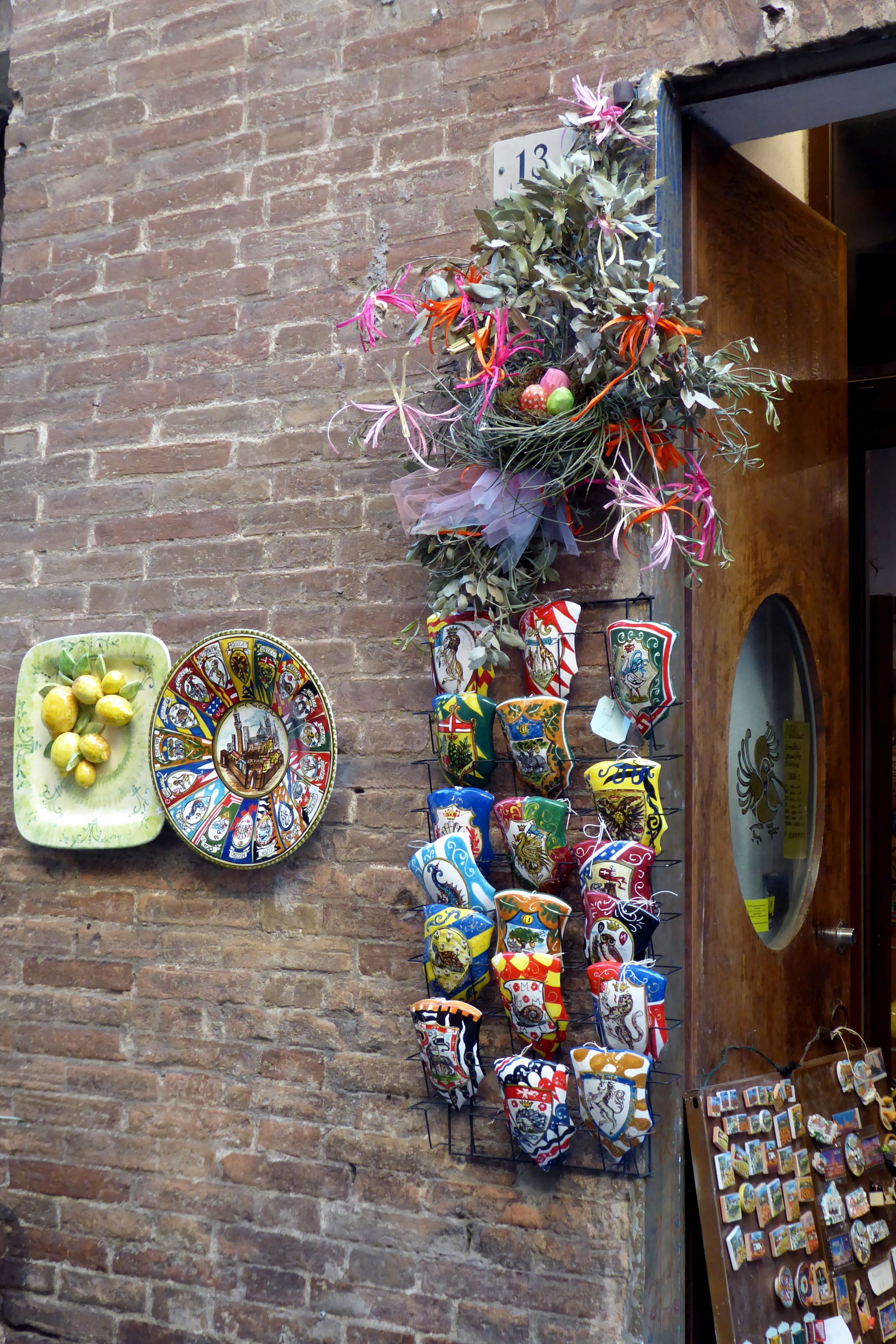
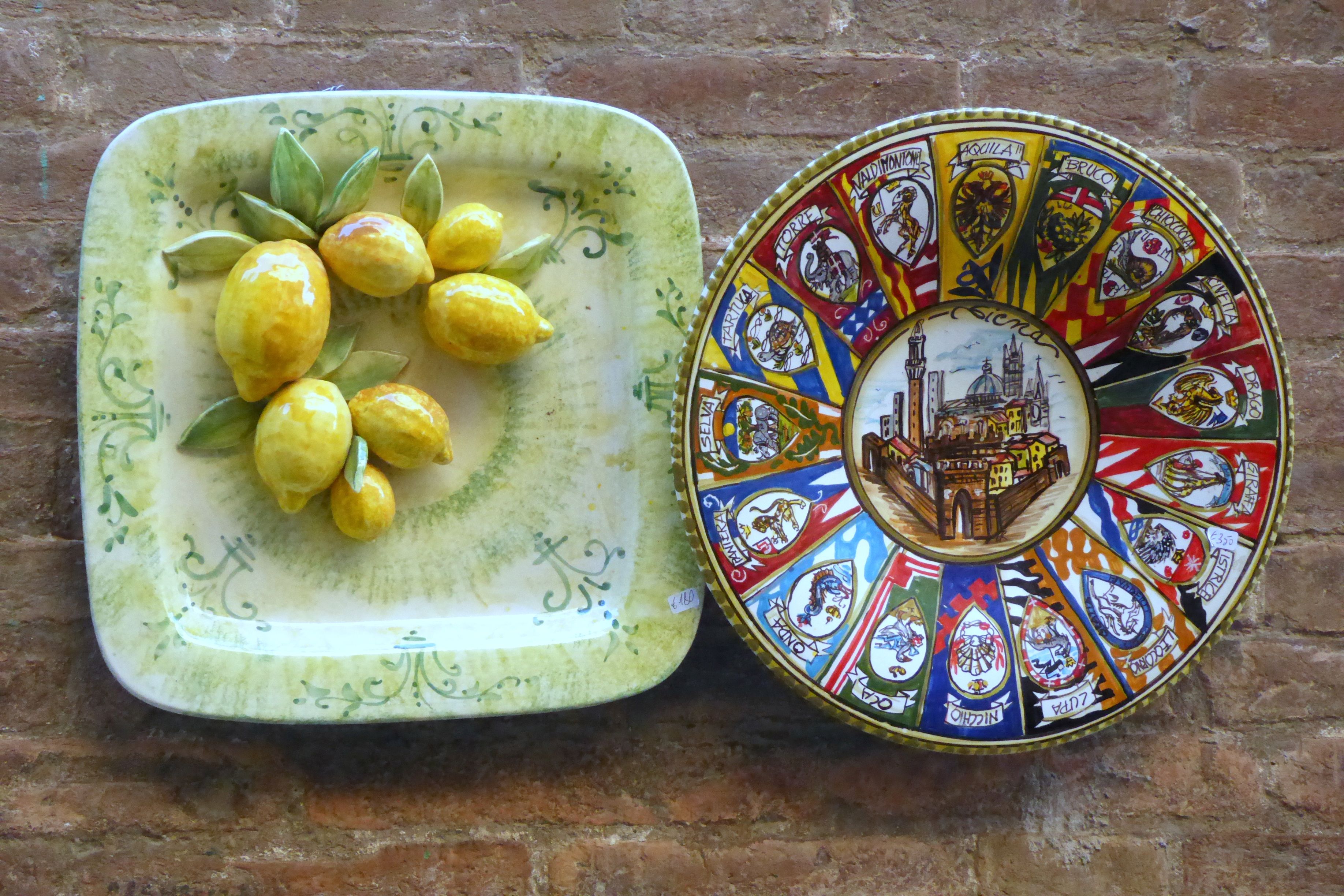
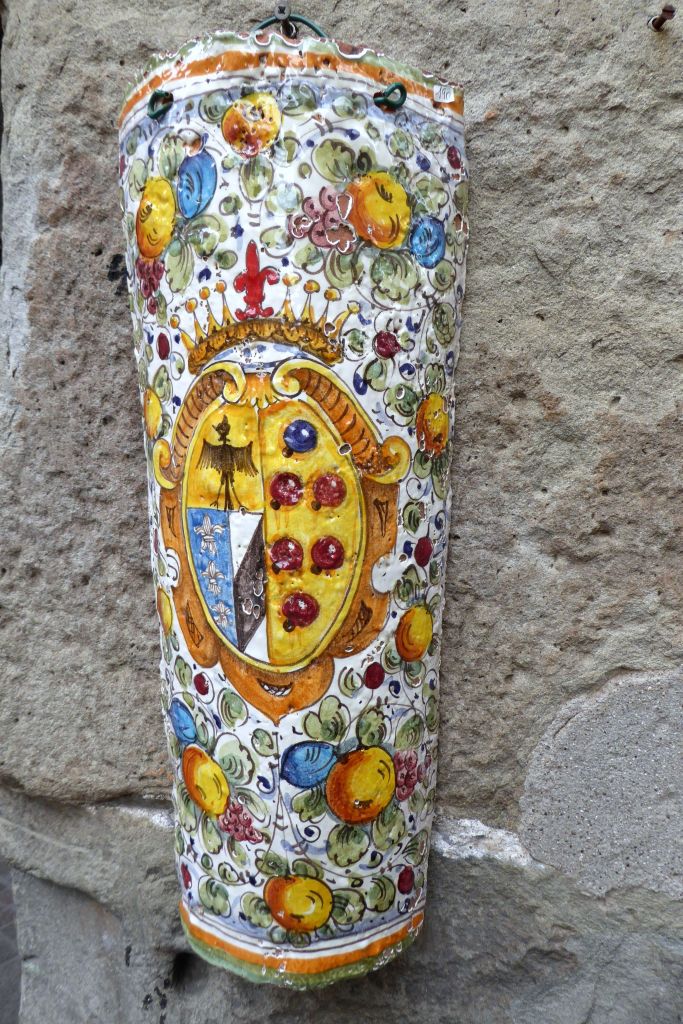
Shields representing each of the 17 contrade
The plate on the right depicts the 17 contrade
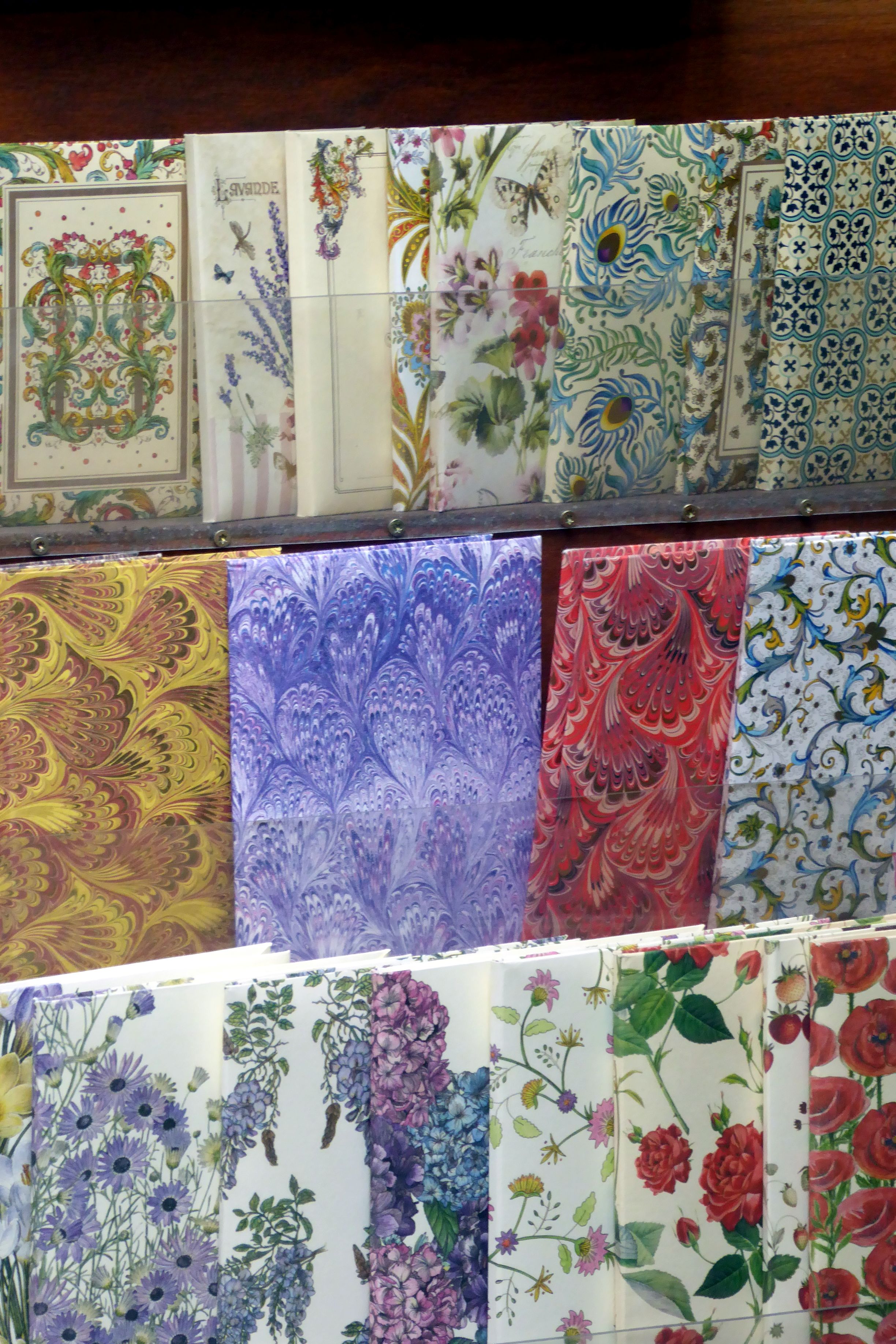
Italy is known for making beautiful paper.

Coming up next:  PICTURESQUE PIENZA

Note: If small group travel is of interest to you, I highly recommend Overseas Adventure Travel (OAT). Although Bruce and I travel together, they do not charge a single supplement for those who travel on their own. Singles also get their own room at hotels. If you book, you can get $100 off your trip by providing my name and customer number (Elaine Krugman, #3018126) as the person who referred you. I will also get $100 off future travel– a win-win!

ITALY #14: OLIVE OIL AND PASTA IN THE CHIANTI COUNTRYSIDE

As you have probably noticed throughout my past thirteen posts about Italy, food and wine has been prominently present in our Italian experience.  This day was no different; it was all about olive oil and pasta.

The day began with a visit to Pruneti, an award-winning producer of organic extra-virgin olive oil.  Before tasting their olive oils, we were given a tour and shown how the olives are processed.

(For all pictures, click on the image to see full screen view.)
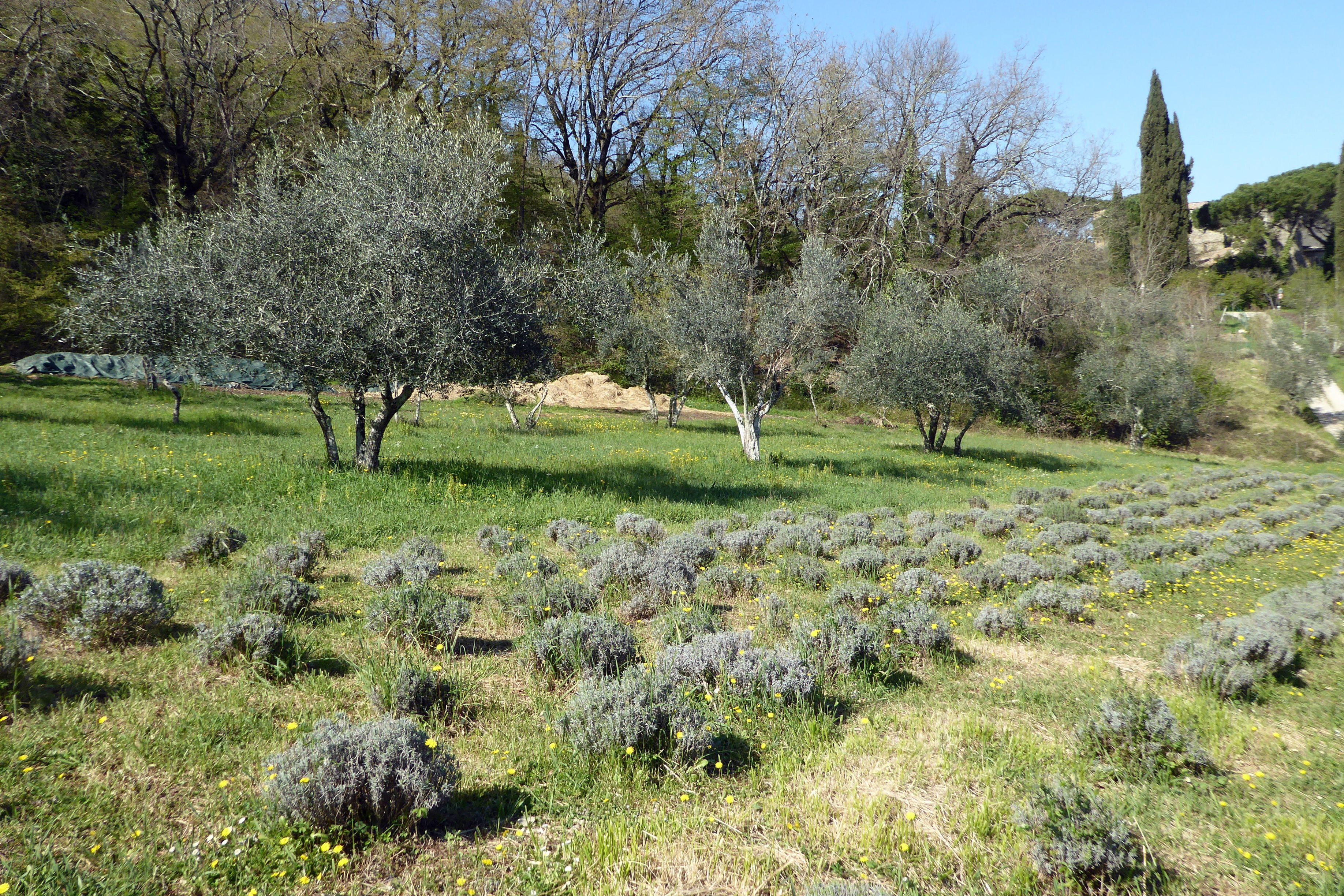
Some of the finest extra virgin olive oil in the world come from the Chianti region of Tuscany where Pruneti is located.  Having been in business for the past 150 years, they have figured out how to produce the best.  They are the only producer in the Chianti region that controls the entire olive-to-bottle process.  Their 3,500 trees produce about 70,000 liters of olive oil each fall. 

When you are shopping for olive oil, don’t be fooled by “Extra Virgin” on the label by assuming its good quality.  As our guide explained, labels do not indicate quality, because there is no industry regulation of label information.  Poor-quality olive oil has solvents in it, and unfiltered oil will age quicker.

If the label has “DOP” and “ICG” stamps on it, the oil has been inspected and certified that it is not a fake and comes from the Chianti region.  It still, however, does not indicate the taste quality.  The only way to make that determination is to smell and taste it.

For the best quality, the oil should not be kept any longer than eighteen months from when it was bottled, and it should not be stored in the refrigerator.  Store it in a dark, cool place instead. 

The oil should also smell fresh of vegetation and cut grass; and, not taste bitter.  If the oil tastes spicy, like black pepper, it is good quality oil and good for cooking.  Spiciness indicates the best quality; use the spiciest oil for heavier food, such as red meat, and lighter oil for lighter food, such as seafood.

Our guide also added that we shouldn’t waste good-quality oil by mixing it with balsamic vinegar for dipping in bread or on salads.  As a former bartender (years ago!), I would compare that to mixing top-shelf liquor with Coke or Sprite! 

A suggestion:  Use an affordable basic extra virgin olive oil for cooking, and a better-quality olive oil as a finishing oil to drizzle on top of your prepared dish.  Keep smaller bottles on hand to match with different types of food.  (In the U.S.A., a liter of olive oil priced around $25 is one, we were told, you can trust to be good quality.)

Back to that term, “Extra Virgin,” that means it’s the first pressing of olives with no added chemicals, usually cold pressed.  Pruneti picks their olives by hand, and then presses them within four hours of picking.  (Poor-quality oil is pressed 2-4 weeks after picking.)  The entire olive is pressed, and a centrifuge is used to separate the liquids from solids.  Another centrifuge then separates the oil from water and filters it—an important step, because unfiltered oil can ferment due to the sugars in water.

In earlier years, stone presses were used, but not any longer.  Over the past 50 years, the production process has changed dramatically.  Only machines are used now, because stone presses produce poor-quality oil.

The total process from beginning to end only takes about 35 minutes.  Quickness is the key to the best-quality oil.

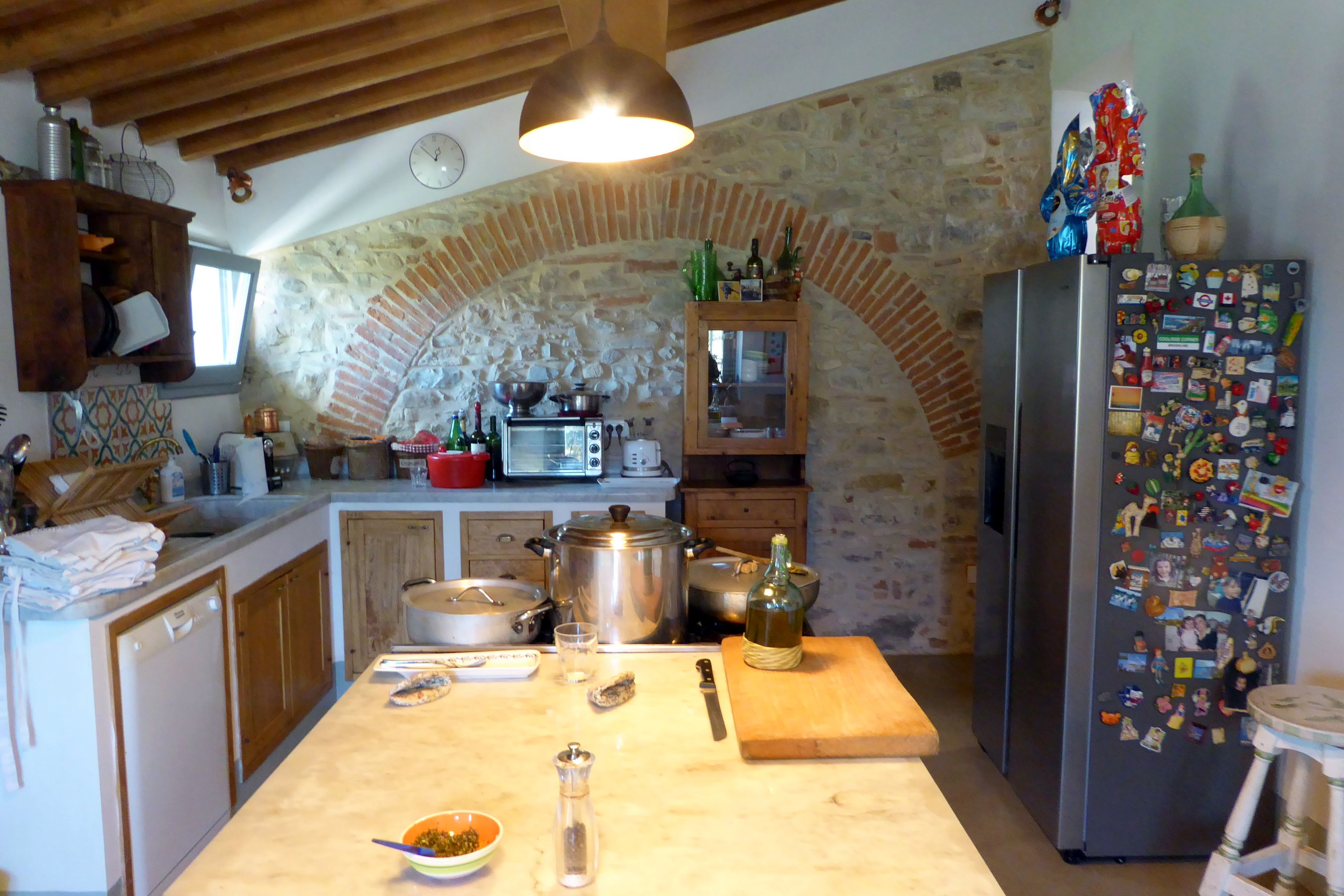
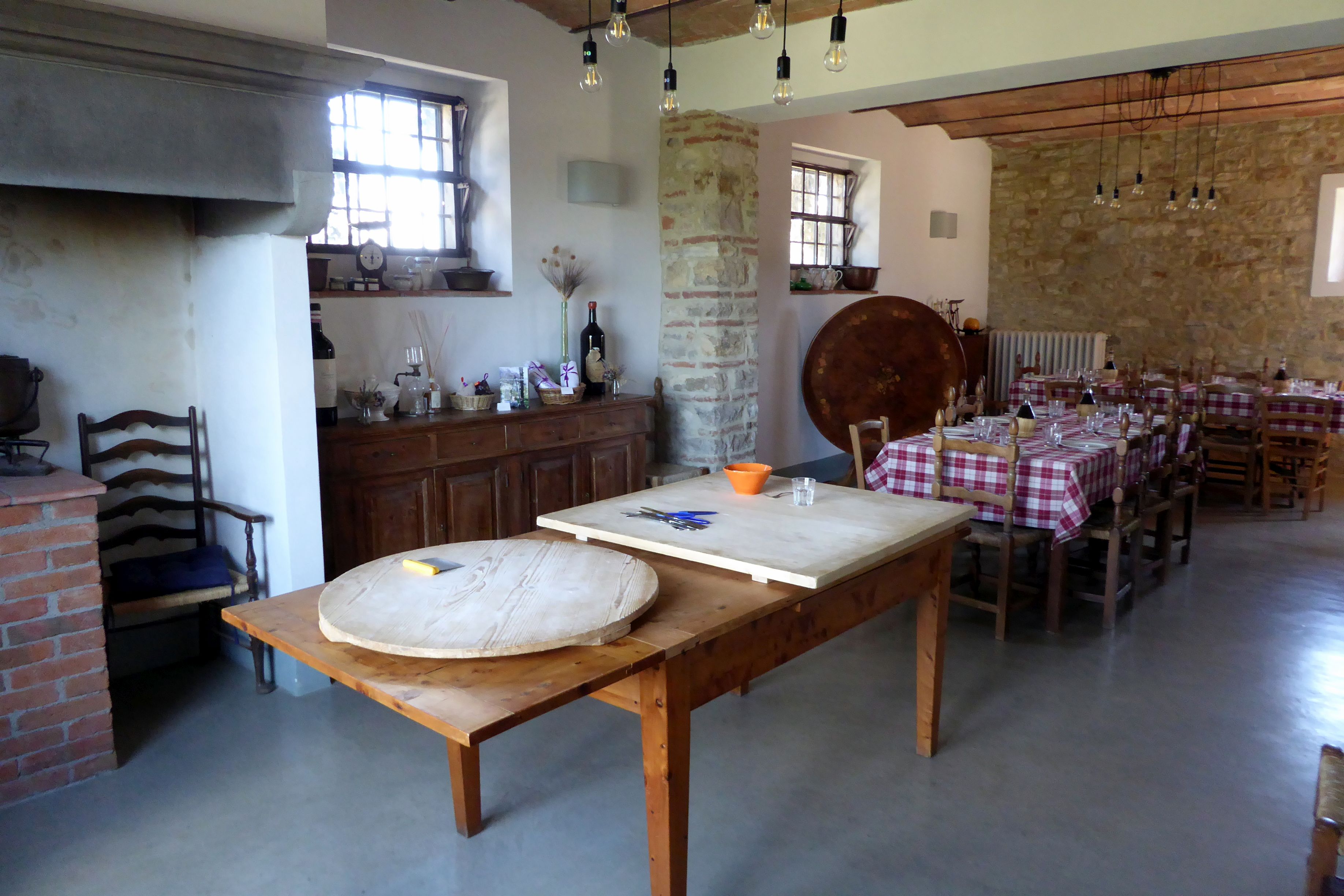
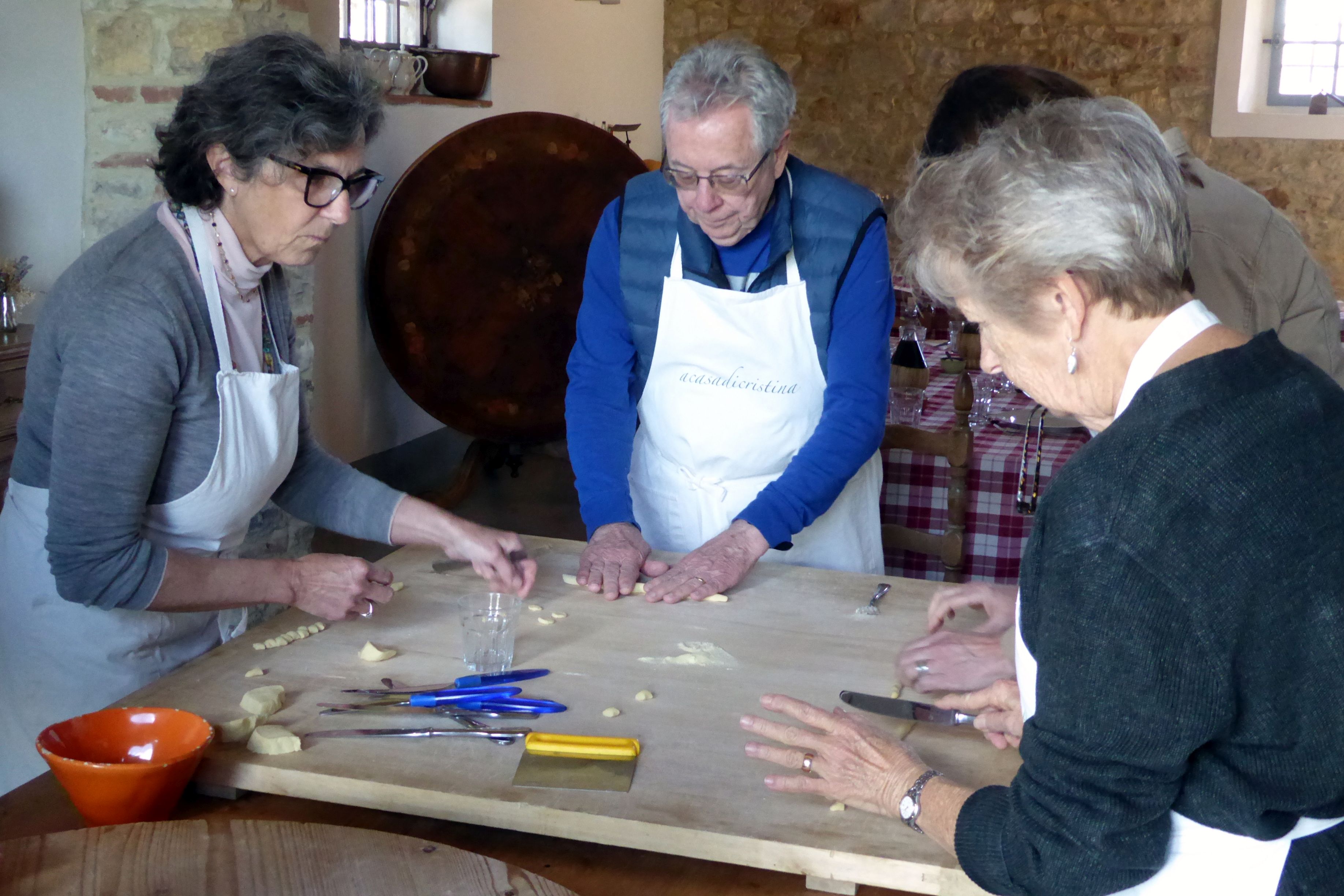
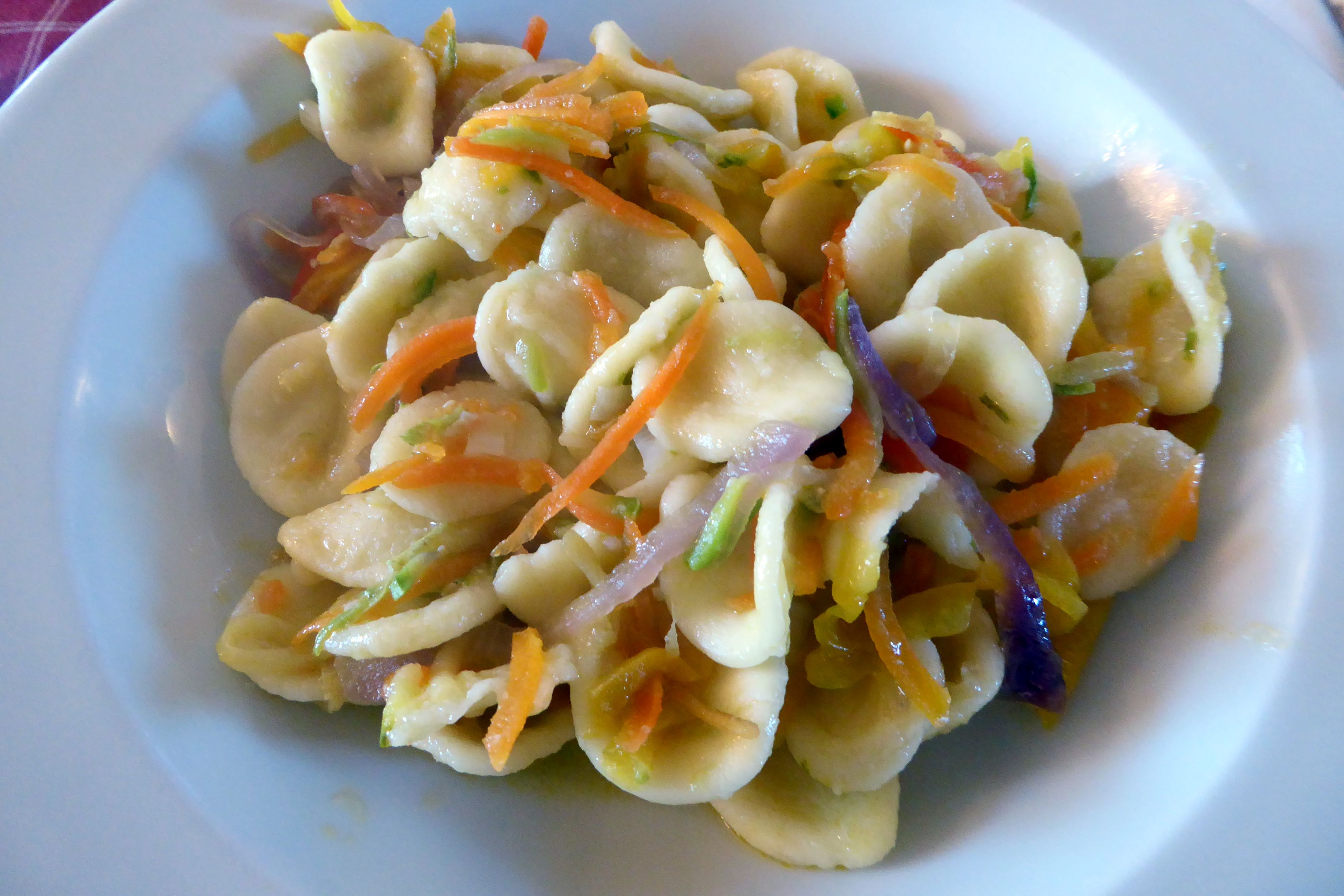
Following our olive oil tasting, the group visited Cristina and her husband’s beautiful 1,000-year-old home in the Chianti countryside, for a cooking class and lunch. We first gathered on the terrace for a glass of Prosecco and bruschetta before moving to the kitchen to prepare lunch and learn how to make pasta.  To be perfectly honest, Bruce jumped right in while I just watched and took pictures. 

Lunch was fabulous, and the experience was a lot of fun!

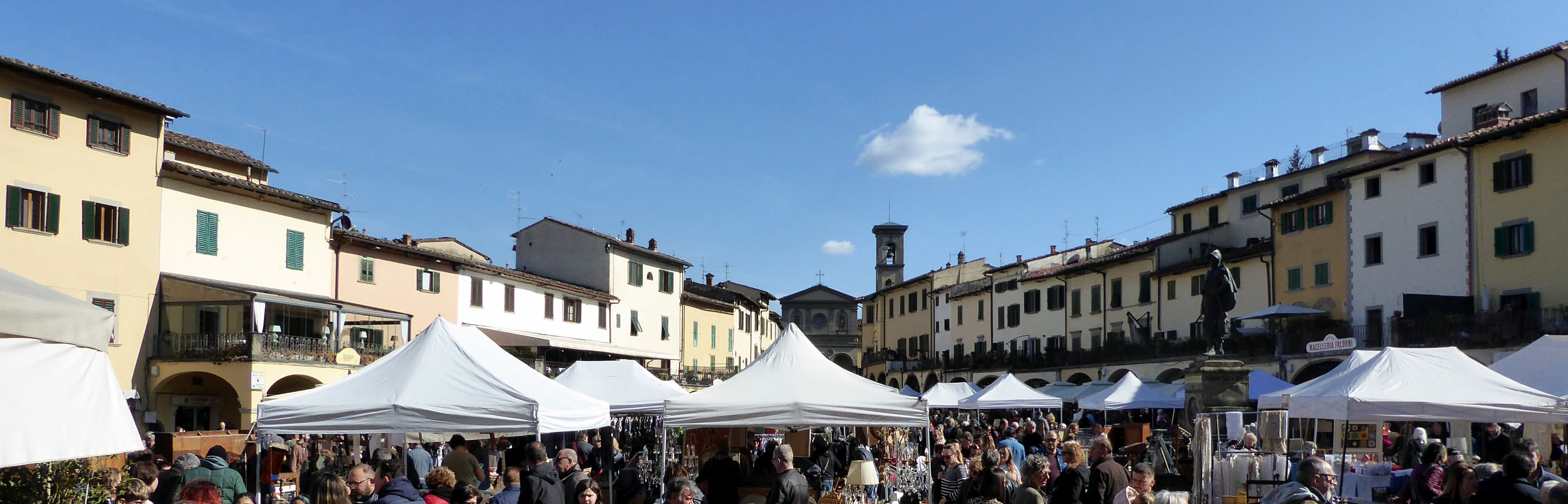
Later in the afternoon, we visited the town of Greve, headquarters of the Chianti region for wine festivals.  On the day we were there, antiques and crafts were the feature of the day’s festival, instead.

We enjoyed exploring the town center, and it was wonderful being surrounded by locals—or at least Italians—rather than tourists, as we were in Florence.  Being in Greve was an authentically Italian experience, which I appreciated!

Coming up (later in the month): The Scenic Streets of Sienna

Note: If small group travel is of interest to you, I highly recommend Overseas Adventure Travel (OAT). Although Bruce and I travel together, they do not charge a single supplement for those who travel on their own. Singles also get their own room at hotels. If you book, you can get $100 off your trip by providing my name and customer number (Elaine Krugman, #3018126) as the person who referred you. I will also get $100 off future travel– a win-win!

ITALY #13: CHIANTI COUNTRYSIDE

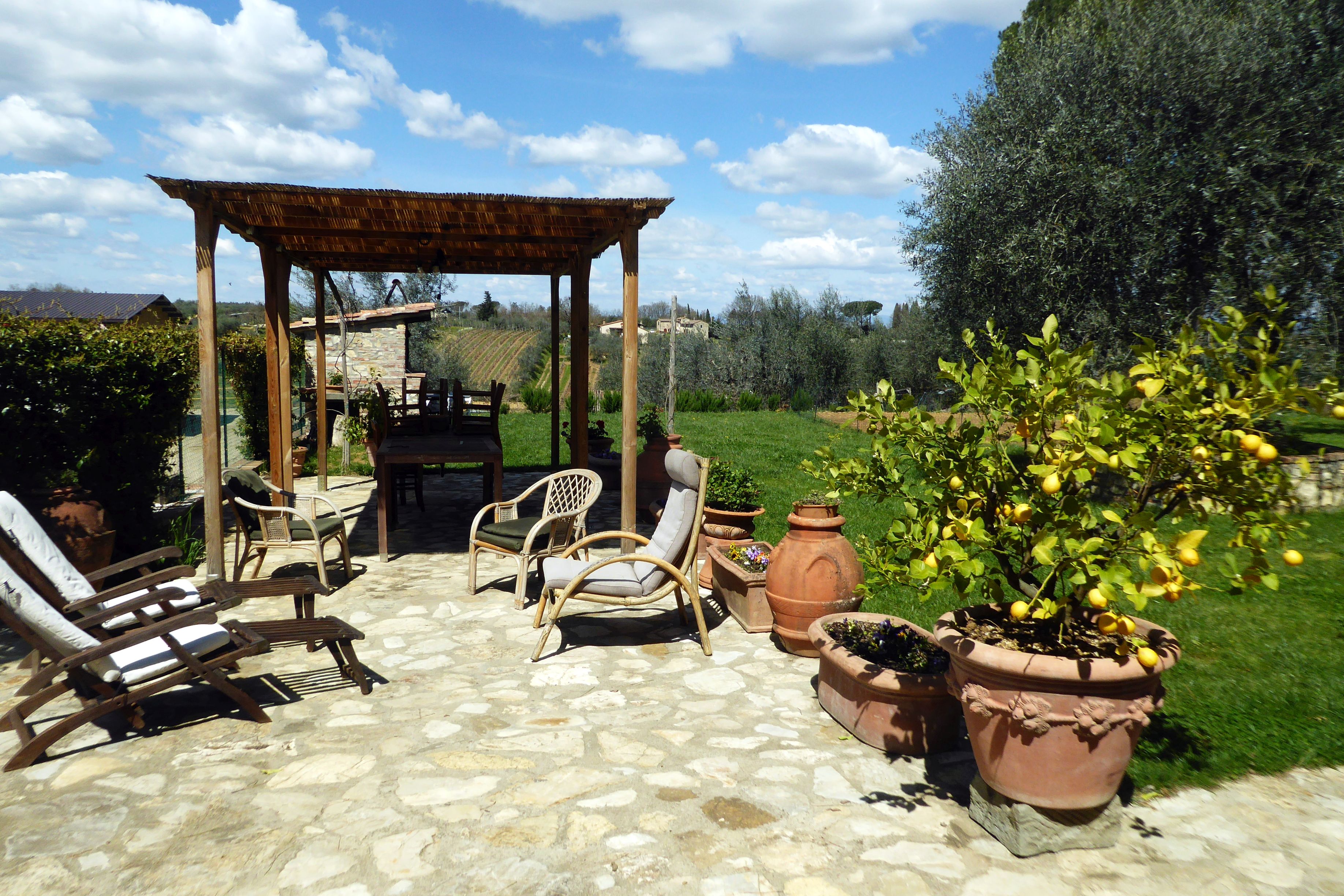
Chianti is a mountainous area of Tuscany known for its world-class wine production, cured meats, cheeses, and fine cuisine.  Florence, where we spent much of the day (shown in my previous post, Italy #12), is located in Chianti.  After we departed Florence, we headed out into the countryside towards our home for the next three nights, Villa Il Leccio

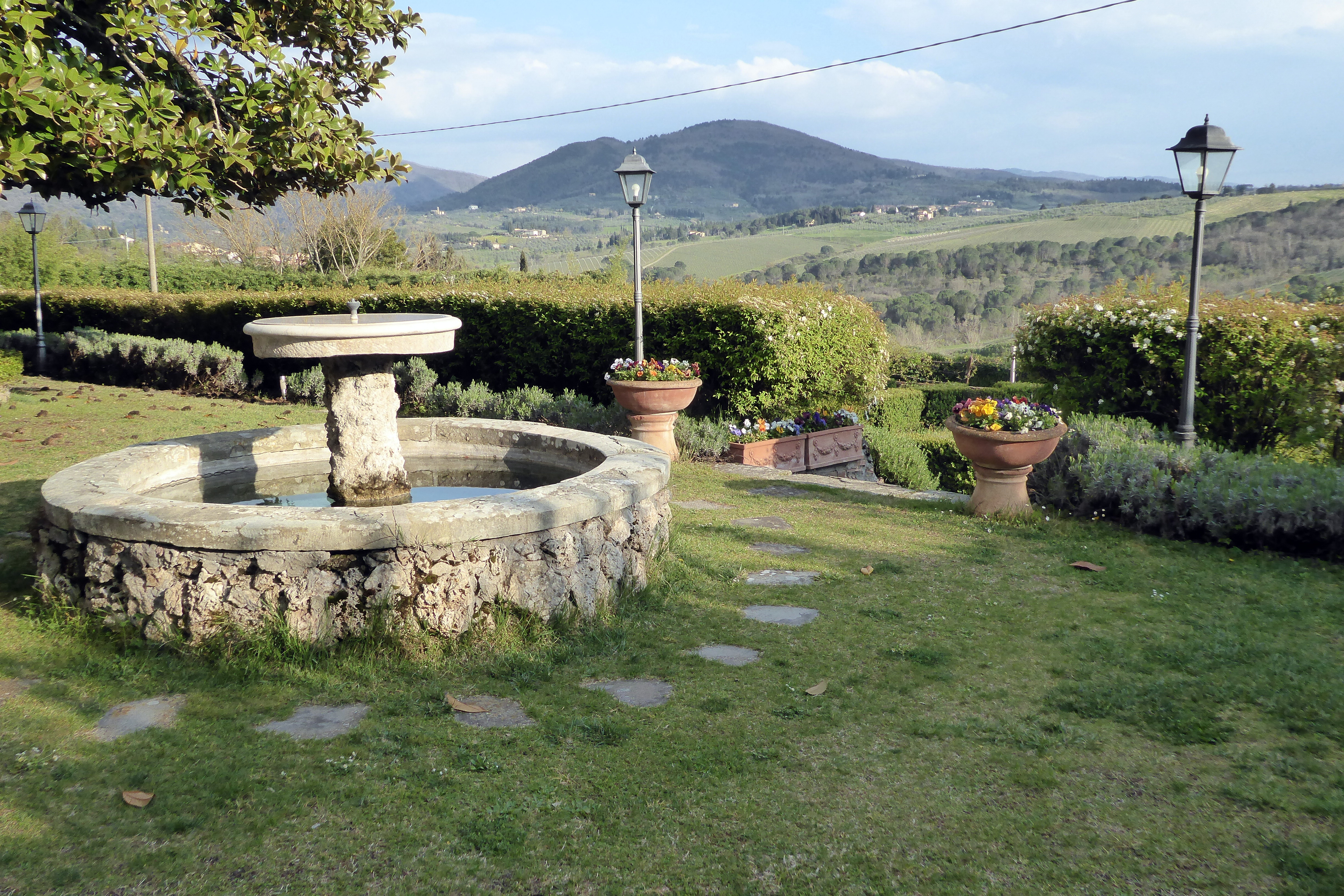
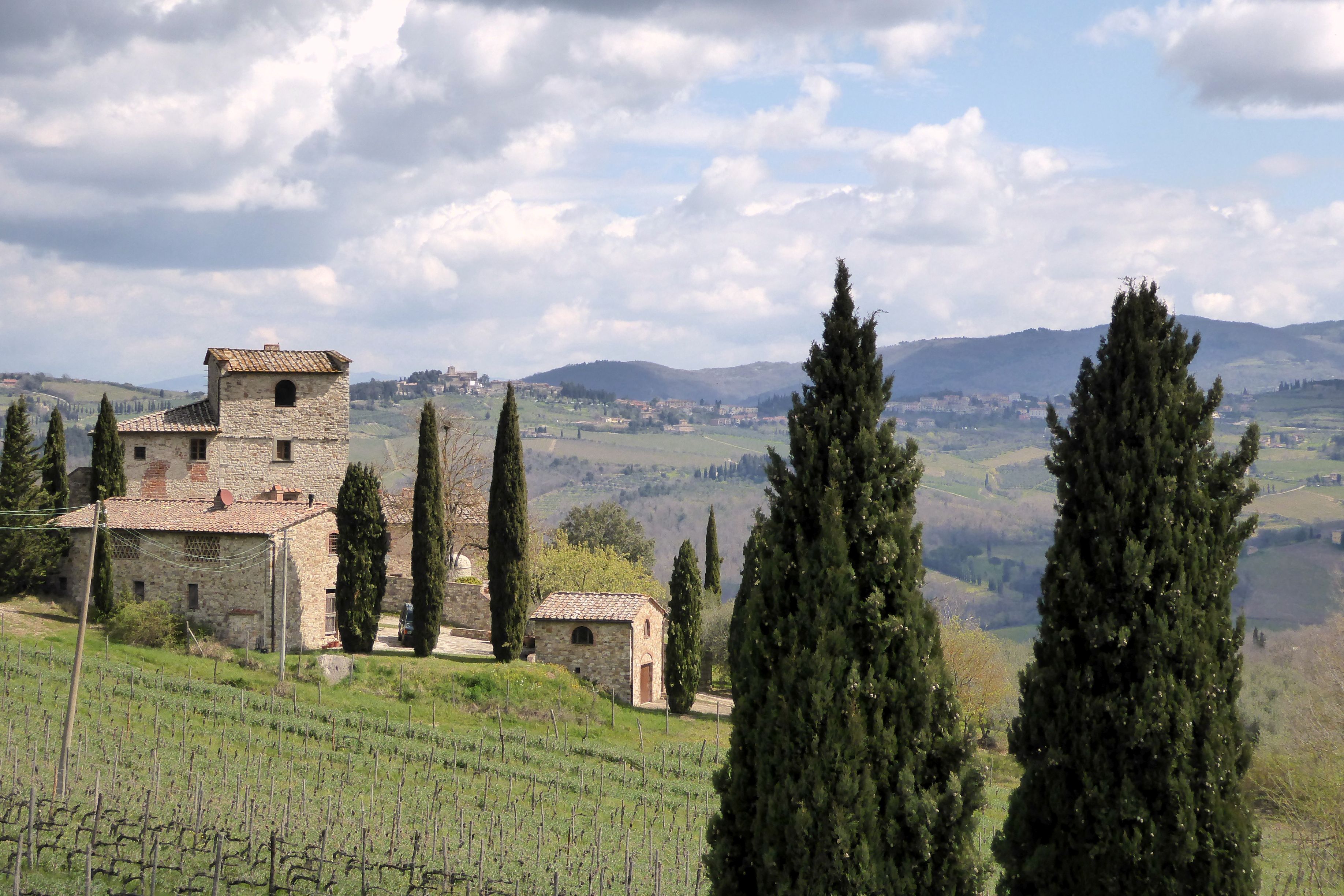
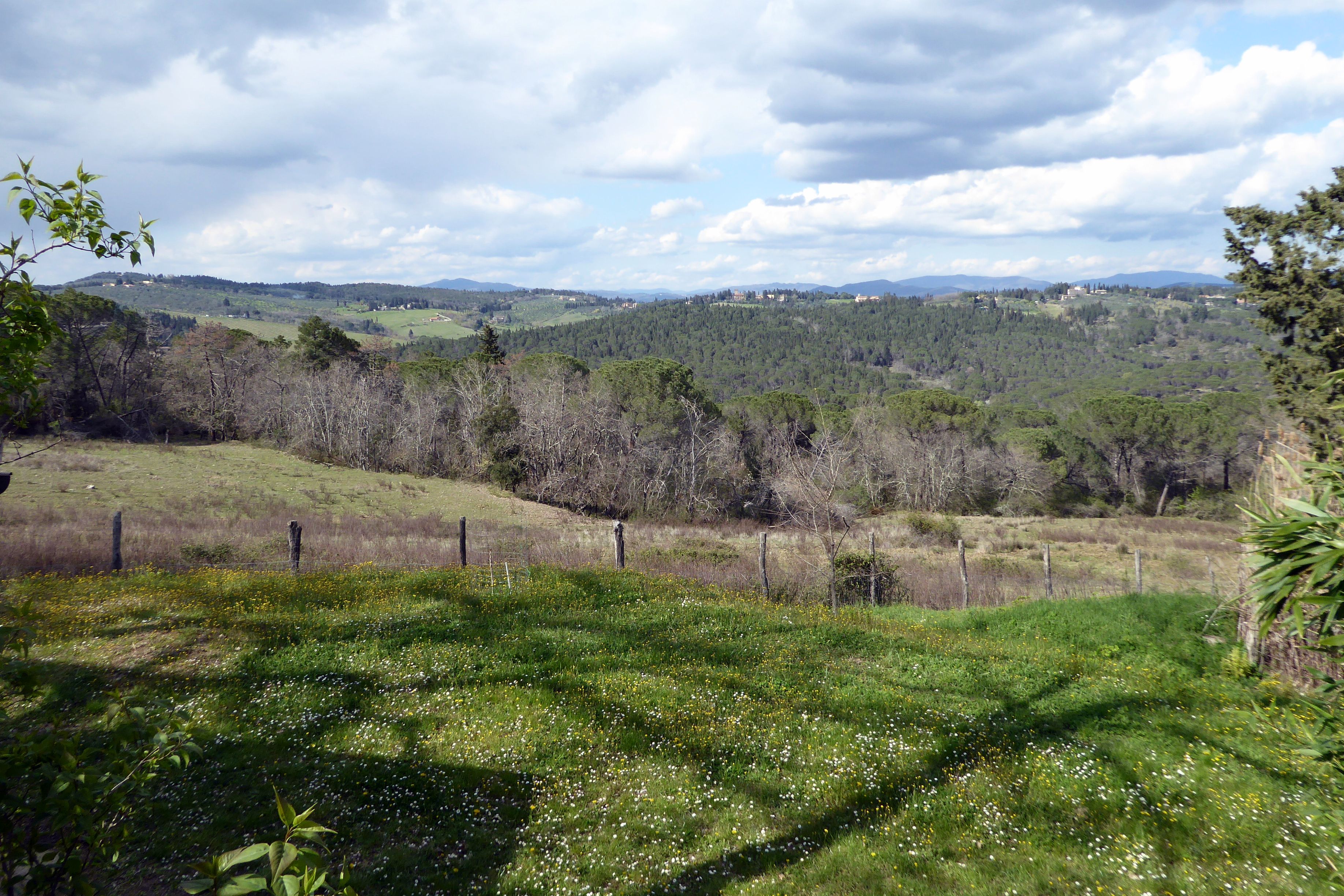
The Chianti countryside is beautiful—rolling green hills, vineyards, and scenic vistas around every turn.  When we arrived at Villa Il Leccio, we were delighted to see that the views were stunning, and the villa was gorgeous.

Giada, the owner, and her nephew, welcomed us warmly.  After we settled in, we were gathered on the terrace for a champagne reception, followed by a guided tour.

The villa has been in Giada’s family for 300 years; however, the building dates back to the 1200’s.  When the Landi family purchased the villa in the eighteenth century, they used it as a country residence where the family gathered in the summer.

In the 1800’s, the land was cultivated into a prosperous farm.  The villa was then converted by Giada’s mother into a country resort in 1998.

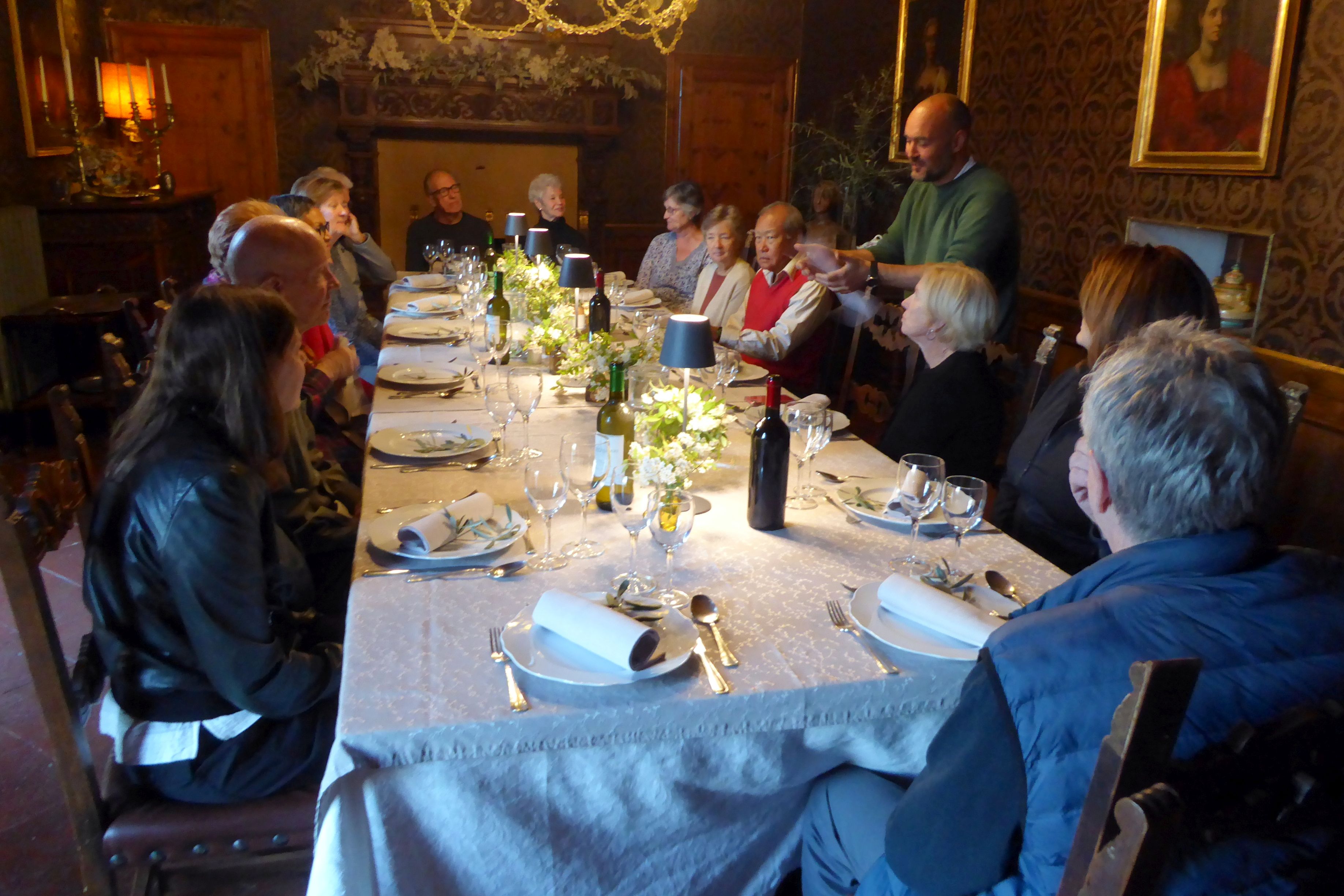
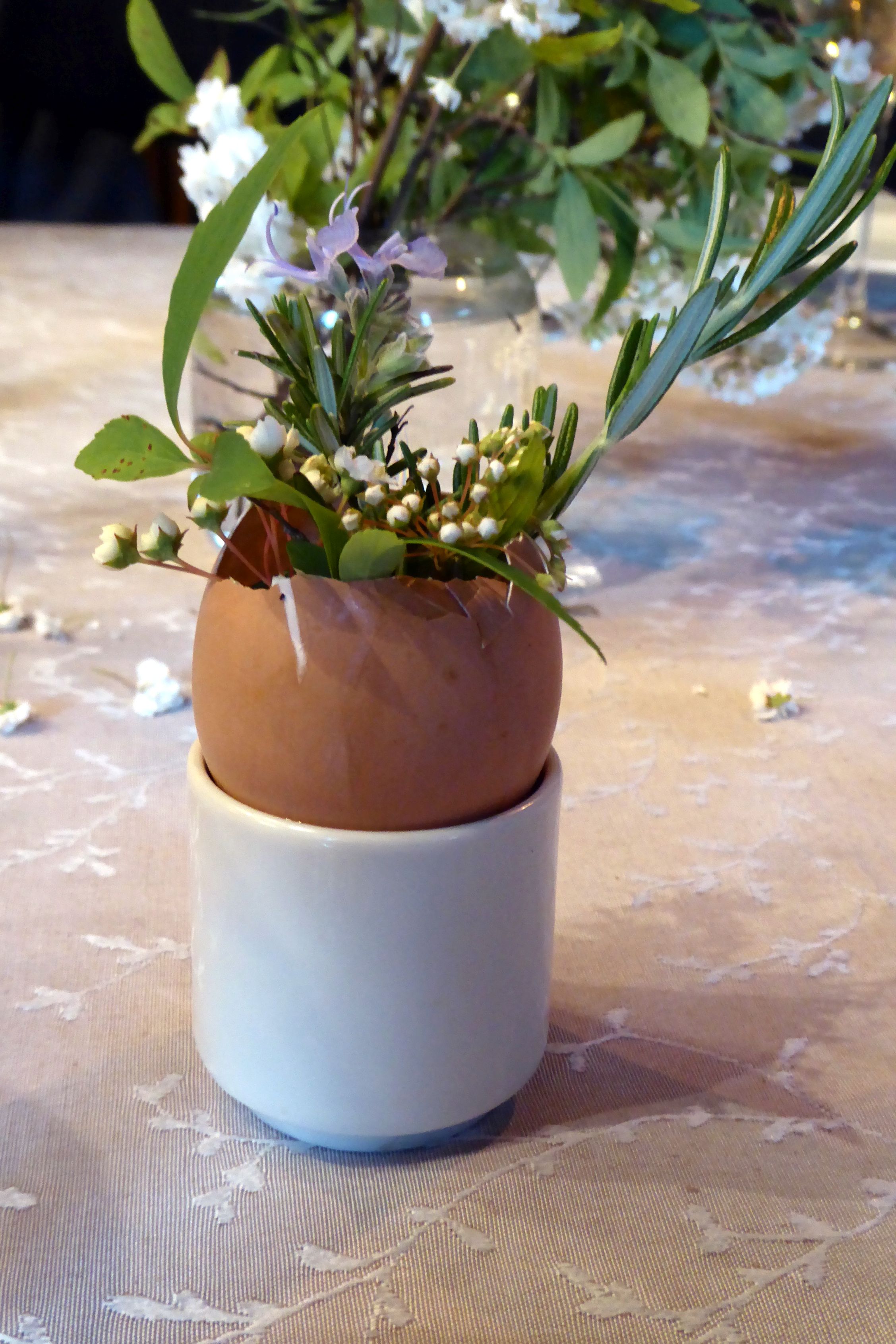
Villa Il Leccio is the most charming place we have ever stayed, and meals there were memorable. Breakfasts and dinners were prepared by Giada and served by her nephew.  In the morning, there was a beautiful display of a variety of breads and cakes, along with hot dishes, fruit, cereals, and fresh juices.  Dinner was a three-course meal, accompanied by Villa Il Leccio private label wine.  The dining room was beautiful at night and the table décor included fresh cuttings from the garden where they grow all their own flowers, herbs, and vegetables. 

My pictures don’t do it justice, but these are the photos I shot during our stay:

(For all pictures, click on the image to see full screen view.)
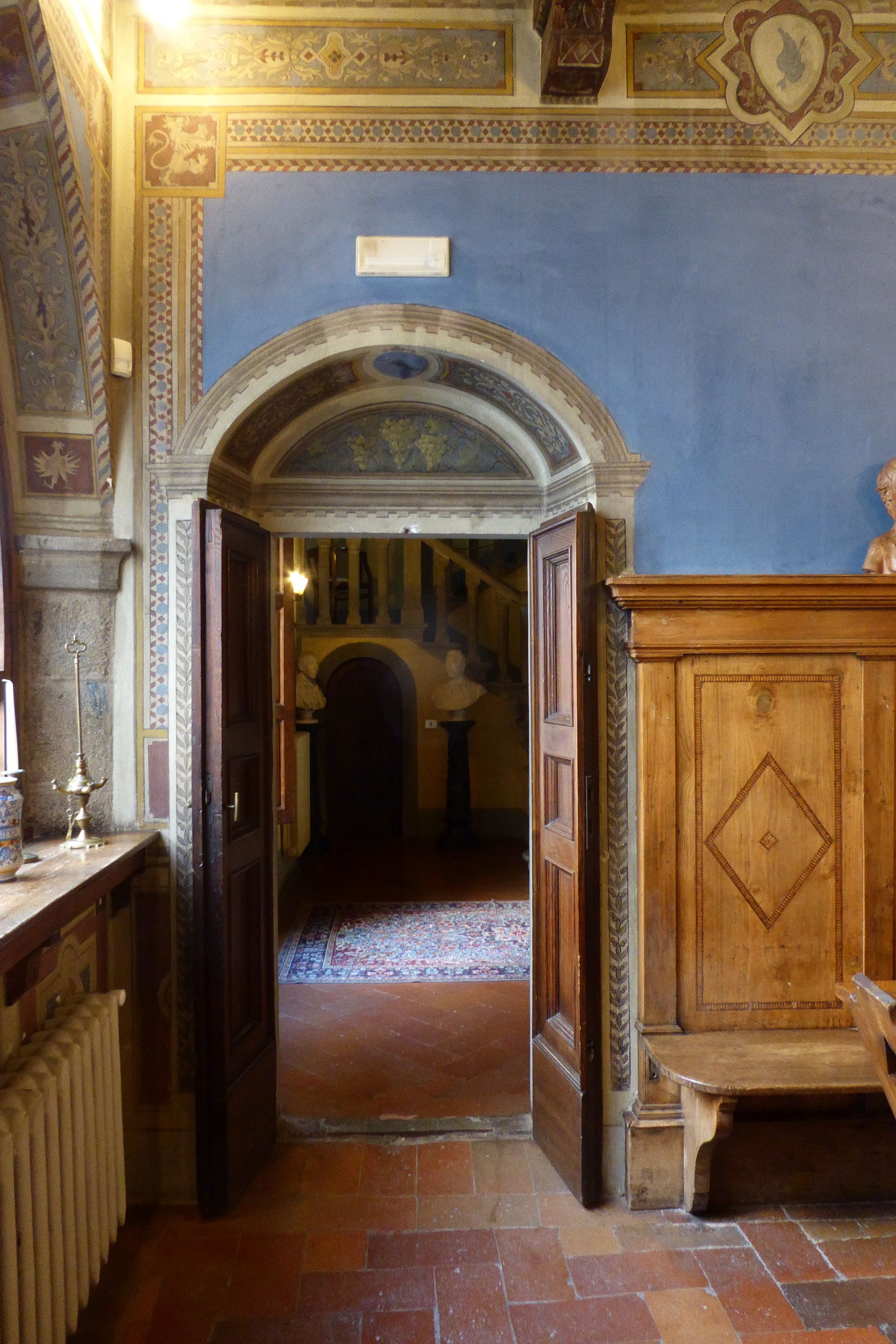
This room was added on in the 1700’s, and these frescoes were painted at that time.
The frescoes in the breakfast room date back to the 1500’s.
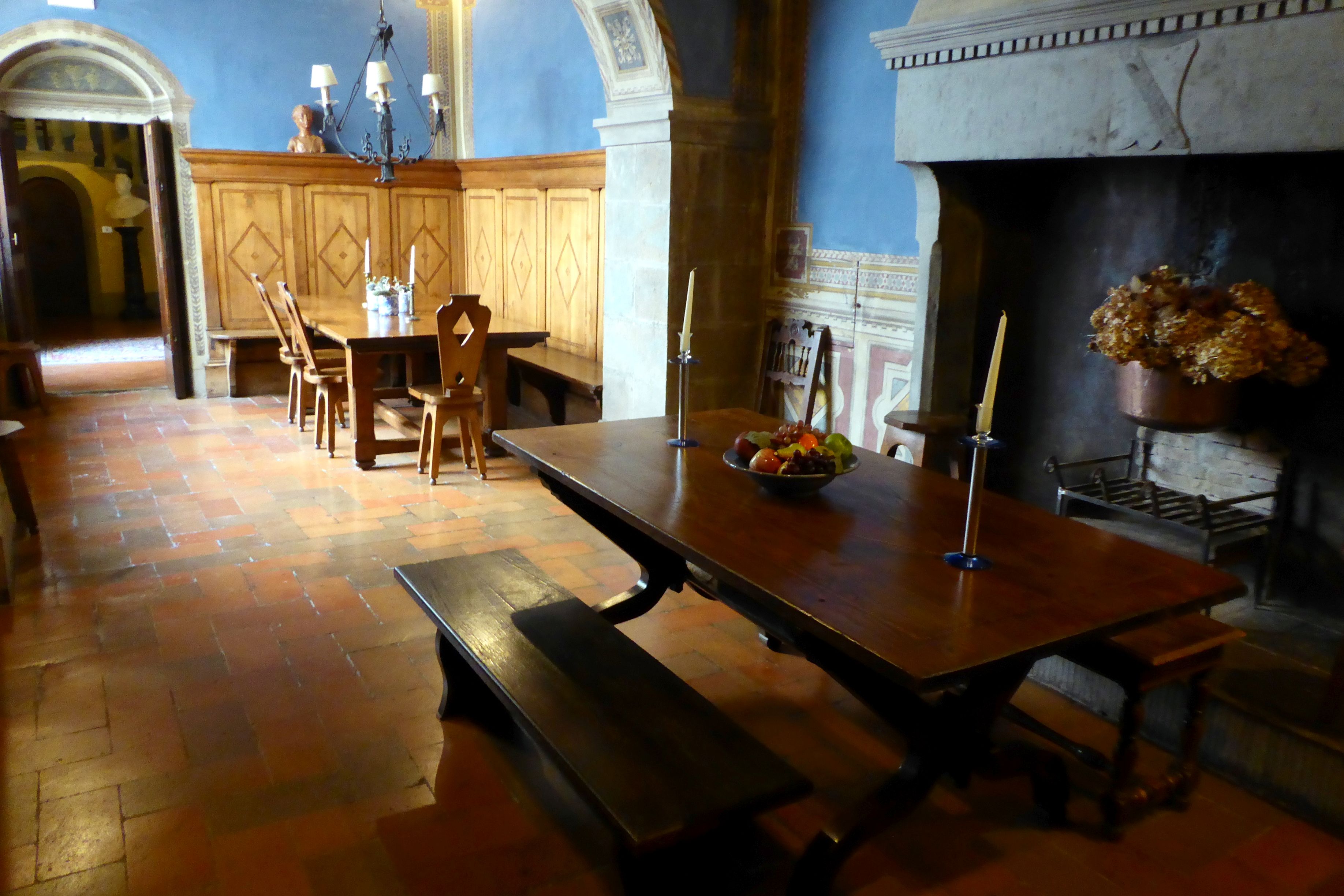
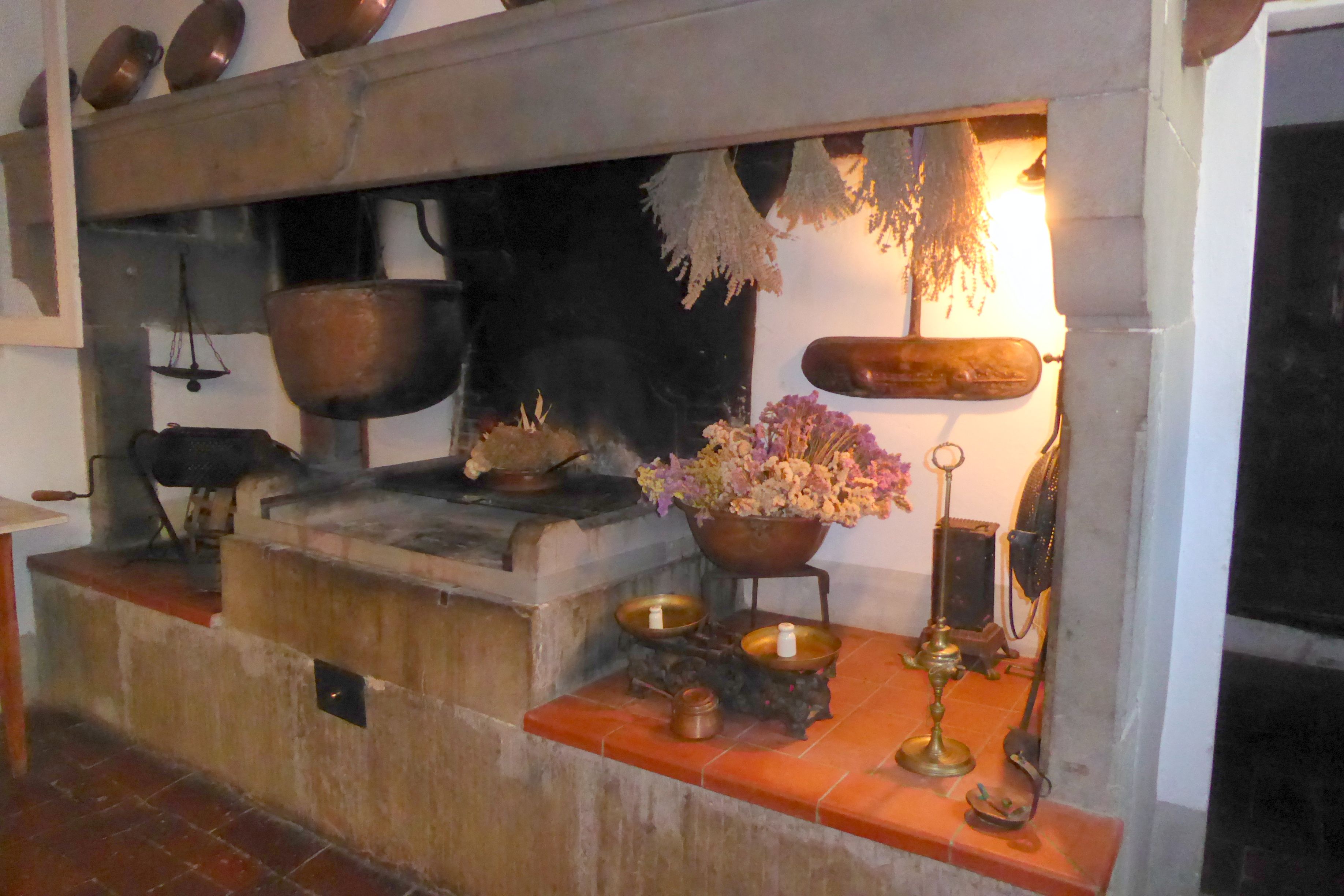
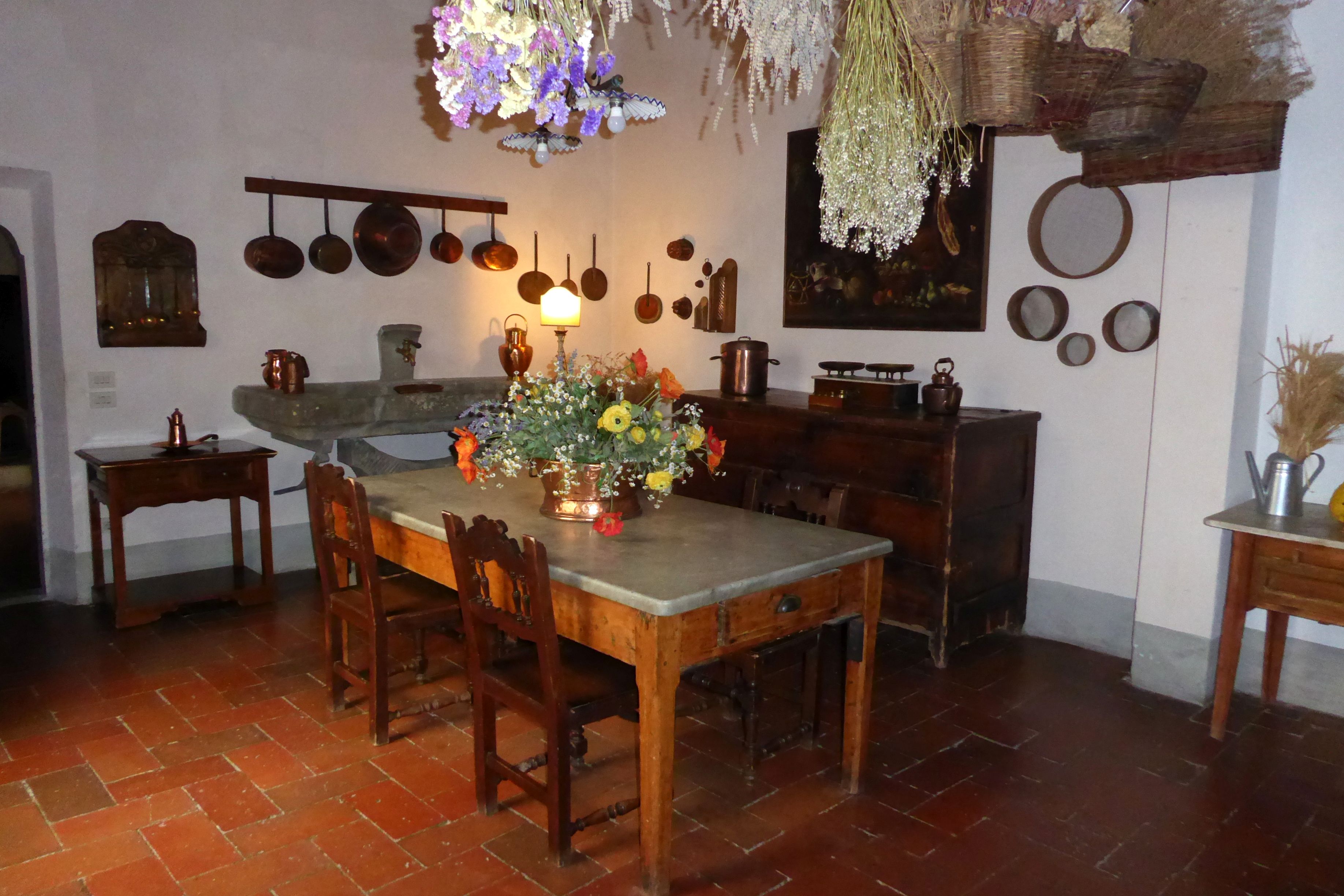
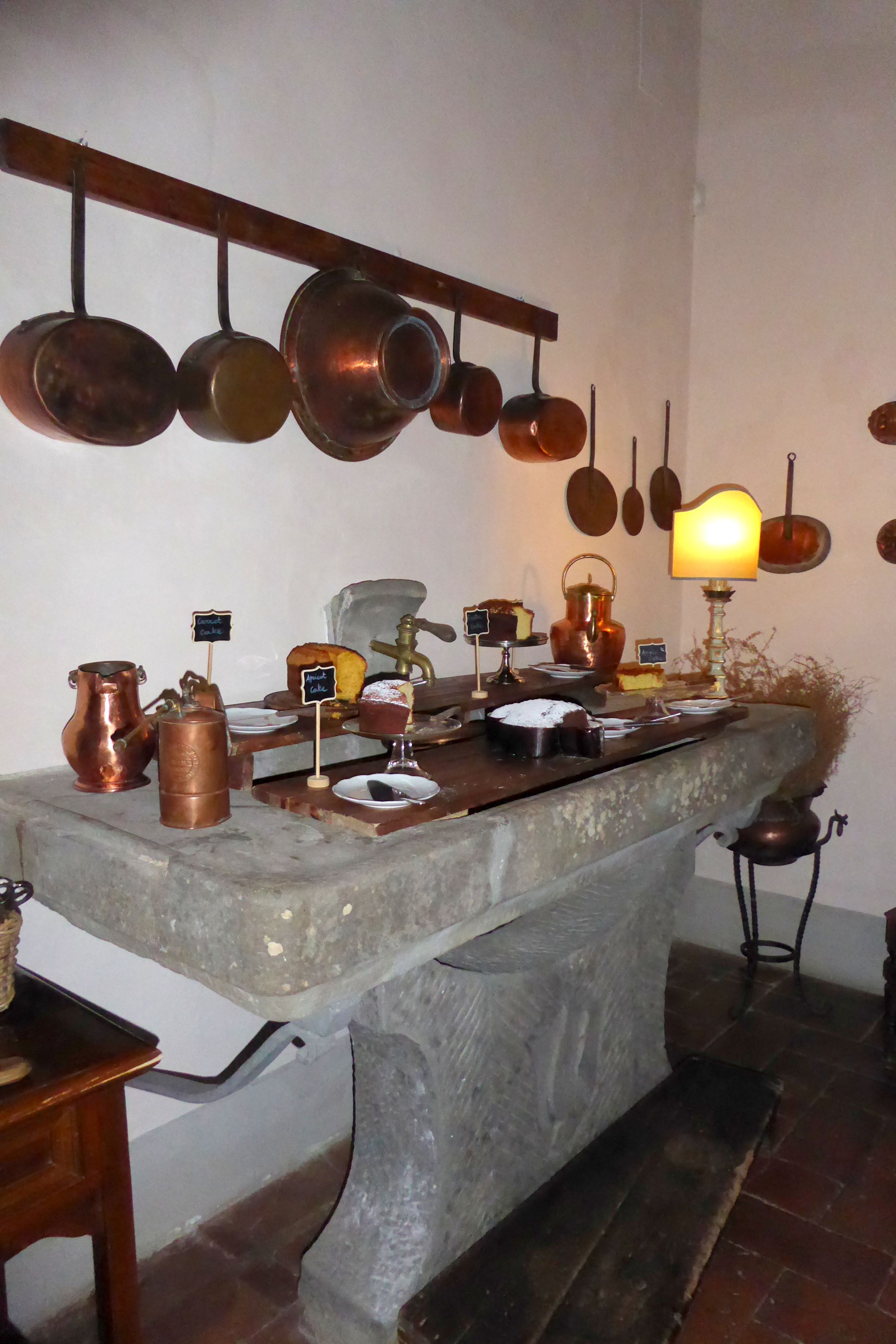
Original kitchen
The original kitchen is where a breakfast buffet was set up each morning.
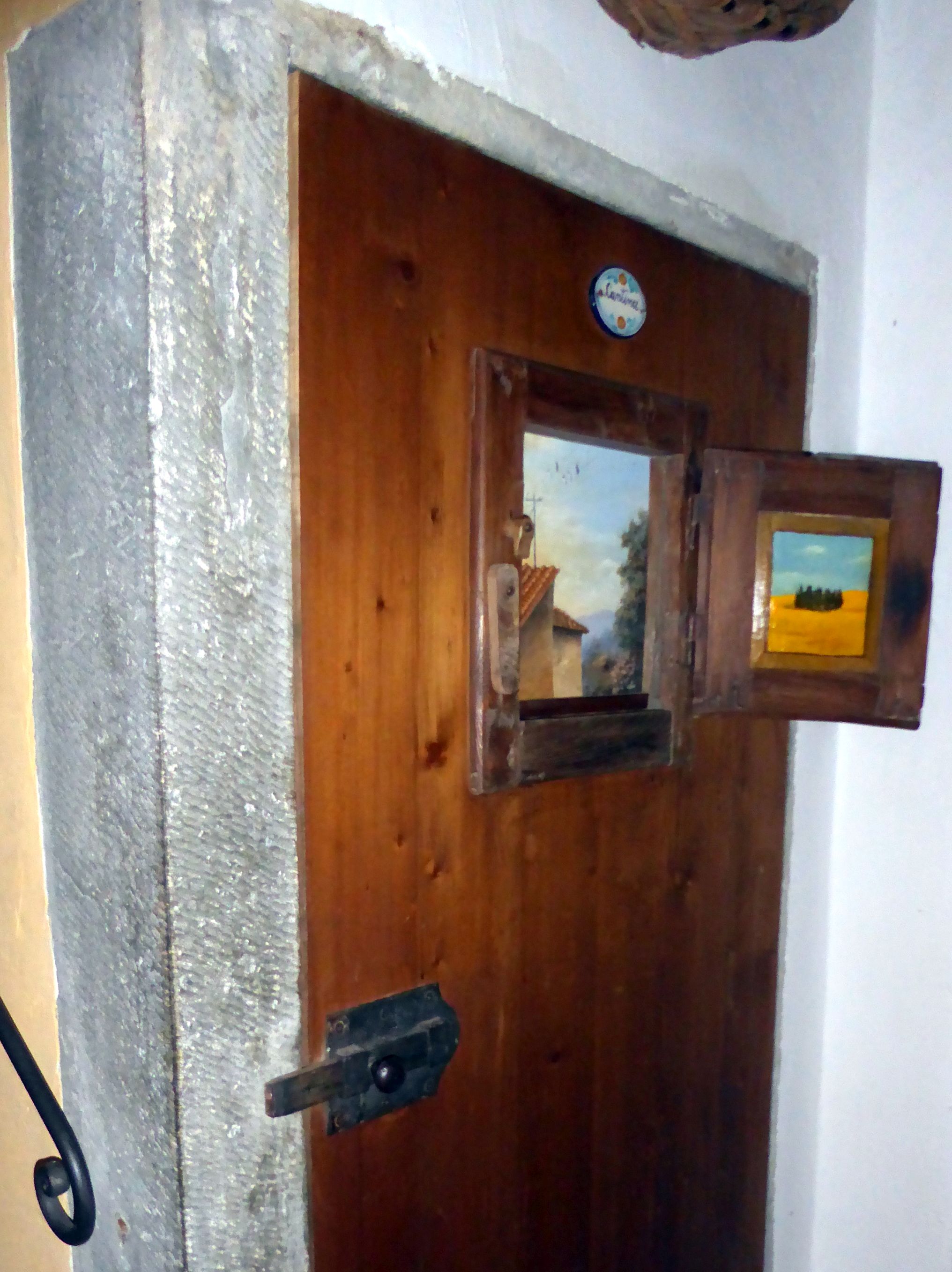
To get to our room, we entered the piano room, went through the sitting room with the frescoes, turned into the breakfast room, made another turn into the original kitchen, and ended up here. We continued up the stairs, and finally arrived to our room. I’m not complaining; I was happy to be able to wander through the sprawling villa each time, so I could enjoy the beauty of each room!
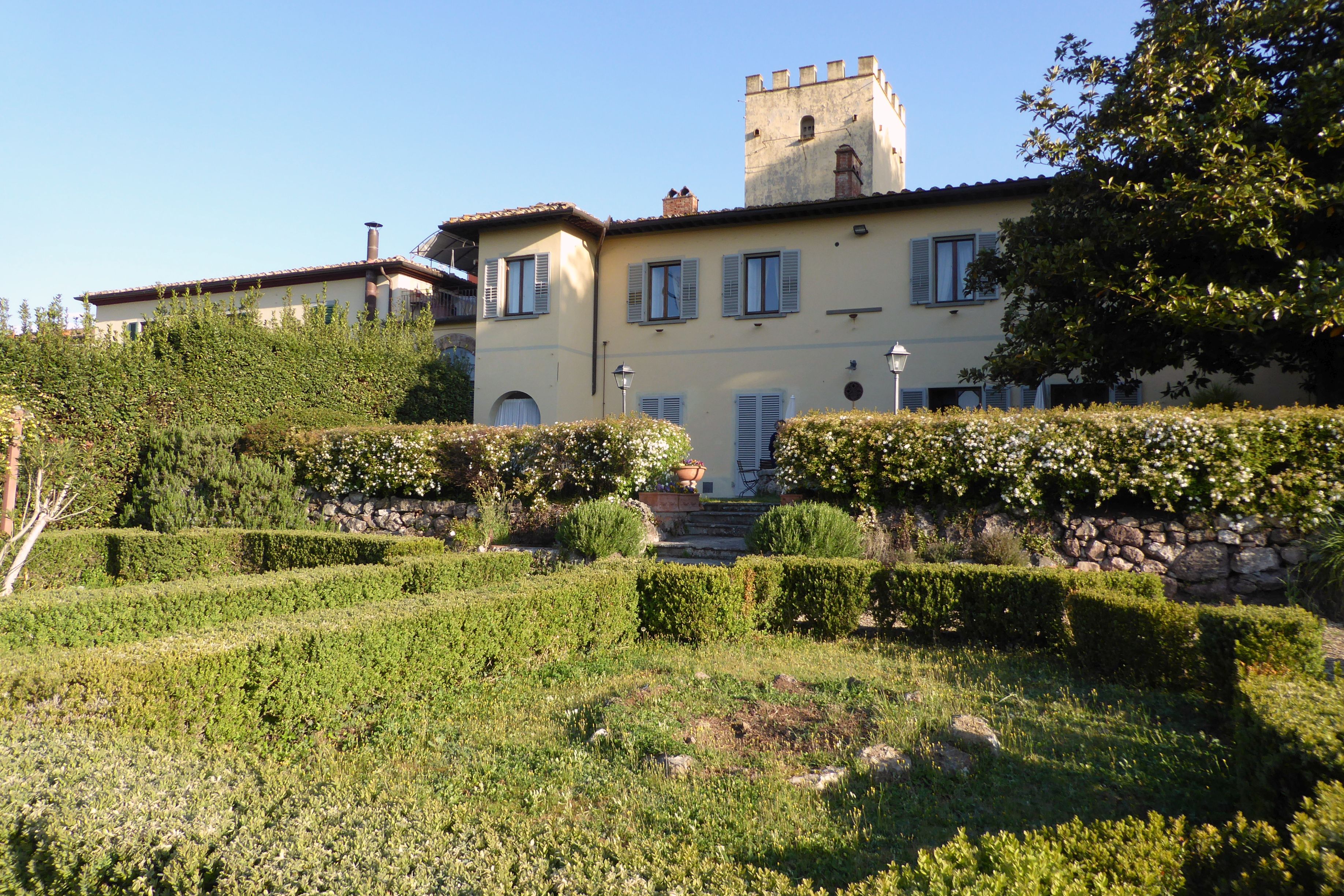
This is the back of the villa.
Giada and her nephew
The formal dining room where we gathered each evening for a lovely meal.

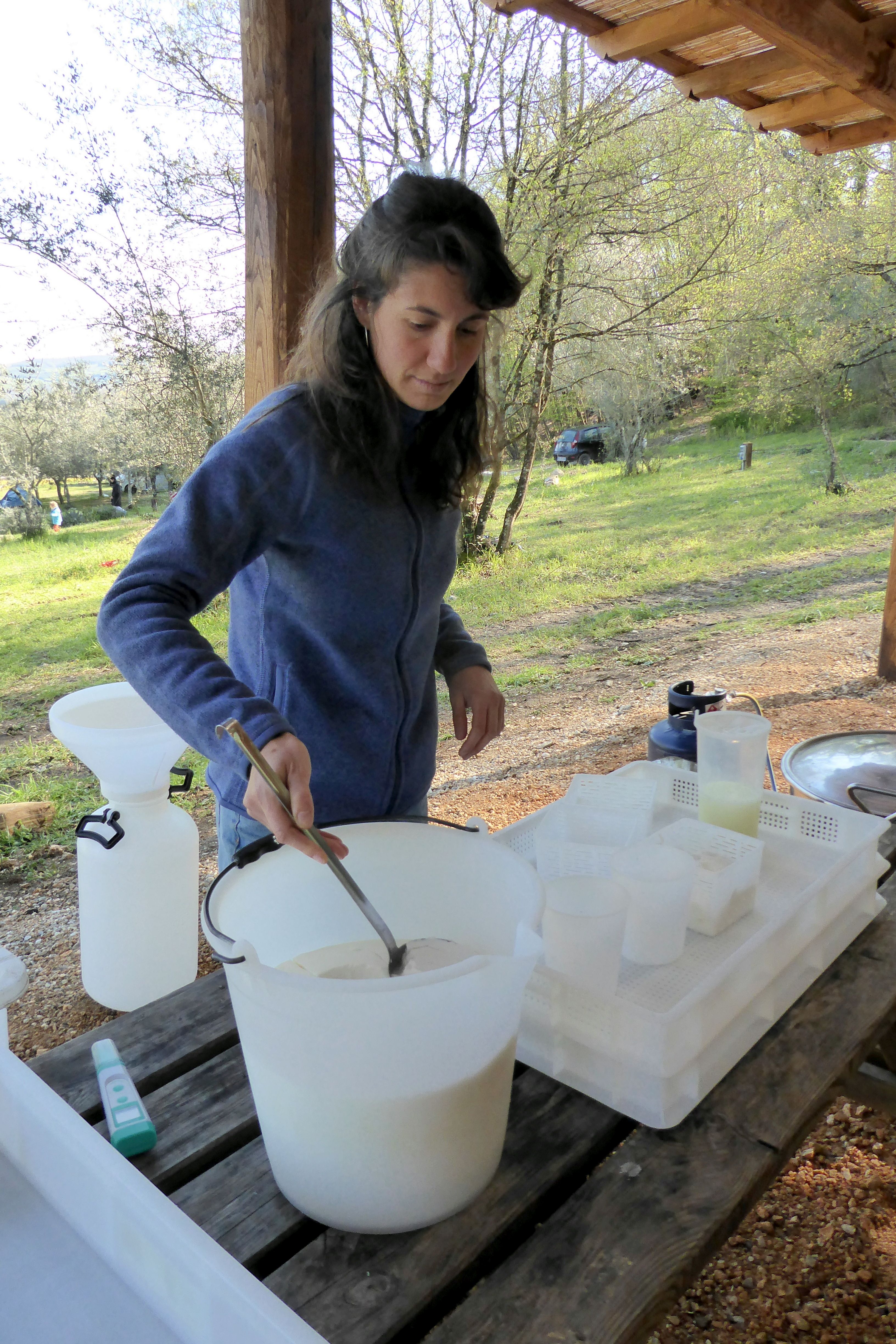
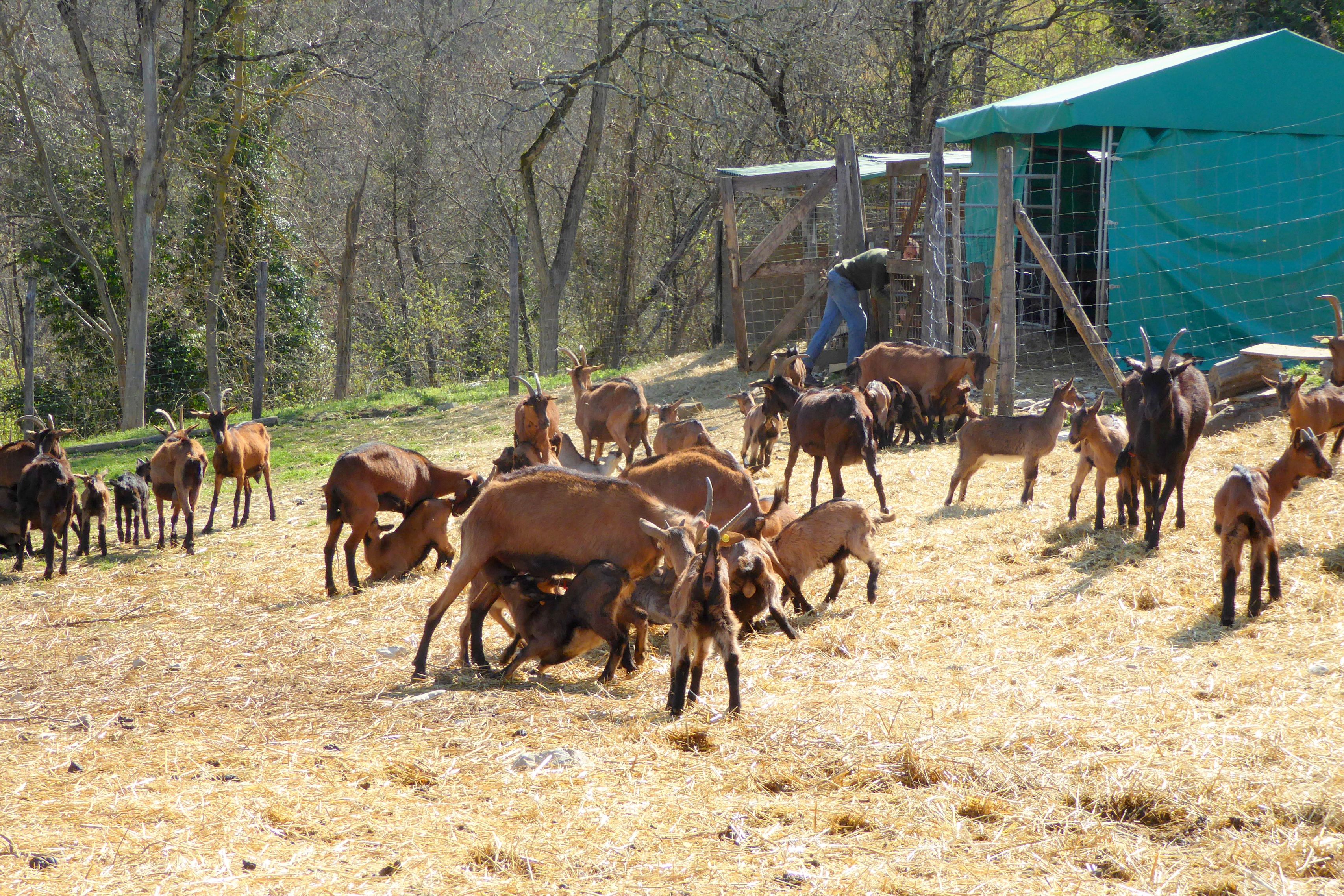
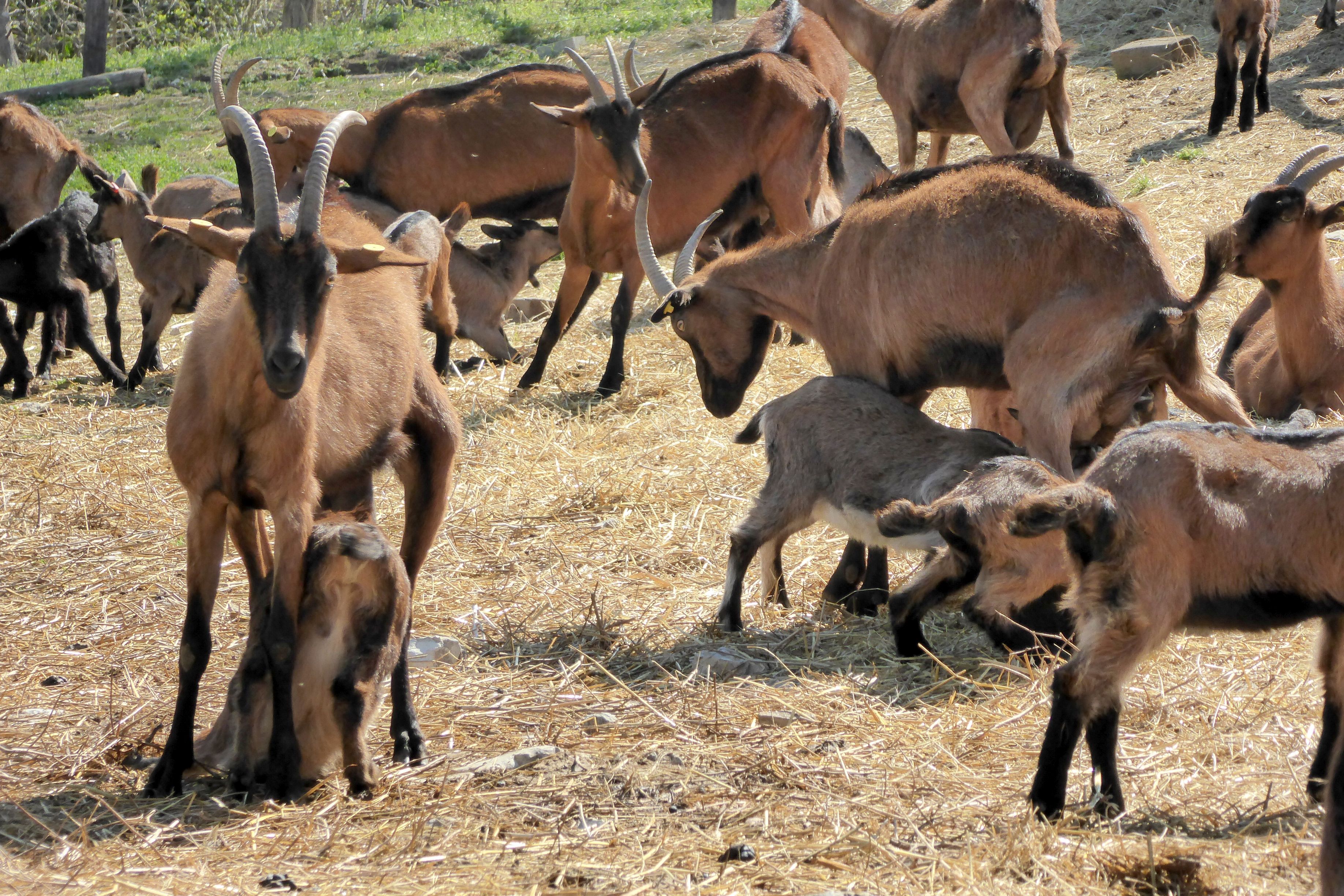
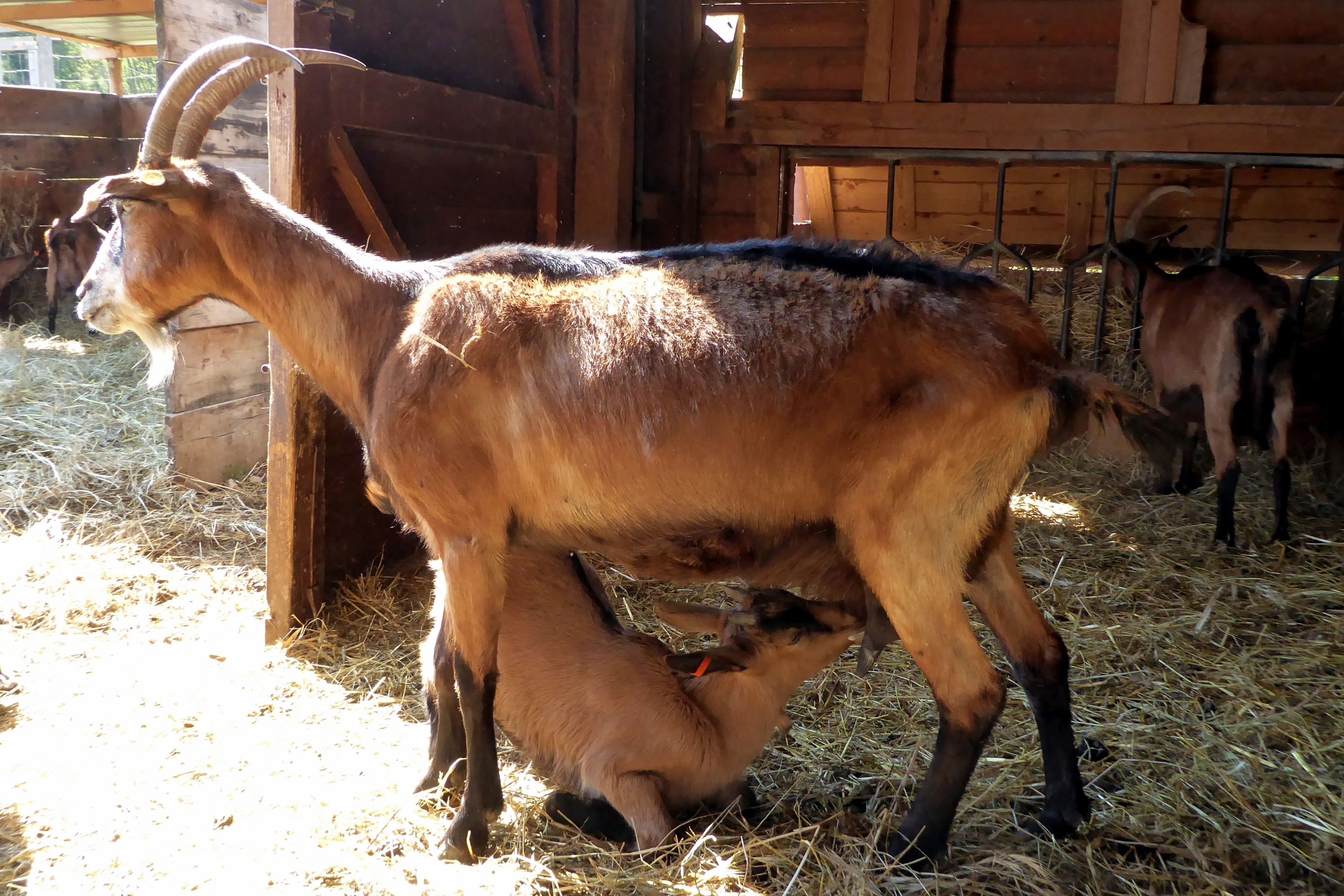
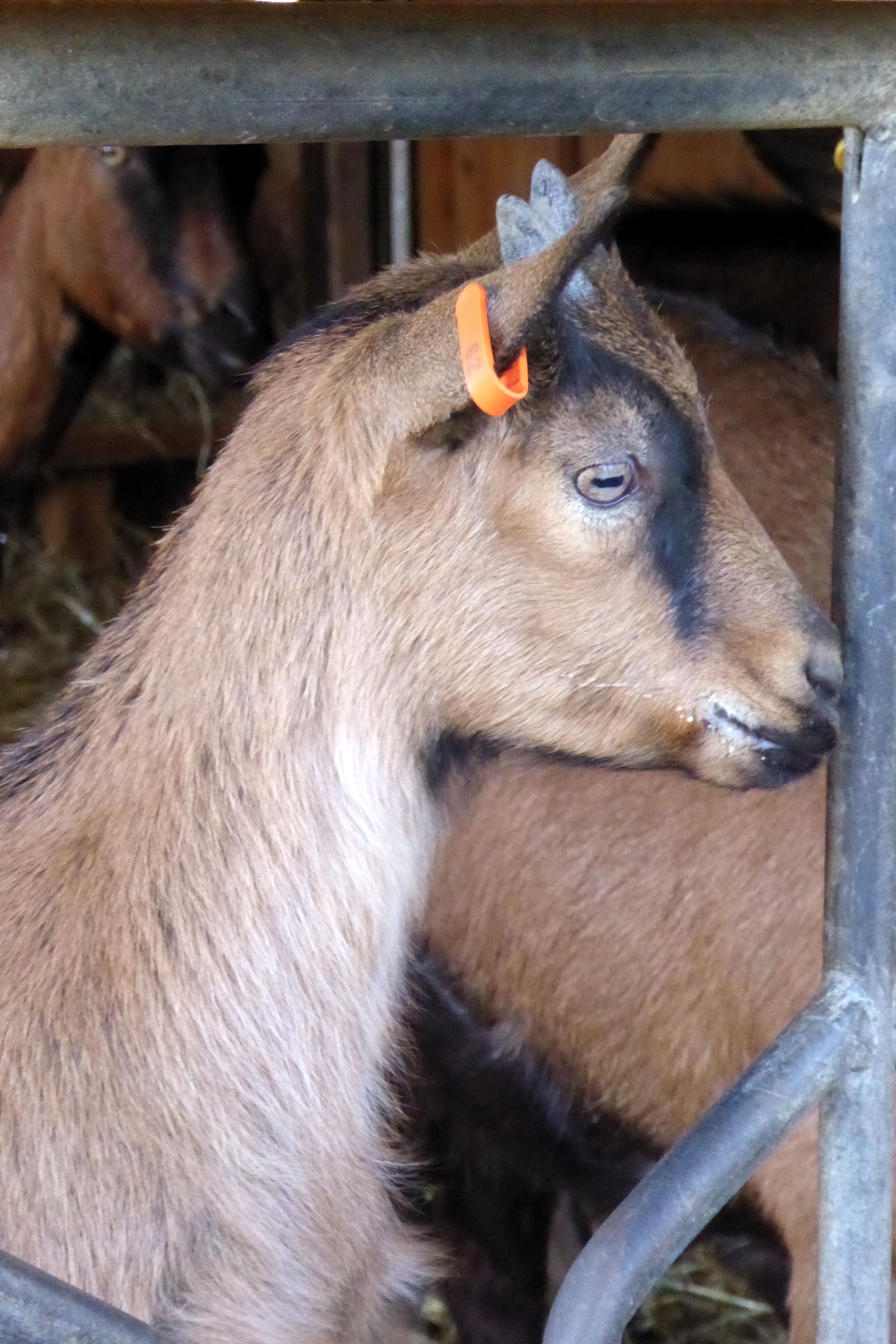
The following morning, we drove through the Chianti Valley to visit Li’Apicorno, Martha and Petro’s goat and bee farm.  Martha showed us how goat cheese is made and what life is like raising goats.  We got to meet the goats, which were quite friendly!

It was chaos when Petro let the babies out to find their mom’s for a feeding!
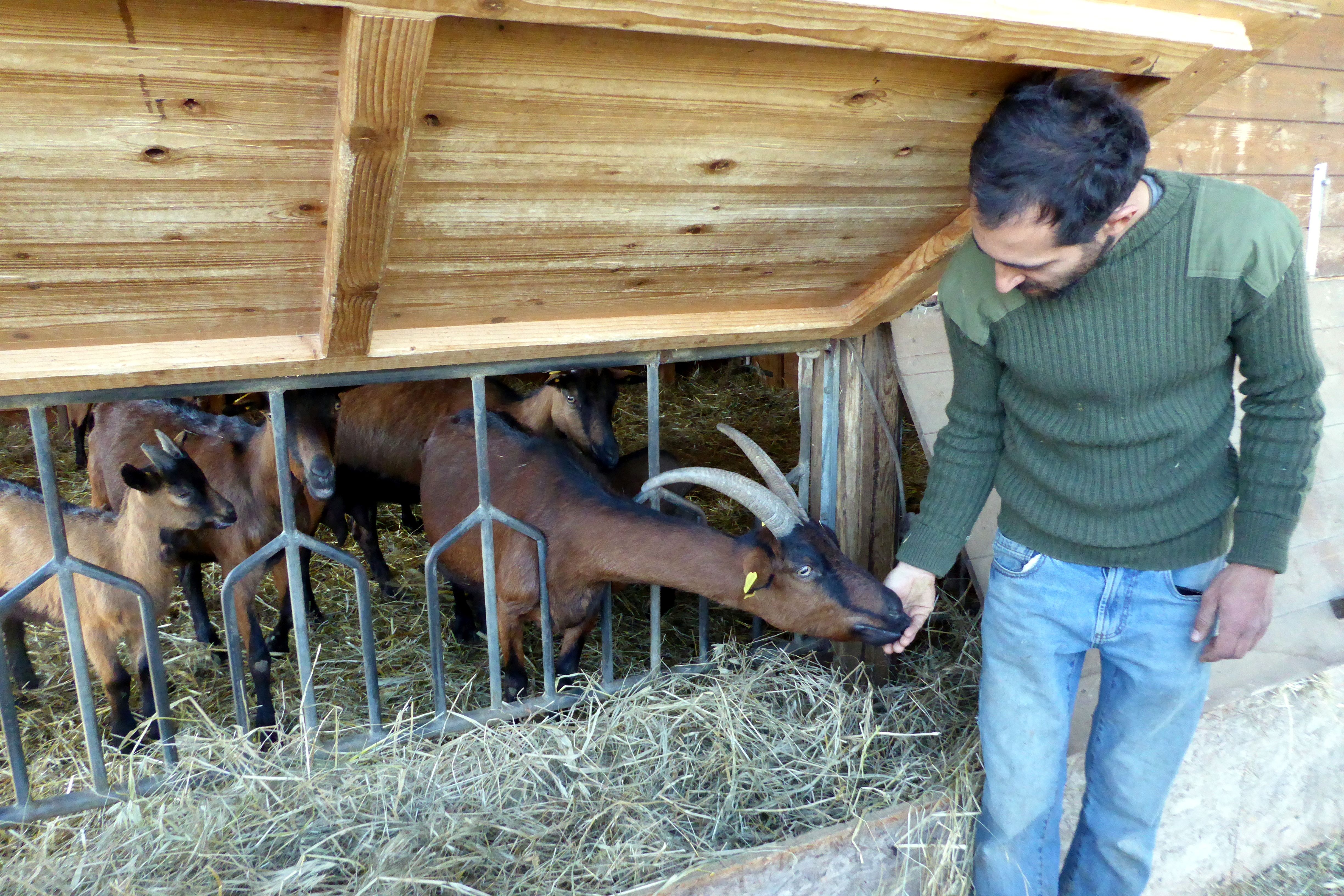
Petro fed the goats chestnuts, a big treat for them!

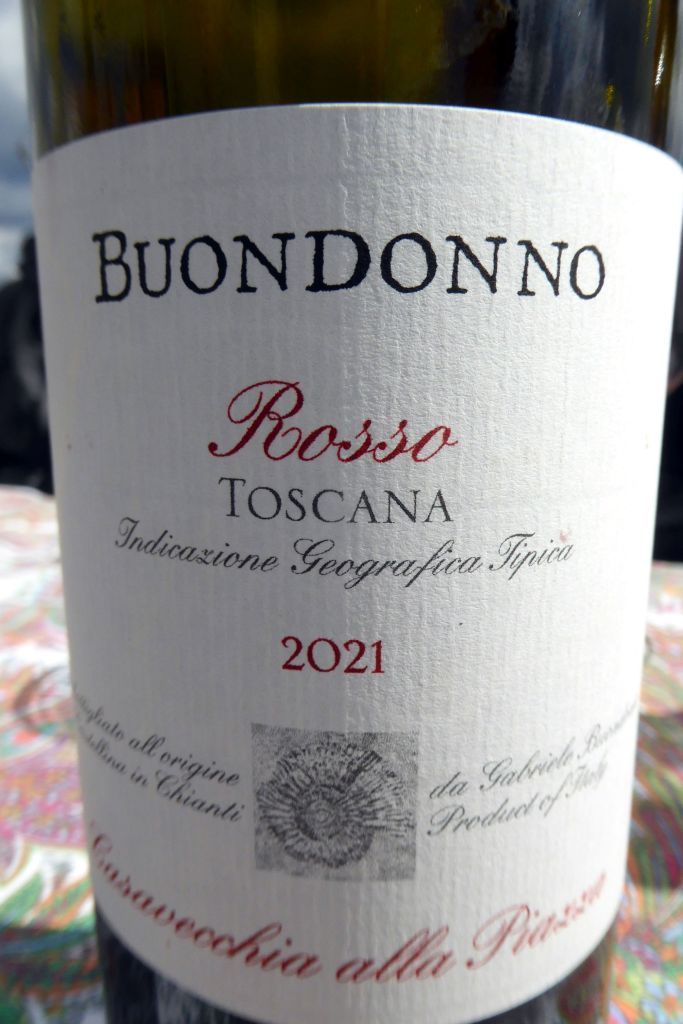
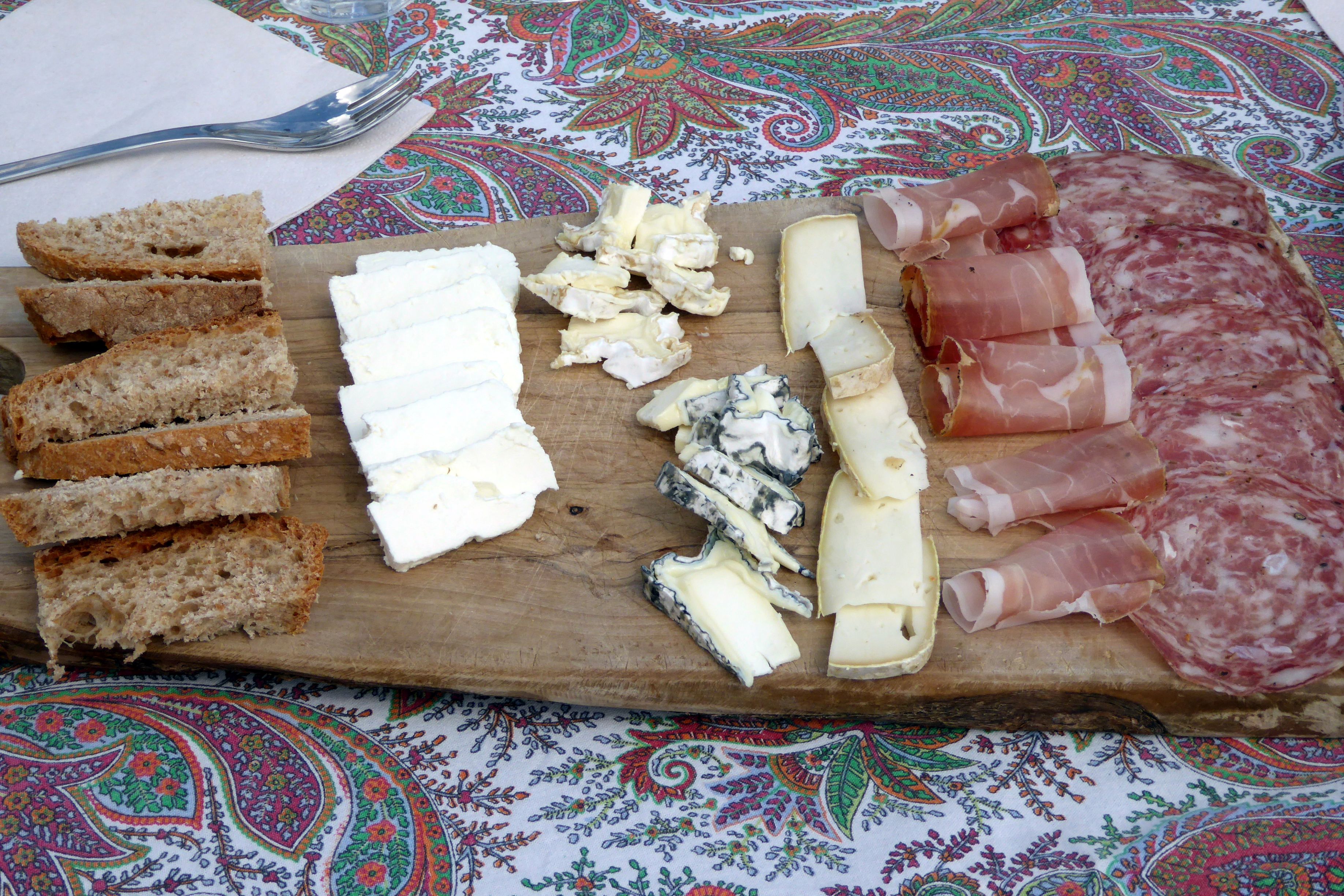
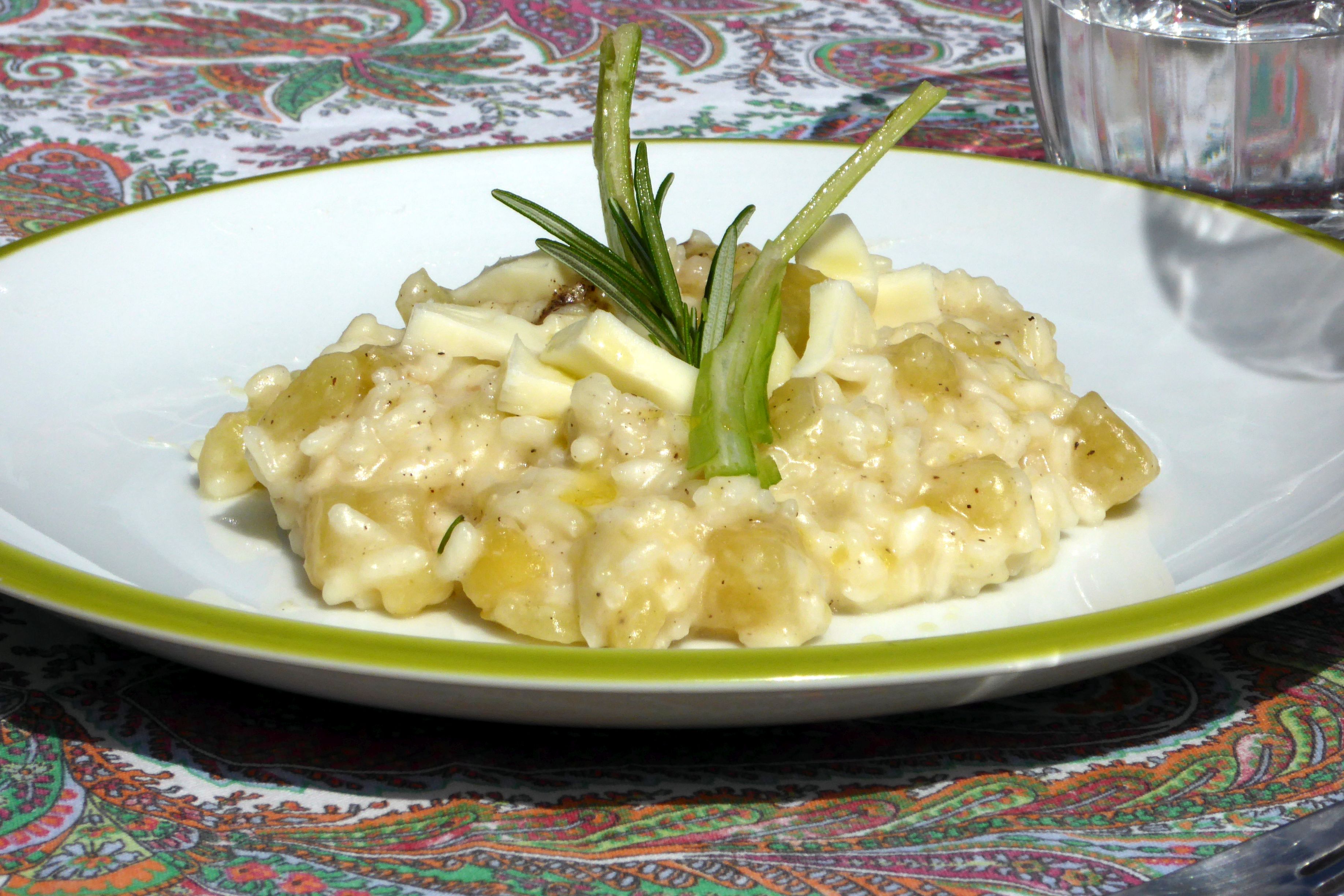
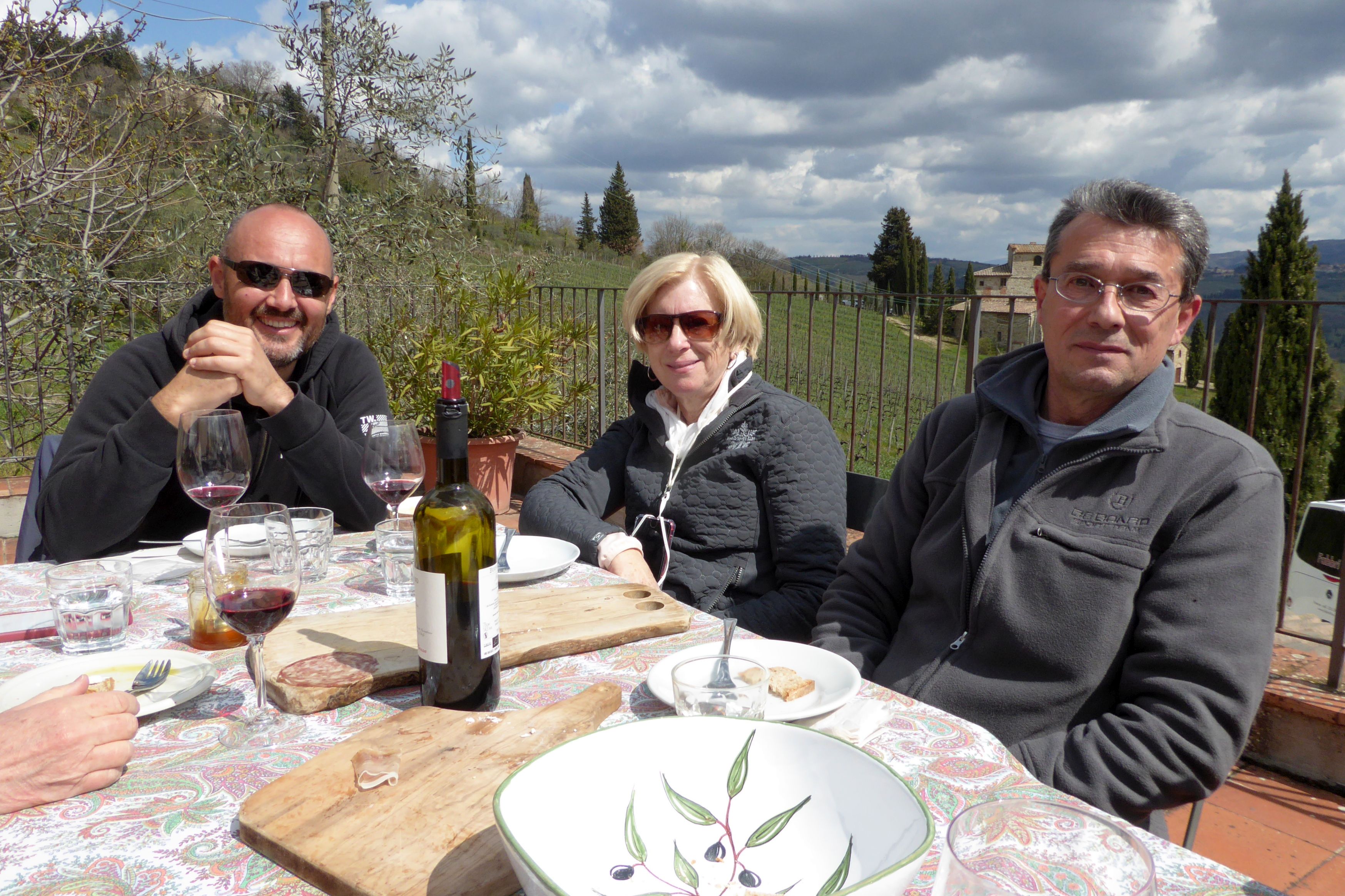
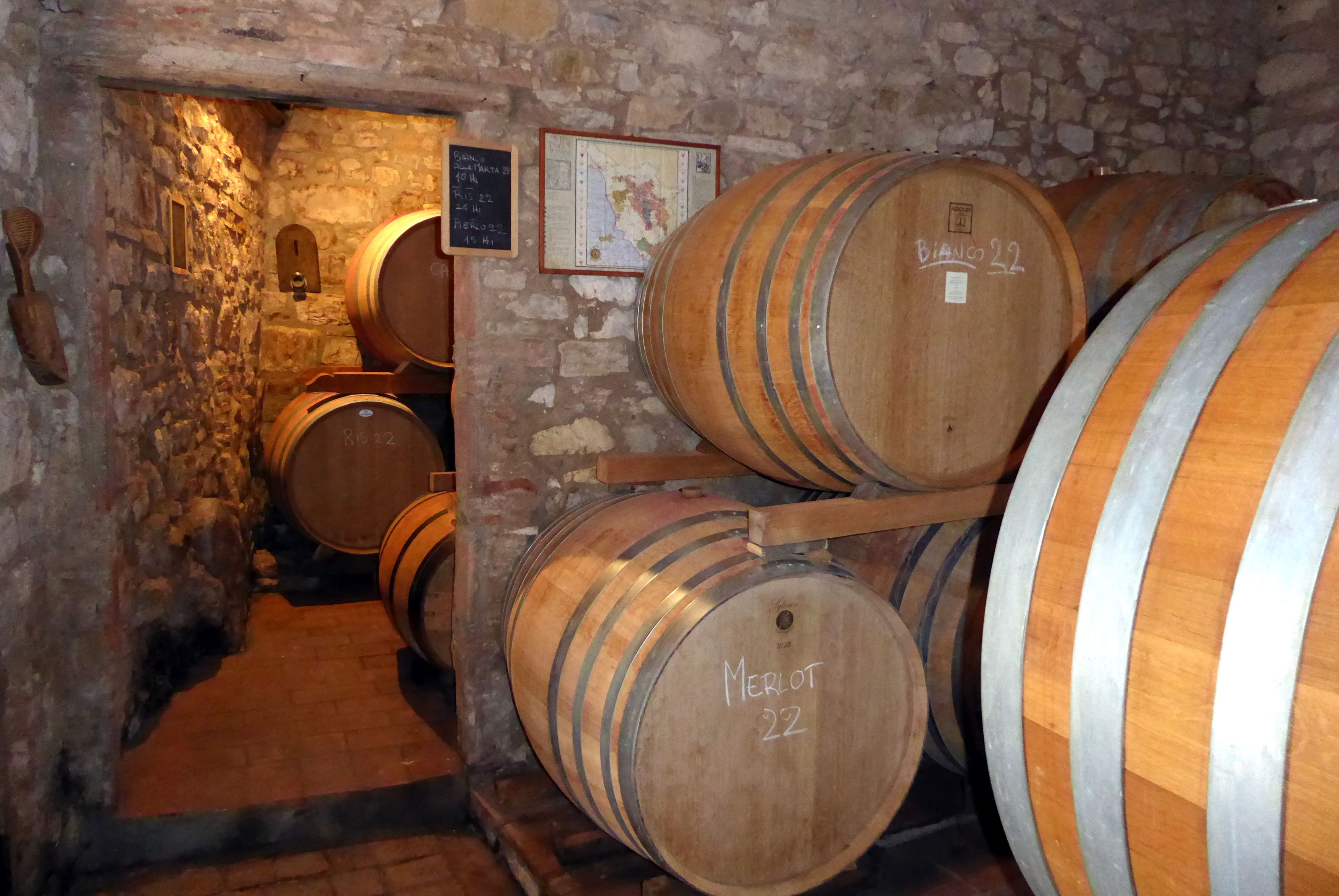
Not far from the goat farm was Buondonno, the family winery run by Martha’s father.  We enjoyed a wonderful lunch served with Chianti Classico wine, while enjoying views from the terrace overlooking the Chianti Valley. It was such a classically exquisite Italian experience! 

Risotto with goat cheese
Our tour leader, Ben, with Deb and Cesare, our driver
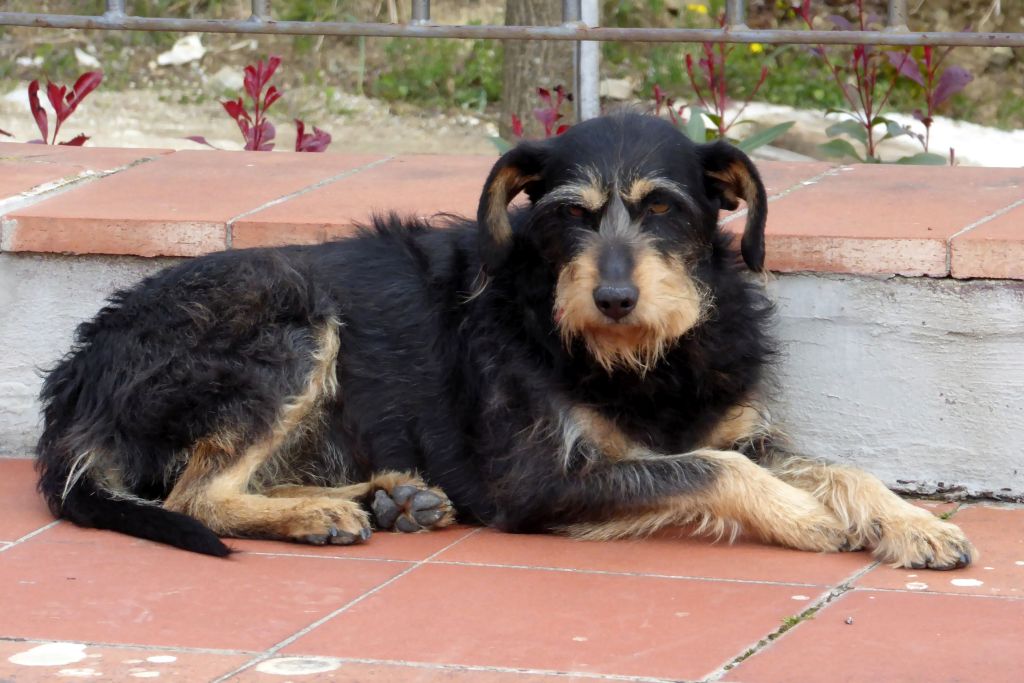
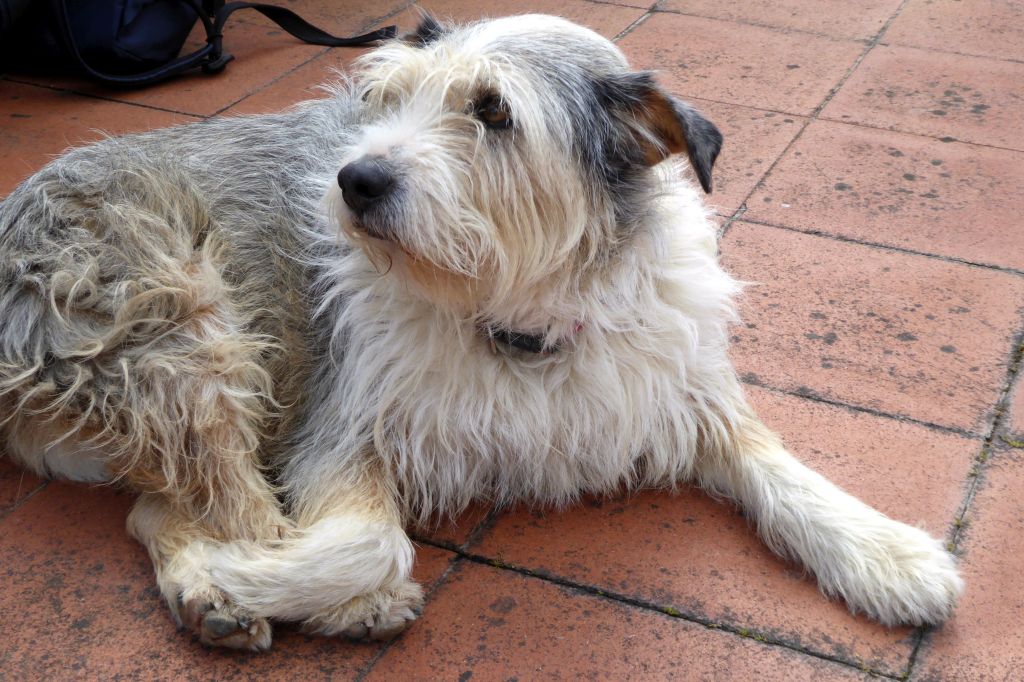
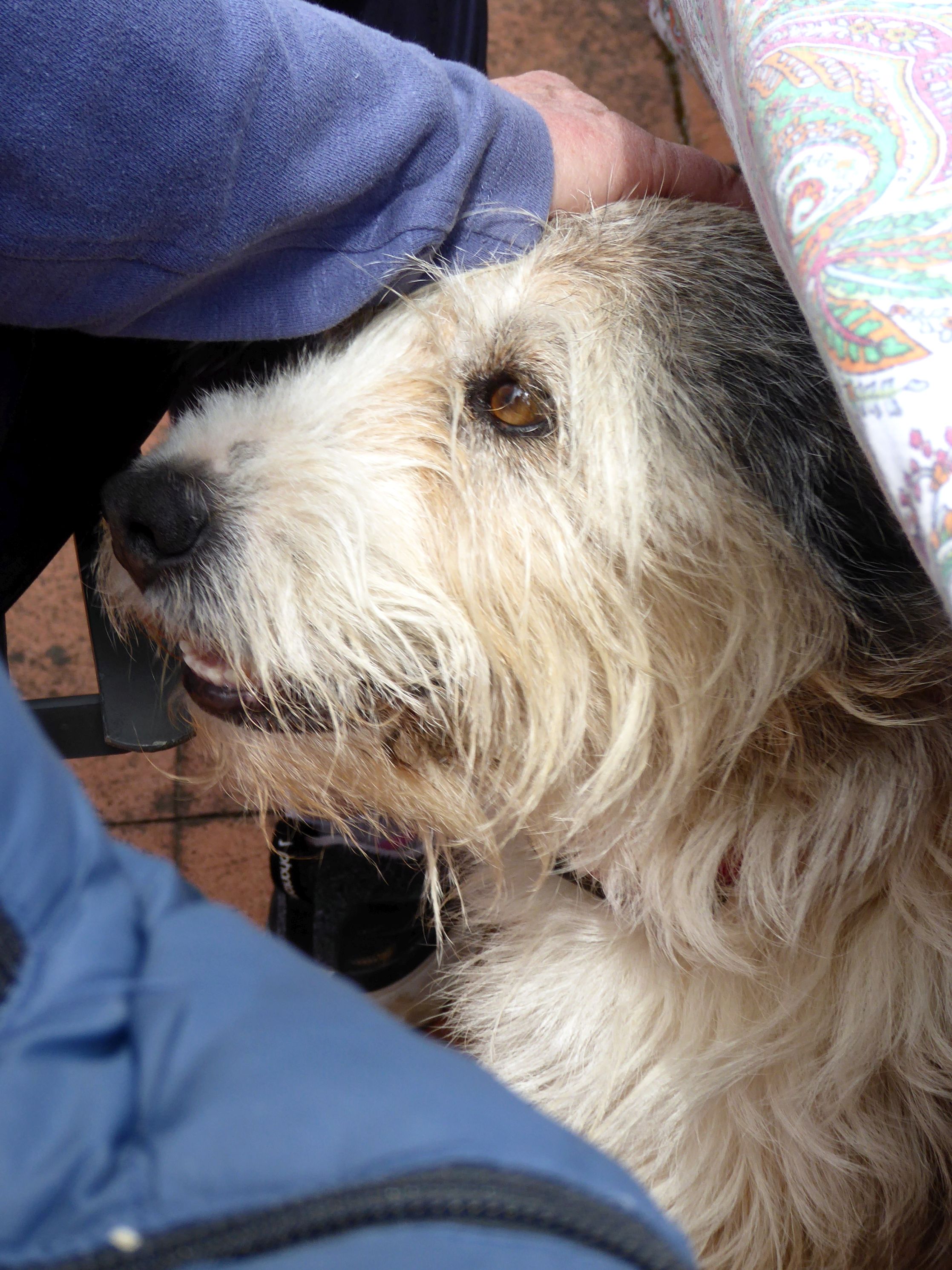
Their dog made the rounds to each of us to get petted– and for (hopeful!) hand-out.
Bruce gave Martha a pair of his fused glass earrings as a gift. It just so happened that blue was her favorite color!

Later in the afternoon, Oscar led us on a walk across the valley from Villa Il Leccio, so we could enjoy views of the villa and the countryside.

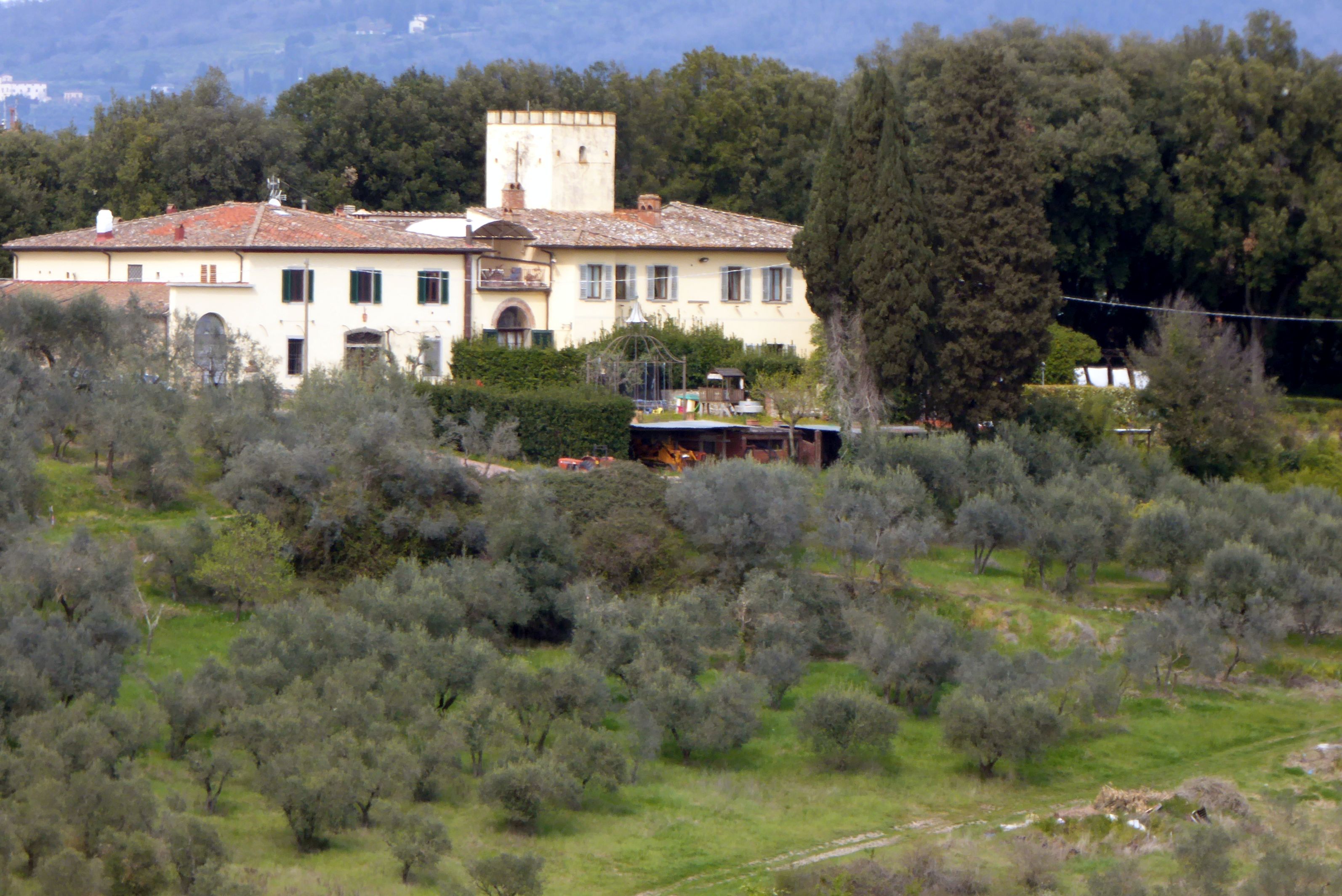
A zoomed-in view of Villa Il Leccio off in the distance

What a beautiful place!

Next up: OLIVE OIL AND PASTA IN THE CHIANTI COUNTRYSIDE

Note: If small group travel is of interest to you, I highly recommend Overseas Adventure Travel (OAT). Although Bruce and I travel together, they do not charge a single supplement for those who travel on their own. Singles also get their own room at hotels. If you book, you can get $100 off your trip by providing my name and customer number (Elaine Krugman, #3018126) as the person who referred you. I will also get $100 off future travel– a win-win!

ITALY #12: FABULOUS FLORENCE

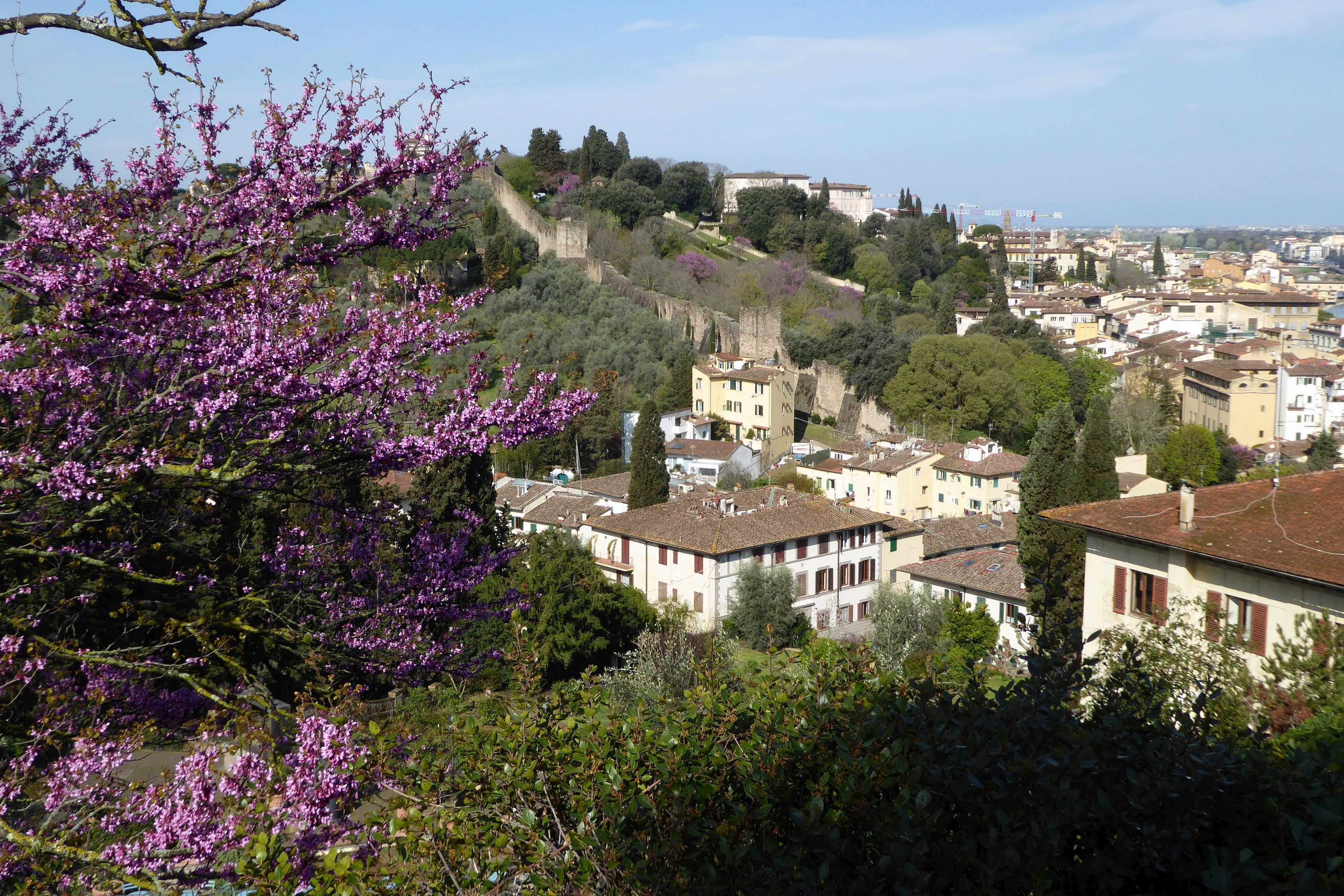
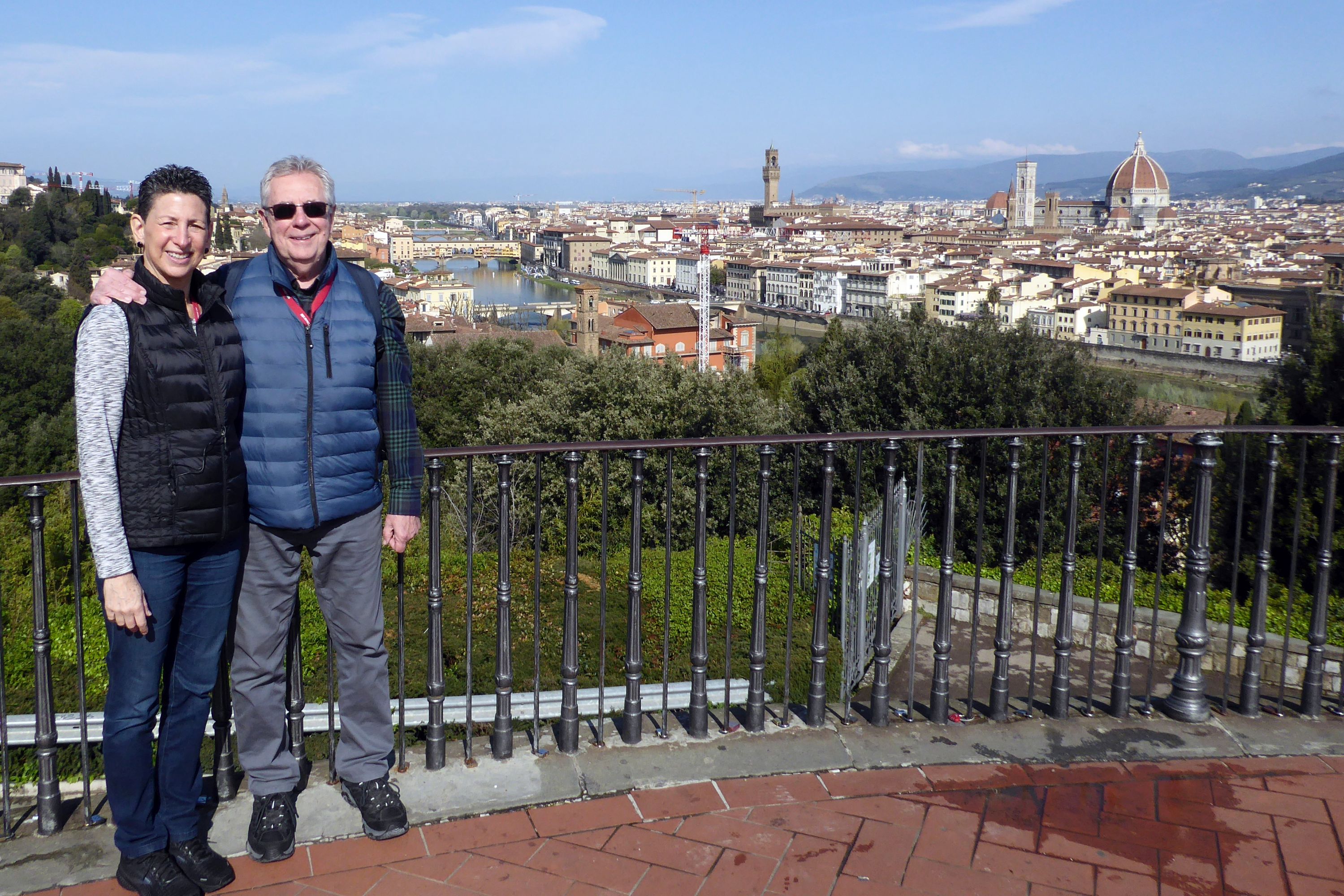
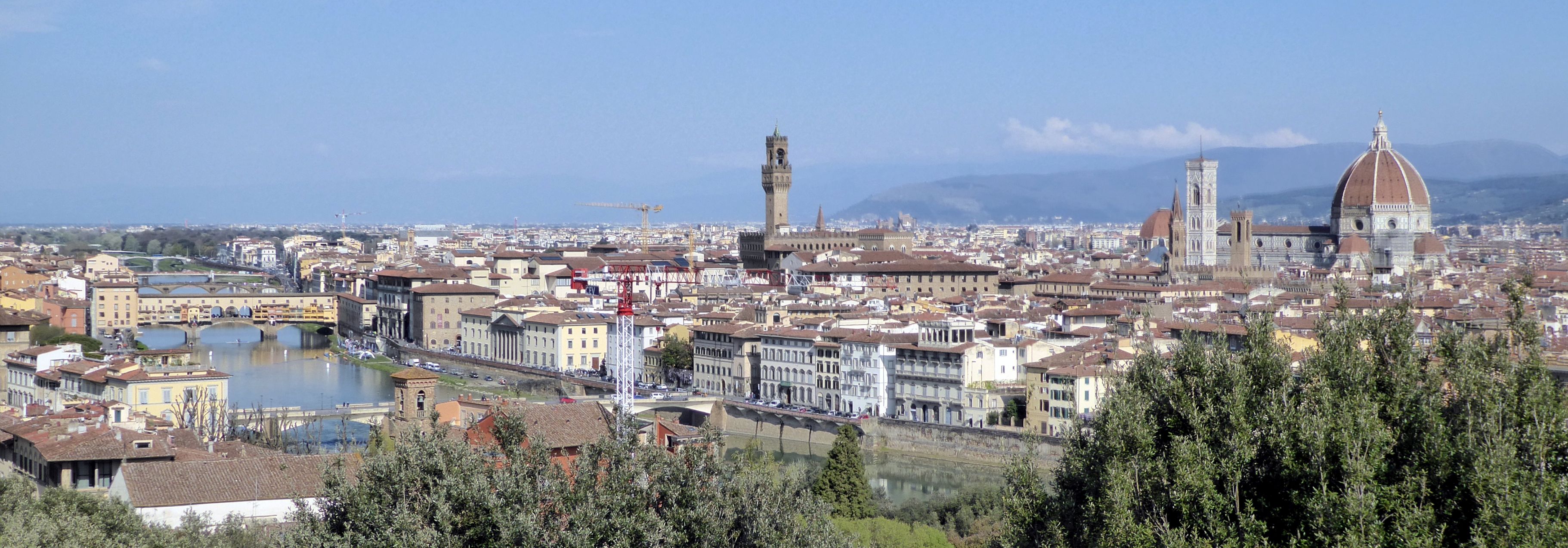
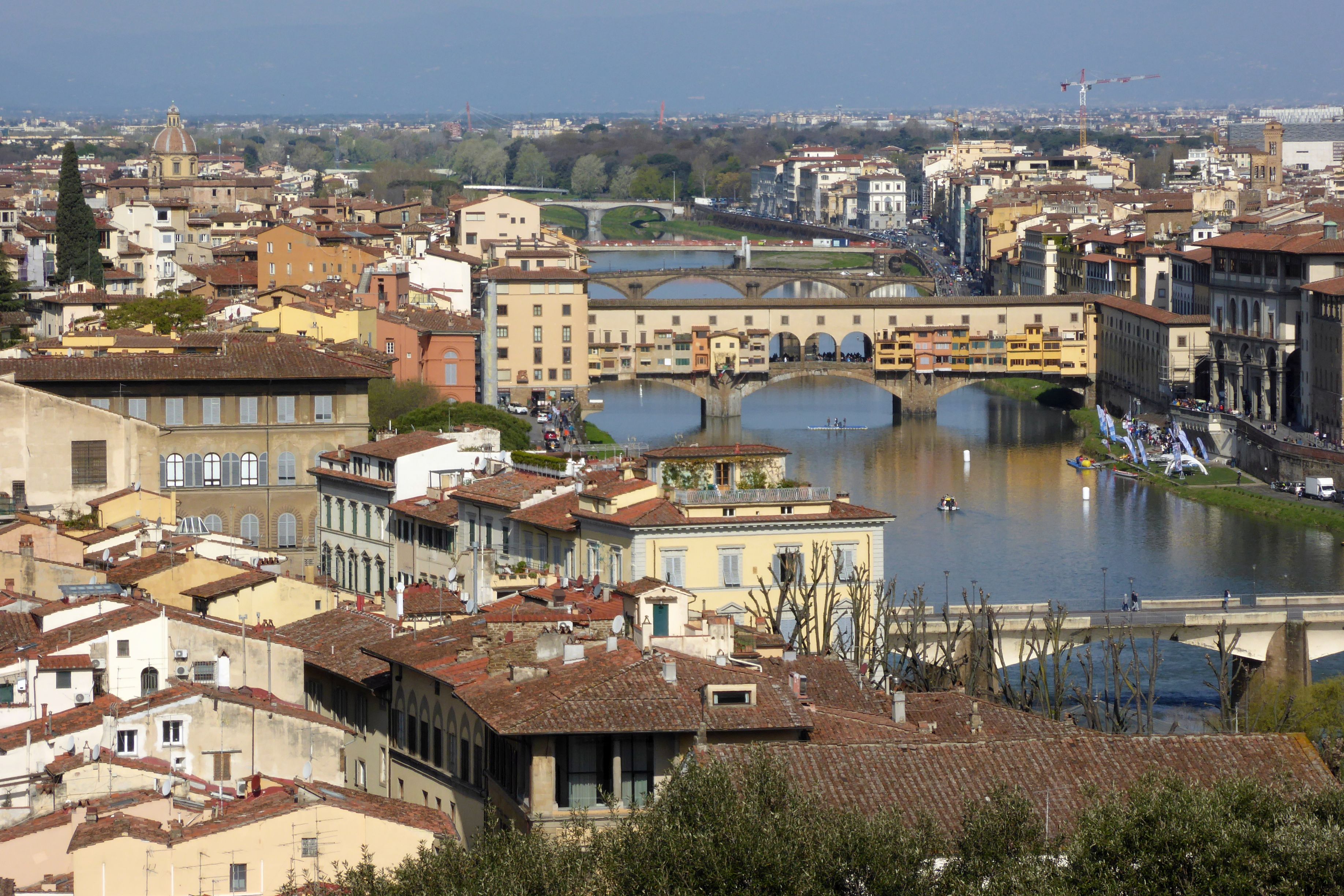
It would take months—maybe years— to really see Florence.  We only had a day.  Our walking tour began in the best possible place, though, because the view from Pizzale Michelangiolo was spectacular!  We were so fortunate to have a sunny day, because we put in a lot of walking miles and shot a lot of photos—neither of which would have been much fun in the rain!

Following the tour, we had a couple of hours to see more of this beautiful city on our own, so we wasted no time.  Rather than spend it dining in a restaurant, we passed on lunch and walked the streets of the city with our heads on a swivel, taking in all there was to see.

The streets were very crowded; that’s just how it is in big cities anywhere you go these days.  The crowds get to both of us, so there were times we just needed to seek out a quieter area for a respite.

Here, then, is our day in Florence:

(For all pictures, click on the image to see full screen view.)
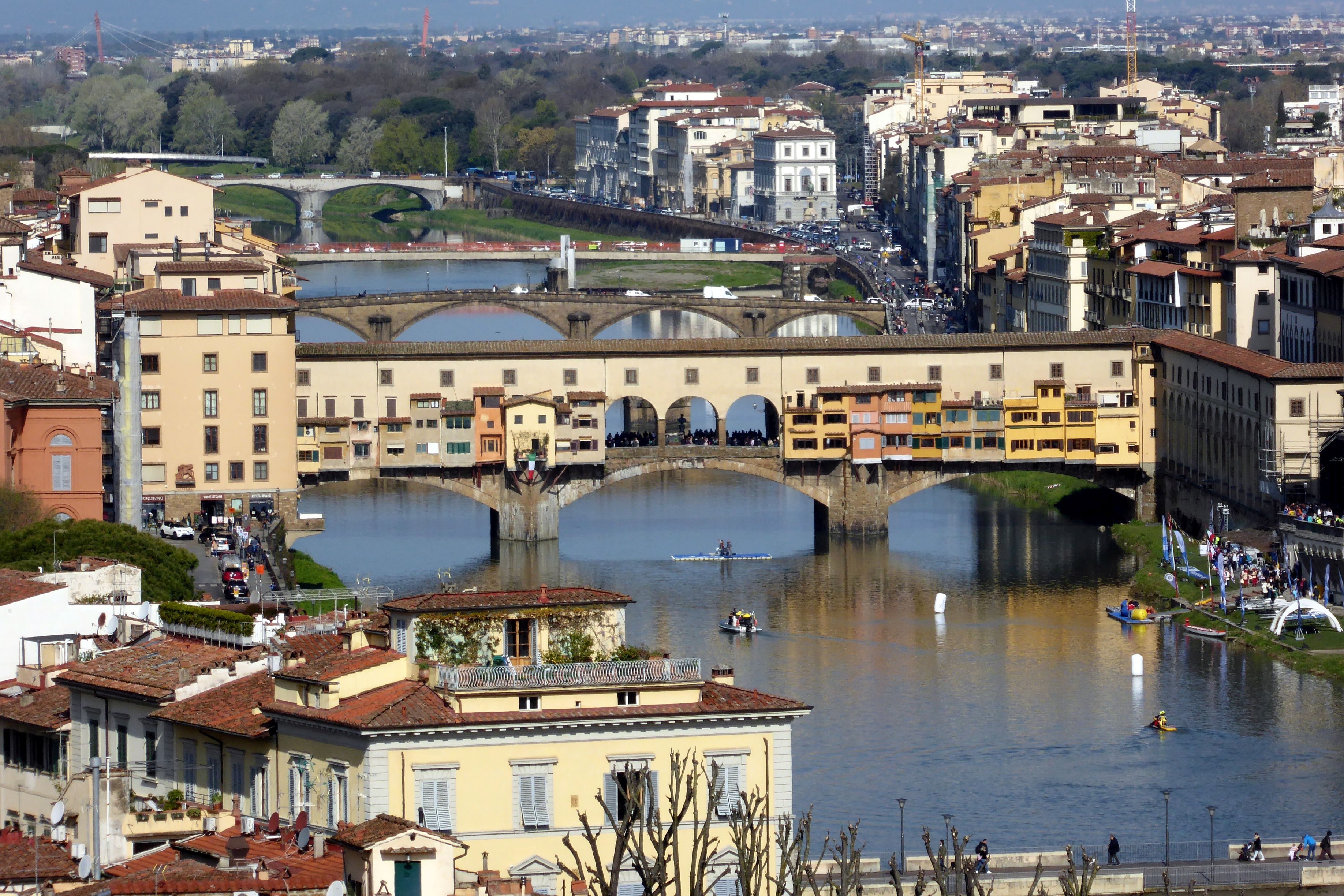
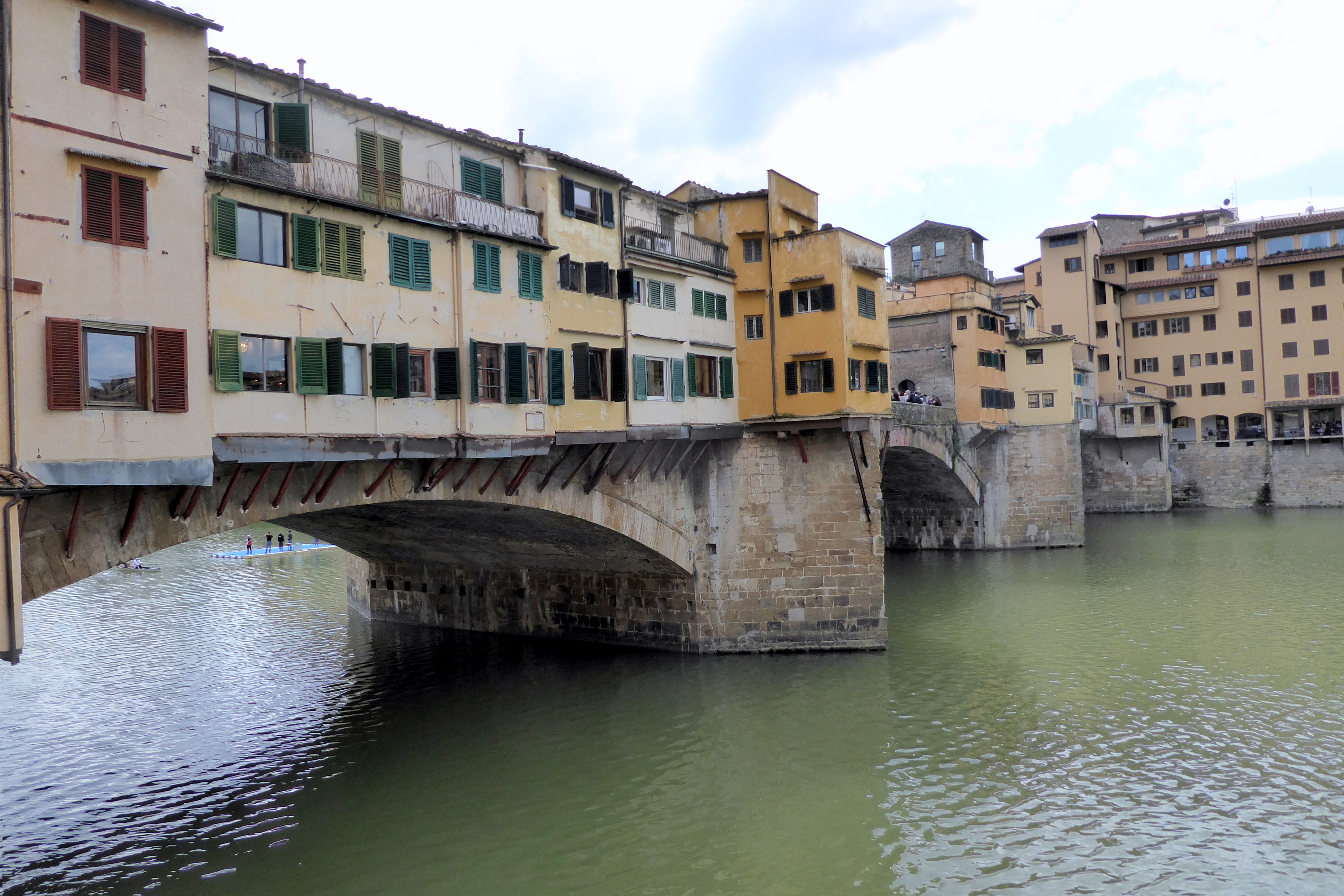
The Ponte Vecchio (Old Bridge) was built in 1350 and is full of goldsmiths and jewelry shops that have been a feature of Ponte Vecchio since the beginning.
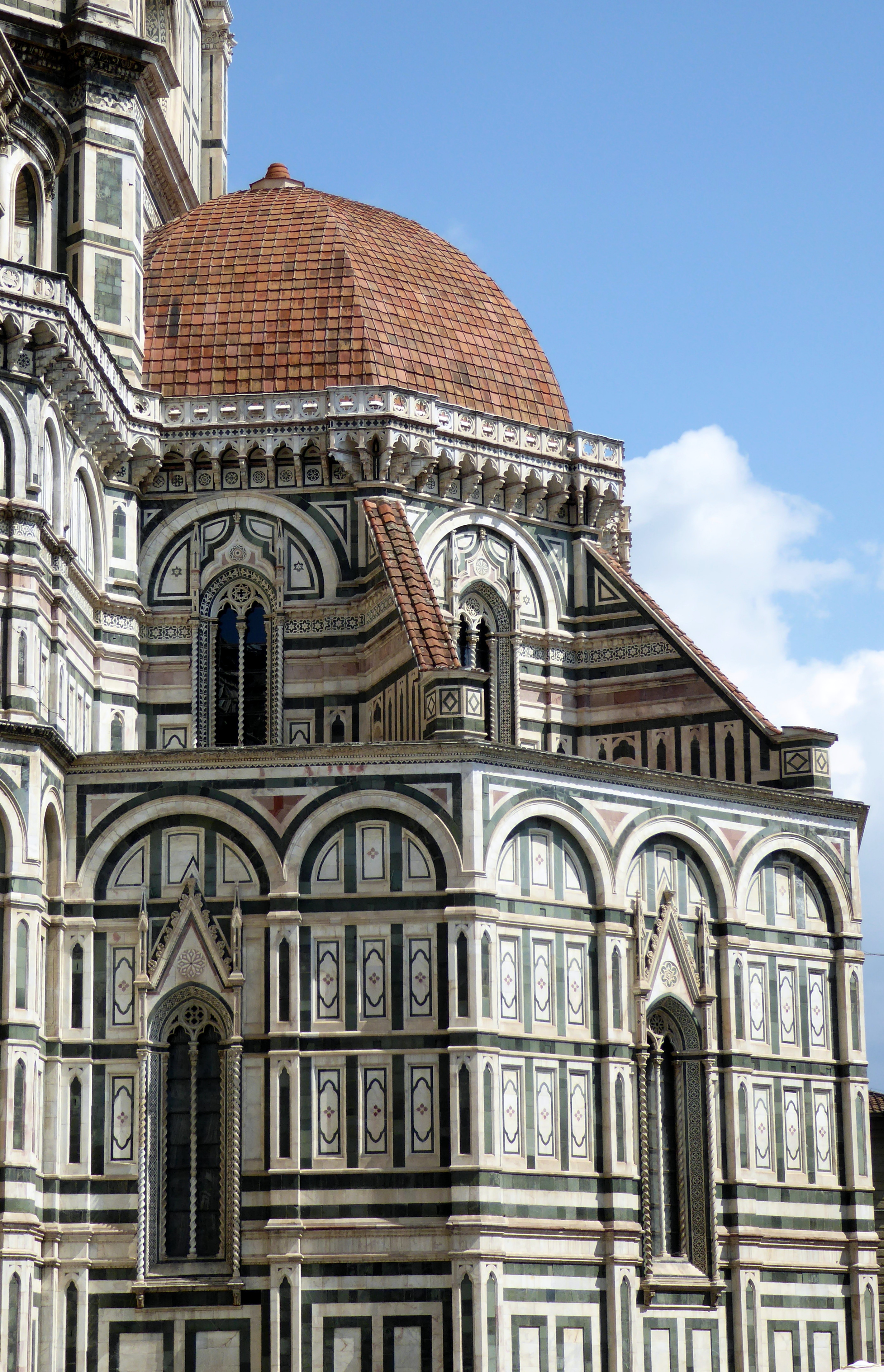
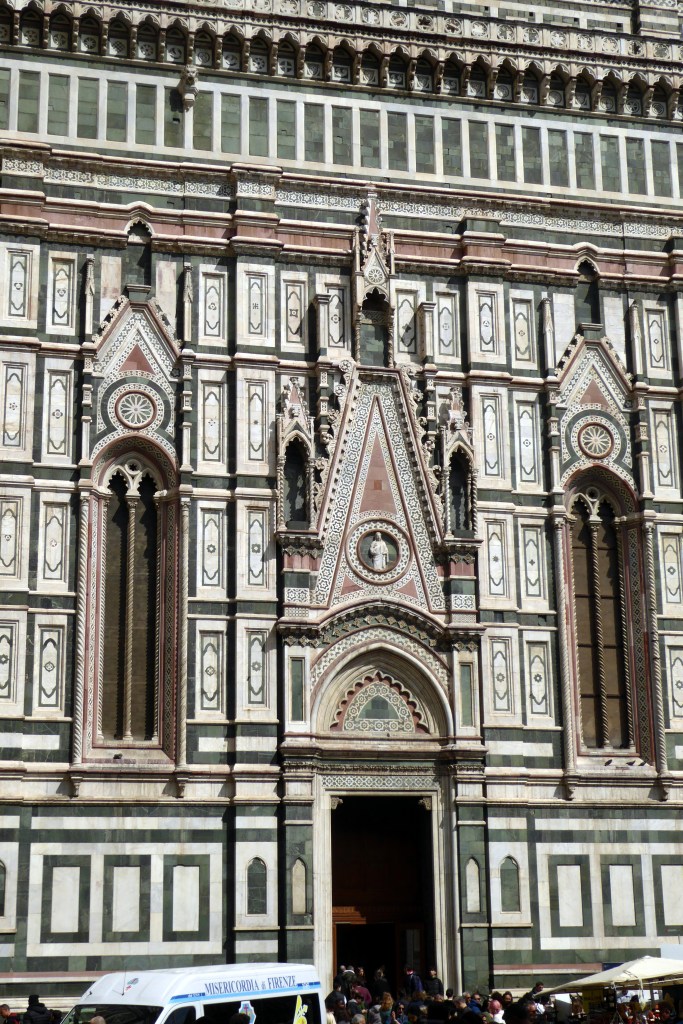
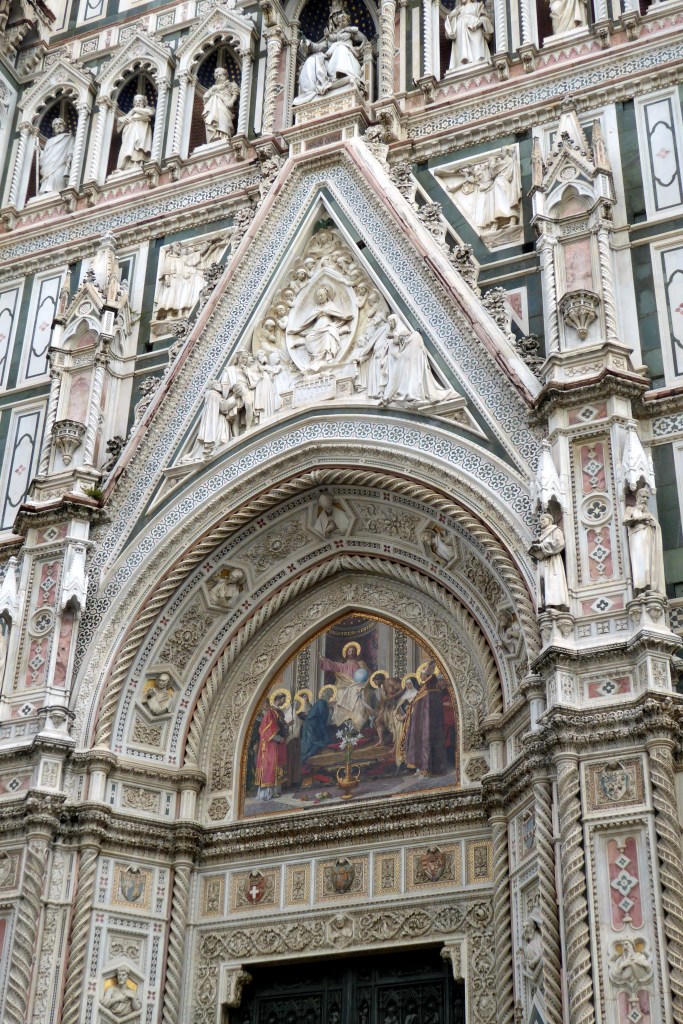
Florence Cathedral
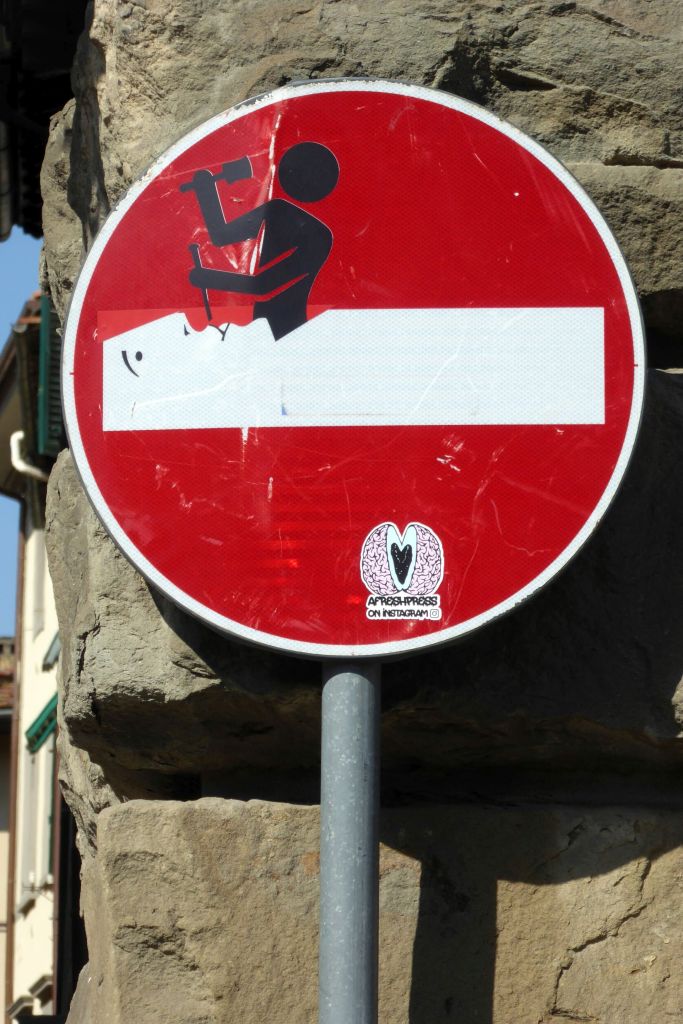
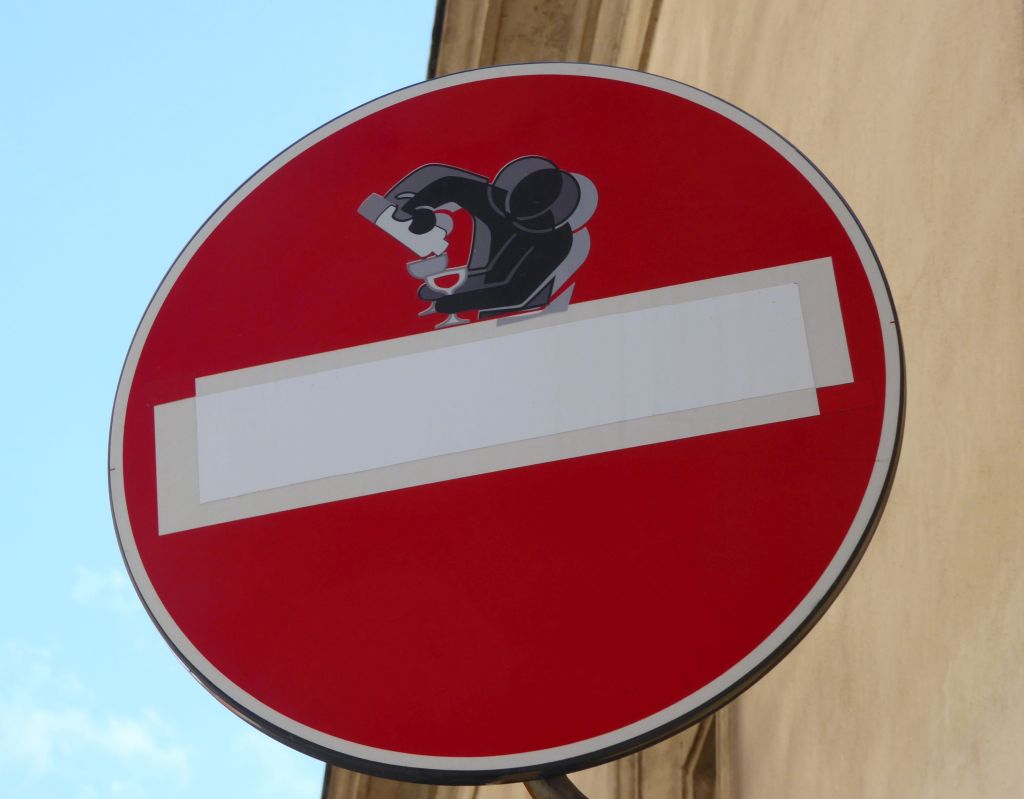
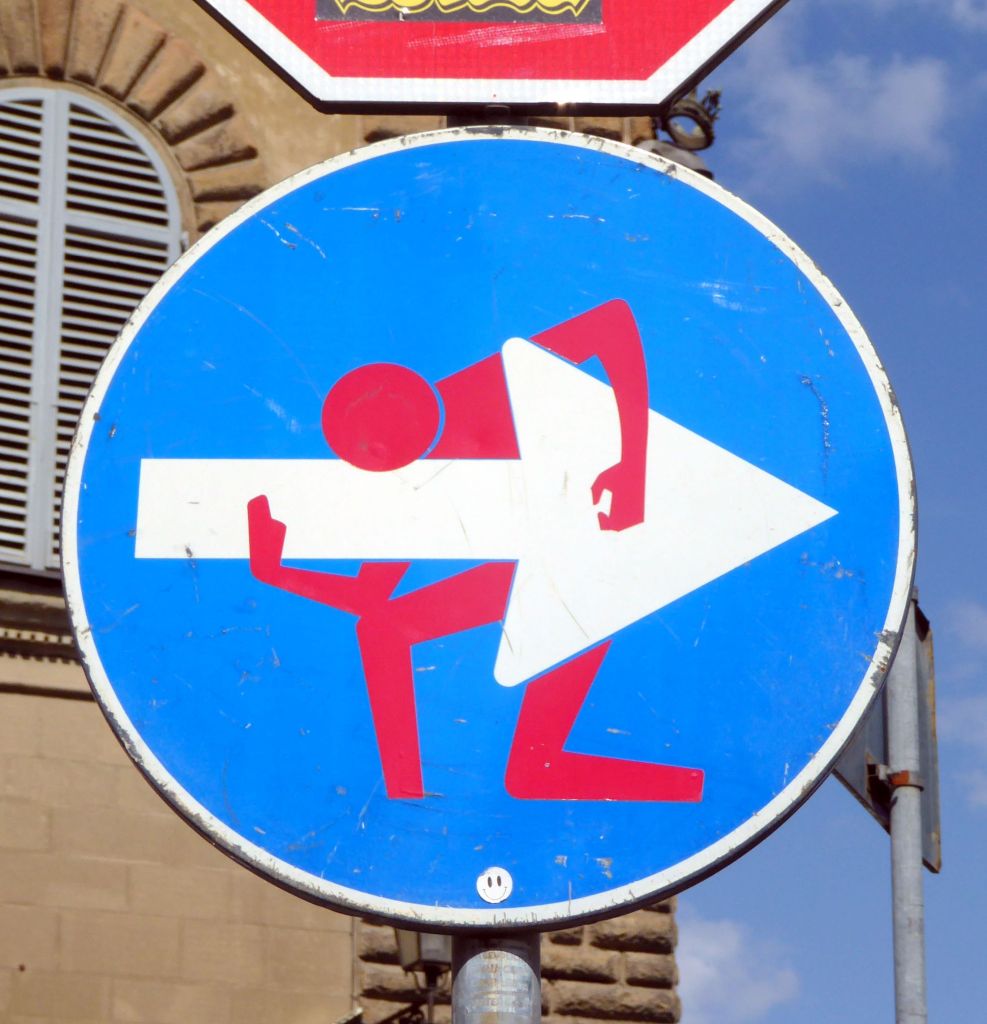
Clement “Clet” Abraham is a wildly popular local artist who became famous by adding stickers to existing road signs and turning them into art. He has done this all around Florence.
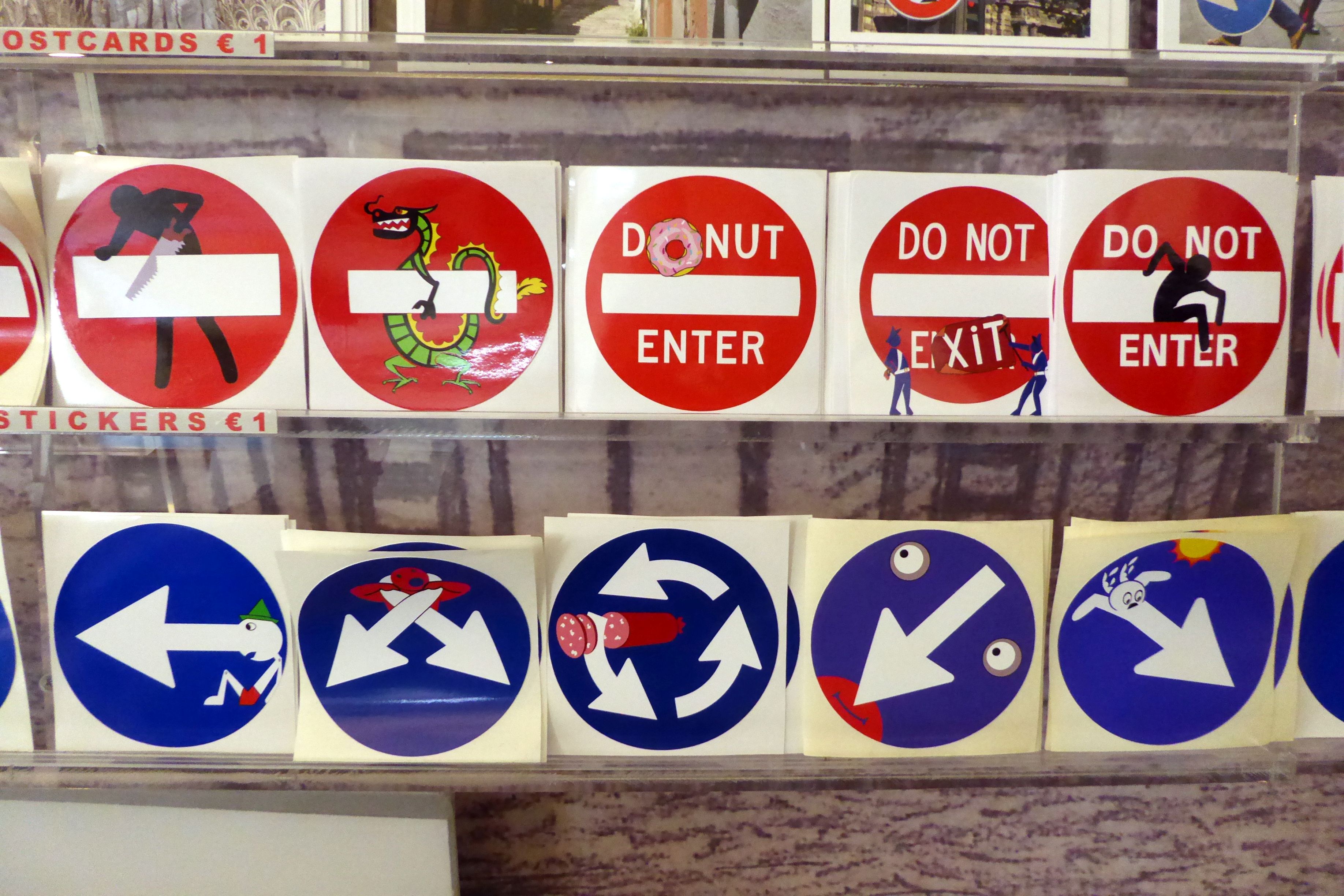
Clet has become so popular, he opened up a shop at his gallery where you can purchase all sorts of collectibles and gifts that depict his creative road sign alterations.
Clet was chosen to create a sculpture for this bridge.
The line to get into the museum was horrendous!
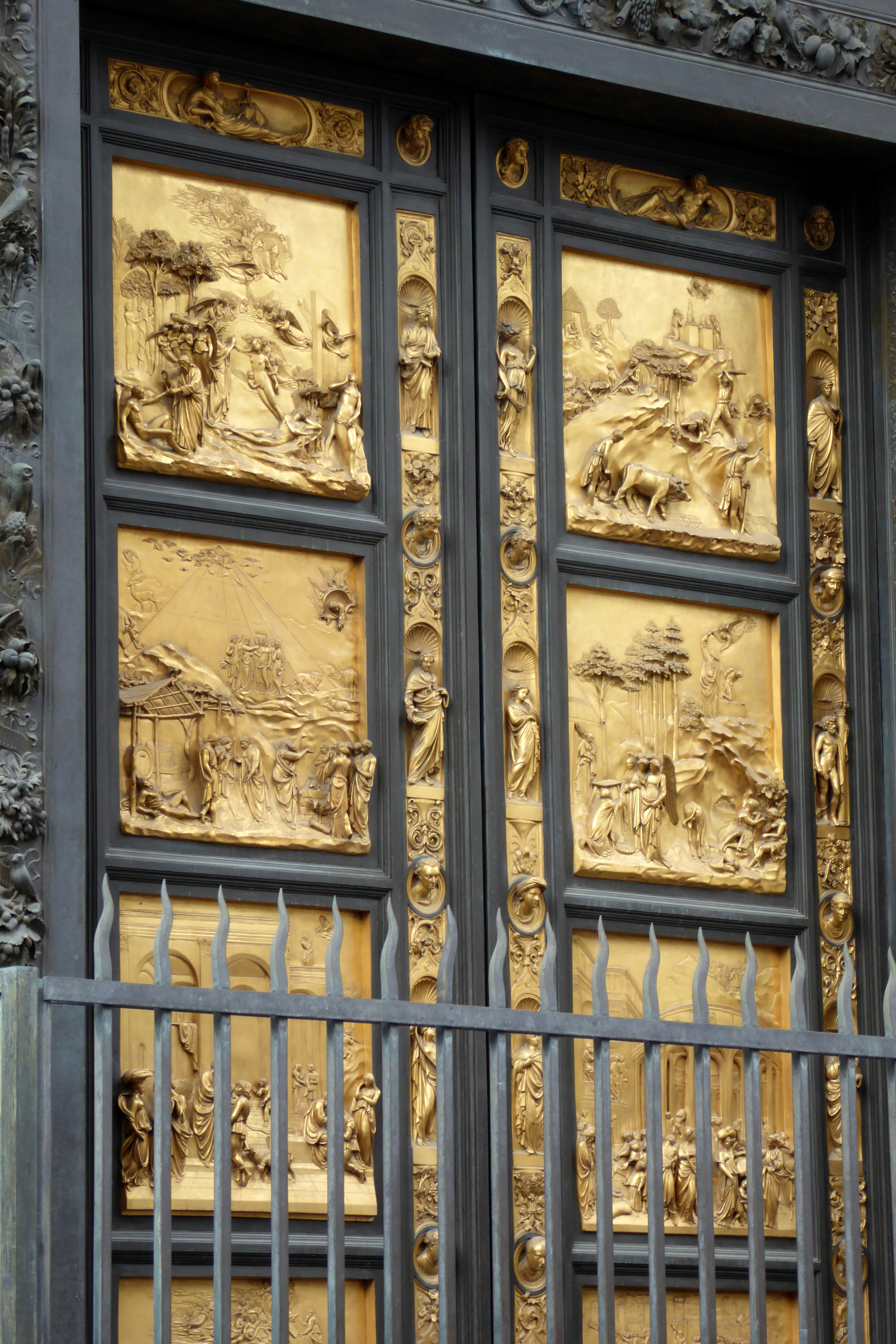
“Gates of Paradise” date back to the 1400’s
A rowing competition in the river

Coming up next: CHIANTI COUNTRYSIDE

Note: If small group travel is of interest to you, I highly recommend Overseas Adventure Travel (OAT). Although Bruce and I travel together, they do not charge a single supplement for those who travel on their own. Singles also get their own room at hotels. If you book, you can get $100 off your trip by providing my name and customer number (Elaine Krugman, #3018126) as the person who referred you. I will also get $100 off future travel– a win-win!

ITALY #11: LOVELY LUCCA (CONTINUED)

Although Bruce and I had walked several streets of Lucca’s historic city center as well as the wall surrounding it, having a guided walking tour was a wonderful way to get a more in-depth look at this beautiful city.

(For all pictures, click on the image to see full screen view.)
Take the perimeter walls, for example.  I knew they dated back to the 1500’s, but I didn’t know the walls were once hollow and filled in the early 1800’s.  Then, in the 1900’s, car races were held on them! The walls are no longer a race track, but they are used for walking, running, and cycling.

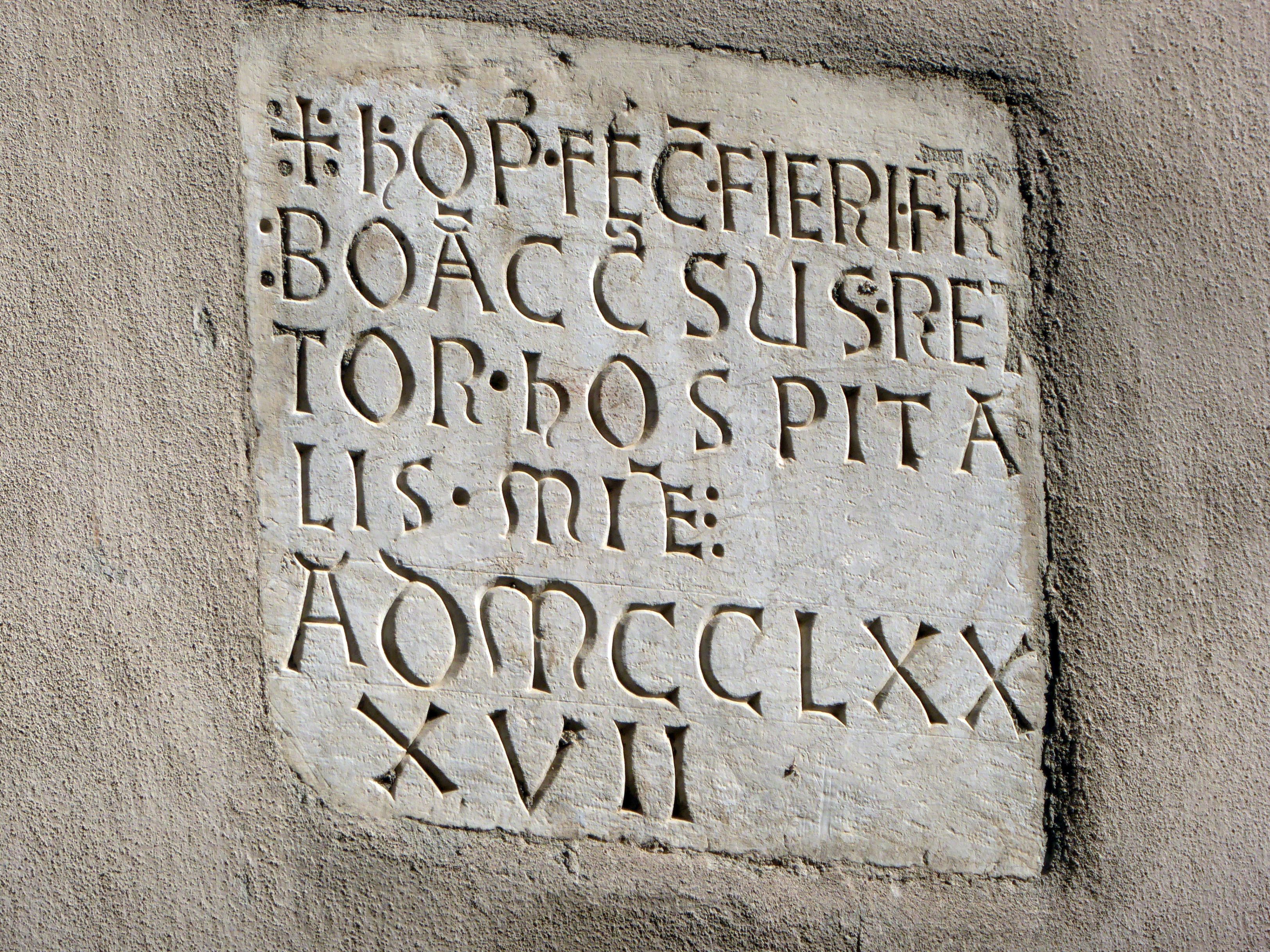
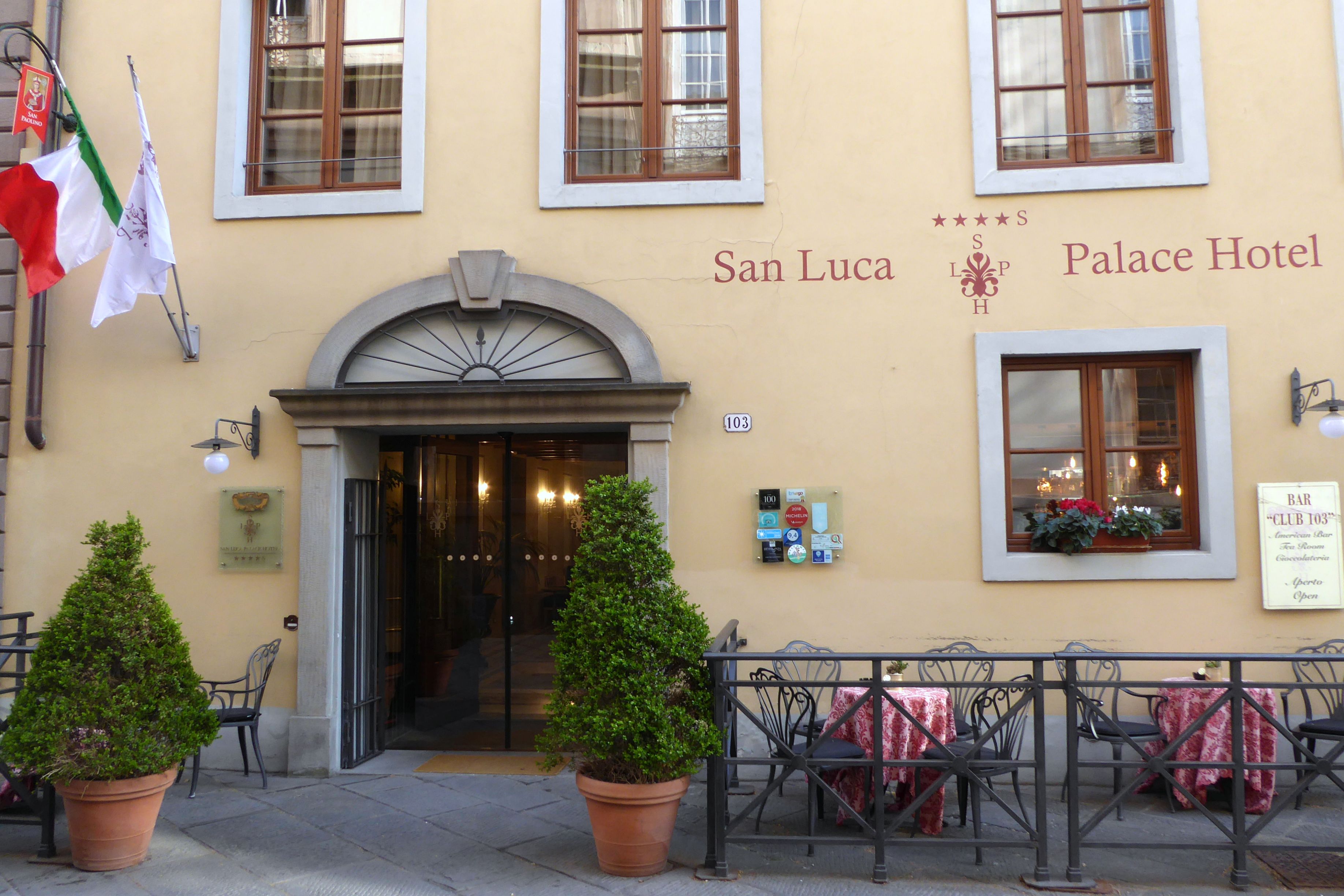
The San Luca Palace Hotel, where we were staying, also had some interesting history.  Back in the 1200’s, it was a hospital.  After being abandoned and sitting empty for a very long time, it was renovated and opened as a hotel in 1999.  The building across the street was also part of the hospital, and the original sign can still be seen on the wall stating it was built in 1257.

Within the walls of Lucca, although the population is only about 10,000, there are 100 churches, although most of them are currently used for other purposes.  Why would such a small population need so many churches?  Our guide, Simone, explained those churches once served as a place people could come for assistance when they made the pilgrimage to see the Holy Face of Lucca at the Duomo di San Martino (Cathedral of Saint Martin).  So many people had made that pilgrimage that the cathedral was overwhelmed.  The churches provided shelter and a place to recharge spiritually and physically.

Simone with a photo of the Holy Face of Lucca, the sacred wooden crucifix

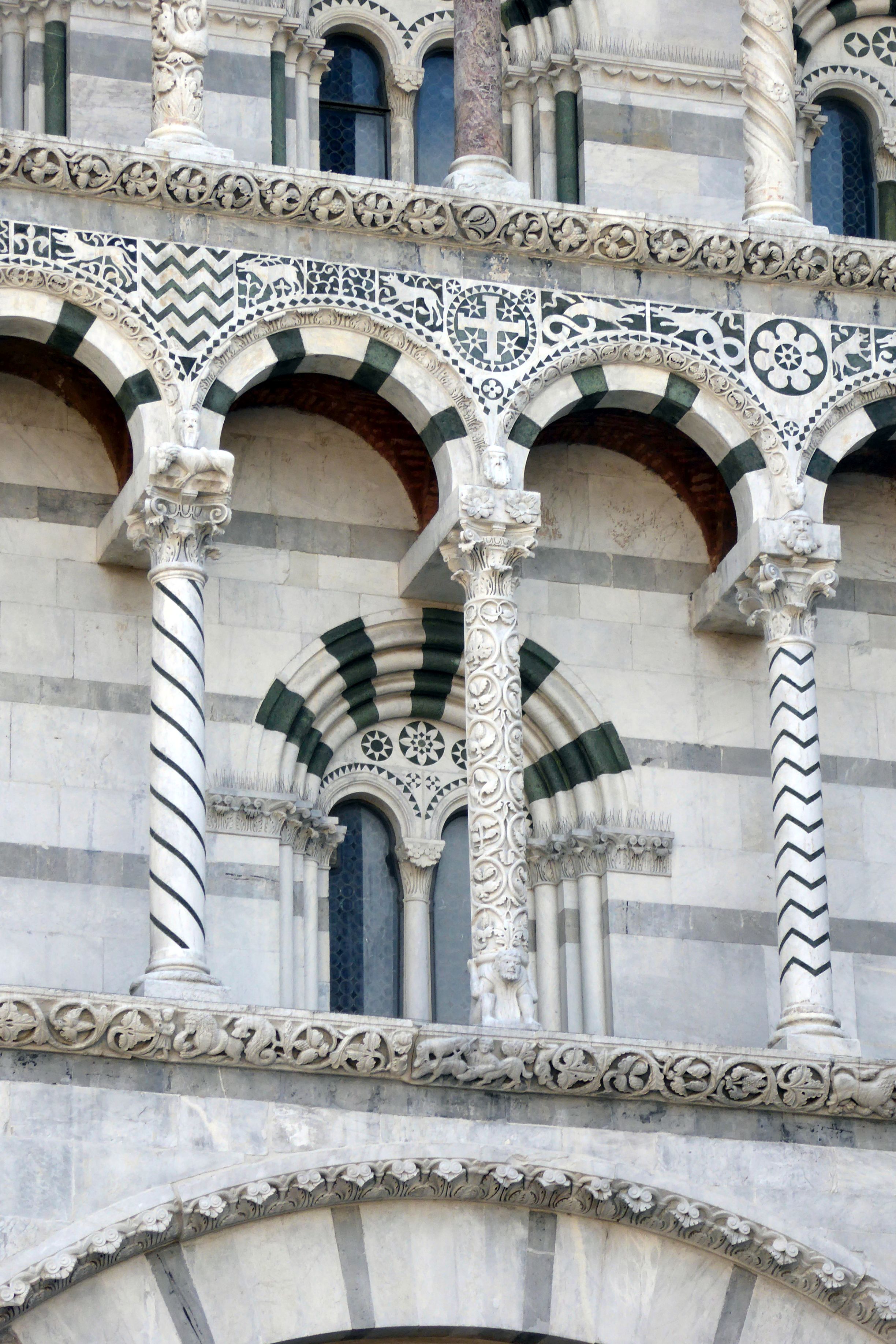
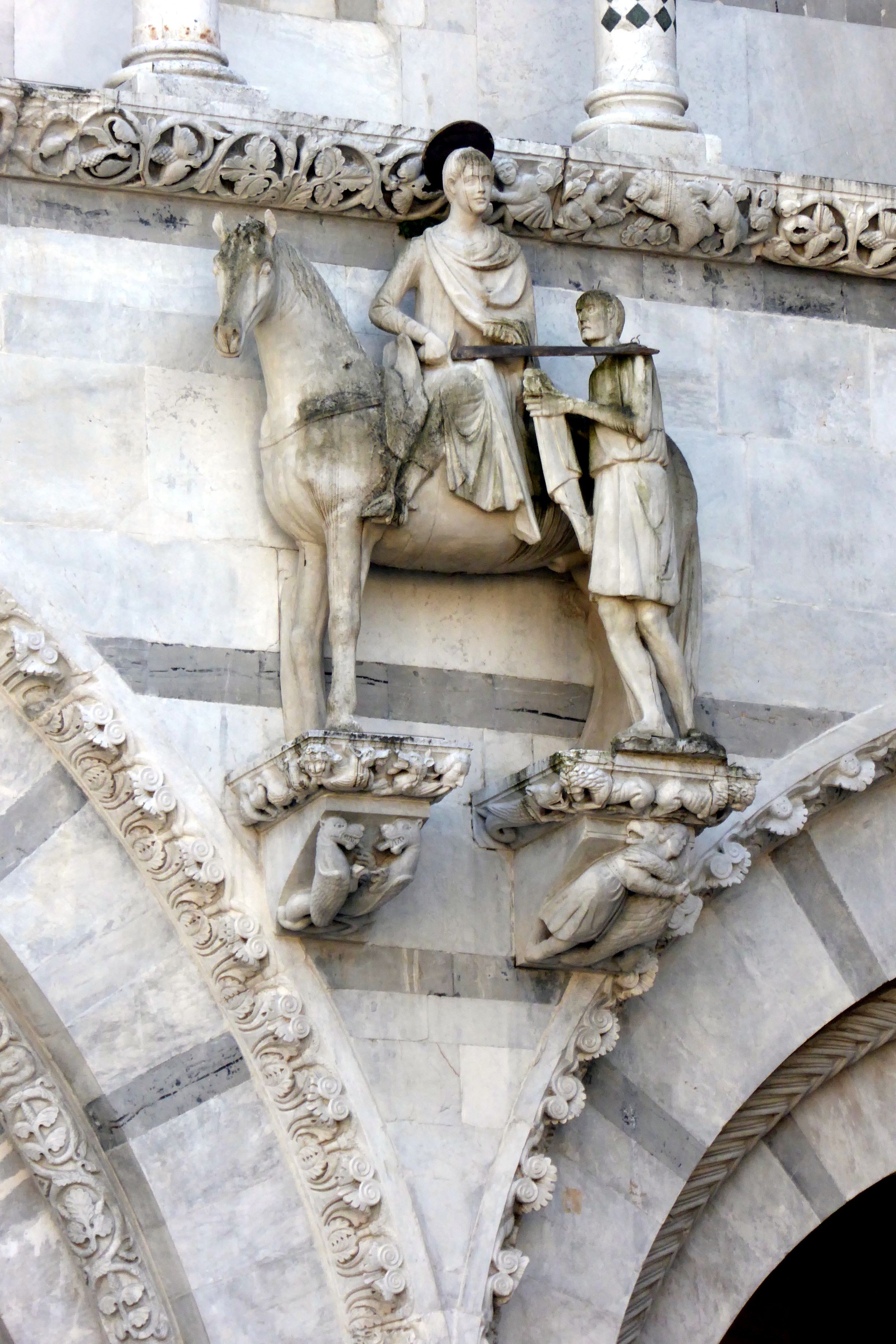
Originally built in 1063, the front of the cathedral was rebuilt in 1204.

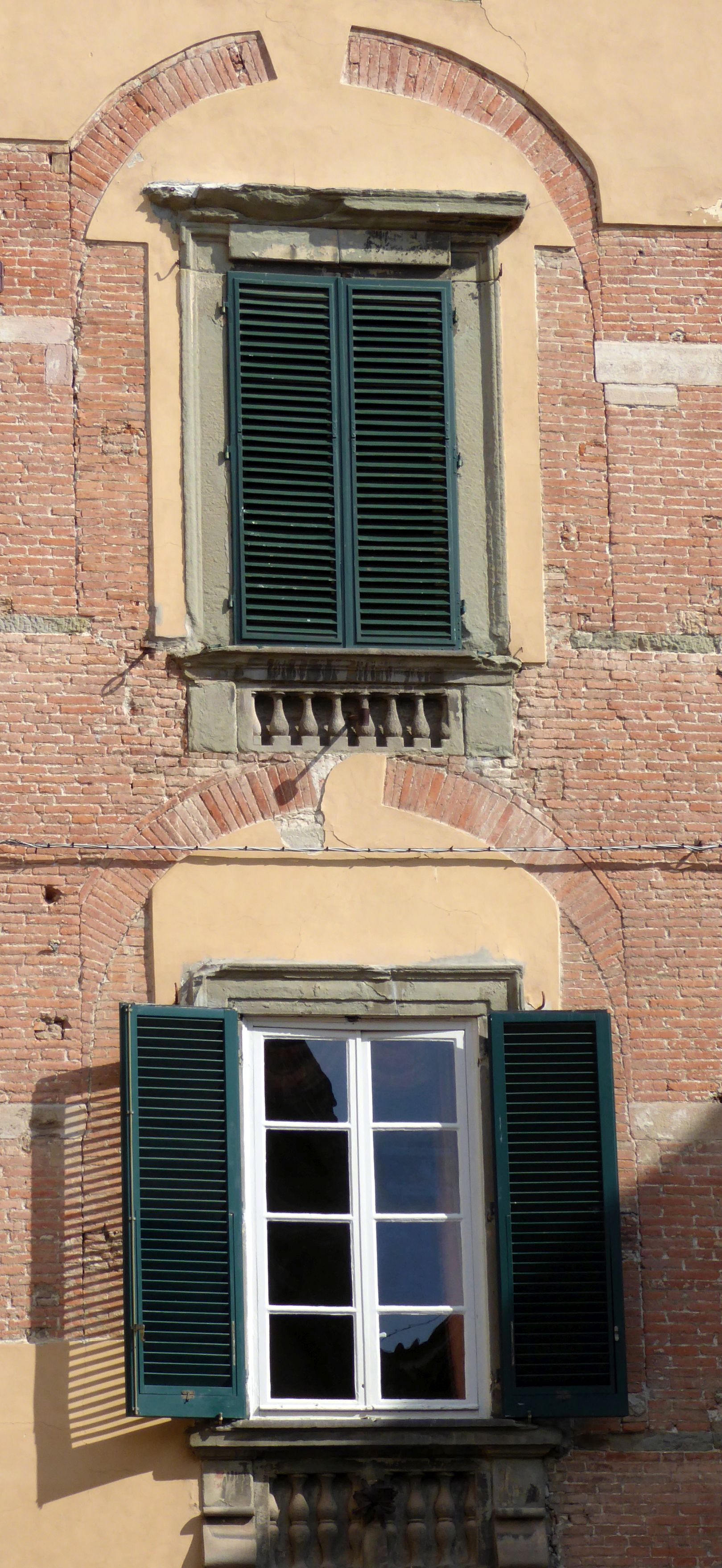
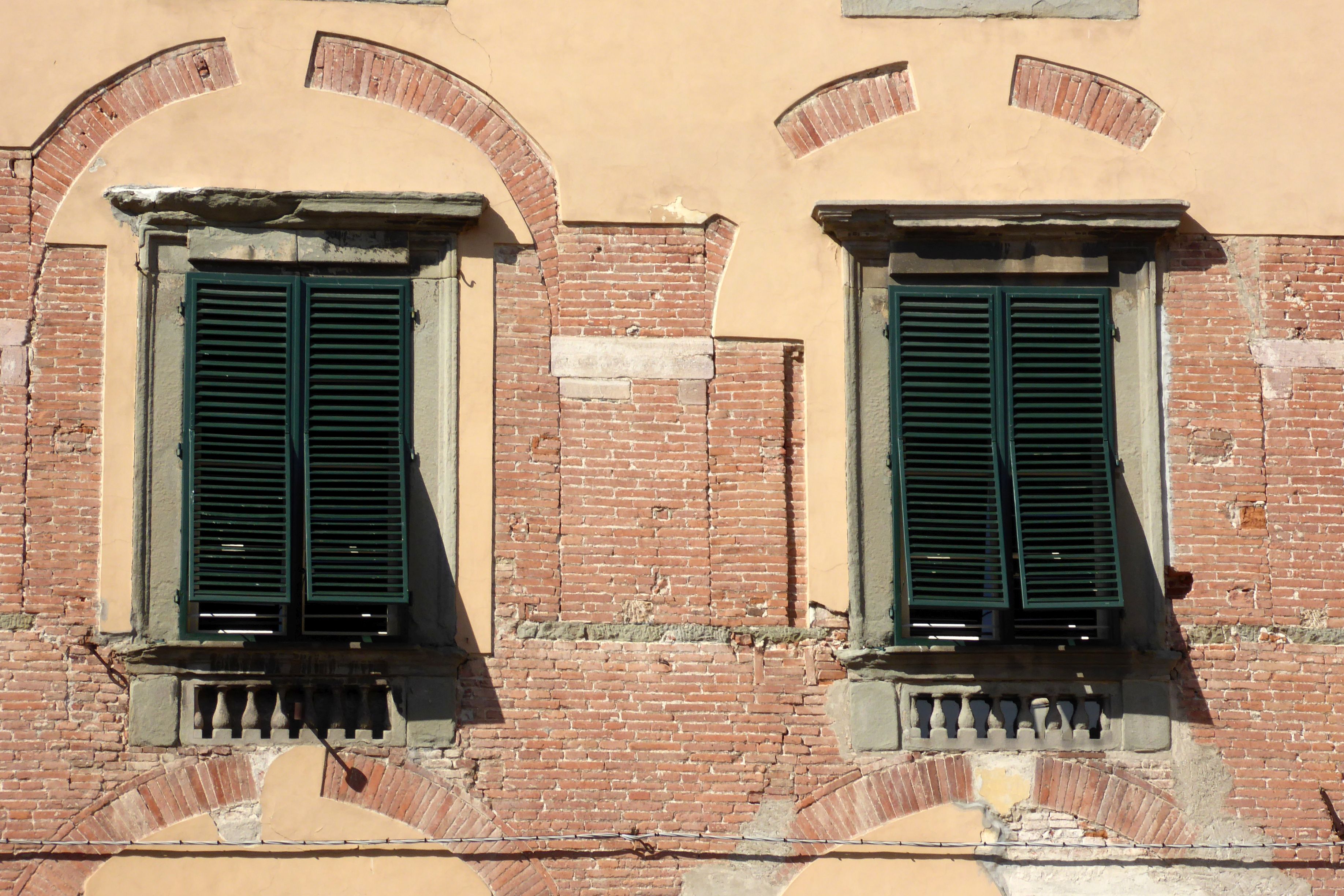
As we continued our walk, we noticed that many of the buildings had plaster facades with some exposed brick showing, much like we saw in Bologna and Parma.  Originally, the buildings of historic Lucca were made of brick; however, they have been covered with plaster and painted with warm colors as a way to unify and brighten the town.

These are scenes from our walking tour and our afternoon of free time:

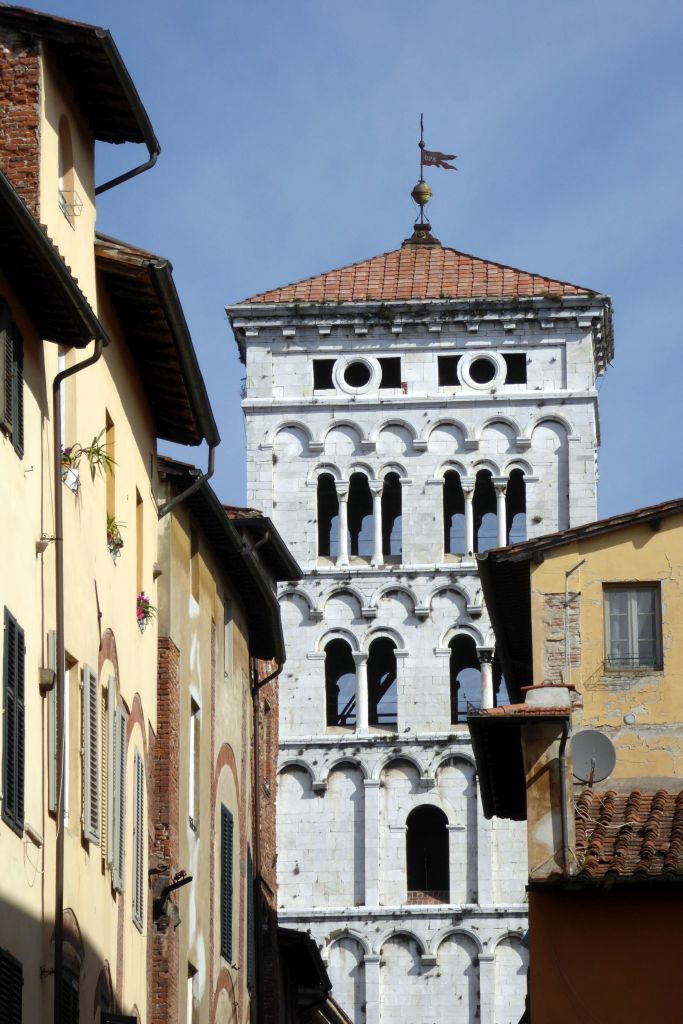
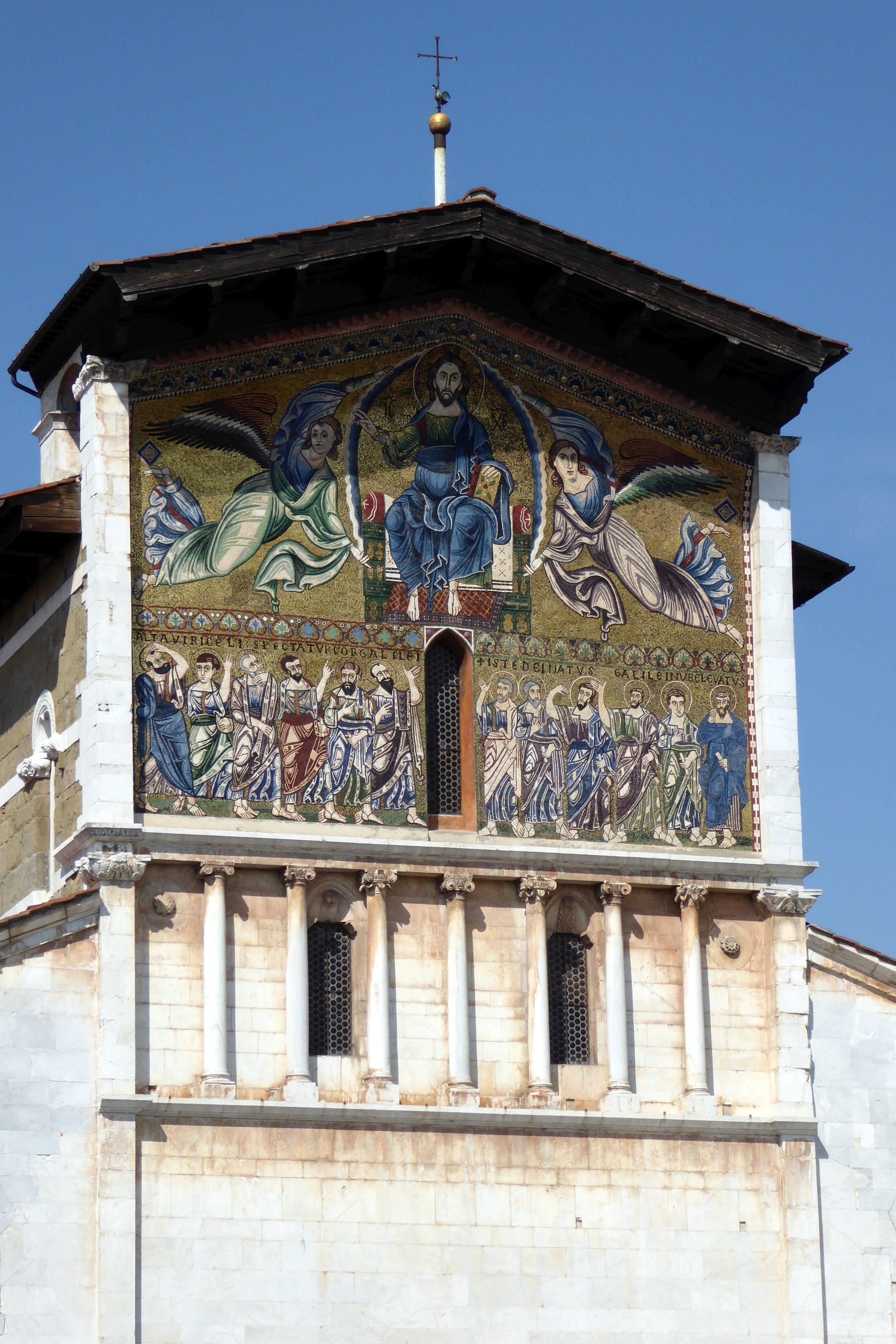
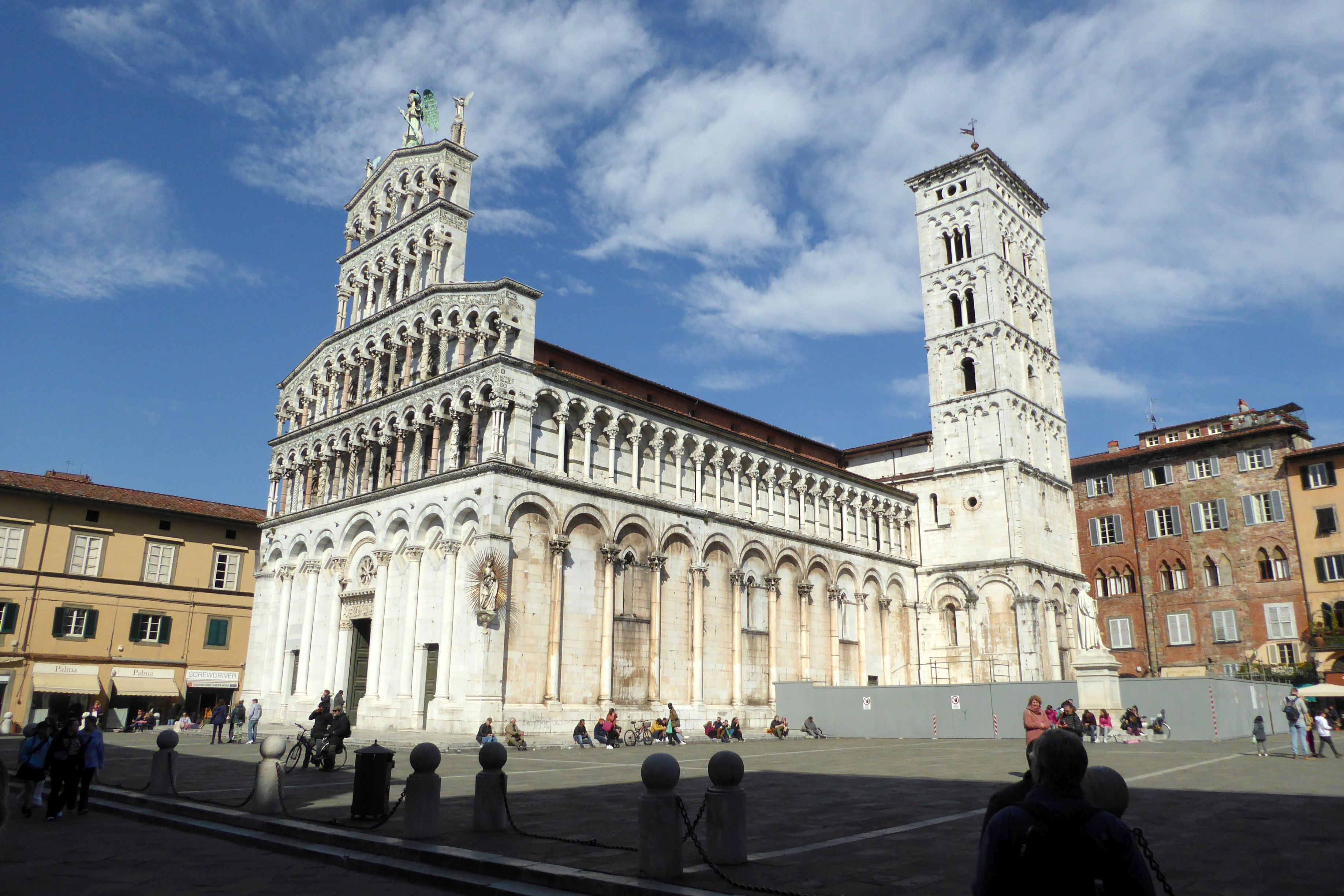
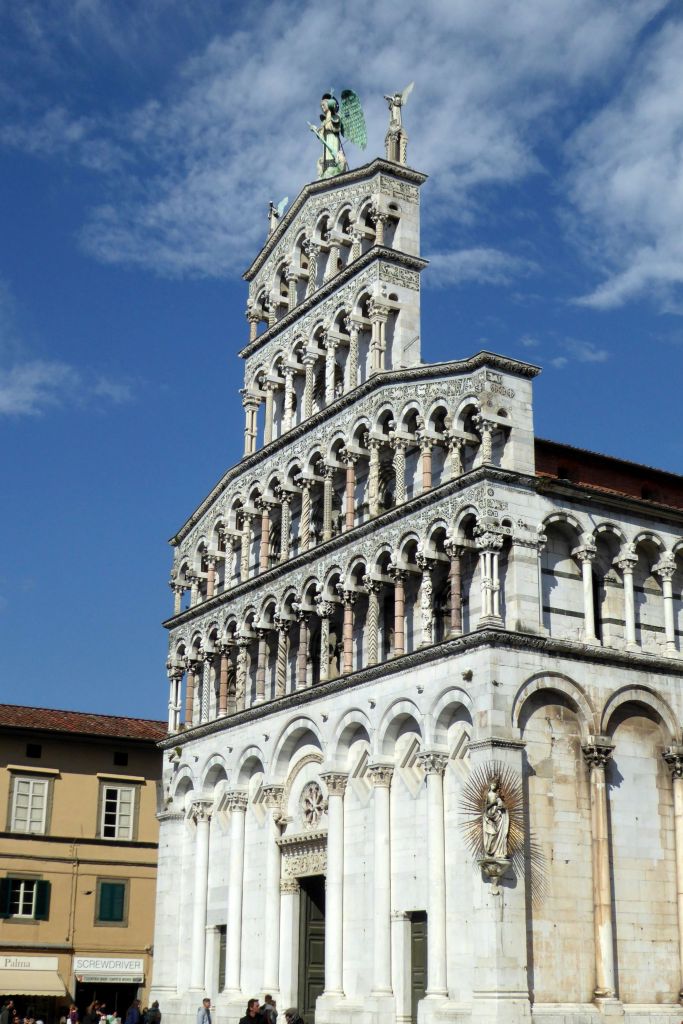
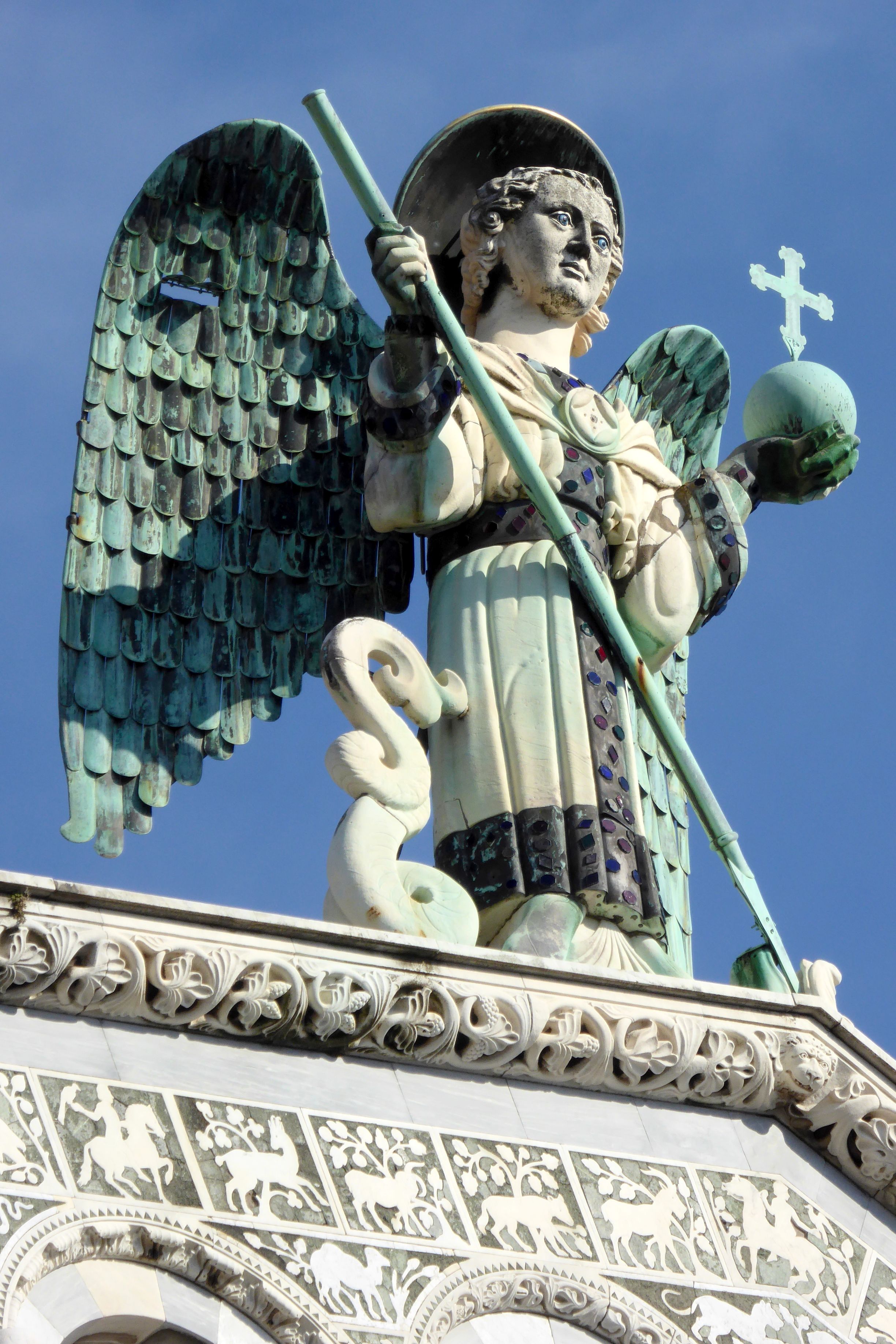
San Michele in Foro
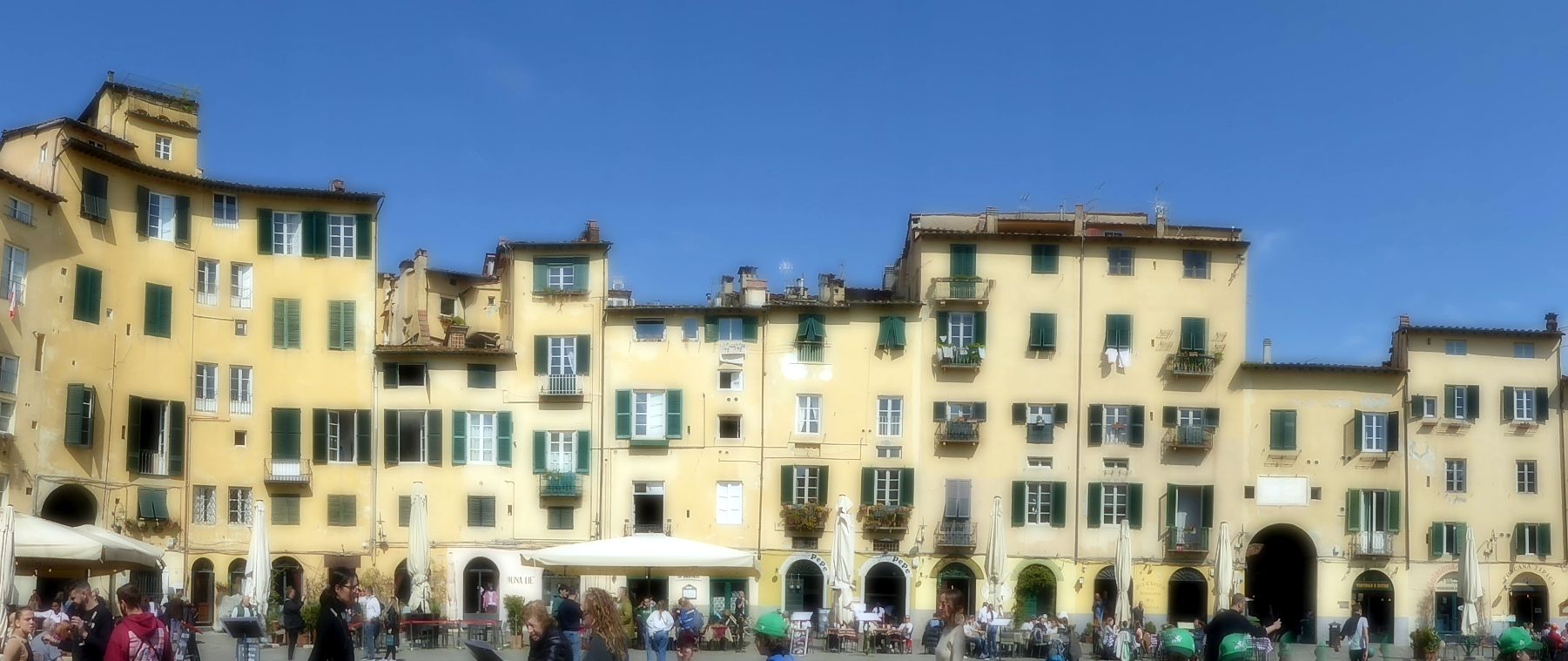
Piazza Dell’ Anfiteatro:This photo is a big fuzzy due to the panorama mode malfunctioning on my camera, but I wanted to give you an idea of the piazza’s charm.
This is a picture I took when I visited Lucca in 2007. It was in the morning before the square got busy with tourists and the local lunch crowd.
Our guide, Simone with our tour leader, Ben.
We stopped in at Il Mercatino for some made-to-order paninis. After pointing to the ingredients we wanted for our custom sandwiches, the sandwiches were weighed and priced accordingly. I opted for pecorino cheese and sun-dried tomatoes; Bruce added meat. The sandwiches were so delicious and filling; and, they only cost about $7.50 for both!
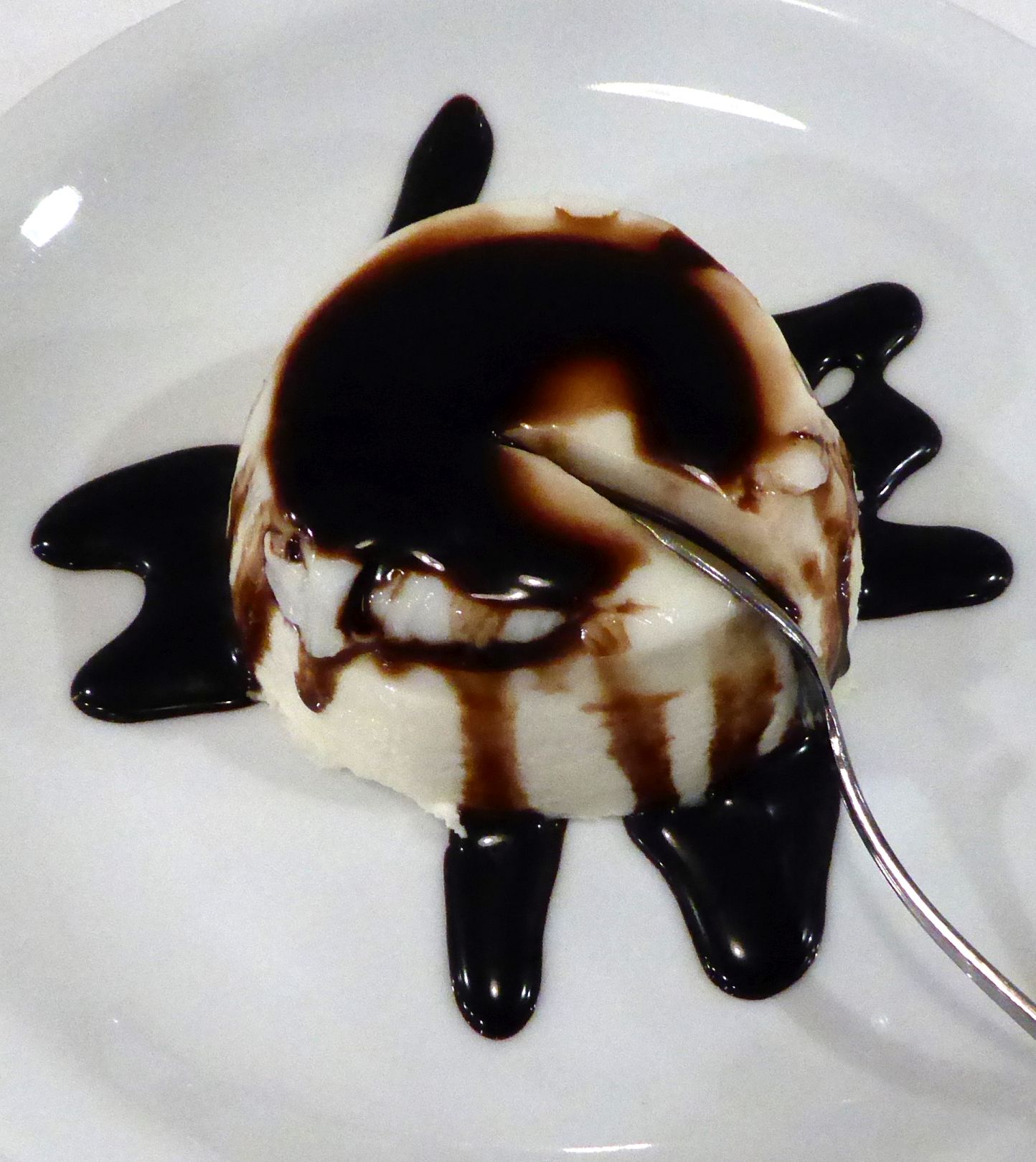
Dessert that night at…
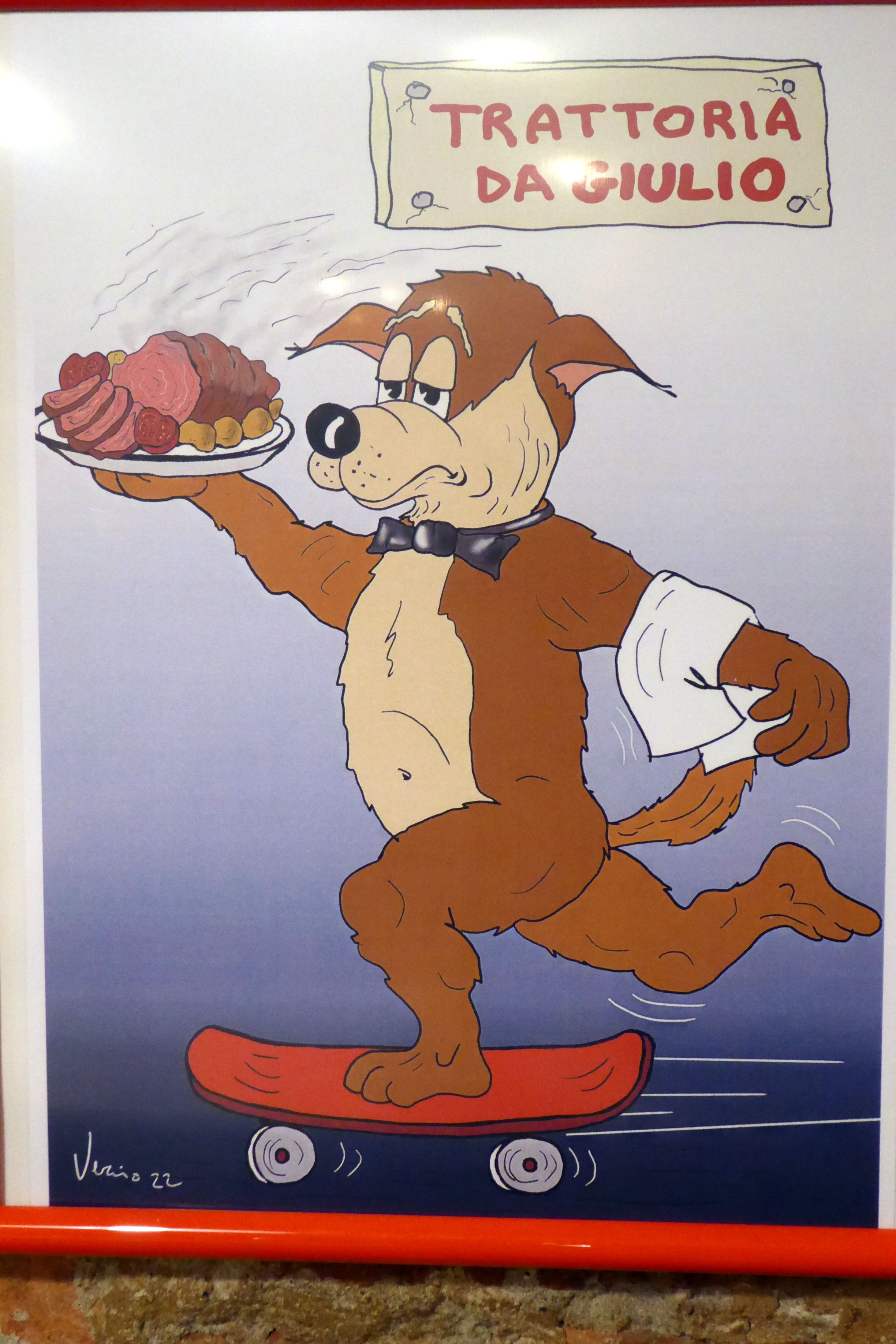
…Trattoria Da Giulio

Coming up next: FABULOUS FLORENCE

ITALY #10: CARRARA MARBLE QUARRIES & A HOME-HOSTED LUNCH

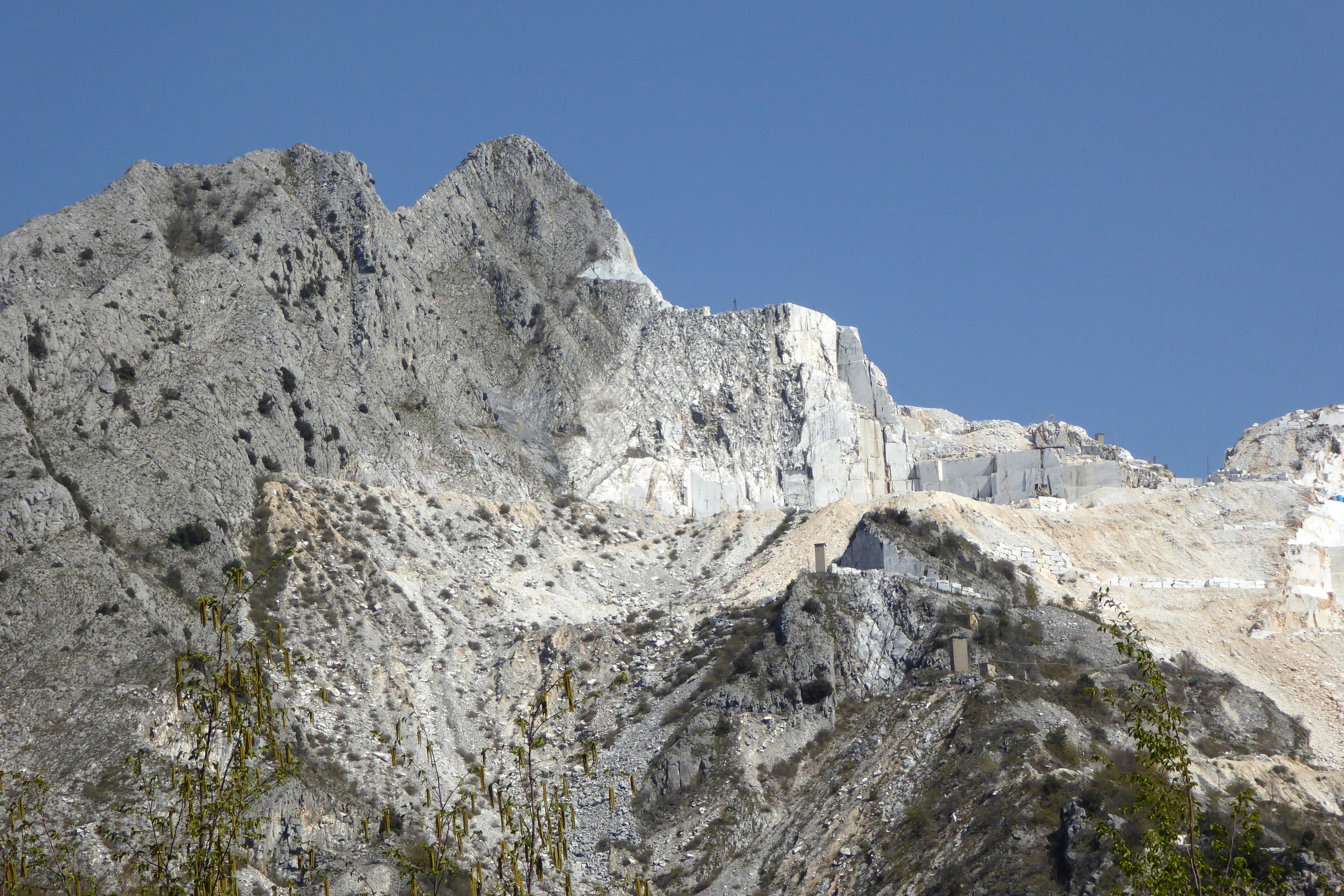
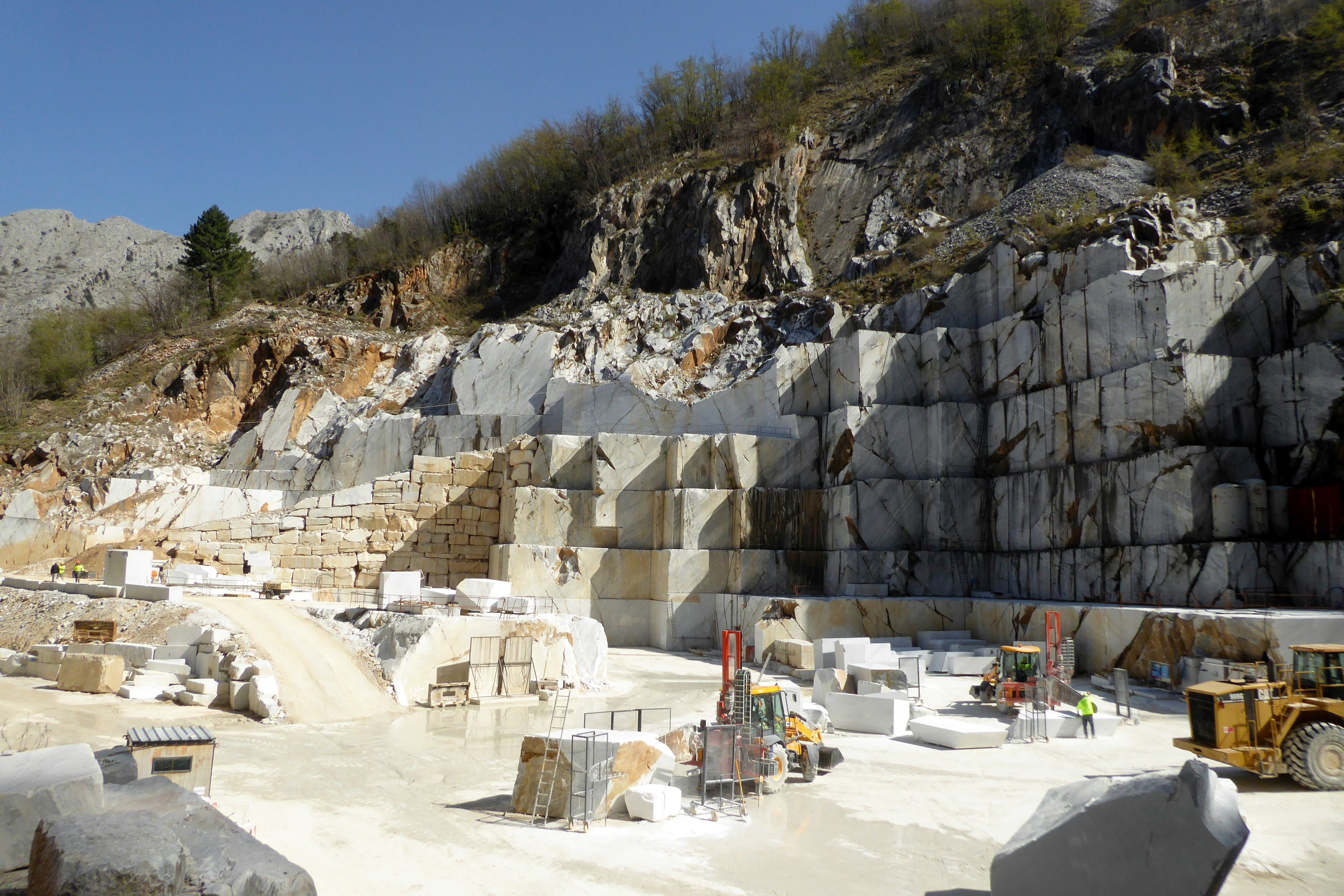
Thanks to HGTV’s Property Brothers and other home shows, Carrara marble is in right now, showing up in kitchen and bathroom remodels everywhere.  Have you ever thought about where it comes from and how it is extracted?  I hadn’t until our group visited the Carrara marble quarries. 

Situated along the Carrione River, Carrara is a town that was originally built by the Romans to house workers in the nearby quarries.  The Apuan Alps, where the marble is extracted, is located just up the windy road from town.

(For all pictures, click on the image to see full screen view.)
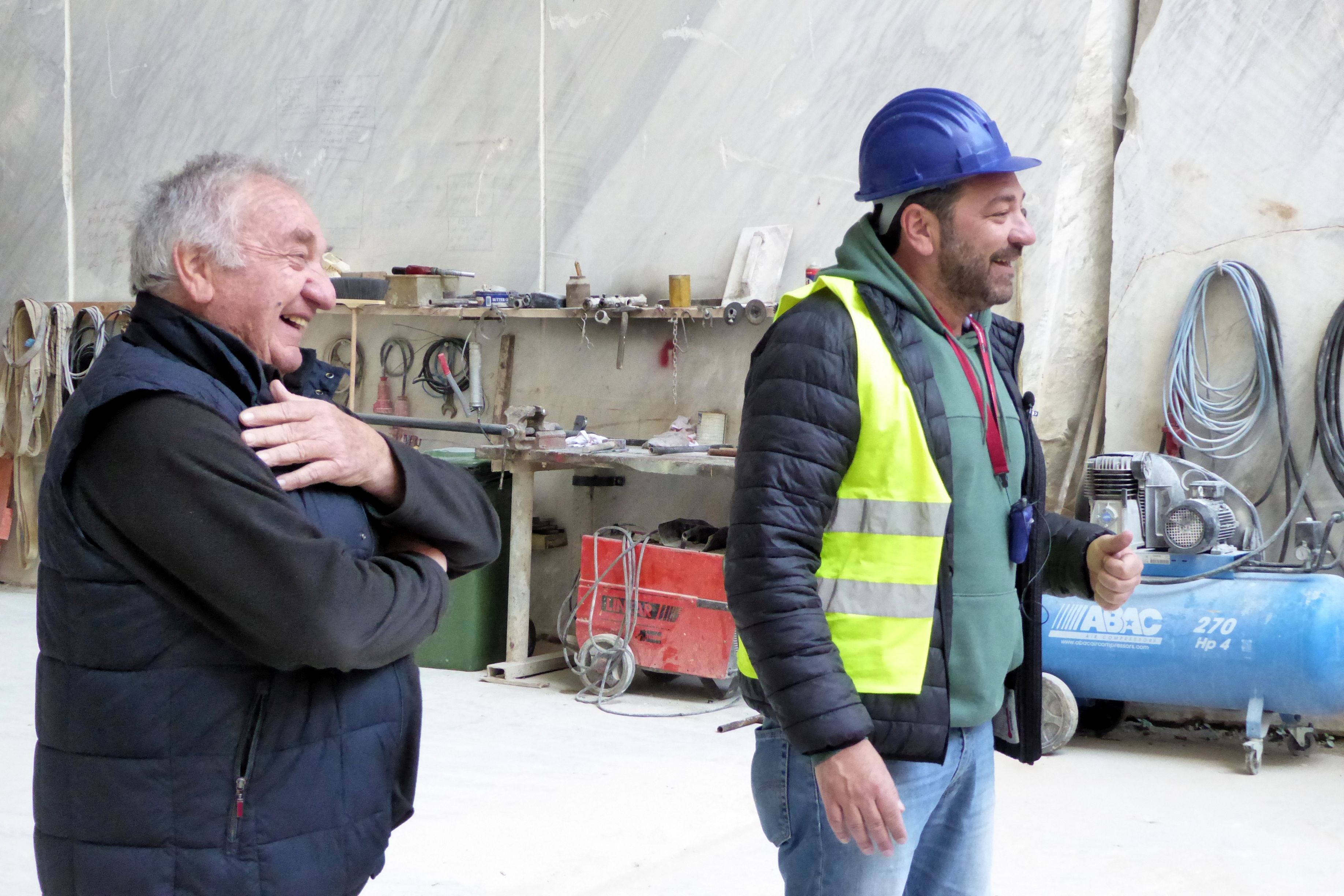
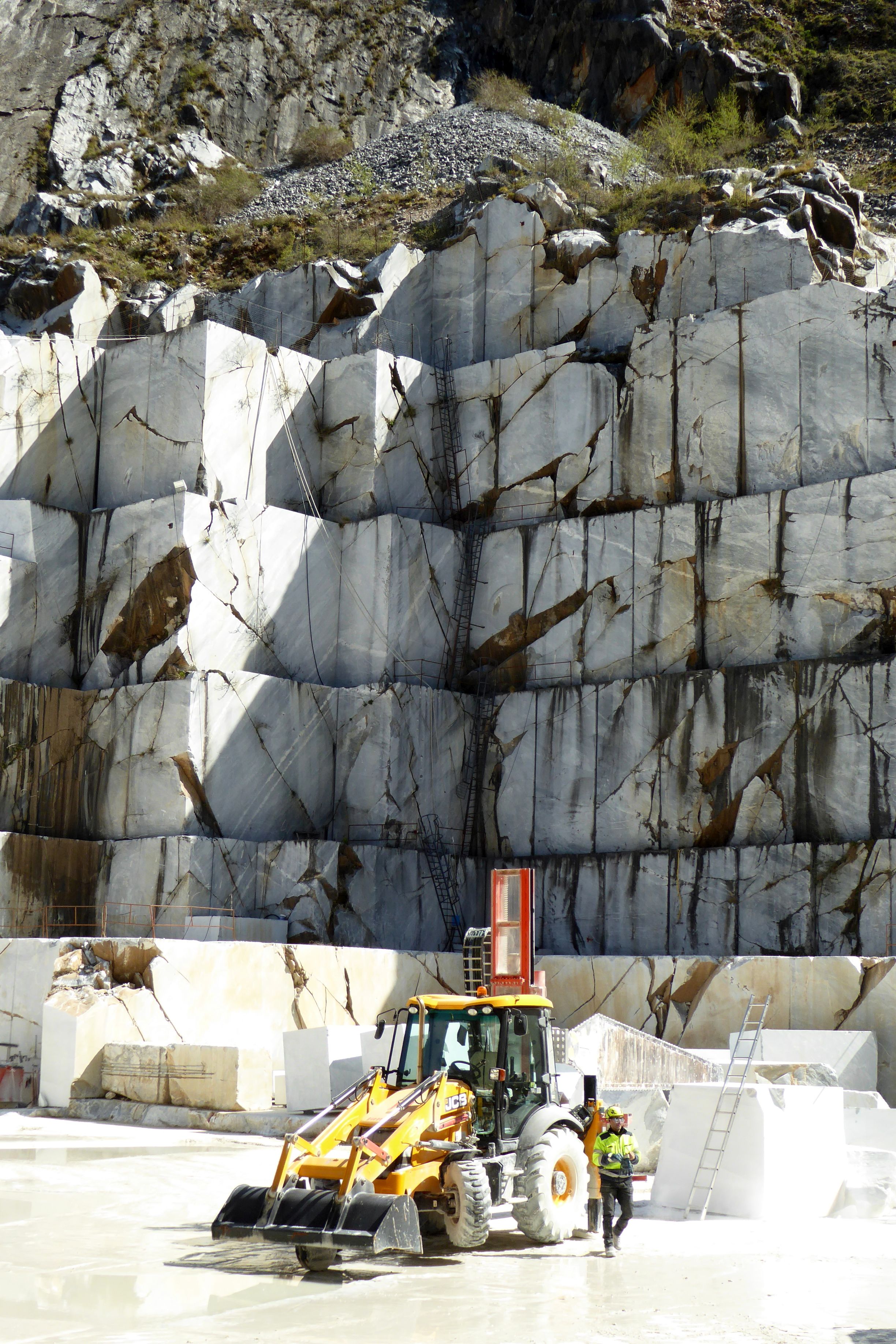
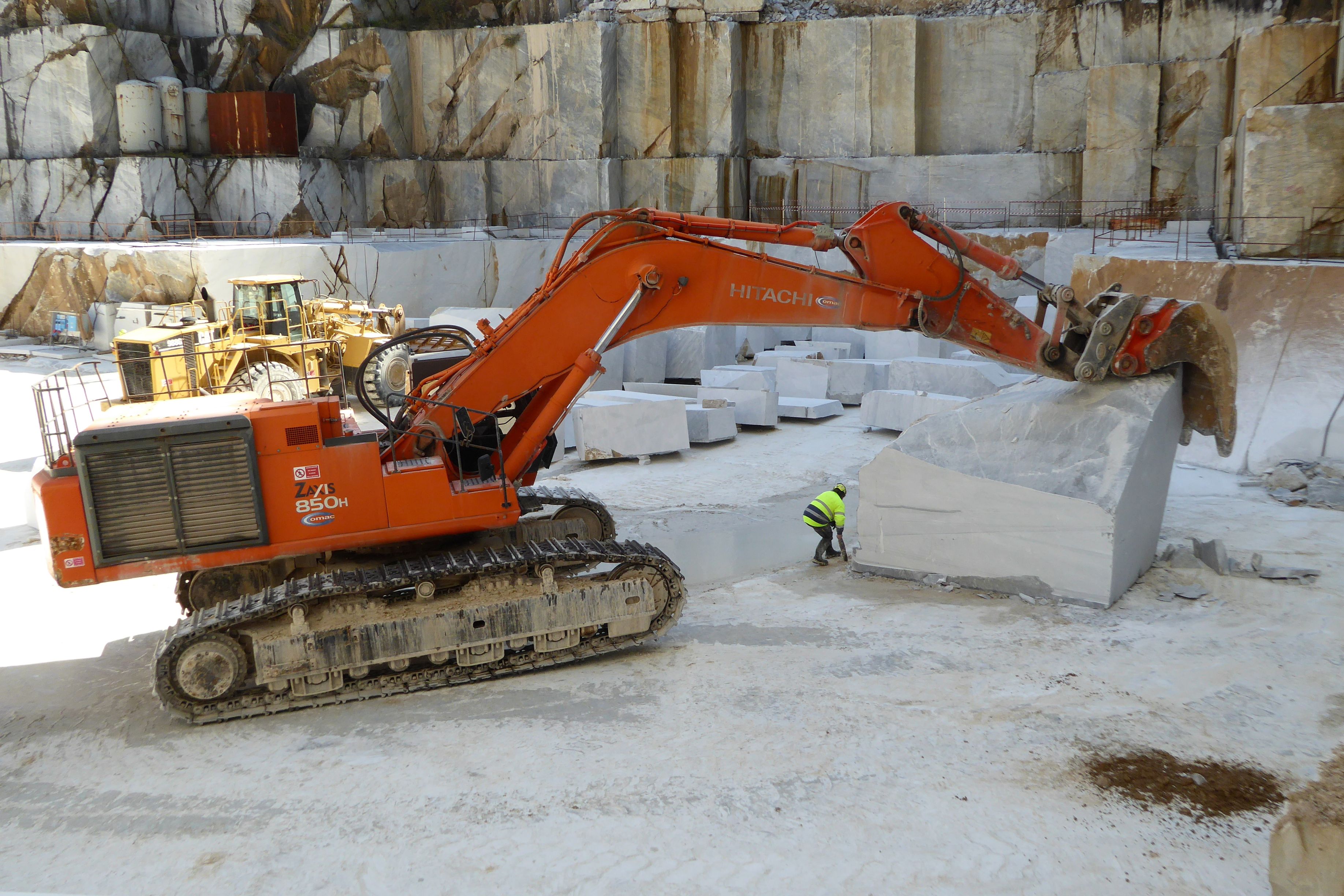
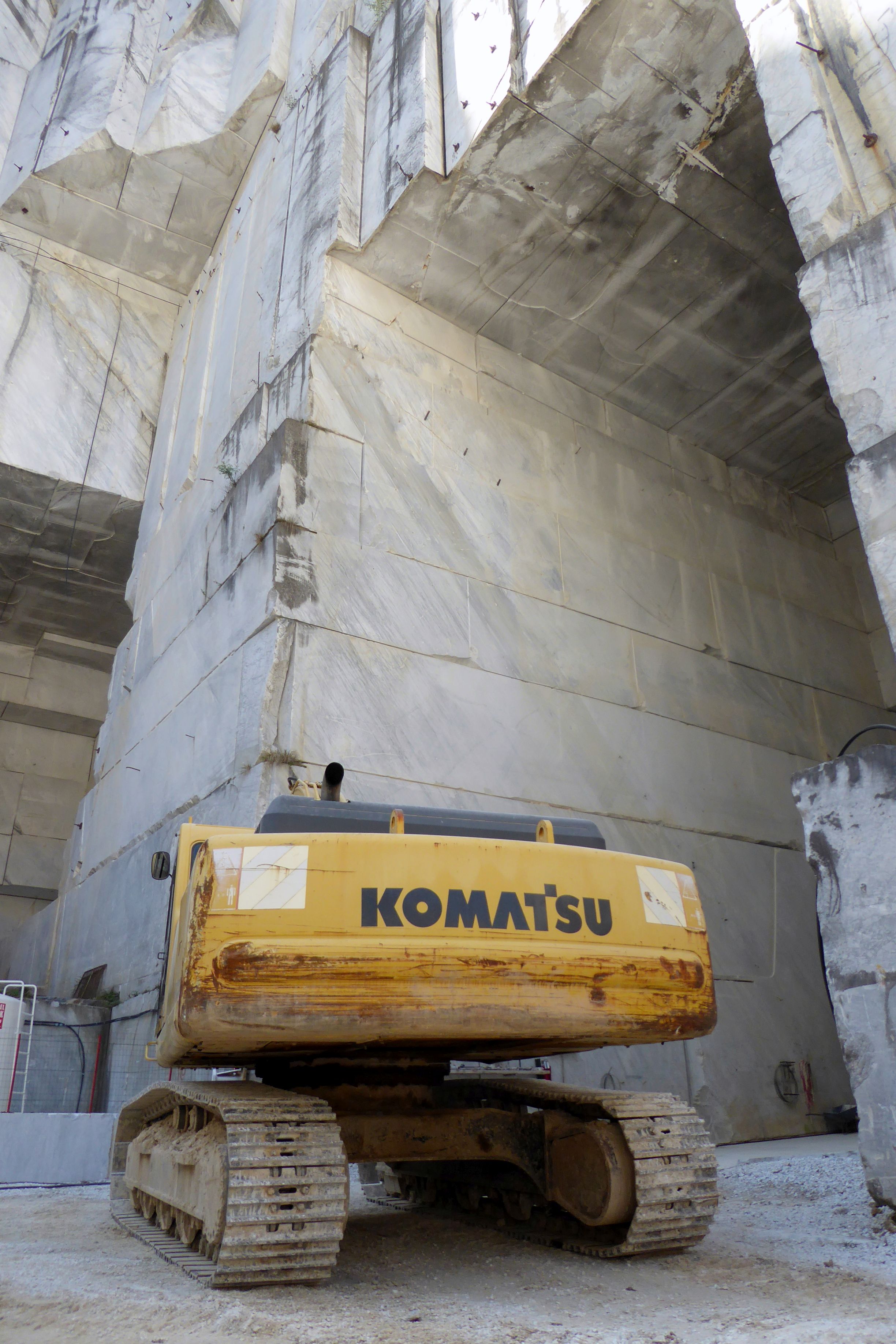
We had a behind-the-scenes look at the extraction process, and it was explained by our guide, Marco, a former worker in the quarry until his family sold it eight years ago.  His father, Luigi, retired long ago; however, he still visits the quarry regularly, as it was his life before he sold the business.  It was all he knew for 48 years of his life.

Luigi and Marco Bernacca
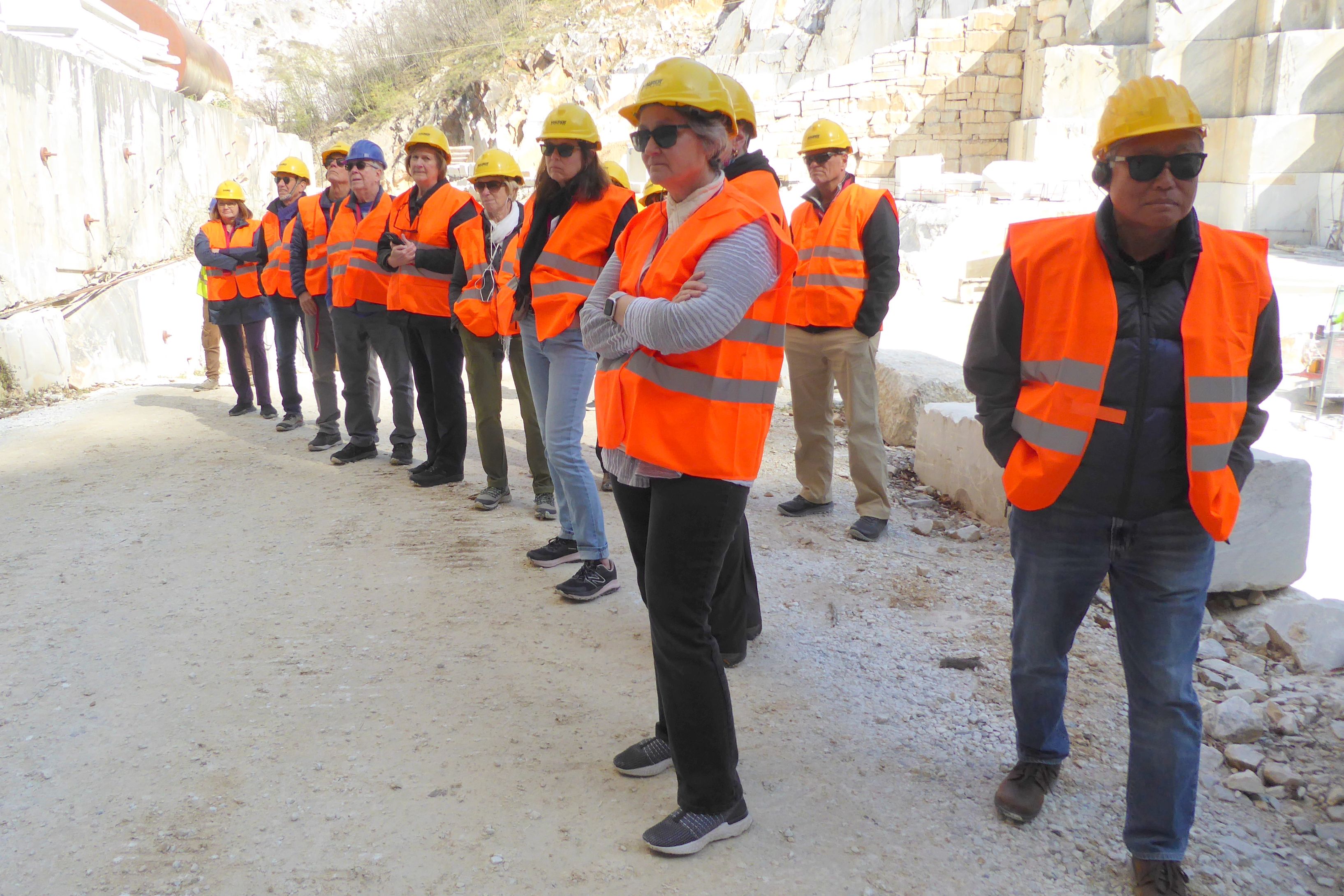
Our tour group
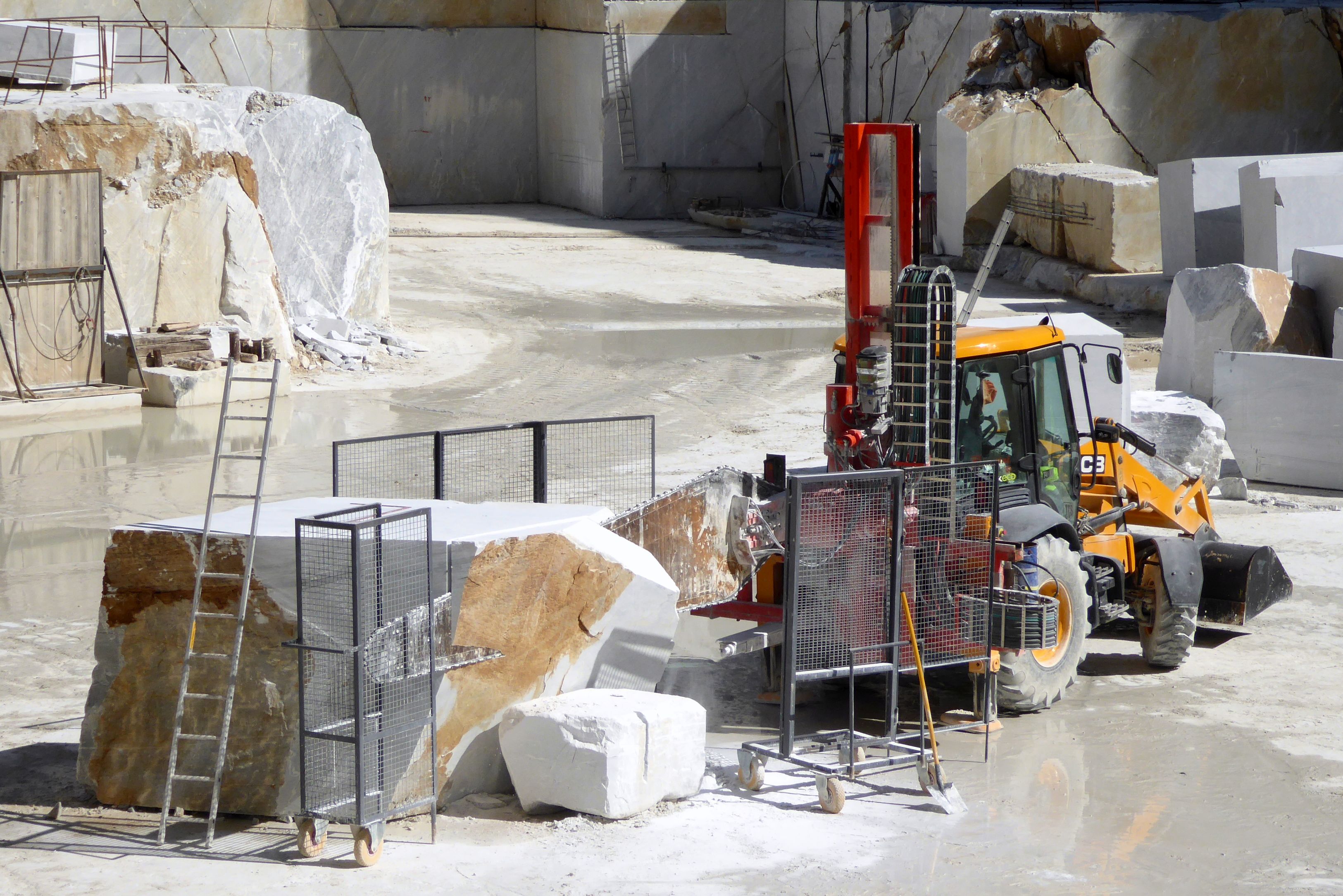
Cutting the marble
The block of marble this bulldozer moved was estimated to weigh 50 tons.

Carrara marble may be a luxury material, but the process to produce those beautiful countertops is far from luxurious.  The work is hard, dangerous, dirty, and unhealthy.  The quarries are the area’s only source of employment, though, so the workers accept the risks, including the high rate of silicosis and cancer from breathing in the dust and chemicals of the mines.

Speaking of marble dust, did you know it is used in toothpaste, shiny paper, cleaning products and even the Tums you take for an upset stomach?  Check out the ingredients label on Tums; those tablets are made of calcium carbonate—marble dust!

Back to the business of mining marble, the quarries used to be owned by the locals; however, they are now owned by the Chinese and others from outside of Italy.  Globalization of the industry has made it impossible for family businesses to compete, especially since the quarries are taxed 10% of the average value of the extracted marble, which is of varying qualities.  The price per ton a quarry can sell their marble at ranges from $80 to $3,000 depending on the quality.  When you think about the 15,000 tons of marble extracted on a daily basis and being exported, that’s a lot of money leaving Carrara.

What baffles me is the 15th-century rule, still in effect today, that stipulates that whoever finds marble in the mountains is entitled to keep the marble and establish a quarry on the premises, without having to pay taxes to the town or municipality.  As a result, the quarry owners continue to get richer and richer, while none of the wealth generated by the quarries gets invested back into the town.  This explains why Carrara is the poorest town in Italy!

Currently, 70,000 people live in Carrara, and only 1,000 of them work in the quarry, which used to be the second most important industry.  In the past, the marble was worked from beginning to the finished product, but now, it is sold and exported after extraction.  This has caused the extinction of the remaining industry and a high rate of unemployment.  Verona, Italy is where the marble is worked now.

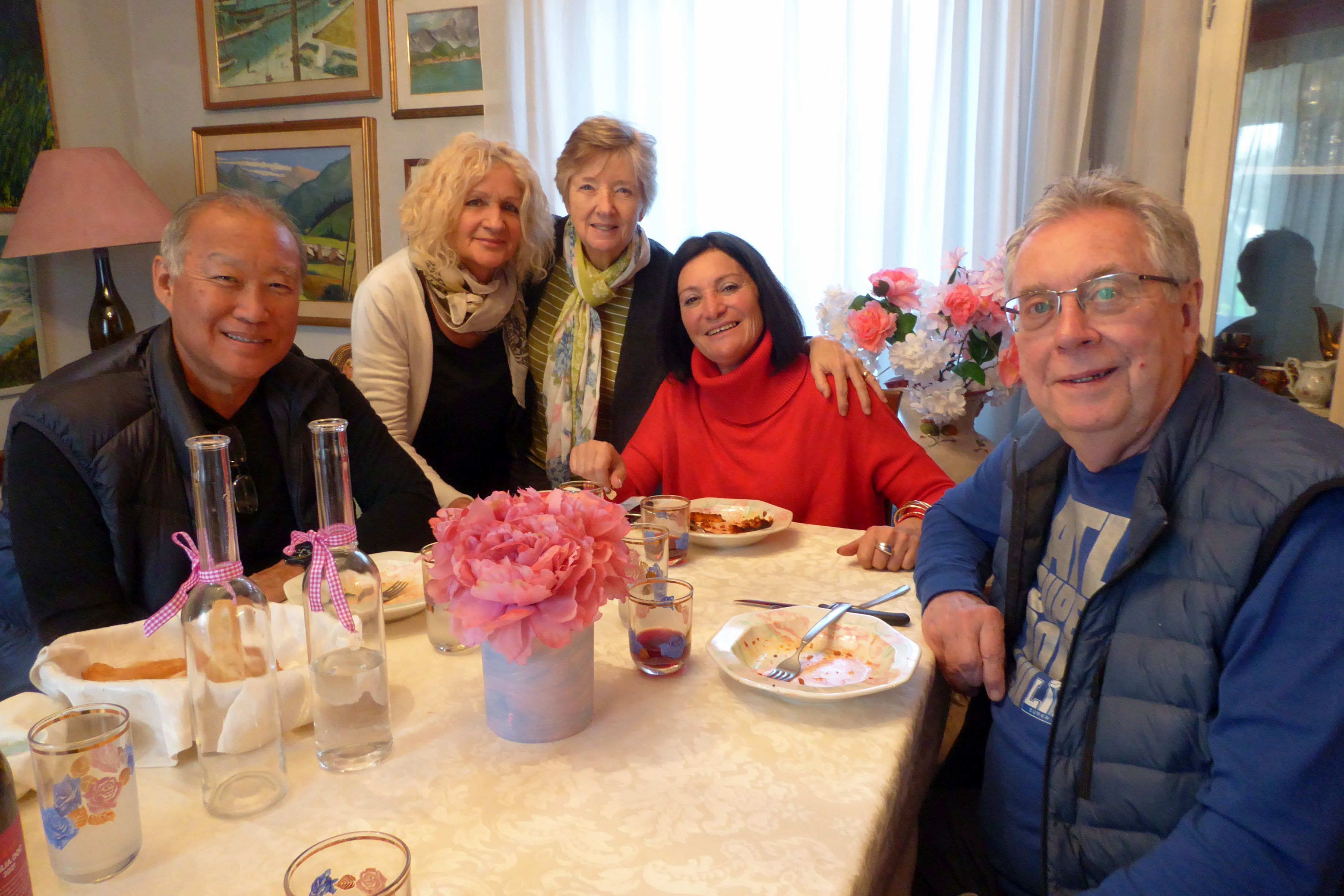
Following our tour of the marble quarry, our group of fifteen was divided up to visit three homes in Marina di Carrara for a home-hosted lunch.  Bruce and I were assigned to Nadia Pailla’s home, along with Martha and Craig.  Nadia didn’t speak English, so Annita served as our translator.

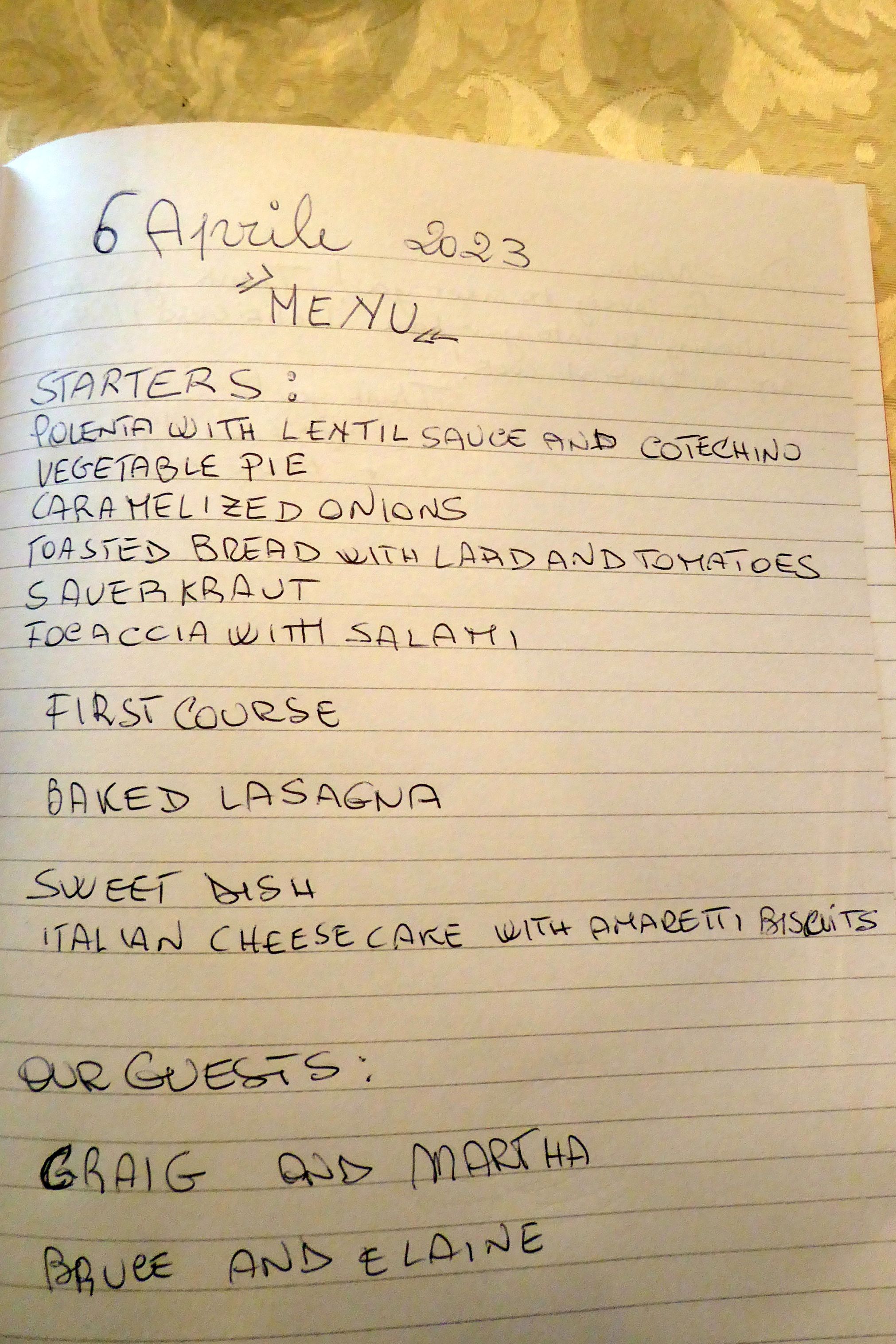
We were treated to a lovely home-cooked meal, as detailed in this menu:

Craig, Nadia, Martha, Annita, and Bruce
Ben took a photo of us before saying, “Ciao!”

It was a wonderful opportunity to get to know locals of Carrara, learn more about life in their town, and enjoy local cuisine.  Our hosts got to know us as well!  Nadia was curious about our families and how we liked Italy.  She especially enjoyed the gifts we gave her.  Martha and Craig had brought macadamia nuts from Hawaii where they live, and I gave Nadia some photo notecards I had made with photos I had taken in the U.S.A.  Bruce had brought some fused glass earrings he had made, but neither Nadia or Annita had pierced ears.  (We’ll bring necklace pendants next time we travel!)

Our time with them was so enjoyable, we didn’t want to leave.  Nadia didn’t want us to go either, because when Ben called her to say he was coming soon to pick us up, she was sad.  Hugs all around when we said, “Ciao!”

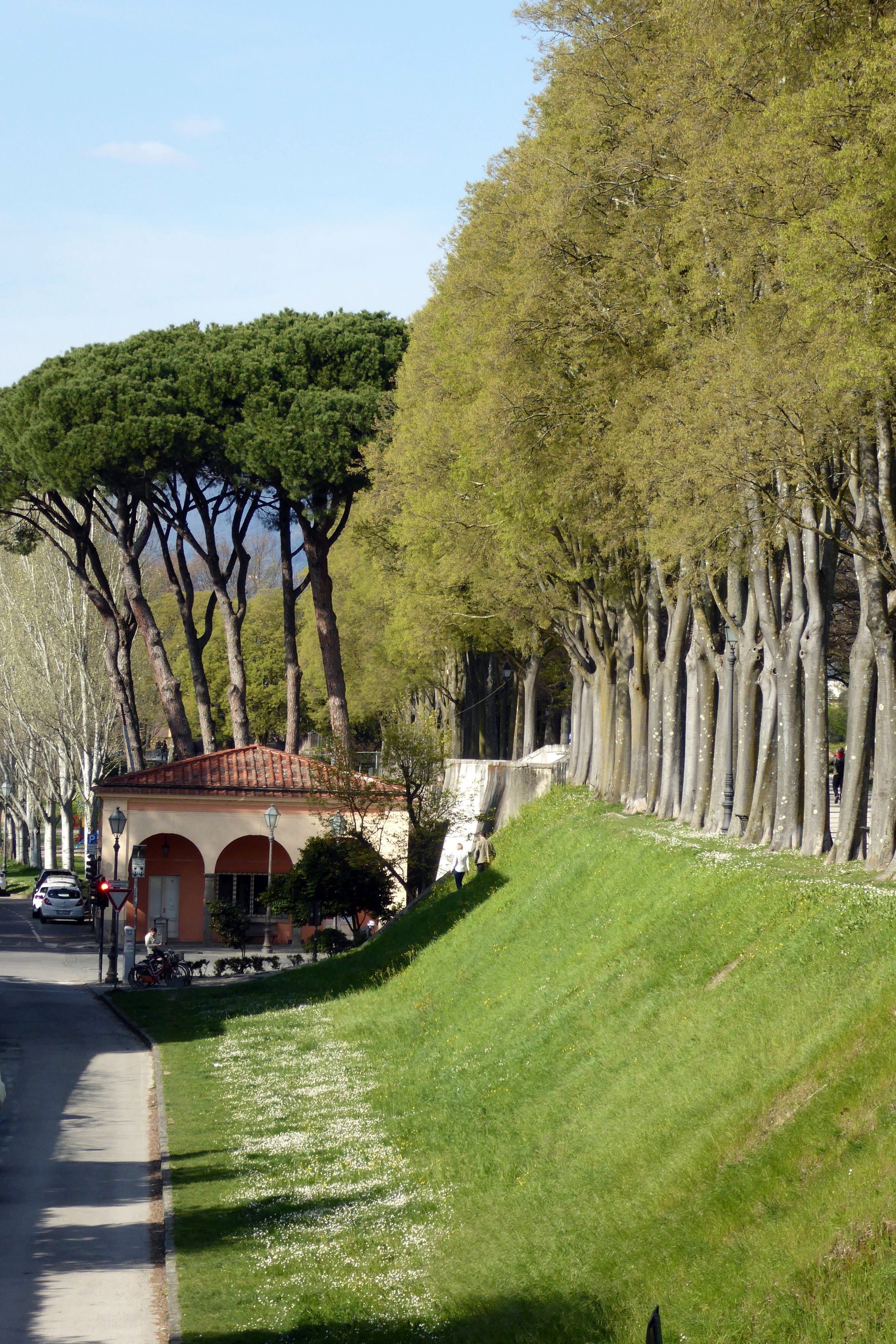
Upon our return to Lucca, Bruce and I set off to walk the perimeter walls—a 2.5-mile loop around the historic city center.  Here are some photos of the views from the walking path atop the wall.  More details to follow in my next post…

The walls surrounding the historic city center are lined with trees, a bike path, and a walking path– all added in modern times!

Next up:  Lovely Lucca (Continued)

Note: If small group travel is of interest to you, I highly recommend Overseas Adventure Travel (OAT). Although Bruce and I travel together, they do not charge a single supplement for those who travel on their own. Singles also get their own room at hotels. If you book, you can get $100 off your trip by providing my name and customer number (Elaine Krugman, #3018126) as the person who referred you. I will also get $100 off future travel– a win-win!

ITALY #9: LOVELY LUCCA

For the six of us who traveled the past several days with Oscar as our Overseas Adventure Travel (OAT) tour leader, our arrival to Lucca marked the end of the pre-extension tour and the beginning of the base trip, Tuscany & Umbria: Rustic Beauty in the Italian Heartland.  Bruce and I had enjoyed our time with Oscar very much, so we didn’t want to say goodbye.  He assured us that our new tour leader, Ben, was the best, and we would like him.  After all, he had been trained by Ben, the senior tour leader for OAT in Italy.

Upon our arrival at San Luca Palace Hotel, we said our Ciao’s to Oscar and were introduced to Ben.  Yeah, Oscar was right; Ben seemed like a nice enough guy!

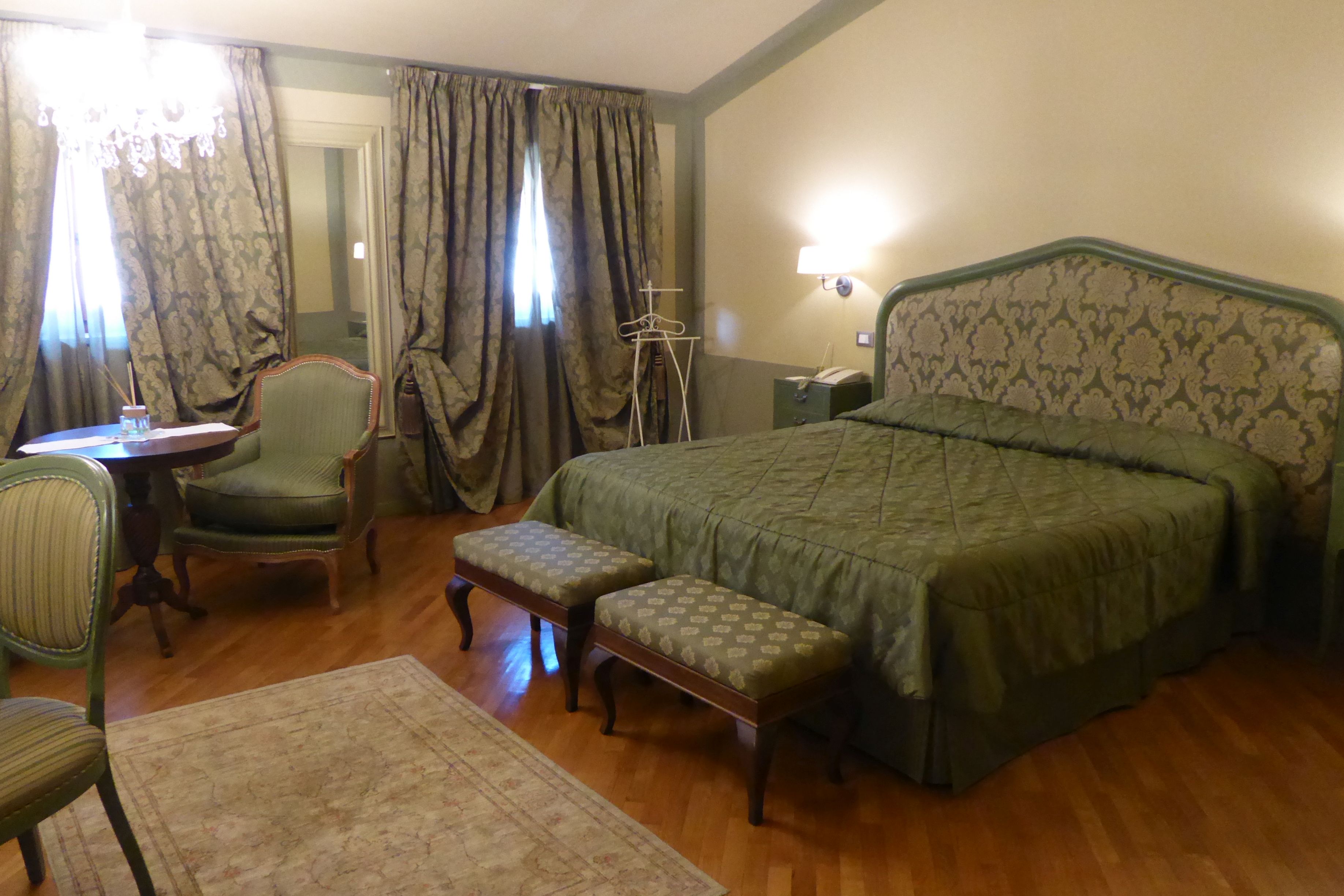
One step into our hotel room, and we both said, “Wow!”  The room was huge (and very Italian!) and the bathroom quite nice.  The location was perfect—situated within the walled historic city and close to everything.  Ben gave us a brief orientation tour, and then we explored on our own, taking advantage of the beautiful day and our free time, before meeting up with the other nine incoming travelers joining the tour.

(For all pictures, click on the image to see full screen view.)
The view from our room window

Although I had been to Lucca previously, it was sixteen years ago while on a cruise shore excursion, and the walking tour just wasn’t enough; I wanted to see more.  I had never forgotten Lucca, and it was one of the reasons I was drawn to this tour’s itinerary.

How wonderful to walk its streets again! 

San Michele in Foro
Giacomo Puccini, the great composer was born in Lucca

Lucca is known for several things: Its Renaissance-era city walls, well-preserved city center, the Piazza dell’ Anfiteatro (which dates back to the 1st century A.D.); and, the great composer, Giacomo Puccini, who was born in Lucca along with several other world-class composers.  Lucca is also known for making paper—everything from toilet paper to high-quality writing paper.  Additionally, the city of 89,000 hosts a fabulous summer music festival as well as a comics and games festival.

We were scheduled to take a walking tour the following day with a local guide; however, it would have to wait another day due to a schedule switch.  (We will return to Lucca in Italy #11.)

Coming up next (instead): CARRARA MARBLE QUARRIES & A HOME-HOSTED LUNCH

Note: If small group travel is of interest to you, I highly recommend Overseas Adventure Travel (OAT). Although Bruce and I travel together, they do not charge a single supplement for those who travel on their own. Singles also get their own room at hotels. If you book, you can get $100 off your trip by providing my name and customer number (Elaine Krugman, #3018126) as the person who referred you. I will also get $100 off future travel– a win-win!

ITALY #8: THE APPENINE MOUNTAINS AND PONTREMOLI, IN NORTHERN TUSCANY

(For all pictures, click on the image to see full screen view.)
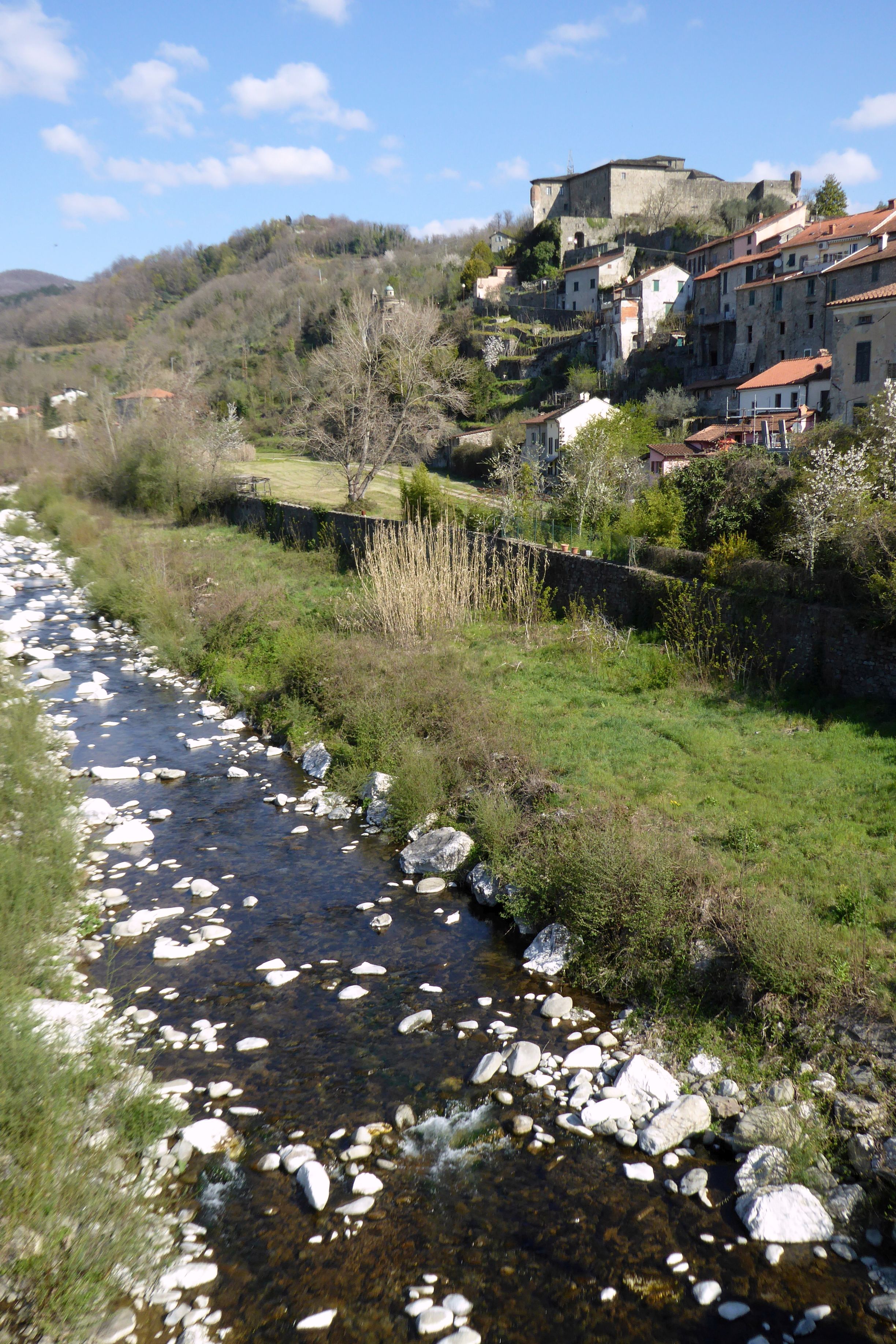
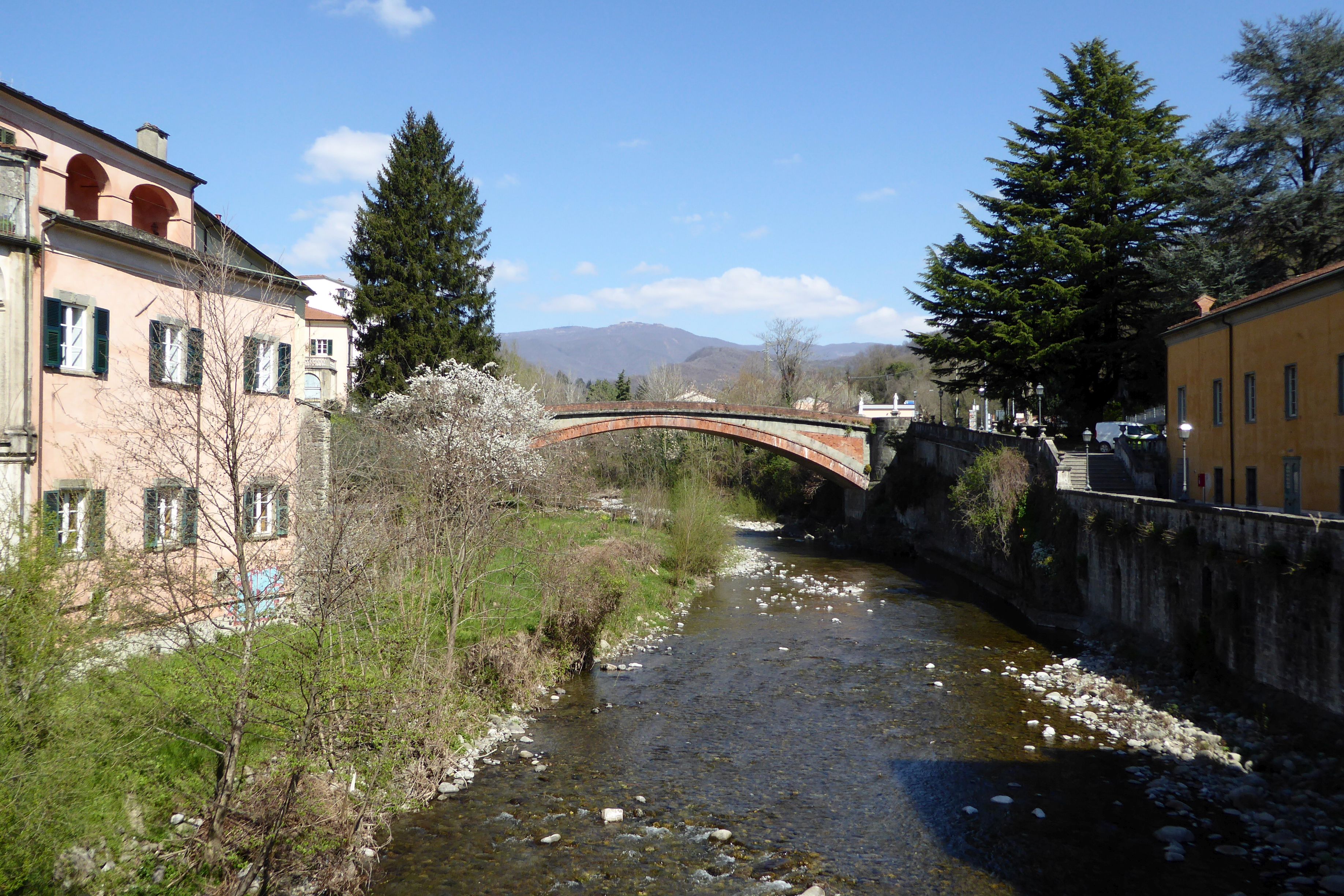
While traveling south through the Lunigiana valley and the Apennine Mountains on our way to Tuscany, it was beautiful to see the changing topography from what had been flat farmland.  Along the way, we stopped to visit the picturesque medieval town of Pontremoli.  A local guide led us on an interesting walking tour through the narrow cobblestone streets of this quaint town believed to have been first settled around 1000 BC.

Pontremoli hosts a book festival each year, and these book-styled benches honor regional authors.
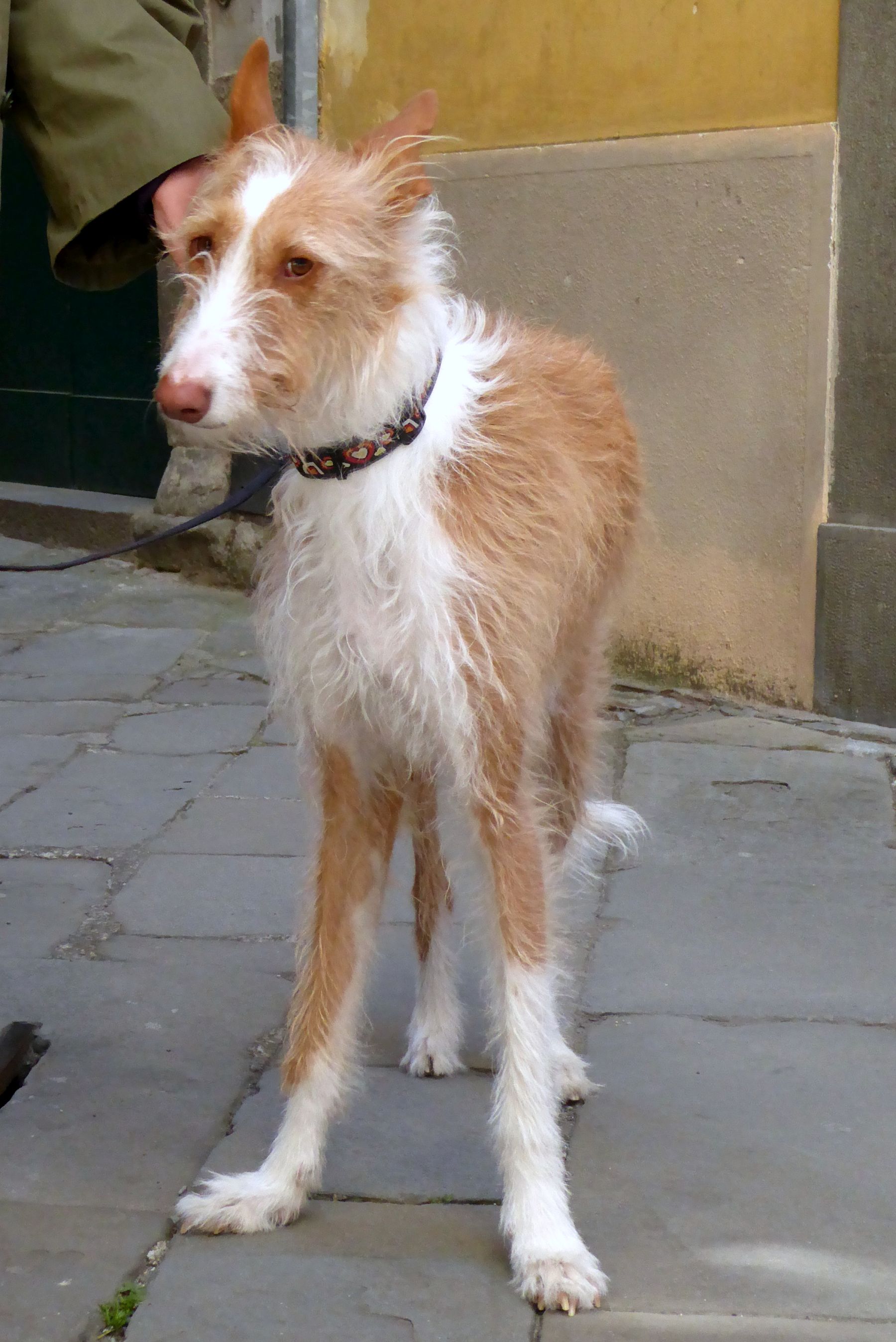
I take notice of cute or unusual dogs when I travel, and this one was most definitely unusual! It’s a Spanish hunting dog, and a sweet one at that!

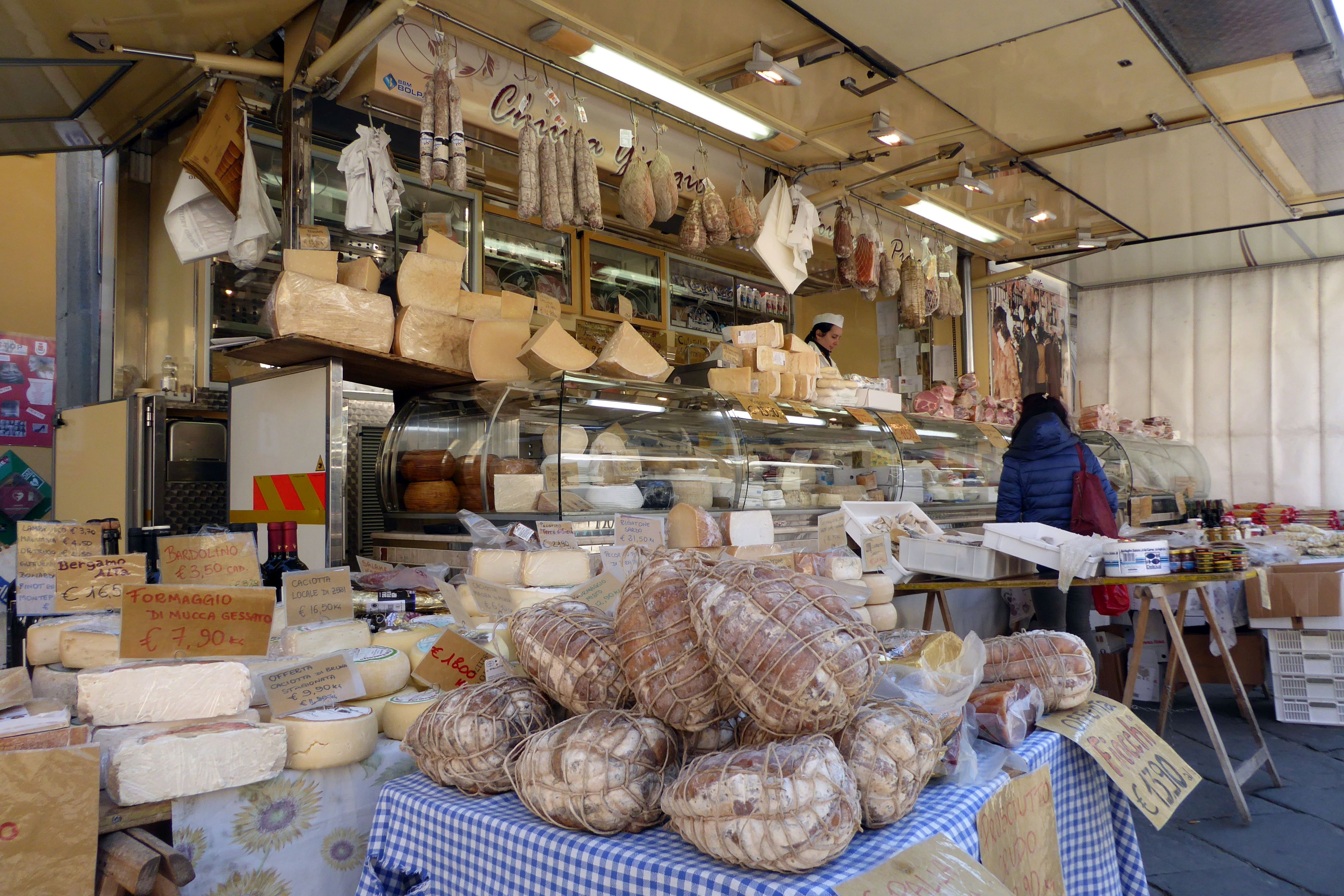
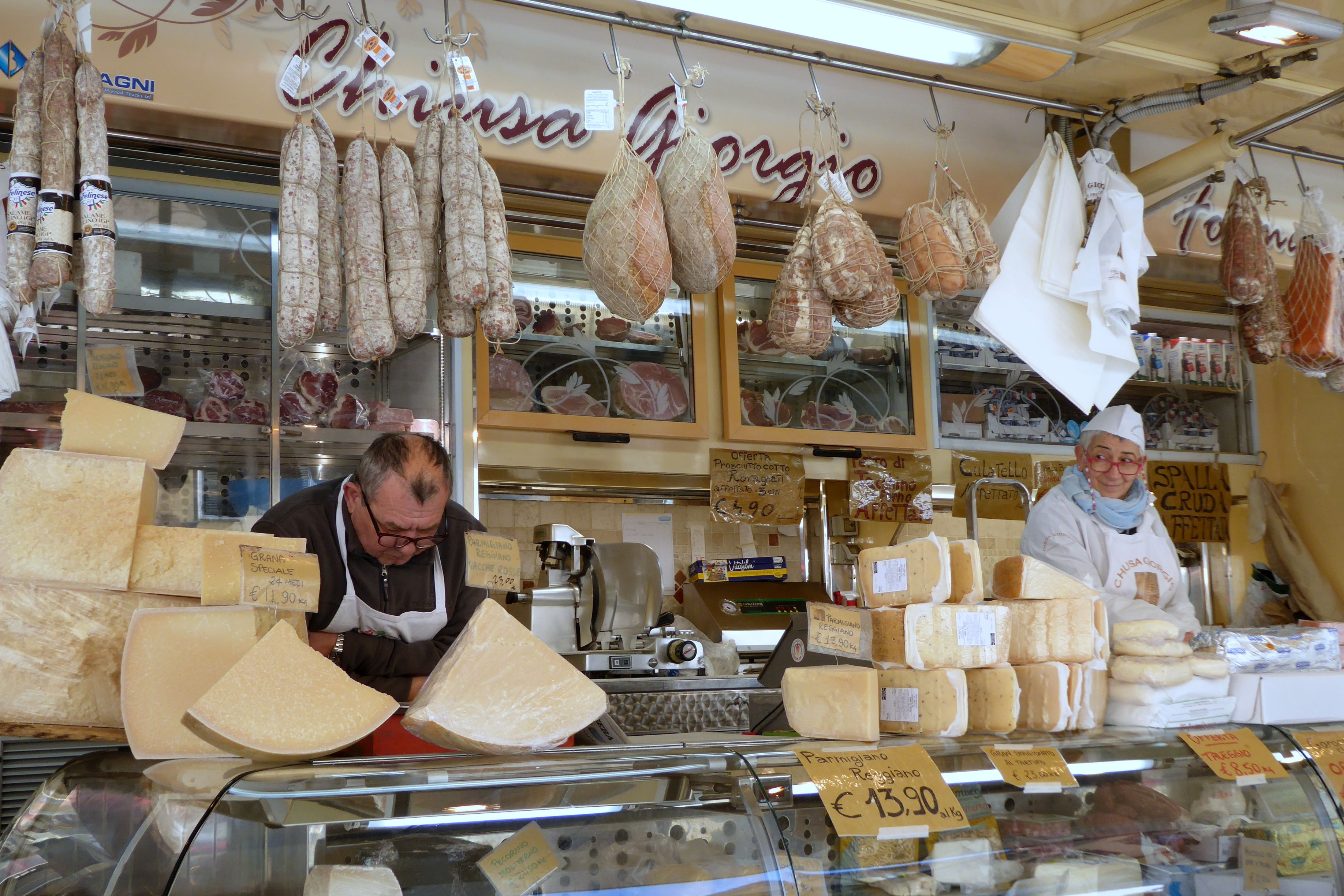
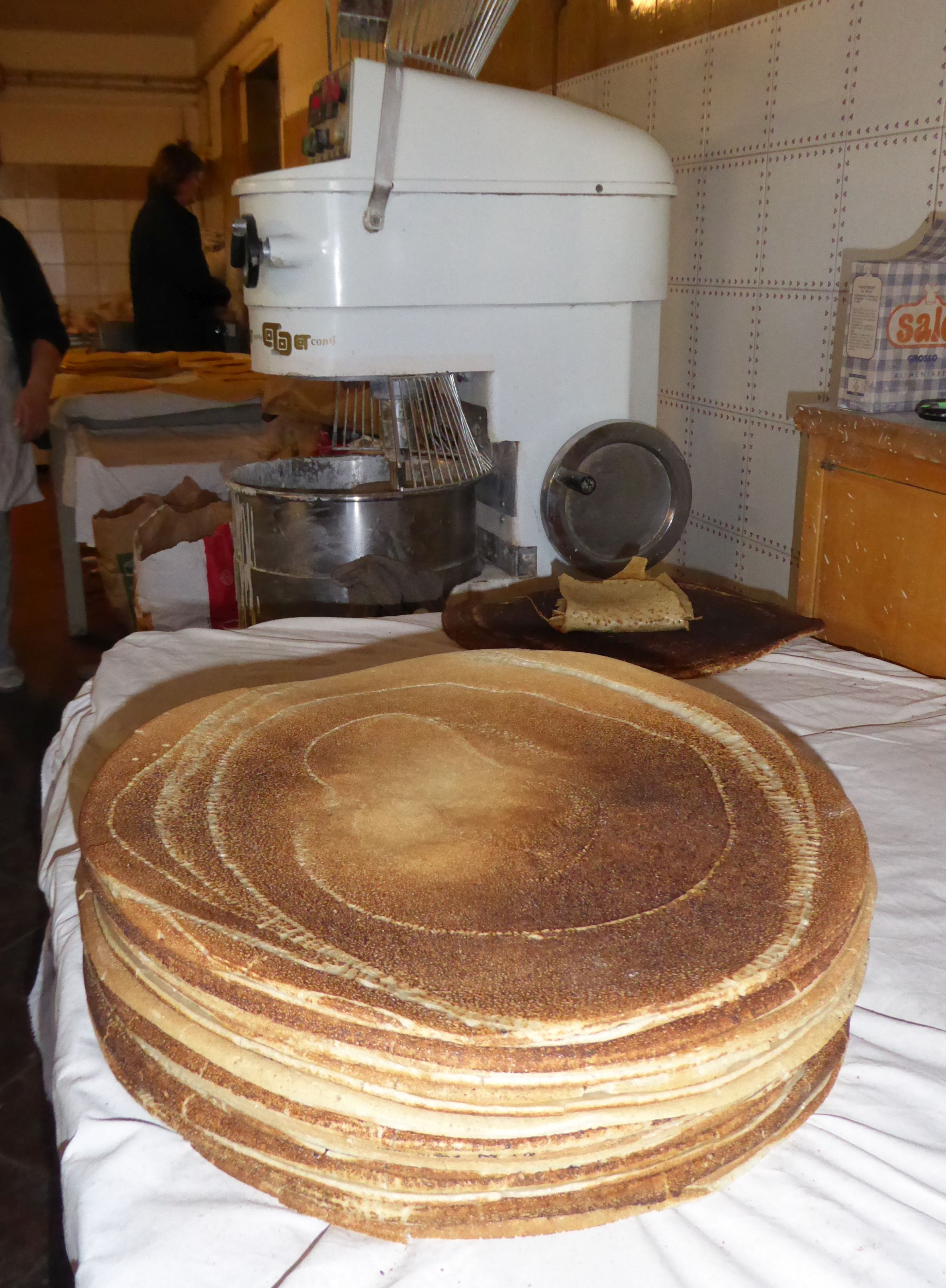
Following the tour, we had some free time to enjoy the local market in the town square.  One of the local specialties for sale was Testaroli, a regional pasta made from egg-free dough that looks more like a tortilla than pasta.

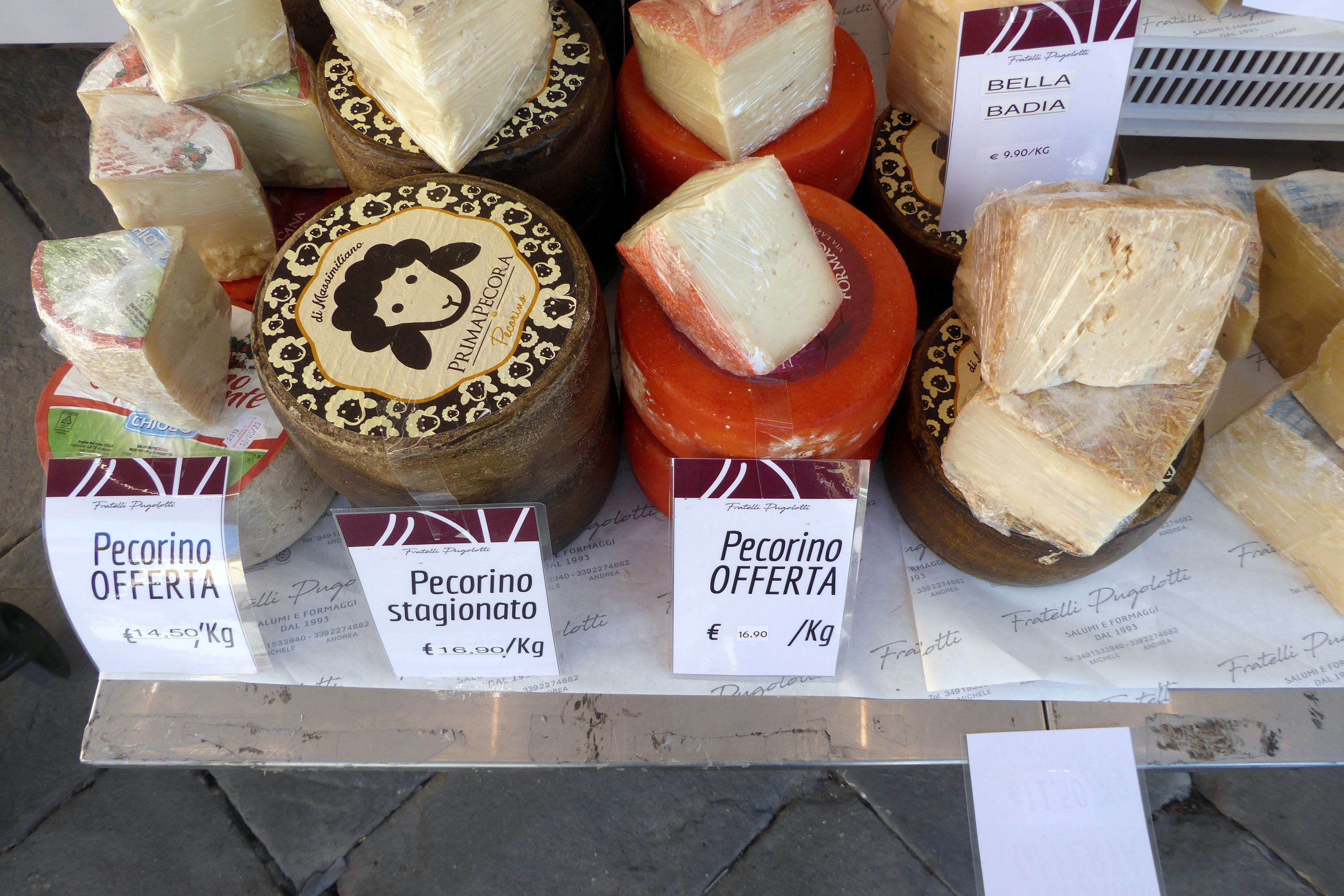
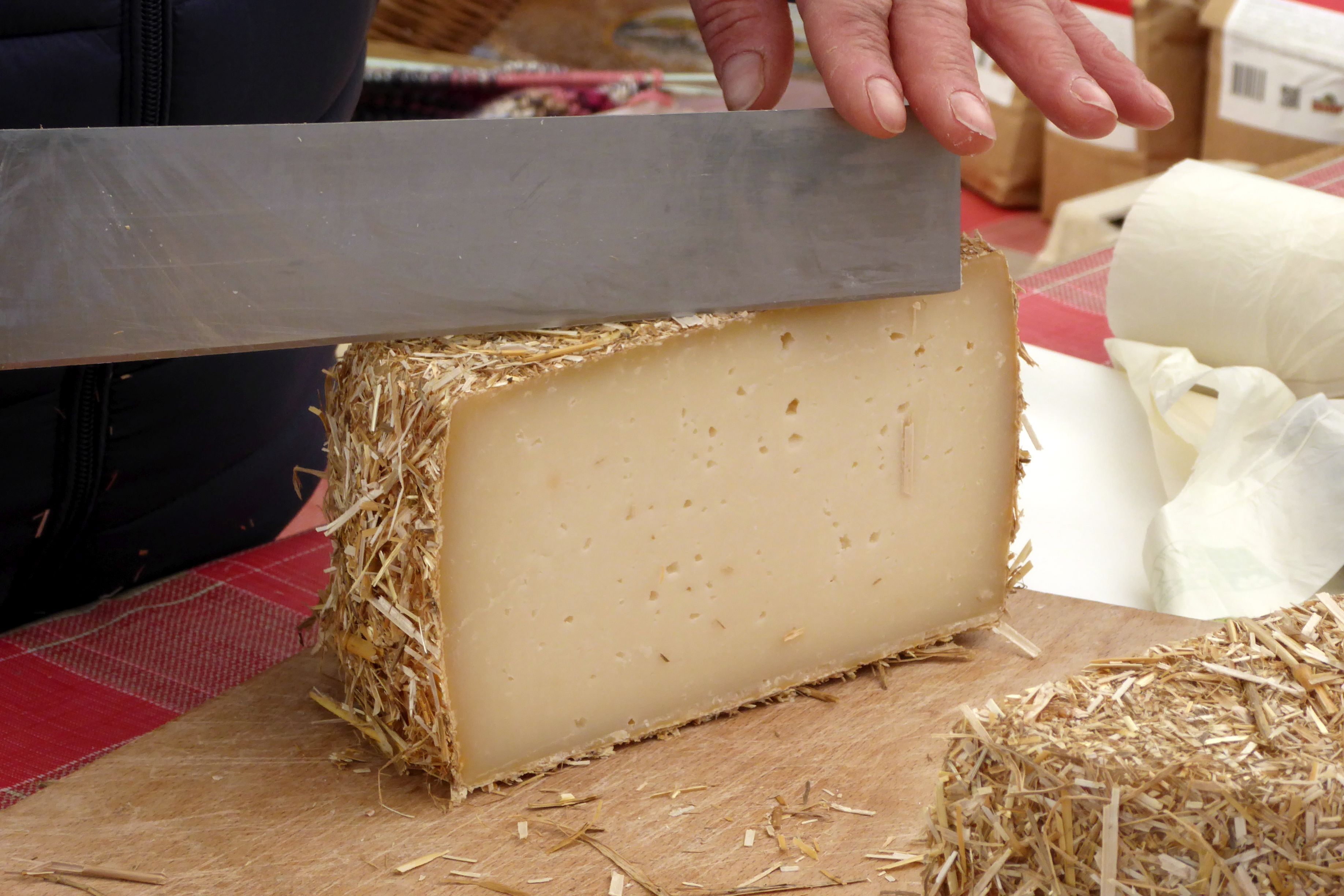
We loved the pecorino cheese, a hard cheese made from sheep’s milk.

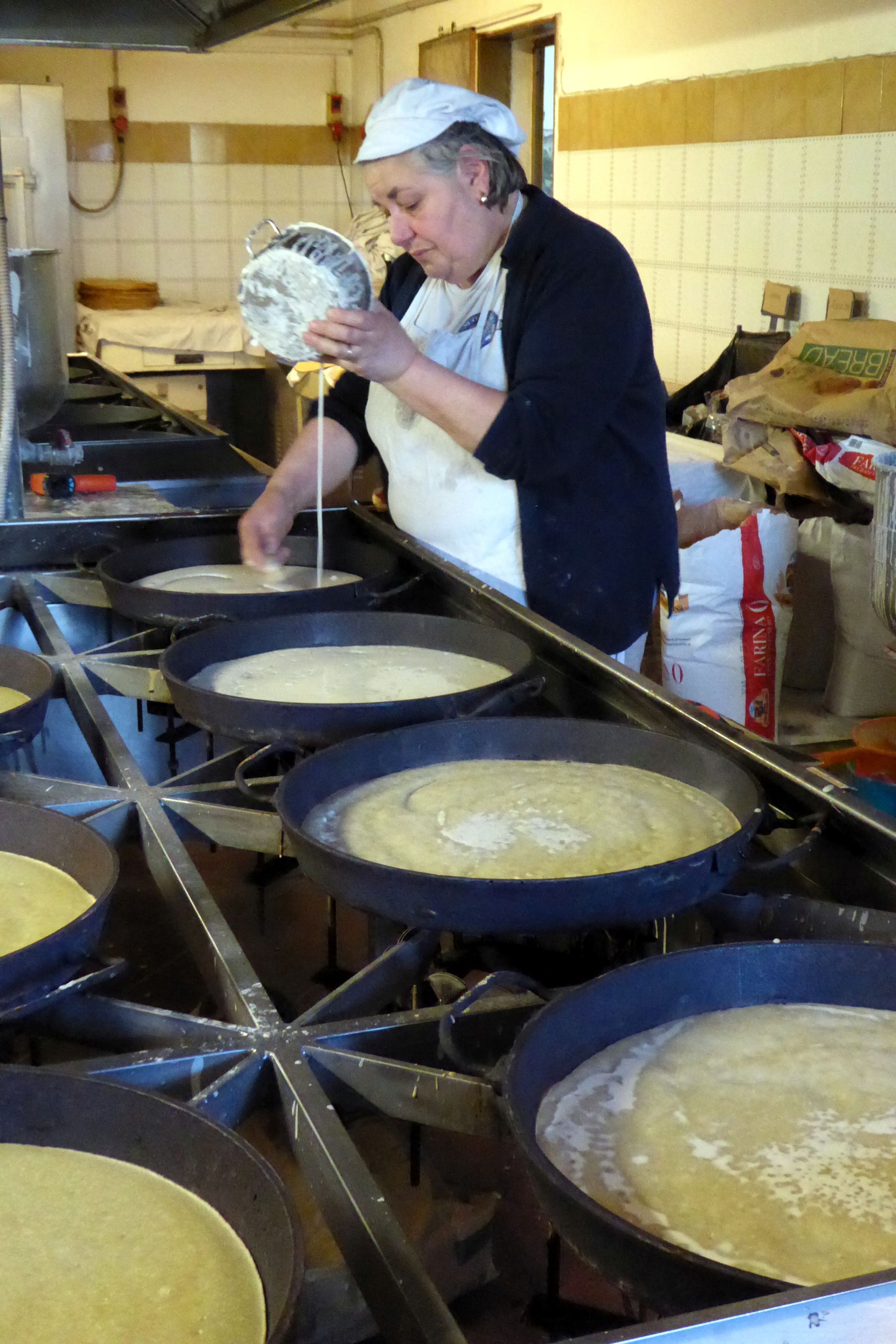
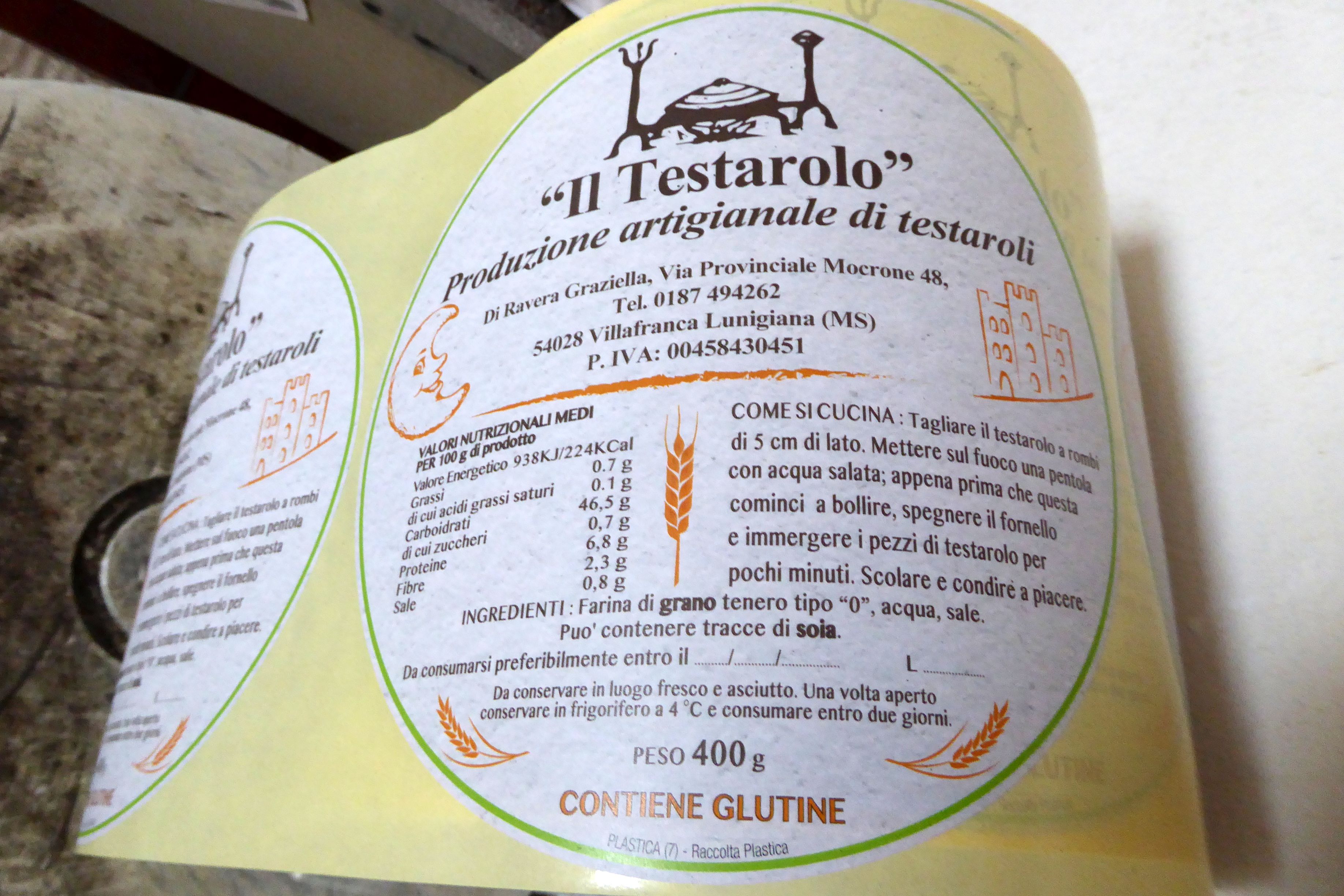
At our next stop, Il Testarolo, we watched how testaroli was made.  Gratziatia has been in business for 38 years, rising at 4:30 am, seven days per week to make 3-400 testaroli each day.  She and her husband sell to local restaurants, and each one sells for about $1.90.

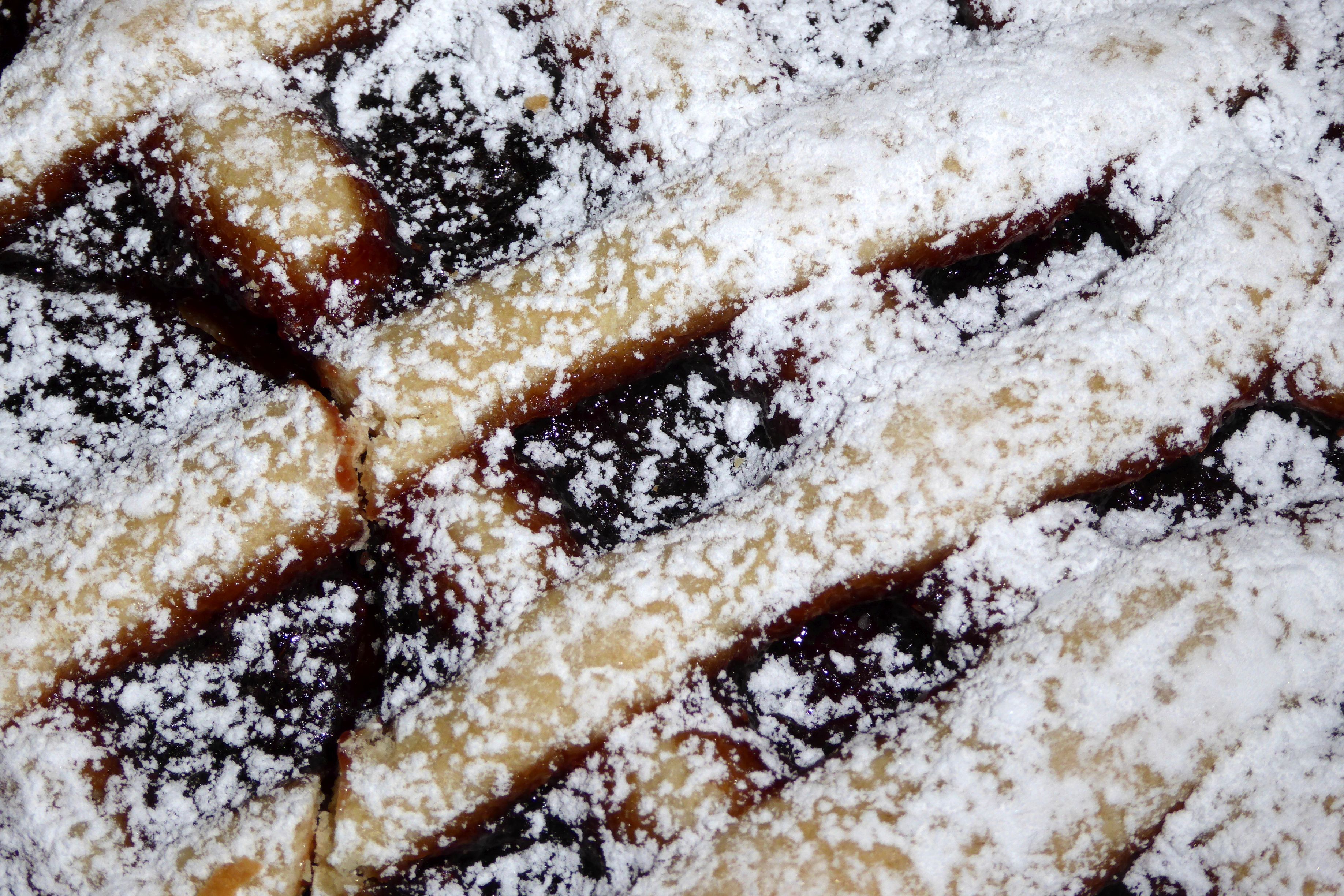
After the demonstration, Gratziatia closed up shop for the day to serve us lunch on the patio of their home/ business kitchen.  Everything was made from scratch, including the wine, olive oil made from homegrown olives, and delicious Italian dishes made from her testaroli.  Even the fresh strawberries were homegrown.  Pastries are something not high on my favorite foods list, but I thought I should at least be polite and try some of Gratziatia’s special dessert.  It was love at first bite!

We bid Gratziatia a heartfelt Grazie and Arrivederci, and then continued south to Lucca, where we would be spending the next three nights.  (On this tour, we were at each hotel for three nights, which was a perfect amount of time to settle in, do handwash, and enjoy each place before moving on.  Thankfully, Overseas Adventure Travel land tours are not in the style of the whirlwind tour in the 1969 comedy, “If It’s Tuesday, It Must Be Belgium.”

Next up:  Lovely Lucca

ITALY #7: PARMA HAM & THE PO RIVER

Food had been a recurring theme on this tour, and this day was no different.  We were off to Polesine Parmense to learn all about how culatello Parma ham is produced, take a cruise of the Po River, and enjoy a picnic lunch.

(For all pictures, click on the image to see full screen view.)
During our stroll to the castle, we passed by this boat that would normally be floating in water in its current location! The severe drought had left the water level nearly non-existent.

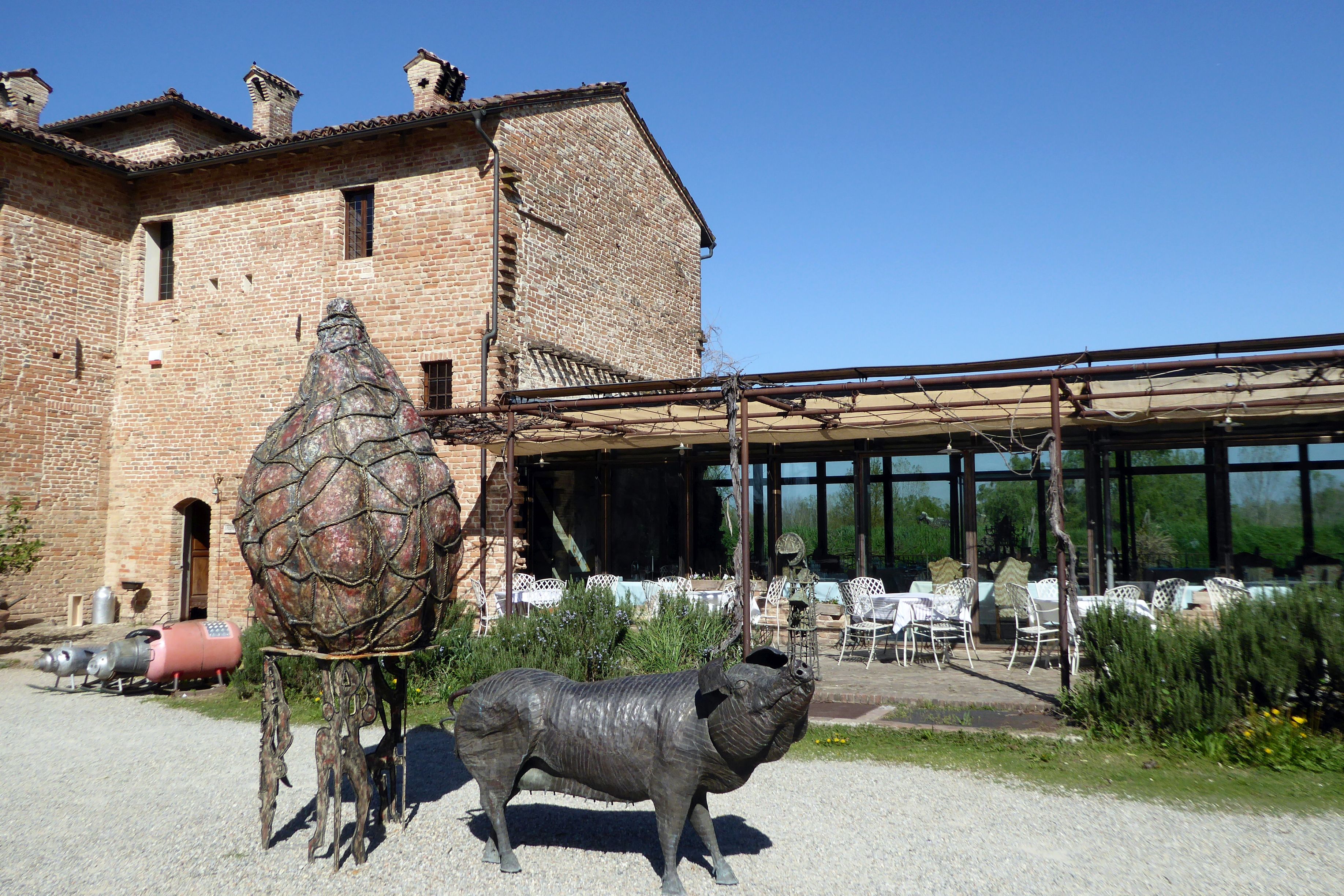
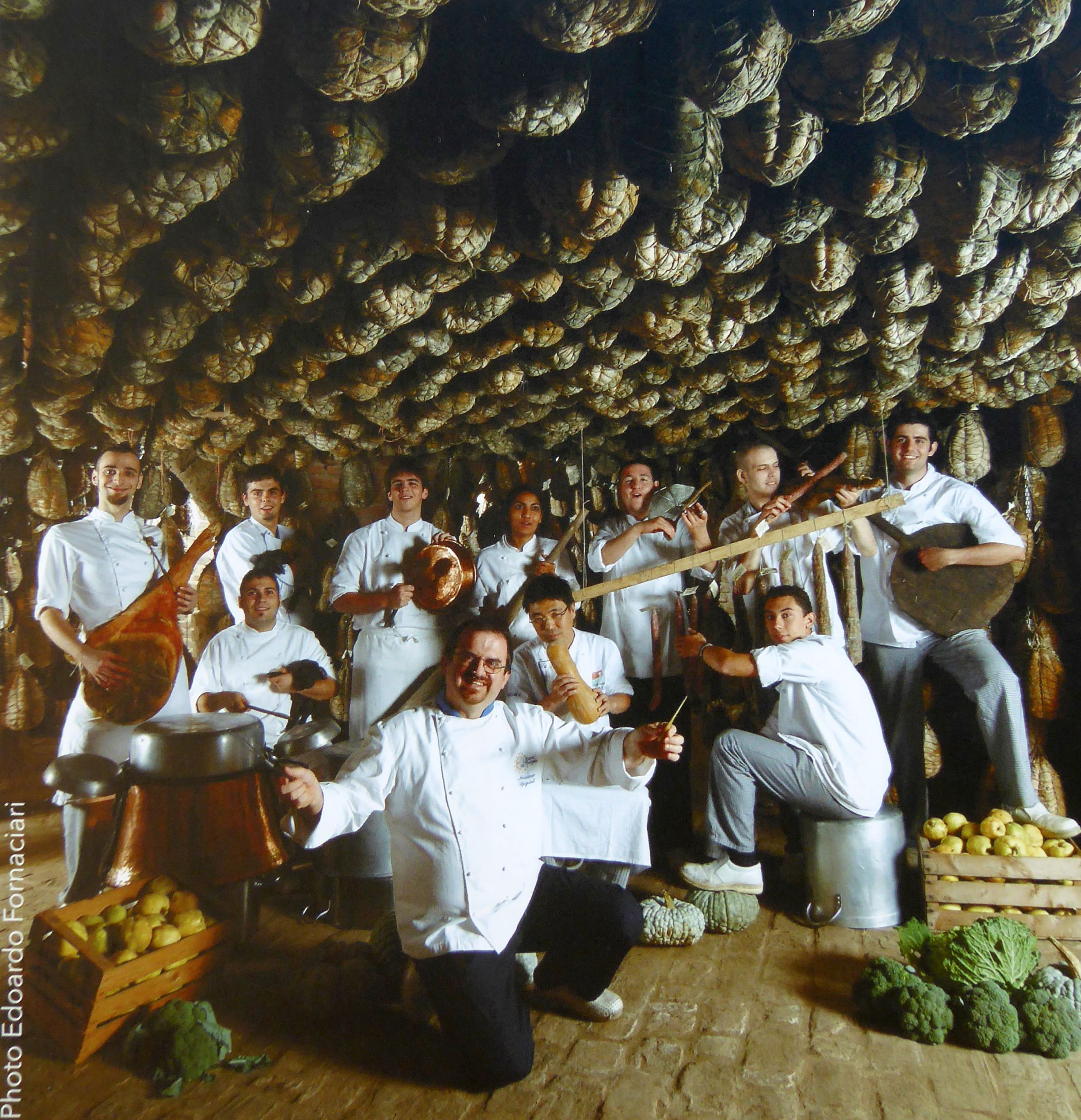
Our visit to Antica Corte Pallavicina was the highlight of the day and a memorable experience.  Originally built in 1320, the current owner bought and restored the previously abandoned castle in 1990.  It is now a Michelin 1 Star-rated restaurant headed up by Polesine Parmense native, Massimo Spigaroli.  A visitor to the castle can dine in their restaurant, book a stay in one of their rooms, take cooking classes, and tour their ham cellars and museum.

This photo I photographed shows Chef Massimo Spigaroli with his staff. They were awarded a Michelin Star for their cuisine.

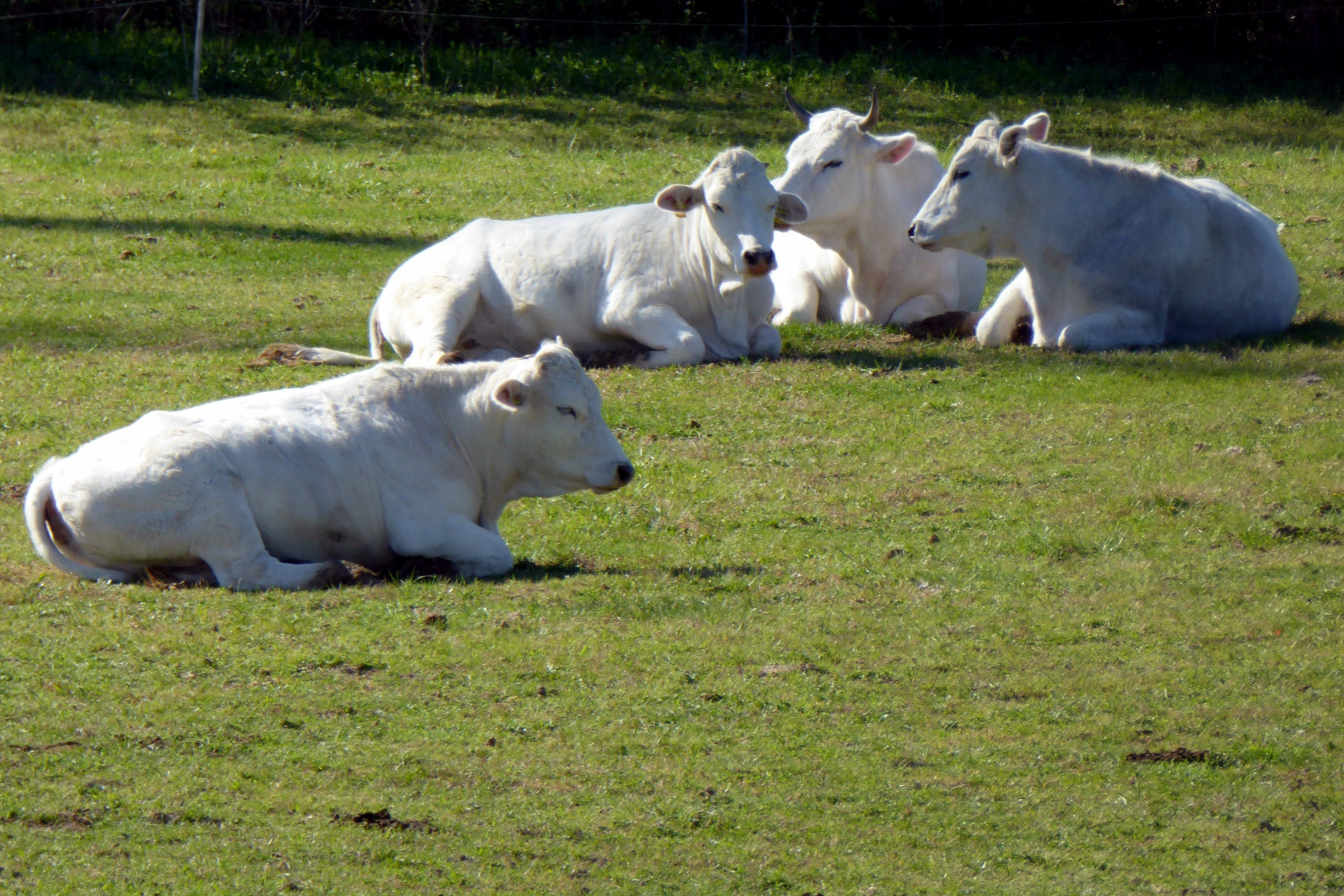
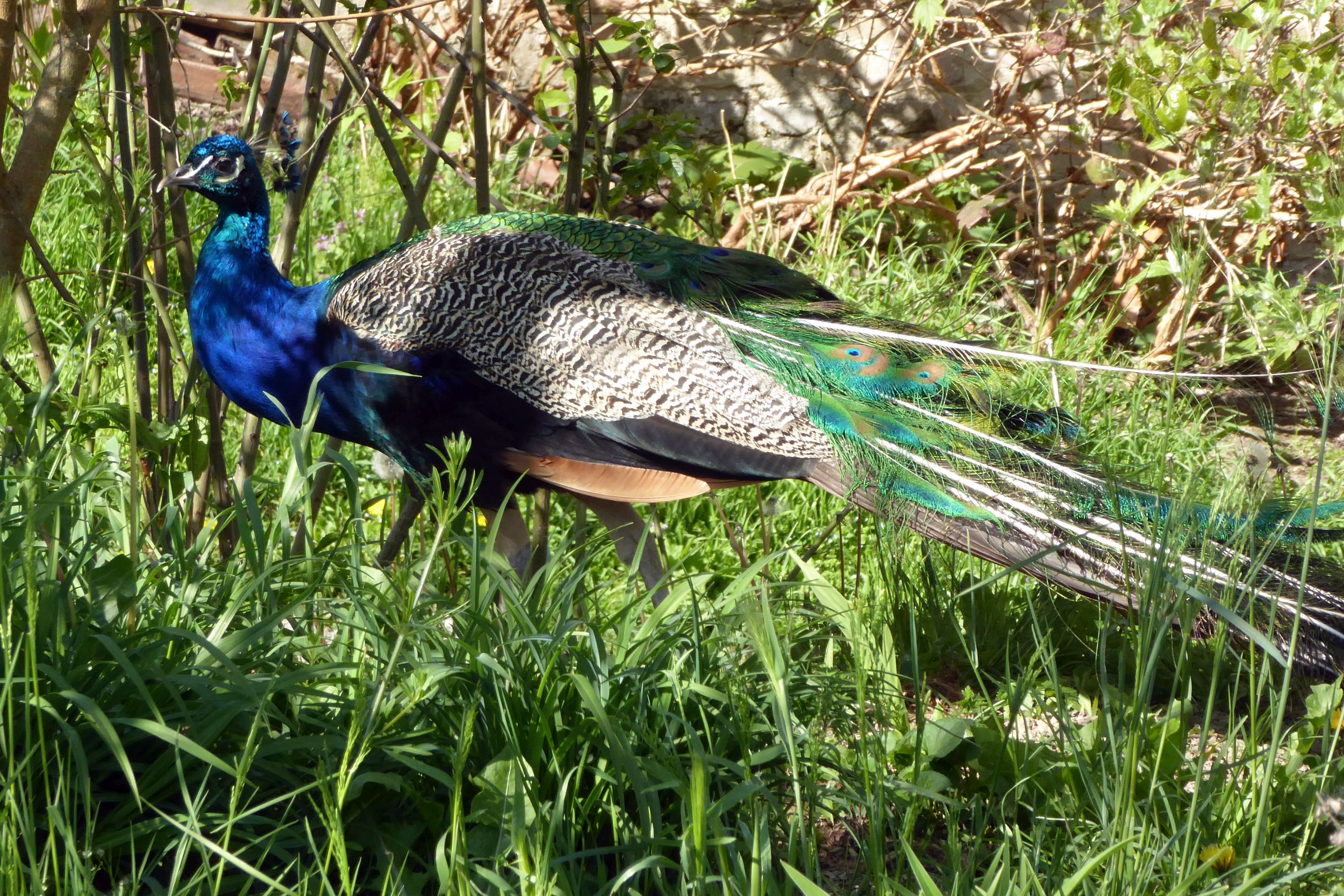
The country setting was beautiful; cows relaxed on the adjacent field, flowers bloomed in the garden along with herbs and vegetables, and a peacock was roaming about.

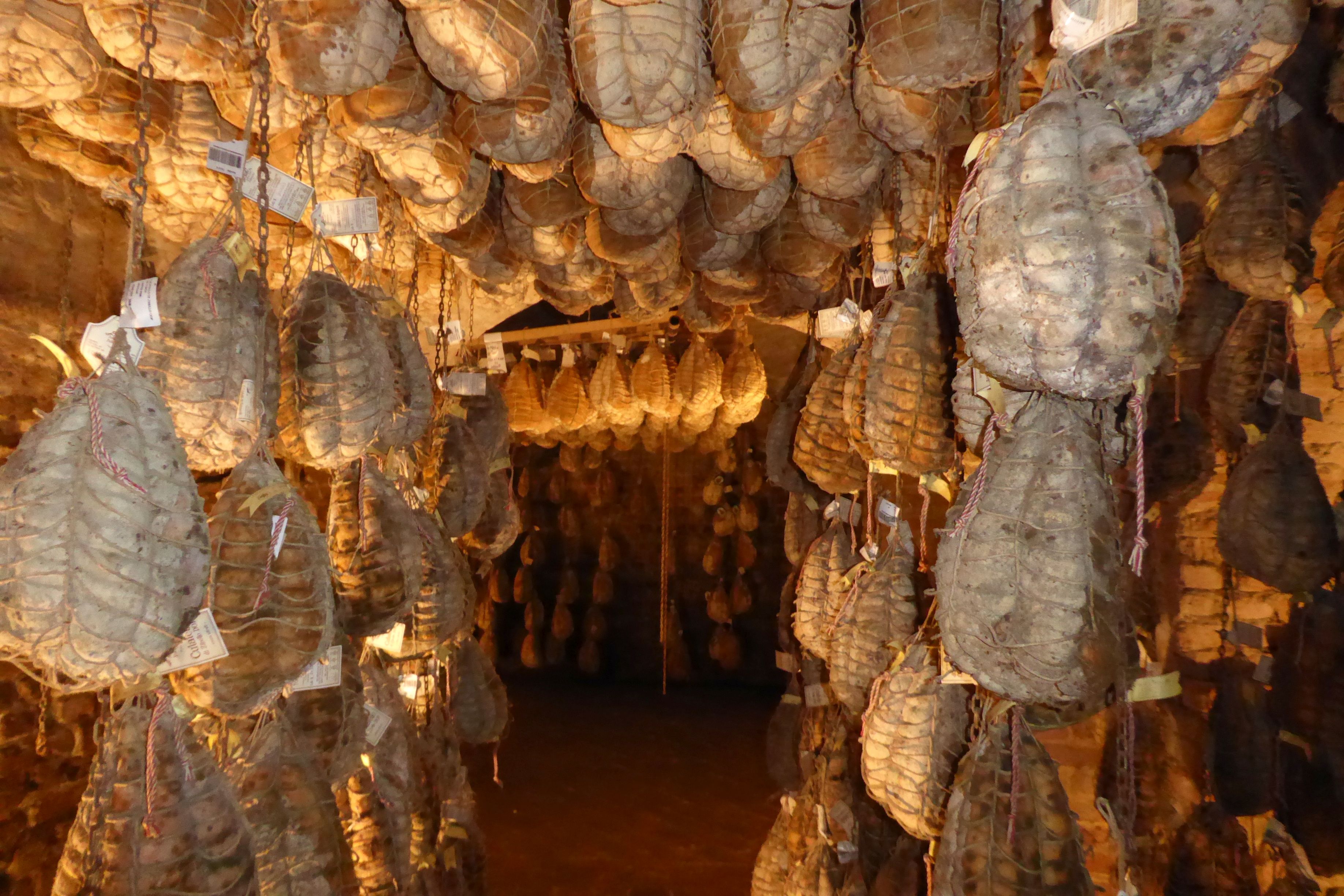
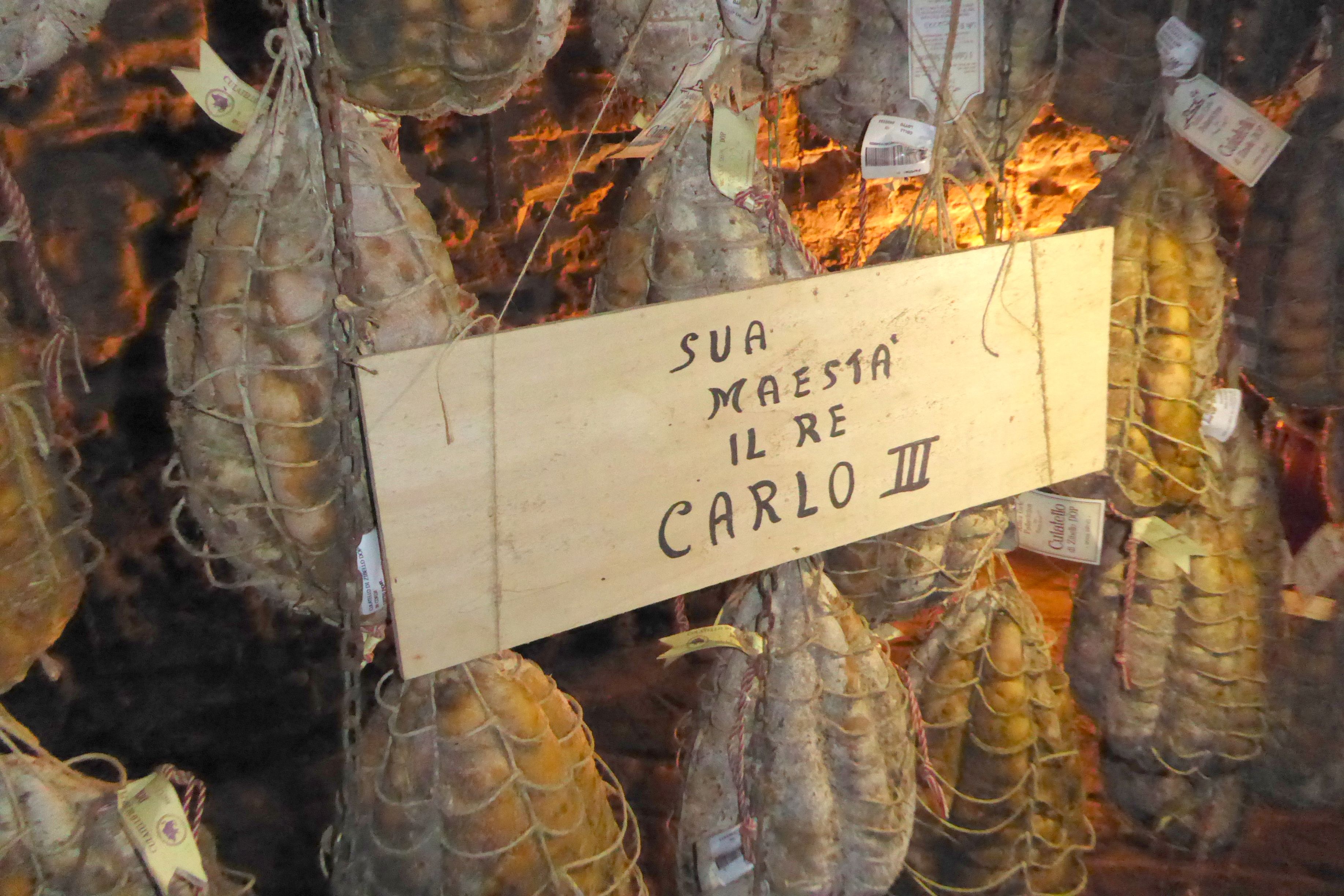
Stepping down into the ancient cellar, taking in the aroma, and seeing strung hams hanging everywhere I turned was surreal!  These are not some ordinary hams; they are in demand by famous chefs and dignitaries all over the world.  Some of these hams were even reserved for King Charles III!

Hams reserved for King Charles III
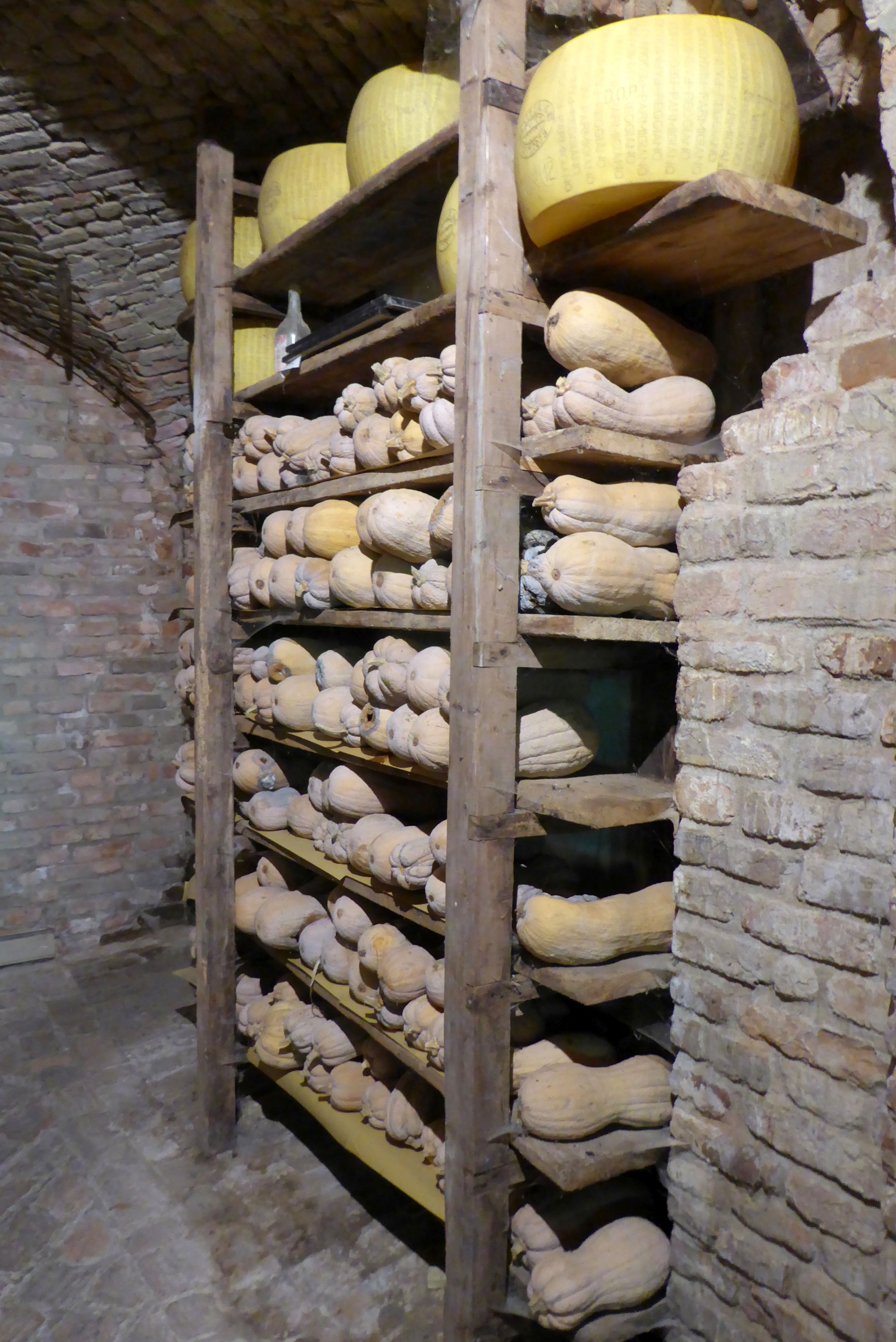
Parmesan cheese and squash from their garden were also stored in the cellar for their restaurant.

Each of the 5,000 hams in this cellar weigh about 9 pounds and are worth $350-$450 wholesale, depending on the age—anywhere from 15 to 45 months.

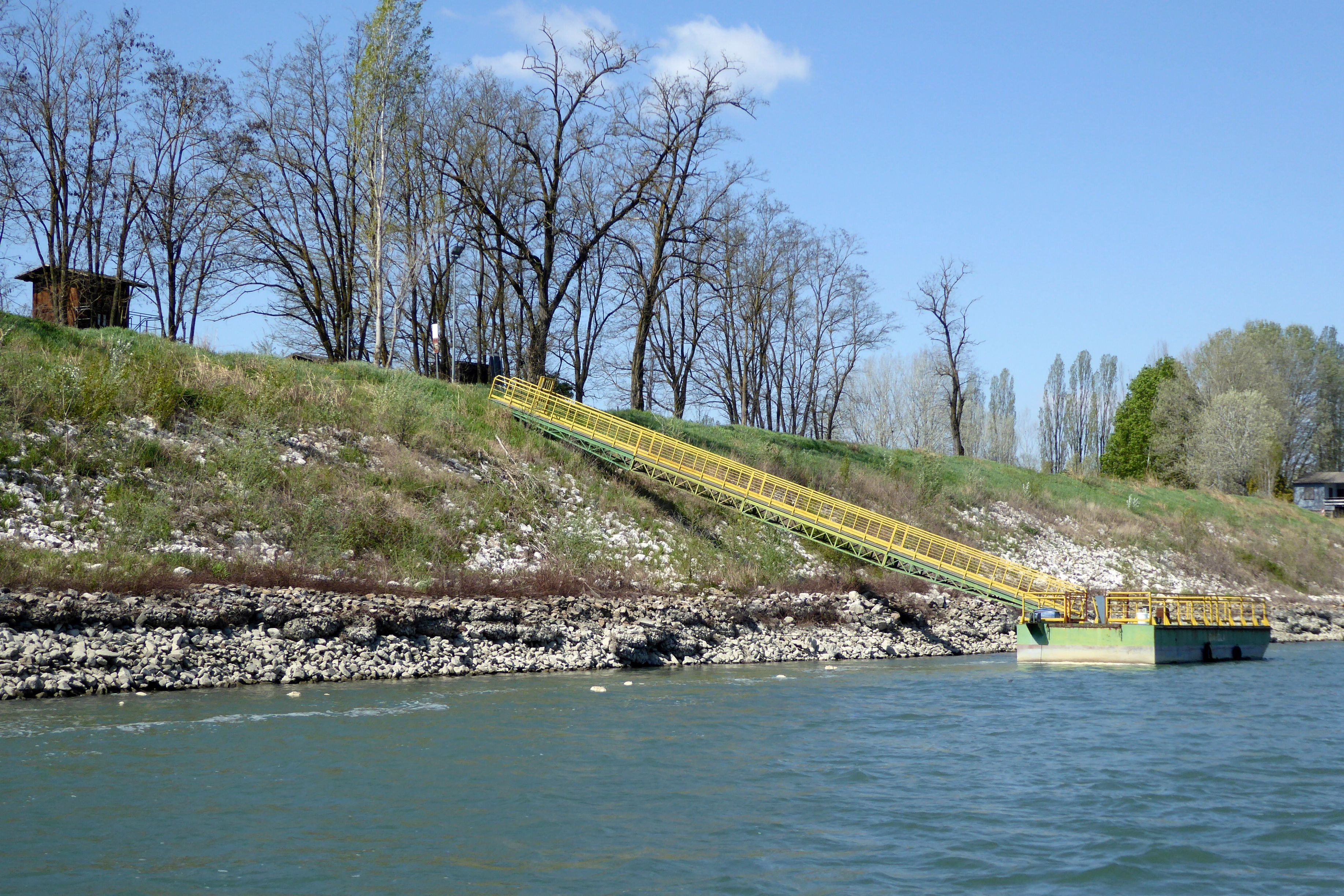
Following our tour and a stroll around the property, we made our way to the Po River (such as it was) for our cruise.  As you can see by the photo below, the water level was extremely low.  We navigated an obstacle course to keep from running aground on our way to Giarola Island for our picnic.

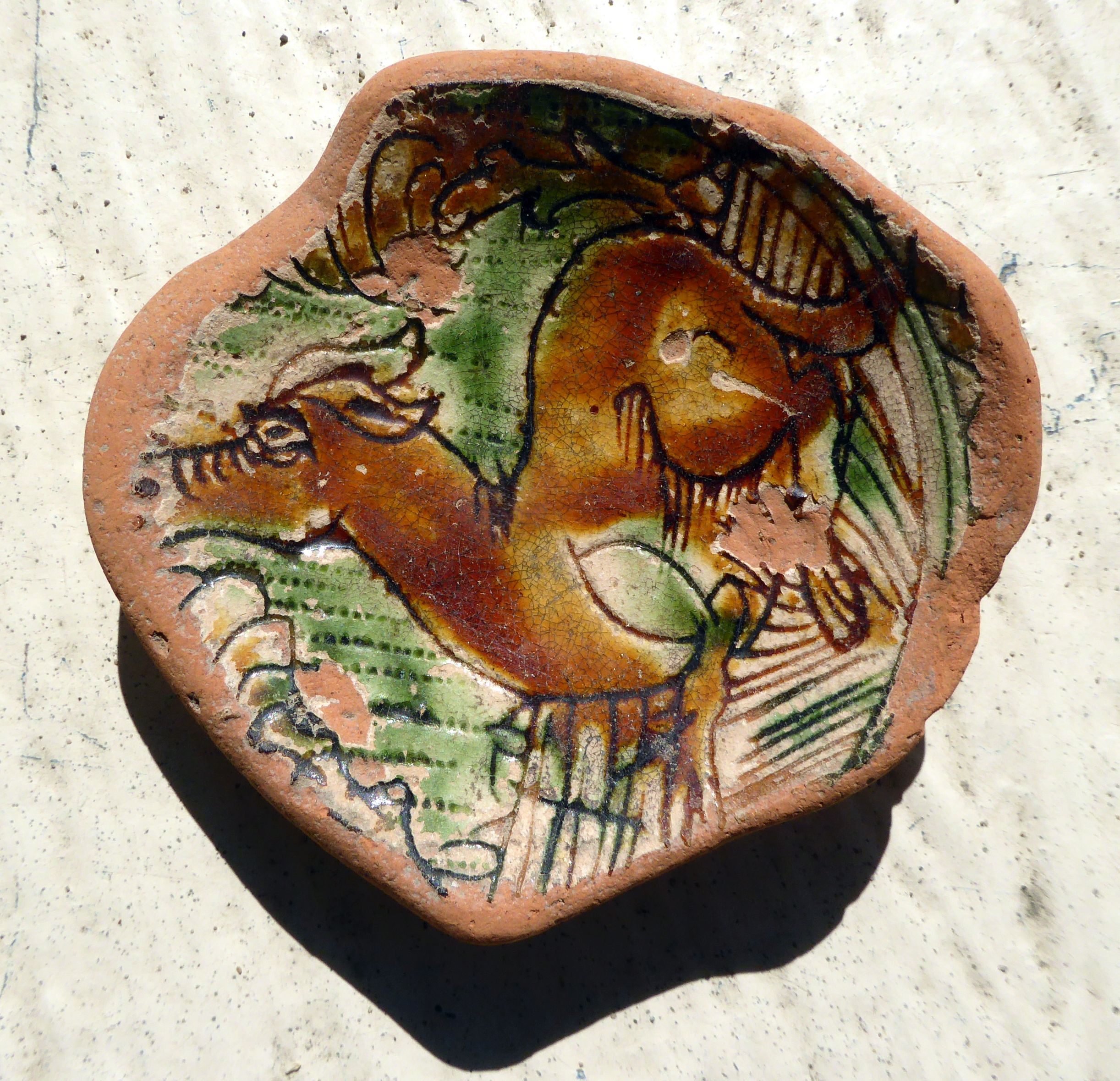
This ceramic piece, found in the Po River, dates back to the 1400’s.

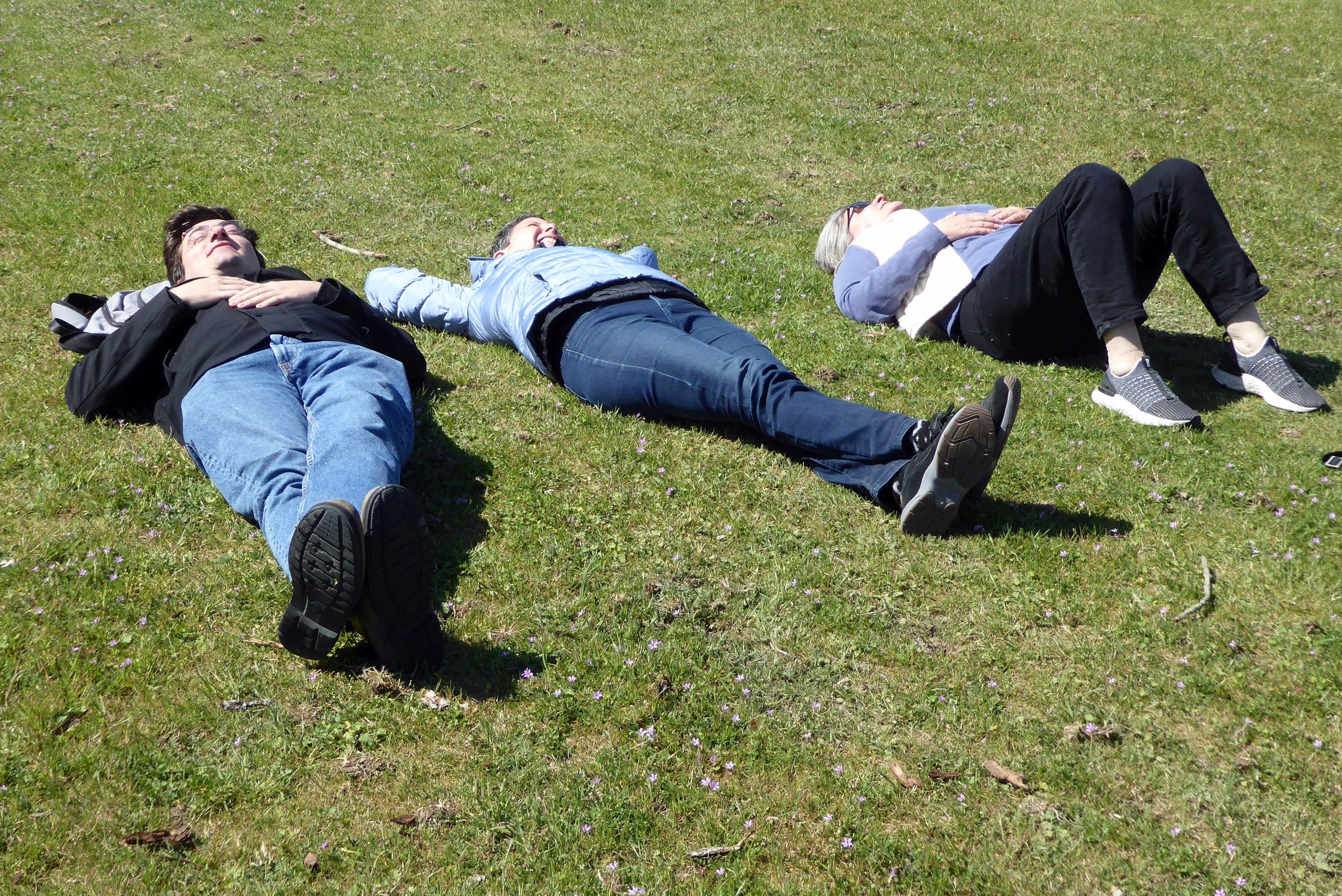
Although it had been a bright and sunny day, the wind was cold, and we all froze on our way to the island.  Jenny had the right idea when she opted to soak in the sun to warm up while we waited for our picnic lunch to arrive.  Oscar and I joined her, and then she started singing, “You Are My Sunshine.”  We joined in, but didn’t know all of the words, so Oscar started making them up.  I thought he was hilarious, and I couldn’t stop giggling.

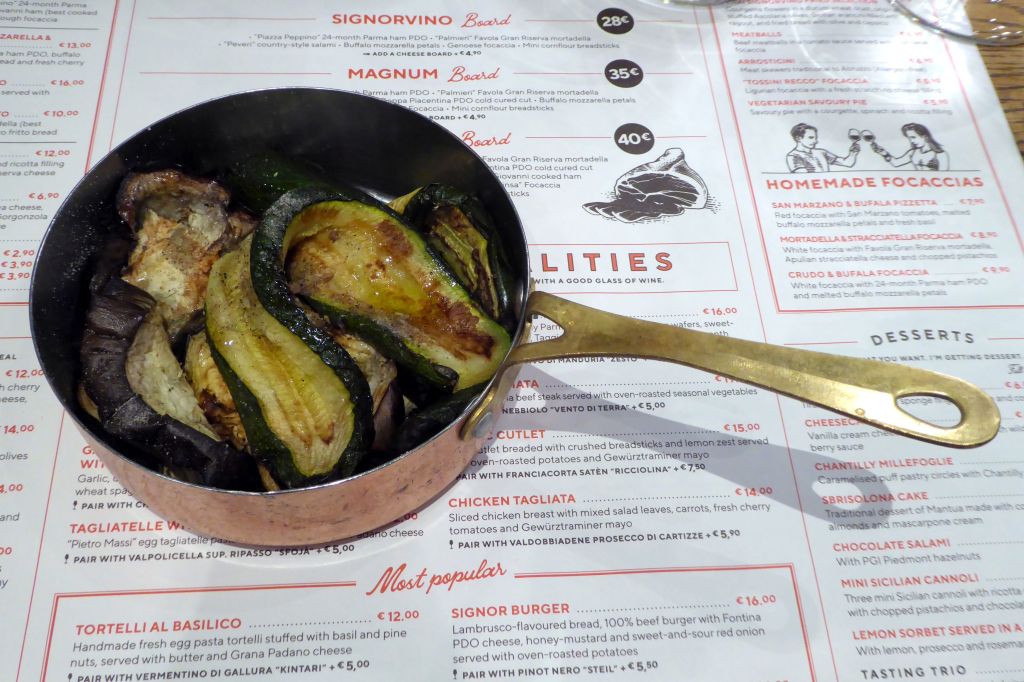
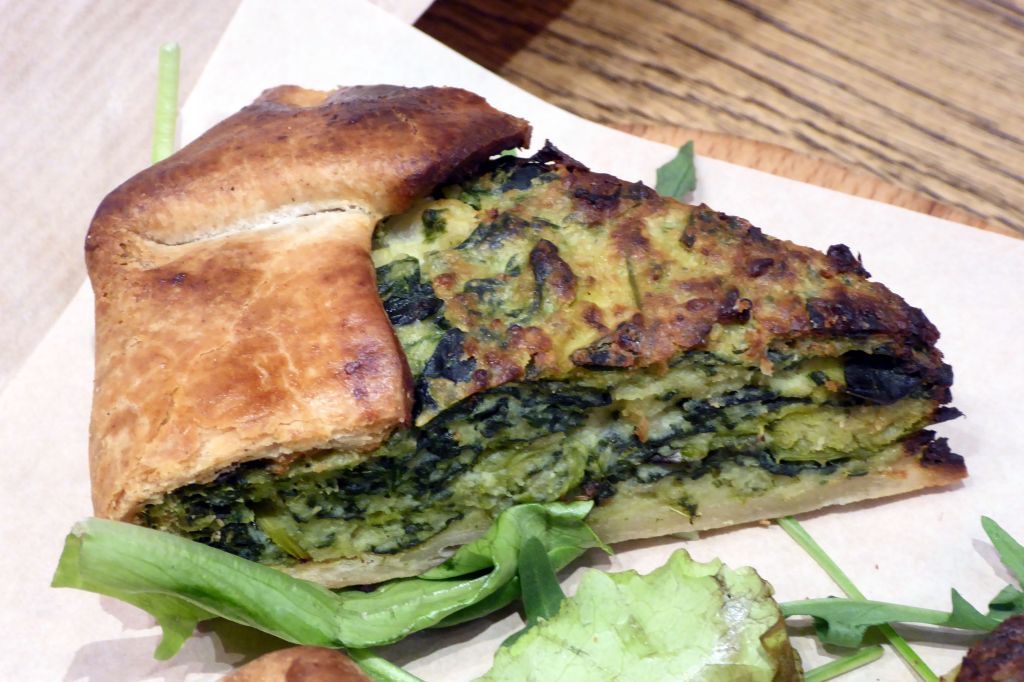
That evening, we enjoyed dinner together, and I particularly enjoyed my vegetarian dishes:

Next up:  Italy #8: THE APPENINE MOUNTAINS AND PONTREMOLI, IN NORTHERN TUSCANY

Note: If small group travel is of interest to you, I highly recommend Overseas Adventure Travel (OAT). Although Bruce and I travel together, they do not charge a single supplement for those who travel on their own. Singles also get their own room at hotels. If you book, you can get $100 off your trip by providing my name and customer number (Elaine Krugman, #3018126) as the person who referred you. I will also get $100 off future travel– a win-win!

ITALY #6: PRETTY PARMA

To begin our first full day in Parma, the group took a guided walking tour through the historic city center, visiting a few of its most spectacular churches and cathedrals.  We couldn’t have asked for a prettier day; it was gorgeous!

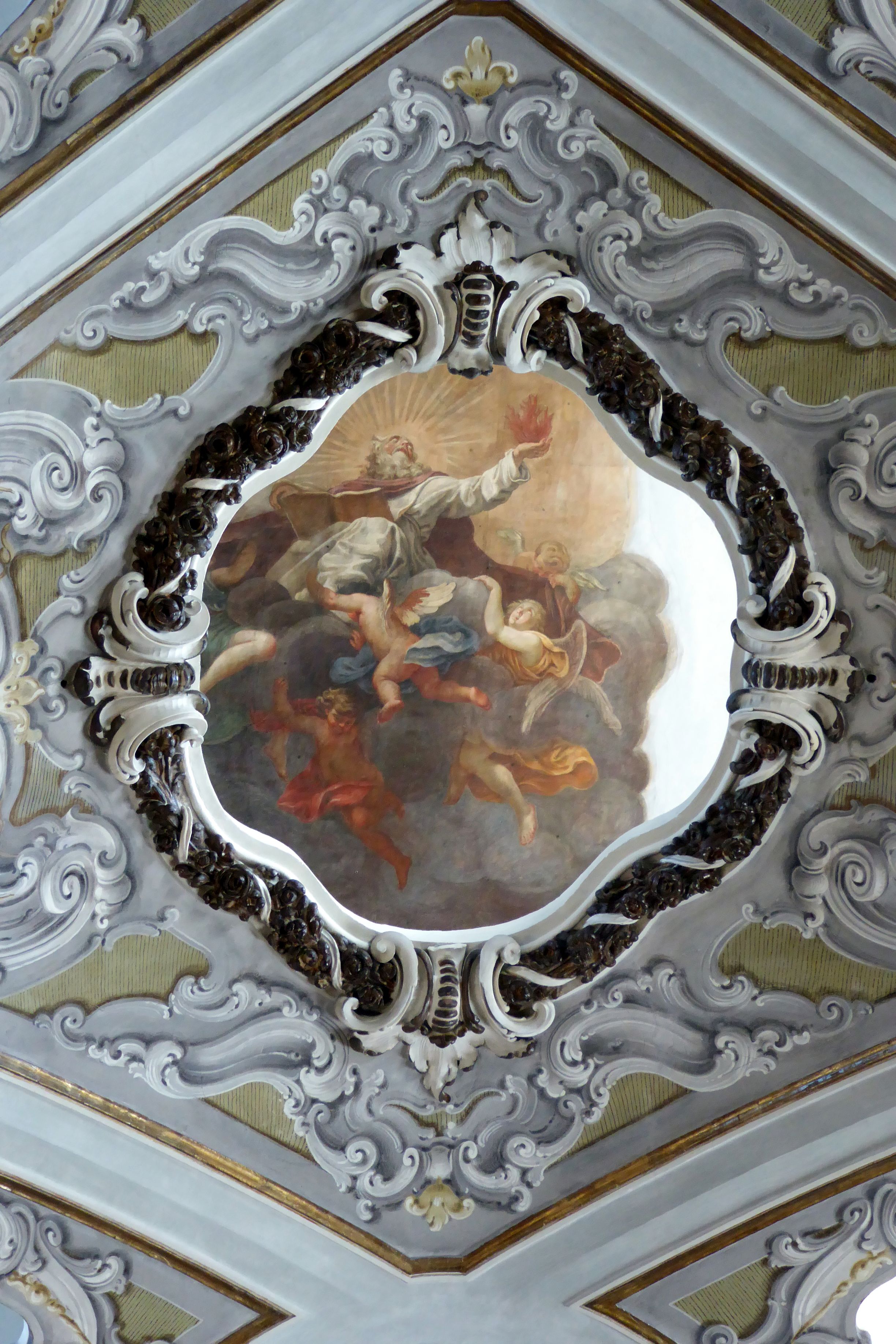
This is the ceiling of the first church we stopped at:

(For all pictures, click on the image to see full screen view.)
Continuing on, we arrived at the Church of San Giovanni Evangelista, a Benedictine complex founded between 980 and 988.  This church was built between 1490 and 1519.  From top to bottom, this church was stunning!
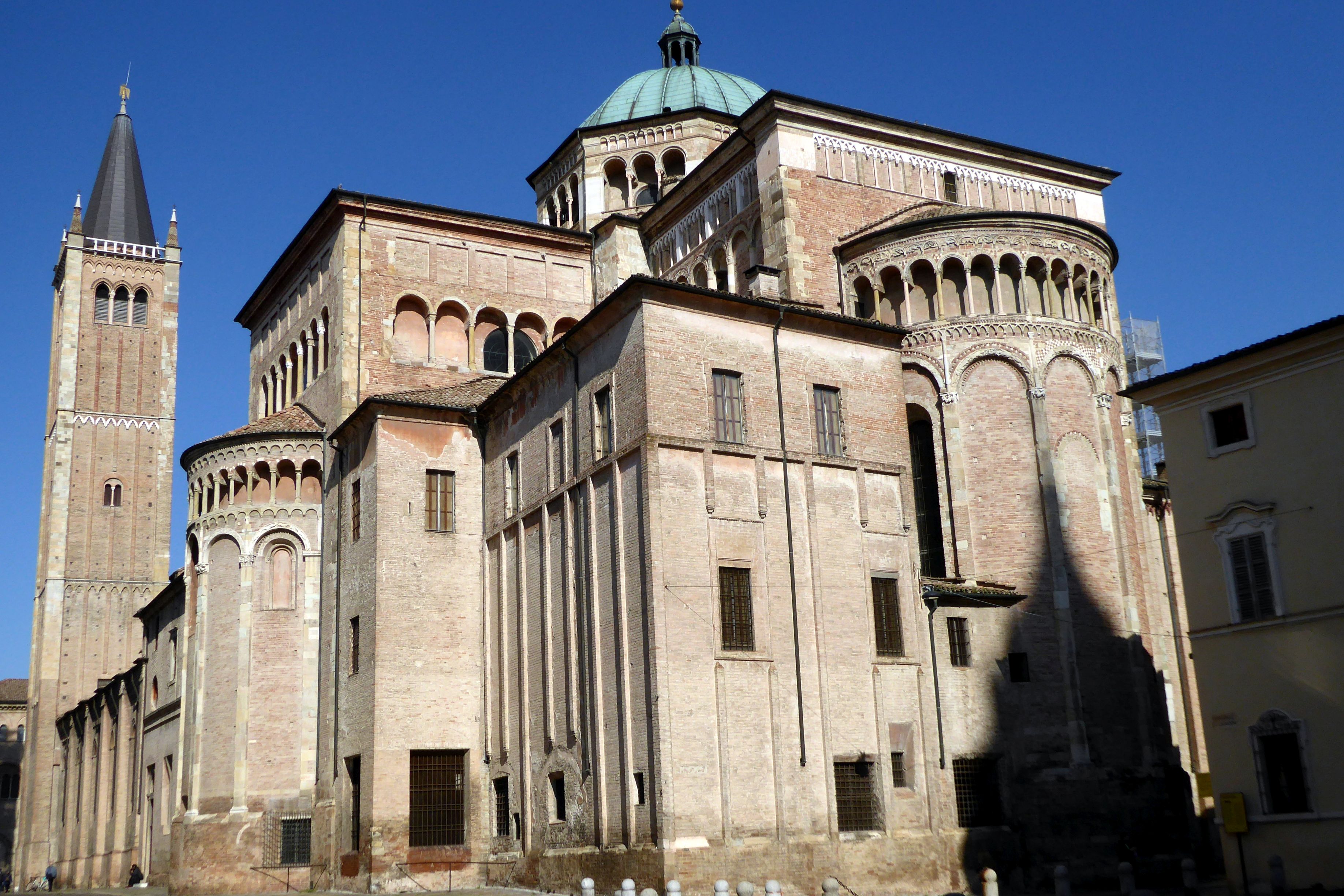
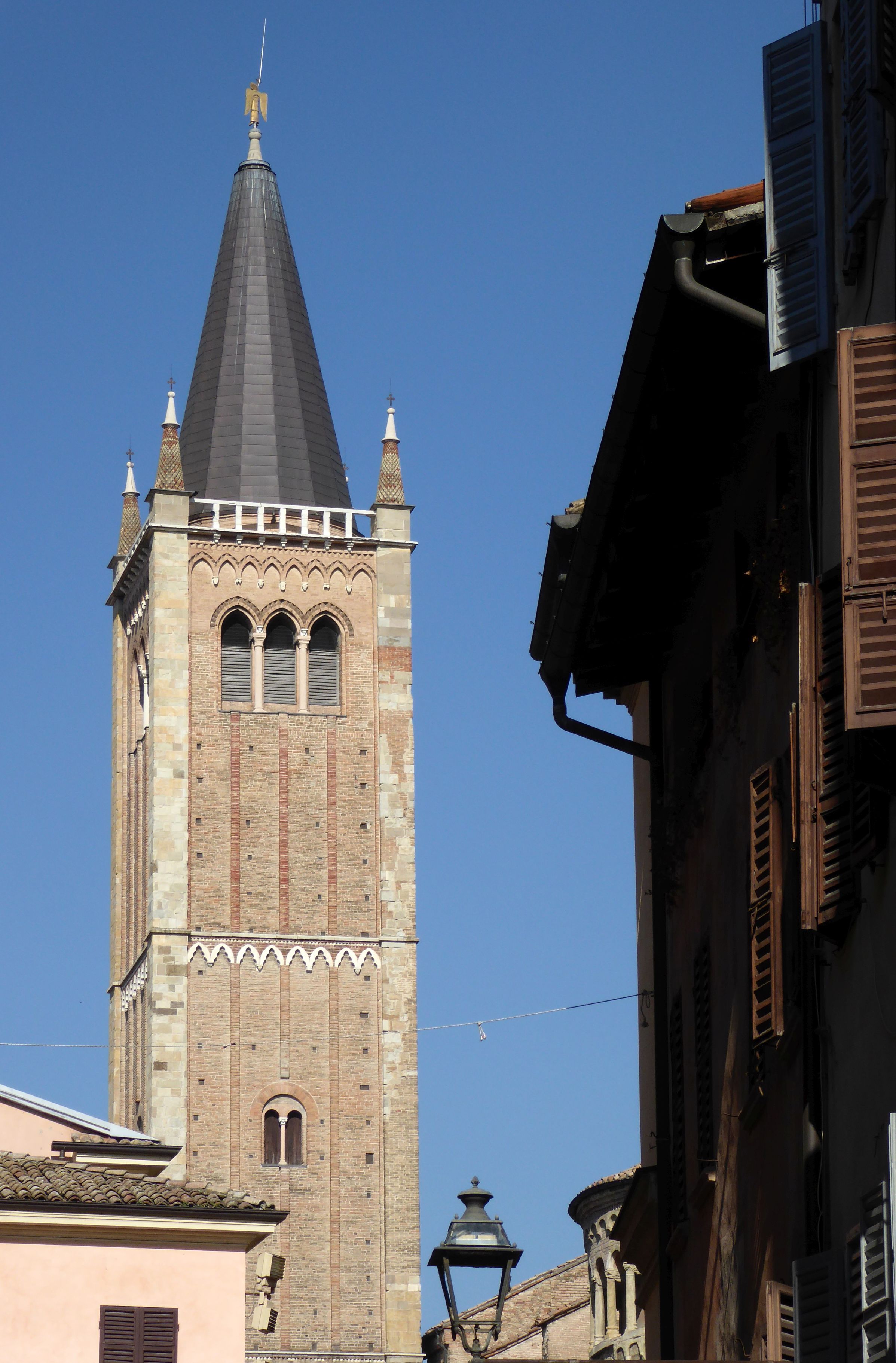
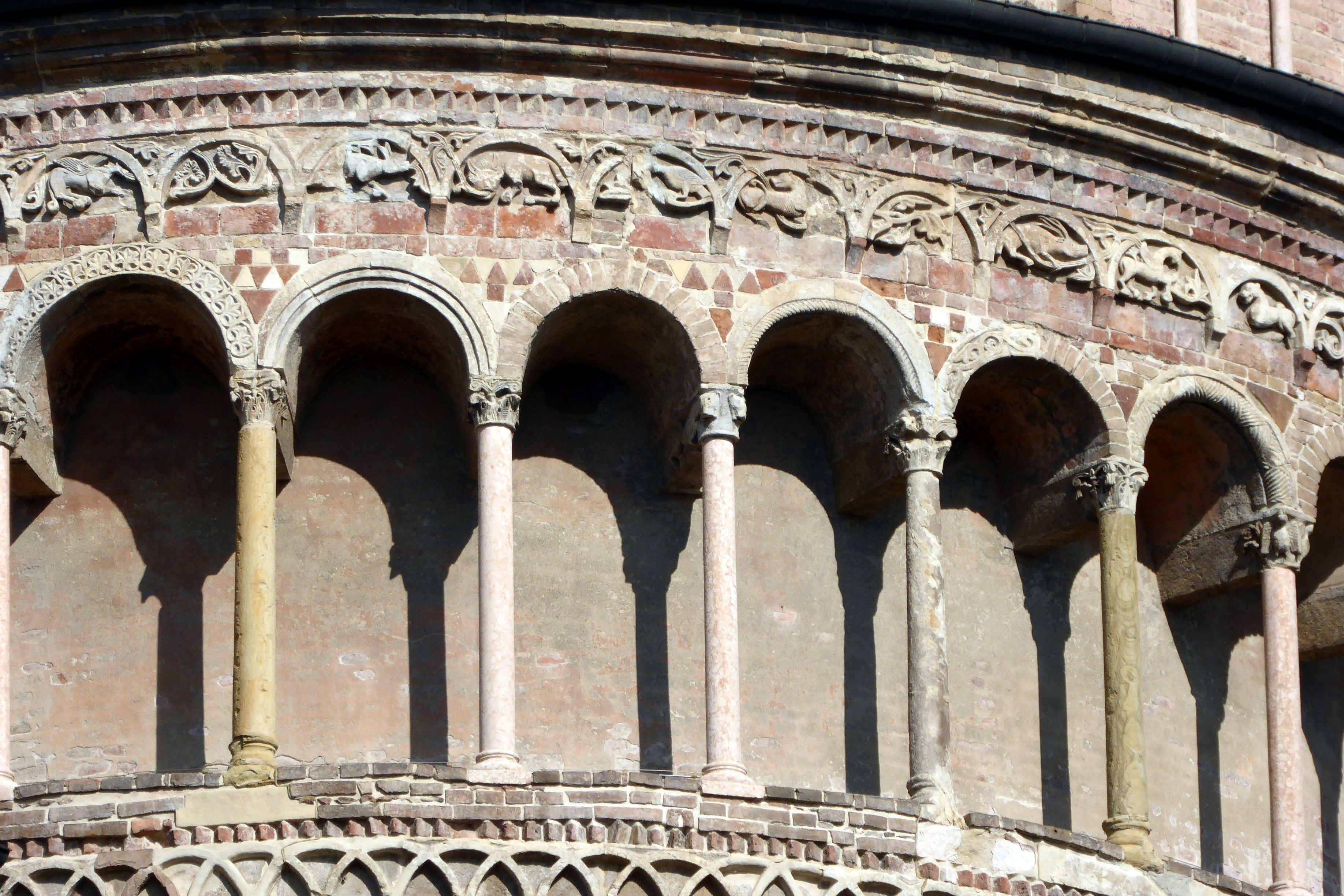
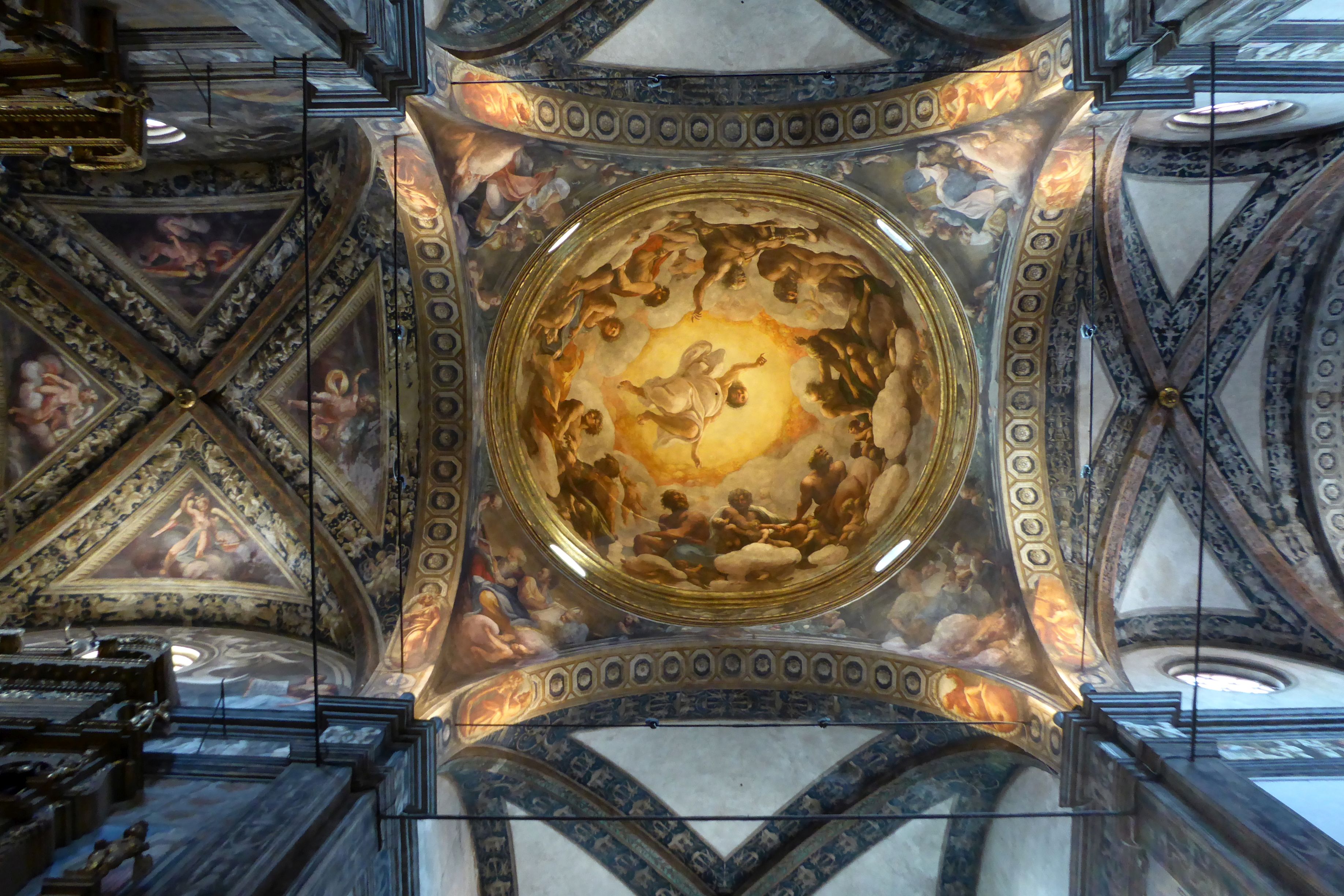
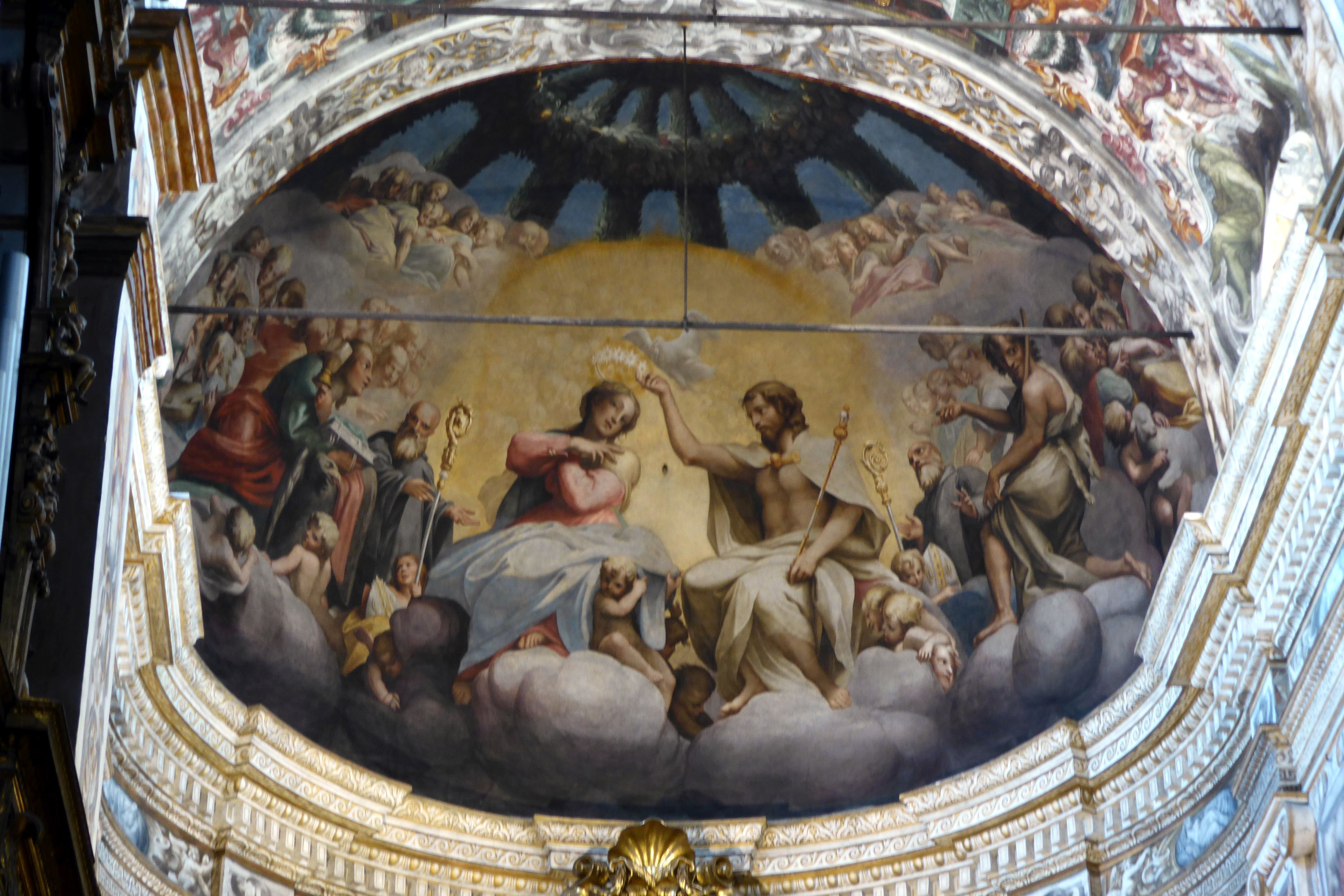
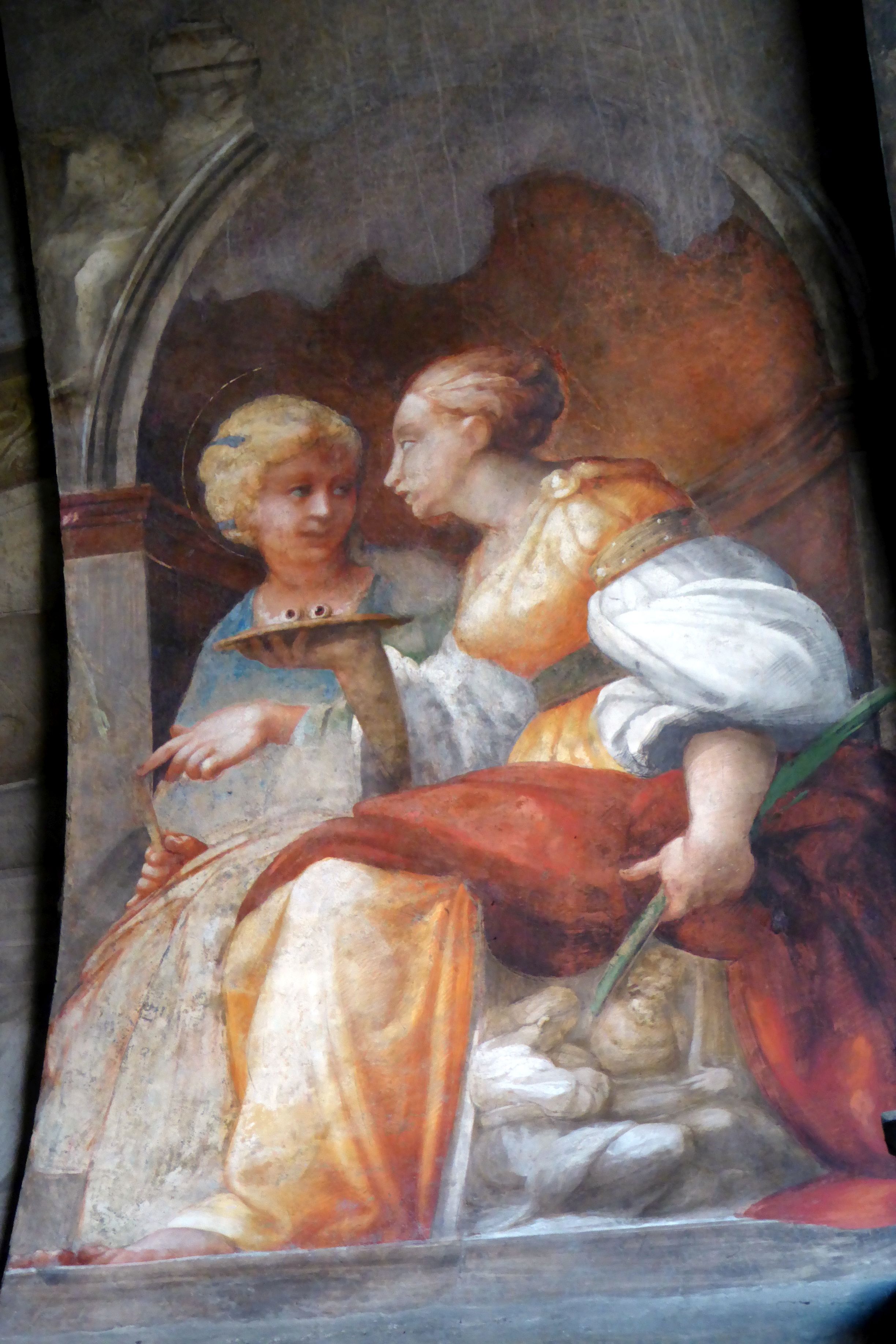
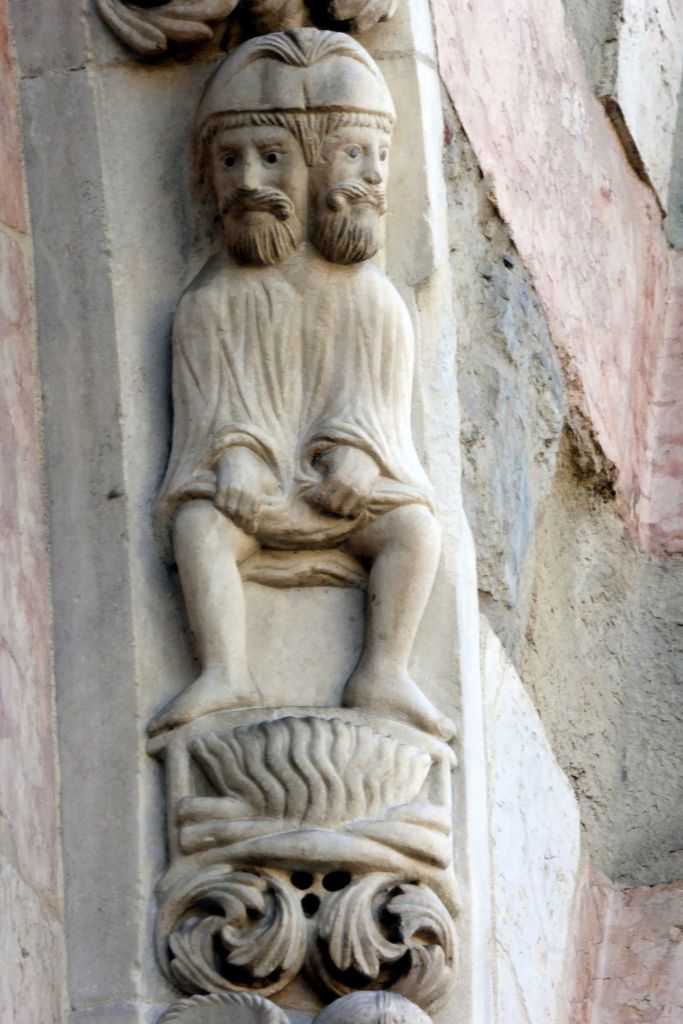
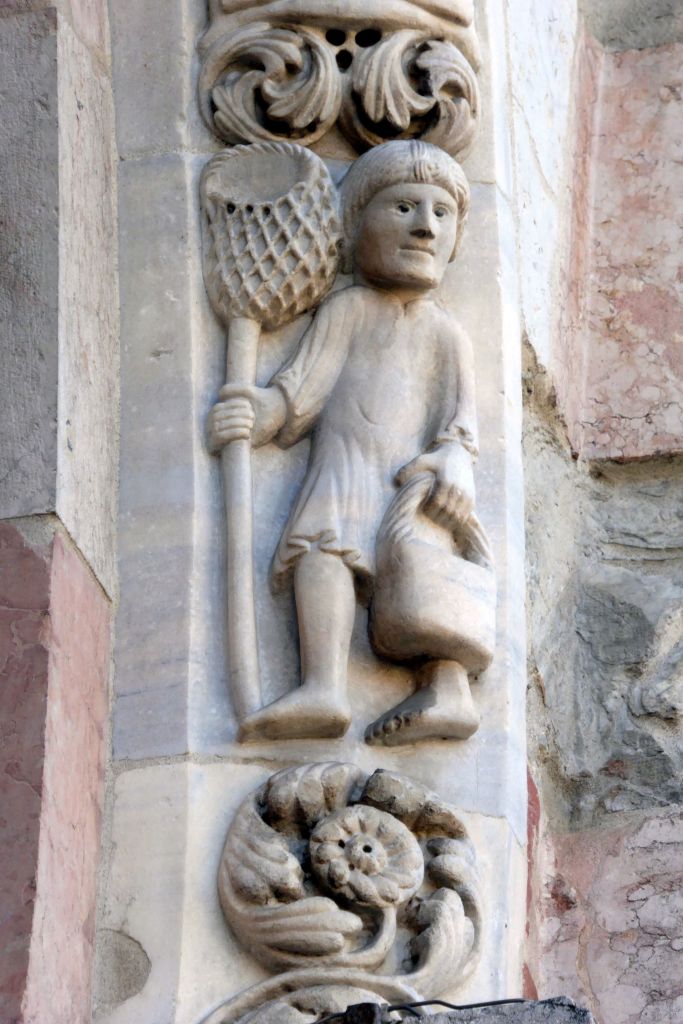
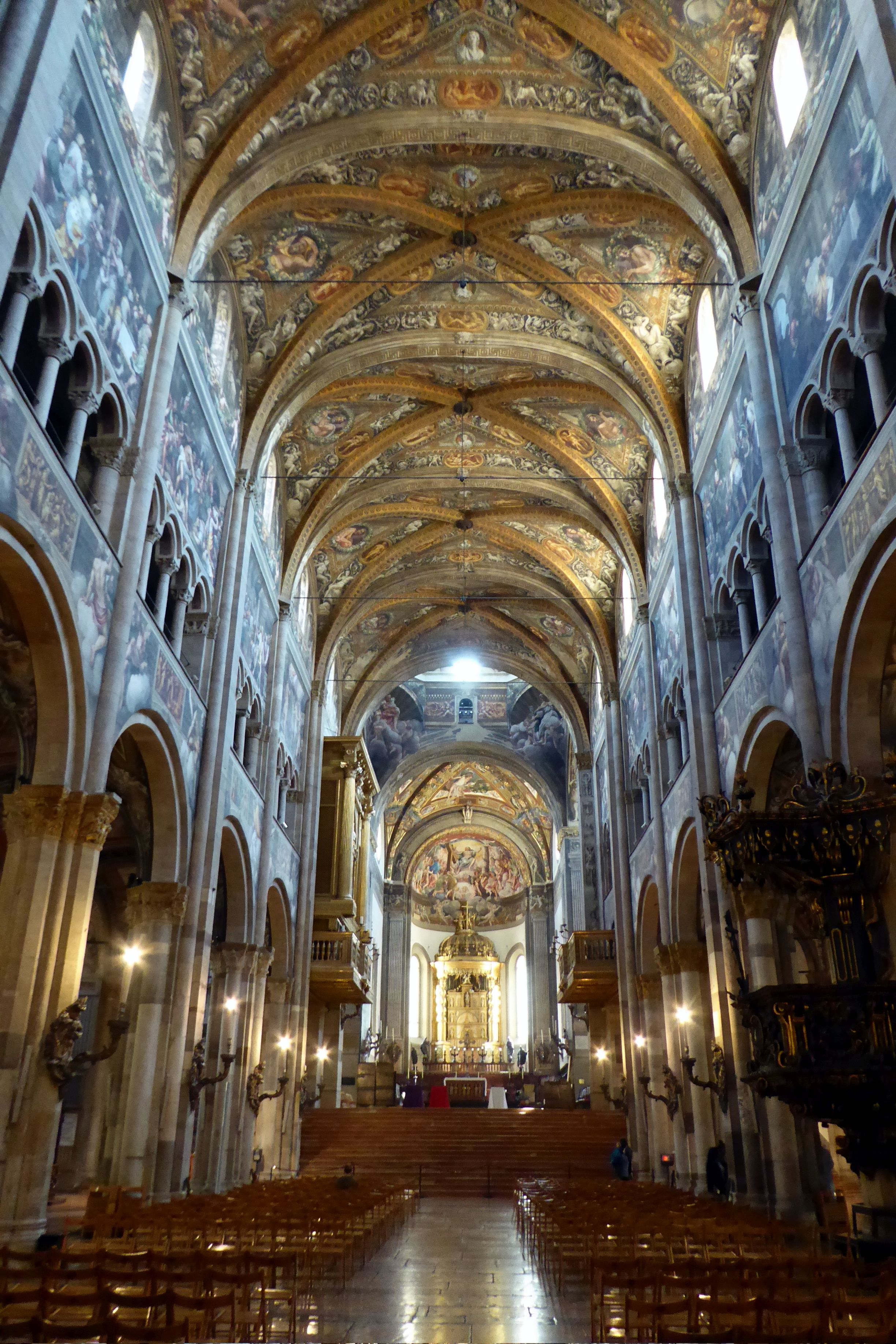
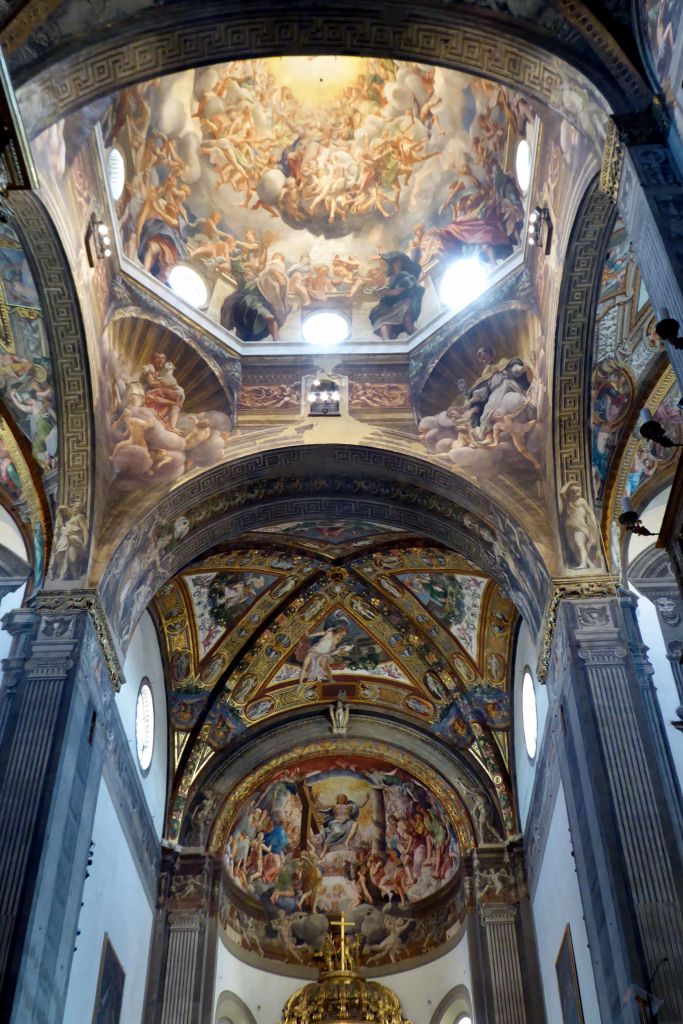
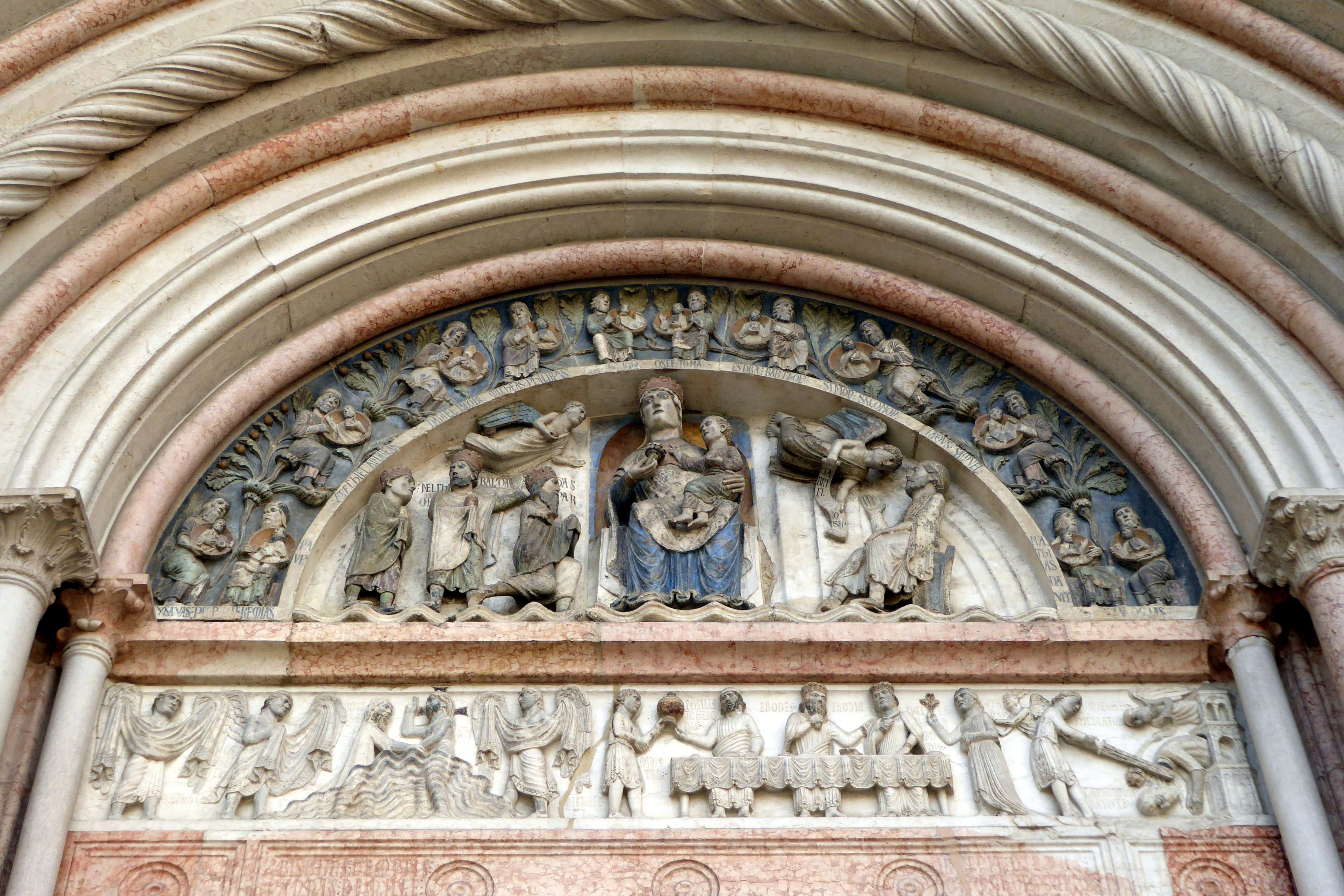
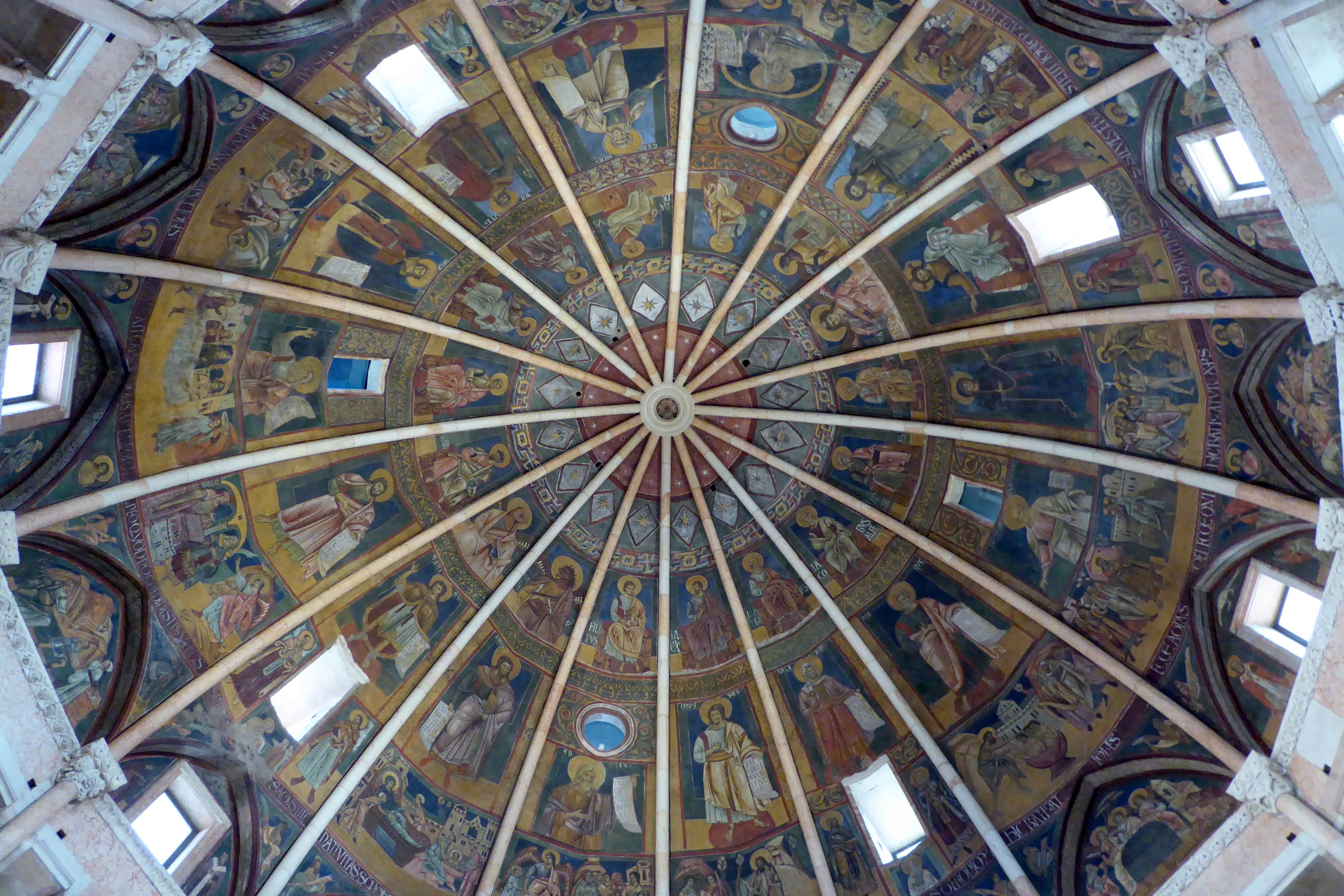
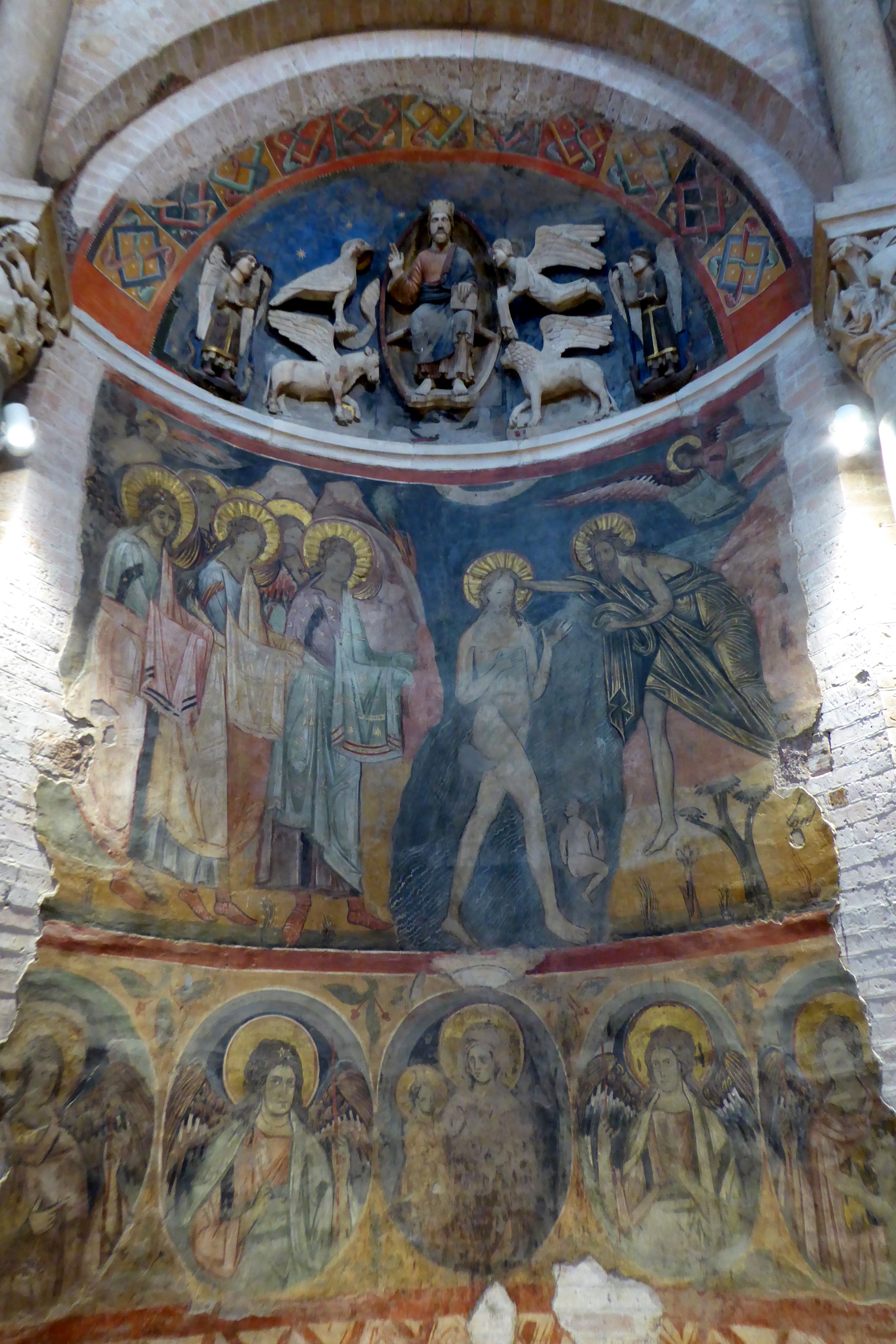
Next, we toured the Parma Cathedral, Cathedral of Santa Maria Assunta, which dates back to 1059.  Between the architecture and stone sculptures of Benedetto Atelami and the gorgeous frescoes, I was amazed at the meticulous artistic detail.

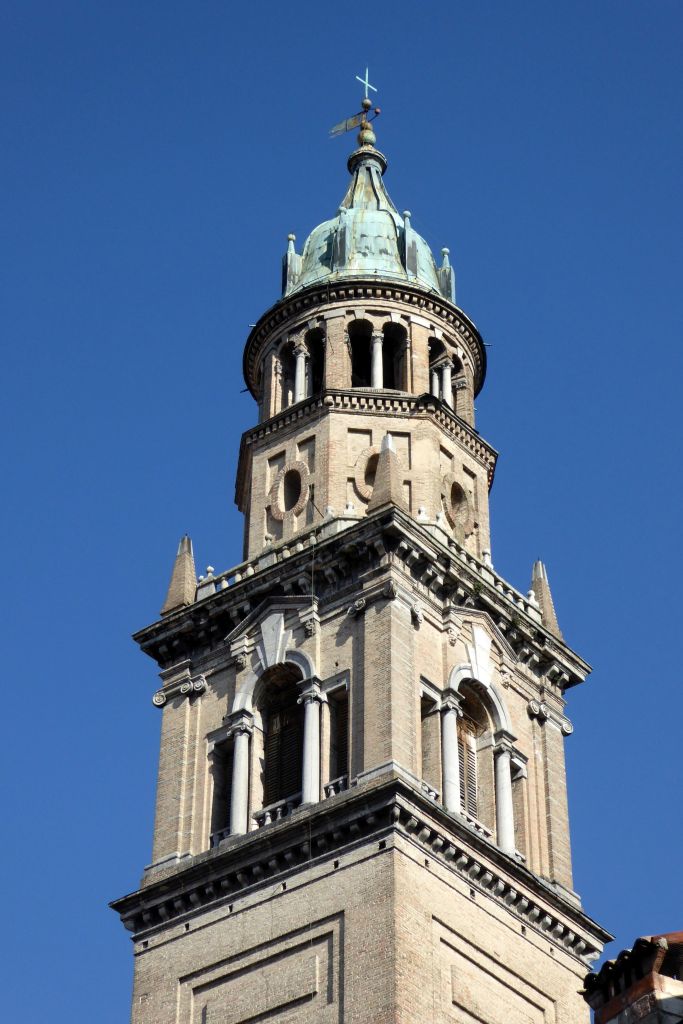
We concluded our tour of the Benedictine complex at the Baptistery, which was constructed between 1196 and 1302.

The following are scenes captured as we wrapped up our tour with the local guide, and then continued on with Oscar and two others from the group to see more of Parma:

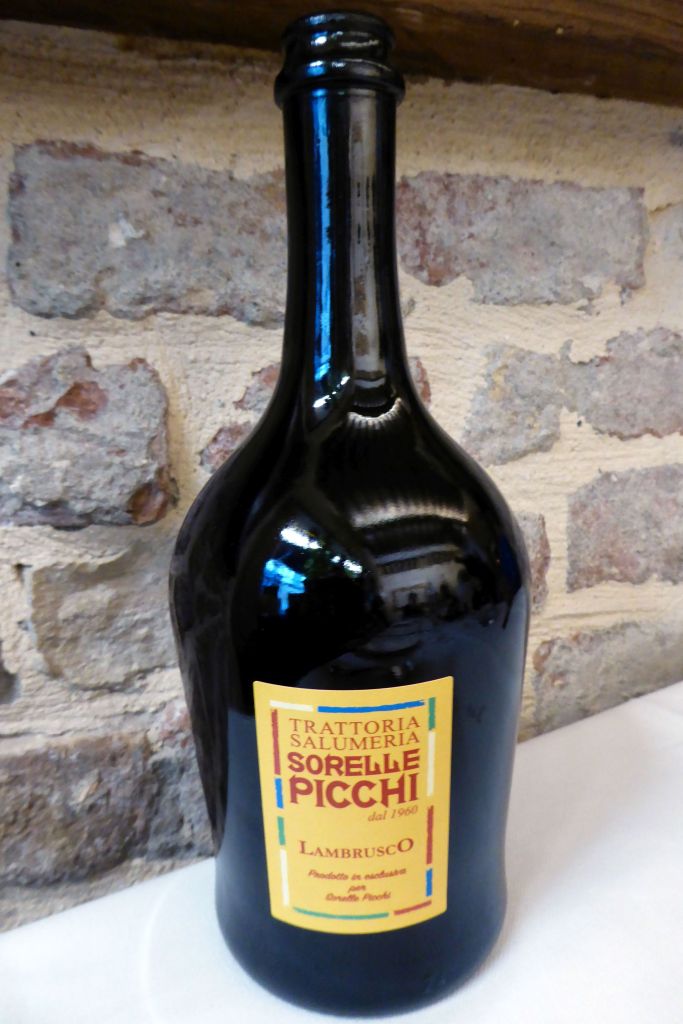
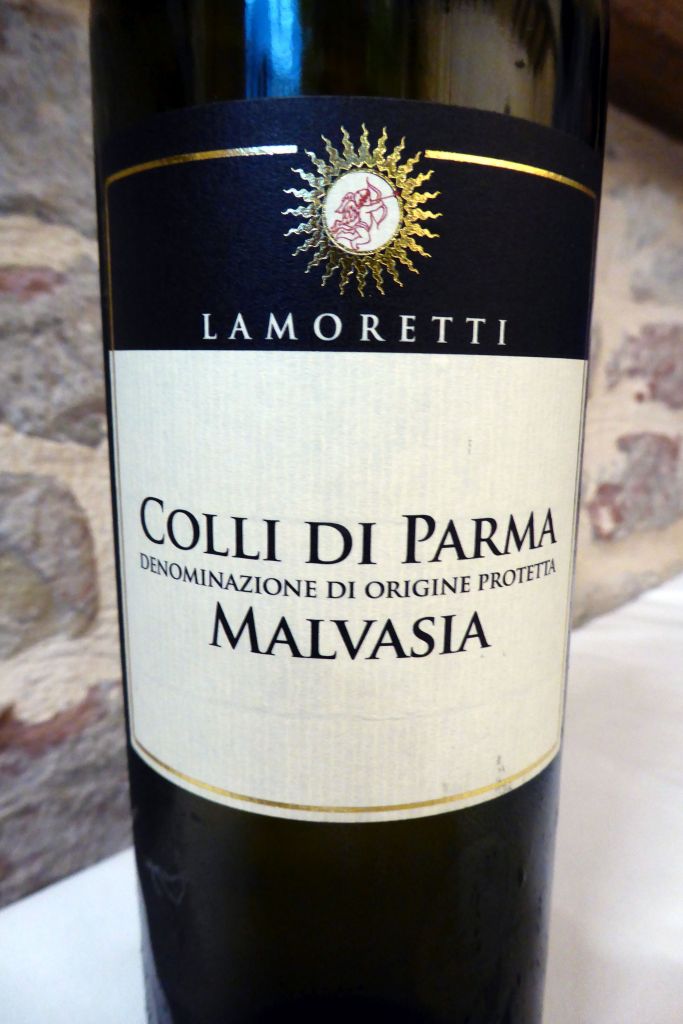
Our group dinner that night was at Sorelle Pichi, a memorable restaurant with great atmosphere, delicious cuisine, and some tasty lambrusco and malvasia wine.  It is also where Oscar, Bruce, and I discovered the crazy coincidence of having met the same jazz guitarist, Richard Smith—the story I told in the “Italy #2” post.  We had a lot of laughs that night, so this is a place I will remember fondly.

Coming up next:  ITALY #6: PARMA HAM & THE PO RIVER

Note: If small group travel is of interest to you, I highly recommend Overseas Adventure Travel (OAT). Although Bruce and I travel together, they do not charge a single supplement for those who travel on their own. Singles also get their own room at hotels. If you book, you can get $100 off your trip by providing my name and customer number (Elaine Krugman, #3018126) as the person who referred you. I will also get $100 off future travel– a win-win!