Sheep farming in Ireland is experiencing the same struggles as in England and (probably everywhere else sheep are raised for wool). The wool market has dropped significantly due to the increase in synthetics used in clothing. In Ireland, they are now using wool for insulation, but the market isn’t as big for that purpose. Currently, wool is being looked at as a substitute for bubble wrap in packaging.
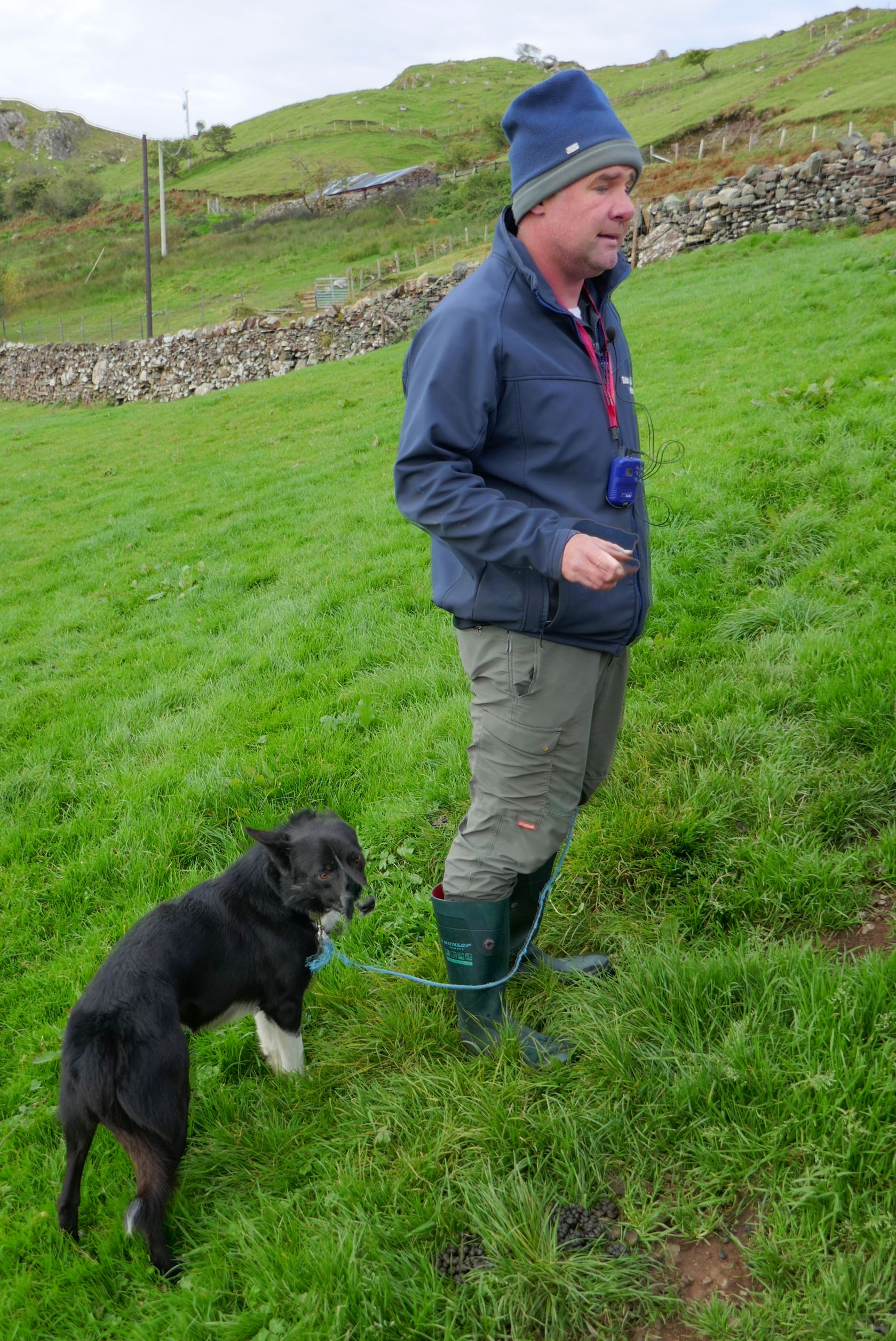
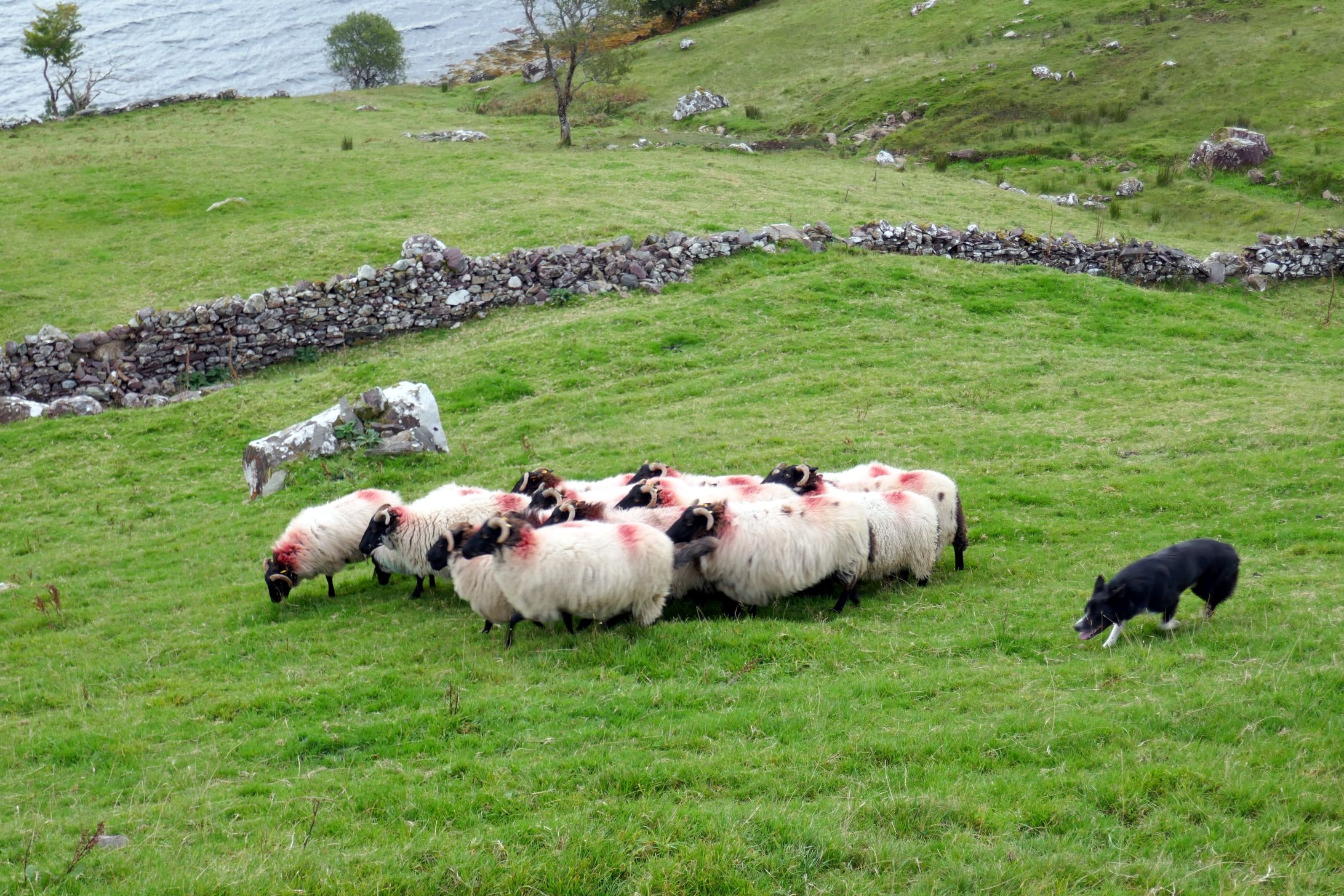
Still, sheep farmers are having a difficult time making a living, so they must diversify. Tom has done so by bringing in tour groups for sheep herding demonstrations, featuring his dog, Rocket, who lives up to his name!
(For all photos, click on the image for a full screen view.)
Tom & Rocket
Tom also talked about life as a sheep farmer. He has 1200 sheep. Breeding season lasts for one month, and then the females are kept separate from the males. He explained that family farms all around him are folding and there are now mostly super farms for food production. He sells his lamb for meat and keeps his herd numbers at 1200.
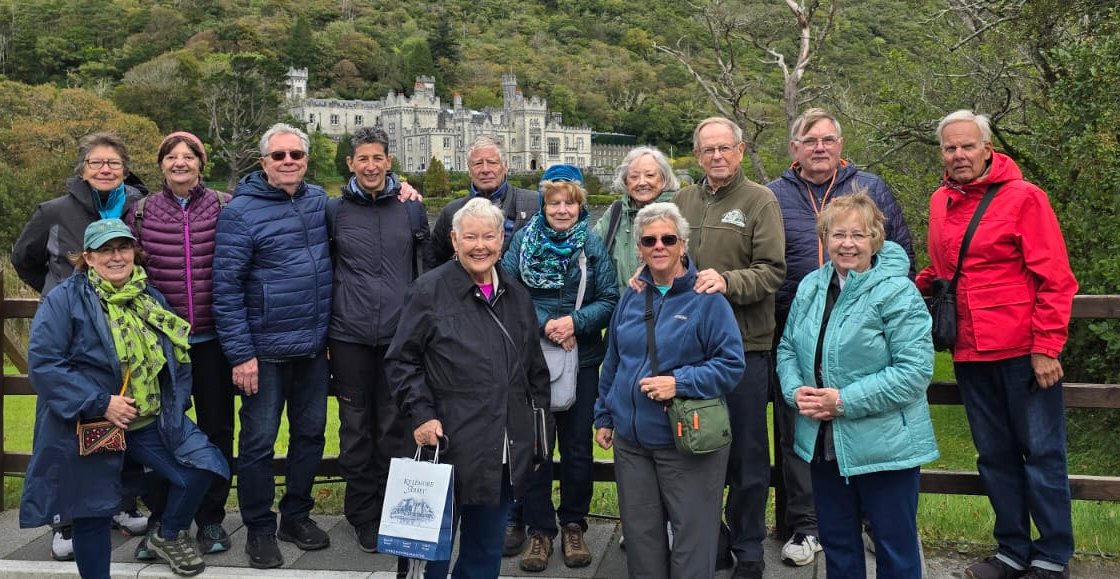
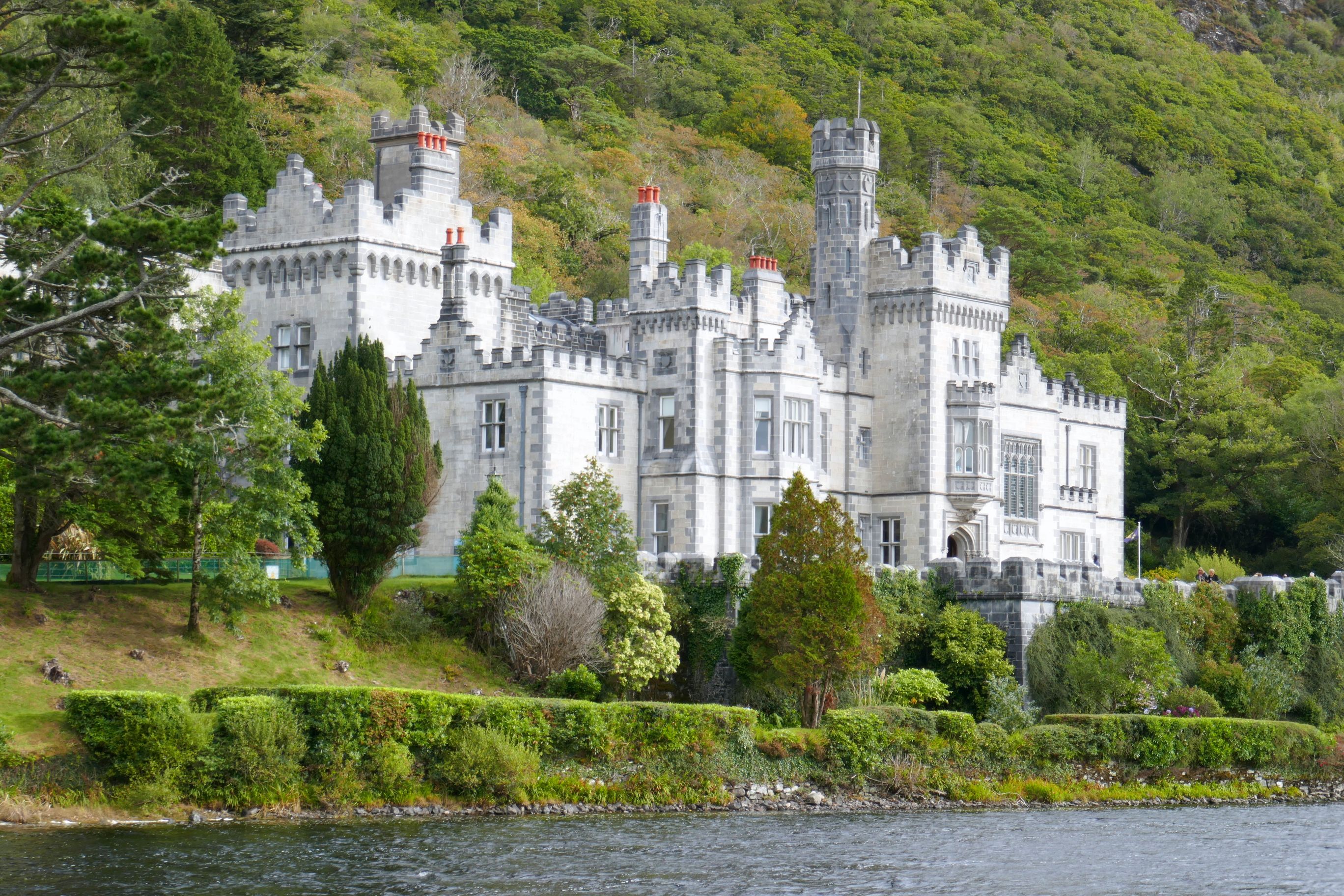
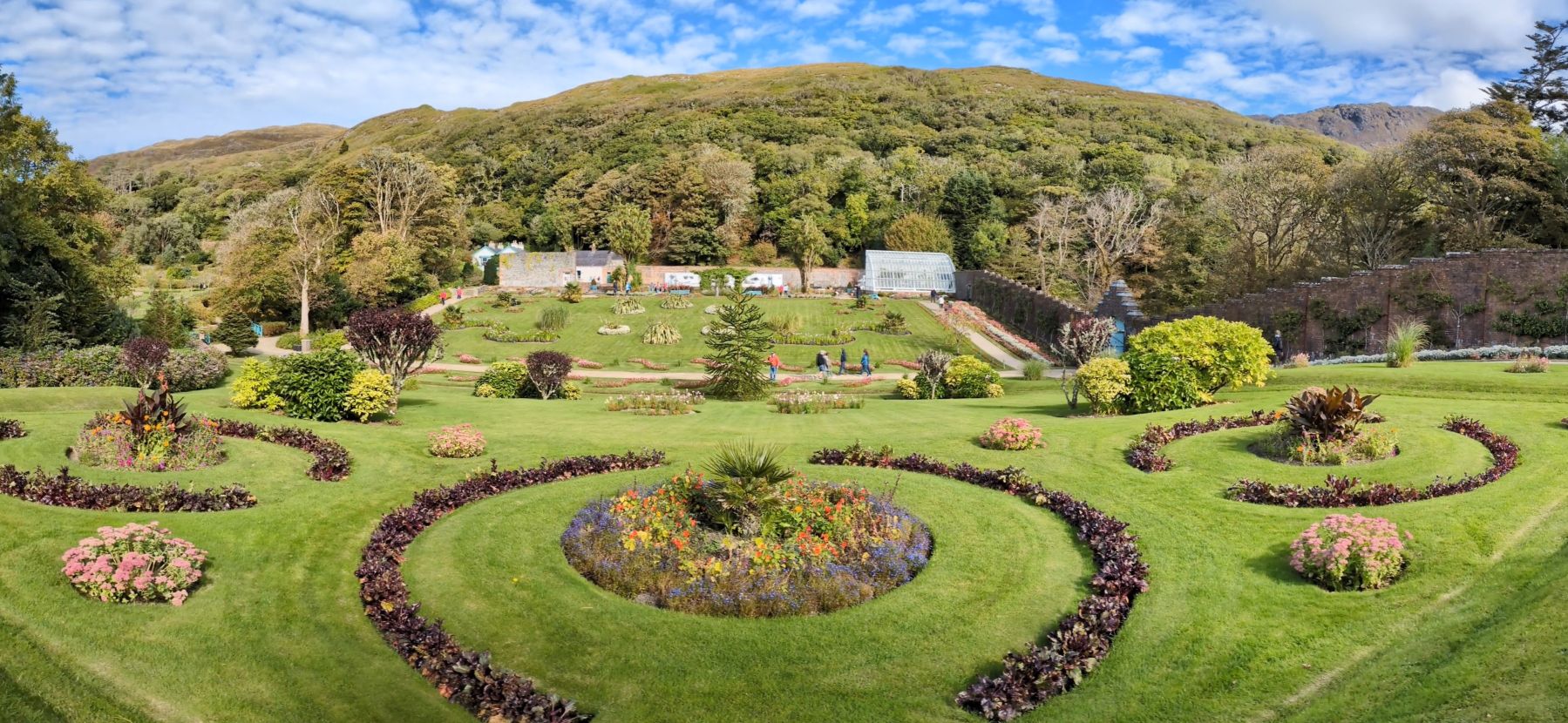
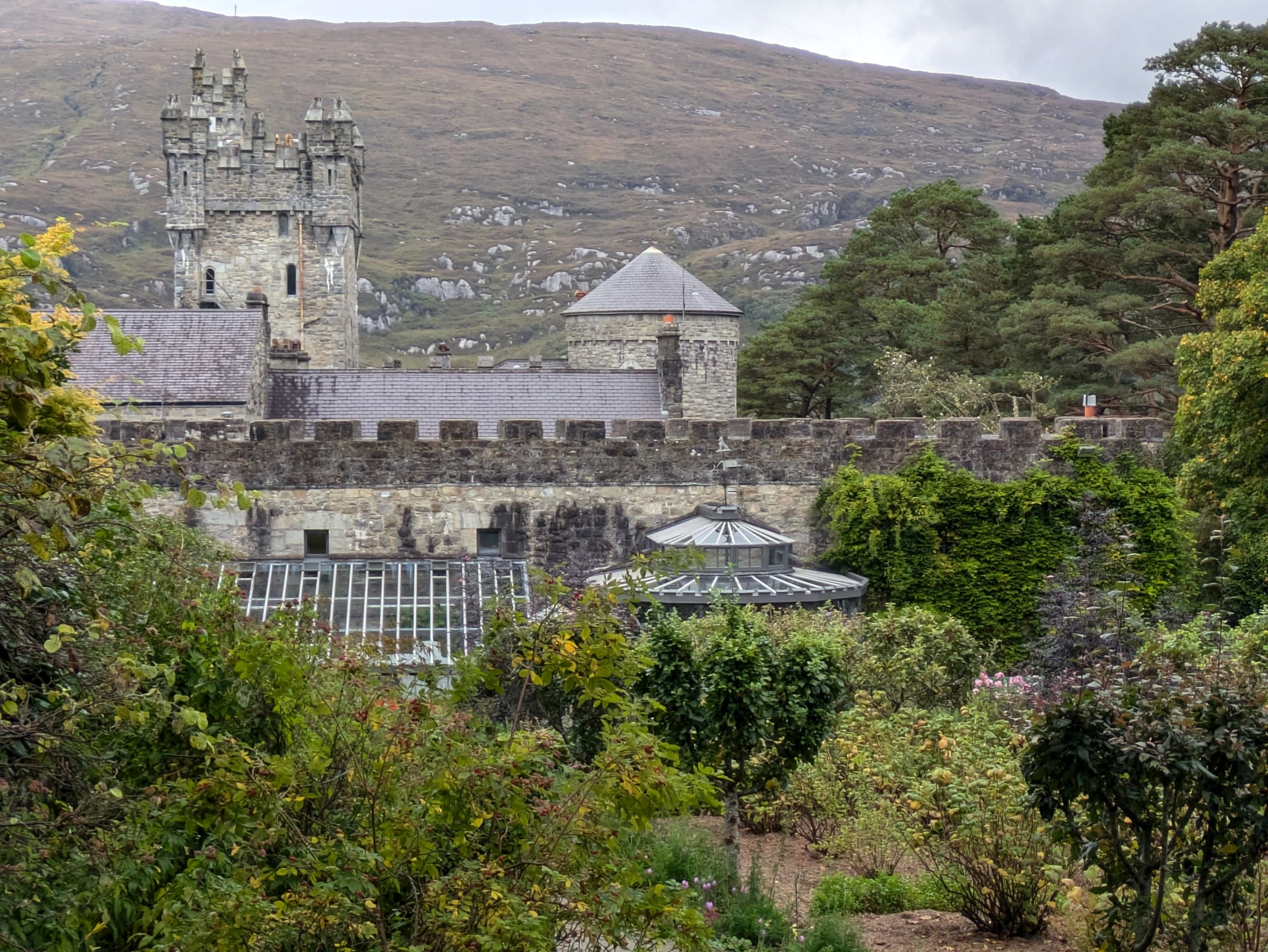
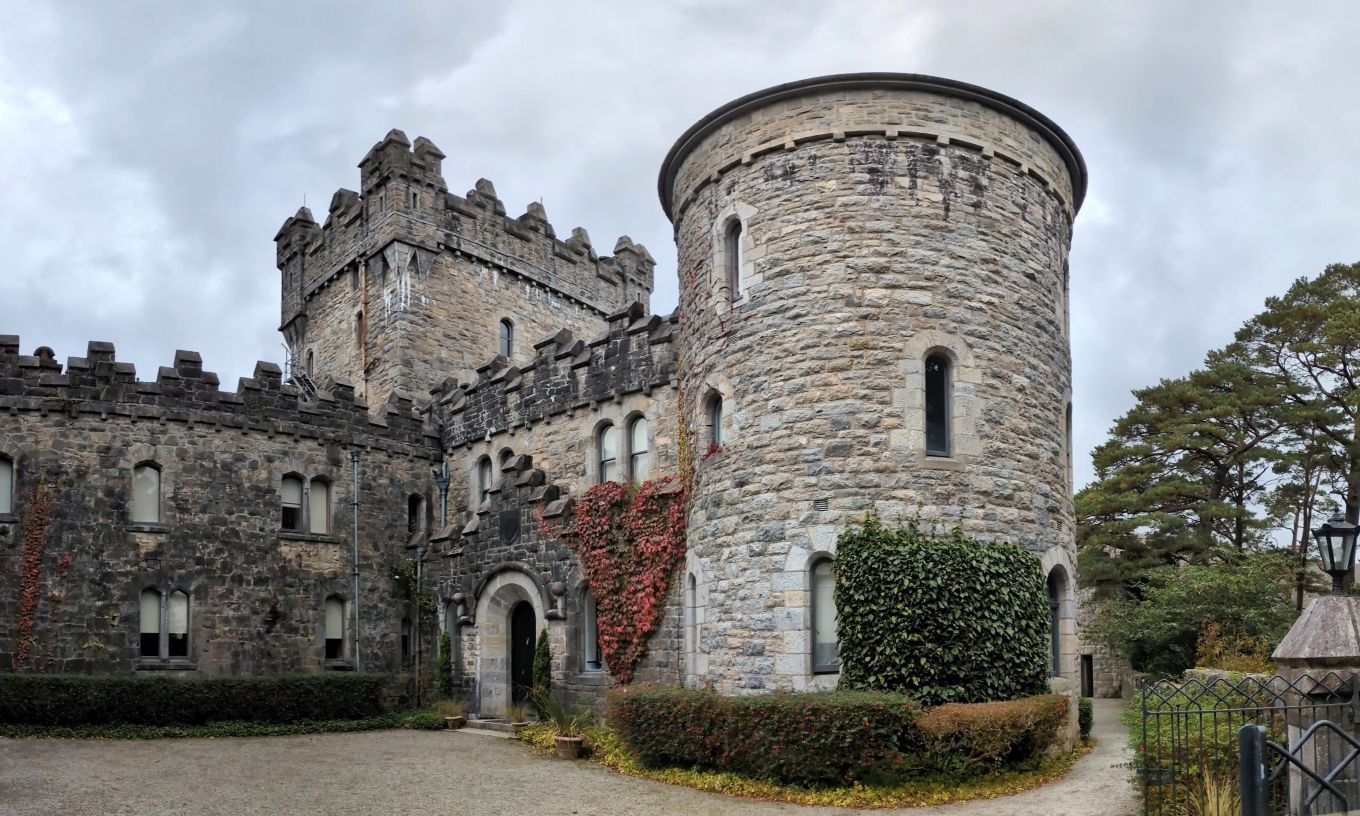
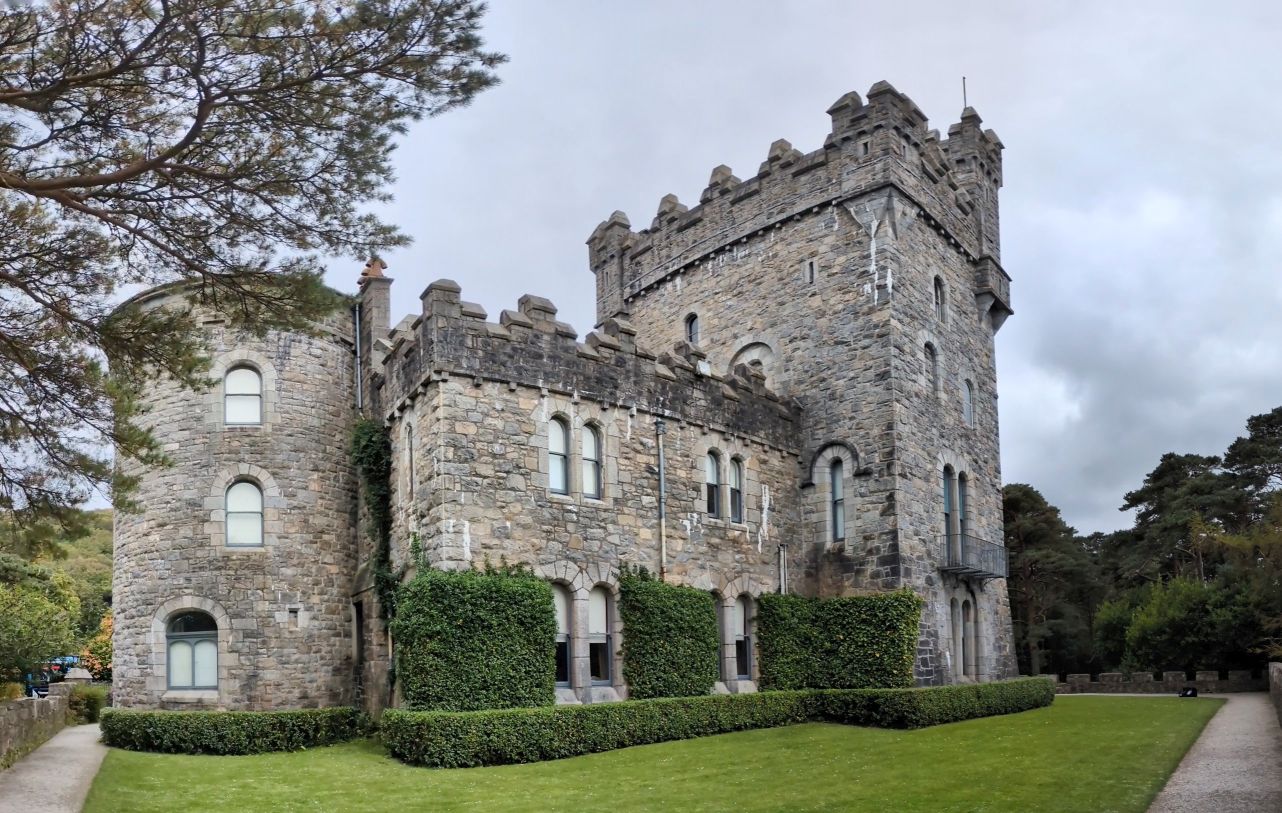
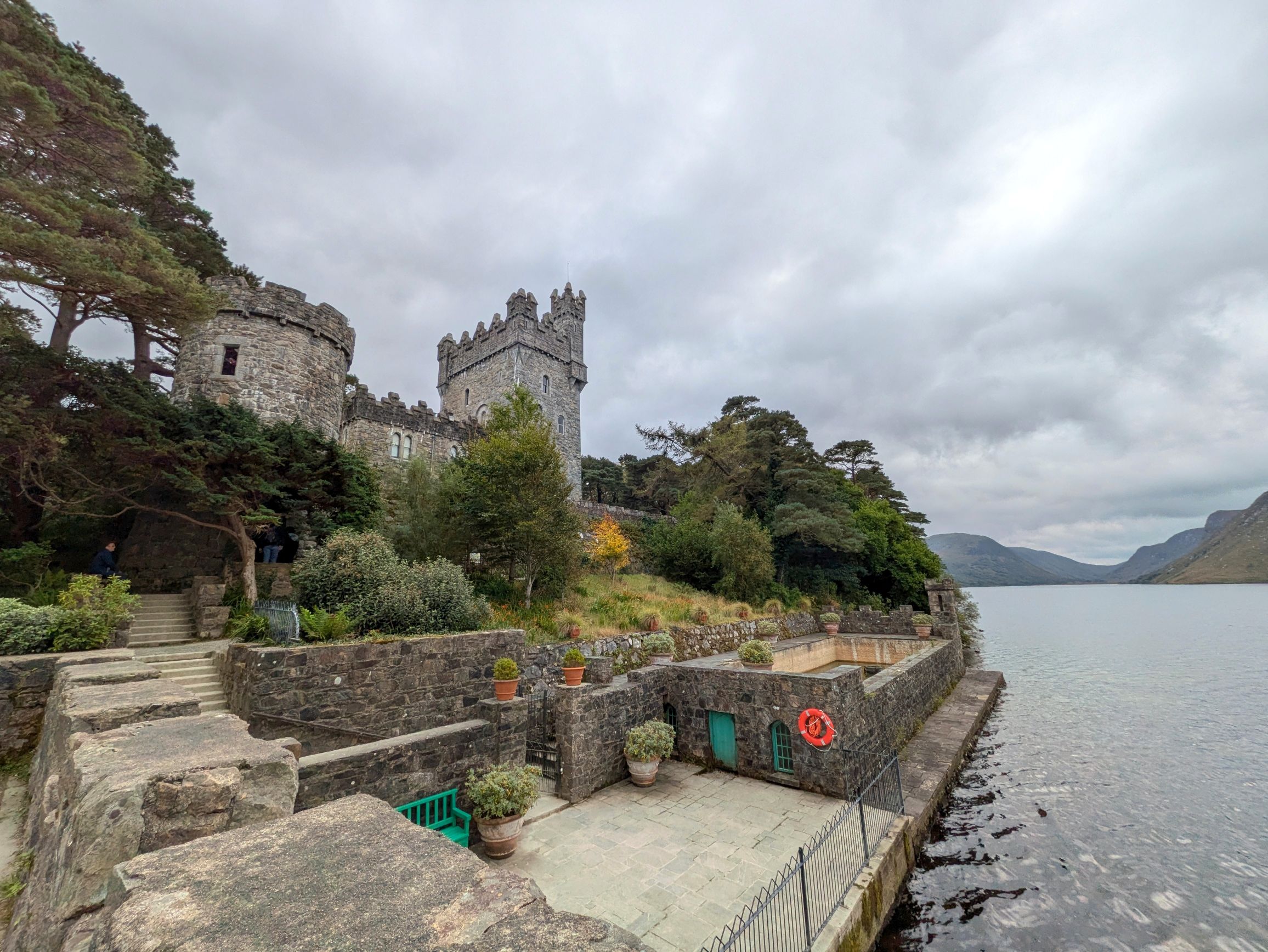
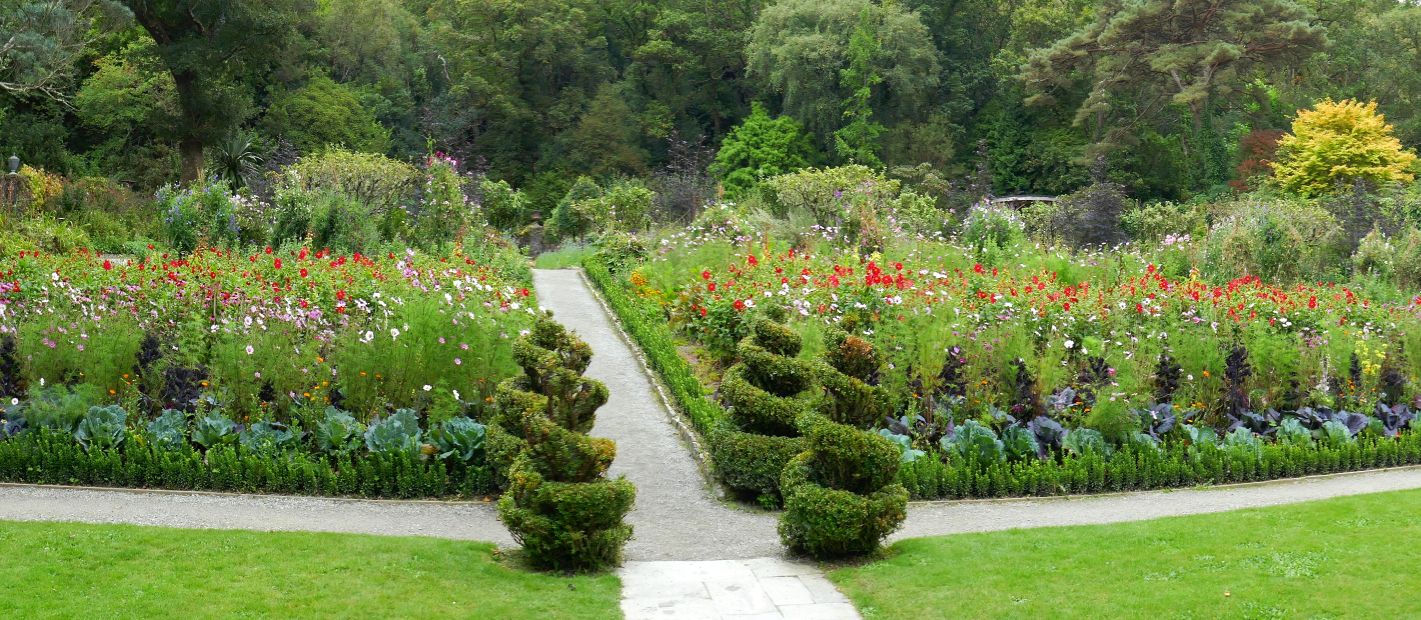
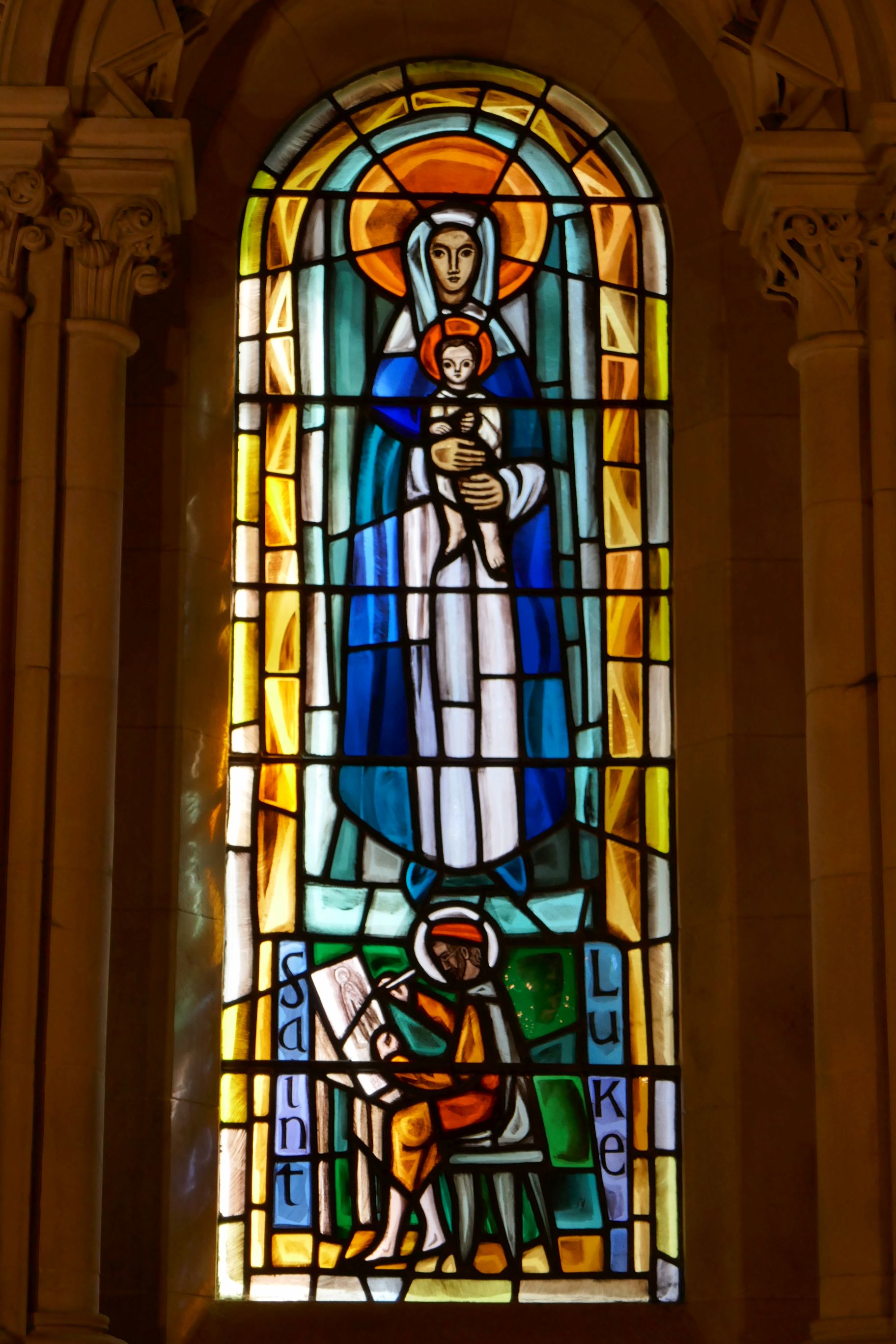
Kylemore Abbey & Castle was our next destination for an afternoon visit. The abbey, a Benedictine Monastery, was founded in 1920 on the grounds of the castle, which was built during the Great Famine, in 1867, by Mitchell Henry. He employed 100 men and paid them three times what other jobs paid to do the construction that took four years to complete. In 1893, electricity was added before other homes had it. The 40,000 square foot castle has 33 bedrooms (but only 4 bathrooms) and was used in summer, for fishing, and at Christmas. Henry employed 200 people to maintain the estate, the walled garden, glass houses, and care for the animals he raised on the property. Ultimately, the castle and 1,000-acre estate was gifted to the monastery in 1920.
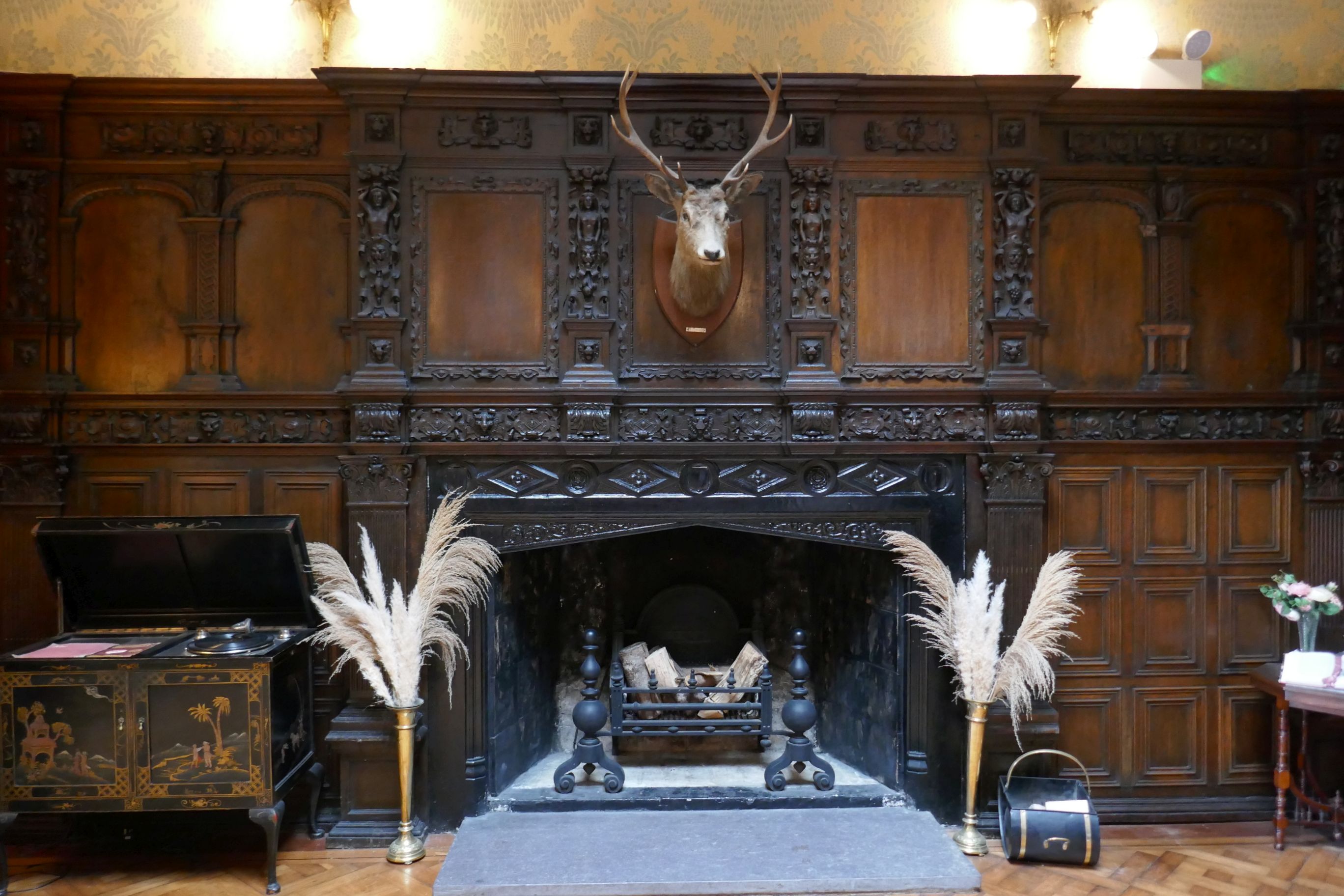
We toured the castle and gardens during what turned out to be a beautiful afternoon after a cloudy start:
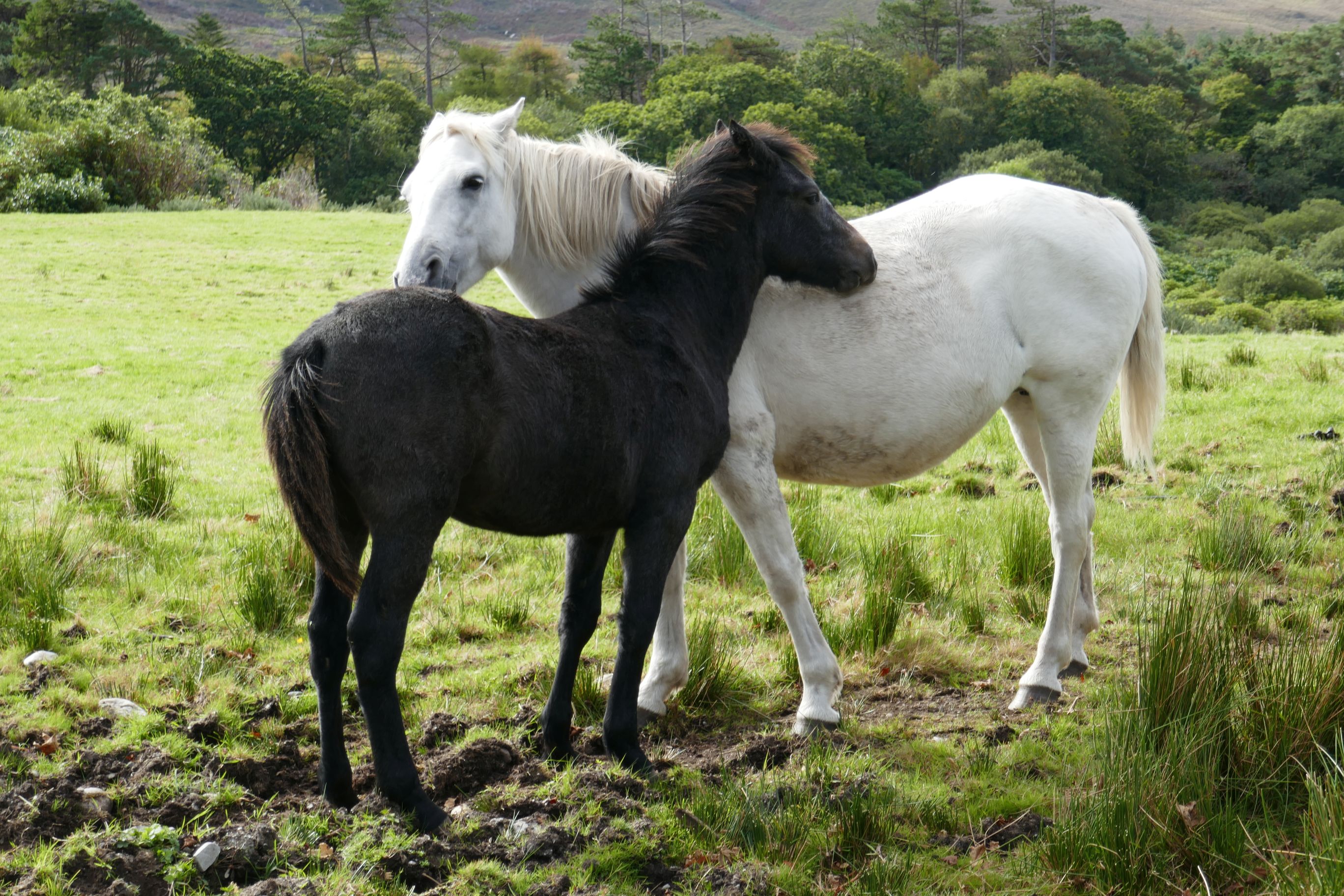
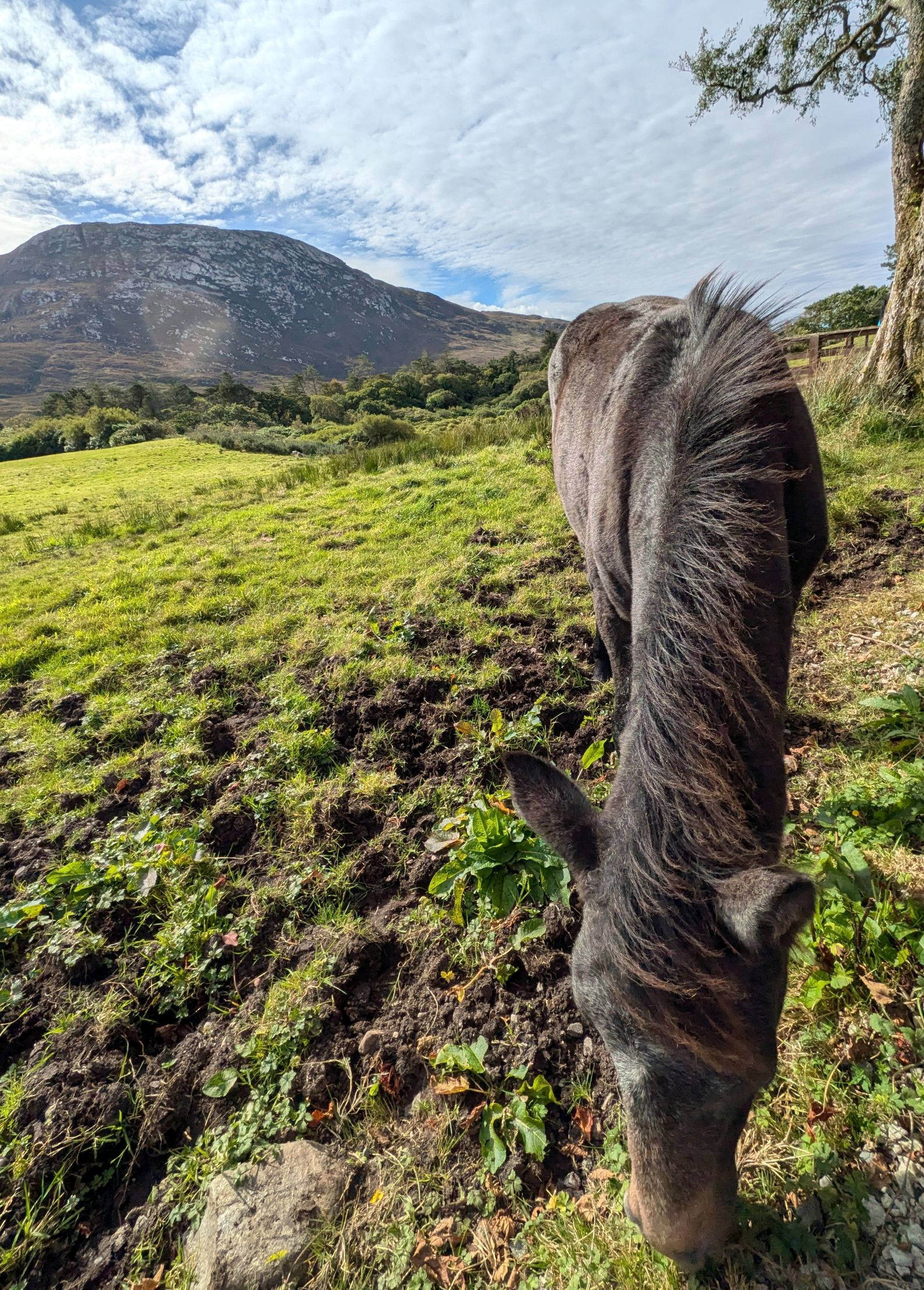
The Connemara Pony is Ireland’s only native breed and is famous for being hardy and sure-footed.
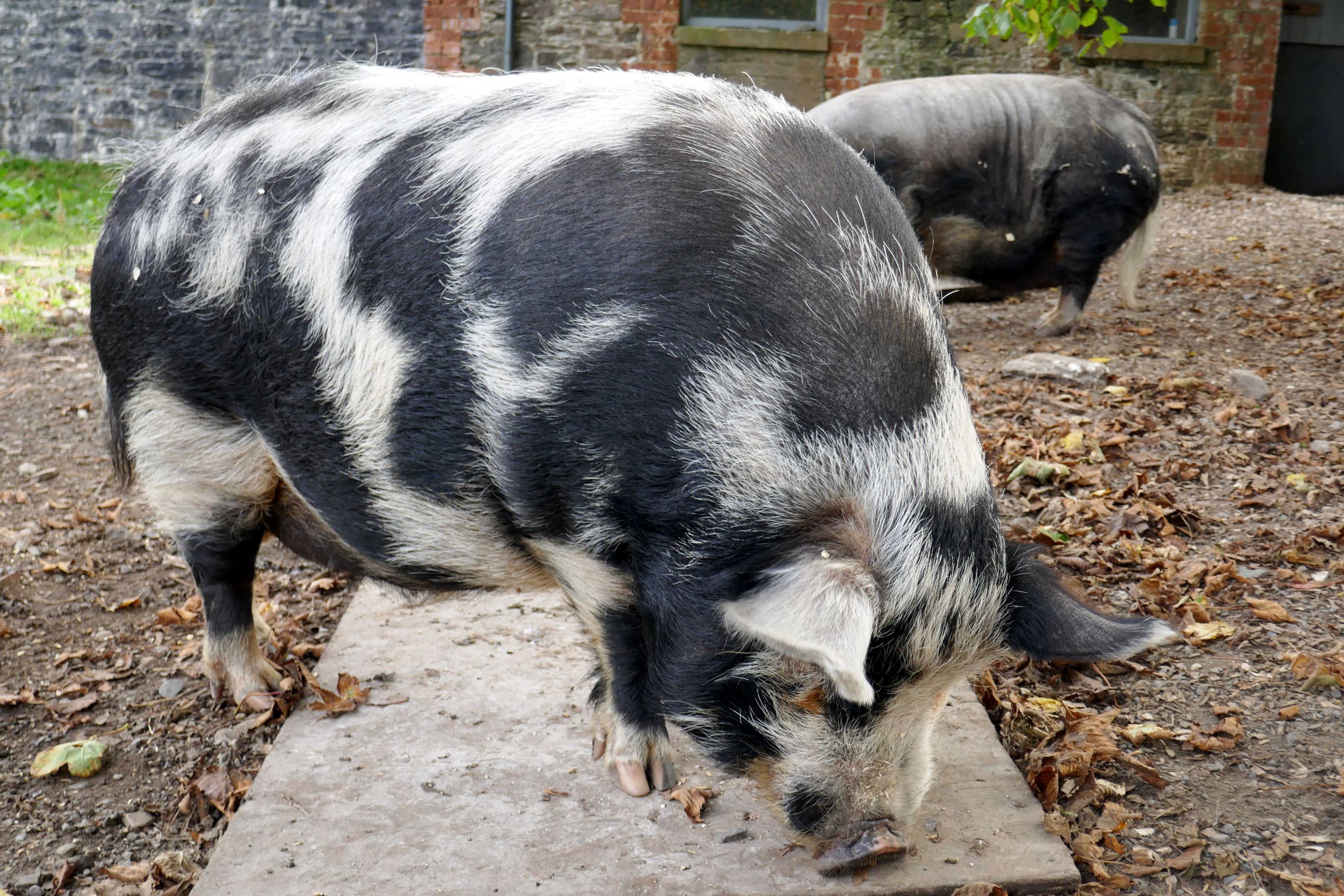
Meet Perry Pickles, the Kune Kune Pig. Native to New Zealand, the Maori name, “Kune Kune” translates to “fat and round.”
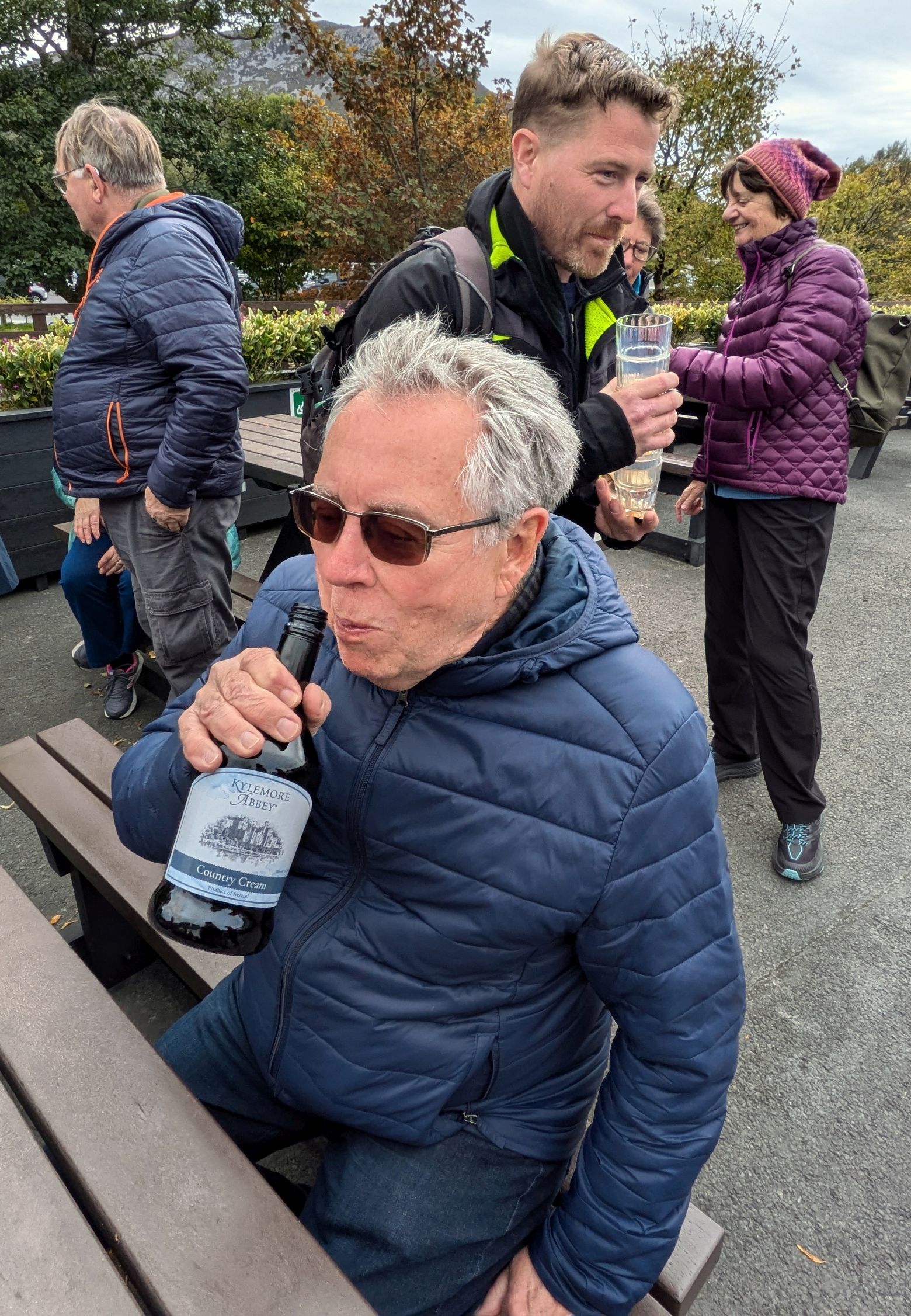
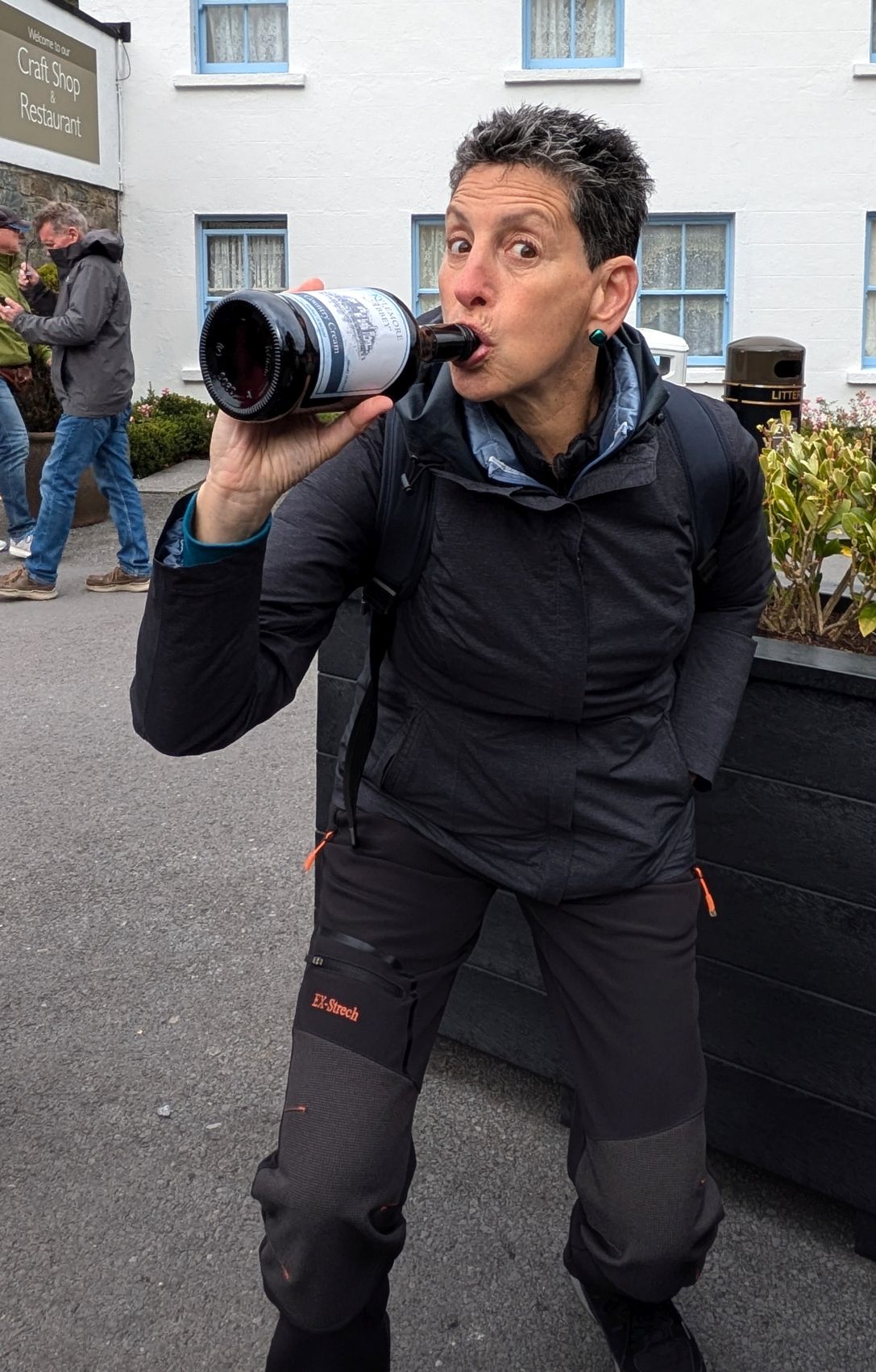
To conclude our Kylemore Abbey visit, our guide, John, ducked into the gift shop to pick up some treats made by the Benedictine monks– chocolate and “Country Cream,” a cream-based liqueur. After our group enjoyed samples of both, Bruce and I were given the remaining couple of ounces to polish off.
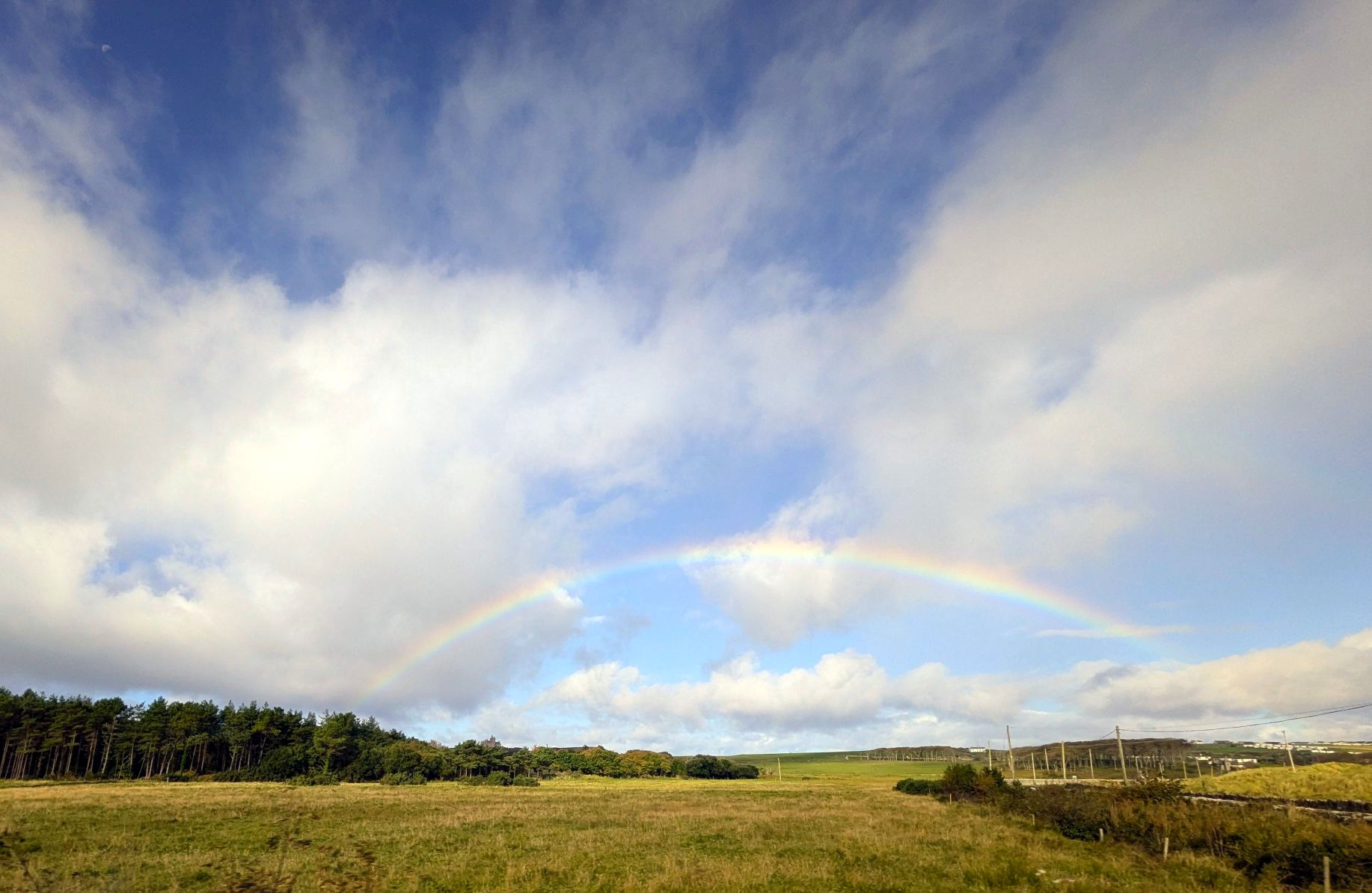
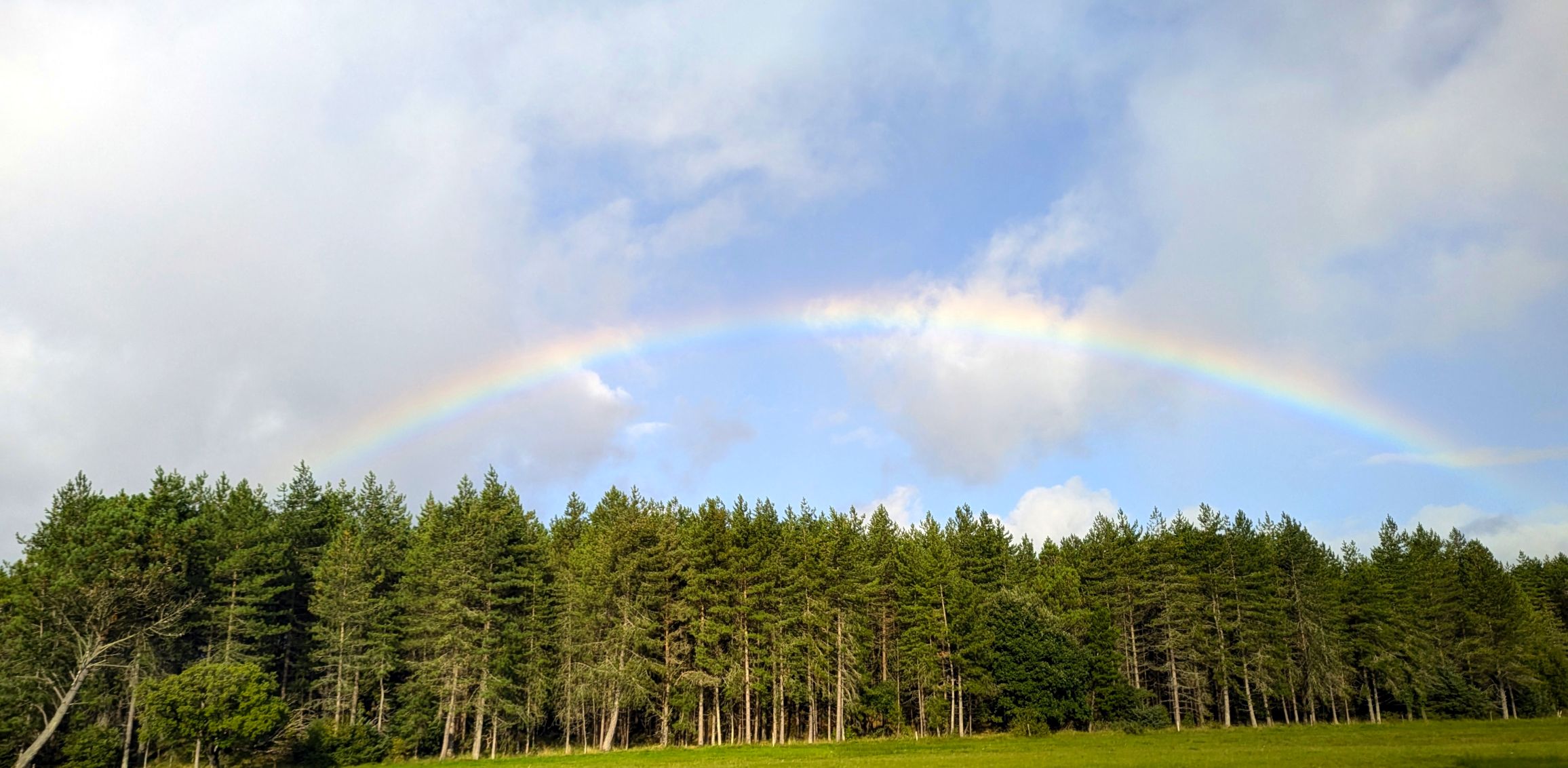
The weather was so dynamic throughout our travels in Ireland, and this day was no different. We had beautiful weather two days prior, and then the previous day was cloudy with some periods of light rain. But on our day of travel from Donegal to Connemara, there were times when the skies were gorgeous! We saw our first rainbow, and then they just kept coming.
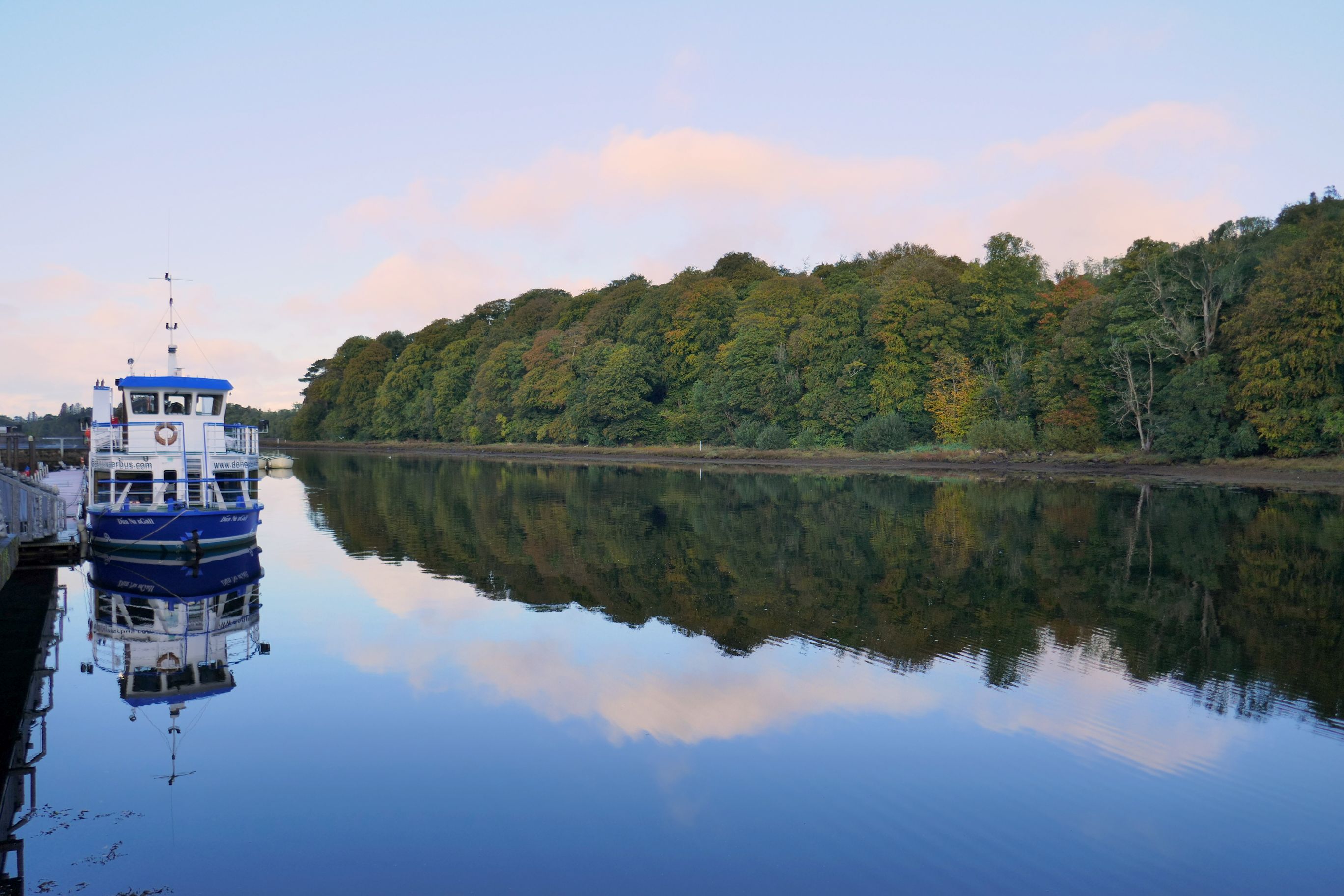
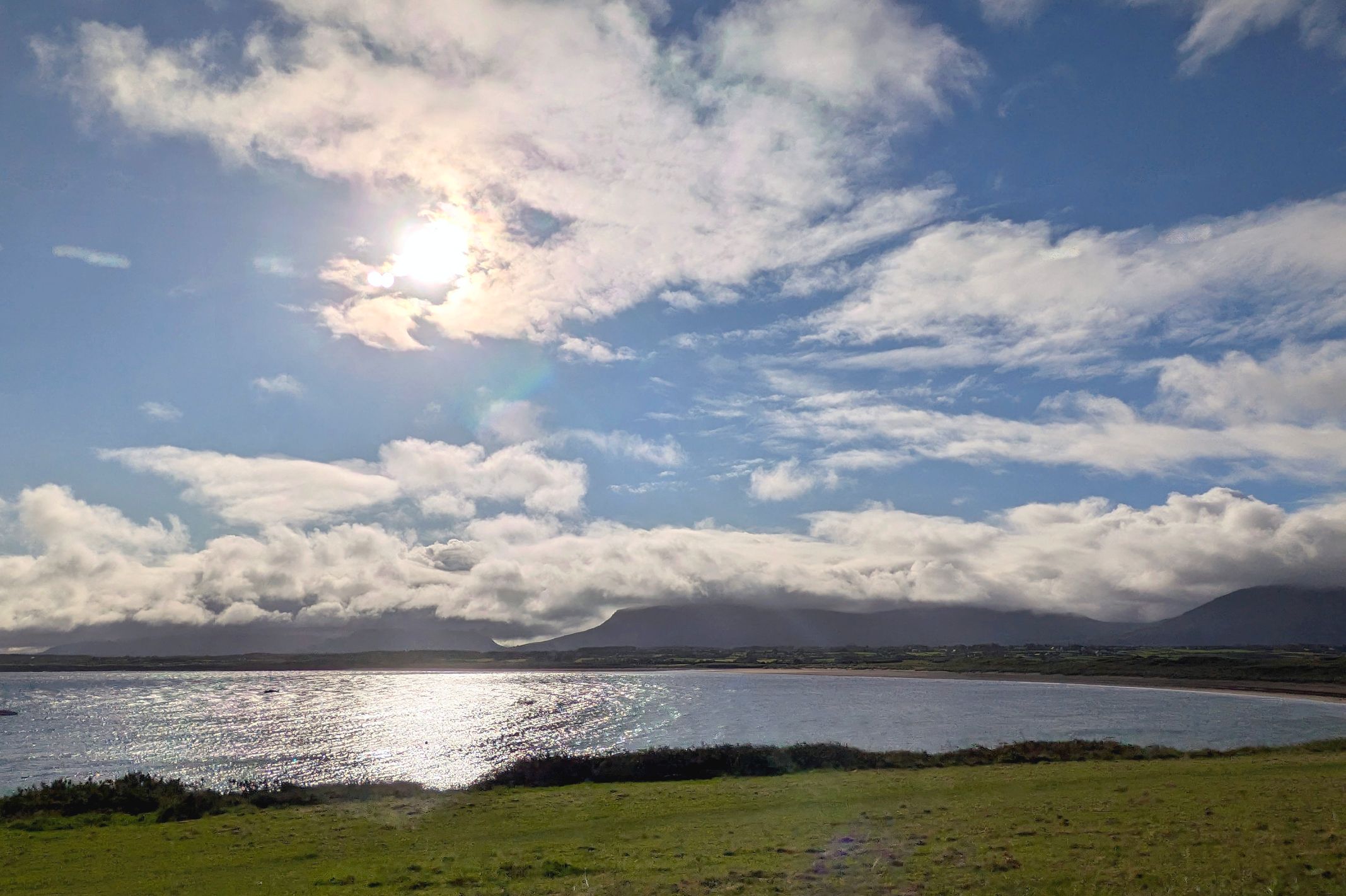
Before departing from Donegal, I took in the views during this peaceful and calm morning near our hotel:
(For all photos, click on the image for a full screen view.)
As we made our way west towards Connemara, I noticed this rainbow while enjoying the views from the bus window:
Then, during a rest stop, another rainbow greeted us:
And, another!
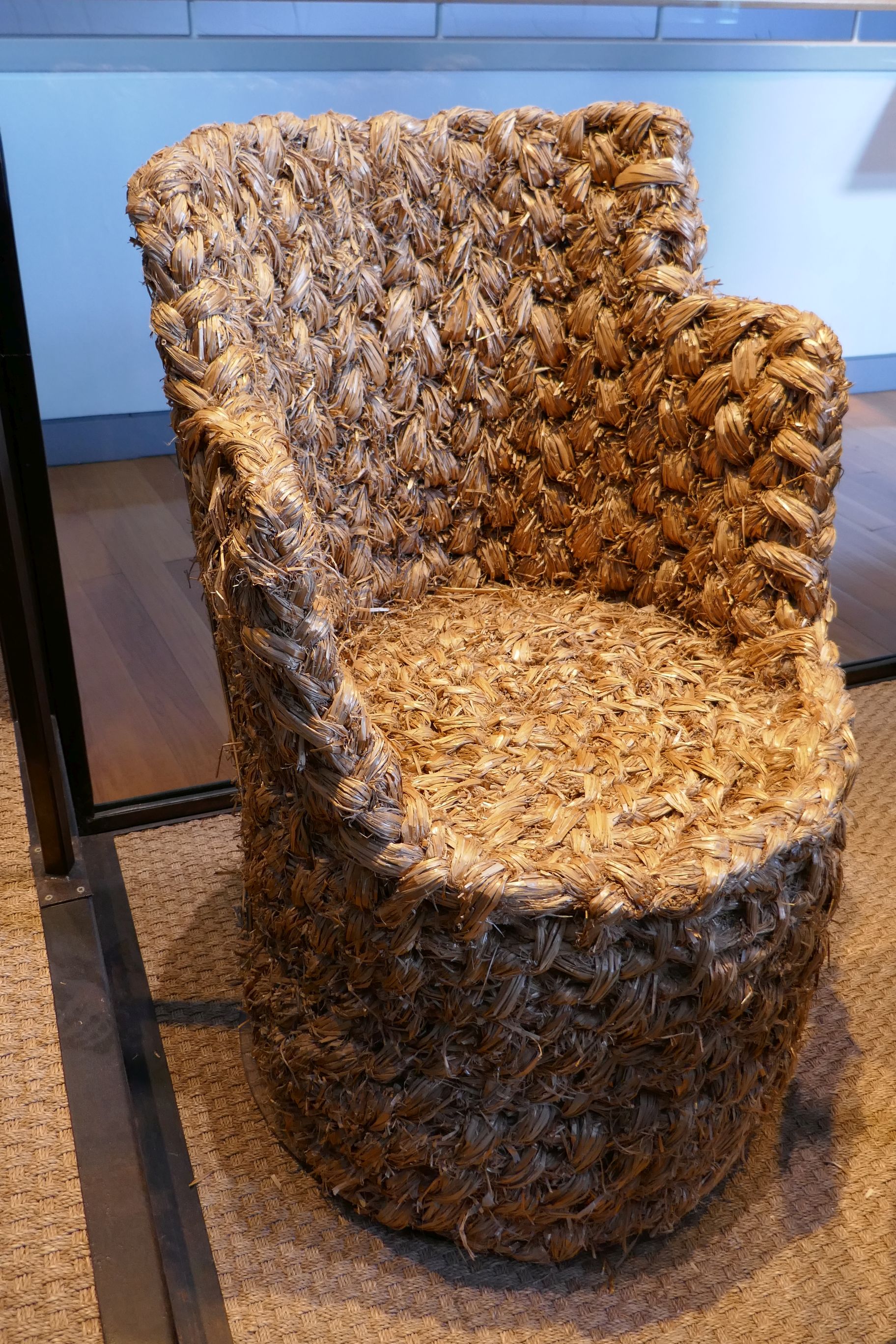
Along the way, we stopped to visit the National Museum of Ireland’s Country Life branch. The museum’s fascinating National Folklife Collection exhibits tell the story of everyday life in rural Ireland, focusing specifically on the period between 1850 and 1950 when the Famine and Land War occurred.
Between the rolling green hills and beautiful coastline, it was an enjoyable drive to sparsely populated Connemara, in western Ireland’s County Galway.
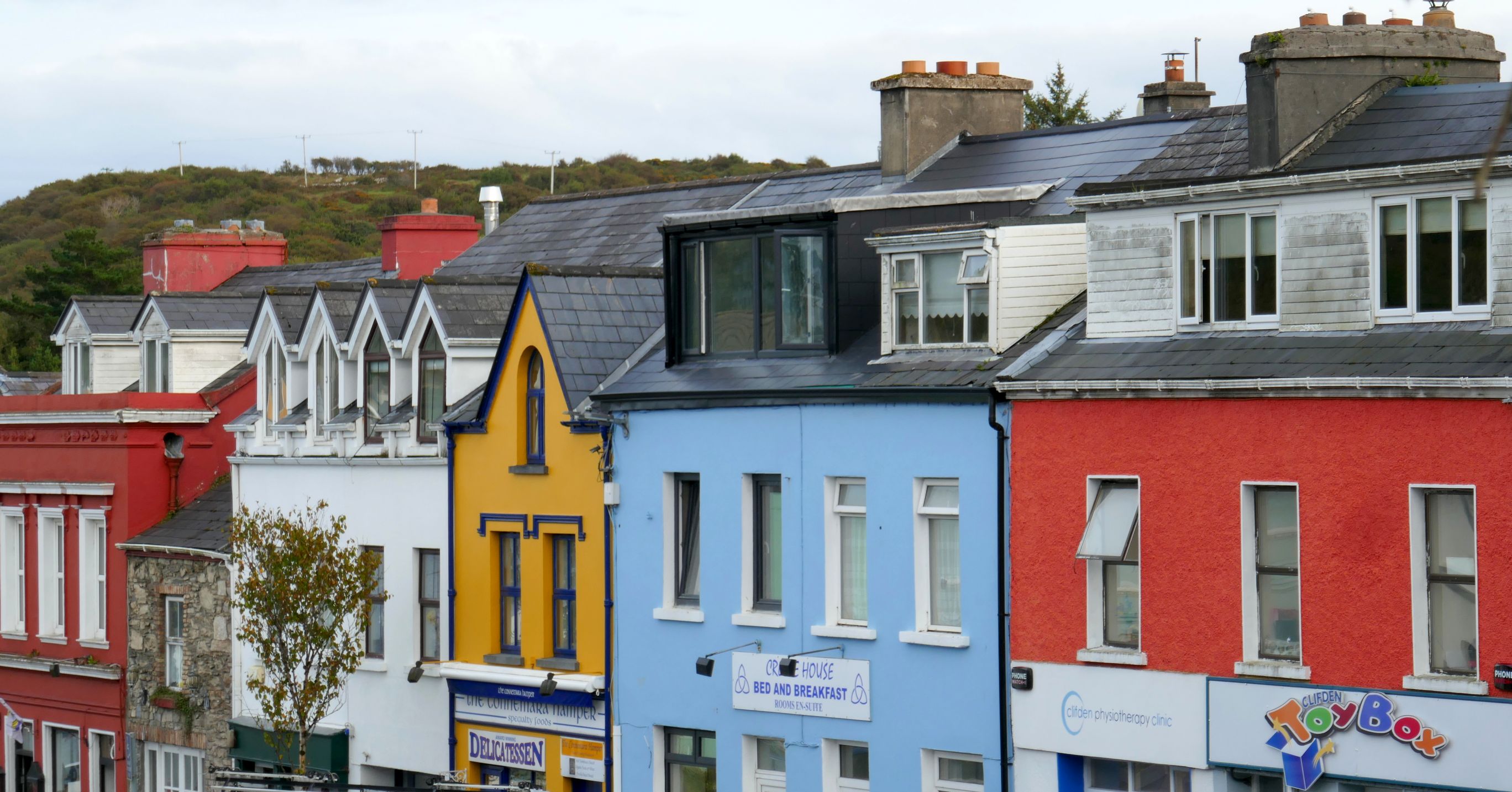
The main town of Connemara, Clifden, is where we were headed to stay for two nights. Although it is known as the “Capital of Connemara,” the town’s population is only 1,259 (as of 2022). There is a lot of natural beauty to see in the area, though, so Clifden is a draw for tourists.
We arrived in the late afternoon but had plenty of time to explore the charming town center. Bruce felt right at home as he stepped into Connemara Blue and struck up a conversation with glass artist, Tash Crow, the daughter of the art glass studio’s founder.
It was a lovely way to end a beautiful day!
Coming up next: IRISH ADVENTURE #14: A CONNEMARA SHEEP FARM & KYLEMORE ABBEY & CASTLE
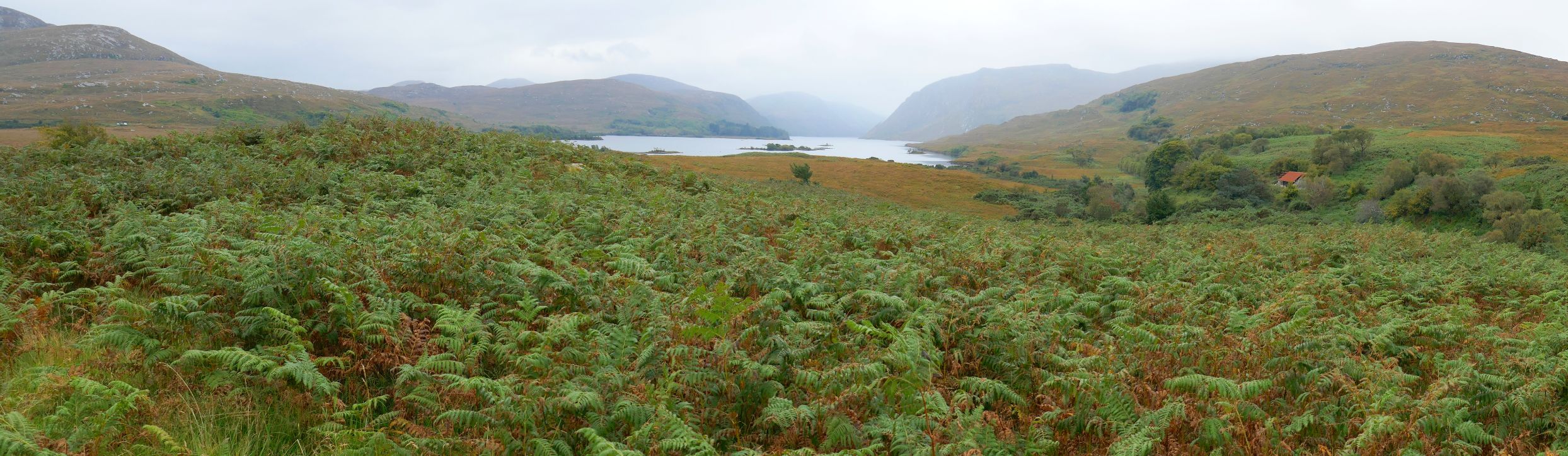
Before visiting the castle, we took a guided walk through the park to take in the views of mountains and lakes, learn about the flora and fauna, and learn about the park’s history and conservation efforts.
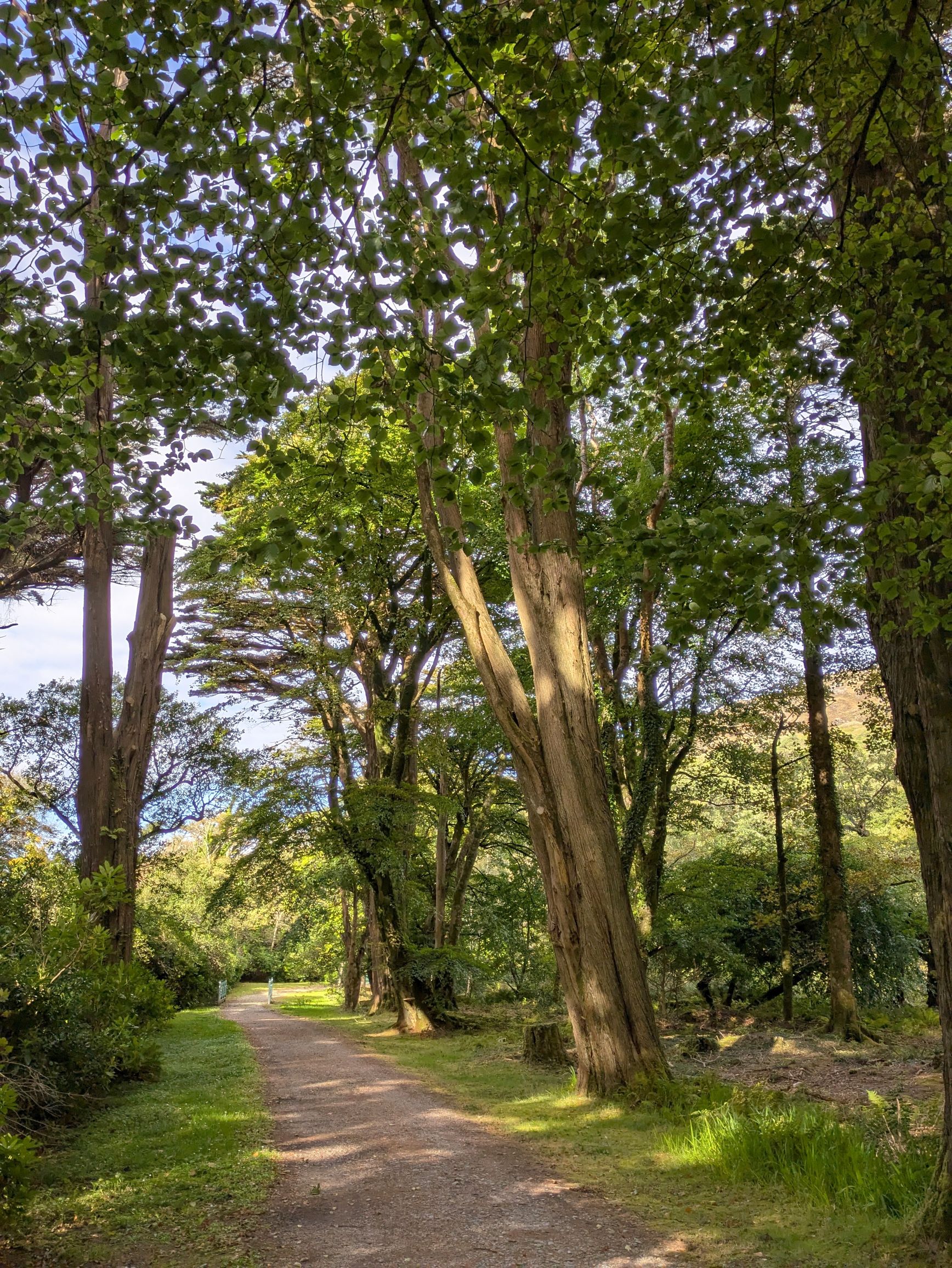
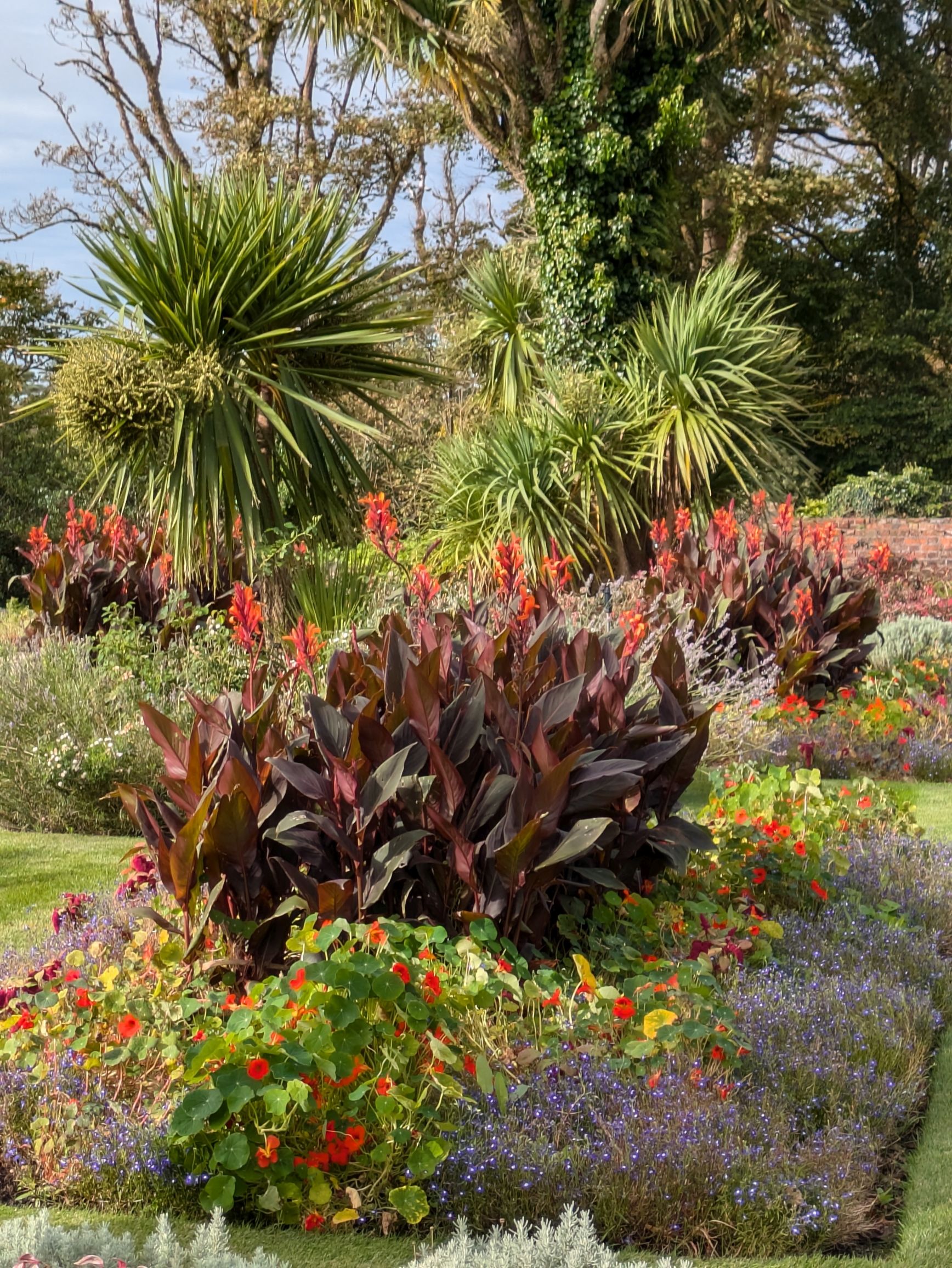
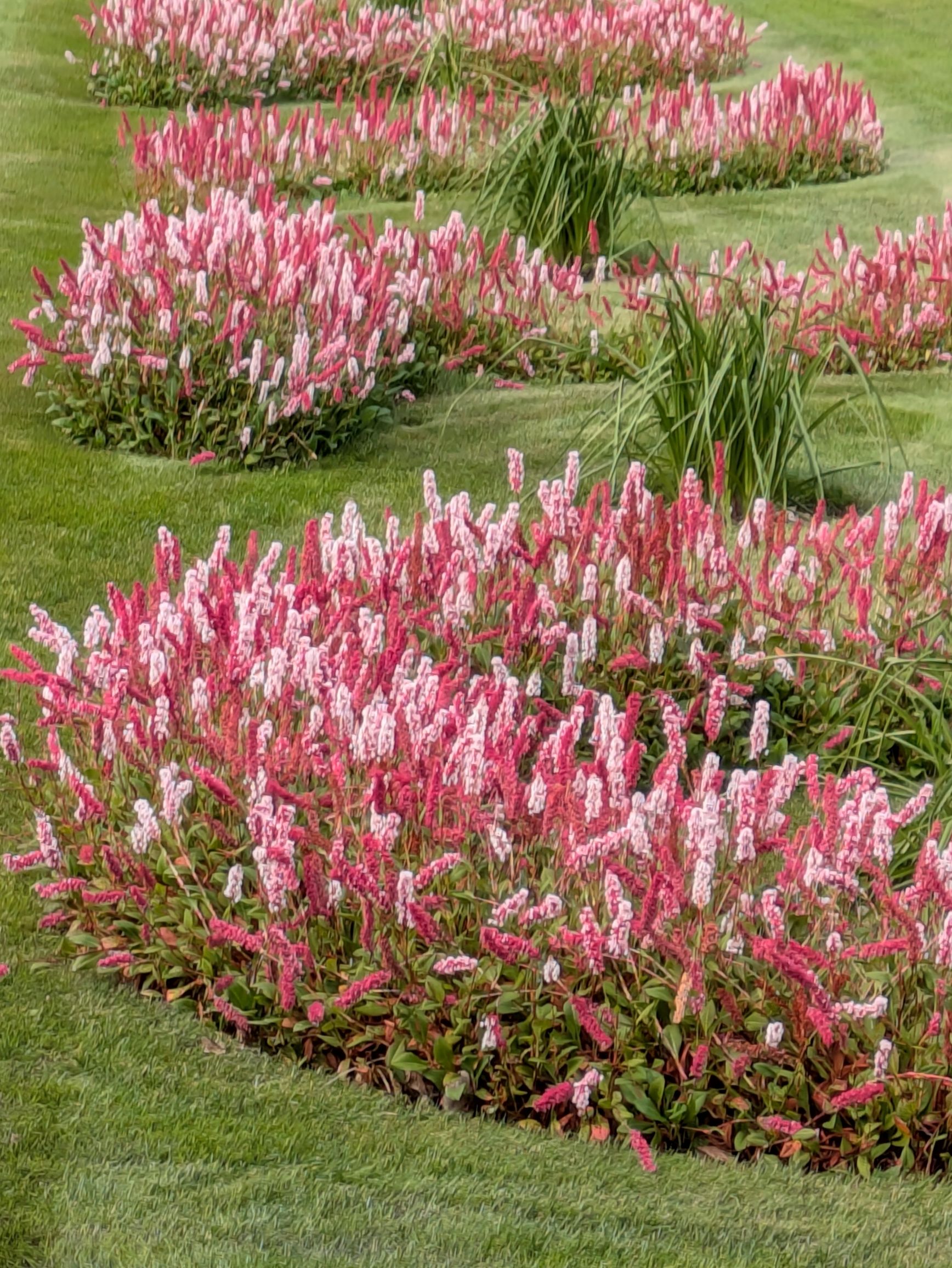
During our free time, we enjoyed a lovely walk through the grounds of the castle, which were much more beautiful in person than my photos convey.
(For all photos, click on the image for a full screen view.)
Next up: IRELAND #13: FROM DONNEGAL TO CONNEMARA: A DAY OF RAINBOWS
Our day in Donegal was an opportunity to get a peek into the life of an Irish weaver and Irish sports.
Cyndi Graham is a tweed weaver who has carried on the weaving tradition in her family from her father. We drove out to St. John’s Point to see her weaving demonstration at her 1700’s thatched cottage—the last traditional cottage still standing on this rustic, sparsely-populated peninsula.
In this small village of Dunkineely, men were the weavers, and there were many of them who earned their living weaving tweed for clothing. They were required to weave 80 yards of fabric in a two-week period. A spool of wool would be delivered to the cottage, and Cyndi’s father was told what pattern to weave.
After he retired in 1976, Cyndi decided to become an apprentice for another weaver and learned the entire process. She started a business making her own hats, clothing, and blankets in the cottage; the front of the cottage is her retail shop. And, although her village had a rich history of weavers, Cyndi is now the only one in the area. She weaves on the loom her father had used throughout his career but left untouched for many years after retirement.
(For all photos, click on the image for a full screen view.)
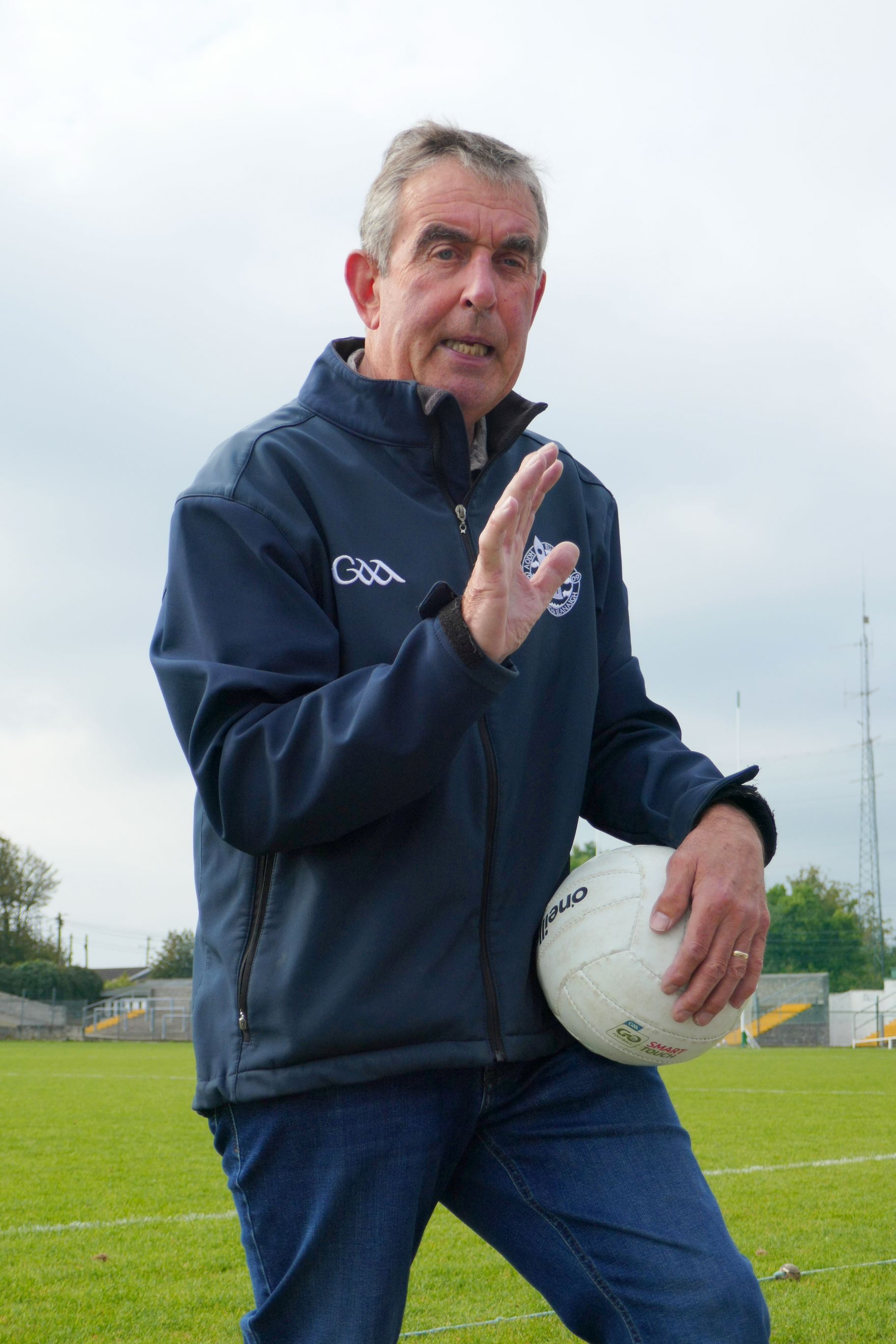
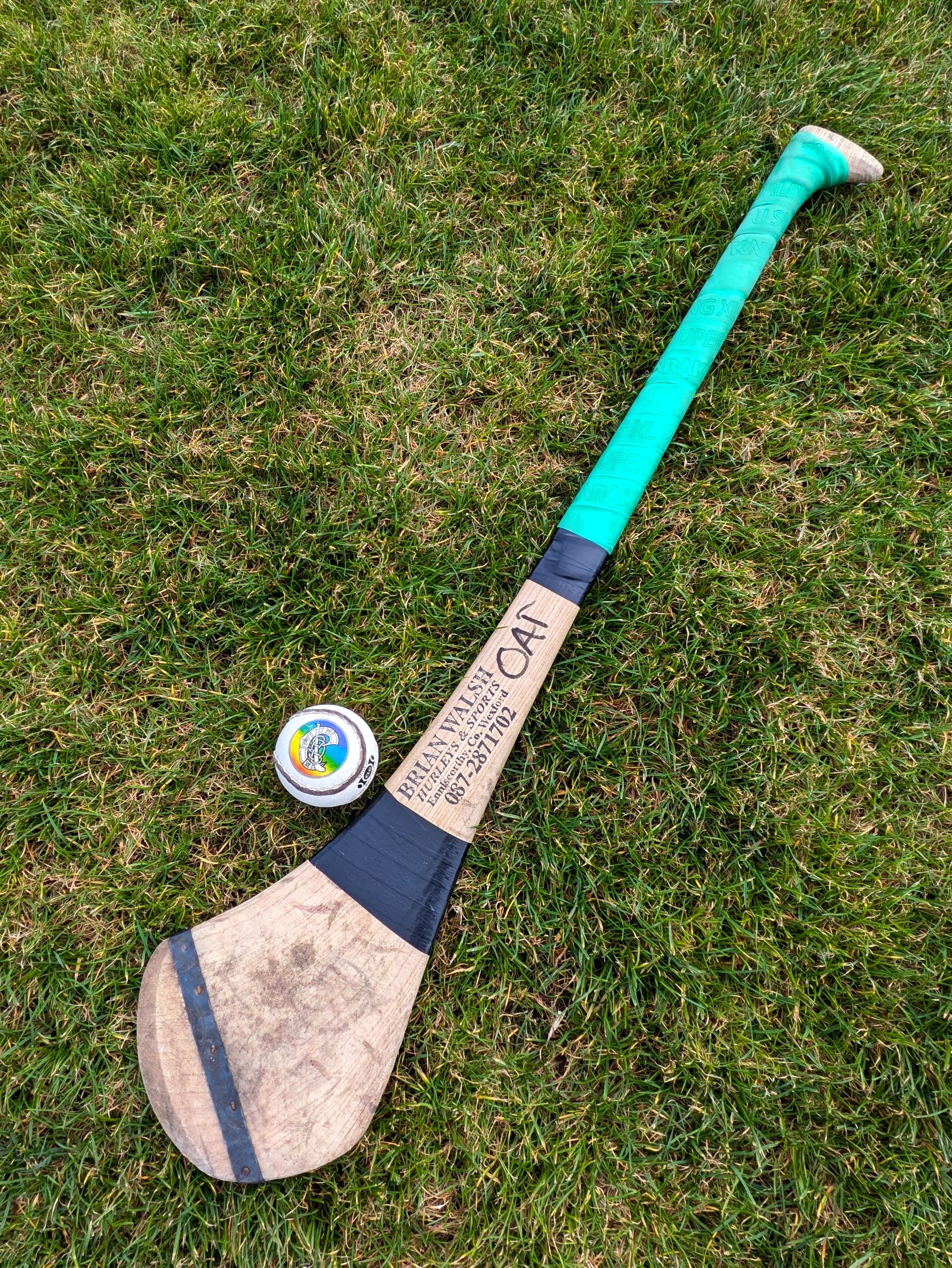
GAA, founded in 1884, is Ireland’s largest sporting organization and a large part of Irish society and life. In addition to promoting Gaelic sports, the association promotes Irish music, song, and dance as well as the Gaelic language. It is community-based, so a community’s teams are very much a part of every person in that community.
Since GAA is an amateur sports association, even the highest-caliber athletes are not paid. They sure draw a crowd, though! At the All-Ireland finals in hurling and football, the games sell out with 82,300 in attendance. It’s a hot ticket, very hard to obtain, and the games are broadcast around the world.
We had the opportunity to try hurling, and it was a fun challenge! I don’t think I will be trading in my swimming goggles any time soon, though.
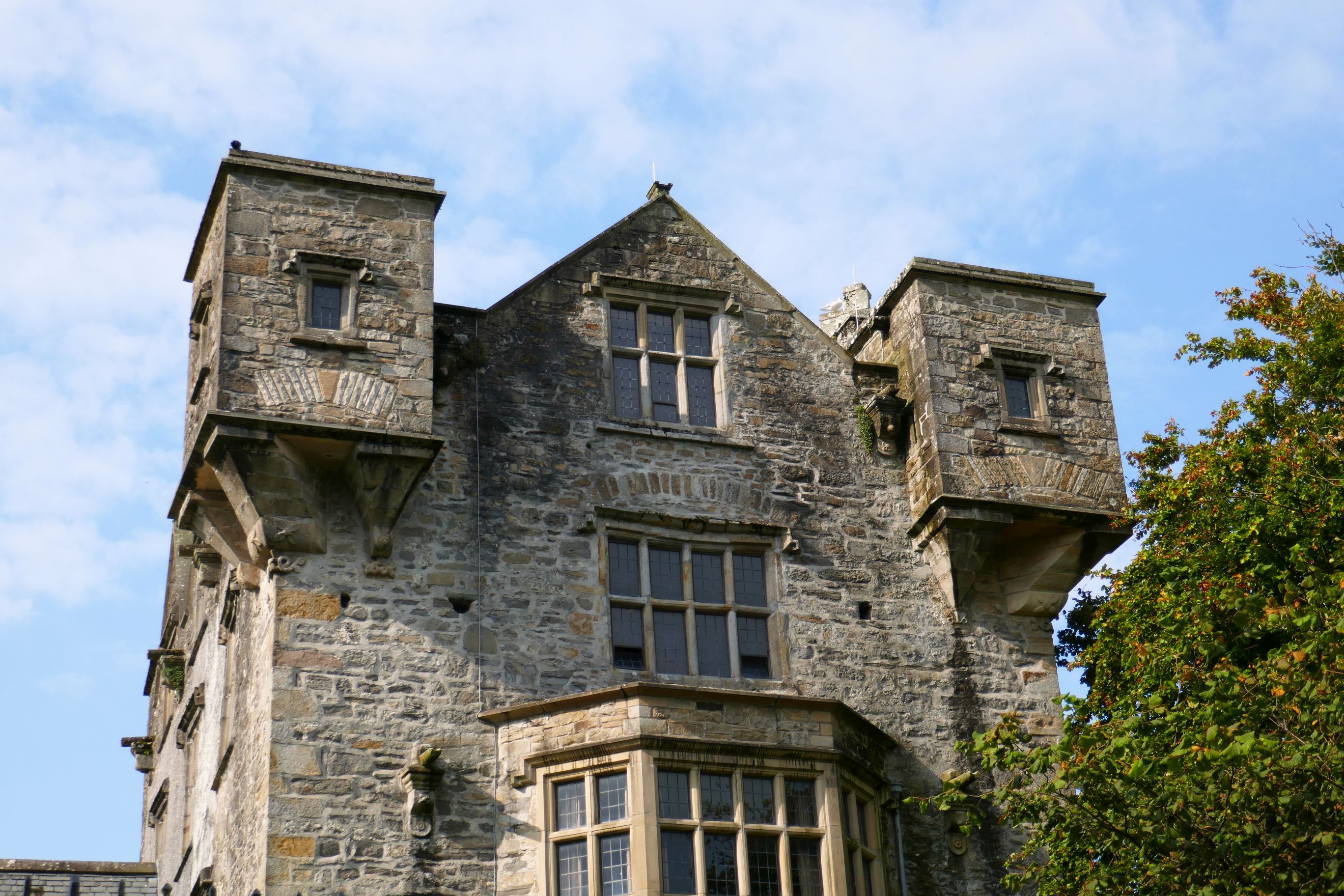
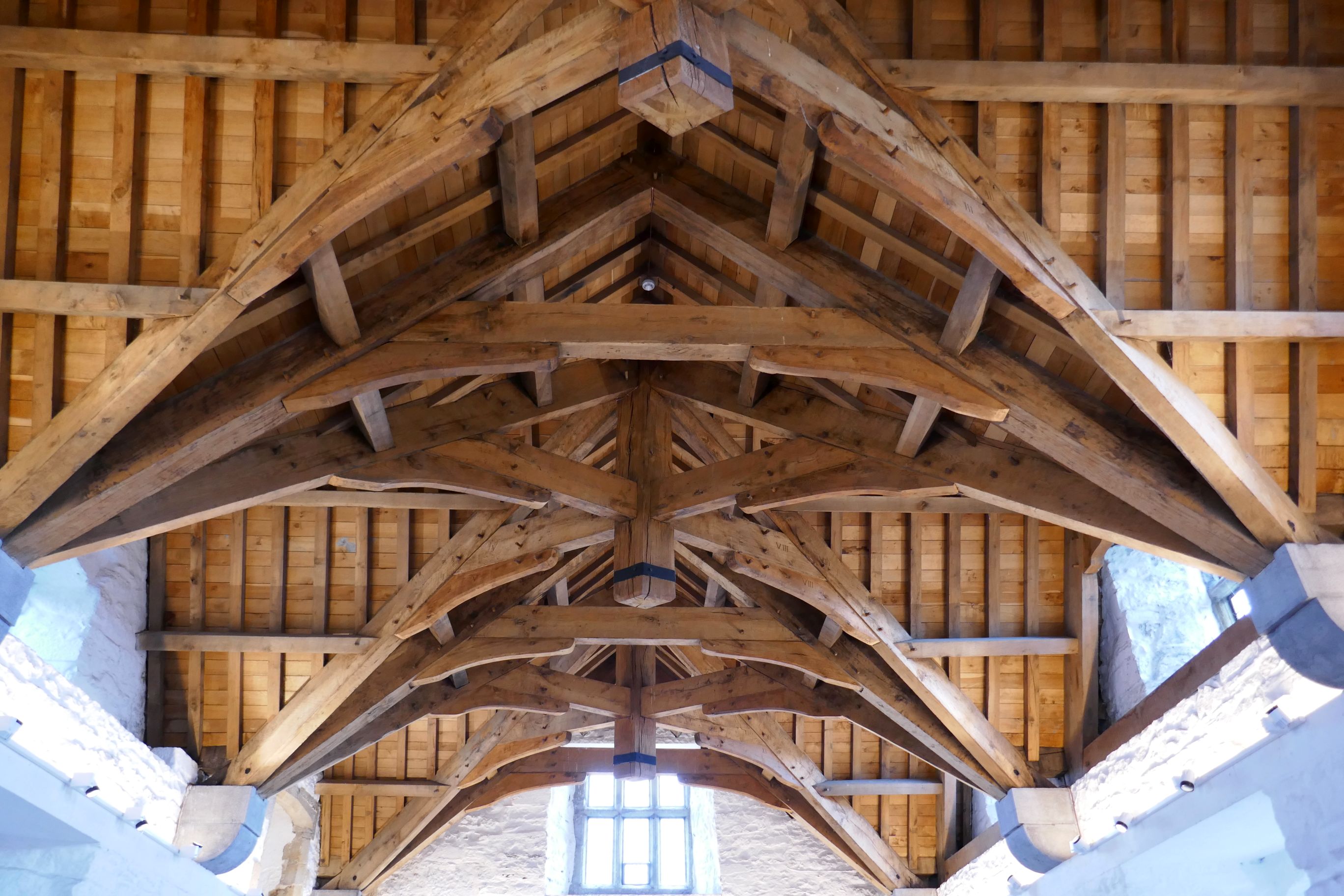
Back in Donegal, we had free time to explore on our own, so I grabbed my camera and checked out Donegal Castle, which was originally built in 1474 by Hugh O’Donnell. It was destroyed in 1595 by Red Hugh O’Donnell to prevent seizure by the British and then rebuilt in 1614 by Sir Basil Brook. For nearly two centuries, most of the buildings of the castle lay in ruins before being restored in the 1990’s.
Views on my walk
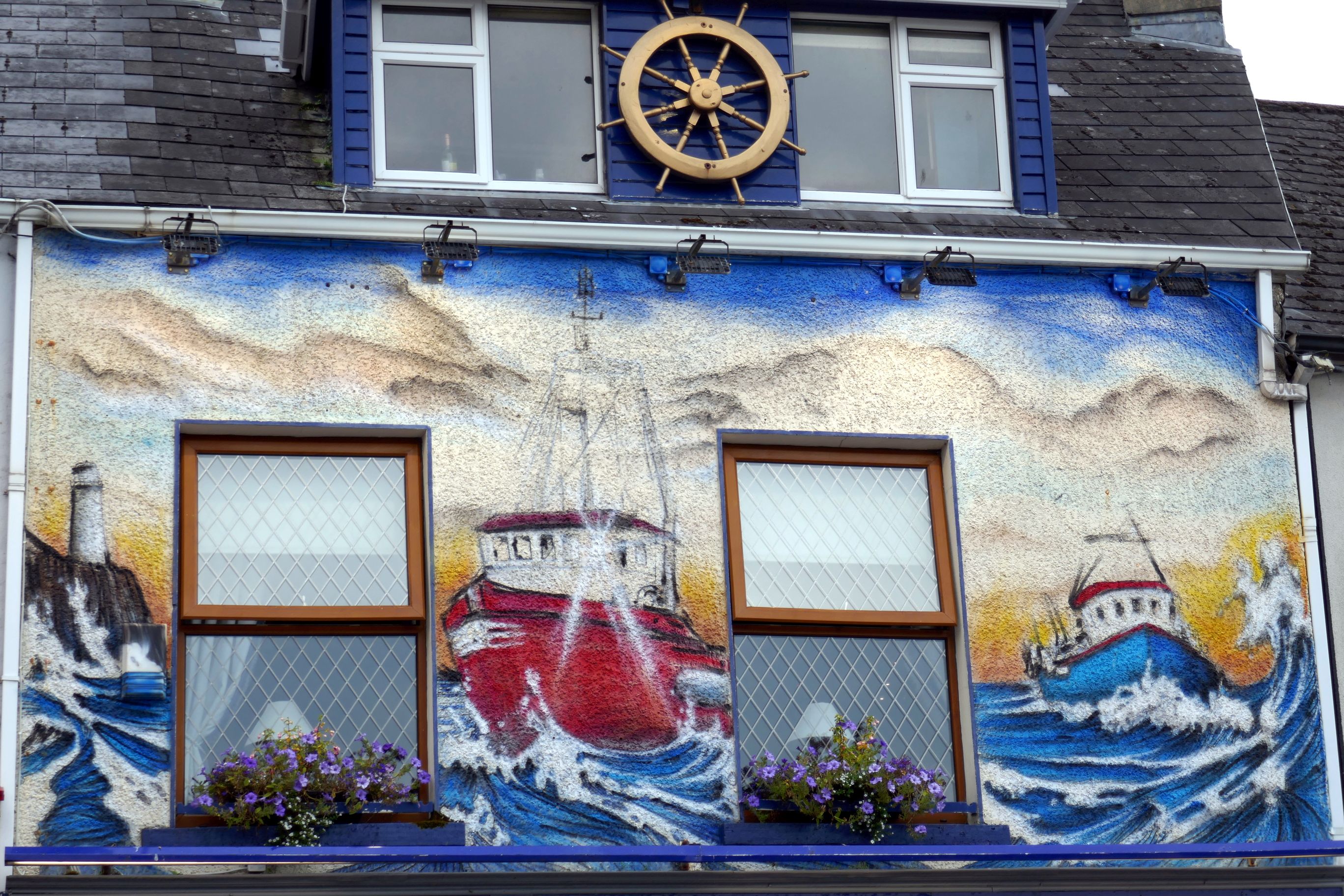
Seafood restaurant mural in Donegal
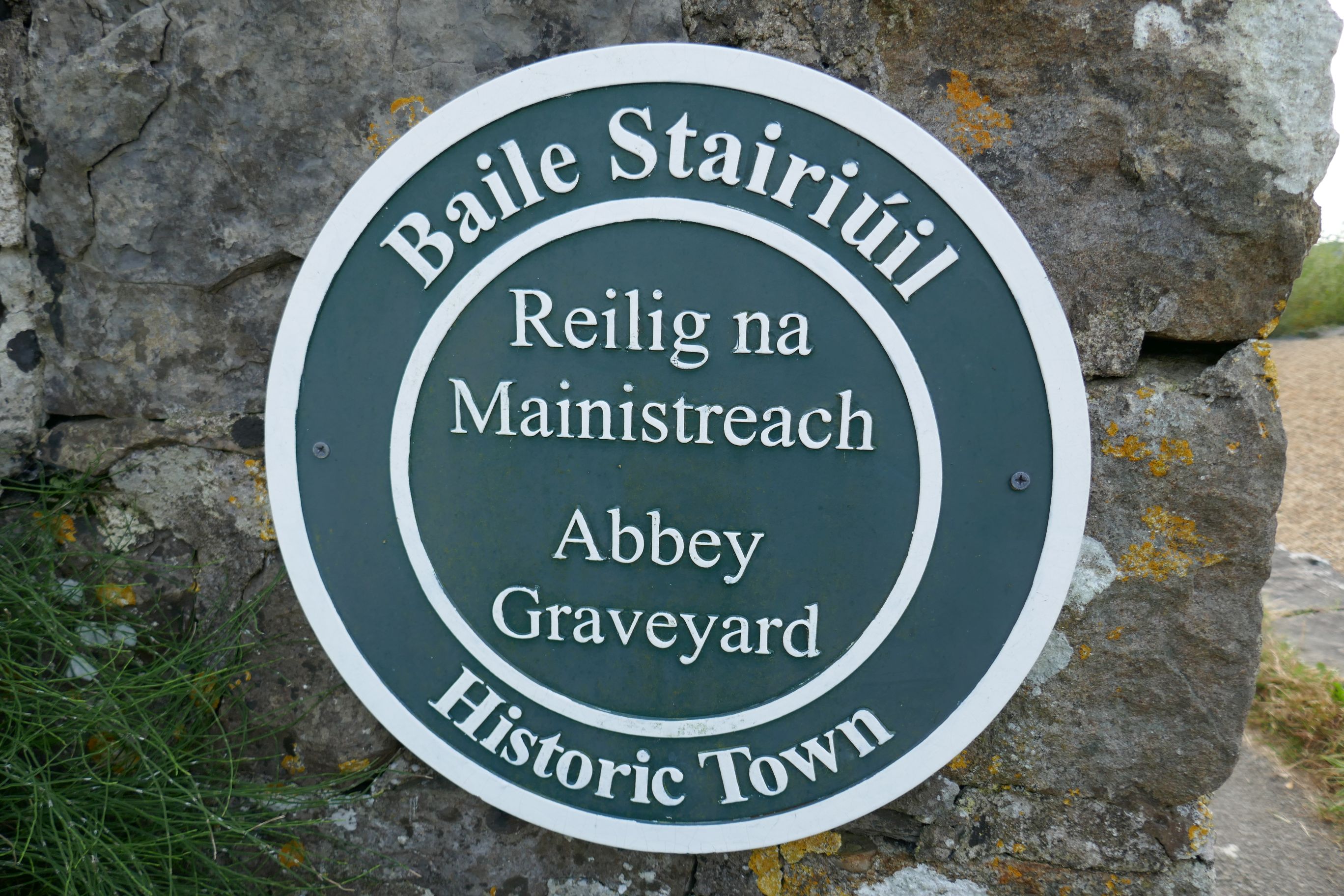
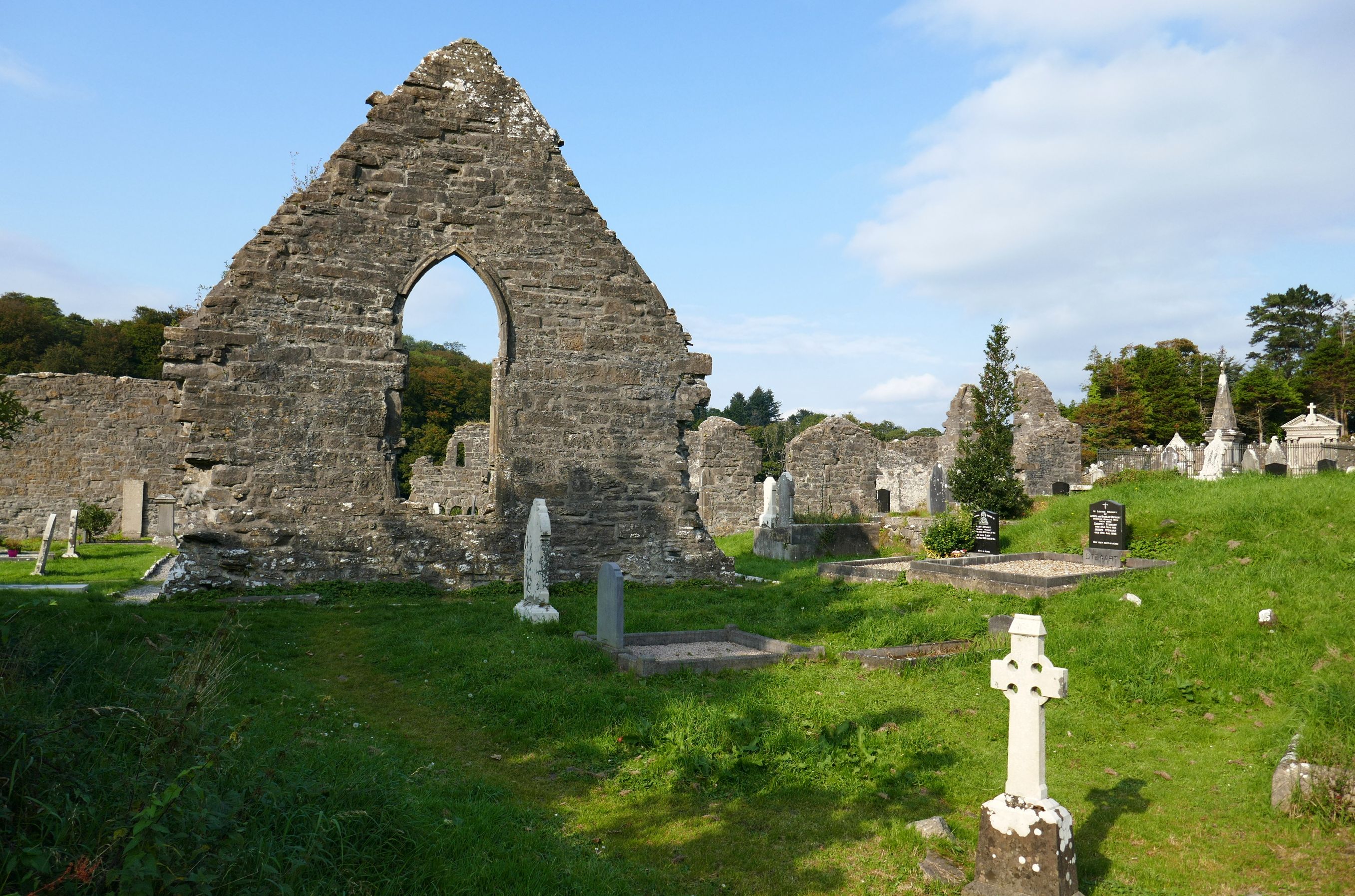
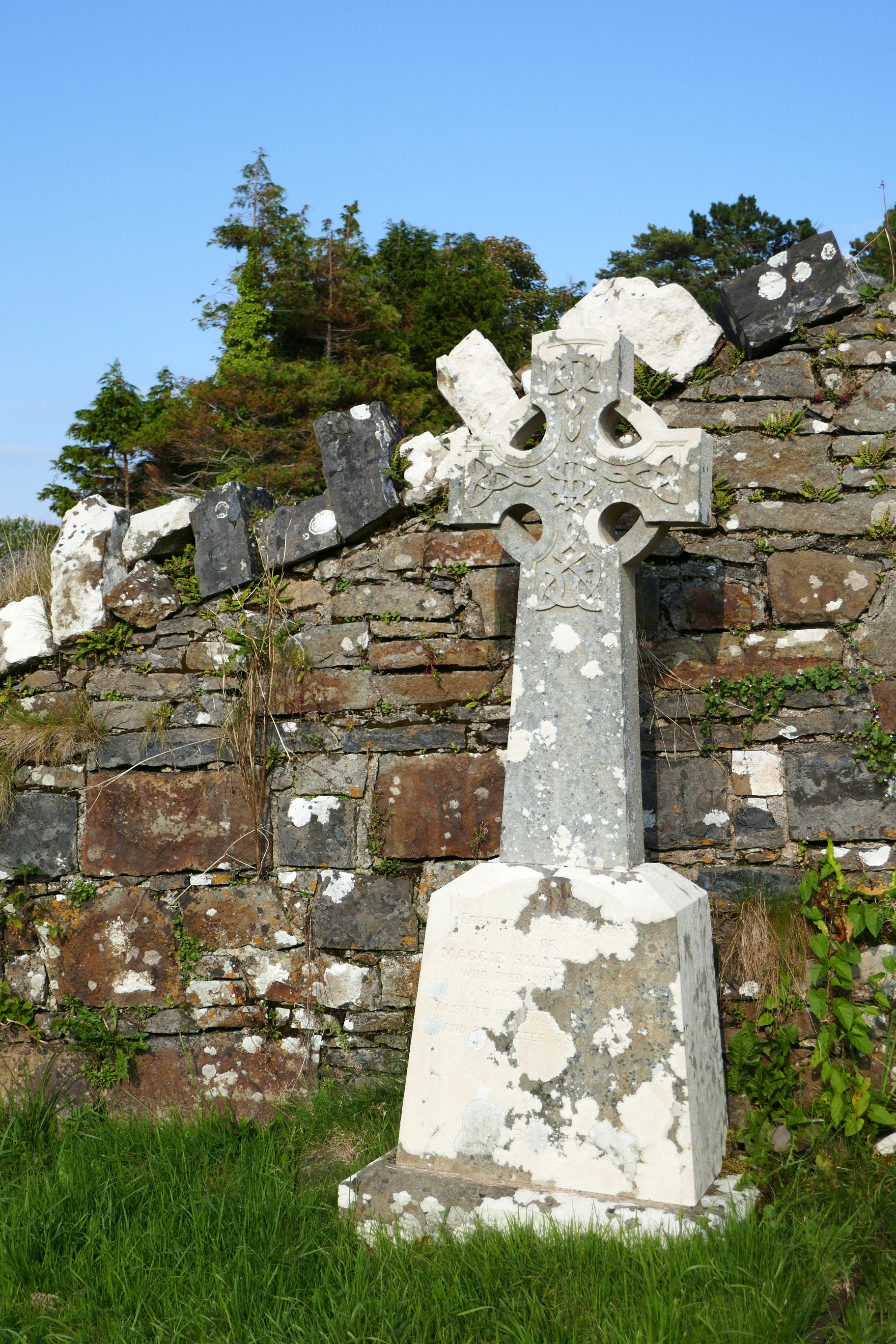
I also wandered through Donenegal Abbey to see what might spark my interest photographically. It was another sunny(!) day and late in the afternoon, so the conditions were good to take a few shots.
Coming up next: IRISH ADVENTURE #12: GORGEOUS GLENVEAGH NATIONAL PARK & CASTLE
The day we toured the West Belfast war zone where the militant faction of the Irish Republican Army (IRA) fought the Ulster Volunteer Force UVF, a paramilitary group of extremists sympathetic to the British, was a day I will never forget. “Impactful” doesn’t begin to describe the experience of seeing the sites and hearing the stories from those who were in the trenches when it all happened in the 1970s.
During the height of “The Troubles” (war, more accurately; 3,000 died and 50,000 were injured), public buses stopped serving West Belfast’s Catholic neighborhoods. Taxis stepped up to offer their services back then, and now, both Catholic and Protestant taxi drivers conduct tours of where it all took place.
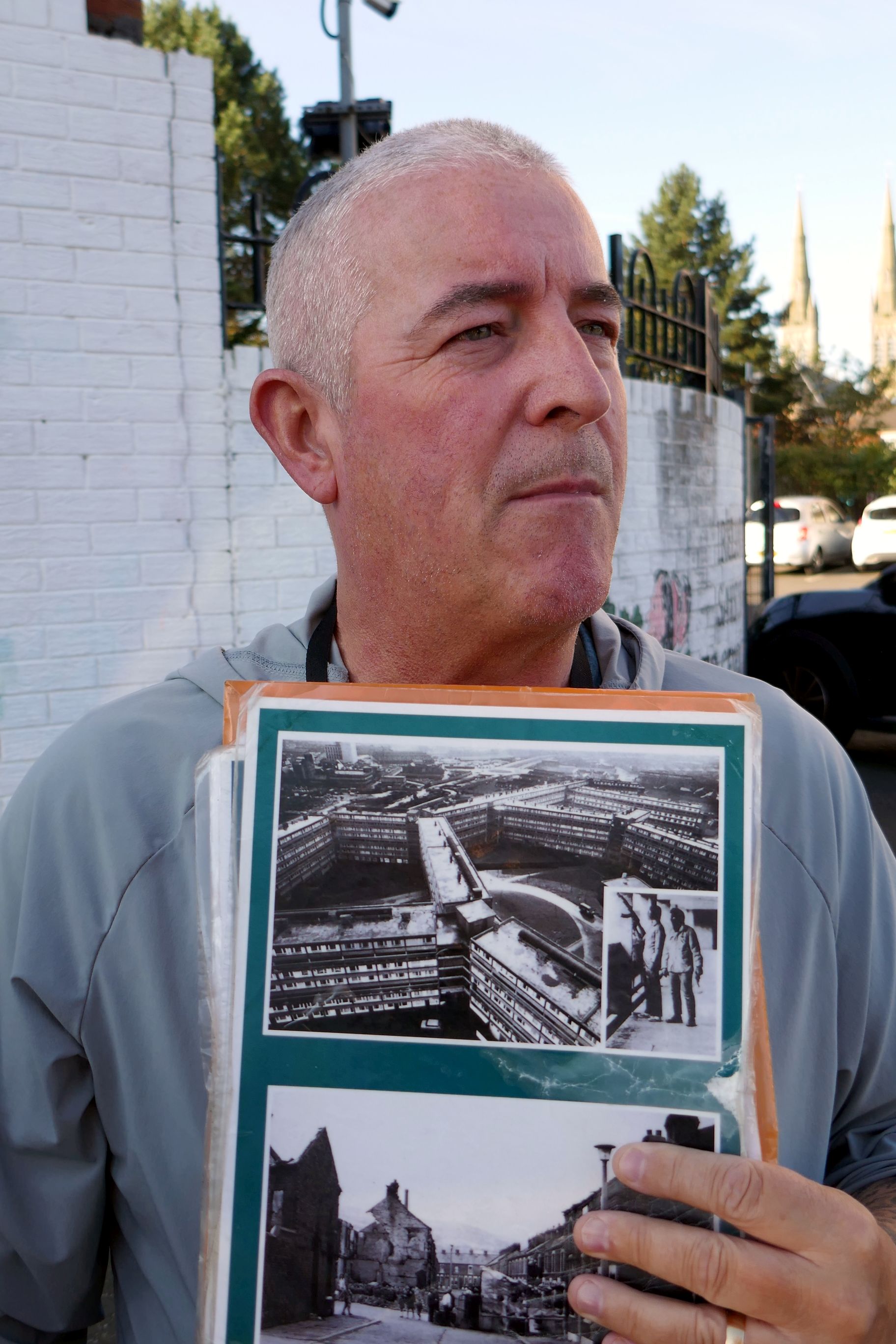
Our group of 14 split up into several cabs, and ours just had me, Bruce, and another member of our group. Billy was our driver and guide, and after listening to what the others said about their experiences, we felt very fortunate to have had him.
Our tour through the West Belfast Catholic neighborhoods (where most of the violence took place) and the Protestant neighborhoods of East Belfast was fascinating, because we heard Billy’s perspective of what happened and what he experienced during the Troubles. As a Catholic who grew up poor, life was difficult for his family, and he told us many stories about what it was like leading up to when the violence began and the aftermath.
Billy explained how the British, on a few different occasions, said they would leave Ireland to be an independent nation. The British living in Ireland, however, wanted Ireland to stay under British rule. (Ultimately, as you know, England did keep Northern Ireland.)
If you were Irish living in the north, you were considered a second-class citizen, and it was illegal to fly the tri-colored Irish flag. From 1964—1972, Catholics had no civil rights, and 50 walls were built in Belfast to completely separate the Catholics from the Protestants. (Today, it’s mixed about 80%/20% on each side, and everybody gets along. The minority on each side, however, keeps a low profile, they don’t fly the “wrong” flag, and they do not wear jerseys representing their “wrong” side. And, although there is peace, there is massive mistrust.)
Billy’s father was a member of the IRA, but the family never knew it until his parents died and they learned at the funeral. His father never talked about it and shielded his family from his involvement.
Although the Catholics and Protestants were on opposing sides of the conflict, the clash between the two was not about religion, as Billy explained. It was all about civil and human rights, which the Catholics fought for due to being oppressed by the British (and many before them) who have tried to maintain supremacy.
Where the religion come into it is that if you were British and wanted to serve in the British government, you could only serve if you were Protestant and worshipped at an Anglican church. So, power and supremacy were tied to the Anglican church.
The Irish Catholics fought for voting rights for all, not just for homeowners and those with certain jobs, which is what the British dictated. Catholics were blatantly discriminated against—especially the poor with large families; but, when they protested, they were murdered on the streets, because protesting was illegal. Many were imprisoned and beaten. When the British army came to West Belfast, supposedly to be peacekeepers, they murdered the Catholics instead.
Billy showed us the street intersection where the worst of the violence took place as well as the walls that separate the Catholics of West Belfast and the Protestants of East Belfast who were loyal to the British. During The Troubles, when a wrong turn might have taken you across the dividing line between the Catholic and Protestant sections, it would have resulted in physical abuse or death.
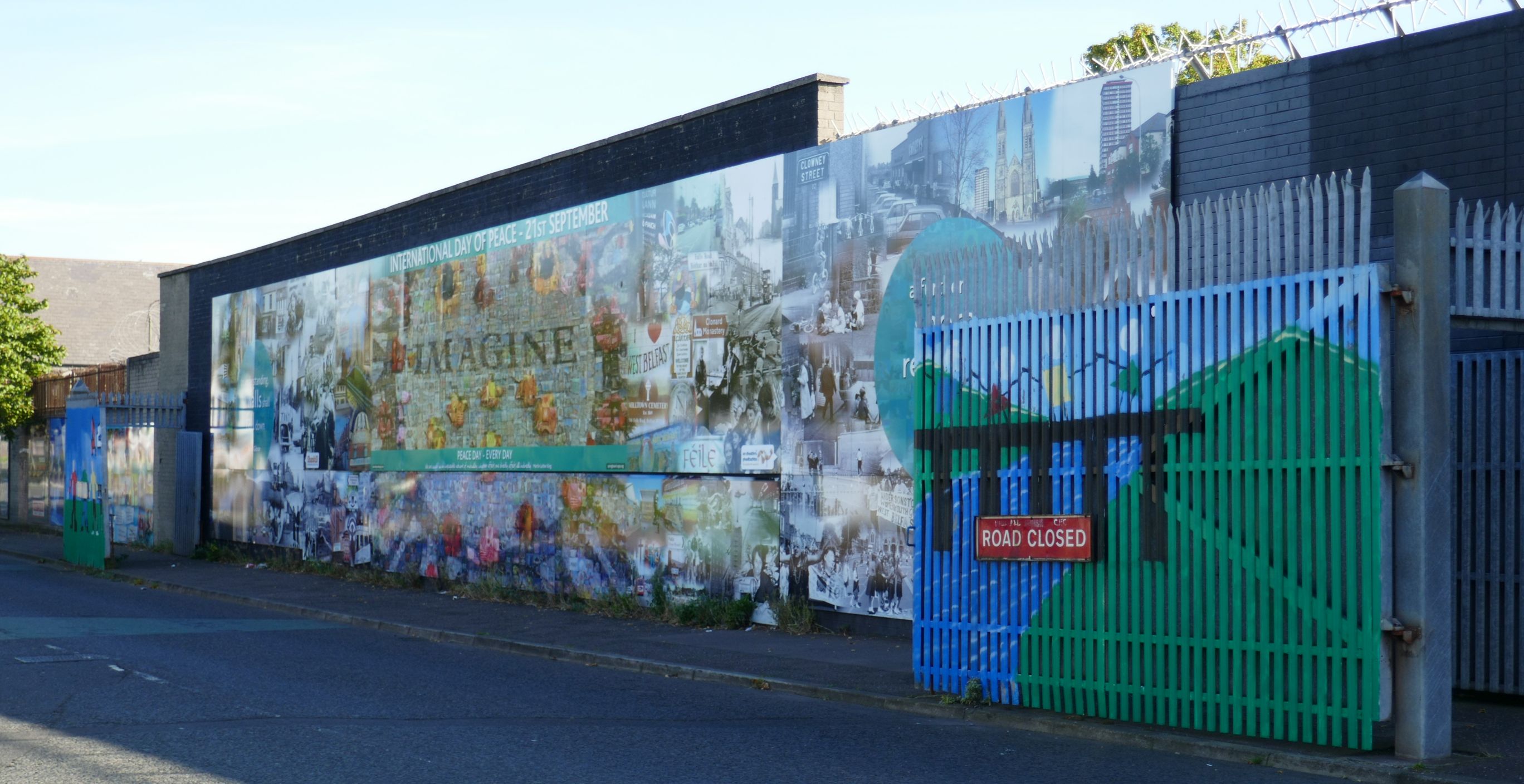
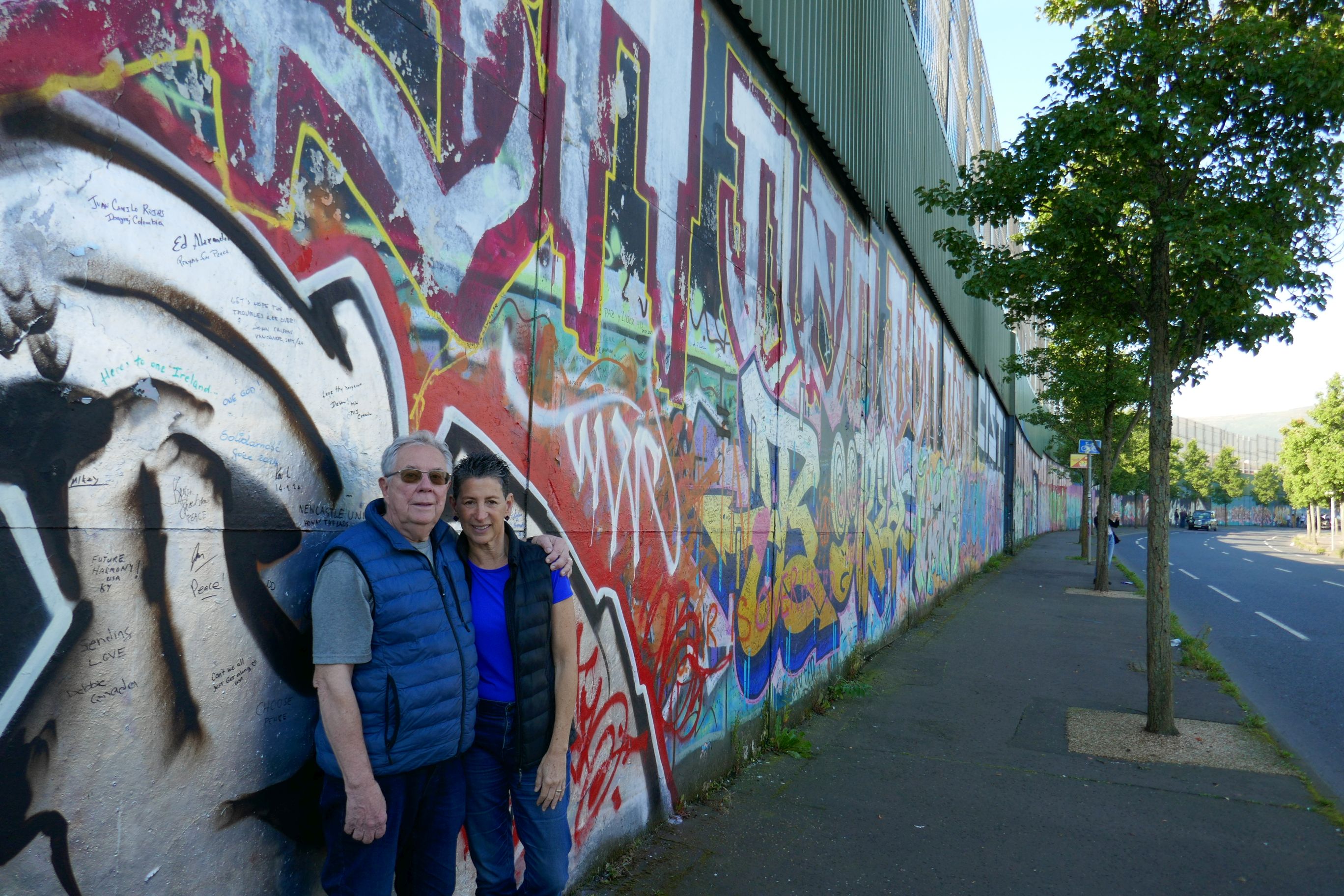
Today, these walls still stand, and many people refer to them as “peace walls” to maintain the peace. They want the walls to continue segregating the poorer Catholics in West Belfast from the wealthier Protestants in the eastern section of the city. Although you can still pass between the two sections during the day when the gates are open, the gates of the main three-mile-long wall are closed and locked at 10:00 PM each night.
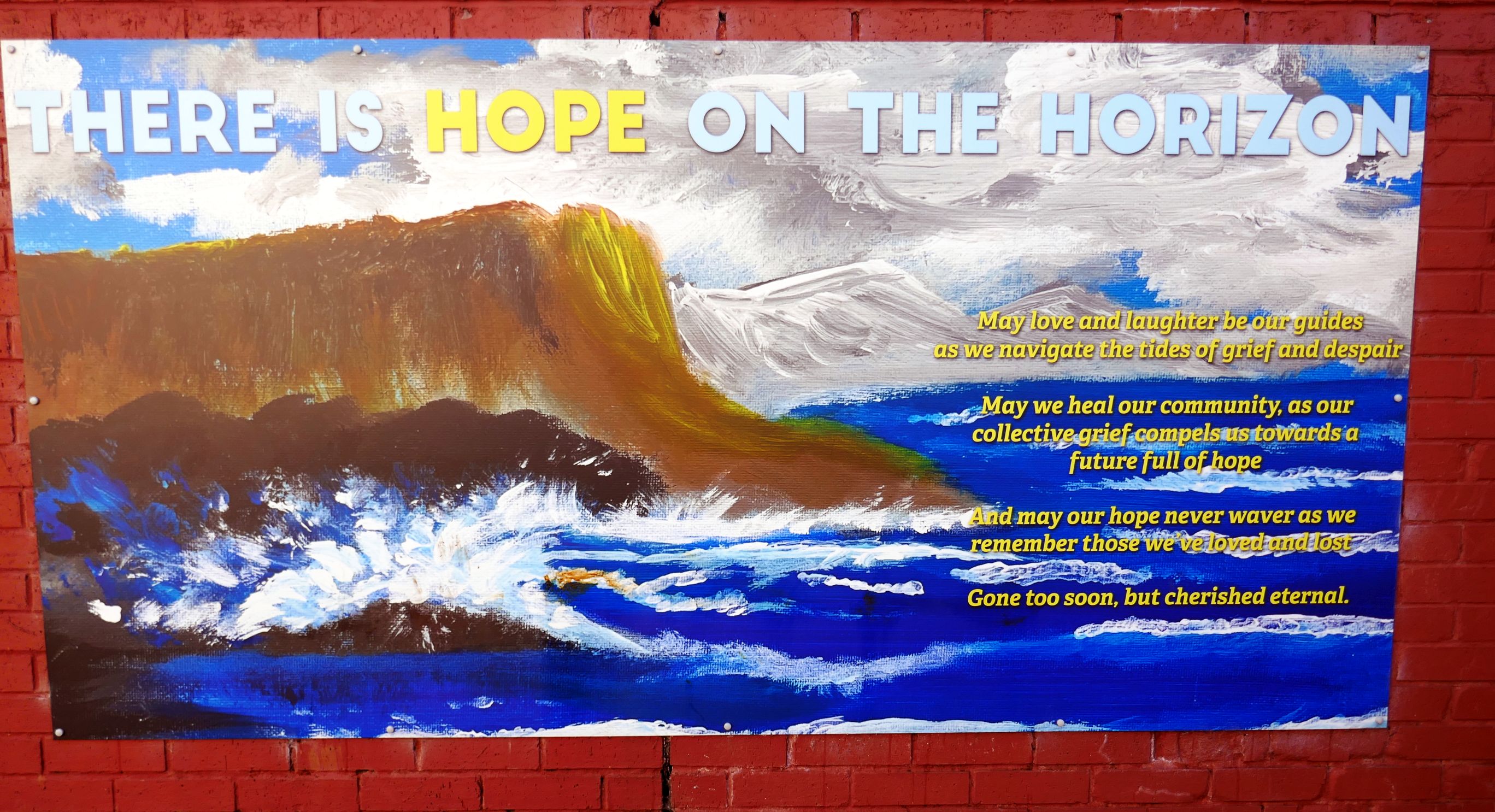
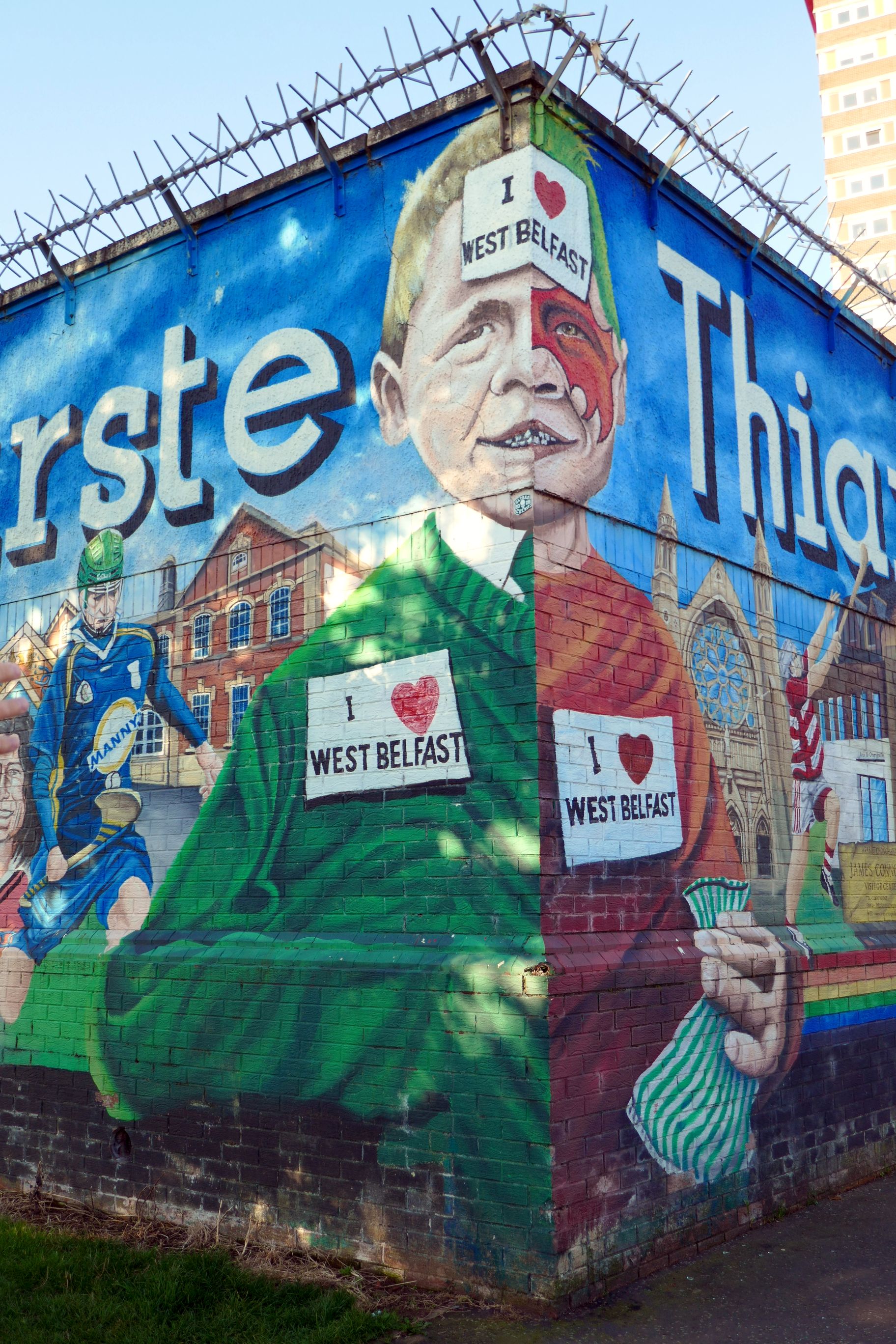
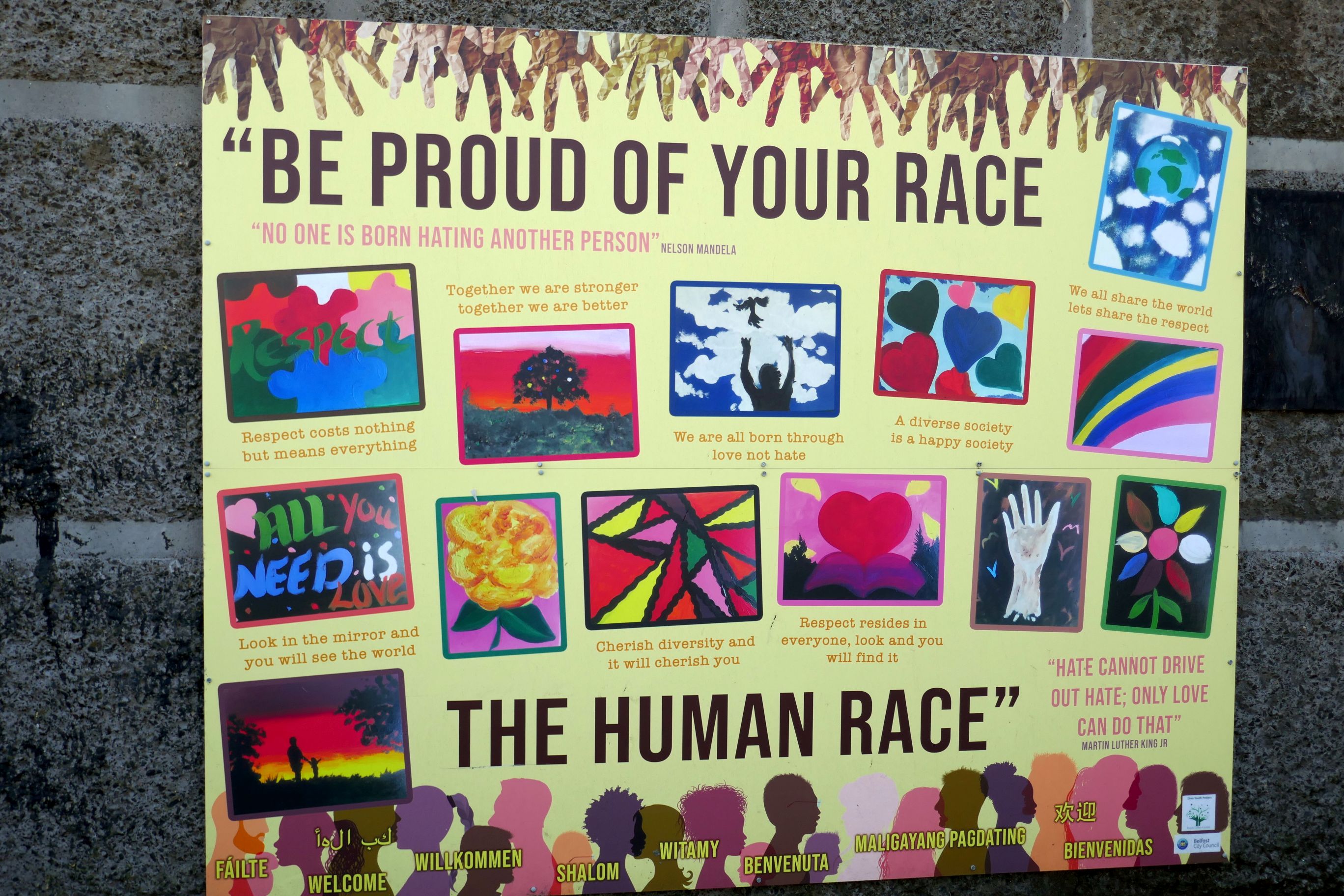
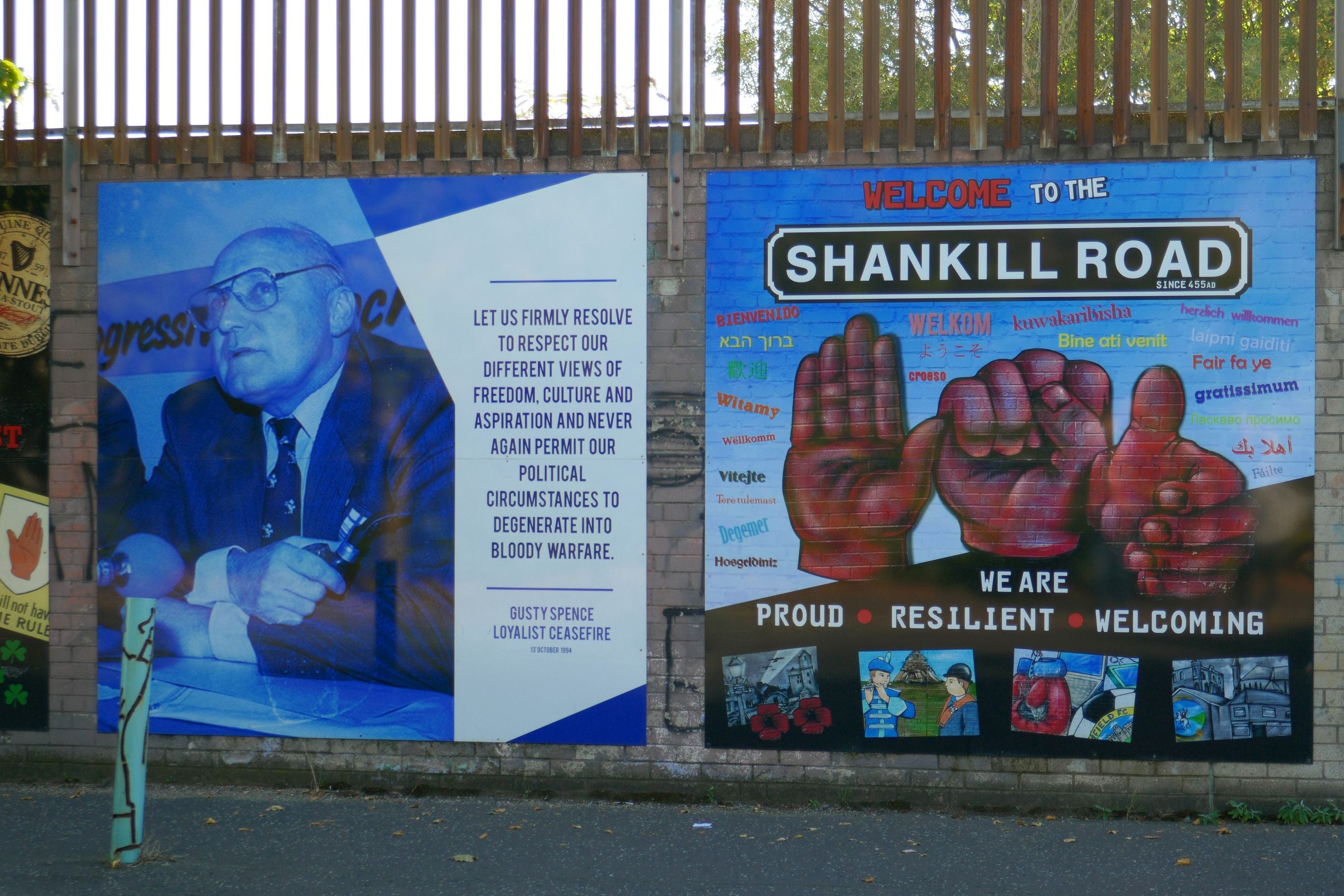
Every inch of these walls is covered in murals, and Billy explained the meaning behind several of them. I found it interesting that on the Catholic side, there were some pro-Palestinian murals, and on the Protestant side, they were pro-Israel. There are a lot of parallels between the two wars…
(For all photos, click on the image for a full screen view.)
Billy
These gates that separate the Catholics from the Protestants are closed at night for security.
Bruce and I added our hope for peace to this wall.
Following our tour, we met up with our group at the Felons Club where we had a panel discussion with three men who were in opposition at the time of The Troubles but now volunteer with an organization working to promote peace between the groups. The Felons Club was established as a meeting place for Irish Republicans who had been imprisoned for their political or militant activities.
Robert, Gerald, and Glenn
Gerald, 74, is Catholic, and he marched for civil rights. He was arrested in 1972 for protesting and imprisoned until 1975. He was re-arrested (mistaken identity) and broke out of prison in 1983 after he was beaten.
Glenn, 57, was a former member of the British army and is a current member of Veterans for Peace. He was born near the wall on the Protestant side and raised by his grandparents. Although Glenn considers himself Irish, he agreed with the British, even though he was working class. He was just five years old when the IRA detonated a bomb injuring him, and he thought of the IRA as a murder gang.
Glenn says he grew up ignorant of the British goals and efforts of supremacy and power over the Catholics; and he was angry at the IRA for injuring him and other children. In 1984, he enlisted in the British army, which you could join at age 16. Although Glenn wanted to fight the IRA, he ended up in Lebanon to fight the PLO. At age 17, he became a combat veteran and left the army in 1994 with a diagnosis of complex PTSD. Meanwhile, his uncle had been tortured and killed by the IRA.
When Glenn returned home, he got involved in a unionist (British) organization that helped broker the Good Friday Agreement, the 1998 peace agreement that ended the violence.
Robert, a 69-year-old unionist, grew up near Gerald on the border between the two groups. In 1971, at the age of 15, a bomb detonated by the IRA went off that motivated him and his friends to join the unionists the following year for revenge. At age 20, Robert was sent to prison and served a 15-year sentence. After he was released, he went to college in London and then returned to Belfast unaware of what had transpired while he was away. He still hated the IRA, but he didn’t know people on his own side were also murdering people. This inspired him to get involved in a volunteer force with other former prisoners to work towards peace. Currently his group talks with young people to educate them about the conflict and make changes for a better future.
It was amazing to me that these three men sat side-by-side in peace to share their experiences with us and answer questions. When asked if they want to see the walls come down, they explained there are 109 “peace walls” in Ireland (not just Belfast) and hope they eventually can come down, but “not today.” They explained that it will be up to the people living closest to the walls whose lives were most affected by the violence—many of them losing family members in the violence. Although it is too raw and fresh for them, they still see the walls as security, and their hope is for the walls to come down for their grandchildren in the future. (It is interesting to note that the highest use of antidepressants in the U.K. is in areas closest to the walls.)
Gerald is a member of Sinn Fein, a political party active in both Northern Ireland and Ireland. He hopes for peace, harmony, and unification between the two, which can only happen if England pulls out of Northern Ireland.
Glenn would need more clarity before he would support unification. He’s quite leery because of the Brexit fiasco. If England pulls out, will they still pay his pension that he earned after working 36 years and paying into the system? Financially, will it work? He feels it should be up to the people to vote on rather than a referendum.
Robert grew up under the Union Jack flag and can’t envision Northern Ireland united with Ireland—emotionally, financially or economically. He says his generation still carries hurt and pain from the IRA bombings, but he doesn’t want to pass that to the next generation. “Let the next generation decide what they want for their future,” he says. In Northern Ireland, though, polls show that only 34% want unification. Gerald asked, “Do our own emotions get in the way of progress for future generations?” They agreed that the three of them have worked hard on this, but the current generation can’t get over the past and forgive—the reason they are working with younger people to influence them towards a peaceful future.
Coming Up Next: IRISH ADVENTURE #7: BEAUTIFUL BELFAST
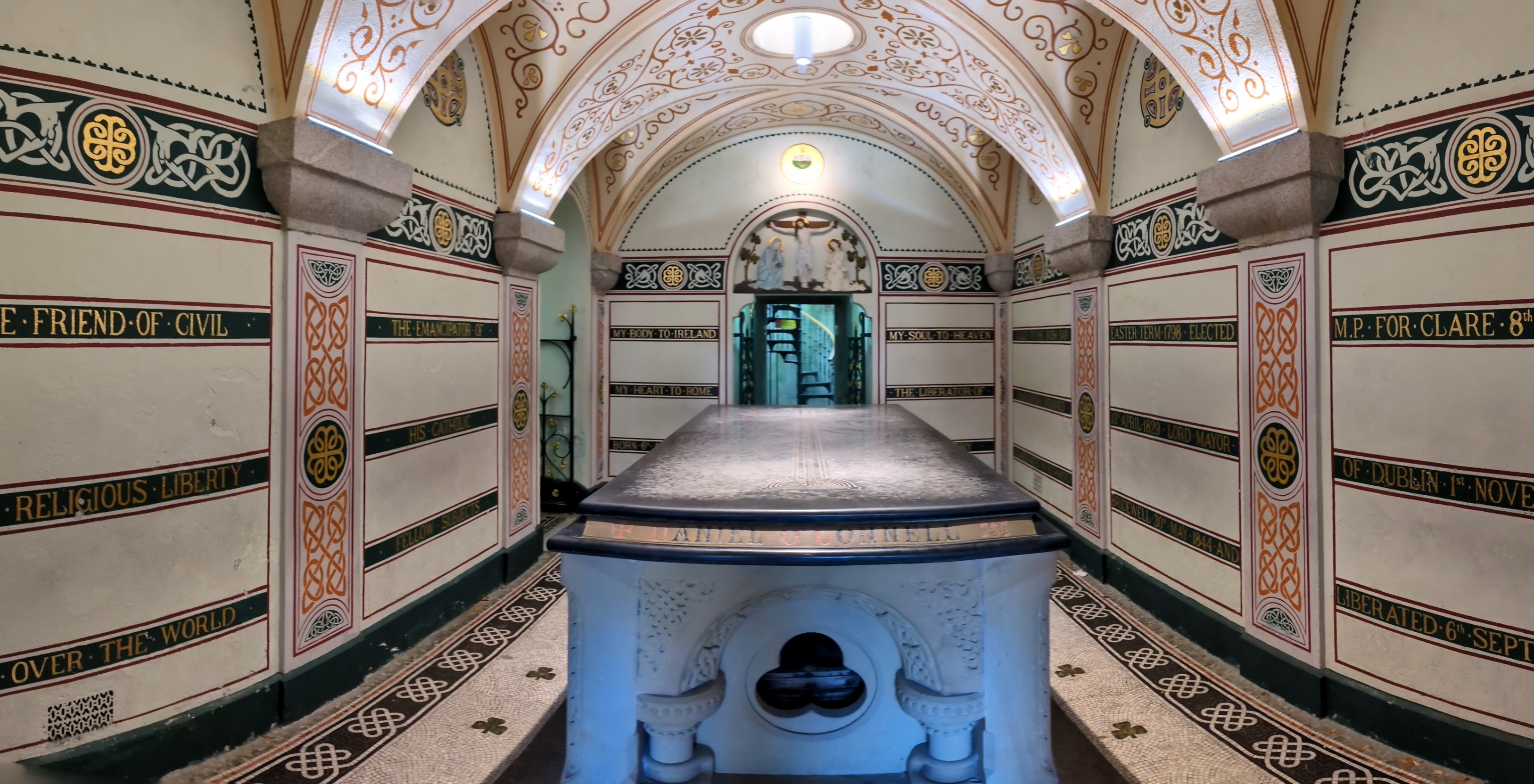
Daniel O’Connell (1775 – 1847), the foremost political leader of Ireland’s Catholic majority (at the time) and founder of Glasnevin Cemetery, was my kind of guy. An egalitarian and abolitionist, he believed in equal rights for all and that cemeteries should be open to all, regardless of religion or ability to pay.
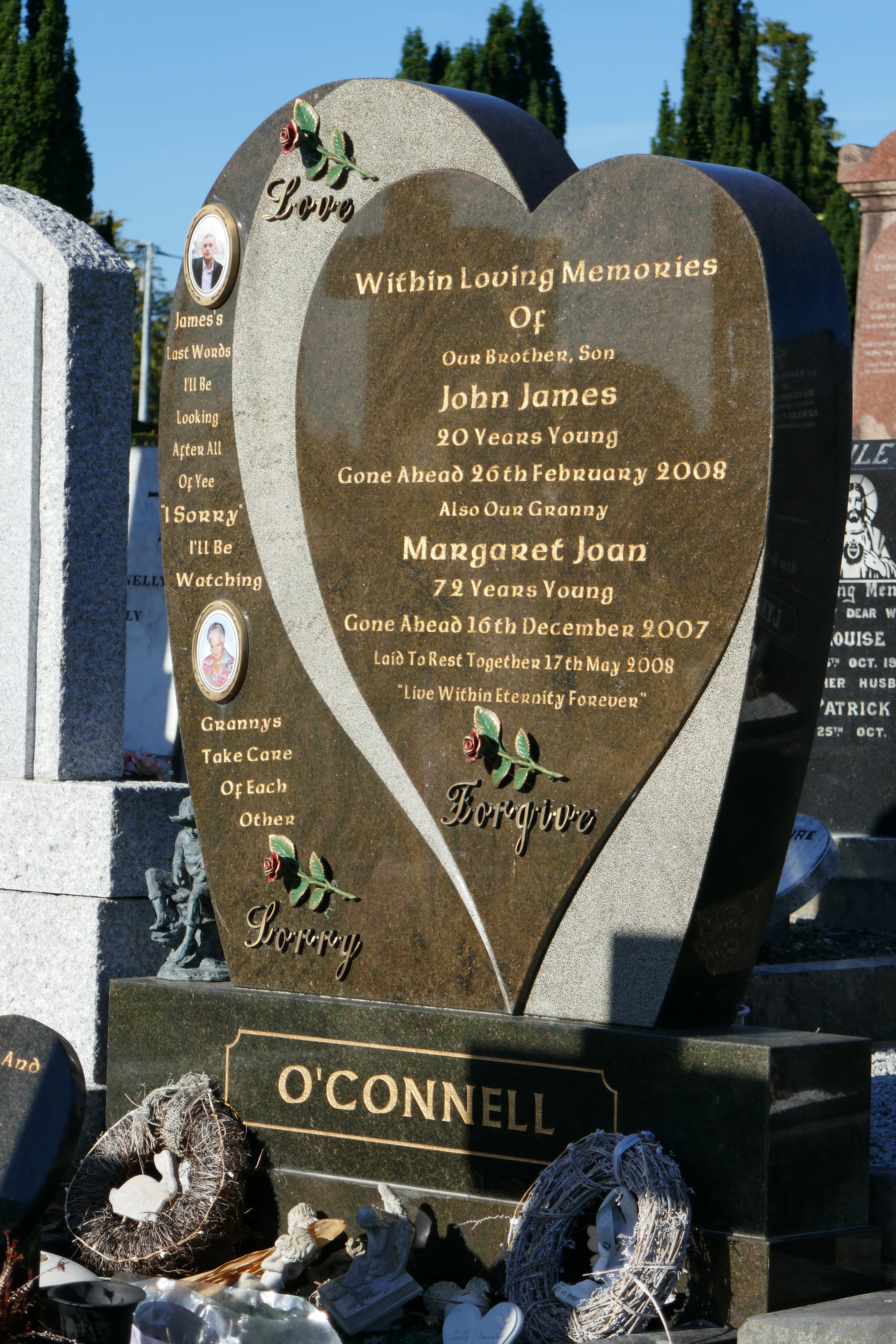
The mass famine of the mid-1800’s resulted in massive deaths of the poor, and they had to be buried somewhere! They were buried at Glasnevin Cemetery, and to date there are more people buried in this cemetery (1.6 million) than alive in Dublin. There are only 300,000 headstones, however. Since many of the people buried there were so poor and their families could not afford burial, their bodies were stacked up to ten people in a single grave.
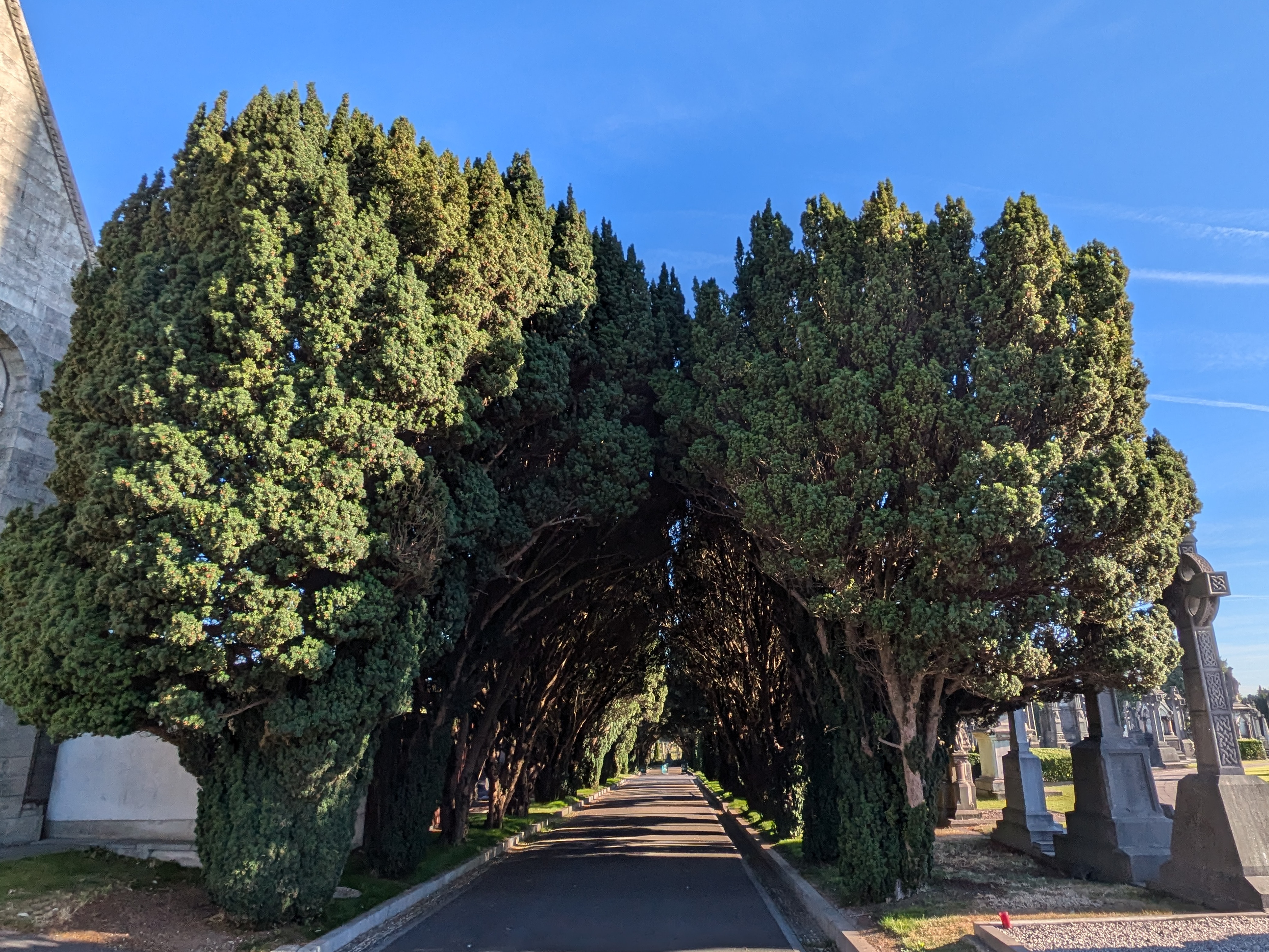
We visited the cemetery with our group and were led on a tour by an excellent docent who shared stories of Daniel O’Connell and some of the people buried in this beautiful and fascinating cemetery.
(For all photos, click on the image for a full screen view.)
Daniel O’Connell was buried here.
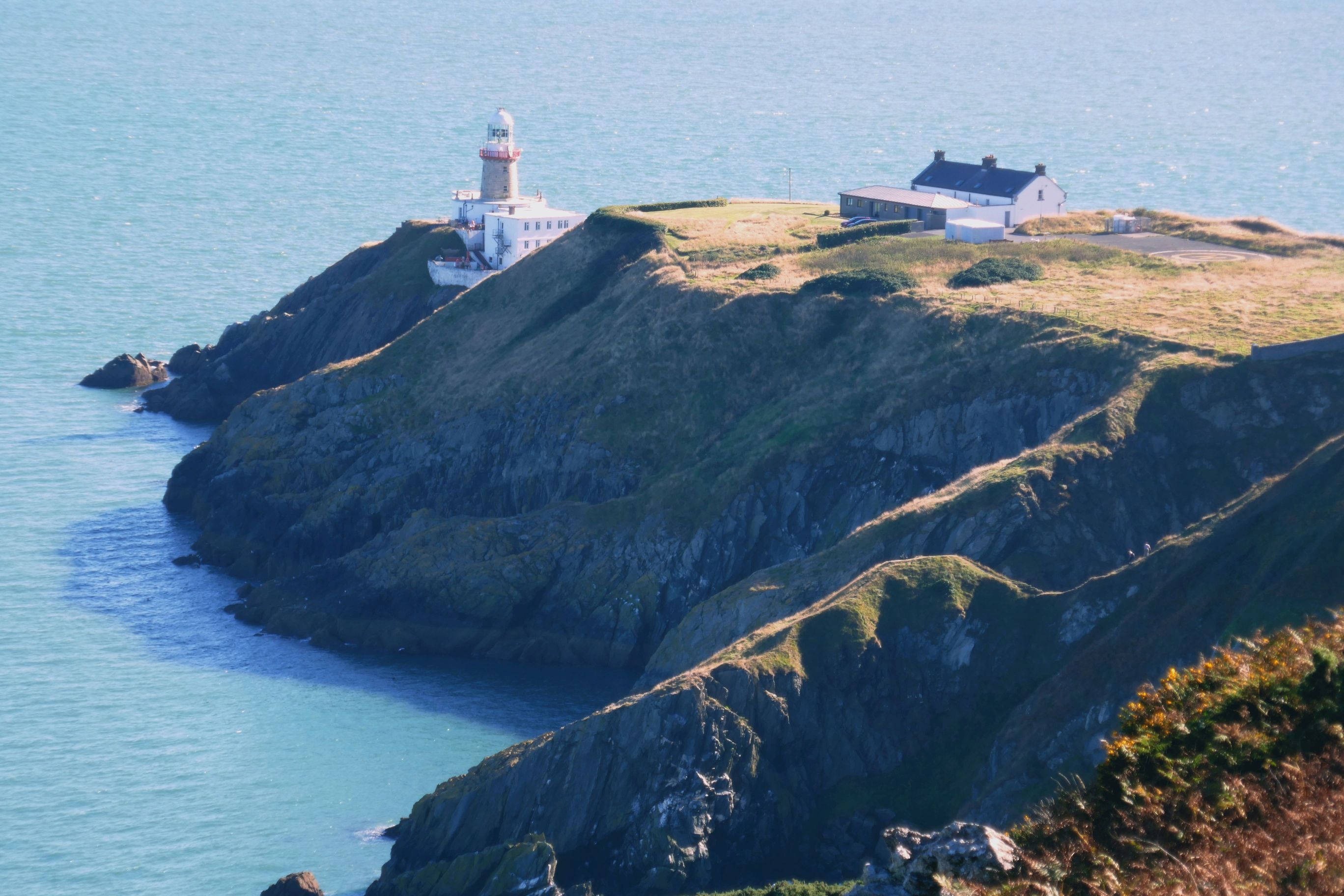
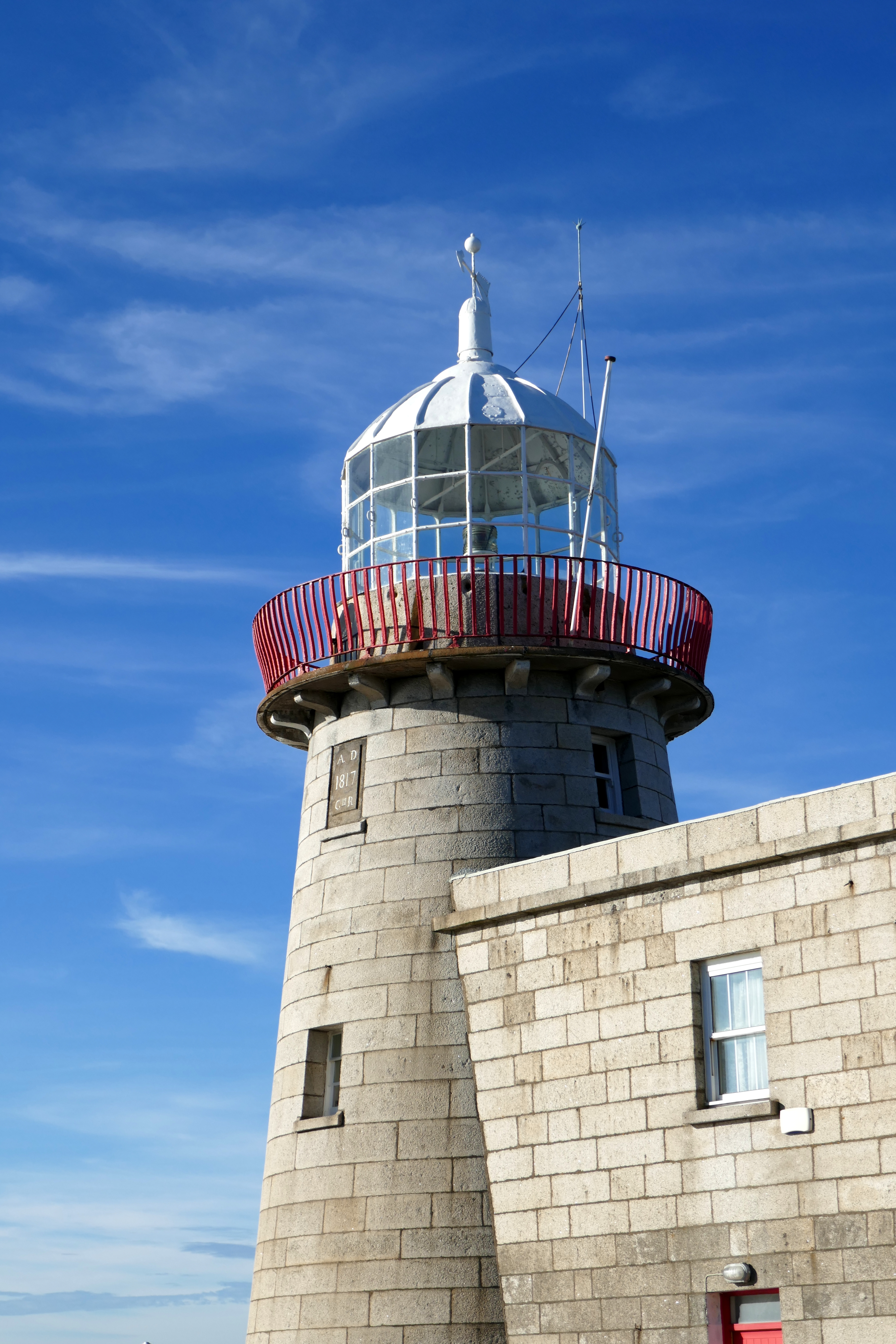
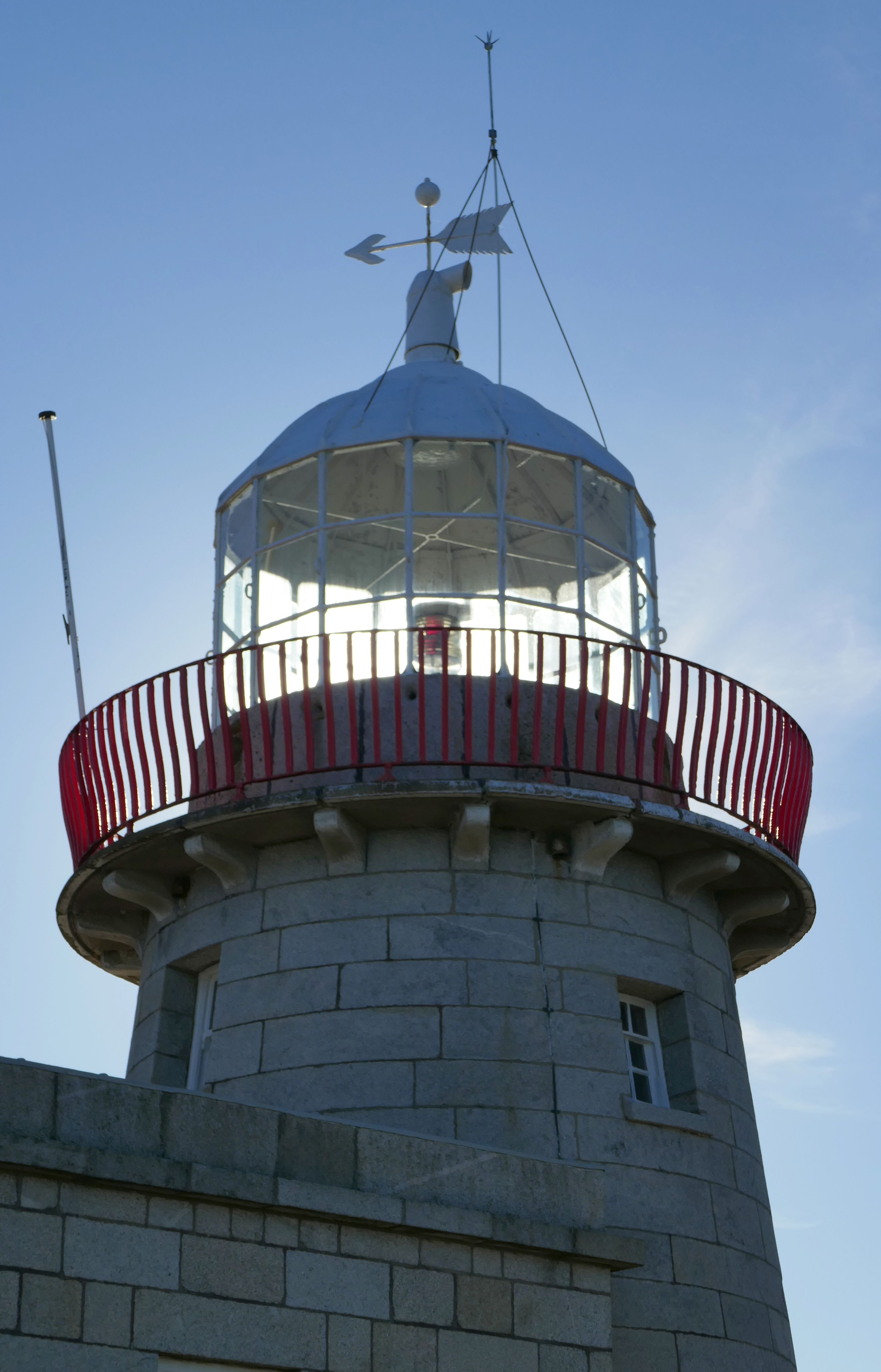
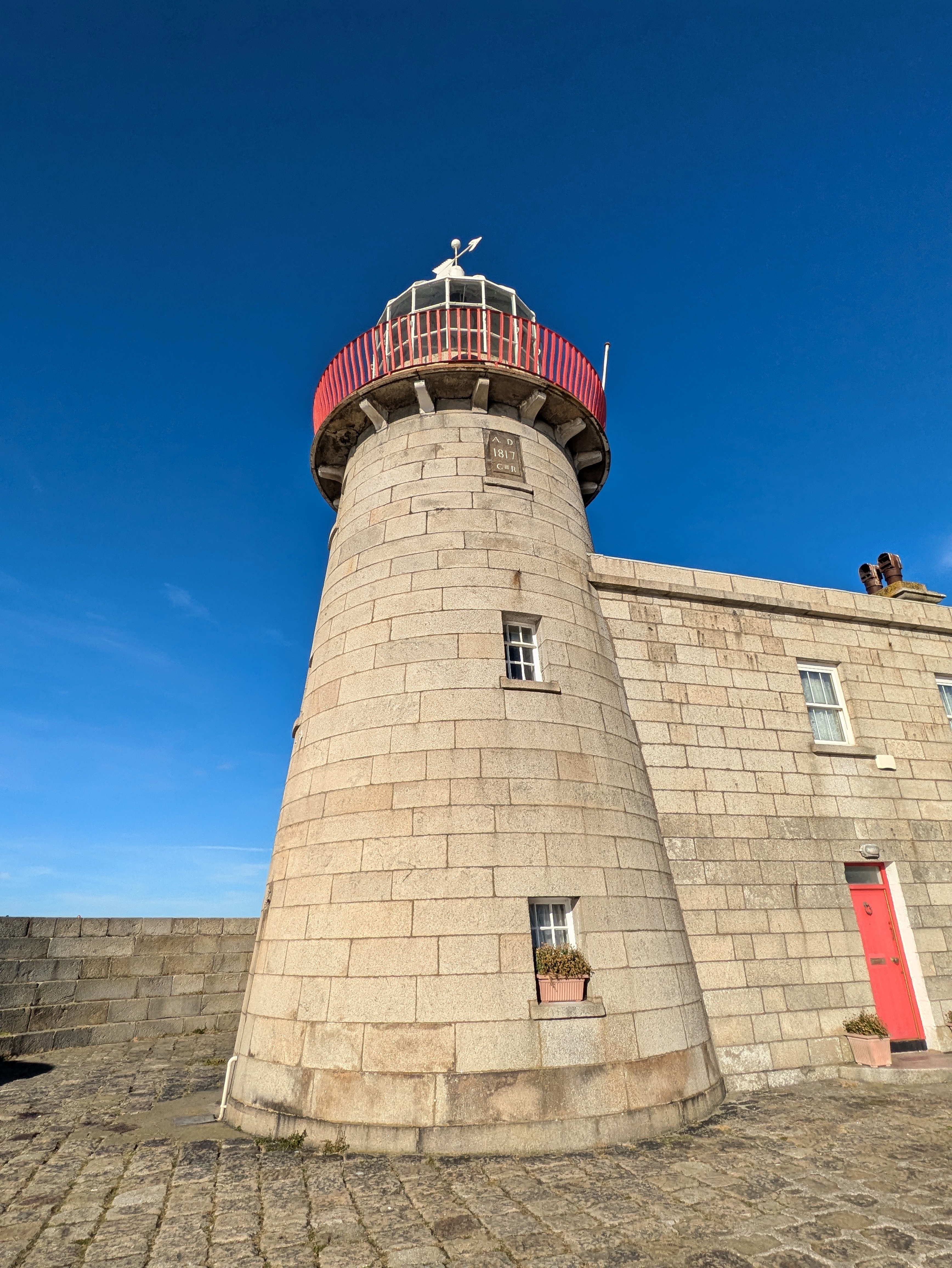
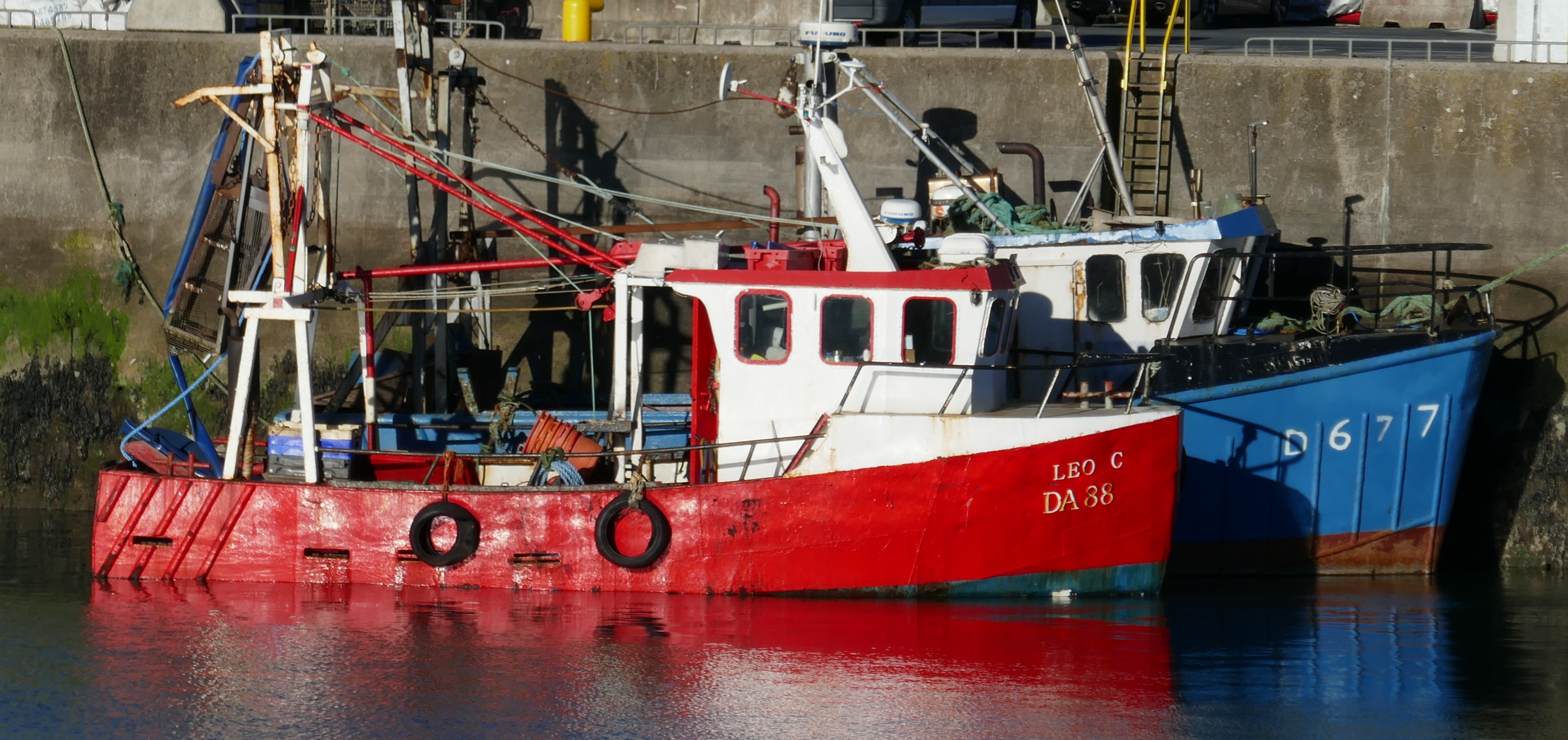
During our free afternoon, Bruce and I hopped on a local bus out to Howth, a suburb of Dublin situated along the coast. It was a beautiful, sunny day (in Ireland!), so we wanted to take advantage of it and enjoy a lovely coastal walk along the seaside cliffs. Who knows if we would ever see this much sunshine again during our three weeks in Ireland? (As it turned out, as you will see in most of my future posts, we saw plenty more days just like this one!)
Coming up next: IRISH ADVENTURE #5: A CIDER FARM VISIT ON THE WAY TO BELFAST
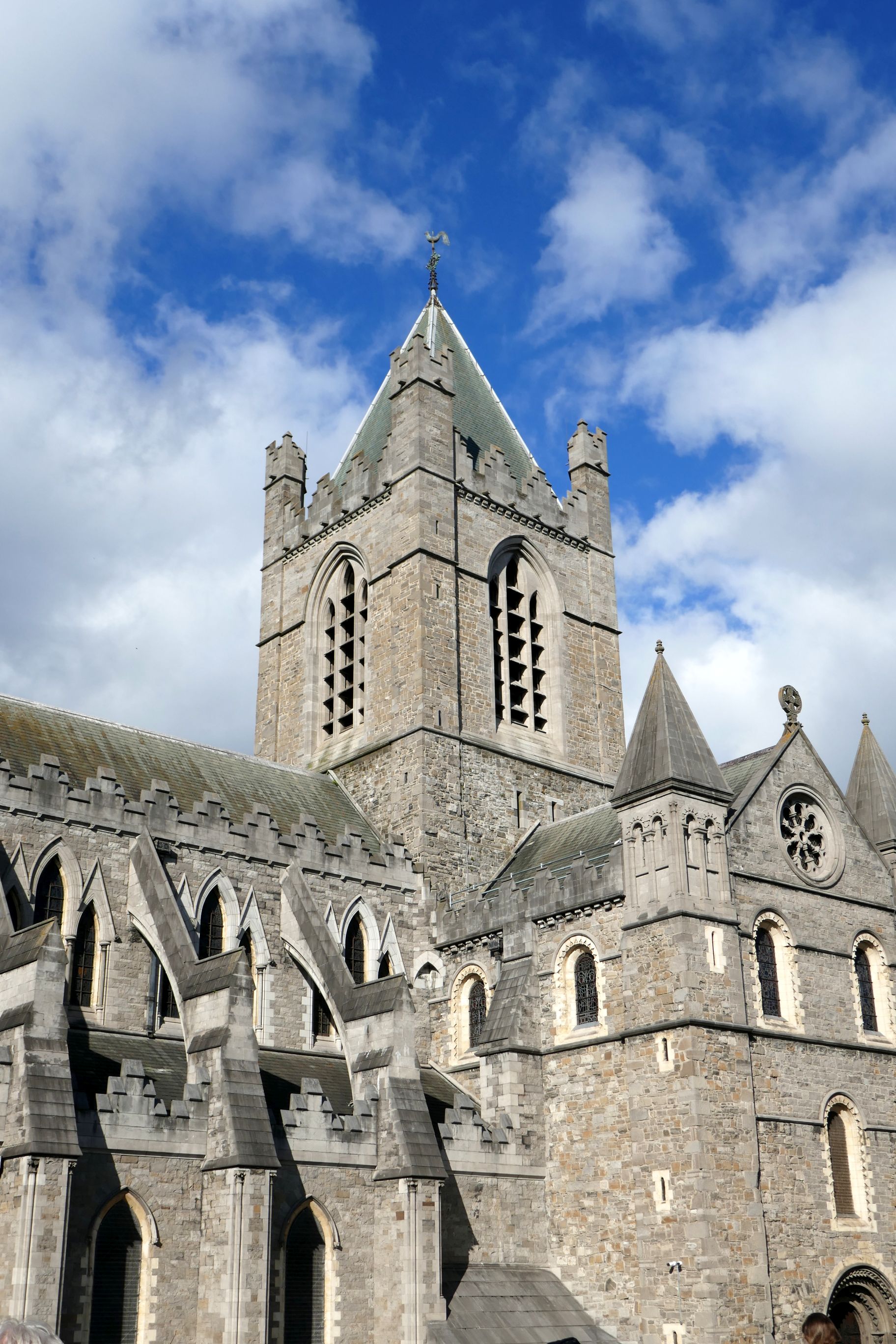
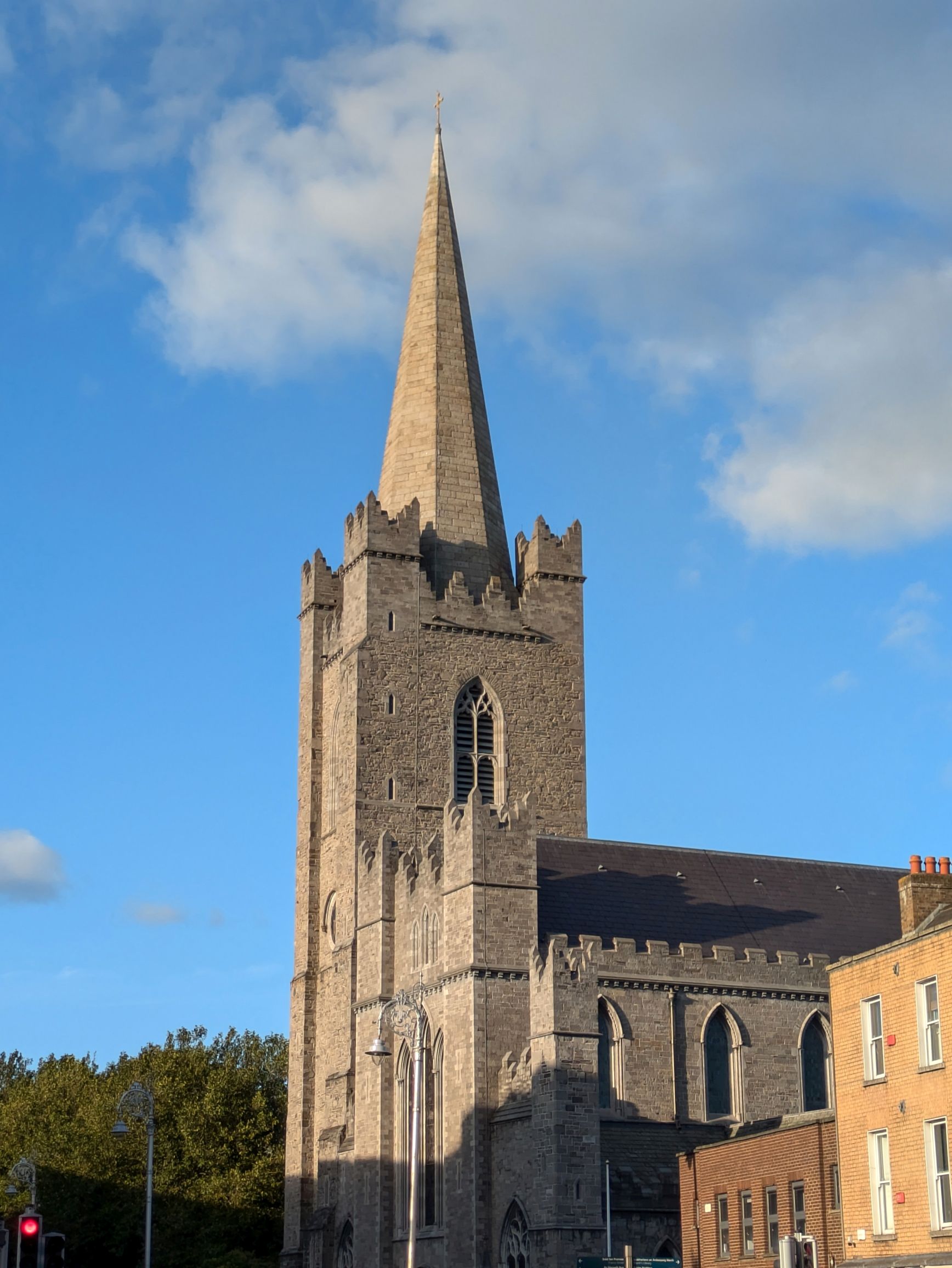
Our group of 14 began the day with a panoramic tour of Dublin by bus and on foot. Although Dublin has the same size footprint as Los Angeles, the total population of the city and surrounding suburbs is only 3 million people compared to ten million in L.A. The lack of traffic congestion (at least compared to L.A.) while moving about the city was noticeable and appreciated!
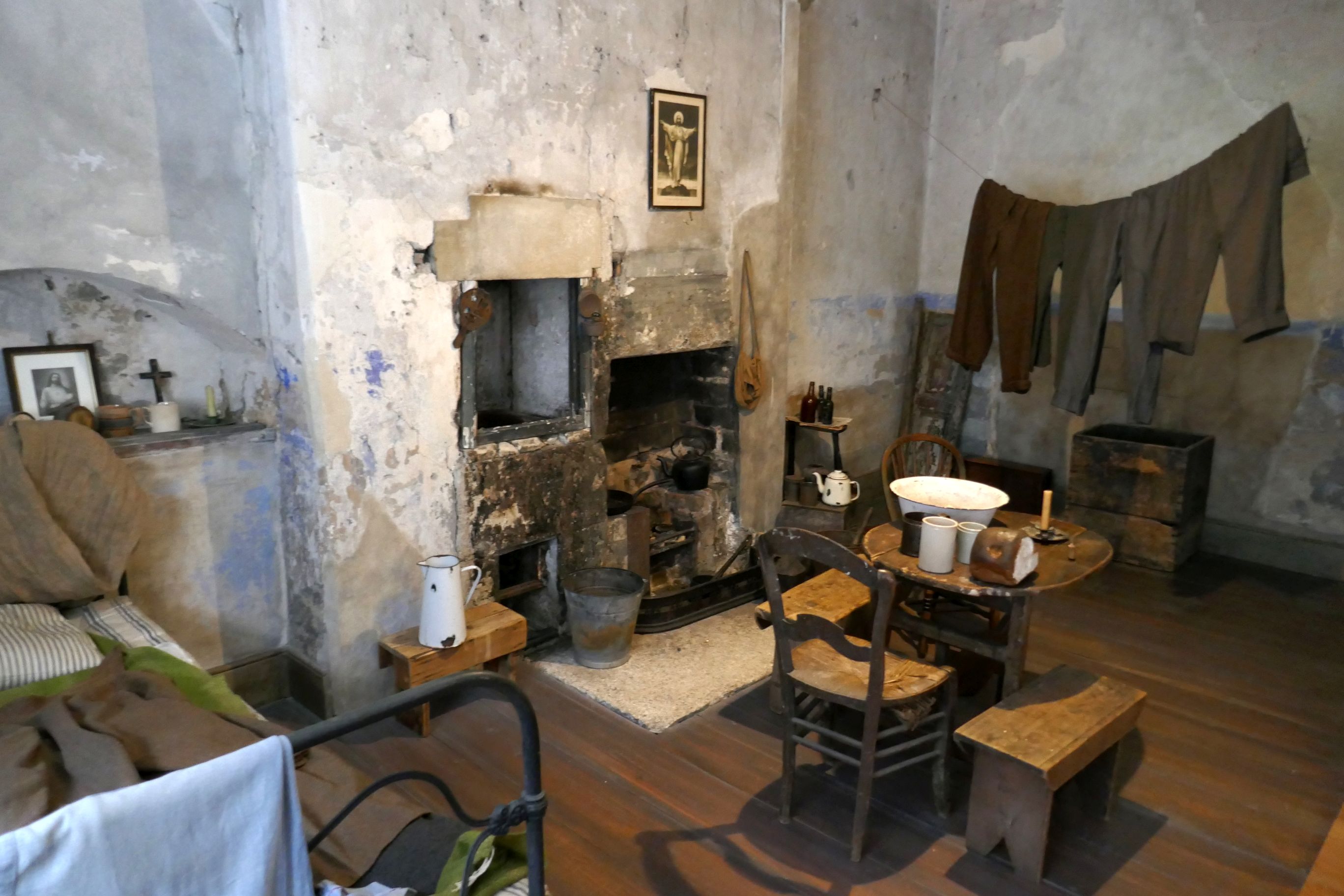
Following our city tour, we visited 14 Henrietta Street, also known as the Tenement Museum. Built in the 1740’s, the home was first occupied by a wealthy lord and his wife. In 1800, Dublin entered a period of economic decline, and the owner at the time divided the home into 17 tenement flats. Now a museum, it tells the story of the families who occupied the house over the years, from Dublin’s most elite to the poorest of the poor. At the time, Ireland was under British rule, and the British aristocracy moved out and ruled from England.
By 1911, 17 families totaling 100 people lived at 14 Henrietta Street. It was during the time of Spanish flu, so there was much illness spreading throughout the tenements. The tenement had only one toilet (this was before indoor plumbing was common, so it was considered “posh”), but everybody had to share that one toilet. It was only flushed one time each week—brutal! And, at night, rats ran free throughout the flats.
(For all photos, click on the image for a full screen view.)
One of the rooms at 14 Henrietta Street
At the time, 1/6 of Ireland’s population lived in tenements and 1,000 of them lived on Henrietta Street. They had the highest mortality rate of the British Isles and many of the children didn’t live past age five. Work weeks were long—70 hours—and the pay was extremely meager. Job insecurity was a fact of life, and people lived on bread, potatoes, and tea. One lady lost 12 of her 14 children before they reached the age of 5.
Do you know how the saying, “Moving up in the world” originated? When people were able to move from the basement up to higher and warmer levels of tenement houses with more light, they were moving up… This was very expensive, of course, so multiple families shared a flat.
In 1979, the last person at 14 Henrietta Street left, and it closed. In 2000, the city of Dublin began the process of acquiring the house, and then in 2008, they began conservation and preservation—a ten-year long project.
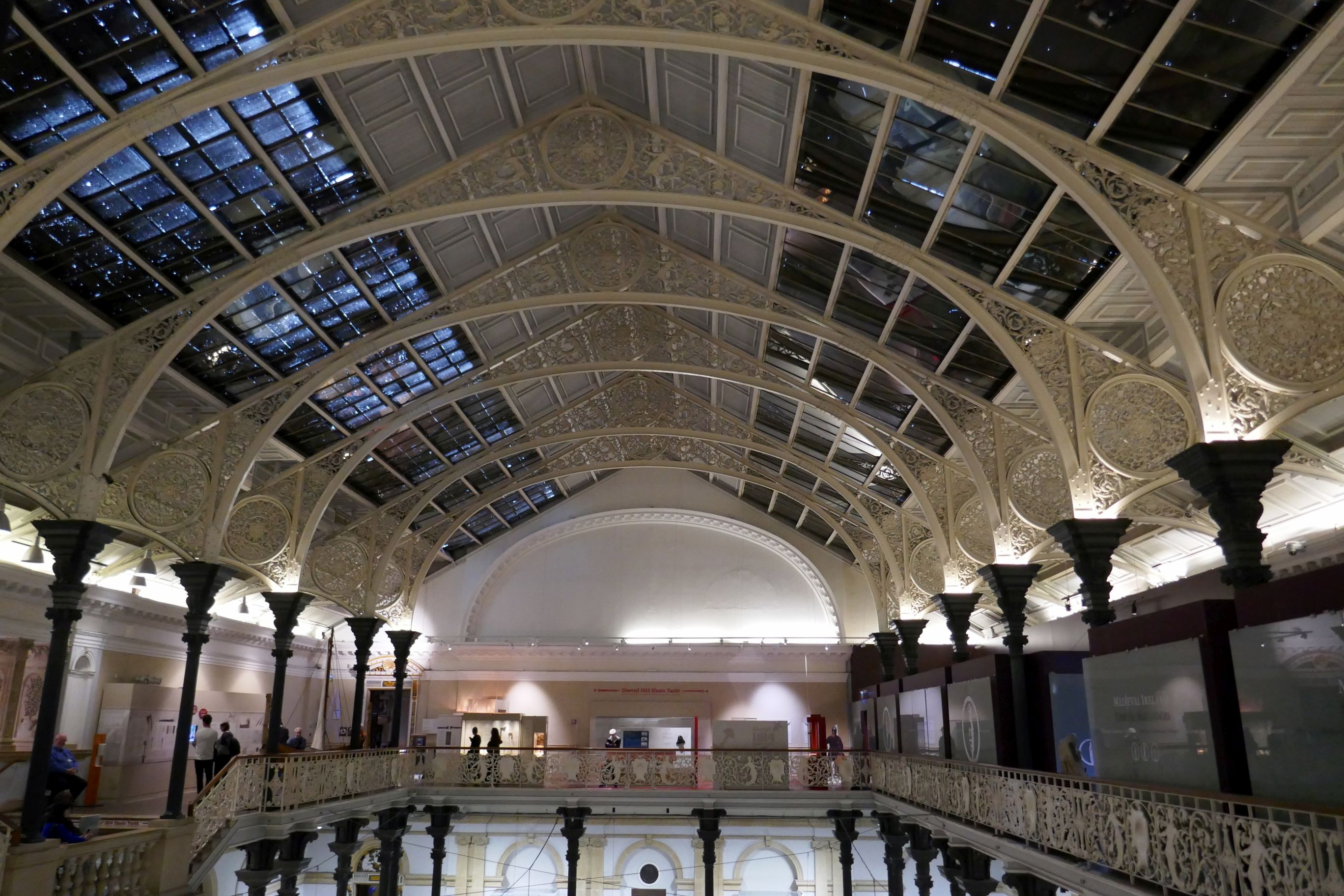
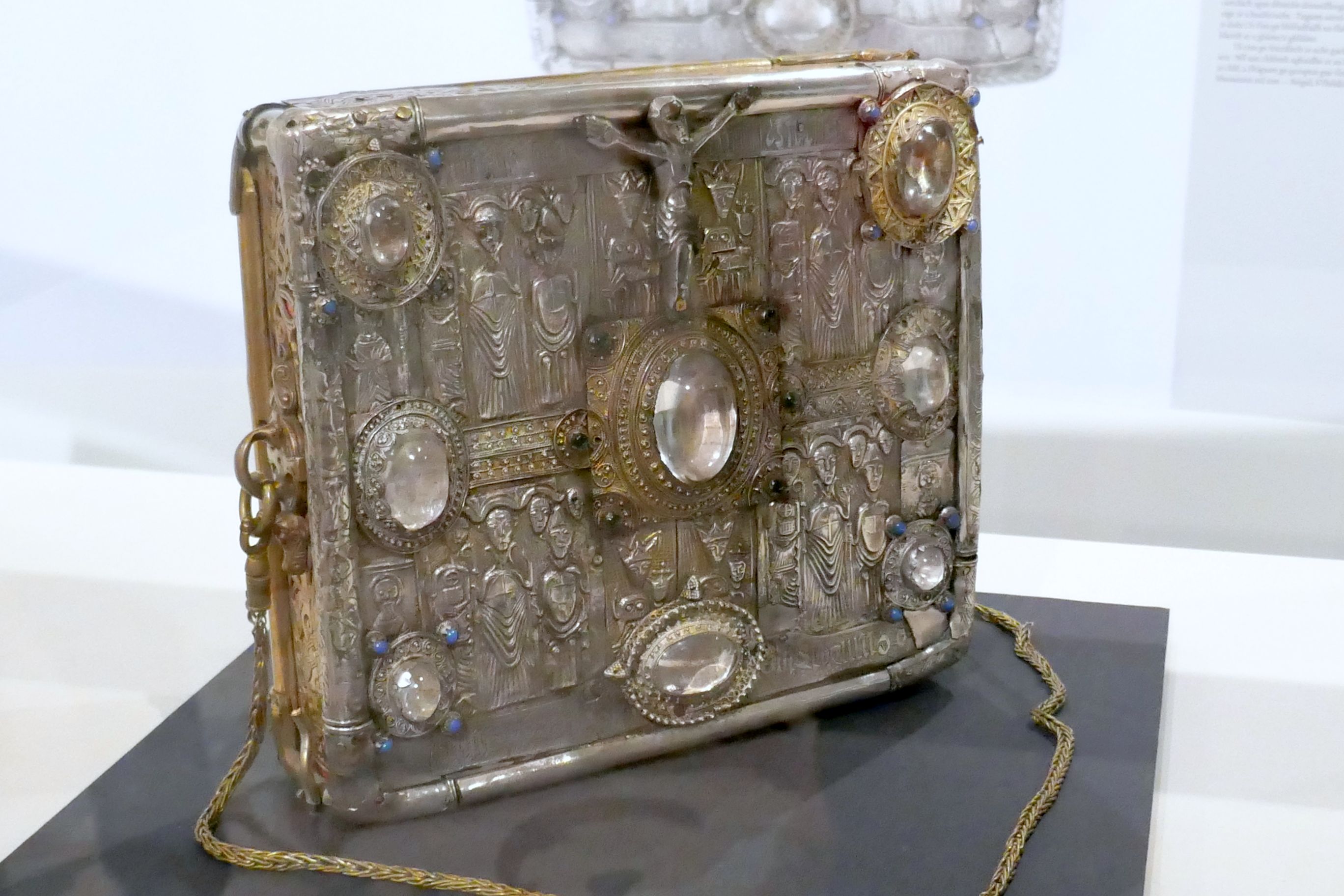
Following the tour of the museum, the afternoon was free, so Bruce and I visited the National Museum of Ireland Archeaology. The building alone was worth the visit; it was gorgeous!
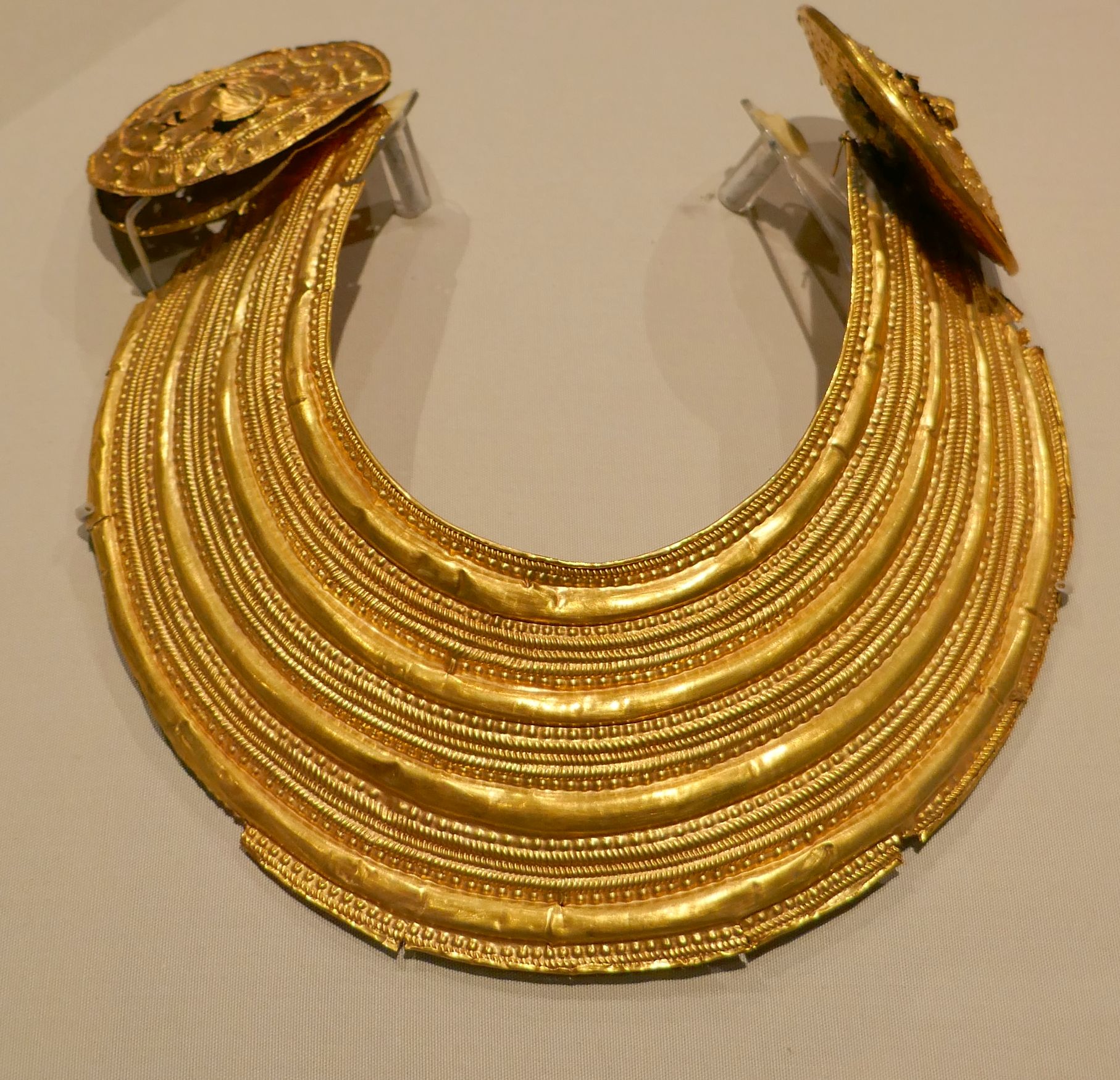
800-700 B.C.
More scenes around Dublin:
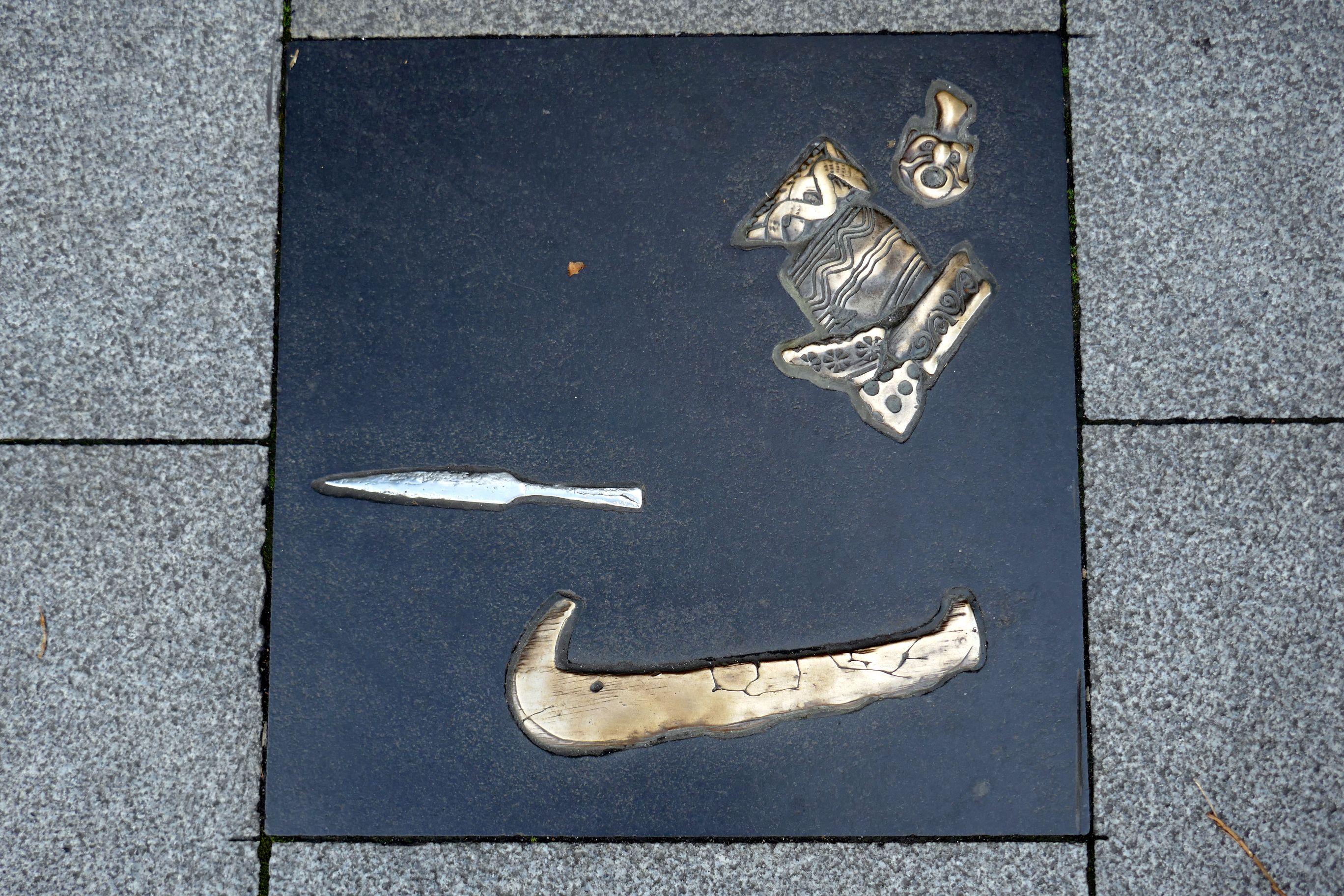
This tile placed in the sidewalk depicts which archeological finds were discovered below.
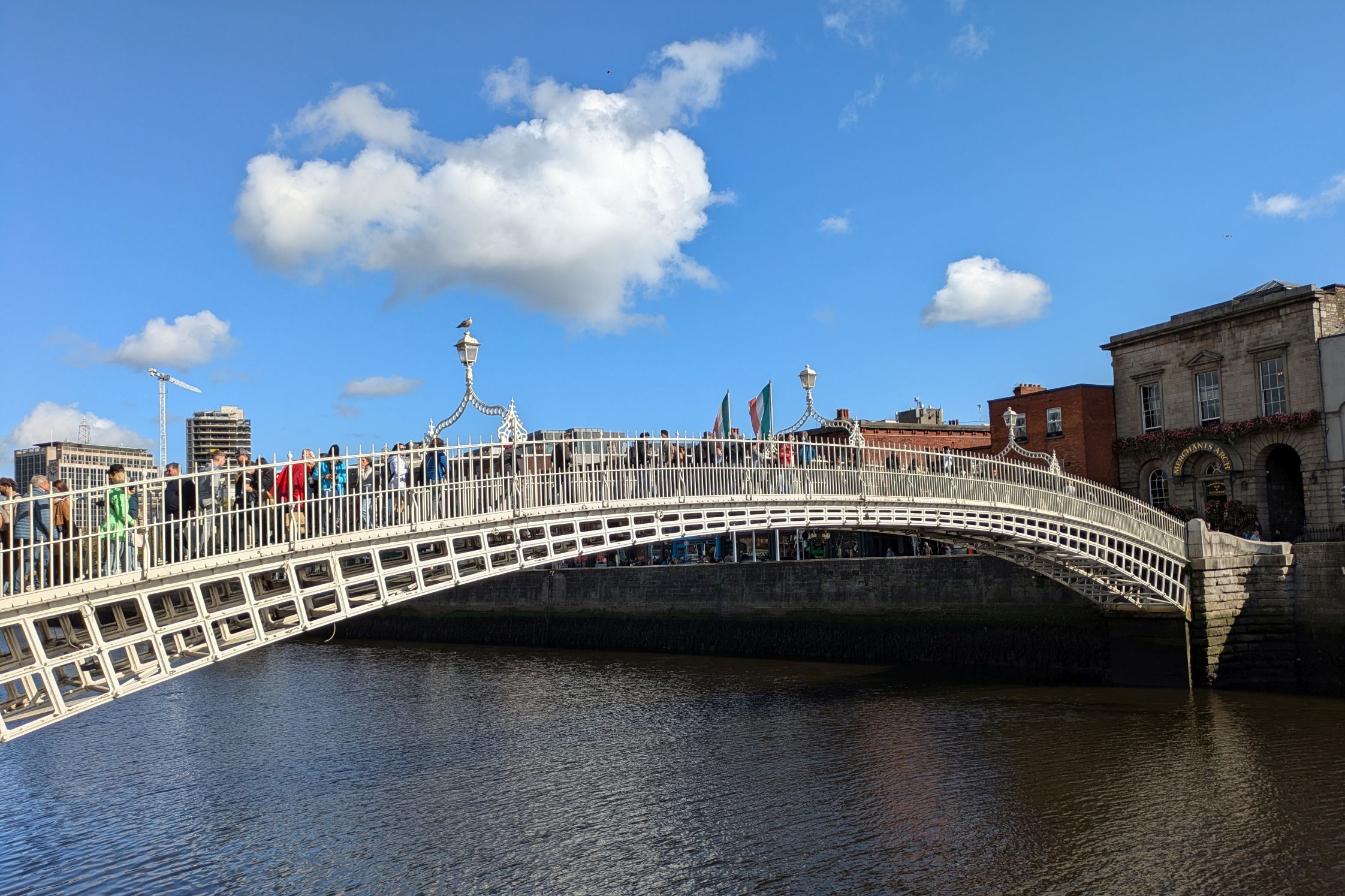
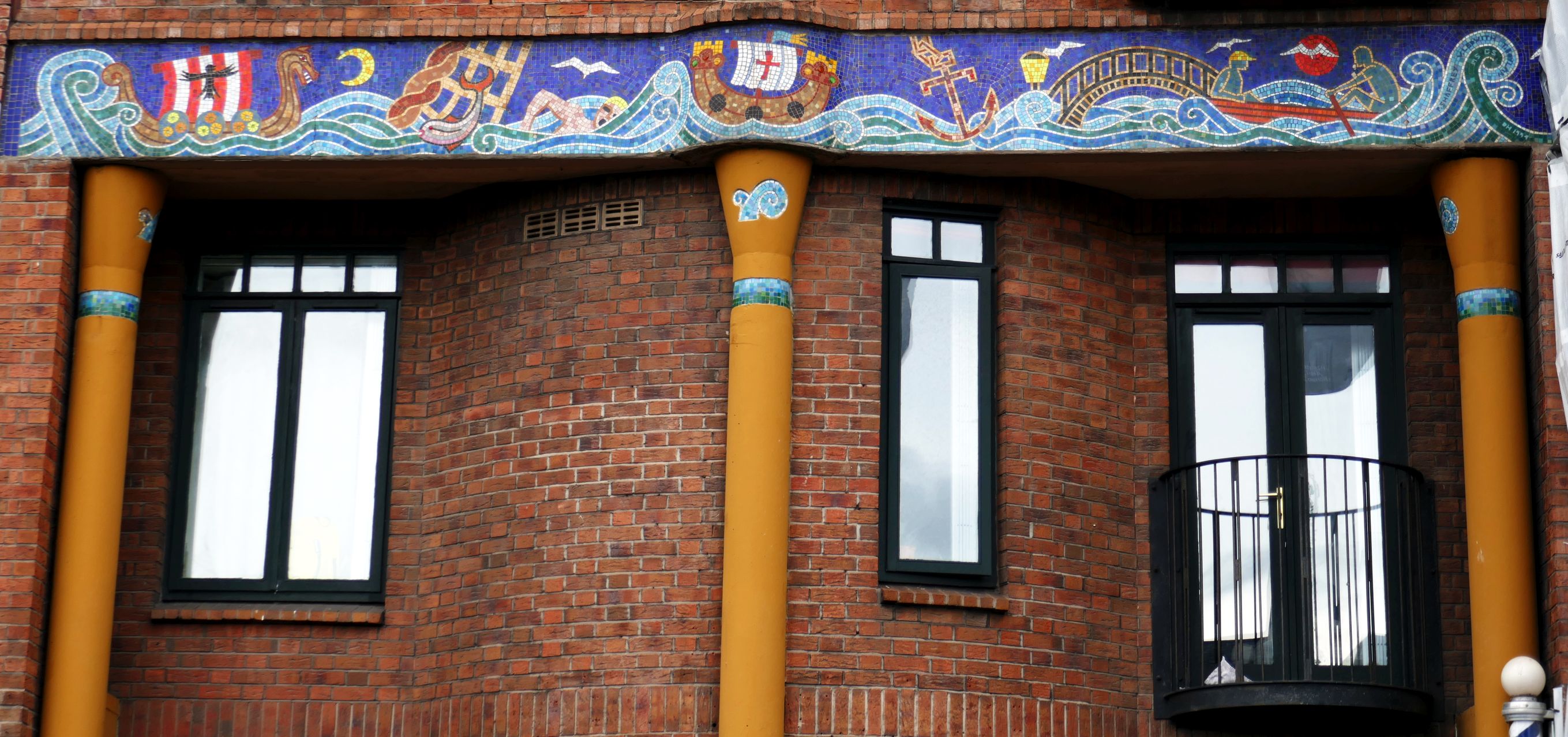
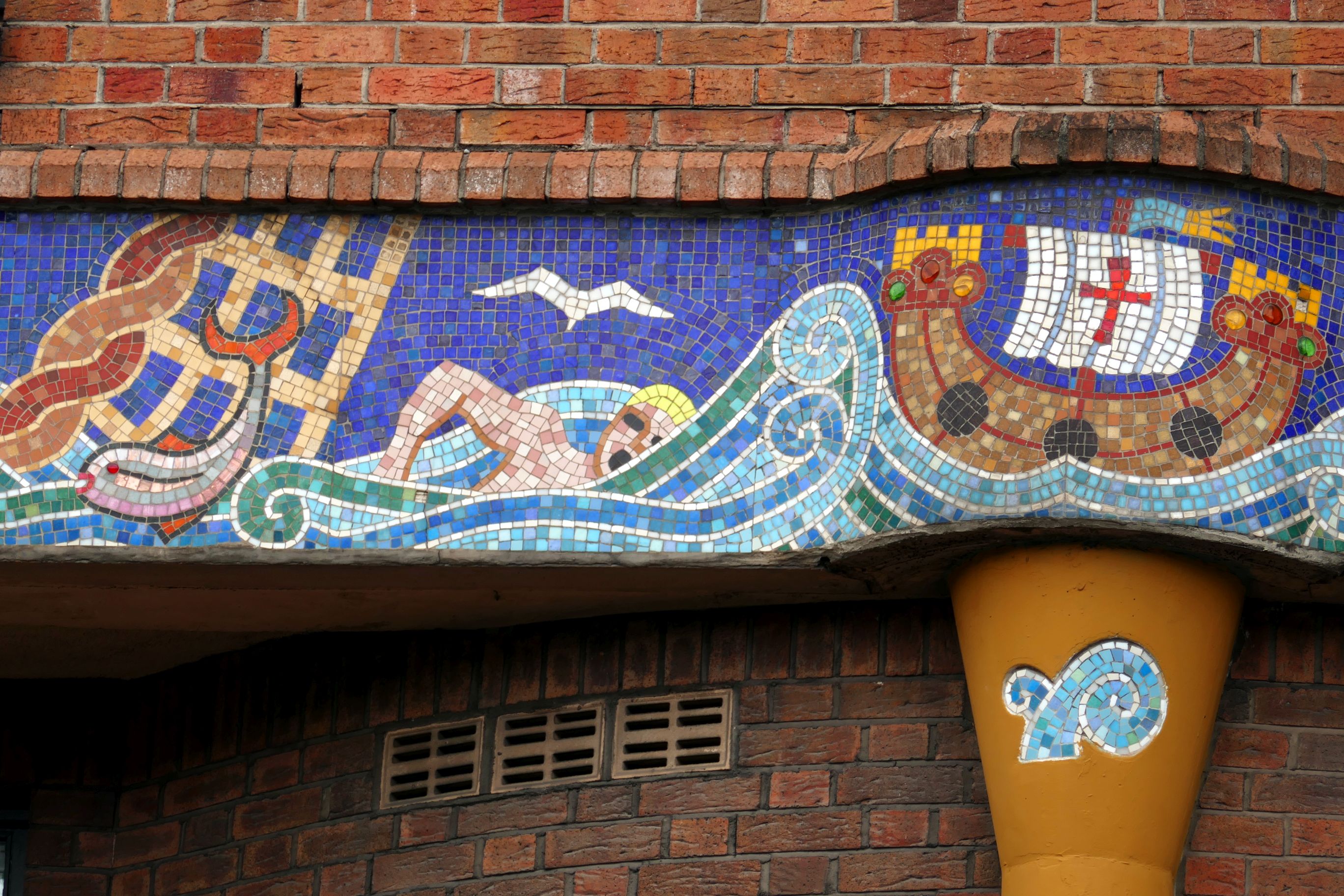
Ha’penny Bridge on a gorgeous (not rainy!) day!Love the swimmer!
Next up: IRISH ADVENTURE #3: THE FLOORS AND DOORS OF DUBLIN











































 Elaine-iaK's Travels: A Traveler's Tales of People, Places, Photos, Pools... and CHOCOLATE!