To see a slide show (full screen) of my Iceland photos from our Overseas Adventures small group tour of Iceland, in July, 2023, click on “copy link” in the upper right hand corner of the YouTube screen and paste it in a your URL (where you would type in a website). You can view it full screen by then clicking on the open square symbol in the lower right hand corner of the YouTube window, which will expand it to full screen.
If small group travel is of interest to you, I highly recommend Overseas Adventure Travel (OAT). Although Bruce and I travel together, they do not charge a single supplement for those who travel on their own. Singles also get their own room at hotels. If you book, you can get $100 off your trip by providing my name and customer number (Elaine Krugman, #3018126) as the person who referred you. I will also get $100 off future travel– a win-win!
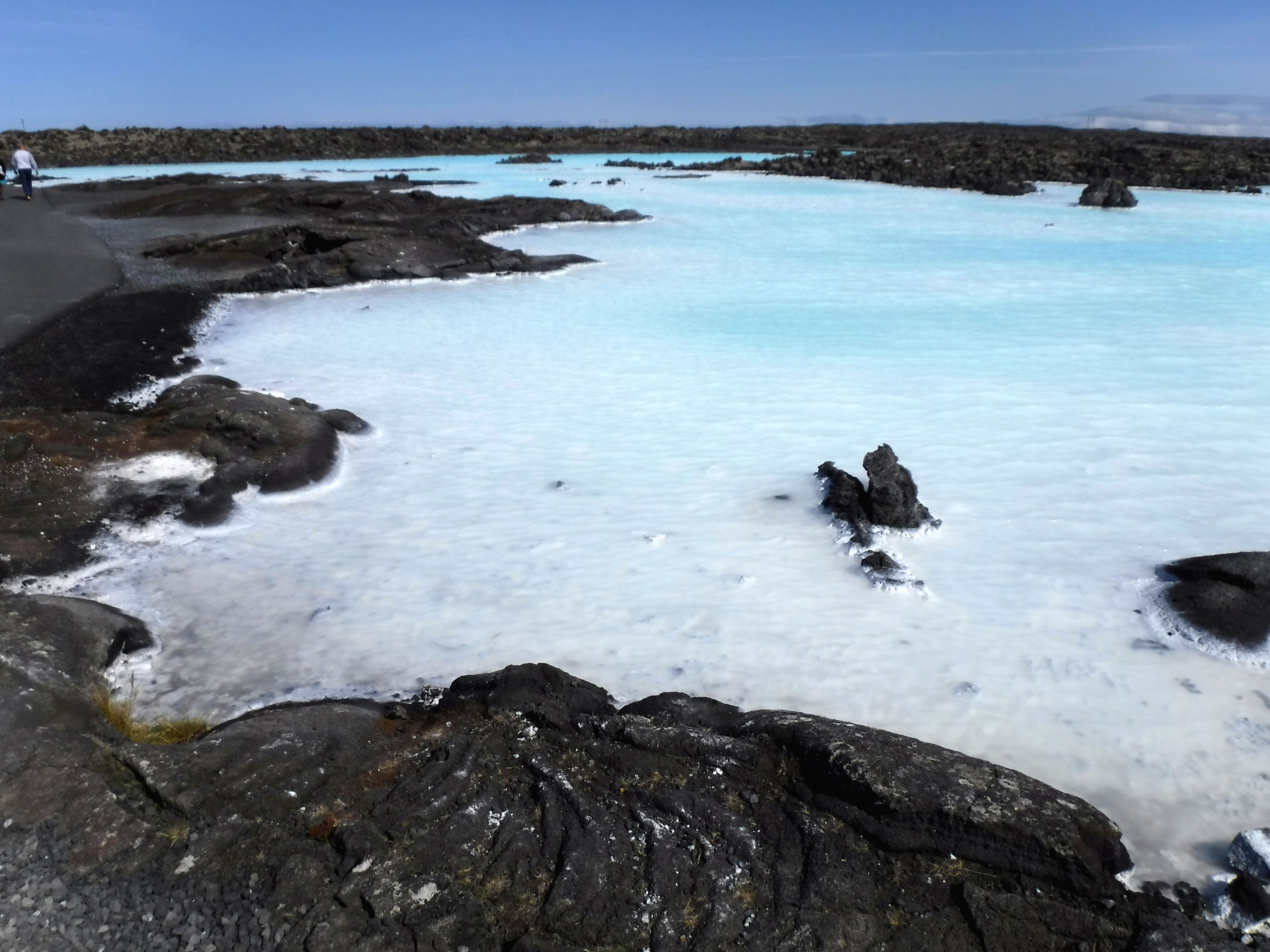
If you were to ask somebody what tourist activity comes to mind when they think of Iceland, visiting the Blue Lagoon would probably be on their short list. Trip Advisor has 19,660 reviews posted as of this writing, so it’s a popular place! Some would call it a tourist trap, but our Overseas Adventure Travel tourvisited the lagoon on our last full day in Iceland, and we thoroughly enjoyed it!
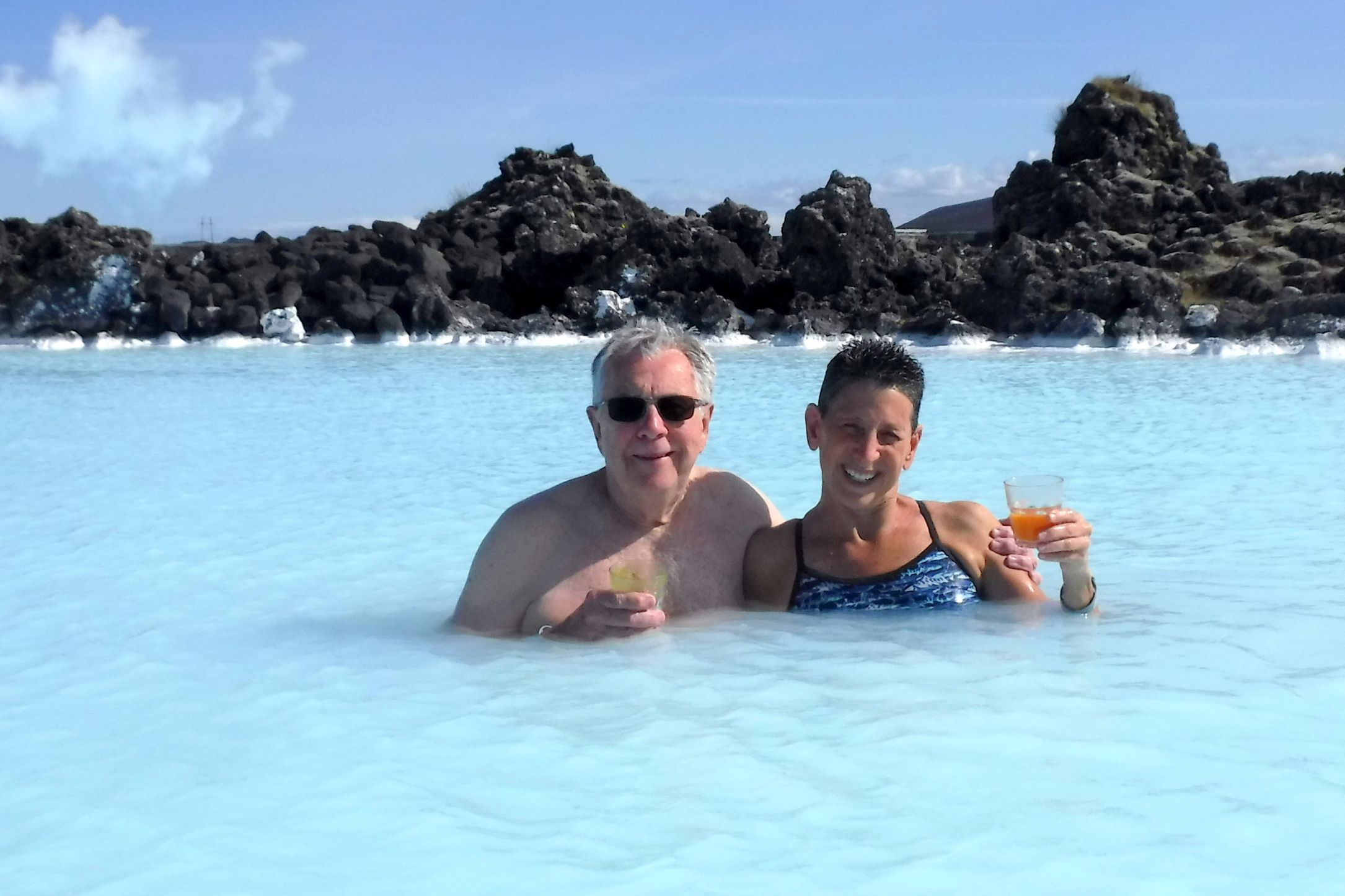
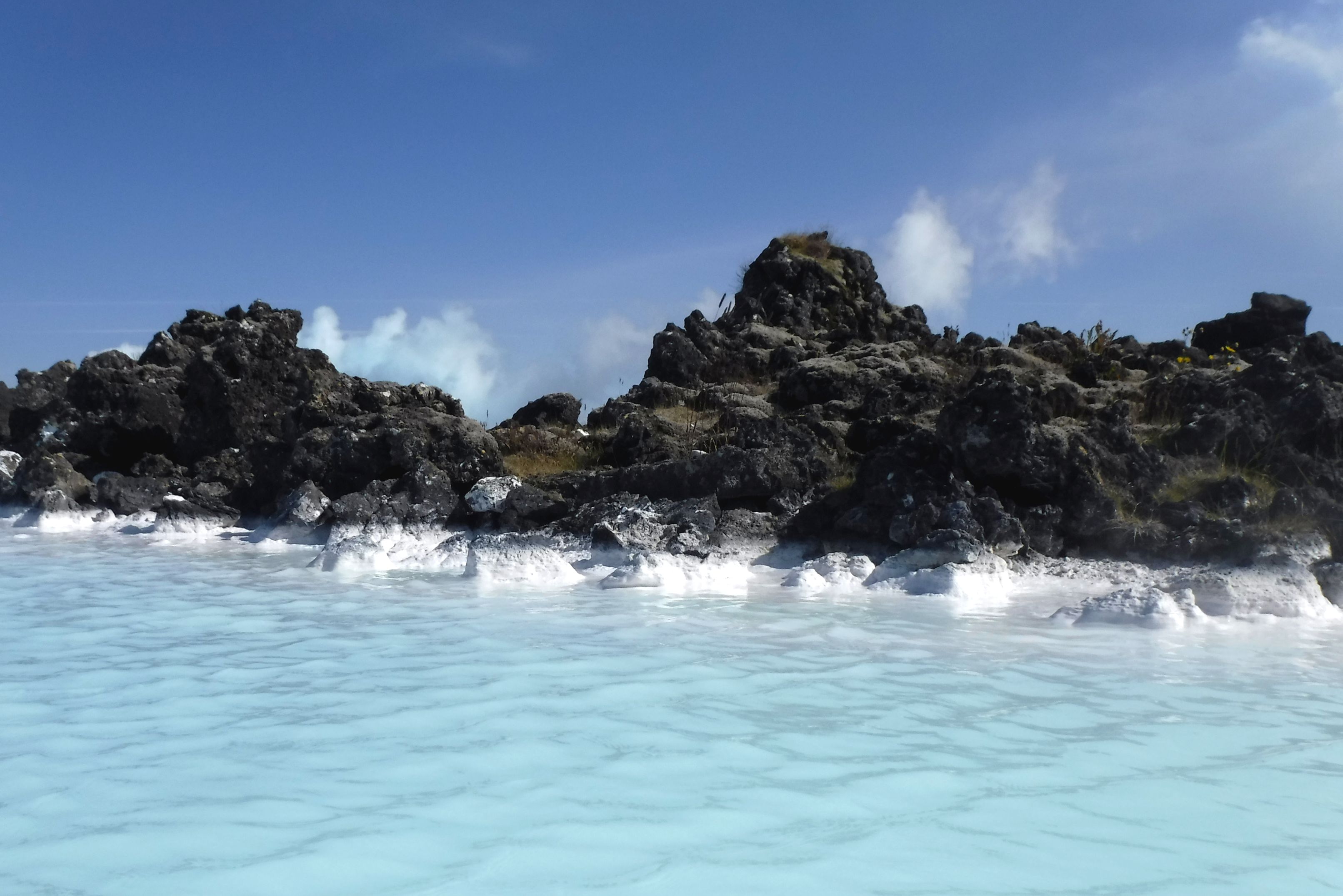
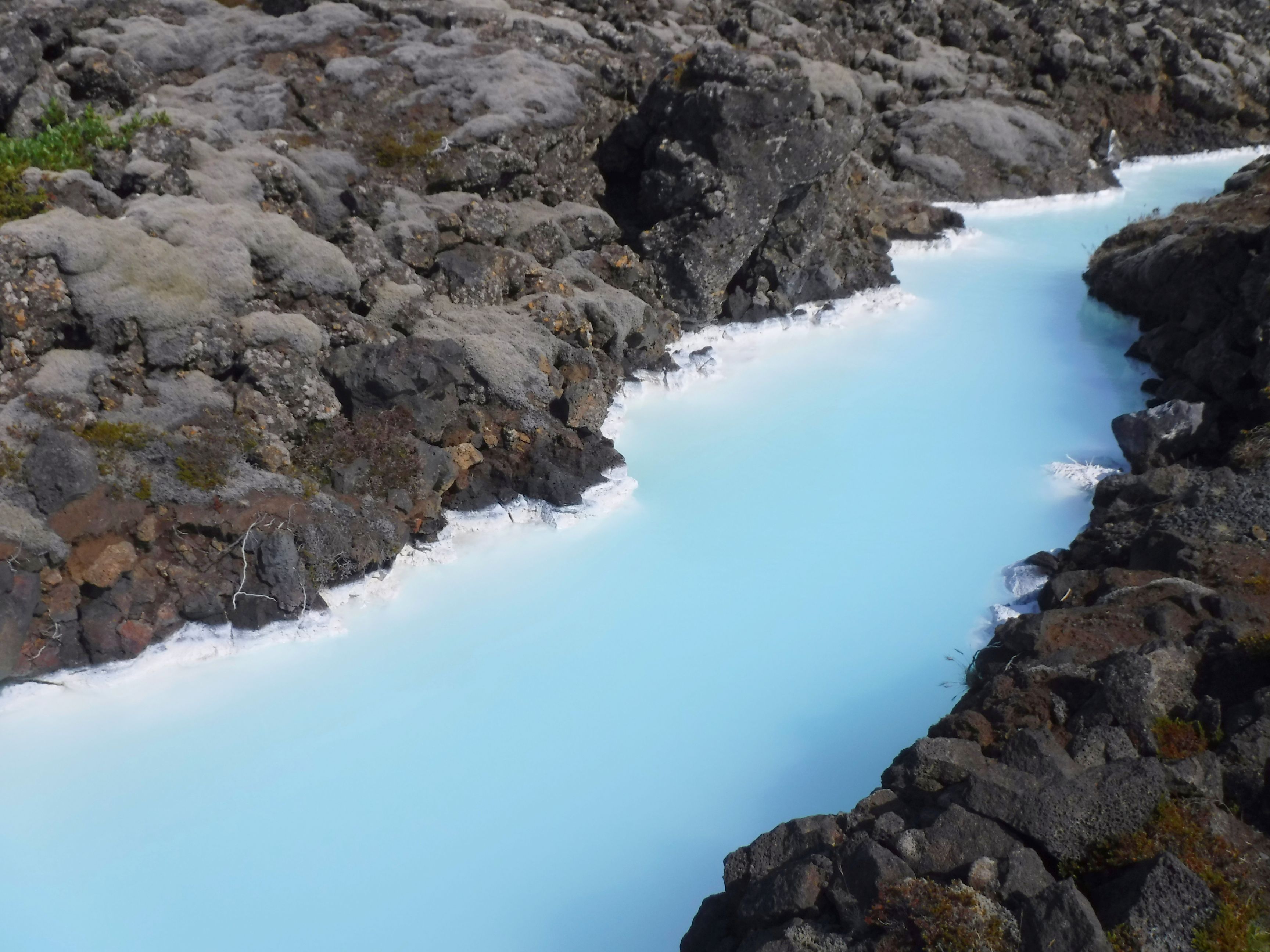
Located in Grindavik, not far Keflavik International Airport, the large geothermal lagoon is rich with silica, minerals, salts, and algae, giving it a beautiful milky-blue color. The water is comprised of 70% sea water, 30% fresh water and maintained at a steady 100 degrees Fahrenheit. Included with the basic package is a silica mud mask and a drink at the swim-up bar.
The lagoon is located in the middle of a lava field and near the Svartsengi geothermal power station; so, the heated water from the power station supplies the lagoon.
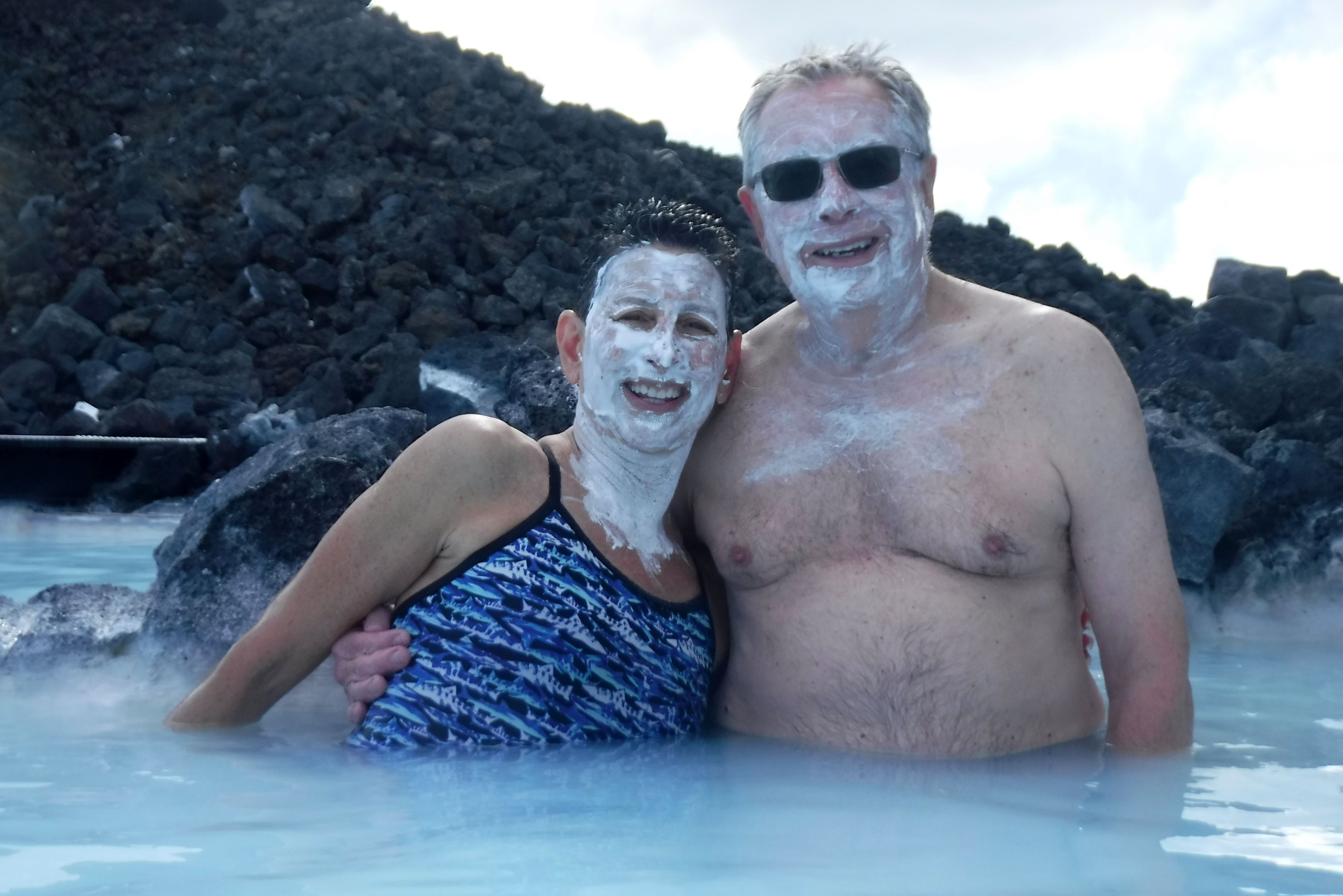
Somehow, after exiting the locker room showers and entering the large and crowded lagoon, I managed to find Bruce as well as other members of our group. I had brought my waterproof camera into the lagoon with me, so we all decided to begin our spa experience with the mud mask for some fun photos. What a scary looking bunch!
There wasn’t enough time to check out the restaurants, hotel, spa, gift shop, hot-pots, steam rooms, sauna, or even the waterfall that provides a hydraulic massage. Darn, that would have been awesome! Time went by so fast, we had to leave before we knew it. Too bad, because we found the experience to be quite enjoyable and relaxing. As an extra bonus, we left with very soft skin!
On the way back to the bus, we had just enough time to stroll the walking path through the geothermal pools that were located adjacent to the parking lot.
Upon our return to the hotel, we had to say goodbye to Haflidi, our bus drive. We’ll miss you!
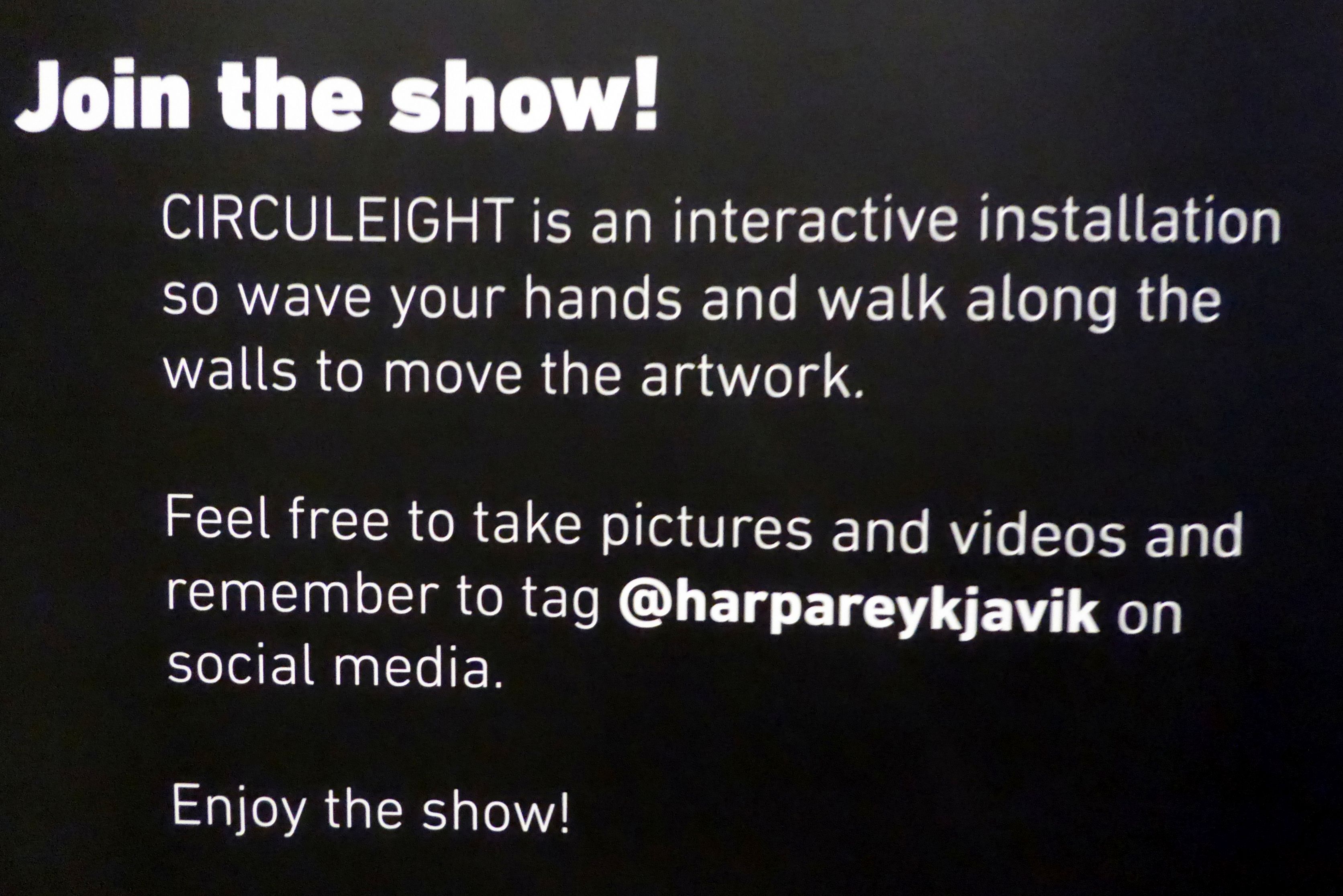
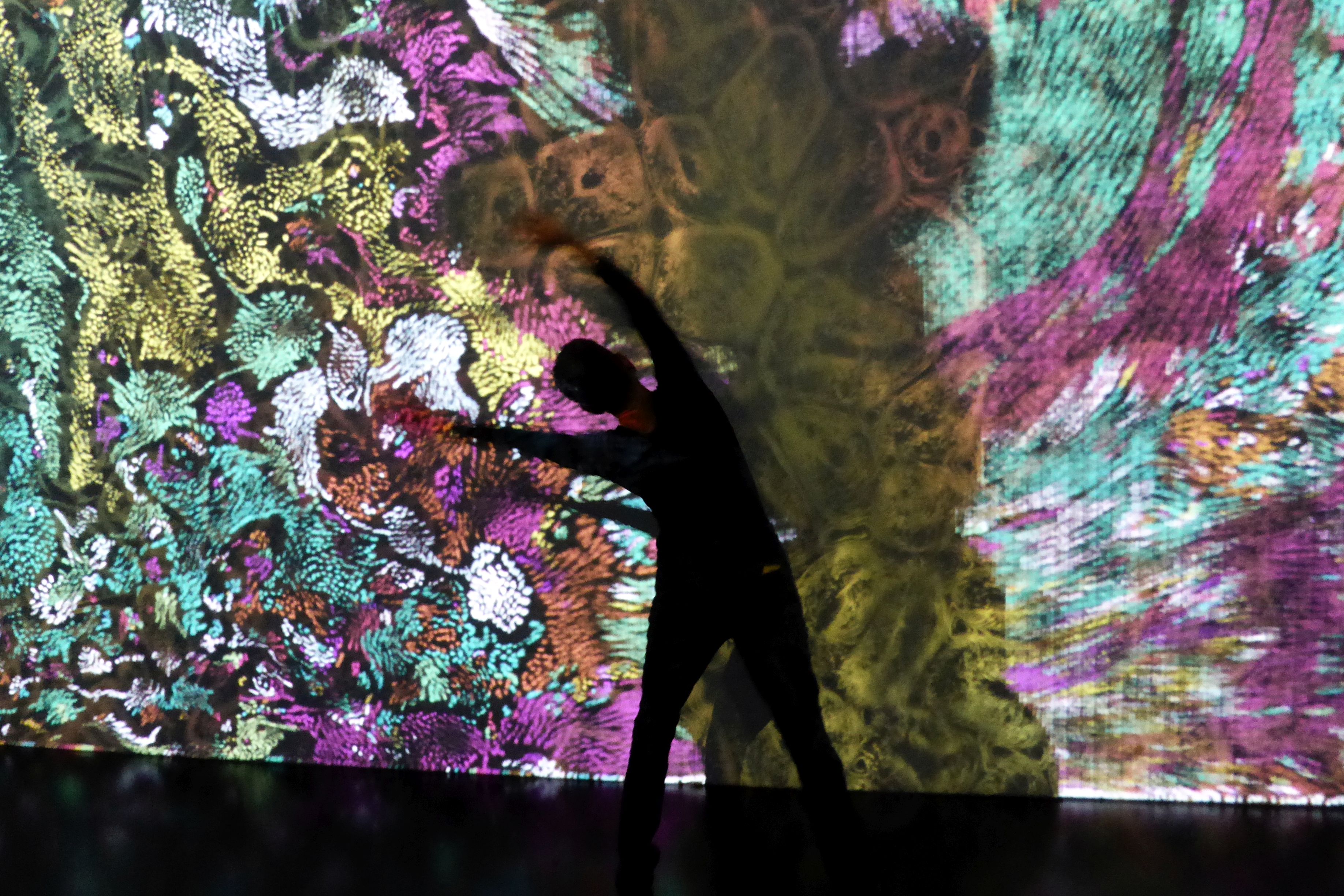
We were fortunate our last day in Reykjavik was so beautiful. We spent our free time in the afternoon walking the city, doing more photography at Harpa (which I shared previously) and seeing Circuleight, an interactive installation. Their website describes it as, “Circuleight features designs and real-time interactive visuals inspired by eight elements: lava, basalt, glacier, water, flora, algae, microorganism and volcanic gas.”
The music was an original score by renowned Icelandic composer, singer and songwriter Hogni Egilsson.
The best part of the experience was having the entire room to ourselves for much of our time in there! We ended up staying and watching a repeat of the 20-minute program, shooting video, and taking still photos.
Check out these short videos of me and Bruce, and you can see how the patterns followed us across the room:
What a fun way to wrap up our visit to Reykjavik!
During our walk around the city, we reflected on our experiences in Iceland and all the wonderful sights we were so fortunate to see. After so many years of wanting to see this amazing country, I am happy to say it was so much more than I hoped it would be.
Our last day in Iceland was gorgeous!
Our tour concluded with a lovely farewell dinner with the group, and Thorunn reviewing all we had seen throughout our time together.
The following morning, we flew to Edinburgh, Scotland, the subject of my next blog series. Stay tuned!
Coming up next: Excited to See Edinburgh!
Note: If small group travel is of interest to you, I highly recommend Overseas Adventure Travel (OAT). Although Bruce and I travel together, they do not charge a single supplement for those who travel on their own. Singles also get their own room at hotels. If you book, you can get $100 off your trip by providing my name and customer number (Elaine Krugman, #3018126) as the person who referred you. I will also get $100 off future travel– a win-win!
The day began with a drive out to a town with a very long name: Hellisheidarvirkjun. Don’t ask me how to pronounce it; I’m lucky if I can spell it correctly! Here, we visited a geothermal power plant and saw an exhibition with a much simpler name: ON. (Actually, that’s an acronym for “Orka Natturunar.”).
We learned from our guide that only 15% of power plants in Iceland are owned by private companies; the government owns the rest. The country runs 100% on renewable energy (geothermal and hydropower), making it one of the greenest countries in the world.
It was interesting to learn how geothermal steam is used to produce electricity. Iceland is fortunate to have such an amazing natural resource! But, it was the oil crisis of the 1970’s that motivated them to take advantage of this resource and build geothermal power plants to harness this energy.
To give you an idea of how economical geothermal energy is for the consumer, it costs 0.10 -0.12 (U.S.) per unit. For comparison, fixed rate plans where I live are running about .65 per unit and up.
Homes in Reykjavik do not need water heaters; the water comes hot directly from the plant via insulated pipes that carry the water 15 miles from the plant to their homes.
I was surprised to hear that just 17% of the energy produced in Iceland is taken up for residential use. Industry uses the rest – especially aluminum smelters. They import boxite from Australia to smelt aluminum, and then export the aluminum to Germany. Hmmm…
After hearing a presentation about how geothermal energy is produced, we had free time to see the exhibits.
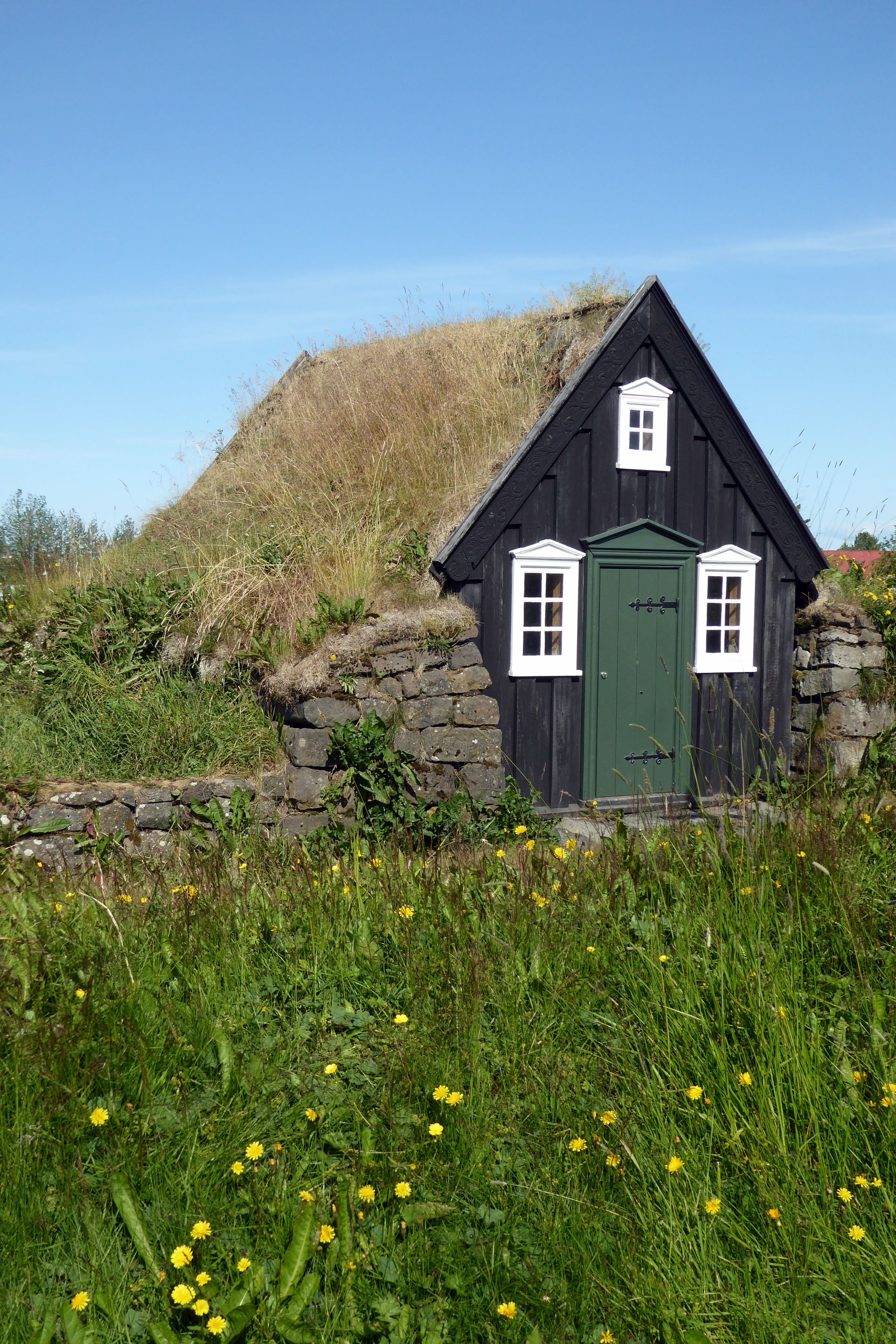
Our next stop was to tour the Arbaer Open-Air Museum. Here, we learned about the living and working conditions of Icelanders in the past. Notice how these turf houses were very short with low roofs. They were built this way to save money, because wood was very expensive. How unfortunate for those who were tall!
(For all pictures, click on the image to see full screen view.)
Next up: Basking in the Beautiful Blue Lagoon
Note: If small group travel is of interest to you, I highly recommend Overseas Adventure Travel (OAT). Although Bruce and I travel together, they do not charge a single supplement for those who travel on their own. Singles also get their own room at hotels. If you book, you can get $100 off your trip by providing my name and customer number (Elaine Krugman, #3018126) as the person who referred you. I will also get $100 off future travel– a win-win!
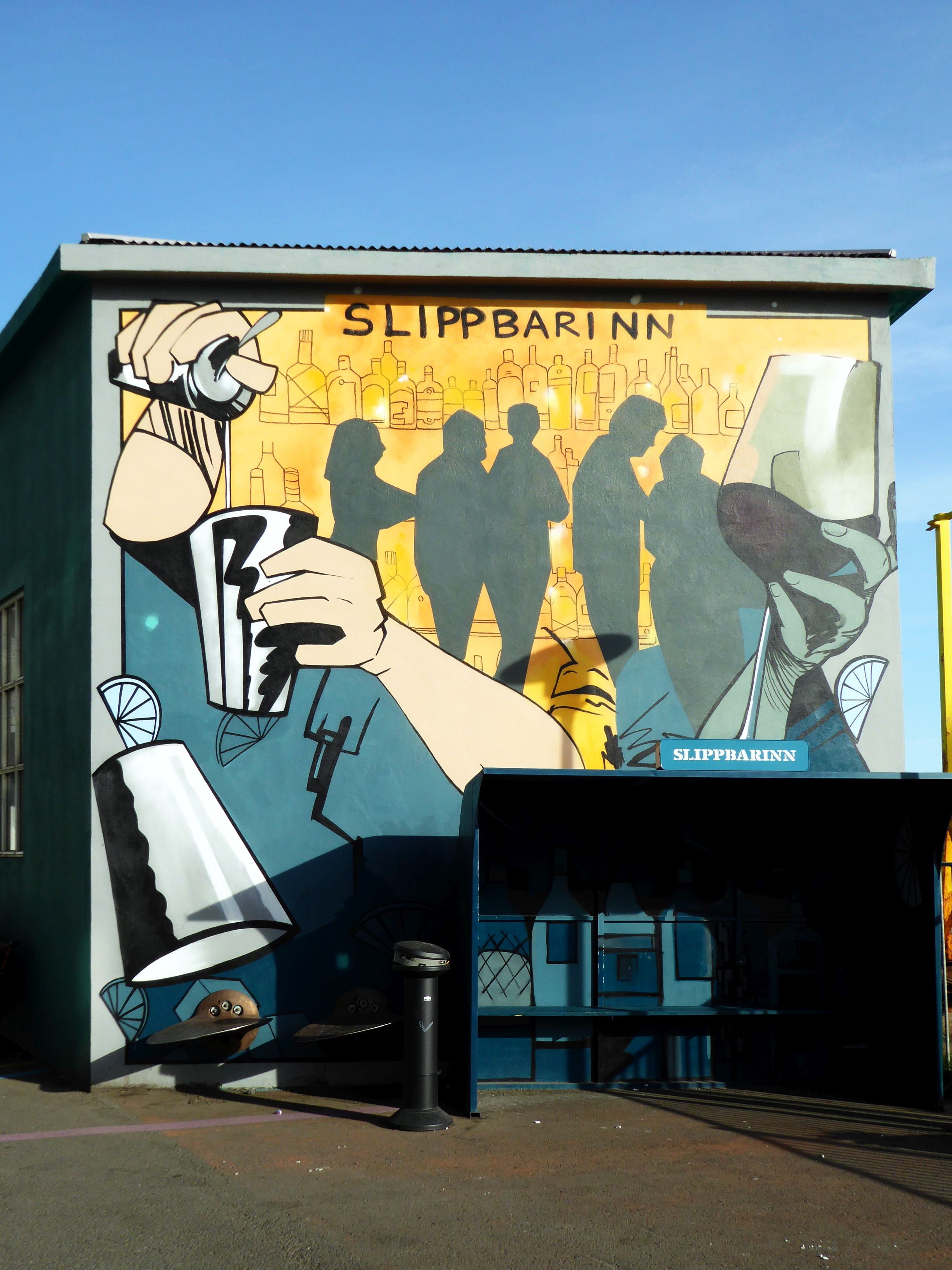
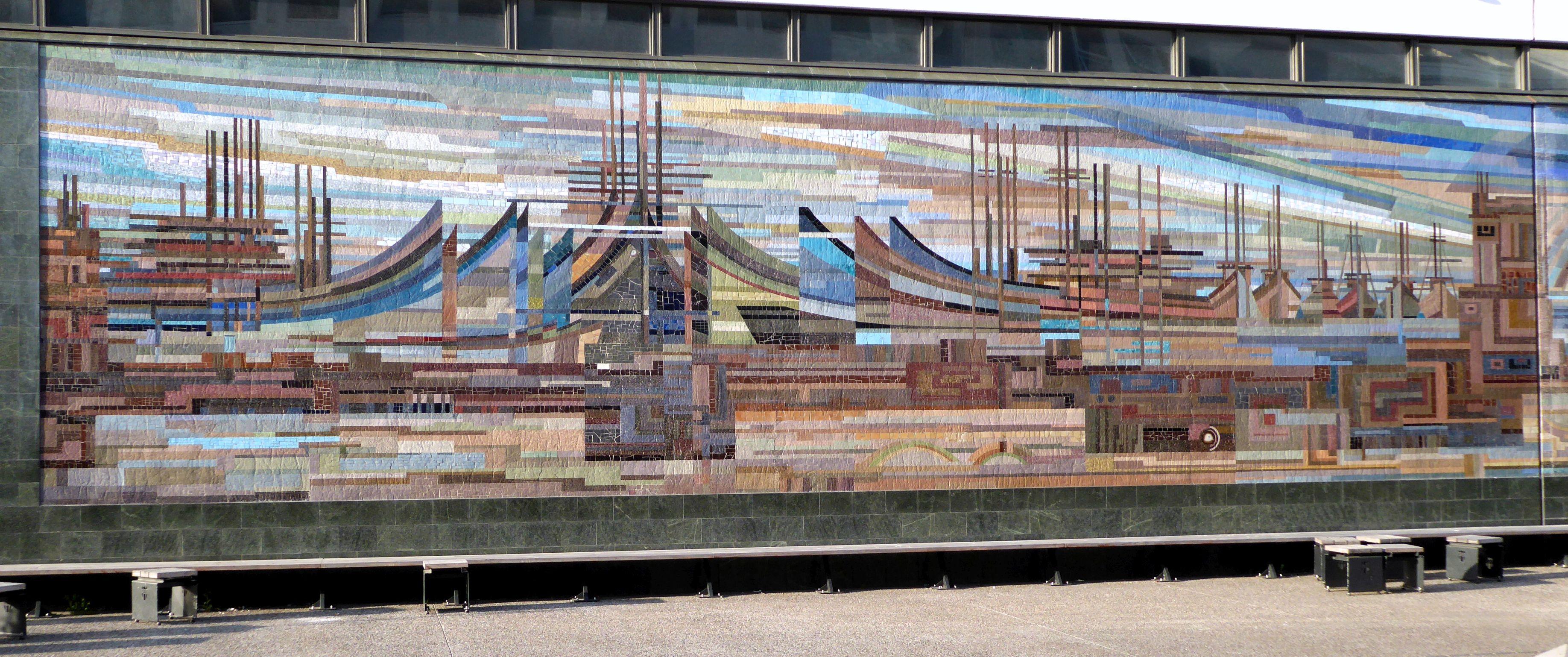
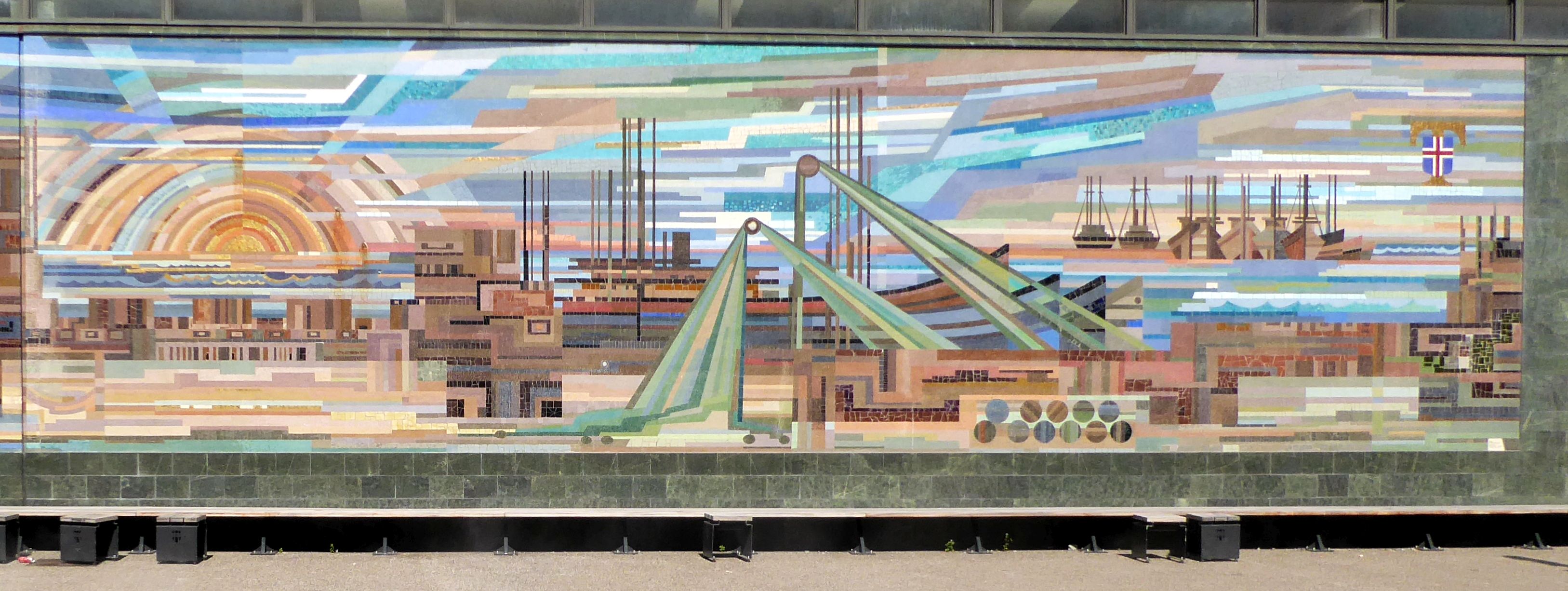
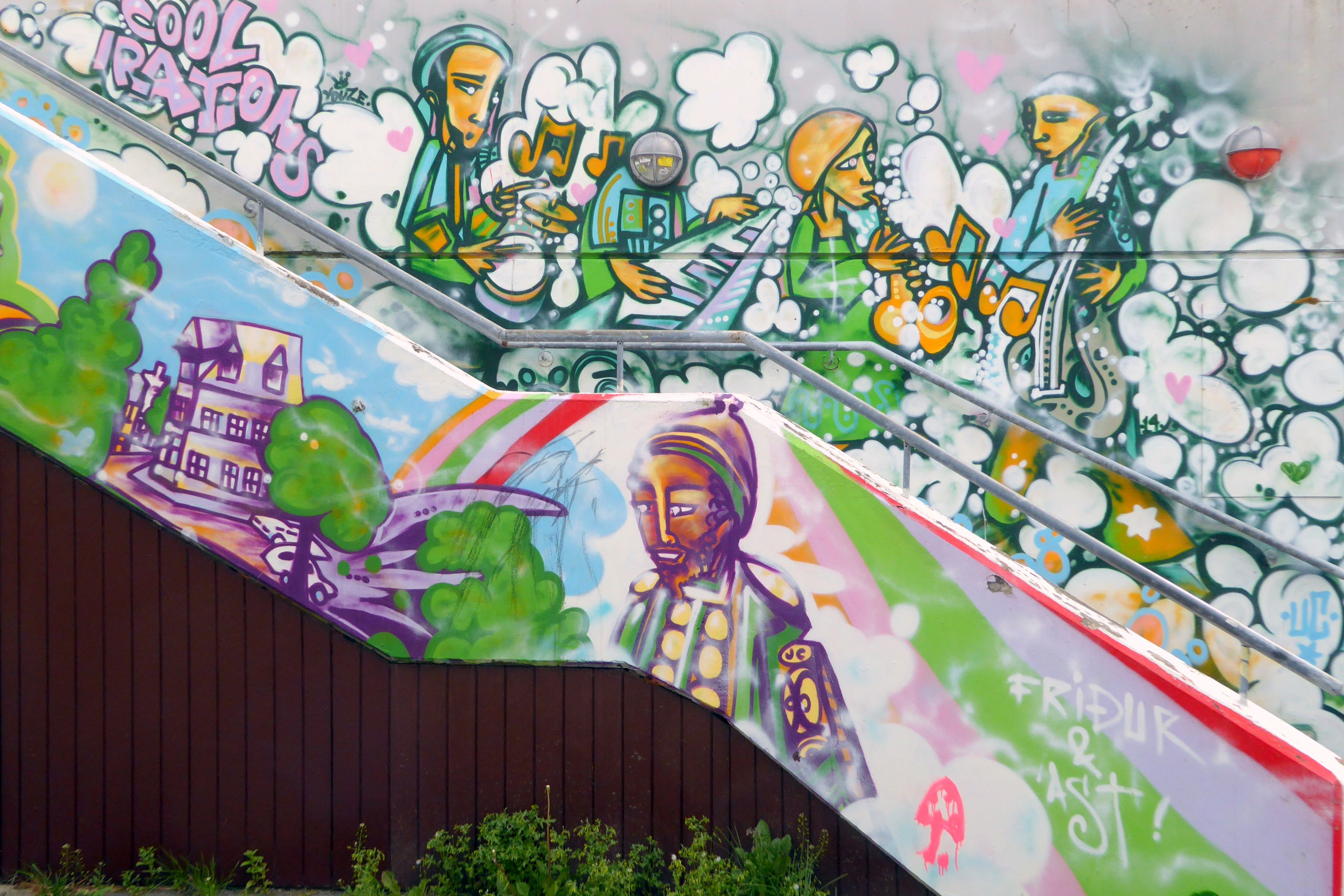
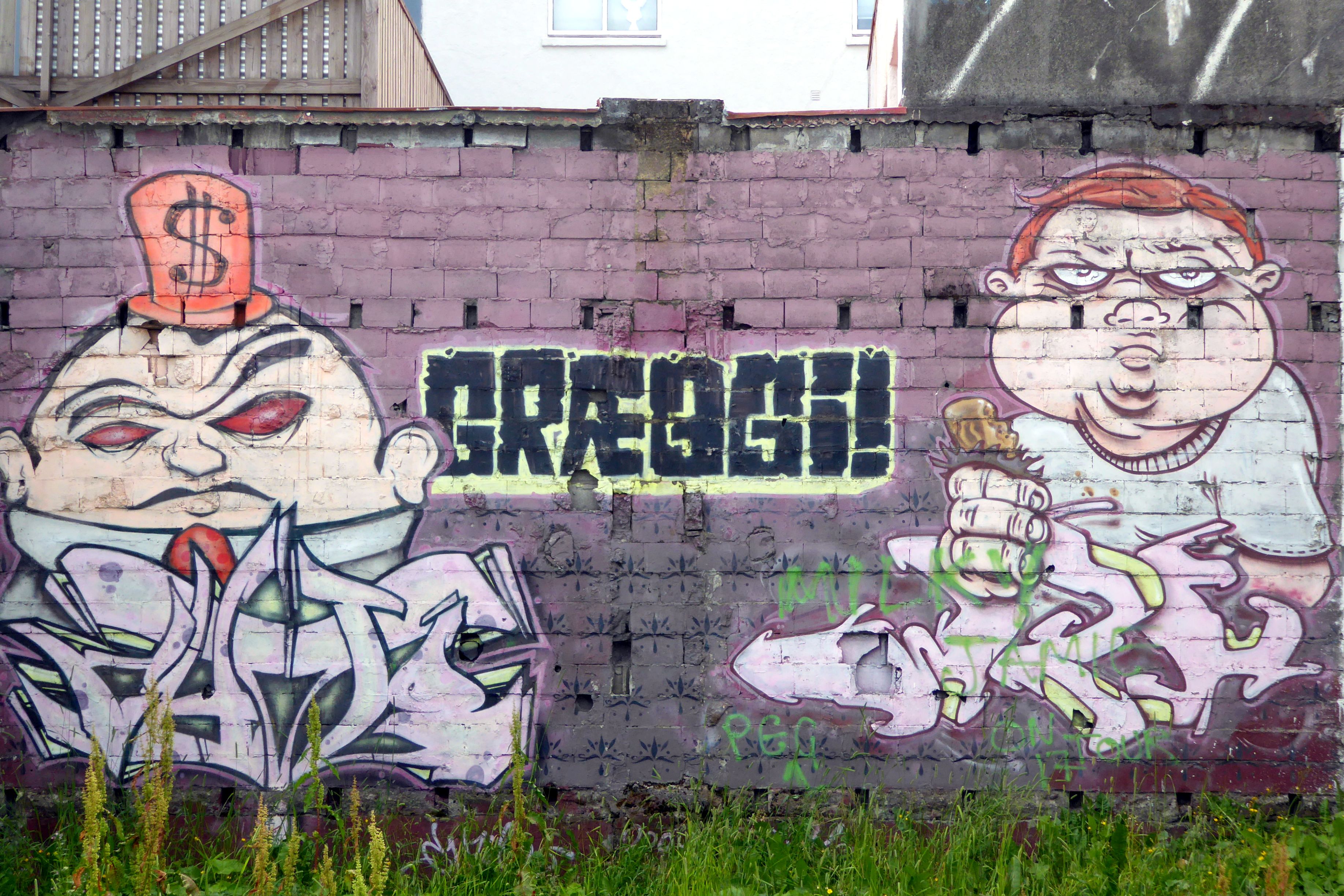
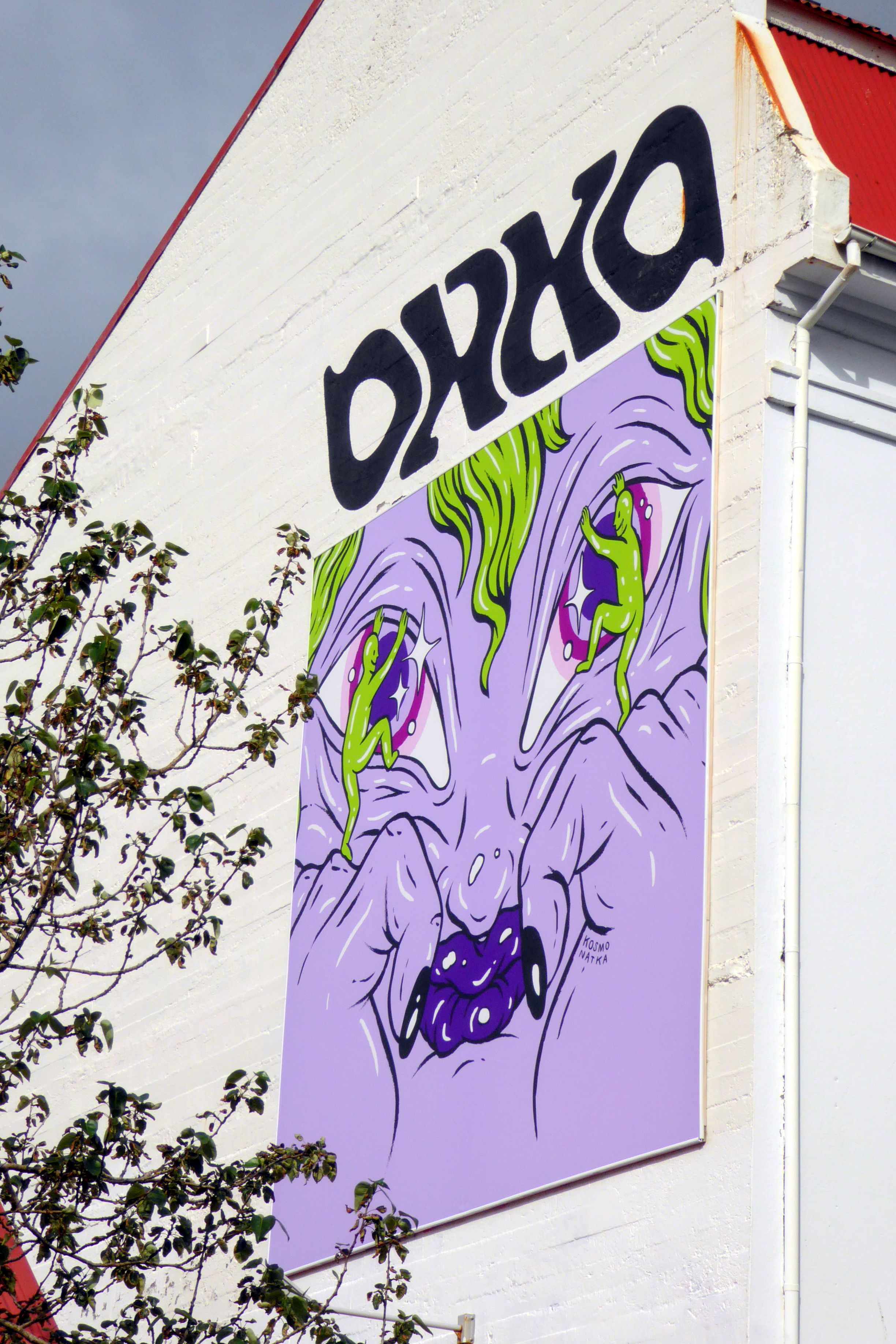
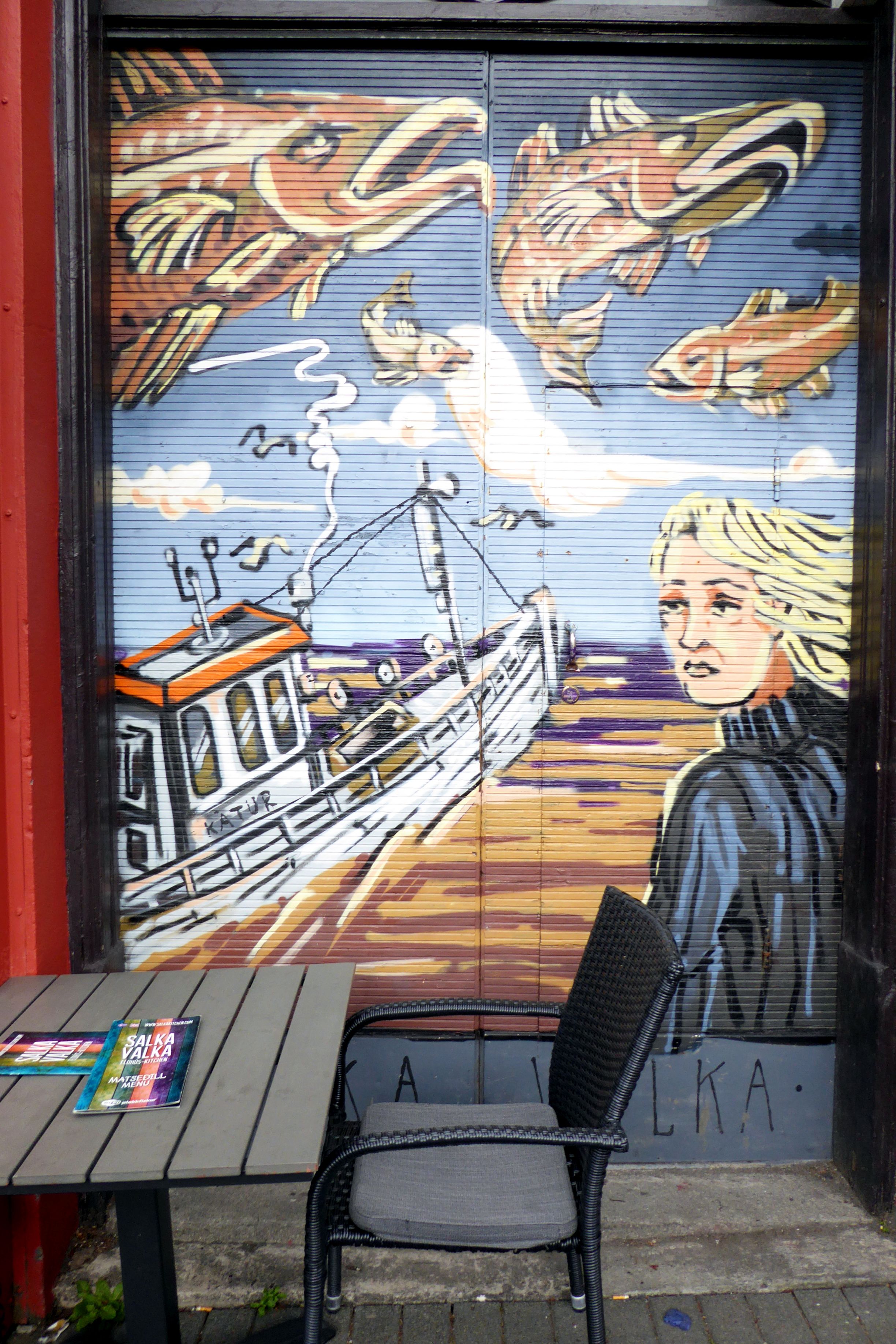
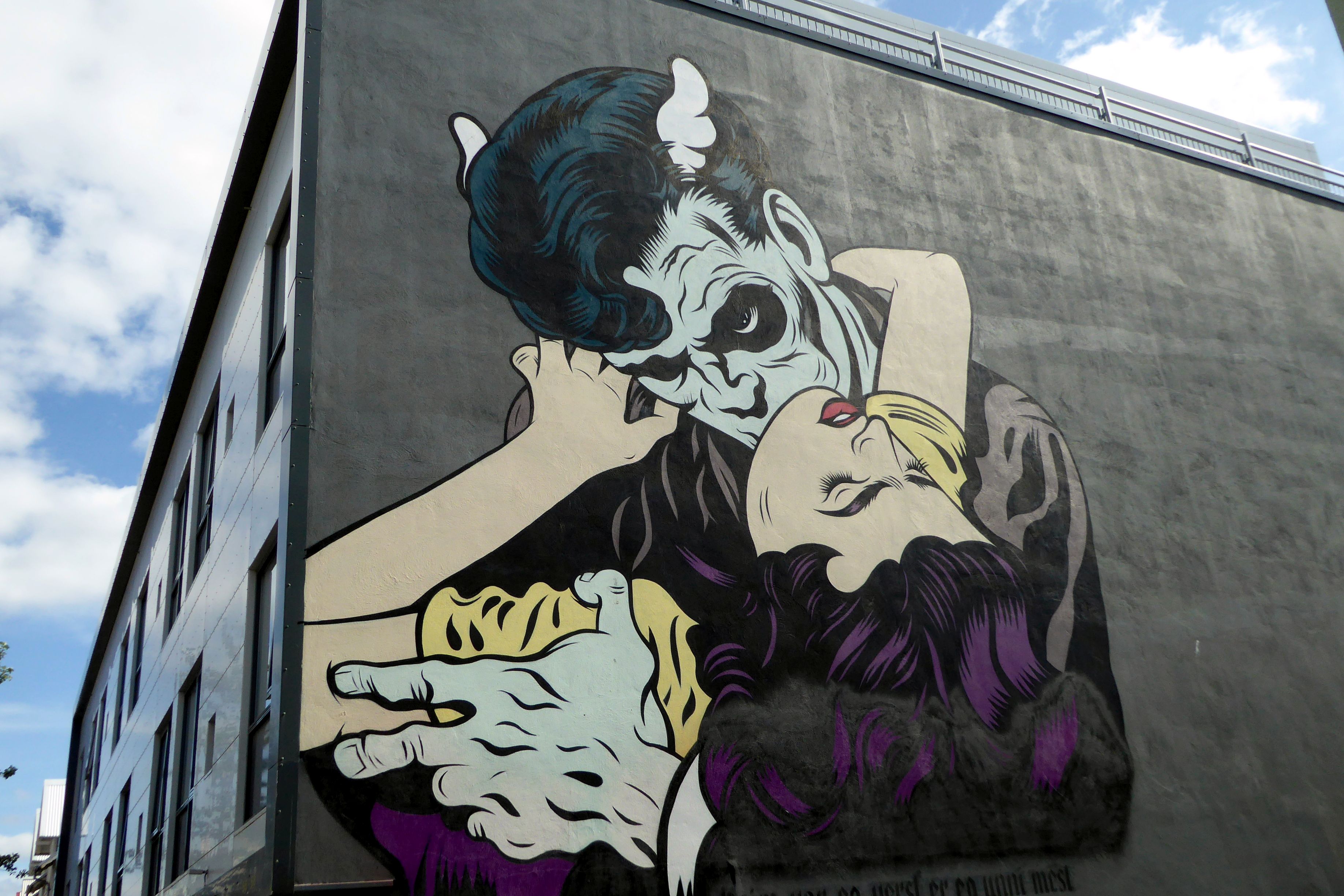
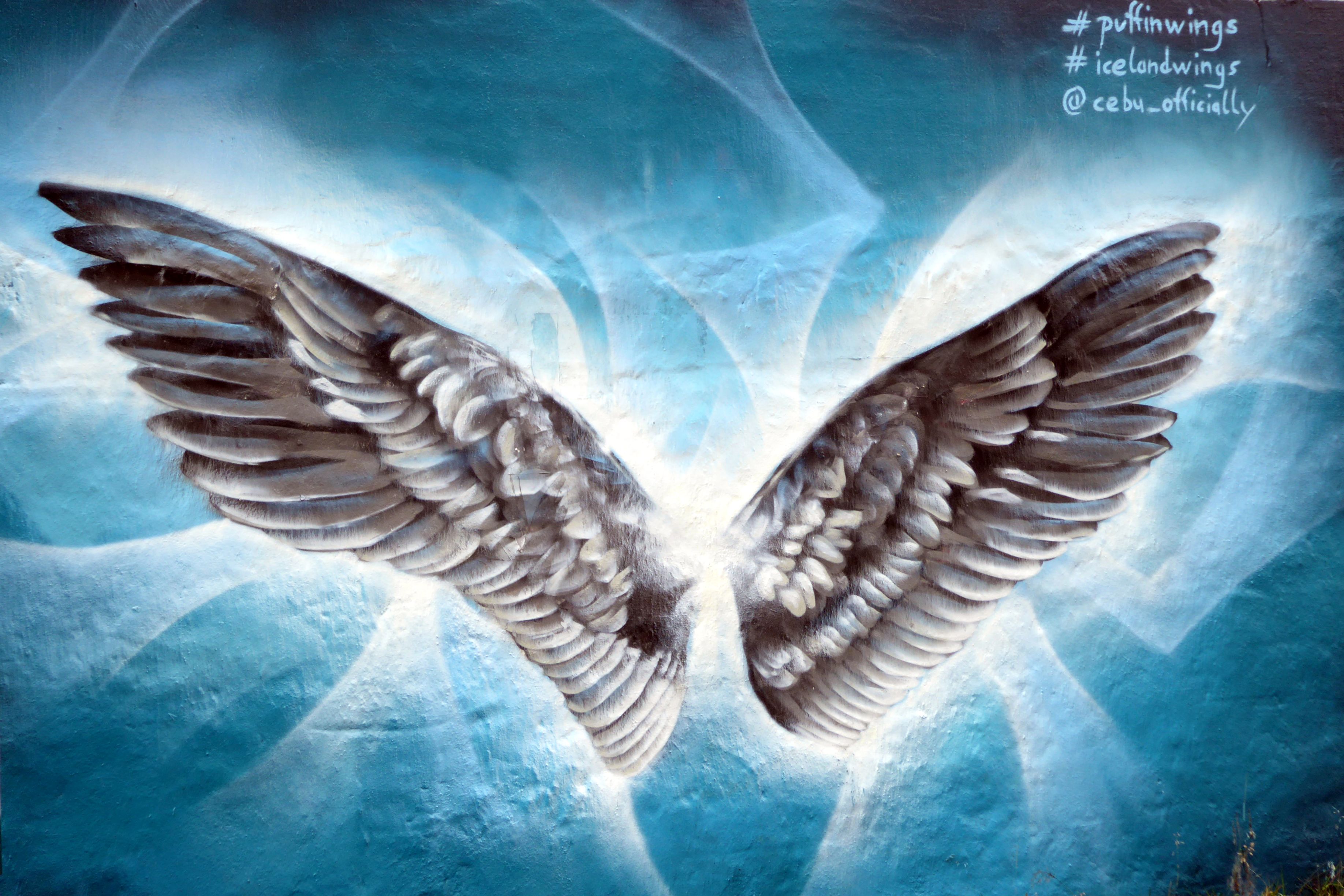
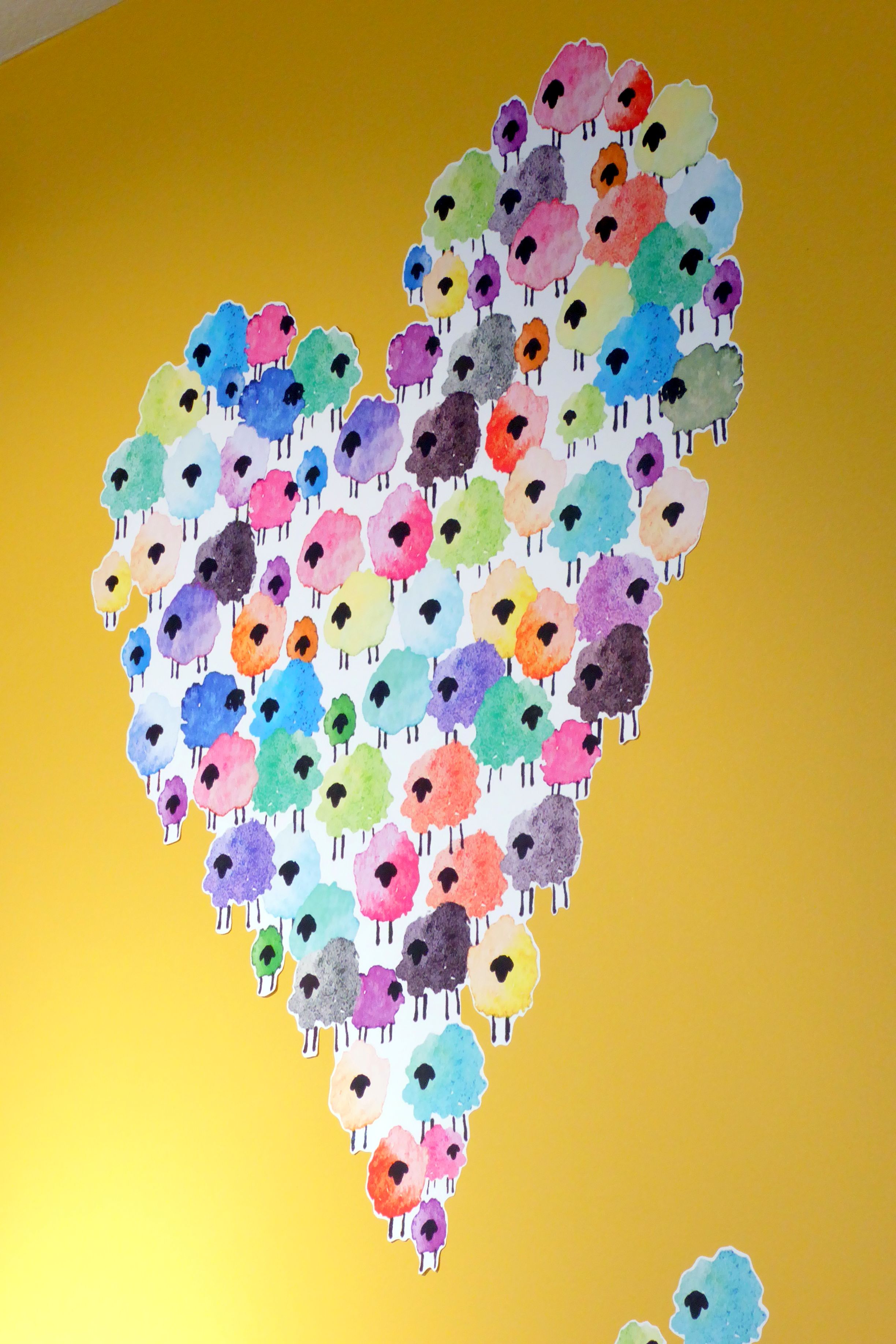
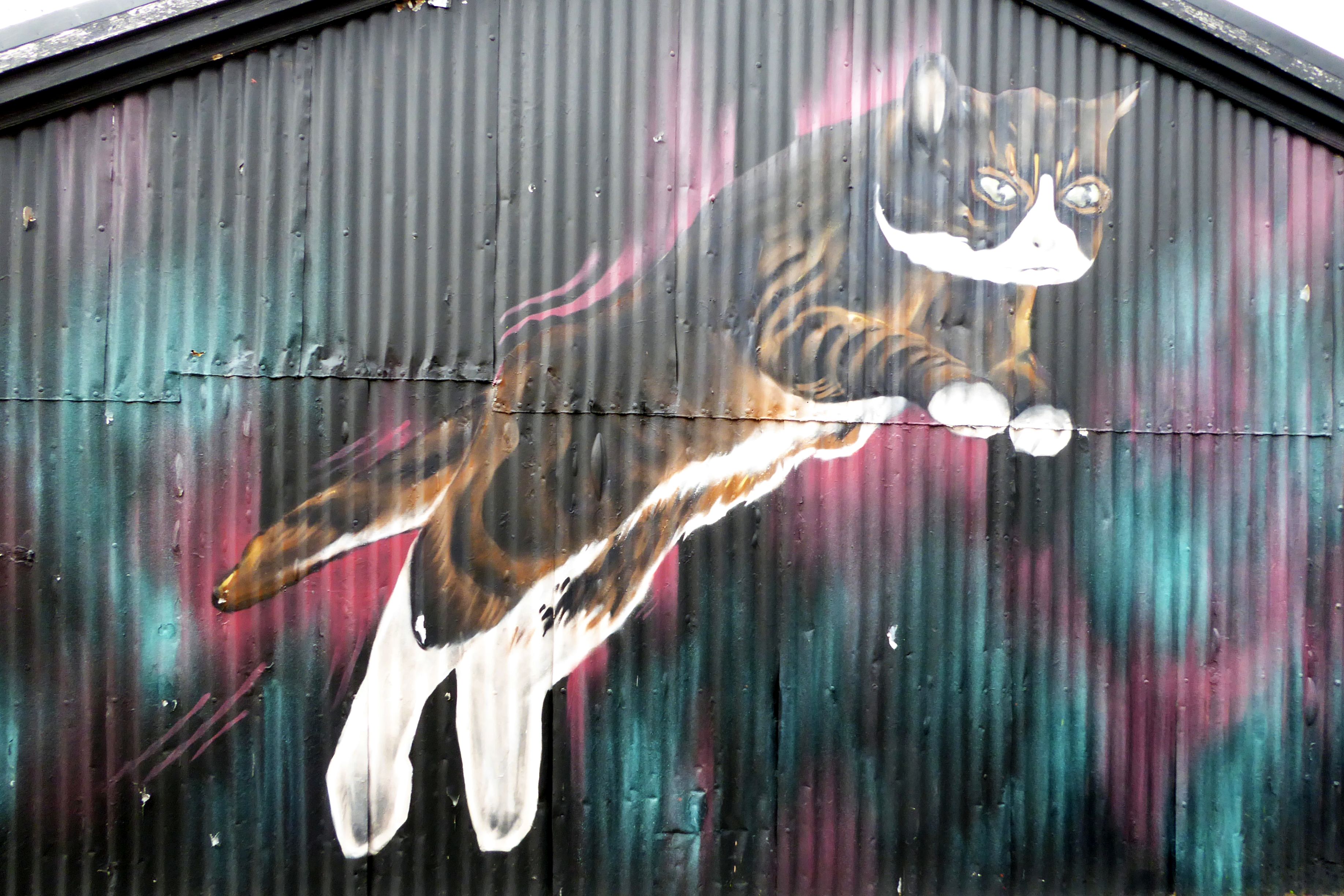
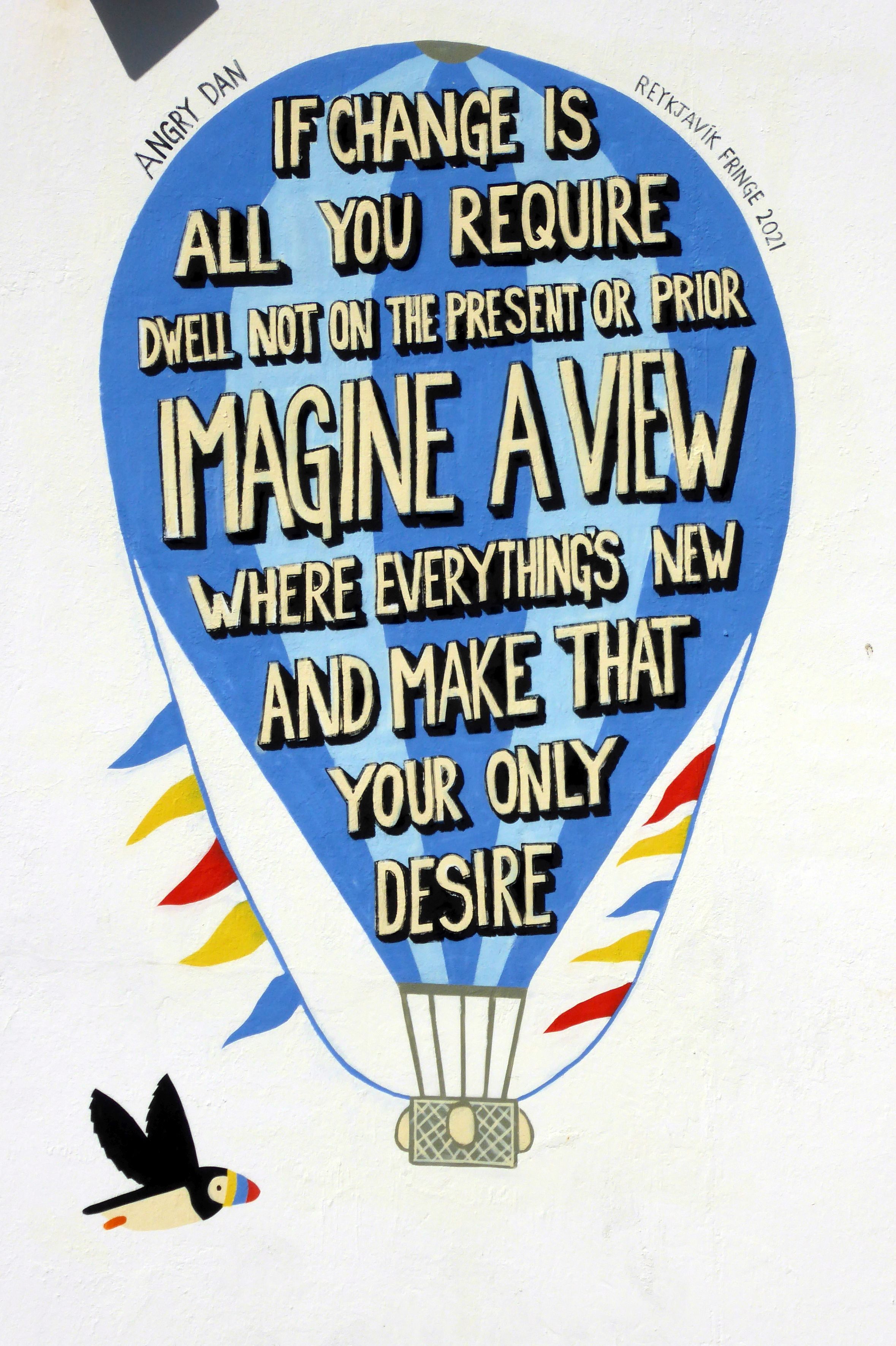
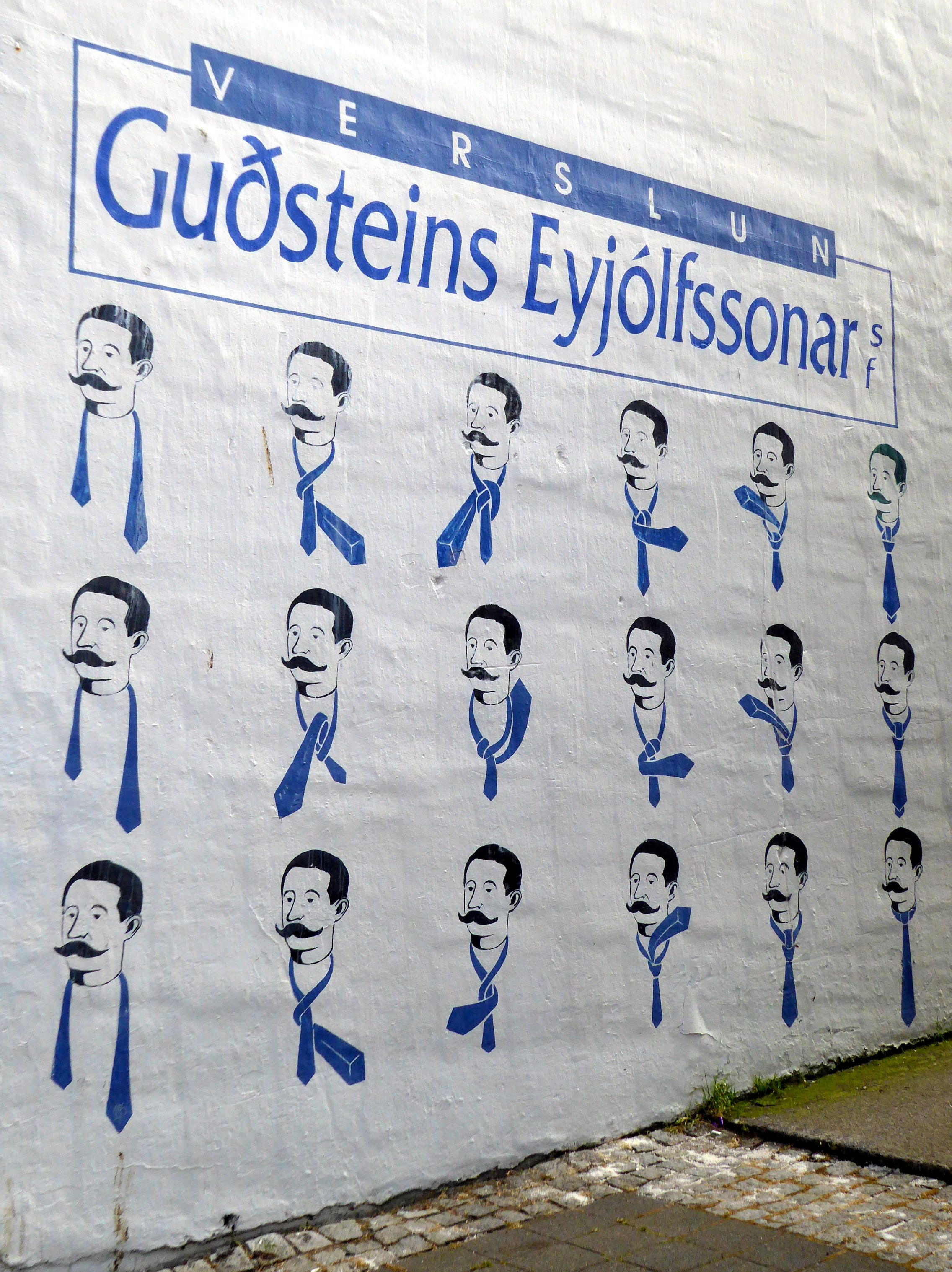
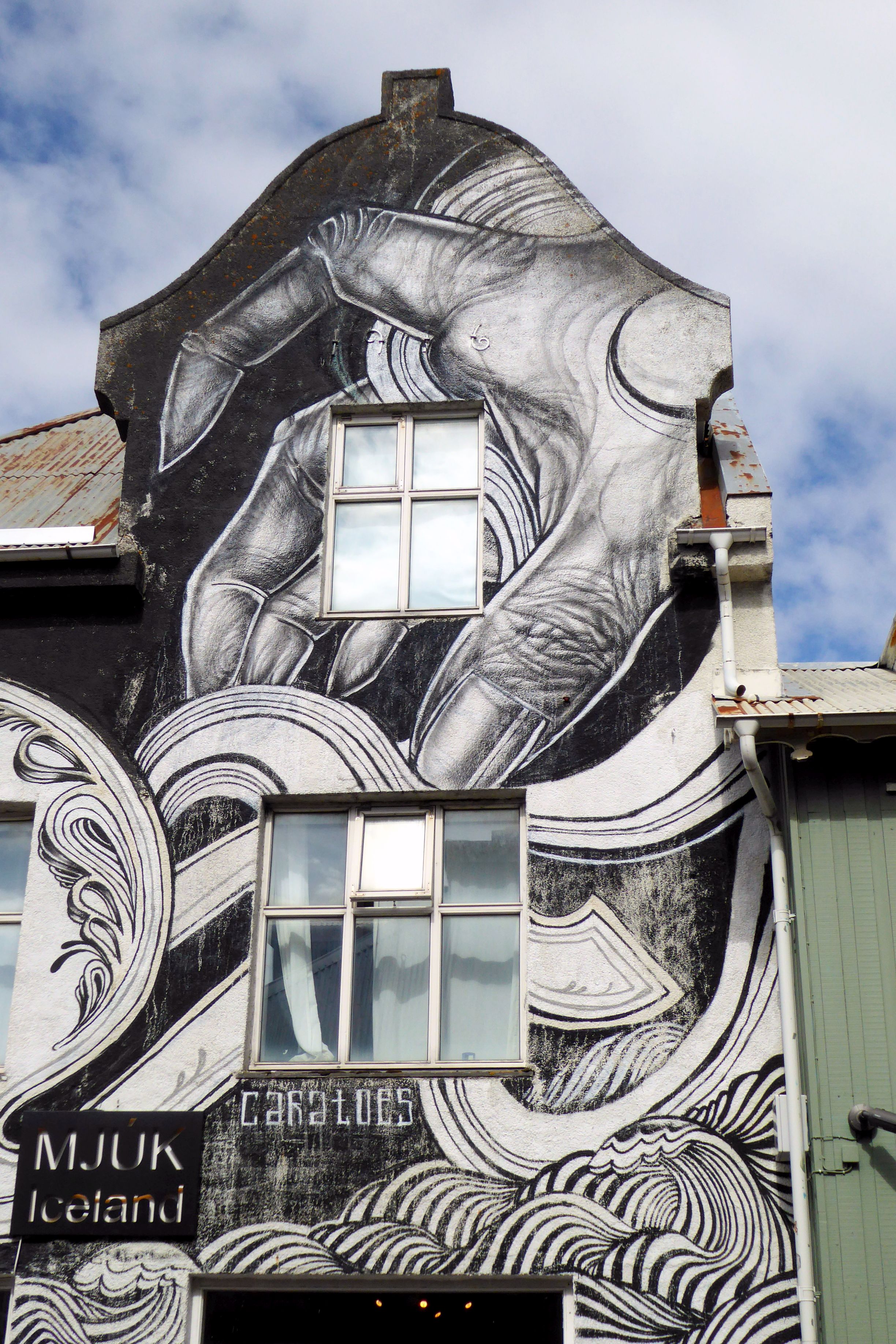
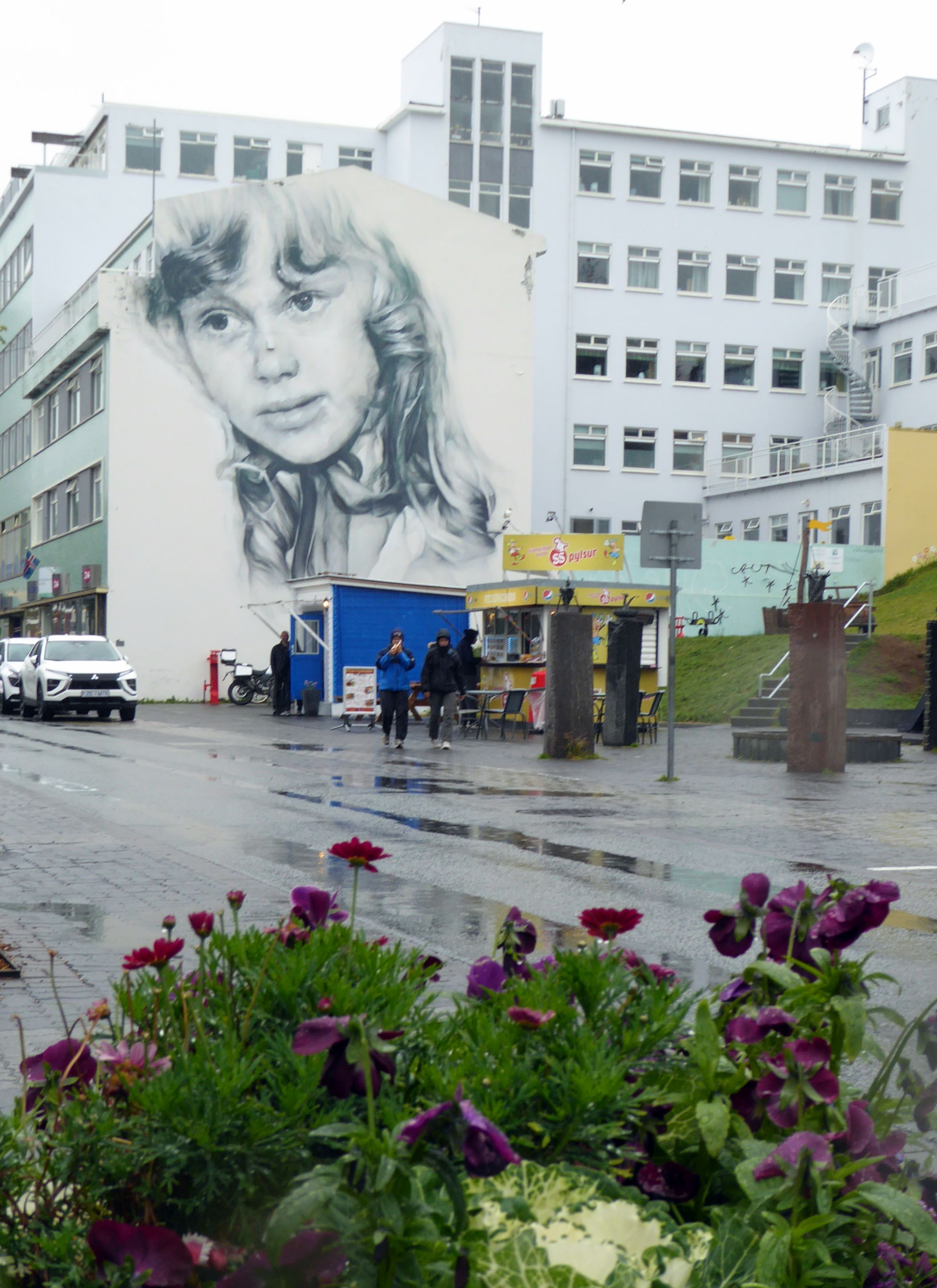
One of the things I enjoy most while wandering around a city is discovering murals. I am always delighted to turn a corner and see a work of art gracing an otherwise plain wall. Reflecting over my past travels, a few cities come to mind when remembering the murals I photographed. Green Bay, Wisconsin, in particular, had several beautiful murals within a short walking distance.
What a nice surprise to discover all of the amazing murals of Reykjavik! We got in the habit of looking back while walking, so we wouldn’t miss any murals on the back side of the buildings we passed.
We also came across a couple of signs that gave us a giggle:
(For all pictures, click on the image to see full screen view.)
Coming up next: A Geothermal Power Plant and Open-Air Museum
Note: If small group travel is of interest to you, I highly recommend Overseas Adventure Travel (OAT). Although Bruce and I travel together, they do not charge a single supplement for those who travel on their own. Singles also get their own room at hotels. If you book, you can get $100 off your trip by providing my name and customer number (Elaine Krugman, #3018126) as the person who referred you. I will also get $100 off future travel– a win-win!
After flying from Akureyri, we spent the final three days of our tour in southwestern Iceland, based in the capital city of Reykjavik (pop. 140,000). At 248,000 for the region, it is the most populated area of Iceland.
Known as one of the cleanest, greenest (environmentally friendly), and safest cities in the world, I can tell you from personal experience I can see why it has that reputation. It was a great city to ramble around!
Following our arrival, we visited Perlan, a new and modern interactive museum that features Iceland’s unique natural wonders. One of the fabulous movies we saw featured amazing video footage of the 2021 eruption of Geldingadalir Volcano, which was the first volcanic eruption in the region in 800 years. Another movie, “Arora,” was Perlan planetarium’s 360-degree film of the northern lights.
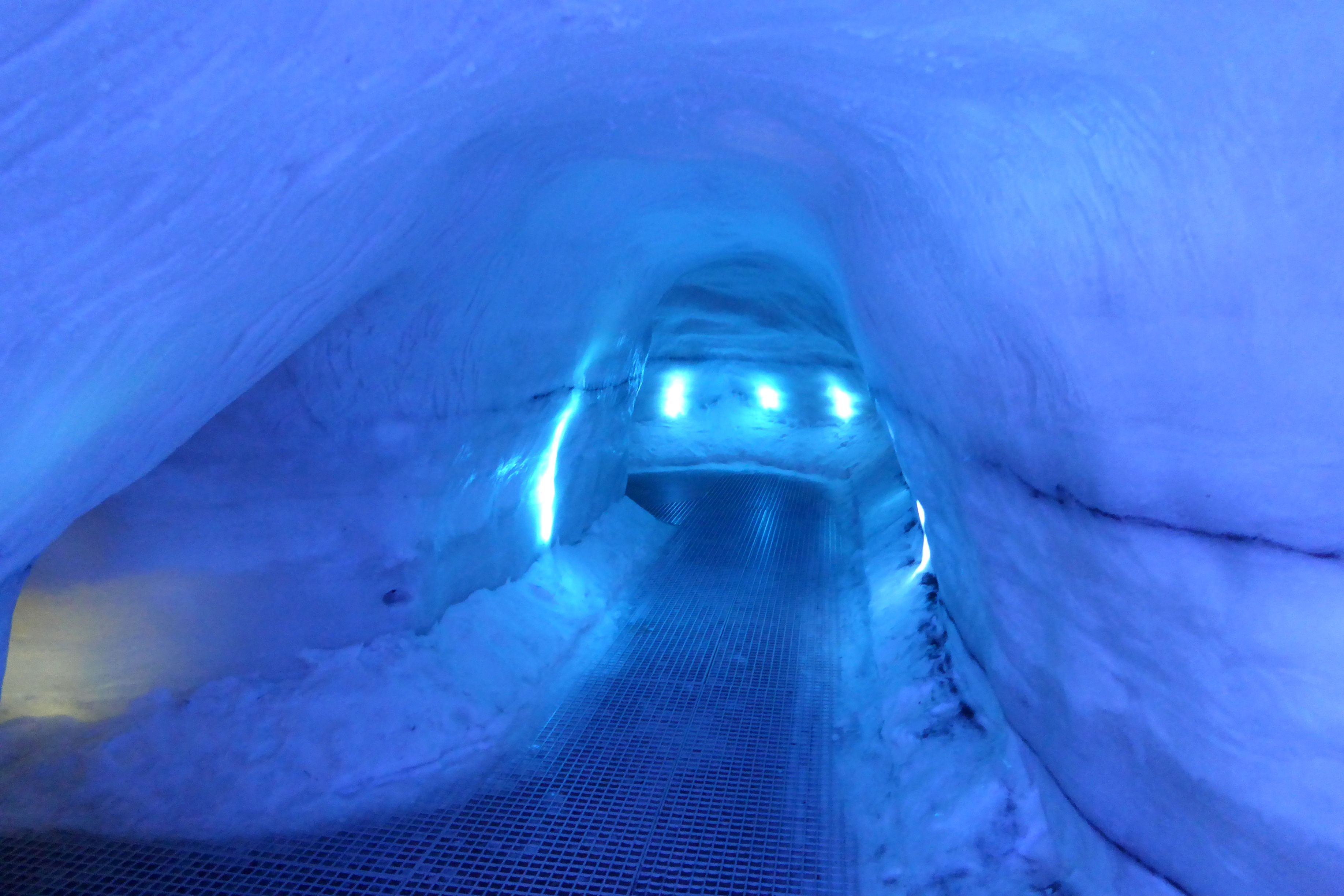
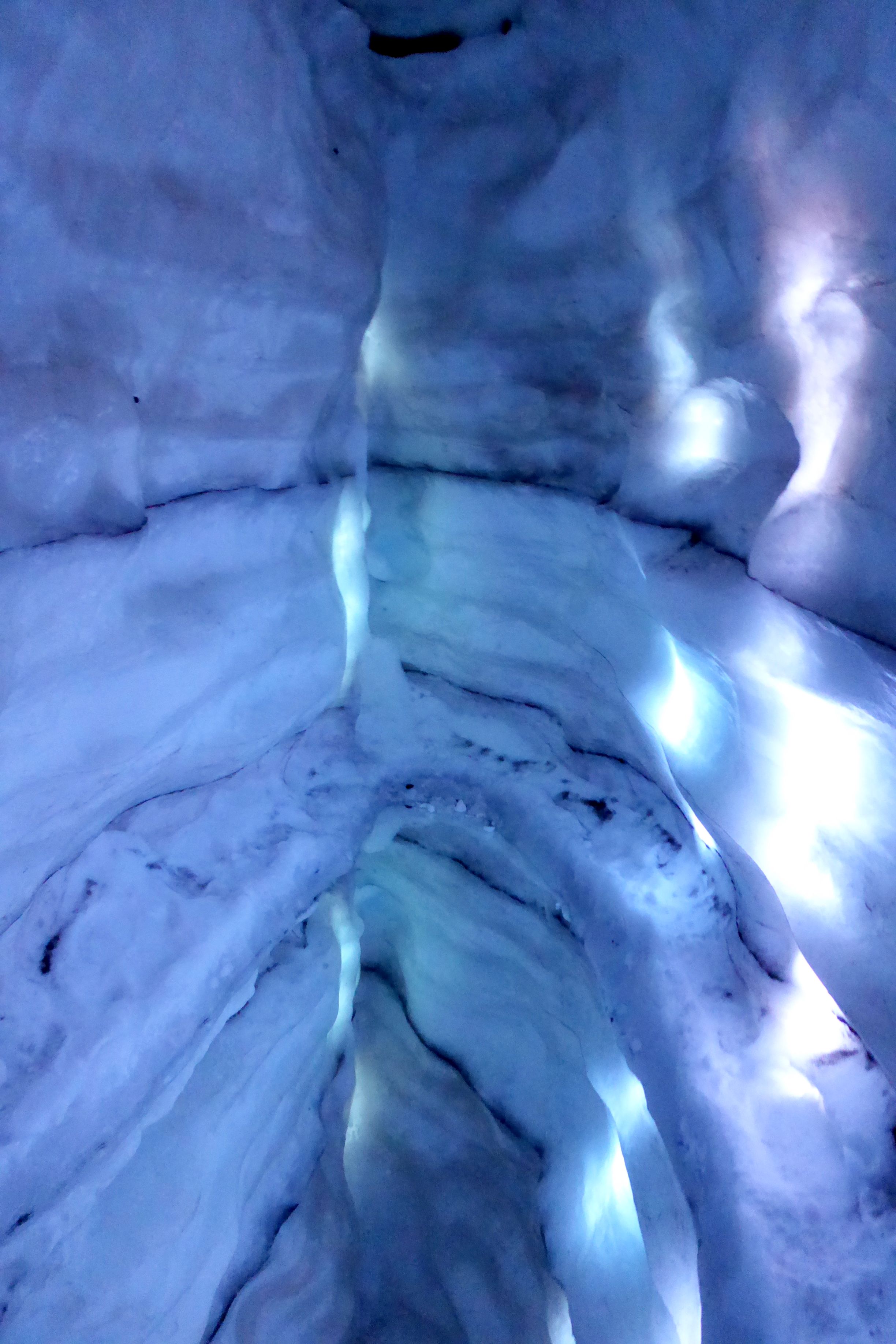
We weren’t prepared for one of the other featured exhibits, but it sure was fun! It was an ice cave, constructed of 350+ tons of ice! It took four years to build, and it’s 328 feet (100 meters) long. The temperature was 5 degrees inside, and I was wearing just my down vest, figuring I could leave my other gear on the bus while we were indoors. (Thorunn had never been there, so she didn’t know we could walk through an ice cave!) Oh well; we made a run for it! It was so cold that we spent the first trip through dodging people just to get out the other side. Once we warmed back up, we made another trip through, and we were lucky to have the entire tunnel practically to ourselves. We paused for some quick photos, including one on a beautiful chair they had carved from ice. (Thankfully, they lined it with a sheepskin rug!)
(For all pictures, click on the image to see full screen view.)
The top floor of Perlan (which translates to “Pearl”) was a glass domed restaurant, bar, gift shop, and patio. We were able to walk completely around for a view of the city, harbor, and beyond – a good introduction to what we would be seeing next.
The center area revolves 360 degrees.
Haflidi drove us downtown to the harbor for our group lunch, which was one of our best meals of the trip; perfectly prepared local wolffish. This was followed by Thorunn’s walking tour of the city – a city she knows very well, since it is her home!
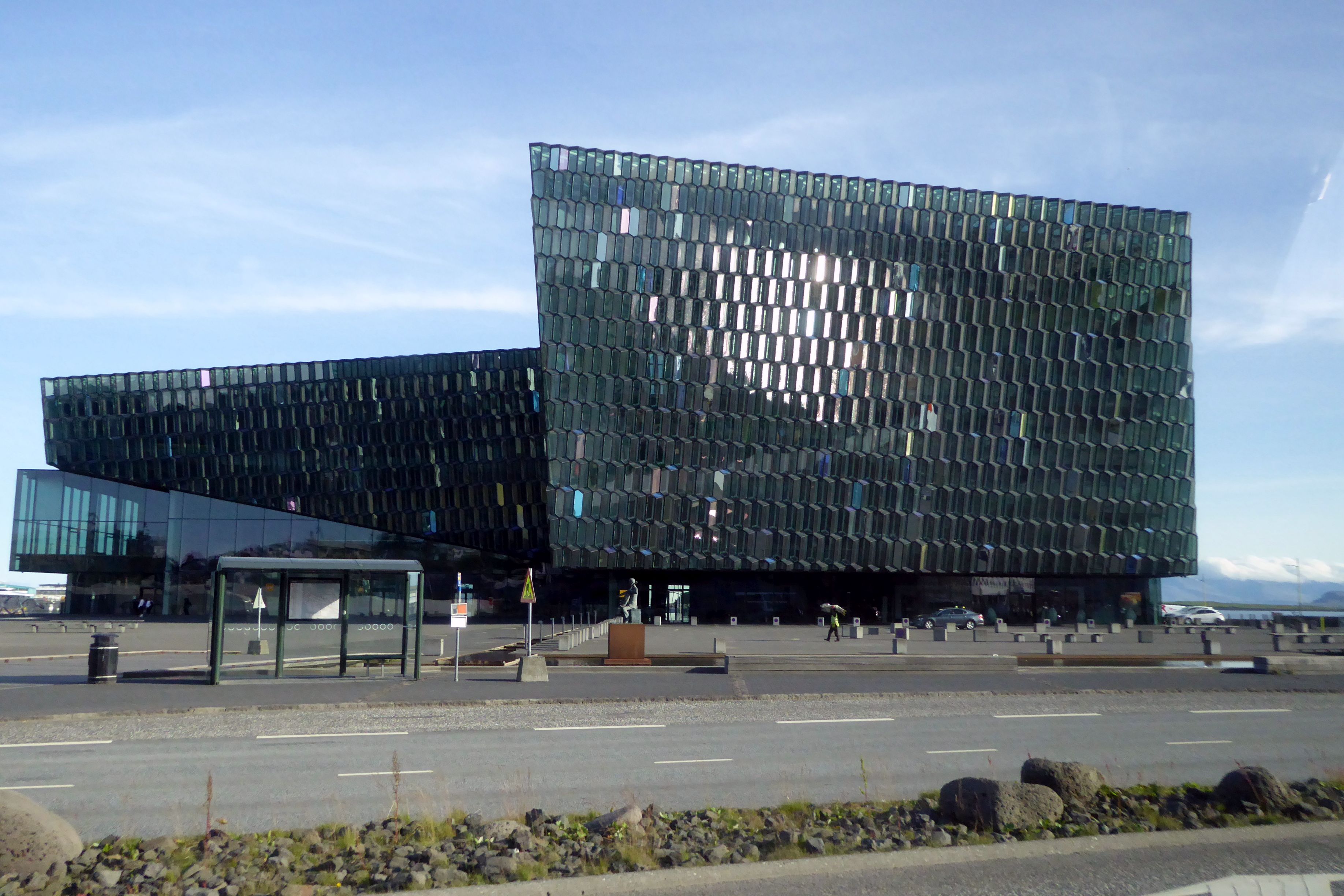
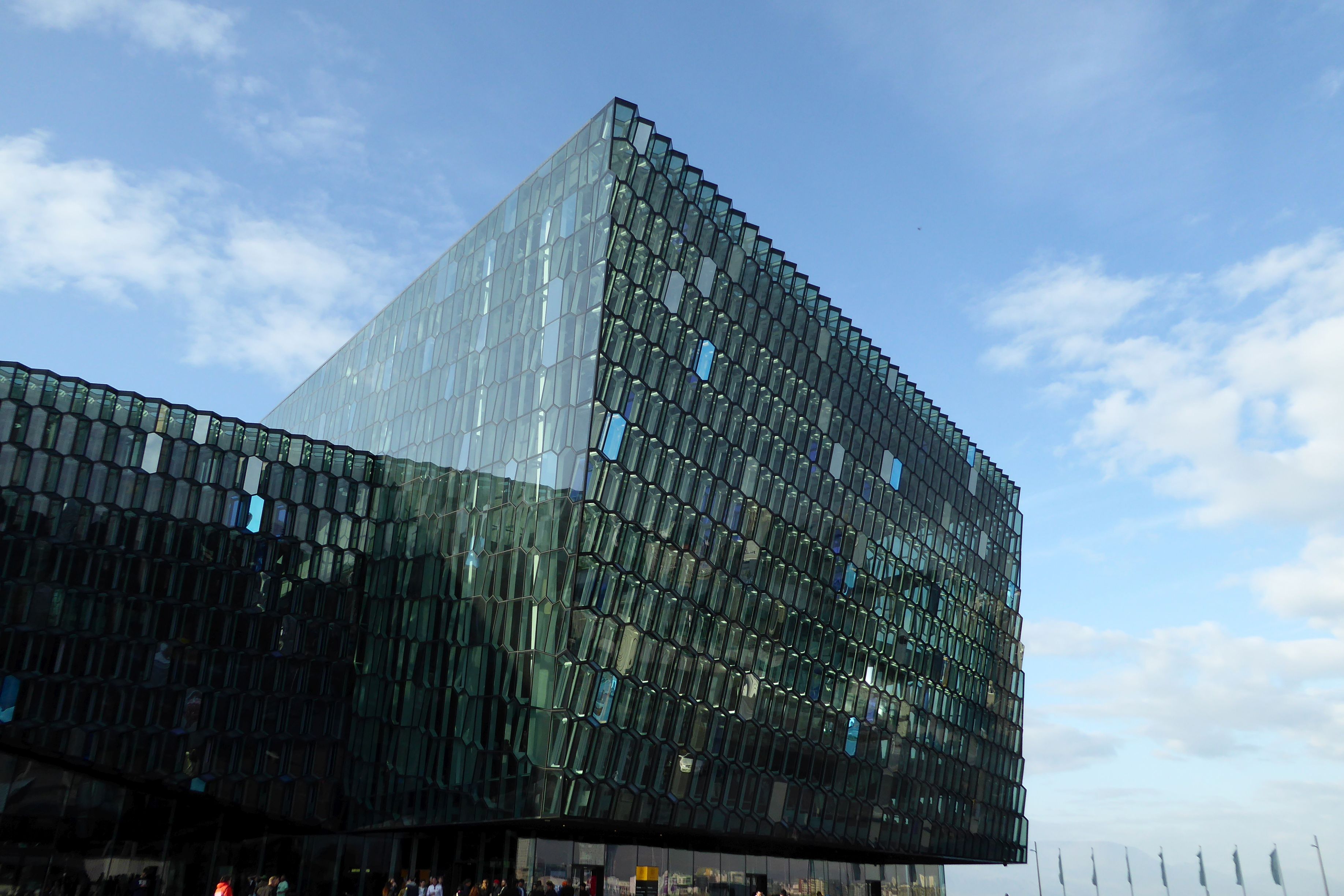
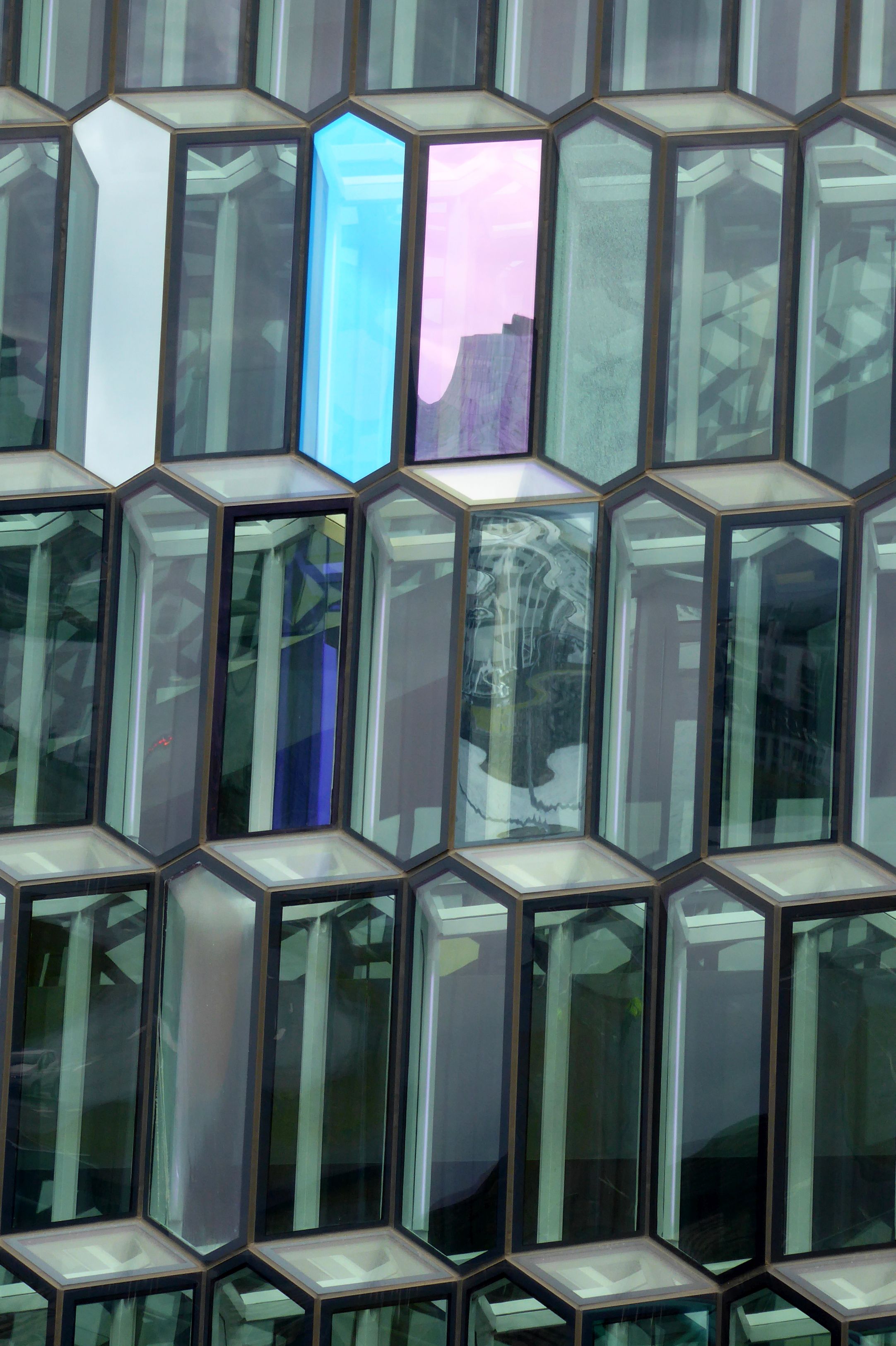
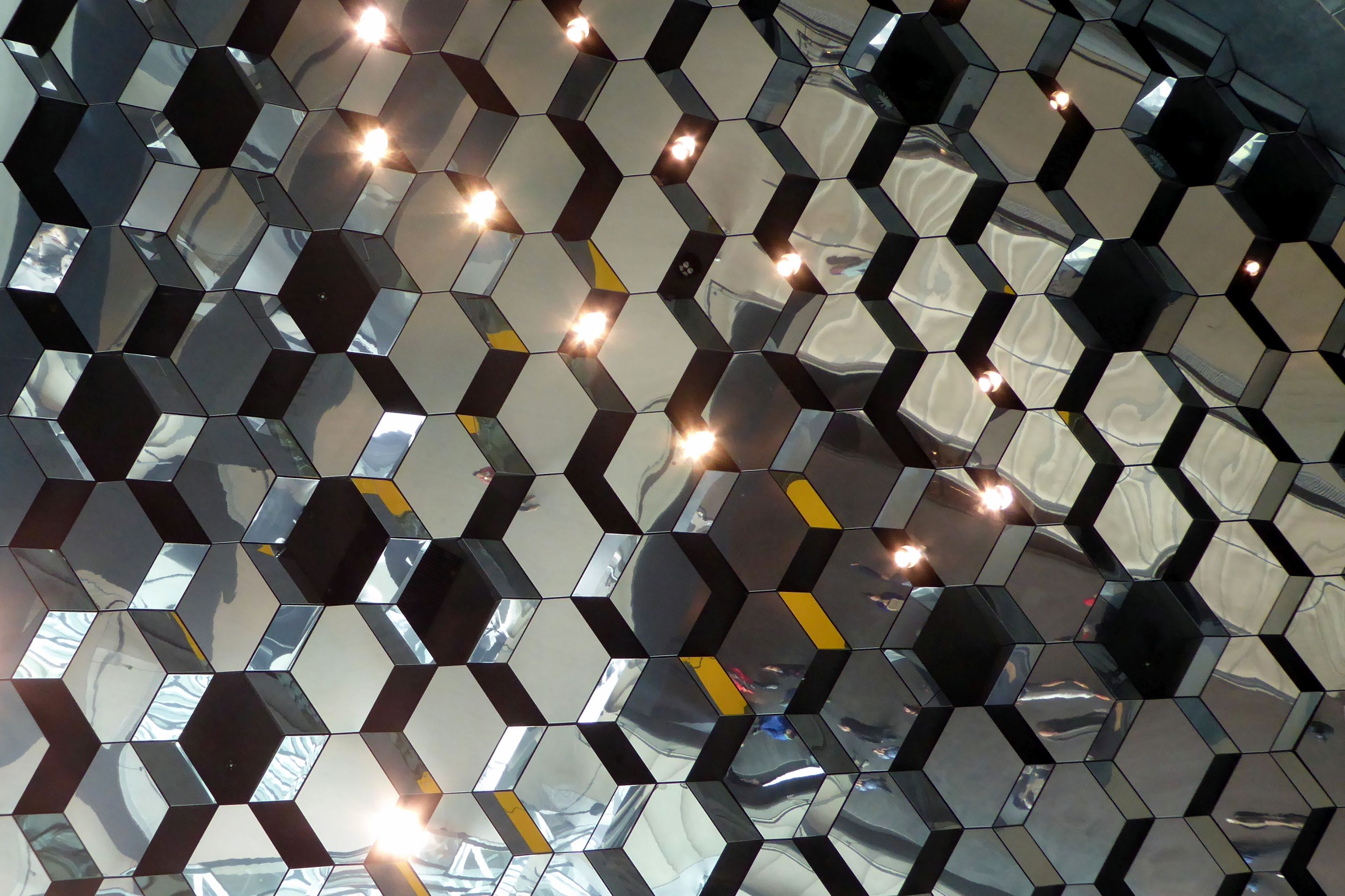
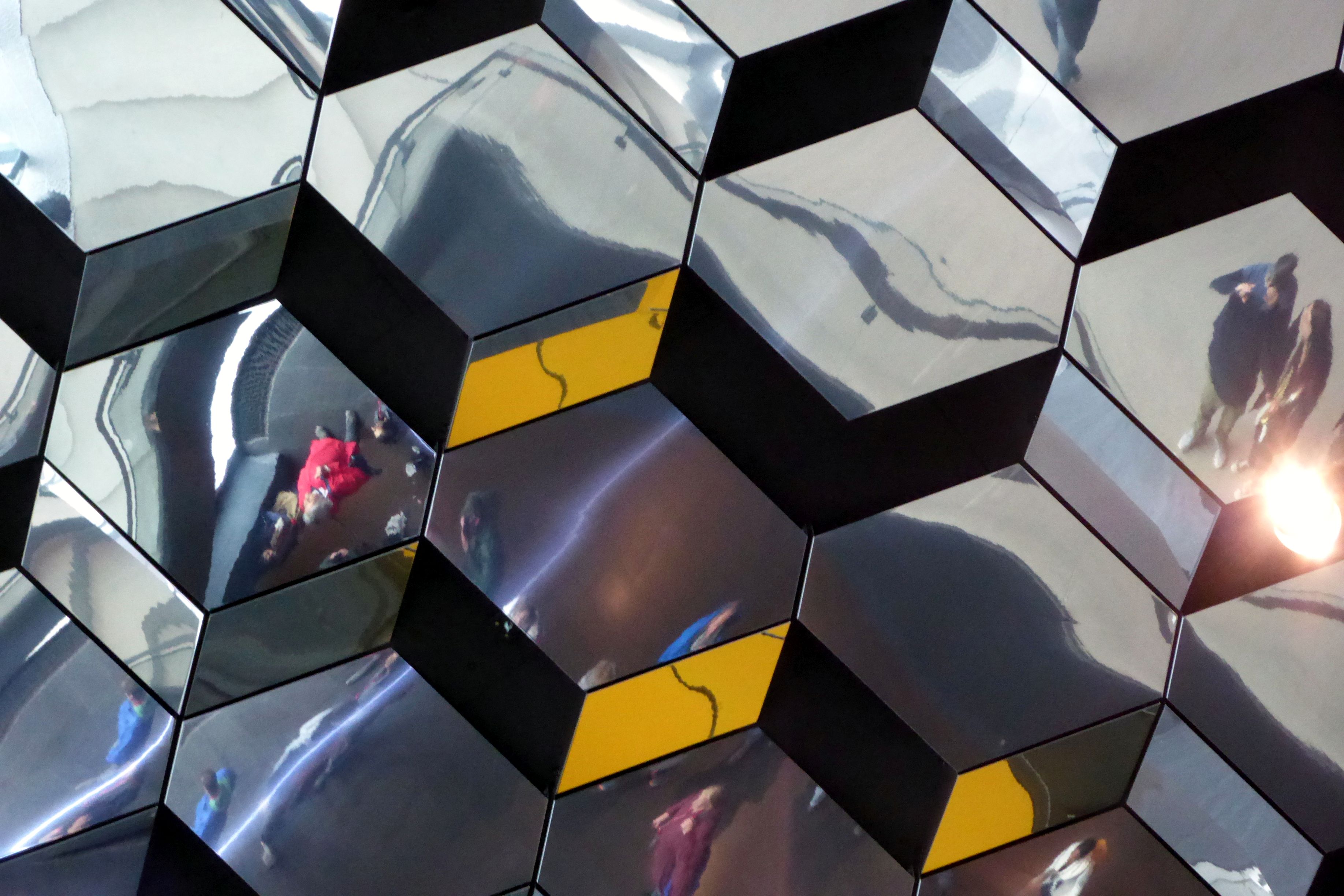
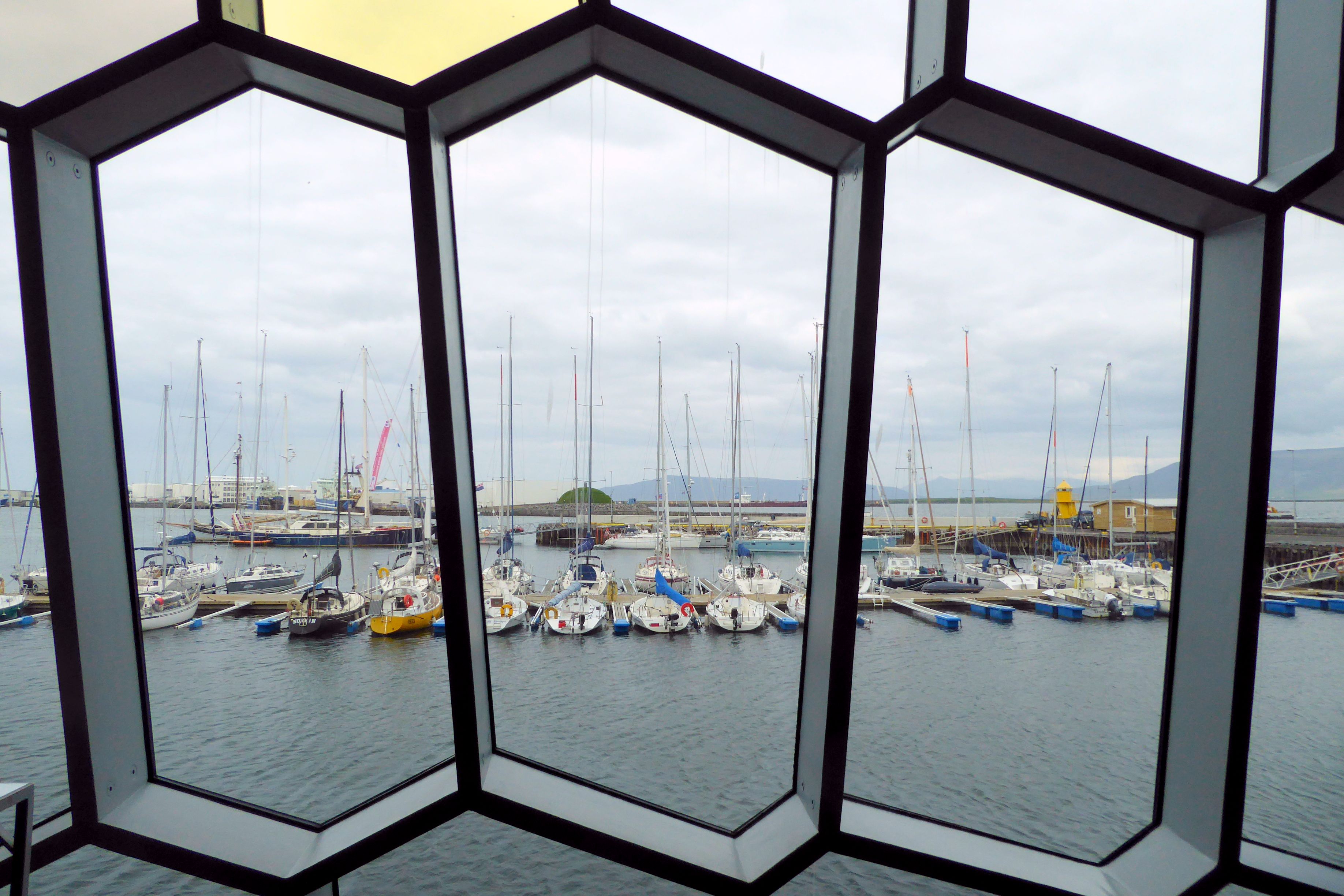
The first stop was just next door to where we had lunch: Harpa Concert Hall and Conference Centre, a spectacular modern glass building on the harbor front. Designed by Danish-Icelandic artist Olafur Eliasson and Henning Larsen Architects, the glass façade was inspired by the basalt landscape of Iceland. Construction had started in 2007; however, it was put on hold during Iceland’s financial crisis in 2008. It was only half-built, so the government decided to fully fund the remaining construction costs. The concert hall was completed, and it opened in 2011. In 2013, Harpa won the European Union’s Mies van der Rohe award for contemporary architecture.
We returned the following day and took these exterior shots.
One step inside, and my head was on a swivel, marveling at the architecture and plotting my next photo angle. It was so inspiring! We ended up returning the next day, when it was sunny, to shoot more photos. These are my favorites from the two visits:
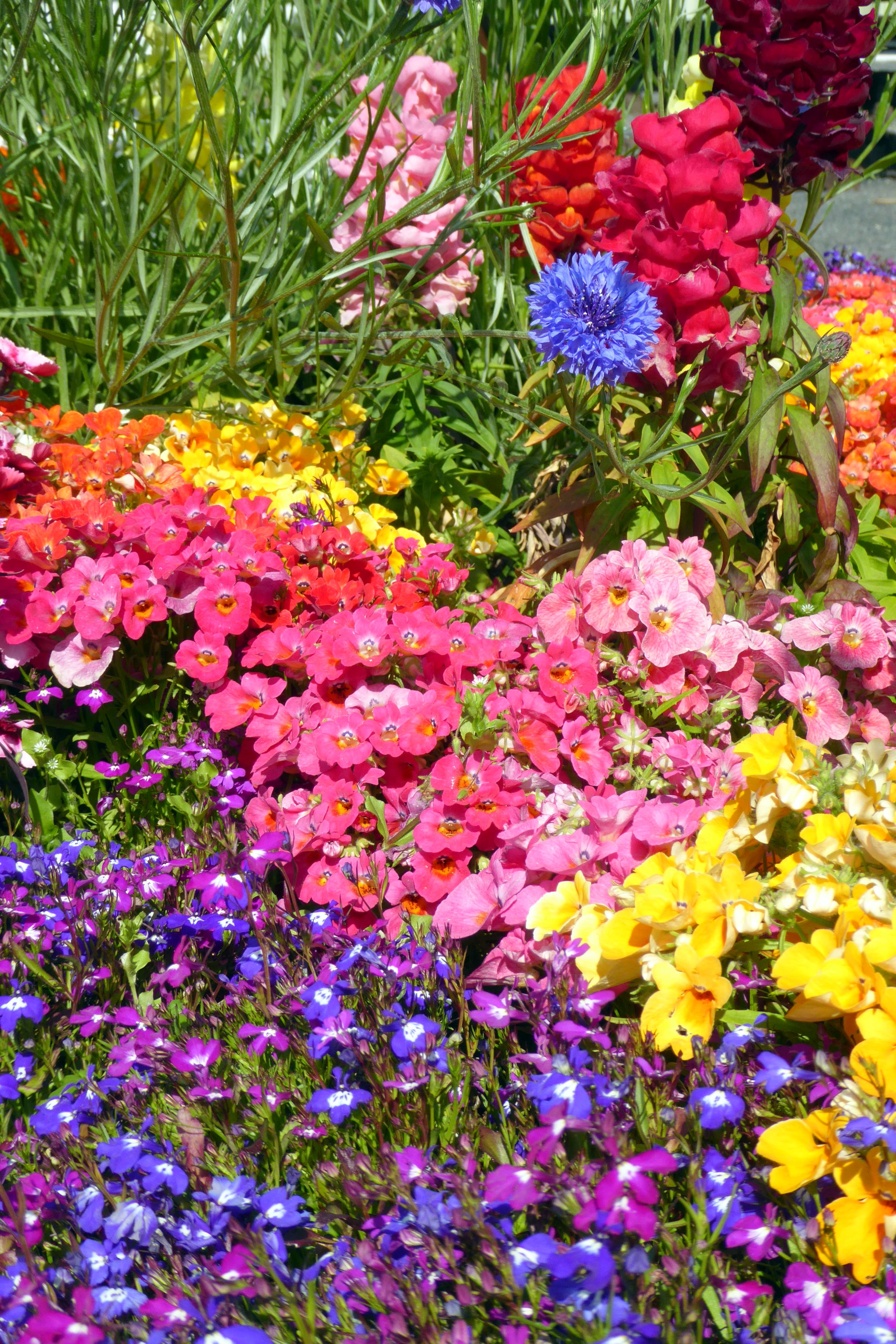
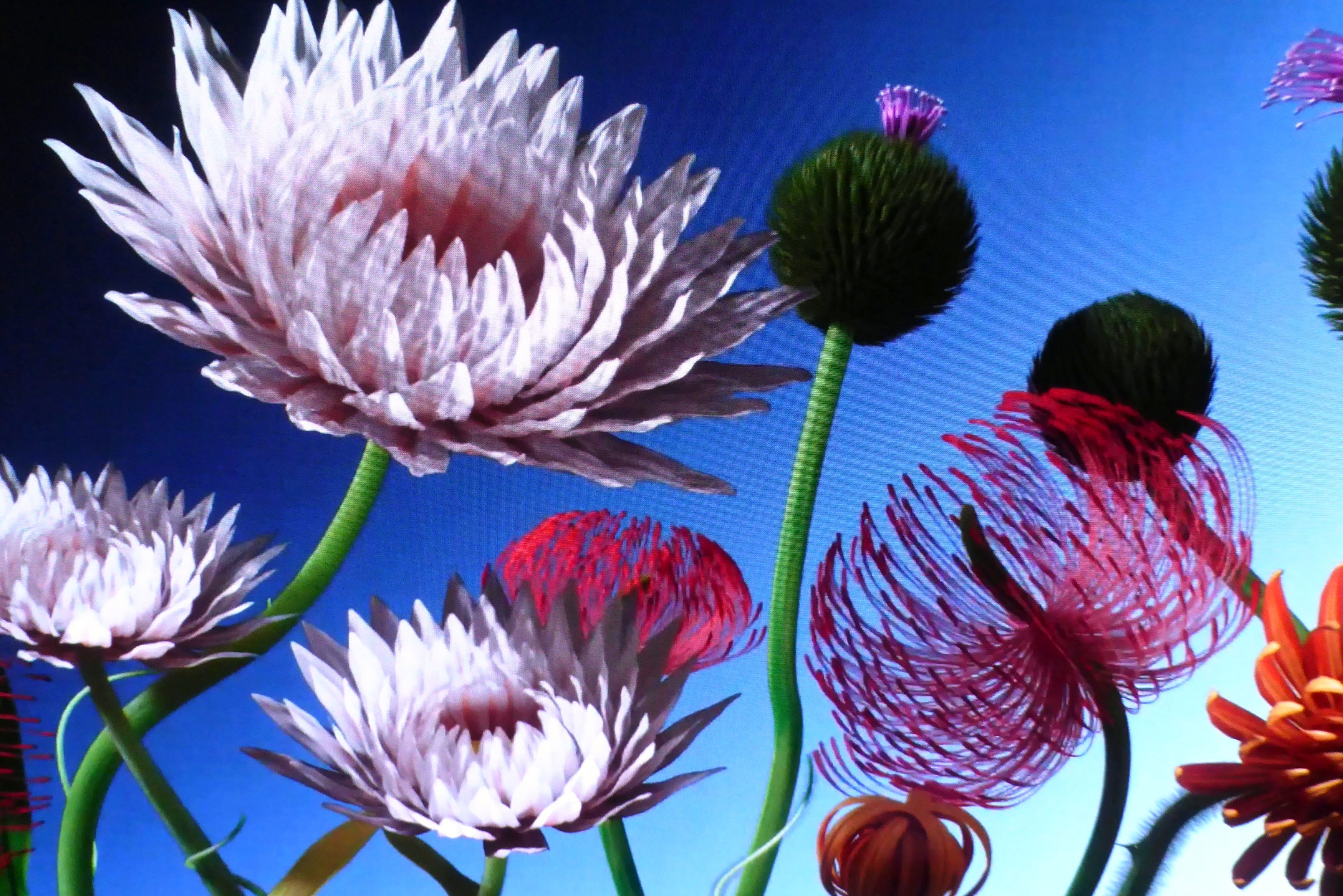
In the lobby, there was a huge screen advertising performances. These animated flowers were included in the loop and were really pretty!
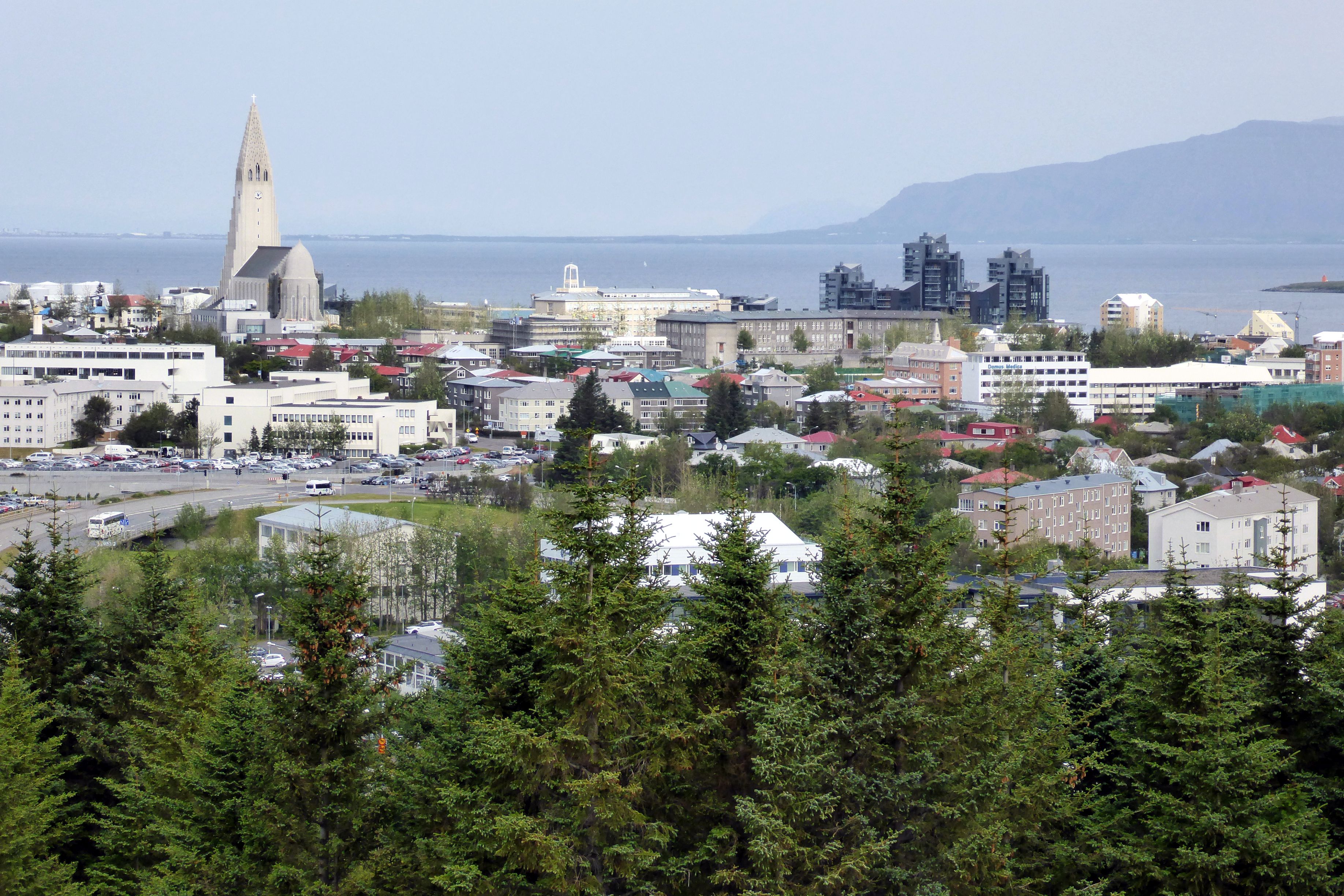
Our walking tour continued to the parliament building and other city highlights. From what I gathered during our walk, Reykjavik is a very cosmopolitan, hip, and artistic city; and I looked forward to seeing more.
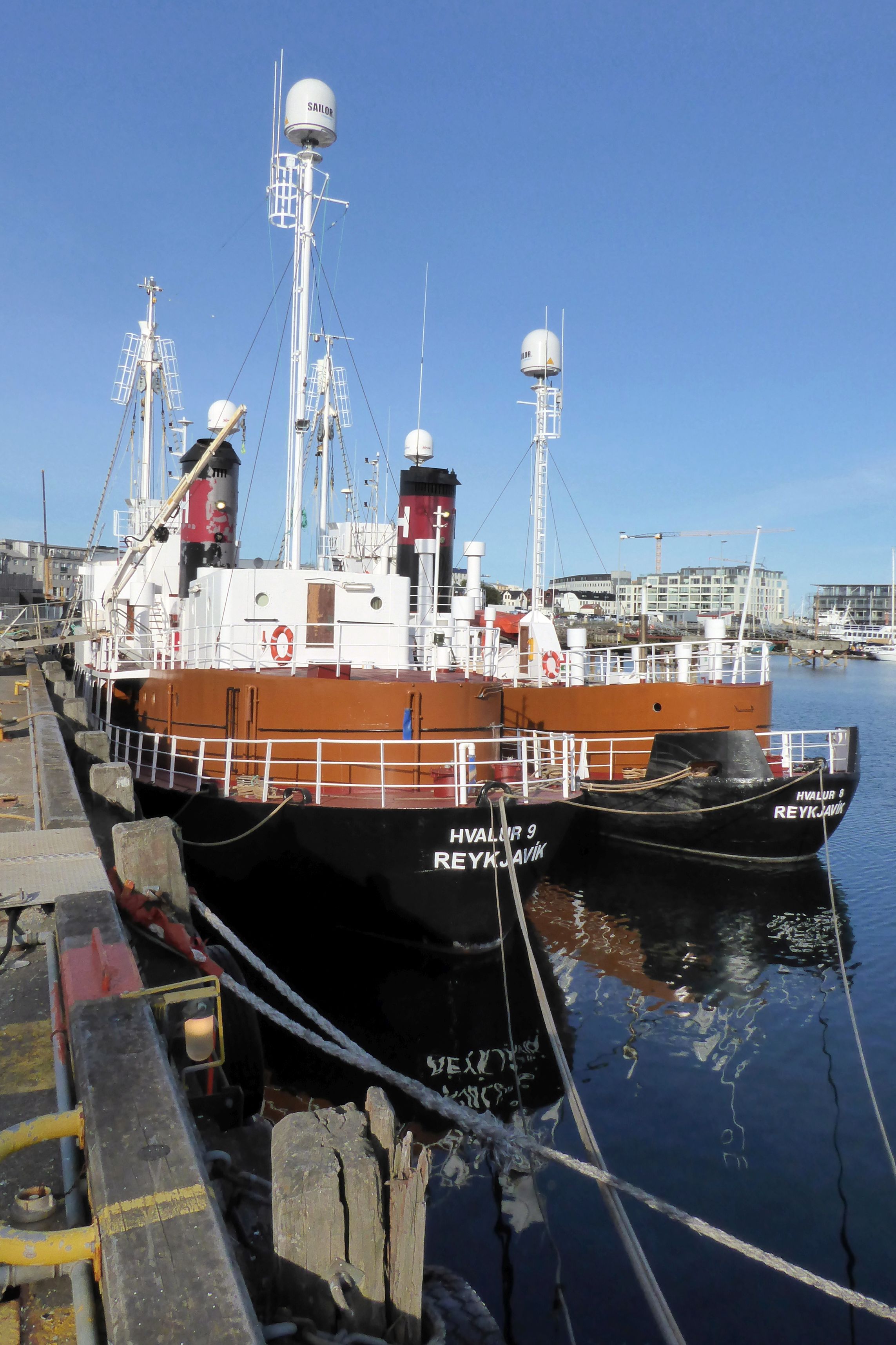
Following are photos I shot during our walking tour as well as during our free late afternoons the next two days. I left out the murals though; they are the subject of my next post!
Our hotel was on the harbor front — a perfect location for taking in a lovely morning walk before our day of touring!
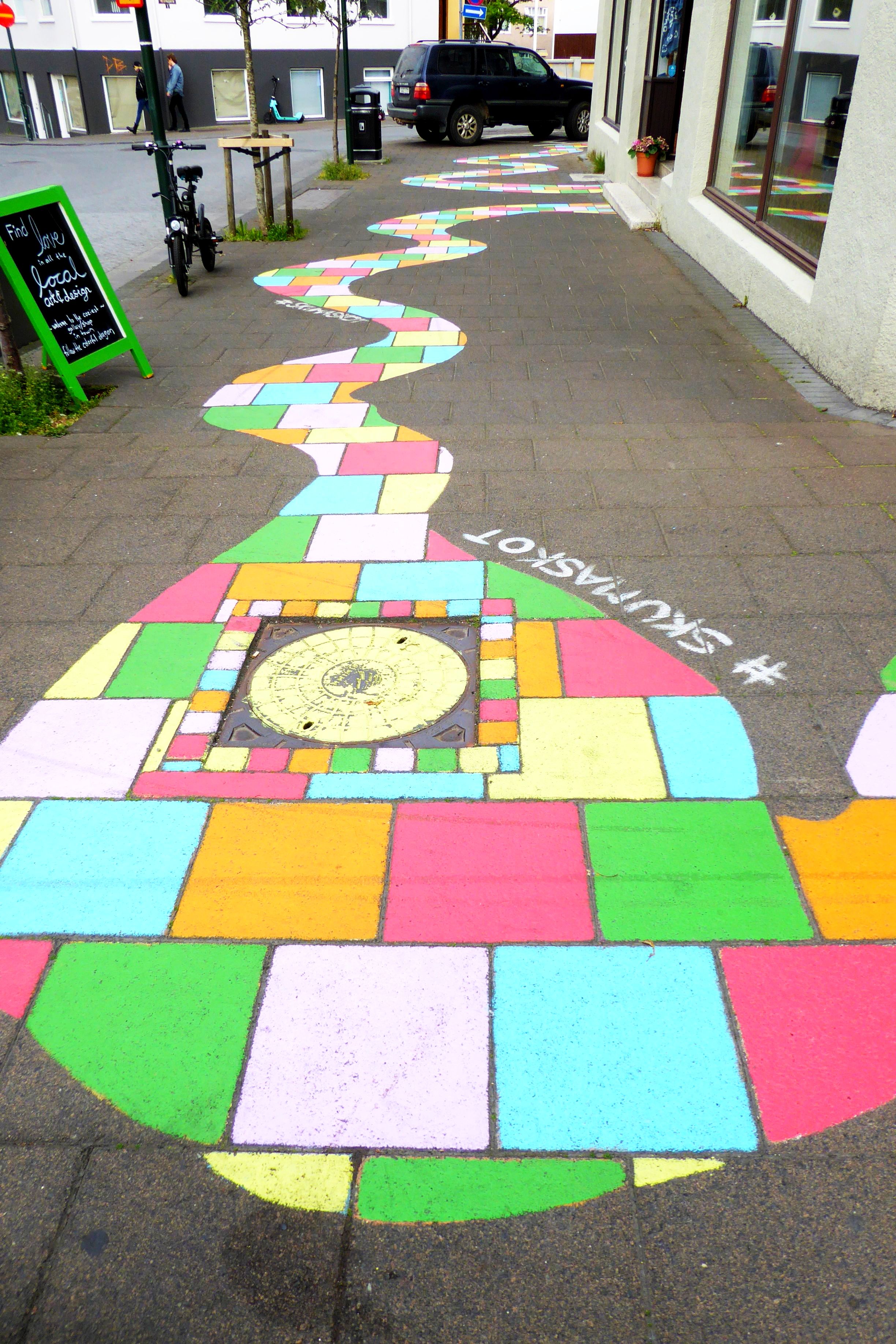
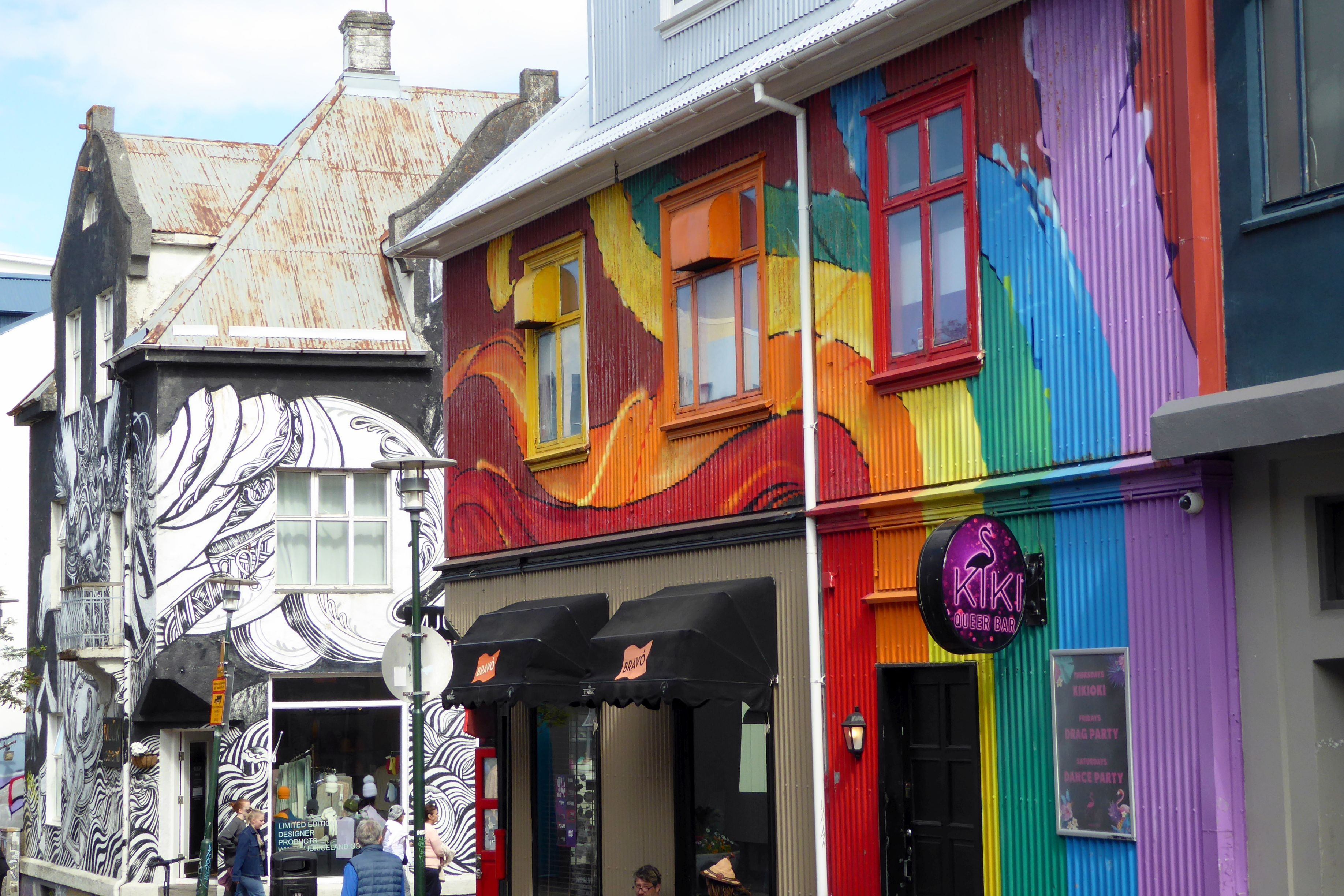
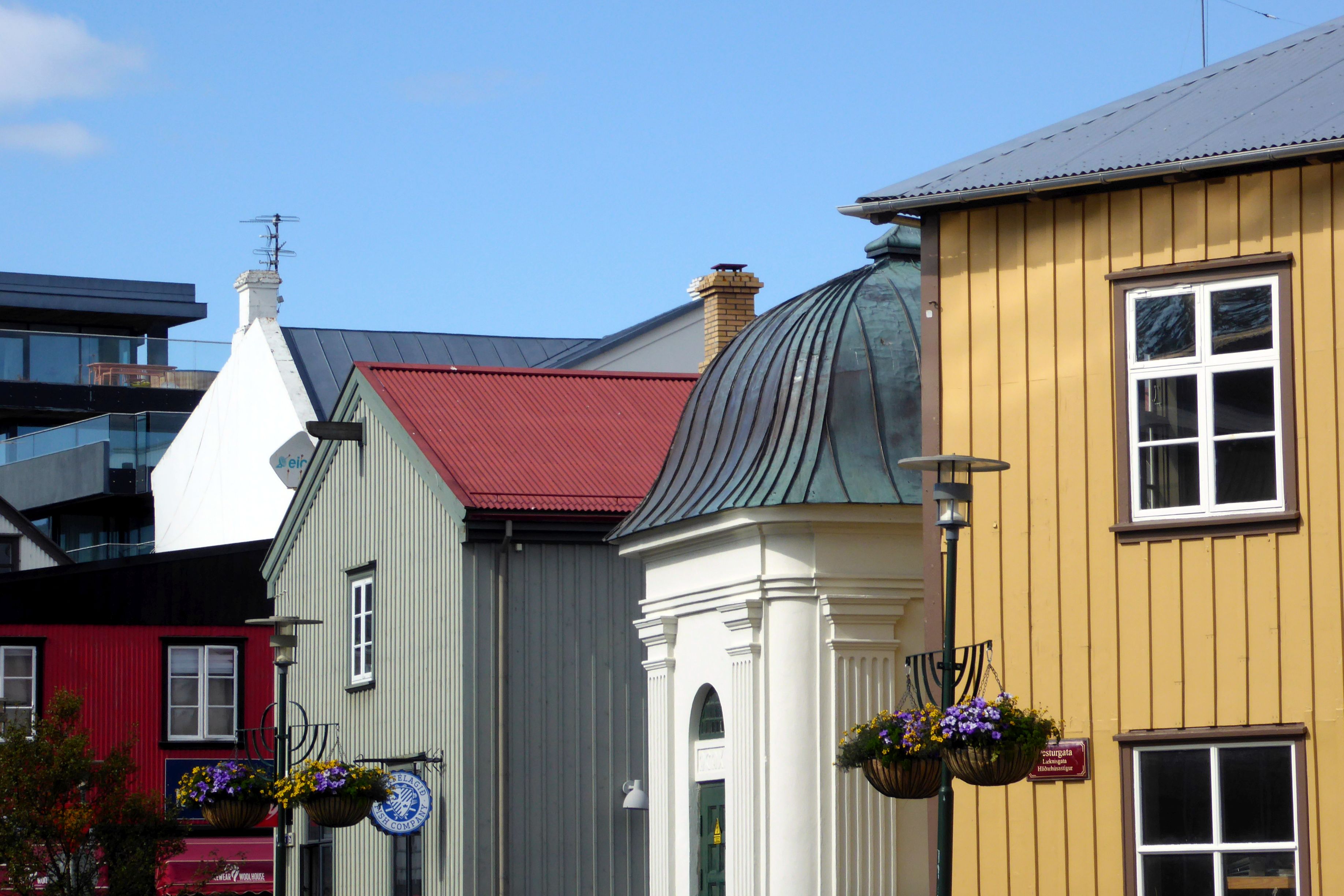
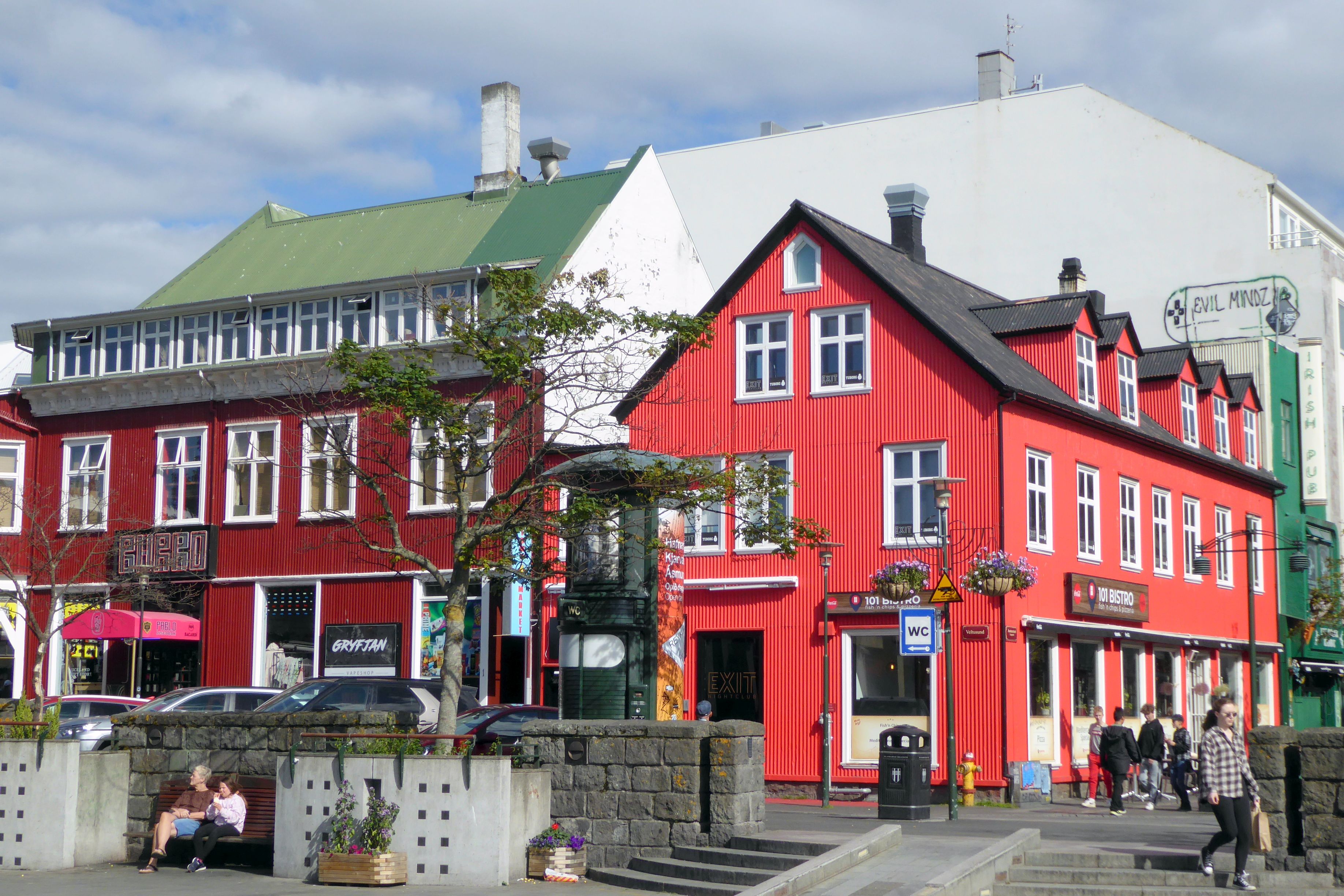
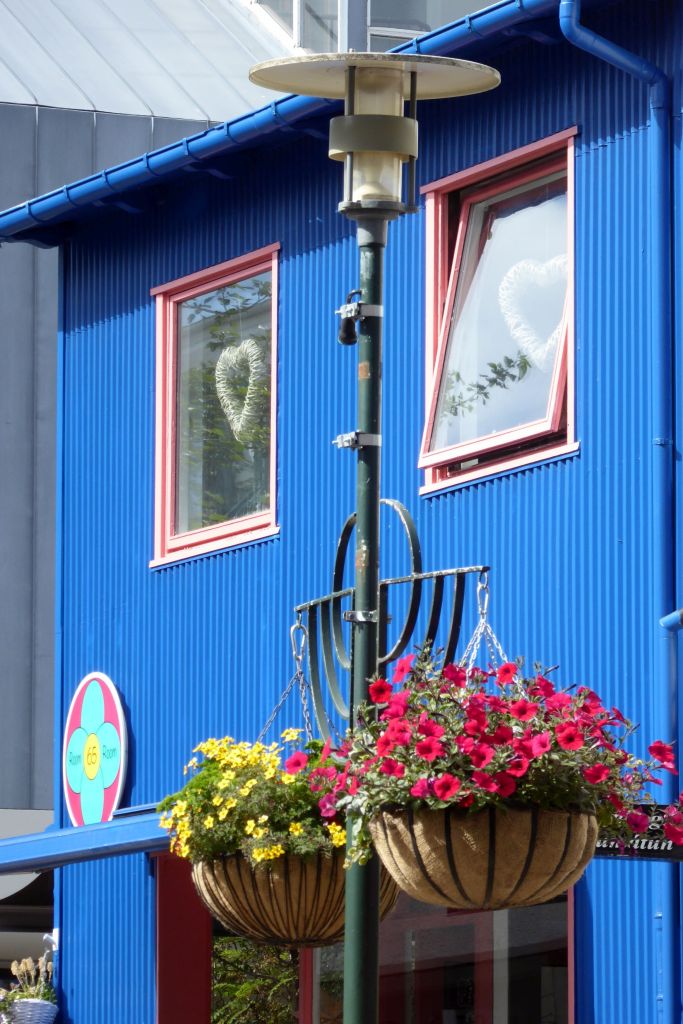
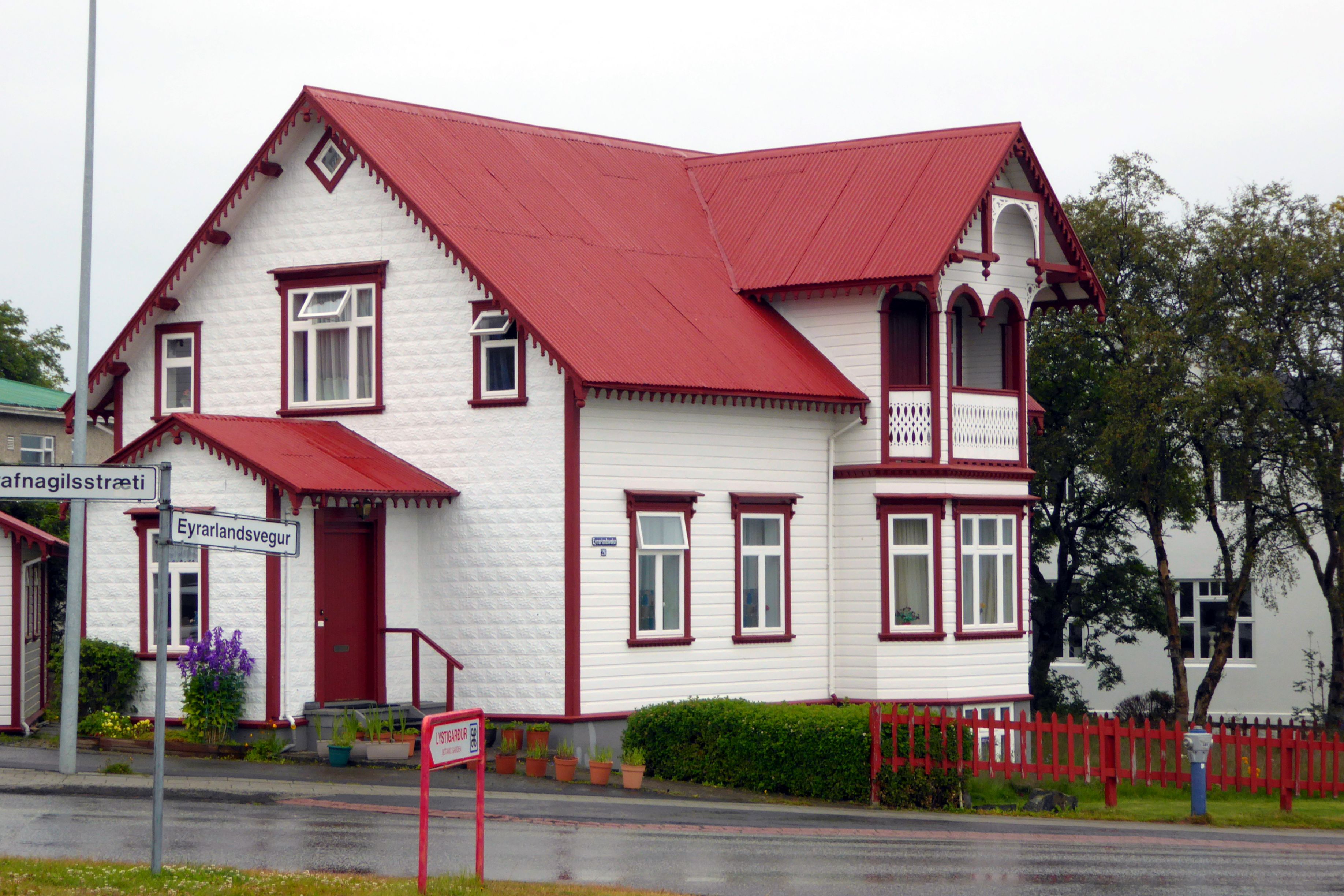
While rambling around Reykjavik, I noticed how colorfully painted the buildings were as well as the abundance of murals you will see in the next post. My theory is this was intentionally done to help brighten up the city during the winters of long nights and only five hours of sunlight per day.
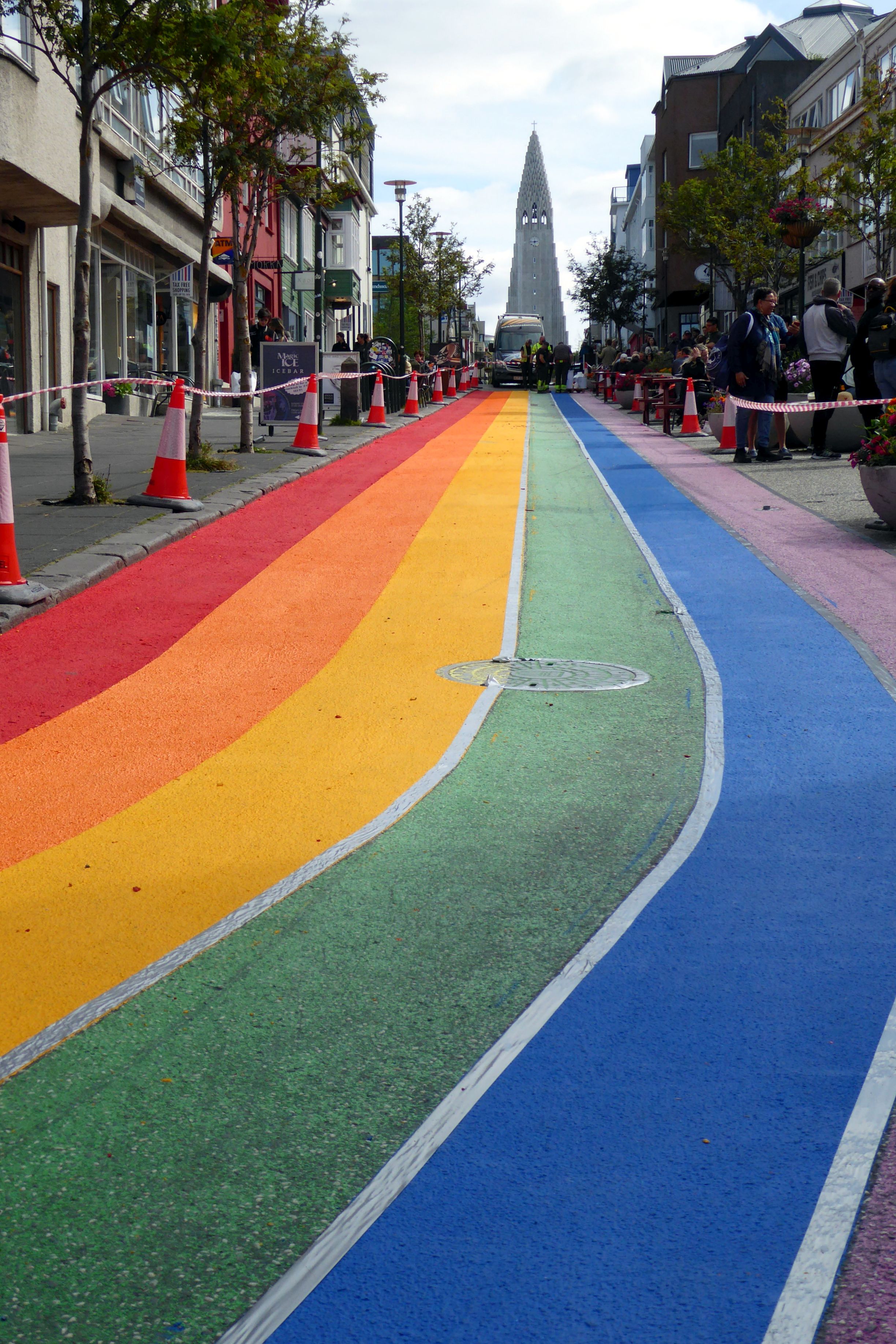
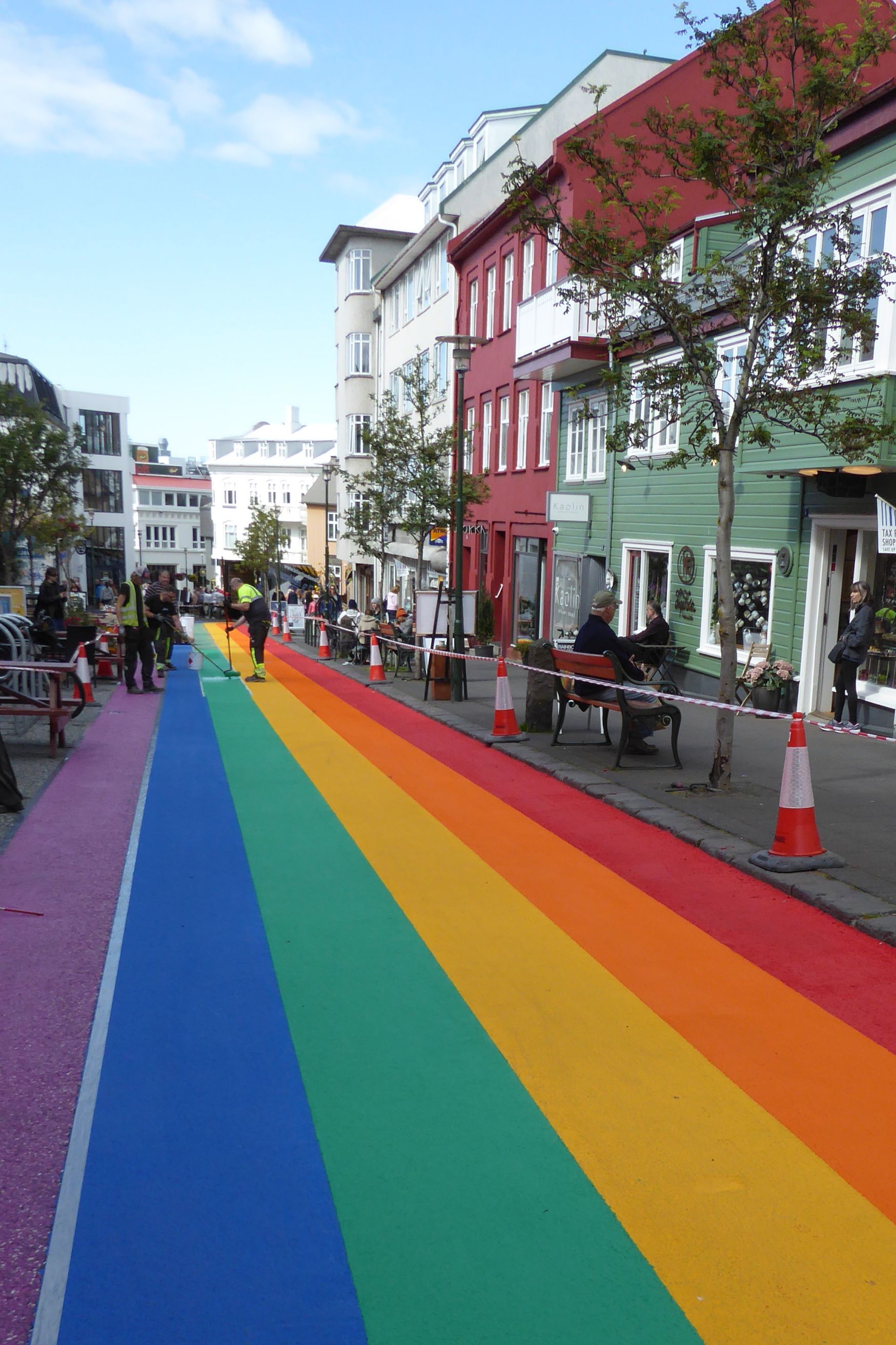
Rainbow Street was being repainted while we were there, so we saw it become brighter each day! Green was next up for a paint job!
Ahhh, a fresh coat of green paint. Looking good! Violet is the last one to go.
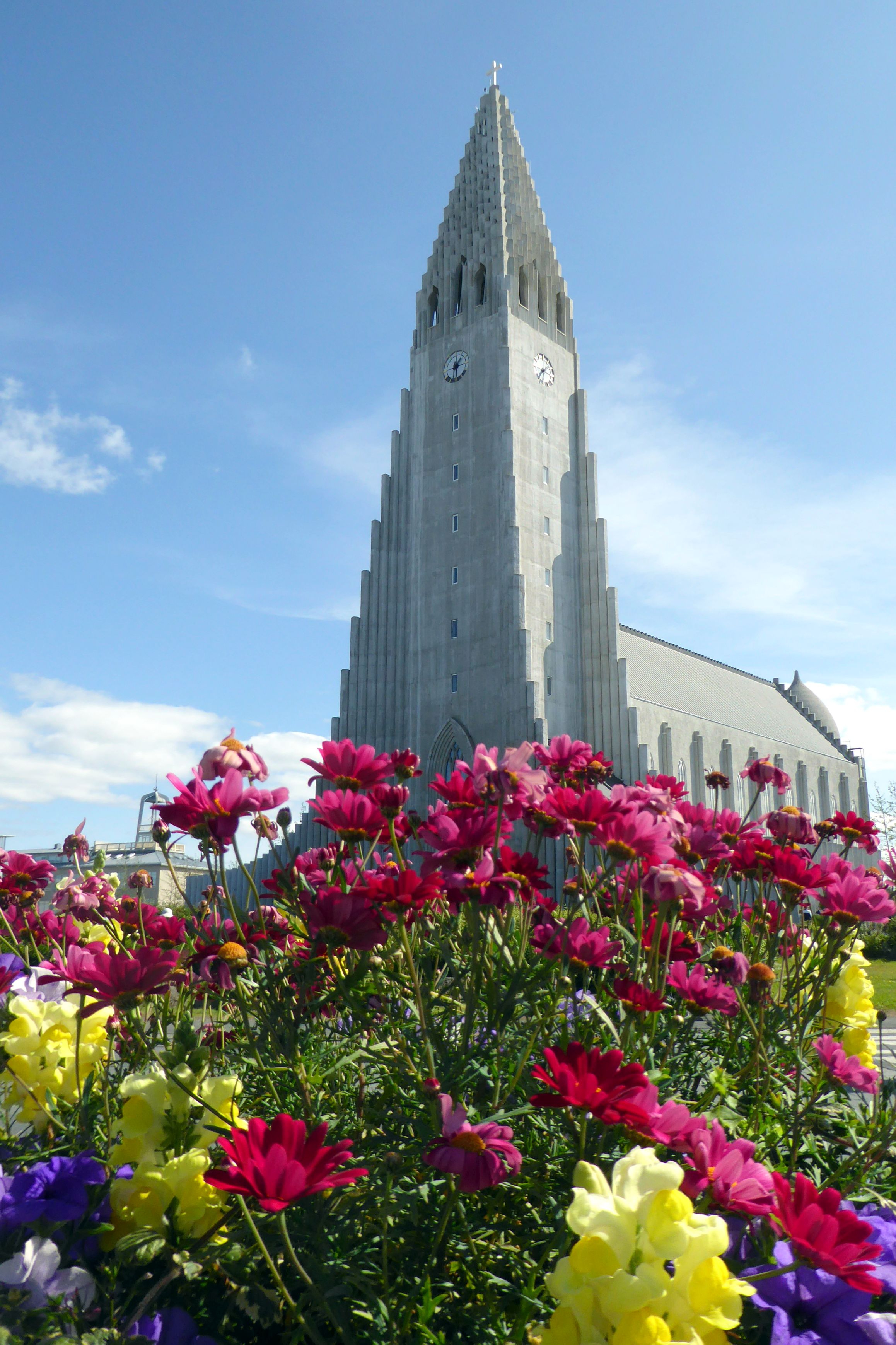
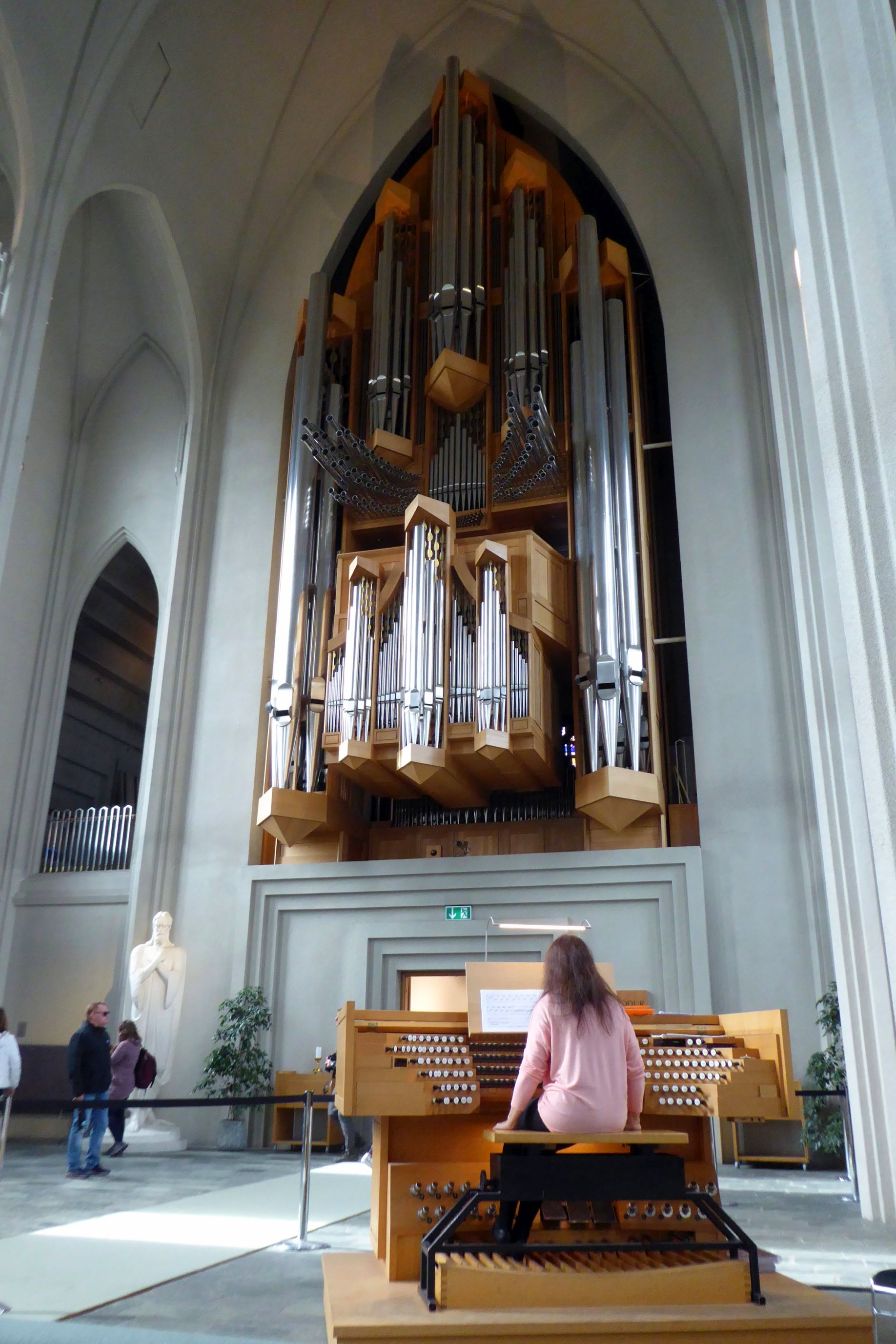
Hallgrimskirkja Lutheran Church
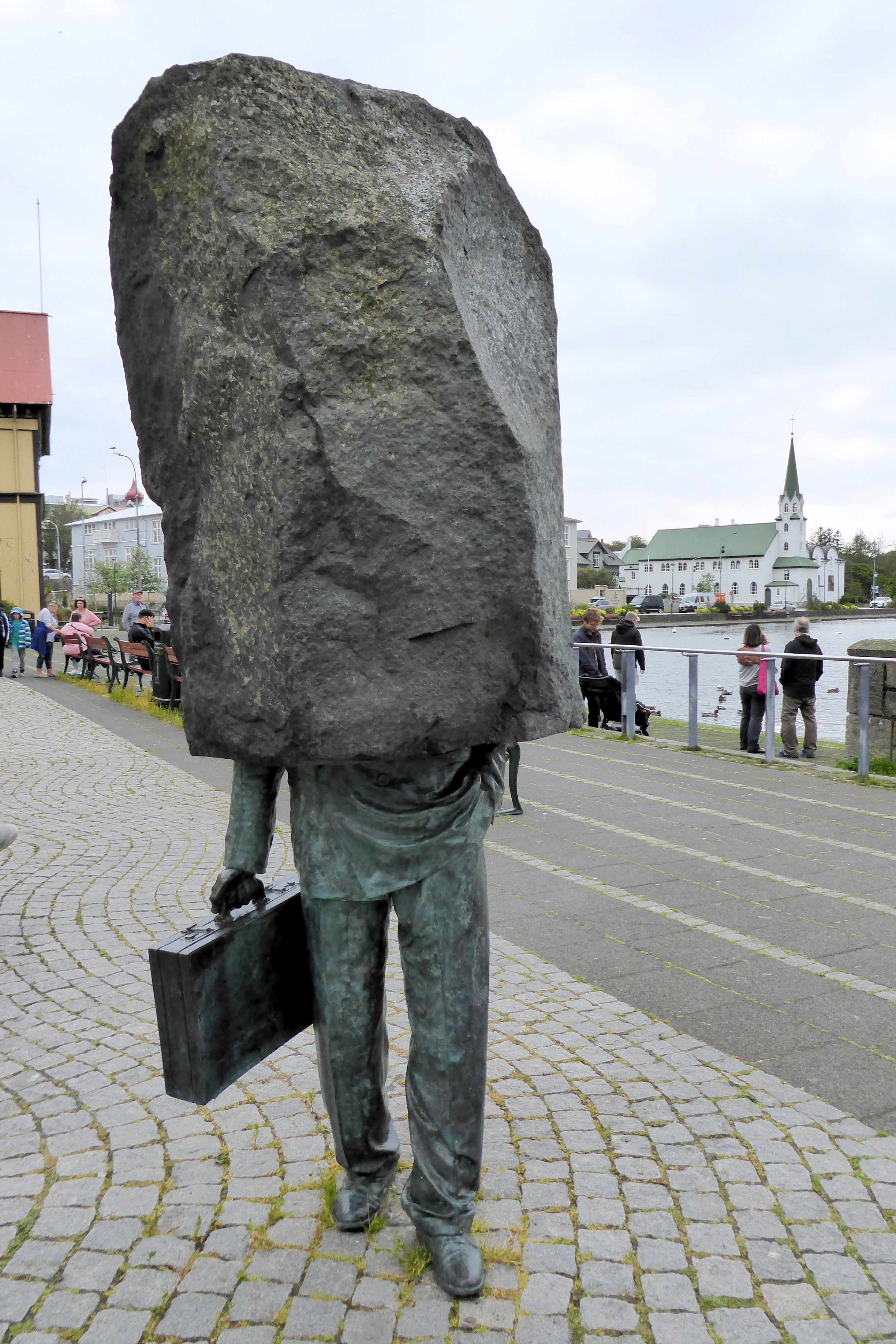
Monument of the Unknown Bureaucrat: Iceland’s tribute to its thankless civil servants.
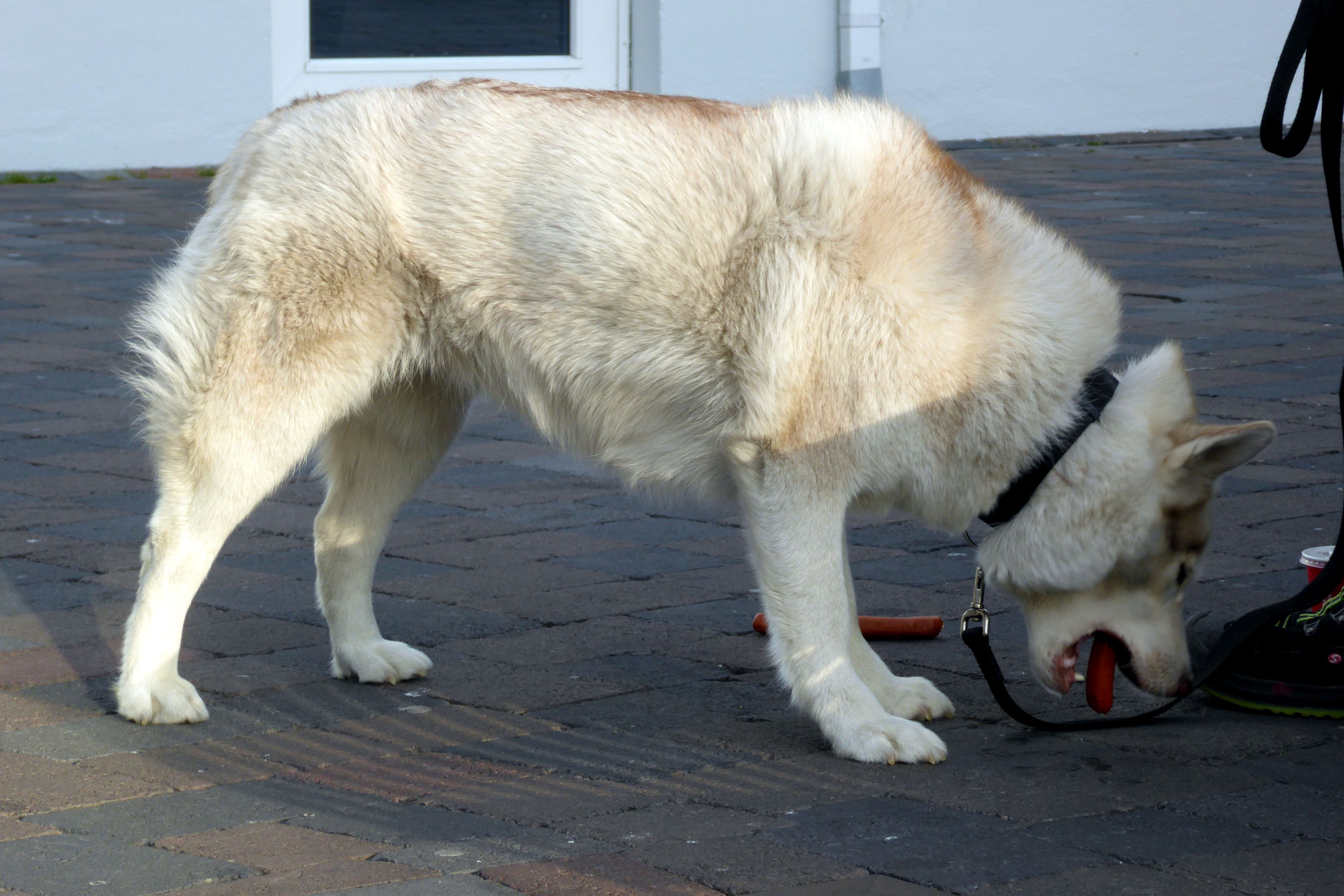
Reykjavik’s famous hot dog stand was visited by Bill Clinton. Their hot dogs weren’t so hot, though……Although, this pooch thought so! Her owner gave her his dogs, and he ate the rest. It’s a dog eat dog world!
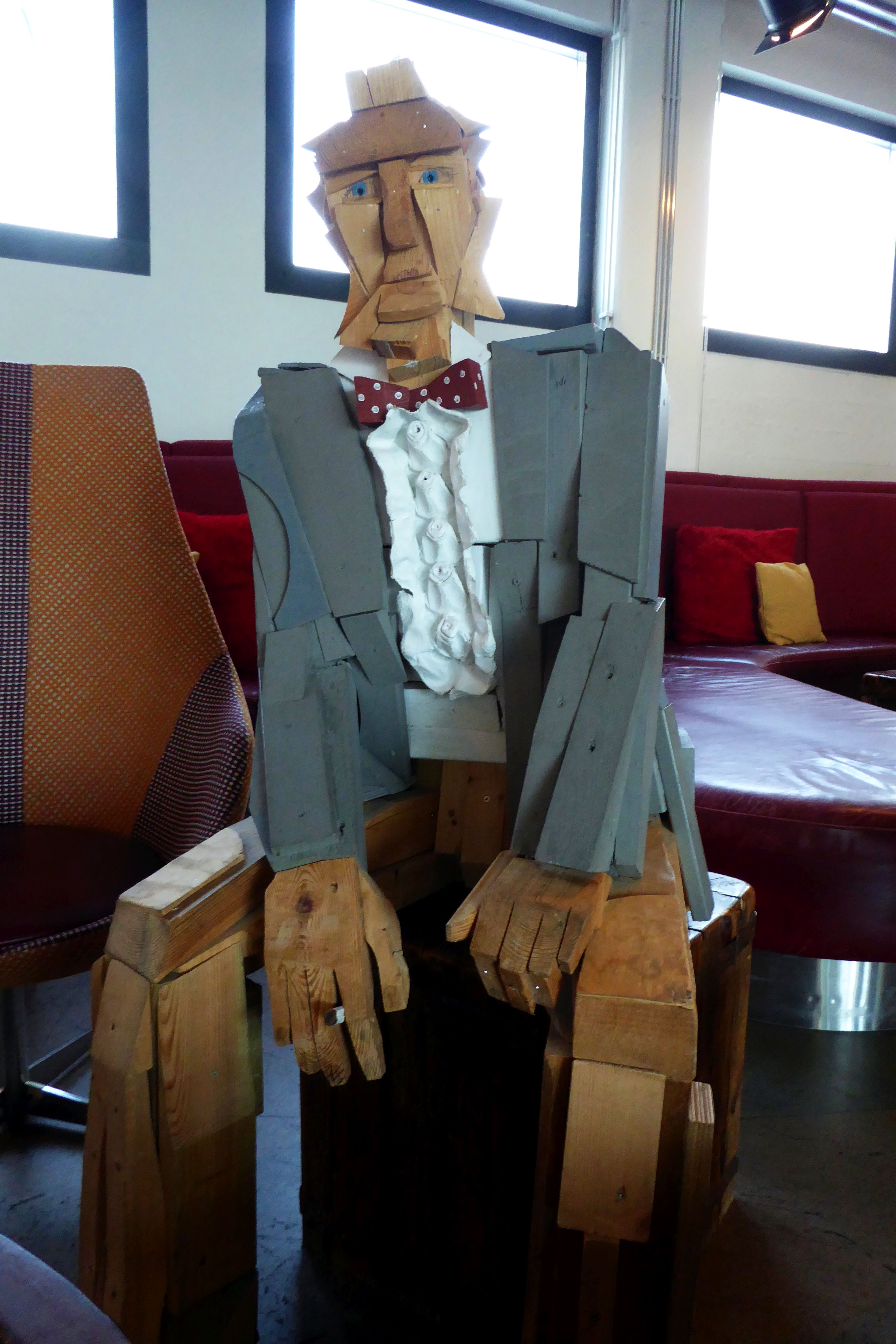
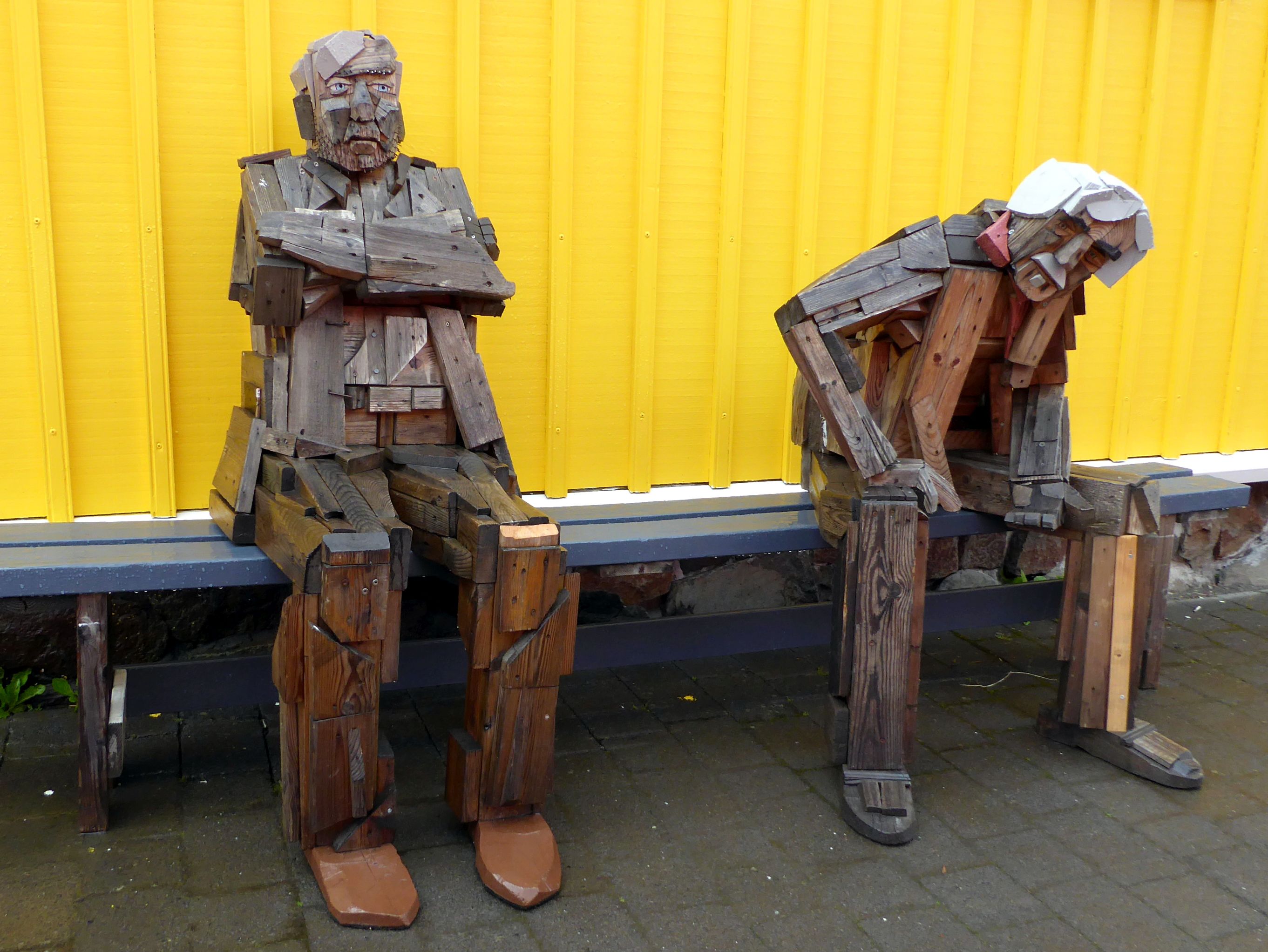
This dapper wooden chap greeted us in the hotel lobby…
… And, this guy decided to pass on the private men’s room!
Next up: Memorable Murals of Reykjavik
Note: If small group travel is of interest to you, I highly recommend Overseas Adventure Travel (OAT). Although Bruce and I travel together, they do not charge a single supplement for those who travel on their own. Singles also get their own room at hotels. If you book, you can get $100 off your trip by providing my name and customer number (Elaine Krugman, #3018126) as the person who referred you. I will also get $100 off future travel– a win-win!
This was the “activity note” in our itinerary for July 25th: “Whale watching is weather dependent and relies upon the cooperation of migratory patterns, which can be difficult to accurately predict…If necessary, an alternate activity will be provided.” As a result, I fully expected NOT to be able to go whale watching. Better to not expect it and be pleasantly surprised than be disappointed if it doesn’t happen. That’s my attitude, at least…
We woke up, looked out the window, and saw a beautiful day awaiting us. Great! But, would the seas be rough? I had visions of Bruce and I being completely miserable, if the motion sickness meds I brought along didn’t do the trick. Been there, done that; not fun. If the seas looked rough, we were planning on backing out.
As we hoofed it down the pier to the boat to get a good (mid-ship = less motion) seat, I gazed out to the water and saw… NOTHING. Nothing, as in no white caps and no swells. AWESOME! We enthusiastically climbed aboard and were on our way.
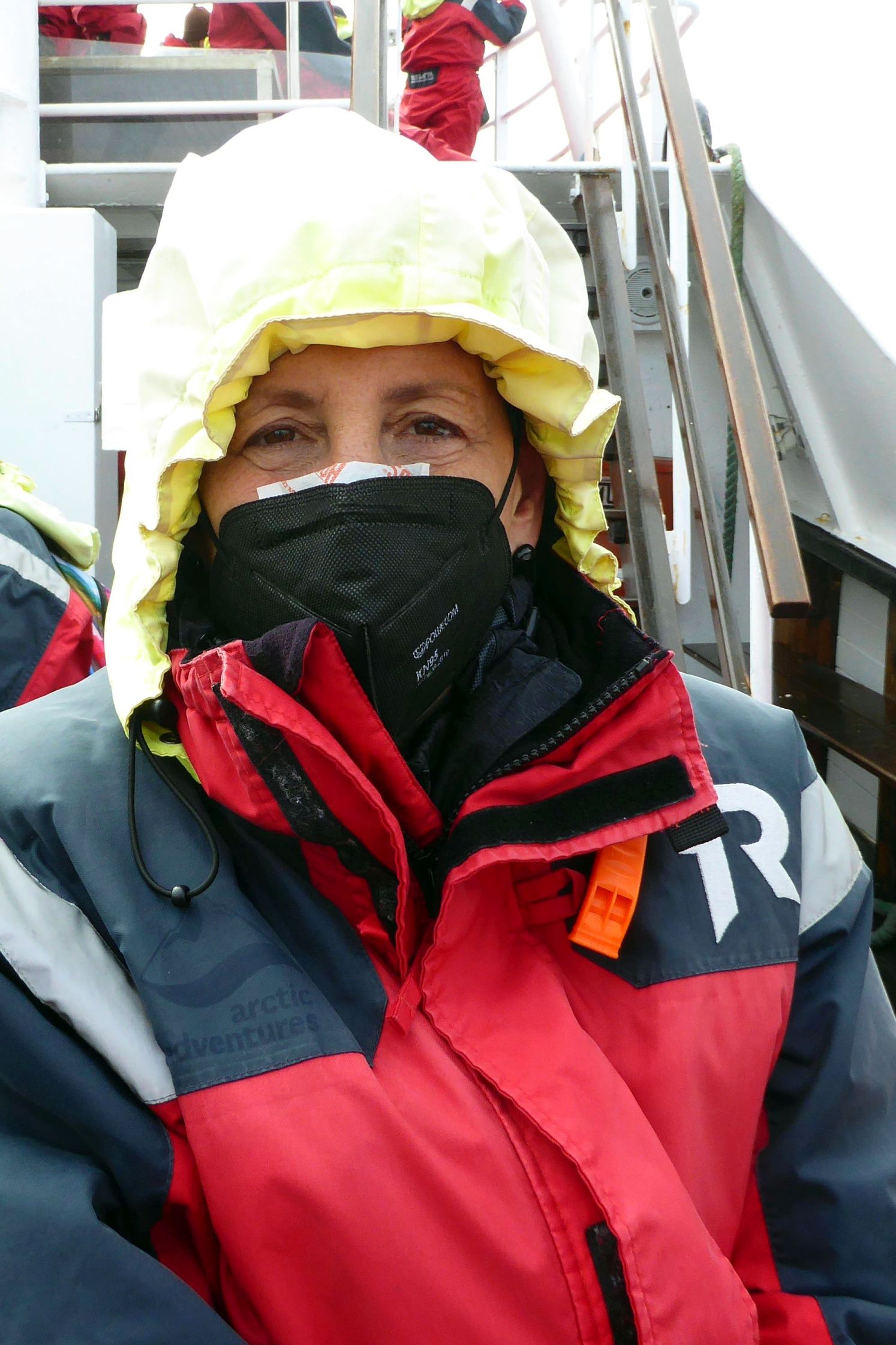
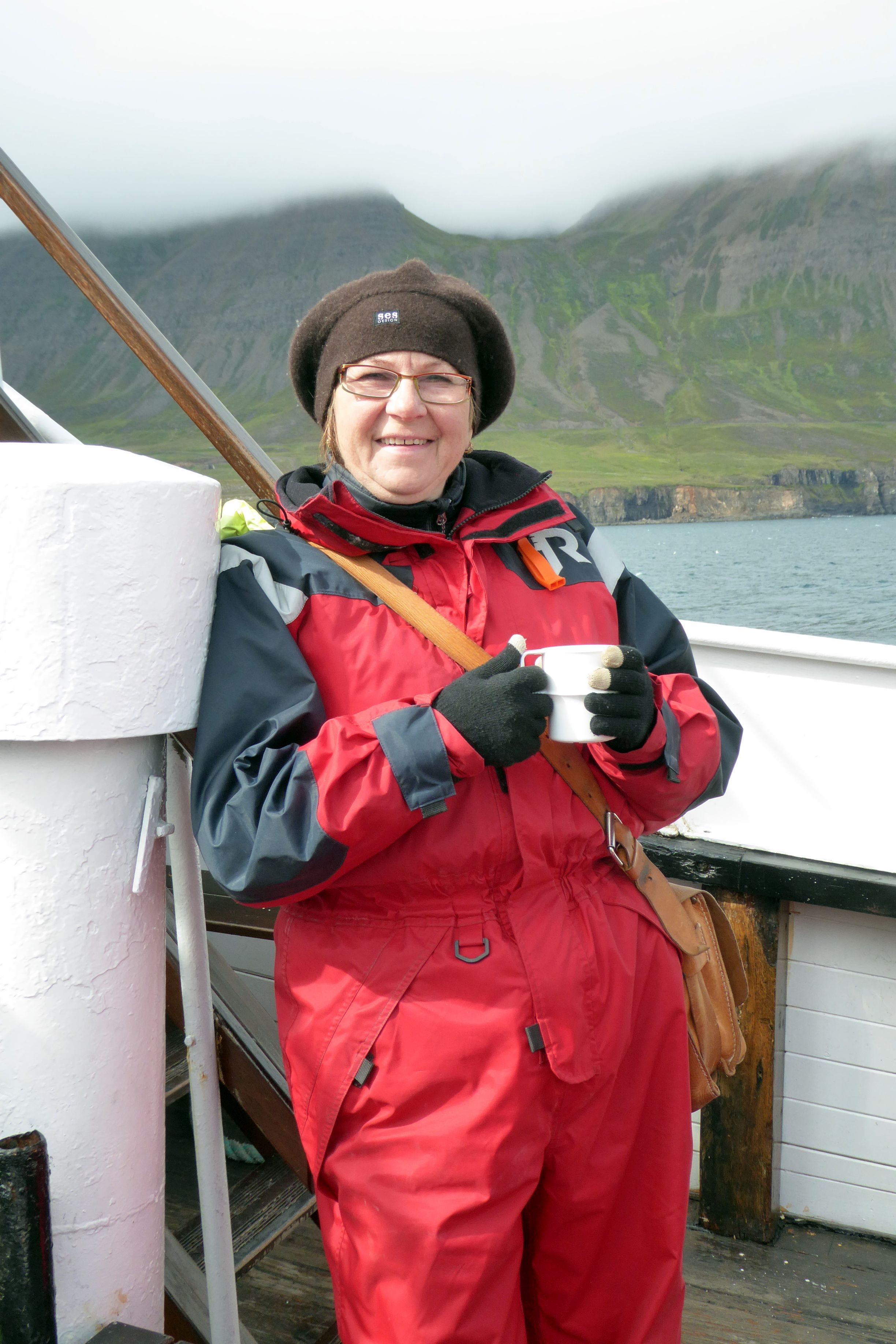
Thankfully, we were provided waterproof (and buoyant, in case of a man-overboard nightmare) suit that covered us head to toes, including a hood. Between my long sleeve shirt, down vest, down jacket, rain jacket (with hood), ski gloves, COVID mask (to keep my nose warm) and hooded suit; I was well-prepared to battle the cold. I had also brought along a pair of HotHands, a product recommended by my sister and the Raynaud’s Associationnewsletter, an excellent resource for Raynaud’s sufferers like me.
It was cold out there, but the Hot Hands worked great! I slipped one into each glove, and my hands actually got too hot! I decided to stick them in my pockets instead, keeping my hands there in between shooting photos.
This is how I kept my nose warm, when my hands needed a break from the heat:
(For all pictures, click on the image to see full screen view.)
(Note to self for next winter: Take the advice of Raynaud’s Association Chairman, Lynn, and place a HotHand in between two masks rather than right on my nose.)
(Correction: In a message from the HotHands “Consumer Relations Specialist, he stated, “Even over a layer, these warmers are not intended to be used on other body parts other than the hands. That could still result in a burn.”)
The waters off of Dalvik (near Akureyri in North Iceland) were peaceful, and the views spectacular. We even saw some puffins out on the water, but it was whales we were hoping to see.
As theArctic Sea Tourscaptain and his first mate searched the waters for whales, Haflidi, our bus driver, assisted. As a former commercial fisherman, he has had a lot of experience on the waters and had an eagle eye for the whales.
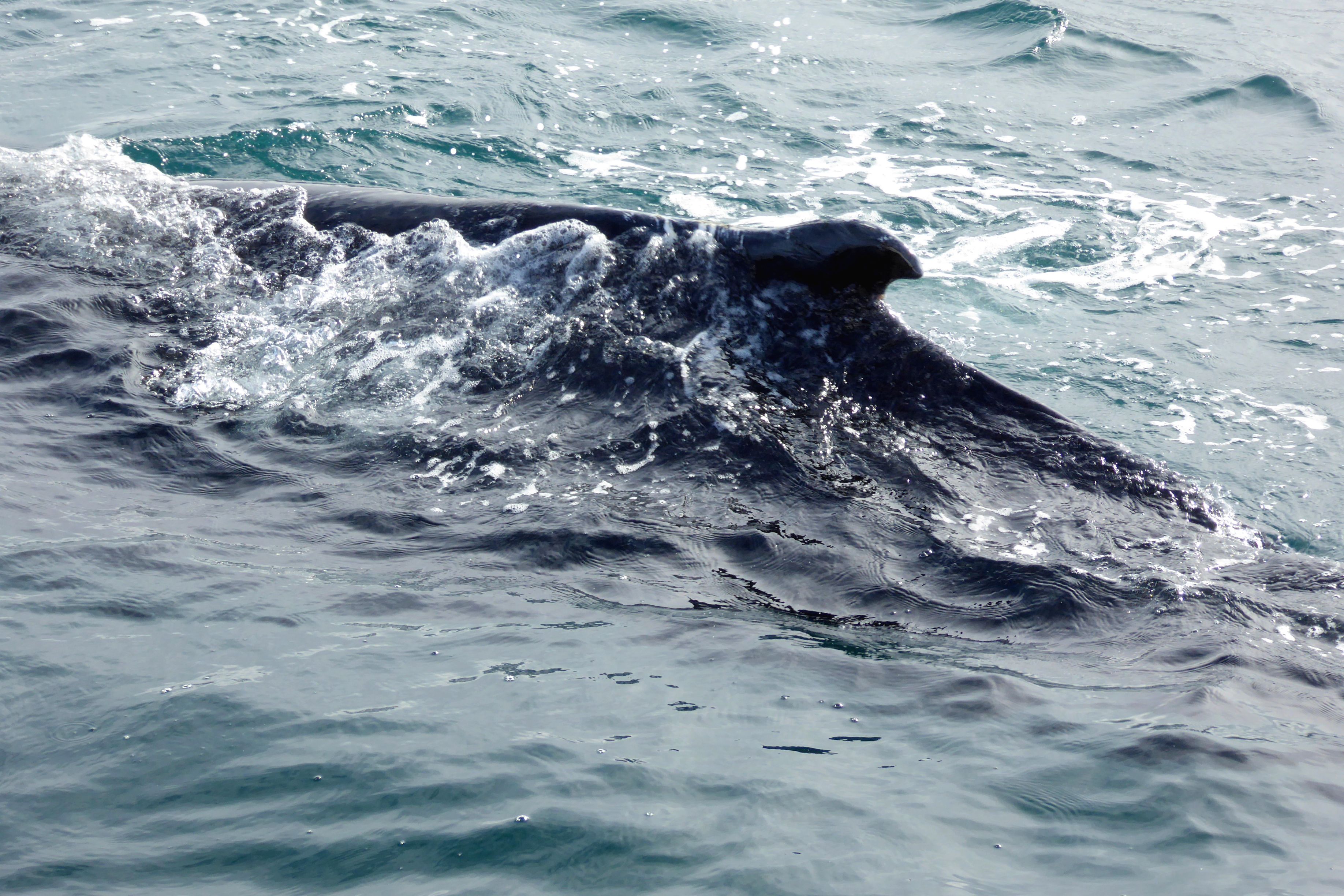
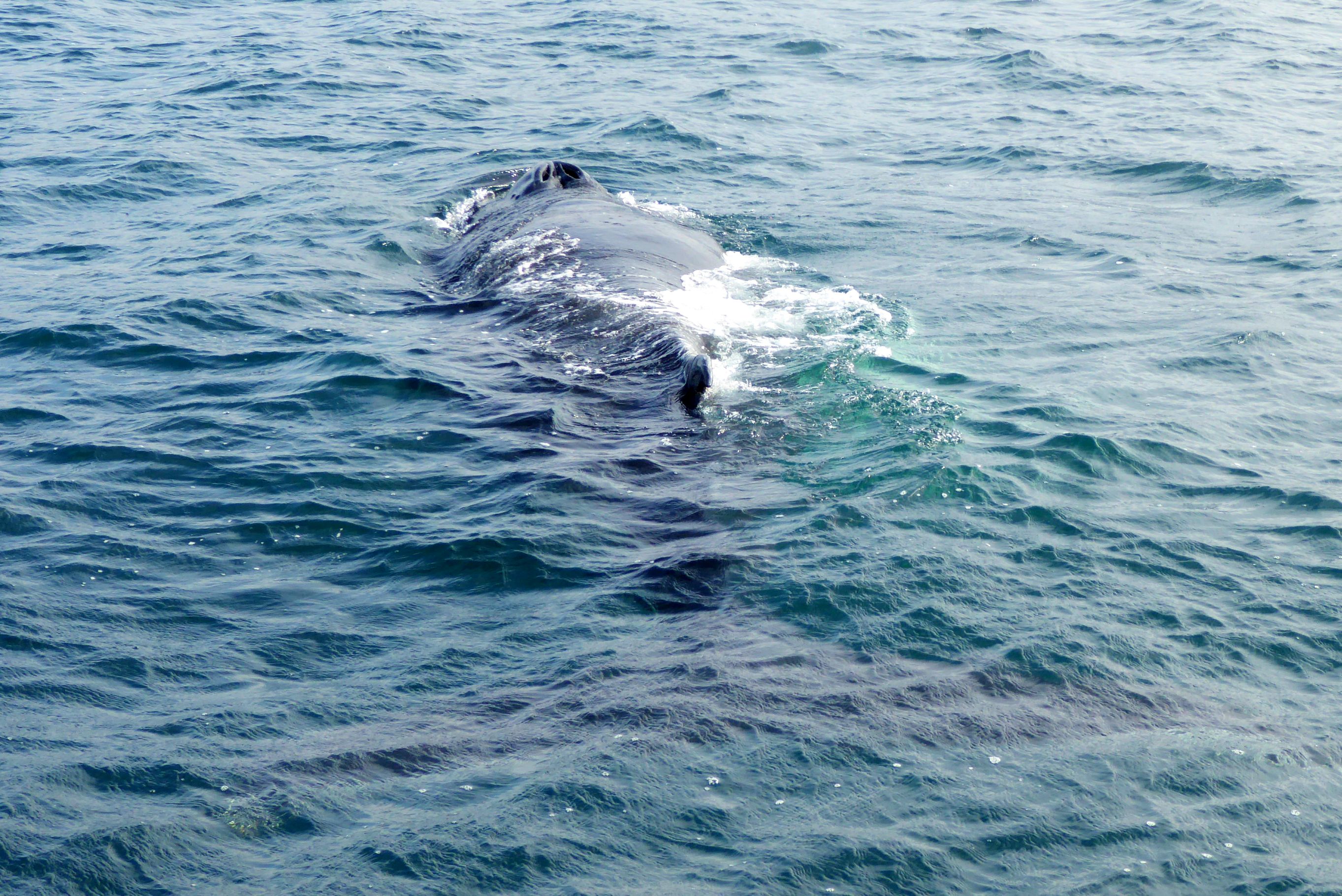
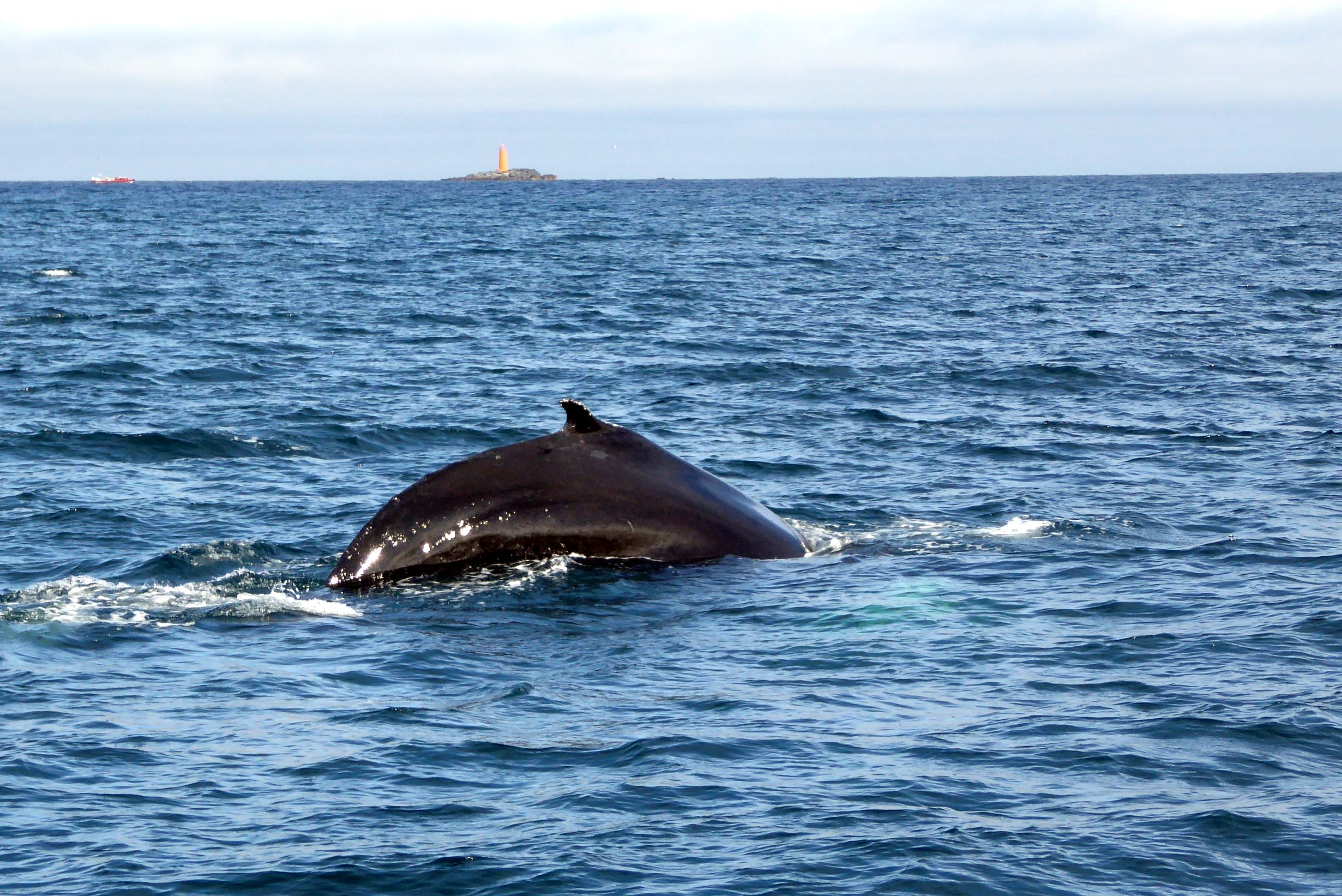
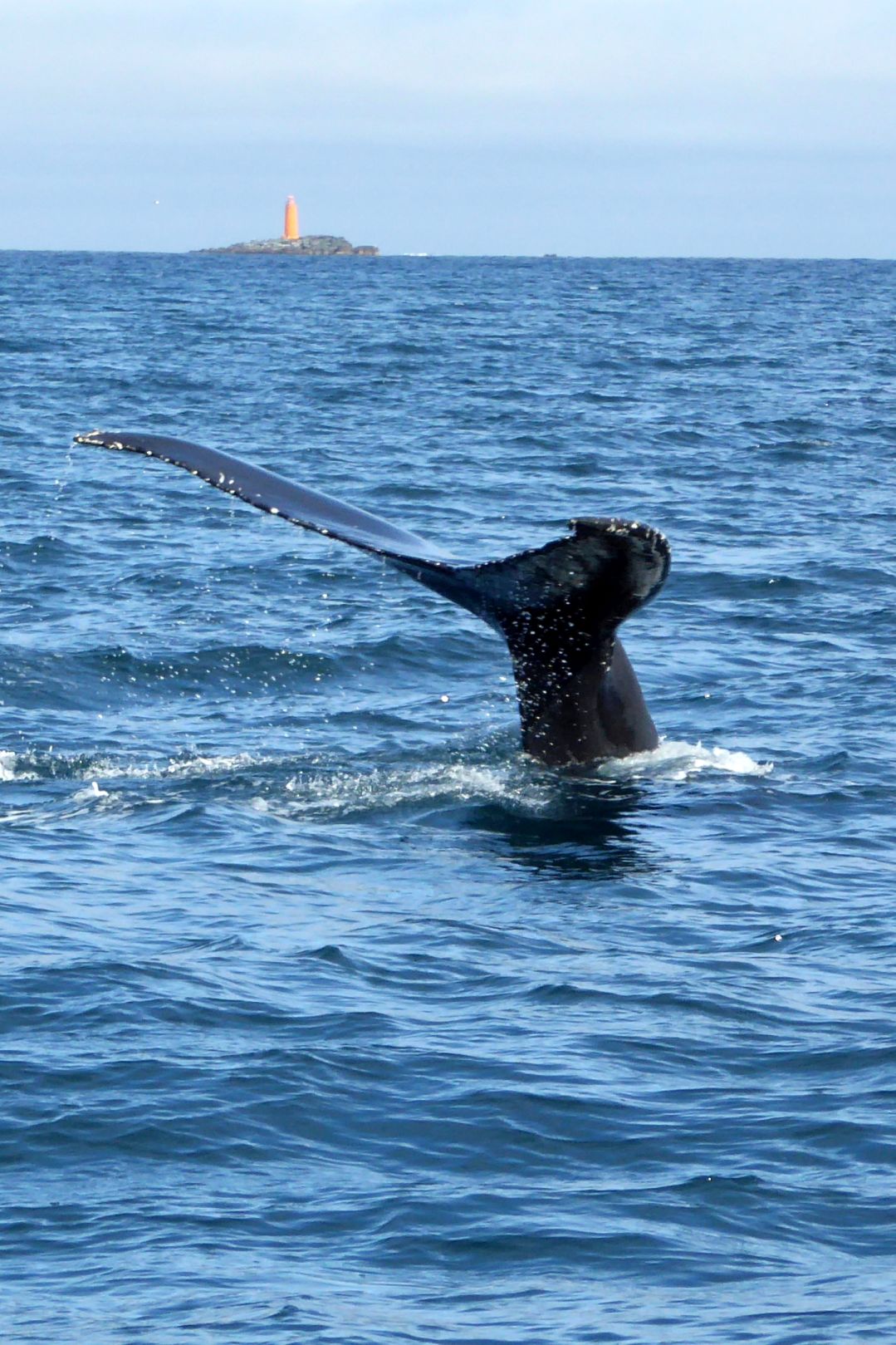
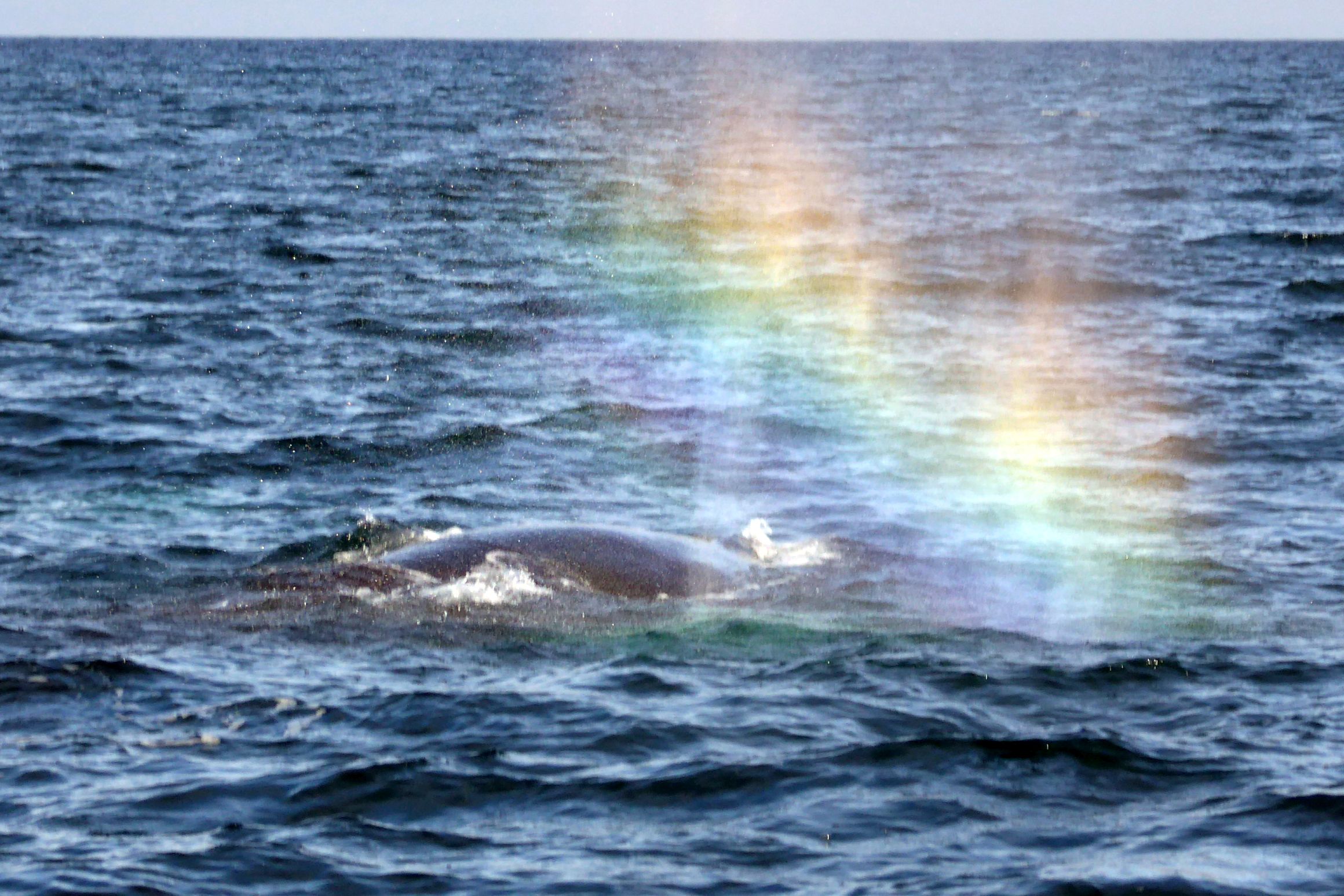
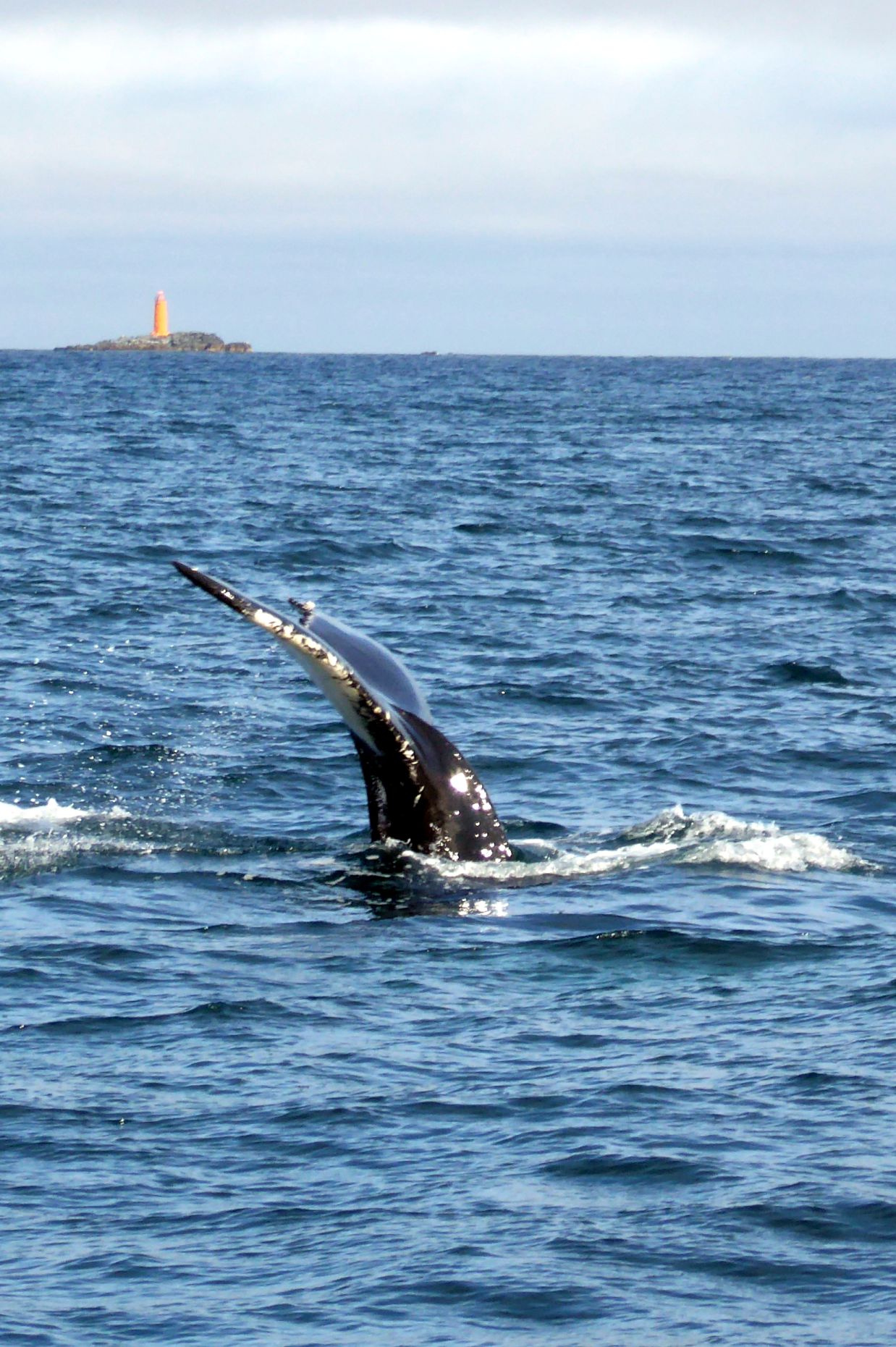
Humpback whales and Minke whales were specifically what we were hoping to see, and they made their presence known – right next to the boat! Here is one that came within ten feet of the port side as we idled. No need to zoom in for this shot! As a matter of fact, Humpbacks range in size from 46-56 feet long, so it looked huge next to our boat!
Two of the whales we saw just floated next to the boat and rested as we idled and watched. They seemed to be as curious about us as we were about them. Either that, or they were so used to whale watching boats that they just ignore them.
So graceful, so beautiful!
The scenery served as a gorgeous backdrop, and I took in the beauty as I enjoyed our snacks of hot chocolate and cinnamon rolls that were offered to all on board.
Thorunn, our wonderful tour leader
Our awesome bus driver, Haflidi, with Bruce and Drew
On our way back to town, we passed by the tiniest church in Iceland.
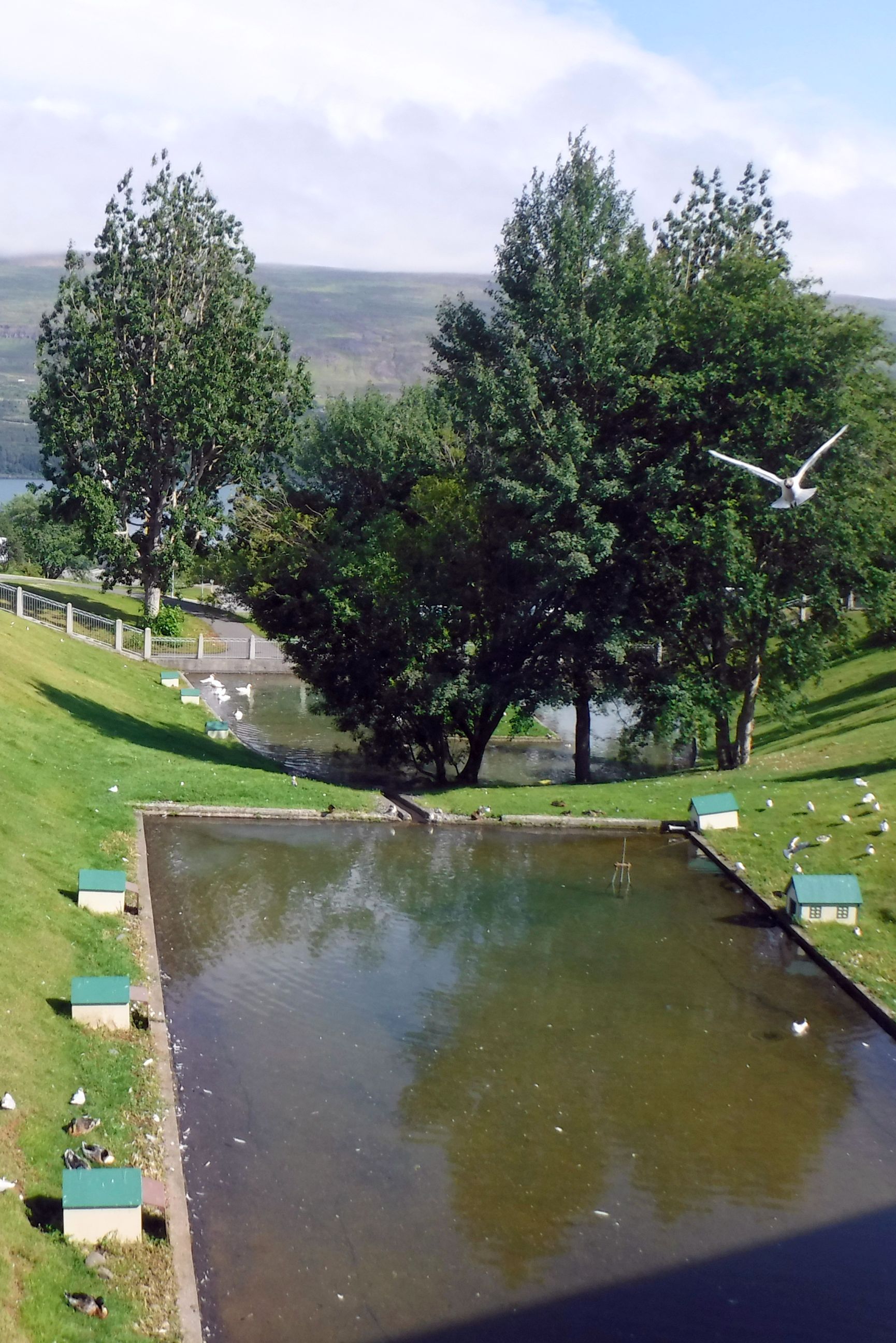
When we returned to Akureyri, I made a beeline to the pool across the street from our hotel. This was the day I wrote about in my first Iceland post; my most memorable swim in Iceland.
The view from the pool across the bird pond, park, and harbor
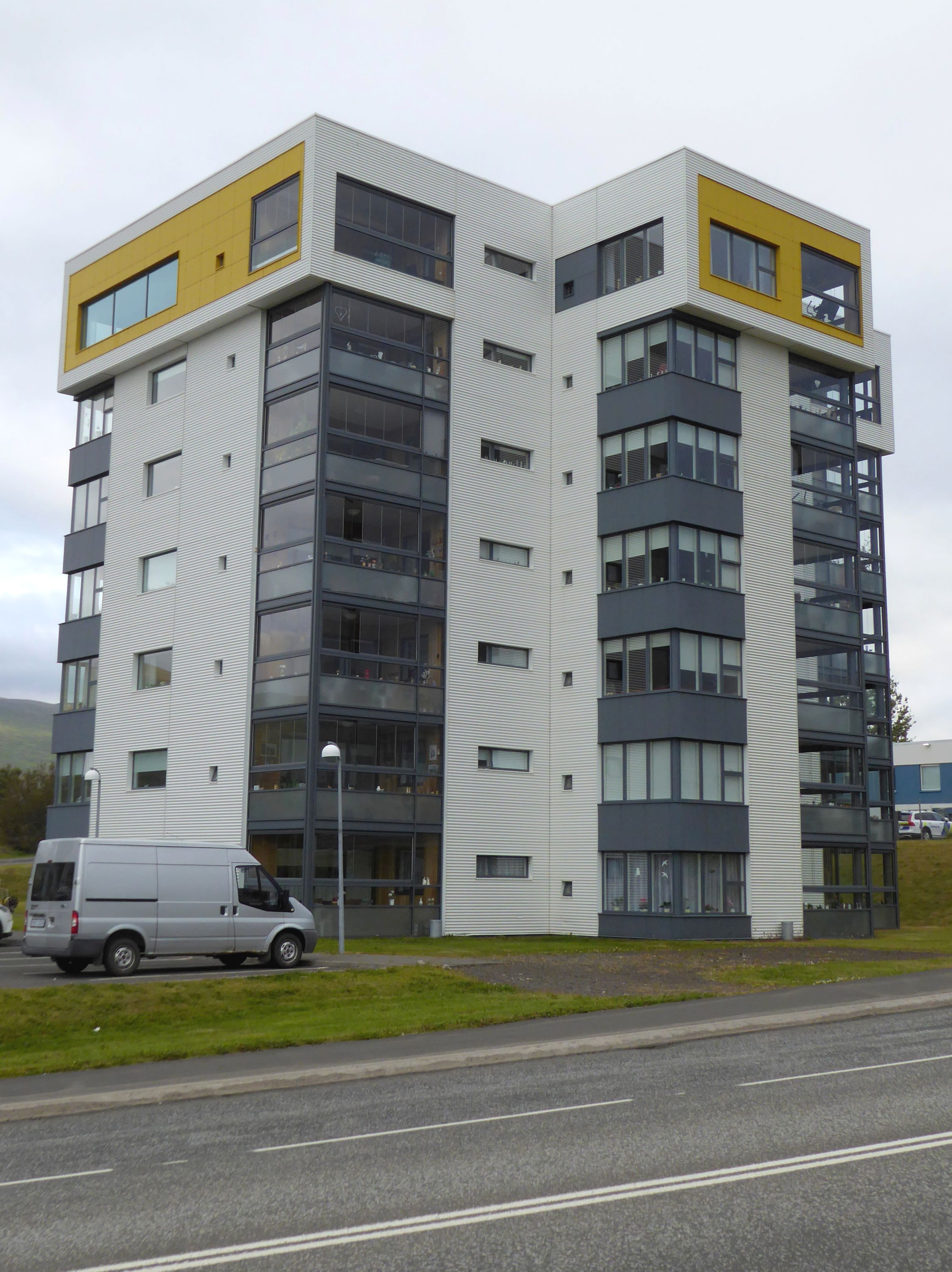
Invigorated and refreshed, I dumped my swim gear off at the room, joined Bruce, and headed back out for a two-mile roundtrip walk to the grocery store for dinner. Along the way, I snapped this photo just to show you what a modern Icelandic apartment building looks like:
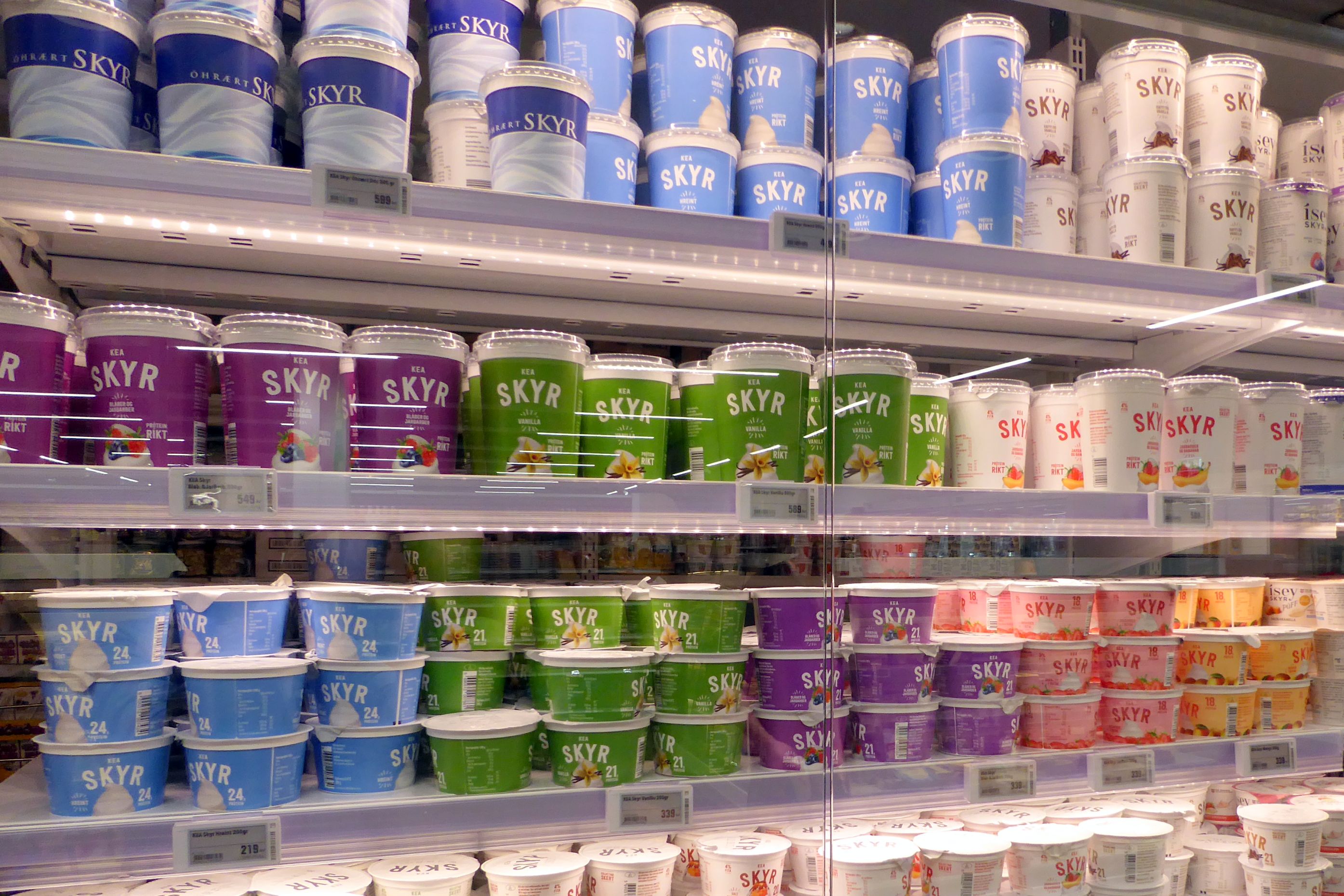
Here are some typical Icelandic foods:
Icelandic skyr is even better than Greek yogurt!
Pickled and frozen fish
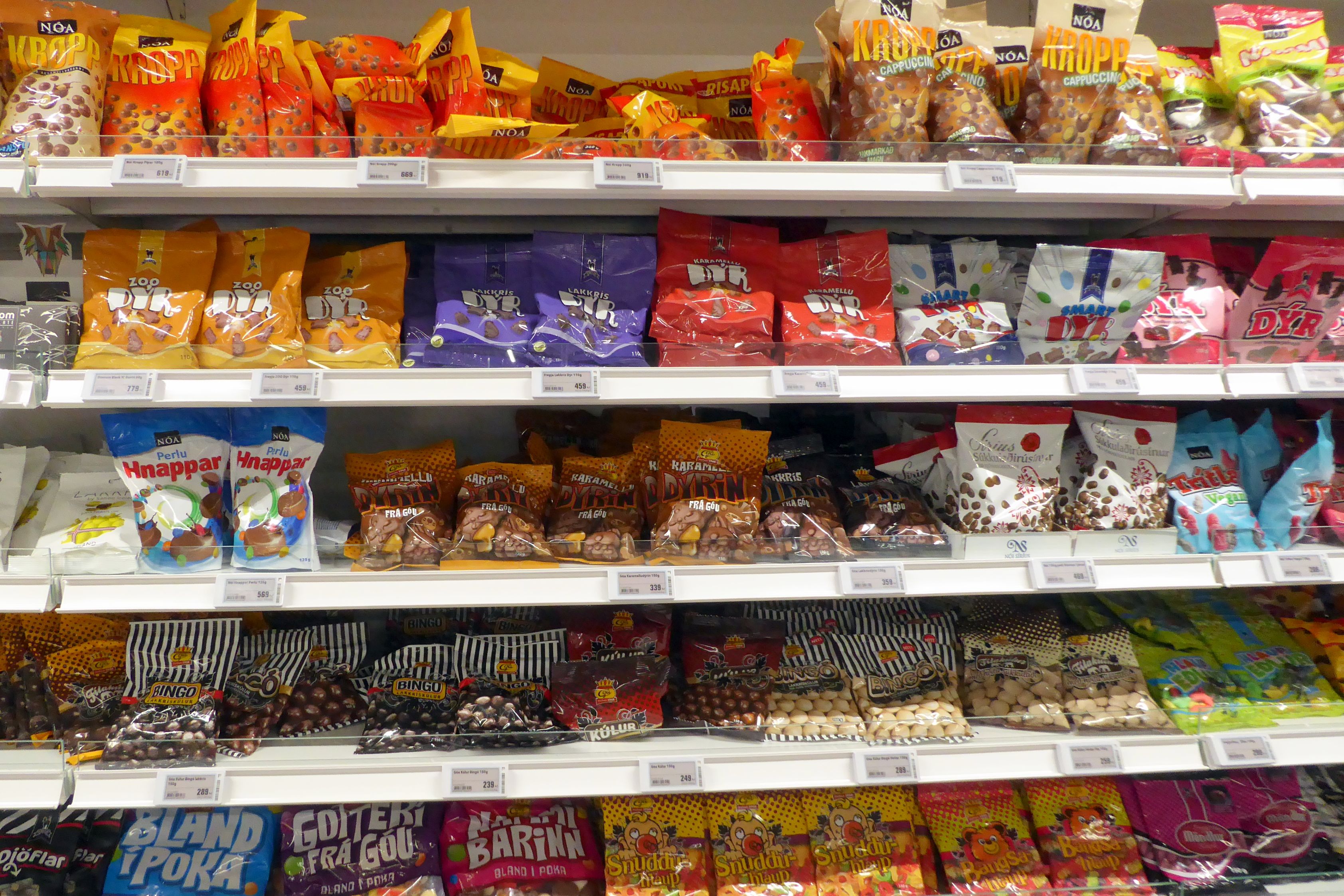
Notice the “Kropp” on the top shelf and “Bland” on the bottom shelf. It got a chuckle out of me!
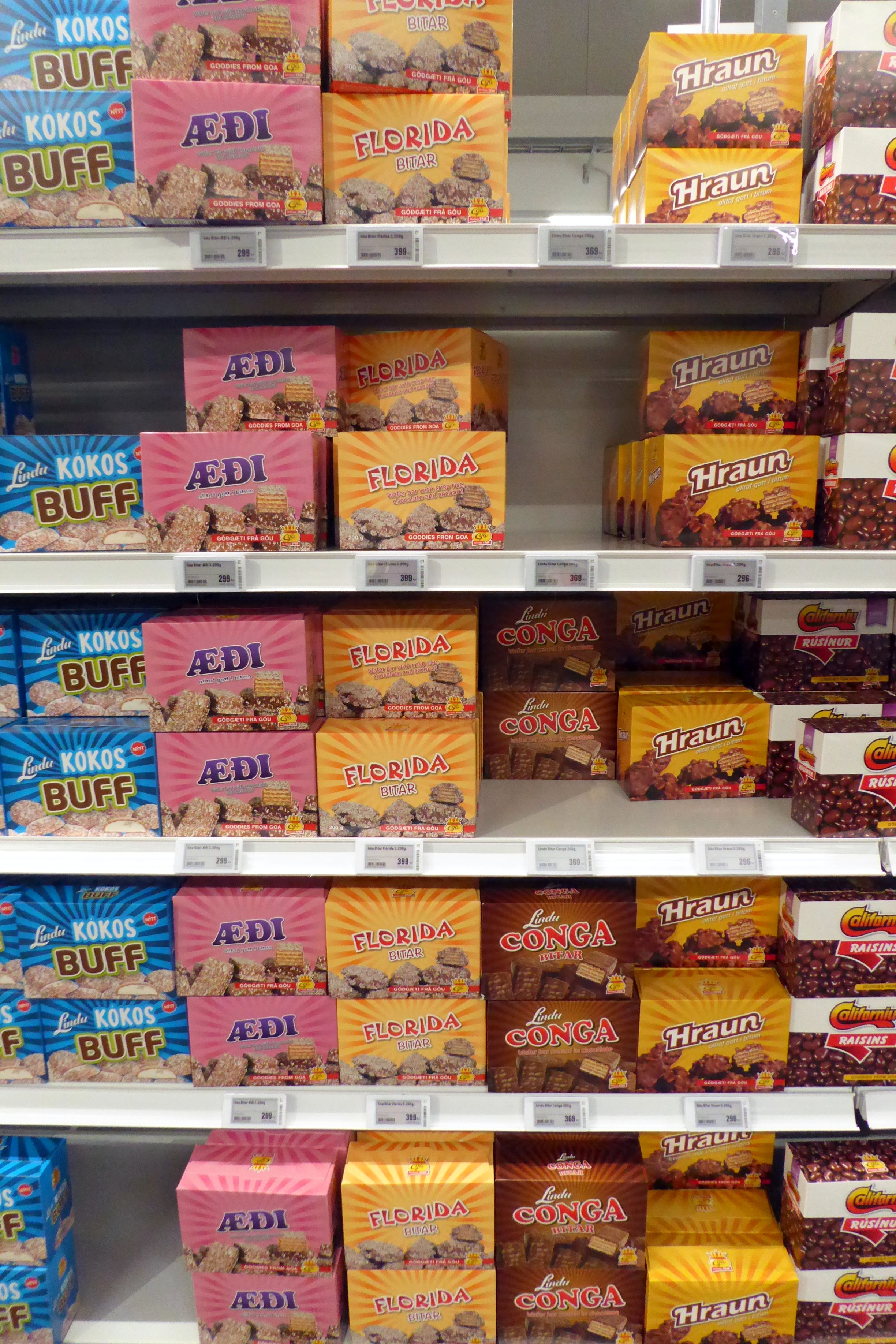
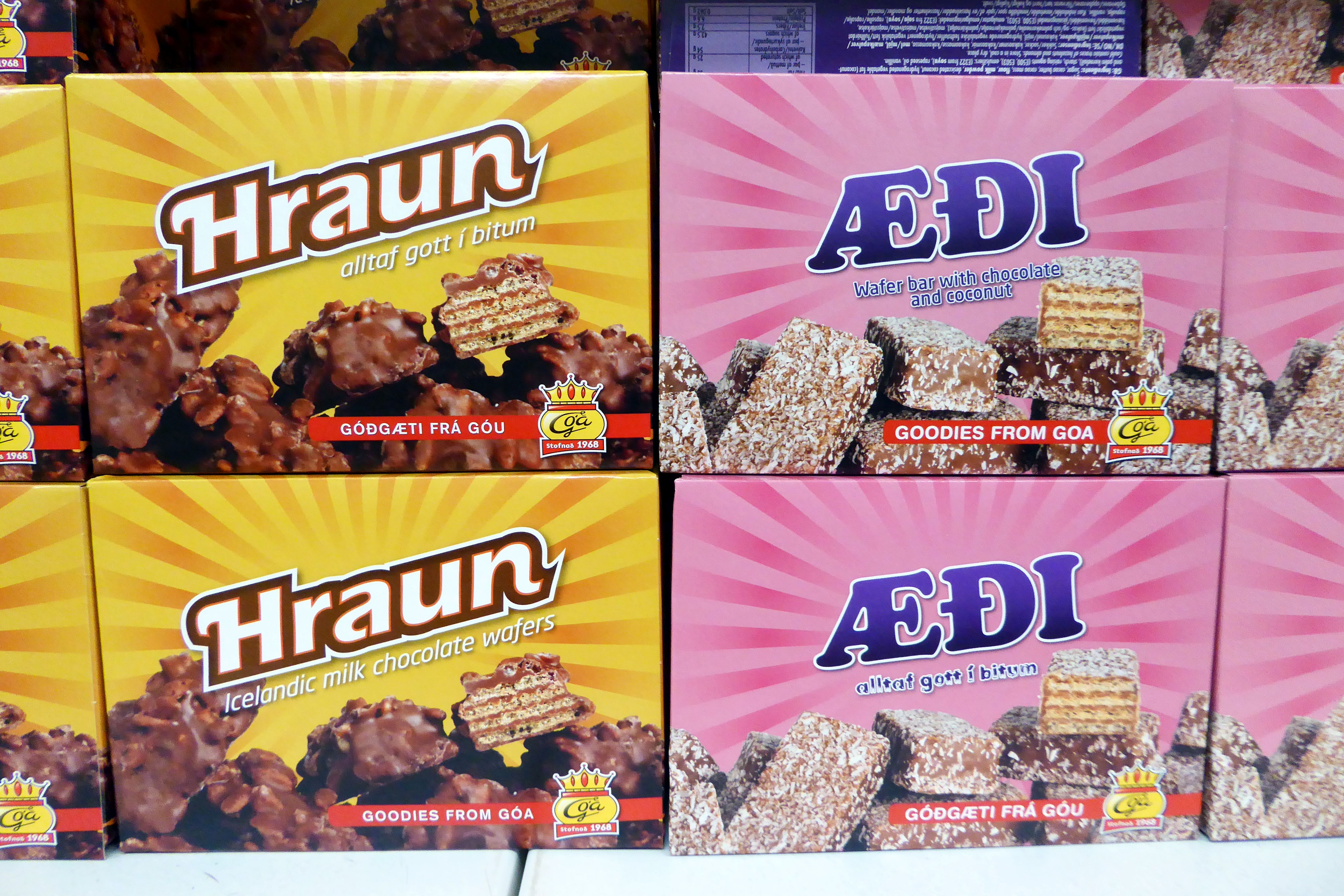
See those bags and boxes of chocolate-covered treats? Our tour leader, Thorunn, often surprised us on the bus or at the end of a group lunch by offering these to us to sample. At the end of lunch one day, a bowl of Hraun magically appeared on our table, just as I was thinking to myself, “I sure would like some chocolate right about now…”
It was fun tasting the various Icelandic treats. The only one that didn’t appeal to me was the chocolate covered black licorice ball. Not a fan of black licorice! It is very popular in Iceland, though, and quite abundant on the candy aisle. I learned the Icelandic word for licorice, so I could avoid it at all costs as I did my chocolate shopping: “Lakkris.” If you love black licorice like a couple on our tour did, you would LOVE the candy aisle in an Icelandic grocery store! Cheers, Brenda and Peter!
Coming up next: Rambling Around Reykjavik
Note: If small group travel is of interest to you, I highly recommend Overseas Adventure Travel (OAT). Although Bruce and I travel together, they do not charge a single supplement for those who travel on their own. Singles also get their own room at hotels. If you book, you can get $100 off your trip by providing my name and customer number (Elaine Krugman, #3018126) as the person who referred you. I will also get $100 off future travel– a win-win!
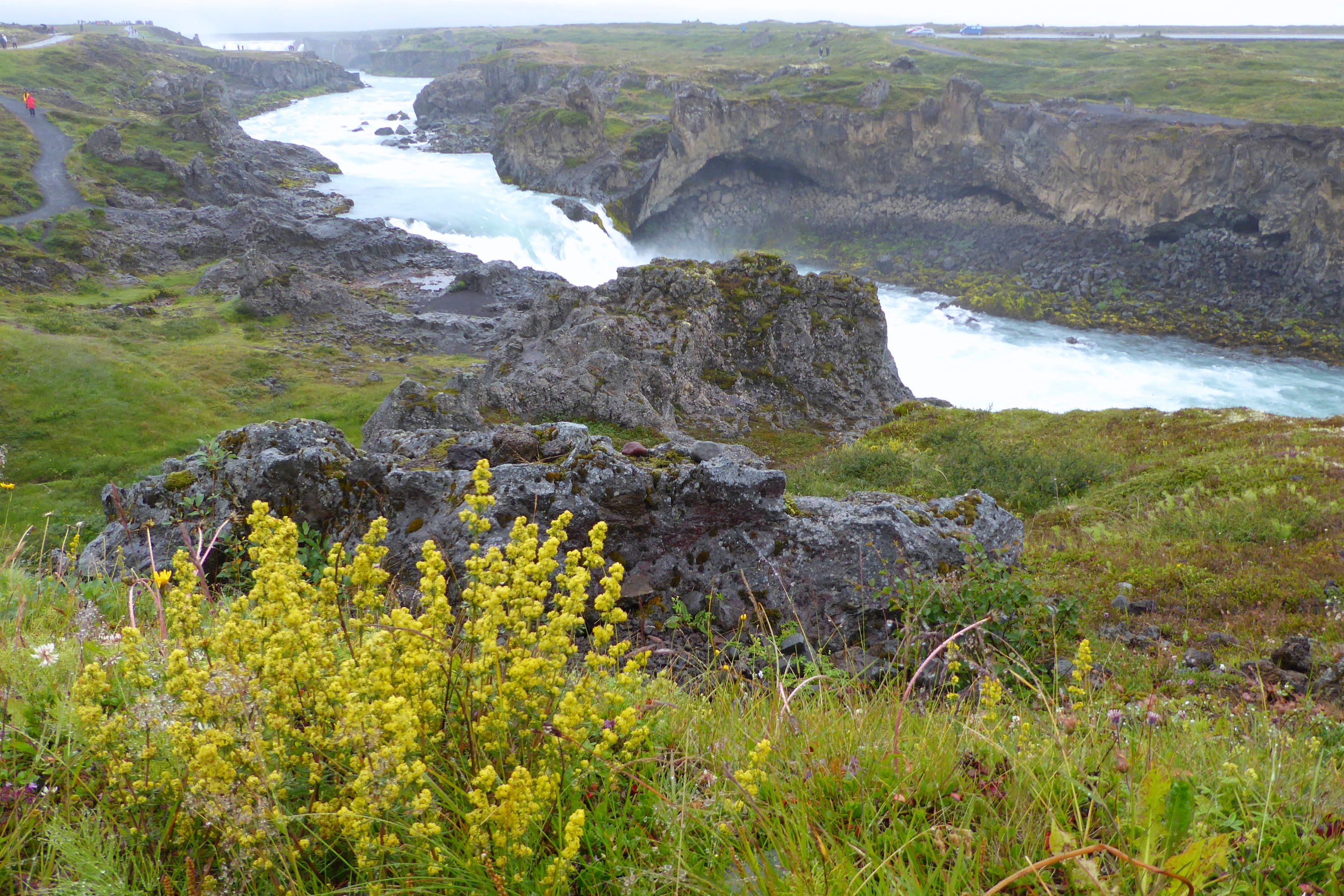
If I could have swapped one of our sunny days in Selfoss for this day instead, it would have been perfect. Godafoss Waterfall would have been beautiful on a sunny day, but it was raining; not the best conditions for photography. Still, what an amazing sight! We hiked the path up one side, and then doubled back, crossed the bridge, and hiked up the other side. The volume of rushing water was so powerful that the sound was mesmerizing. I shot a short video, just so I could hear the sound of that water again when I returned home.
(For all pictures, click on the image to see full screen view.)
At one point during the days’ travels, we passed through a five-mile-long tunnel through a geothermal area. The temperature was 51degrees outside of the tunnel, but 66 degrees inside the tunnel!
Our next stop was interesting. We observed the process of harnessing geothermal energy to bake Hverabraud (Icelandic rye bread) in the ground. The best part (of course!) was getting to taste it. Quite dense, the bread was piping hot, sweet and tasted great with butter.
Historically, the bread was baked in a wooden vessel, but now, buckets with lids are used. Sites for baking bread can be found around hot springs close to villages in the Icelandic countryside. Each family has their own hole in the ground in which they bake their bread.
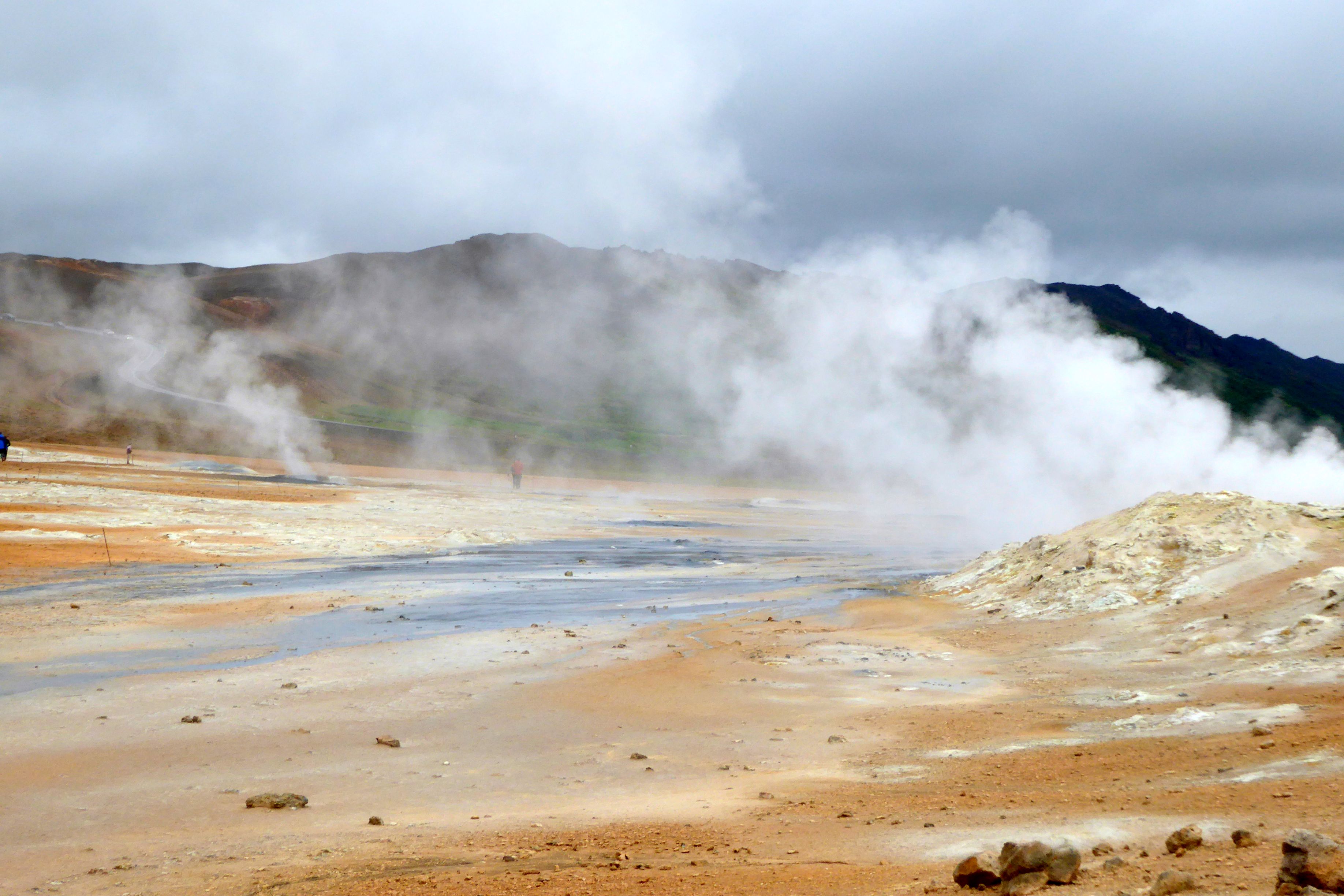
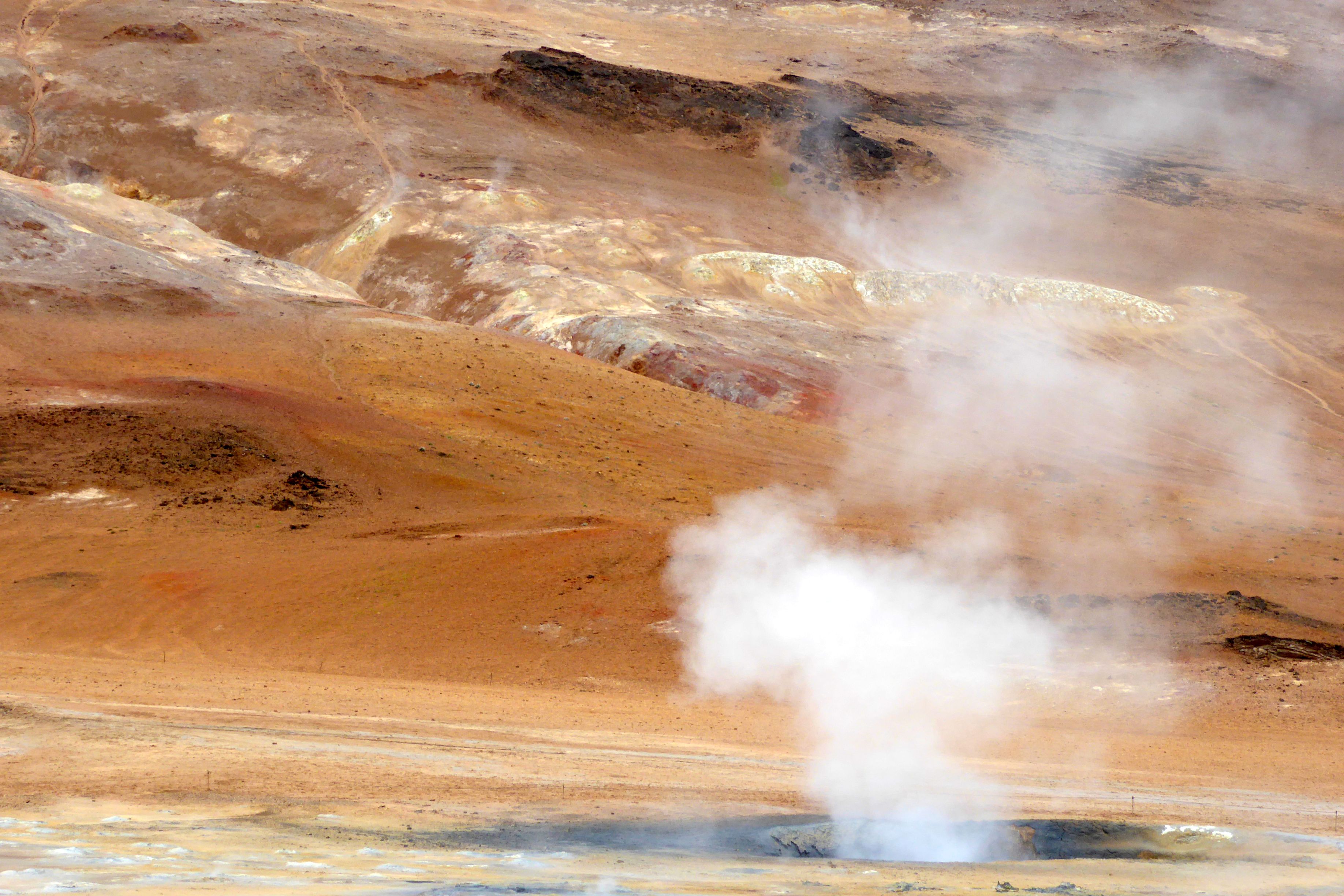
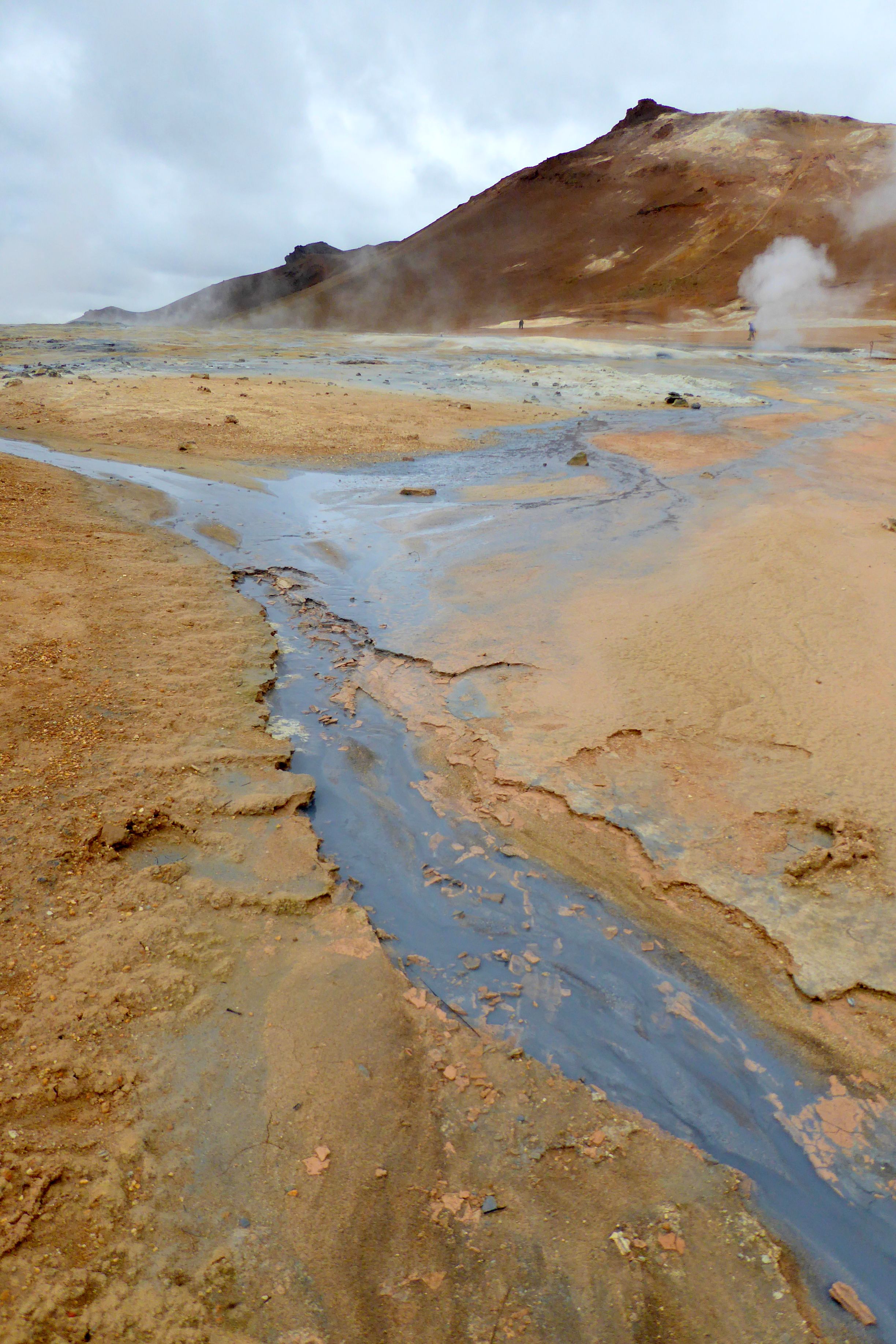
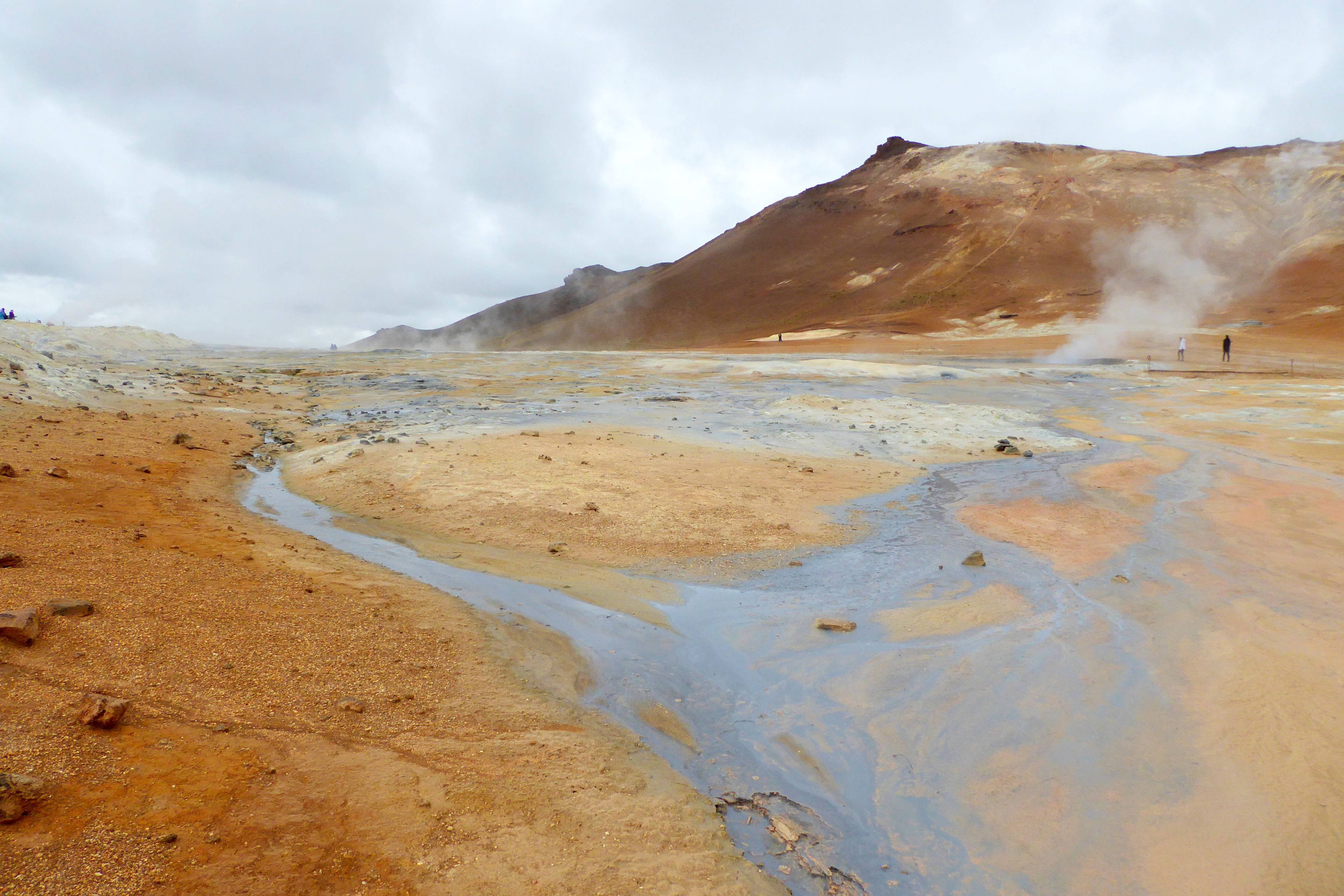
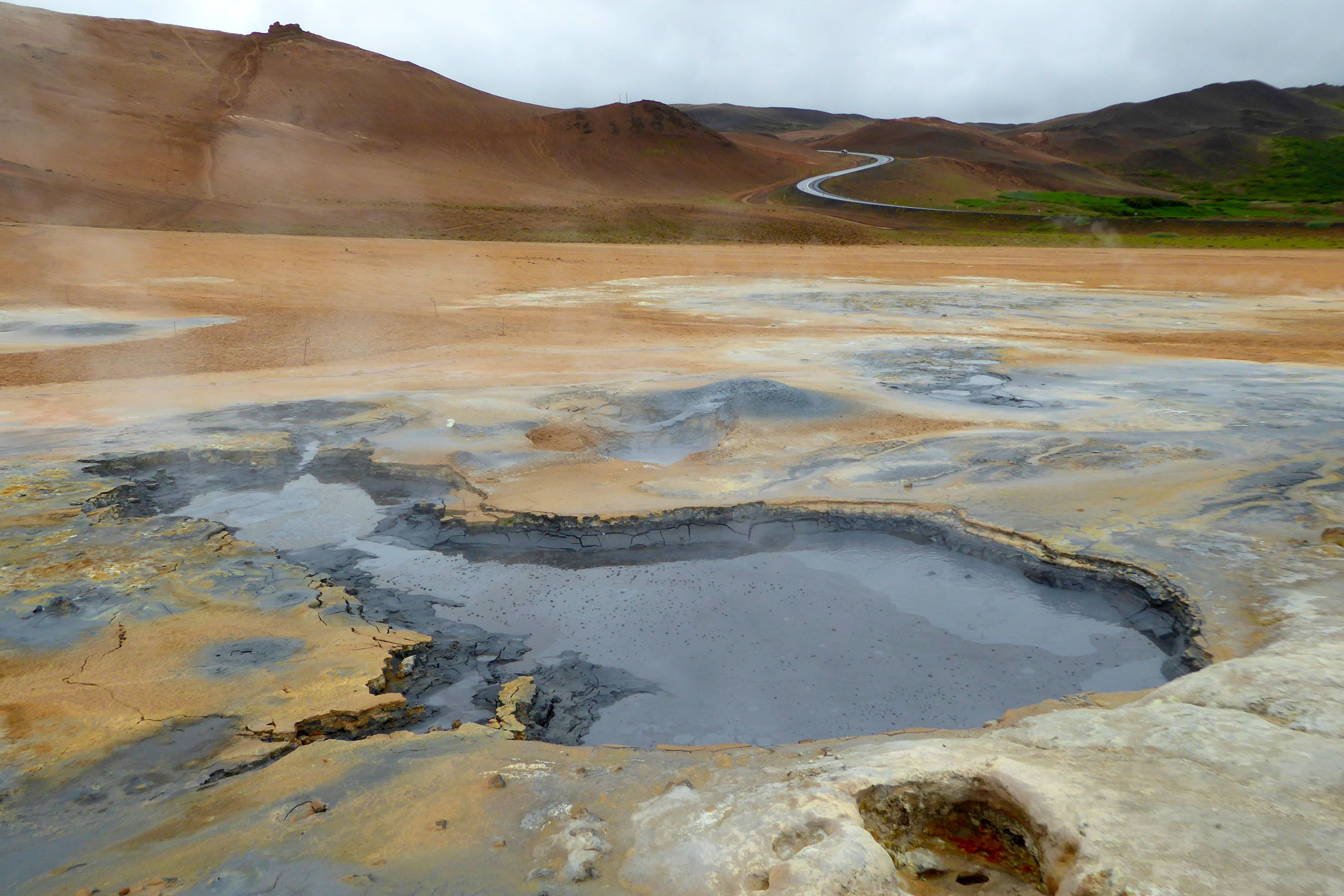
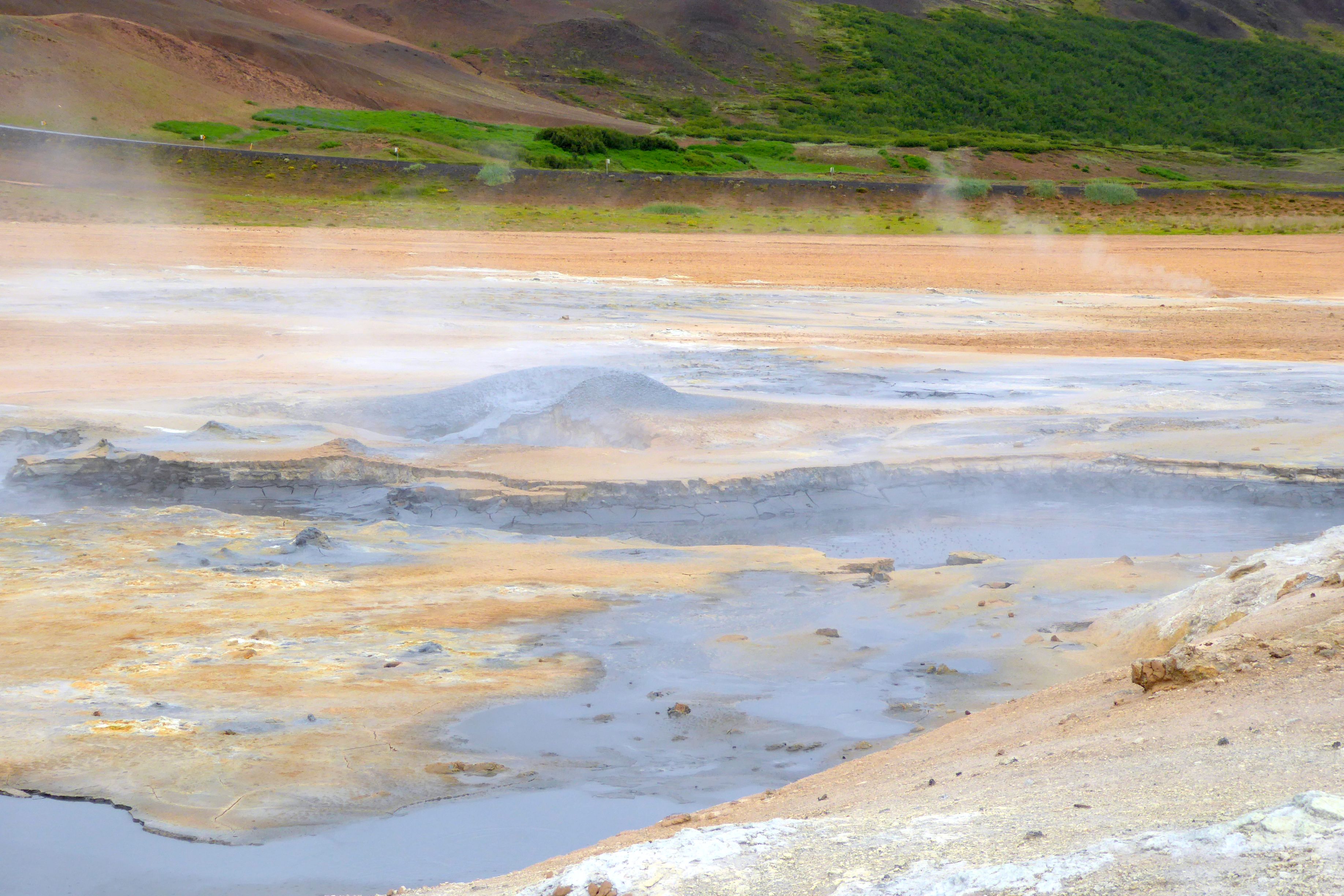
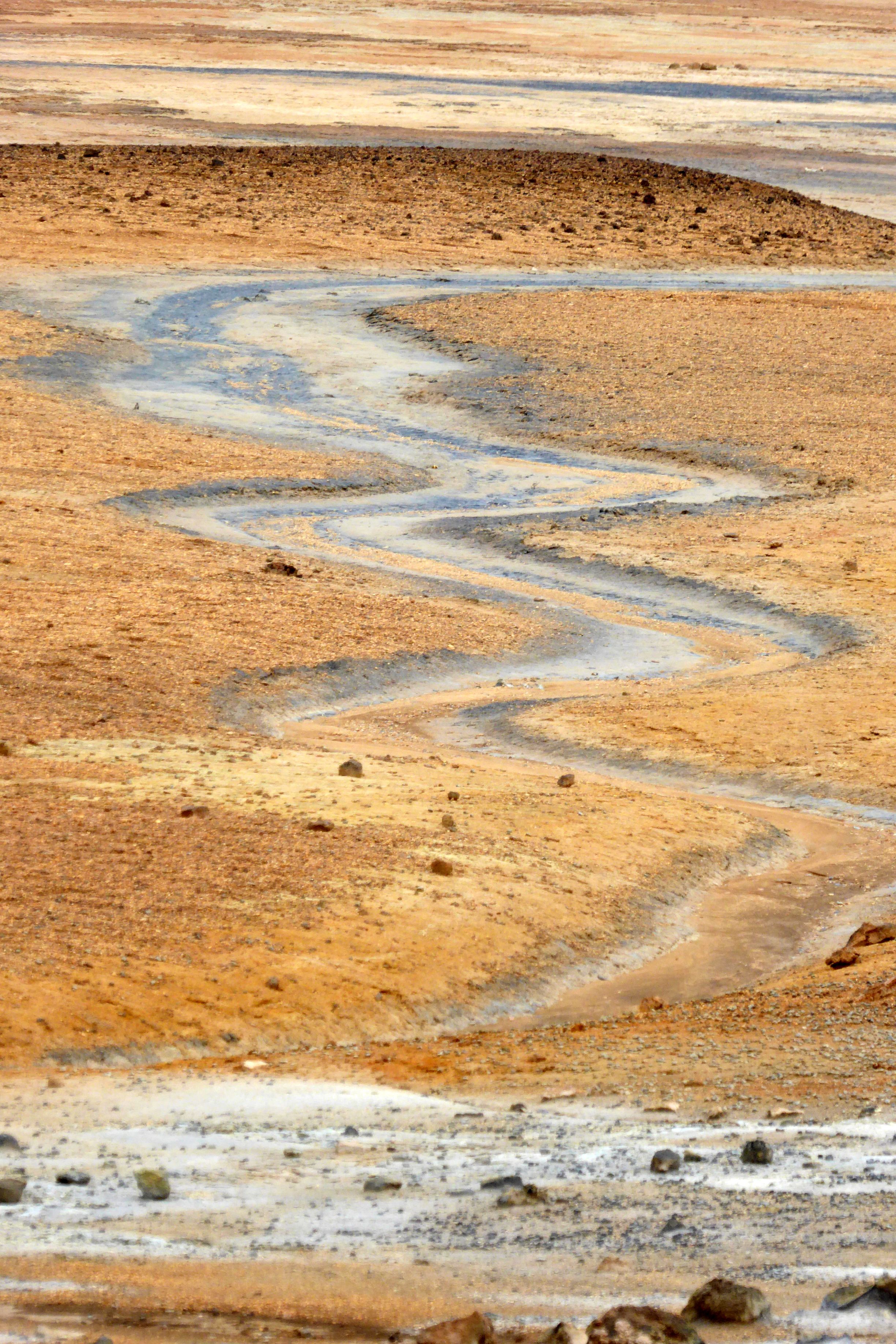
Namafjall, the next place we visited, fascinated me. Watching the bubbling hot mud pools in this geothermal area and seeing the variations in the earth made it feel like we were on another planet. Three thousand feet below the surface, the temperature is about 400 degrees! Due to the hydrogen sulfide in the steam, it smelled like eggs – not the most pleasant odor; but, it was worth enduring to see this fascinating area.
We continued on to Dimmuborgir, and I experienced the same feeling I had at the mud pools and several other places we had visited in Iceland: I was on another planet! But, isn’t that what travel is all about? I love experiencing the unfamiliar!
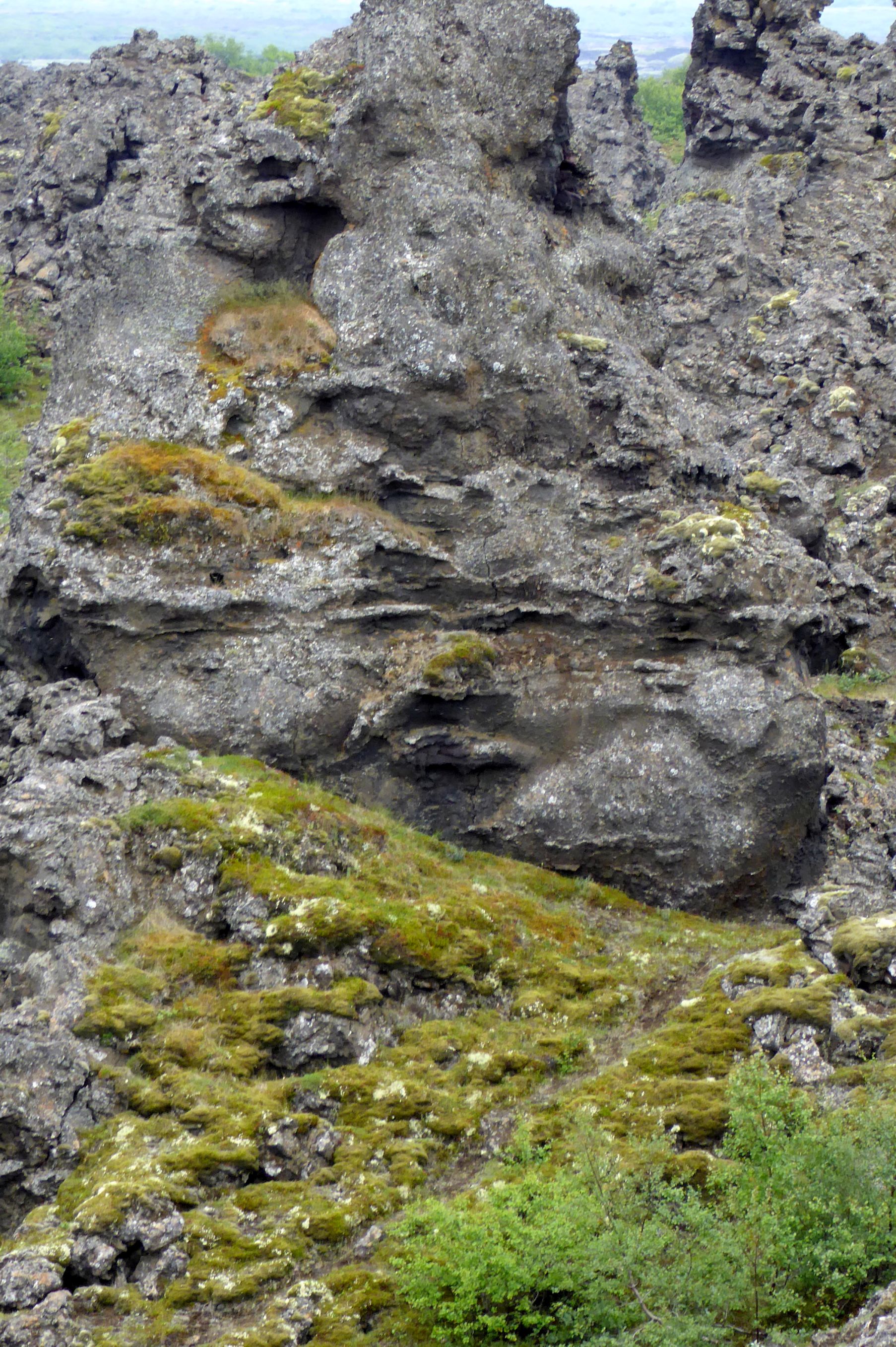
Dimmuborgir is full of whimsical “black castle” lava formations created when the crater row erupted around 2,300 years ago. Our group had fun spotting faces in the lava. Can you see the curvy lips and full cheeks in this one? (Hint: They appear just above the grassy area.)
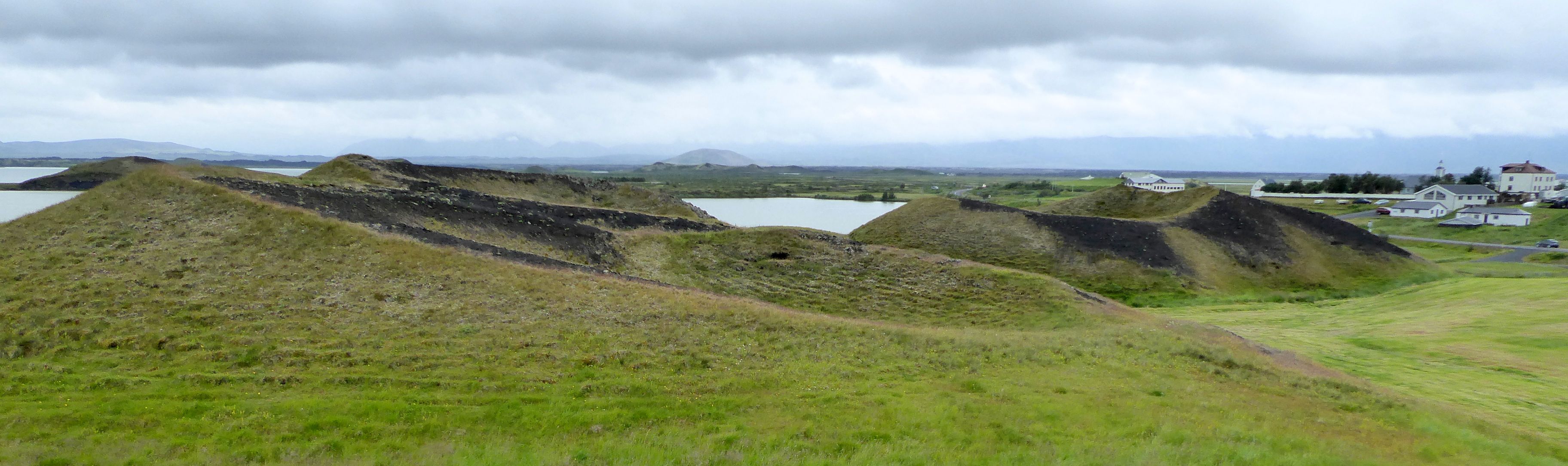
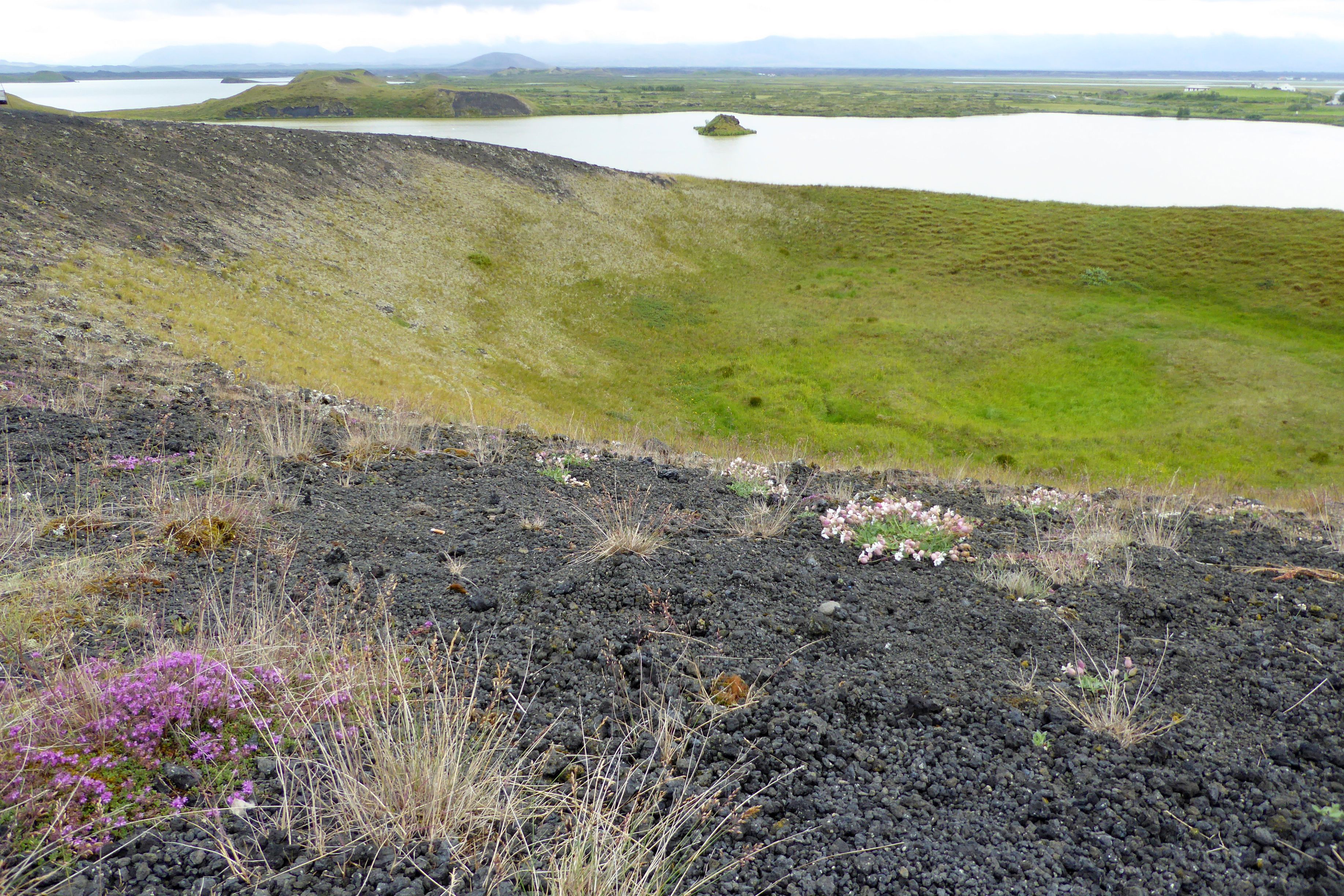
Our final other-worldly visit was to Skutustadir. Click on the link to see an awesome aerial shot taken on a sunny day. These pseudo craters are in the Lake Myvatn area near the Krafla volcano system. During eruptions, lava ran across the area, which at the time was swampy wetlands. The heat caused steam eruptions, which resulted in their crater-like shape.
Bruce and I enjoyed hiking around the area and taking in the views from the tops of the craters.
We also enjoyed stopping here after our hike for some homemade Icelandic ice cream…
…and visiting their pets.
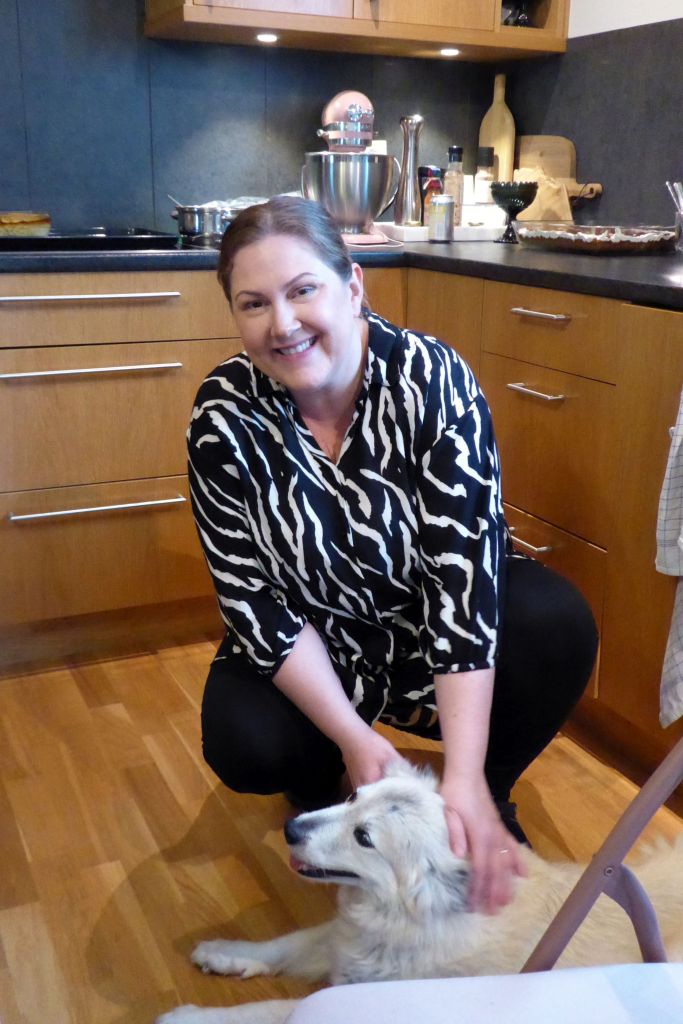
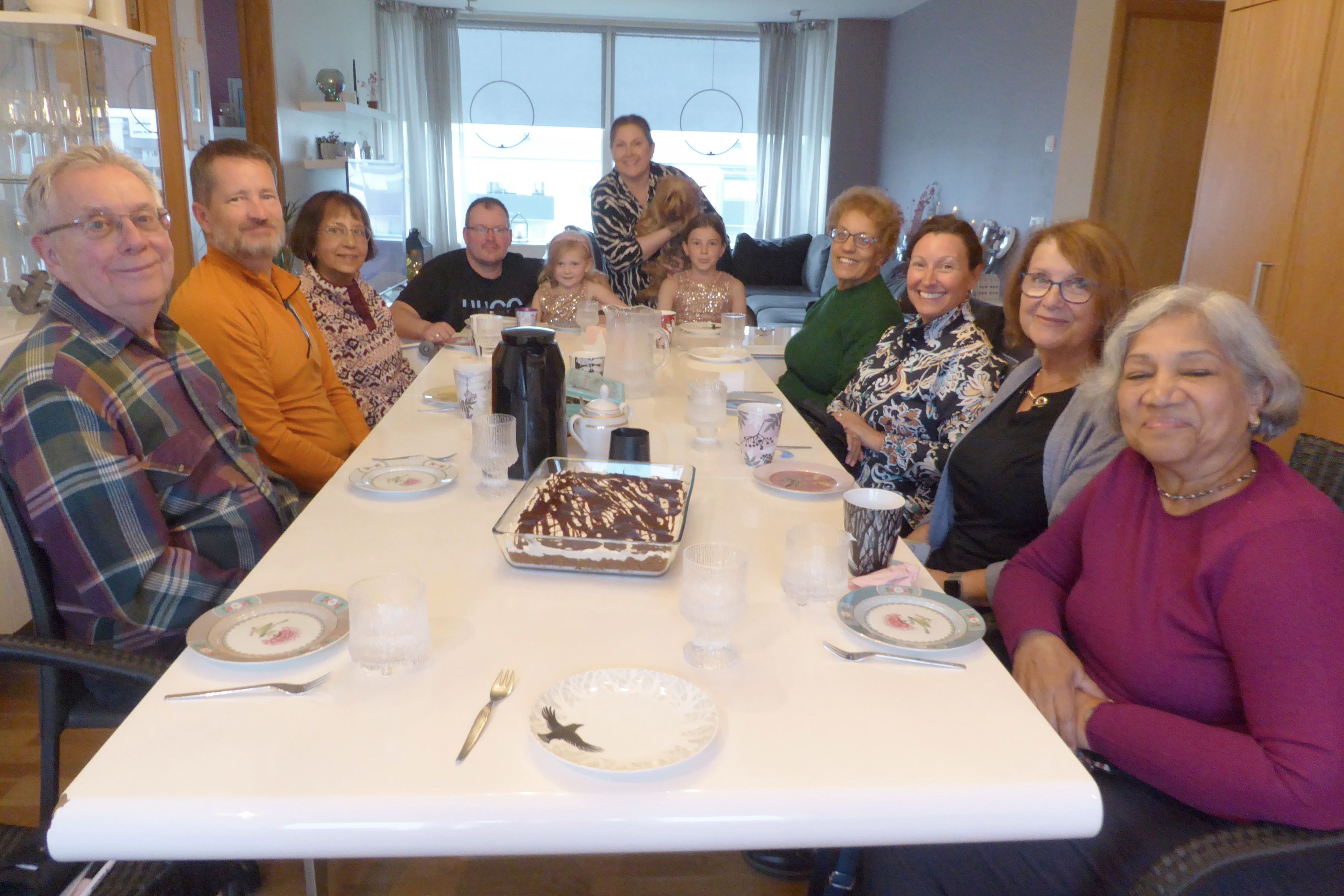
In the evening, our group was split in half for home-hosted dinners at two homes. Our group was hosted by Esther, Gunnar, and their two adorable daughters, Berglind (9) and Elizabeth (4). They were such a sweet family, and they lived in a lovely apartment.
Throughout the evening, their TV was tuned into the video cam of the erupting volcano – such an amazing sight that had us enthralled in between conversation and petting their cute dogs.
Esther is studying computer science to become a programmer, and Gunnar is a commercial fisherman. He caught a huge cod for our delicious dinner that was prepared by Esther. Berglind kept busy as our server and did a great job! Bruce gave Esther and Berglind each a pair of his fused glass stud earrings as a gift, and I gave Gunnar some of my photo cards to share with Elizabeth.
It was such a fun evening, and a highlight of the trip (as always!). Looking back, my favorite travel memories have been of the home-hosted visits I have done with Overseas Adventure Travel, and previously, Vantage Travel, when we traveled with them (before their bankruptcy).
Esther, Gunnar, Berglind, and Elizabeth: Thank you for such a special evening I will always remember!
Next up: Watching Wonderful Whales!
Note: If small group travel is of interest to you, I highly recommend Overseas Adventure Travel (OAT). Although Bruce and I travel together, they do not charge a single supplement for those who travel on their own. Singles also get their own room at hotels. If you book, you can get $100 off your trip by providing my name and customer number (Elaine Krugman, #3018126) as the person who referred you. I will also get $100 off future travel– a win-win!
Our afternoon arrival to Akureyri was a rainy one, just as it had been much of the day, on and off. Fortunately, it never rained hard, so we donned our waterproof gear and carried on.
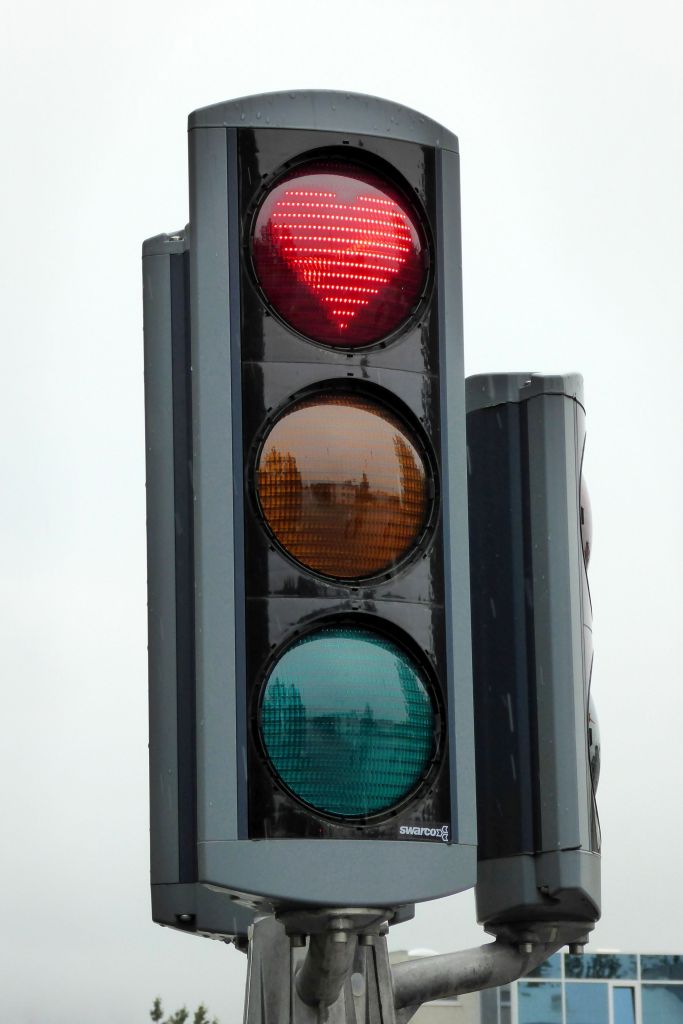
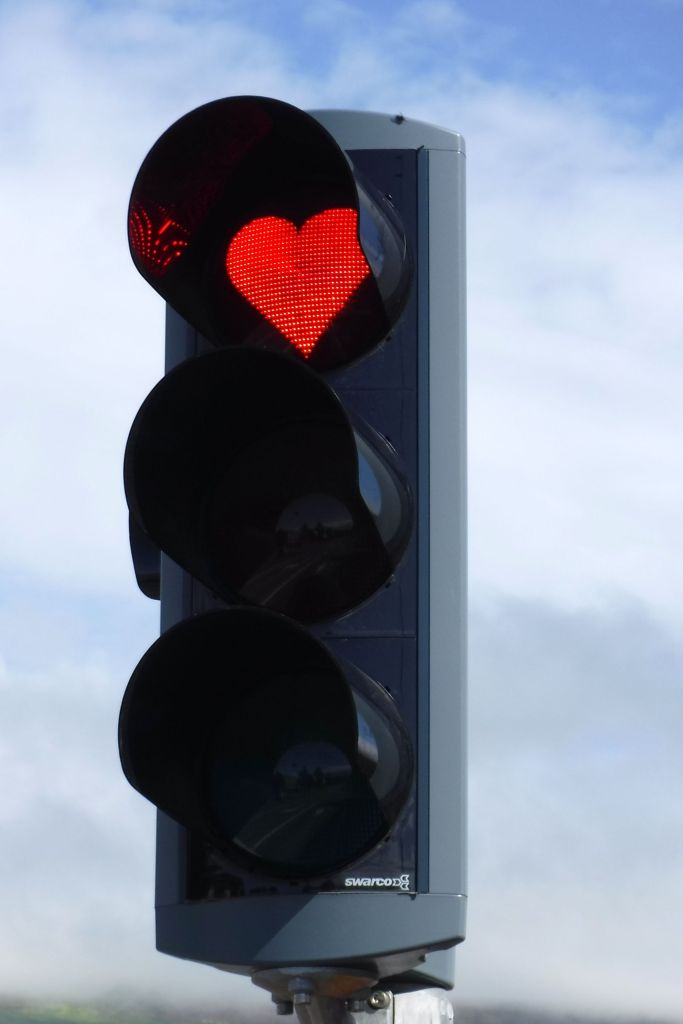
I found Akureyri appealing, regardless of the weather. As we drove into town along the waterfront, I gazed out the bus window and did a double-take as we stopped at this red light. (I photographed another one the next day by the pool, since it was a bright, sunny day!)
Awww; it was love at first sight! What a clever idea and a warm welcome to Iceland’s fifth-largest city, and the largest city in North Iceland. Still, it only has just a bit over 19,000 residents.
Nicknamed the “Capital of North Iceland,” Akureyri is an important port and fishing center. Surprisingly, given how far north it is, the climate is relatively mild. They don’t get much sun, but the temperatures are not extreme. The harbor is even ice-free in the winter, which is a huge advantage for the fishing industry.
Although the waterfront is flat, the topography becomes quite steep and hilly just a short distance from the main part of town. This added visual interest and character; I quite liked it. (Besides, it was a great workout for the legs while walking back up to our hotel up on the hill!)
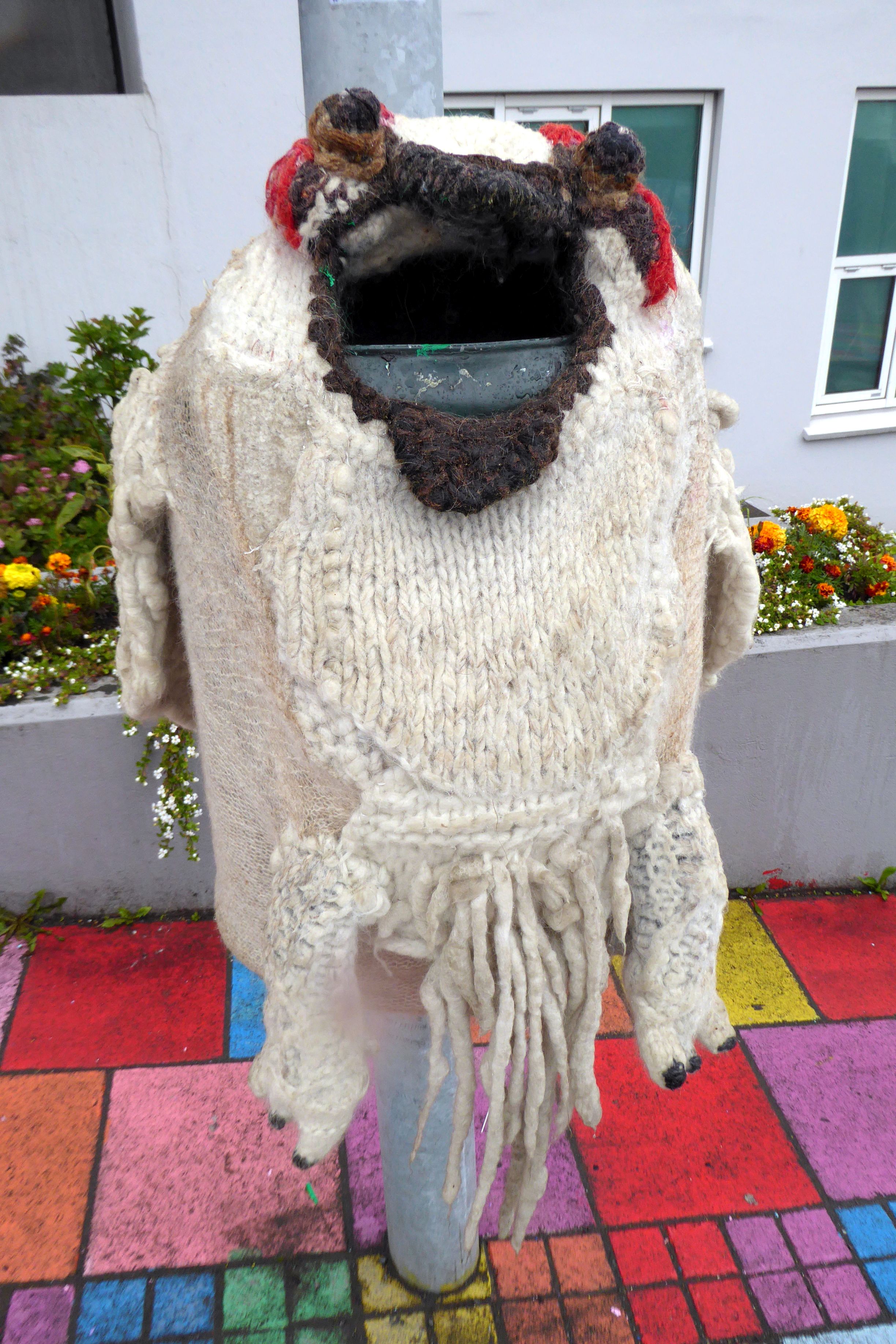
Akureyri has an active cultural scene—especially folk culture. I liked the artsy vibe of the town, especially these quirky knitted trash receptacle covers around town:
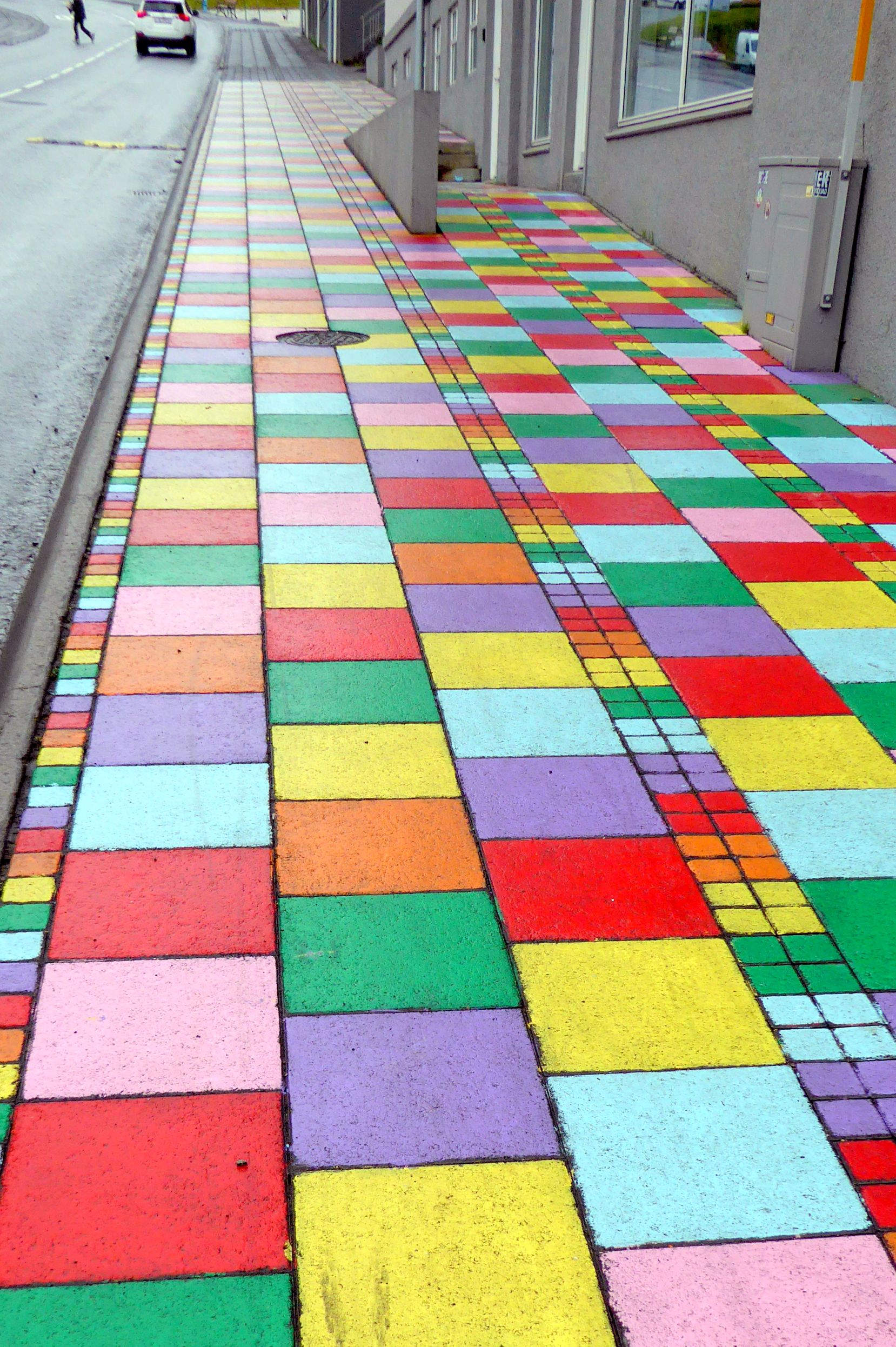
I also loved this splash of rainbow colors to brighten up an otherwise boring concrete sidewalk:
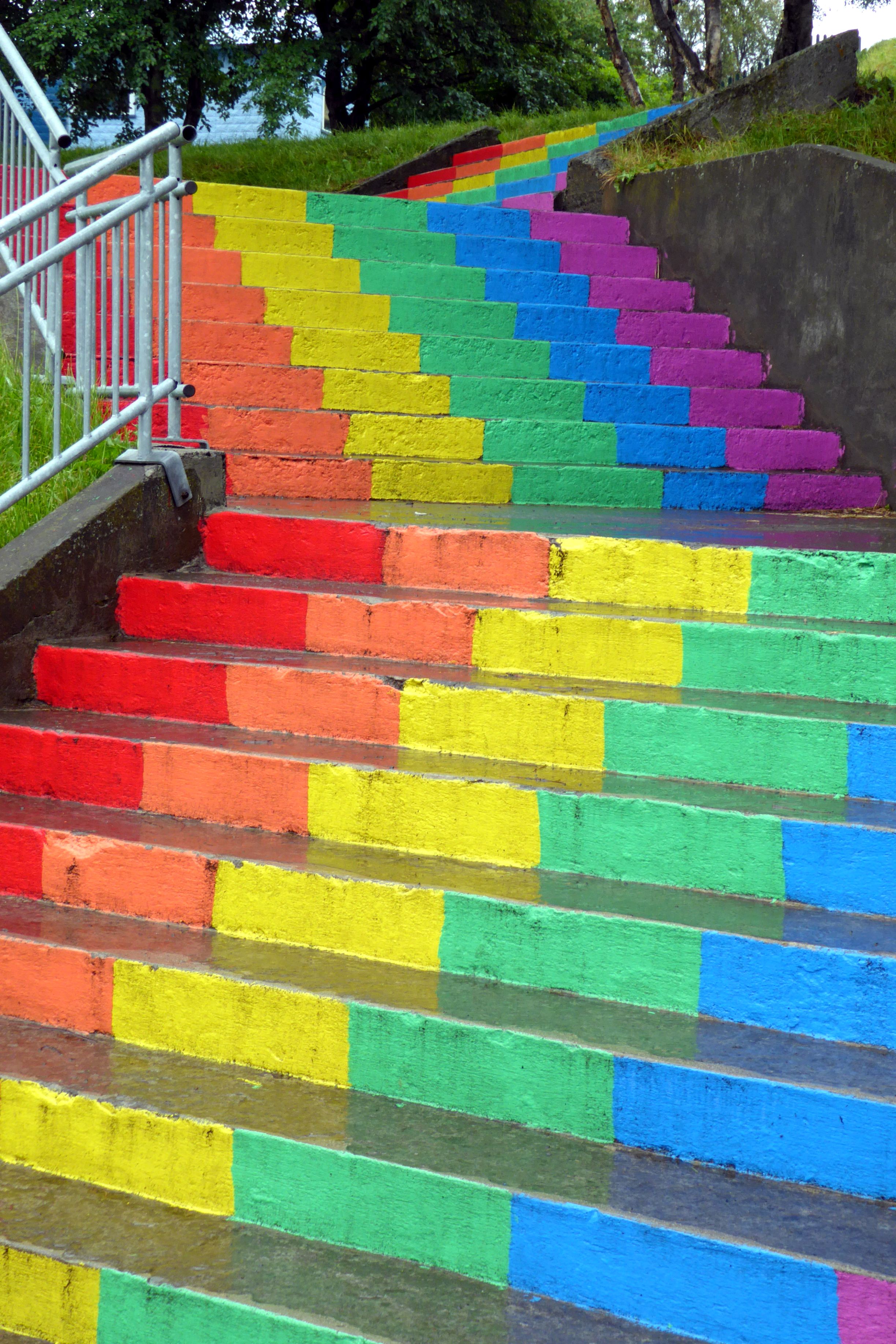
The same for the rainbow stairs. Good on Iceland for being inclusive!
After we settled in at the hotel, Thorunn took us on an orientation walking tour of the town. Just across the street from the hotel was this awesome swimming facility I wrote about in my first Iceland blog post:
Nearby, we took a brief walk through the Akureyri Botanical Garden, established in 1912 by a group of local women who had founded the Park Association, two years earlier, to beautify their city.
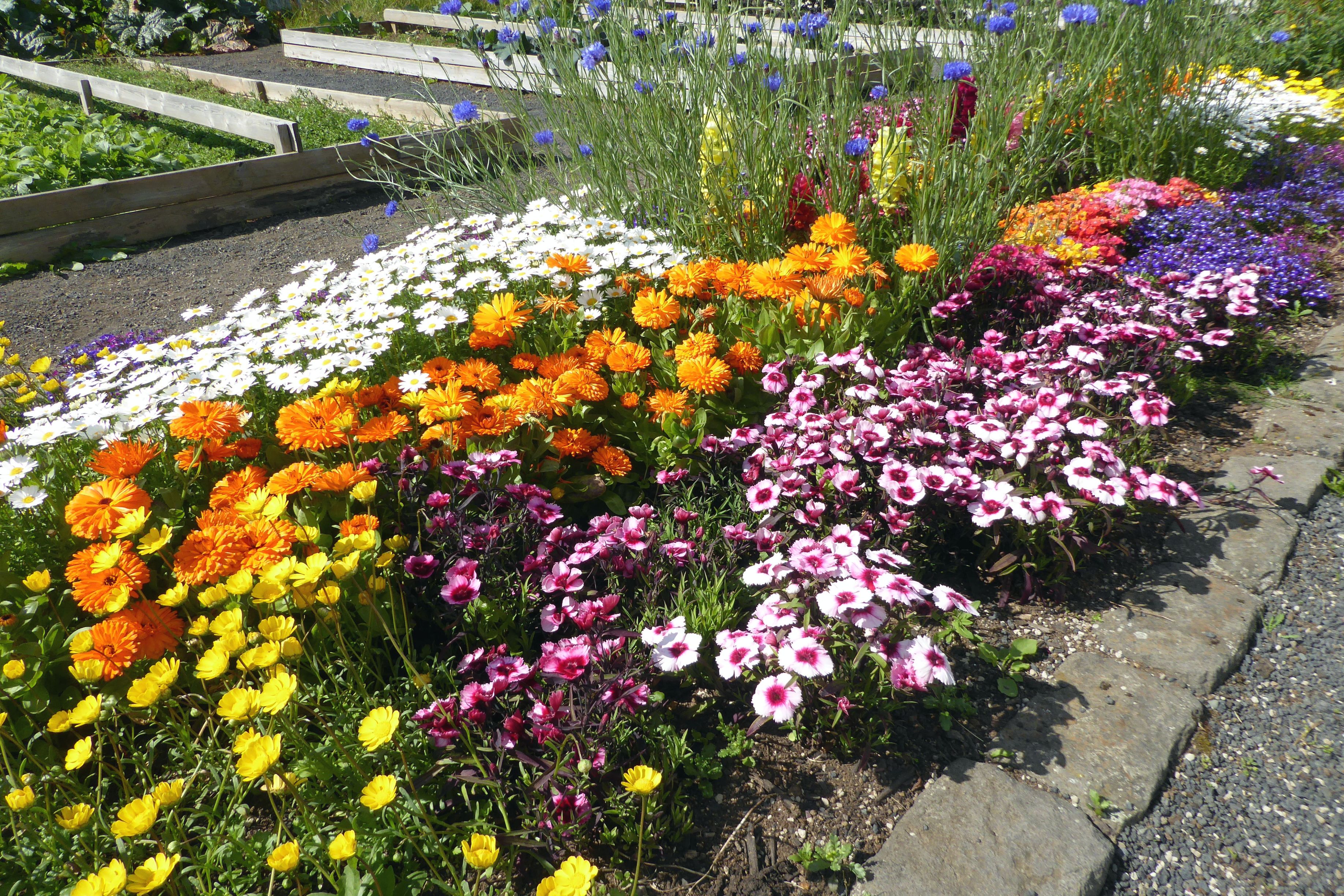
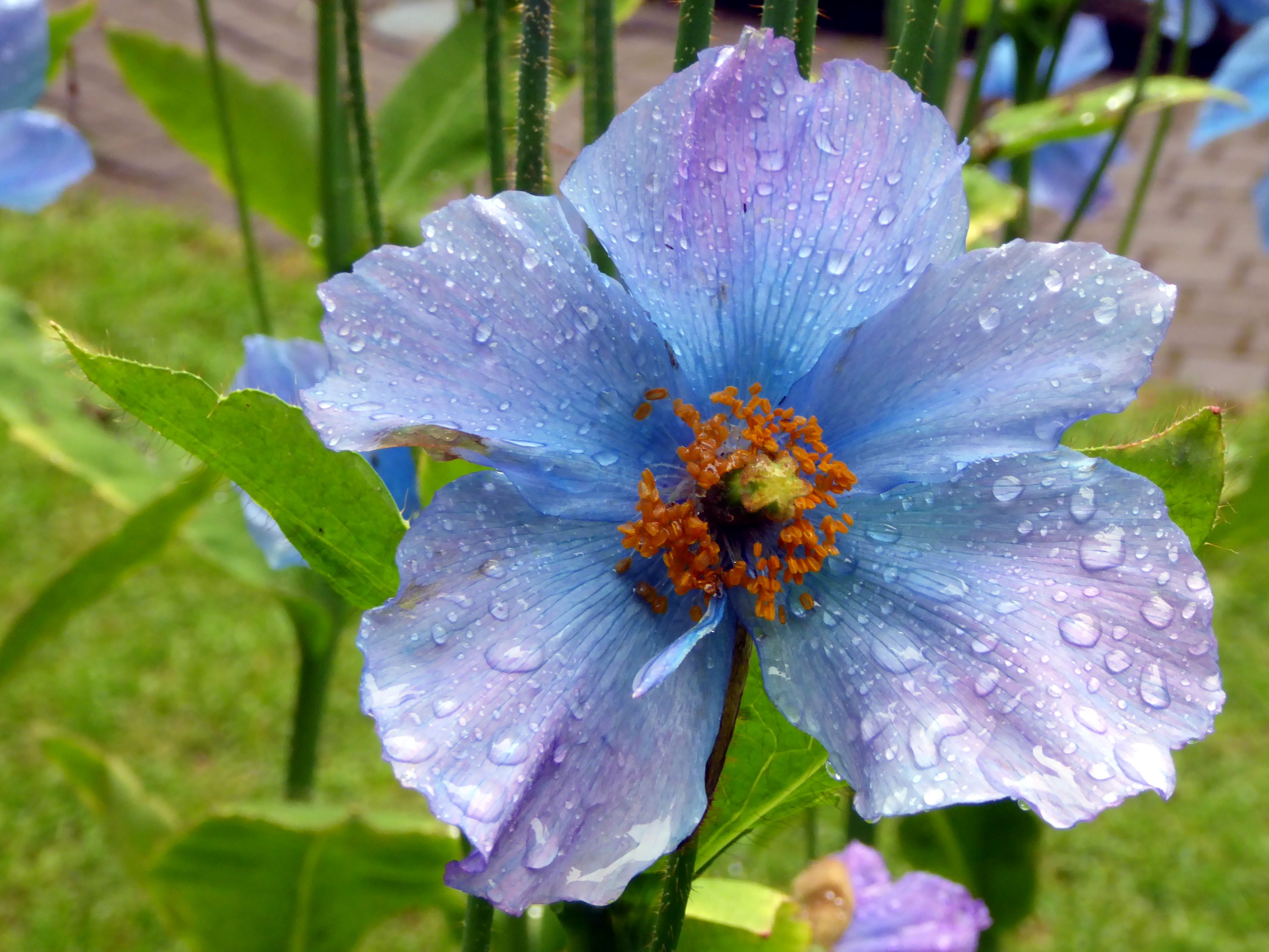
I fell in love with these Himalayan blue poppies!
Rather than returning to the hotel with the group, we headed back down to town to do some exploration on our own before joining our group at the hotel for dinner.
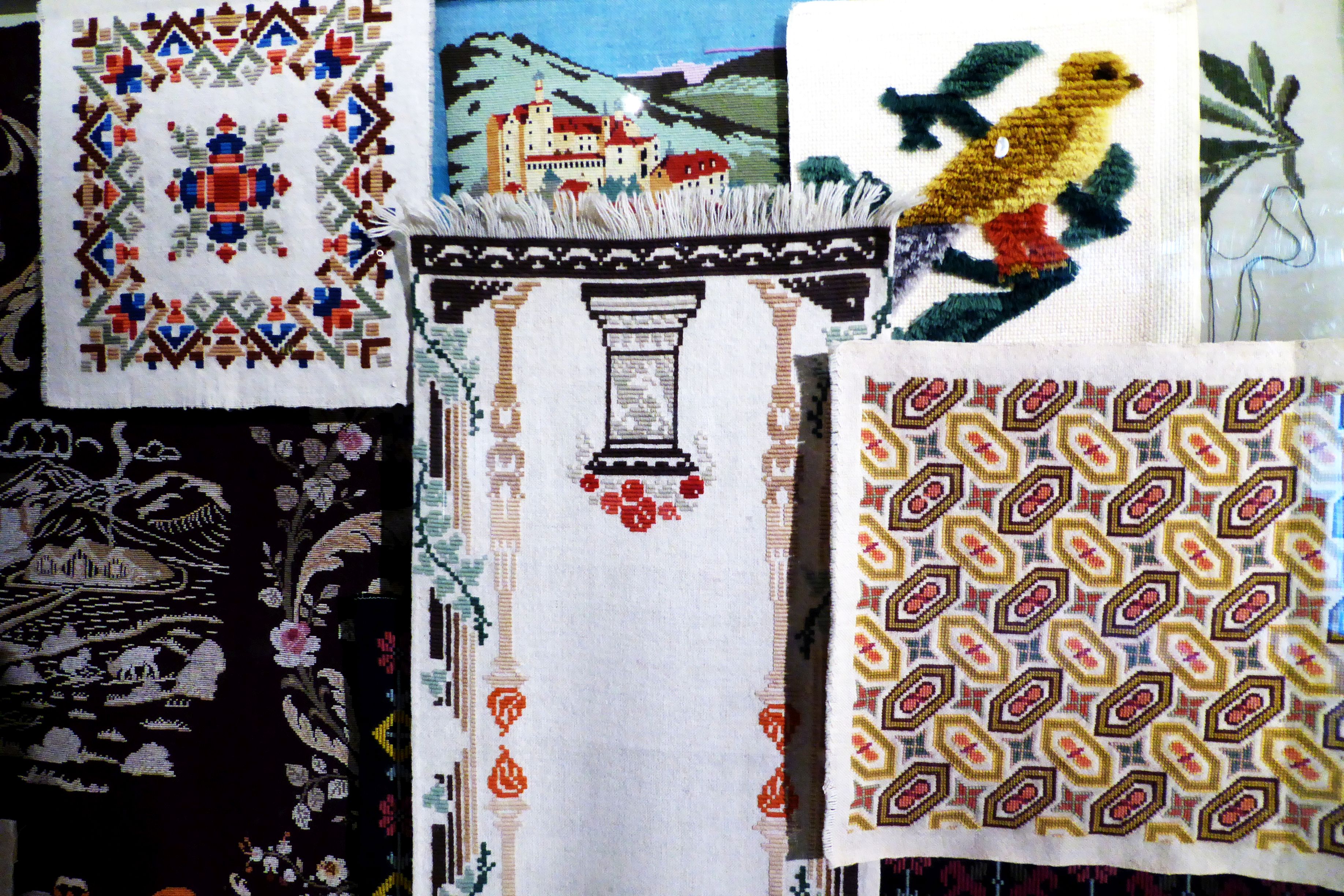
A window display in a folk art gallery
Coming up next: More of North Iceland’s Natural Wonders & A Home-Hosted Dinner
(For all pictures, click on the image to see full screen view.)Note: If small group travel is of interest to you, I highly recommend Overseas Adventure Travel (OAT). Although Bruce and I travel together, they do not charge a single supplement for those who travel on their own. Singles also get their own room at hotels. If you book, you can get $100 off your trip by providing my name and customer number (Elaine Krugman, #3018126) as the person who referred you. I will also get $100 off fut
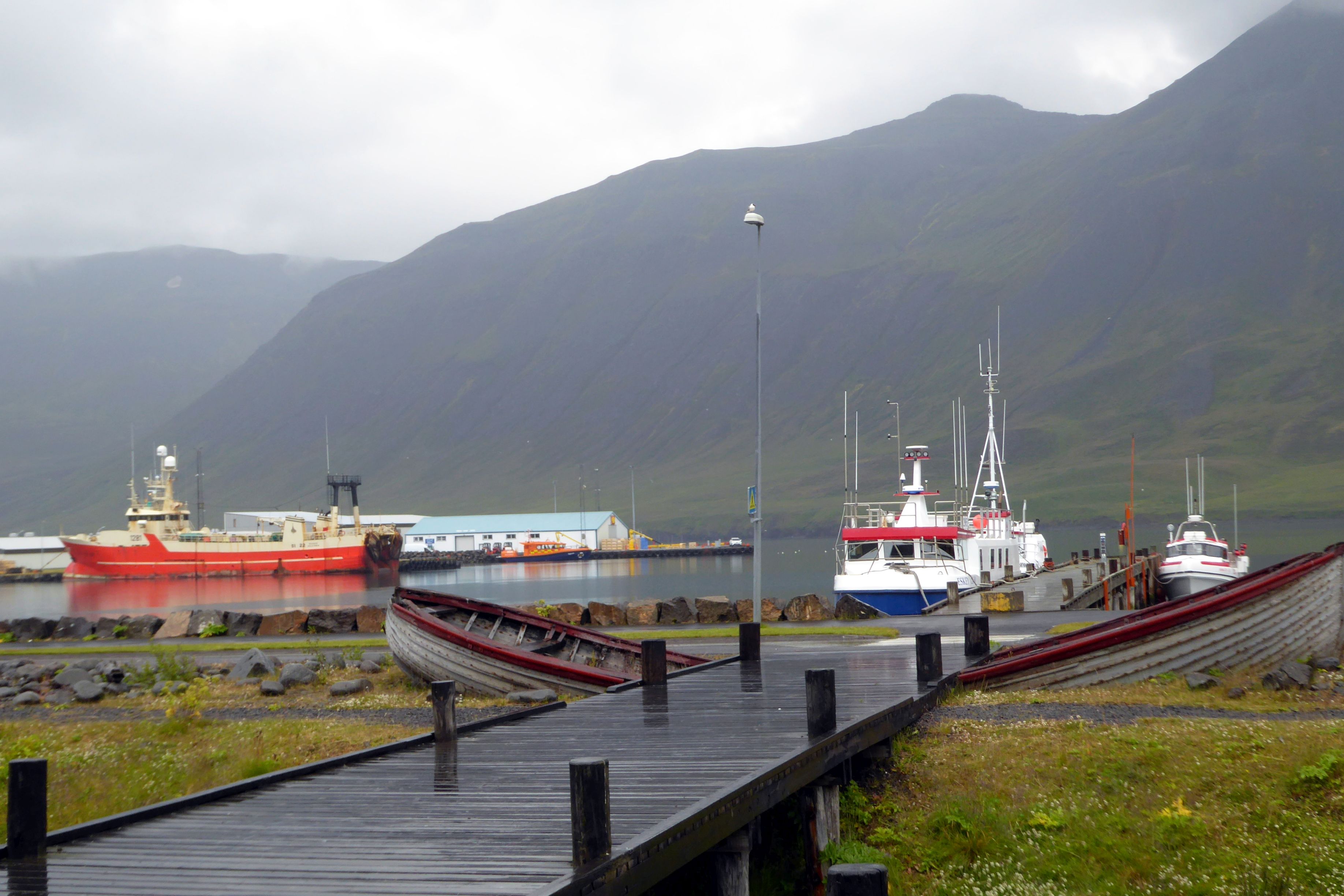
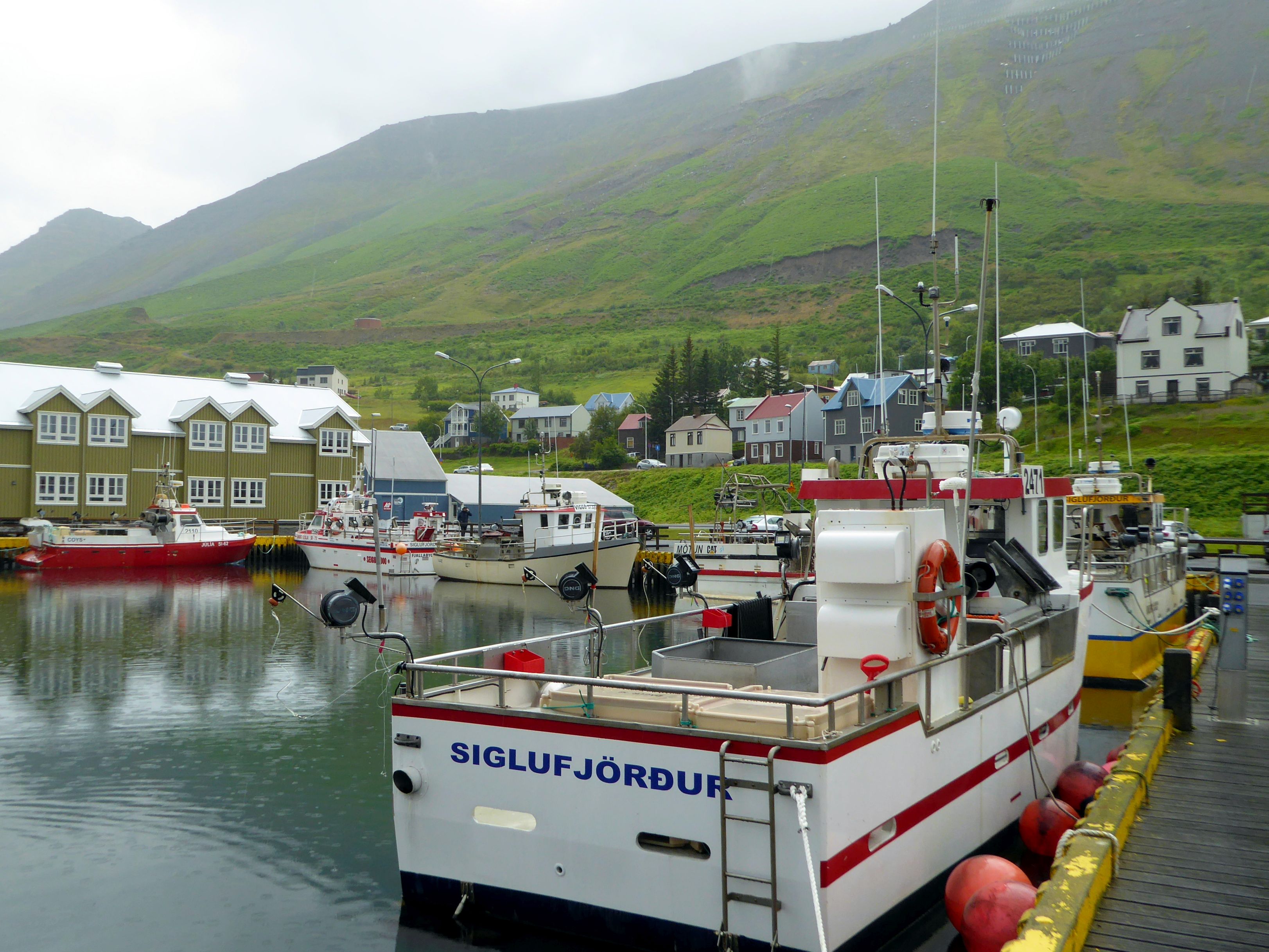
The next town on our tour of North Iceland, Siglufjordur, put us just 14 miles from the Arctic Circle. This was as far north as we got in Iceland and perhaps as close to the Arctic Circle I will ever get.
(For all pictures, click on the image to see full screen view.)
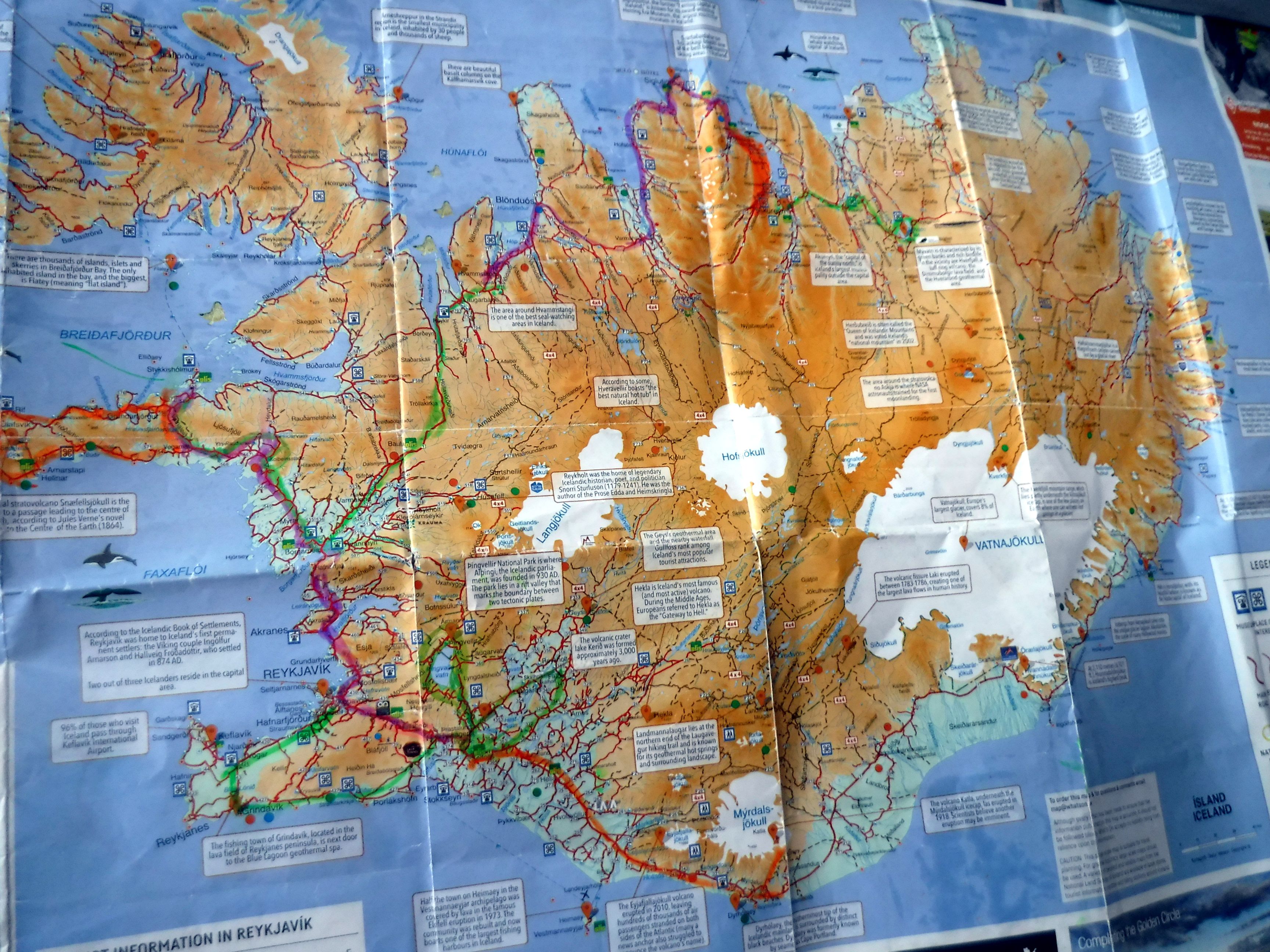
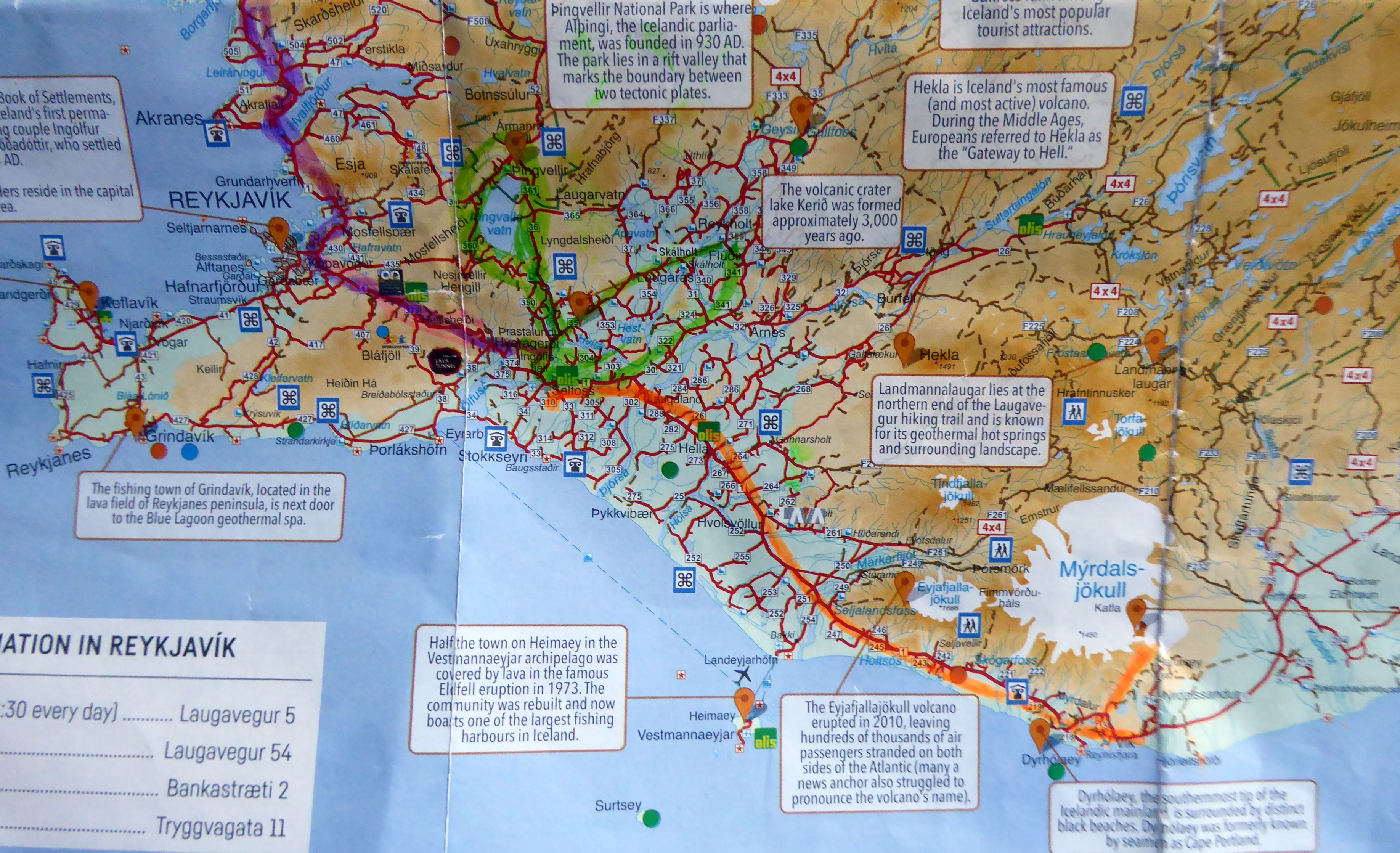
North Iceland: Each color represents a different day. Siglufjordur is the furthest north we got.These are the places we traveled before heading north. We returned to Reykjavik for the last three days.
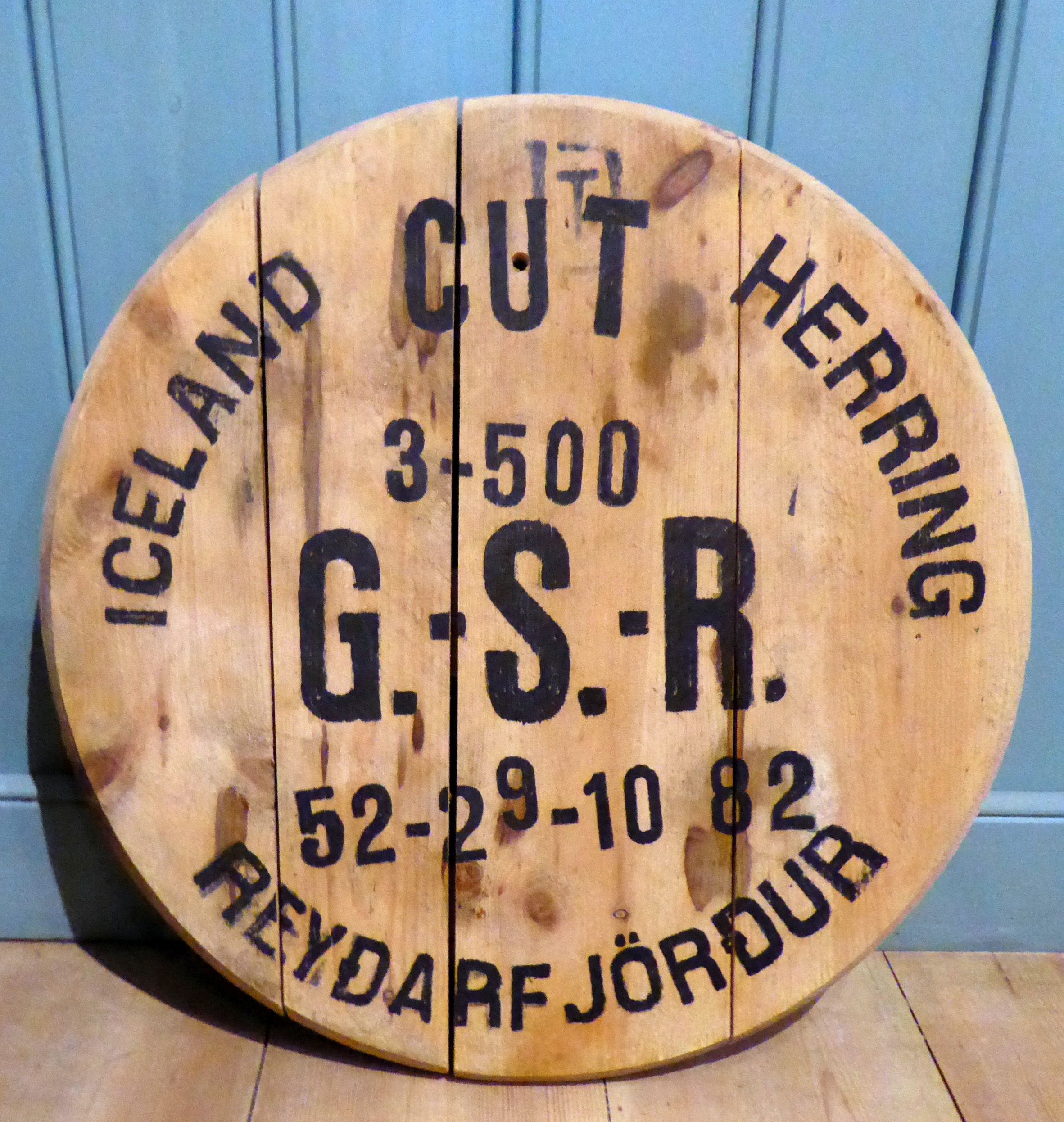
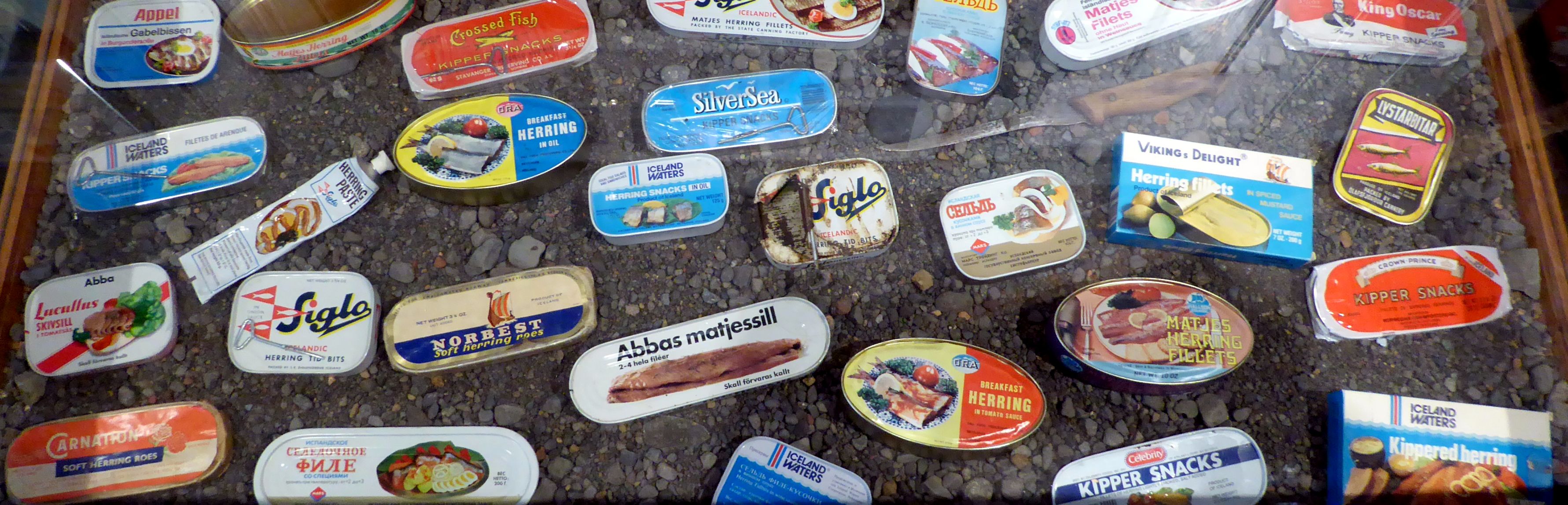
Known for their history of its fishing industry, Siglufjordur has been shrinking in size since the 1950’s, when the population maxed out at 3,000. What was the draw? Herring, and a lot of it! Siglufjordur was the largest herring town of all, thanks to the abundance of this profitable fish. In the 1960’s, however, the fishing industry collapsed, due to over-fishing and the major downturn of the world market for stockfish. The town had relied on just the one industry, which proved to be a catastrophic. People left, property values fell; and, many shops and services closed their doors. Today, there are less than 1,200 people calling this little town home.
Fortunately, the herring stock slowly recovered, although it is carefully regulated and monitored. The town also reinvented itself with the The Herring Era Museum and Folk Music Centre— both draws for tourism. It also hosts the Herring Festival every August, and the Folk Music Festival every July.
We made the journey to this quaint town to visit both museums. The Herring Era Museum brings back to life the “glory days” of Iceland’s herring fisheries and industry. As the 2004 winner of the European Museum Award, it was considered Europe’s best new museum of industry and technology. I can see why; it was worth the visit!
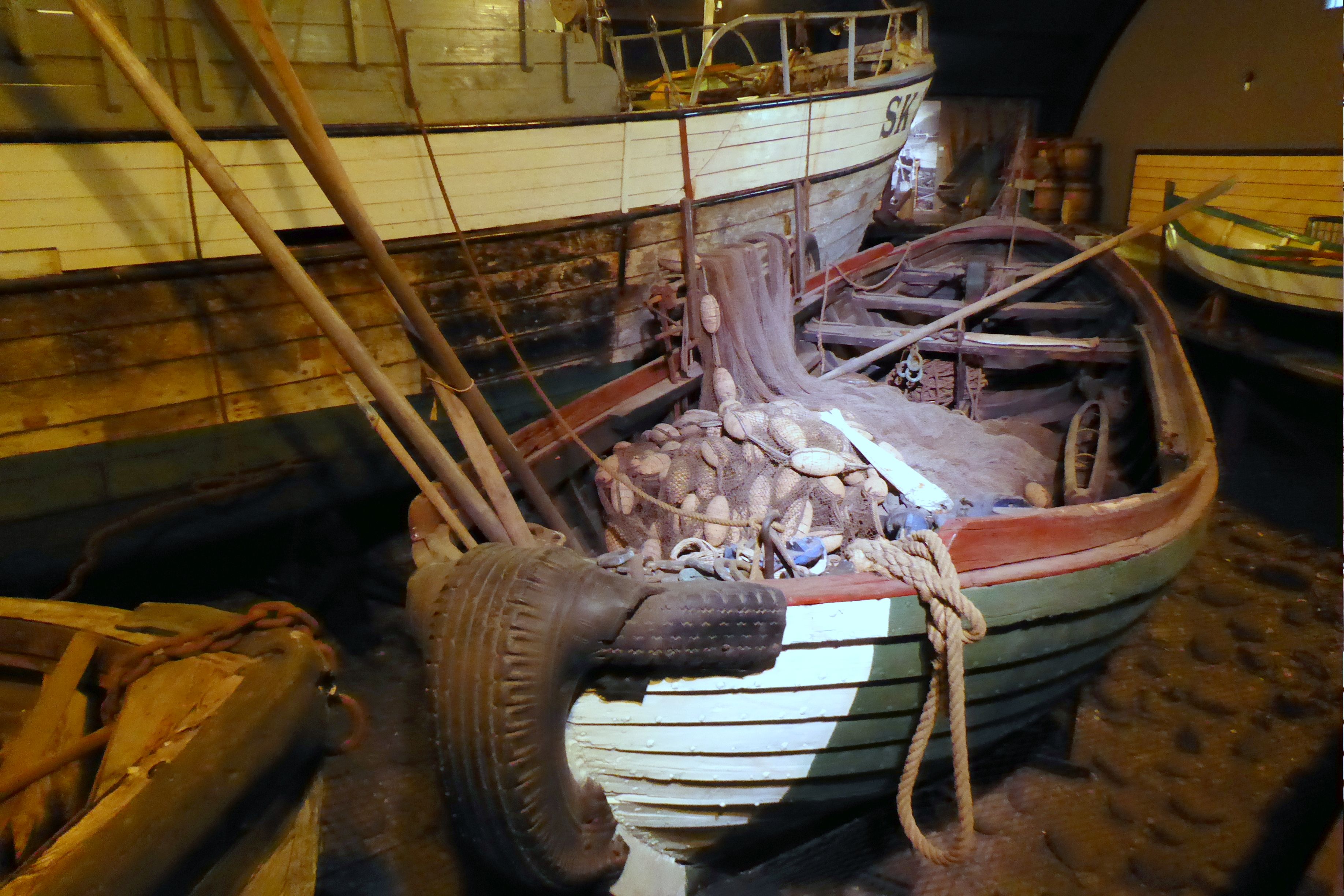
Fishing boats displayed inside the museum
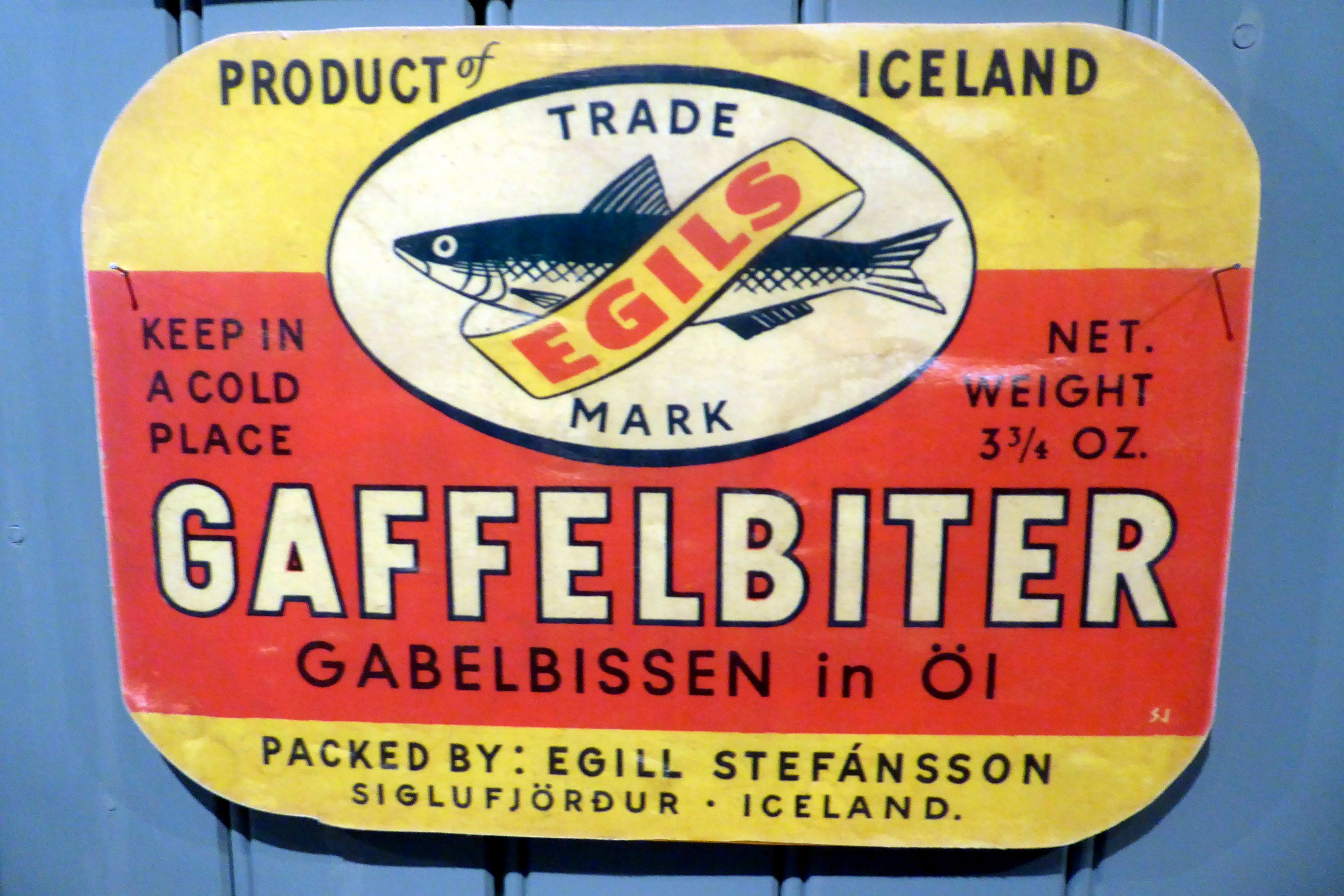
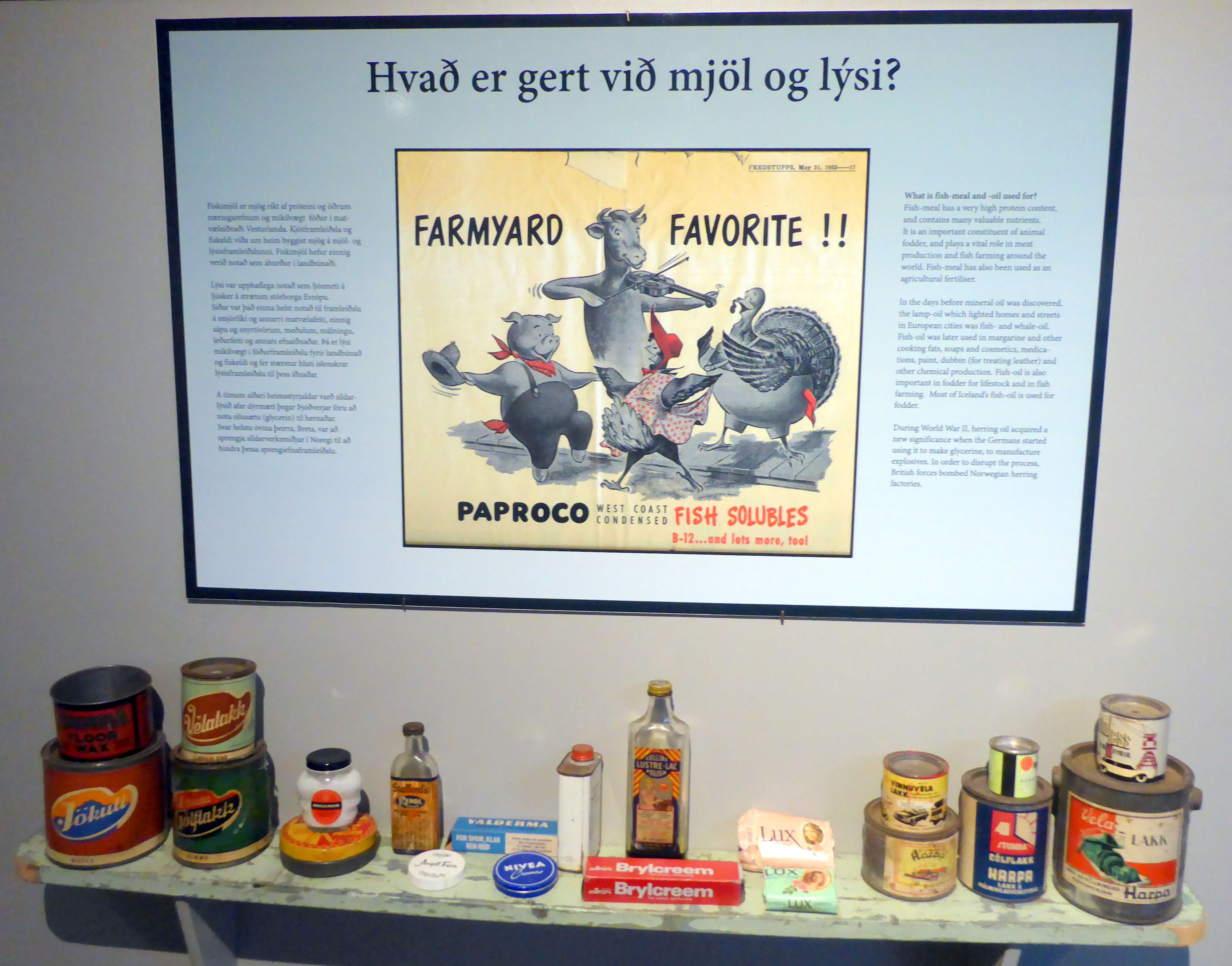
Products made from herring oil
I wanted to know why this fish was so important. First, it is one of the most abundant fish species in the world. It is also quite nutritious, rich in vitamin D and Omega3. The consumption of herring and its industry has been so significant to so many European countries that it is regarded as the most commercially important fish in history.
For Iceland, the herring fisheries (producing salt herring for human consumption, fish-meal and oil) sometimes accounted for nearly half of the country’s national income.
Iceland’s first plants to process fish-meal and oil were set up in 1911 by Norwegian entrepreneurs. In the following decades, dozens more were built around the coast of Iceland — first by foreigners, later by Icelanders.
What was most interesting to me was learning about the “Herring Girls.” Between the 1910’s and 1960’s, thousands of young women formed the backbone of Iceland’s thriving fishing industry. And, they worked their backs to the bone doing it. These women came from all around Iceland to work gutting, cleaning, and salting barrels for freshly caught fish. They often earned more money than men working the docks; however, the conditions were brutal, and the living conditions were worse. We saw how they lived; eight to a tiny bedroom sharing two sets of bunk beds. Can you imagine two people sleeping on a tiny mattress? One would sleep with their head at one end, and the other would have their head at the opposite end. That alone would be a non-starter for me! These gals were tough.
It was the Herring Girls that helped secure gender equality in Iceland, because they fought for equal pay and labor rights. They are the reason Iceland ranks #1 on the World Economic Forum’s Global Gender Gap Report. You go, girls!
Herring Girls
We made this delicious chocolate coated ice cream our lunch. Icelandic soft serve is so much better than Dairy Queen!
Following our morning at the museums, we continued heading to Akureyri, our base for three nights. This will be the topic of my next post…
Next up: Appealing Akureyri
Note: If small group travel is of interest to you, I highly recommend Overseas Adventure Travel (OAT). Although Bruce and I travel together, they do not charge a single supplement for those who travel on their own. Singles also get their own room at hotels. If you book, you can get $100 off your trip by providing my name and customer number (Elaine Krugman, #3018126) as the person who referred you. I will also get $100 off future travel– a win-win!
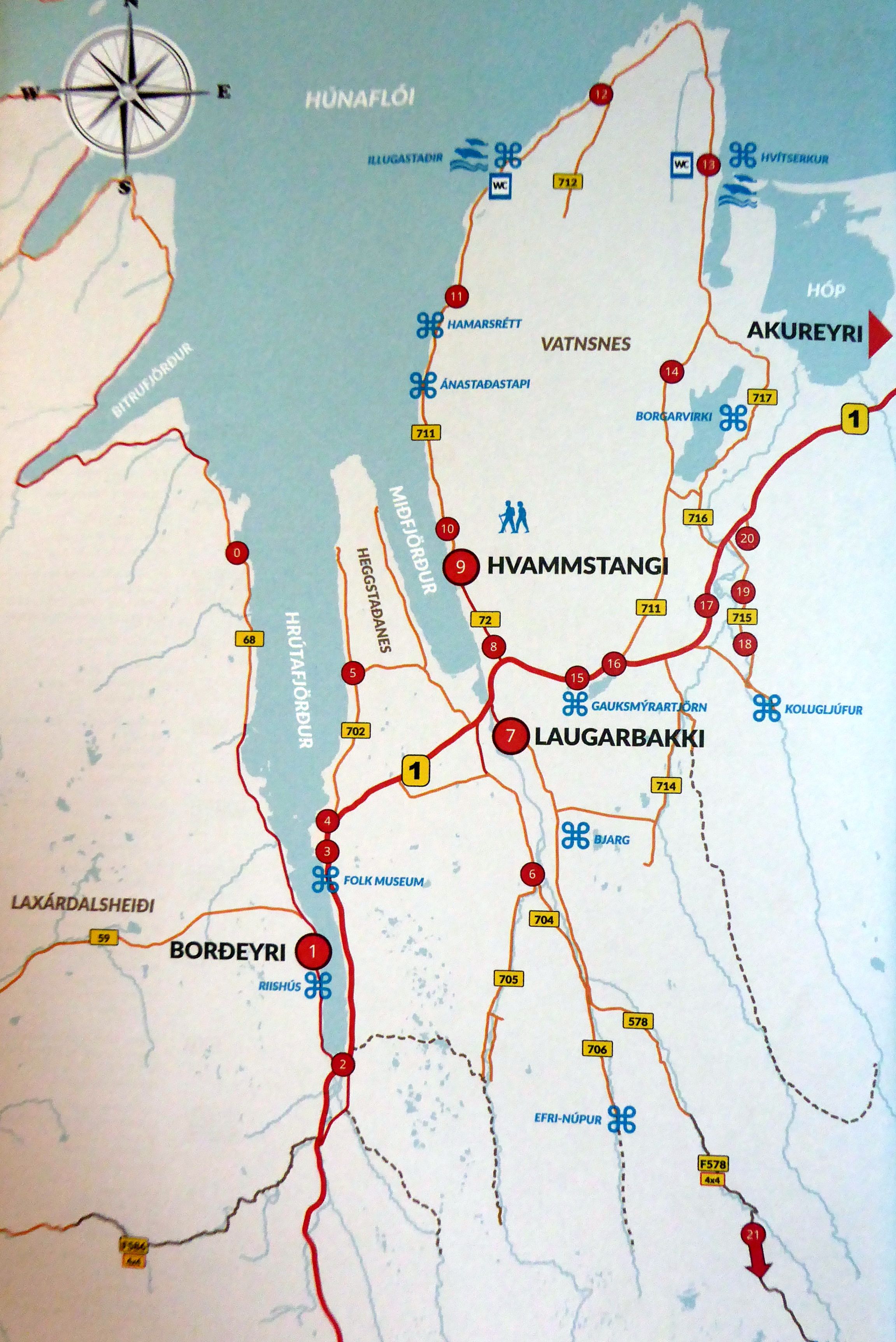
From the Snaefellsnes Peninsula in the western region of Iceland, we made our way northeast to Hvammstangi. During our bus rides (and throughout the tour), Thorunn told us so much interesting information about her country and shared stories of what it was like growing up in Iceland.
(For all pictures, click on the image to see full screen view.)
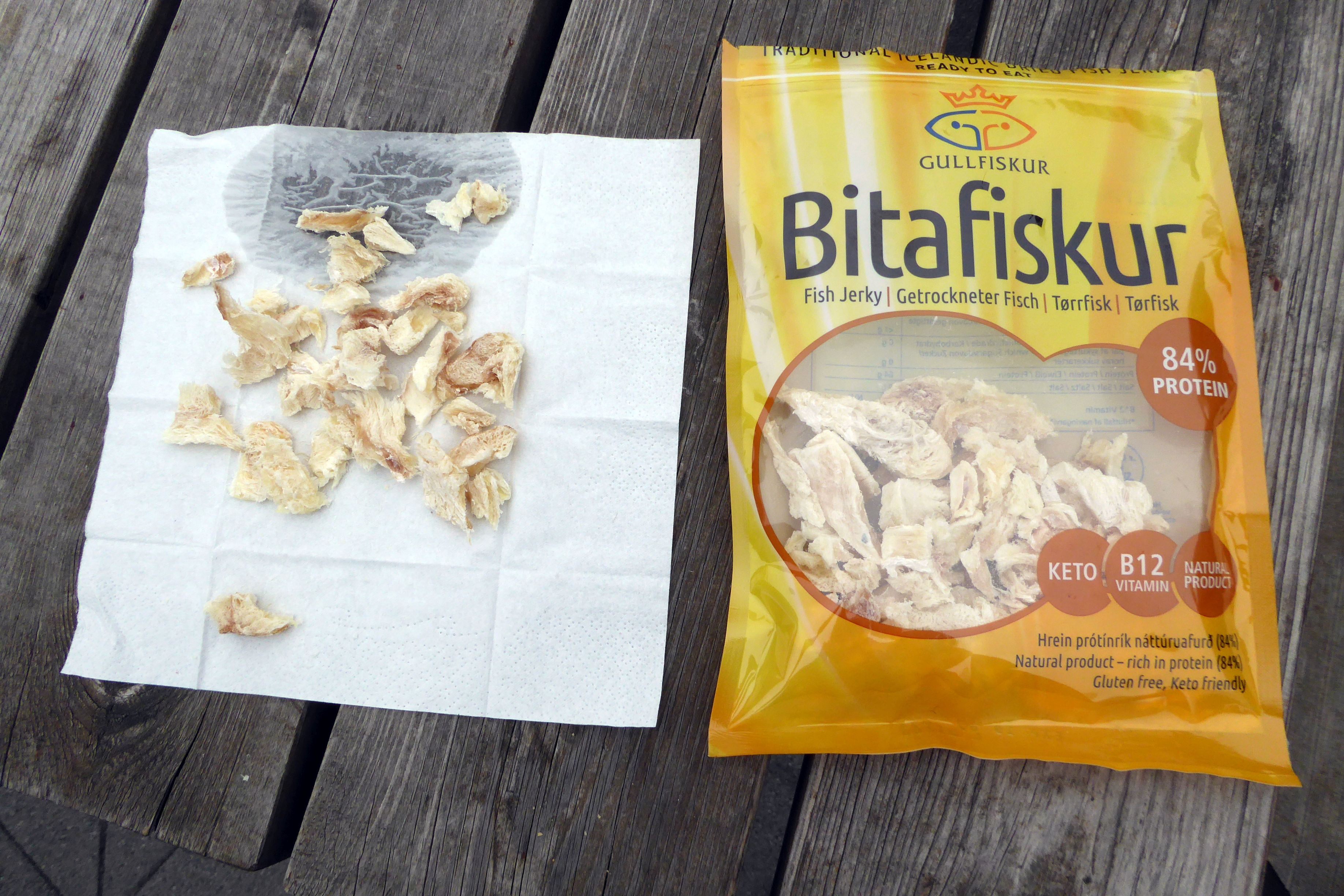
During one of our “comfort” stops, Thorunn bought some “treats” for us to try. This is fish jerky. We all tried some, and as you can see by what was left over, nobody went back for seconds…
I asked for seconds on this one; an Icelandic “biscuit” that was sweeter than a cracker, but not as sweet as a cookie. Yum!
I was interested to learn that many couples live together for several years before marriage, and women keep their name rather than taking on their husband’s name. I could relate to both; Bruce and I were together for six years before marrying, and I kept my family name.
There are no family names in Iceland; children take on their father’s first name as their last name. A boy’s last name of “Jonsson,” for example would mean his dad’s name is “Jon,” and he is Jon’s son. If Jon had a daughter, she would have the last name of “Jonsdottir.” (“Dottir” is how “daughter” is spelled in Icelandic.)
Icelanders are very supportive of gay marriage. The first one took place in 1996, and the country is very socially progressive and tolerant.
Families are tight-knit and well-supported in Iceland with good benefits. Paid maternity leave is six months, and paternity leave is three months. Leave can be taken all at once or split up into different time periods, so parents can alternate staying home with their children, if desired.
Health care is excellent and well-covered; Icelanders only pay $3 for a clinic visit; and, education is nearly free, including public universities.
I was interested to learn that Iceland does not have a military; however, the U.S. built a base near the national airport there during World War II for defense. It was quite controversial at the time, and the country was divided. Thorunn’s family lived near the base, so she shared stories about what it was like. There were some protesters, but others appreciated the job opportunities that were created as well as the infrastructure the Americans built. In 2006, the Americans left and turned the base over to the Icelanders.
Immigration is a big topic everywhere these days, so we were curious to hear about Iceland’s policies. Like the U.S., Iceland has taken in asylum seekers, mostly from Nigeria and Venezuela. In addition, people from the Philippines come to Iceland to get temporary work in healthcare, and there are many Polish people working in hospitality and construction. In all, 14% of Iceland’s population are immigrants.
Here’s a bit of recreation trivia I found surprising: Iceland has a greater percentage of the population playing golf than Scotland, even though the environment is generally ill-suited for it. There are 77 golf courses in the country! Handball is Iceland’s national competitive sport, and soccer, athletics, basketball, and tennis are also popular. Swimming is more of a leisure (rather than competitive) activity, as is ice, mountain, and rock climbing. Hiking and horseback riding are also very popular. (There are 80,000 horses with 80 different color variations in Iceland!)
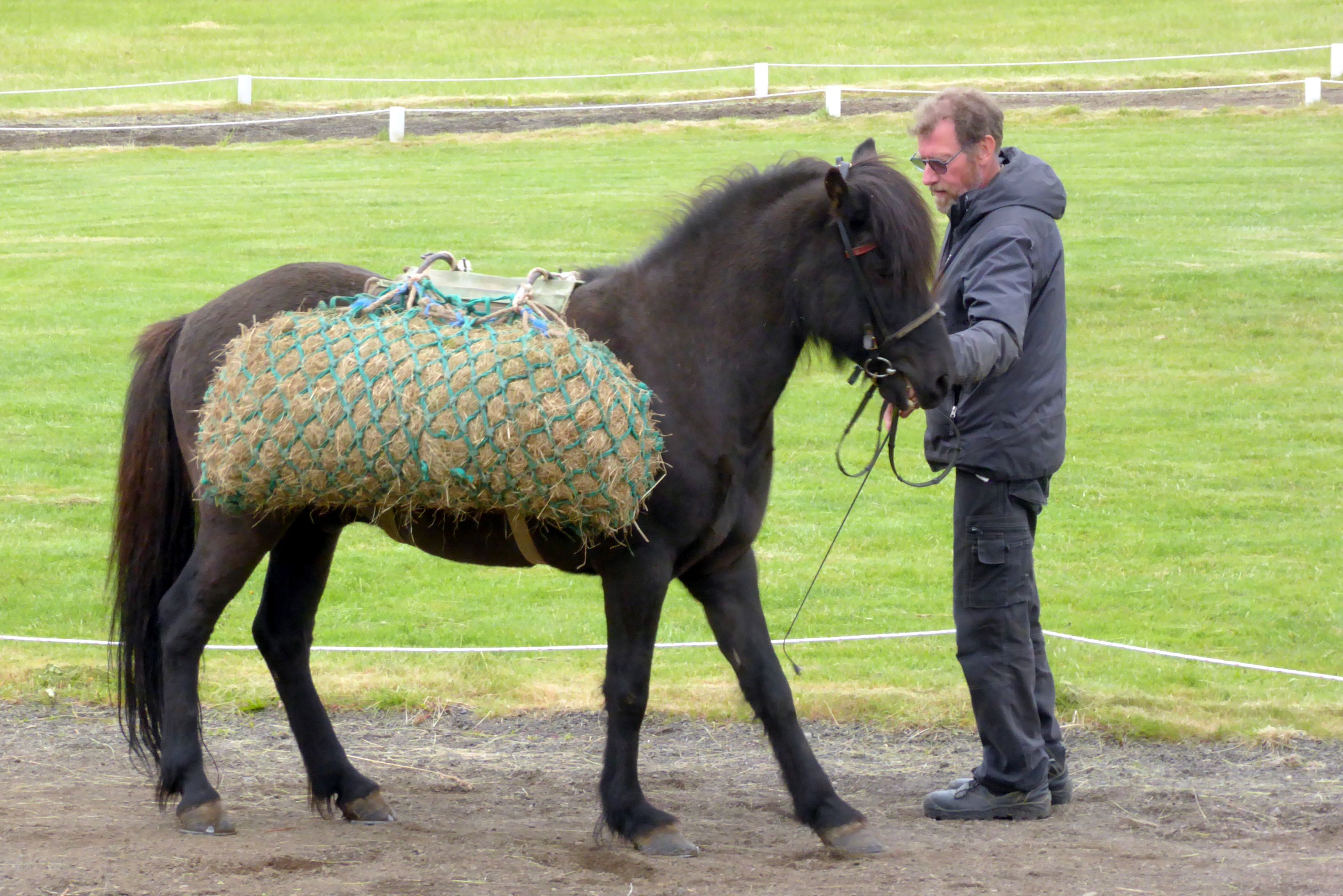
Speaking of horses, Iceland has an interesting history! The Icelandic horse is a specific breed that was developed from ponies taken to Iceland by Norse settlers in the 9th and 10th centuries. These horses are typically small, hardy, and long-lived. Although they can be exported, once an Icelandic horse leaves the country, law prohibits it from ever being returned. As a result, there are very few diseases affecting Iceland’s horse population.
Historically, the Icelandic horse was intended to assist farmers with shepherding, but they are now also used for leisure, showing, and racing.
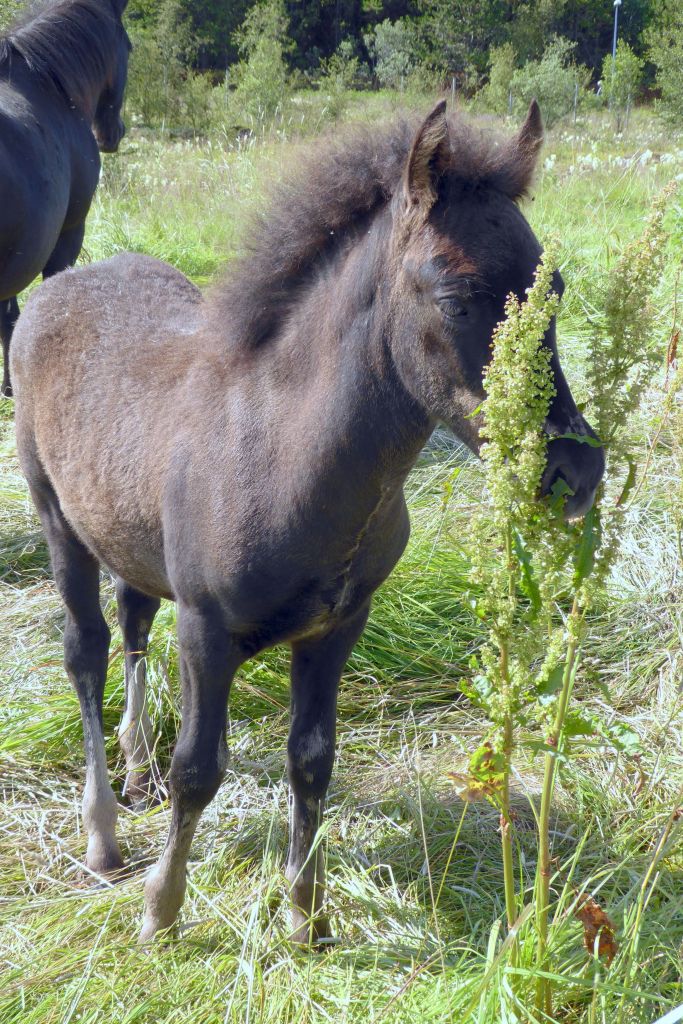
We stopped at a horse farm that neighbored the one we would be staying at for the night. This was one of their Icelandic horses.
Our bus driver, Haflidi, loves animals! This little guy followed us around to the stables where we had a tour and met some of the other horses.
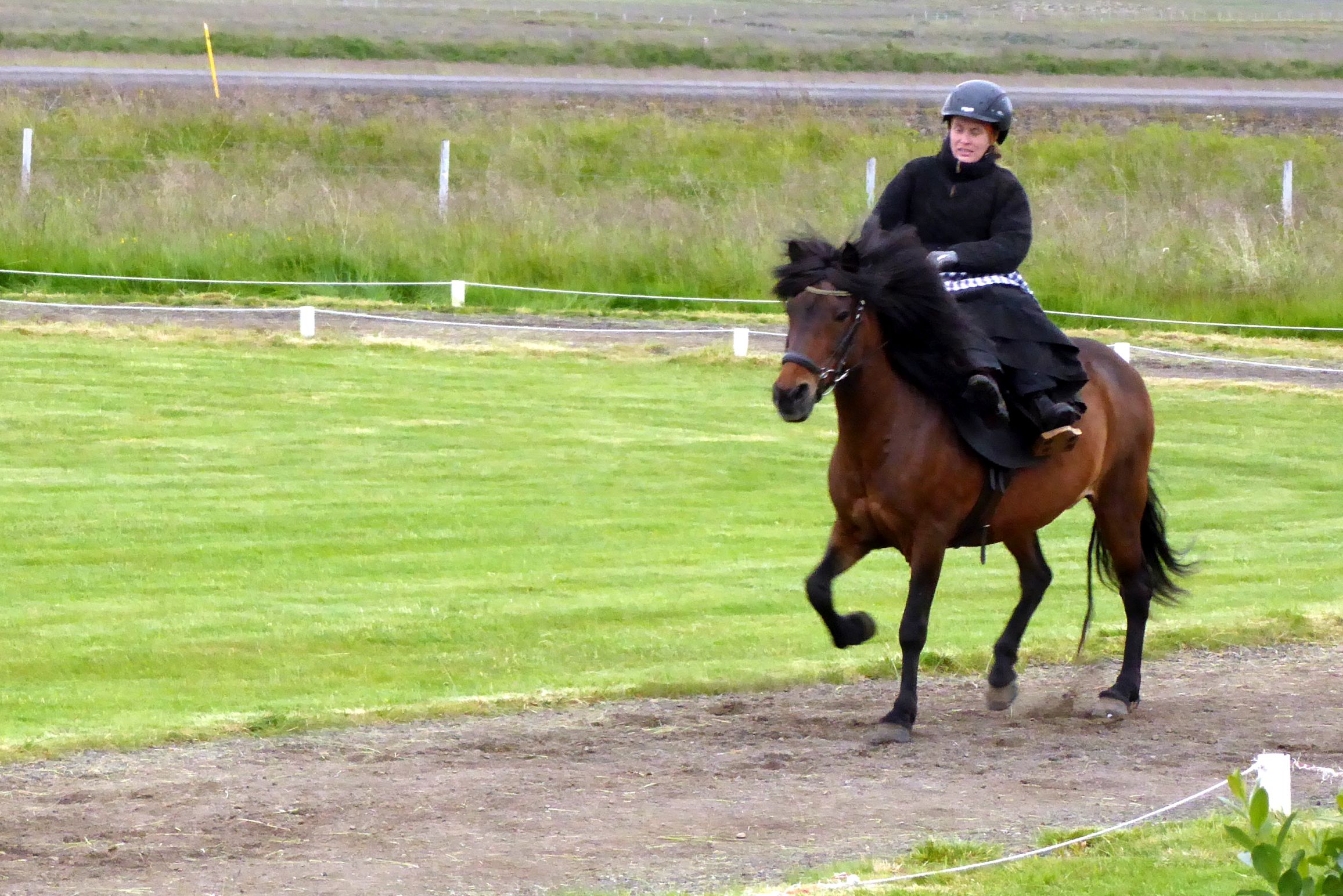
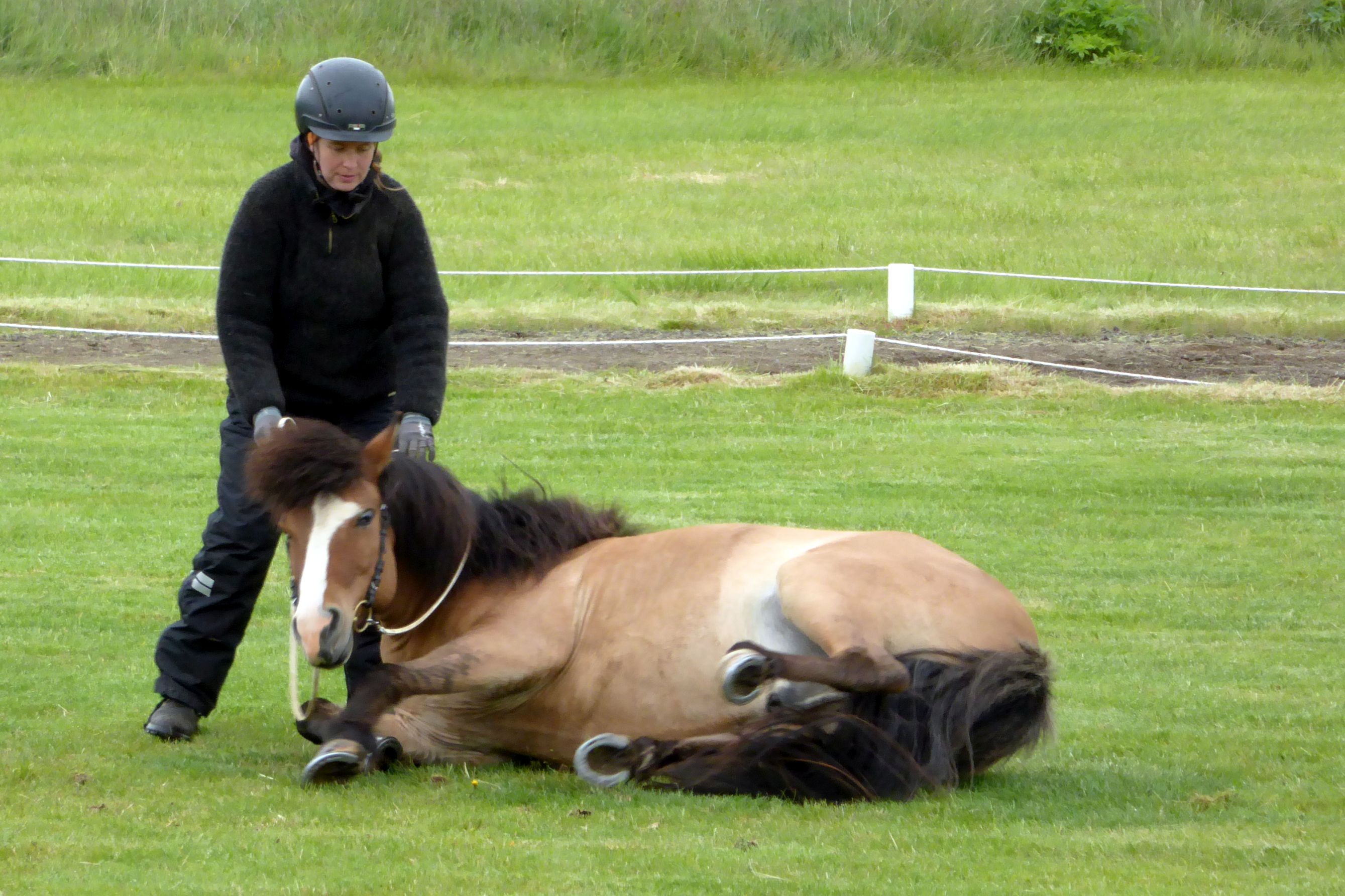
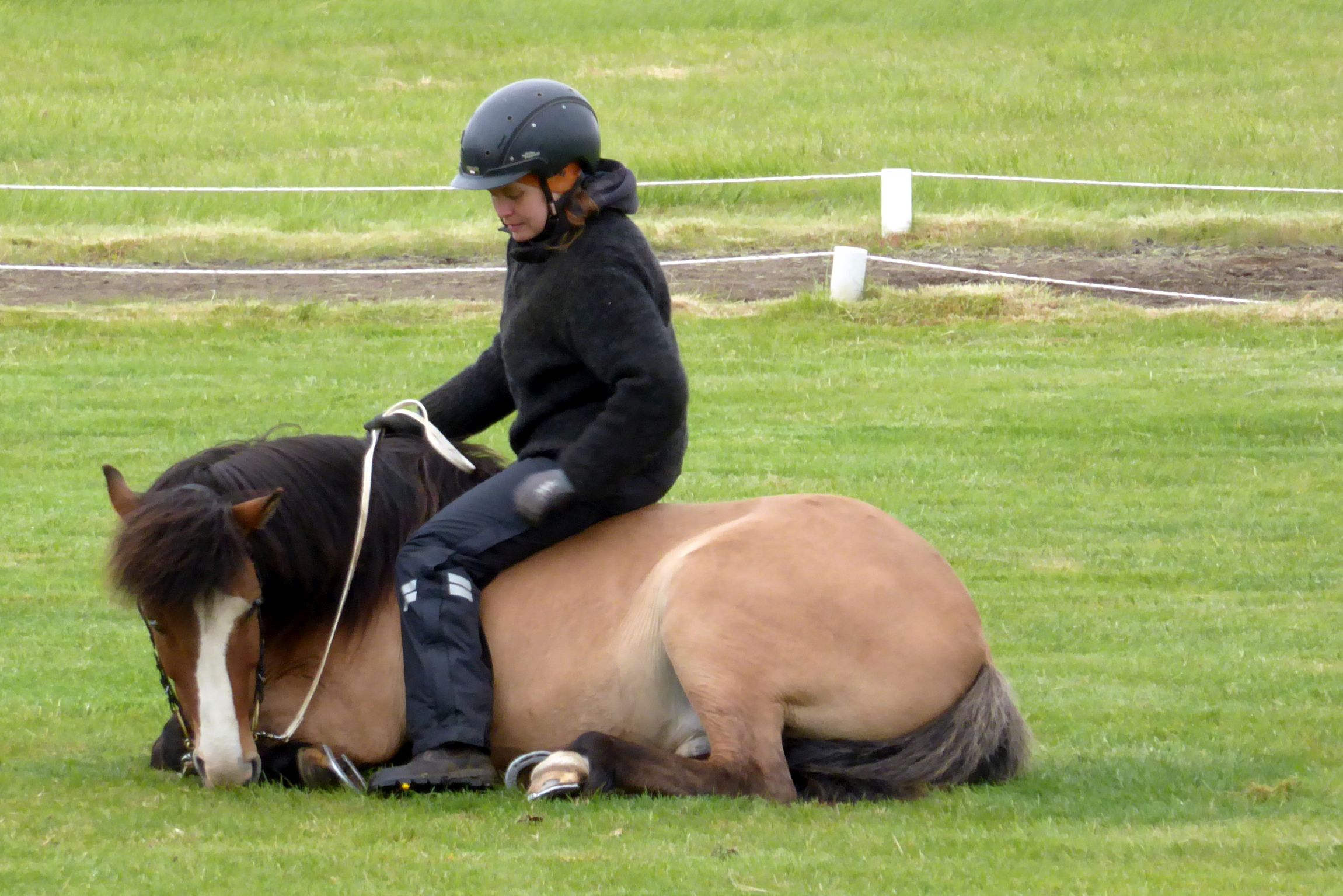
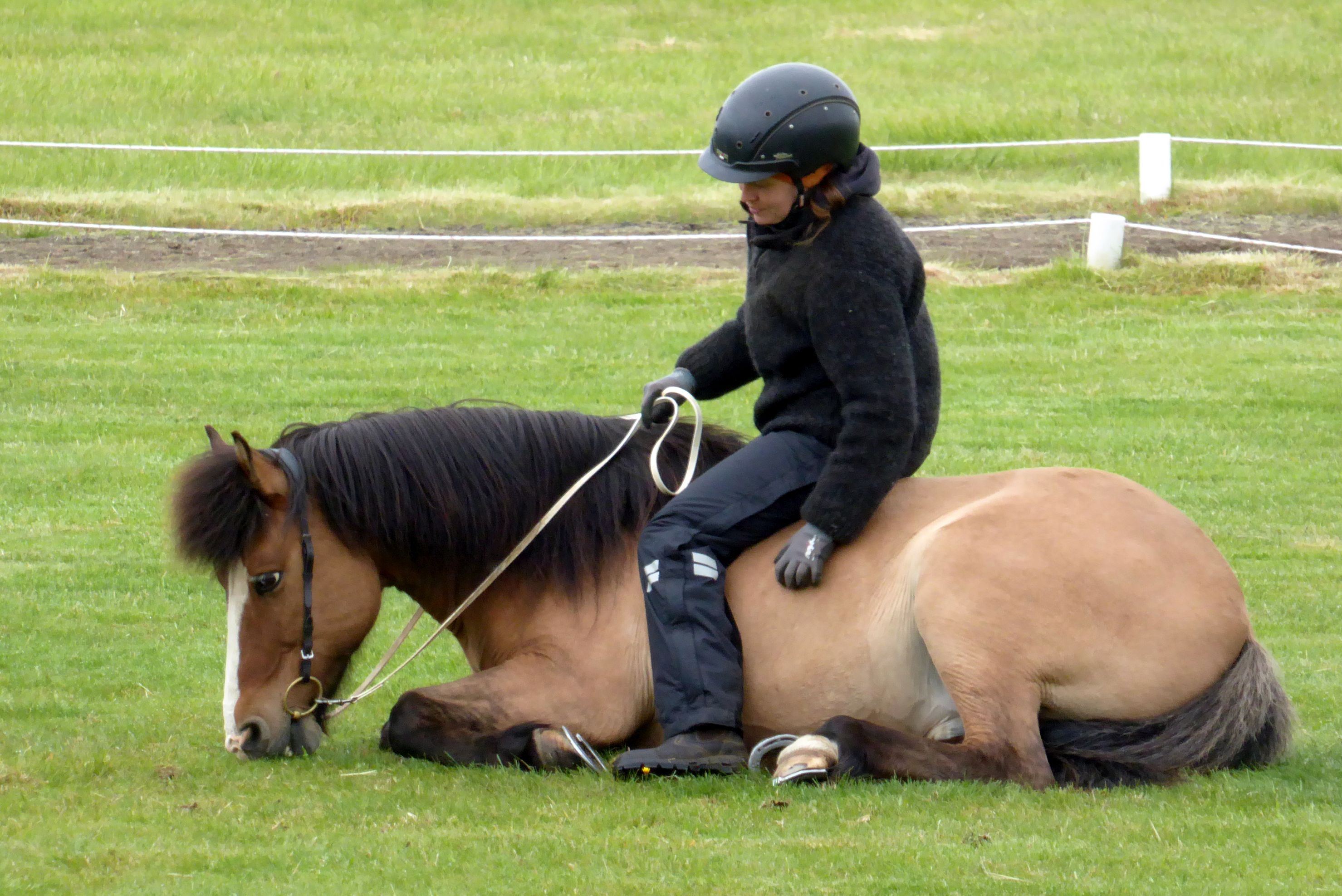
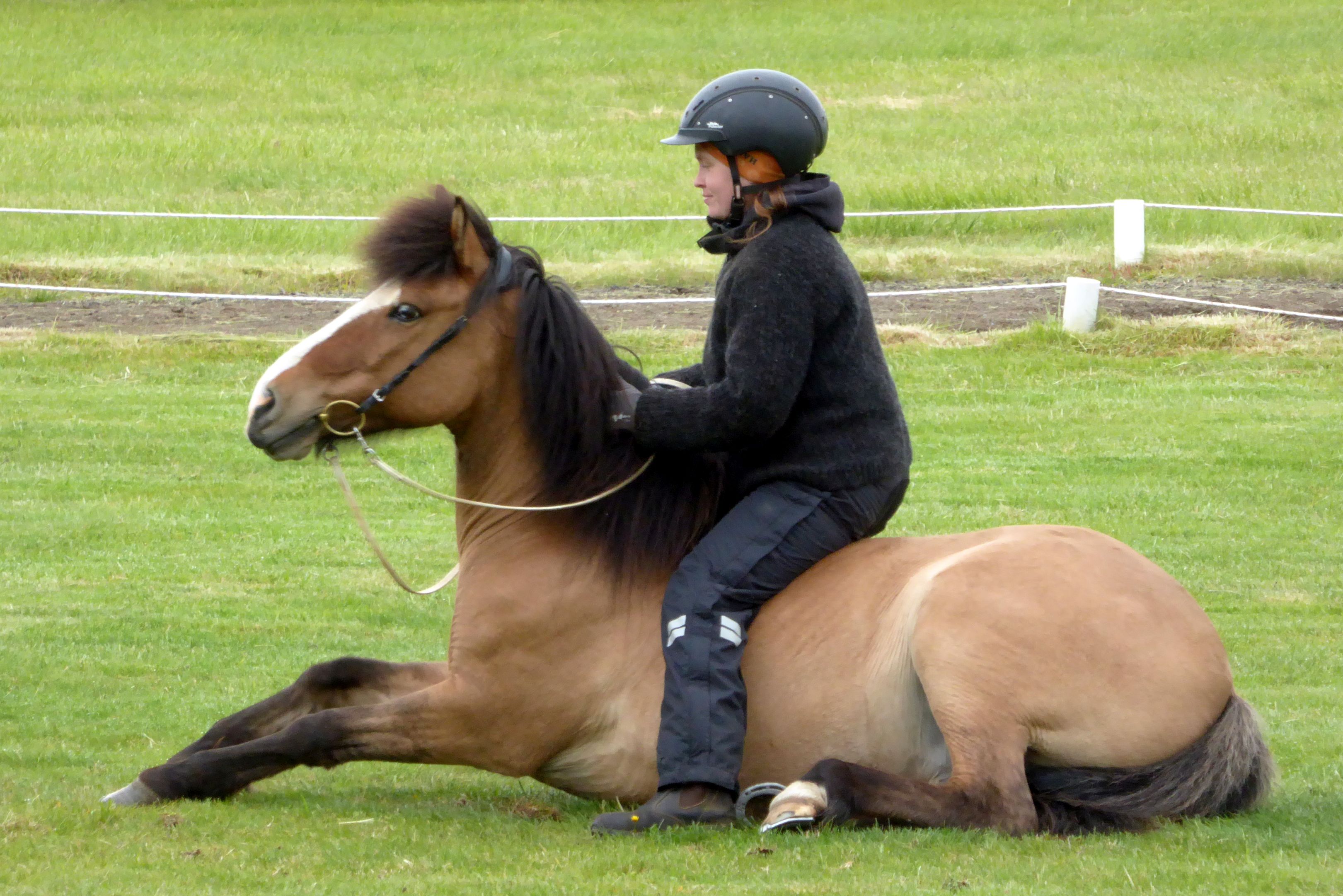
The most unique characteristic of these horses is their versatility of gaits. Not only can they do the typical walk, trot, and canter/gallop; but, they can also tolt and flying pace. We got to see these gaits in action at a horse show while staying at Daeli, a family-run horse farm and guest house. (They also had a fabulous chef. Our meals there were delicious!)
This is the father of the family running the horse farm He assisted with the horse show. His daughter-in-law trains the horses and demonstrated the various different gaits.
This may have been an easy way for her to mount the horse, but it was much more difficult for the horse!
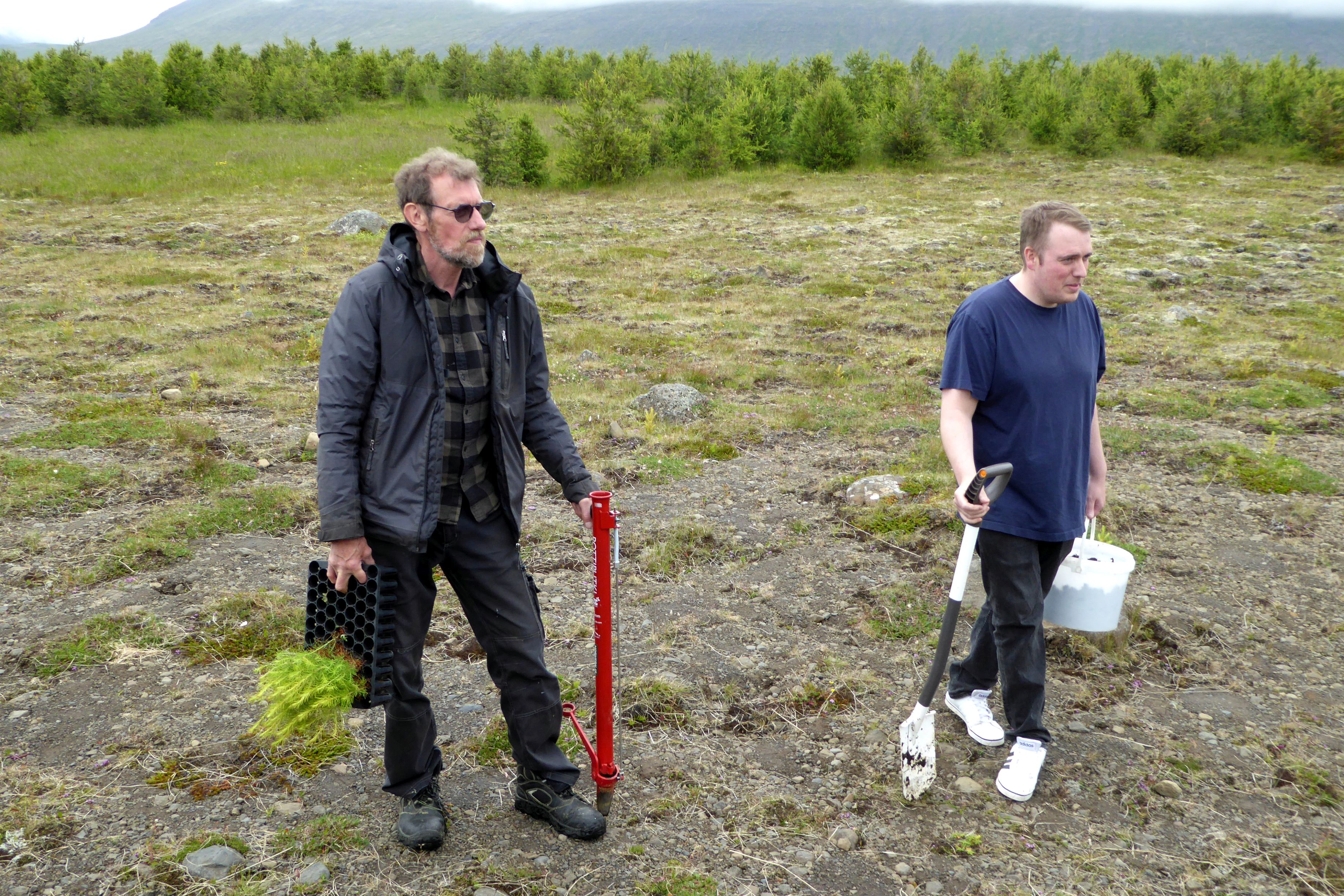
In addition to learning about what is involved in raising and training horses on their farm as well as the neighboring farm we visited, we took a short ride up the hill to see where the family has been contributing to a reforestation project. Each of us planted a tree; our tiny contribution to the effort.
In all, we came to know what a day in the life of an Icelandic horse farm was like for those who make it their living. It’s a lot of hard work!
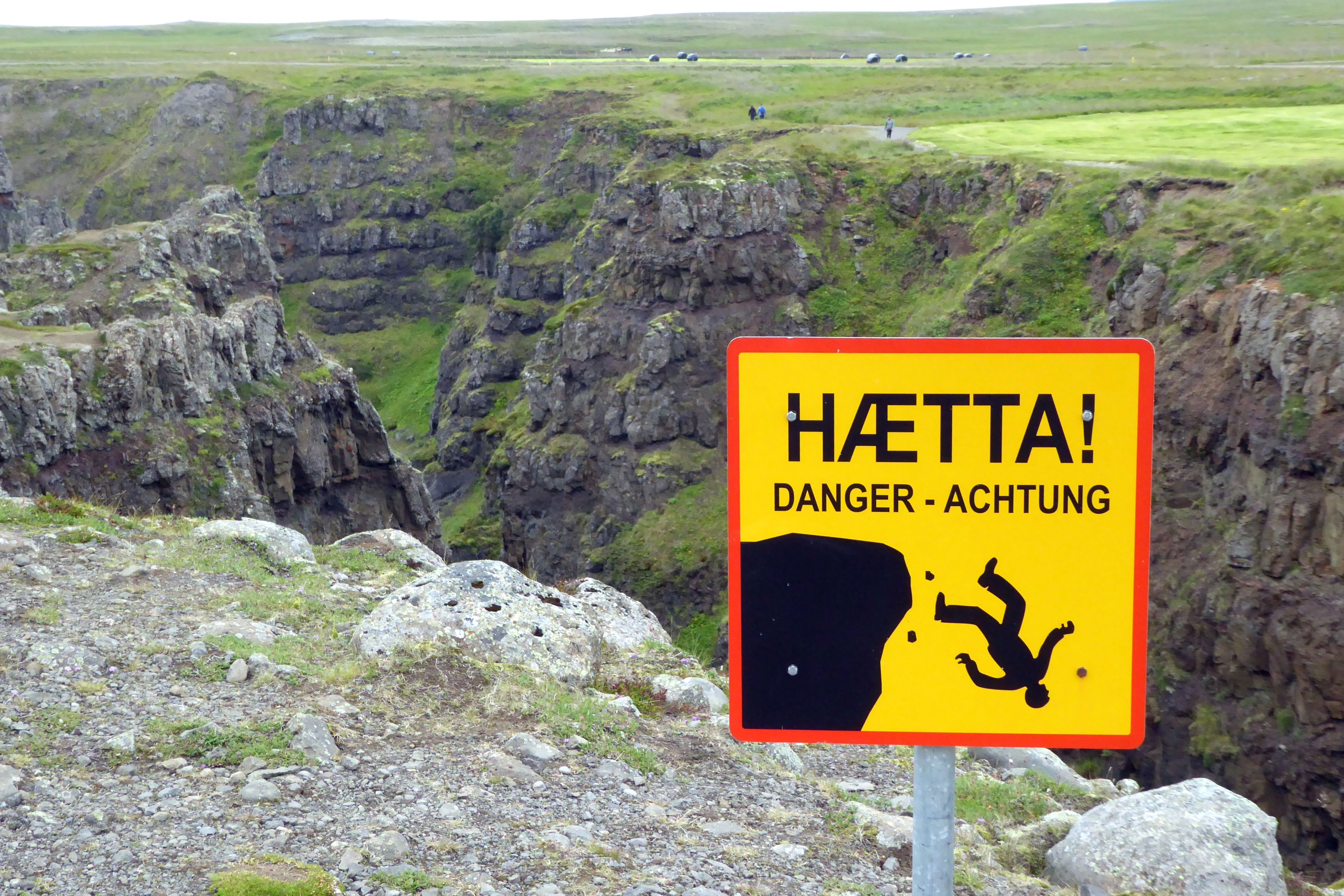
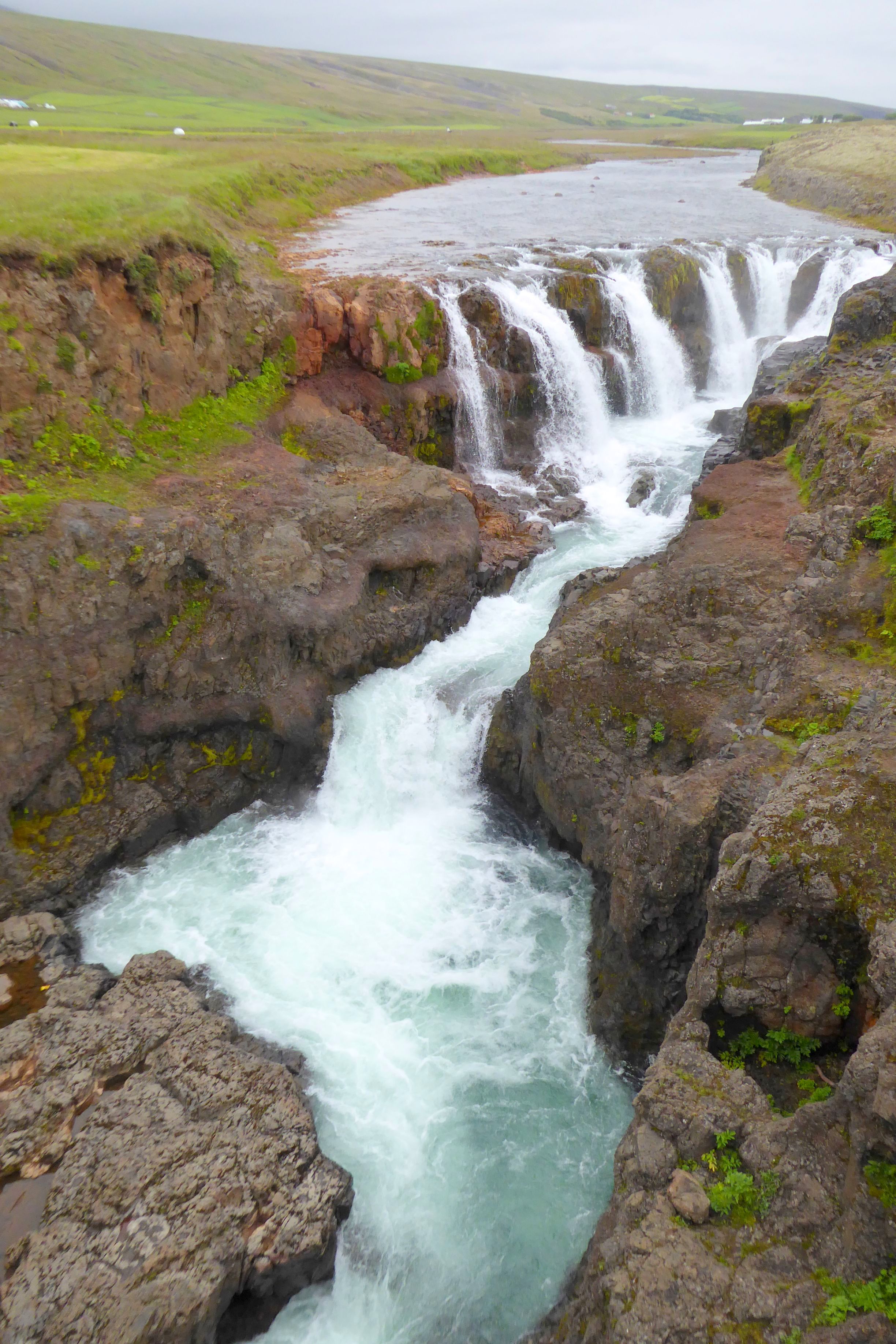
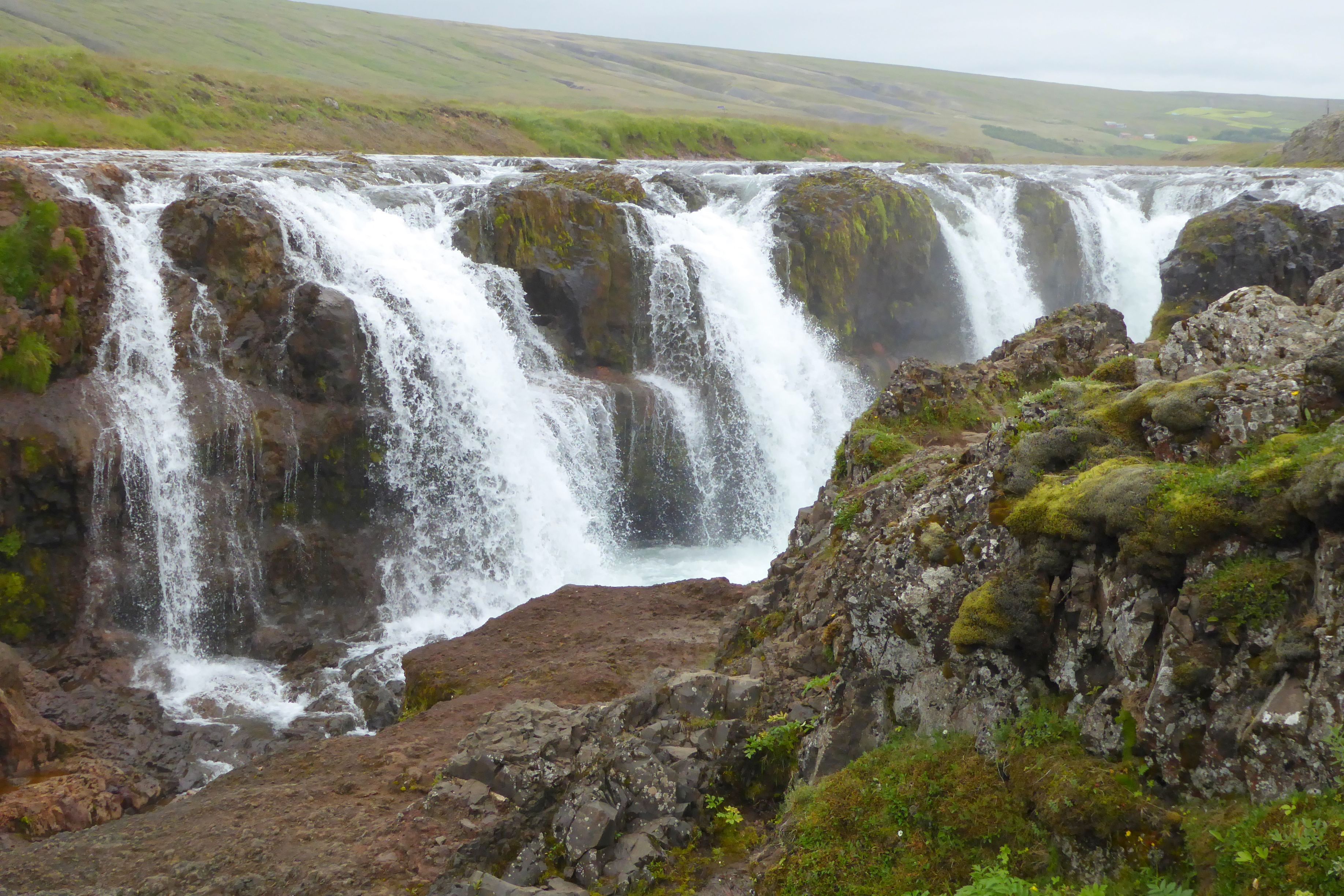
During the afternoon, we took a short drive from Daeli to see Vididalur Waterfall and hike around on the paths and volcanic rock. Gorgeous!
Our stay at Daeli was so enjoyable and memorable!
Coming up next: North Iceland Near the Arctic Circle
Note: If small group travel is of interest to you, I highly recommend Overseas Adventure Travel (OAT). Although Bruce and I travel together, they do not charge a single supplement for those who travel on their own. Singles also get their own room at hotels. If you book, you can get $100 off your trip by providing my name and customer number (Elaine Krugman, #3018126) as the person who referred you. I will also get $100 off future travel– a win-win!


























































































 Elaine-iaK's Travels: A Traveler's Tales of People, Places, Photos, Pools... and CHOCOLATE!