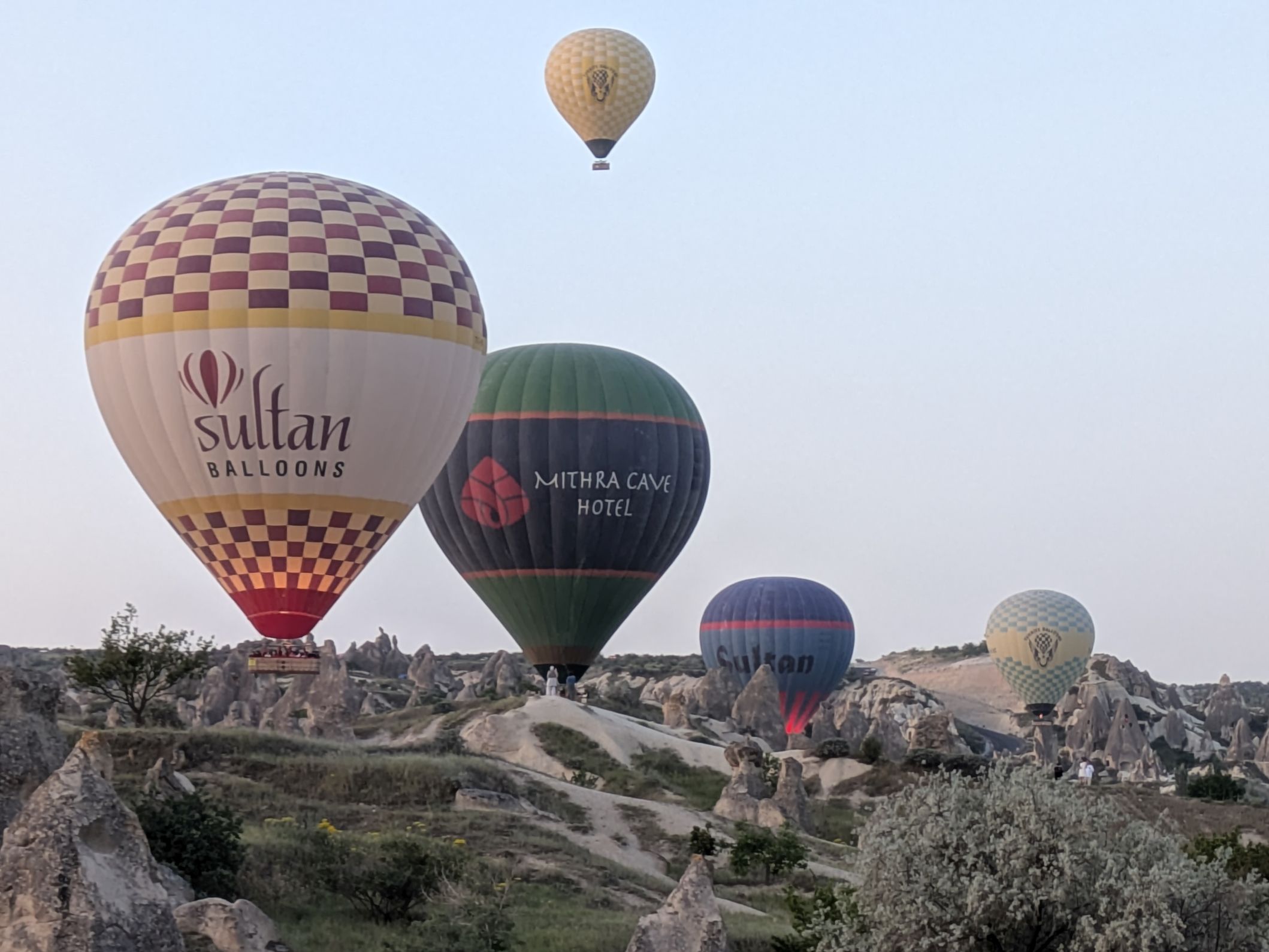
Cappadocia is famous for its hot air ballooning, and I can see why. In addition to the favorable wind conditions for pilots, the landscape is quite a draw for photographers and anybody looking to enjoy a fabulous view. Bruce dislikes being at heights like that, so we opted to take a hot air balloon watching tour. This way, we could enjoy the views of the launch from the ground as well as at a spot overlooking the valley. I didn’t mind; it was my idea! I had been hot air ballooning a few times before—the best experience at the Albuquerque Hot Air Balloon Fiesta, where I joined a friend who worked for Nikon. He got us both press passes, allowing us to go up in the balloons for free. So, rather than go ballooning on my own and spend $300 to possibly get stuck in the middle of the 20-passenger balloon, we spent a fraction of that on the small group tour.
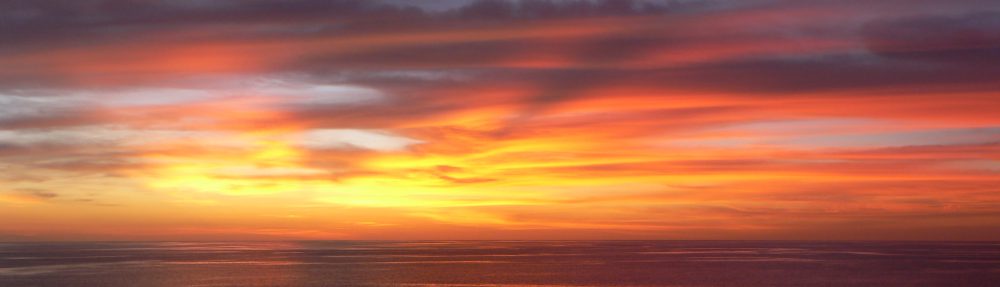
The first stop was to see the launch, which was beautiful. It was still quite dark when most of the balloons took off, so I just watched and enjoyed the beauty of it all. It was quite a sight!
(For all photos, click on the image for a full screen view.)


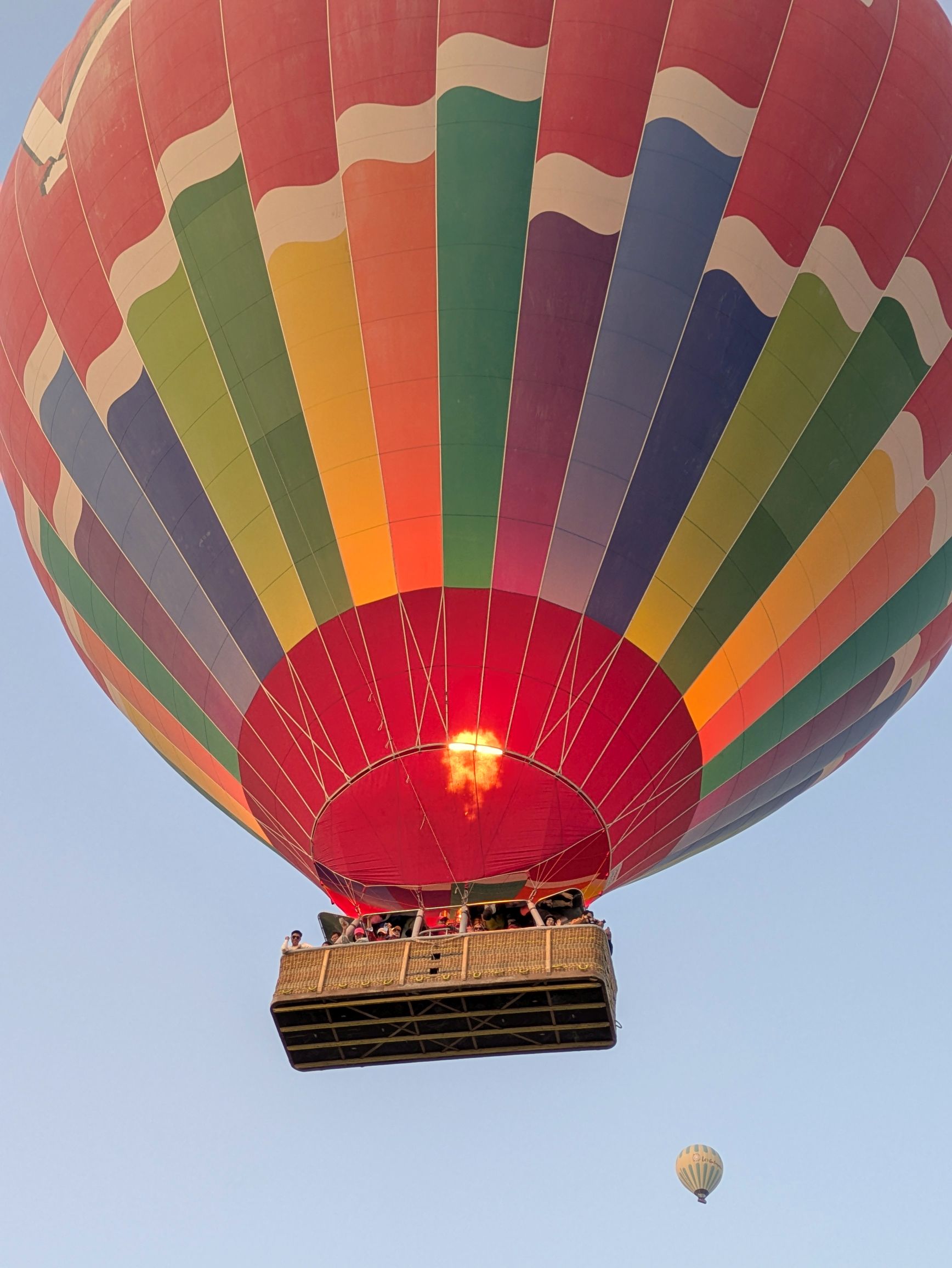
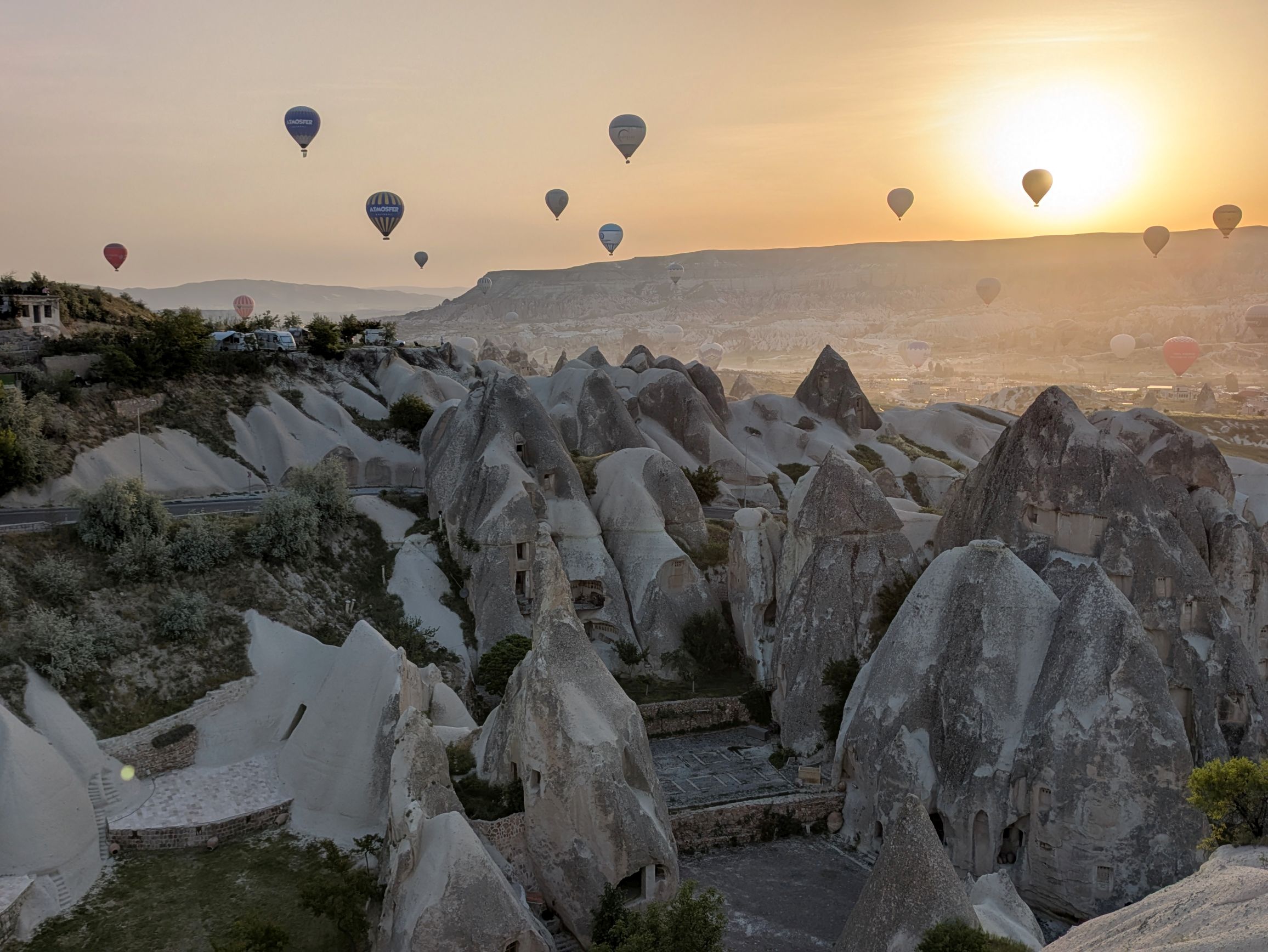
After the balloons had launched, we hopped back into the van to drive a short distance to a gorgeous overlook to see the balloons flying in front of the rising sun. Spectacular!



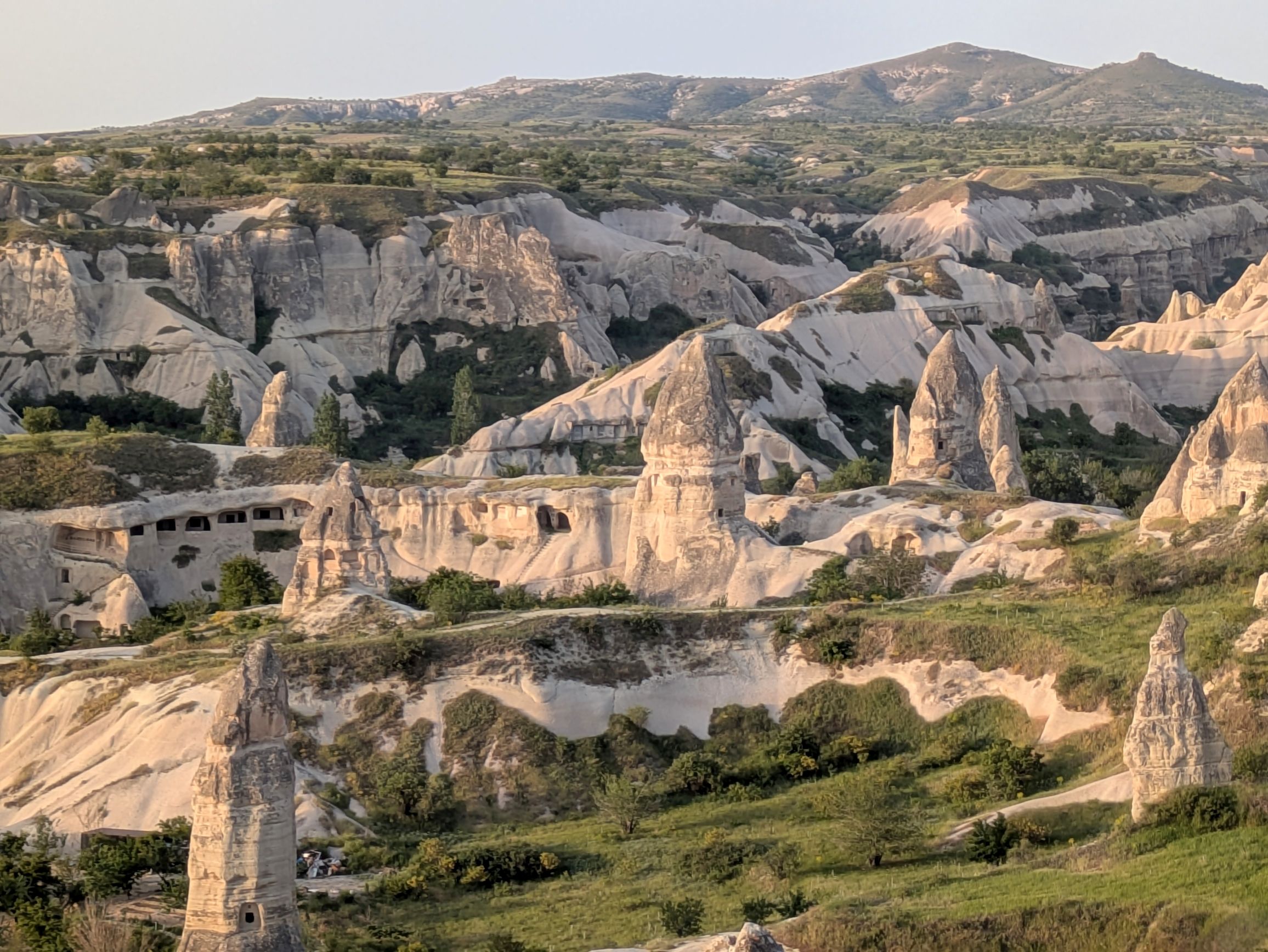
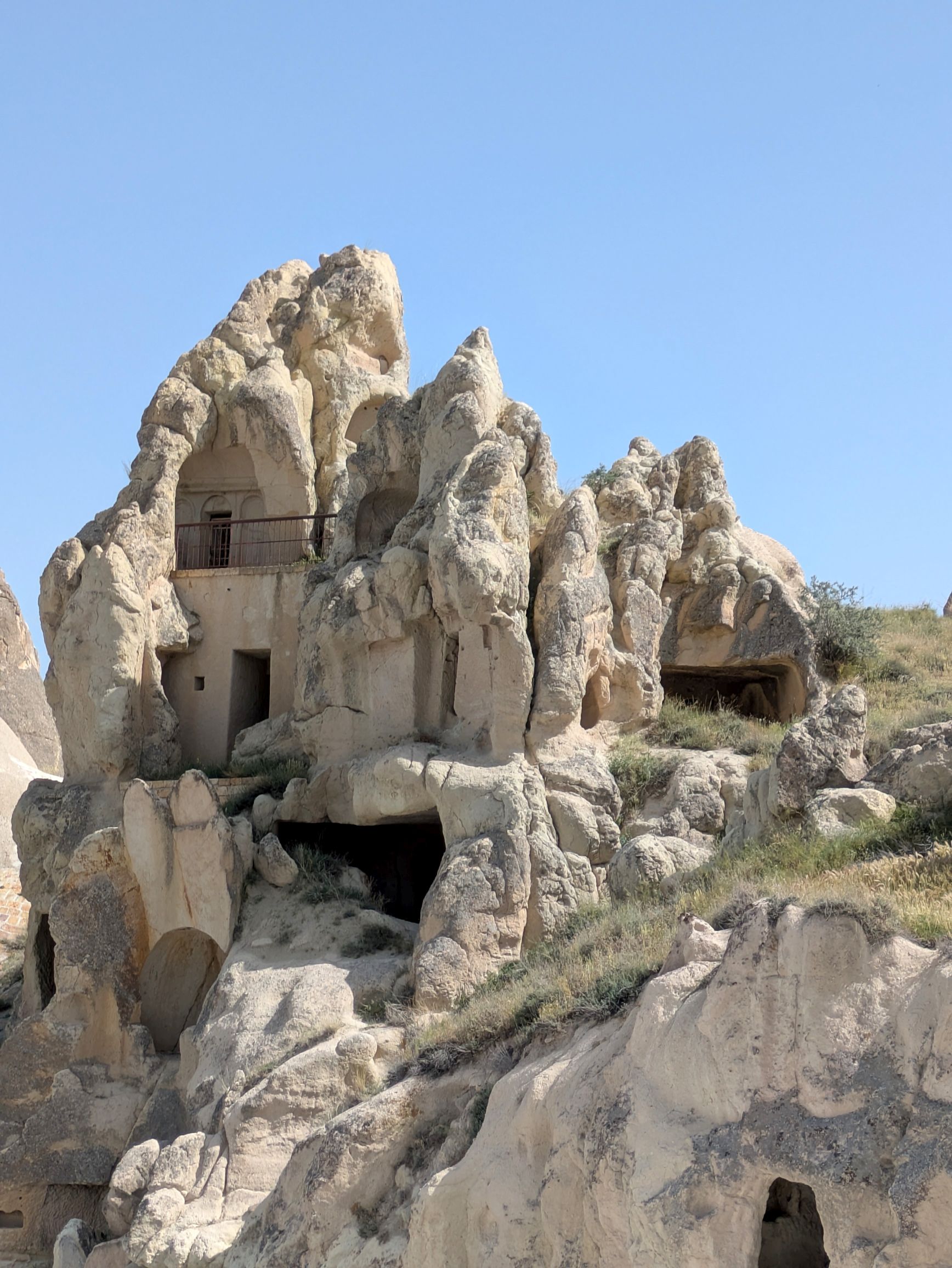
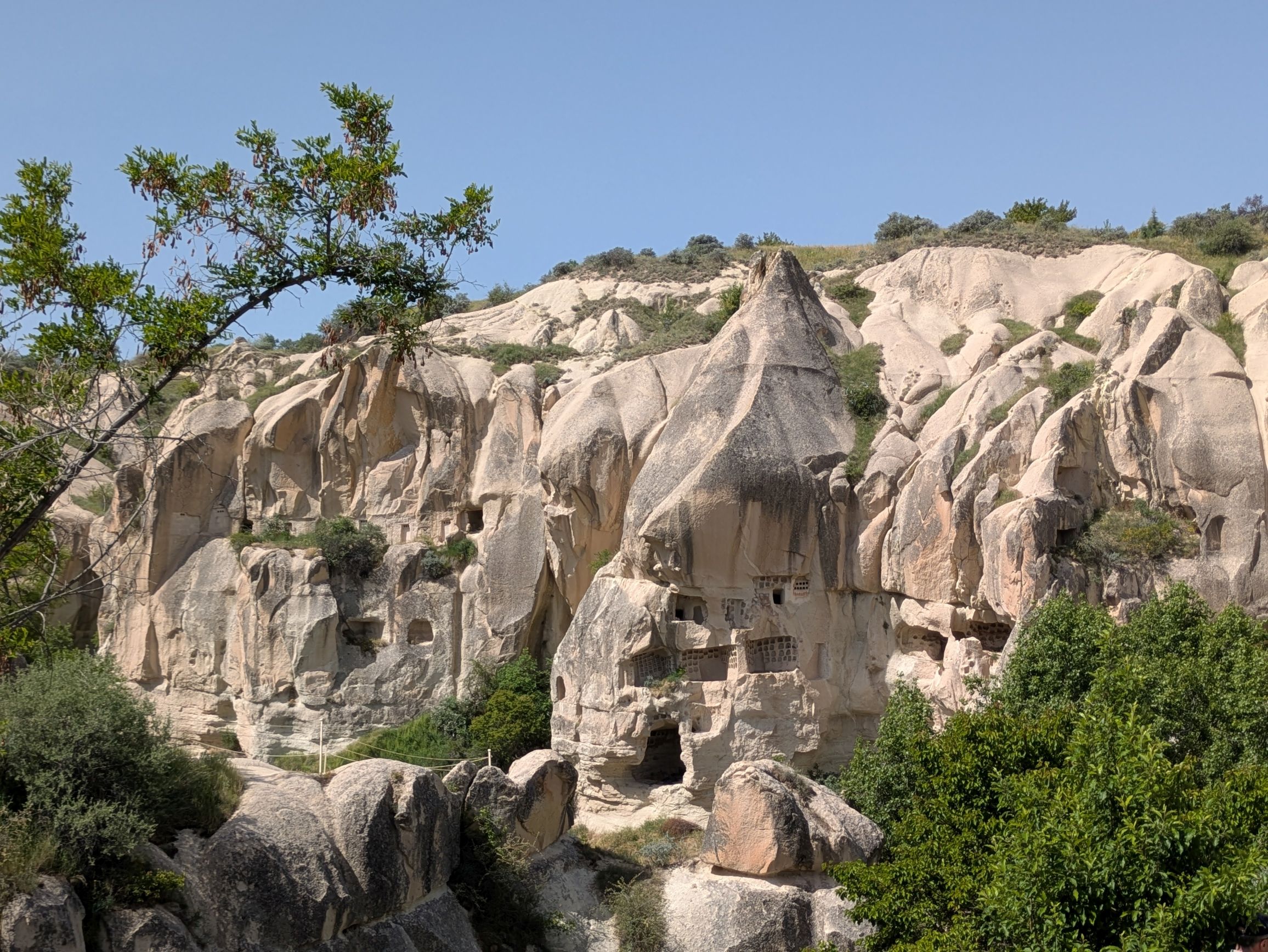
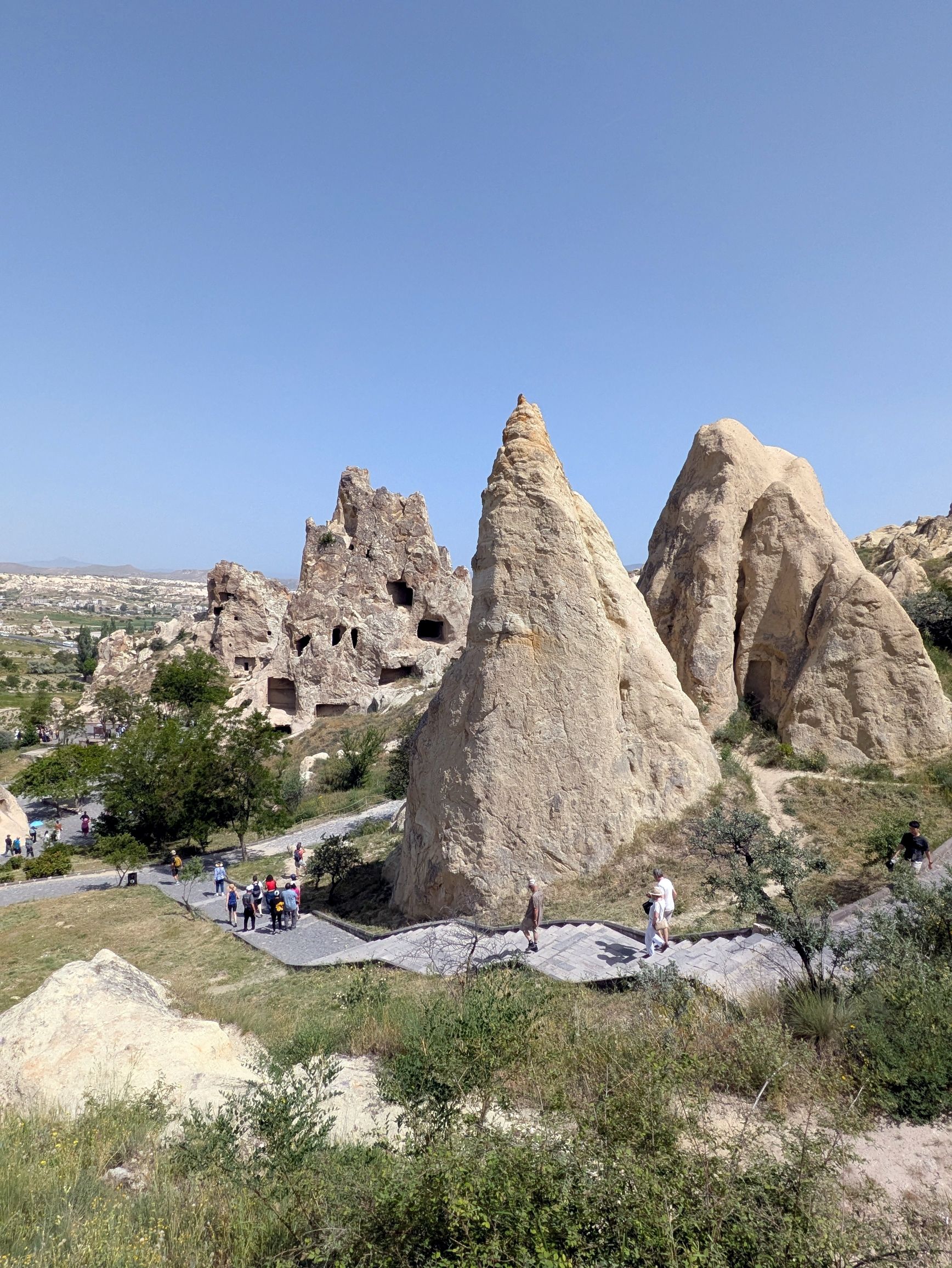
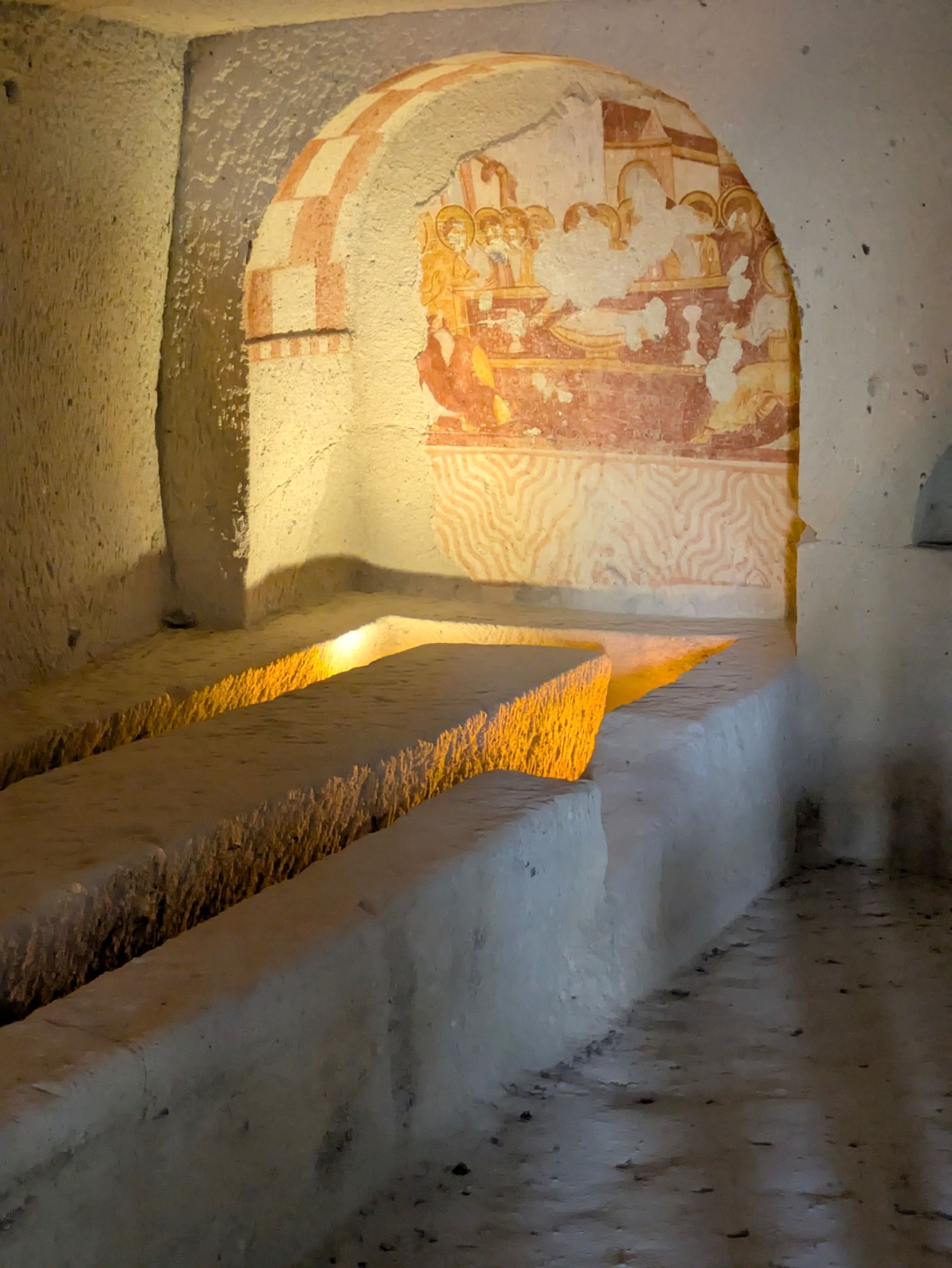
We rejoined the group after breakfast to visit the Goreme Open-Air Museum, Cappadocia’s most visited attraction. Within the museum grounds, there were fifteen cave churches and eleven rectories dating back to the 11th century. At the time, they were used extensively as Christian churches, but they were abandoned until it later became a Turkish village community.
Jumping ahead to the 1970’s, scholars came to analyze the cave churches, and the Turkish government took steps to preserve them. Tourism increased when Cappadocia was declared a “Privileged Region for Touristic Development.” It became a UNESCO World Heritage Site in 1985, which has increased tourism to over one million visitors every year.

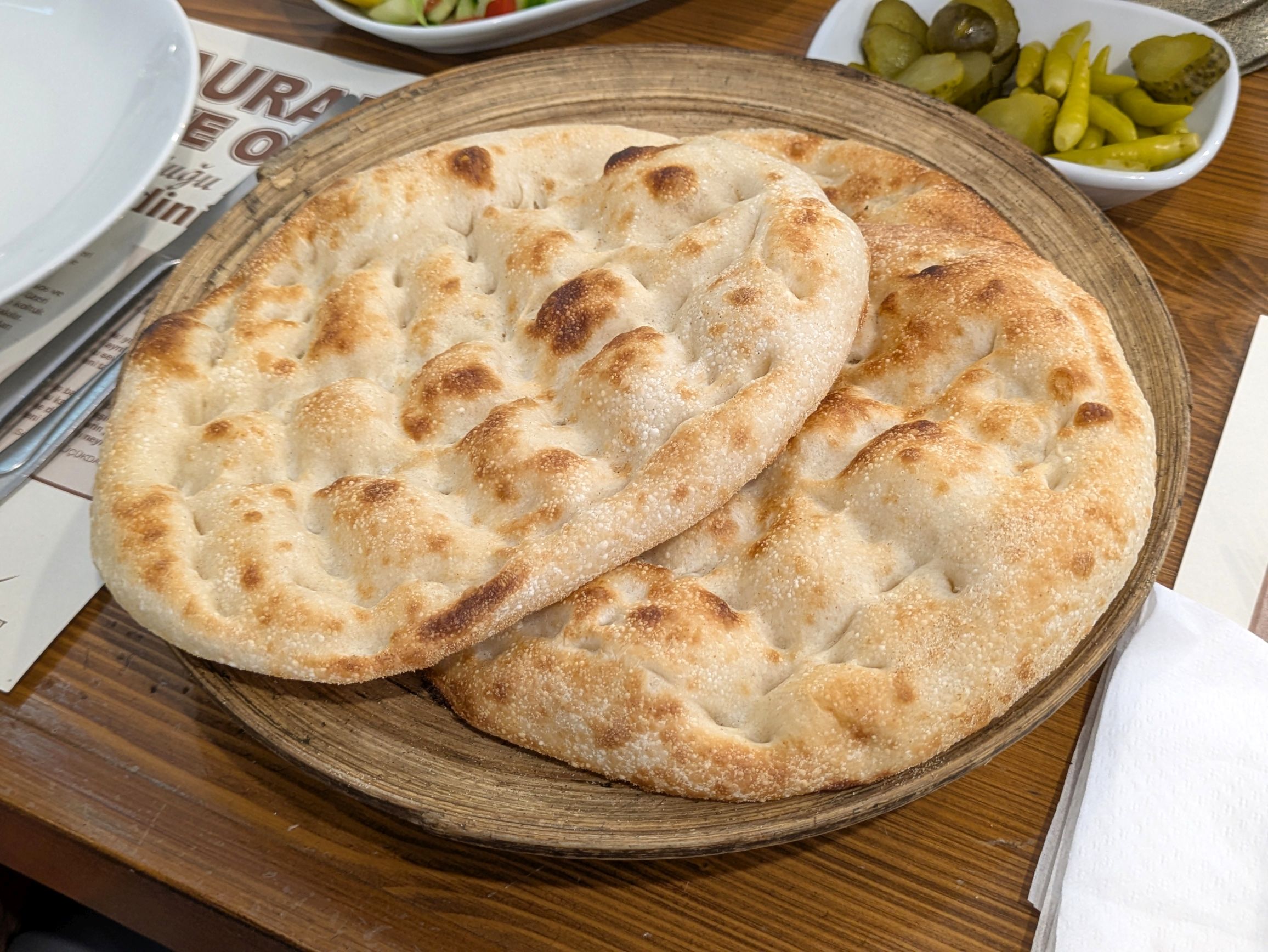
For lunch, we were driven to a traditional Turkish restaurant to enjoy Turkish cuisine cooked in clay pots and bazlama (Turkish flatbread). It was all so delicious!



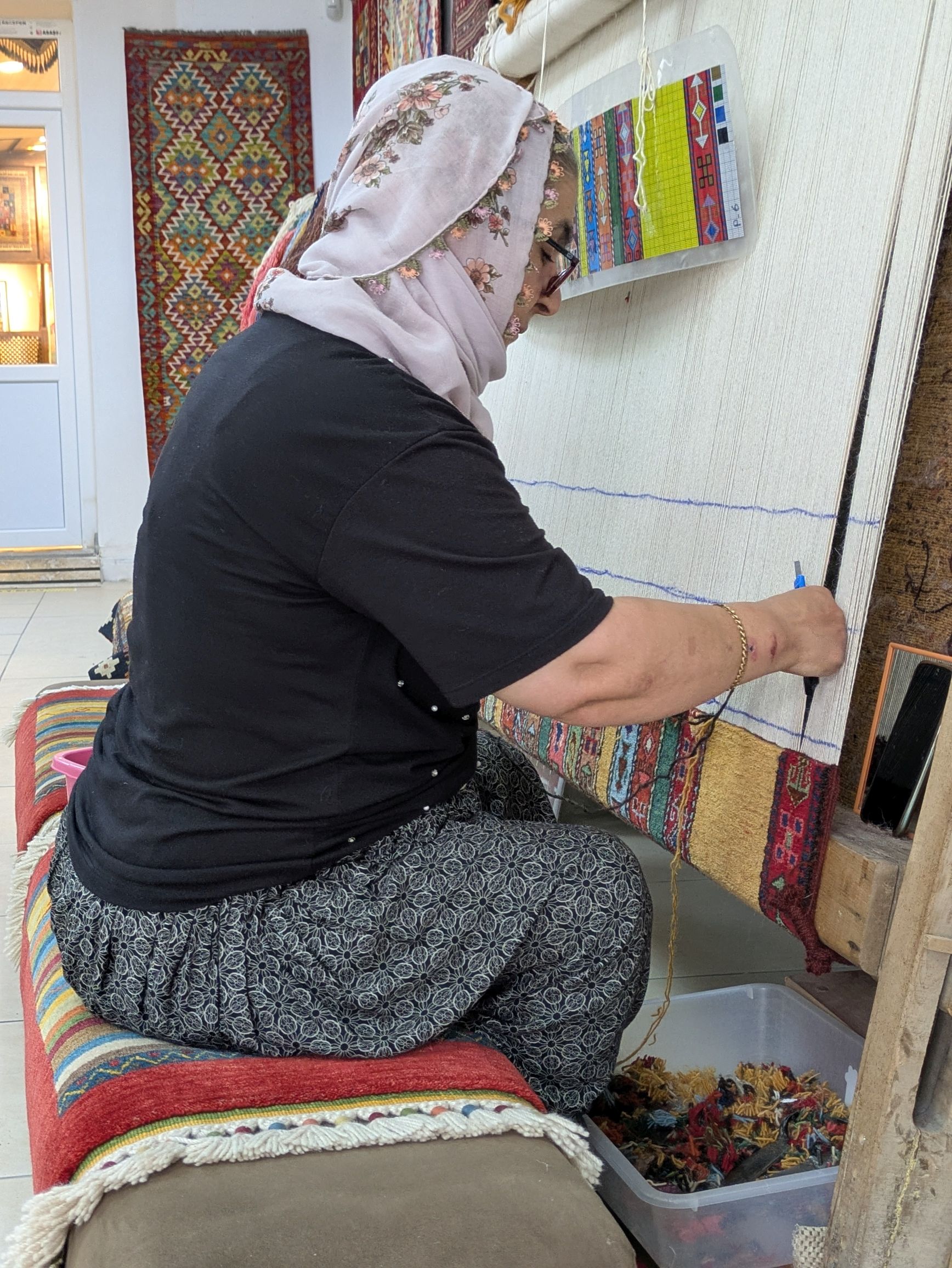
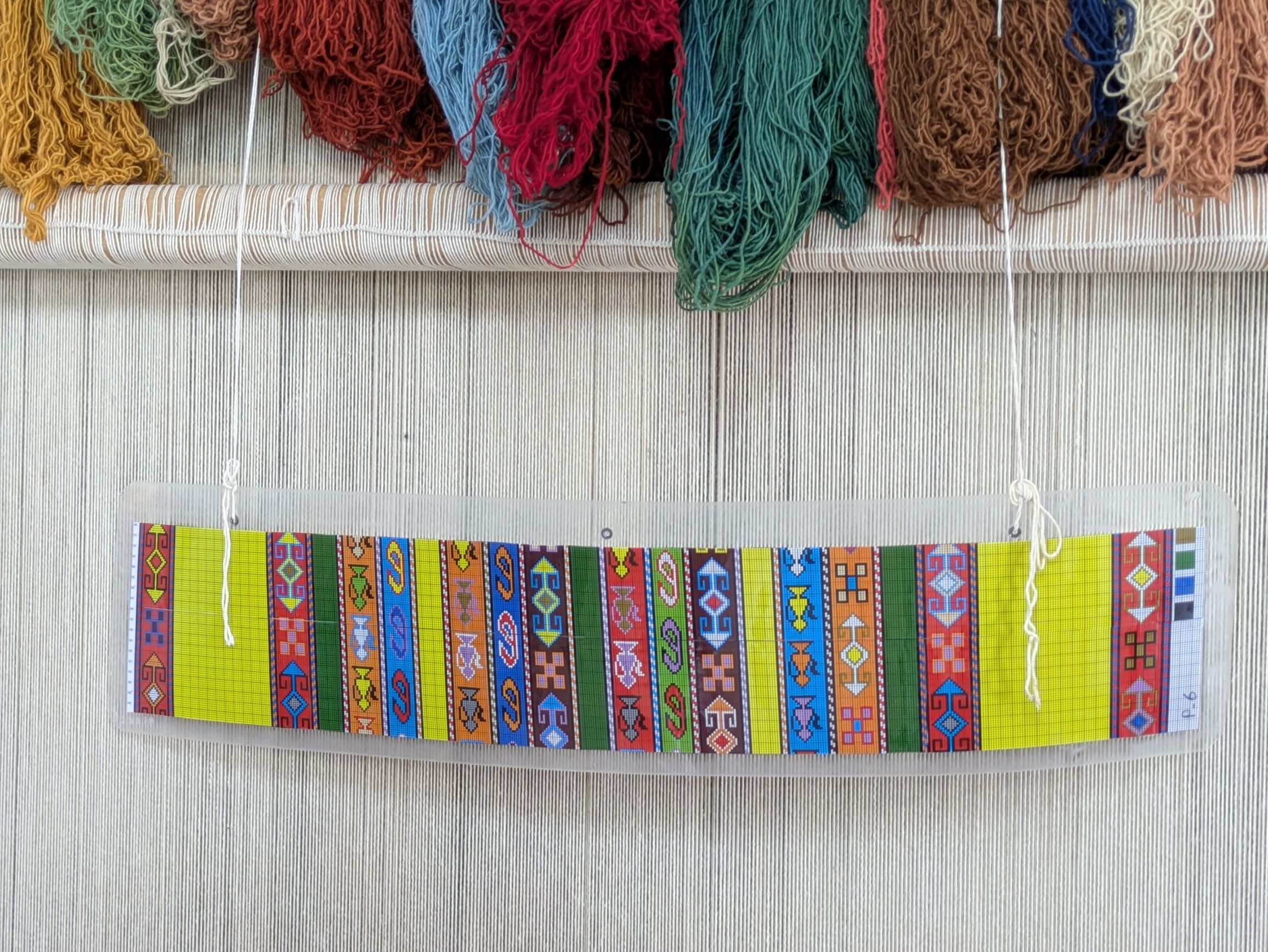
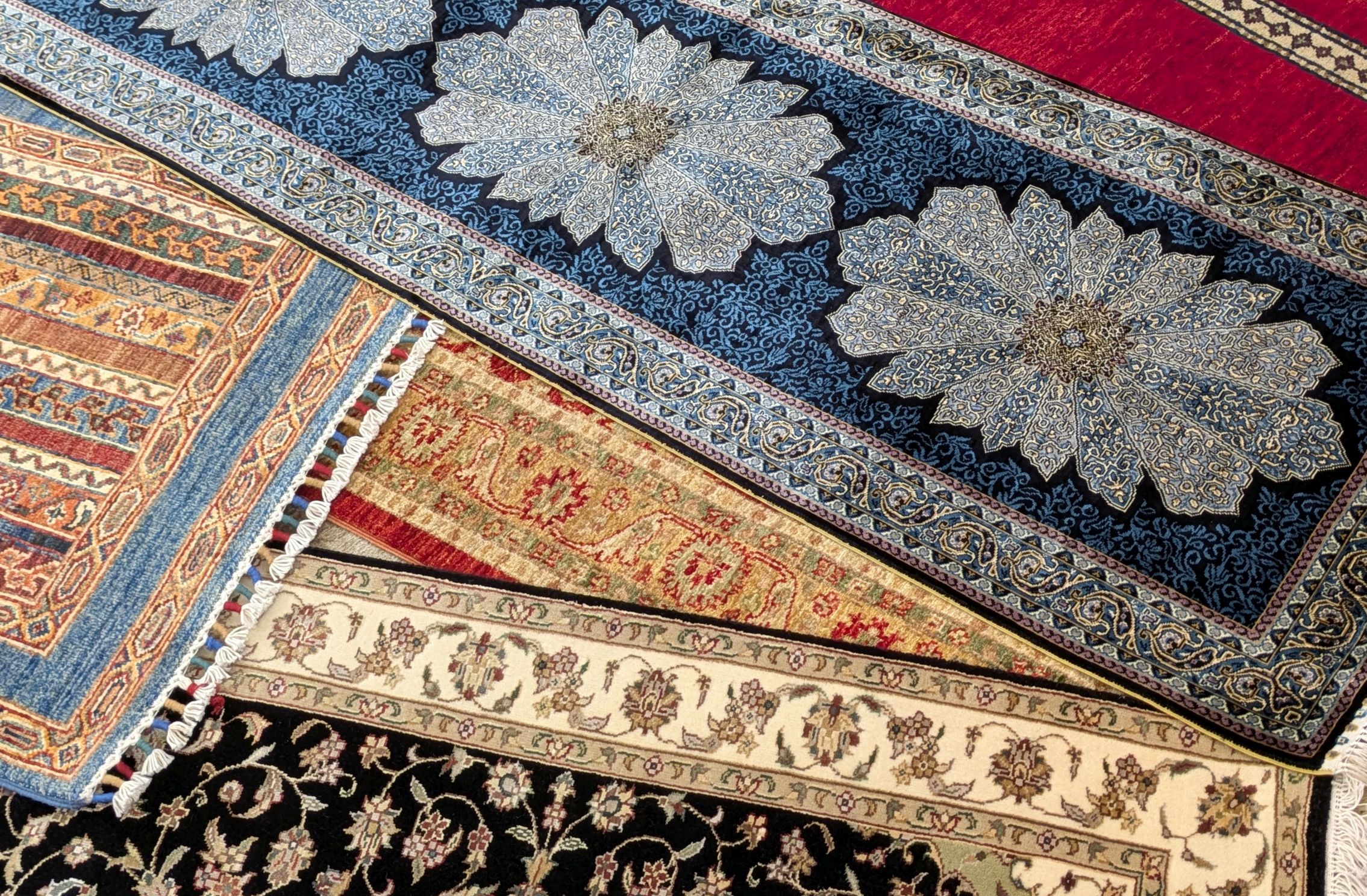
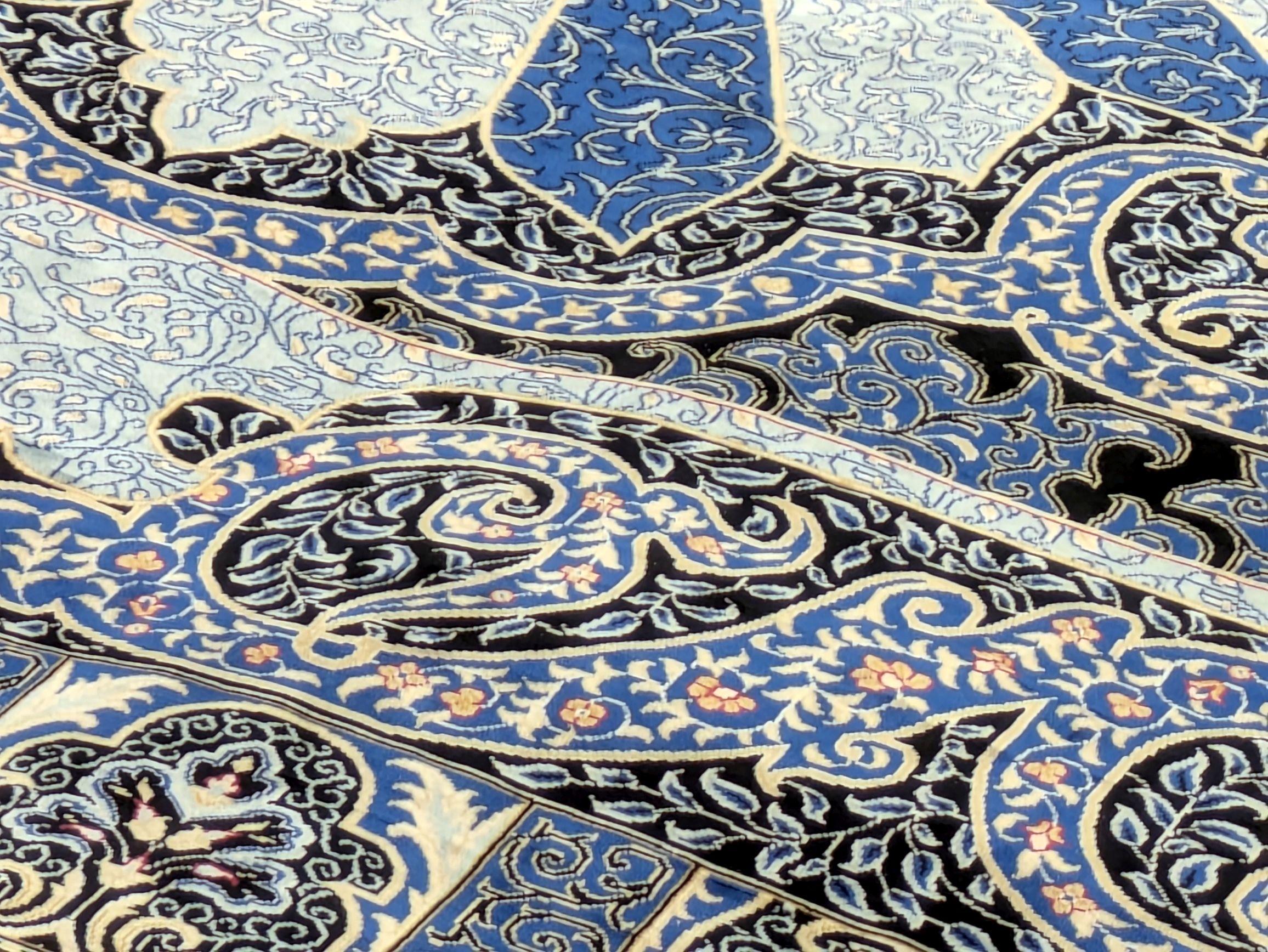
Next, we visited a carpet cooperative where they weave and sell beautiful Turkish carpets with colorful and intricate designs. Also known as Anatolian rugs, they are made in the region historically dominated by the Ottoman Empire. An important part of Turkish culture, these carpets have a long and extensive history.
I found it interesting that Turkish carpets are the masterpiece of a dowry. When a woman gets engaged to be married, two weeks before the wedding, women in the neighborhood and family are invited to see the dowry her parents are giving to the couple. Everybody brings gifts, but the star of the party is the Turkish carpet that the family members made. Everybody in attendance wants to see it and learn if the bride made the carpet.
At the carpet cooperative we visited, the women are paid by the number of knots they tied. They can either work at the store or at home; however, if they work at the store, they receive benefits. The women who choose to work at home get paid only for the completed rug.
The rugs are woven with only natural fibers such as wool, silk and cotton (and sometimes even goat and camel hair), and the spinning is done by hand. The dyes used are obtained from plants, insects, and minerals. Red dye, for example, is made from Madder roots. The price of the rug depends on the type of fiber used and the number of knots. Silk is the most expensive, because it is fine. It requires 100 knots to produce just one square centimeter! The benefit, however, is that a silk rug is the most durable.


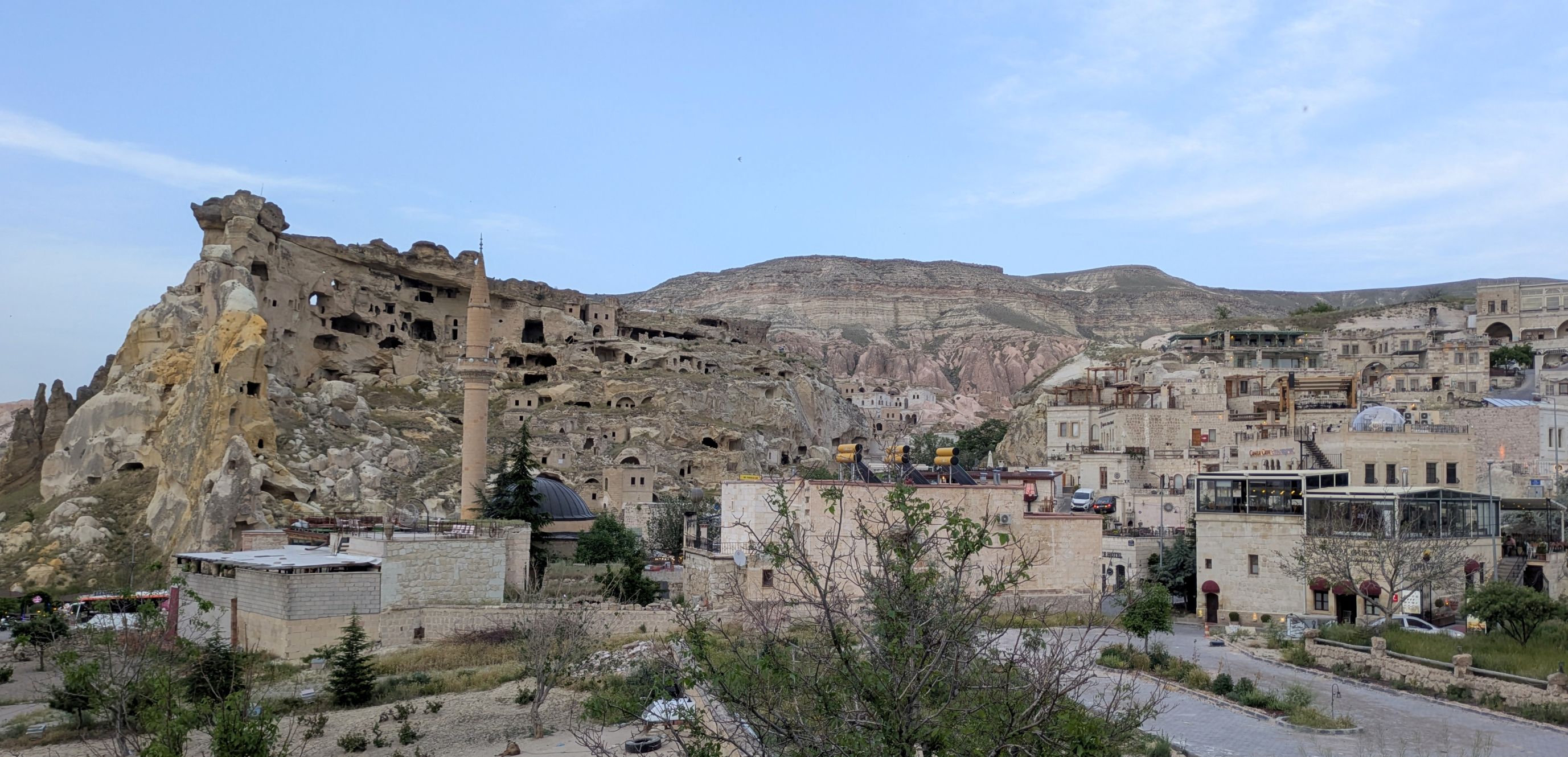
From balloon watching to visiting Goreme and then learning about Turkish carpets; it was a full and enjoyable day! We capped it off with a memorable group dinner at a restaurant in a small village. The view of the volcanic rock formations was spectacular, just out the window next to where I was sitting at the end of the table. Across from me sat our bus driver, who didn’t speak any English, but seemed so kind and always greeted us with a friendly smile. While waiting to be served, I broke my self-imposed rule of no phones at the tables and brought mine out. (Don’t even get me started with how I feel about my dining companions taking calls, texting, or checking emails while we are having a conversation!) I quickly opened Google Translate, so we could have a conversation we both could understand. We learned a lot about each other, his family, work, and dreams for the future, while dining on Turkish cuisine and passing the phone back and forth. It was truly memorable and an example of what I felt was an appropriate way to use technology.


Next up: TURKIYE #7: A DAY IN THE LIFE OF CAPPADOCIA
 Elaine-iaK's Travels: A Traveler's Tales of People, Places, Photos, Pools... and CHOCOLATE!