SOUTHWEST FRANCE, NORTHERN SPAIN & PORTUGAL #9: GUERNICA, THE BASQUE COUNTRYSIDE, AND A HOME-HOSTED DINNER

Following a full day of exploring Bilbao, we set out the following morning for a side trip to Guernica (or Gernika, in Basque), a small town in the Basque Country.  1937, during Spain’s civil war, was a devastating year for the town.  Bombed by the Germans for three hours nonstop, the town was destroyed.  Spain’s dictator, Francisco Franco, tried to deny what had happened to Gernika, but some journalists happened to be in town at the time and survived the bombing to record it and reveal the truth.

This devastation was immortalized by Pablo Picasso, a resident of Gernicka, in the famous painting that bears the town’s name.  Picasso had lived there until Franco came into power, and then fled to Paris.

(For all photos, click on the image for a full screen view.)
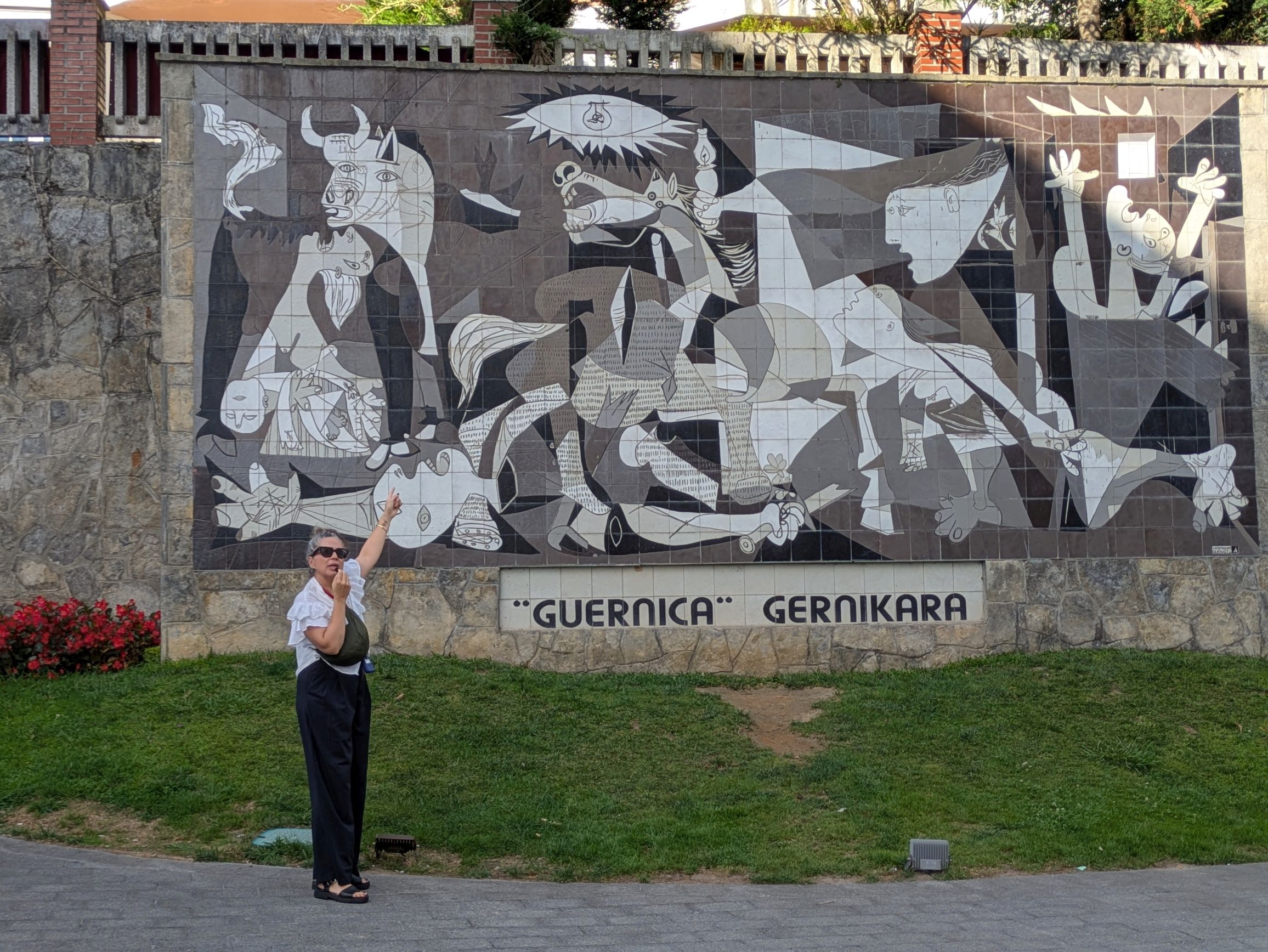
Serena, our tour lead for the main trip, explains the history depicted in Picasso’s mural.
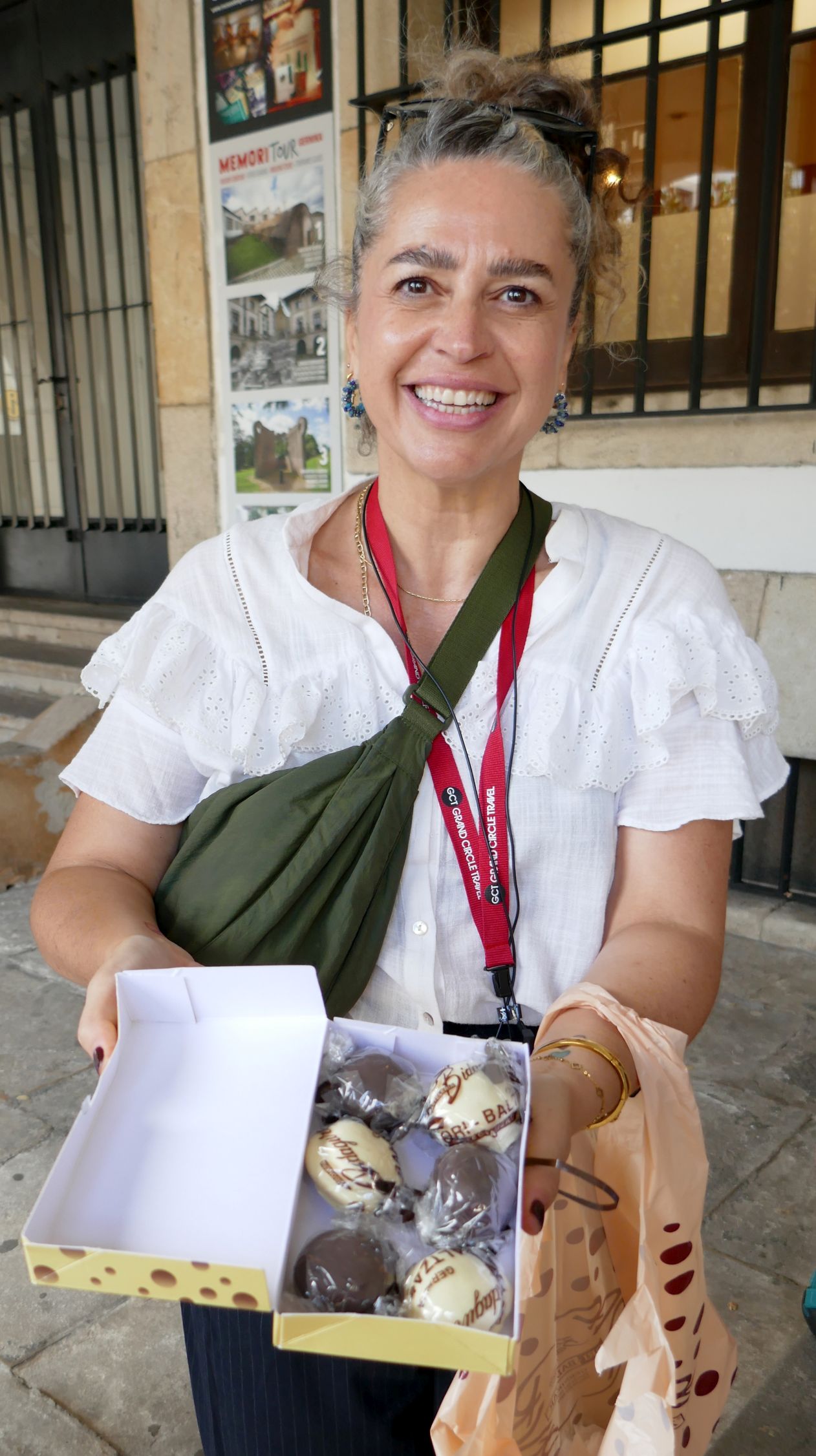
Serena shares some local Basque treats

We learned about the history behind the mural while visiting the Guernica Peace Museum, located in one of the only buildings that survived the Nazi bombing.

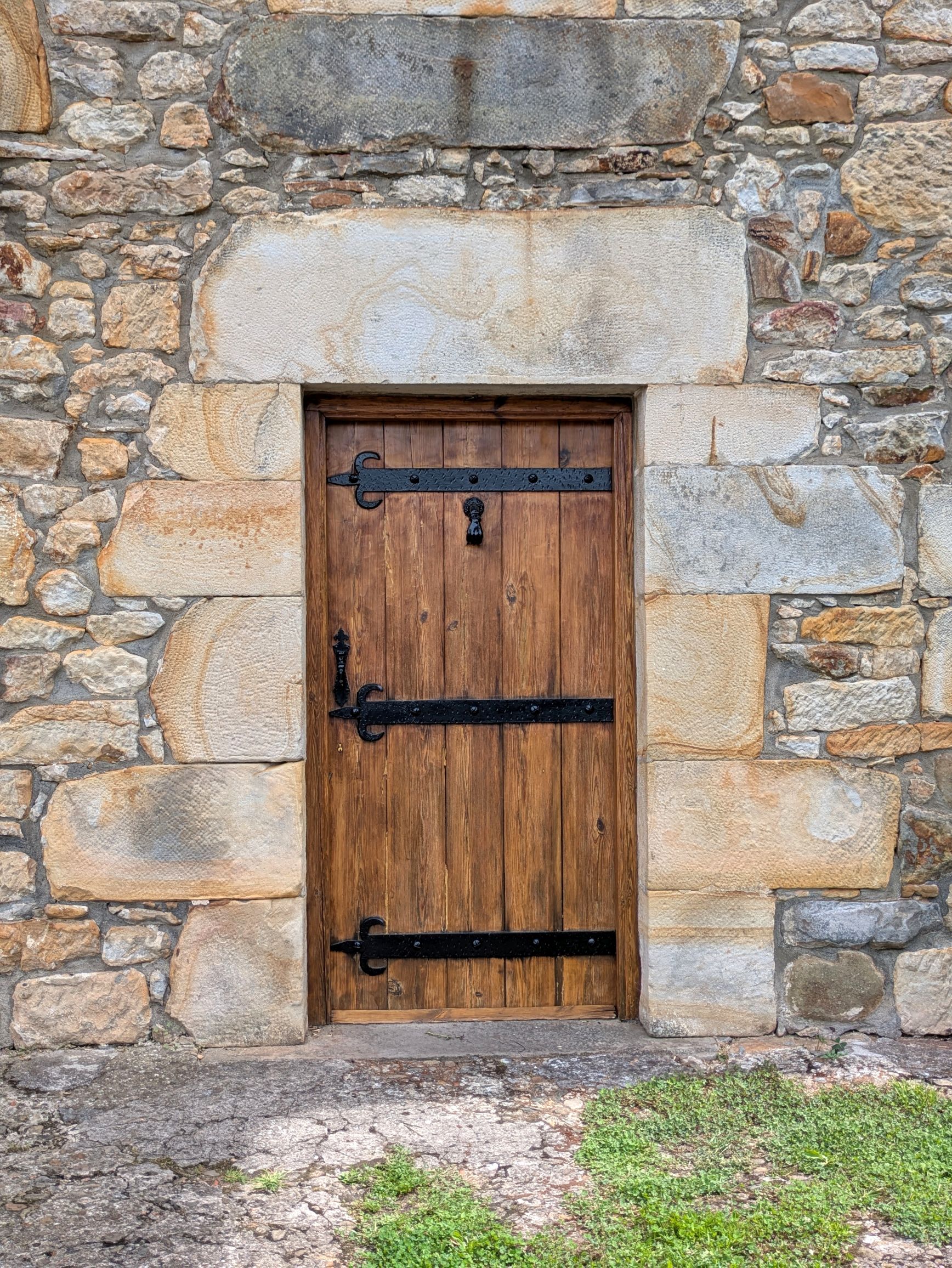
Next, we headed off into the Basque Countryside and visited a couple at their typical Basque farmhouse and learned about Basque traditions, including the preparation of talo, a local flatbread made from corn flour.  Similar to corn tortillas, it serves as bread in Basque homes.  We all chipped in to help make talo to accompany the traditional Basque lunch we enjoyed together.

Talo was prepared in a separate area adjacent to the farmhouse.
Talo

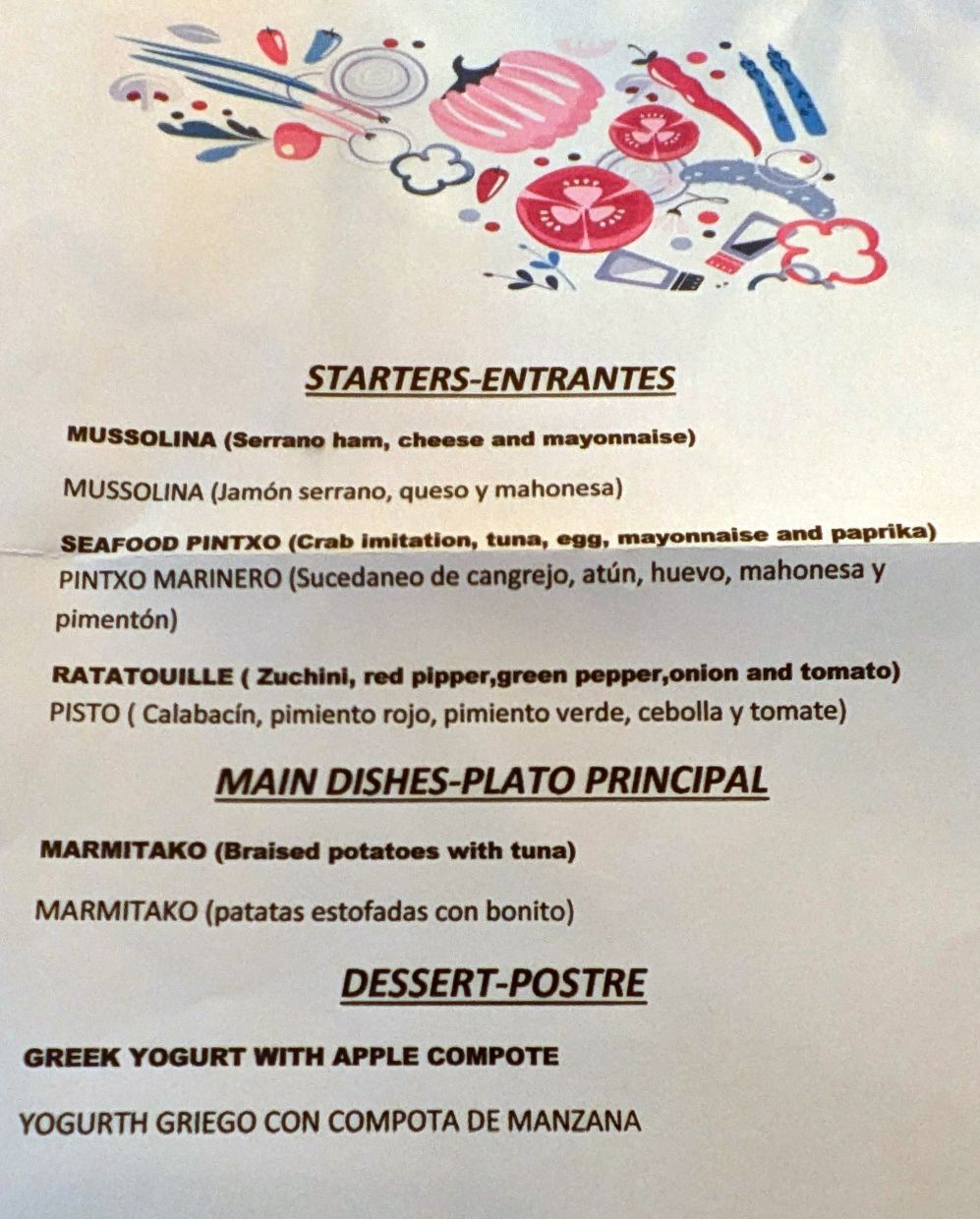
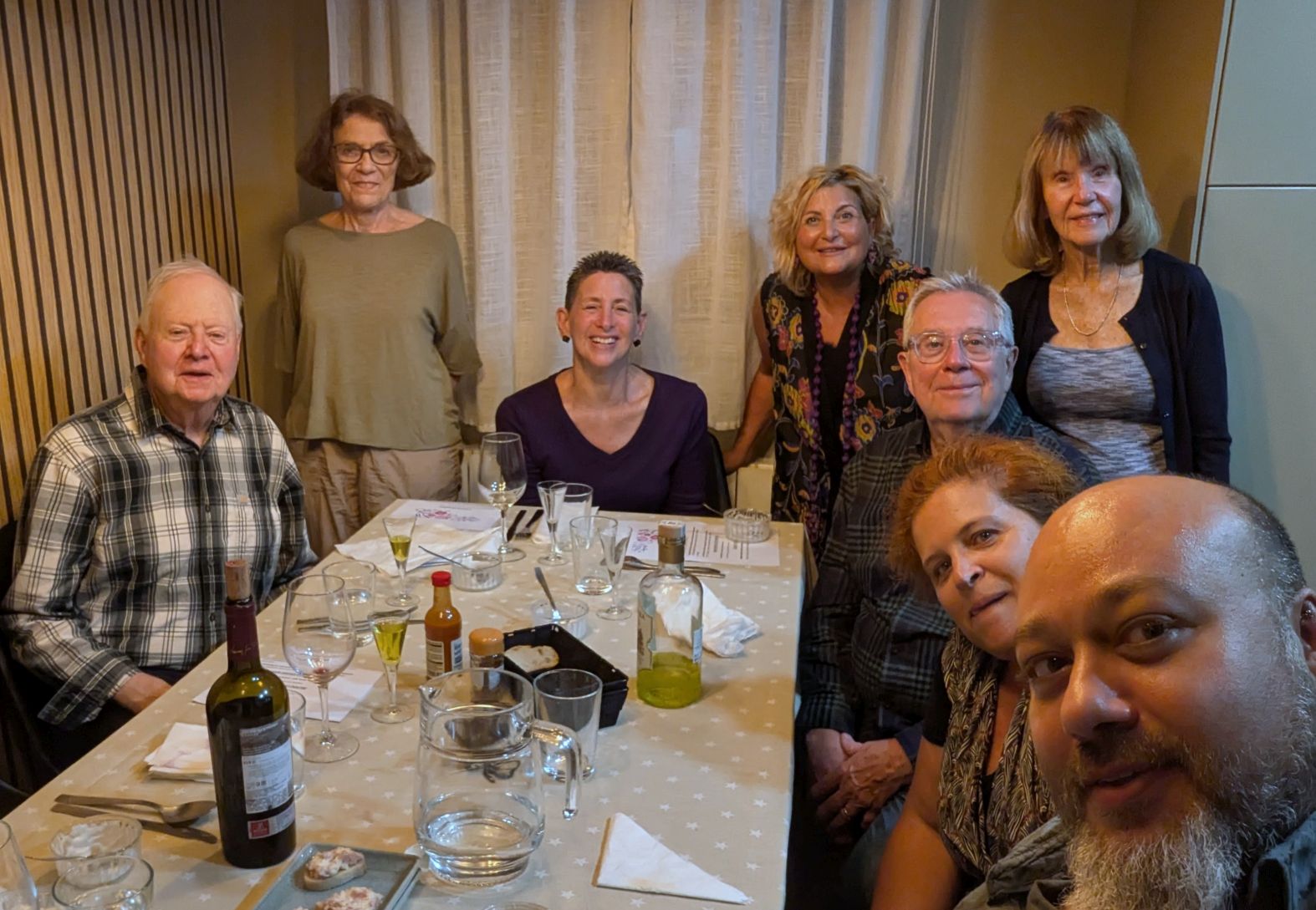
During the afternoon, we had free time to explore more of Bilbao.  In the evening, we were divided into smaller groups to enjoy a home-hosted dinner.  Our hosts, Blanca and David, were delightful, and Amaia, their translator, was a hoot!  We had such an enjoyable time with them!

Blanca was to my left, David in front, and Amaia was next to David.

Next up: SOUTHWEST FRANCE, NORTHERN SPAIN & PORTUGAL #10: STUNNING SAN SEBASTIAN

SOUTHWEST FRANCE, NORTHERN SPAIN & PORTUGAL #5: BEAUTIFUL BAYONNE

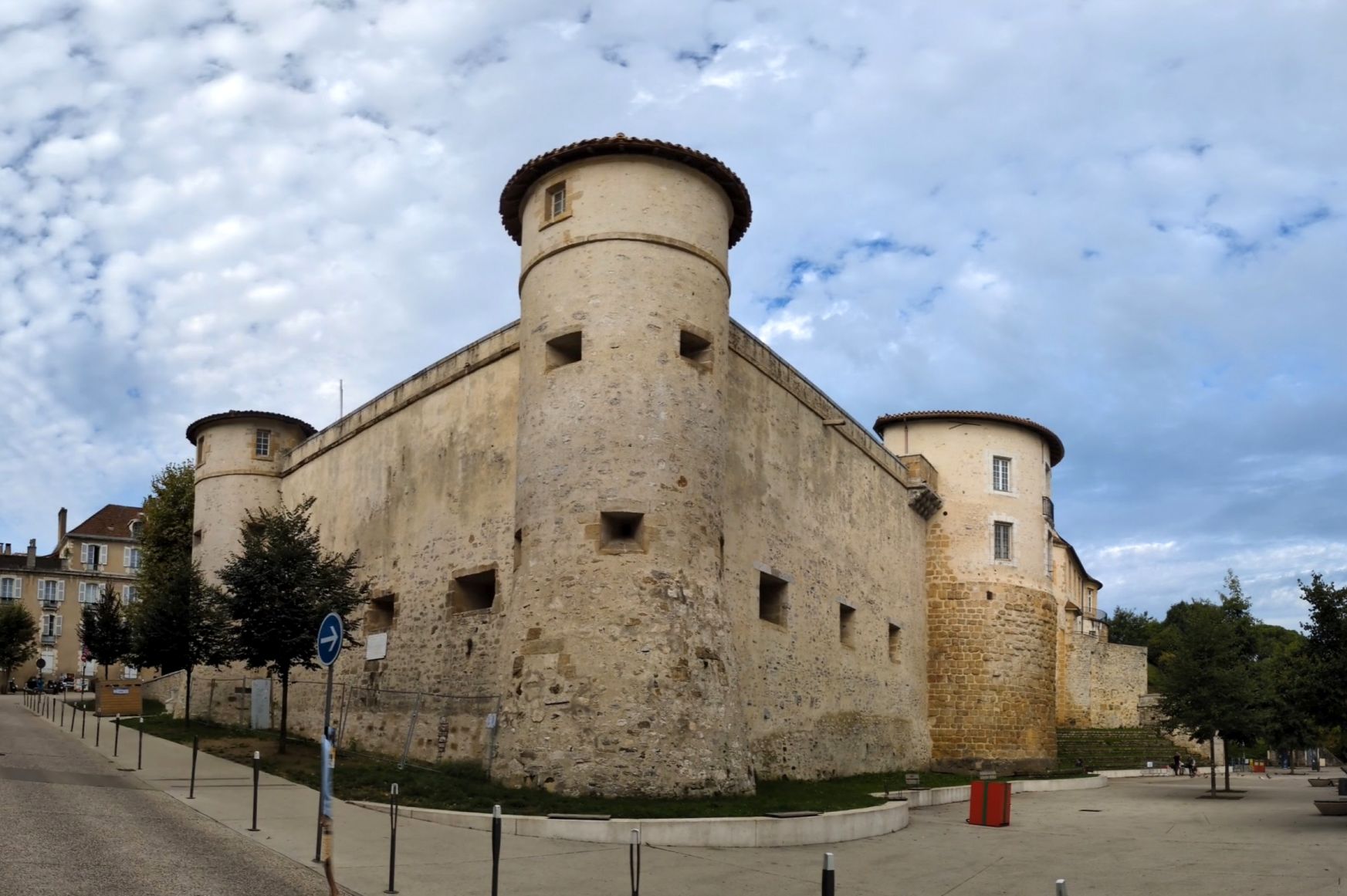
Bayonne, like the other towns we visited in southwestern France, is in the Basque Country.  Its history stretches back more than 2,000 years, so it is full of culture, beautiful architecture.

Built along the intersection of two rivers, it is located quite close to the Spanish border and has a population of more than 53,000 people.  My favorite part of its history is that it became the unofficial chocolate capital of France in the 17th century.  Cacao beans were first brought home to Spain by the Spanish colonists upon their return from South America.  Since Bayonne was right next door, they got in on the action when Jews fleeing the Spanish Inquisition relocated in nearby Bayonne and started producing chocolate. Back then, there were 60 chocolatiers that all worked together to grow the industry, but each one had its own specialty

Currently there are about ten high-end chocolatiers in town, including Chocolat Cazenave, which has been making chocolate since 1854.  I enjoyed stopping in at a few of the chocolatiers to look at their beautiful creations but took a pass on purchasing their pricey masterpieces.

An interesting part of Bayonne’s history began in the 1930’s when the Basque people sought autonomy and started a separatist movement.  Although it culminated in a statute of autonomy in 1936, Spain’s dictator, Francisco Franco, abolished it when he came in power in 1939.  The struggle continued for another twenty years until a faction of the Basque’s National Party broke away and launched a campaign of terrorism against the Spanish central government, making Basque regionalism one of the most destabilizing forces in Spanish political life.

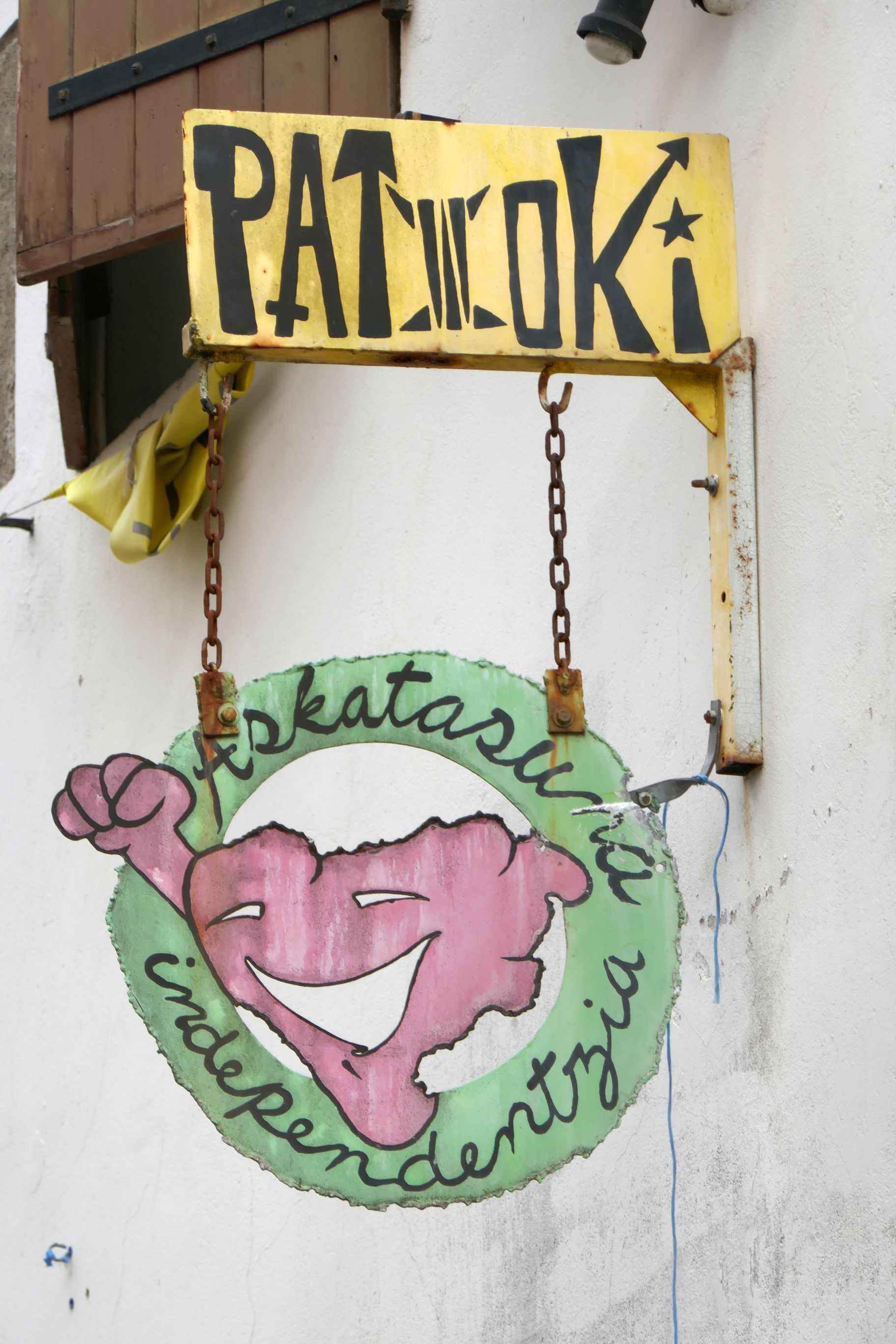
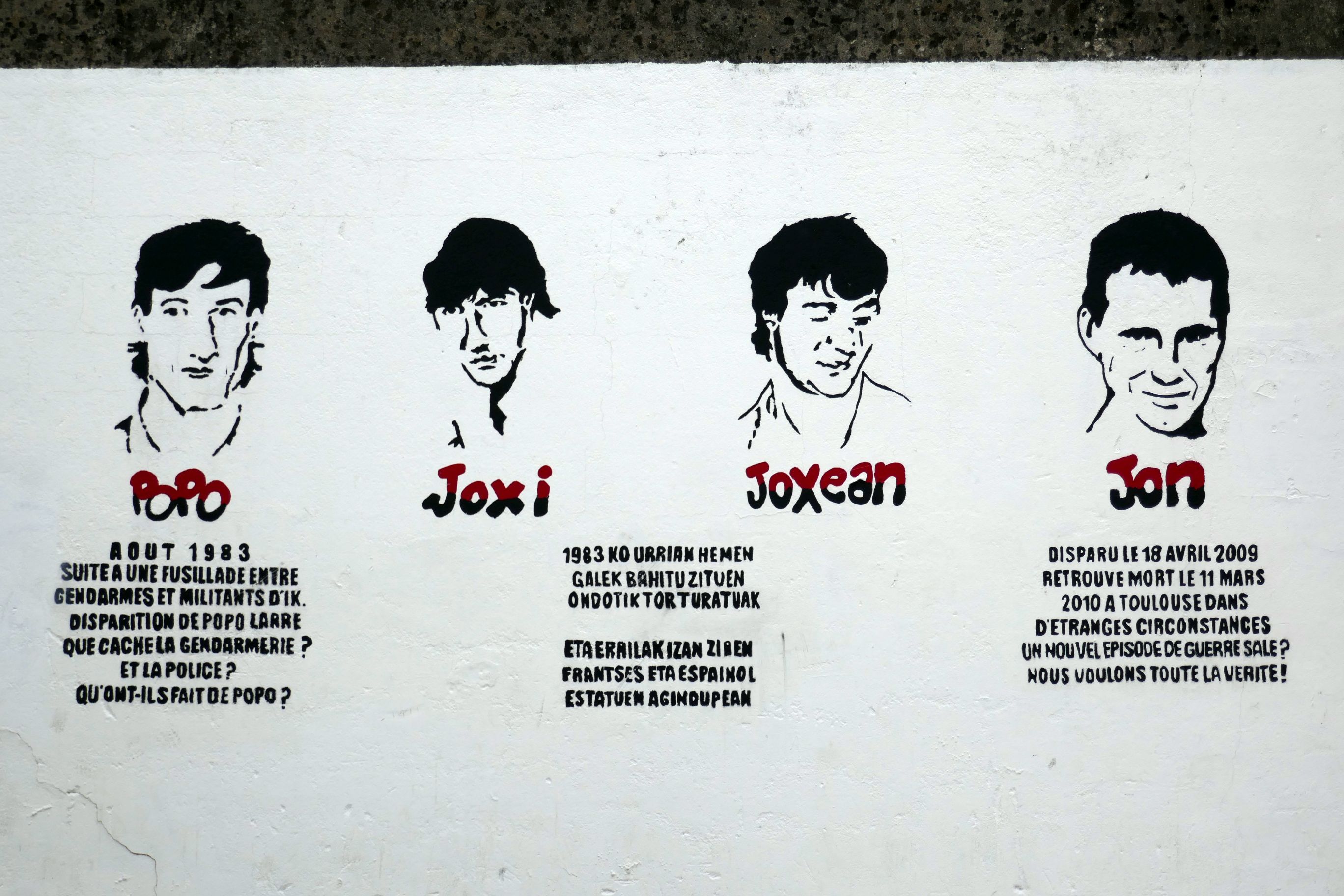
During our walking tour the morning following our arrival, we stopped by an ETA clubhouse and saw some of the political murals nearby, which were explained by Tom, our tour leader:

(For all photos, click on the image for a full screen view.)
Basque prisoners that were disappeared

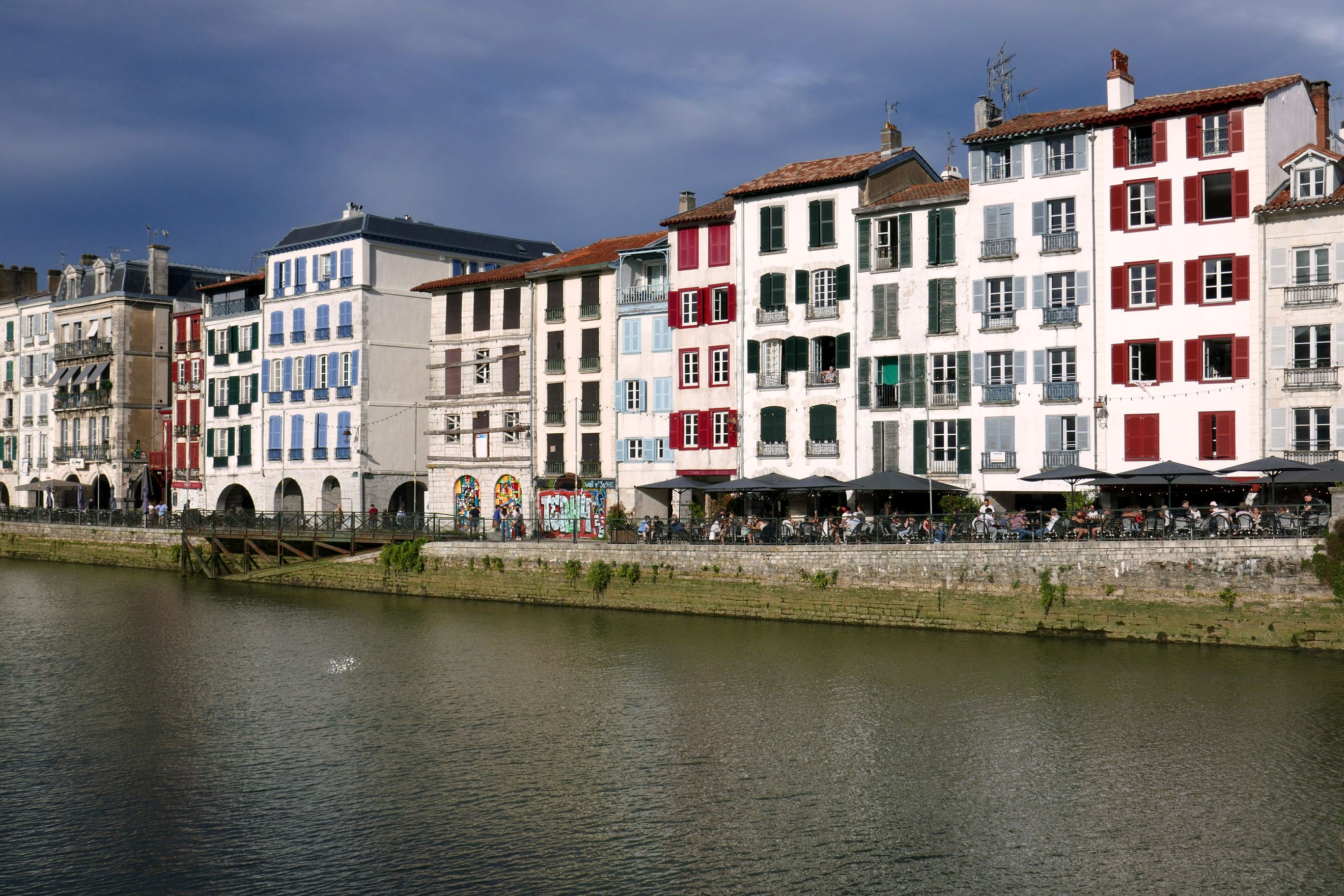
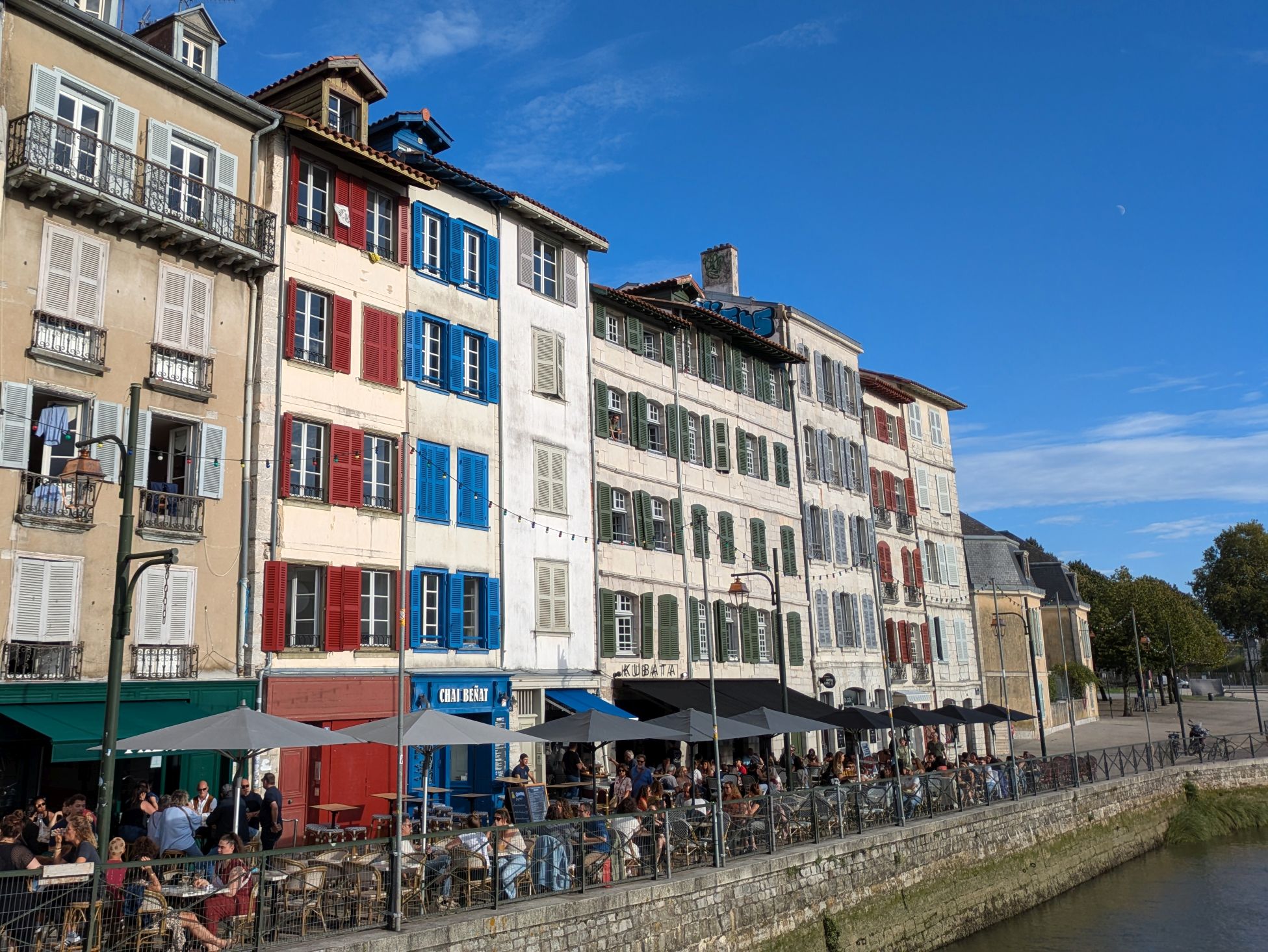
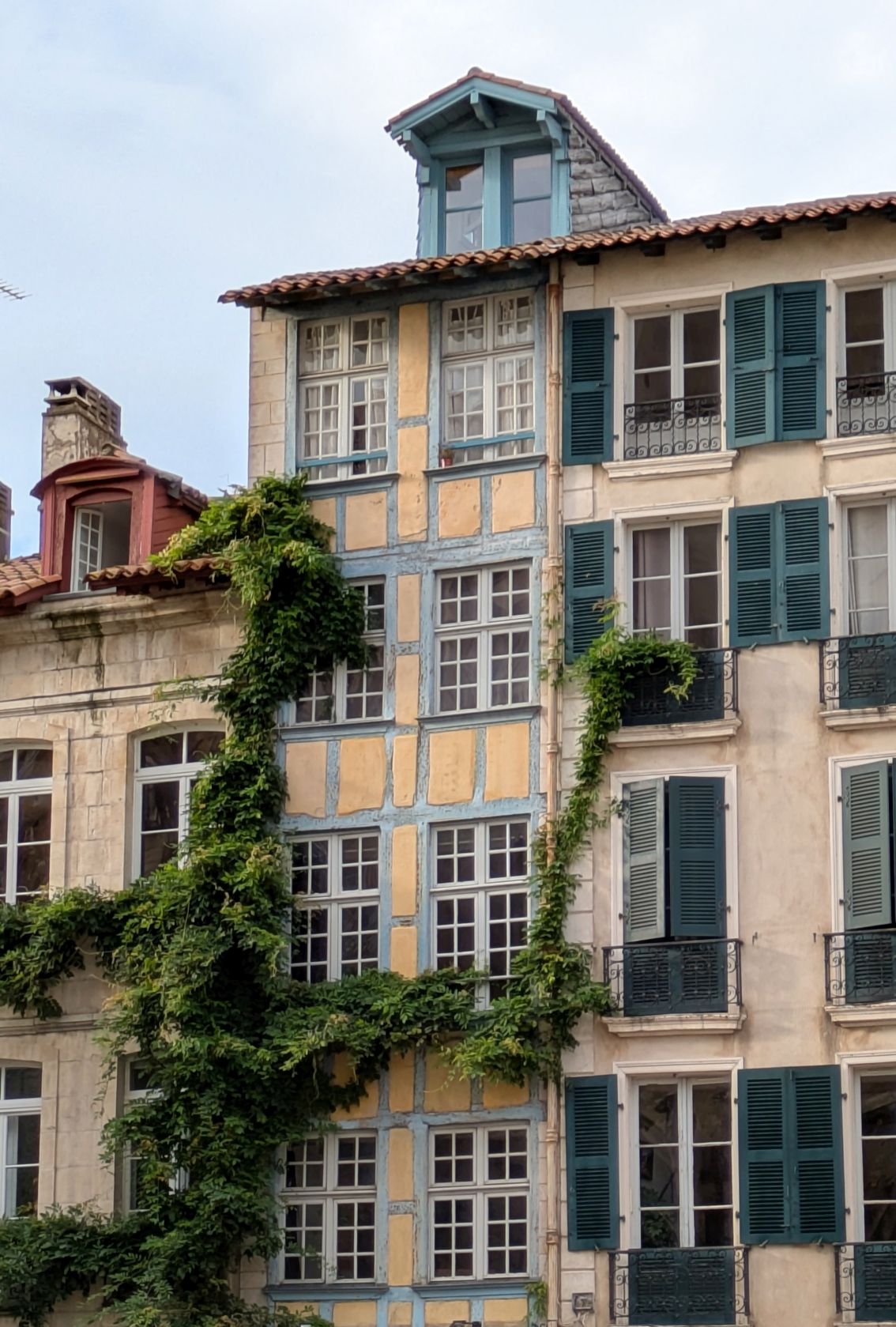
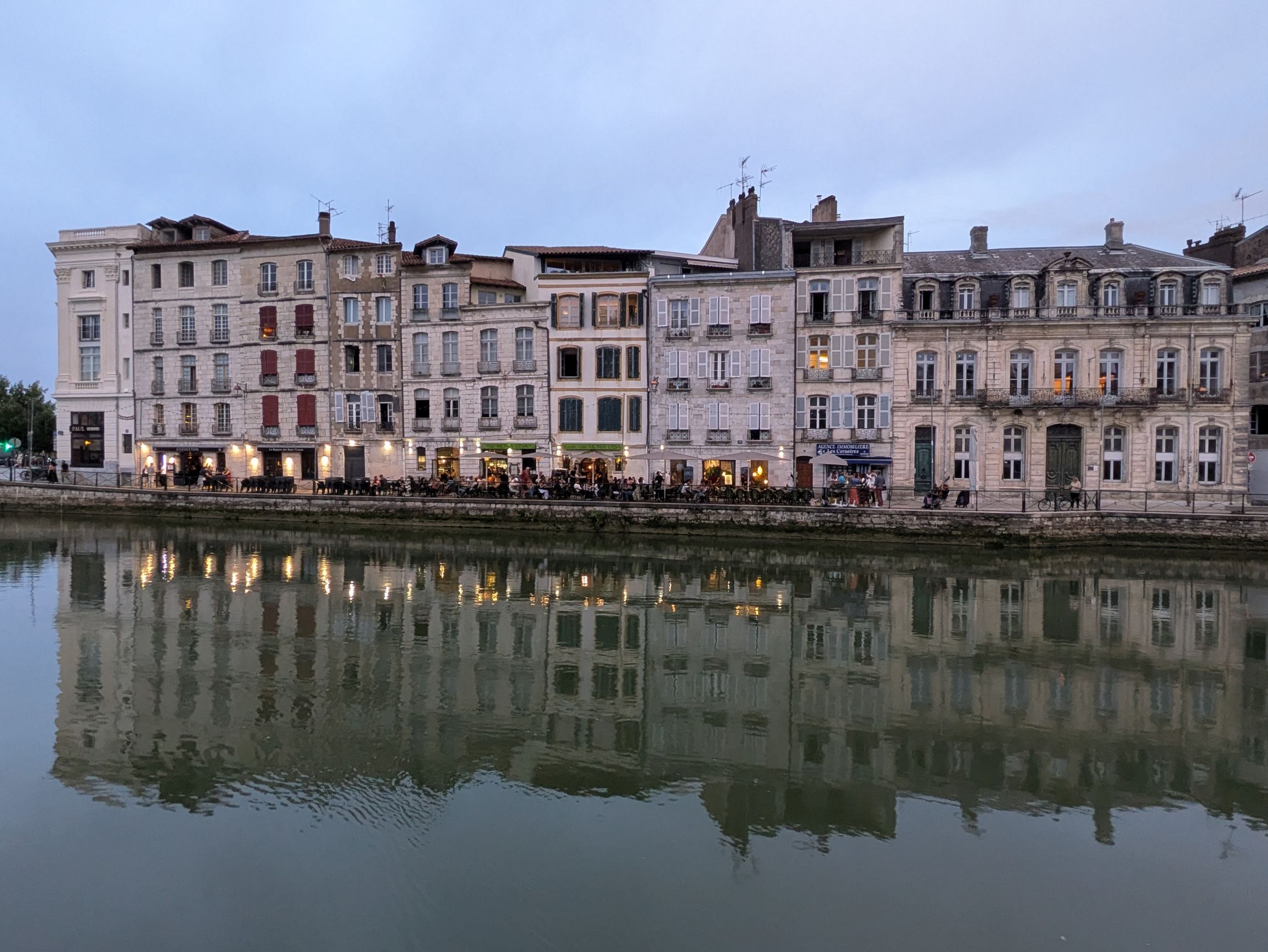
The views of the colorful half-timbered buildings along the rivers were charming and quite photogenic, especially in the late afternoon sun:

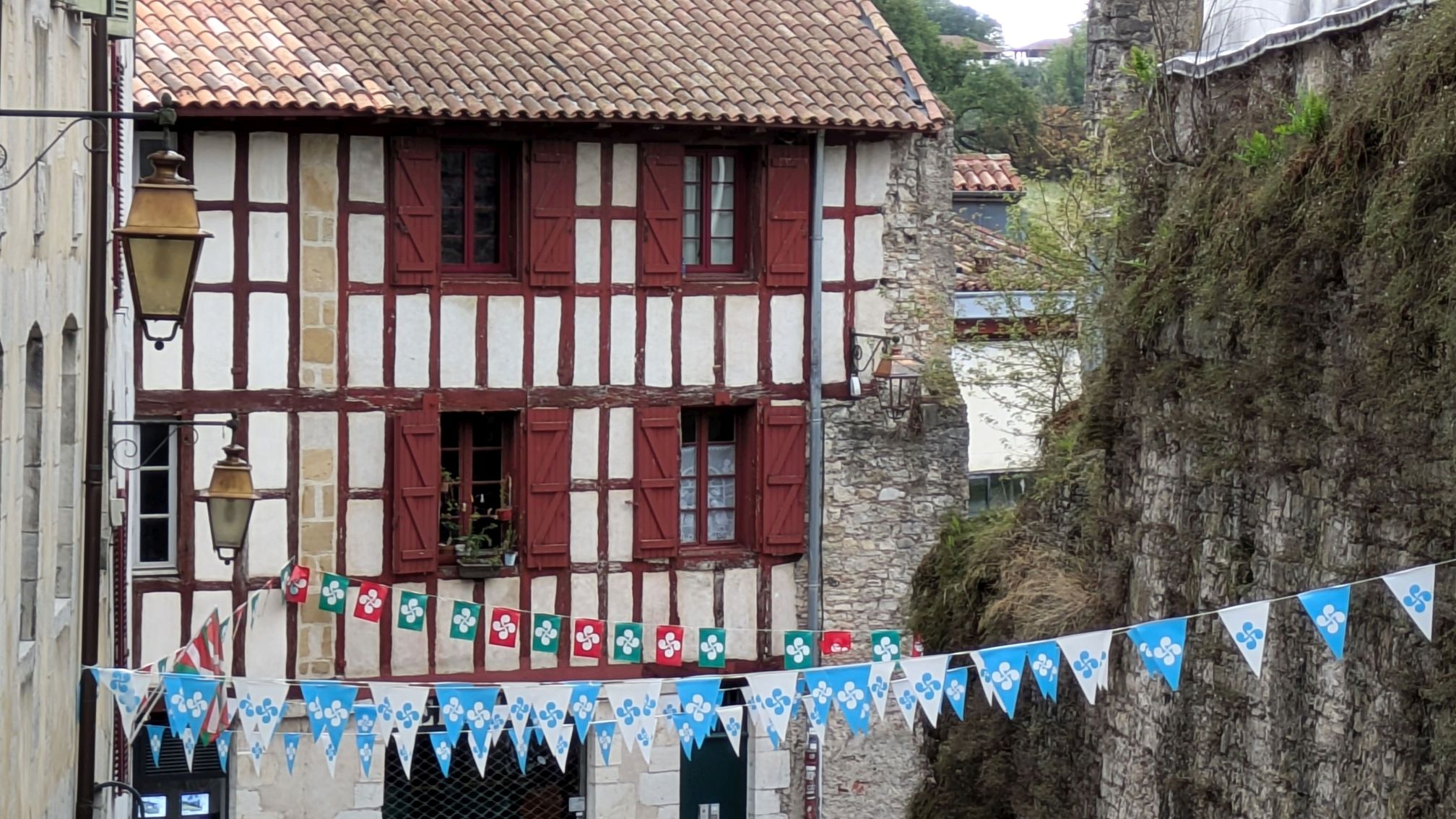
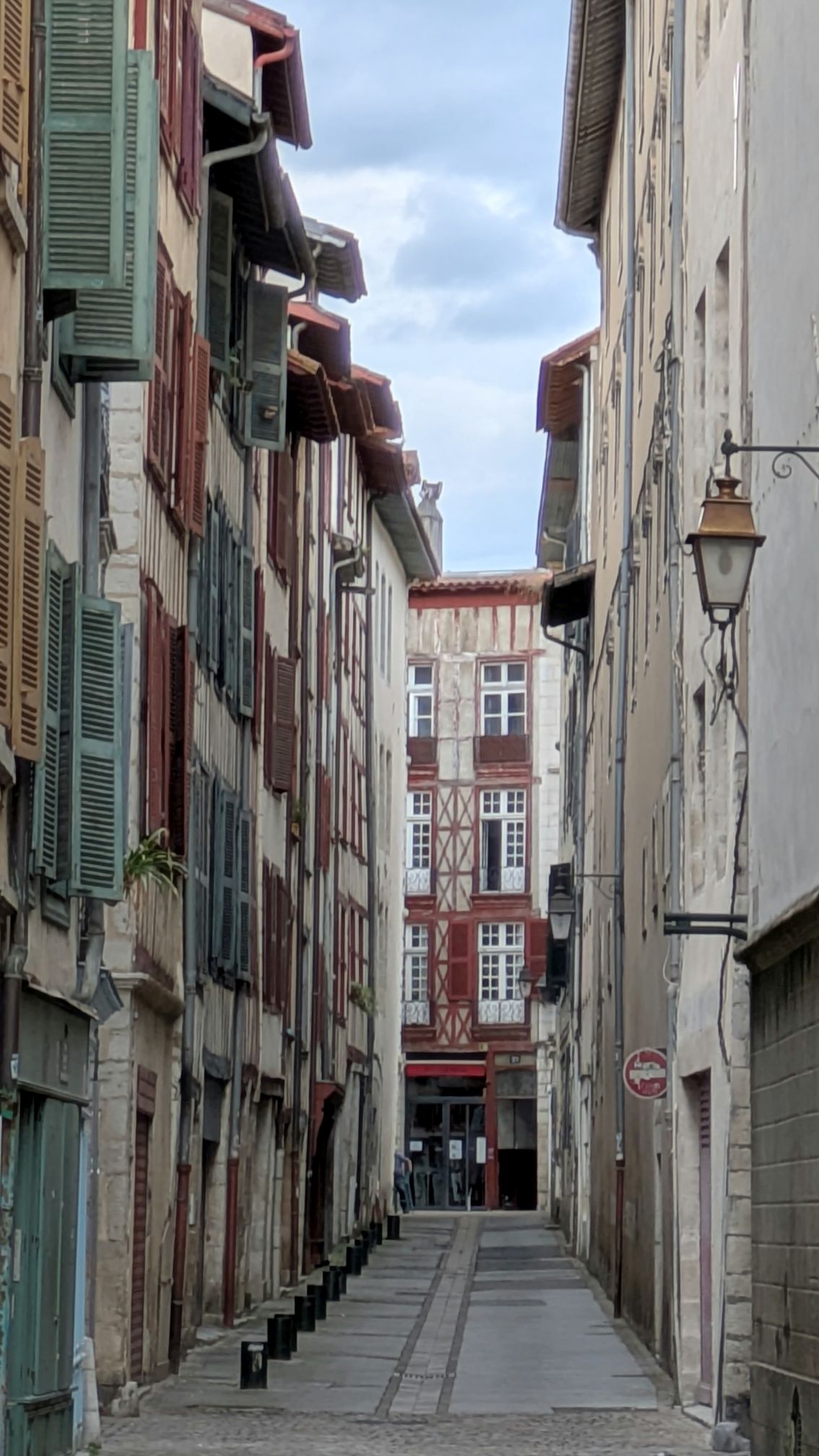
More scenes from around Bayonne during our two days in town:

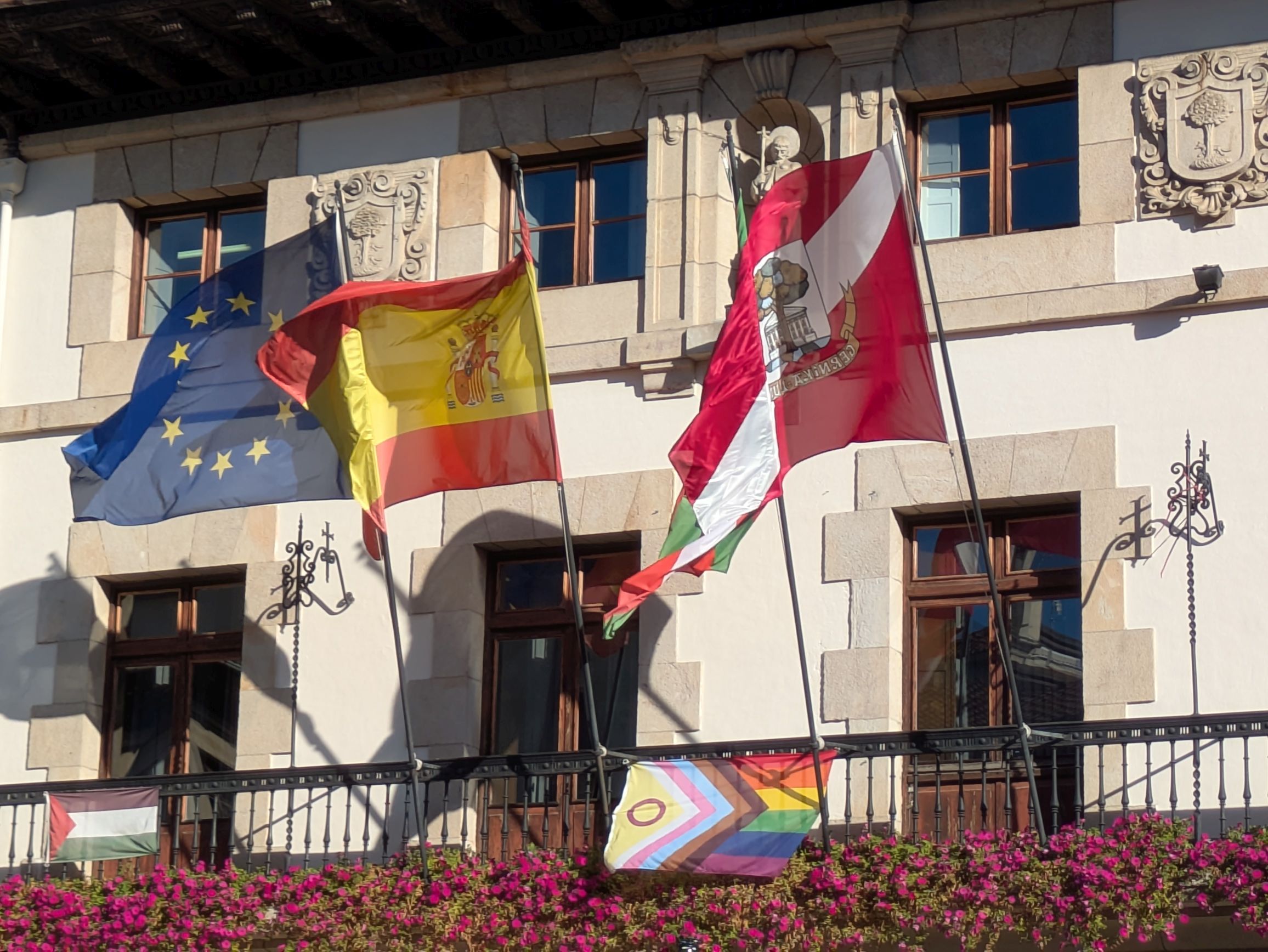
The Basque flag hangs from the balcony
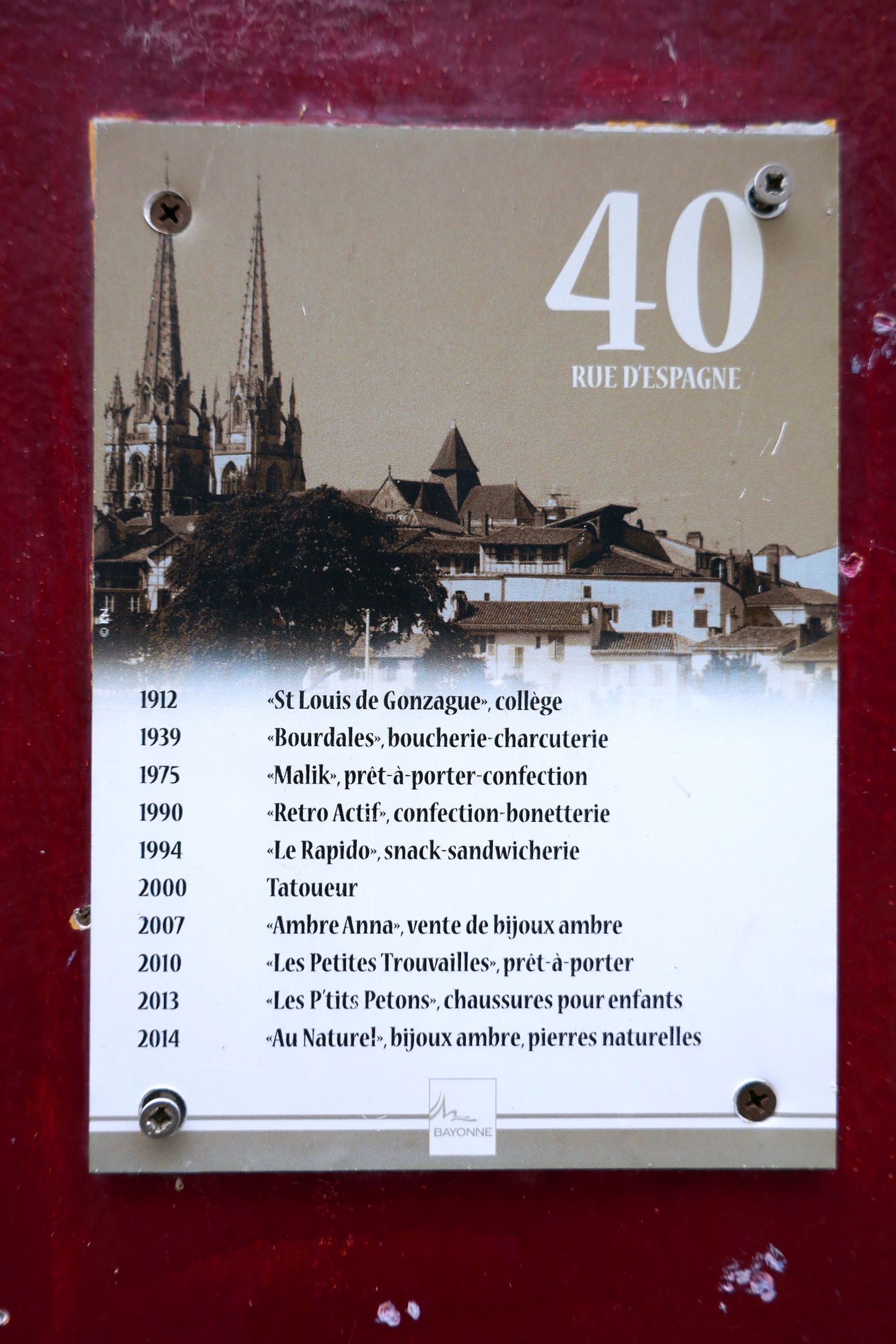
Some of the businesses had plaques in the front listing the history of the owners and what type of business it was each time.
There were also signs to be respectful of those historic buildings!
Down the street from our hotel
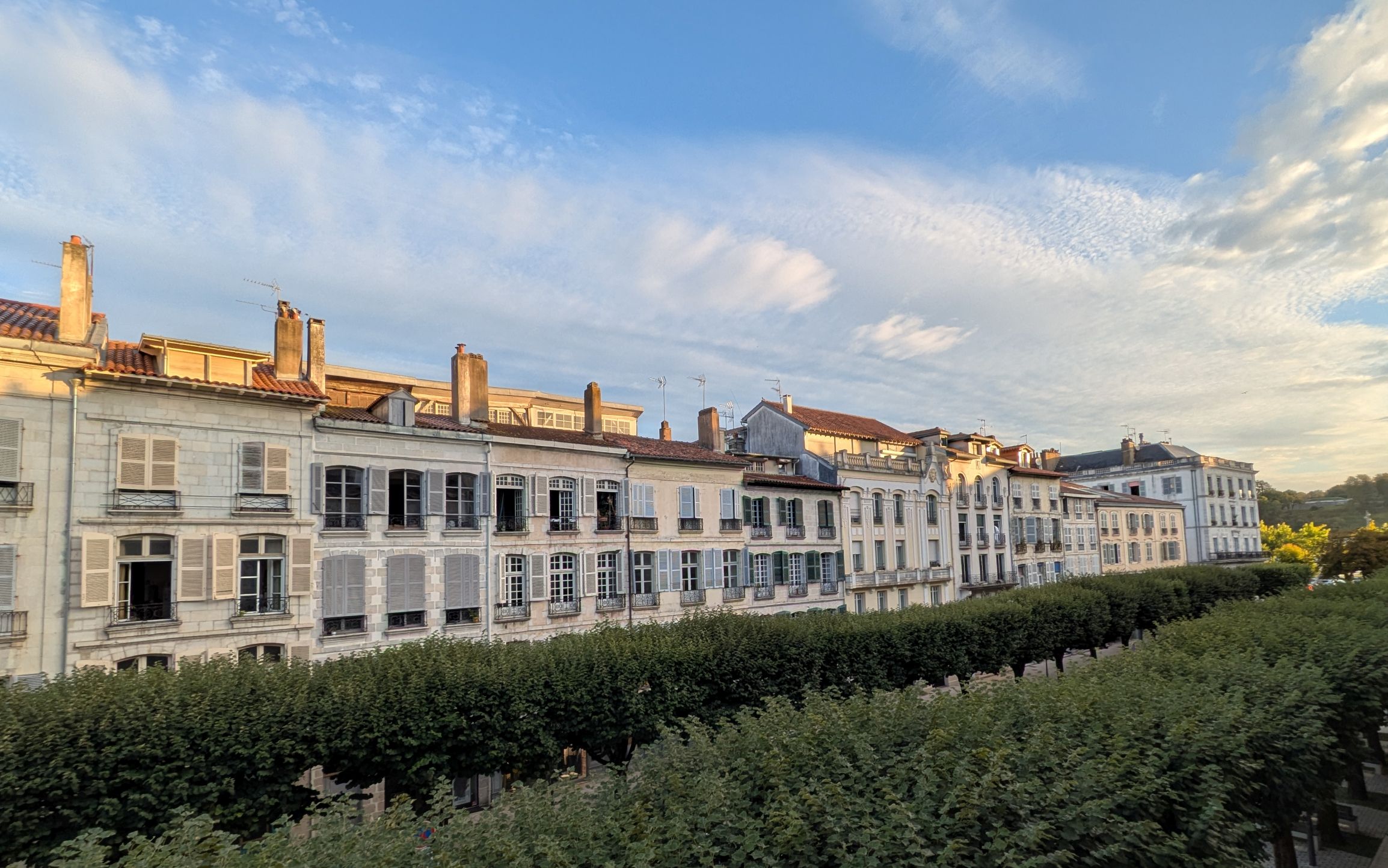
The view from our hotel room (left)
The view from our hotel room (right)
Distorted panorama of the sweeping view to the left, and then right from our hotel window
Just before dusk
The riverfront at dusk

Coming up next: SOUTHWEST FRANCE, NORTHERN SPAIN & PORTUGAL #6: BEAUTIFUL BAYONNE