SOUTHWEST FRANCE, NORTHERN SPAIN & PORTUGAL #18: SENSATIONAL SANTIAGO DE COMPOSTELA, PART 2

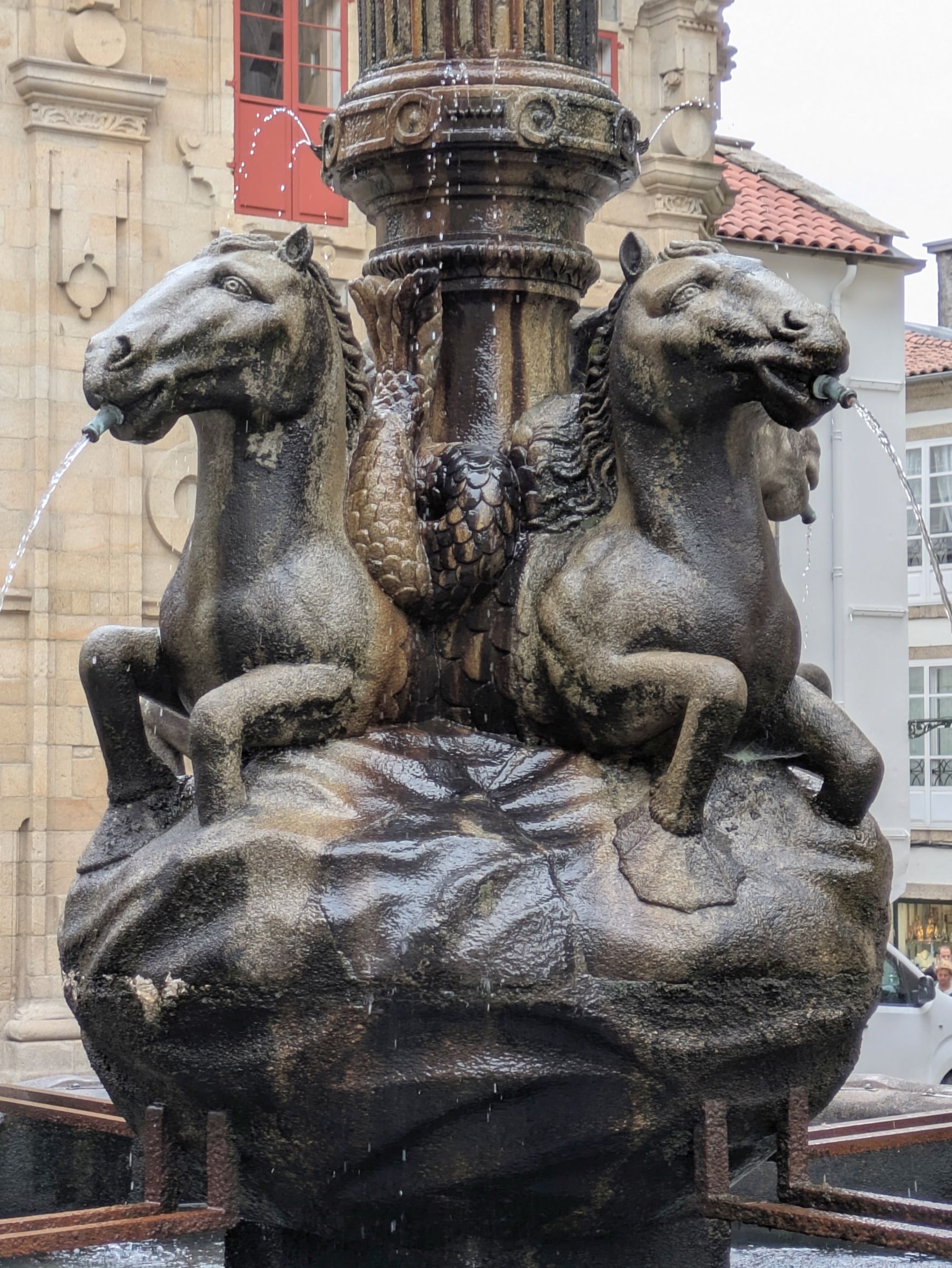
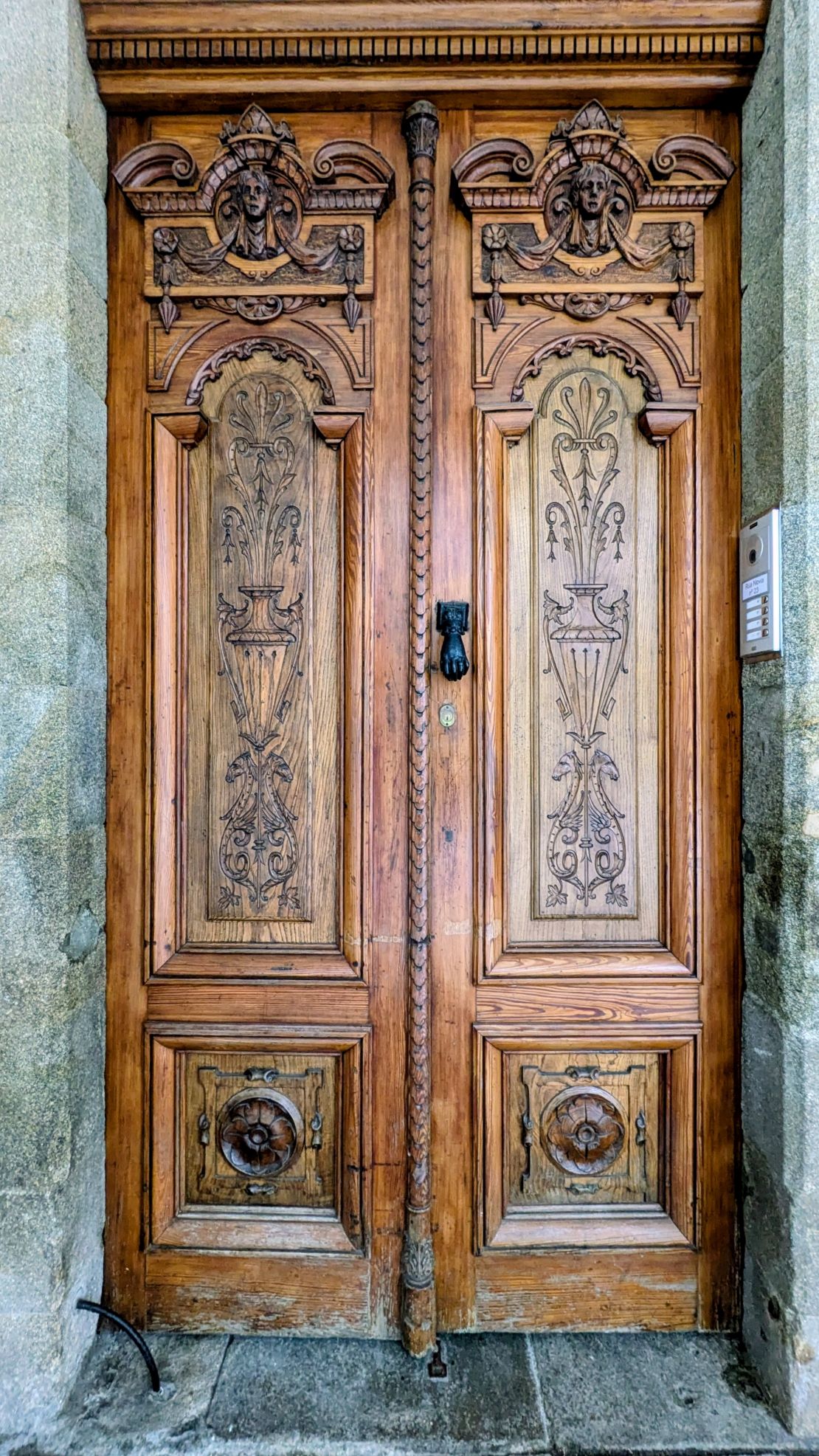
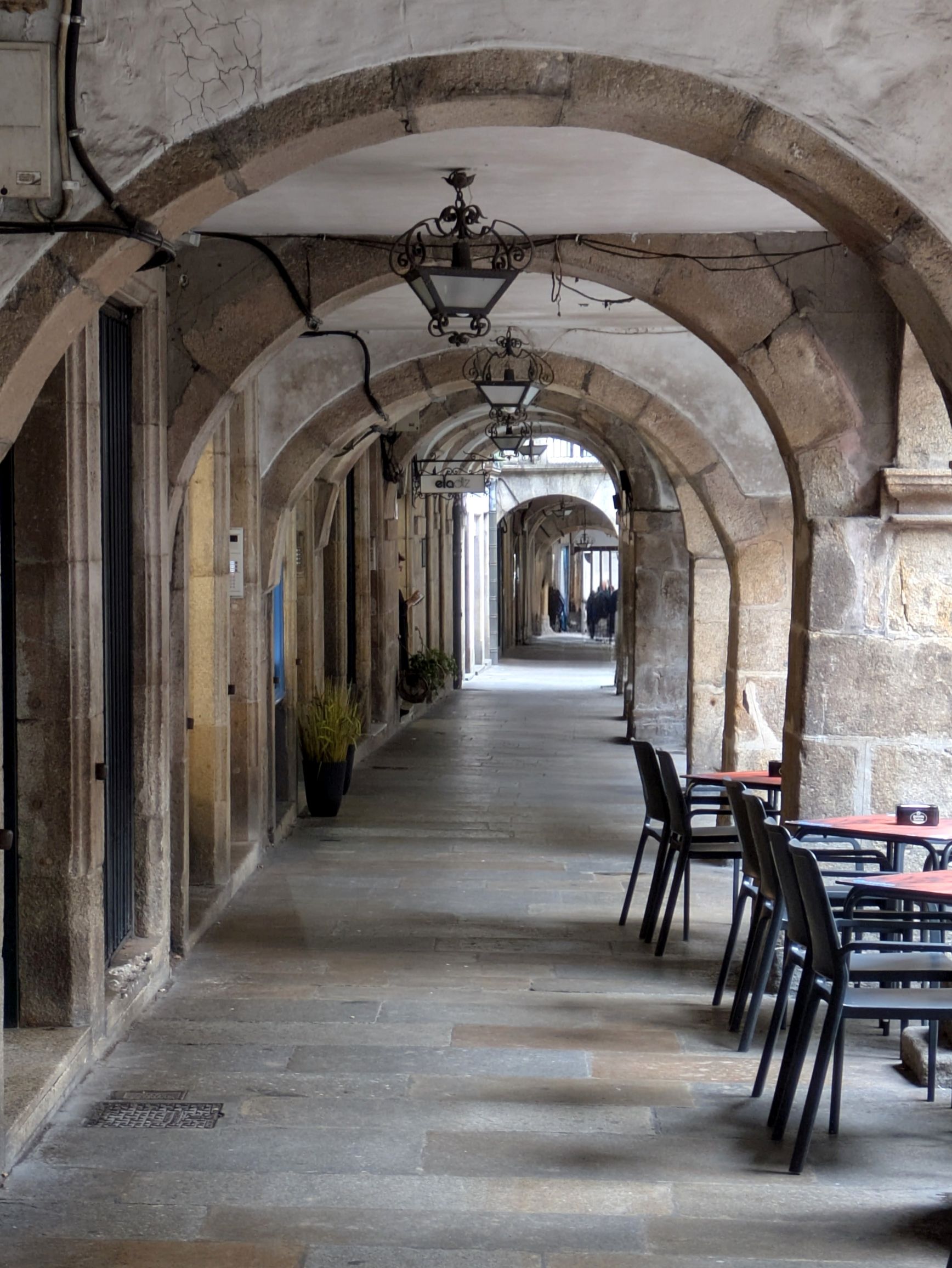
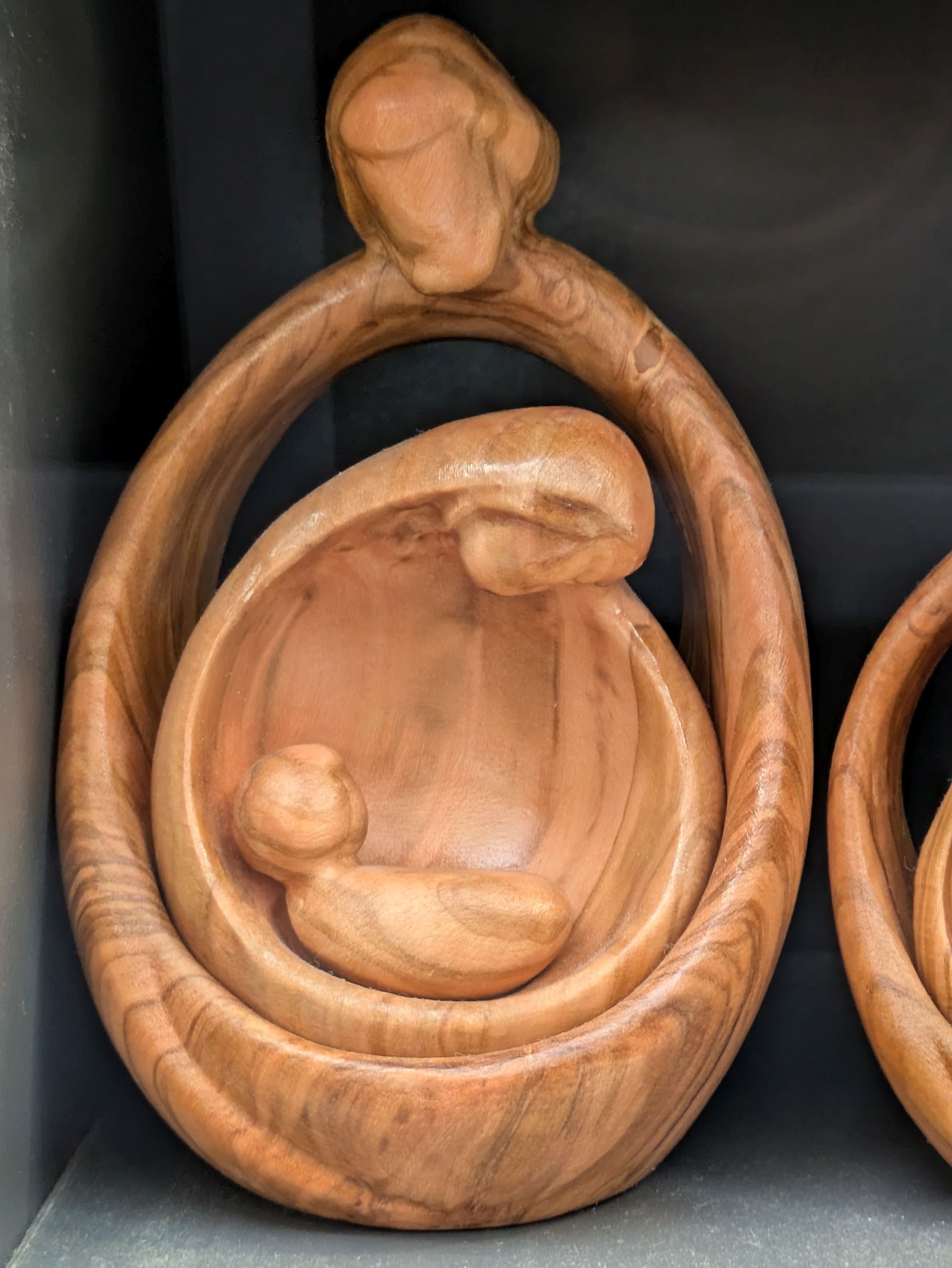
Although Santiago de Compostela (“Santiago”) has become quite touristy, I enjoyed meandering around the old town, taking in the culture, seeing the sights, and doing photography. 

Tourism has become an important part of Santiago’s economy, and the city has the Way of St. James (El Camino de Santiago) to thank for that, especially in Holy Compostelan Years when the Feast of Saint James falls on a Sunday.  When it was a holy year in 1993, the city launched a very successful advertising campaign, and there has been a steady annual increase in pilgrims completing the route ever since.  In 2010, the total was more than 272,000, and in 2024, there were 499,234 pilgrims who completed the route, according to the Pilgrim’s Office, in Santiago.  This total includes only pilgrims who request a certificate for walking 75 miles of the route or more.  There are many more who travel to Santiago to walk the route, but complete less of it.

The culture surrounding the Way of St. James is vibrant in the old town.  I especially enjoyed visiting the Museum of Pilgrimage and just hanging out in Plaza del Obradoiro, the cathedral square, watching pilgrims as they entered the square and celebrated their accomplishment.  (See my post #16 for photos.)

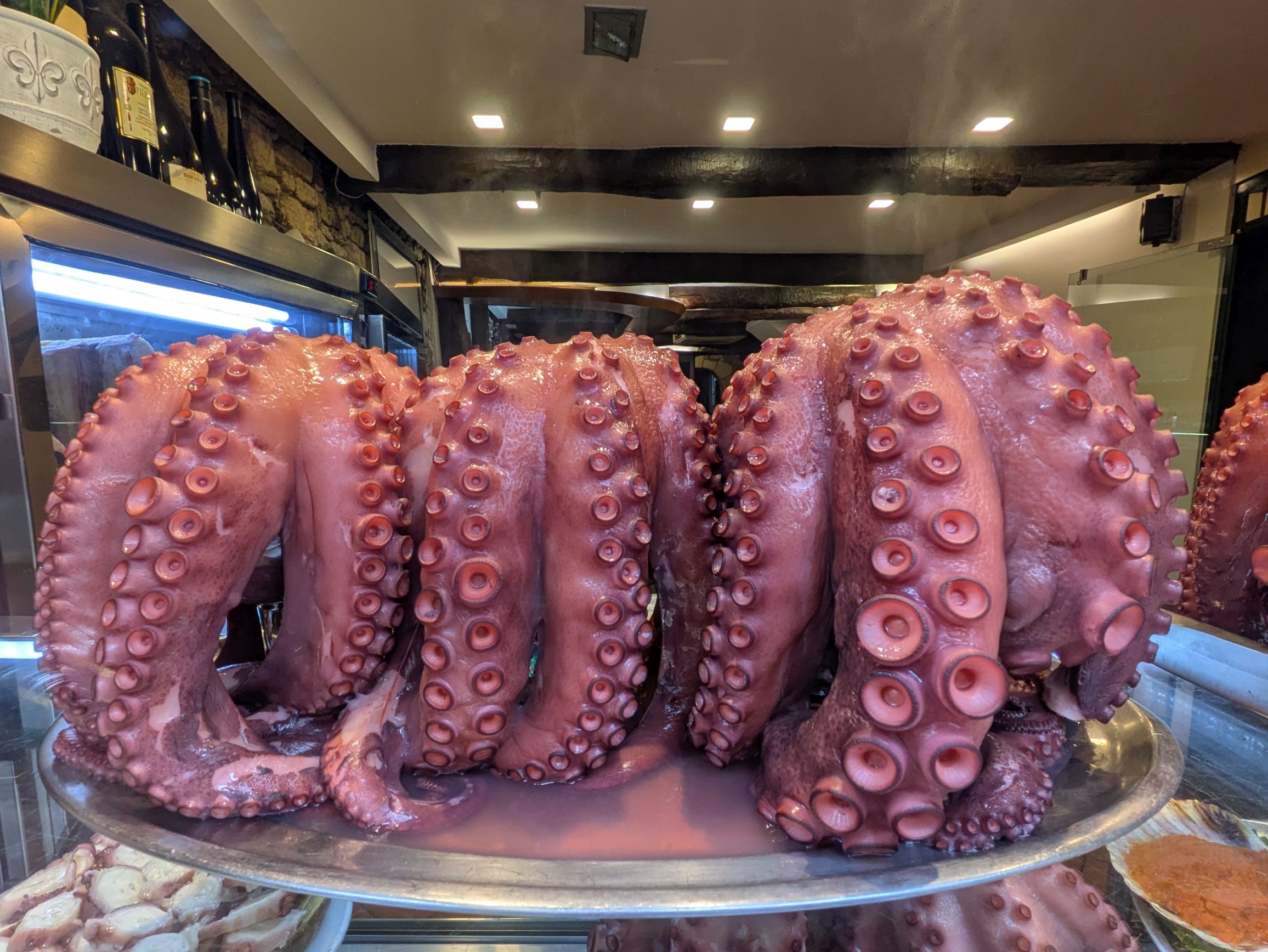
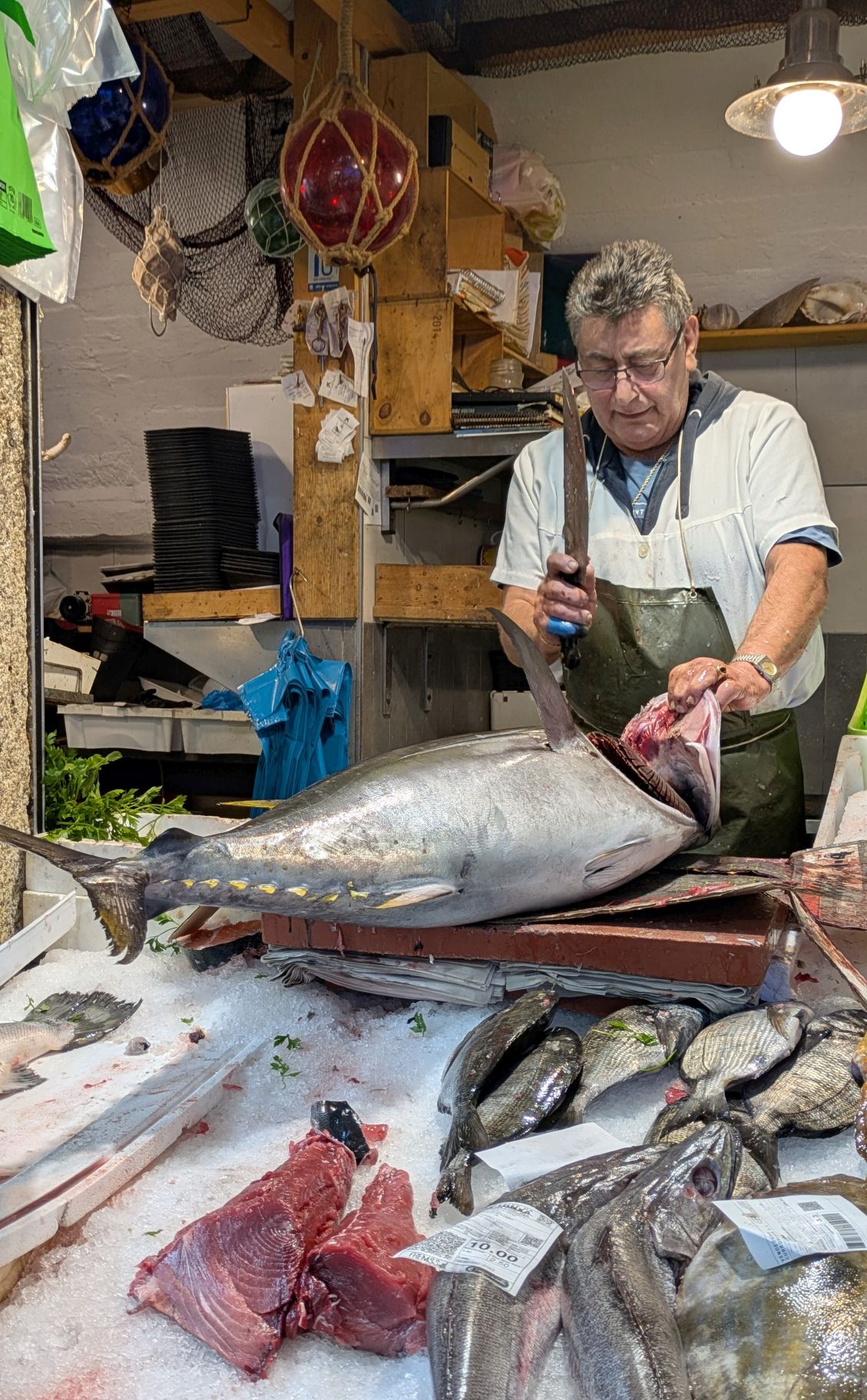
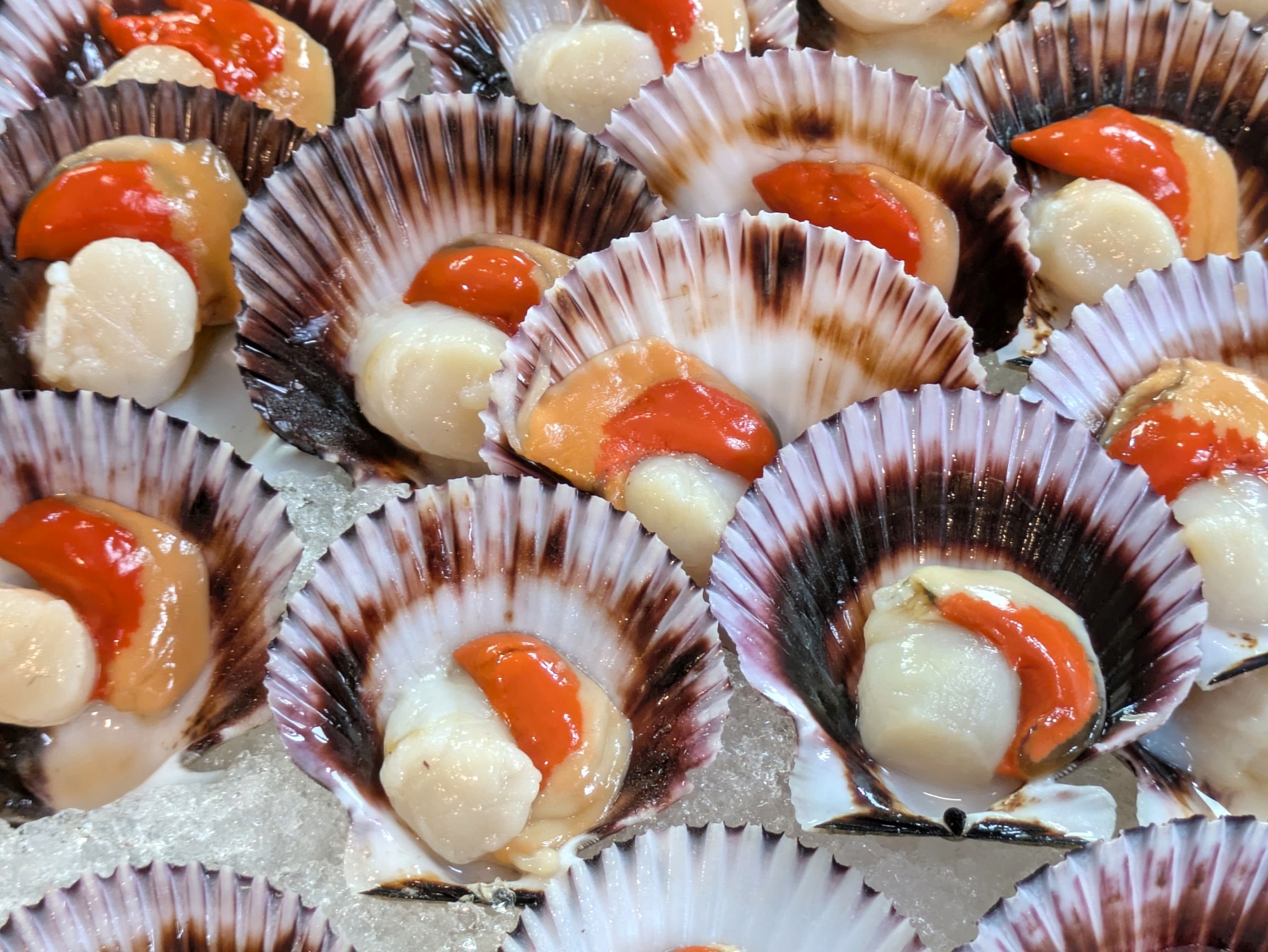
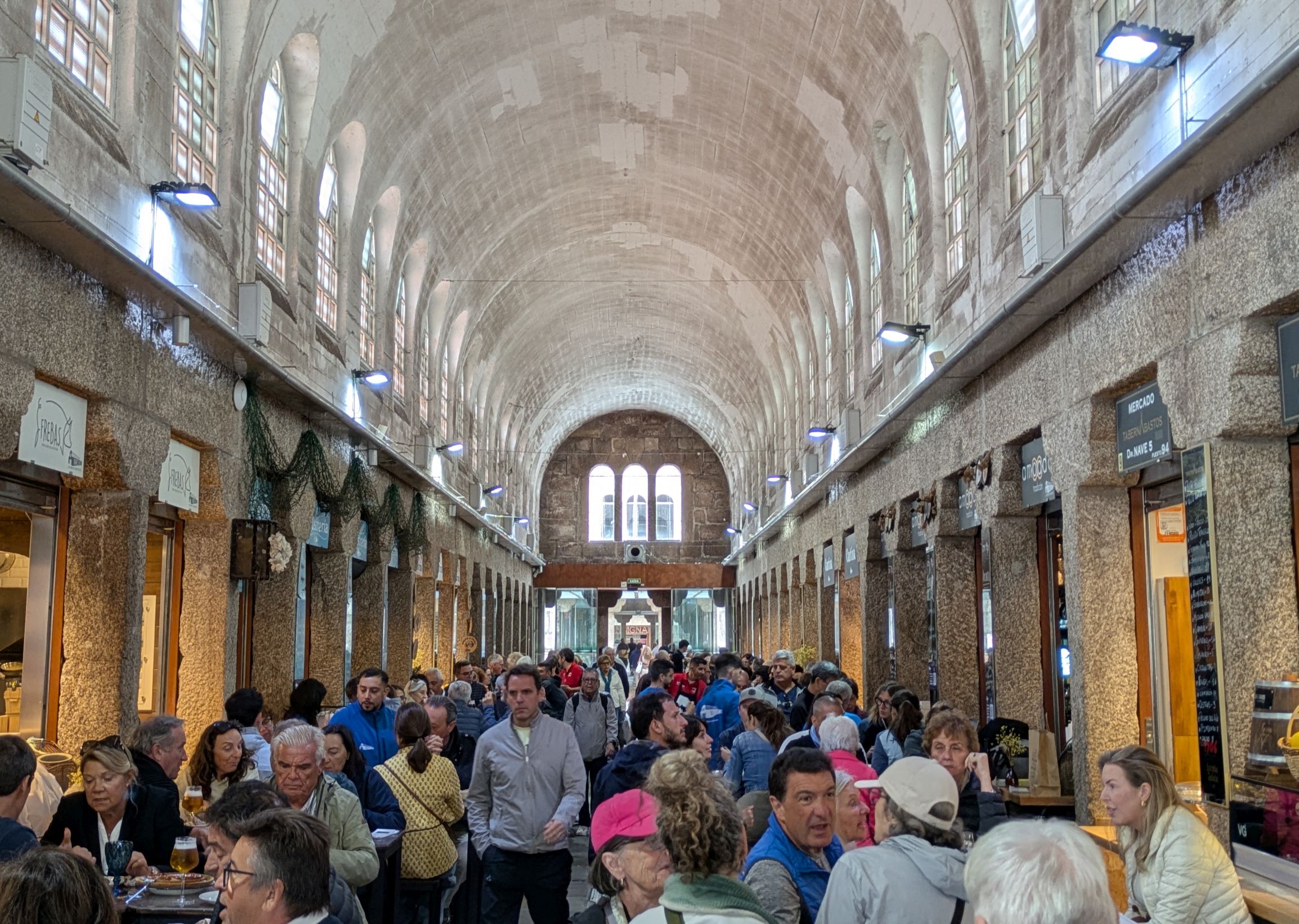
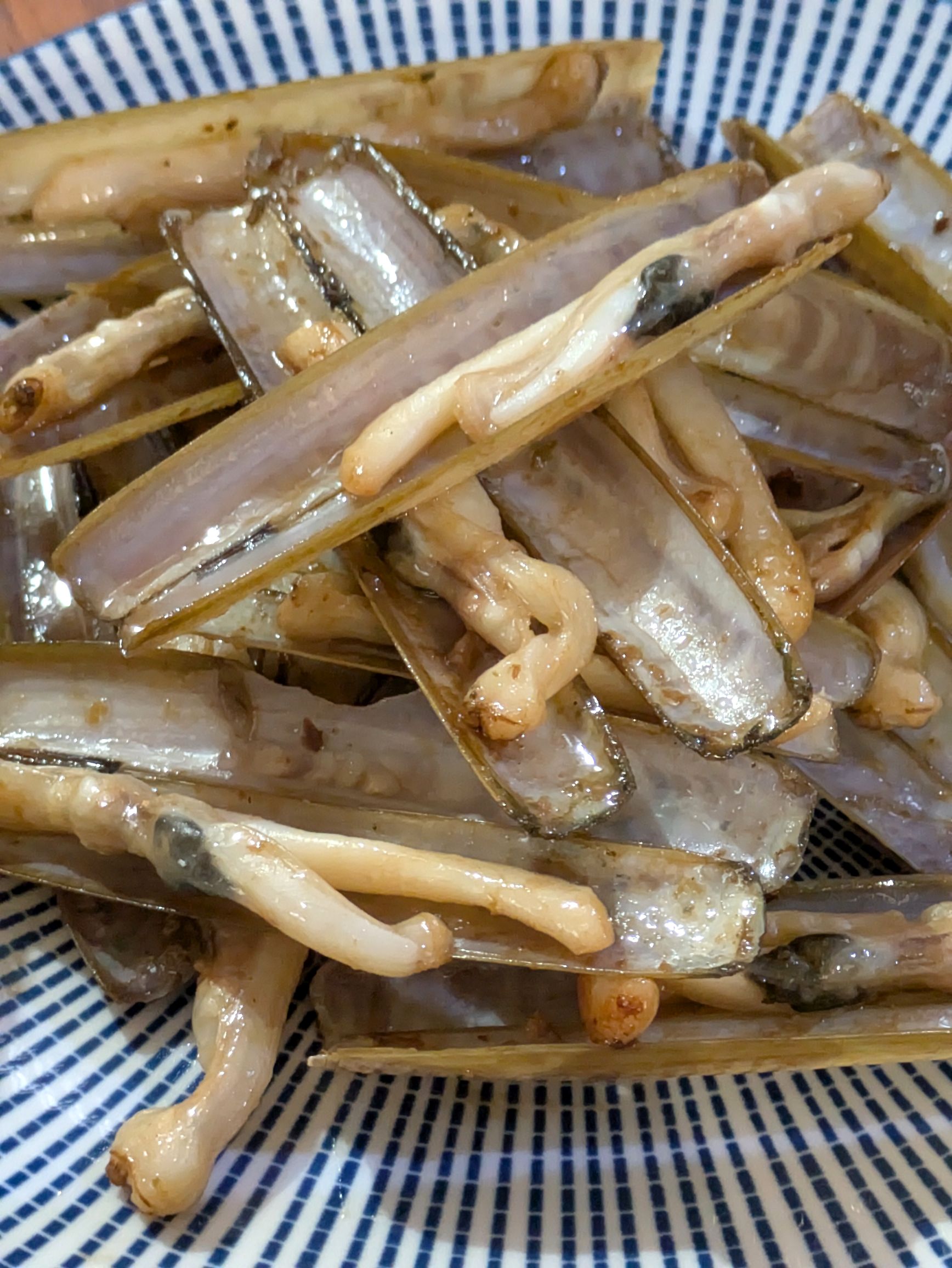
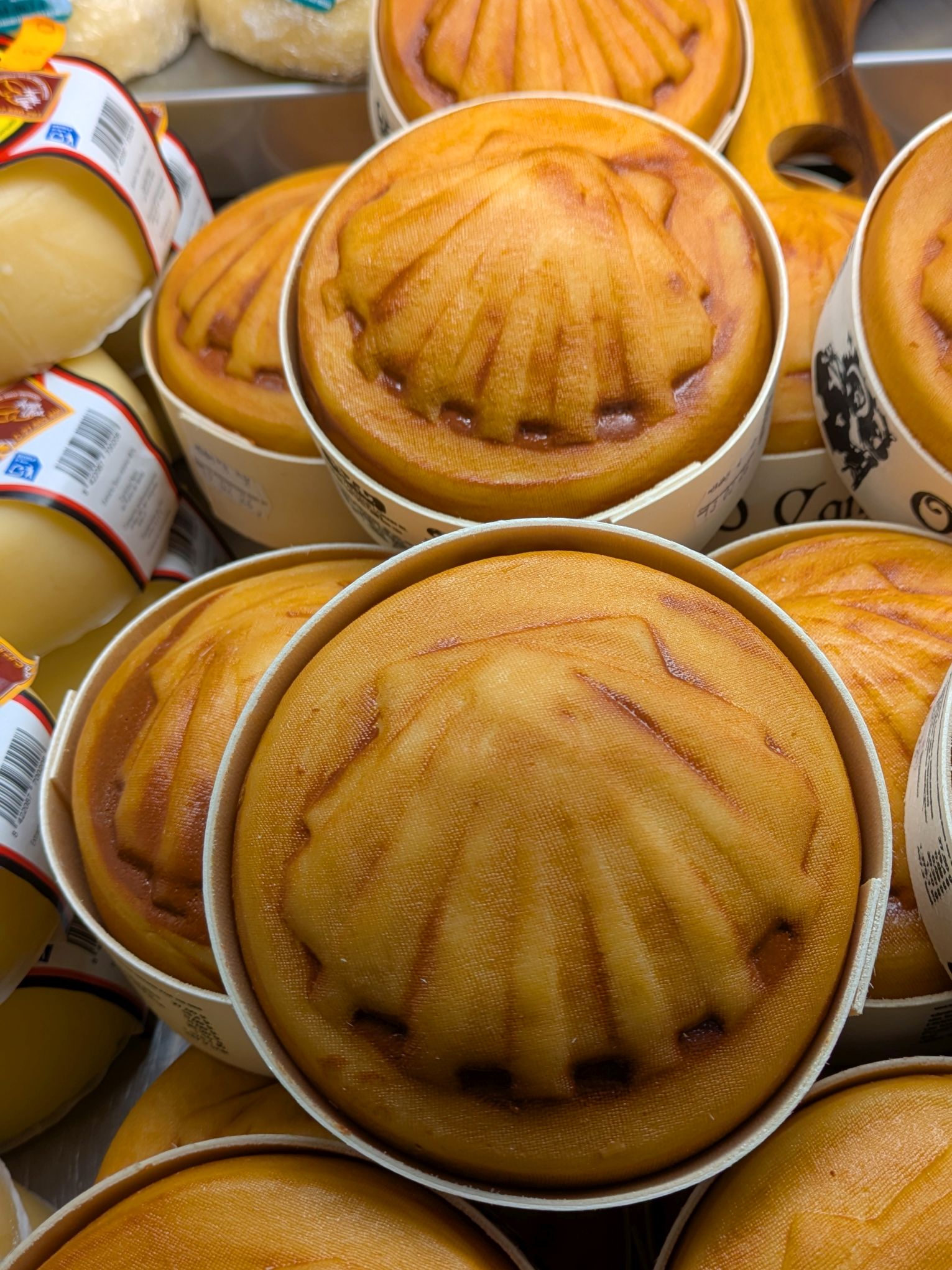
Mercado de Abastos de Santiago, the city market, was another favorite spot.  We enjoy visiting city markets everywhere we travel, and this one was well worth the visit.  The highlight was having lunch in the market with our group.  The region is famous for its seafood, and the market had the freshest and most expertly prepared seafood I have ever had.  Delicious!

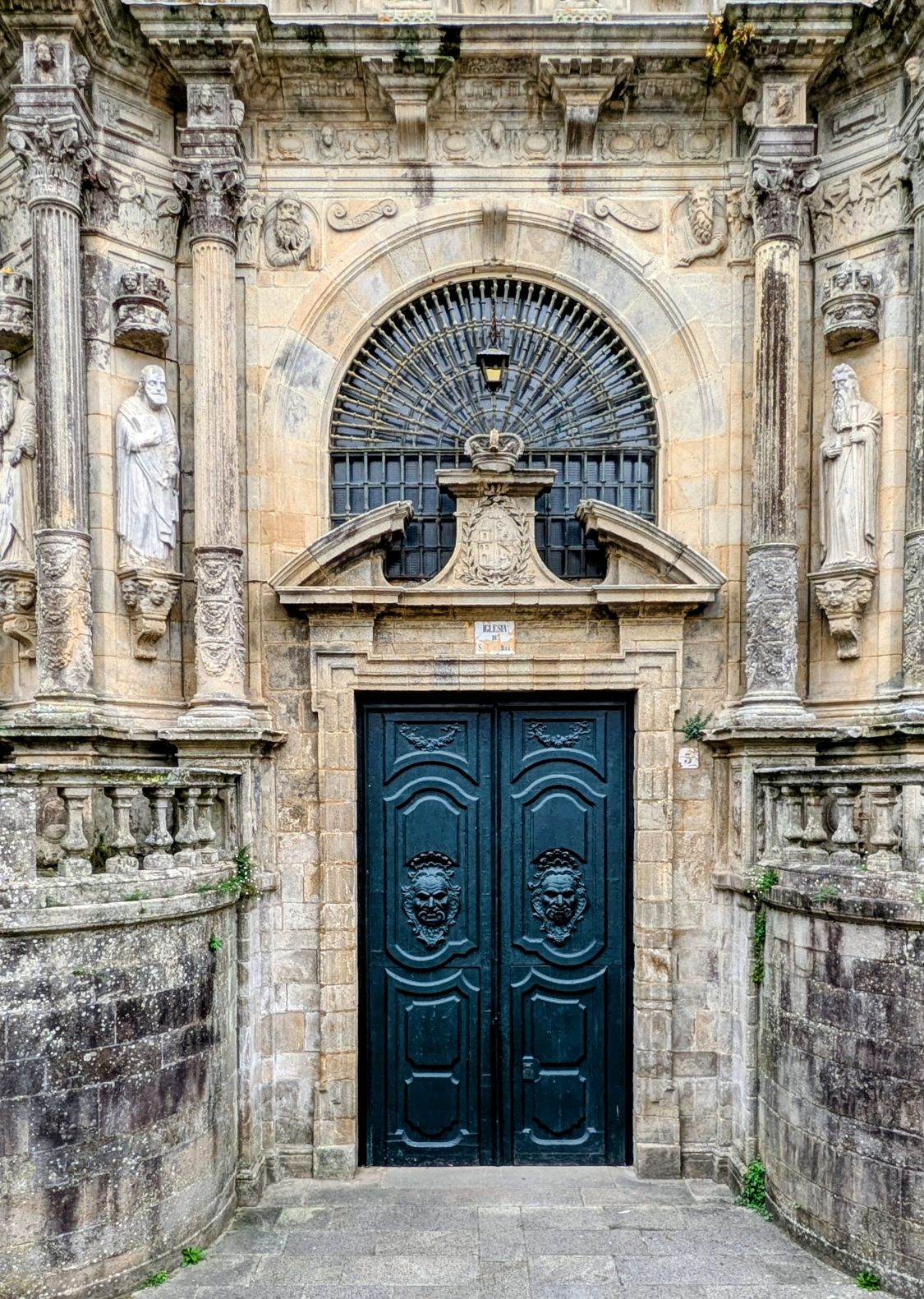
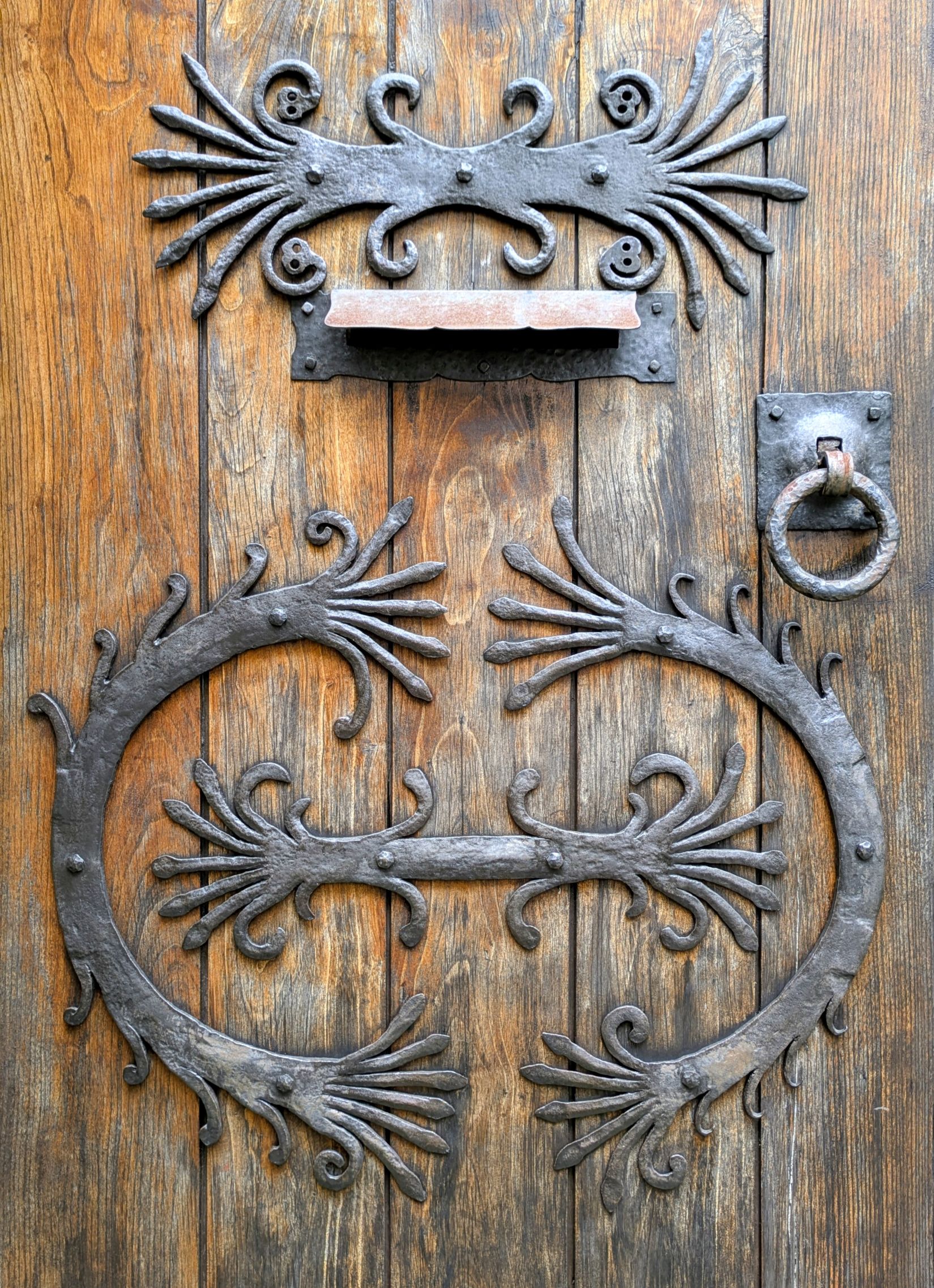
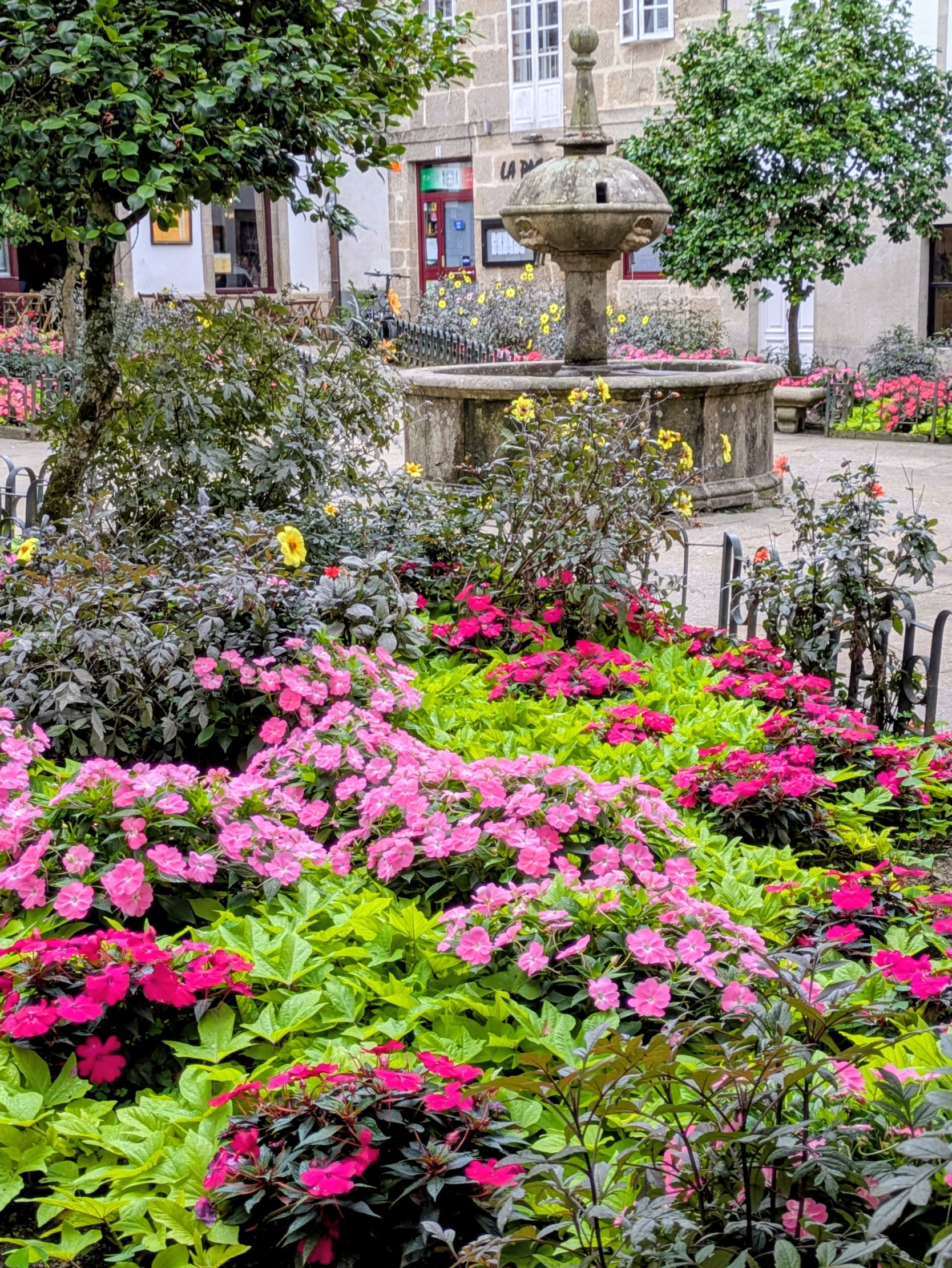
Scenes from around Santiago:

(For all photos, click on the image for a full screen view.)

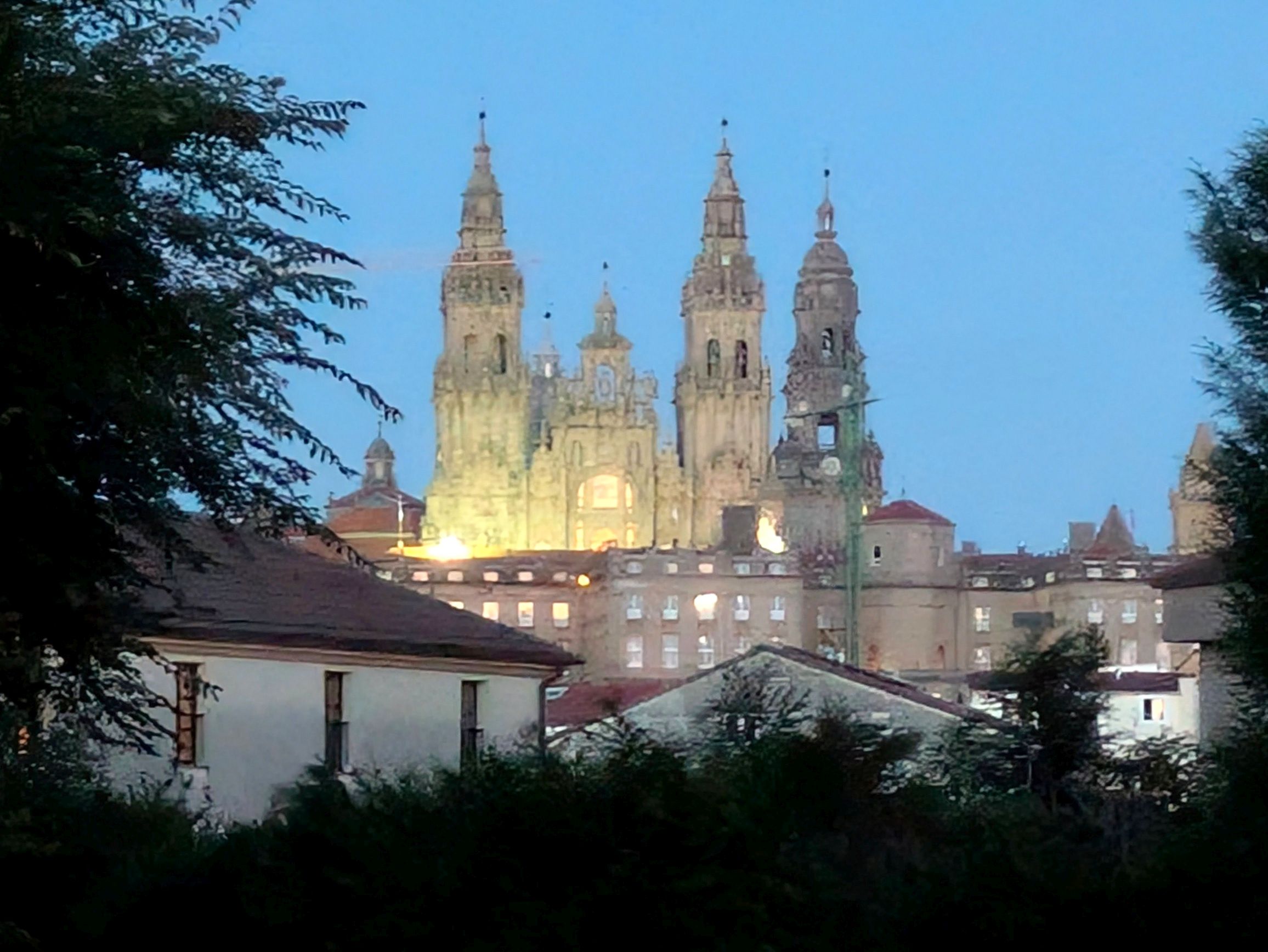
The view of the cathedral from Santiago’s city park, Parque de la Alameda (Alameda Park)
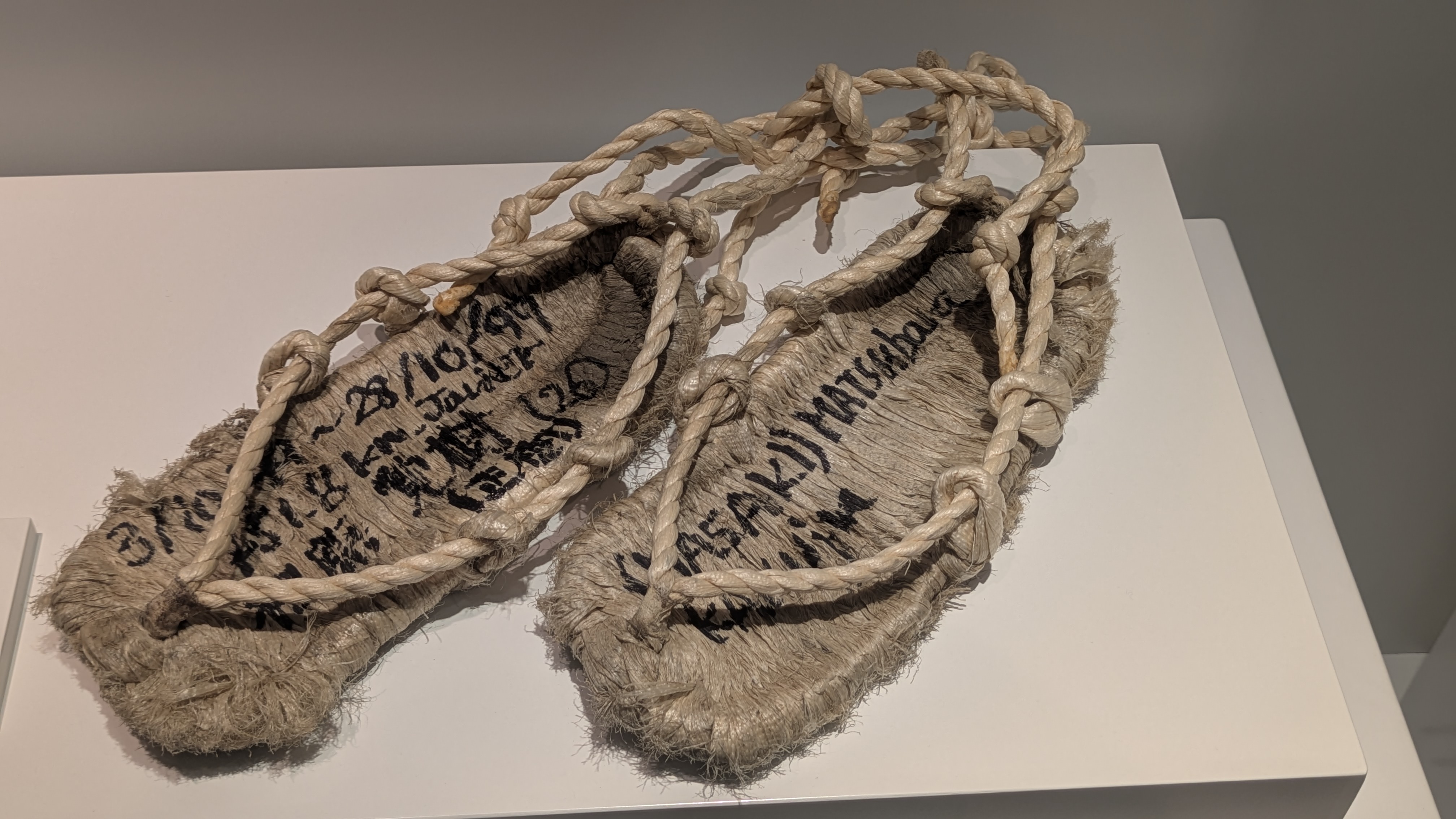
At the Museum of Pilgrimage, sandals of a pilgrim from a (very!) past century were on display.
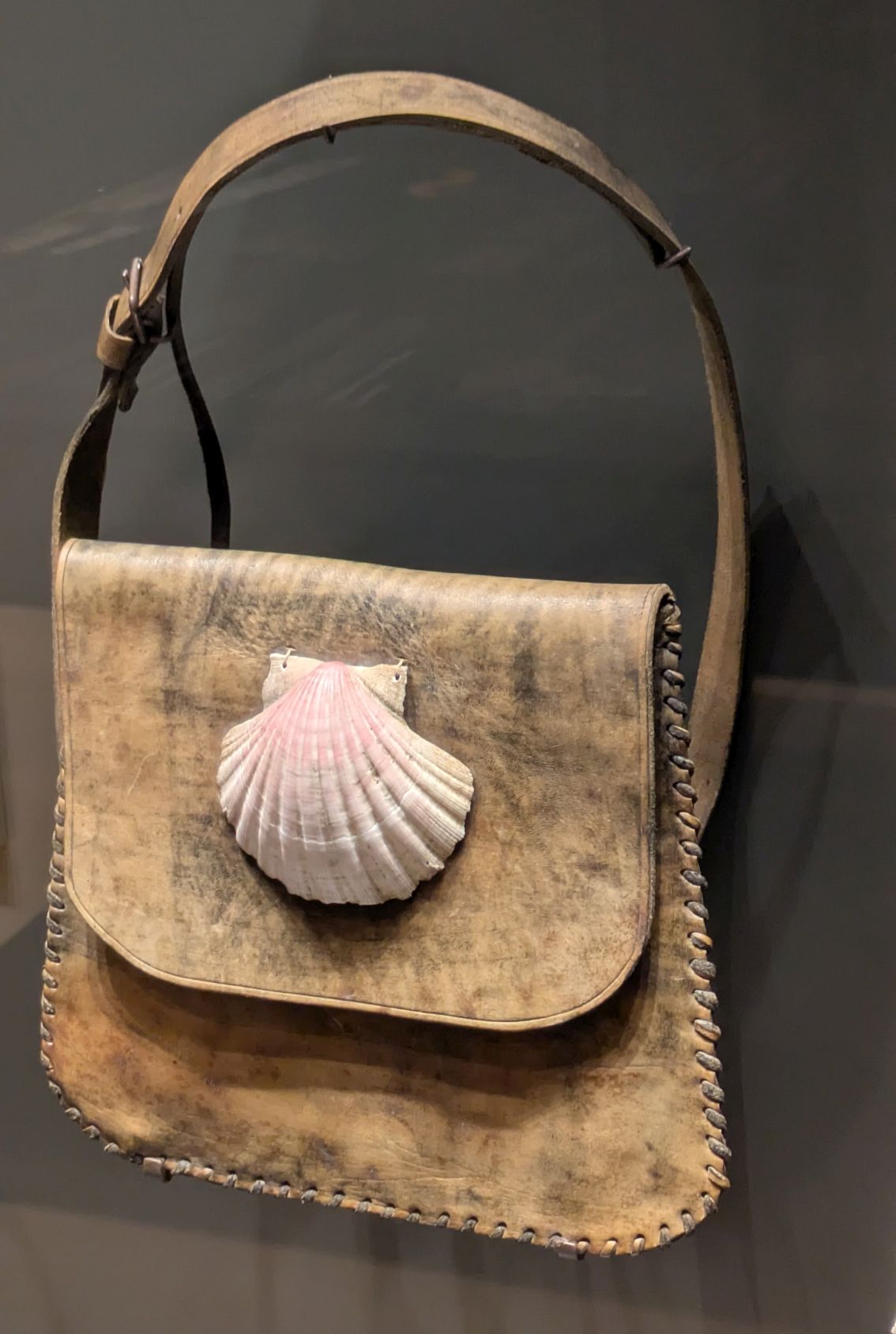
Carried by a pilgrim long ago…
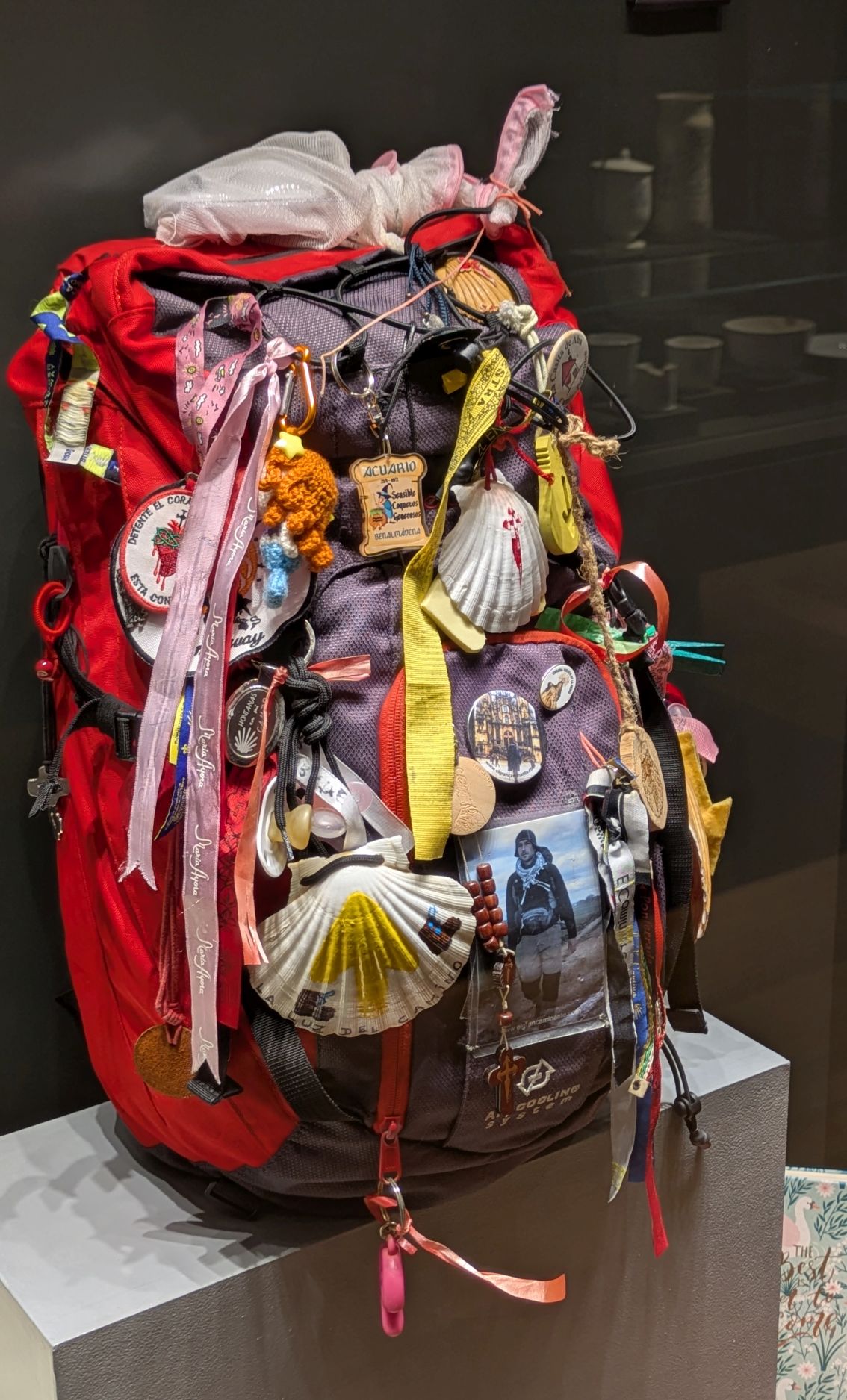
…and a backpack carried by a more recent pilgrim
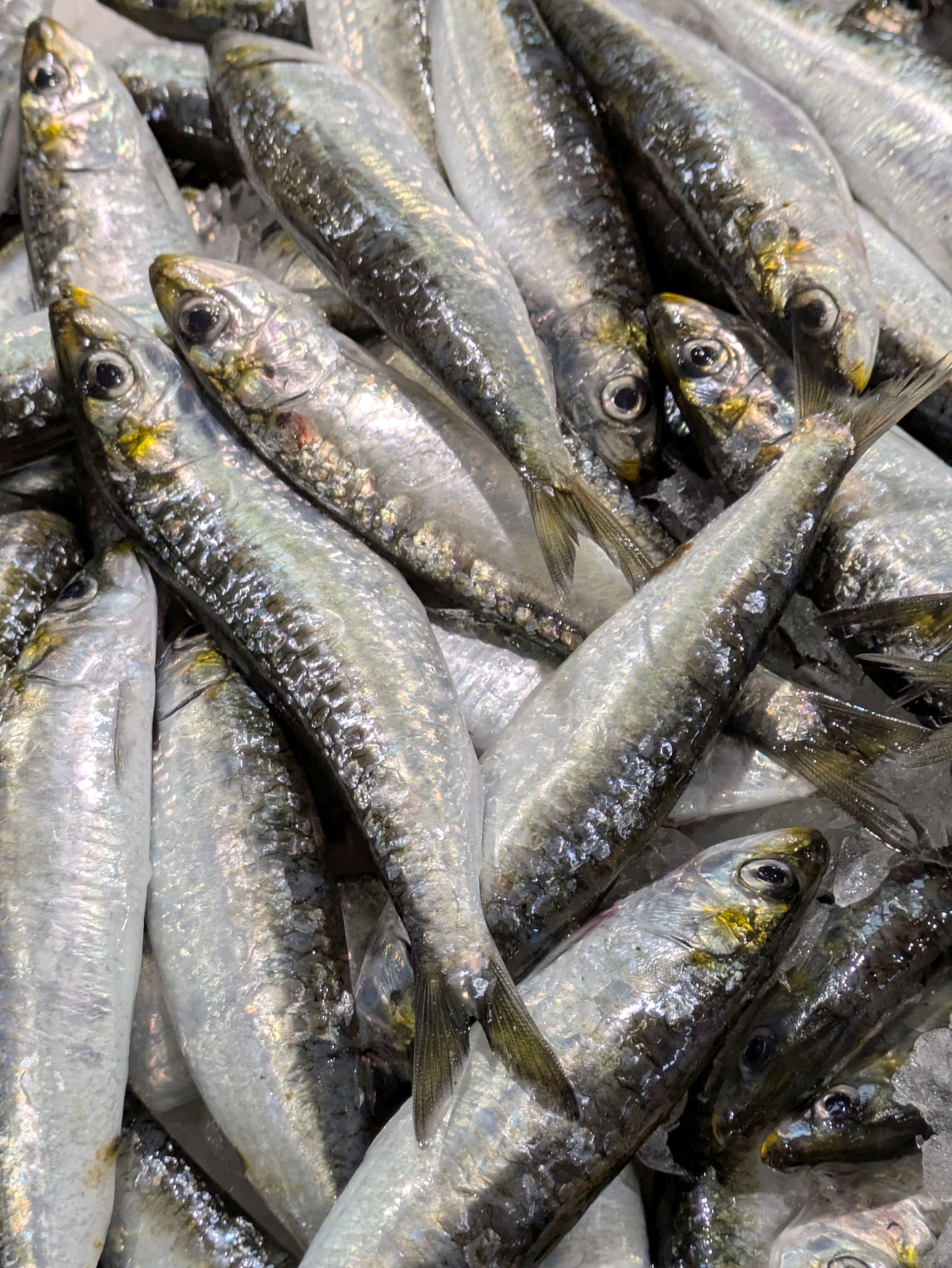
The seafood section of Santiago’s city market
Lunch at the market is an event for locals and tourists alike. That’s our group in the front, on the right.
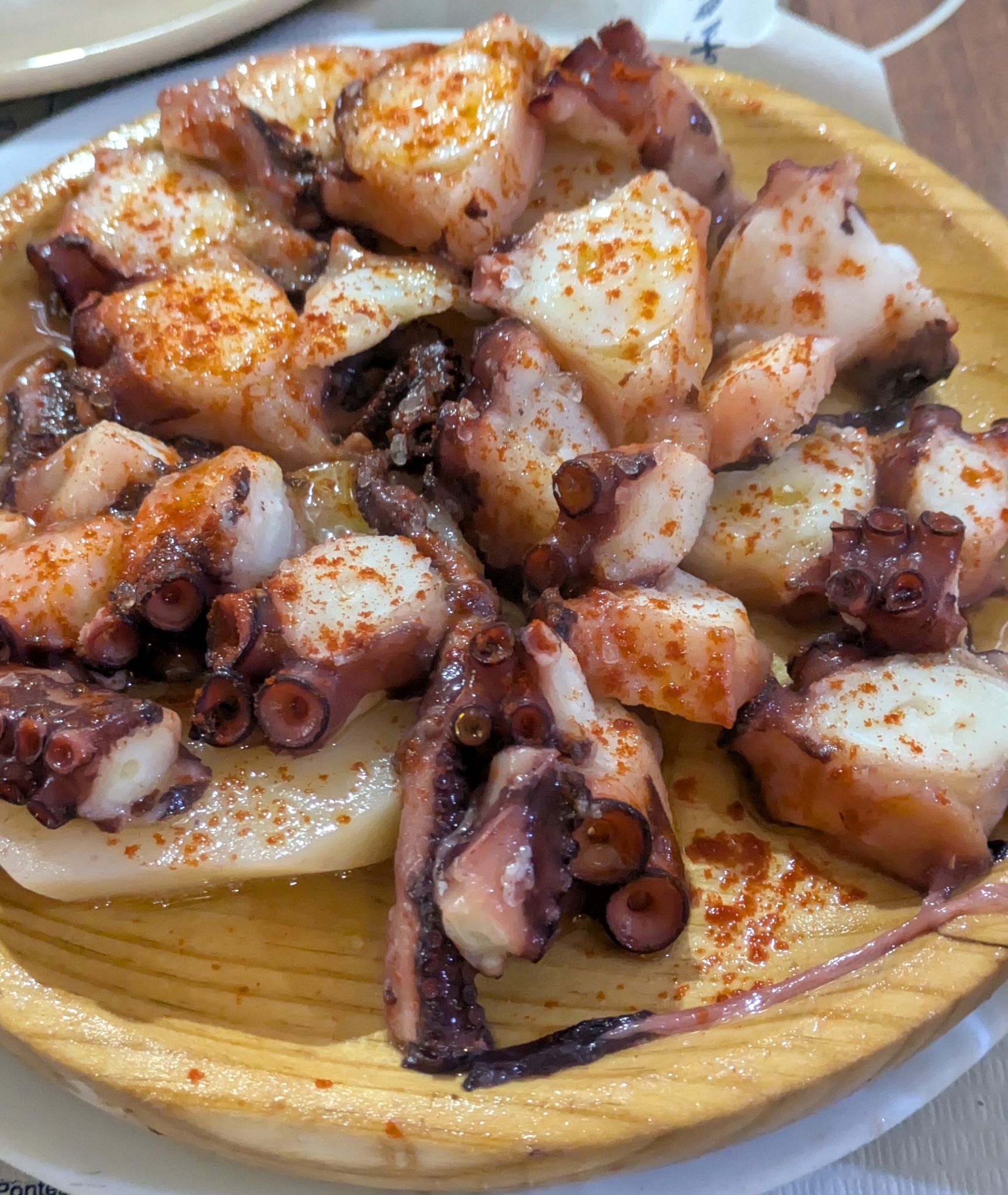
This octopus was so incredibly delicious! It was my favorite dish.
These sweet peppers weren’t too hot, and they were delicious! We were eating them like popcorn!
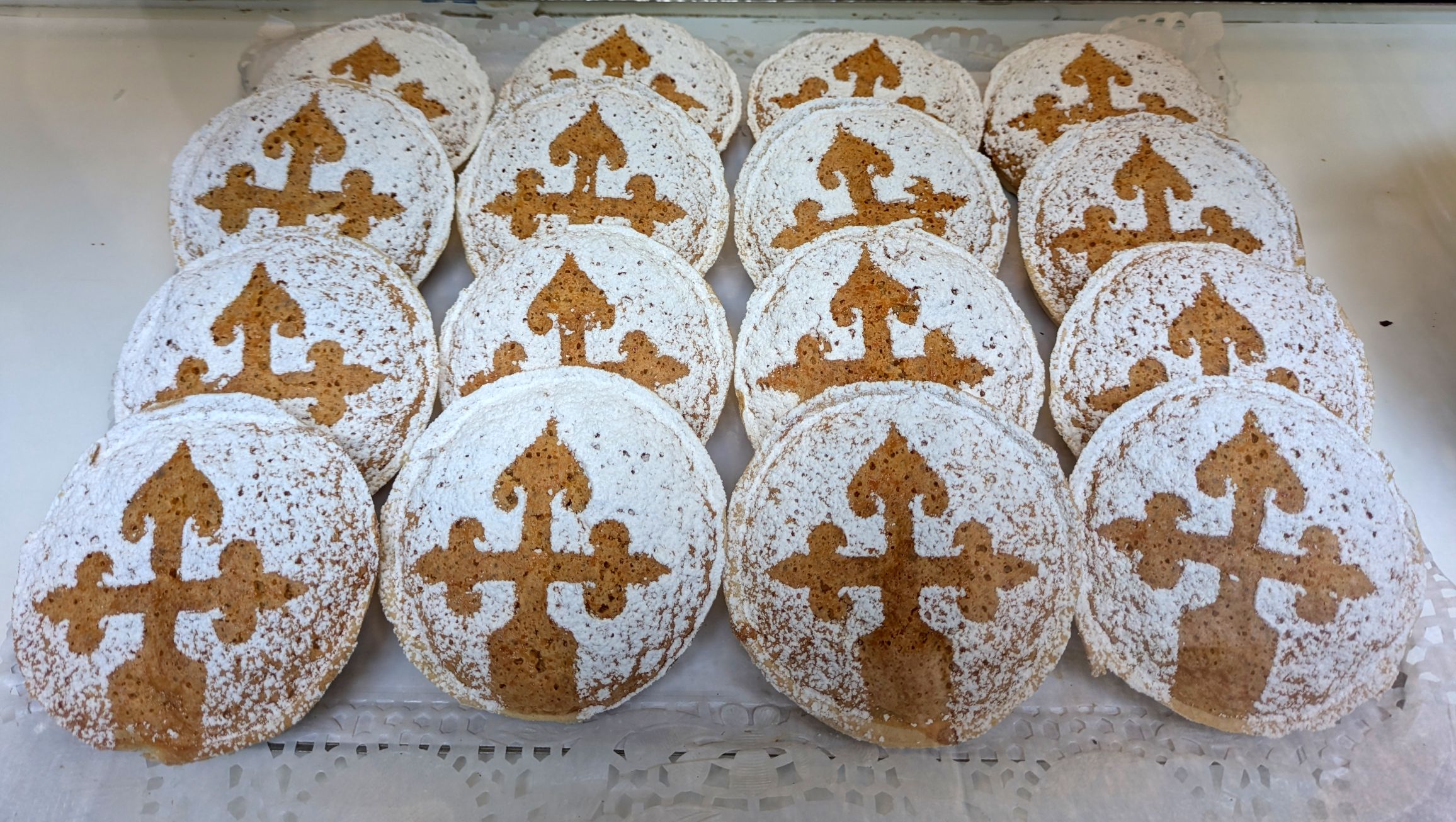
Cakes with the sword symbol of the Way of St. James

Next up: SOUTHWEST FRANCE, NORTHERN SPAIN & PORTUGAL #19: PONTEVEDRA & COMBARRO

SOUTHWEST FRANCE, NORTHERN SPAIN & PORTUGAL #17: SENSATIONAL SANTIAGO DE COMPOSTELA, PART 1

In my post about walking the beginning of El Camino de Santiago (The Way of St. James), I explained a bit about the pilgrimage and how the various paths end at the Santiago de Compostela Cathedral.

Following our stops in Santa Colomba de Samoza and Villafranca del Bierzo (detailed in my last two posts), we arrived in Santiago de Compostela (“Santiago”) in the afternoon and had some time to have a look around before our group dinner.  The following day, we explored the city on a walking tour as well as on our own.

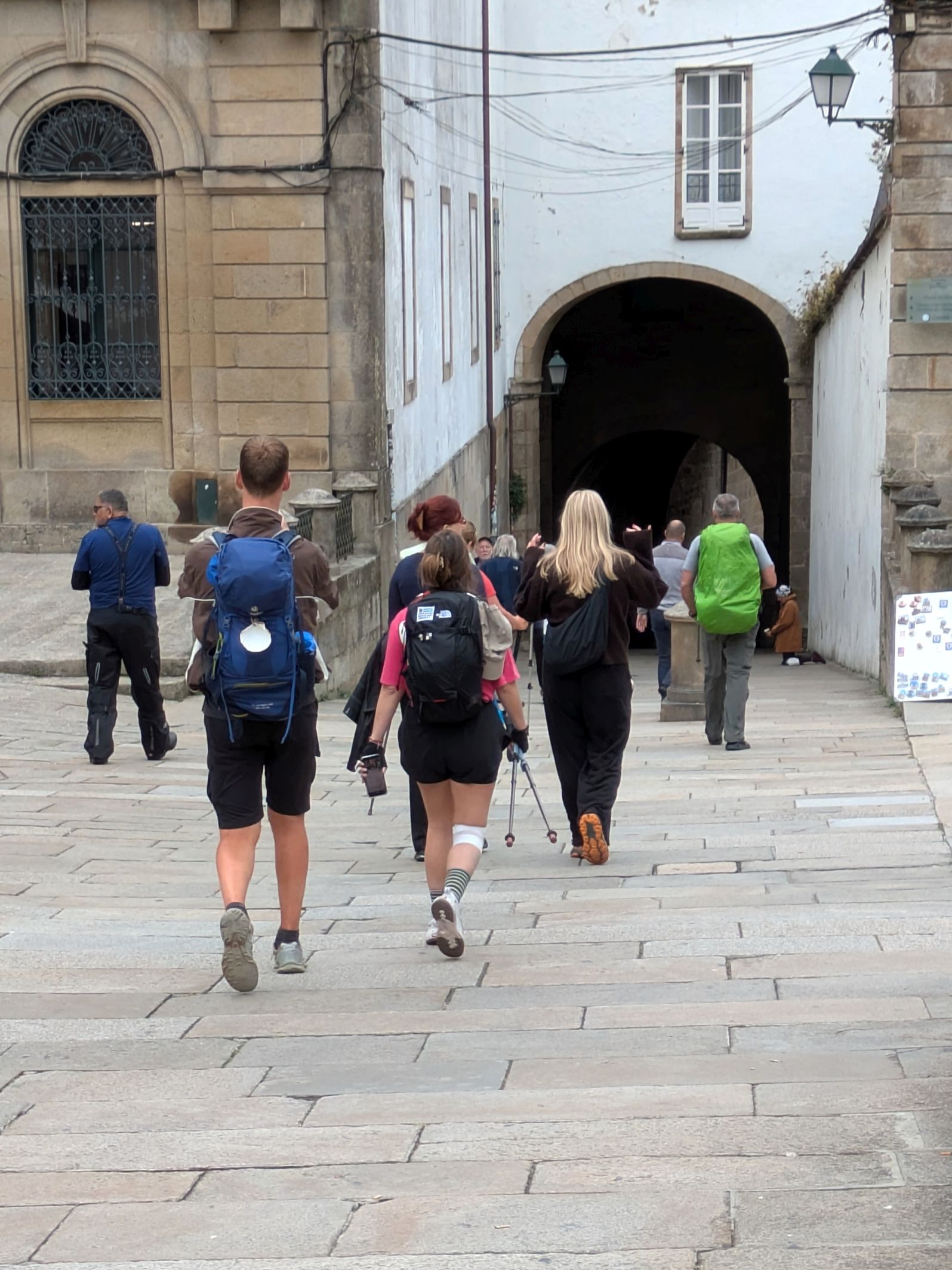
Plaza del Obradoiro, the cathedral square, is where the exciting action was happening in town.  Pilgrims walking the Way of St. James must pass through an arch at the conclusion of their journey that leads to the square.  A bagpipe player plays twelve hours each day to bless the pilgrims, and it’s an emotional conclusion for those who have made the journey, especially those who have walked at least 75 miles of the camino to be recognized as a pilgrim by the church.  It was wonderful seeing the joy in the eyes of pilgrims who had accomplished this exhausting goal.

(For all photos, click on the image for a full screen view.)
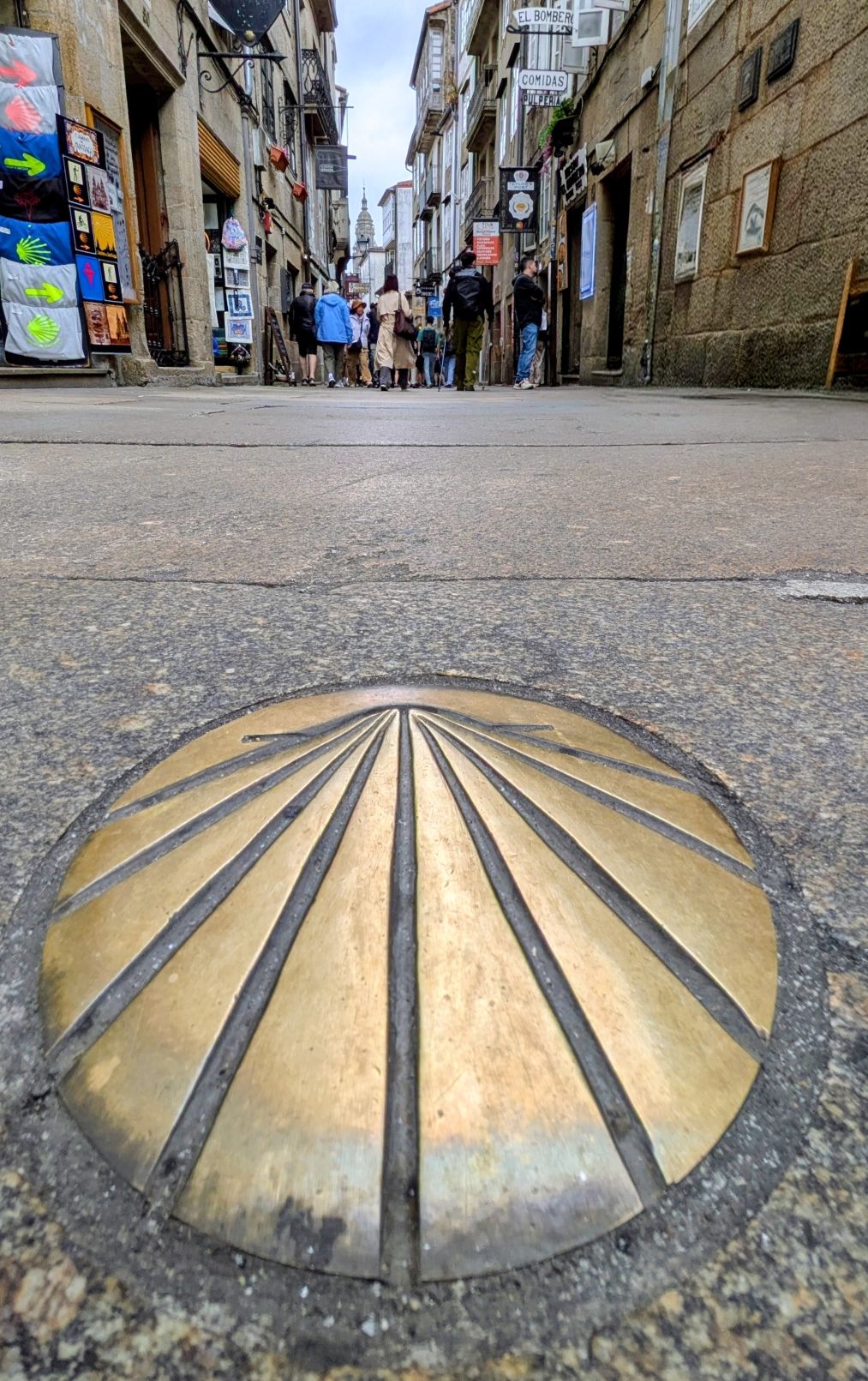
Pilgrims walking the Camino follow these navigational markers in Santiago that lead to the cathedral. The scallop shell is the symbol of the Way of St. James, and the lines represent all the different paths that lead to the cathedral.
Walking the final steps through the arch, past the bagpiper, and to the cathedral.
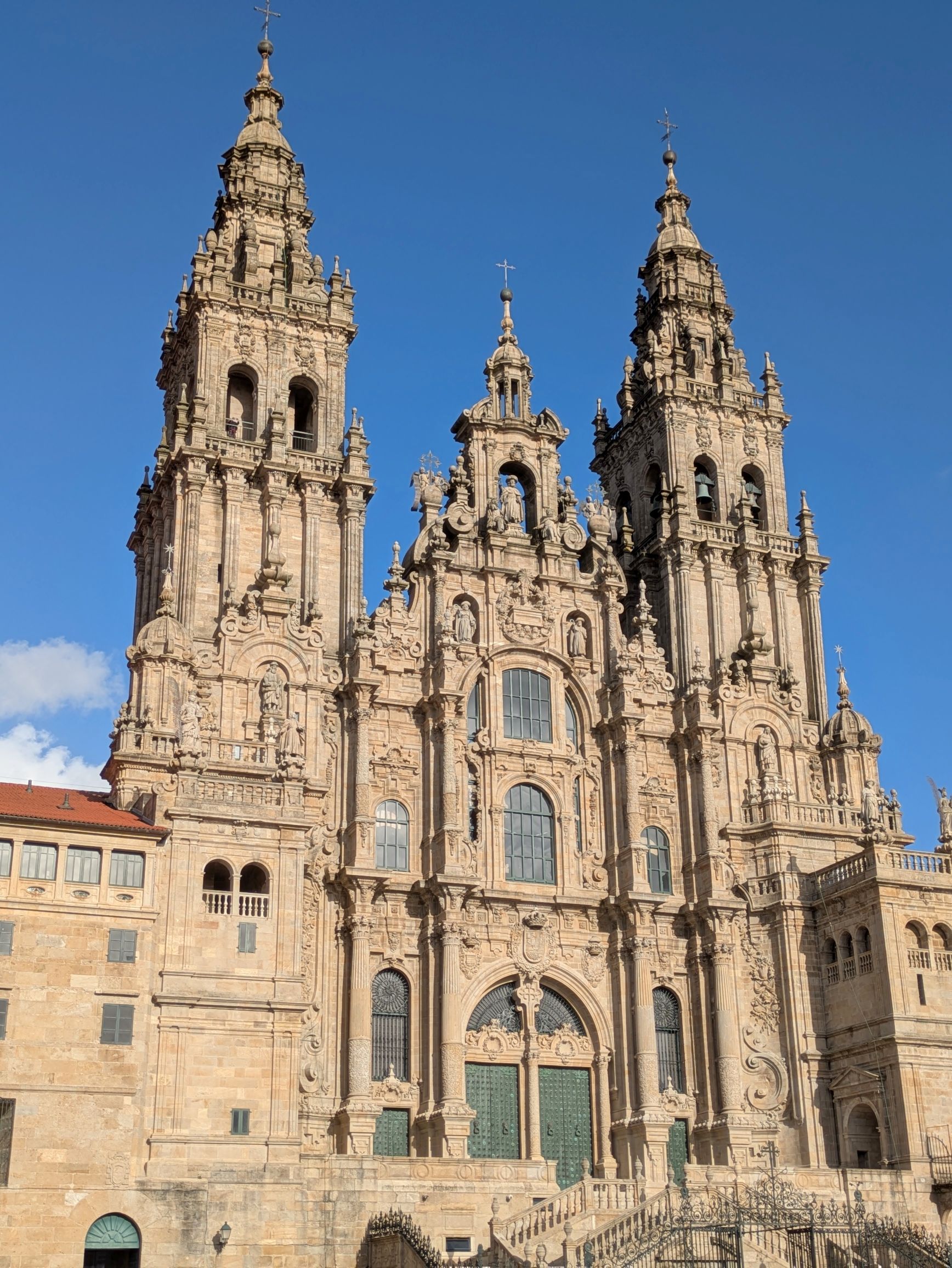
The following late afternoon was beautiful, so I returned to reshoot my photos of the cathedral. This is Cathedral Square where pilgrims conclude their journey.

At the conclusion of the journey, pilgrims pay homage to the remains of St. James, just as pilgrims had done since the Middle Ages.  According to legend, a ninth-century shepherd witnessed a moving star and followed it, the light eventually leading him to a burial site.  The local bishop examined the bones found there and proclaimed them to be those of Jesus’ apostle, James, the patrol saint of Spain.  Hearing the news, the Spanish king ordered a cathedral to be built on the spot in 1075.  In doing so, he not only transformed Santiago de Compostela into one of the most sacred Catholic destinations in the world, but he also nurtured the budding relationship between the Spanish monarchy and the Catholic Church that would eventually come to dominate Spanish history and culture.

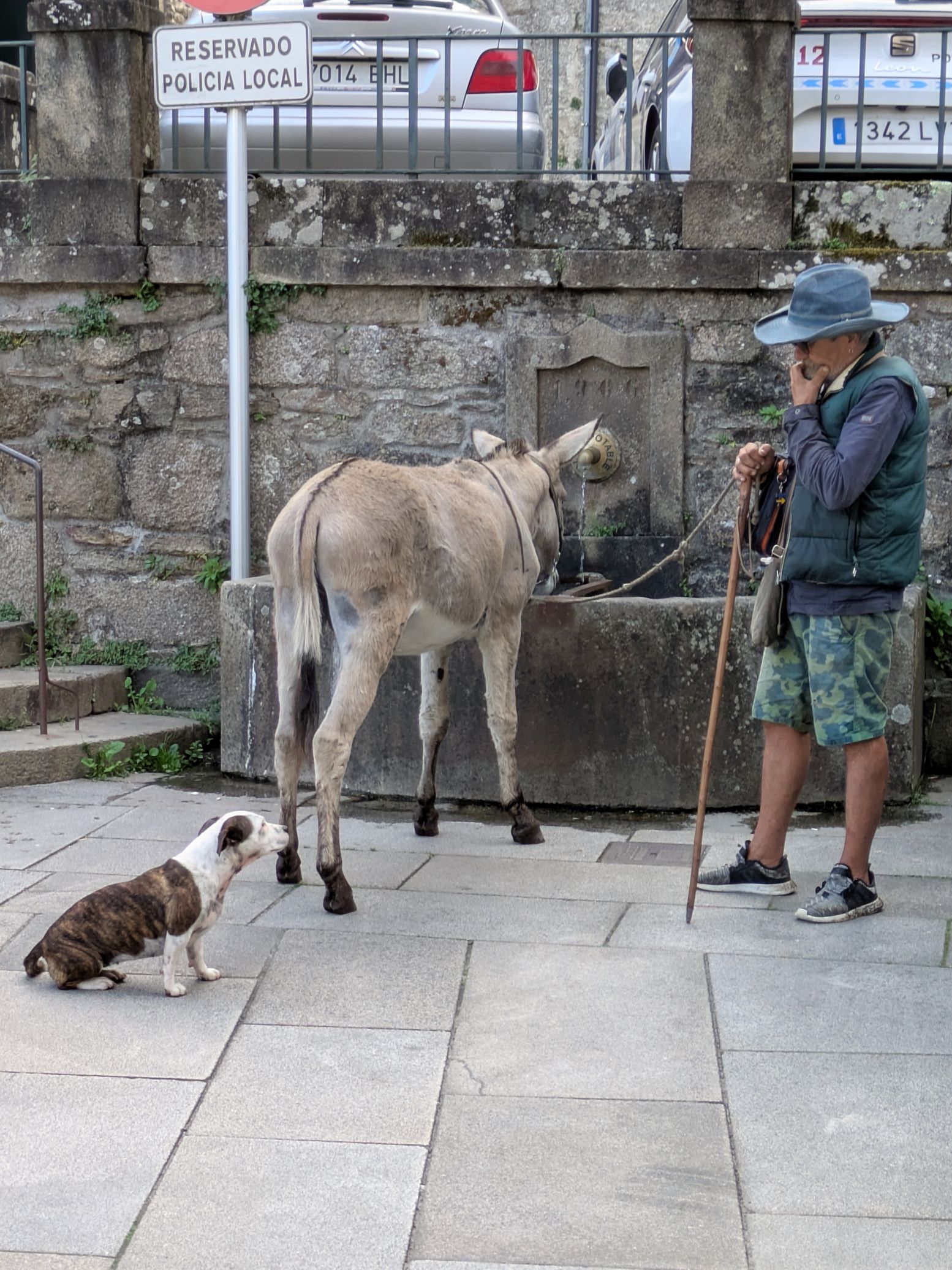
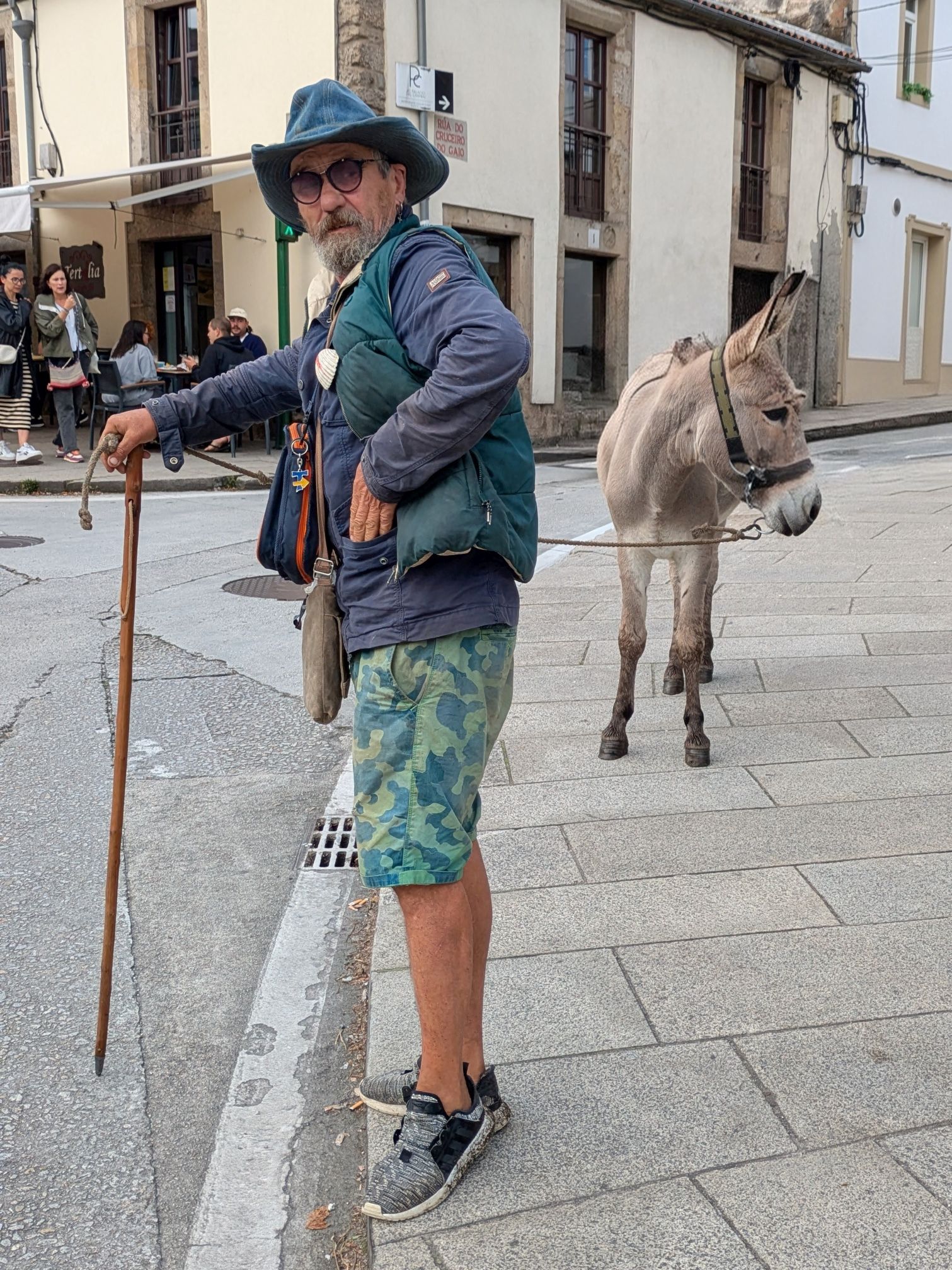
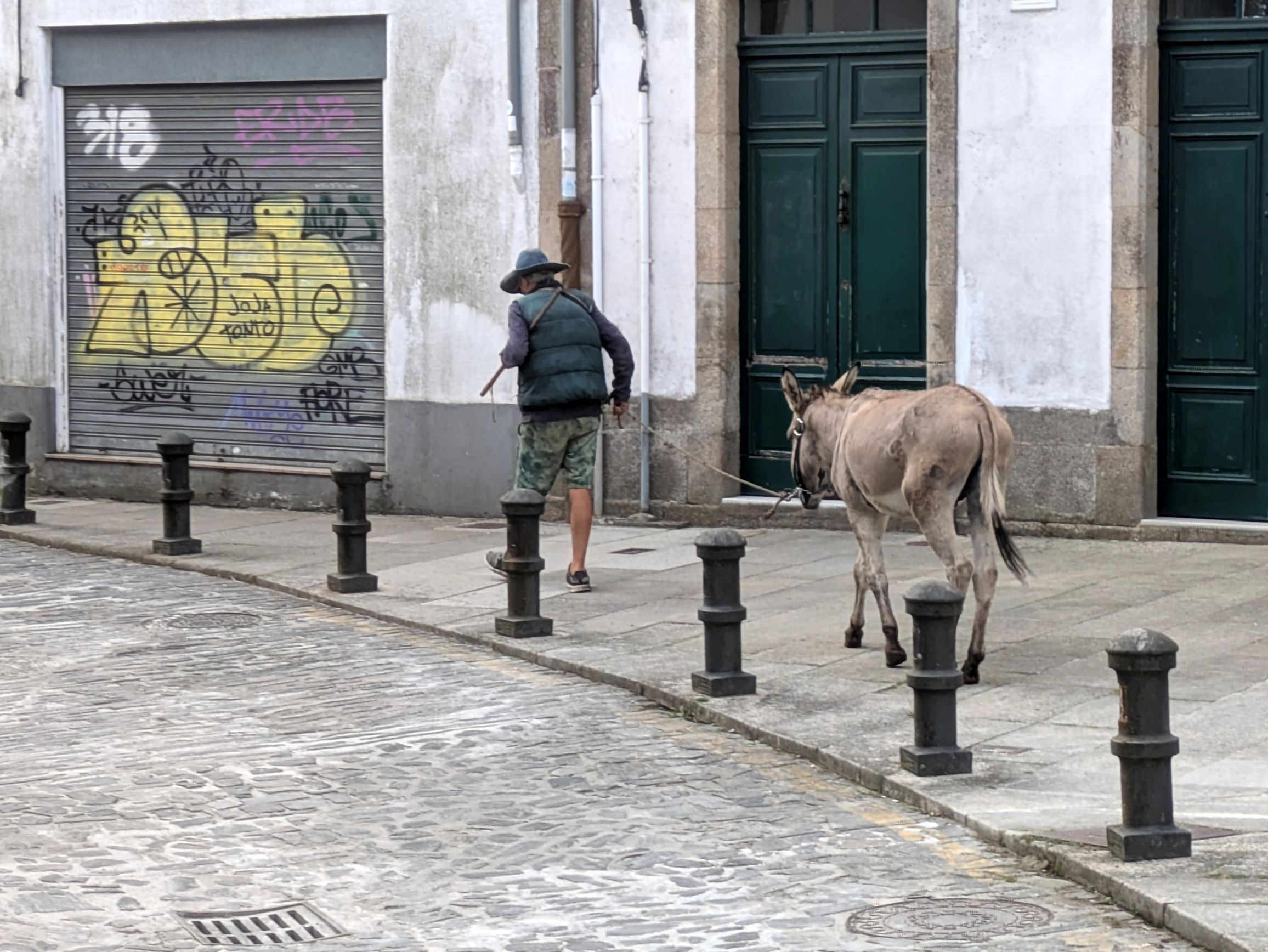
While walking with our group from the hotel to the cathedral, we came across these interesting pilgrims stopping for a drink from a fountain.
The eveninng view of the cathedral from the garden of our hotel

Coming up next: SOUTHWEST FRANCE, NORTHERN SPAIN & PORTUGAL #17: SENSATIONAL SANTIAGO DE COMPOSTELA, PART 2