SOUTHWEST FRANCE, NORTHERN SPAIN & PORTUGAL #8: BRILLIANT BILBAO

Since at least the 14th century, Bilbao, the capital city of Spain’s Biscay province, was an industrial city.  Over the centuries, it became more polluted and unattractive!  By 1900, the city had developed into a shipbuilding center and was the wealthiest city in all of Spain.  But in the mid-20th century, natural disasters and civil war crippled the city.   

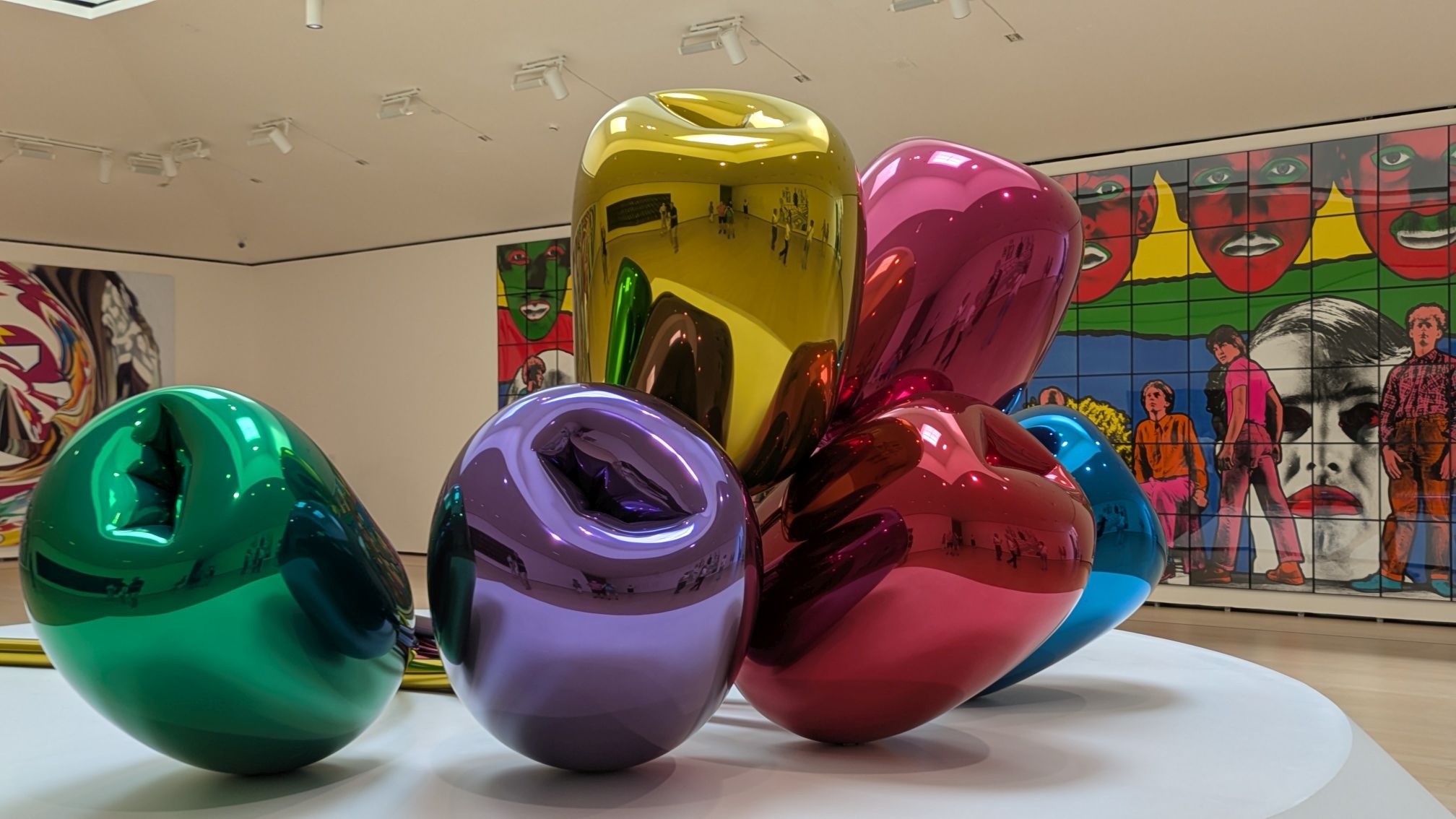
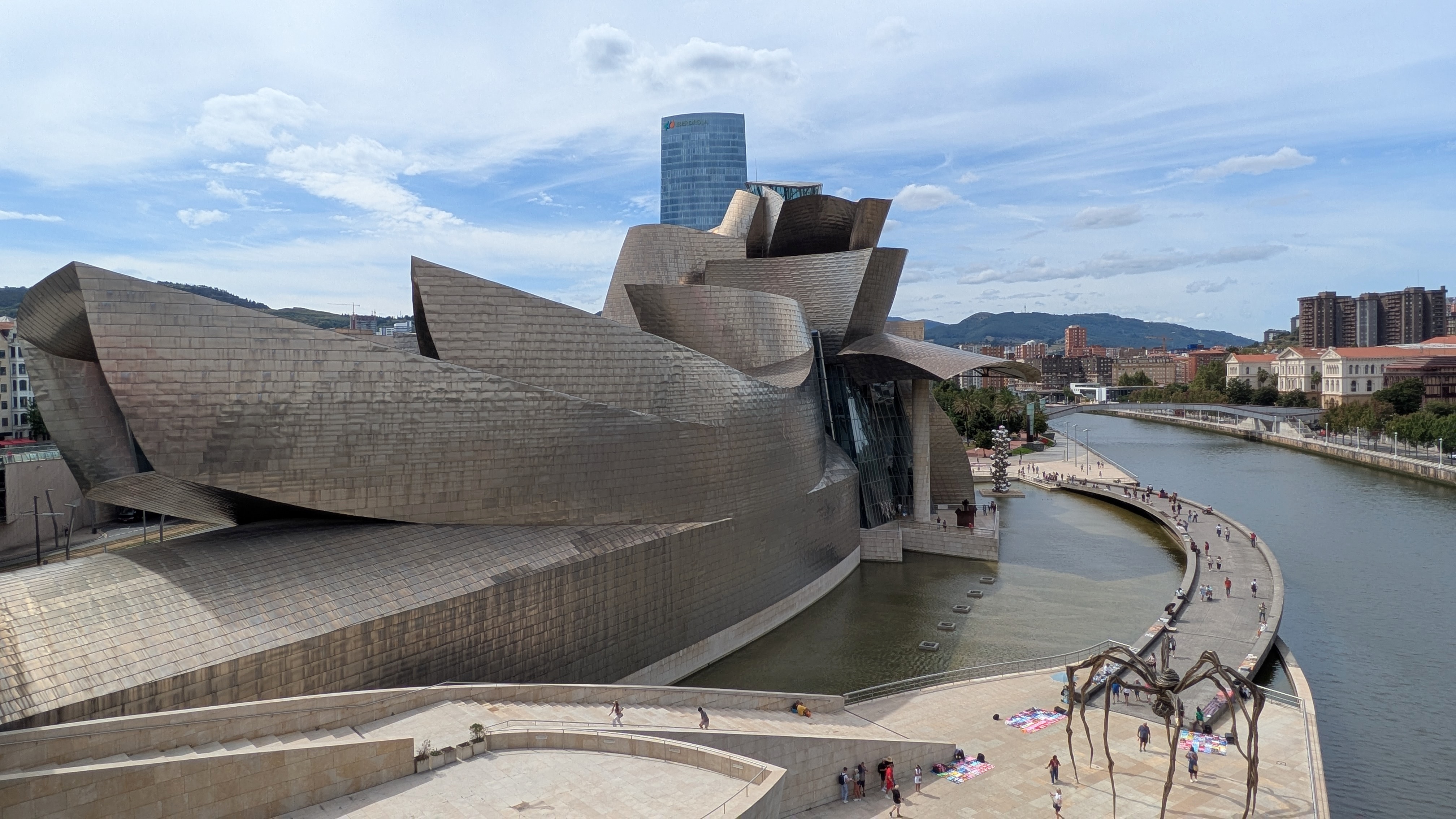
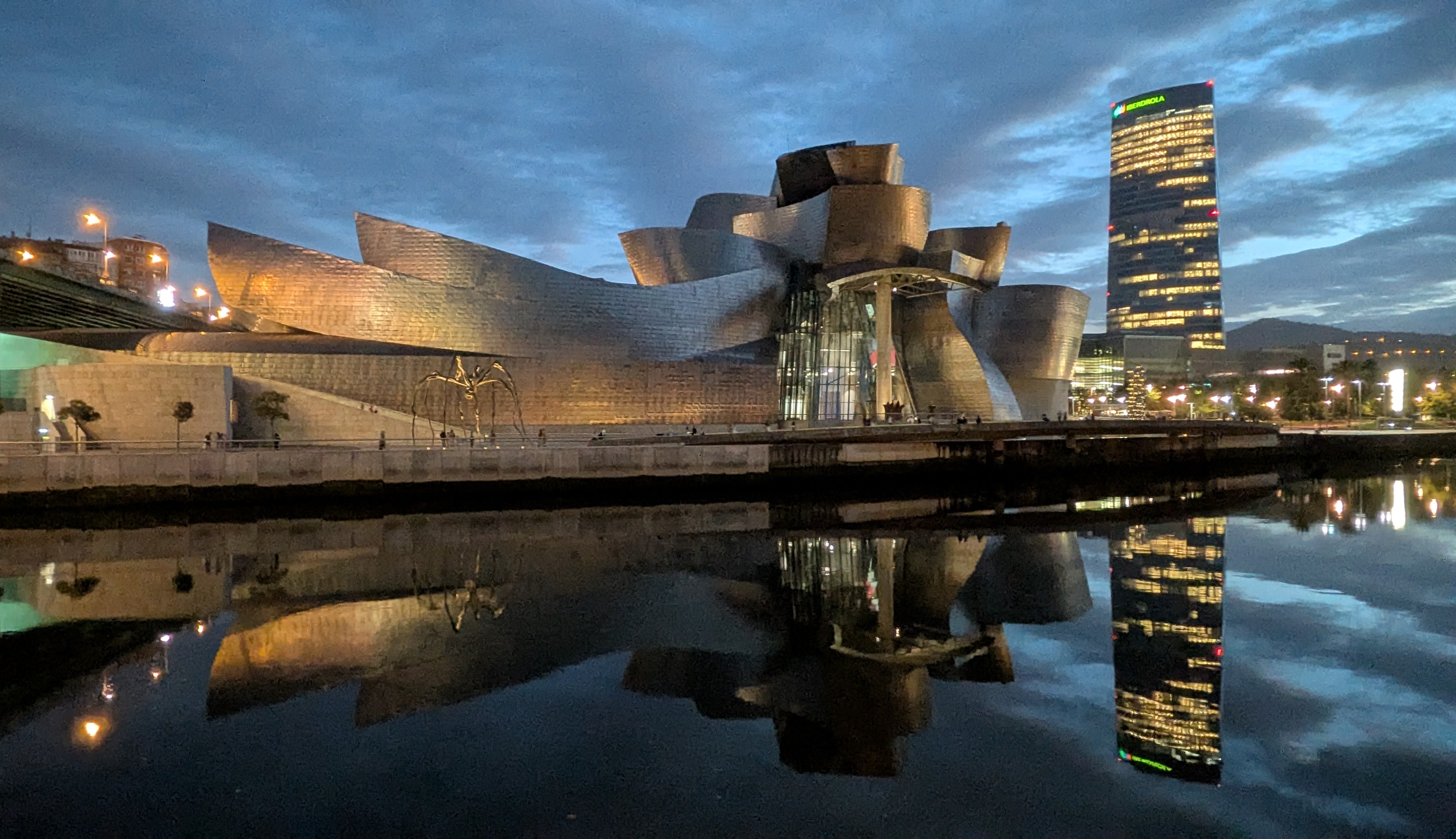
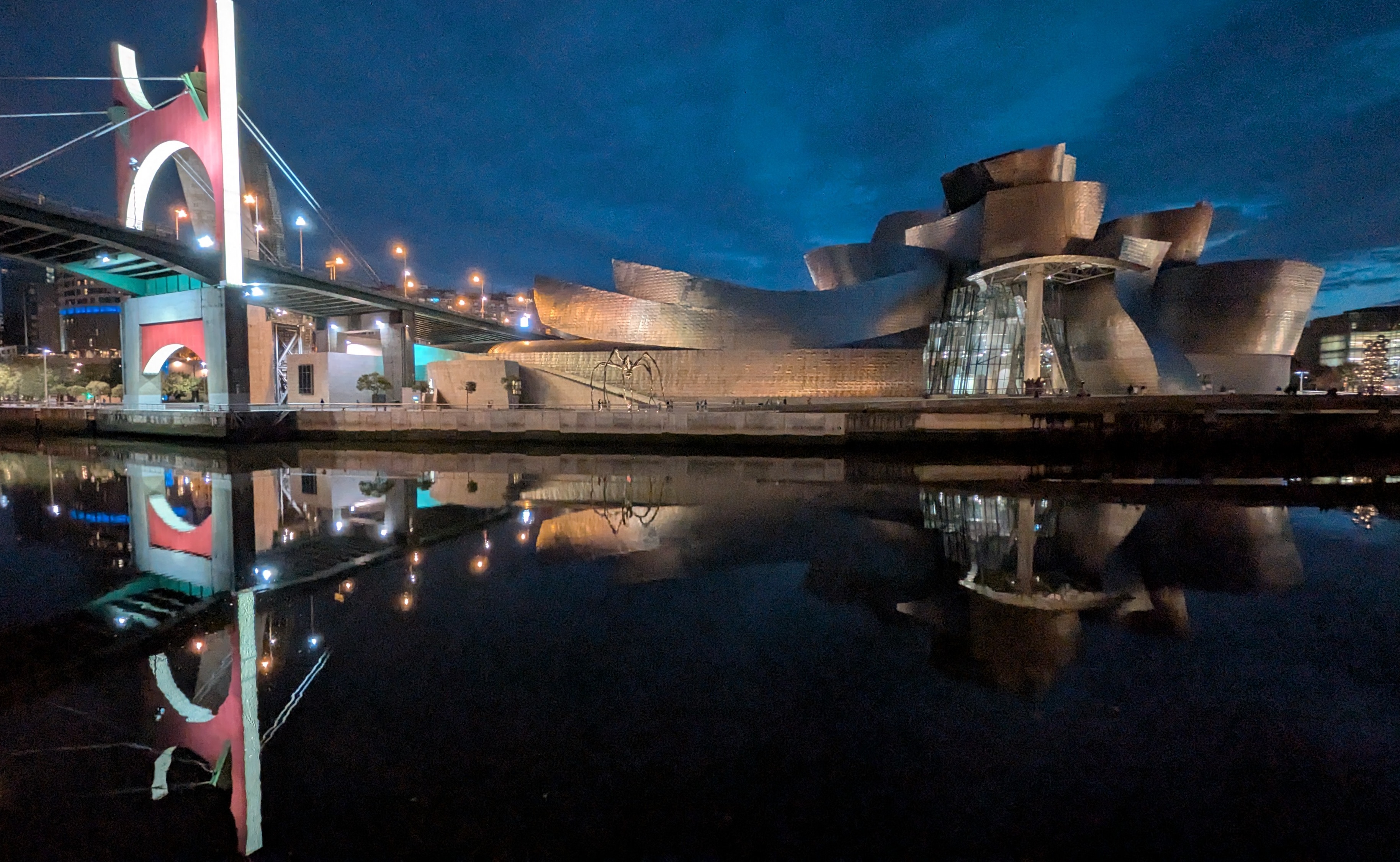
In the mid 1990’s all that changed, and Bilbao was revived and revitalized. Much of the credit for the turnaround goes to the Frank Gehry designed Bilbao Guggenheim Museum, located on the riverfront.  The museum of modern and contemporary art, which opened in 1997, is visually an architectural masterpiece and the prominent centerpiece of Bilbao’s landscape. 

Gehry’s choice of construction materials included limestone from Granada, which covered the base of the building and galvanized steel for the structure, which was covered with plates of titanium arranged in scales.

One of the most amazing facts about the construction of the Guggenheim Museum is that it was built on budget and on time.  How many architects of buildings of that magnitude can make that claim? 

Tourists have come from all over the world to see this gorgeous museum that is considered one of the most important modern architectural works, and the economic impact has been incredible!  In its first three years, almost four million tourists visited the museum, helping to generate about 500 million euros in economic activity.  The regional council estimated that the money visitors spent on hotels, restaurants, shops and transport allowed it to collect 100 million euros in taxes, which more than paid for the building cost.

Viewing and photographing the Guggenheim Museum from the bridge and across the river, both during the day and at night, was a kick!  Bruce and I had looked forward to seeing the museum’s exterior very much, and it did not disappoint!

(For all photos, click on the image for a full screen view.)
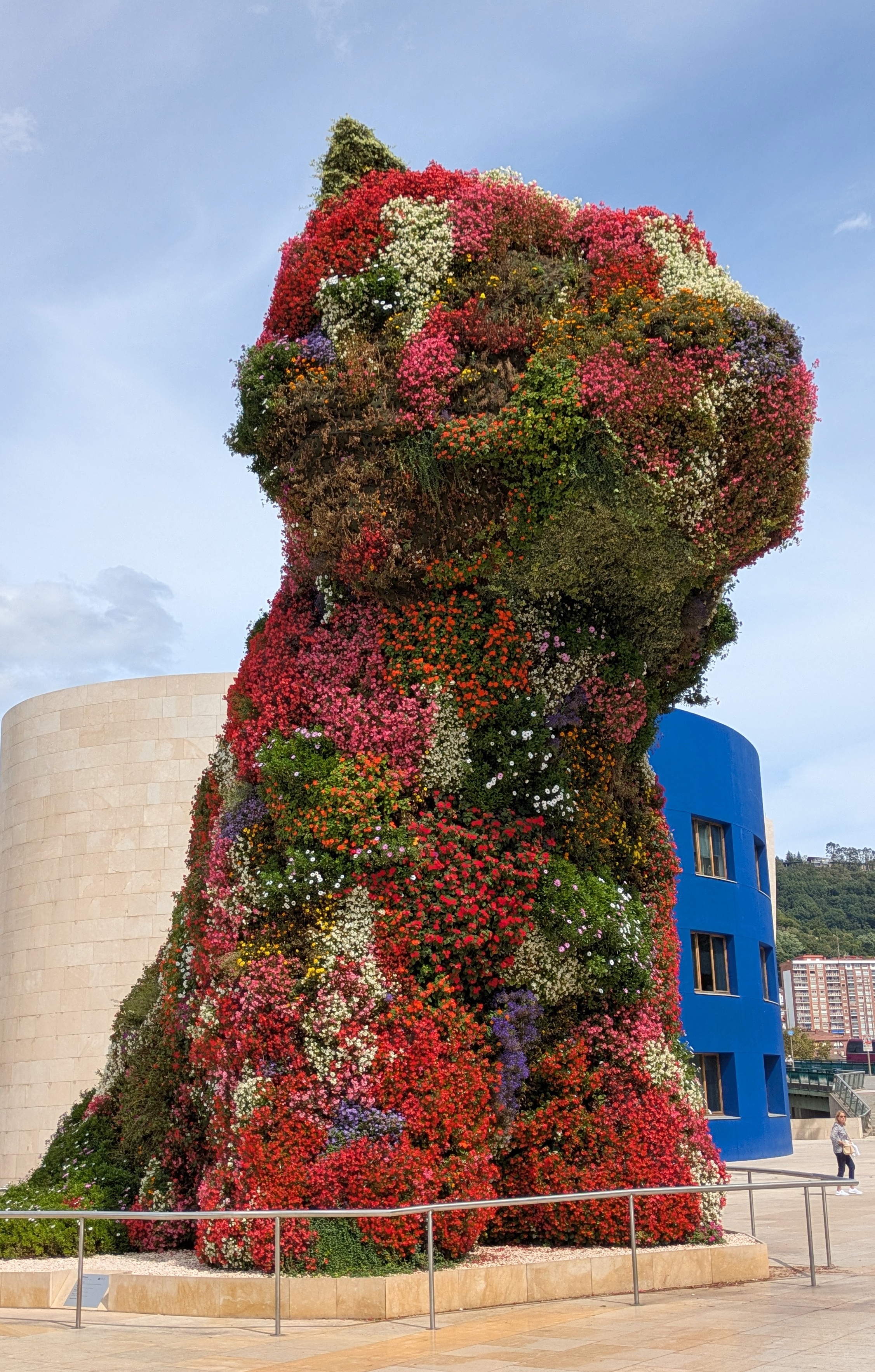
“Puppy,” the flower-covered pooch, sits at the entrance of the museum.
View from the bridge

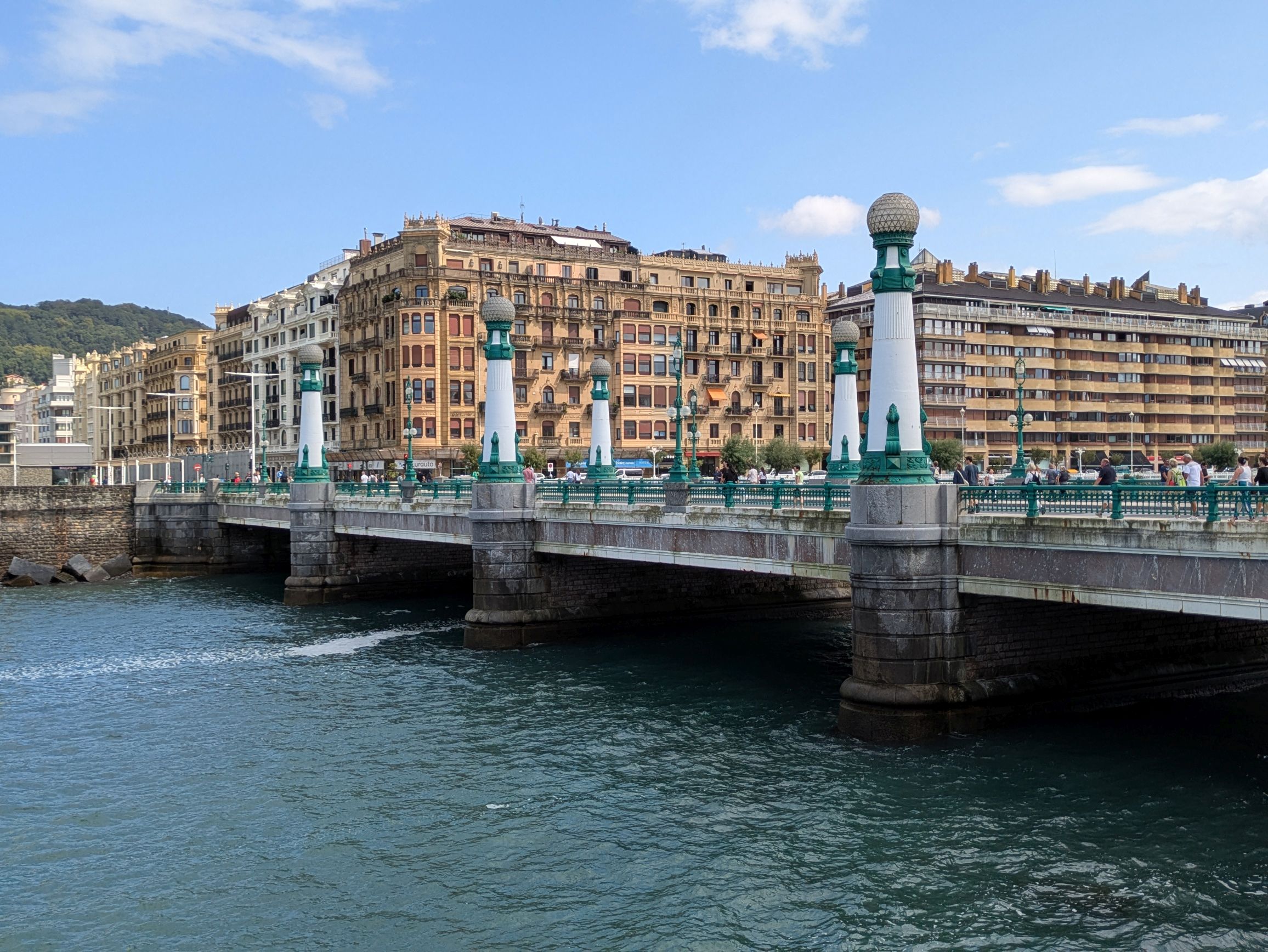
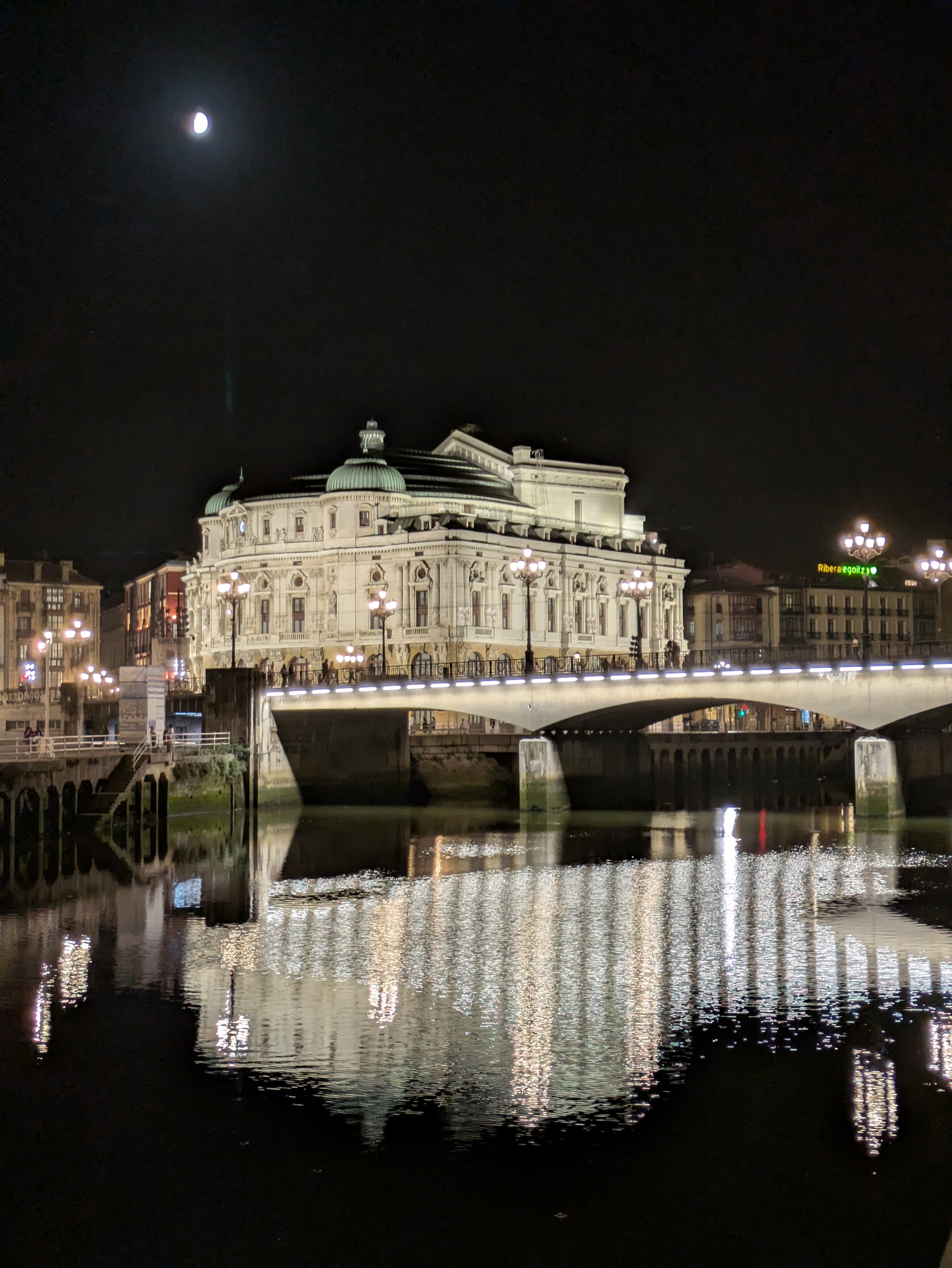
More scenes along the river:

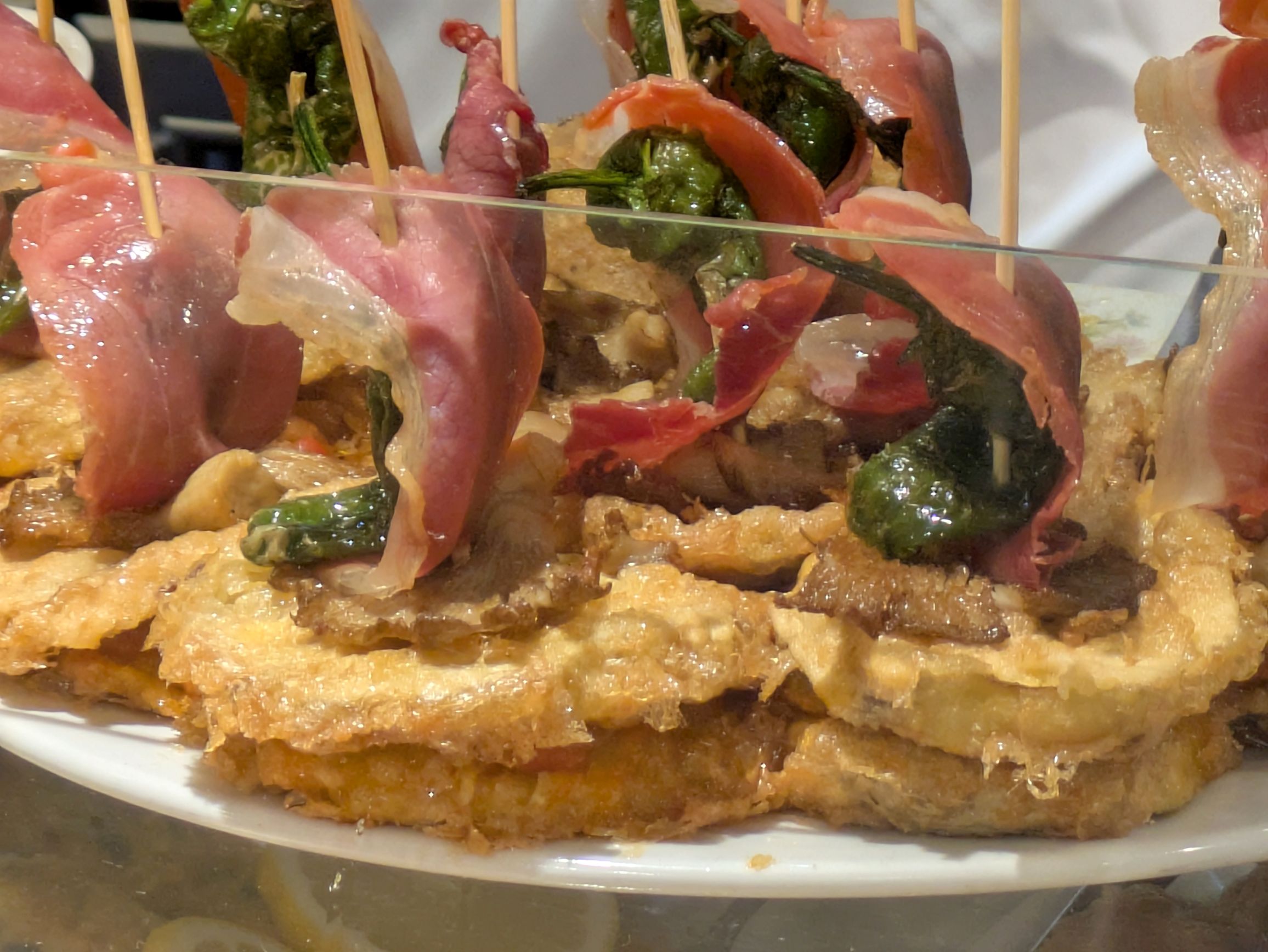
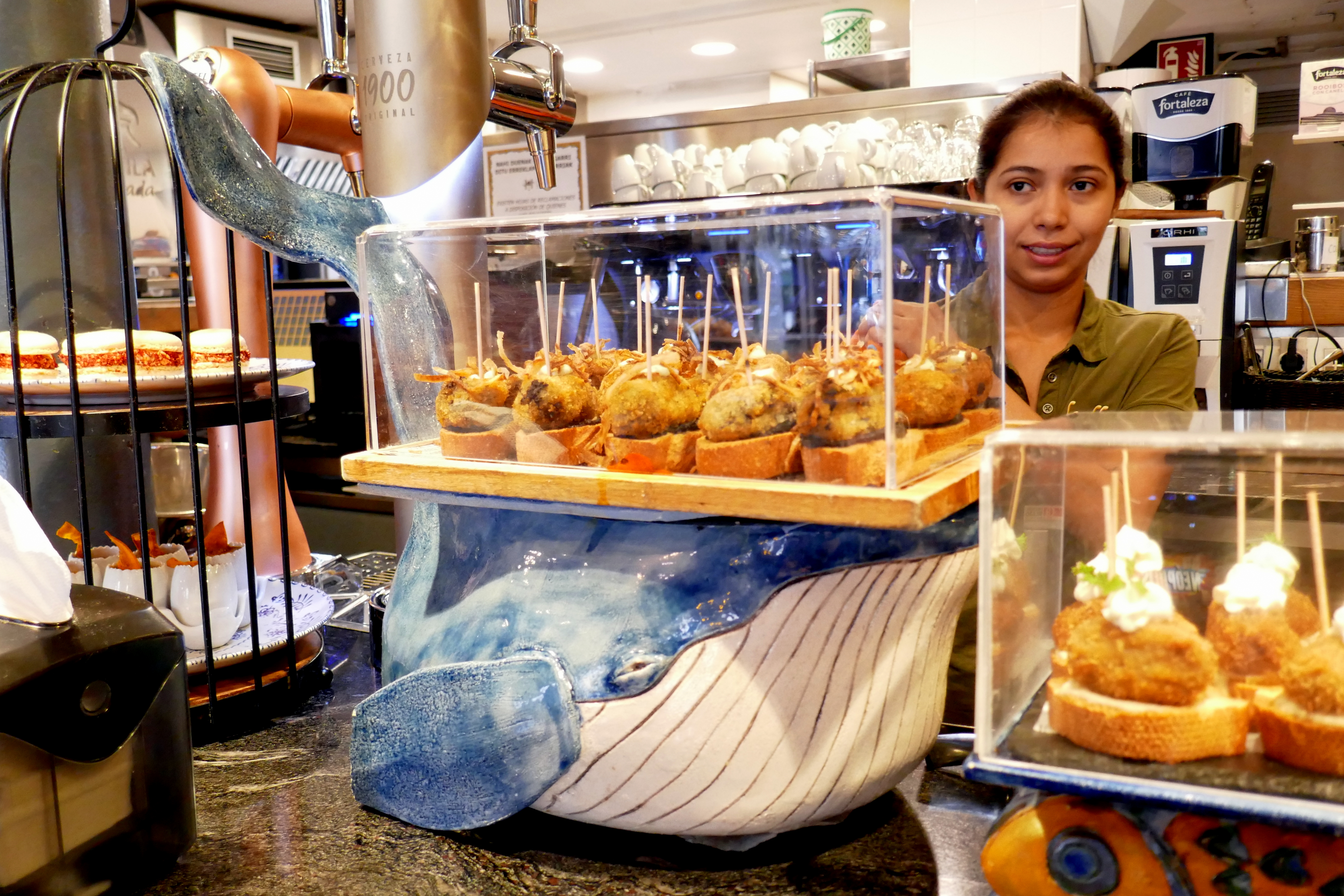
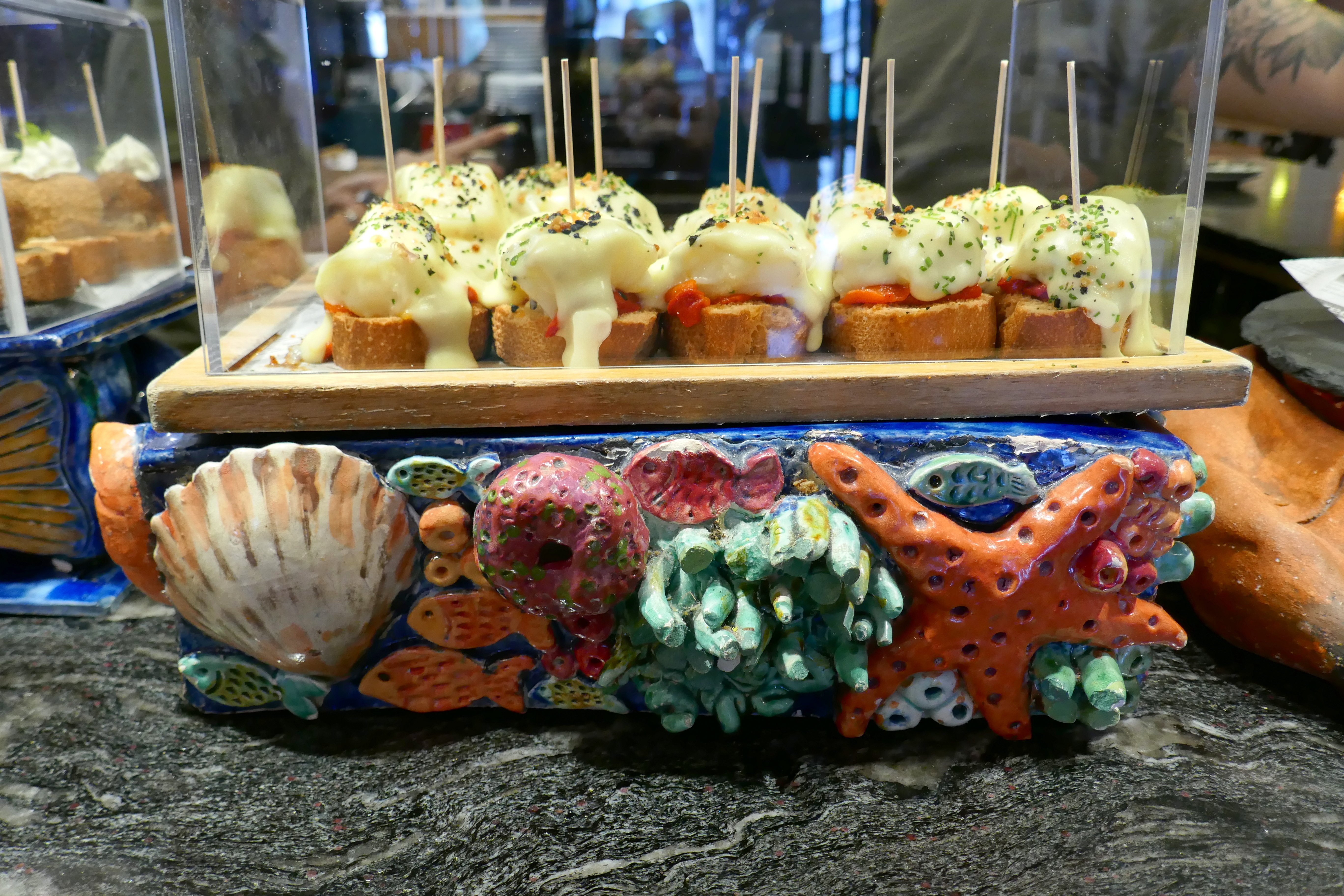
The other thing we looked forward to enjoying in Bilbao, the largest of the Basque Country cities (pop. 347,000+), was pintxos, a small snack with a bread base that is speared with a toothpick.  It is the star of northern Spain’s world-renowned cuisine, and it’s fun to eat!  Typically served in bars, each bar has its specialty, and they compete in culinary competitions for the coveted prize of having the best pintxos.  Throughout the evening, it’s typical for groups of friends to meet up at a bar, have a pintxo or two with a drink, and then move on to another bar to sample more.  It is very much part of the Basque Country social and culinary culture.

We sampled pintxos several times throughout our travels in northern Spain, including a lunchtime pintxos crawl in the medieval Old Town, the “Seven Streets” neighborhood.  Dating to the 14th century, these were the original seven streets of Bilbao. 

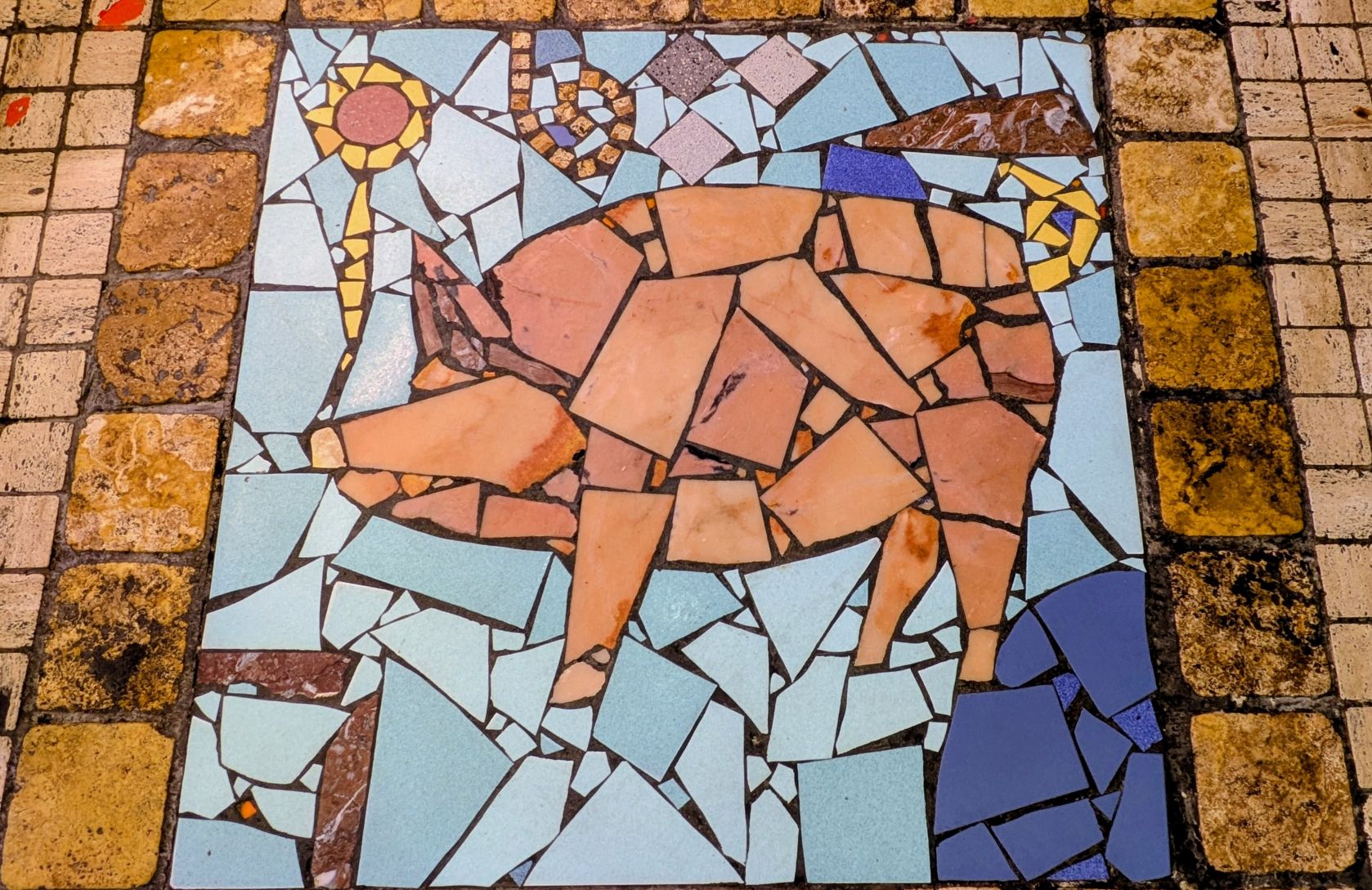
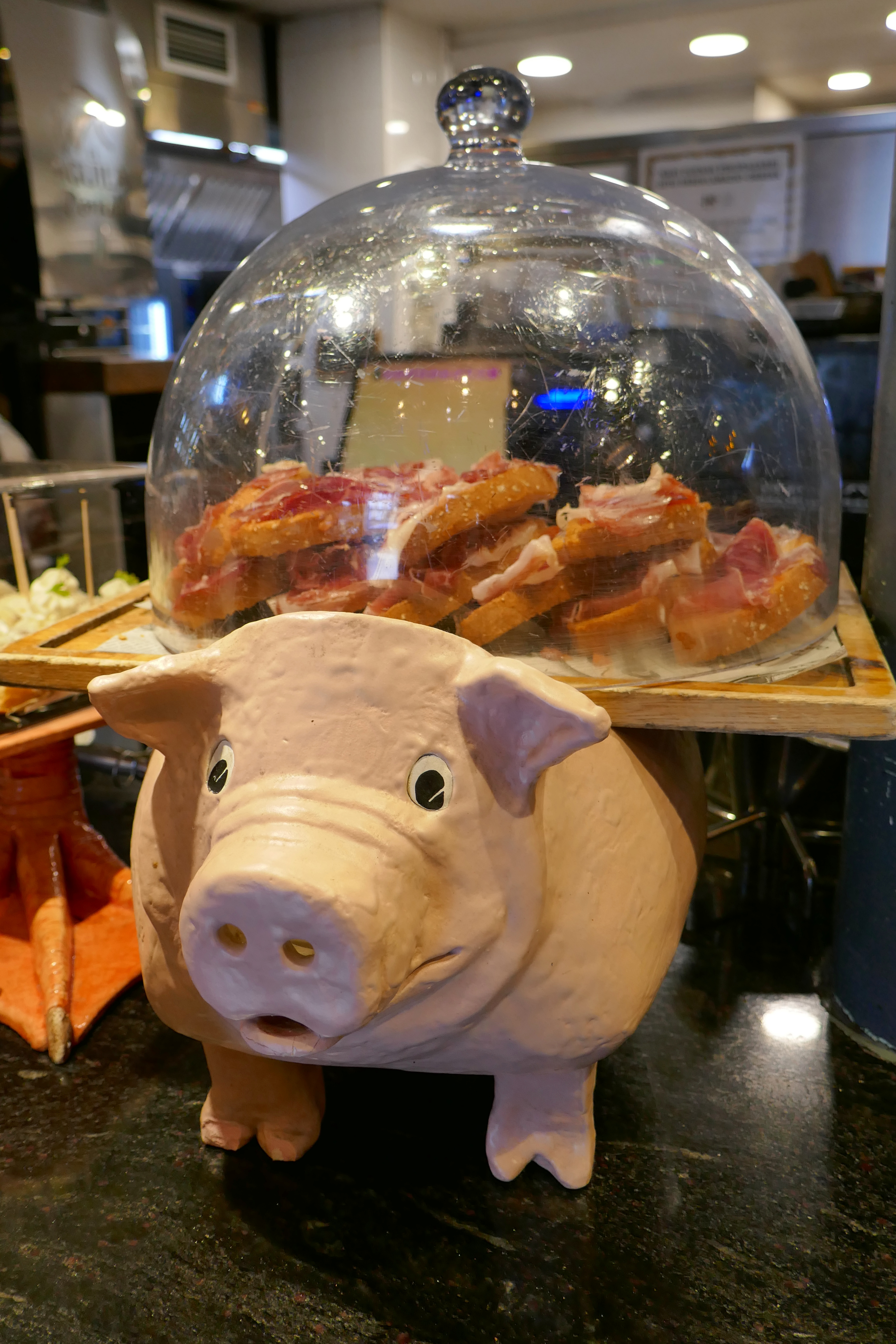
Our favorite pintxos presentation was at La Olla, in Plaza Nueva. Displaying their pintxos in themes, the fish pintxos were displayed on a ceramic whale, the other seafood was lined up on an underwater scene, and the pork pintxos sat atop a pig!  It was adorable, yet practical for us, especially since we avoid eating red meat when possible and prefer seafood.  We could just point to the ones we wanted.

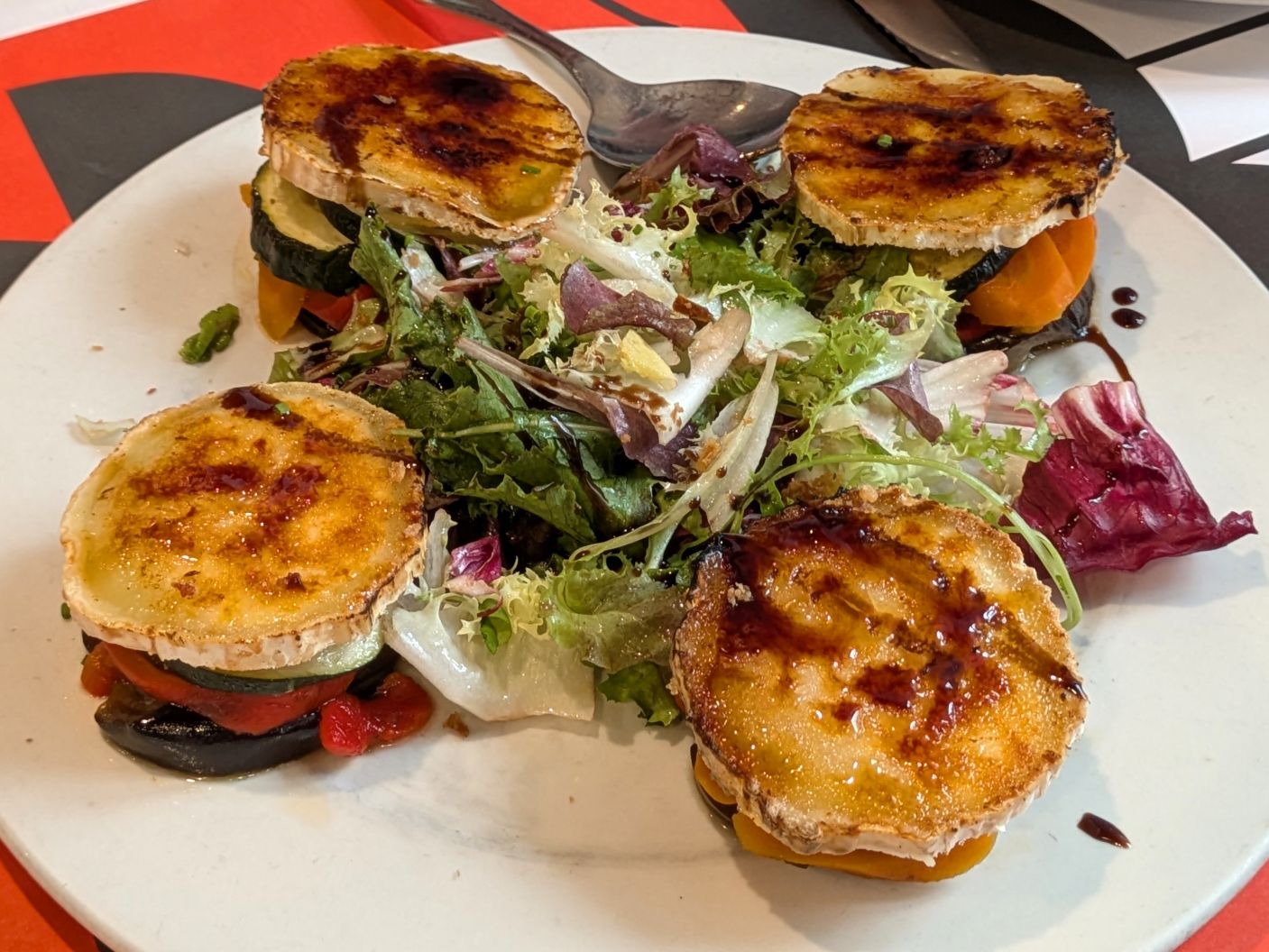
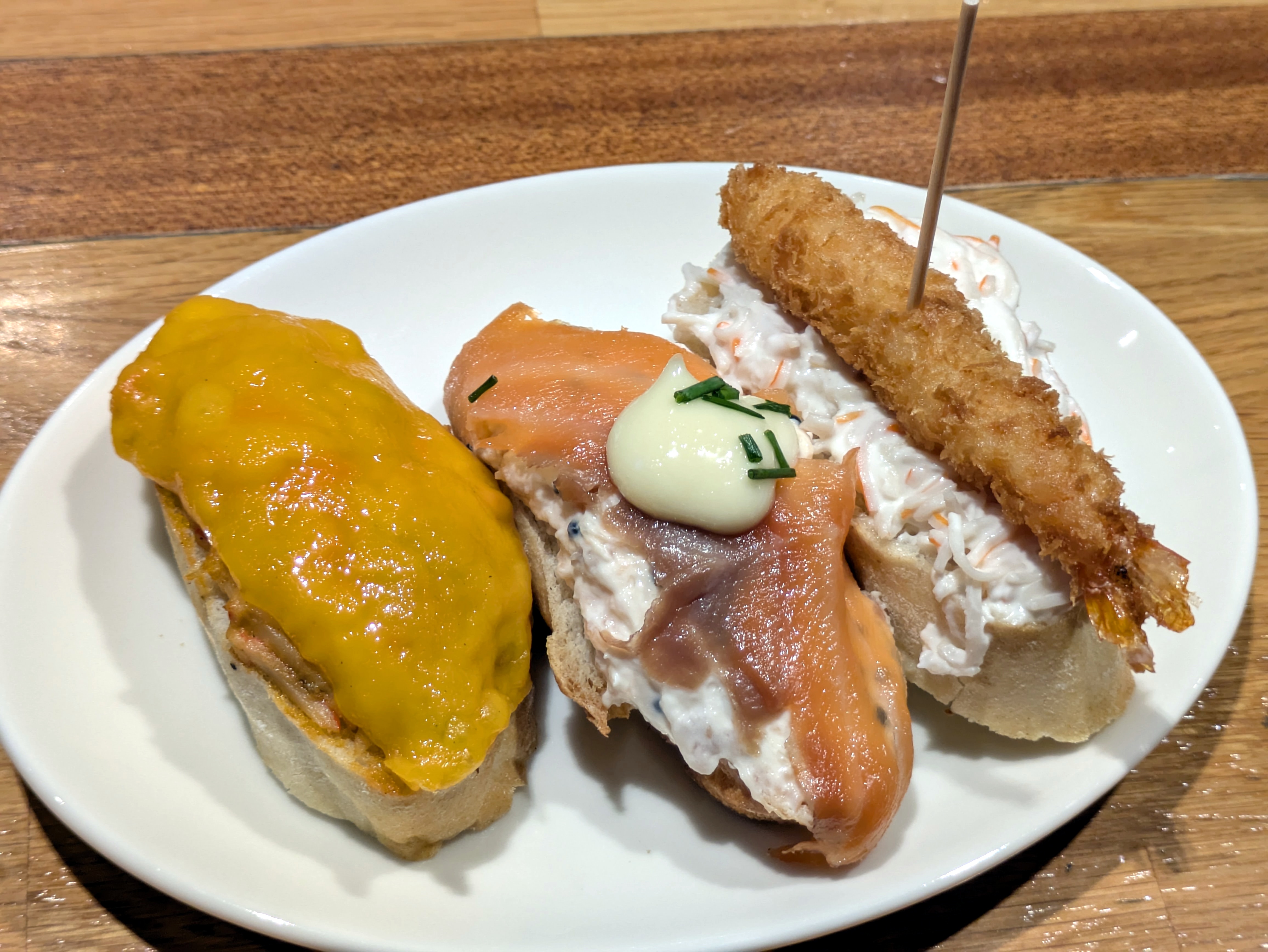
These pintxos were enjoyed at a bar near our hotel.

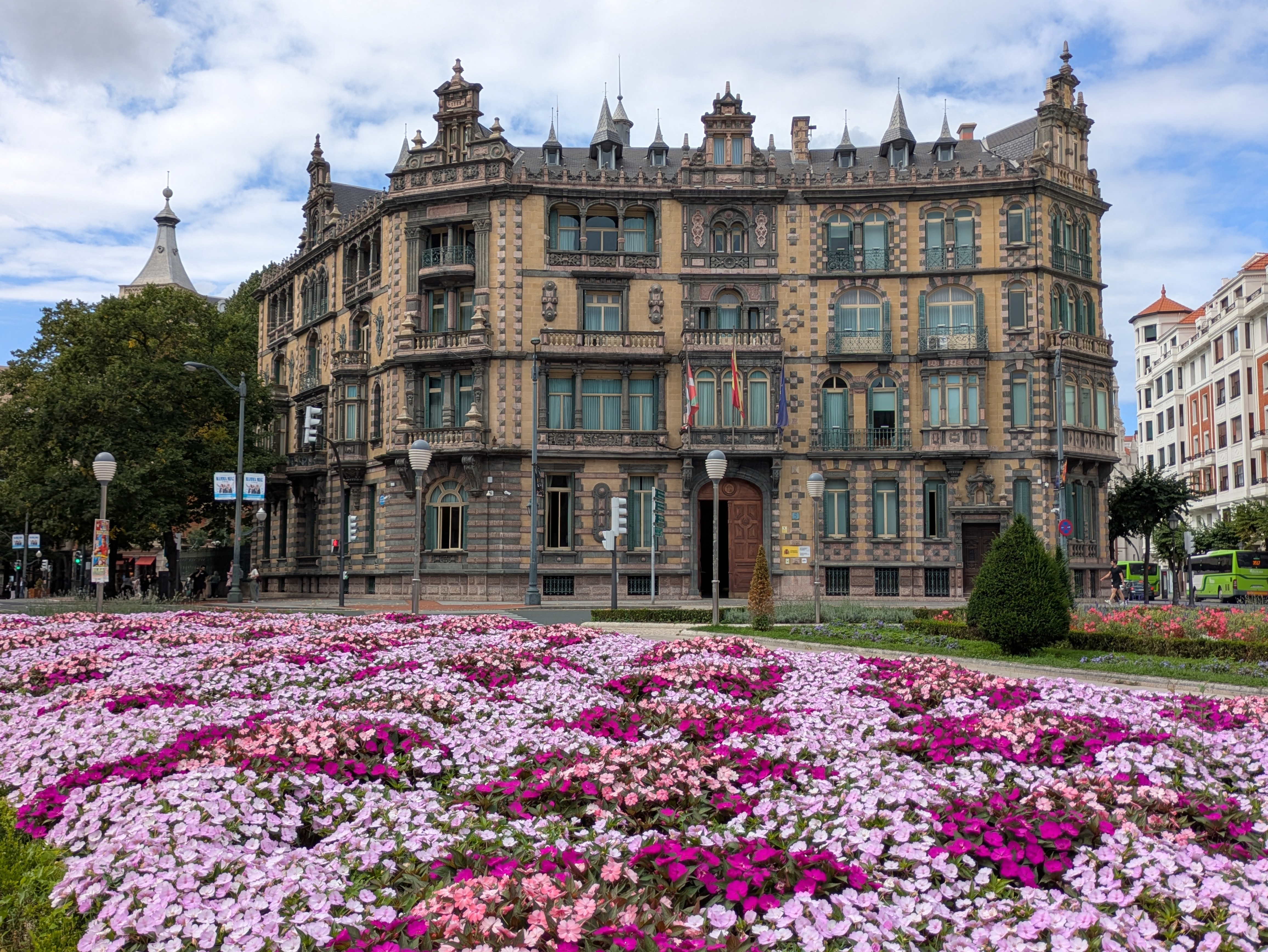
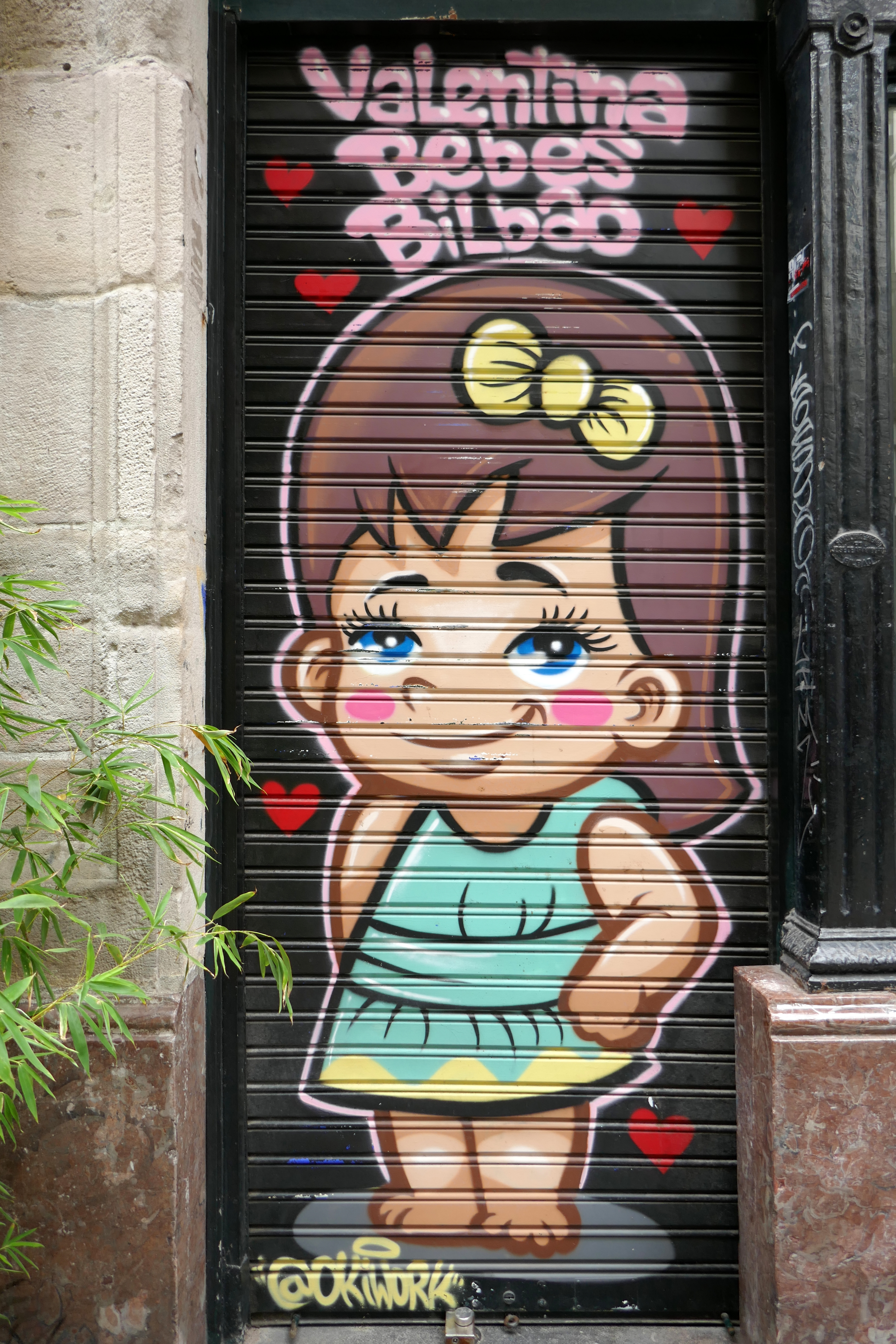
More scenes from around Bilbao:

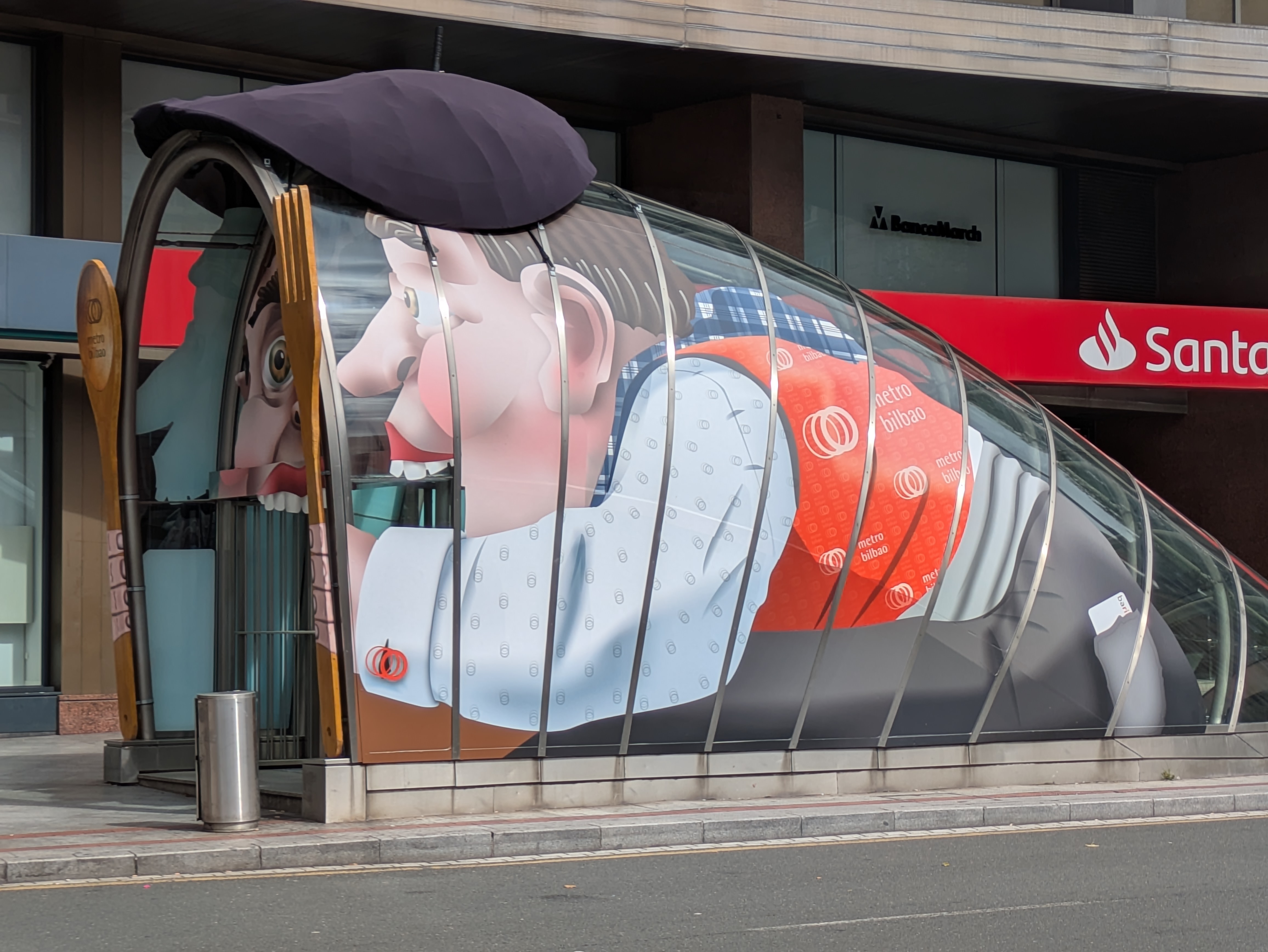
The creative entrance to the subway– CUTE!
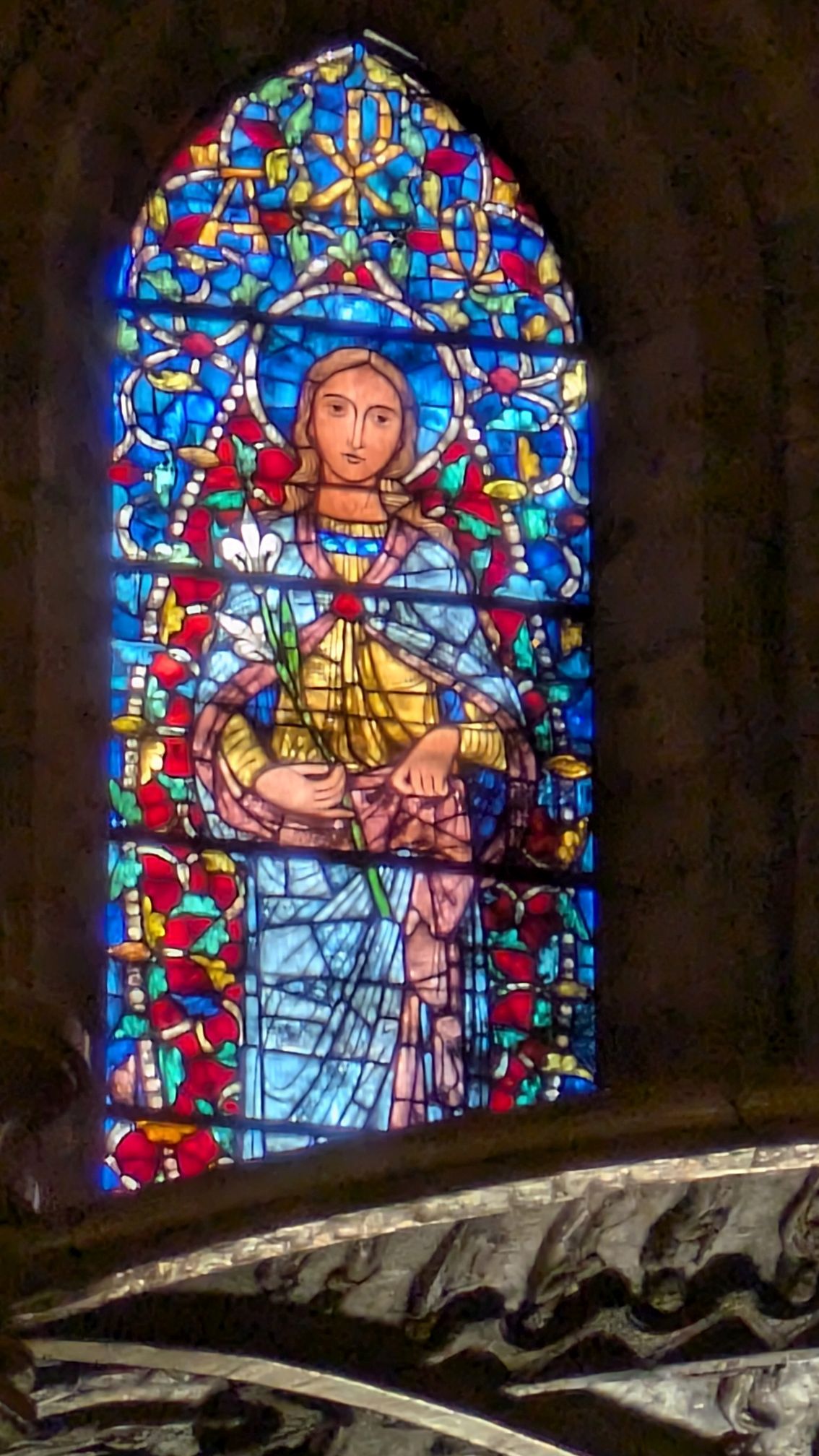
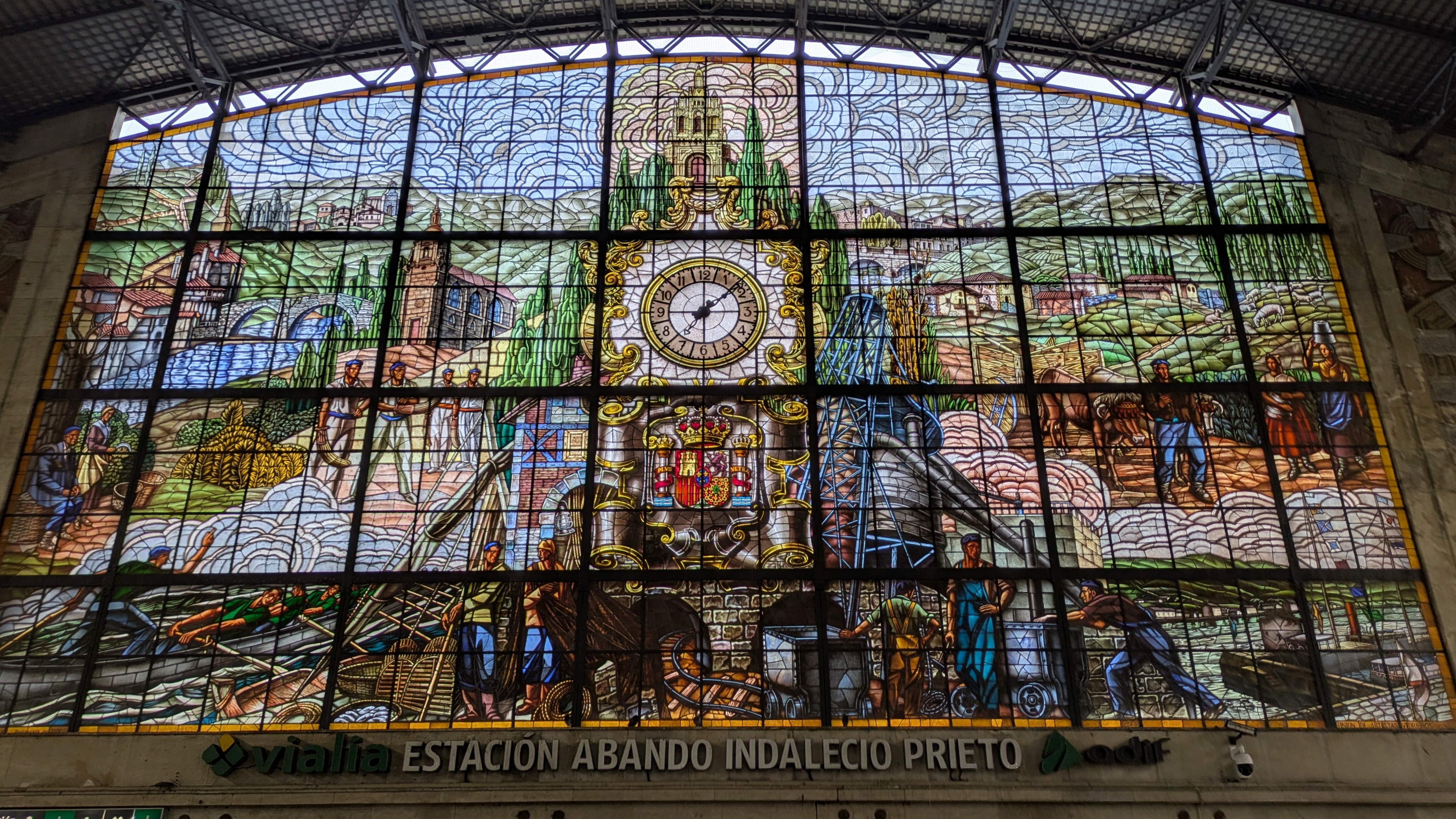
The train station’s incredible stained glass window was designed in 1948 by the celebrated painter Caspar Montes Iturrioz. It comprises 301 pieces of glass and is about 48 feet by 33 feet.
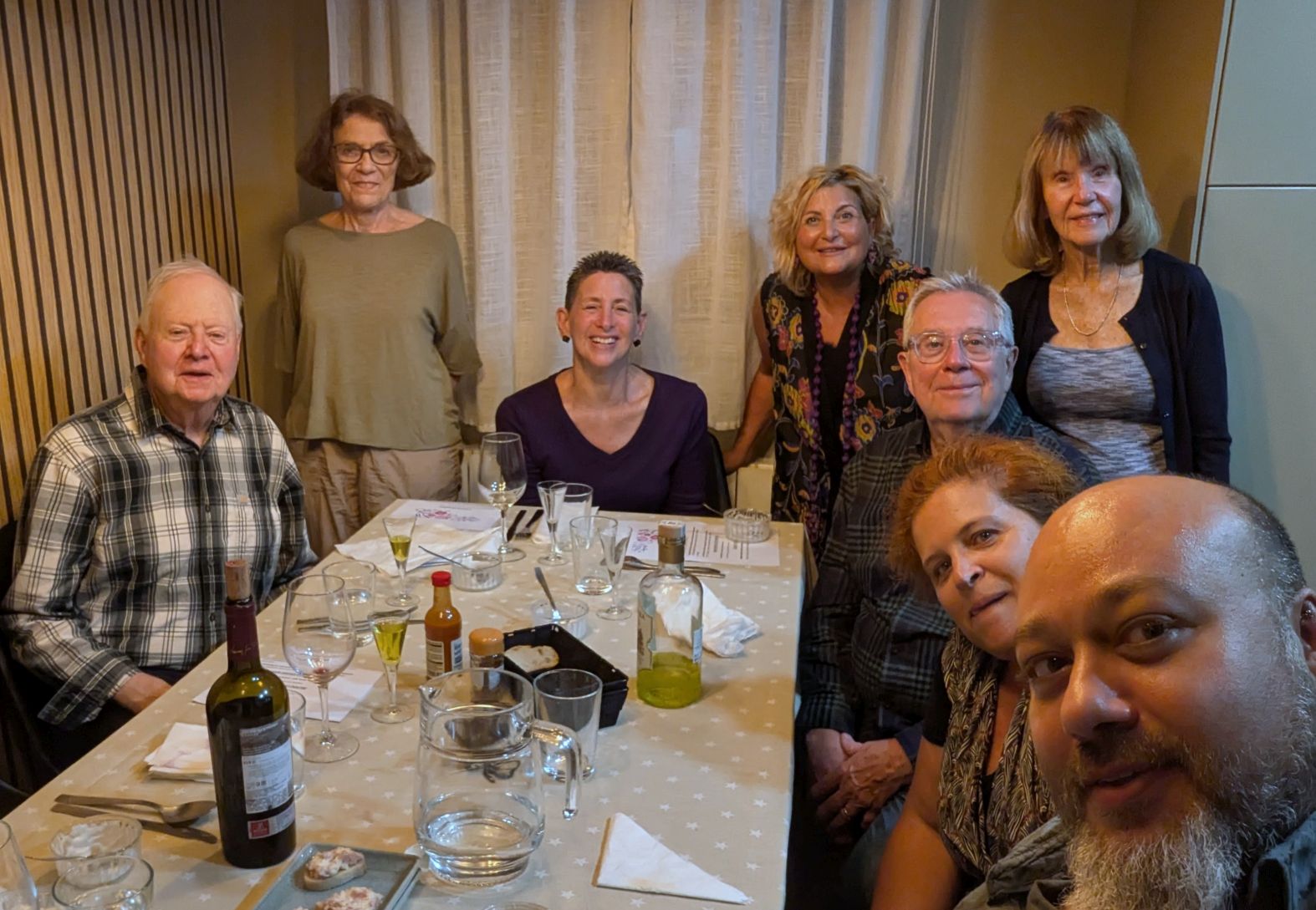
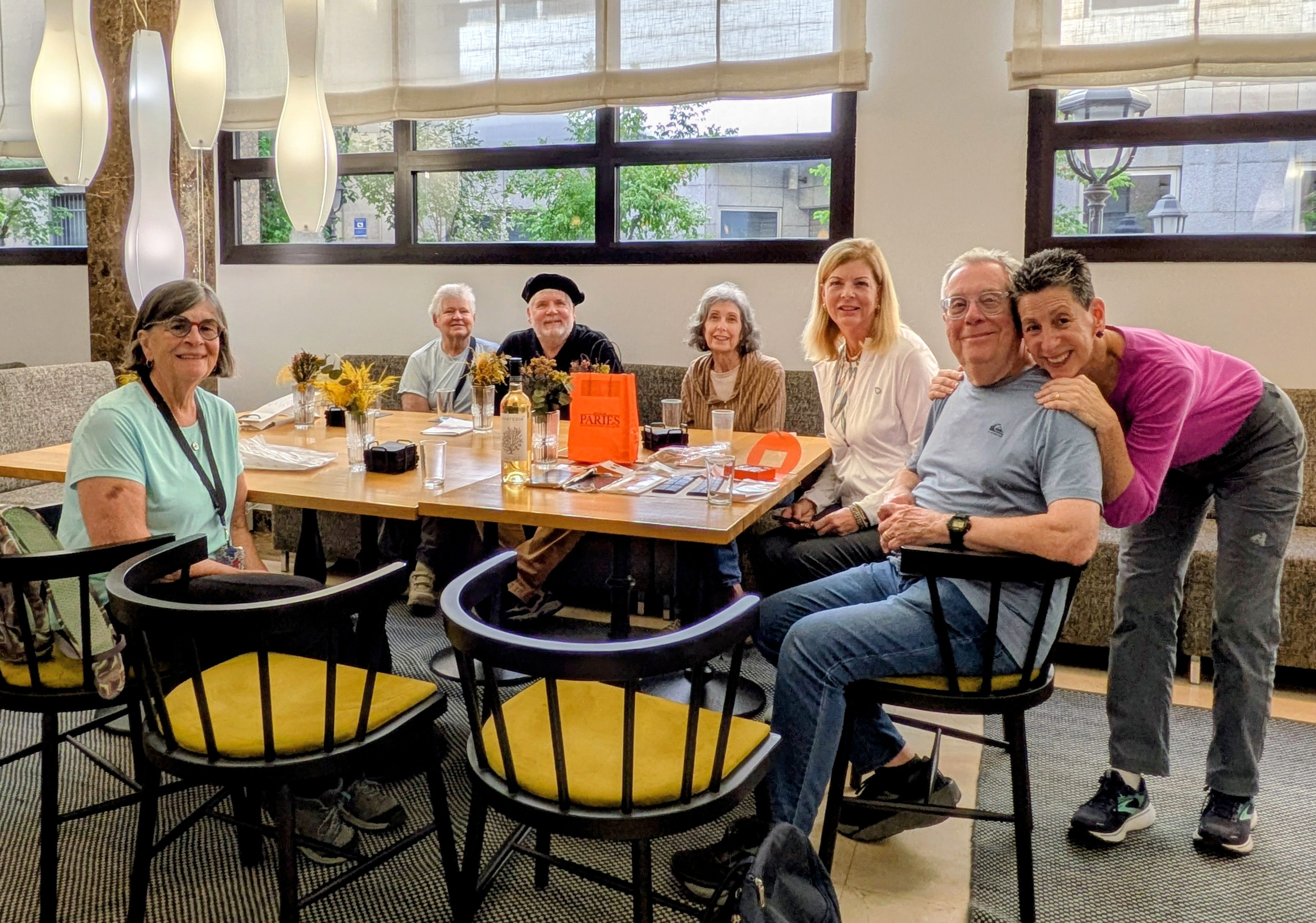
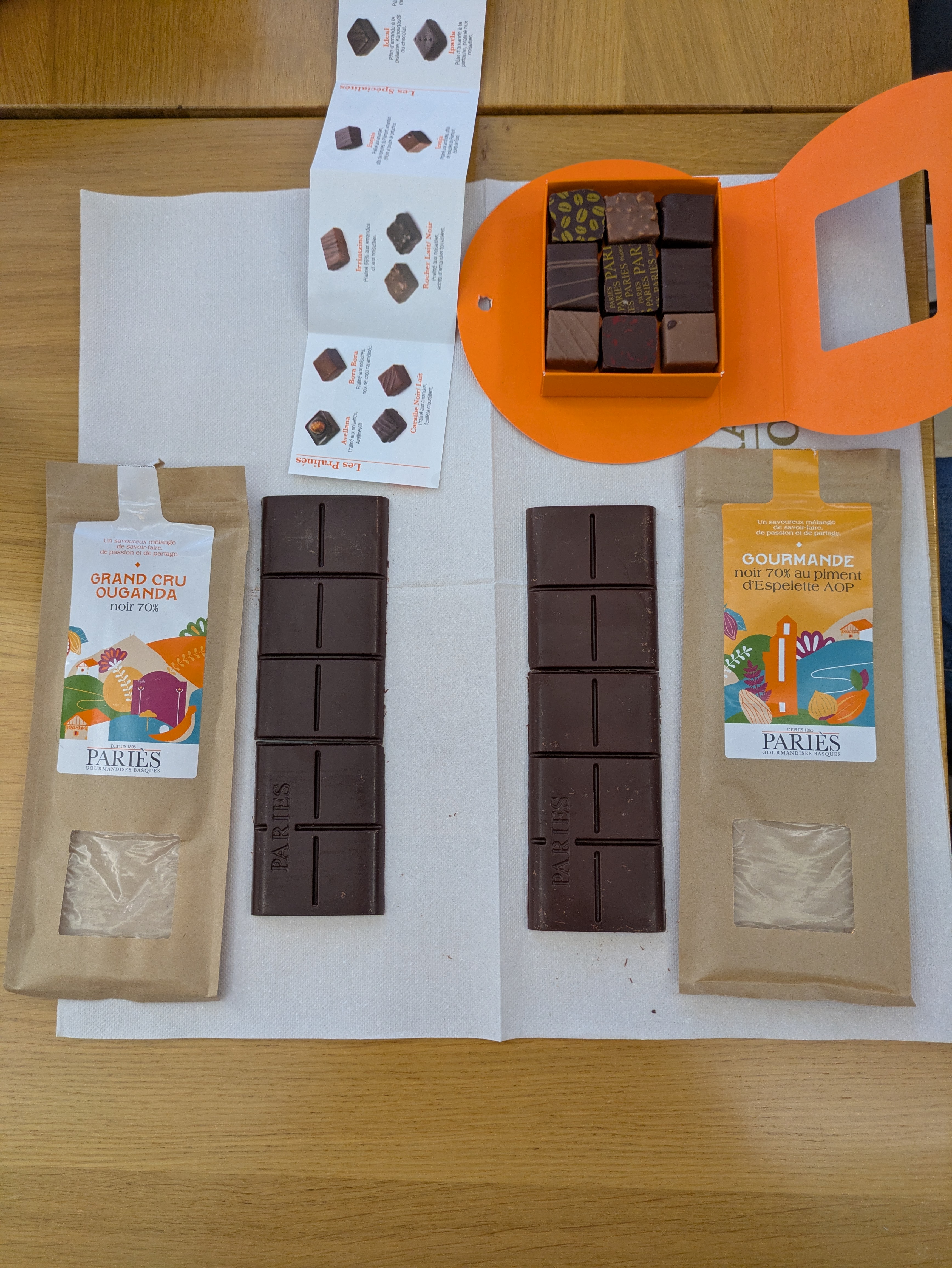
The seven of us on Tom’s pre-trip extension met in the hotel lobby to enjoy the wine and chocolate he gifted us.

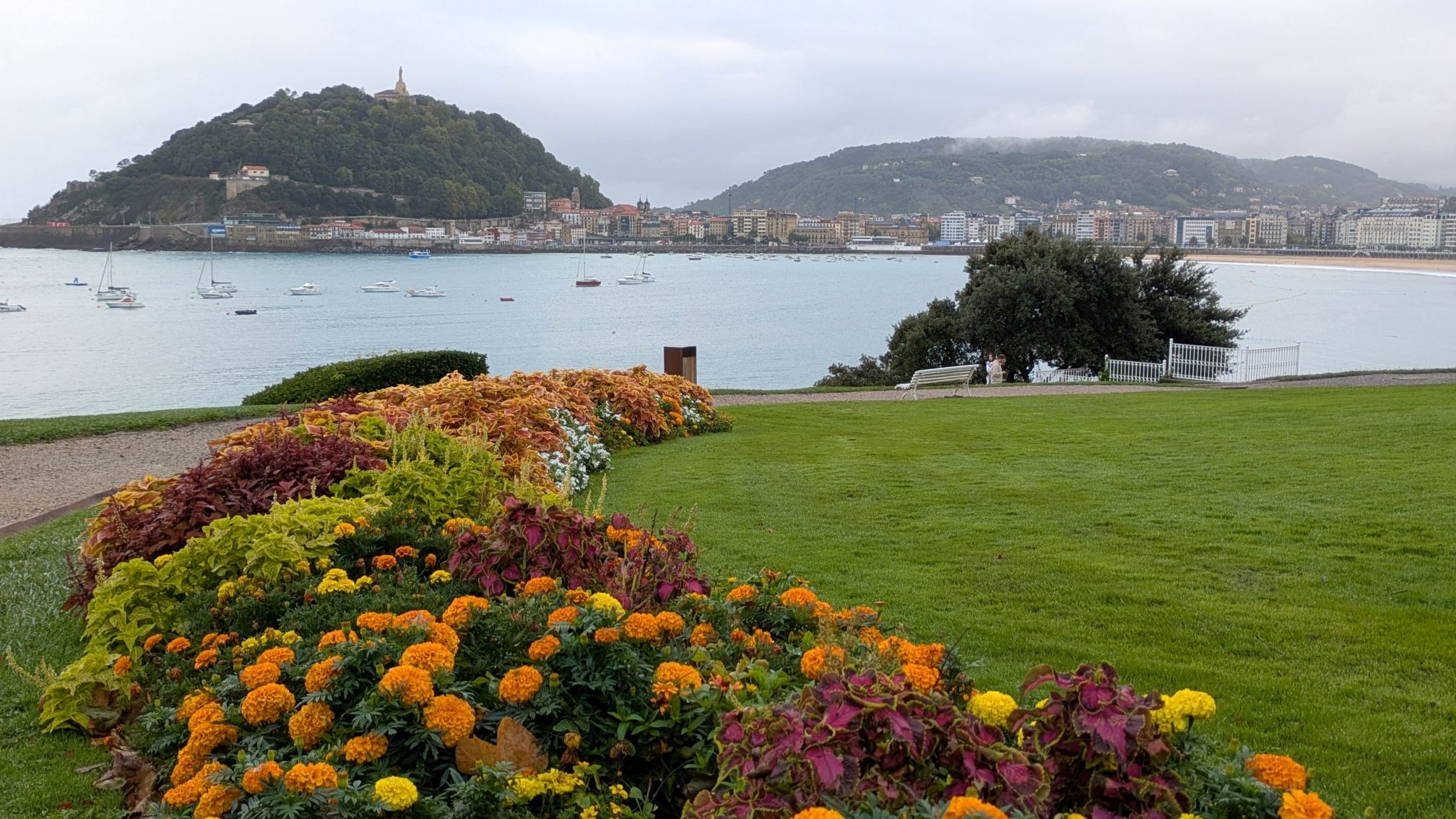
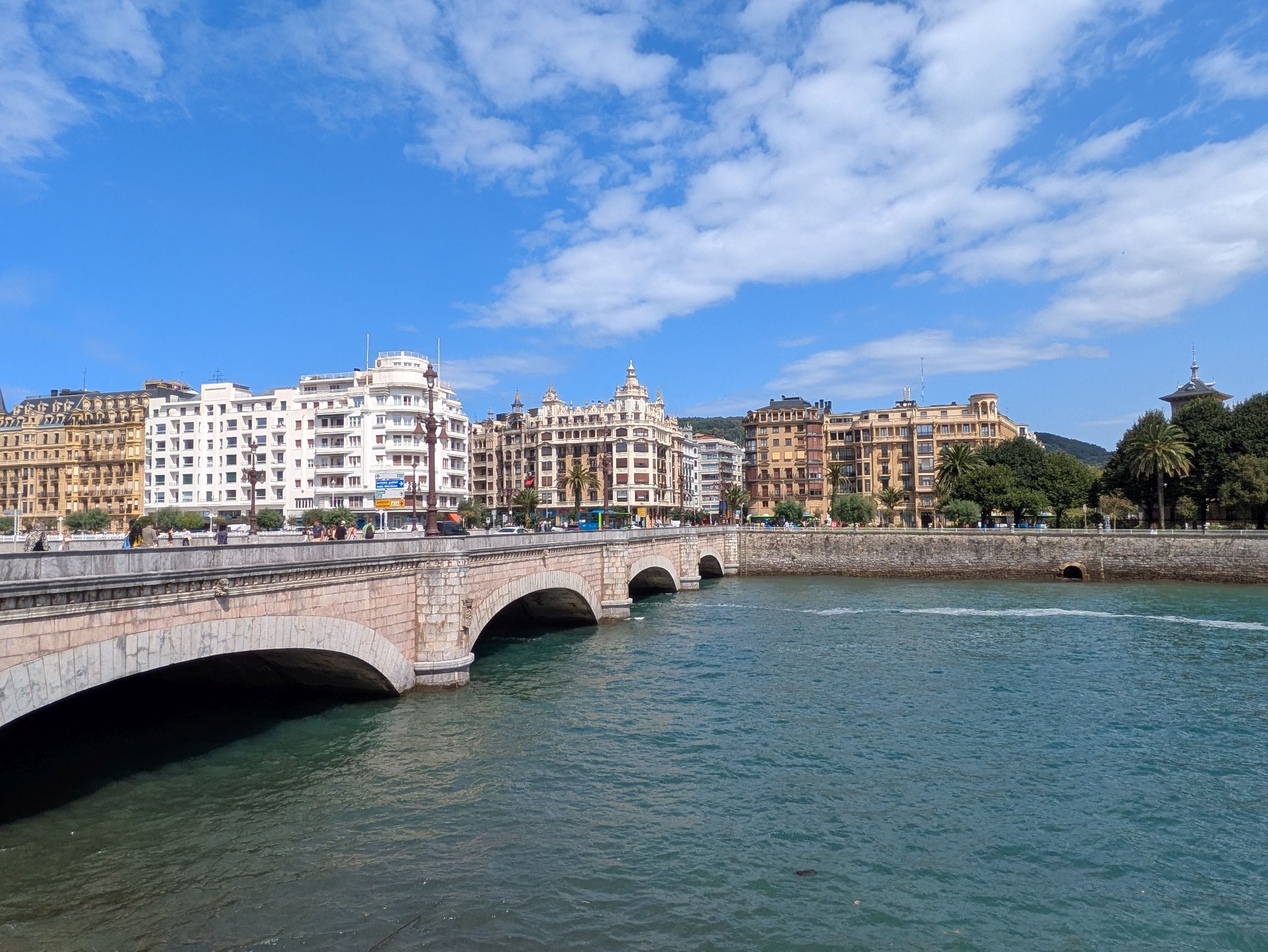
Bruce and I found Bilbao, listed in the top ten most walkable cities, to be easy to navigate on foot, and very enjoyable!

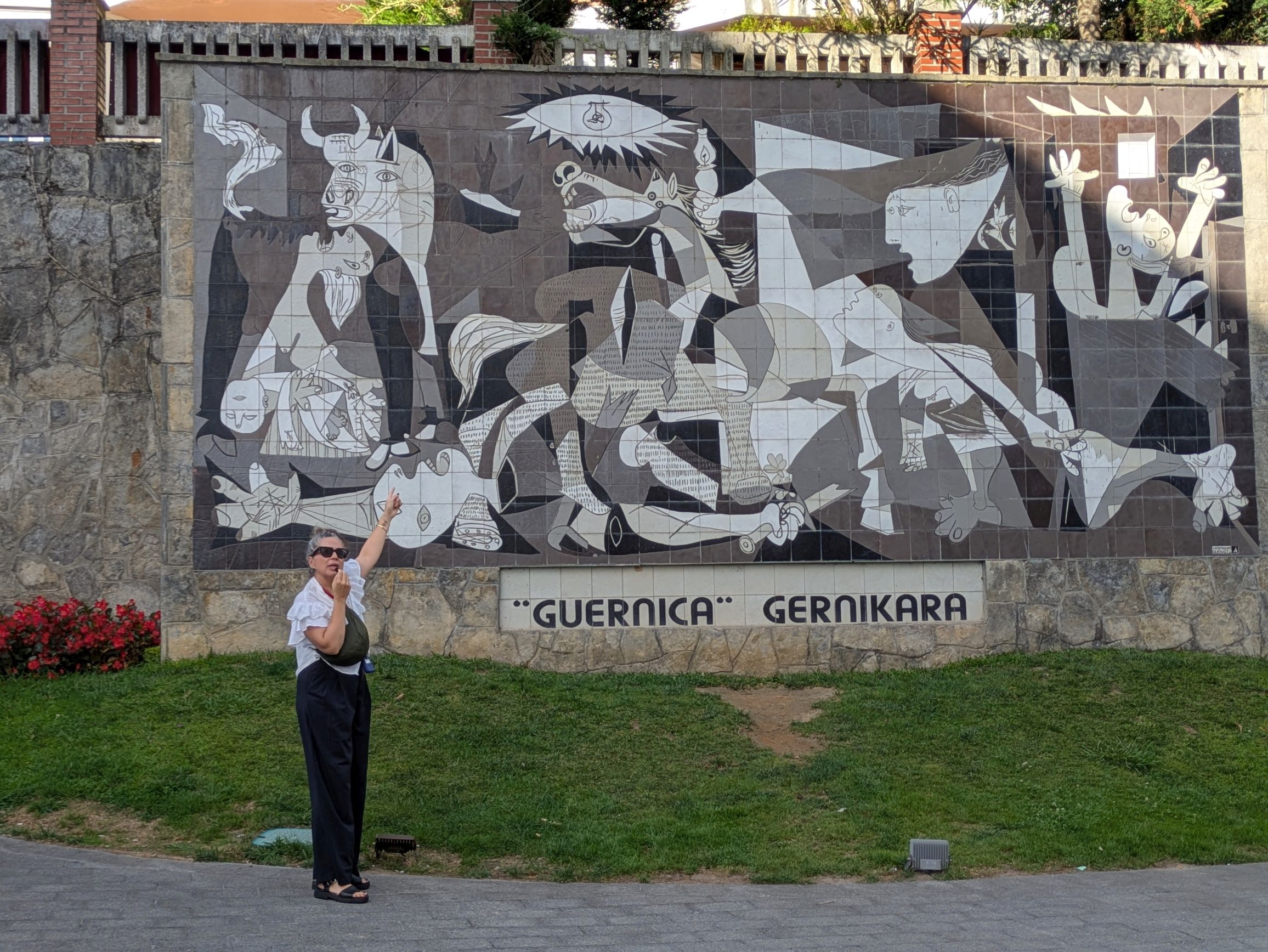
SOUTHWEST FRANCE, NORTHERN SPAIN & PORTUGAL #9: GUERNICA, THE BASQUE COUNTRYSIDE, AND A HOME-HOSTED DINNER

SOUTHWEST FRANCE, NORTHERN SPAIN & PORTUGAL #7: BIARRITZ & SAINT-JEAN-DE-LUZ

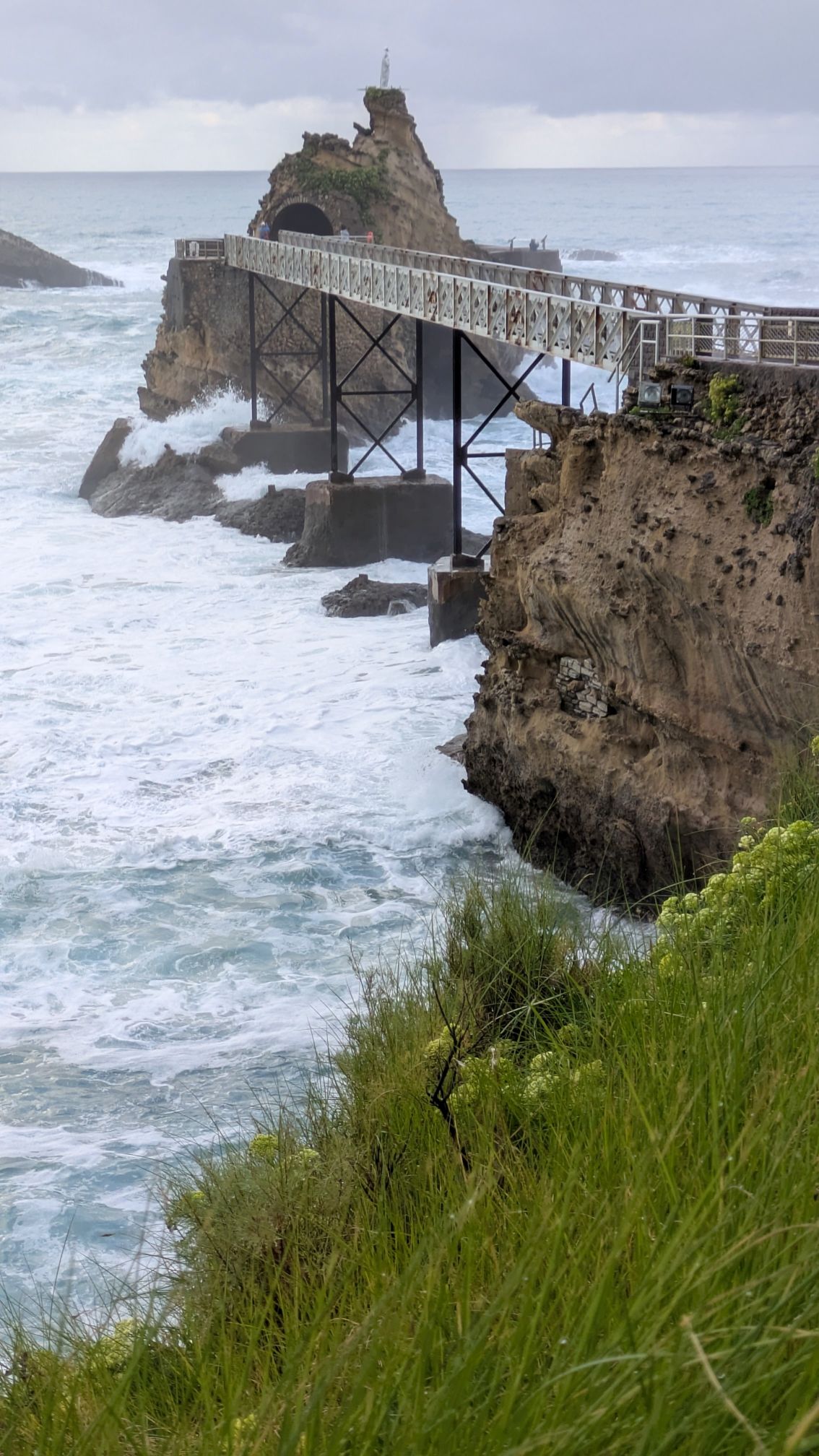
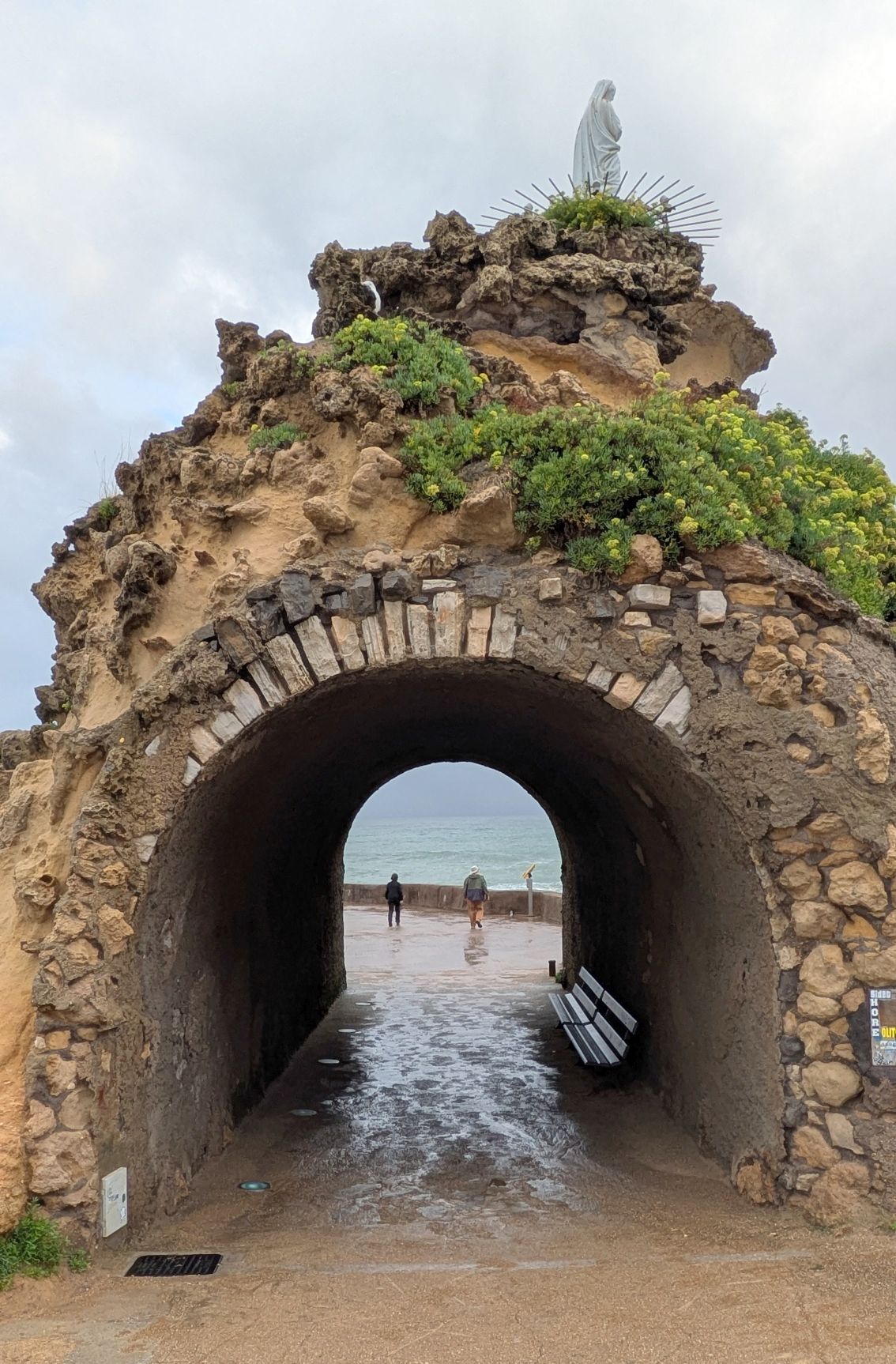
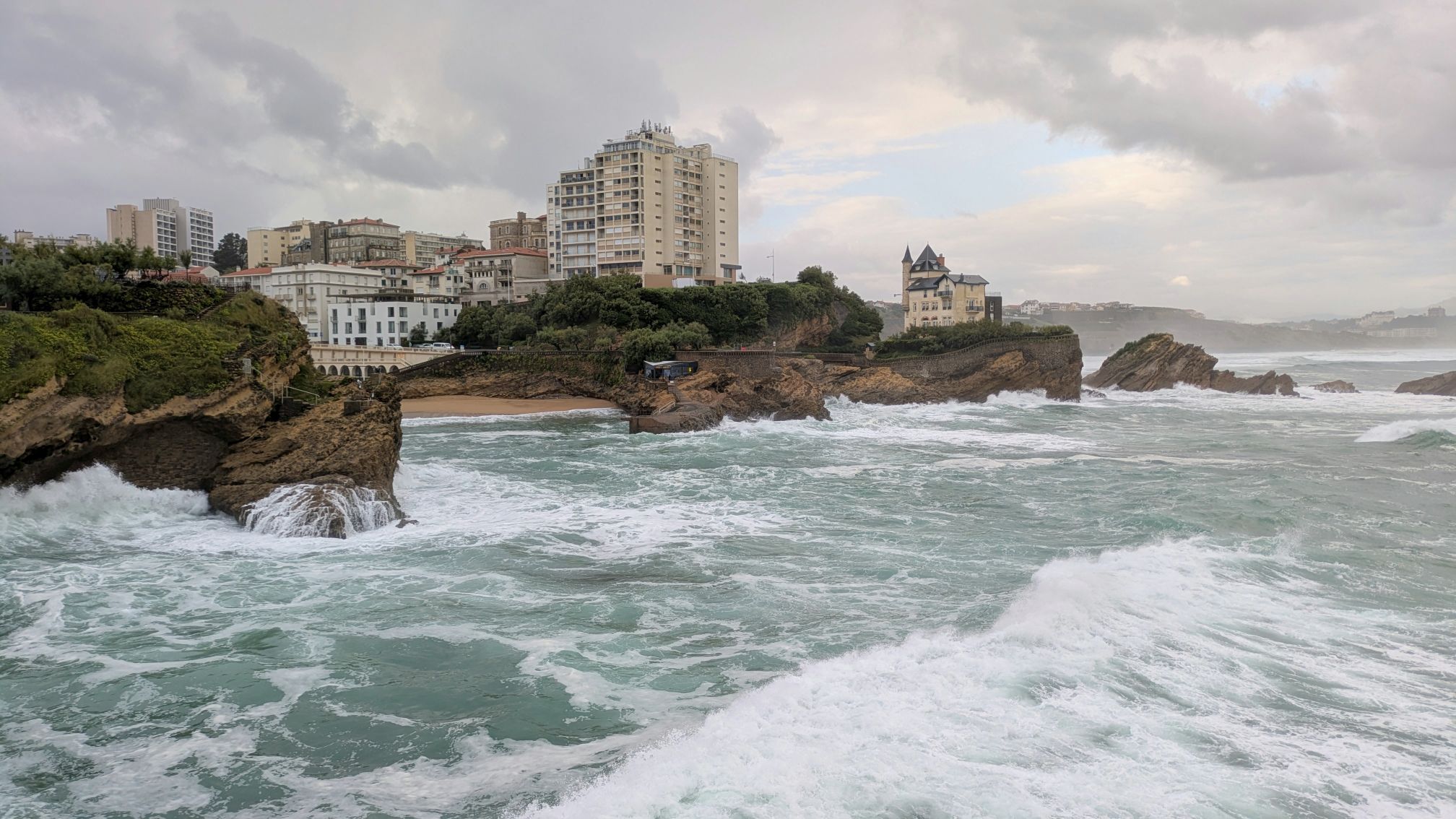
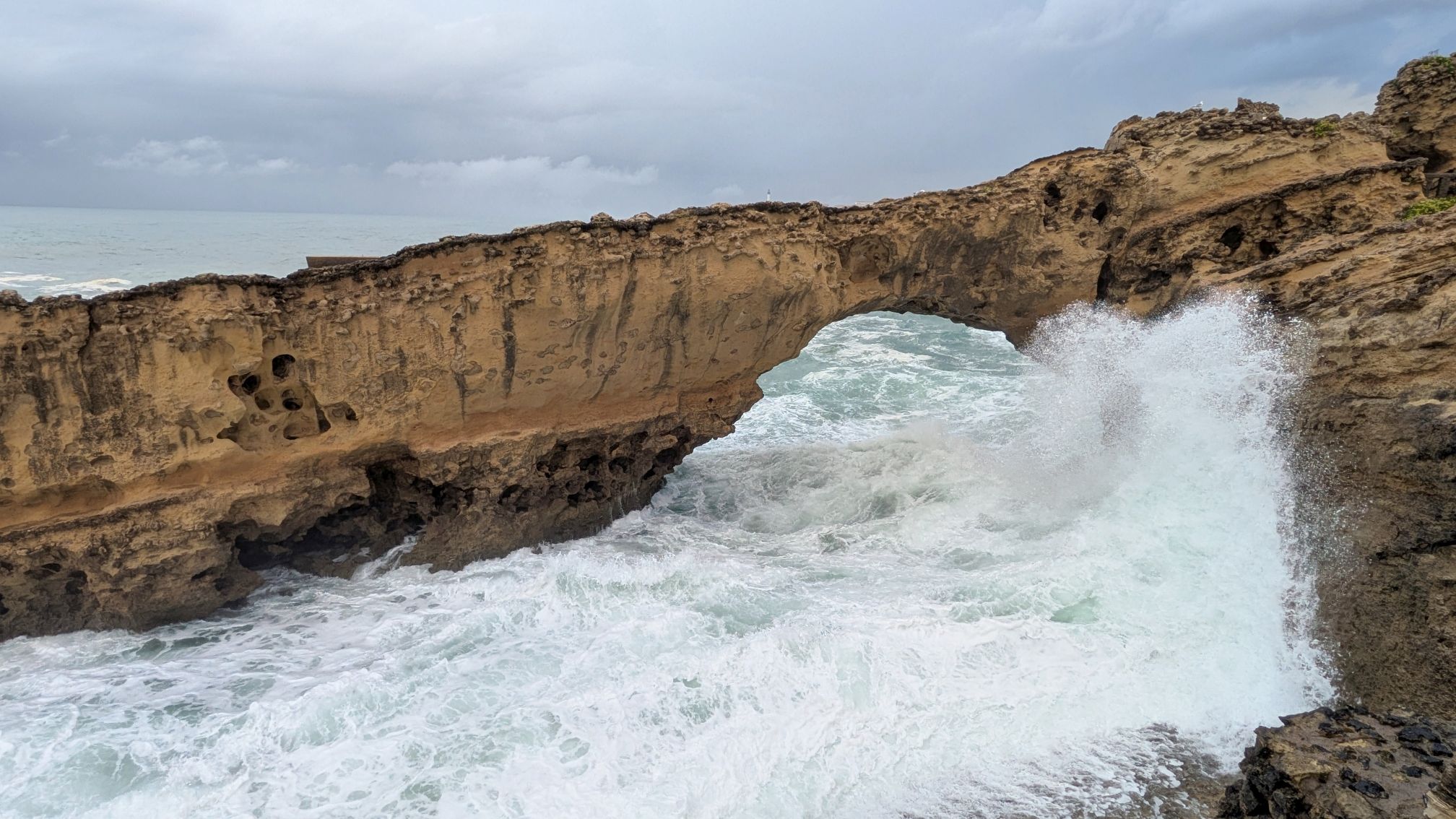
The last day of our pre-trip extension began as a rainy one, so our stops along the coast of Biarritz and Bay of Biscay were a bit of a bust at first and we missed out on what would have been beautiful views.  Still, the tumultuous seas and dark skies were alluring in their own way, and I found them intriguing to photograph.  Once I was out on the old wood-slat pier looking down on the waves crashing against the rocks, I didn’t want to leave.  I could have stood there watching for hours, it was so mesmerizing. 

(For all photos, click on the image for a full screen view.)

Not leaving the pier with the rest of the group was a mistake though.  A large wave came crashing in, streams of water came rushing up through the slats of the pier and all over me.  I was drenched!  Thankfully, I was wearing quick drying travel pants, because I eventually dried out during the bus ride and while walking under the sunny skies of Saint-Jean-de-Luz.

Shot through the wet bus window while heading to our last stop in Biarritz
Biarritz is a surfing town, known for its huge waves (the second largest wave in the world) and professional surfing tournaments.

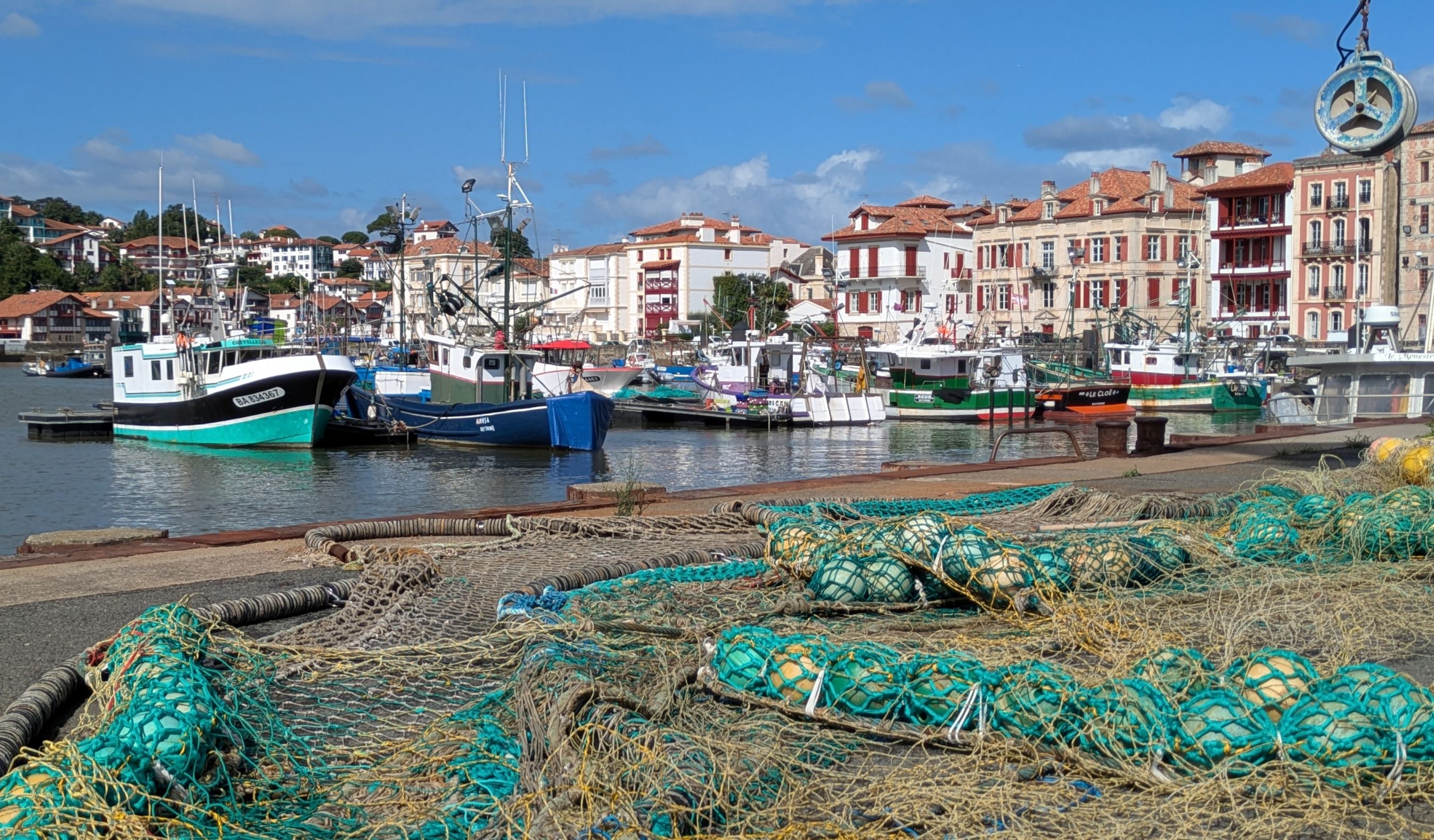
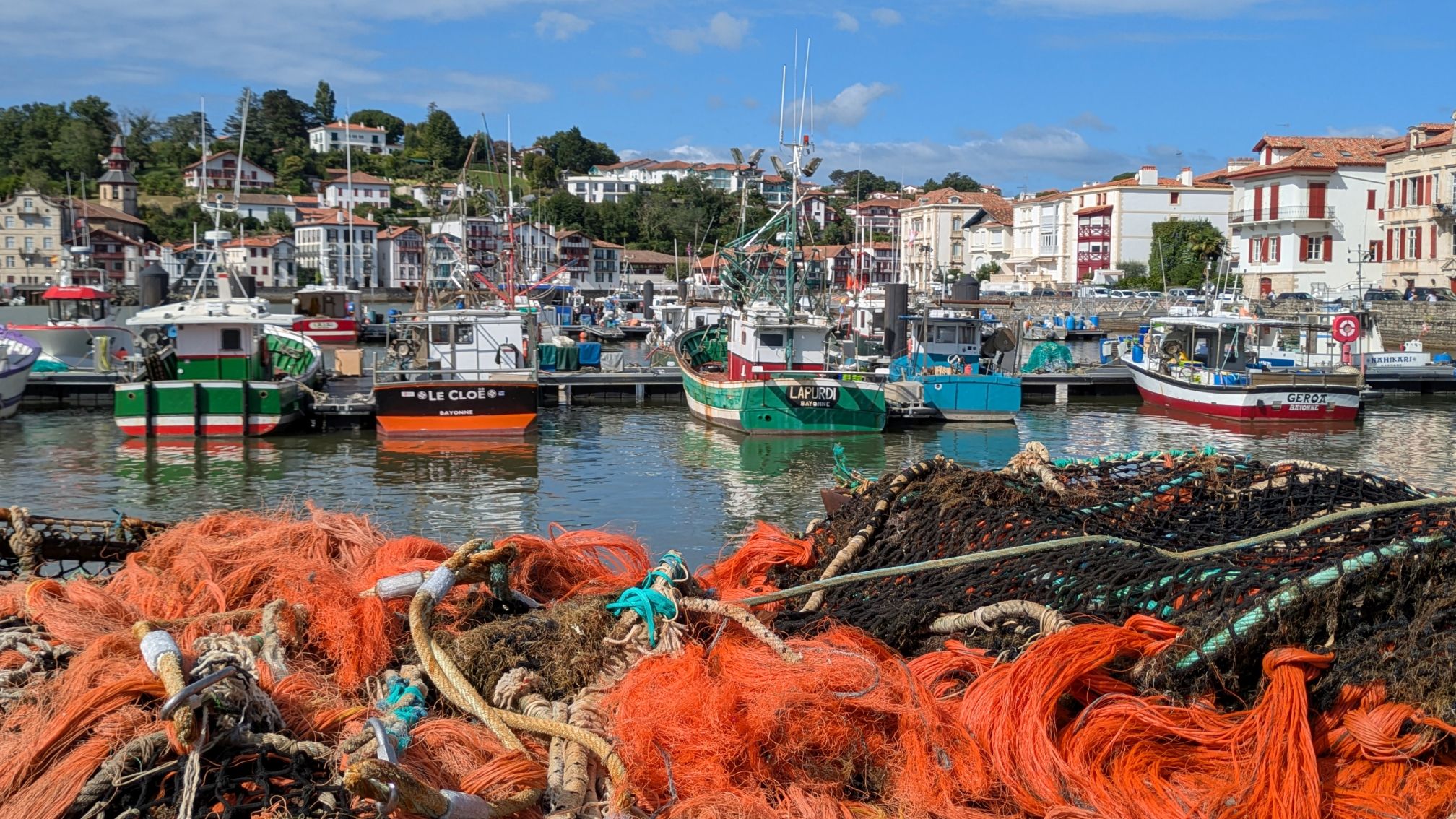
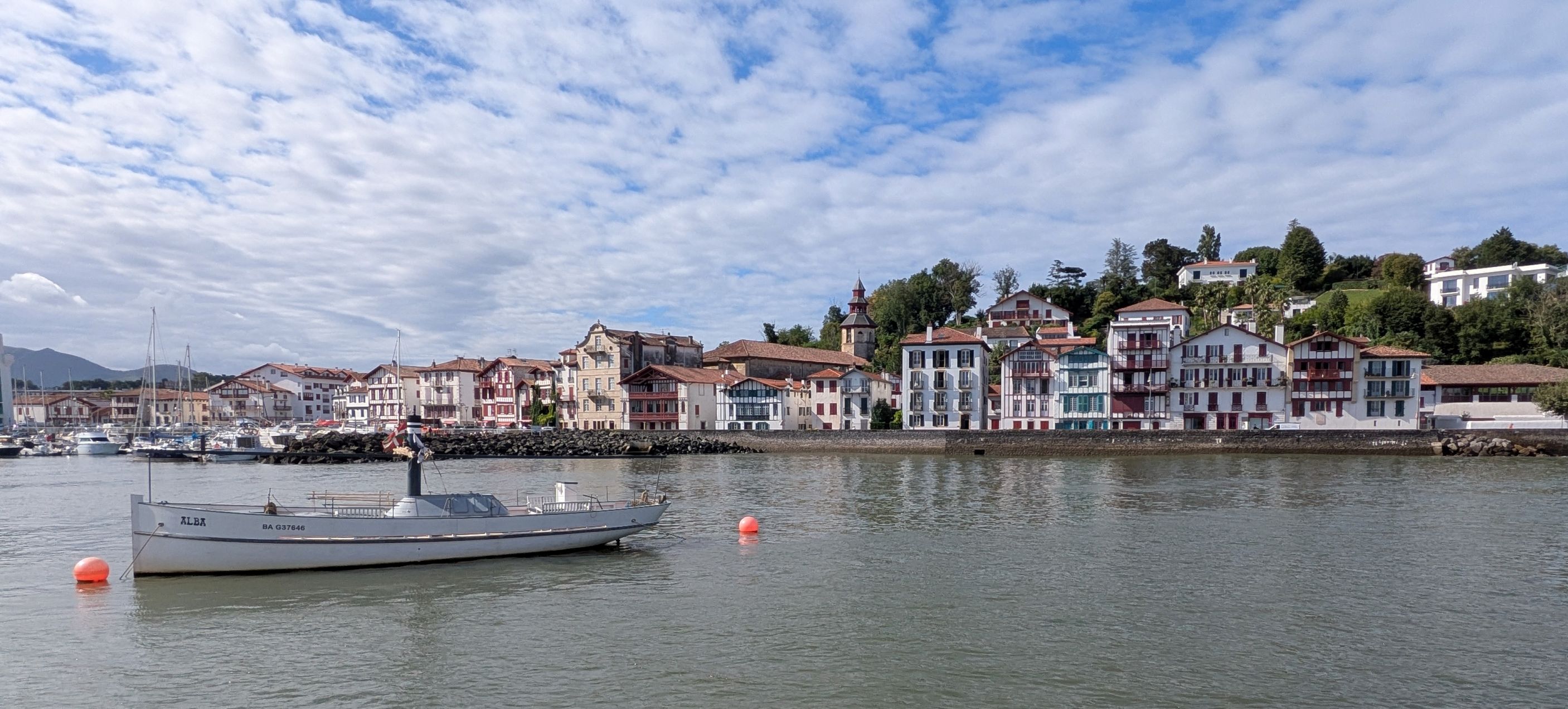
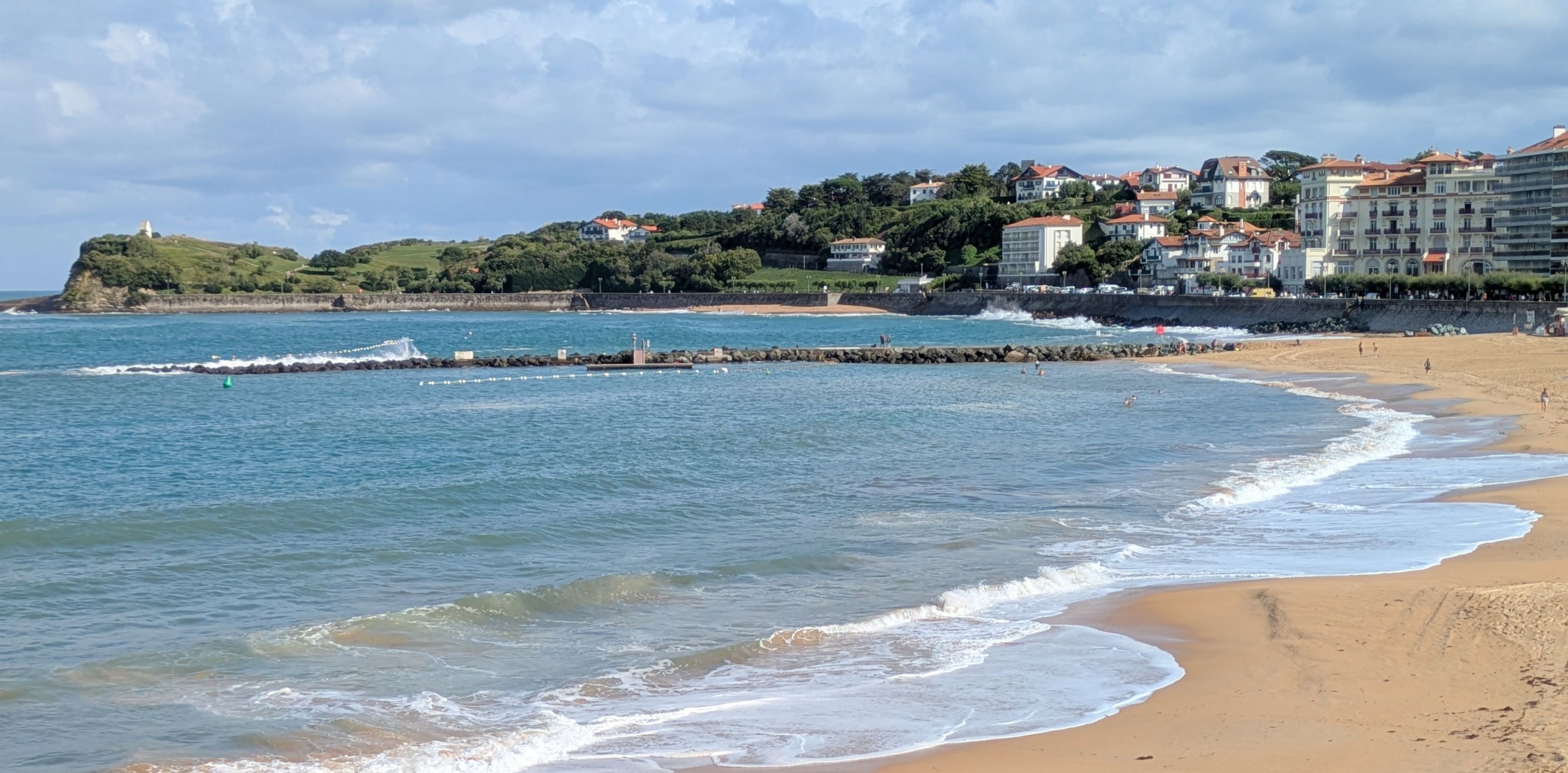
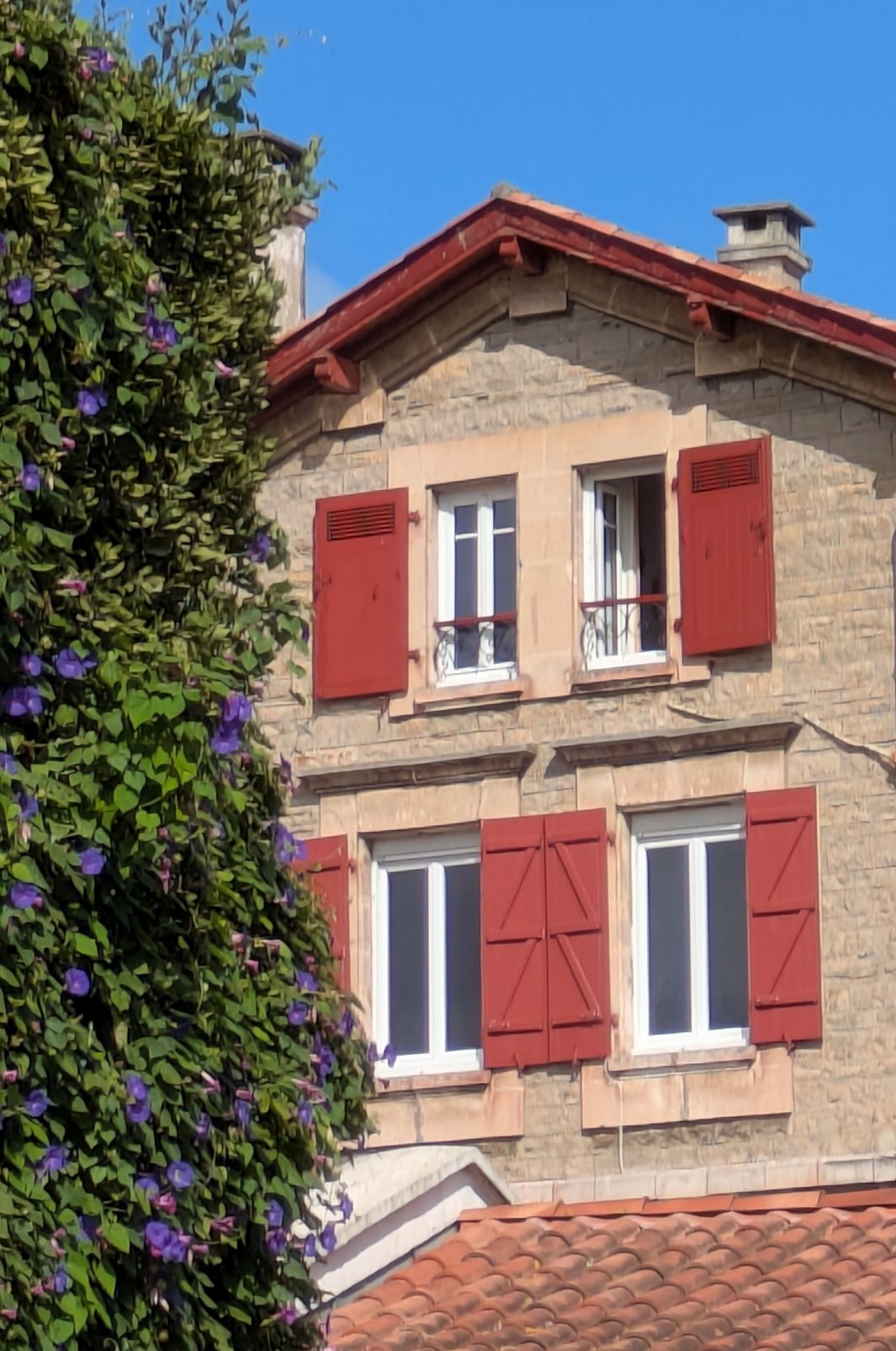
The picturesque fishing village and resort of Saint-Jean-de-Luz was a wonderful place for photography and taking in the views of the harbor and the beachfront of Bay of Biscay.  Colorful half-timbered Basque homes added to the charm.

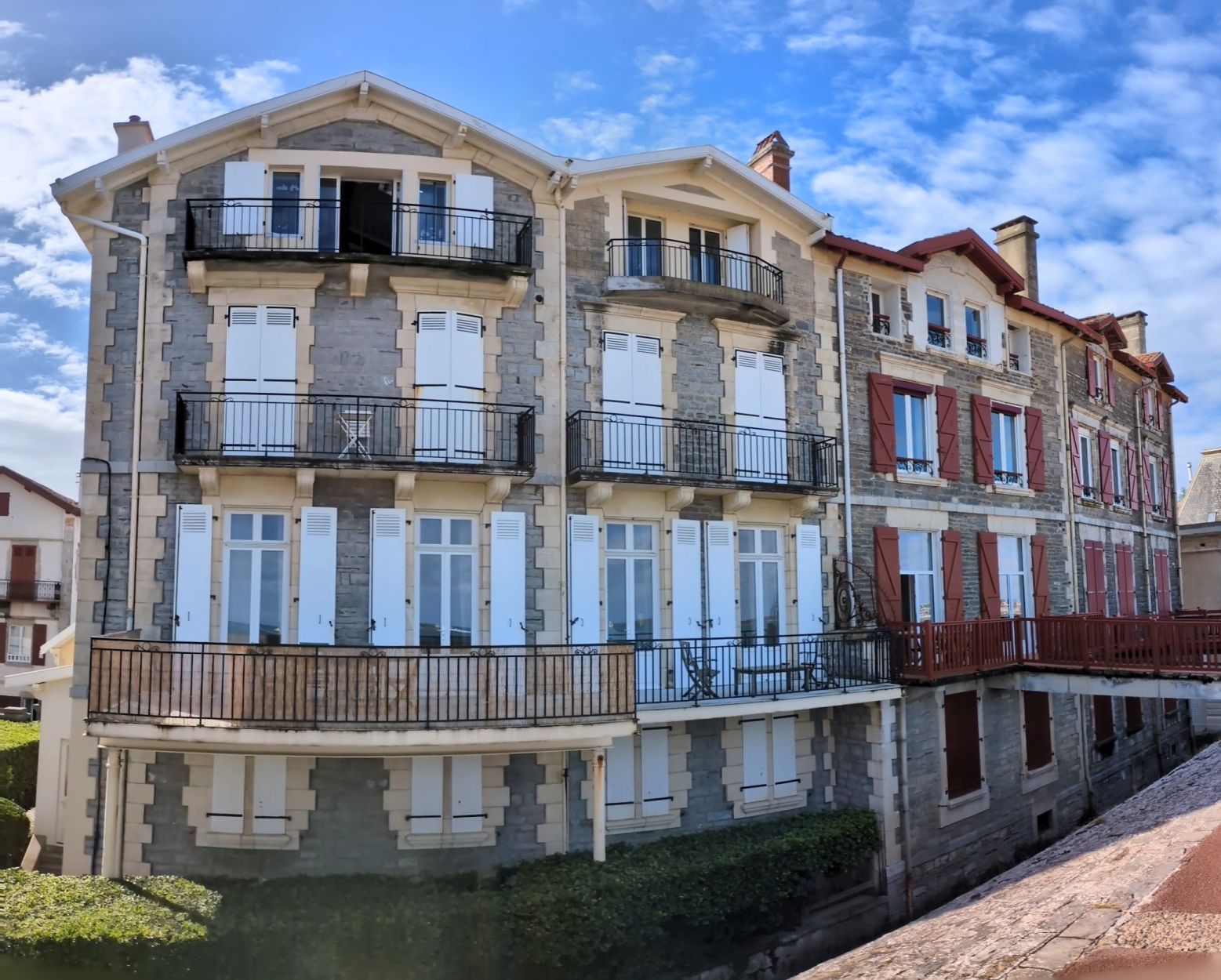
Beachfront homes:

Scenes around town:

Biarritz is known for its striped and nautical fabrics…
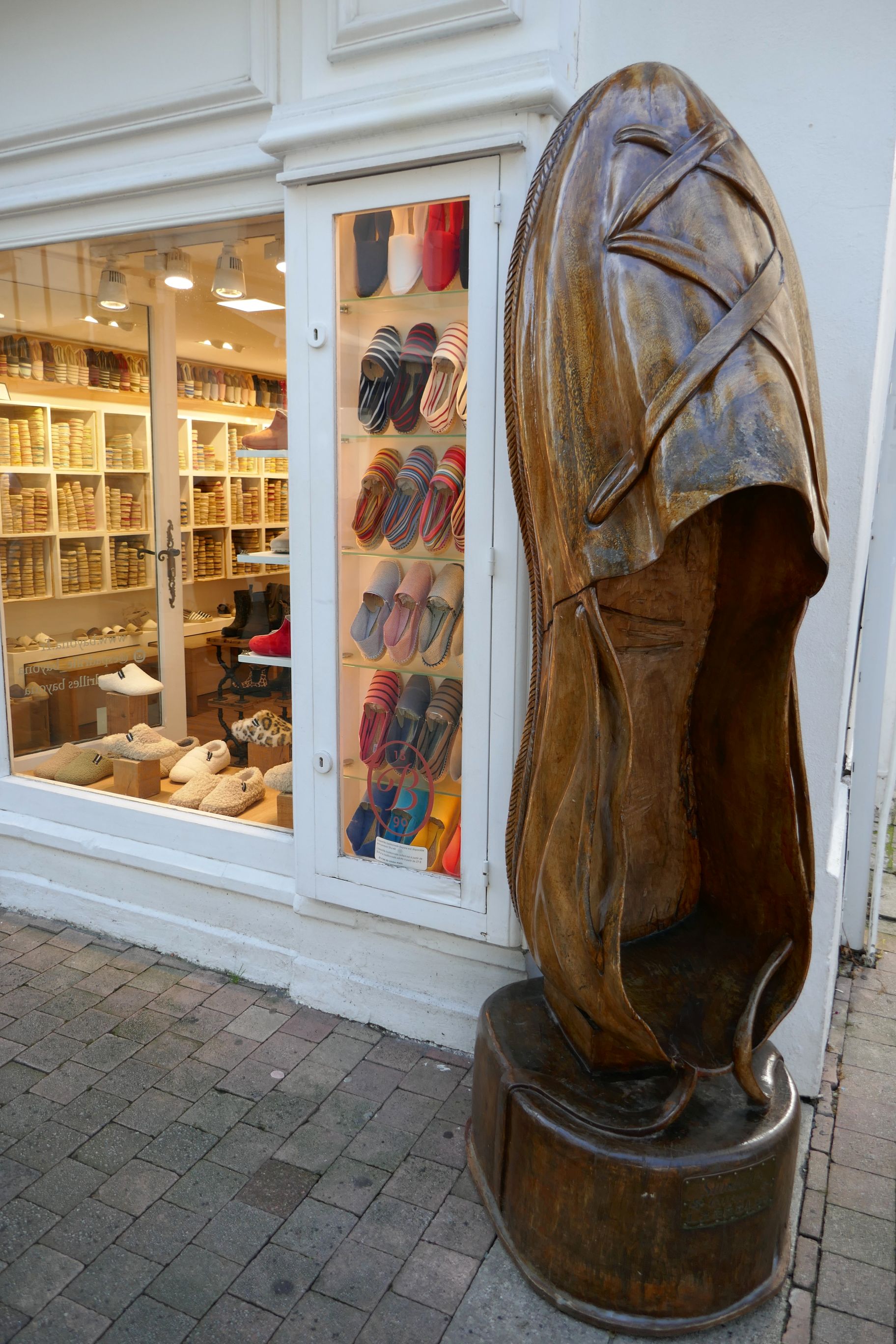
…and making espadrille shoes
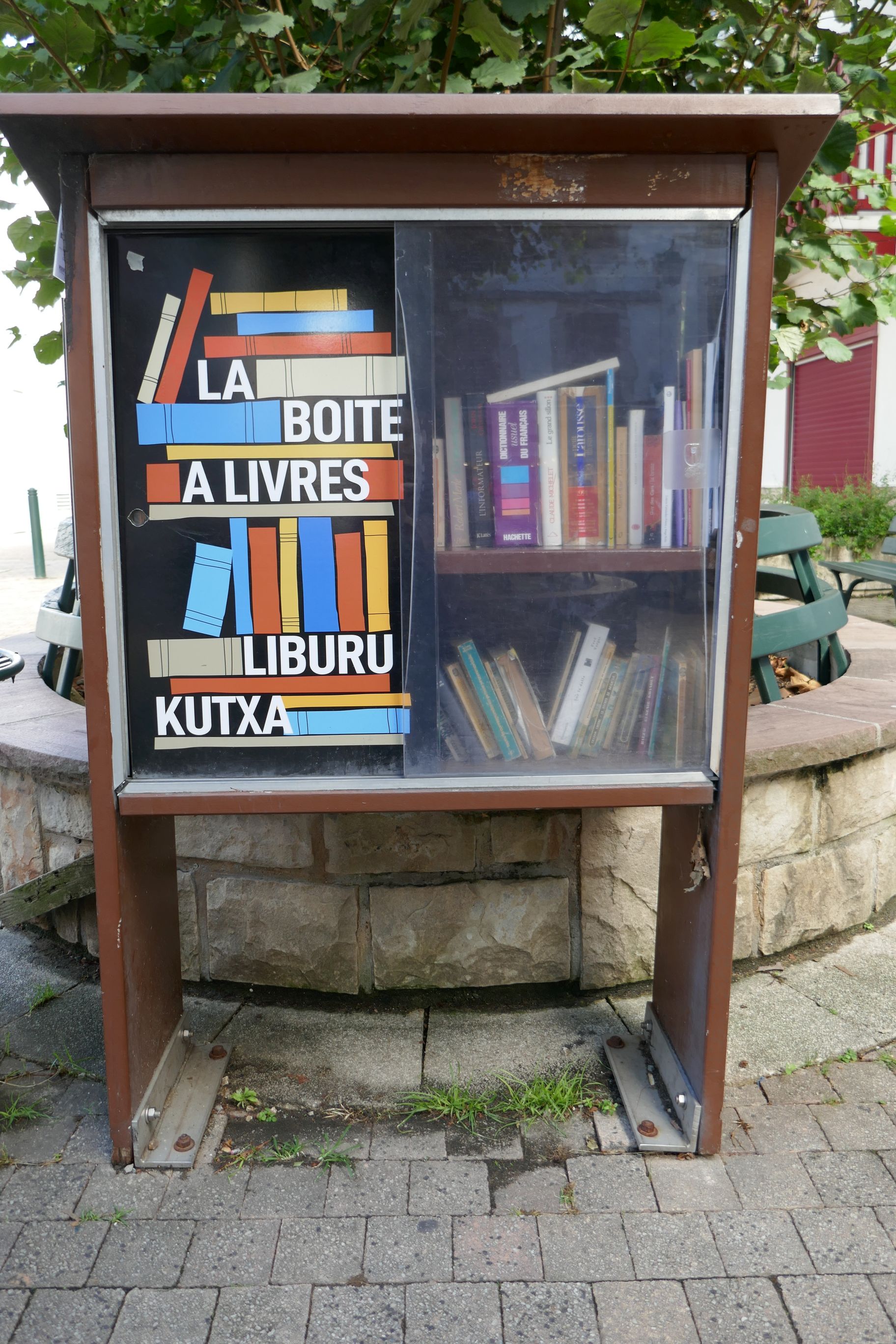
They even have their own version of the little free library!

We were so fortunate the skies had cleared for our last day in southwestern France, before continuing to Bilbao to begin our main tour!

Merci, Tom, for being a wonderful tour guide!

Next up: SOUTHWEST FRANCE, NORTHERN SPAIN & PORTUGAL #8: BRILLIANT BILBAO

SOUTHWEST FRANCE, NORTHERN SPAIN & PORTUGAL #5: BEAUTIFUL BAYONNE

Bayonne, like the other towns we visited in southwestern France, is in the Basque Country.  Its history stretches back more than 2,000 years, so it is full of culture, beautiful architecture.

Built along the intersection of two rivers, it is located quite close to the Spanish border and has a population of more than 53,000 people.  My favorite part of its history is that it became the unofficial chocolate capital of France in the 17th century.  Cacao beans were first brought home to Spain by the Spanish colonists upon their return from South America.  Since Bayonne was right next door, they got in on the action when Jews fleeing the Spanish Inquisition relocated in nearby Bayonne and started producing chocolate. Back then, there were 60 chocolatiers that all worked together to grow the industry, but each one had its own specialty

Currently there are about ten high-end chocolatiers in town, including Chocolat Cazenave, which has been making chocolate since 1854.  I enjoyed stopping in at a few of the chocolatiers to look at their beautiful creations but took a pass on purchasing their pricey masterpieces.

An interesting part of Bayonne’s history began in the 1930’s when the Basque people sought autonomy and started a separatist movement.  Although it culminated in a statute of autonomy in 1936, Spain’s dictator, Francisco Franco, abolished it when he came in power in 1939.  The struggle continued for another twenty years until a faction of the Basque’s National Party broke away and launched a campaign of terrorism against the Spanish central government, making Basque regionalism one of the most destabilizing forces in Spanish political life.

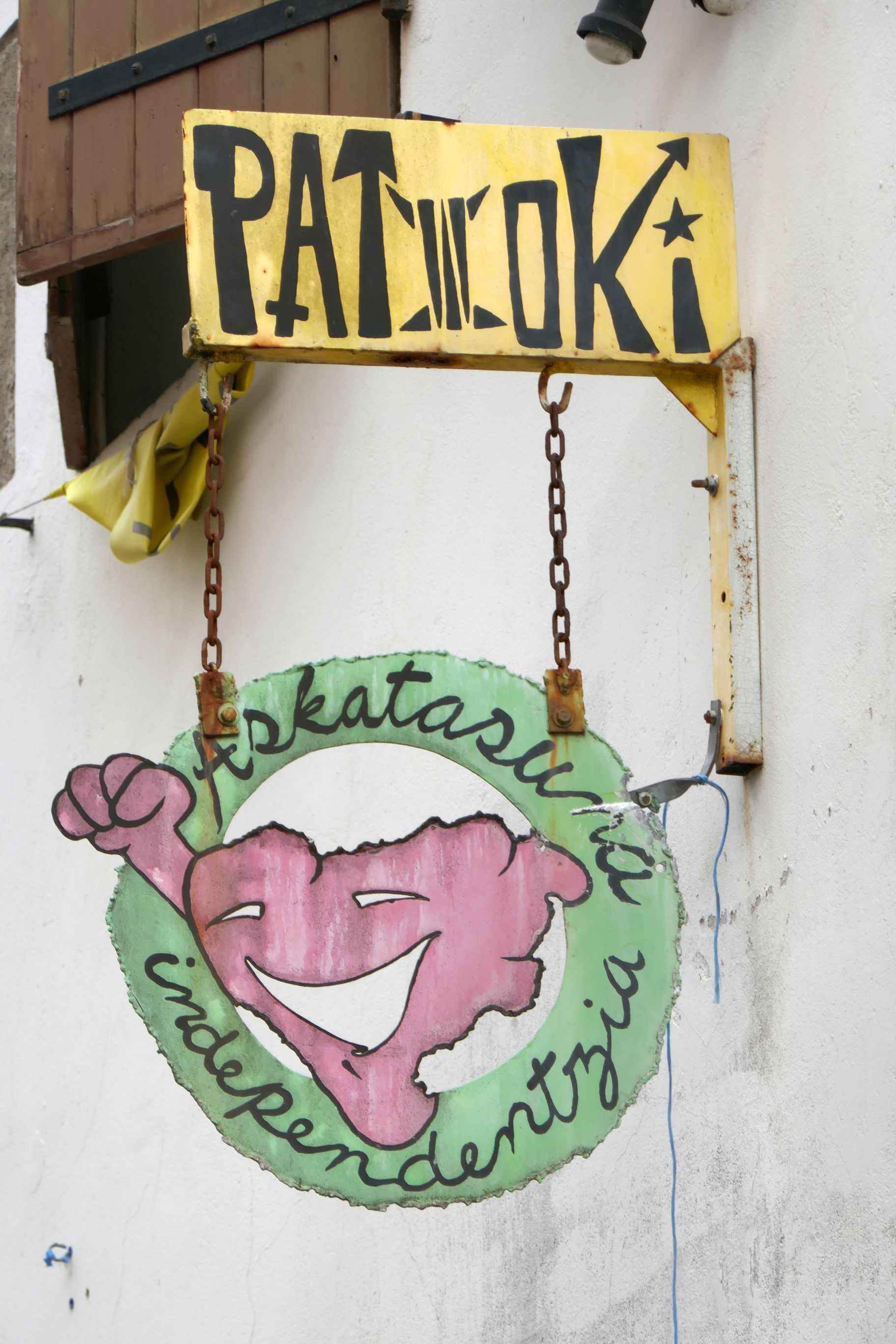
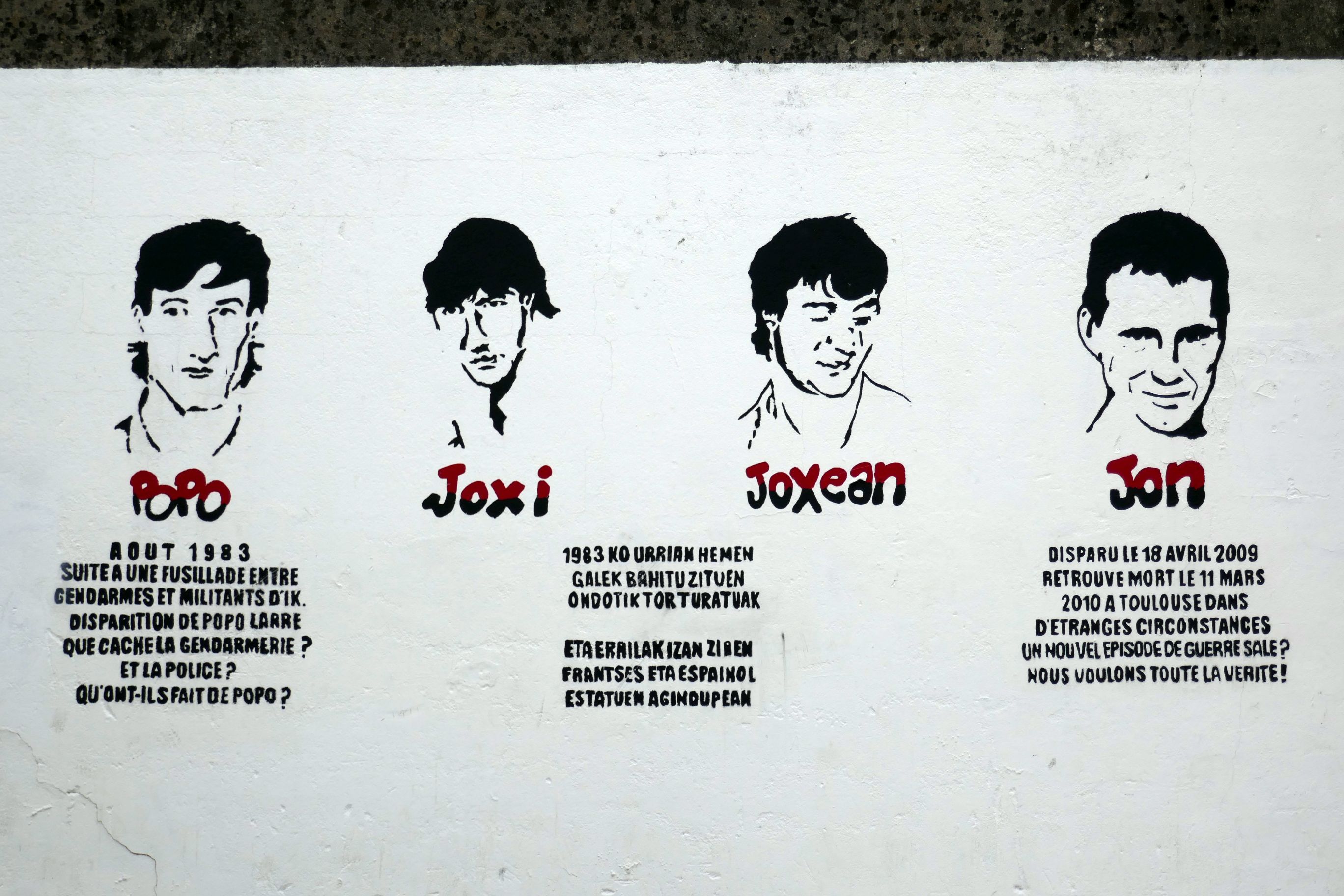
During our walking tour the morning following our arrival, we stopped by an ETA clubhouse and saw some of the political murals nearby, which were explained by Tom, our tour leader:

(For all photos, click on the image for a full screen view.)
Basque prisoners that were disappeared

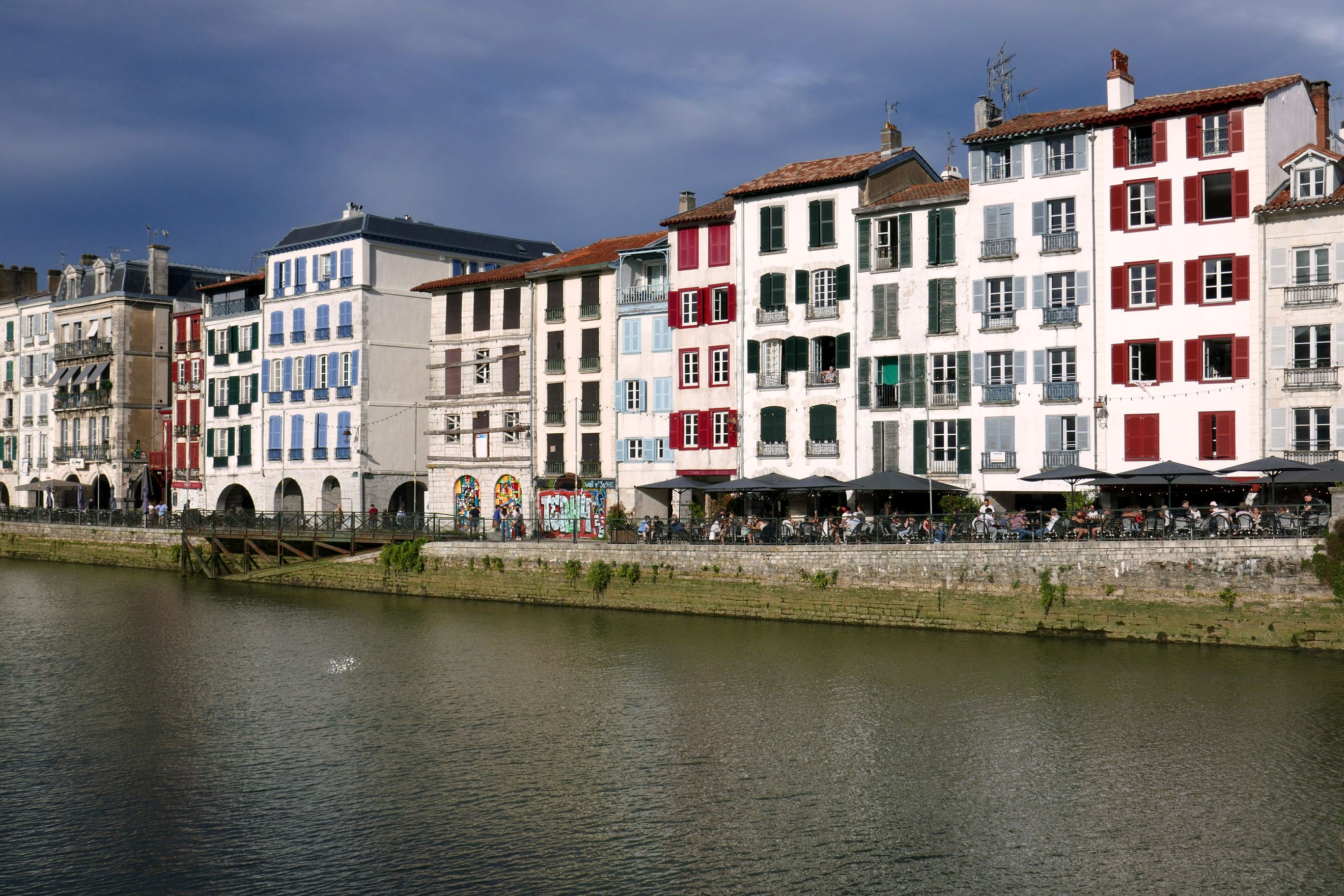
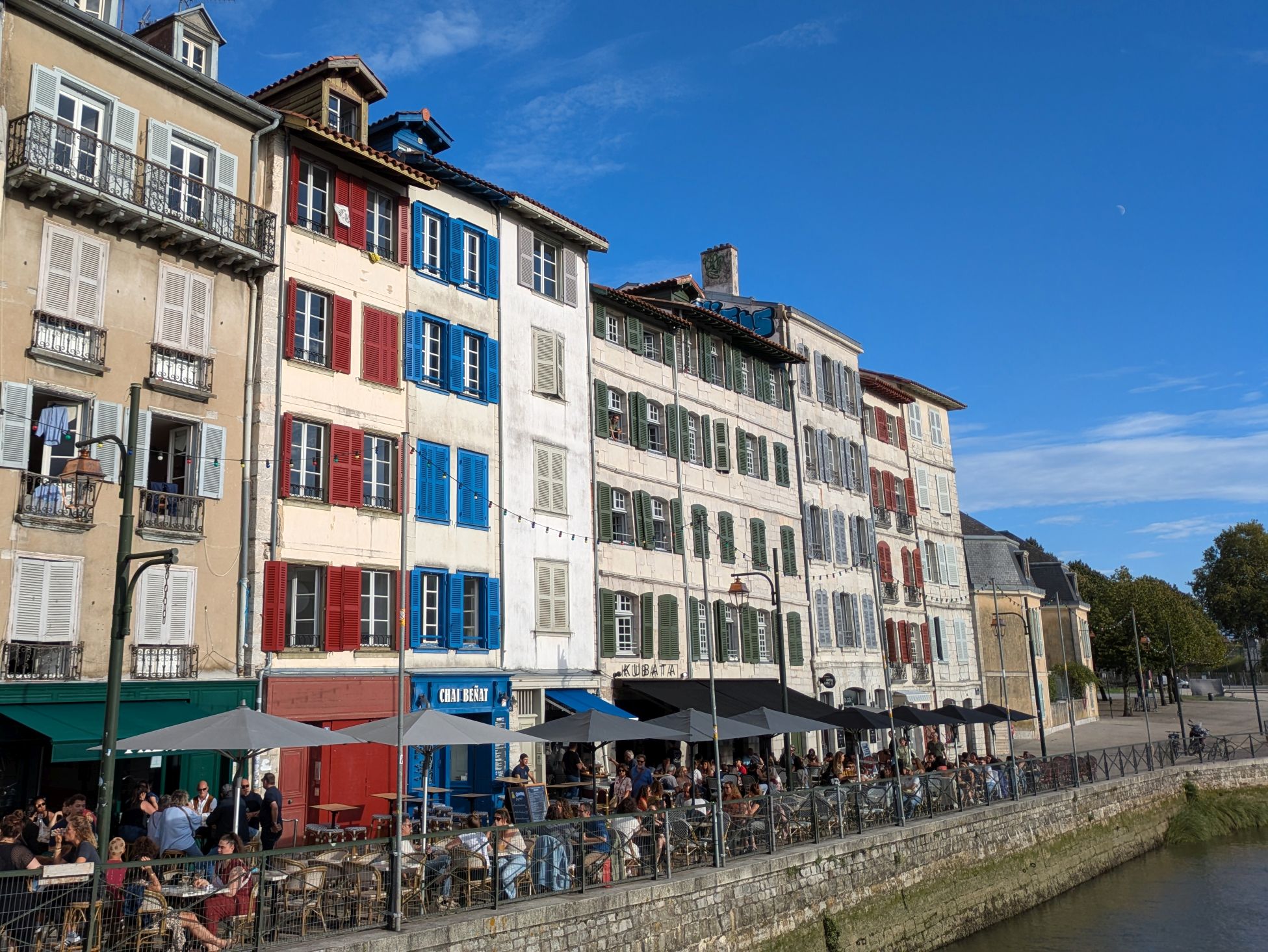
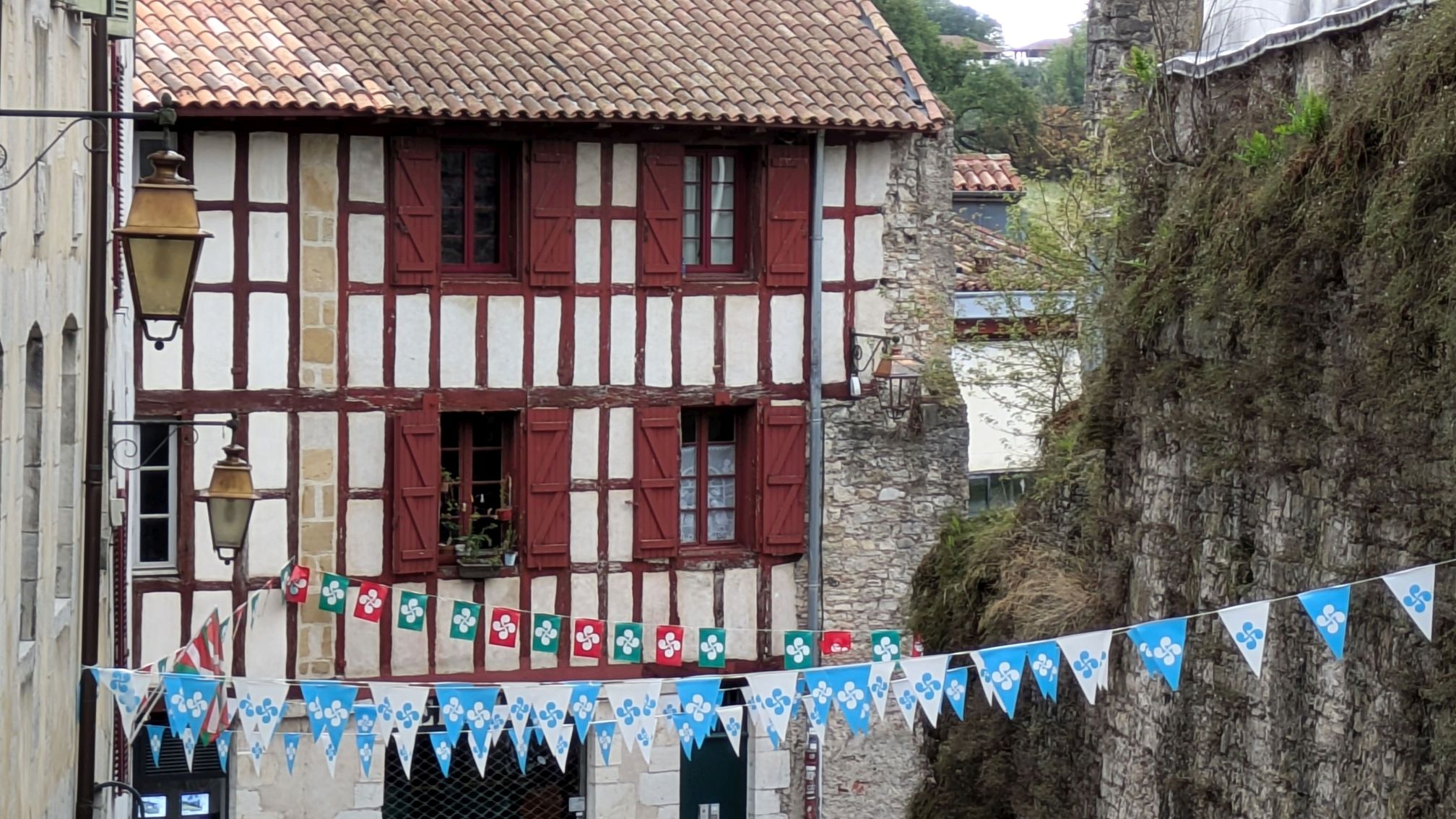
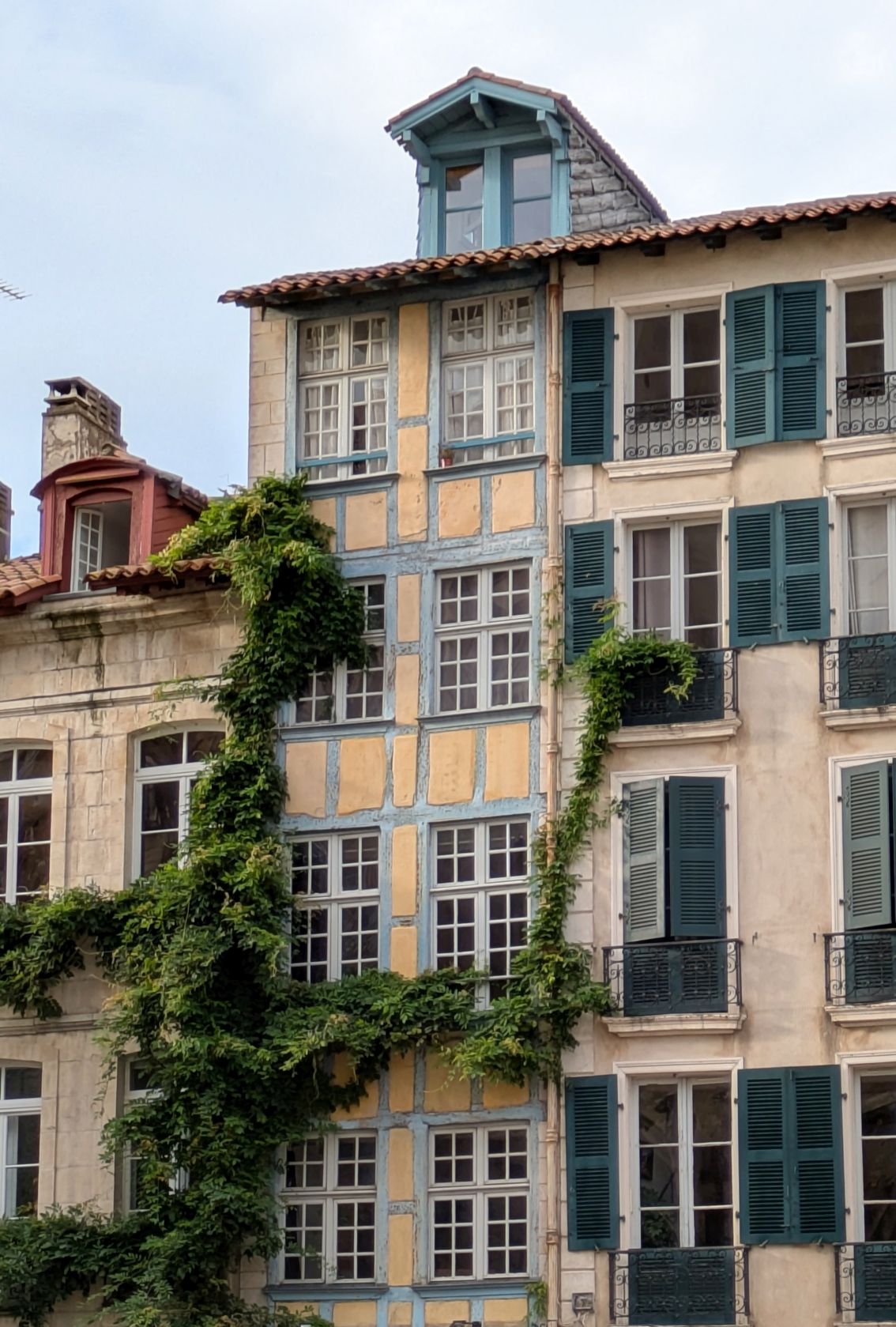
The views of the colorful half-timbered buildings along the rivers were charming and quite photogenic, especially in the late afternoon sun:

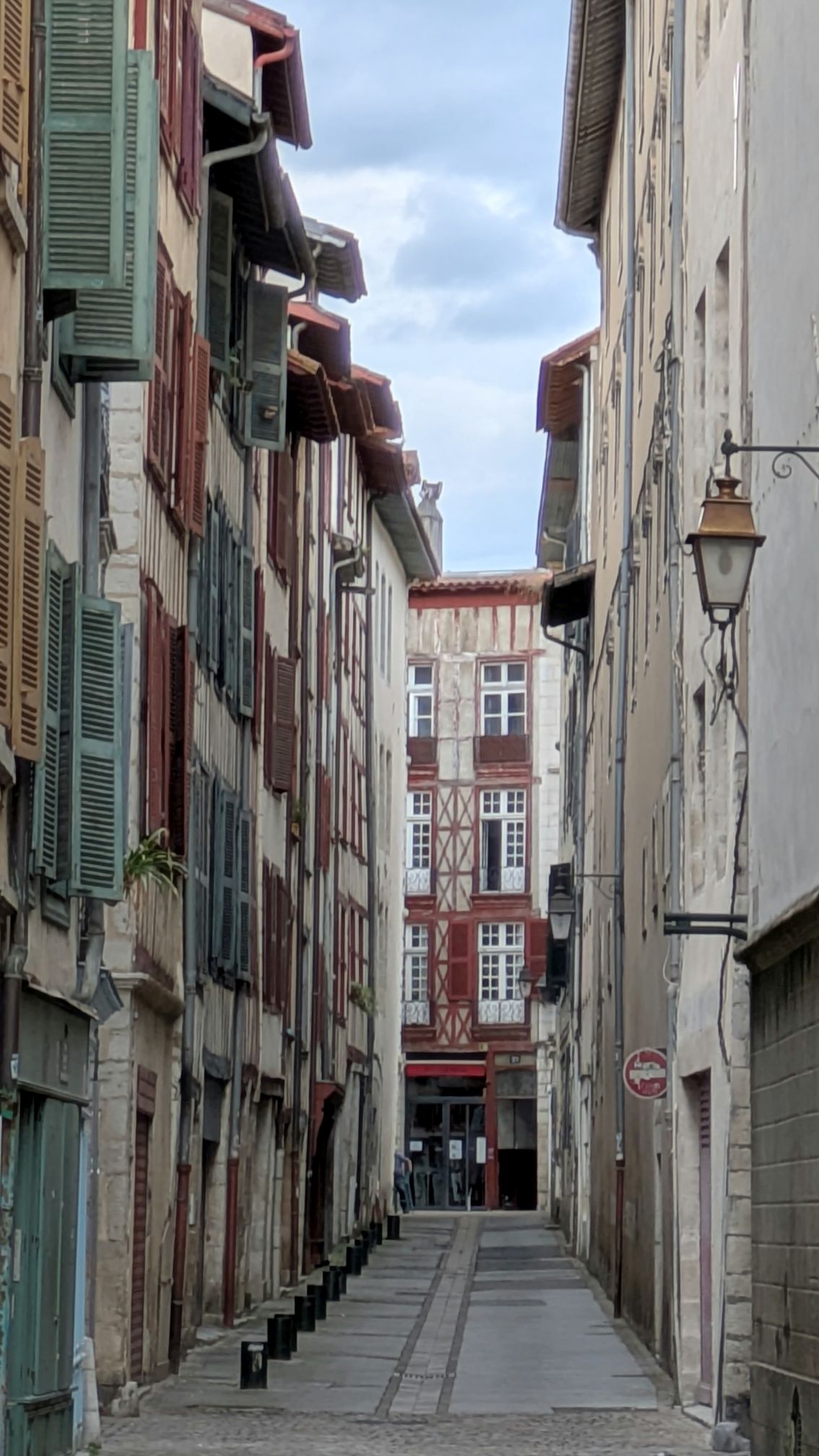
More scenes from around Bayonne during our two days in town:

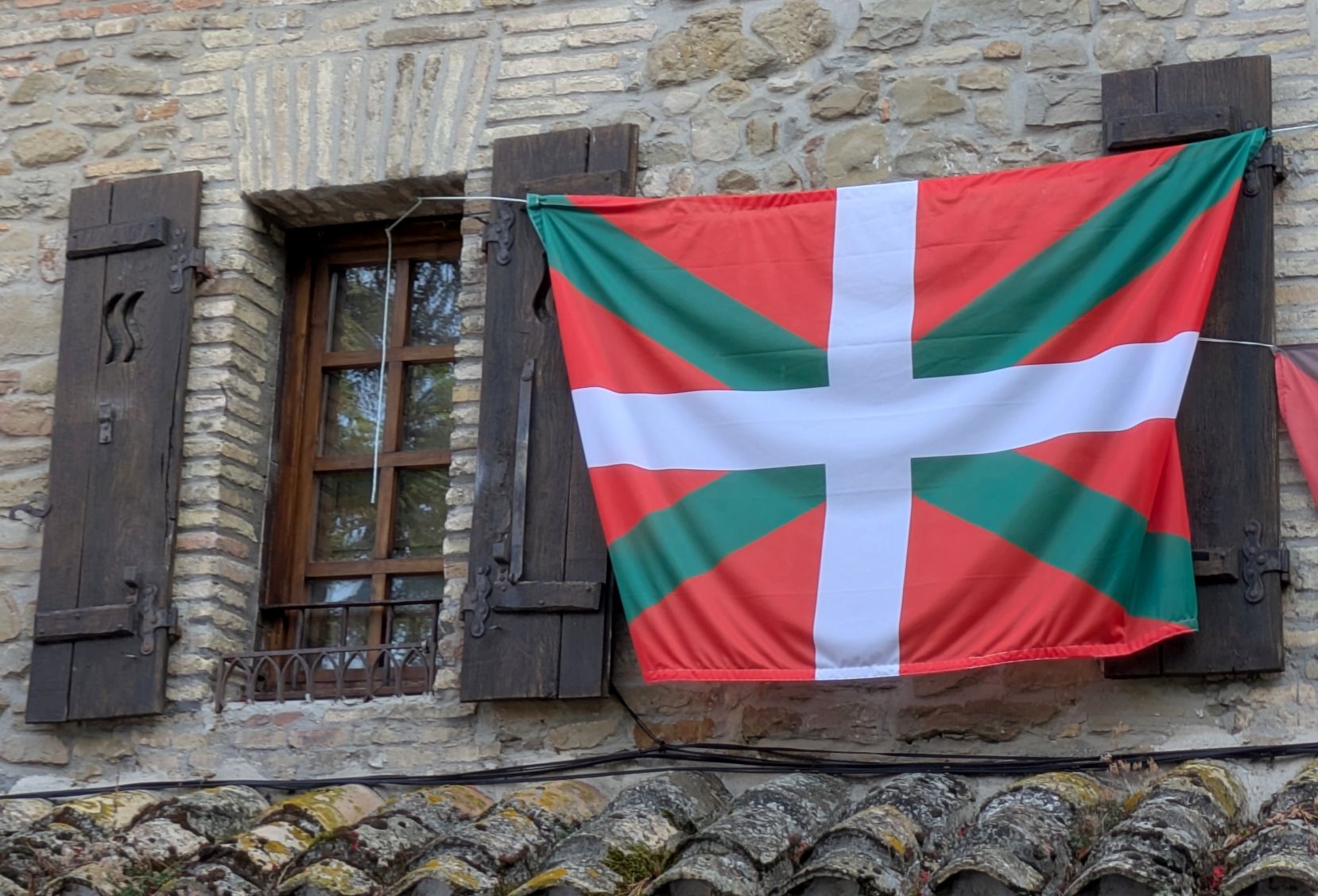
The Basque flag hangs from the balcony
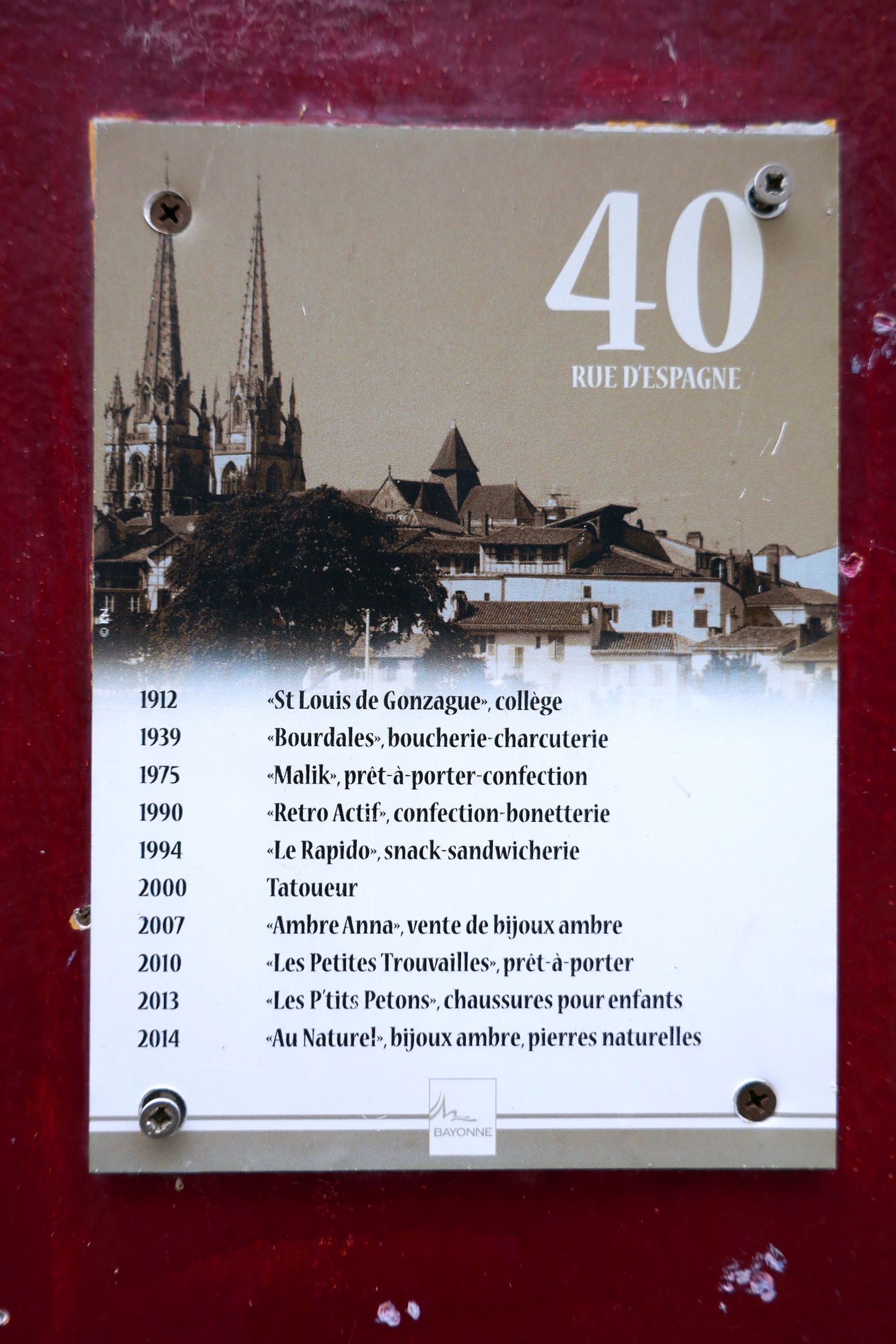
Some of the businesses had plaques in the front listing the history of the owners and what type of business it was each time.
There were also signs to be respectful of those historic buildings!
Down the street from our hotel
The view from our hotel room (left)
The view from our hotel room (right)
Distorted panorama of the sweeping view to the left, and then right from our hotel window
Just before dusk
The riverfront at dusk

Coming up next: SOUTHWEST FRANCE, NORTHERN SPAIN & PORTUGAL #6: BEAUTIFUL BAYONNE

SOUTHWEST FRANCE, NORTHERN SPAIN & PORTUGAL #2: CAPTIVATING “NEW” CARCASSONE

When I say “new” Carcassone, it’s a stretch, since the lower town below the walled fortress dates to the late medieval period.  It is newer than the old, fortified city up on the hill!

Carcassone is in the Basque Country of France, straddling the border between France and Spain on the coast of the Bay of Biscay. The region is home to the Basque people, an ethnic group with their own culture and language, which is the oldest language spoken in Europe.  They also share genetic ancestry, unique in that they have the highest percentage of Type O blood of any ethnic group.

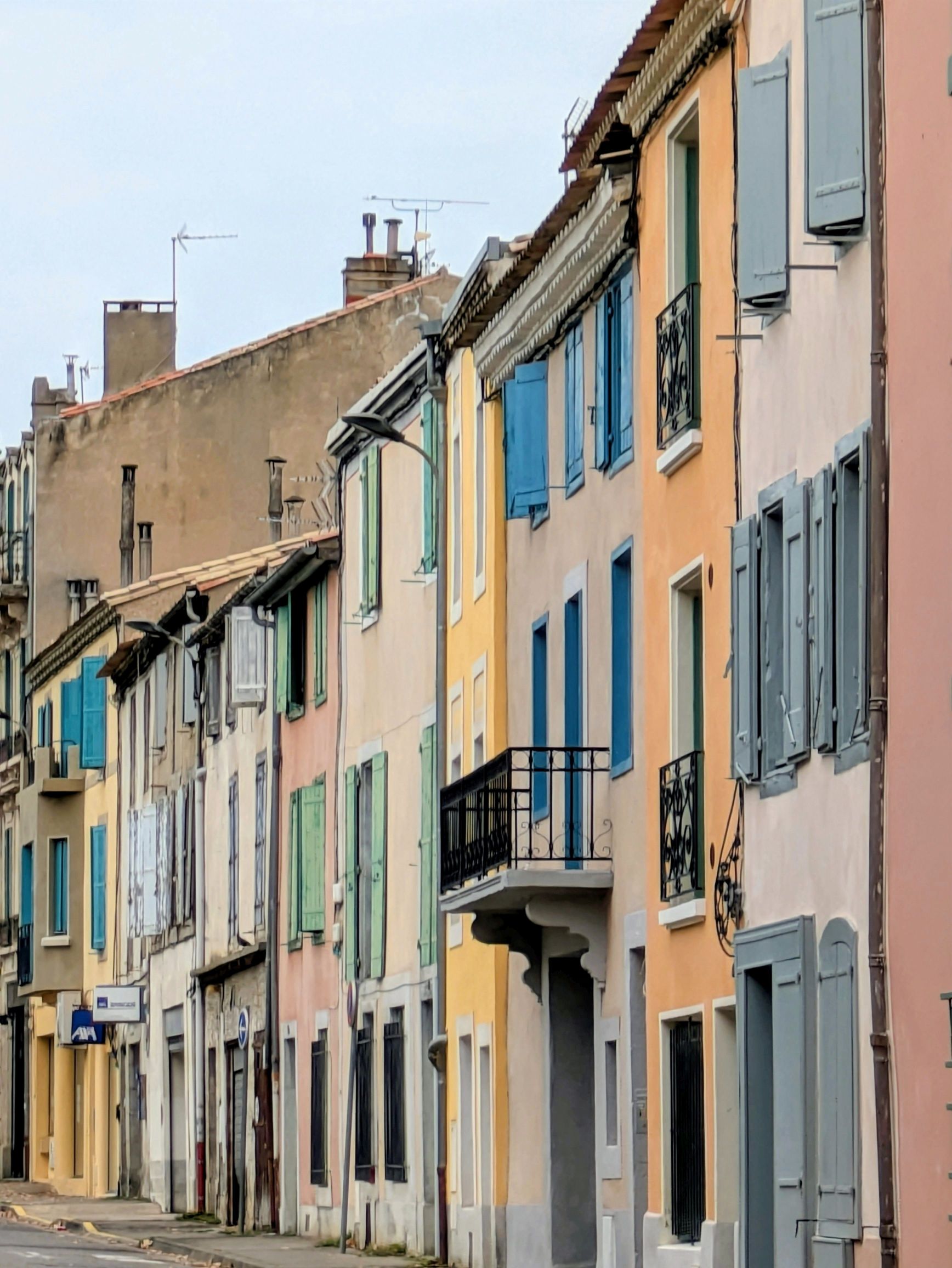
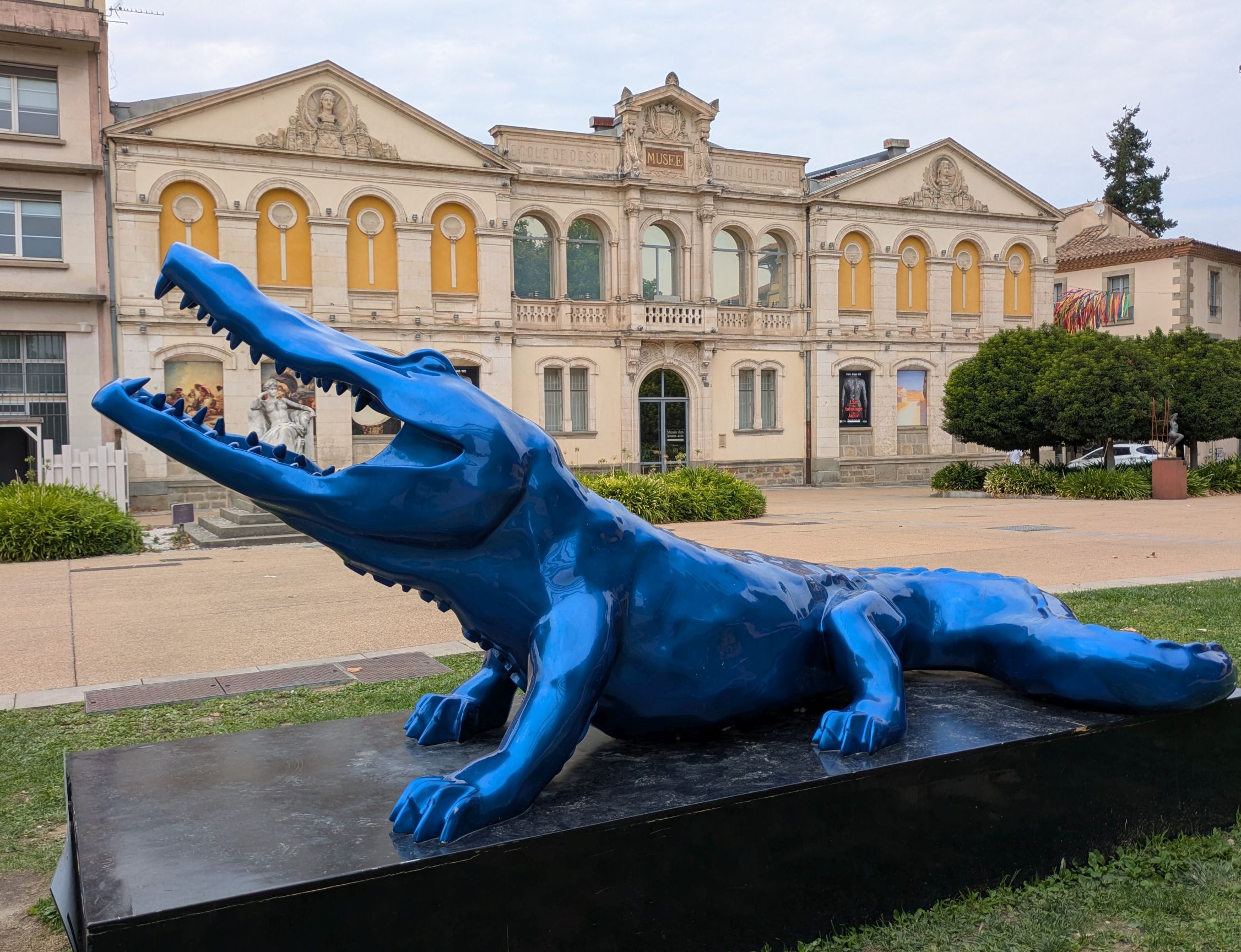
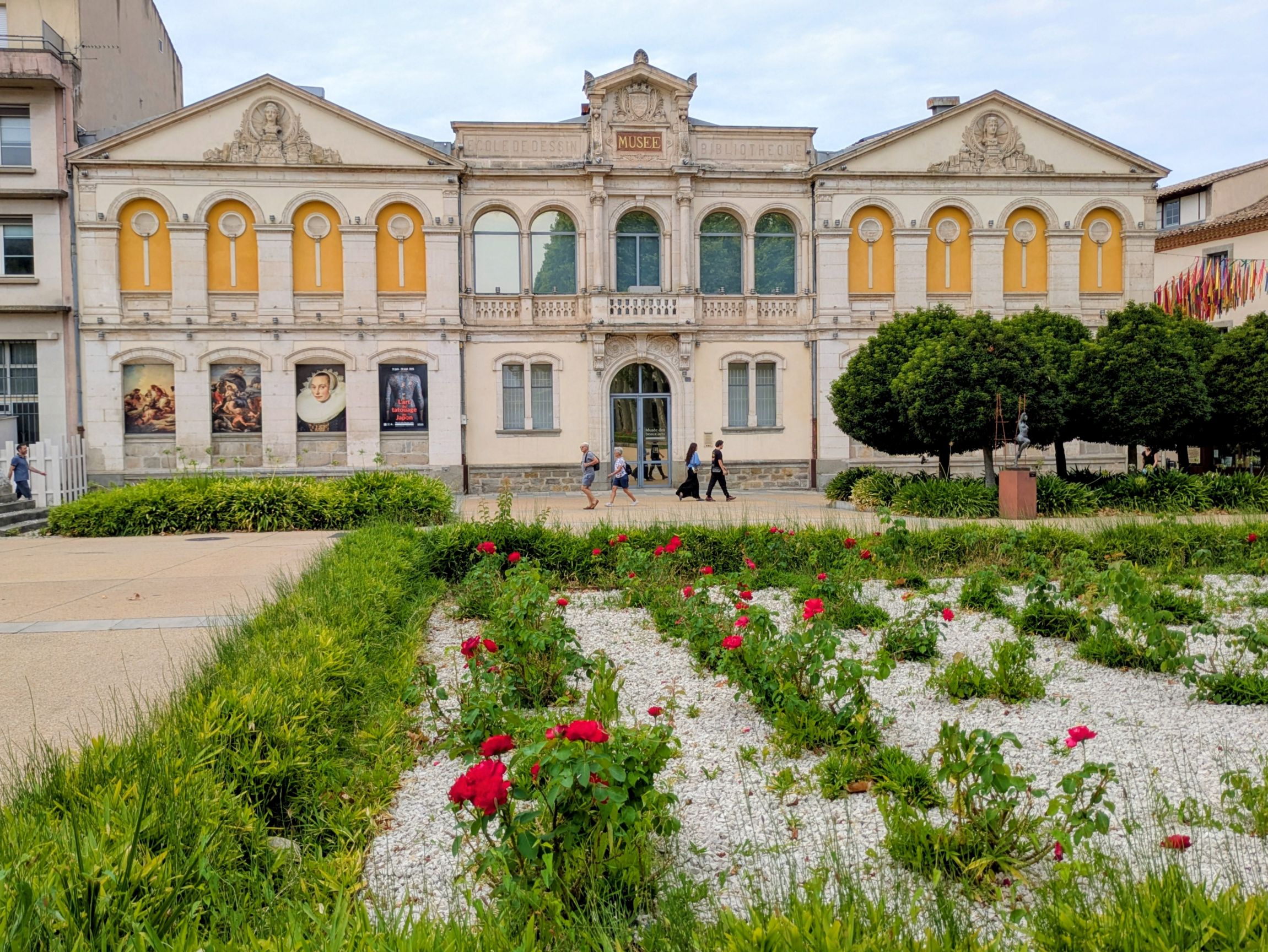
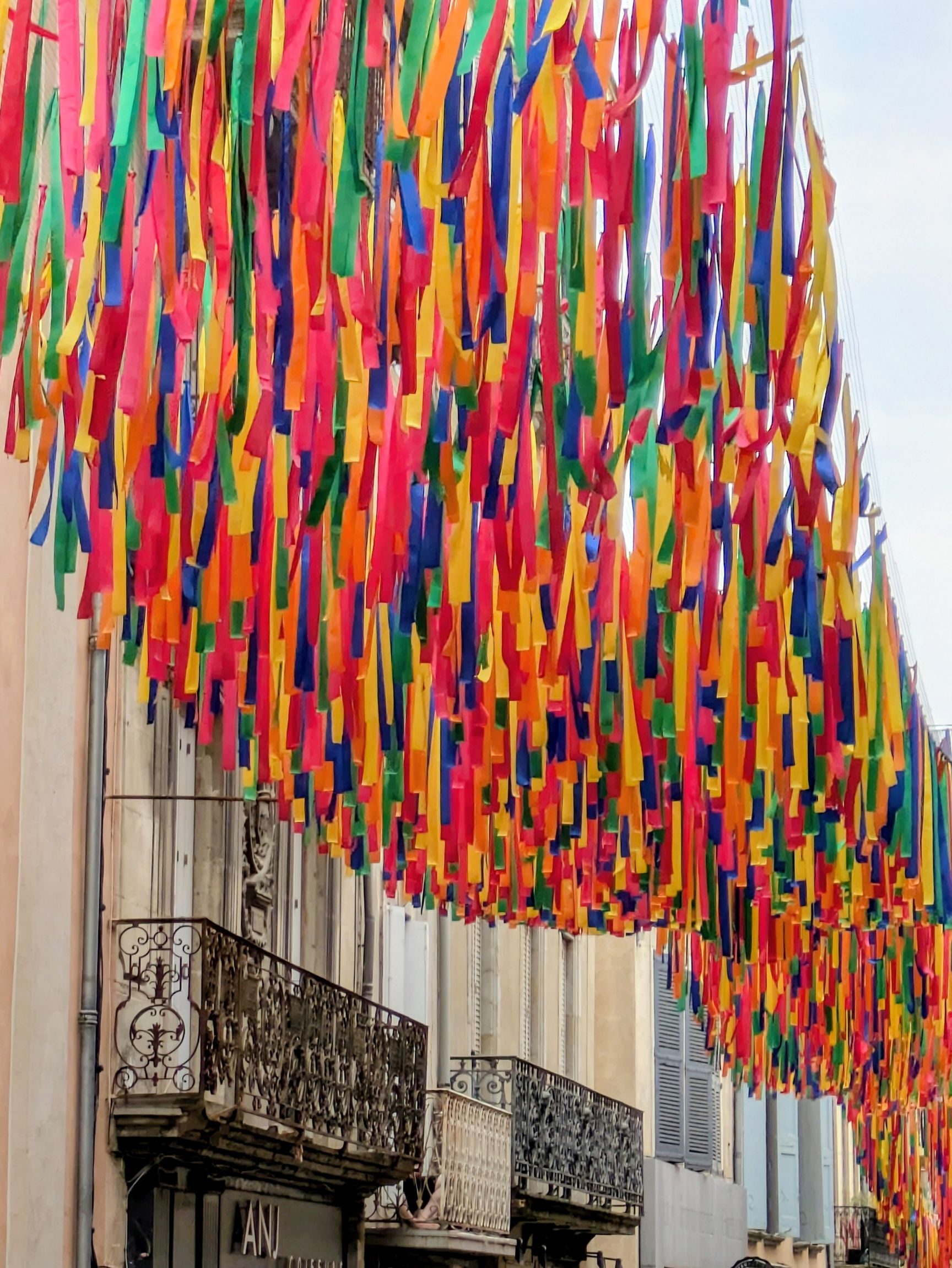
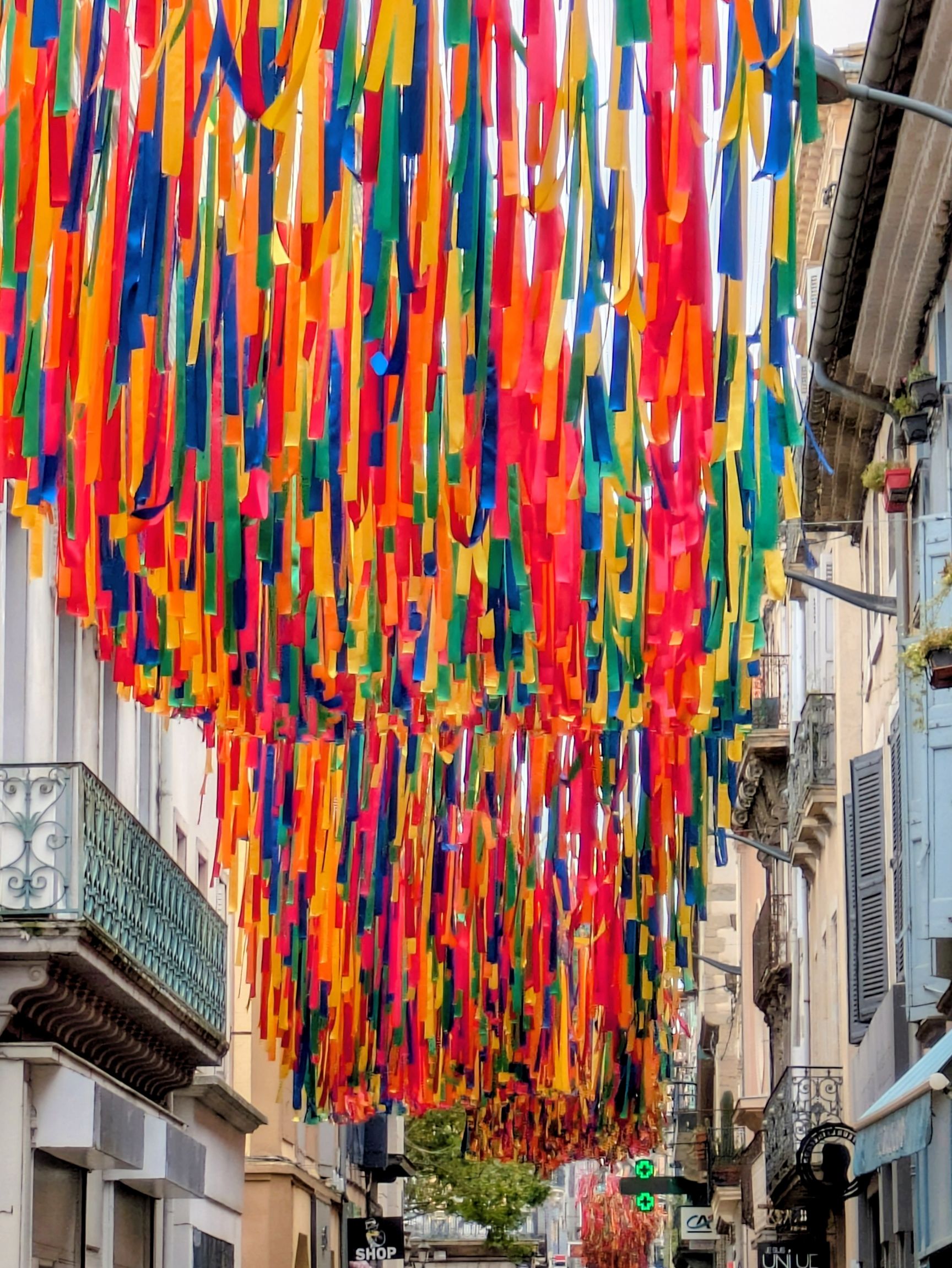
Exploring Carcassone can be challenging for the less mobile.  It’s a bit of a steep scamper down the hill to get to the lower town on foot, but it was worth the effort to have a look around.  The walk across the bridge over the Aude river offered nice (but not photogenic on this day) views, and the pastel painted homes on the other side of the bridge were nice to photograph.  I especially enjoyed the odd choice of sculpture subject as well as the charming and colorful streamers over the streets in the center of town.

(For all photos, click on the image for a full screen view.)
Next up: SOUTHWEST FRANCE, NORTHERN SPAIN & PORTUGAL #3: APPEALING ALBI