CRUISING THE GREAT LAKES #7: SPLENDID SAULT STE. MARIE, MICHIGAN

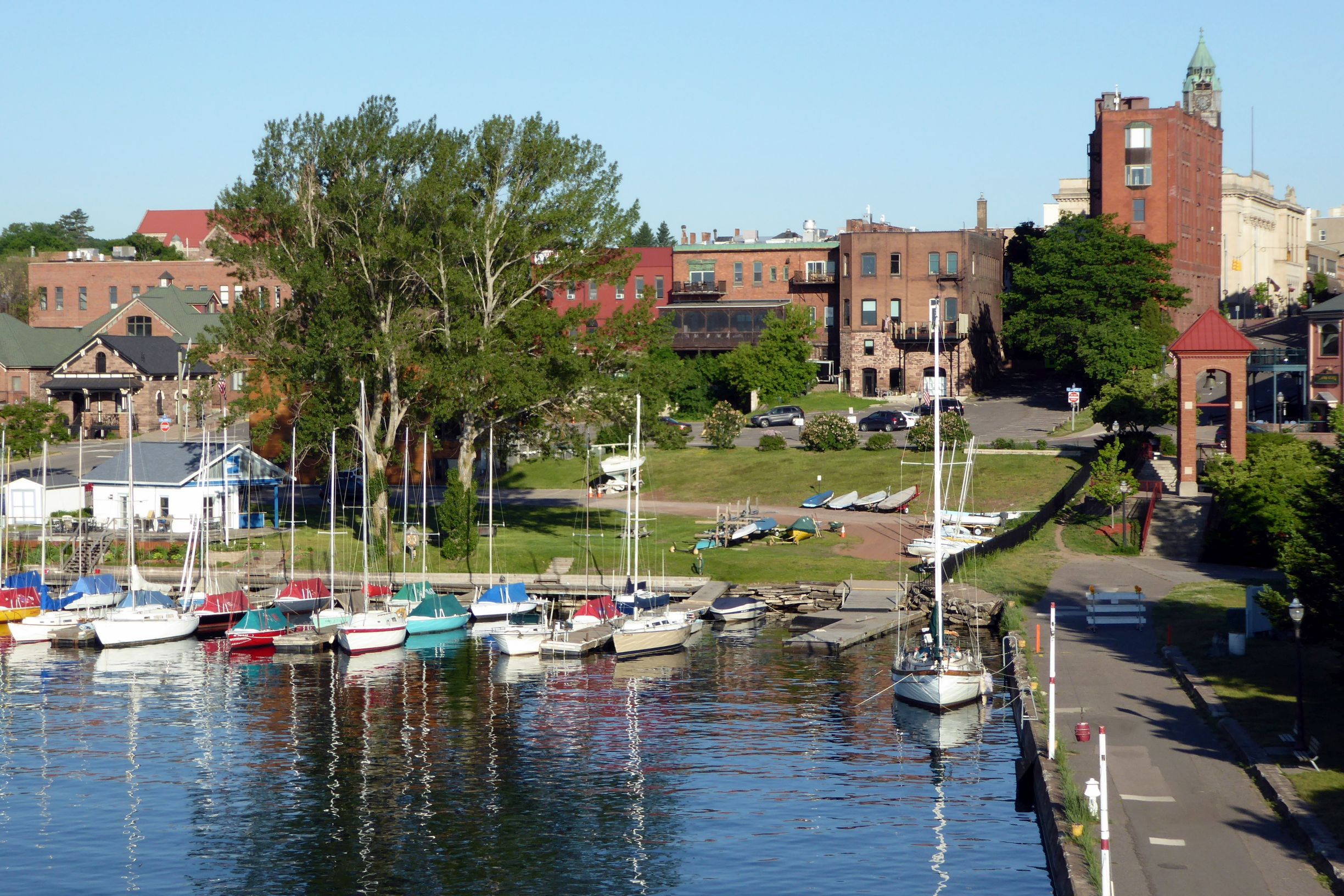
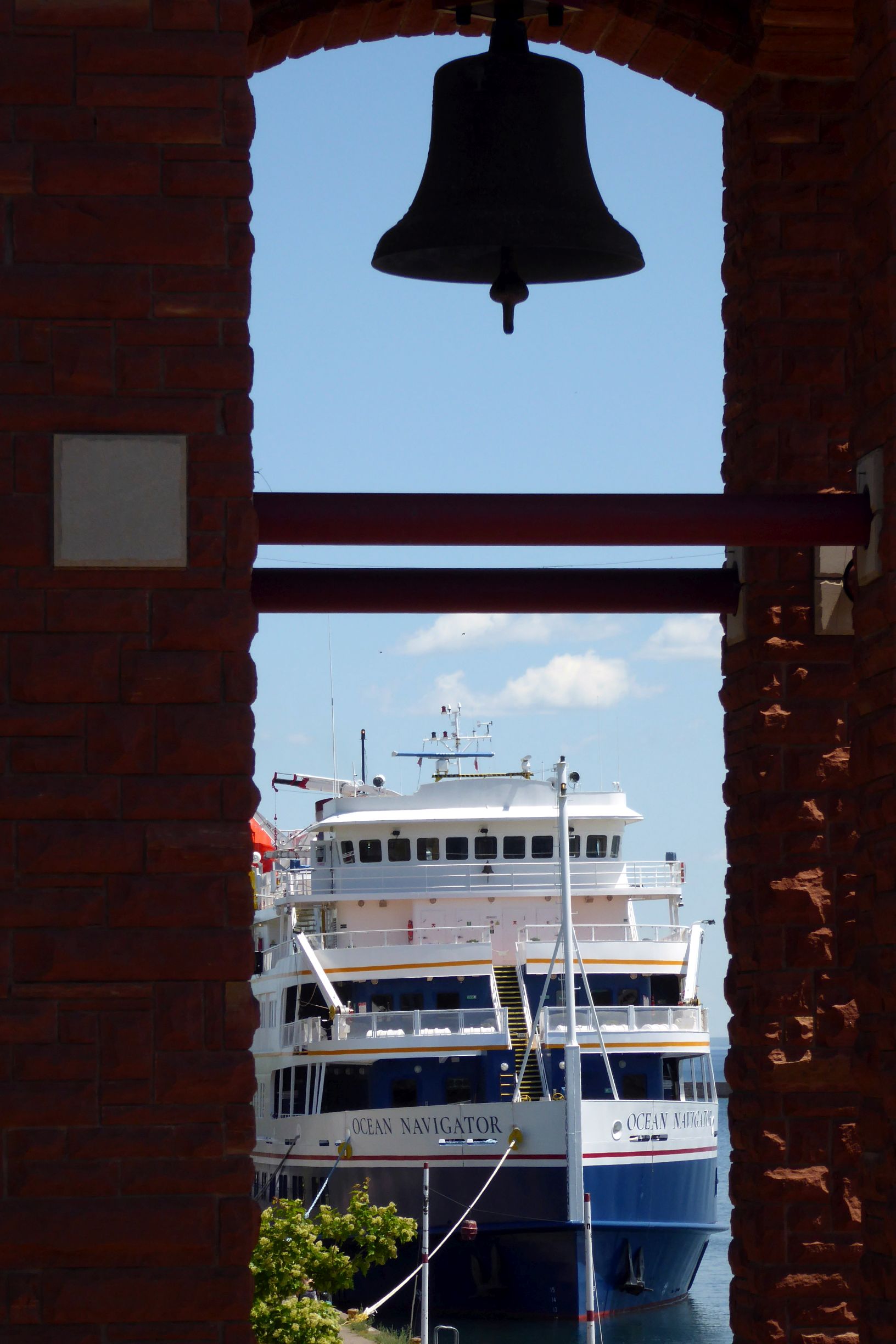
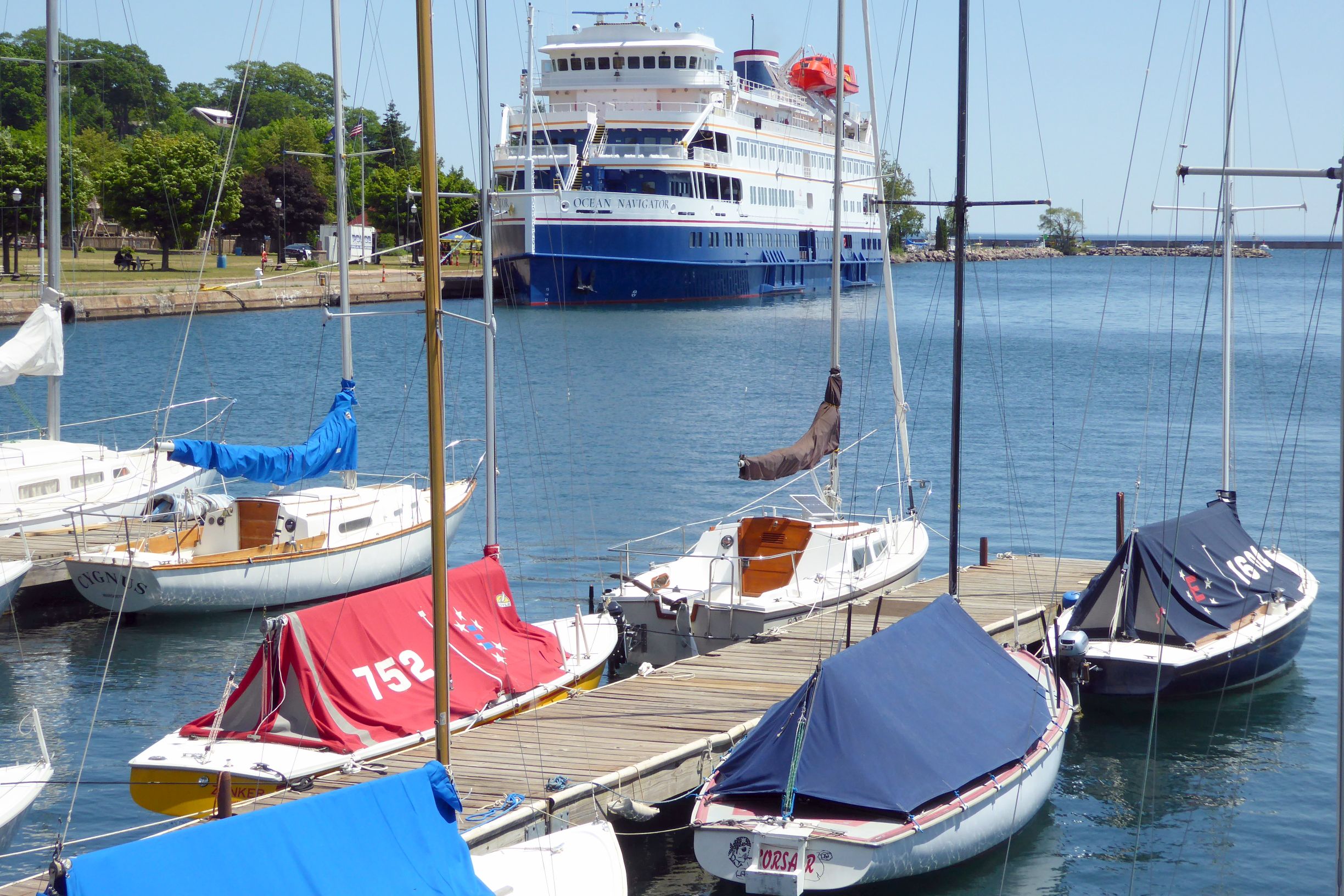
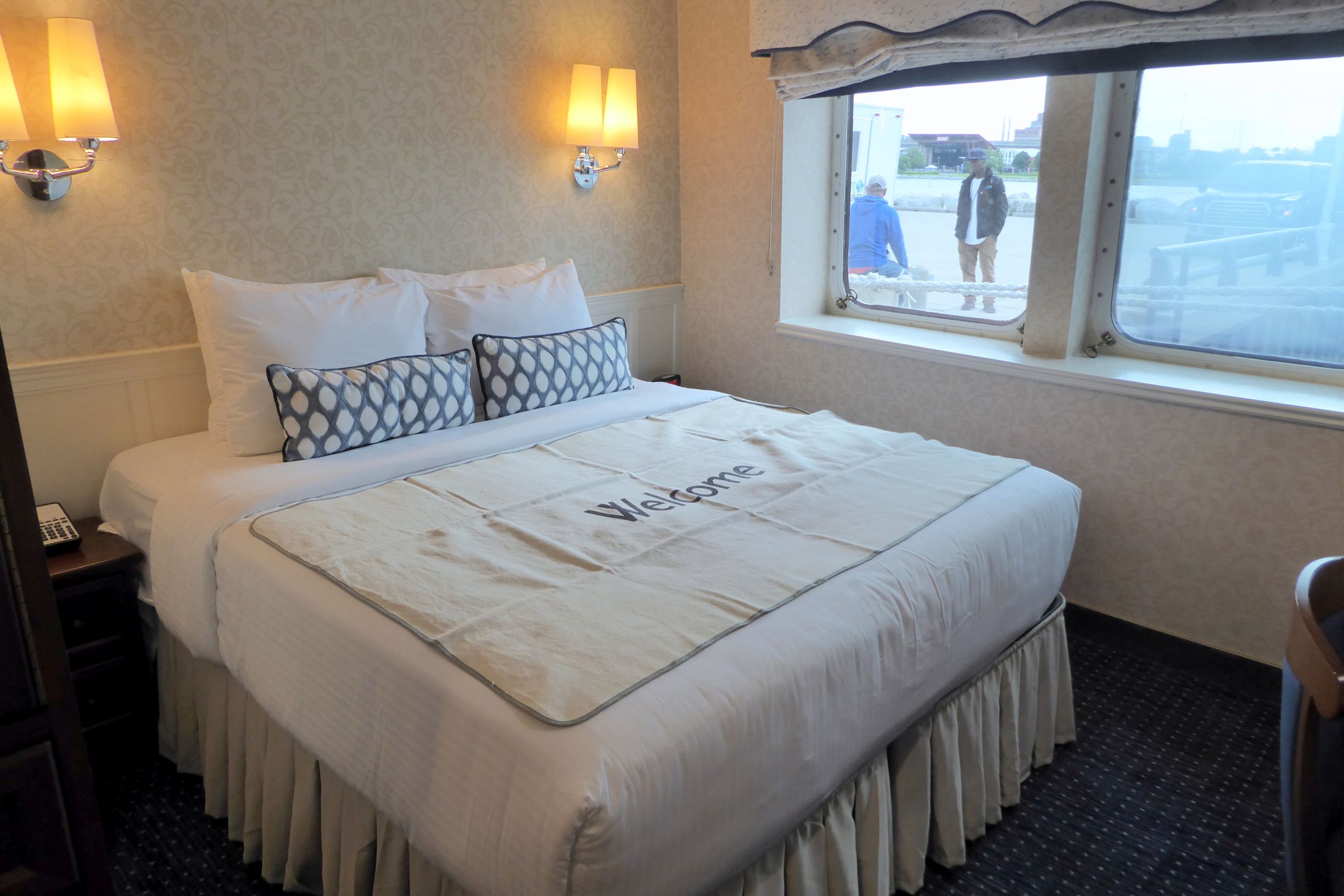
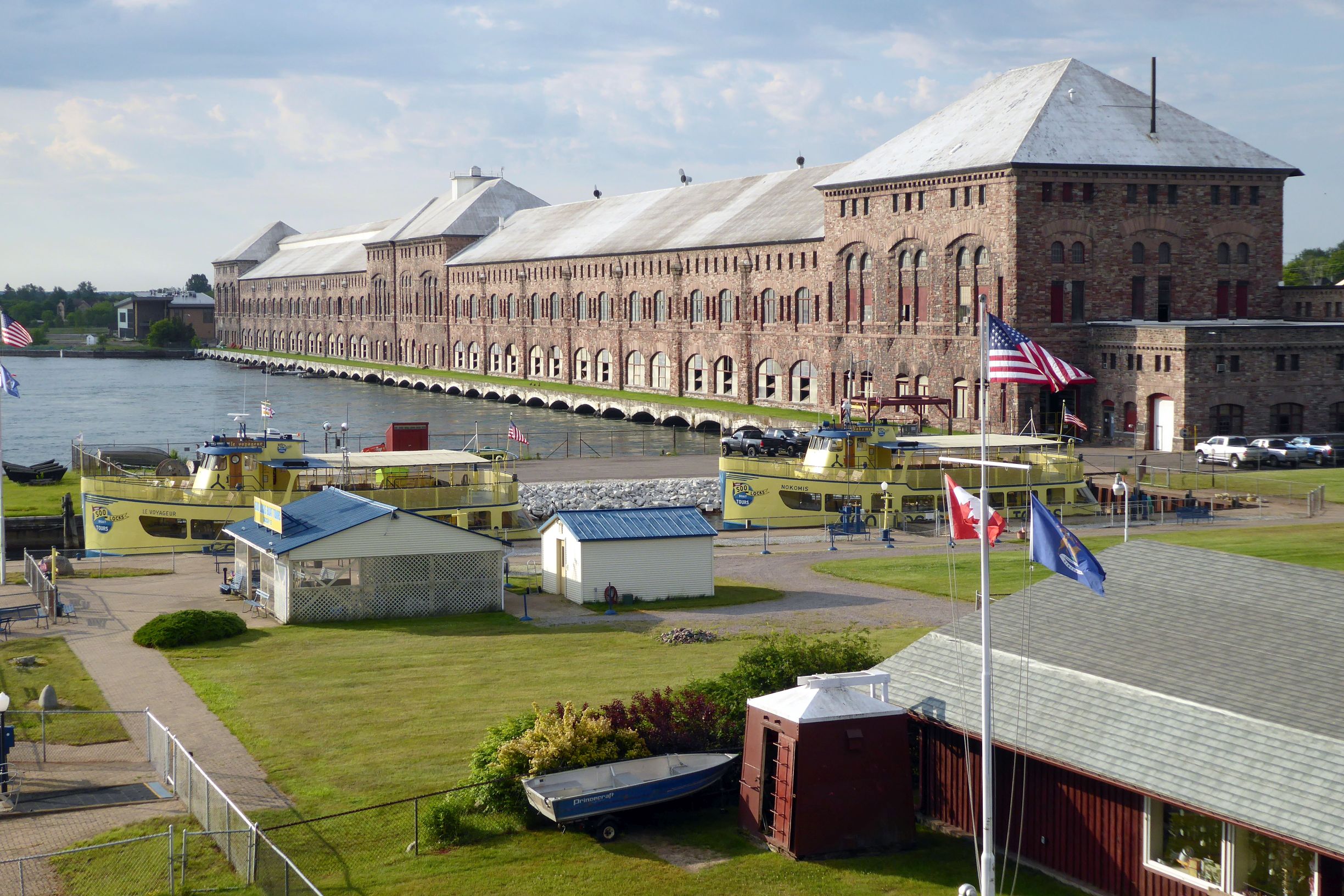
The view of Sault Ste. Marie port from our cabin window
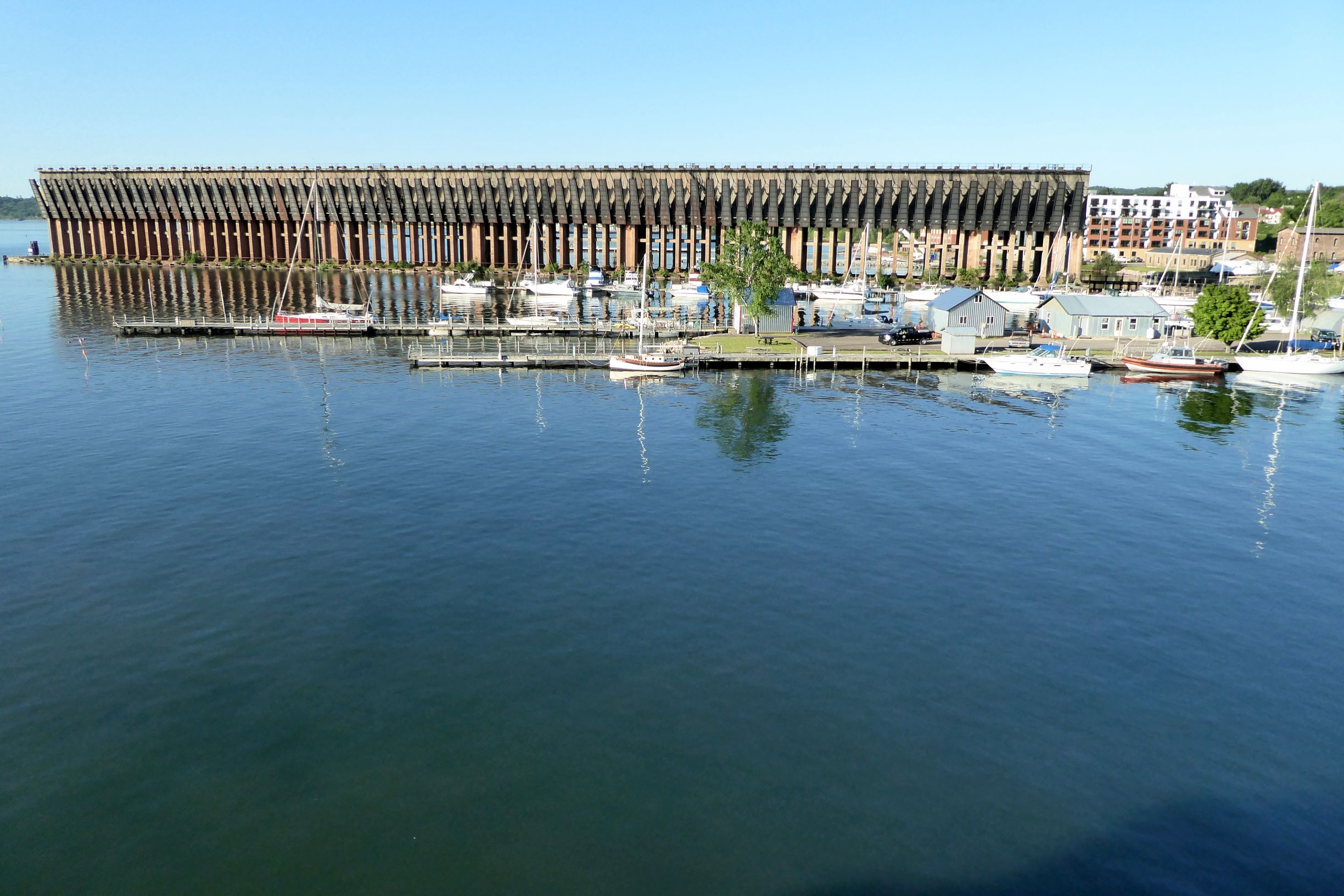
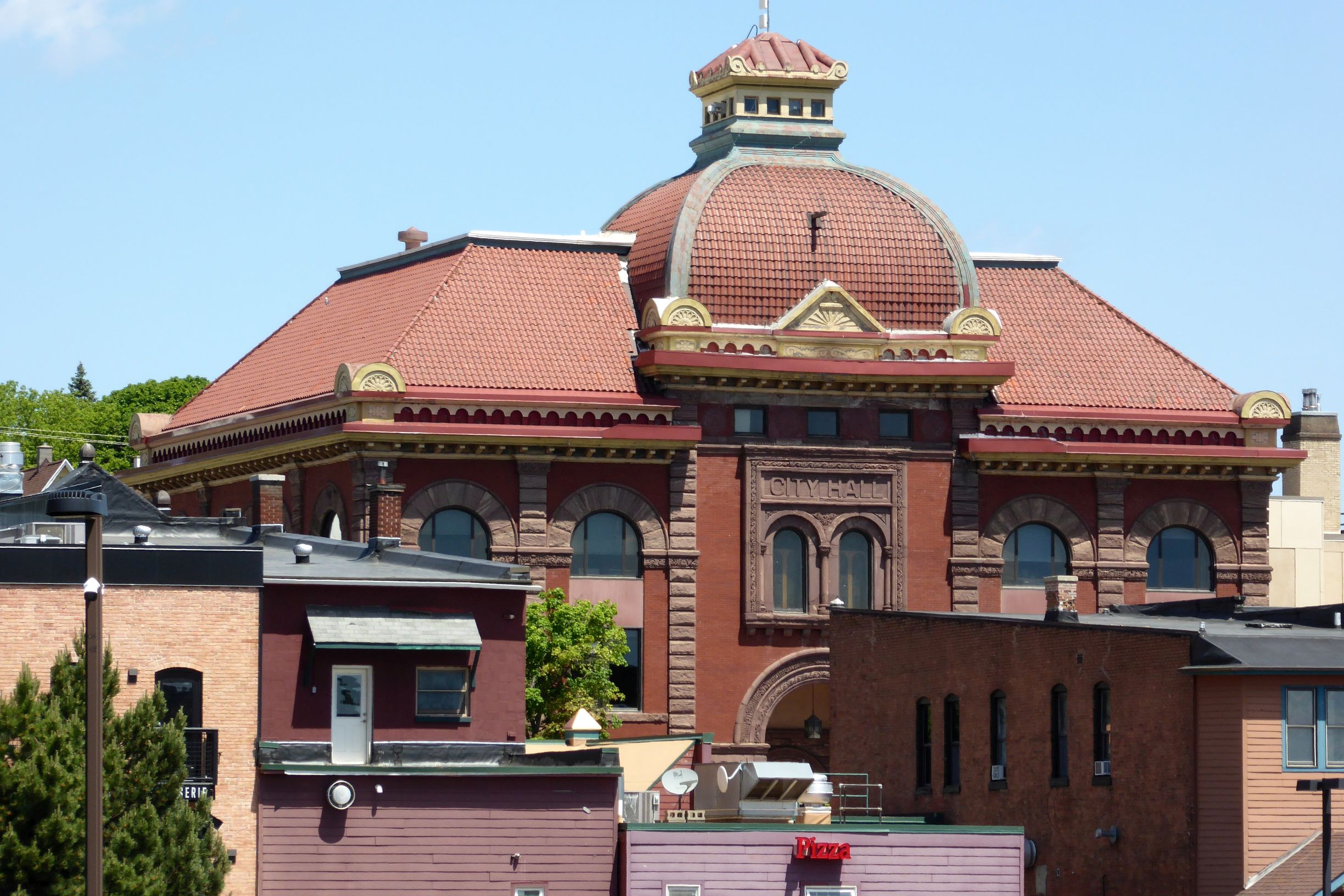
This massive red brick building houses a hydroelectric plant that supplies 20% of the city’s power. I shot this photo from the top deck of the Ocean Navigator before heading out.

Following our visit to Thunder Bay, Ontario, we returned to the American side of the Great Lakes, requiring a mandatory bus ride to the border for processing.  Police officers had a close watch over everybody exiting the ship to ensure we boarded the bus, because we had foreign crew working on our ship. 

I had anticipated long border-crossing lines and a wasted morning; however, when we arrived at the station, our bus load of cruise passengers were the only tourists to be processed.  There were several staffed windows with smiling faces to greet us, so we showed our passports and zipped right on through.  Based on my experience (and what I witnessed at other windows), they were the nicest and friendliest bunch of border patrol officers I had ever seen!

A border station poster. Love that mask!

Before we knew it, we were back at the ship and ready to embark on our included narrated hop-on-hop-off bus tour of Sault Ste. Marie, a small city of 13,000 people.  The name is French, so “Sault” is pronounced like “Sue.”  Just across the bridge over the St. Marys River is another city named Sault Ste. Marie, so it can get a little confusing.  The difference?  The other one is in Ontario, Canada, and it has a population of about 72,000 residents.
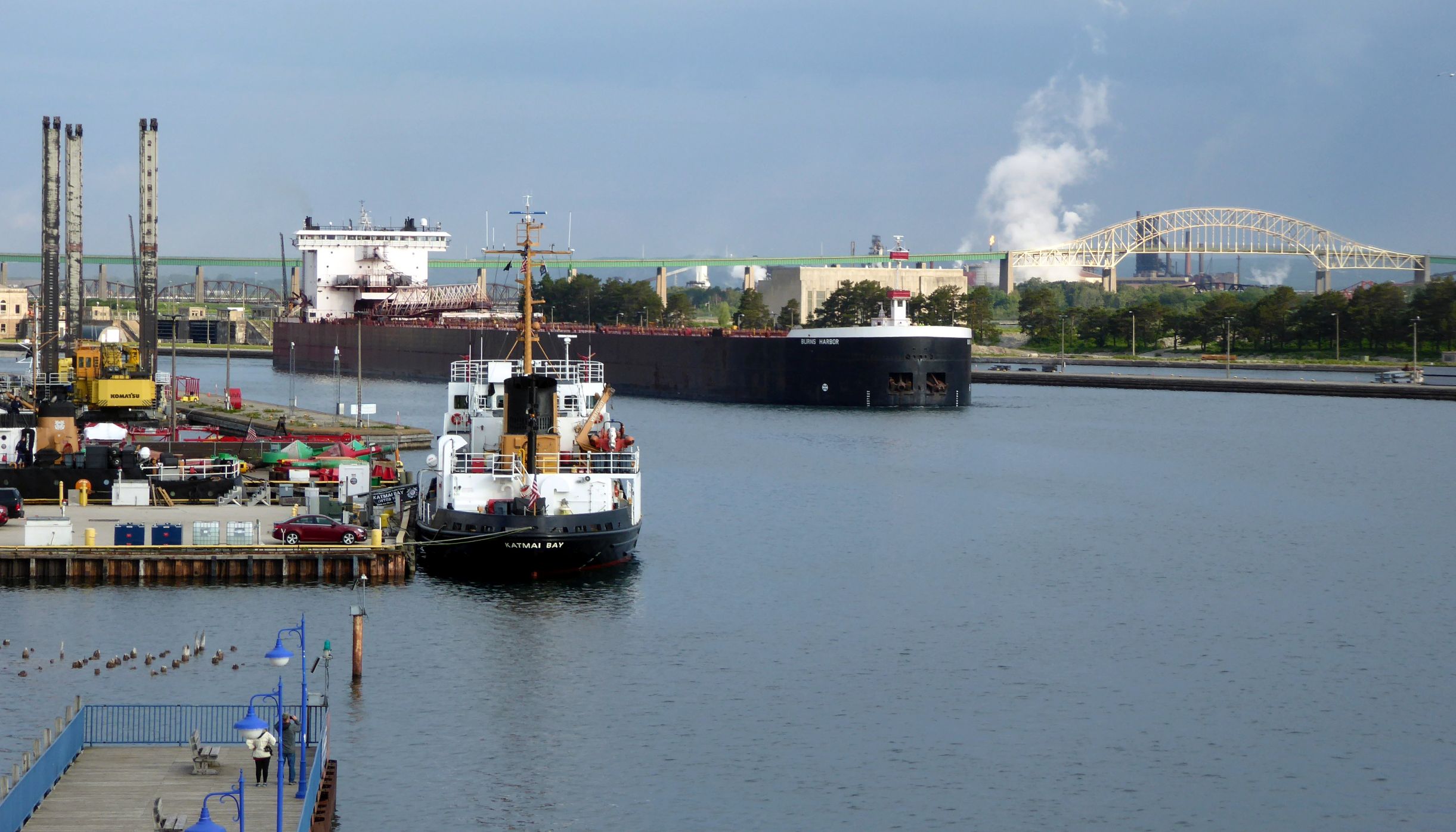
The bridge in the background connects the two Sault Ste Marie’s

The American Sault Ste. Marie is the oldest city in Michigan, and among the oldest cities in the United States.  It was first settled by Native Americans for the abundance of fish and fur found in and along the river that linked the Great Lakes of Huron and Superior.  Later, French fur traders settled in the area.

It is very easy to find this city if you are heading there on a road trip from where I live in Georgia.  No GPS is needed!  Just hop on I-75 (our closest freeway), and head north.  If you stay on I-75 until it ends, you will eventually arrive in Sault Ste. Marie. 

Just don’t plan on spending the winter there unless you love snow, because they get an average of 180 inches a year!  Stay healthy, too, because their small hospital is the only one within 200 miles, and they may not have the resources you need.

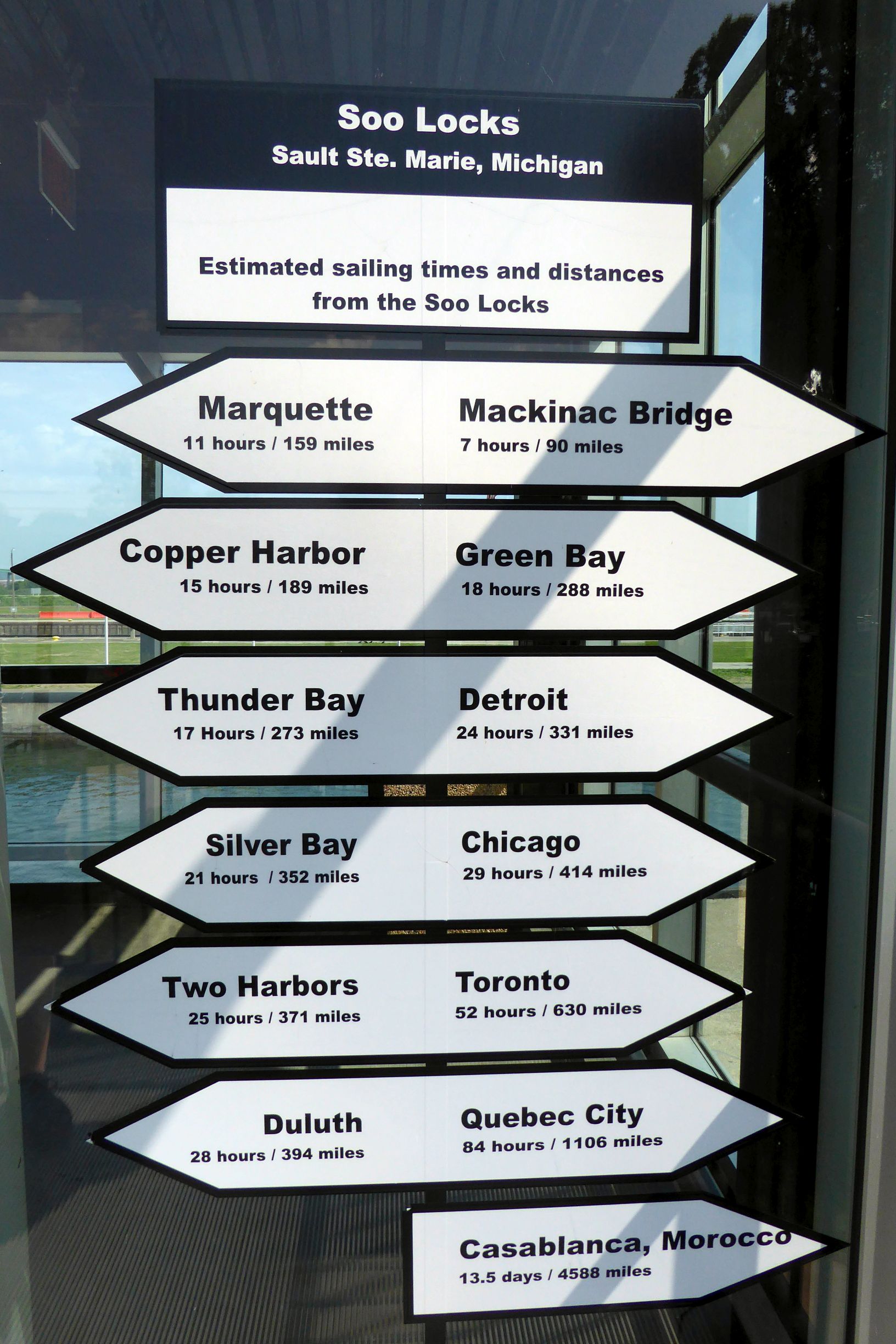
Besides the hospital, Sault Ste. Marie has another extremely important asset: The Soo Locks.  The locks enable shipping traffic in the Great Lakes to bypass the St. Marys River.  The locals claim it to be the busiest canal in the world in terms of tonnage passing through it. We checked out the viewing platform and stopped in at the Soo Locks Visitor Center  to see the excellent exhibits explaining how the locks work.

According to our tour guide, experts predicted that if the Soo Locks ever broke down, the U.S. would plunge into a recession within five days, due to the importance of the cargo (such as iron and grain) that is transported through the locks.  Those experts make a strong case for the role the U.S. Army Corps of Engineers play in keeping our economy humming!

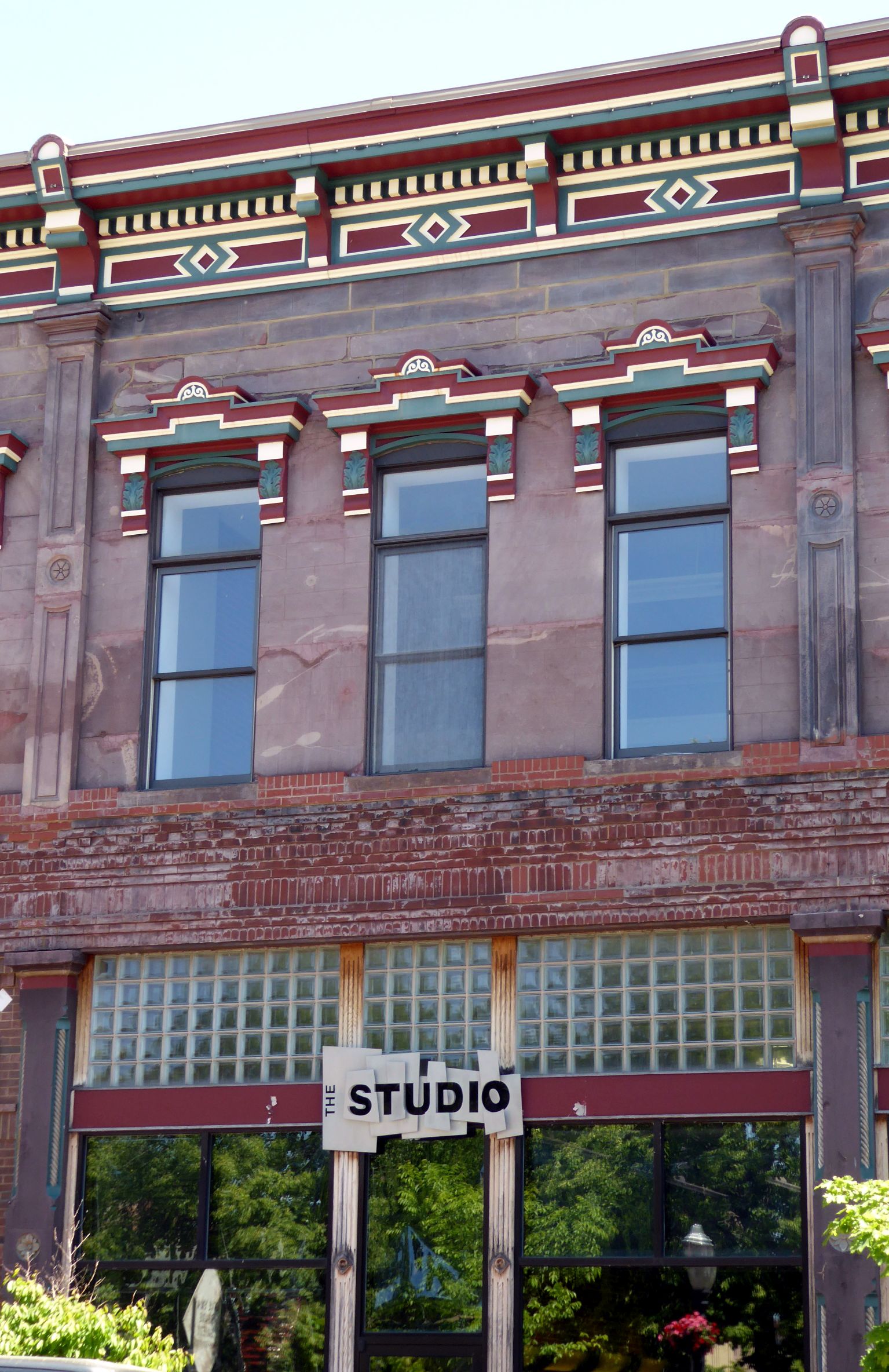
The small downtown was just across the street from the locks, so we had a look around:
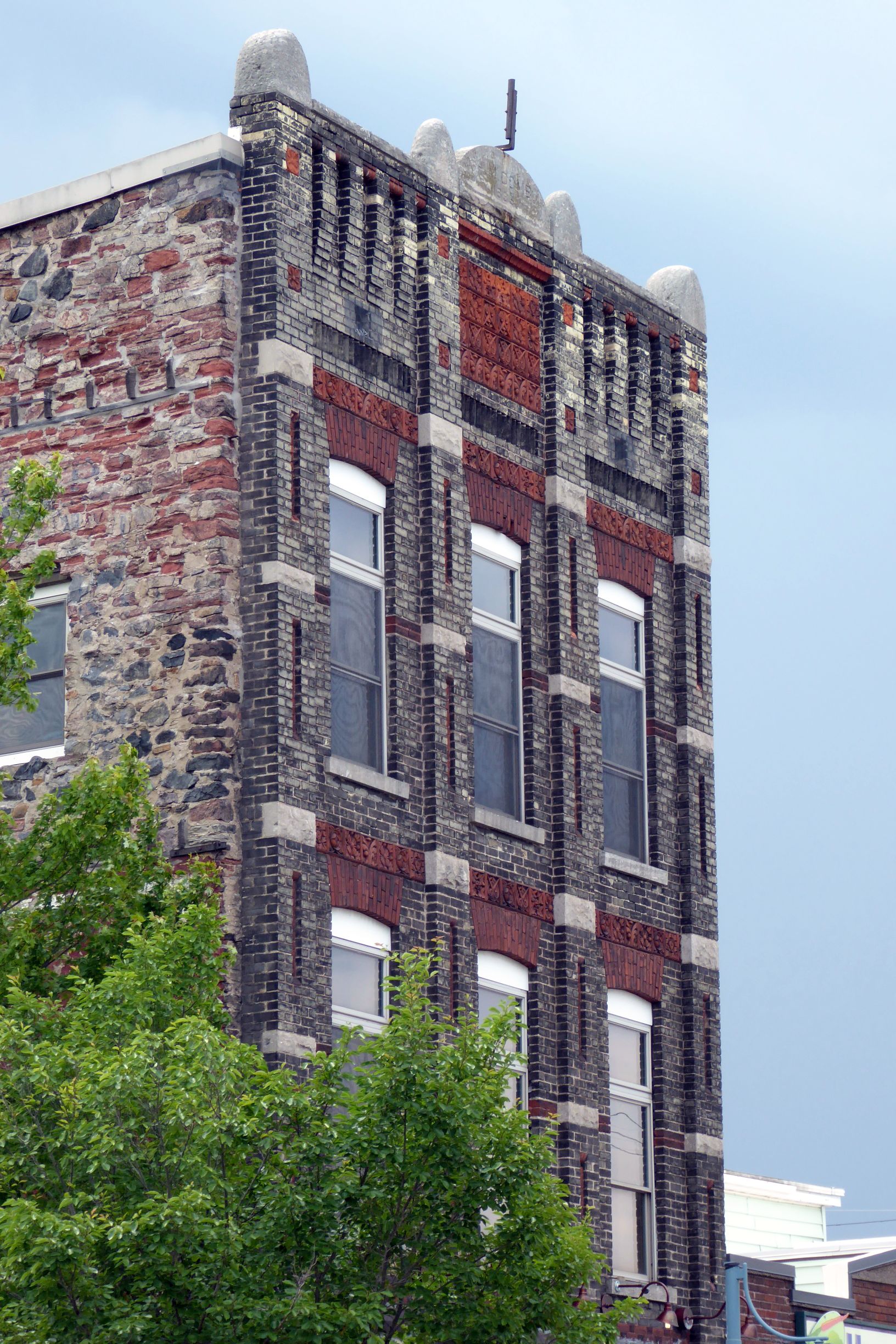
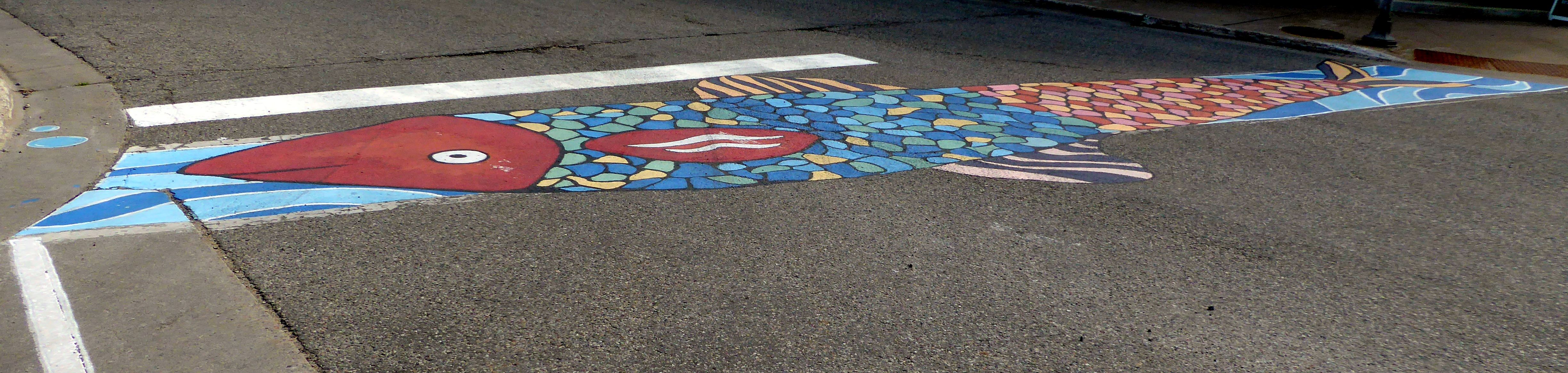
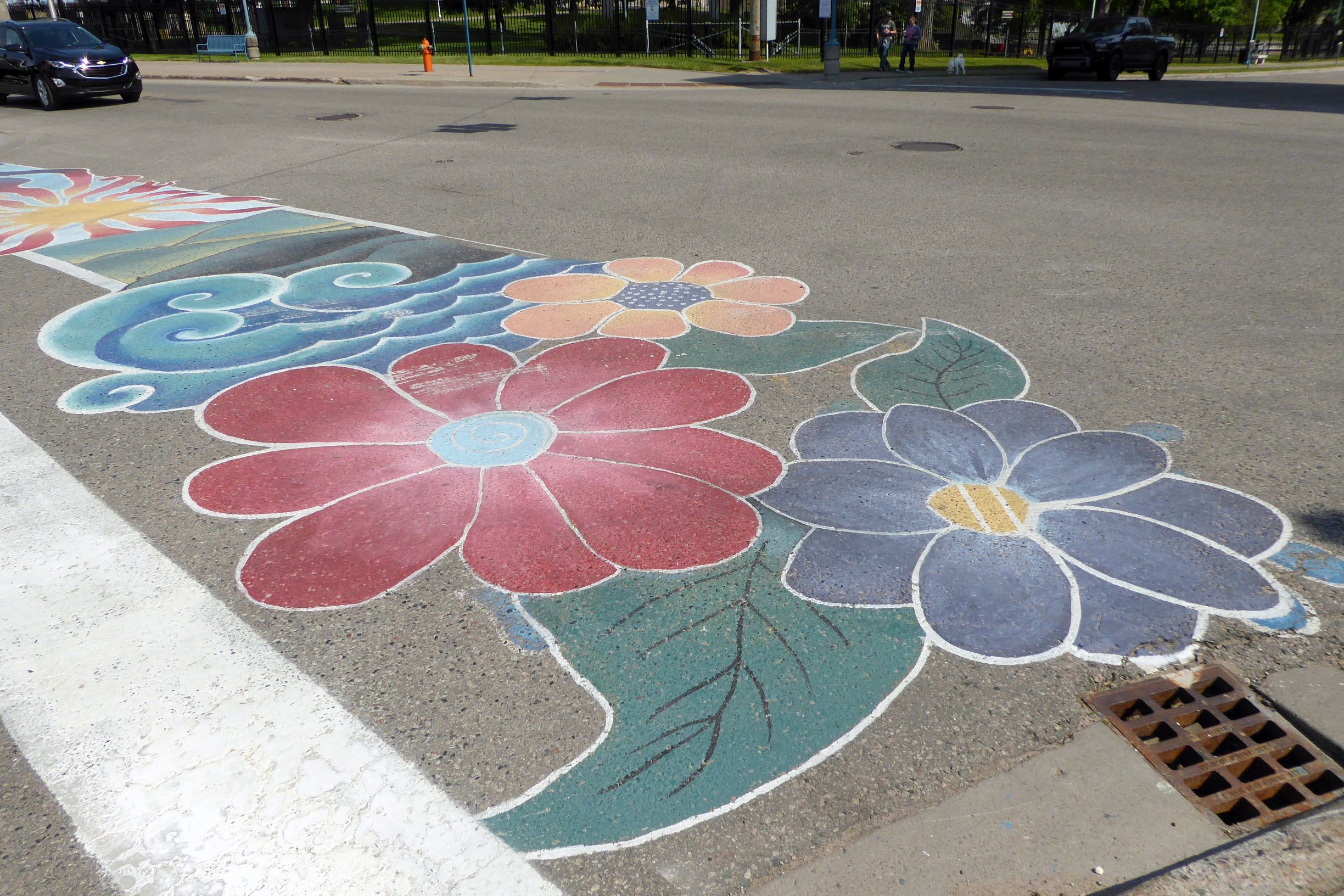
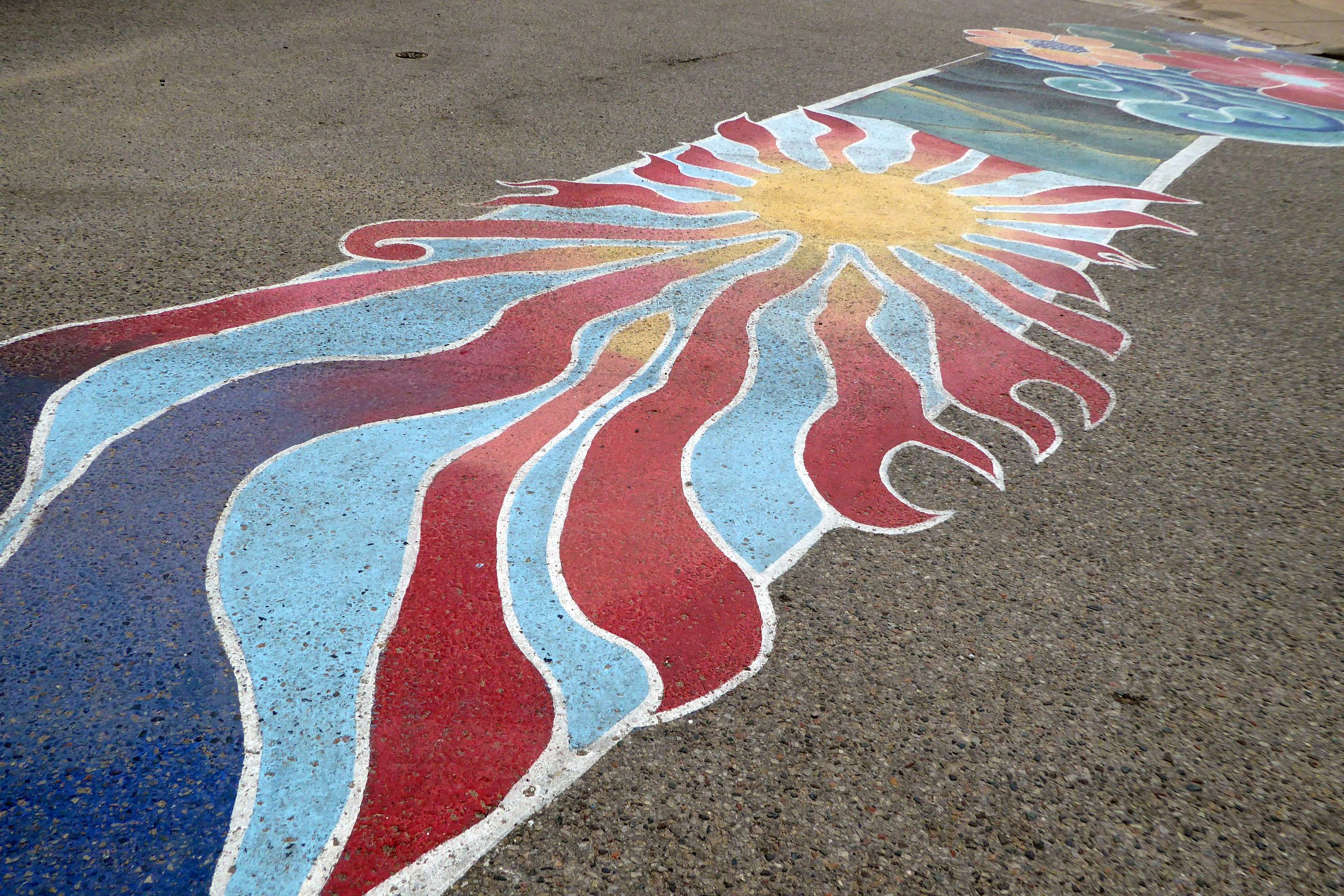
Colorful crosswalks

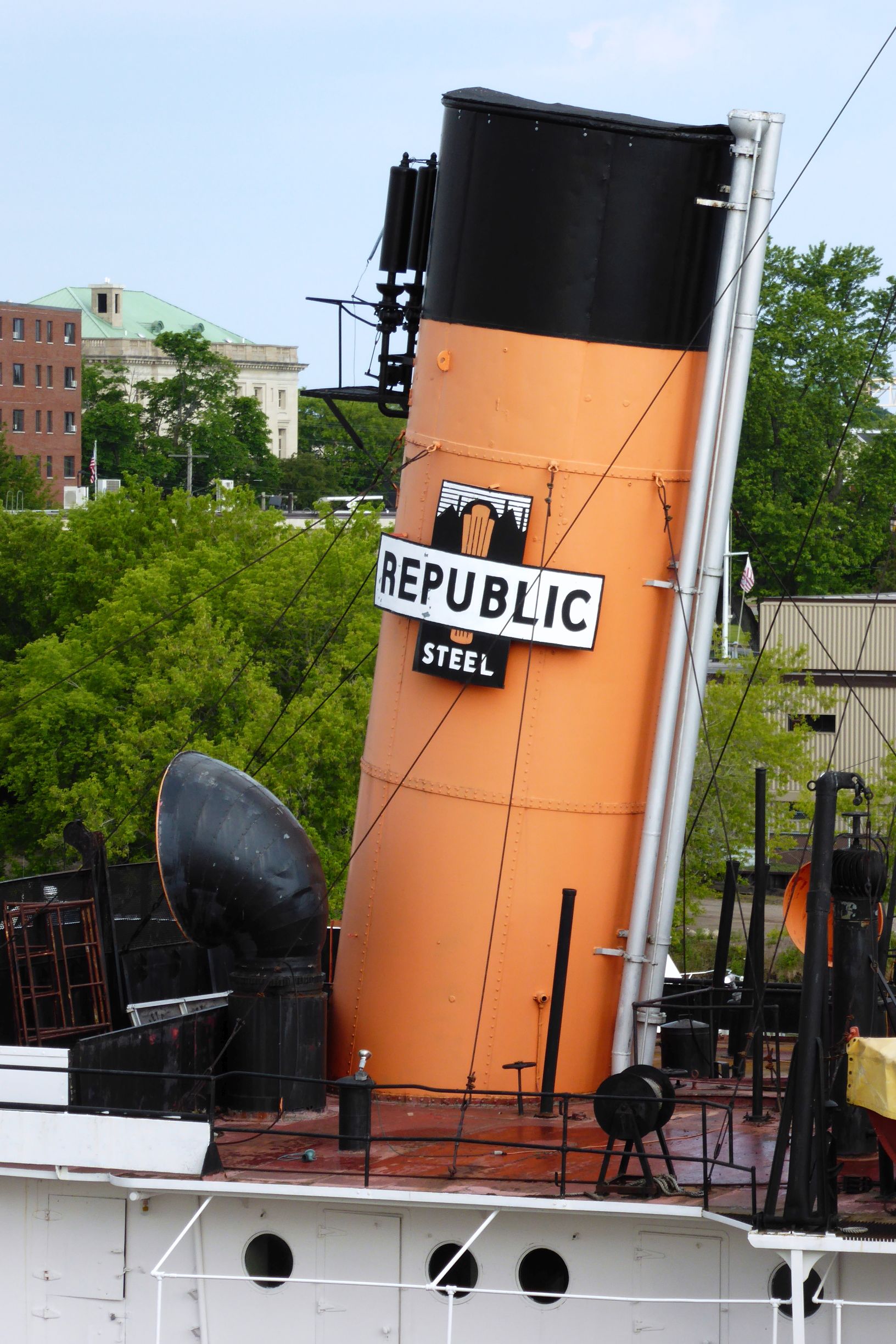
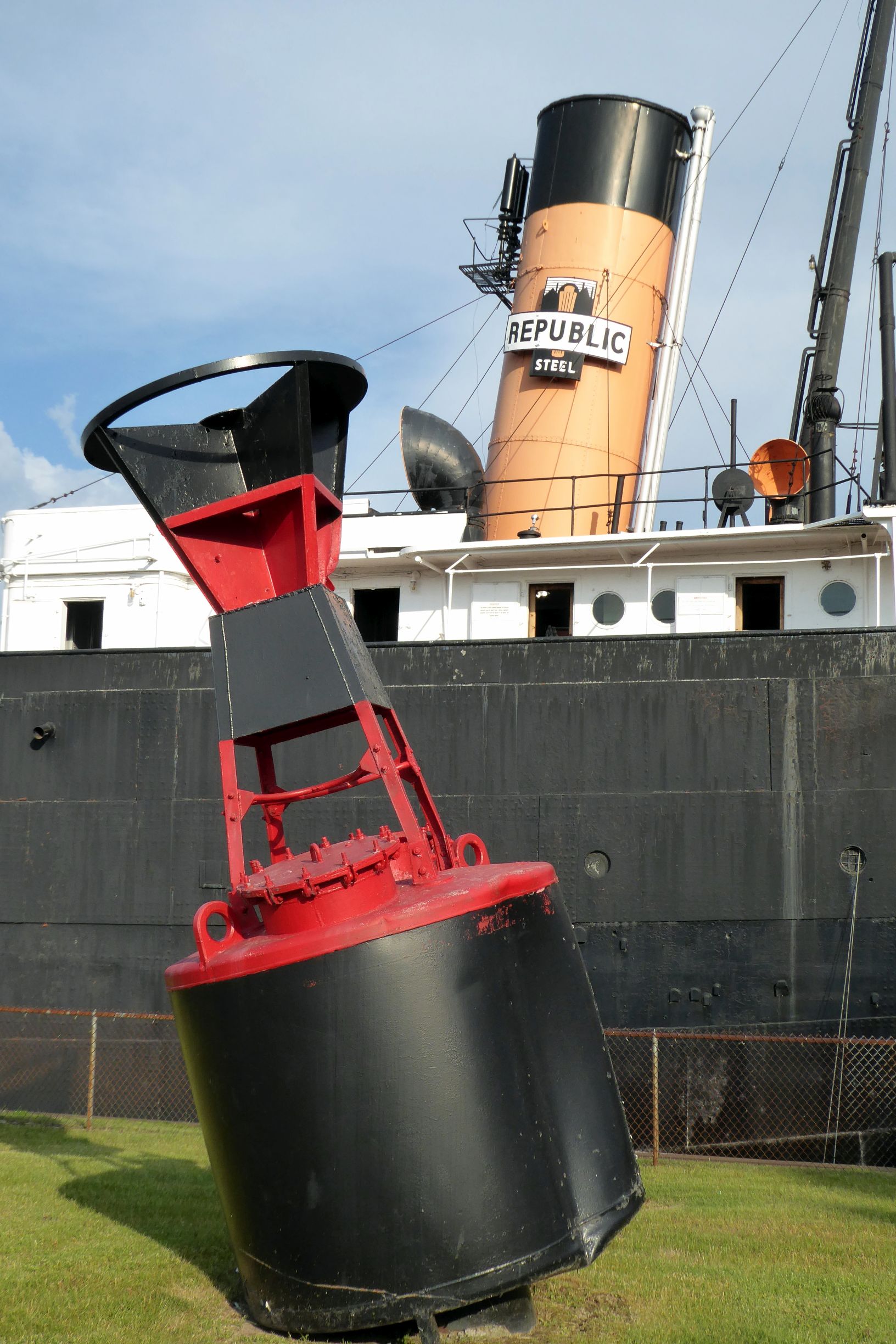
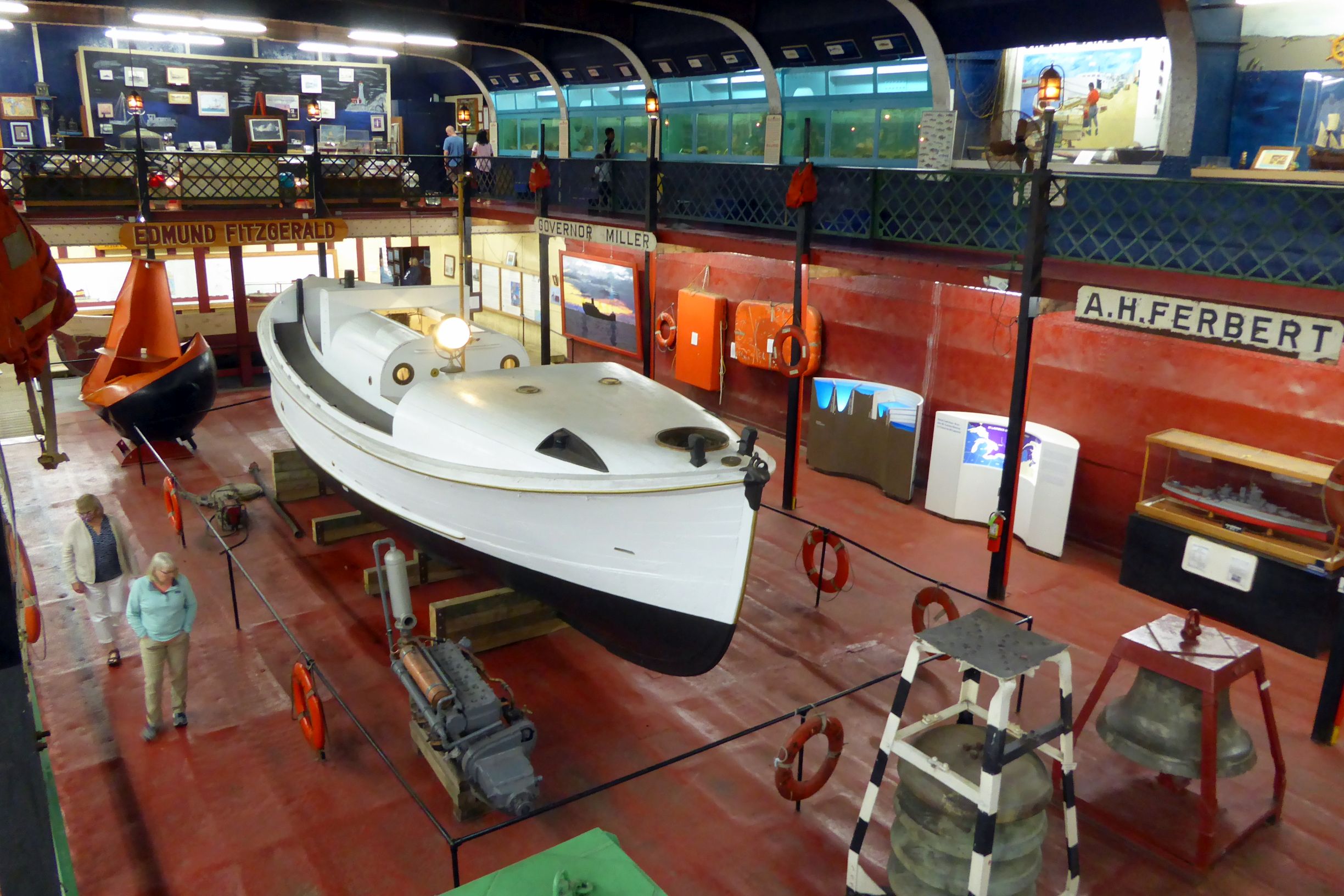
Following our tour and walk around town, we returned to tour the Valley Camp, which in its previous life was a “Laker,” a cargo ship that worked the Great Lakes.  It now serves as a fabulous museum with exhibits located throughout the huge ship.

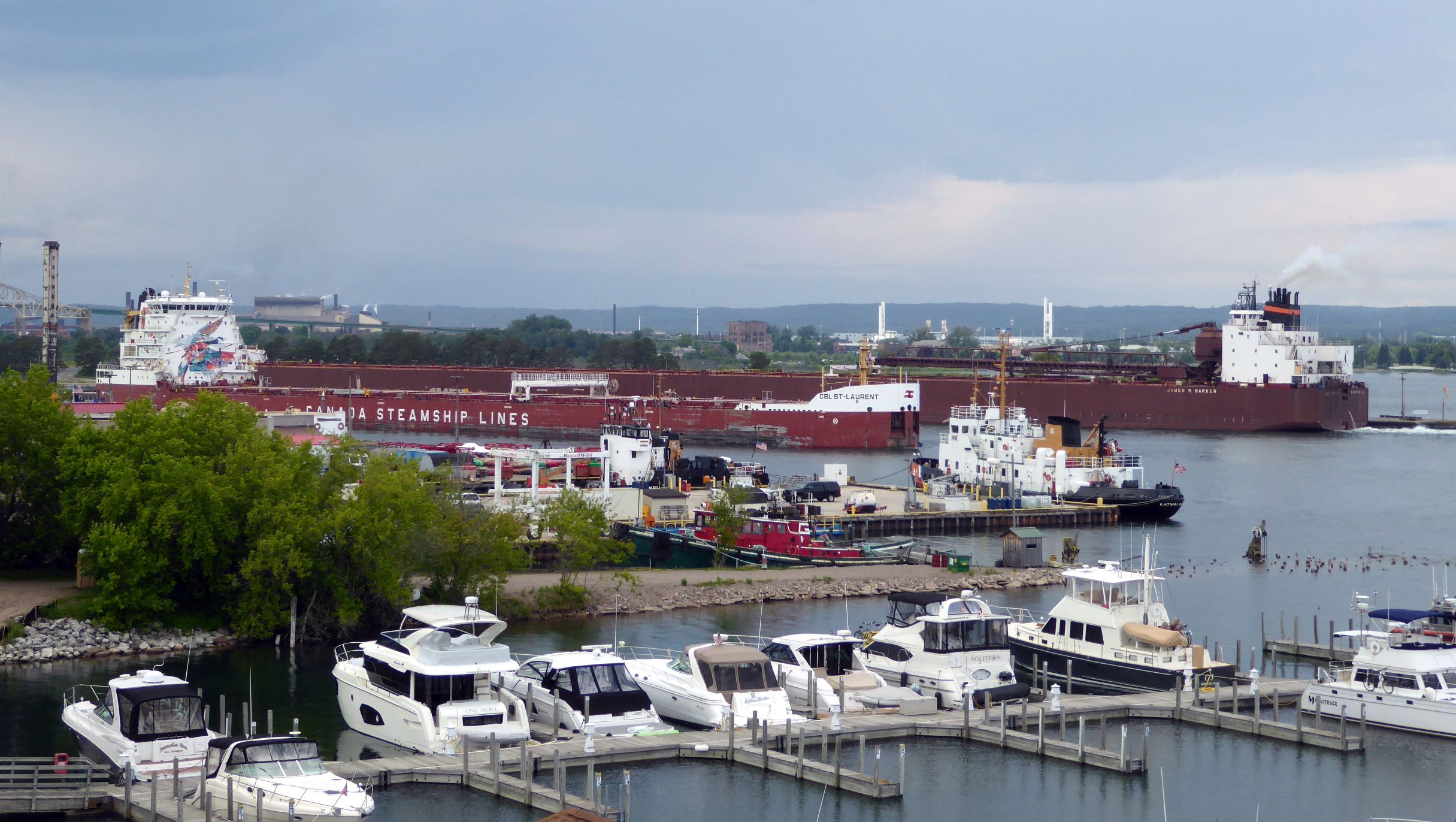
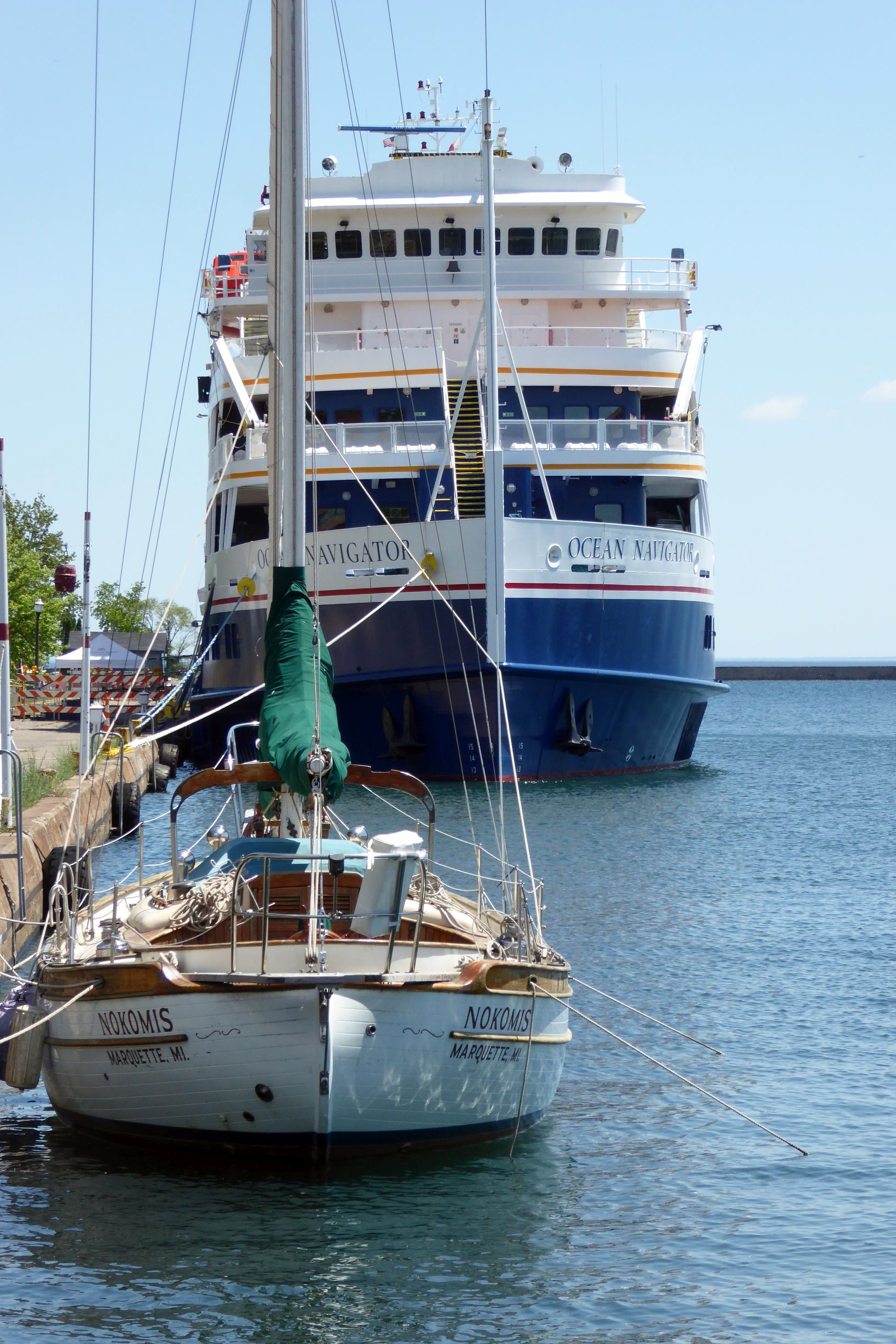
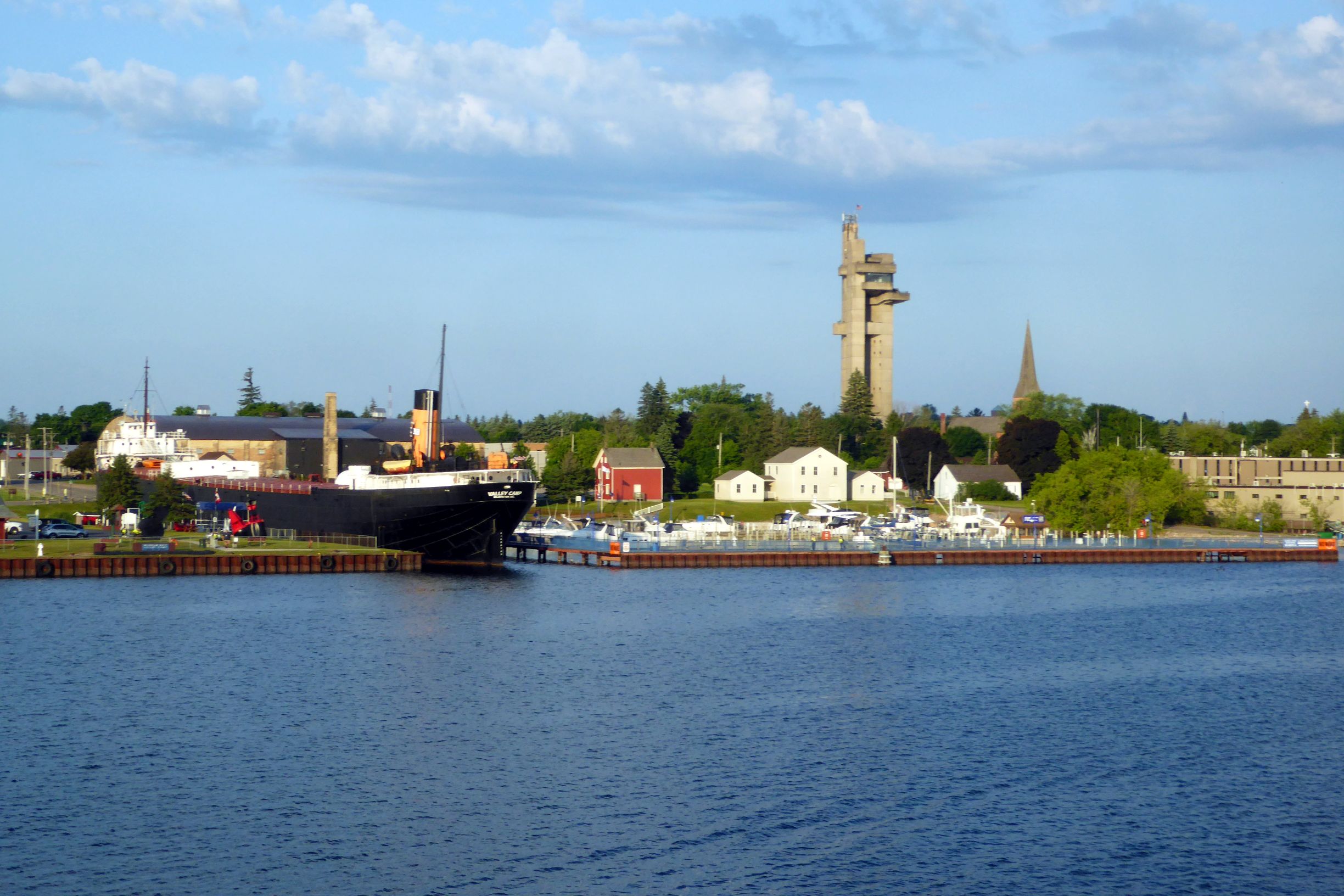
This view of the Valley Camp is from the deck railing of the Ocean Navigator. We were that close!

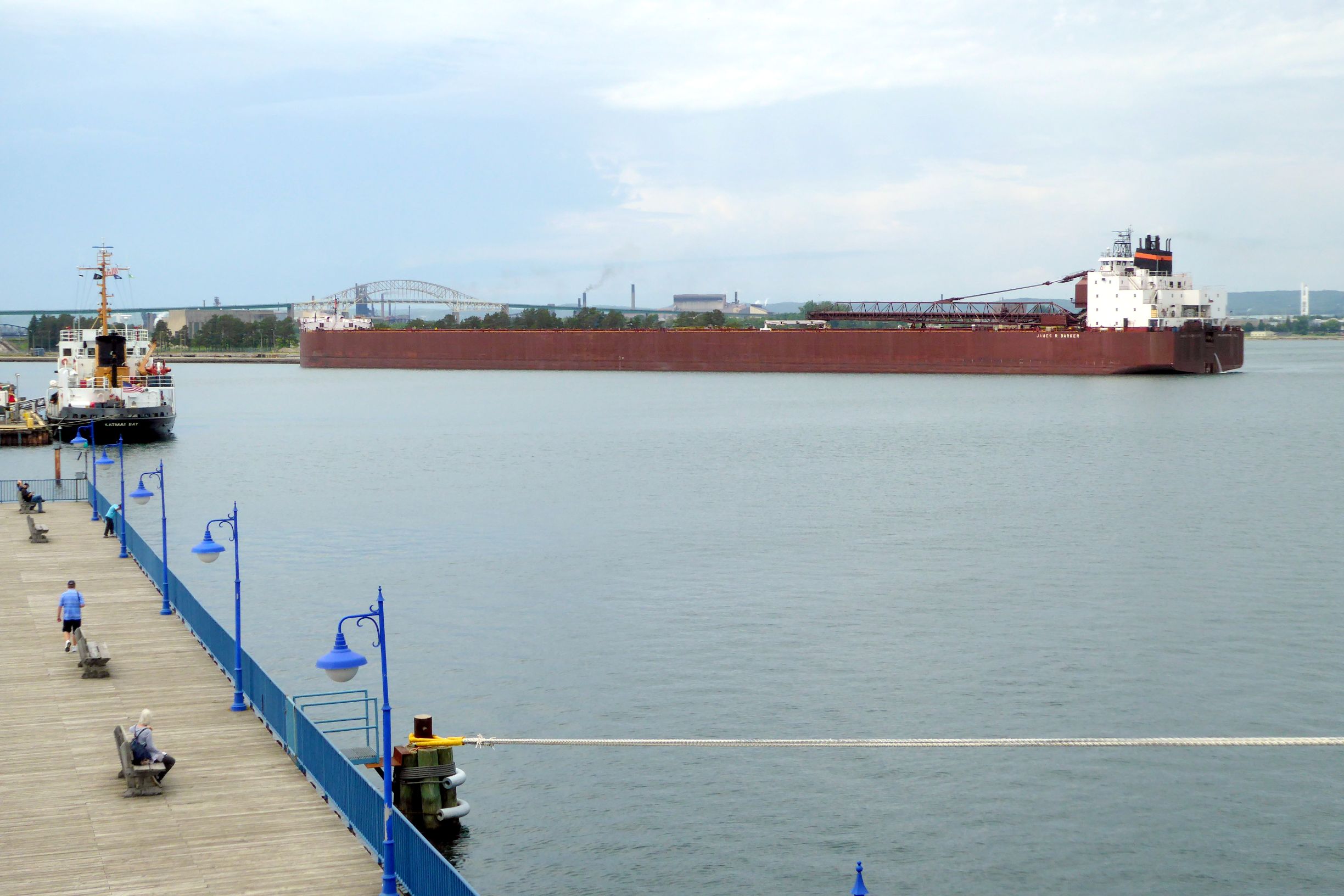
While touring the museum, we learned about the James R. Barker, a 1,000 foot-long Laker with a carrying capacity of 61,650 tons.  Back in 1976, it was the longest vessel on the Great Lakes.  You can see in the picture below how it compares in size to the Valley Camp, which I thought was massive!

Bruce and I concluded our self-guided tour by going up on deck to see the bridge, officer cabins, galley, and dining room, in addition to the cargo area.  Just as we arrived, we saw the James Barker cruise on by!

The James R. Barker
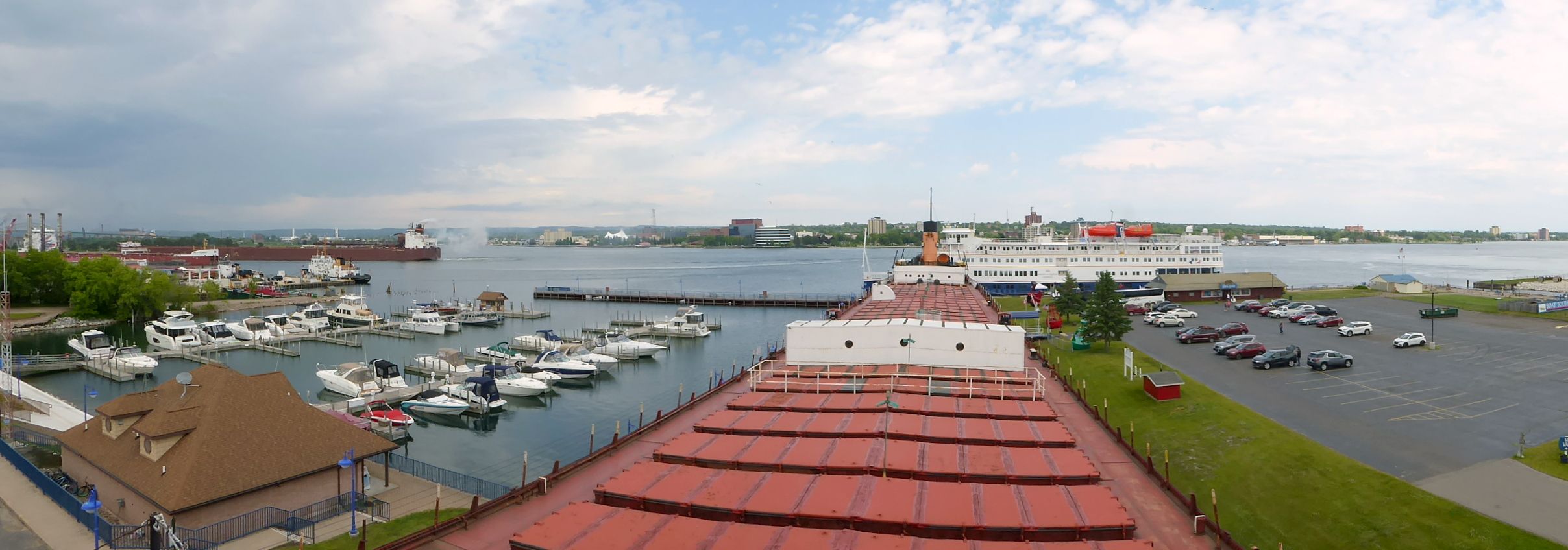
The view from the bridge of the Valley Camp

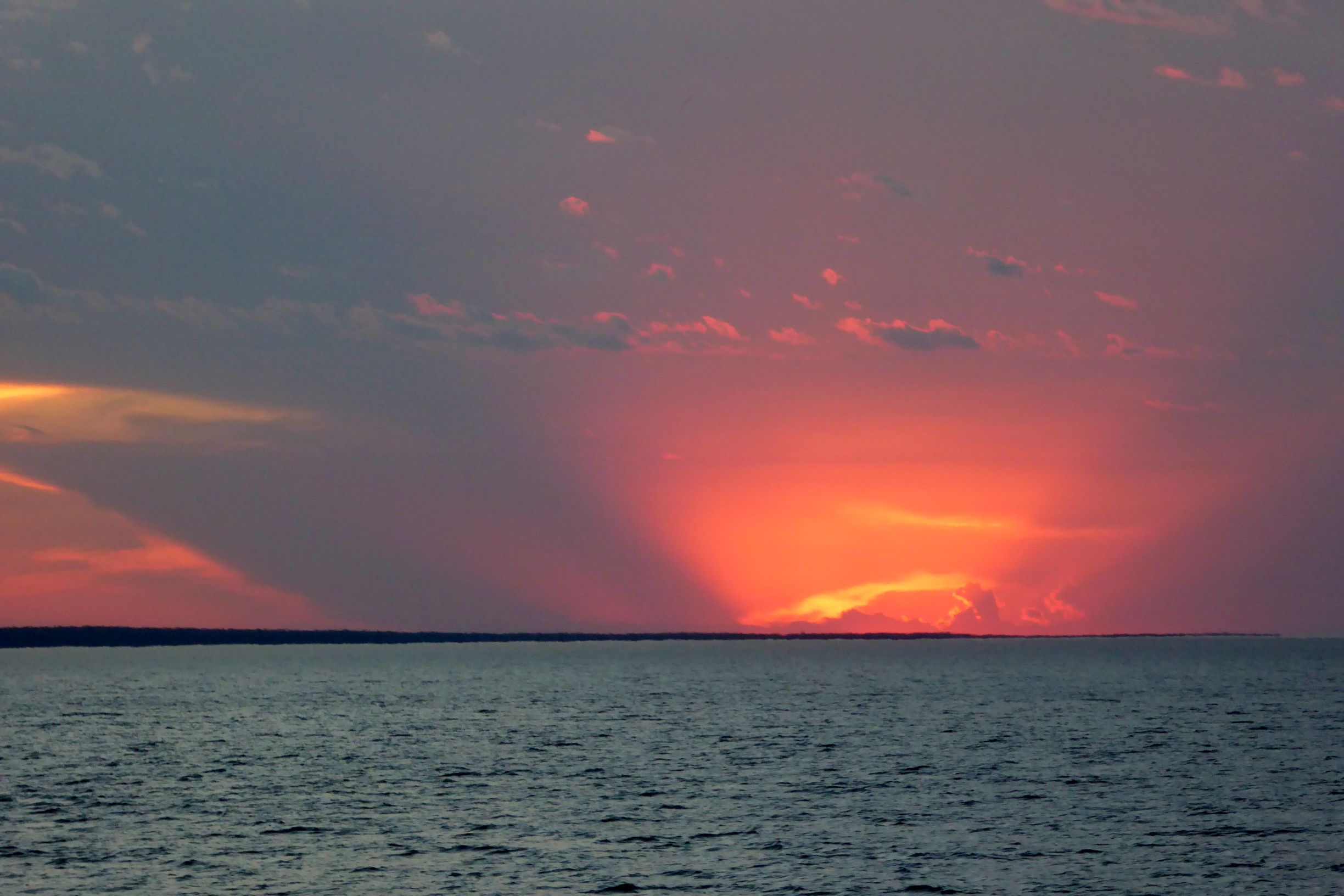
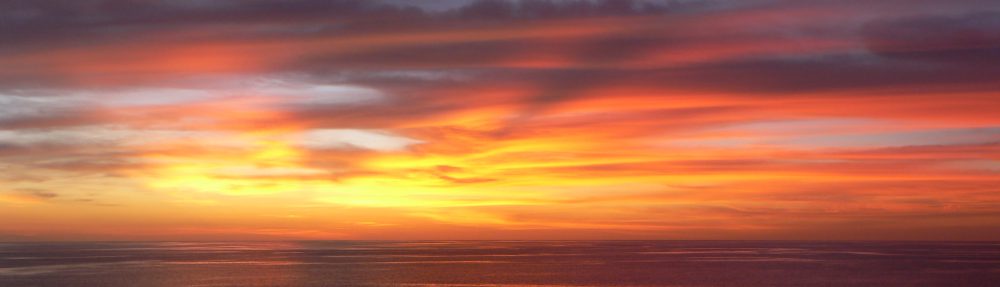
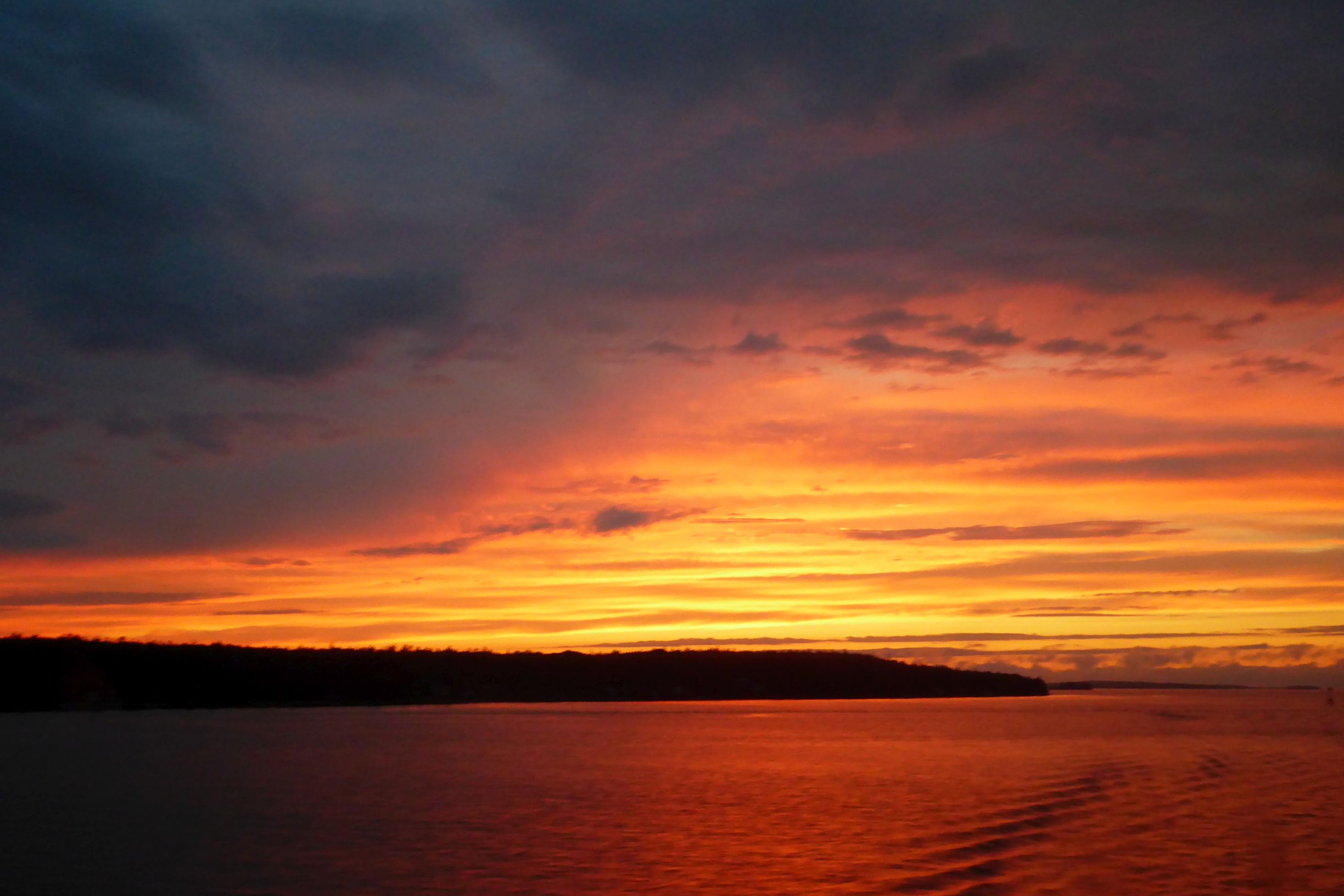
Our day ended beautifully with this colorful sunset.
Next up: Green Bay, Wisconsin—Go Pack Go!
CRUISING THE GREAT LAKES #6: TOURING THUNDER BAY, ONTARIO

Bruce and I had $300 of onboard credit with American Queen Voyages to use during our cruise aboard the Ocean Navigator, so we chose to use it for a couple of premium tours, including one in Thunder Bay.

Situated on Lake Superior, Thunder Bay is on the Canadian side of the border, in Ontario.  The French were the first Europeans to settle in Thunder Bay as a fur trading post along the Kaministiquia River.  Mining and forestry were the next industries to develop, and now Thunder Bay is best known for medical research and education. 

This city of about 109,000 residents is quite isolated. Forget about taking a flight in or out of Thunder Bay; you’ll have to go to Toronto for that.  I just looked it up on Google Maps, and the quickest route will take you over 14 hours to get there by car.  As a matter of fact, the closest city to Thunder Bay is an 8-hour drive away! 

Thunder Bay has managed to develop a fantastic culture and arts scene, though, so there is plenty to do for the residents.  Declared the “Cultural Capital of Canada” in 2003, Thunder Bay has a variety of cultural and community centers for the Finnish, Scandinavian, Italians, Polish, and many more.

Arts are also well-represented by Thunder Bay Symphony Orchestra (which is the only professional orchestra between Winnipeg and Toronto), a professional theatre, a variety of music and arts festivals, museums, and art galleries.  There is also Thunder Pride, an LGBTQ pride parade that has been held annually since 2010.

Numerous sports and recreation facilities, city parks, and community centers also keep the locals busy and engaged.  It’s impressive how much this isolated city has to offer!

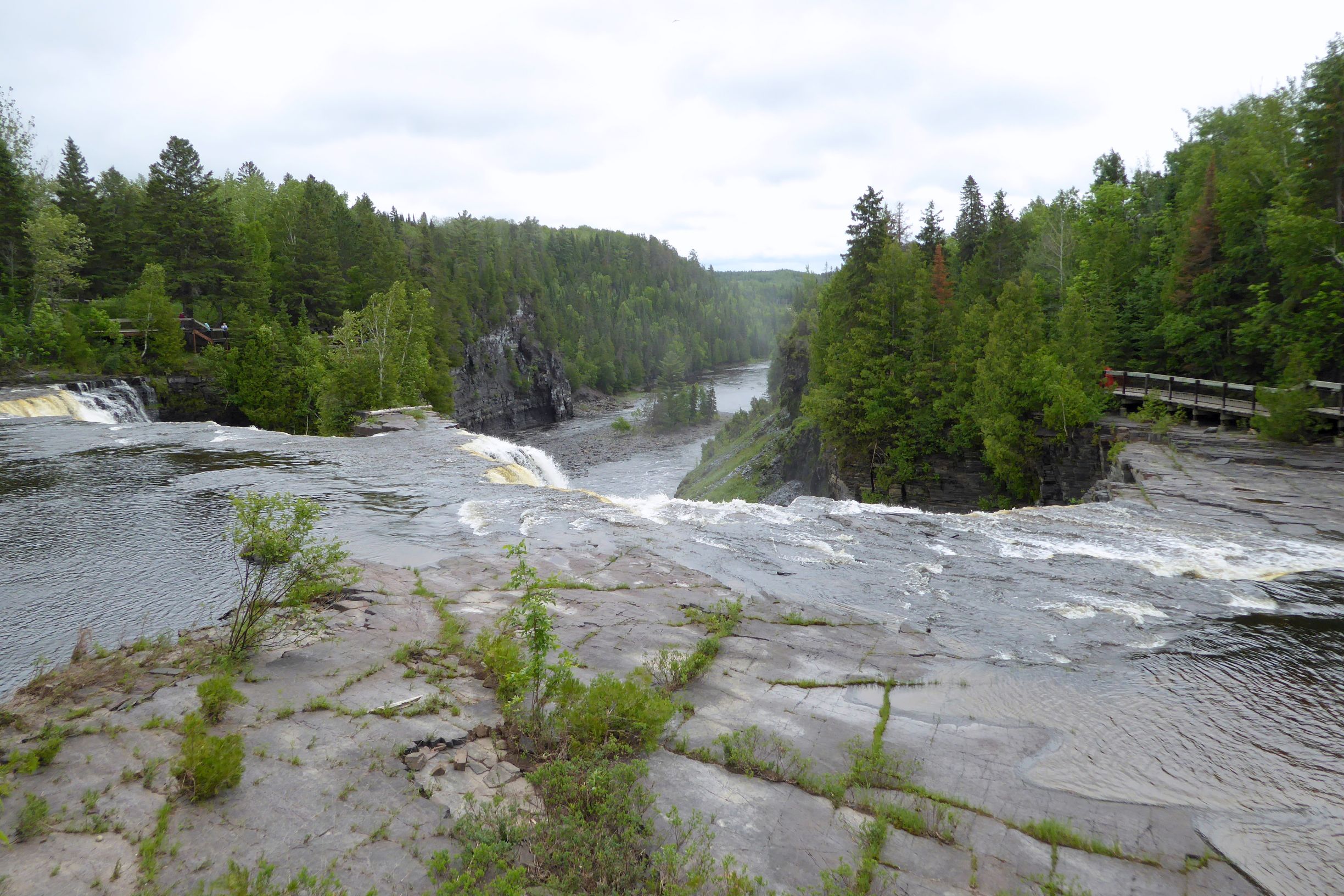
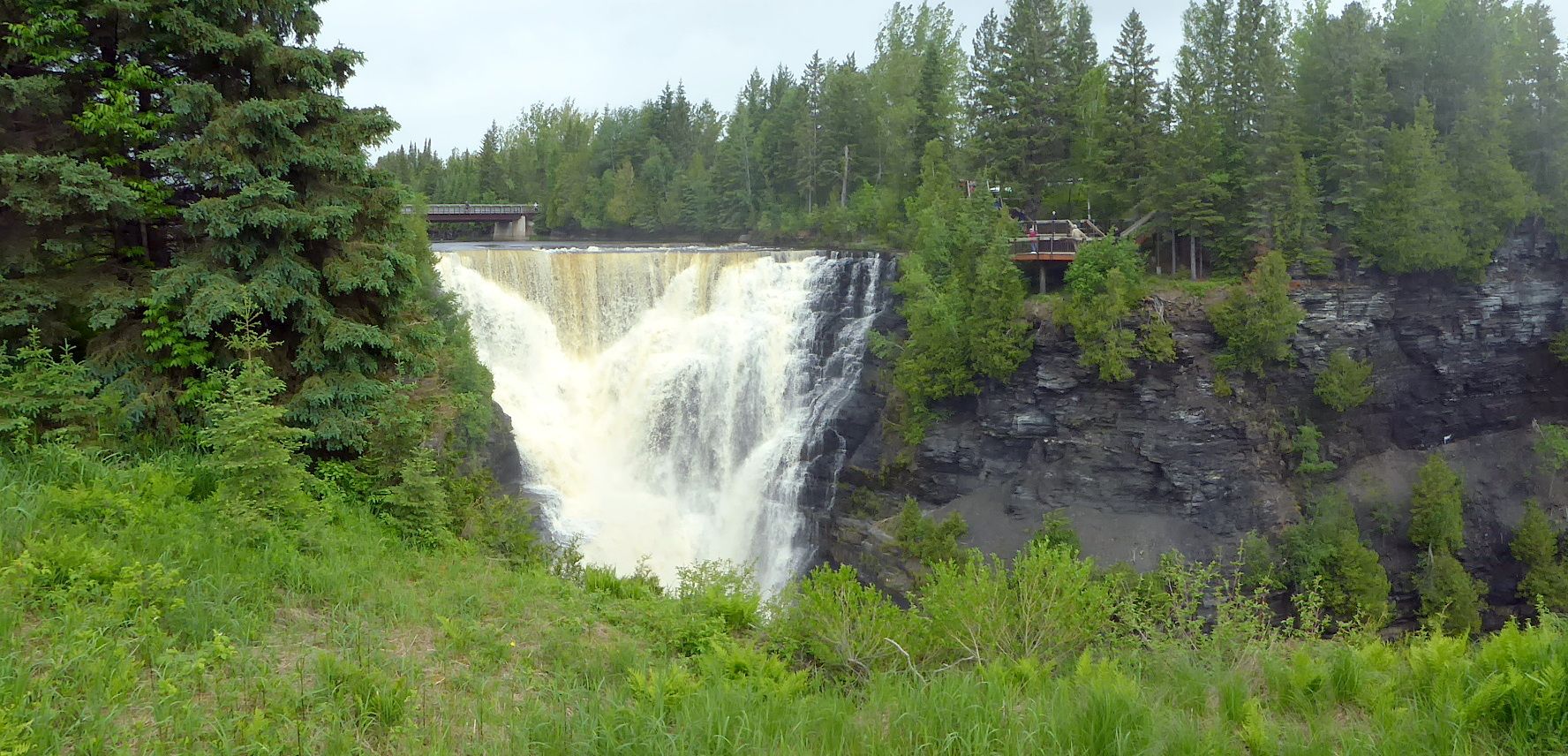
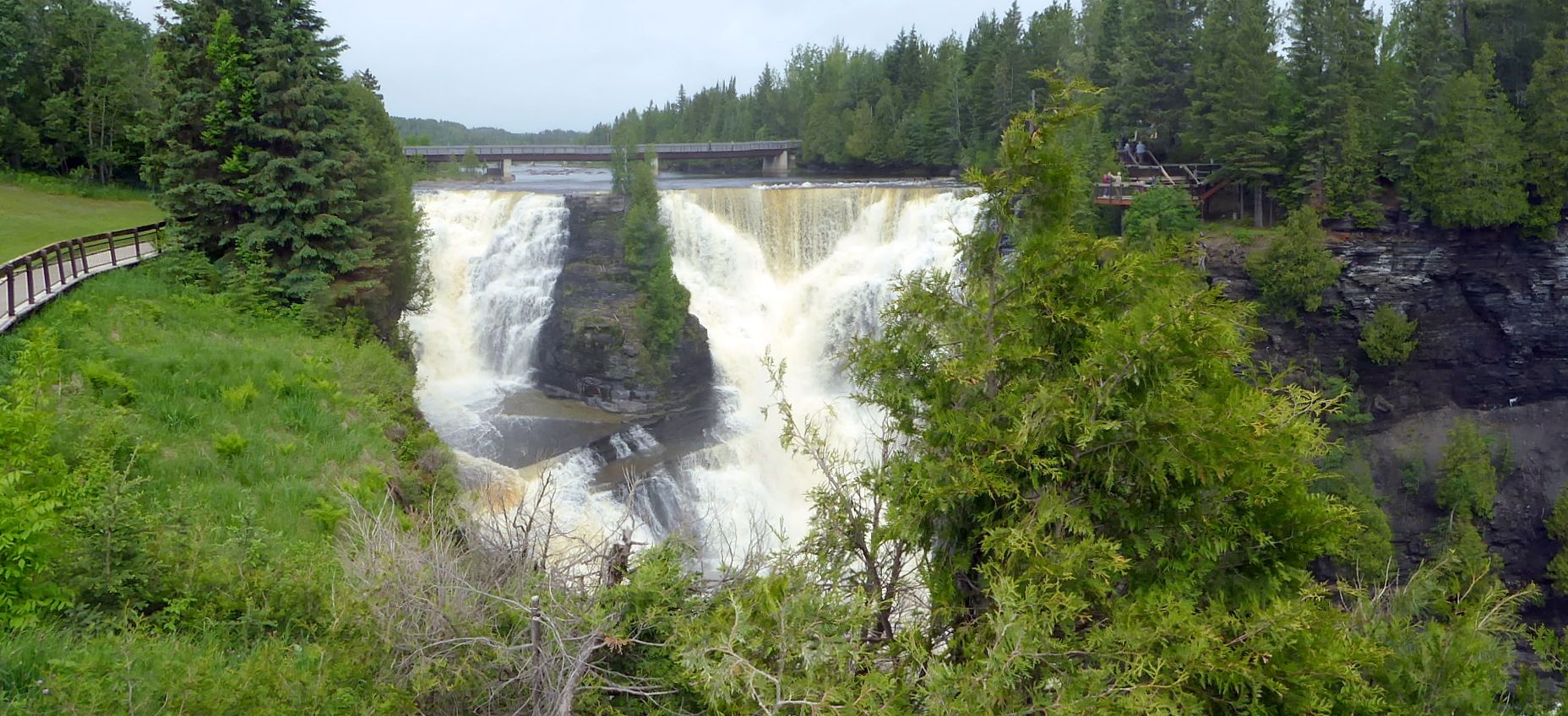
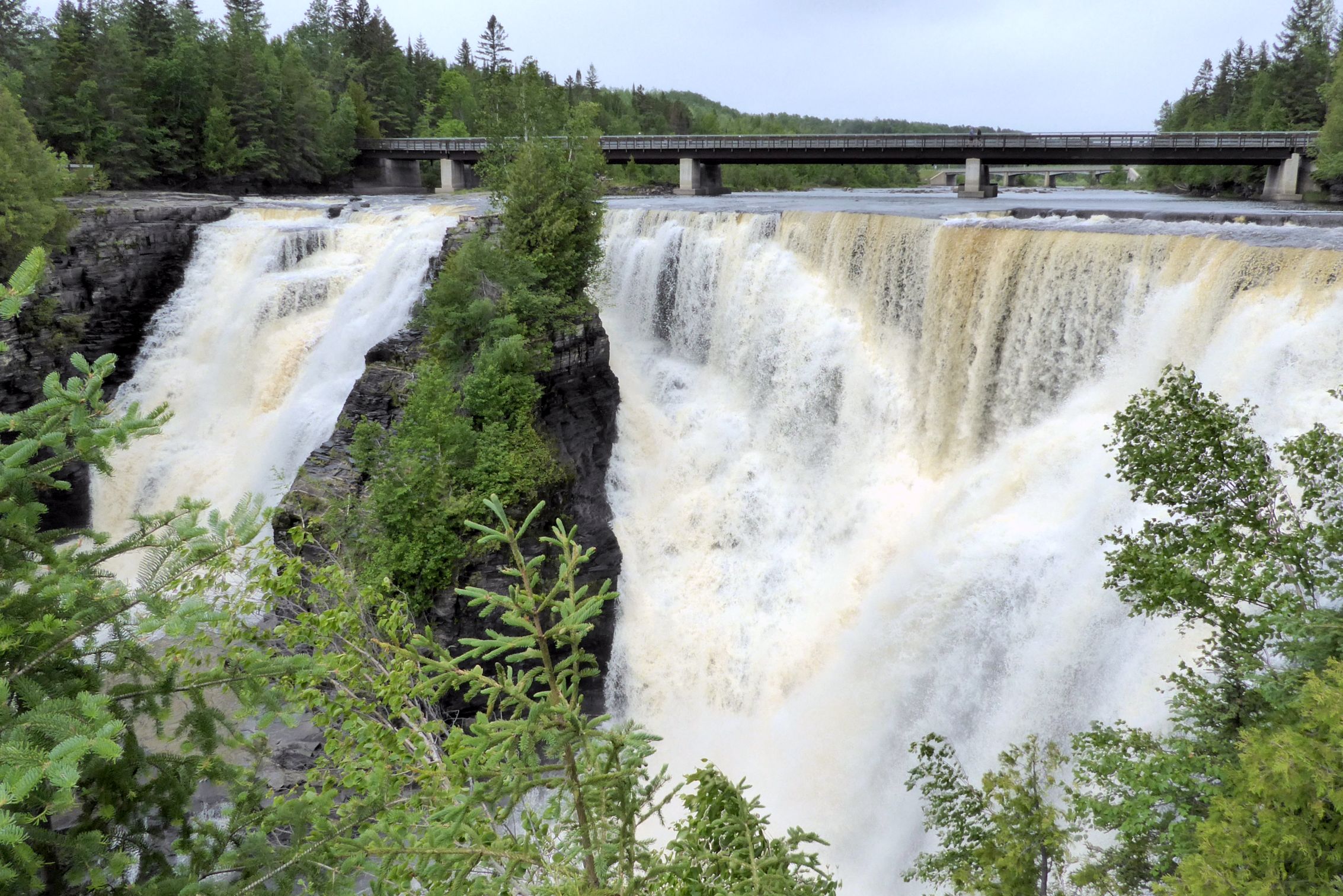
One of the area’s natural highlights is Kakabeka Falls, the second highest waterfall in Canada at 130 feet.  We chose to take the tour that visited these falls, and it was well worth it. 

We walked across the bridge (see previous photo) to see the view from the other side. This is the view from the middle of the bridge.

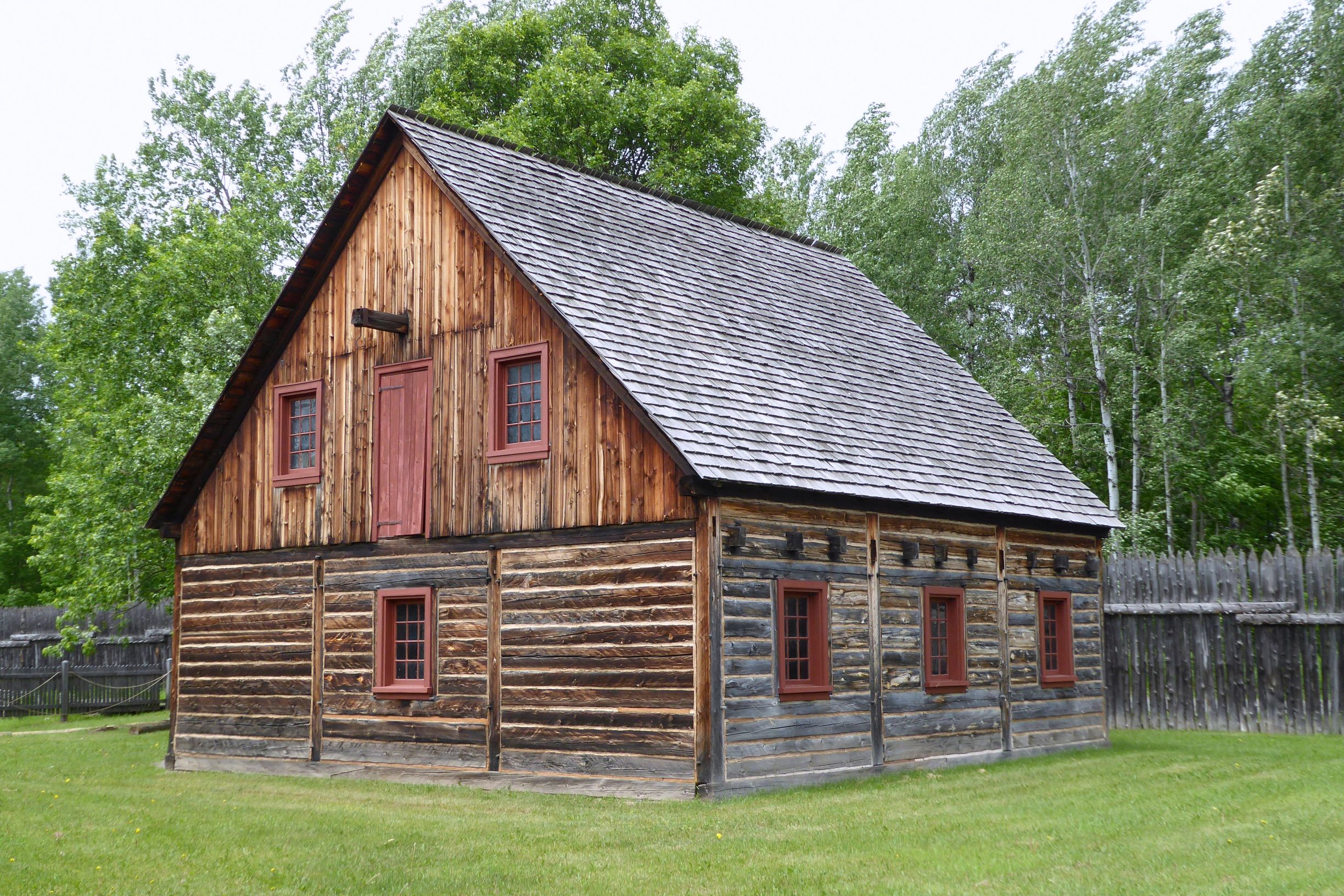
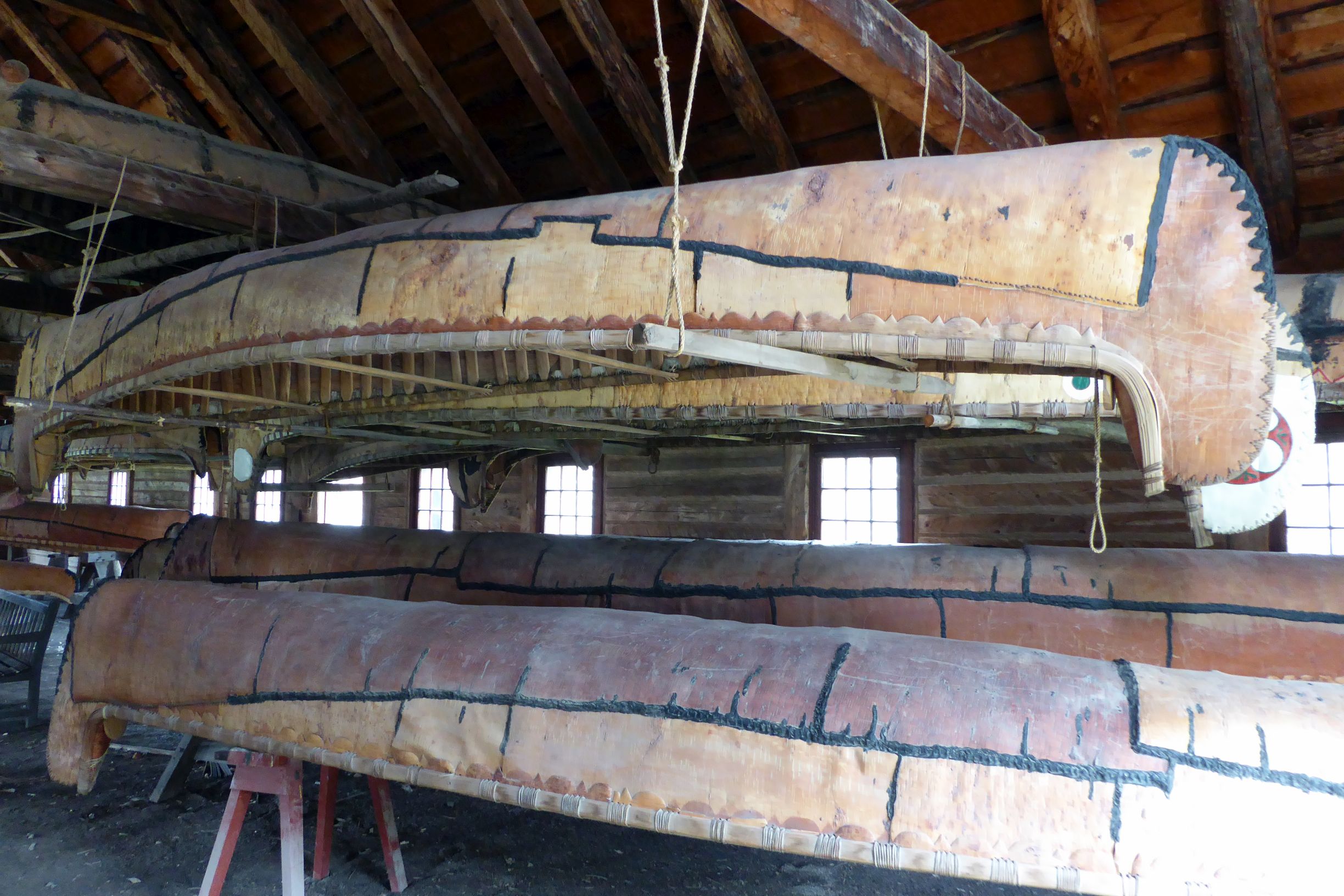
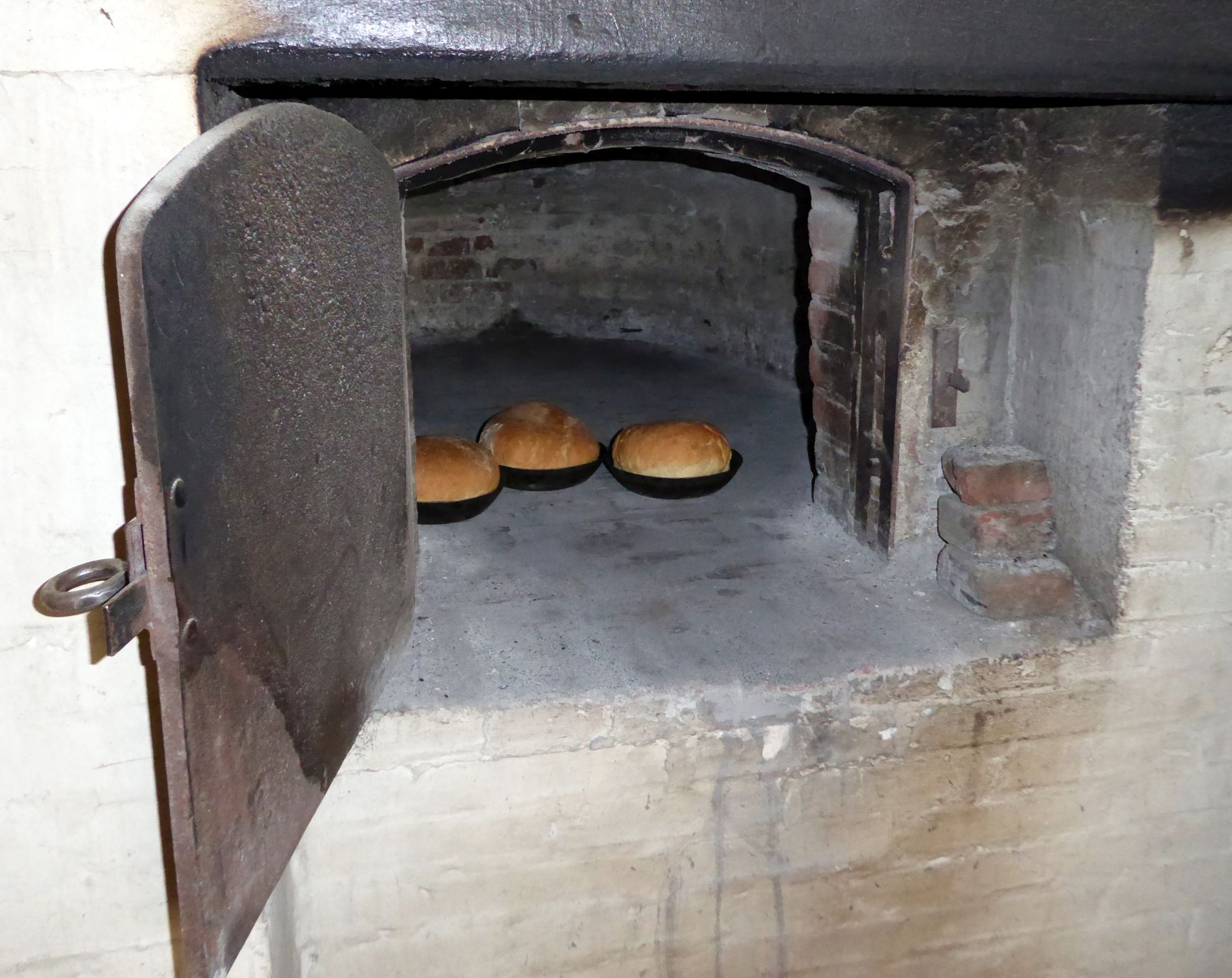
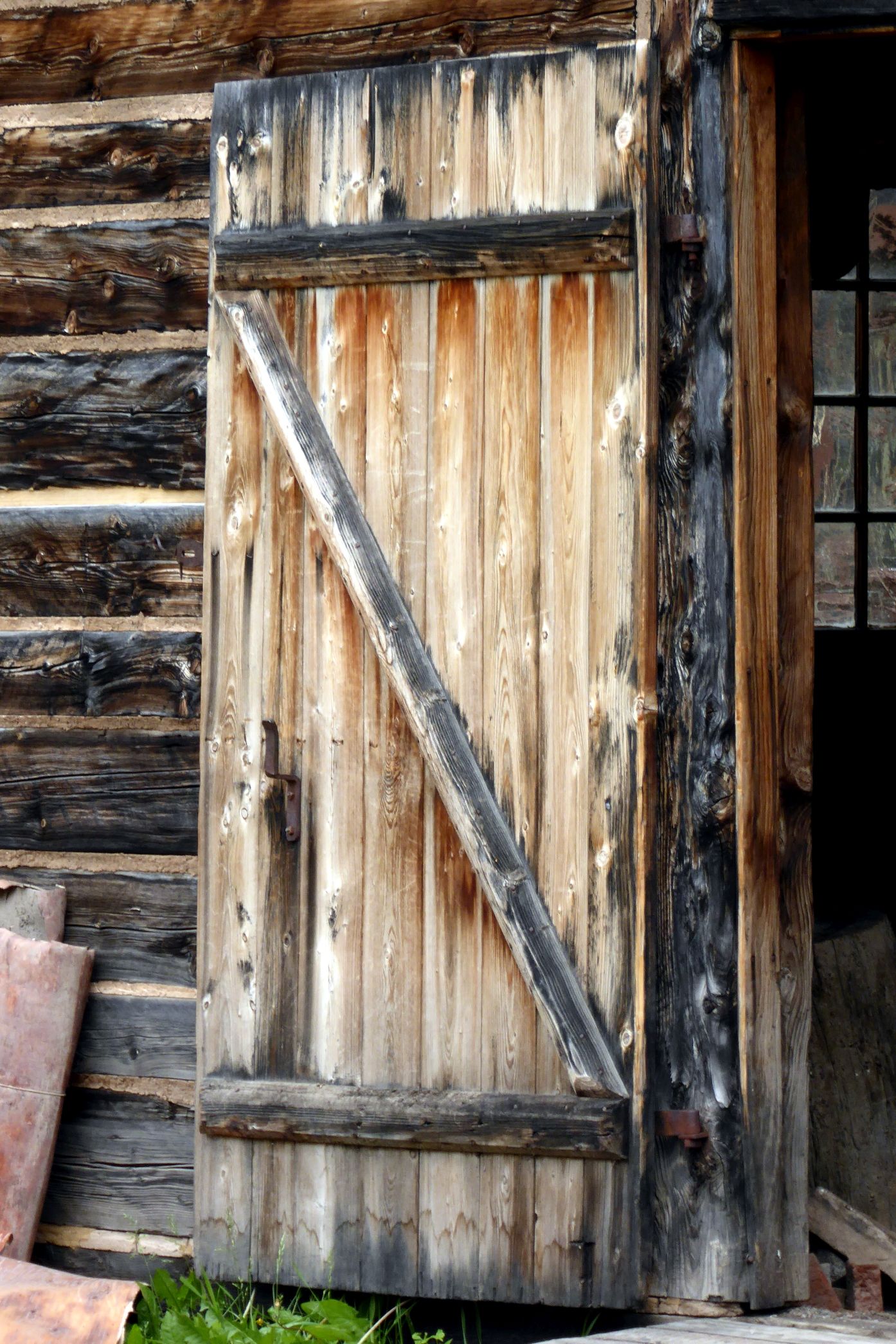
We also visited Fort William Historical Park, one of the largest living history sites in North America.  Although this is a replica, they do a great job depicting the original inland headquarters for the North West Company, the world’s largest fur trading enterprise.  Our costumed tour guide, a university history student, taught us about what life was like at the fort in the 1800’s.  We were split into small groups, and ours visited the Canoe Shed, Fur Stores, Apothecary, Kitchen & Bakery, and the garden.  I managed to slip away for a few minutes  and pop in to see a few others on my own.

These massive canoes were used to transport furs from Thunder Bay to Montreal.
Seeing these real furs turned my stomach!
We got taste these fresh baked breads right out of the oven.

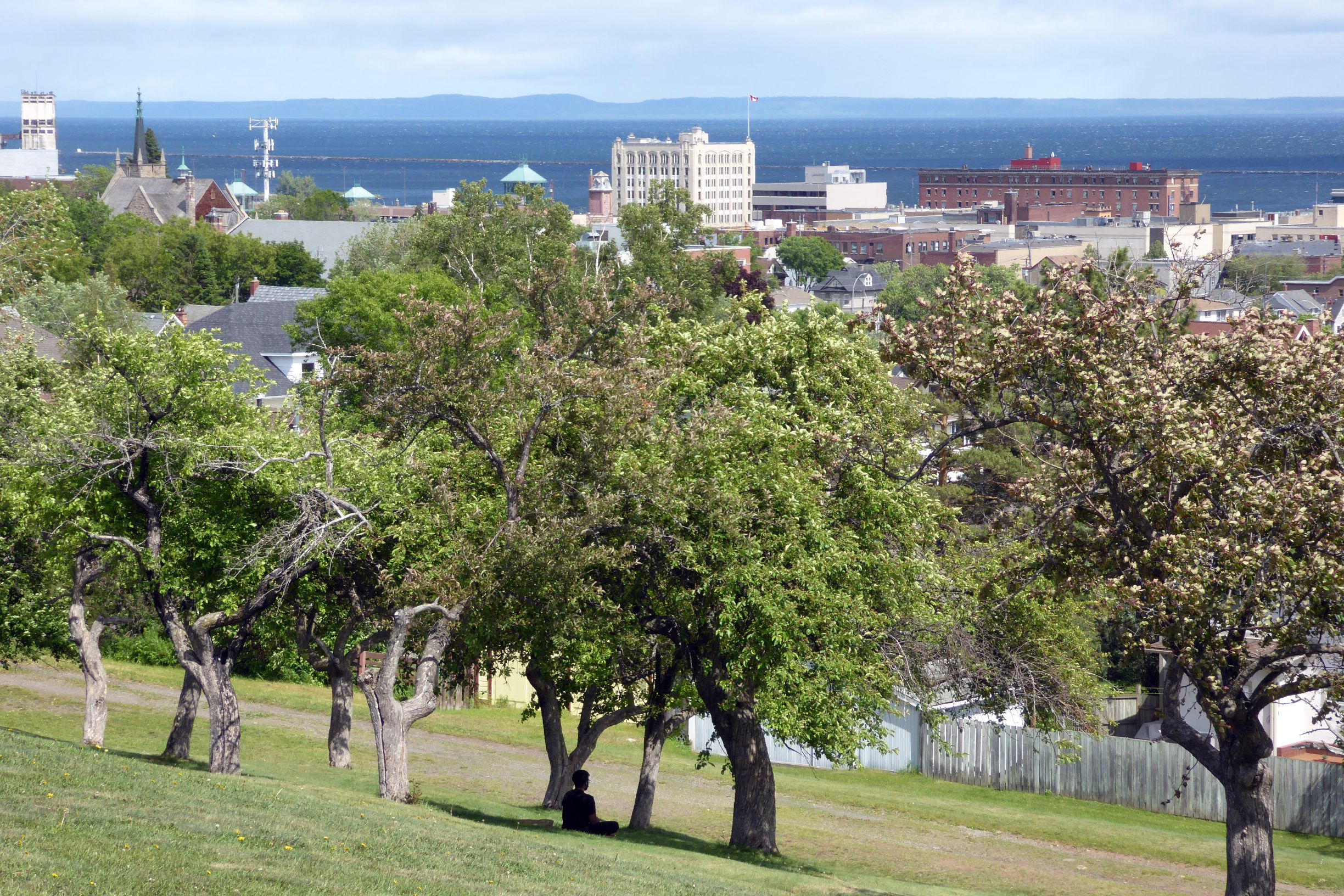
To conclude our tour, we returned to the city to take in the view of Lake Superior.

Next up: Splendid Sault Ste. Marie, Michigan

CRUISING THE GREAT LAKES #5: DELIGHTFUL DULUTH, MINNESOTA

It’s funny how the mind works.  After choosing “Delightful Duluth” for my title, I remembered a blog I had written about our previous visit to Duluth in 2017.  It was such a beautiful day last time we were there, so I wanted to include a link to those photos.  After including the link (see above in blue font), I noticed on my site I had used the same adjective to describe Duluth—“Delightful!”

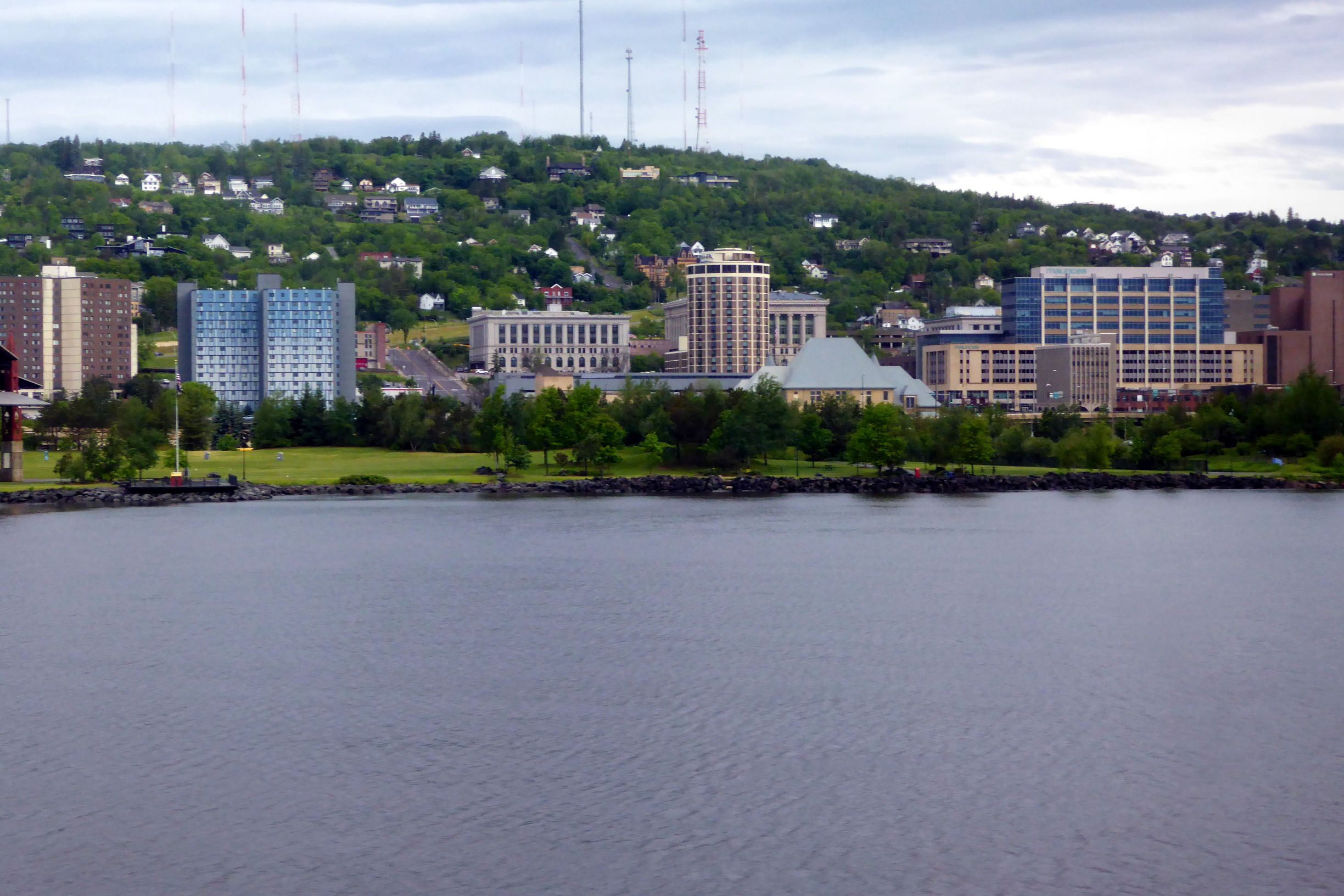
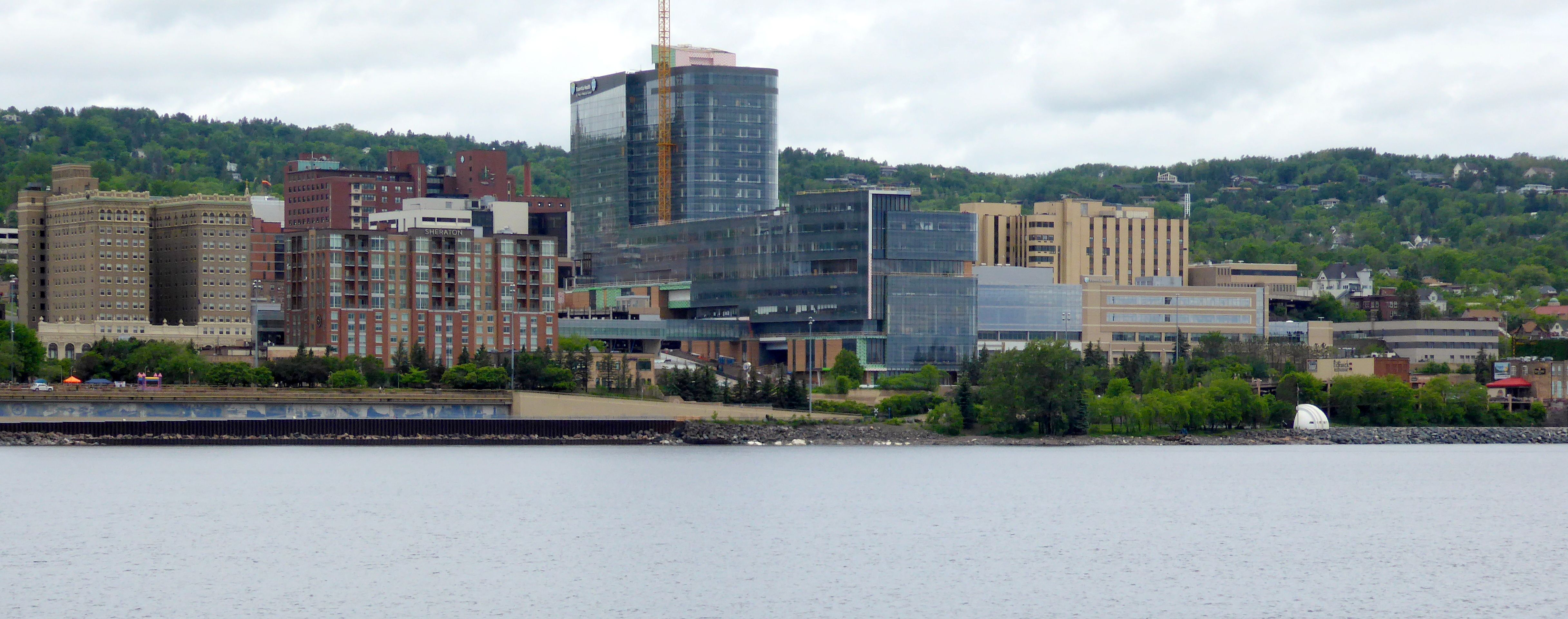
Although this was one of our only gloomy days during our entire 16-day trip, this visit to Duluth was delightful. We were fortunate to have just missed the rain that fell before we arrived.

Like a few of the other ports we visited while aboard Ocean Navigator, Duluth is located on Lake Superior in Minnesota’s Arrowhead Region.  Tourism is the main industry, and the population swells from less than 90,000 residents to anywhere from 500,000 to 1 million in the summer.  I would imagine it must feel like a ghost town in the winter when the average temperature is -2 degrees, the snowfall is typically 80” and the snowbirds flee along with the tourists.  The lake rarely freezes over; however, the water temperature averages 39 degrees.  I’ll give a big miss to swimming in those waters!

We heard an interesting statistic about Lake Superior to add to the facts we had learned so far about this Great Lake:  There is enough water in Superior to cover North and South America with one foot of water!  It’s also touted to be the cleanest and purest lake in the world with an average visibility of 27 feet.  What a nice environment for the 78 species of fish that live in it!

It sure can be a wicked lake though.  The largest wave ever recorded on the lake reached 31 feet!  That explains why there have been so many ship wrecks, including the wreck of the Edmund Fitzgerald, which sunk on November 10, 1975.  For those of us who have been around awhile, we immediately think of the beautiful song Gordon Lightfoot wrote about the 29 crew members who lost their lives that day. 

Throughout our cruise we learned a lot about the Edmund Fitzgerald in the various maritime museums we visited, including the Lake Superior Maritime Visitor Center.  We also had an “aha” moment after we learned that lake freighters that stay on the lakes are called “Lakers.”  Now I know how my favorite childhood sports team got its name!  Prior to becoming the Los Angeles Lakers, they were the Minneapolis Lakers, and the name was inspired by Minnesota’s nickname, “Land of 10,000 Lakes.” 

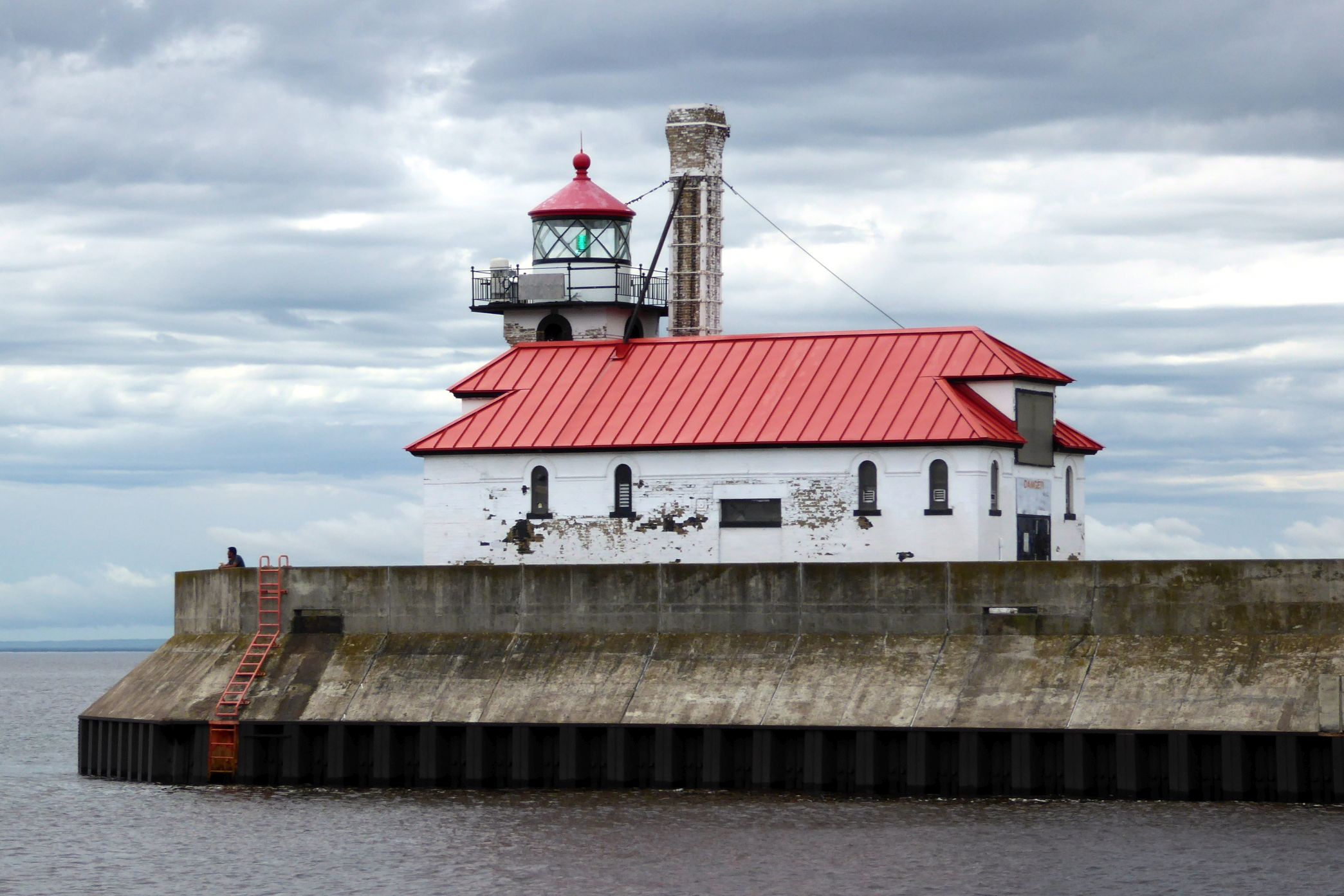
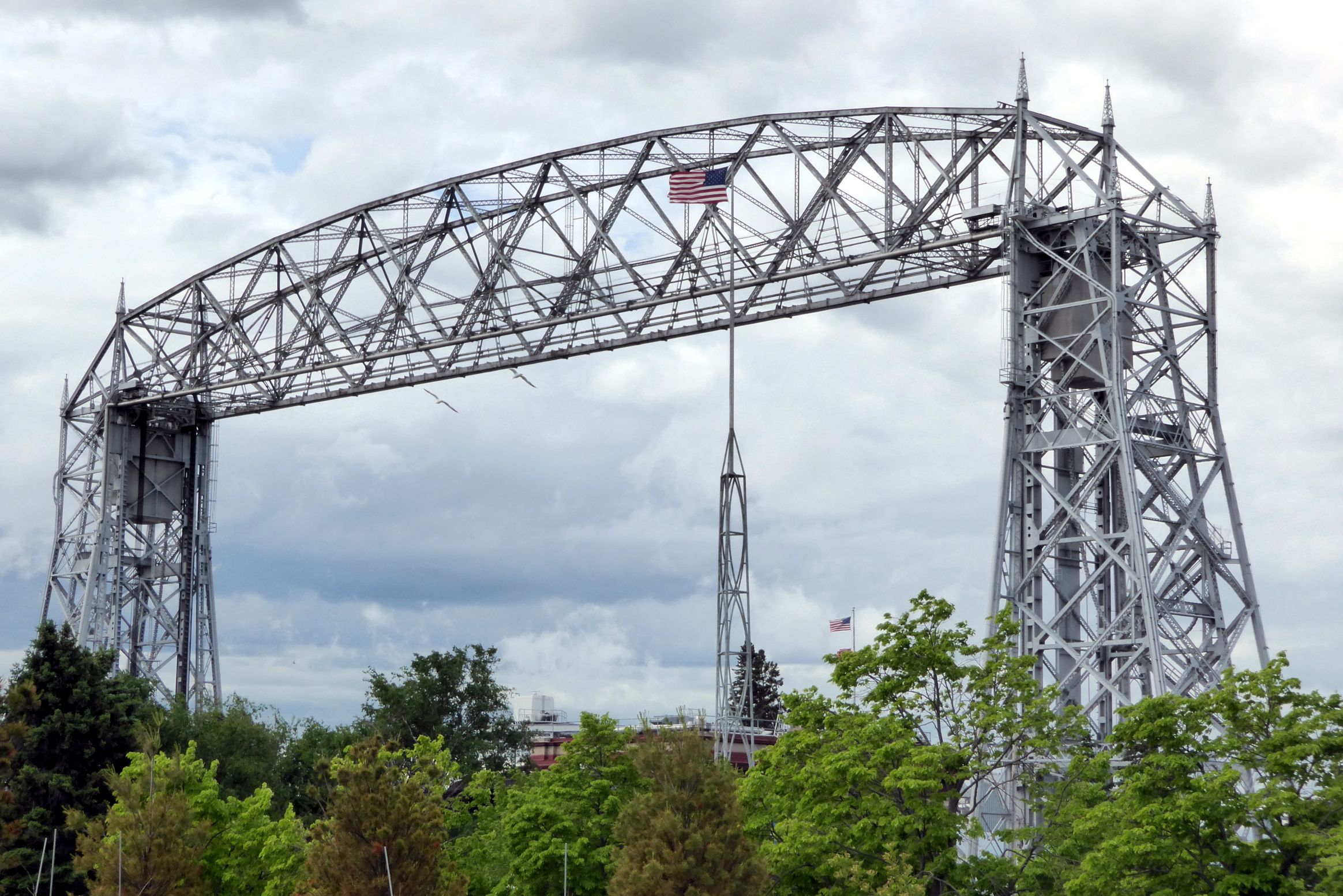
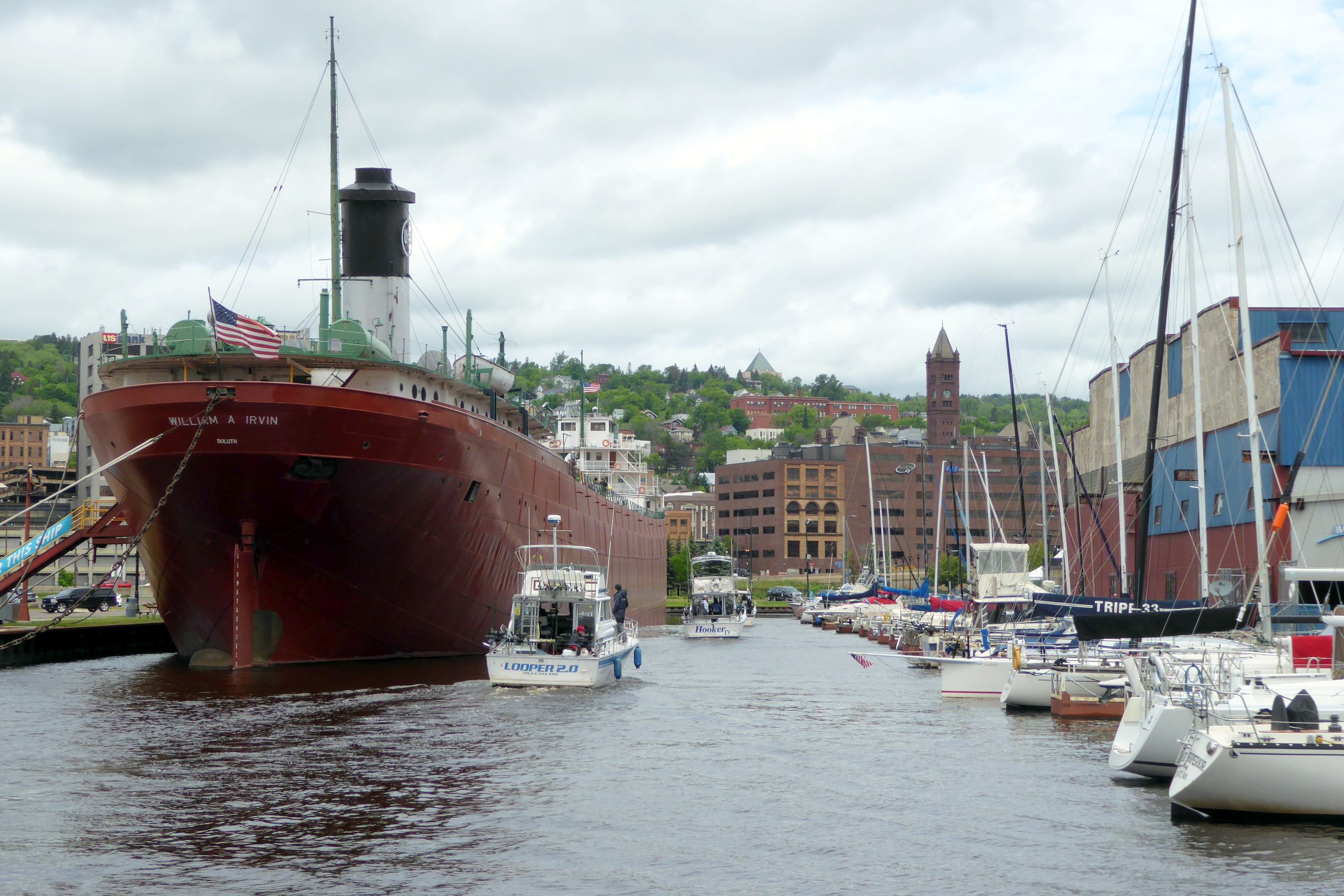
Following our visit to the center, we walked all around the area before returning to the bus for the remainder of our included tour.  These shots were captured along the way:

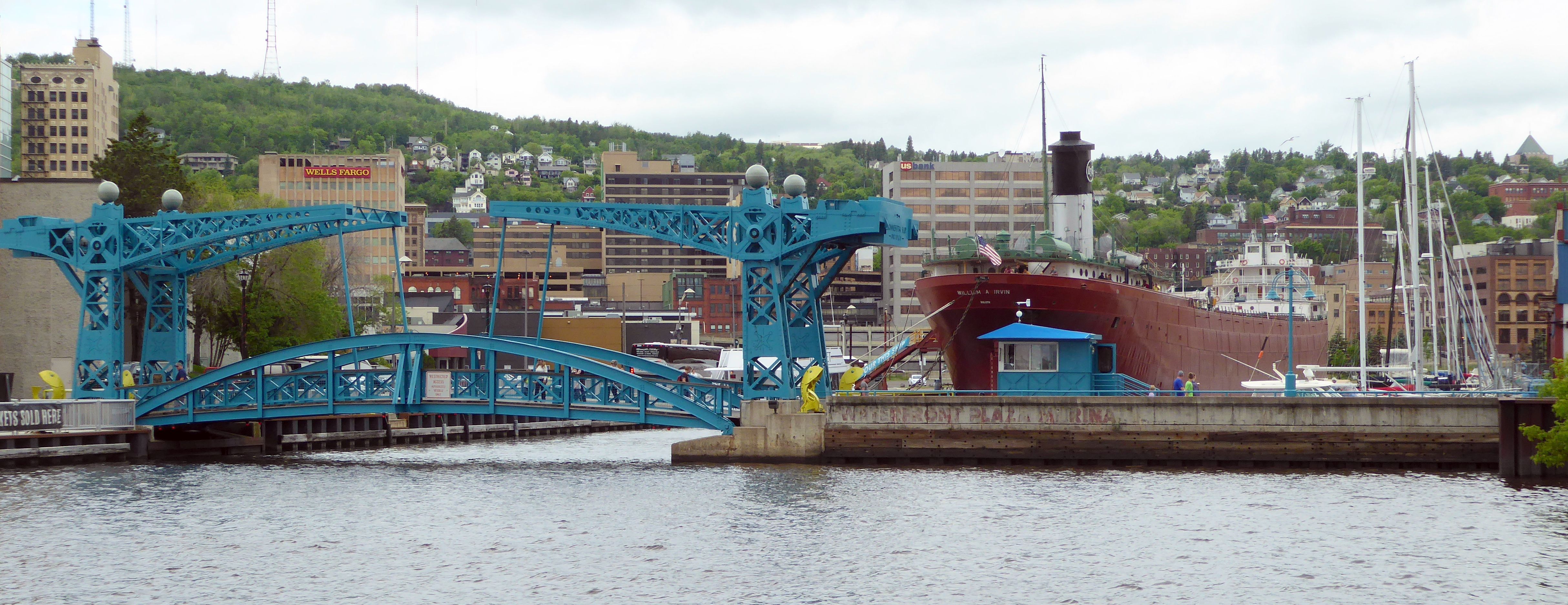
The Aerial Lift Bridge is a Duluth landmark dating back to 1905. It was first constructed as the United States’ first transporter bridge, and then it was converted to a vertical lift bridge in 1929-1930.
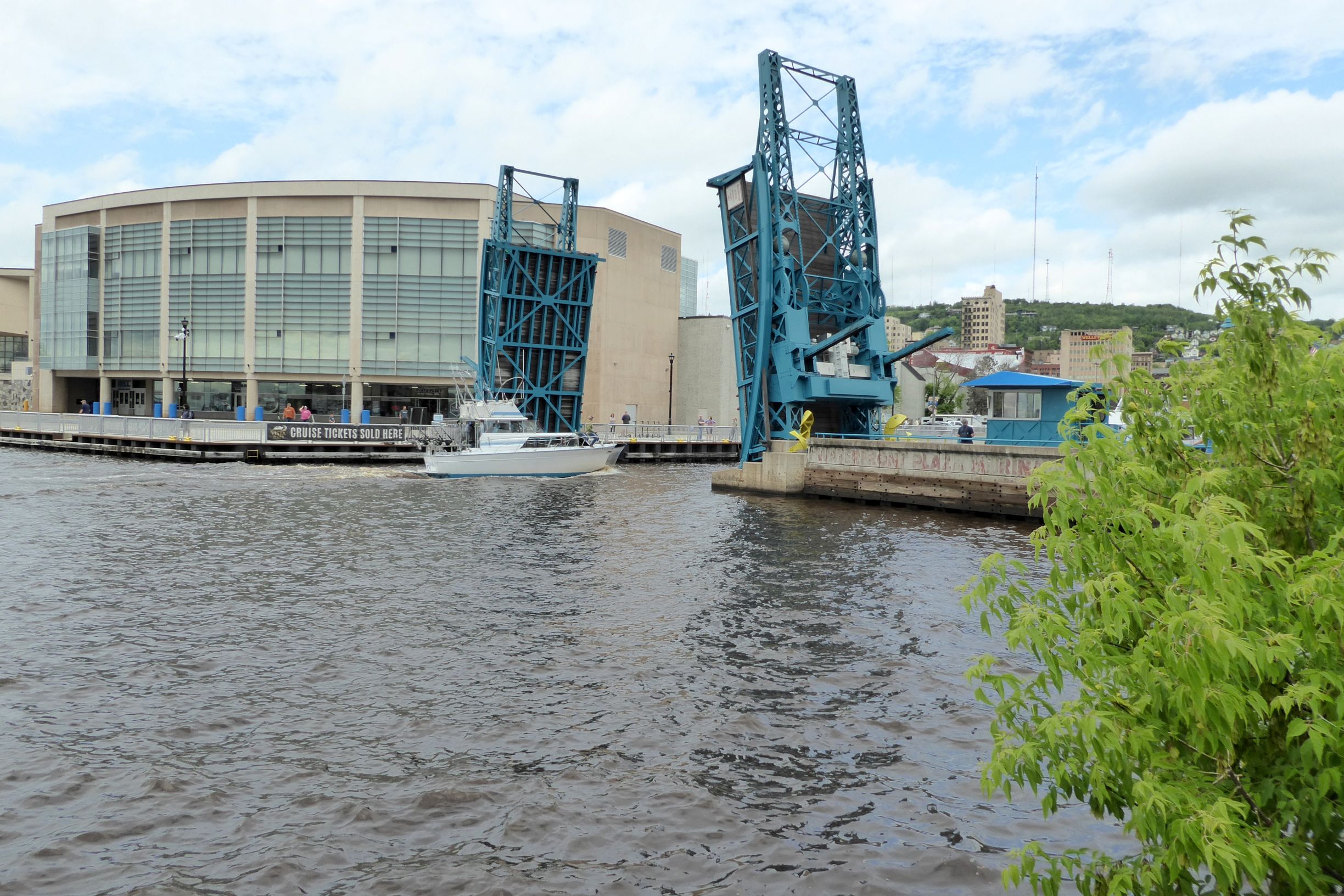
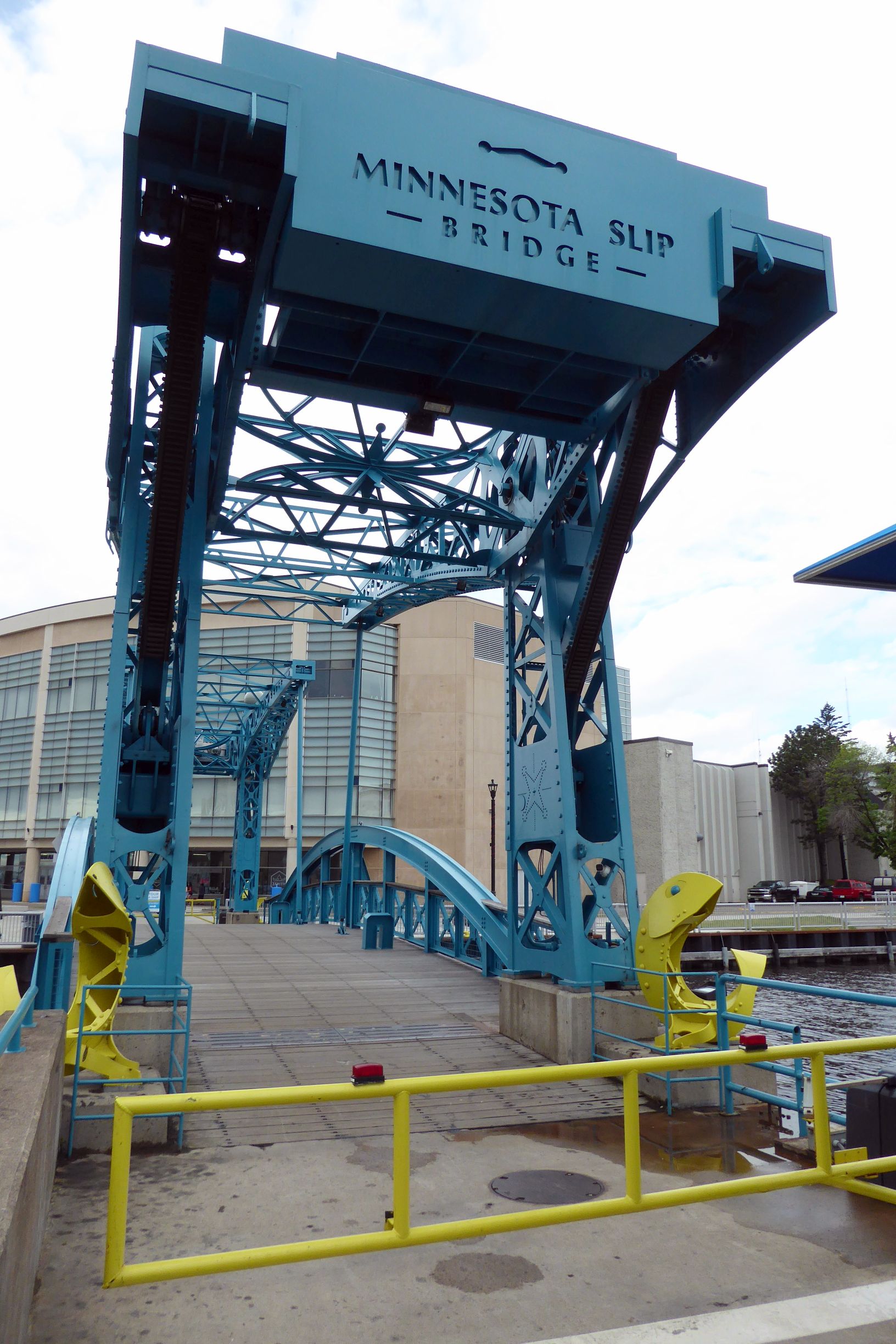
This is a pedestrian and bicycle bridge that connects Canal Park to the Duluth Entertainment and Convention Center
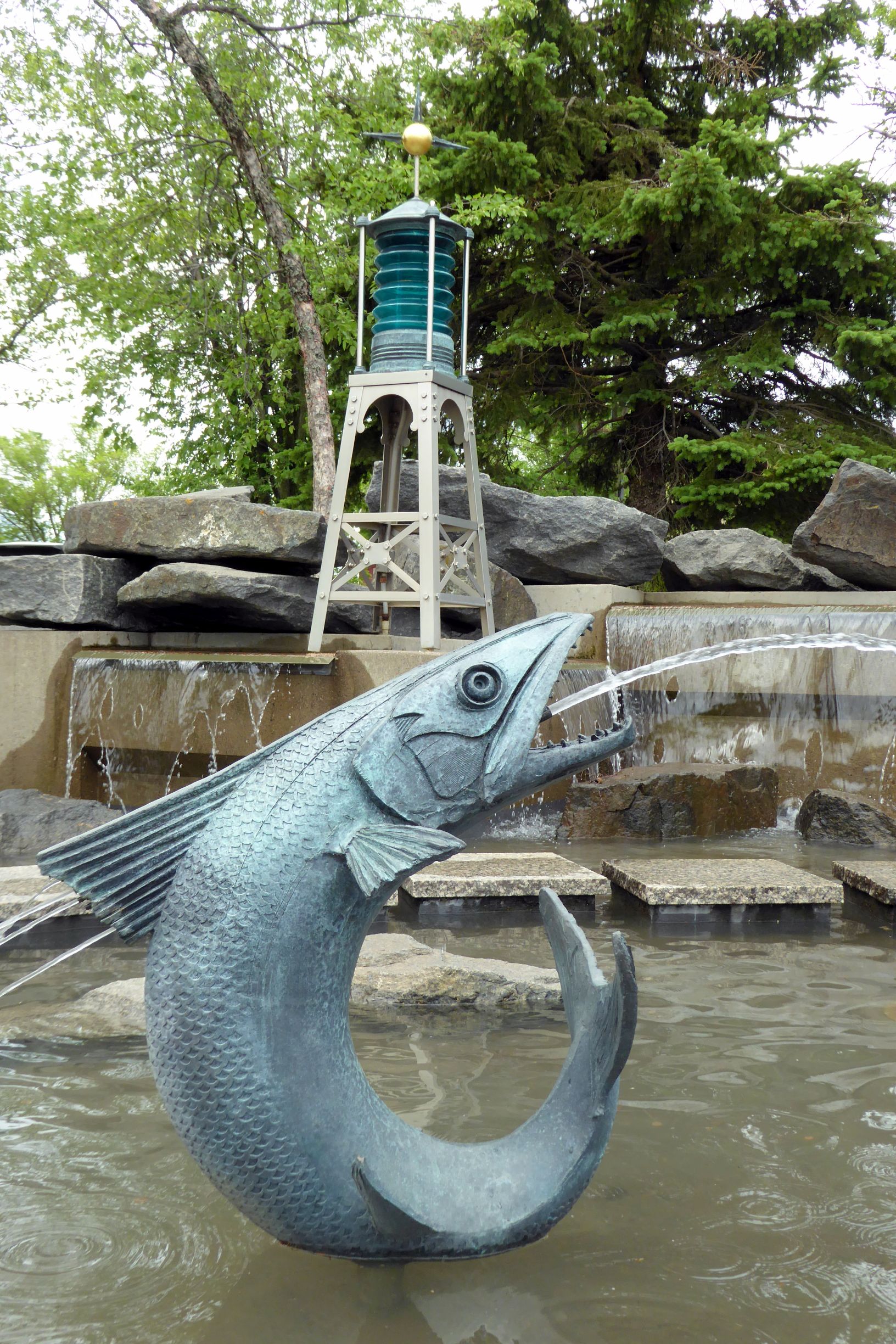
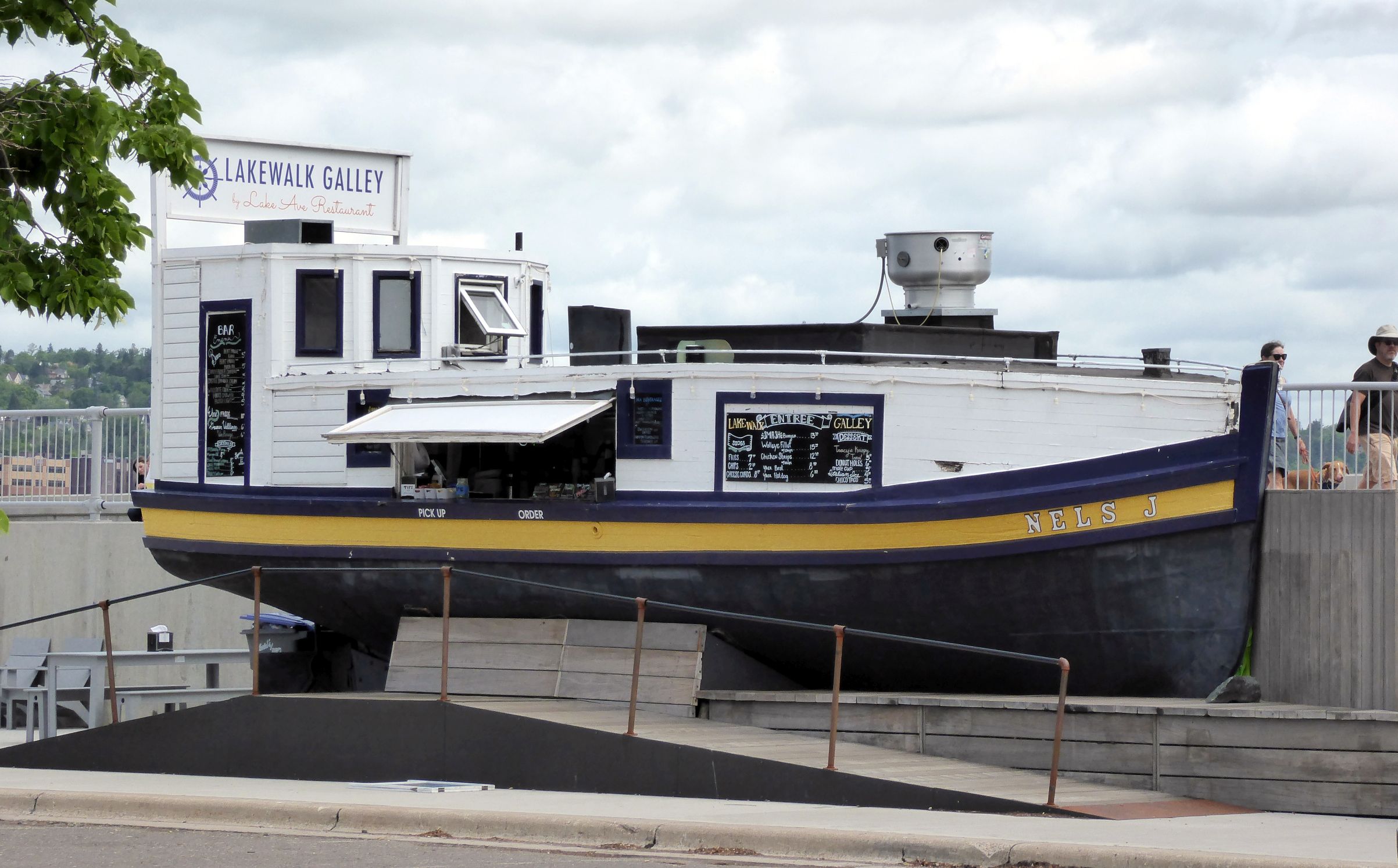
What a clever idea for a lakefront takeaway restaurant! It is situated at the end of a parking lot and along Duluth Lakewalk.
This restaurant, located next to the Lake Superior Maritime Visitor Center and Aerial Lift Bridge is also a clever idea. They converted a cargo container into a takeaway restaurant.
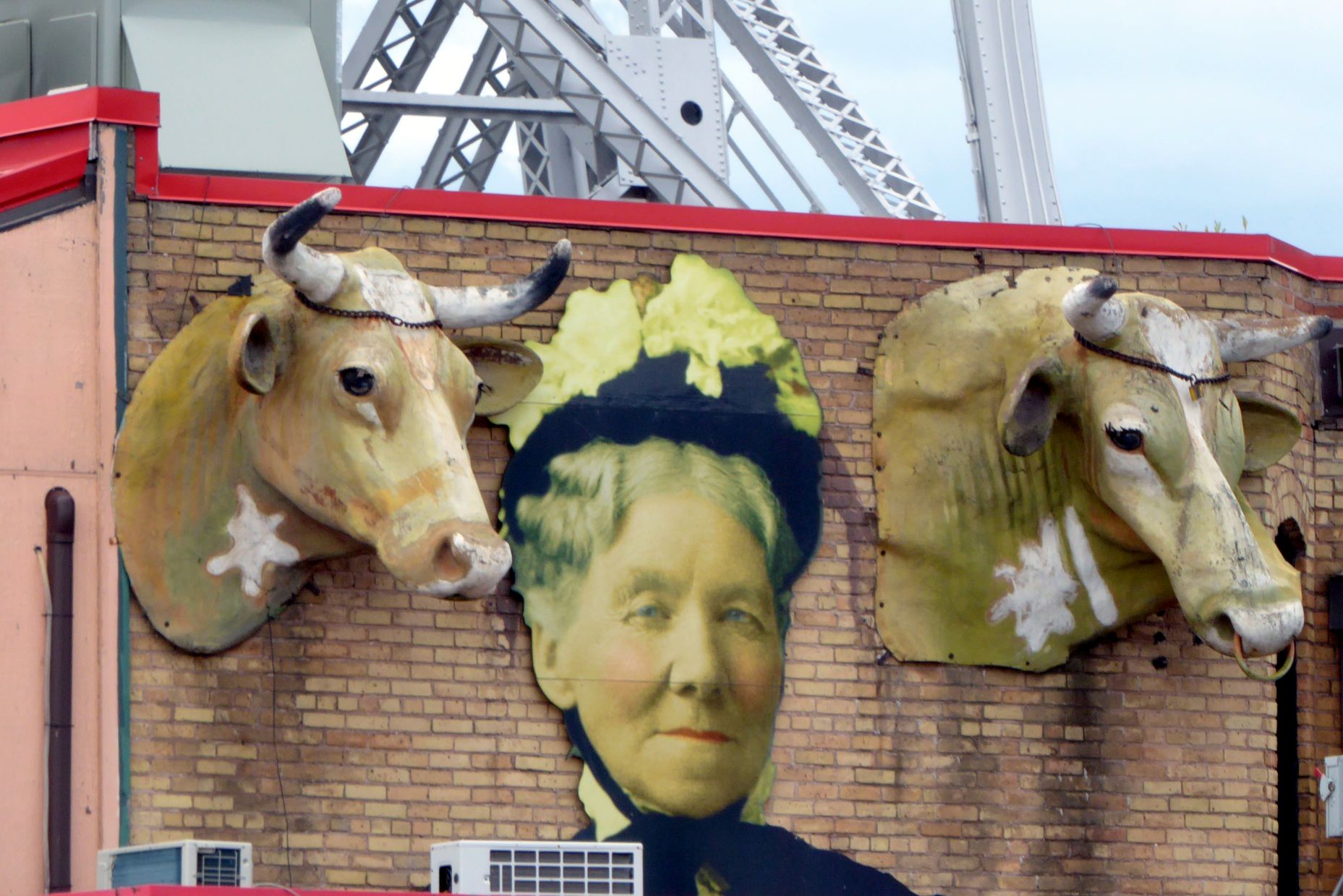
Then, there was this. Hmmm. It is located just behind the takeaway and is a dine-in restaurant. At least they have a sense of humor!

Next up:  Touring Thunder Bay, Ontario, Canada

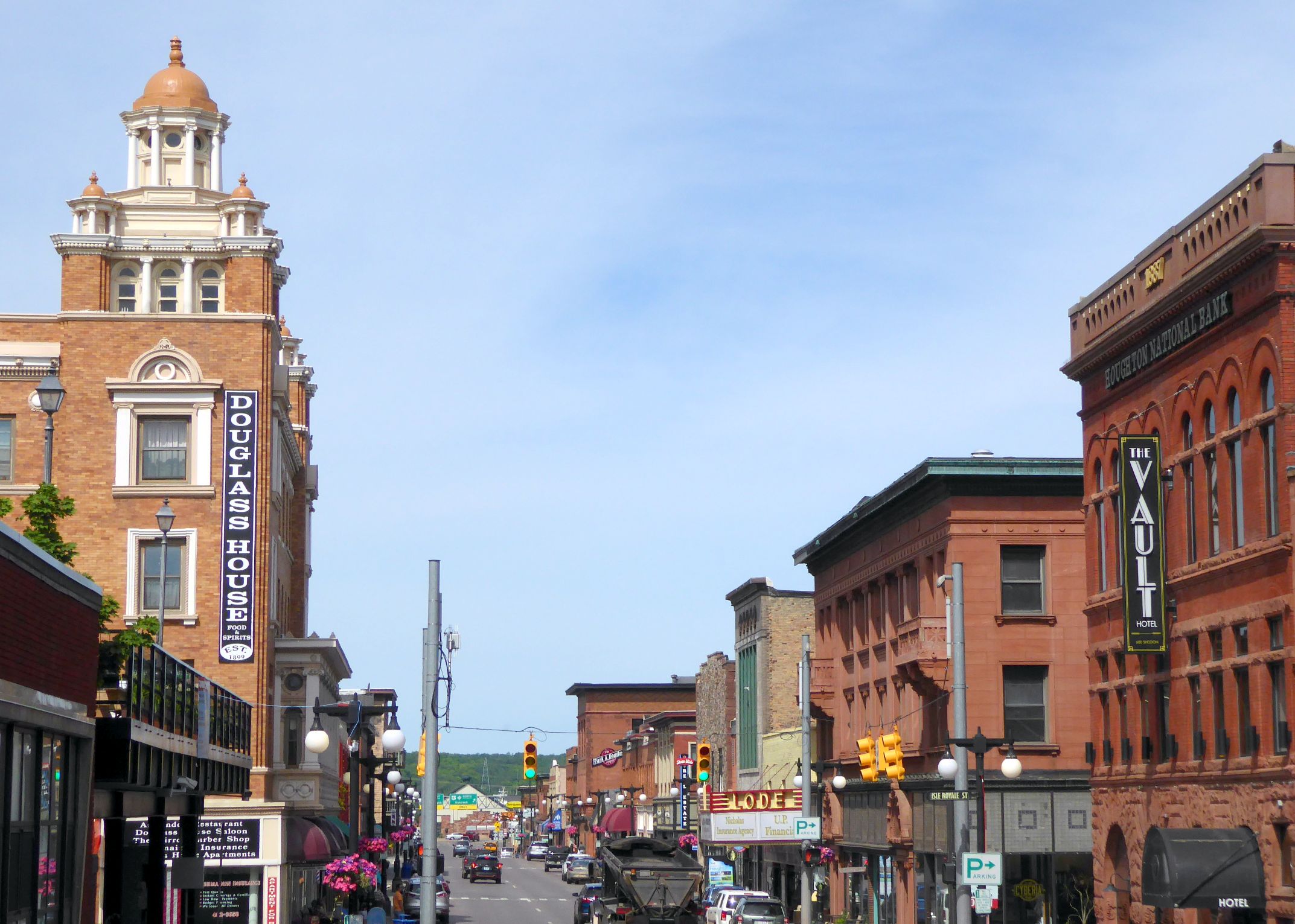
CRUISING THE GREAT LAKES #4: HOOFIN’ IT AROUND HOUGHTON, MICHIGAN

Located on the Upper Peninsula of Michigan, Houghton lies along Portage Lake and the Keweenaw Waterway.  Native Americans mined copper here thousands of years before European settlement.  The later discovery of copper lodes between 1855 and 1870 resulted in an economic boom that lasted until after World War I.  Many Cornish and Finnish immigrants arrived in the area to work in the copper mines, and Houghton today has the largest concentration of Finnish/Americans in the country.

The last copper mines closed in the late 1960’s, and Houghton is currently a distribution center for wood materials, and for dairy and poultry farming.

Houghton is small; just 8,000 residents.  They must be hearty souls, because winters in Houghton are frigid.  Some years have seen snow during every month!  In 1978-79, the area logged in 406 inches, and it snowed for over 50 days straight.

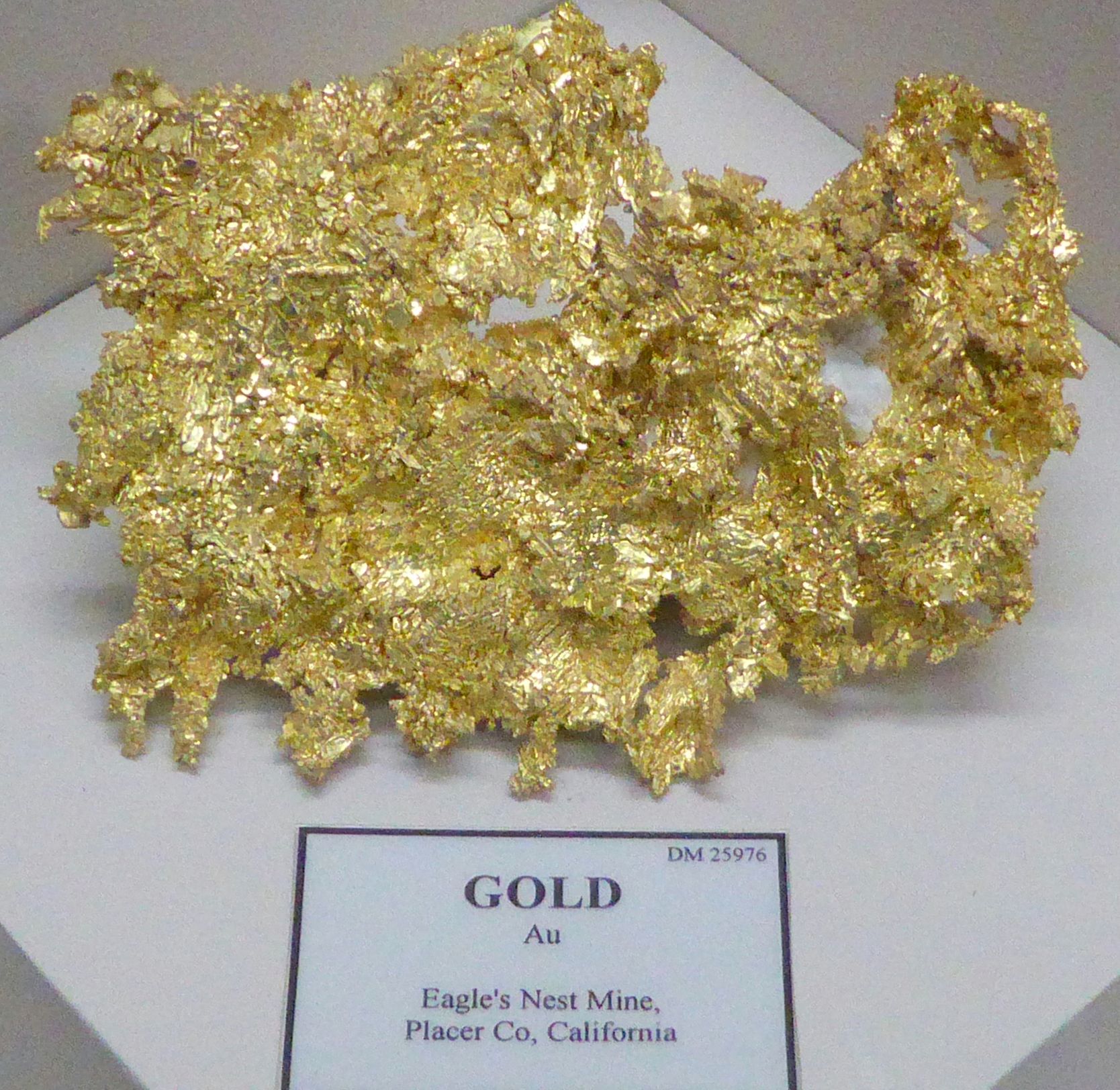
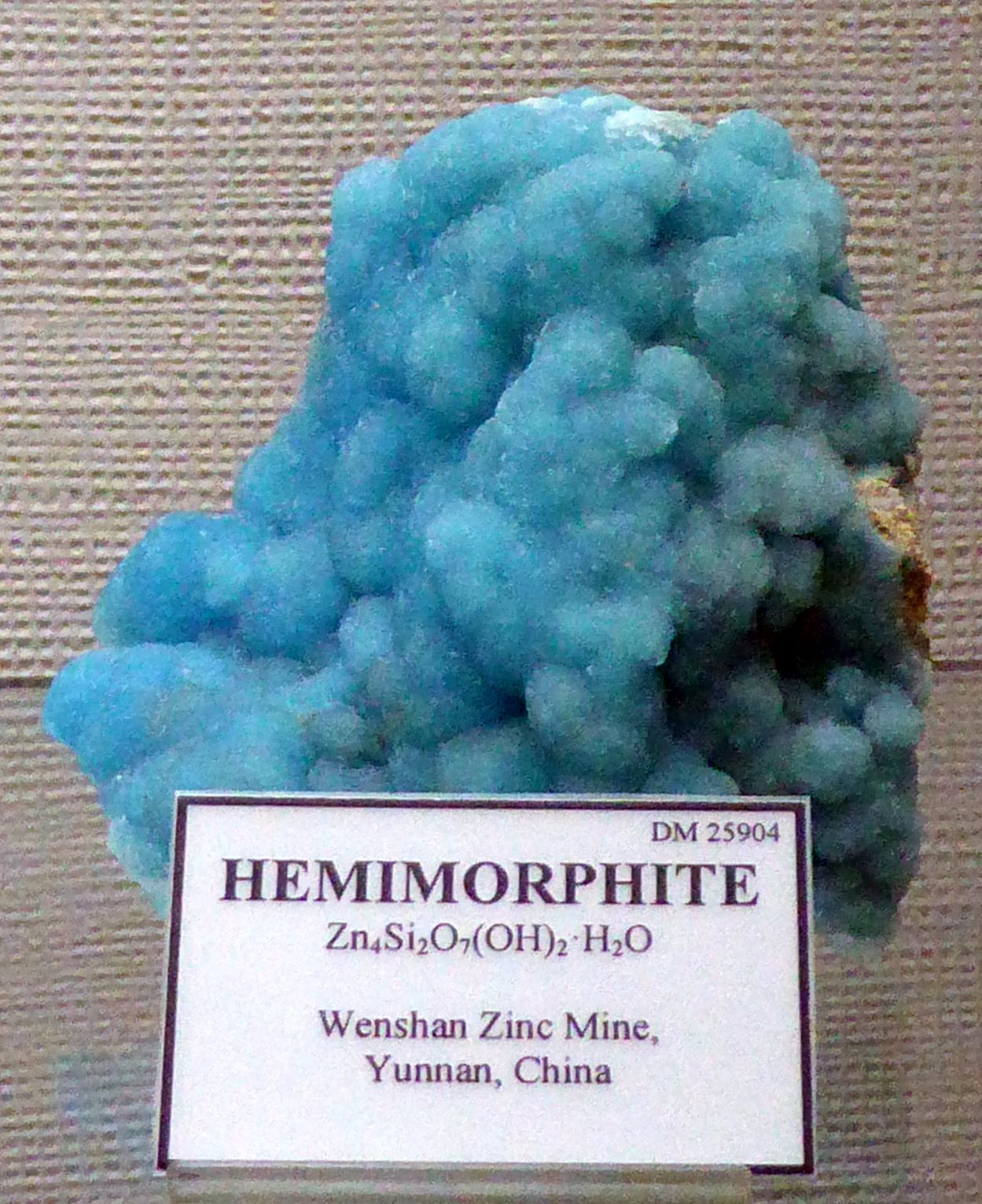
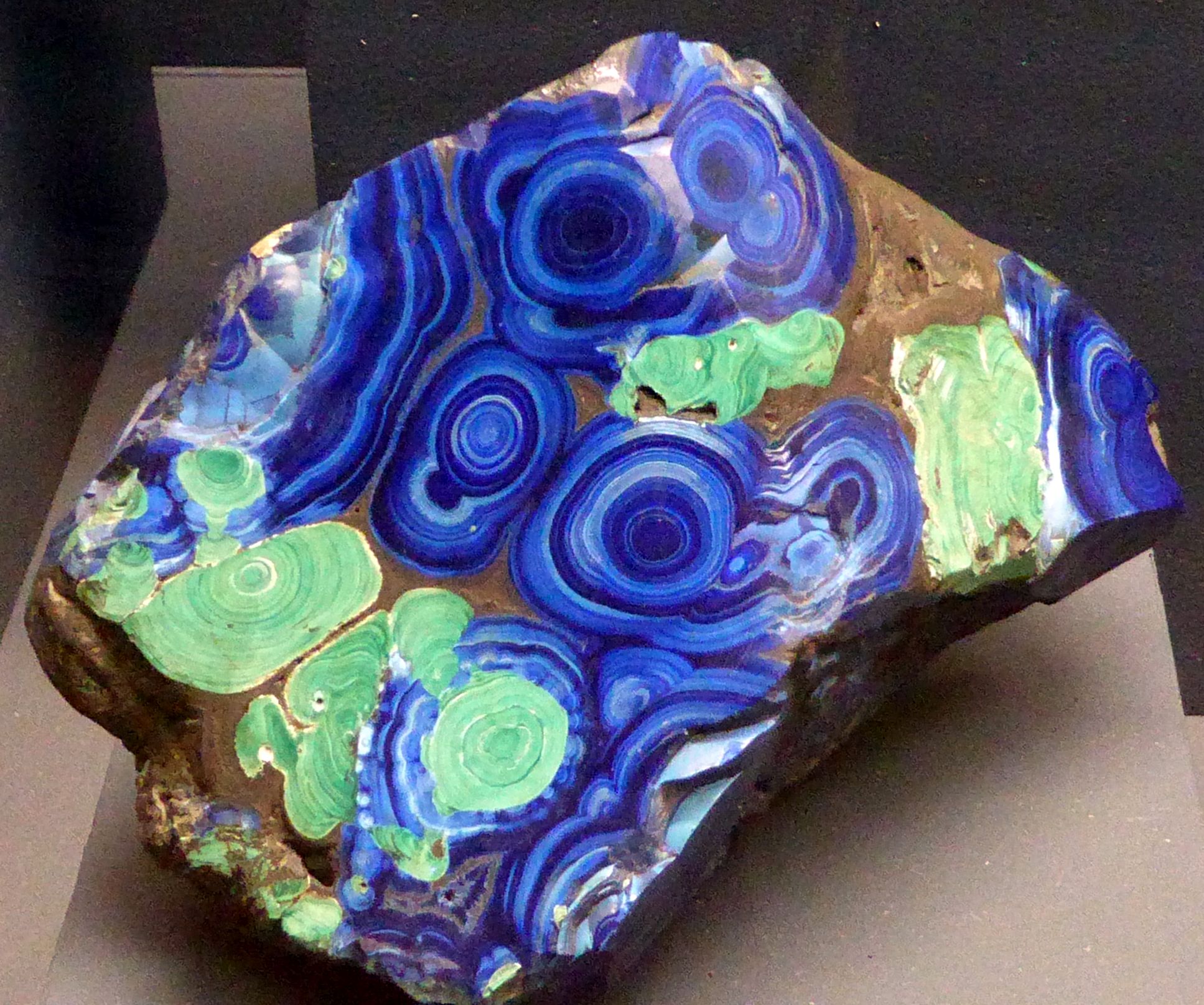
American Queen Voyages organizes an included tour for every port, and the highlight of the tour in Houghton was visiting the A.E. Seaman Mineral Museum of Michigan Tech, which features specimens of copper and over 100 other metals and crystals.  Neither of us have ever given more than a passing interest to geology; however, we were in awe of the natural beauty we saw in that museum!  The vibrant rainbow of colors of many of the specimens were dazzling.

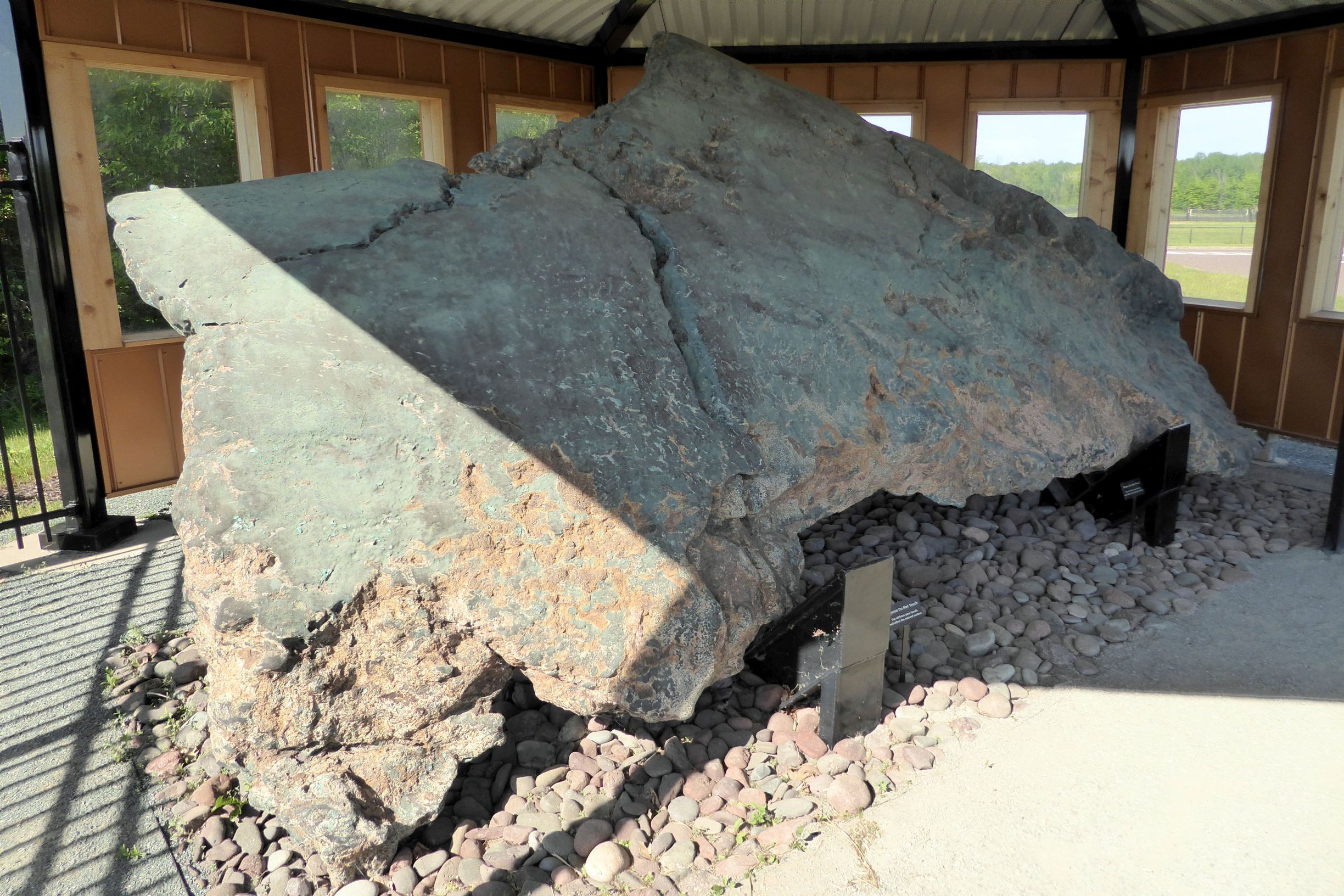
Outside the museum was a lovely garden and the most amazing specimen of all; a 19-ton tabular mass of native copper which was recovered from Lake Superior.  It was discovered in 1991 by SCUBA divers at a depth of 30 feet. 

Before the tour returned to the ship, we visited the Carnegie Museum of the Keweenaw.  After a quick look around, Bruce and I opted to leave the tour and stroll the streets of downtown before walking back to the ship.

We got a good laugh out of our reflection in this curved window. How about those toothpick legs?! I just love the styling of that pick-up truck behind us!

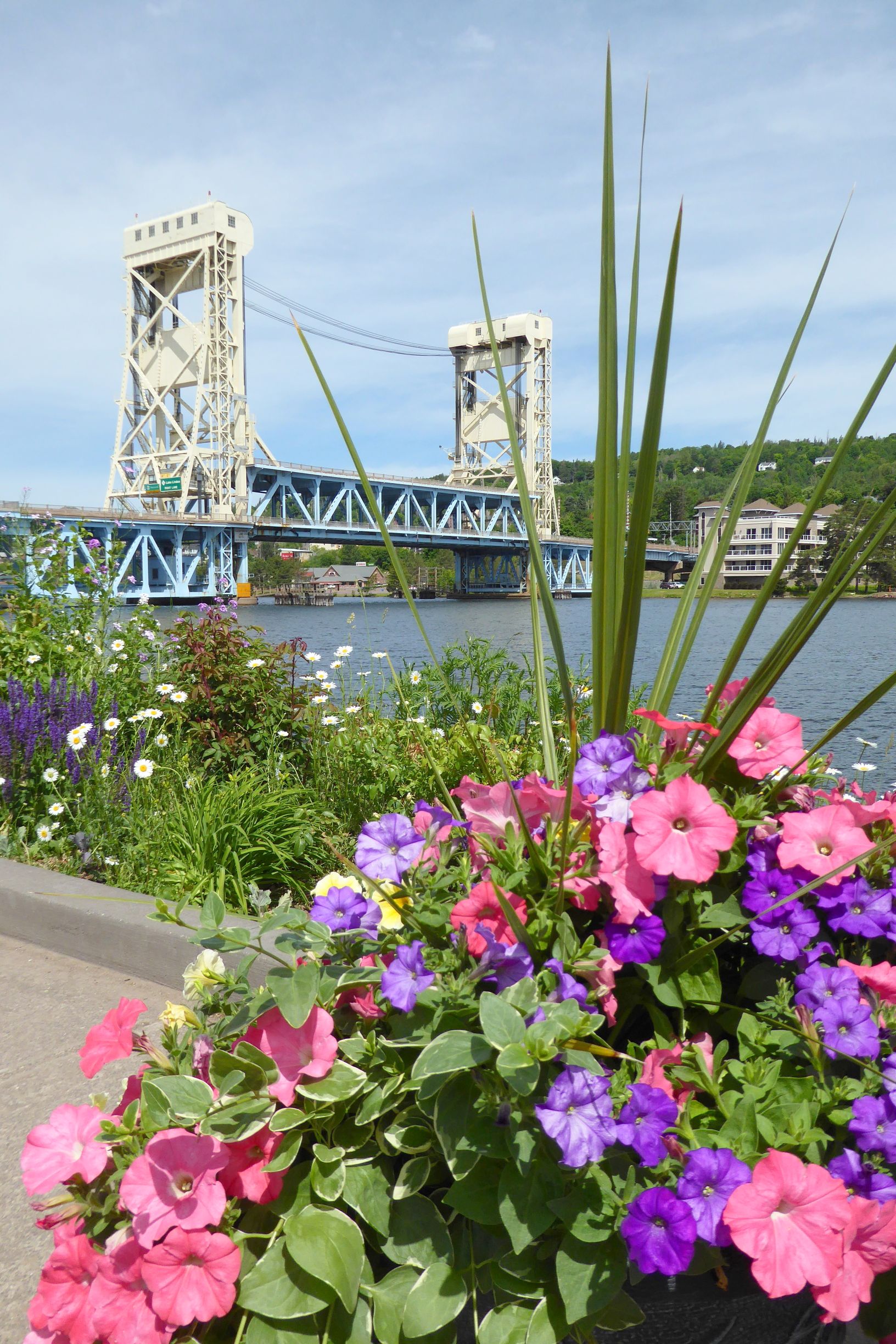
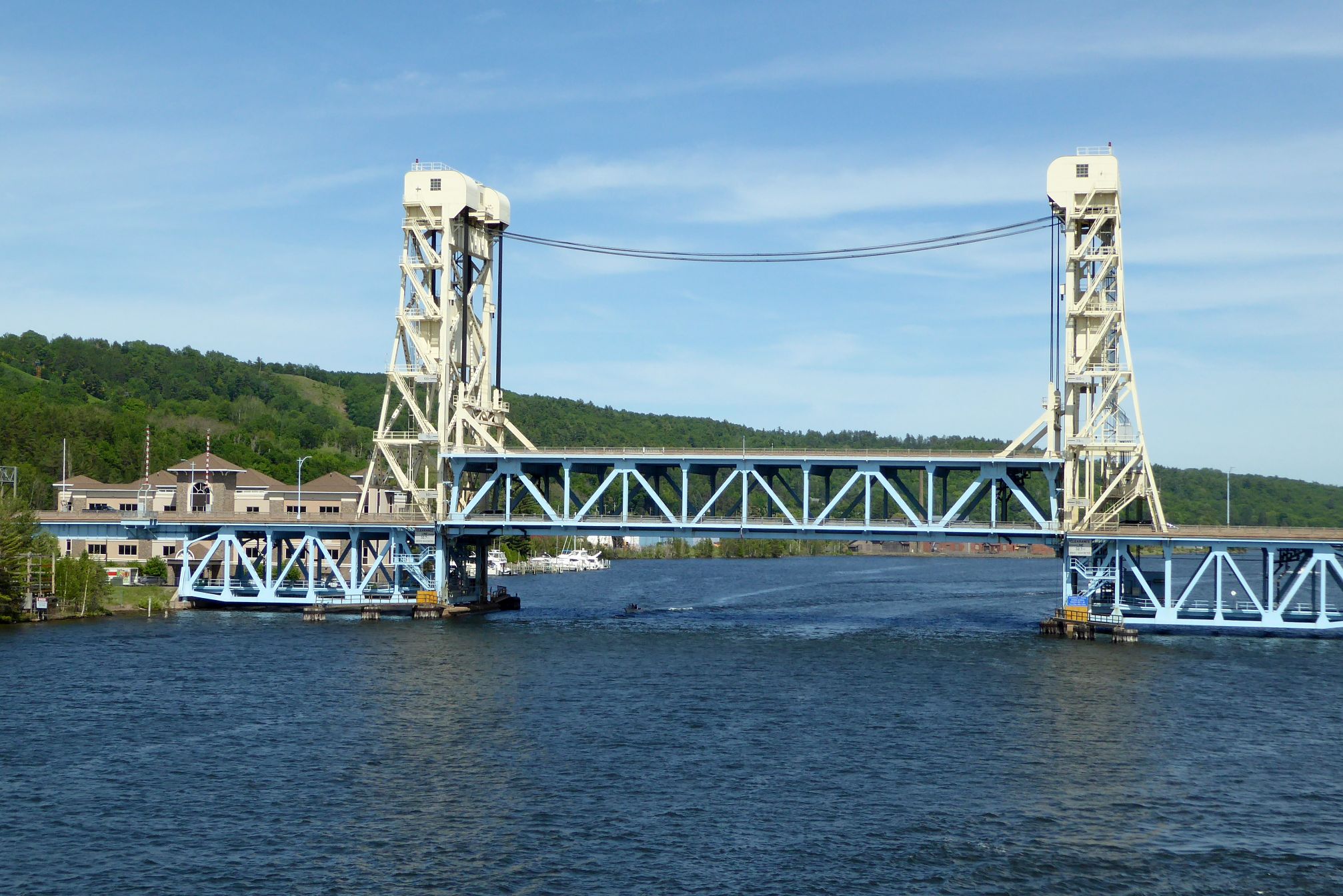
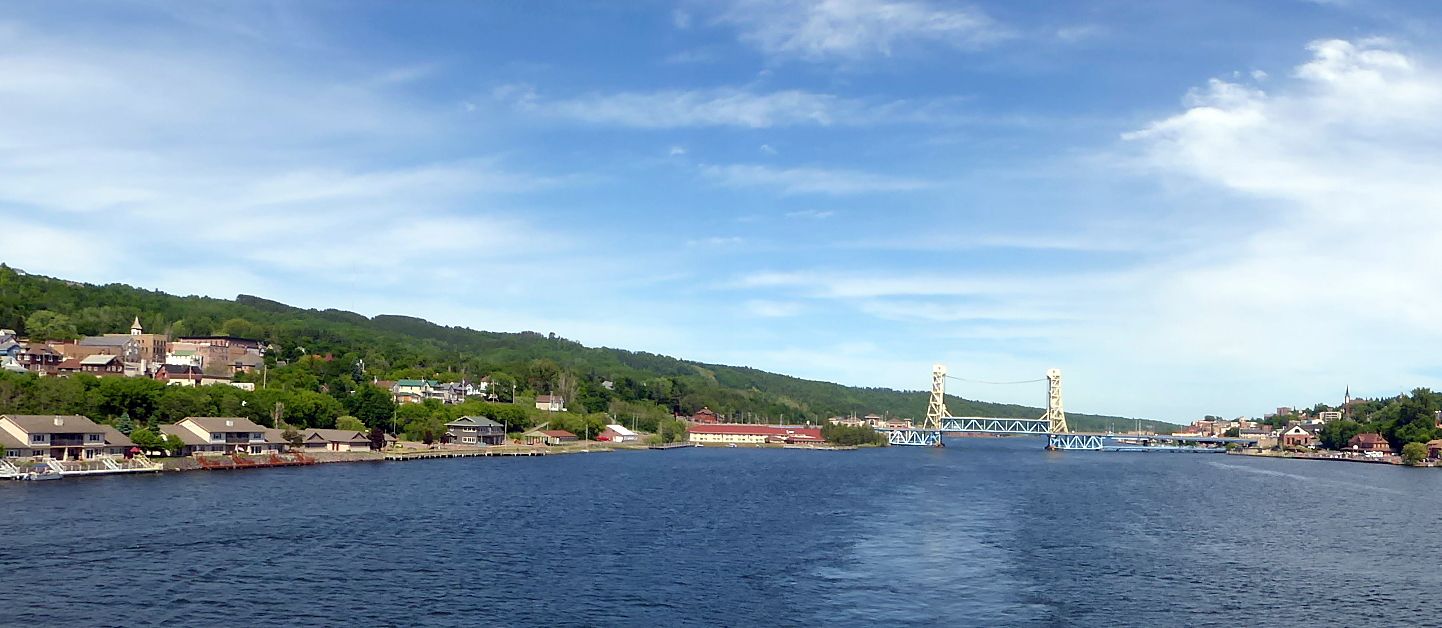
We were impressed with the attractive park along the lake— a wonderful place to relax, have a picnic, enjoy the flowers, and take in the views of the Portage Lake Lift Bridge.  Connecting Houghton to Hancock, the bridge is the world’s heaviest and widest double-decked vertical-lift bridge.  In the winter, the lower level is used for snow mobiles as a safer way to cross over the lake rather than on the frozen (or not so frozen, as the case may be) lake.  More than one snowmobile has ended up breaking through the ice, due to its driver’s lack of better judgment!

Viewing the sail-away from the top deck was spectacular.  It was a gorgeous day, and we had a perfect perch from which to enjoy the beautiful scenery as we cruised on to Duluth, Minnesota.

Next up:  Delightful Duluth

CRUISING THE GREAT LAKES #3: MEMORABLE MARQUETTE, MICHIGAN

In between our visits to Mackinac Island and Marquette (and on the day before Mackinac), we had two days cruising.  Normally, ships refer to this as being “at sea,” but since we were on the Great Lakes, Bruce and I joked about being “at lake.”

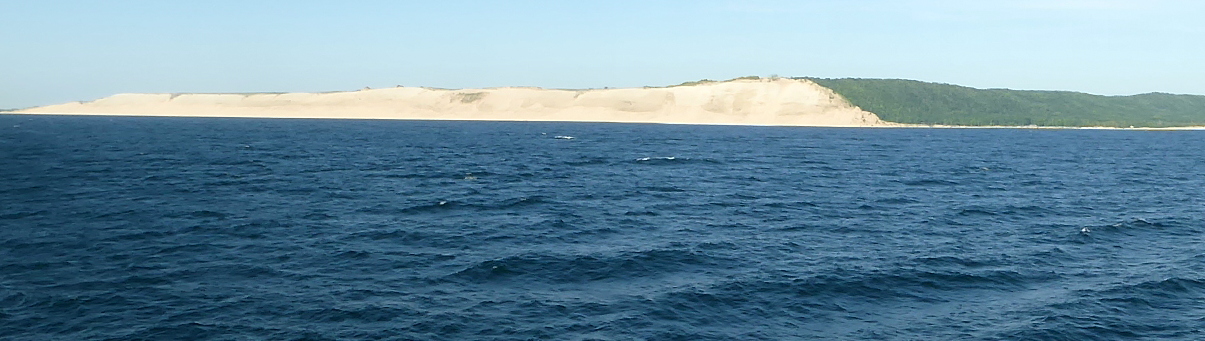
Our first day “at lake” had us cruising by Michigan’s Sleeping Bear Dunes:

Before arriving in Marquette, we cruised what is reputed to be one of the most turbulent bodies of water in the world—Lake Superior.  As I mentioned in my first post, we were very fortunate to have such calm waters!

This is how calm it was while we were cruising!

The Great Lakes (Lakes Superior, Michigan, Huron, Erie, and Ontario) are the largest group of freshwater lakes by total area and are second largest by total volume, containing 21% of the world’s fresh water by volume.  Bordering both Canada and U.S.A., they connect to the Atlantic Ocean via the Saint Lawrence River, making them a major source for transportation, migration, trade, and fishing.

A note to all my swimmer friends who might be thinking the Great Lakes would be a great vacation spot for open water swimming:  Bring your wetsuit!  Lake Superior averages 40-42 degrees, topping out at 62+/- degrees in the summer!  It’s a very deep lake, too, reaching a depth of 1,332 feet.

Marquette (population 20,629), located on the southern shores of Lake Superior in Michigan’s Upper Peninsula, was most memorable for two reasons:  An interesting water feature (for lack of a better word!), and a beautiful lakeside park and beach.

Upon our morning arrival, before heading up to the River Grill for breakfast, I had stepped out on deck to snap a few photos.  This was the first thing I saw:

What the heck is THAT thing?  I hadn’t a clue, but I knew I would find out during our included tour.

Having done no prior research on Marquette before our cruise (very uncharacteristic of me!), I hadn’t realized the port was known primarily for shipping iron ore.  The first mining took place in the mid-1800’s, and by the 1850’s, Marquette was linked by rail to several mines.  Docks were built to transfer the iron ore from rail cars to the freighters below for transport to other cities to be made into steel:

This photo was at the Marquette Regional History Center

Over time, the railroad companies merged and bigger docks were needed.  Those docks were located in the upper harbor, and the Marquette Lower Harbor Ore Dock 3 B W, built in 1931-1932, was dismantled in 1971.  Ever since, the dock has been a source of great interest and inspiration for the community.

A working iron ore dock at the upper harbor

Our included tour took us along Presque Isle State Park, which was a gorgeous 323-acre park featuring sandstone cliffs with outlooks to take in the views as well as beautiful beaches below.  I was impressed by the natural beauty as well as how nicely it was designed for locals and tourists to enjoy for walking, hiking, cycling, picnics, and beach-going.

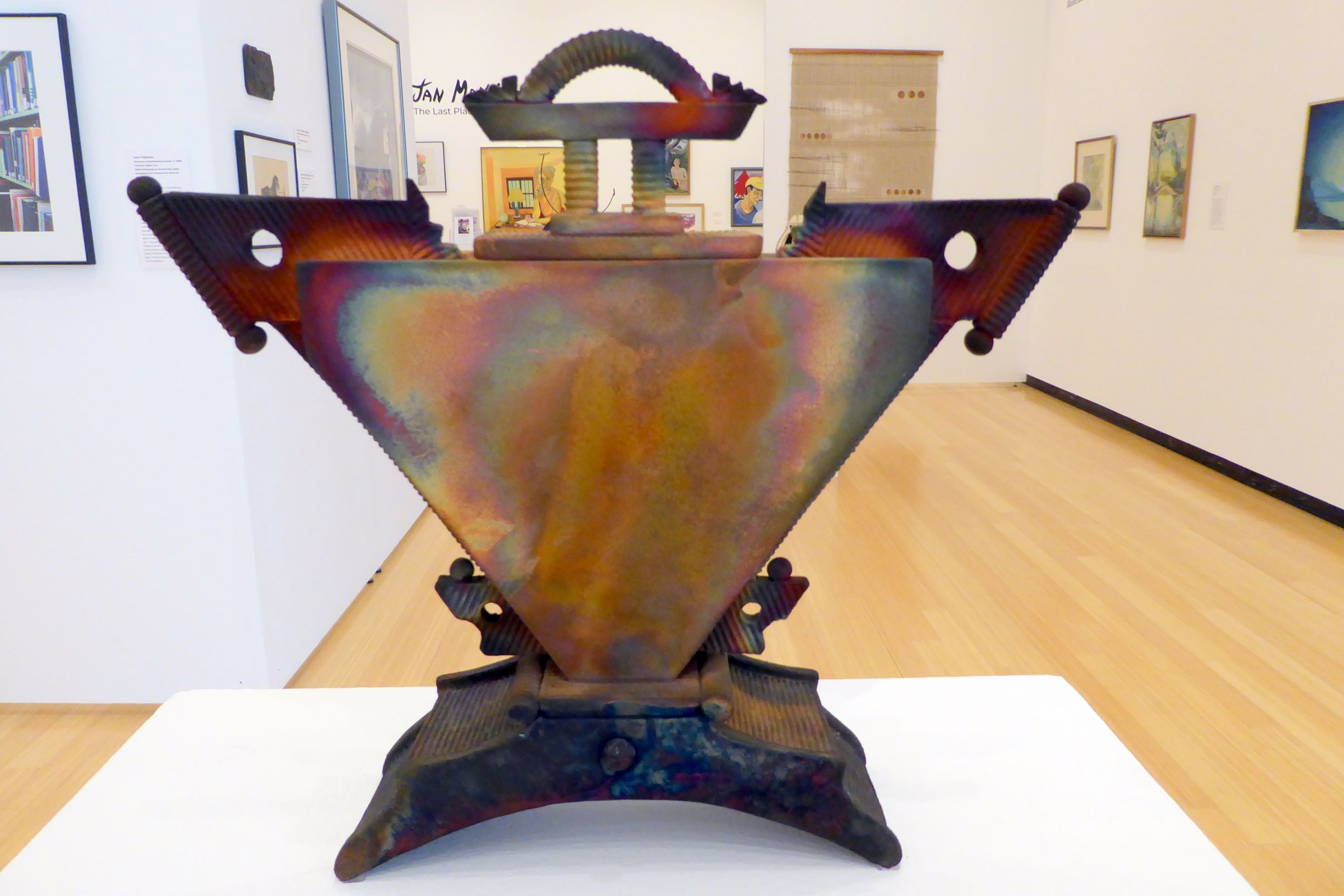
We also visited the campus of North Michigan University, passing the Superior Dome stadium along the way.  The campus has an excellent art museum, and I found a few pieces that piqued my interest:

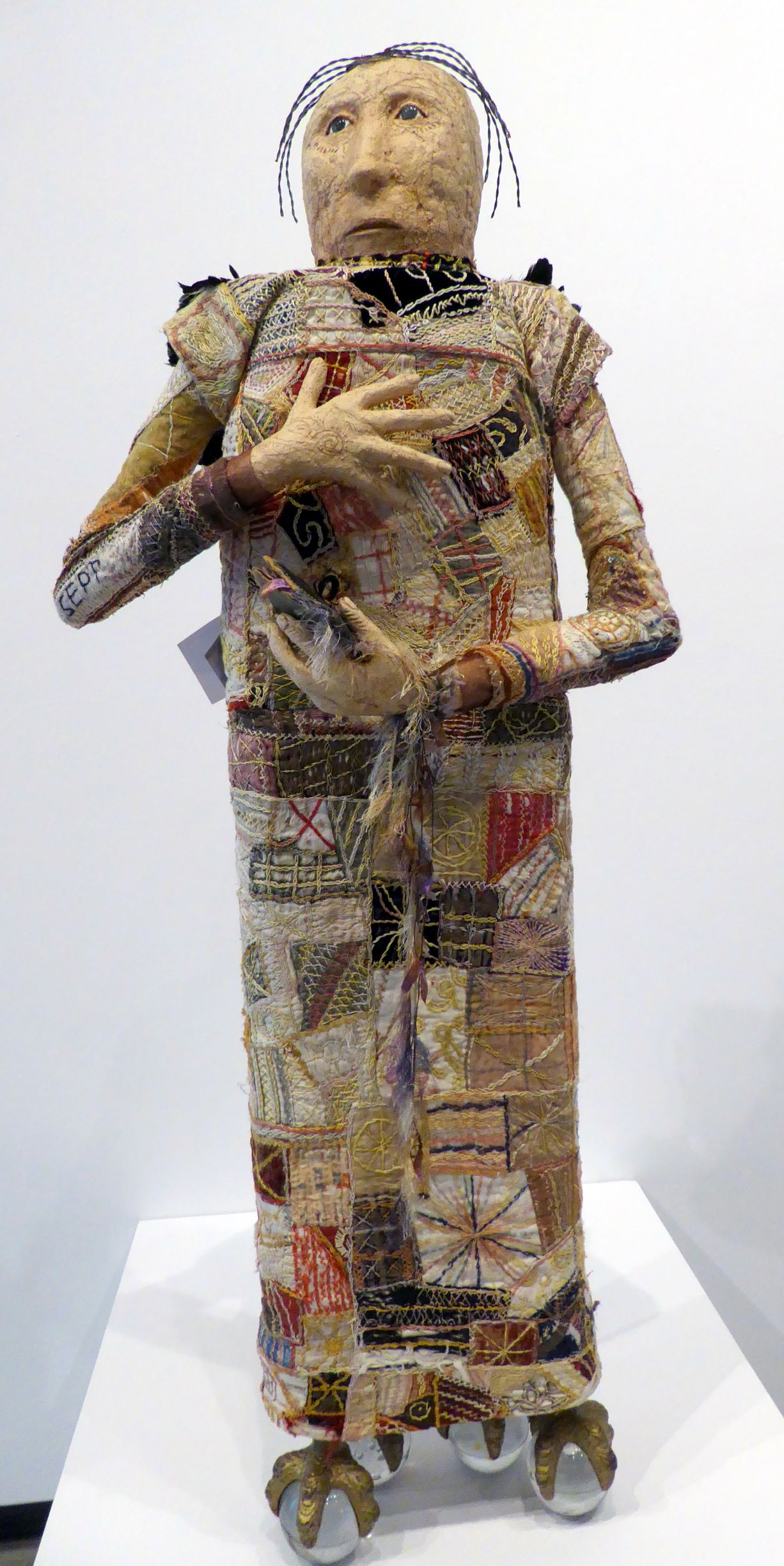
This was a painting! The subject matter– collections of a world traveler and letter write– reminded me of me.

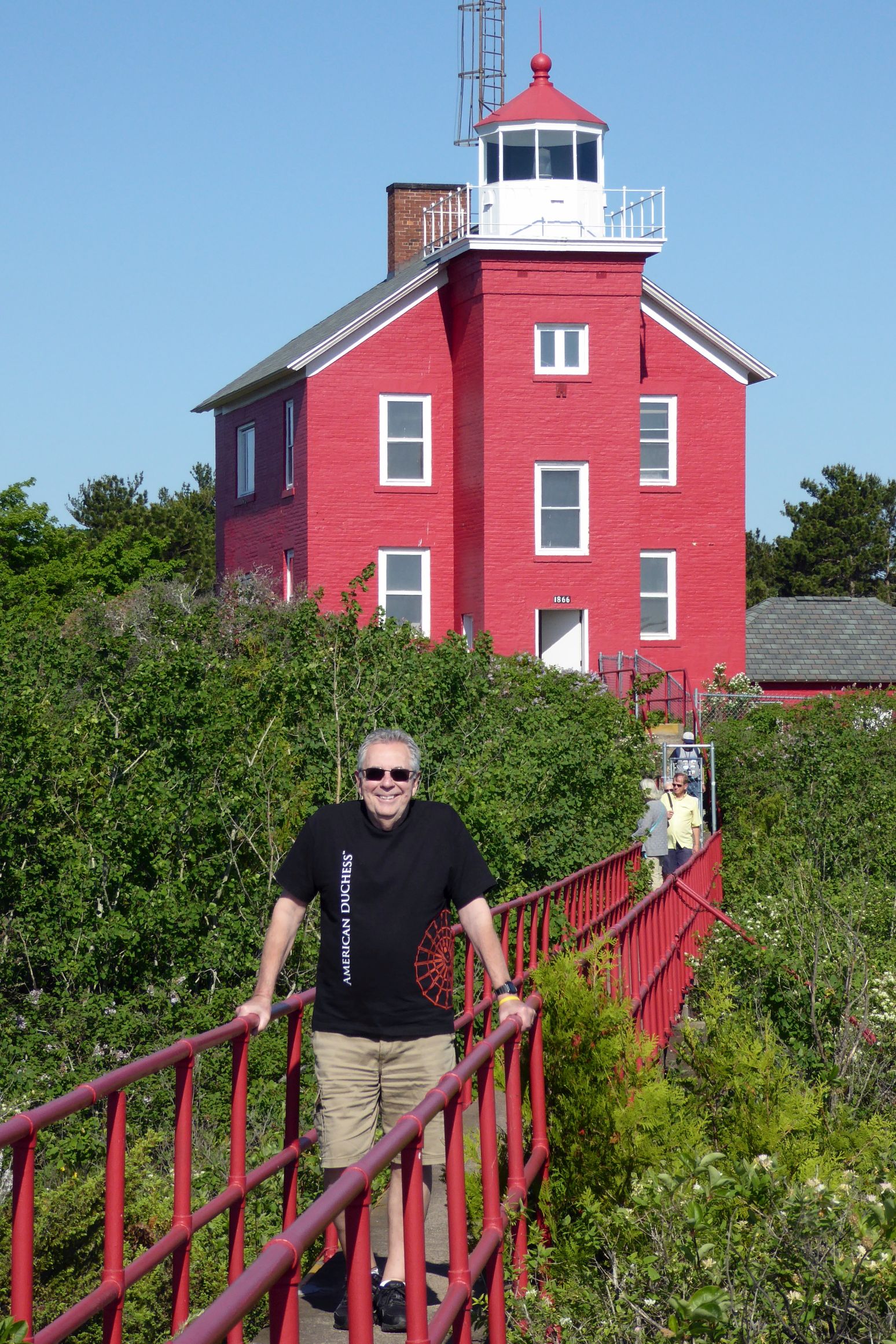
Other stops were made at Marquette Regional History Center and Marquette Maritime Museum, as well as the Marquette Harbor Lighthouse.

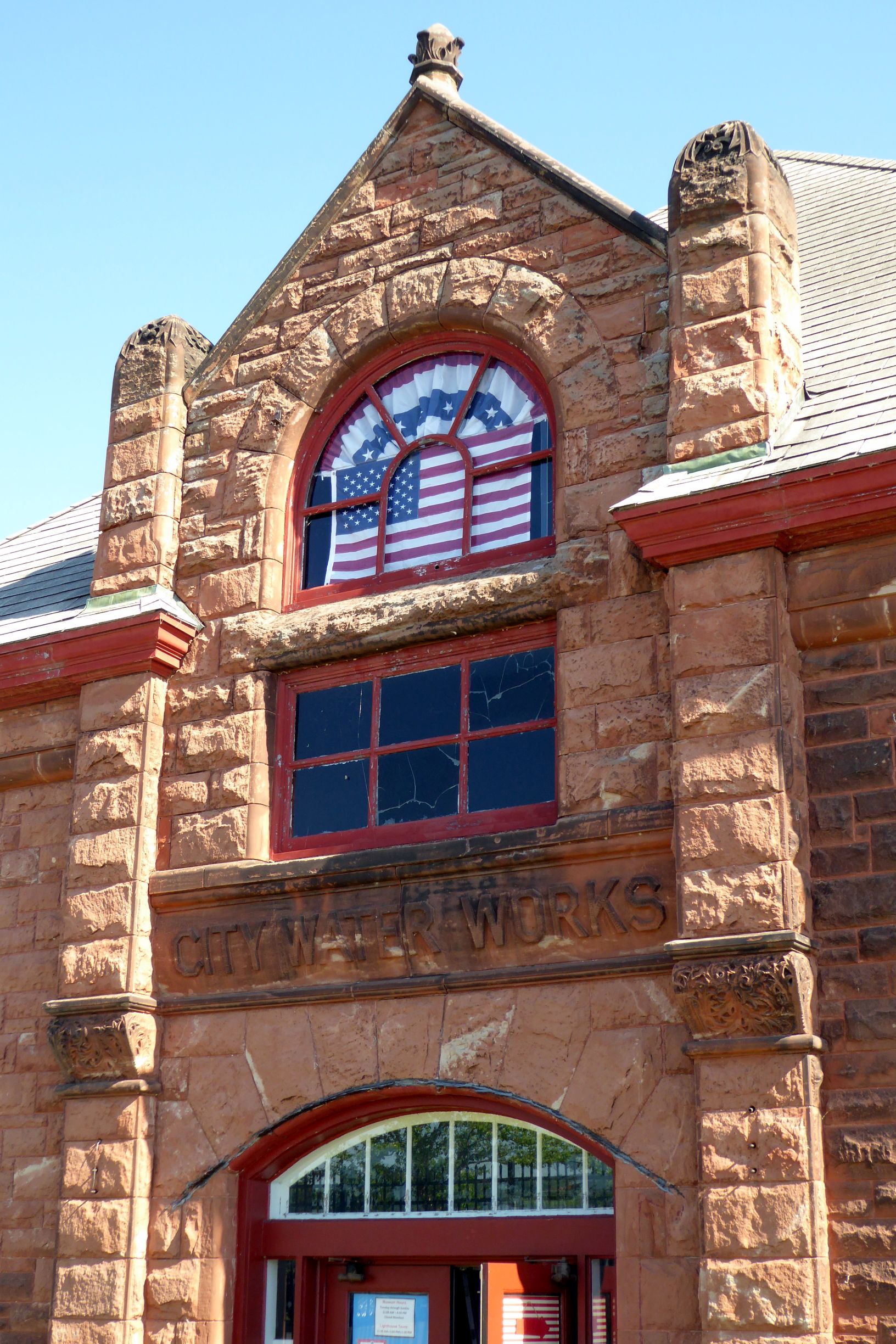
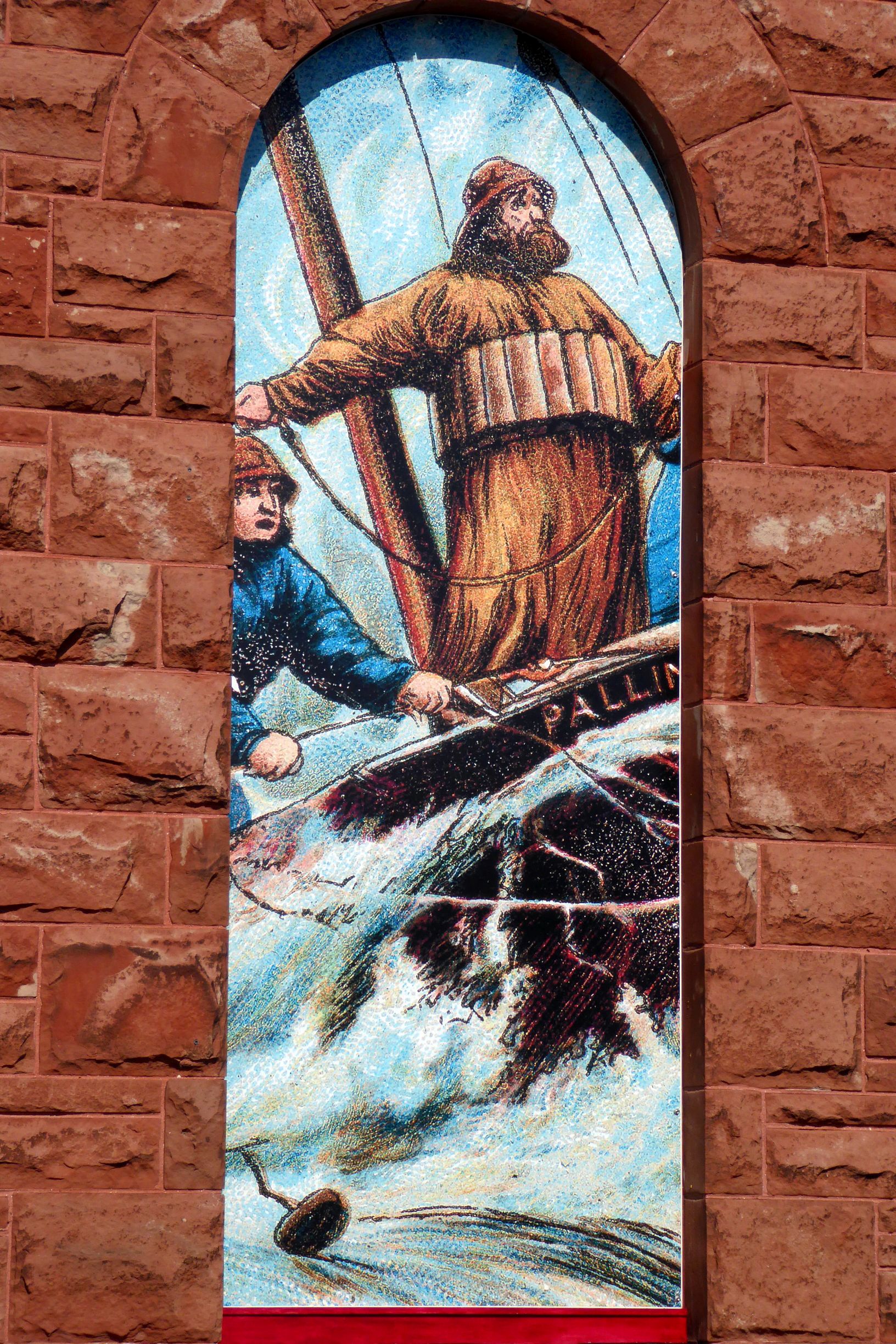
The Maritime Museum was located in the old City Waterworks building. I loved the color of the local sandstone bricks!
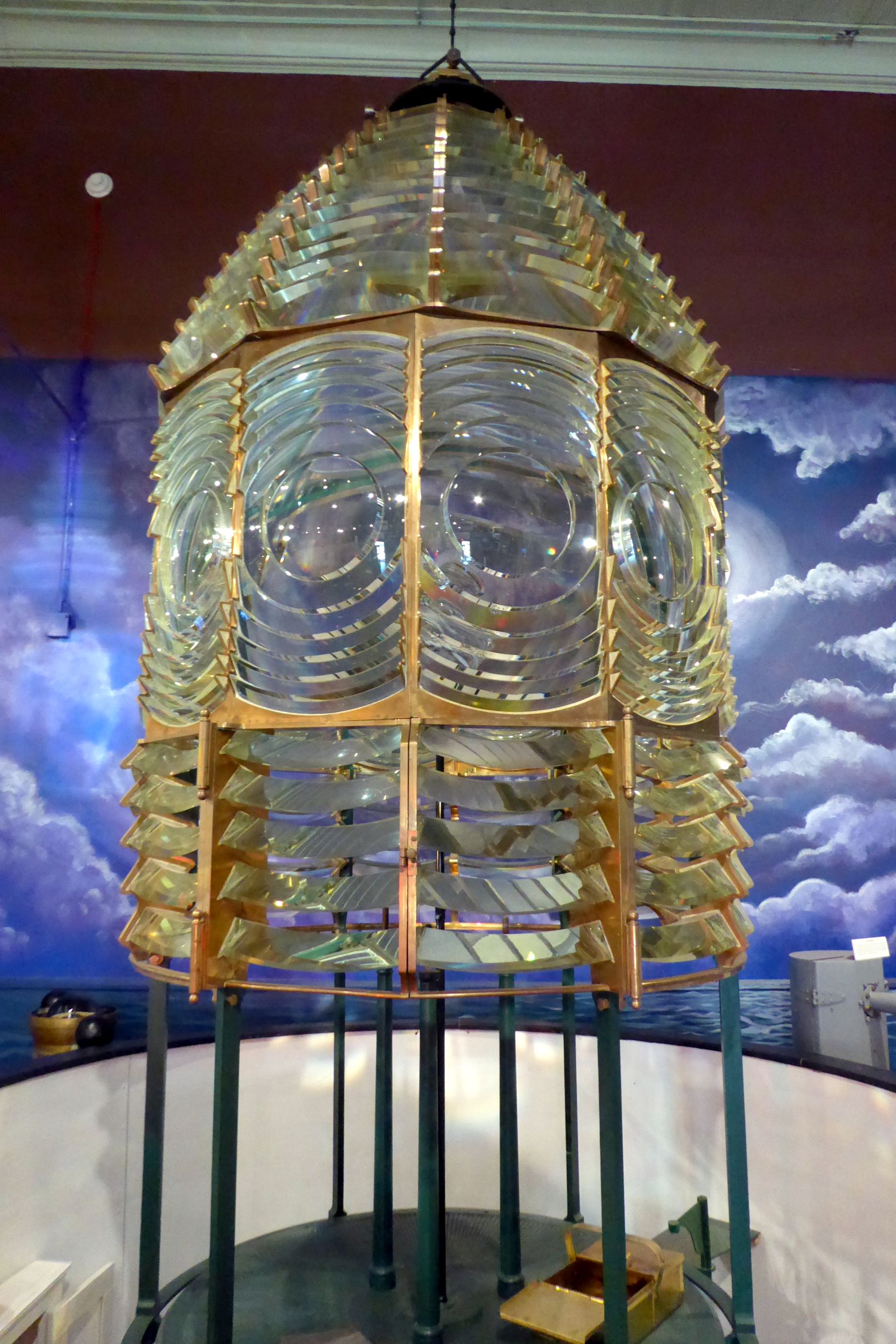
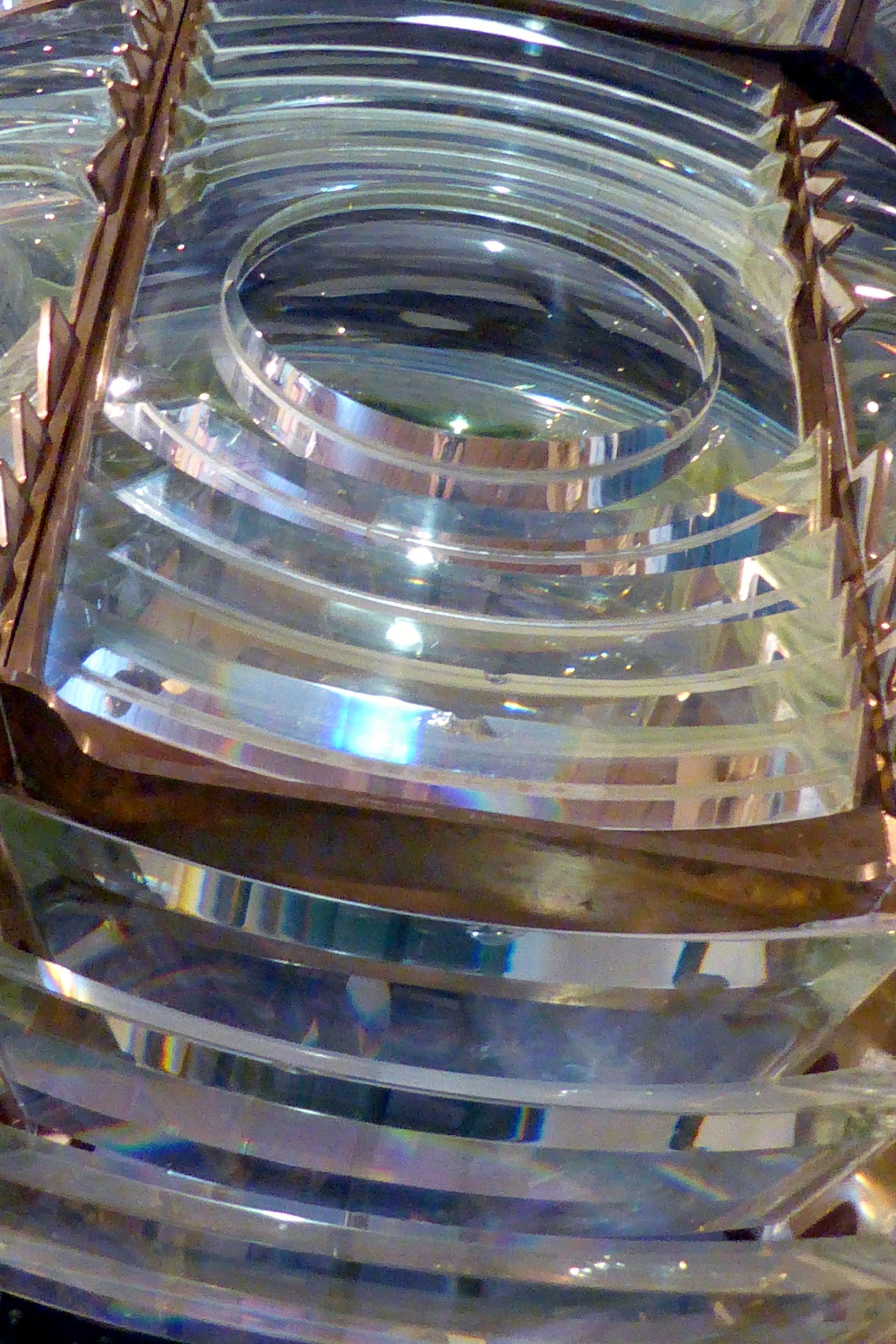
The Maritime Museum had a wonderful collection of lighthouse Fresnel lenses, including this beautifully restored lens from one of the lighthouses that had been destroyed by a fire.
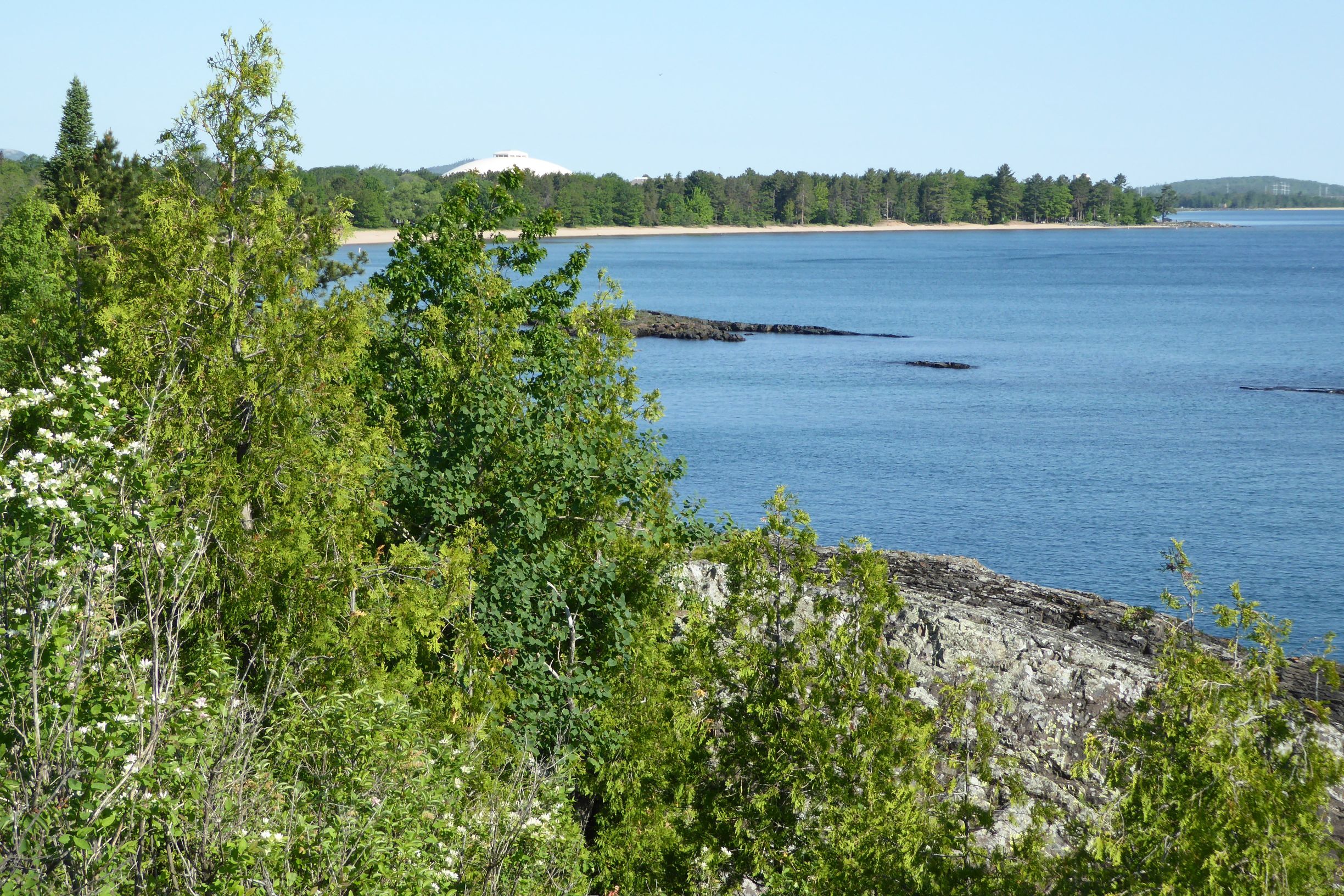
This view was from the lighthouse. North Michigan University’s Superior Dome is off in the distance.

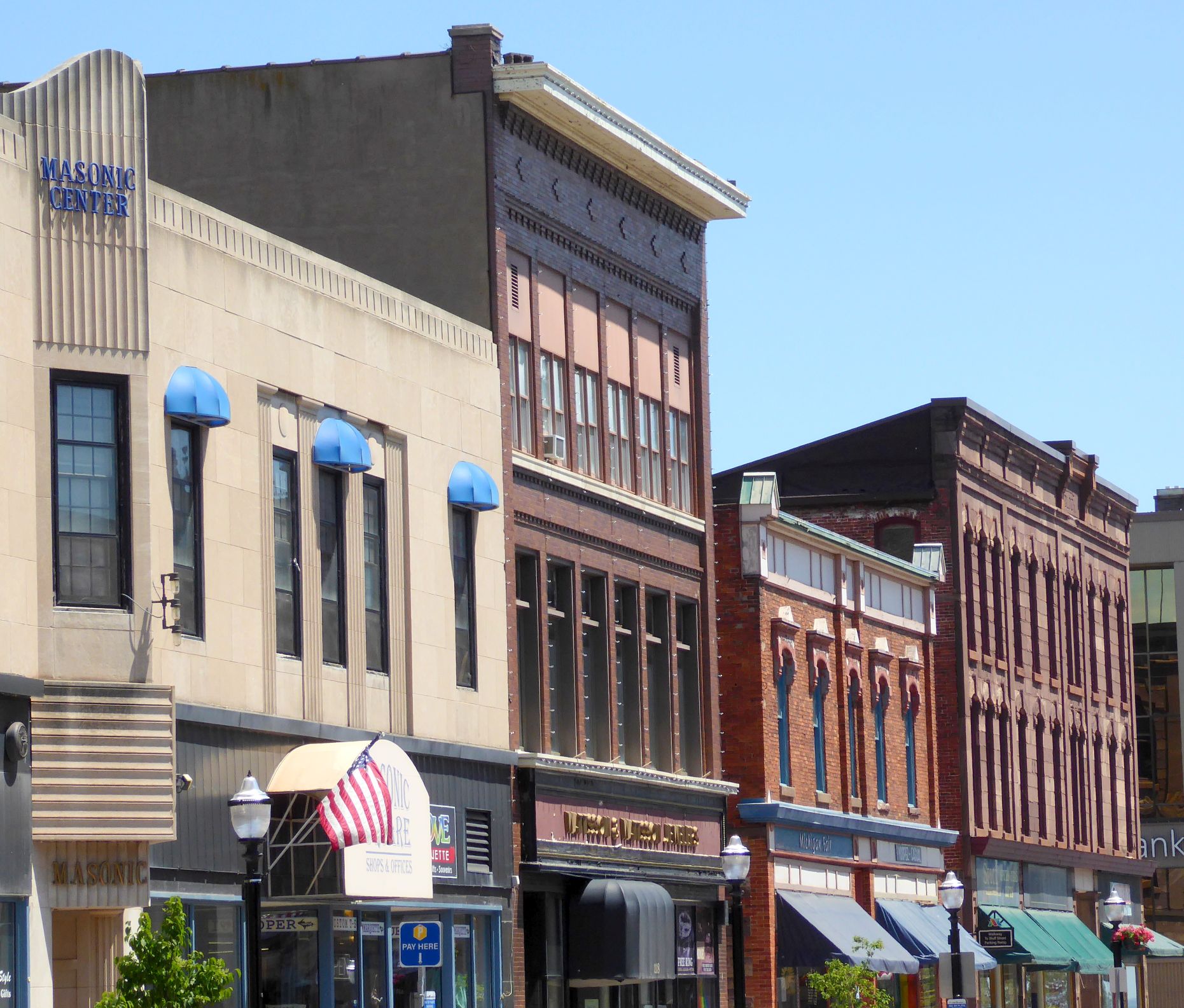
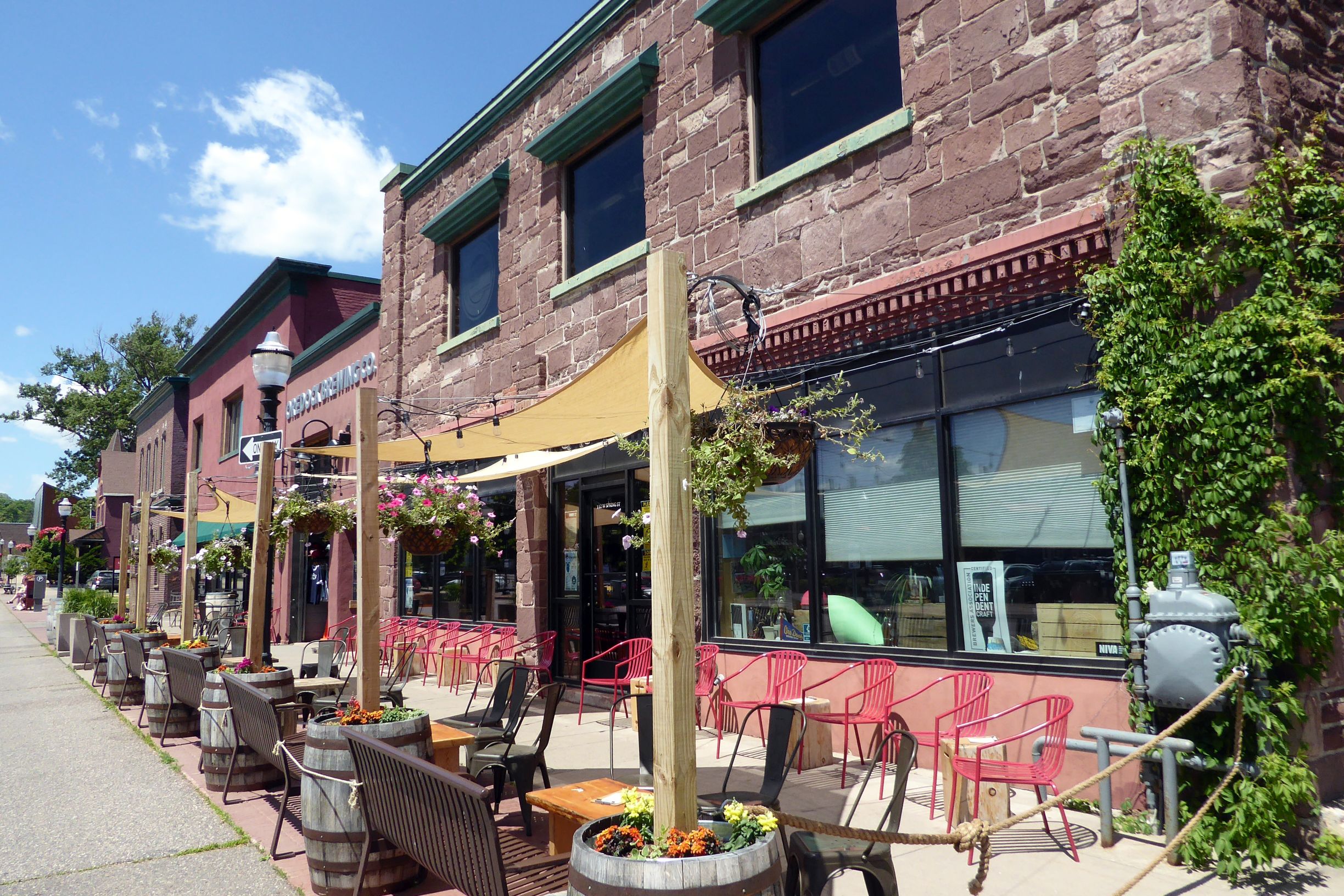
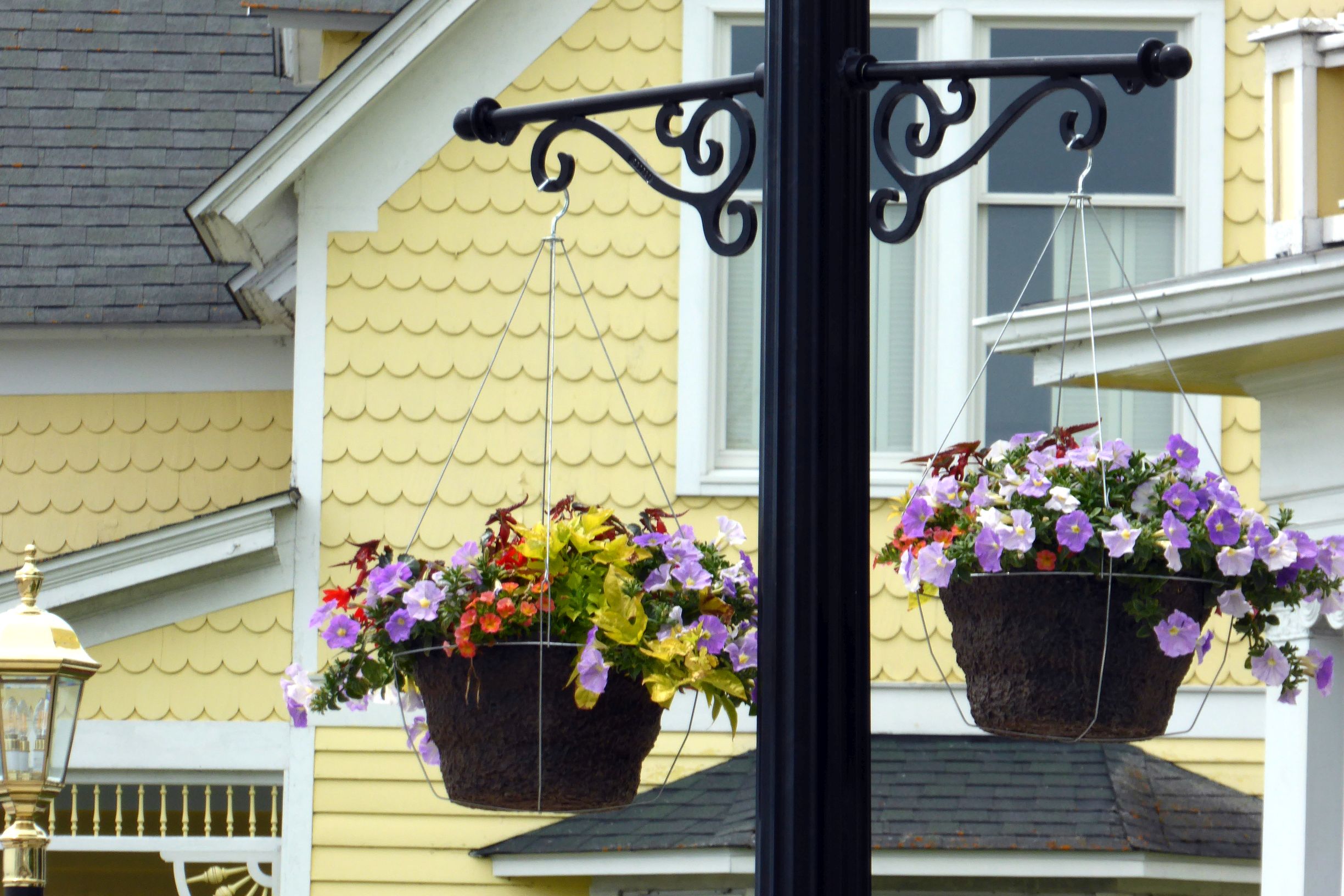
Following our tour, we enjoyed strolling through downtown, which was quite attractive with its hanging baskets of flowers, historic buildings, and gift shops.

Next up:  HOOFIN’ IT AROUND HOUGHTON

CRUISING THE GREAT LAKES #2: MOTORLESS MACKINAC ISLAND, MICHIGAN

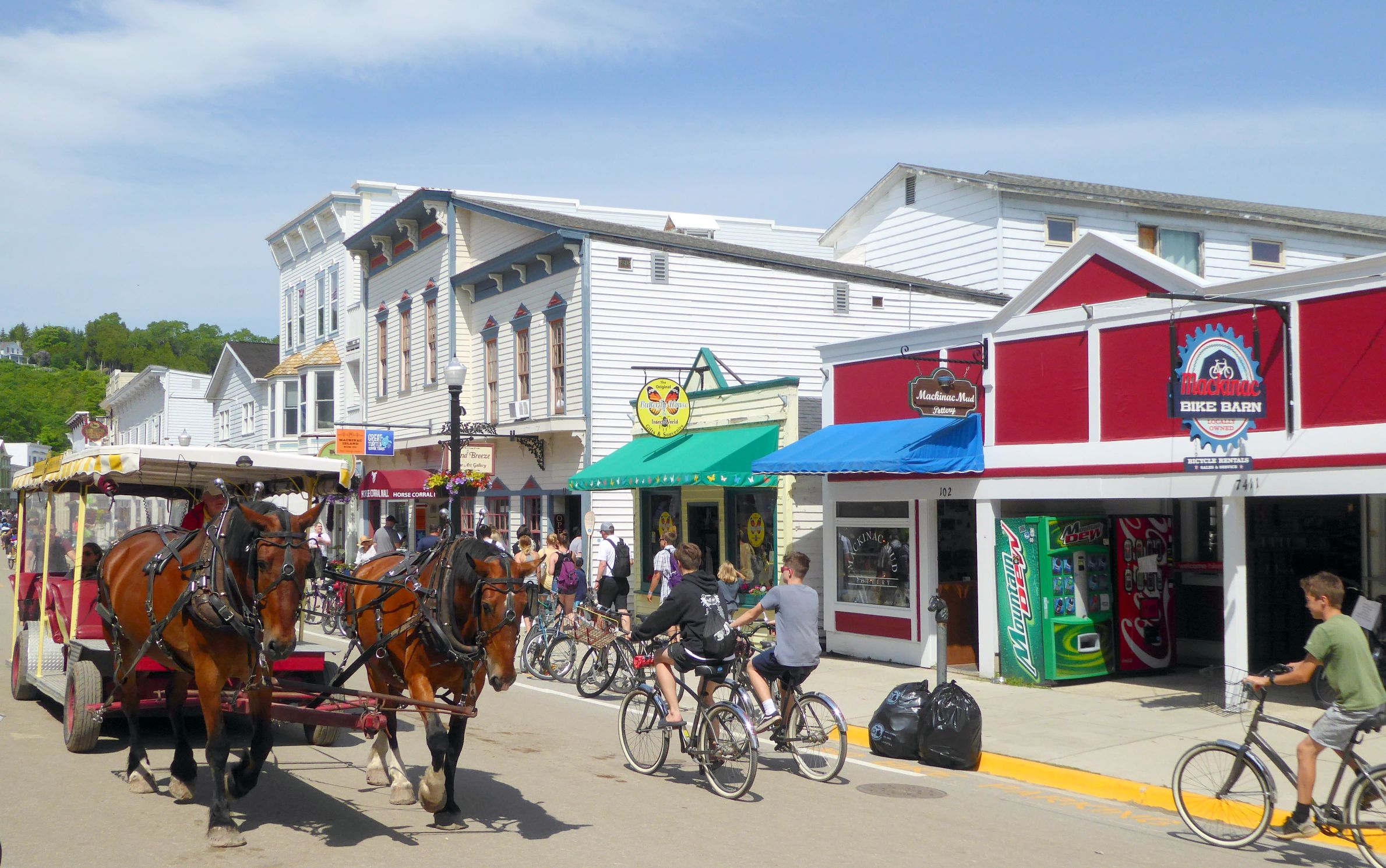
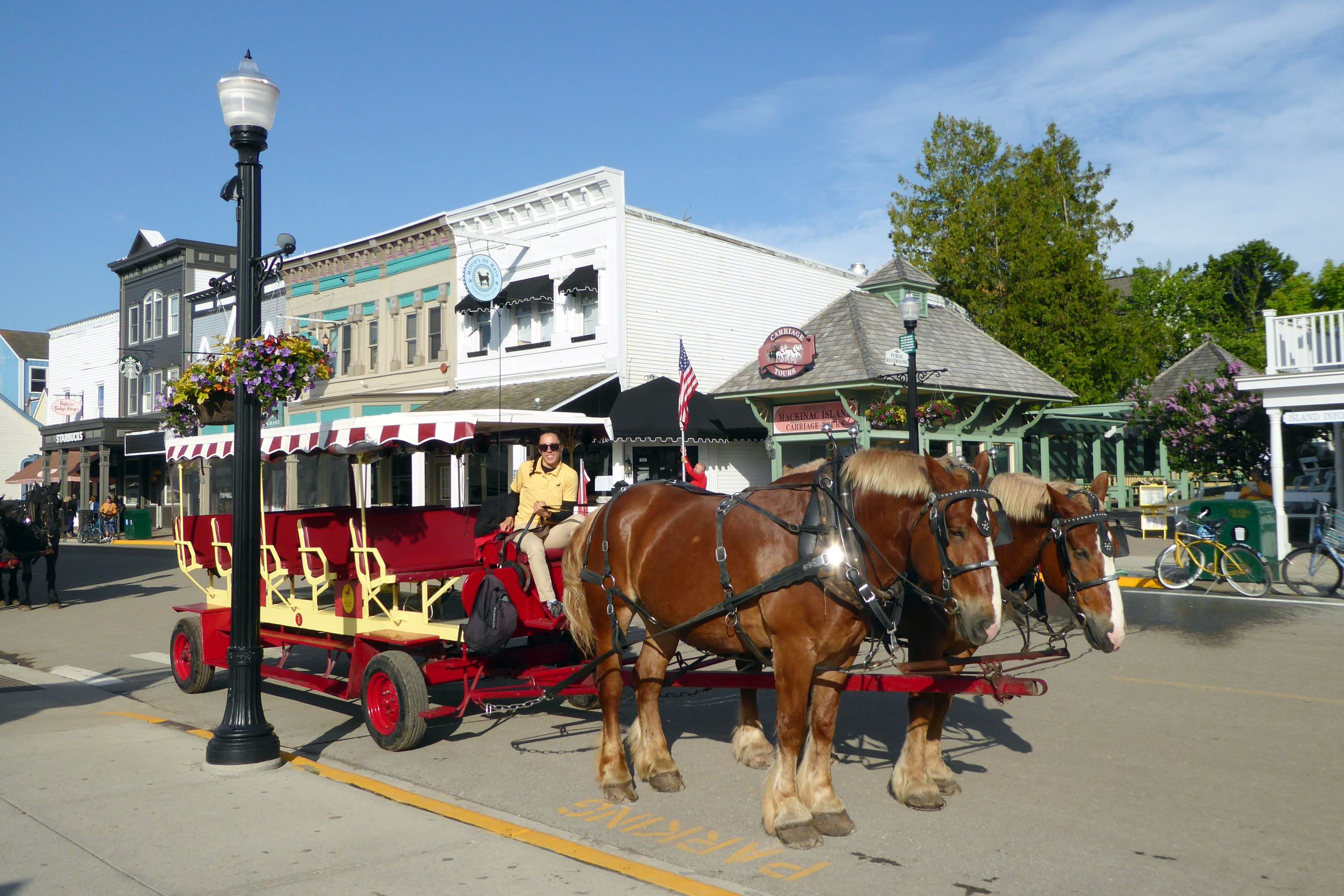
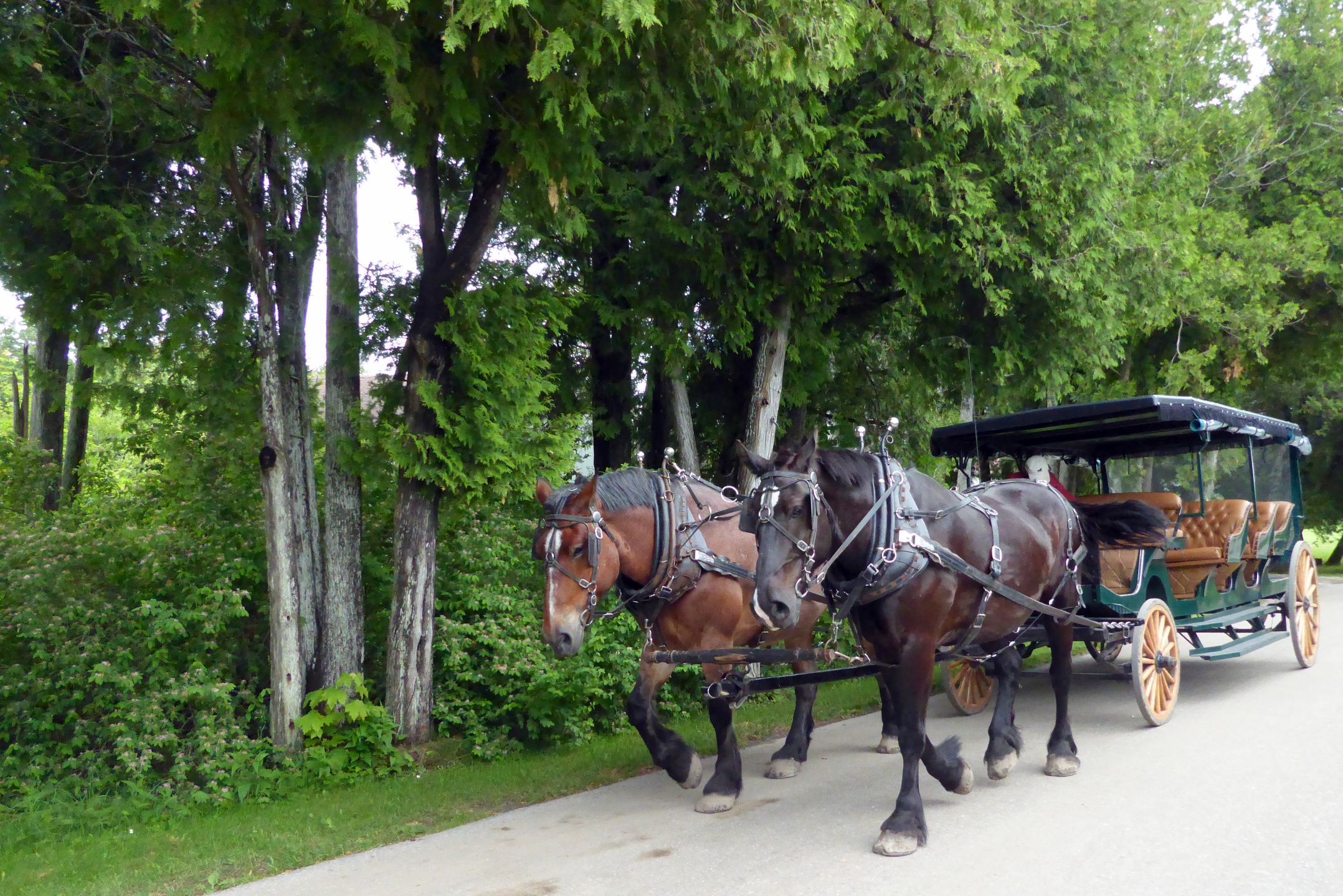
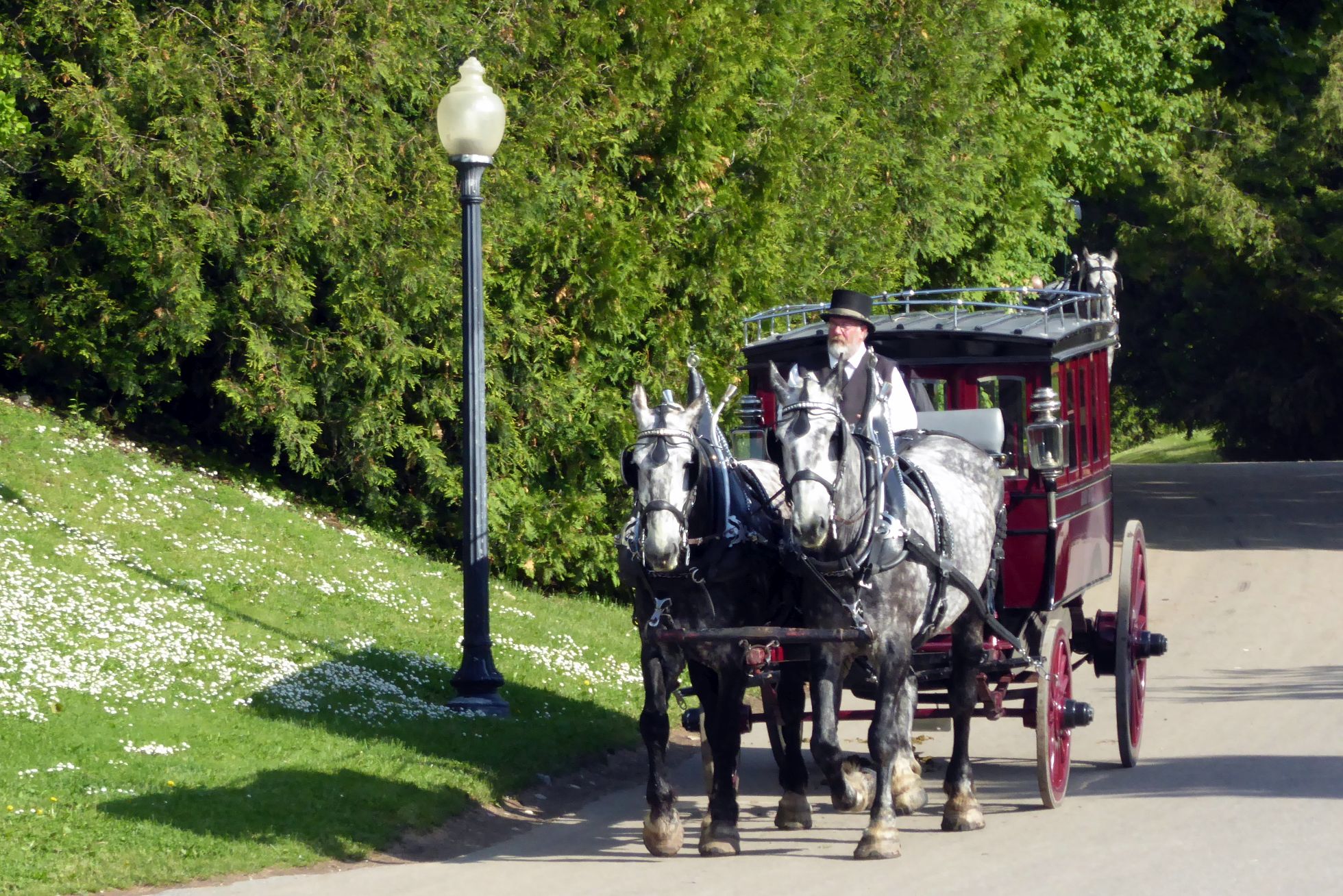
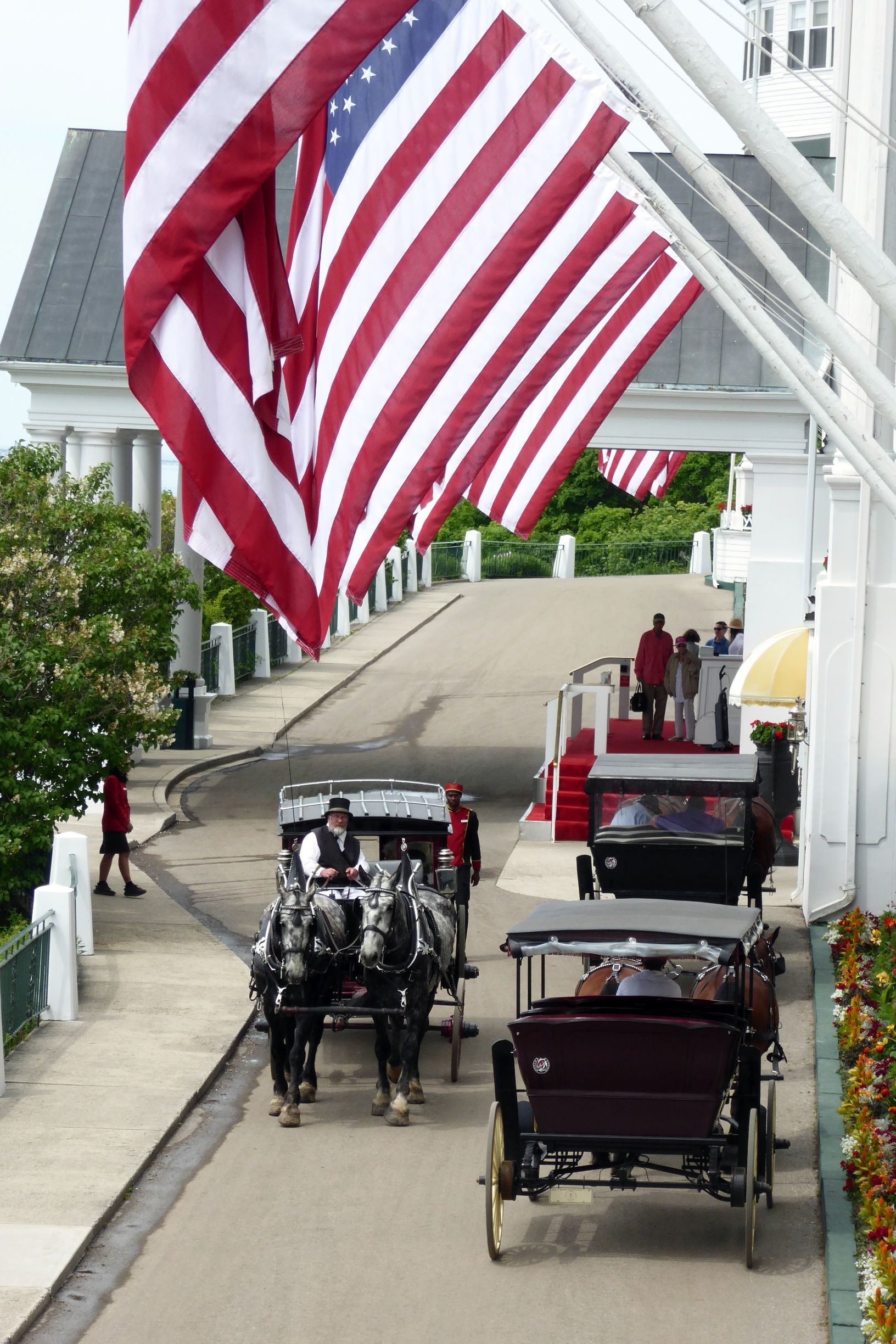
Detroit may be the “Motor City,” but Mackinac Island, Michigan is the motorless city.  Banned by the village council in 1808, automobiles are nowhere to be seen on the island that lies at the boundary of Lake Huron and Lake Michigan.  Instead, the less than 11,000 locals get around on horseback, horse drawn carriages, or bicycles. 

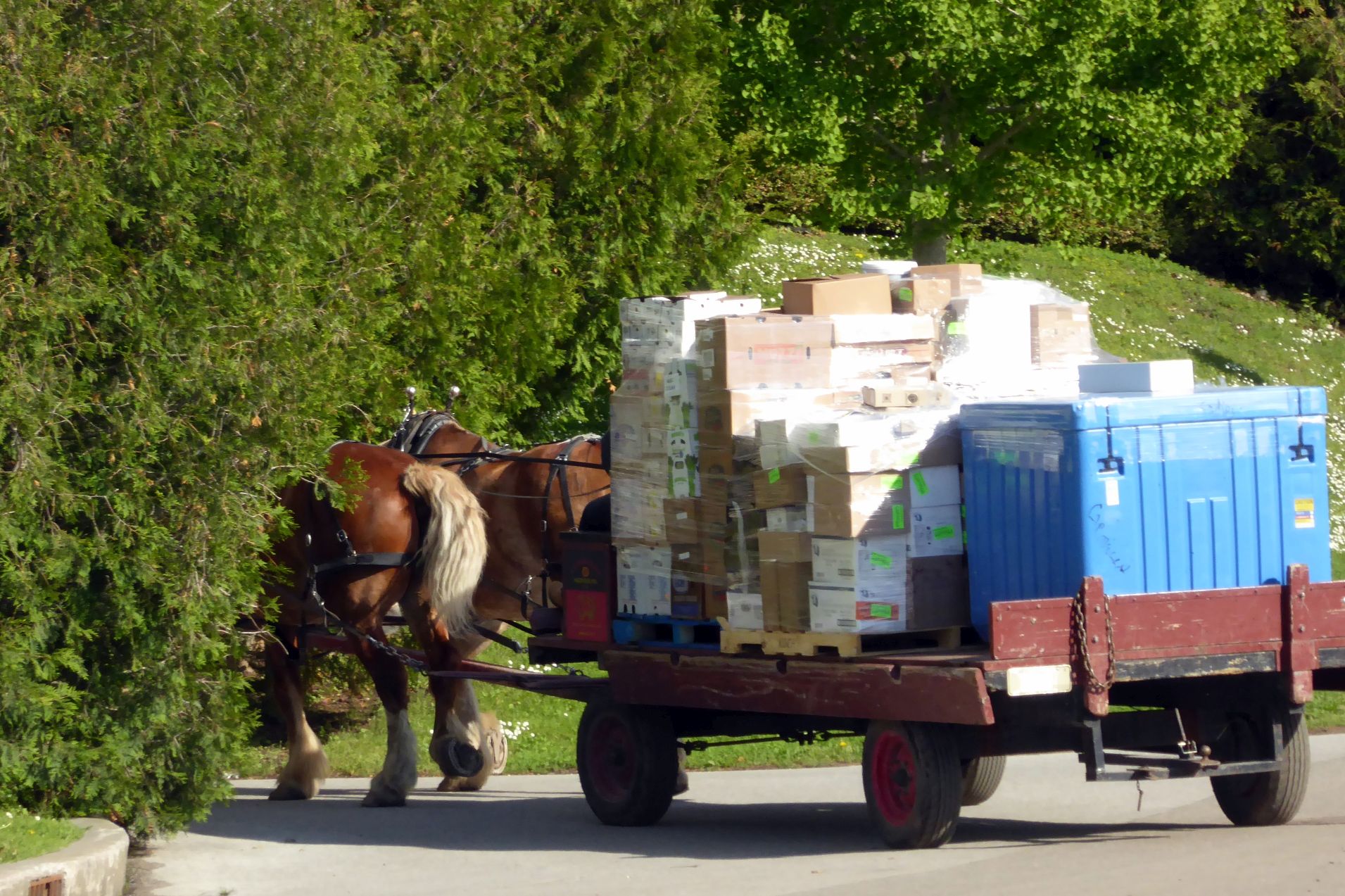
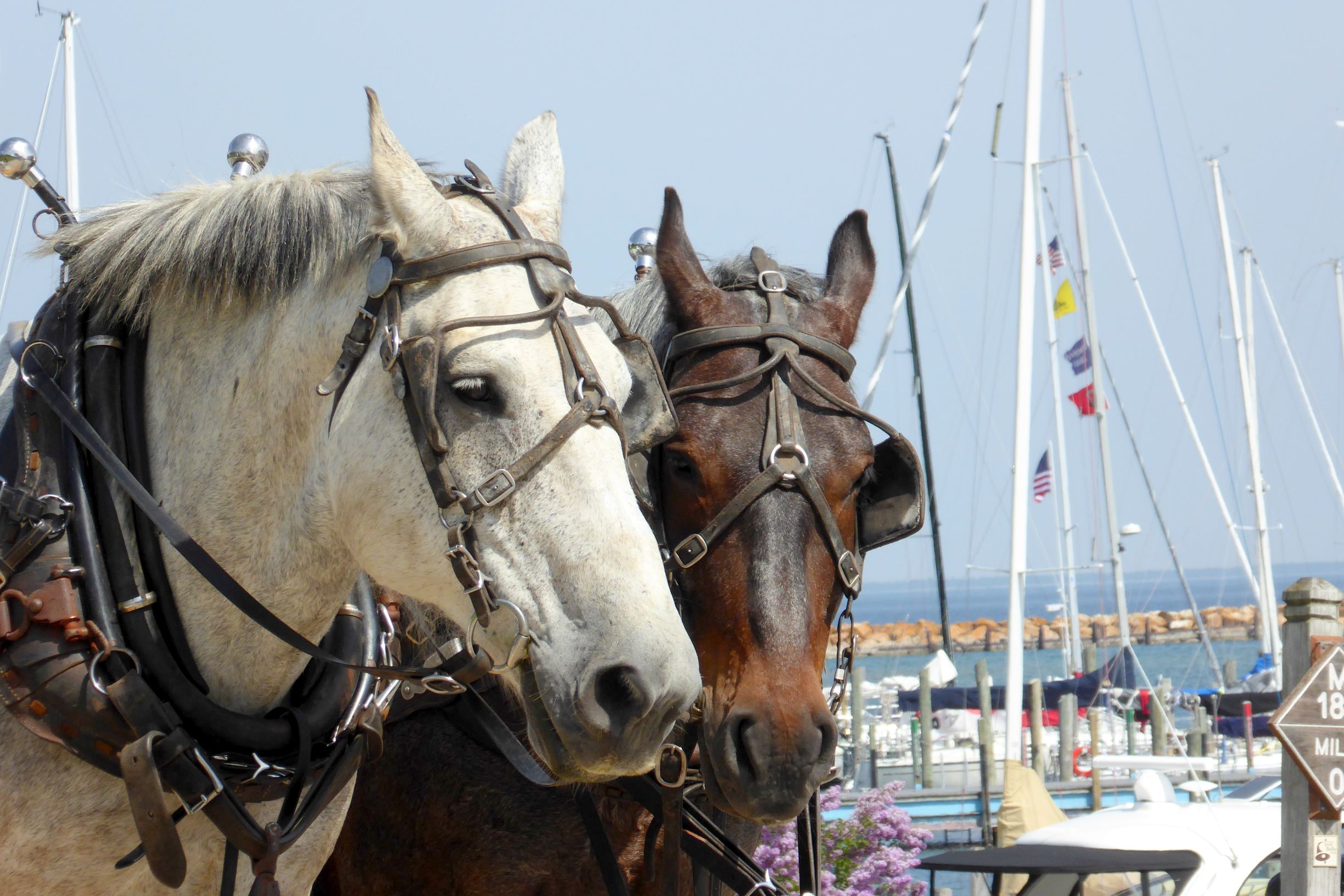
Everything on Mackinac (pronounced “Mackinaw”) is done utilizing horse power—literally!  Trash pick-up?  By horse power.  USPS and UPS?  Horse power!  Don’t believe me?  This is how your packages get delivered, even to the Grand Hotel:

A delivery to the Grand Hotel
UPS getting ready for more deliveries

And, this is the garbage “truck”:

Yes, they even haul their own food!

There are 650 horses on the island; however, all but ten horses (including the one pulling the only winter taxi) are transported to the mainland by boat to be kept in heated stables for the winter.  Most are draft horses weighing in around 2,000 pounds and able to haul three times their body weight.  The largest carriages hold 35 people and are pulled by 3 horses.

Only 500 of the residents are full time; the others are seasonal, working in the tourist trade that developed following the civil war, or enjoying their summer homes.

For those hearty full-timers, there is one school for kindergarten thru 12th grade with an annual attendance of 60-80 students.  The senior class has anywhere from 2-10 graduates each year.

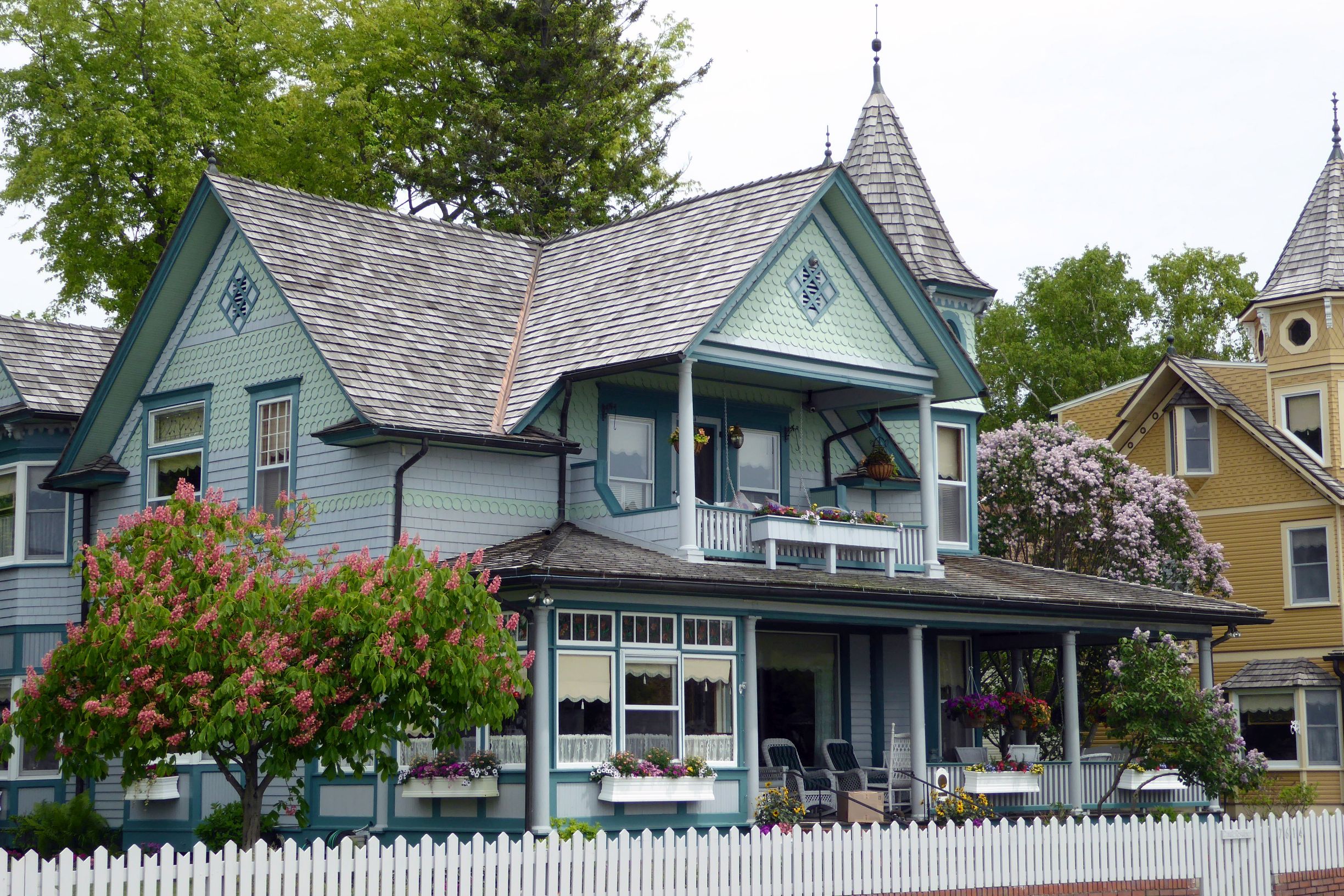
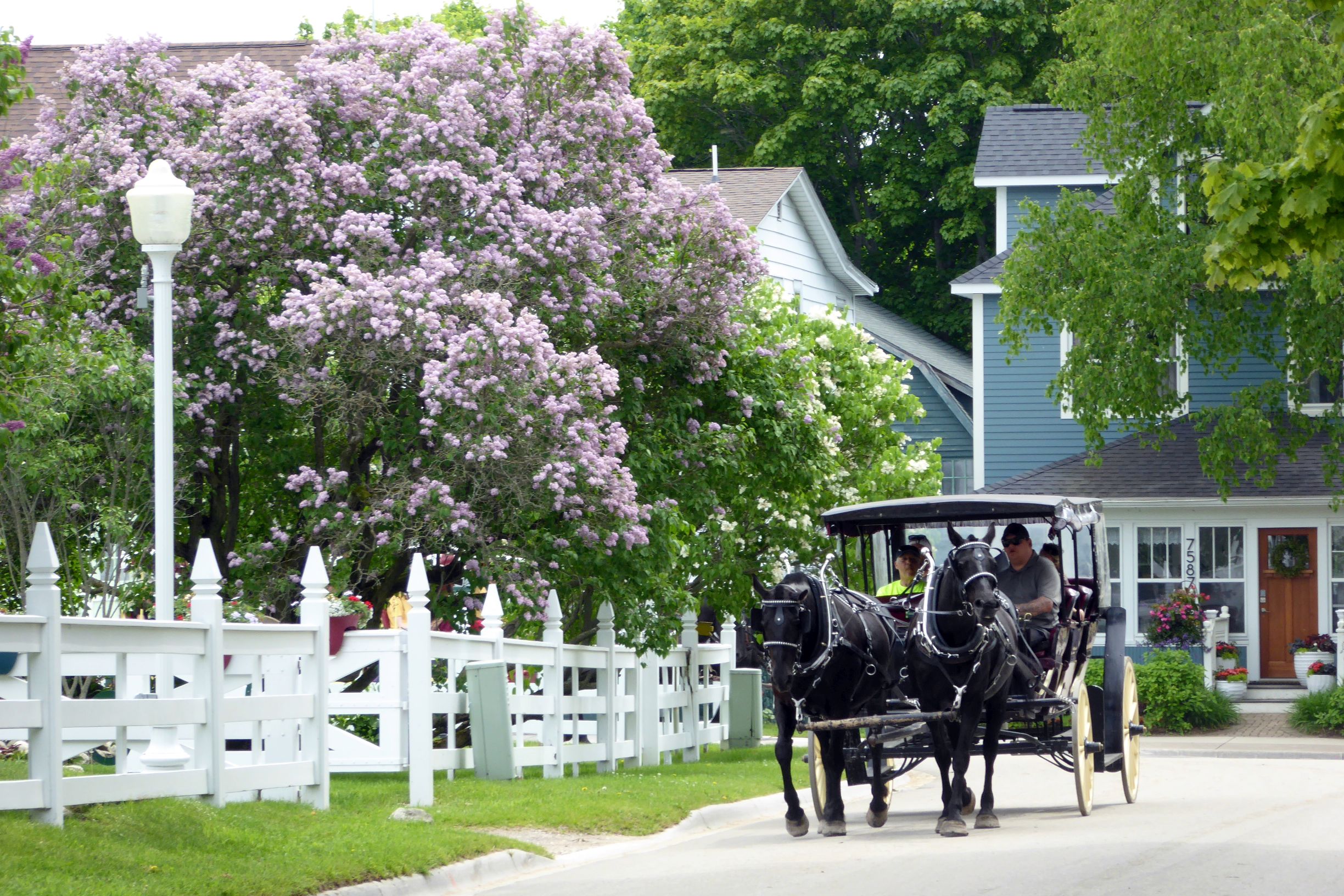
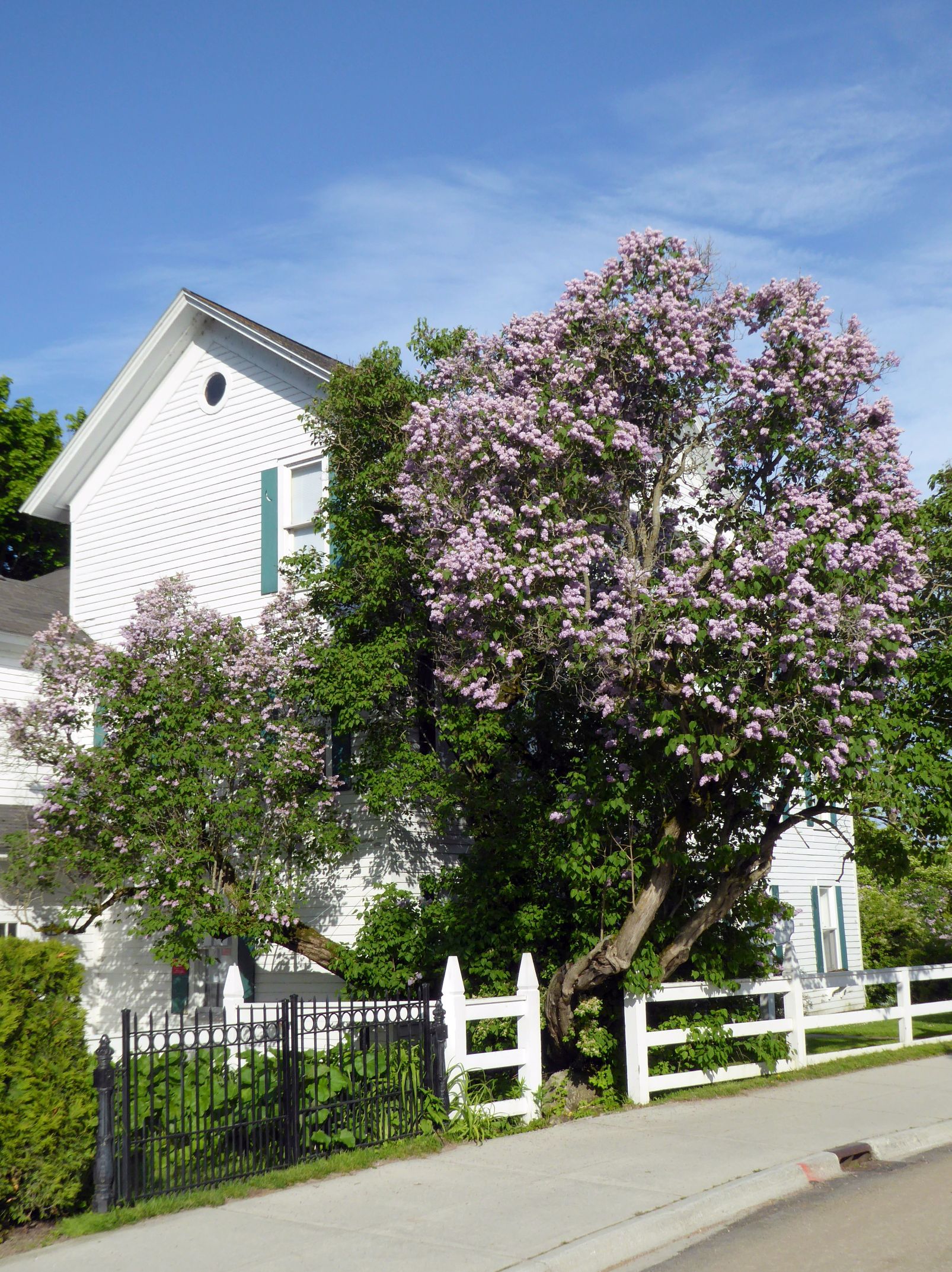
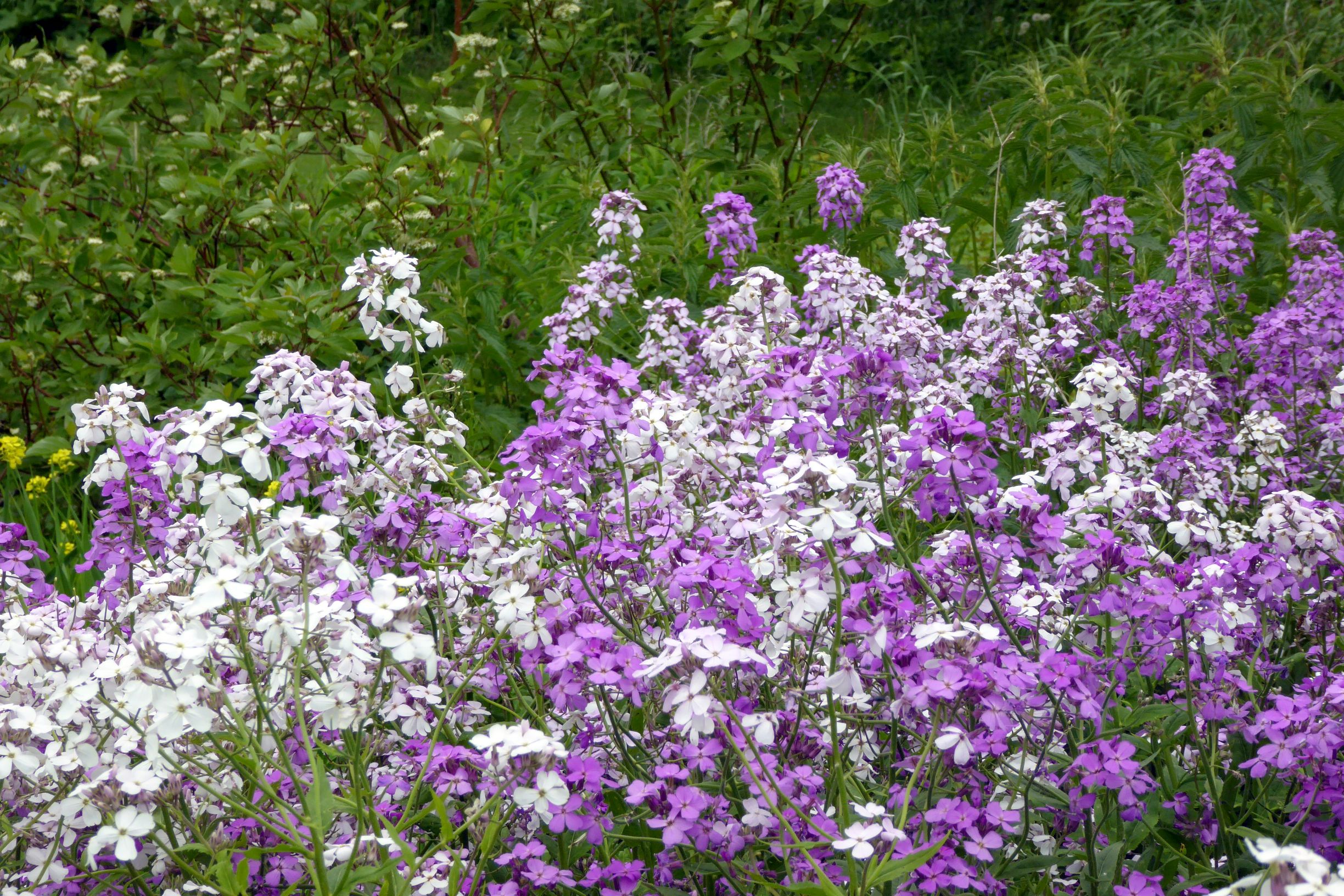
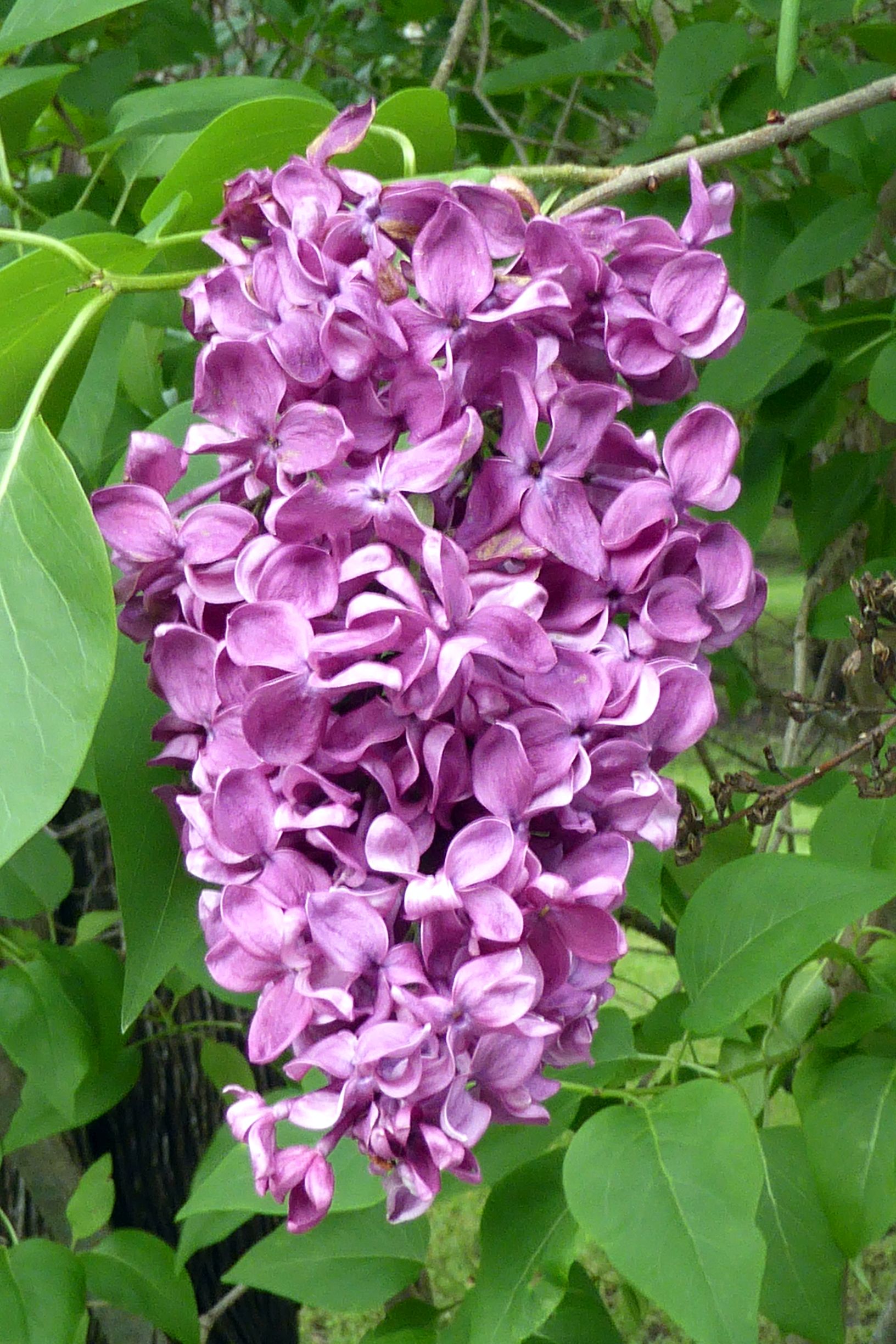
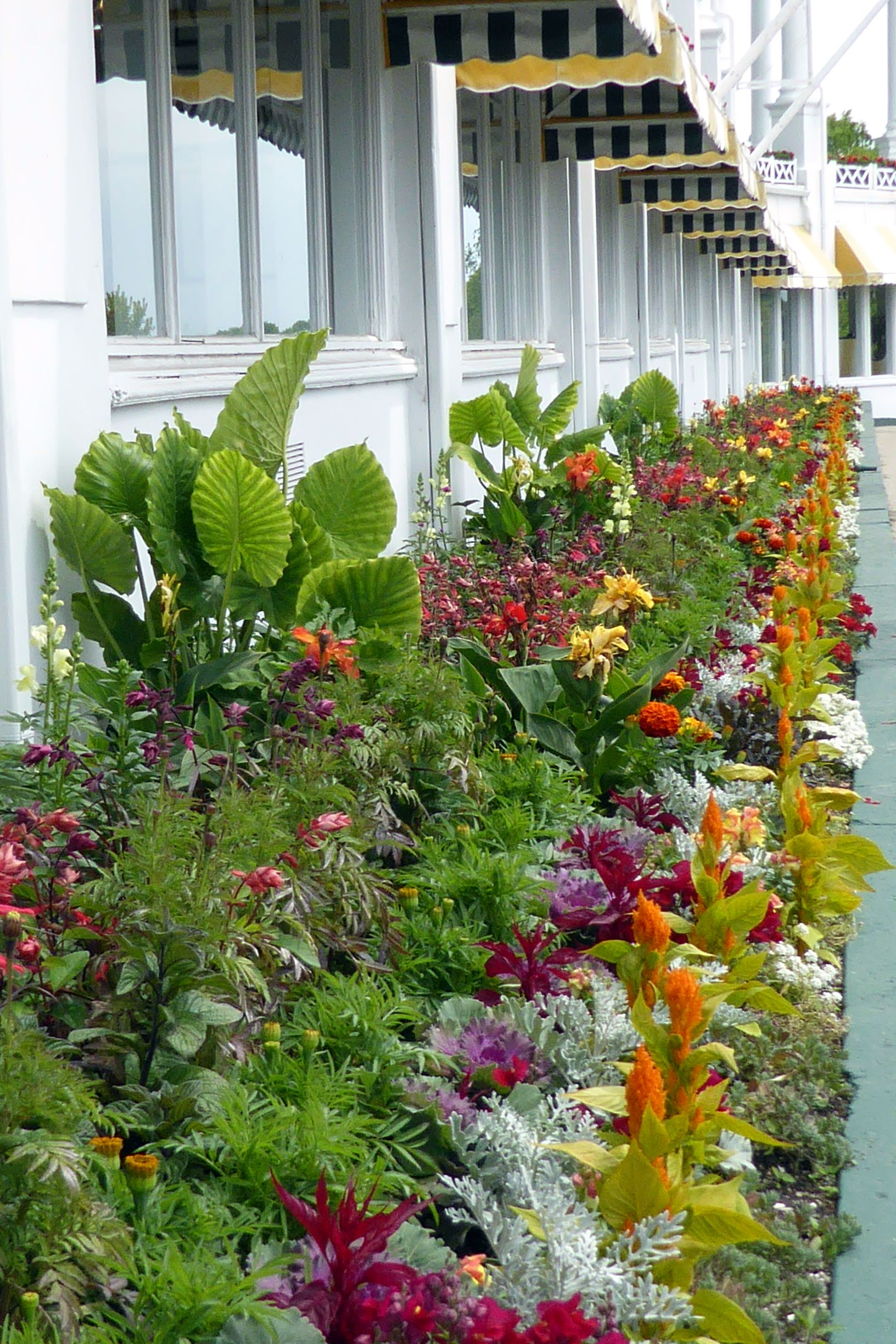
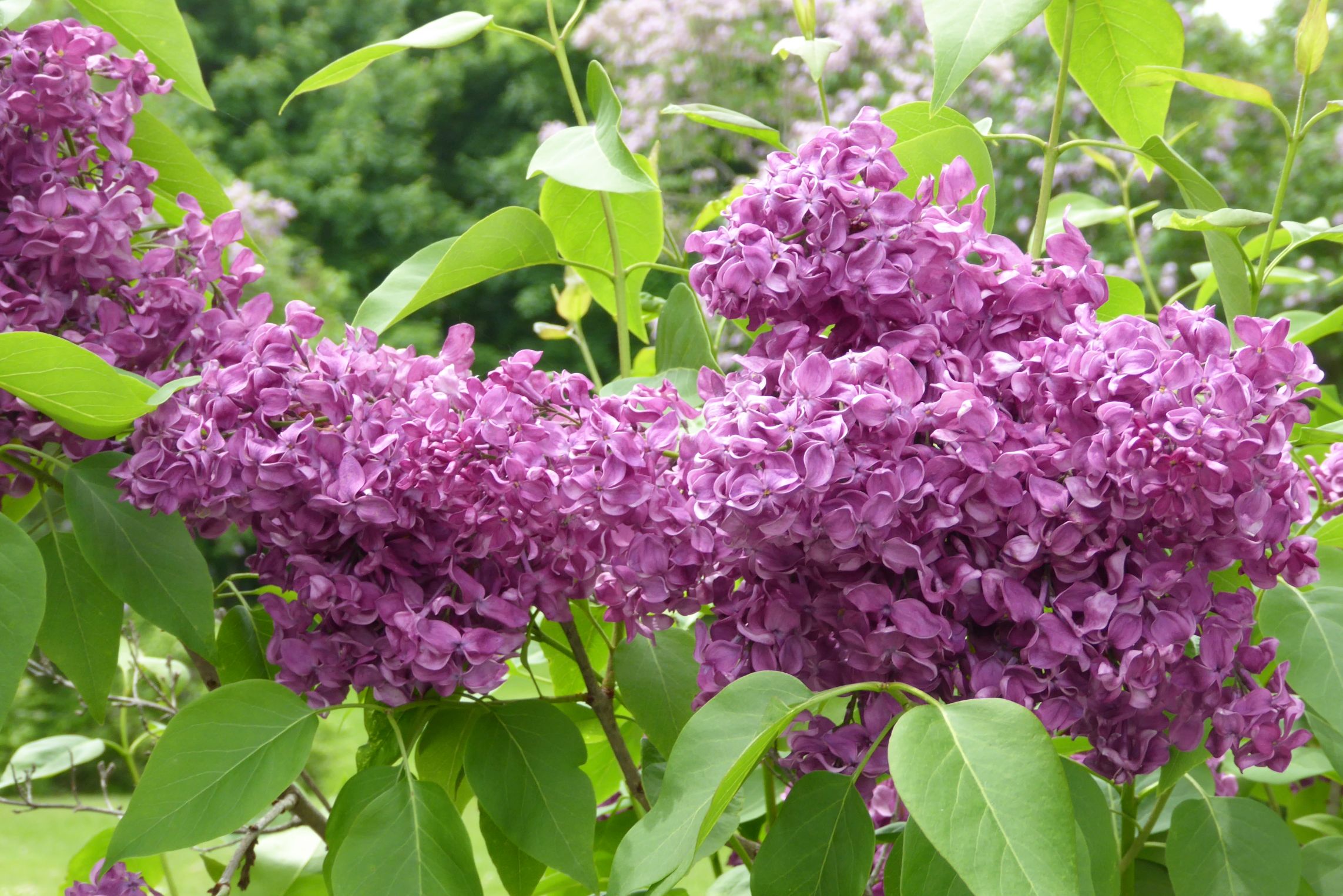
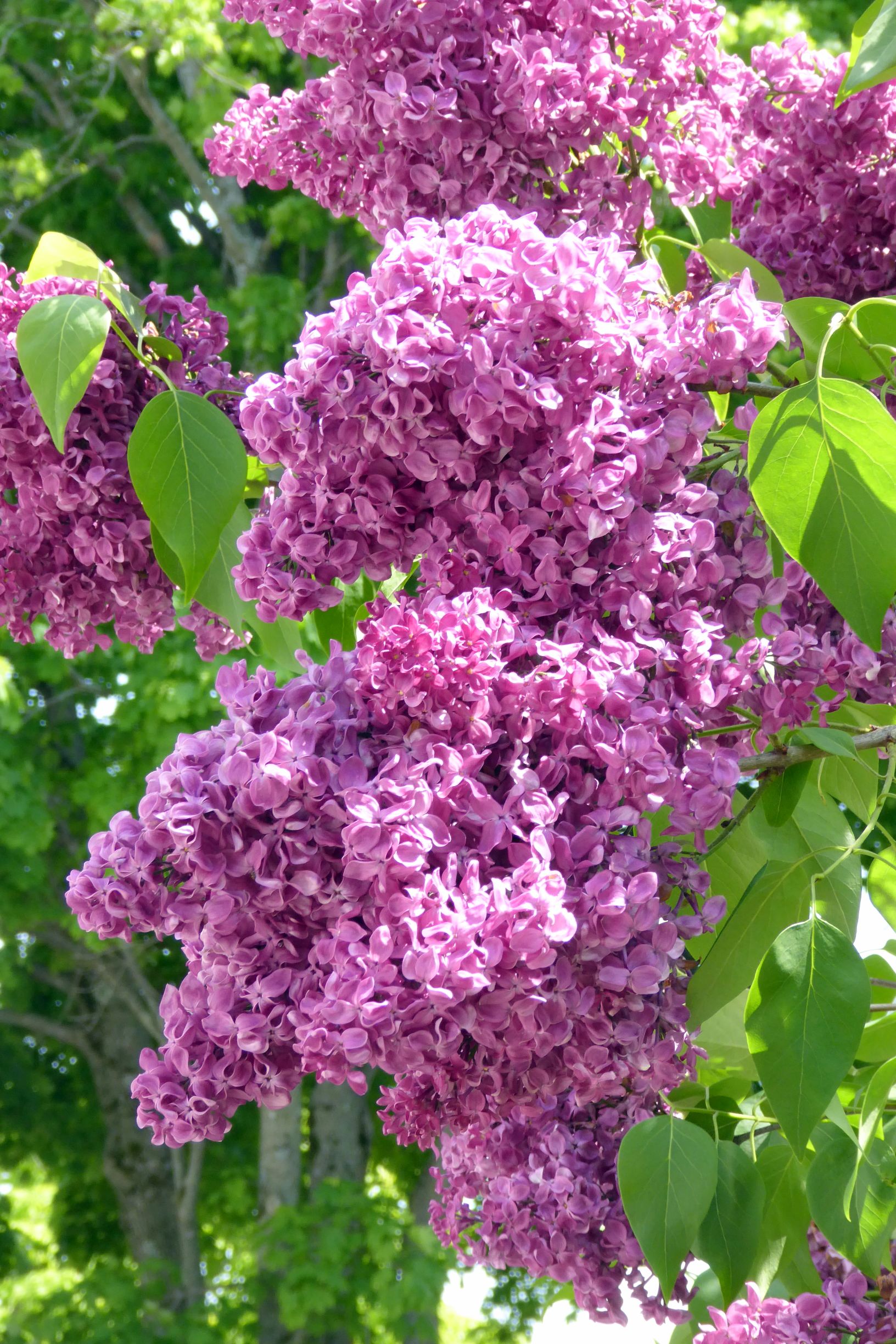
There is one word that first comes to mind to describe Mackinac Island: charming.  It’s like stepping back in time while strolling the downtown streets filled with horse-drawn carriages and bicycles, lined with beautiful Victorian-era buildings and colorful lilac-filled gardens; and, a lack of cars or motor noise—just the clip-clop sound of horse hooves.  And, there is not a chain-hotel to be found, just cozy B&B’s, attractive locally owned resorts, and the famous Grand Hotel.

Our home away from home for 14 days!

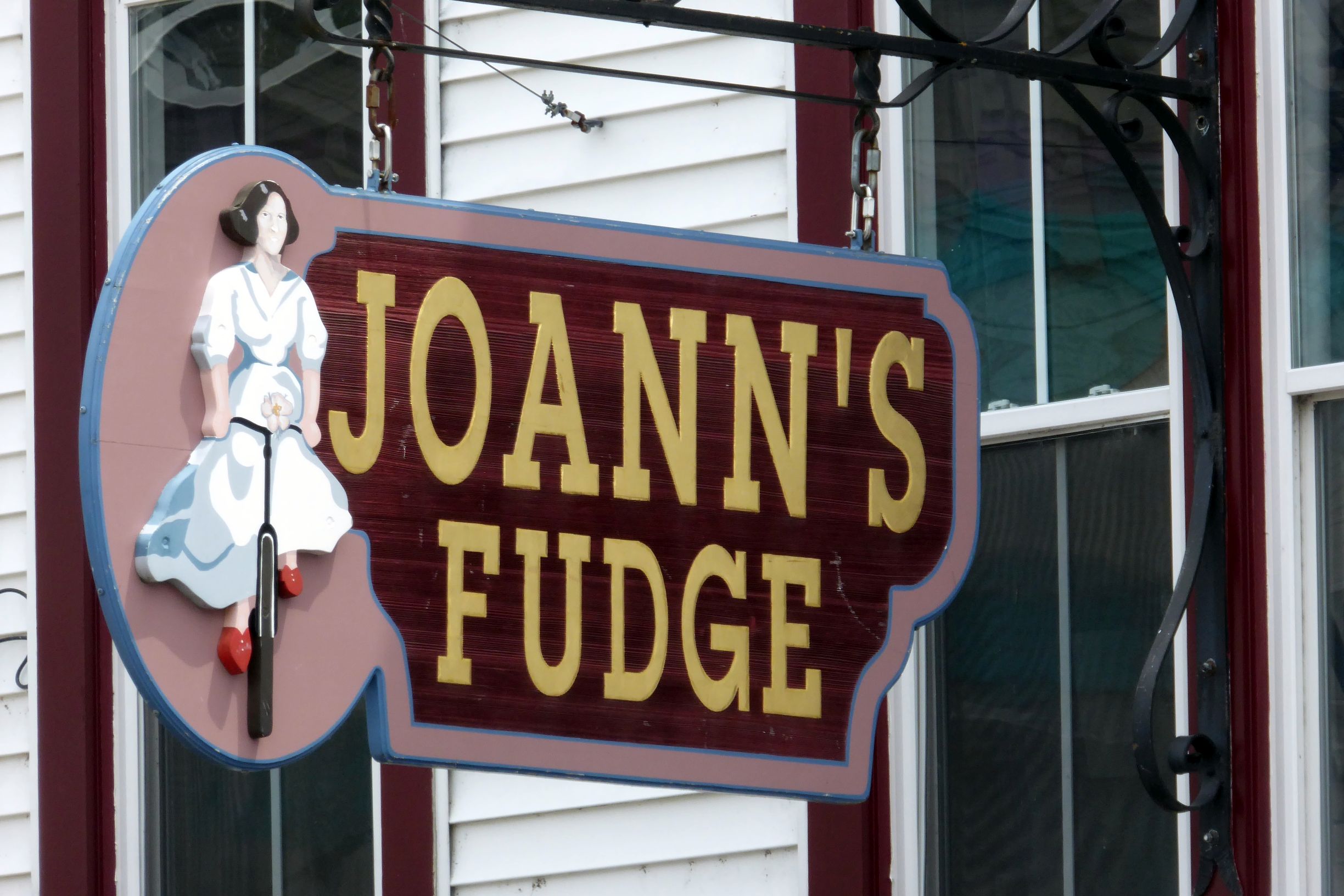
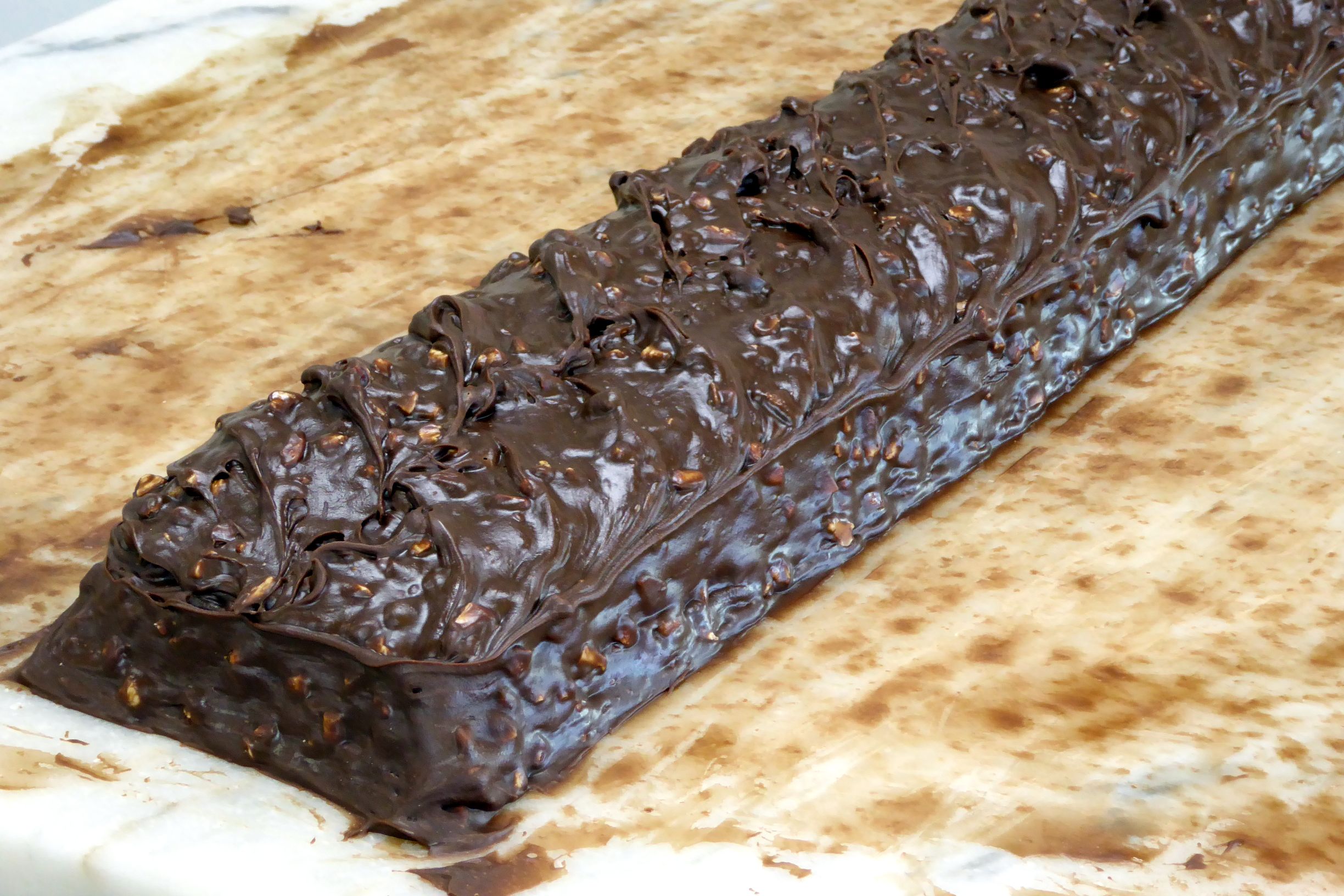
What you will find a lot of in Mackinac Island are fudge shops!  Bruce and I counted twelve of them on the 4-block Main Street alone!  In 1889, Henry Murdick opened the island’s first “Candy Kitchen,” and by the 1920’s, fudge was THE souvenir to bring home.  By the 1960’s competition among the fudge makers resulted in a “fudge wars,” and now Mackinac is world-famous for its fudge. According to the Mackinac Island tourist bureau, downtown shops make 10,000 pounds of fudge each day during the season!

It’s competitive alright.  Ryba’s has four(!) shops within four blocks, Murdick’s and Joann’s each have two, and then if that’s not enough, there is May’s, Murrays, Sander’s, and Kilwin’s.  Yes, a couple of them—Murdick’s and Joann’s—got my business, as if there wasn’t enough great chocolate on the ship!  As they say, “When in Rome…”  It sure was tasty!

Our day on Mackinac began with an included horse carriage tour of the gorgeous, lush island, our nation’s second national park (after Yellowstone).  A two-horse carriage took us around town and up the hill past the Grand Hotel.  We were then transferred to a larger three-horse carriage to tour the steeper trails of the park and visit Fort Mackinac.

Our tour carriage for the first part of the tour
These troupers hauled 35 of us around steep hills!
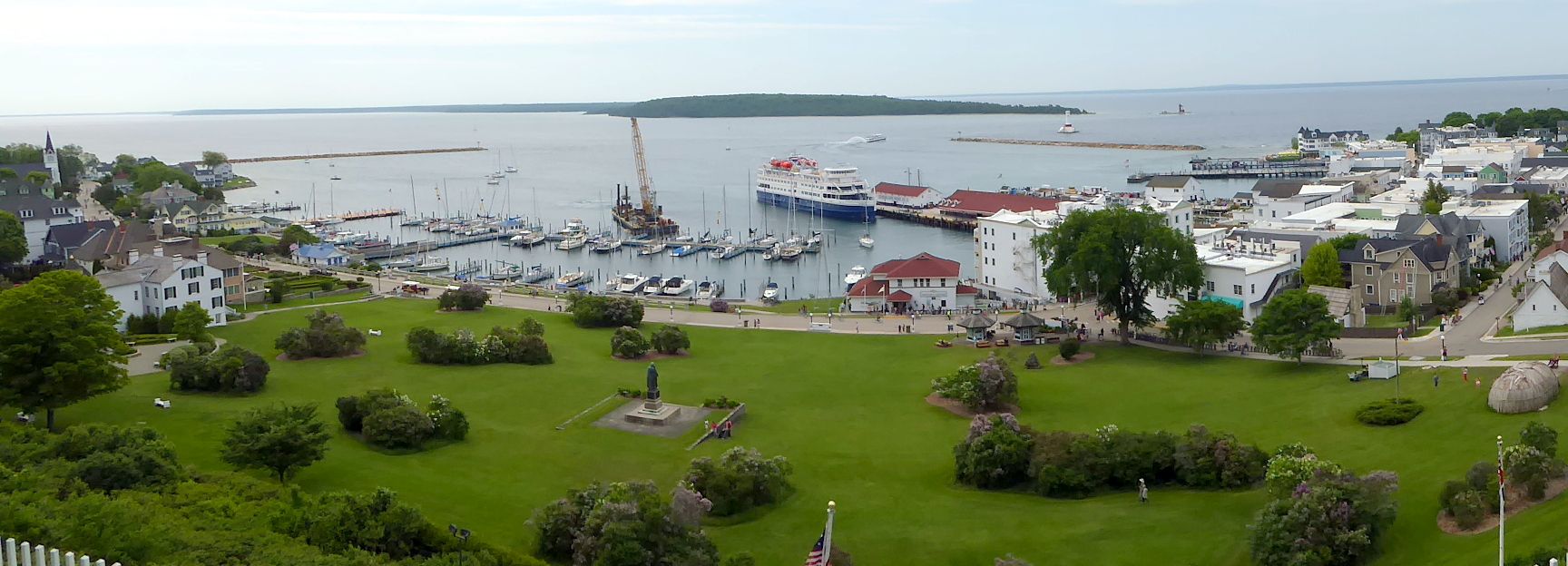
The view of downtown and our ship from Fort Mackinac
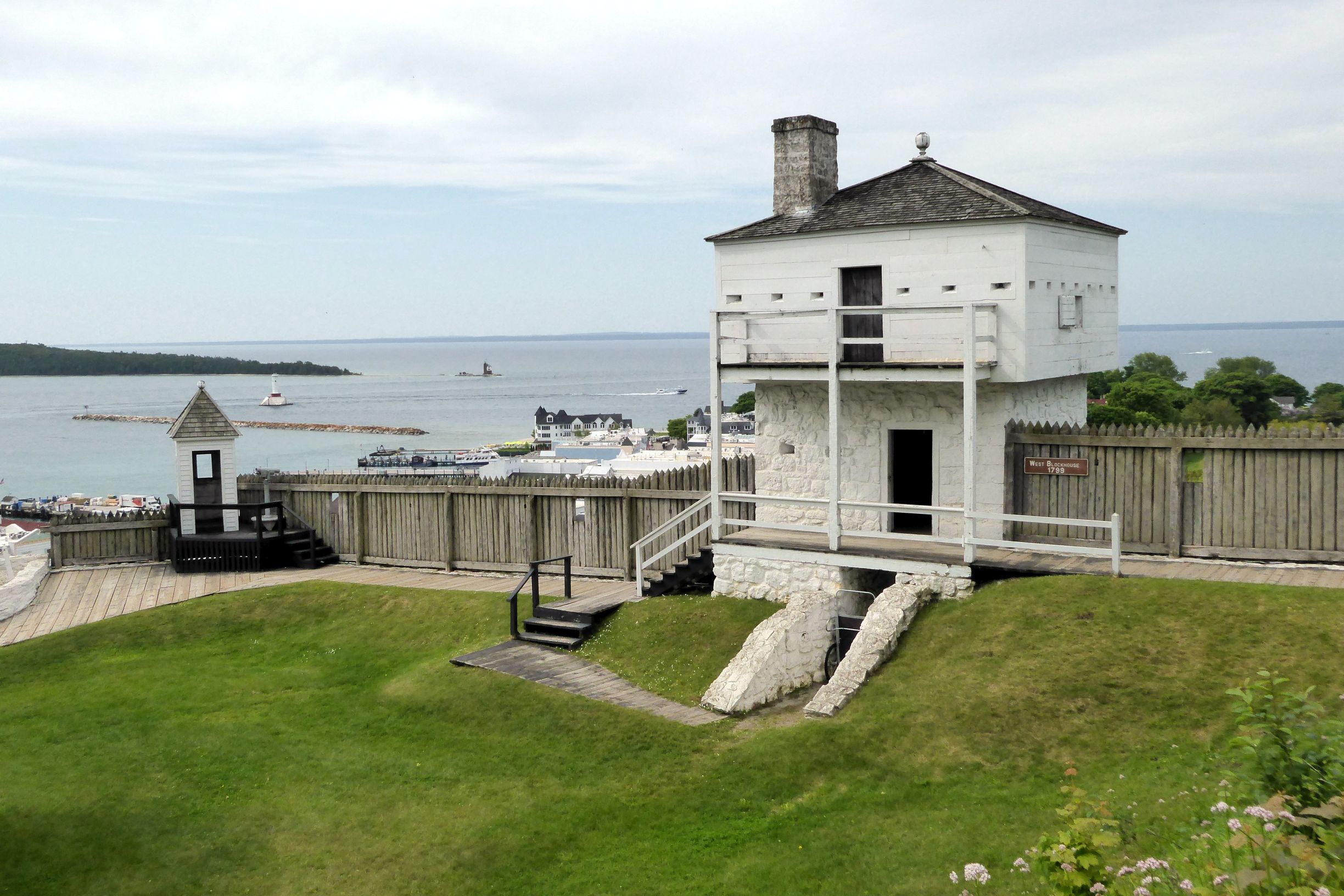
Fort Mackinac

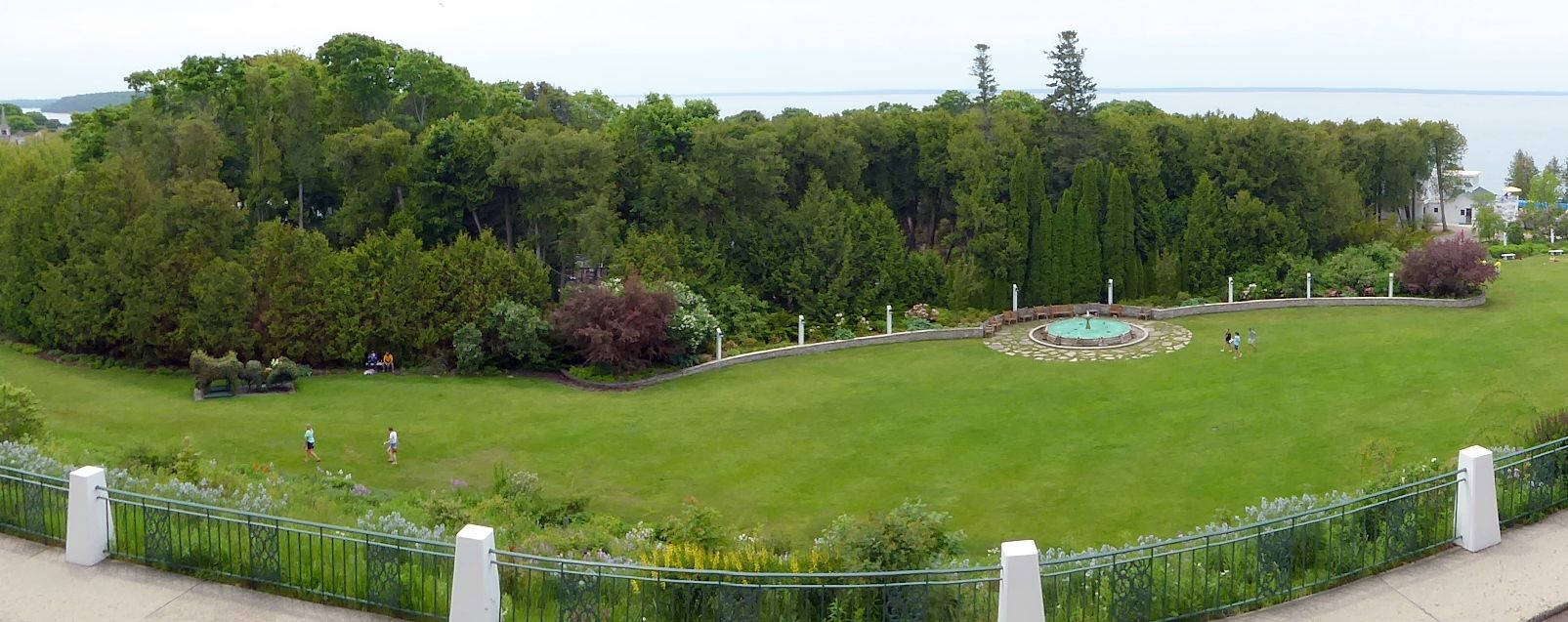
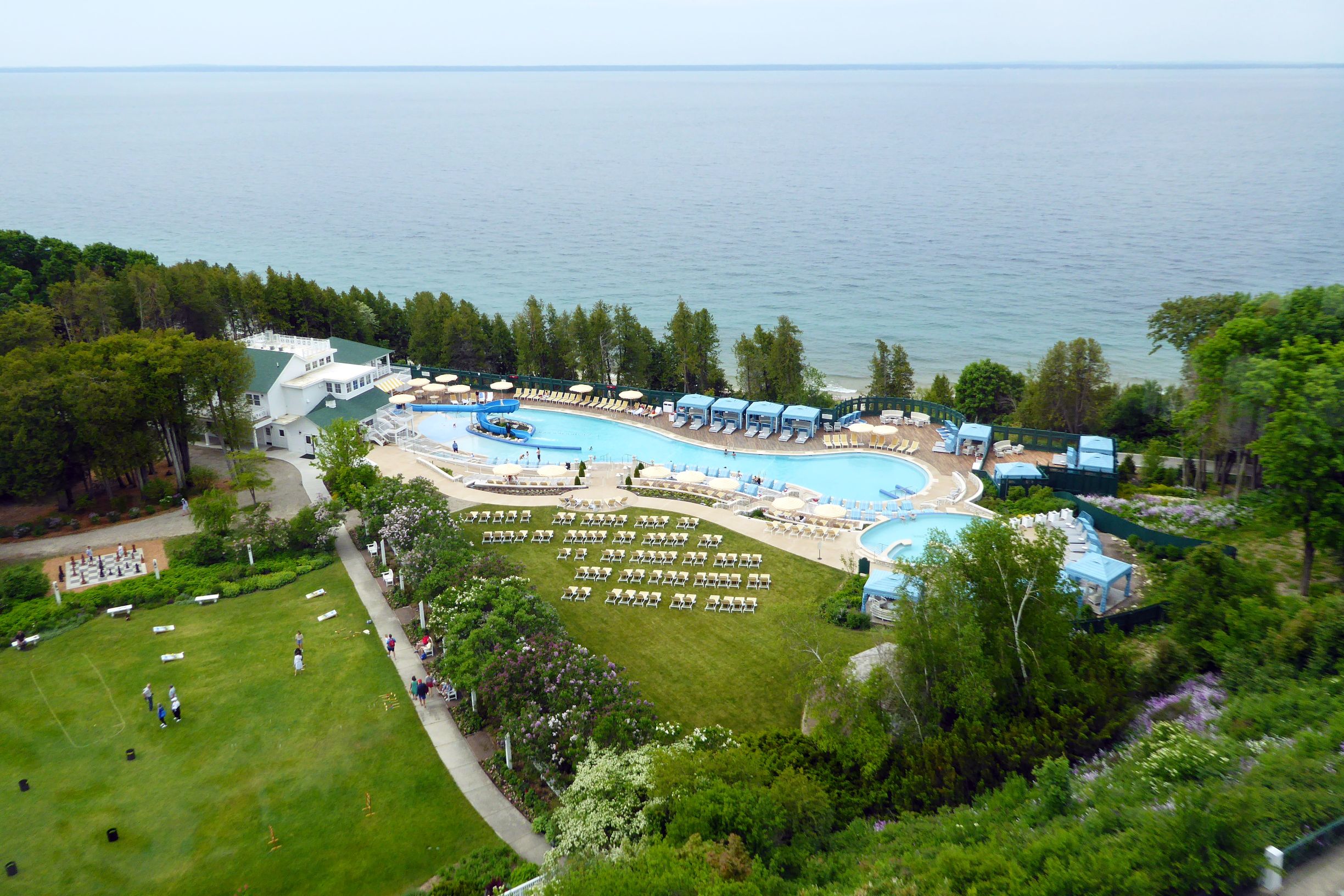
Rather than ride the carriage back to the Grand Hotel, we opted to walk and enjoy the breathtaking views of the Grand Hotel’s golf course along the nearly vacant path (except for the occasional horse carriage).  Lilac shrubs and trees were growing everywhere, and they were in full bloom.  We felt like we were walking through the pages of Better Homes & Gardens magazine.  It was so lovely and peaceful!

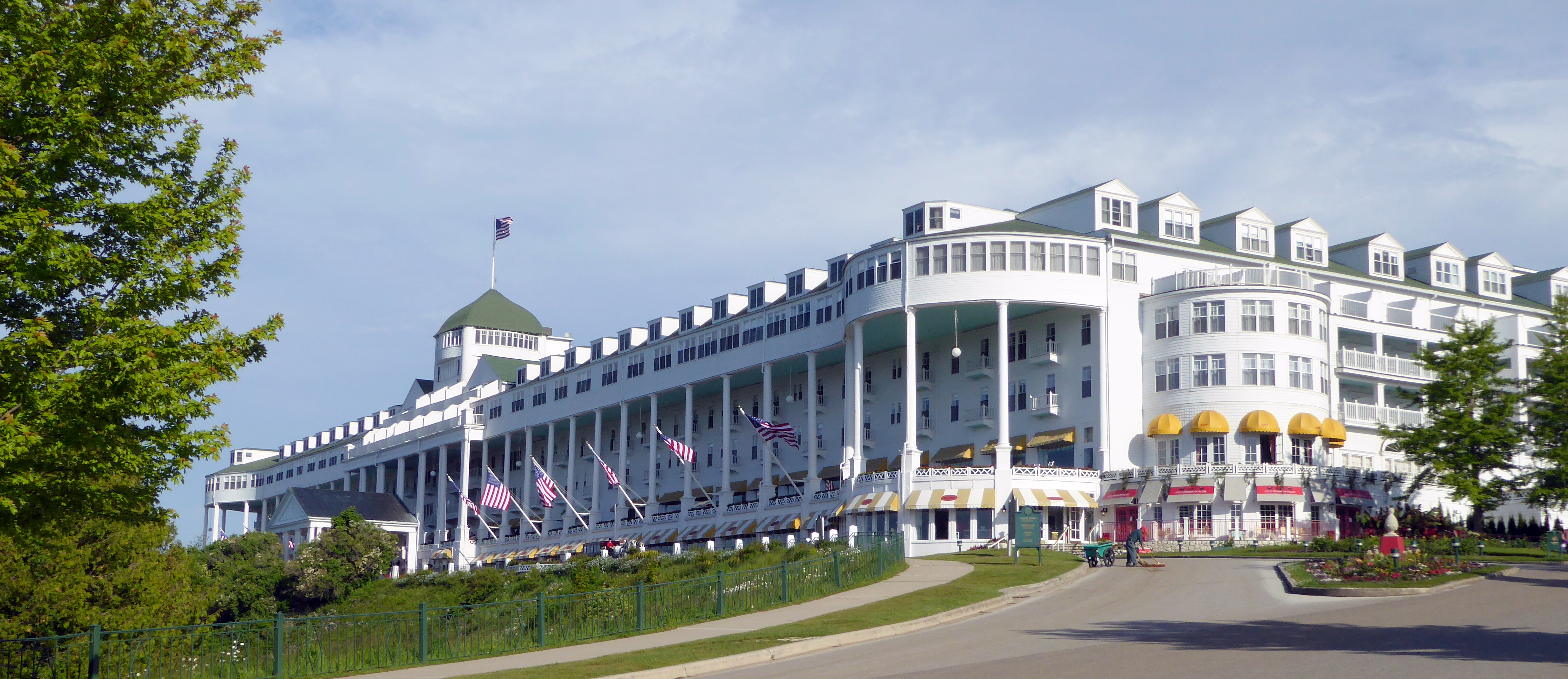
The Grand Hotel is indeed grand, especially its 660-foot front porch, the longest in the world.  Known as the filming location for the movie, Somewhere in Time (Christopher Reeve and Jane Seymour, 1981), the hotel was also visited by five U.S. presidents, Thomas Edison, and Mark Twain.  Built in just 93 days, the hotel opened in 1887 and was named to the National Register of Historic Places in 1972.  In 1989, it became a National Historic Landmark. 

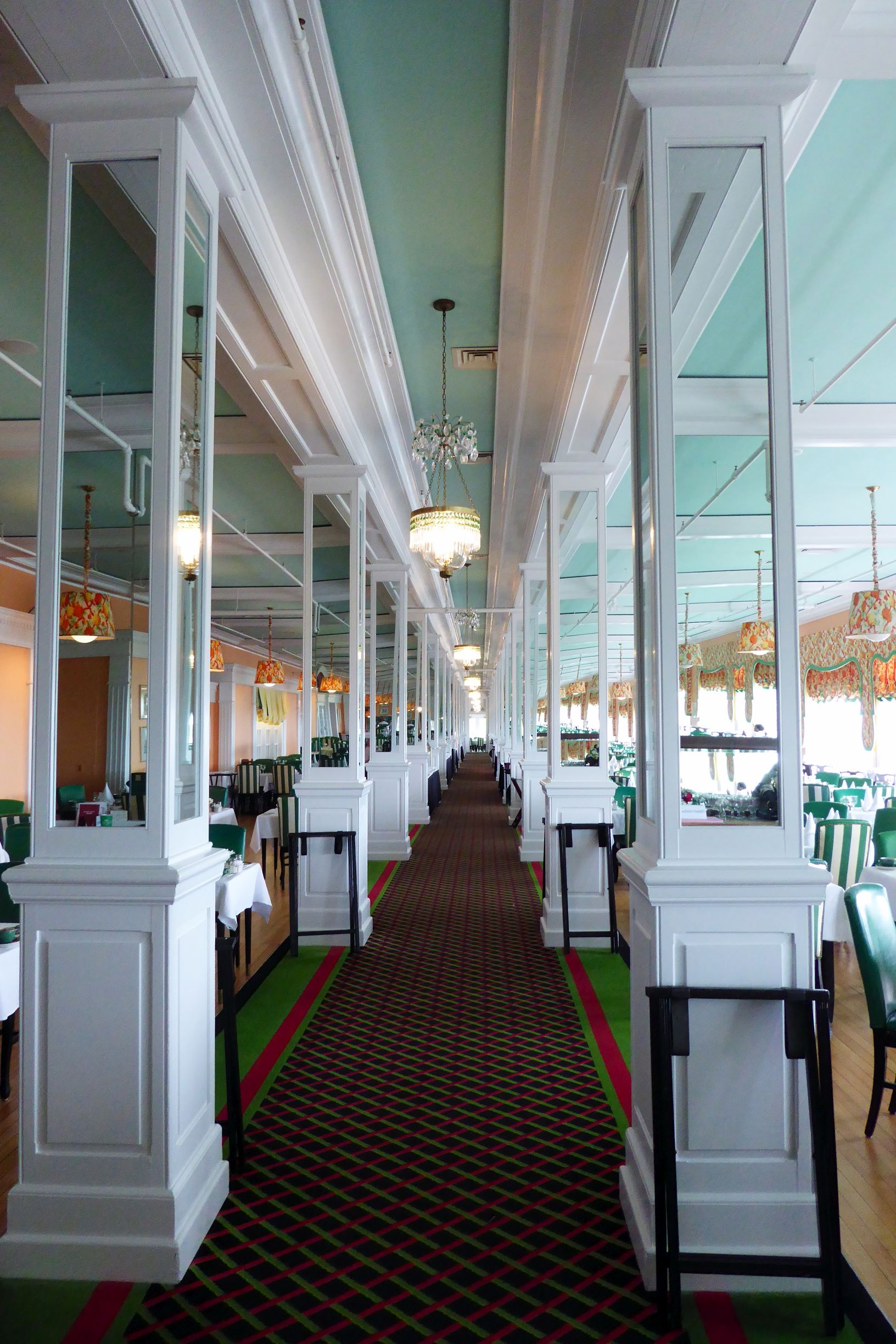
The hotel’s restaurant had the largest dining room I had ever seen!

After taking the self-guided tour of the massive hotel, we shared some delicious Mackinac ice cream from Sadie’s while rocking in two of the 100 rocking chairs that line the front porch.  Sadie’s Ice Cream Parlor was named after the Scottish Terrier that won Best in Show at the 2010 Westminster Kennel Club All Breed Dog Show.  The pooch is owned by the owner of the hotel and her ribbons, trophies, and memorabilia are featured in one of the hotel’s galleries.

The short walk back into town was so pleasant that it was a shock when we returned to Main Street, crowded with the summer tourists that came over on the ferry for the day.  It felt so commercial and touristy that we were relieved when the ferries loaded up to return the tourists back to the mainland. 

Following our dinner aboard ship and the last ferry departure, it was just me, Bruce, a few other passengers from the ship, and a handful of locals strolling the quiet Main Street after dinner aboard ship.  Ocean Navigator didn’t sail until the next morning, so it was nice to be able to go back into town and have it almost to ourselves!

CRUISING THE GREAT LAKES ABOARD AMERICAN QUEEN VOYAGES’ OCEAN NAVIGATOR

Like millions of other avid travelers now clogging the nation’s airports, several trips we had booked over the past two years had been canceled due to COVID.  One of those trips would have been aboard American Queen Steamboat Company’s acquired Victory Cruise Line ships.  Since then, the company was renamed American Queen Voyages (AQV), and the itinerary we had chosen was no longer on the schedule.  We opted for a 14-day Chicago roundtrip cruise on the Great Lakes with three days on our own in Chicago after the cruise.

This post, as well as the next several, will be about our (thankfully!) COVID-free journey, and the wonderful people, places, and experiences we shared along the way.

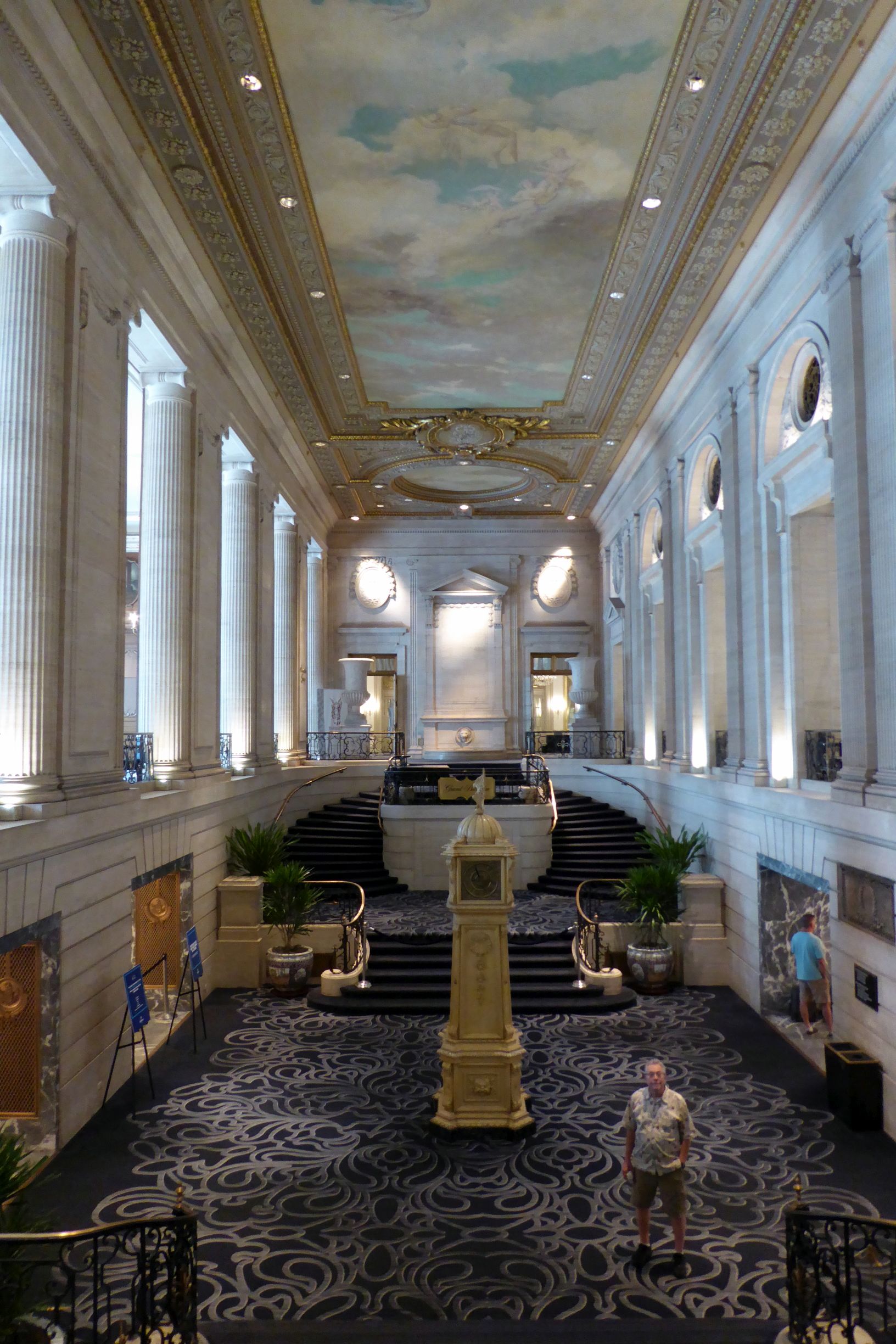
As was the case with past American Queen cruises, the first night was spent at a hotel before boarding the ship.  We were put up at Chicago’s downtown Hilton, a beautiful hotel located on a beautiful park-lined stretch of South Michigan Avenue. 

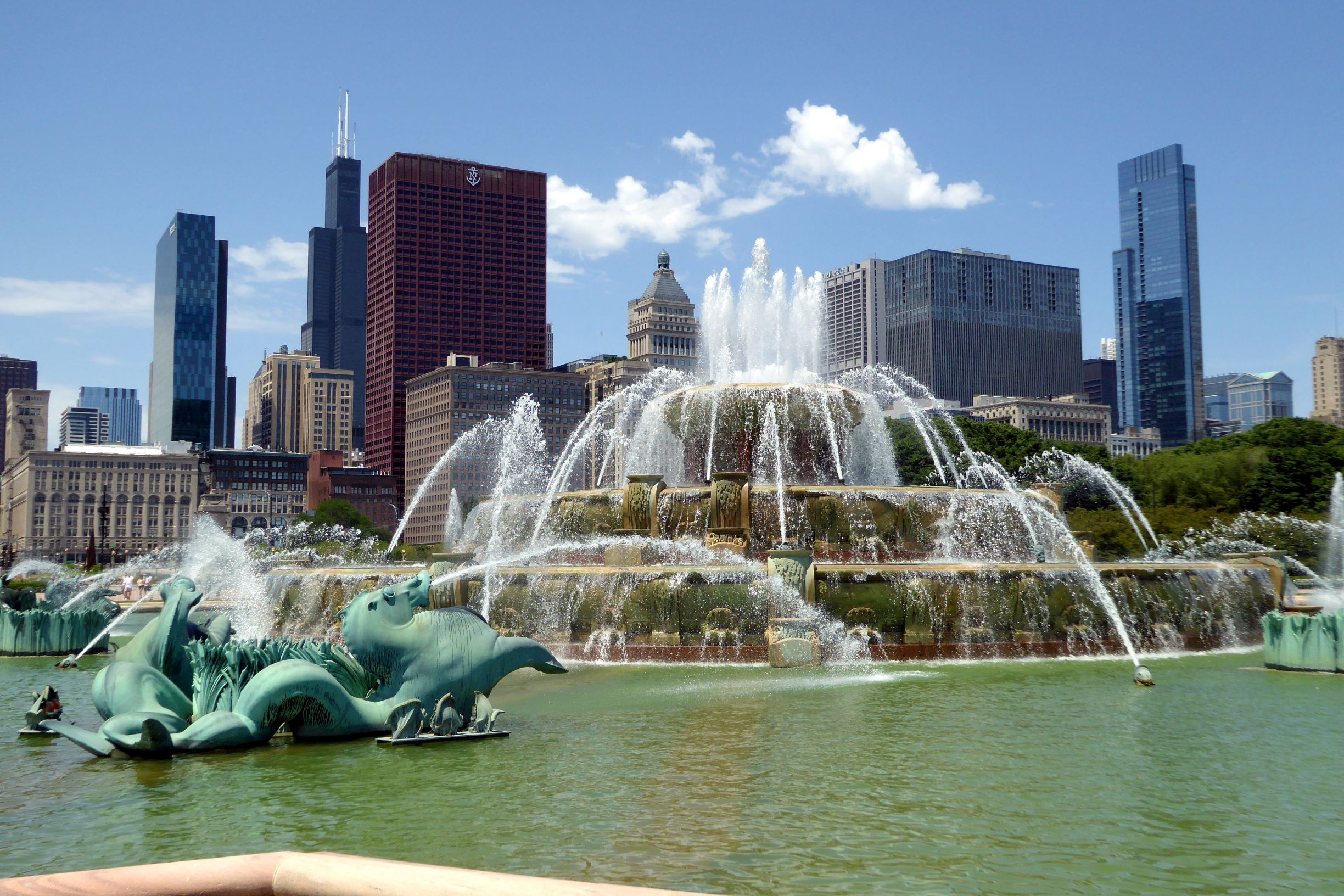
Following our mandatory COVID tests, we were cleared for our cruise aboard the Ocean Navigator (previously named Ocean Victory) the following day.  Whewww!  All 131 of the passengers tested negative, so we were free to roam the city until our bus ride to the ship the next day.  We ventured out to walk the parks, see Buckingham Fountain, stroll along the lake, and then head to Lou Malnati’s for the deep-dish pizza I had been craving over the past two years!  It was just as I had remembered it when I visited Chicago with my best friend, ten years before—awesome!

Unfortunately, Chicago authorities decided shortly before the summer cruise season they didn’t want cruise ships coming and going in their waters during the busy summer weekends, so AQV was forced to bus us up to Milwaukee to meet the ship. It was all a bit of chaotic mess, because the left hand didn’t know what the right hand was doing (thanks to a lack of communication from the home office), but once we got on board it was (almost!) all good!

Let’s get the “(almost!)” out of the way first.  If you have poor hearing, wear hearing aids, and remove them at night, I HIGHLY recommend this ship.  If, on the other hand, you have excellent hearing and wear industrial-grade ear plugs at night to prevent inconsistent noises from waking you, think twice before cruising on this ship—at least until they resolve the pipe noise issue.  Even a white noise ap couldn’t mask the loud sound of pipes rattling when water was being pumped throughout the ship for the showers.  The water tanks were located below our cabin, so Alex, the wonderful Hotel Director, moved us in hopes of resolving the issue, since the problem couldn’t be fixed.  Unfortunately, the “upgrade” from the first to third deck didn’t make a difference; the rattling was throughout the ship.  This wasn’t a big deal during the day or evening, but the first shift of officers (housed in the inside cabins; passengers had outside cabins windows or balconies) showered around 5 am!

Our cabin on Deck 1 before we were moved.
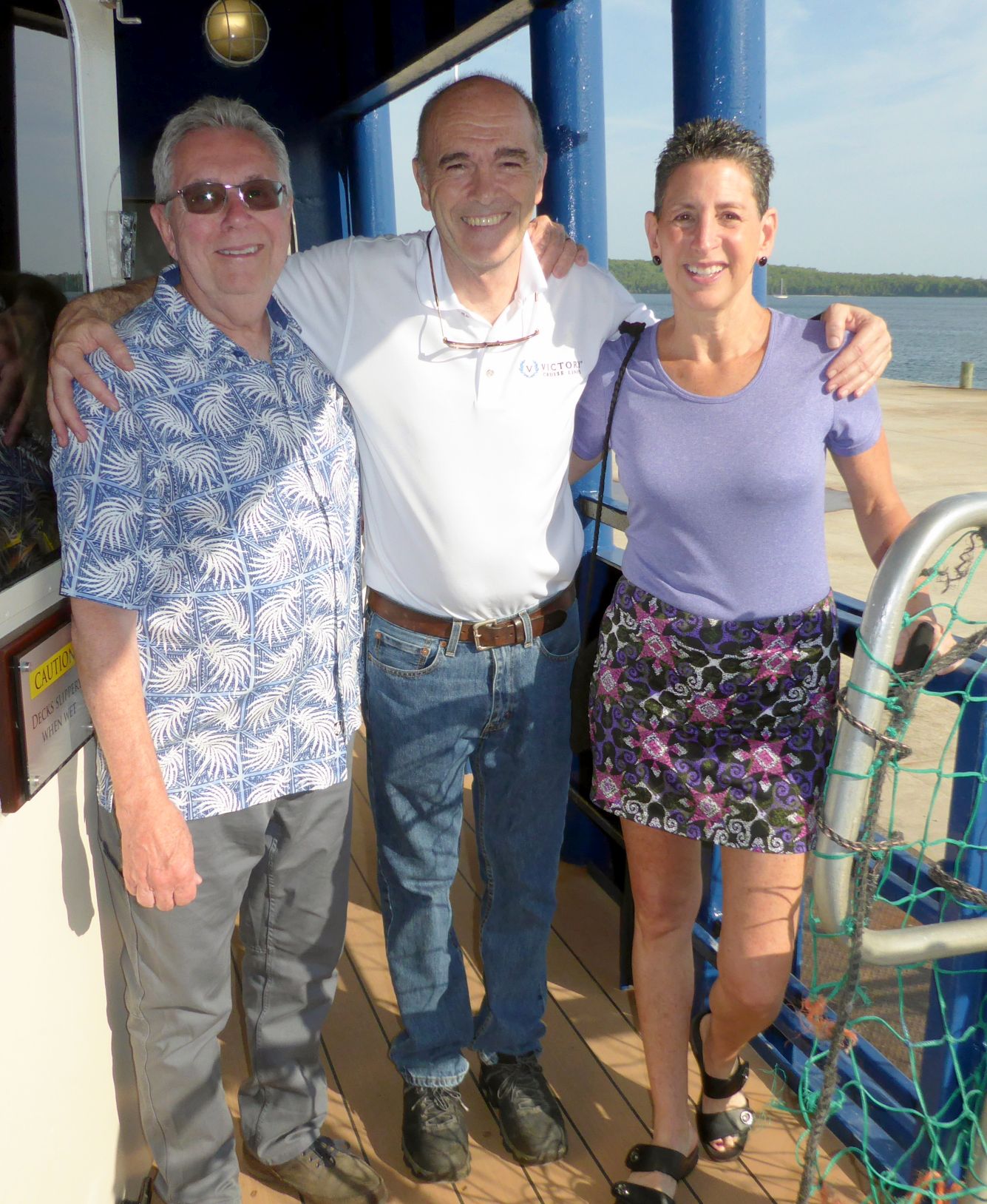
Bruce and Alex (Hotel Director) with me

Otherwise, I can’t begin to tell you how much we enjoyed everything else about the ship, its crew, and this cruise!

Unlike American Queen’s U.S.A.-registered paddlewheel river boats, the Ocean Navigator is registered in the Bahamas, allowing the company to hire foreign crew.  Although most were Filipino, many nationalities were represented, including our charming and funny Scottish captain.  Alex and the chief purser were from the Ukraine, and our cabin steward, Jose, was from Honduras.  All were friendly, hard-working, and eager to please.  They made our cruise!

Our Scottish captain

Meet Marisol and Sarah:

Whenever I went to the gym, located across from the Purser’s desk, I would hear, “Hi, Miss Elaine!” They told me that after seeing my passport and comparing my birthdate to the photo, and then to me in person, I was their inspiration, and that I couldn’t possibly be 60!  They decided right then and there to give up unhealthy foods and start exercising, so they could look good at 60, too.  Made my day!

This is Chef Ross, a skinny chef you can trust! 

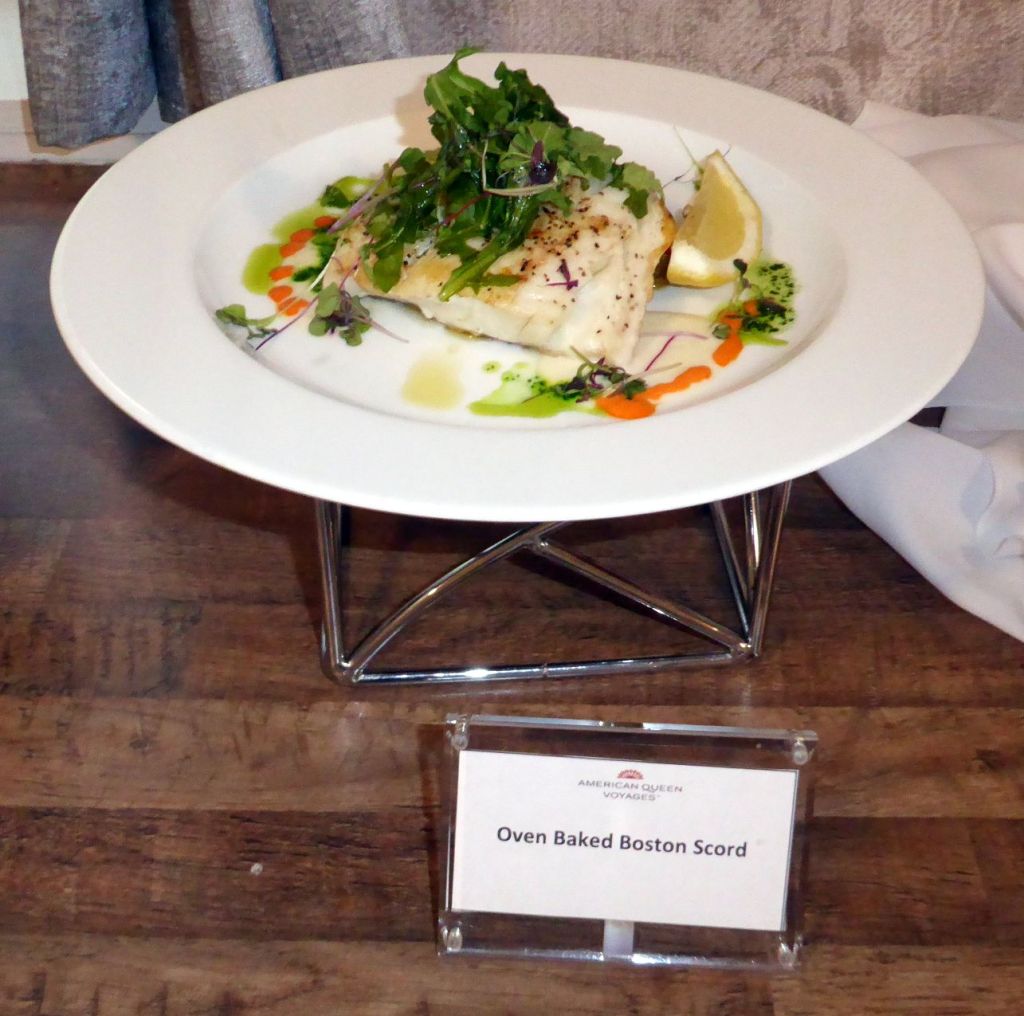
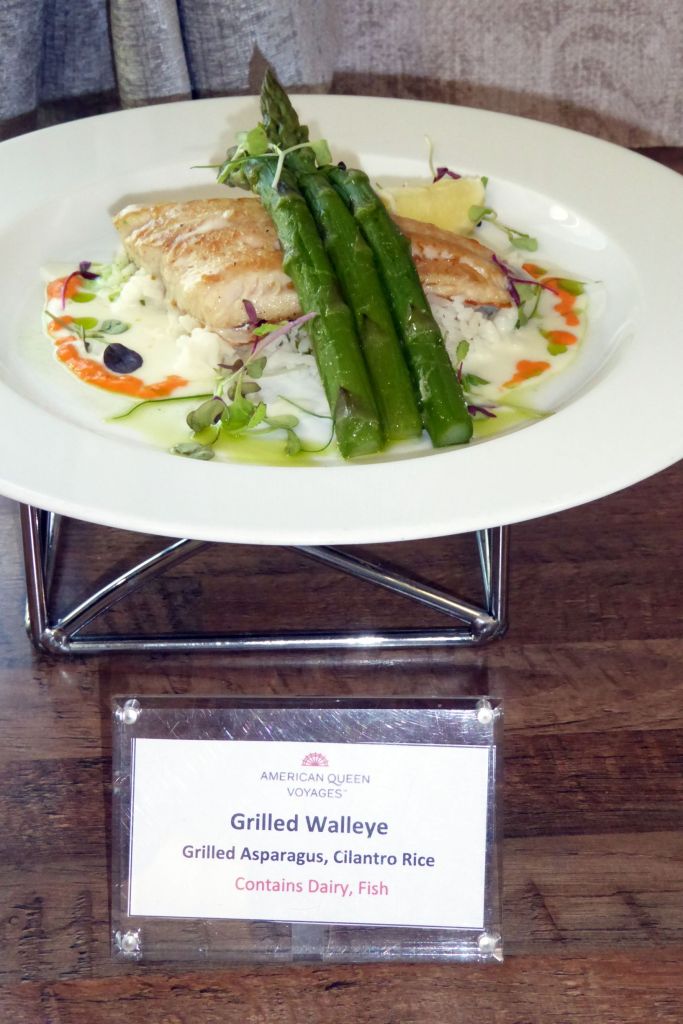
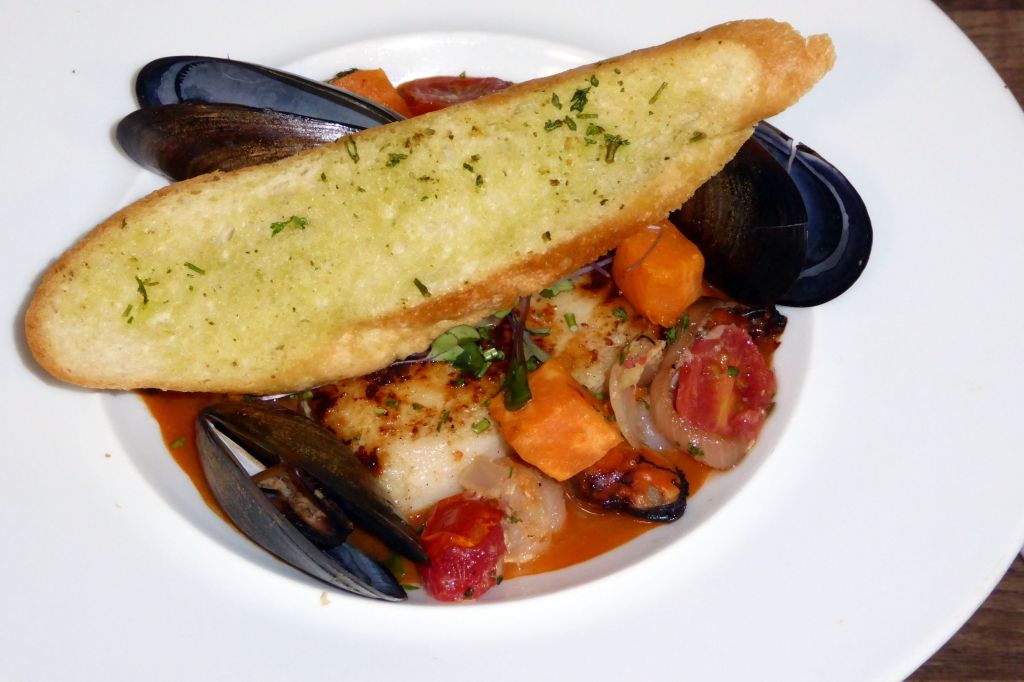
Of all the 56 cruises I have worked on or been a paying passenger, Ross and his staff prepared the best cuisine.  Like other AQV cruises, lobster tails were available every night; however, these were absolutely the best.  We ordered seafood every night and often asked for a lobster tail to be placed on top; we were in seafood heaven!

Ross didn’t mess around when it came to chocolate either.  He budgeted for a block of expensive, top-rated Valrhona chocolate, from France, for Gladwyn to use for baking his desserts.  His Valrhona Chocolate Tart was just as good as Nancy Silverton’s chocolate tart that I had enjoyed when Nancy was considered one of the best pastry chefs in the U.S.A.  After raving about it to Ross and Gladwyn, they surprised me with more that Gladwyn made special the following night.  Pure chocolate heaven!

Another Gladwyn masterpiece

This ship doesn’t offer the production shows like AQV’s river boats have at night, but we enjoyed listening to the band—especially Tim’s saxophone, flute, and harmonica solos.  We enjoyed sharing a few dinners with Tim, too.

Johnny (Piano & Vocals), Tim (Sax, Flute, Harmonicas), Bruce, and John (Drums)

After a full day at sea—uh, make that “at lake,” we docked at our first Michigan port…

Next up:  Motorless Mackinac Island

Until then, how about a virtual tour of the Ocean Navigator?

Ocean Navigator
Forward deck below the bridge
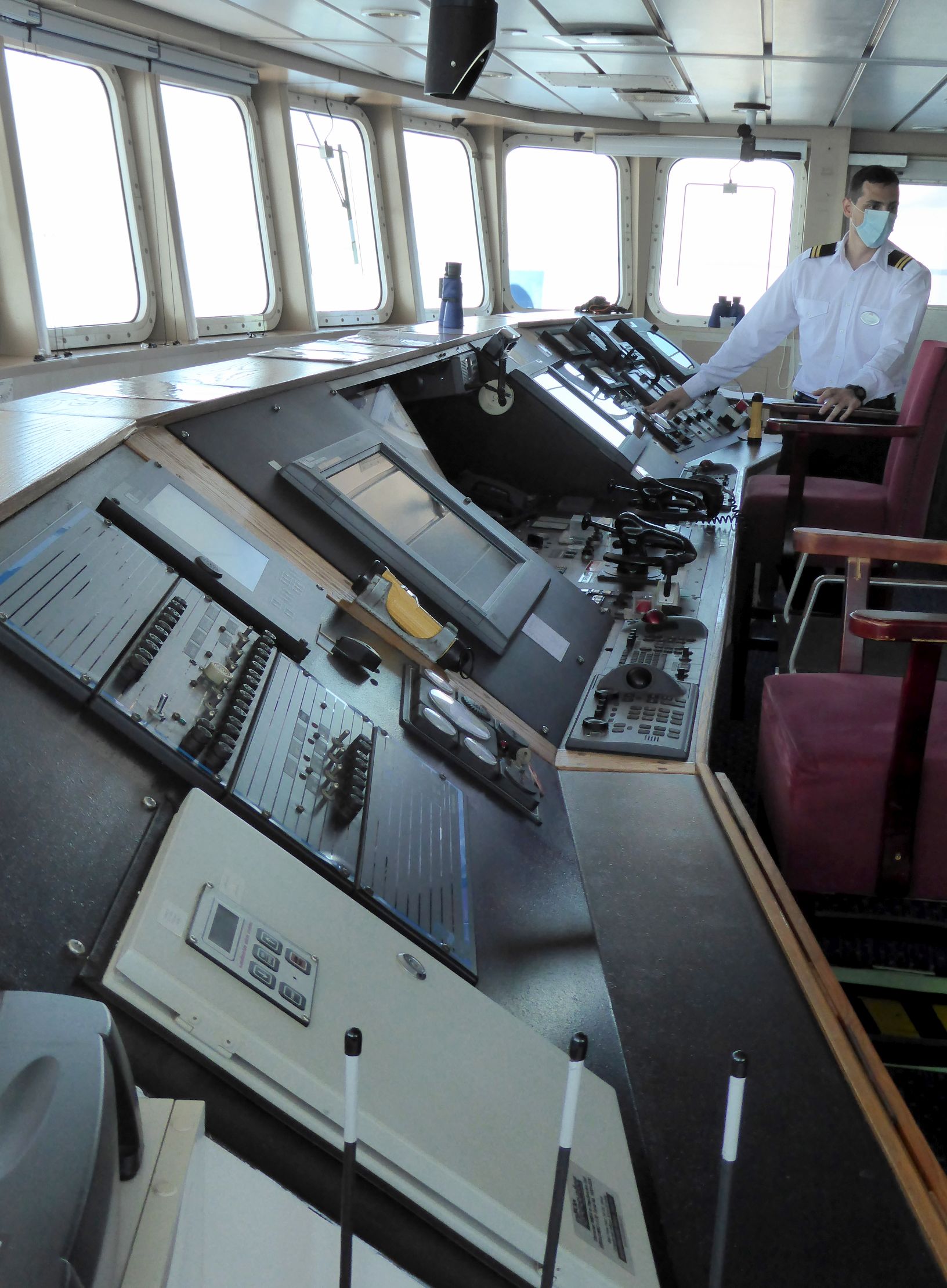
Bridge Tour
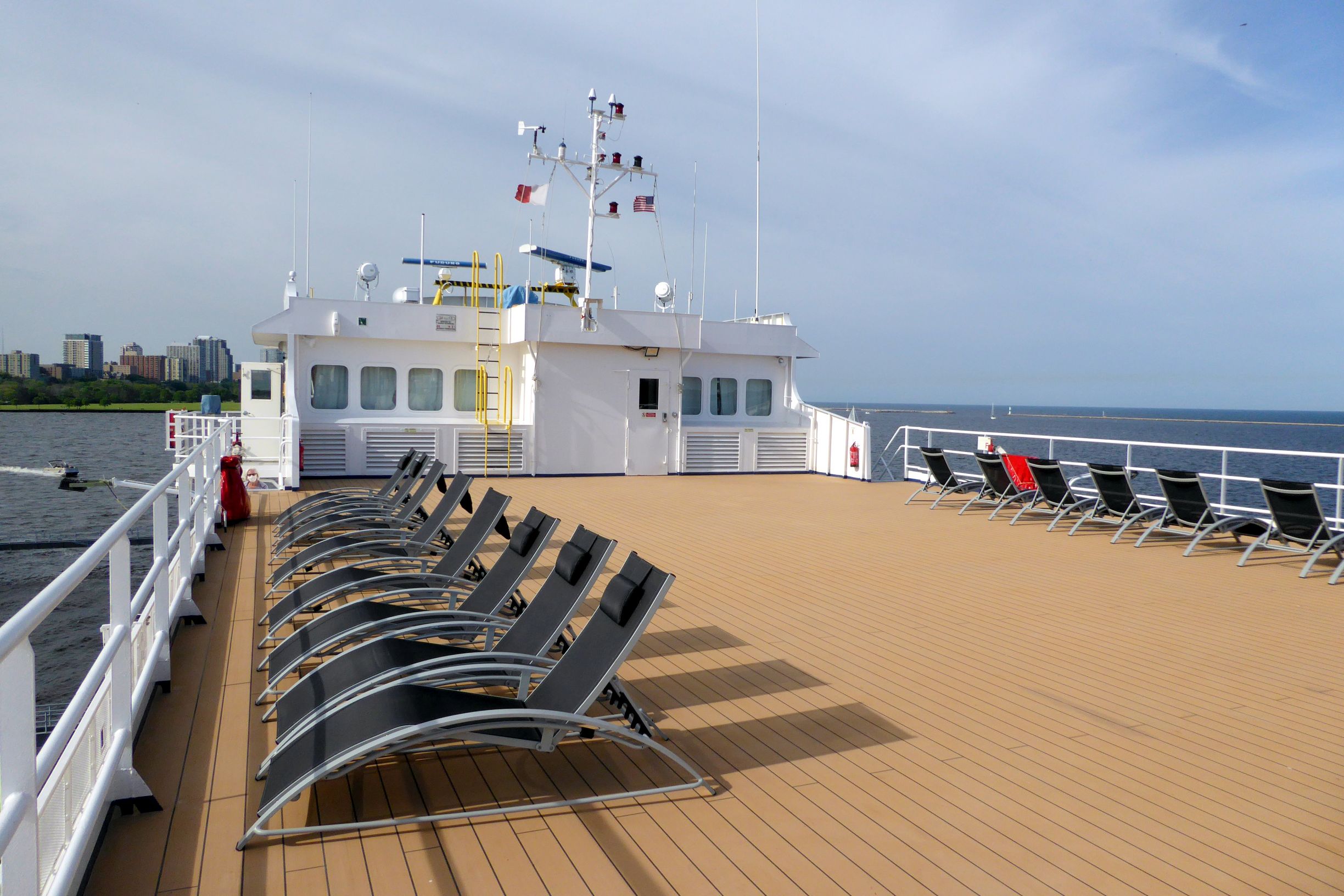
Top deck behind the bridge
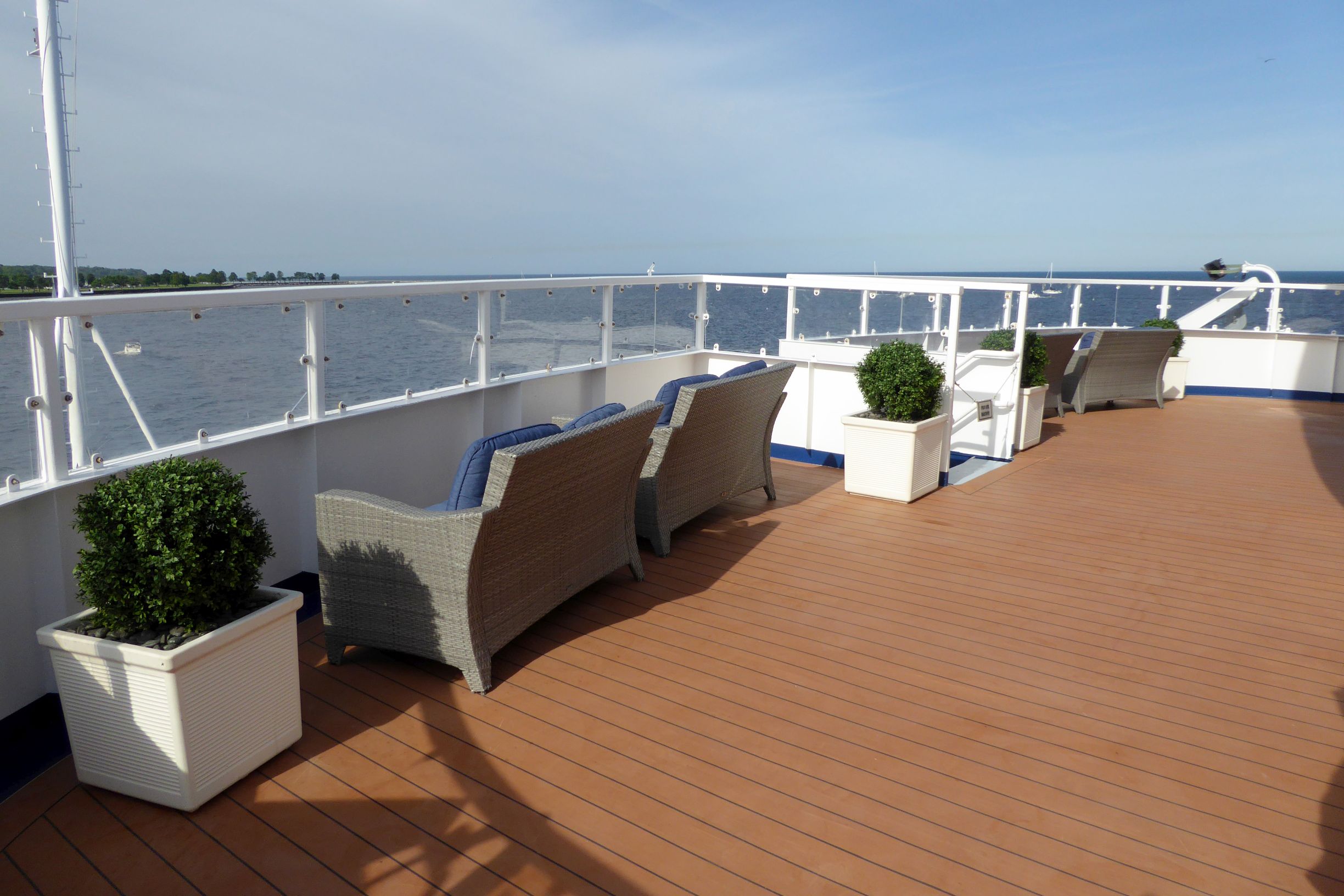
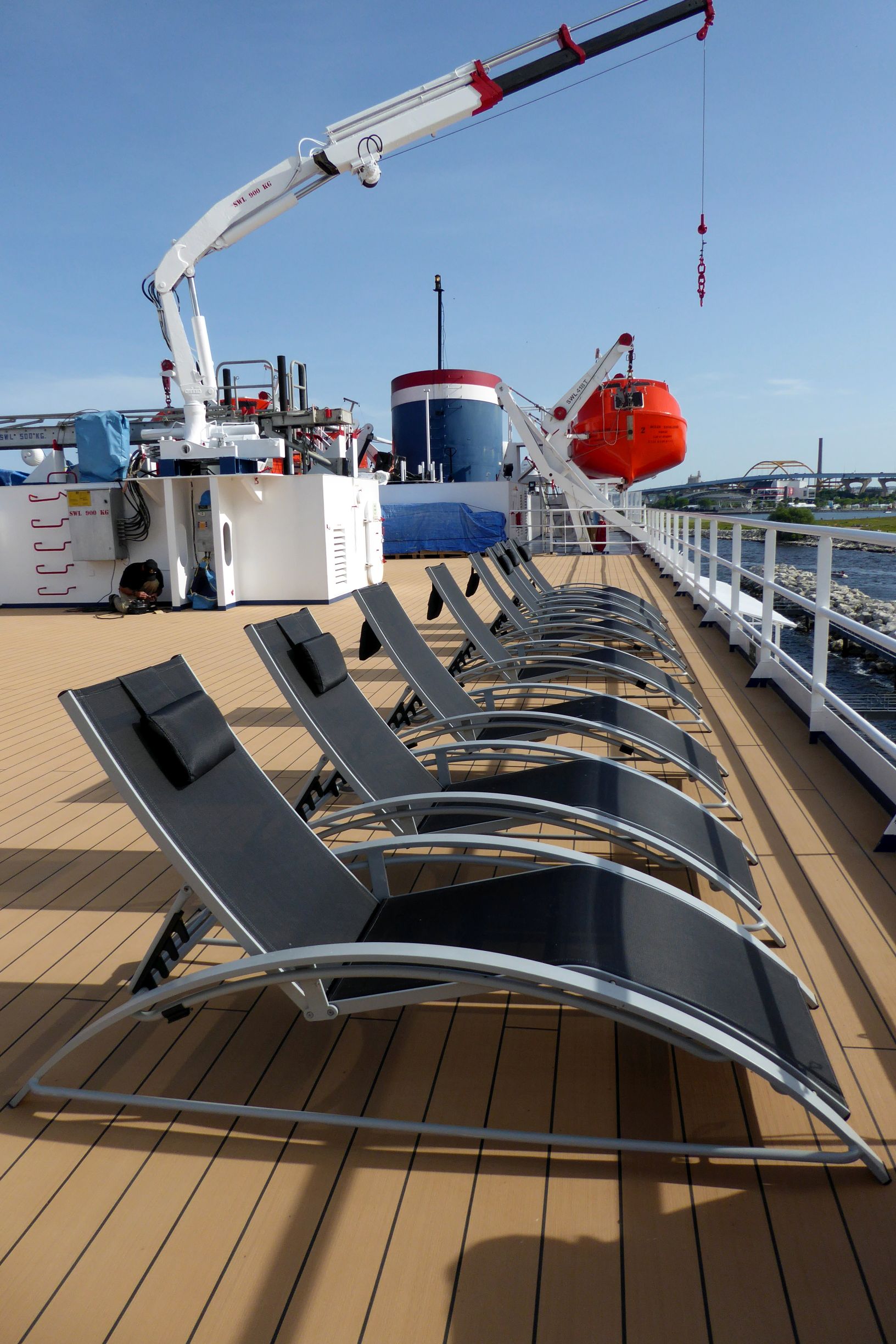
Top deck looking aft
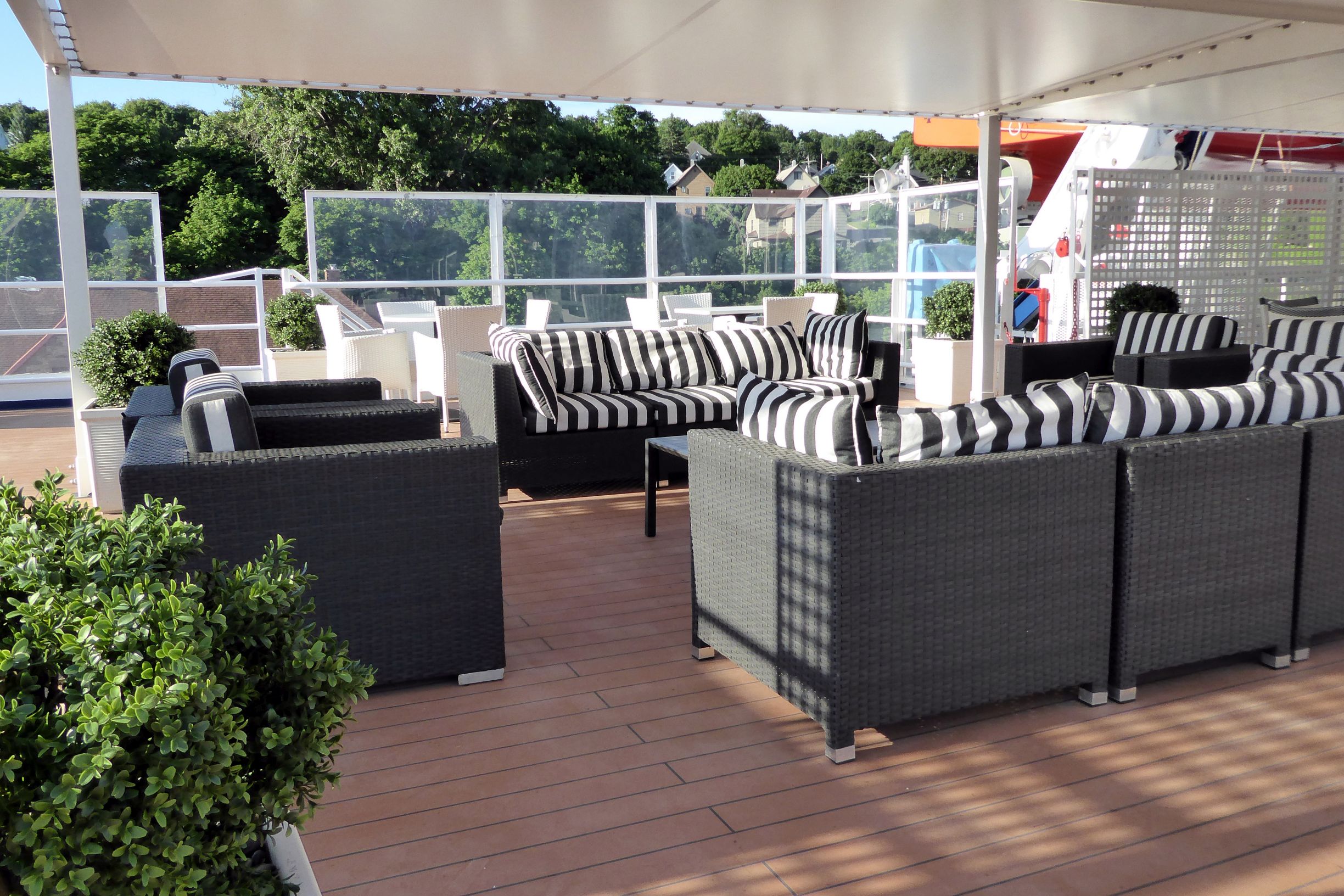
Top aft deck looking forward
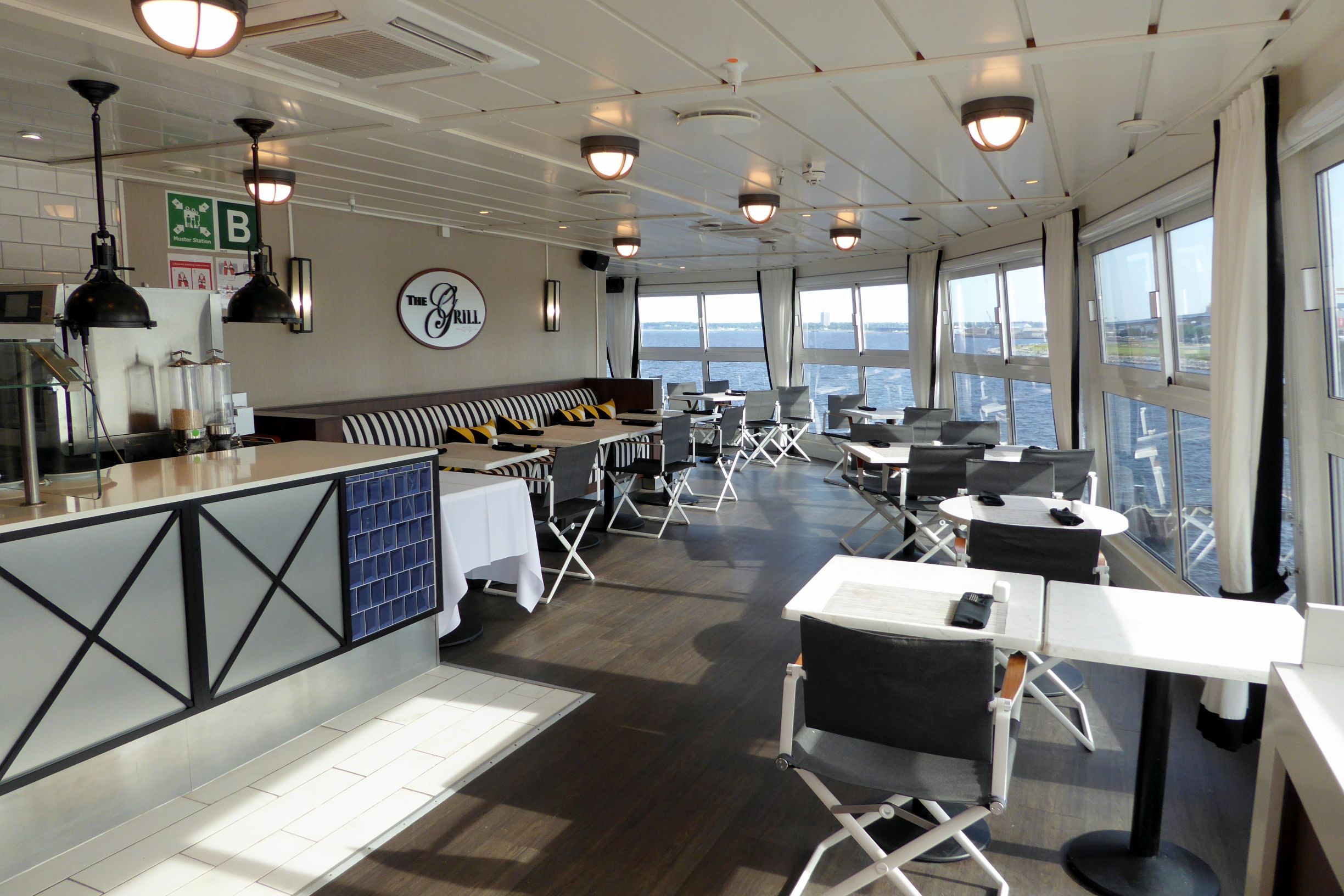
Port side of The River Grill, located below the top deck. This was a casual dining restaurant where we enjoyed breakfast and lunch, rather than dining more formally in the dining room.
Starboard sie of The River Grill.
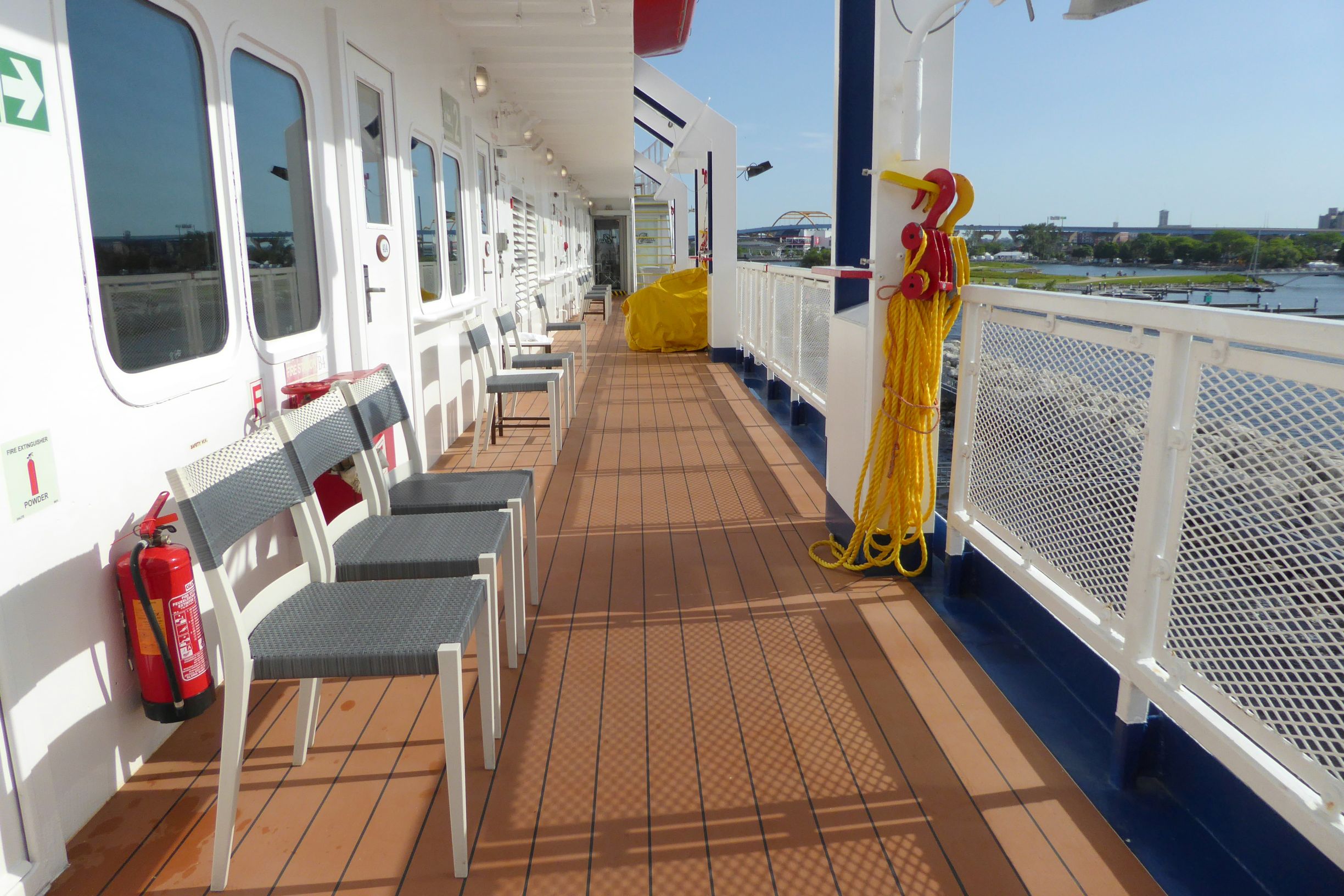
Promenade deck
This is how calm the water was on Lake Superior, a notoriously rough lake where the Edmund Fizgerald (and hundreds of other boats) sank.
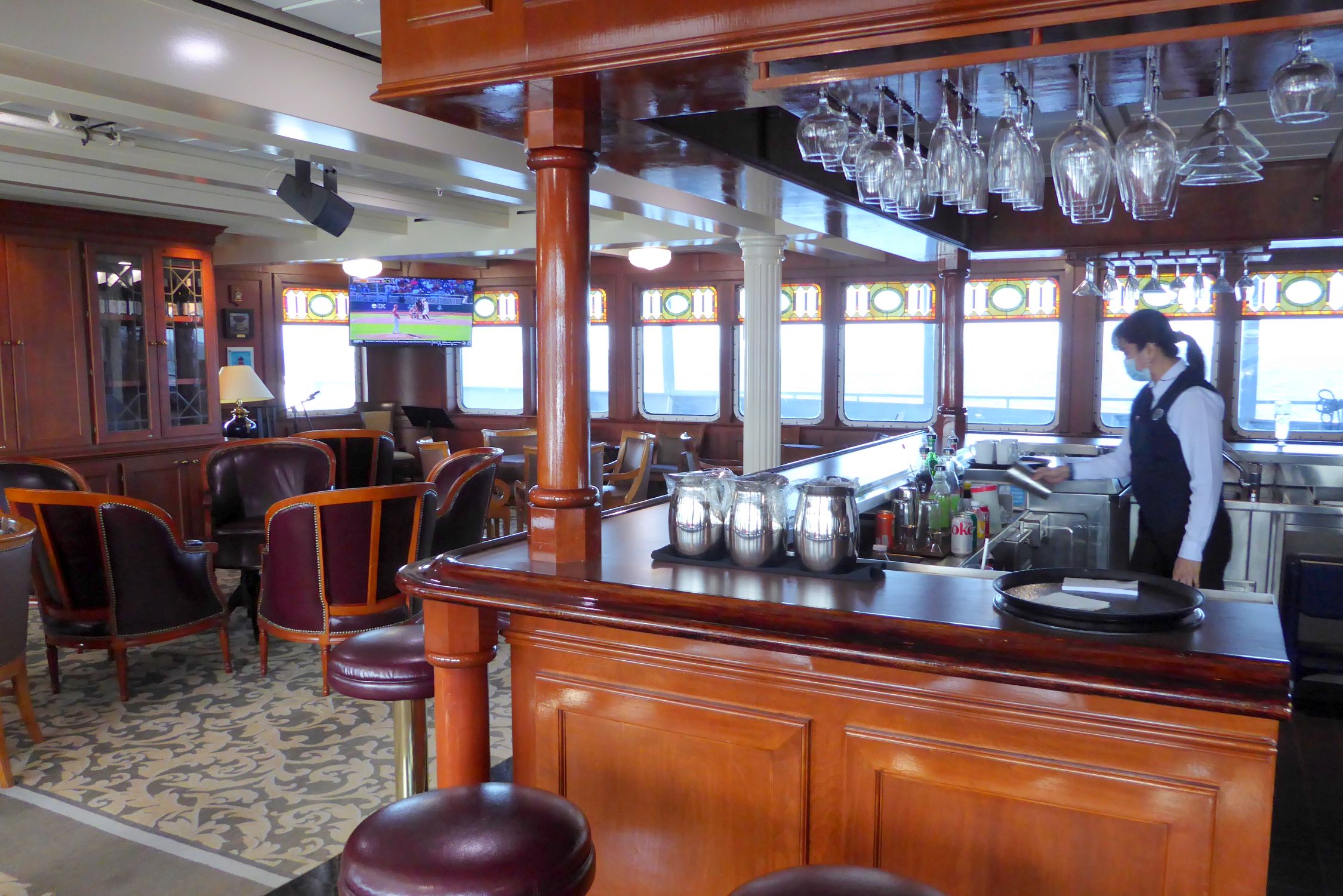
The tavern was located forward on Deck 2 with the lounge mid-ship.
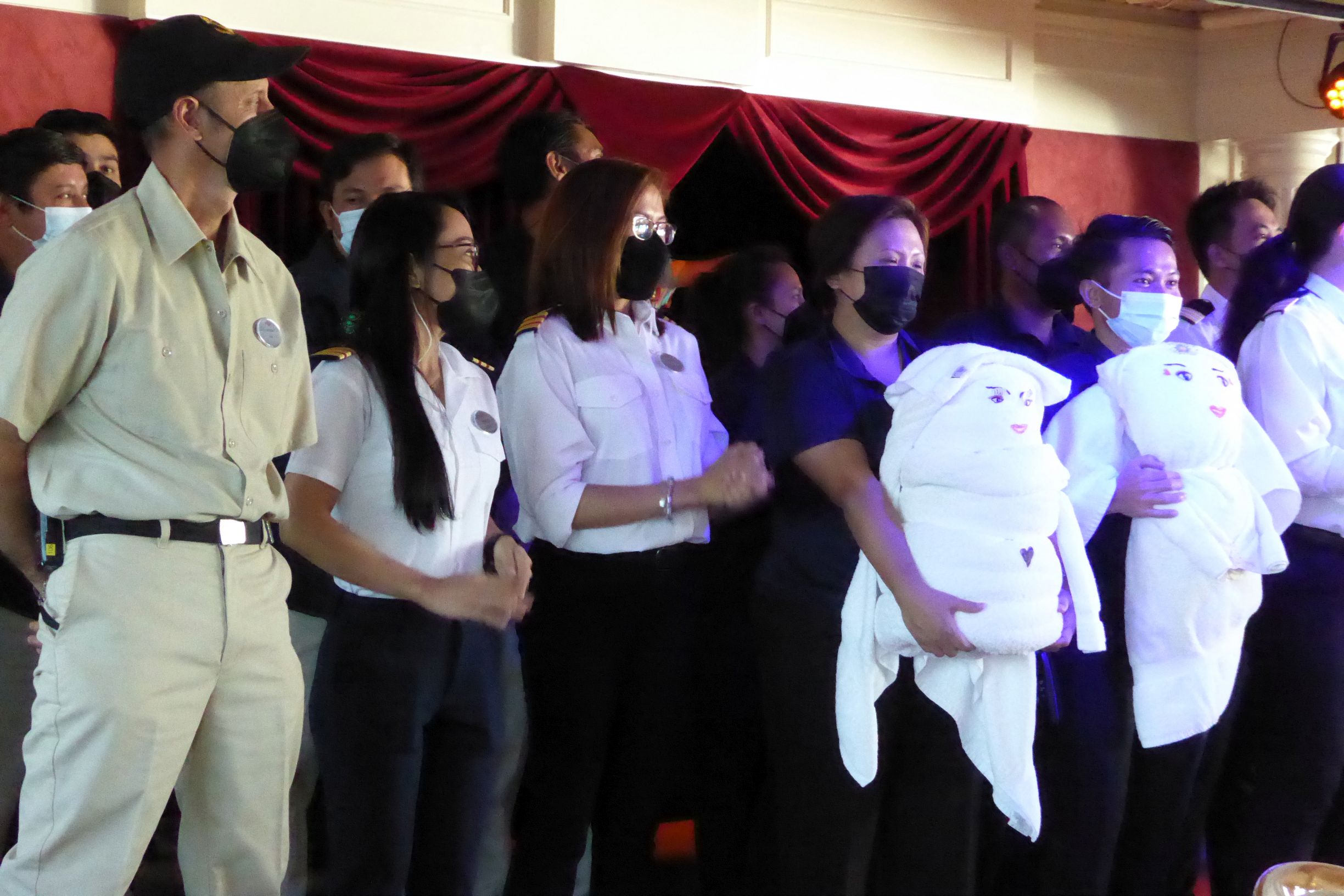
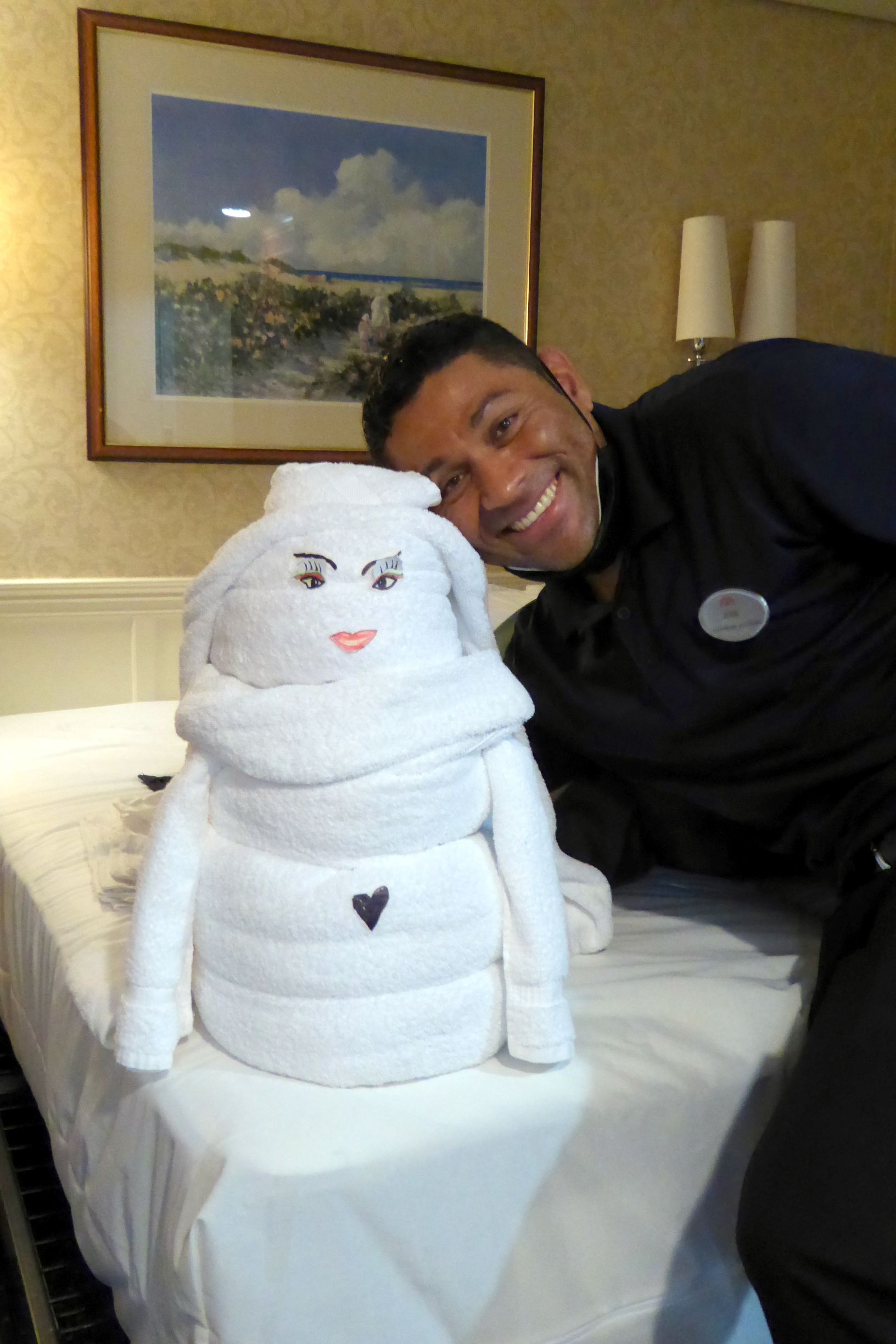
Our crew (and their adorable towel creations!)
Jose, our cabin steward
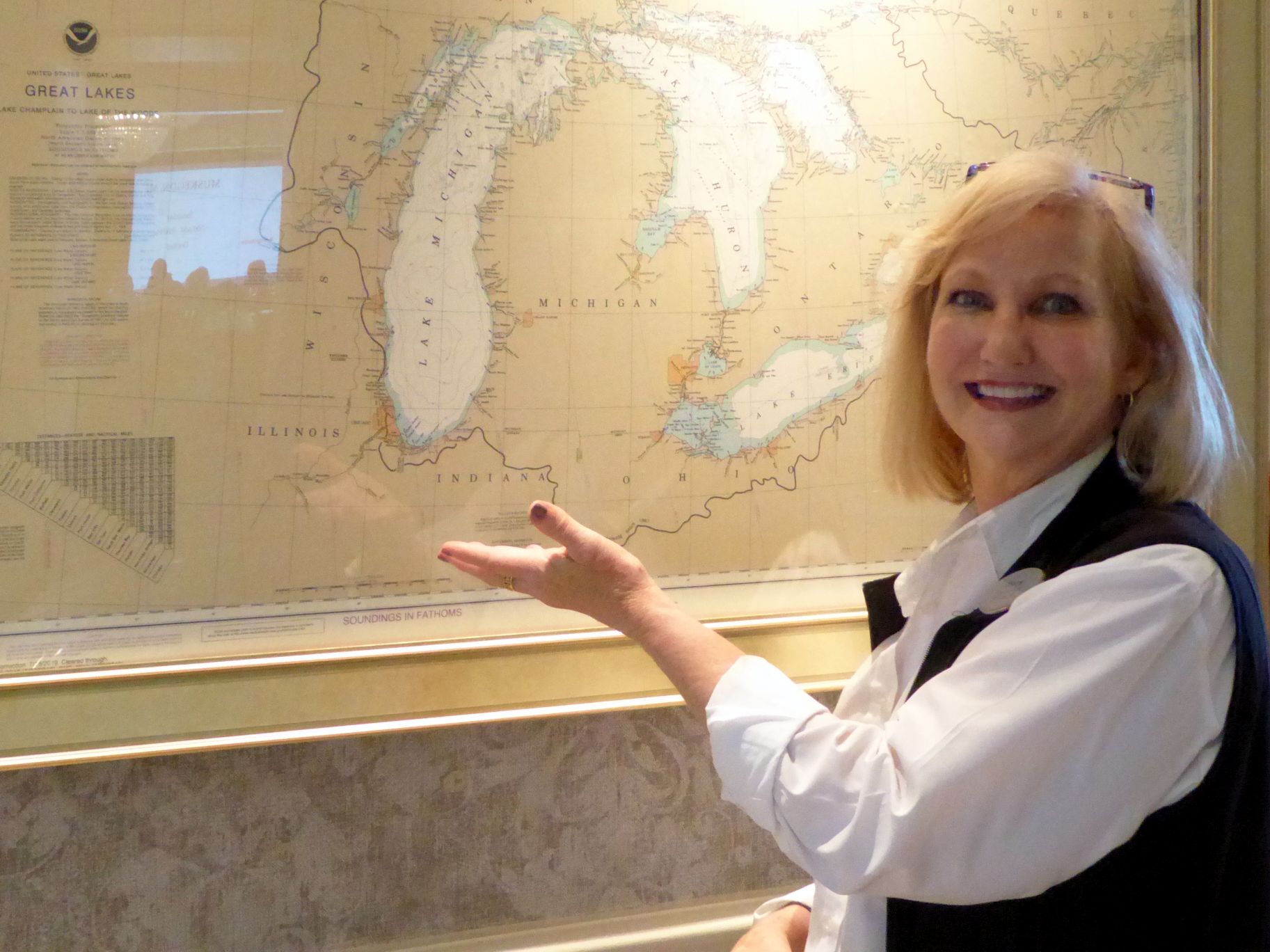
Diane, the shore excursion manager was one of my favorite people on board.
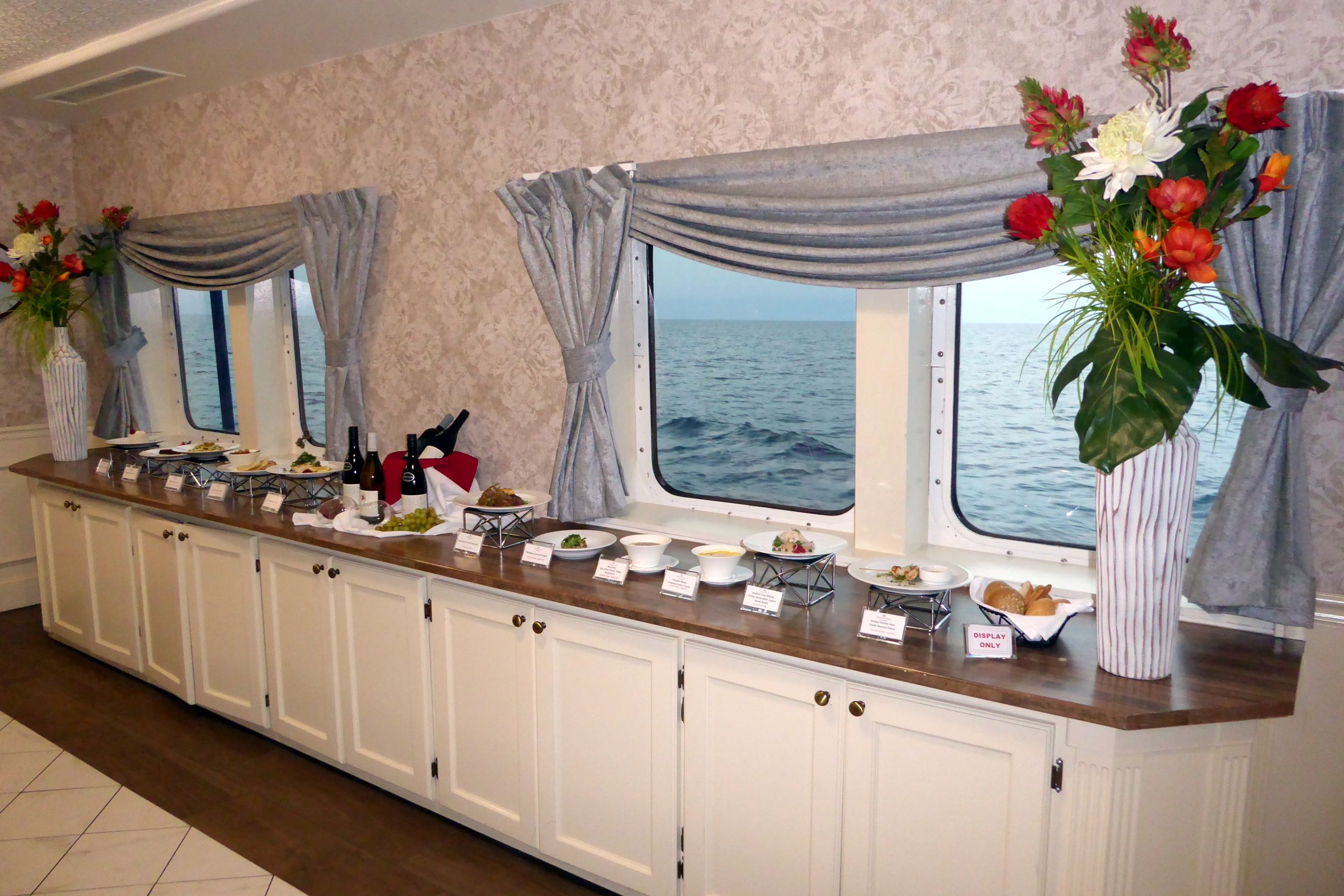
The dining room as located on Deck 1. This was the lobby before entering the dining room, and I thought Ross and his staff made great use of it! Every night, they lined up every single item on the menu, beginning with the appetizers. I had never seen this done on a cruise ship, and I thought it was a great idea! Being able to see the item with a description eliminated the need to ask questions of the service staff and to better decide what to order.

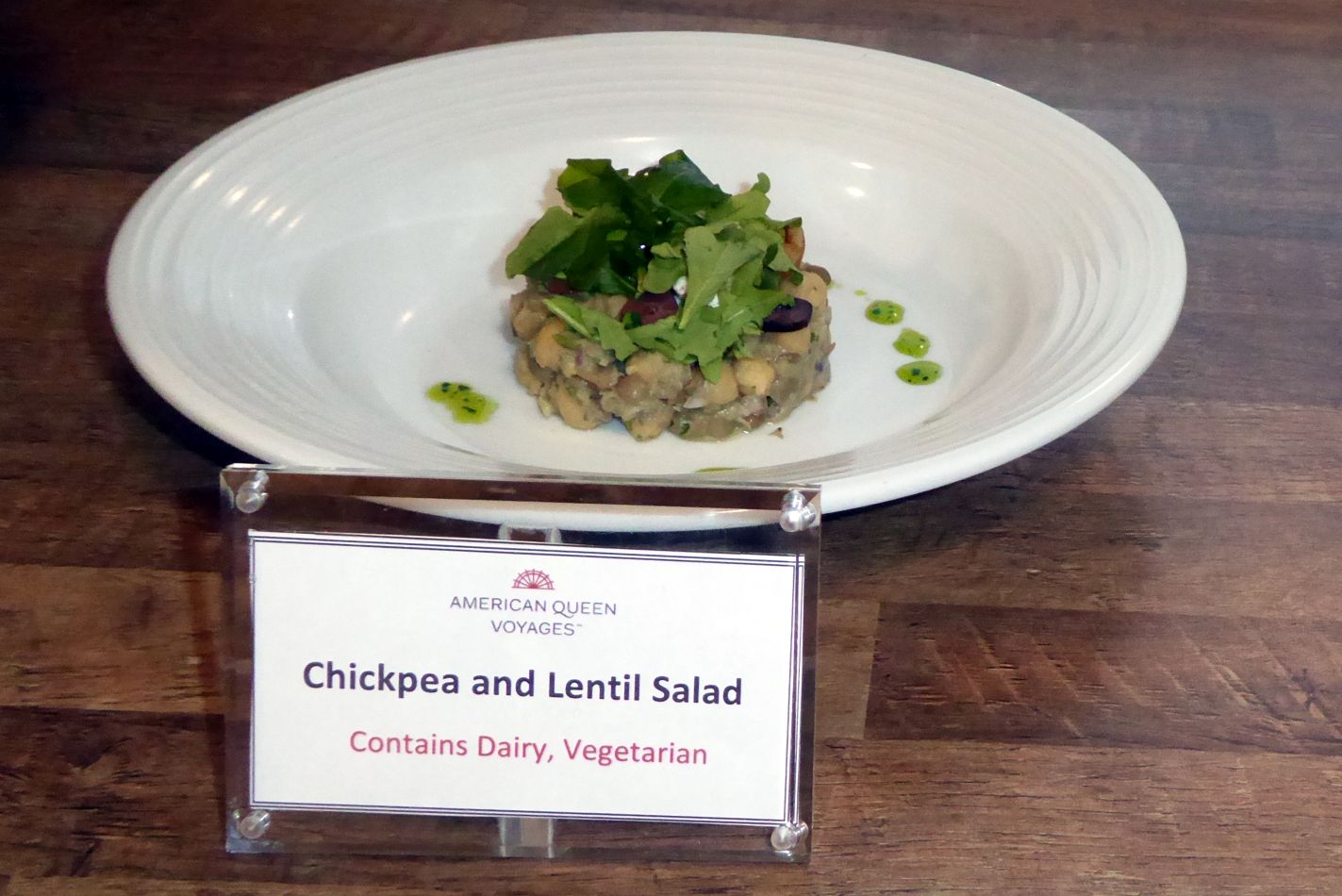
Just in case you weren’t tempted enough by the main entree’s I showed you earlier, here are a few of the appetizers I ordered during the cruise:

OUR VISIT TO NORTH GEORGIA & AMICALOLA FALLS

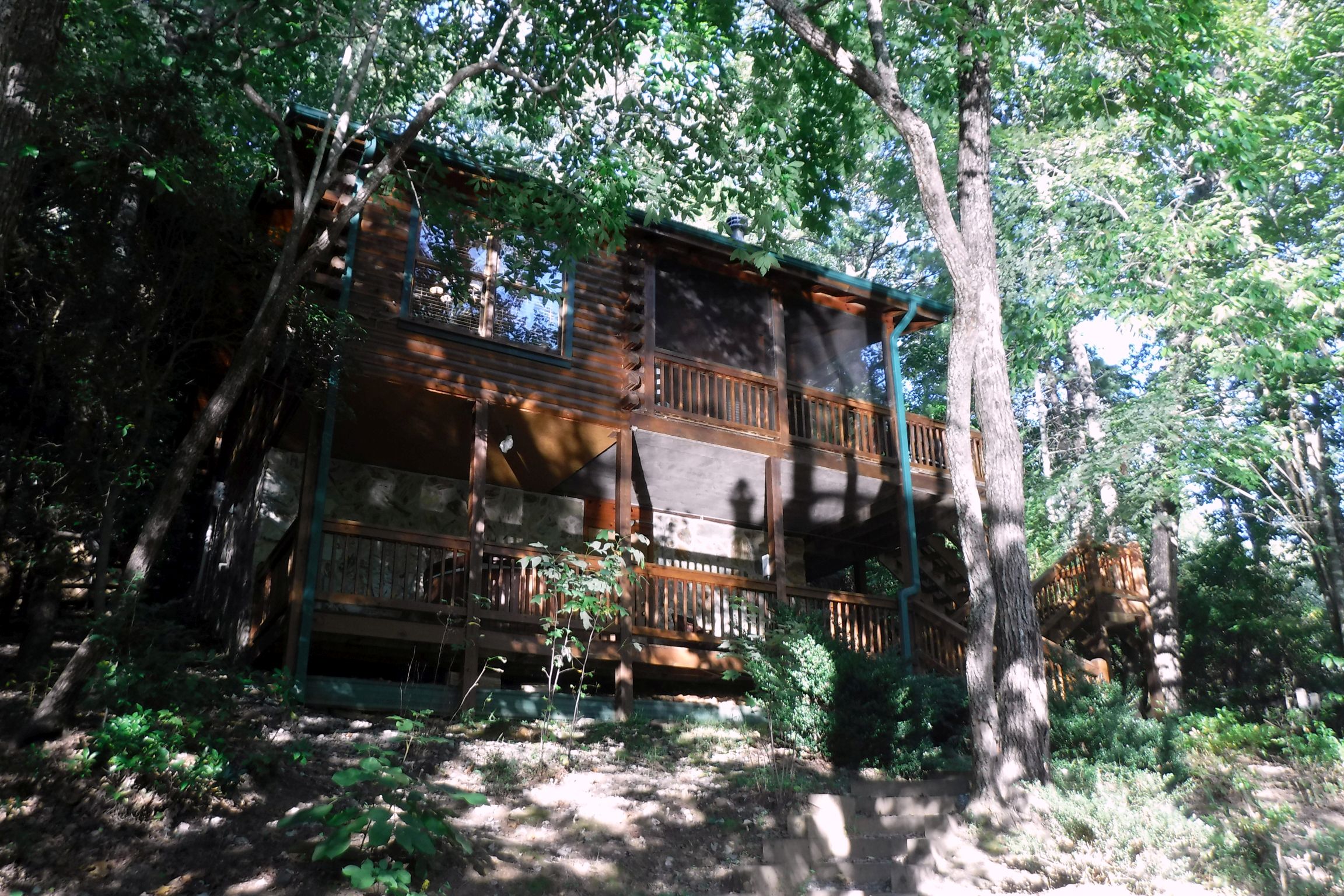
Last week, Bruce and I took a break from the routine to head up to North Georgia.  Over the years, we had always passed through the northern part of our state on our way to other destinations.  This time, we rented a log cabin on Cherry Lake Mountain, halfway between Ellijay and Blue Ridge.

Bruce found us a cute cabin through Morning Breeze Cabin Rentals that had a beautiful view of Cherry Lake below.  We purposely booked it for a week before the crowds would descend on the area for the Ellijay Apple Festival and expected fall foliage color change.  The last thing we wanted to deal with were crowds right before our hectic holiday craft show season!

Our cabin (top floor, with hot tub and another deck below)
The view from the screened in porch of Cherry Lake was lovely!
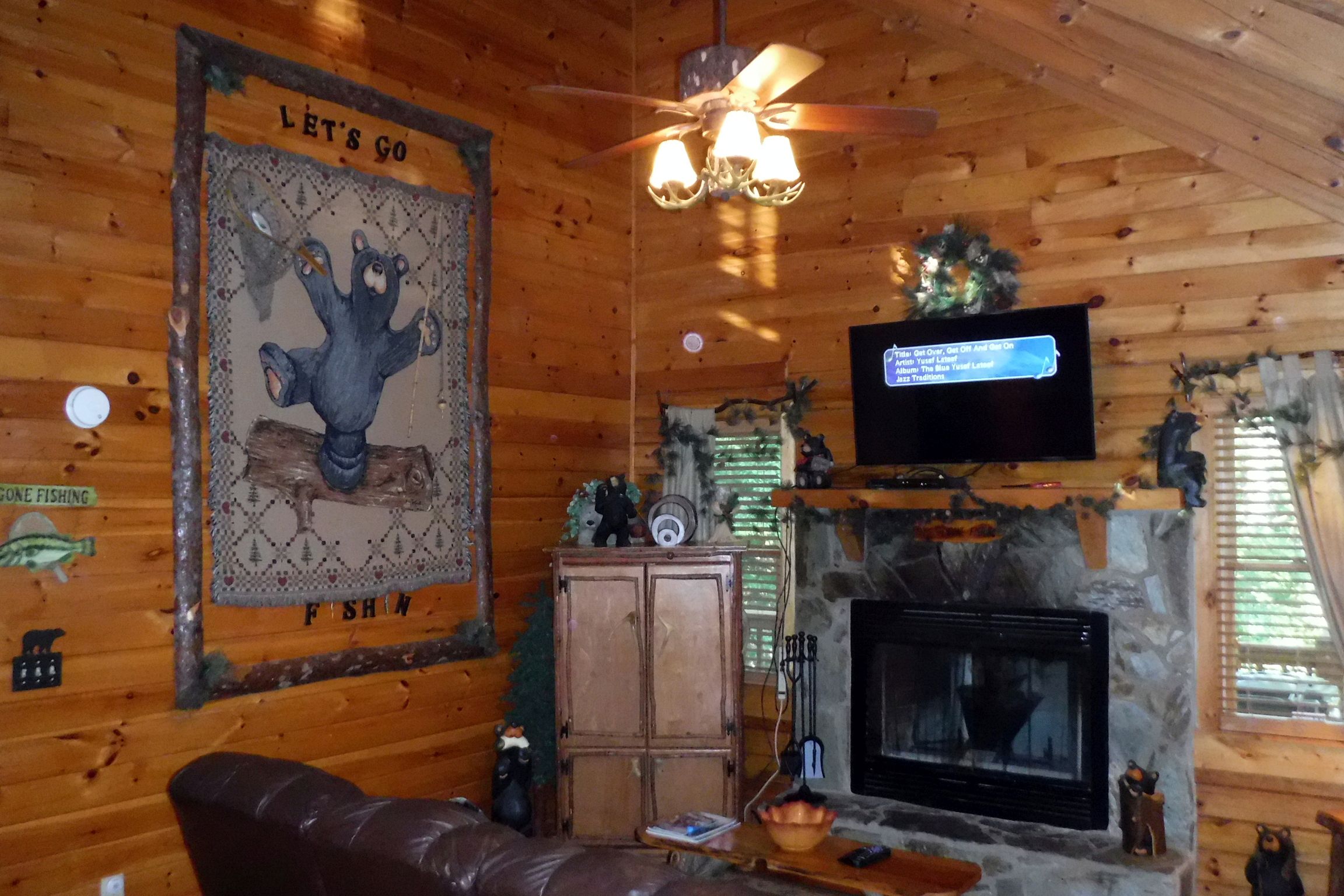
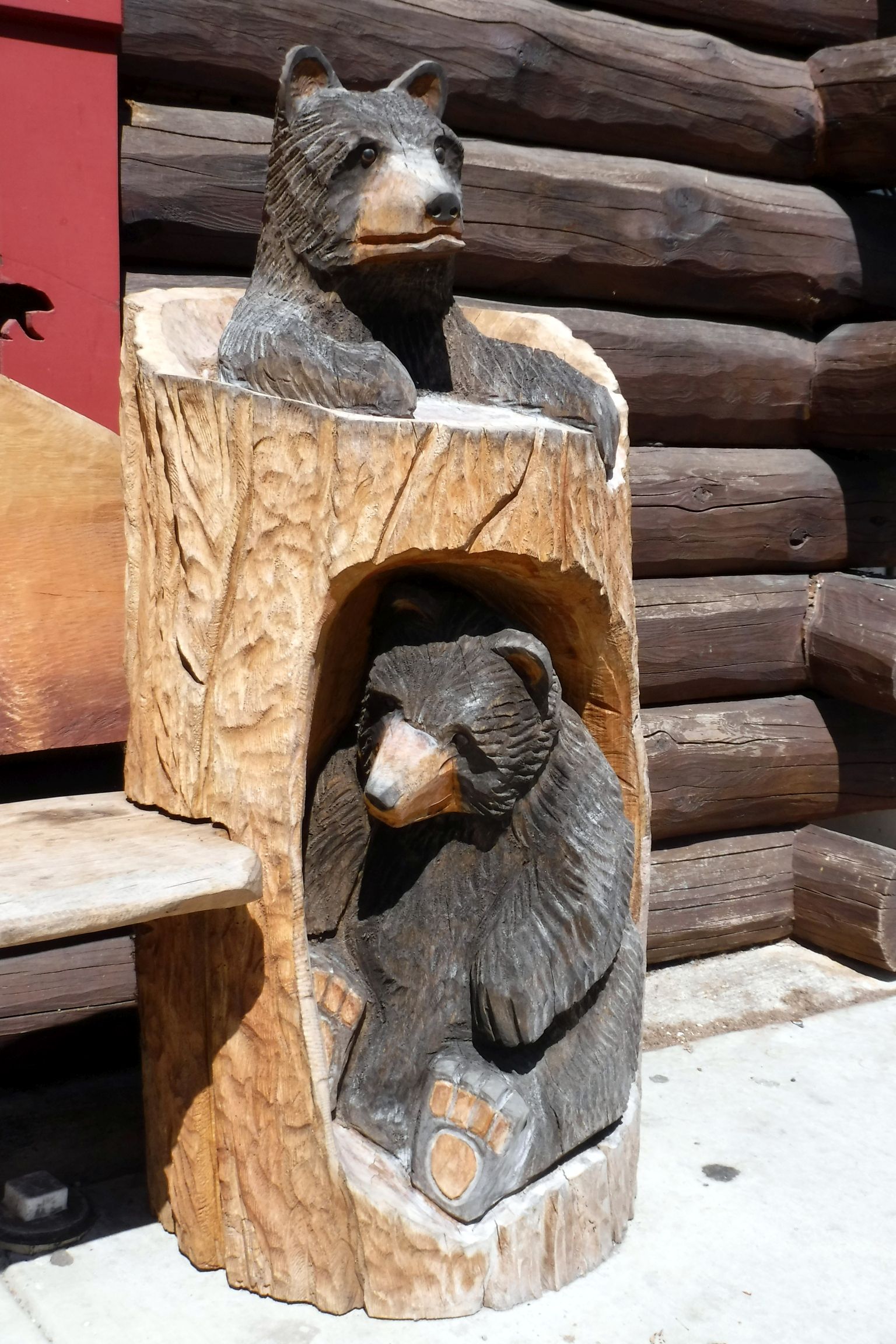
This bear-themed cabin had black bears EVERYWHERE!
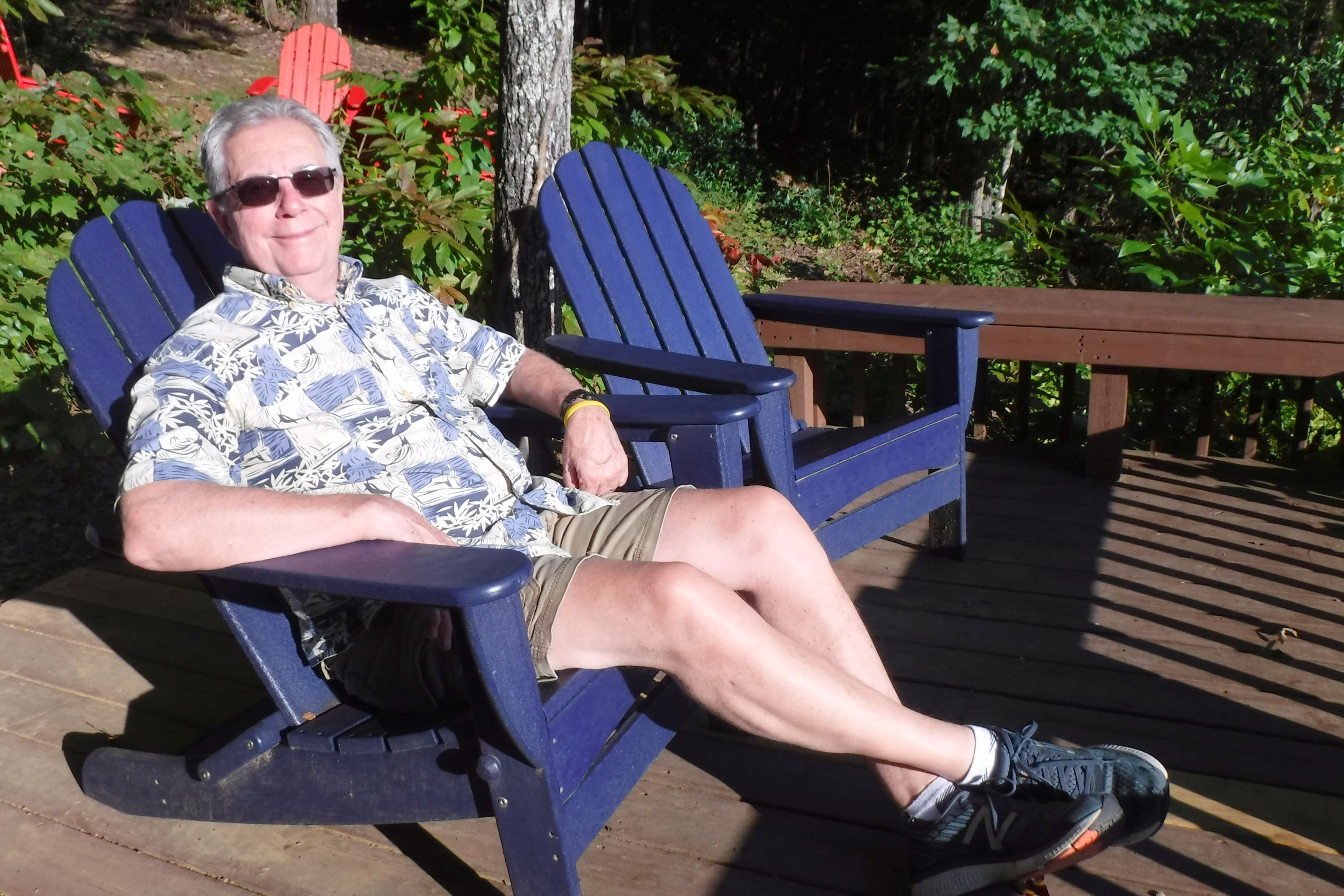
Bruce kickin’ back at the edge of the lake
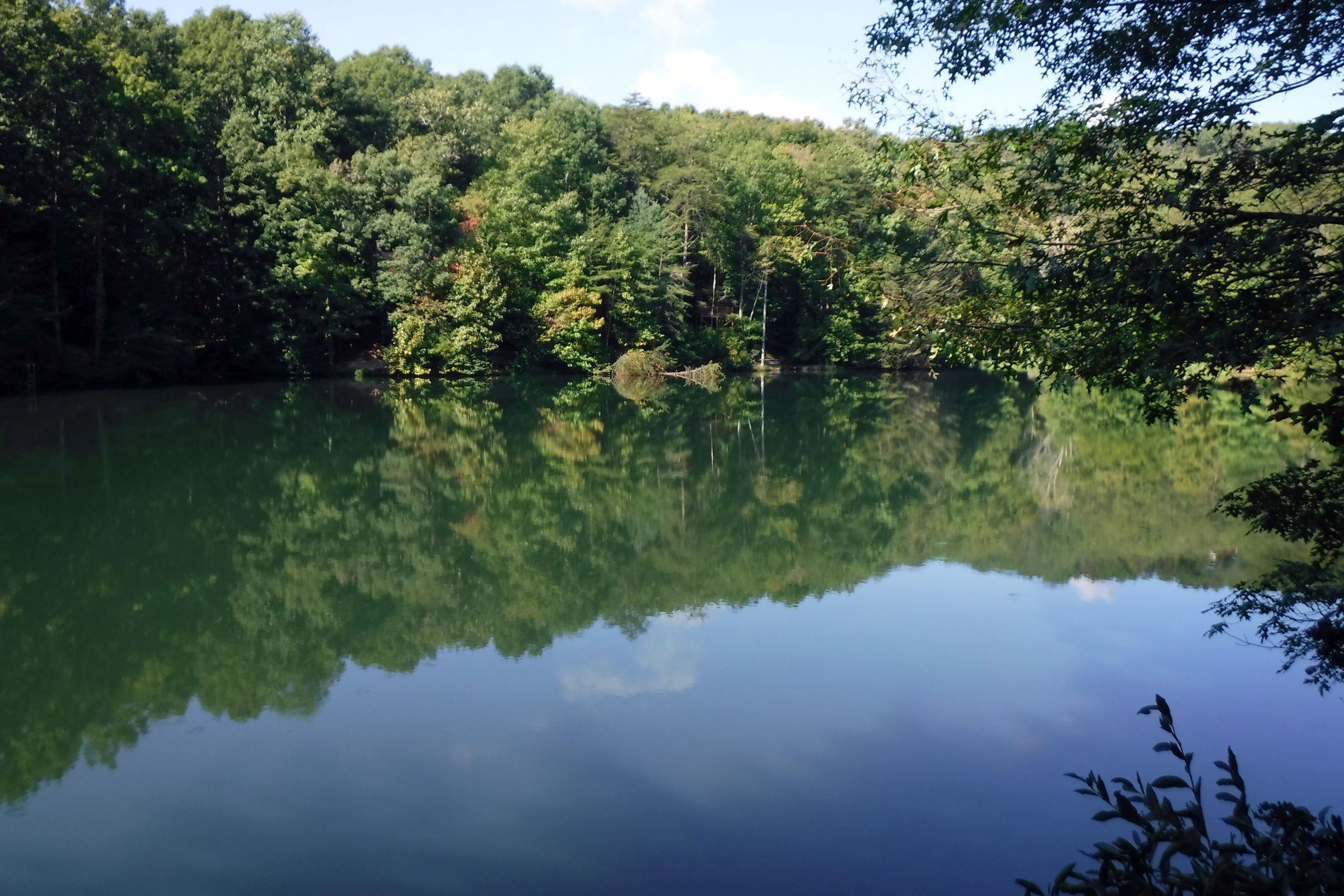
Cherry Lake, located just below the cabin
This is a pond near our cabin that I discovered on one of my Cherry Log Mountain Hikes. Bruce and I returned with his fishing pole; however, the fish weren’t biting.
Another discovery on my mountain hike, just beyond the pond.

If we had written a wish list for the perfect week in North Georgia, it couldn’t have been any better than what we actually got:  Sunny and dry with daily high temperatures in the upper 70’s to low 80’s every day until we left.  Better yet, there were no crowds!  On our back-country drives, we often had the road all to ourselves—perfect for the loop from our cabin to the apple orchards in Ellijay, and then to Amicalola Falls, followed by Dahlonega, and then finally back to Blue Ridge via the curvy (and fun!) GA-60.  What an awesome day!

These were the highlights of our week:

Amicalola Falls State Park.  Don’t go to North Georgia and miss seeing these gorgeous waterfalls!  Located eight miles from the Appalachian Trail, the park is within the Chattahoochee National Forest, between Ellijay and Dahlonega, in Dawsonville.  At 729 feet, Amicalola Falls is the third-highest cascading waterfall east of the Mississippi River.

Although there are longer hiking trails leading from the lodge to the falls, we opted to park at the Reflection Pool and hike in on the Appalachian Approach Trail to the observation platform.  It’s a short hike that parallels the creek running from the falls, and the sound of the water was so mesmerizing.  The first observation platform is at the base of the falls, and the views were spectacular!  The higher observation platform was just 175 steps up.  For those needing rest, there were small rest arears along the climb up.  The views were breathtaking!

Blue Ridge.  Located 90 miles north of Atlanta via I-575, Blue Ridge is located on the Georgia-Tennessee-North Carolina line.  A hiker’s and trout fisherman’s paradise, Blue Ridge was ranked by Southern Living Magazine as one of the 2020 South’s Best Mountain Towns.

The quaint downtown is the starting point for the Blue Ridge Scenic Railway; however, we opted not to ride the train to the Georgia-Tennessee border and just stay in Blue Ridge. There were a lot of nice shops, galleries, and restaurants in a quaint, but not too touristy-looking atmosphere.  Thankfully, it wasn’t ruined by tacky Ripley’s “attractions” like Gatlinburg, Tennessee was.  (We later drove on our own to McCaysville, GA / Copper Hill, TN; however, the journey was more enjoyable than the destination.)

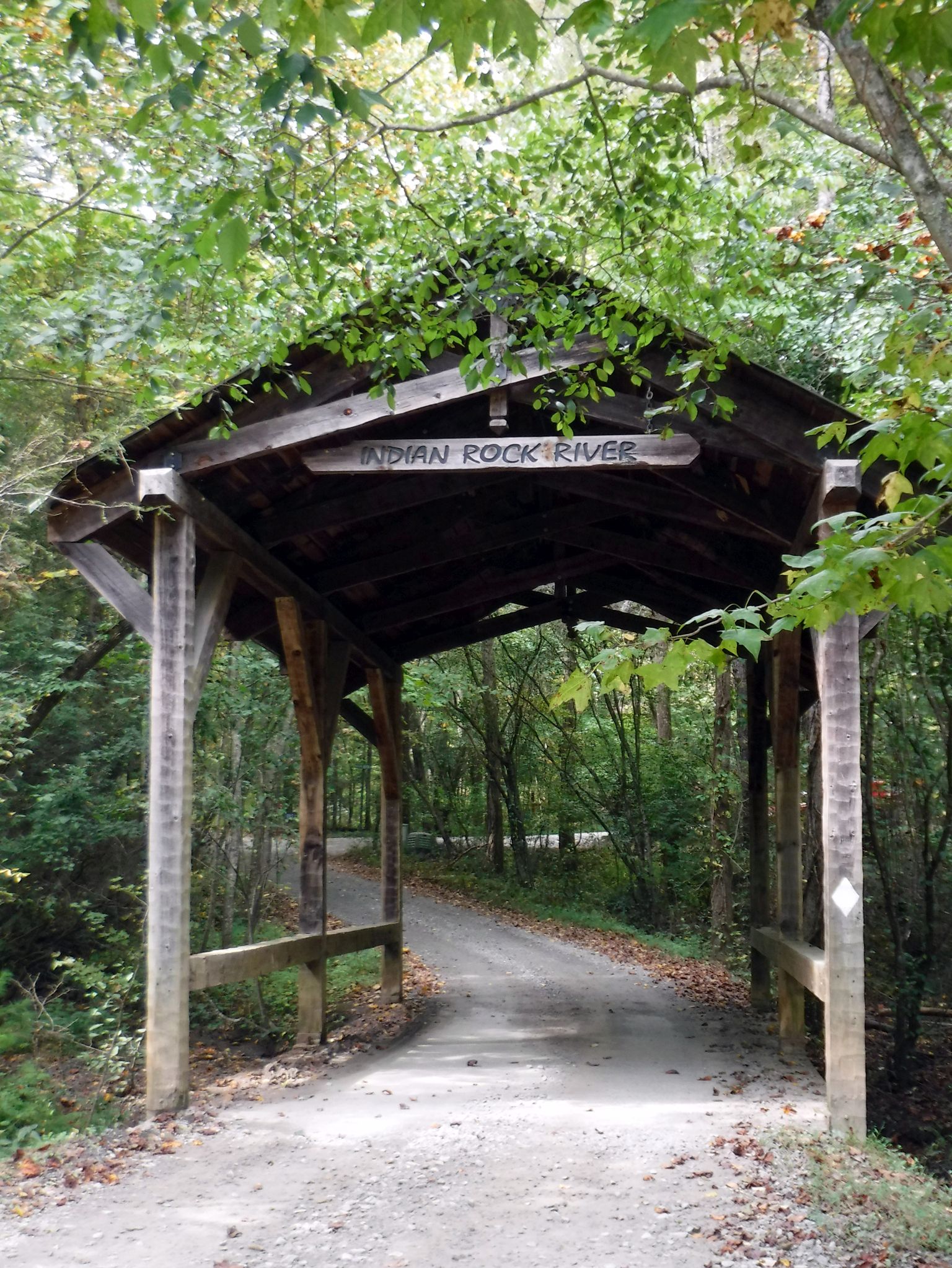
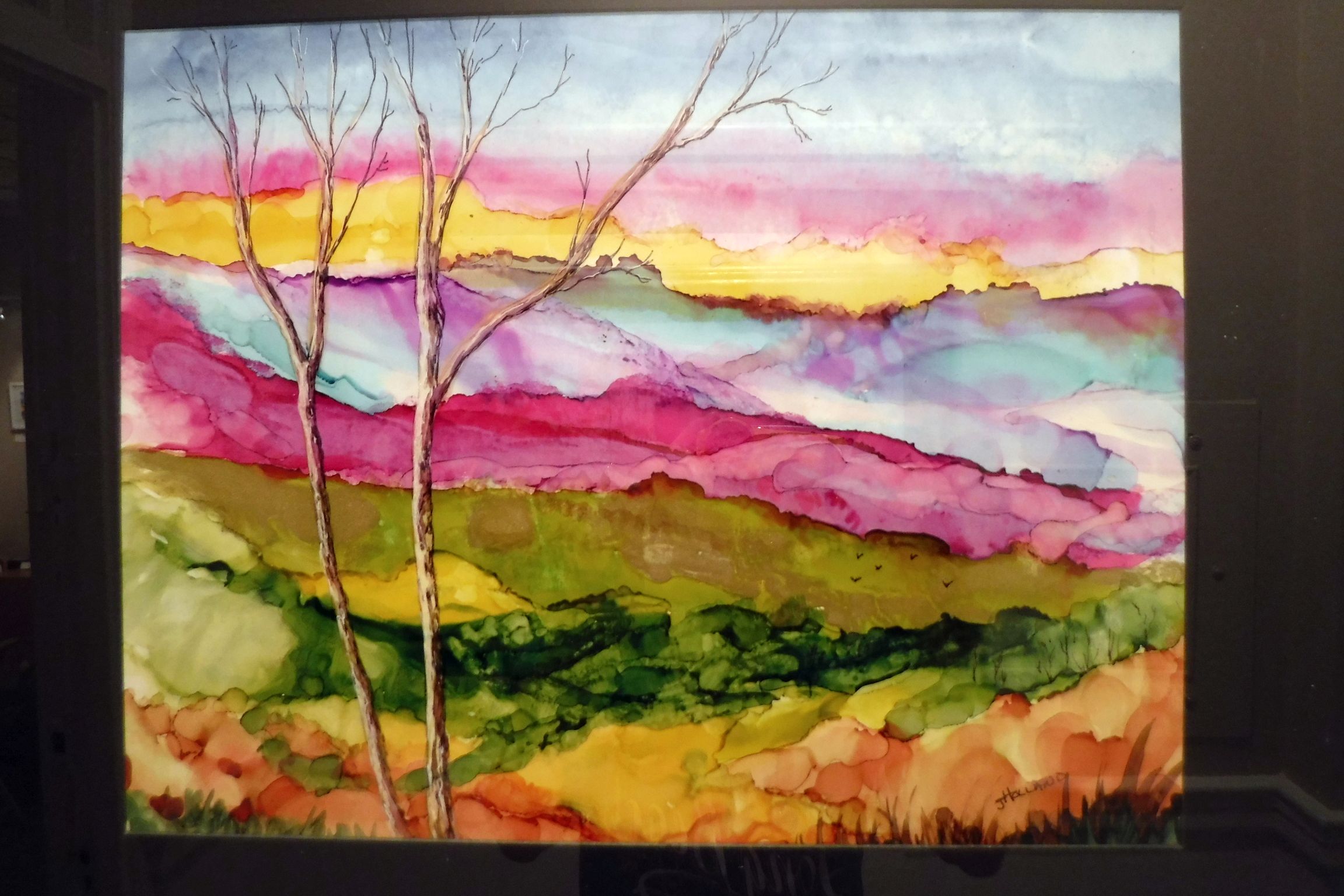
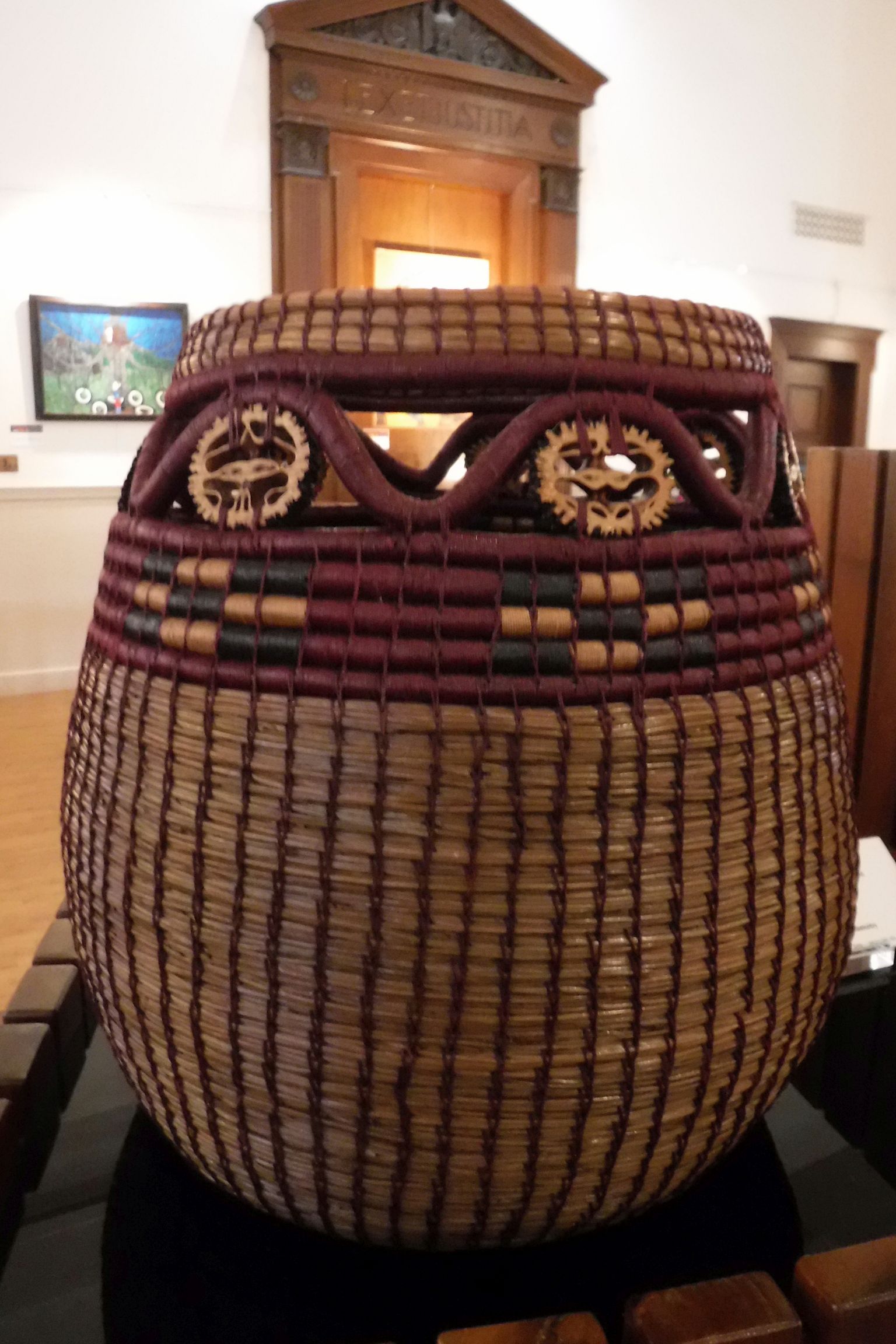
For us, the highlight of Blue Ridge was visiting The Art Center, home to the Blue Ridge Mountains Arts Association.  Located in the former Fannin County Courthouse, exhibits are on display throughout the building.  Our favorite was the Contemporary Southern Folk Art exhibit (ending soon!) on display in the former court where trials formerly took place.  The association did an outstanding job turning the courthouse into a spacious and beautiful gallery!  Check out their website for upcoming exhibits and make sure to stop by to check them out.  We visited mid-week and had the entire place to ourselves!  There is no charge, but please drop a donation into the glass bowl as it is a non-profit arts association.

Whenever I research a travel destination, I always search the Trip Advisor website for recommendations.  Since the top-rated restaurant was a casual, locally-owned favorite with outdoor dining, it was a must for us.  We will definitely return to The Rum Cake Lady Cuban Food Café in downtown Blue Ridge when we visit the area again!  The food was delicious, and the restaurant offered vegan and vegetarian options.

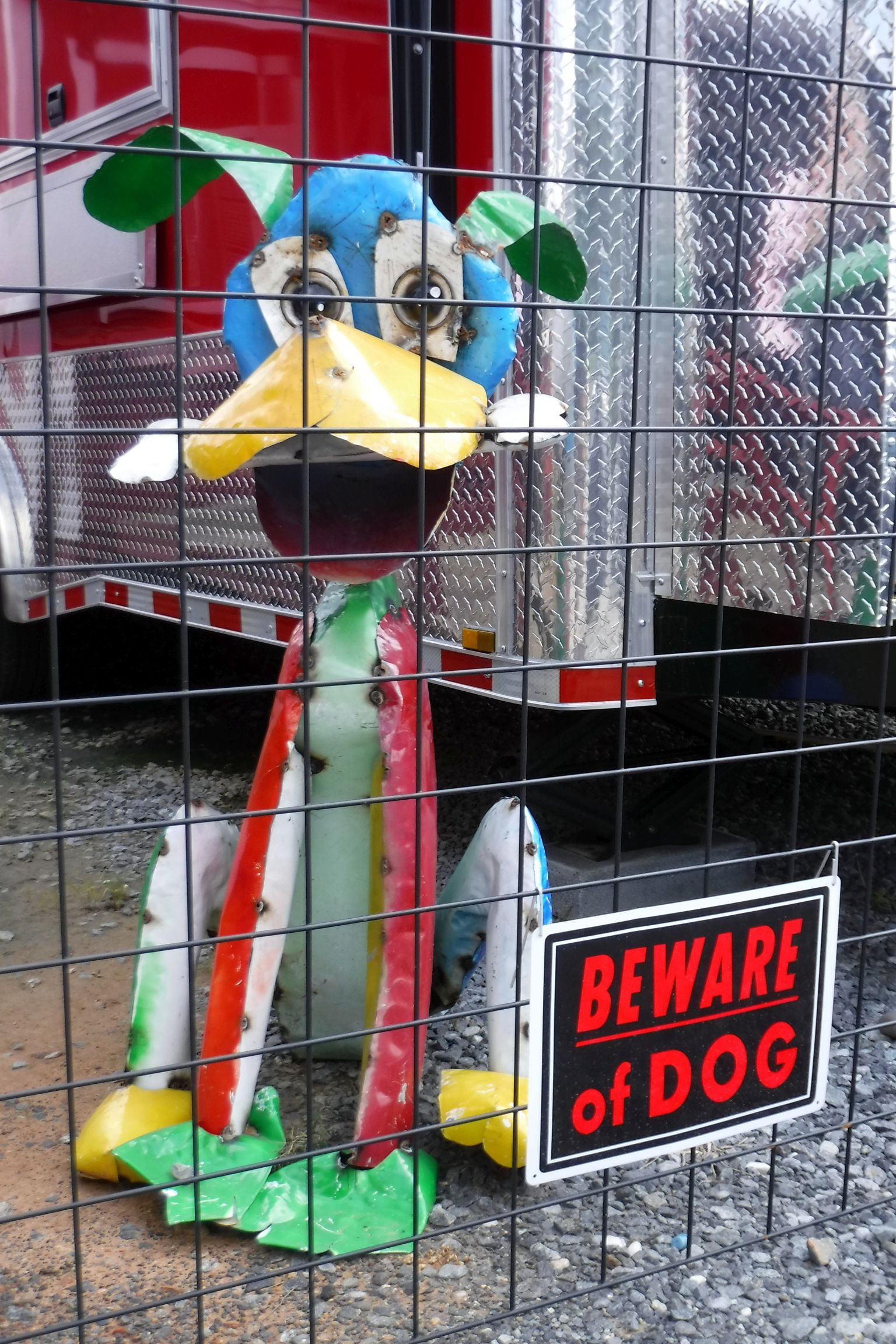
This very fierce looking dog guarded The Rum Cake Lady Cuban Food Cafe.
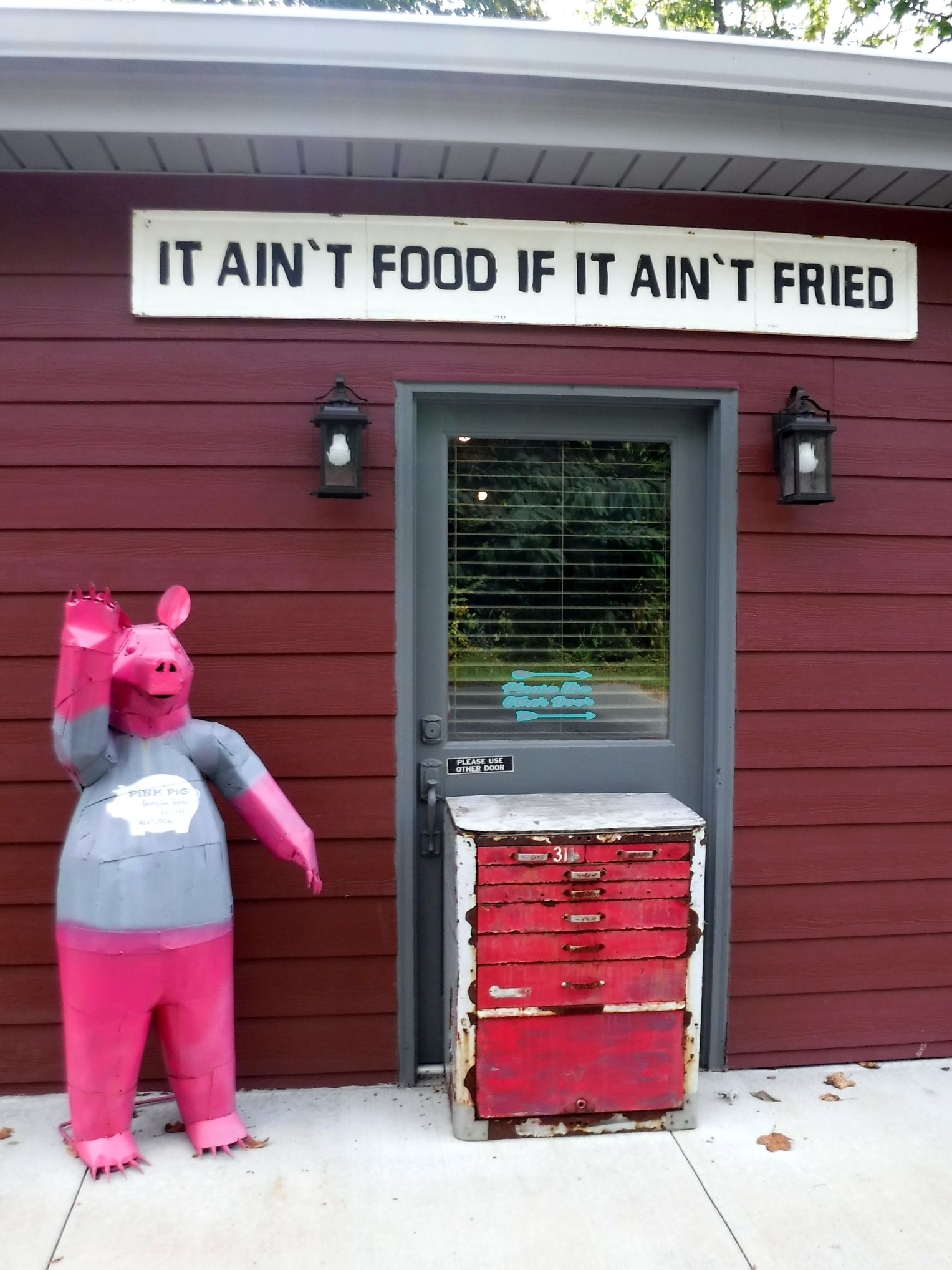
If it’s fried, I ain’t eatin’ it! We passed on this restaurant…
This pig greeted us at Hillcrest Orchards.

Further south in Ellijay, the highlight was hitting the apple orchard trail.  Although Mercier Orchards back up in Blue Ridge has the most Trip Advisor reviews, our favorite orchard of the five we visited was Panorama Orchards, located three miles south of the center of Ellijay.  Both orchards are rated 4-1/2 stars on Trip Advisor; however, we enjoyed shopping for goodies at Panorama Orchards’ market much more than at Mercier.  The apples are priced the same at both markets; however, Panorama has an incredible selection of food items at better prices, including their homemade preserves, jams, apple breads (delicious!) and other bakery items. 

In the back of the market, there is a large window where you can watch them making fudge and other candies—all priced better than at any of the other orchards we visited.  The fudge (made with fresh cream and butter) is heavenly, so pick some up to bring home.

Panorama Orchards was also the only one that made their own ice cream, and it was priced better than any of the ice cream shops we checked out in Northern Georgia.  The Blueberry Cheesecake ice cream was delicious!

We picked up a ½ peck of Honeycrisp apples to munch on in the cabin, and then stopped by on the way home for another ½ peck to bring home with us.  They were the best apples I have ever had!

Here are a few more snap shots from our trip. (I still haven’t replaced my broken favorite camera, so all of the shots in this post were with my cheap, sub-par Fuji underwater swimming video camera.)

This not-so-humble 4-story abode (complete with boat house) was located across from Lake Blue Ridge Marina.
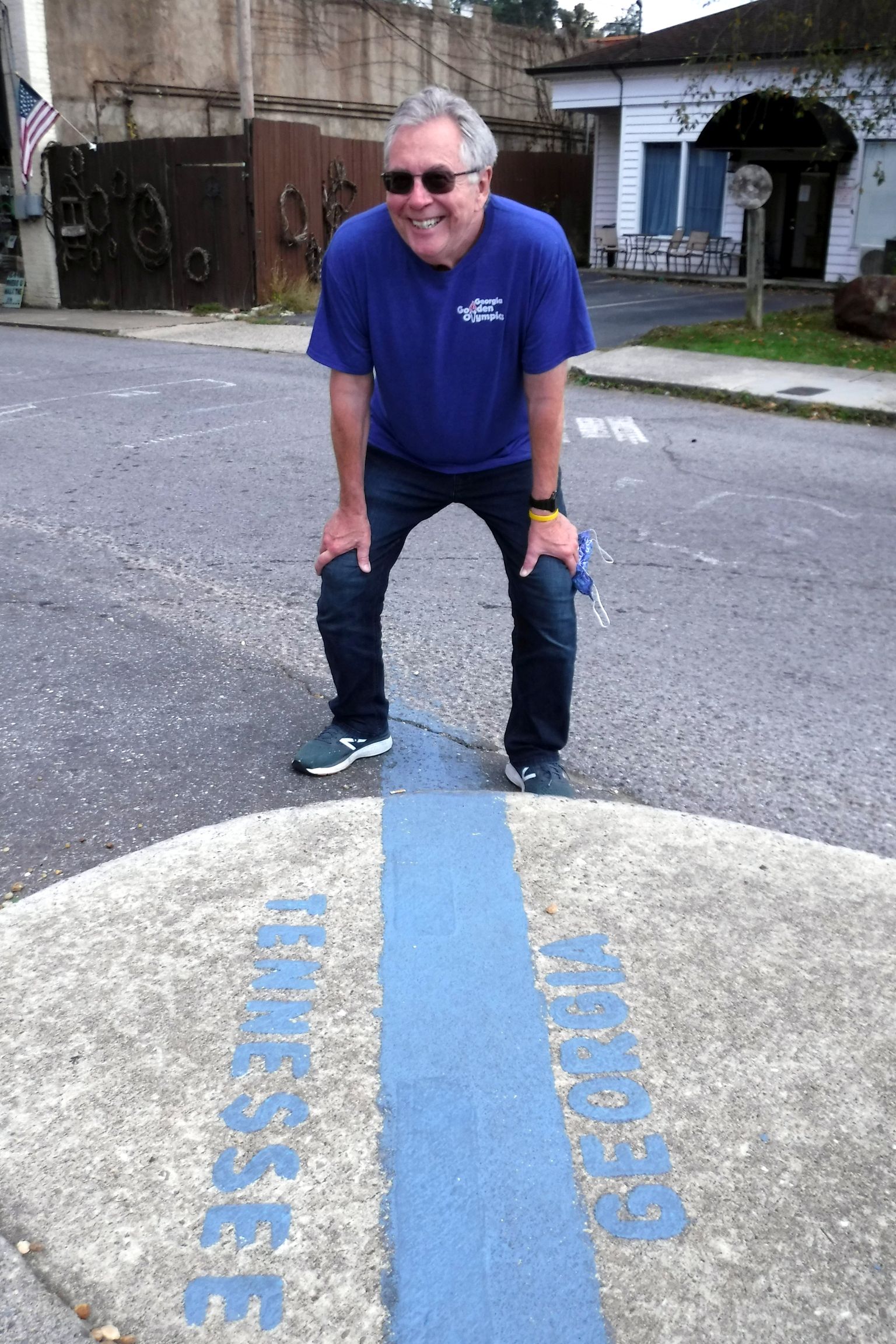
I roped Bruce into straddling the state line for the ultimate cheesy picture. SAY CHEEEEZE!
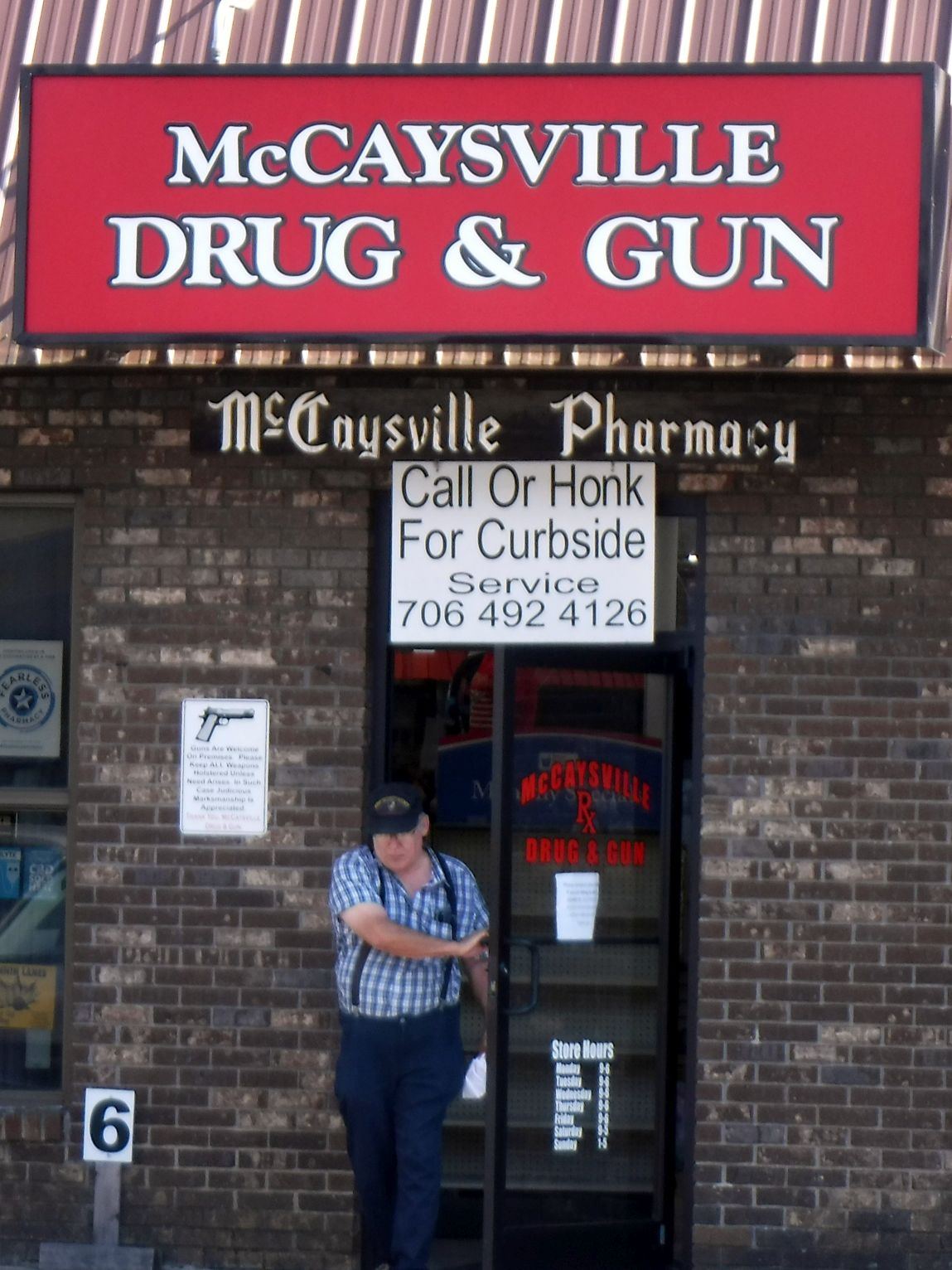
Hmmm, drugs and guns. What could possibly go wrong? This is so typically North Georgia…
I pondered over this shot debating with myself whether I should include this or not. There is just SO MUCH I could say about this that it could take up an entire blog post. Suffice it to say that I would never last a day as this guy’s neighbor. After all, McCaysville Drug & Gun was located just up the street, and I’m sure the owner of this banner is their best customer! I’d be a goner.

…AND, ANOTHER LITTLE RANDOM ACT OF KINDNESS (Act 69)

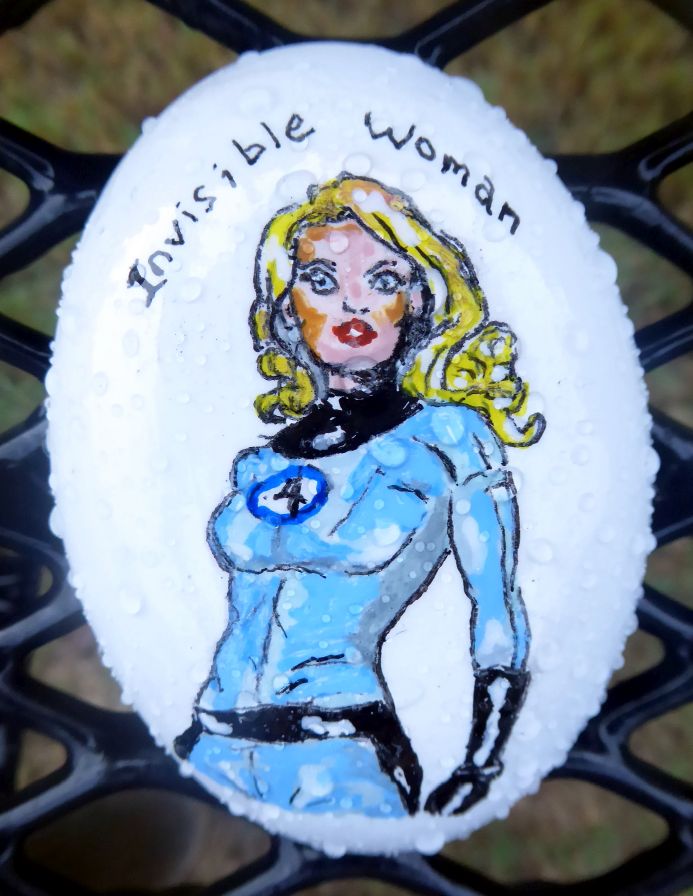
Badass superwomen continue to grace our Sun City Peachtree bench.  Meet Marvel Comics’ Invisible Woman, aka Sue Storm Richards.  She is a formidable heroine with the ability to render herself and others invisible (or partially invisible) at will, affecting up to 40,000 cubic feet of volume.  To achieve these feats, she mentally blends all wavelengths of light in the vicinity around herself, or the target in question, without causing any visible distortion effects. 

“Stormy Sue” also has extended vision allowing her to see invisible people and objects.  She can detect anything made invisible by means outside her powers, and can restore those targets to a visible state at will. 

Invisible Woman can project and manipulate near-indestructible invisible force fields, making her a more effective combatant.  She can also shape invisible fields into constructs, turning them into offensive weapons as small as a marble or as large as 100 feet in diameter.

I’ve only scratched the surface of her vast powers, but you get the idea.  In my opinion, her greatest power is that she’s an excellent swimmer!

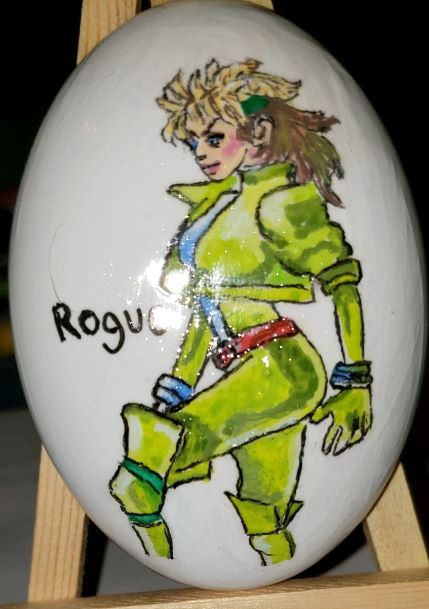
Rogue, formerly known as Anna Marie, is another Marvel comic badass superwoman.  She briefly visited the other day, and then magically disappeared shortly thereafter.  I never got to see her, but the artist sent this to me:

Without the capacity to control her mutant ability to absorb memories and powers, Rogue was once on a dark path.  She has successfully redeemed herself as a heroine, though, joining the X-Men and the Avengers to fight for good.

Rogue’s mutant ability requires skin-to-skin contact to absorb memories, powers, personality traits, physical talents, and strength.  For most of her heroic career, she was unable to control her power, and anyone she touched would almost immediately fall unconscious.  This inability to regulate her power was largely psychological in nature, but she eventually overcame it with the help of Charles Xavier.

Just like Invisible Woman, Rogue has a much more complex history and set of powers in Marvel Universe, so I’ll leave it to you explore their world in the comics while I wait to see who stops by the bench next!