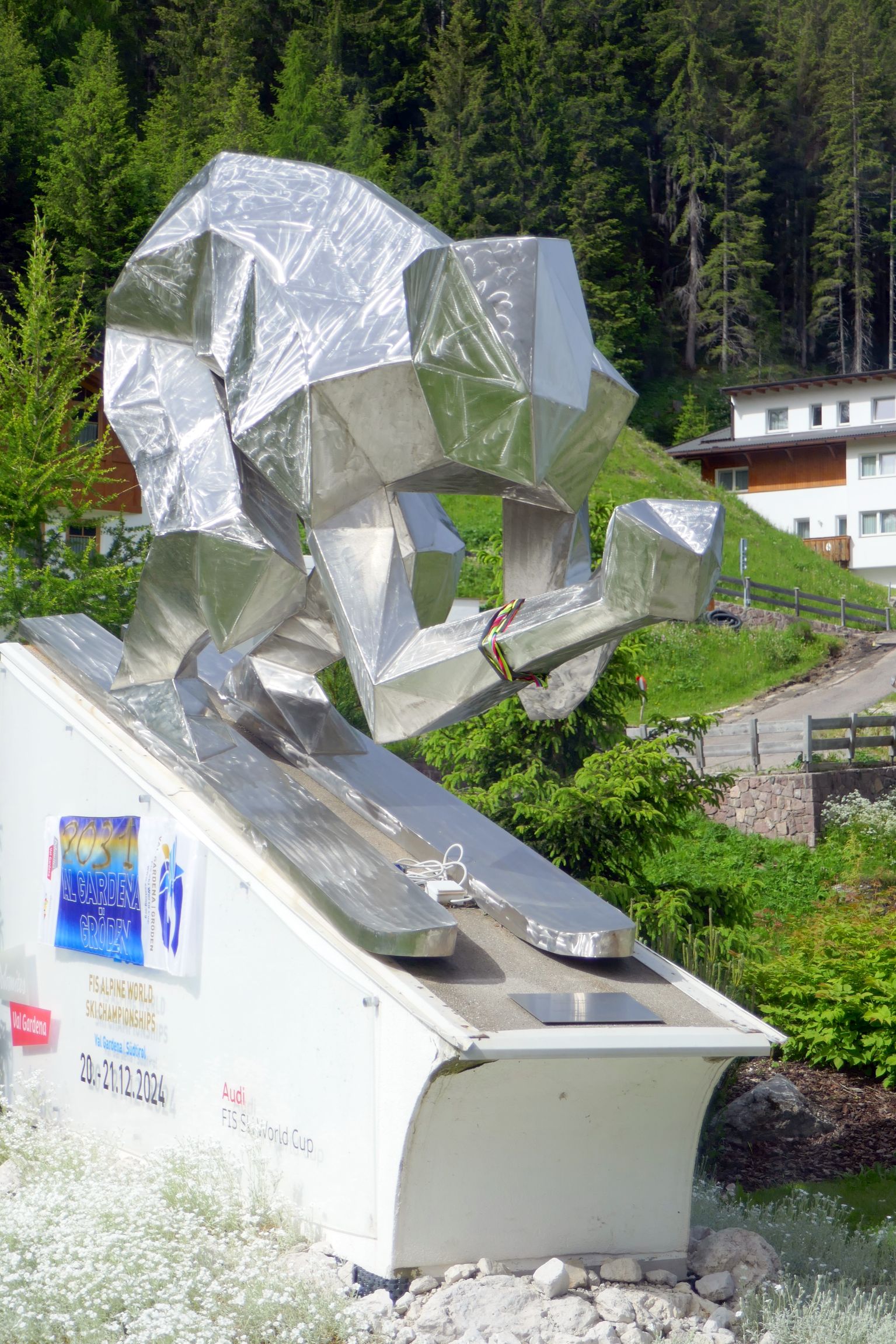
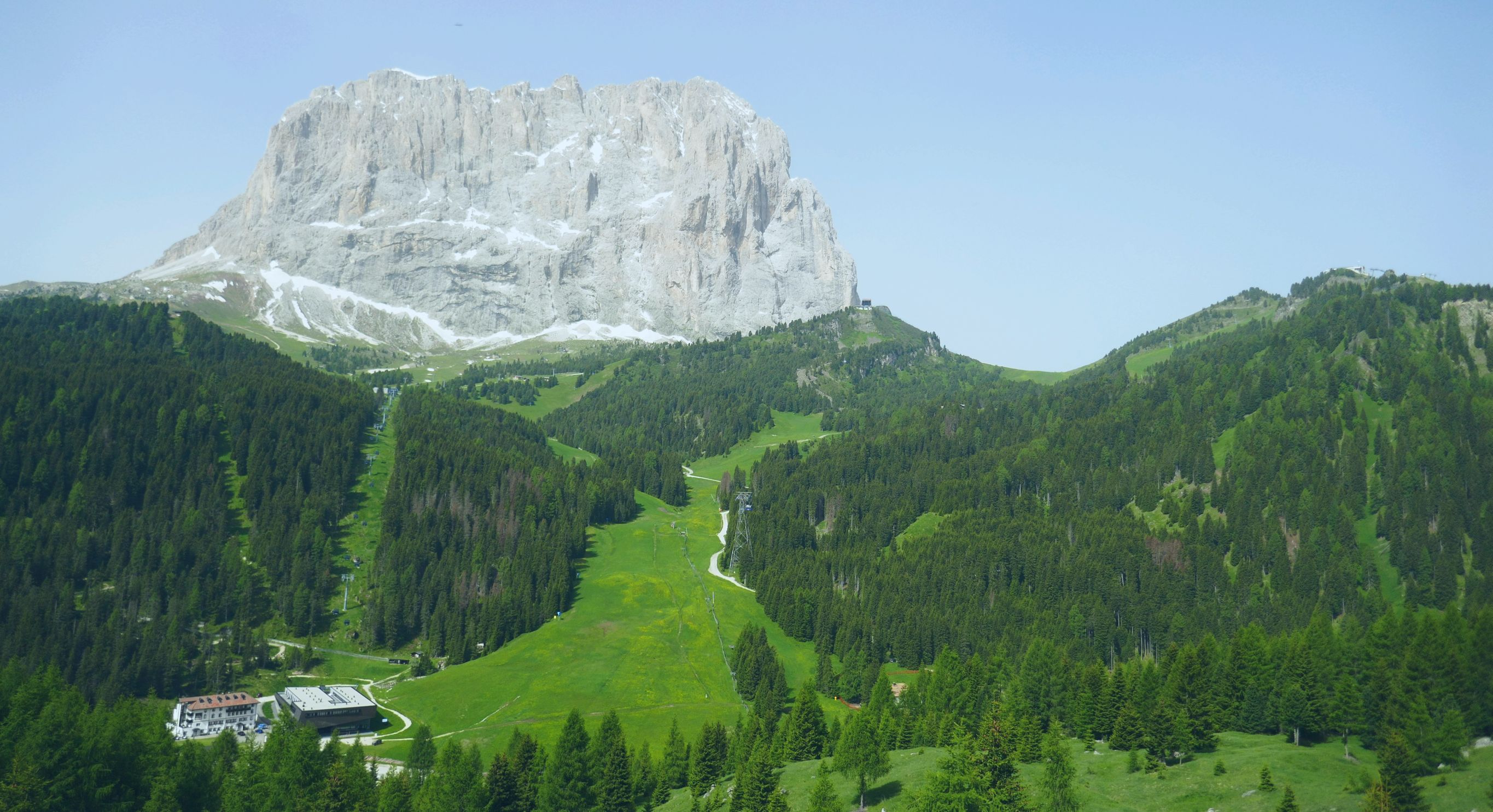
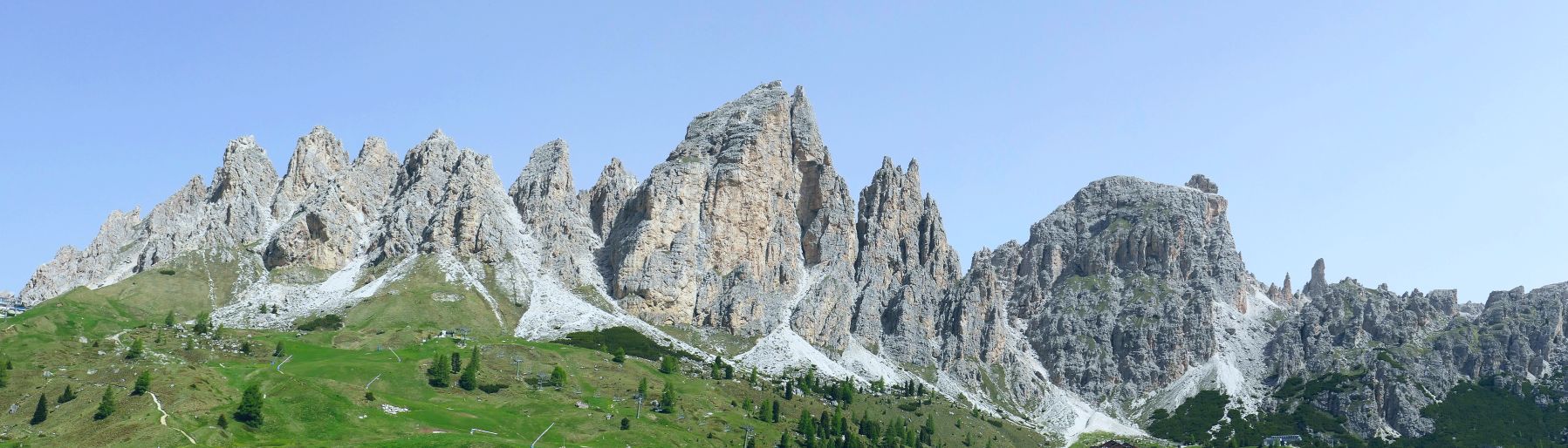
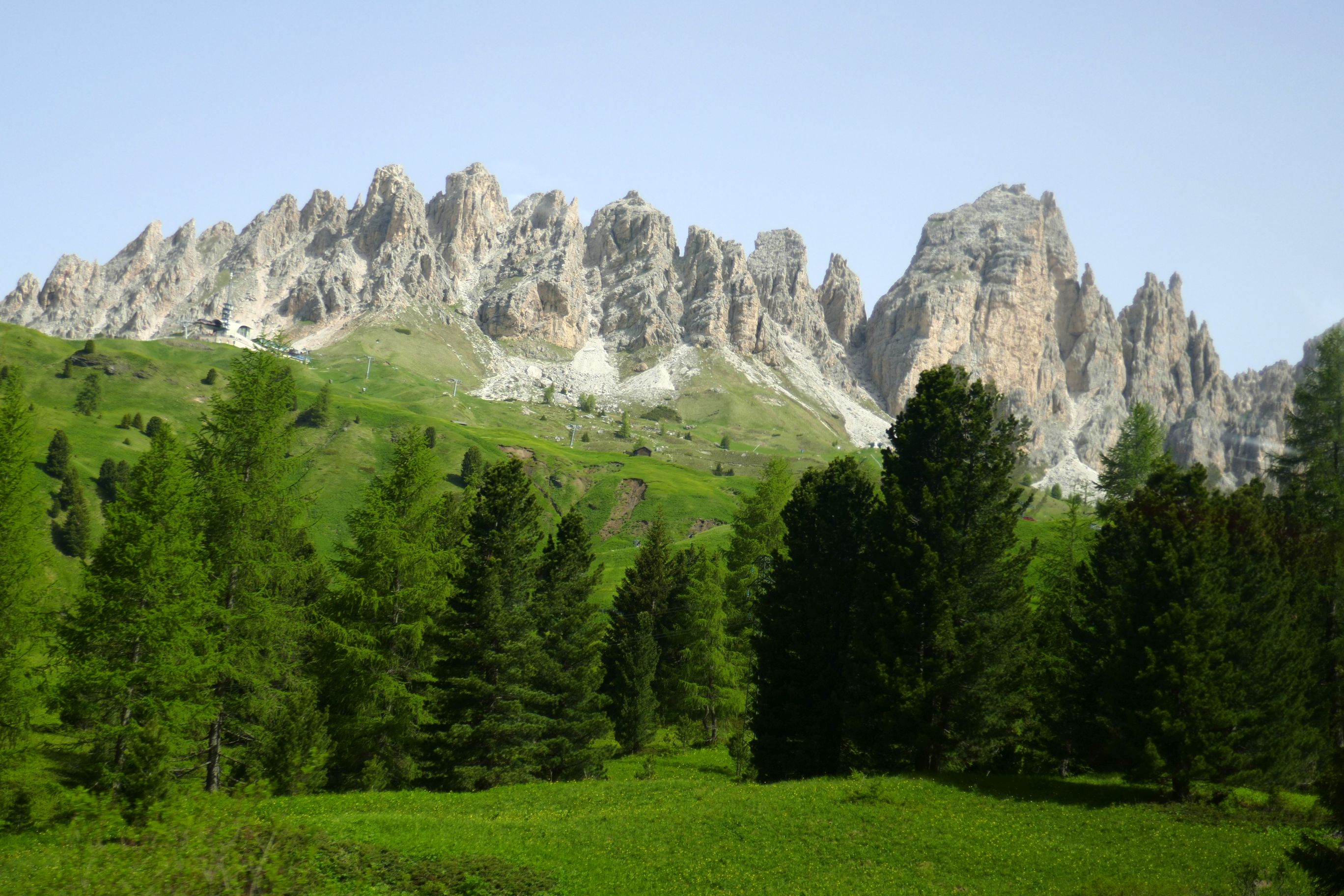
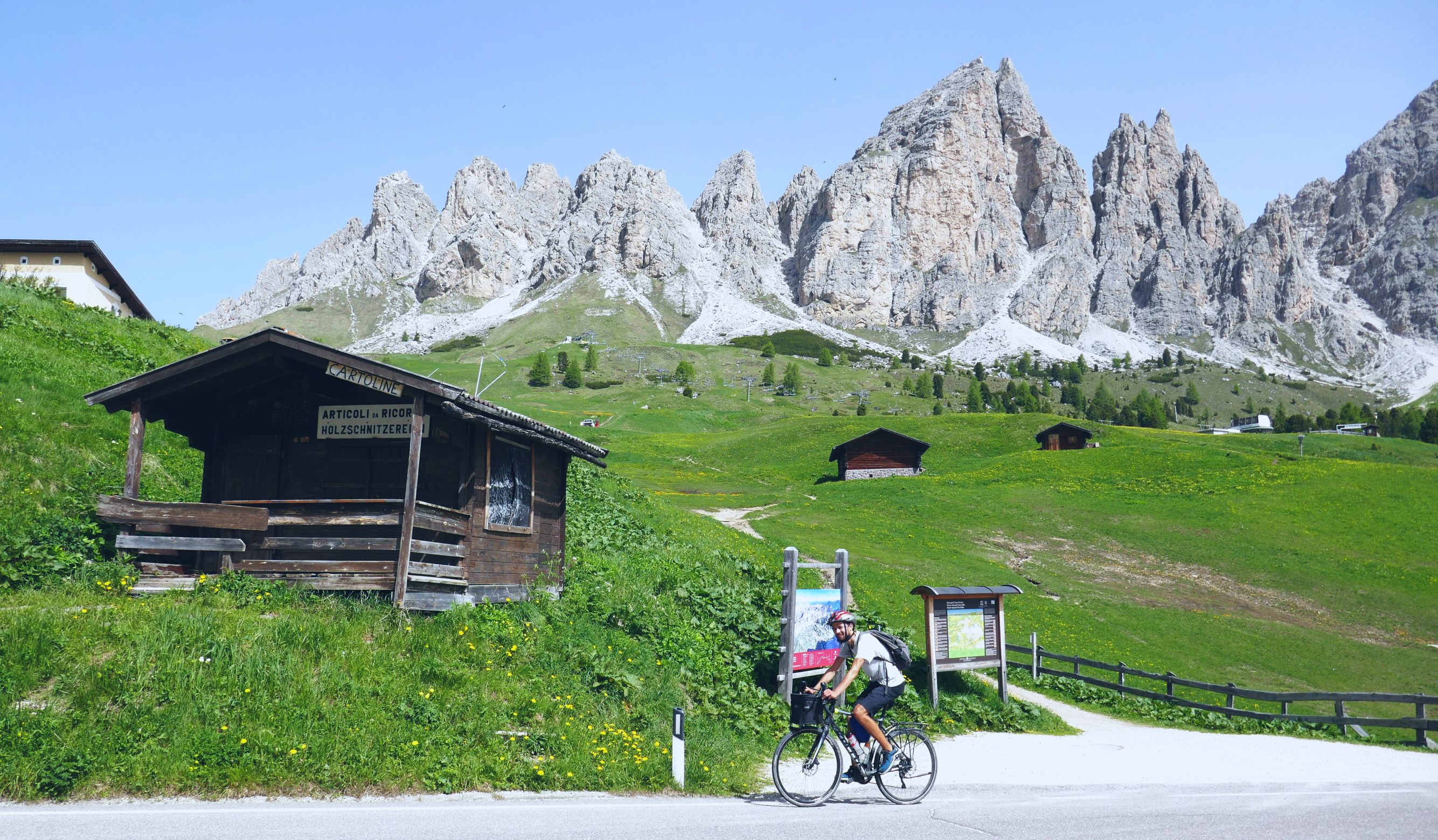
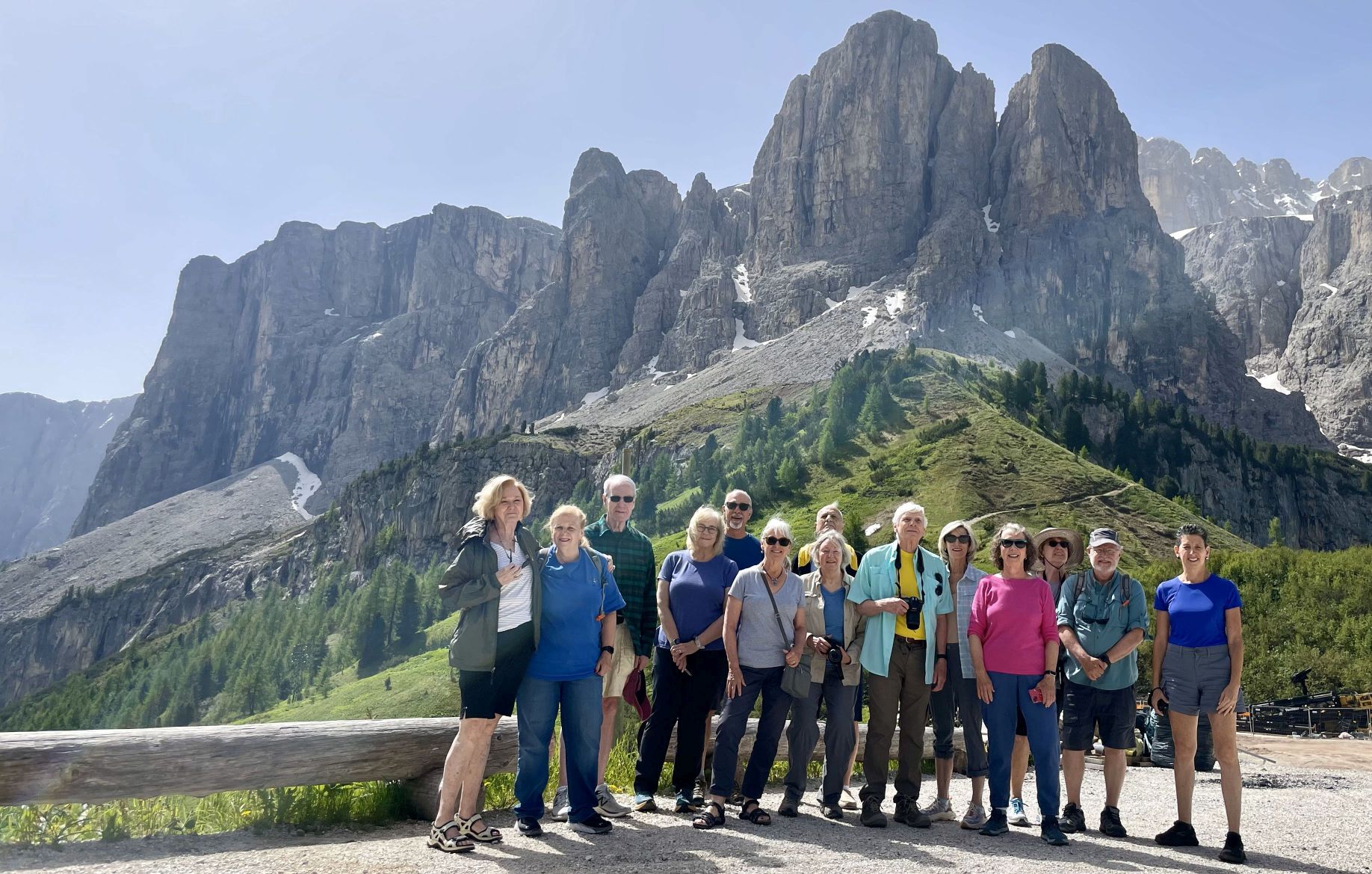
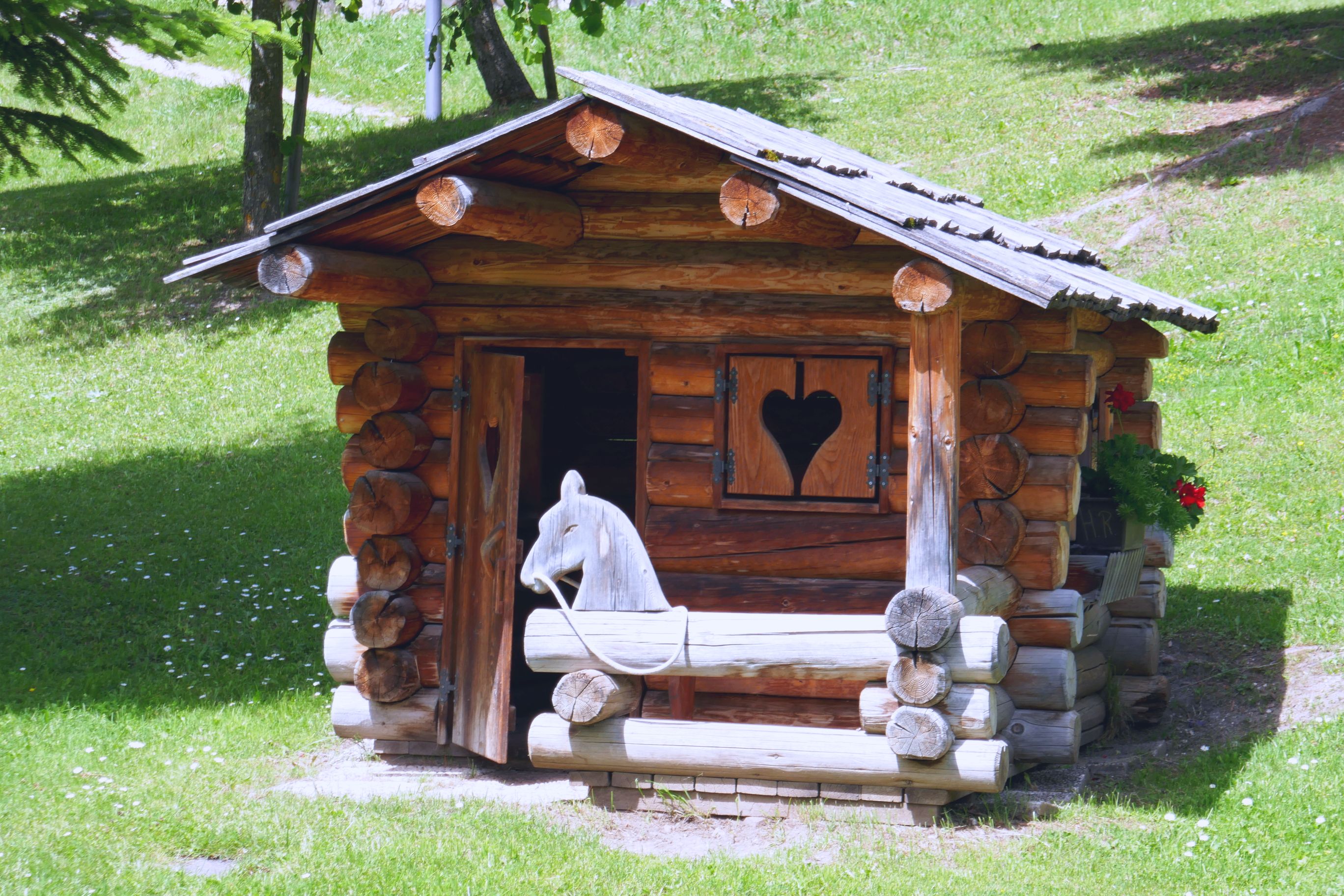
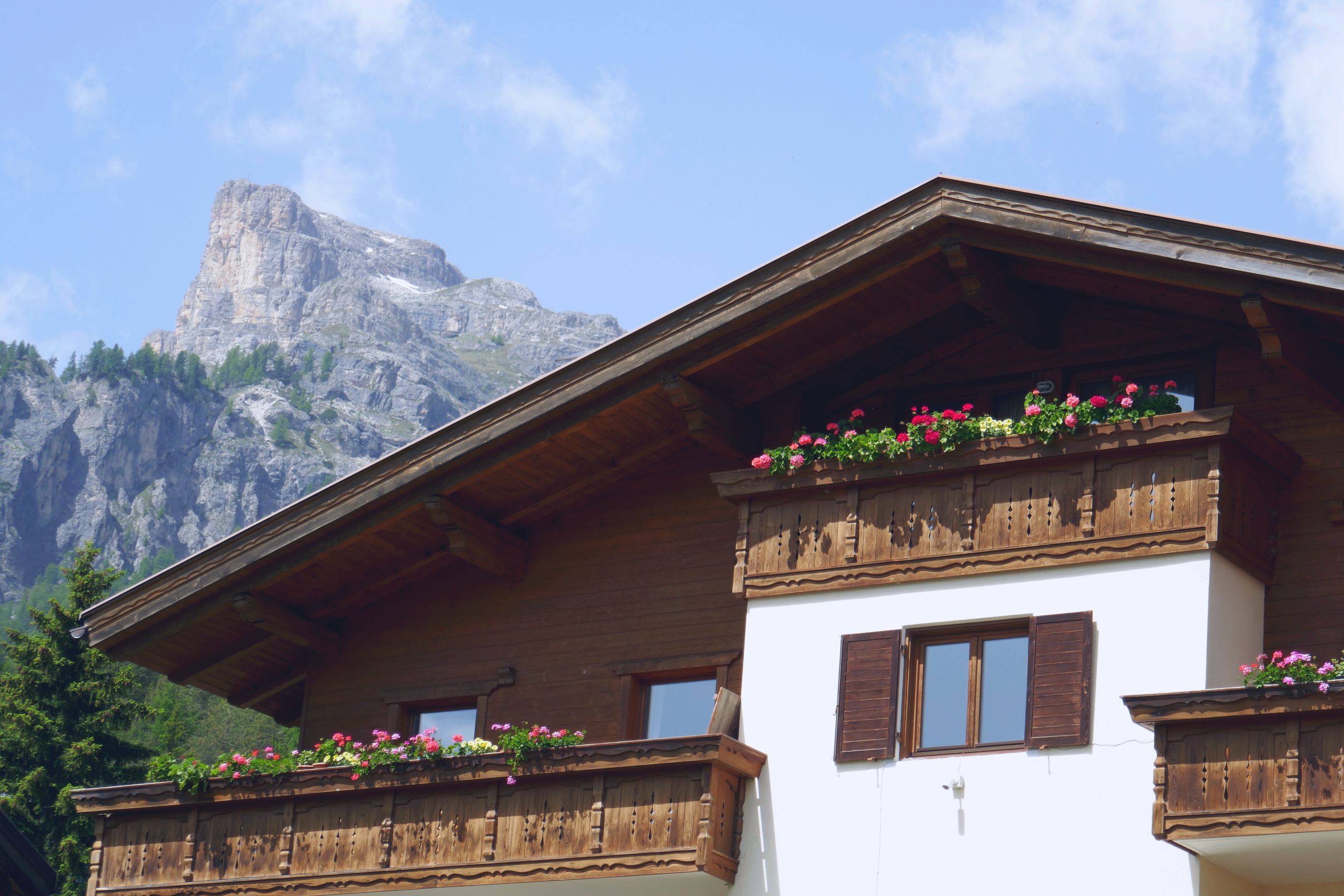
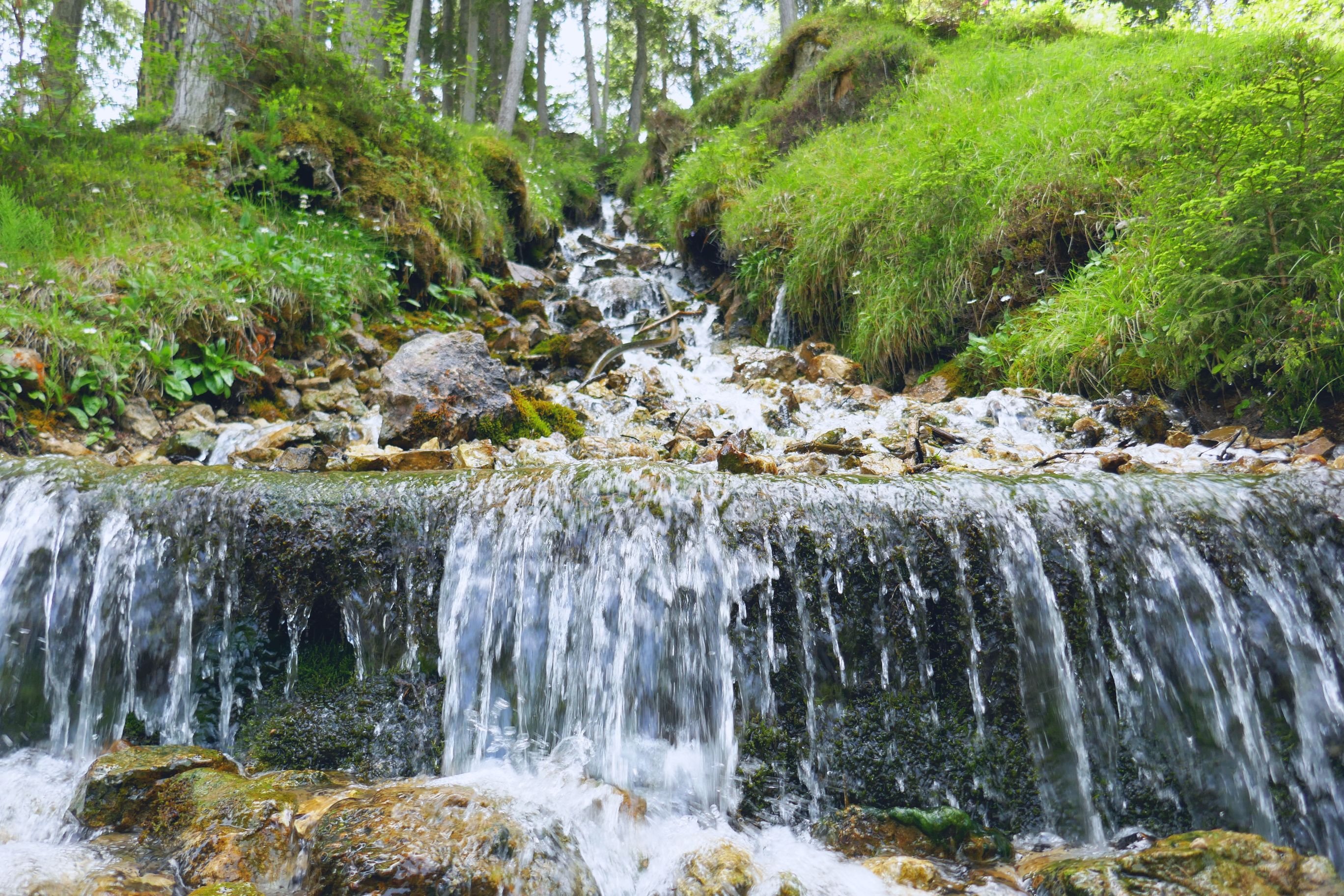
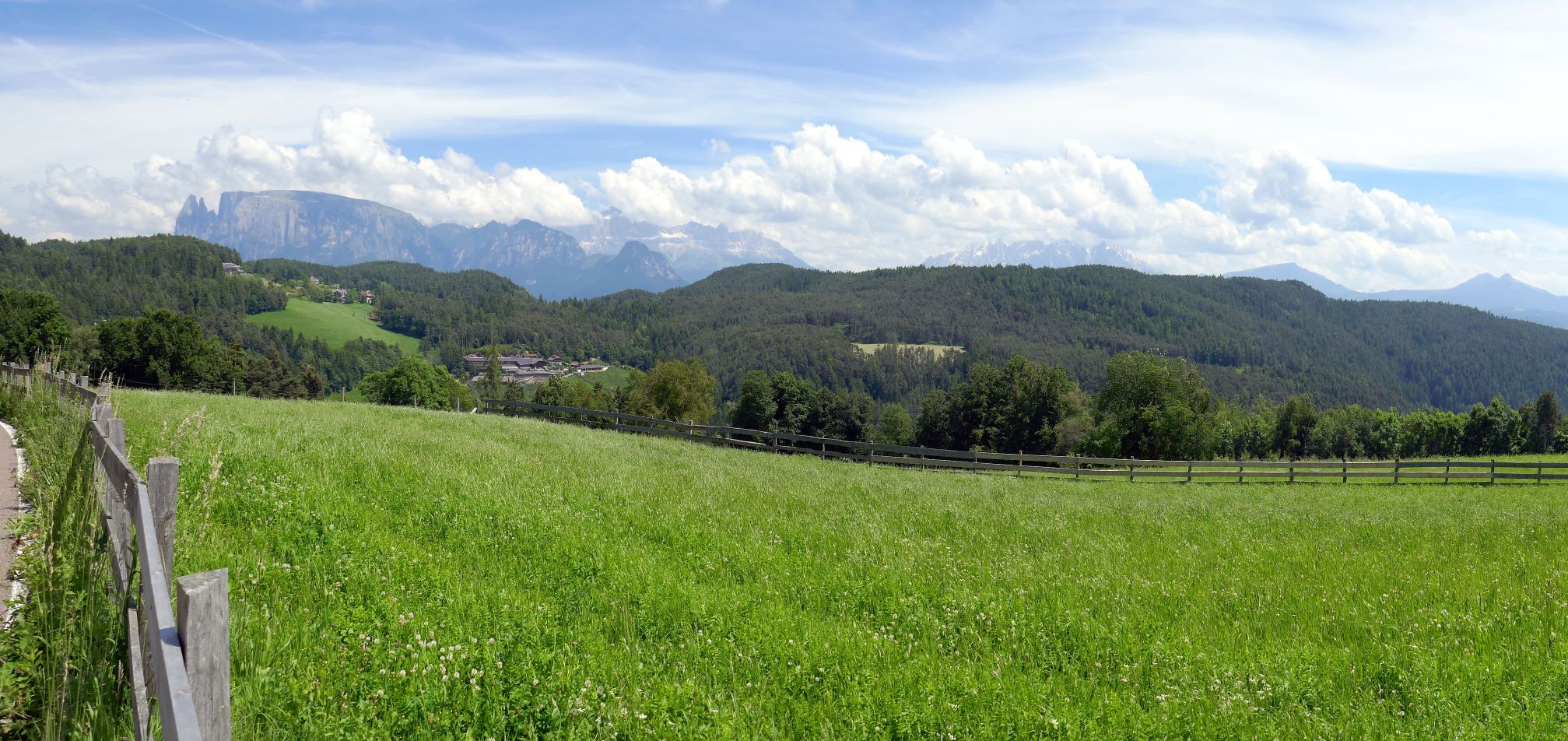
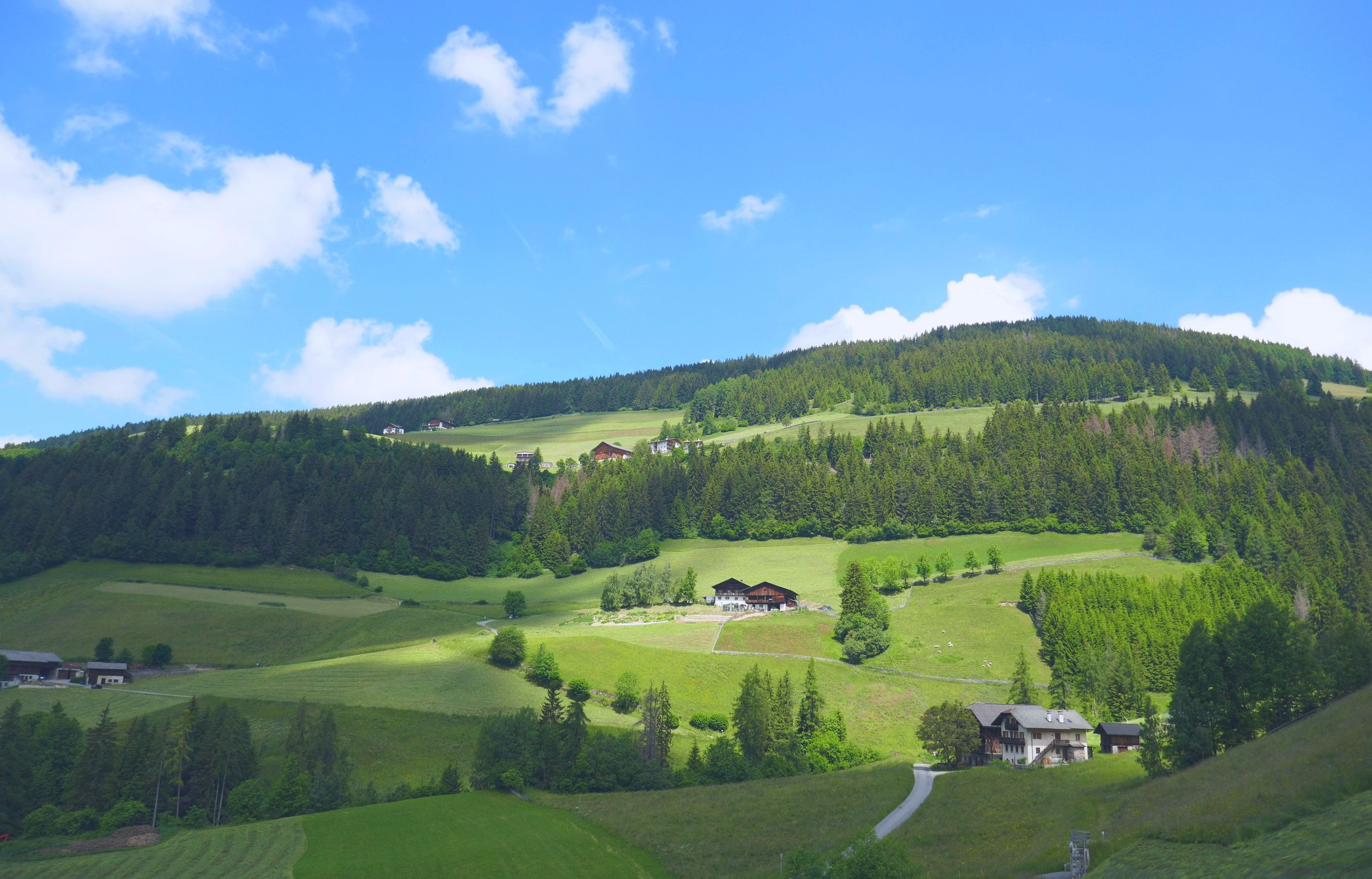
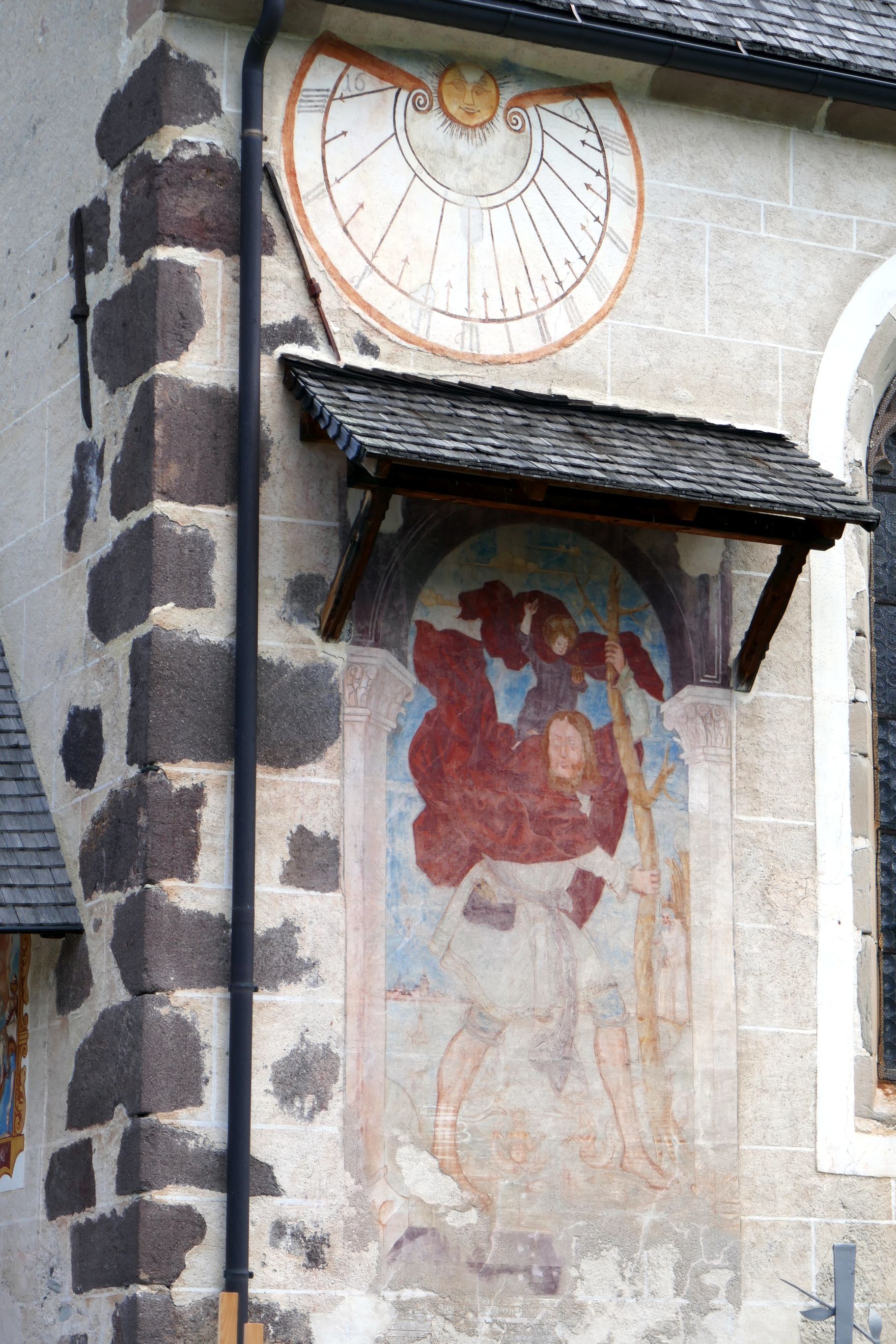
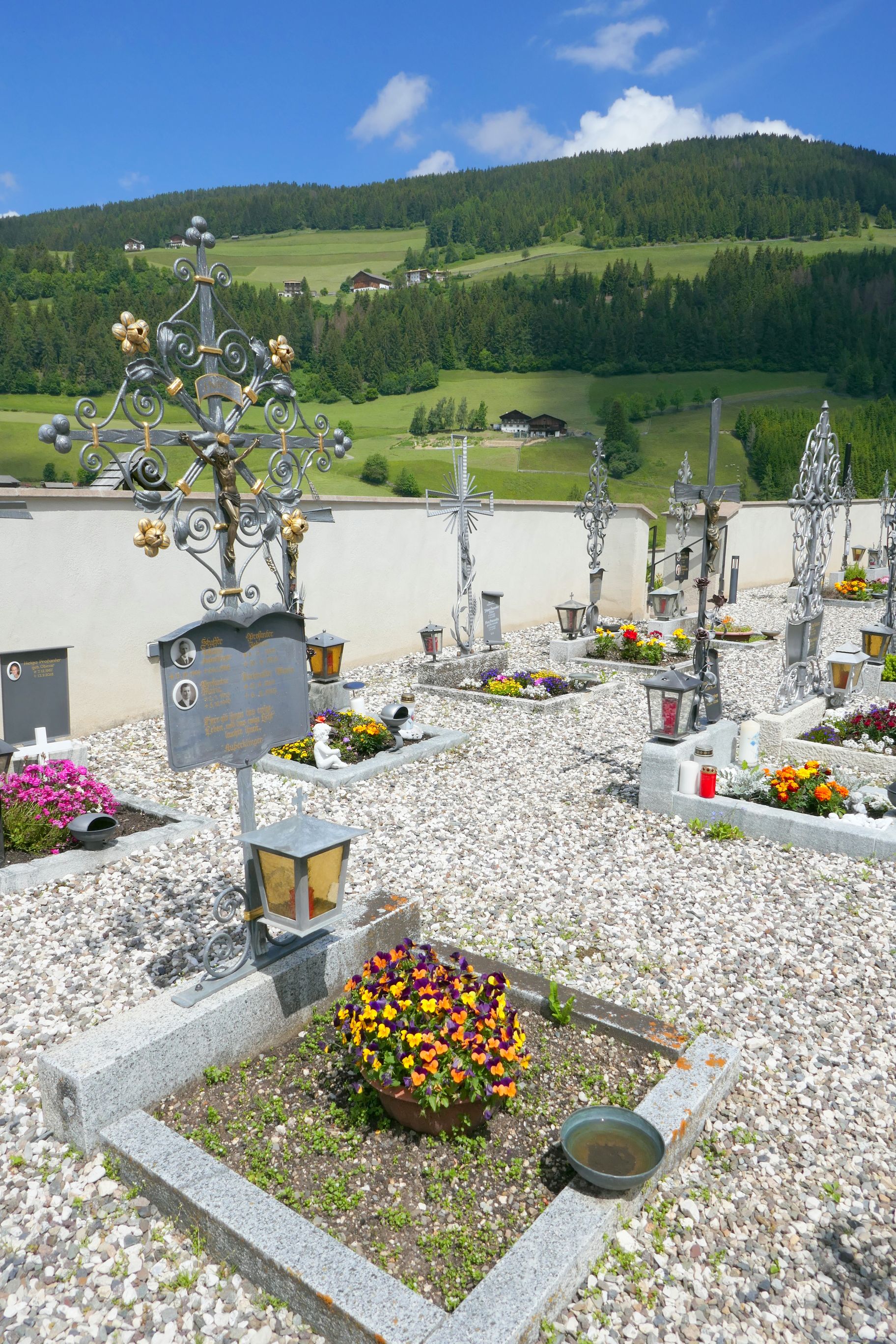
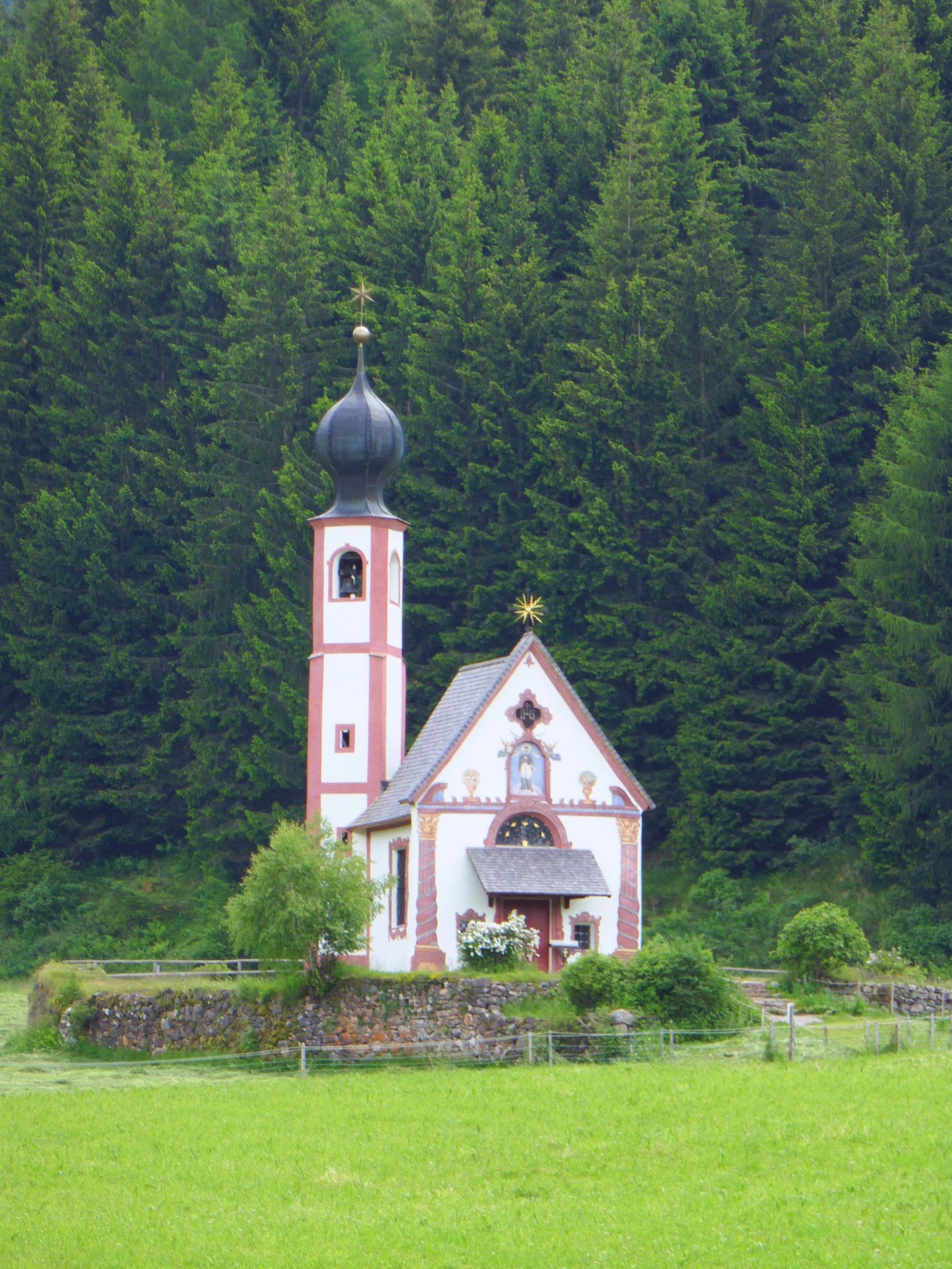
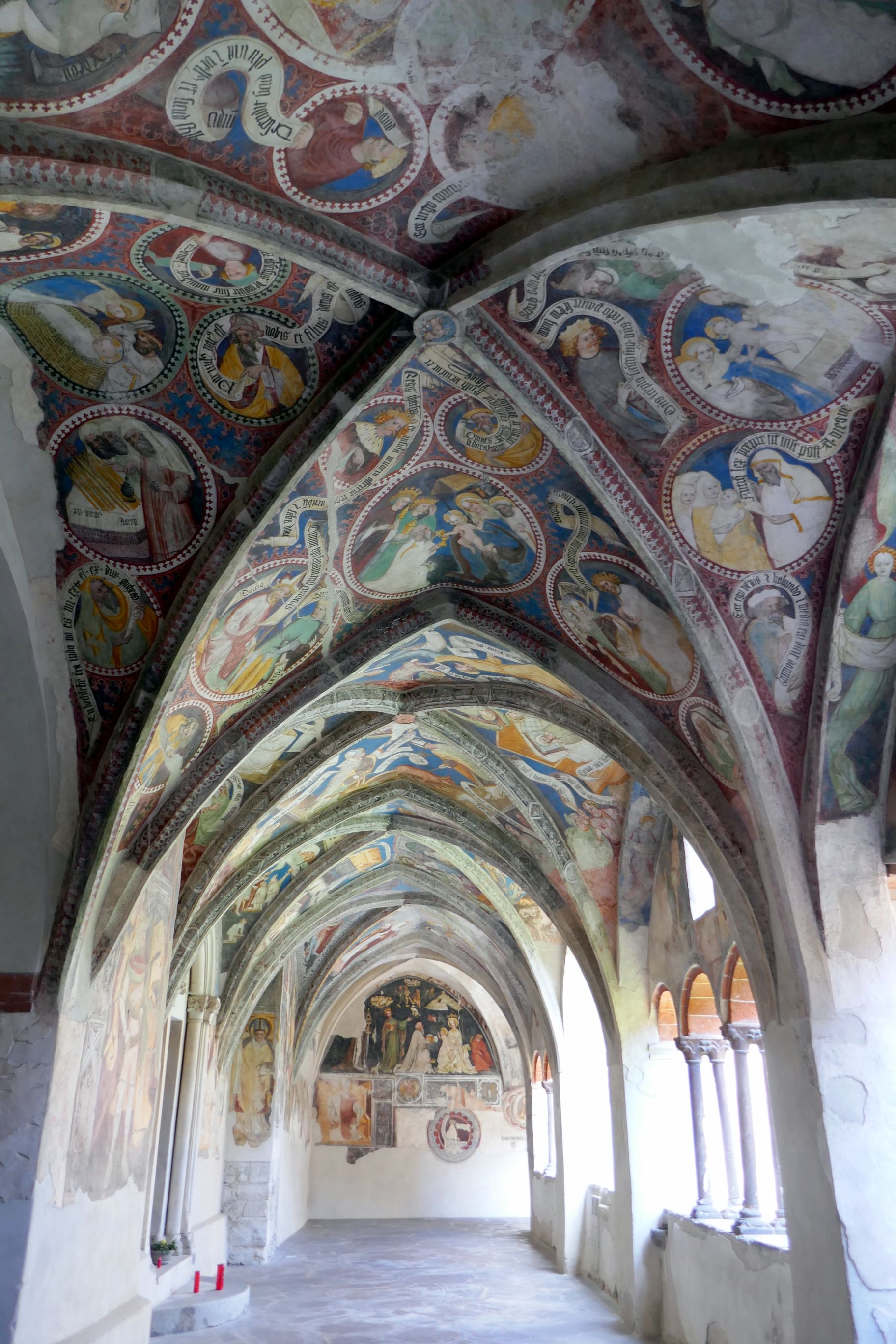
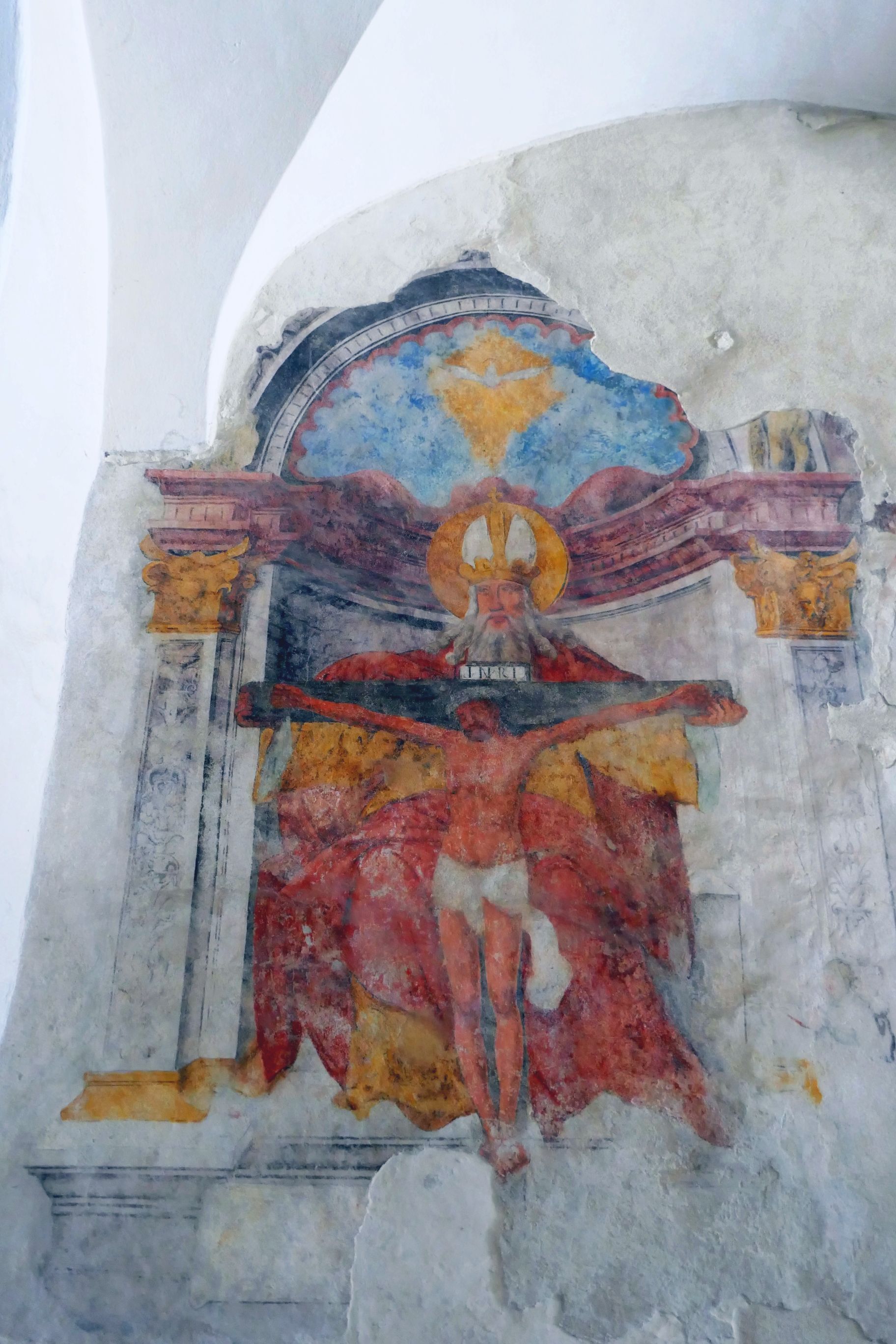
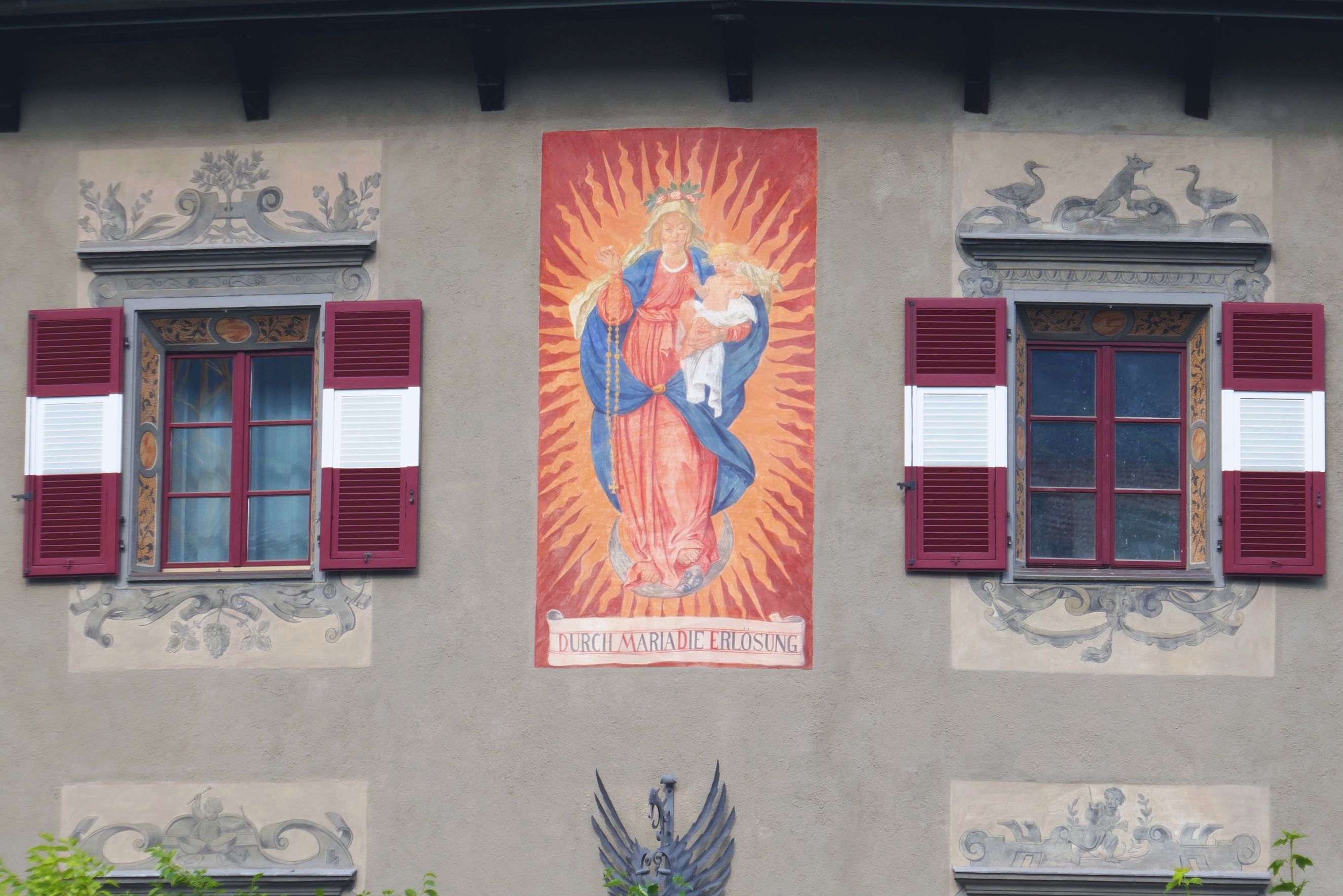
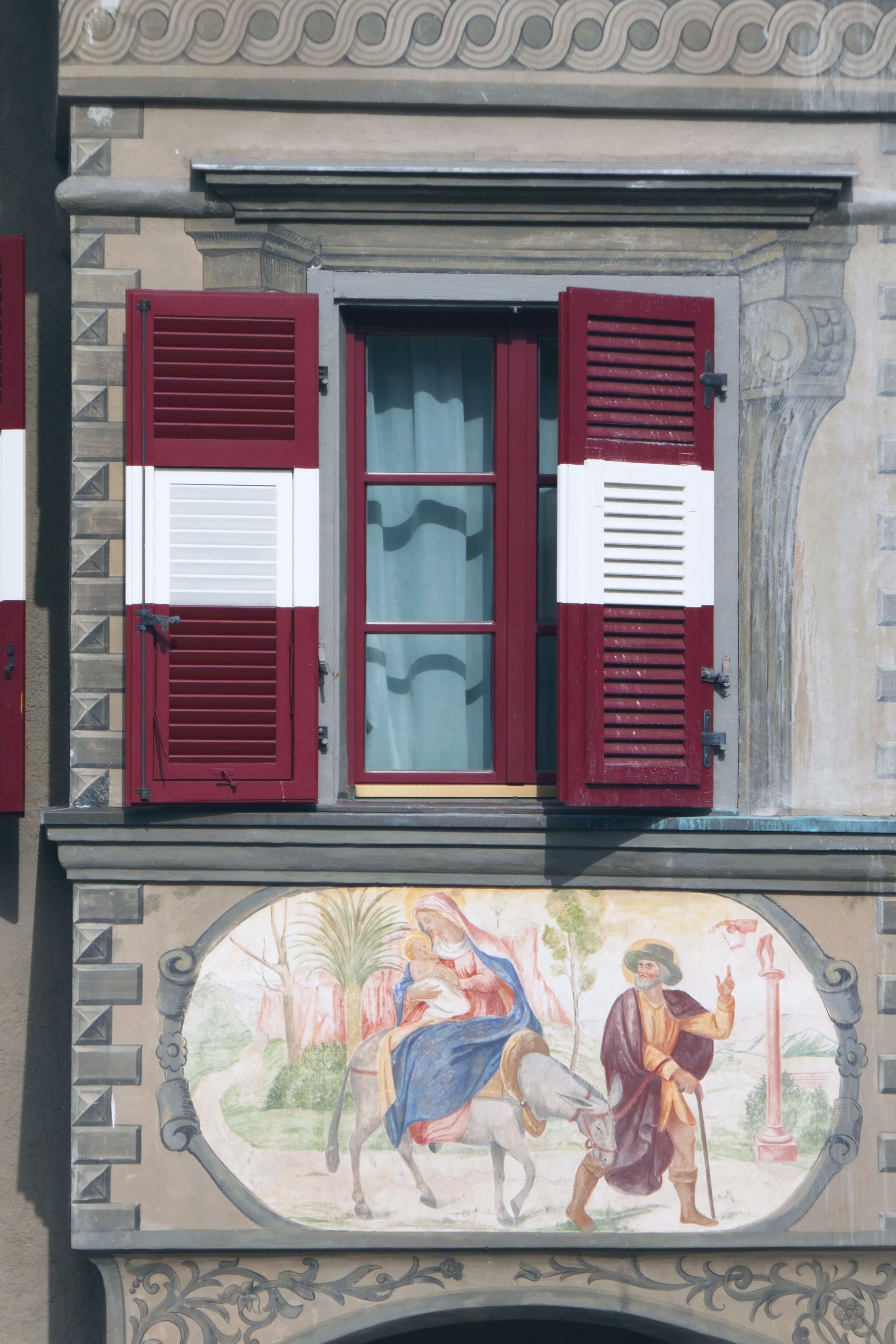
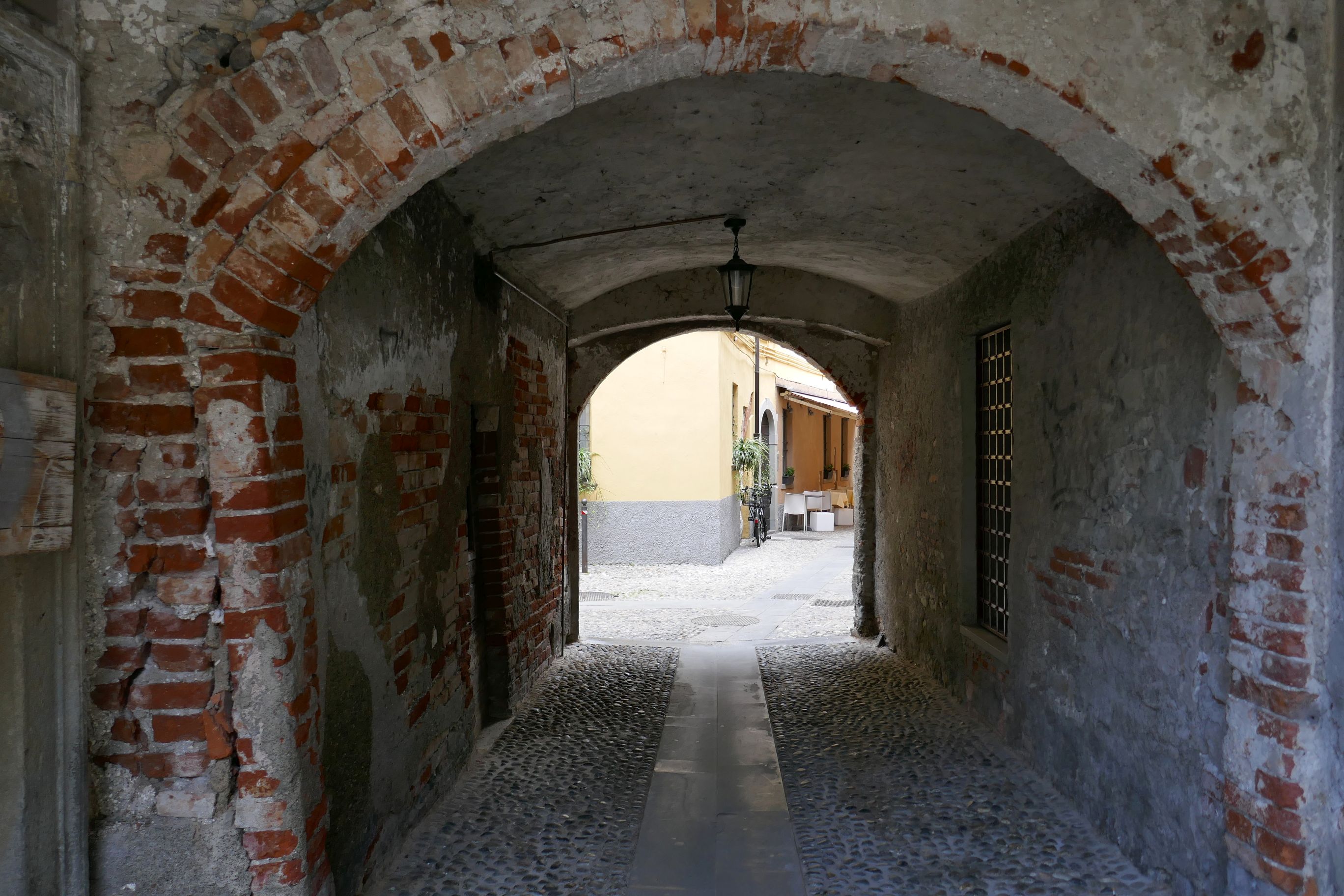
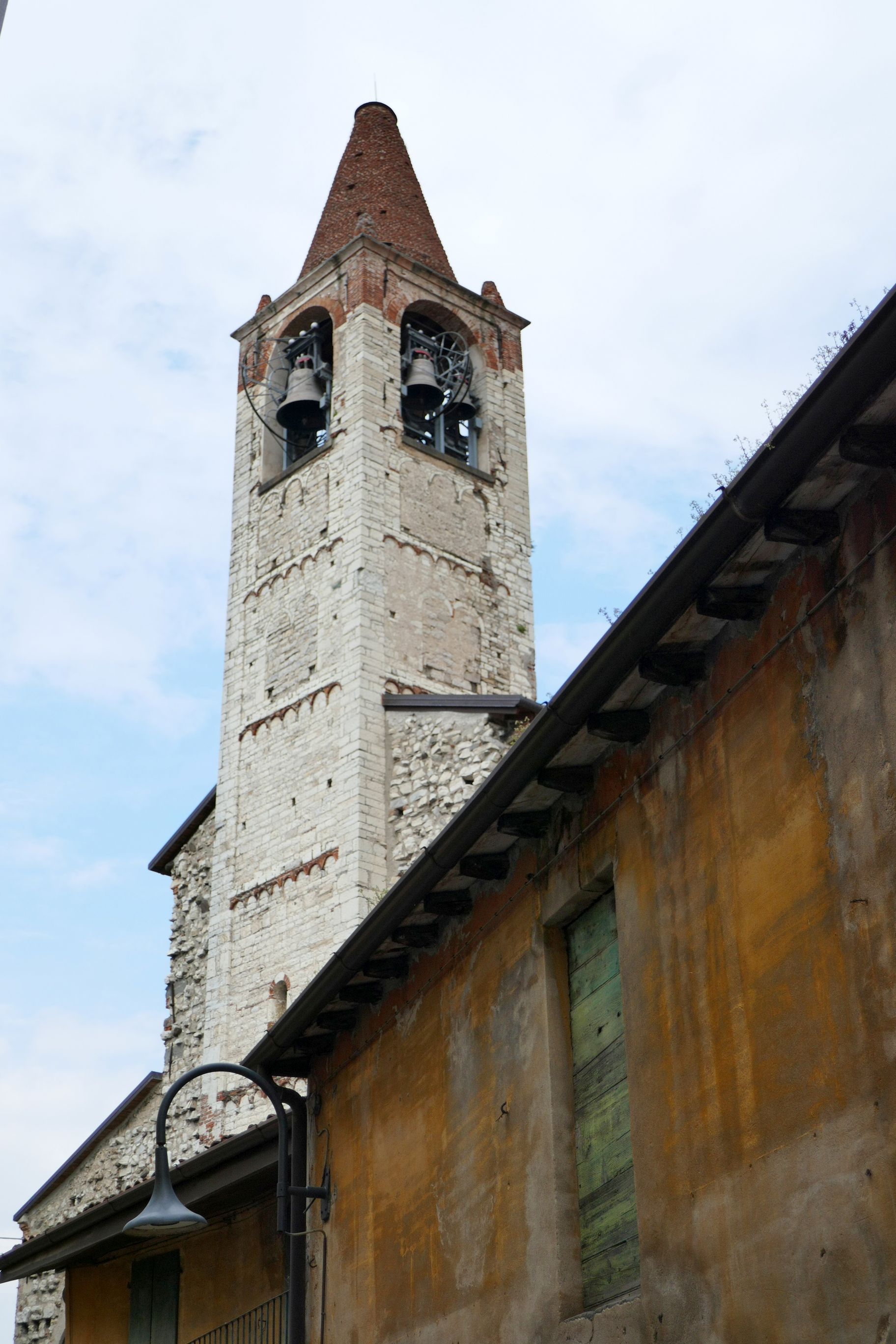
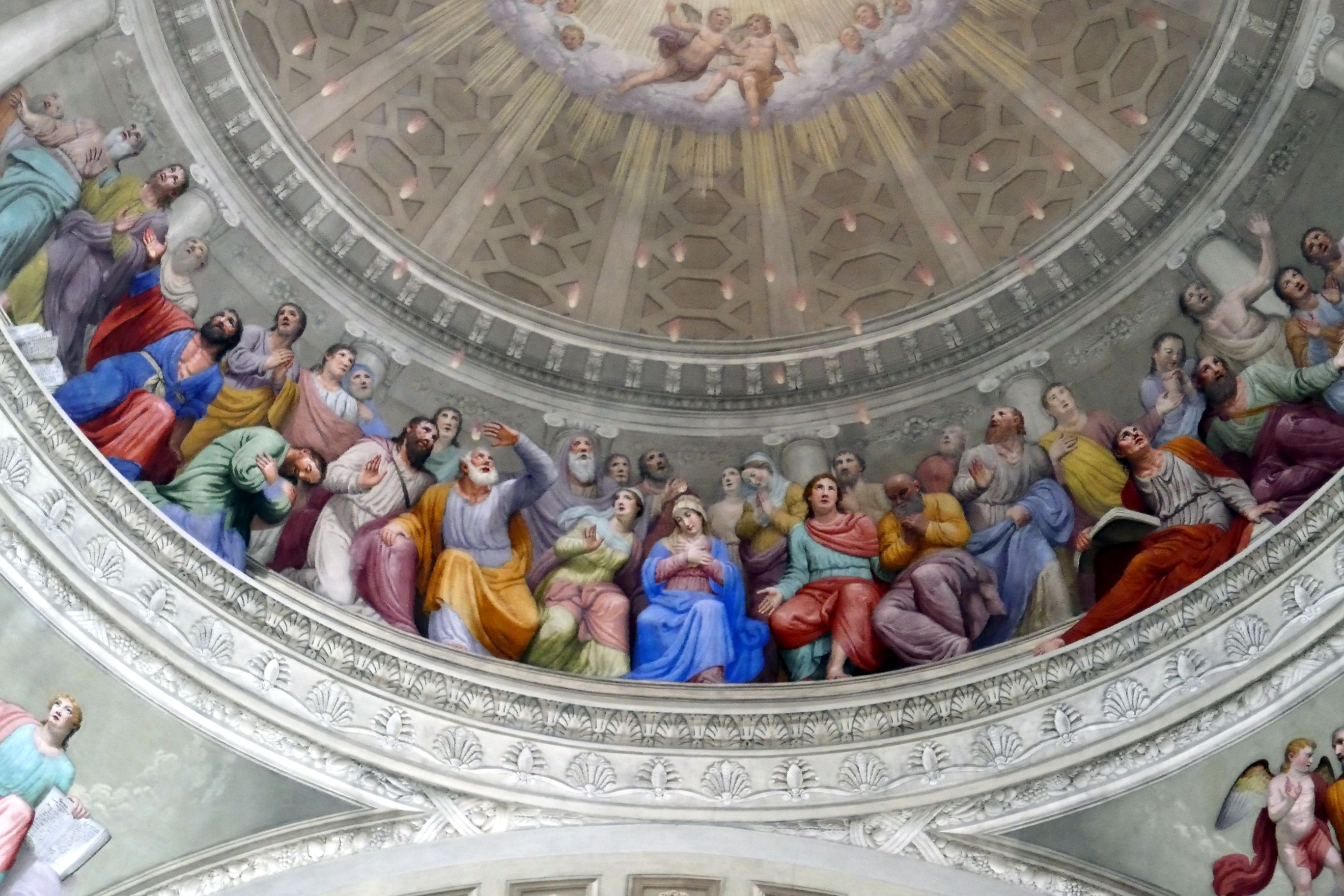
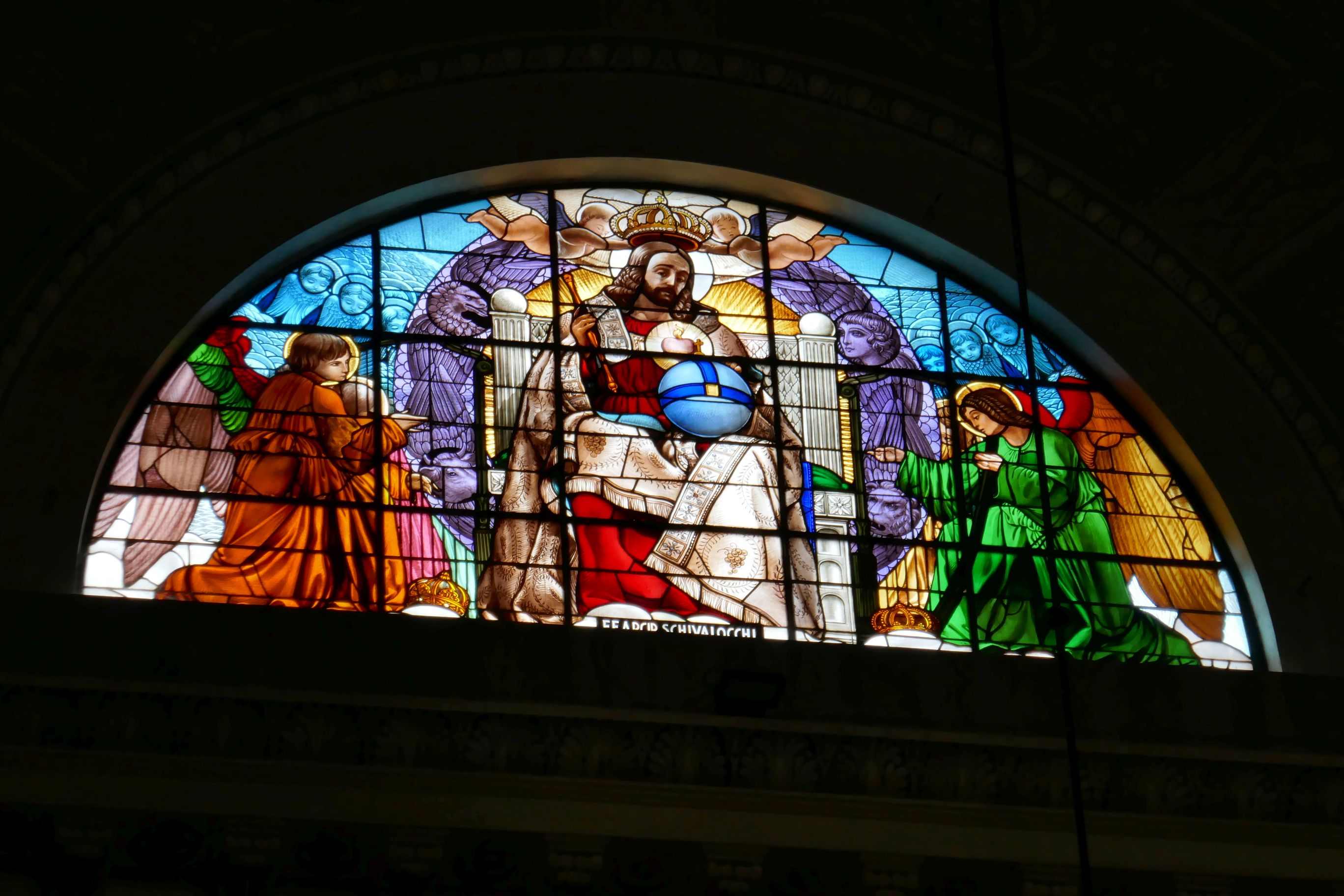
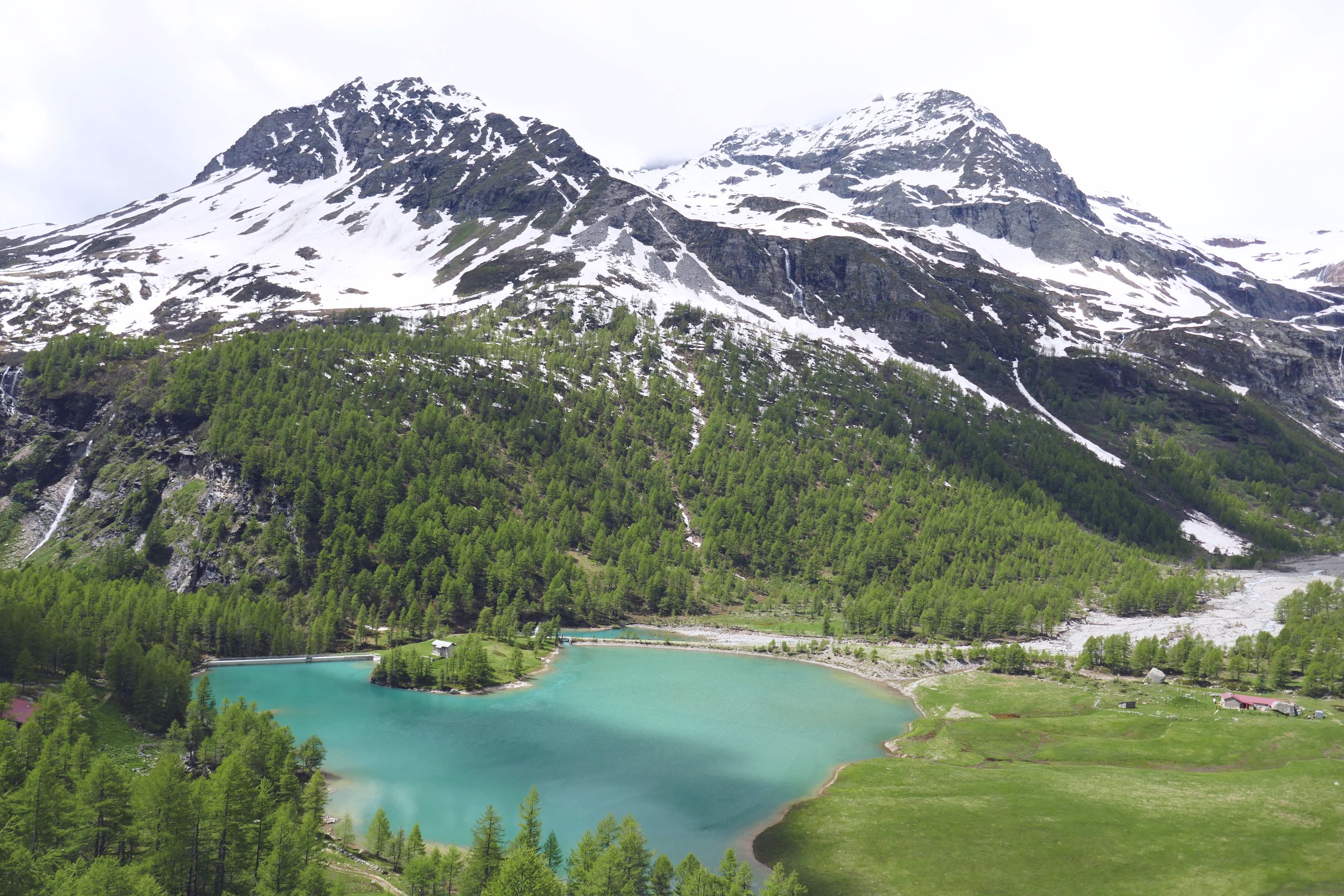
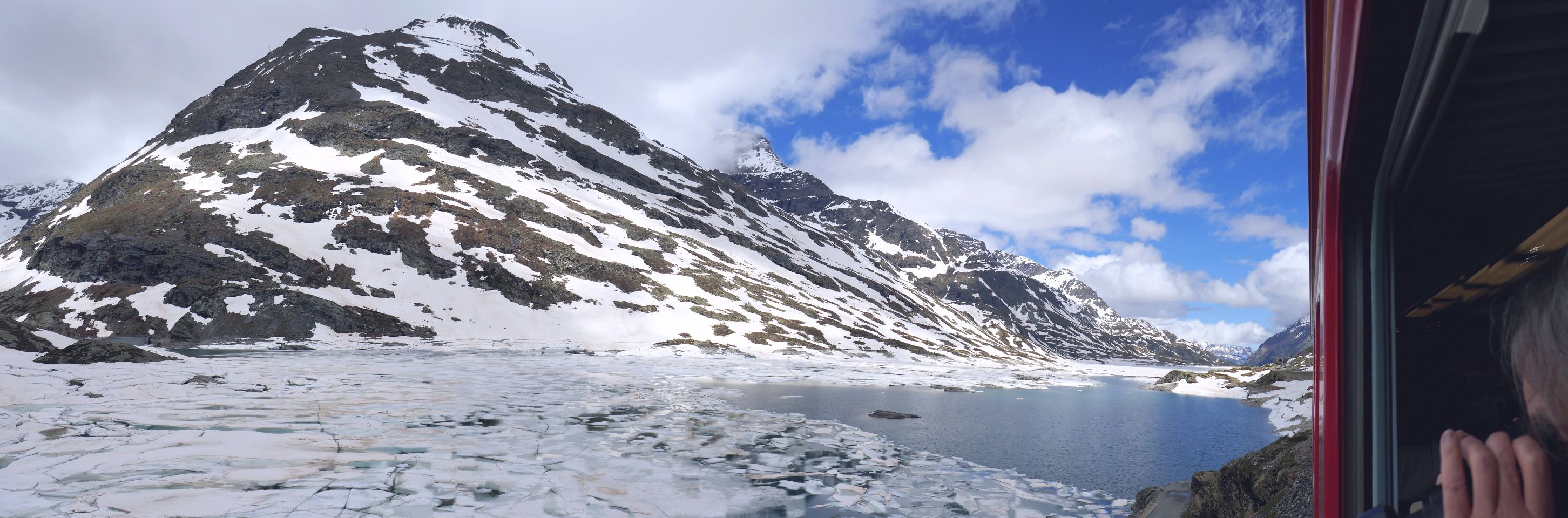
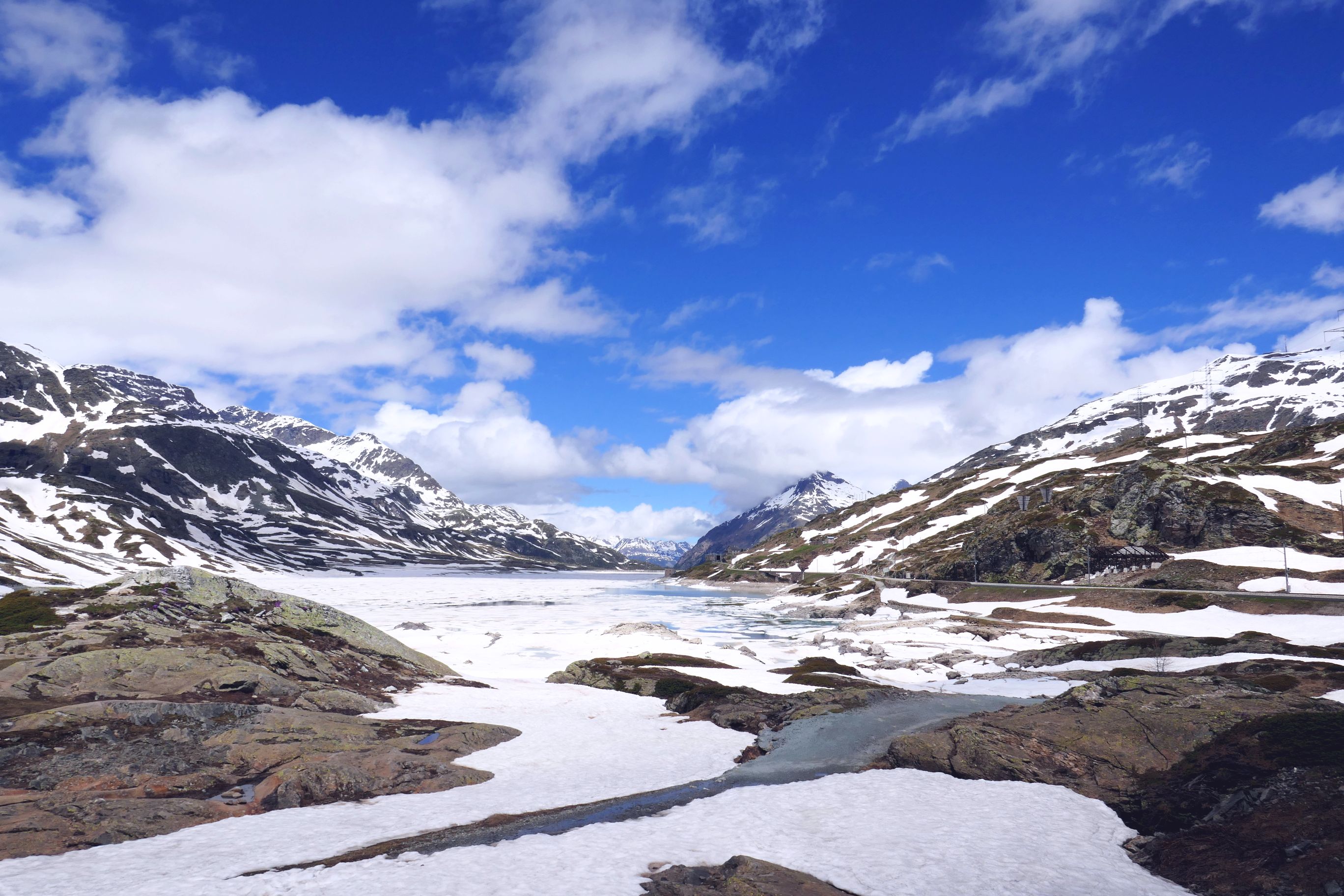
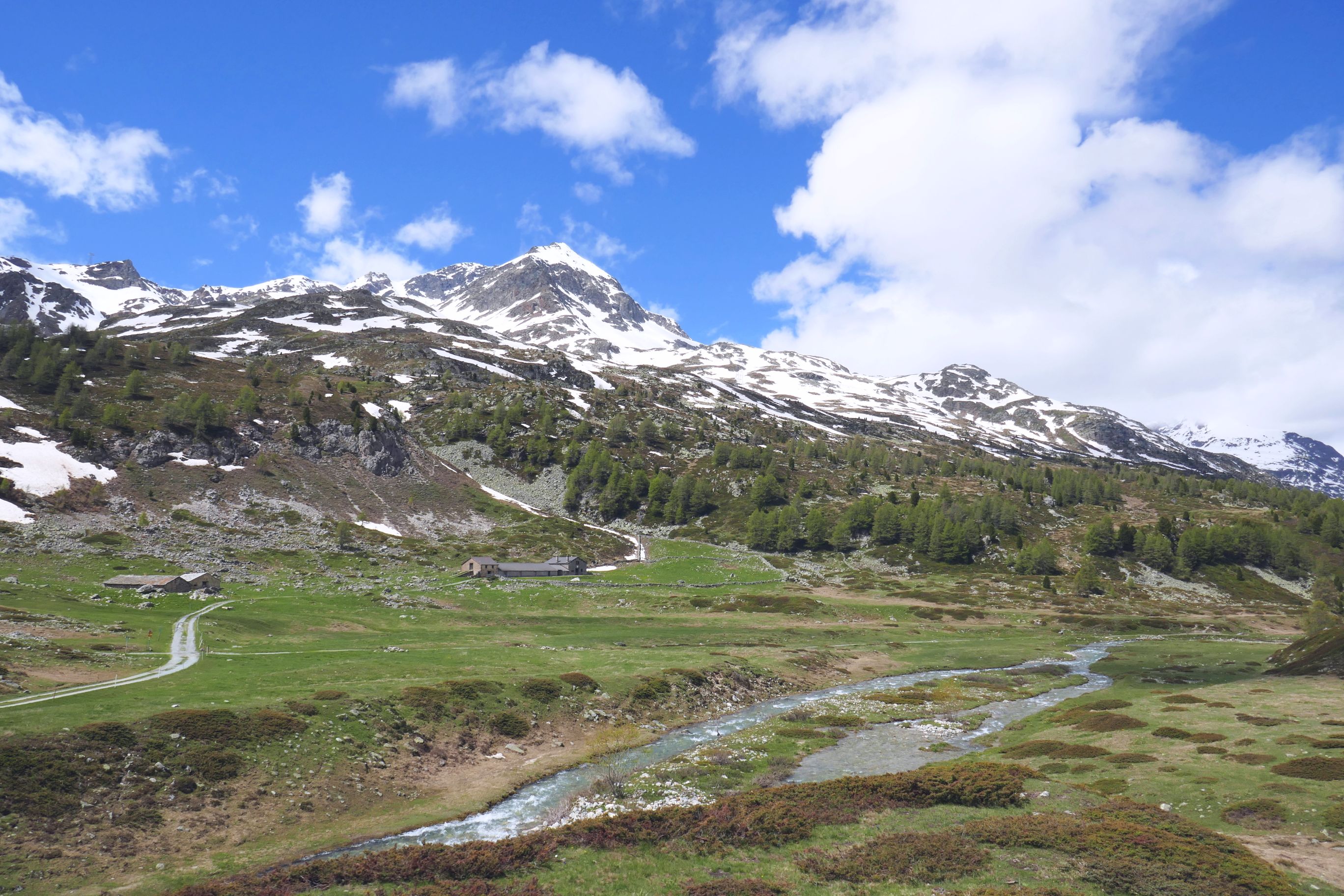
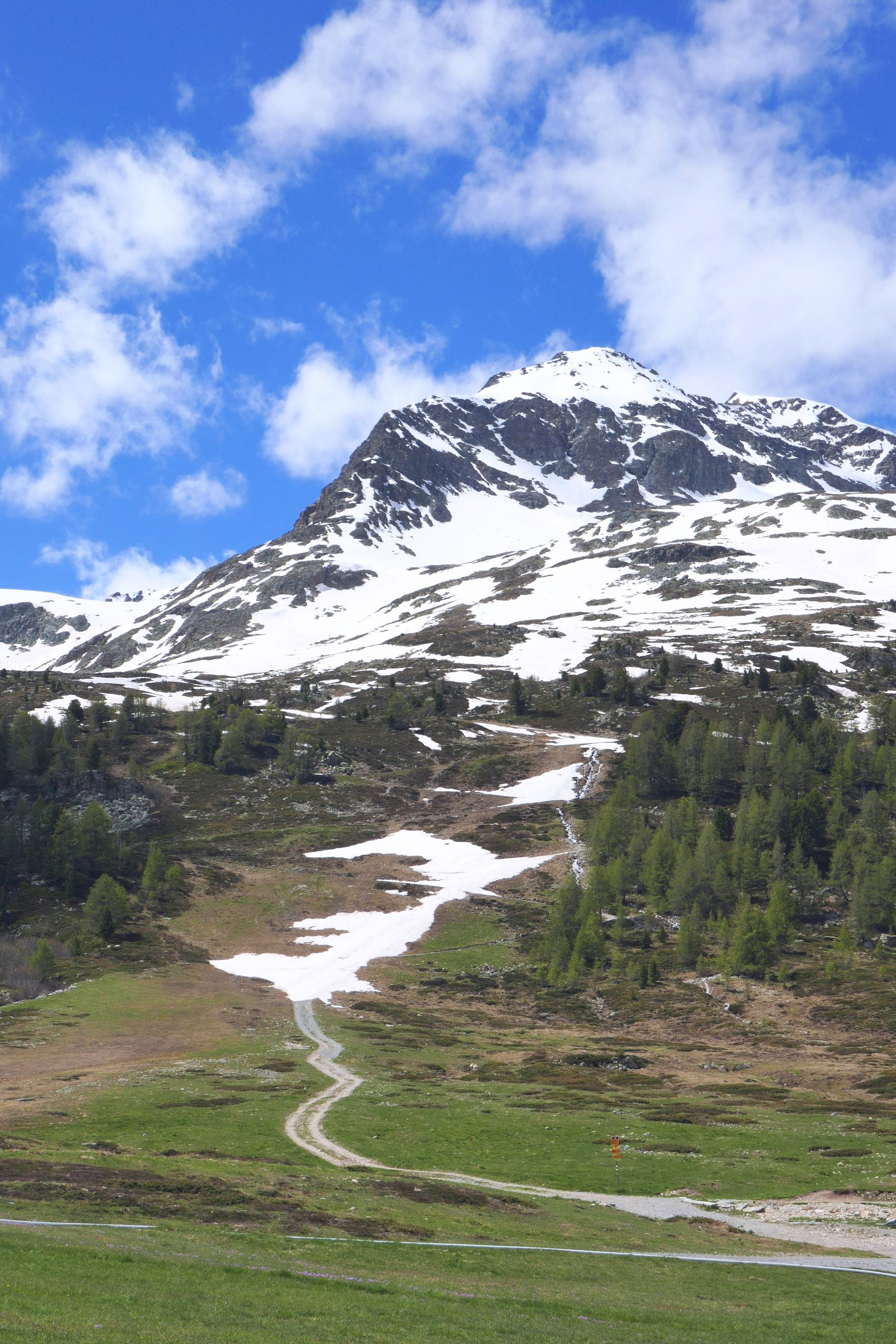
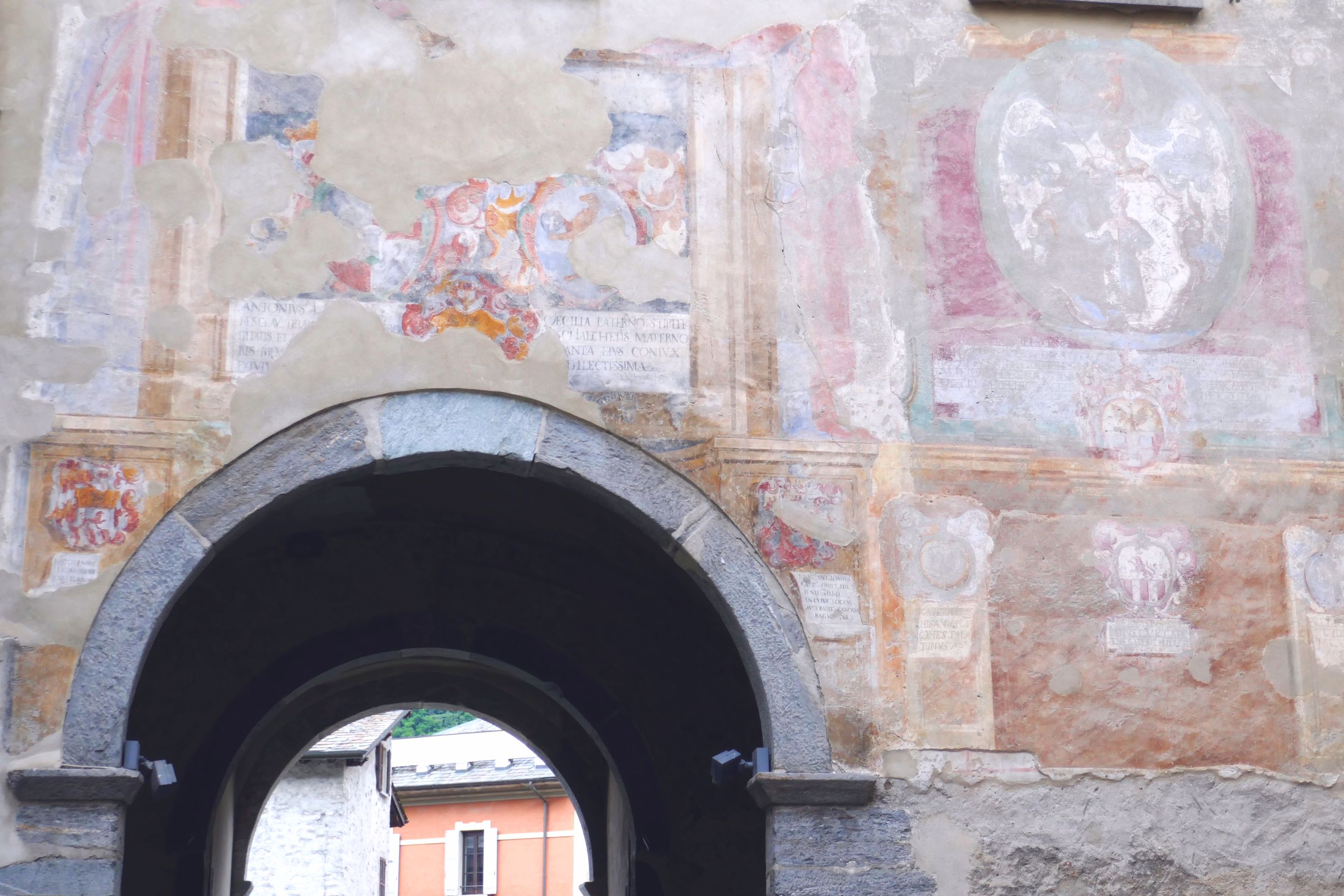
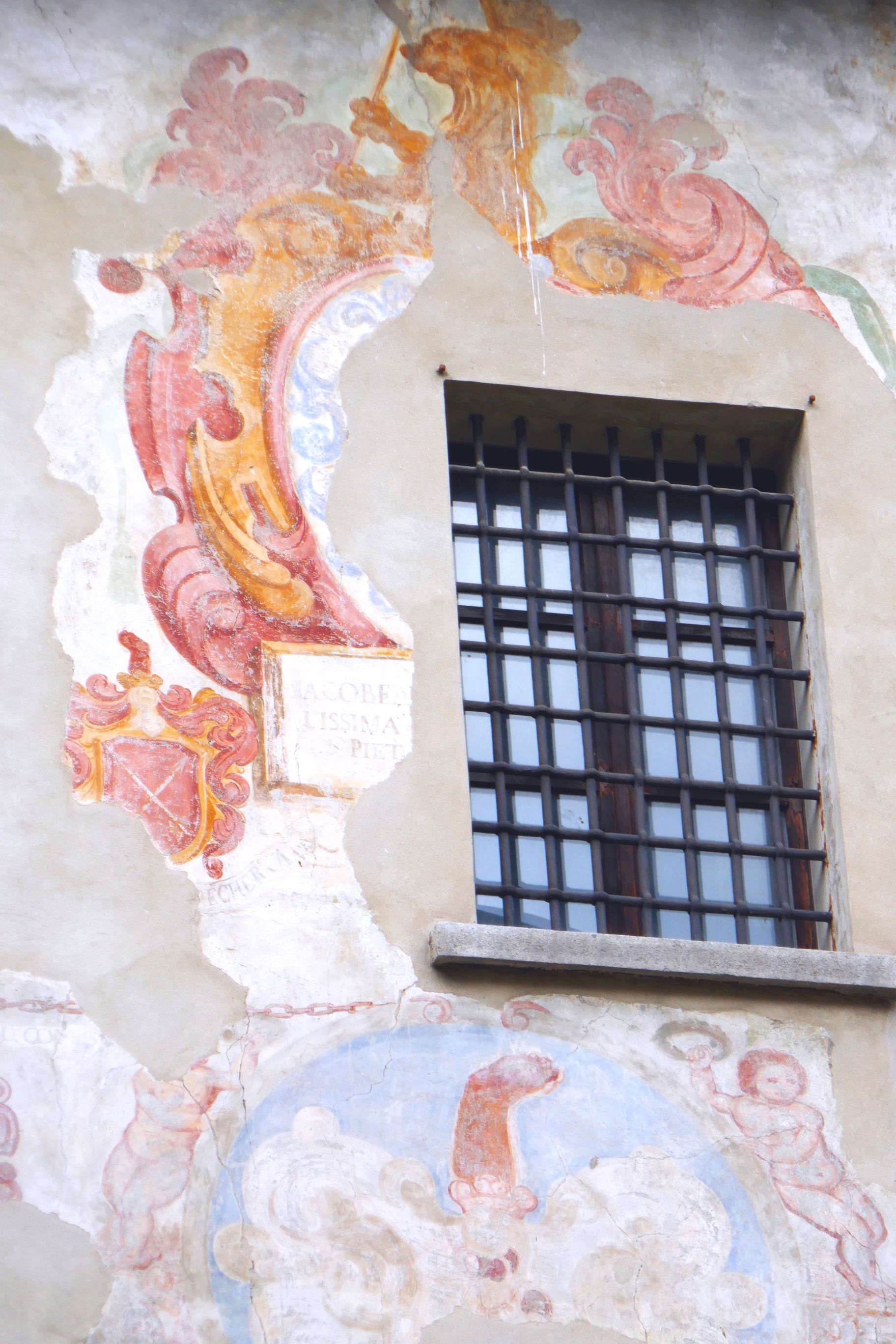
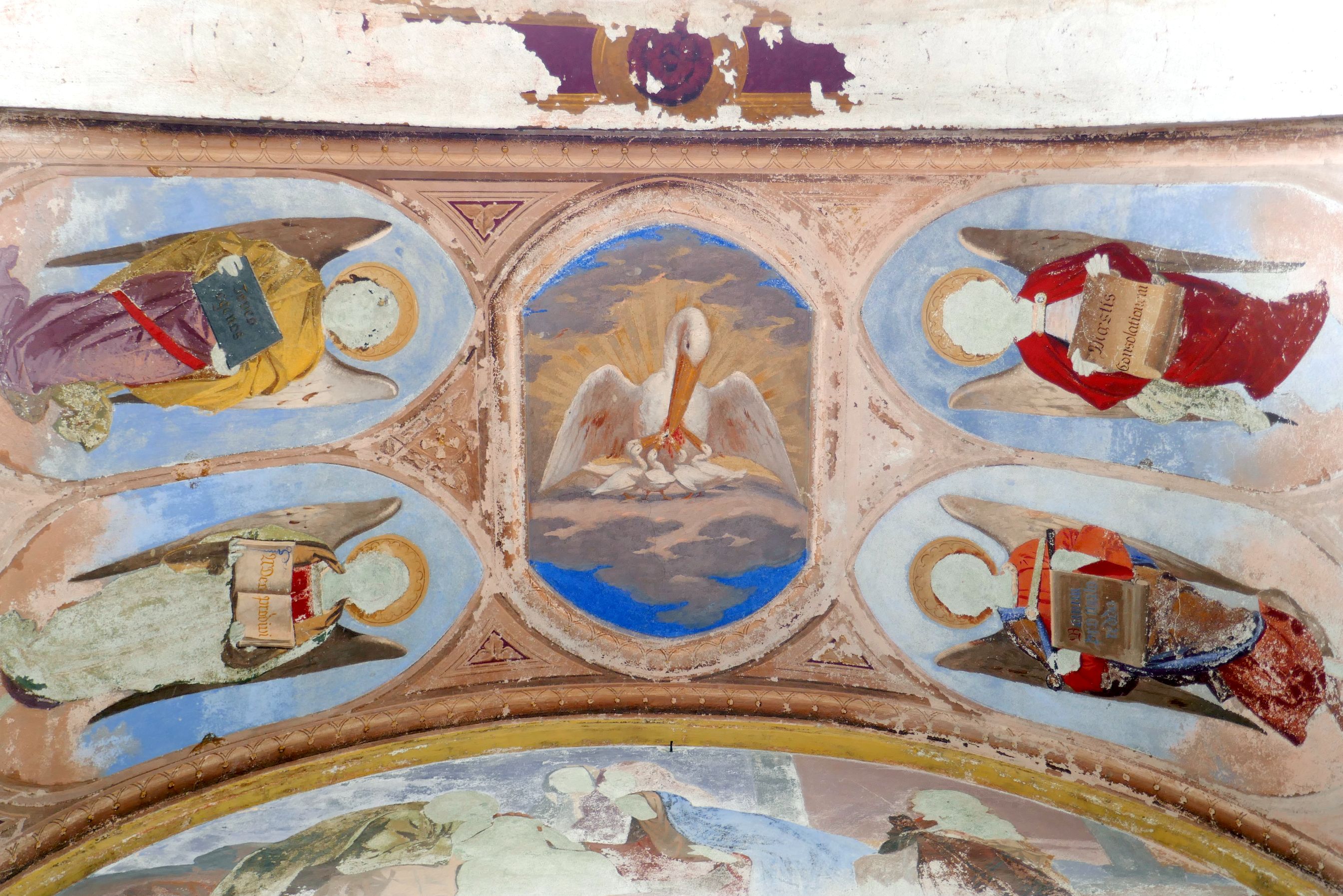
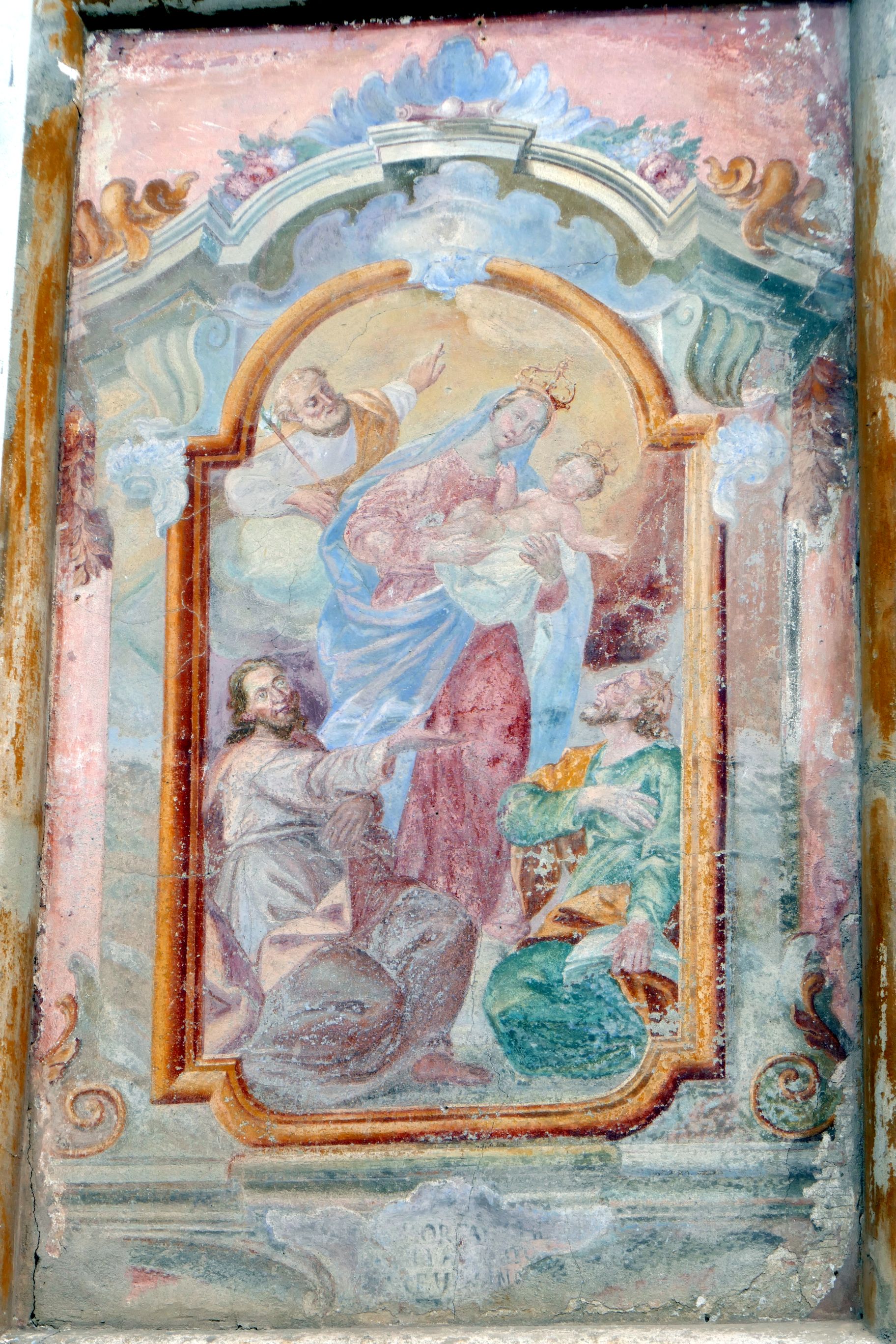
I was hoping for good weather on the day we would have the best views of the Dolomites and we got it! As we made our way along the winding roads into the Val Gardena valley, the views were stunning.
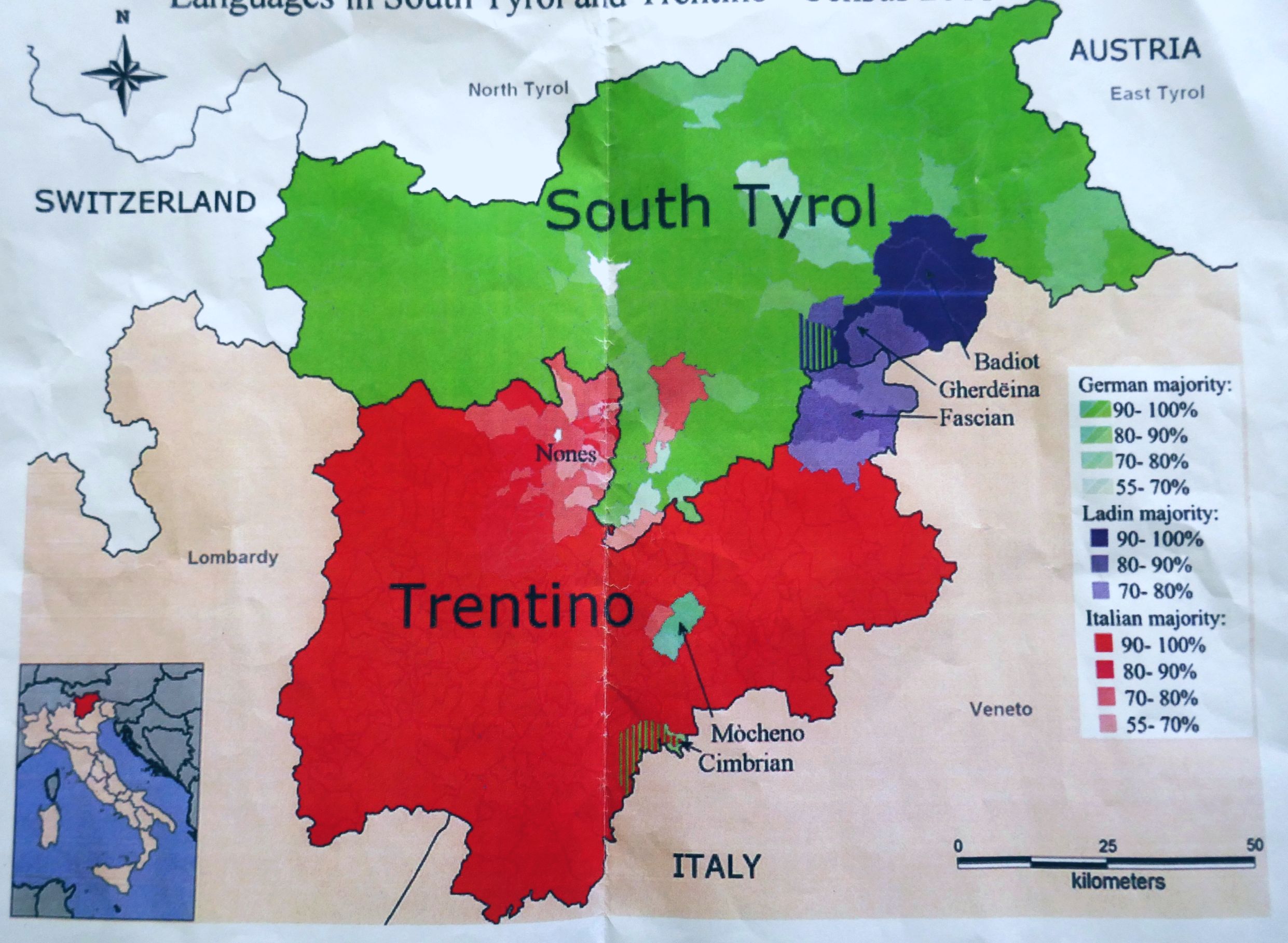
This is a top ski area in the winter and a popular hiking and mountain biking destination the remainder of the year. It is one of five valleys in the region where the main language spoken is Ladin, and the people are very proud of their language and culture.
(For all photos, click on the image for a full screen view.)
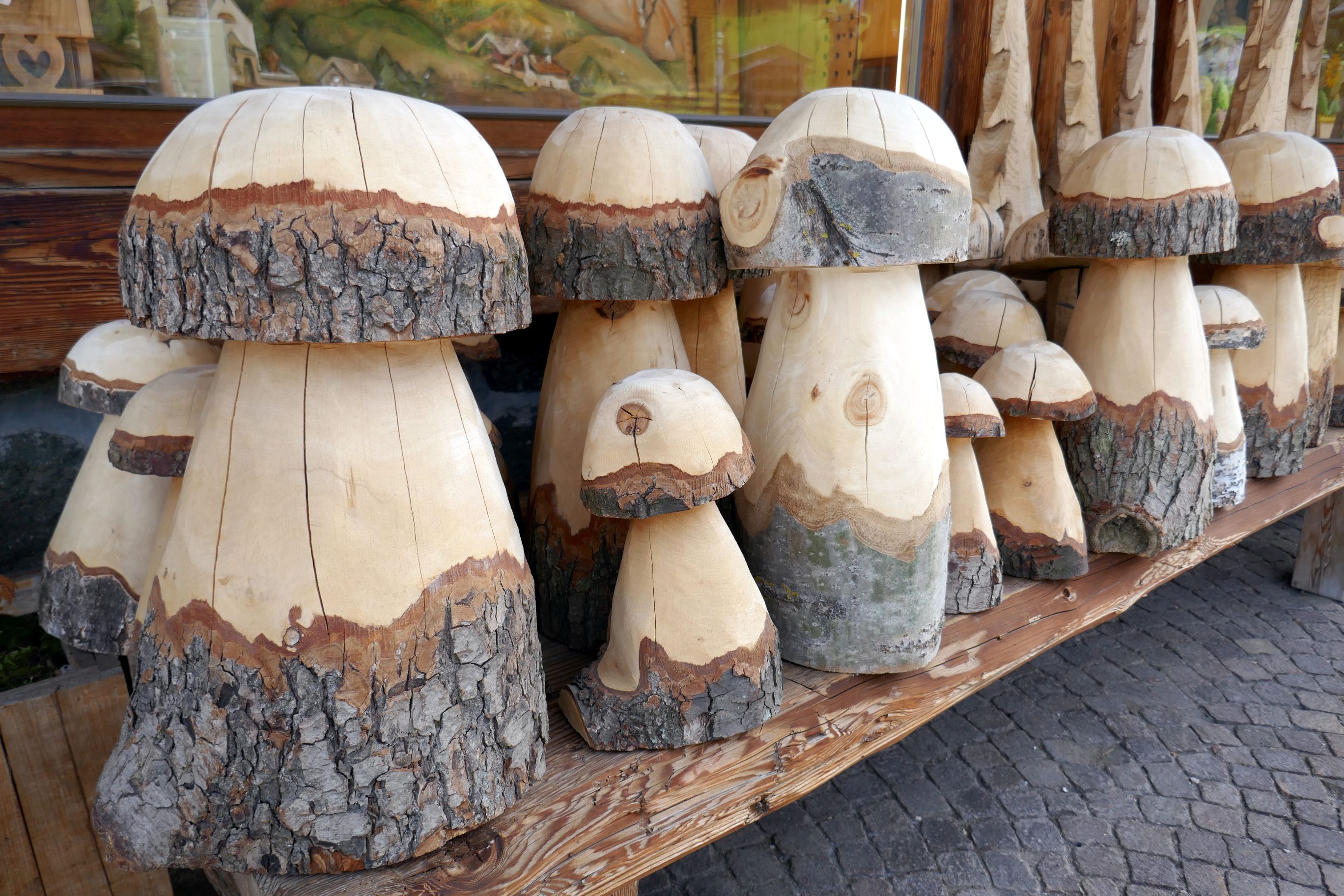
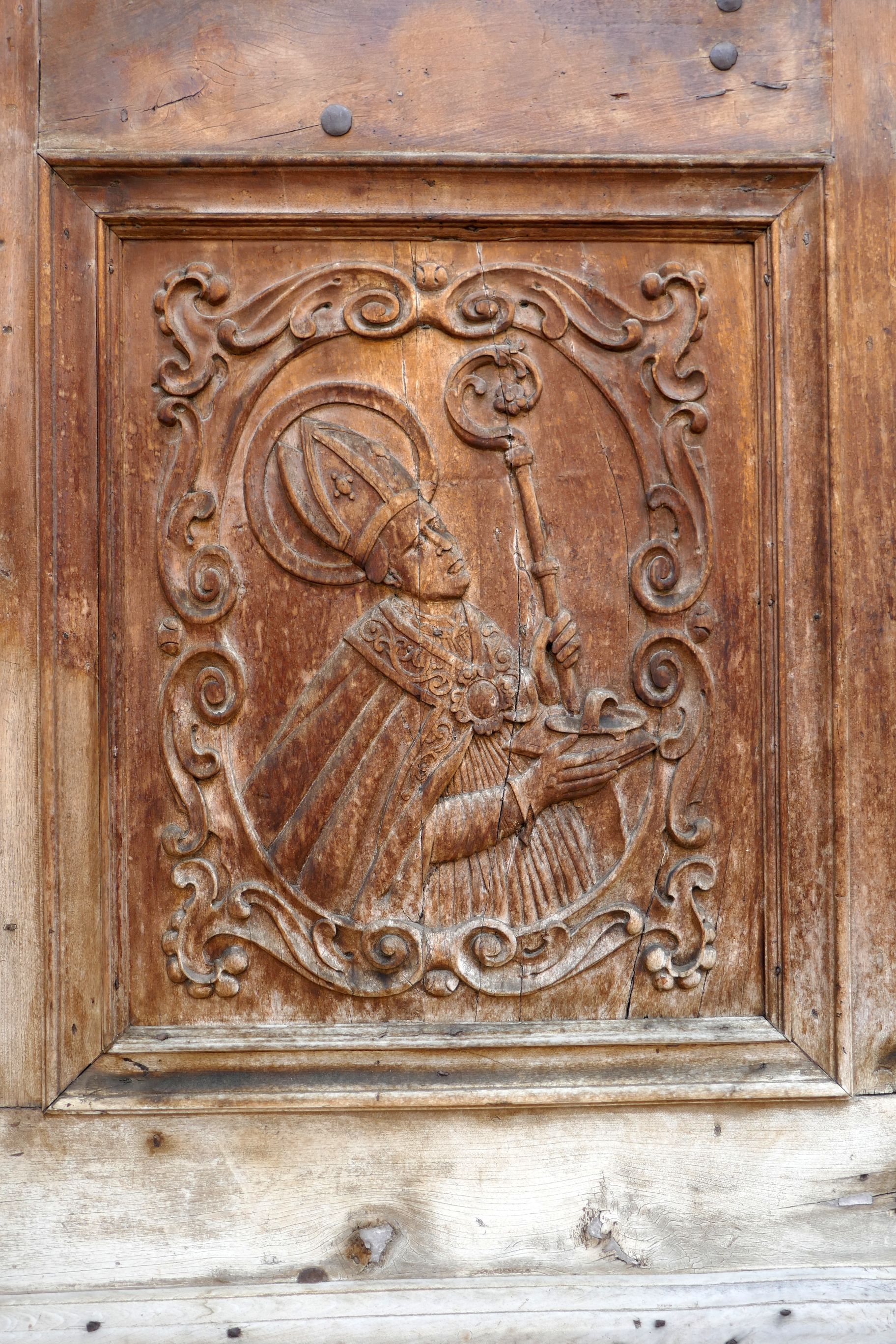
Wood carving is a traditional craft here and the local churches are adorned with intricate wood carvings. We stopped at a shop to see some beautiful wood-carved creations as well as these large mushrooms—a nod to one of the staple foods in the region.
The main attraction, however, was the gorgeous scenery!
We met with Peter, a native of the area who could speak five languages fluently by the time he was 20 years old. In addition to his native Ladin language, he grew up speaking the other two official languages of the region: German and Italian. During his earlier school years, he learned English, and then French when he was in high school.
Peter led us on a hike through the little village and through beautiful hillsides, while sharing his culture with us and pointing out the flora and fauna along the way. Our hike concluded at a small lake, a popular ice skating and curling spot in the winter.
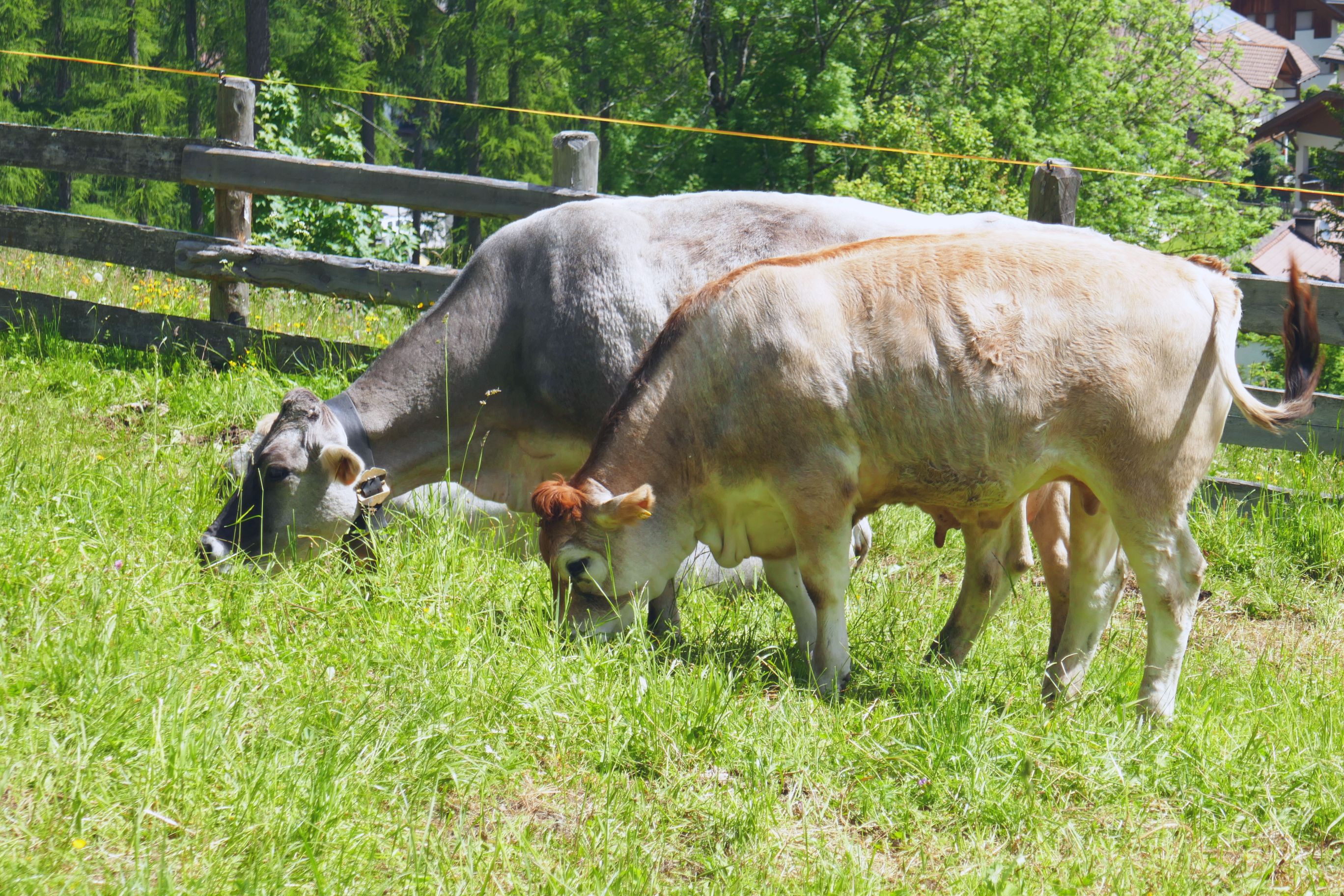
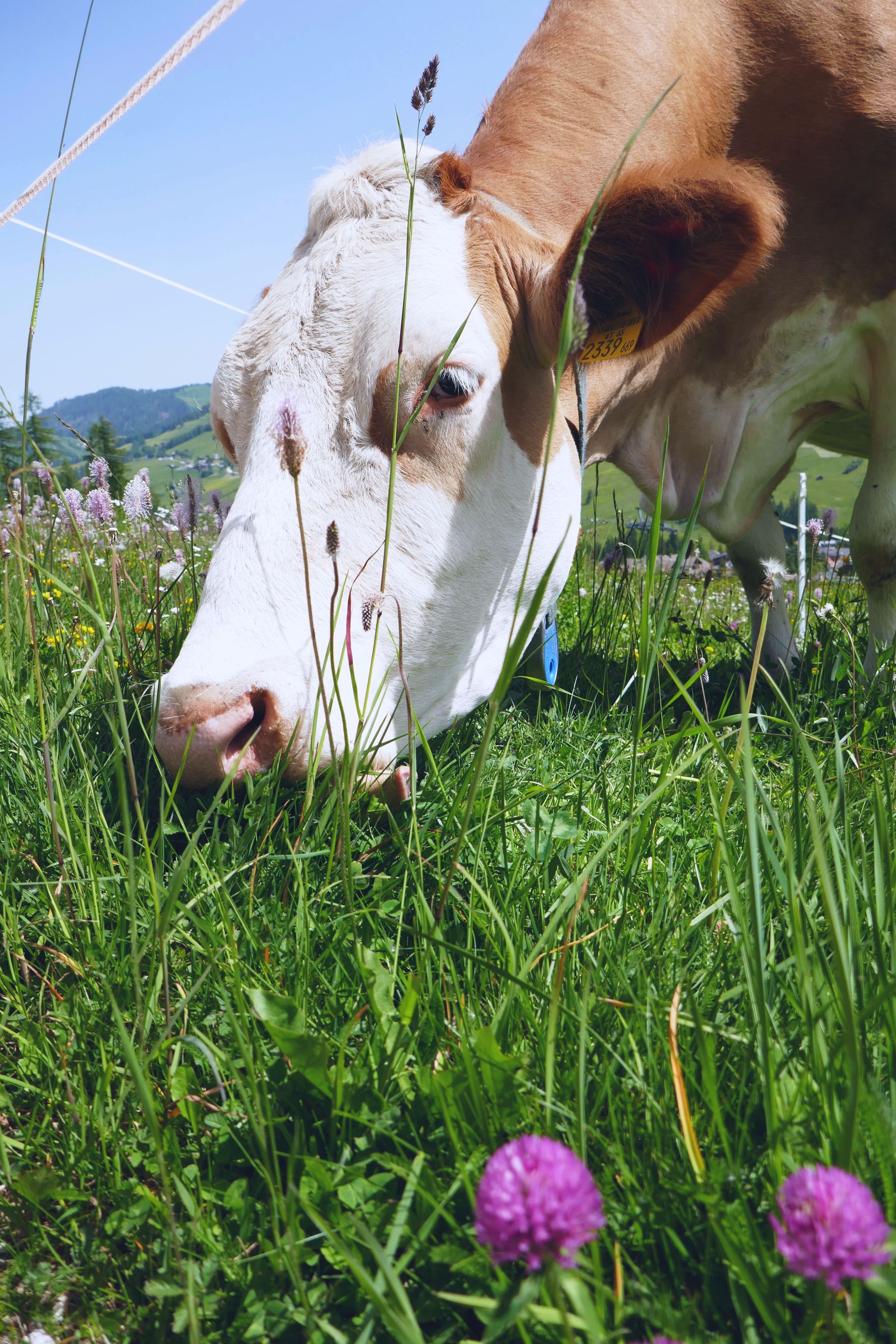
This is a popular skiing area, so there were several ski lifts– and a few cows.
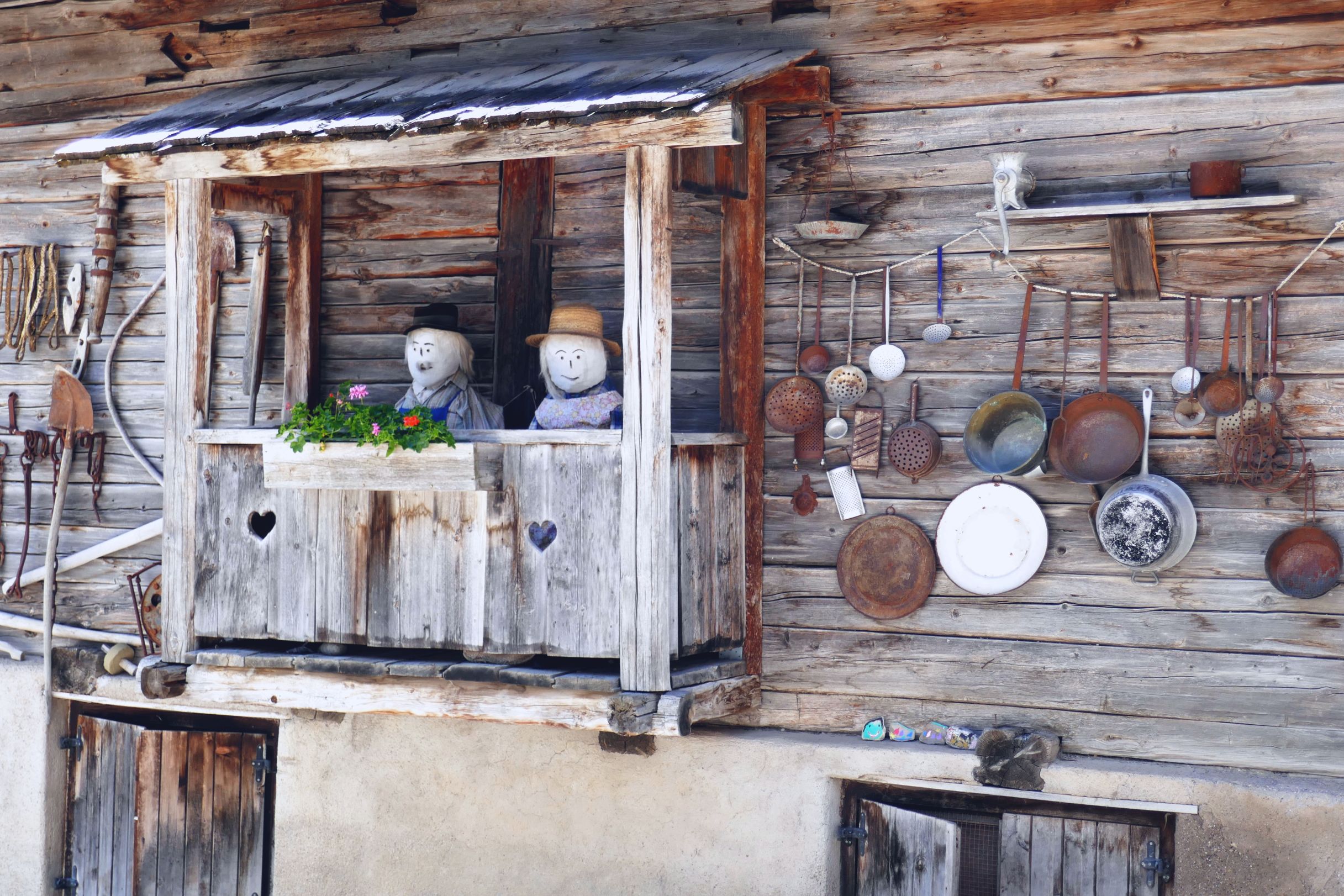
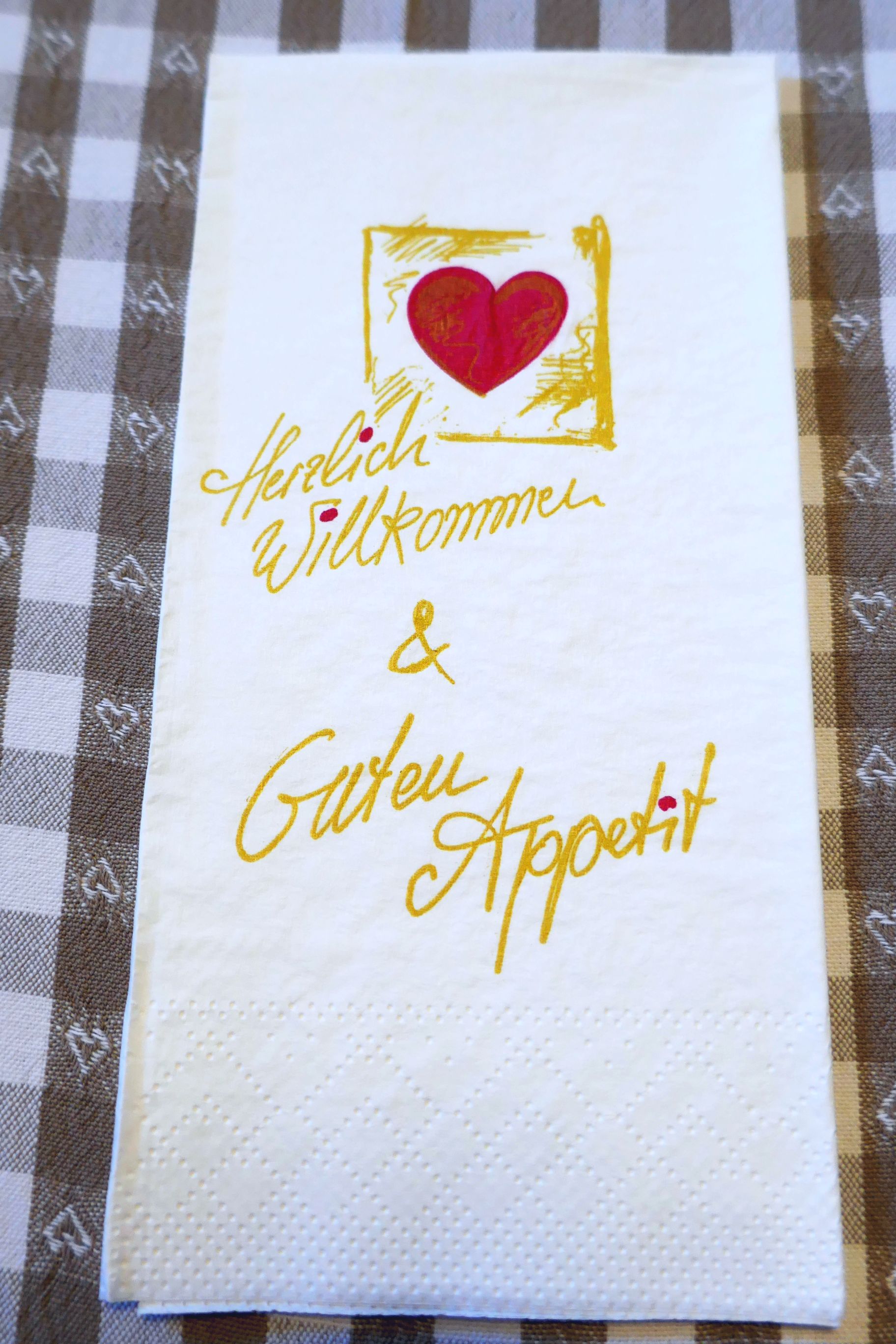
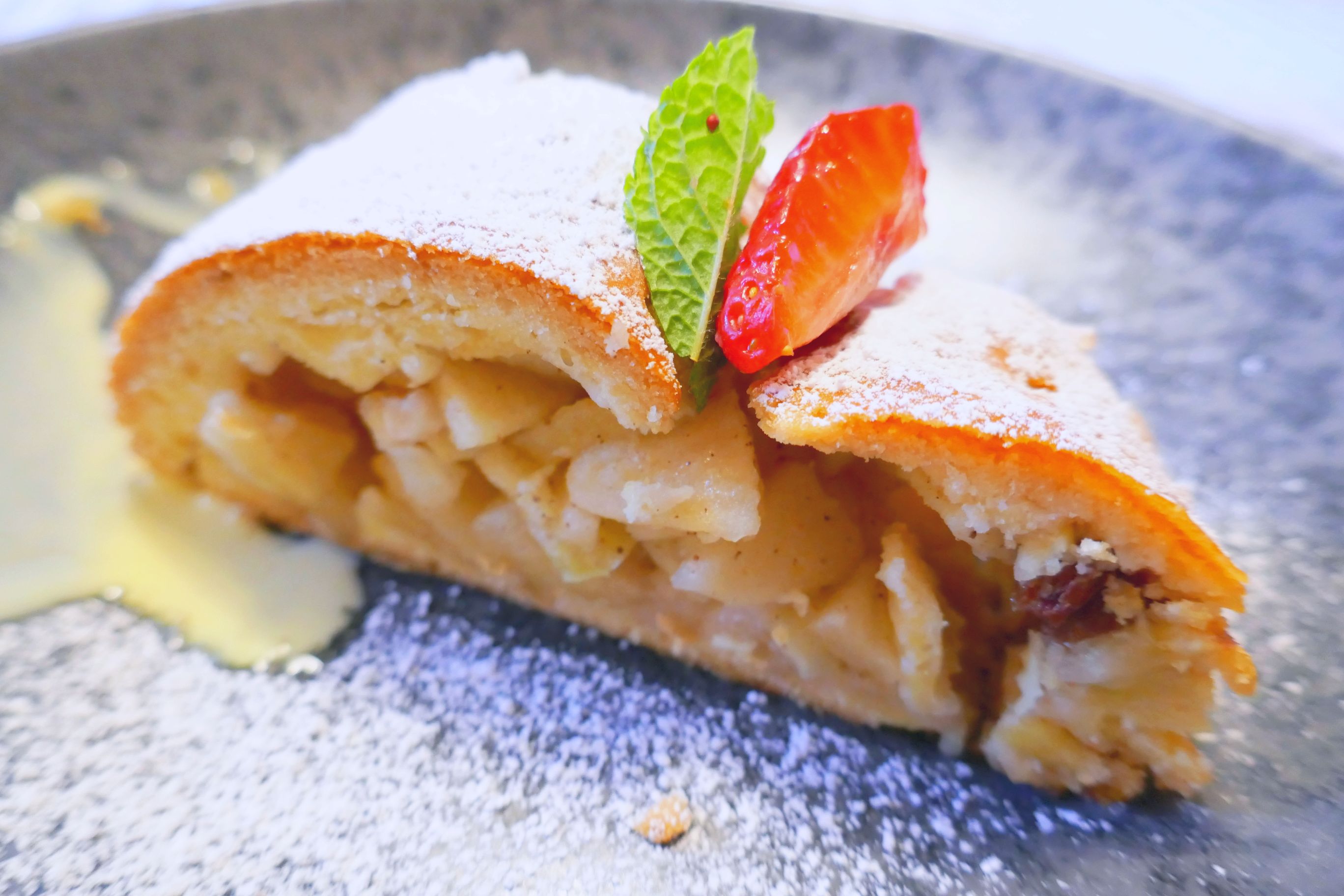
Following our hike, we stopped at the cutest little village for a traditional Ladin lunch. It was a lovely day!
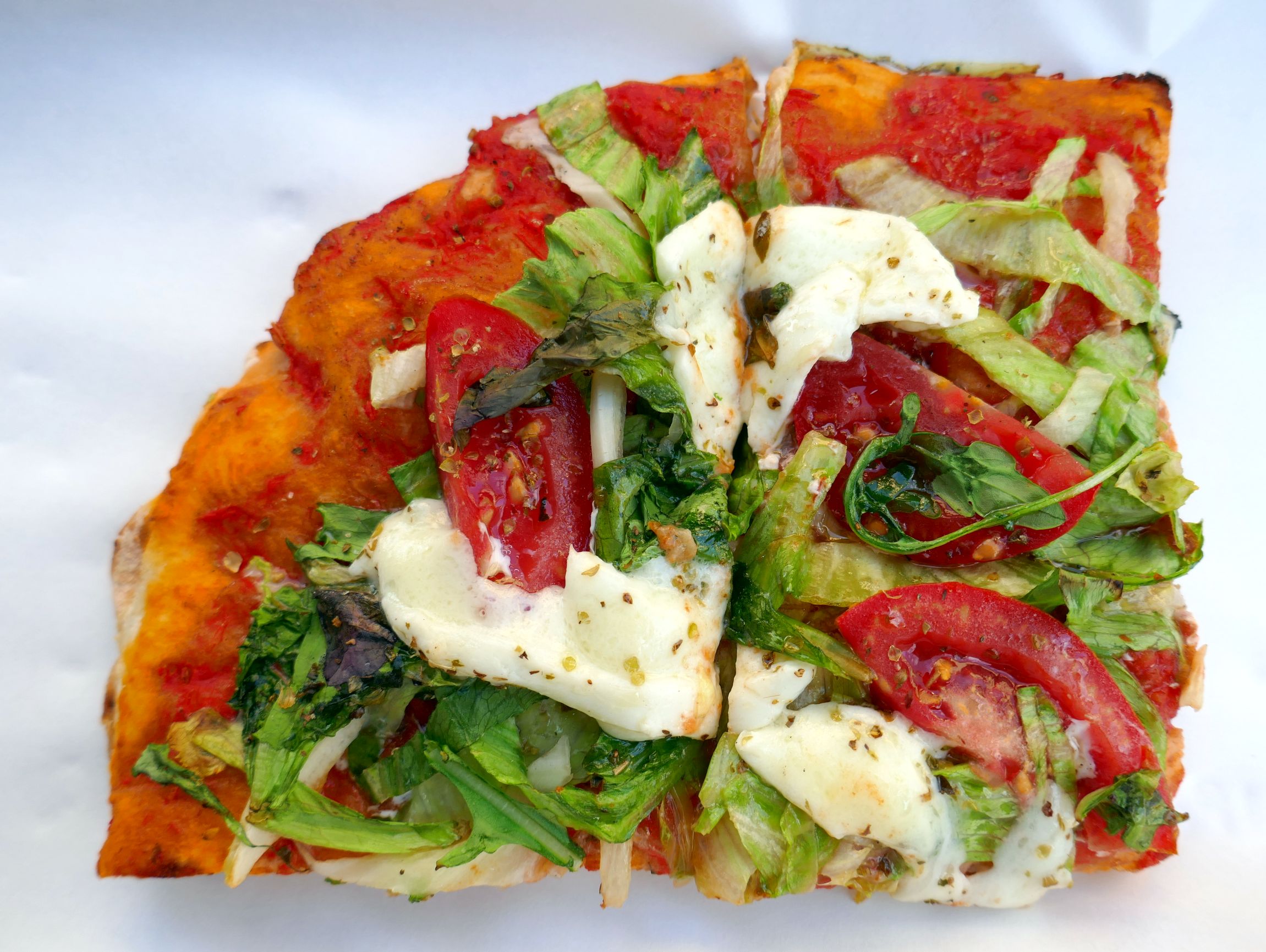
Few vegetables can be grown in northern Italy due to the climate, so tomato-based sauce is not used on pasta. Instead, they use butter, and lots of it!
Next up: SWITZERLAND & NORTHERN ITALY #21: VENETIAN VILLA CONDULMER
Our group hopped on a local train to Bolzano, the capital of the South Tyrol province of Italy, in the far north of the country. The tourist bureau had issued a free transportation card to each of us, so the round-trip ride was free, as was the bus from the train station to the Museum of Archaeology to visit Otzi the Iceman. Nice!
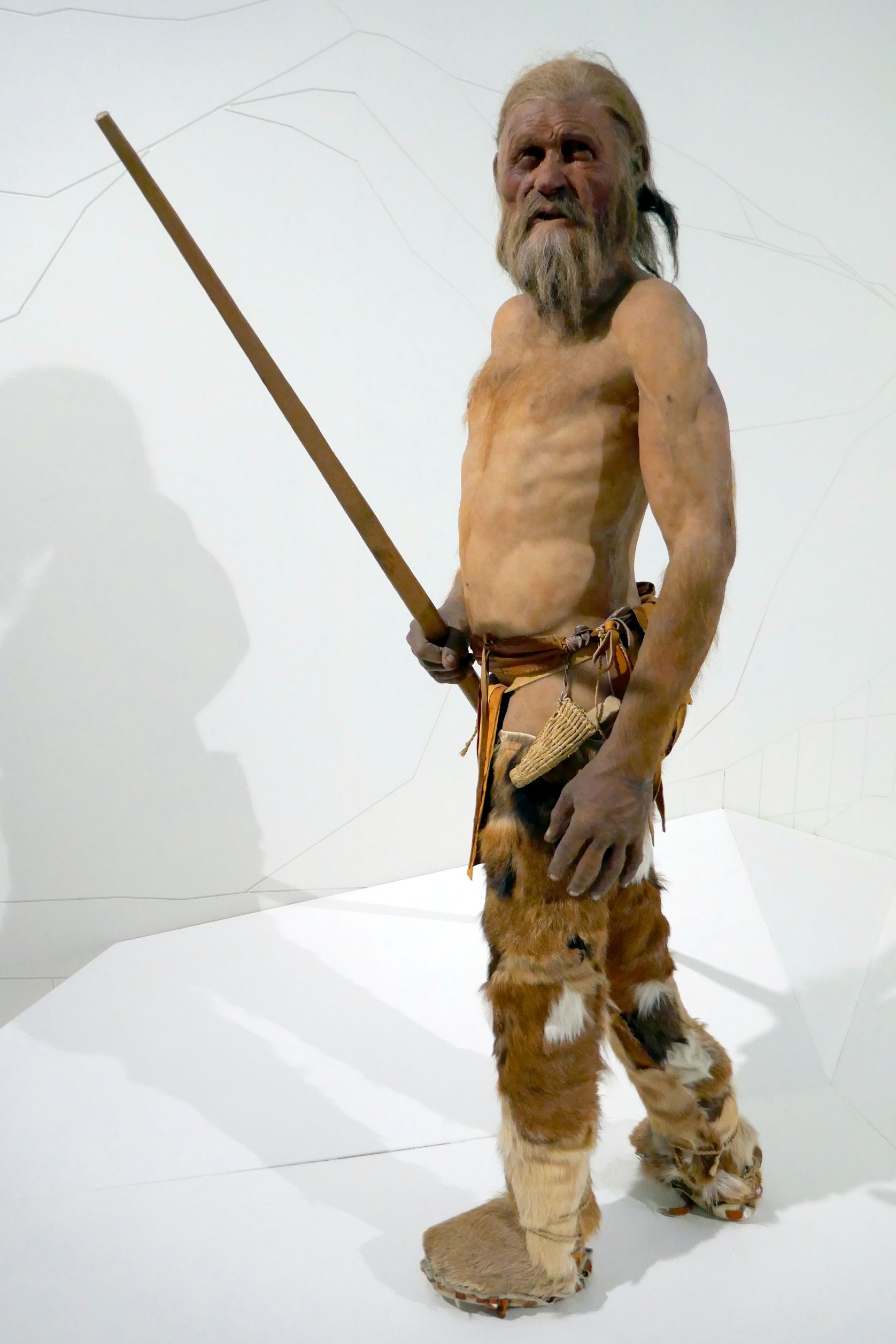
Otzi wasn’t much of a looker; he wasn’t tall, dark or handsome. No, the bloke was actually a well-preserved 5,300-year-old mummy that was discovered in this region in 1991 by two climbers who saw a hand sticking out of the snow. This is what he would have looked like back in his day:
(For all photos, click on the image for a full screen view.)
Otzi was analyzed and determined to be the oldest human discovered in Europe. For many years, researchers were unable to determine Otzi’s cause of death, but when he was discovered, damaged equipment near him indicated mortal combat had taken place. Ooooh, the plot thickens…
The mystery was solved in 2001 when a more detailed x-ray examination revealed an arrowhead in Otzi’s left shoulder. He was murdered! Poor Otzi; may he rest in peace.
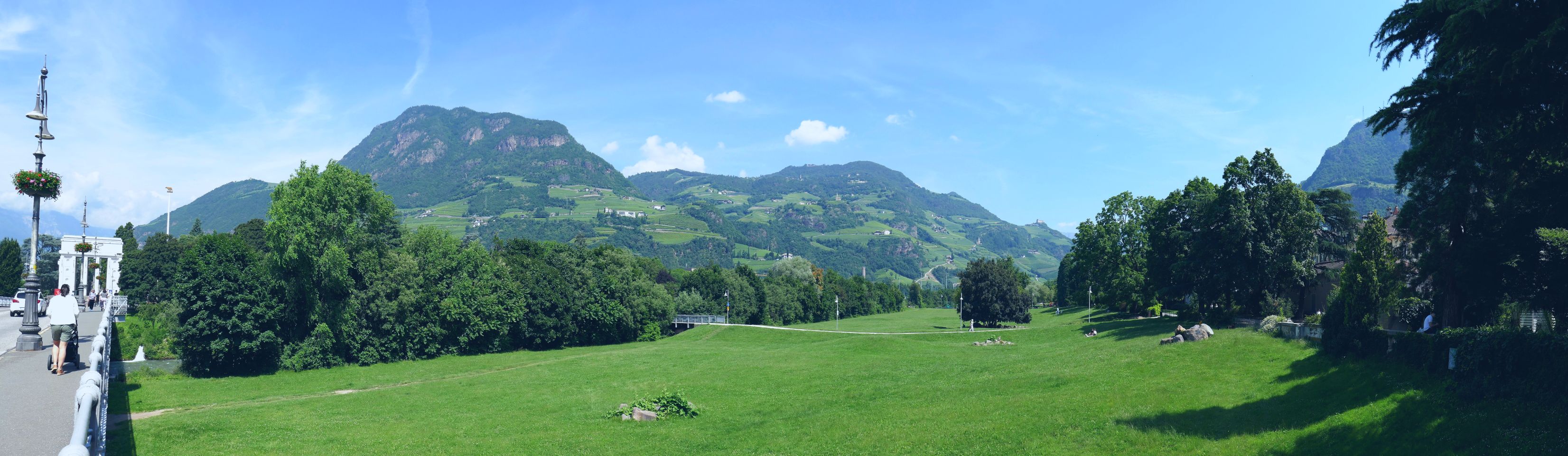
Some Scenes around Bolzano:
While visiting Bolzano, in addition to a walking tour, we met with two locals—one German, and one Italian, to learn about the history and culture identity of this area. South Tyrol had been an Austrian territory for centuries, but as I had explained in my last post, Mussolini had done his best to destroy what used to be a rich German history, language, and culture. Germans were treated badly and forced to abandon their homes and possessions if they refused to give up their language and culture. They were also thrown in prison. In 1939, Germans in the region were given a choice: Go to Germany and live under Hitler or stay and give up their German culture. What a horrid choice! Towns and families became split. For the 70,000 people who went to Germany, they got good jobs, but for those who had owned land in South Tyrol, they were unable to sell it so they could leave. Between 1939-1944, Germans who stayed ended up fighting against Hitler and, in many cases, their own families and friends who had left. Hitler invaded Bolzano and Jews were immediately sent to concentration camps.
Following World War II, Germans had difficulty returning, because there was a lack of jobs or support from the government. As a result, they formed the Unity Party to fight for their rights. They were very poor and didn’t get along with the Italians, but they ultimately won their fight for equal rights and got their German names back.
In 1972, statutes were passed to become an autonomous region. 90% of tax money collected is kept in the region, and Tyrol is now the second richest region in the country.
Today, there are three official languages protected by law in the region—German, spoken by 70% of the people, Italian, and Ladin, the oldest language of the three that is spoken by only 5% of the region’s population.
Thanks to some German and Italian ice skaters from the area that were top in the world at the time, they helped to bridge the cultures and bolstered national pride. As a result, the Germans and Italians get along much better now.
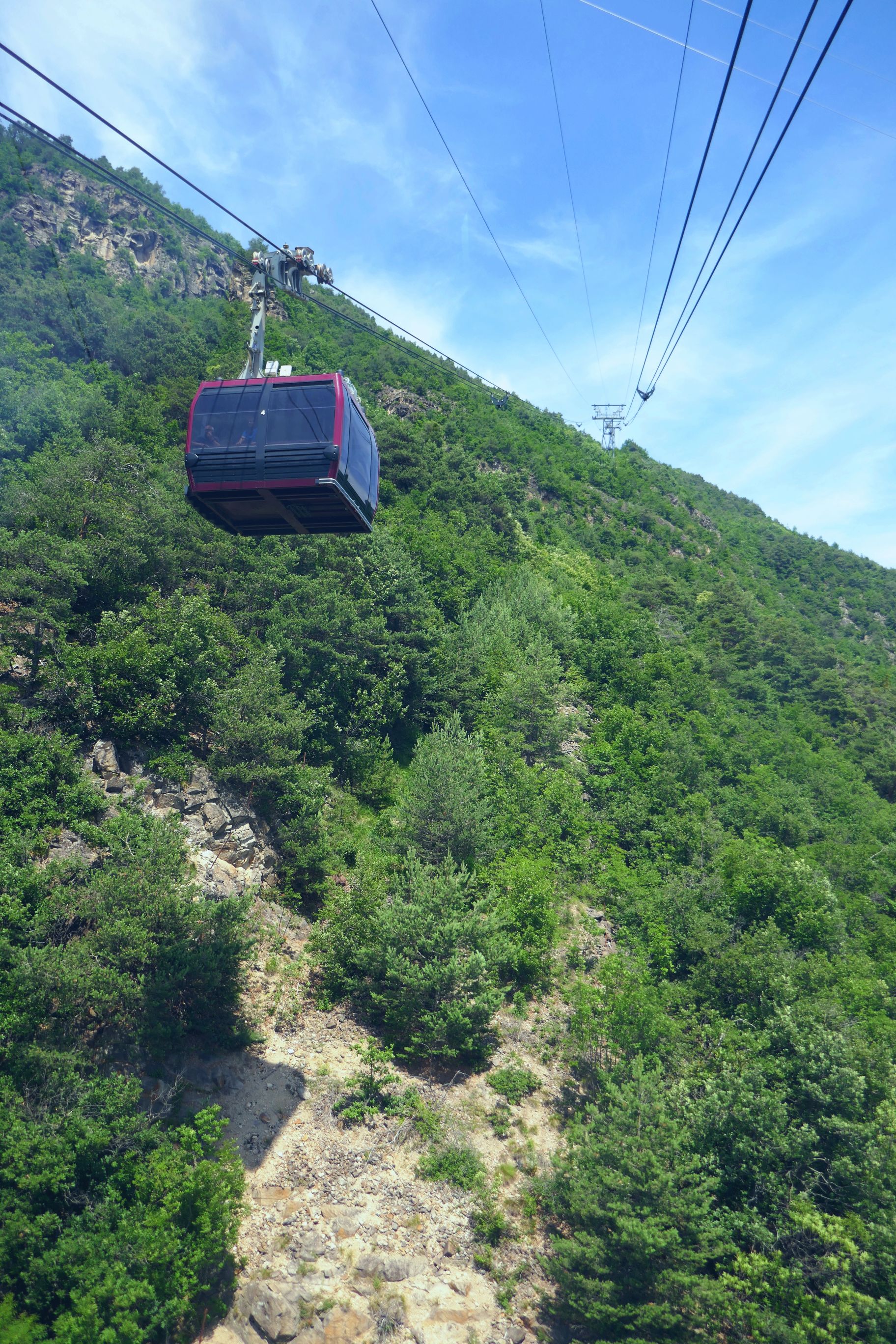
Following what turned out to be a riveting discussion and question/ answer session that went much more in depth about the cultural differences between the Germans and Italians in the region, we headed back to the train station. Most of the group returned to Trento to take an optional tour. Bruce and I opted to take the Renon Cable Car (also free with our card) to Oberbozen/ Soprabolzano and thoroughly enjoyed the views!
Our travels to Bressanone (aka Brixen) took us through the Val di Funes, a valley in northeast Italy with rolling hills dotted with farms and surrounded by steep alpine peaks. We stopped for a hike along Santa Magdalena, a scenic trail that passed by family farms, a tiny church, and offered incredible views of the Italian Dolomites when the clouds cleared. Following our hike and lunch at Fines Hotel & Restaurant, we were fortunate to catch some nice views of the jagged, spiked dolomite mountains.
Dolomite is a carbonate rock, and the Italian Dolomites are comprised of 32 clusters of dolomite peaks that look like limestone spikes. The large concentration of this type of rock is only found in Italy and is a UNESCO Heritage Site.
(For all photos, click on the image for a full screen view.)
What a thoughtful farmer, devising a back scratcher for his cows!
This is Gabriel Messner, hike leader and owner of the Fines Hotel & Restaurant where we had lunch. Look for him (hopefully!) in the next winter Olympics as a skier for Team Italy. As a national team member, he has hopes to make the cut!
The view of the Dolomites got better…
…and better. But they will get even better in my upcoming post!
This region of Italy is close to Austria, so the languages spoken are both German and Italian. The cuisine, as we discovered at lunch, had a German influence—much different than what you would find in the south of Italy.
We continued on to Bressanone, which used to be called “Brixen,” a German name, until Mussolini, the horrible dictator, came in and changed all of the German names of towns and streets to Italian names and forced the residents to do the same. The fascist didn’t stop there; he banned the German language and it wasn’t allowed to be taught in the schools. Austrian history was forbidden from being taught as well. Mussolini tried to wipe out that entire culture. Thankfully, it was all ultimately reversed. Signs in the area are in both German and Italian, and German is one of the official languages.
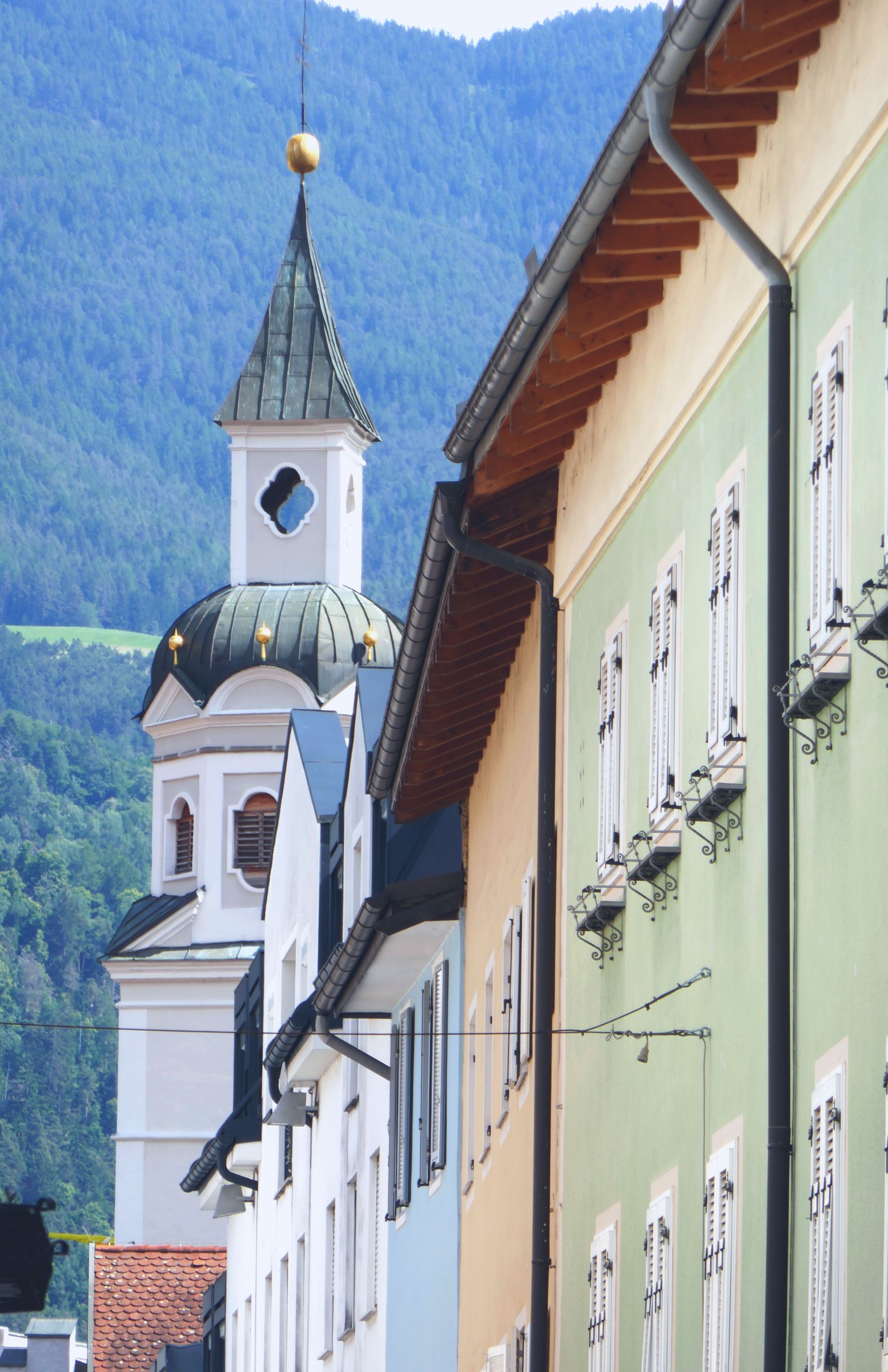
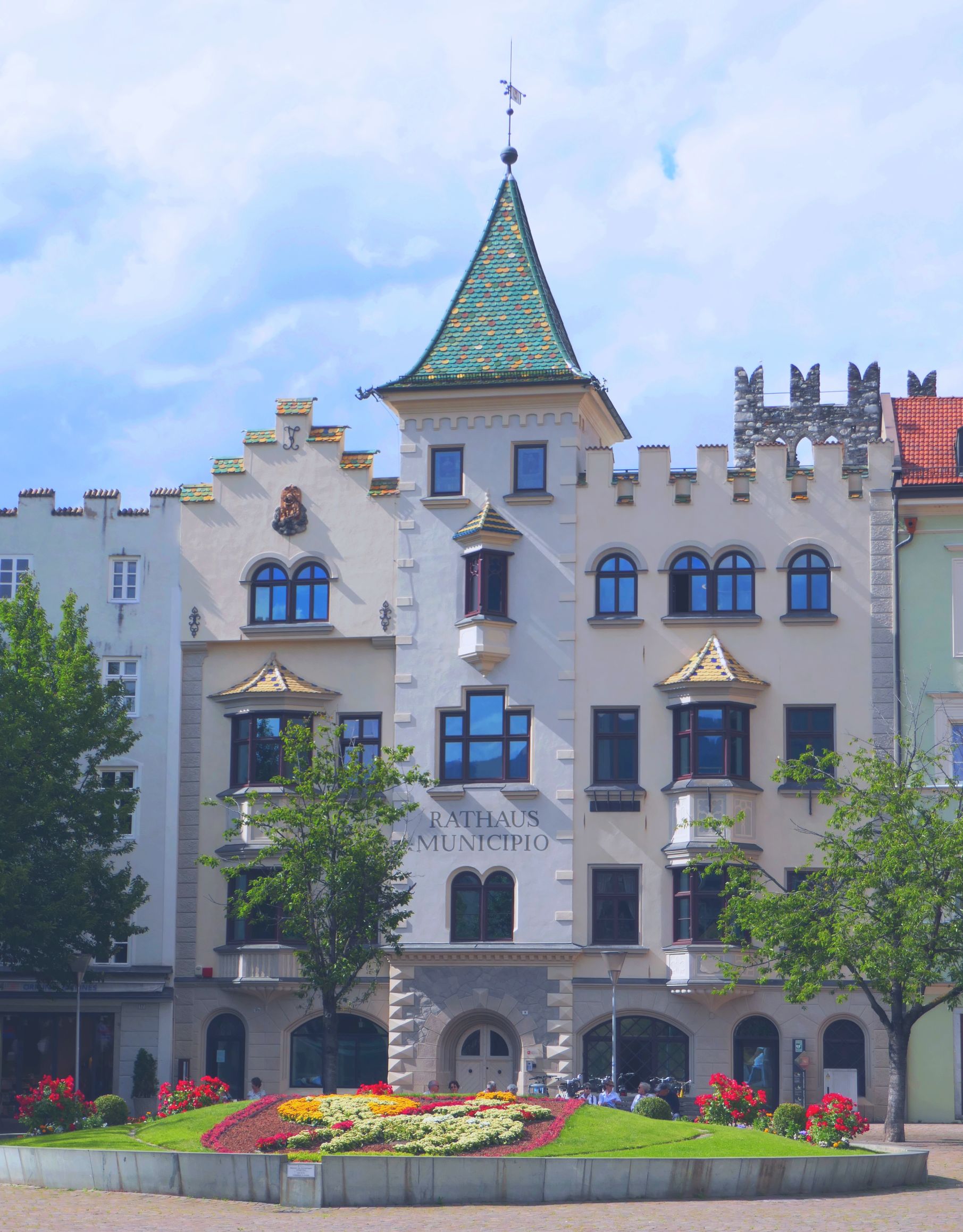
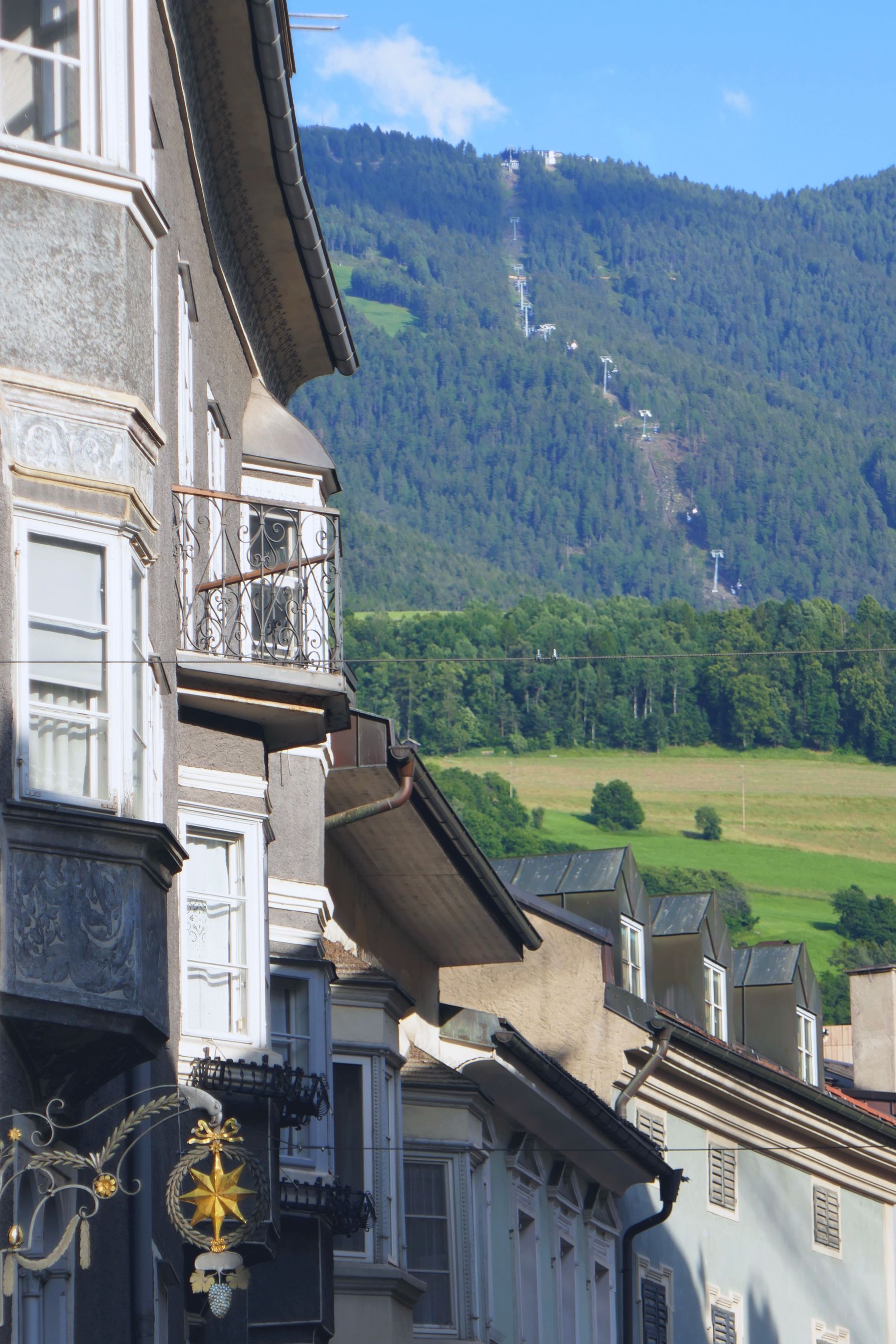
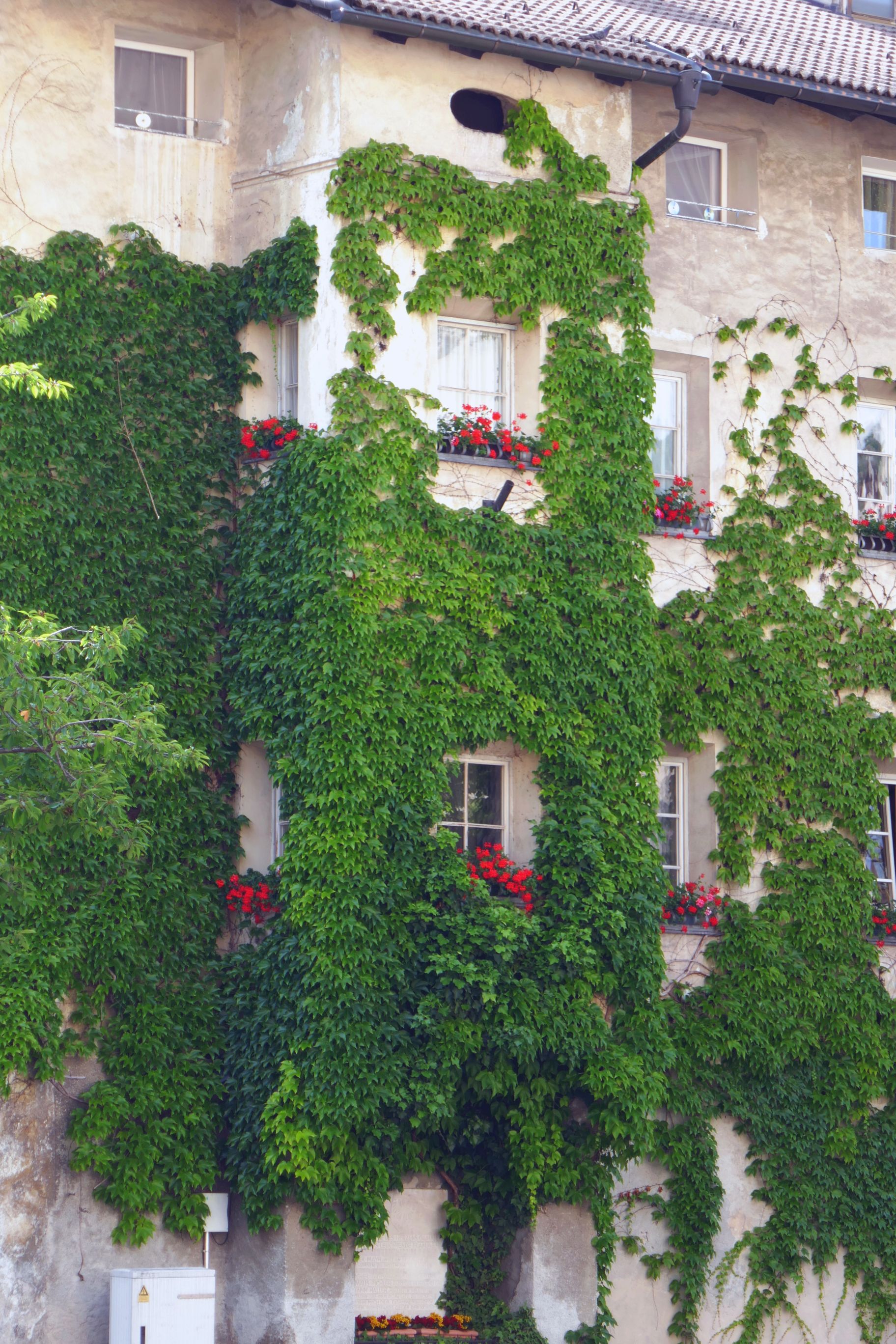
Bressanone / Brixen is a medieval town of about 23,000 people founded in 901 and located in the autonomous Trentino-Alto Adige region. We found it to be quite charming and enjoyable to explore during the afternoon and evening.
Hotel Krone, our hotel in Bressanone, was established in 1717!
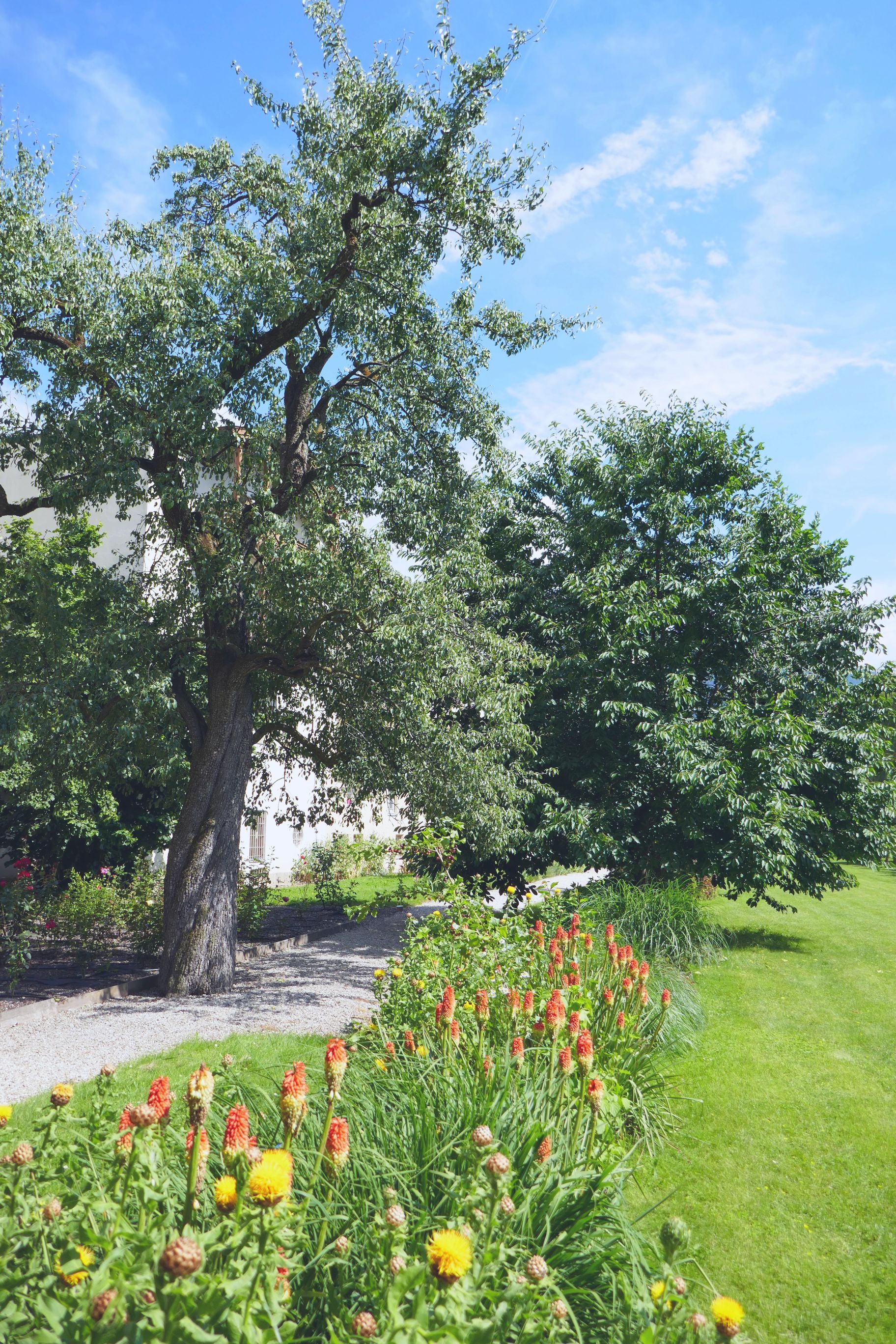
A beautiful garden and walking path down the street from our hotel.
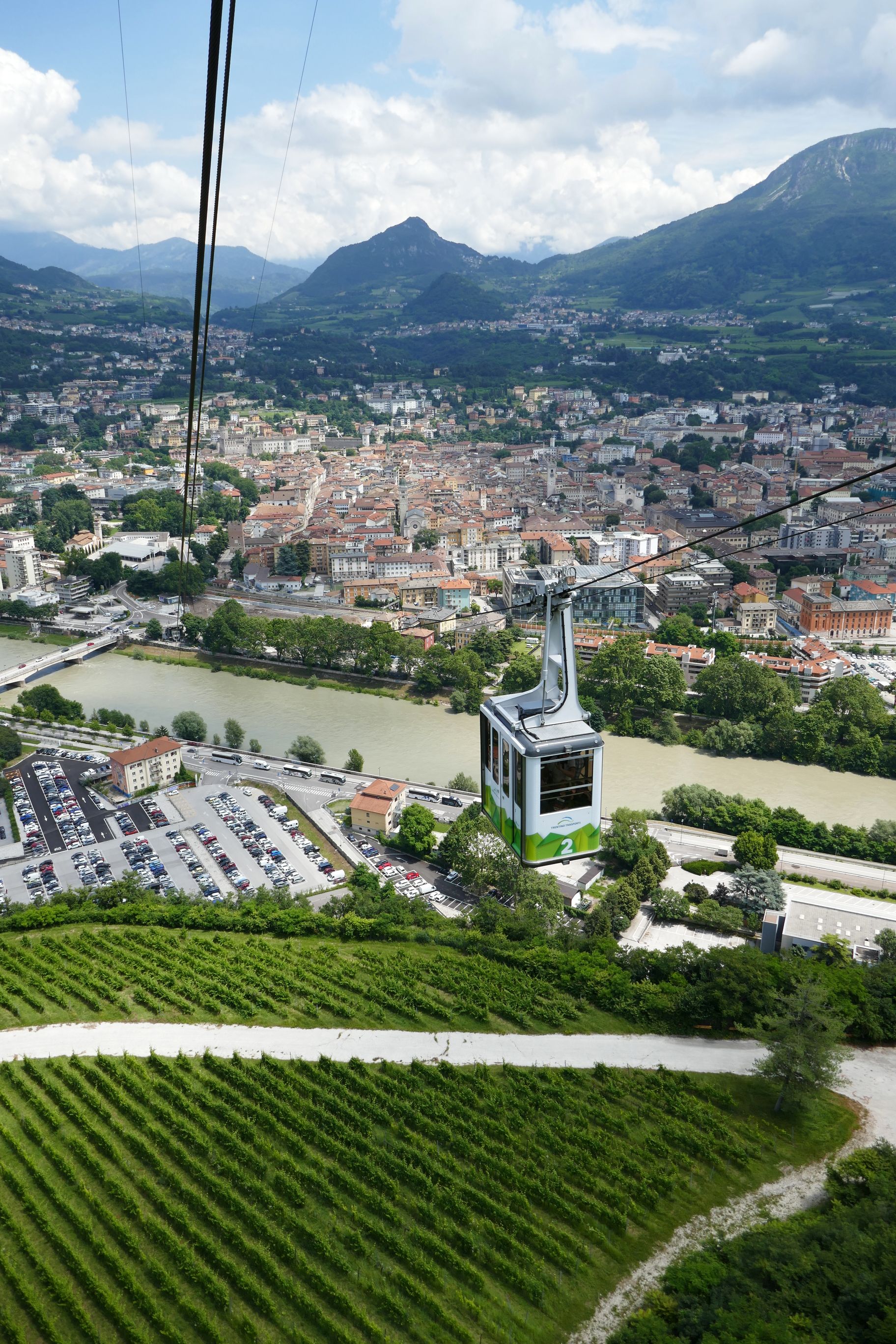
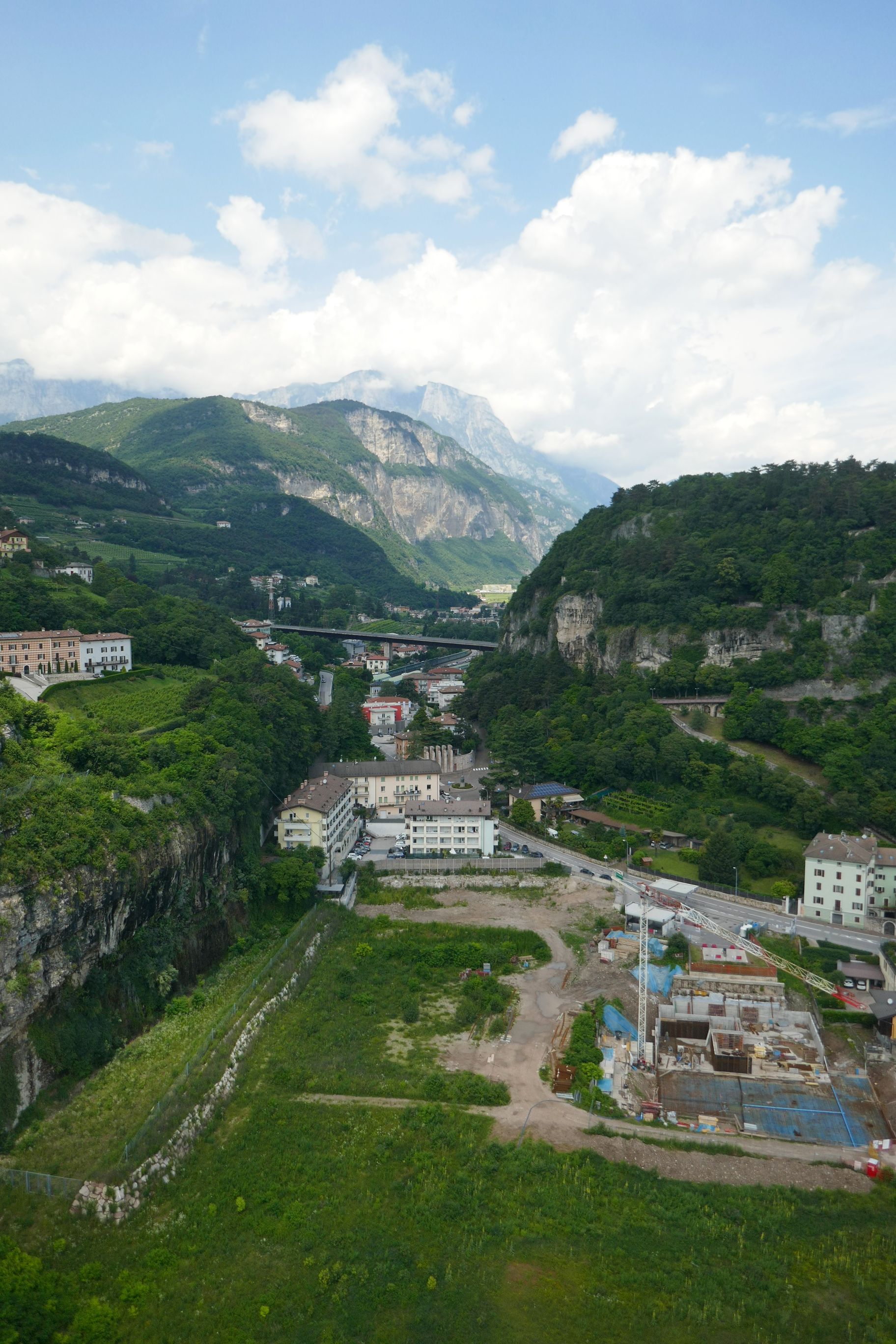
The day began with a group walking tour of Trento, and then we had a free afternoon to enjoy by ourselves. We had opted against taking the optional cooking class—a good decision given our lack of desire and spending $270 (for two) on something we had little interest in doing. Instead, we explored more of the city, including taking a cable car up to the mountaintop for a panorama view.
For this post, I will take you on a photo tour of the sites we enjoyed throughout our tour and let the photos and captions tell the story.
(For all photos, click on the image for a full screen view.)
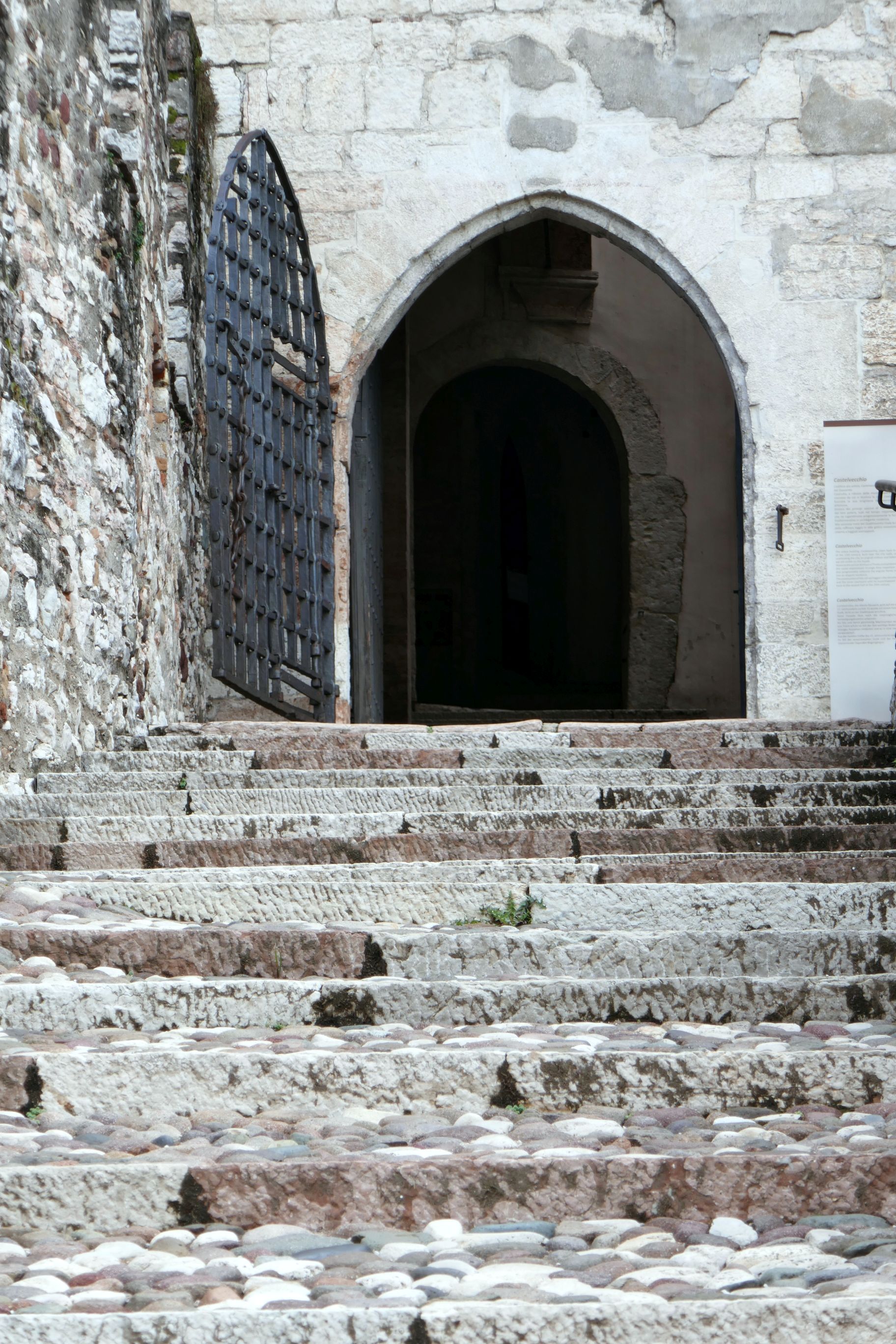
He seemed to be amused watching our group outside of the castle!
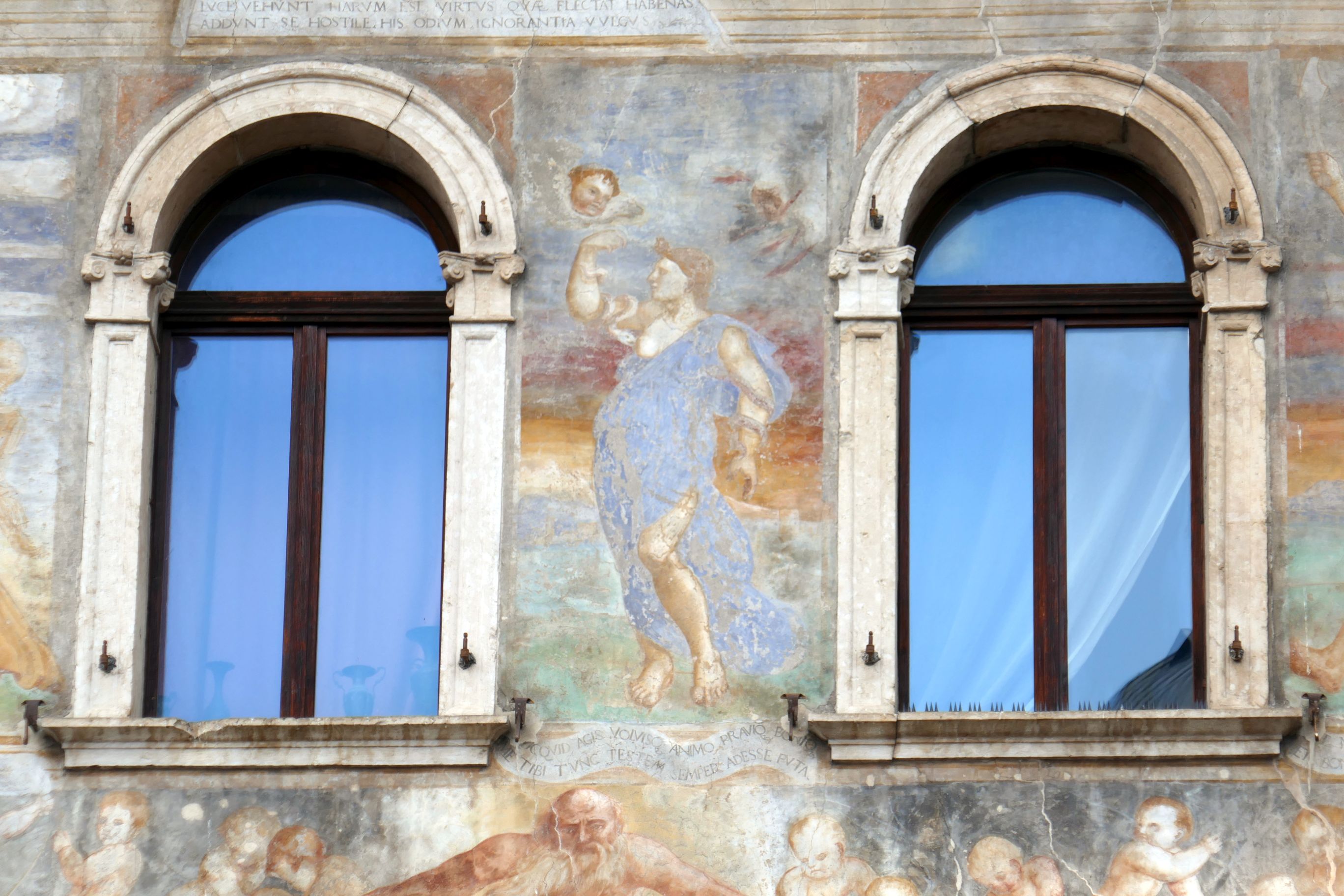
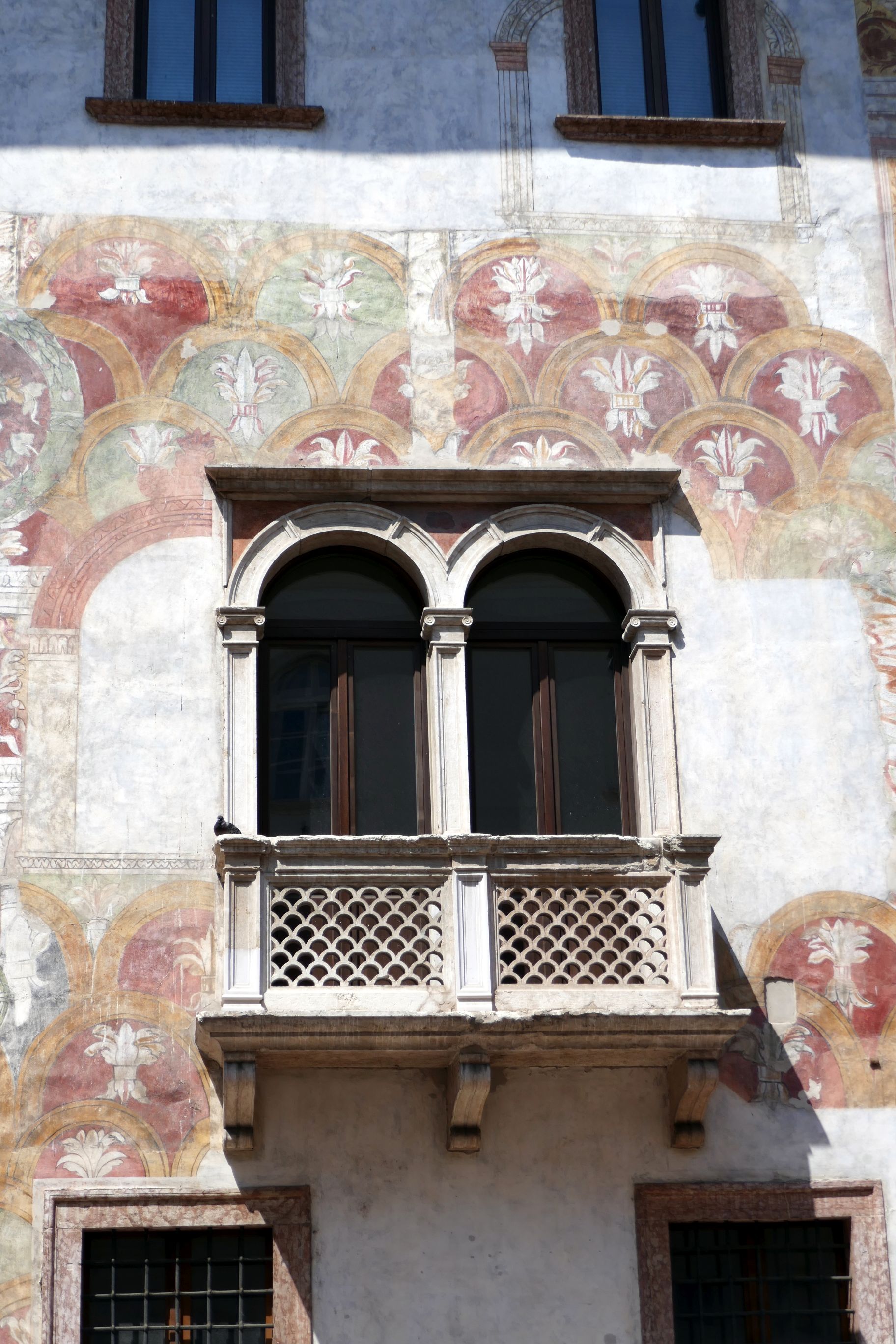
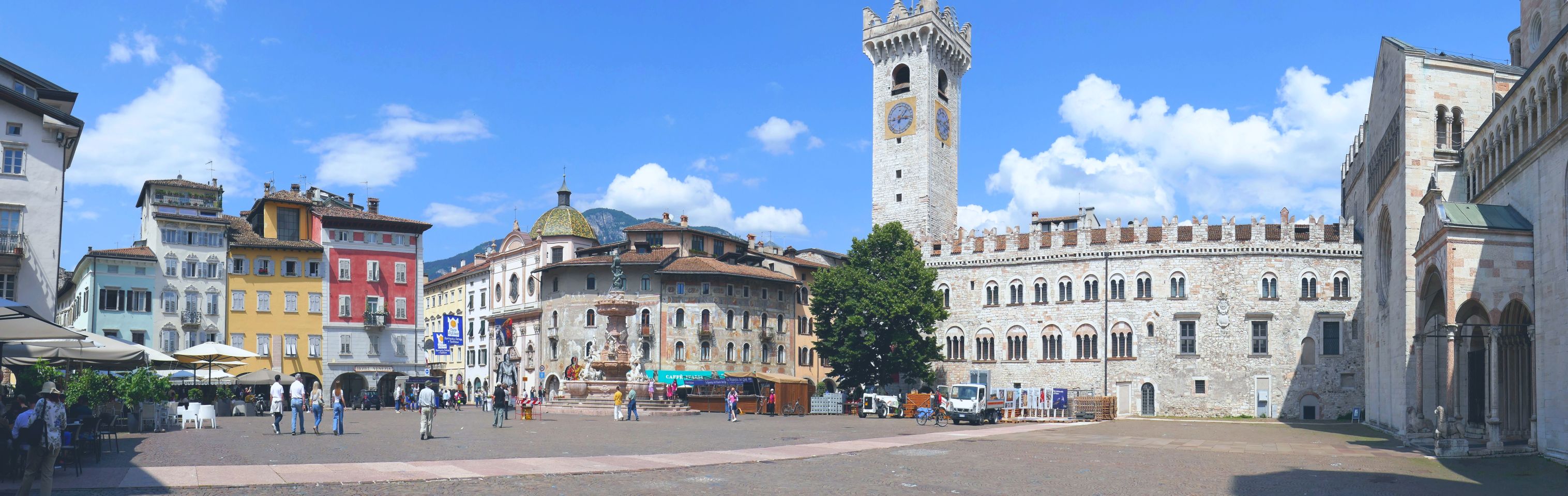
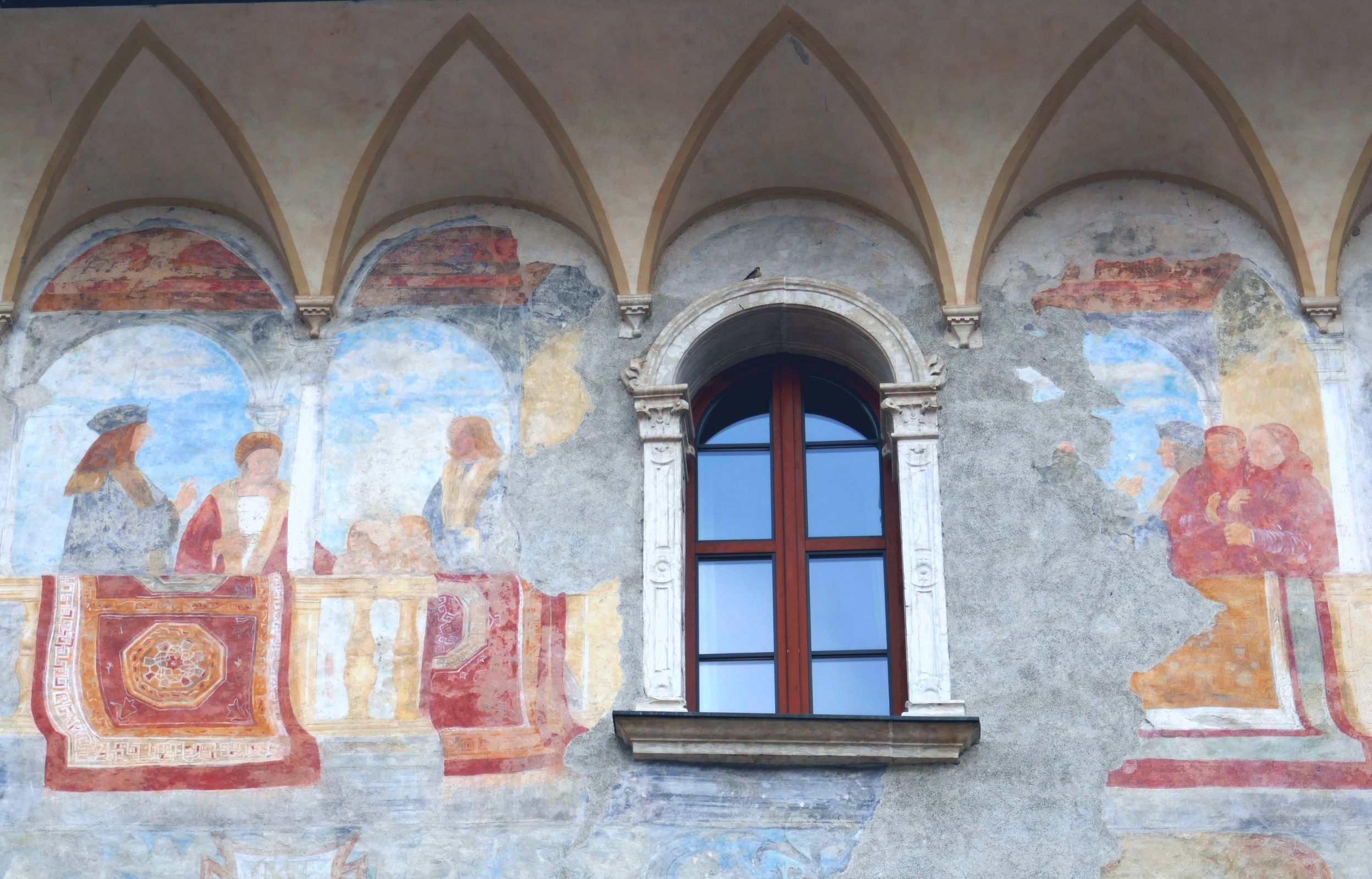
We had visited (and photographed) the piazza the previous day, but I couldn’t get enough of these gorgeous frescoes! As the light changed, I kept going back, as you will see later in the afternoon…
We had a free pass to ride the Trento cable car, and we thoroughly enjoyed the views!
While Bruce rested his knee (torn meniscus), I poked around the streets of Sardagna and watched a car race winding through the streets off in the distance.
Back in town, the sky was clearing more and more, so we enjoyed wandering the streets.Back in the piazza again! Click on the photo for a panorama view!
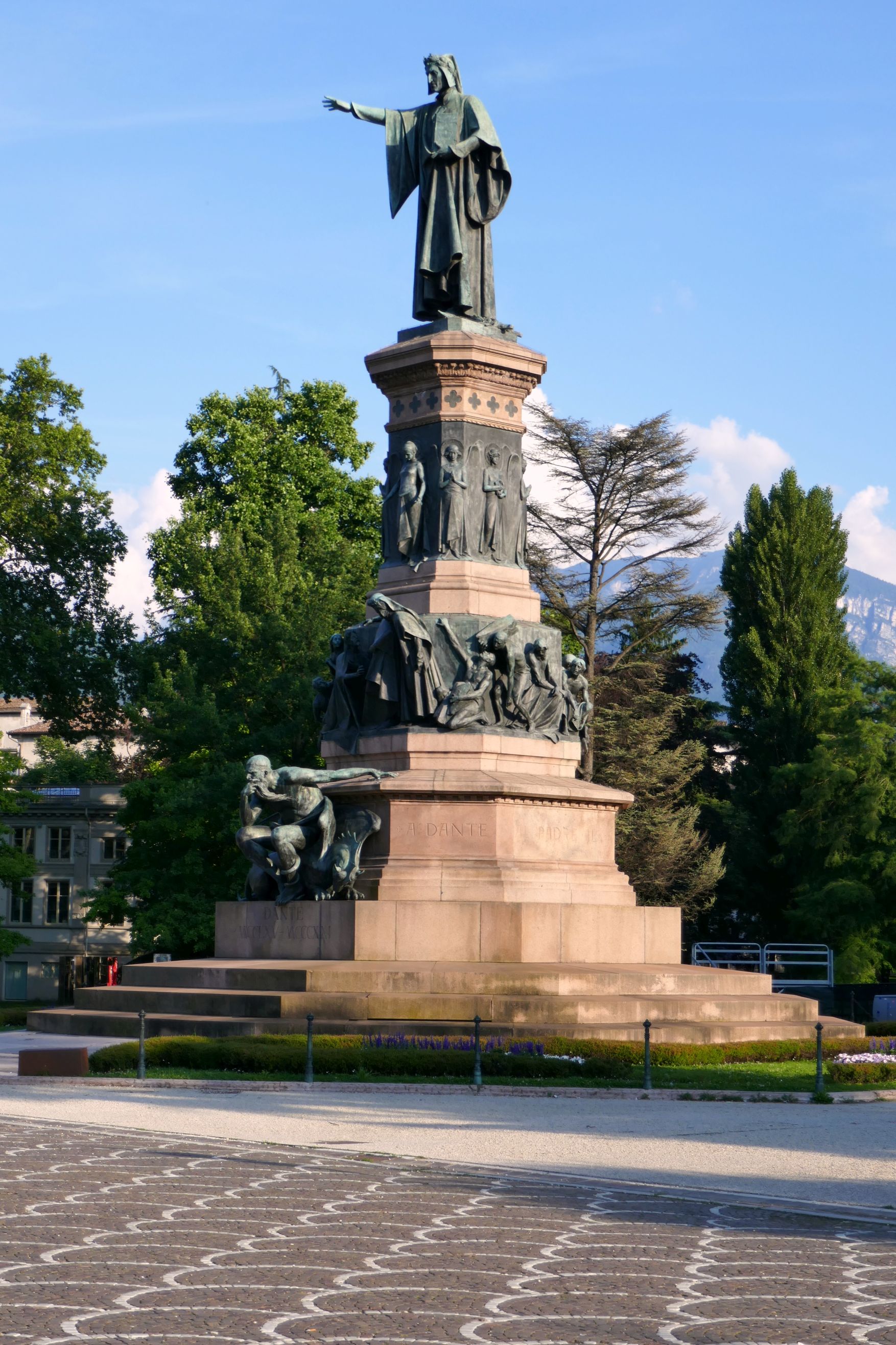
Piazza Dante, across from our hotel
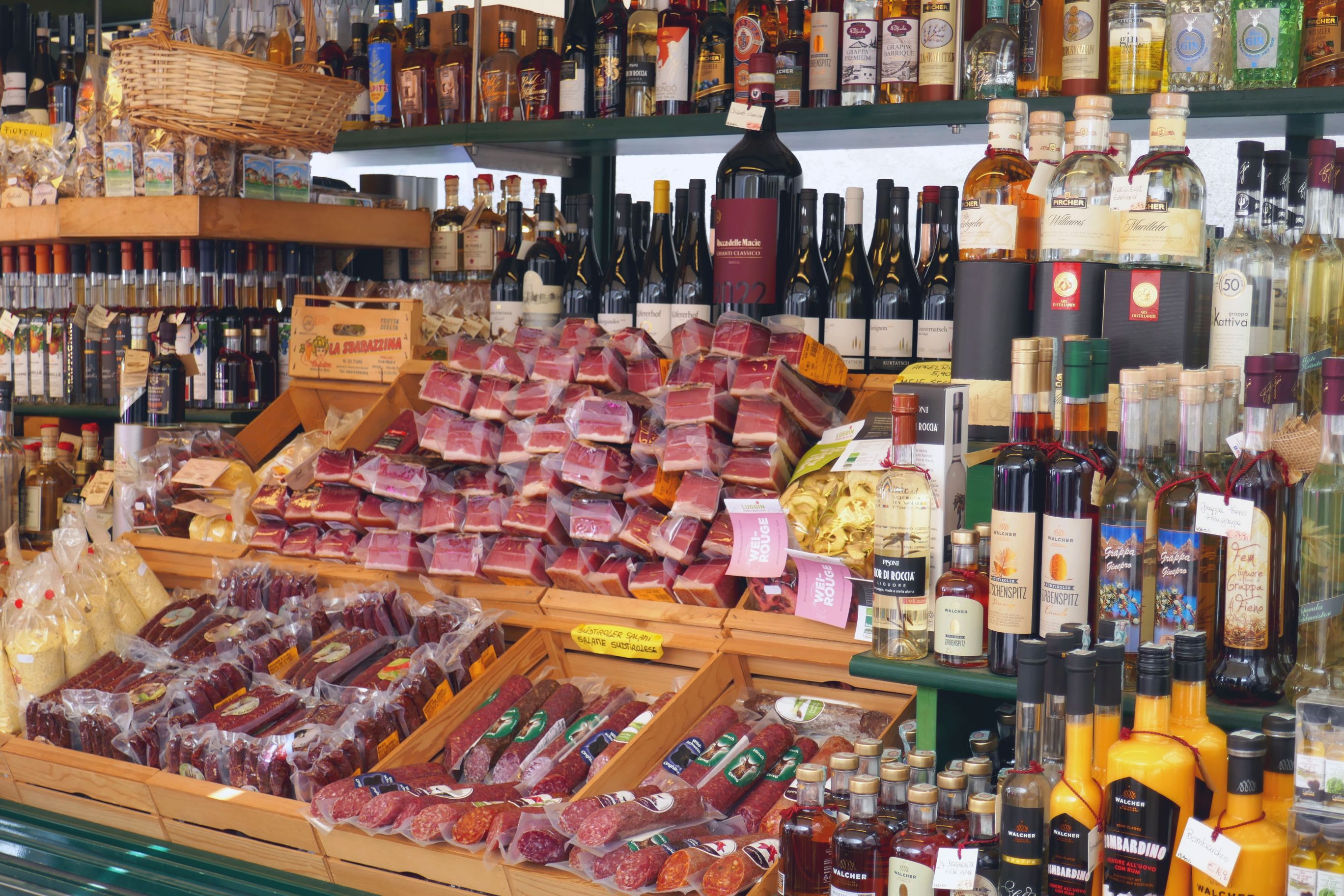
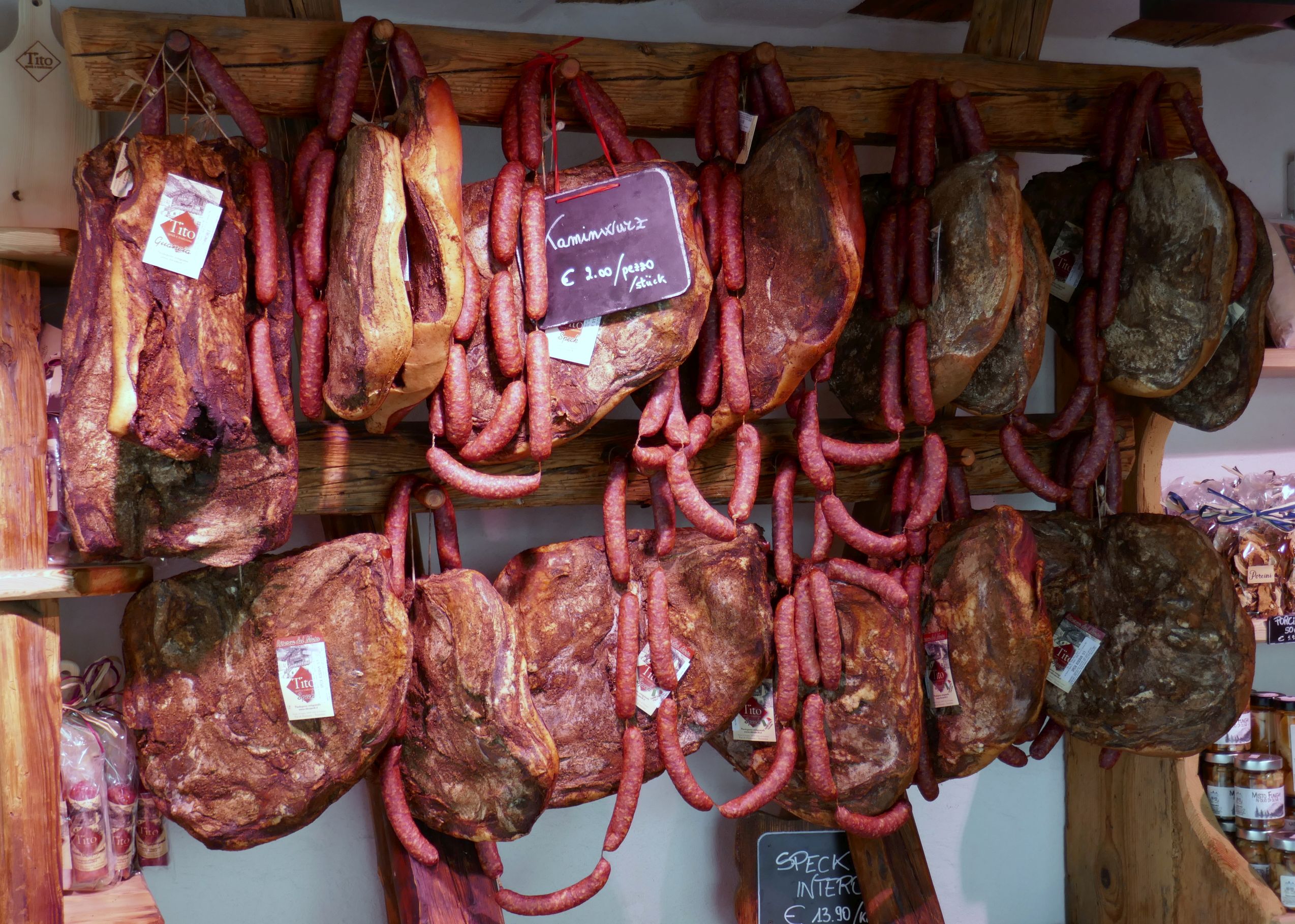
The specialty at this shop was speck, a fatty ham that is 80% fat! It was a hard NO for me, but it was a favorite in the old days– the “energy bar of the middle ages,” according to our morning tour guide!I thought this community closet was a great idea! Leave clothes that you don’t need and pick up something you do. Donated canned and packaged food was available as well.
Next up: SWITZERLAND & NORTHERN ITALY #18: OVERLAND TO BEAUTIFUL BRESSANONE (BRIXEN)
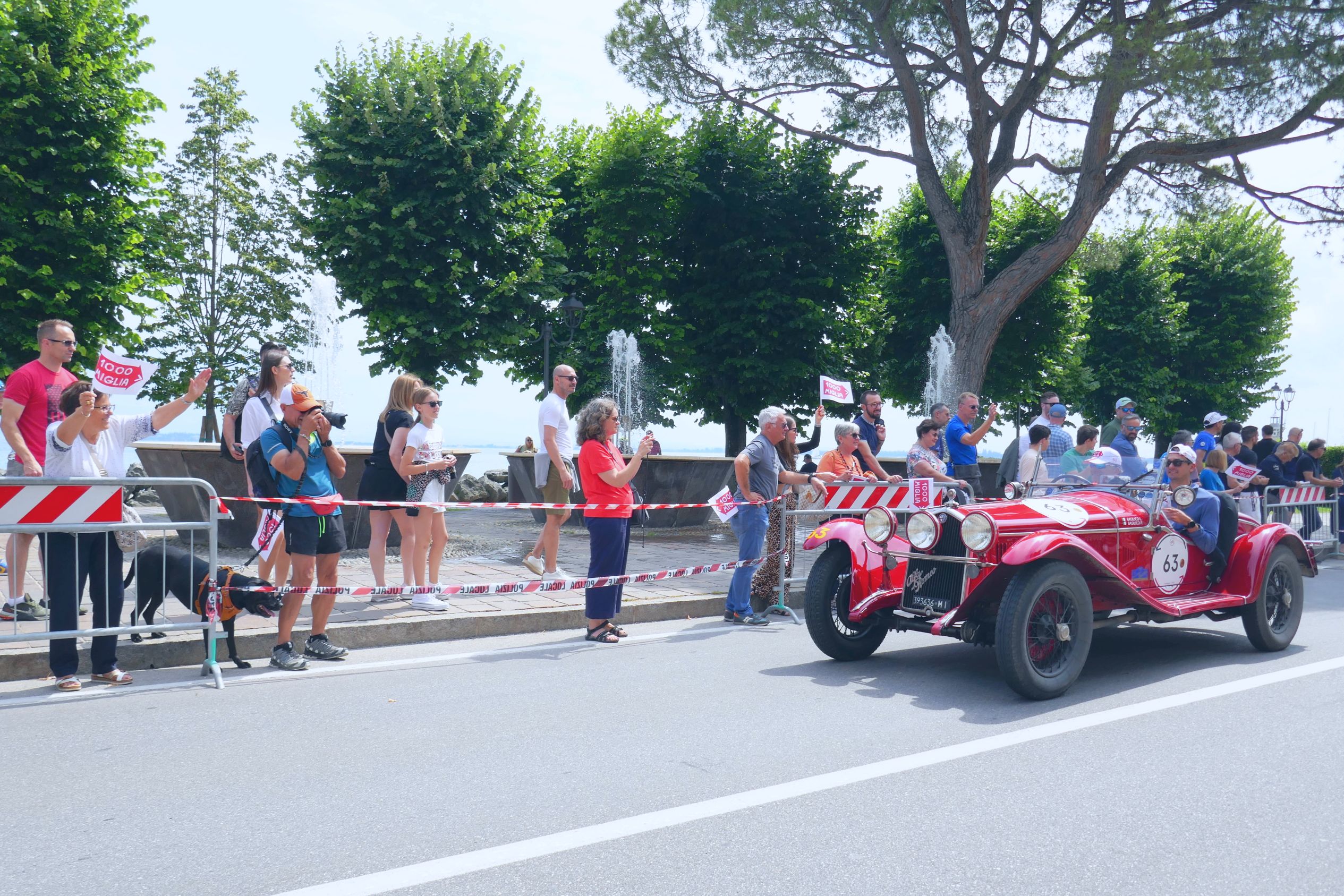
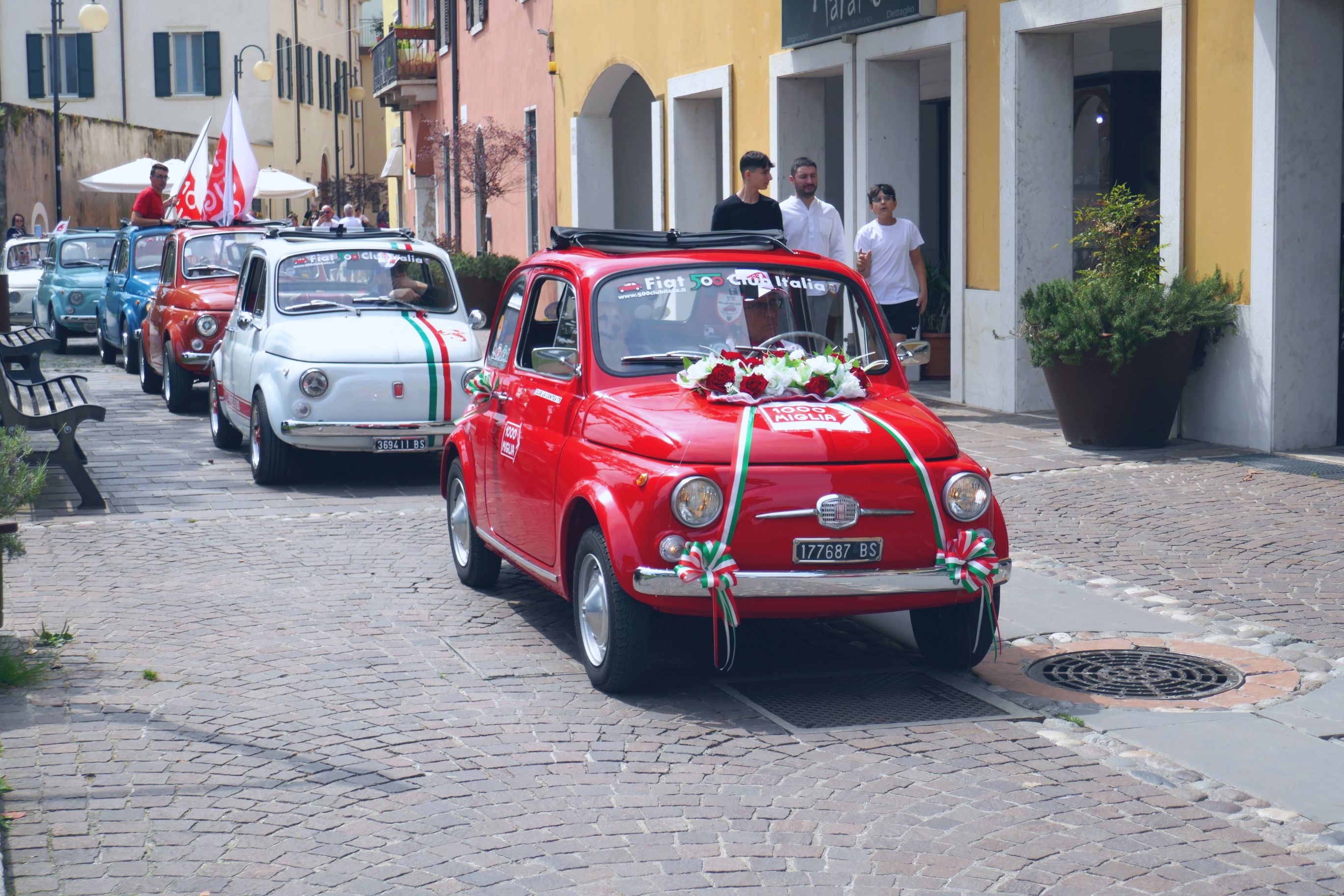
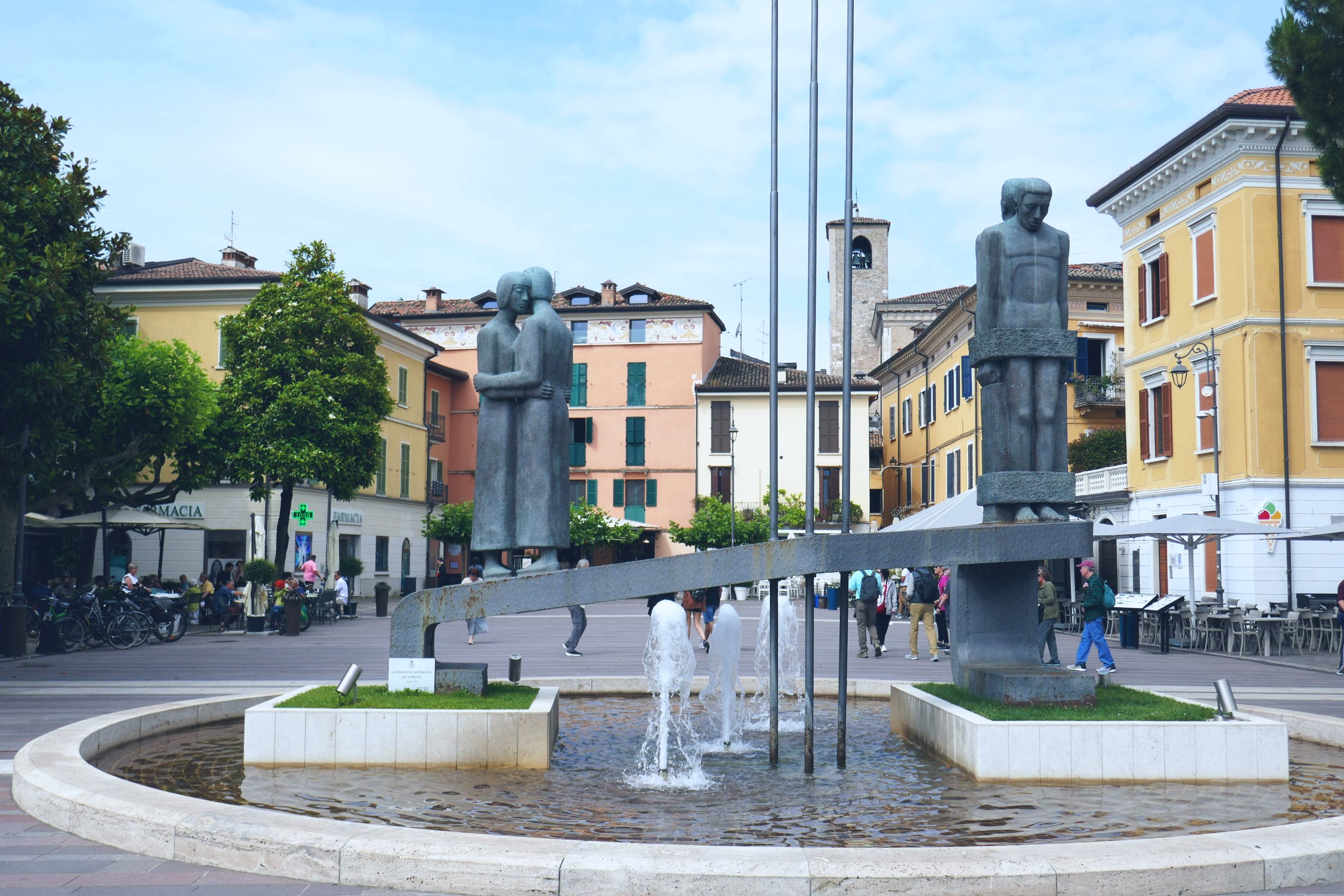
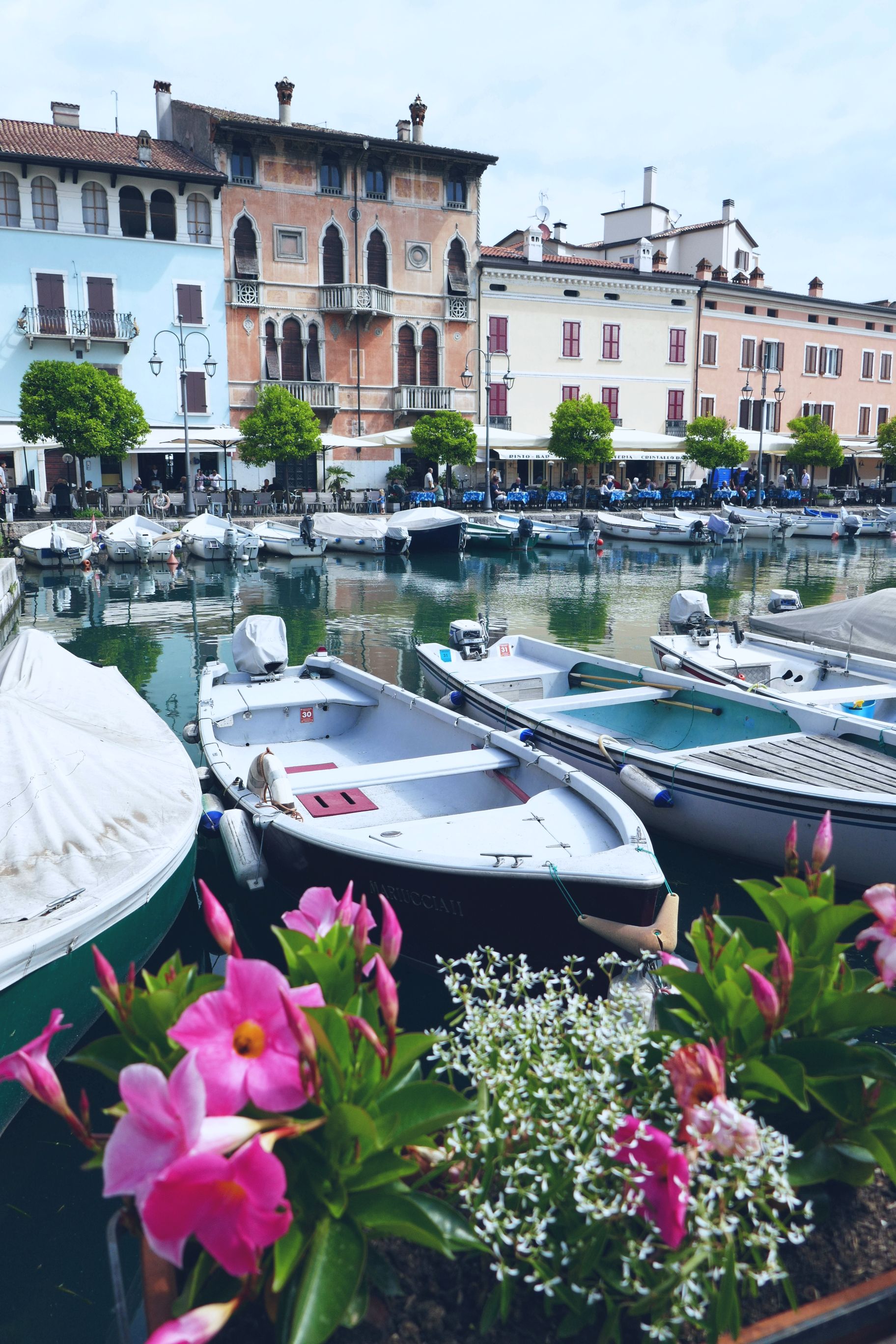
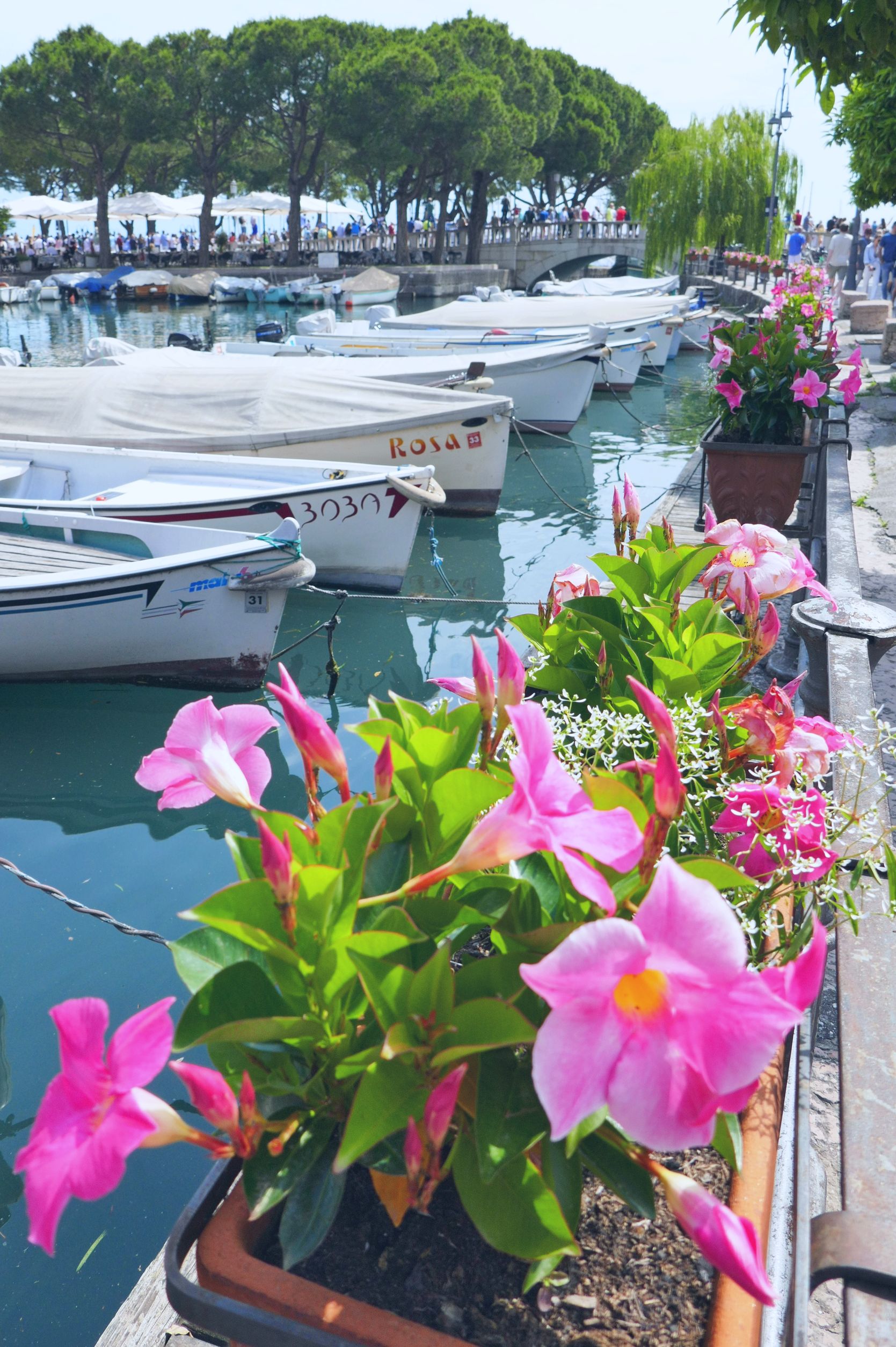
On the way to Trento, we stopped in the beautiful town of Desenzano, situated on the shores of Lake Garda, Italy’s largest lake. Some of the streets were blocked off, which baffled Maria, our travel leader, and our bus driver. Did something horrible happen? It wasn’t until a sports car with a number on the side whizzed by that we realized we had stumbled upon a car race! We all hopped out of the bus and headed to the waterfront to see the action. It was the 2024 1000 Miglia, an annual 1000-mile vintage car race that has taken place in the province of Brescia since 1927. The tour concluded in Desenzano where the drivers got their final stamps at the check-in tent, and then took some final laps to celebrate. Italians are huge car race enthusiasts, so it was fun to watch with the locals, as they cheered for their favorites.
(For all photos, click on the image for a full screen view.)
Maria also managed to corral our group for a walking tour of the town, which we found to be quaint and charming. The race and walking tour were great ways to break up our journey to Trento!
Ricetto Castle
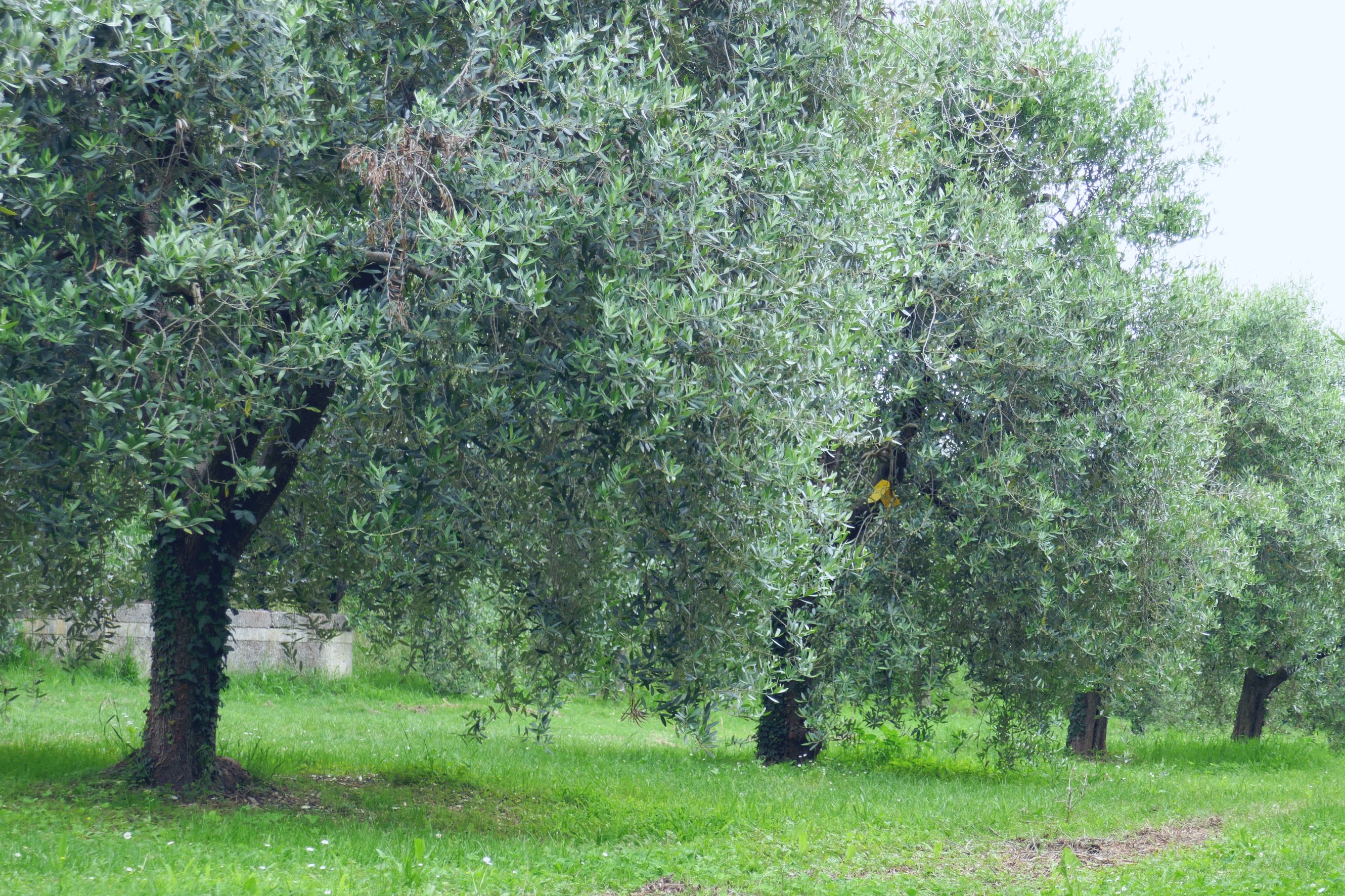
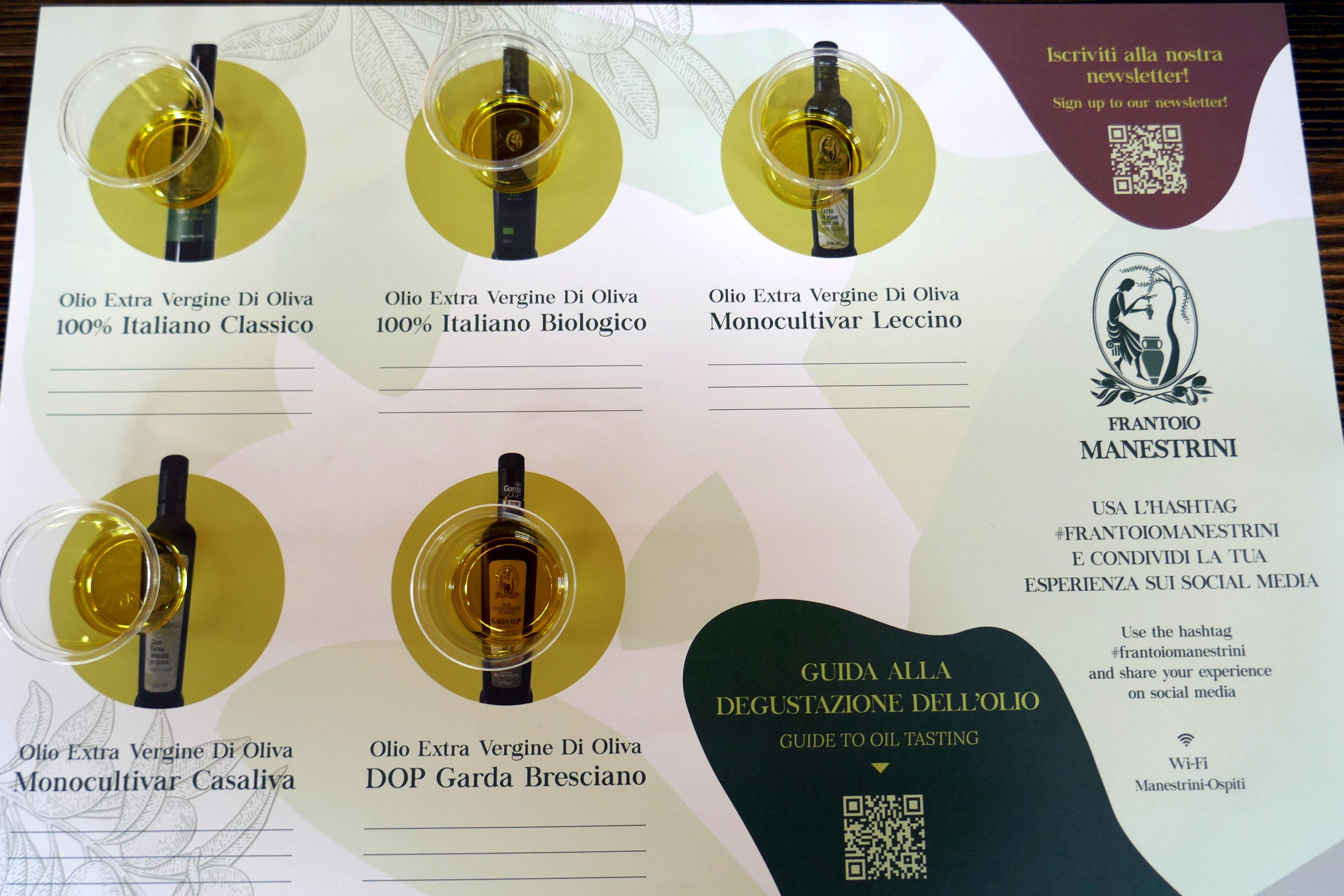
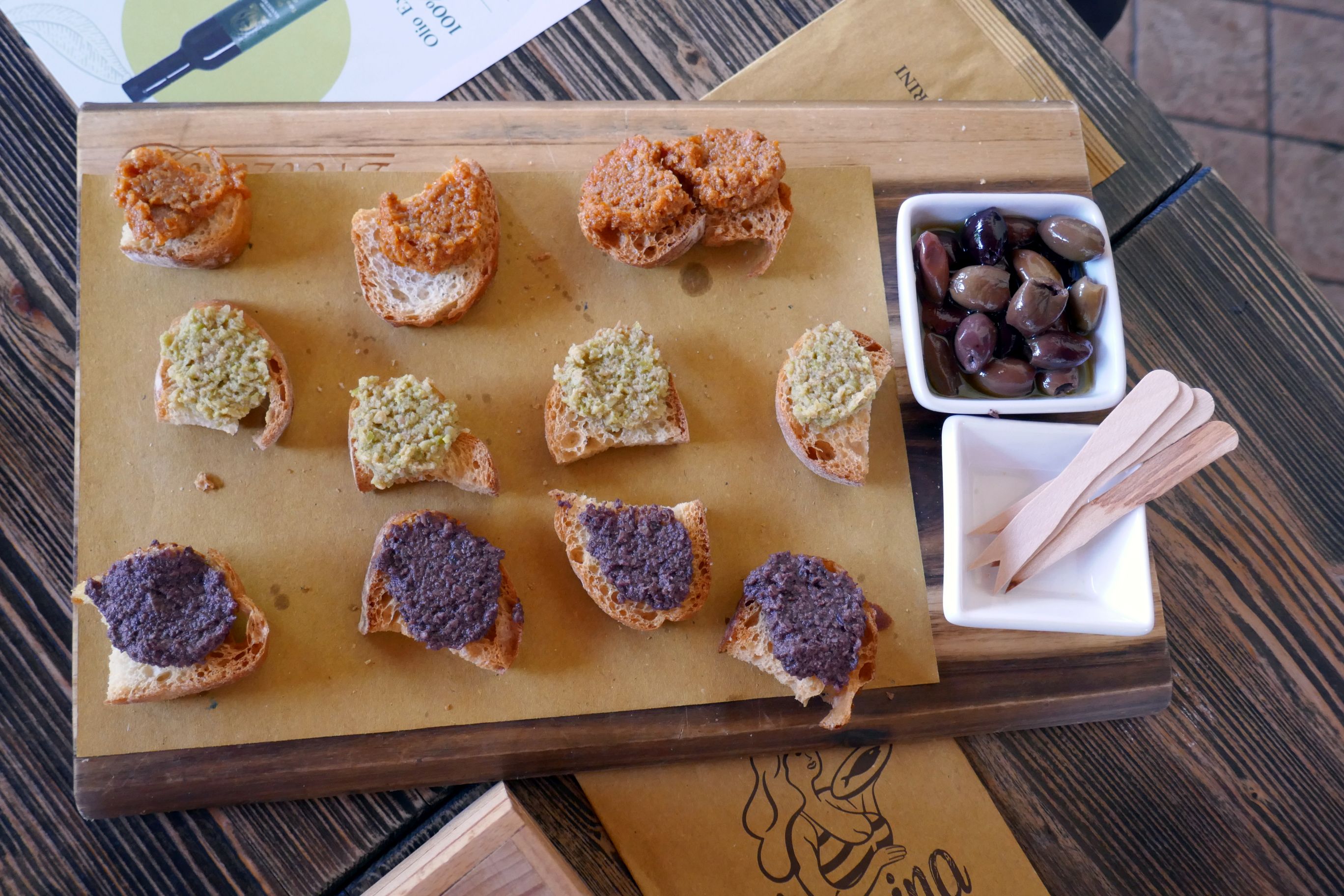
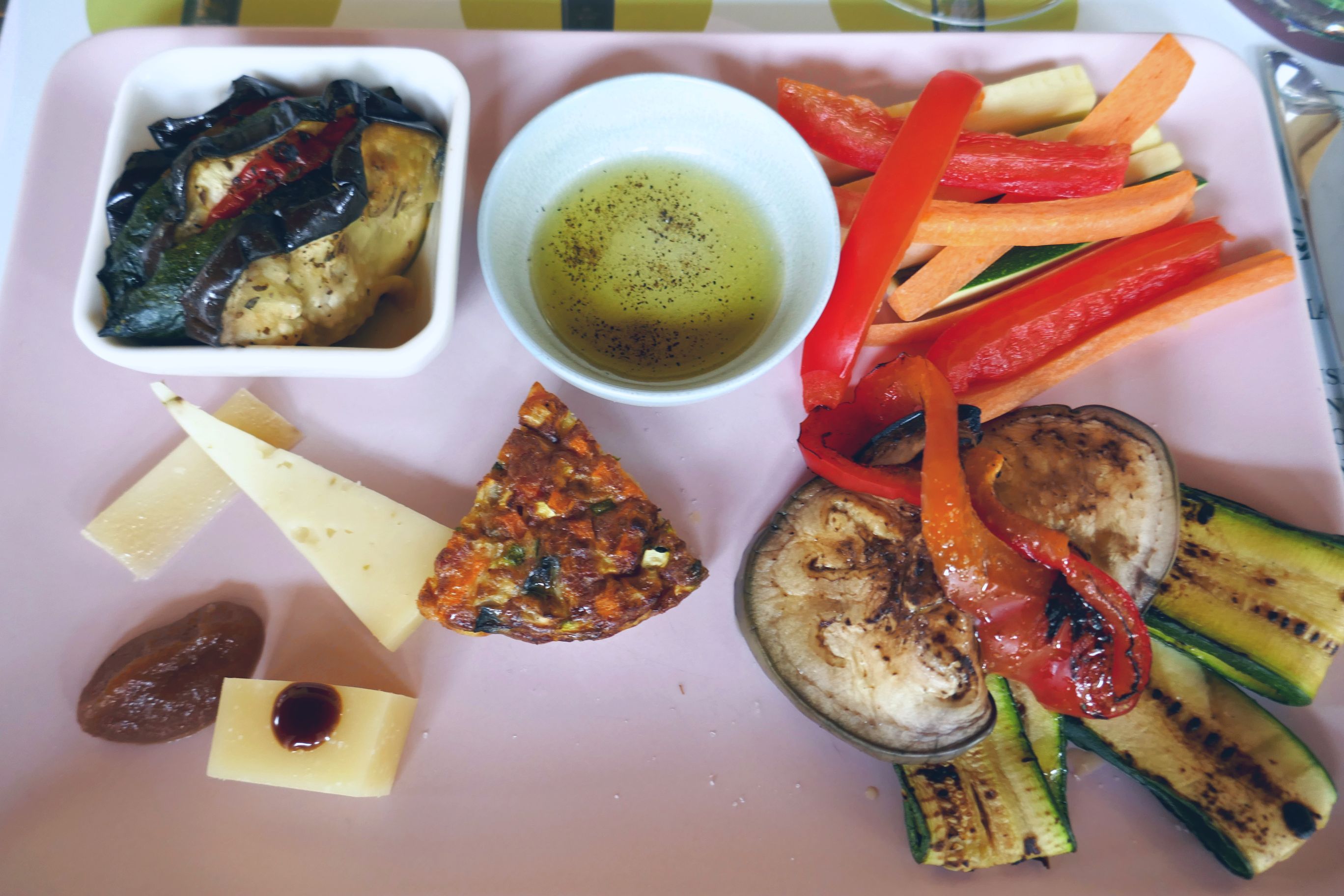
We continued on to visit an olive mill for a tour, olive oil tasting, and al fresco lunch. The mill we visited, Frantoio Manestrini, was a family-operated mill that had received national recognition. The vegetarian option for lunch was a welcomed surprise, given the lack of vegetables available during the previous days in Northern Italy and Switzerland.
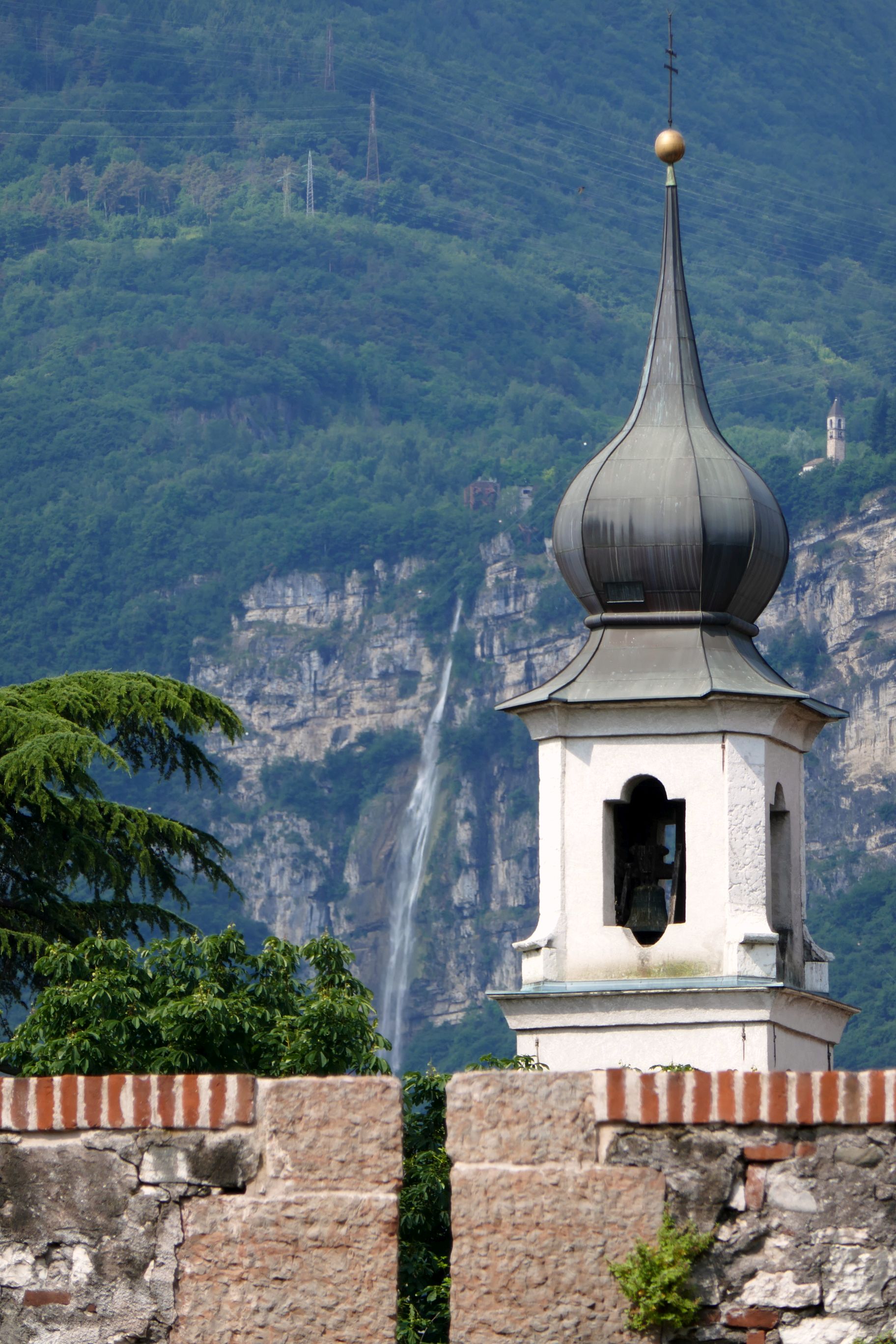
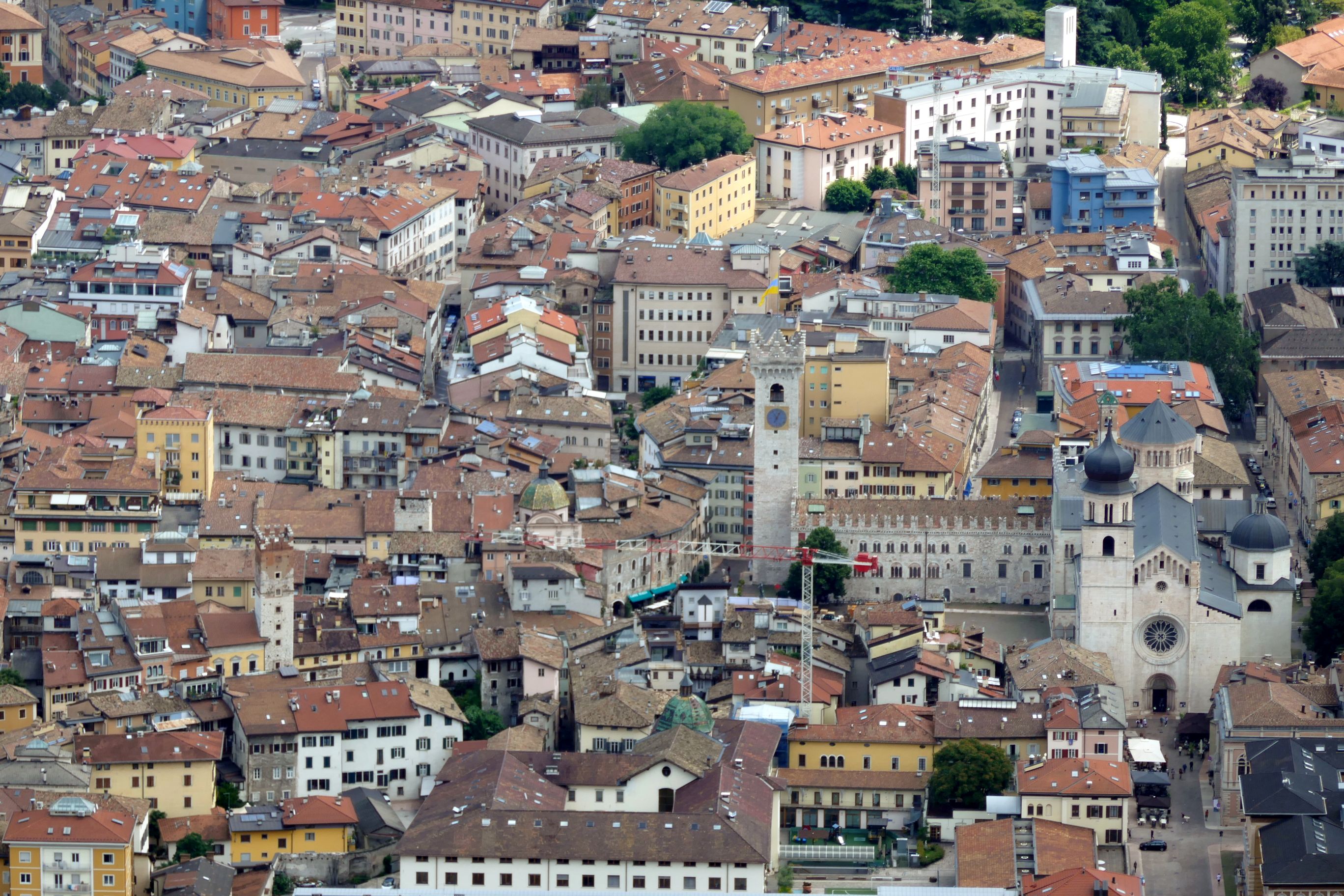
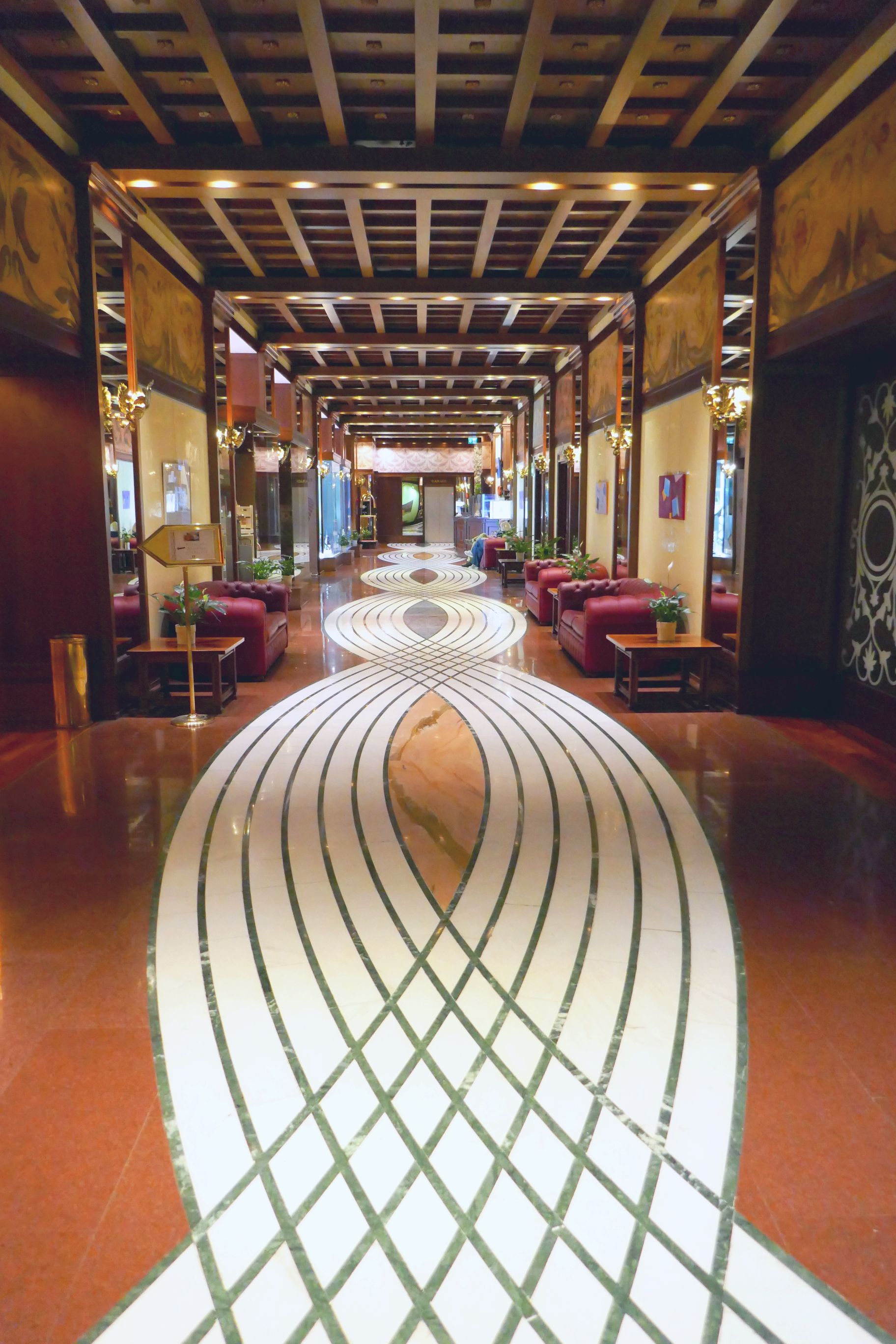
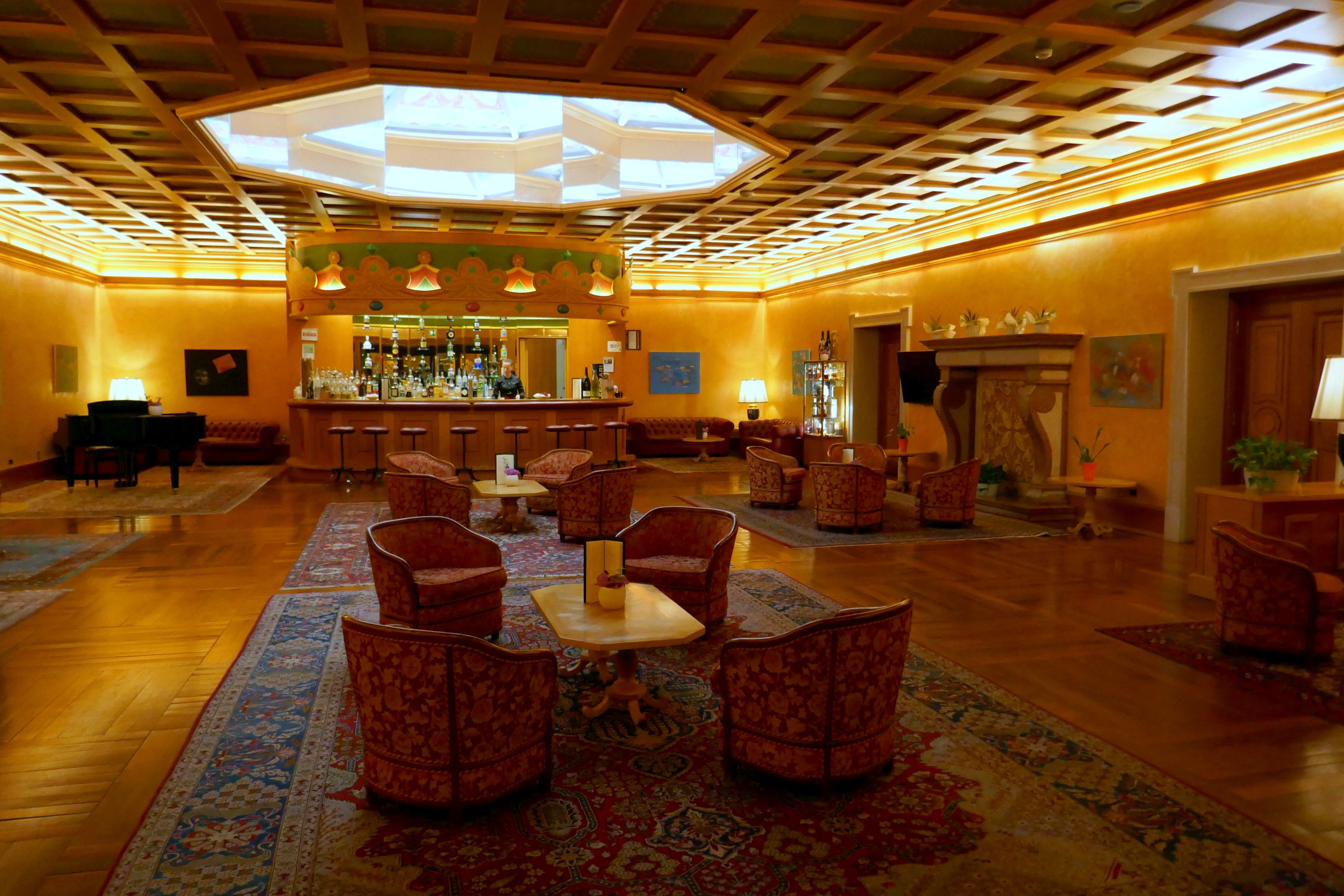
The final leg of our journey took us through the foothills of the Italian Dolomites, which we would be seeing more of in the following days. Upon arrival in Trento, we checked in at the beautiful Grand Hotel Trento, and then took an orientation tour of the lovely town.
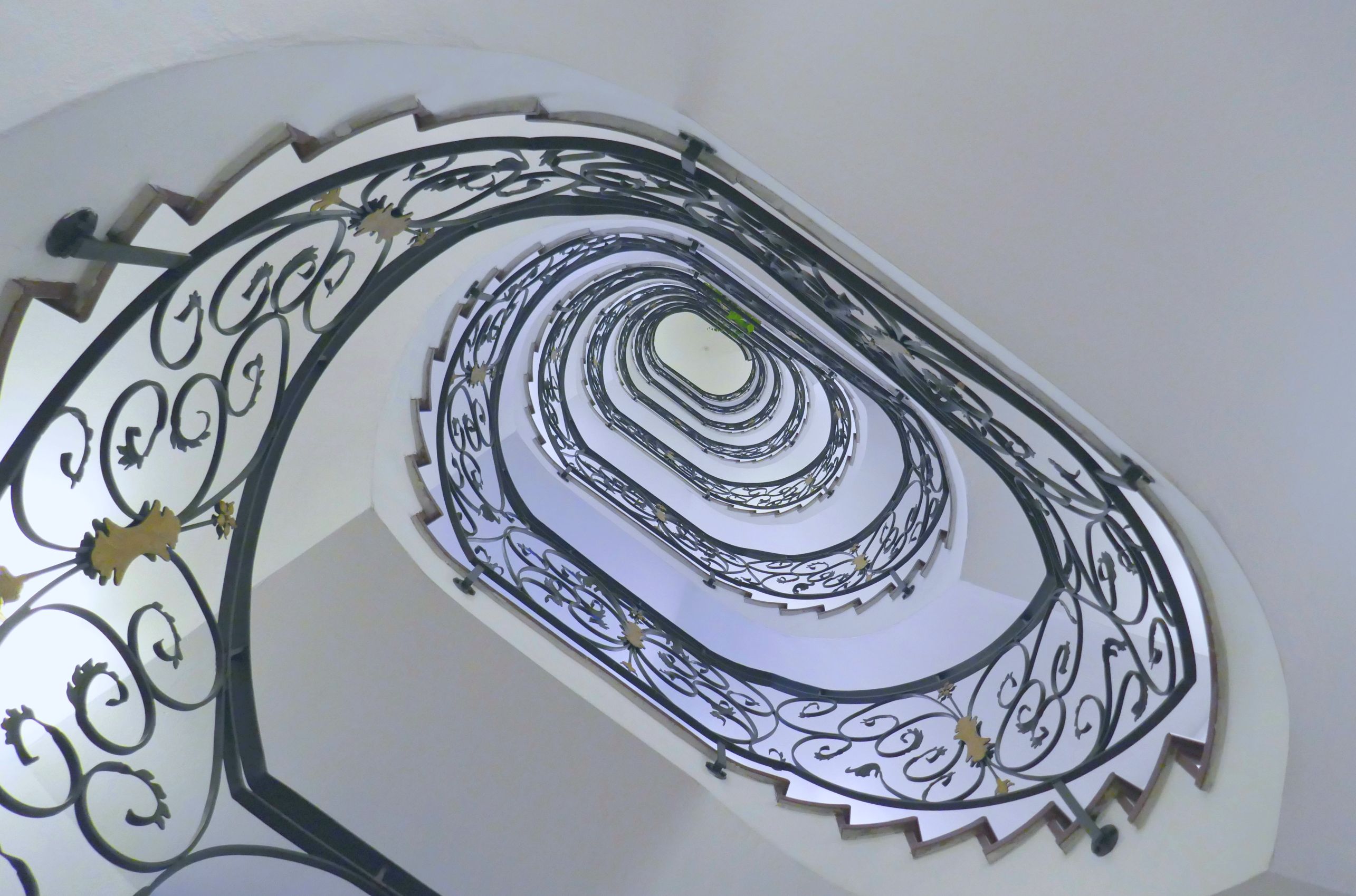
Looking up the winding staircase from the bottom floor……and looking back down from the top.
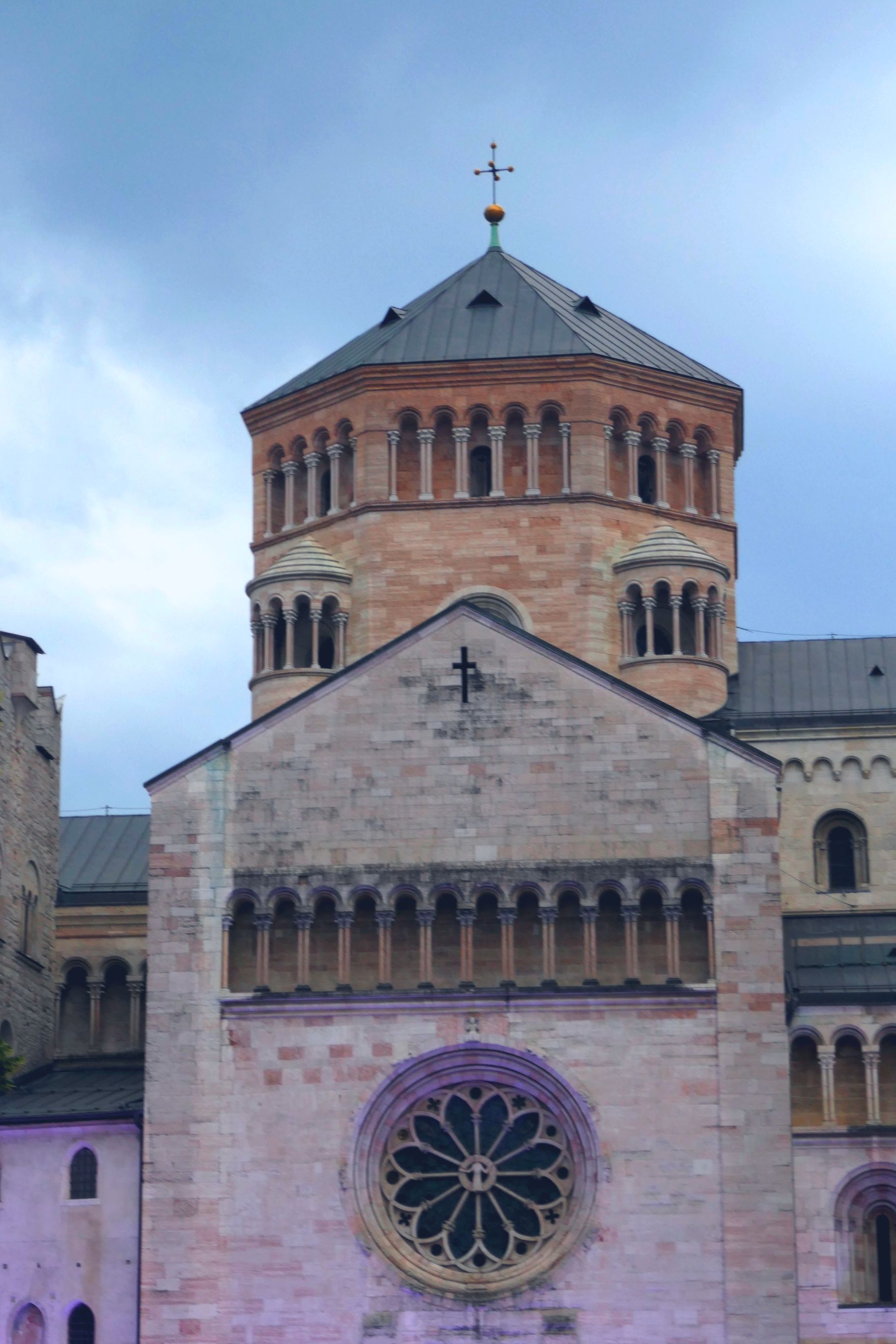
Trento is the capital of the autonomous province of Trento. Formerly part of Austria, it was annexed by Italy in 1919 and is now one of the wealthiest and most prosperous cities in Italy with a high standard of living and quality of life.
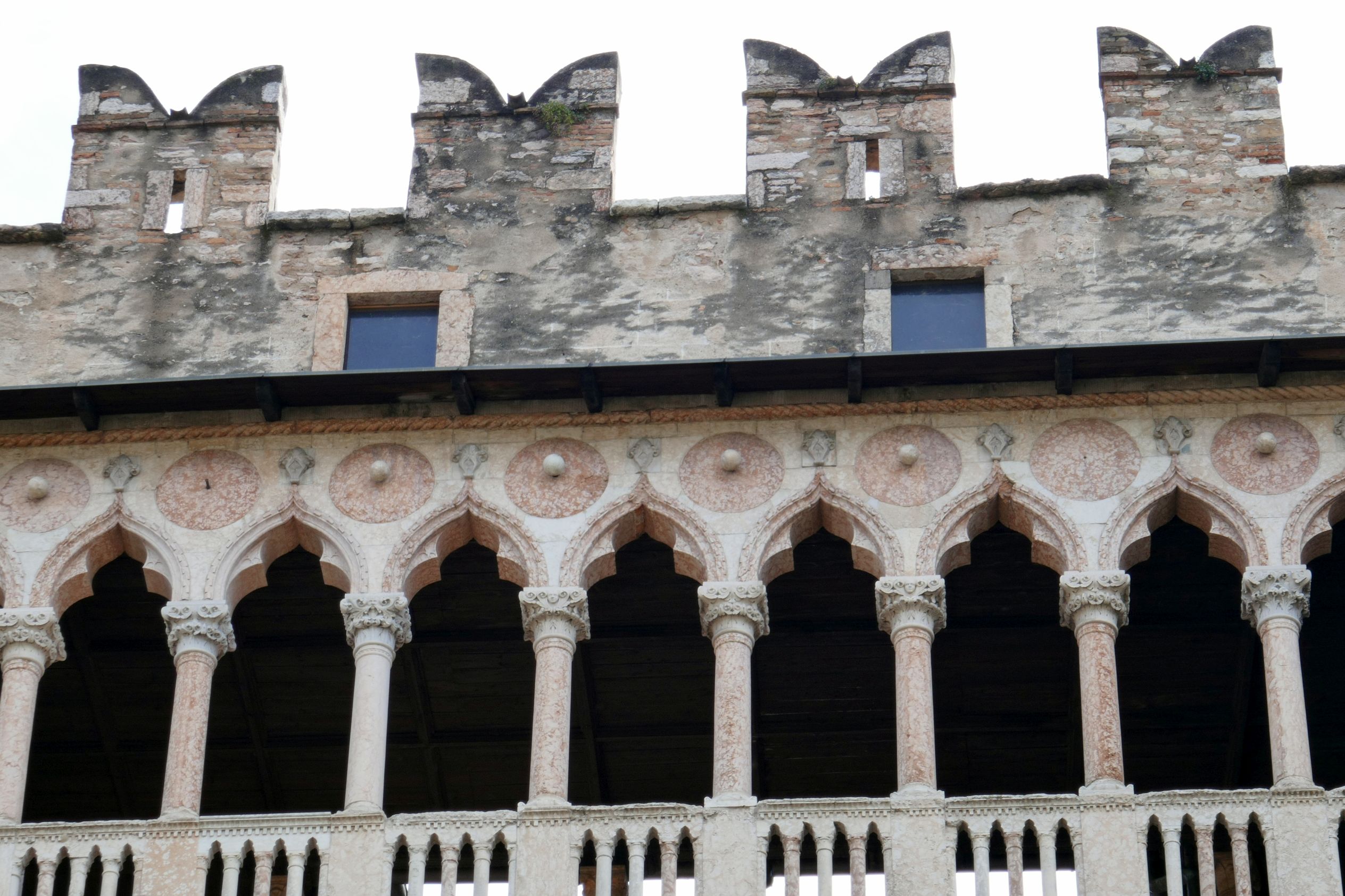
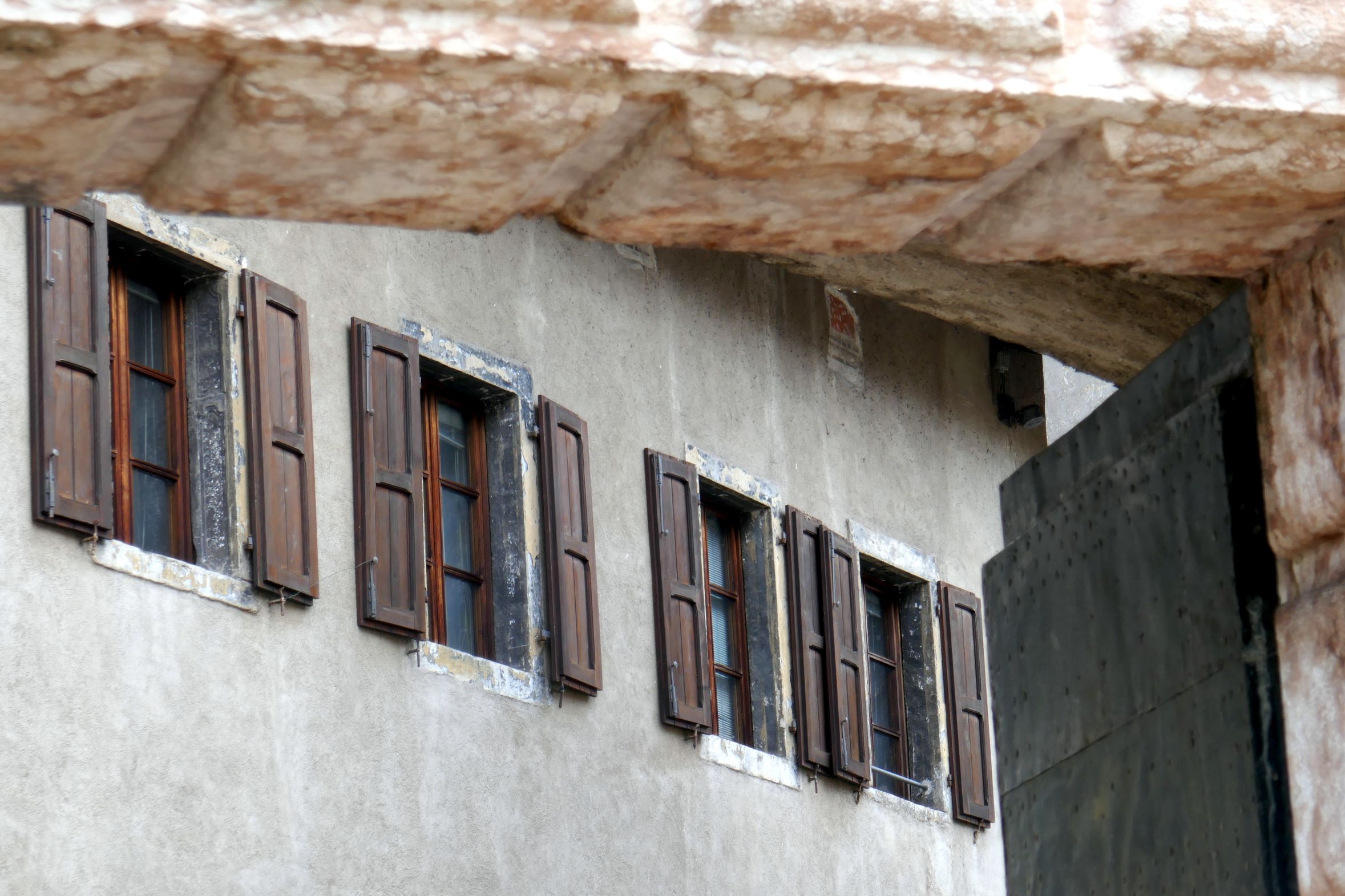
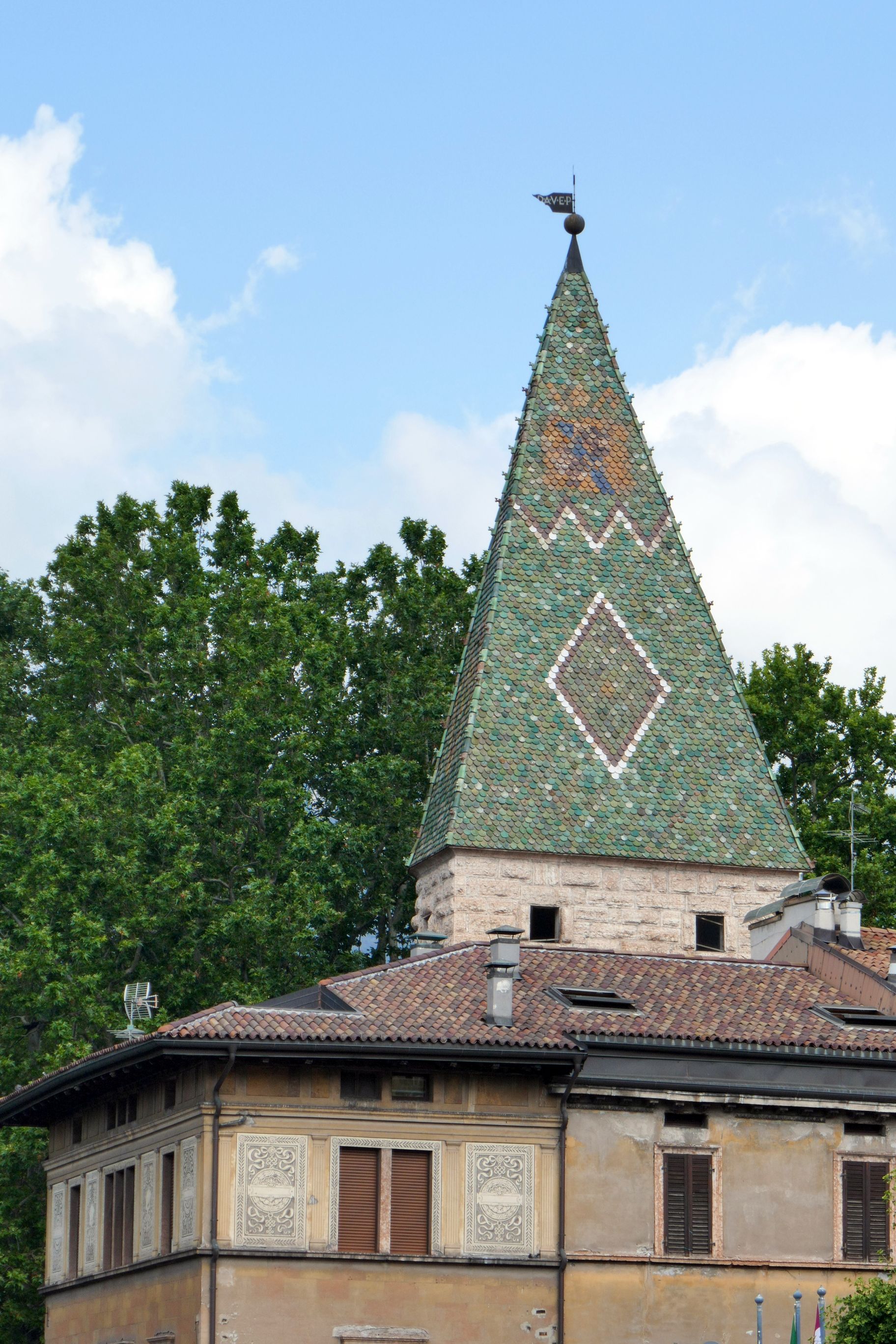
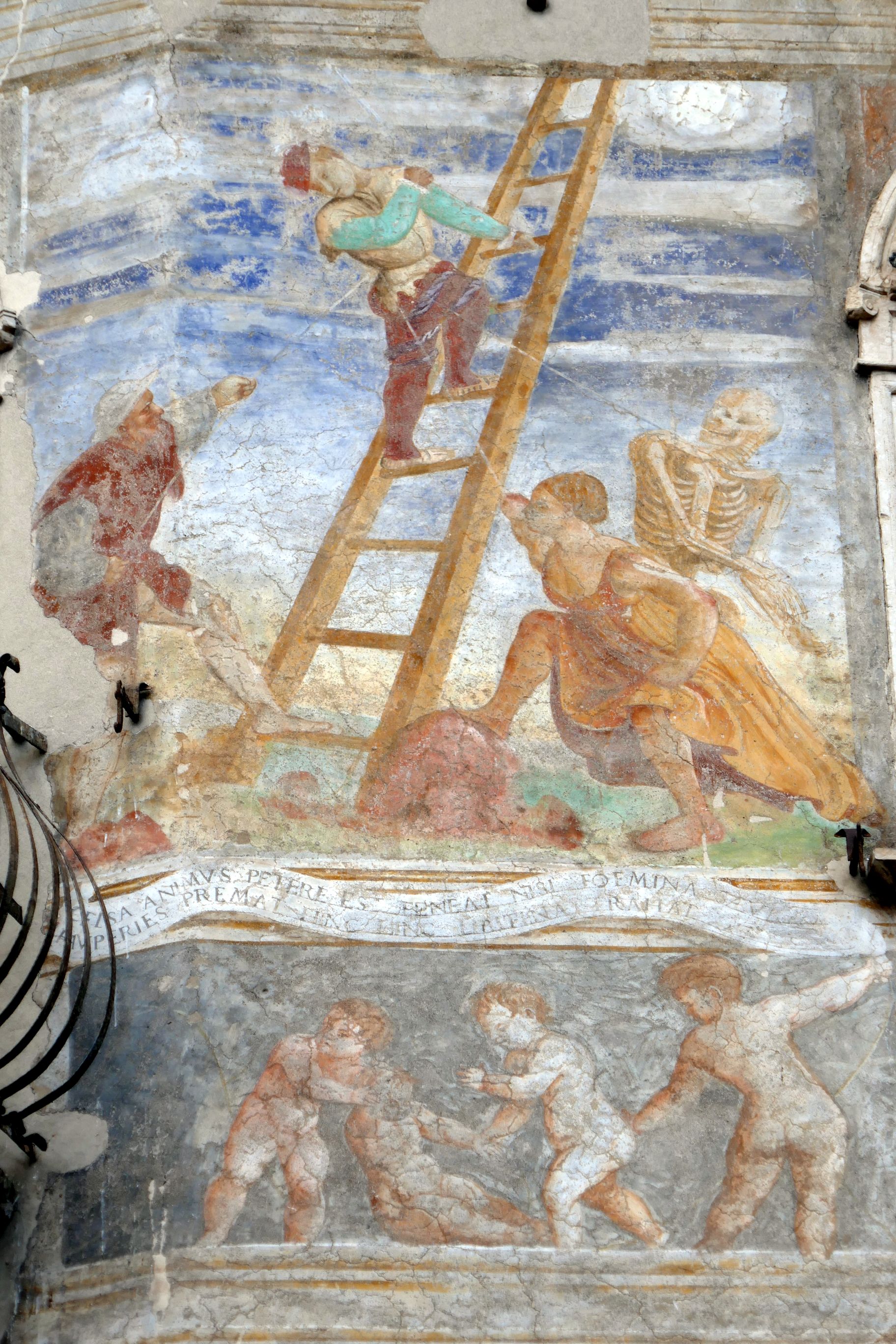
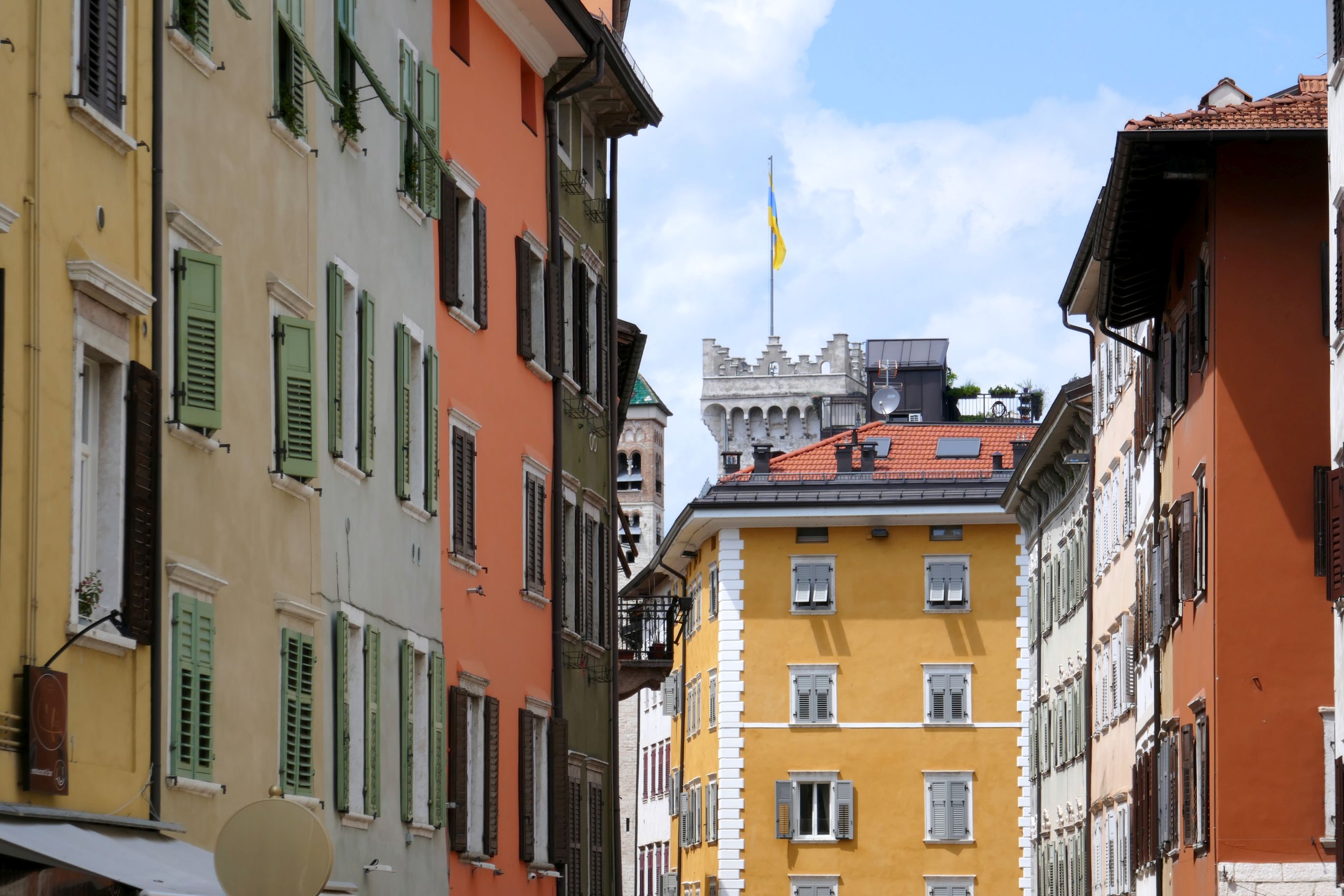
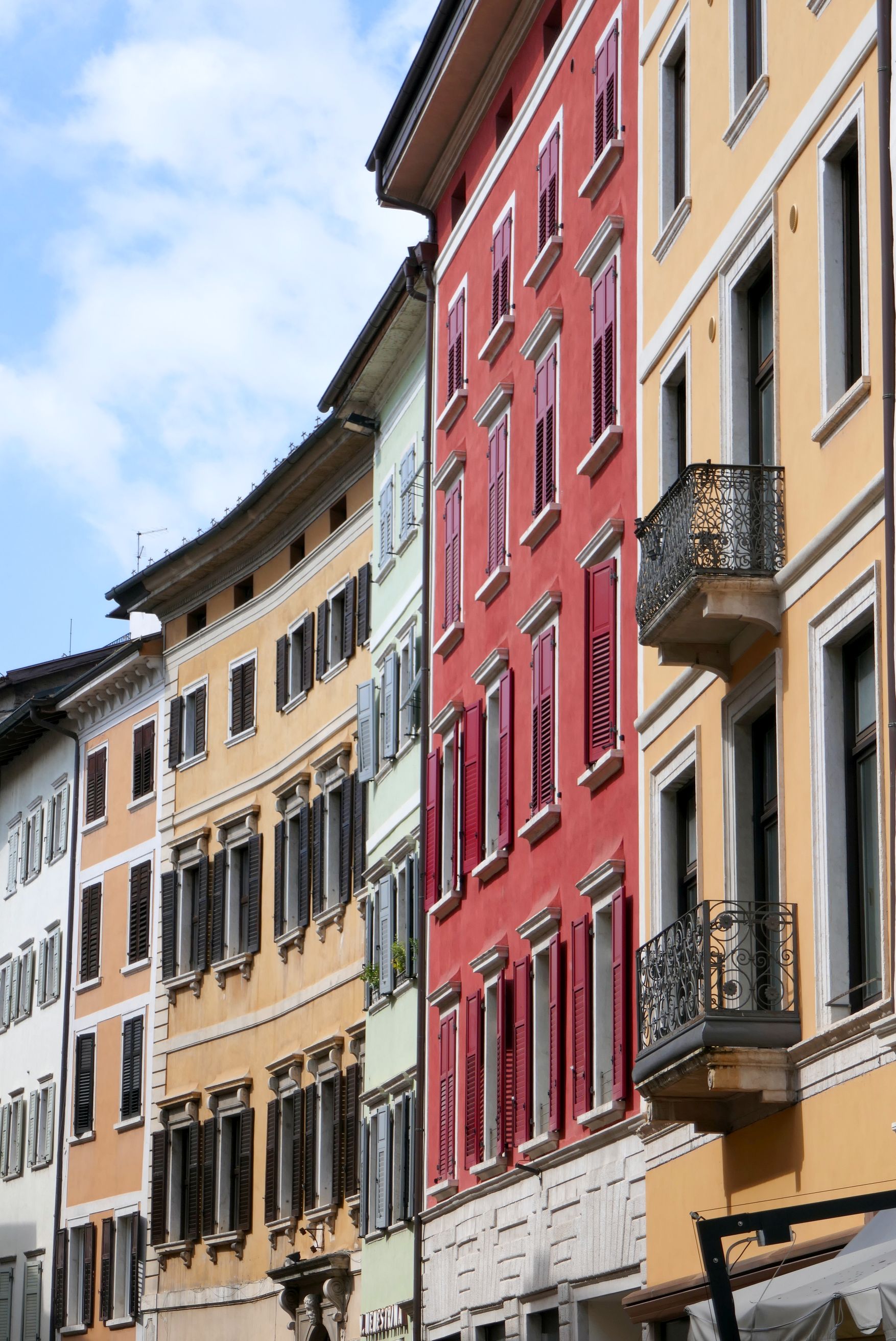
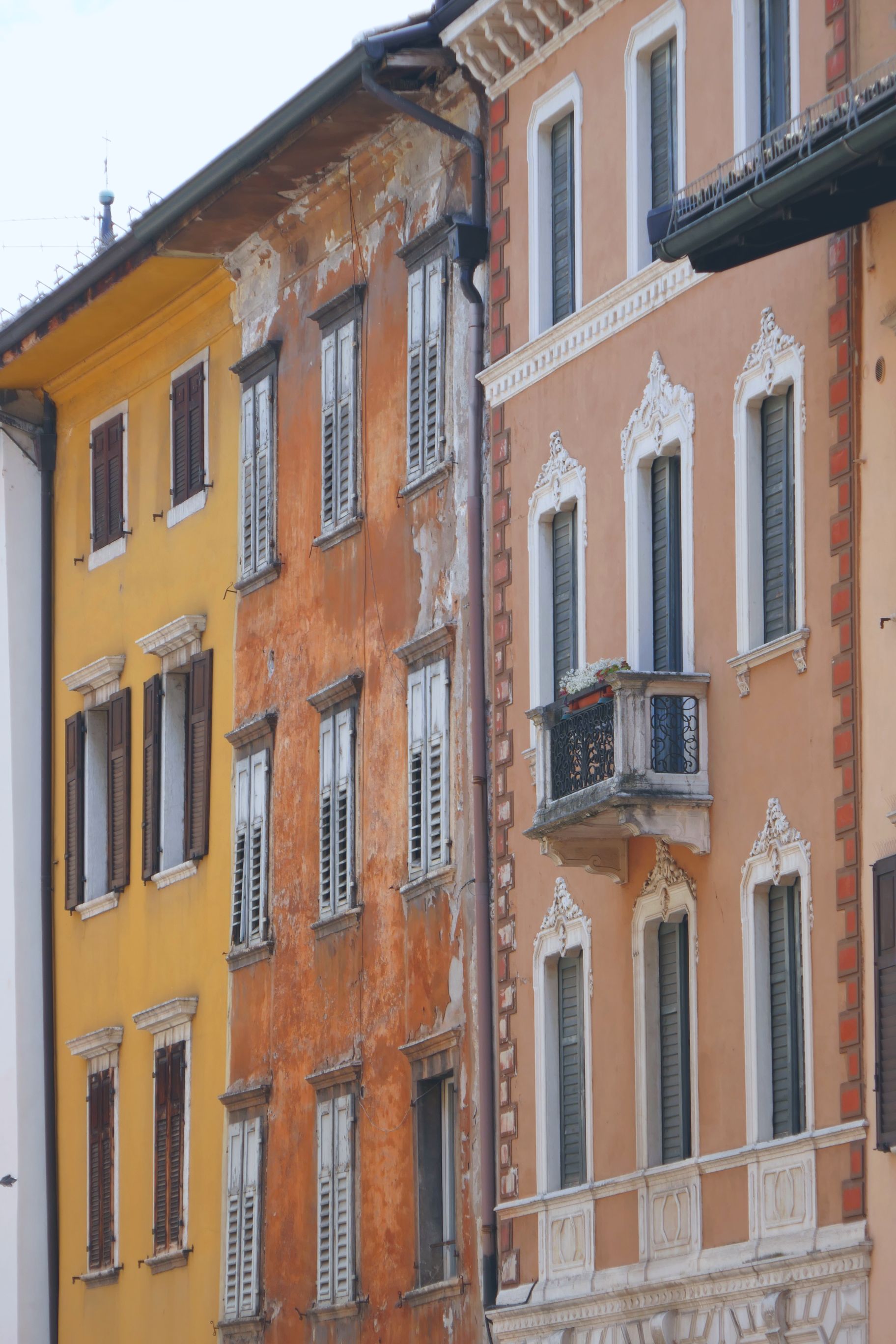
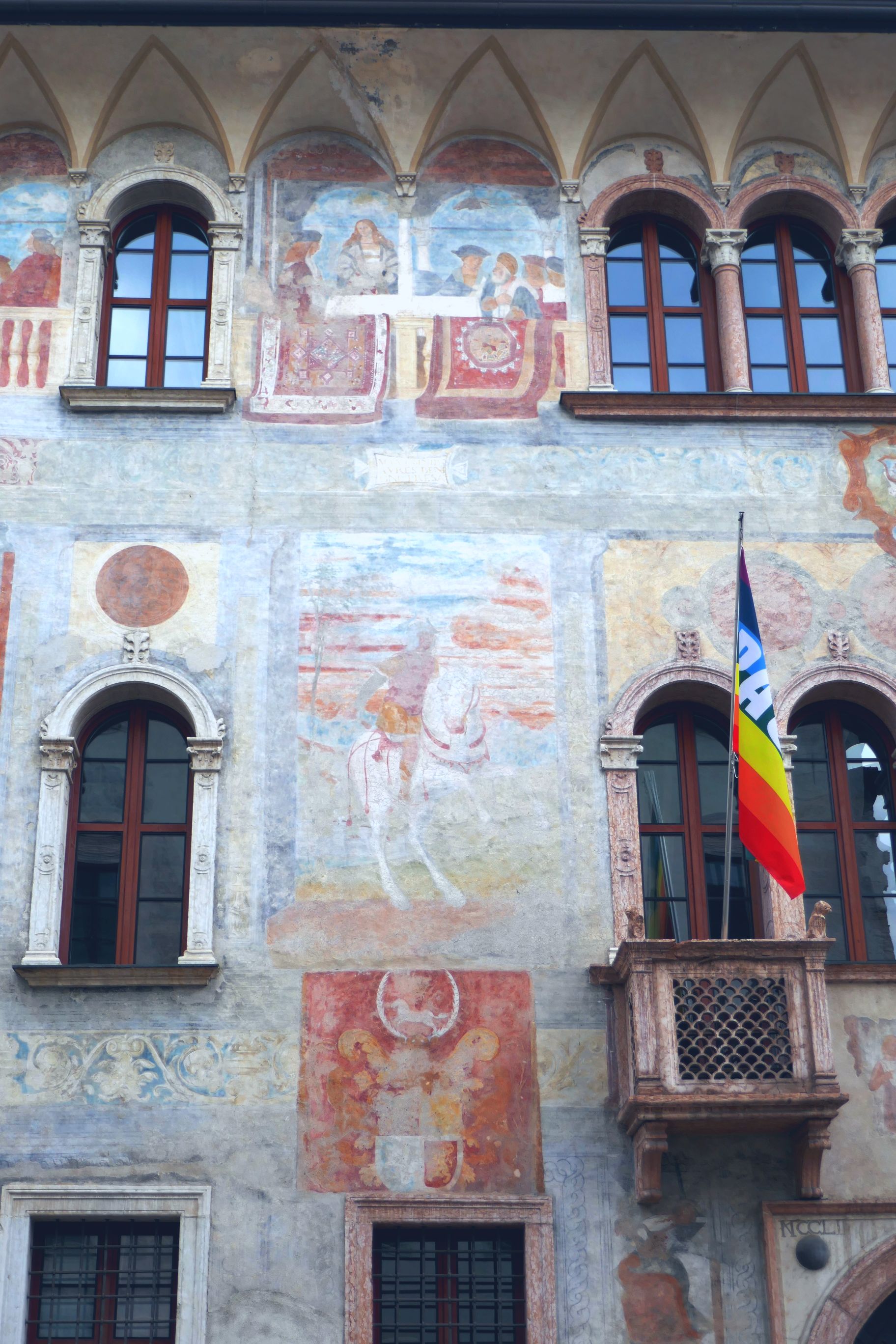
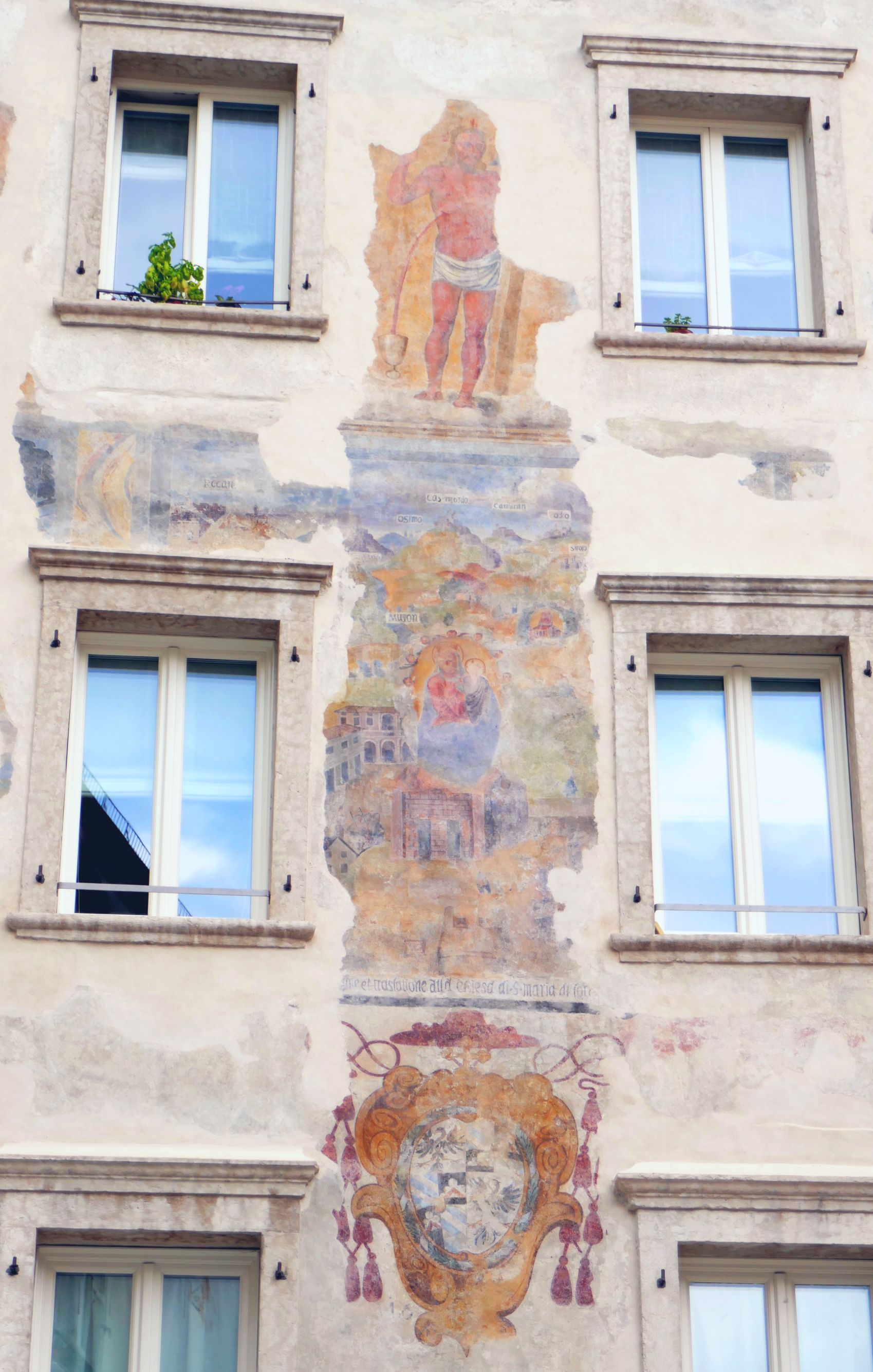
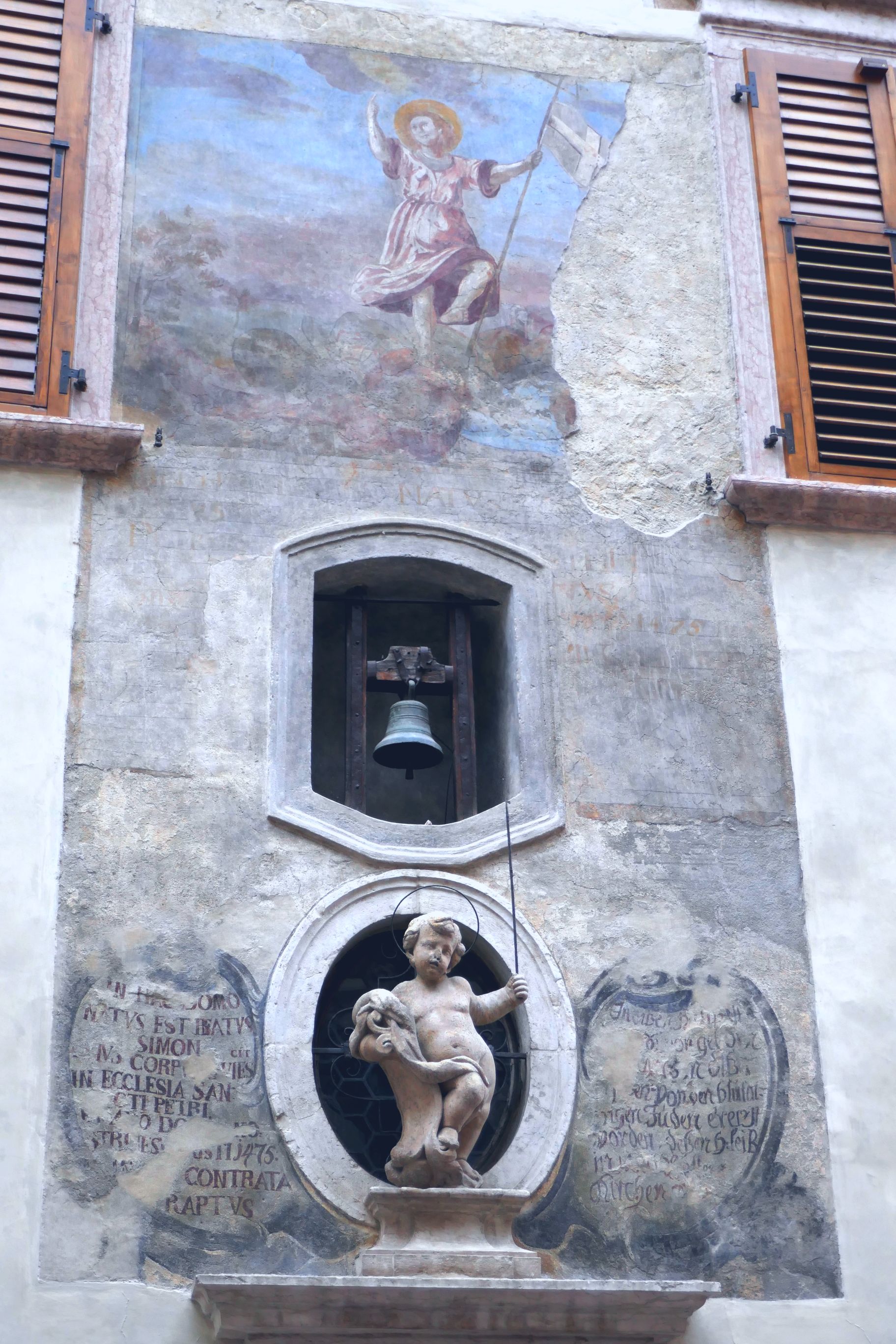
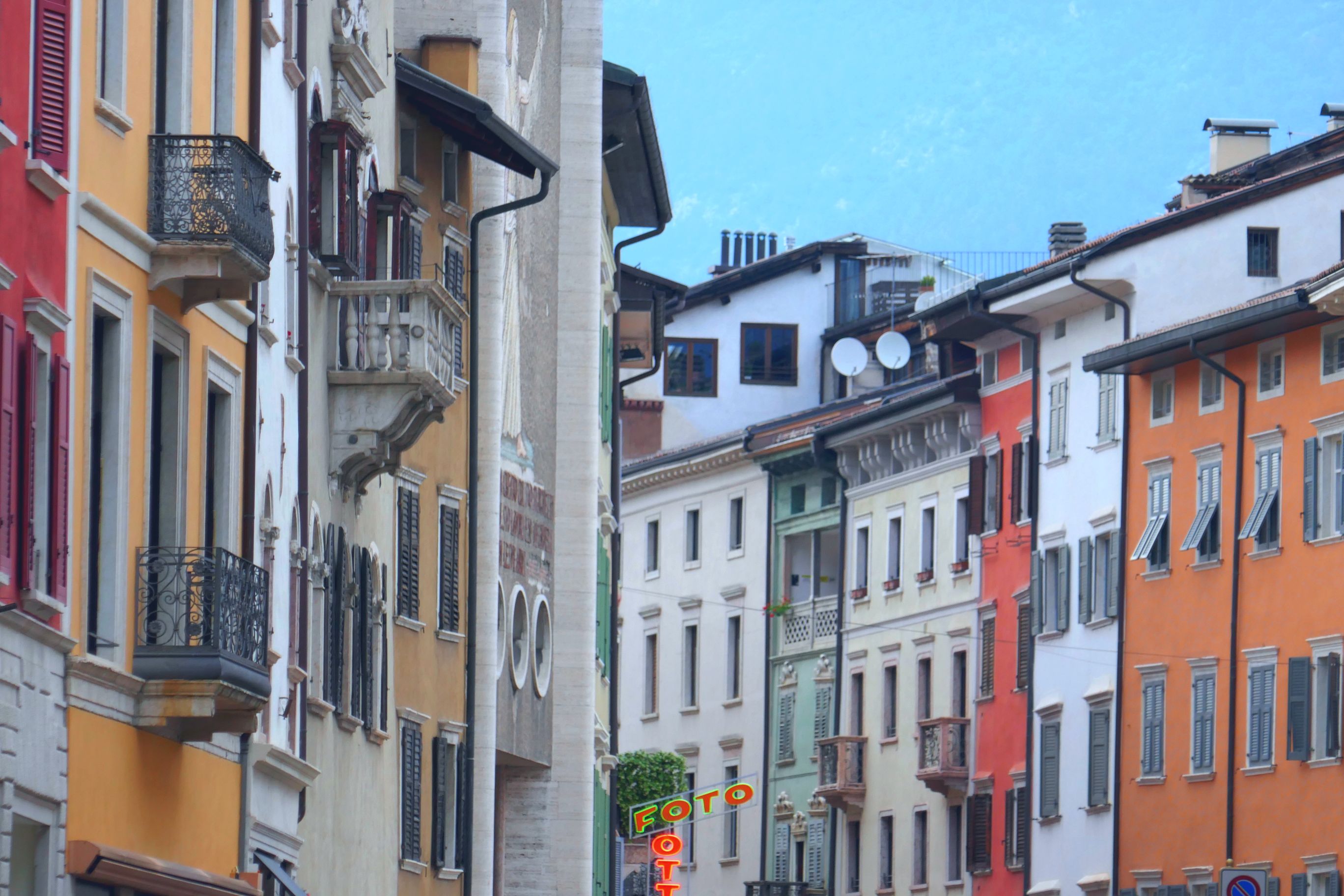
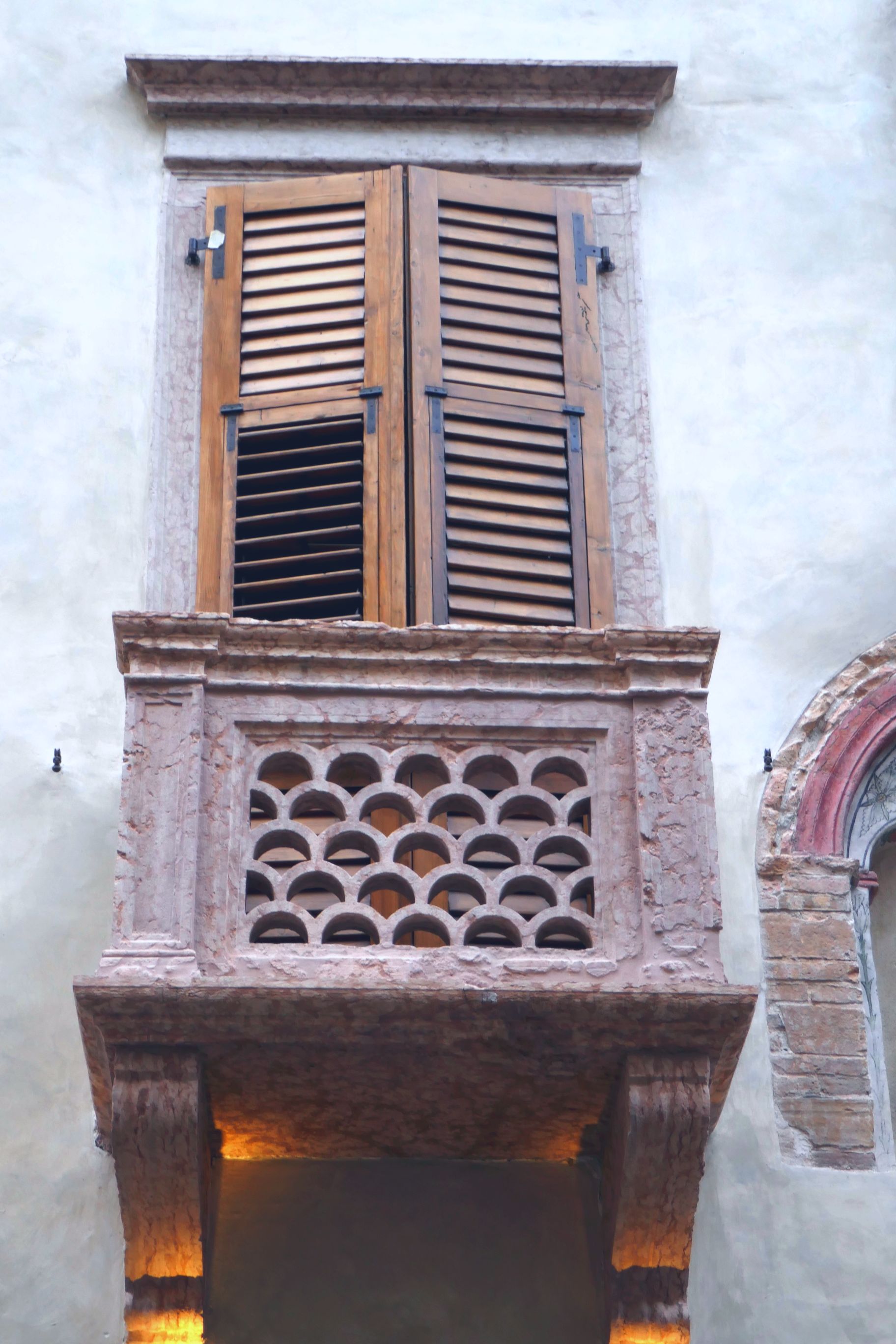
Trento is a city of frescoes.
Trento is also a city of gorgeous stone sidewalks of local red limestone.Some of the stone sidewalks have fossils such as this one dating back 200-250 million years!
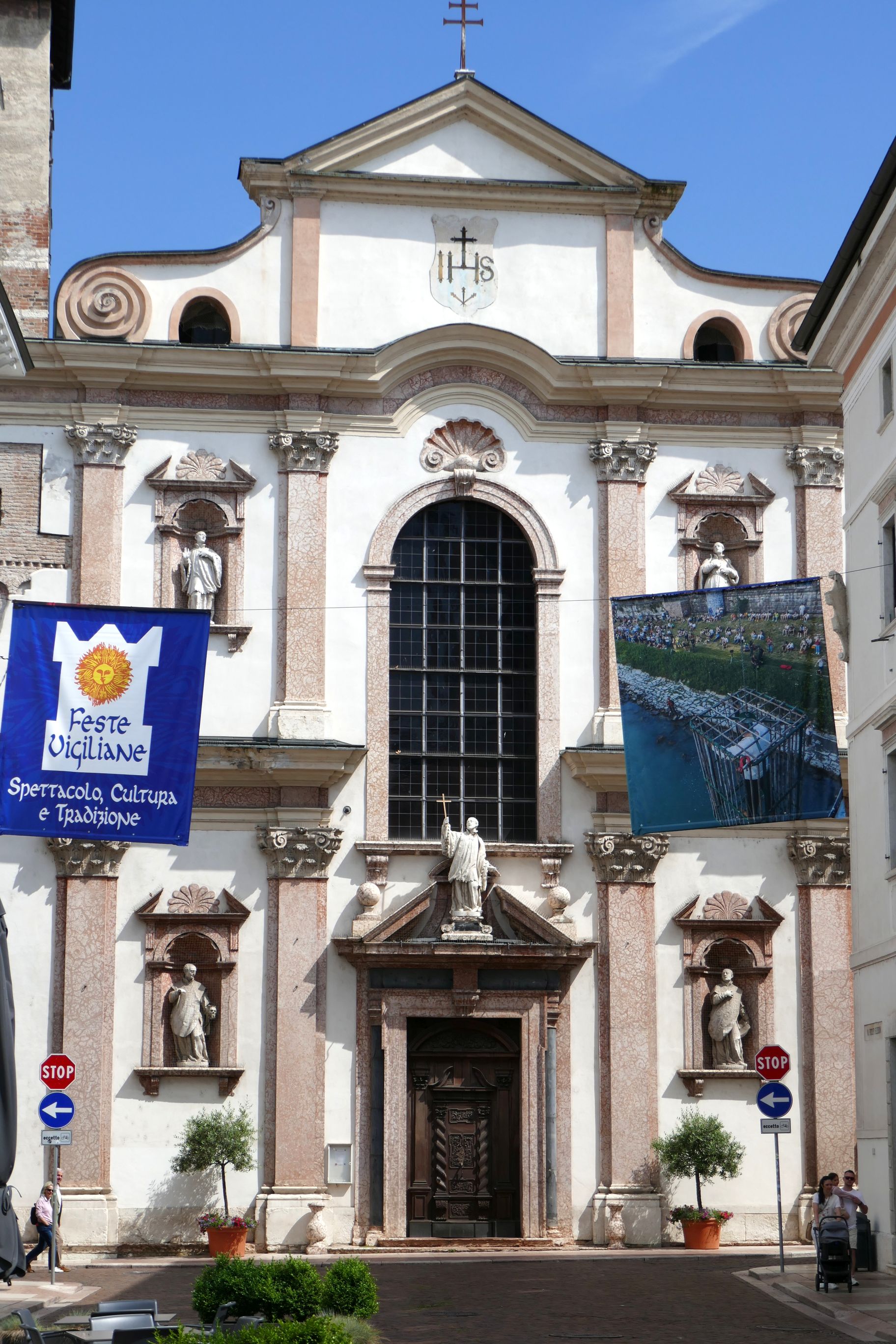
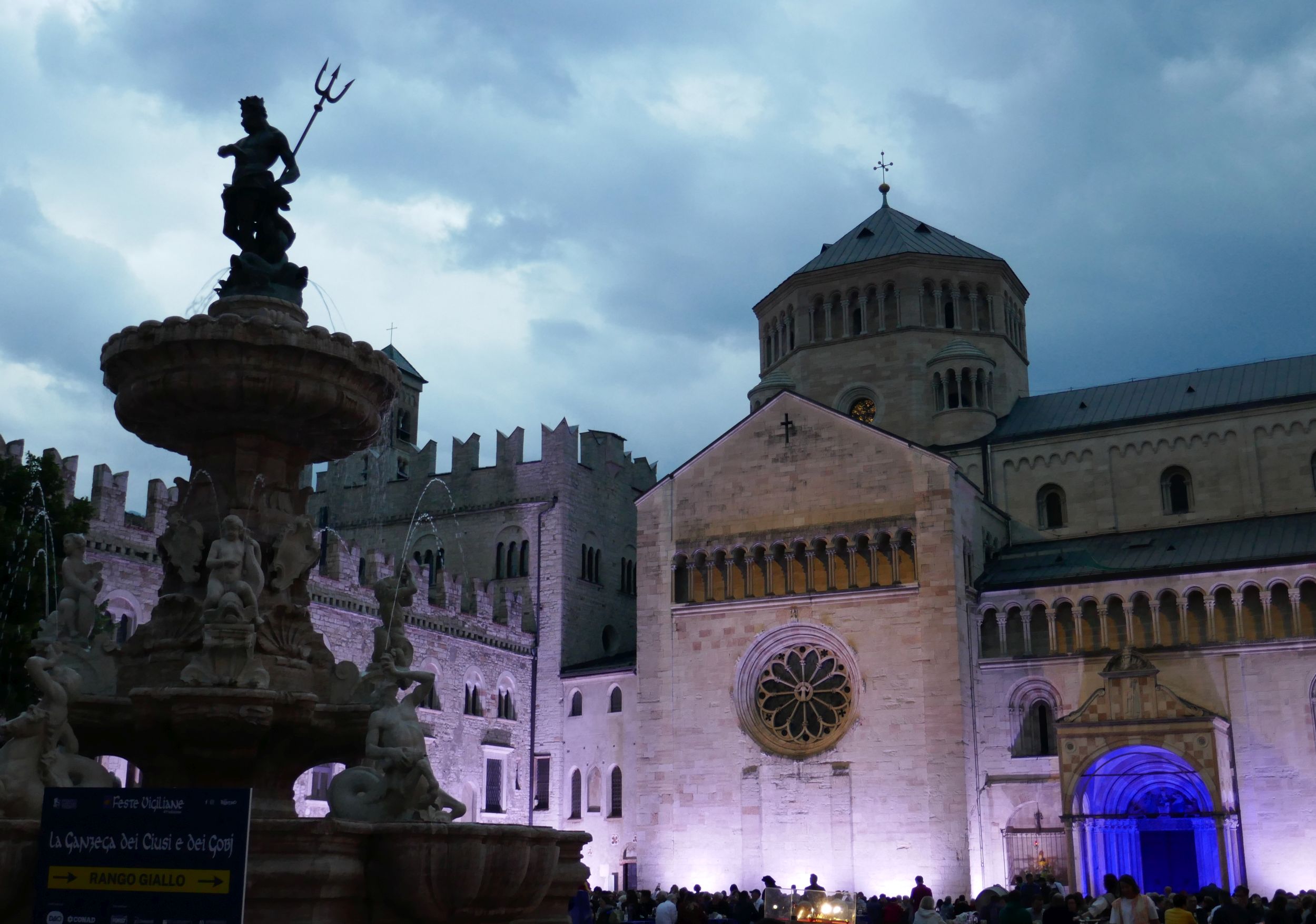
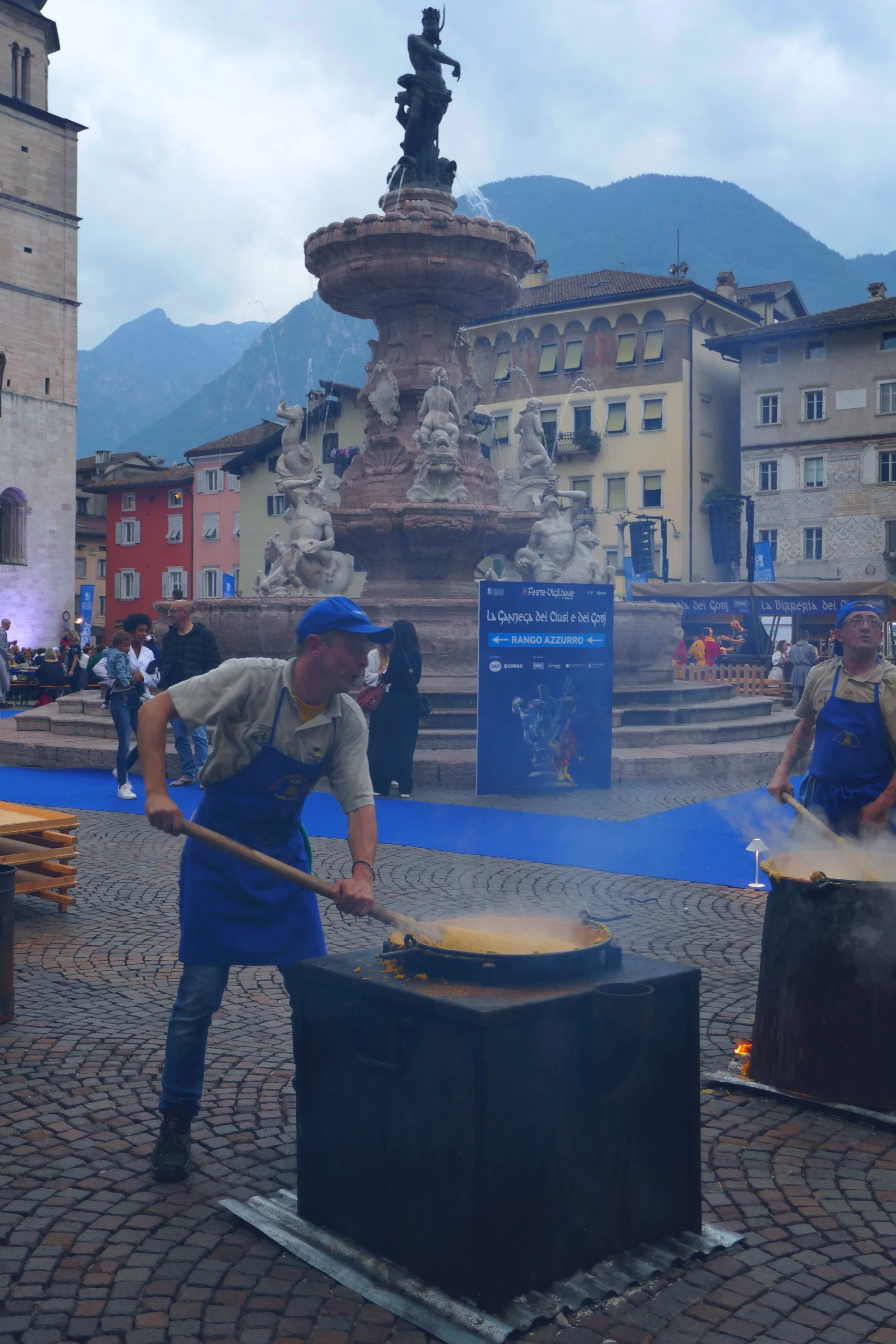
As if we hadn’t already experienced good luck when we happened upon that car race, the good luck continued in the evening when we stumbled upon a festival in Plaza Duomo, the cathedral square, following dinner. Proloco Centro Storico Trento is part of Feste Vigiliane, celebrating patron saint San Vigilius. The week-long festival transforms the streets and alleys into a mediaeval quarter where food, entertainment, and ancient handicrafts bring out the crowds. The celebrations are full of humor and laughter, concluding with fireworks on the final day.
We stood outside the gate watching men prepare huge copper kettles of polenta. Along with beer, bowls of the polenta were carried out by costumed servers. It was a big social event, and everybody seemed to be having a great time! We sure enjoyed watching!
Coming up next: SWITZERLAND & NORTHERN ITALY #17: TERRIFIC TRENTO
About that “break” I mentioned at the end of my last post; we went on an Overseas Adventure Travel tour to Peru. As soon as I complete my blogs about this tour, I will begin my posts on our amazing and fabulous adventure!
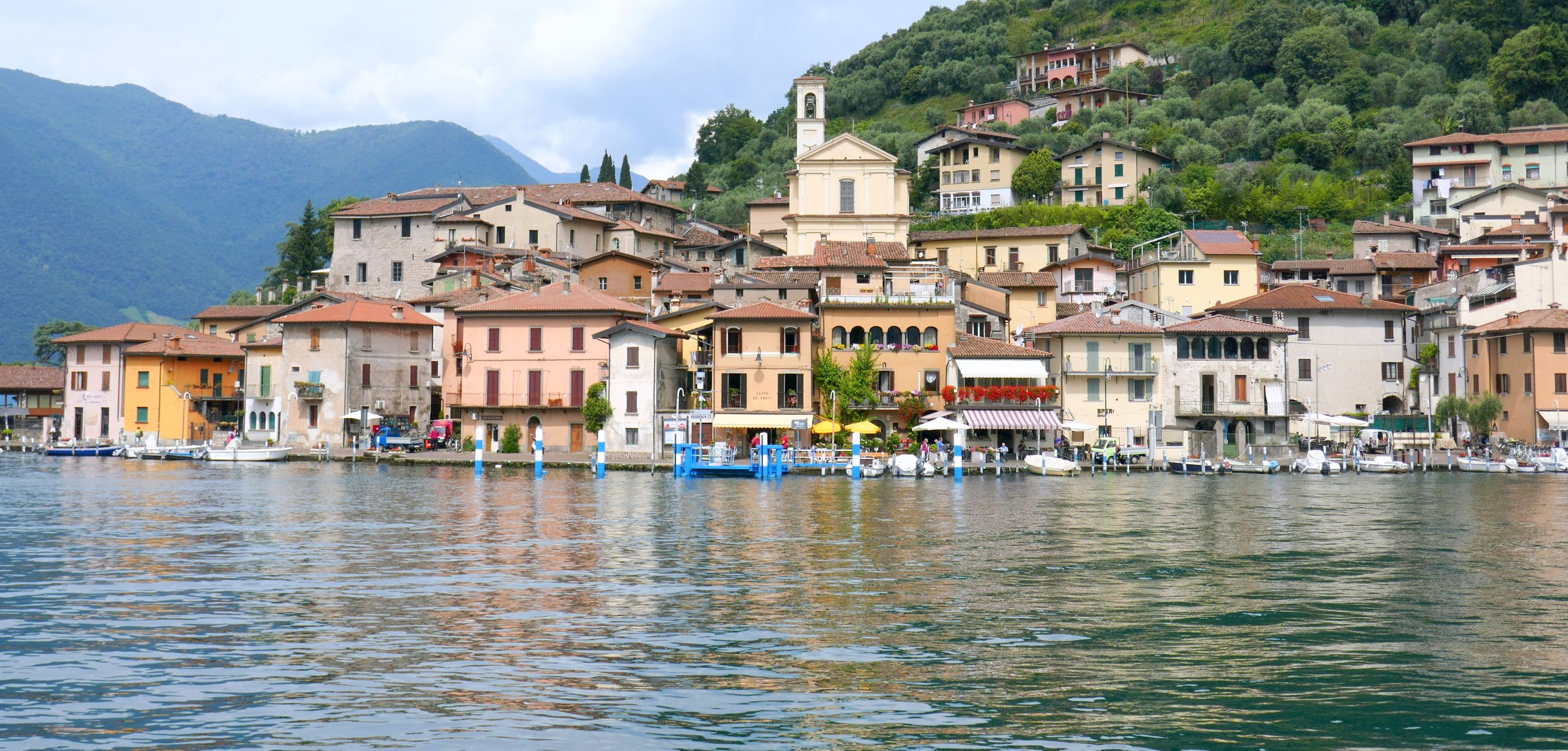
Meanwhile, back in Italy, while the rest of the group went on an optional tour, Bruce and I opted to spend the day exploring on our own. We walked to the charming town of Iseo to catch the ferry to the island of Monte Isola, and we immediately knew we wanted to save some time to see more on the way back.
(For all photos, click on the image for a full screen view.)
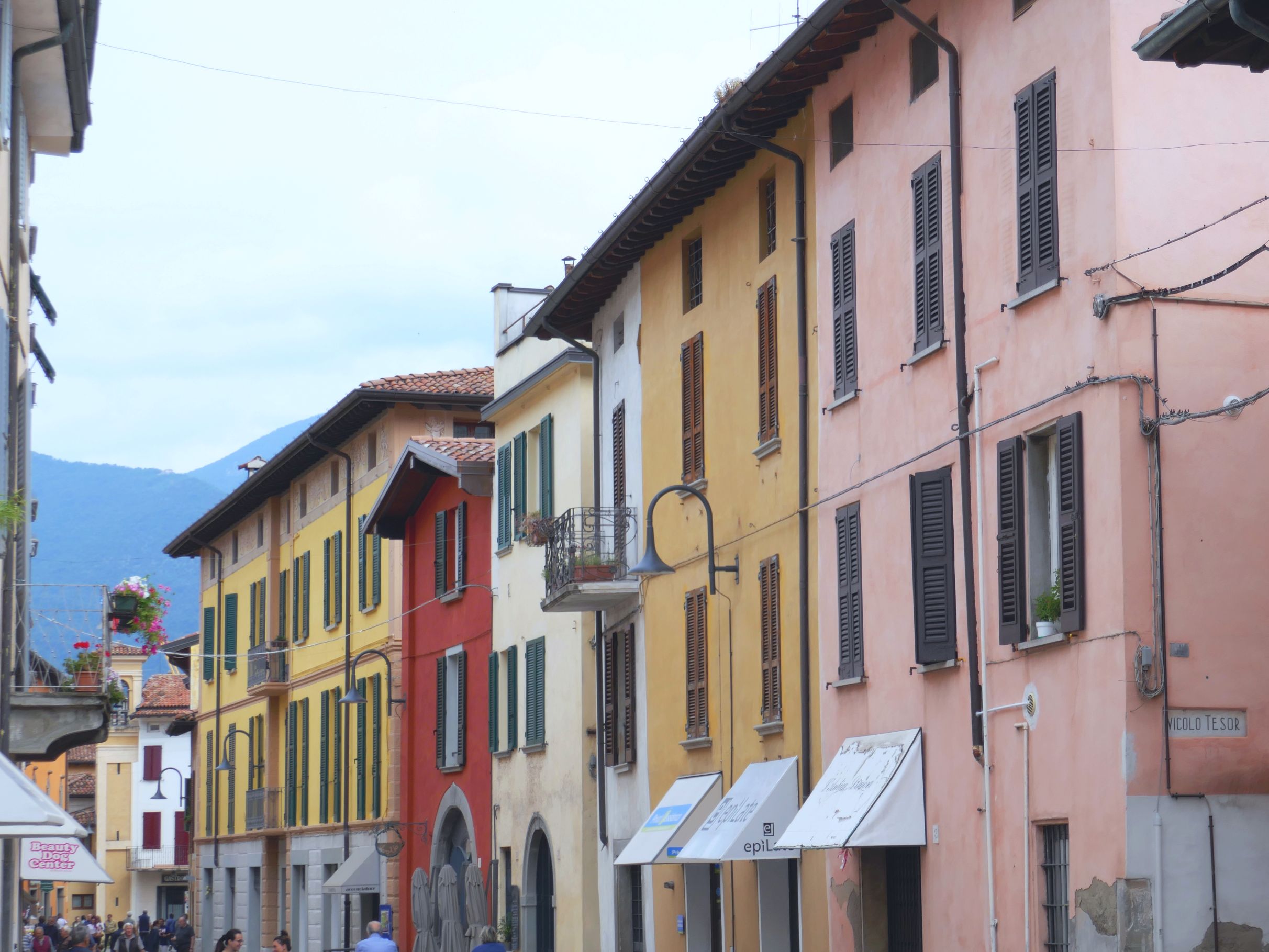
Scenes of Iseo, while walking through town to the ferry.
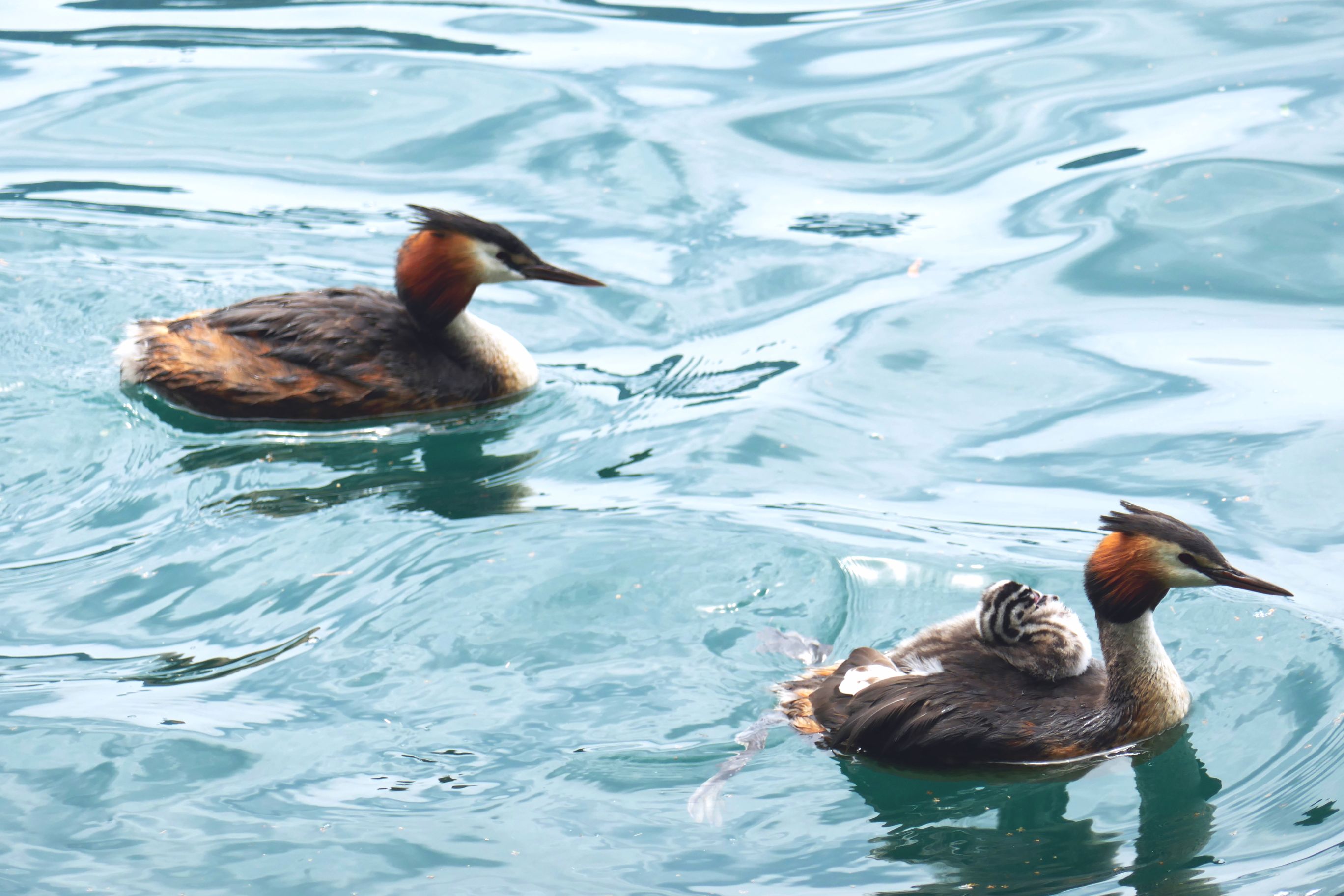
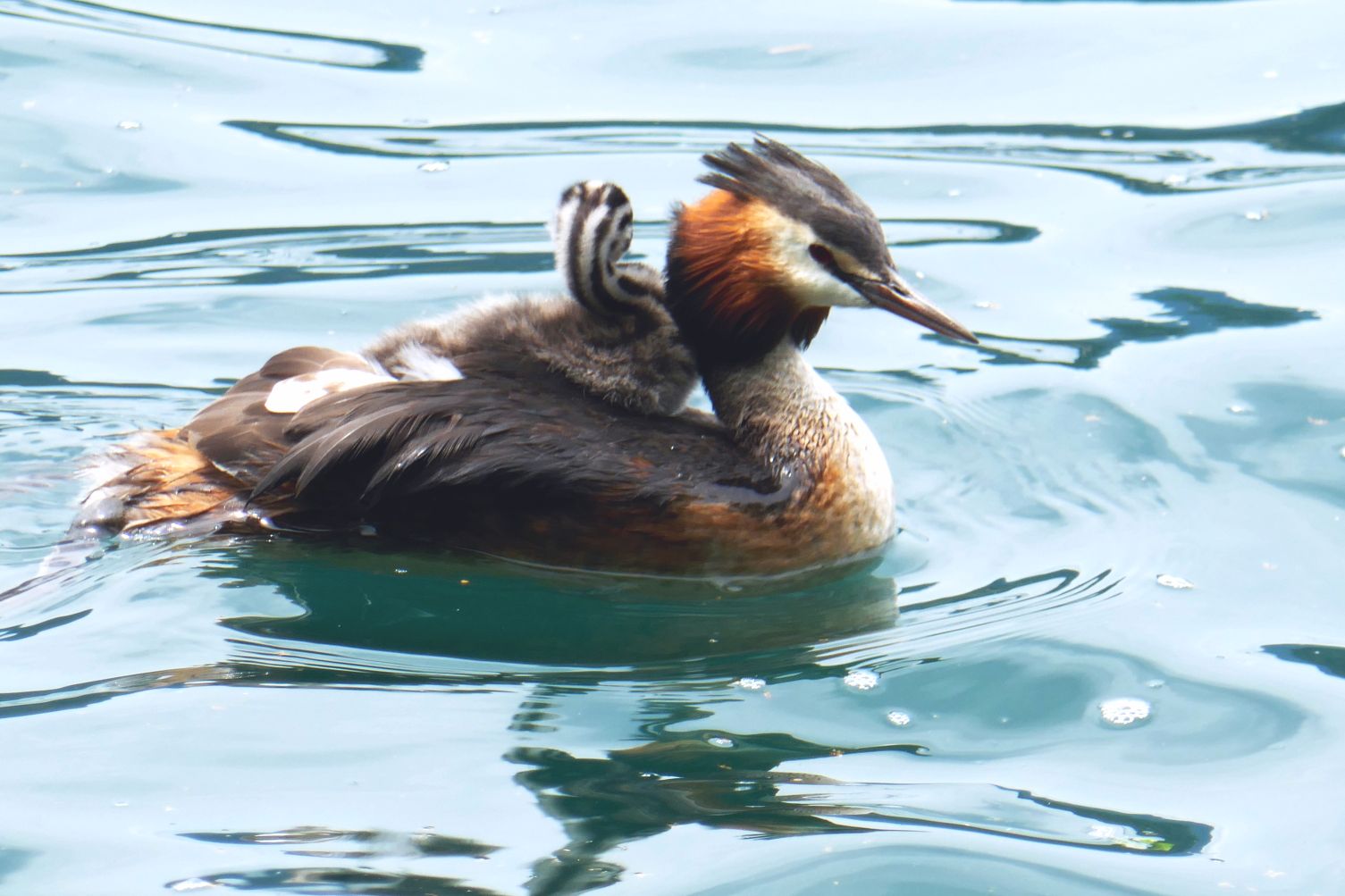
This mother was cruising near the ferry with her baby hitching a ride on her back.
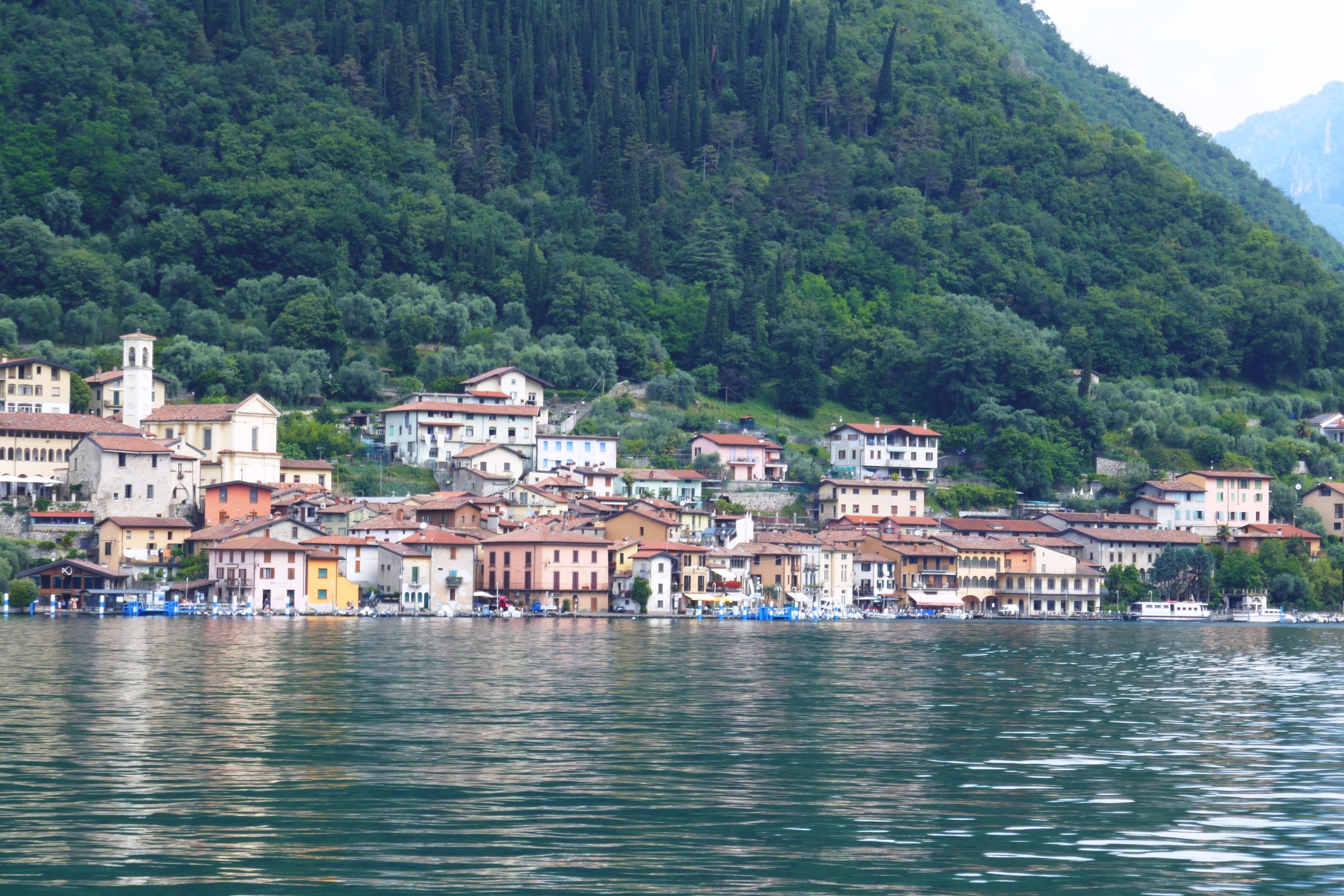
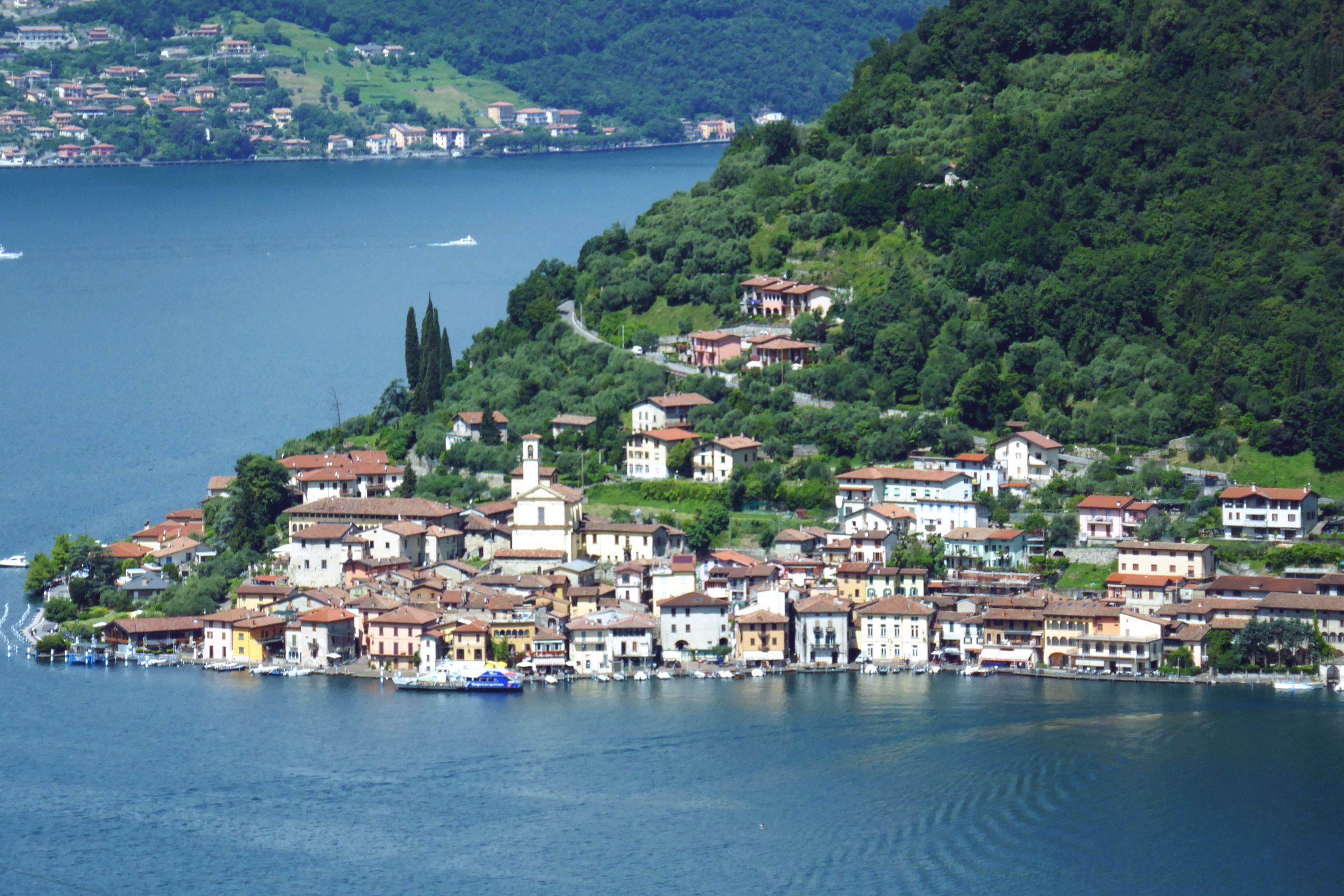
Looking back at Iseo from the ferry.A view of the mainland from the lake.Monte Isola
Monte Isola, located in the middle of Lake Iseo, is 1.7 square miles in size and has a population of less than 2,000. It is a beautiful island that peaks at just under 2000 feet, making it a challenge to traverse on foot. We set out to hike one of the loops that took us through the cobbled-street town, and along the waterfront.
We saw mothers with their babies all along the waterfront!
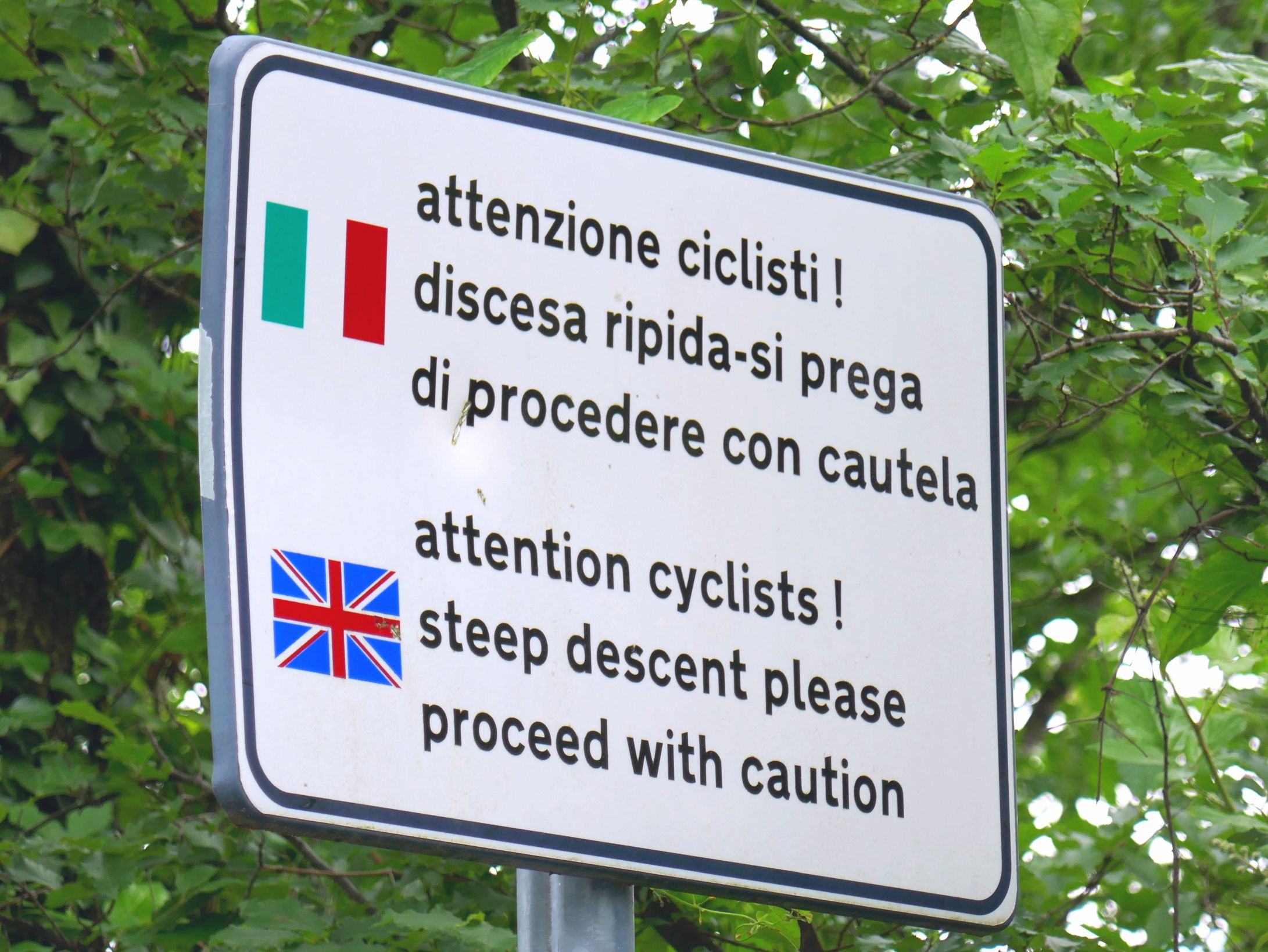
We then turned inland to traverse the island’s steep interior. When I say steep, I mean steep! On one of the roads, a sign warned a couple of cyclists about the steep grade as they walked their bikes up the incline, huffing and puffing. I wondered if they muttered to each other, “Tell me something I don’t already know!” Meanwhile, cyclists flew by in the other direction, as they raced downhill. There was no walking path for pedestrians and no shoulder, so we carefully navigated as bikes and a few cars flew down as we walked up.
Celebrating our achievement of making it to the top, we enjoyed the spectacular views of the lake down below and Iseo off in the distance. It was definitely worth the hike up, even if it was challenging and clouds threatened to drench us along the way. (Fortunately, we stayed dry!)
Bruce enjoying a cold Coke Zero on our way back down.
We’re almost there!
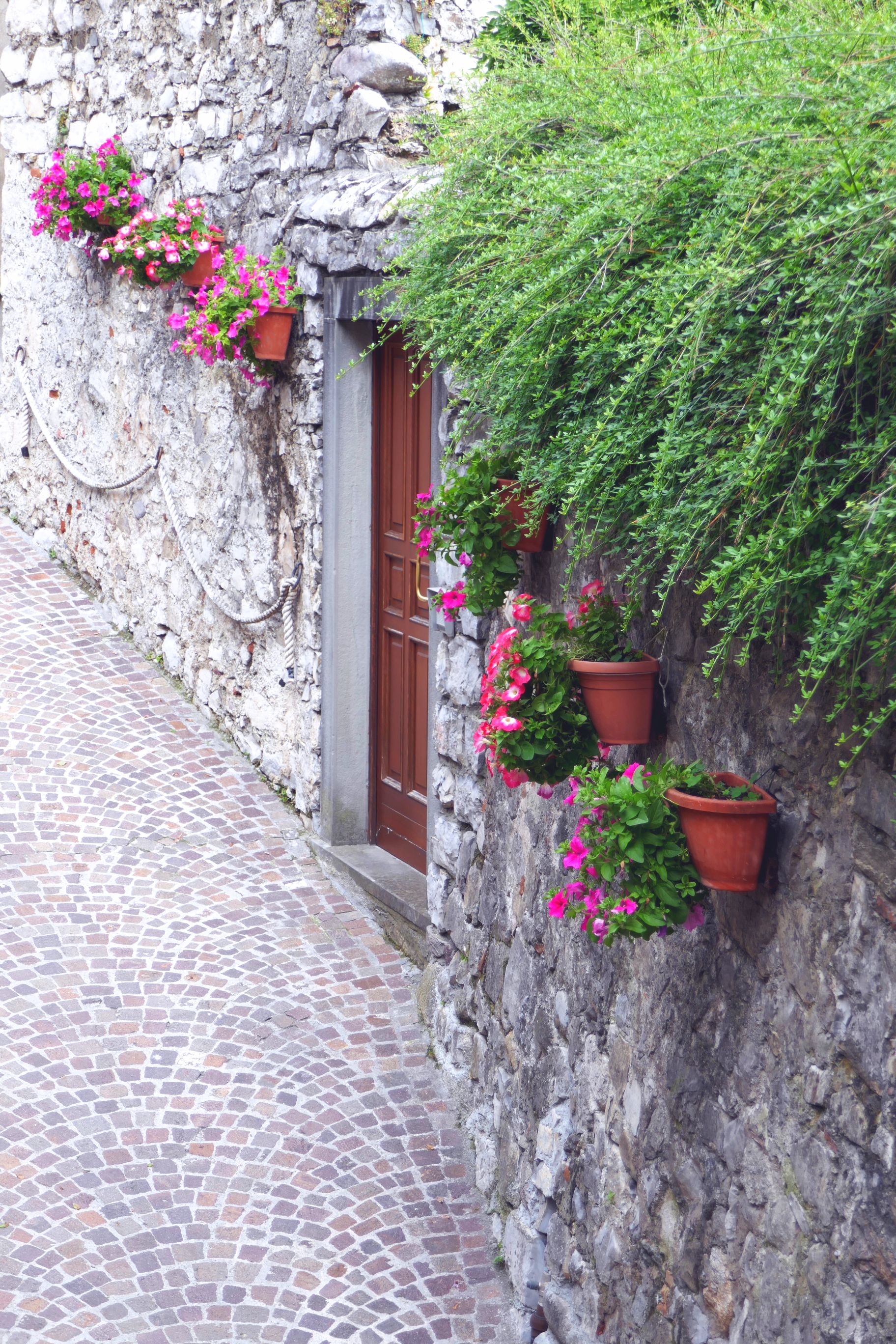
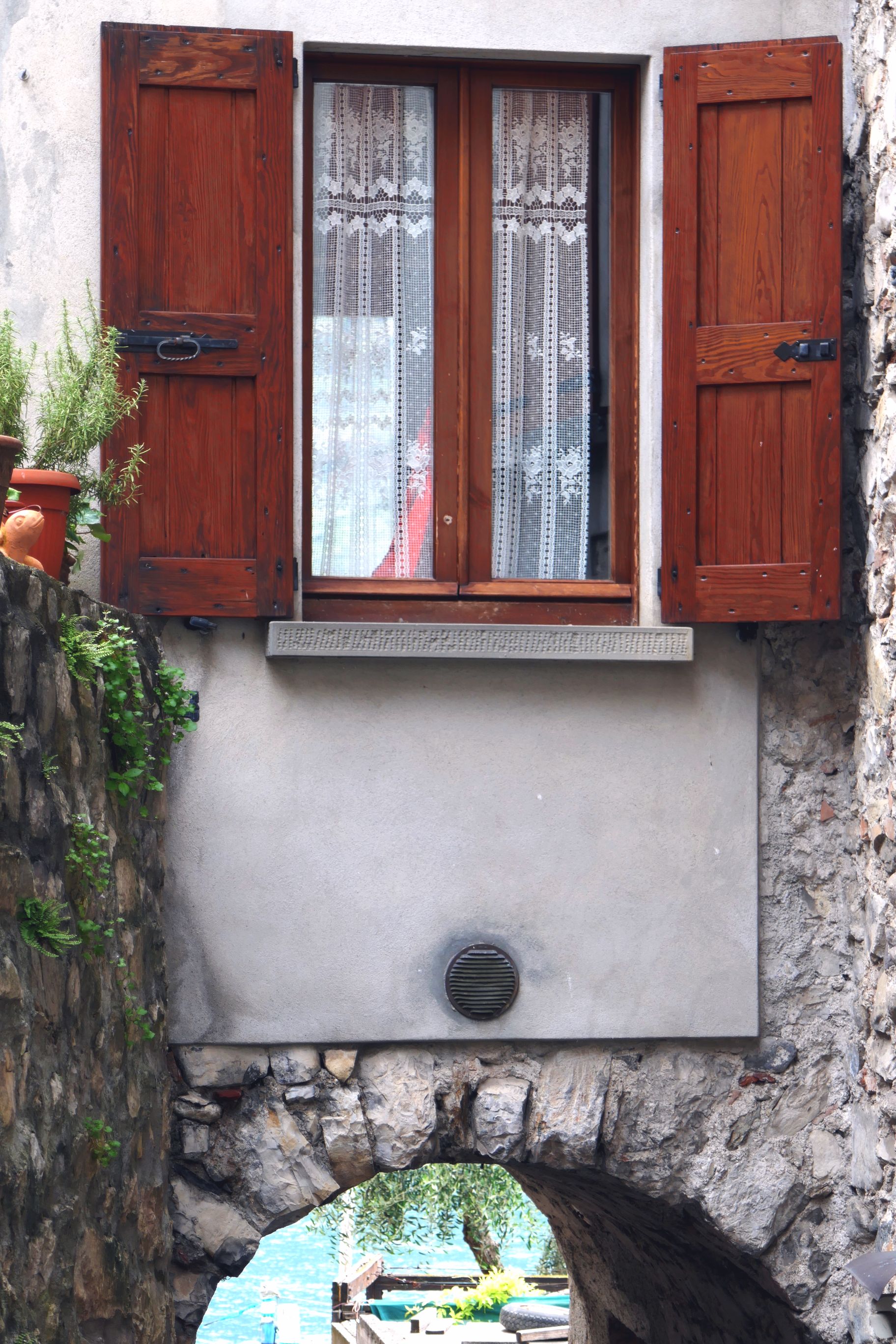
After we completed the loop back to town, we thoroughly enjoyed exploring the ancient, cobbled-street town with its steep and windy back streets. Ancient is a subjective description, but there is indication the town was a Roman settlement dating back to 905! This town has history!
More recently, Monte Isola’s little commune became famous when artists Christo and Jeanne-Claude created an incredible temporary installation, The Floating Piers, in 2016. These are a few photos I shot of the photo exhibit that was on display along the waterfront:
The skies cleared for our ferry ride back to Iseo, so we enjoyed weaving our way in and out of the streets after we arrived, exploring around each corner.
We passed by this little privately-owned island on the way back to Iseo.
Iseo
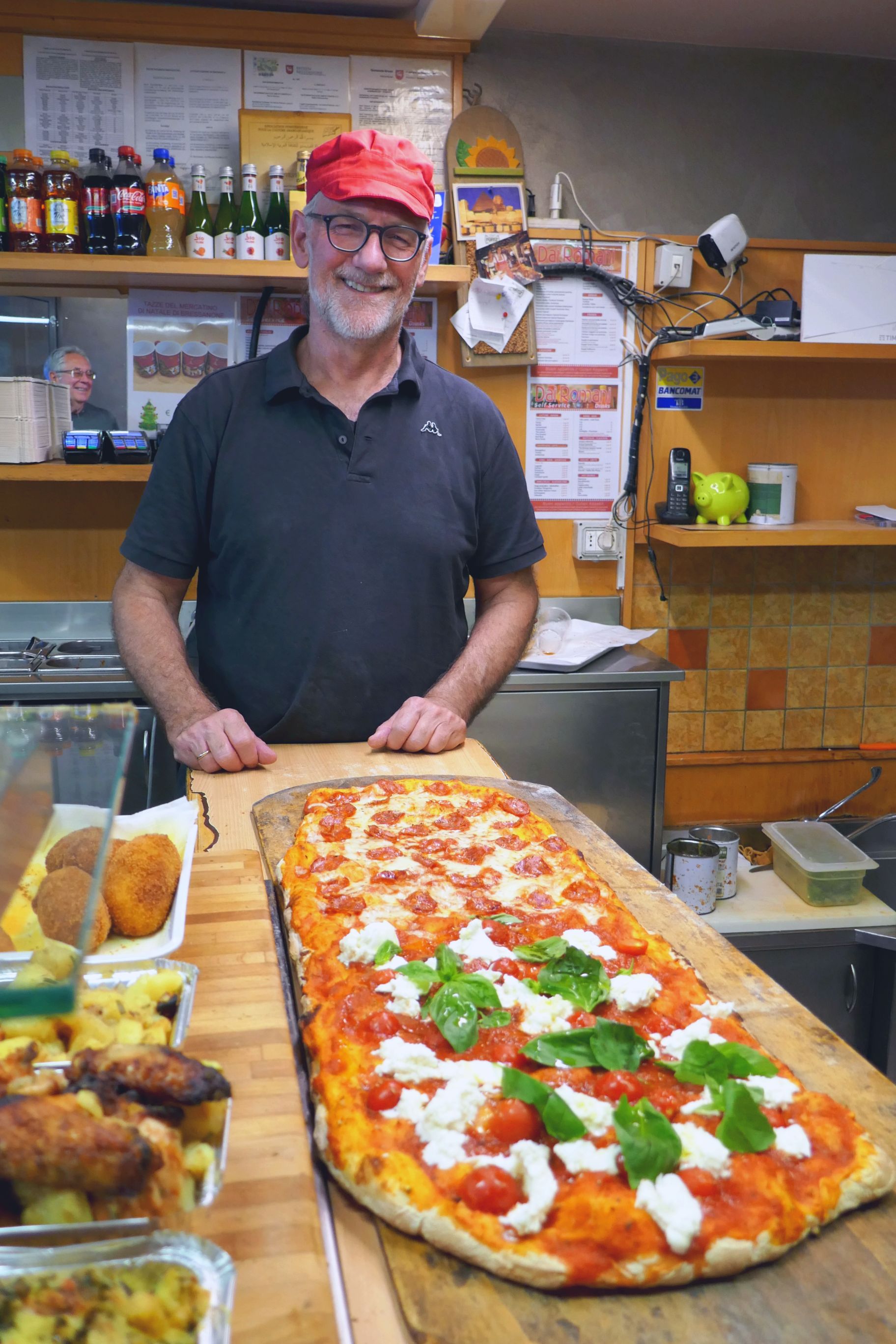
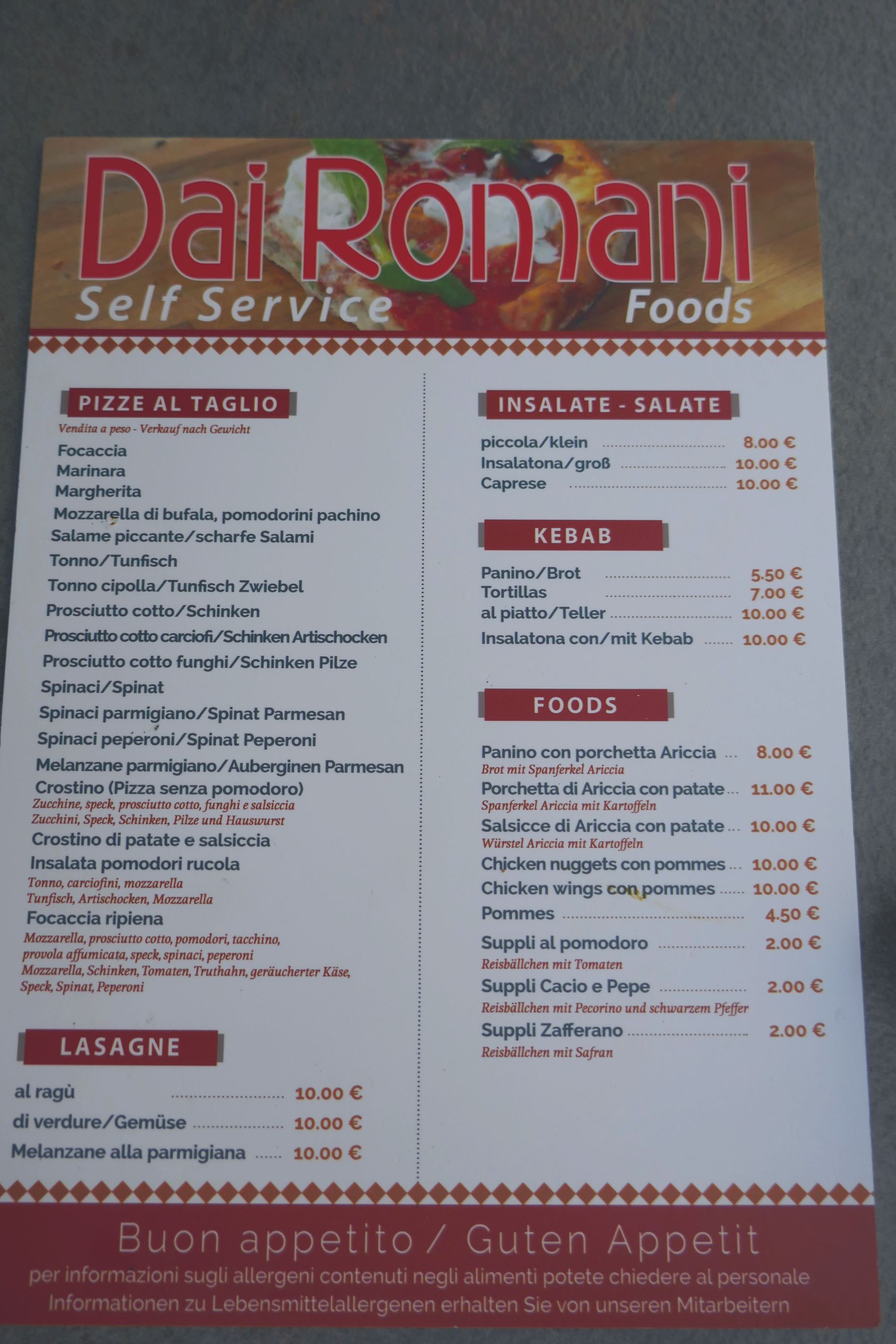
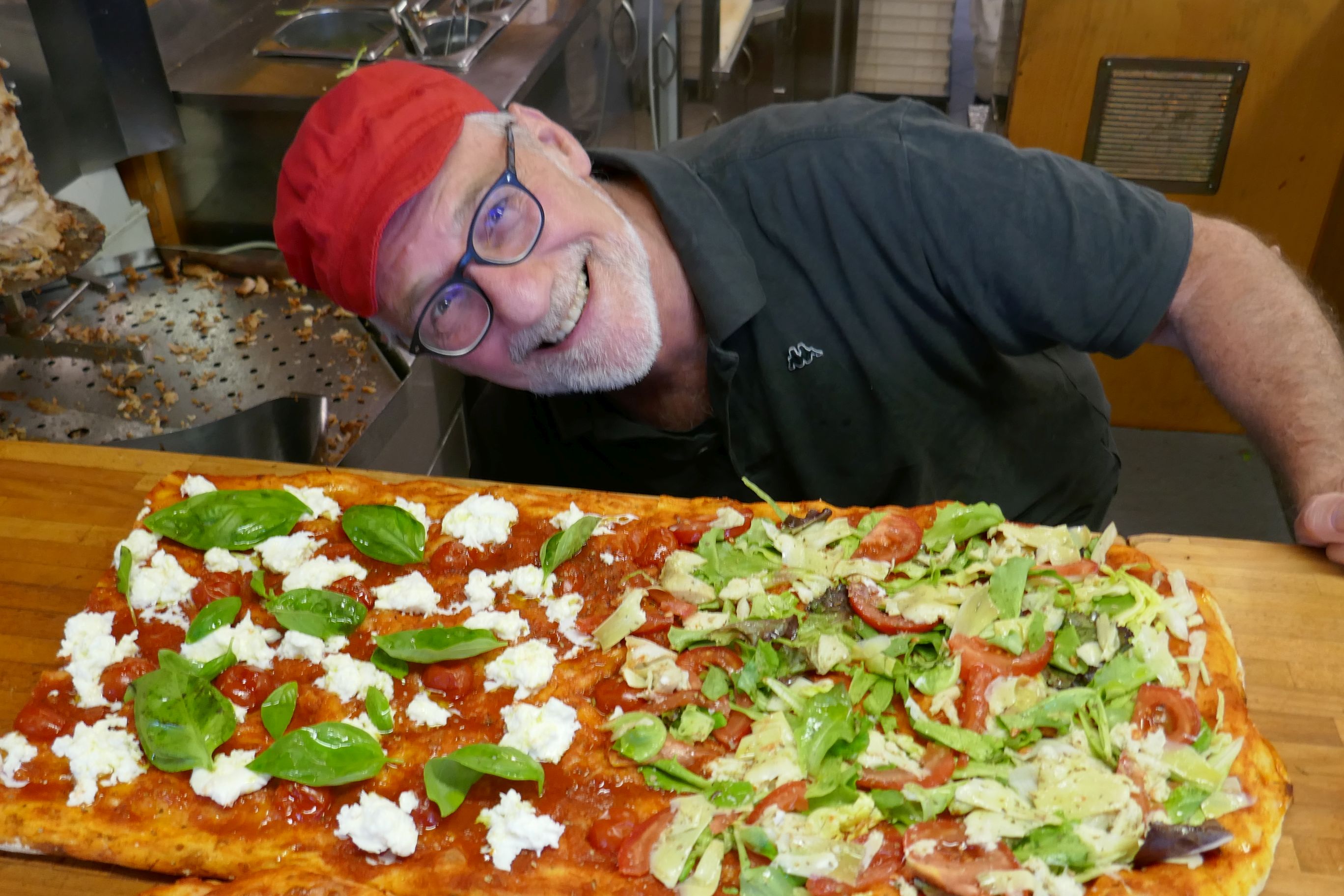
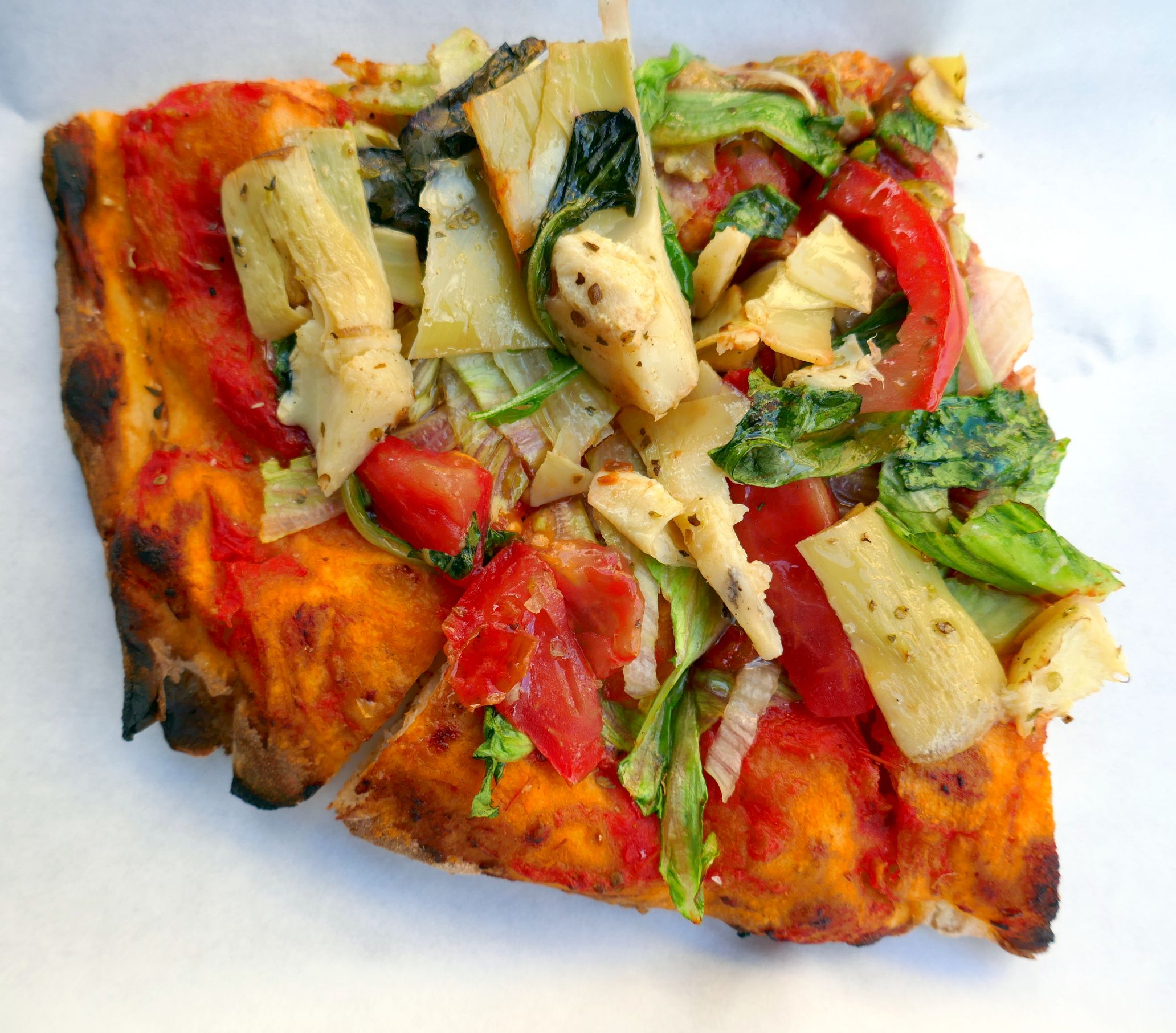
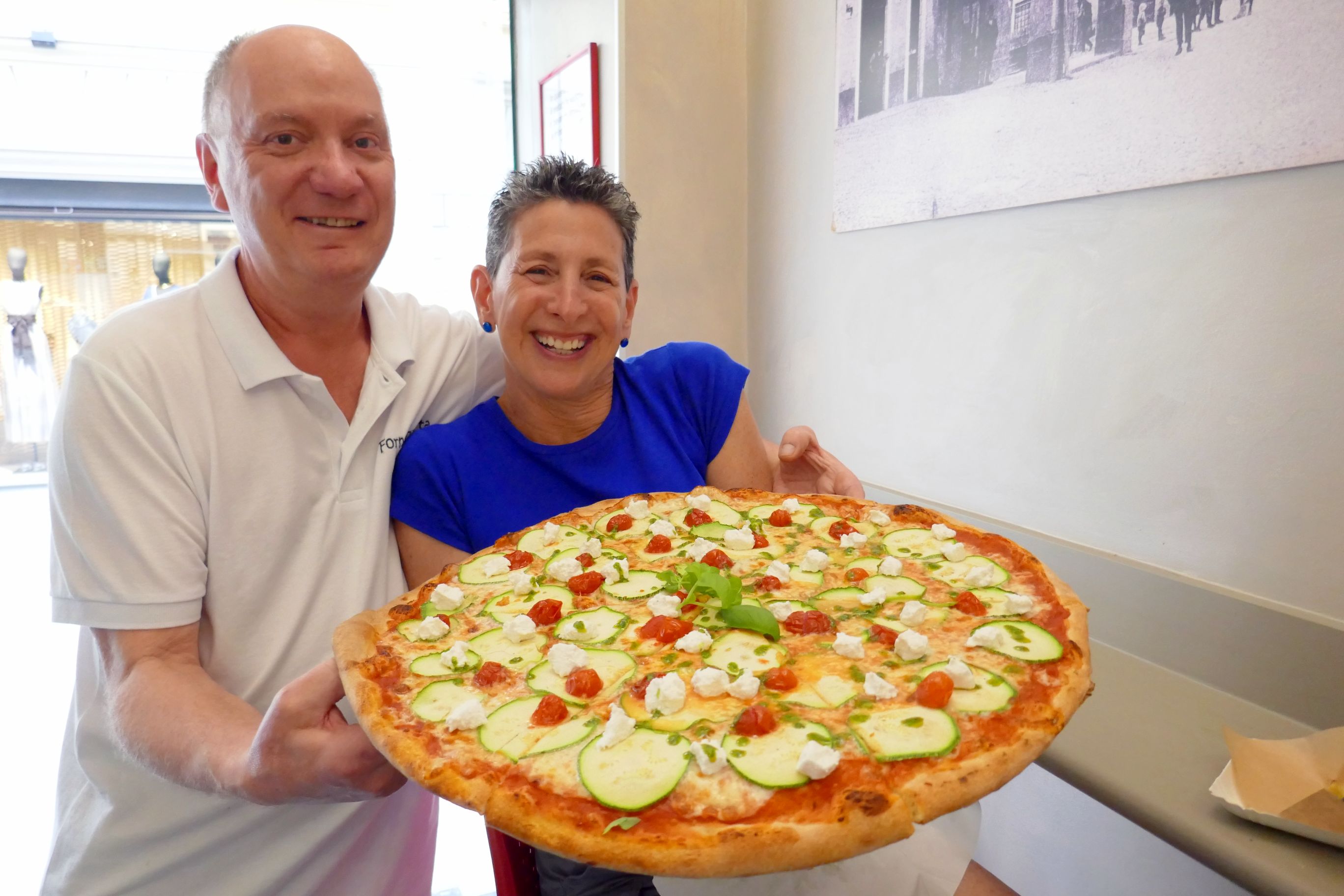
We decided to have pizza for dinner at a little place I found on Trip Advisor, Forno Di Porta del Camo. Check out the link for my review, “Great Owner & Great Pizza.” We will never forget the owner or his pizza. We laughed about it the entire way back to our hotel!
Next up: SWITZERLAND & NORTHERN ITALY #16: TRAVELING TO TRENTO
As we departed Tirano, I took one last look at the red Bernina Express train with gratitude. Yesterday had been an epic day in the Swiss Alps!
Now we were headed to Lake Iseo for new adventures. Along the way, we enjoyed beautiful views of Val Camonica and stopped in the little northern Italian town of Edolo.
(For all photos, click on the image for a full screen view.)
It had rained so much in Edolo that the water was flowing at a much higher level and volume than normal.
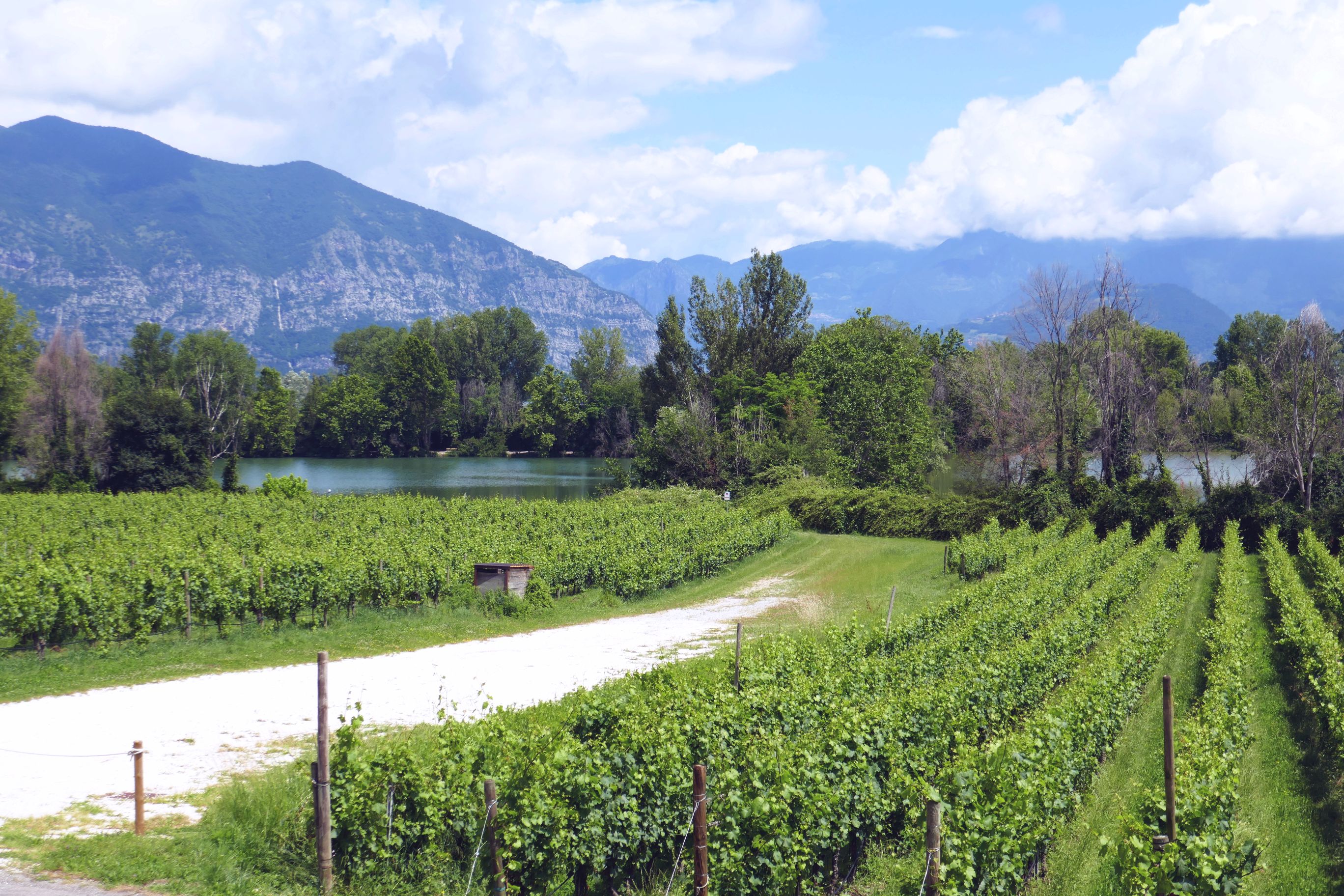
Our next stop was in the Franciacorta wine region where wonderful sparkling wine is produced using the traditional method. We toured the Bersi Serlini winery, and then sampled several of their sparkling wines followed by a delicious lunch.
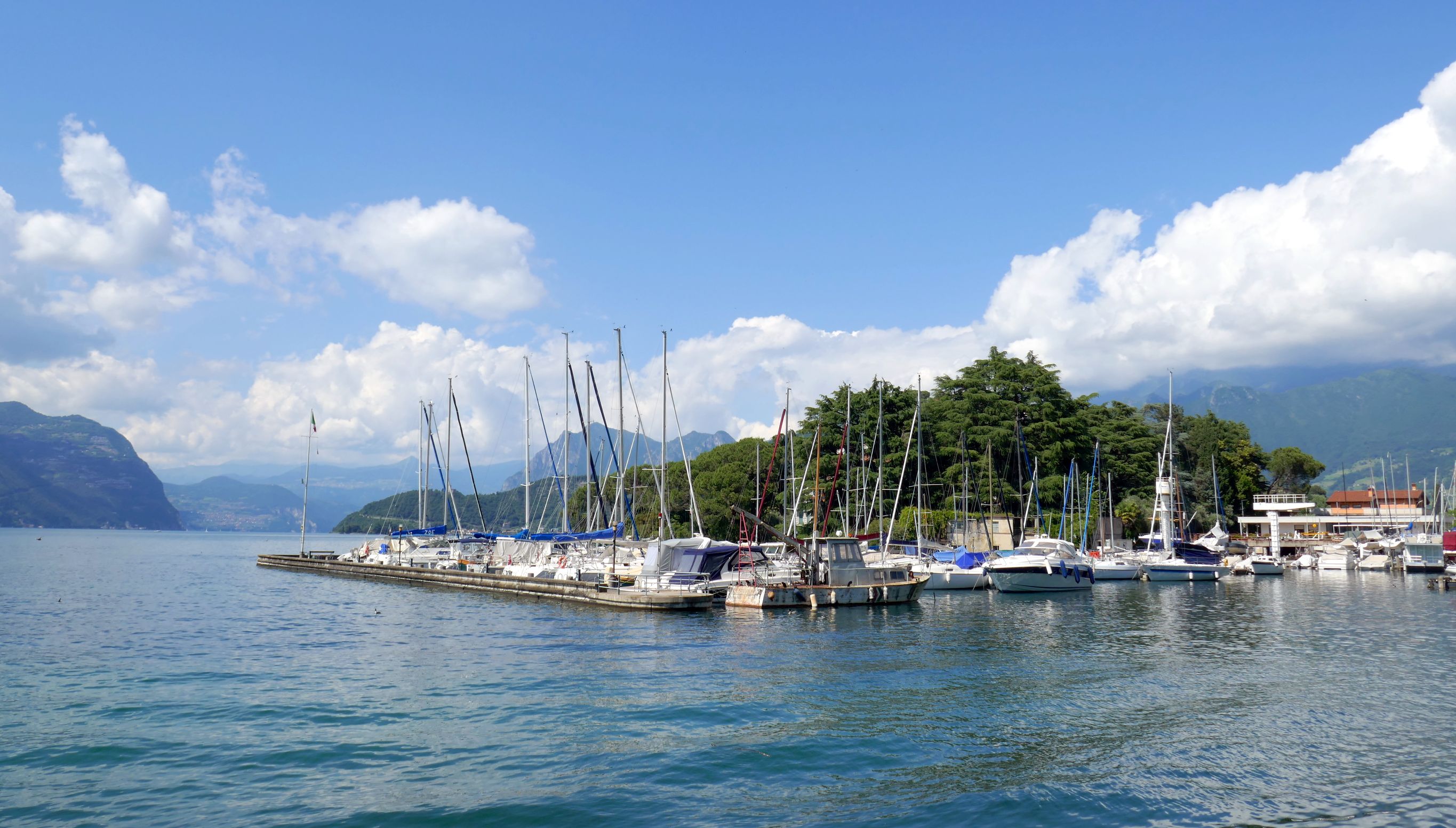
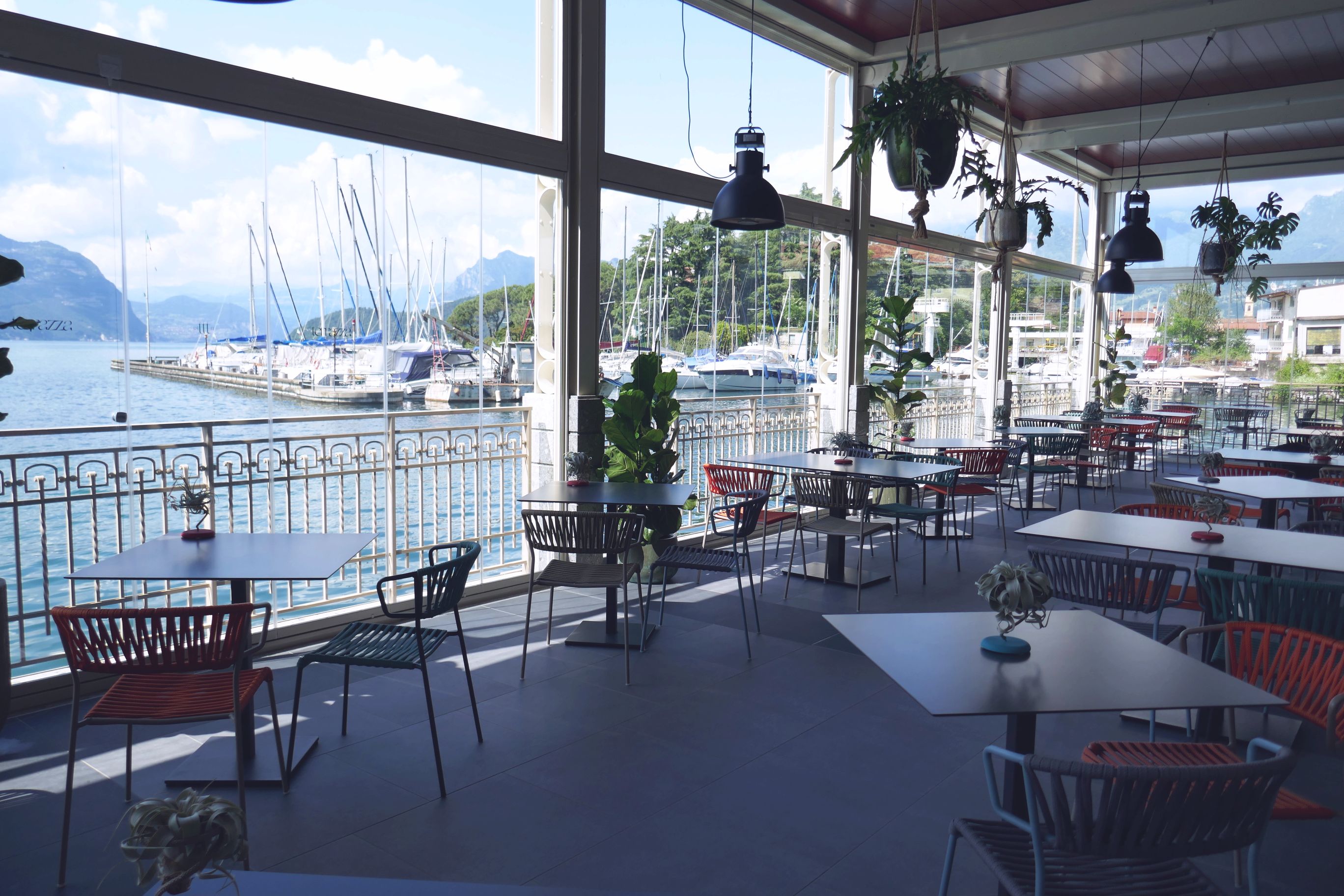
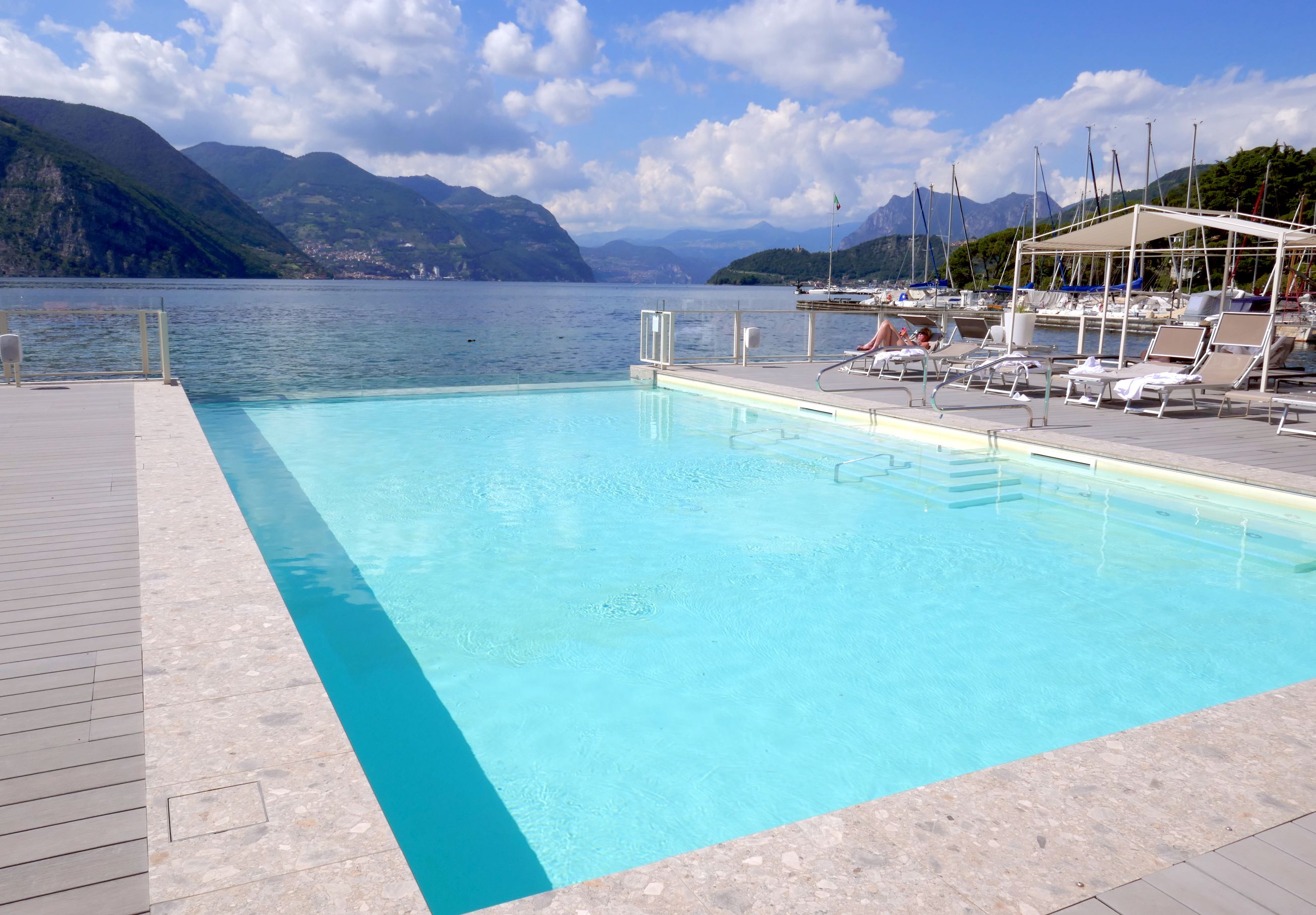
The final destination for the day was Hotel Araba Fenice, on Lake Iseo. Check out that link and you will see an aerial shot of the hotel’s location on their Trip Advisor page. What a gorgeous spot! The hotel does a great job taking advantage of the scenery with large lake-view windows and an infinity-edge pool. Although we had warm weather to enjoy the pool, the water temperature was 60 degrees, and the lake was even colder. Brrr!
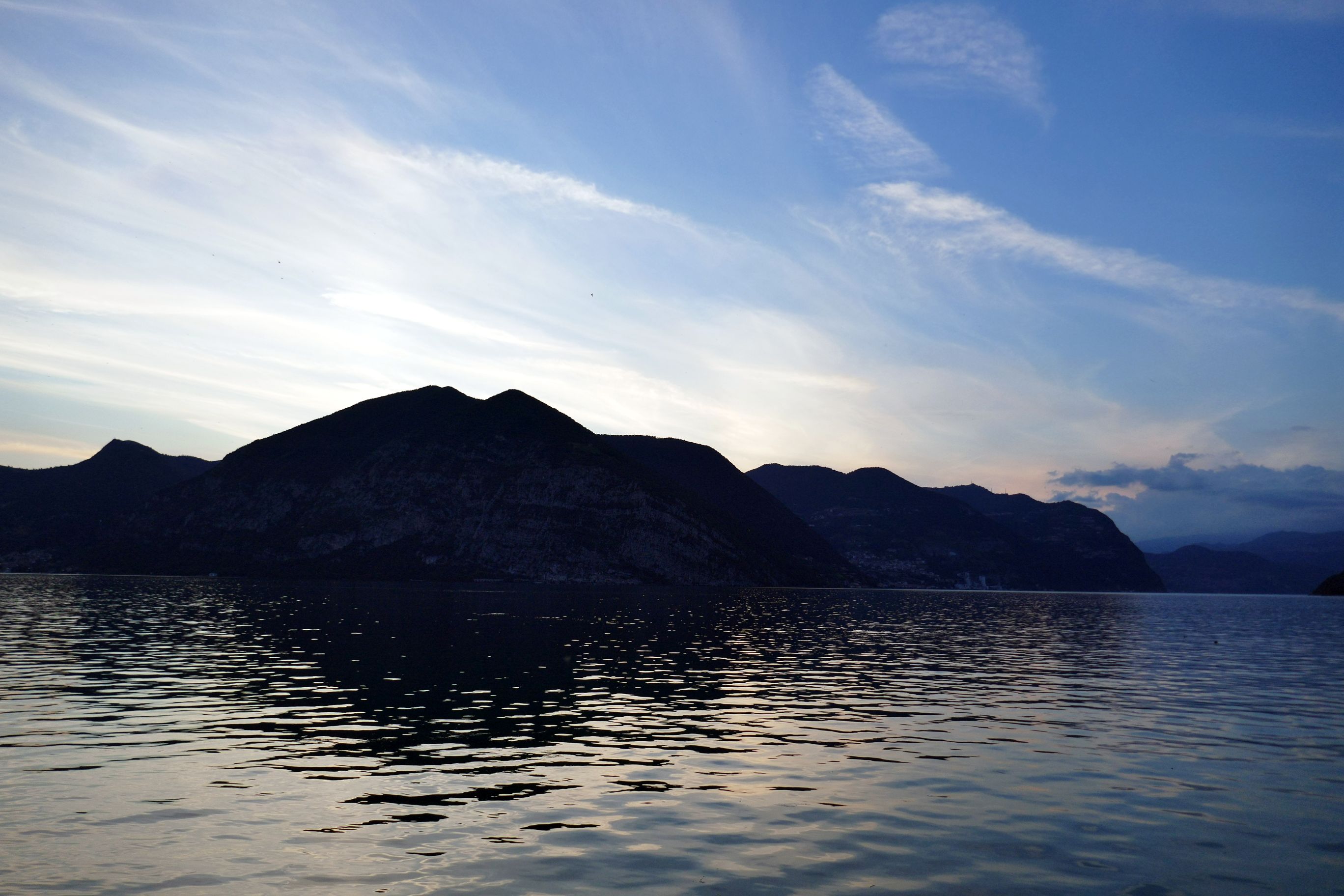
Lake Iseo, in the Lombardy region, is surrounded by medieval villages, and Bruce and I looked forward to exploring the town of Iseo the following day. Until then, we enjoyed a walk around the shore near our hotel with Maria, taking in the views at one of Pilzone’s tiny beaches.
Dinner that night was in the hotel’s restaurant overlooking the lake. Not only was the view gorgeous, but the cuisine was fabulous, too!
Coming up next (after a break): SWITZERLAND & NORTHERN ITALY #15: MAGICAL MONTE ISOLA AND INTRIGUING ISEO
For the six people on the main tour who were not on the pre-extension, this was an opportunity to spend a day in Switzerland. I’m sure I could speak for the other nine of us that we were excited to see the Swiss Alps again!
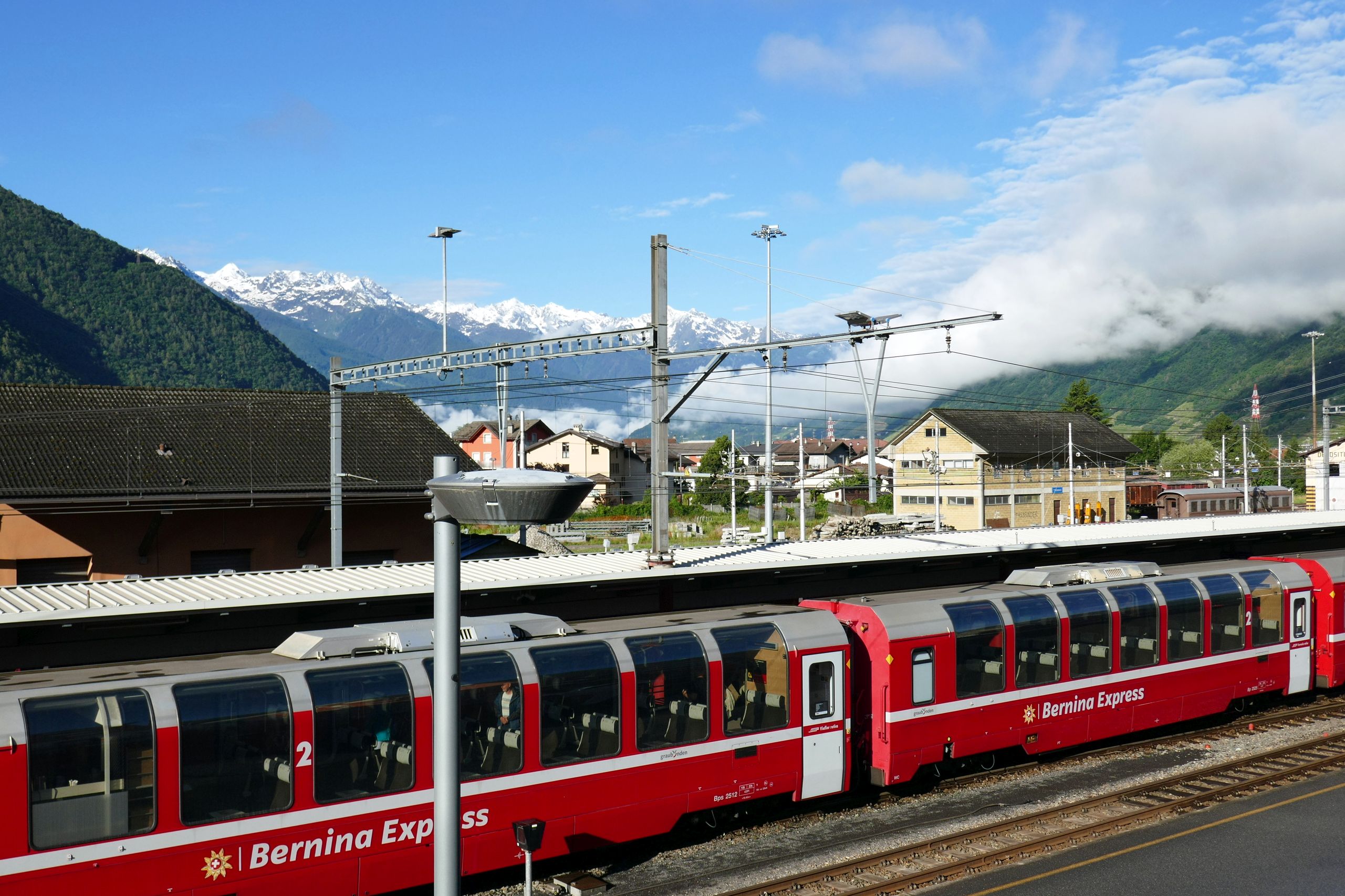
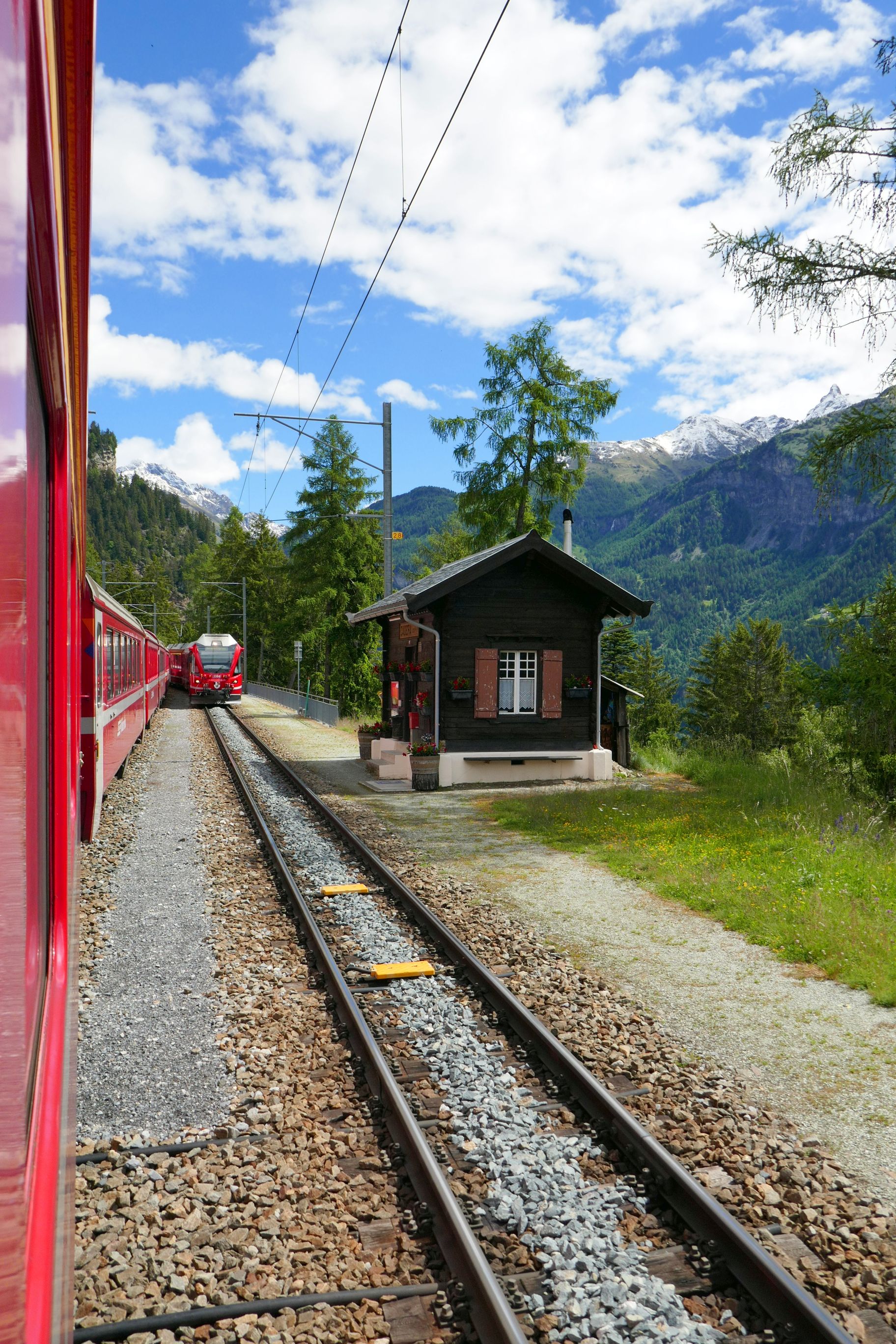
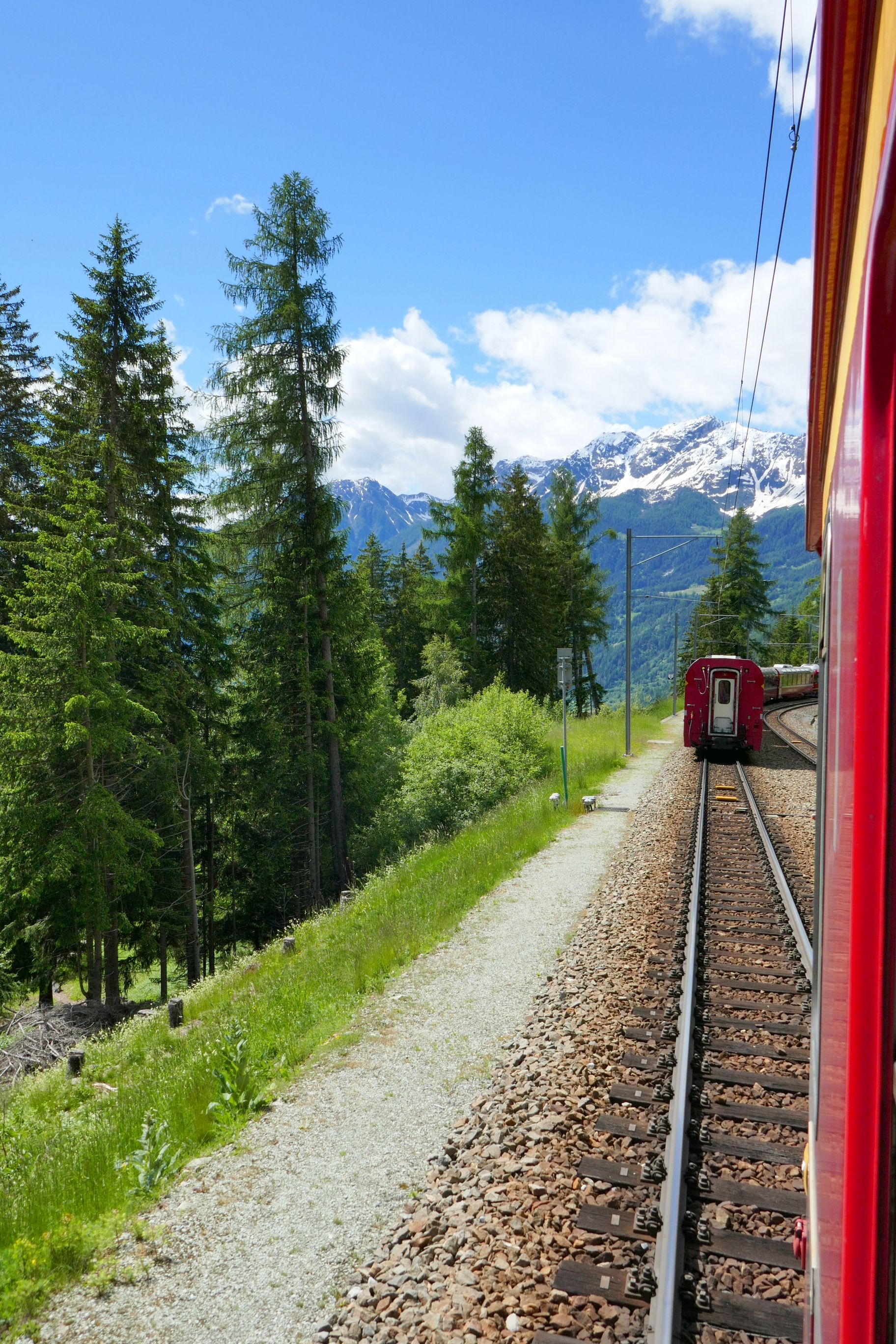
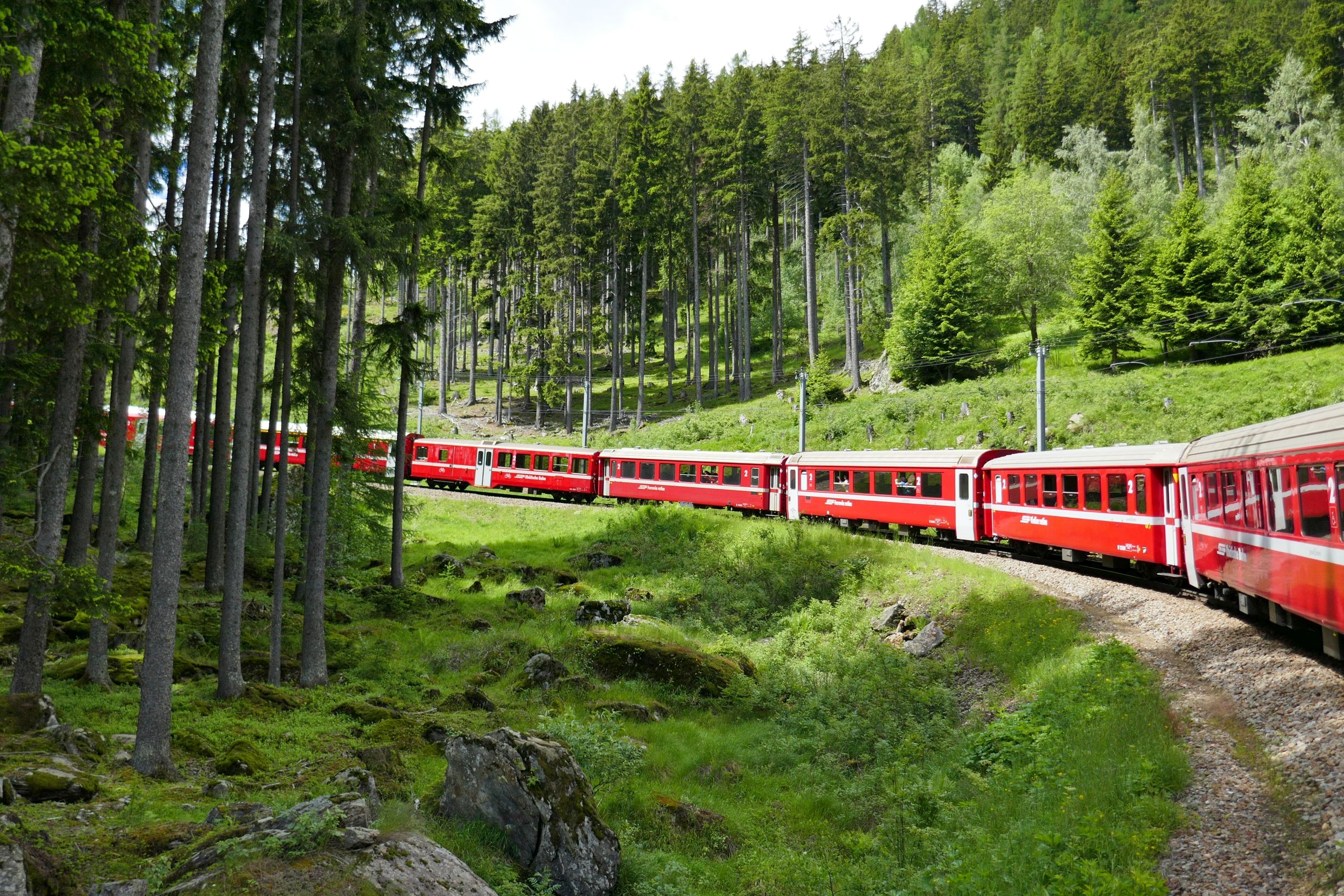
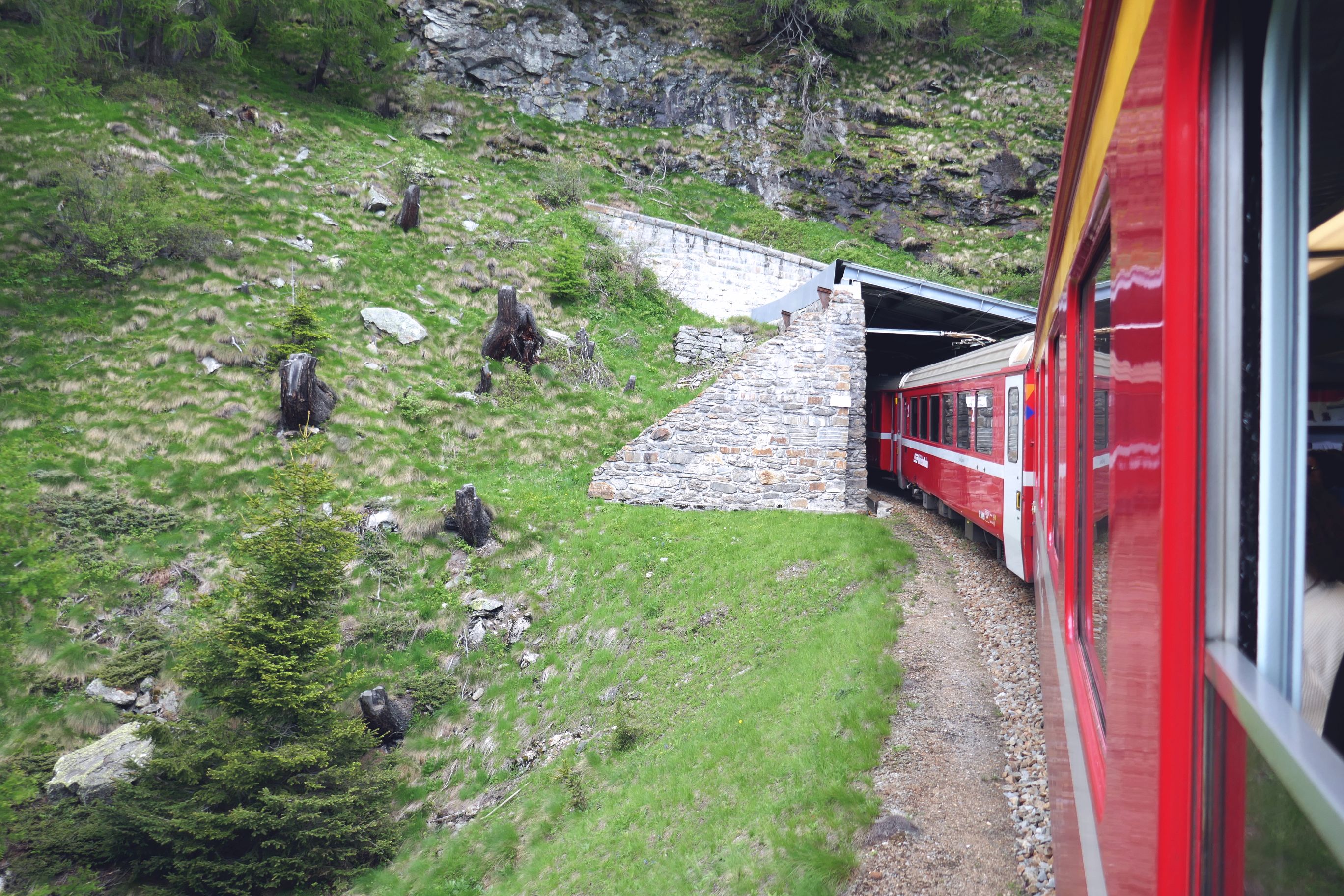
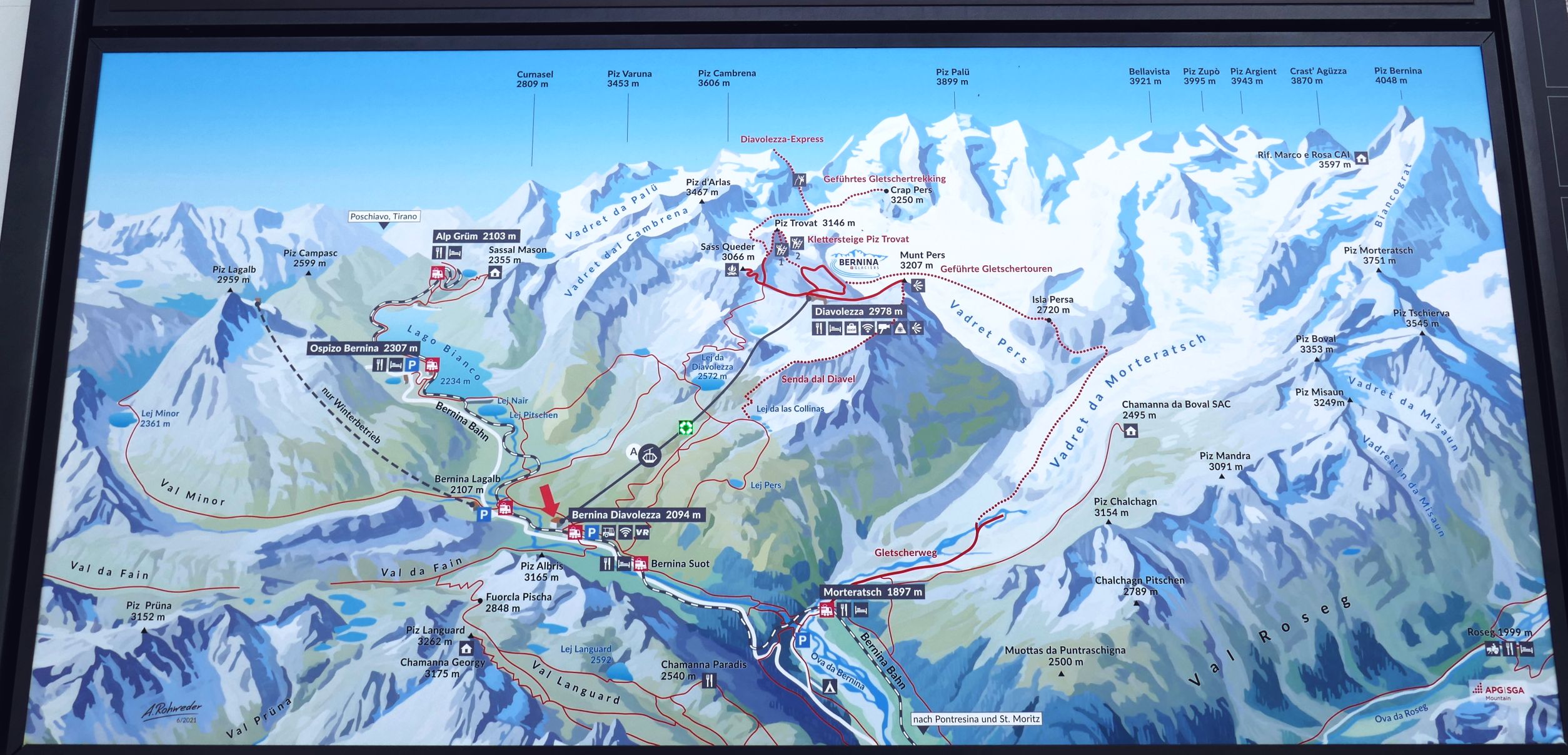
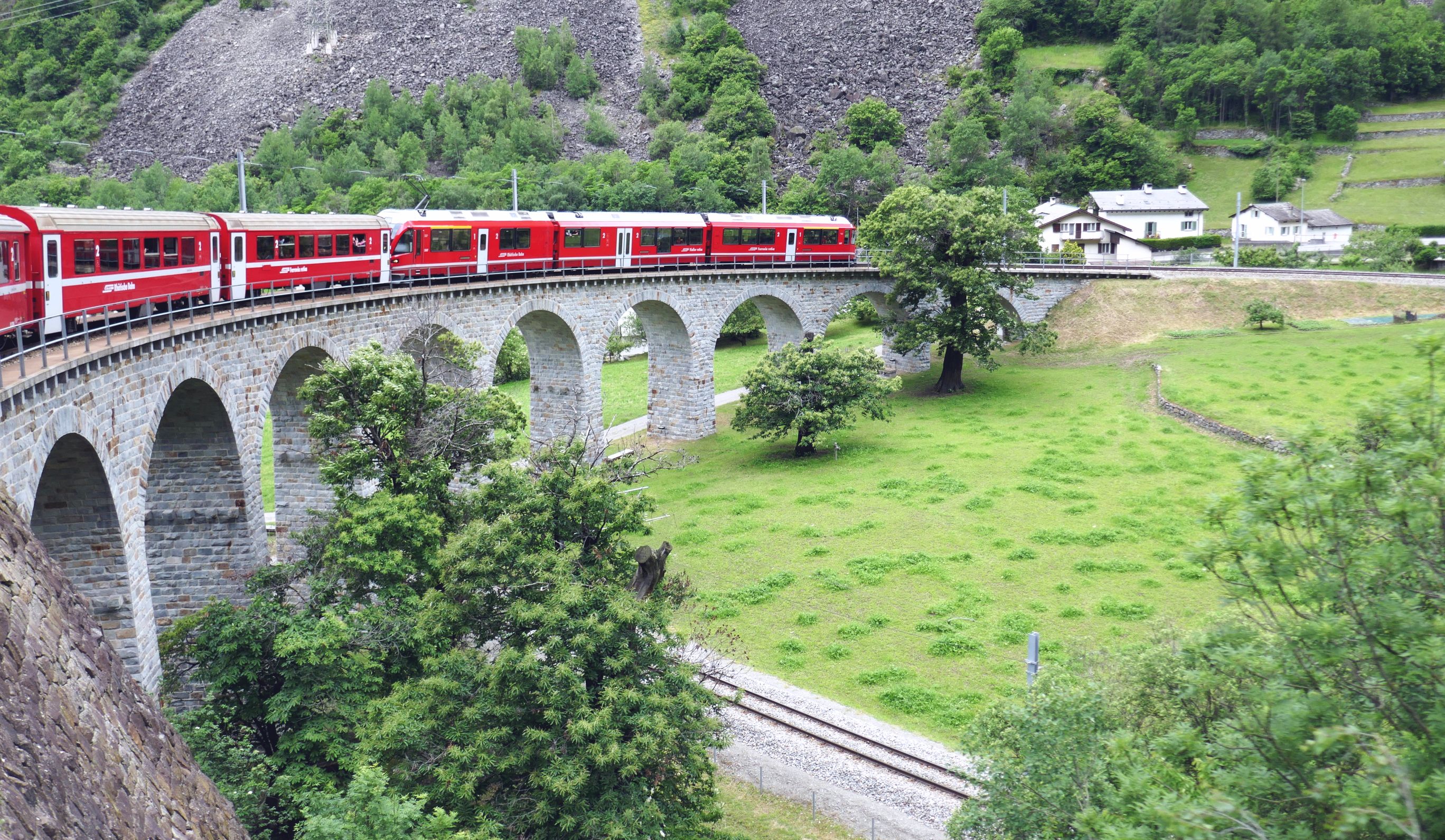
This day was what Bruce and I had looked forward to the most: Riding the Bernina Express. It is one of the few rail journeys designated a UNESCO World Heritage Site. Not only is it the world’s highest Alpine crossing (reaching an altitude of 7,400 feet), but also the steepest, with gradients up to 7%.
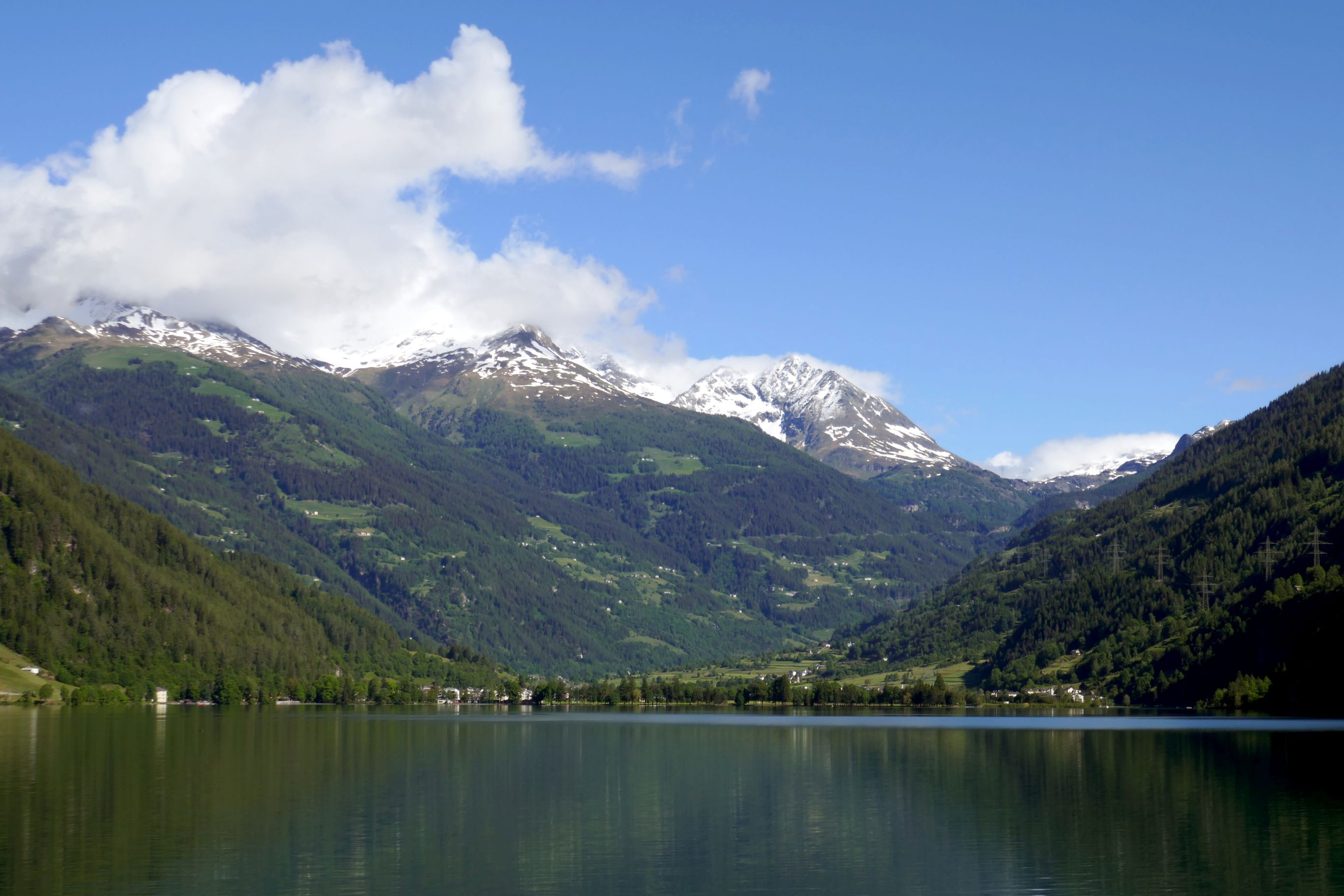
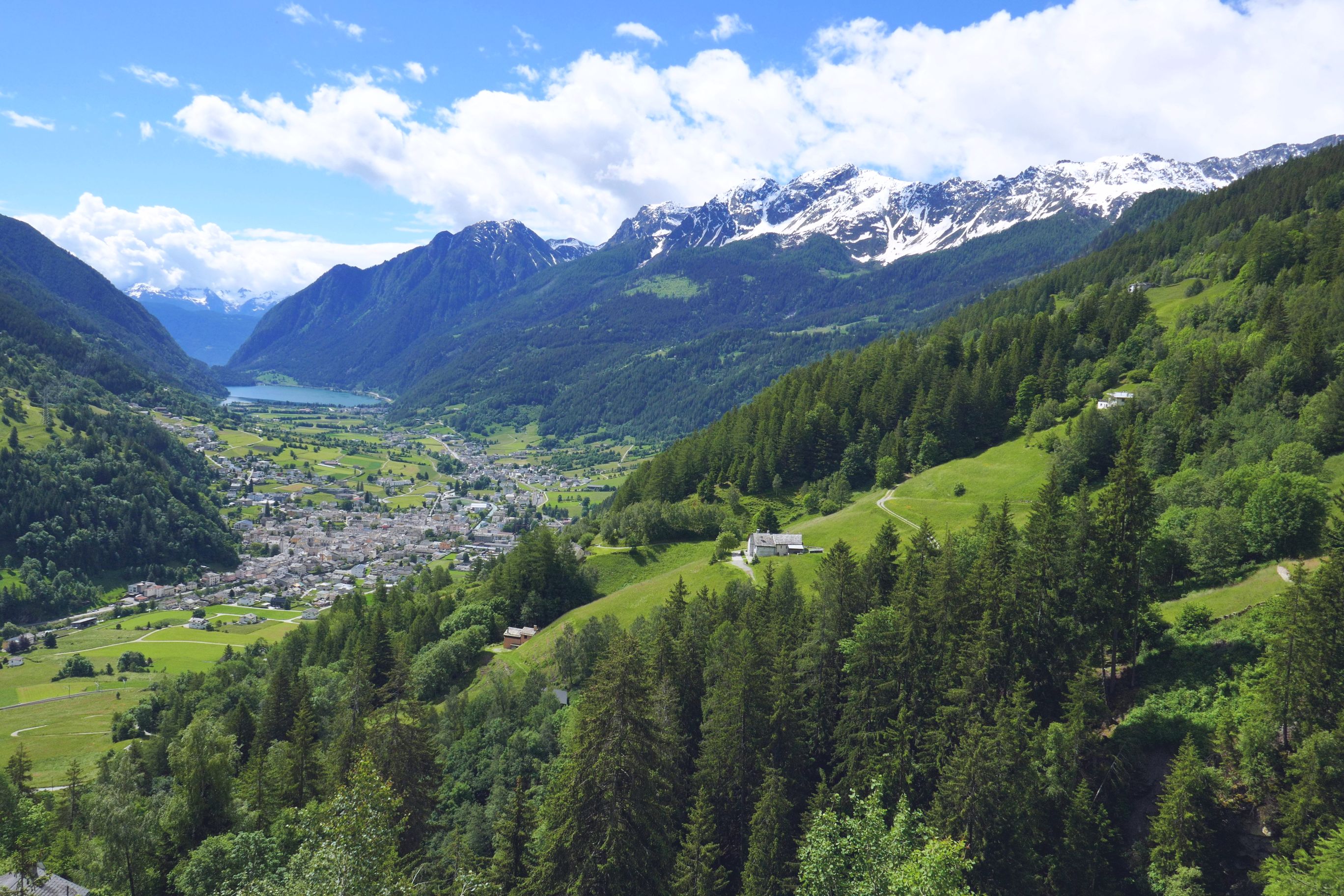
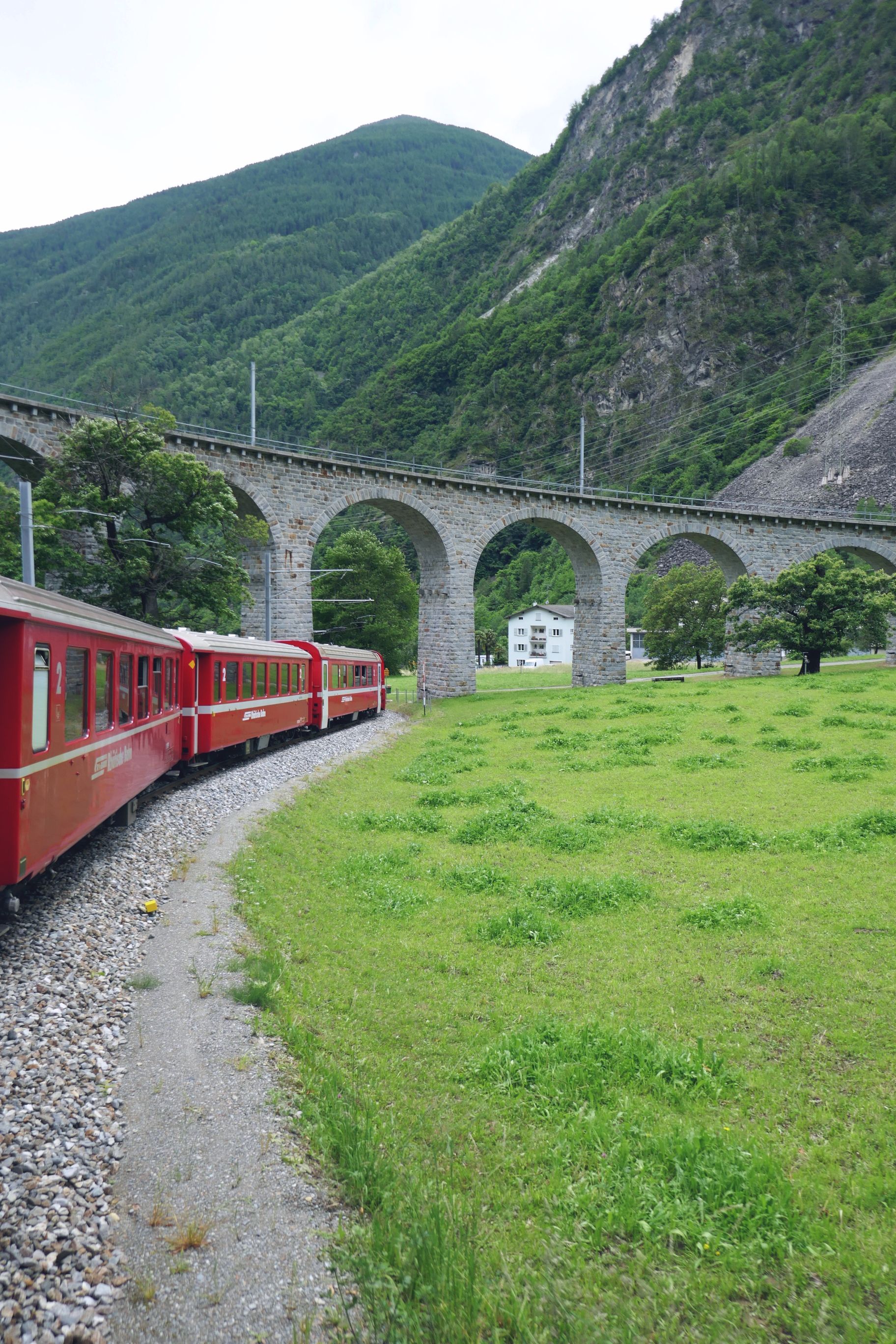
The journey took us over bridges and viaducts (including a full 360 loop over one of them), through tunnels, past glaciers and alpine meadows, and through tiny villages and vineyards. I did not take this ride sitting down or with the window closed! Fortunately, I was sitting across the aisle from another photographer in our group, so we shared windows on both sides of the train, jumping back and forth when we saw something worth shooting—which was often!
Our local guide, Roberto, was awesome! He rides the train six days per week as a guide, so he knew exactly when our cameras needed be ready for a spectacular scene. At times, it was a blink-and-you-miss it photo op, so he gave us a countdown, so we could capture the best shots.
Remember what I said in one of my Swiss blogs about trains being on time? Well, $#@* happens and it did happen on our journey. At one point in the 30-mile ride, we came to a complete stop and didn’t move. We waited, and waited, and waited… Roberto finally went in search of the conductor to ask what happened. The news wasn’t good. The driver of a huge crane truck didn’t lower the crane enough to go under the railway’s electrical lines, so he got in a tangle with those lines and the lines won. They came down and lost power, and a crossing arm was destroyed. It was a mess. Kudos to the efficient Swiss, though. They immediately called for a bus to pick us up and take us to the next station where the lines had power. To compensate for the inconvenience, we were upgraded to first class. I didn’t notice much difference except the restroom was quite large and nice!
If that’s the worst that would happen throughout our three-week trip (and it was), it was all good!
What was fabulous was our luck with the weather! Normally, there is no snow in mid-June, but it rained for two months straight, late into the season. Lucky for us, it stopped just in time. Come along on our journey and see for yourself!
(For all photos, click on the image for a full screen view.)
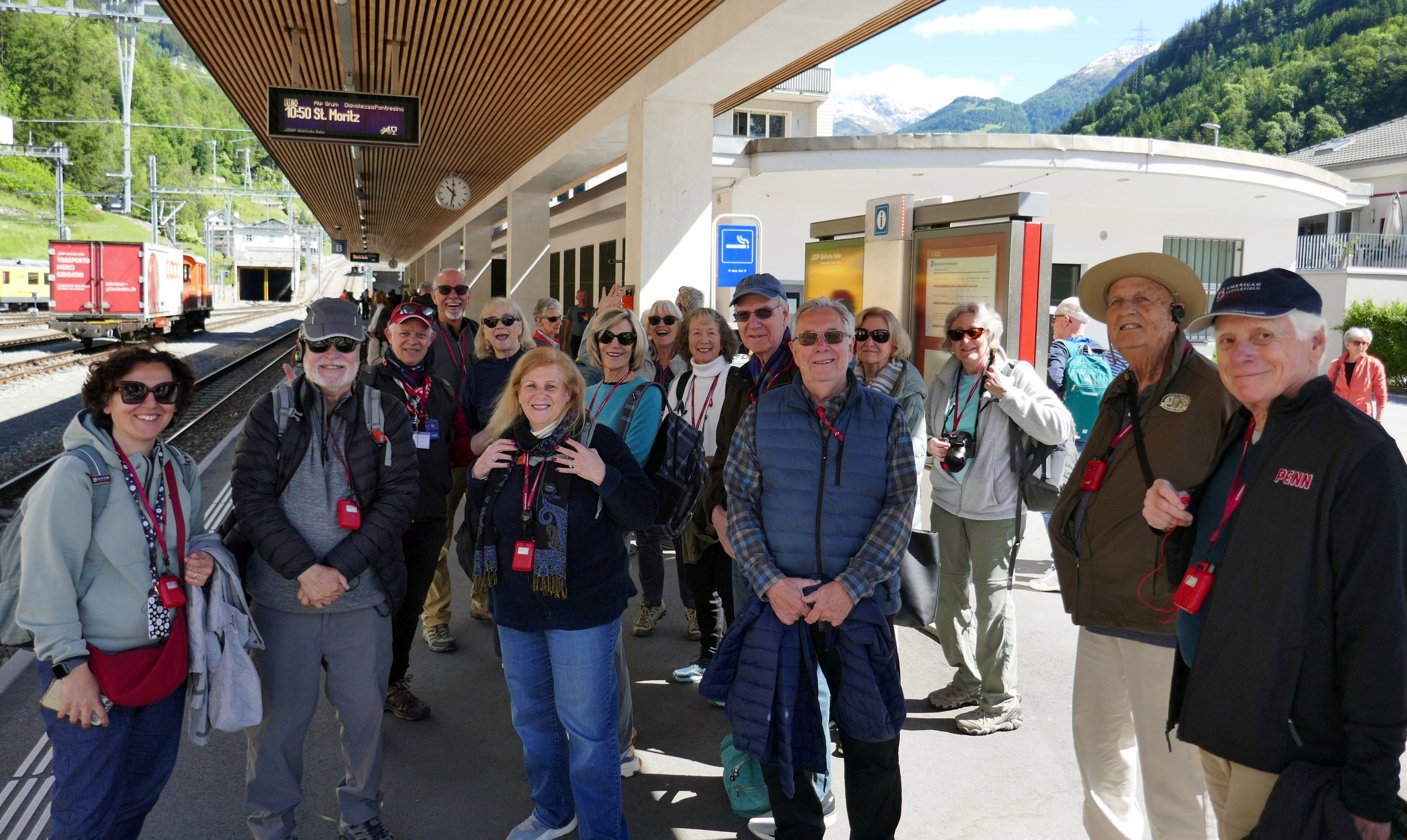
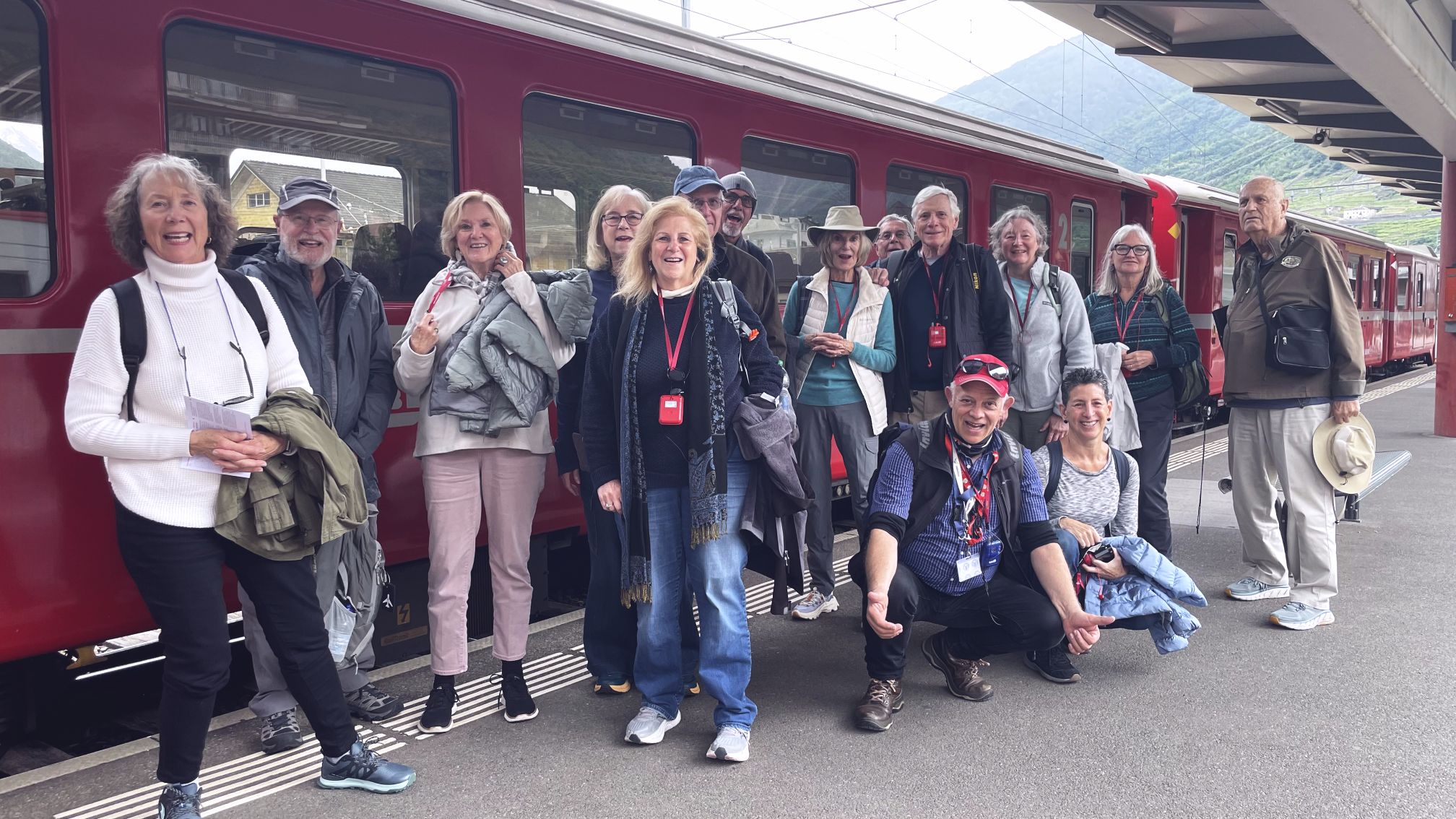
The view of our train from our hotel room in Tirano. We were so excited to wake up to a beautiful day!This was just the beginning of many beautiful scenes to come on our 30-mile Bernina Express Journey.Our group, waiting for Bernina Express train, #2.
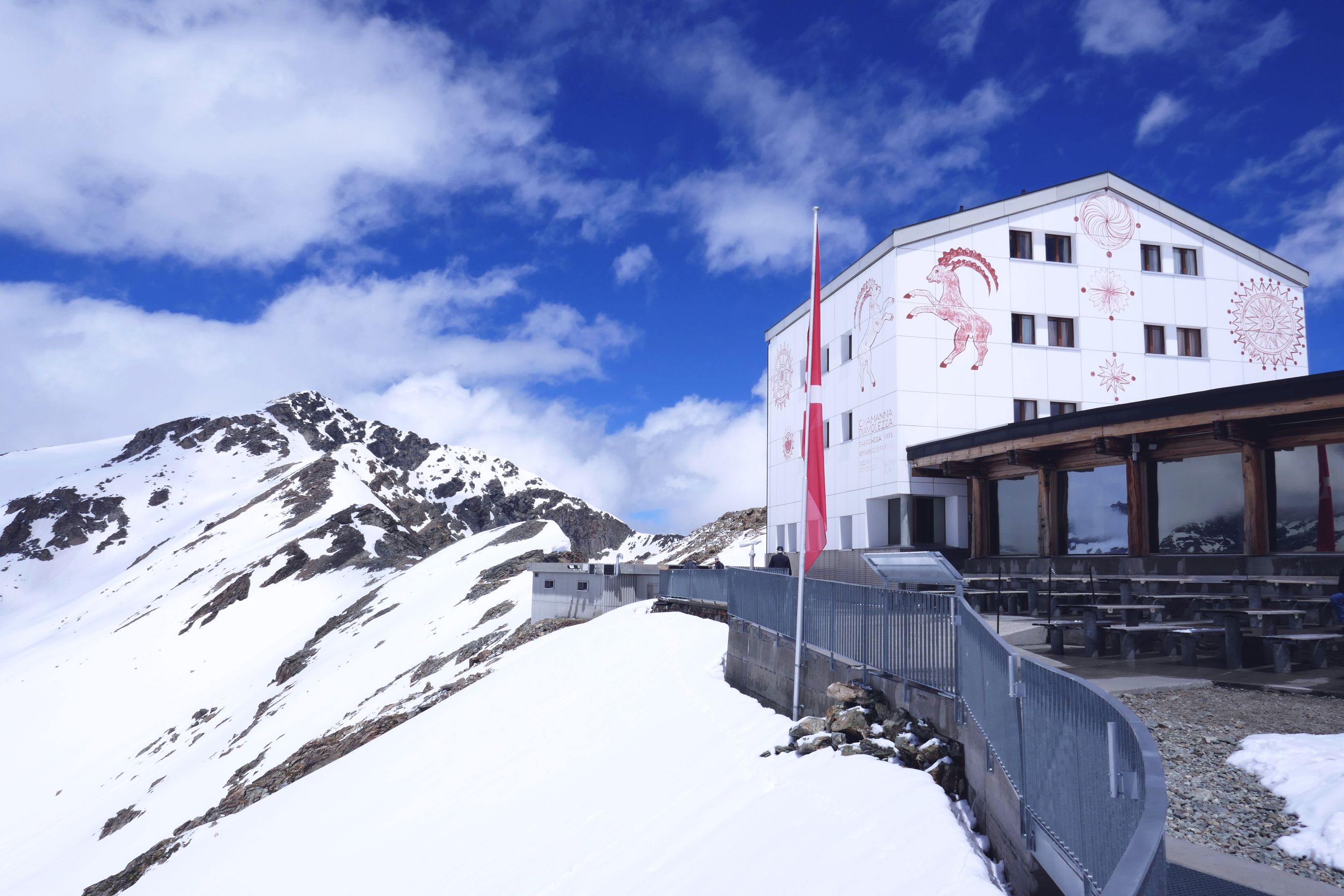
Upon arrival at the Diavolezza station, we took a cable car up to an elevation of 10,000 feet.The ride was spectacular! This was shot out the cable car window.
Seen while disembarking the cable car. Love it!
The view from the cable car ride back down. Dark clouds rolled in, so we were grateful to have enjoyed the beautiful weather while it lasted!
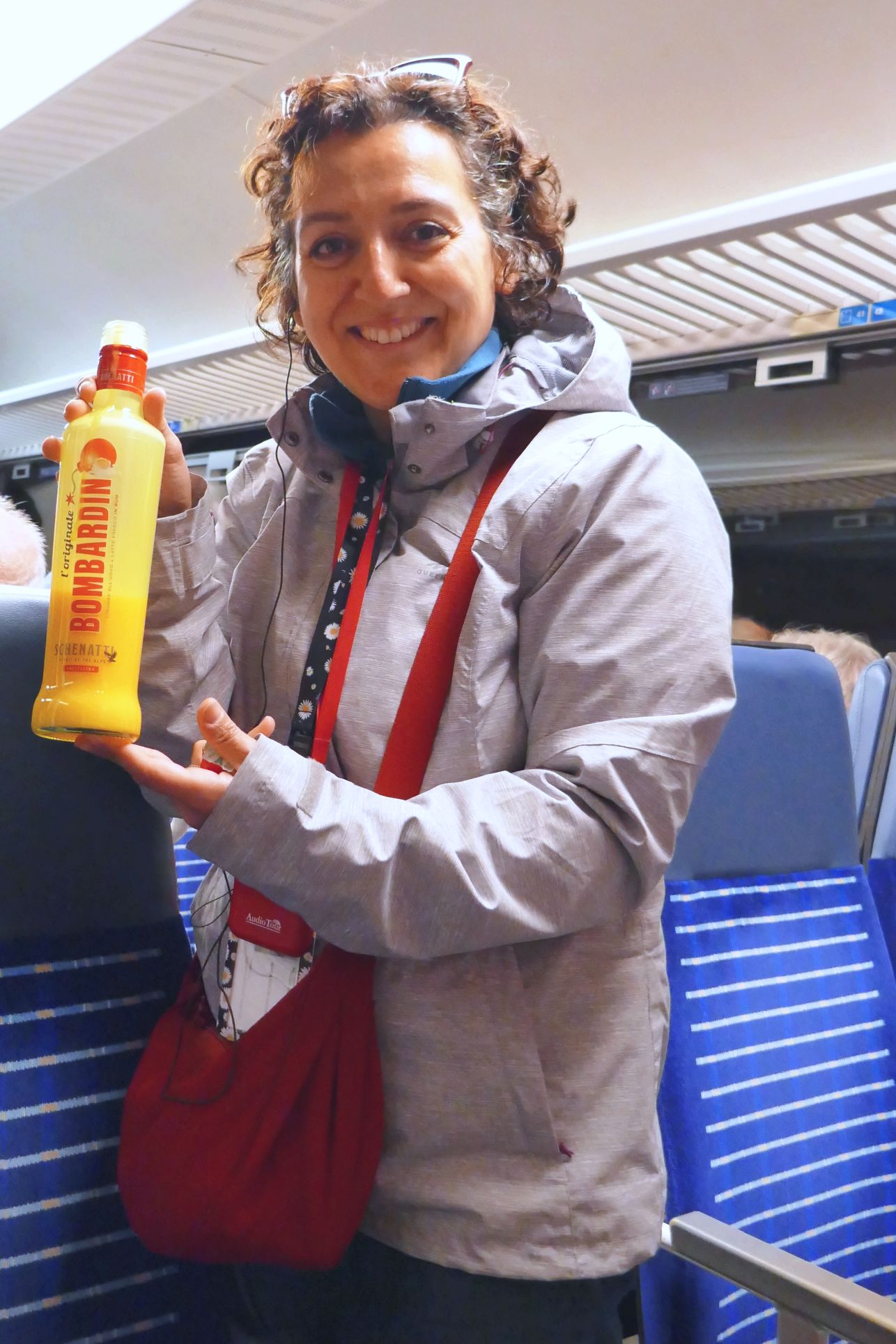
Maria shared a local spiced eggnog with us to celebrate during our journey back to Tirano.
The track made a 360 spiral!
Next up: SWITZERLAND & NORTHERN ITALY #14: EDOLO AND LAKE ISEO
When I heard we would be visiting a goat farm for our “Day in the Life” excursion (an Overseas Adventure Travel feature on every tour), I immediately thought of my friend, Laura. Years ago, when she visited me and Bruce (and after we all had one too many glasses of wine), a funny conversation we were having about goats led to Laura exclaiming, “Bring in the goats!” I don’t remember what the story was or how the topic of goats came up, but “Bring in the goats!” has been a joke between us ever since. Whenever Bruce and I see goats, one (or both) of us quote Laura, have a giggle, and immediately think of her. So, Laura, this post is dedicated to you!
The farm we visited was in the Valtellina Valley, in the Alpine region of Italy near the Swiss border. Known for its agriculture and cheese-making, we participated in both activities after first meeting the goats.
First, a little background: The hillsides and hamlets of this region used to be home to the rich; however, when people started moving into the cities, the small hamlets became depopulated and abandoned. To encourage people to return and build the population back up, abandoned homes were offered by the government for 1 Euro, but with strings attached. The new owners were required to commit to renovating and living in these homes. That worked well during COVID, when people started working remotely, fleeing the cities, and repopulating the region. More and more people are continuing to return to farming and living in more remote places such as the Valtellina Valley again.
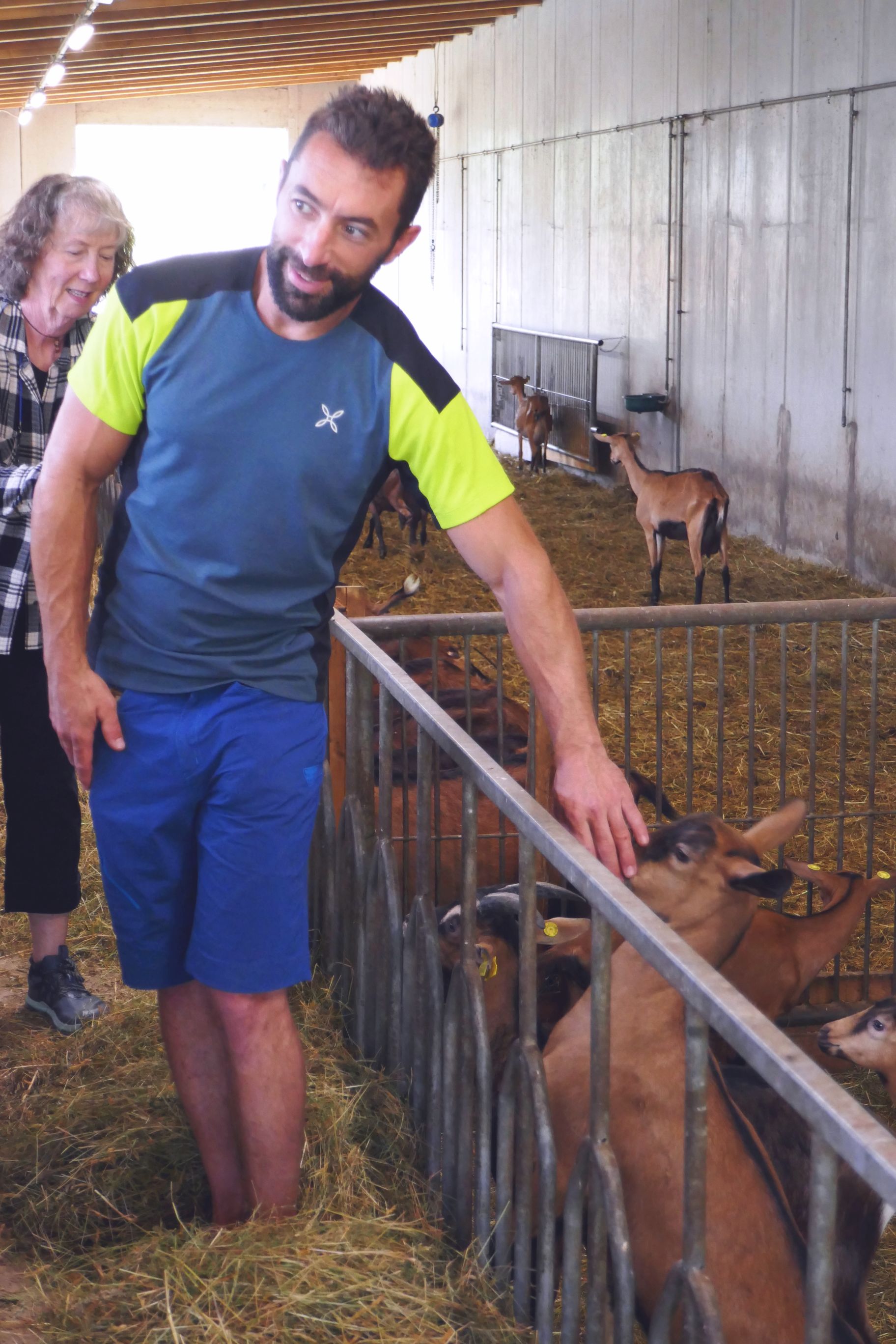
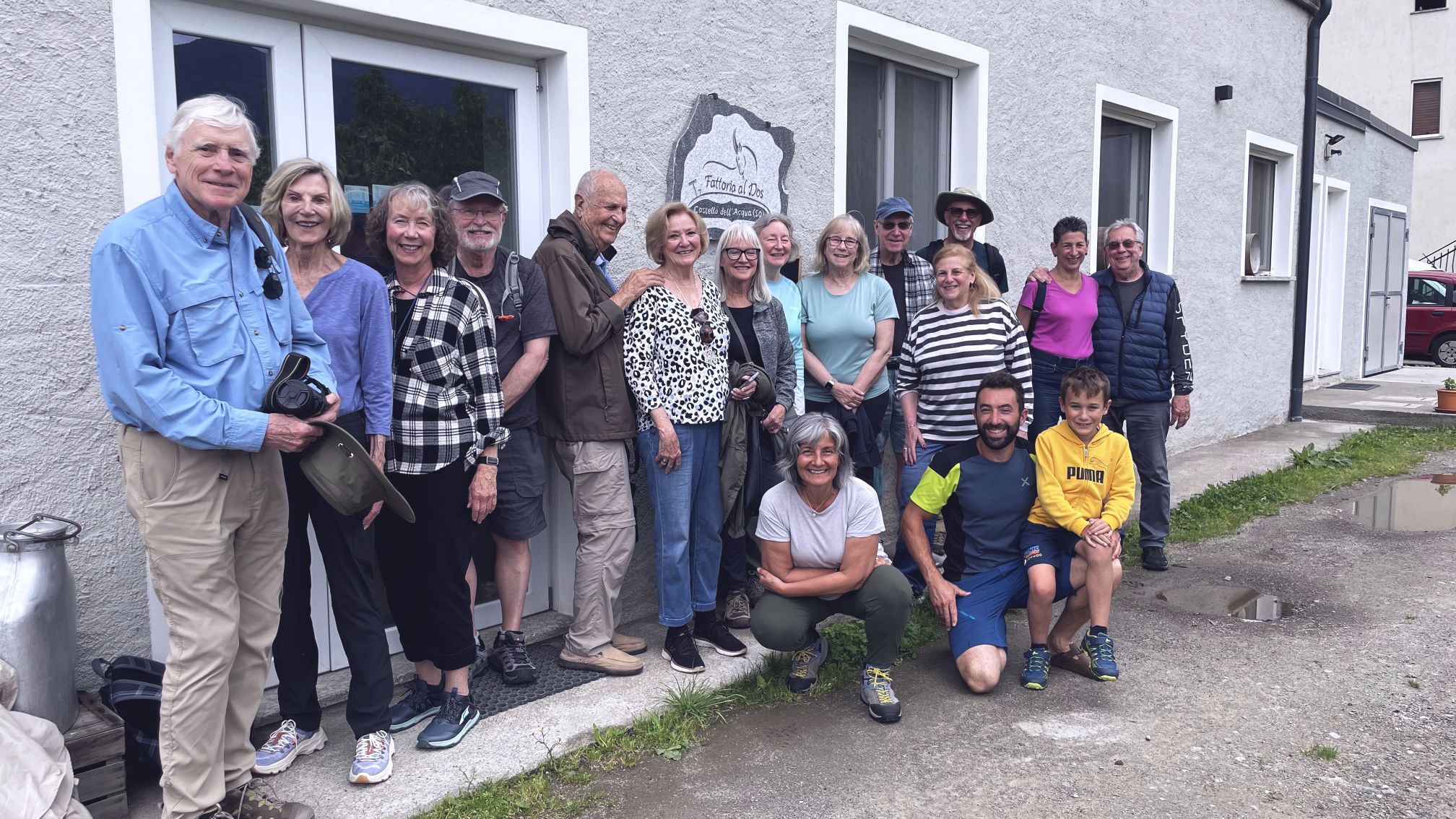
We visited Fattoria al Dos in Castello dell’ Acqua and were hosted by Gabriele, his son, Michele, and Gabriele’s dad. Their farm had been passed down by Gabriele’s great grandfather through the generations, and Gabriele now does most of the work while his father handles the tourism end of the business, such as hosting groups like ours.
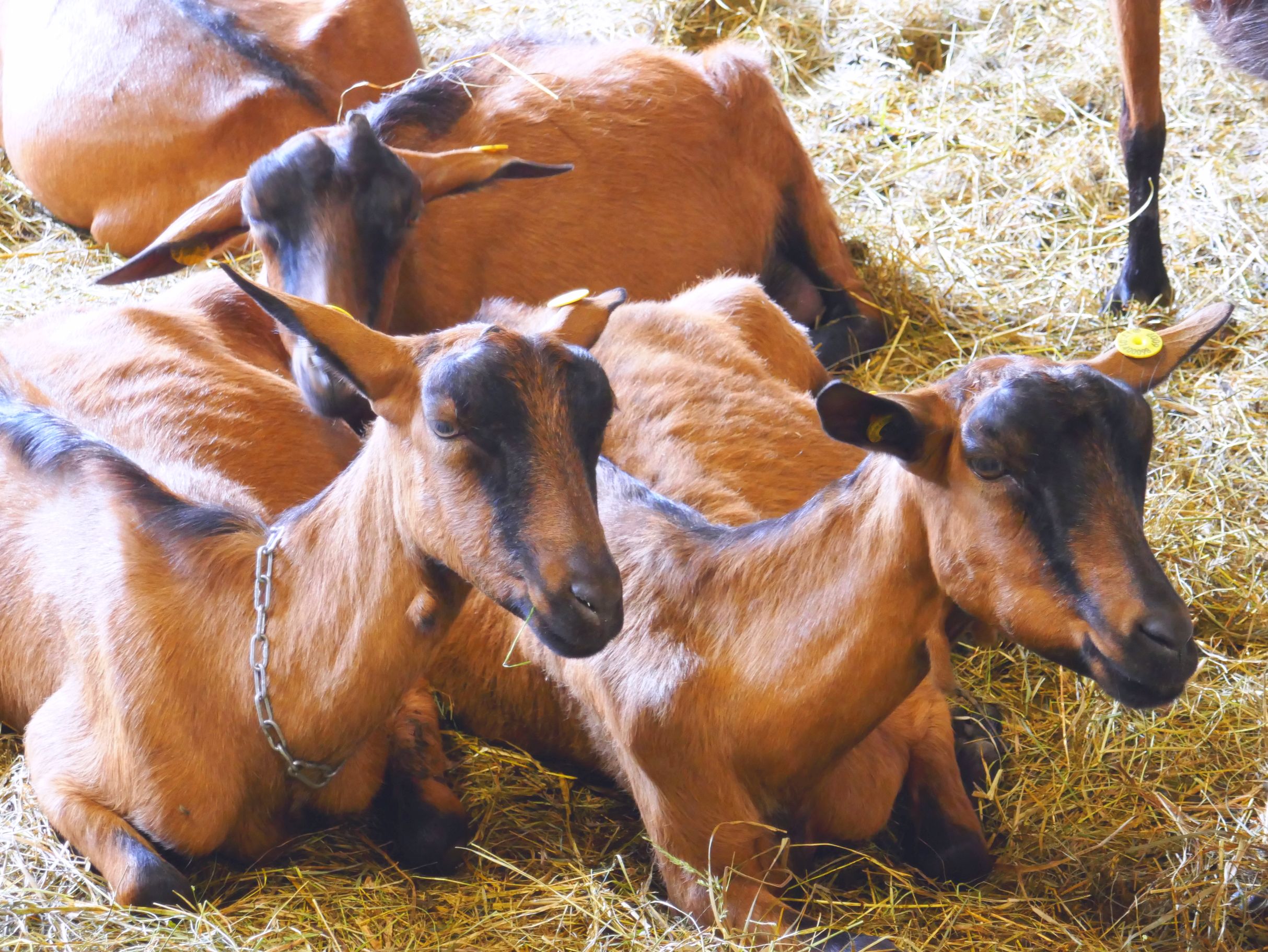
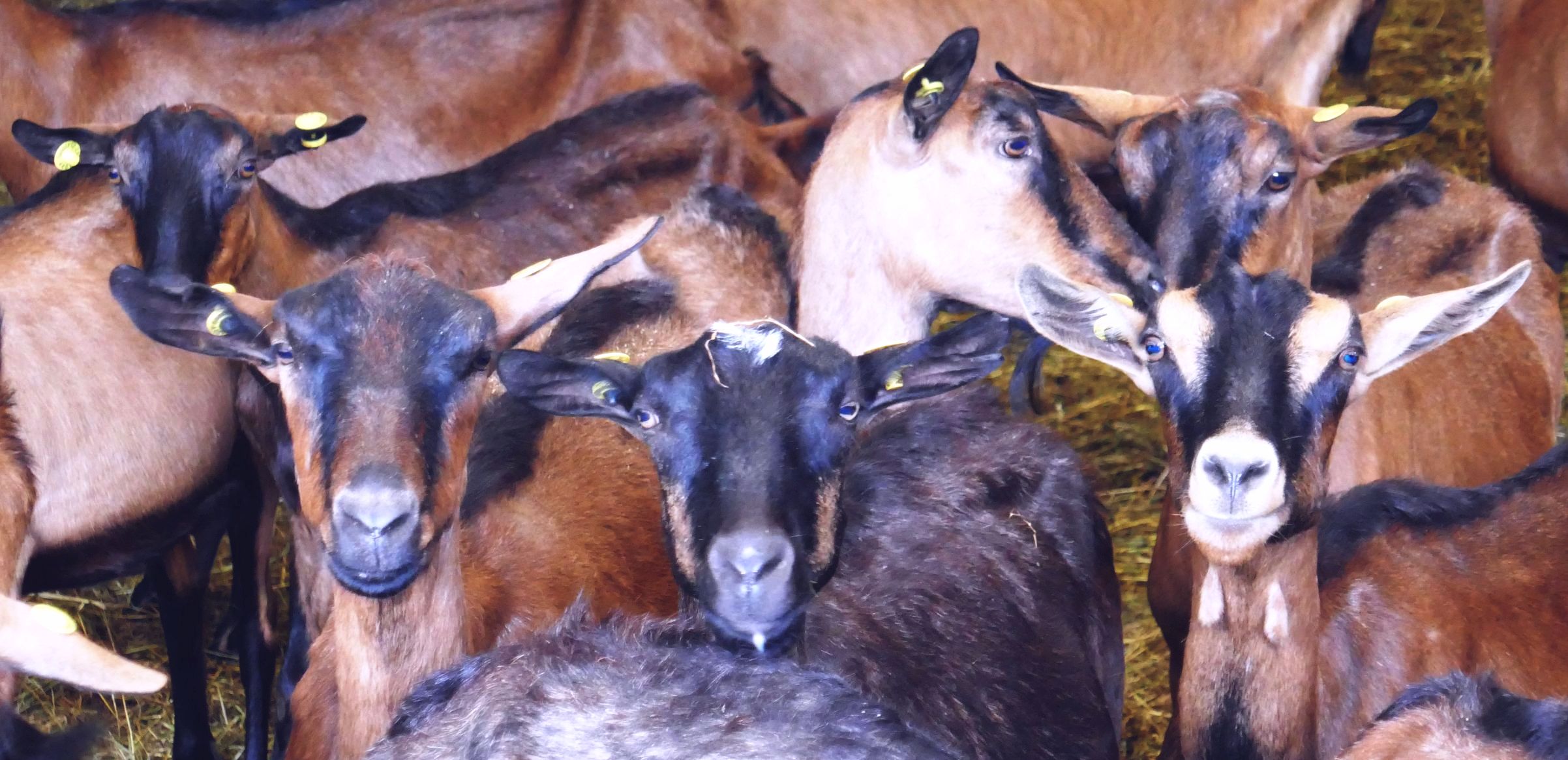
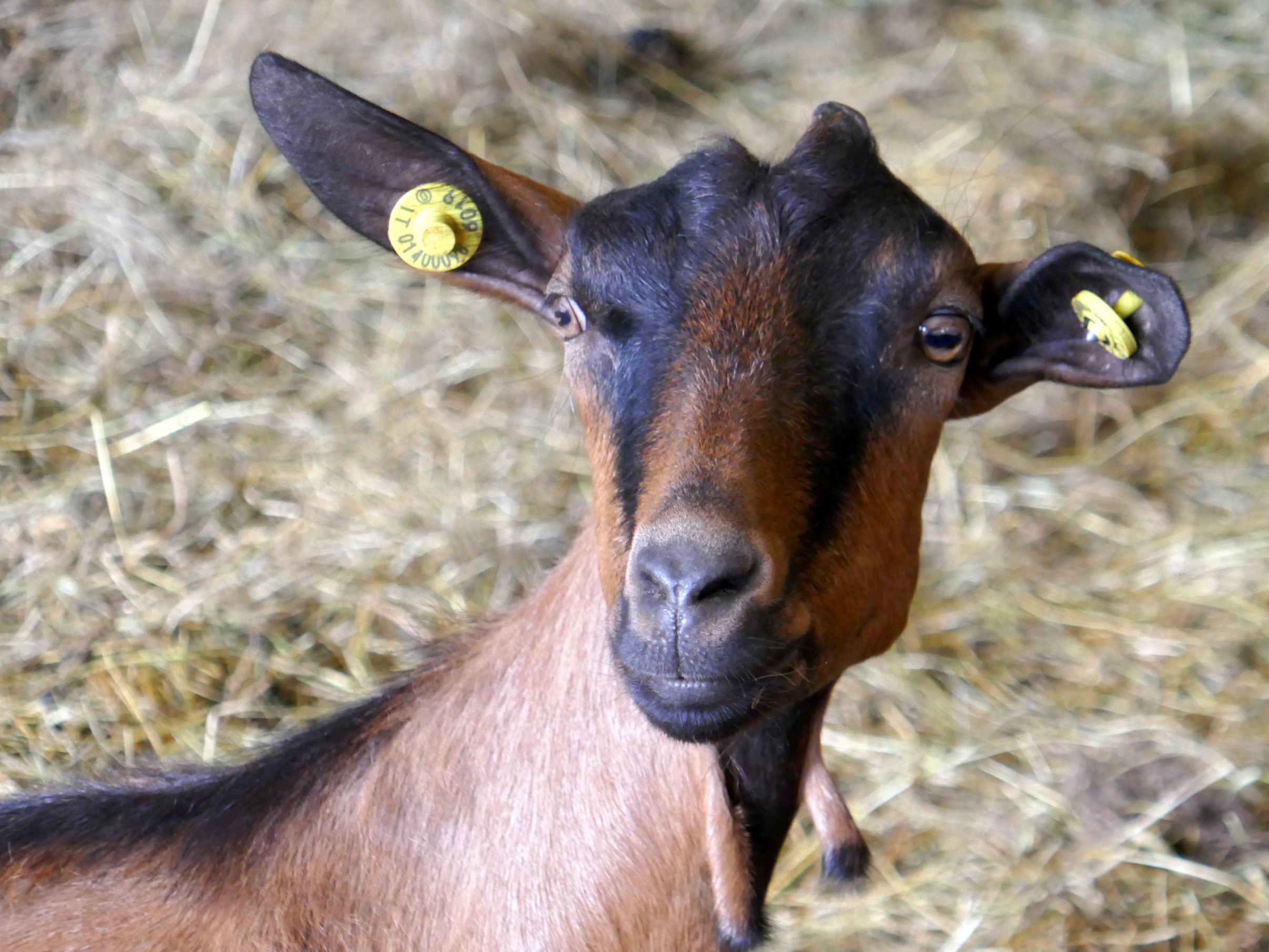
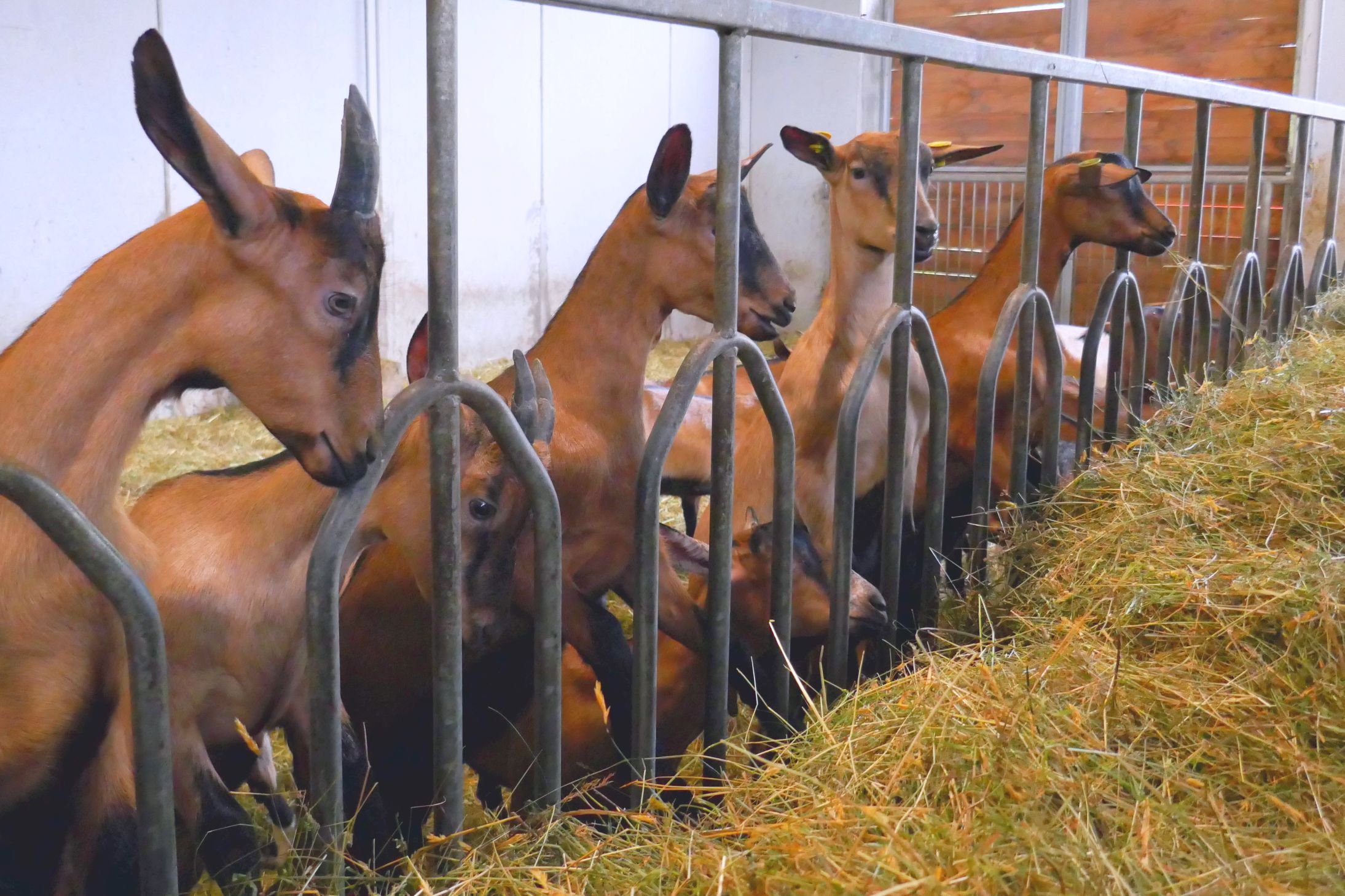
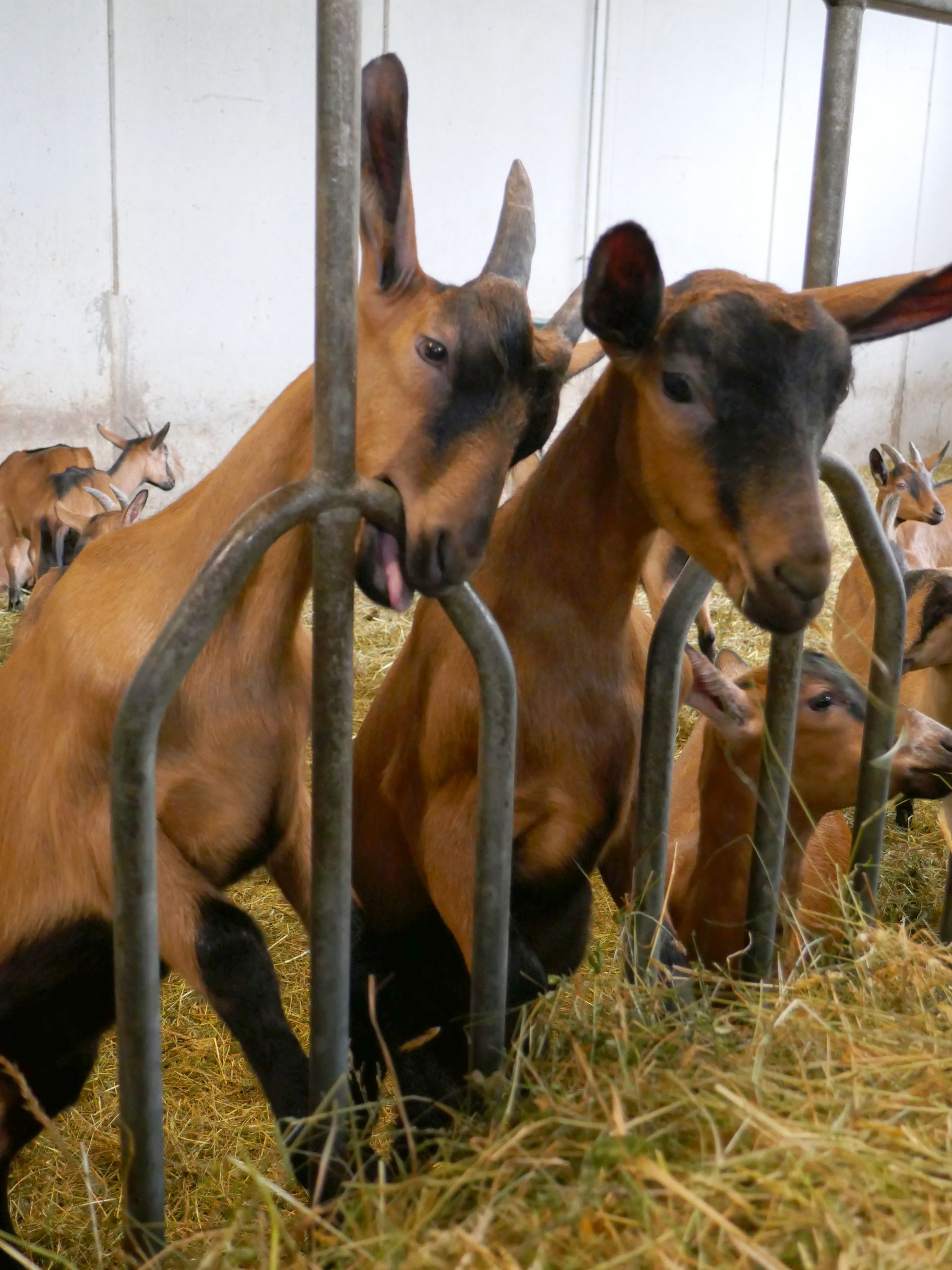
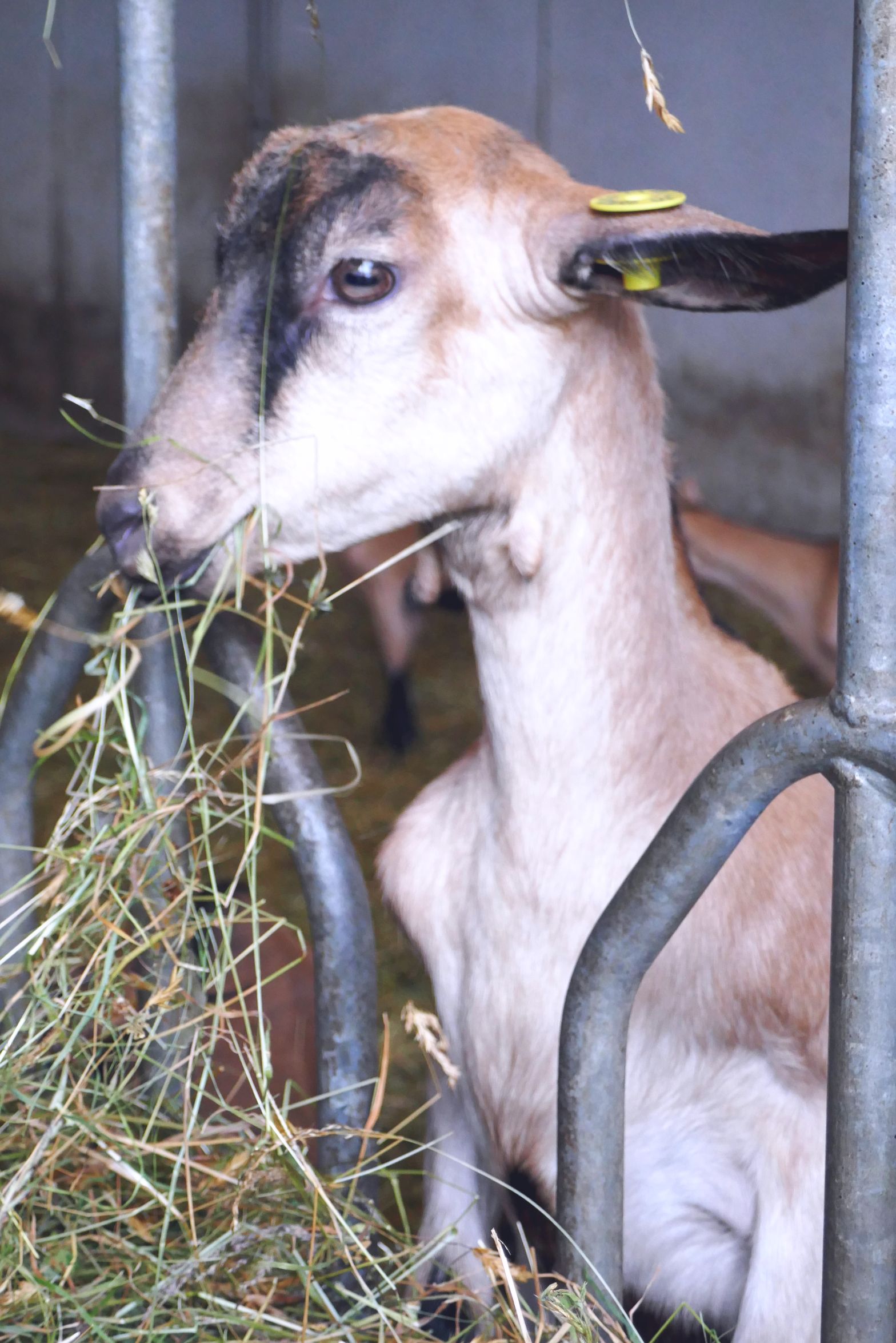
Their goats were a friendly bunch! They immediately came over to meet us, and they loved being scratched on the head! If we stopped giving them attention, they just stood there and stared at us, waiting for more. It was quite evident that once we were on the scene, they didn’t care about eating the hay that was piled up for them.
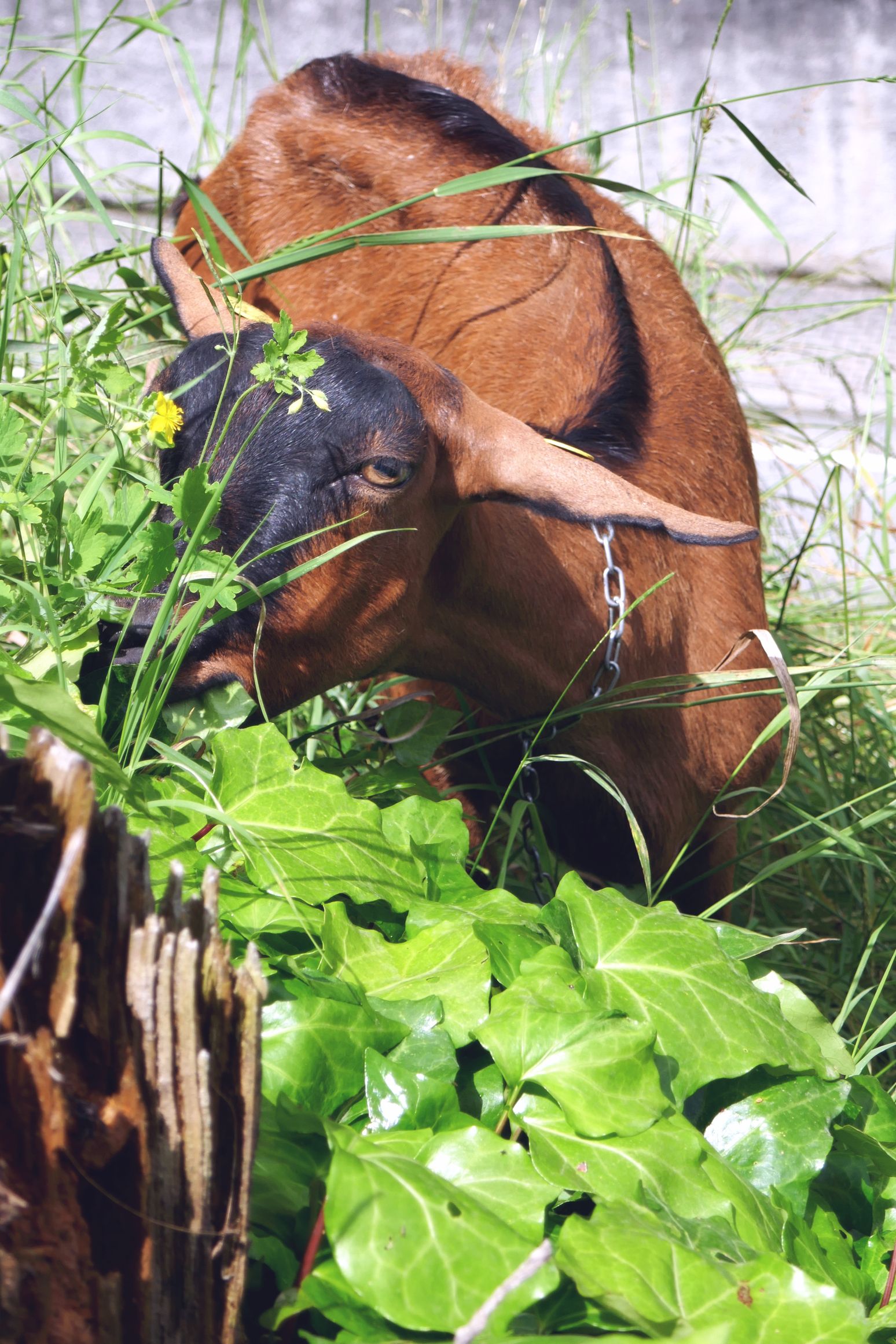
After learning about their goats and the milking process, the scene that unfolded brought out an instinctive, “Bring in the goats!” from both of us. While we watched, the goats were brought out of the barn and herded by their dog, Simba, to an area where they could feast on fresh grass.
Simba, keeping an eye out on the goats.
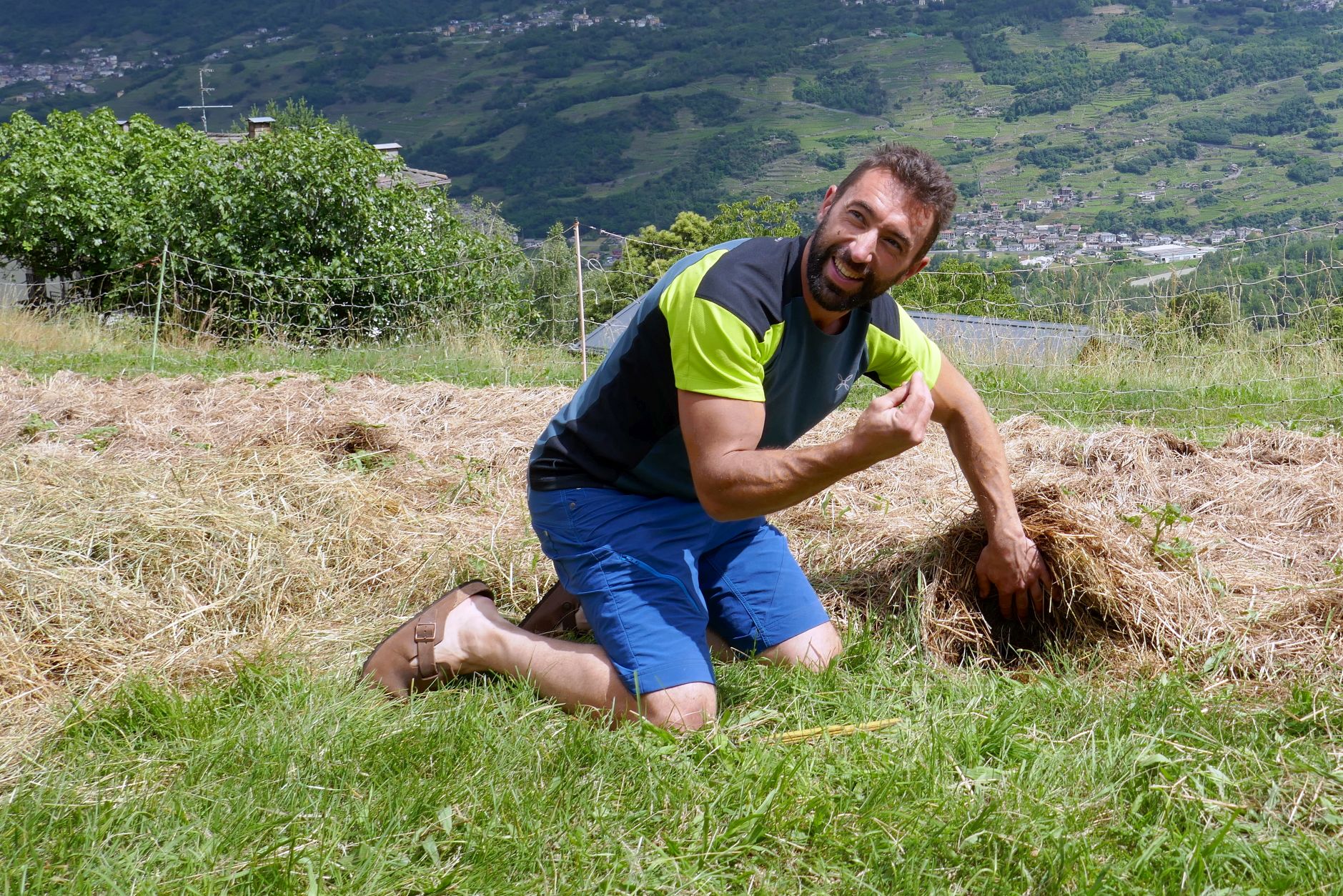
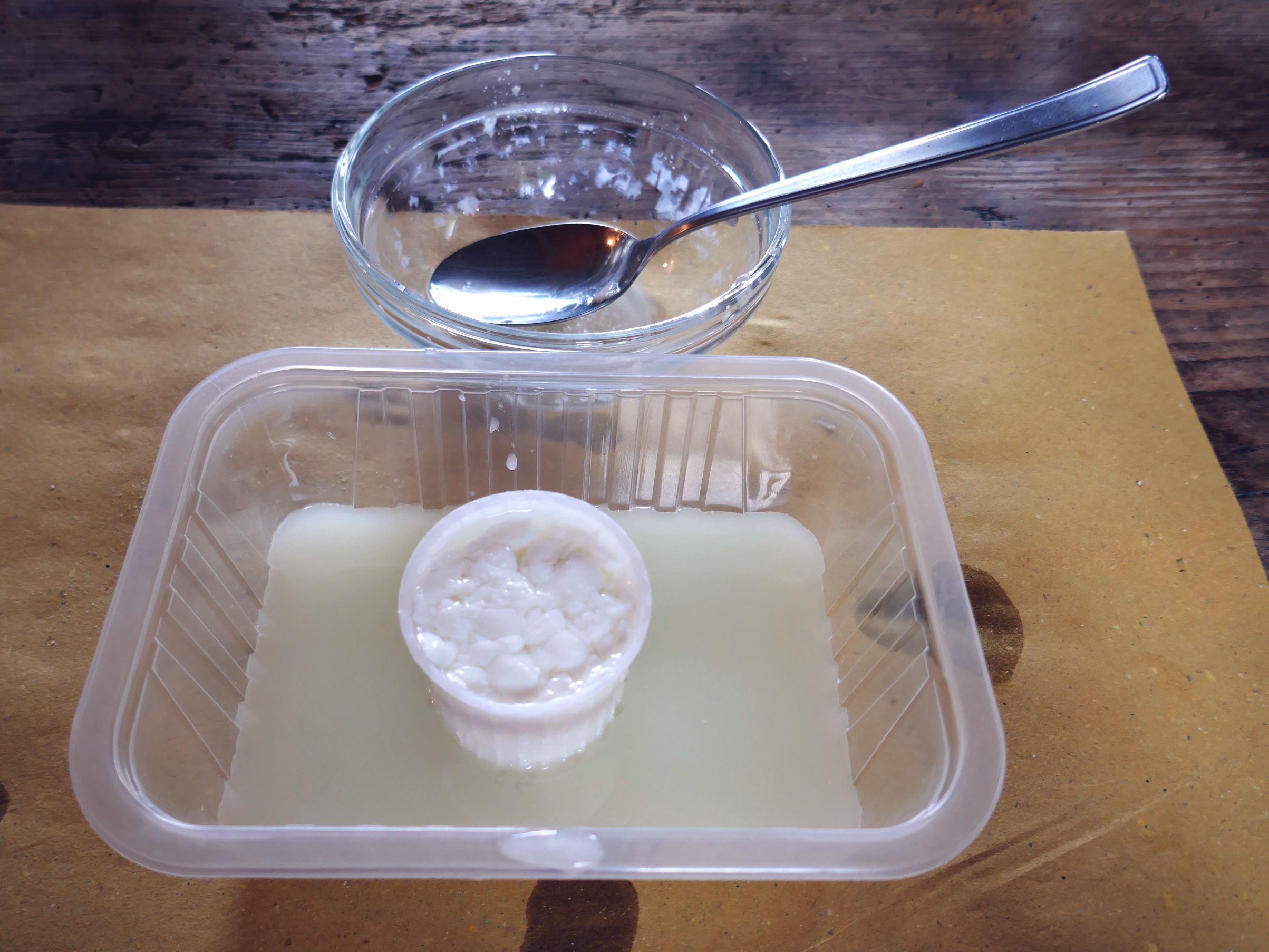
We also helped plant potatoes and learned how to make goat cheese. Their 60 goats yield about 30-40,000 liters of milk a year that is worked into cheese. One hundred liters of milk yields about 17-33 pounds of cheese, just to give you an idea of their production, which they sell locally.
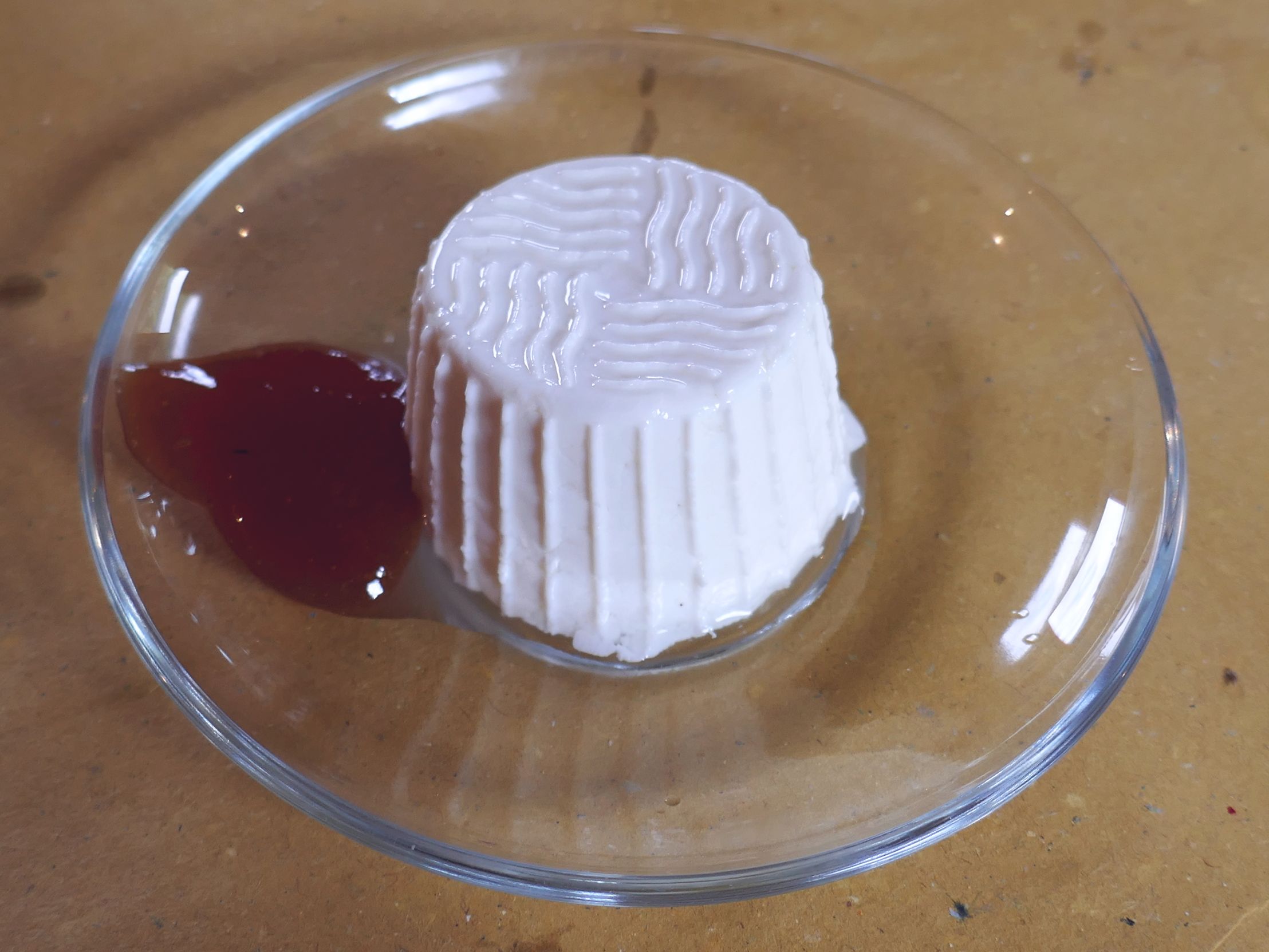
It was interesting tasting the different cheeses they make, from young to aged. We were then served a traditional farm lunch of risotto. For dessert, we enjoyed the cheese we each had made, accompanied by homemade fruit jam or honey.
Our time at the farm was so enjoyable, and it was fun learning about the life of the three generations working the farm. Gabriele and his wife are hoping that Michele will carry on the tradition!
Looking down the hill from their farm, the view was of this little village cemetery.
Following our return to Tirano, Bruce rested while I wandered through the town doing photography, one of my favorite travel activities. I most enjoy exploring quaint, character-filled places that inspire my curiosity, encourage me to peek and poke around corners, get lost, and totally immerse myself in the moment. Tirano was one of those places.
Entering the historic quarter,,,
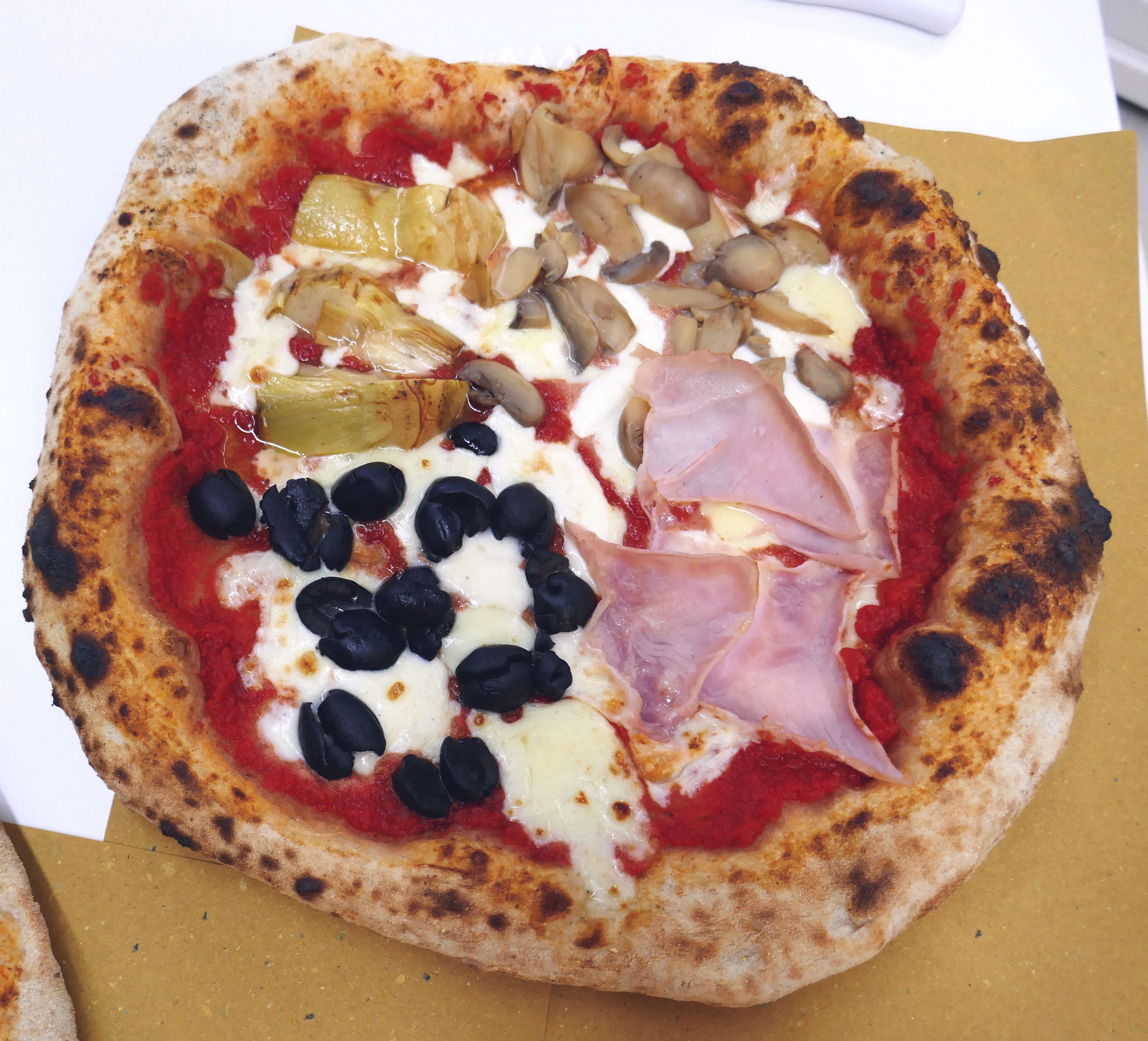
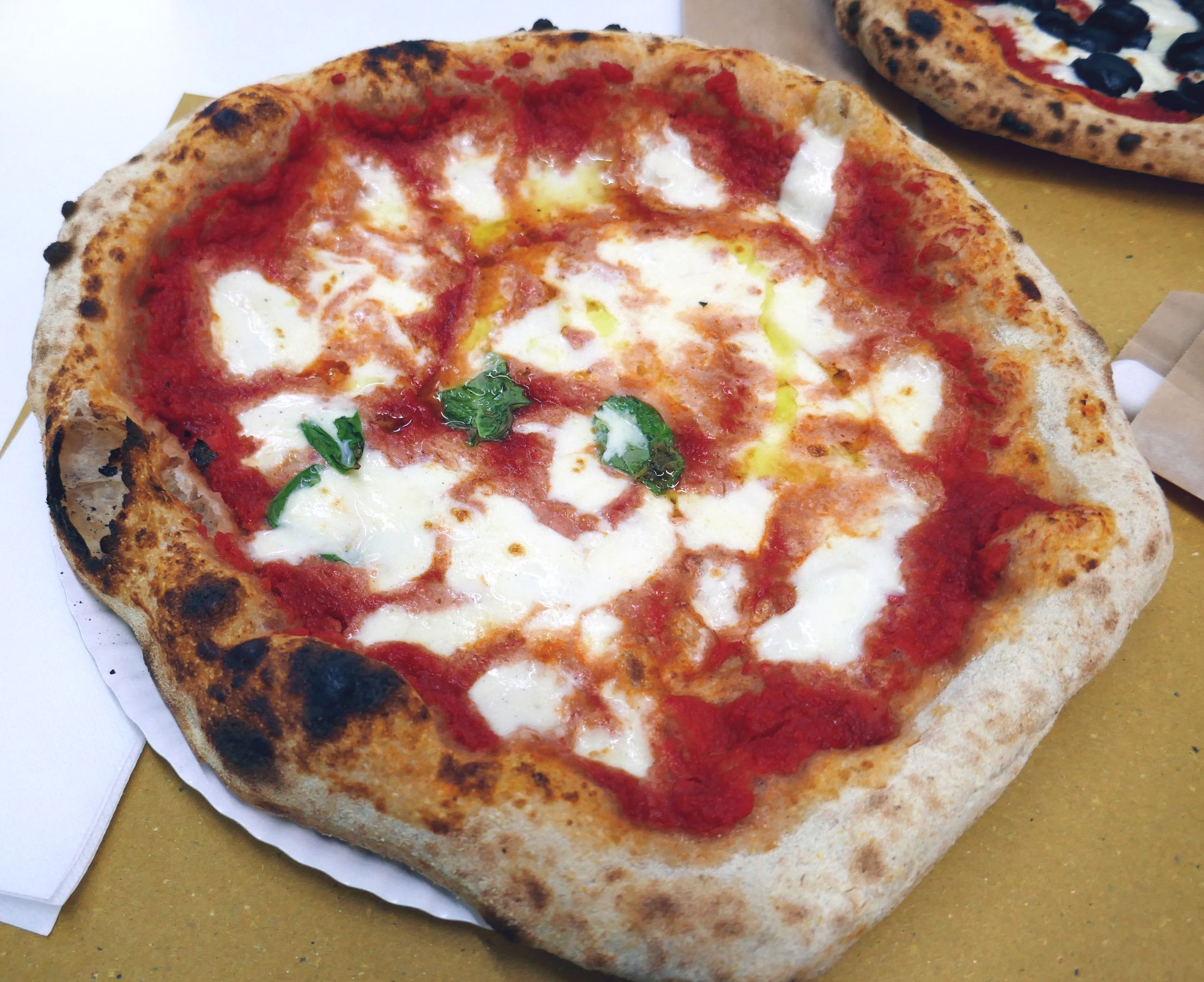
Our evening concluded with these wood-fired pizzas that cost only $13– for both! The one on the left is a traditional “pizza quattro stagioni” (four seasons), which explains why the ingredients were kept separate! Bruce and I split the pizzas, but I passed on the “winter” season.
Coming up next: SWITZERLAND & ITALY #13: ALL ABOARD—AGAIN!
Following that epic thunderstorm the night before, we weren’t sure what we would be waking up to on this morning. I hopped out bed, flung open the curtains, and exclaimed, “SUN!”
(For all photos, click on the image for a full screen view.)
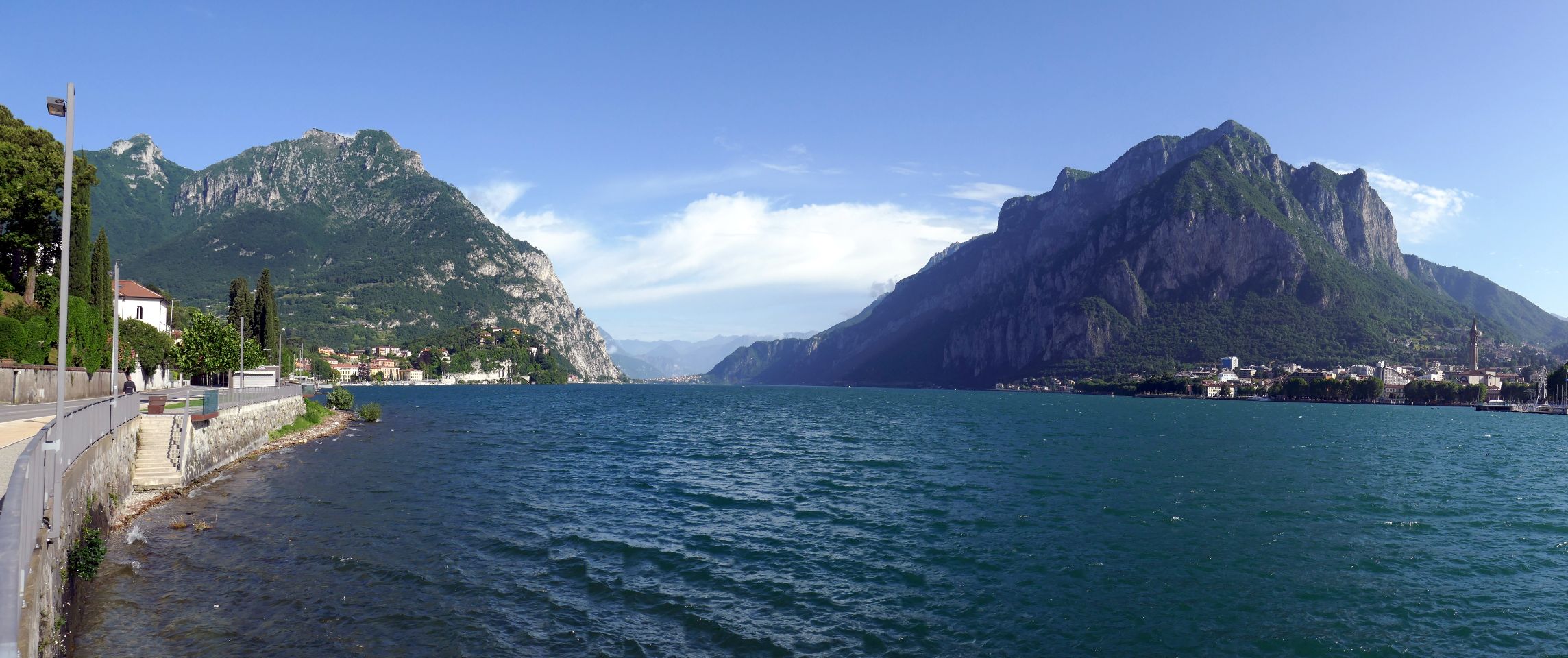
On the way to Varenna.
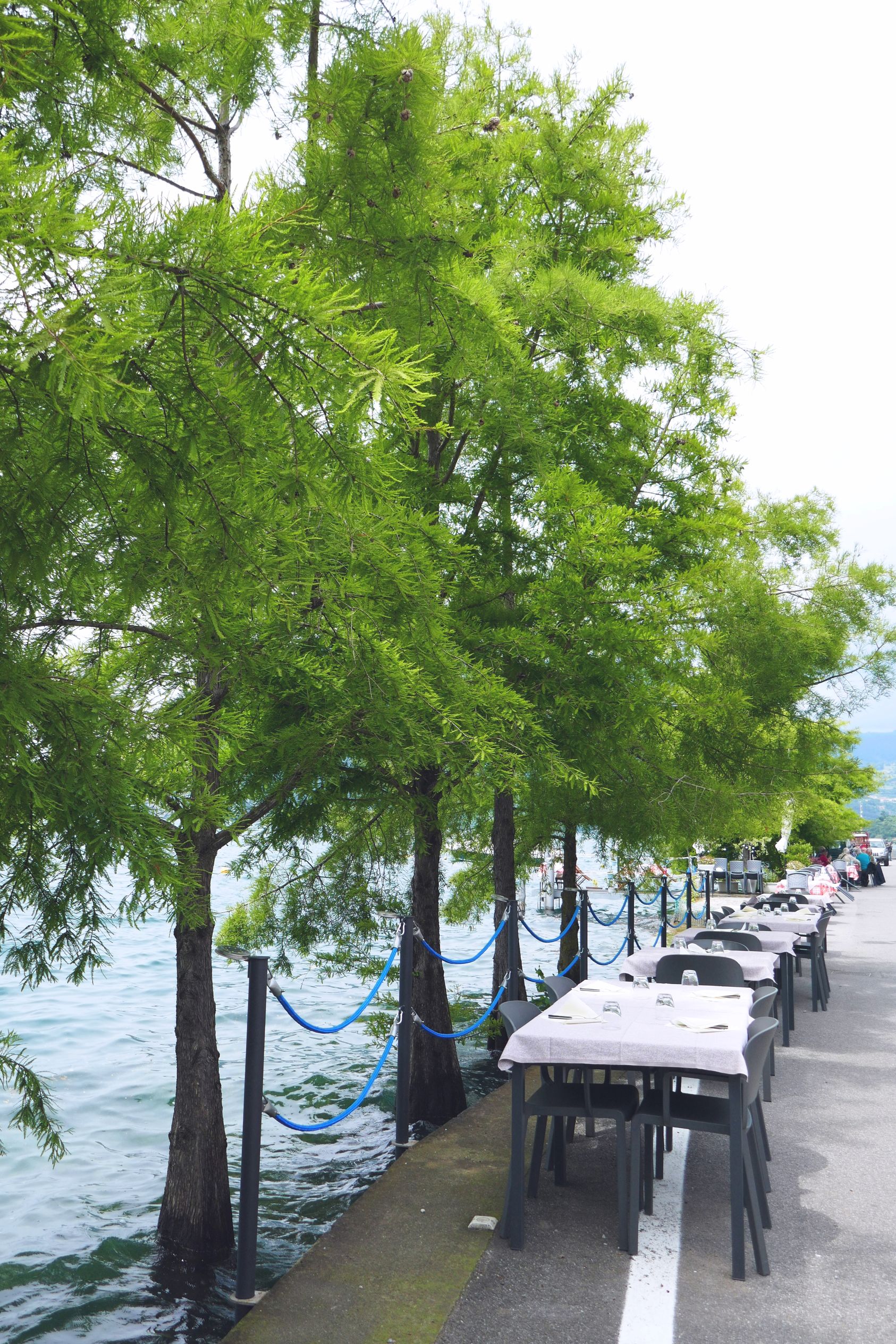
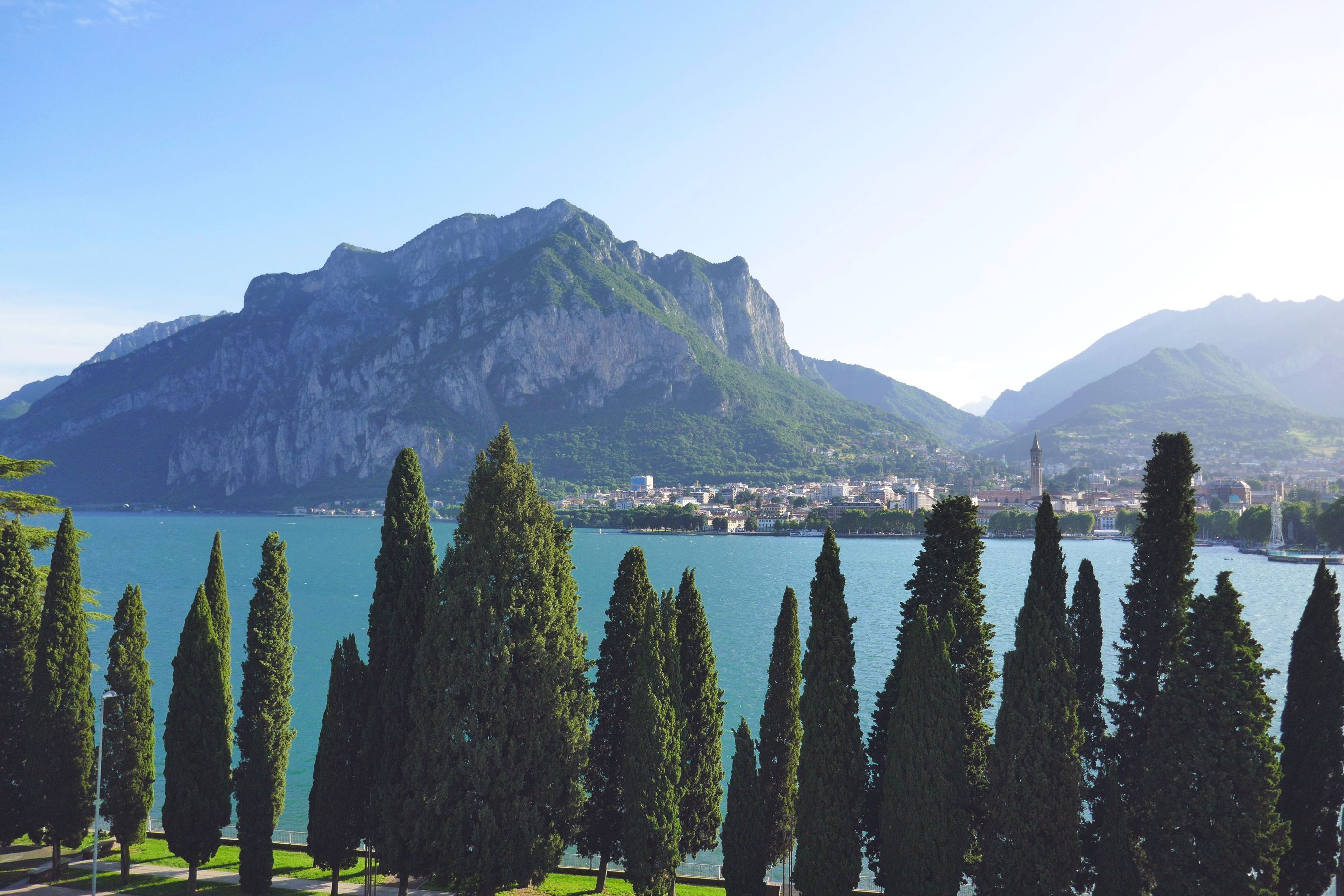
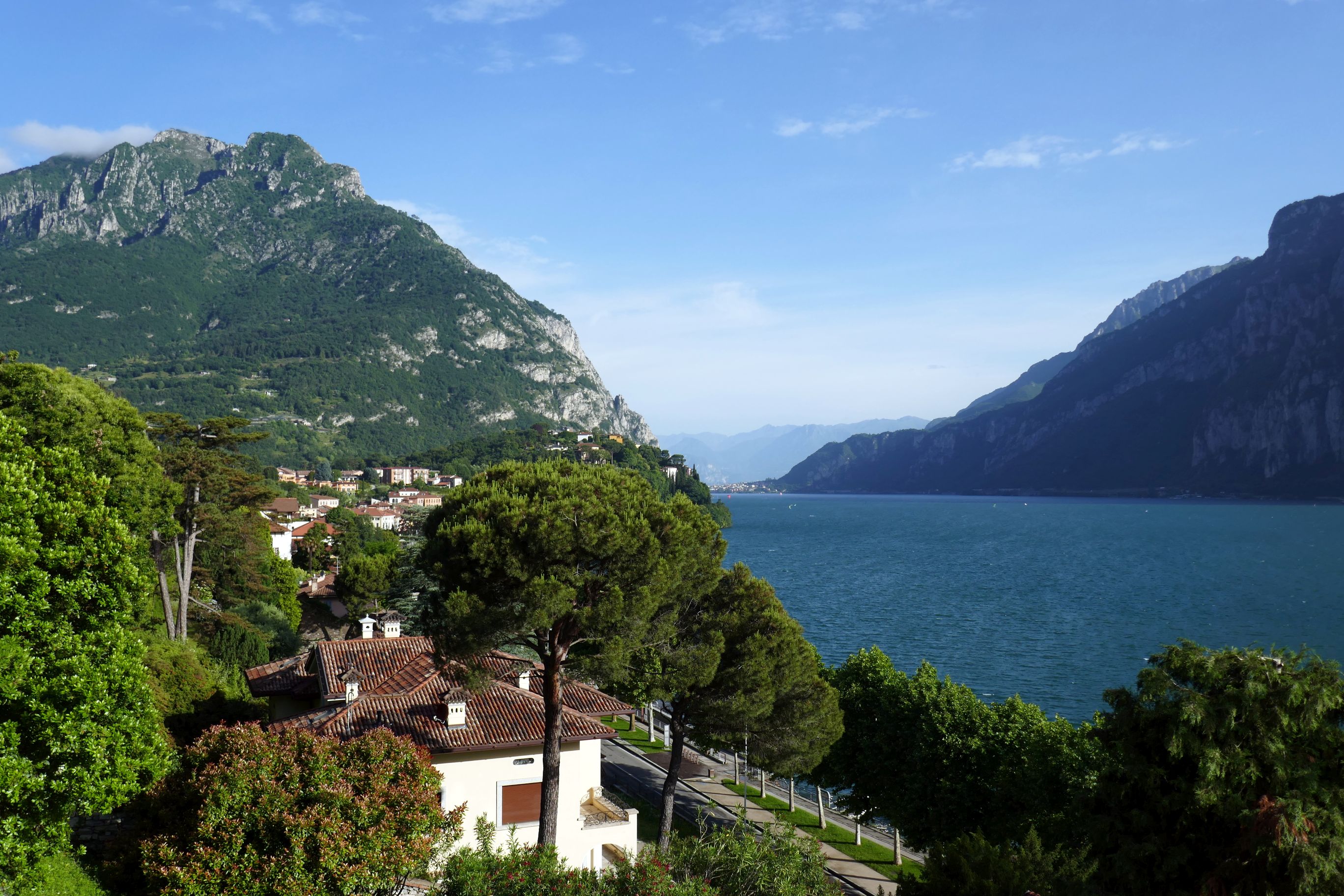
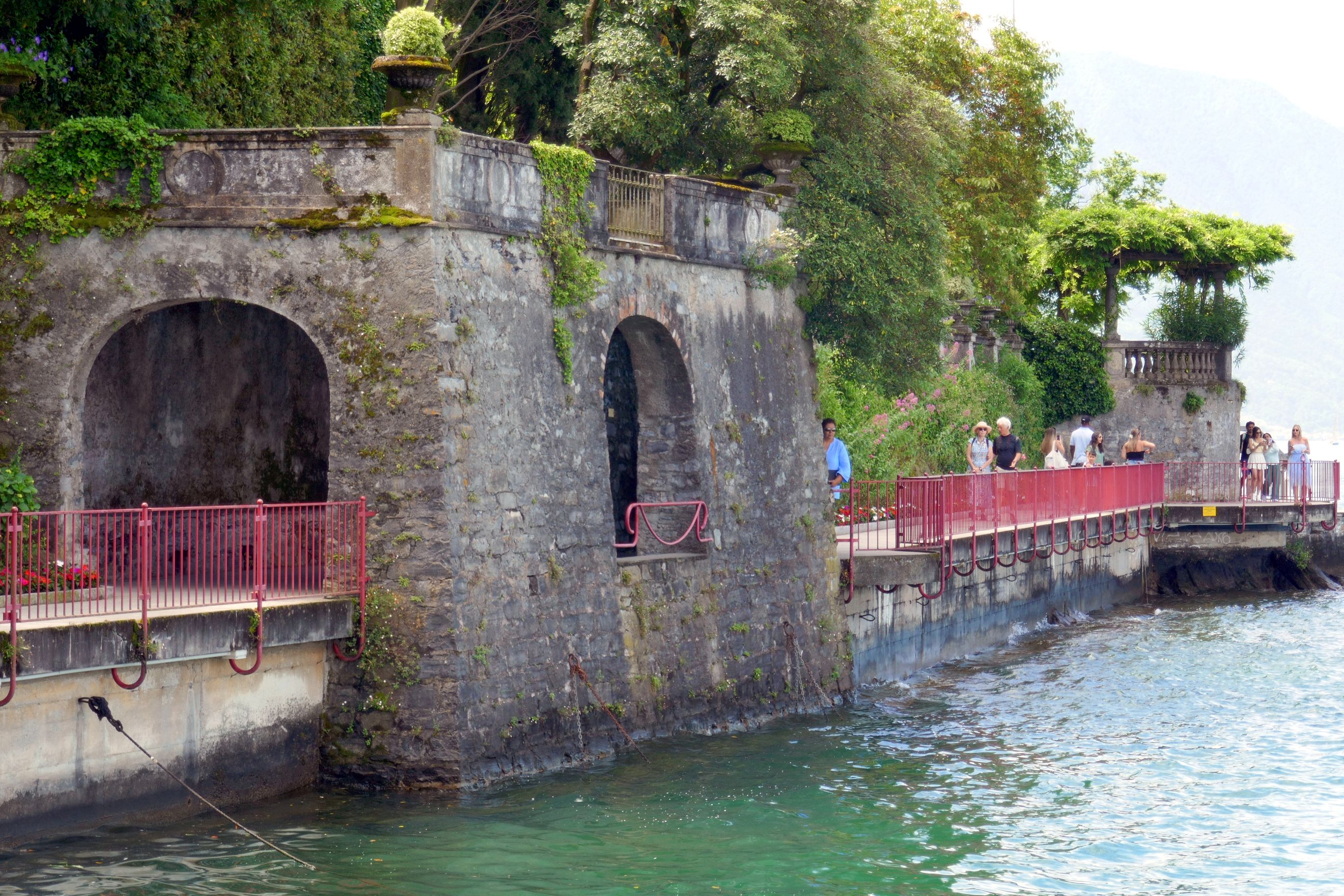
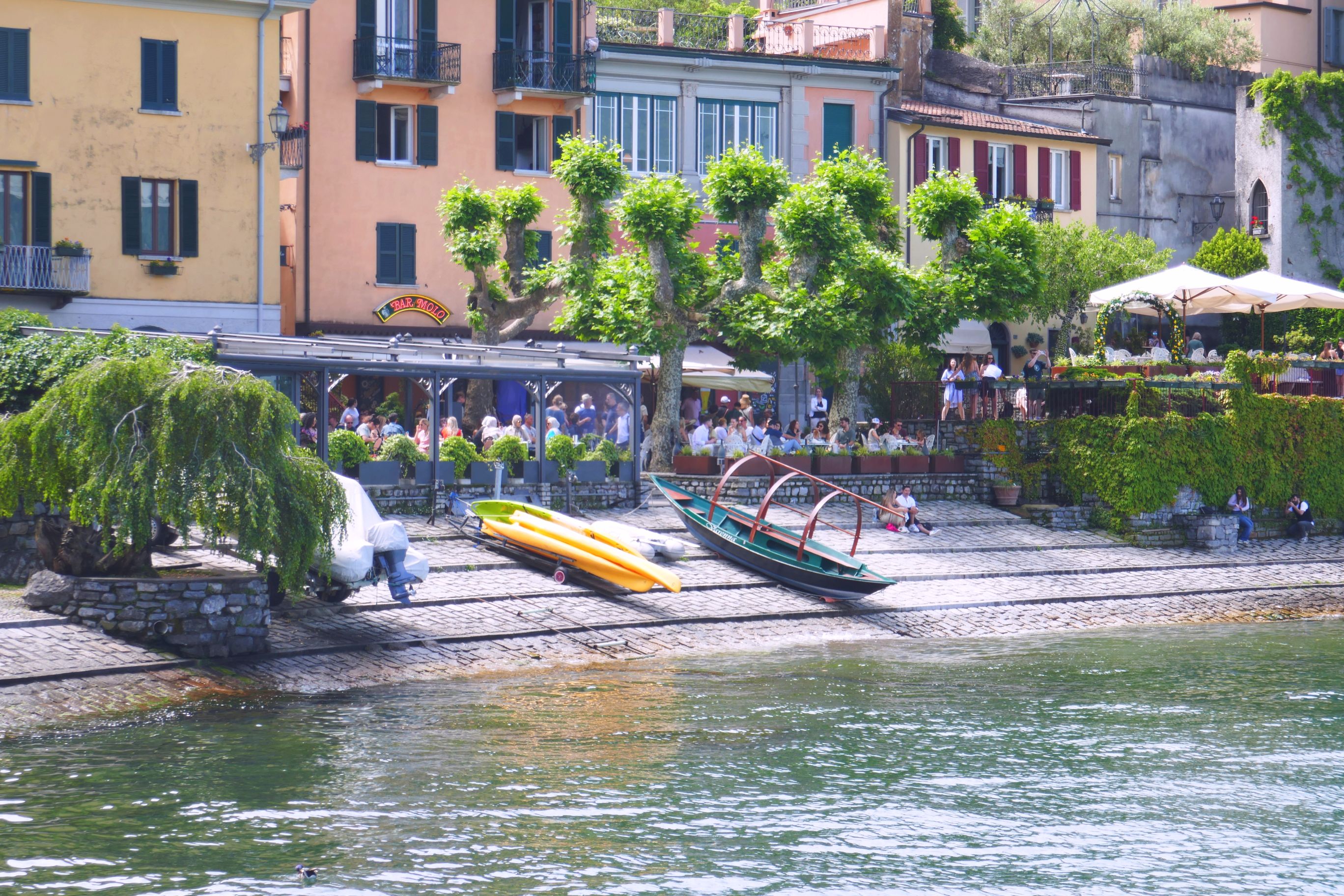
It was sure to be a beautiful day in Varenna, located just 20 miles from Lecco and situated on Lake Como in the Lombardy region of Italy. Founded by fisherman in AD 769, this town is old! It is currently a popular tourist destination, so we were fortunate to beat the crowds that would be arriving later on the ferries, when we took our morning stroll along the waterfront. As time ticked by, the little town became more and more crowded. Thankfully, by then, we were making our way back to our meeting spot and had already done the photography I had hoped to accomplish without people in every photo.
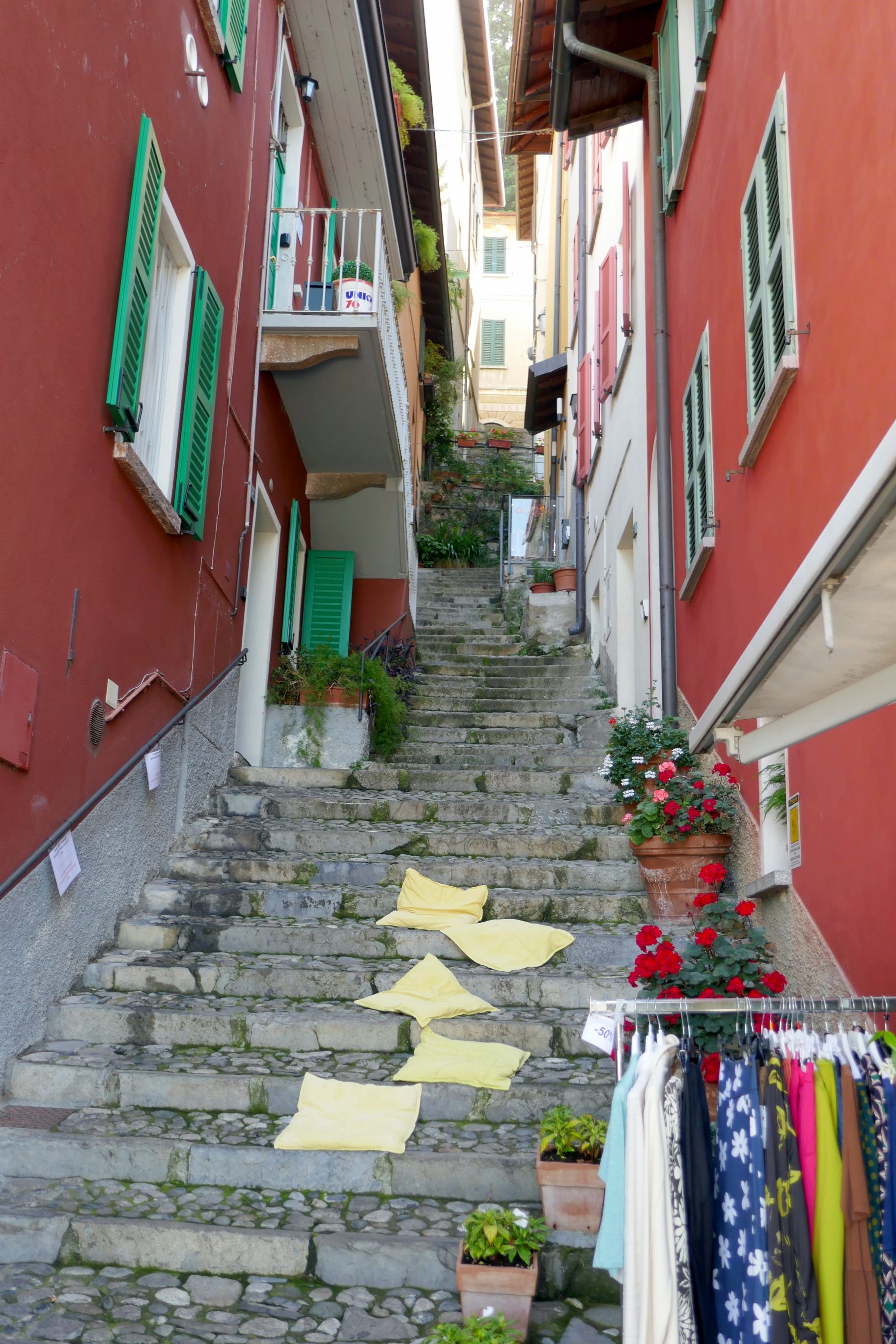
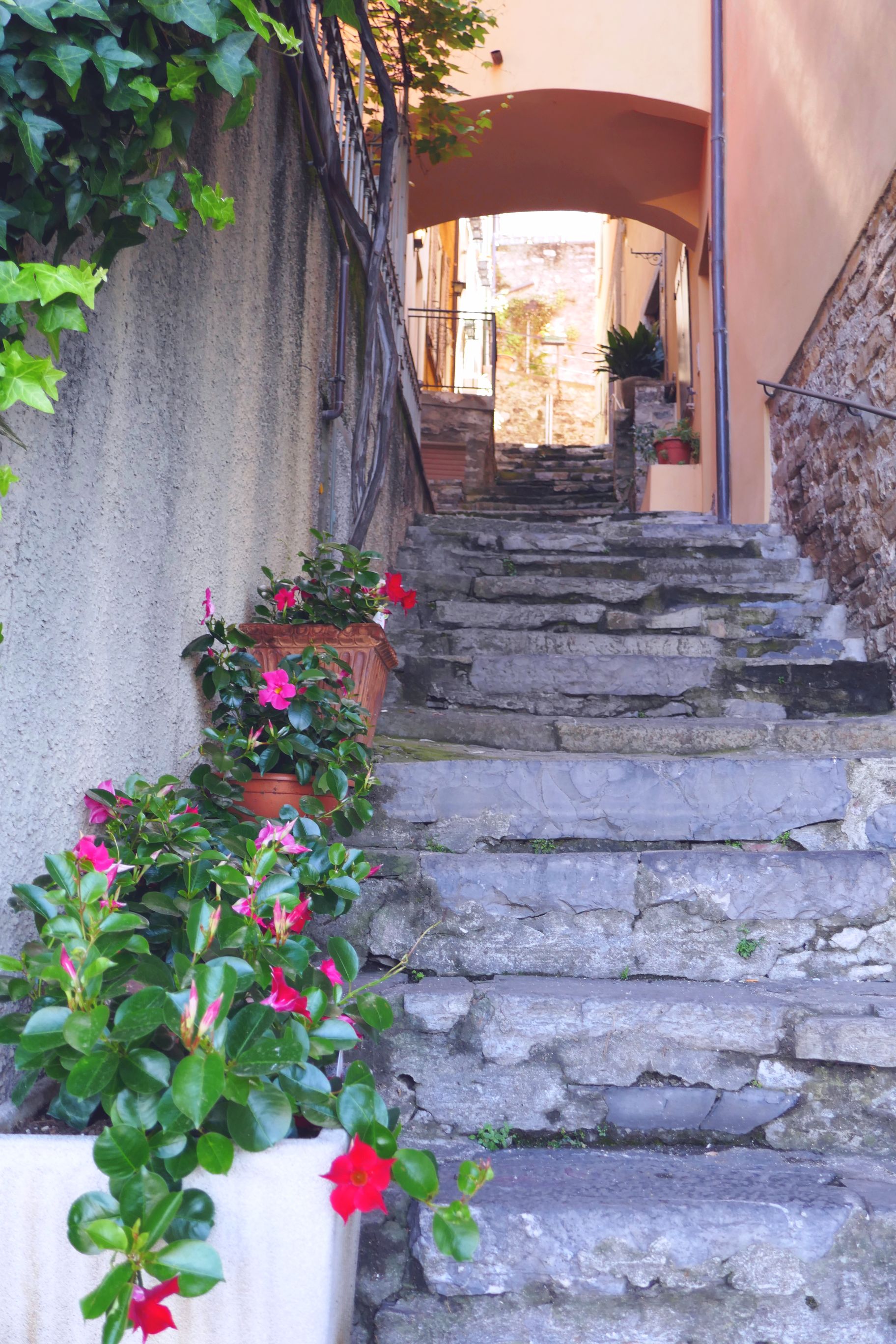
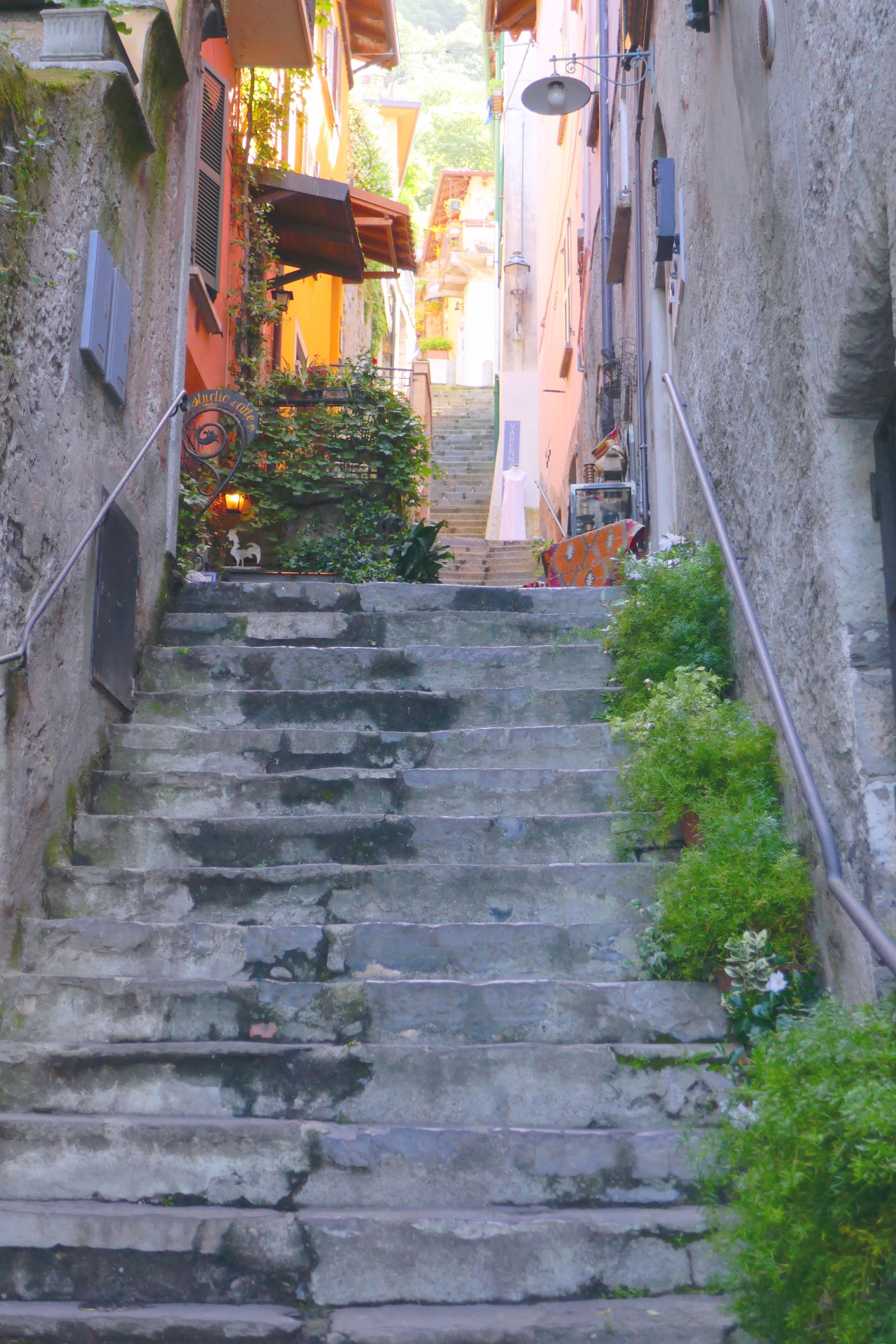
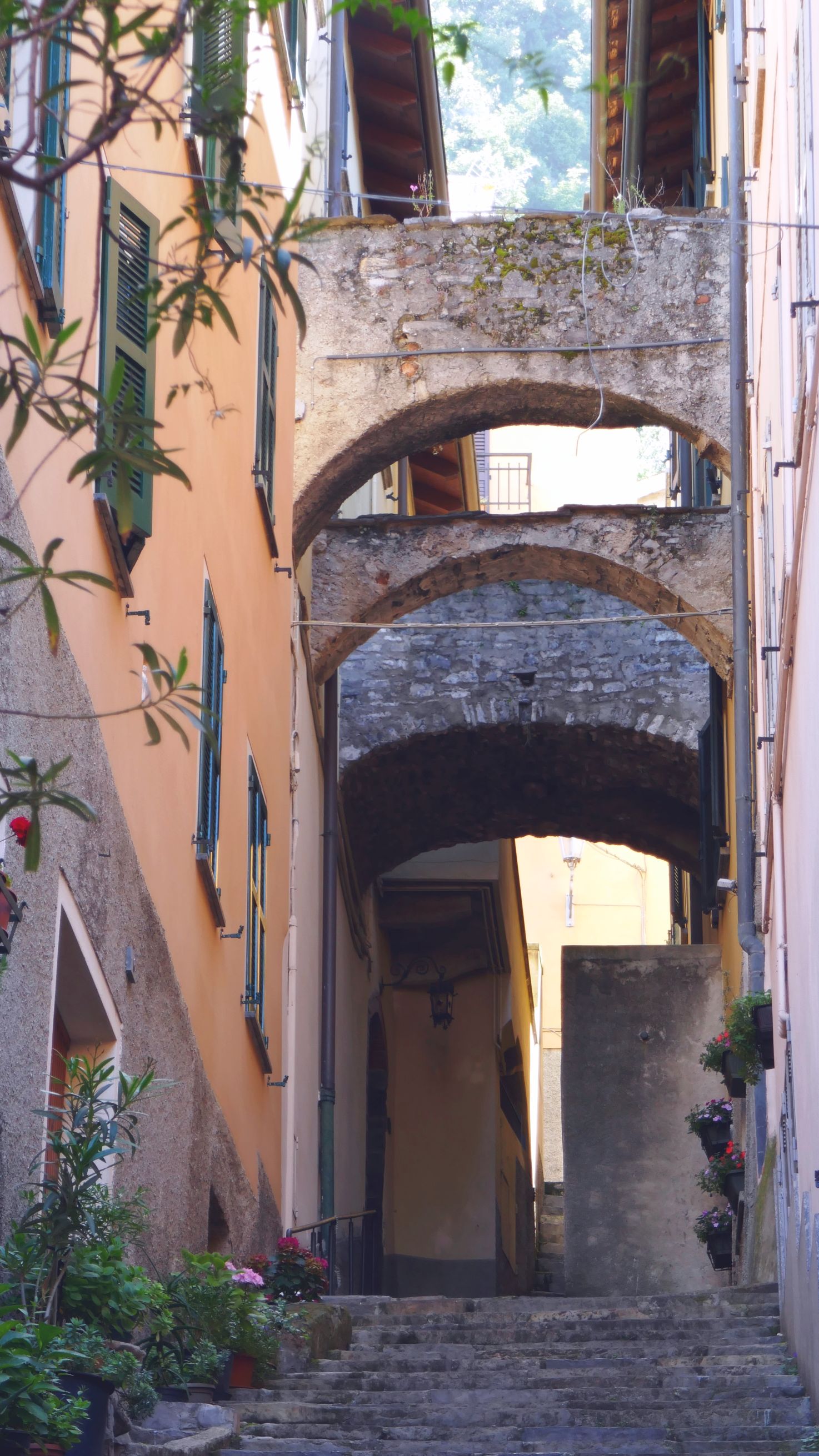
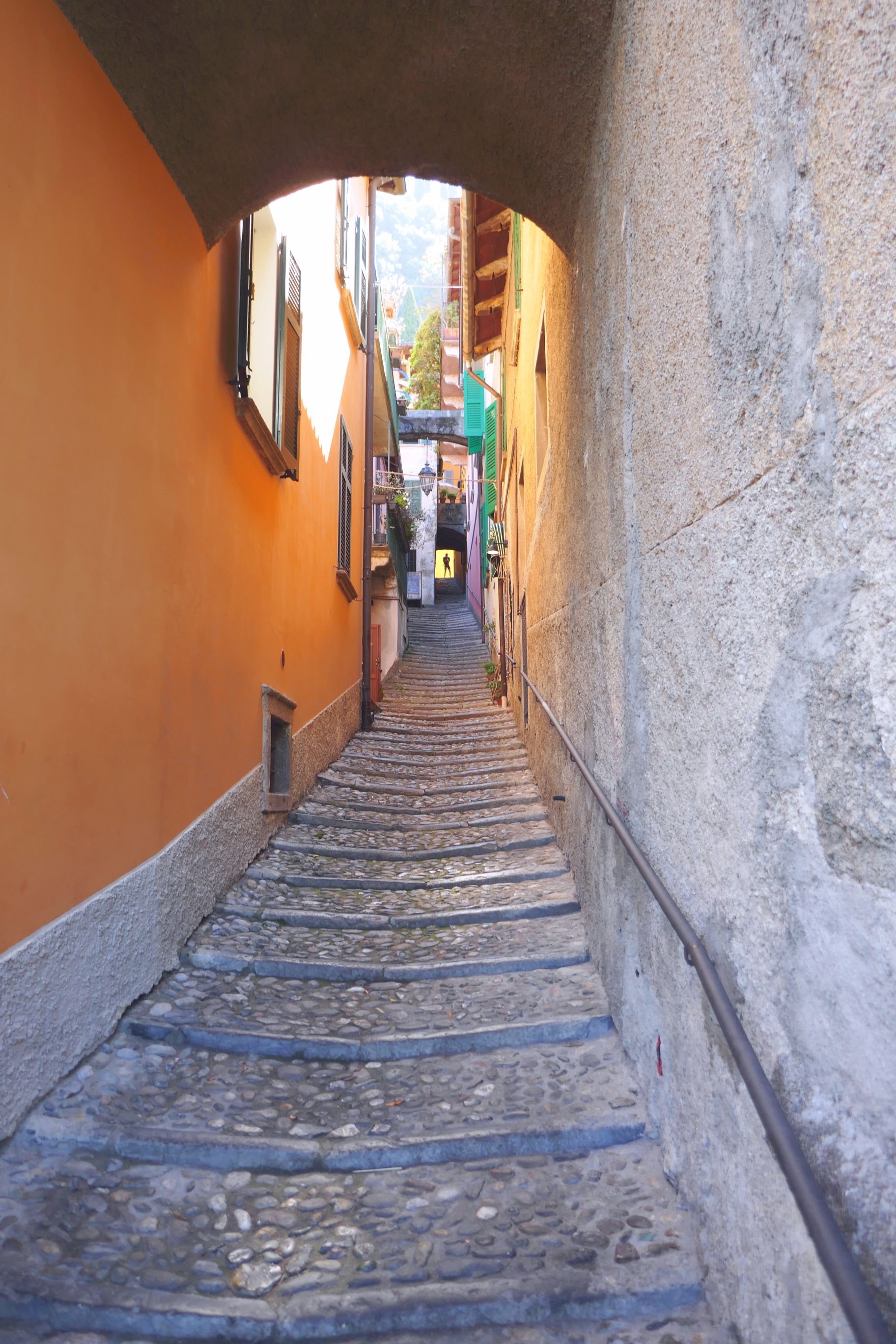
This little town of 800 people has loads of character and photographic possibilities! I enjoyed exploring the many staircases leading to the upper town and seeing the nooks and crannies along the way.
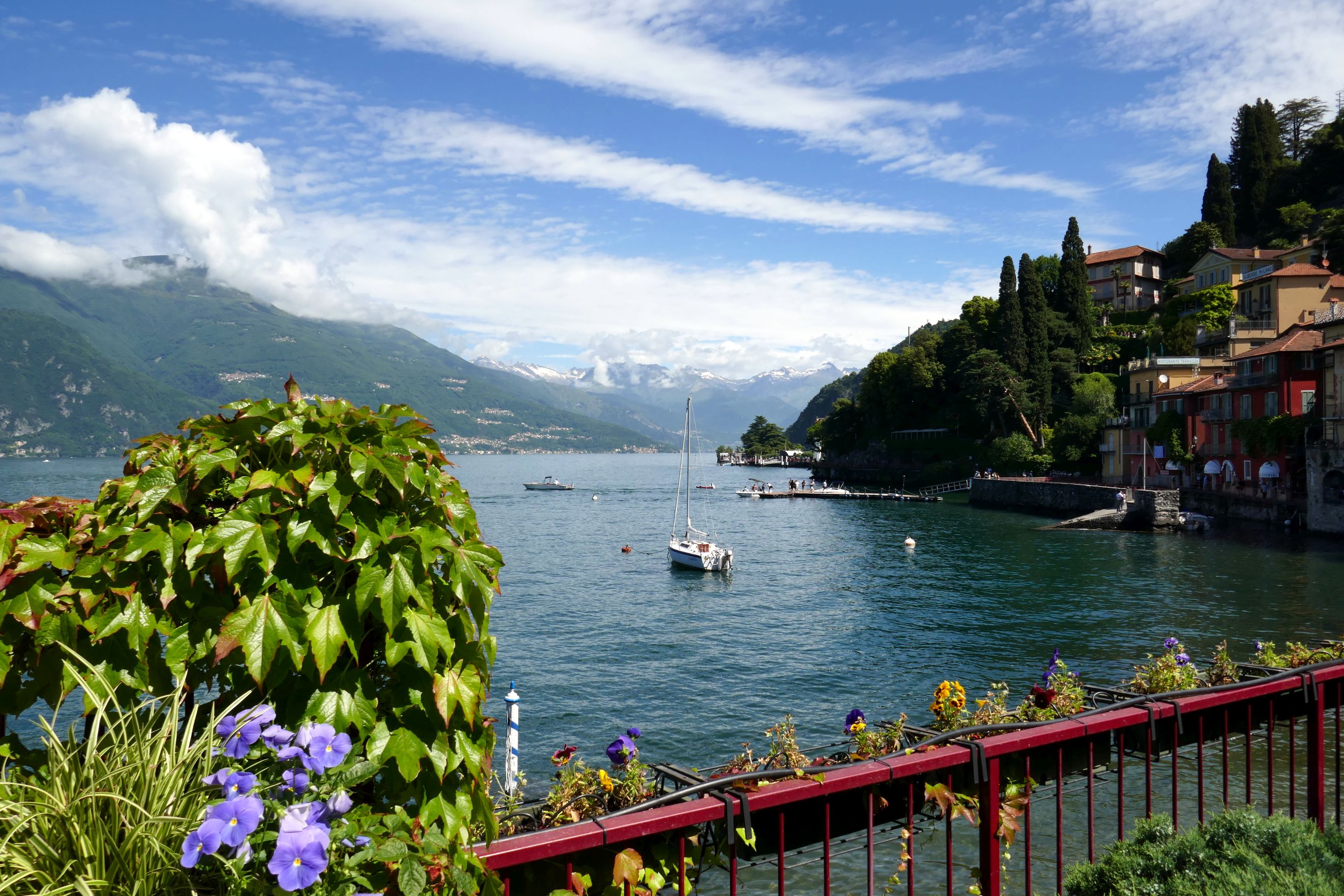
The view across Lake Como from Varenna
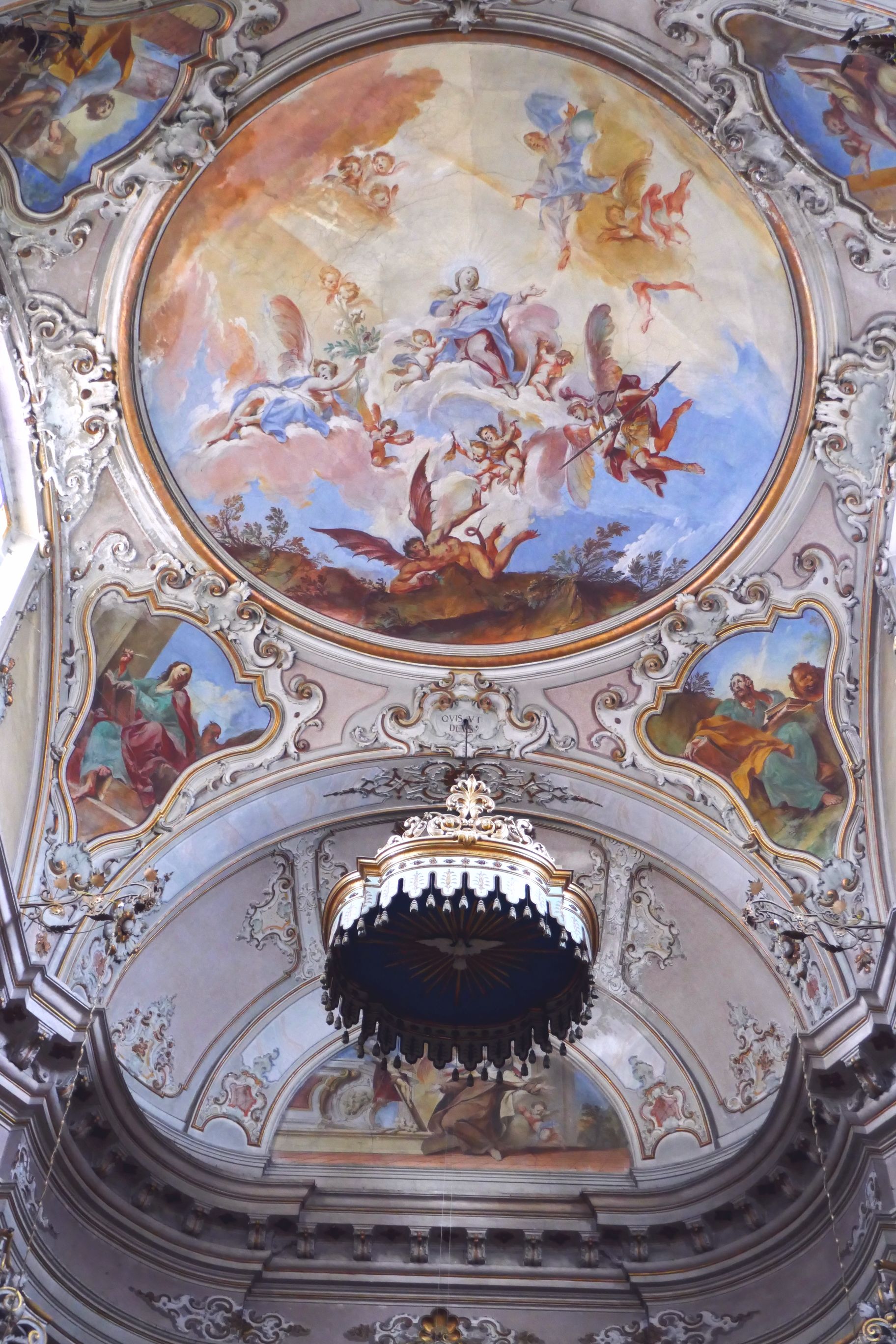
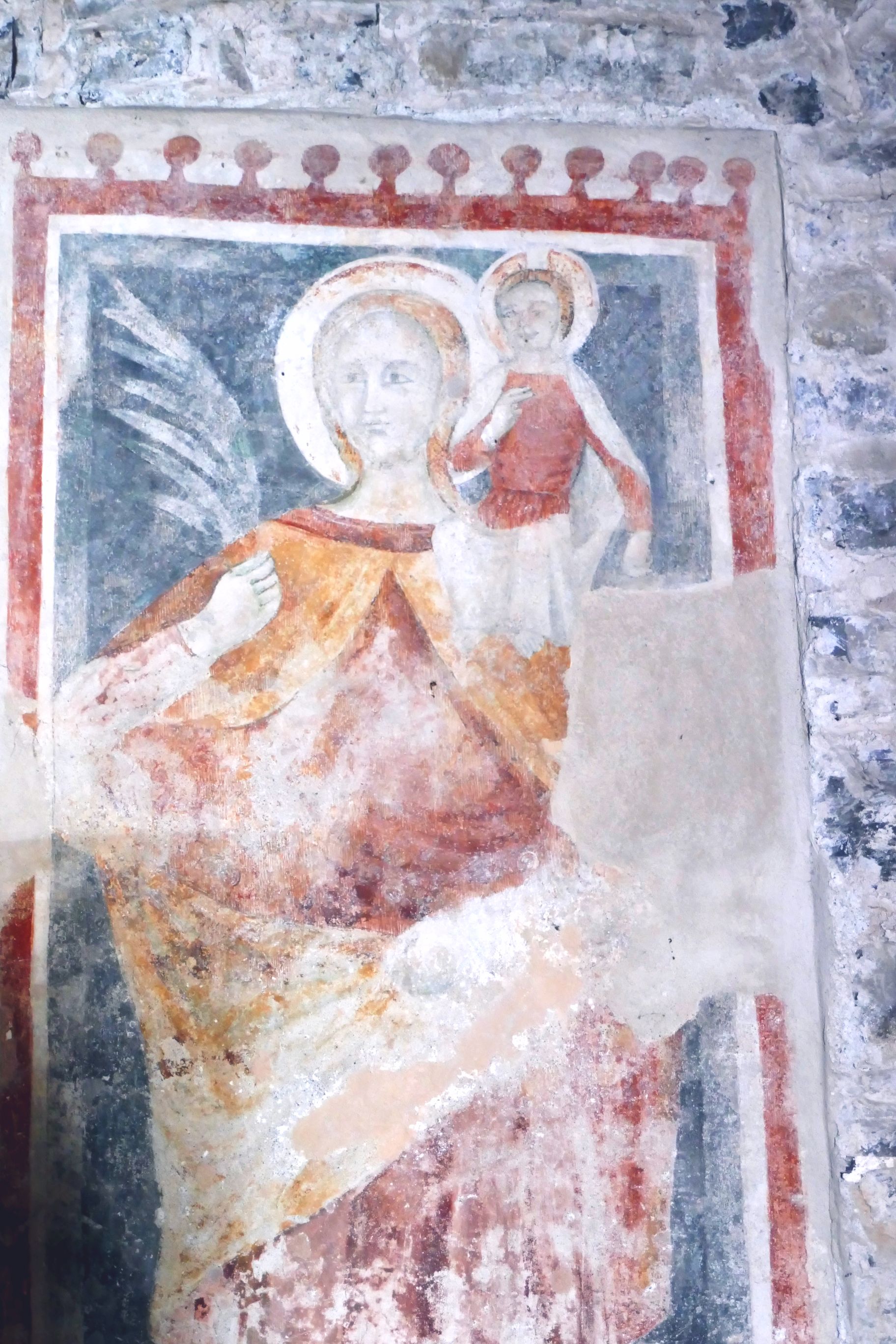
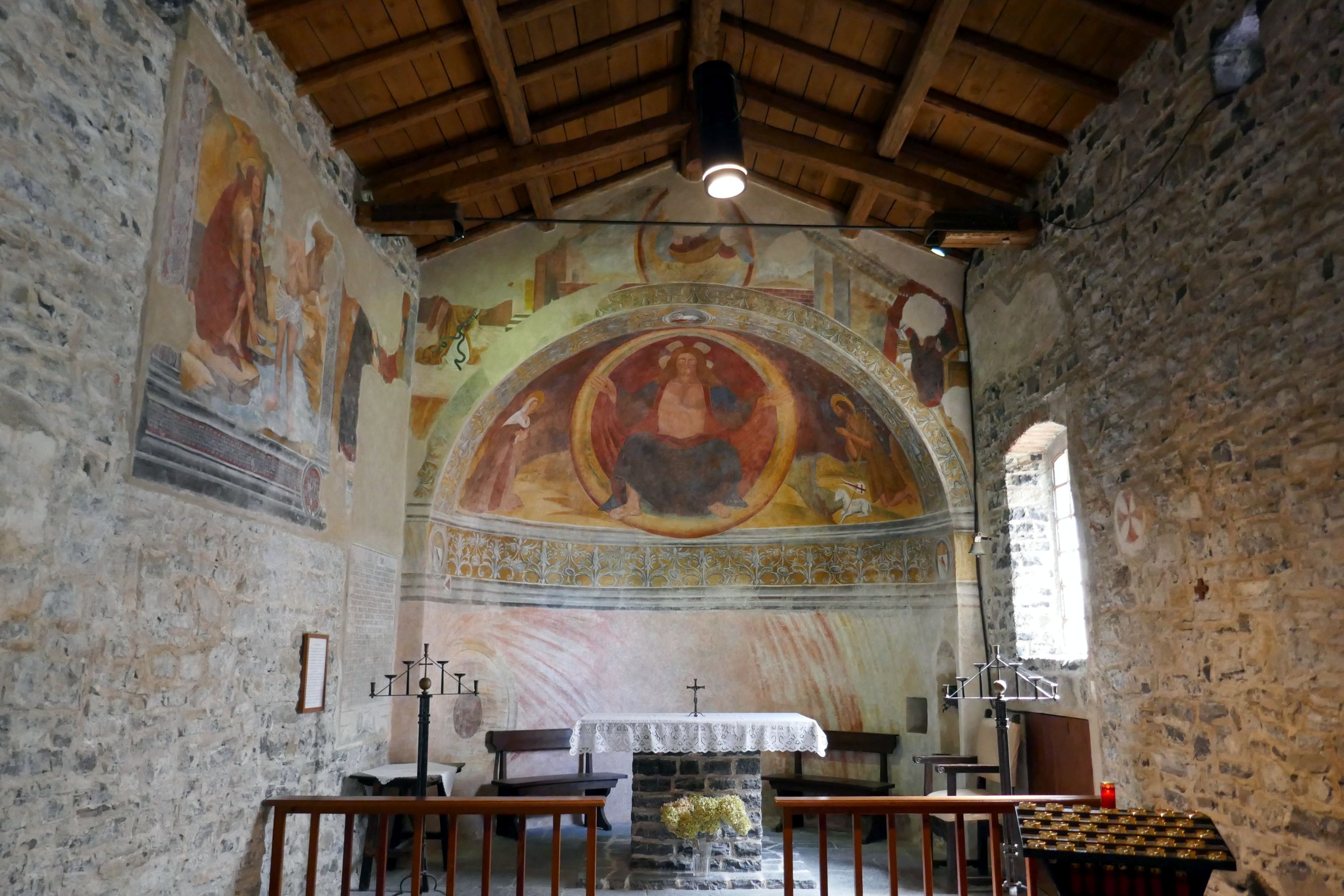
Church of San Giovanni Battista (St. John the Baptist Church) was built before the year 1000! We were fortunate it was open, so we could see the interior frescoes.
As we made our way back, the crowds were growing larger on the walkway!
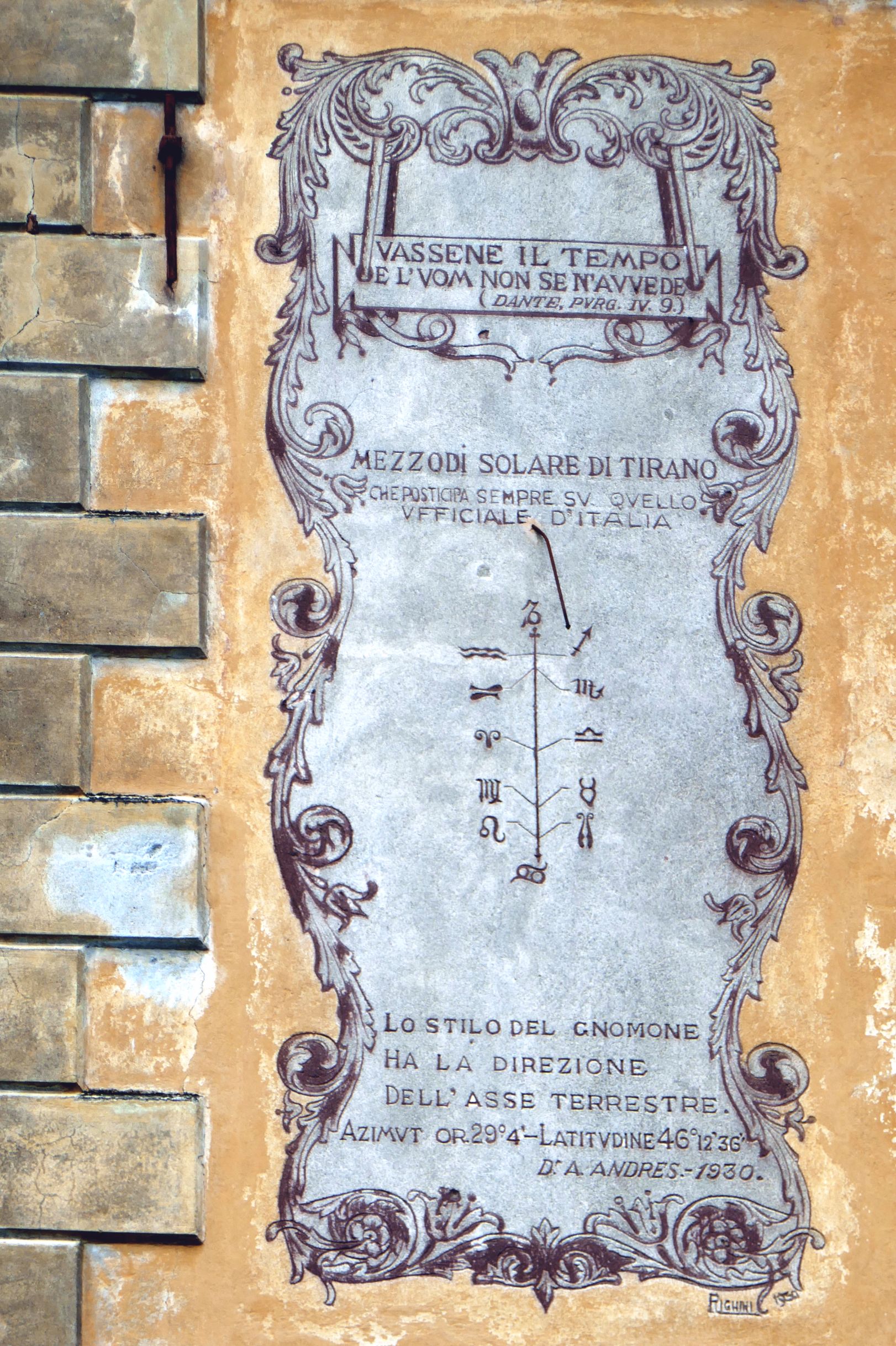
After dining al fresco with our group for lunch in Varenna, we traveled on to Tirano, the beginning point of the famous Bernina Express train to the Swiss Alps. After settling in at the hotel, Maria led us on an orientation tour of the town. The skies became quite dark and gray; quite the opposite of our bright, sunny morning. More about Tirano in my next post! Until then, thanks to all of you who have sent emails about my posts! I appreciate it!!
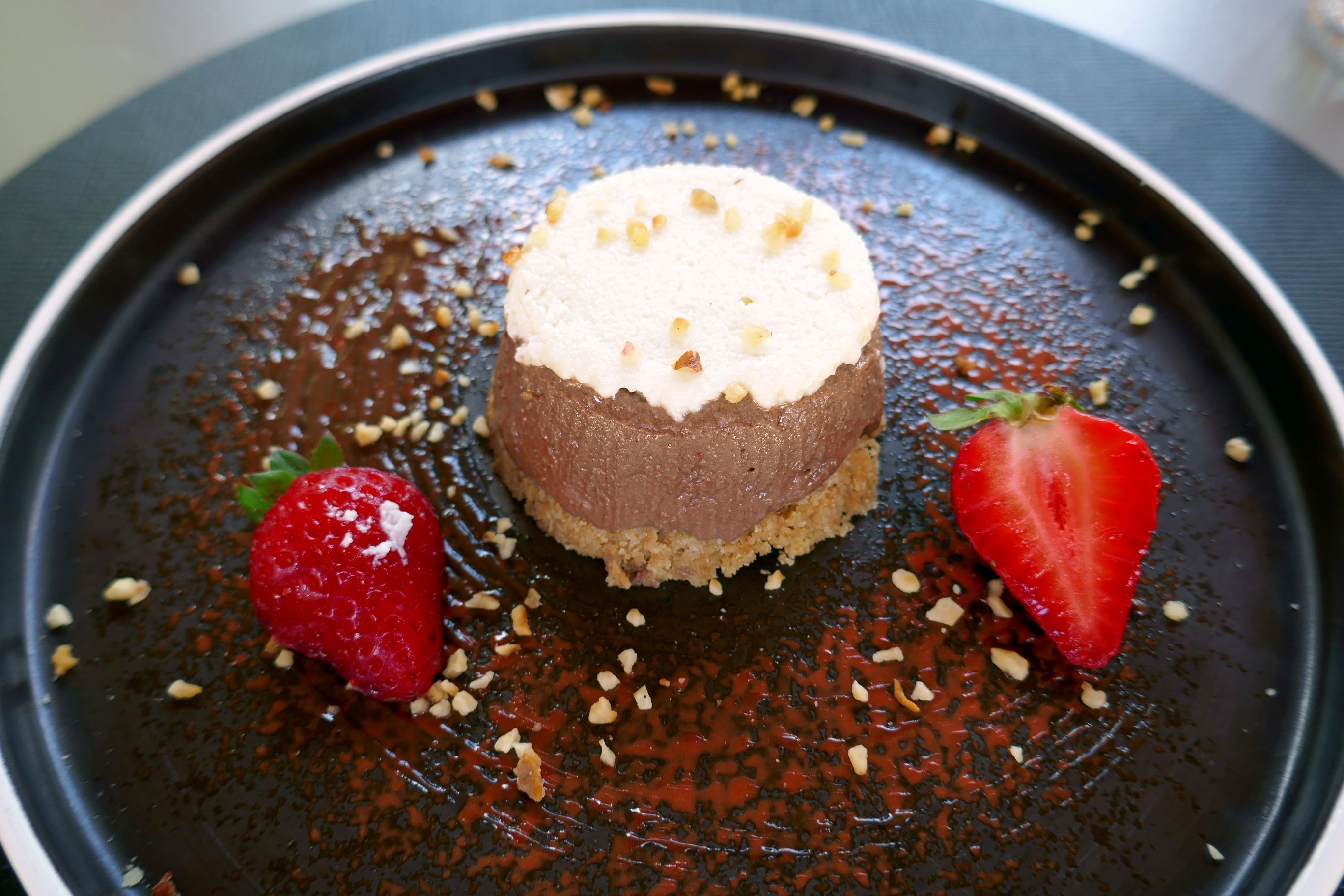
The dessert at lunch was fabulous! It was chocolate; what’s not to like?
Next up: SWITZERLAND & ITALY #12: VENTURING OFF TO A VALTELLINA VALLEY GOAT FARM& TIRANO