For all photos, click on the image for a full screen view.




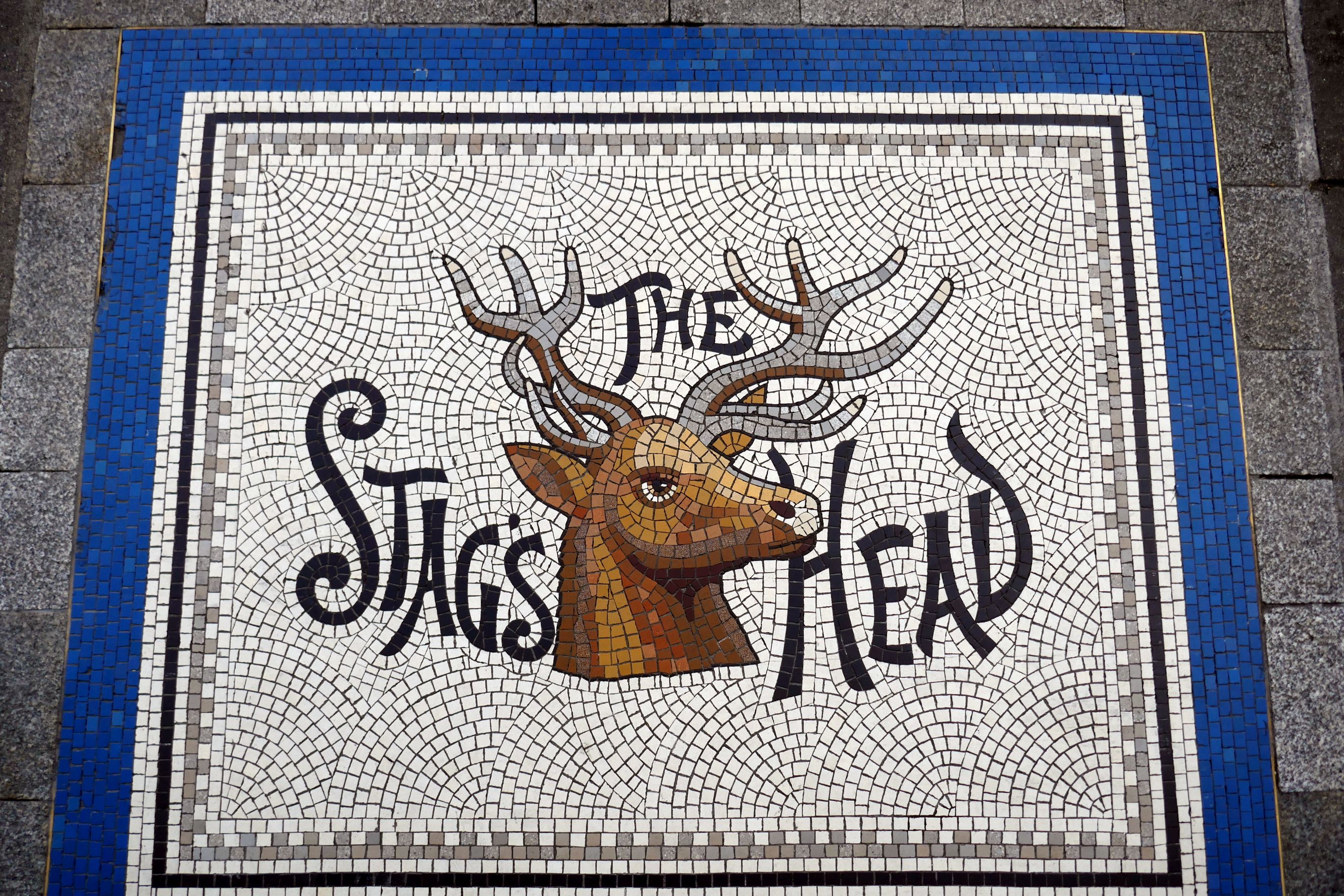

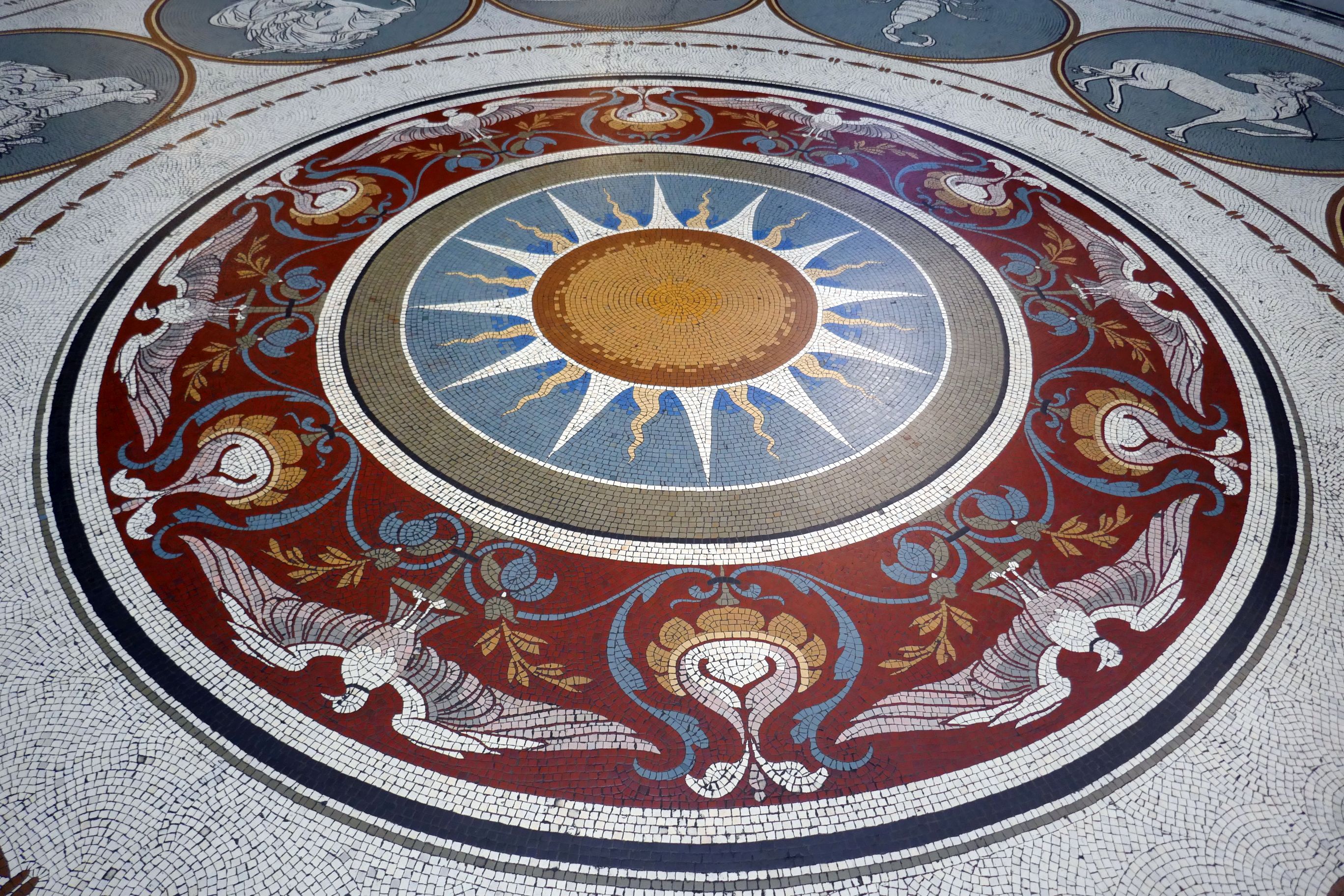


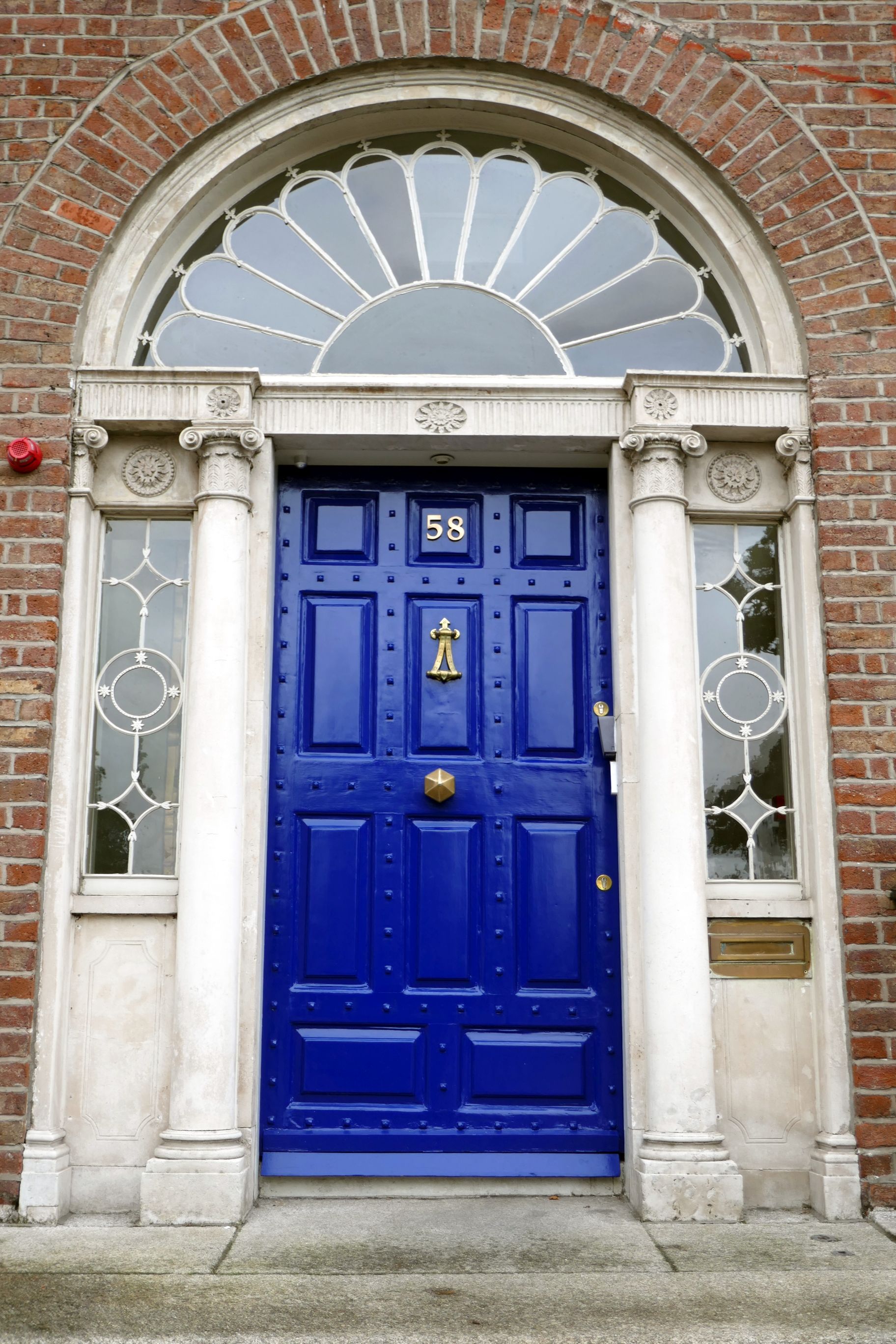
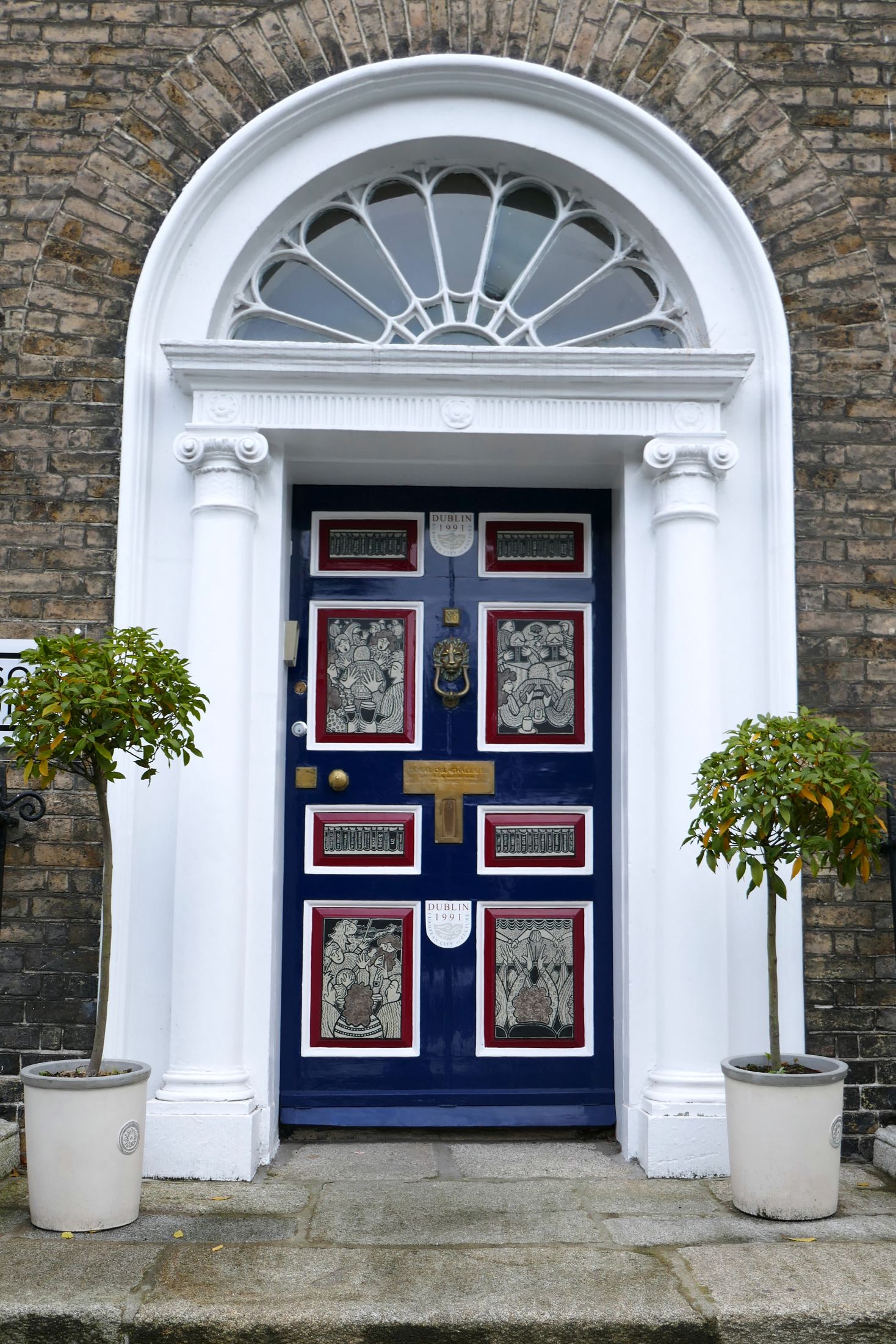

Coming up next: IRISH ADVENTURE #4: GLASNEVIN CEMETERY & COASTAL WALK
For all photos, click on the image for a full screen view.
Coming up next: IRISH ADVENTURE #4: GLASNEVIN CEMETERY & COASTAL WALK
Our group of 14 began the day with a panoramic tour of Dublin by bus and on foot. Although Dublin has the same size footprint as Los Angeles, the total population of the city and surrounding suburbs is only 3 million people compared to ten million in L.A. The lack of traffic congestion (at least compared to L.A.) while moving about the city was noticeable and appreciated!
Following our city tour, we visited 14 Henrietta Street, also known as the Tenement Museum. Built in the 1740’s, the home was first occupied by a wealthy lord and his wife. In 1800, Dublin entered a period of economic decline, and the owner at the time divided the home into 17 tenement flats. Now a museum, it tells the story of the families who occupied the house over the years, from Dublin’s most elite to the poorest of the poor. At the time, Ireland was under British rule, and the British aristocracy moved out and ruled from England.
By 1911, 17 families totaling 100 people lived at 14 Henrietta Street. It was during the time of Spanish flu, so there was much illness spreading throughout the tenements. The tenement had only one toilet (this was before indoor plumbing was common, so it was considered “posh”), but everybody had to share that one toilet. It was only flushed one time each week—brutal! And, at night, rats ran free throughout the flats.
(For all photos, click on the image for a full screen view.)
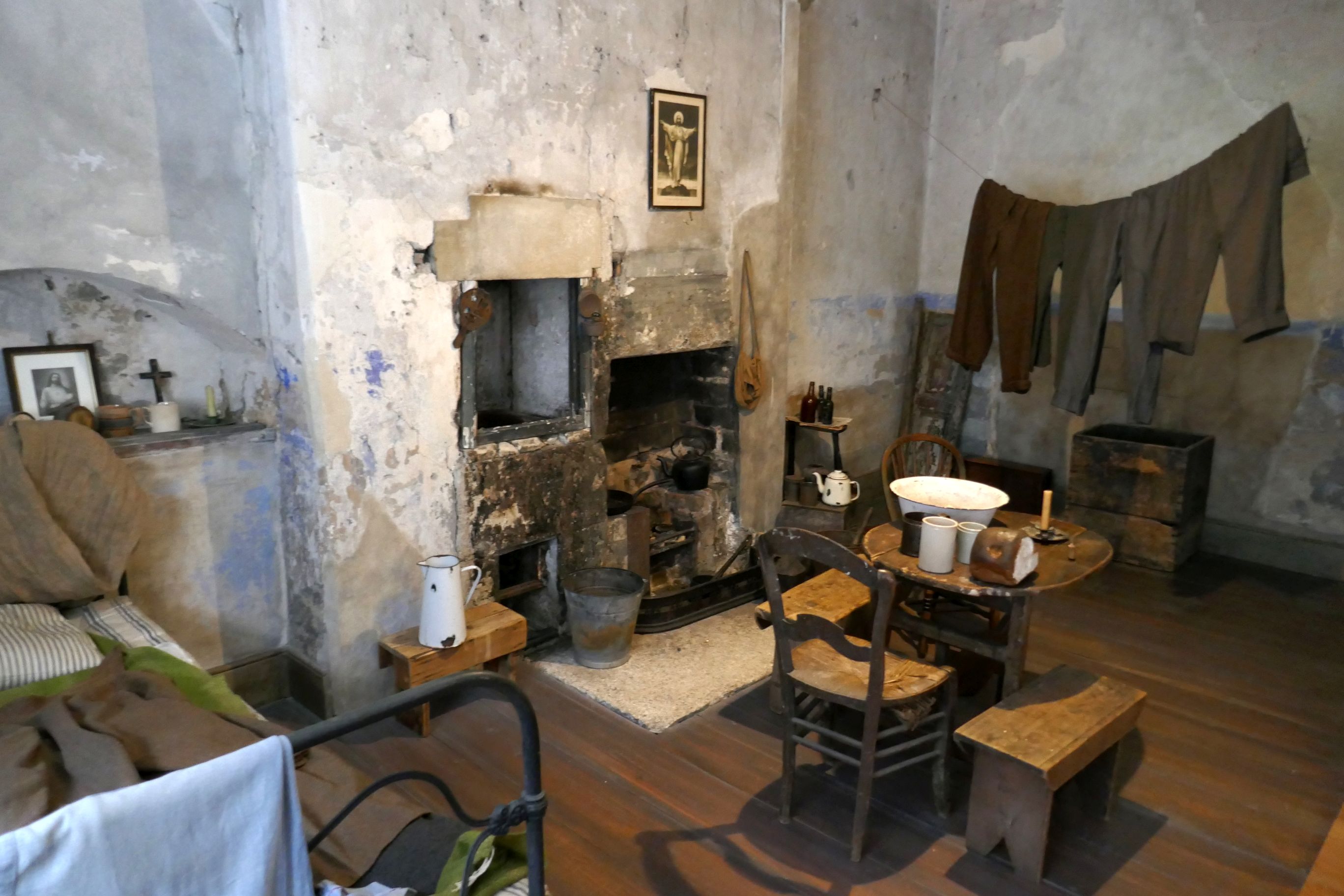
At the time, 1/6 of Ireland’s population lived in tenements and 1,000 of them lived on Henrietta Street. They had the highest mortality rate of the British Isles and many of the children didn’t live past age five. Work weeks were long—70 hours—and the pay was extremely meager. Job insecurity was a fact of life, and people lived on bread, potatoes, and tea. One lady lost 12 of her 14 children before they reached the age of 5.
Do you know how the saying, “Moving up in the world” originated? When people were able to move from the basement up to higher and warmer levels of tenement houses with more light, they were moving up… This was very expensive, of course, so multiple families shared a flat.
In 1979, the last person at 14 Henrietta Street left, and it closed. In 2000, the city of Dublin began the process of acquiring the house, and then in 2008, they began conservation and preservation—a ten-year long project.
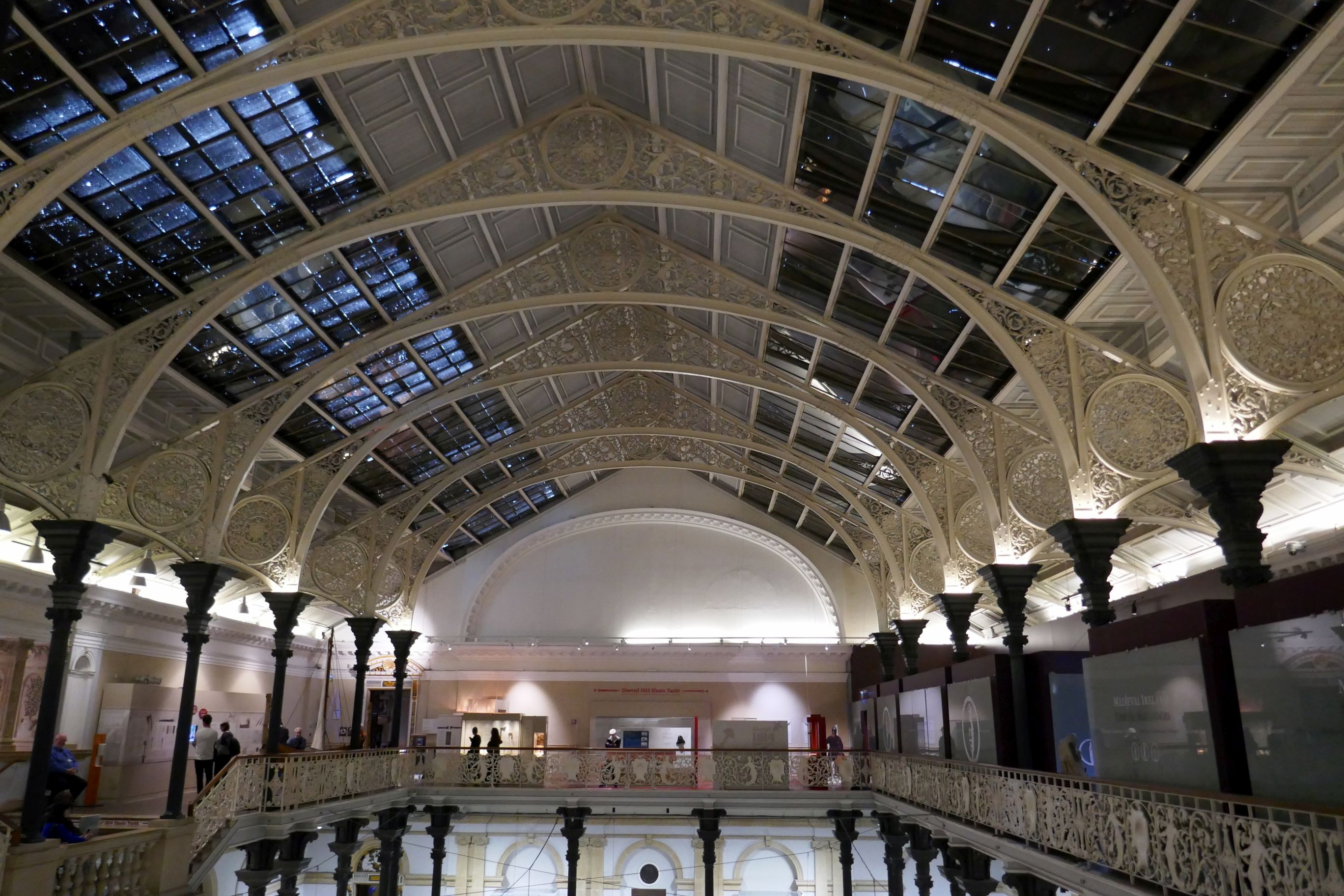
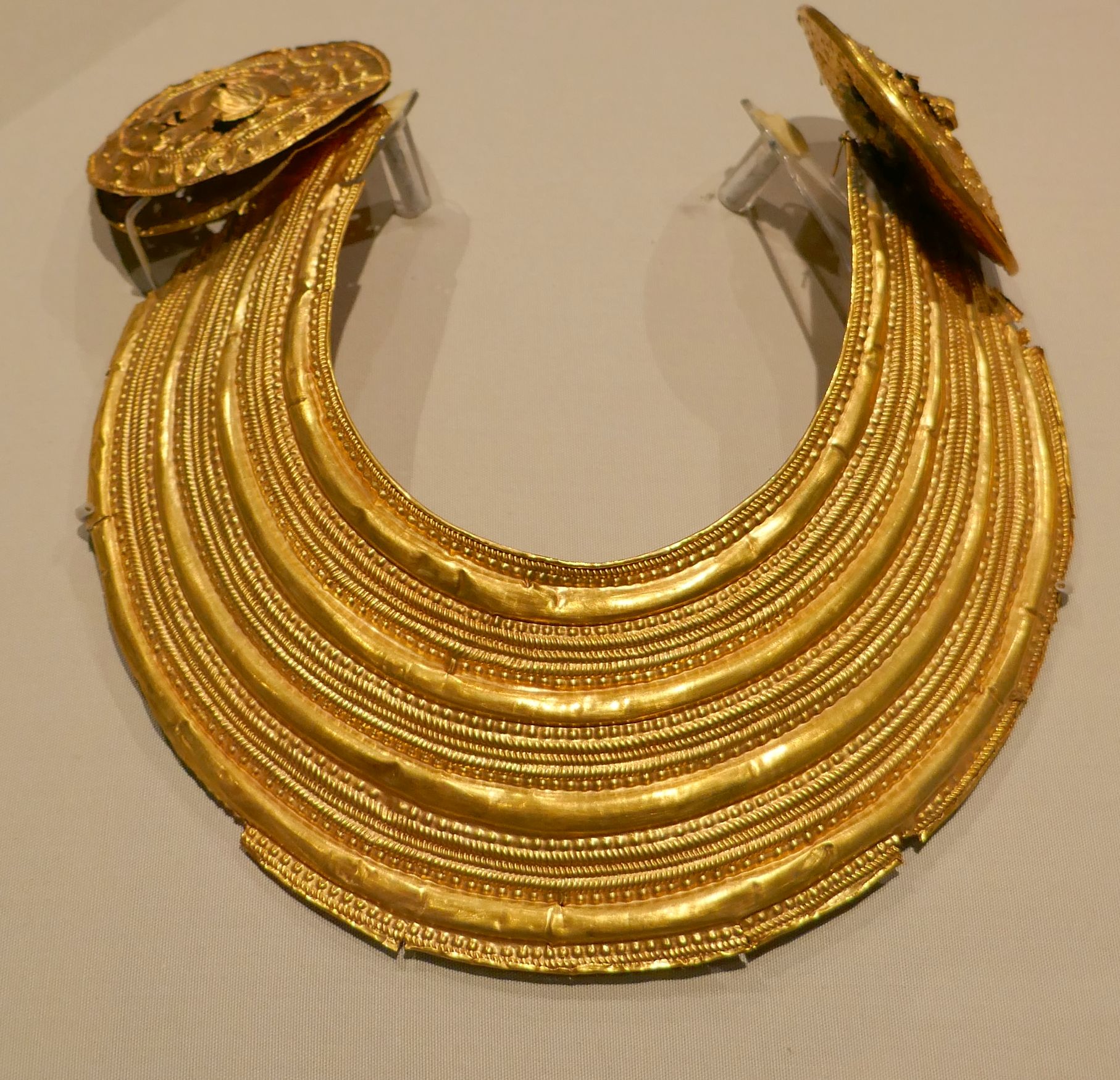
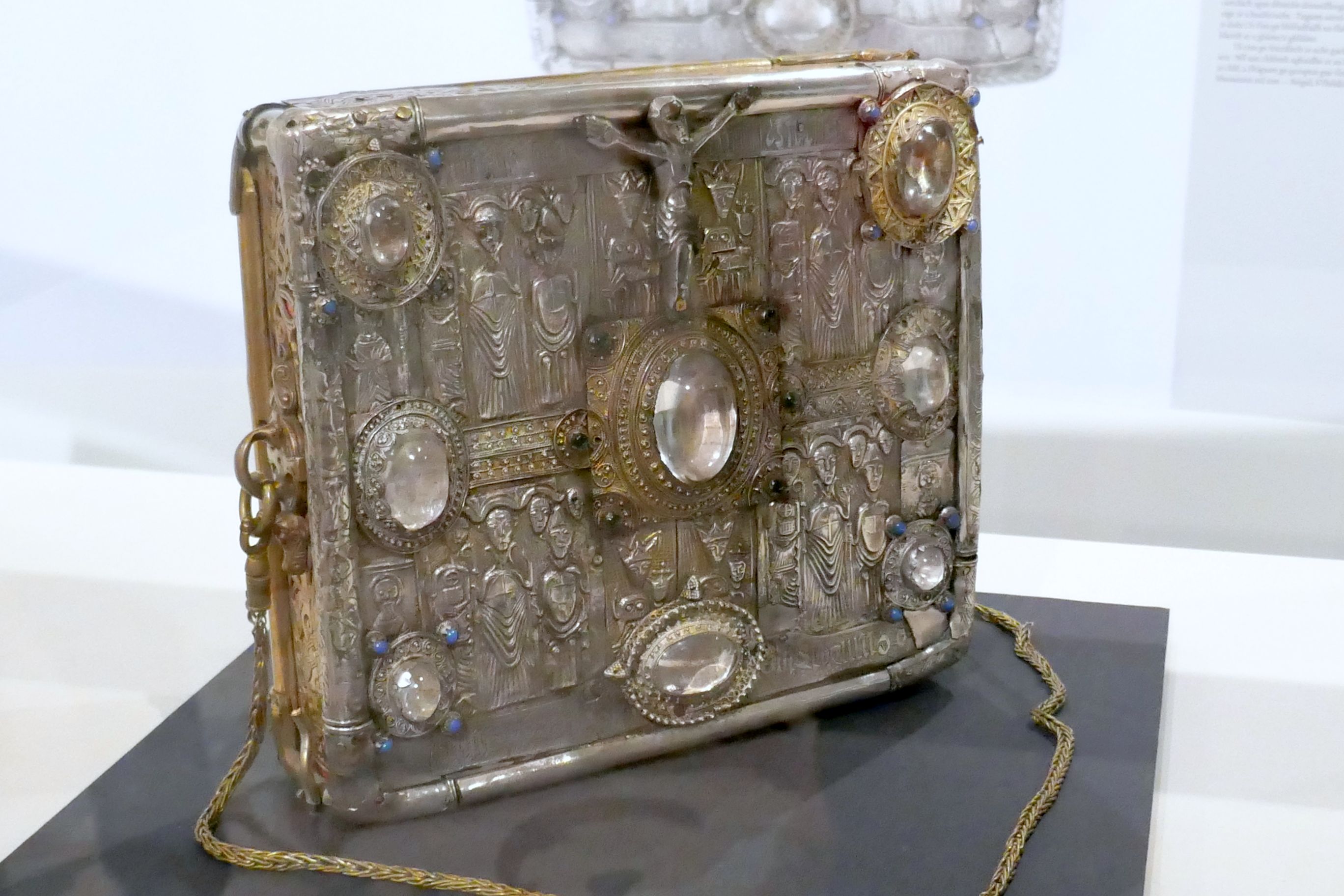
Following the tour of the museum, the afternoon was free, so Bruce and I visited the National Museum of Ireland Archeaology. The building alone was worth the visit; it was gorgeous!

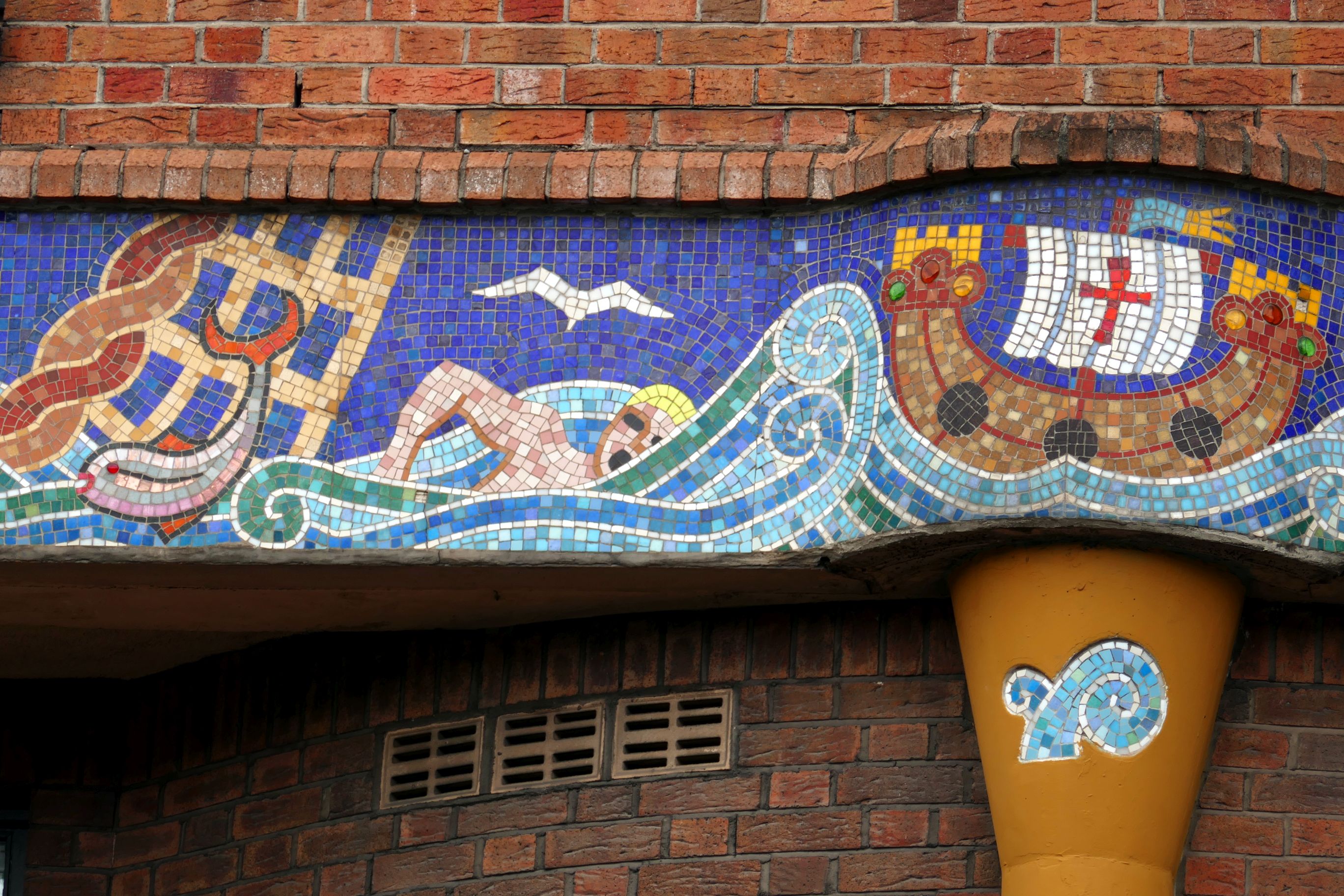
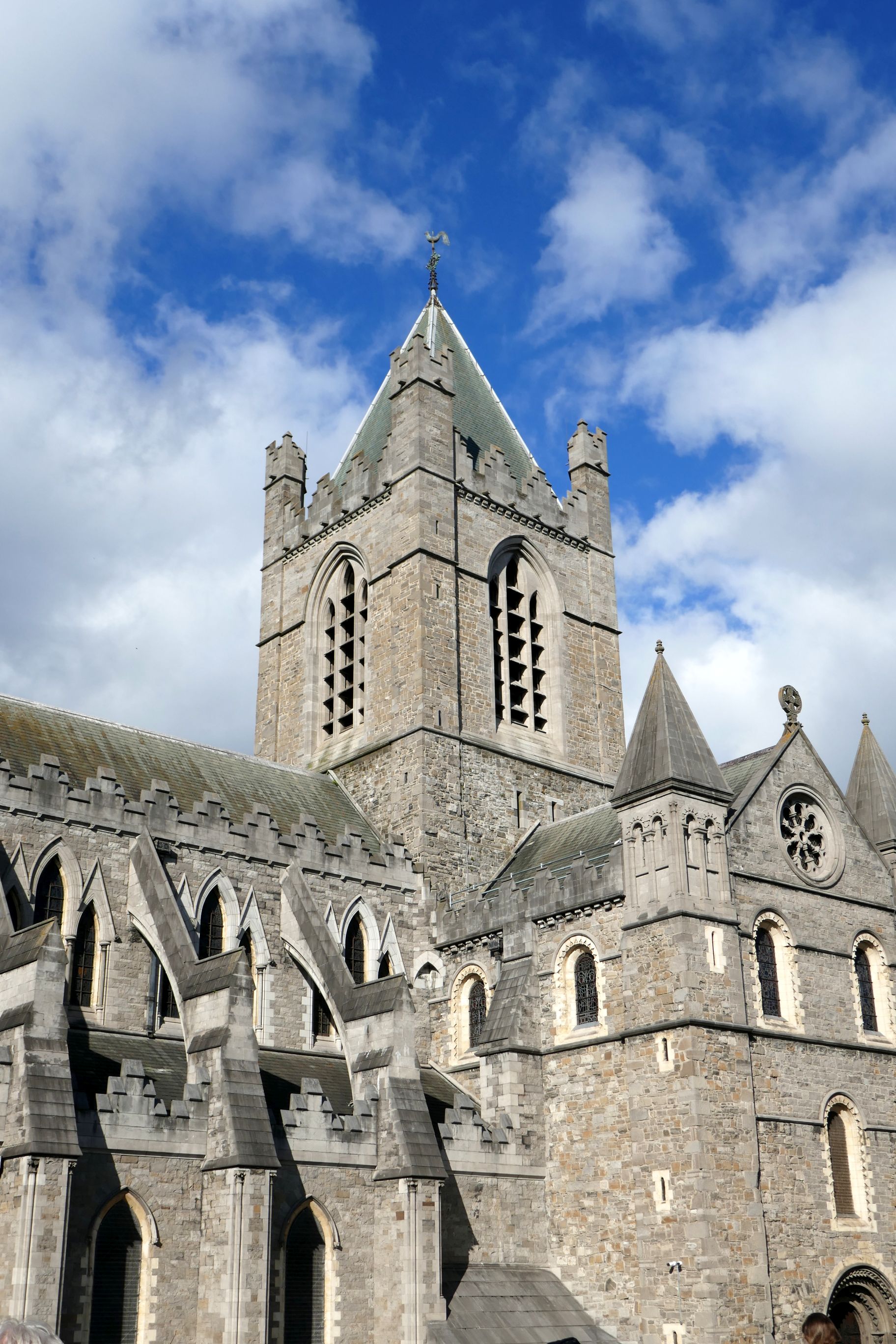
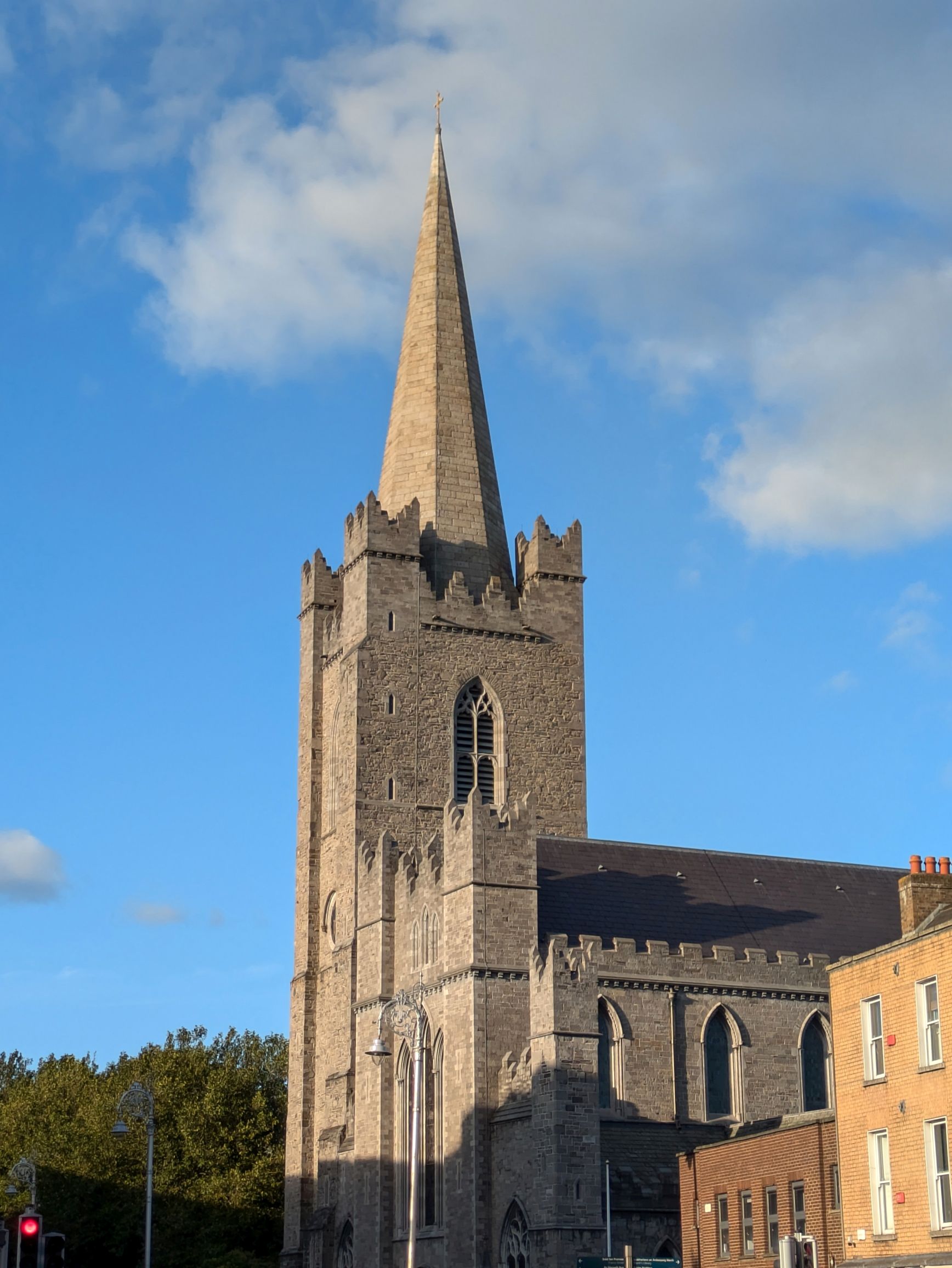
More scenes around Dublin:

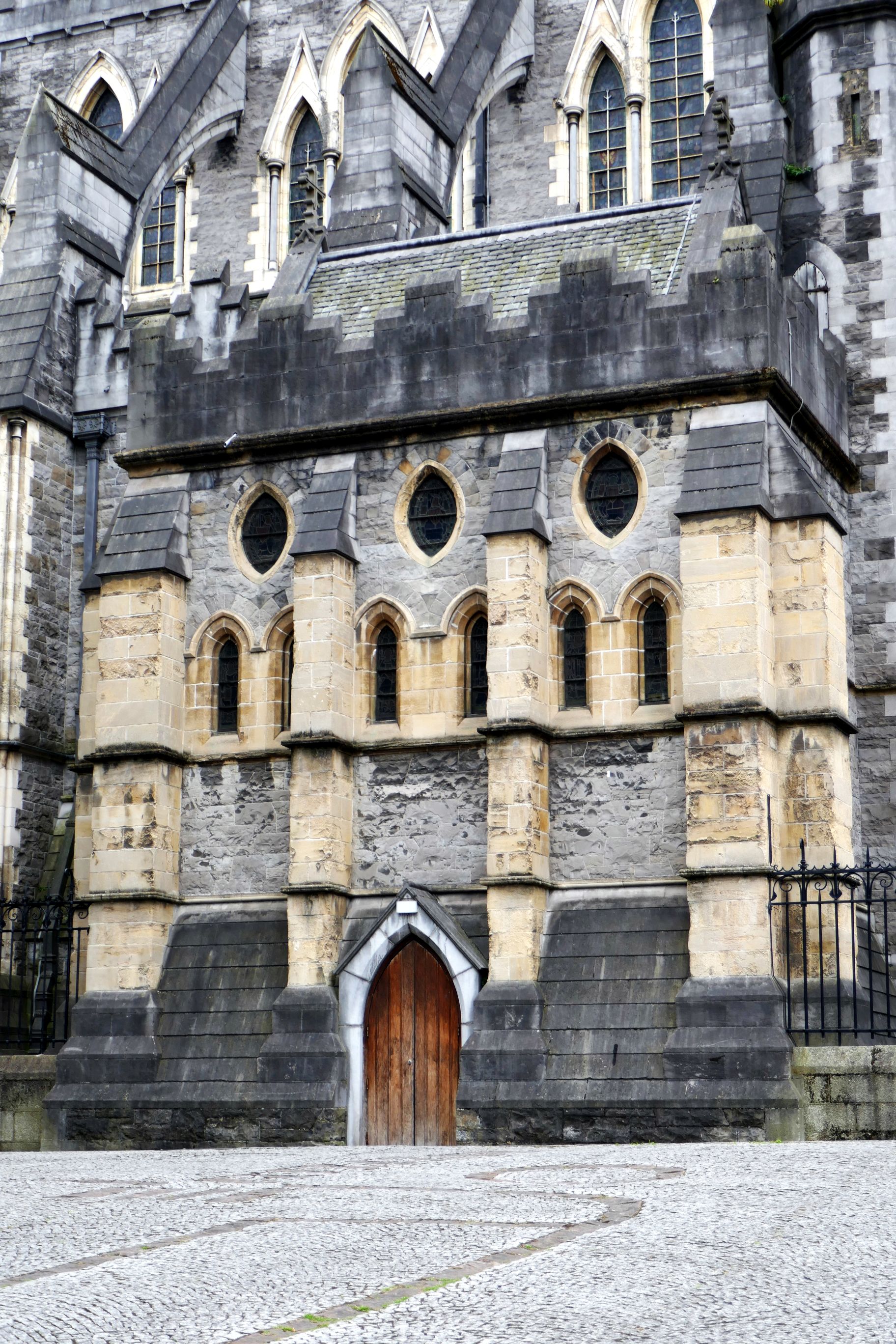
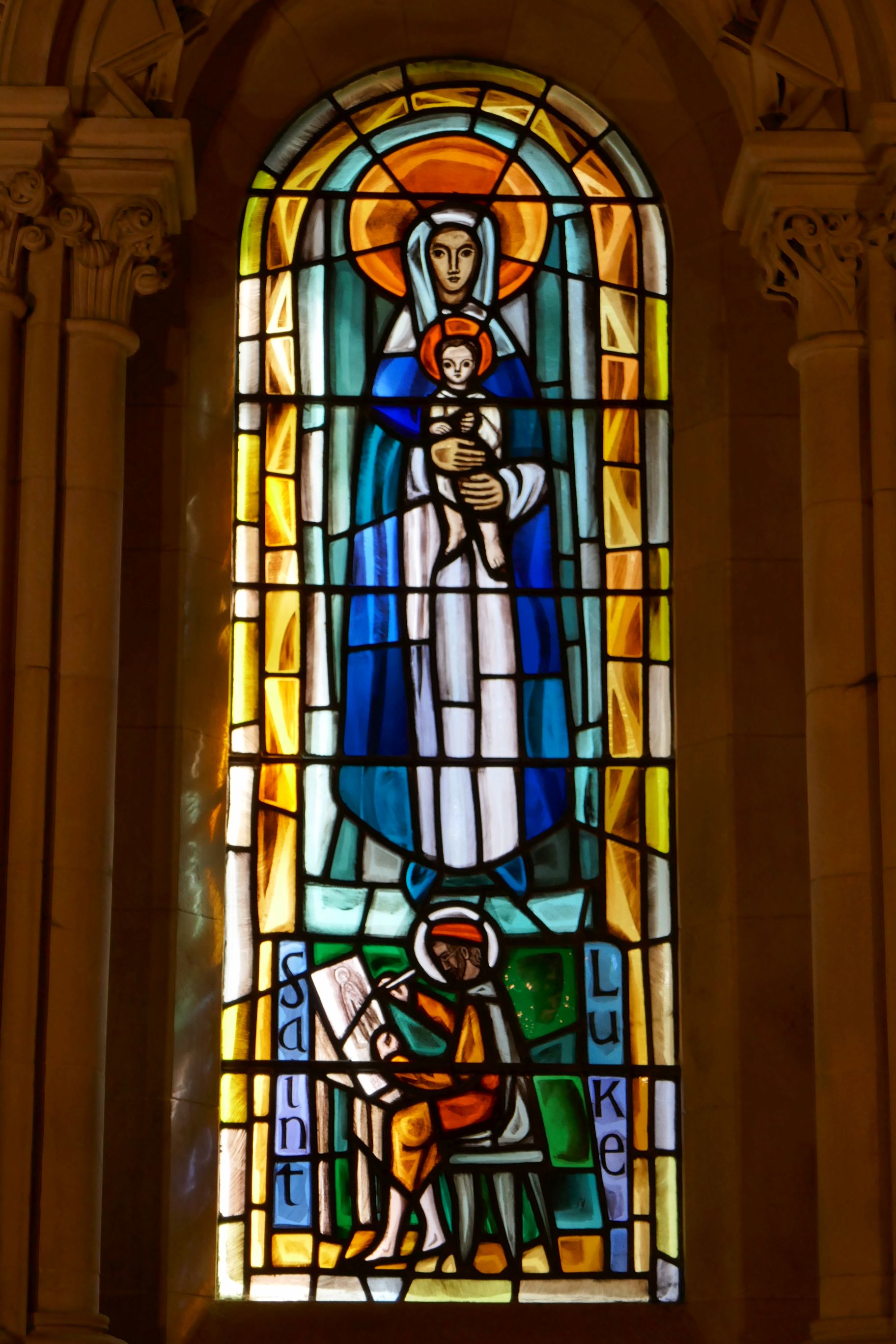
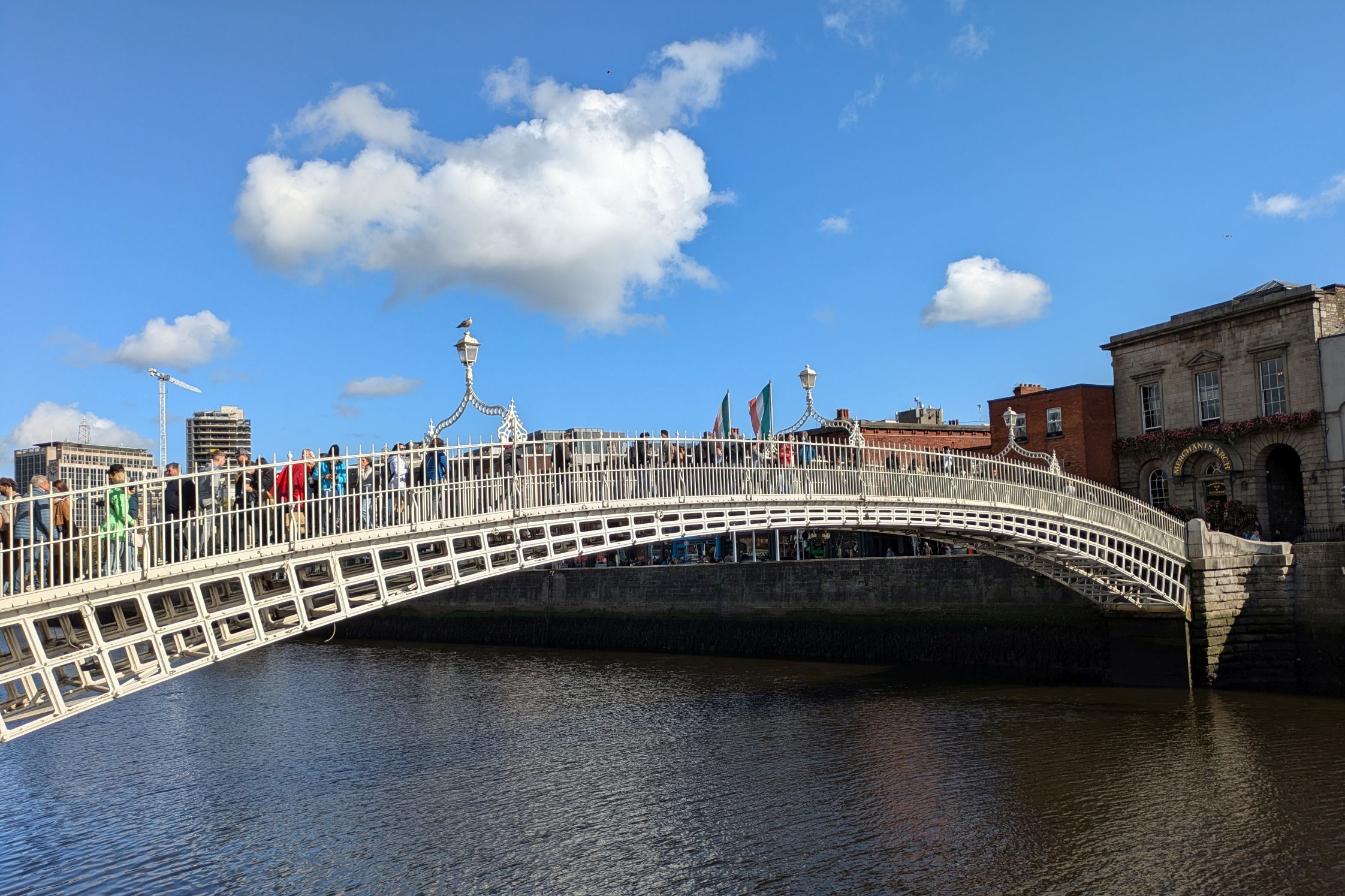
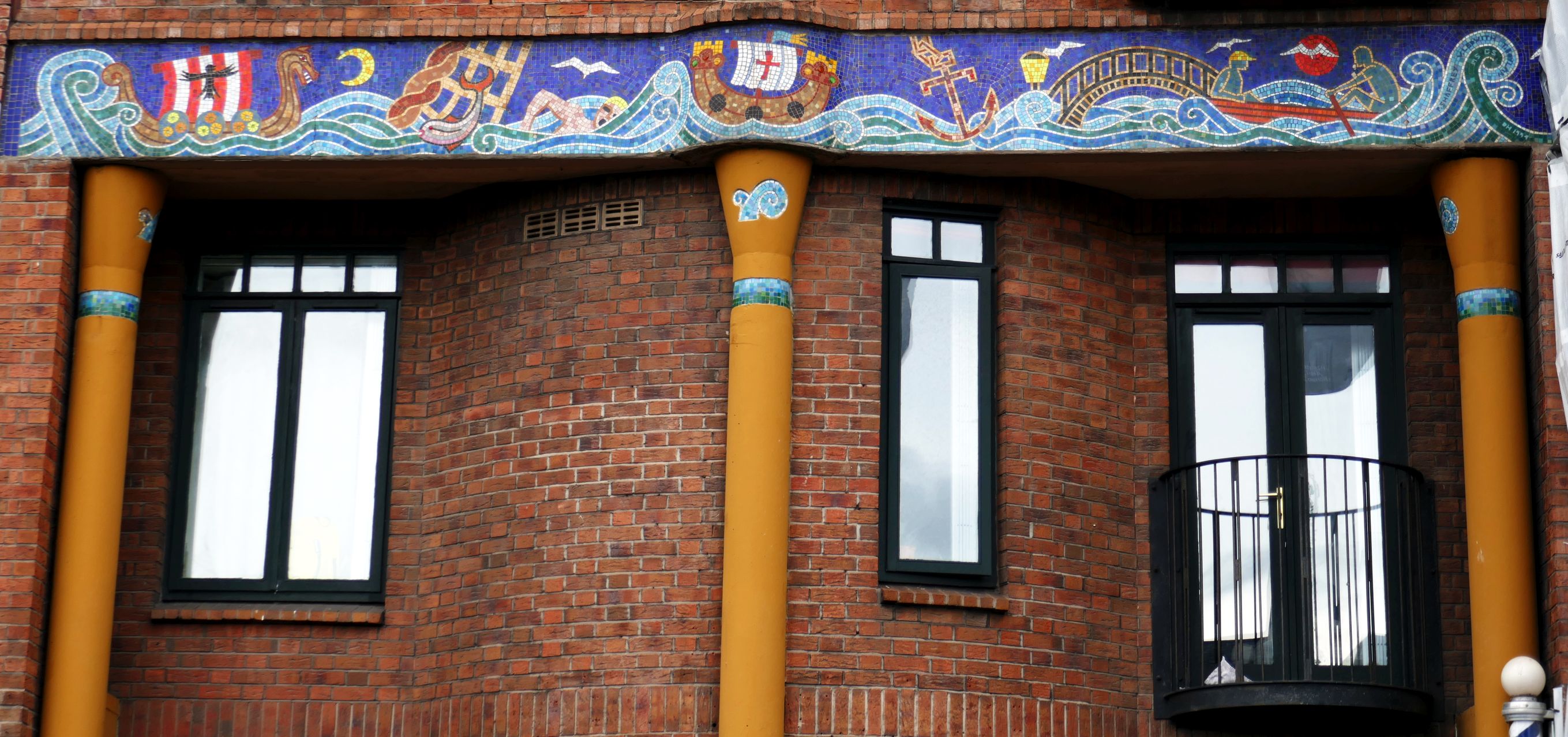
Next up: IRISH ADVENTURE #3: THE FLOORS AND DOORS OF DUBLIN
Following our Overseas Adventure Travel (OAT) tour of the United Kingdom and post-trip extension to the Cotswolds and London, we had a free day (and most of the next day) before beginning our OAT tour of Ireland and Northern Ireland. We decided to add on a night at the Dublin hotel where the tour was scheduled to begin, so we flew from London to Dublin, and then checked in at the Hyatt Centric The Liberties.
Bruce and I enjoy walkable cities that we can explore on our own with ease. Dublin, the capital of Ireland, was a delightful city to do just that. Situated on the mouth of the River Liffey, the river divides the city into the Northside and Southside. The historic city center is encircled by the Royal Canal and Grand Canal, which was helpful for navigation.
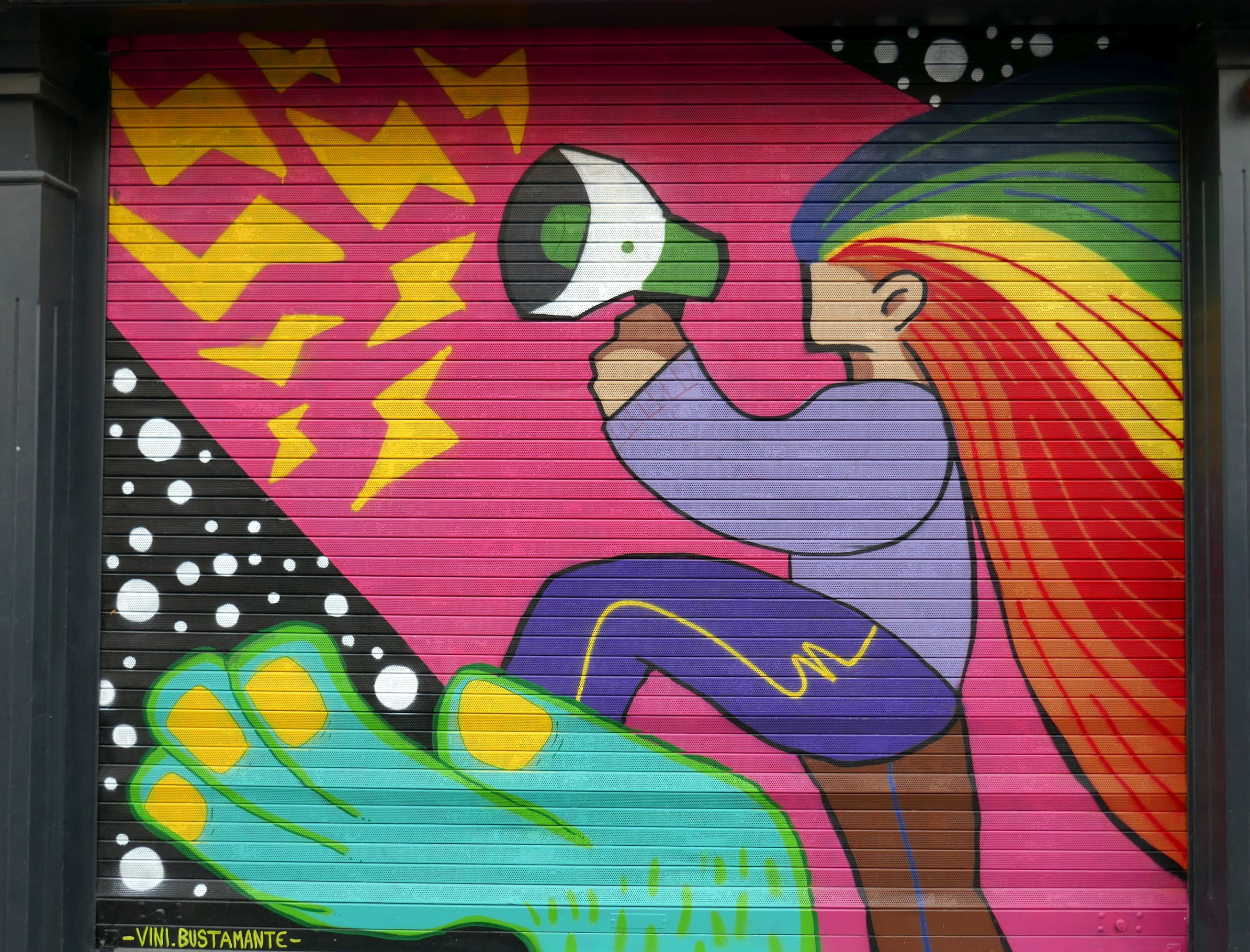
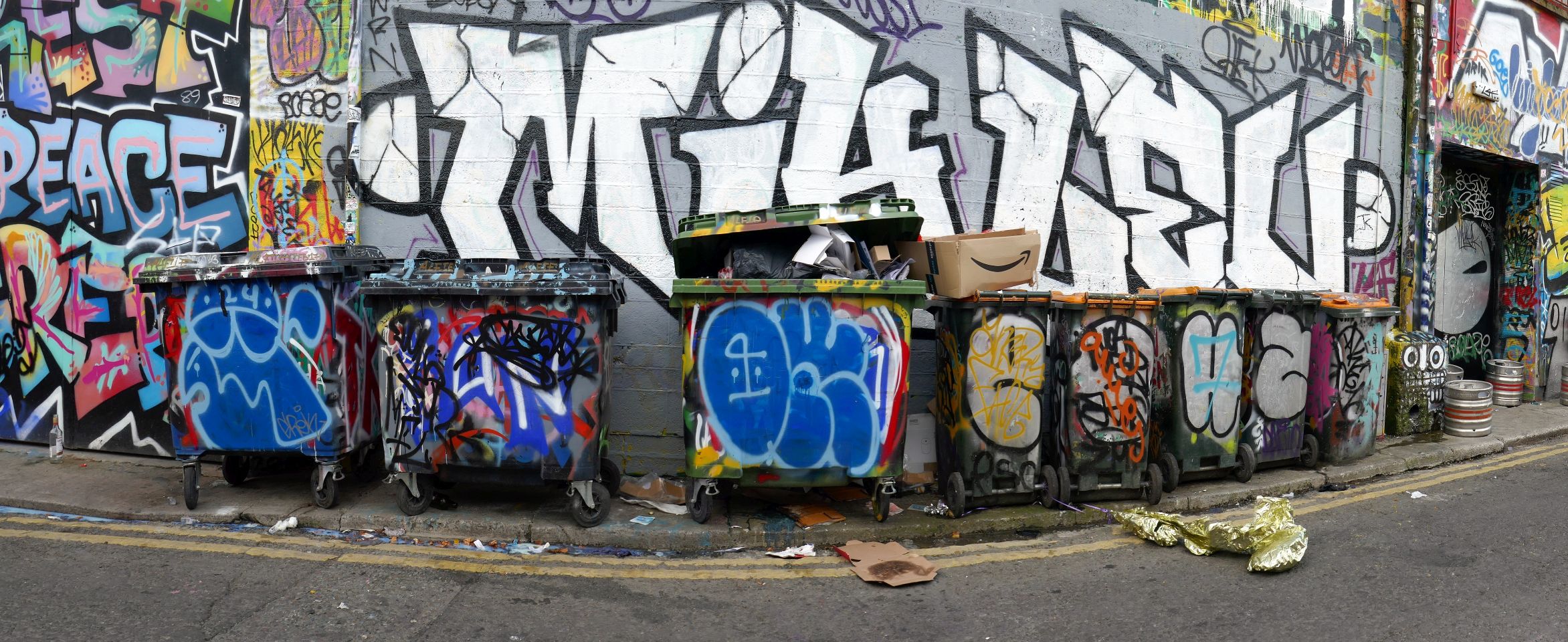
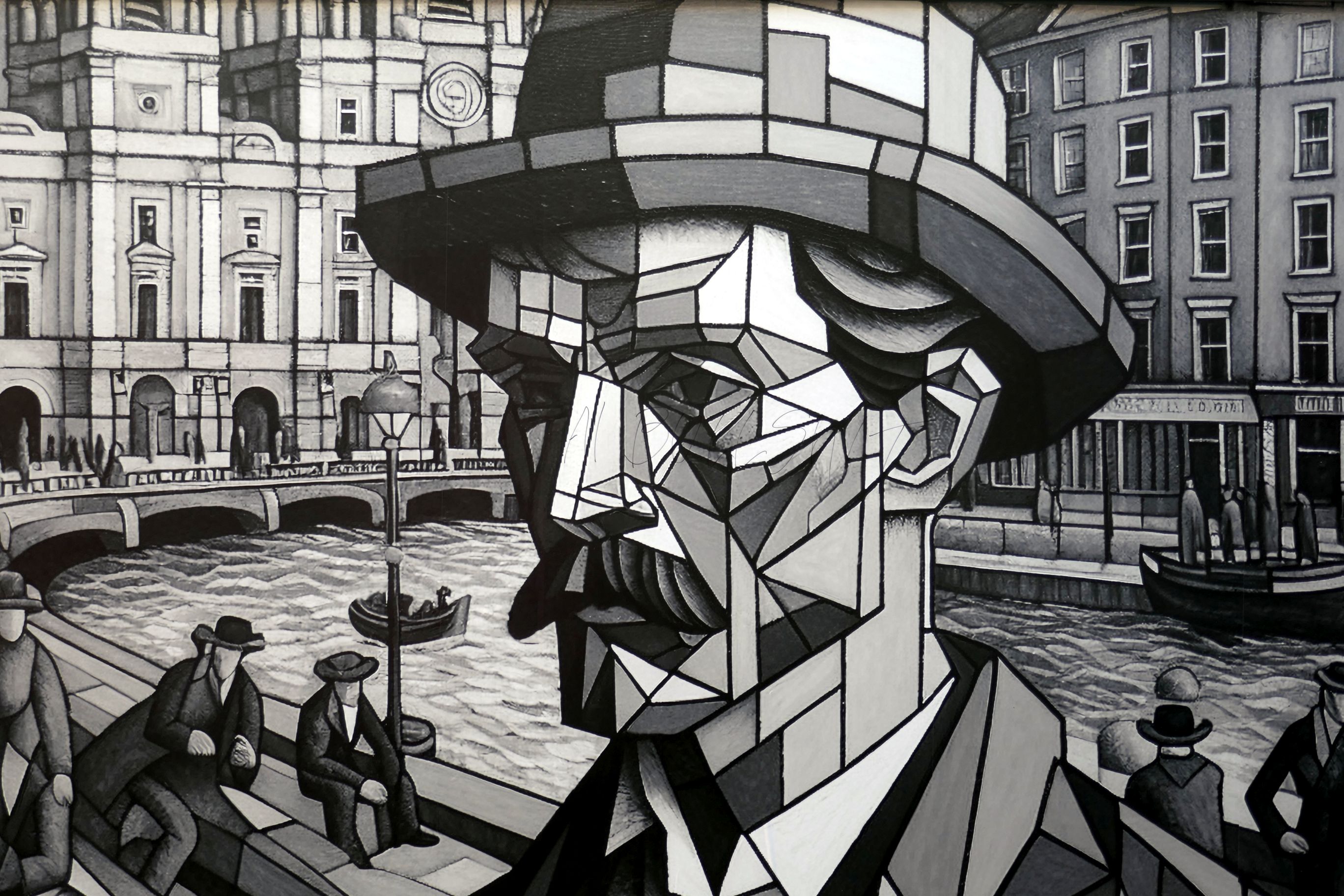
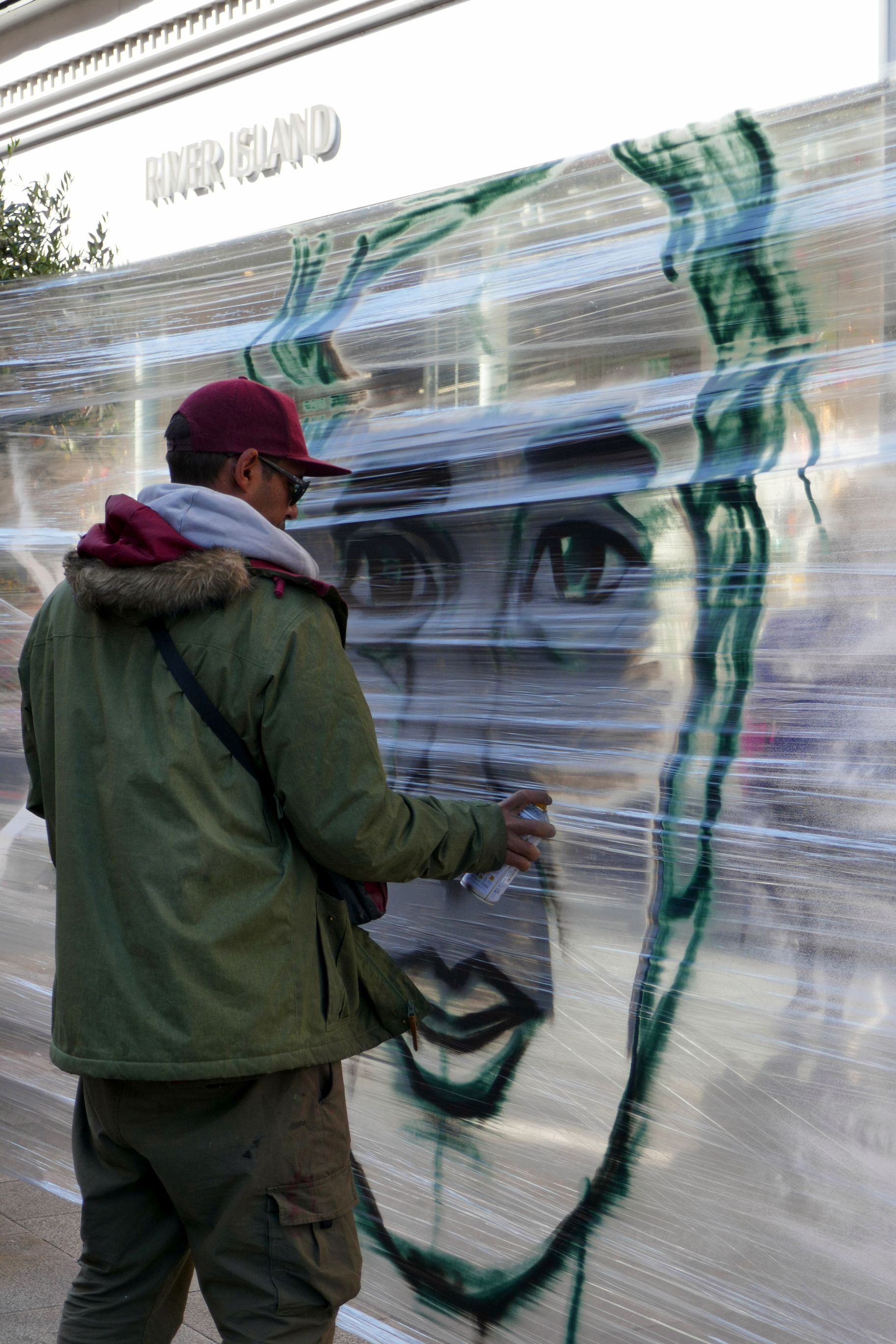
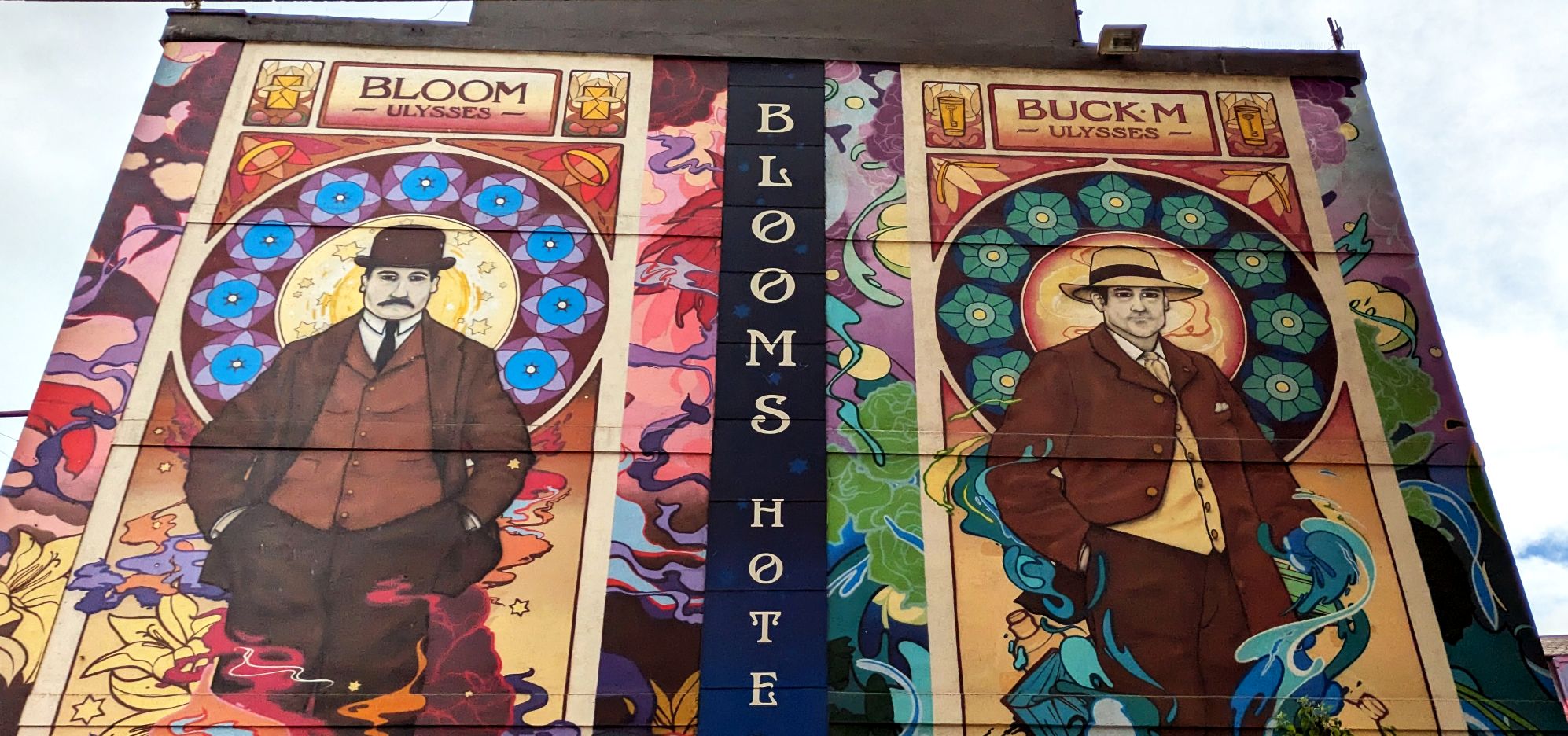
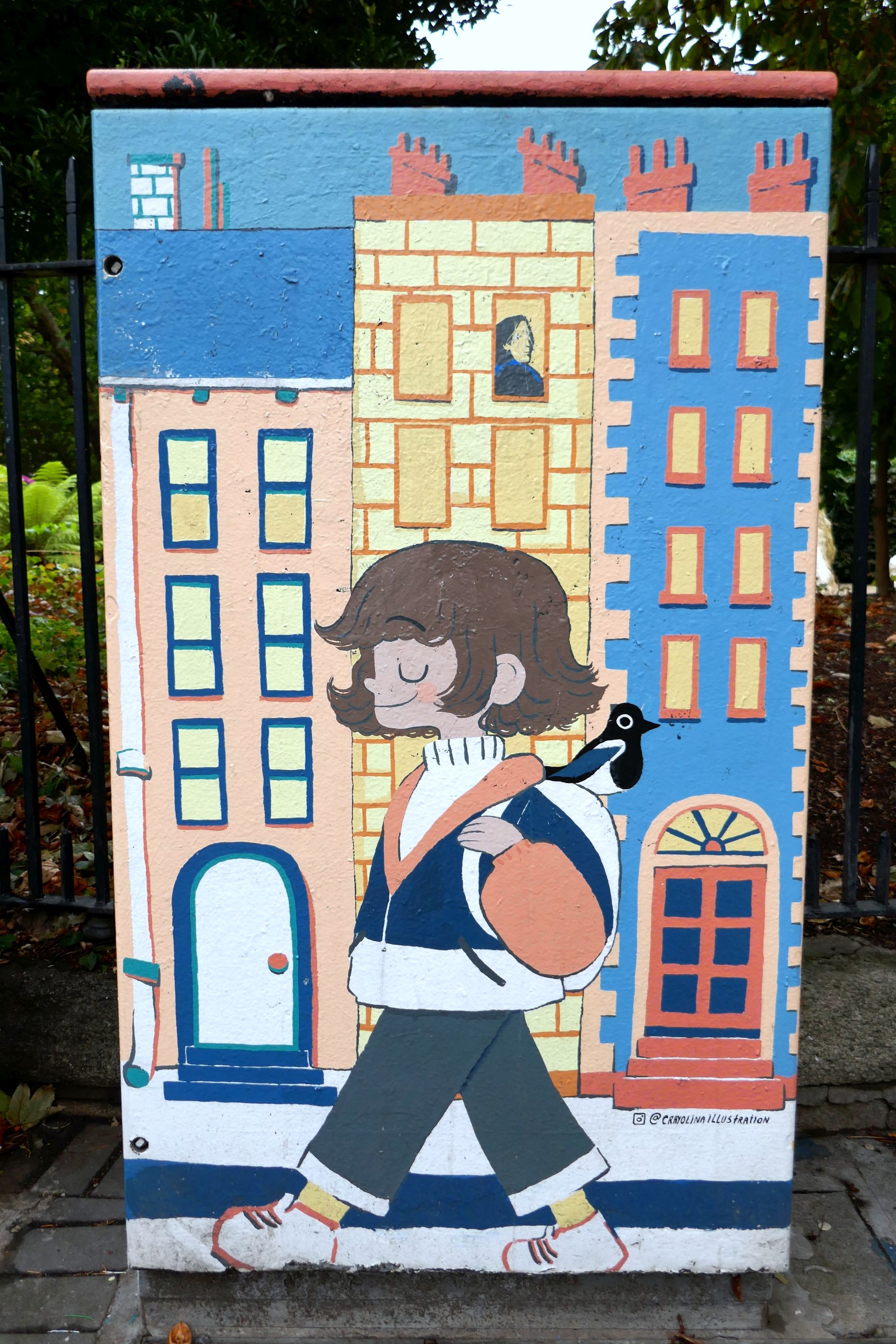
Not long after we set out on our walk, we came across a street full of murals and graffiti, which captured our curiosity and inspired me to reach into my pack for my camera.
The following are murals and graffiti I photographed on this tucked-away street as well in other areas of the city center during our stay in Dublin.
(For all photos, click on the image for a full screen view.)


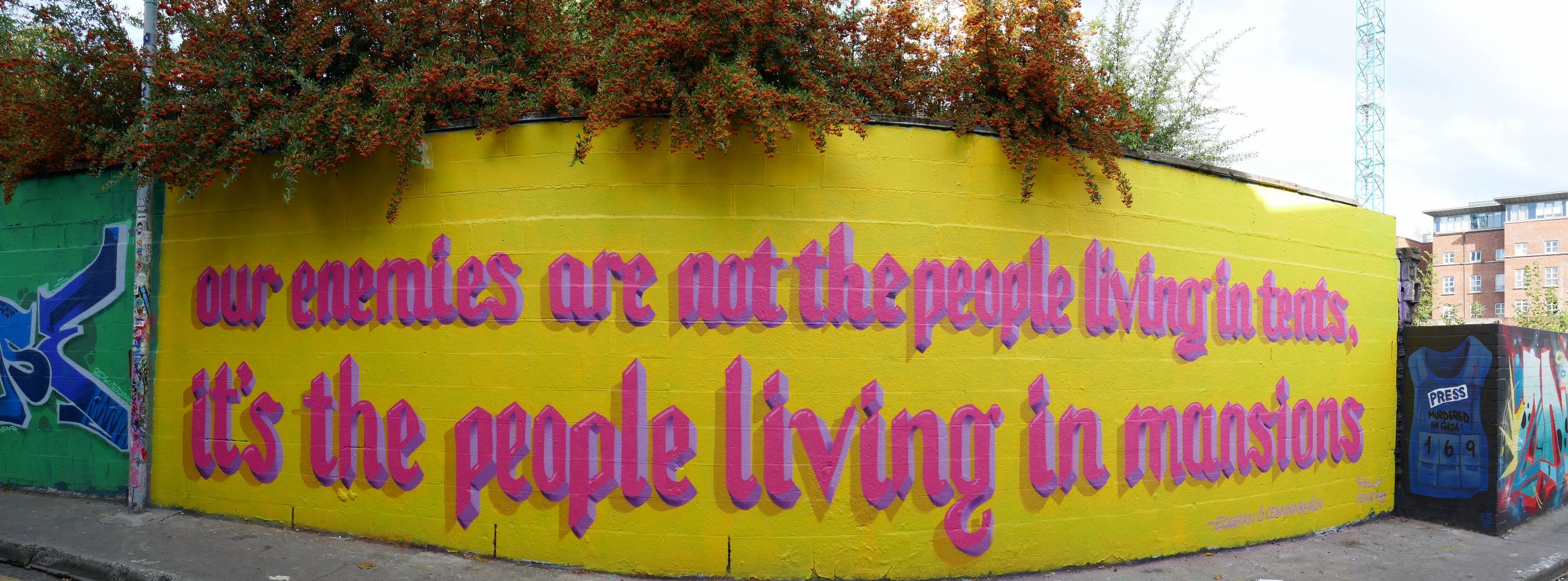
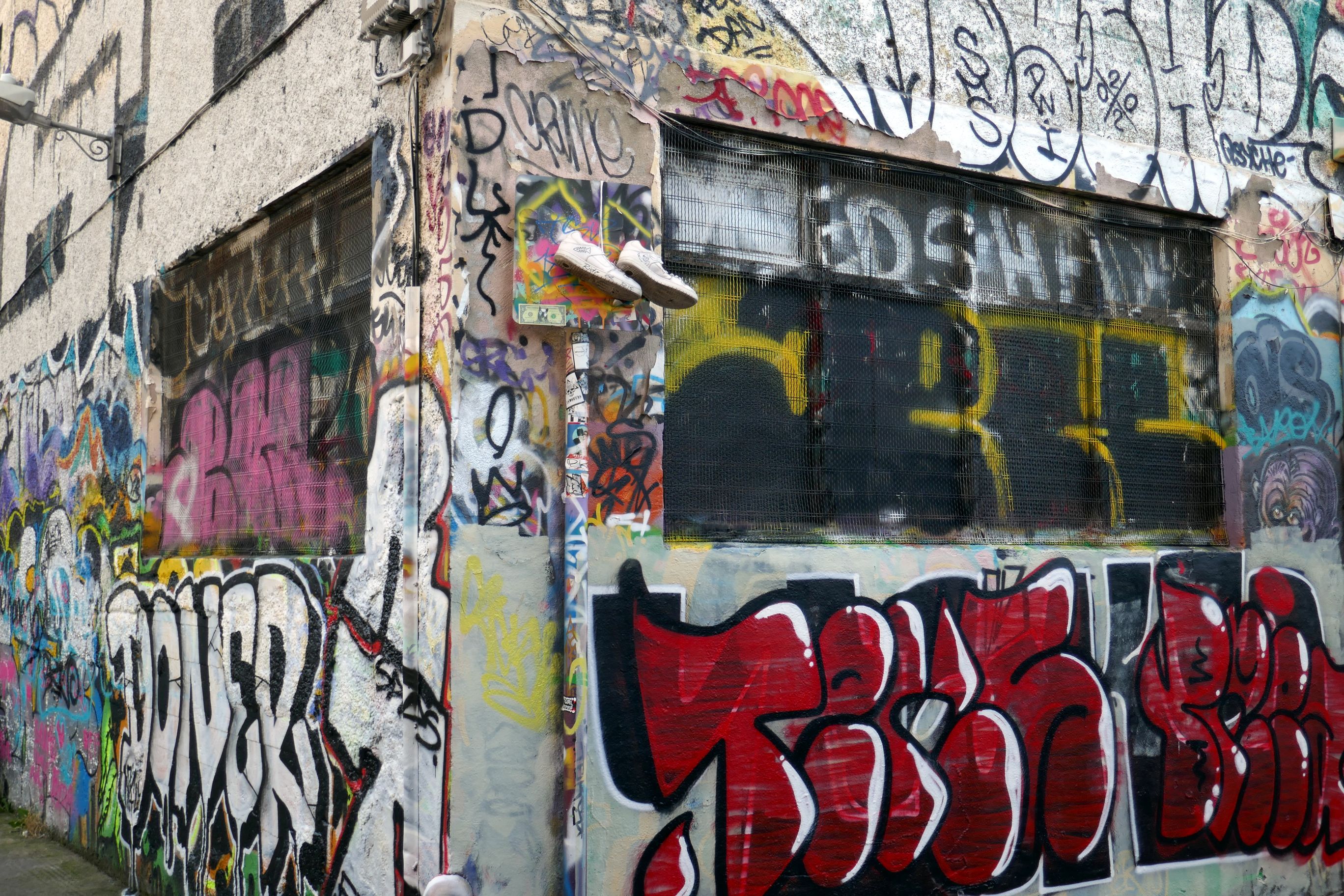
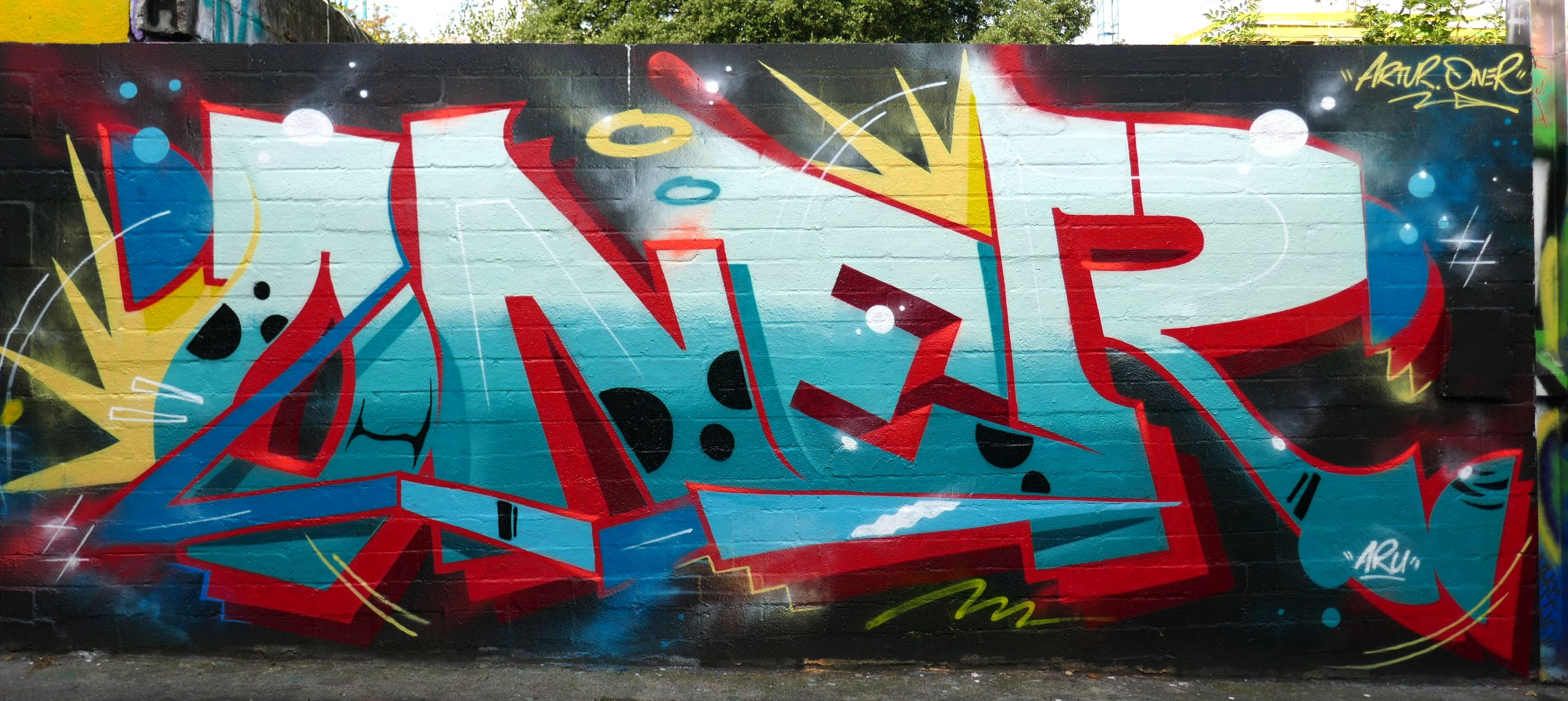
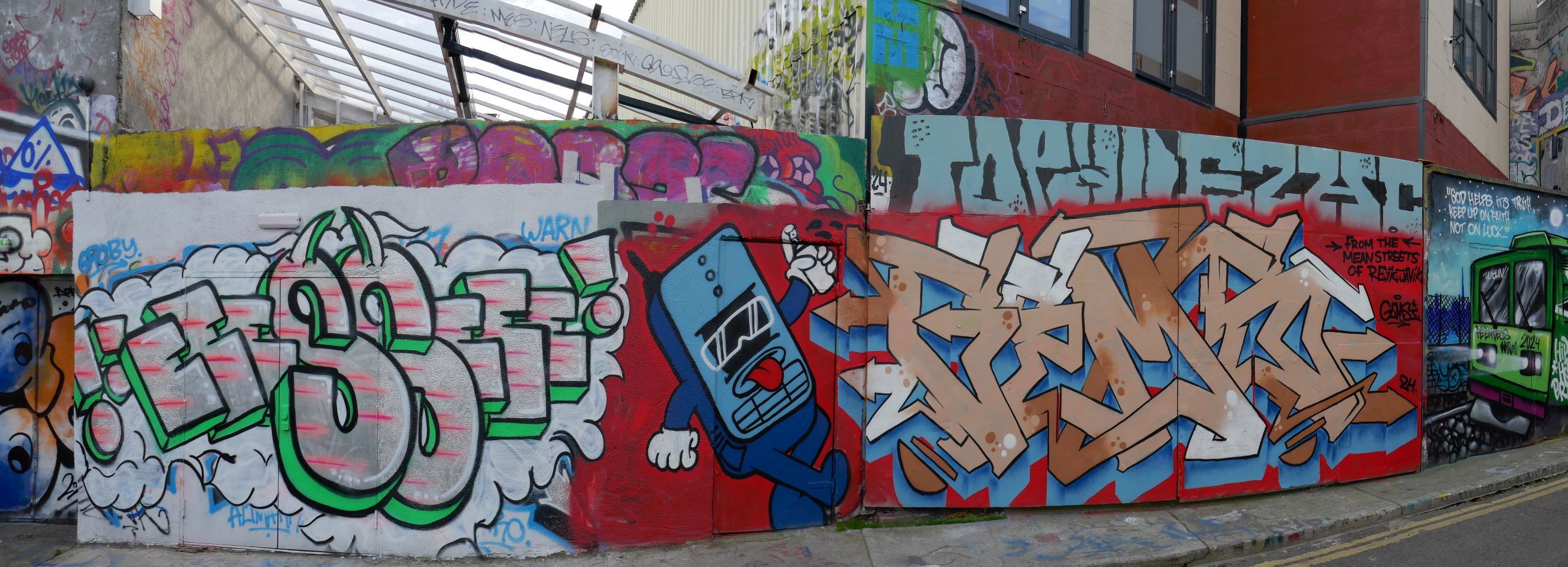



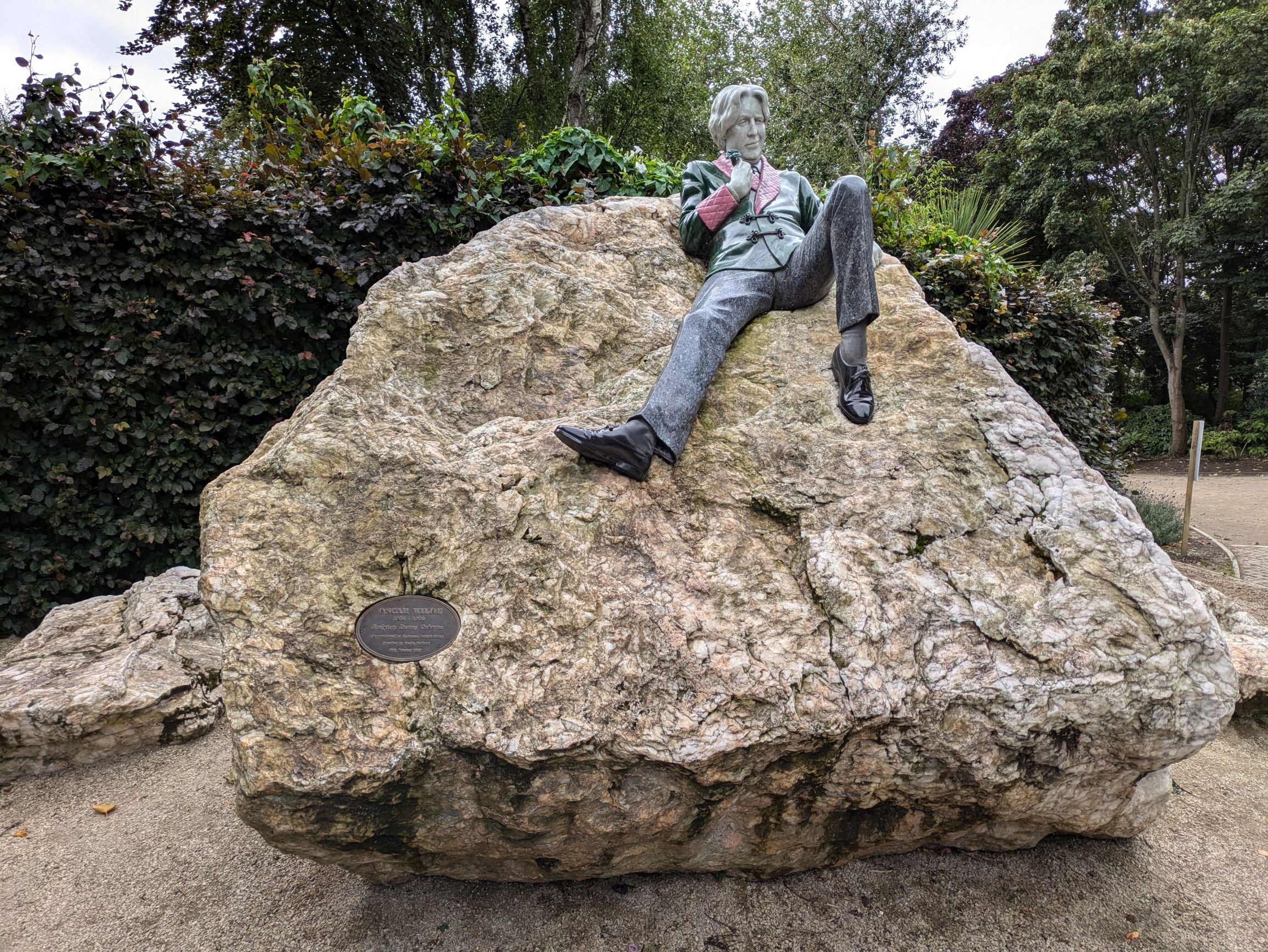
Bruce and I decided to make St. Stephen’s Green our first destination. Located in the city center, we thought the 22-acre public park would be a relaxing place to unwind after the hustle-bustle of London and Heathrow airport.

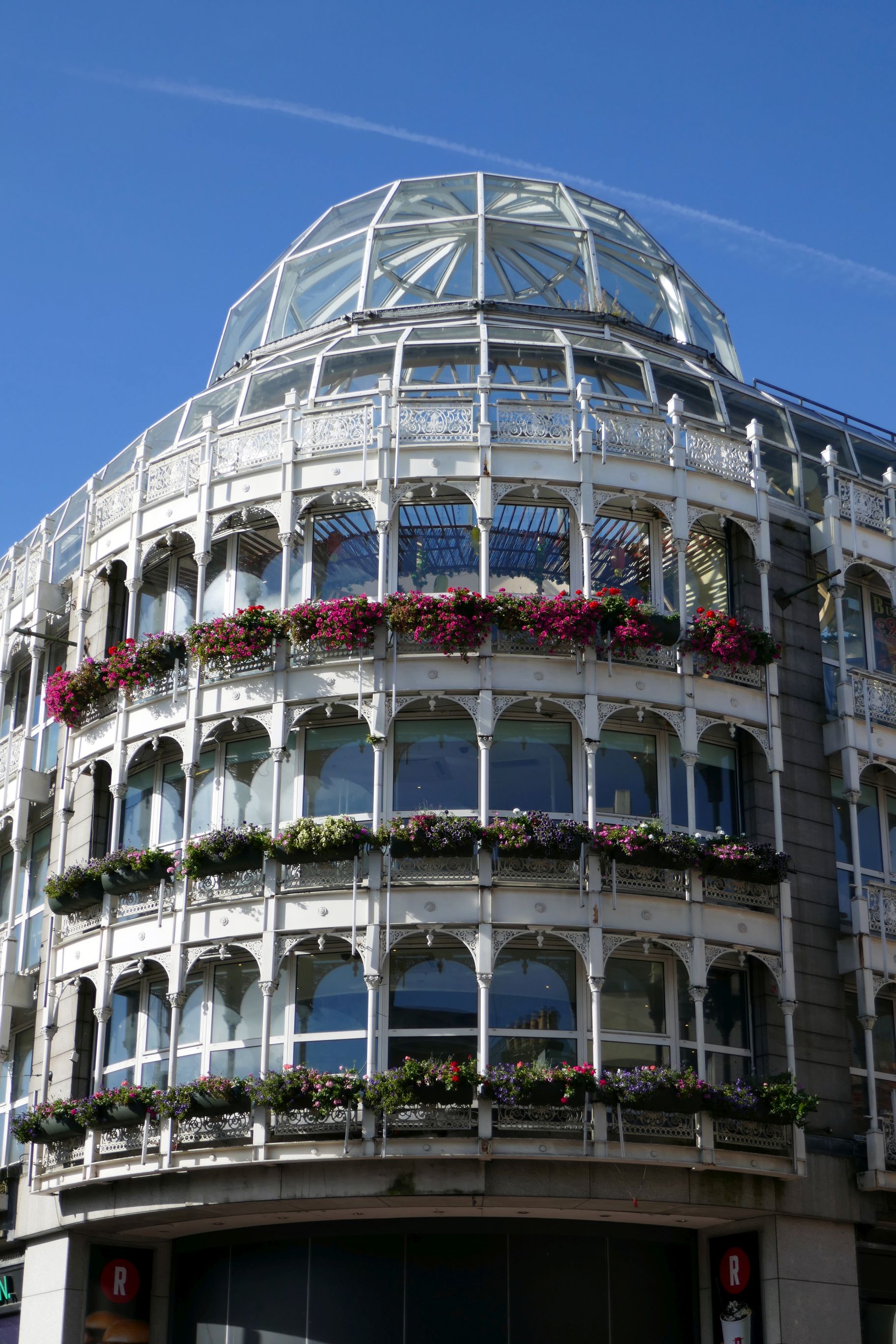
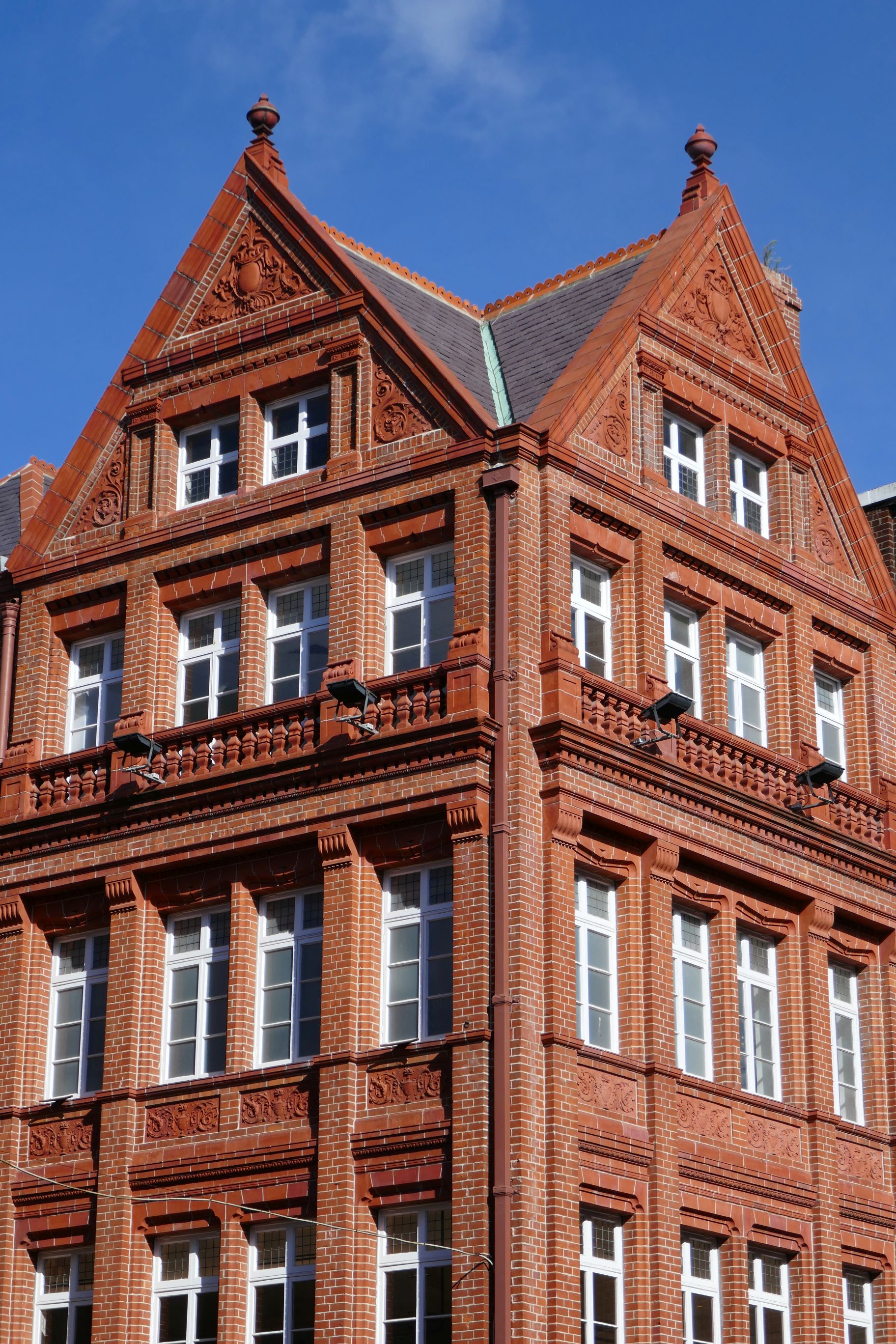
More scenes captured while wandering around Dublin before meeting up with our tour leader and group:



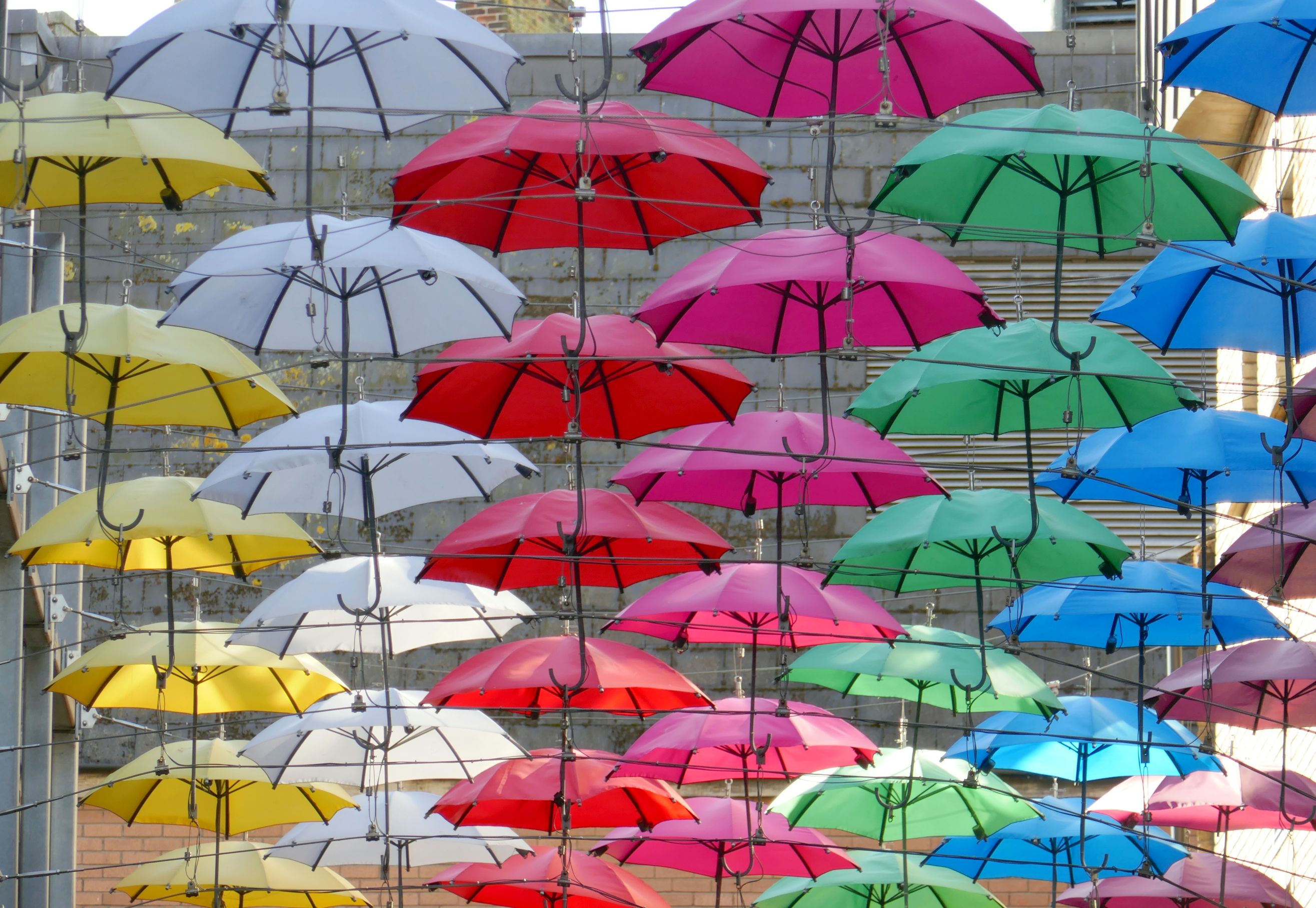
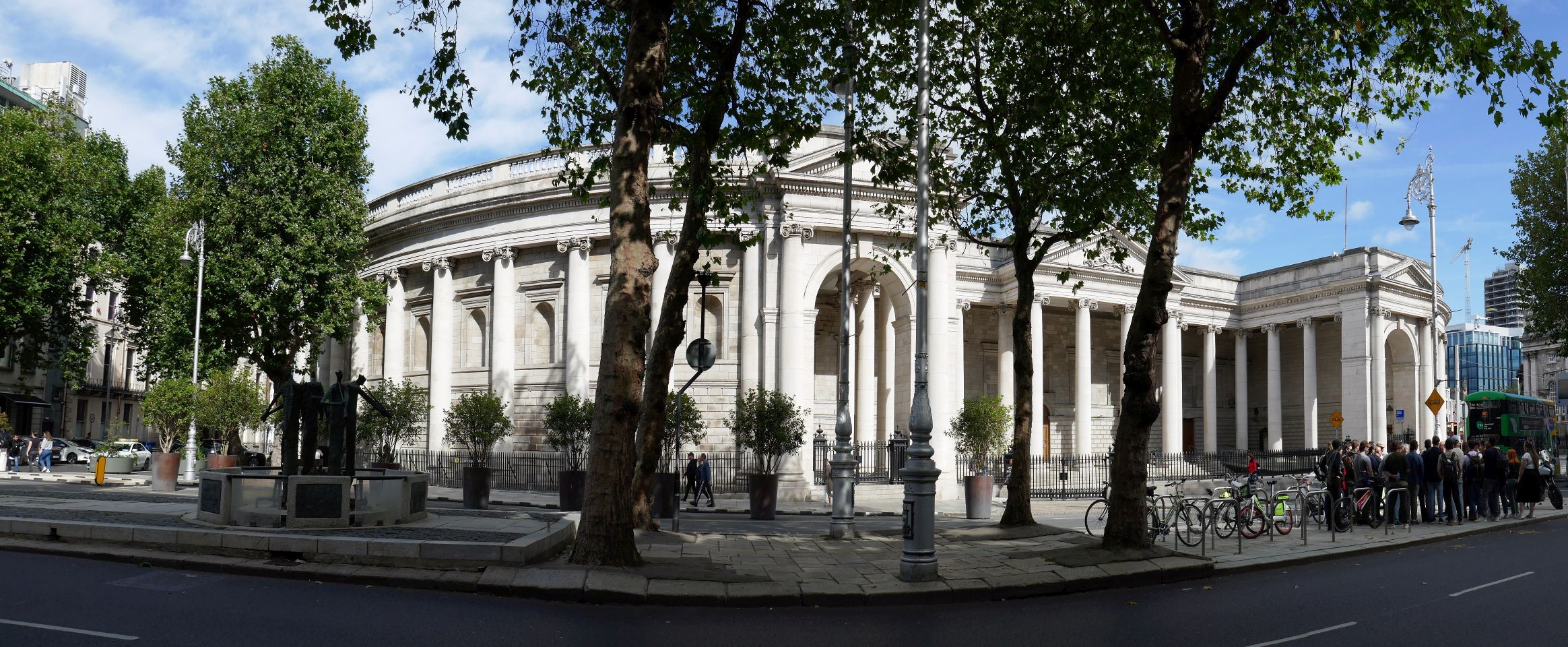
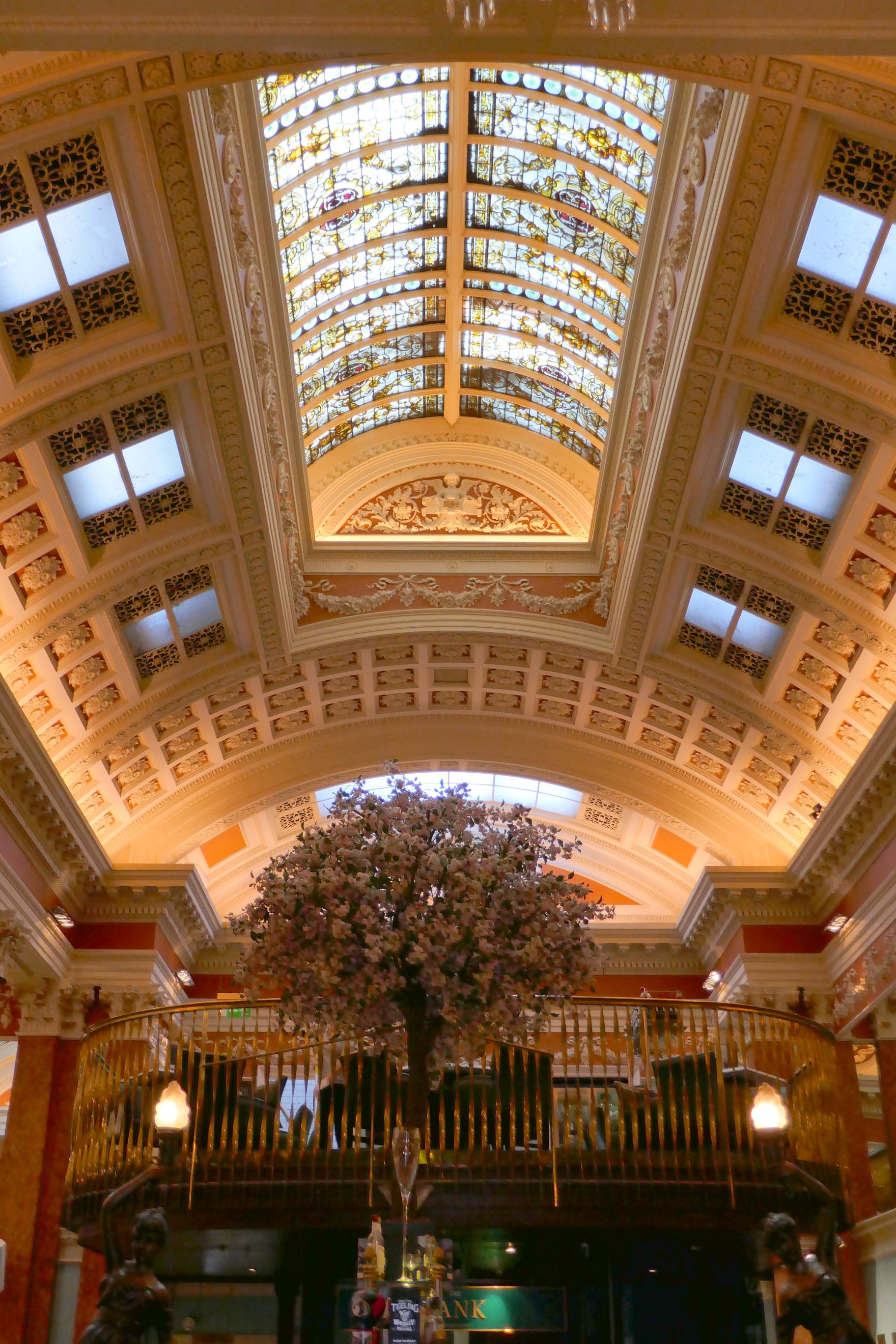
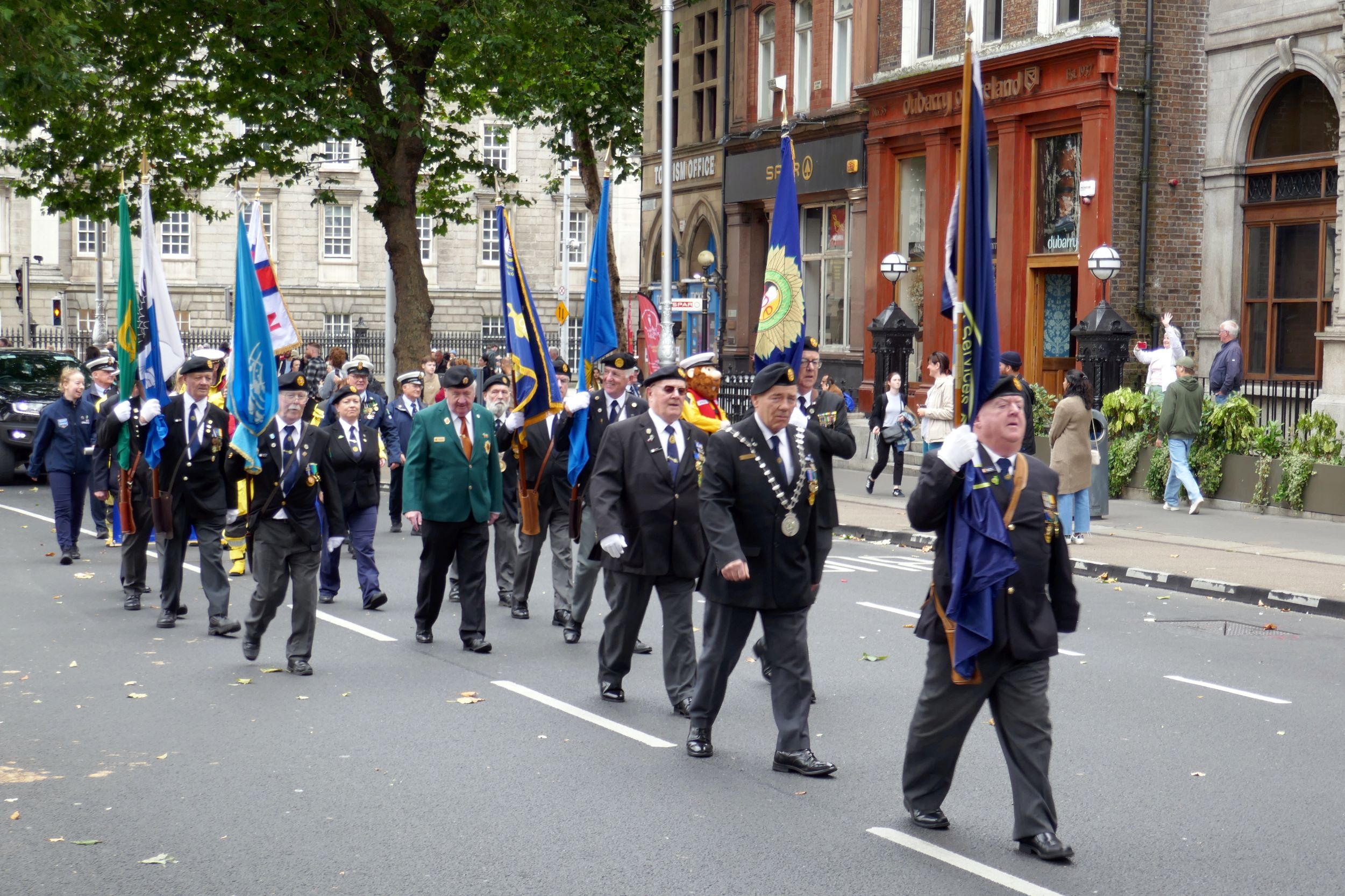
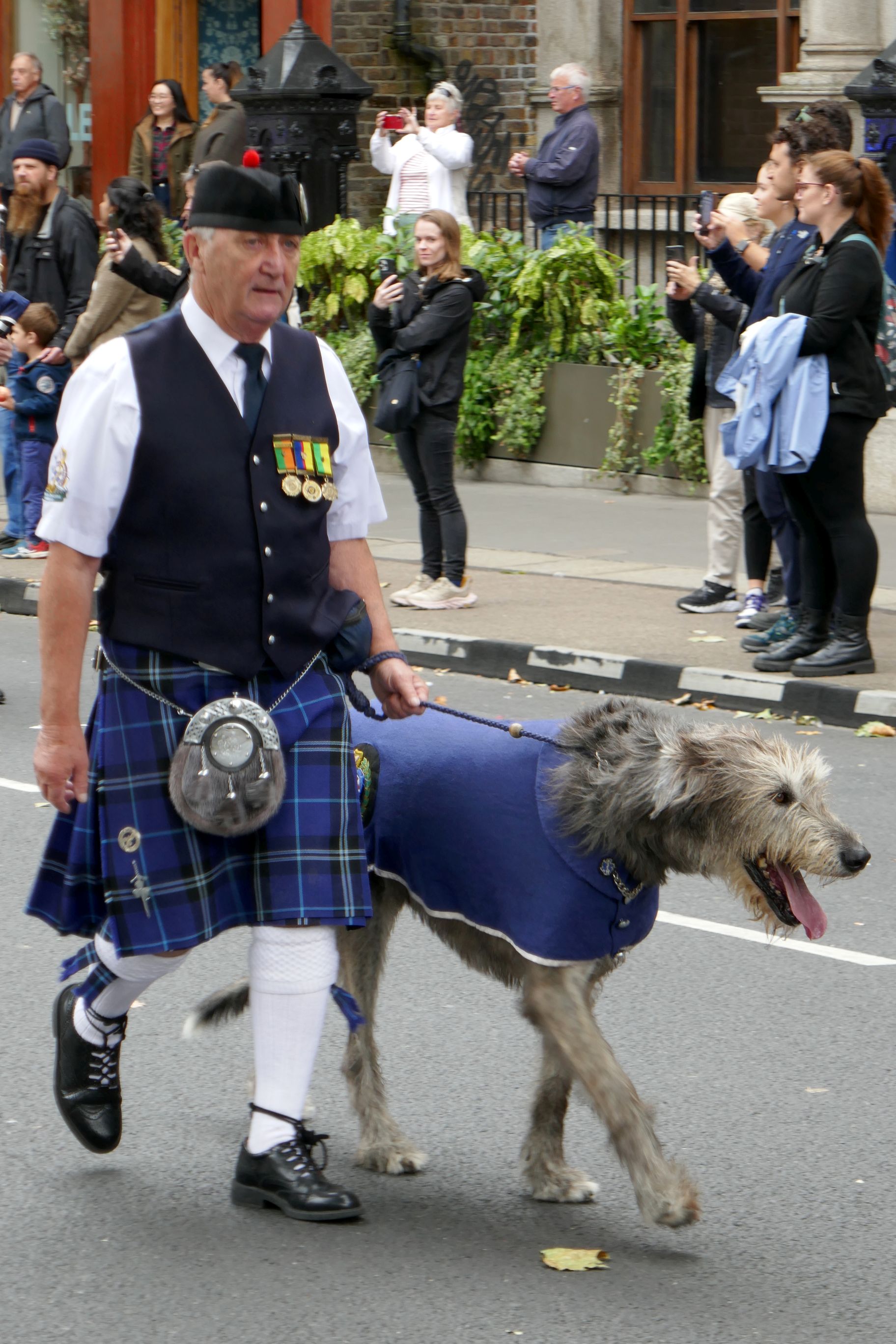

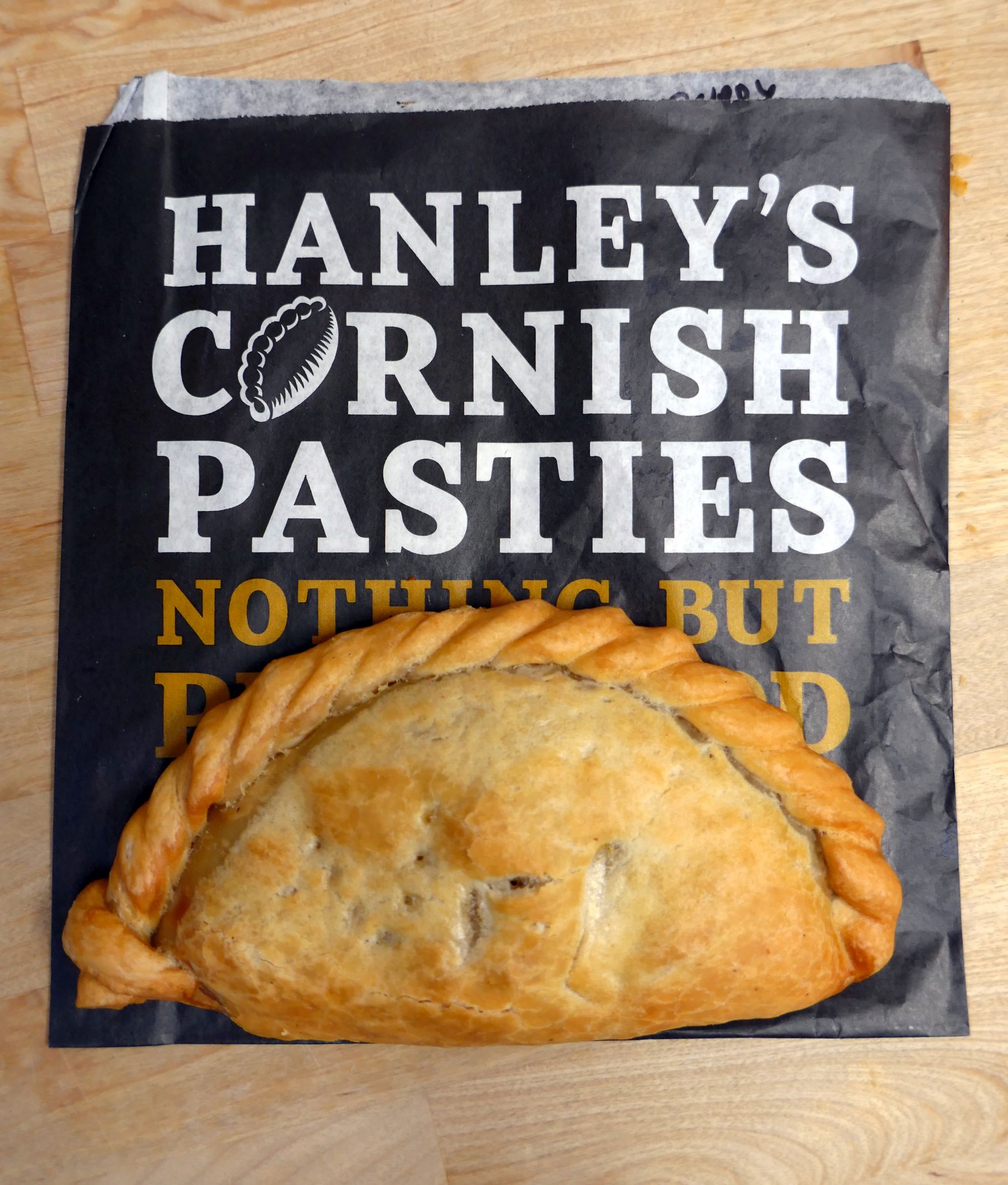
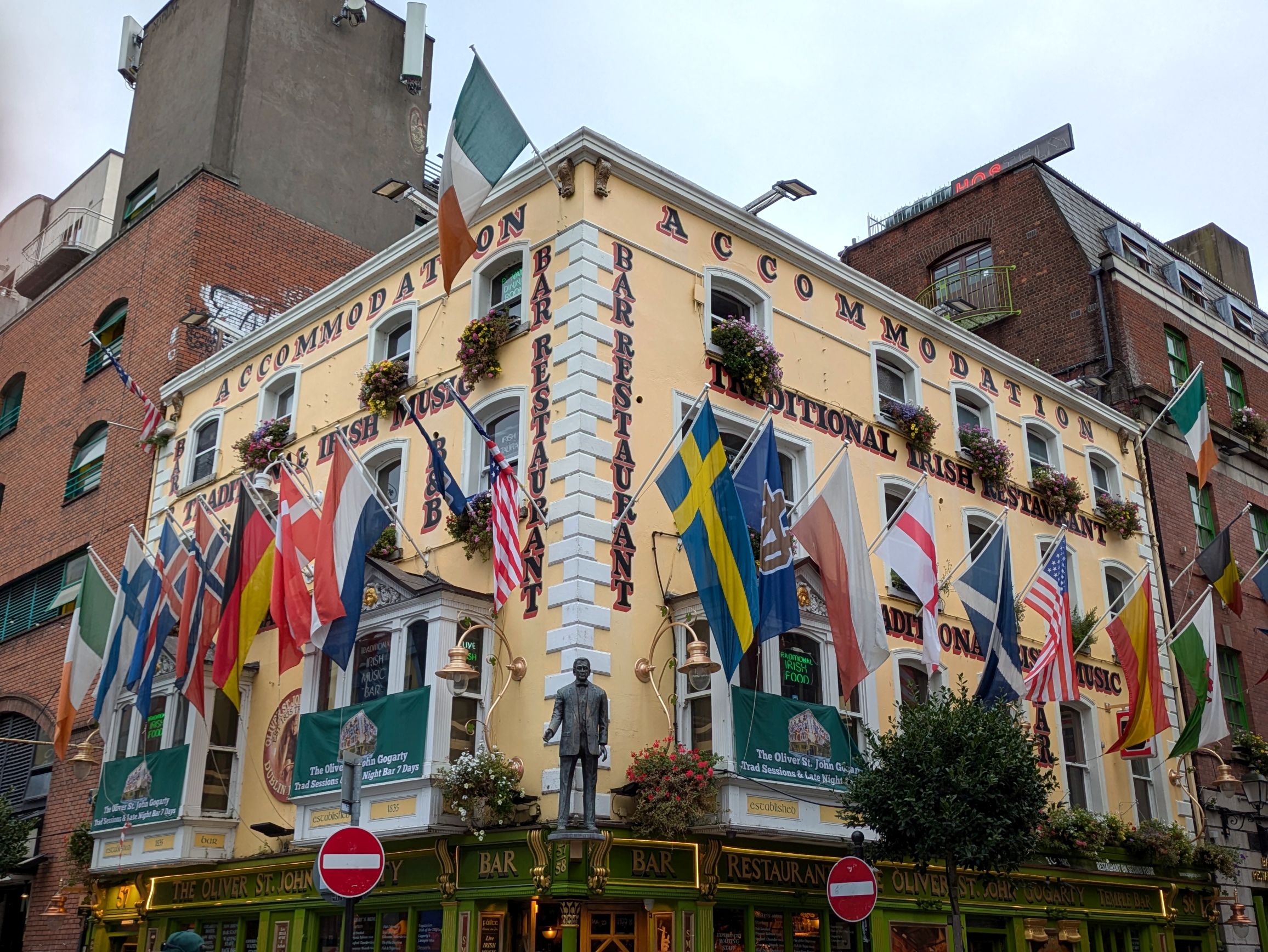
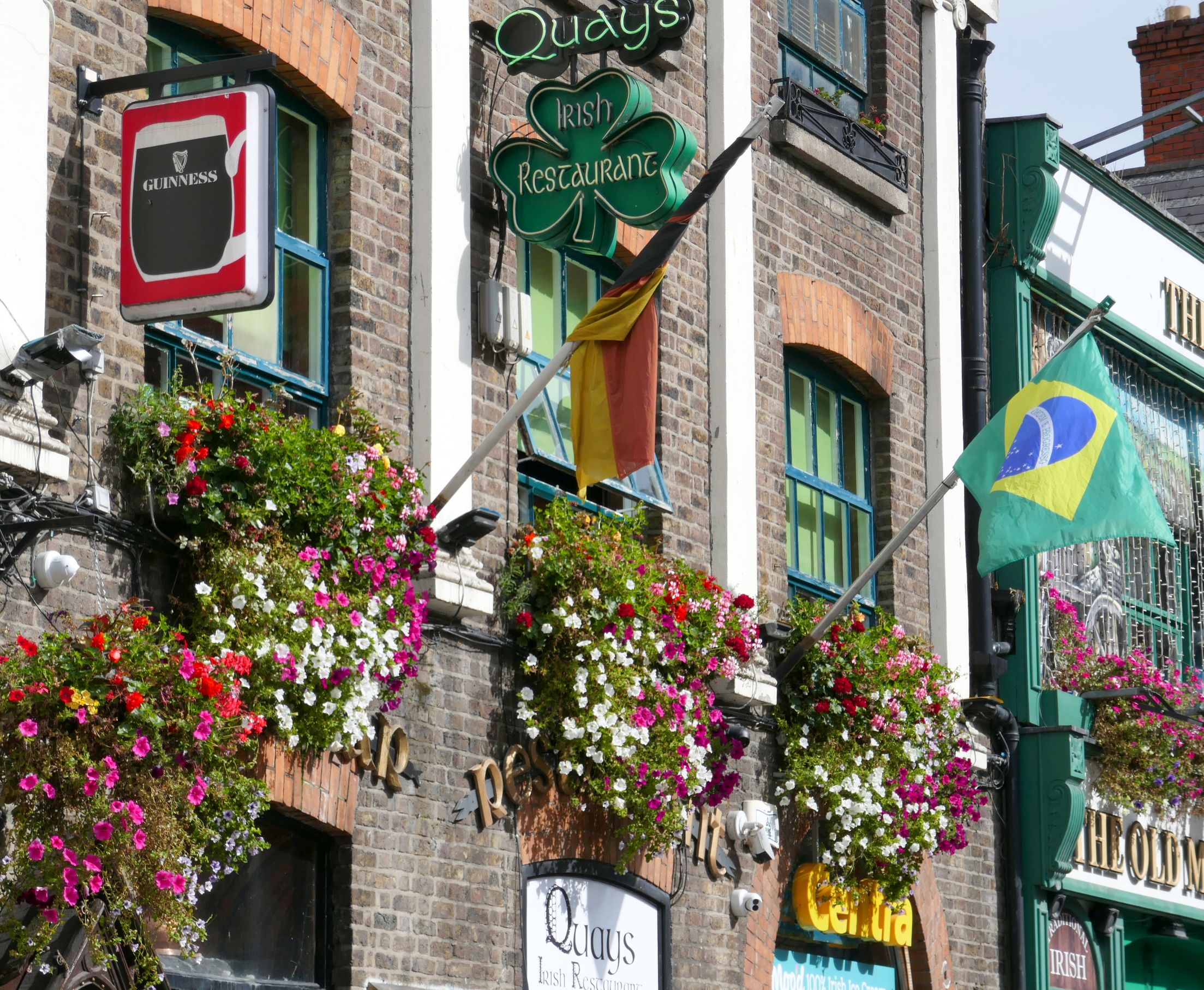


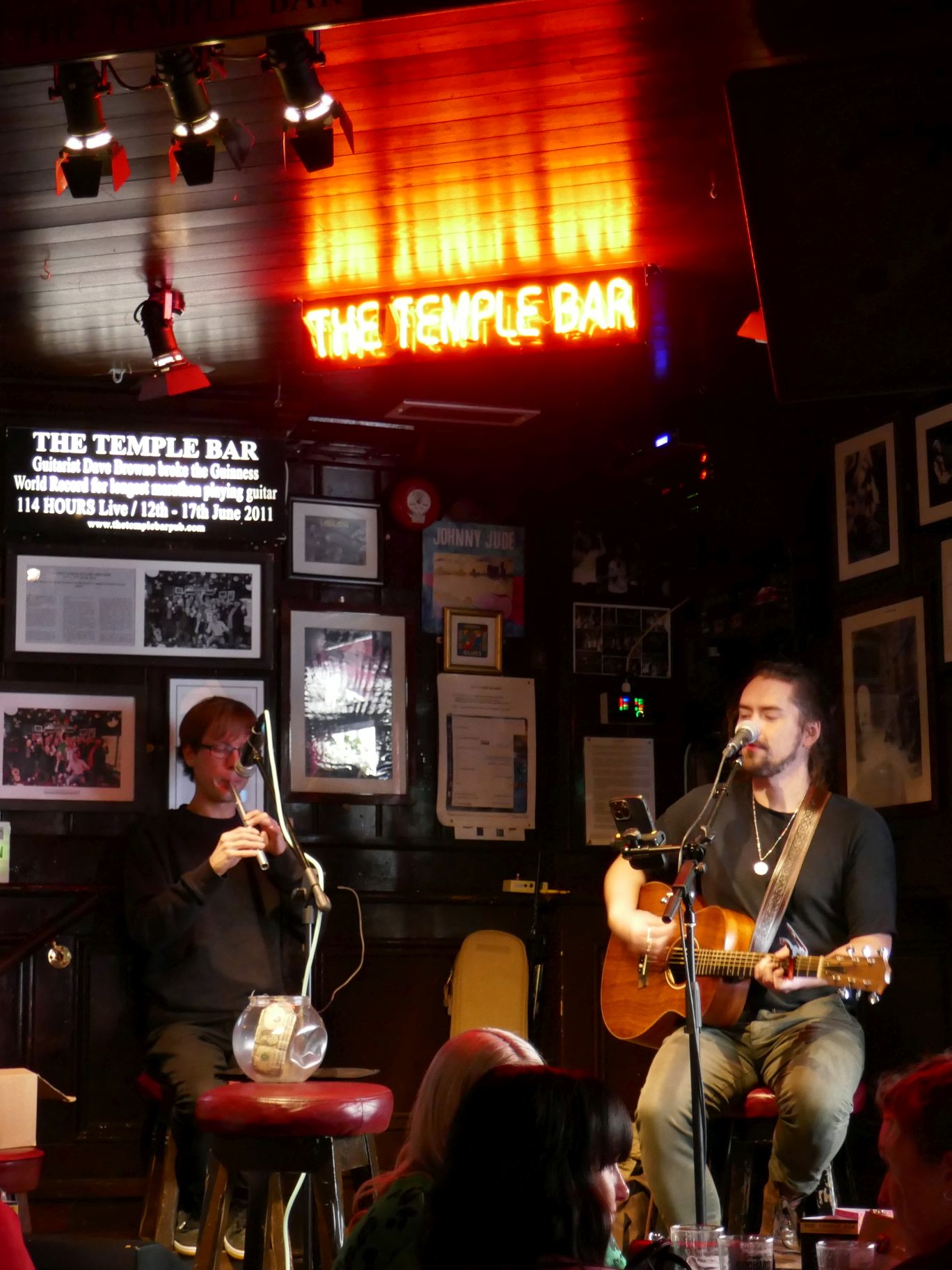
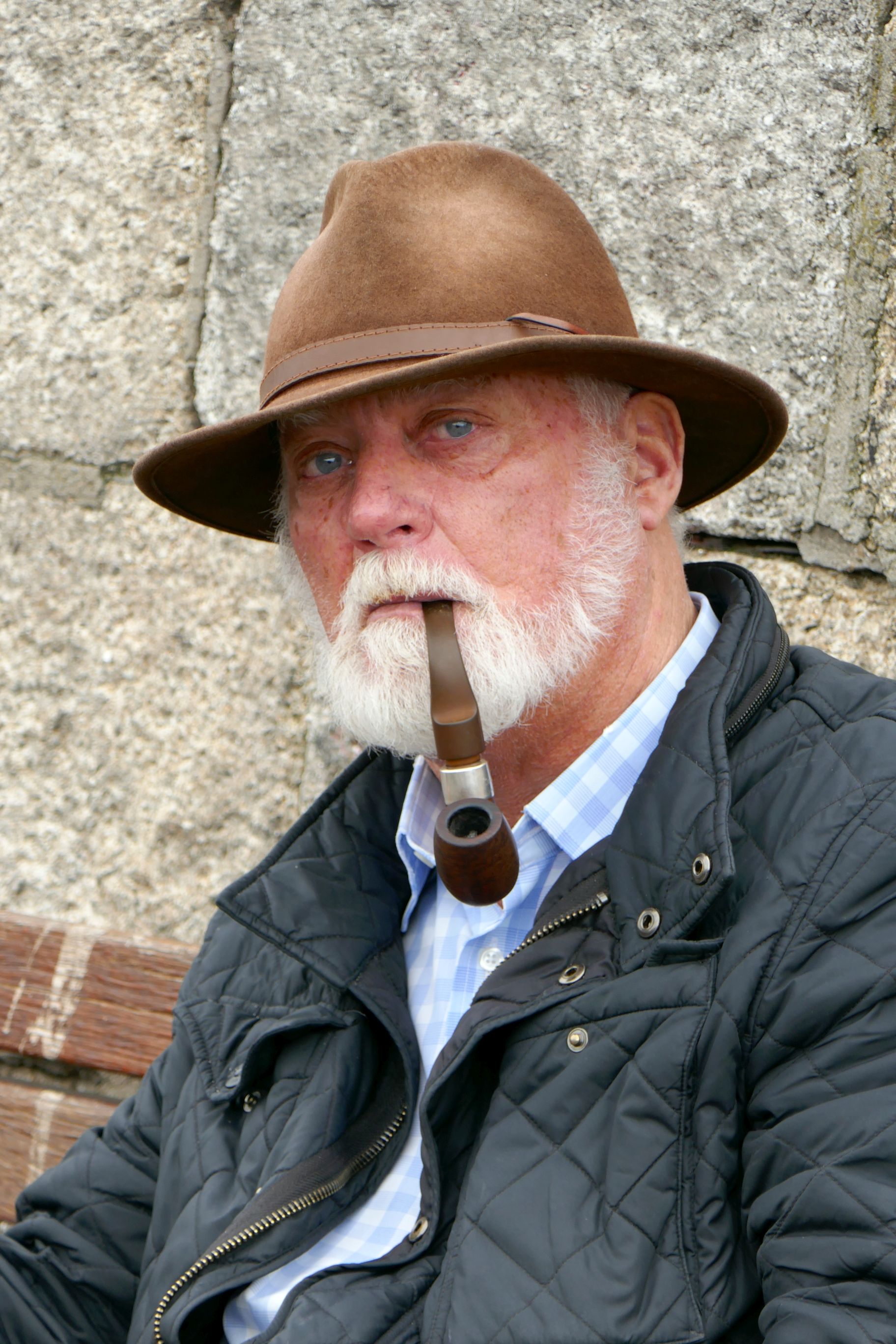
Coming up next: IRISH ADVENTURE #2: MORE DELIGHTFUL DUBLIN
I hope you enjoy my final post on the United Kingdom, a slide show featuring my photography.
For the best viewing experience, use a desktop computer, turn up the speakers and view on full screen by clicking on the symbol in the lower left corner of the YouTube screen after the show begins.
Coming up next: Irish Adventure
It was our last day in this lovely city, and we made the most of it! The morning was beautiful—perfect weather for a cable car ride over the River Thames and a walk along its banks.
(For all photos, click on the image for a full screen view.)
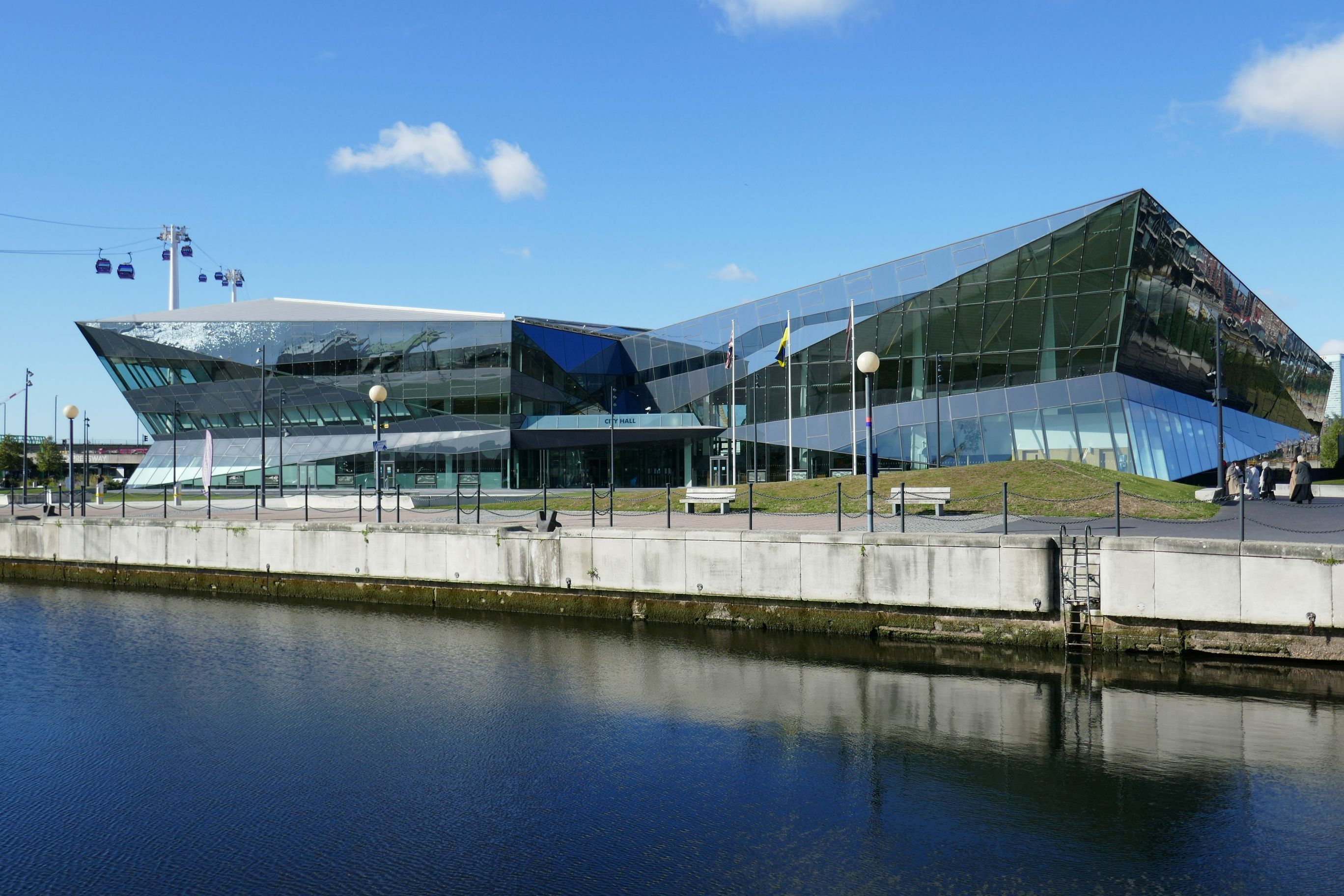


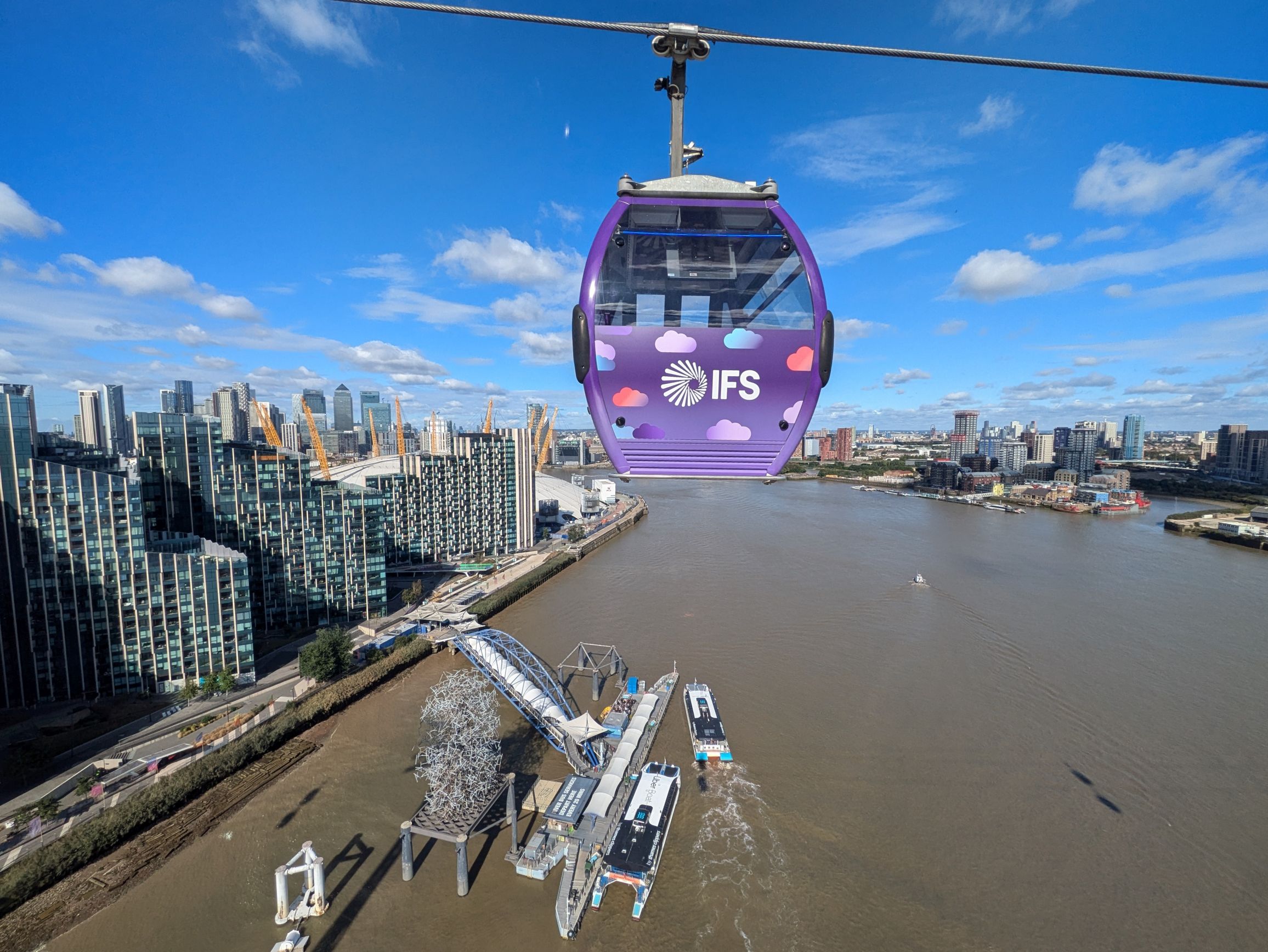

Following our cable car ride, Marc took us on a walking tour along the bank of the River Thames:

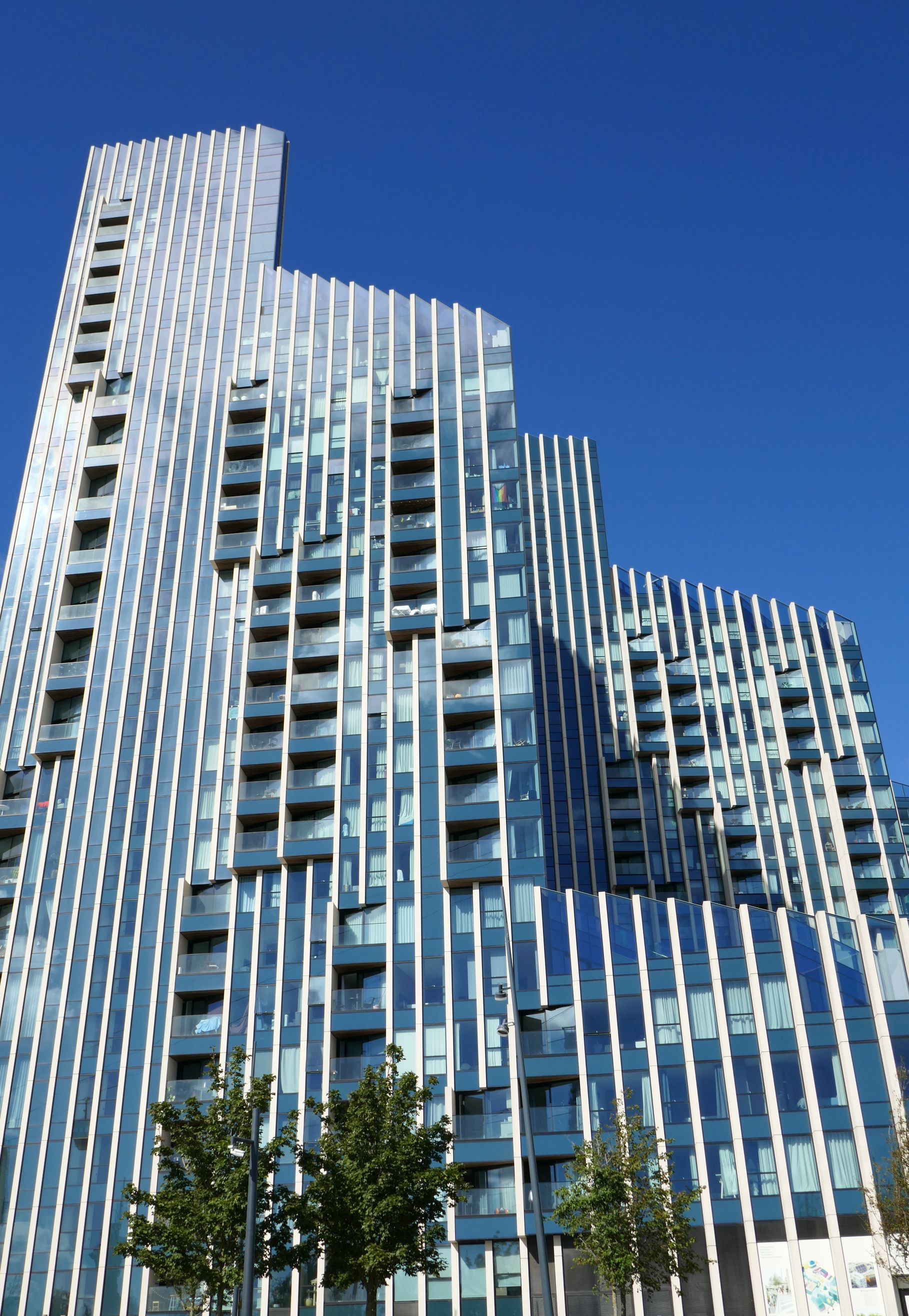
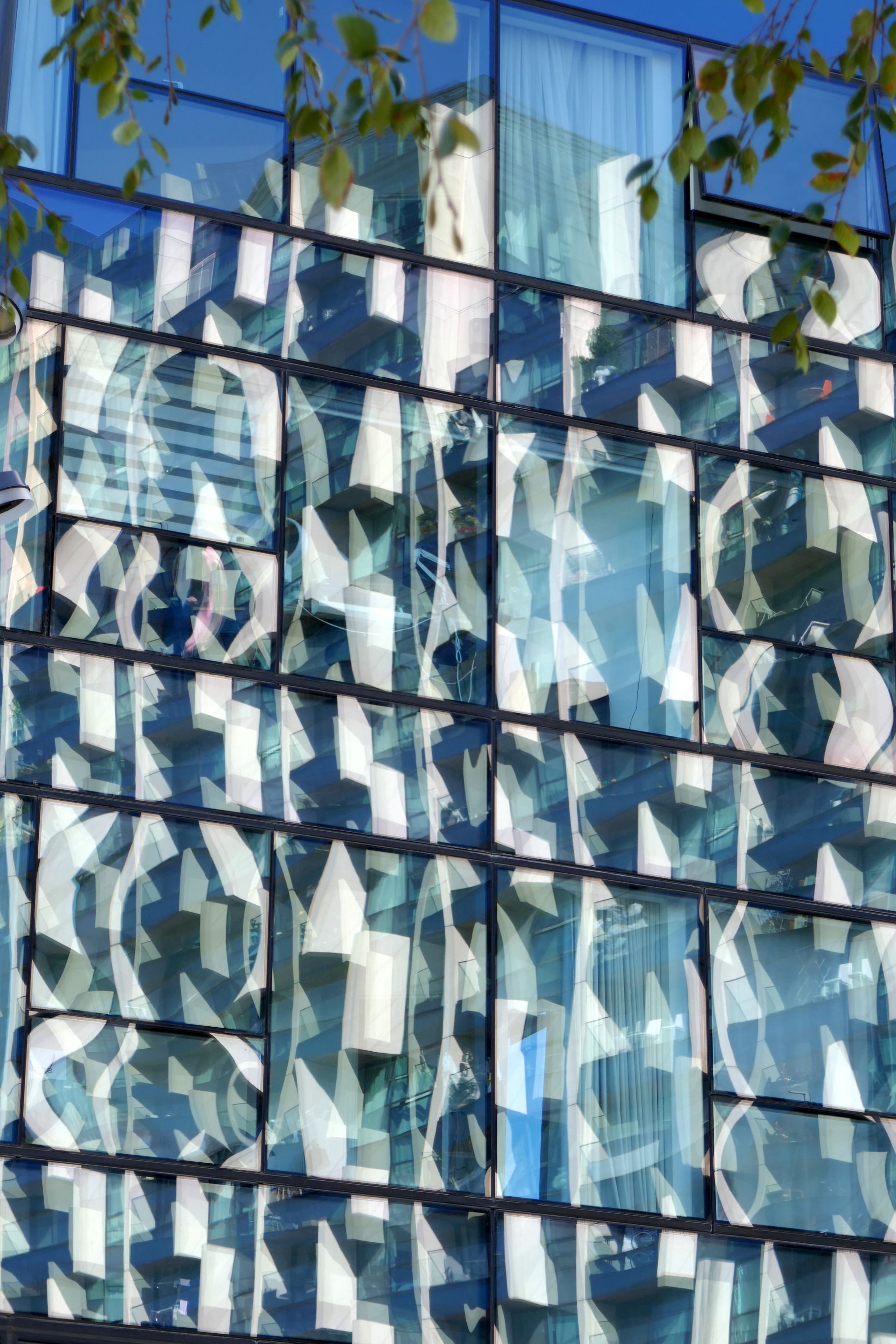
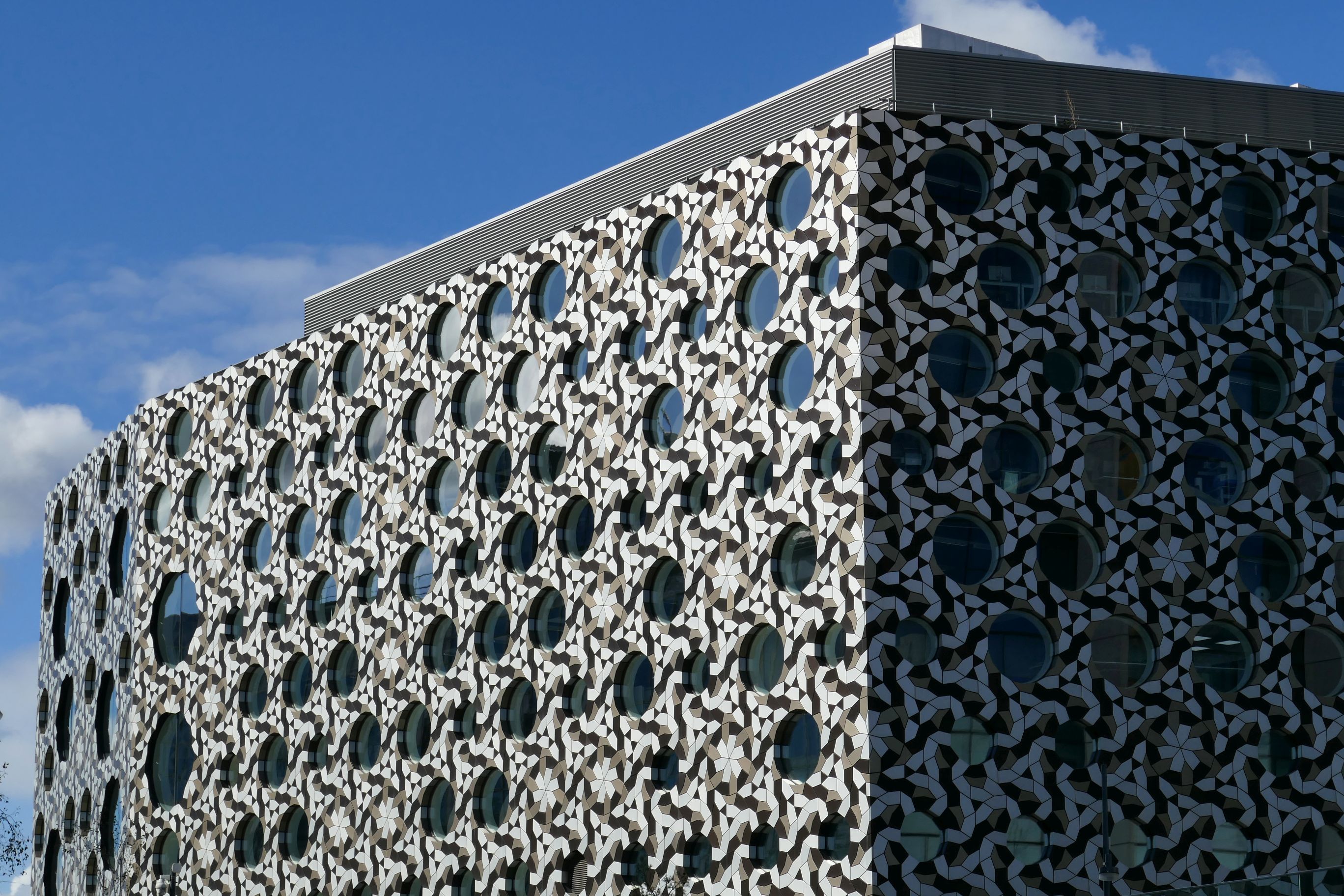

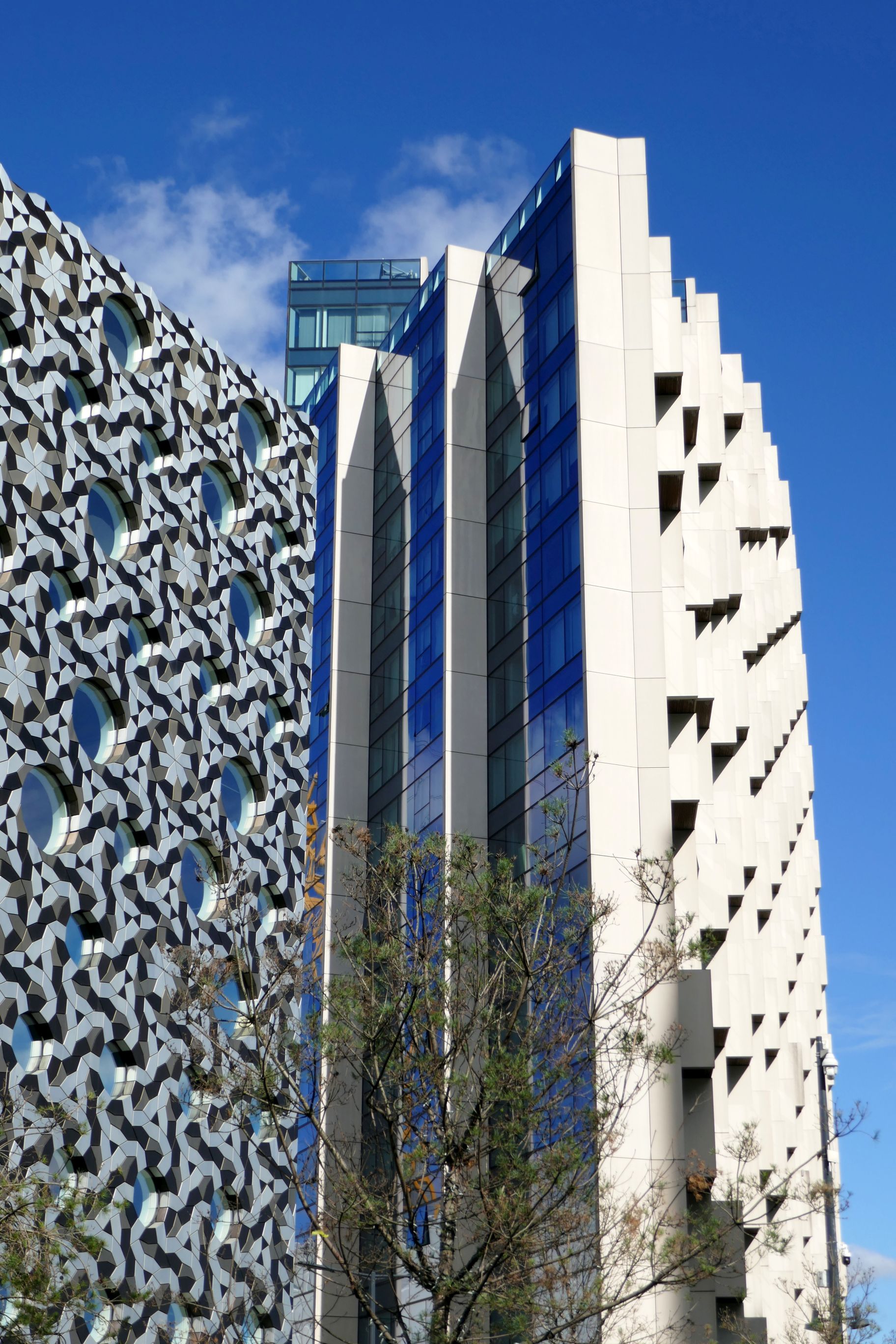
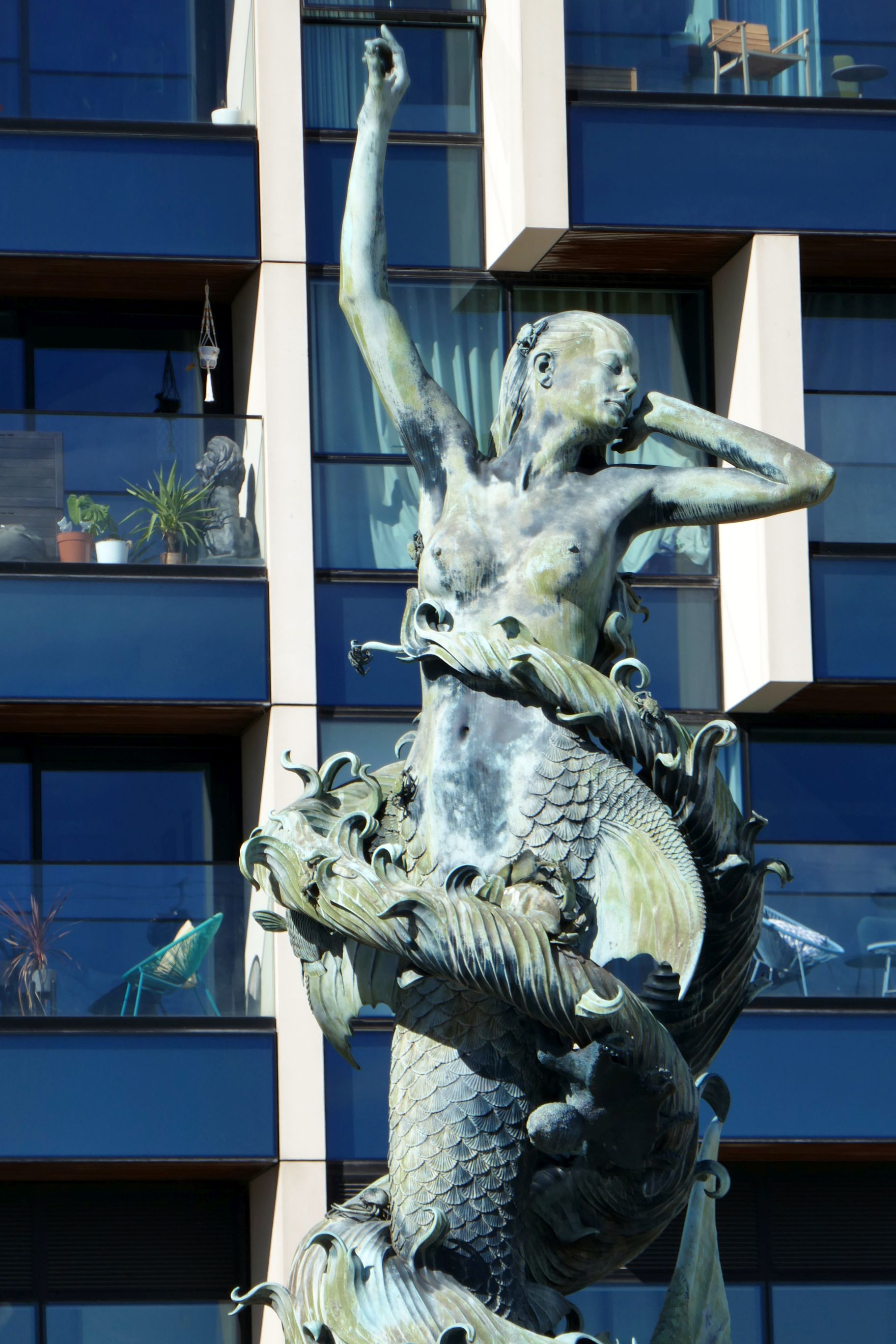
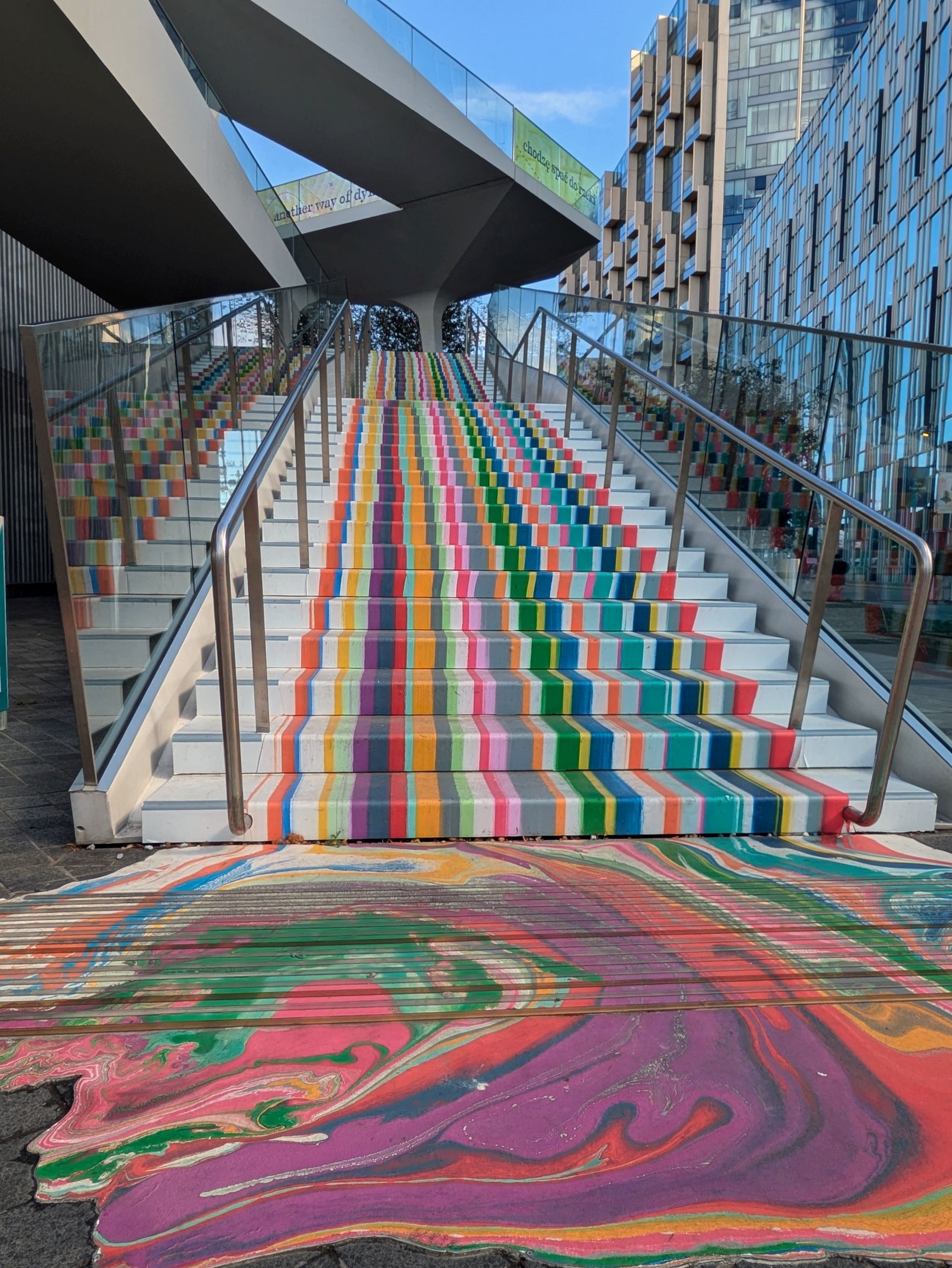
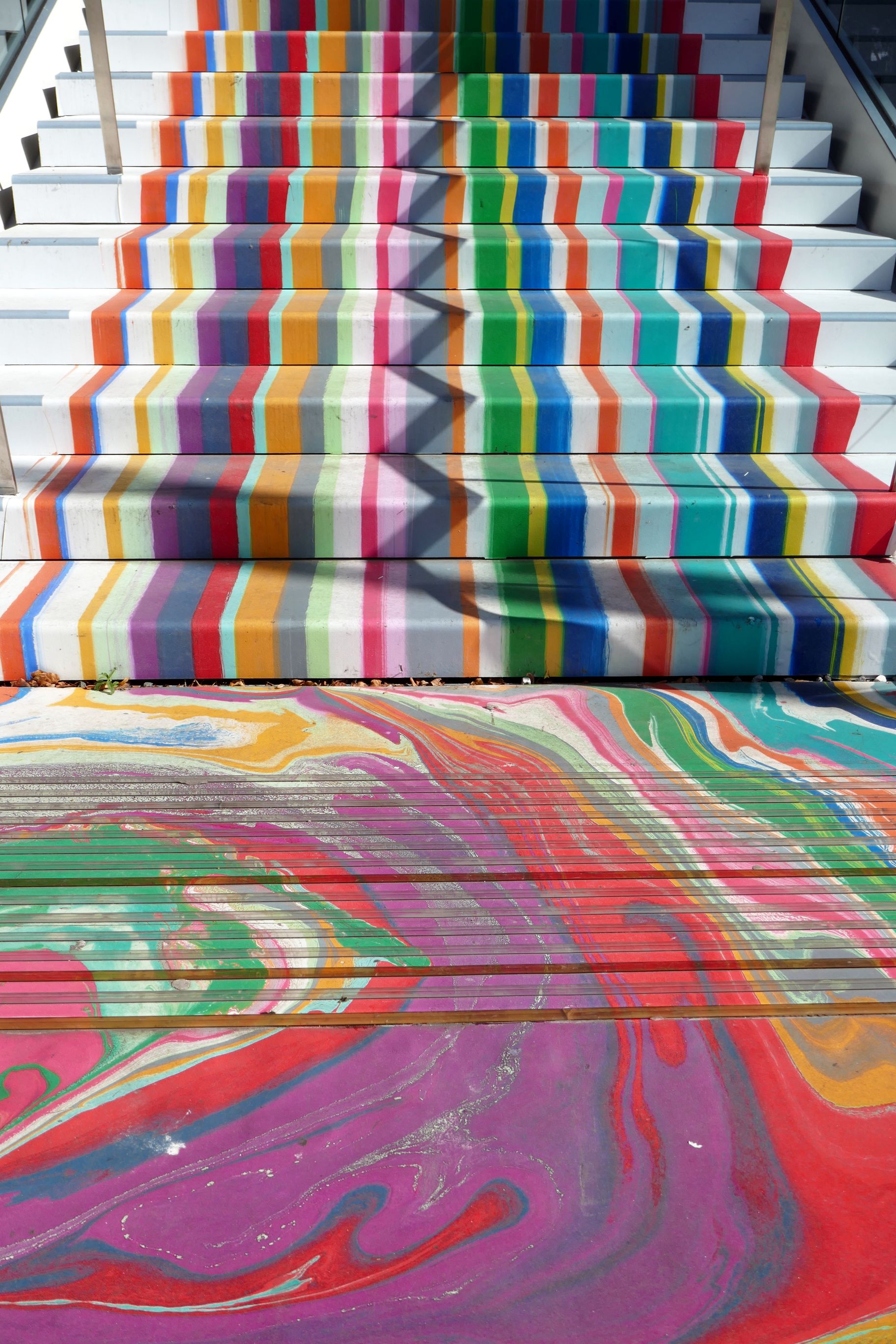
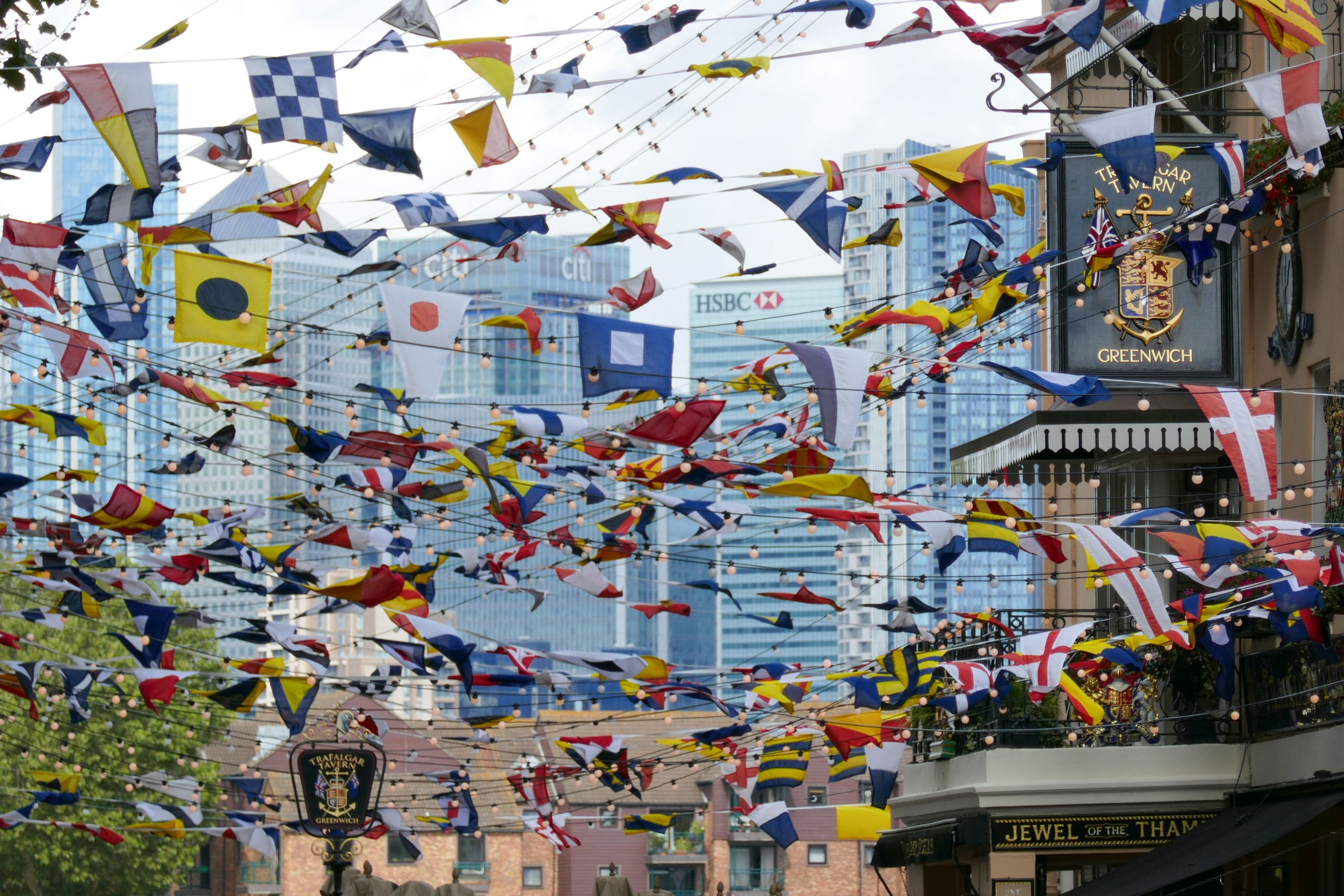
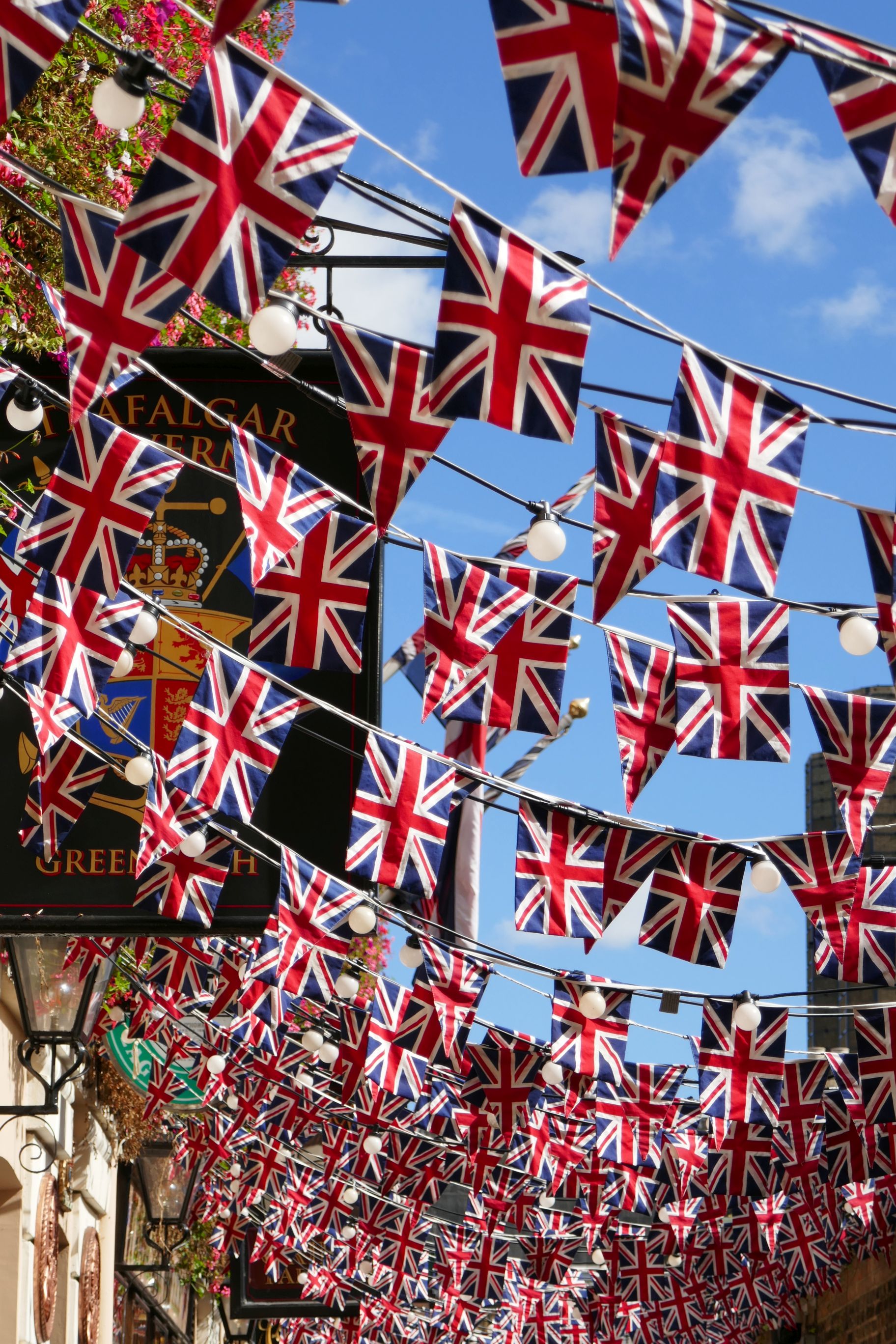
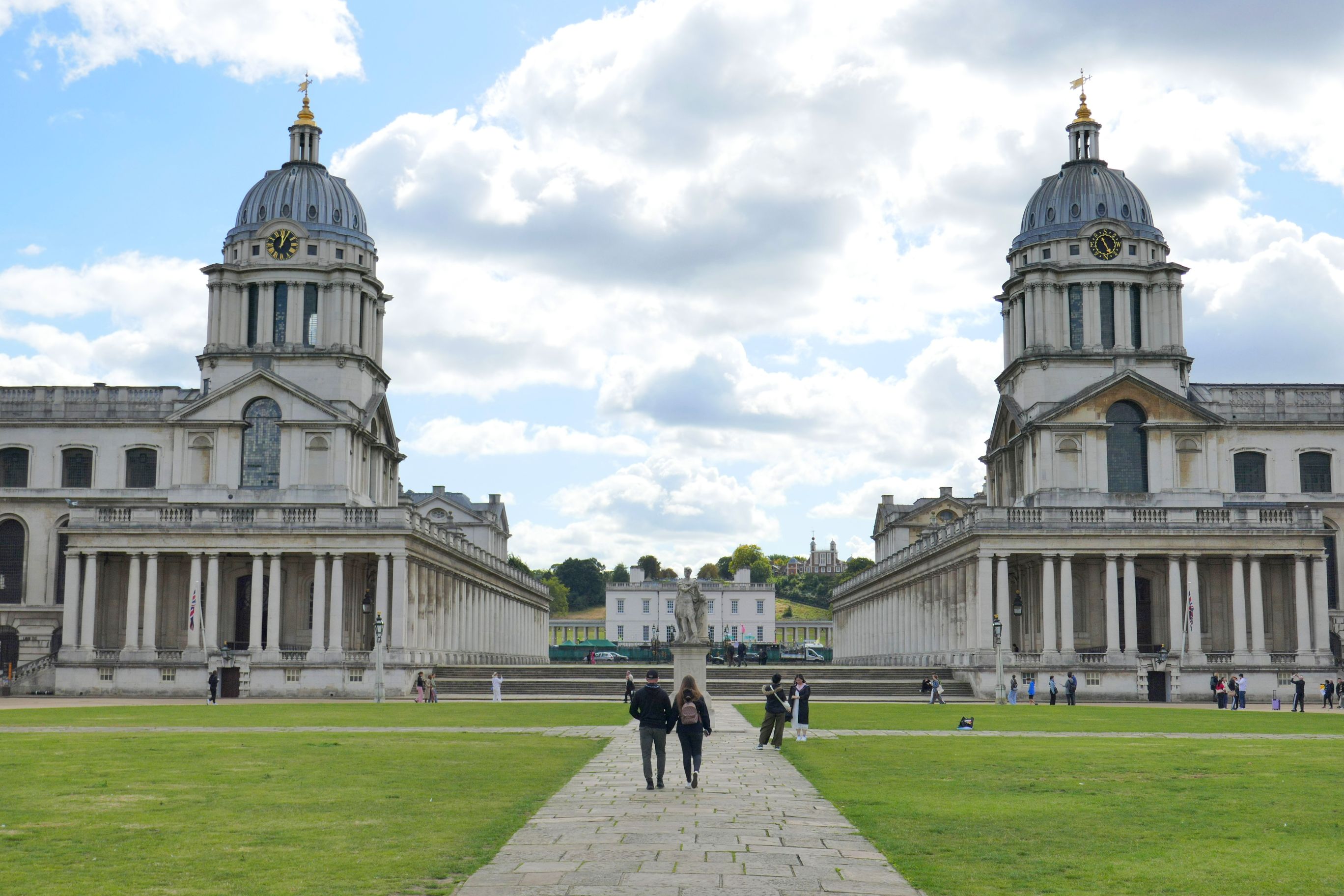
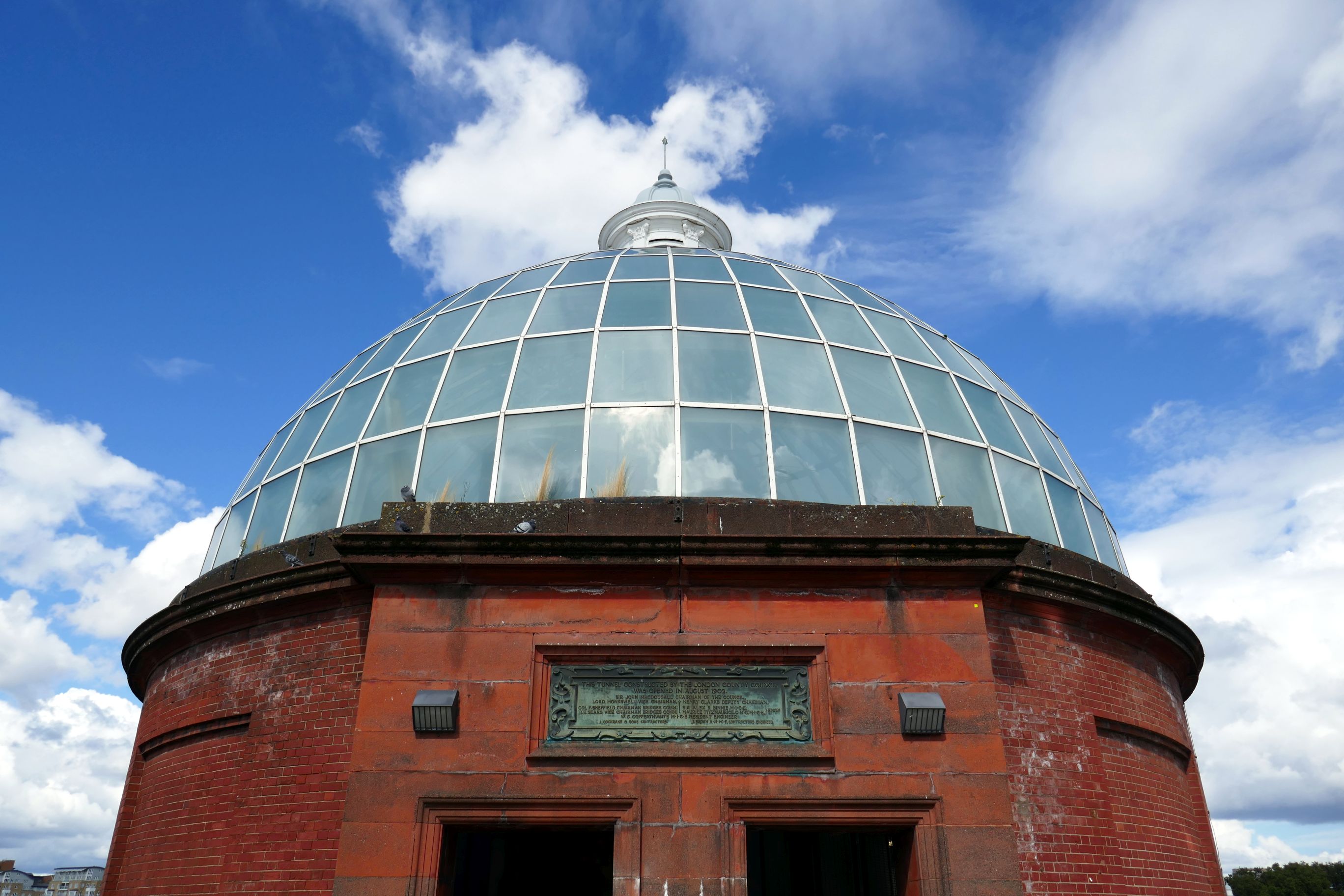

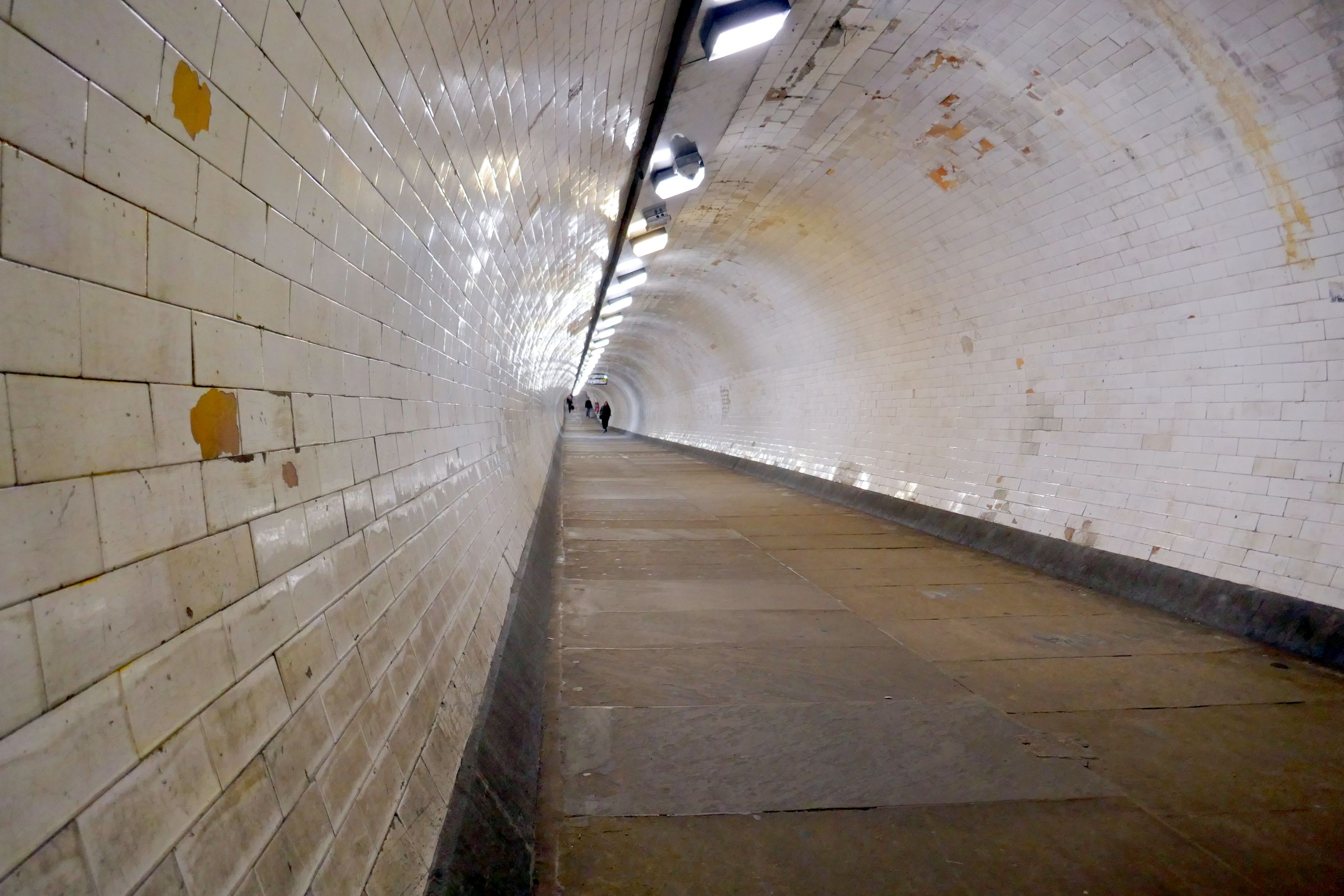
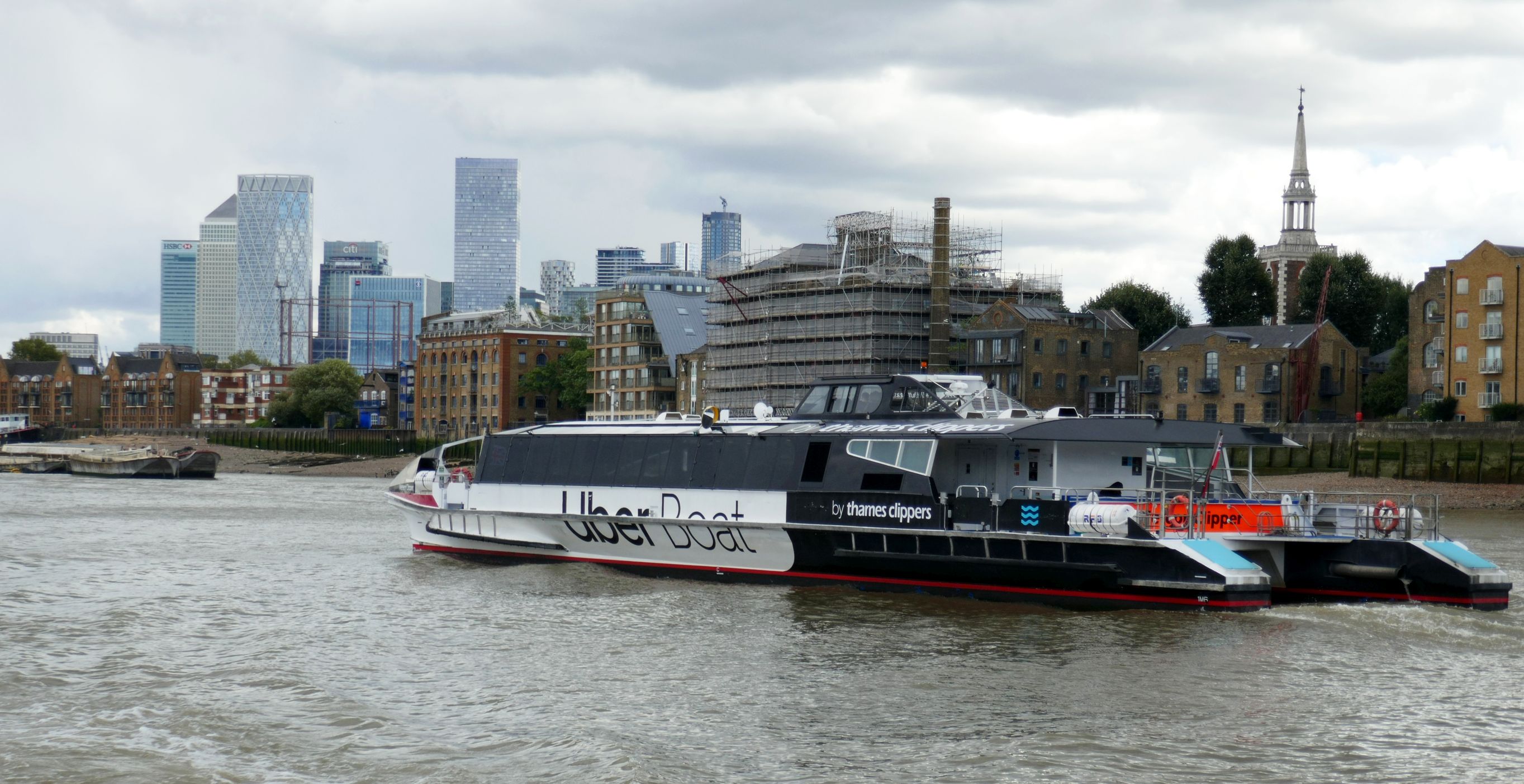
Our group had enjoyed the views of the River Thames and city from up above, so we followed it by taking in views of the city from a cruise boat. It was during our cruise that we could see our beautiful blue skies were about to turn cloudy—and wet. But it didn’t last long. We took cover under an overhang, continued enjoying the views, and then the skies cleared once again. Mother Nature was good to us for our final day in this magnificent city!


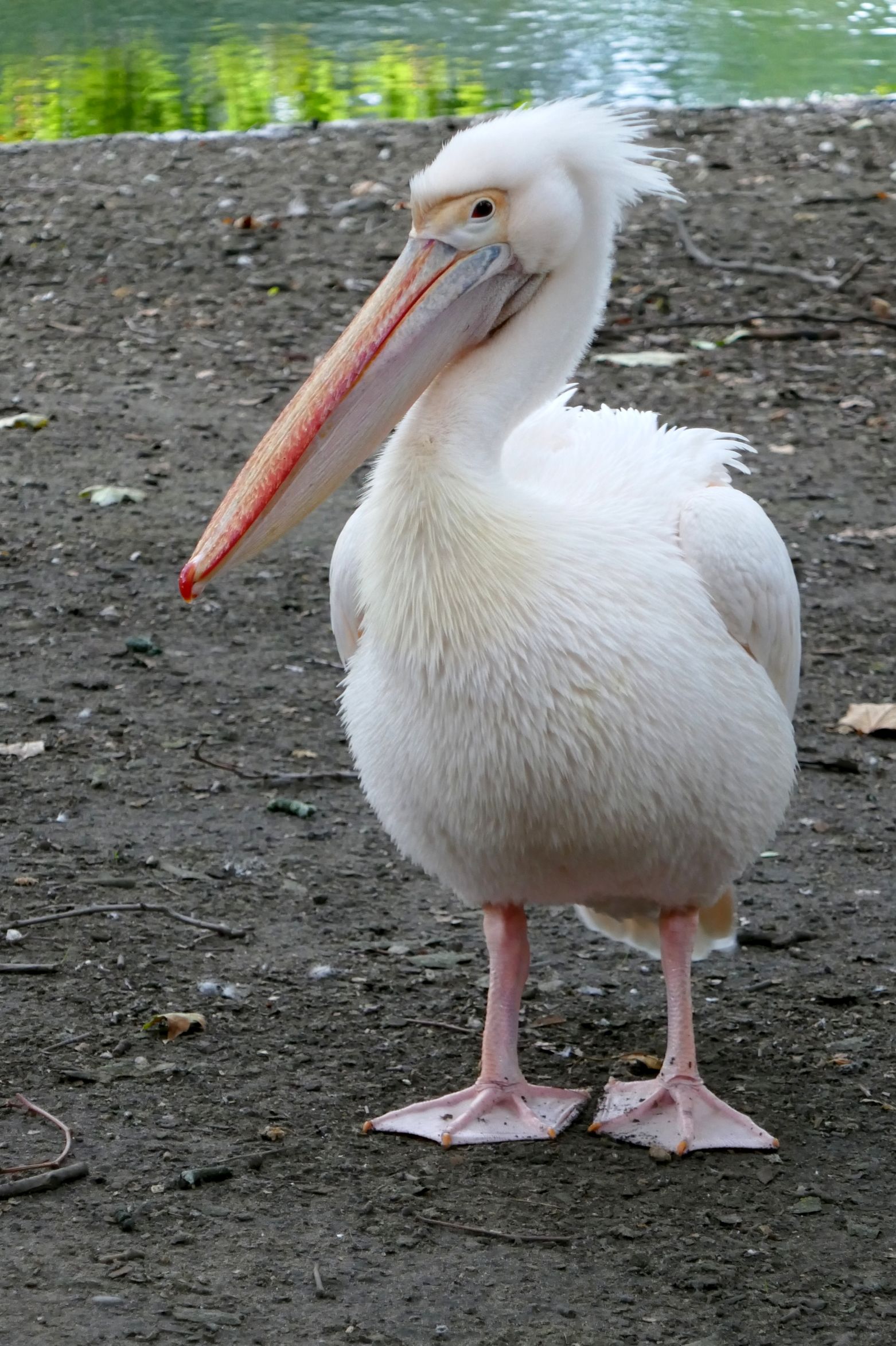
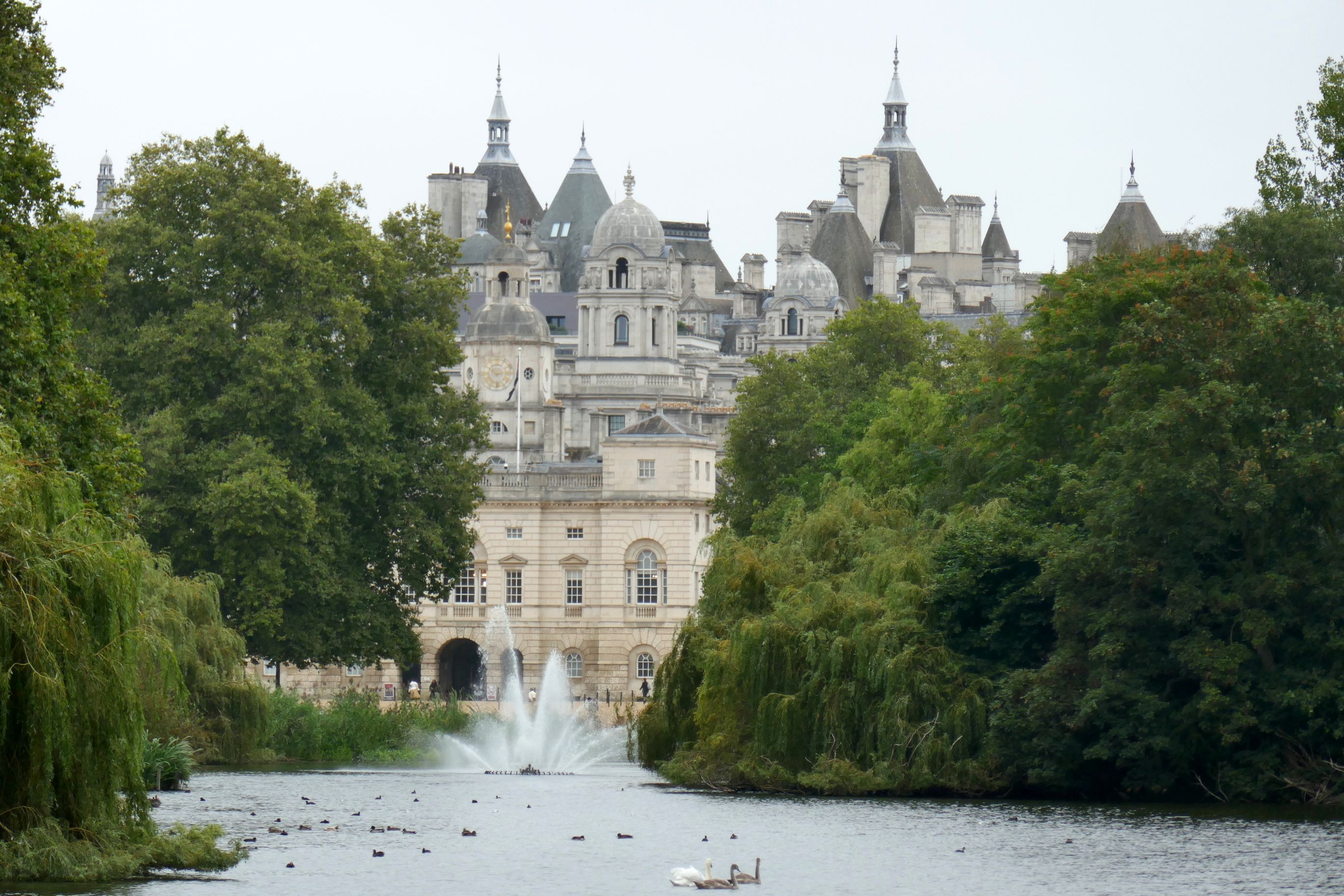
We spent the remainder of the afternoon walking through the city, by way of St. James Park:

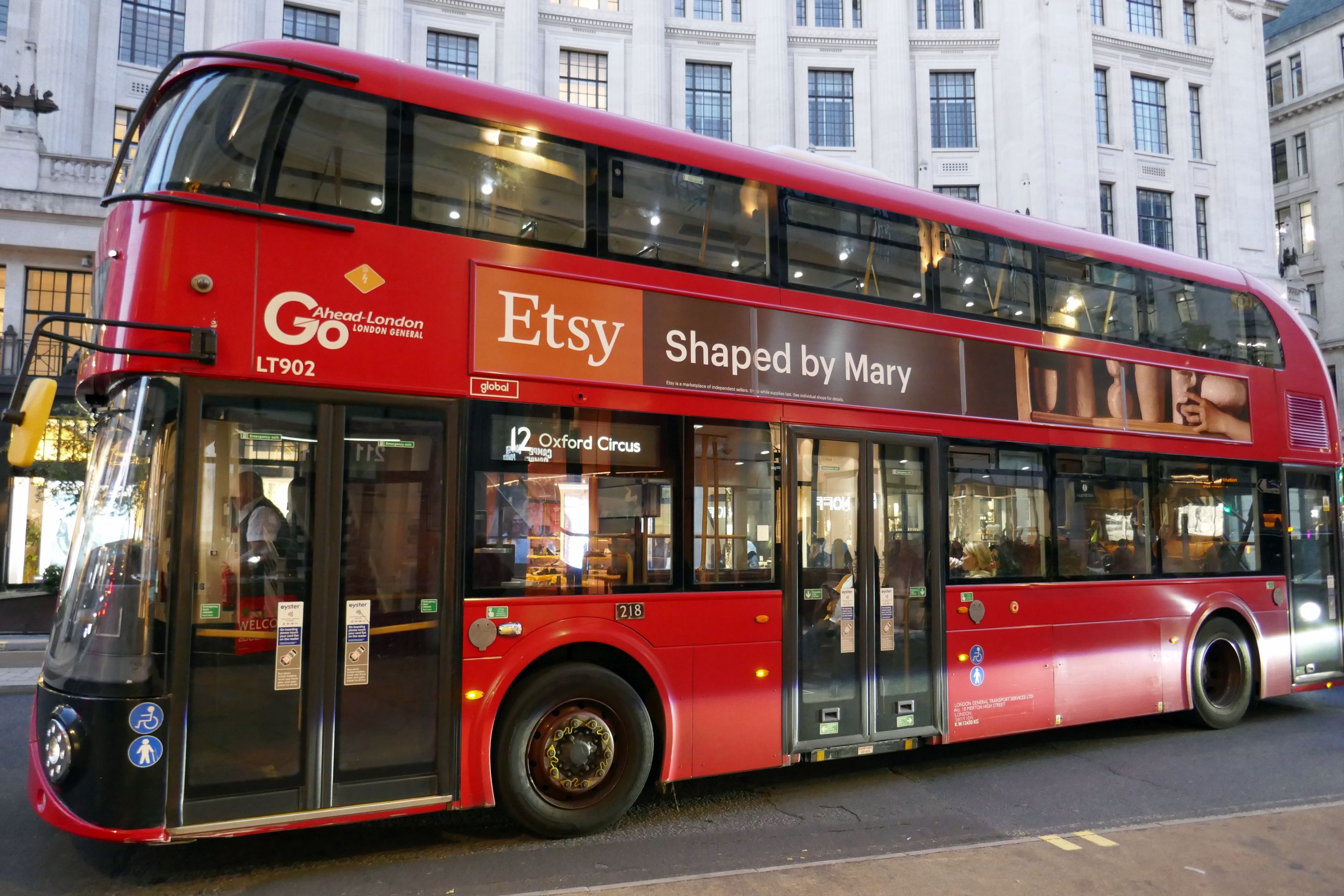
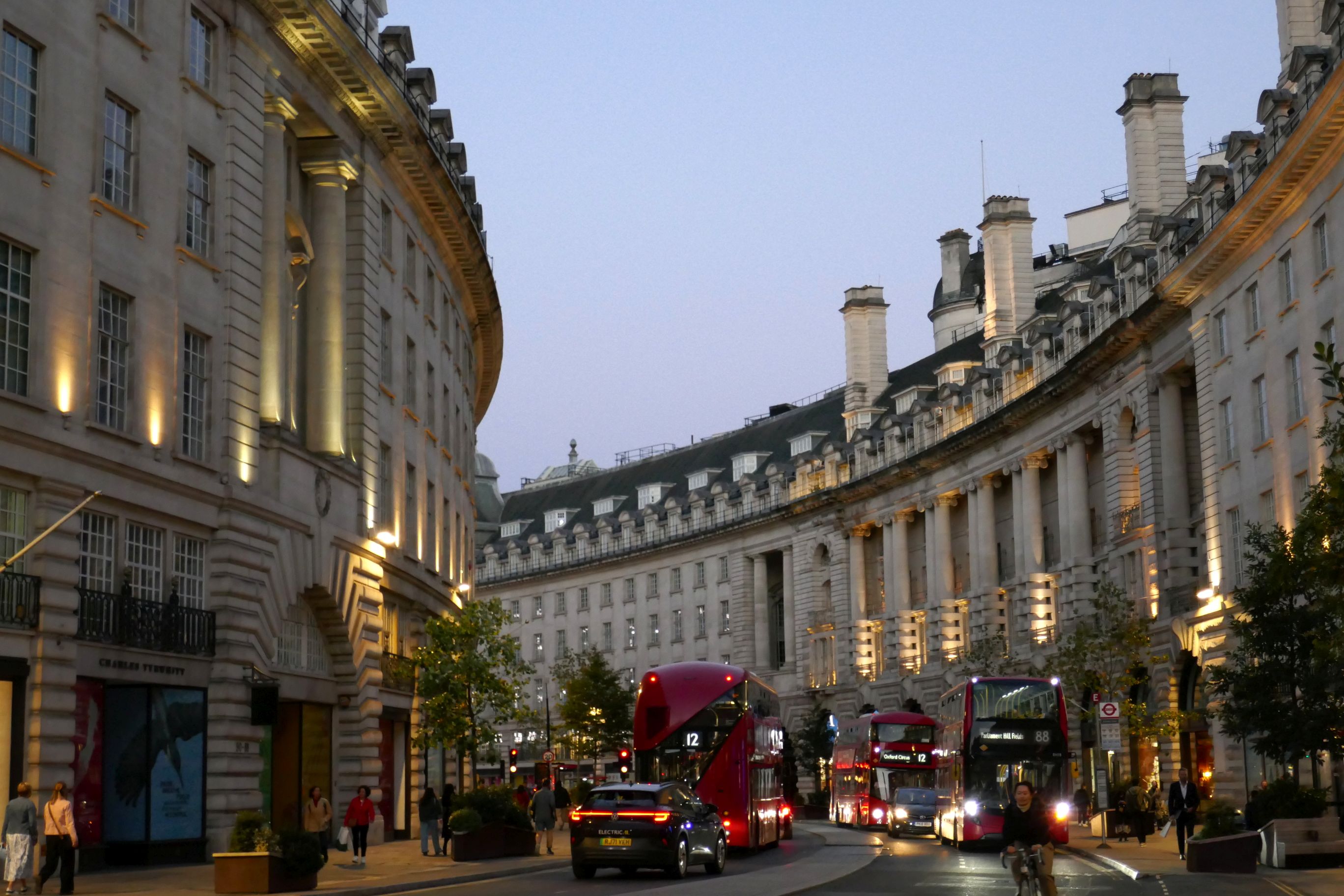
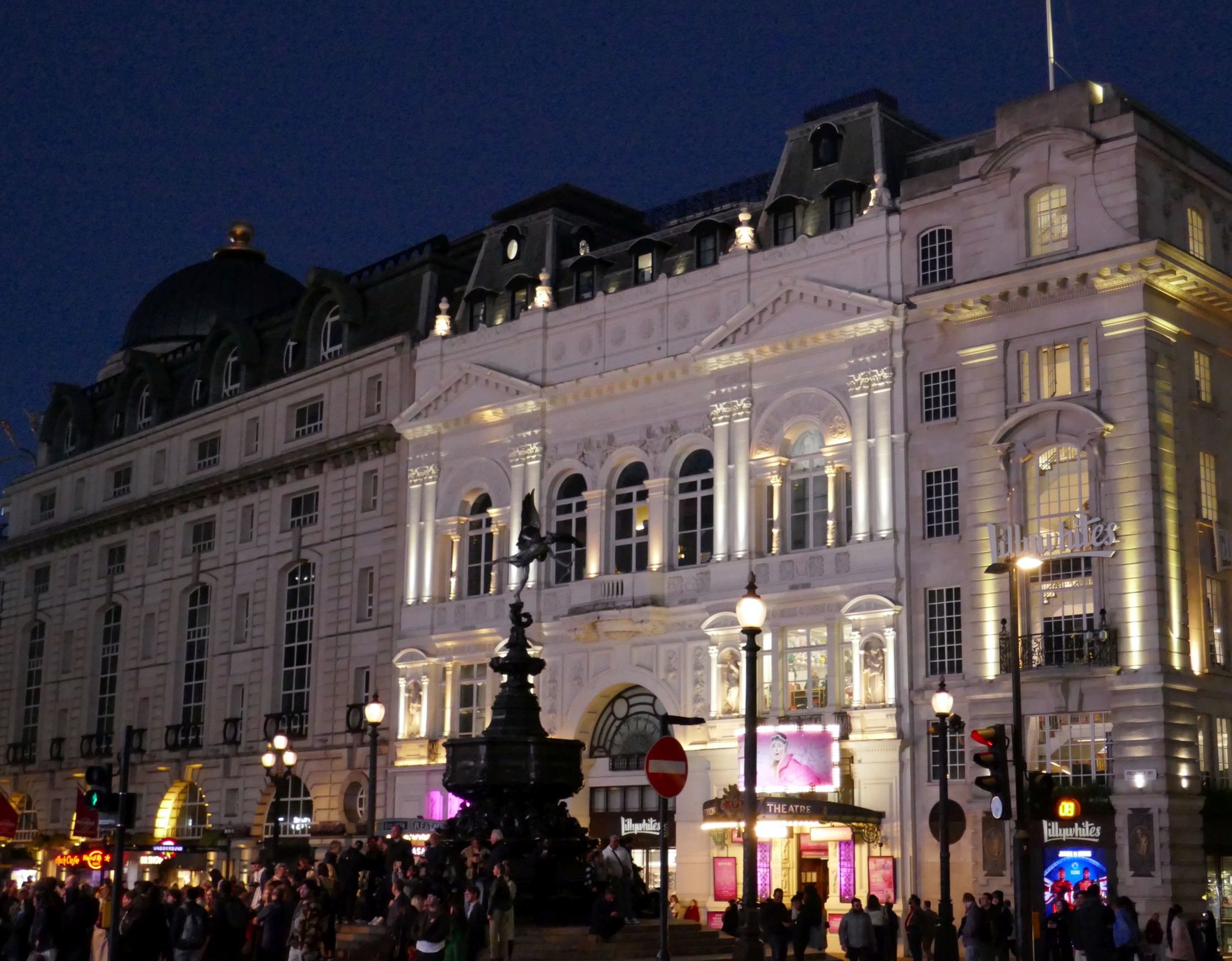
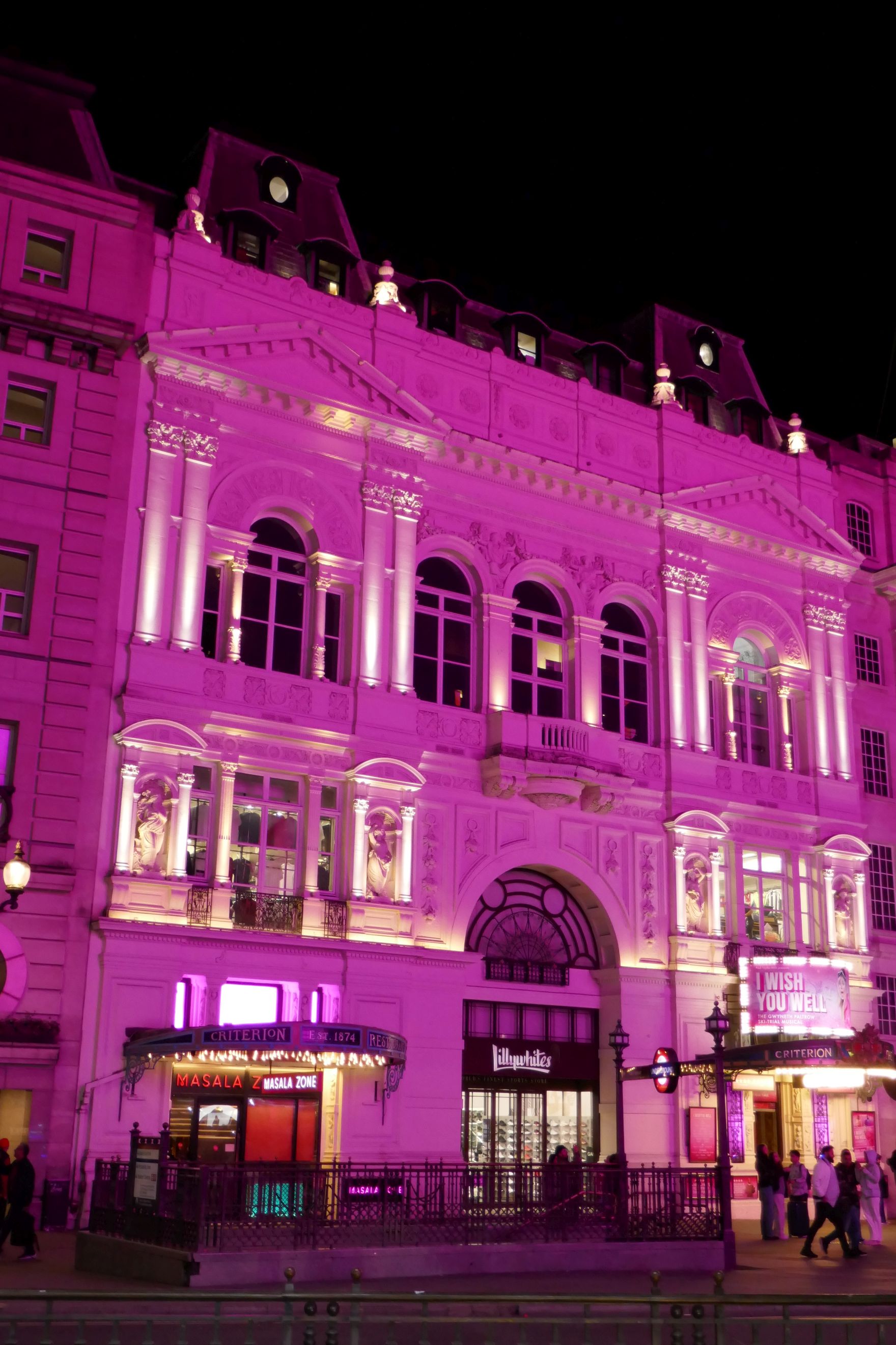
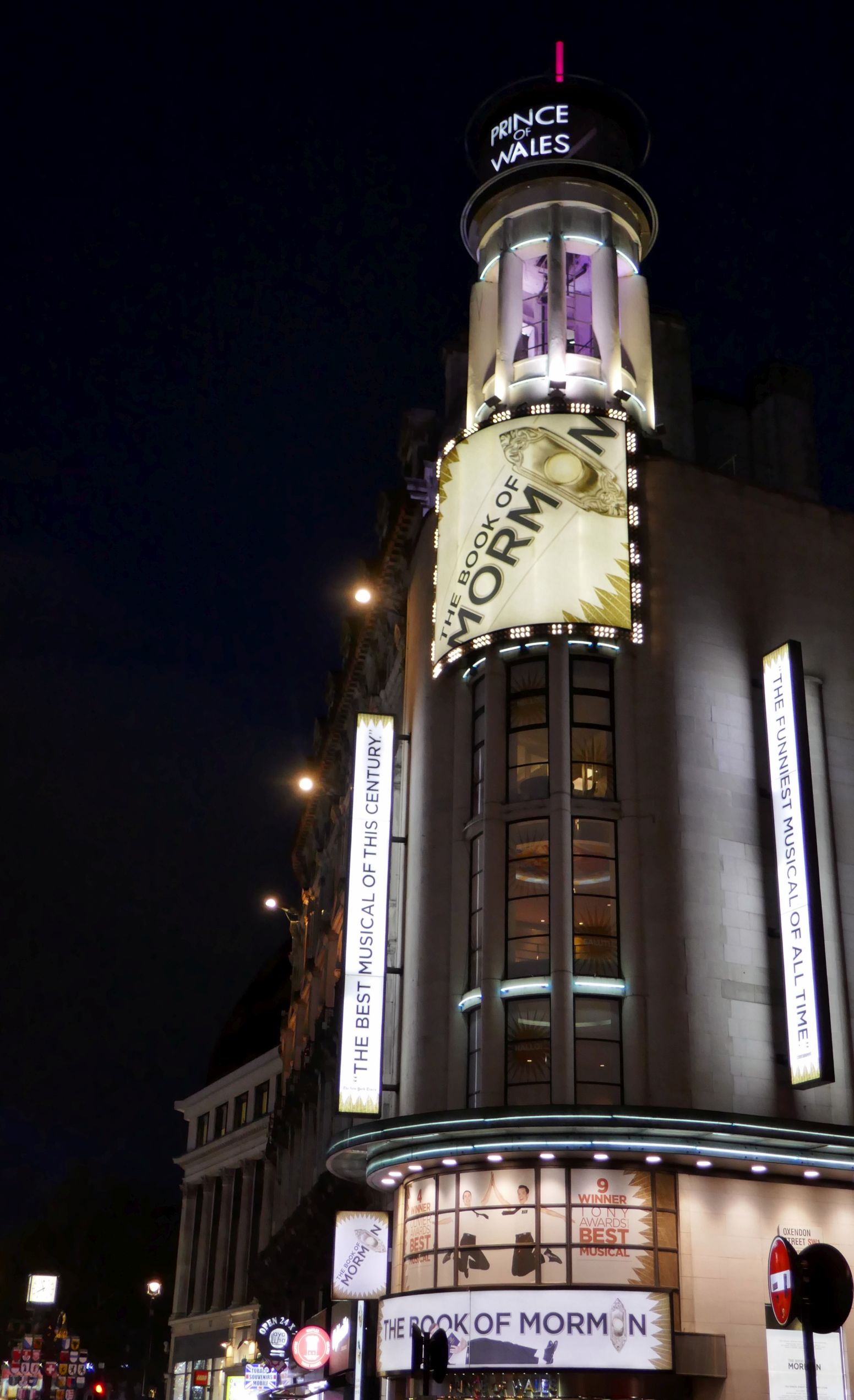
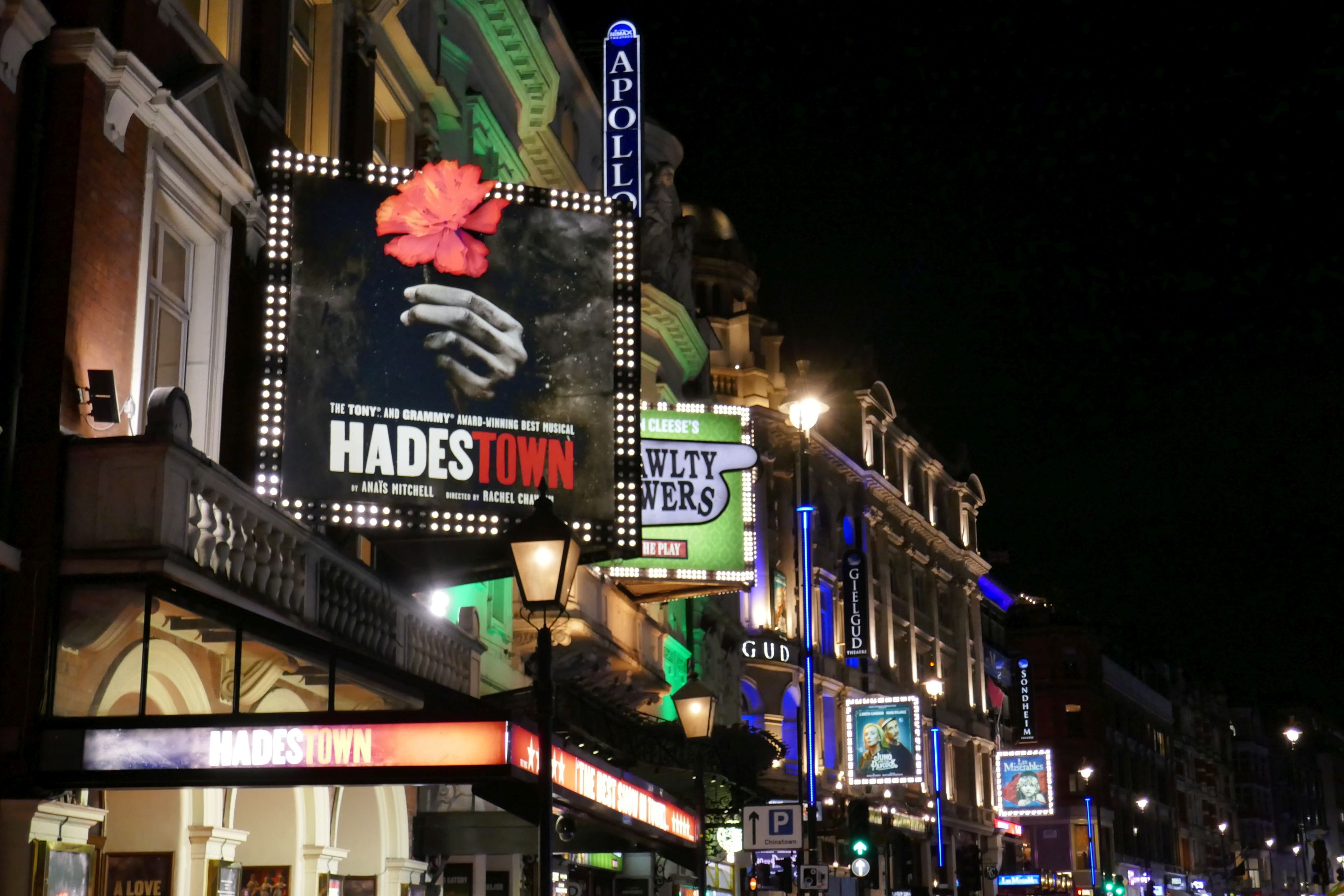
Following our group’s farewell dinner, Bruce and I spent our final night of the tour taking in the city lights in London’s West End Theatre District. We had walked a lot during the day, and did a lot more as we made our way from the Thistle Marble Arch Hotel, through the West End to Picadilly Circus, the theatre district, Chinatown, and back to our hotel. What a wonderful way to wrap up the post-extension of our tour—the first of two back-to-back tours and post-extensions with Overseas Adventure Travel!




Next up: UNITED KINGDOM #23: MEMORIES OF THE U.K., A SLIDE SHOW BY ELAINE KRUGMAN
On the way to the University of Cambridge, we made an unscheduled stop to see the Cambridge American Cemetery and Memorial, a World War II American military war grave cemetery where 3,811 American soldiers were buried. What Marc and our group didn’t realize until Bruce mentioned it was that this was September 11th, an emotional reminder of all the Americans that were killed by terrorists on the same date in 2001. It would have been quite fitting if it had been a gloomy, blustery morning, but it was quite the opposite, in stark contrast to our heavy hearts.
(For all photos, click on the image for a full screen view.)



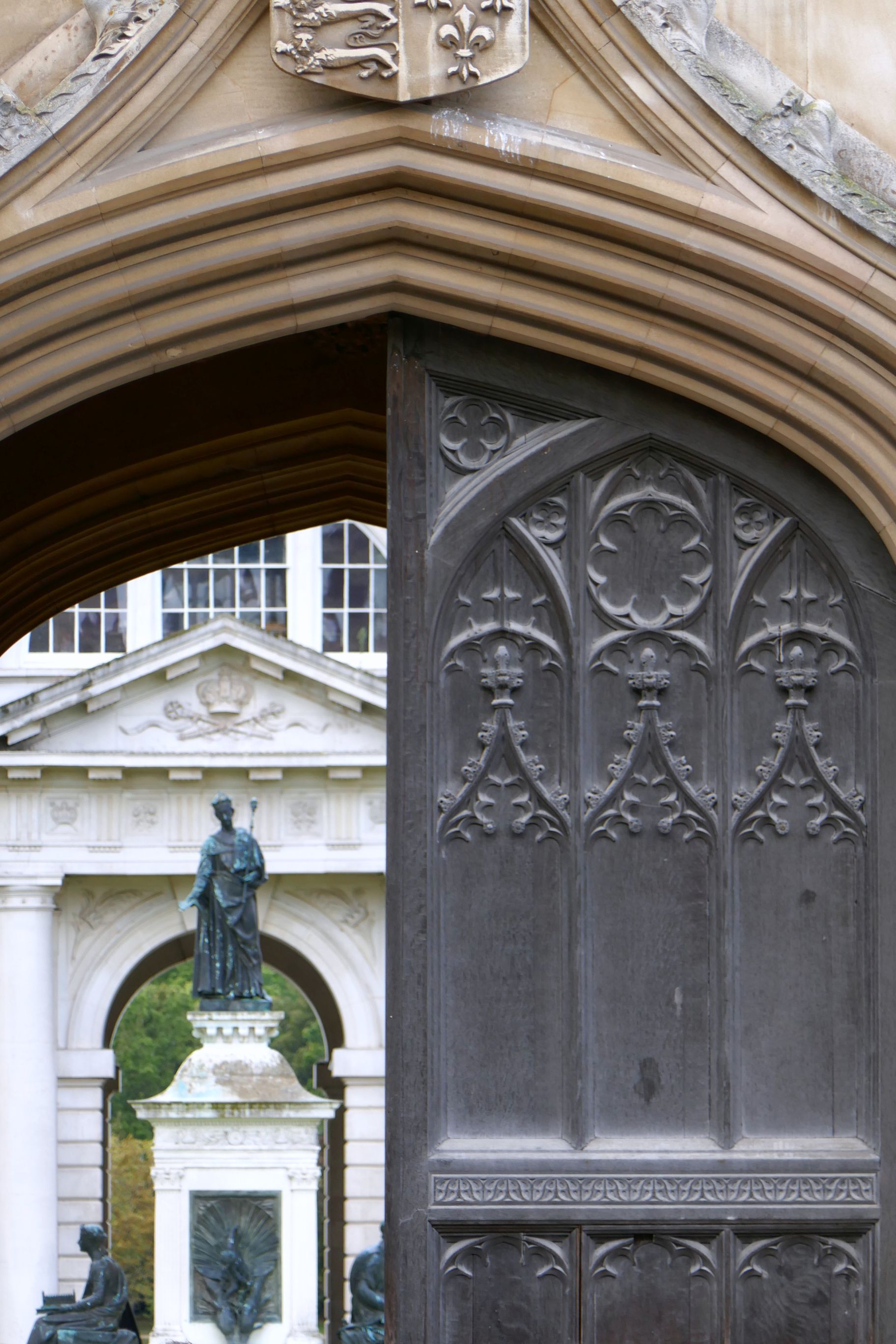
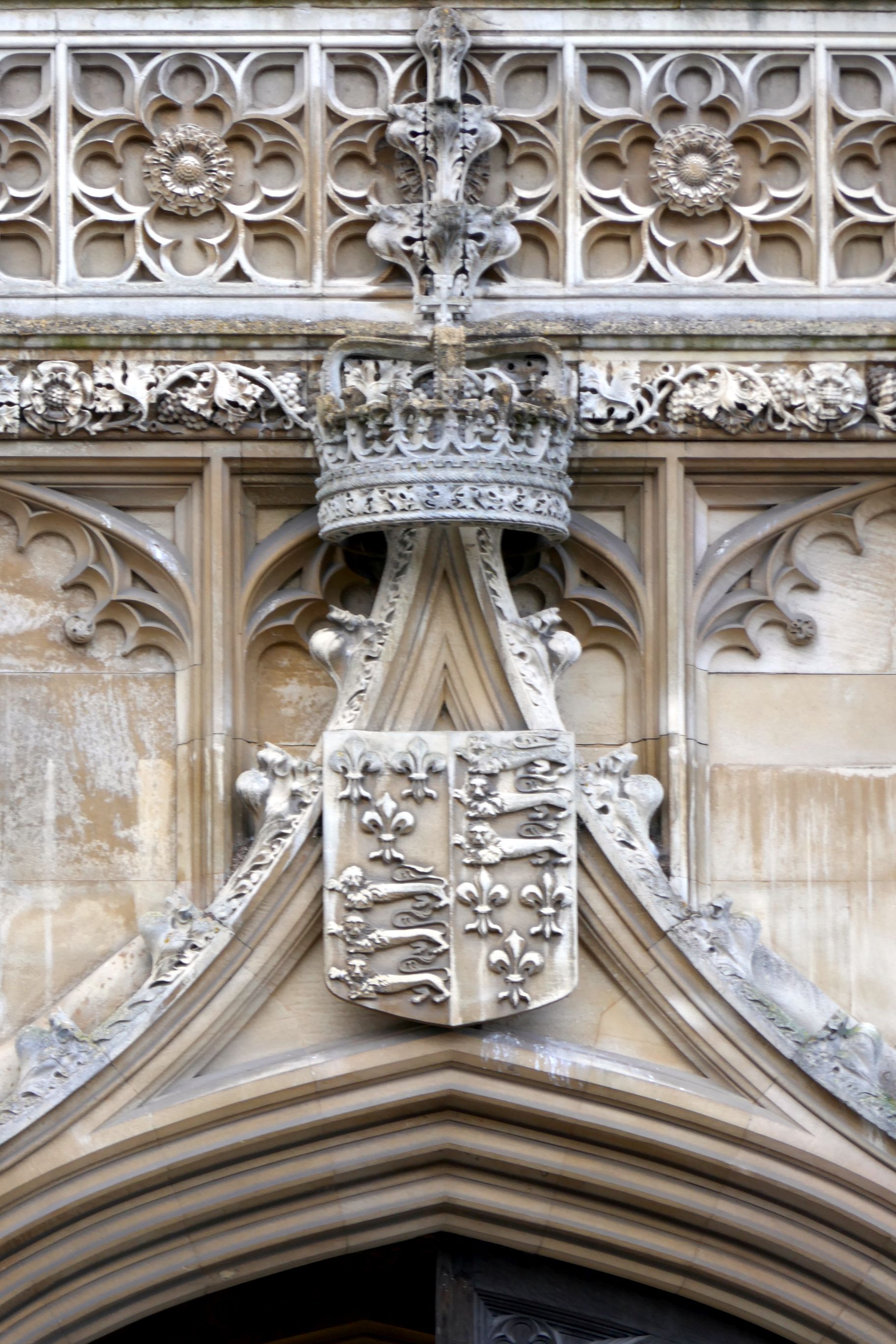
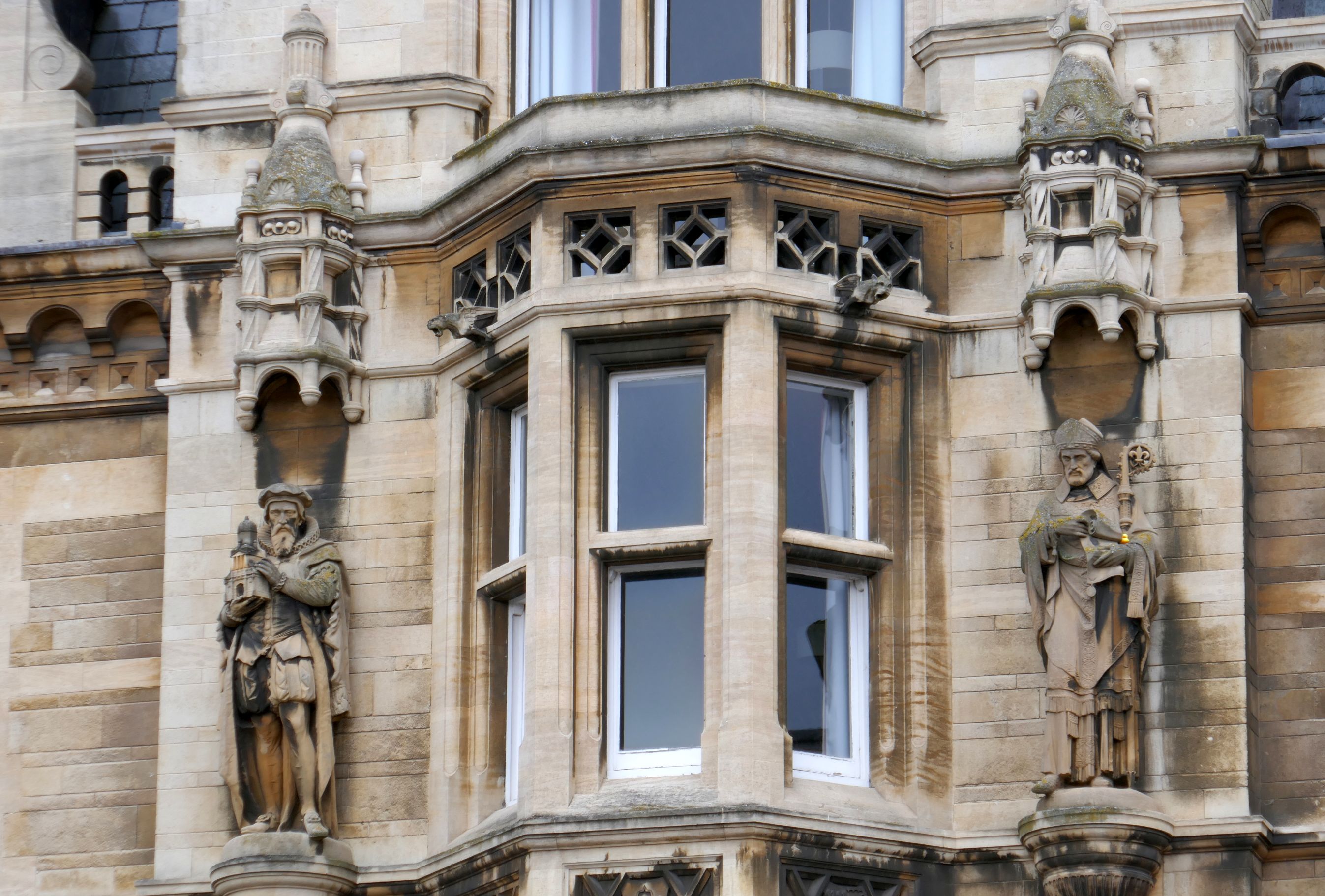
We continued to Cambridge for a punting tour on the River Cam, which took us under eight bridges and past the back of seven colleges of the University of Cambridge. The morning was beautiful, and the river, running through the heart of Cambridge, was peaceful and charming.


Views from the boat while punting on the River Cam:
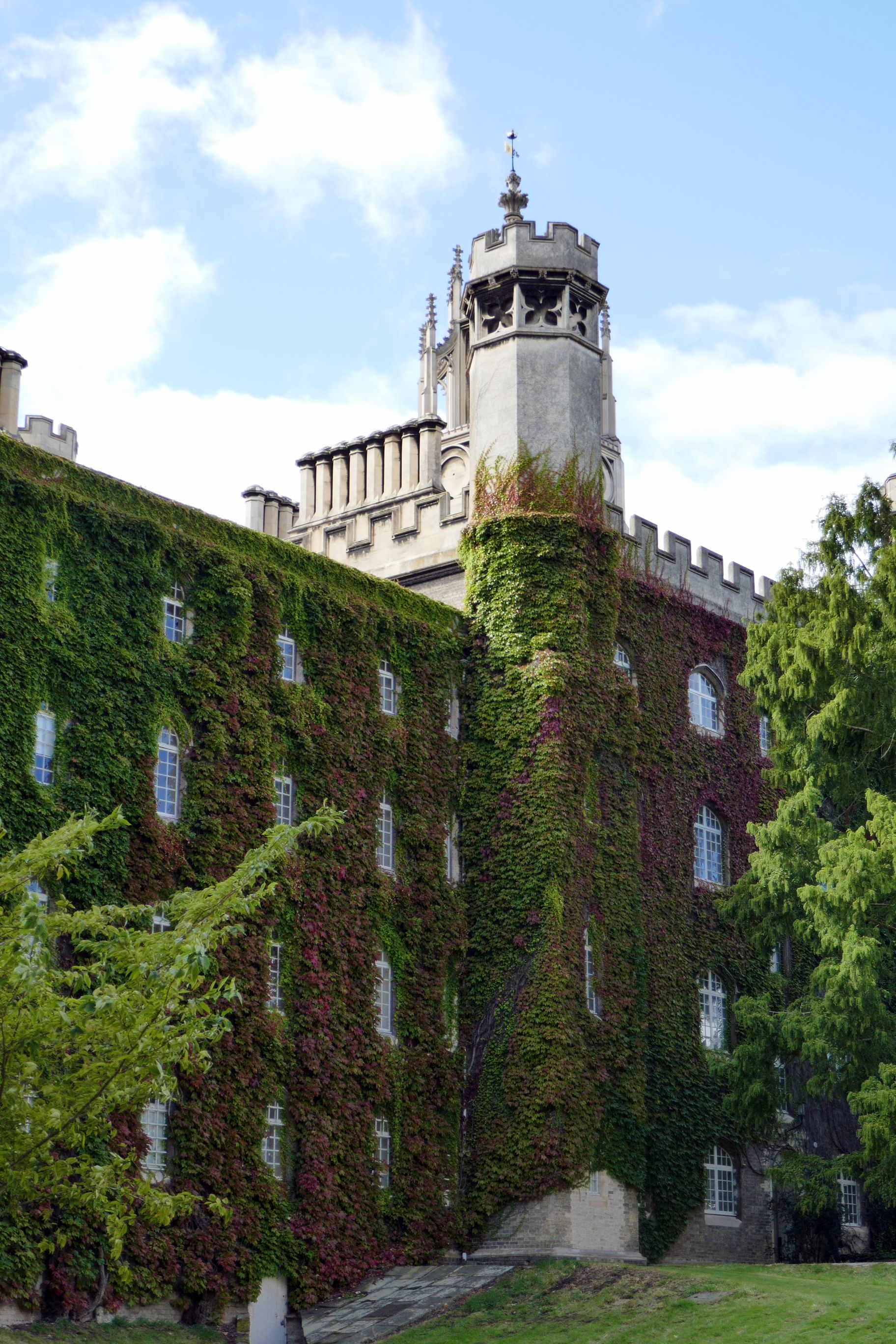
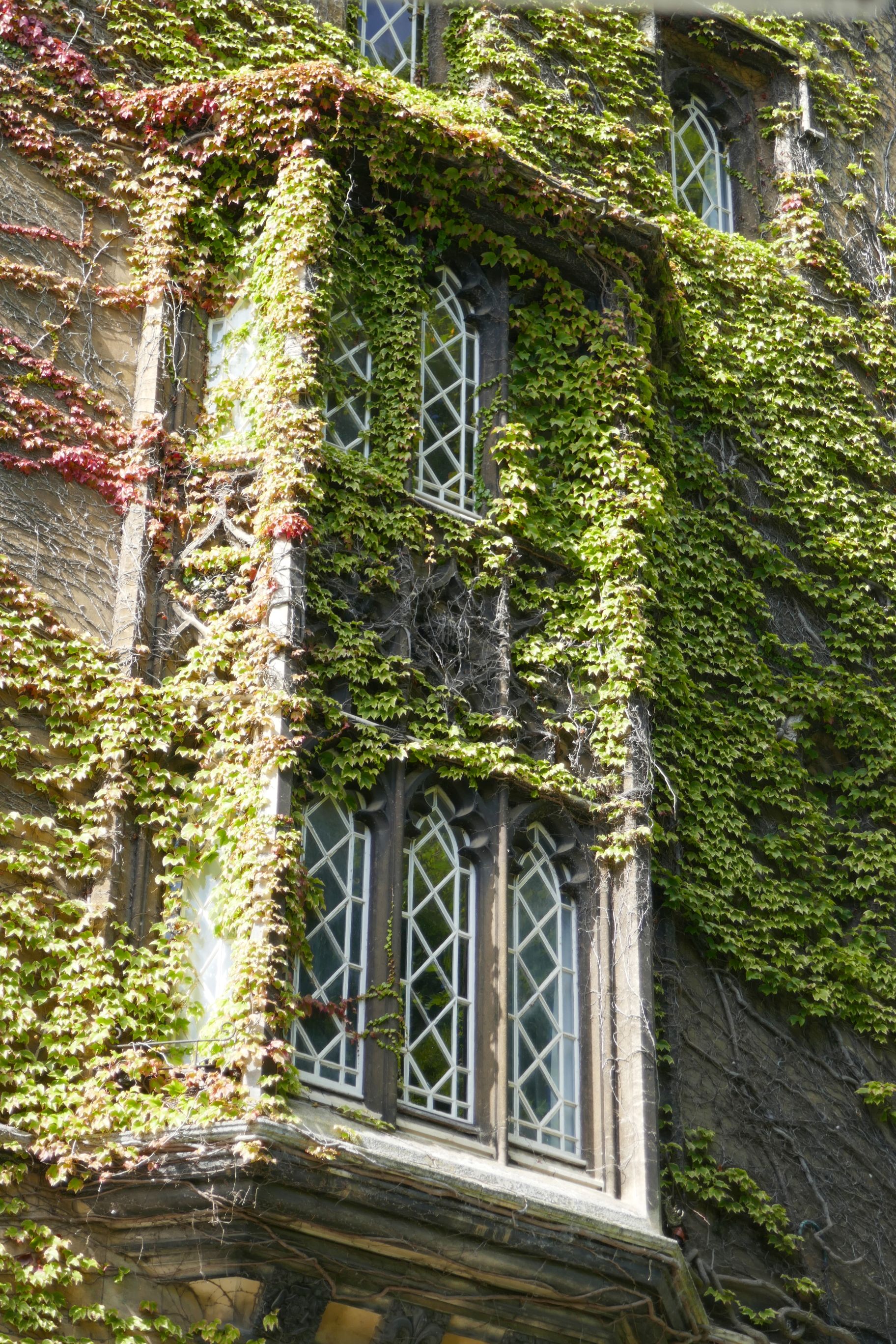
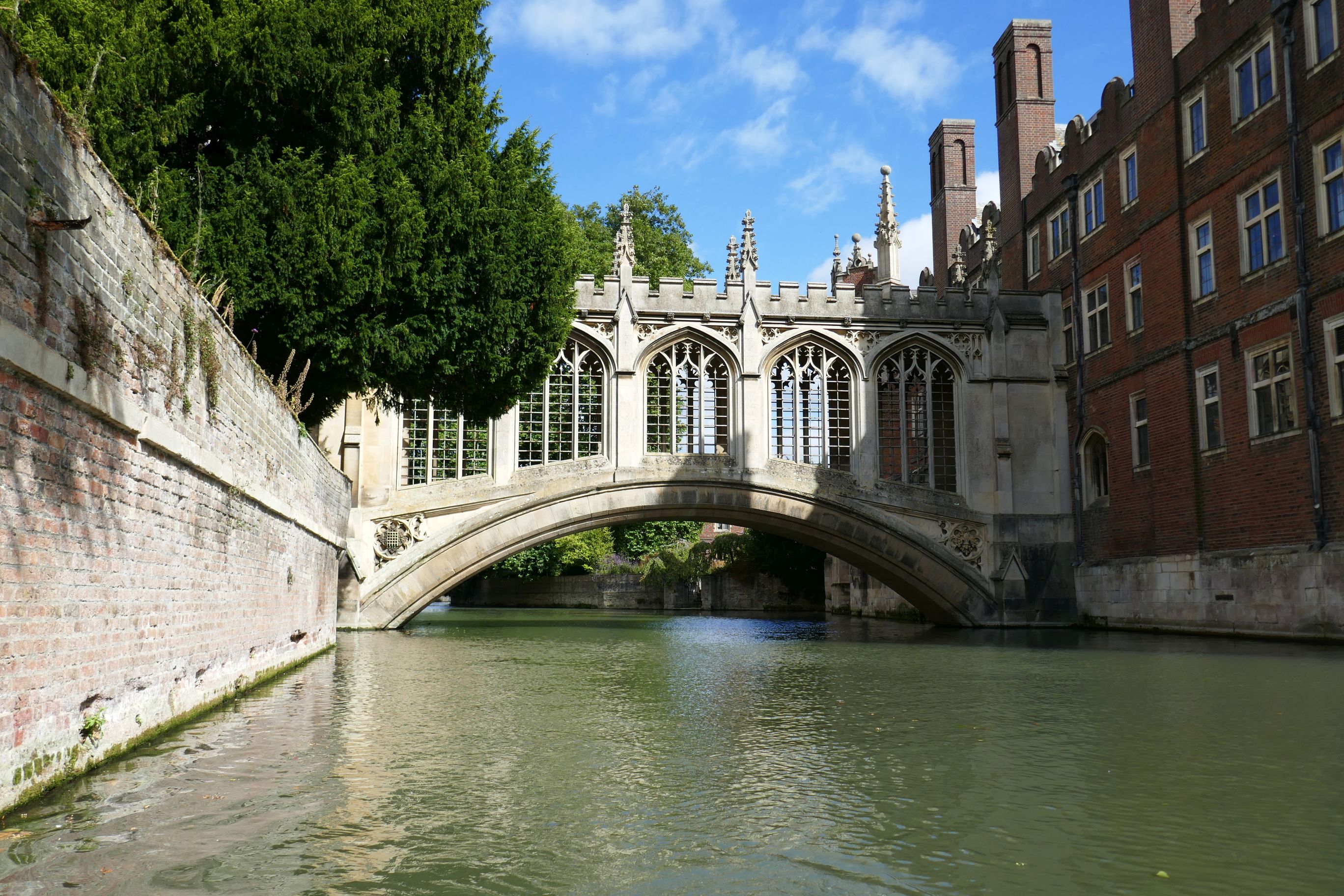
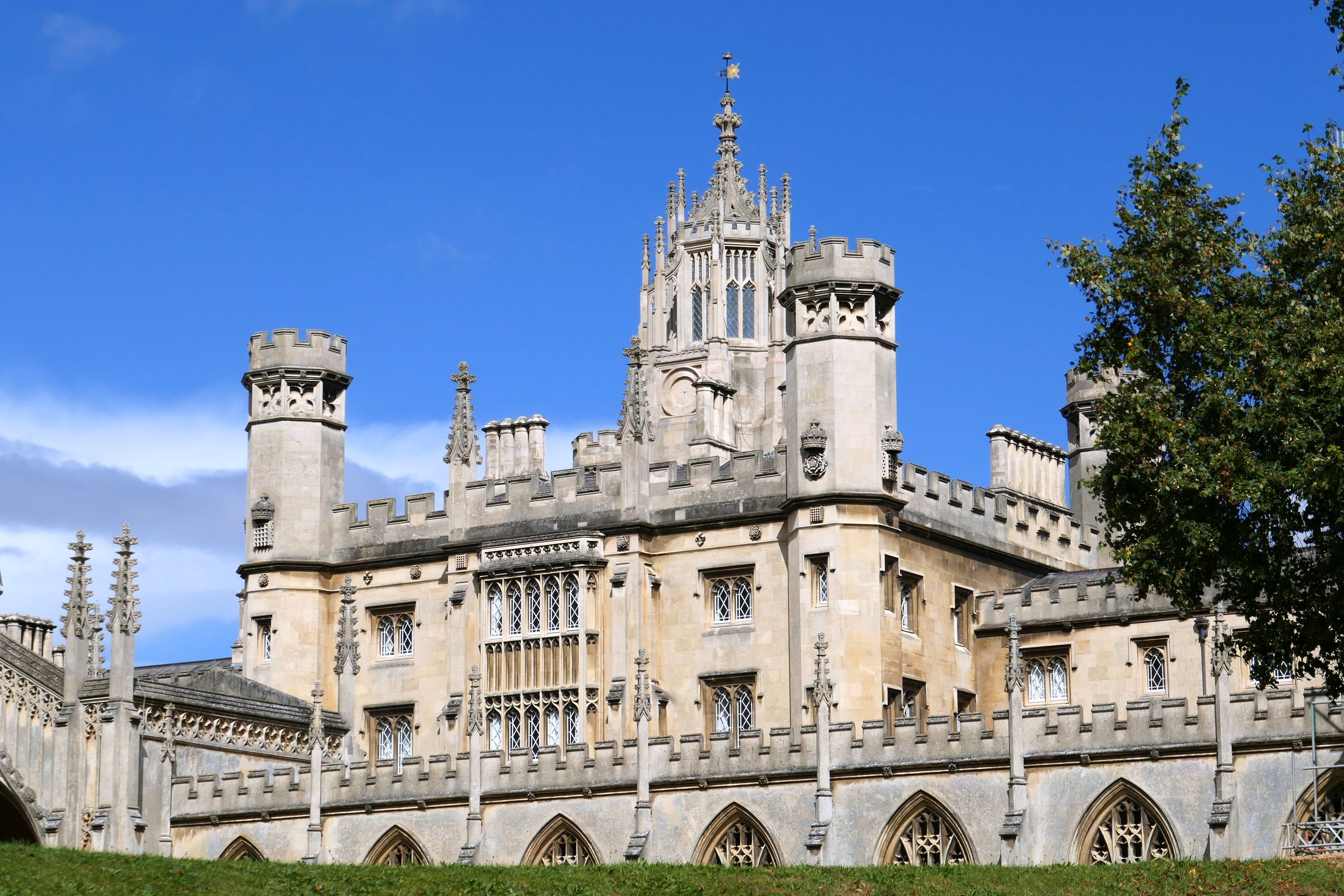
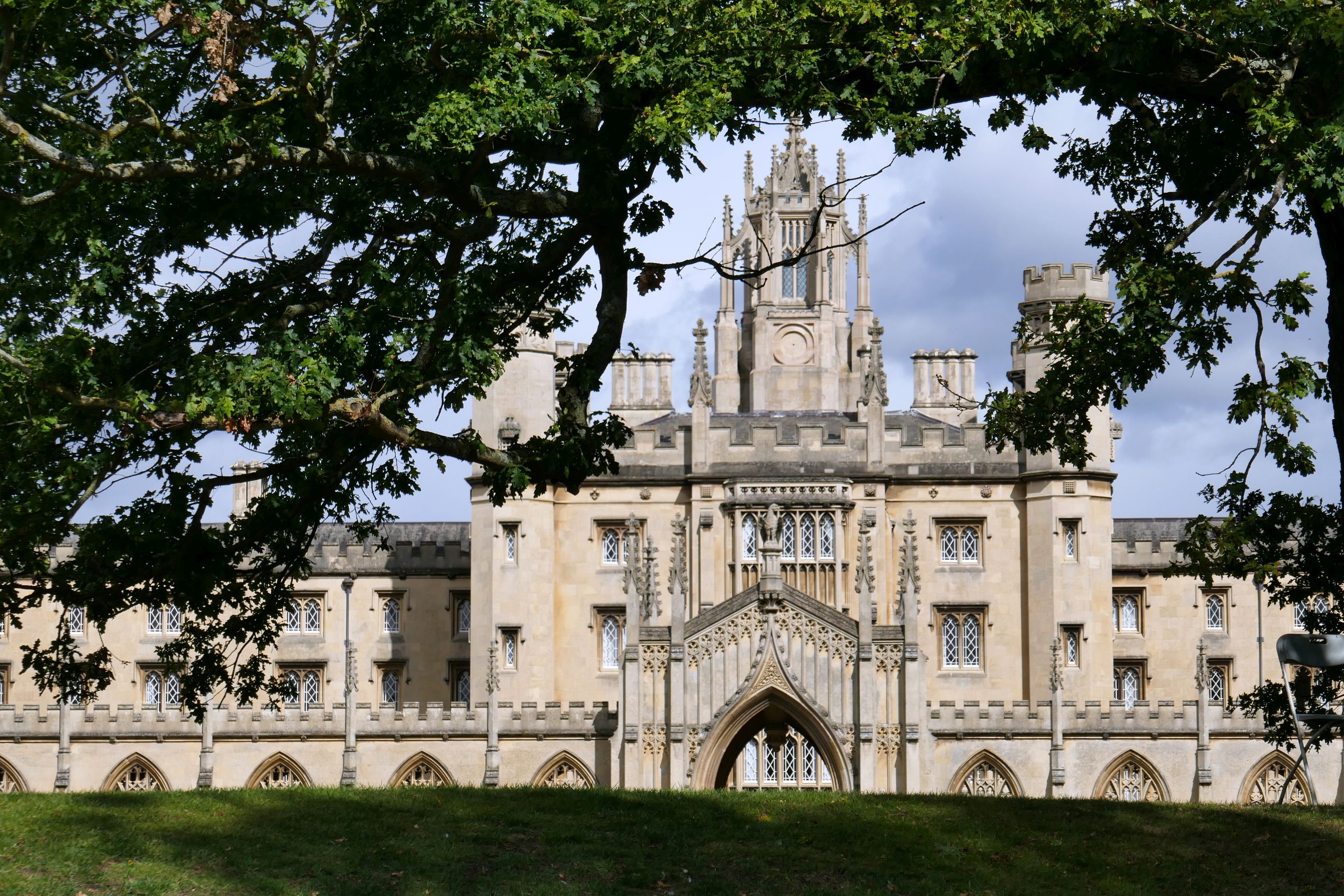


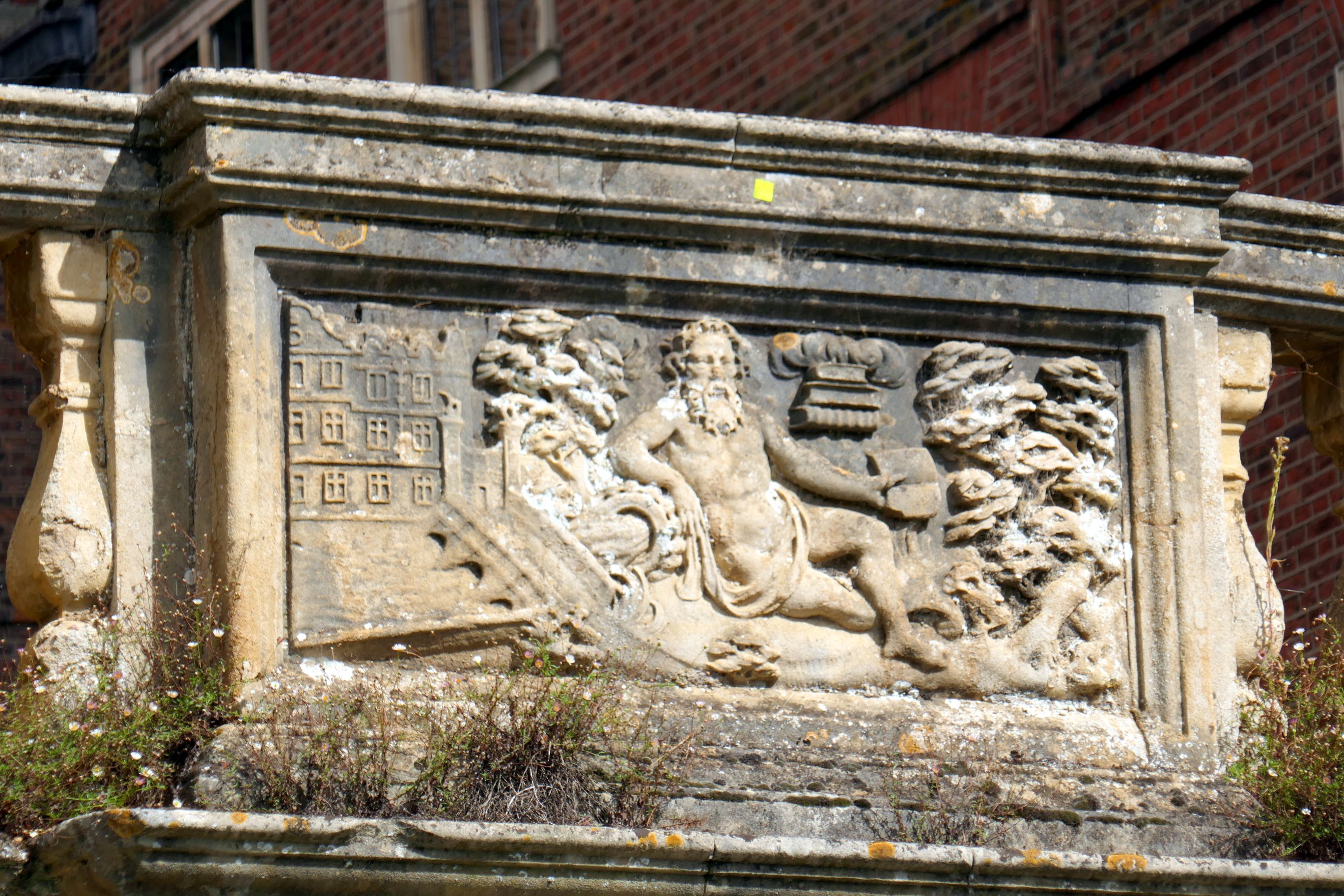
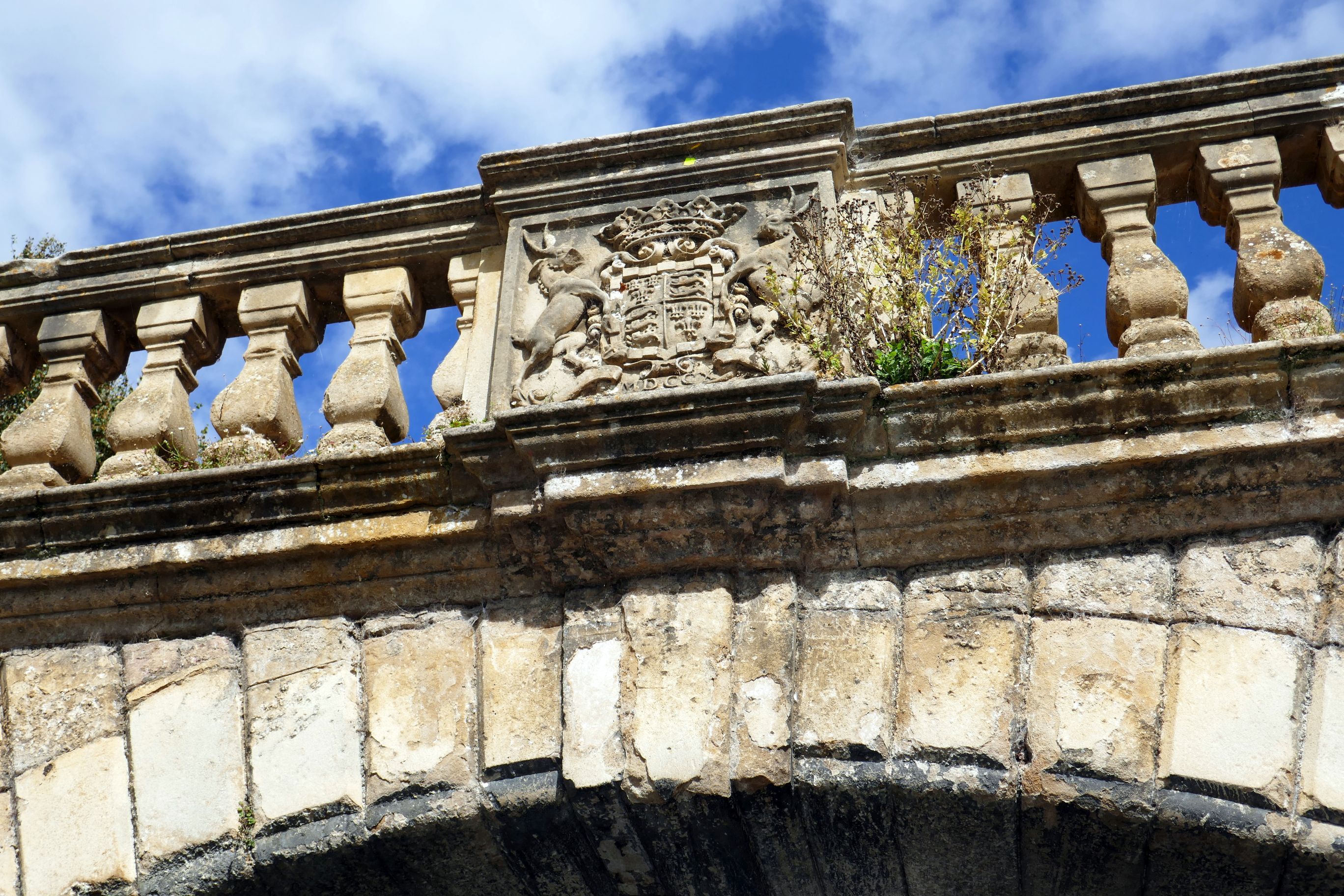
When you think about how old this university is, you realize how much history there is in Cambridge. Founded in 1209, the University of Cambridge is the world’s third oldest university in continuous operation. It wasn’t until late 1800’s when colleges for women were established. In all, the university now has 31 colleges and 150 departments.
Following our punting tour, we noticed dark clouds coming our way but made it to a little café for lunch just before they arrived and unleashed a downpour of hail! We were thankful we made it just in time but felt sorry for those punters still on the river getting soaked and cold! By the time we left the café, it was sunny. Our weather luck was with us once again!

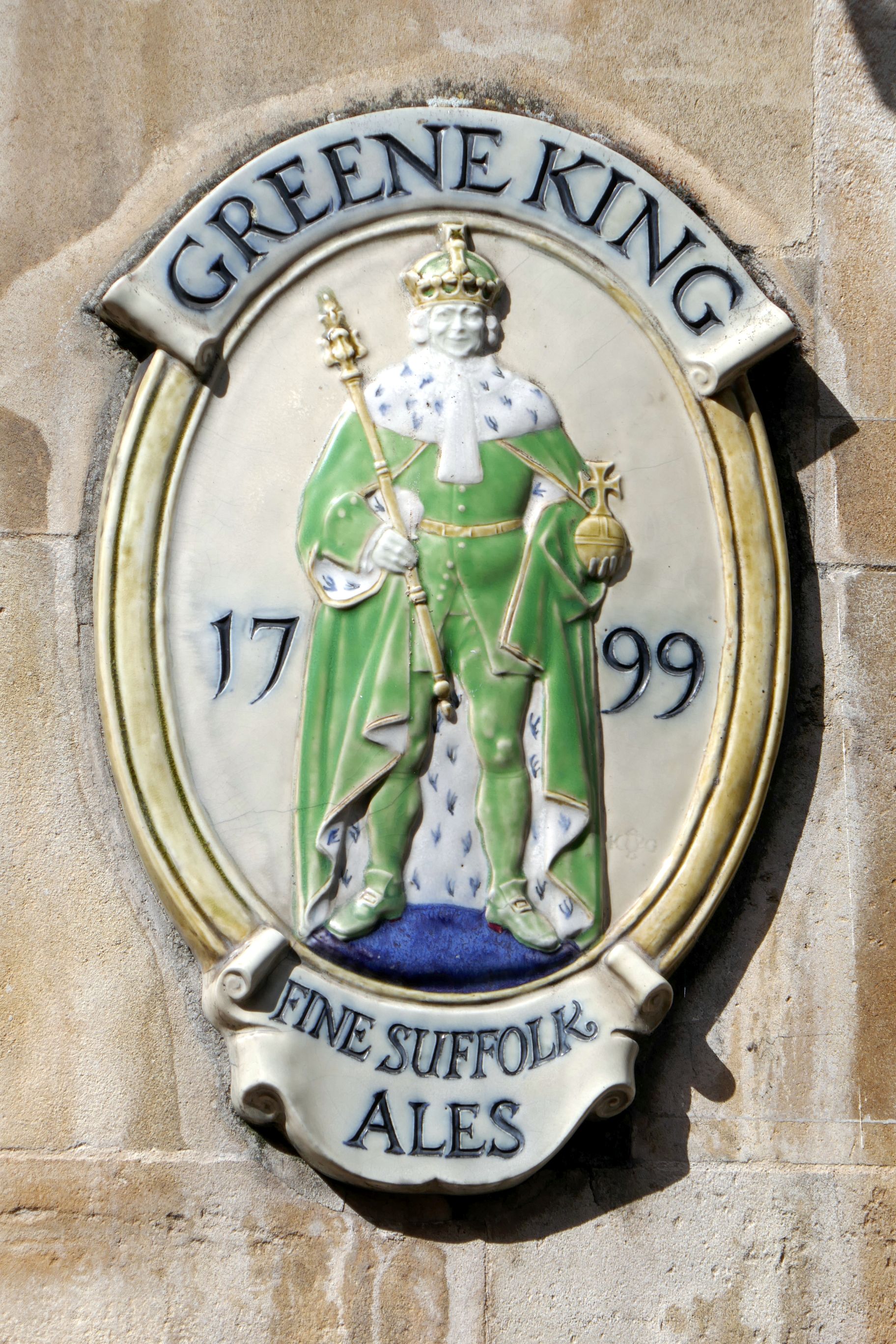
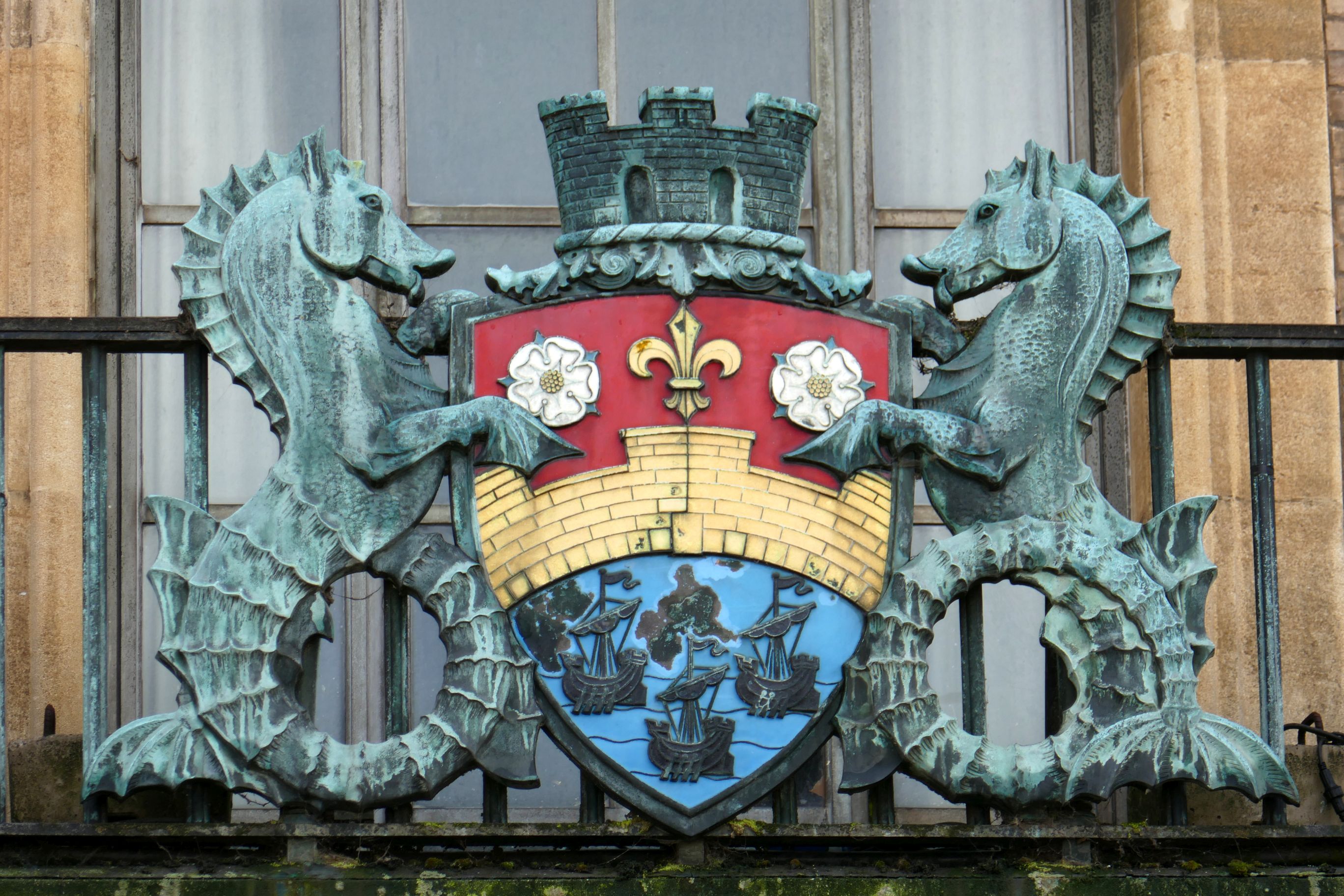
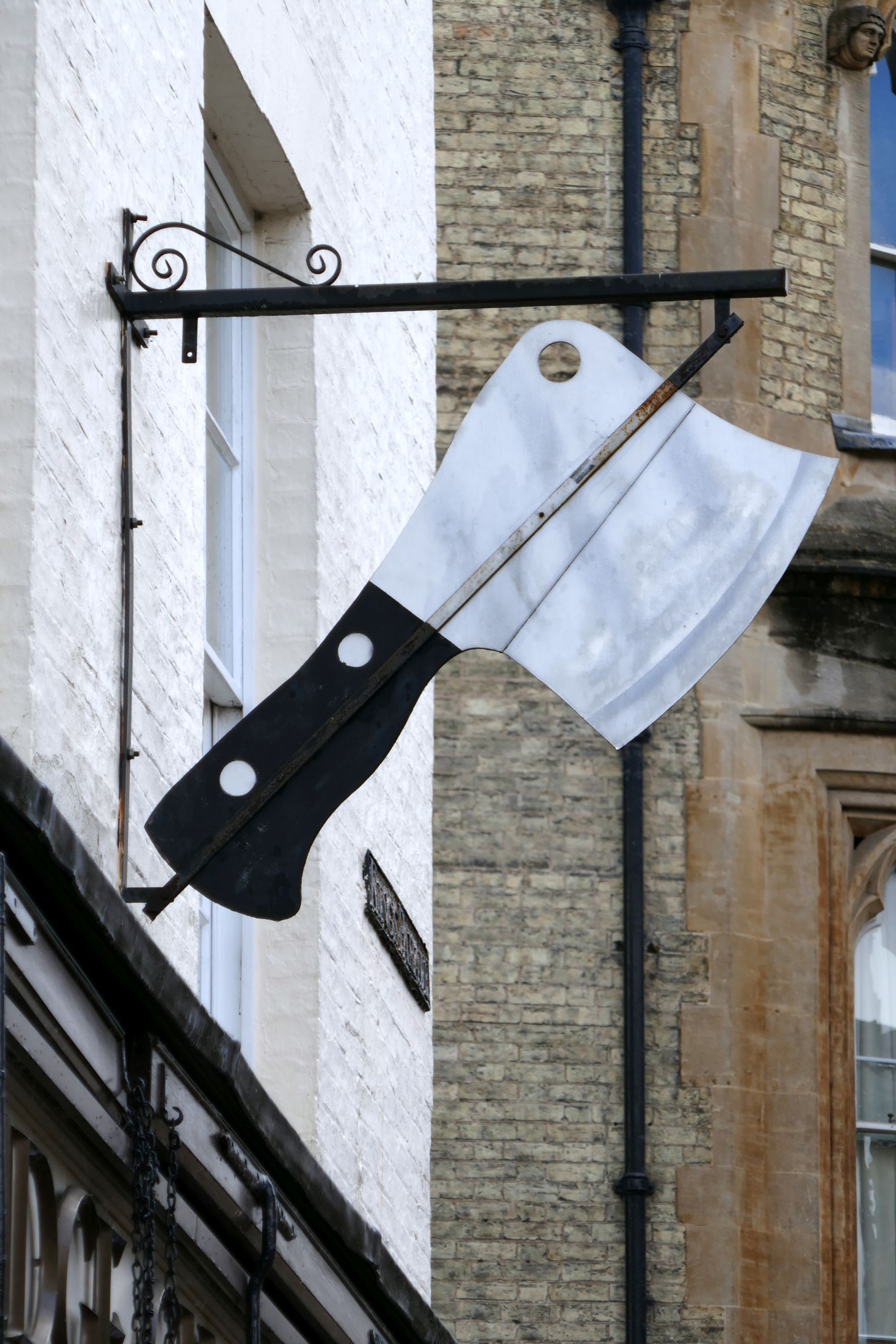
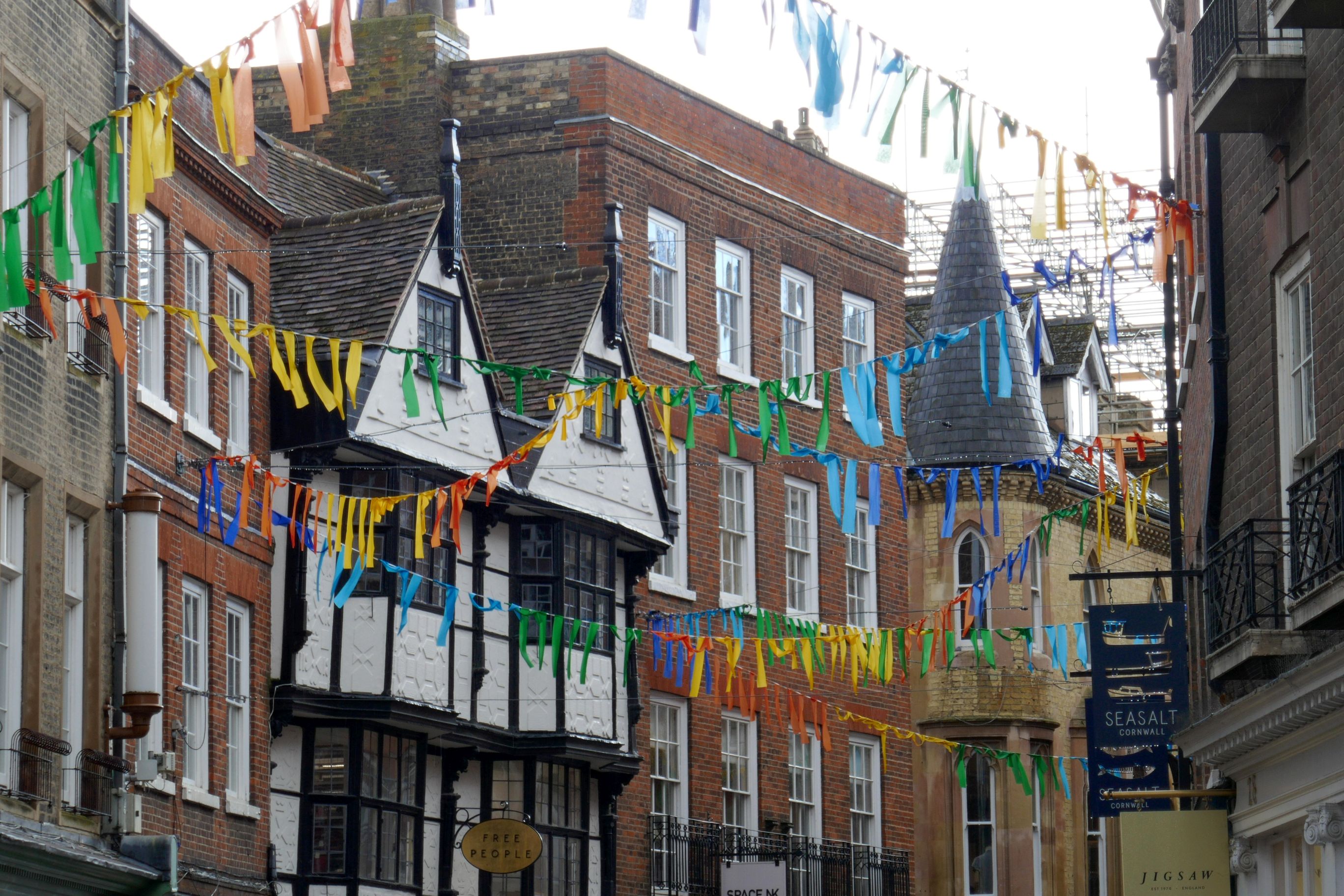
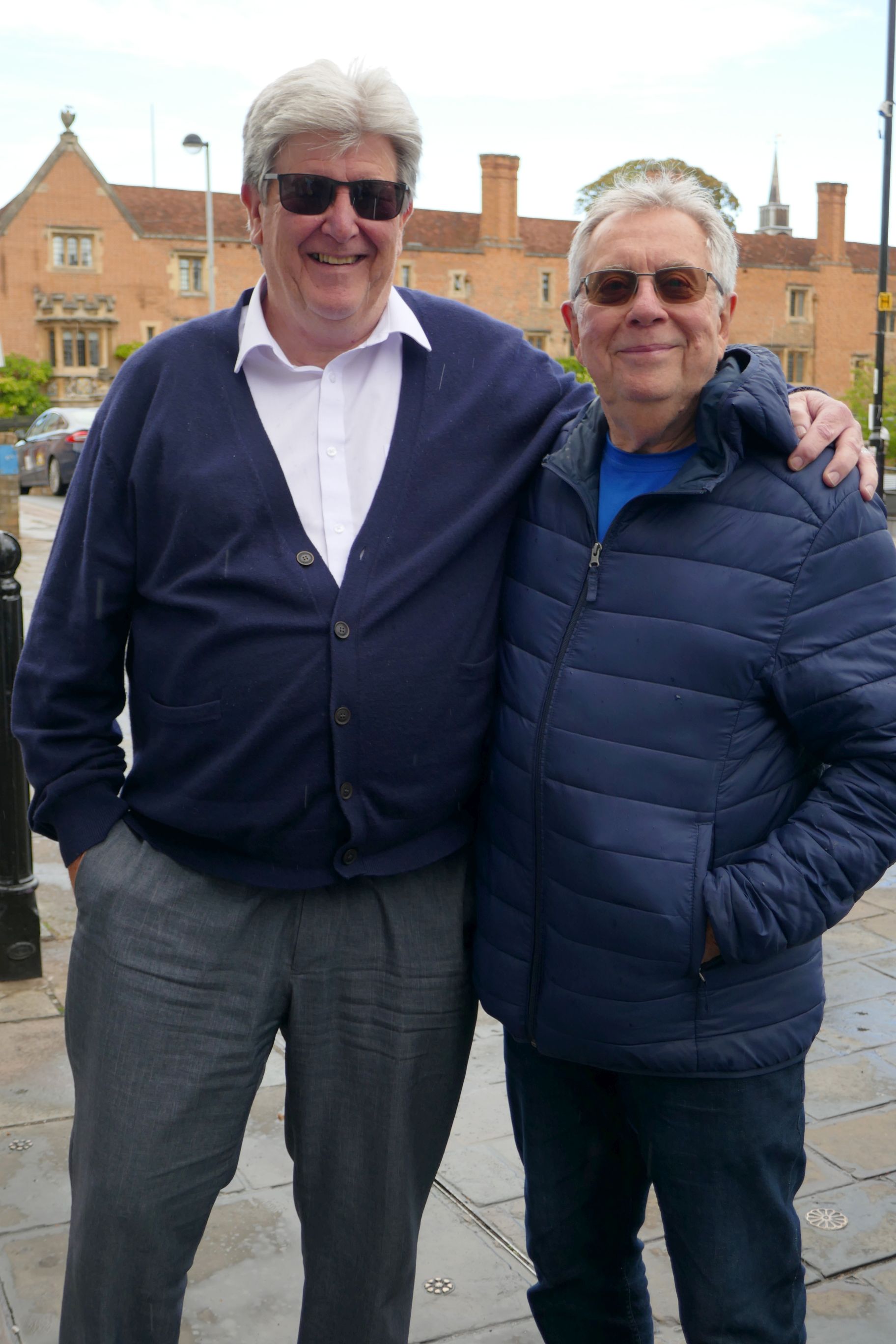
Marc led us on a walking tour through the center of town and filled us in on the history of the old pubs and other landmarks we passed. It was such a charming town and a great environment for university students! I hope they know how lucky they are…
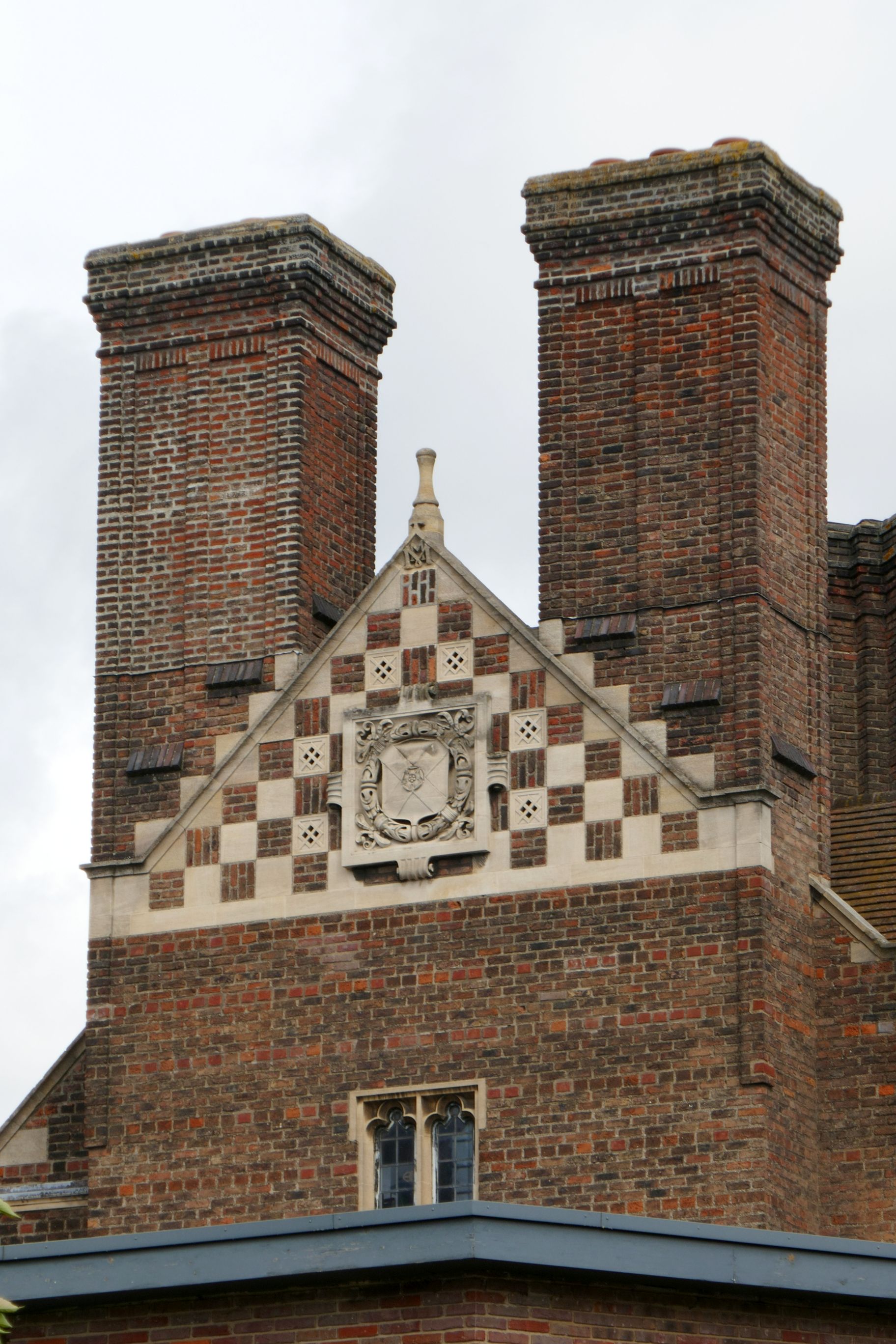
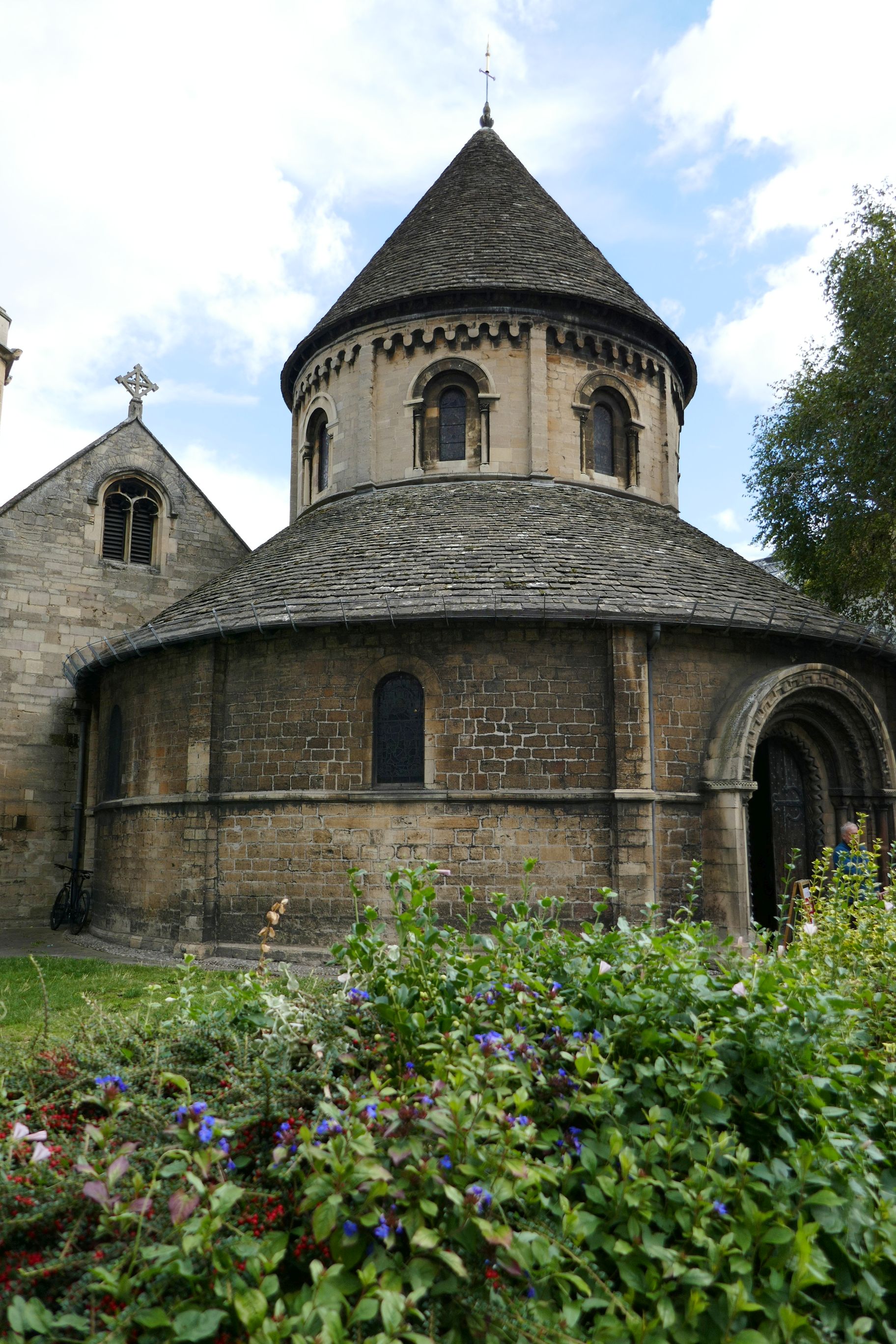
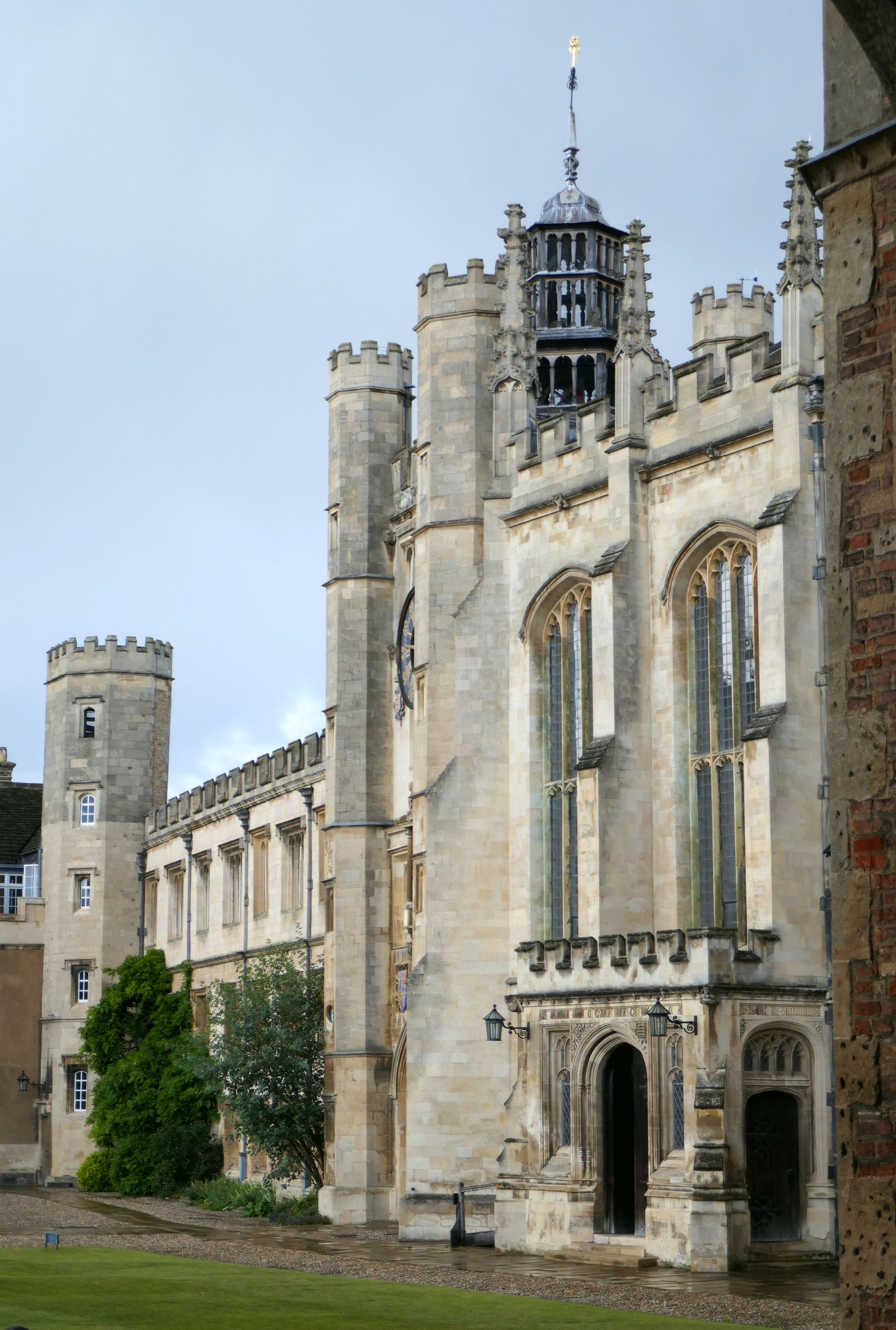
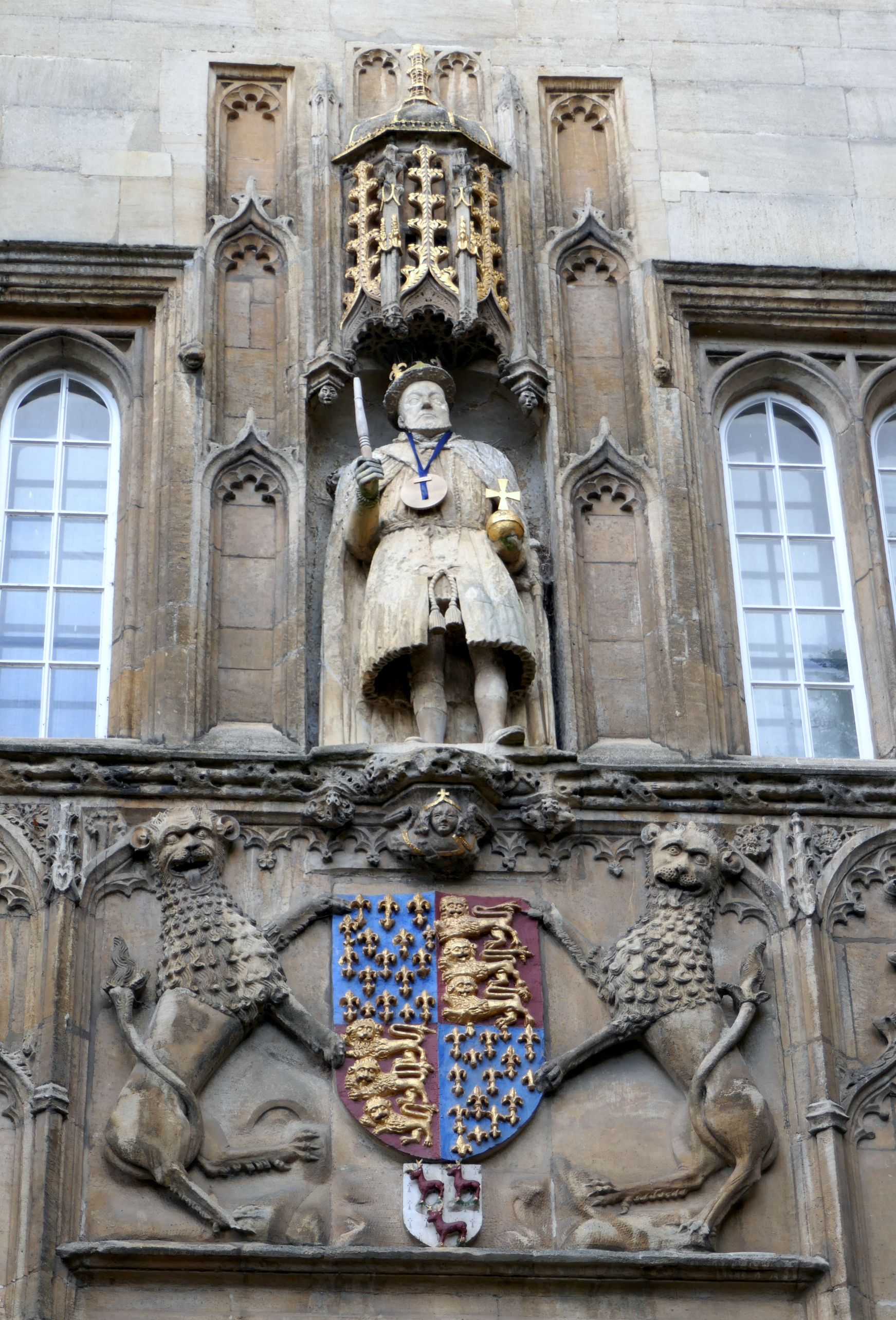



Coming up next: UNITED KINGDOM #22: ANOTHER DAY IN LOVELY LONDON
London really is a lovely city. I had visited once before with Bruce, my mom, and sister, before embarking on a cruise, and we had a wonderful time. This would be a different experience, exploring with our small group and on our own during our free time. We were excited!
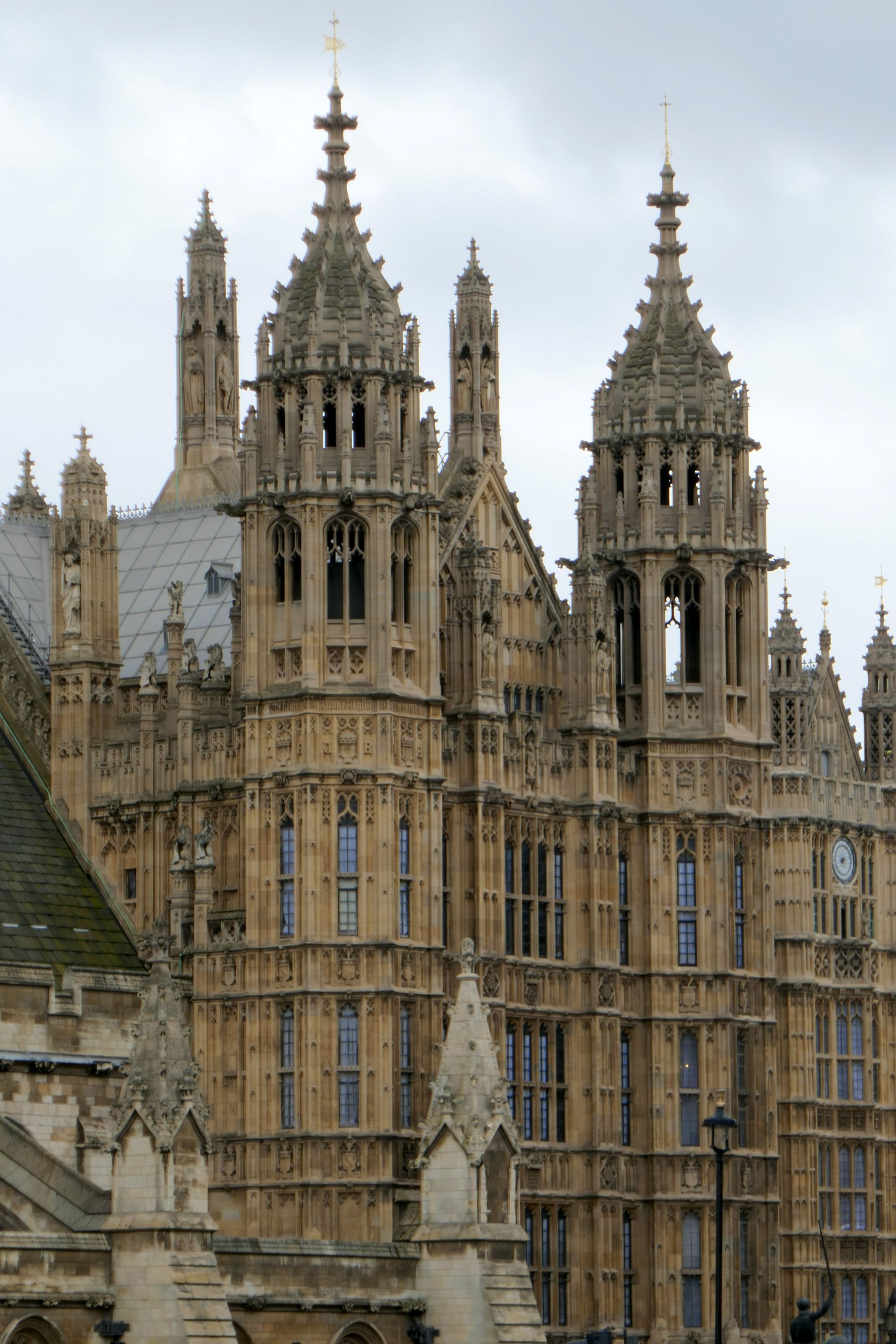
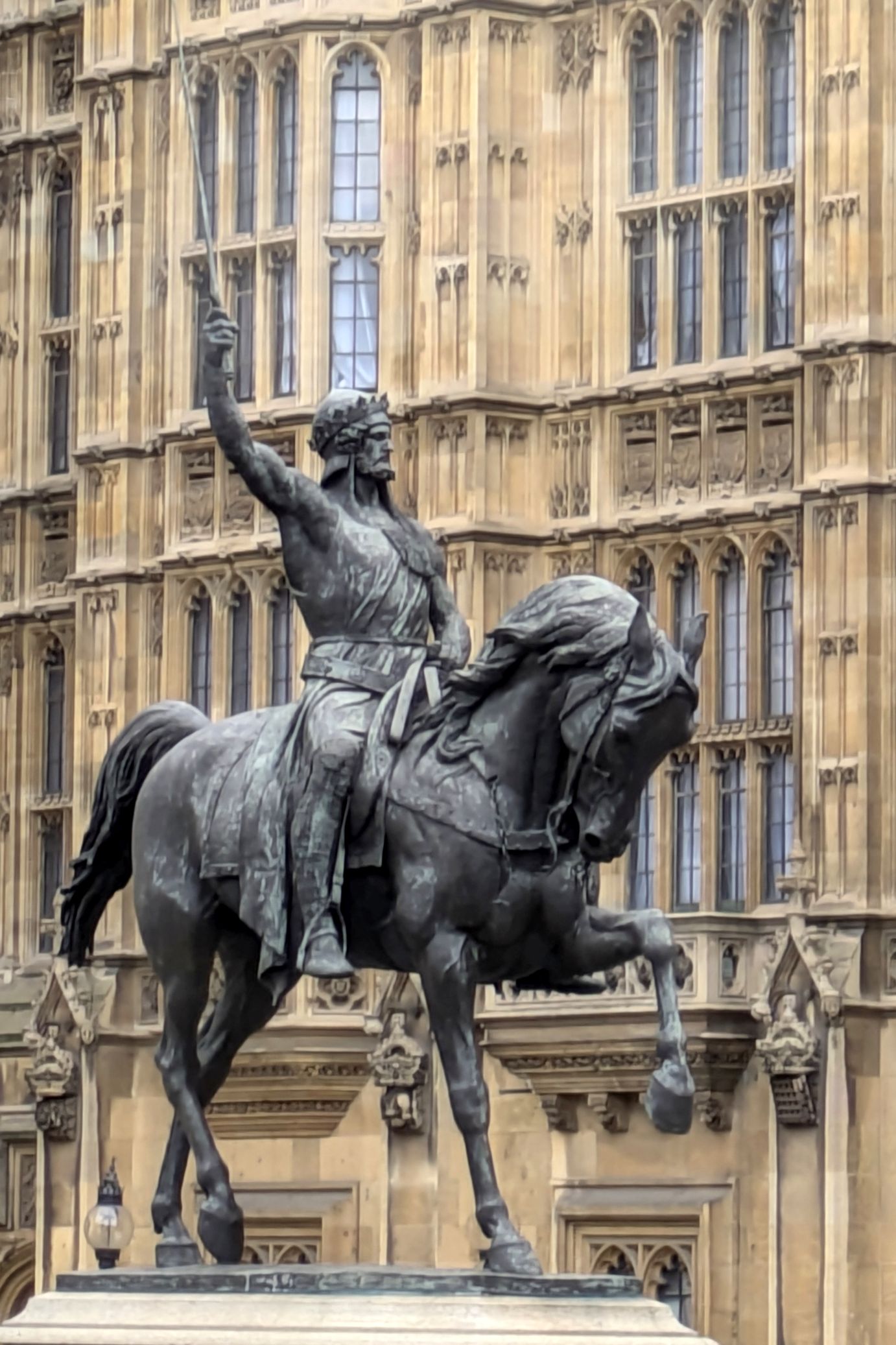
The Thistle Marble Arch Hotel, at the West End, was our base for our final four nights of the tour. Marc and a local guide led us on a walking tour the morning of our first full day, taking us by the iconic highlights of the city: Buckingham Palace, St. James Park, Westminster Abbey, Big Ben, St. Paul’s Cathedral, the Tower of London, and Tower Bridge. The local guide left us there, and we continued with Marc to see his alma mater, the University of London.
Rather than return to tour the interior of any of the places we saw during our walking tour, we opted to just walk the city and continue enjoying the sights, sounds, and skyline of London.
(For all photos, click on the image for a full screen view.)

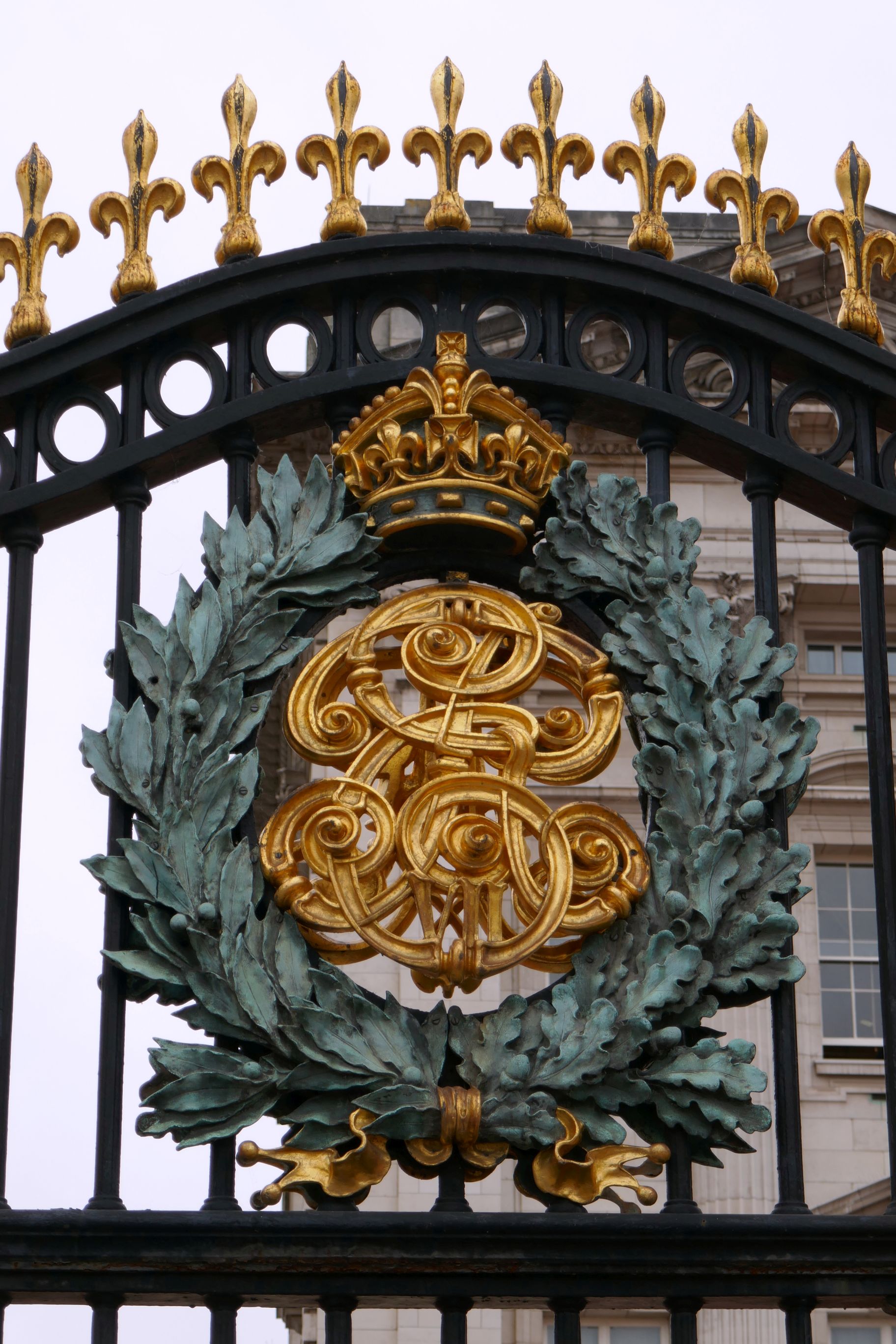

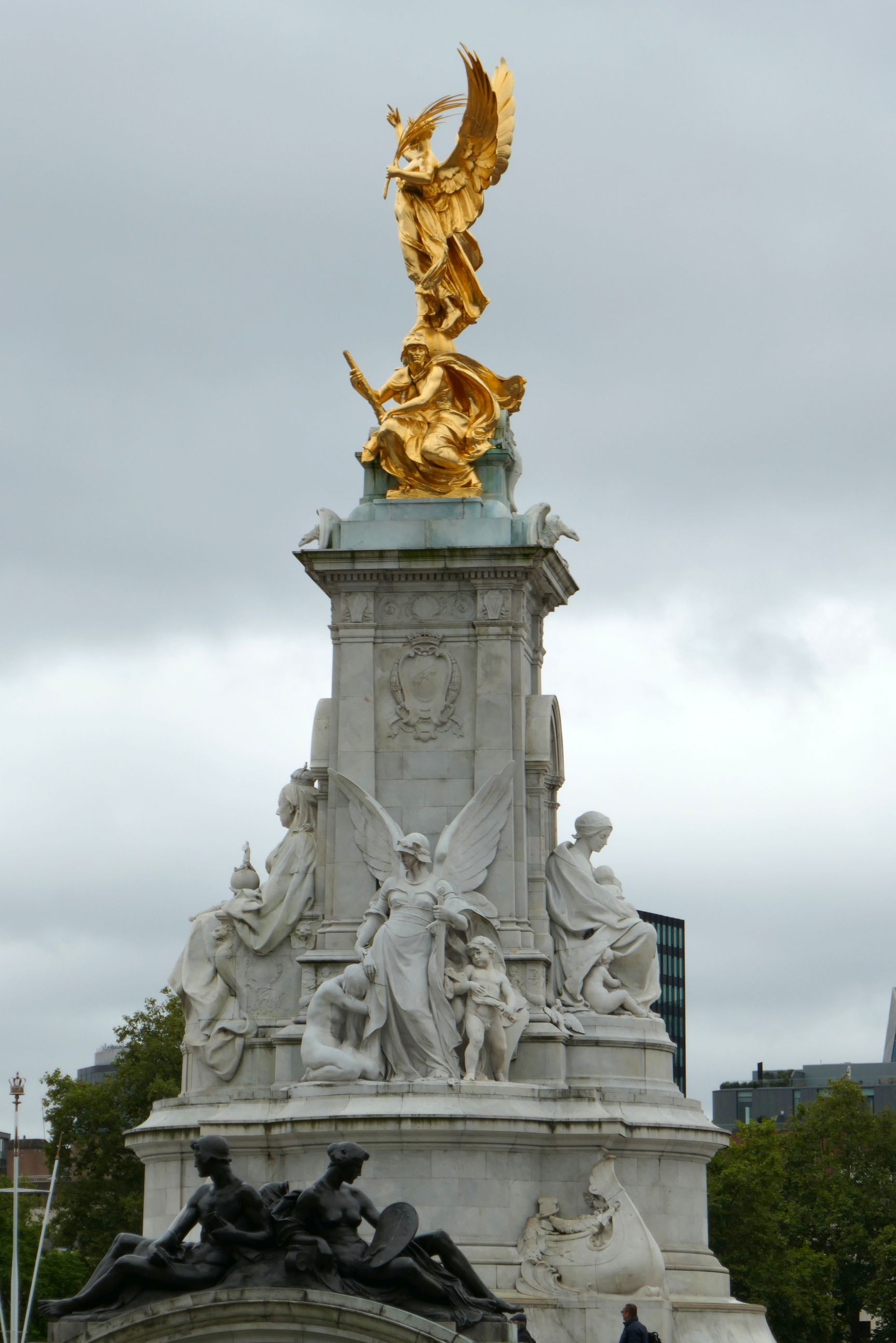

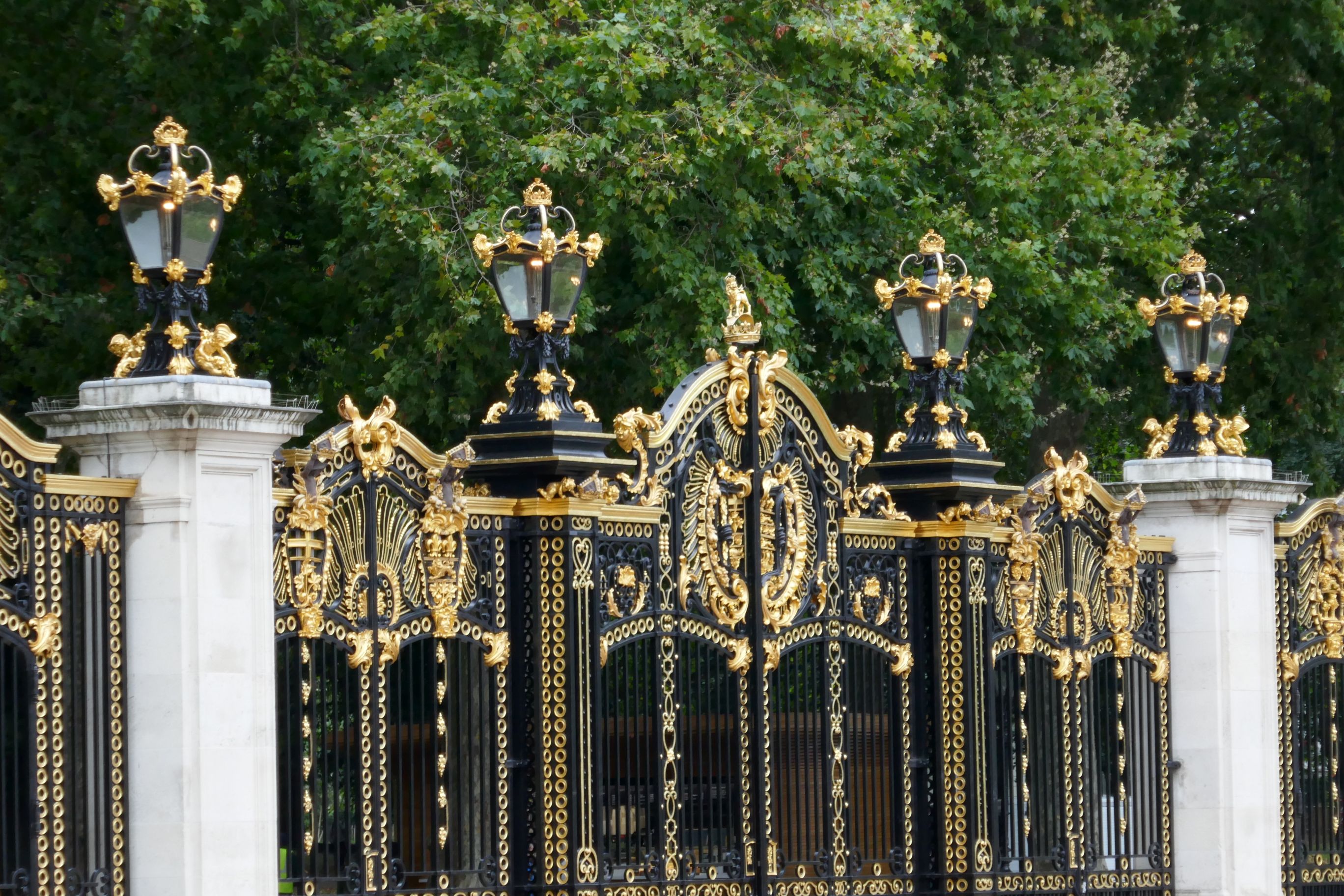
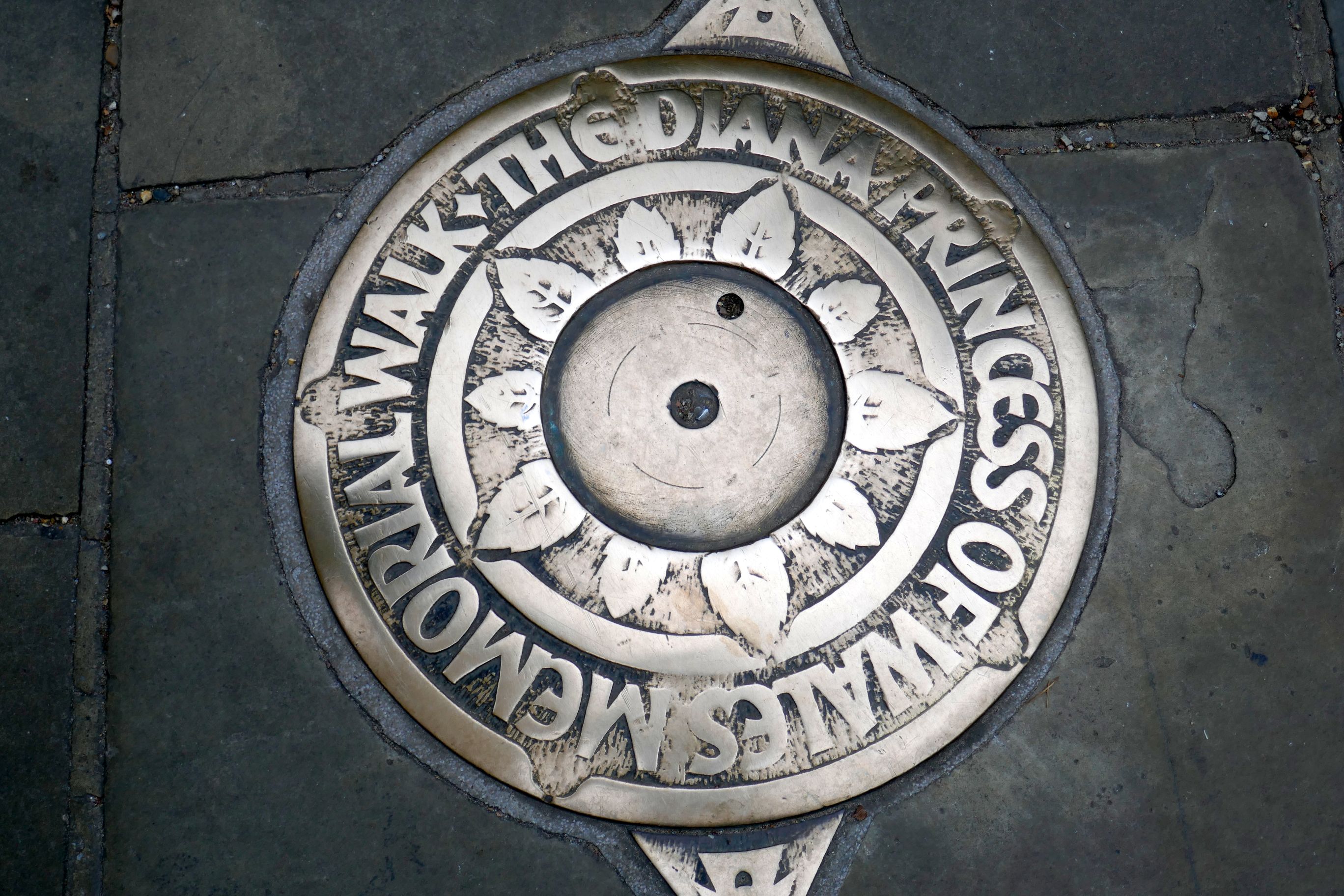
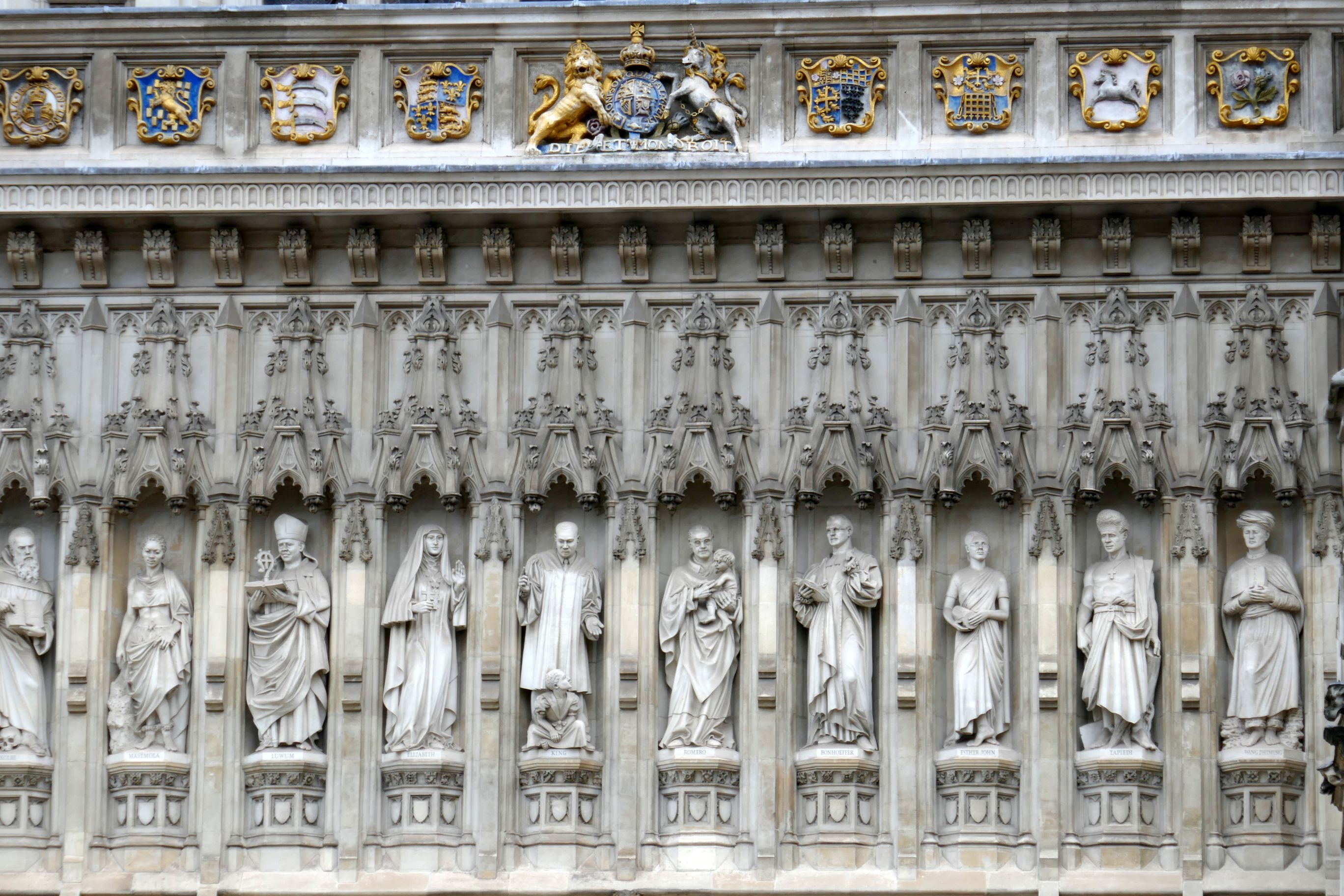
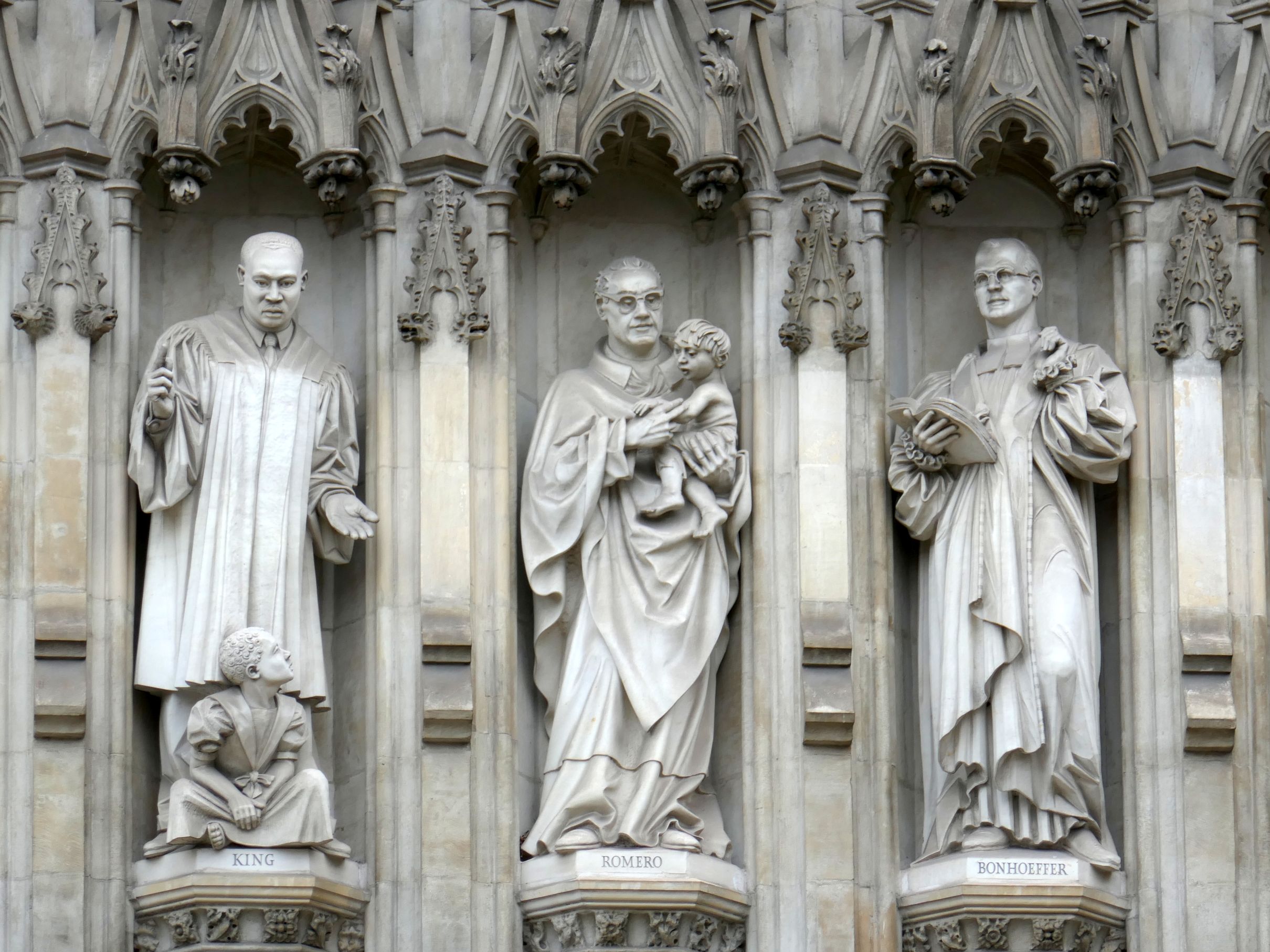

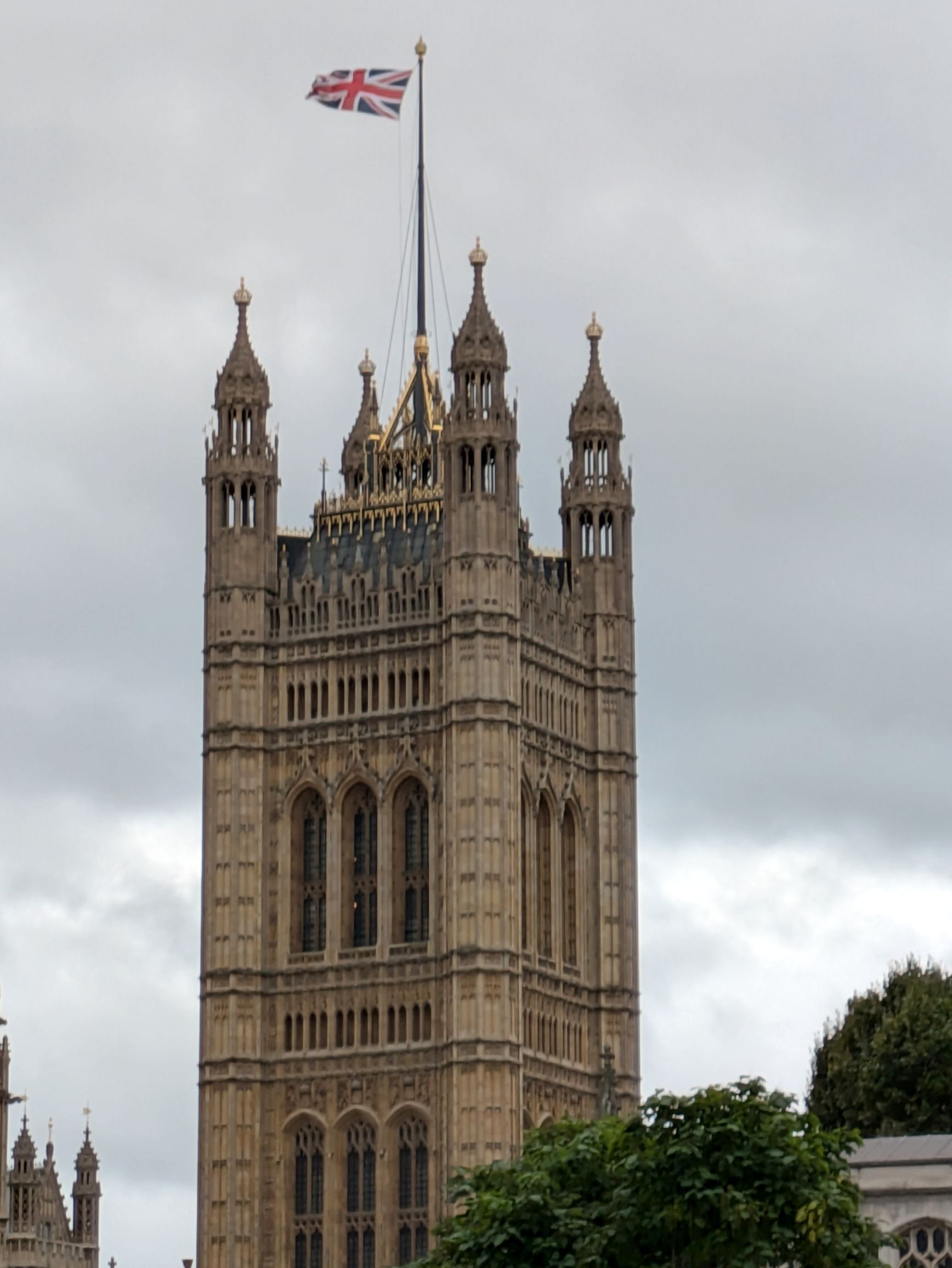

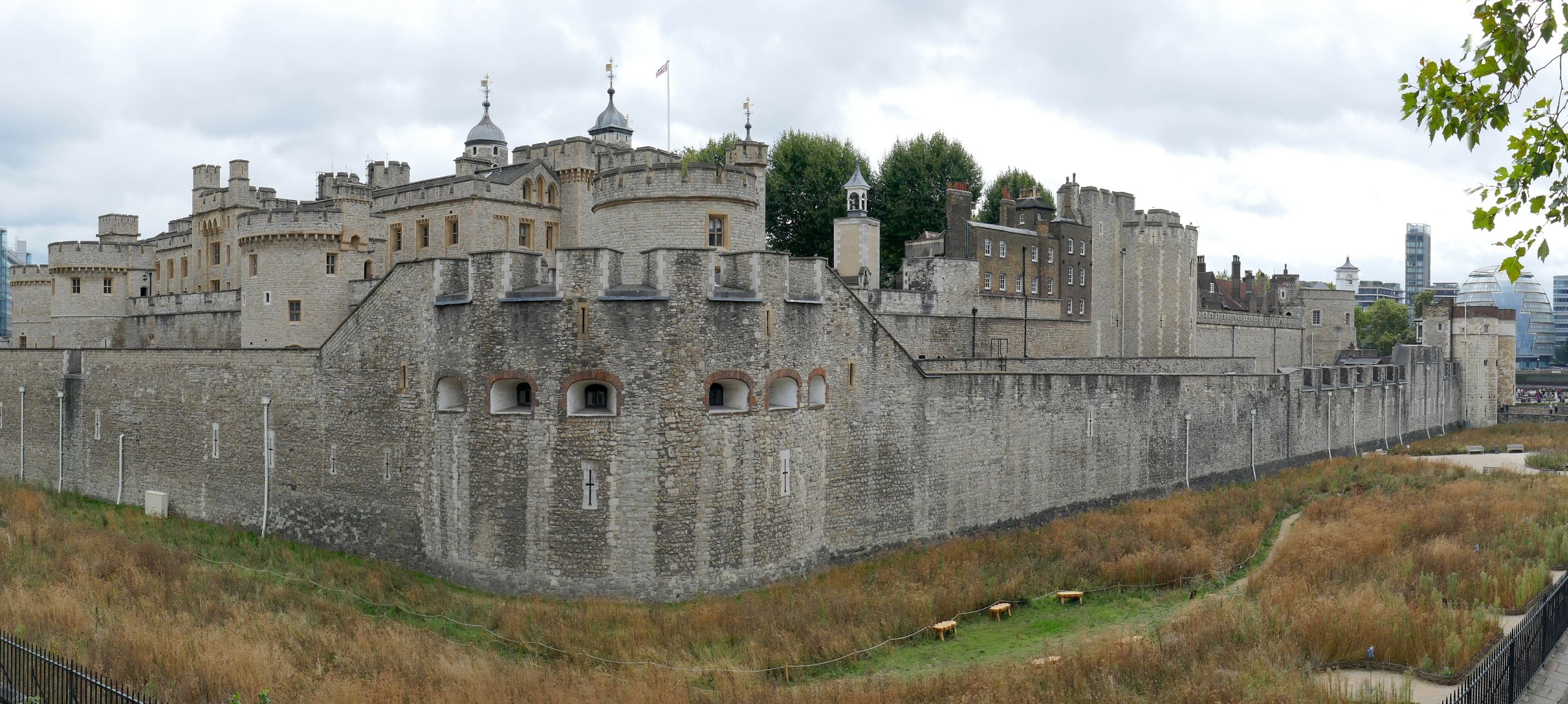


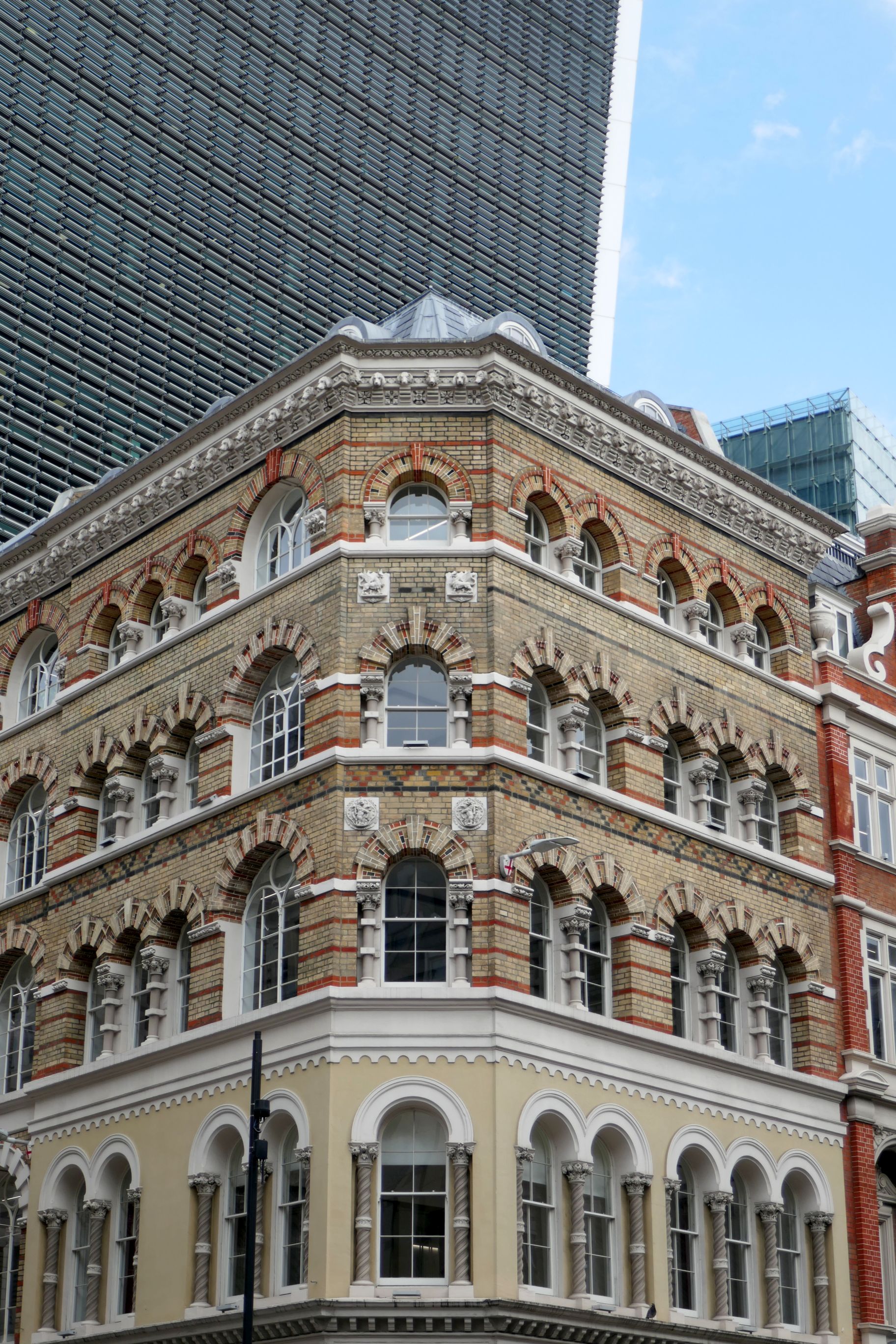


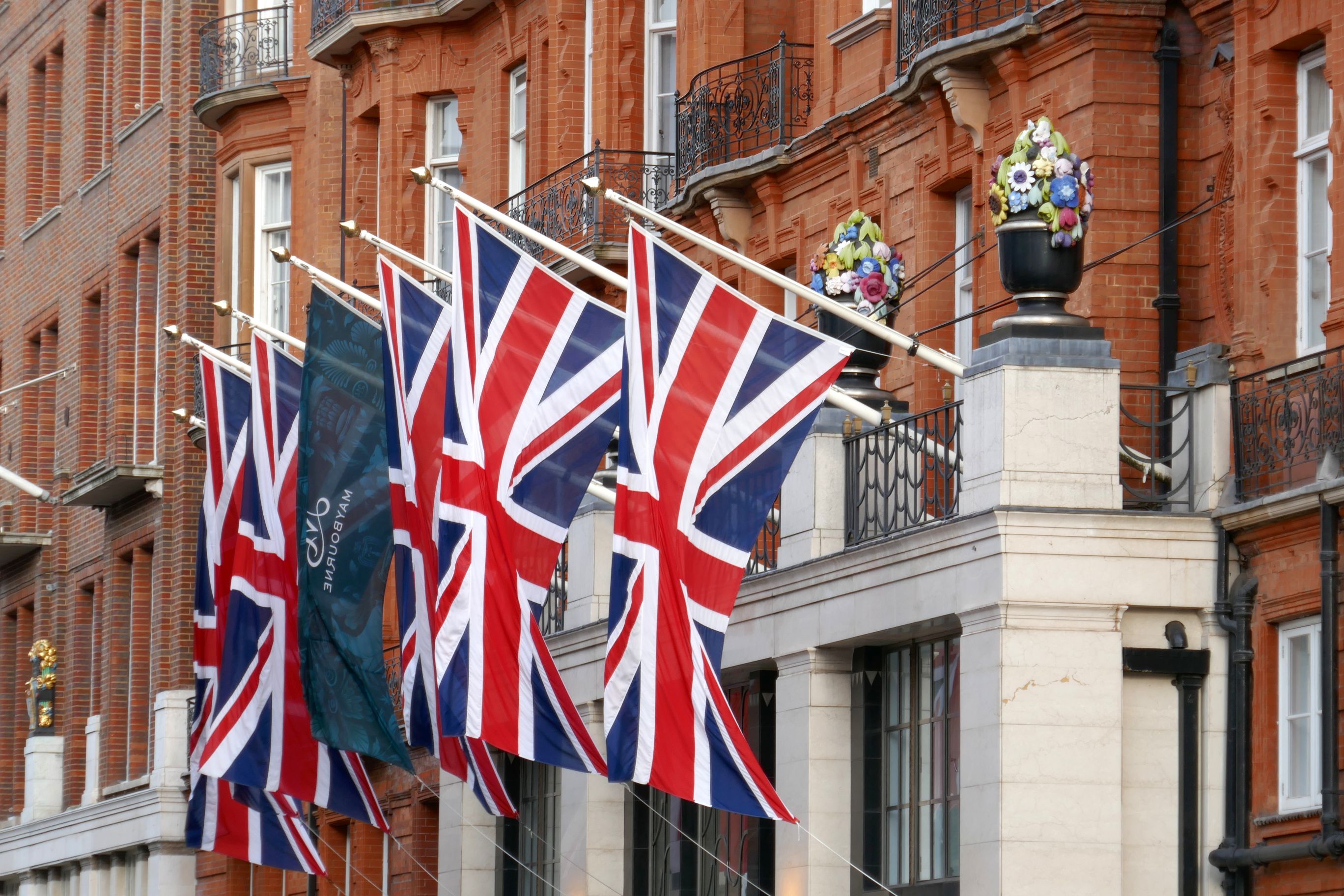


Next up: UNITED KINGDOM #21: CHARMING CAMBRIDGE
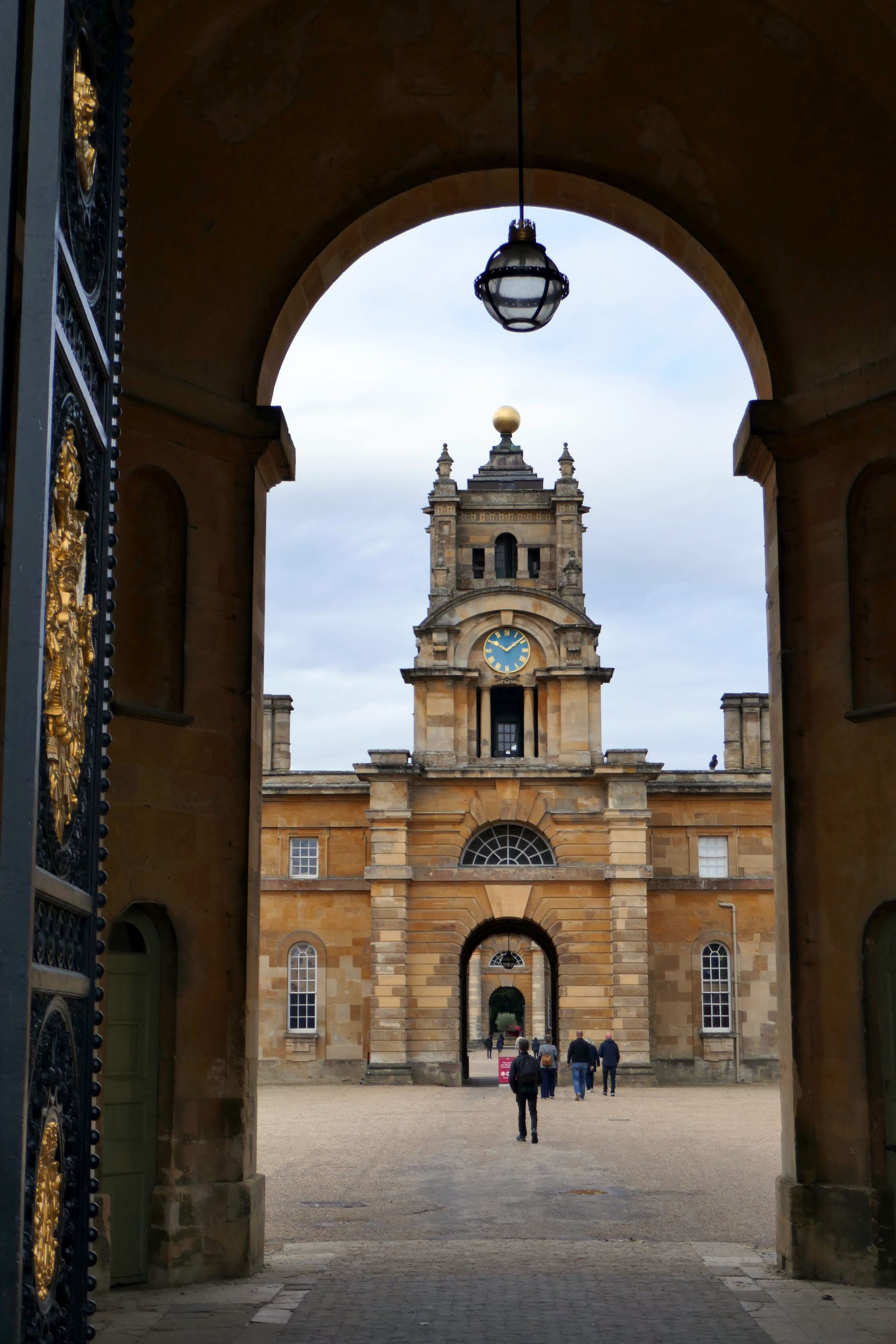
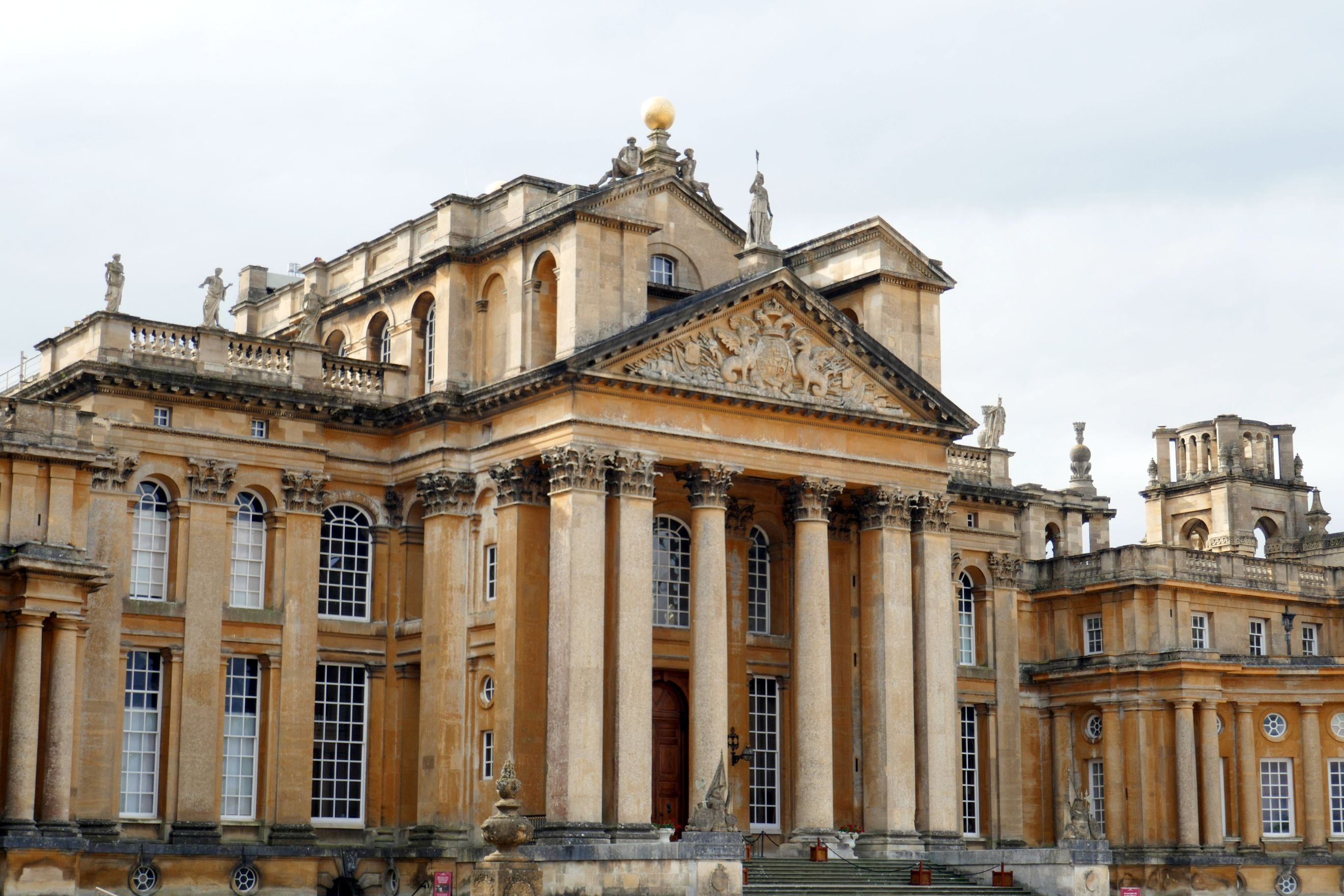
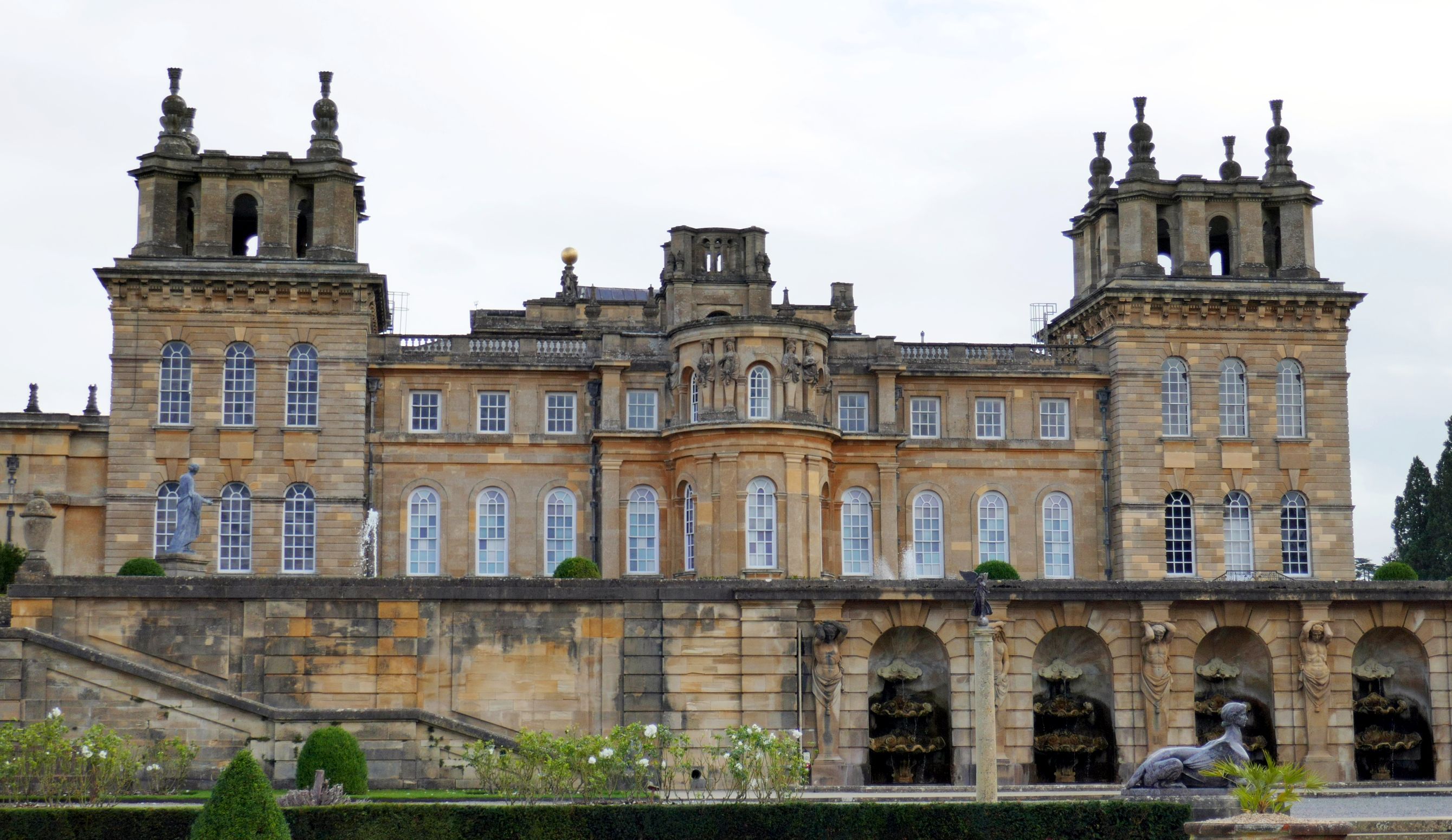
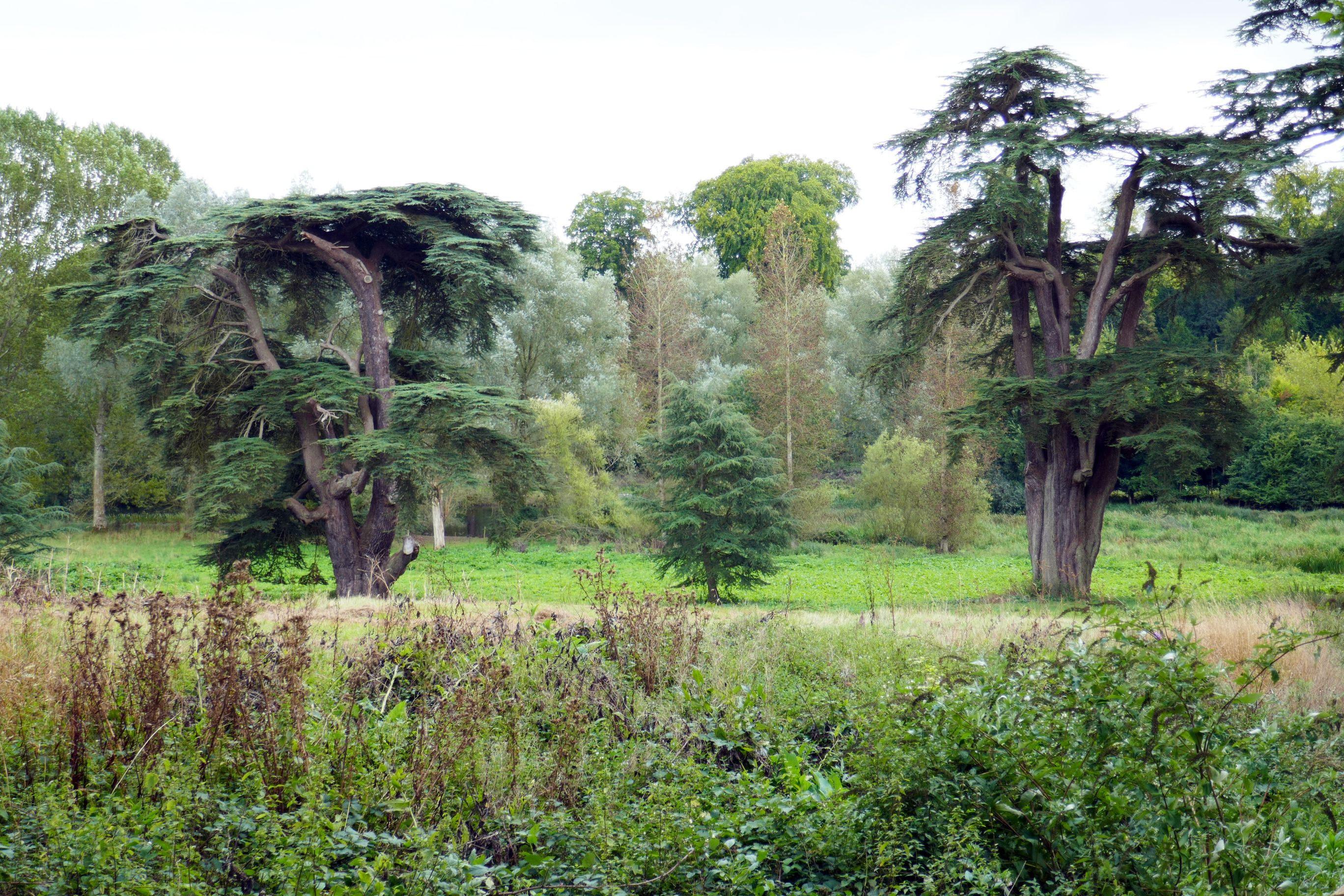
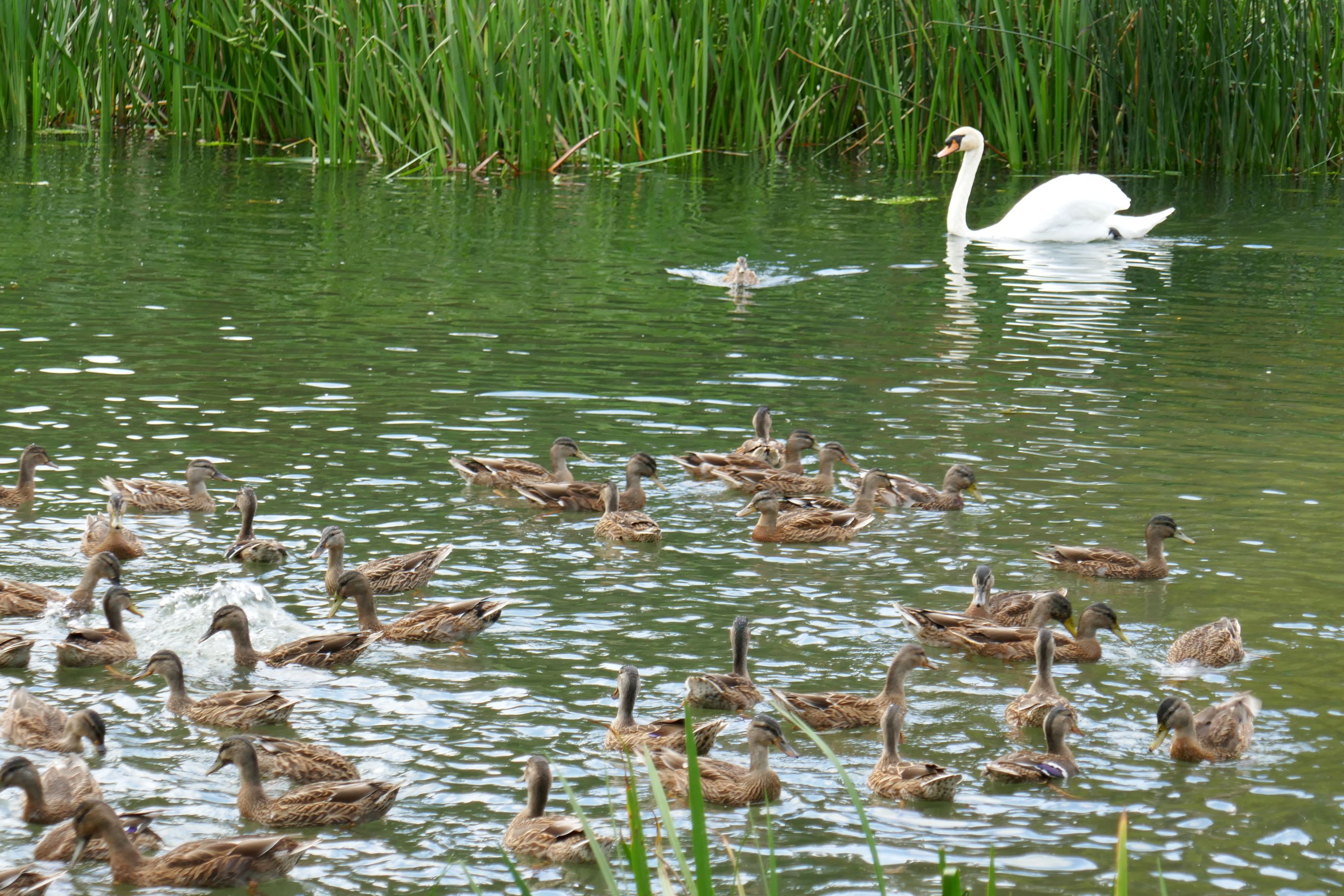
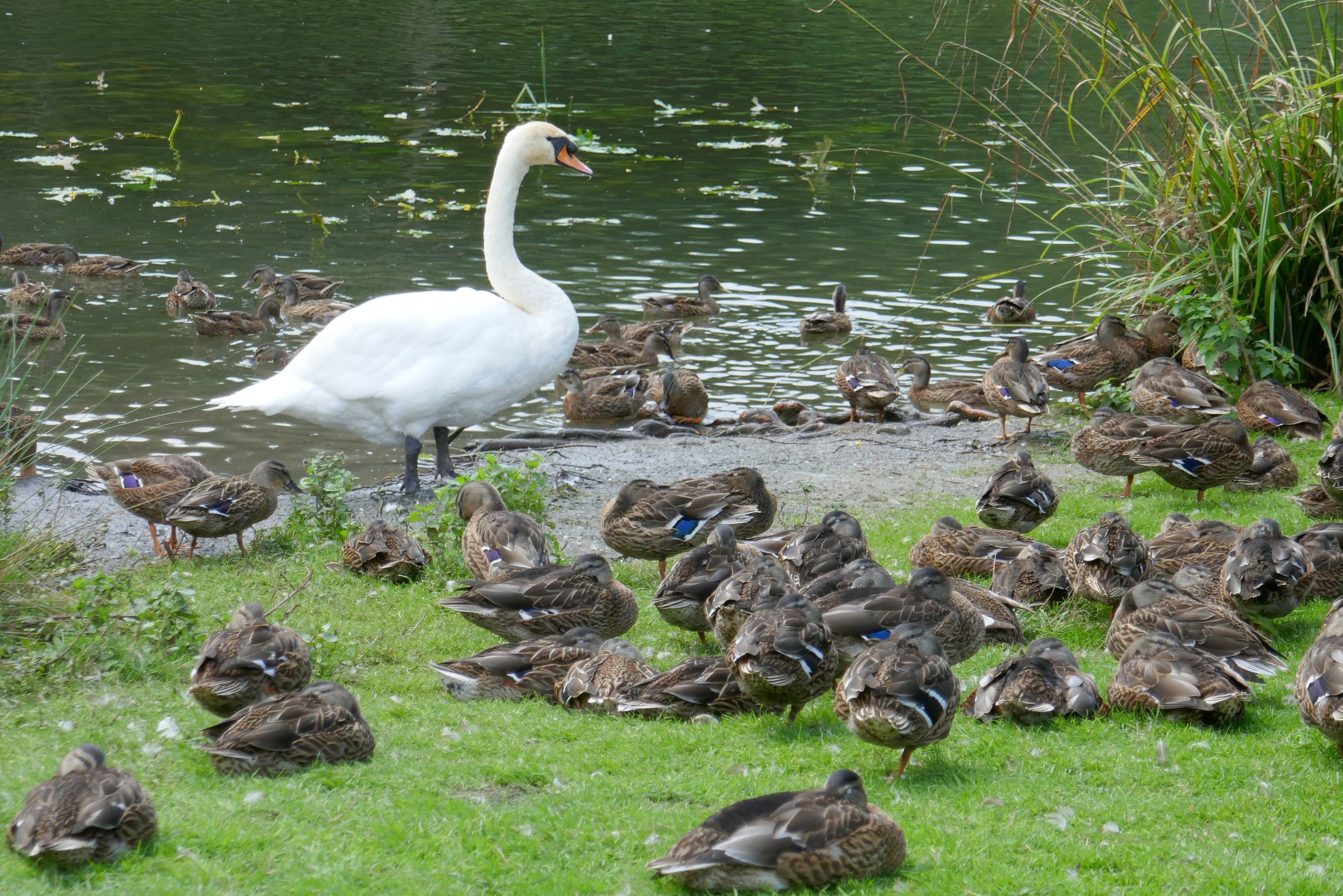
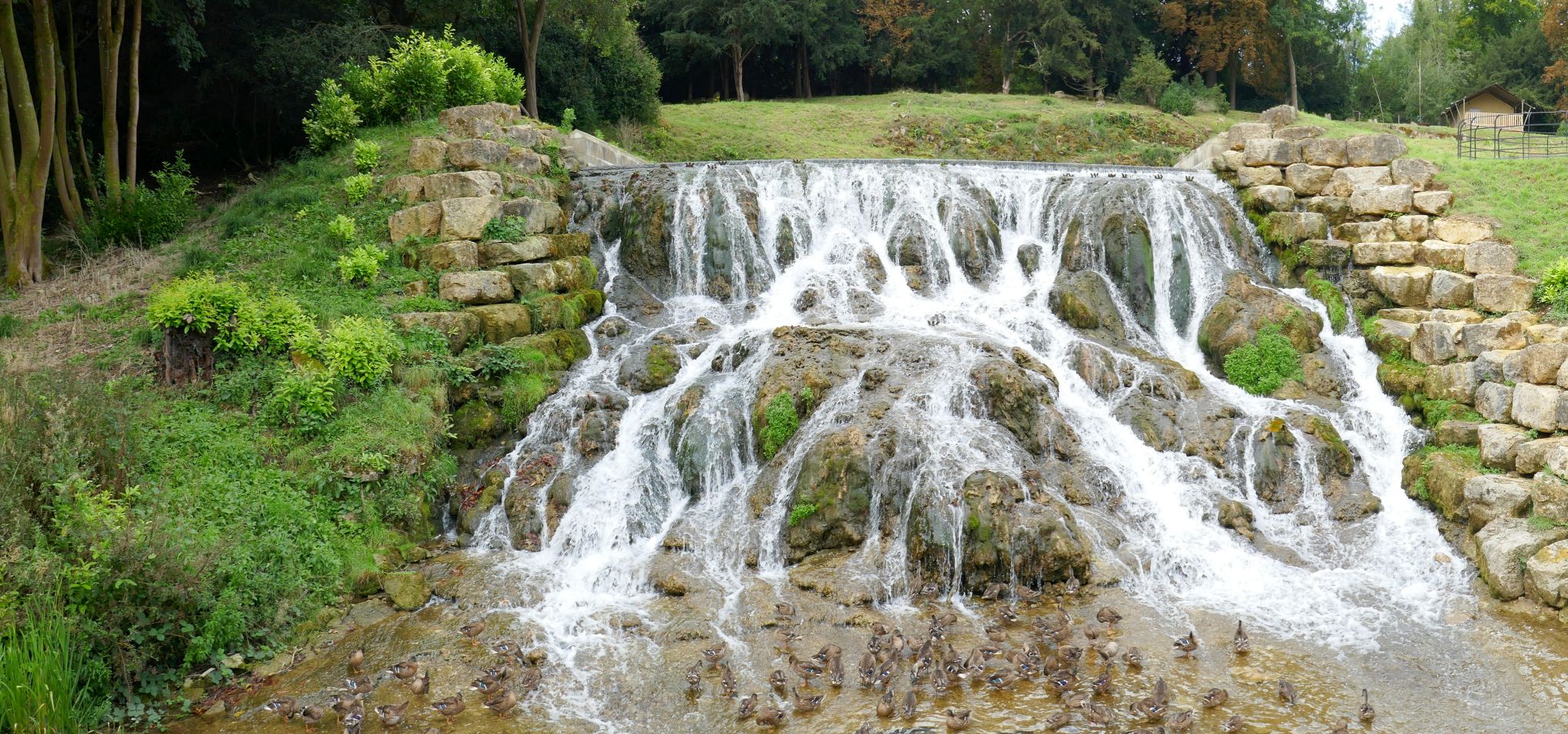
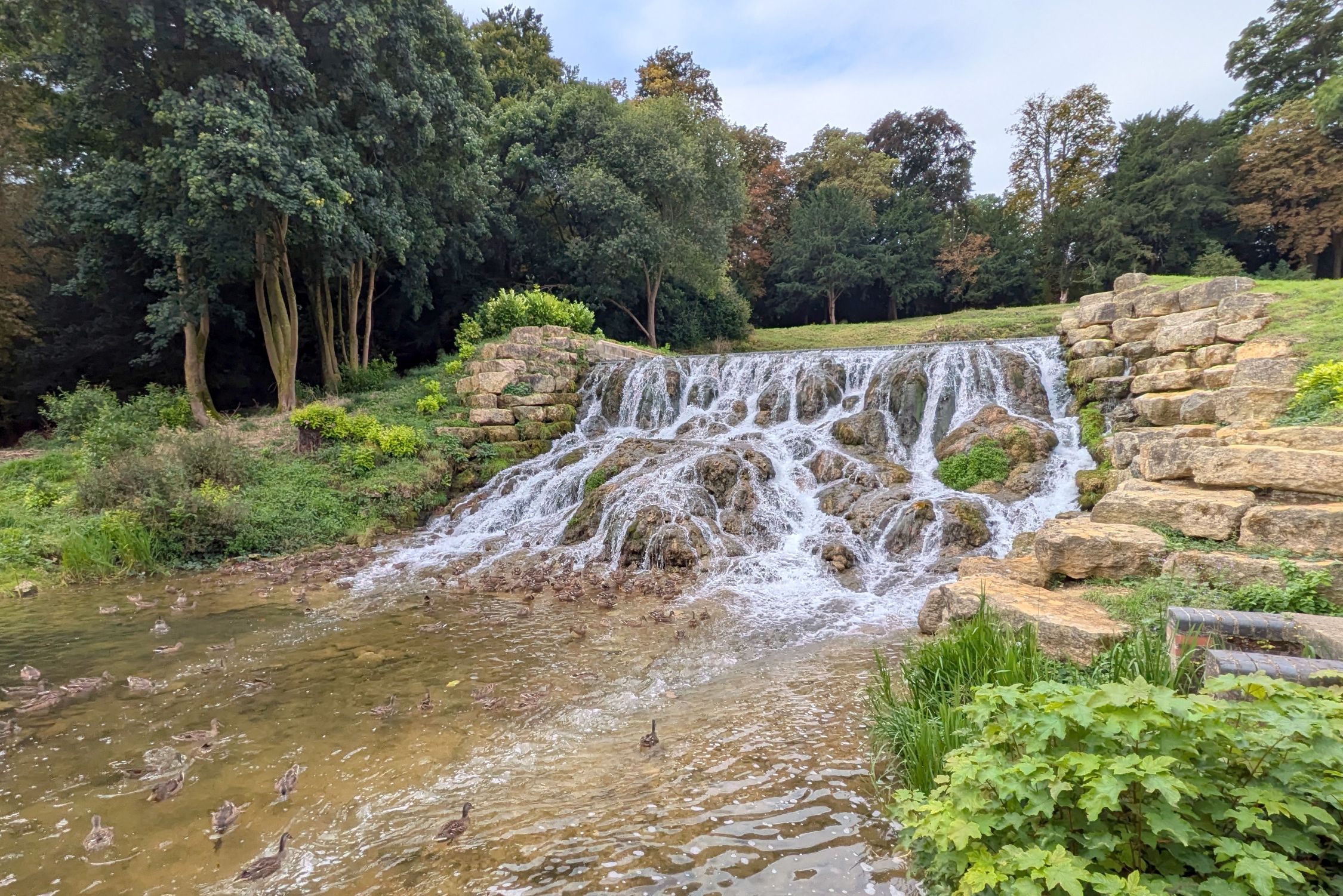
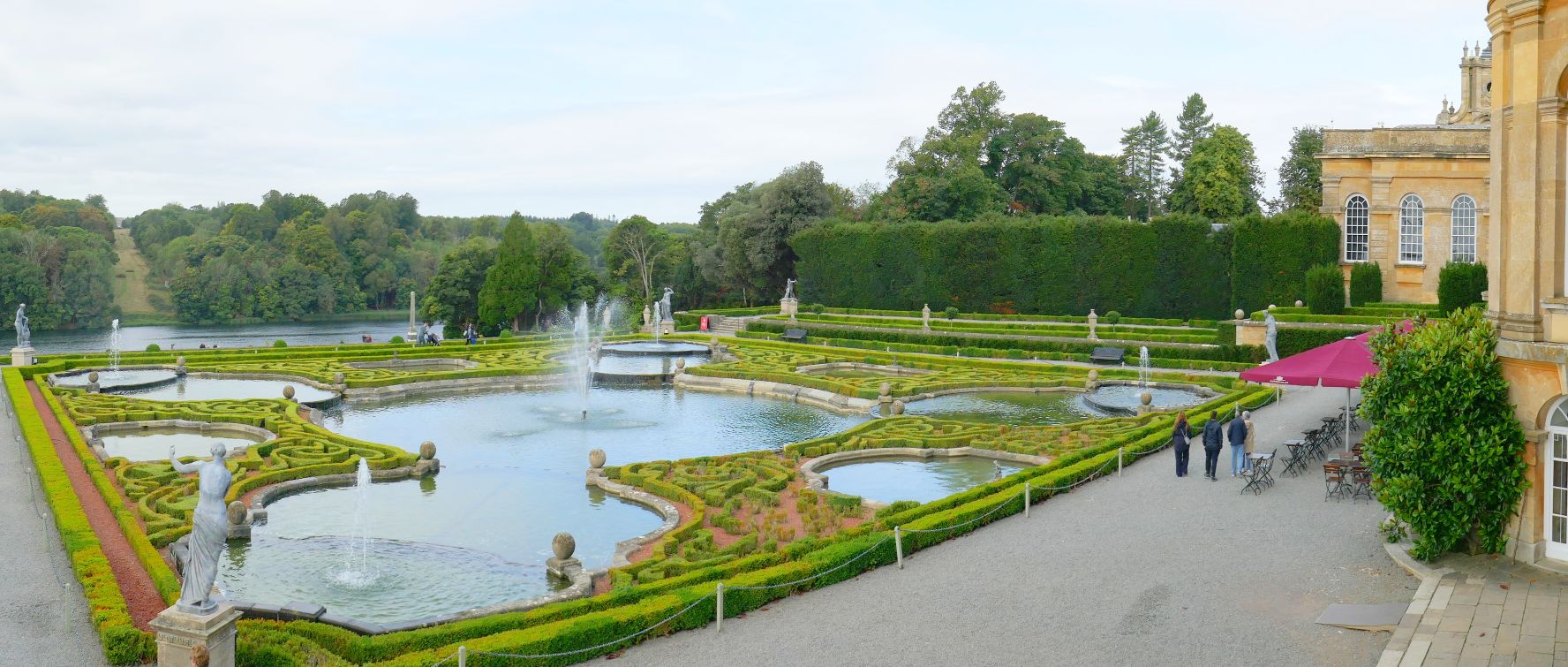
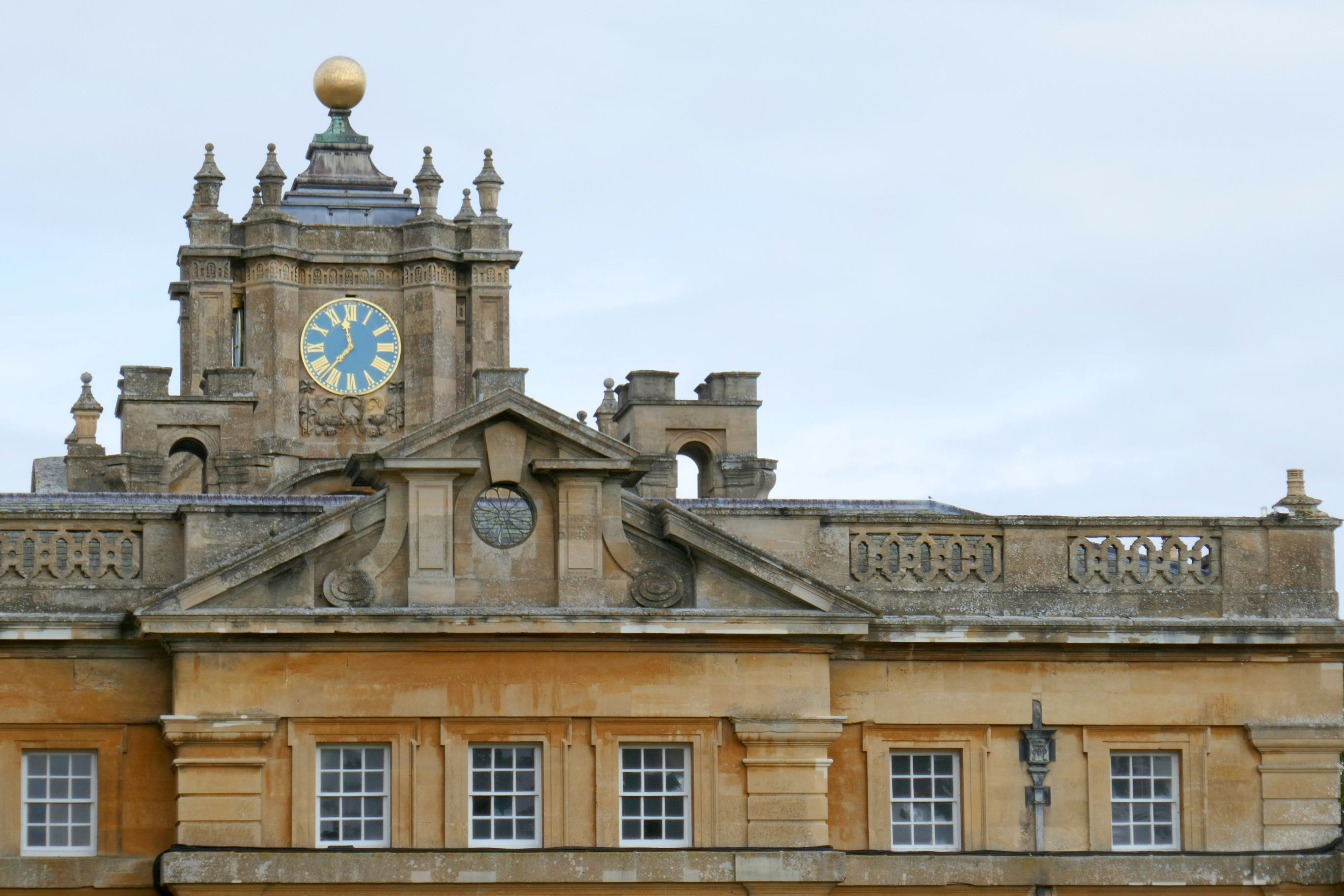
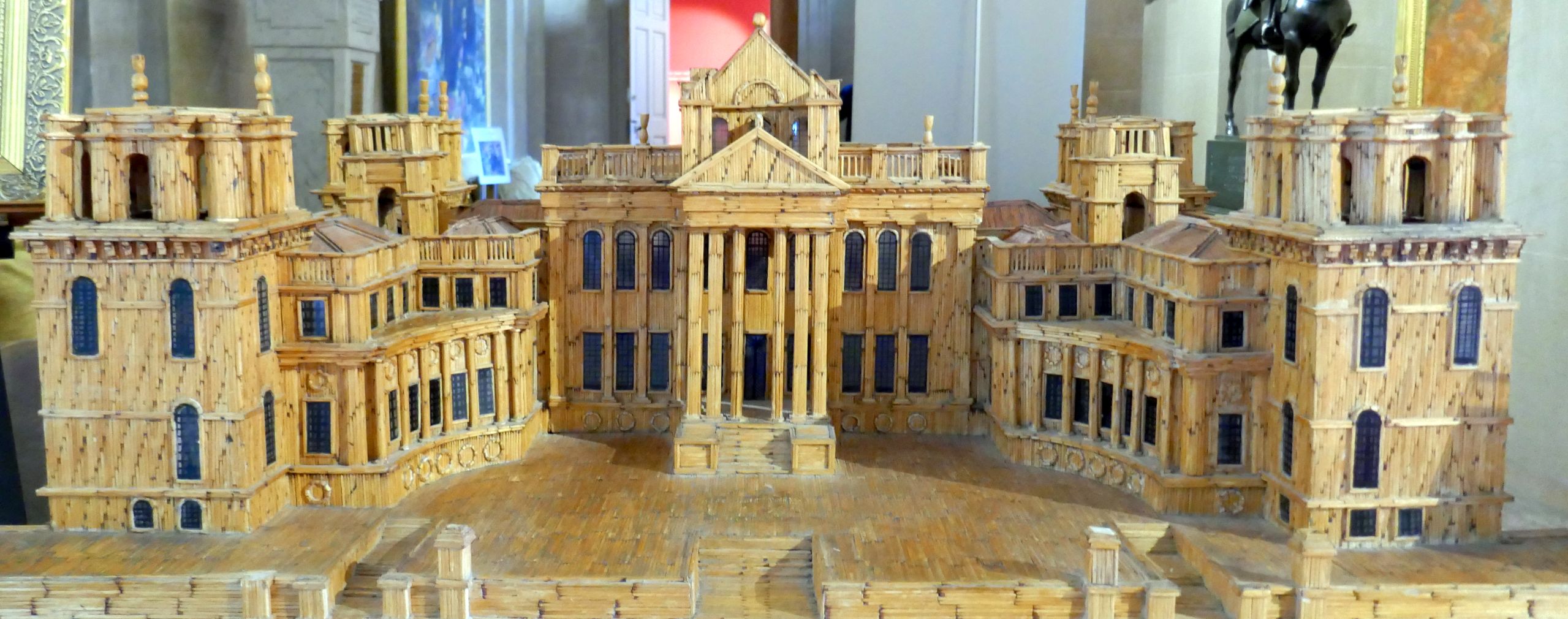
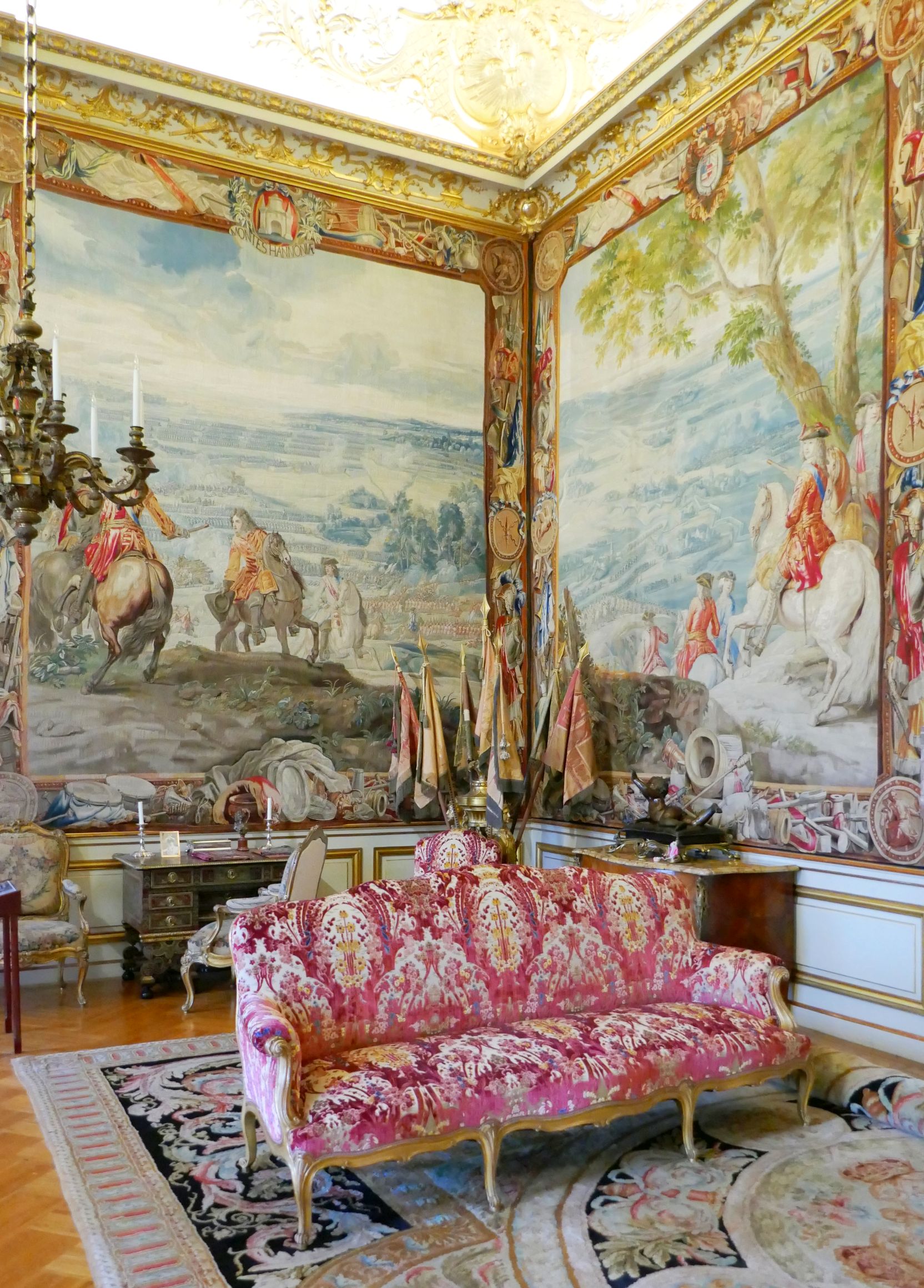
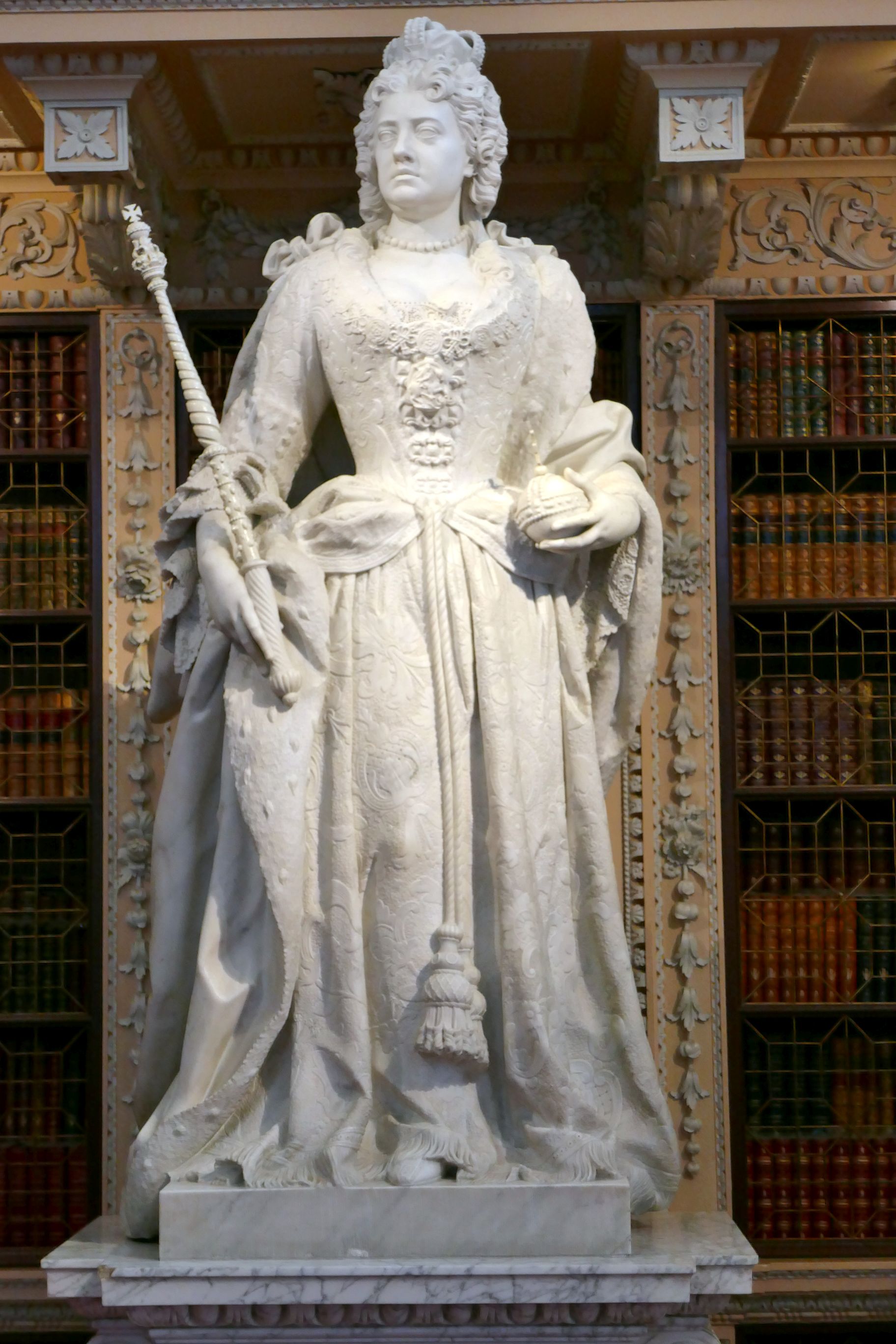
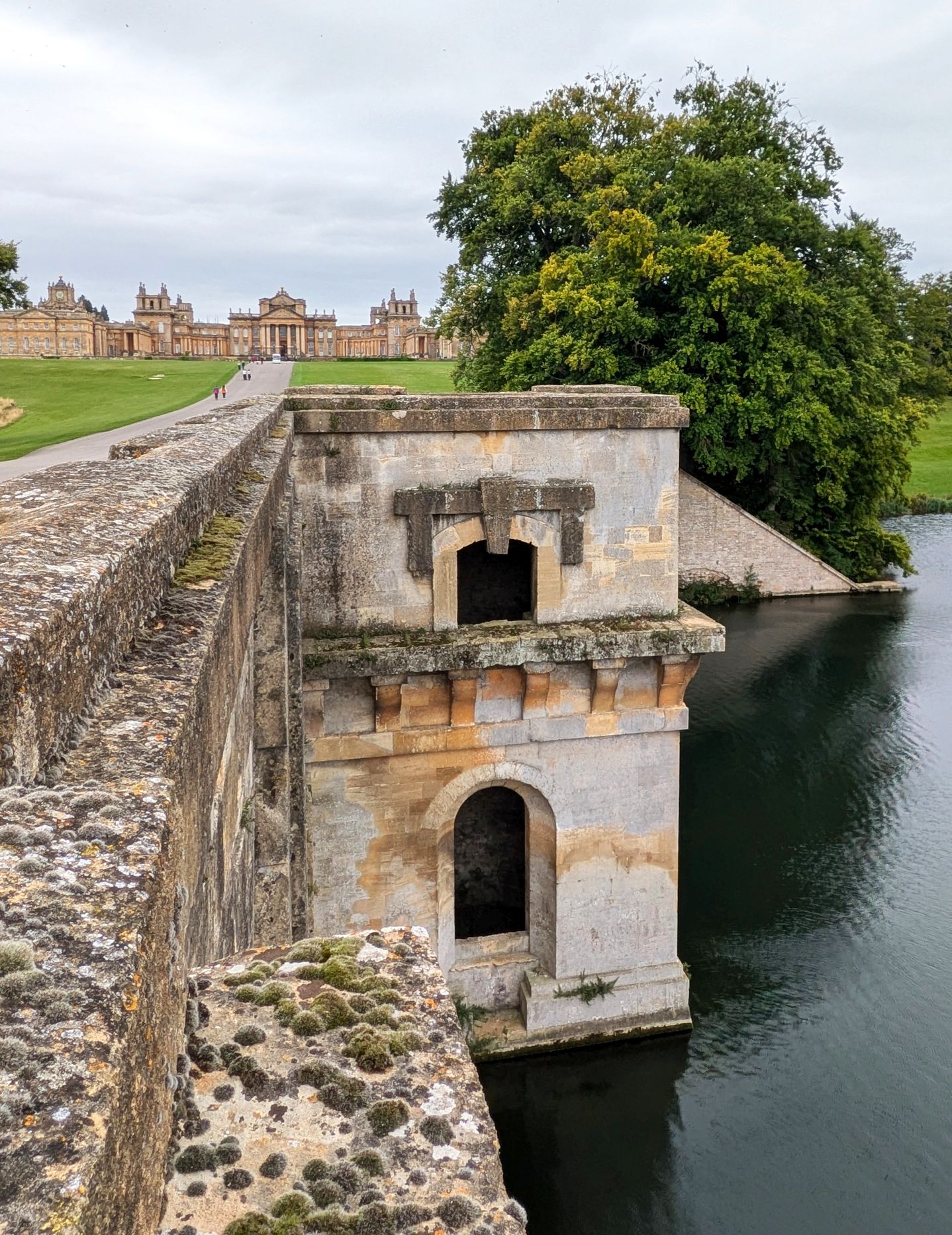
Blenheim Palace, a UNESCO World Heritage Site, was Winston Churchill’s birthplace in 1874. Not too shabby of a place to begin life on this earth!
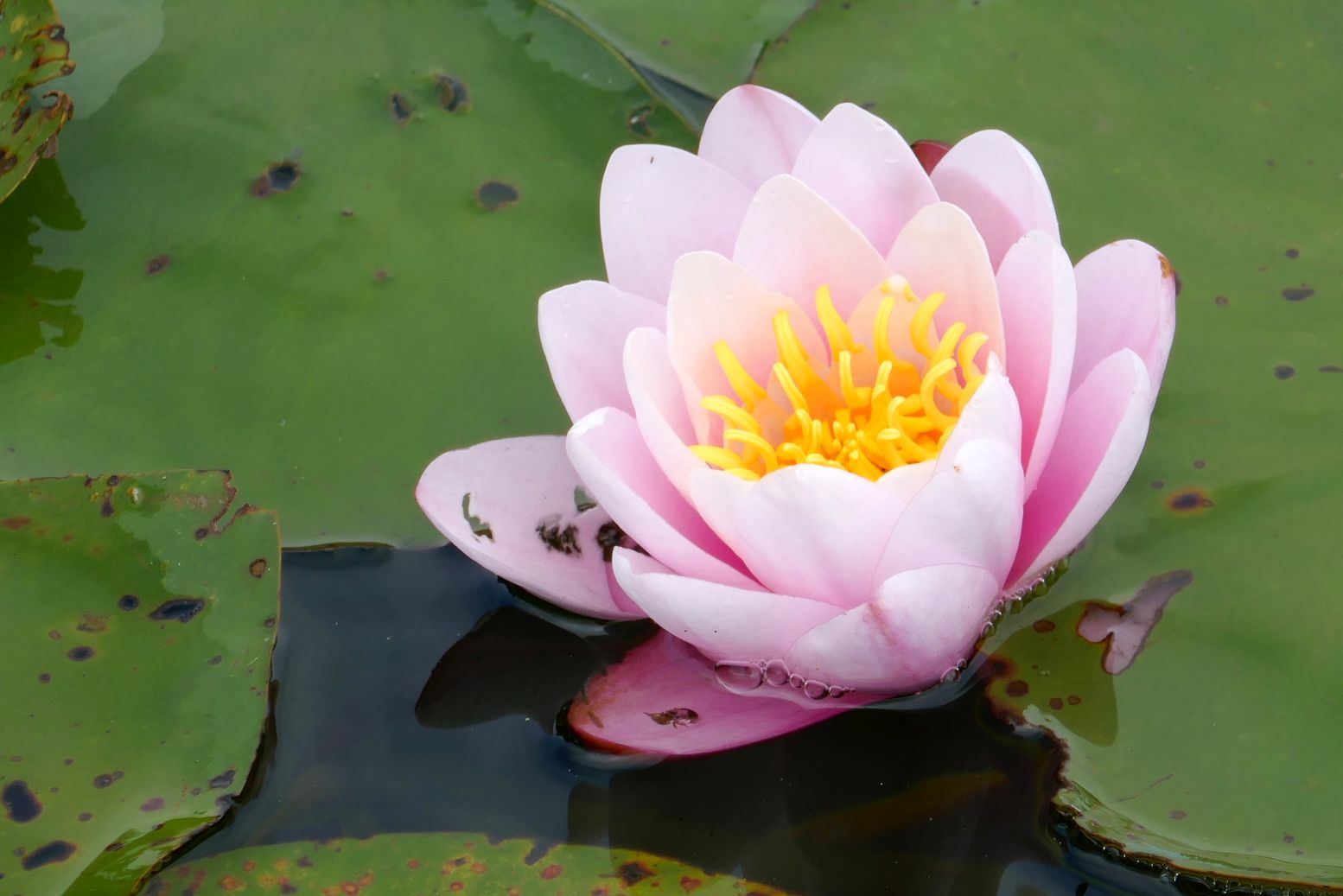
The palace was built between 1705 and 1722, and it is massive. We spent the morning visiting this enormous palace as well as the beautiful gardens.
(For all photos, click on the image for a full screen view.)

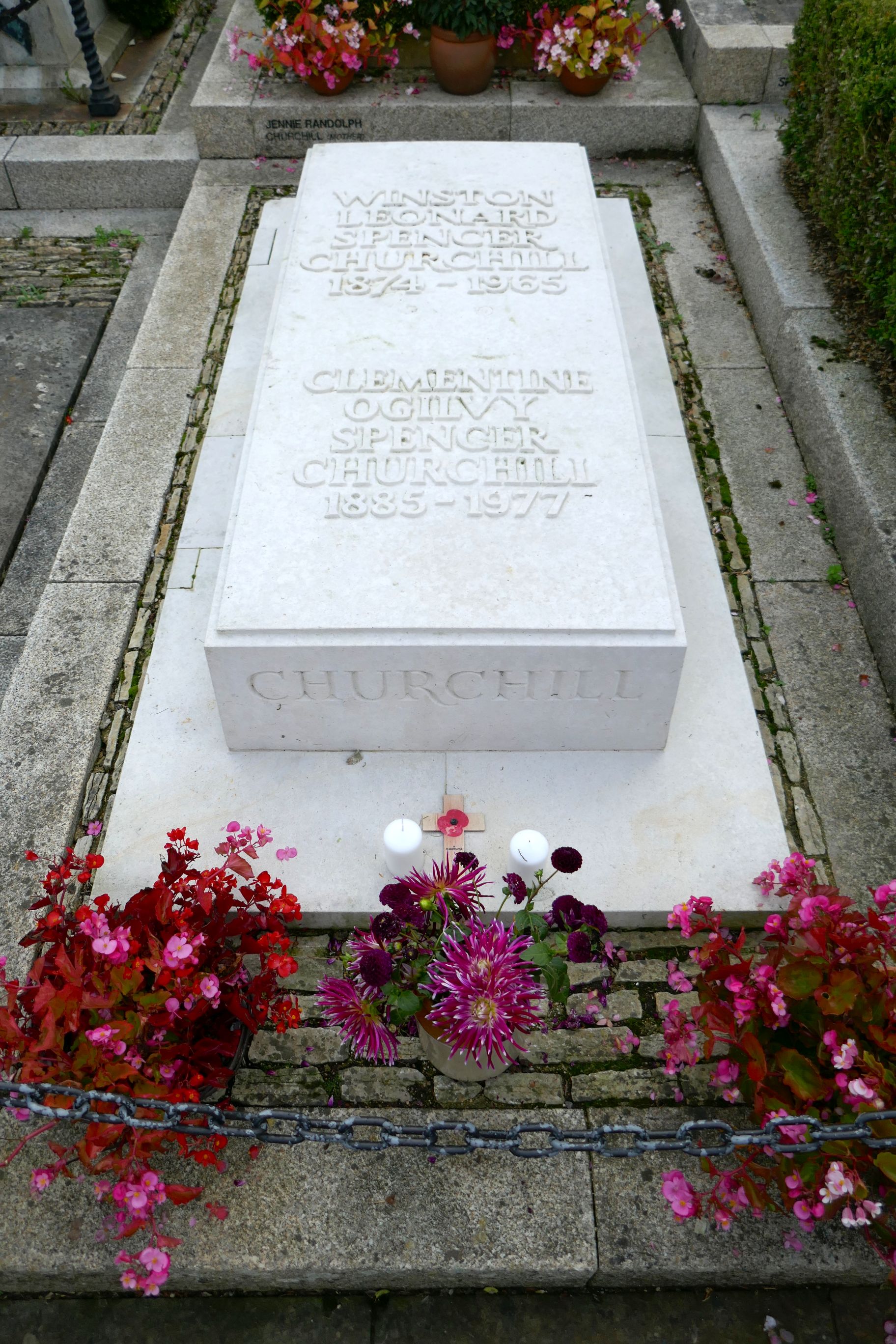
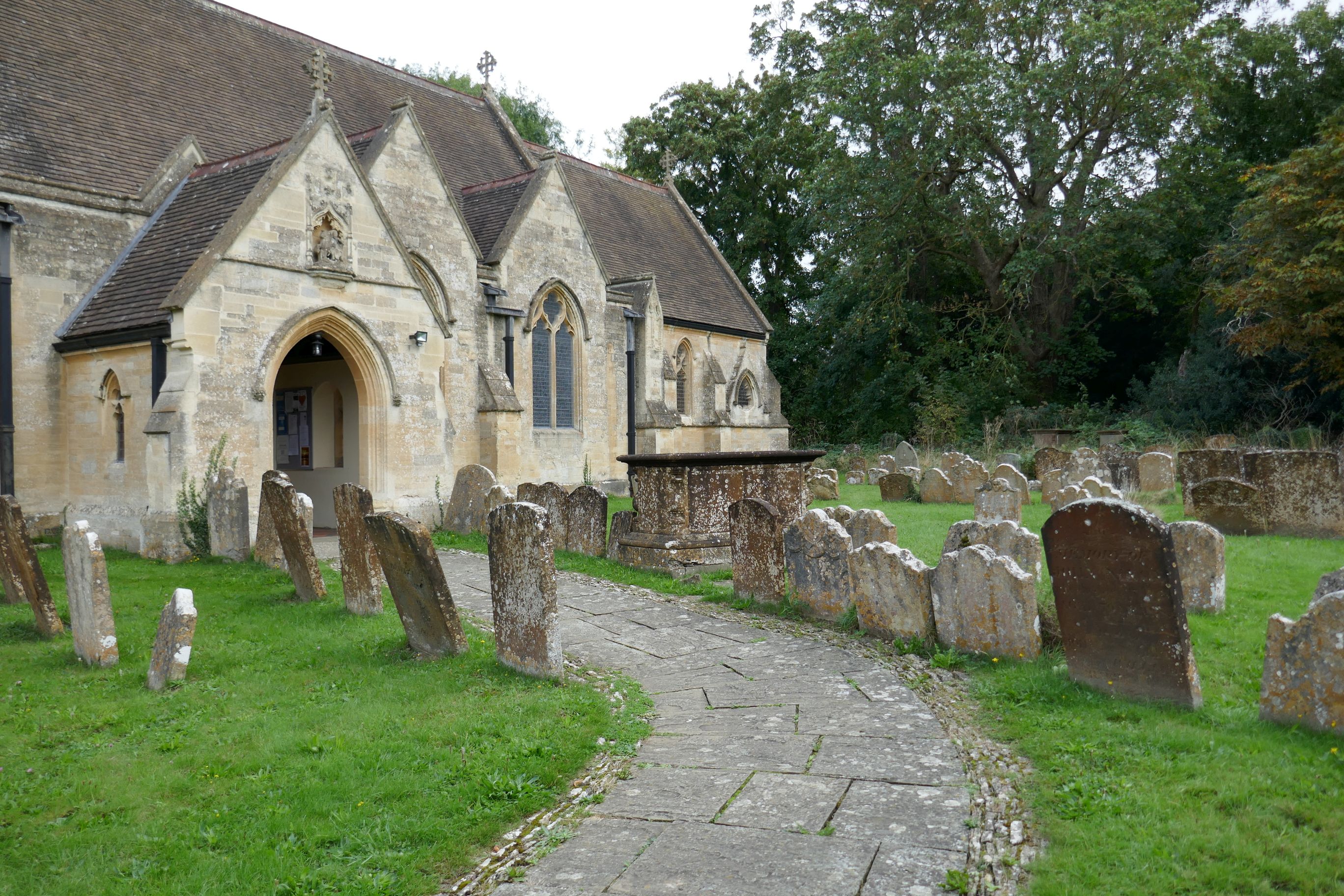

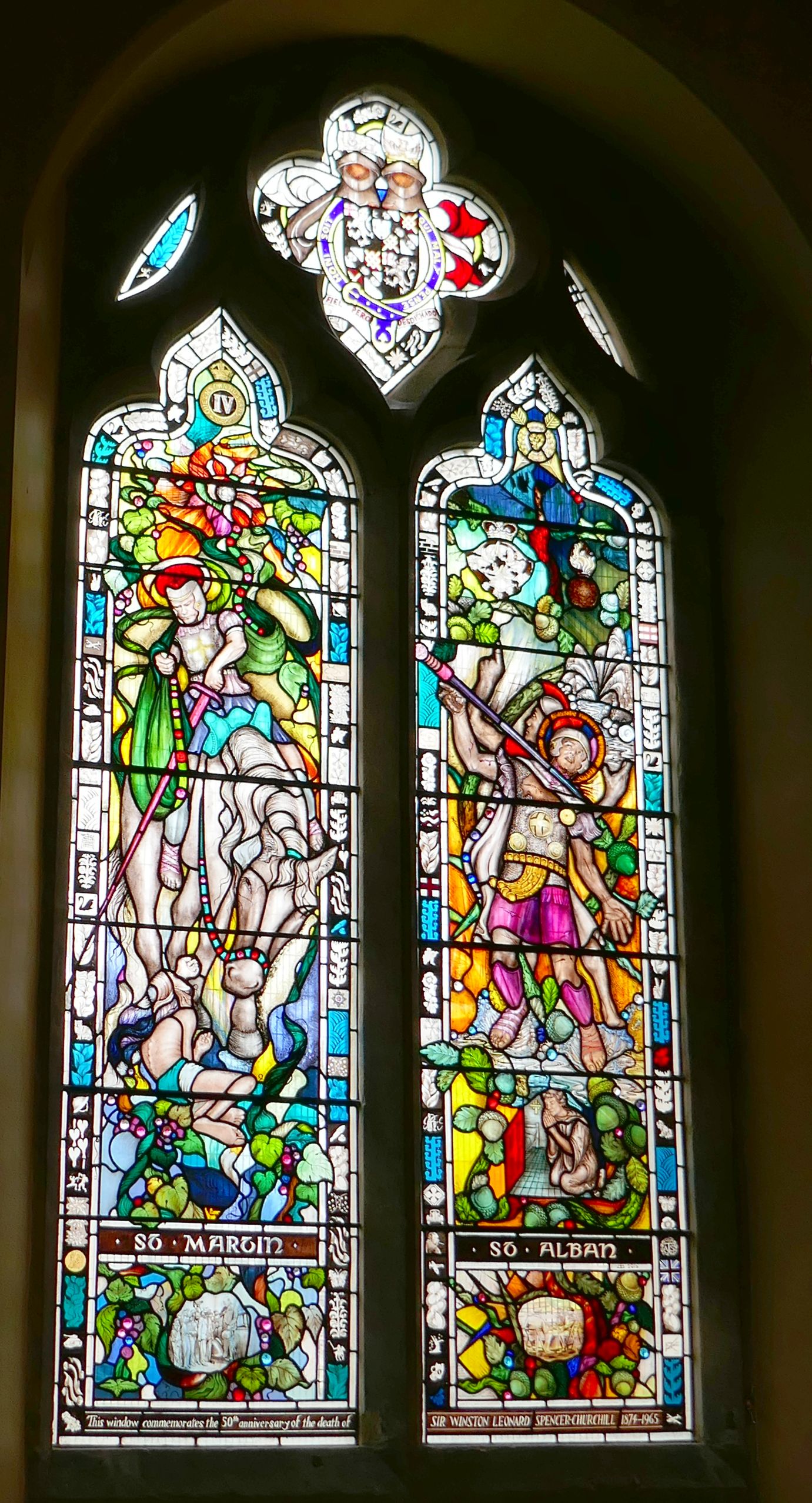
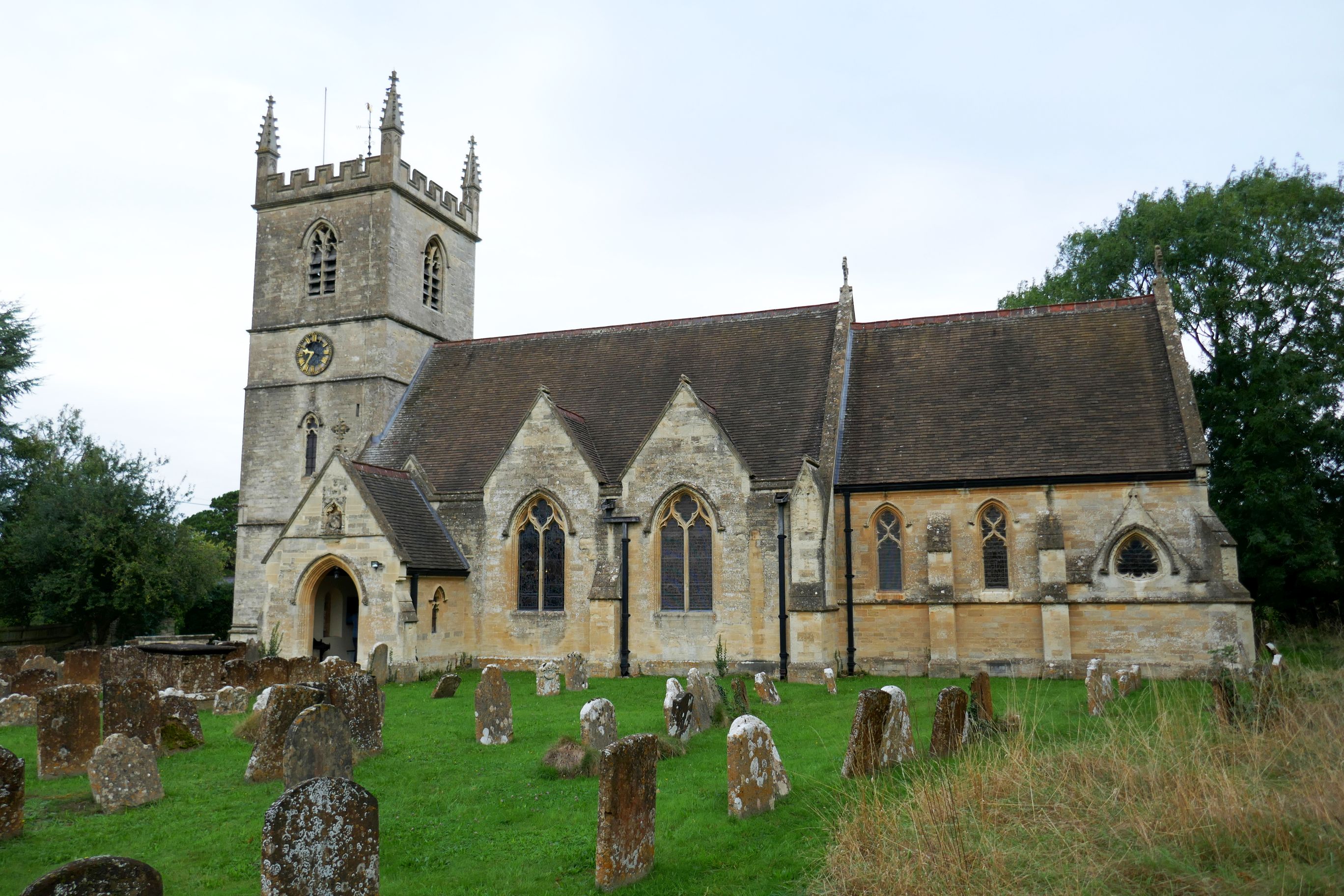



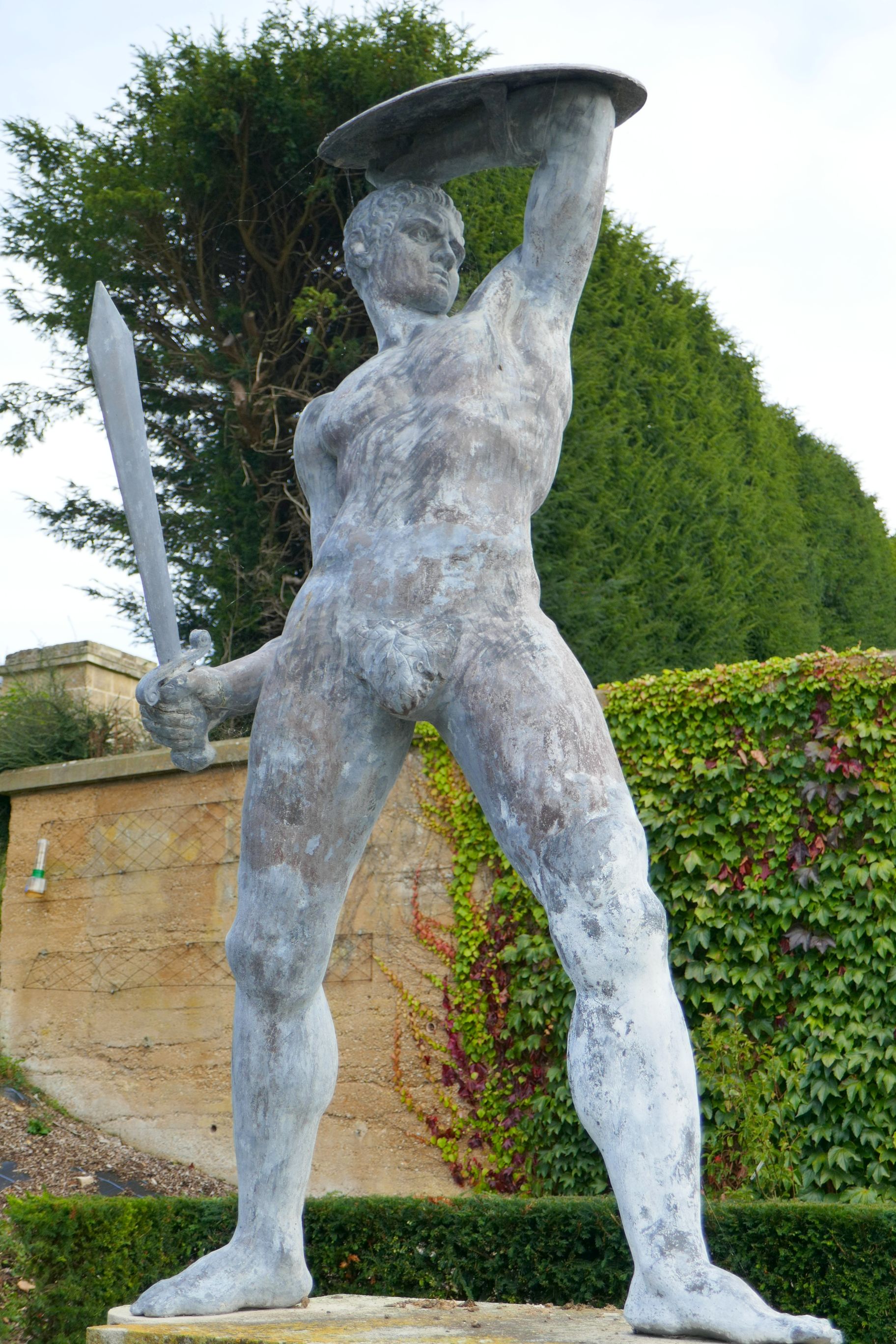

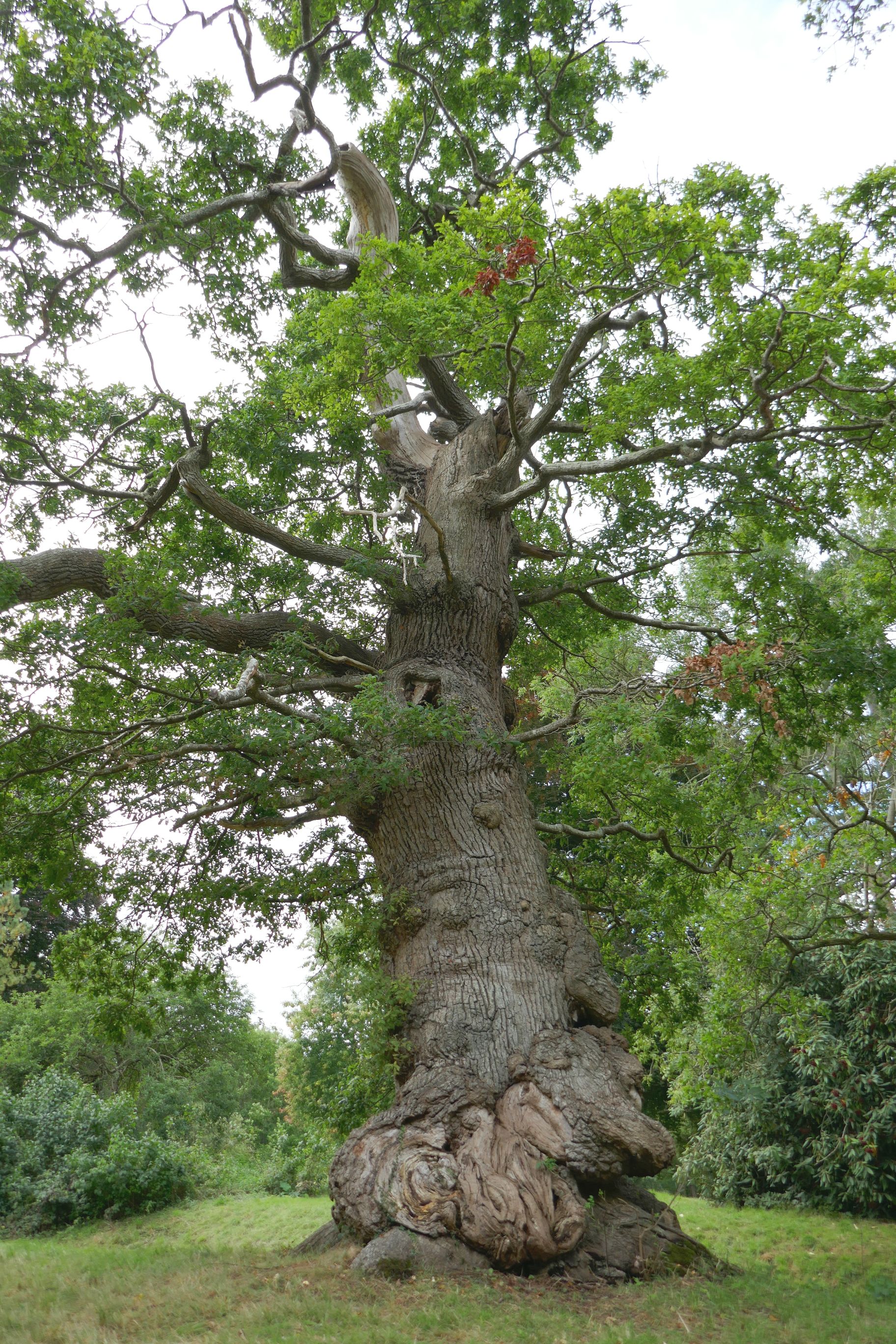
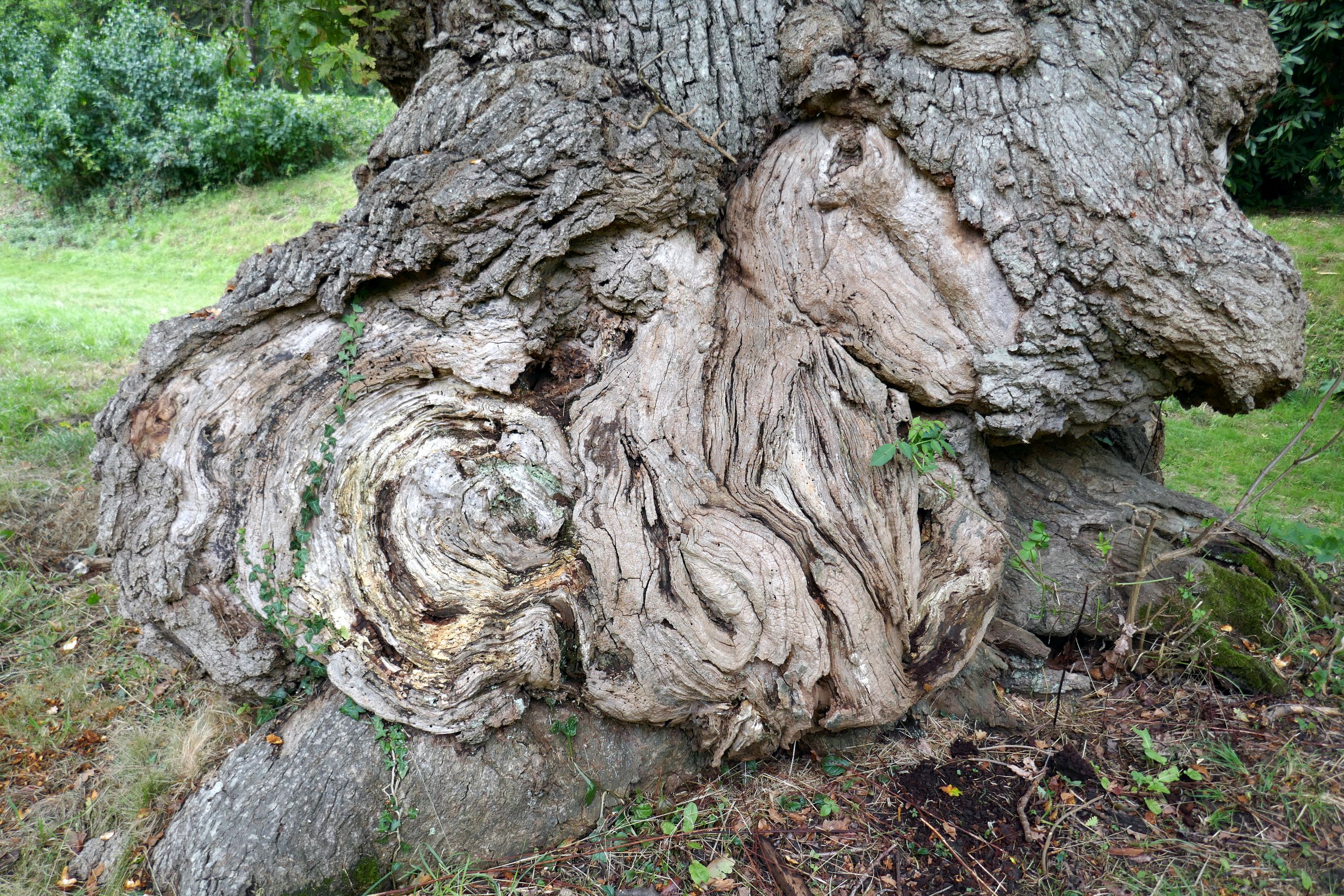
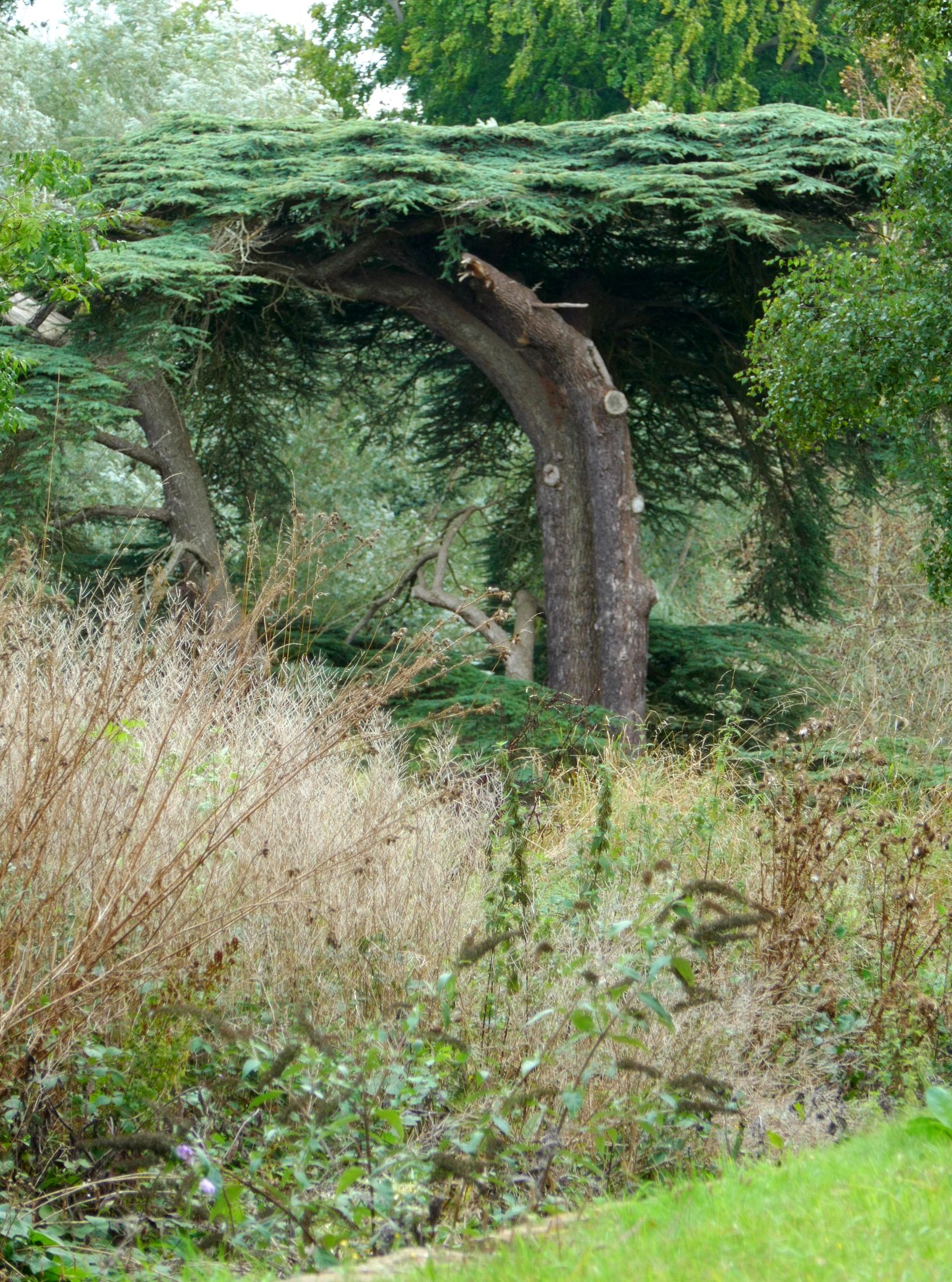








Coming up next: UNITED KINGDOM #20: LOVELY LONDON
Splish splash, I was taking a bath! If you are a Gen X, Y, Z or whatever, you probably don’t have a clue about that reference. The song, Splish Splash was even before my time! The story about Bobby Darin’s novelty record is funny, though. Back in 1958, DJ Murray Kaufman bet that Darin couldn’t write a song that began with the that first sentence (above), as suggested by Murray’s mother, Jean Kaufman. Darin won that bet, so the song was credited to Darin and “Jean Murray,” (a combination of their names) to avoid any hint of payola. The song was a big hit.
But I digress. This post is about Bath, the lovely city in Somerset, England, near the southern edge of the Cotswolds, named for its Roman-built baths.
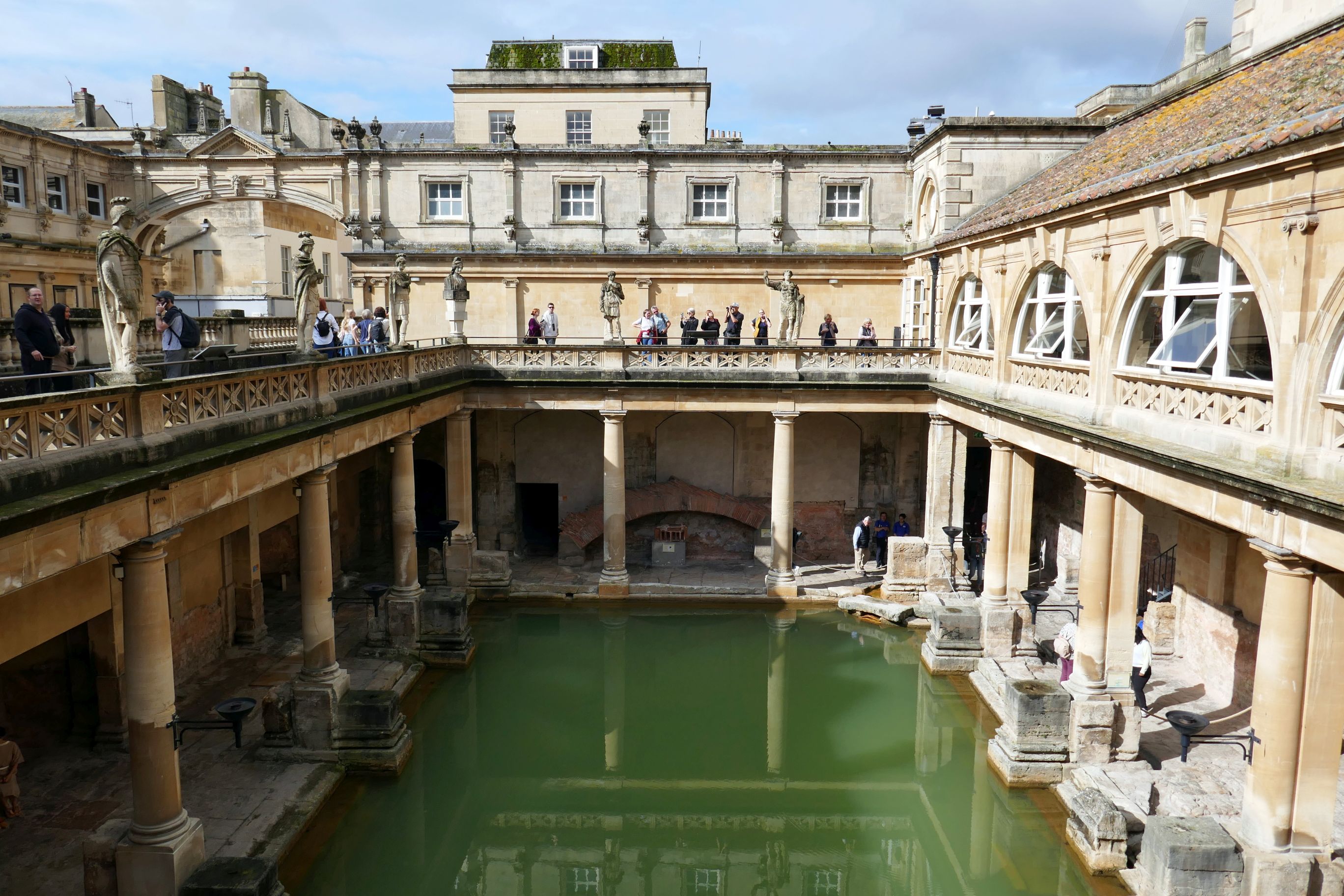
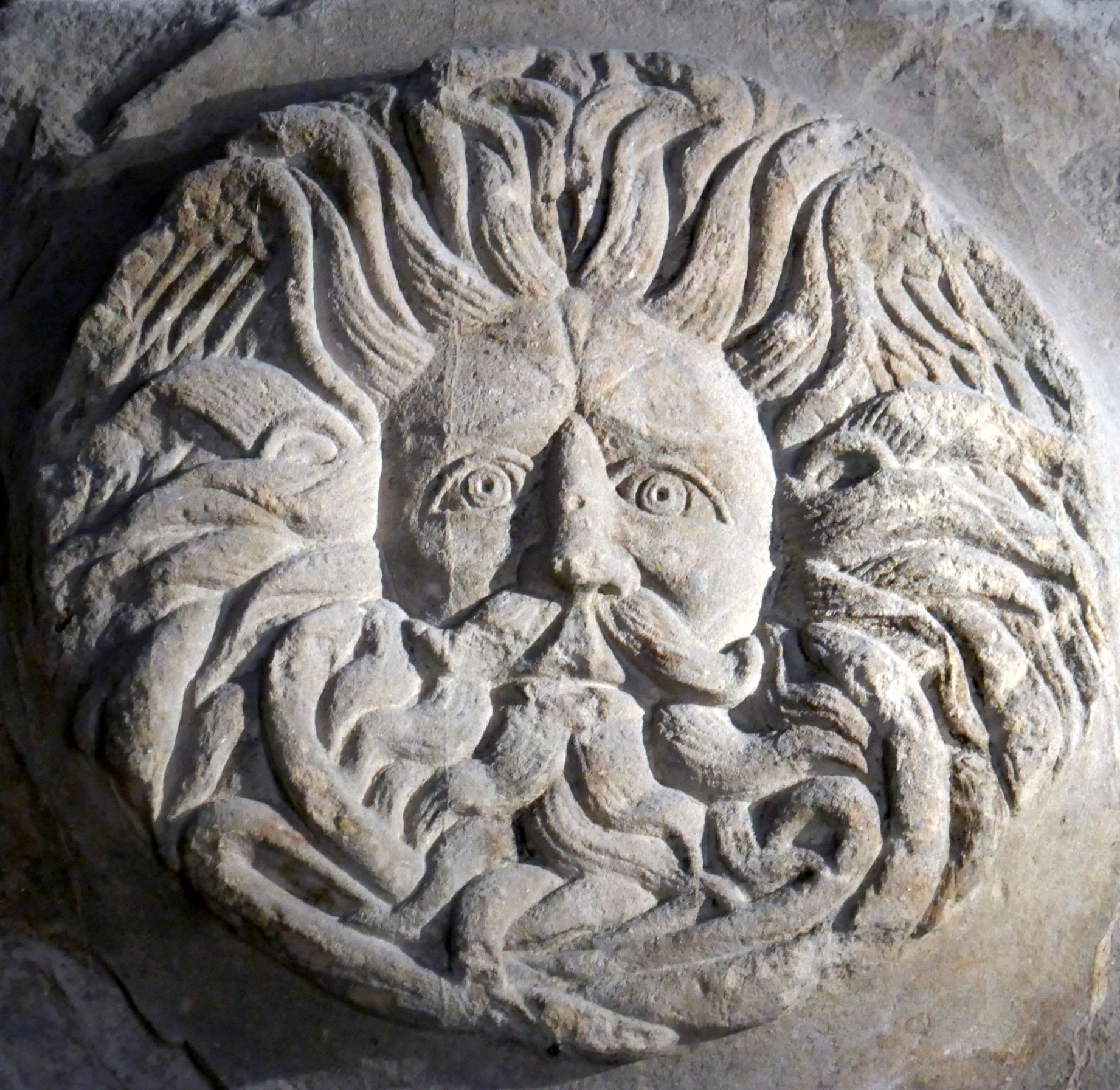
The baths are THE main attraction, so our group toured the complex. We learned that before the Romans invaded in 43 AD, the hot water spring was a sacred place of worship for the local people. The Romans came in and harnessed the hot water to supply a new bath house. They built a temple and dedicated it to a new goddess, Sulis Minerva. People visited the baths, Sacred Spring, and temple from around the Roman world.
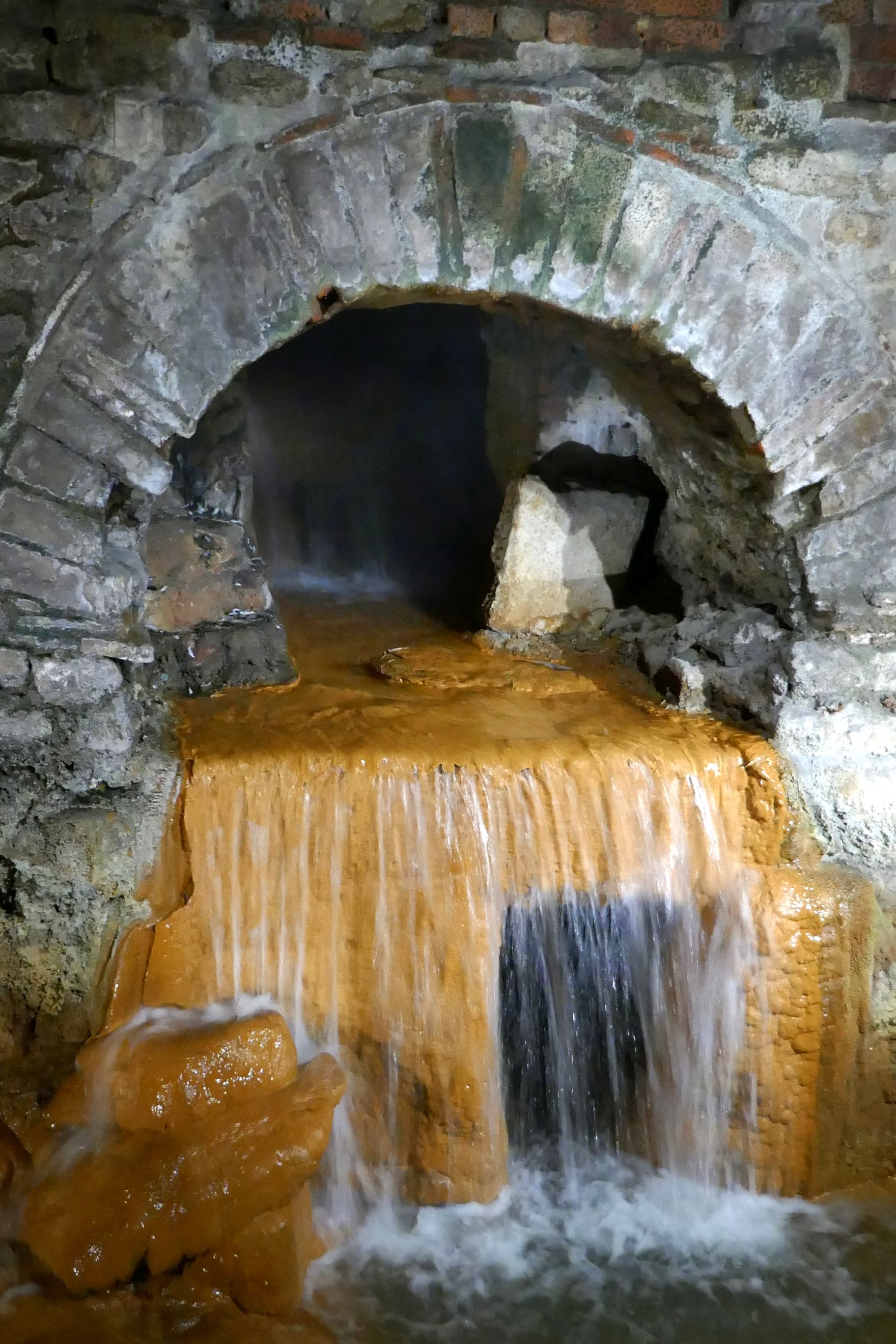
The 114-degree (Fahrenheit) water in the spring bubbles up into the King’s Bath, which was built in the 12th century. Beneath the King’s Bath is a reservoir built by Roman engineers who used the hot water to supply the baths. Studies have shown that the “magical waters” are full of minerals and have antibiotic properties.
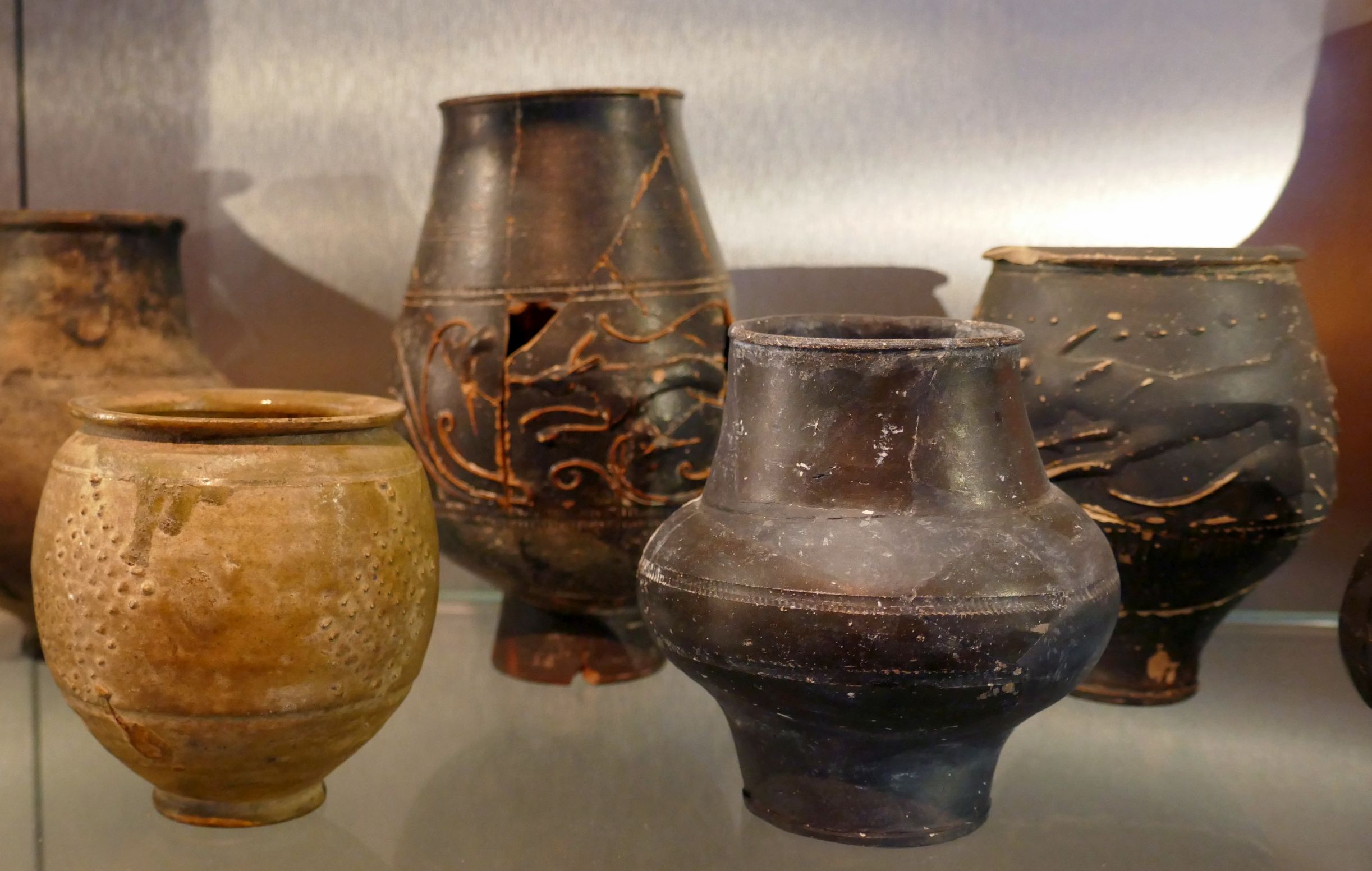
The baths have quite a history. They were designed for public bathing and were used until the end of the Roman rule in Britain in the 5th century. A century later, they were in ruins and then redeveloped several times after that. Today, it is a huge tourist attraction with a museum that houses artefacts from the Roman period, including objects that were thrown into the Sacred Spring as offerings to the goddess.
(For all photos, click on the image for a full screen view.)


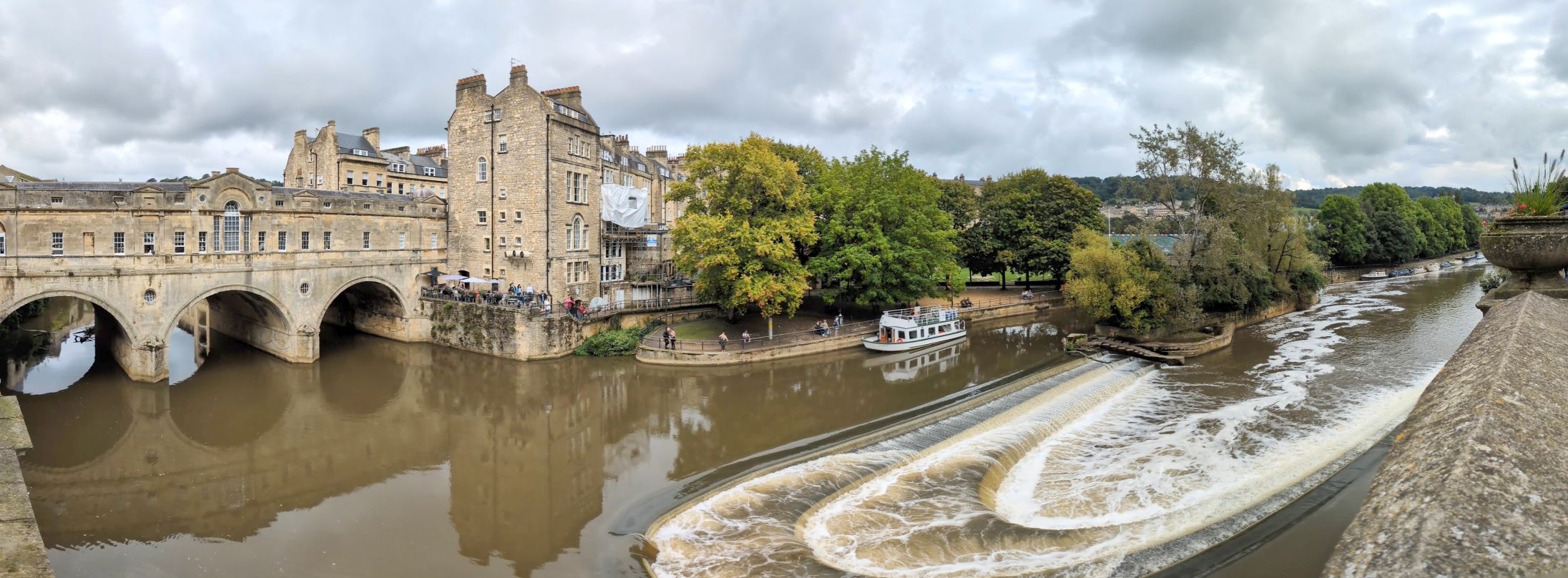
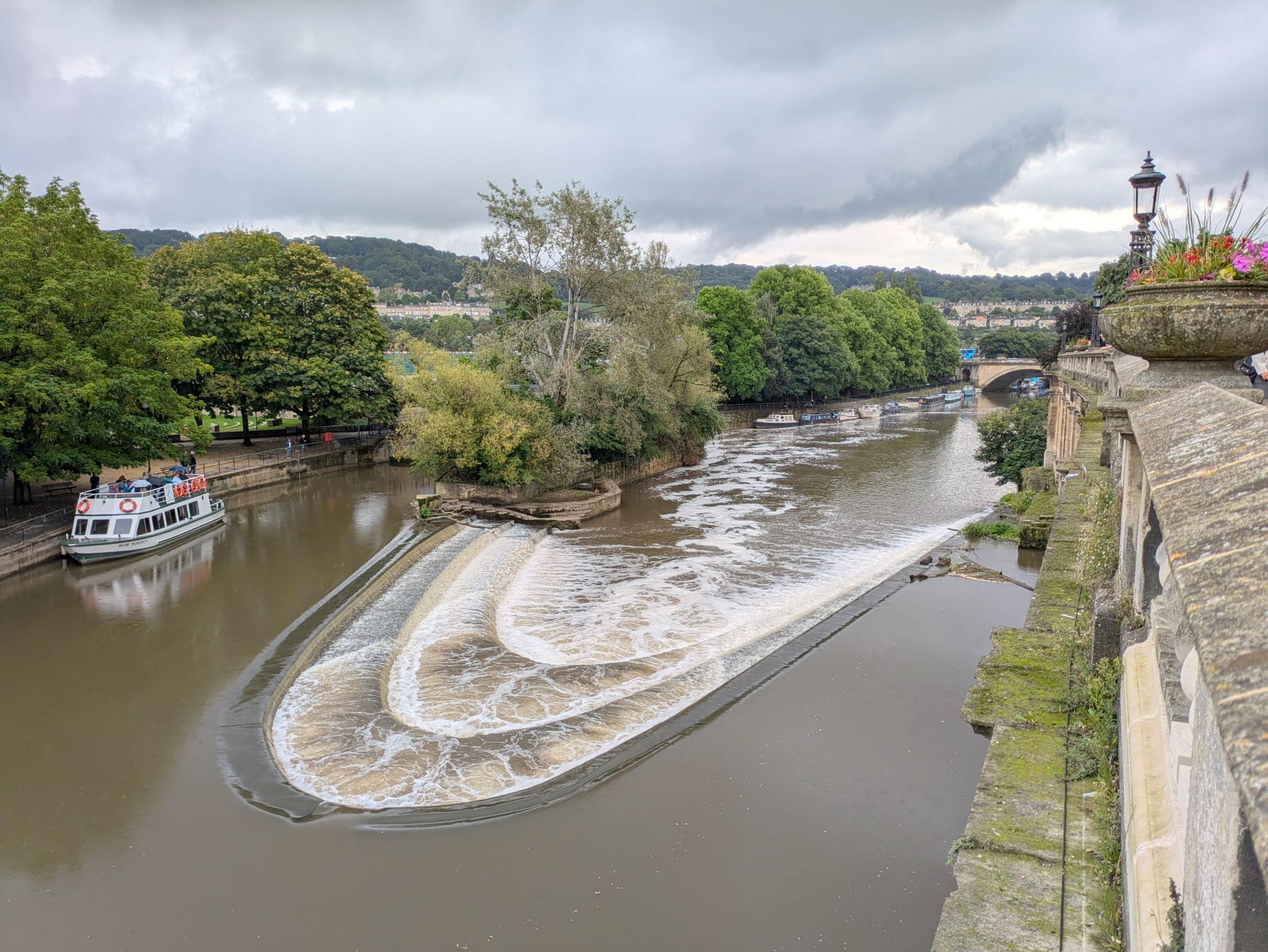
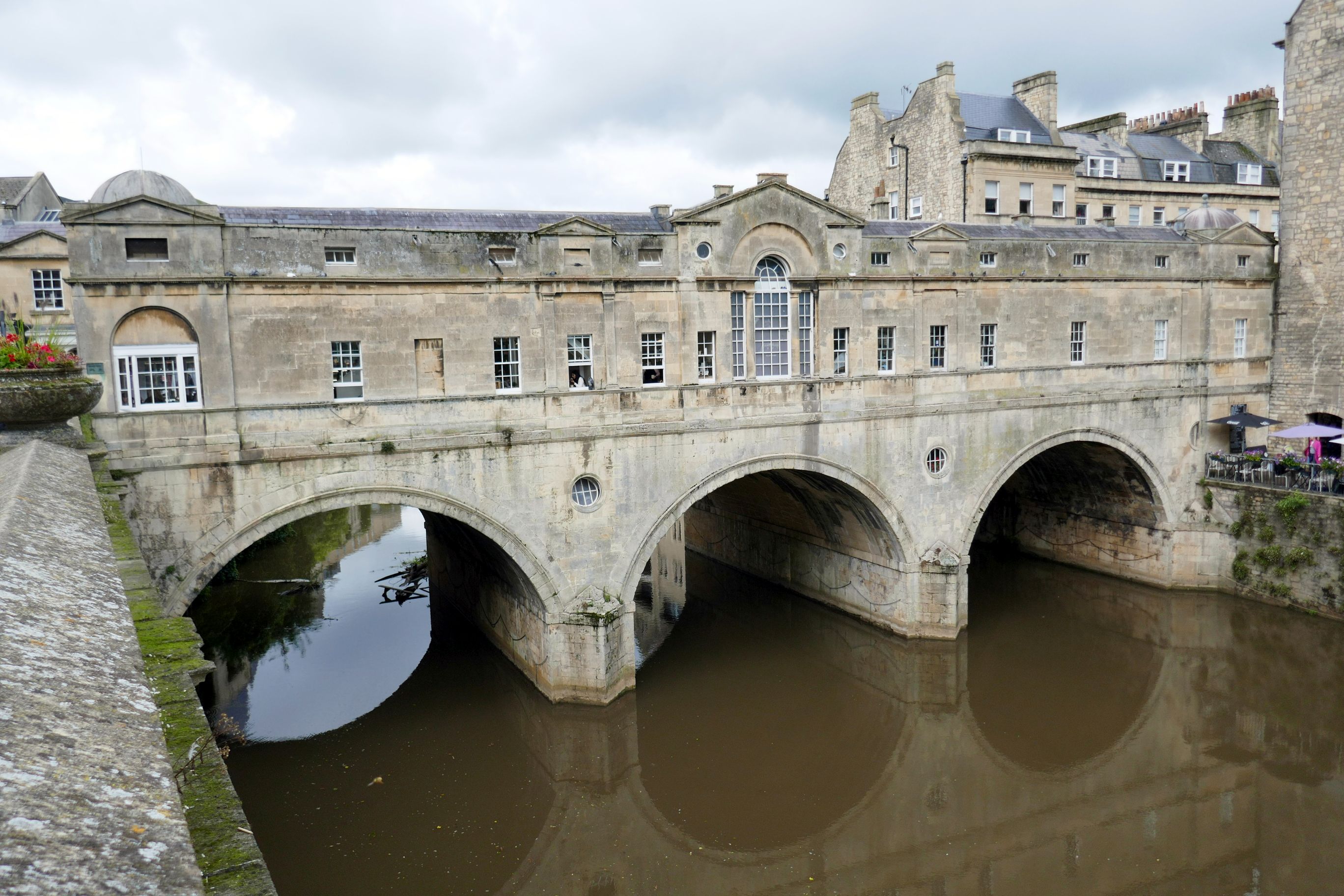
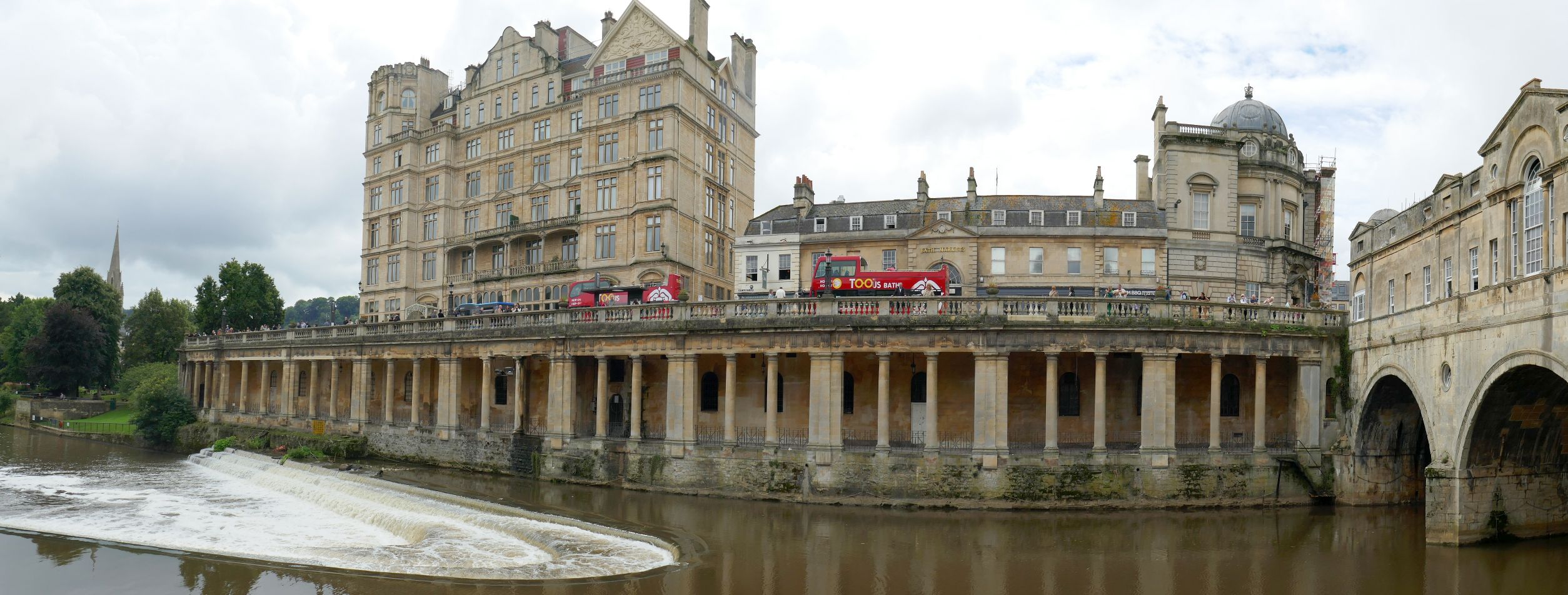
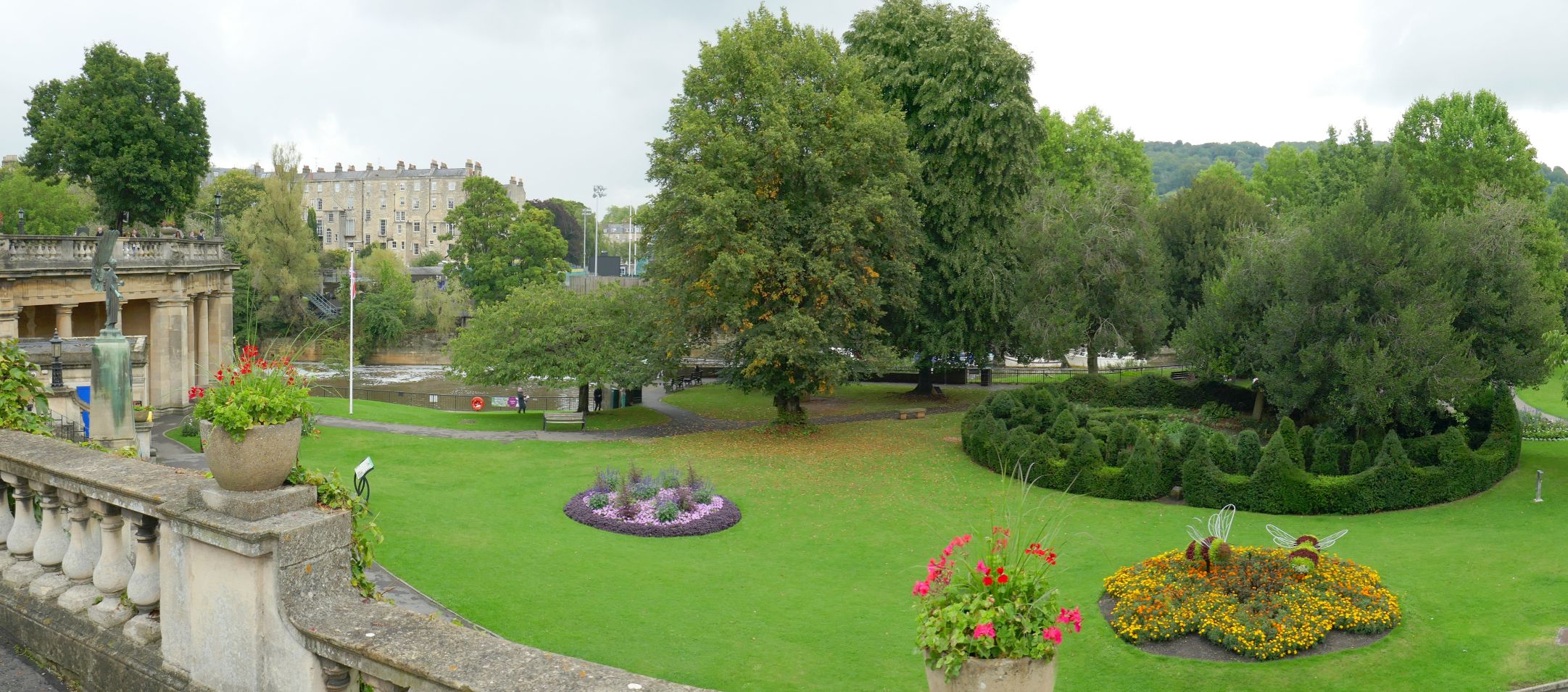
Following our visit to the baths, we had time on our own to explore this city of around 94,000 people before joining a local guide for a walking tour. We enjoyed spending our free time seeing the picturesque Pulteney Bridge that crosses over the River Avon. Built in 1774, it has shops and a restaurant across its span.


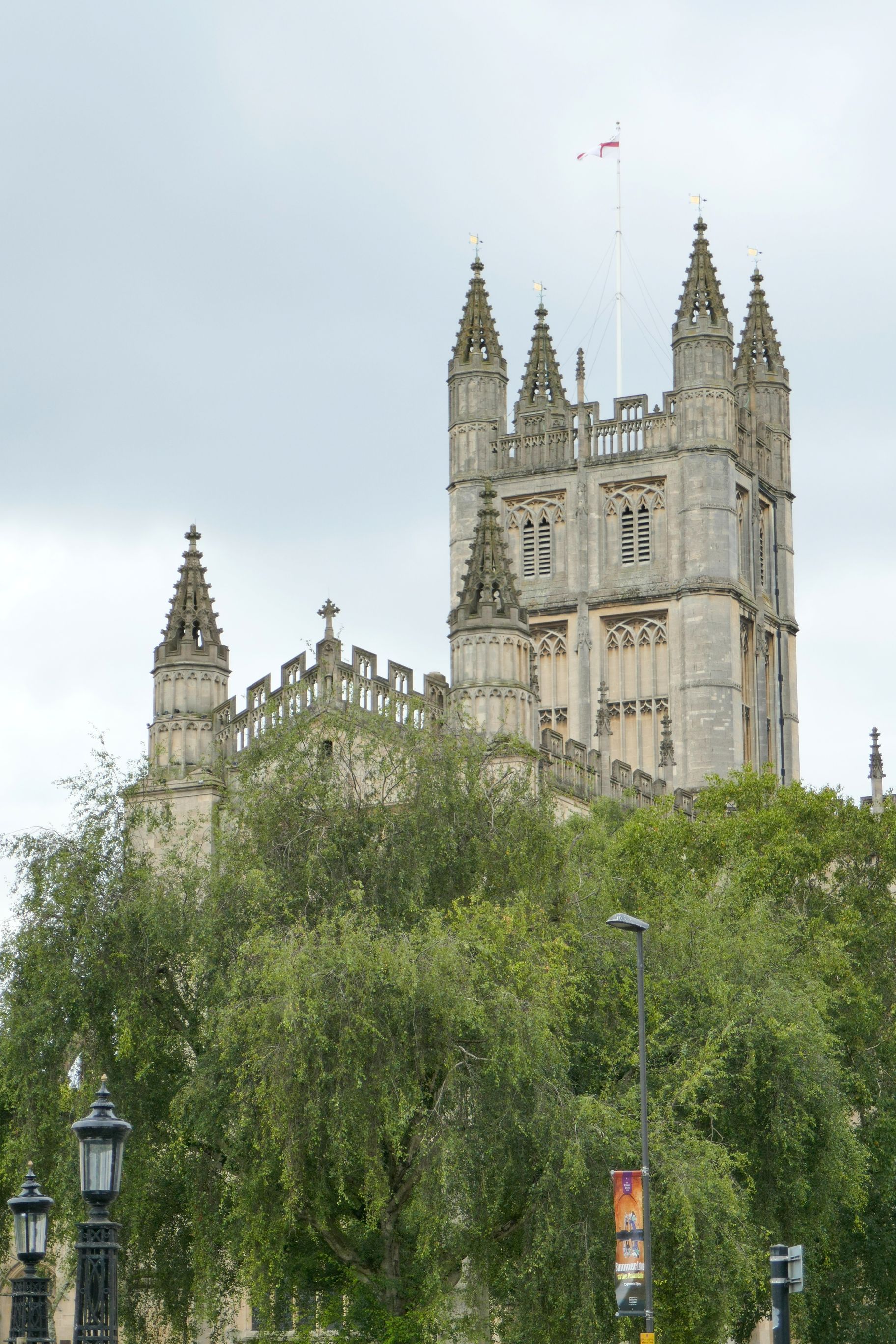
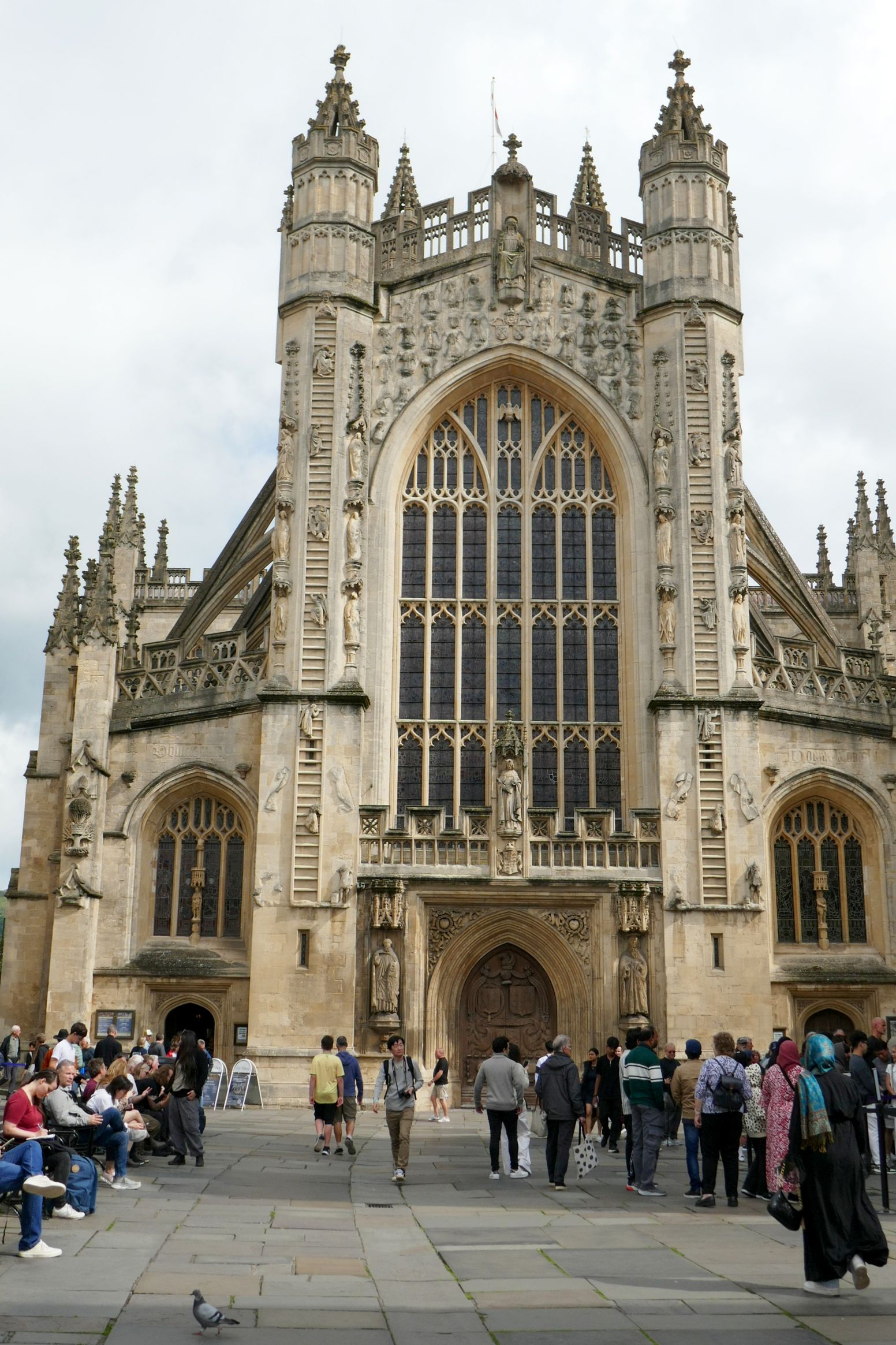
A UNESCO World Heritage Site city, Bath is also known for Bath Abbey, founded in the 7th century and rebuilt in the 12th and 16th centuries. We didn’t see the interior; however, the exterior is quite a centerpiece of the town, along with the baths.


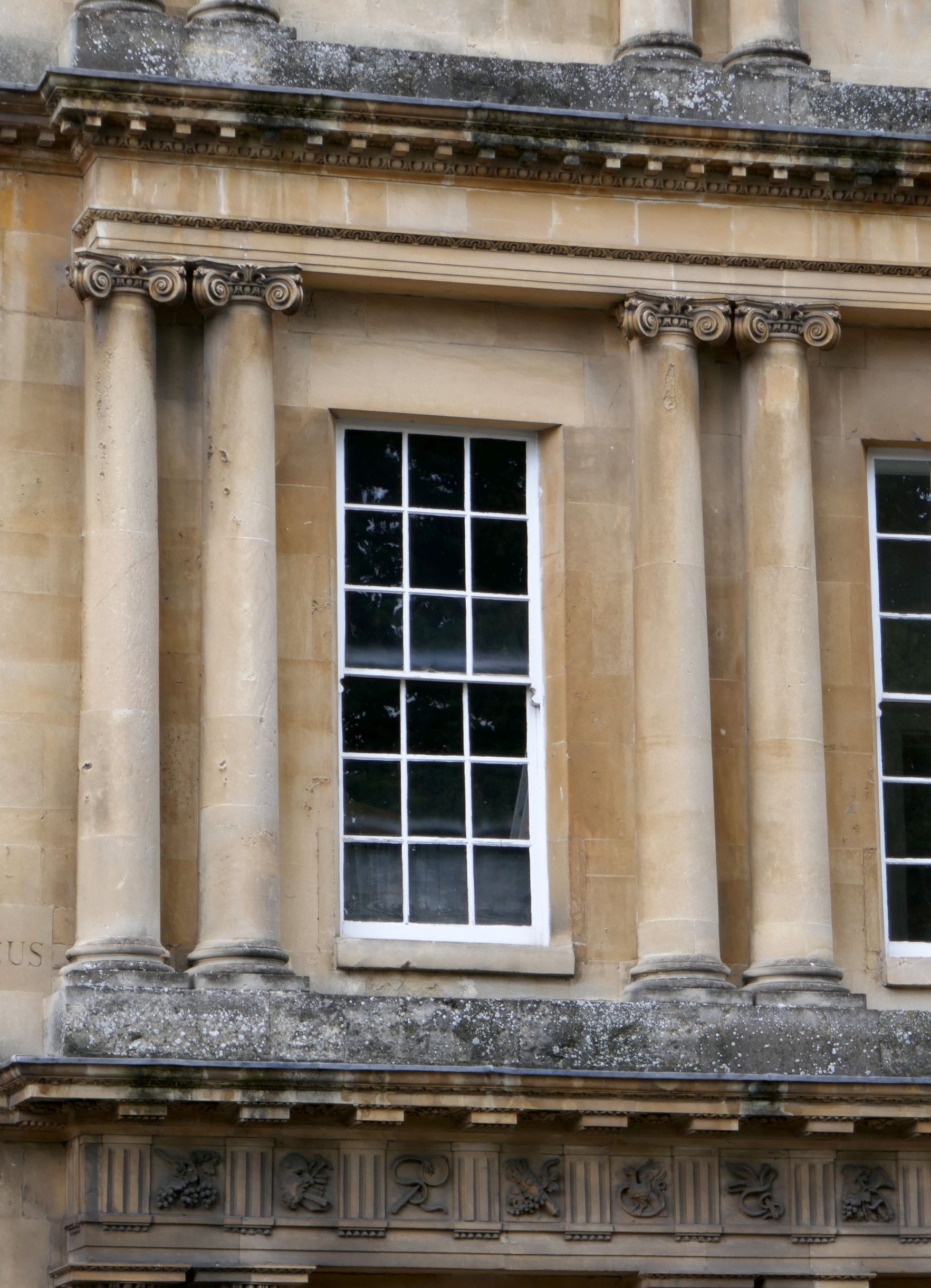
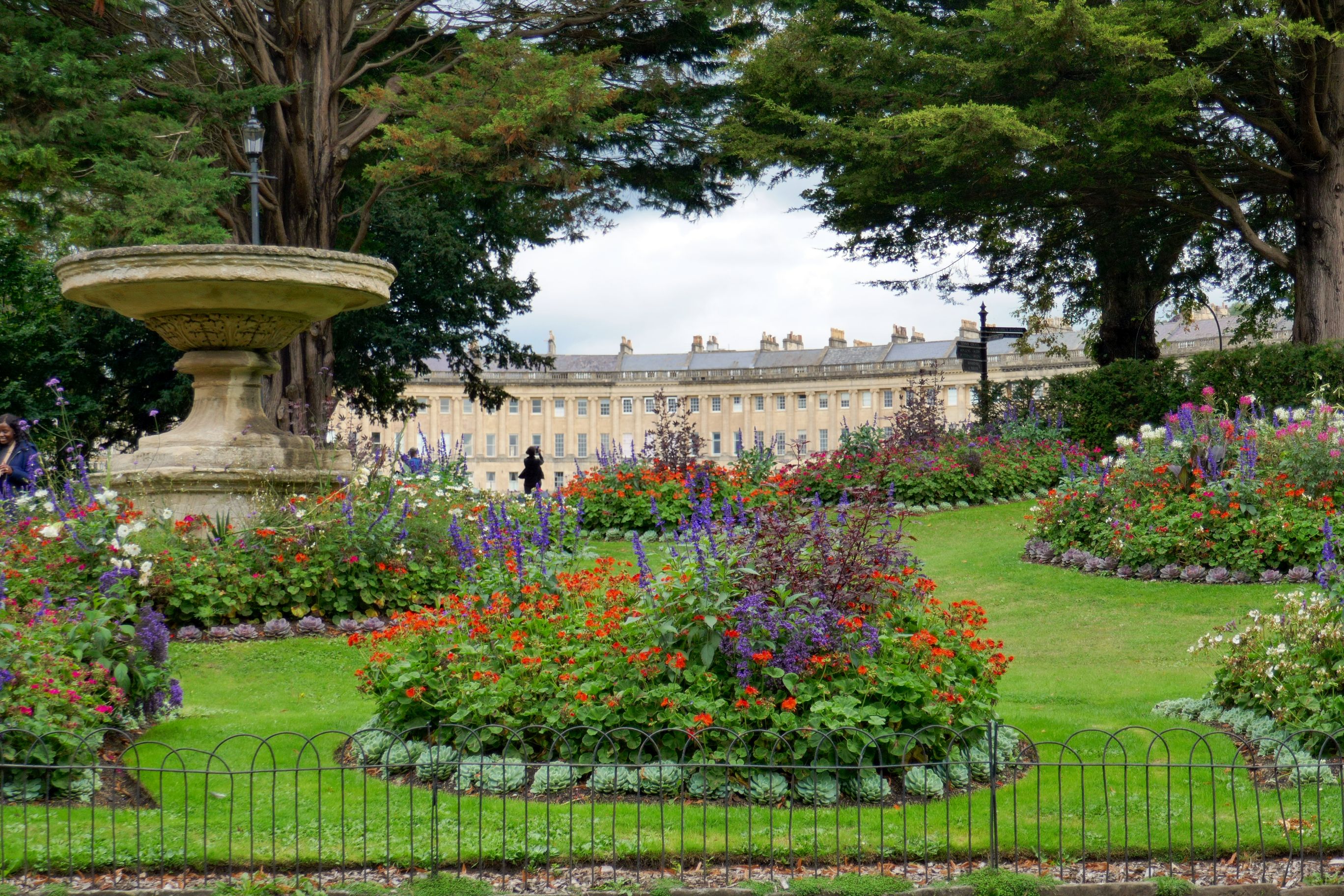
Our walking tour covered the highlights of Bath, most notably the Royal Crescent, a row of 30 terraced houses. Completed in the same year as the Pulteney Bridge, it is considered one of the greatest examples of Georgian architecture in the United Kingdom. The 500-foot-long crescent has been home to many rich and famous people, and it has appeared in several films.

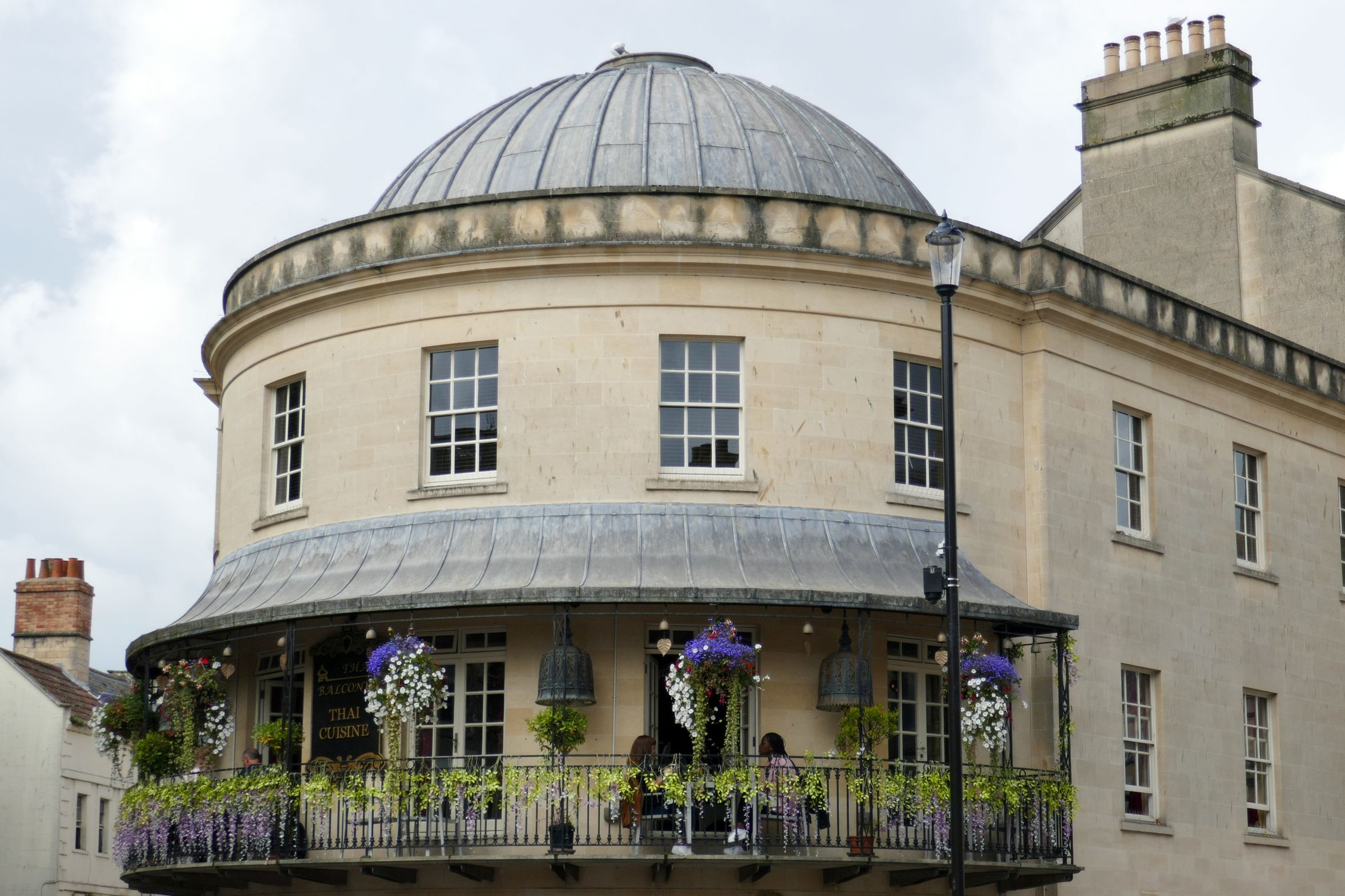
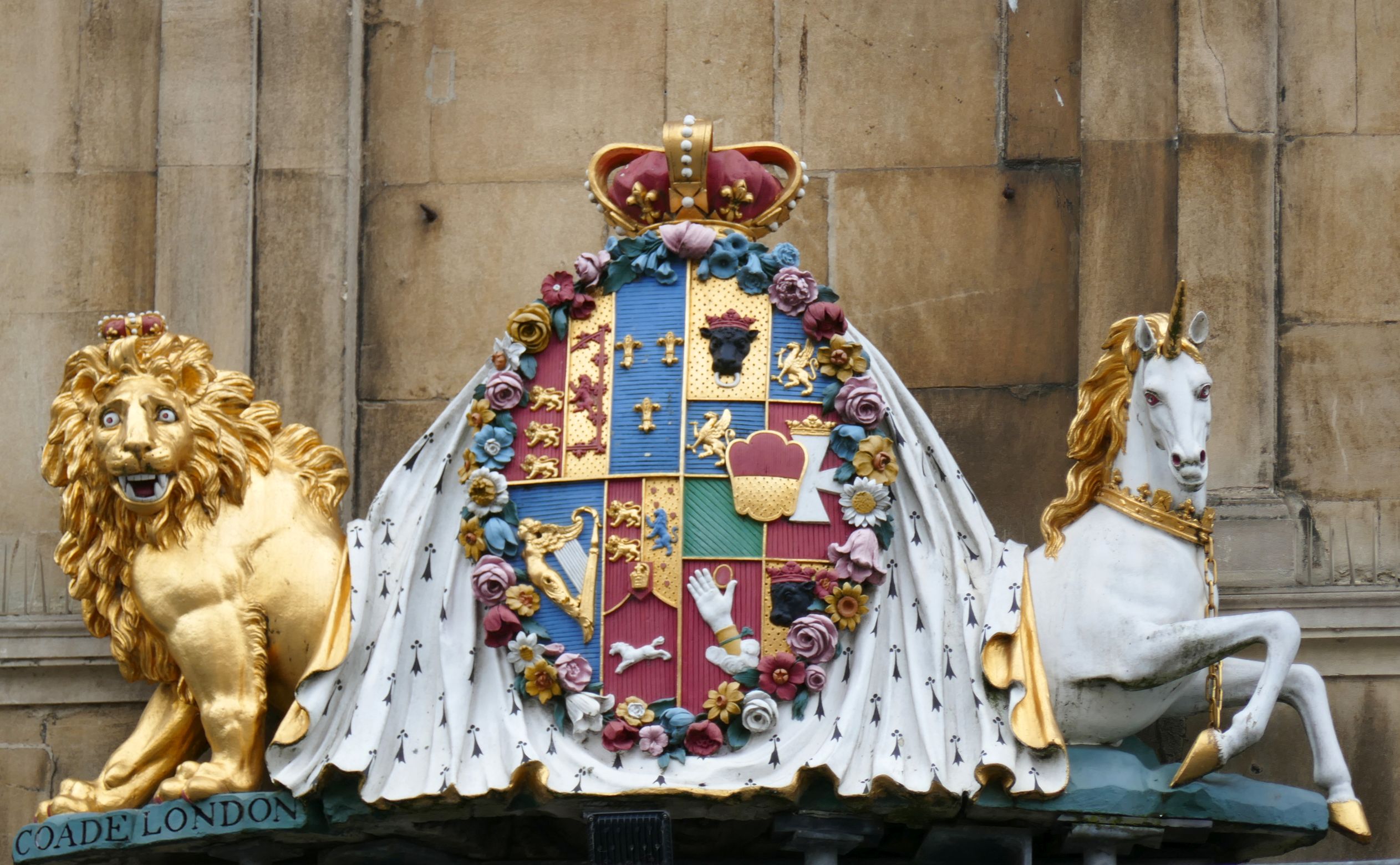
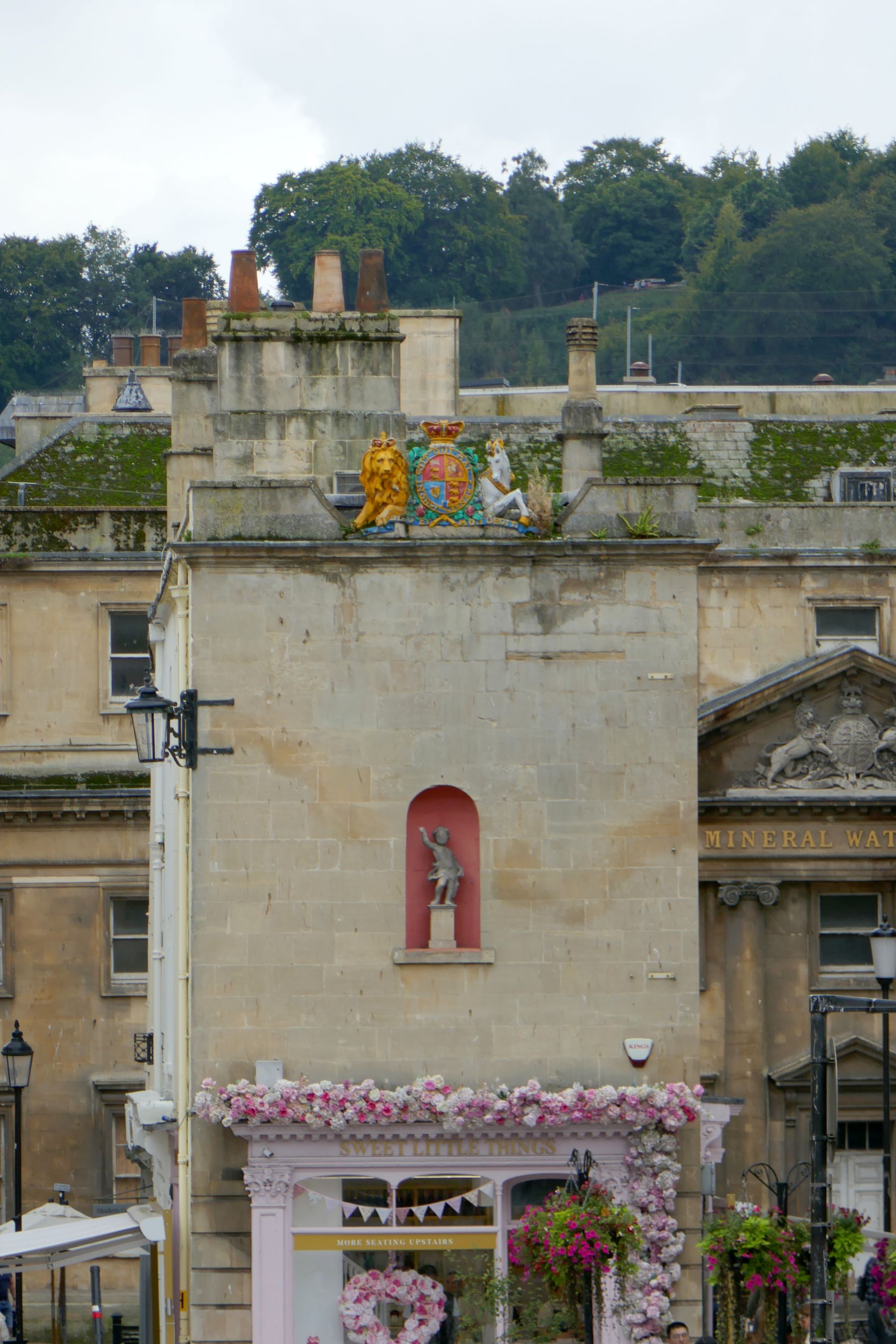
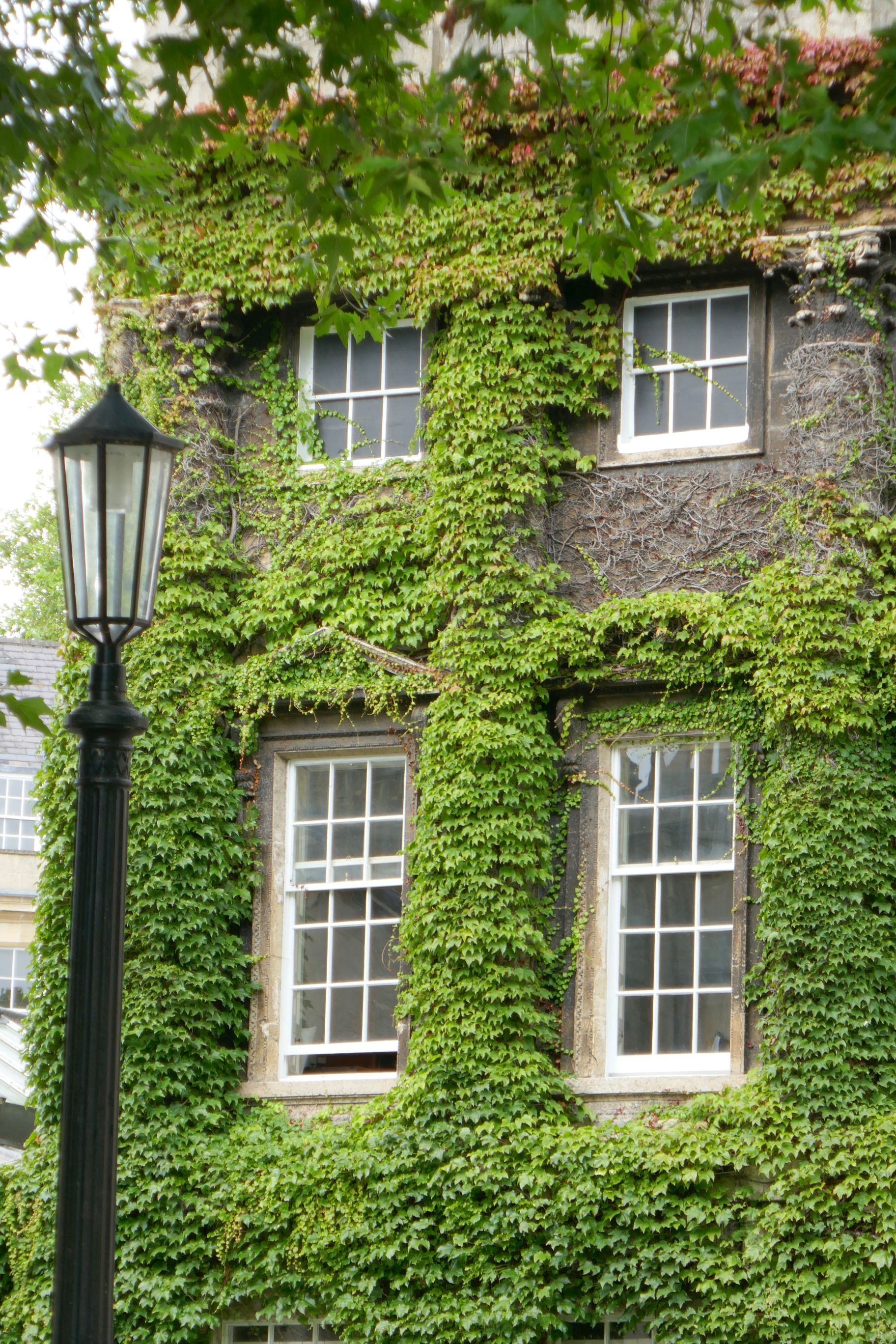
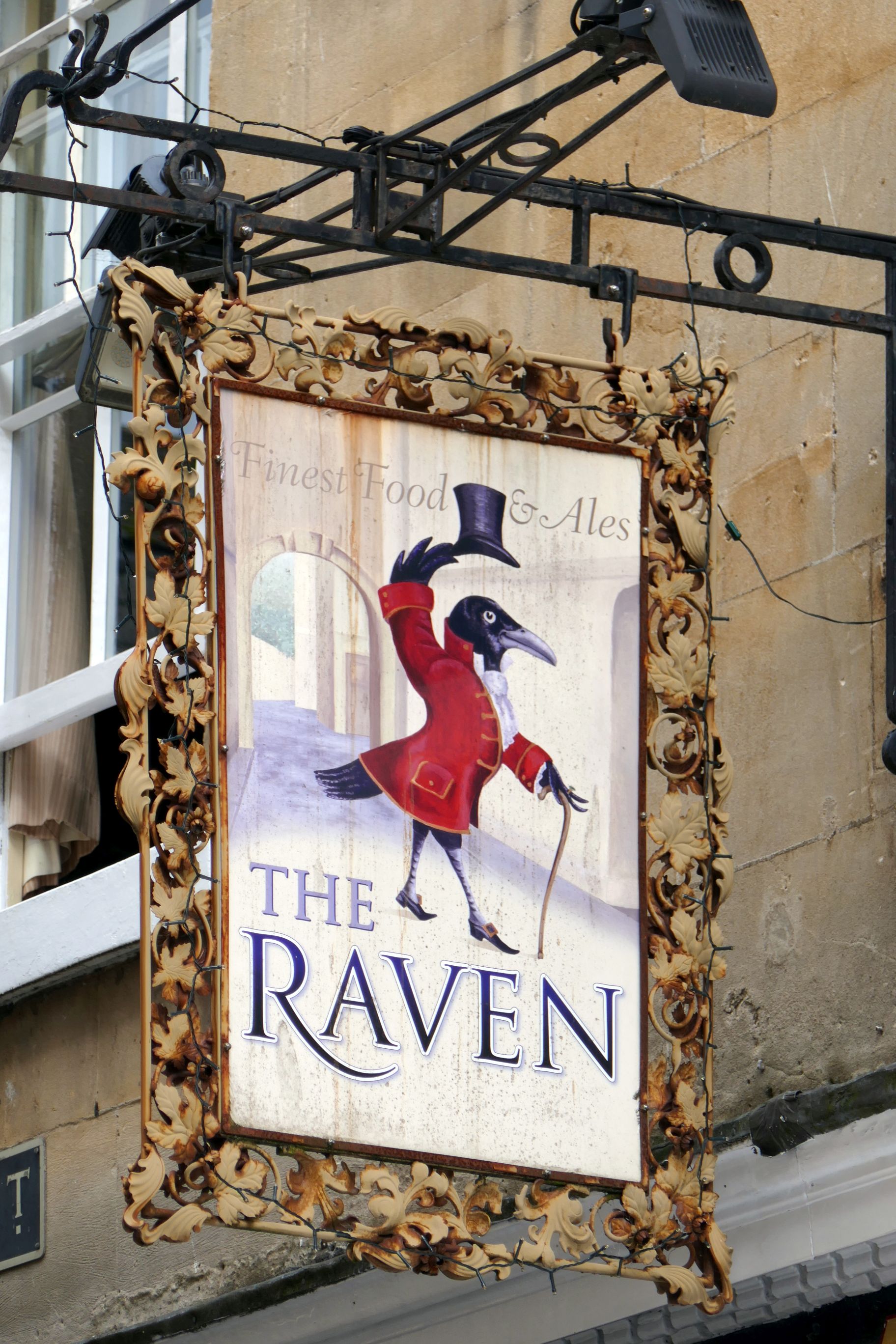
Here are more scenes around Bath:











Re: The robe. Are you kidding me??? Love the shirt!
Next up: UNITED KINGDOM #19: BREATHTAKING BLENHEIM PALACE
The first word that comes to mind to describe the Cotswolds is “charming.” It IS just so charming! Located in South West England, the region is full of rolling green hills, beautiful historic cottages, and quaint little towns.
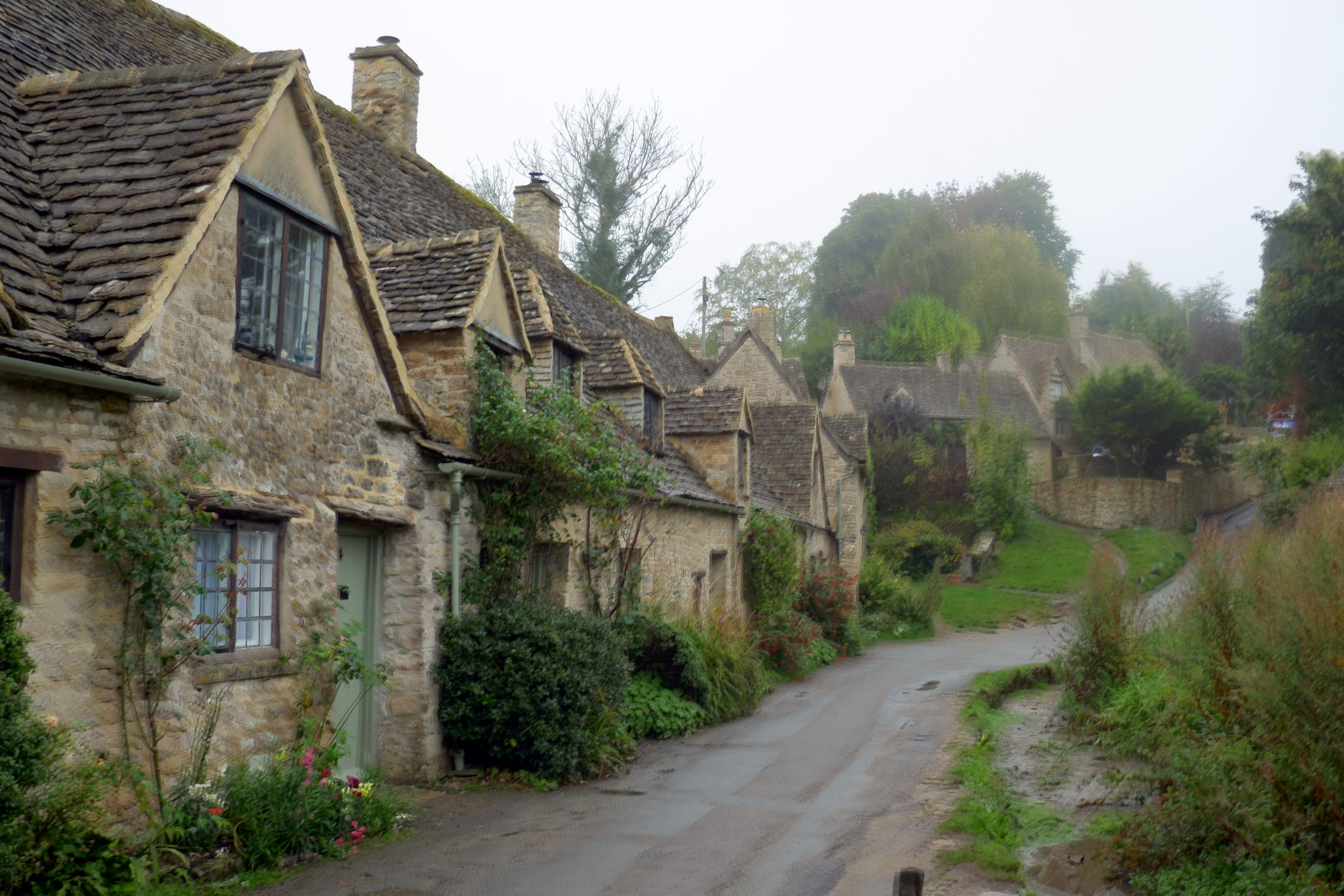
Our day in the Cotswolds began with a visit to Bibury, in Gloucestershire. Our walking tour took us through Arlington Row to see the limestone cottages that were formerly a 14th century wool store.
What a beautiful little village! The River Coln runs through the village and it was quite picturesque with Arlington Row as the backdrop.
(For all photos, click on the image for a full screen view.)




It is an interesting story how swans became regular residents on the River Coln. Swans were raised by Benedictines at the monasteries, because it was forbidden by their religion to eat meat on Fridays. They reasoned, however, that since swans had webbed feet and lived on the water, they were close enough to being “fish.” Quite the loophole to those religious rules! To this day, swans can still be found living near former monasteries.
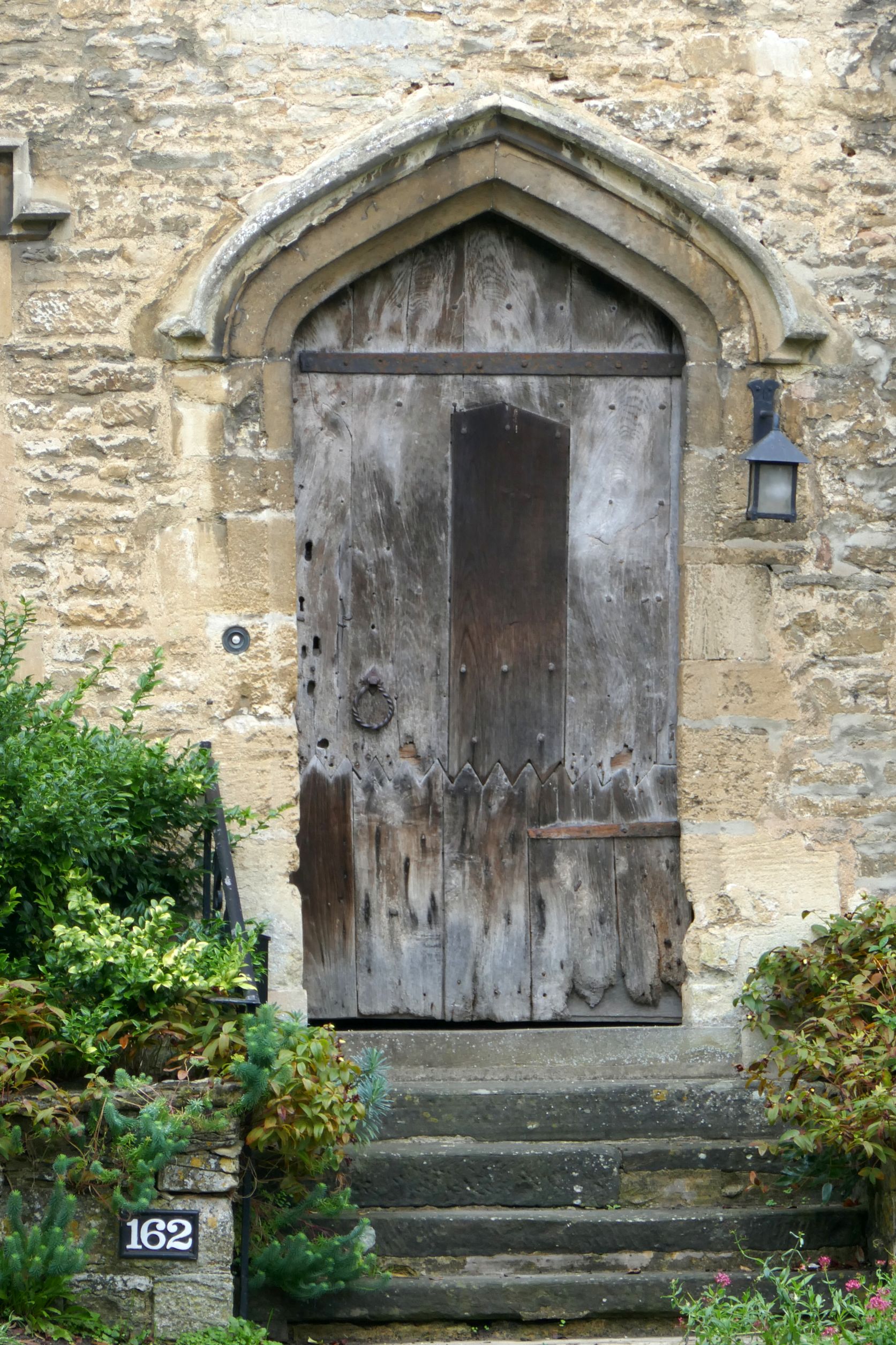
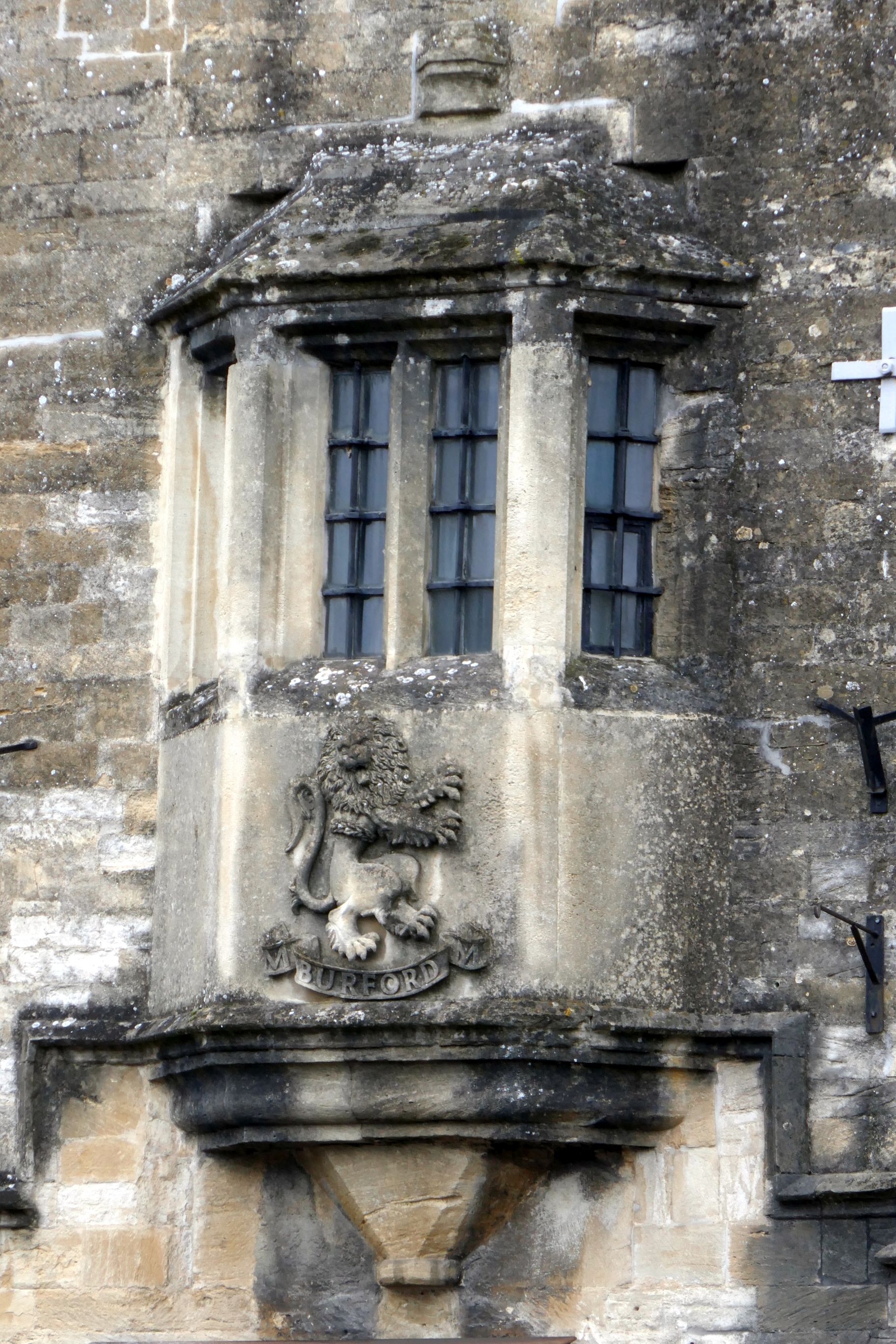
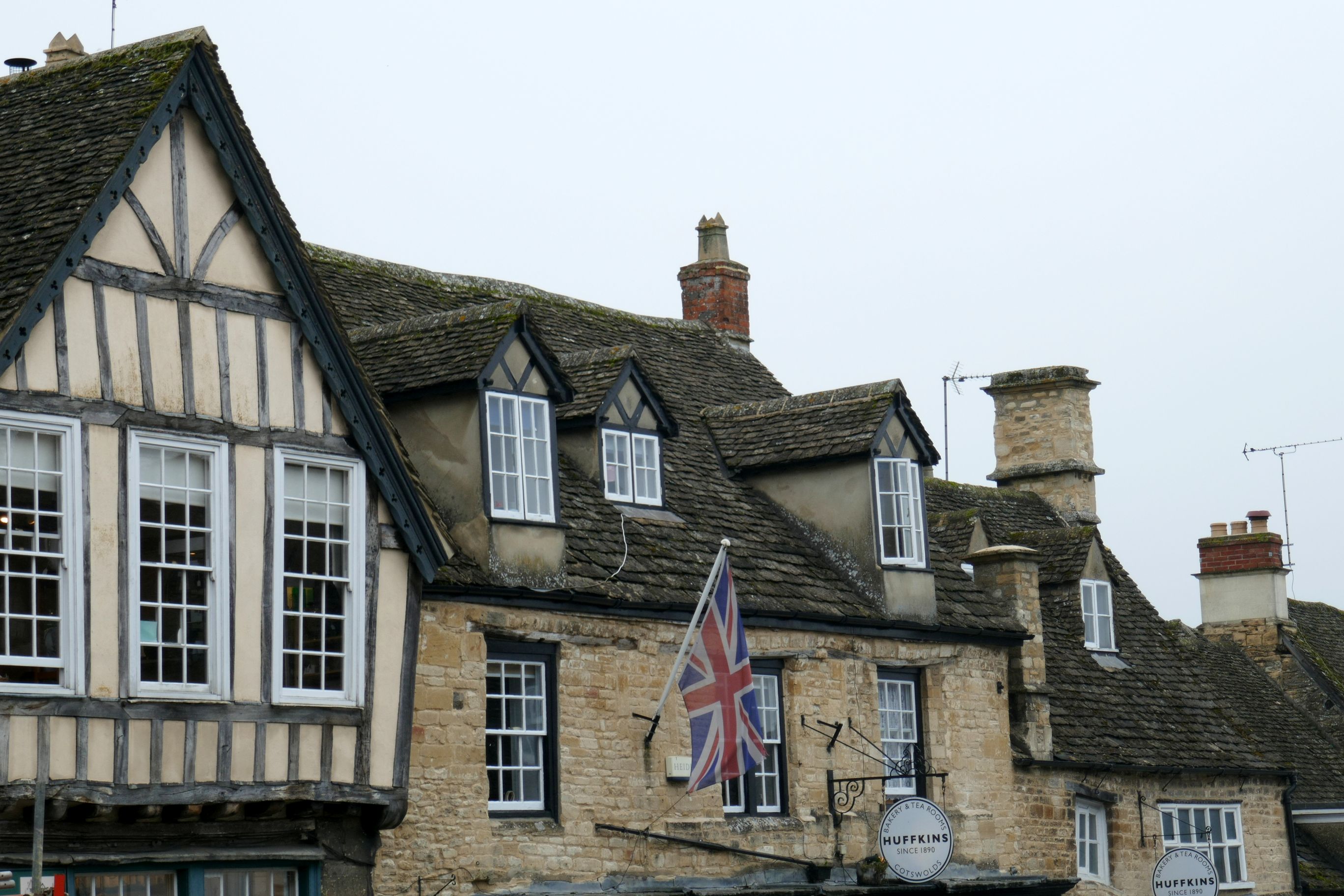
The next town we visited was Burford, a former market town that dates to 1086– similar in age to Bibury.




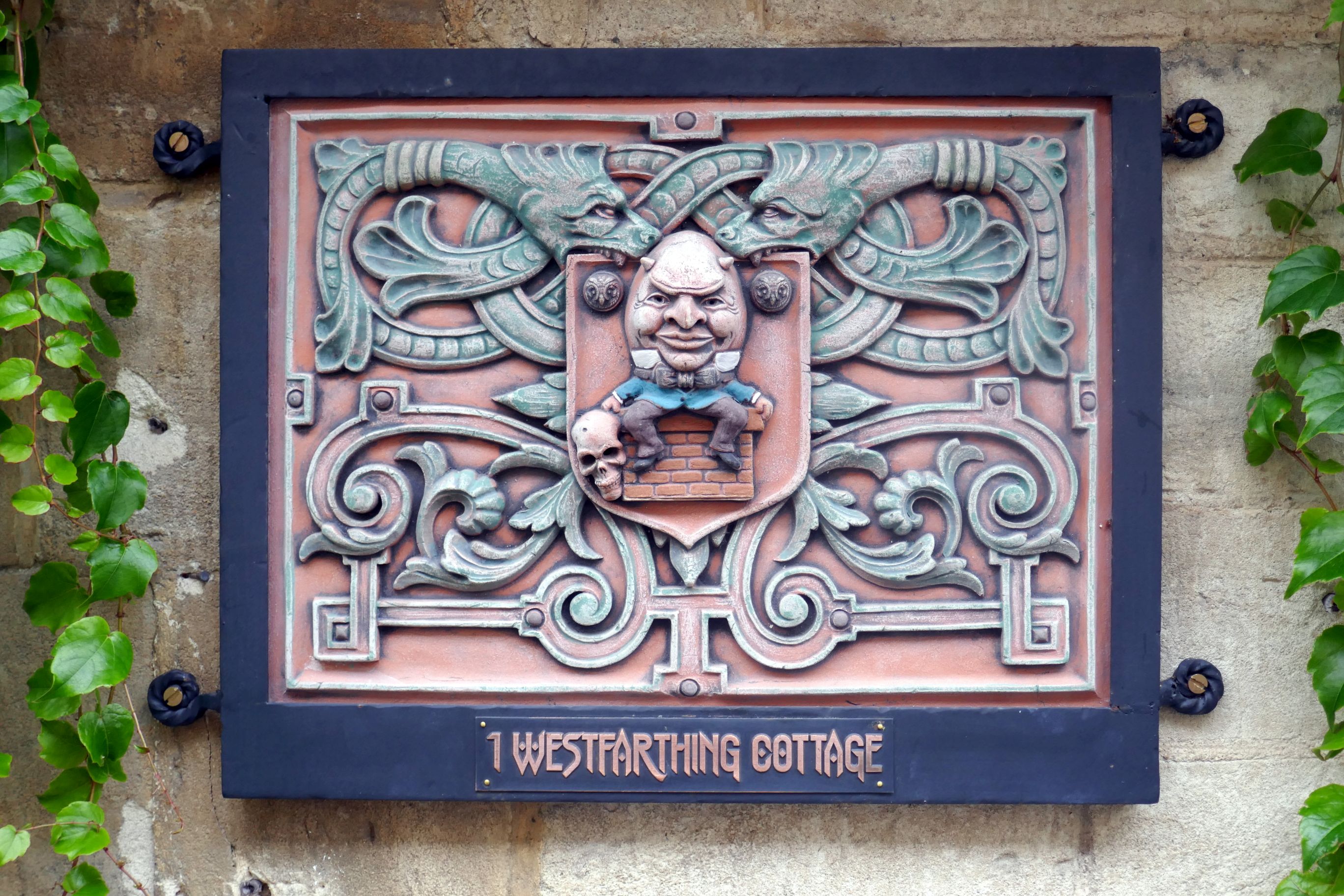

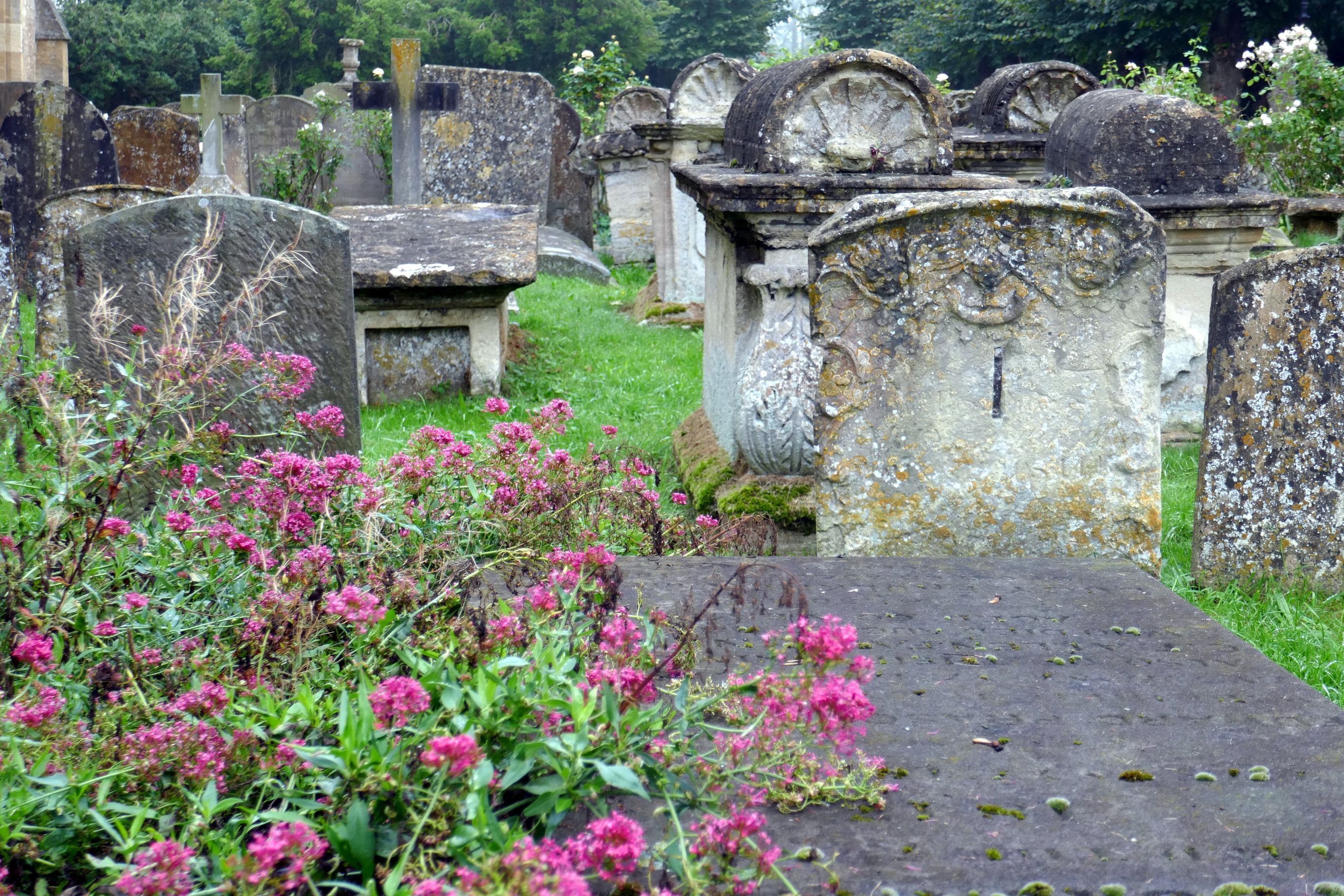
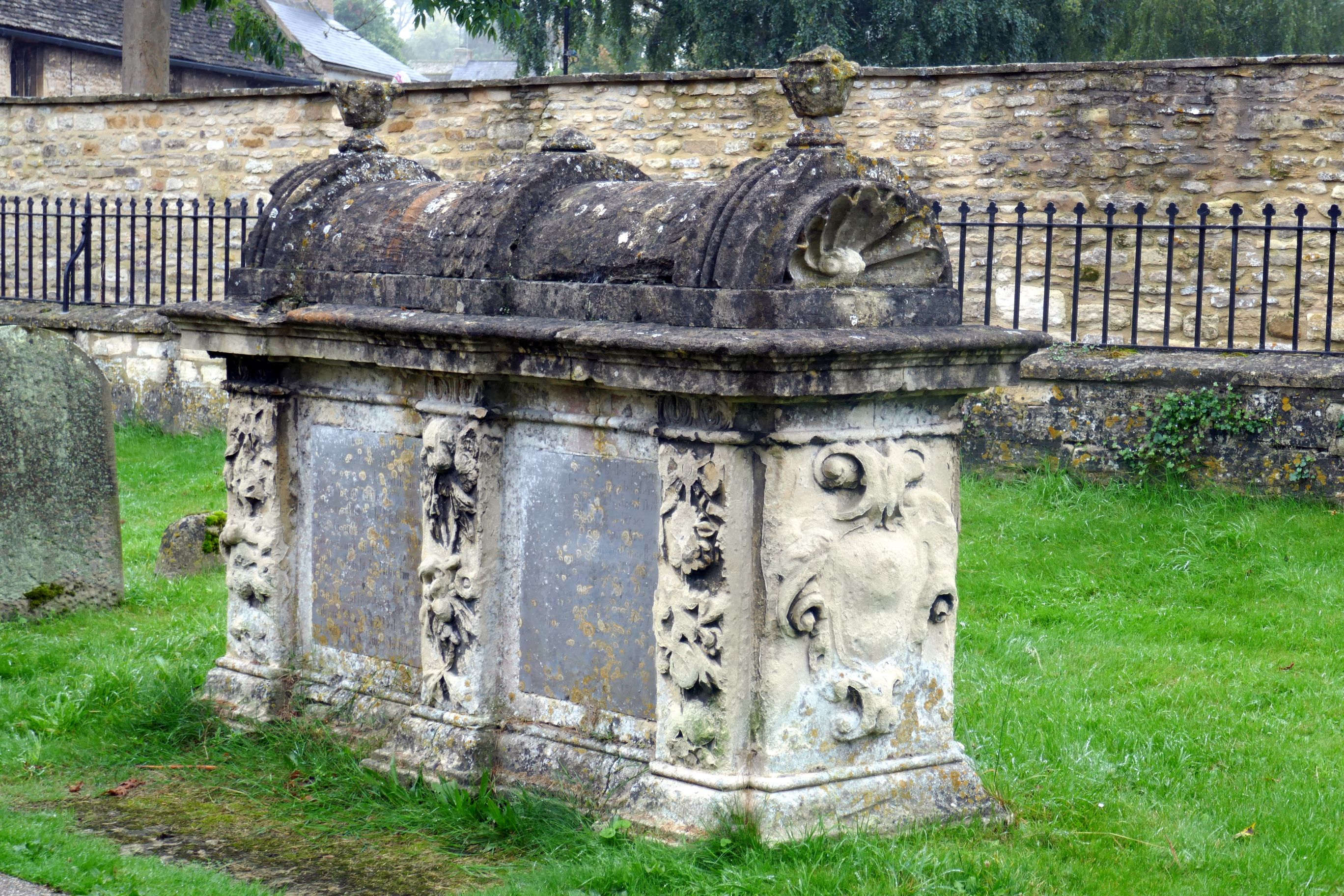
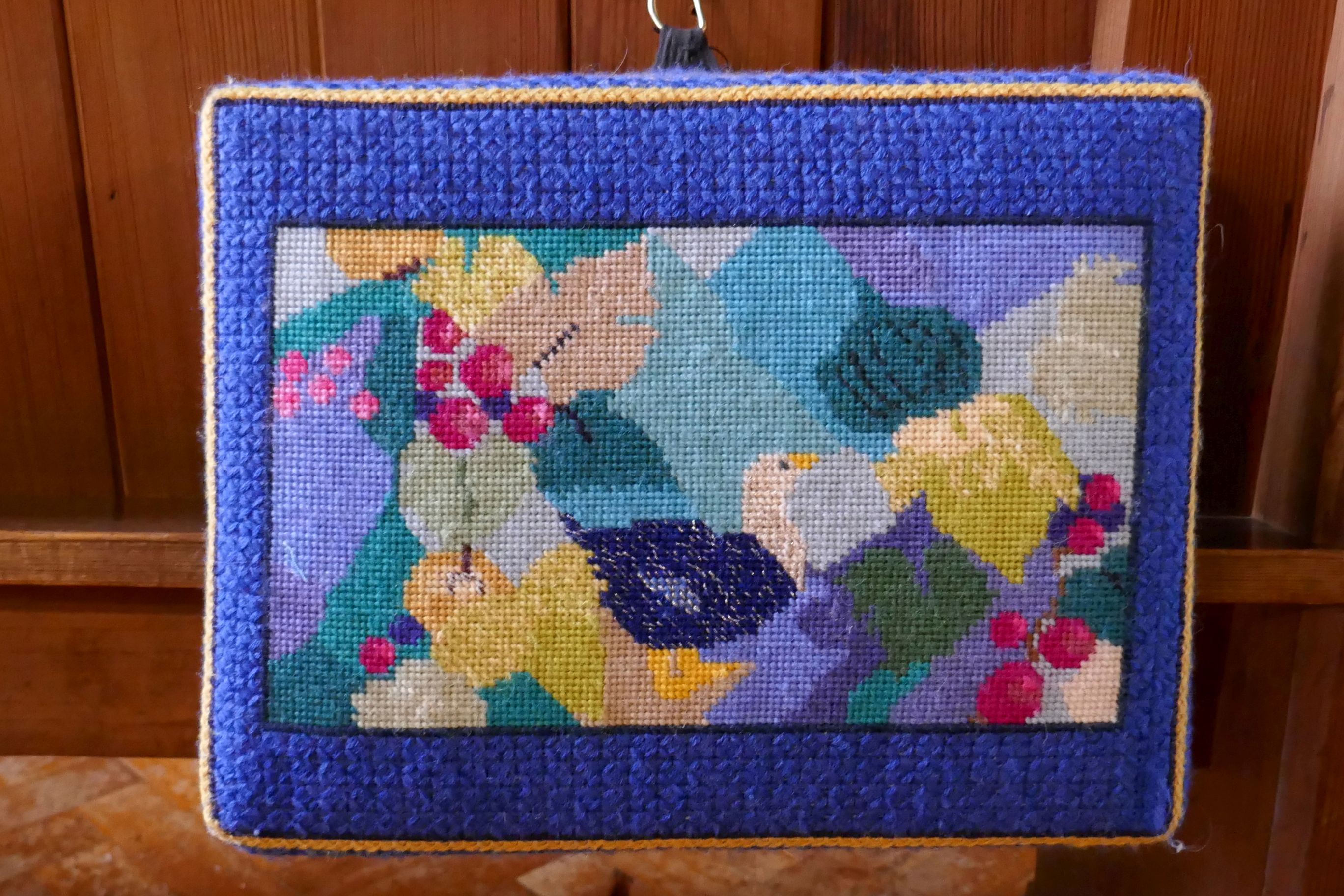
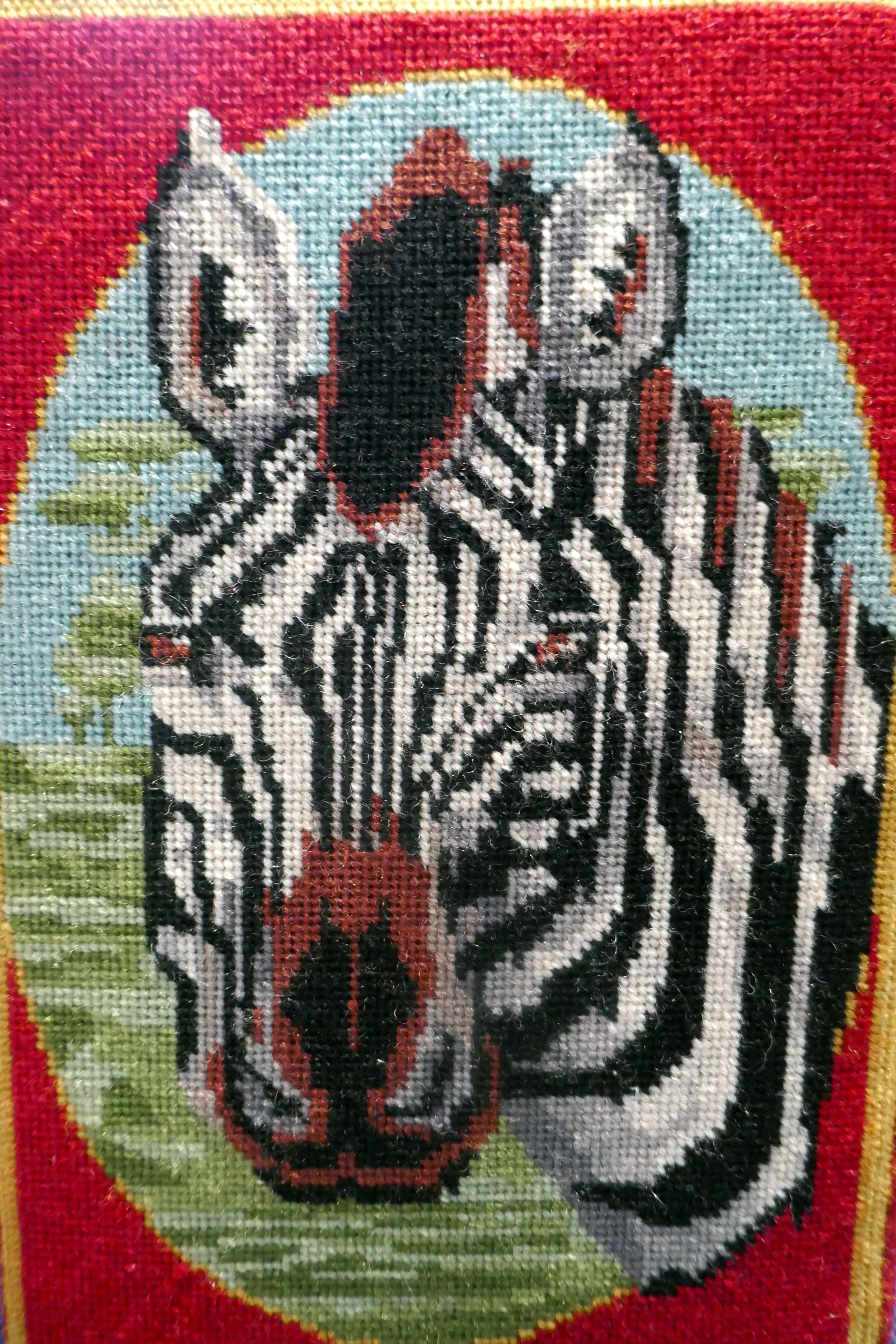
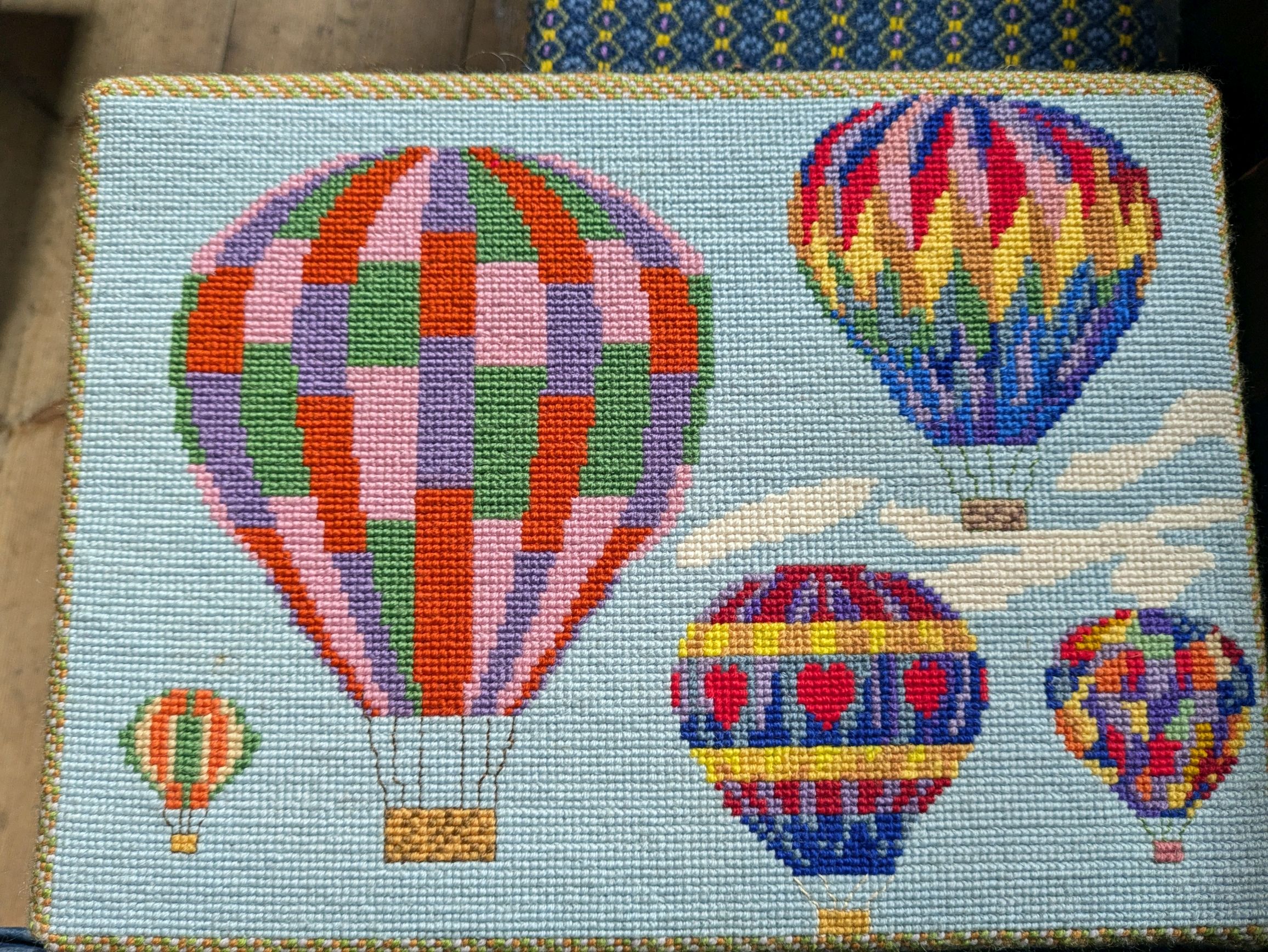
Needlepoint church pew pillows at the Church of St. John the Baptist:




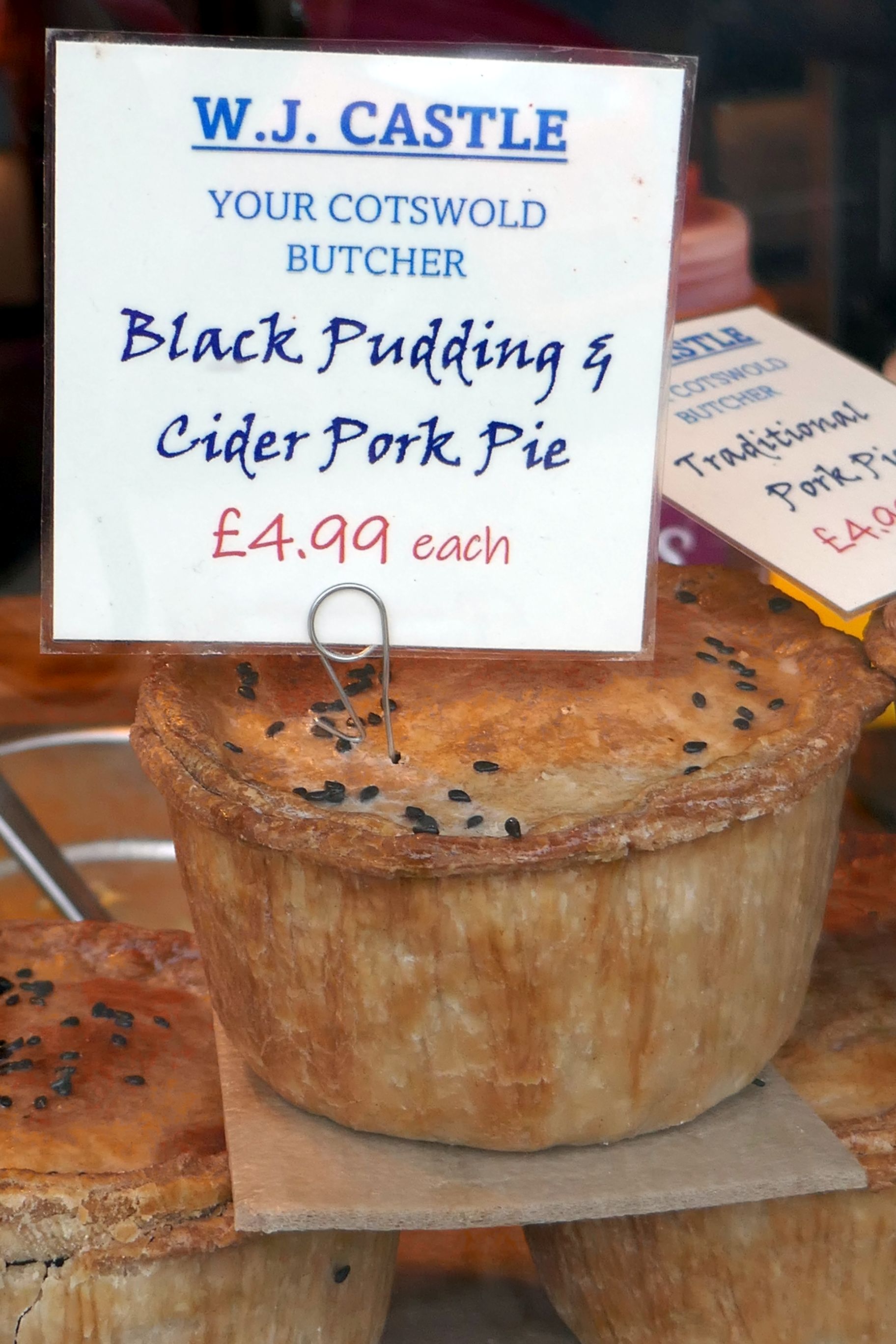
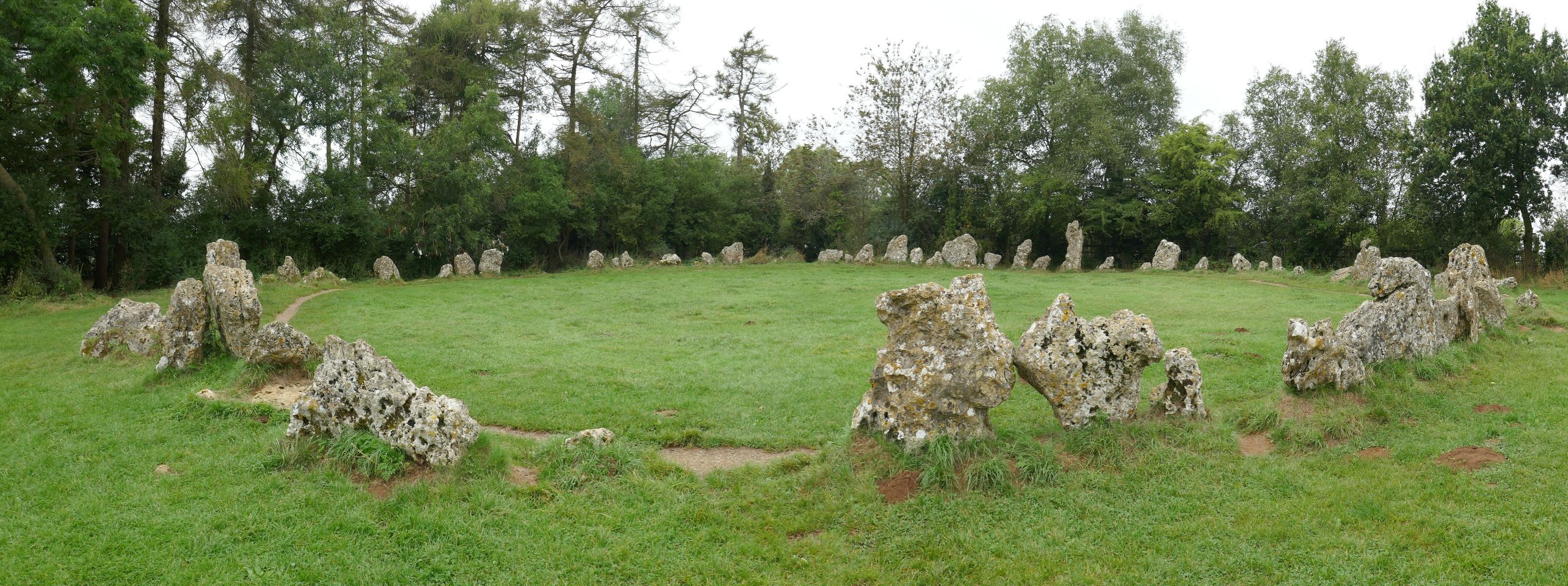
On our way to the next village on our itinerary, we stopped to see Kings Stone Circle, a ceremonial ring of boulders that were erected between 3,000 and 2,000 BCE.
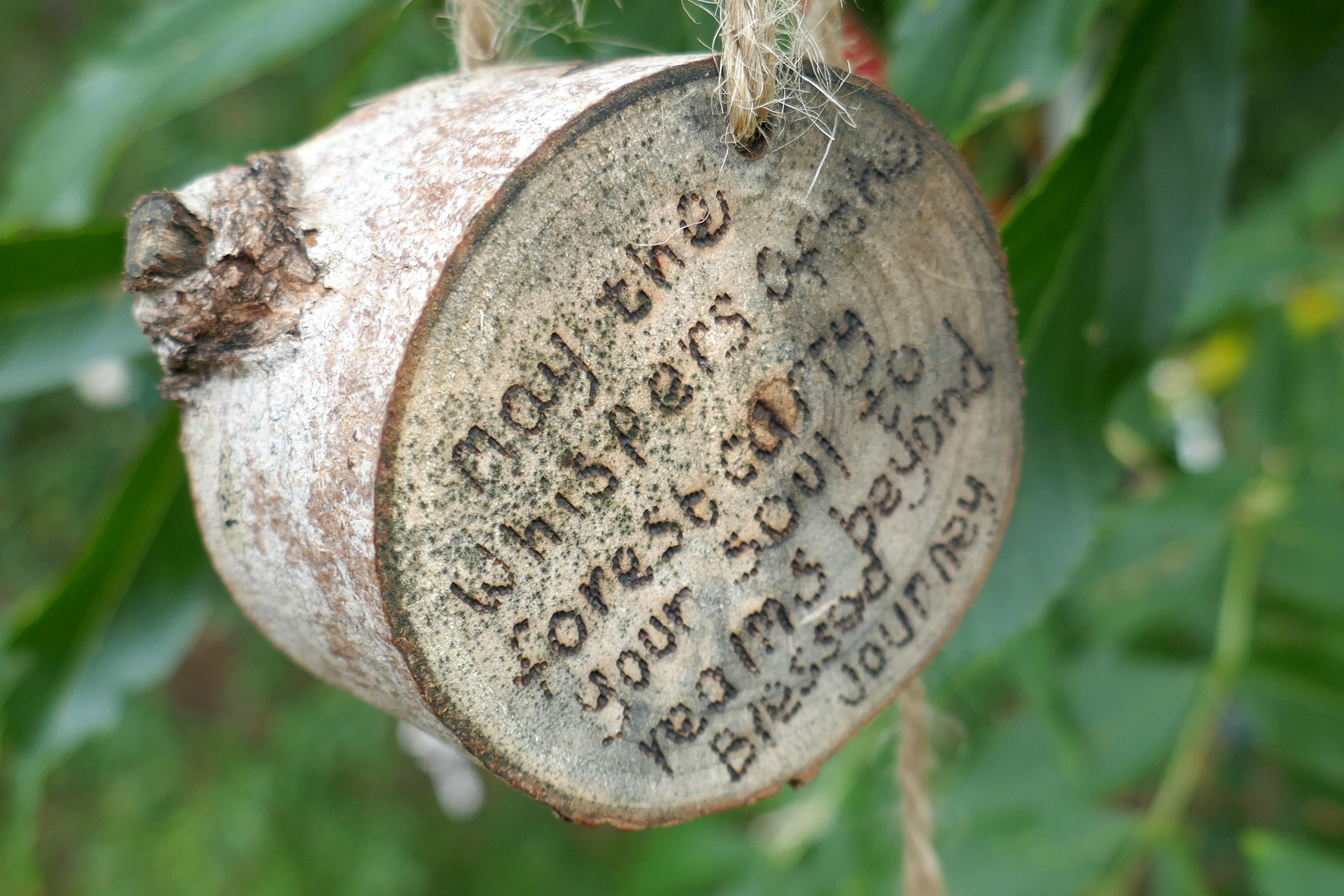
Stow-on-the-Wold, a former wool market town, was the final Cotswold village we visited before returning to Cirencester. Founded in the 12th century, it was, of course, charming!
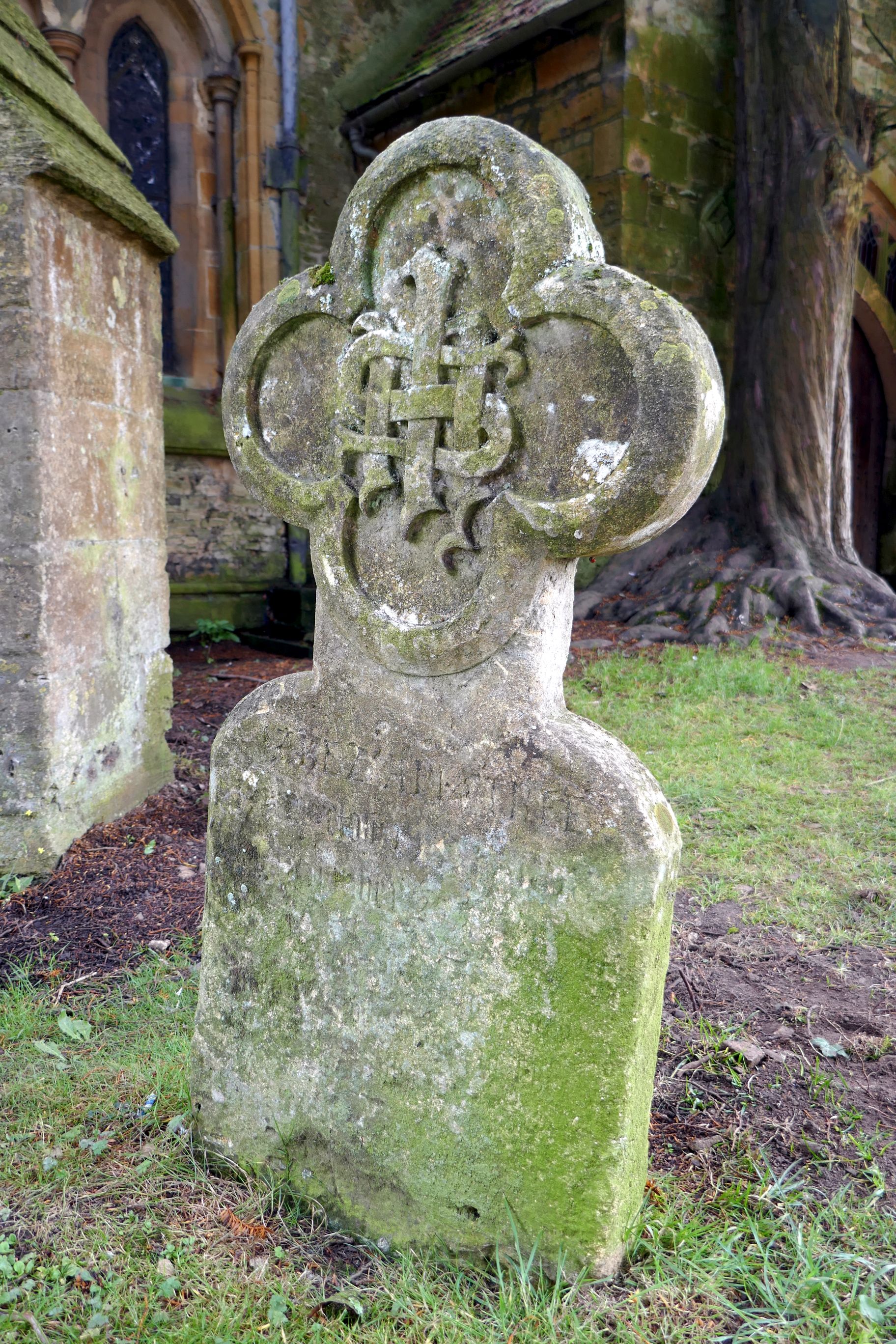
St. Edward’s Church, a popular tourist attraction, was a must-see:
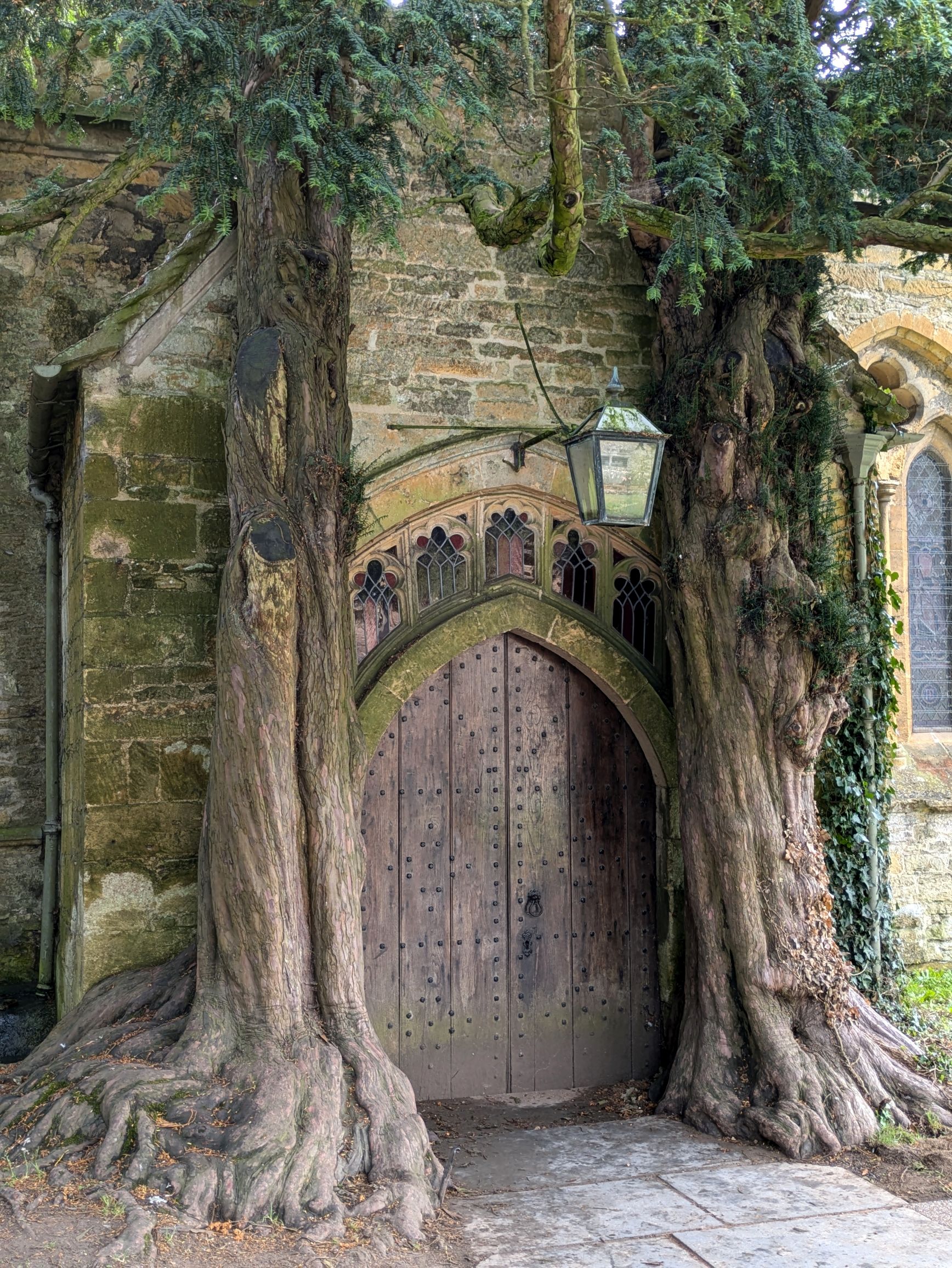


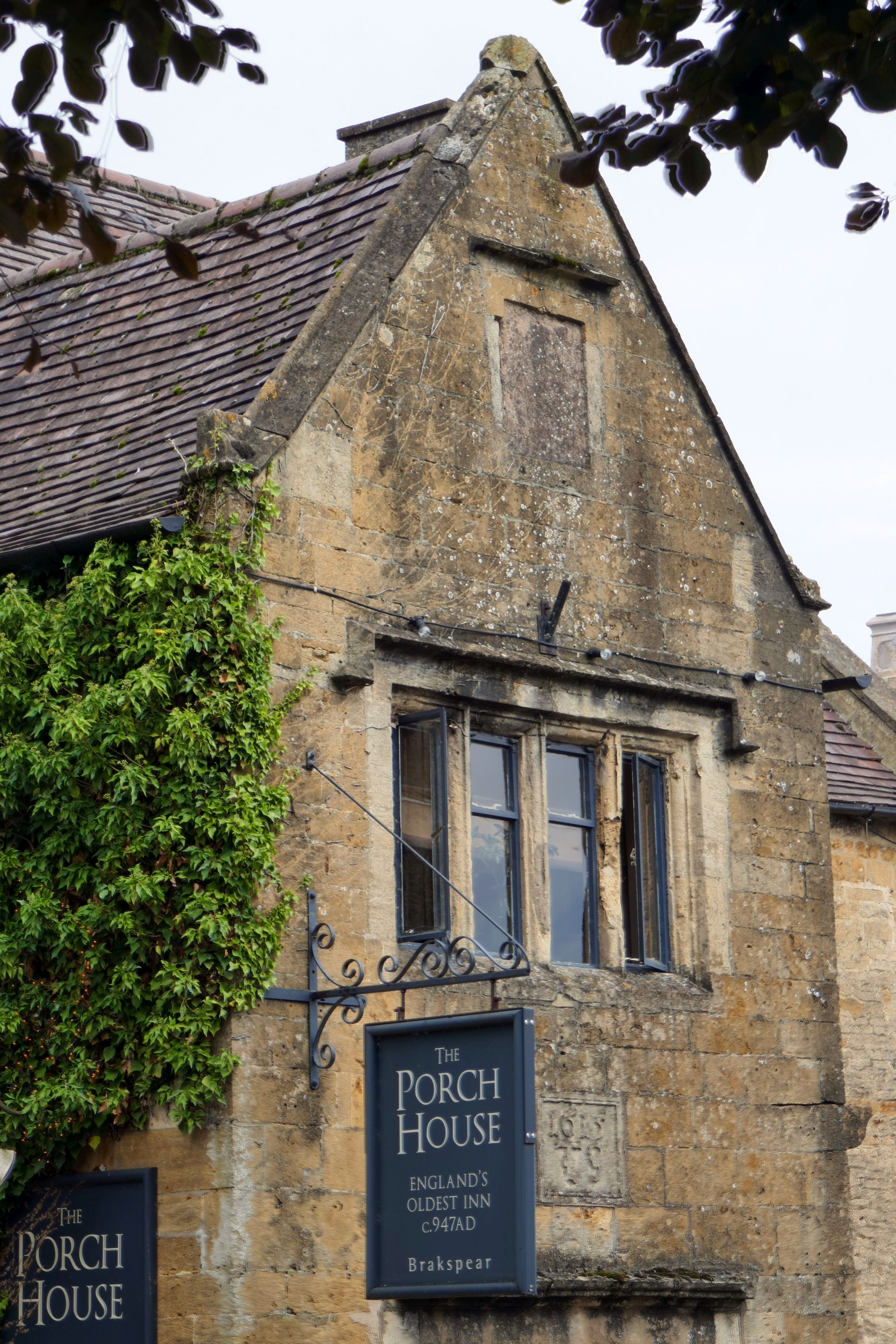
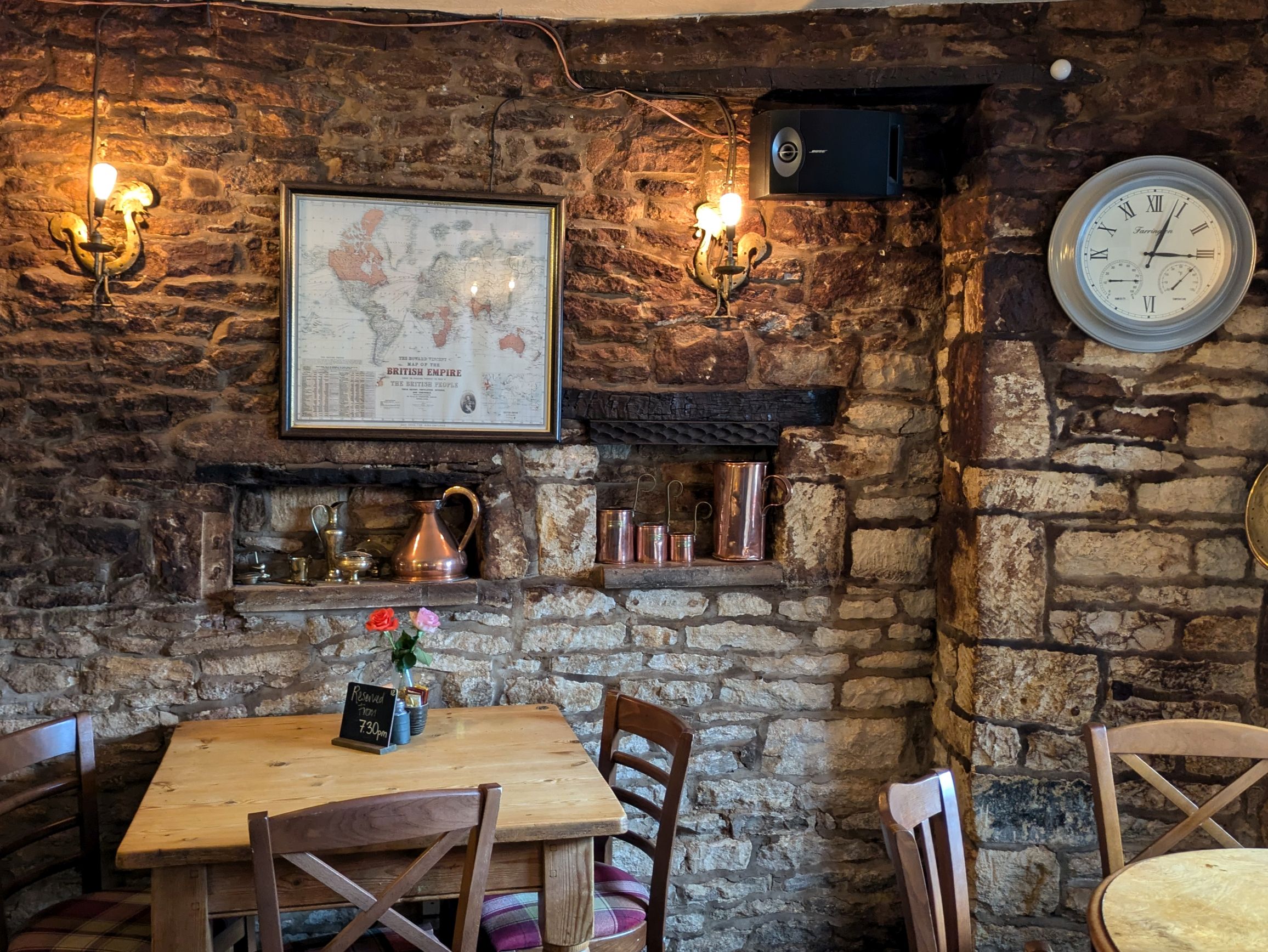
We especially enjoyed stopping at The Porch House, claimed to be the oldest pub in England with timbers carbon dated to the 10th century.
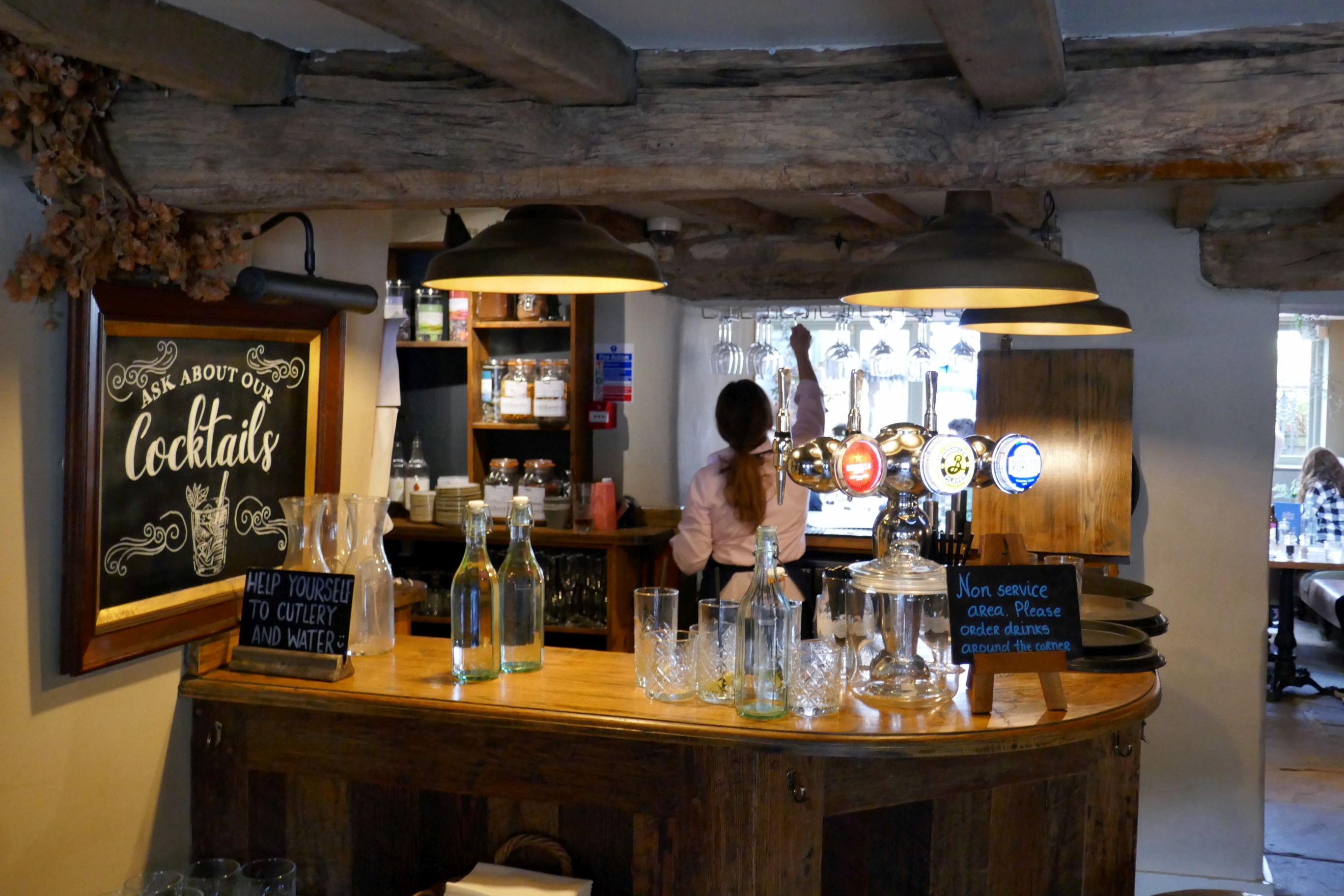

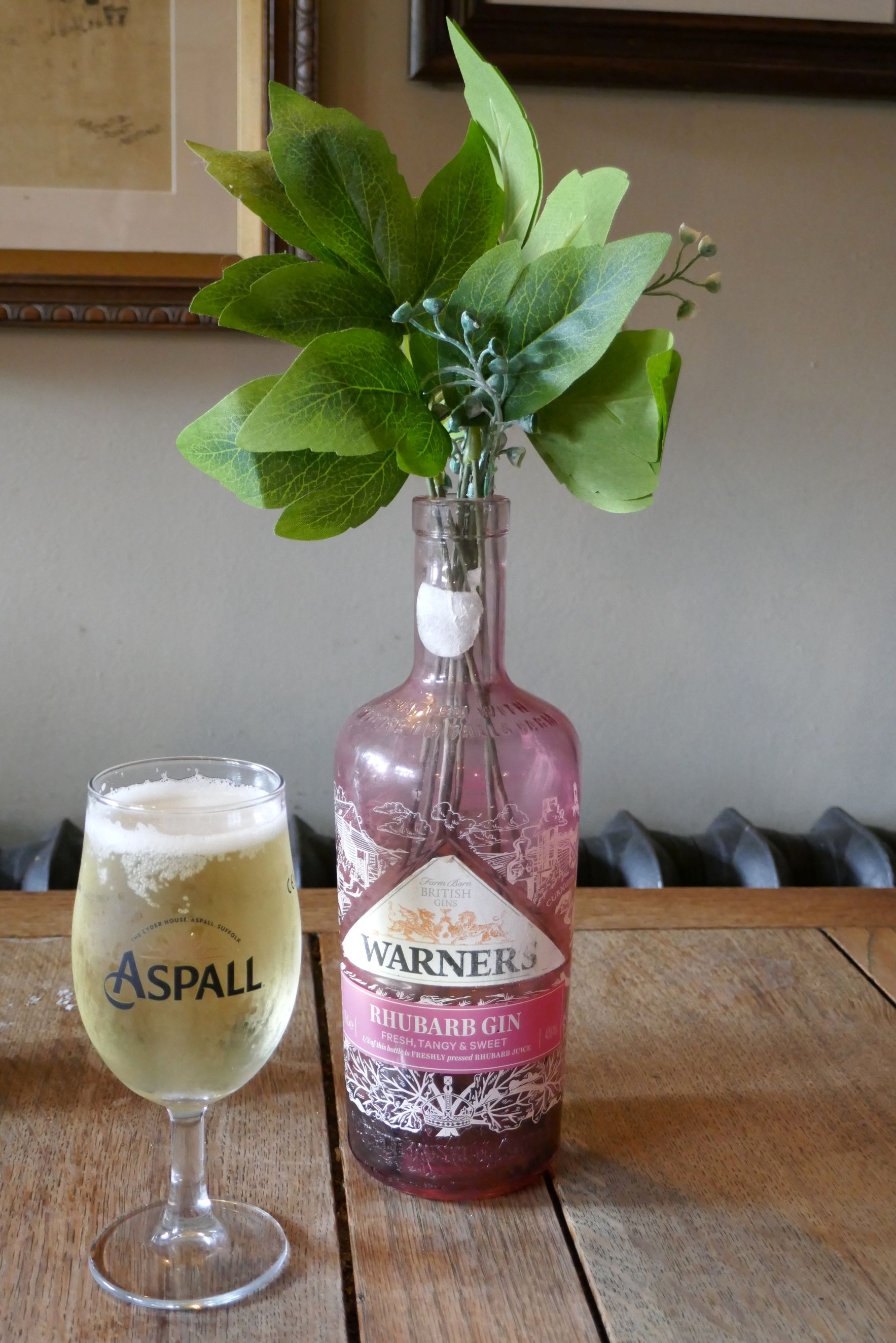
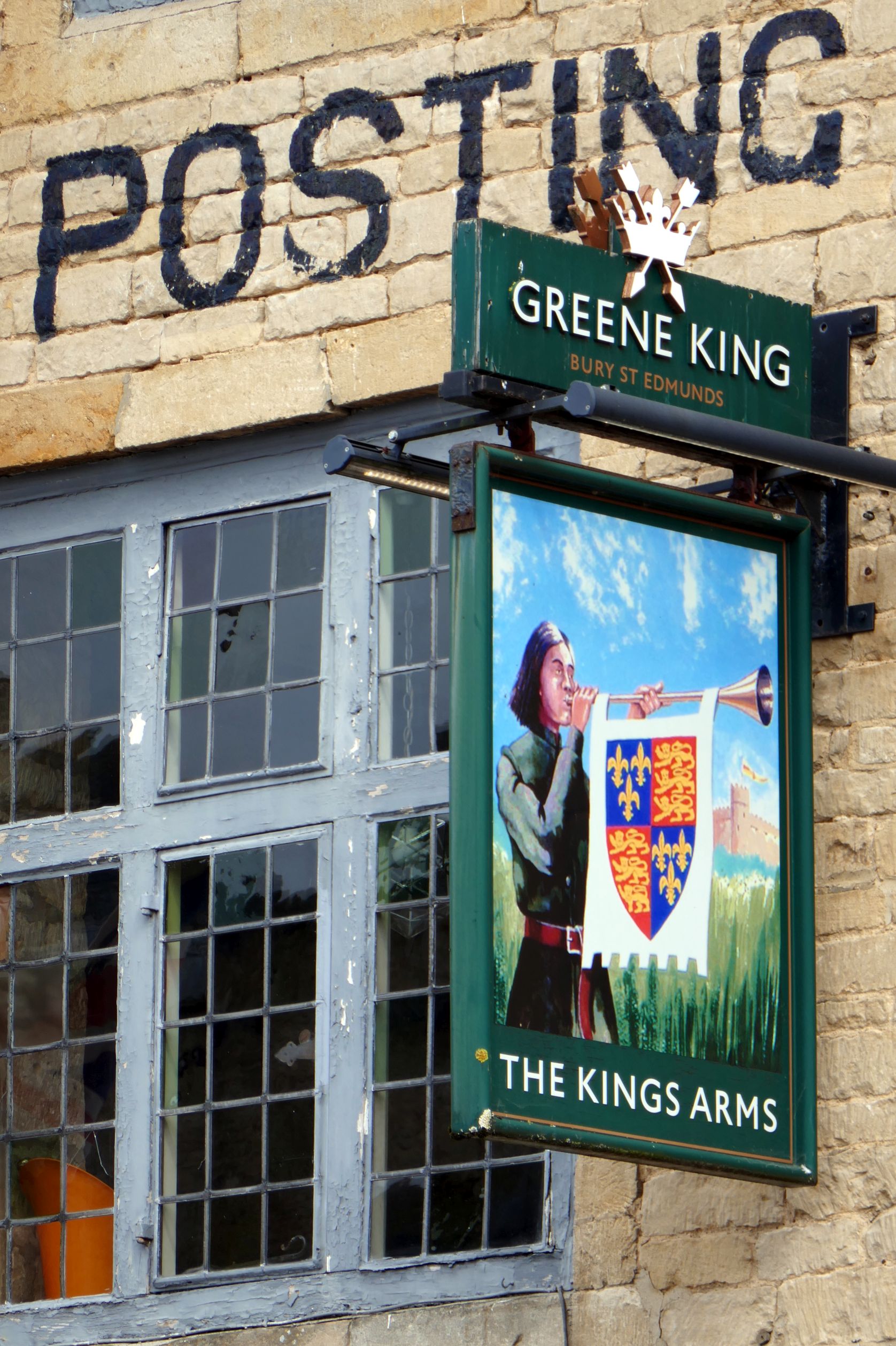
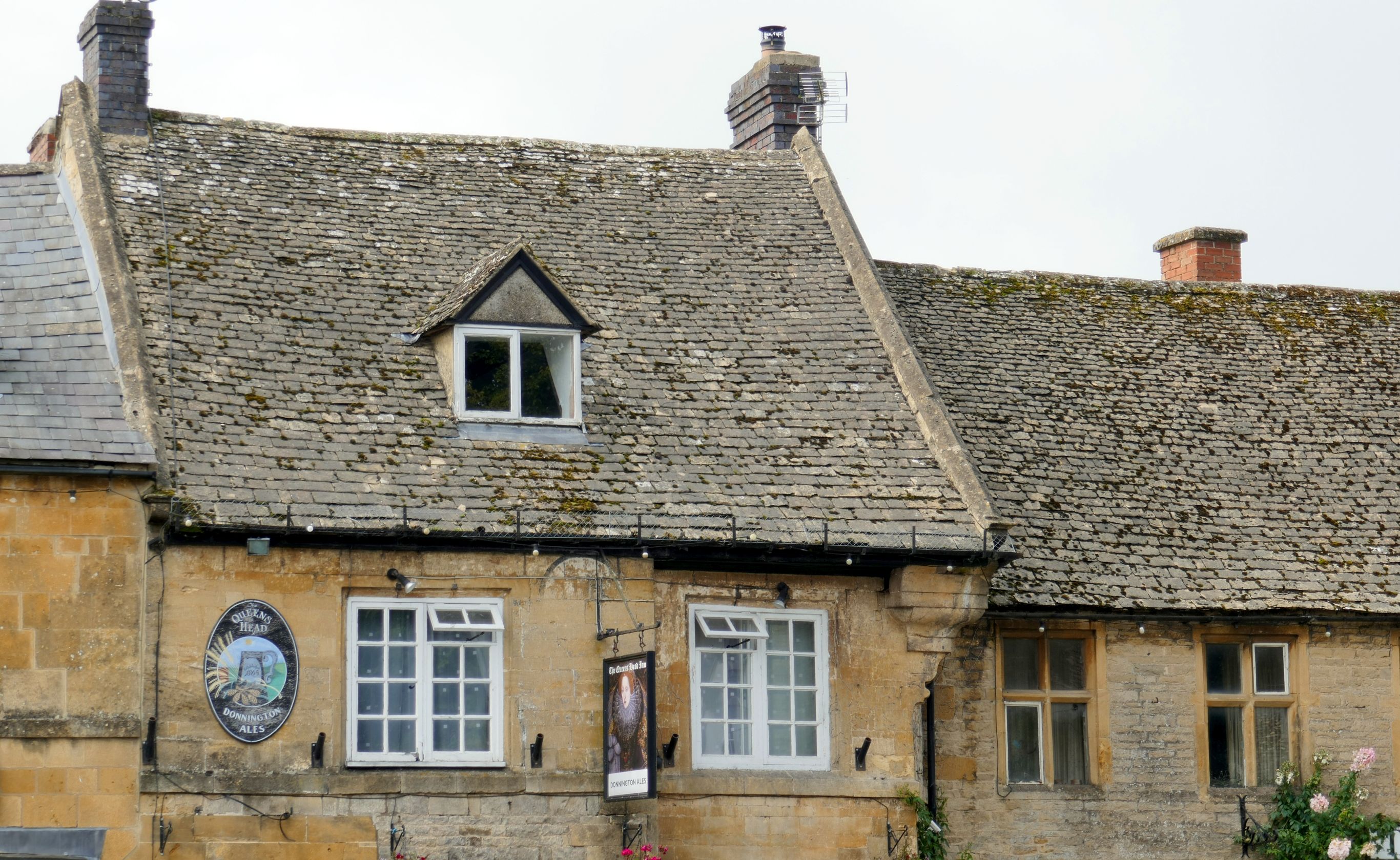
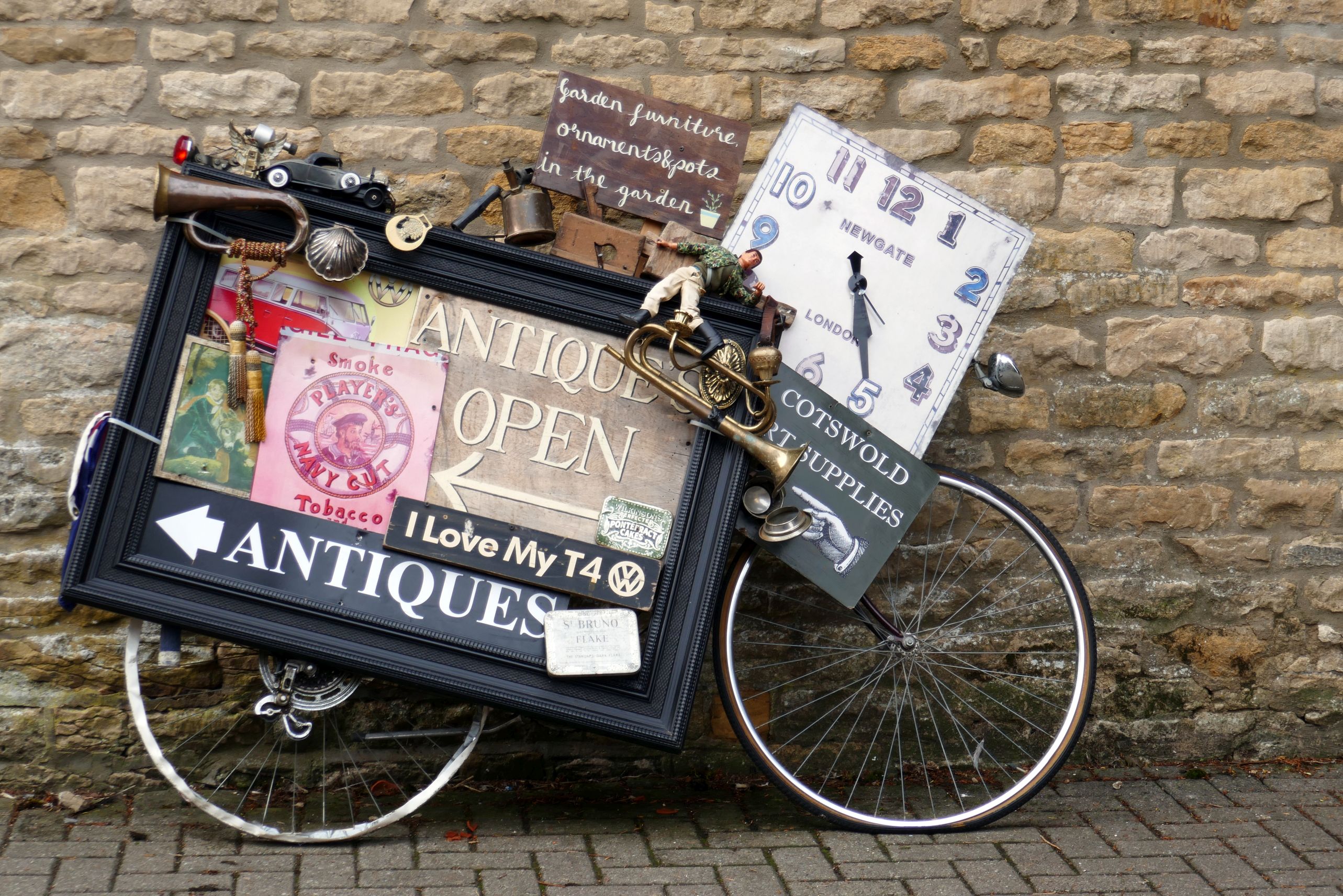

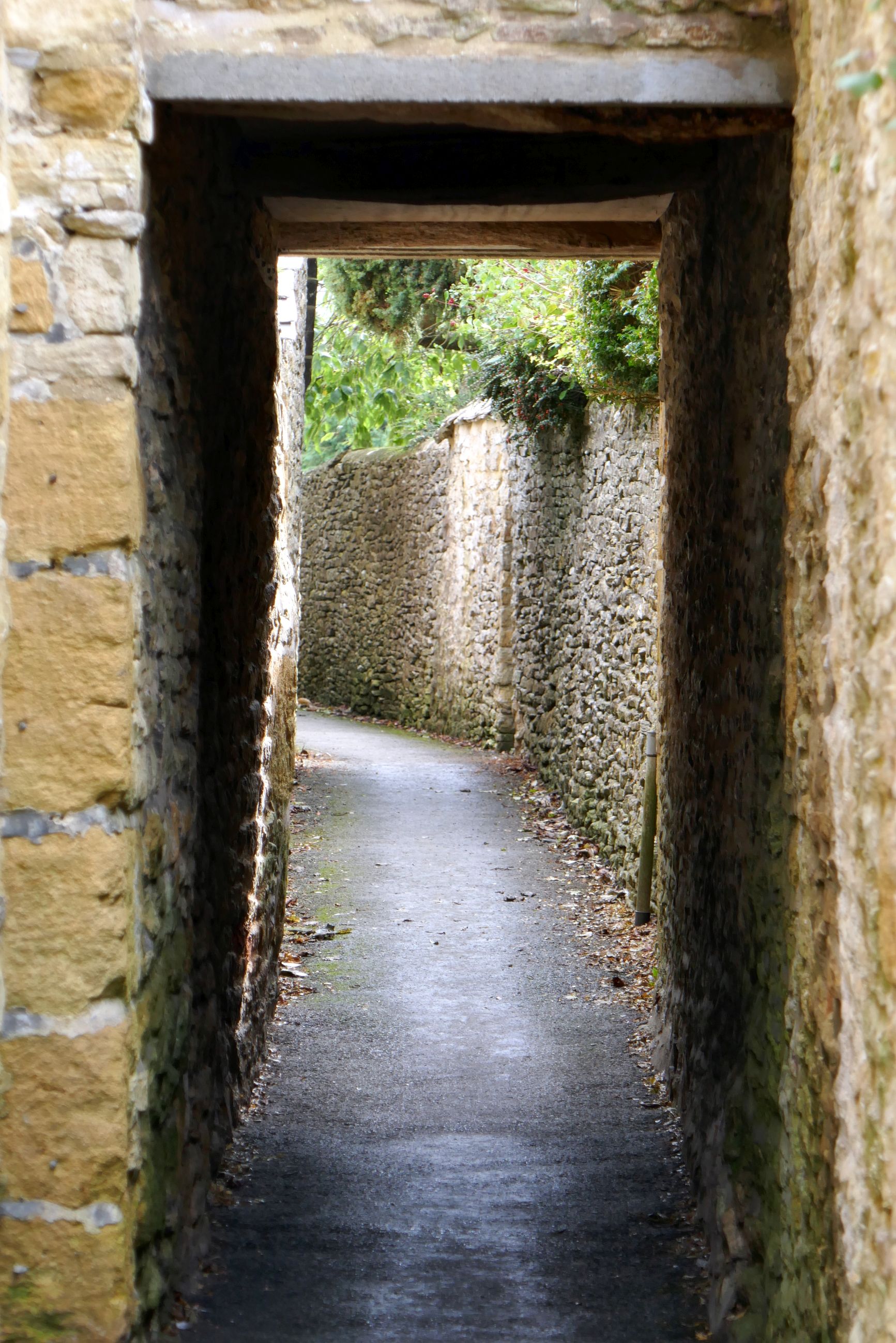


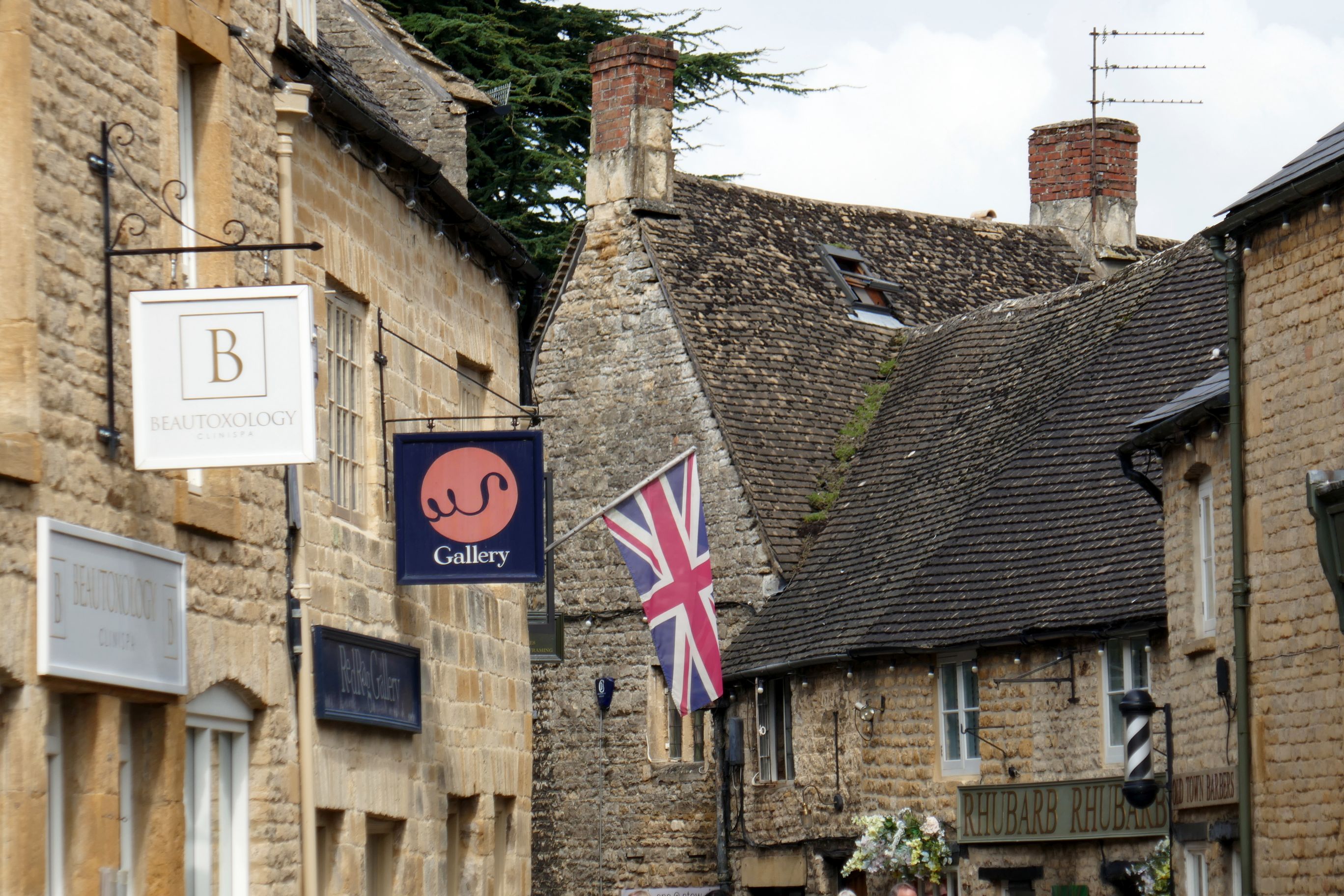


Poking around these Cotswold villages was a wonderful way to spend a day!
Coming up next: UNITED KINGDOM # 18: BEAUTIFUL BATH
 Elaine-iaK's Travels: A Traveler's Tales of People, Places, Photos, Pools... and CHOCOLATE!