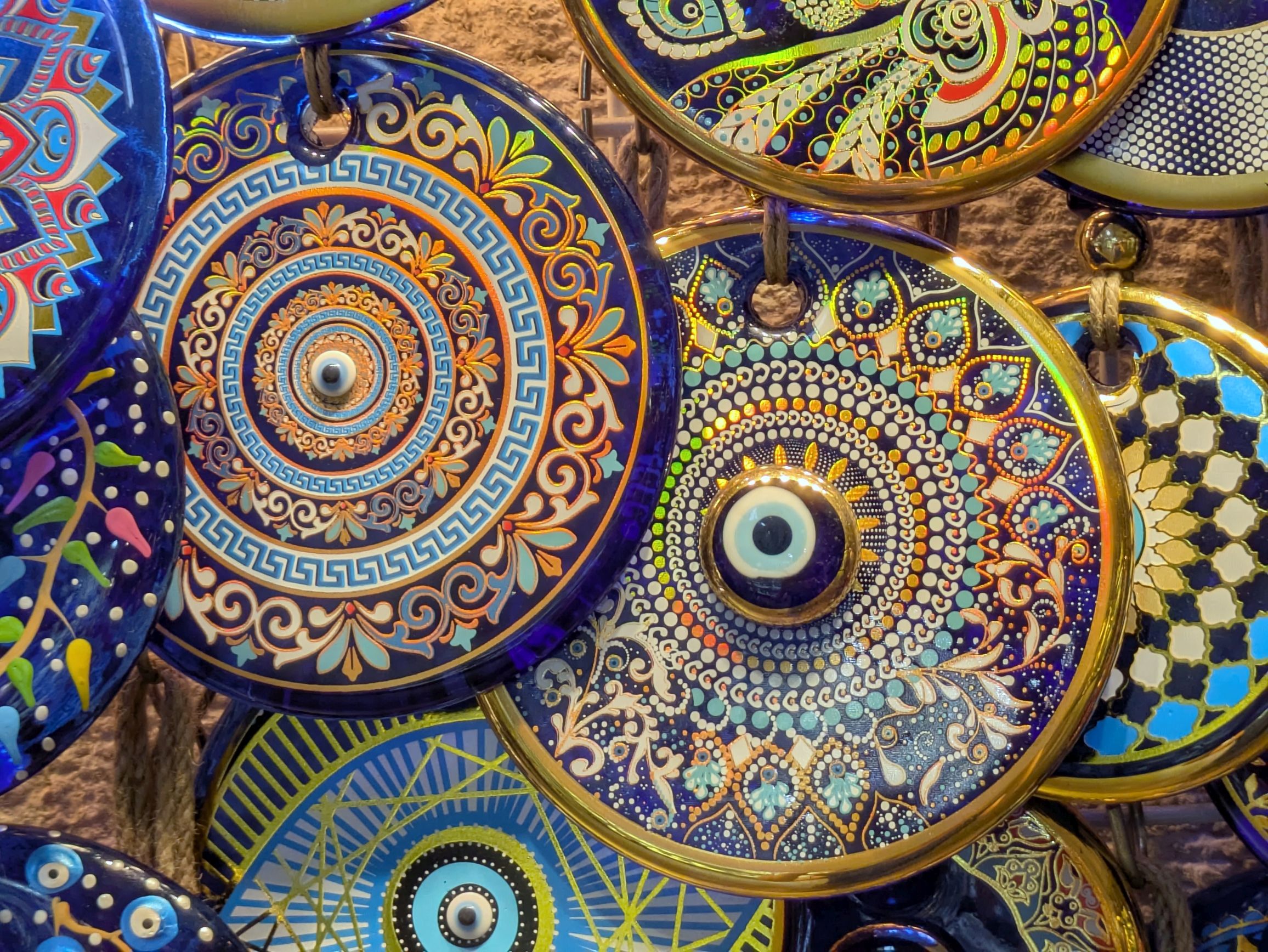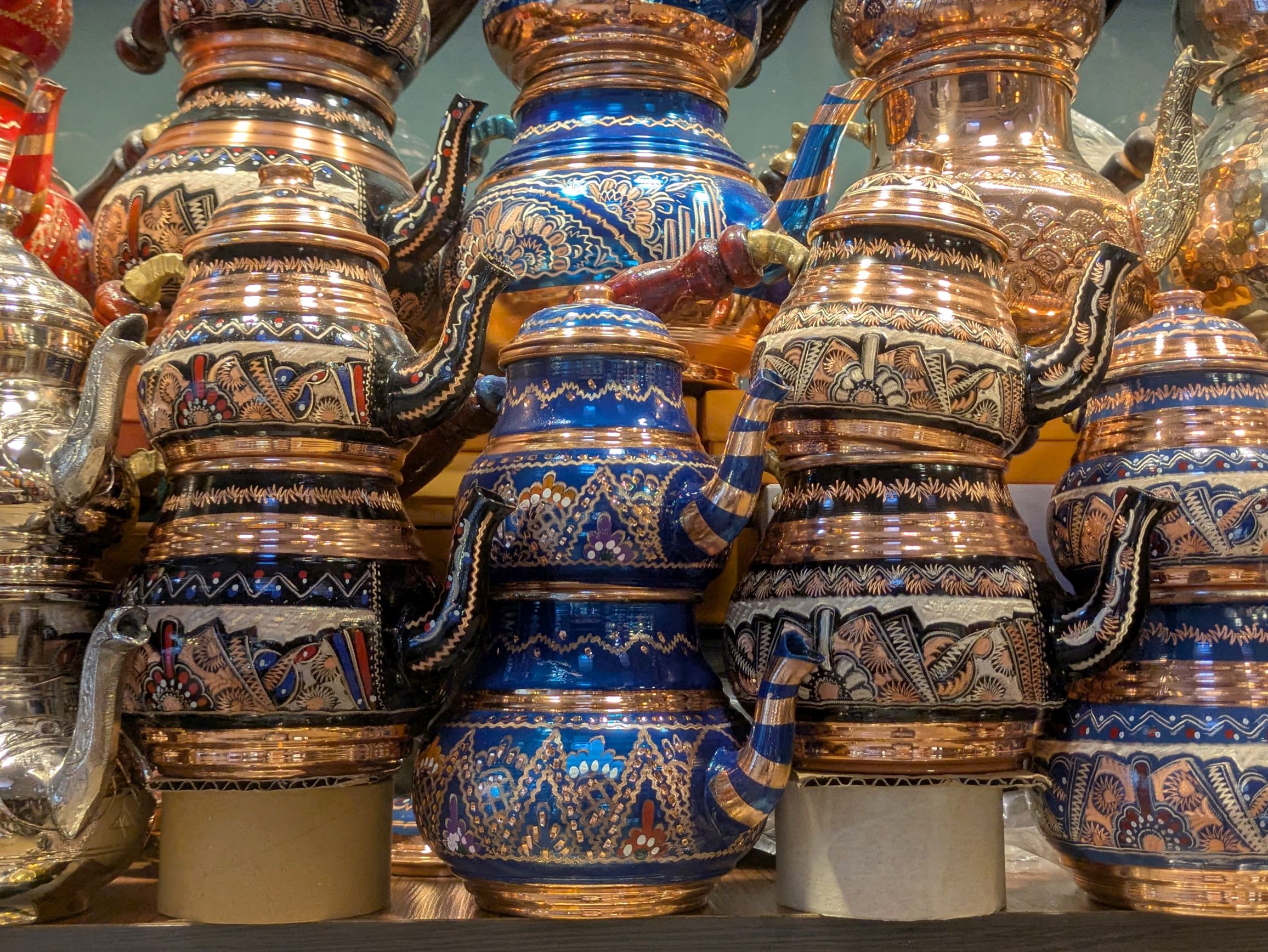
TURKIYE #6: BEAUITIFUL BALLOONS, GORGEOUS GOREME & COLORFUL CARPETS

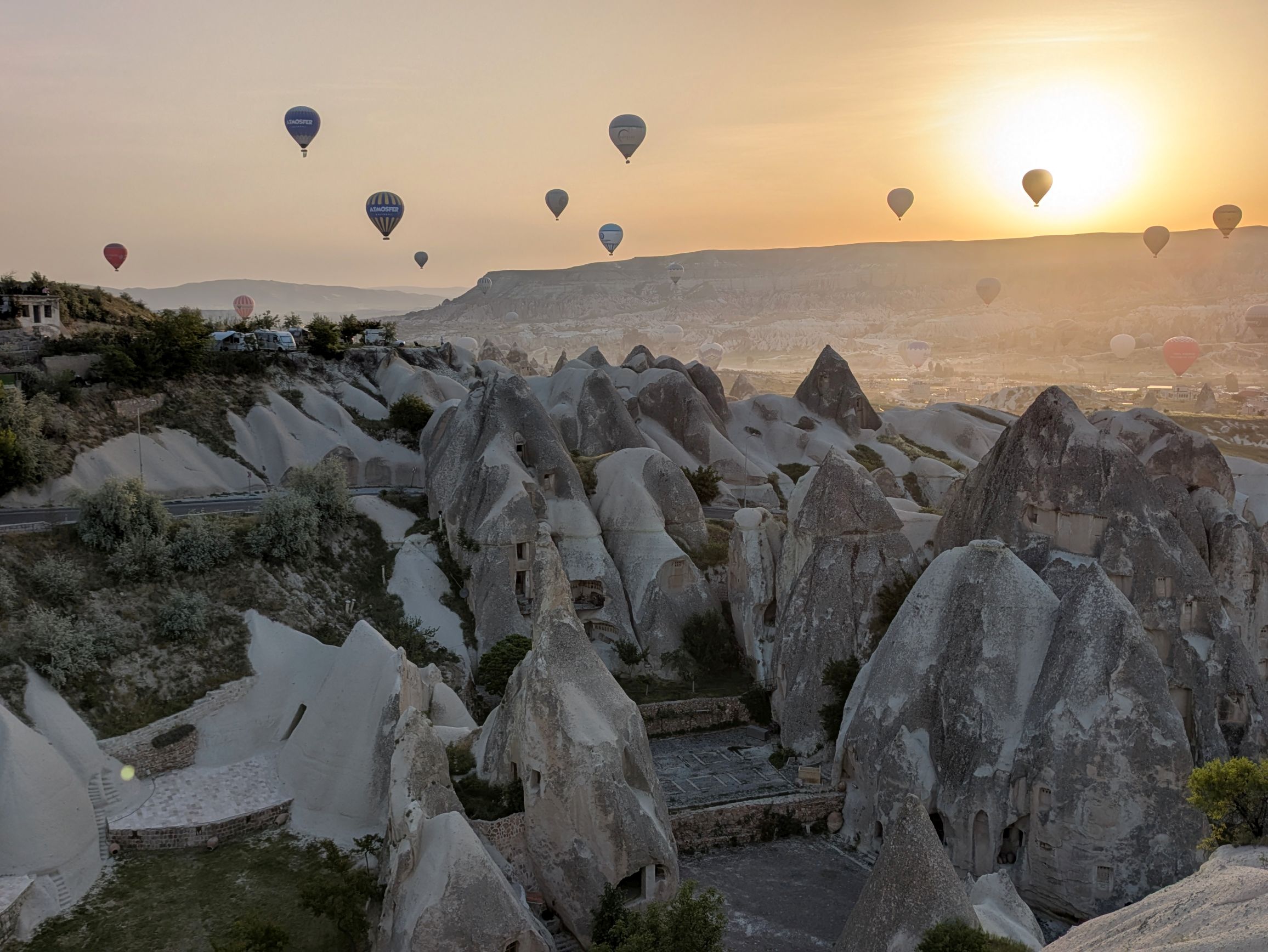
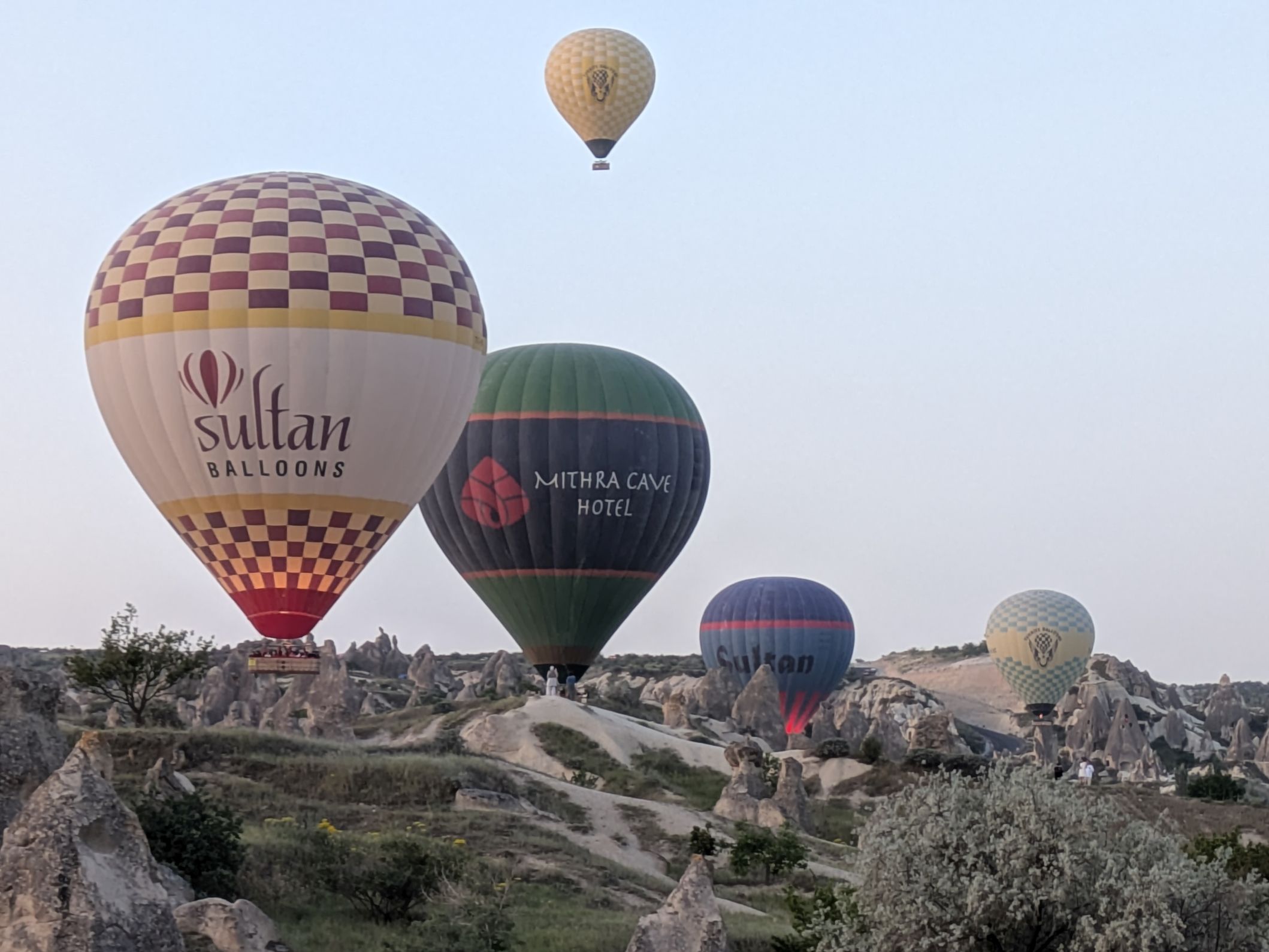
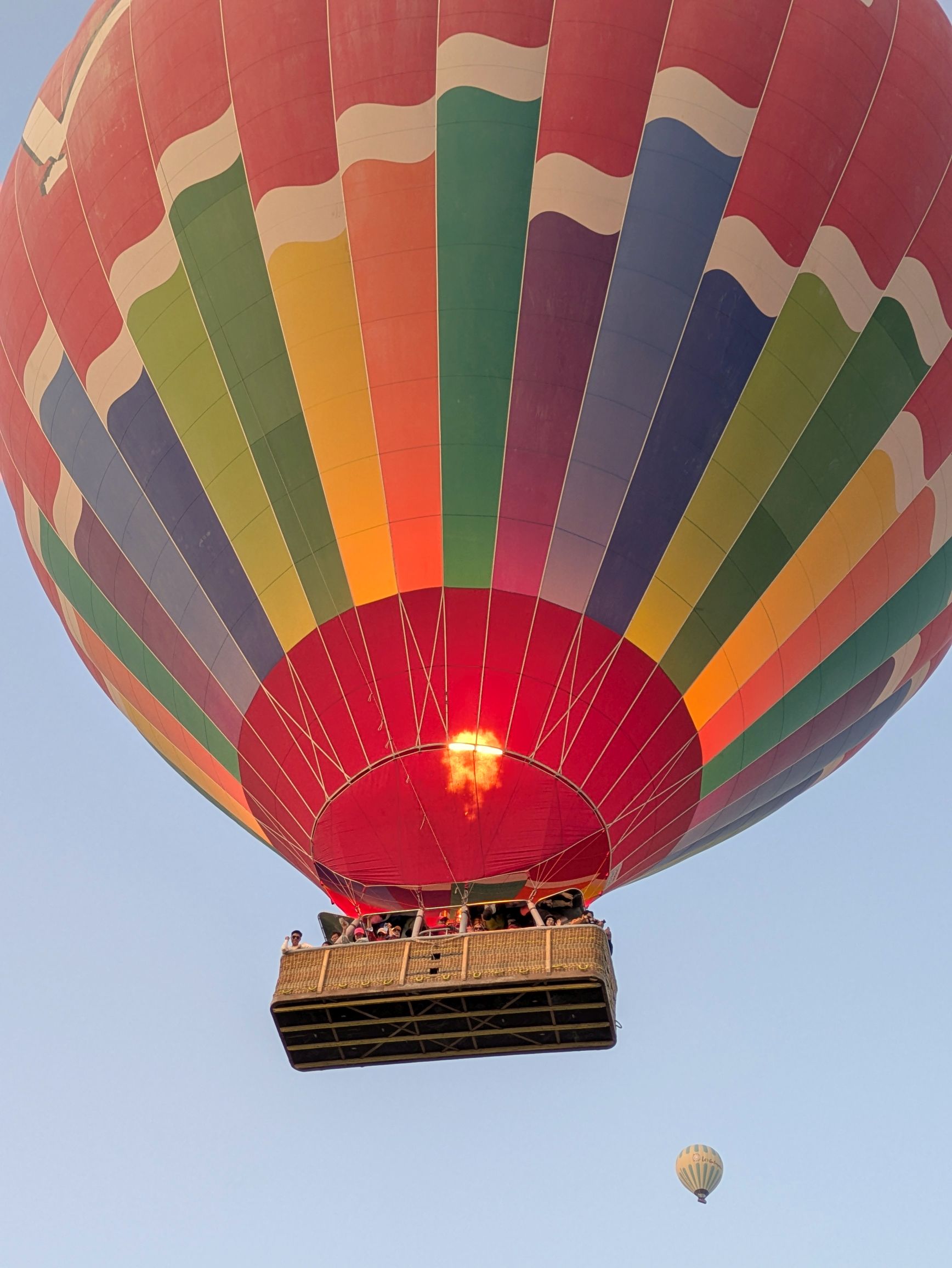
Cappadocia is famous for its hot air ballooning, and I can see why. In addition to the favorable wind conditions for pilots, the landscape is quite a draw for photographers and anybody looking to enjoy a fabulous view. Bruce dislikes being at heights like that, so we opted to take a hot air balloon watching tour. This way, we could enjoy the views of the launch from the ground as well as at a spot overlooking the valley. I didn’t mind; it was my idea! I had been hot air ballooning a few times before—the best experience at the Albuquerque Hot Air Balloon Fiesta, where I joined a friend who worked for Nikon. He got us both press passes, allowing us to go up in the balloons for free. So, rather than go ballooning on my own and spend $300 to possibly get stuck in the middle of the 20-passenger balloon, we spent a fraction of that on the small group tour.

The first stop was to see the launch, which was beautiful. It was still quite dark when most of the balloons took off, so I just watched and enjoyed the beauty of it all. It was quite a sight!

(For all photos, click on the image for a full screen view.)

After the balloons had launched, we hopped back into the van to drive a short distance to a gorgeous overlook to see the balloons flying in front of the rising sun. Spectacular!

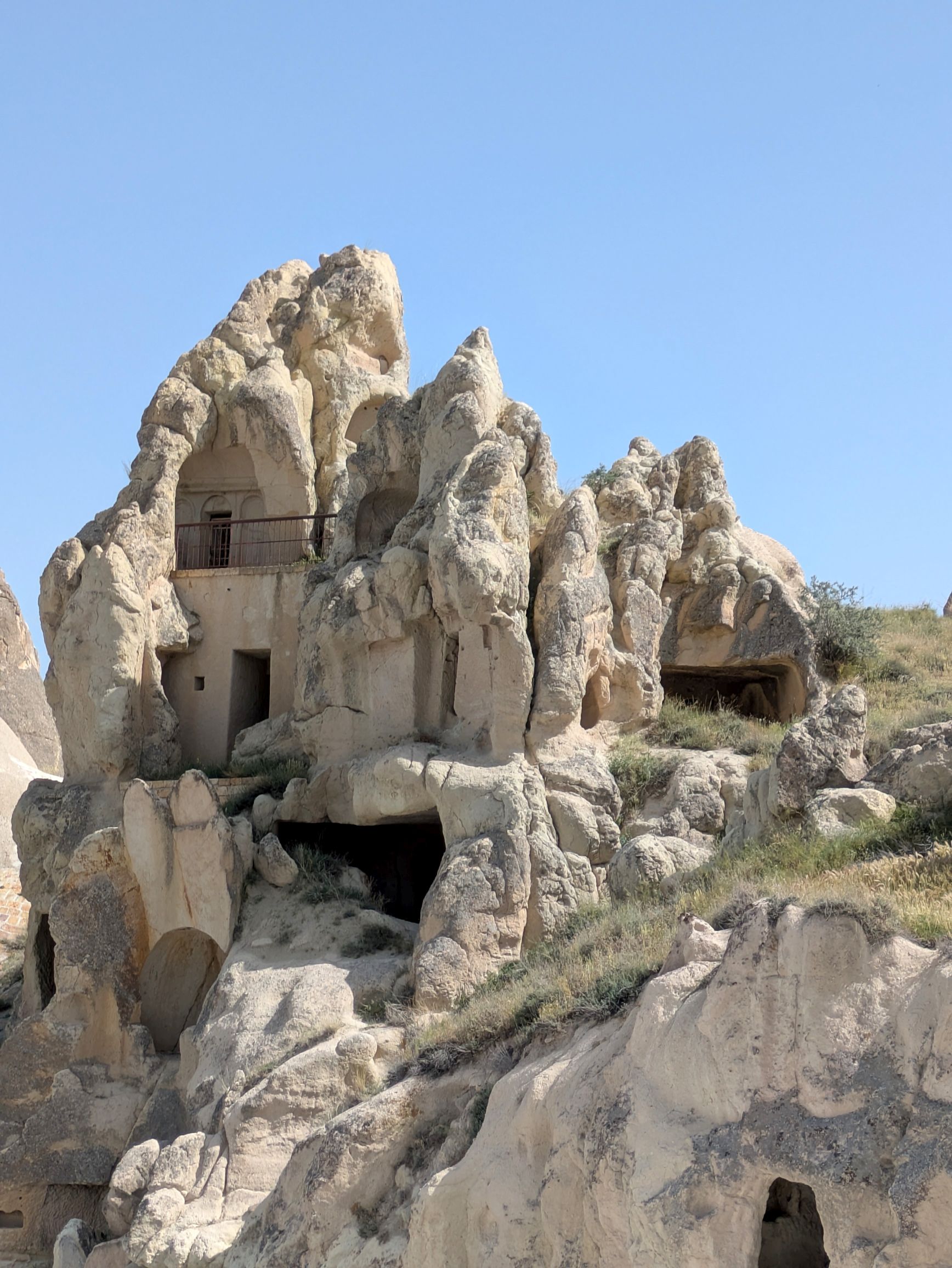
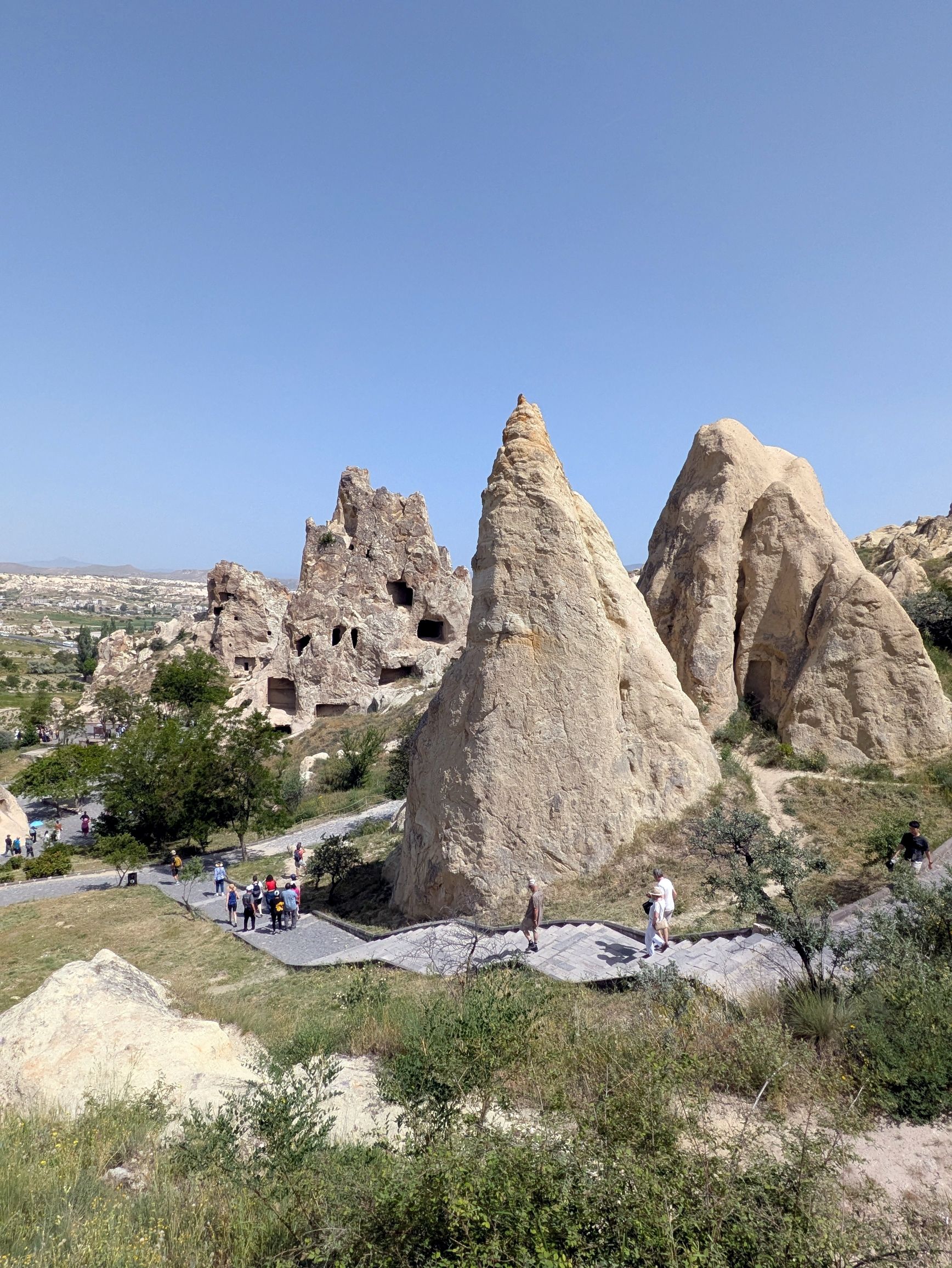
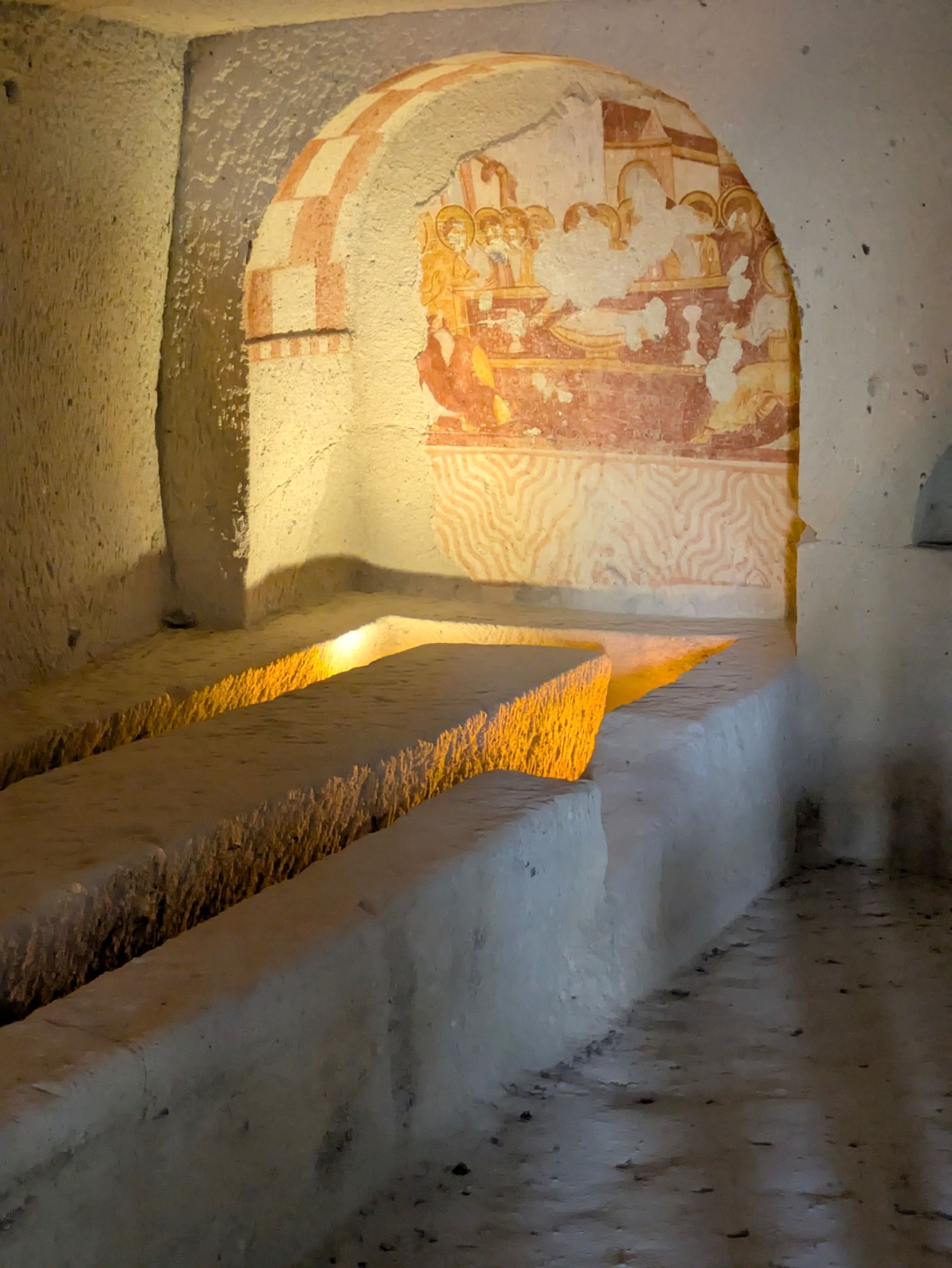
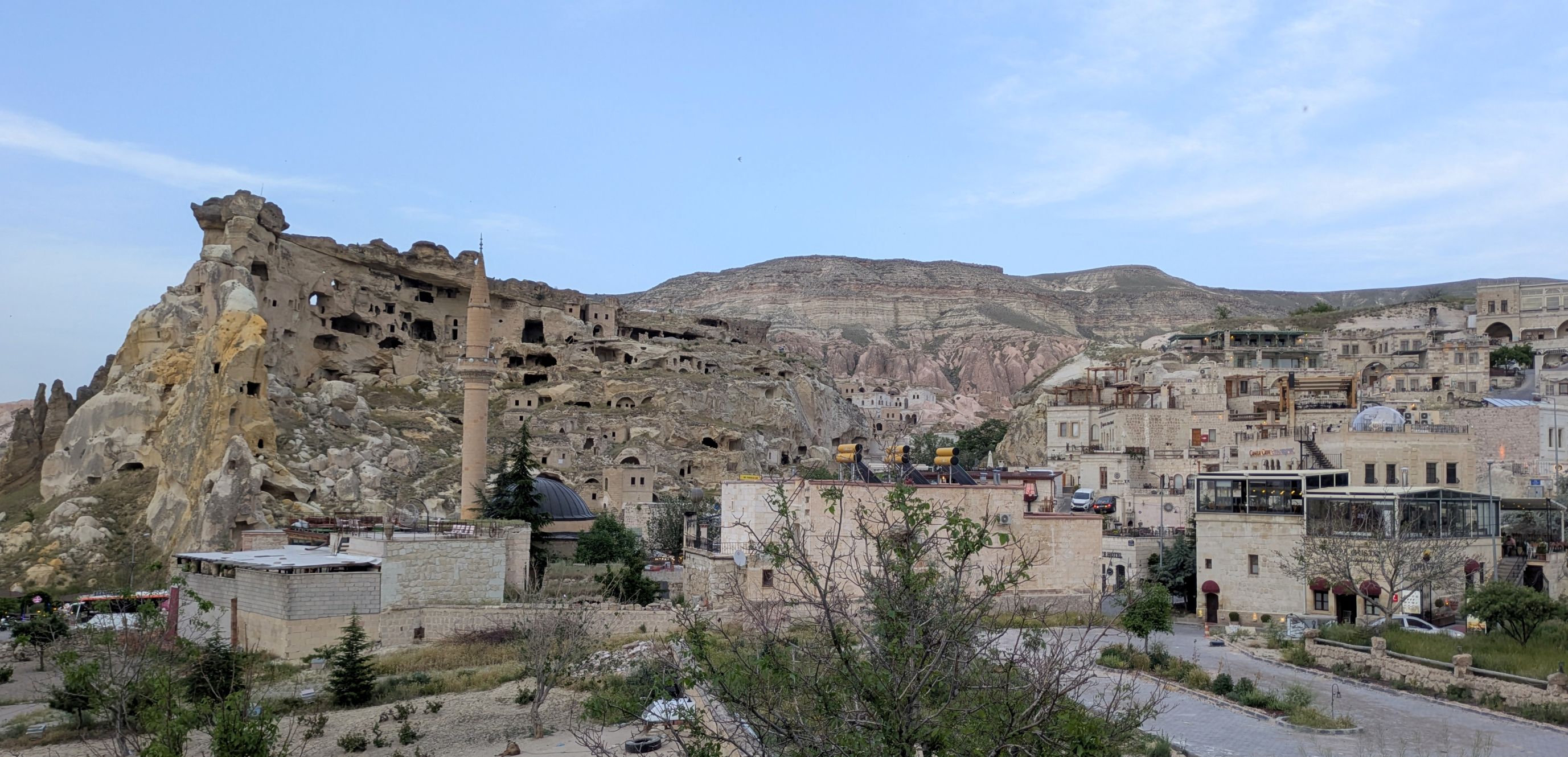
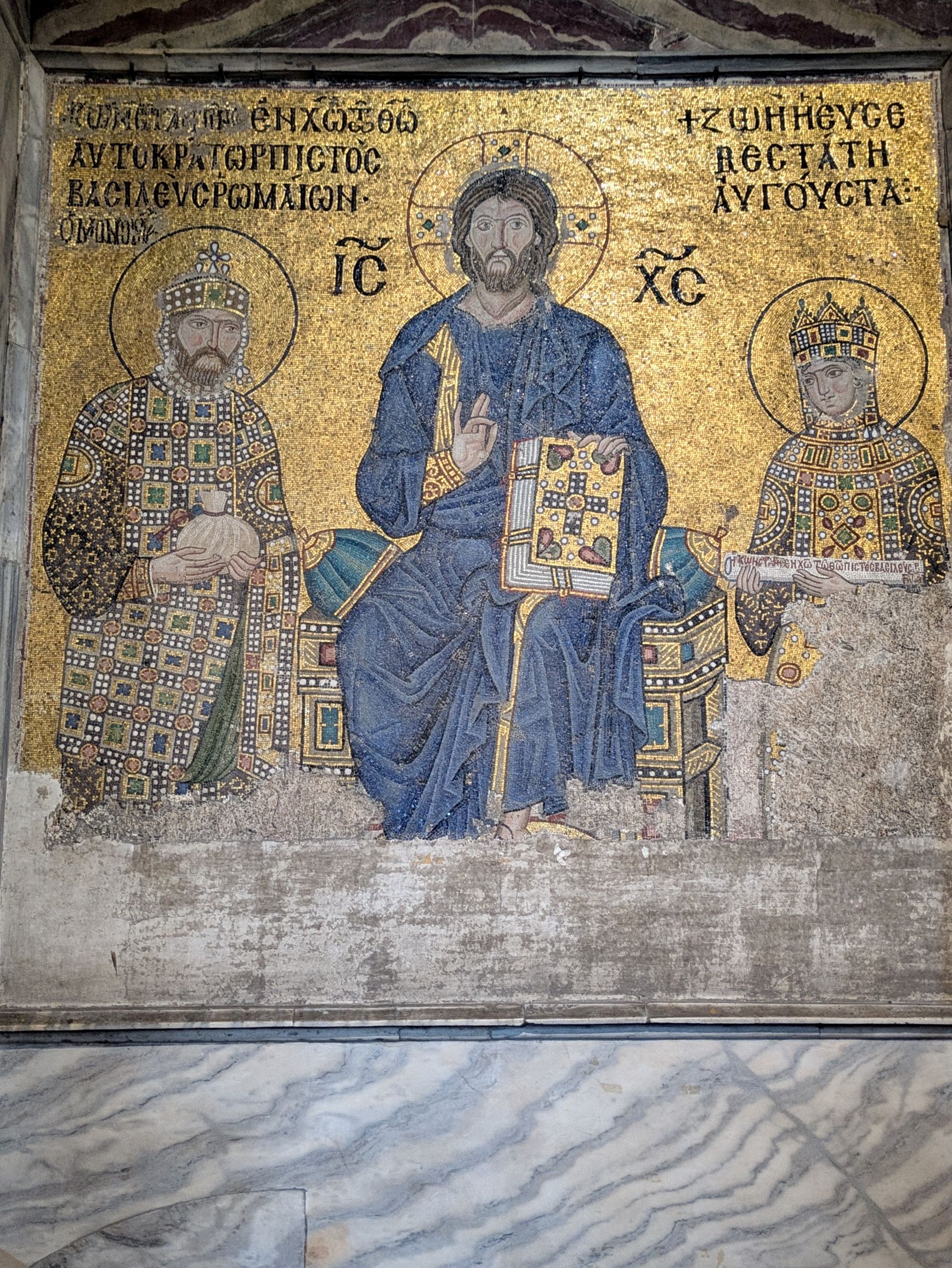
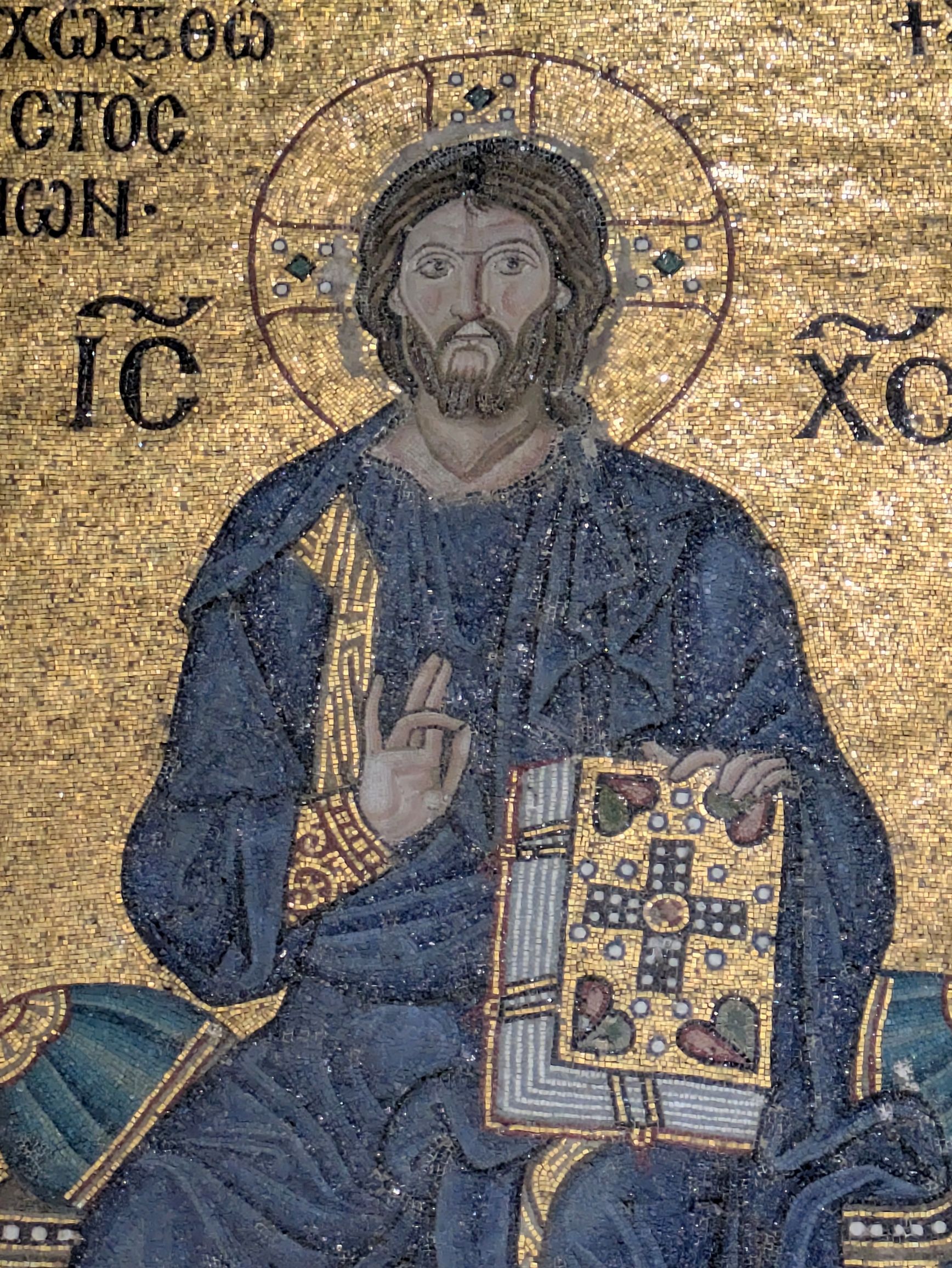
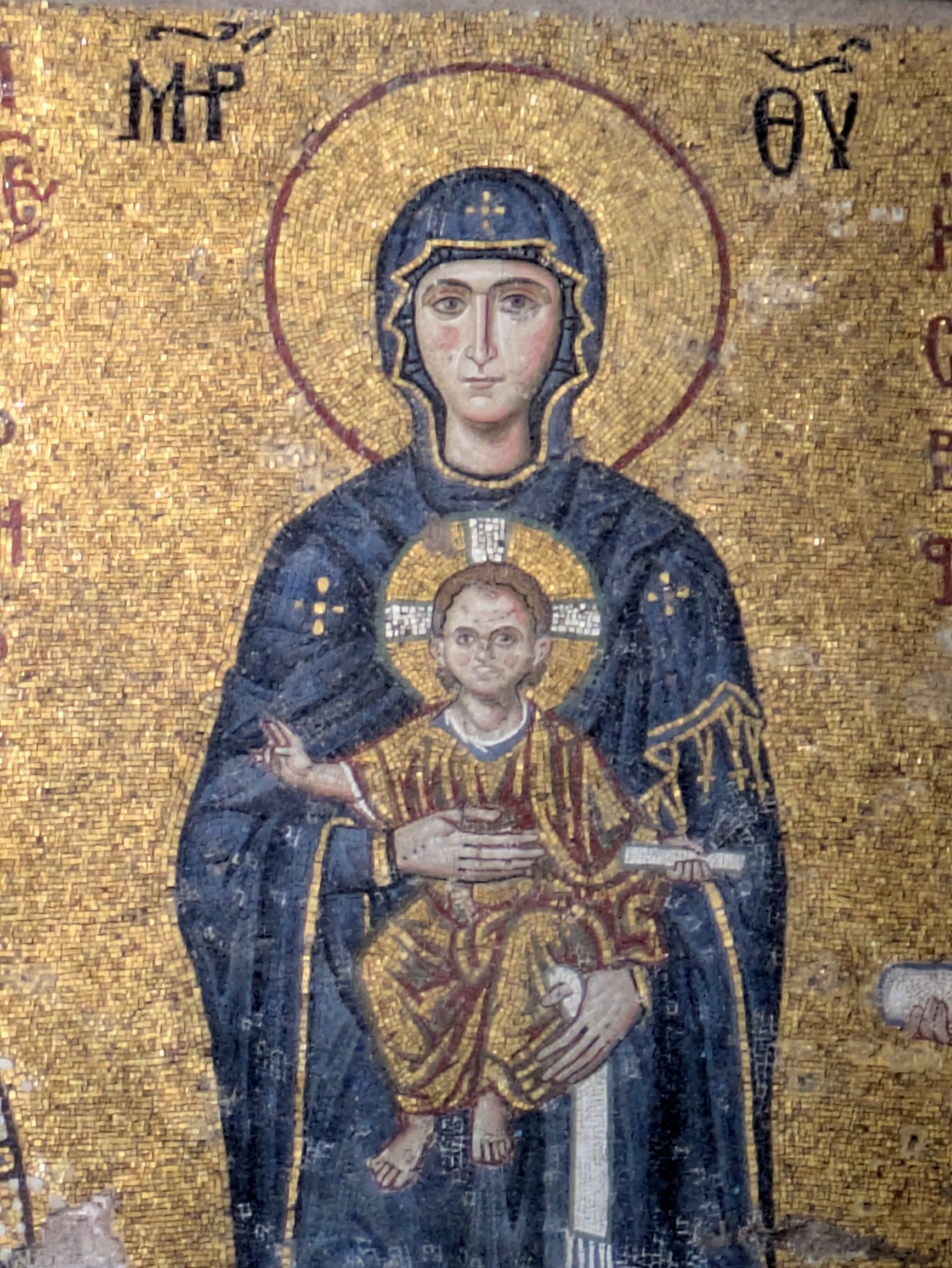
We rejoined the group after breakfast to visit the Goreme Open-Air Museum, Cappadocia’s most visited attraction. Within the museum grounds, there were fifteen cave churches and eleven rectories dating back to the 11th century. At the time, they were used extensively as Christian churches, but they were abandoned until it later became a Turkish village community.

Jumping ahead to the 1970’s, scholars came to analyze the cave churches, and the Turkish government took steps to preserve them. Tourism increased when Cappadocia was declared a “Privileged Region for Touristic Development.” It became a UNESCO World Heritage Site in 1985, which has increased tourism to over one million visitors every year.

A water system built inside one of the cave churches

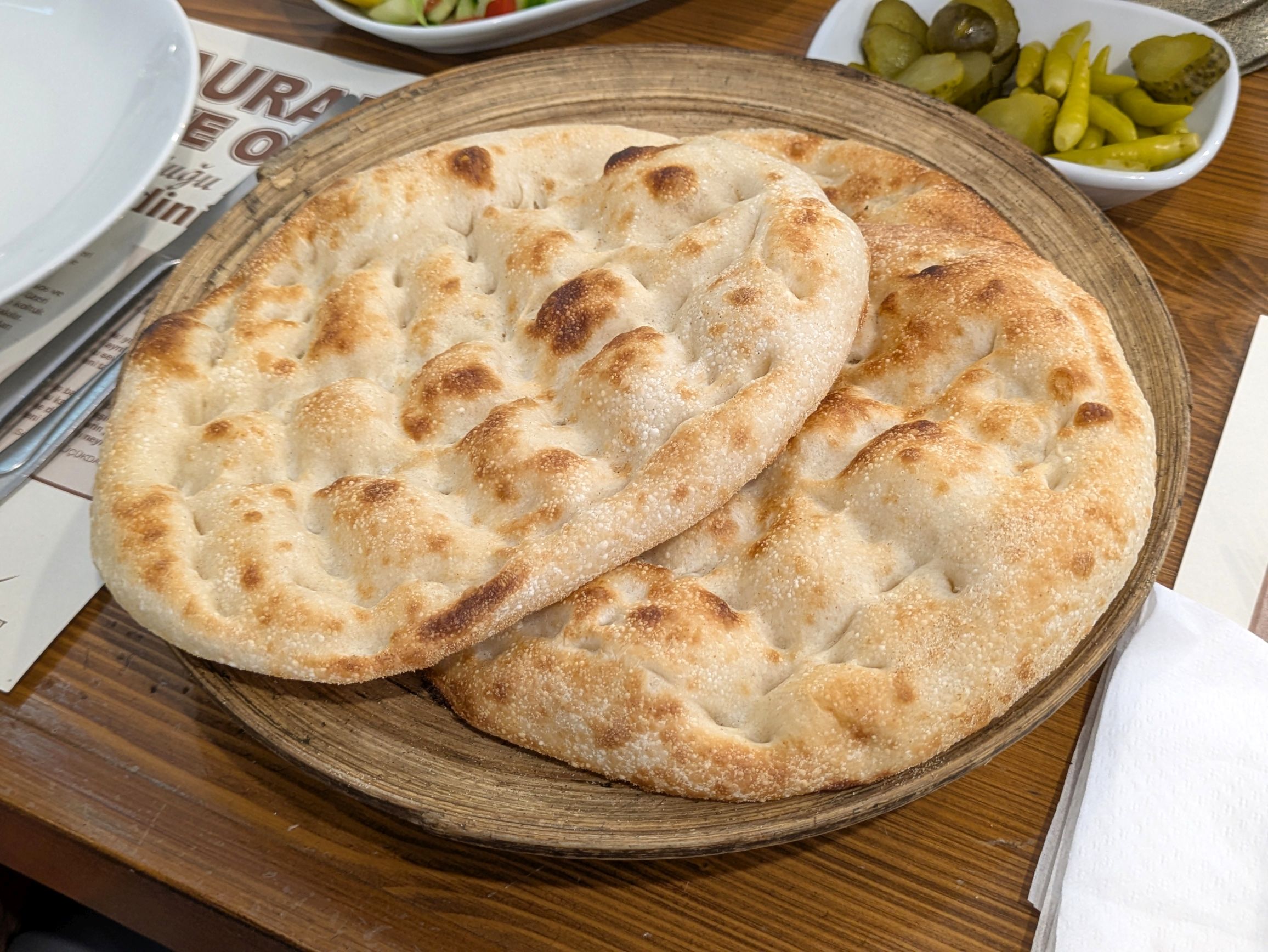
For lunch, we were driven to a traditional Turkish restaurant to enjoy Turkish cuisine cooked in clay pots and bazlama (Turkish flatbread). It was all so delicious!

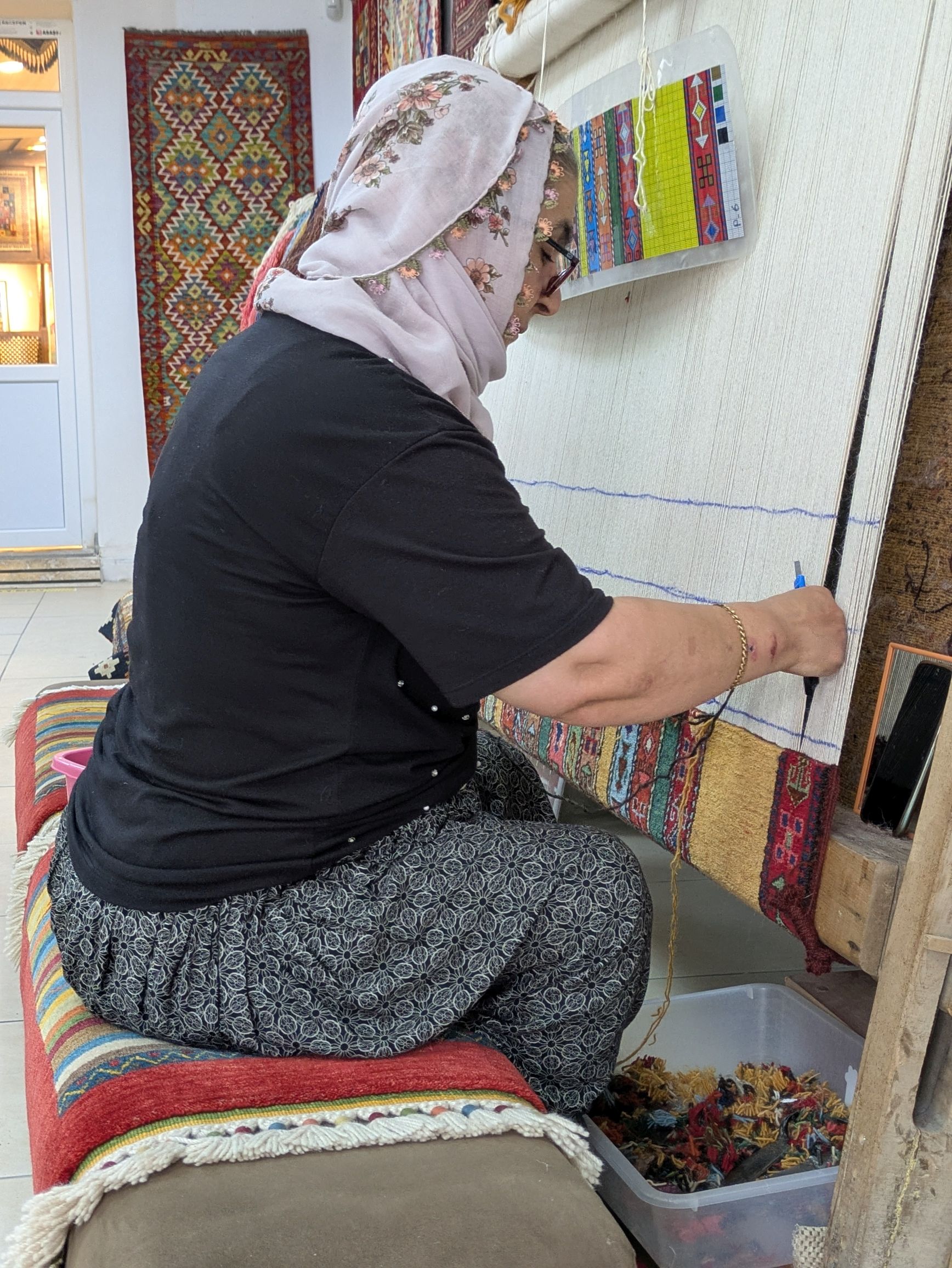
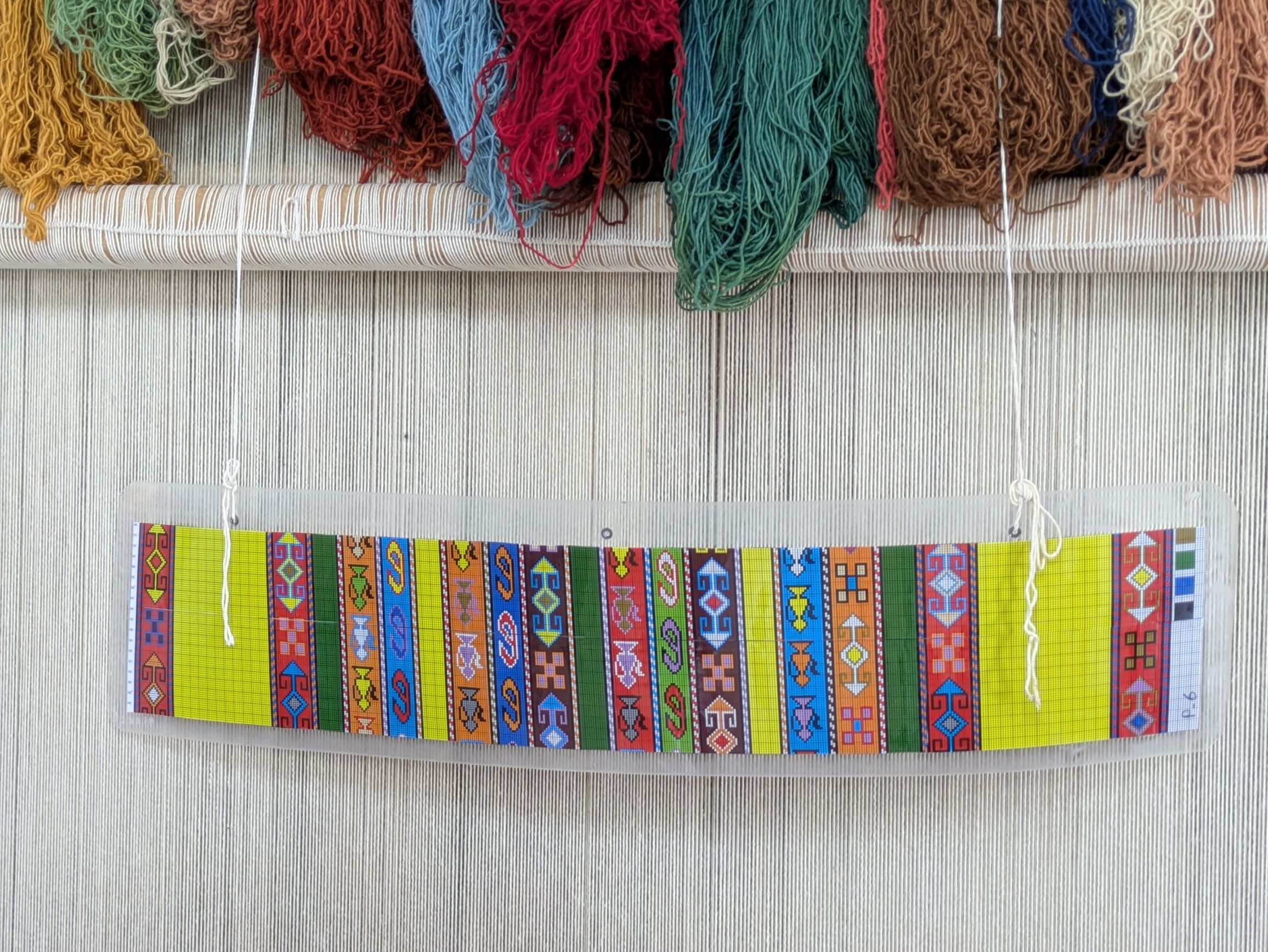
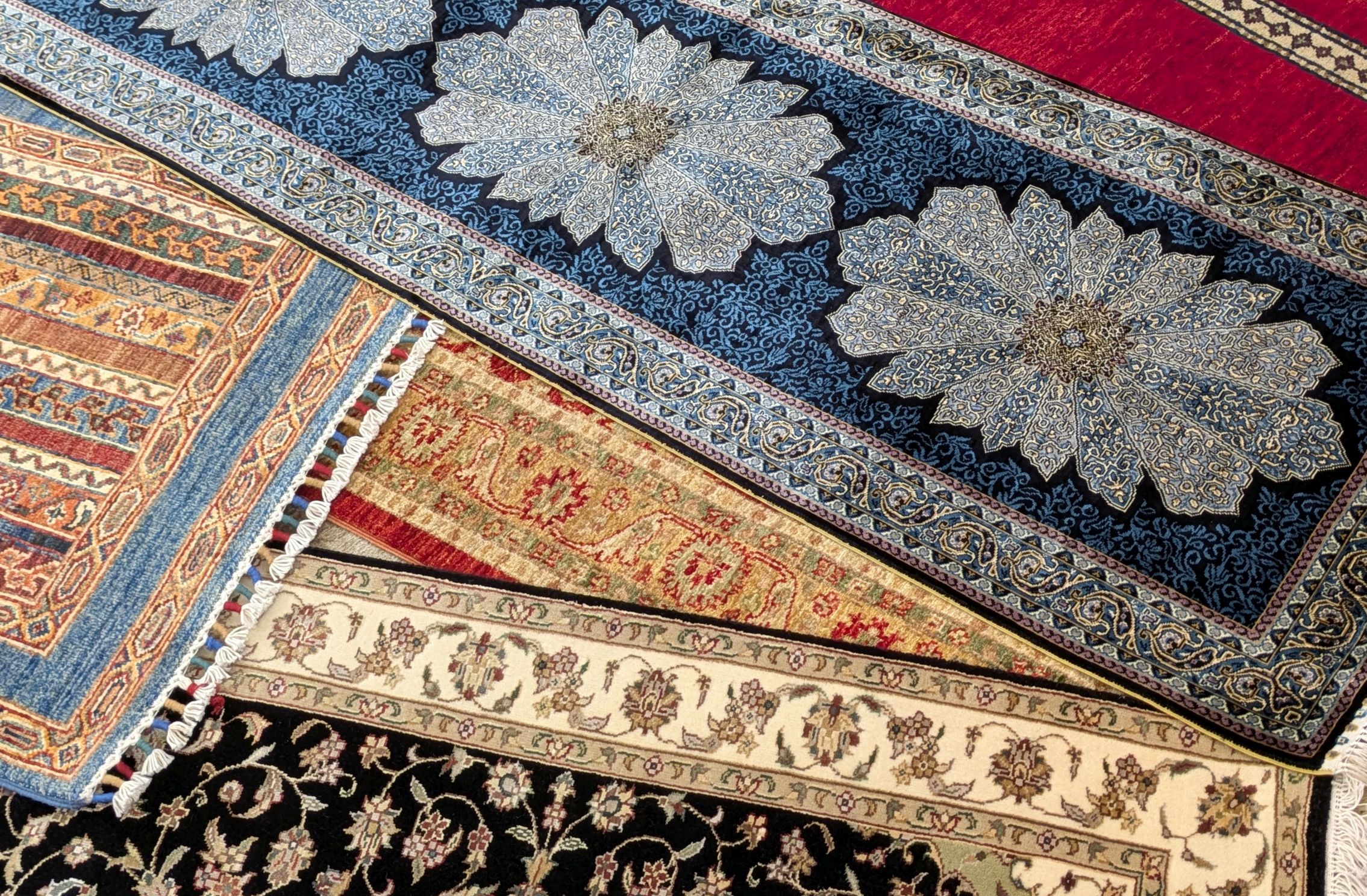
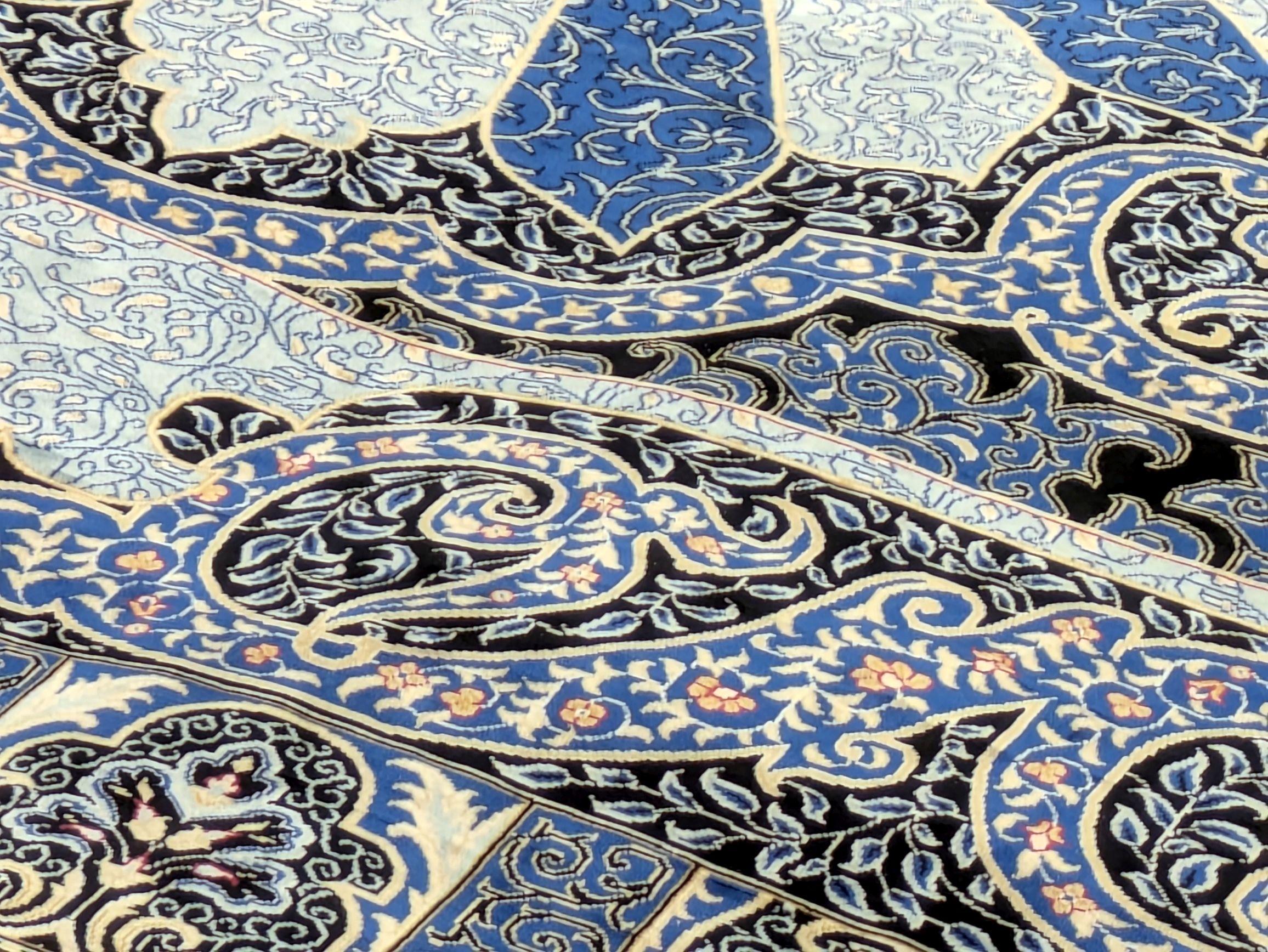
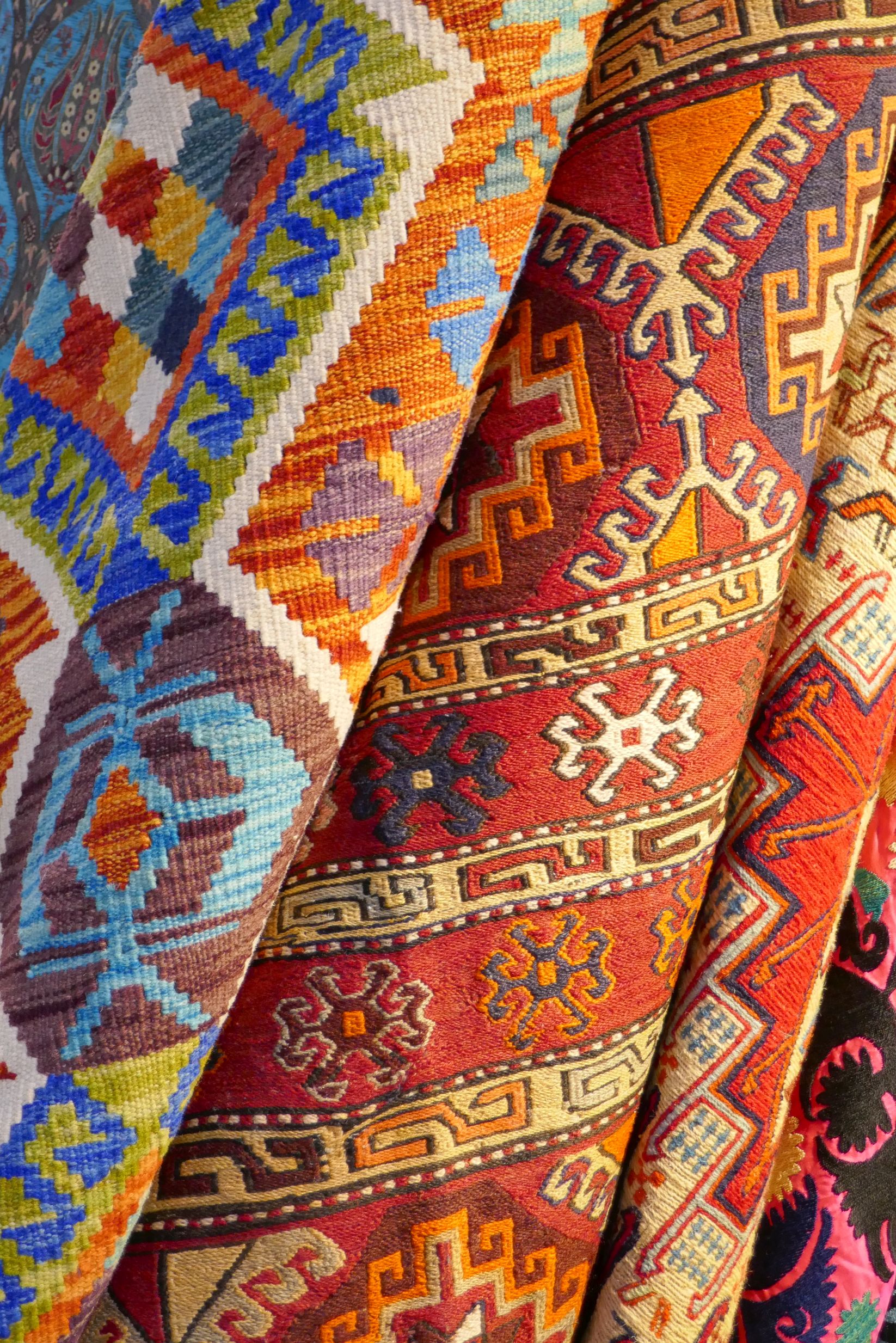
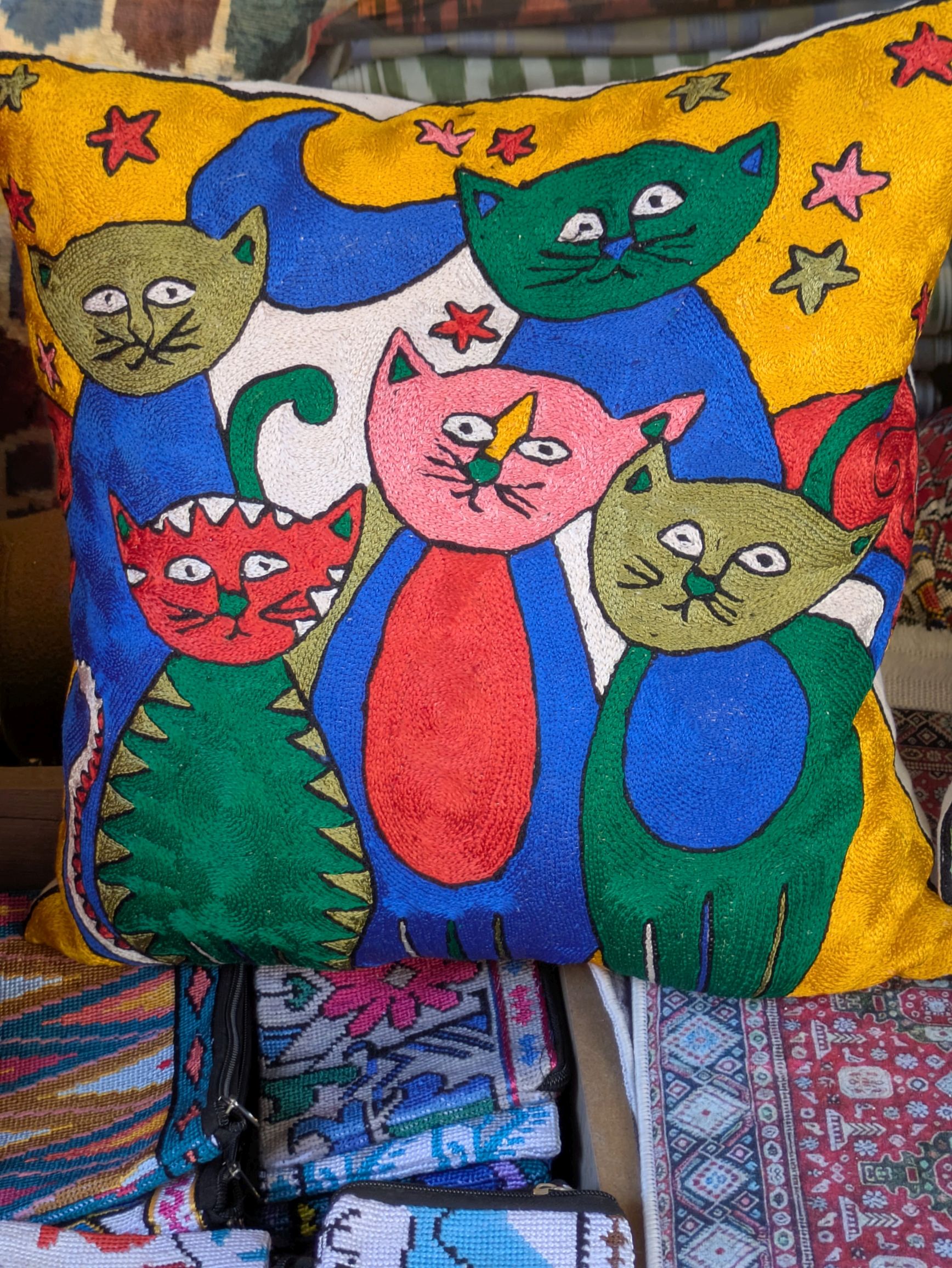
Next, we visited a carpet cooperative where they weave and sell beautiful Turkish carpets with colorful and intricate designs. Also known as Anatolian rugs, they are made in the region historically dominated by the Ottoman Empire. An important part of Turkish culture, these carpets have a long and extensive history.

I found it interesting that Turkish carpets are the masterpiece of a dowry. When a woman gets engaged to be married, two weeks before the wedding, women in the neighborhood and family are invited to see the dowry her parents are giving to the couple. Everybody brings gifts, but the star of the party is the Turkish carpet that the family members made. Everybody in attendance wants to see it and learn if the bride made the carpet.

At the carpet cooperative we visited, the women are paid by the number of knots they tied. They can either work at the store or at home; however, if they work at the store, they receive benefits. The women who choose to work at home get paid only for the completed rug. 

The rugs are woven with only natural fibers such as wool, silk and cotton (and sometimes even goat and camel hair), and the spinning is done by hand. The dyes used are obtained from plants, insects, and minerals. Red dye, for example, is made from Madder roots. The price of the rug depends on the type of fiber used and the number of knots. Silk is the most expensive, because it is fine. It requires 100 knots to produce just one square centimeter! The benefit, however, is that a silk rug is the most durable.

From balloon watching to visiting Goreme and then learning about Turkish carpets; it was a full and enjoyable day! We capped it off with a memorable group dinner at a restaurant in a small village. The view of the volcanic rock formations was spectacular, just out the window next to where I was sitting at the end of the table. Across from me sat our bus driver, who didn’t speak any English, but seemed so kind and always greeted us with a friendly smile.  While waiting to be served, I broke my self-imposed rule of no phones at the tables and brought mine out. (Don’t even get me started with how I feel about my dining companions taking calls, texting, or checking emails while we are having a conversation!) I quickly opened Google Translate, so we could have a conversation we both could understand. We learned a lot about each other, his family, work, and dreams for the future, while dining on Turkish cuisine and passing the phone back and forth. It was truly memorable and an example of what I felt was an appropriate way to use technology.

Next up: TURKIYE #7: A DAY IN THE LIFE OF CAPPADOCIA

TURKIYE #5: CAPTIVATING CAPPADOCIA

To get from Istanbul to Cappadocia, our group took a short flight, about one hour and twenty-five minutes.  The flight may have been short, and we may have been traveling from one Turkish location to another; but we arrived at what appeared to be an entirely different planet.

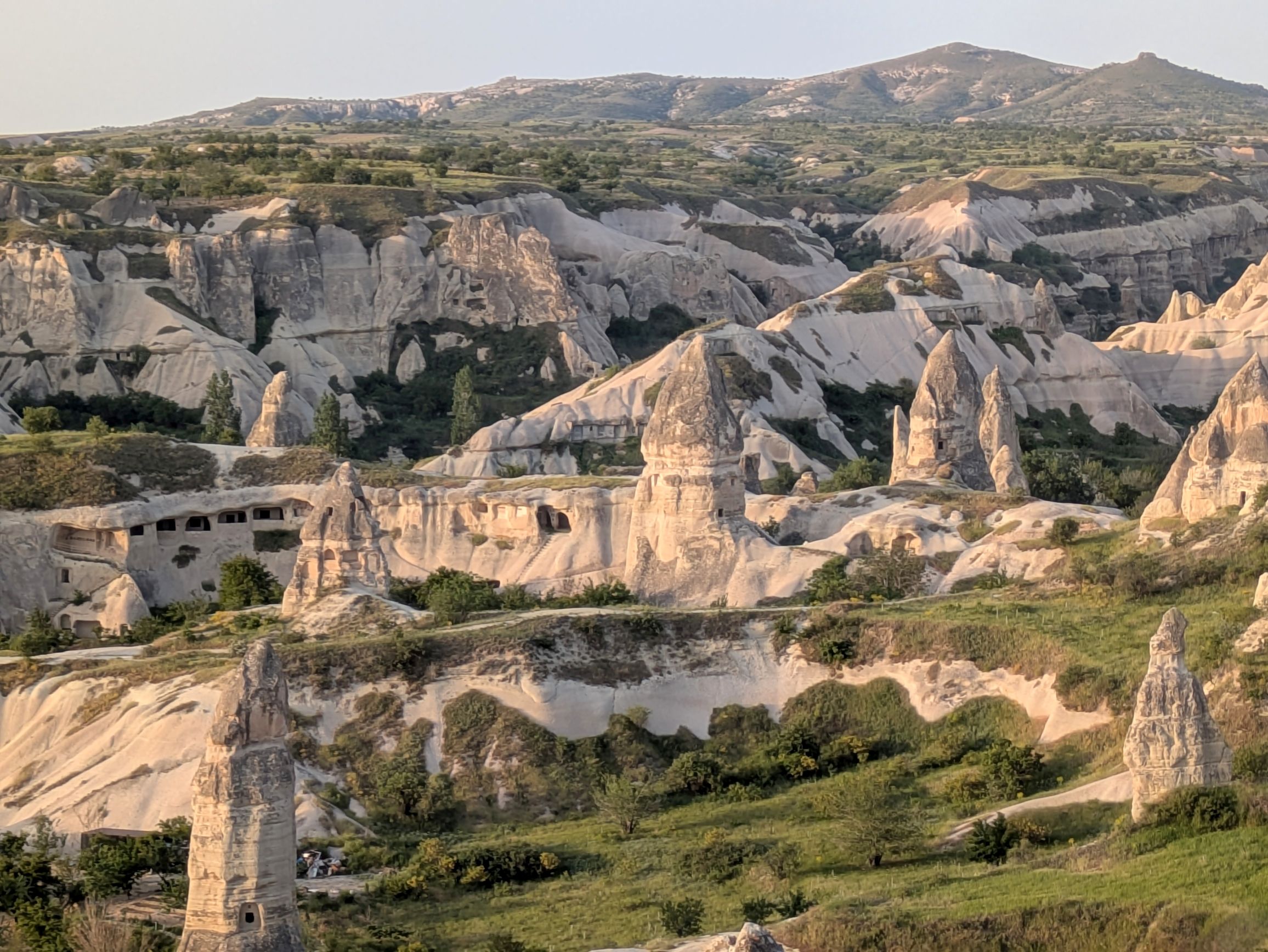
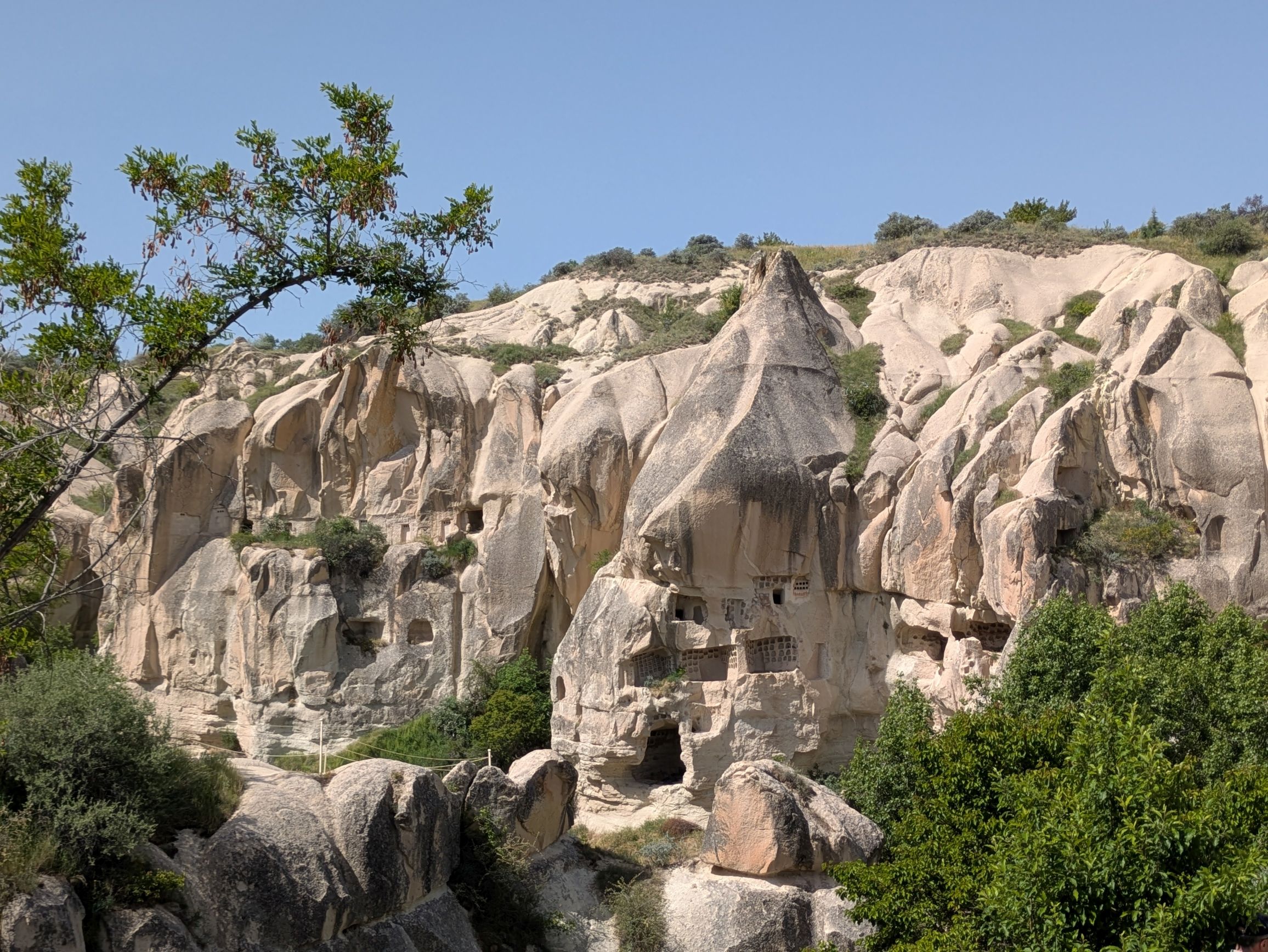
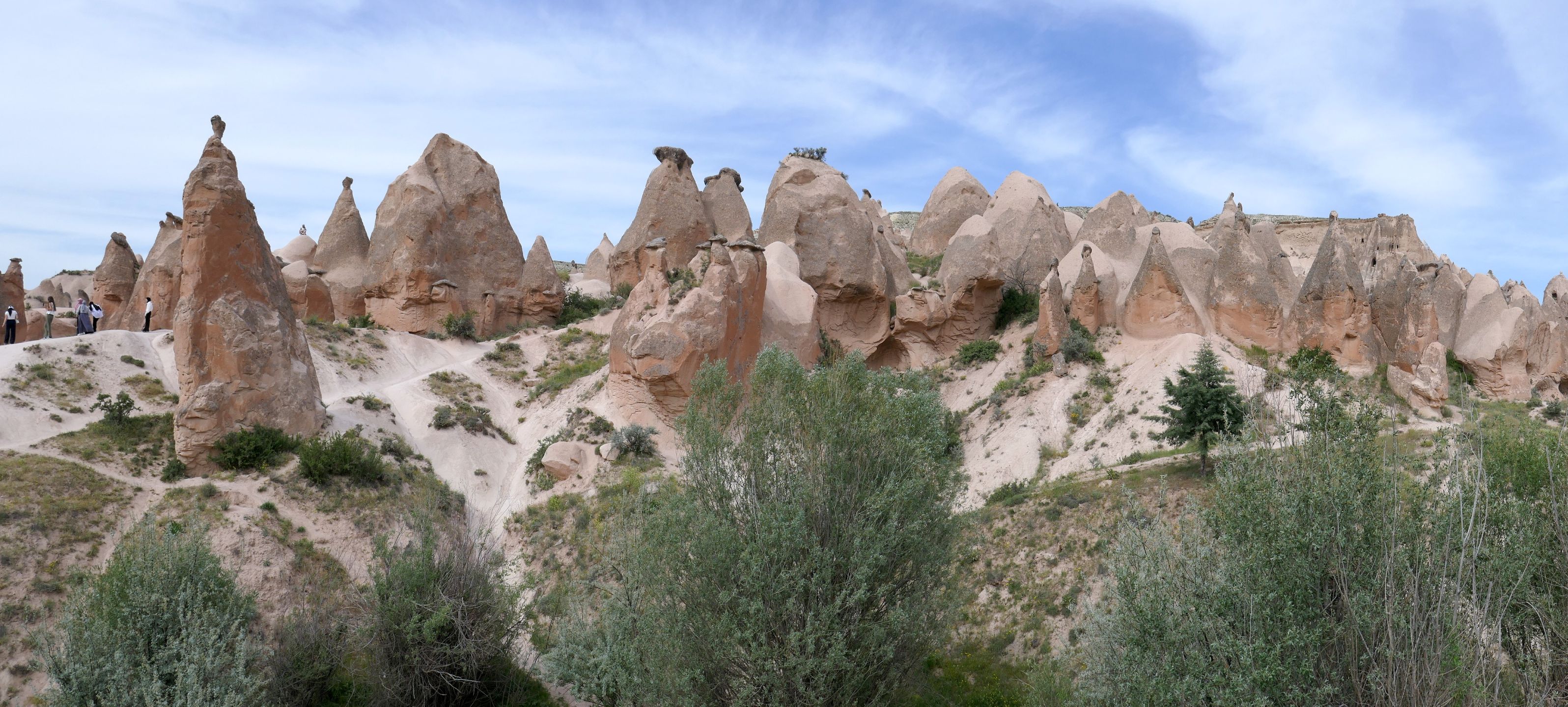
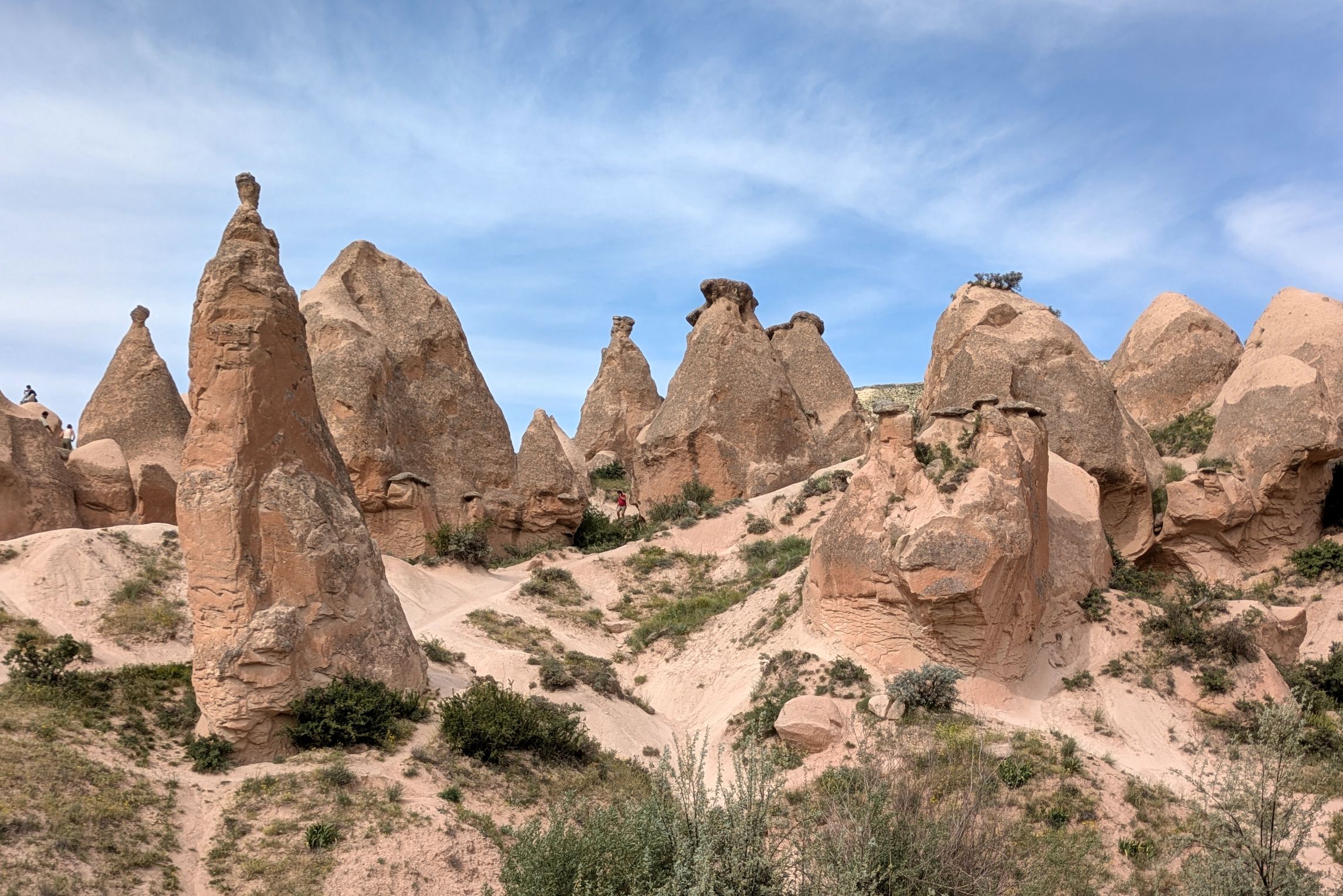
Located on the plateau of the Taurus Mountains, the geology is what made me feel like we had left planet Earth.  Soft volcanic rock of the landscape had eroded into towers, cones, valleys, and caves—all very dramatic and photogenic.

The volcanic rock was the result of three volcanic eruptions over a period of 10,000 years—the last one being in 1854.

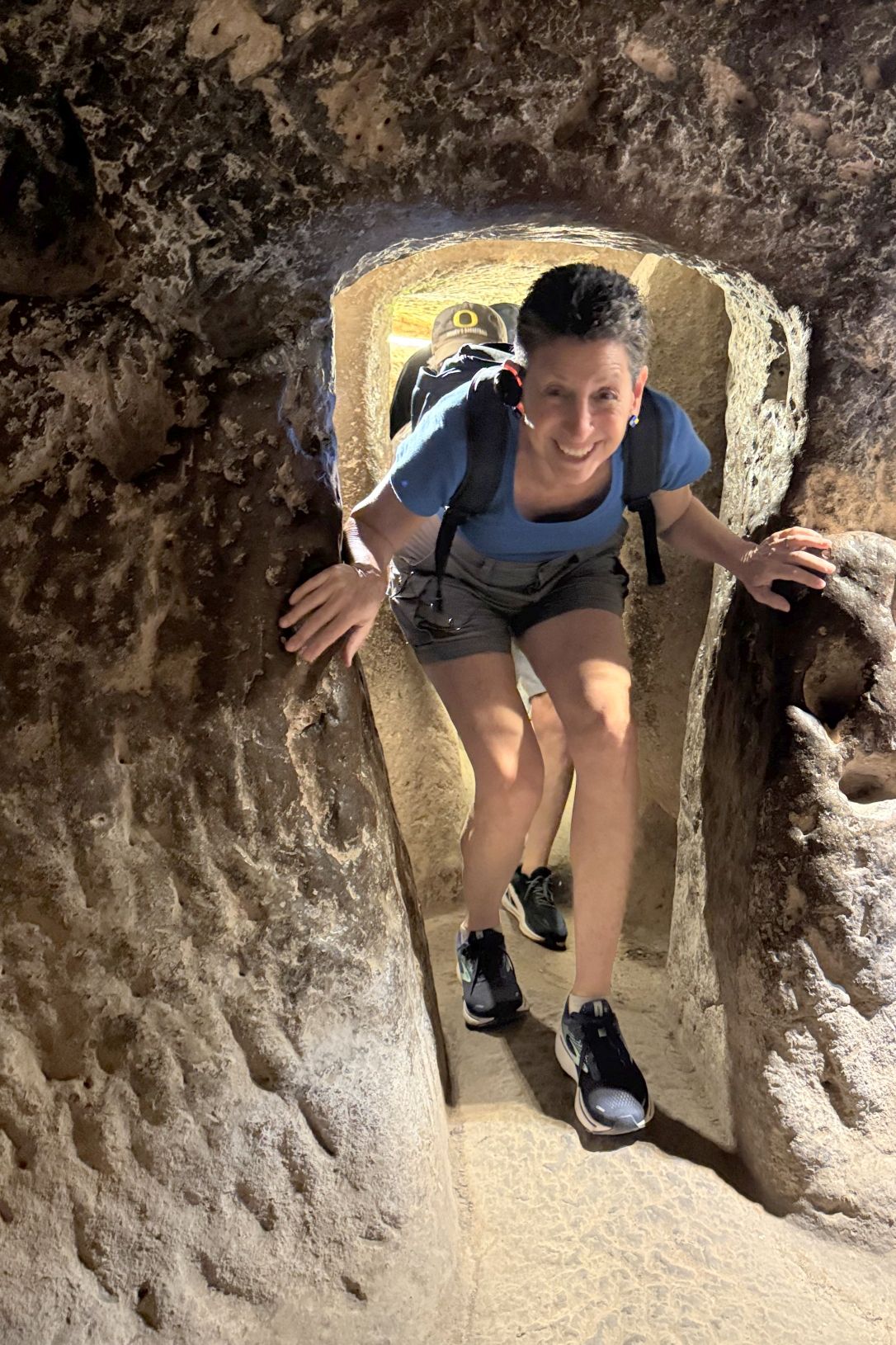
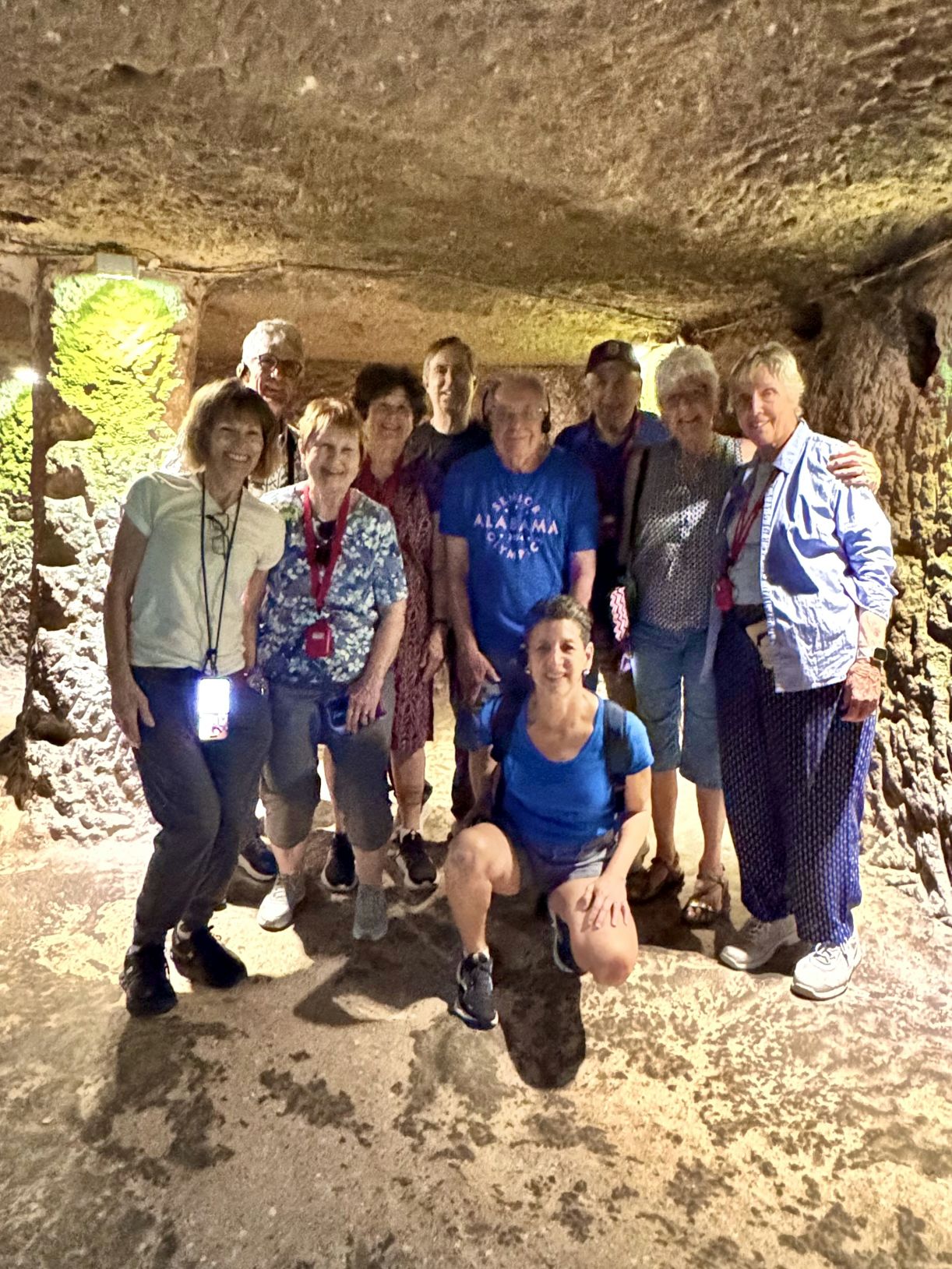
Throughout the countryside, there are rock churches and underground tunnel complexes that date back to the Byzantine and Islamic eras.  We stopped to visit Ozkonak, one of these ancient underground cities. 

(For all photos, click on the image for a full screen view.)
These are all photos taken by our tour leader, Nuri:

Although the age of this particular complex is uncertain, it was probably built during the Byzantine era for protection from enemies.  It was discovered in 1972 by a local farmer who was curious about where his excess crop water was disappearing to.  He discovered an underground room, which ultimately revealed a large city that could have housed 60,000 people for up to three months during a siege. Imagine his surprise at that discovery!  The complex contains ten floors, to a depth of 40 meters; however, only four floors are open.

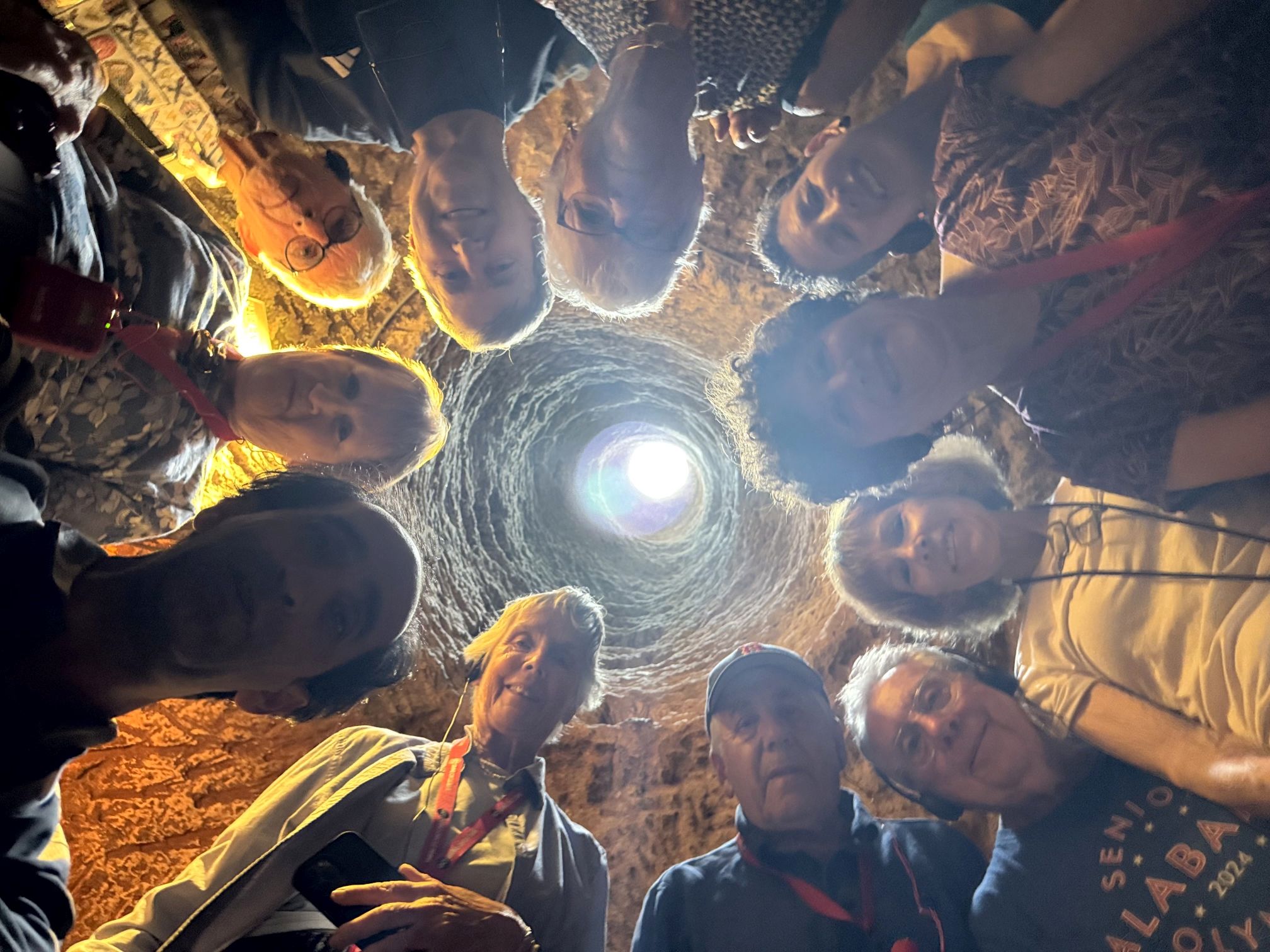
This volcanic granite city is connected by tunnels and contains a pipe communication system reaching each of its levels—a unique feature of this particular complex.  Each carved room had ventilation provided by further piping when the city was sealed during sieges. 

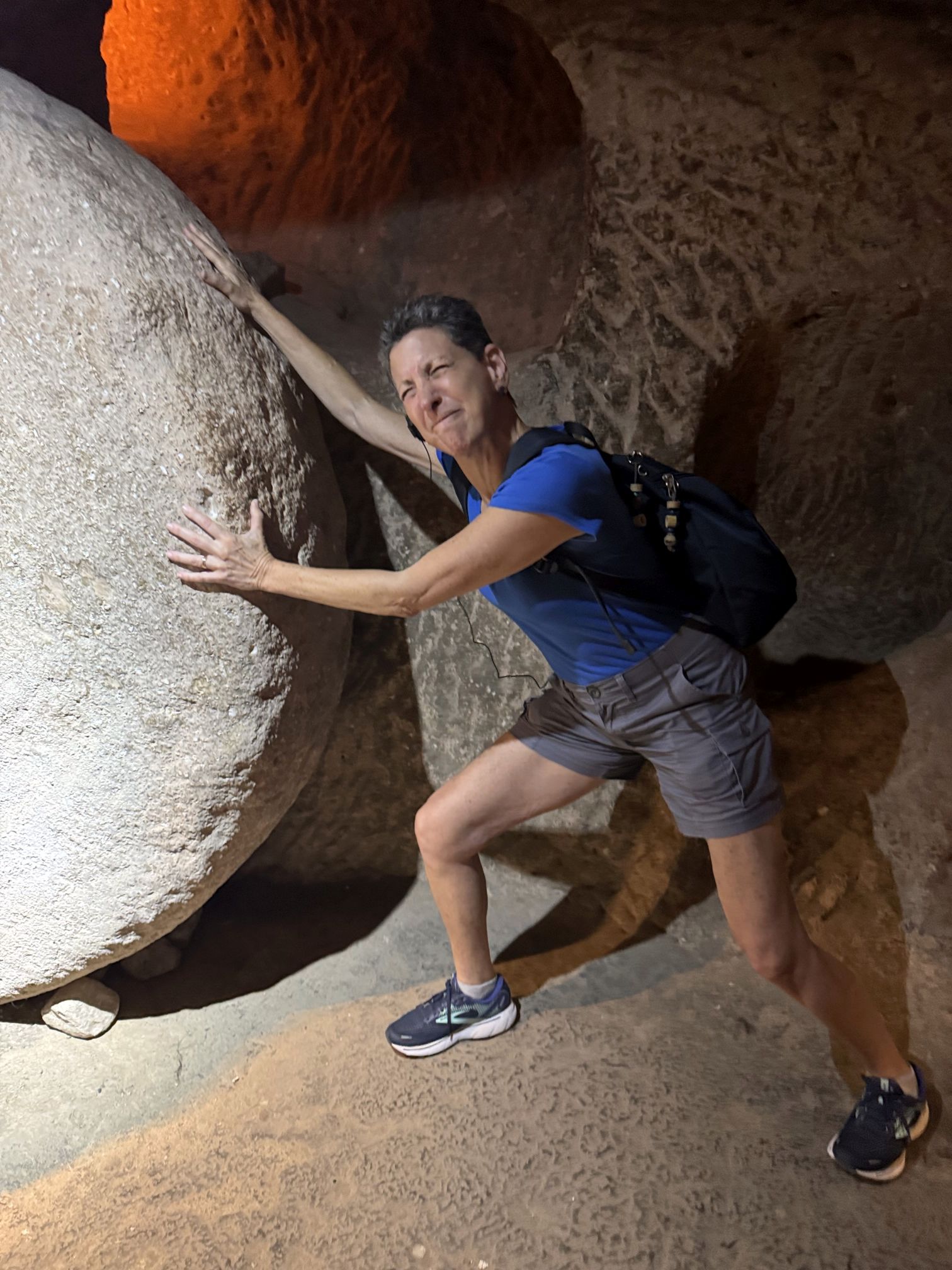
Another unique feature was the holes above the tunnels that were used for dumping hot sand on the enemy.  The complex also has a water well, winery and moving stone doors.

After visiting Ozkonak, we continued our drive to Cappadocia, stopping along the way to see some of the volcanic formations along the roadside:

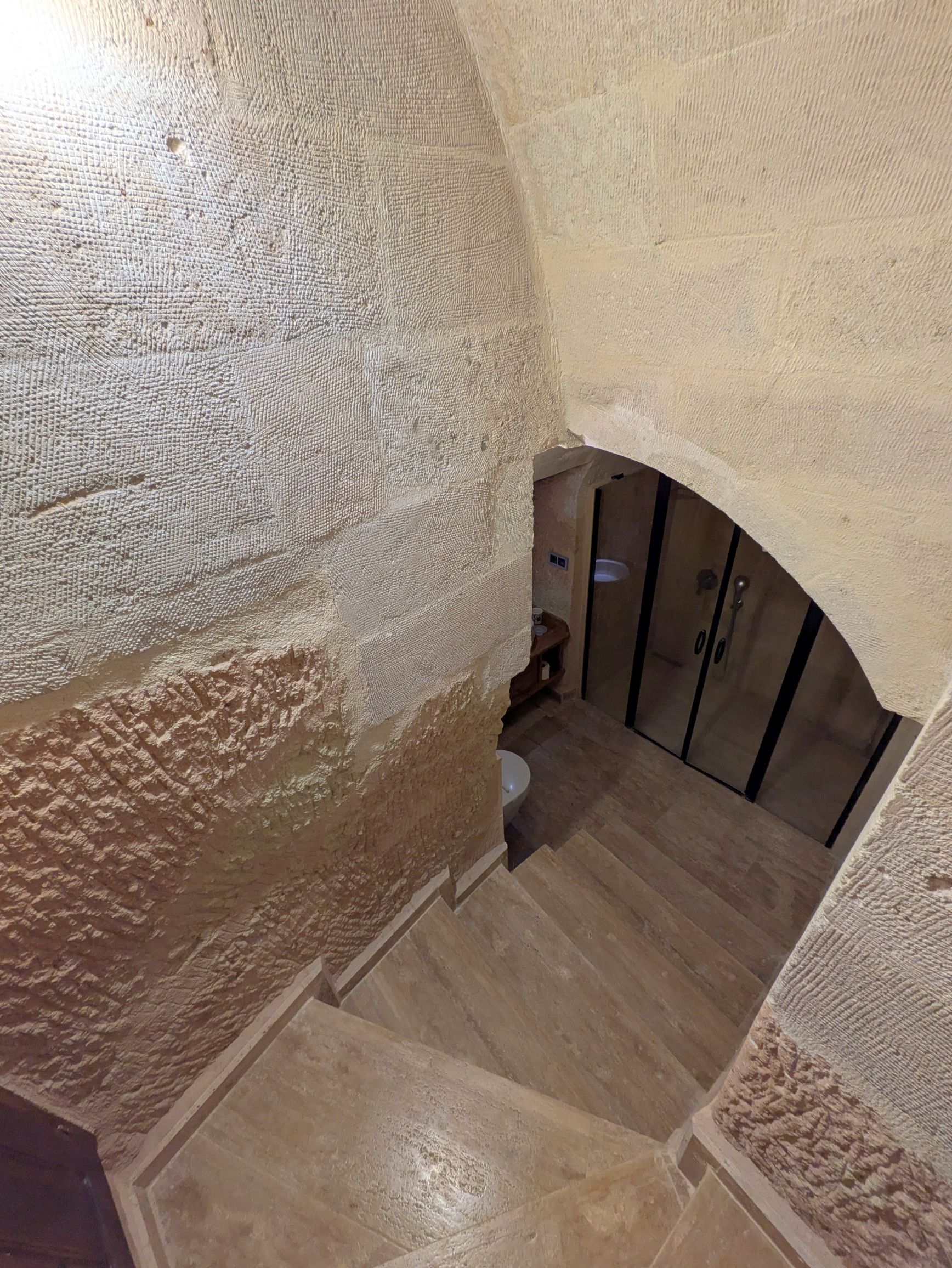
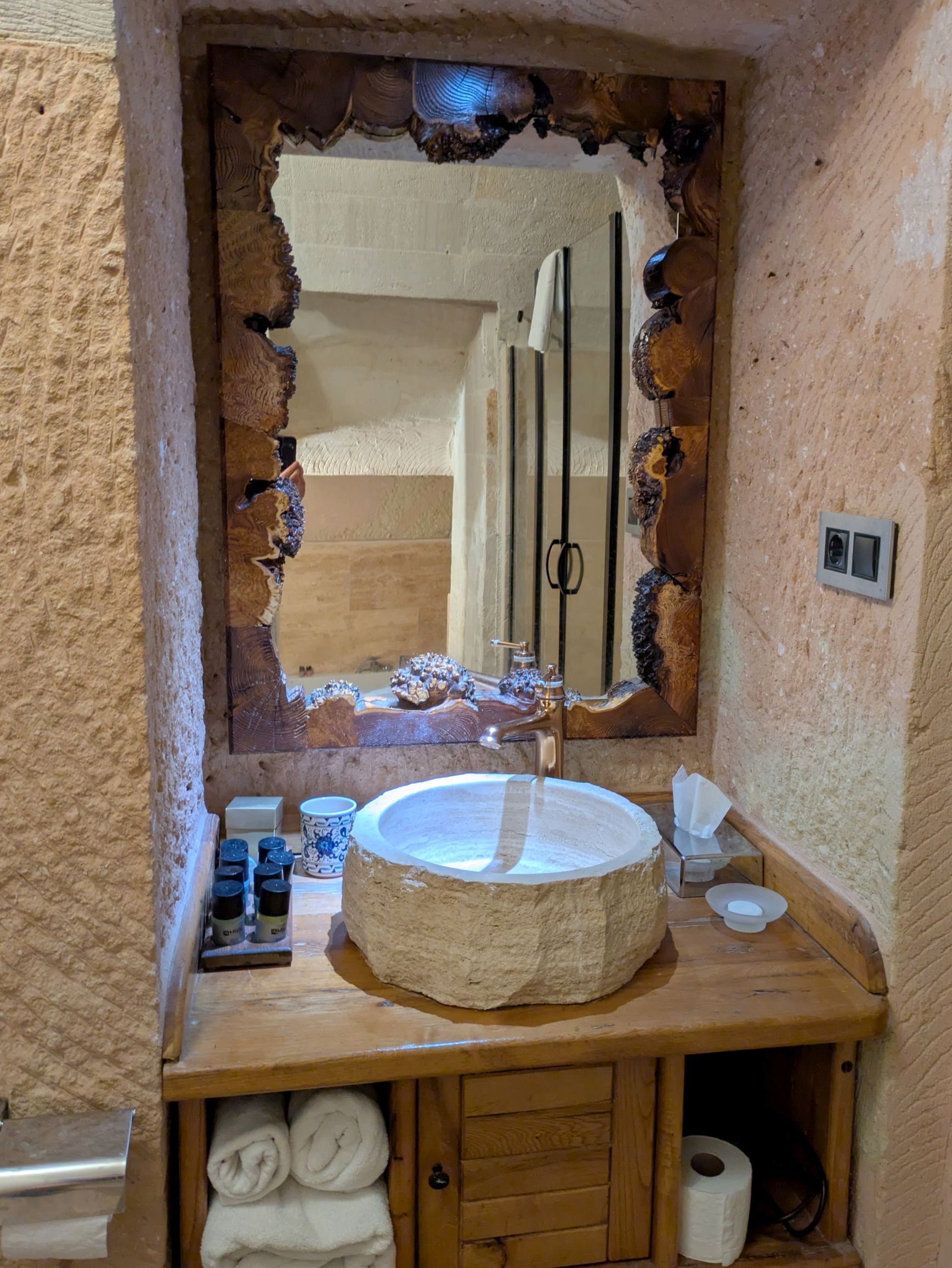
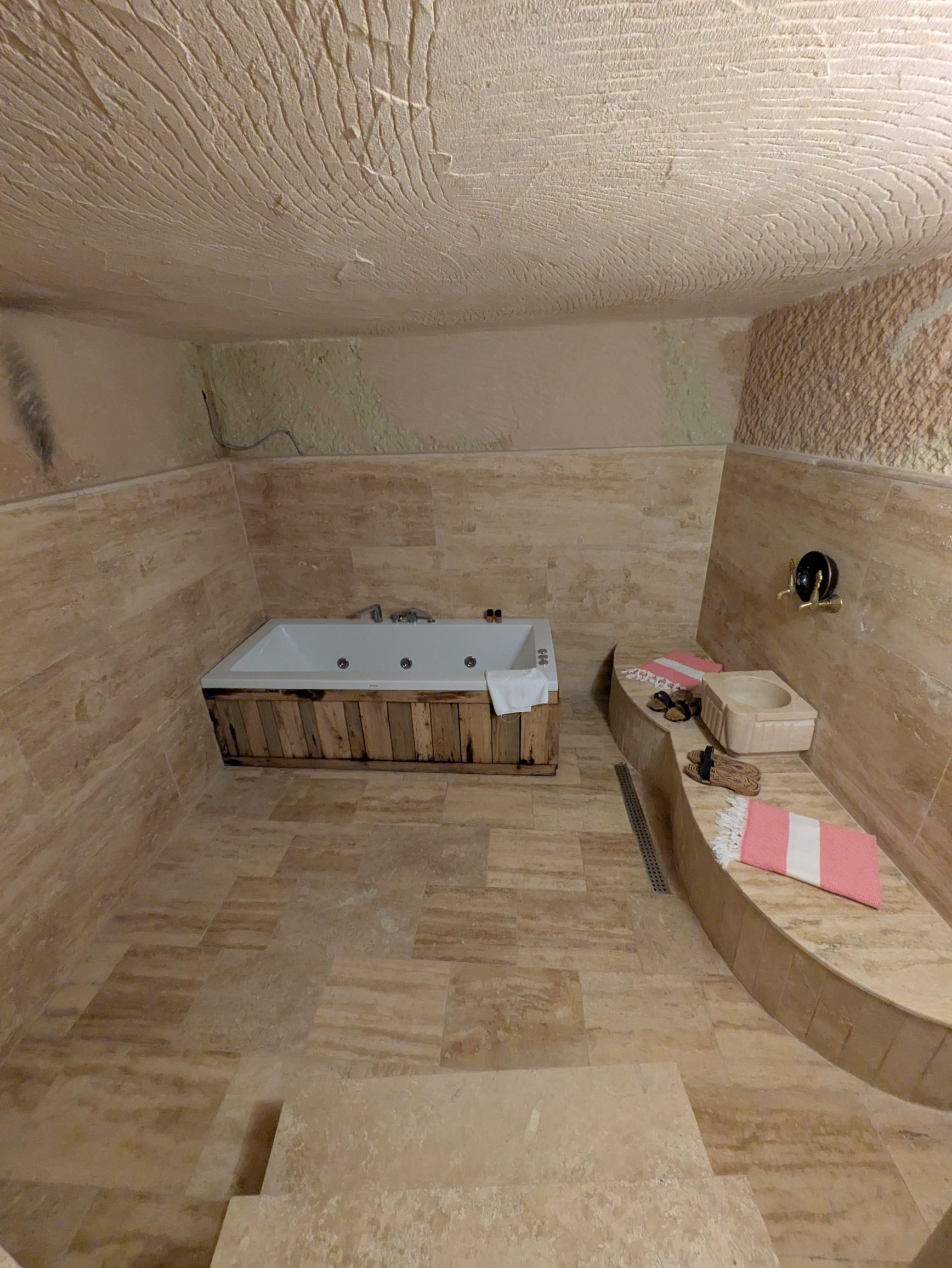
Misty Cave Hotel, our base for three nights, was the most unusual hotel I had ever seen!  The rooms were built into a volcanic rock hillside and our bathroom was downstairs, underground.  Each room was completely different, so our group enjoyed visiting each other and checking them out. This was something we will never forget!

Although there was a walk-in shower next to the sink (which we used), we got a kick out of this huge room that could be used for a Turkish or American-style bath.

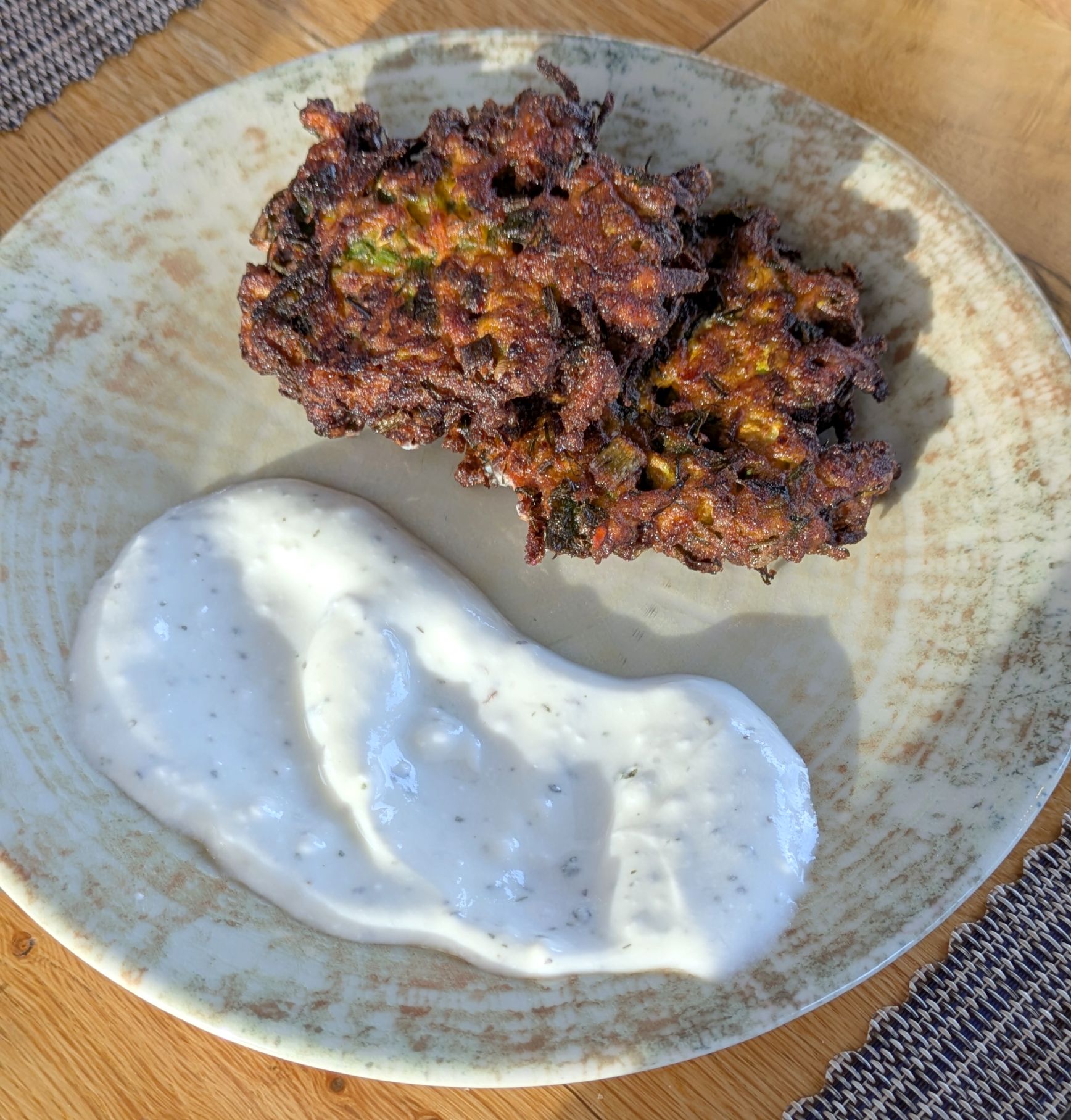
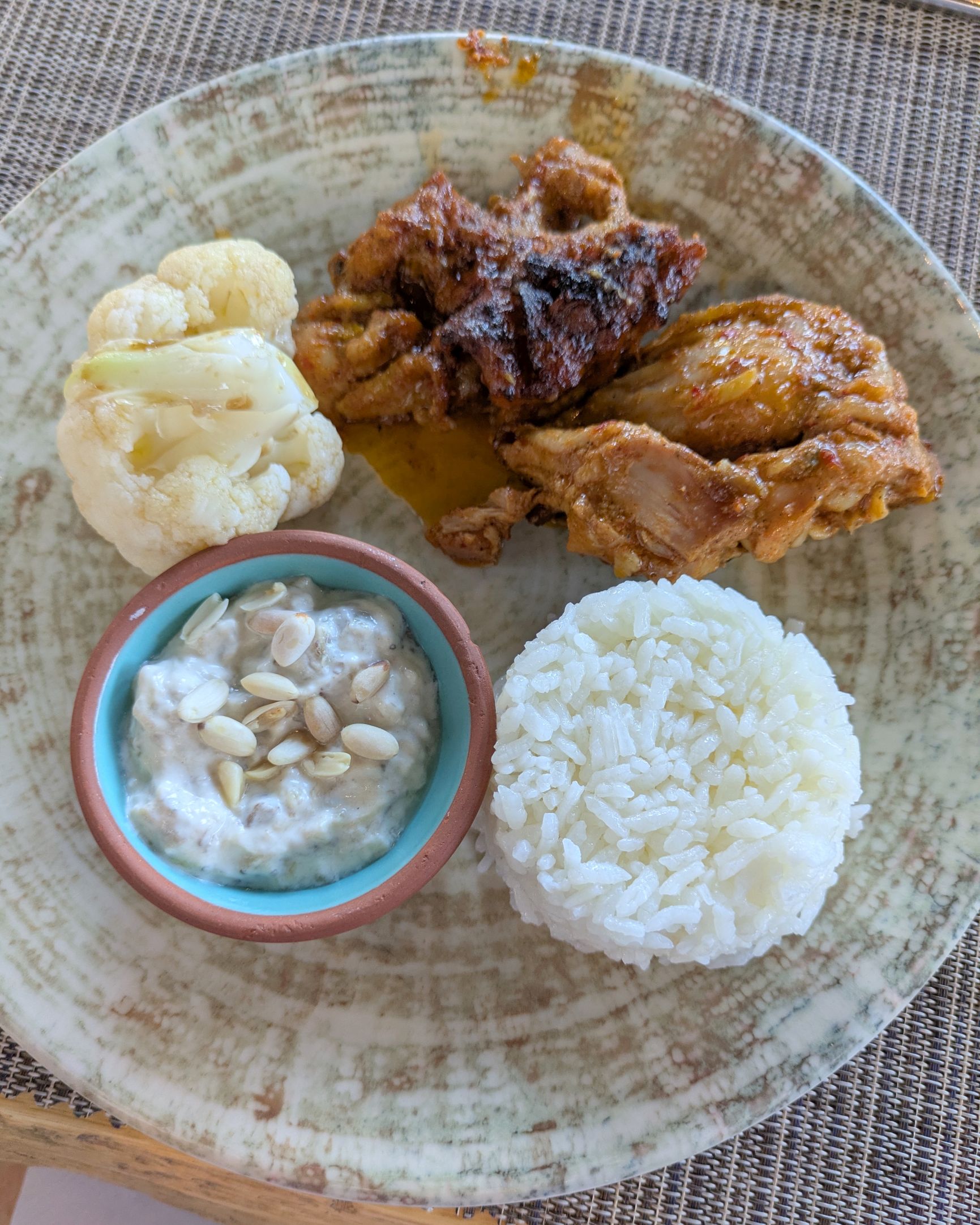
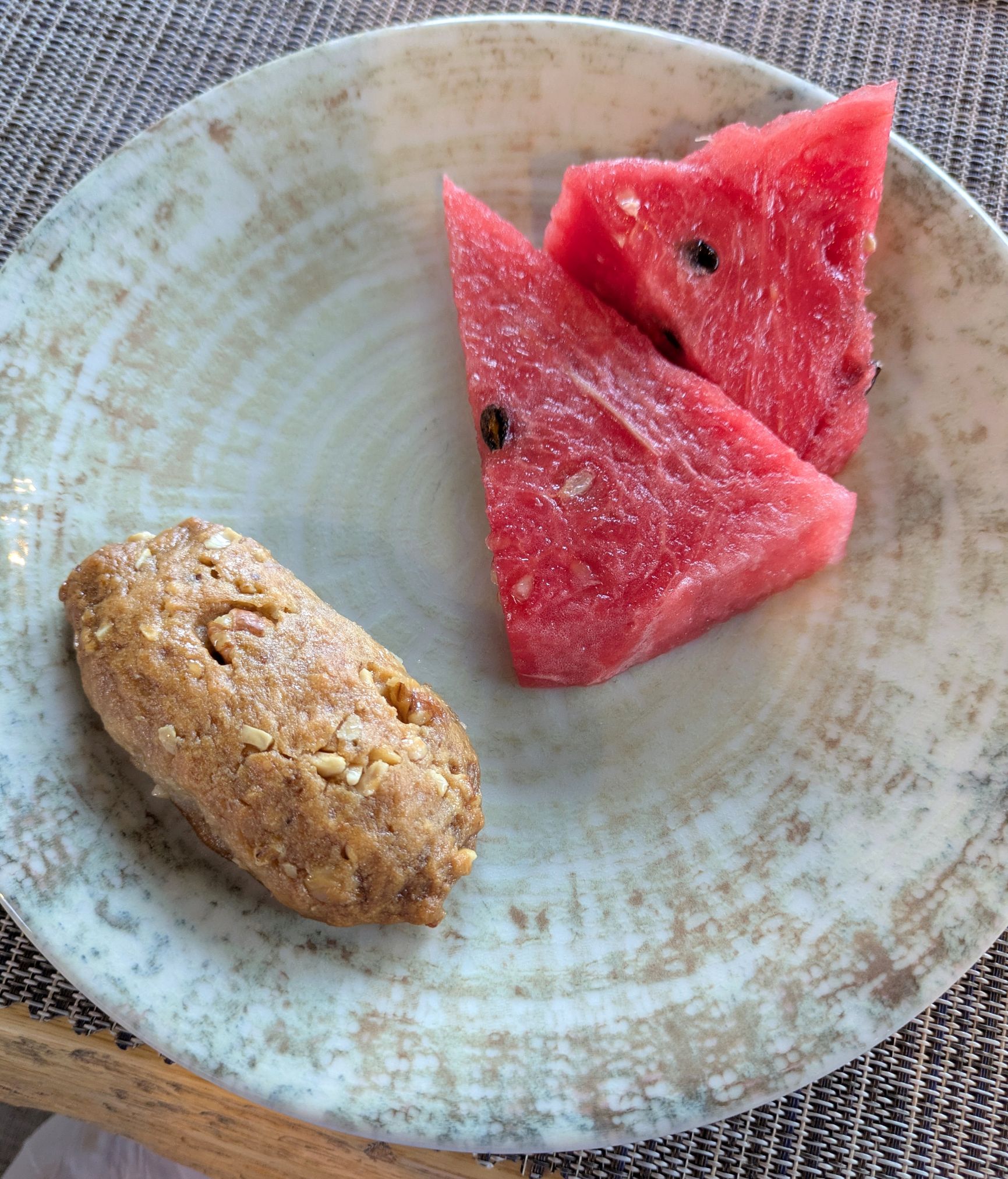
Dinner at the hotel:

Coming up next: TURKIYE #6: BEAUITIFUL BALLOONS, GORGEOUS GOREME & COLORFUL CARPETS

TURKIYE #4: THE BEAUTIFUL BOSPORUS STRAIT & MORE ABOUT ISTANBUL

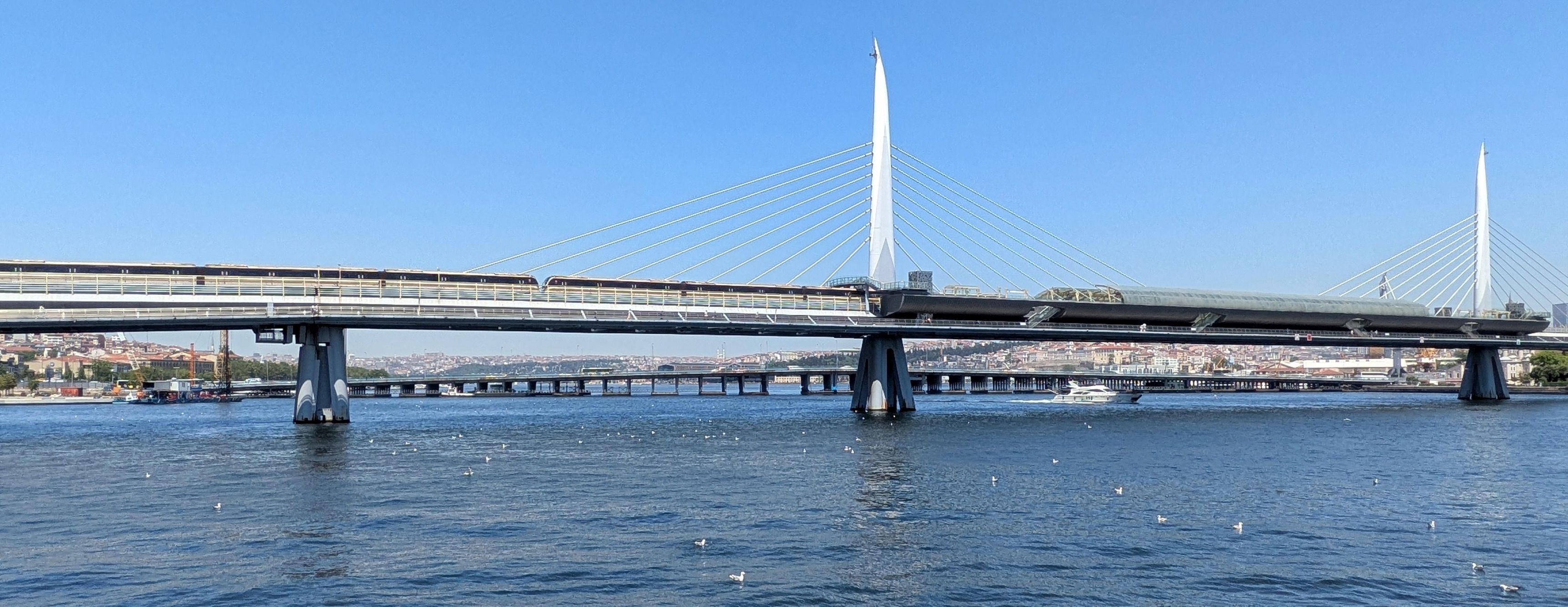
As I mentioned in my first post on Istanbul, the Bosporus Strait separates Europe from Asia, and Istanbul is located on both continents.  That would make an interesting trivia question, don’t you think?  “In what city can you be on two different continents but never leave the city?”  Answer: “Istanbul.”  Cross a bridge or take a ferry and be in Asia and Europe without ever leaving Istanbul!  I wonder if that question has ever been on Jeopardy…           

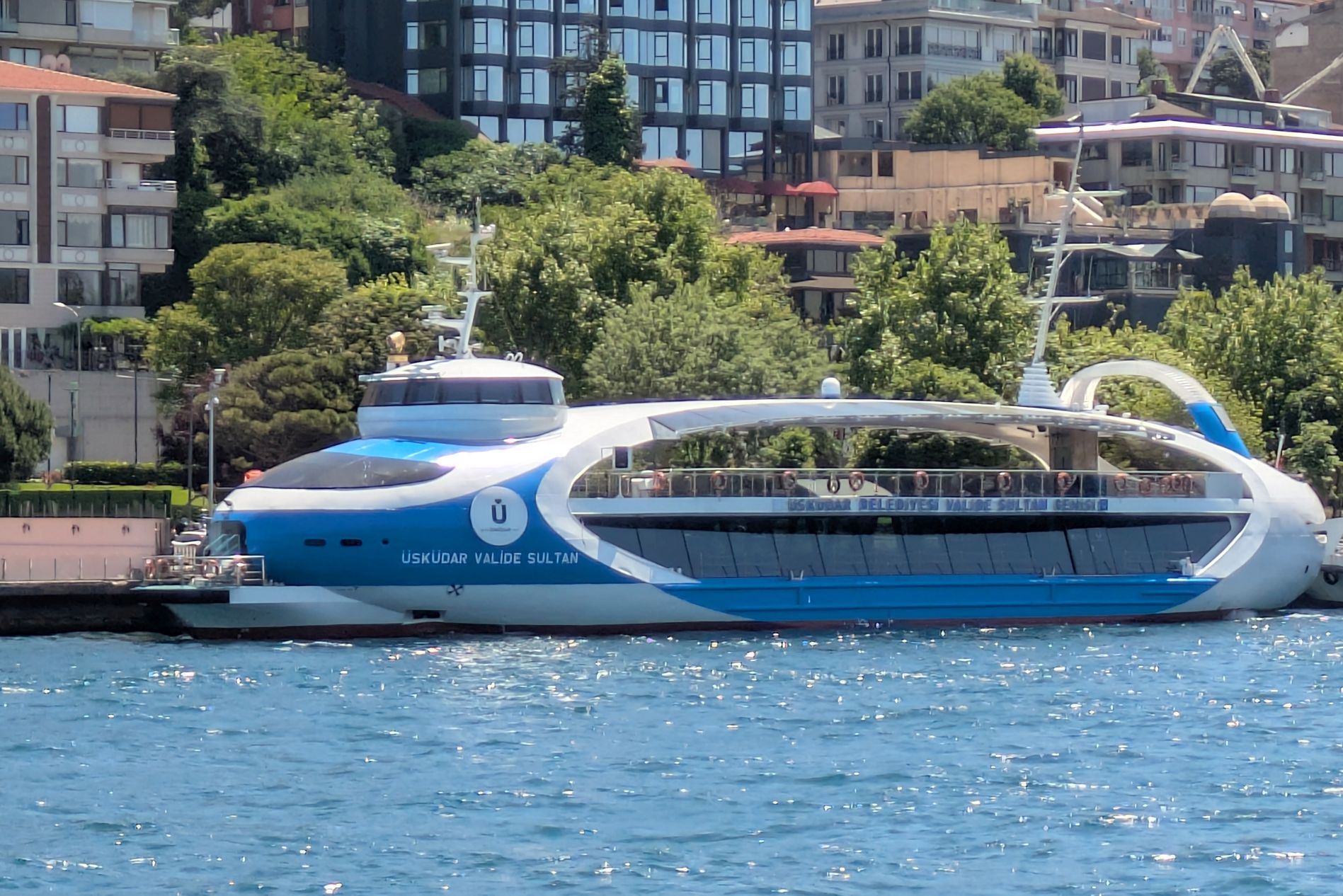
We didn’t visit the Asia side of the city, but we did take a sightseeing cruise with Nuri as our guide.  It was nice; we had the entire boat for ourselves and enjoyed a gloriously sunny day!

During our cruise, we learned that the Bosporus is a very important maritime waterway, because it connects from the Black Sea to the Mediterranean and the Atlantic Ocean via Gibraltar, and the Indian Ocean through the Suez Canal.

The Bosporus is well-traveled by everything from freighters and tankers carrying goods and oil, to ferries carrying cars and people back and forth between the two continents.  Throw in all the sightseeing tourist boats, fishing boats, and yachts out for a pleasure cruise; there is never a dull moment!

Would you like to live in a home overlooking the Bosporus, so you could take in the views of all those boats passing by?  Although it’s less expensive to live on the Asia side of the river, it will still set you back a minimum of $2 million.  The most expensive homes on the Bosporus are as much as $100 million!  It is the most expensive real estate in the country.  On the other side of the hill from the Bosporus, however, a two bed / two bath flat will cost you about $150,000.

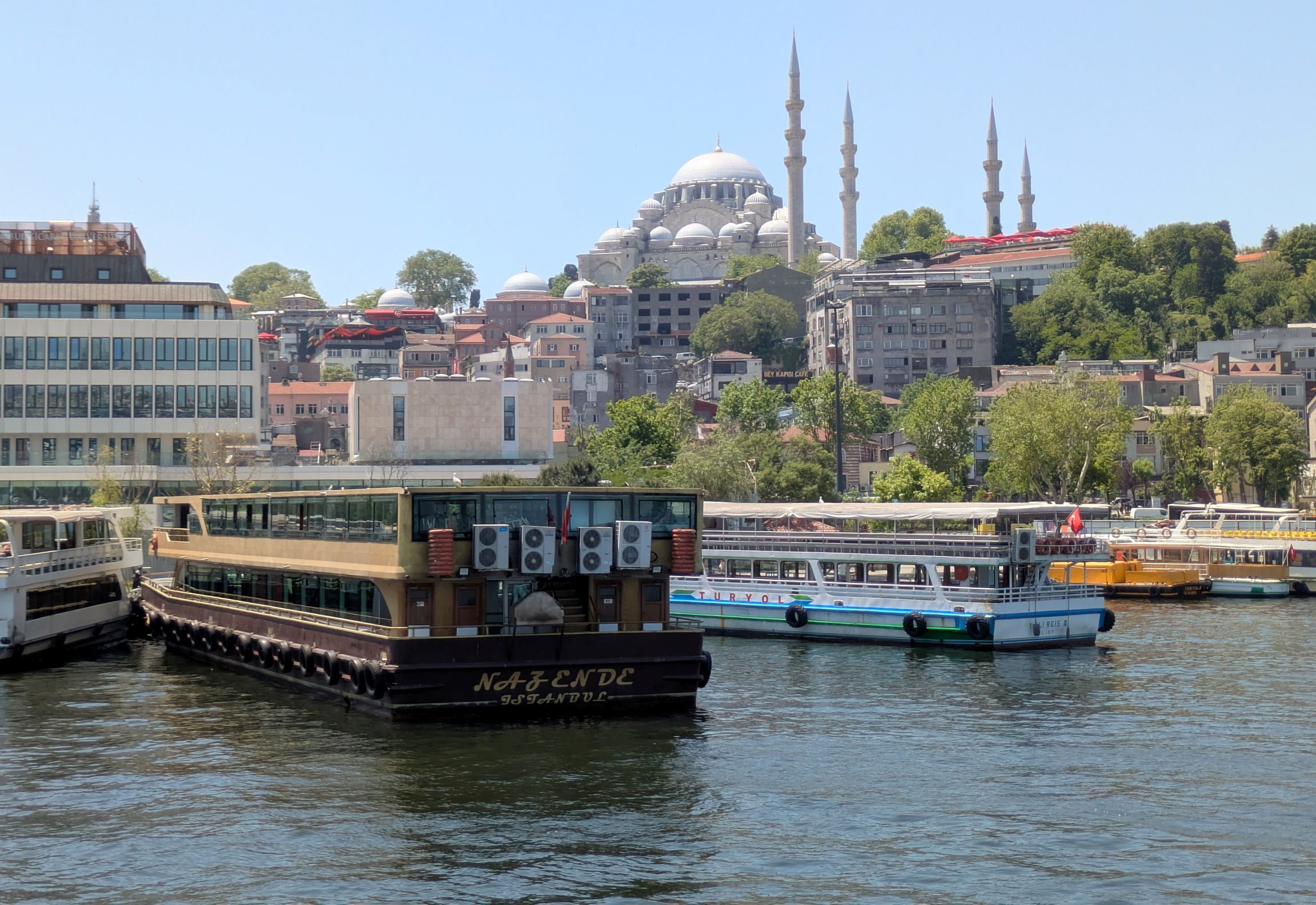
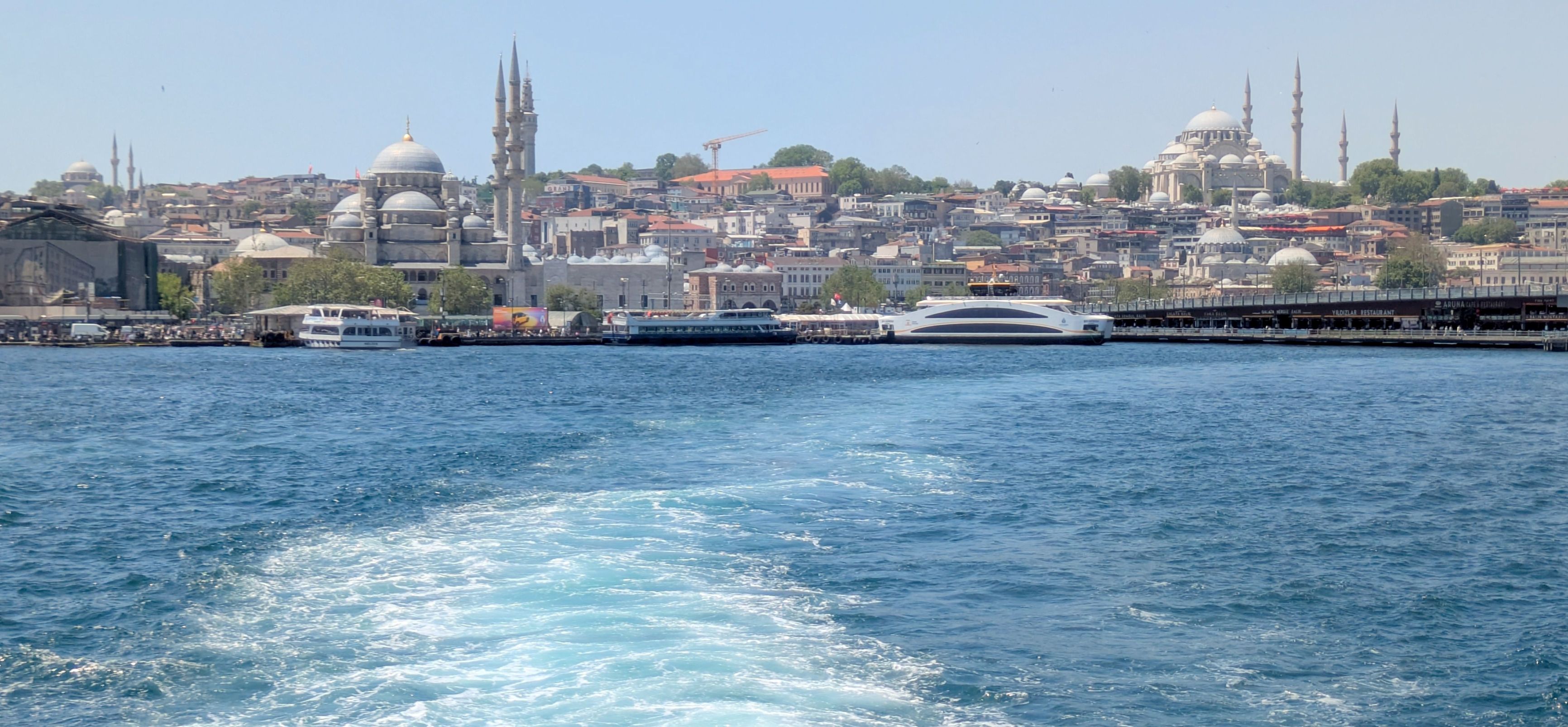
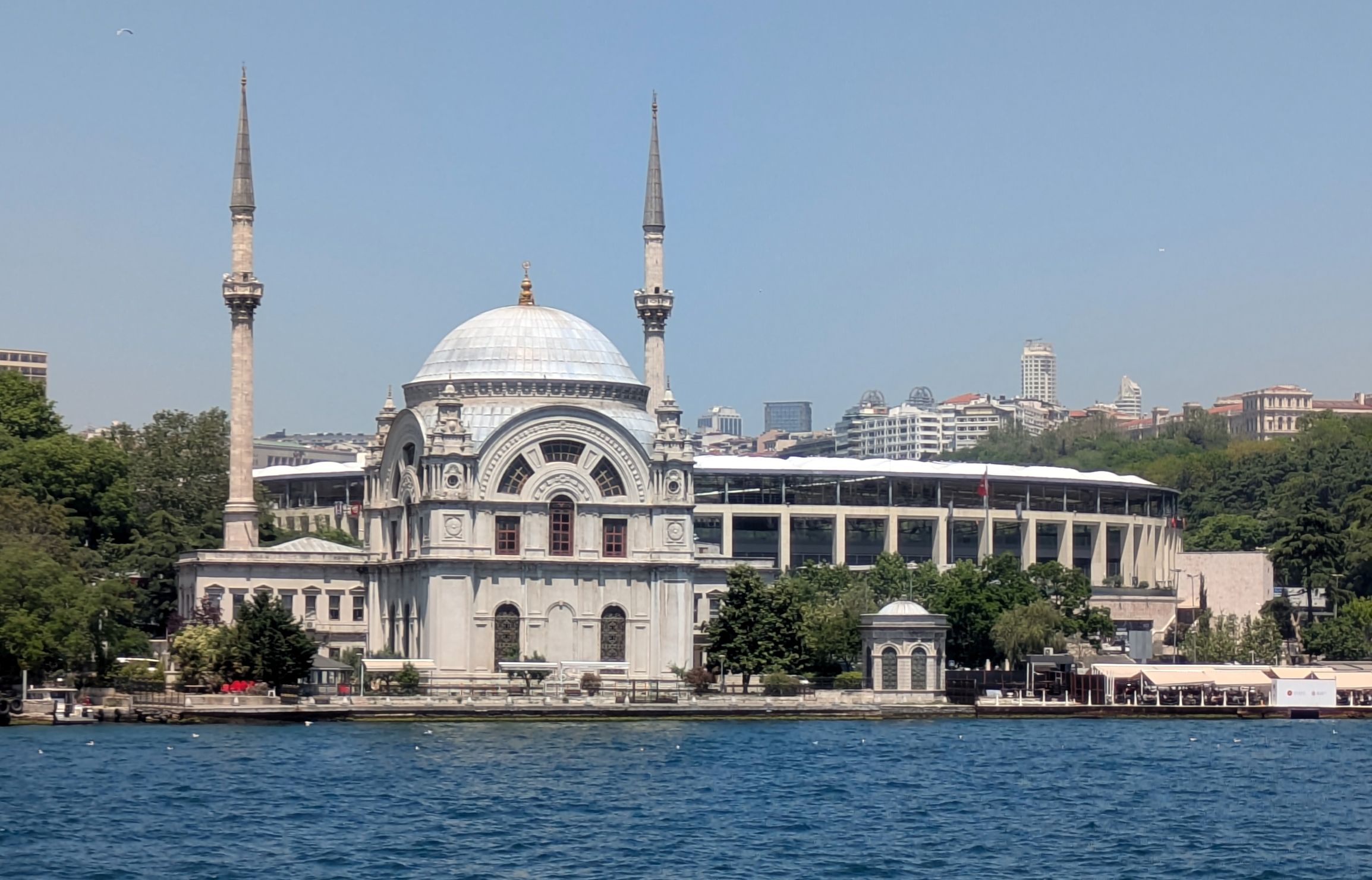
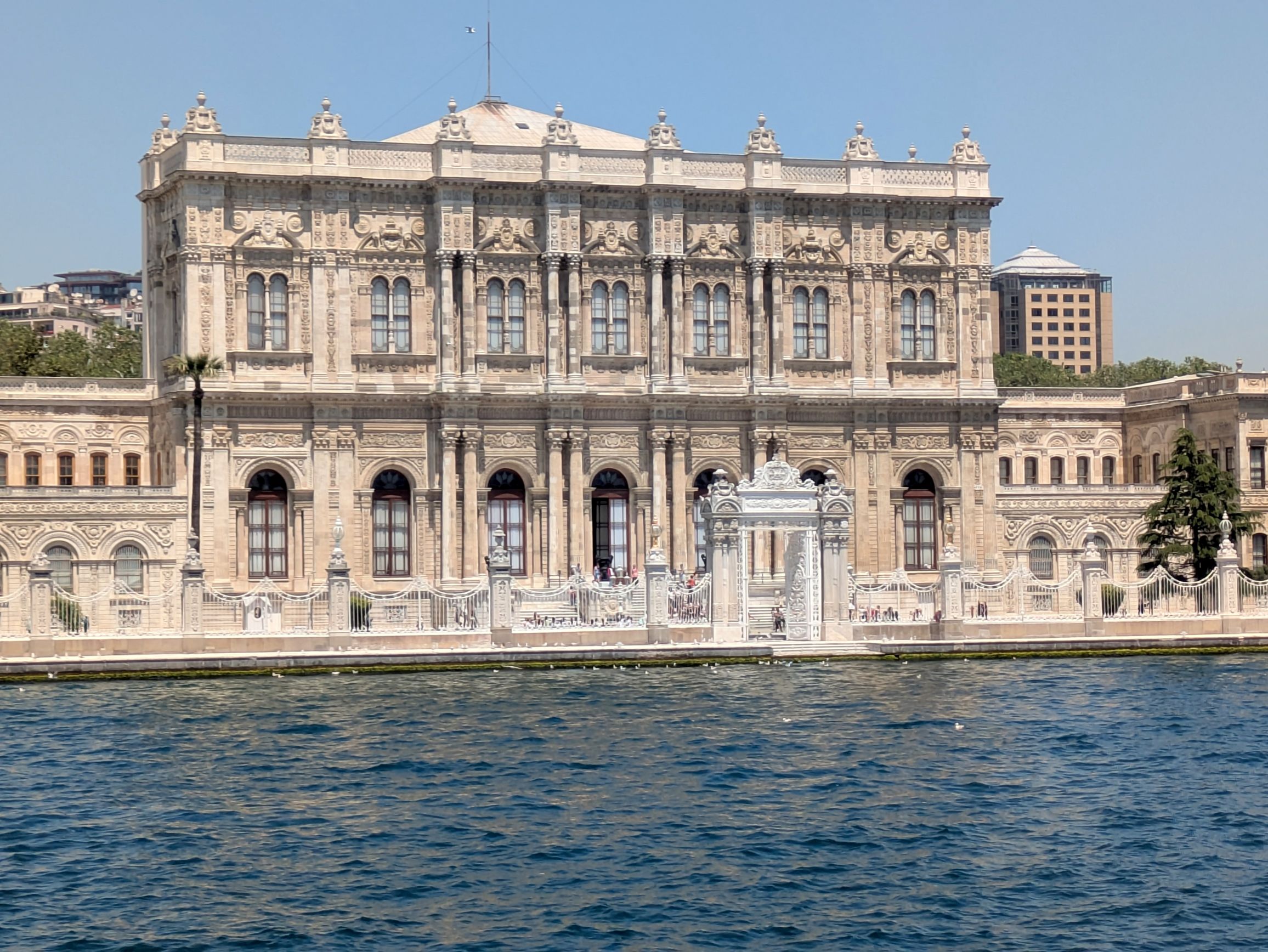
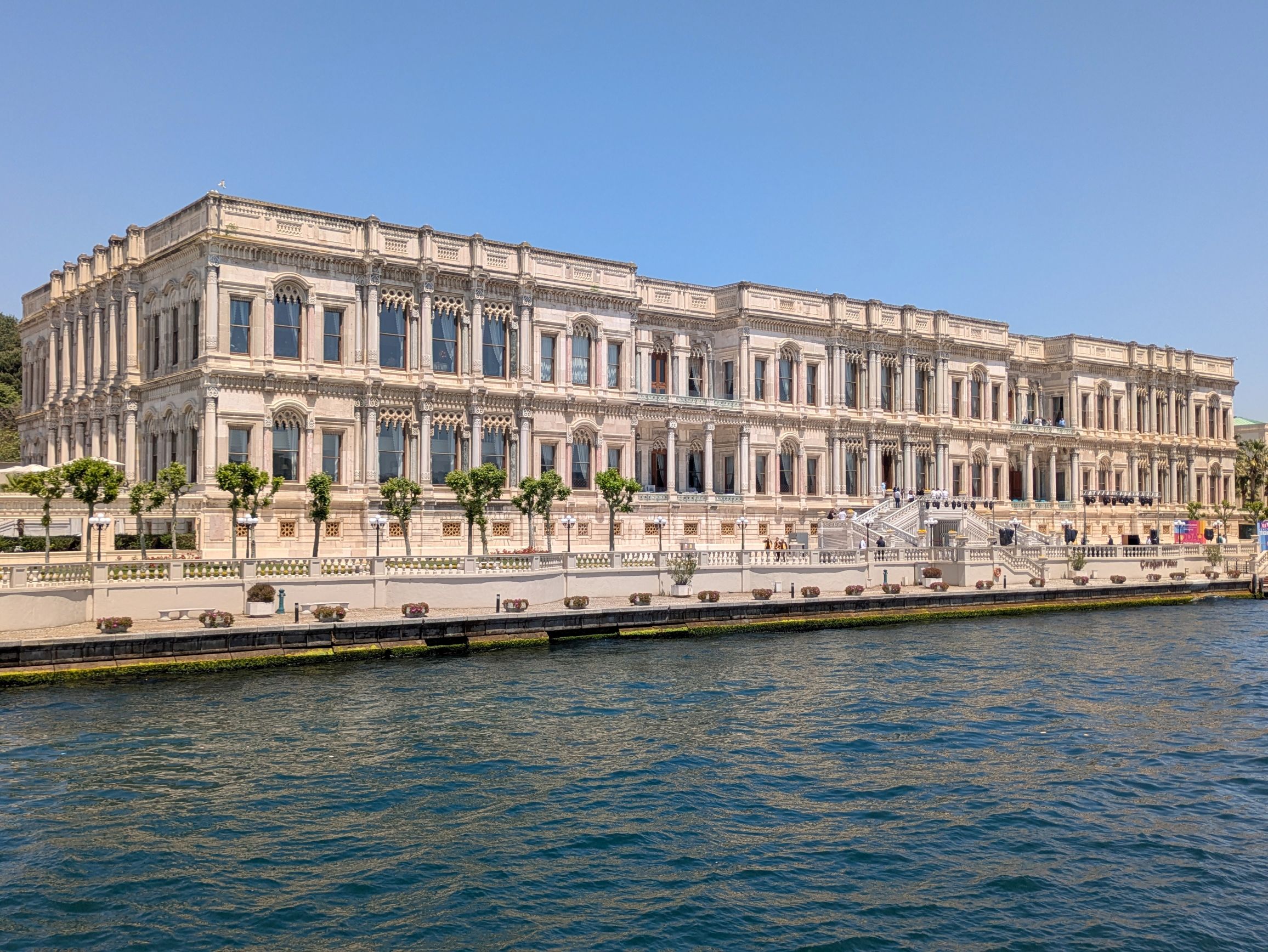
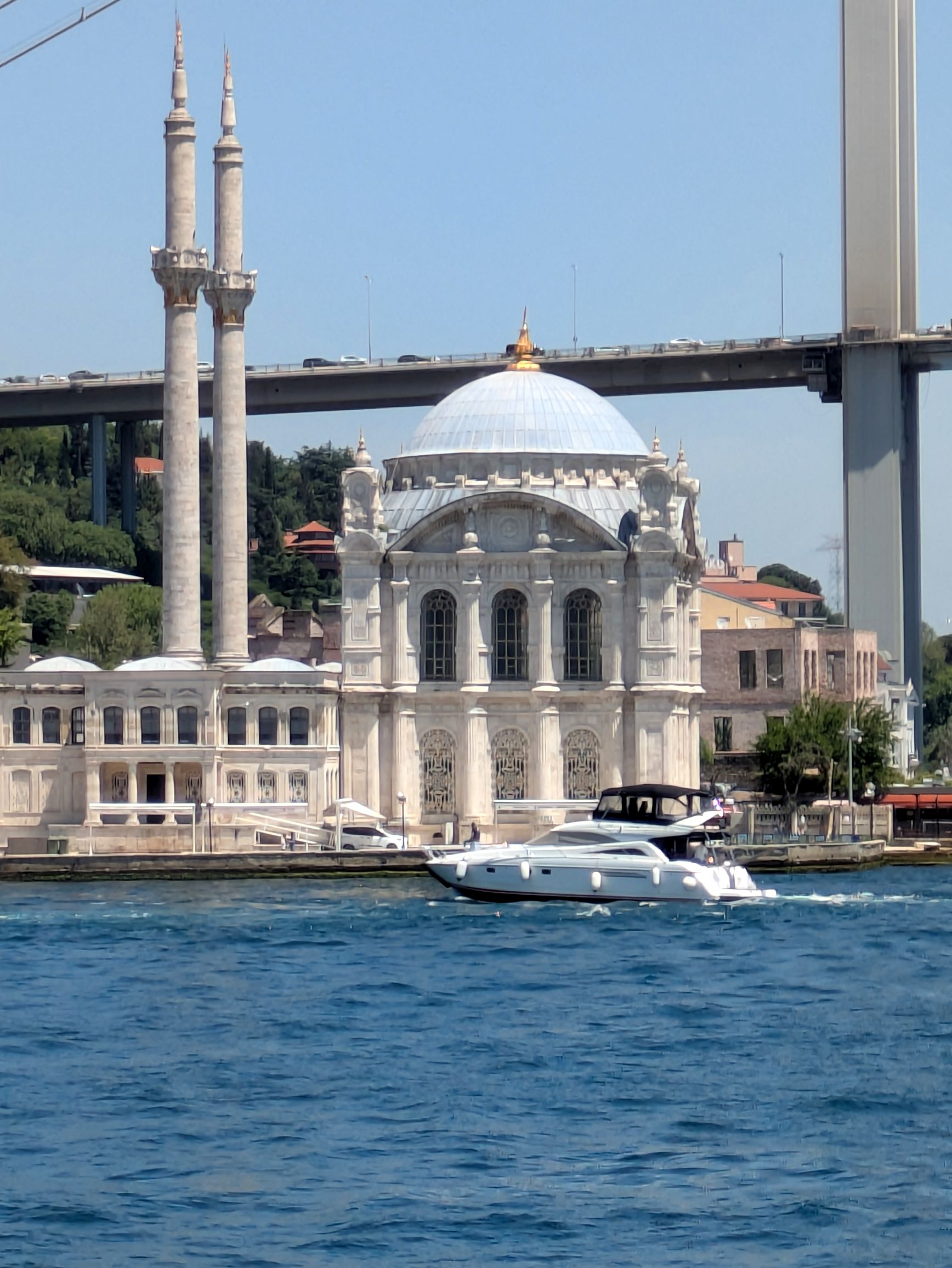
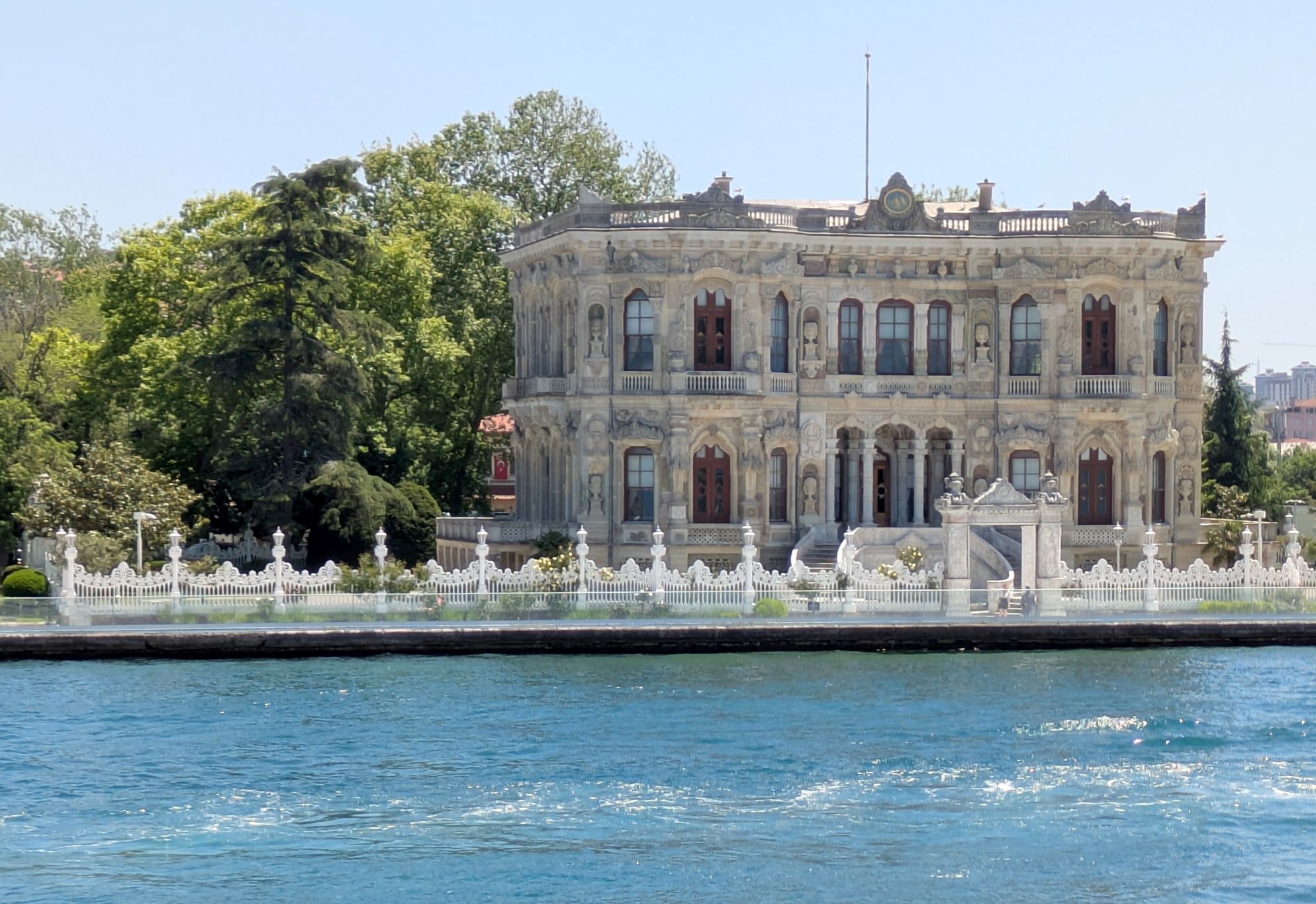
Here are some scenes along the Bosporus, in the order they were shot on our round-trip boat ride:

(For all photos, click on the image for a full screen view.)

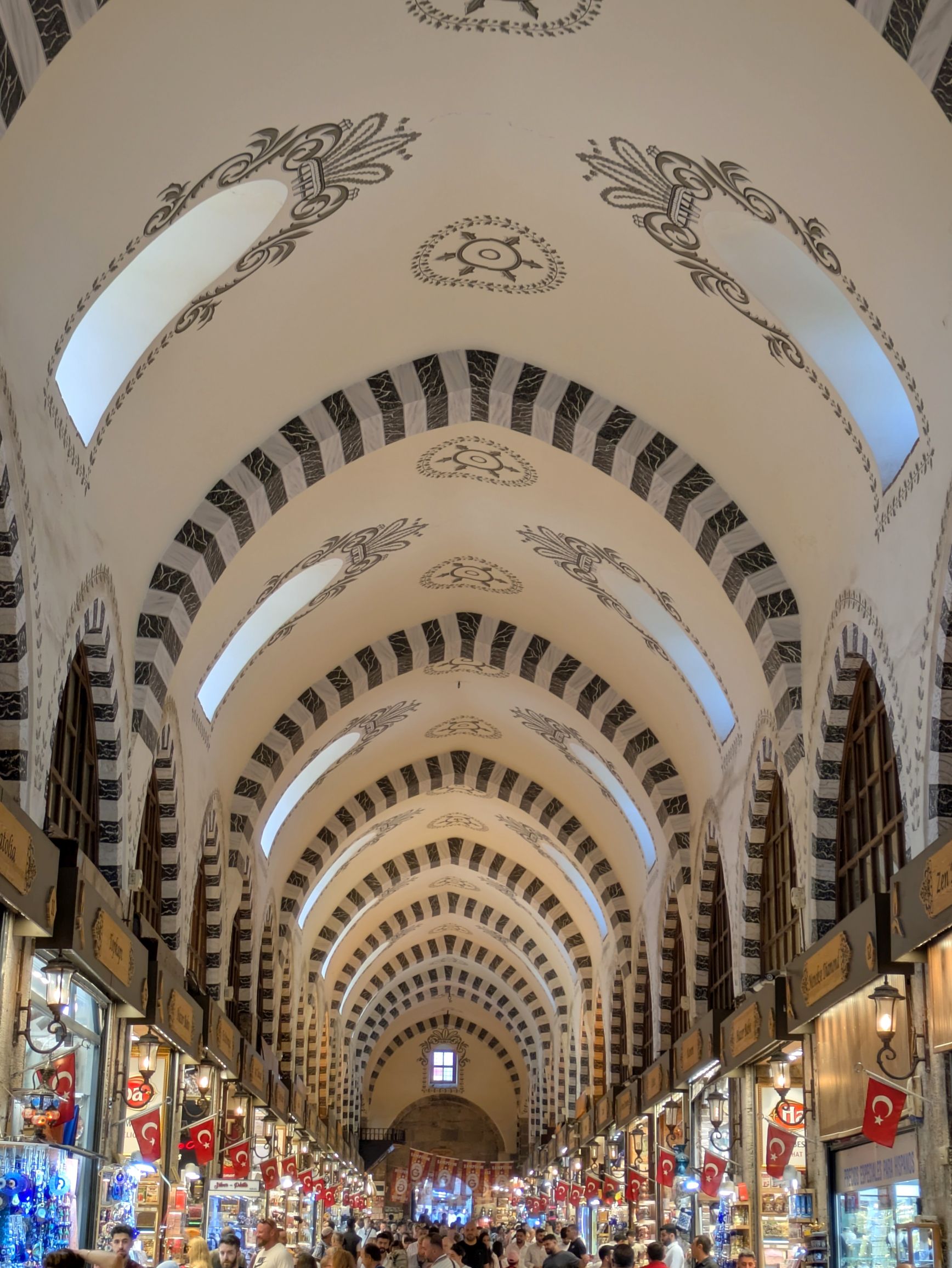
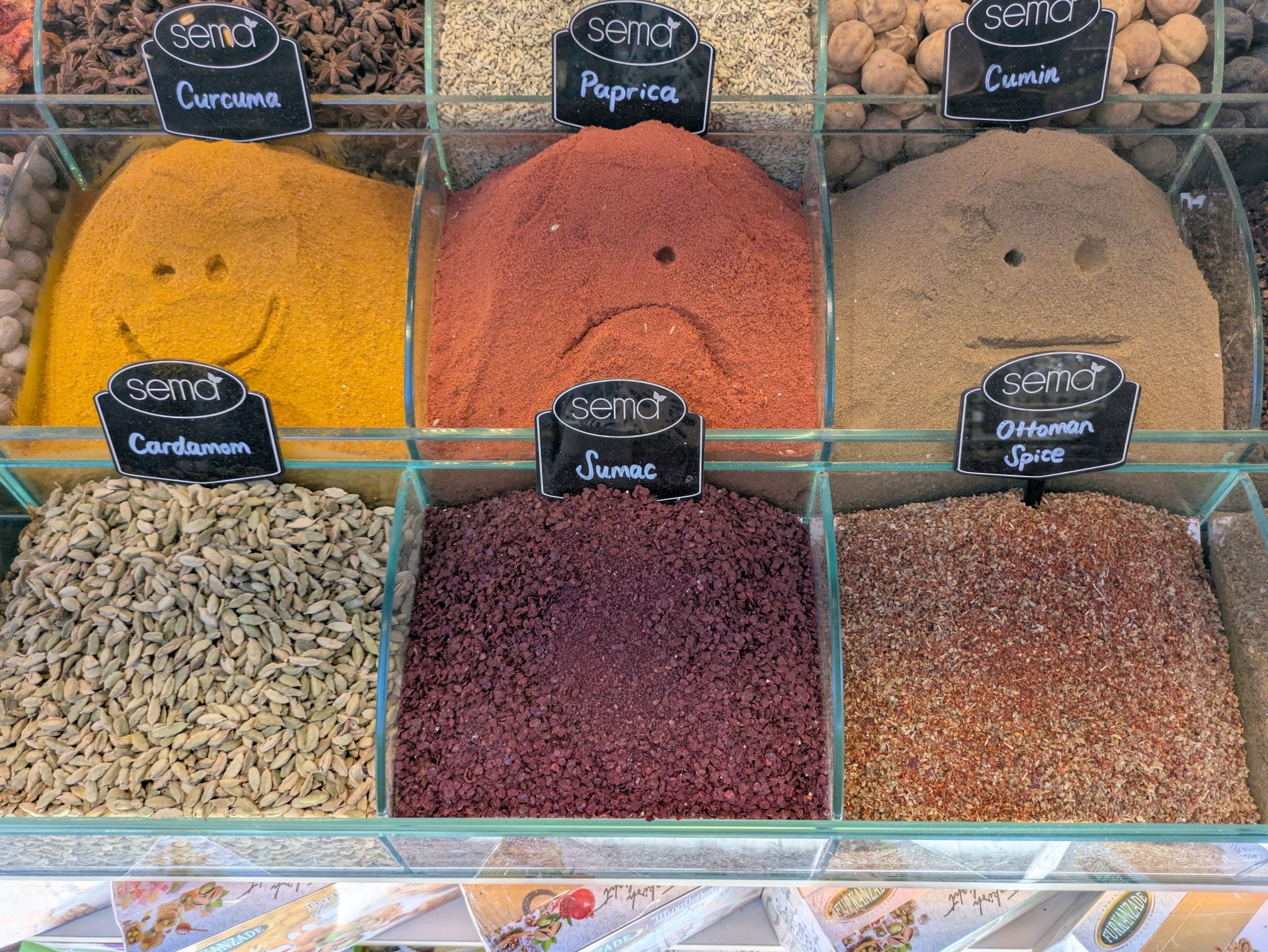
I previously mentioned that we also visited the Spice Bazaar while we were in Istanbul.  Known to locals as the Misir Carsisi, it dates back to 1660 and is one of the largest bazaars in Istanbul.  It was very similar to the Grand Bazaar in its display of spices and Turkish delight, so I combined those photos in Turkiye #2.

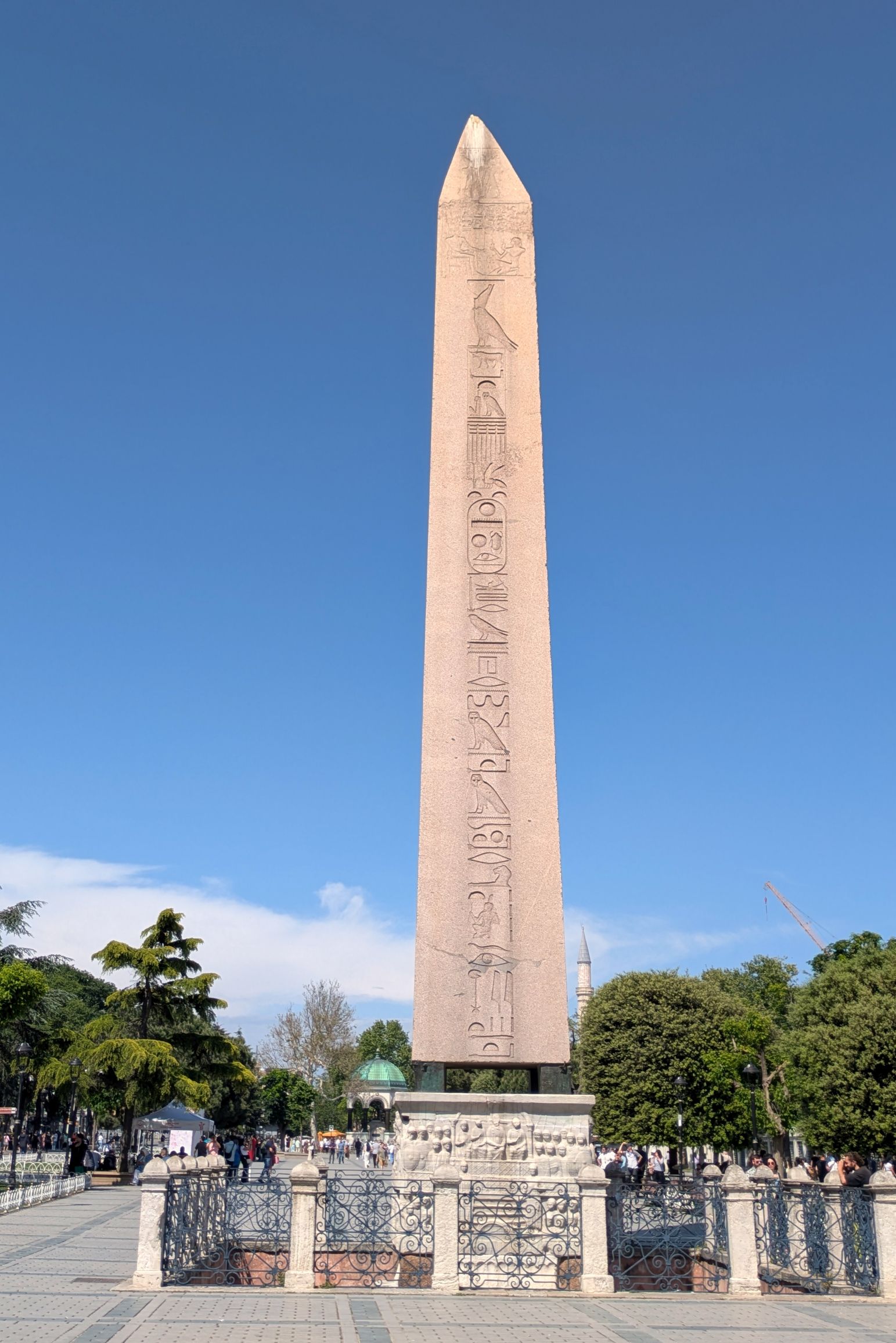
The following are more scenes around the Hippodrome (central square):

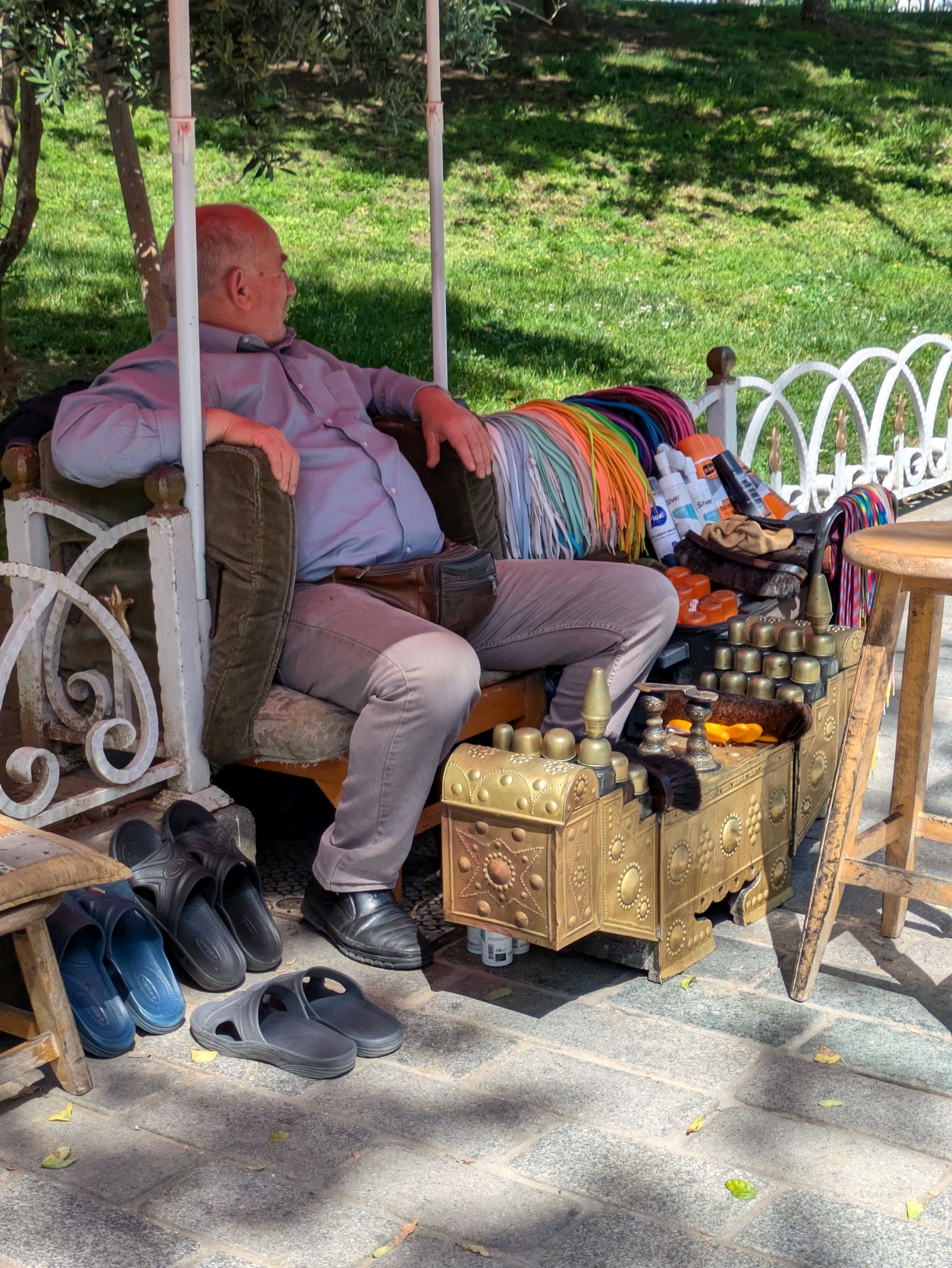
A traditional Turkish shoe shine stand

We enjoyed the food in Istanbul very much!

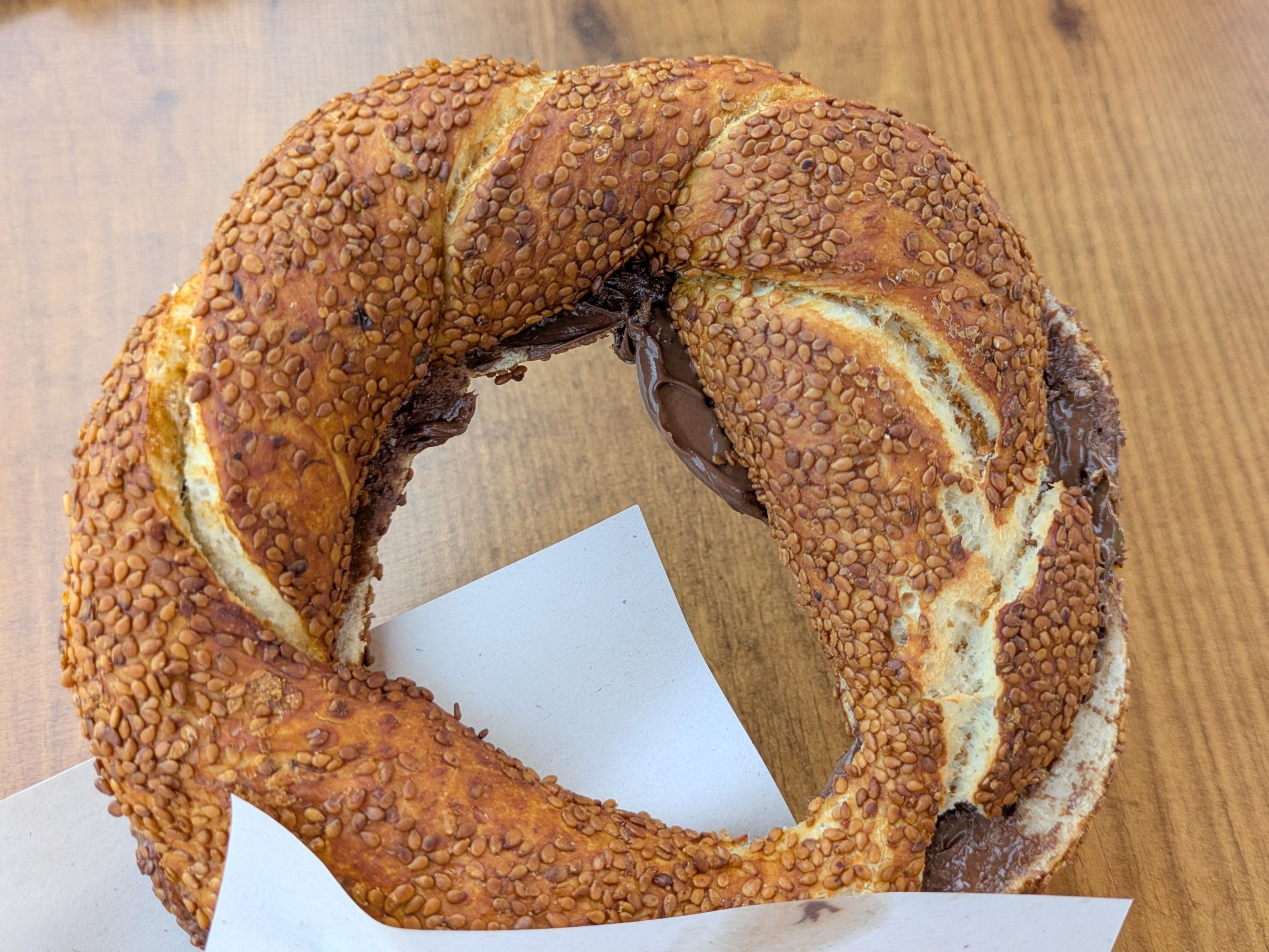
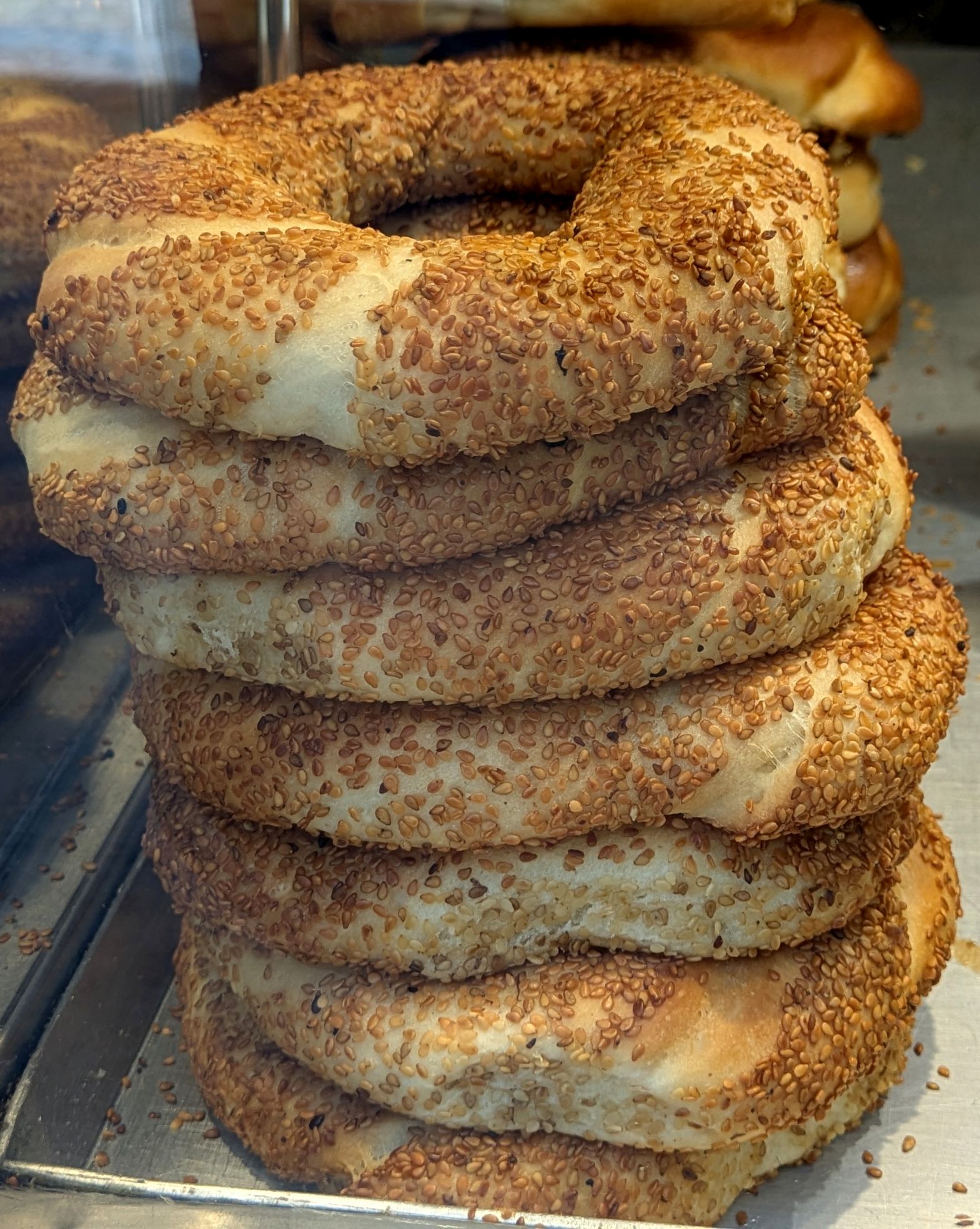
This is a Simit, sort of like a bagel, but they are larger and the dough is twisted. This one was purchased from a cart in the HIppodrome. Plain simits were the equivalent of 50 cents, but one filled with Nutella only set us back an extra 25 cents for a delicious and very inexpensive snack!
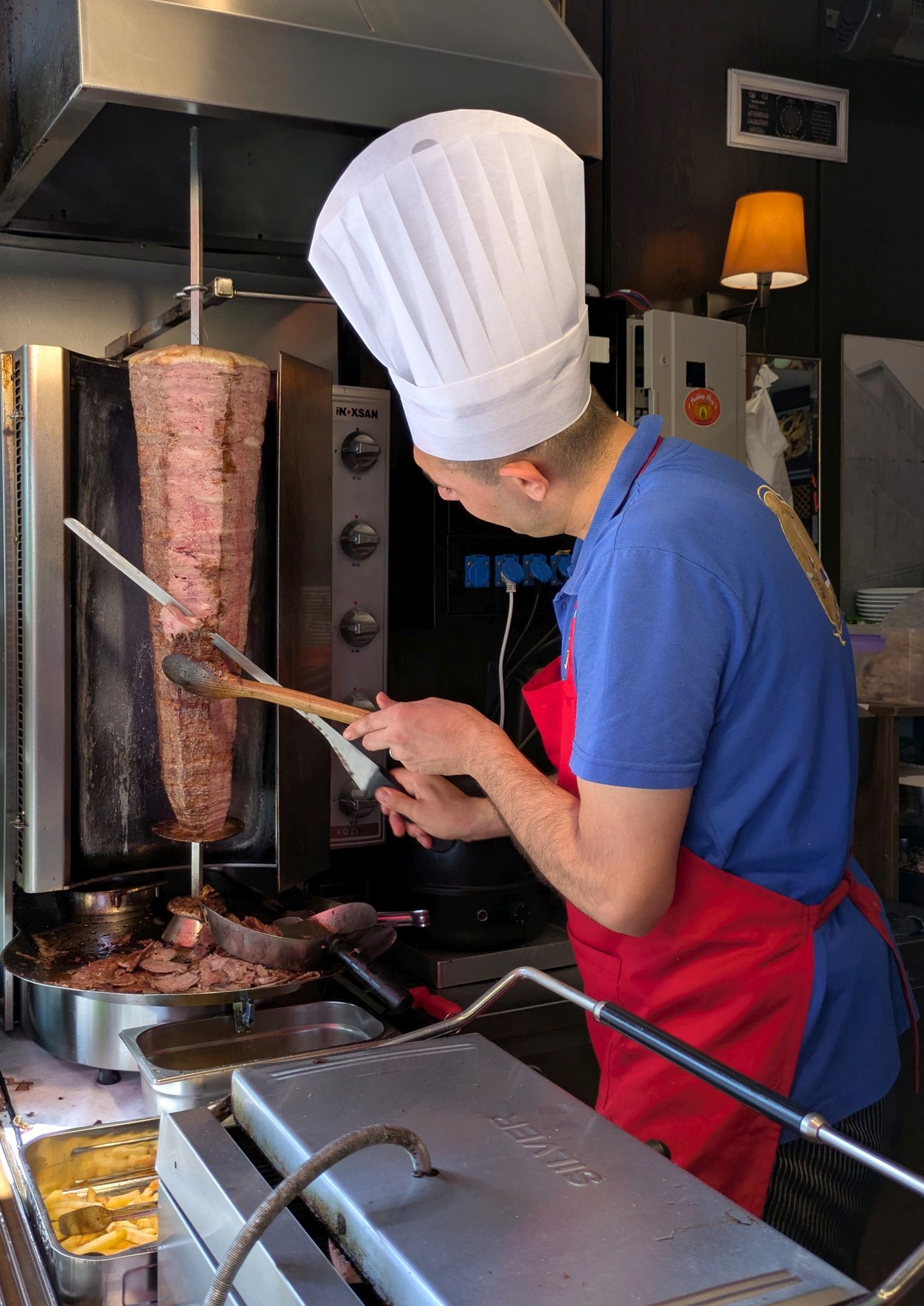
Although I opted for falafels instead, I had to grab this shot!
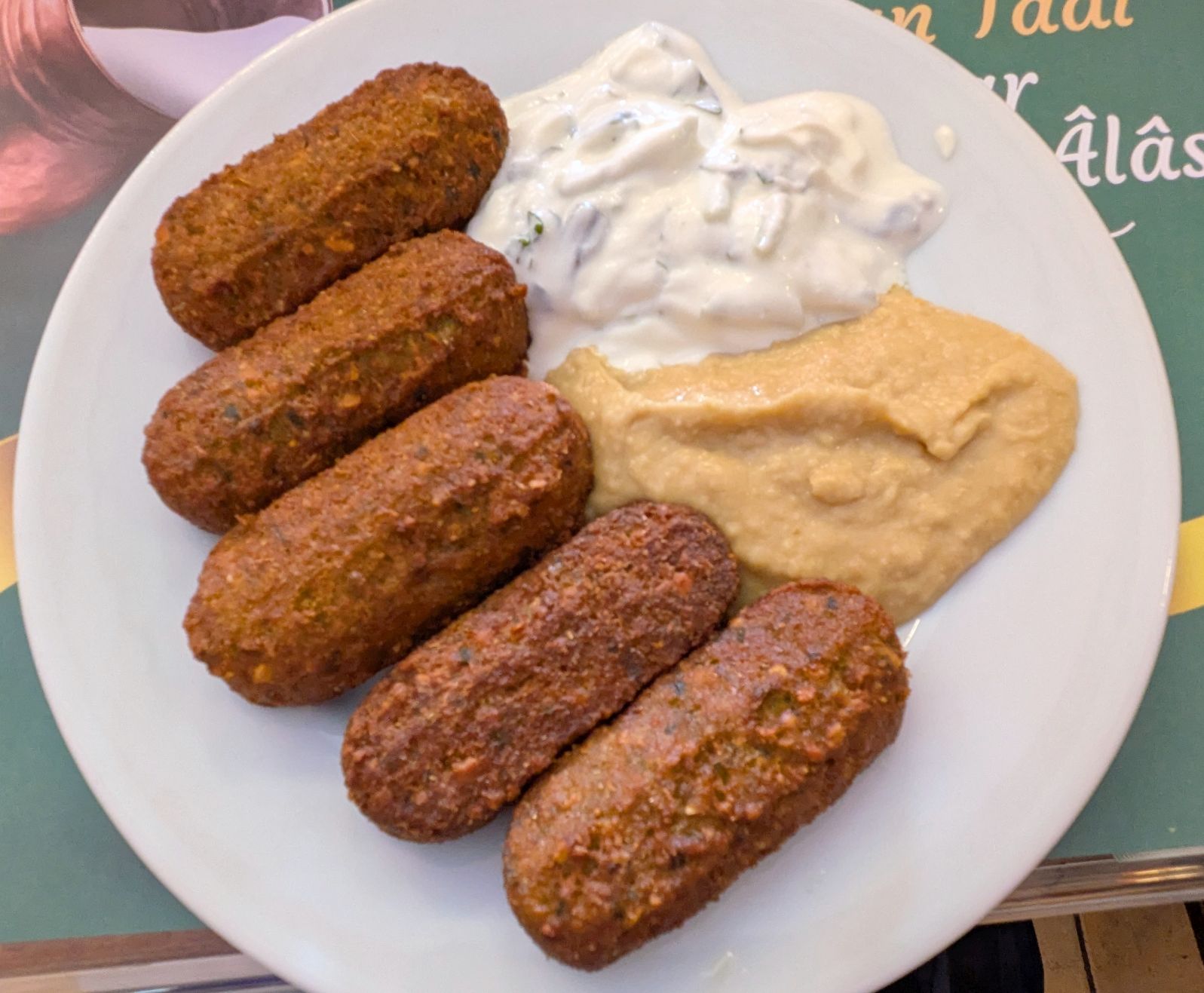
Falafels

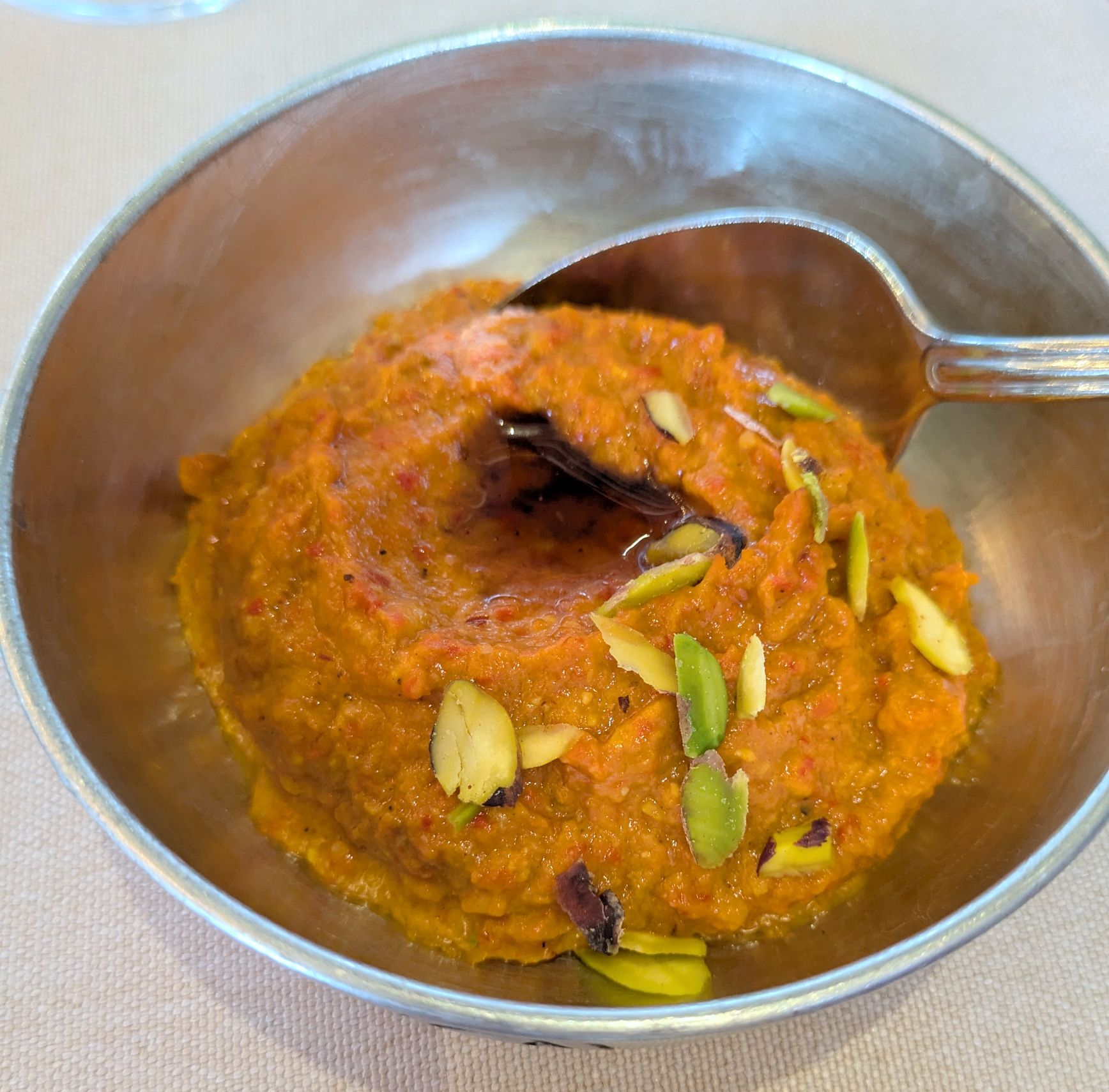
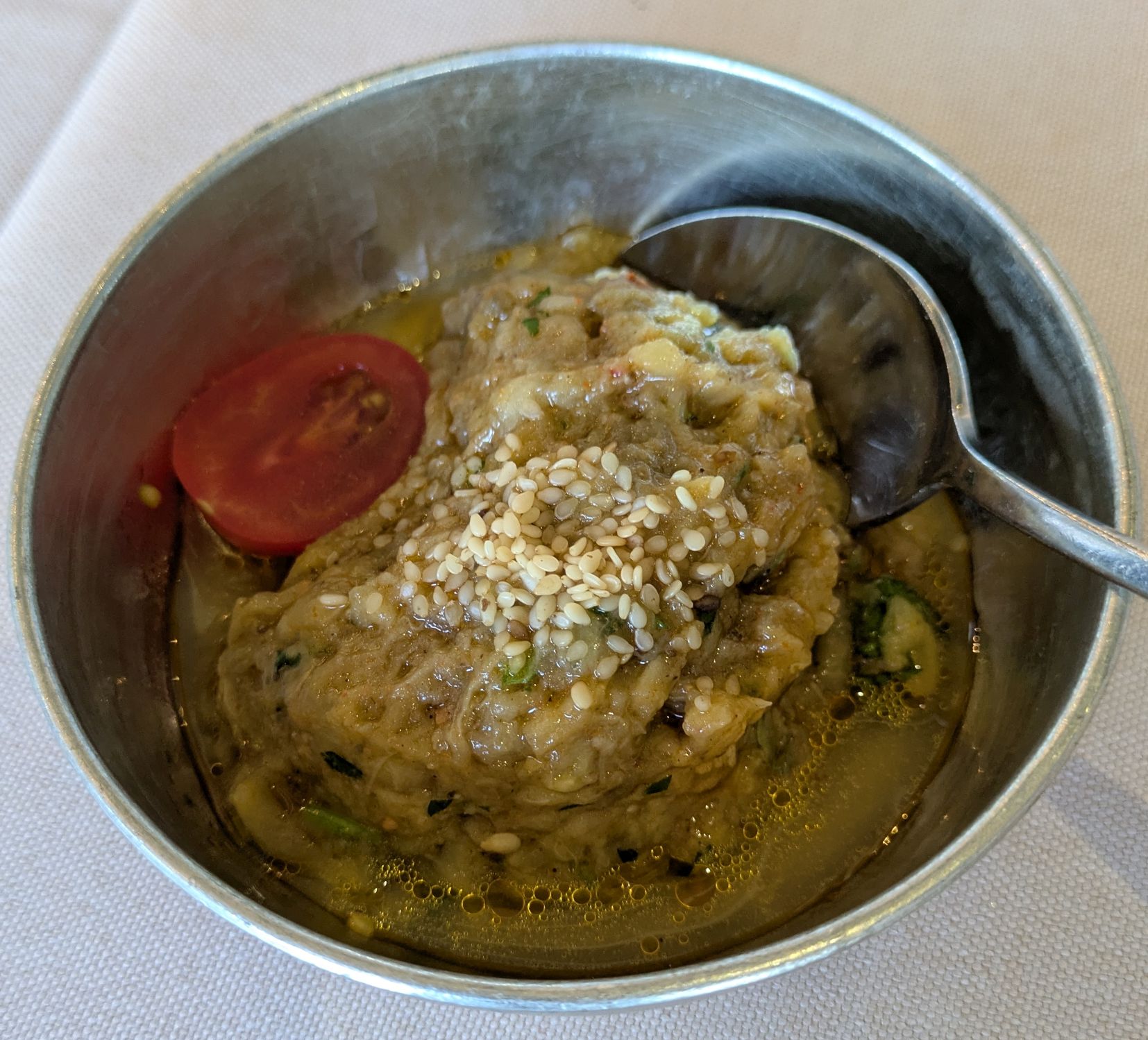
These were various different spreads and condiments that tasted so good!

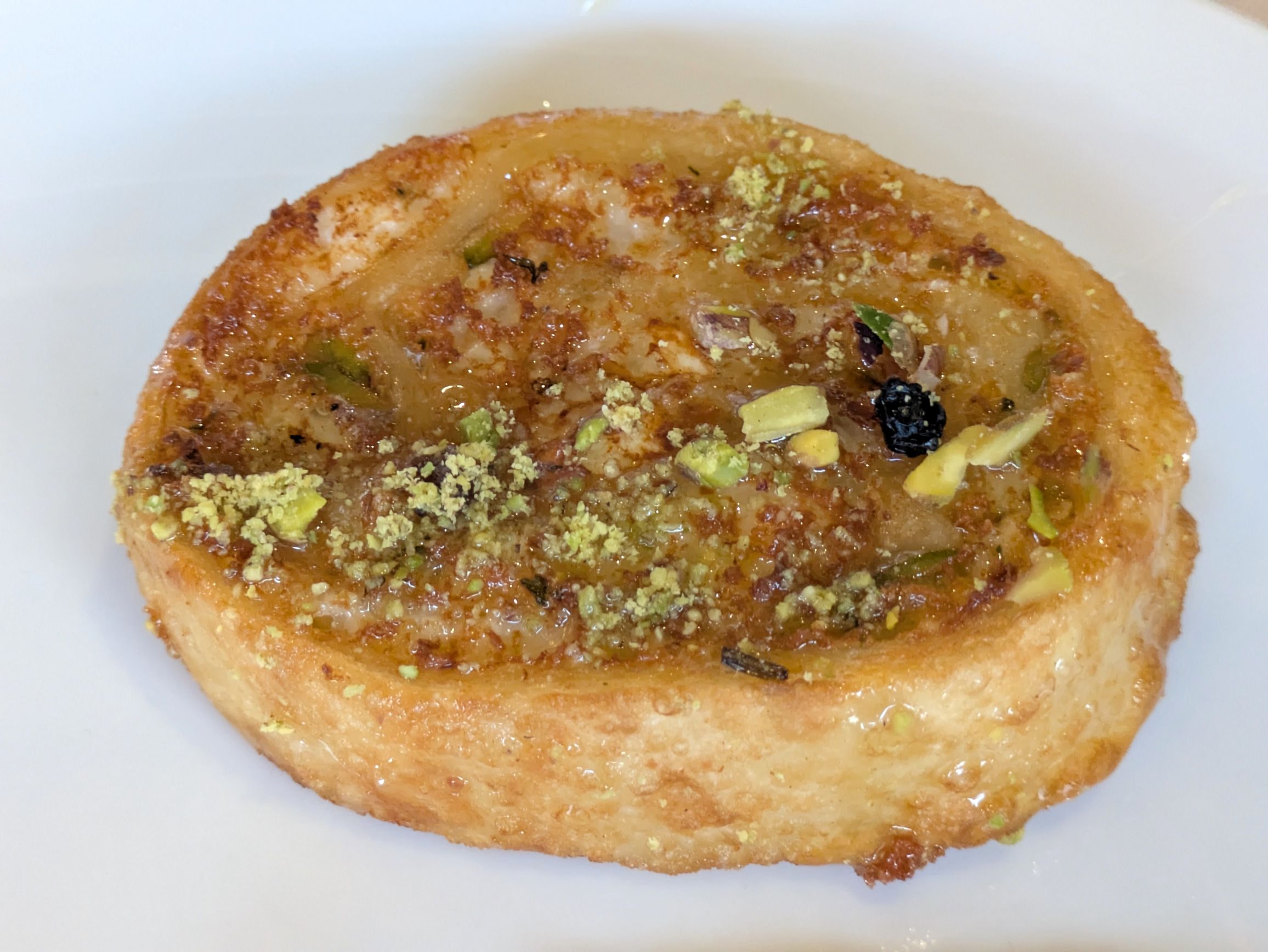
Hot appetizer of pastry with cheese and honey. DELICIOUS!
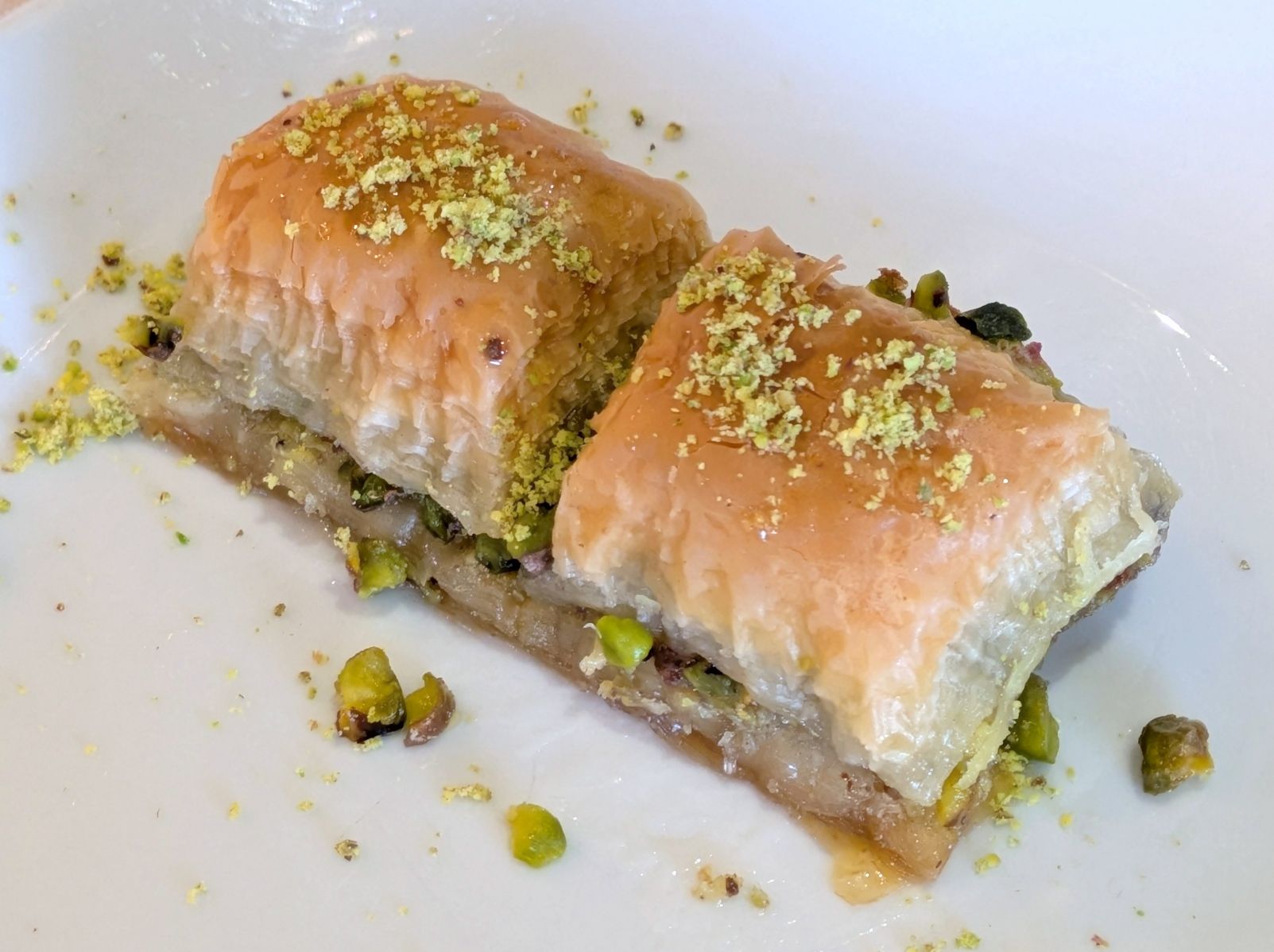
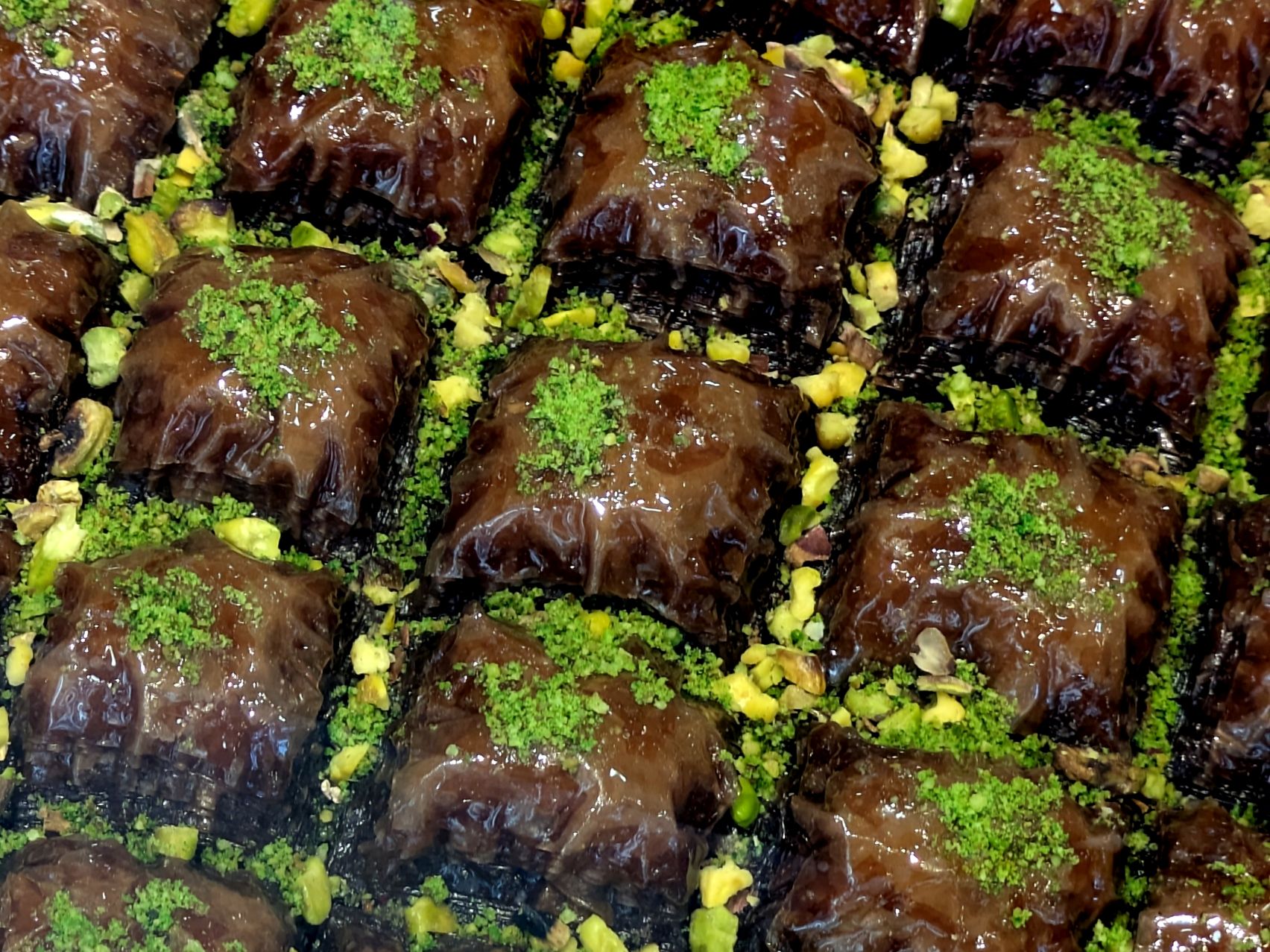
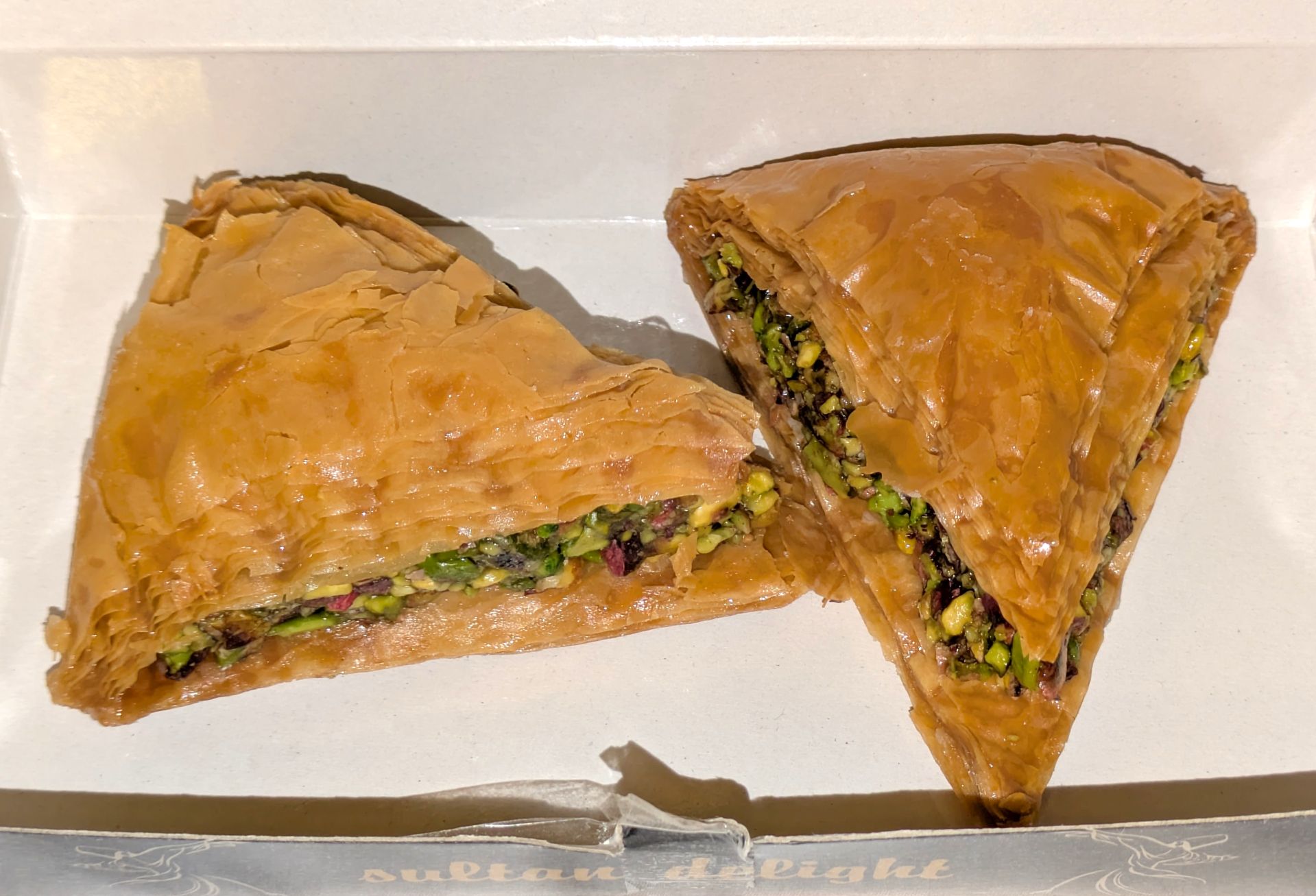
Baklava, which is phyllo dough pastry, honey syrup, and pistachio nuts

Next up: TURKIYE #5: CAPTIVATING CAPPADOCIA

TURKIYE #3: MAGNIFICENT MOSQUES & TERRIFIC TOPKAPI PALACE

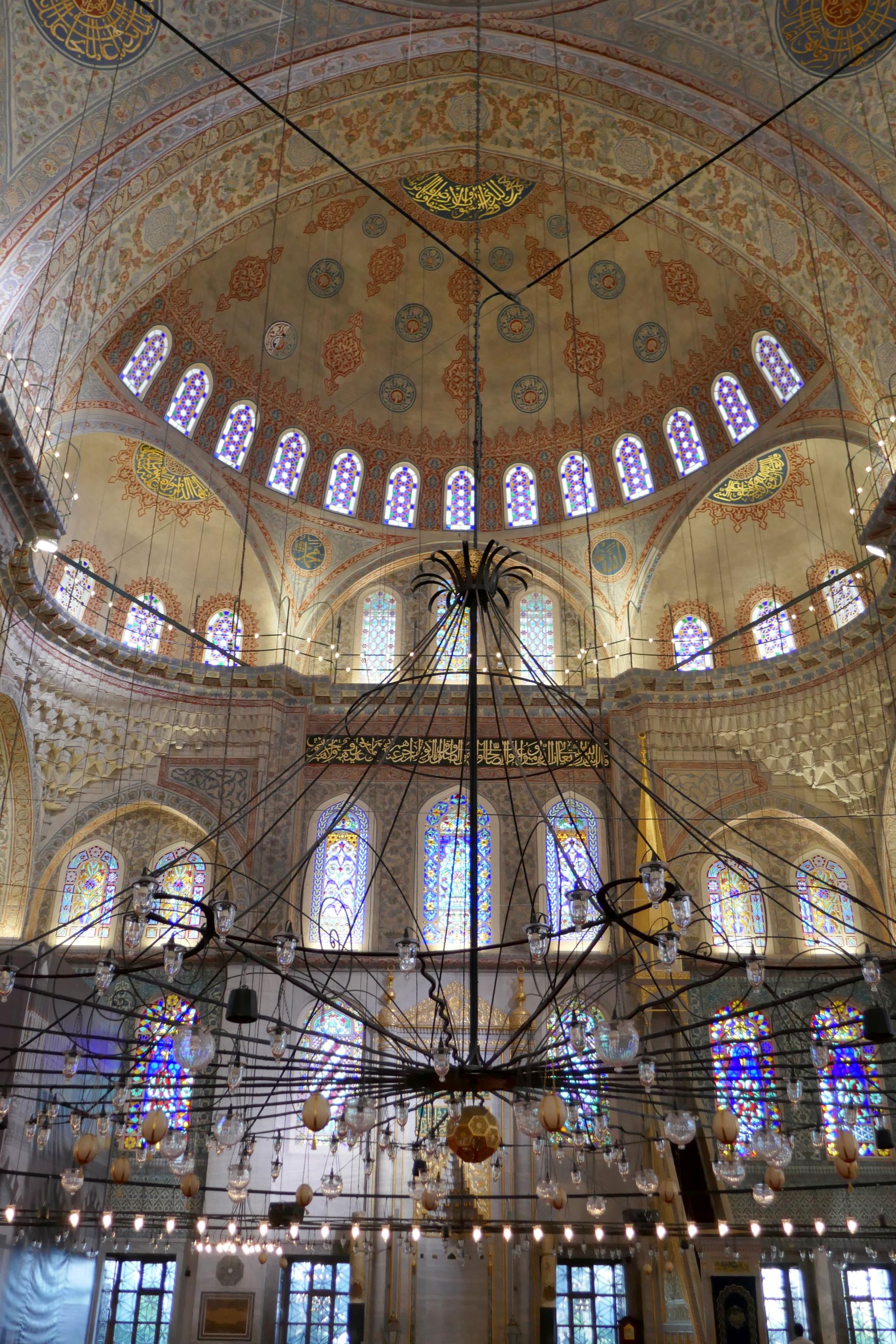
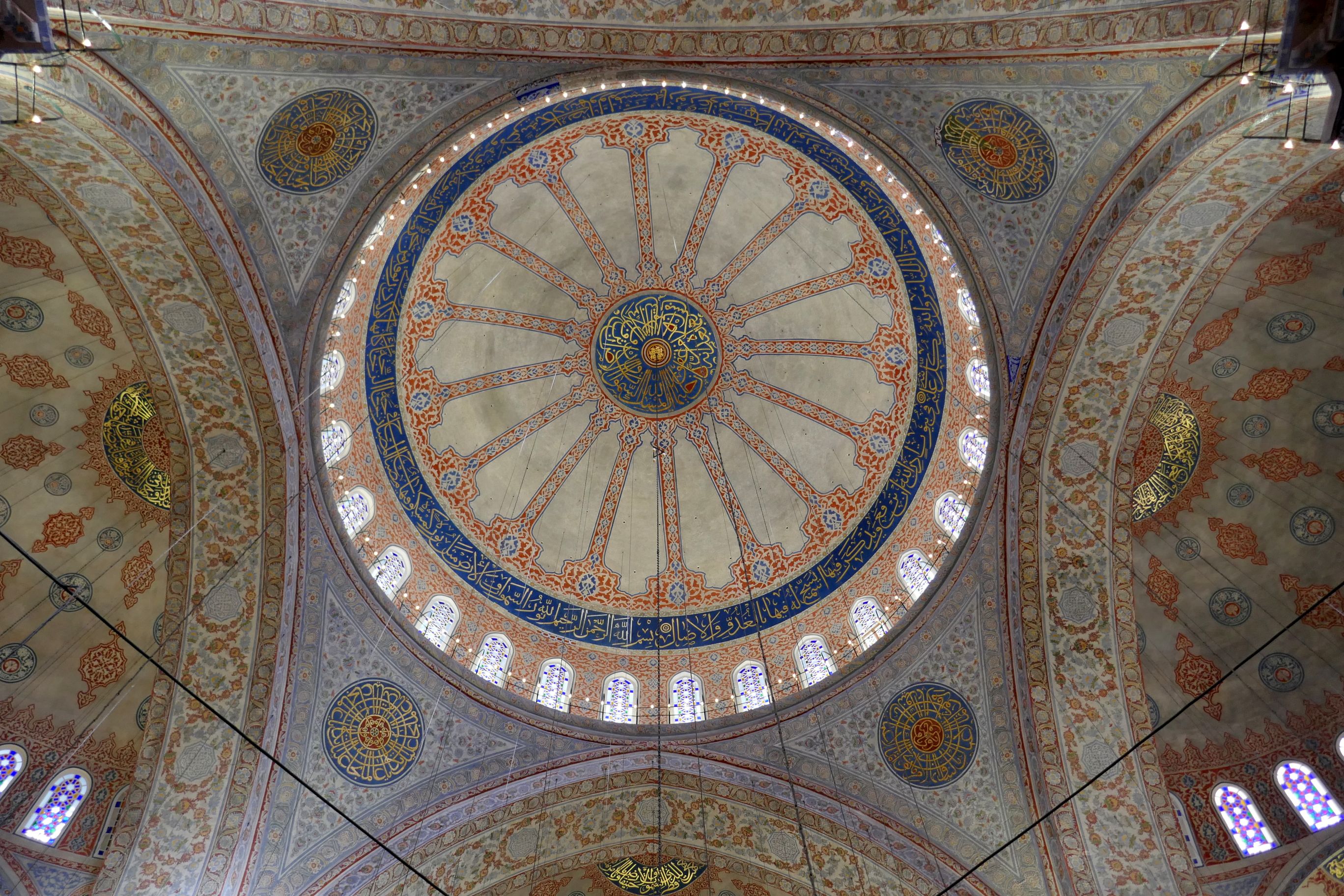
During our free time in Istanbul, Bruce and I explored the Sultan Ahmed Mosque, better known as the “Blue Mosque,” listed as a UNESCO World Heritage Site under the name “Historic Areas of Istanbul”.  This is the mosque we saw lit up when we arrived at our hotel at night, and we were eager to see the mosque’s interior.

This Ottoman-era mosque, completed in 1617, is an iconic attraction in Istanbul because of its history and architecture.  The central dome is surrounded by four semi-domes over the prayer hall, and it’s quite a sight to see when you step inside.  The Iznik tile work itself makes this a must-see destination if you are ever in Turkey. 

(For all photos, click on the image for a full screen view.)
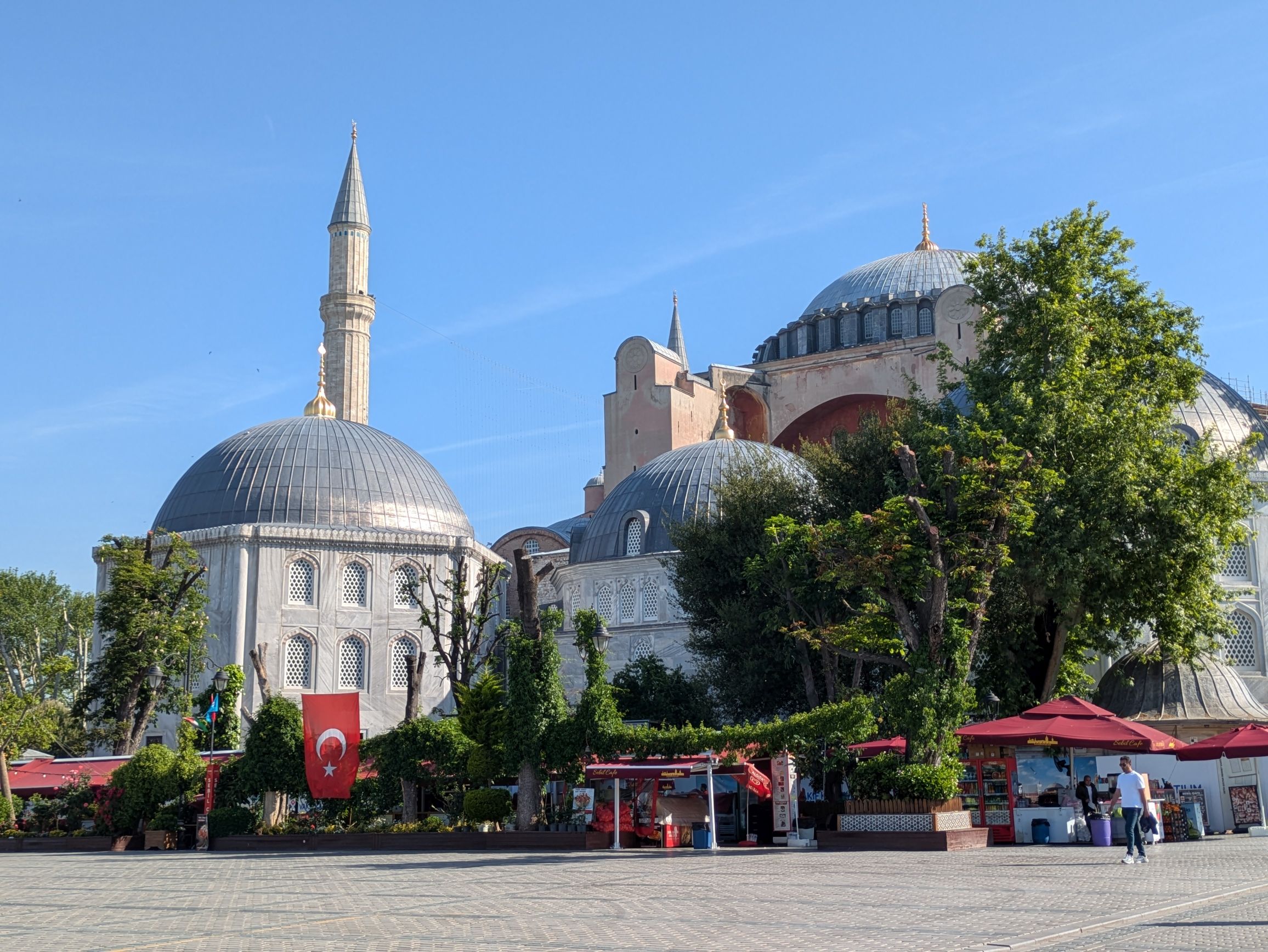
Nuri, our tour leader, led our group on guided tours of Hagia Sophia and Topkapi Palace during the following two days in the city.  Although we didn’t tour the Hagia Sophia until our final day, it is located just across the Hippodrome (central square) from the Blue Mosque, so I will tell you about it first.

Nuri, our tour leader

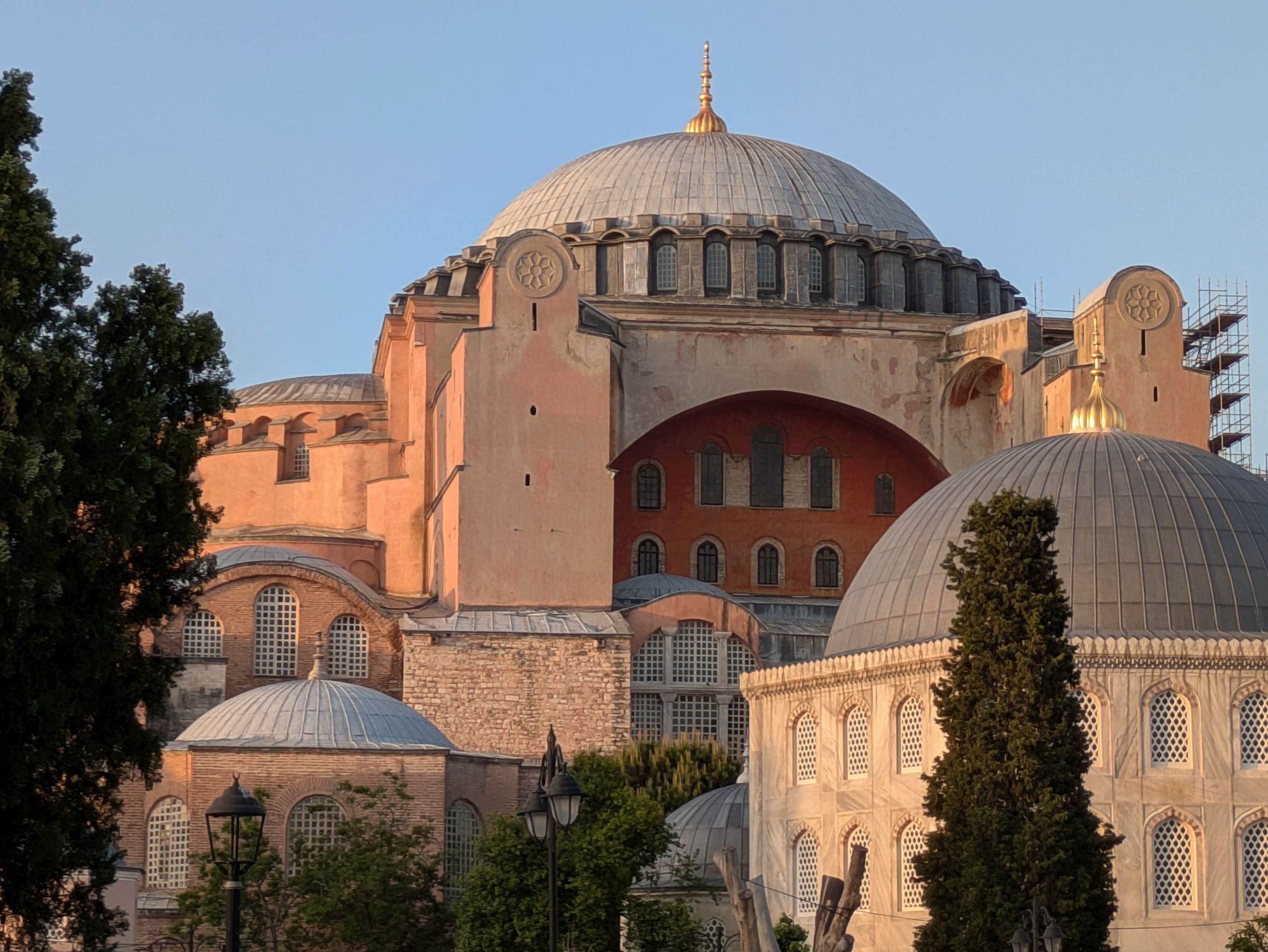
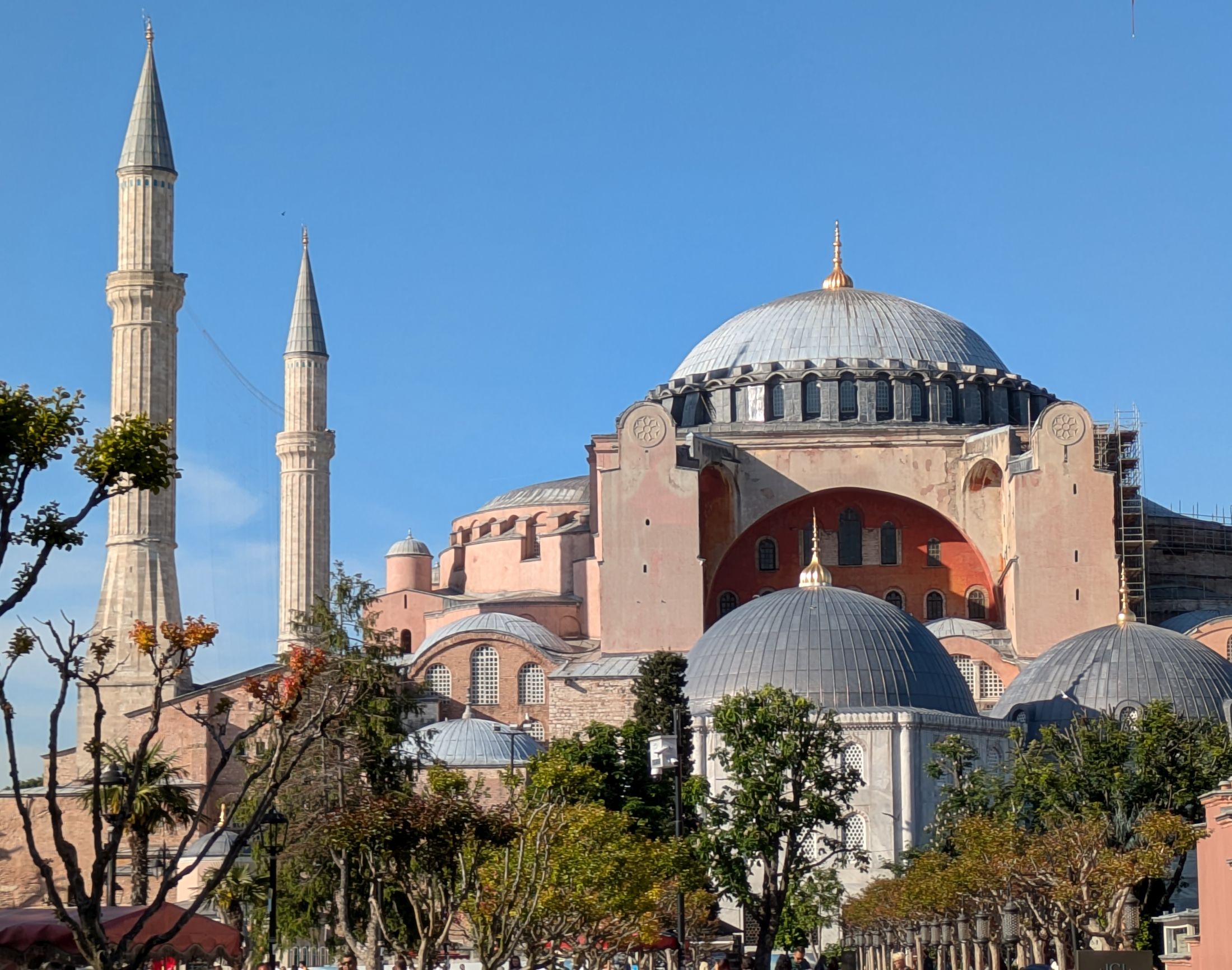
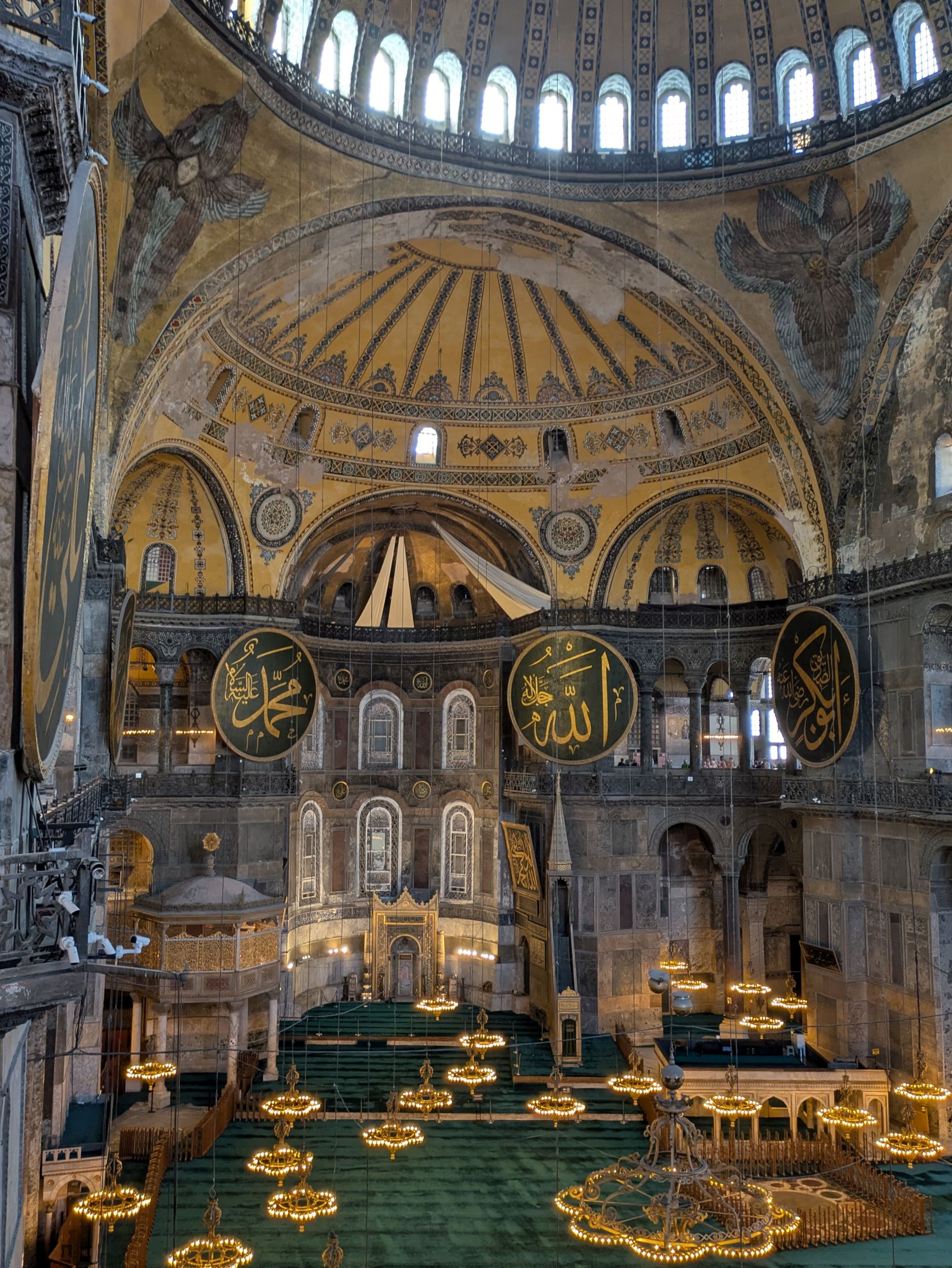
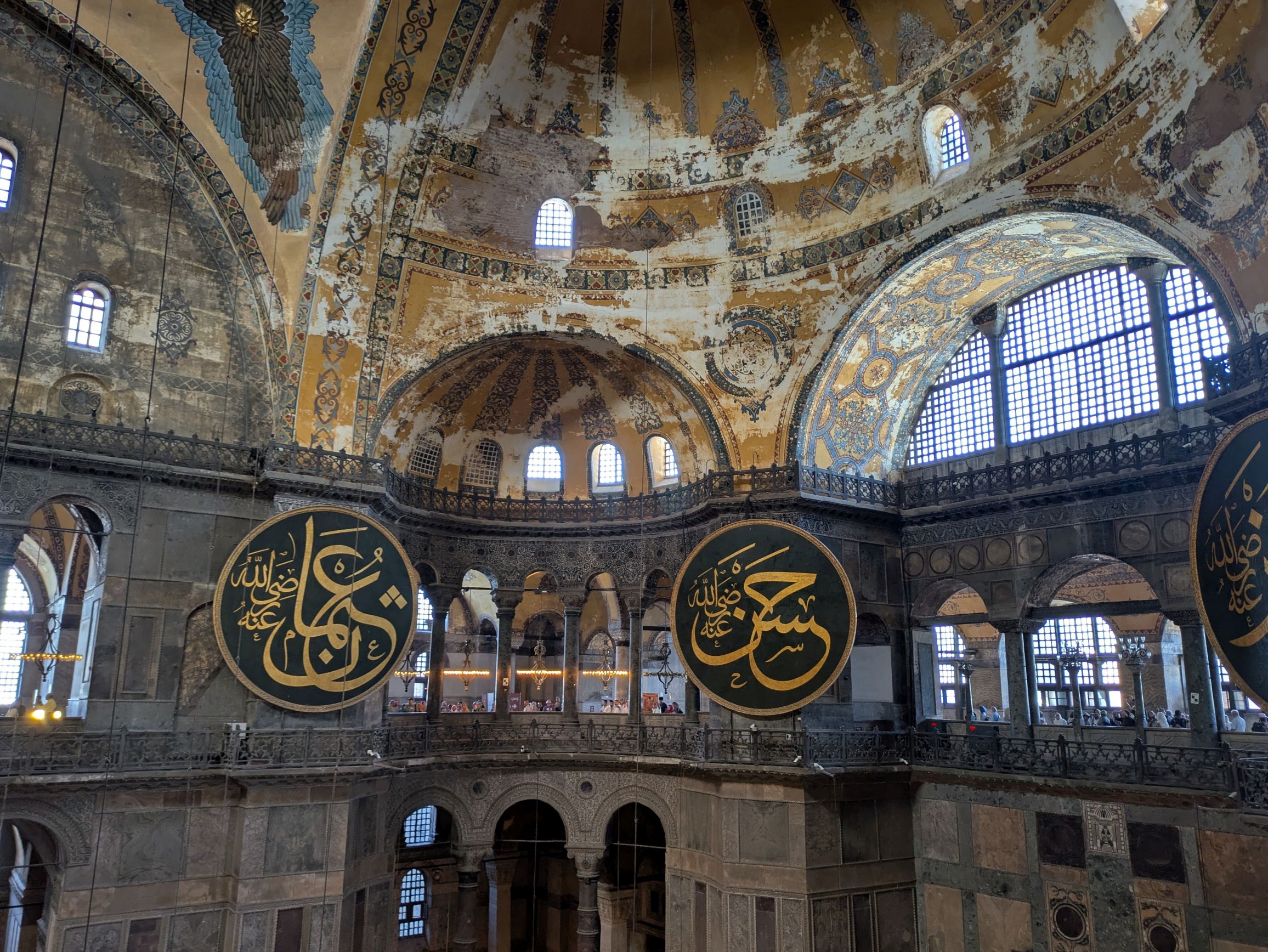
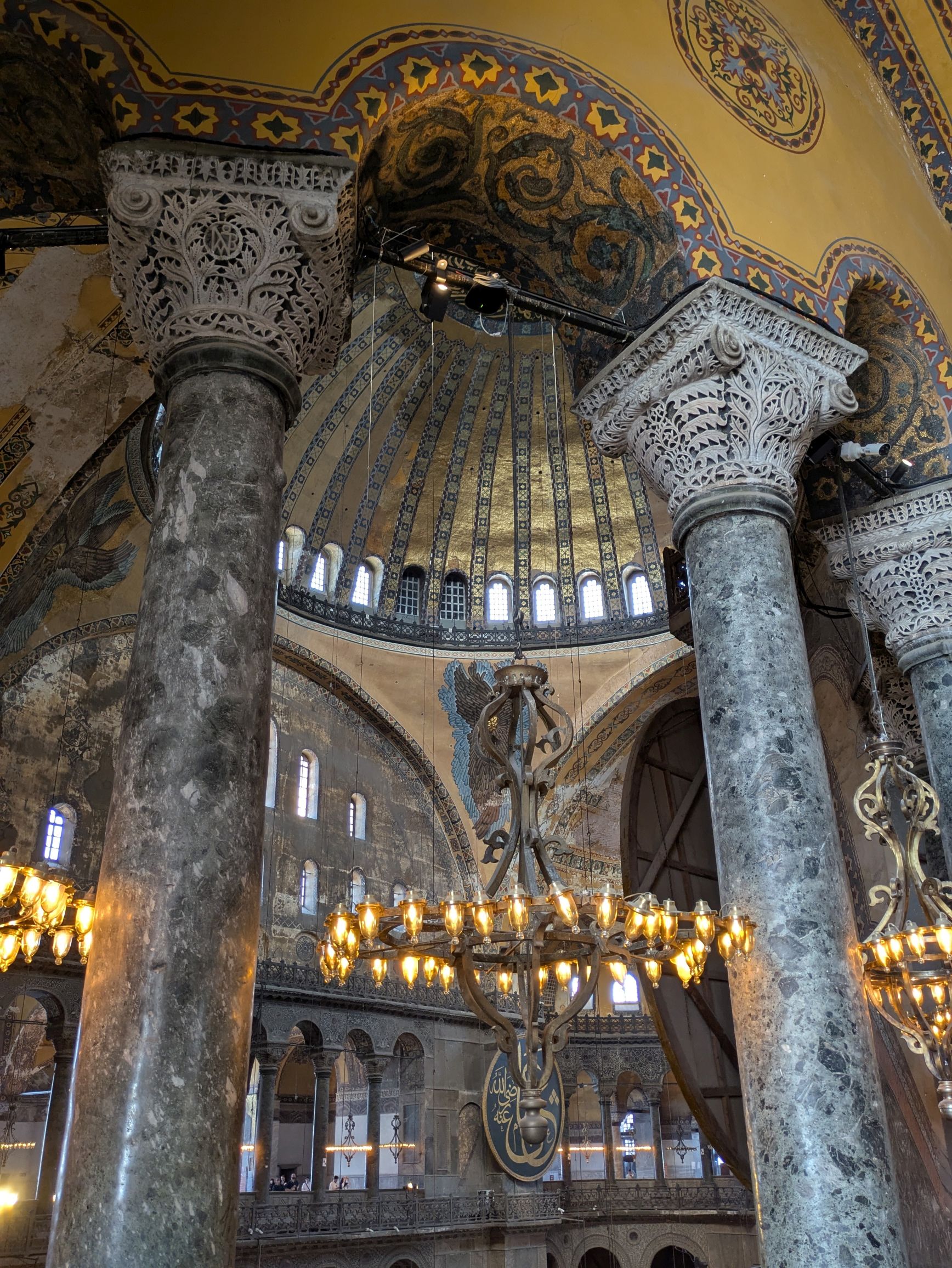
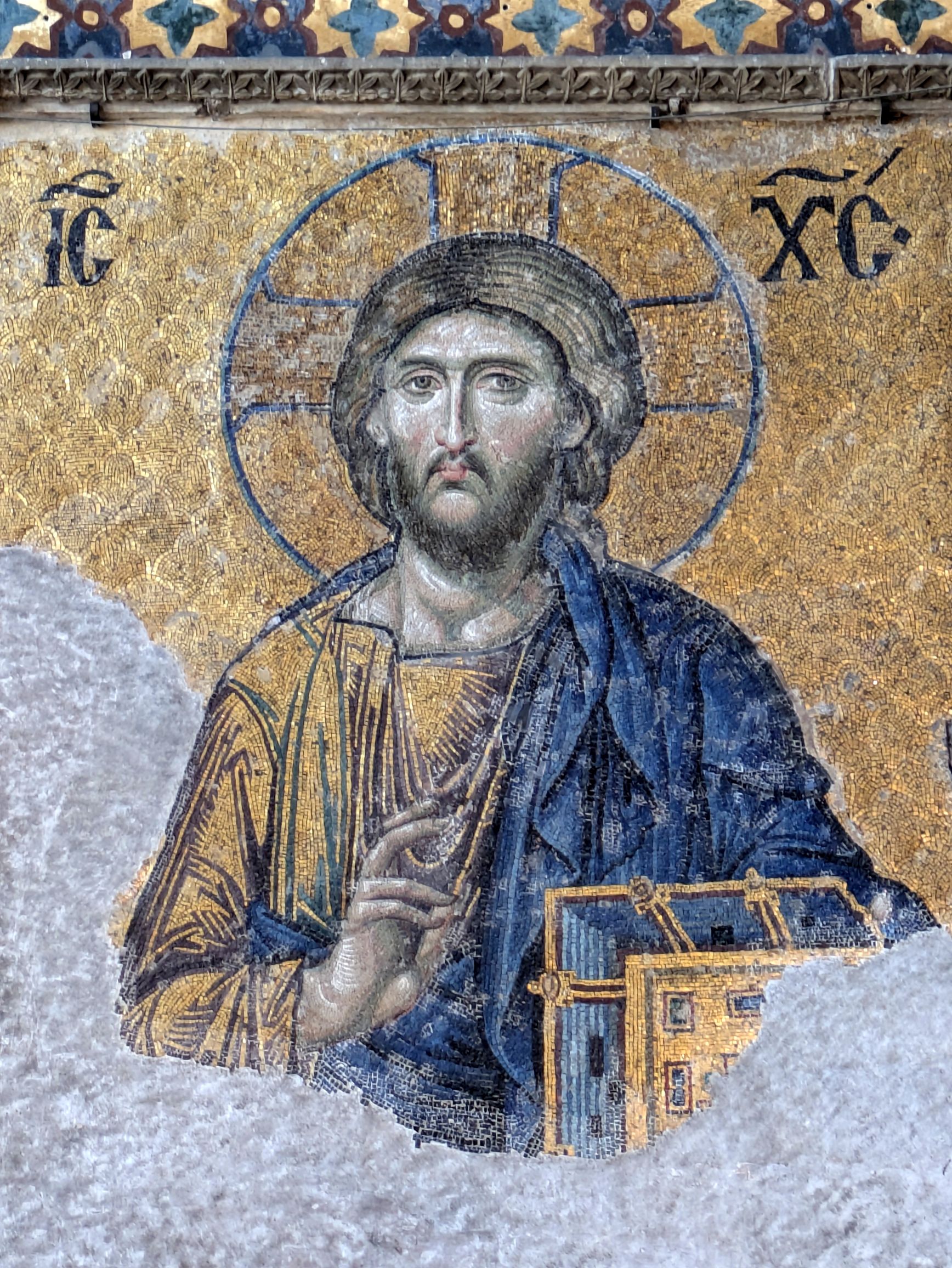
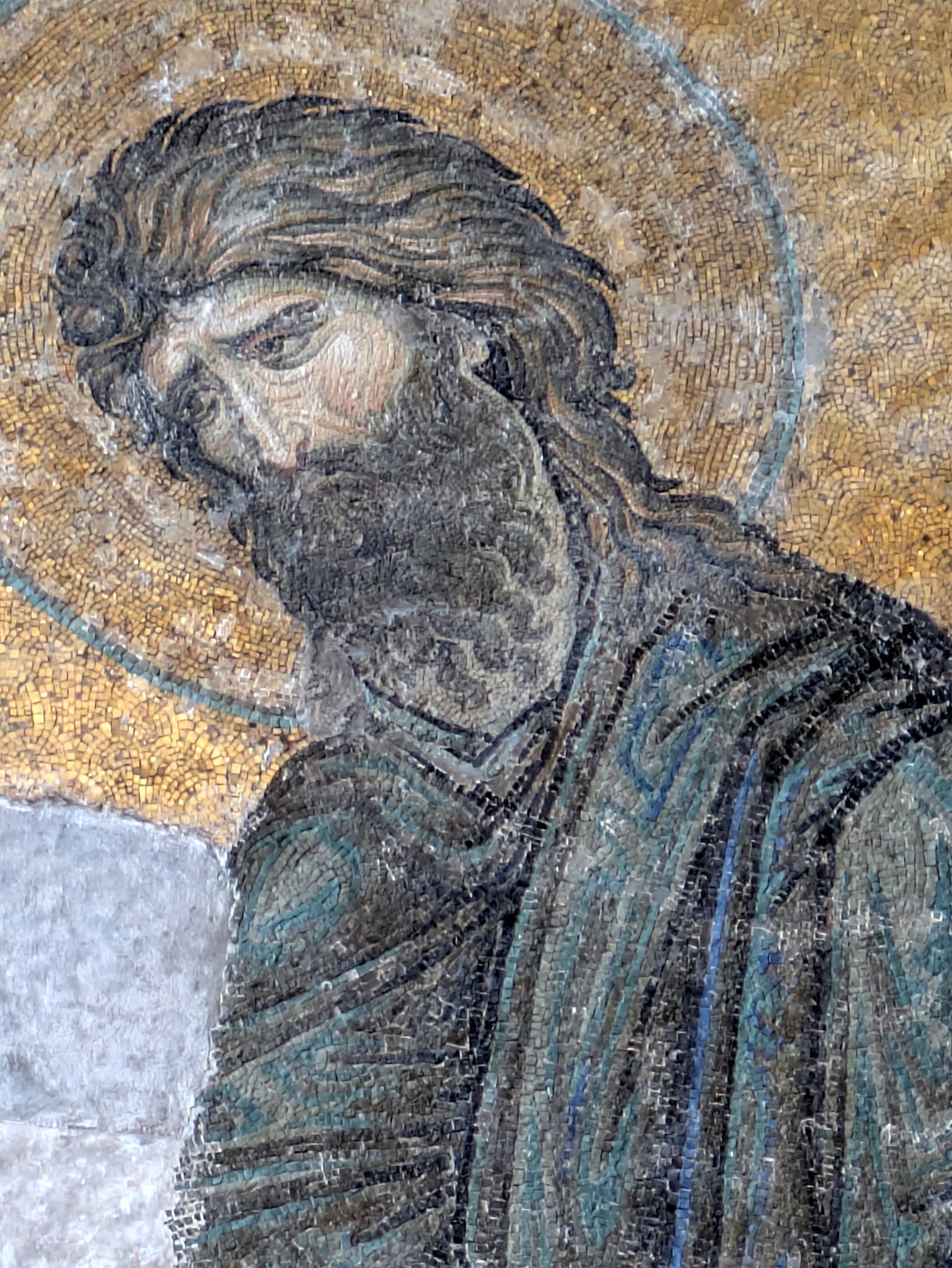
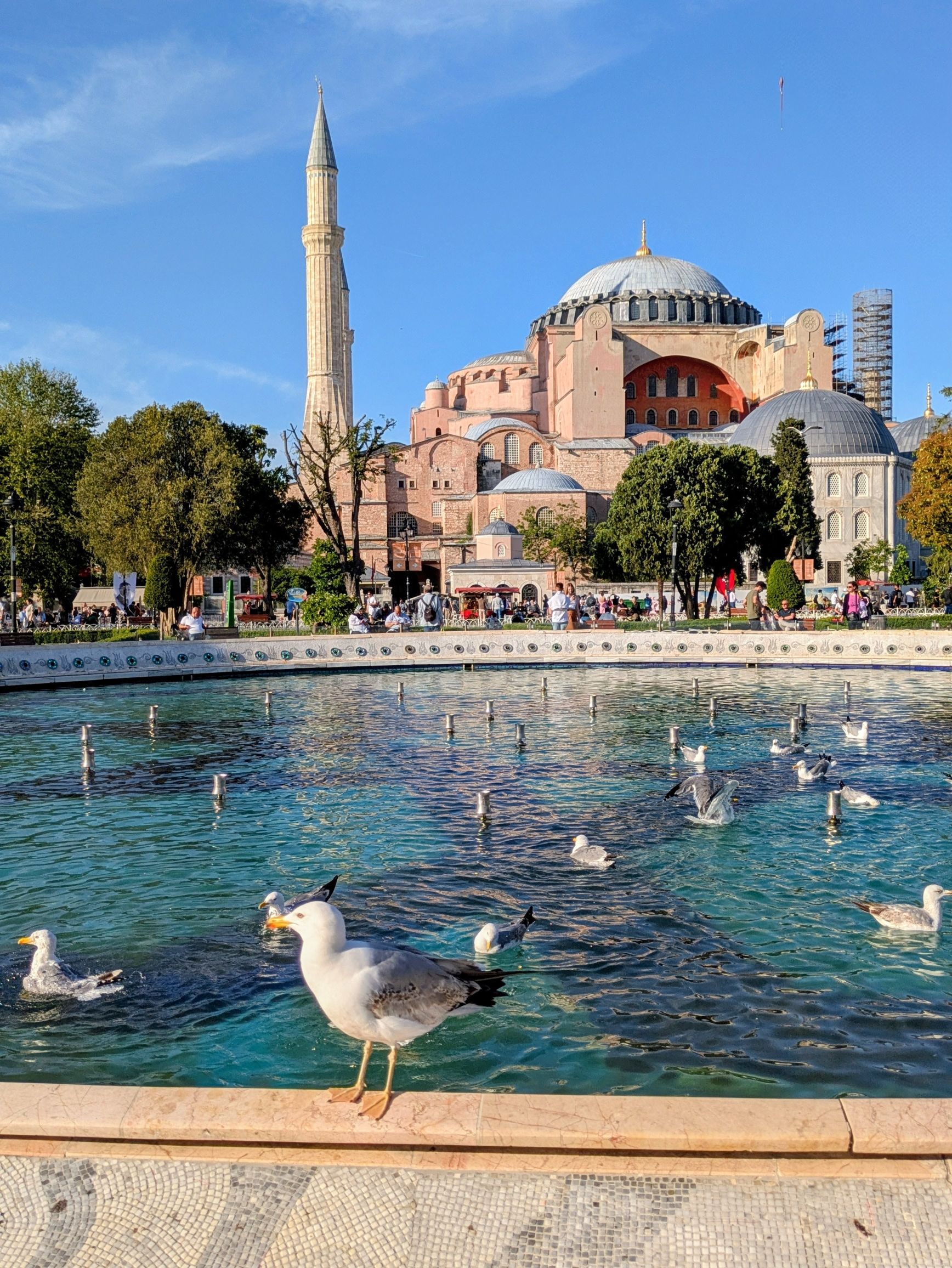
Hagia Sophia Grand Mosque (also a UNESCO World Heritage Site) is considered the epitome of Byzantine Architecture.  The first building of the complex was built in AD 537, and until the fall of Constantinople in 1453, Hagia Sophia served as a cathedral.  It was a mosque until 1935 when it became a museum.  In 2020, it was redesignated as a mosque, but in 2024, the upper floor of the mosque began serving as a museum once again.

As we toured the interior, we were in awe of the architecture, mosaics, marble pillars and floors as we learned about the history—far too detailed and complicated to write about here.

Mosques have strict rules about the attire permitted to be worn by visitors, but Hagia Sophia’s guards had an interesting way of determining who was permitted in from our group without purchasing a paper covering and who was not.  Bruce’s shorts were the same length as the other “Bruce” in our group, but he was permitted in without the fashionable coverings the others got to wear.  I brought a scarf for my head, so I was good to go.

The same day we toured Hagia Sophia, we visited the spice bazaar and took a cruise on the Bosphorus Strait.  More about that in my next post.

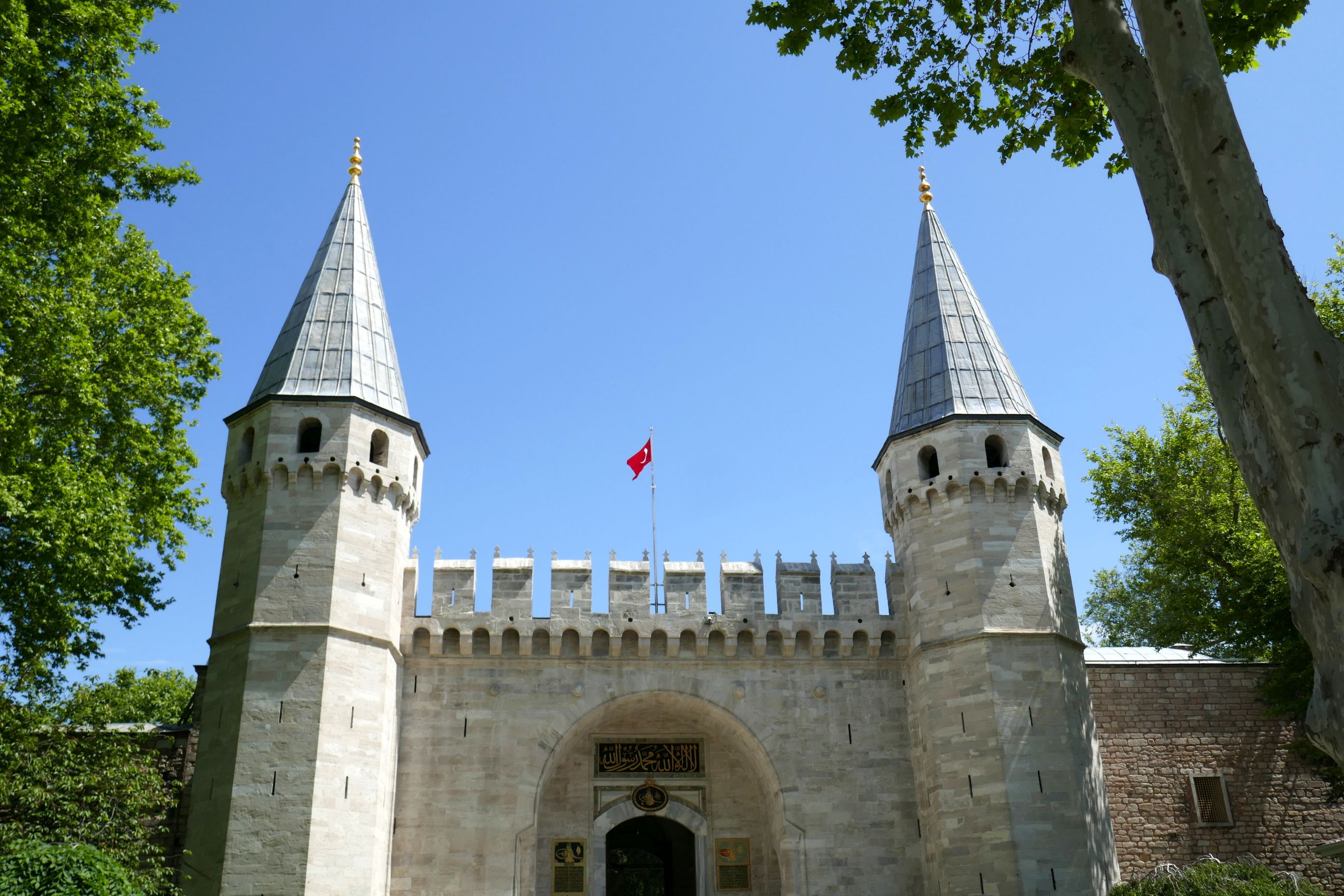
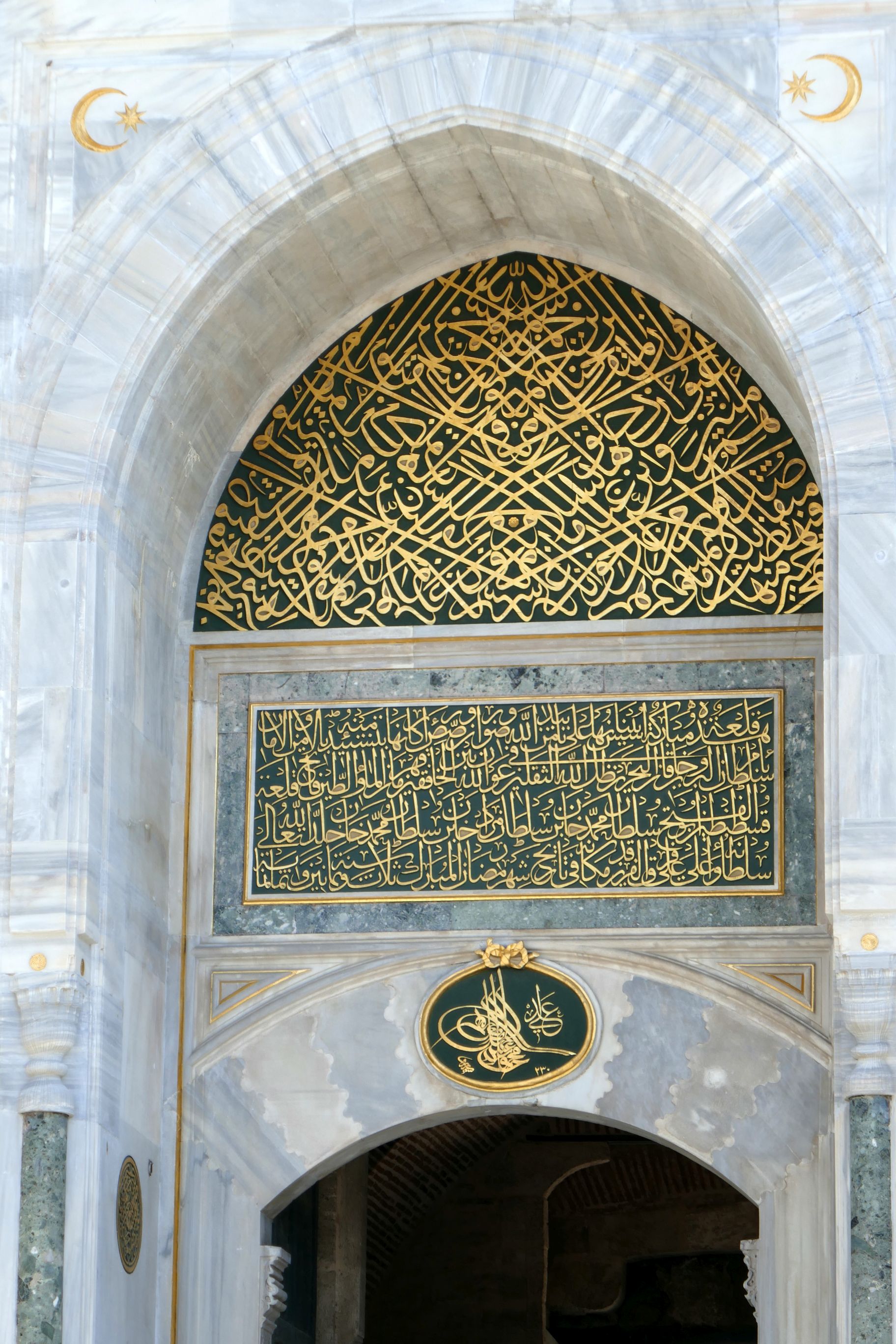
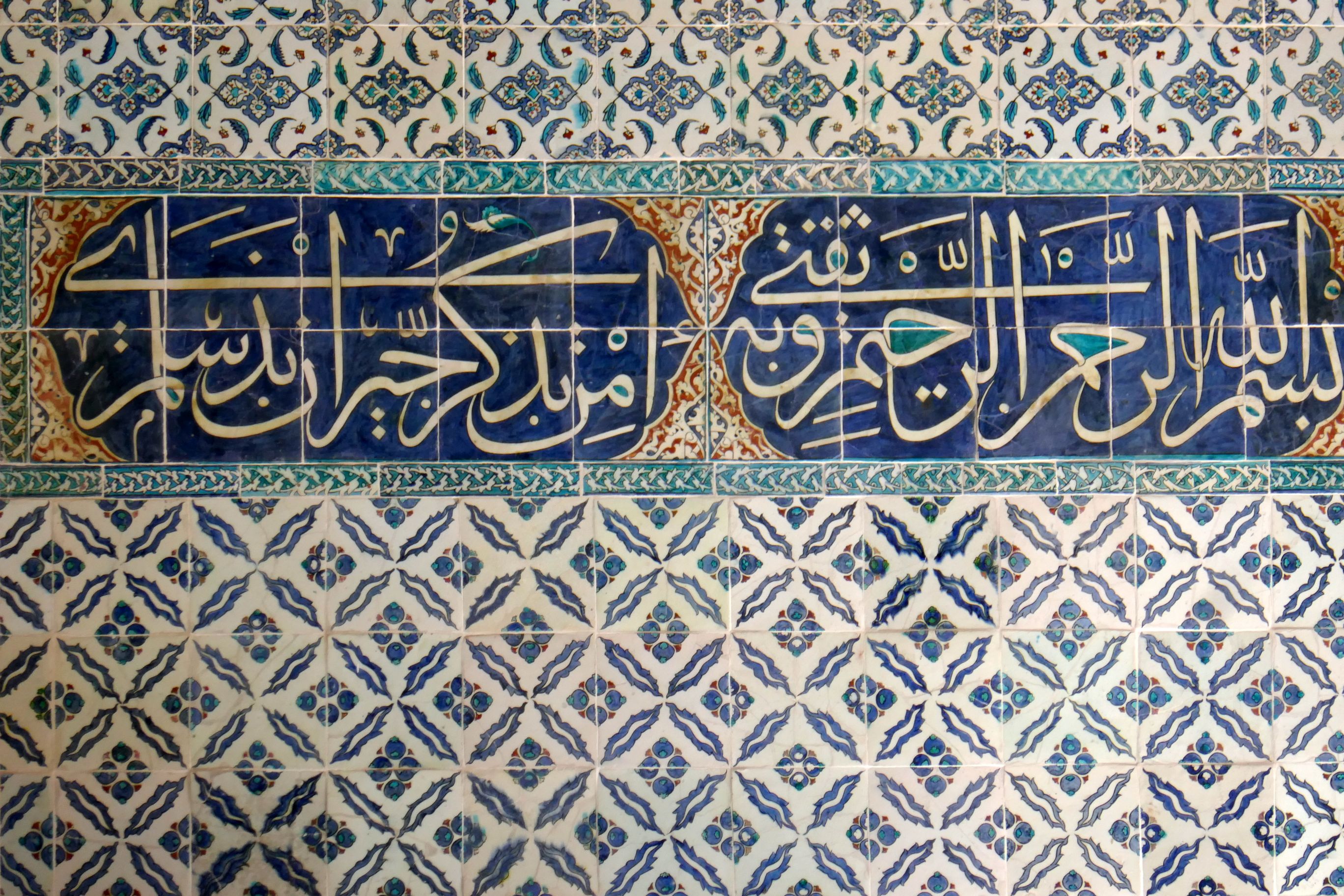
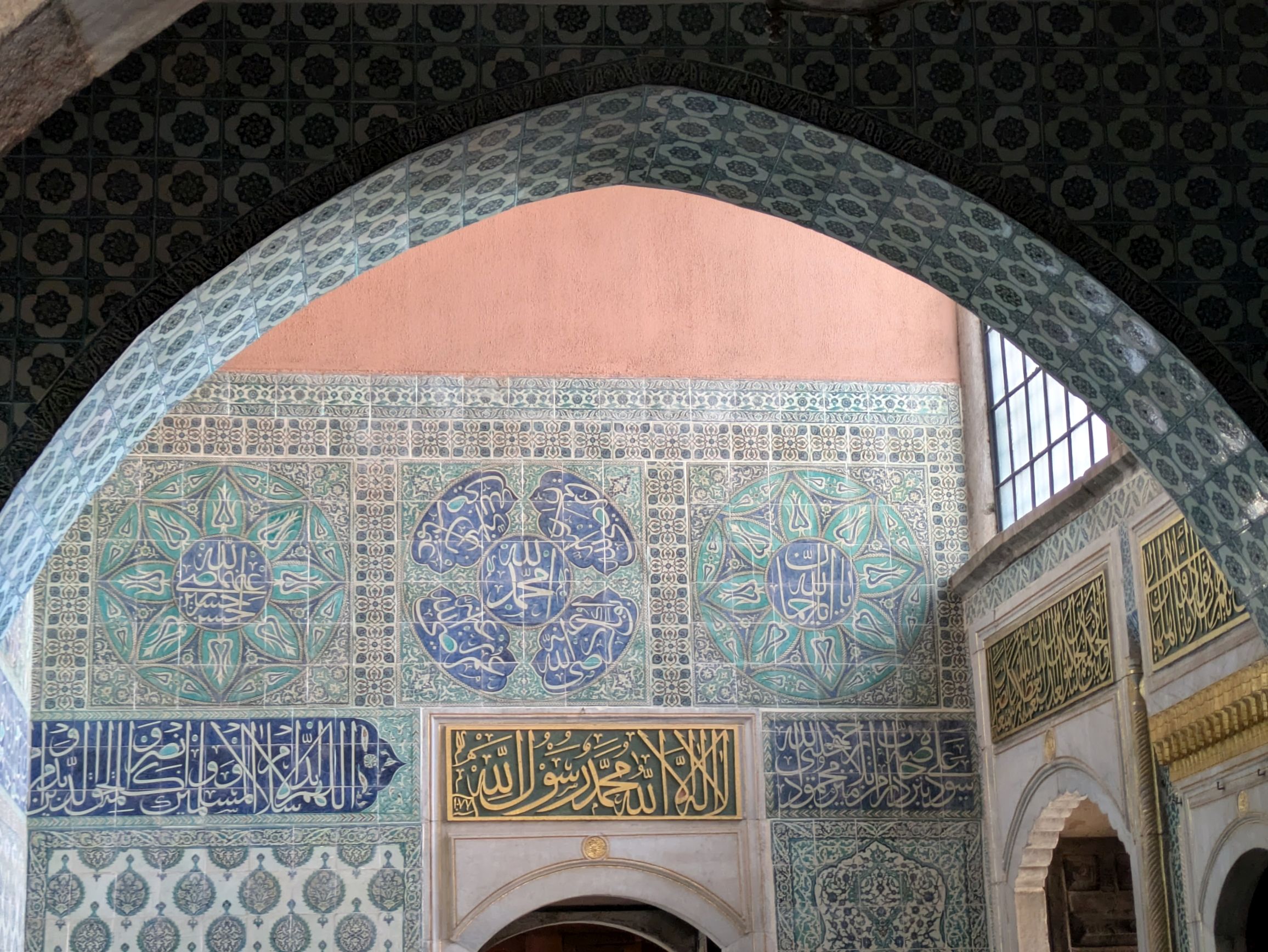
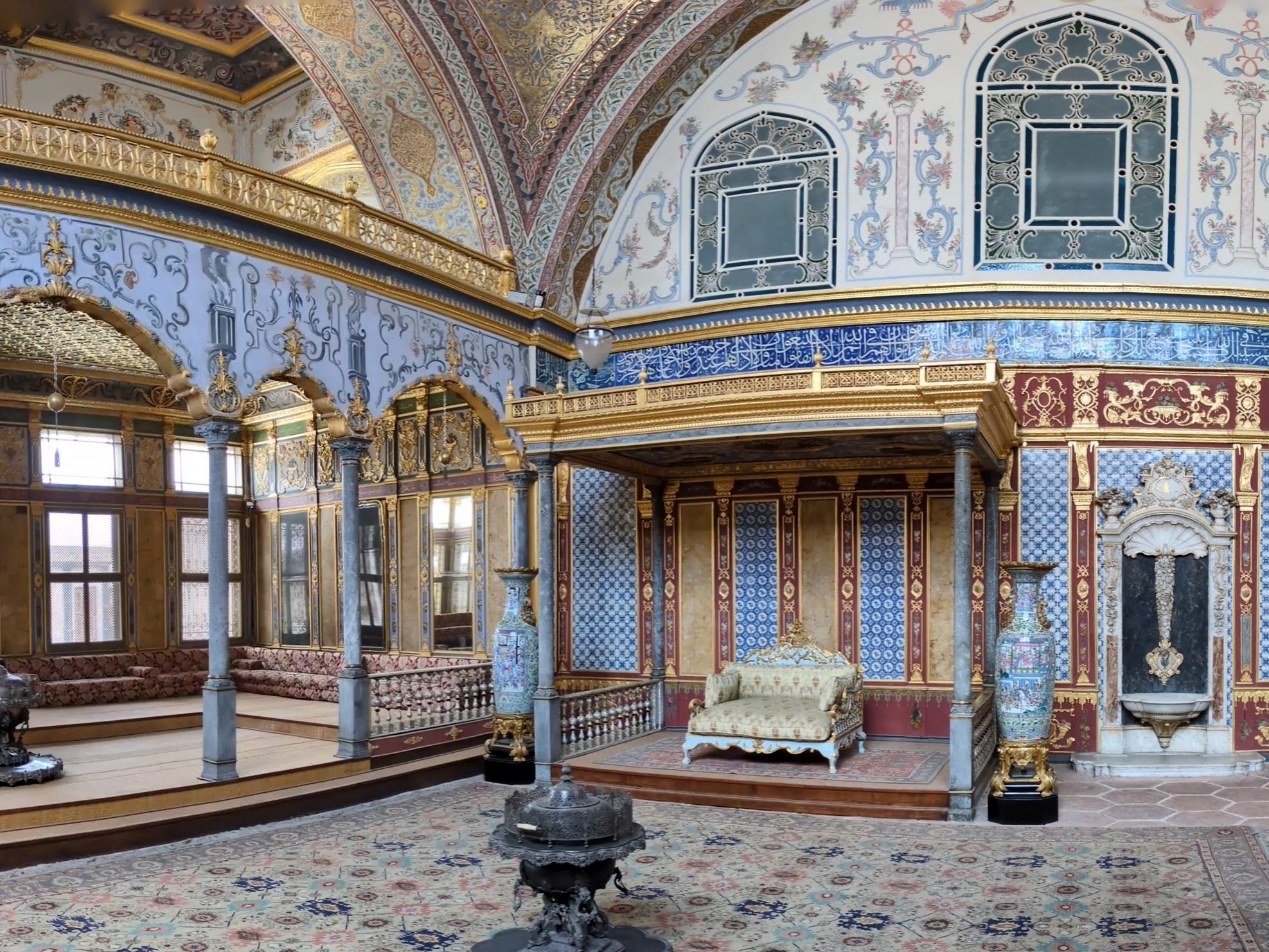
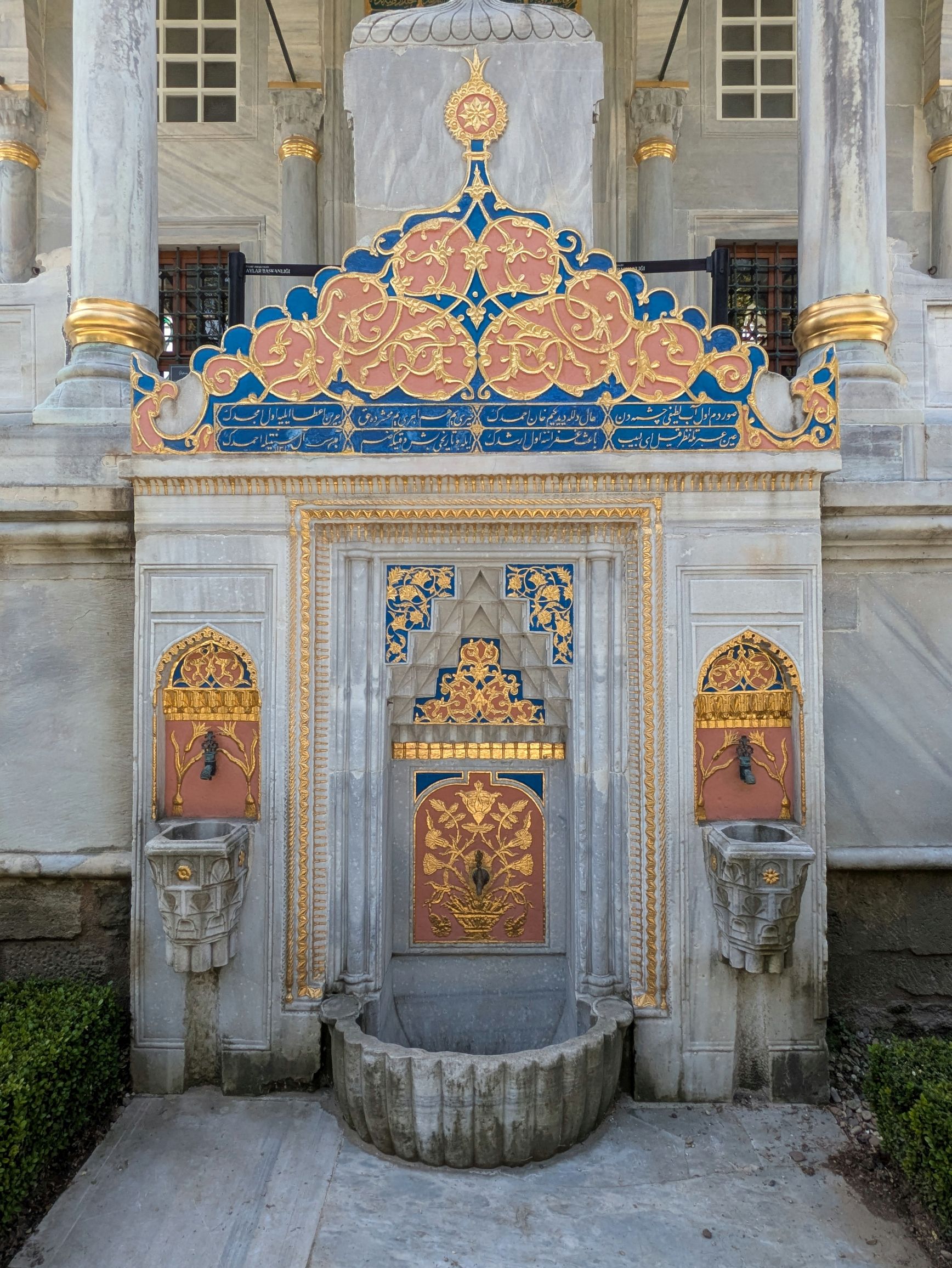
On our first day with the group, we toured Topkapi Palace, which served as the administrative center of the Ottoman Empire and was home to its sultans.  Six years after the conquest of Constantinople, Mehmed the Conquerer ordered the place to be built.  For several centuries, the complex expanded, but a AD 509 earthquake and 1665 fire required the palace to be renovated.  Fast-forward to 2025, and the complex now consists of four main courtyards, many smaller buildings, and is another UNESCO World Heritage Site. Again, we were in awe!

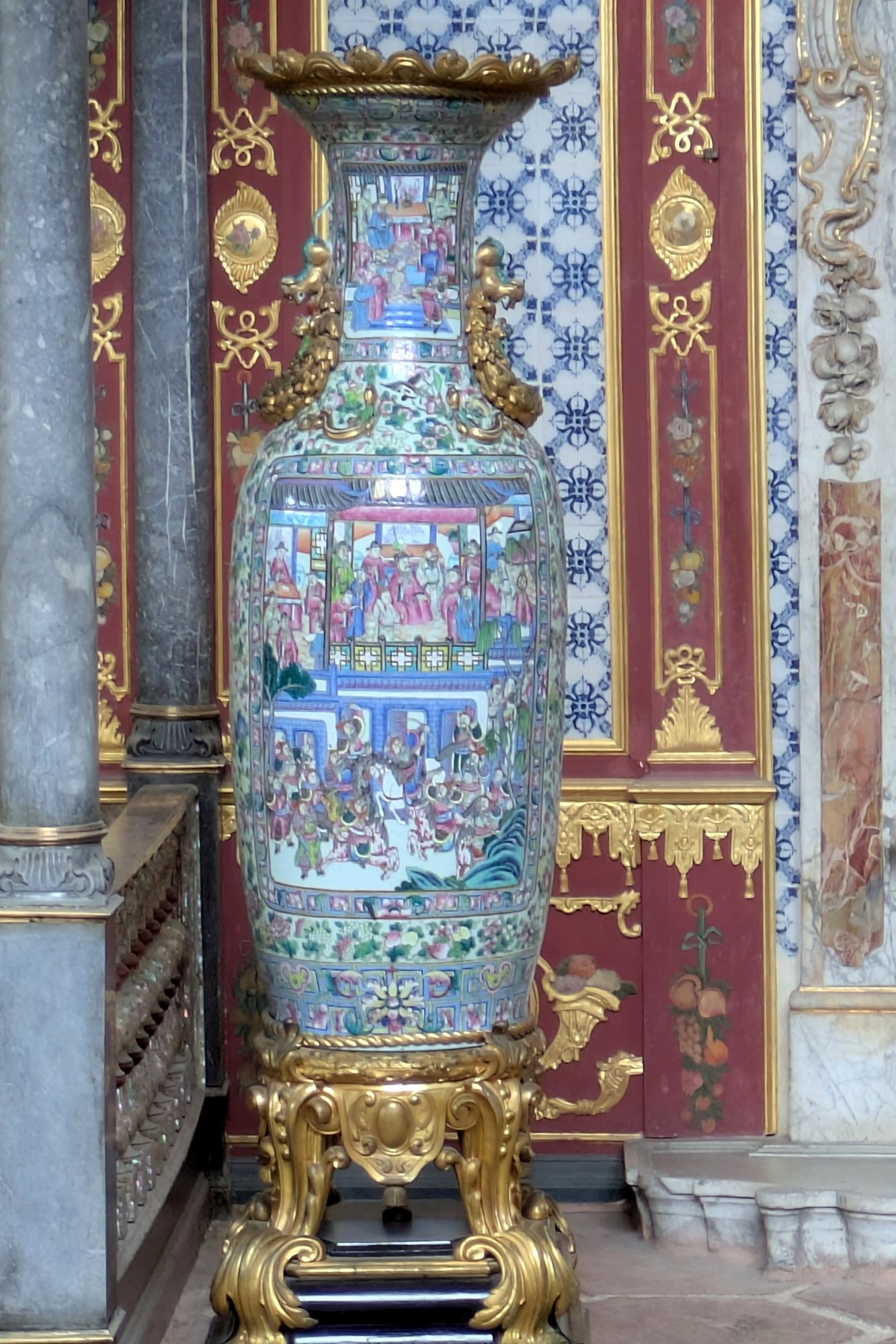
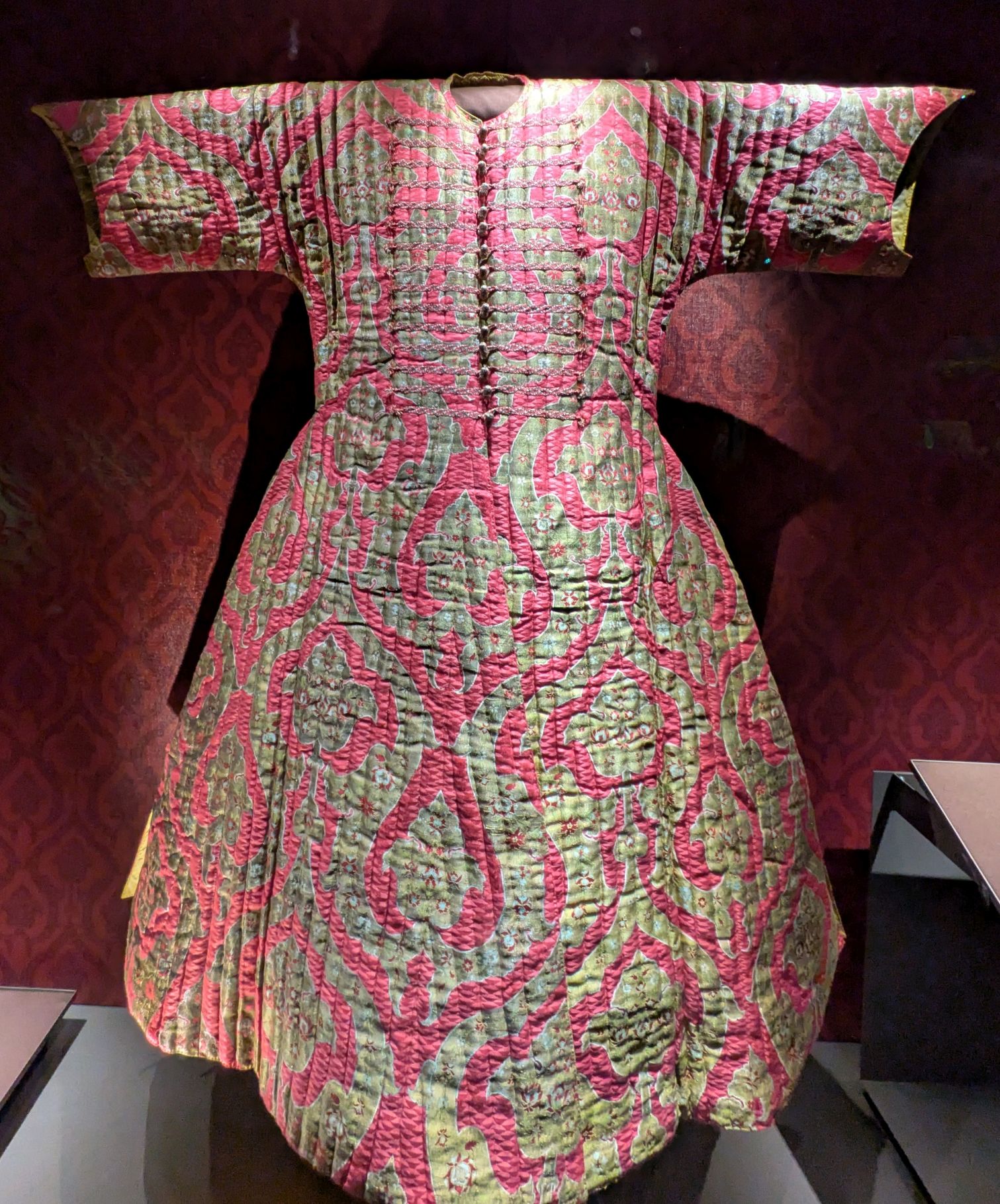
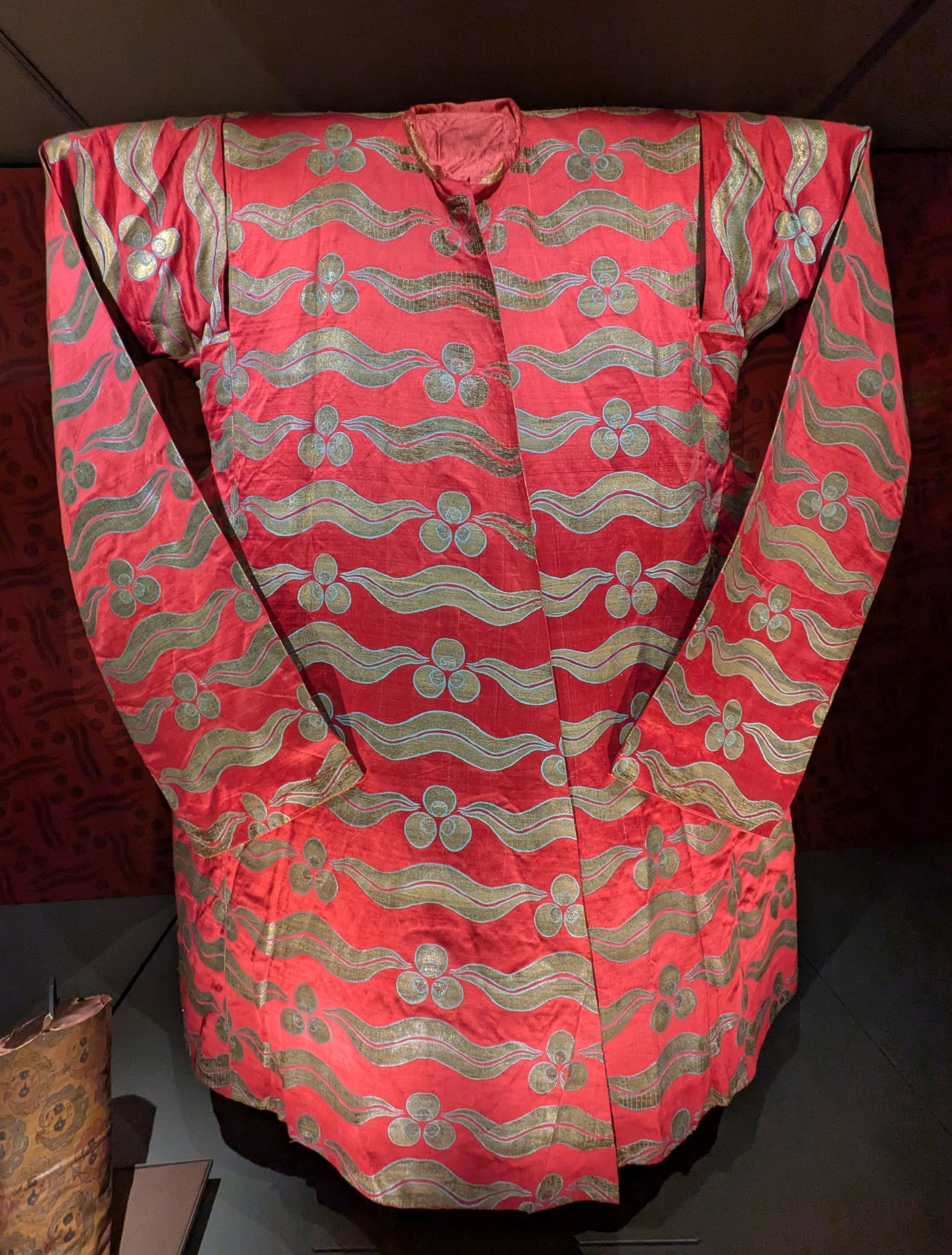
The following are all from the 1600’s and on display in the museum of the palace:

Coming up next: TURKIYE #4: THE BEAUTIFUL BOSPHORUS STRAIT & MORE ABOUT ISTANBUL

TURKIYE #2: THE GIGANTIC GRAND BAZAAR

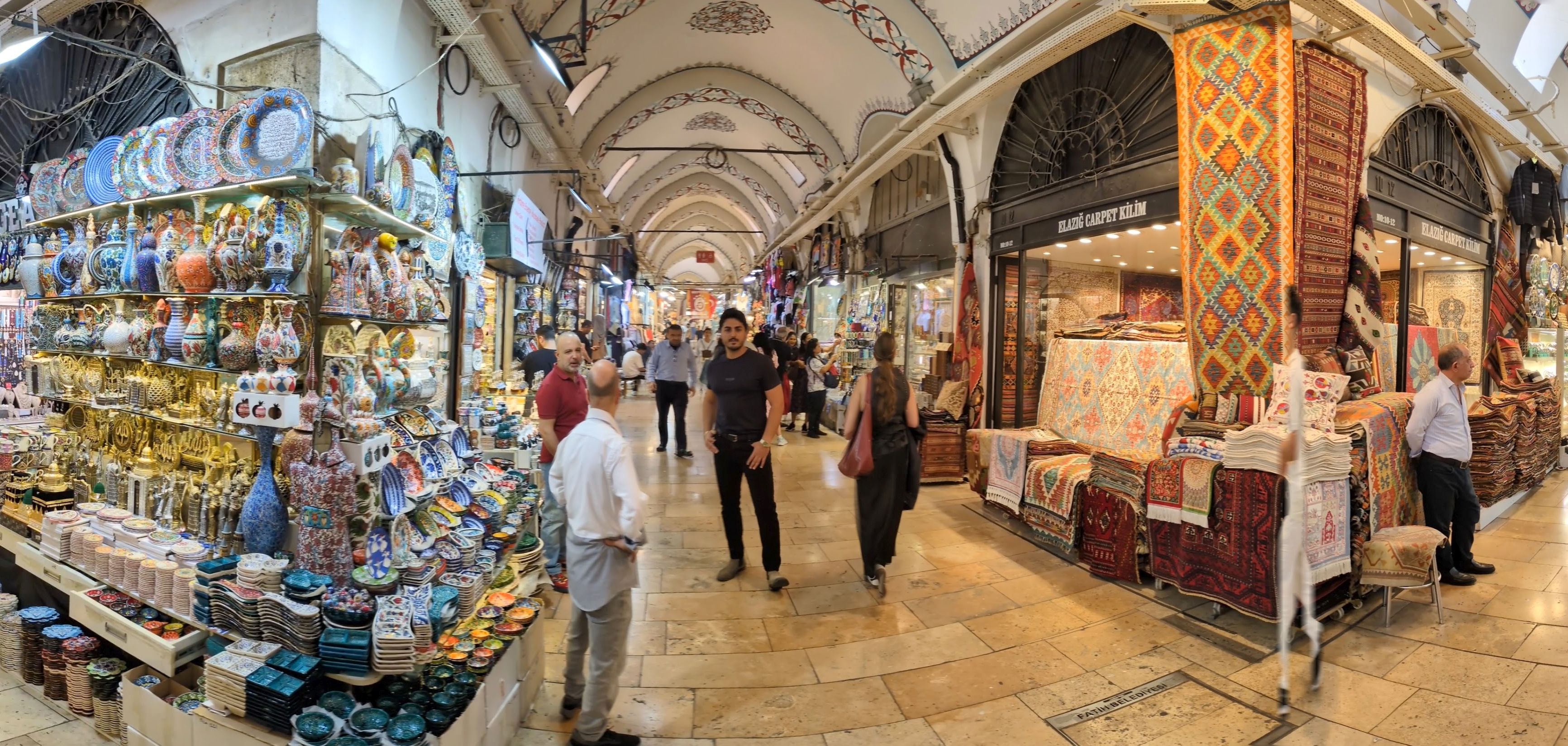
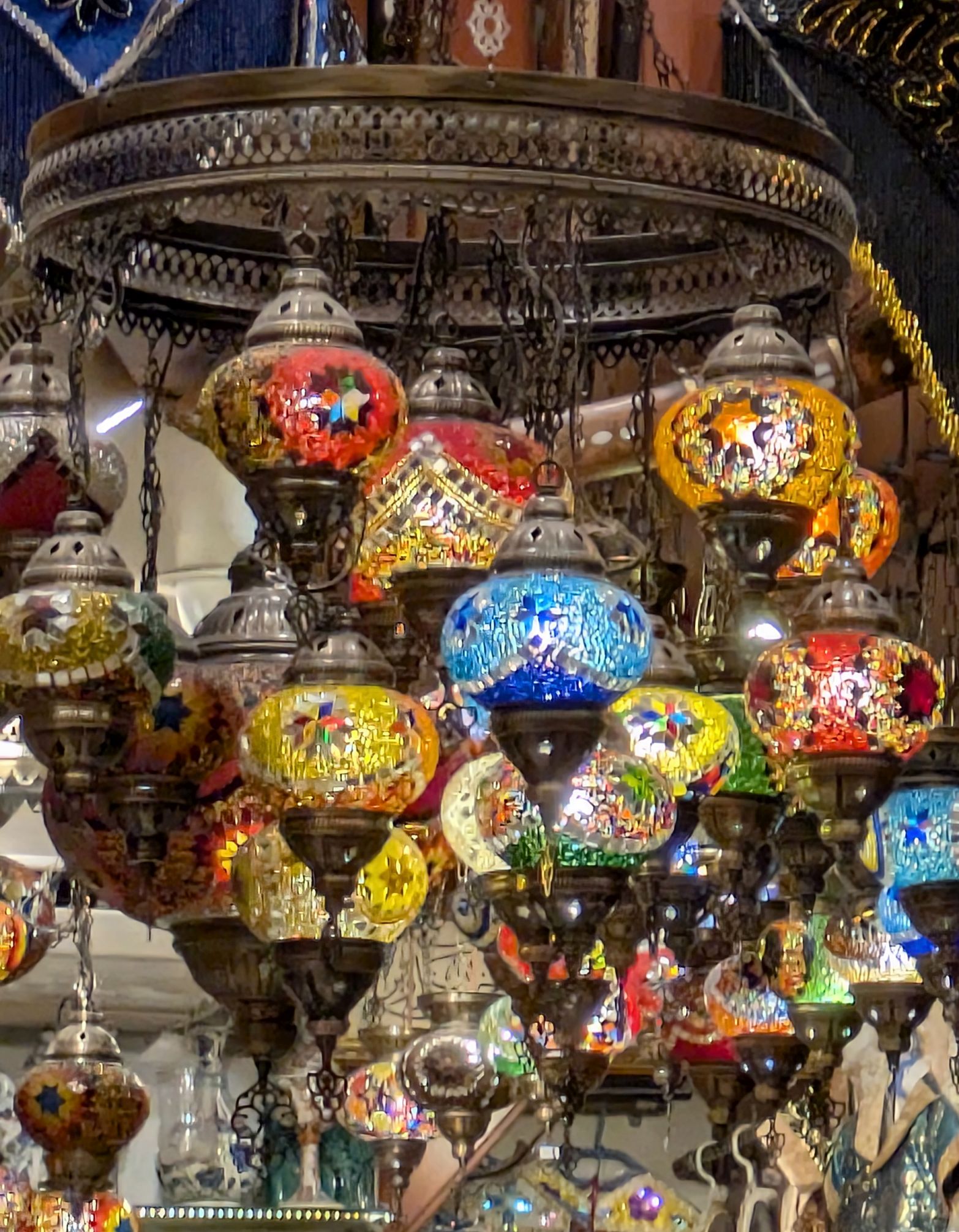
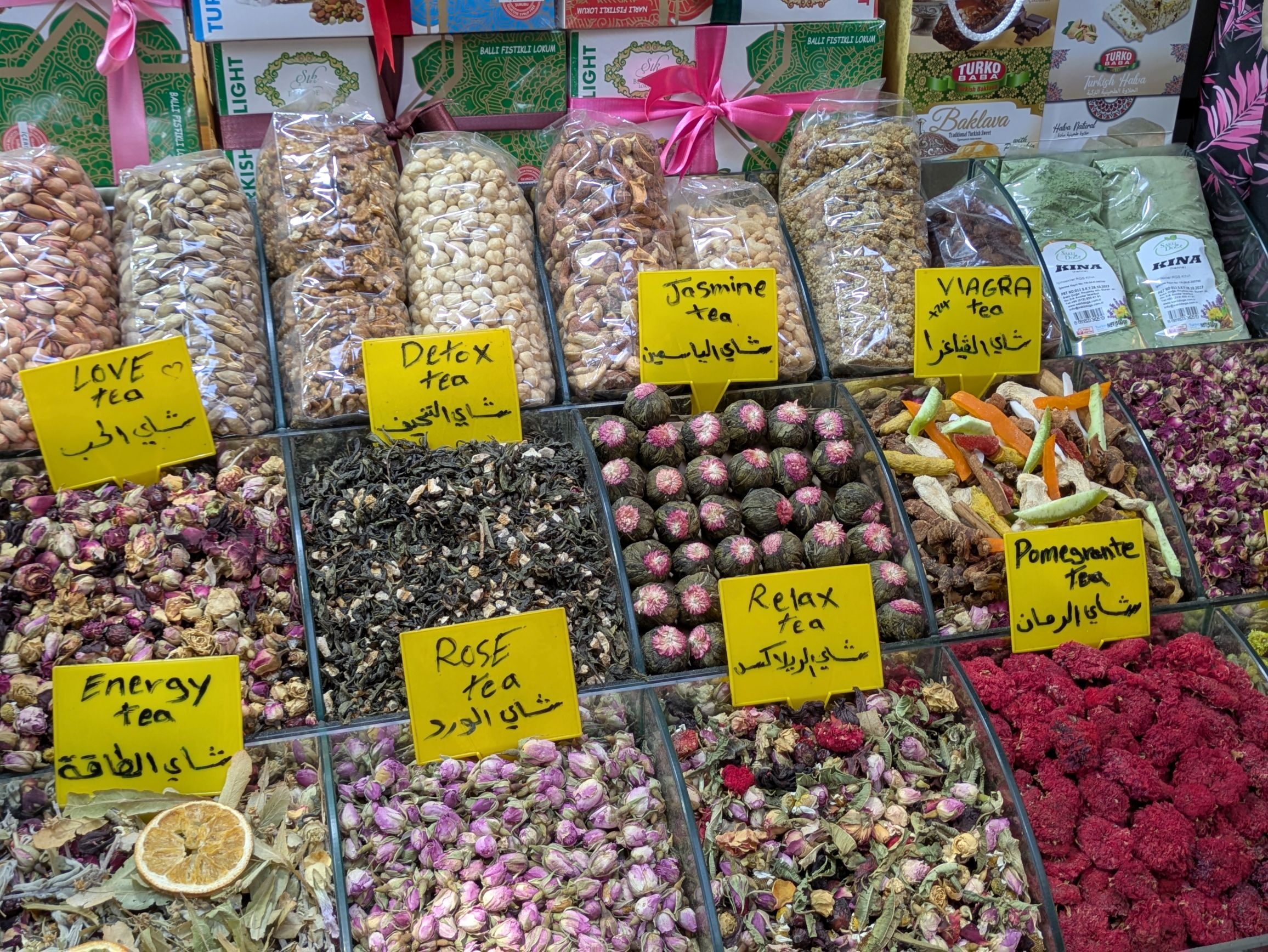
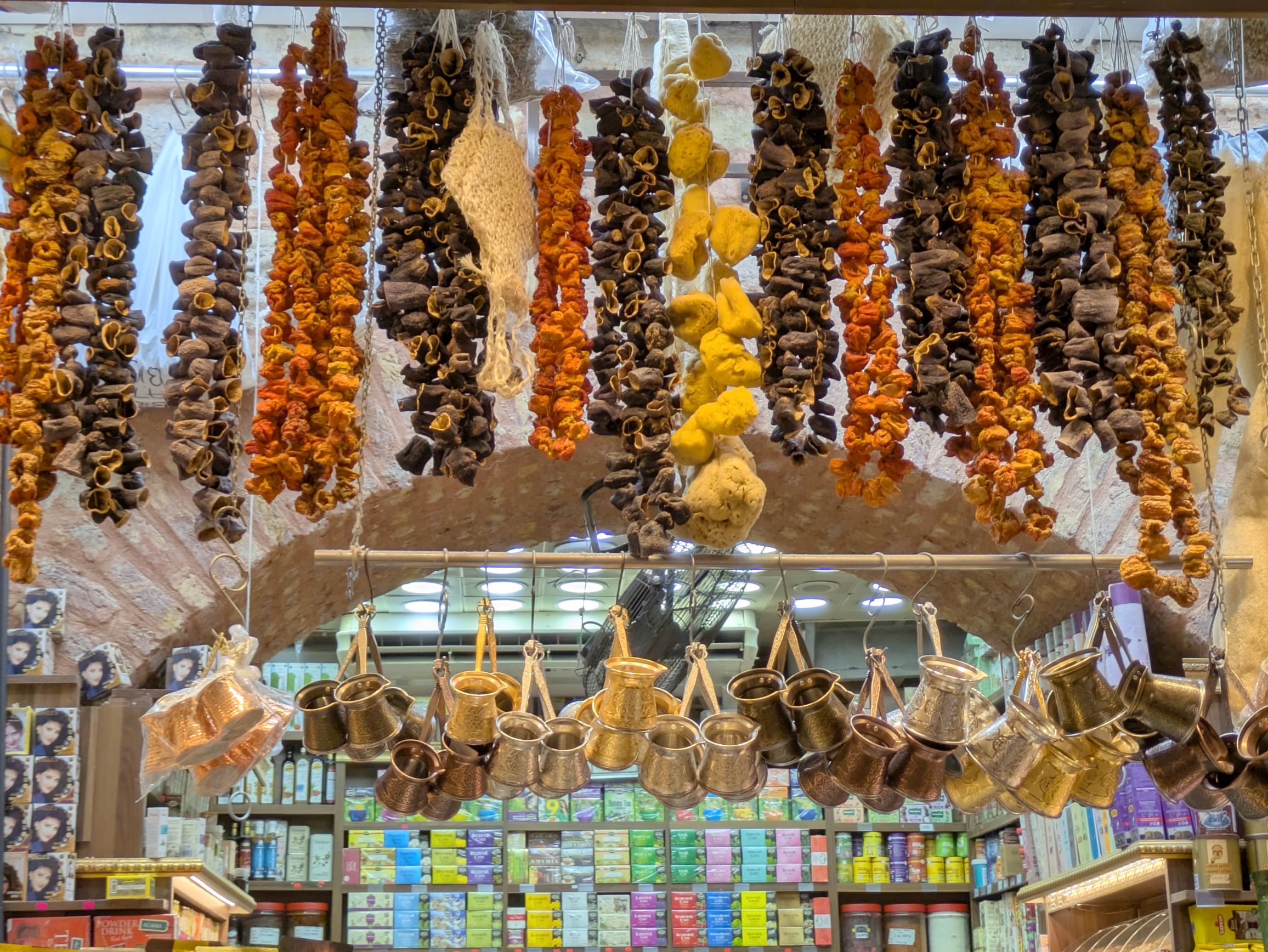
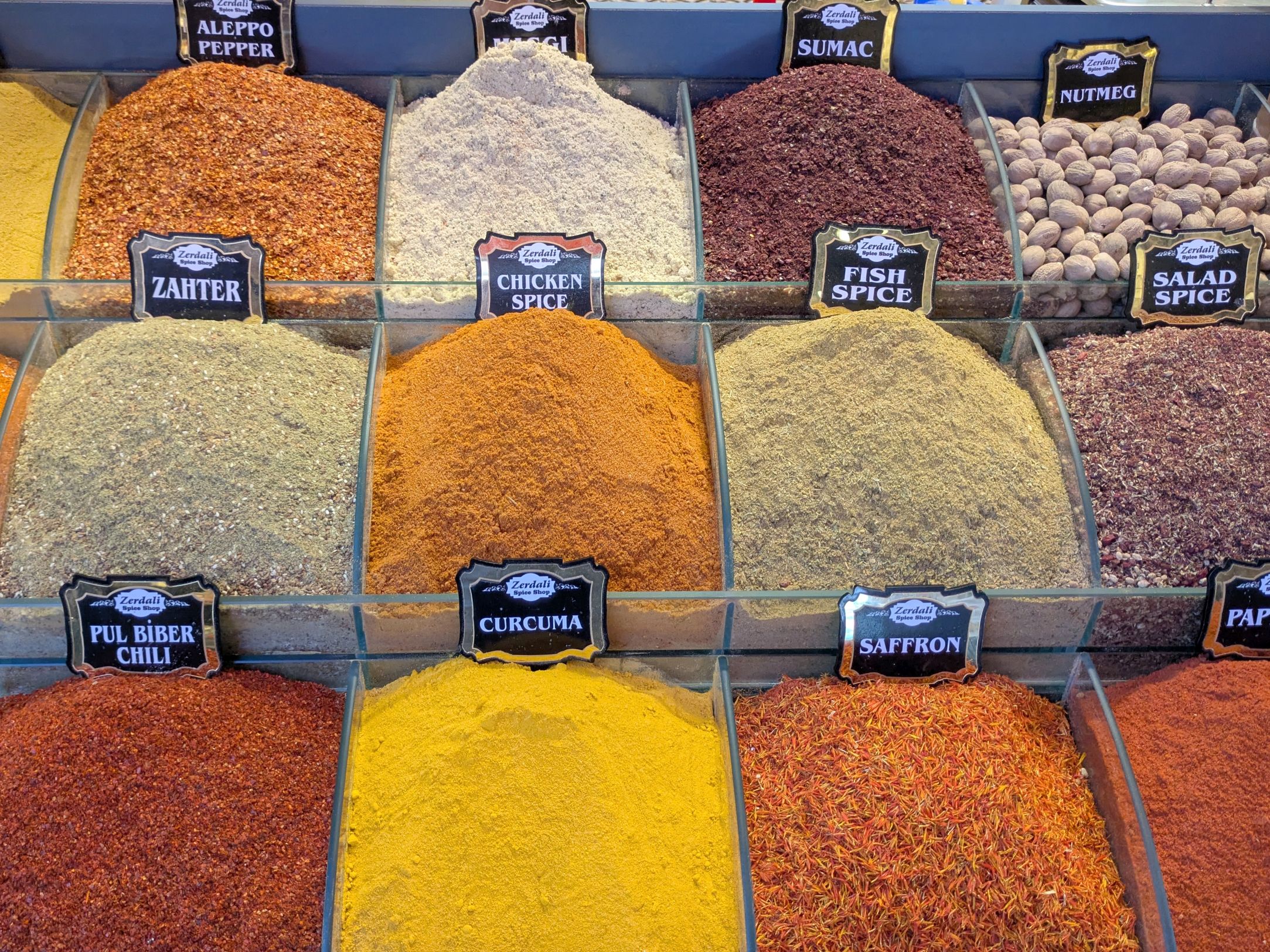
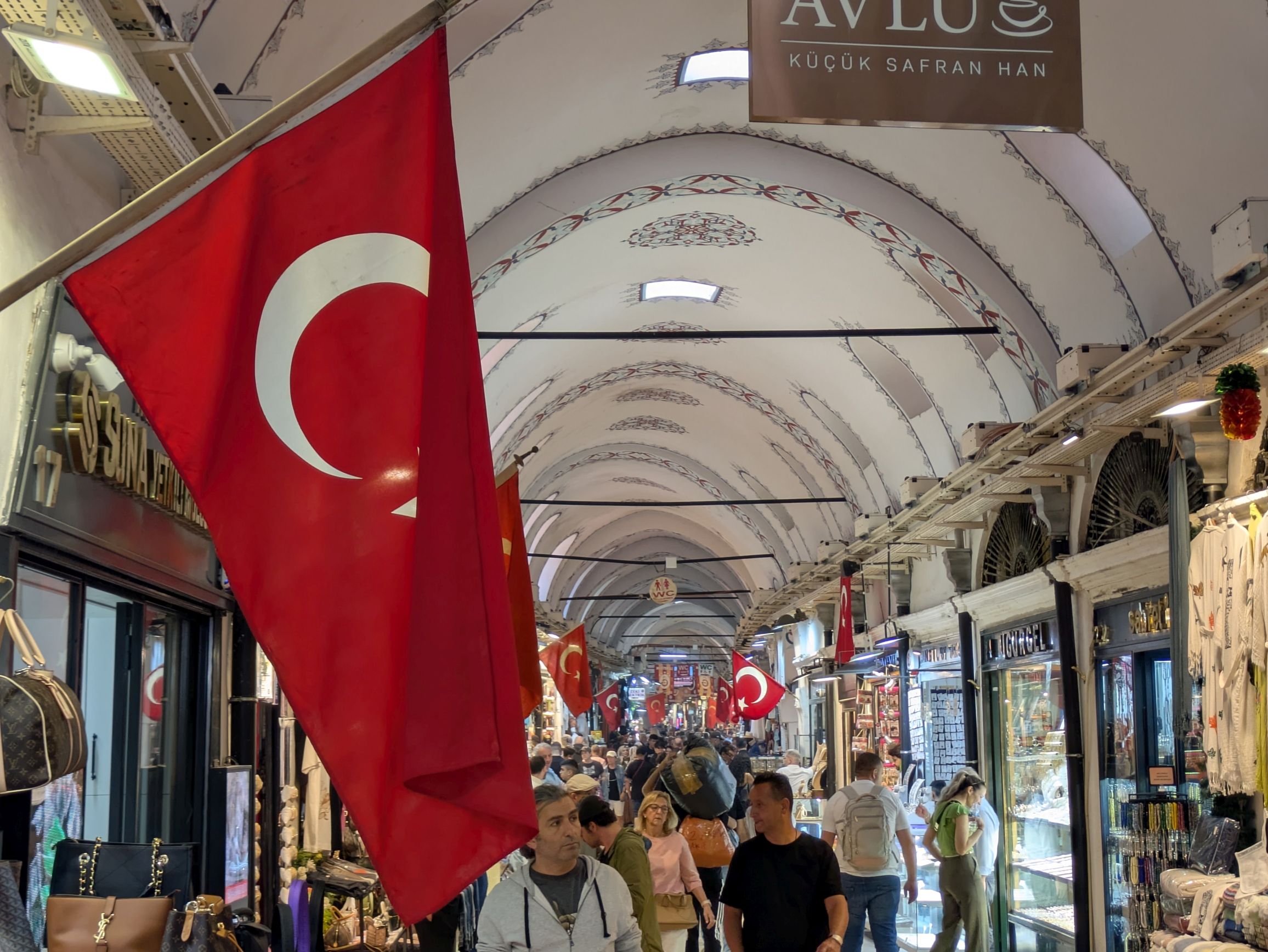
Take one step into Istanbul’s Grand Bazaar, and it’s hard to imagine that it began as a warehouse ordered to be built by Mehmed the Conquerer in 1461. One of the first shopping malls in the world, it is also one of the largest covered markets, with 61 covered streets and over 4,000 shops. Annually, the Grand Bazaar is visited by approximately 91,250,000 people, making it one of the most visited tourist attractions in the world.

The architecture of the main part of the bazaar is beautiful and quite nice to walk around, even if you don’t like to shop. Besides, if you like to people watch, this is THE place to go! But make sure to look up and around, because the architecture and tile work is lovely.

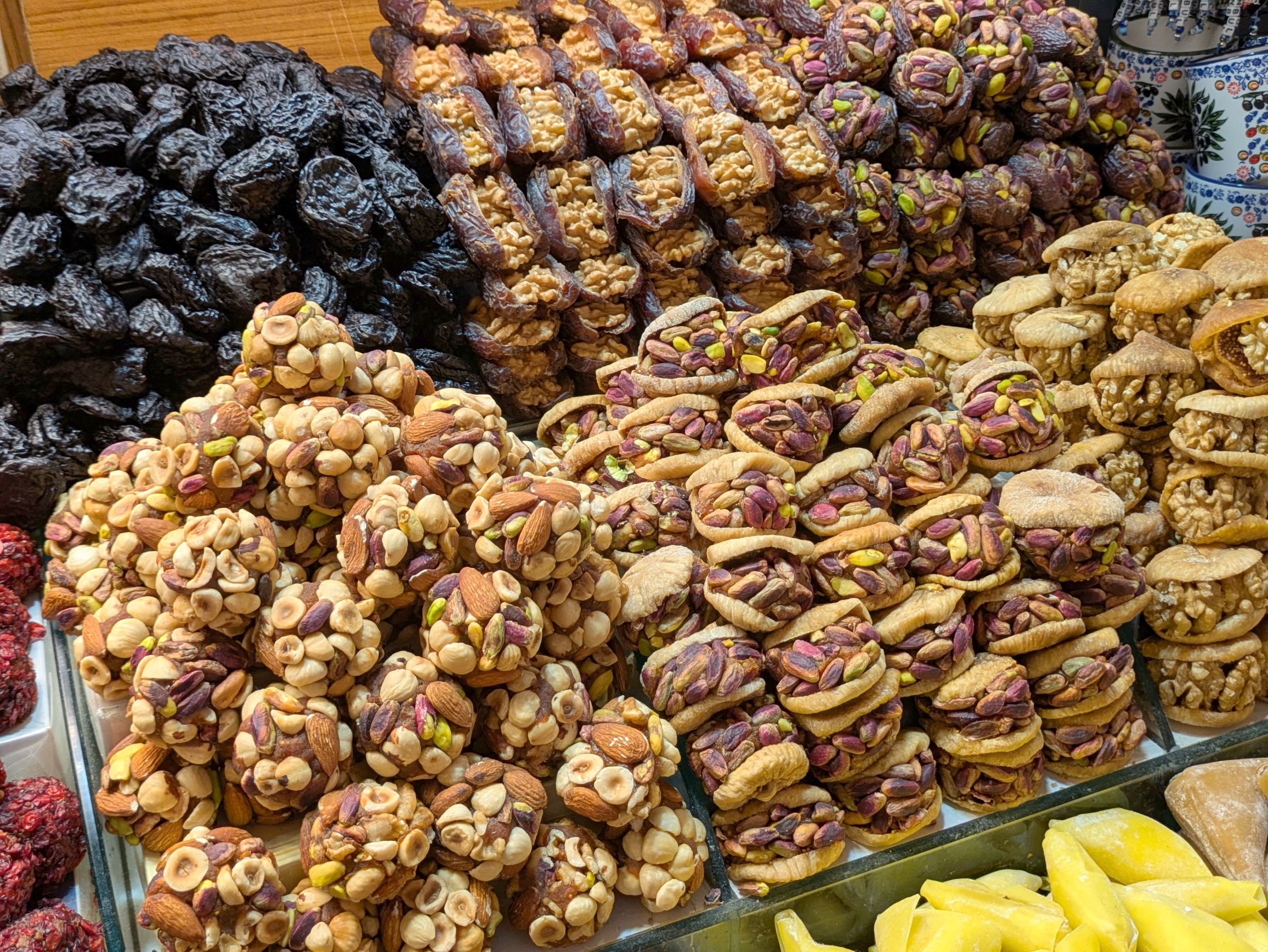
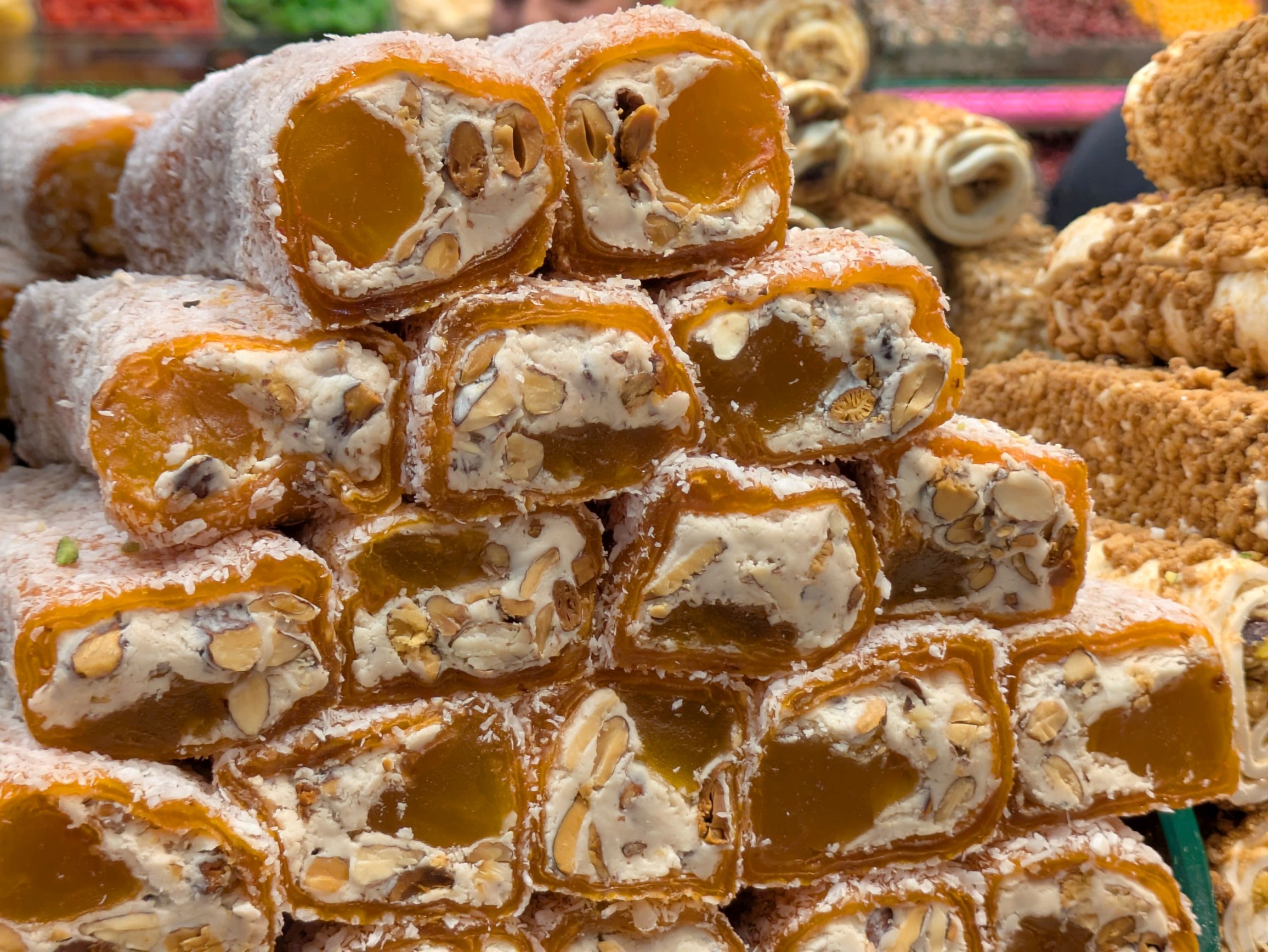
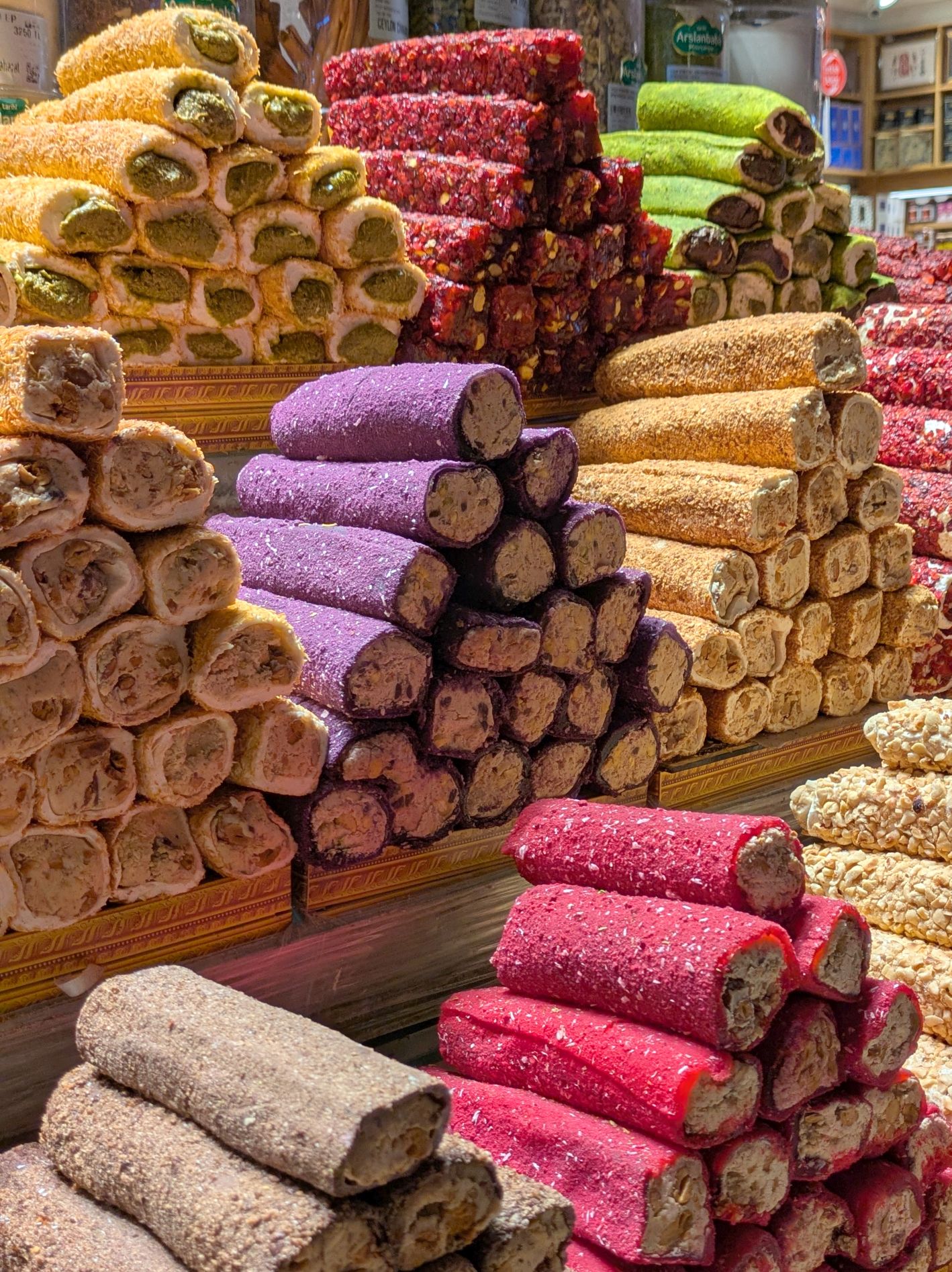
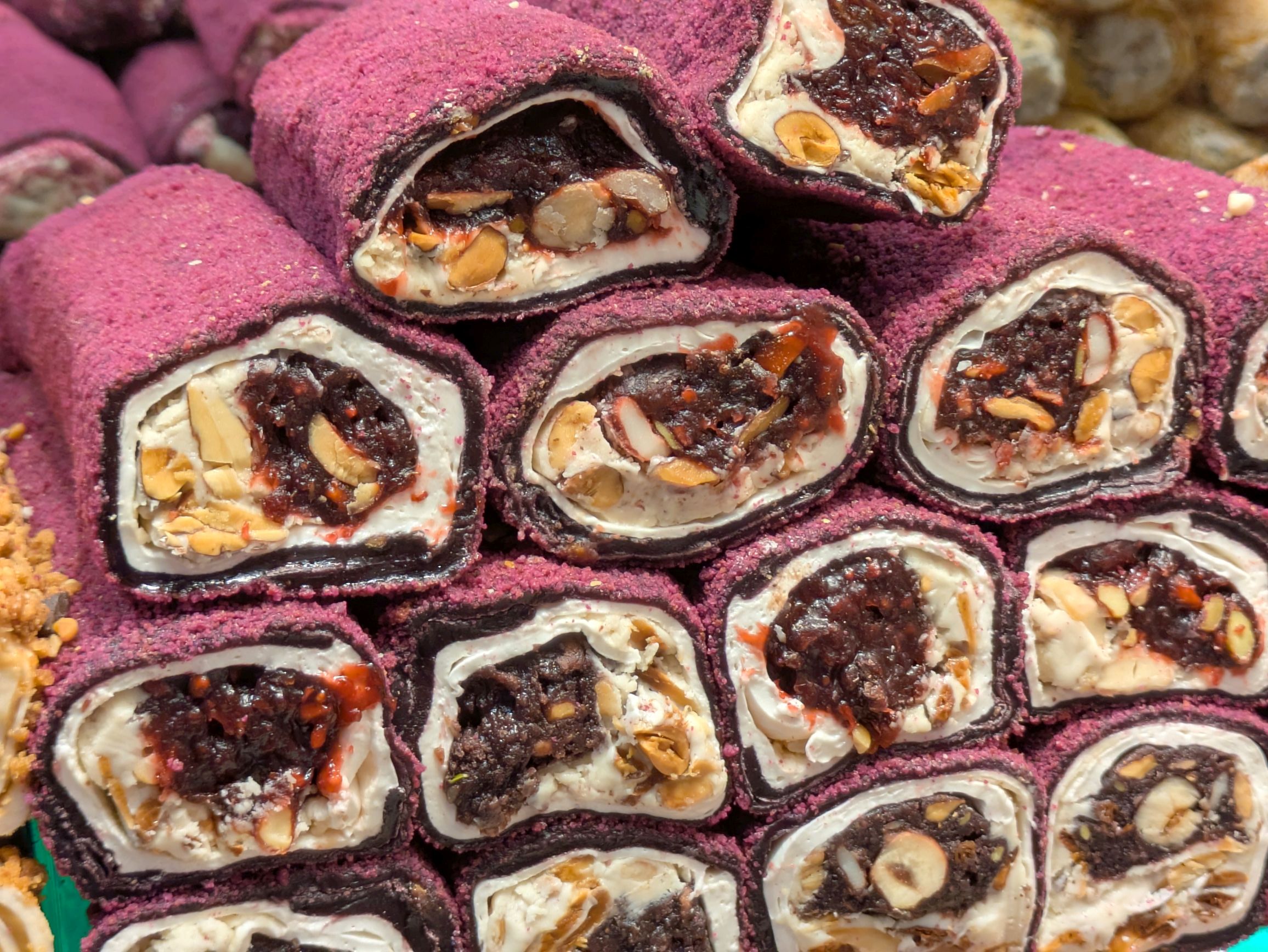
To say the bazaar is gigantic is an understatement. It was difficult for us to grasp; we didn’t even make it to most of those covered streets. We were, in one word, overwhelmed. What an assault on the senses, and I mean all of them! Visually, it was incredibly stimulating—eye candy for photography, especially photographing the colorful candy!

I could have spent days exploring the bazaar and doing photography, so perhaps I misspoke when I stated in my last post that three full days was a good amount of time to spend in Istanbul. It definitely wasn’t enough.

Coming up next: TURKIYE #3: MAGNIFICENT MOSQUES & TERRIFIC TOPKAPI PALACE

TURKIYE #1: INTERESTING ISTANBUL

I will give you one guess as to why I was M.I.A. since my last post… Yes! I was traveling again! This time, we were in the Basque country of France, northern Spain, and Portugal for 23 days. After that fabulous tour, we were home for one week and then took off for eight days to Toronto. Those blogs will eventually be posted, but I last left you in Sicily, and on our way to Turkiye for a back-to-back tour.

Yes, it is now spelled “Turkiye” rather than “Turkey” (like our Thanksgiving bird). Although the country has been spelled “Turkiye” since it became a republic in 1923 (surprise!), the country pushed the rest of the world to recognize and adopt that spelling in 2021. Other countries have been asleep at the switch, however, still hanging on to the incorrect spelling. The United Nations didn’t recognize the “new” spelling until 2024, and Overseas Adventure Travel, the company we use for small group tours, spelled the country “Turkey” in its “Final Document Booklet” they sent us prior to departure. Wake up, World!

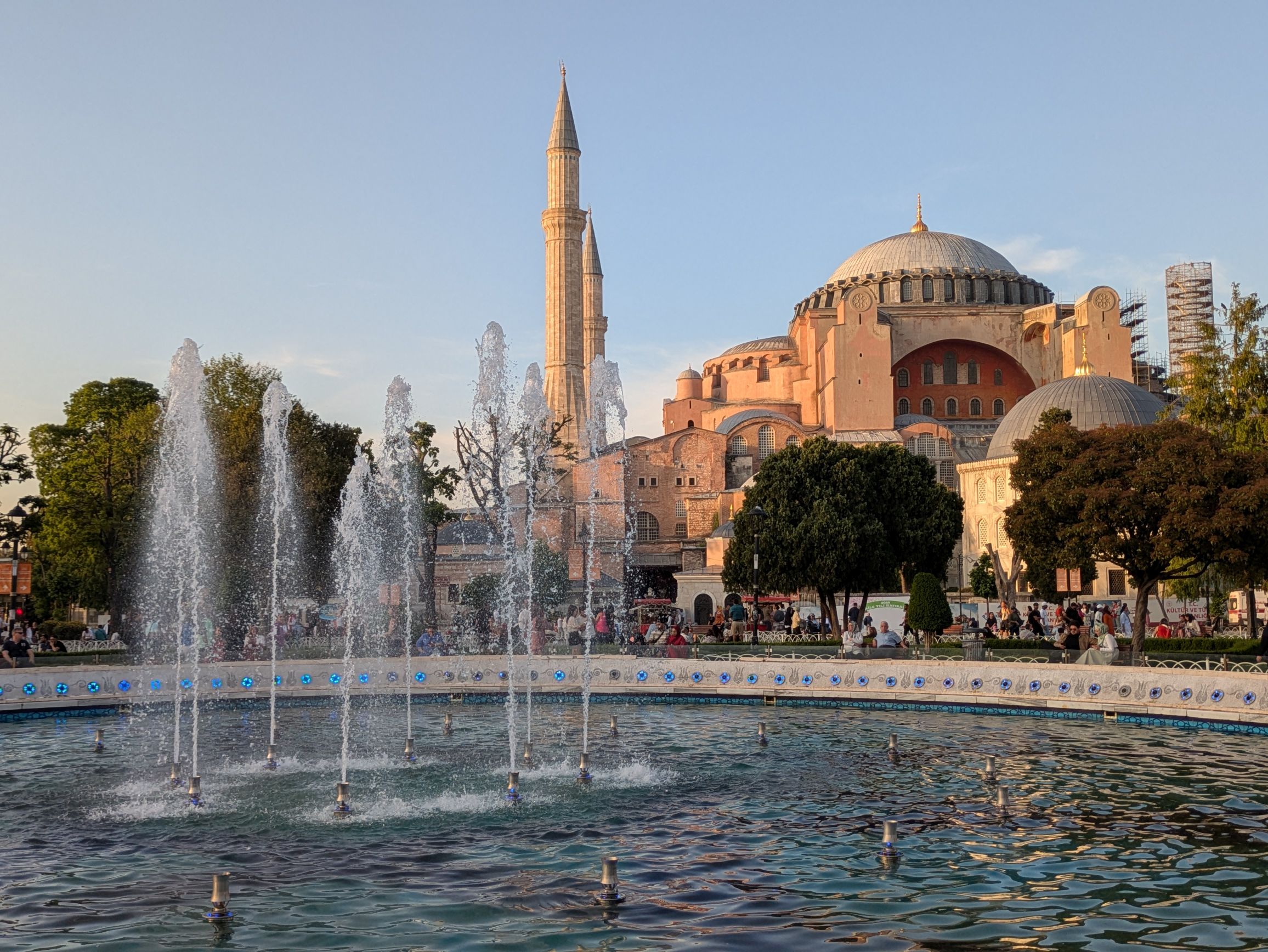
It was dark when we arrived at Sultanahmet Palace Hotel, in Istanbul, and when we stepped out of the car, this was the first thing we saw, just across the street from the hotel’s entrance:

(For all photos, click on the image for a full screen view.)

We knew this was going to be a very interesting city…

Istanbul, the largest city in Turkiye, is home to more than 15 million people, most of whom are ethnic Turks with Kurds being the largest minority. Another minority represented in Istanbul are Sepharic Jews, which date back to 390. Unlike Jews in Europe, Ottomon Jews were allowed to work in any profession, and they excelled in commerce and trade as well as medicine. Although 10% of the population in Istanbul were Jews at its highest point, there are now less than 15,000 Jews due to emigration to Israel.

What I didn’t realize is that geographically, Istanbul is situated on two continents— Europe and Asia. About two thirds of the population resides on the Europe side, and the rest live in Asia.  The World’s narrowest straight used for international navigation, the Bosporus, separates the two continents, and it’s a bustling waterway.

Our hotel was perfectly situated, just a short walk from the Hippodrome of Constantinople, the central square, where we enjoyed exploring the mosques, doing photography (day and night), and just watching all the people during our free time. Four nights and three full days was a good amount of time for the planned activities with the group and seeing what we wanted to on our own in the historic city center, which is a UNESCO World Heritage Site.

Never did either of us feel unsafe in the city center, day or night, even when I went out on my own to do photography. We thoroughly enjoyed this interesting city!

These are just some of the scenes from our first day in Istanbul before joining our group.

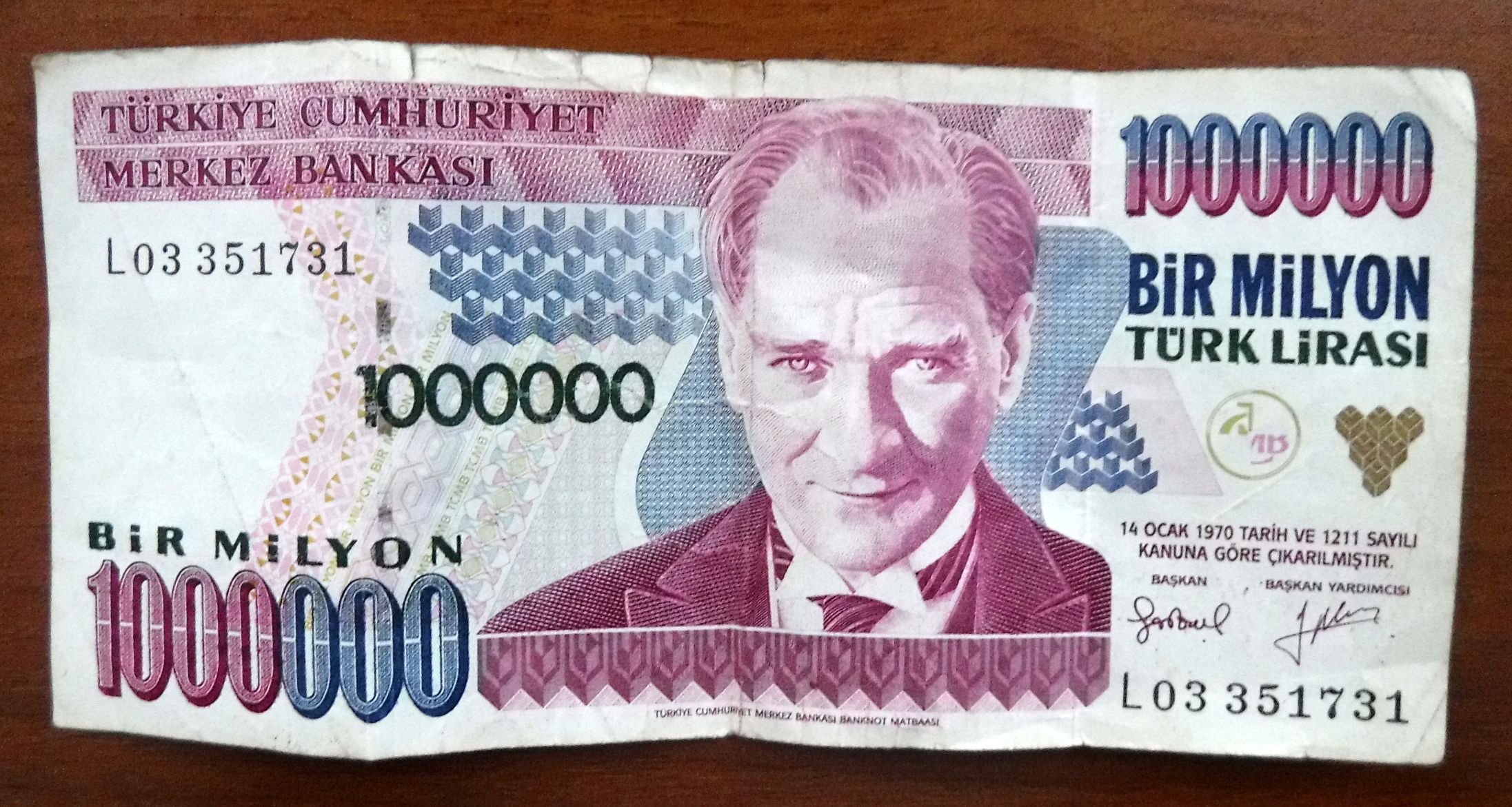
Before leaving home, a friend gave me this 1970 Turkish note. Little did he know, the zeros have since disappeared, and this is now worth about ten cents with the exchange rate!
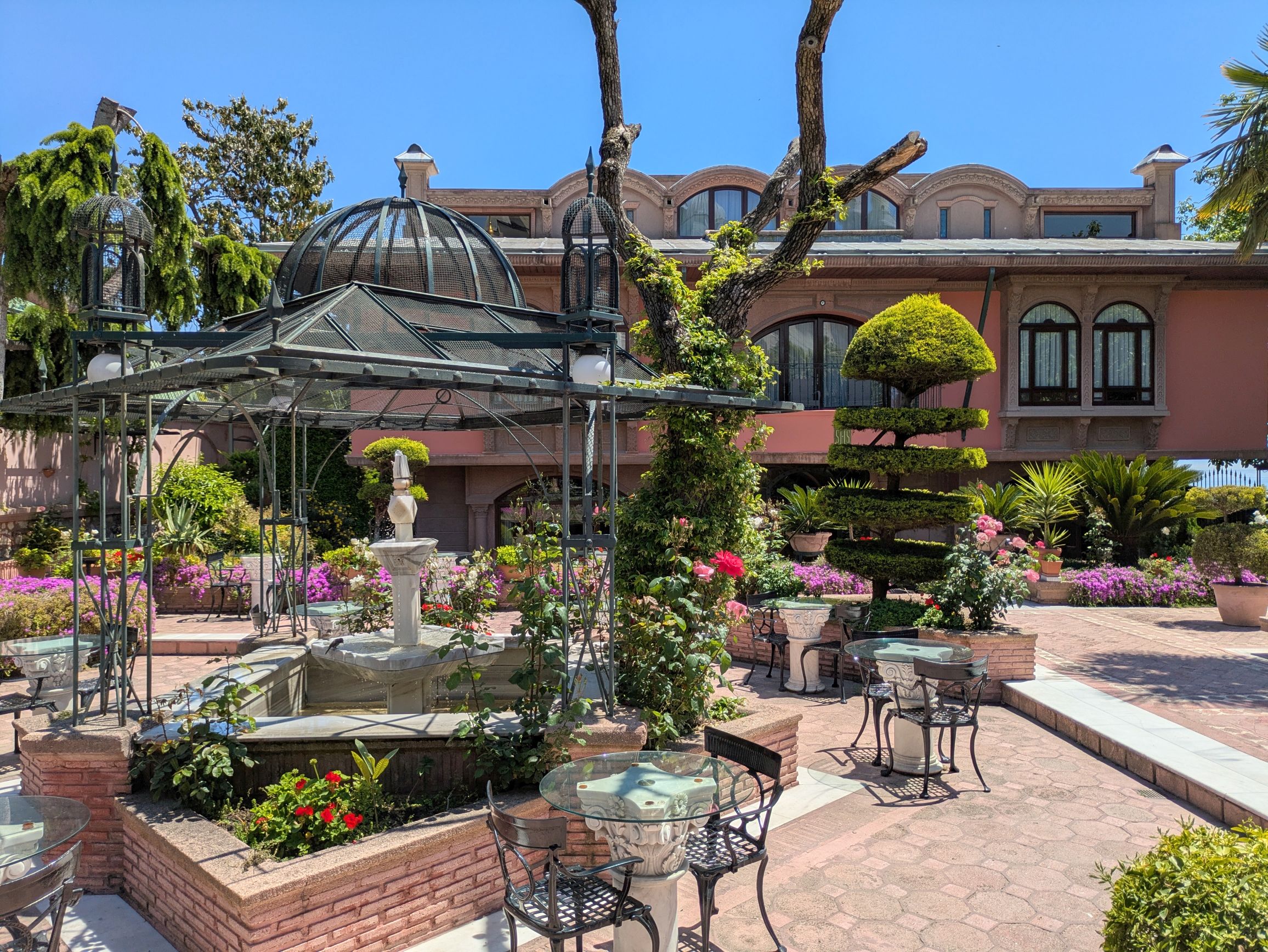
The front patio of our hotel
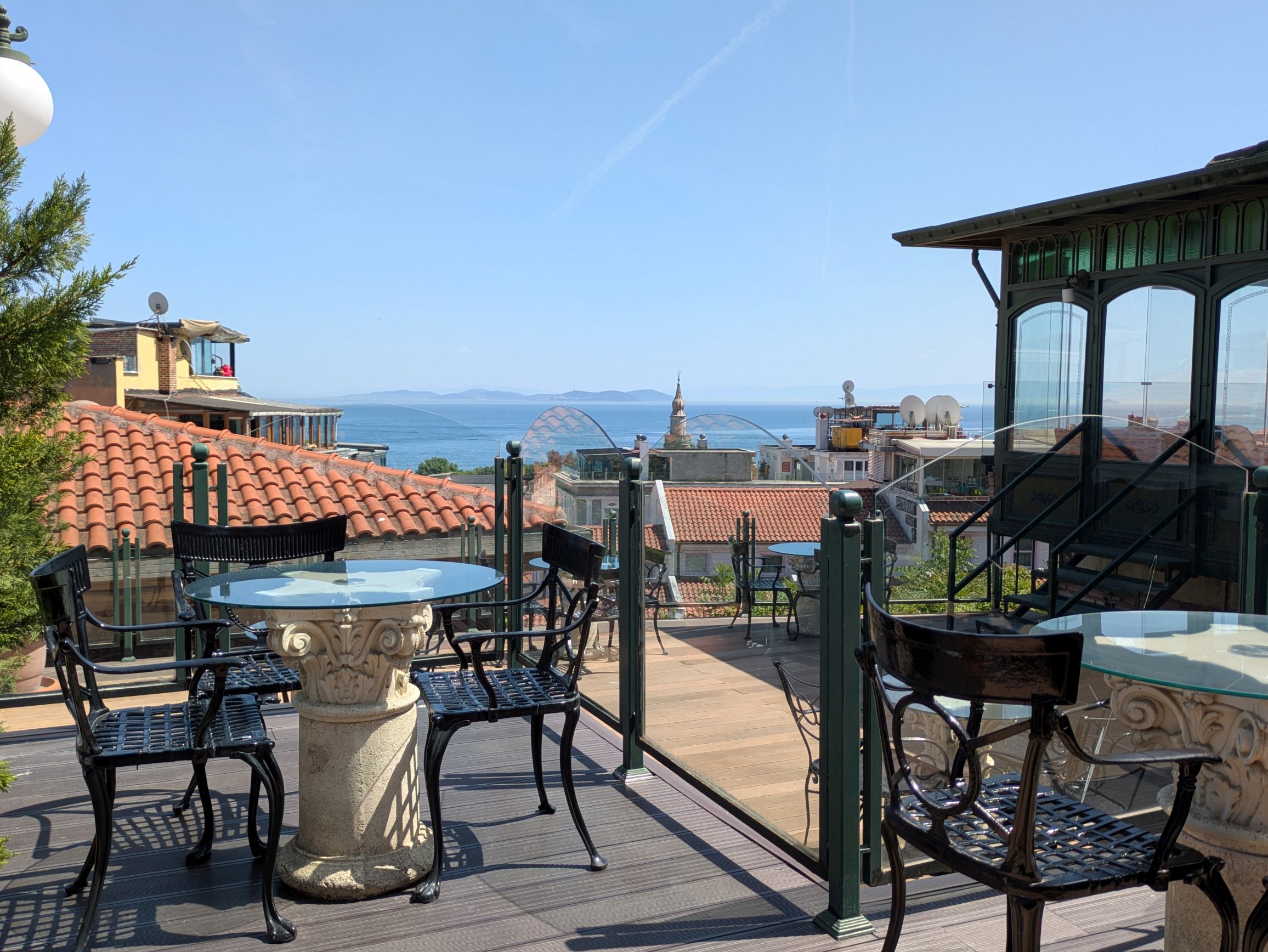
The back patio of our hotel where we ate breakfast had quite a view!
The ceiling of the restaurant patio where we enjoyed our first Turkish meal.
The center of a huge ceramic plate.

Next up: TURKIYE #2: THE GIGANTIC GRAND BAZAAR

MY FAVORITE TRAVEL TIPS

I have done a lot of traveling over the years—72 countries (according to Brittanica’s list) and 42 states. During my first big trip (for one year with my backpack in the South Pacific), I learned a lot and earned my stripes!  Times have changed since that post-university graduation year of 1984, especially with technology, so many of the tips I would have given back then are now obsolete.

This leads me to Tip #1: Do NOT, I repeat DO NOT buy an eSIM for your phone at your destination airport! For that matter, save yourself a lot of stress and purchase it at home before you leave! I witnessed a big problem firsthand on our Turkiye trip. Some members of our tour group purchased an eSIM at the airport upon arrival and it didn’t work with their phone, which they didn’t learn until later. They were also unable to get a refund.

My recommendation? I have an unlocked cell phone I use for travel and purchase a global eSIM from home through Airalo. I purchased the $89 one that is valid for 365 days and includes 20 GB of data, 200 minutes of phone, and 200 SMS texts. They also sell just data eSIMs, so make sure you click on the “Data/Calls/Texts” tab on the site if you want all three. For a discount, use referral code ELAINE7474.

There are Airalo eSIM options that are less expensive, but the valid period is shorter and they include less. Since we travel a lot internationally throughout the year, the 365-day eSIM works best for me, and I have not had any problems with it at all.

Tip #2: Do you use the safe in your hotel room? Have you ever forgotten something in that safe? On a previous trip, a fellow traveler forgot their passport in the safe and didn’t realize it until the bus had driven off. To avoid the same mistake, leave one shoe in the safe of the pair you will be wearing when you check out. I doubt you will leave the hotel wearing one shoe!

Tip #3: Check with your bank to see if it has a partner bank at your destination. I use an ATM card from Bank of America, and using their partner banks saved me $11 per transaction during my last trip.

Tip #4: If you are traveling with a spouse, you should each carry an ATM card and credit card in case one doesn’t work for some reason. We only own two credit cards, and we each carry a different one in case there is a problem.  I have also adjusted my bank and credit card settings to notify me by e-mail following every single transaction, no matter the amount, so I will know if either one has been compromised.

Tip #5: In a computer document, type a list of passwords, insert images of your scanned passport, wallet contents, and include any other important information you may need.  Make sure to PASSWORD PROTECT that document! Now, email or text it to yourself with a phony title. If you need to write down the password, DO NOT include what that password is for. Just put it on a piece of paper and put it somewhere safe.

Tip #6: Bruce and I hate wearing those travel waist belts, so I use a small Travelon security backpack that has straps that can’t easily be cut with a knife. It also includes locking zippers and other security features. My travel wallet (with security features) has a chain that I clip to the loop inside my pack. In crowds, I wear the pack in front of me.

Tip #7: Before packing cubes were invented, I used Ziploc bags for clothes and sucked the air out before zipping shut.  This kept my clothes organized and easy to repack in my backpack.  Compression cubes are so much easier now! Still, I always pack empty Ziploc bags for unfinished snacks purchased along the way, chocolate bars (which I ALWAYS buy), anything that could cause a messy disaster in my suitcase, and for handwash, as detailed in my next tip.

Tip #8: Pack light, and then handwash your clothes when needed. If the sink (or bidet) in your hotel doesn’t have a stopper, place your handwash in a large Ziploc along with detergent and water, zip shut, shake, and rinse. For a larger load, I either use the plastic laundry bag the hotel provided, or if it has holes, I use the plastic grocery bags I always stick in my suitcase.  Load it up with your laundry, soap and water, twist shut, shake, and rinse.  Forget to bring laundry sheets or detergent from home?  Use the hotel’s bath gel.  After doing your handwash and squeezing the water out, roll them up in a towel (which will absorb the excess water) and your clothes will dry quicker. 

Tip #9: In the morning when the room cleaning carts are in the hotel hallway, grab an extra towel and return the wet ones from your handwash.

Tip #10: Bring a couple of inflatable hangers for the t-shirts or blouses you wash.  They pack light, and clothes dry quicker.  They also come in handy if the hotel shorts you on hangers.

Tip #11: Pack an empty small spray bottle (I use one left from travel size hairspray) in your suitcase. If your clothes are wrinkled upon arrival, fill the bottle with water, hang your clothes up in the bathroom, and spray them.  Shake each one out with a vigorous snap, hang it back up, and your wrinkles will be gone when the water is dry.  (Yes, I carefully roll my clothes and even lay a dry cleaning bag in between the folds, but I still get some wrinkles!)

Tip #12: Spread a thin layer of Vaseline on your feet in any place susceptible to getting blisters.  This has worked every time for me, even after long hikes!

Tip #13: Traveling to a third-world country?  Toilet paper may not be available in public bathrooms.  Grab a roll from your hotel bathroom, stick it in that extra Ziploc bag you brought, and drop it in your backpack.  You will thank me later, and so will the others in the bathroom line you share it with!

Tip #14: Hotels in some countries do not provide facial tissue, or, if they do, it is very thin and scratchy.  The tissue in travel Kleenex packs is also not top-quality, so before you leave home, go ahead, splurge, and buy a box of the softest, cushiest tissue you can find.  Take it out of the box and fold them into Ziploc Snack Bags.  Drop one bag in your backpack and as many back-ups as you think you may need in your suitcase.  If you don’t get sick or have allergies, keep the unused bags in your suitcase for next time. (For that matter, keep all your travel stuff in your suitcase for your next trip.) If you do get sick, again, you will thank me.  You’re welcome.  Note: If you are fortunate to come across a hotel during your travels with cushy Kleenex, refill your bags.

Tip #15: Do you use a white noise machine at home?  Leave it there and download a free app on your phone.  I use Sleep Sounds.

Tip #16: Bring a few laundry clips or clothes pins for all sorts of uses.  I like to sleep in a dark room, so if the drapes won’t close well, I clip them shut.  They also come in handy for unfinished snacks, if your Ziploc bags are already in use elsewhere.  Another use is to clip together brochures and maps you collect along the way.

Happy travels!

SICILY & AMALFI COAST #26: WRAPPING IT UP IN NAPLES

Naples was our base for our final three nights in Italy, so in addition to seeing Pompeii and Capri (as detailed in posts #25 and #26), Bruce and I explored as much as possible during our free time.

A city of over 900,000 people, Naples is the third-largest city in Italy, after Rome and Milan; and, its historic city center has been designated as a UNESCO World Heritage Site. The city has a 2,800-year history, so there is an abundance of historical buildings and monuments, including 448 historical churches of the 1000 total churches in the city.
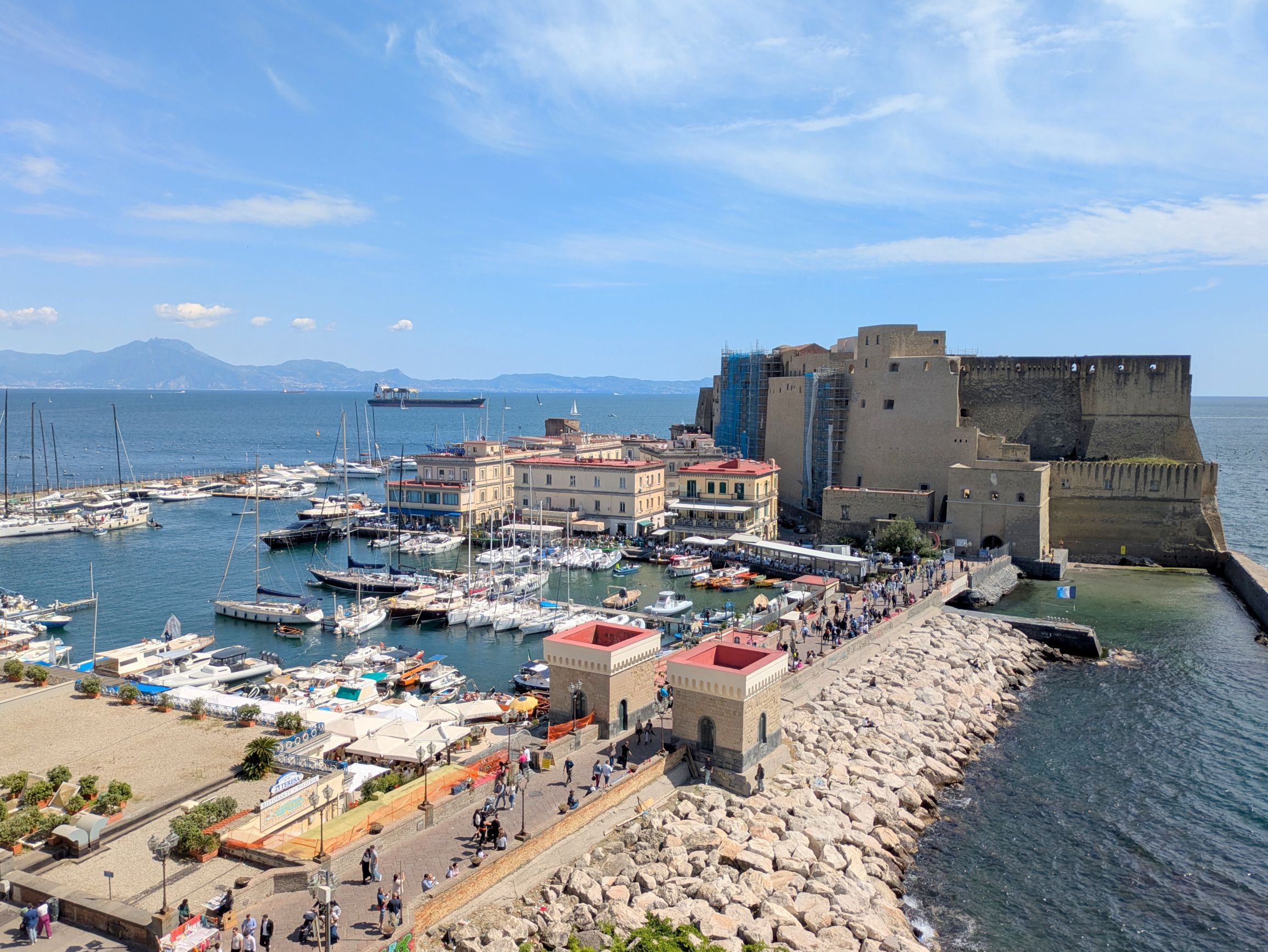
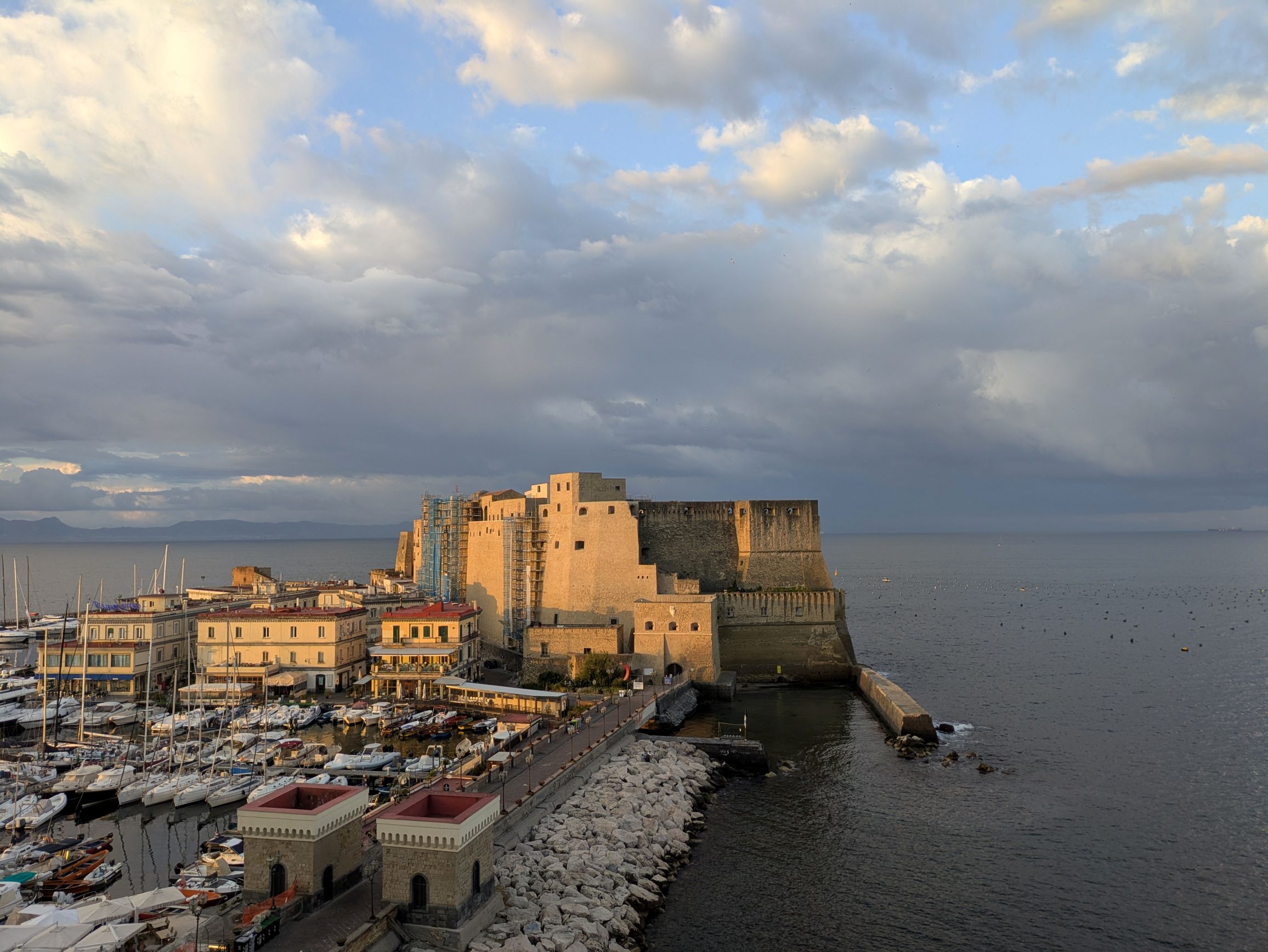
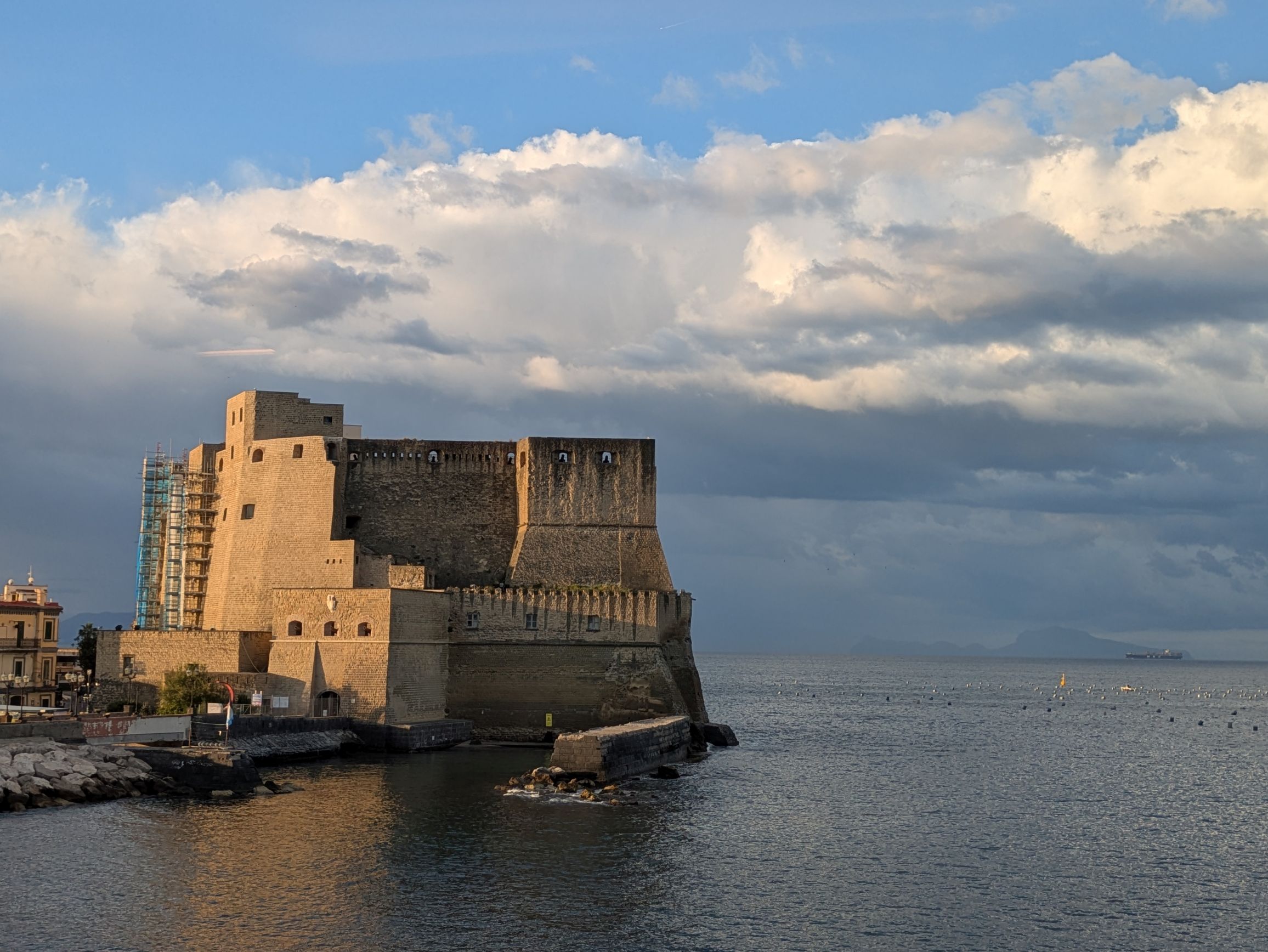
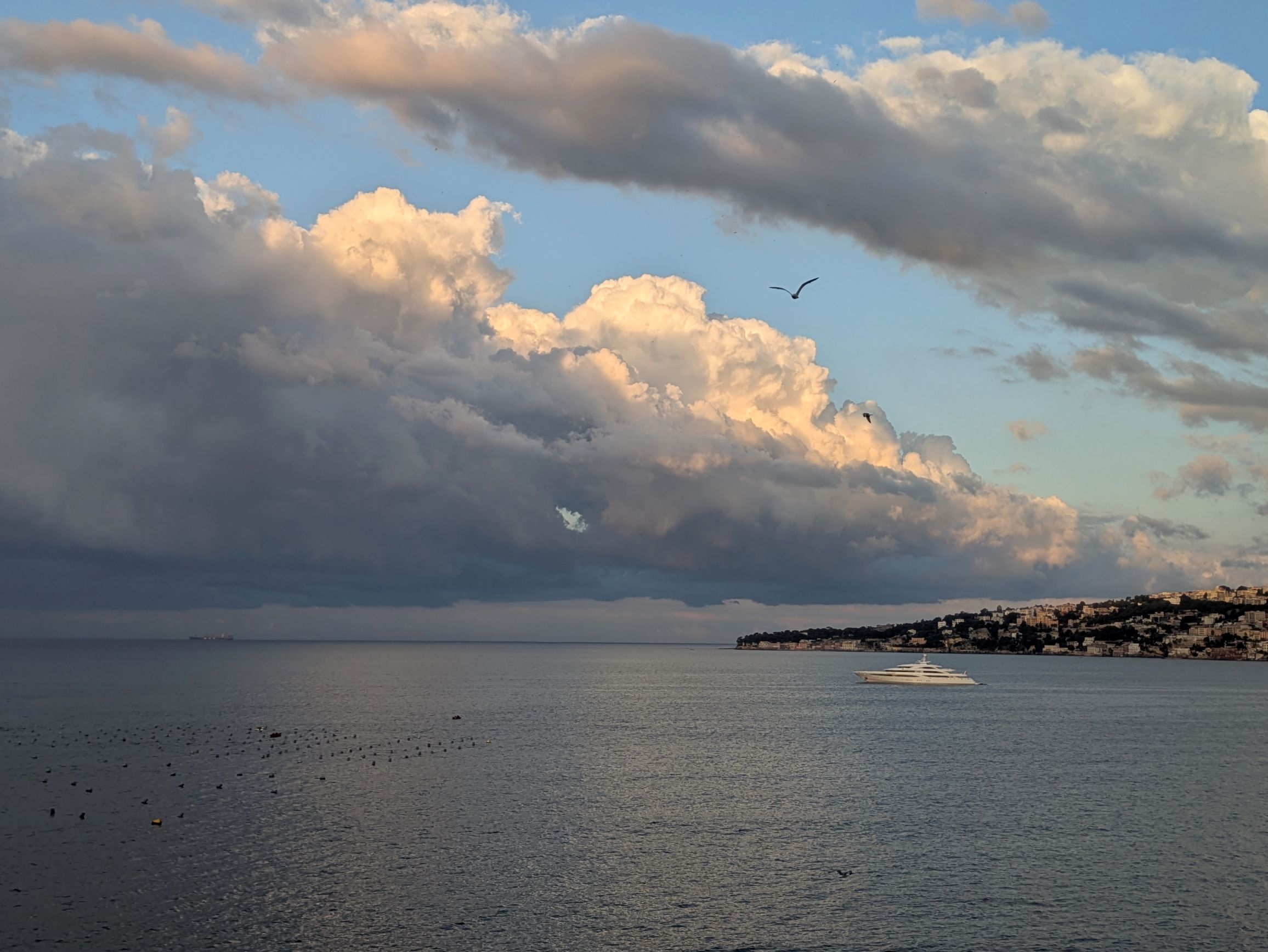
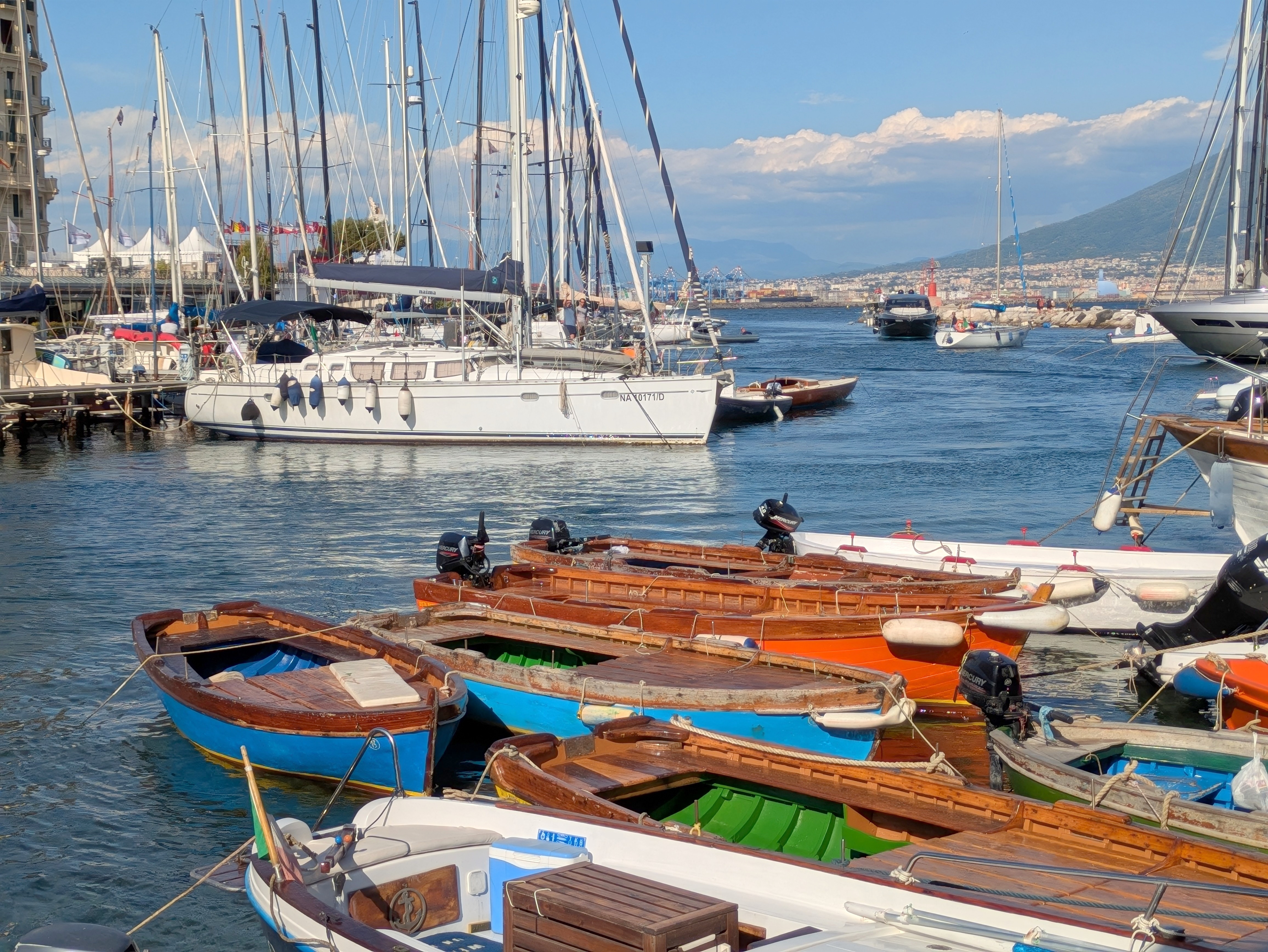
Our hotel, Royal Continental, was located on the seafront promenade with gorgeous views of the Bay of Naples.  Fortunately, we had lovely weather, so we could enjoy the views and walks along the promenade.  This was the view from our room during different times of the day and evening:

(For all photos, click on the image for a full screen view.)

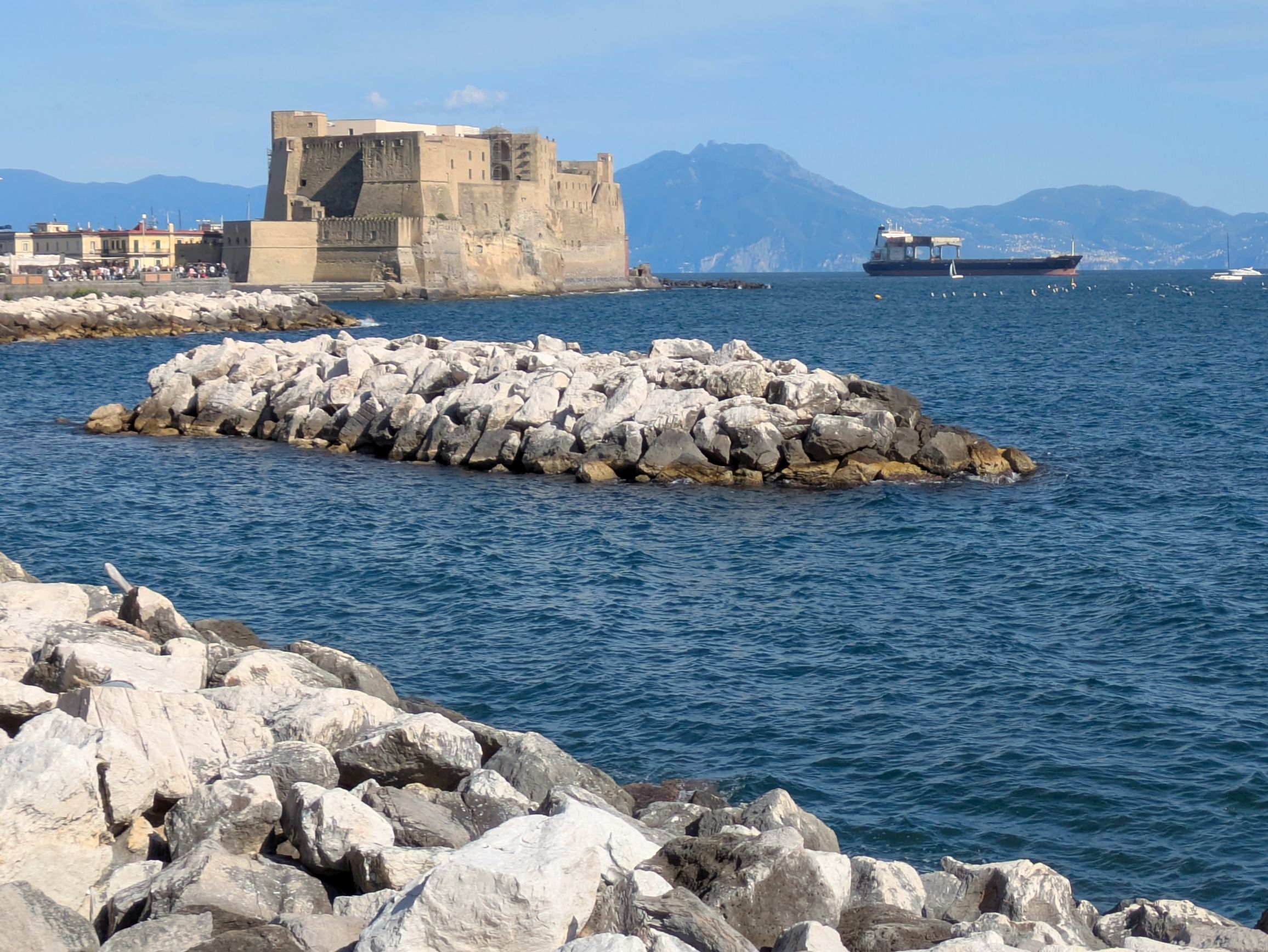
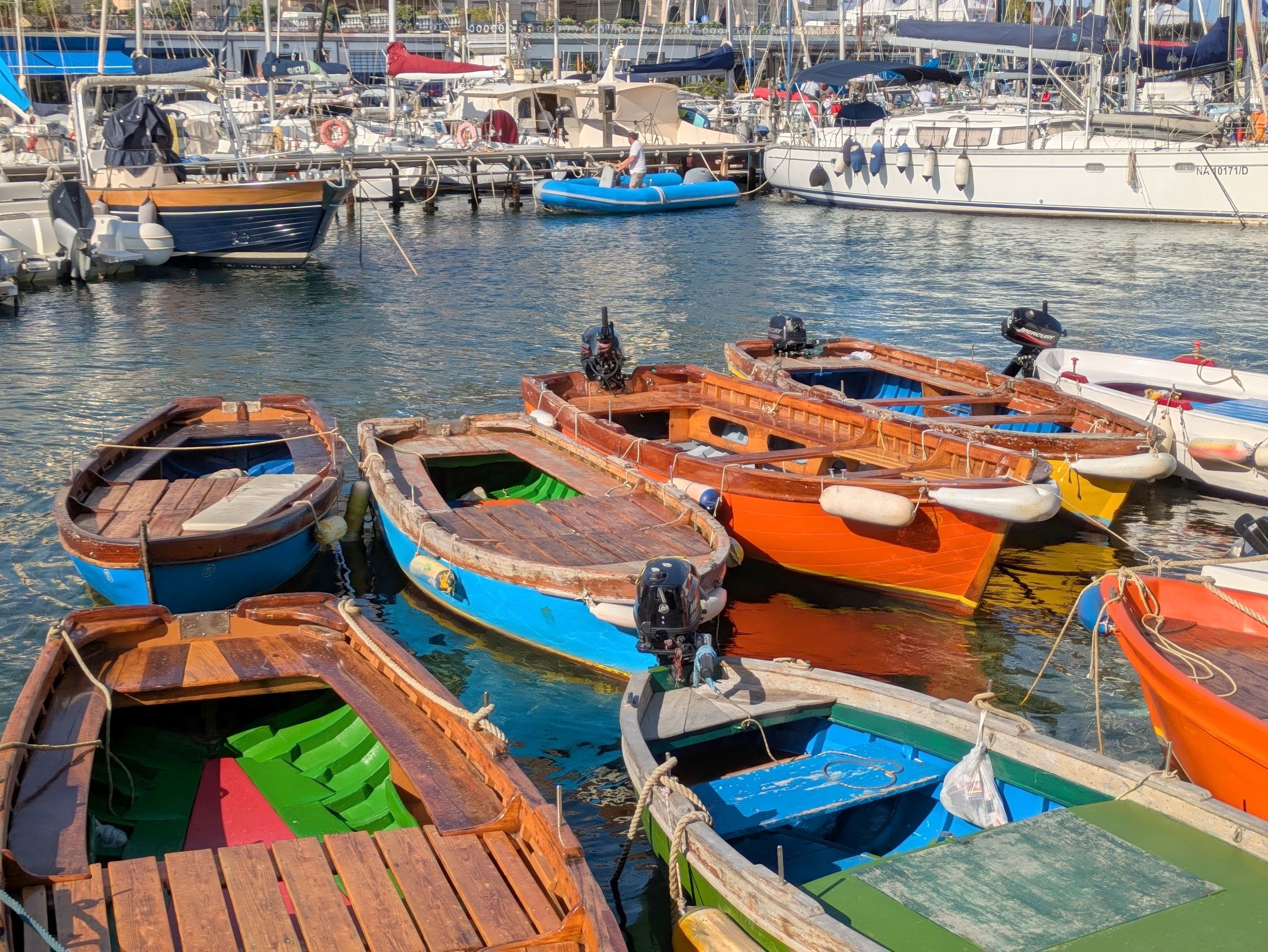
Scenes along the promenade:

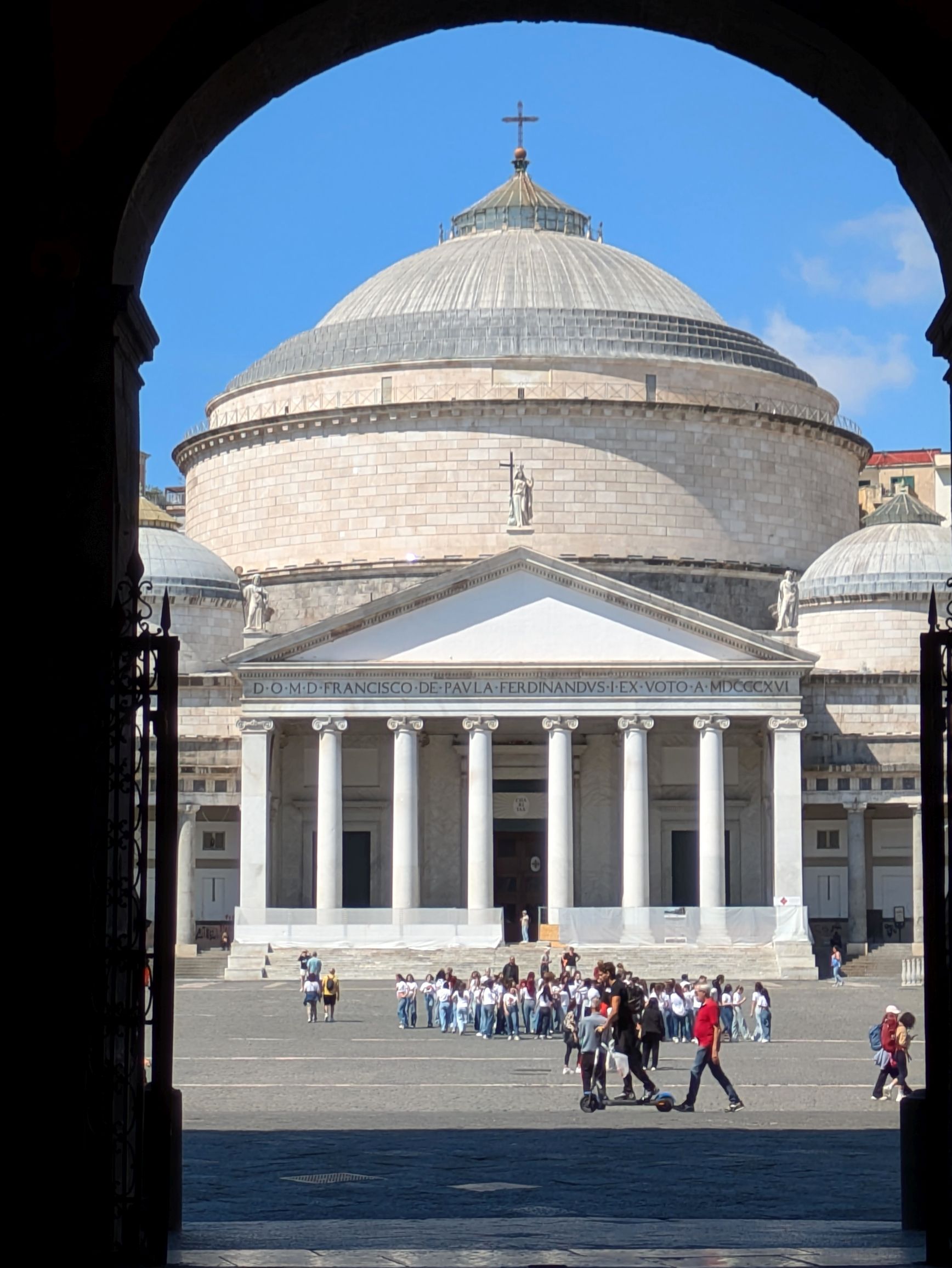
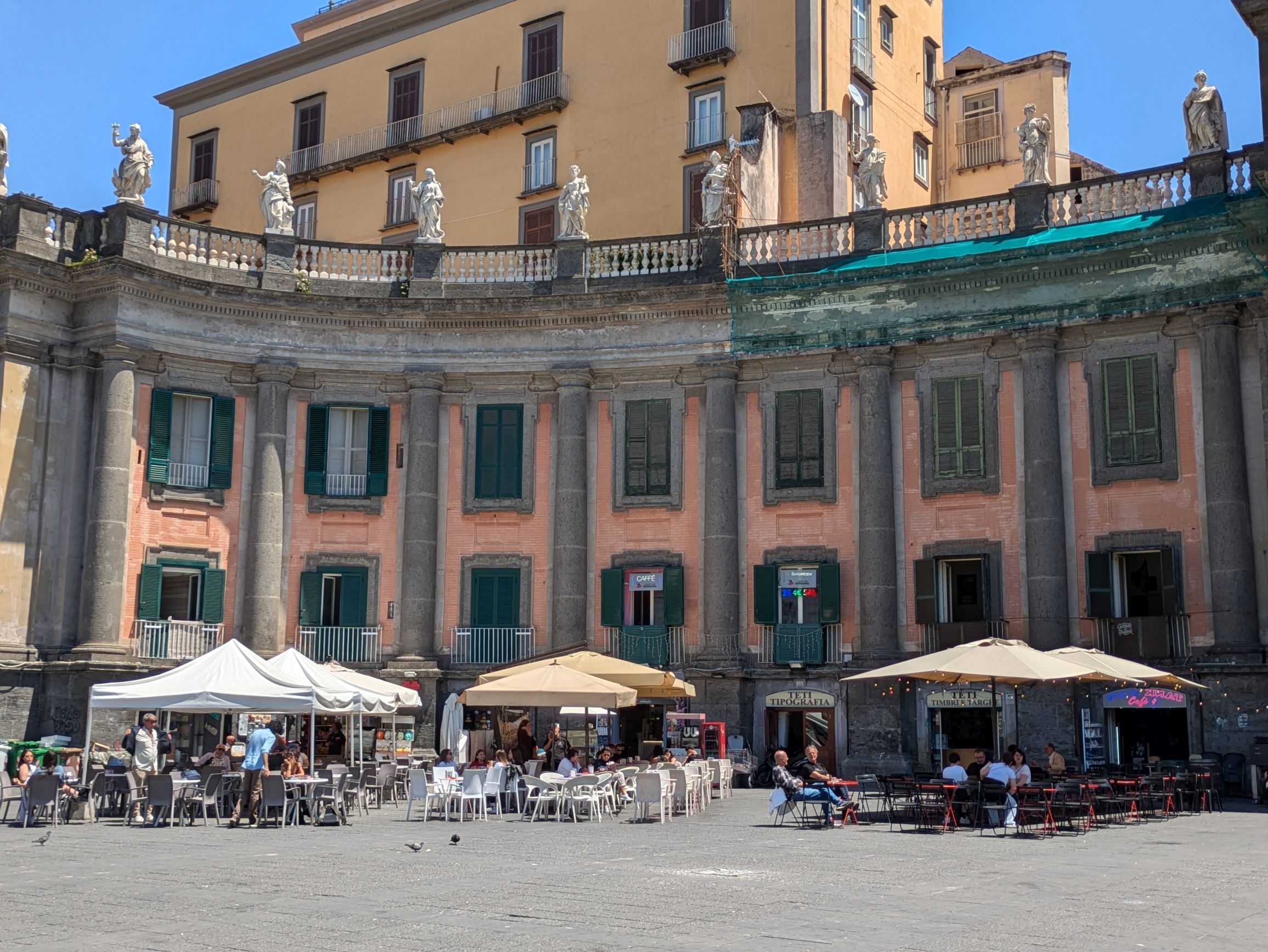
We walked all over this city, taking in as much as we could during the final days of our tour before continuing to Turkiye for our other tour with Overseas Adventure Travel.  Getting an early start to our final day, we passed through this plaza that was nearly empty, except for some school groups:

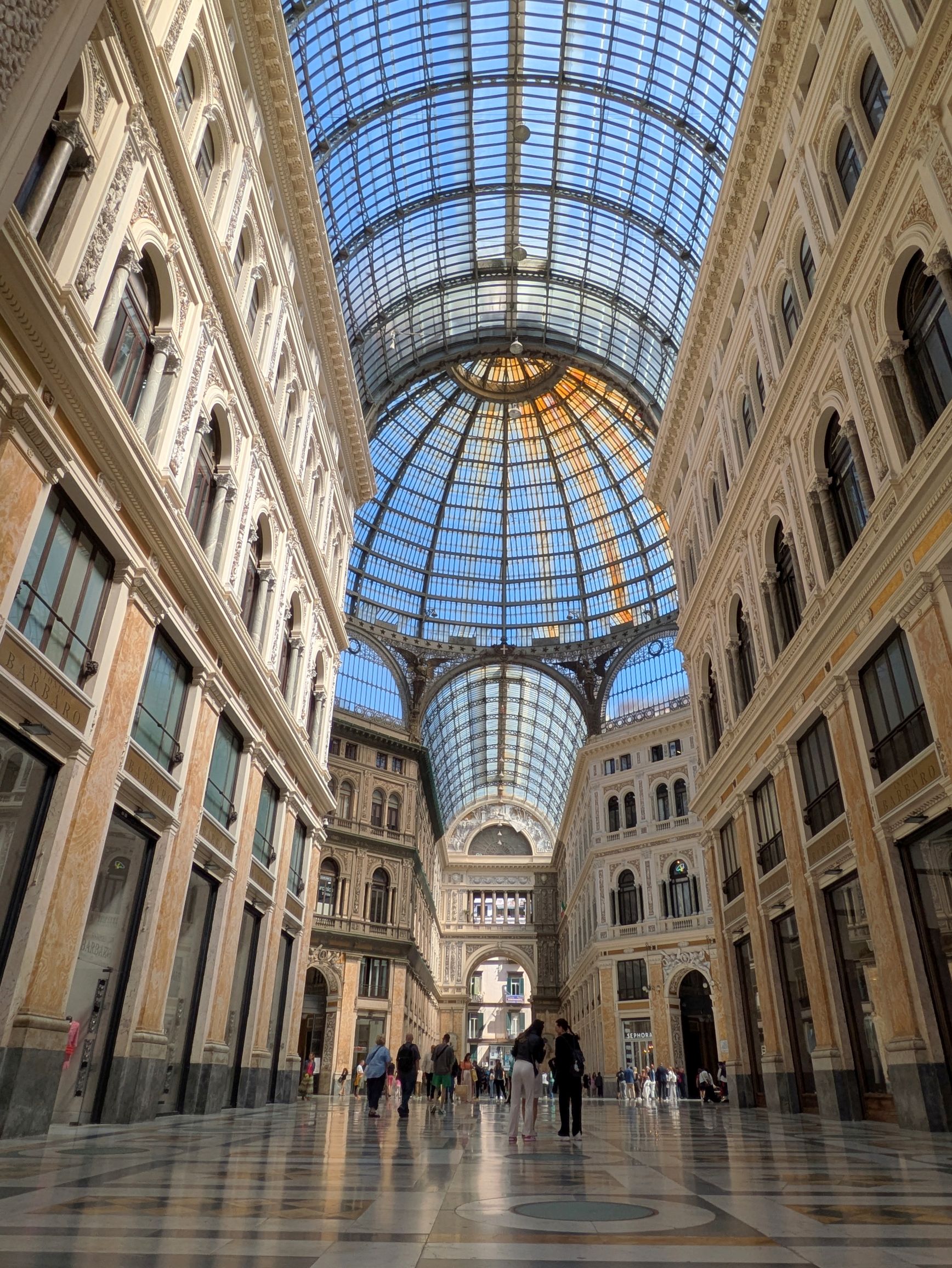
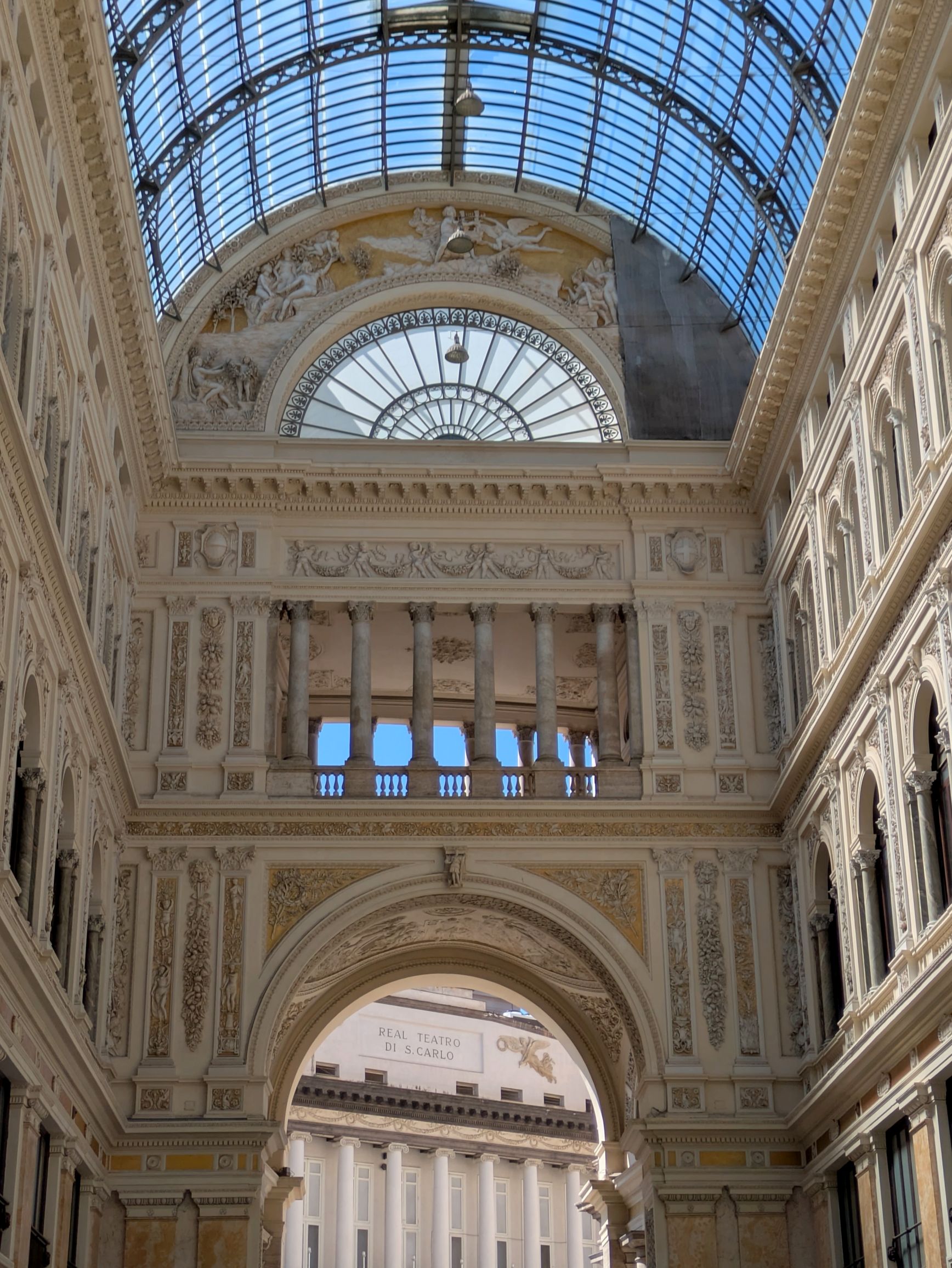
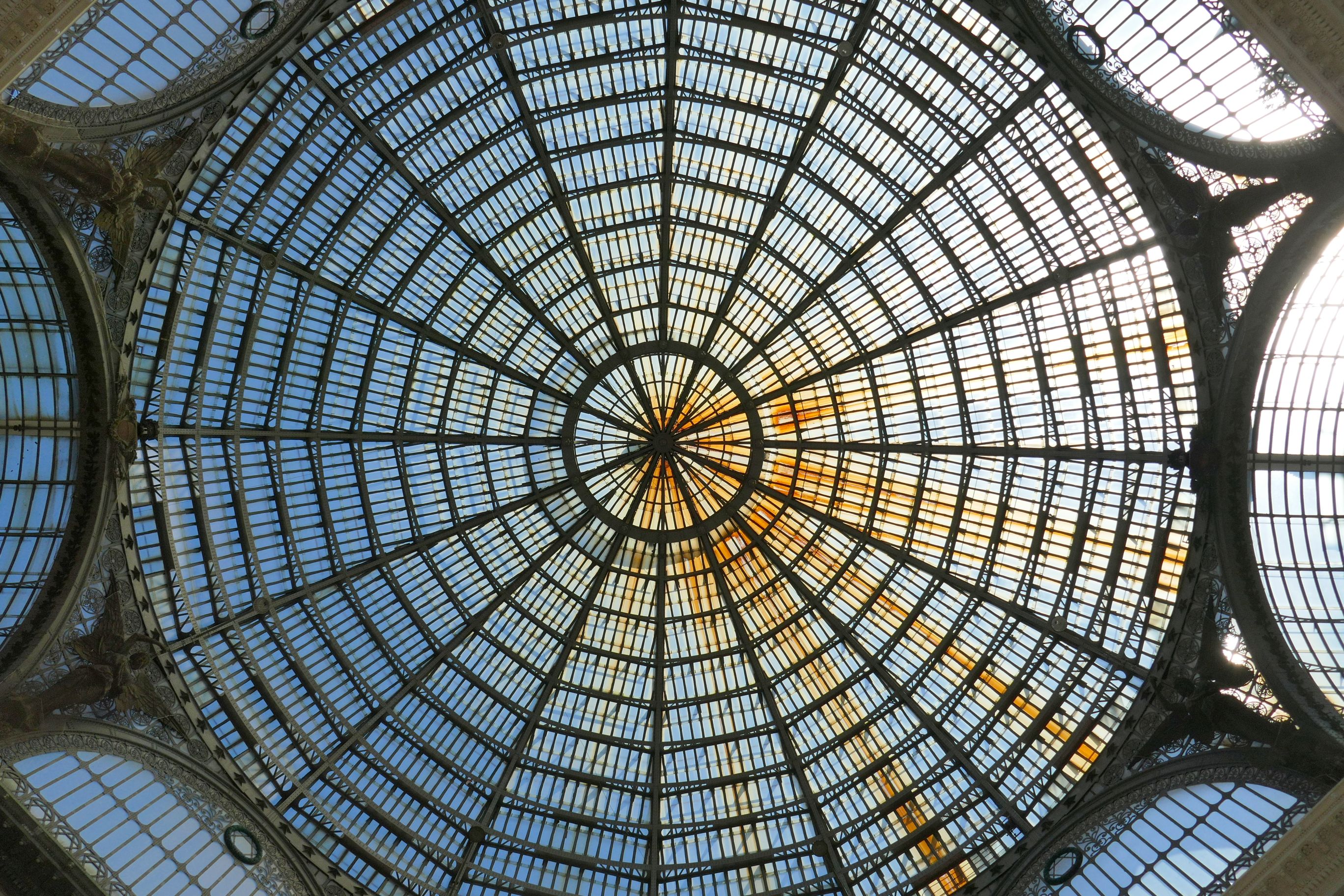
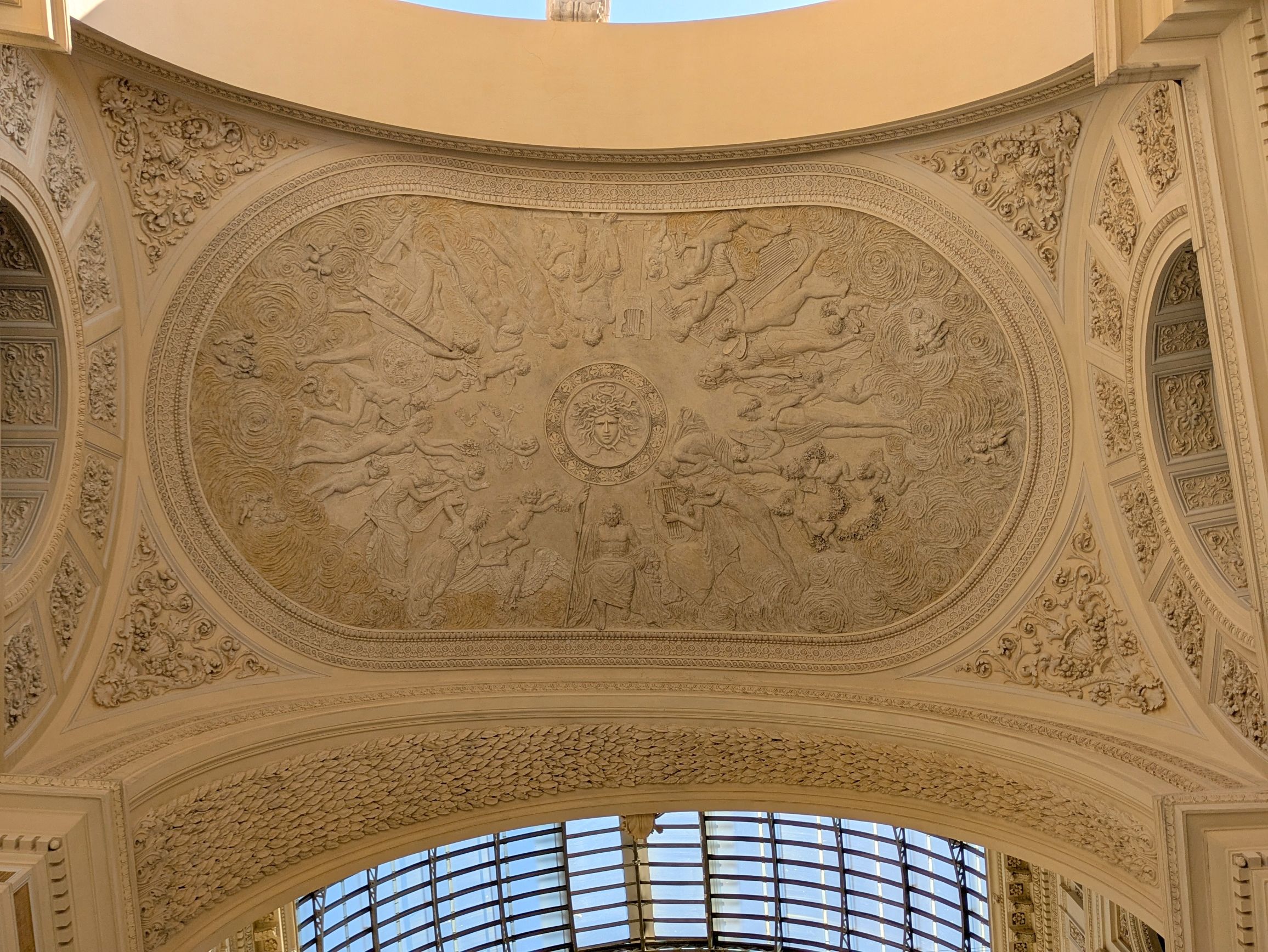
Although I am not a fan of shopping malls, one of the most beautiful places we visited was Galleria Umberto I, a gorgeous shopping gallery with extremely high-end stores. The architecture was exquisite! Built in the late 1800’s, the Galleria was named after the king of Italy at the time. The most spectacular aspect of the architecture is the glass dome:

Ceiling
Ceiling

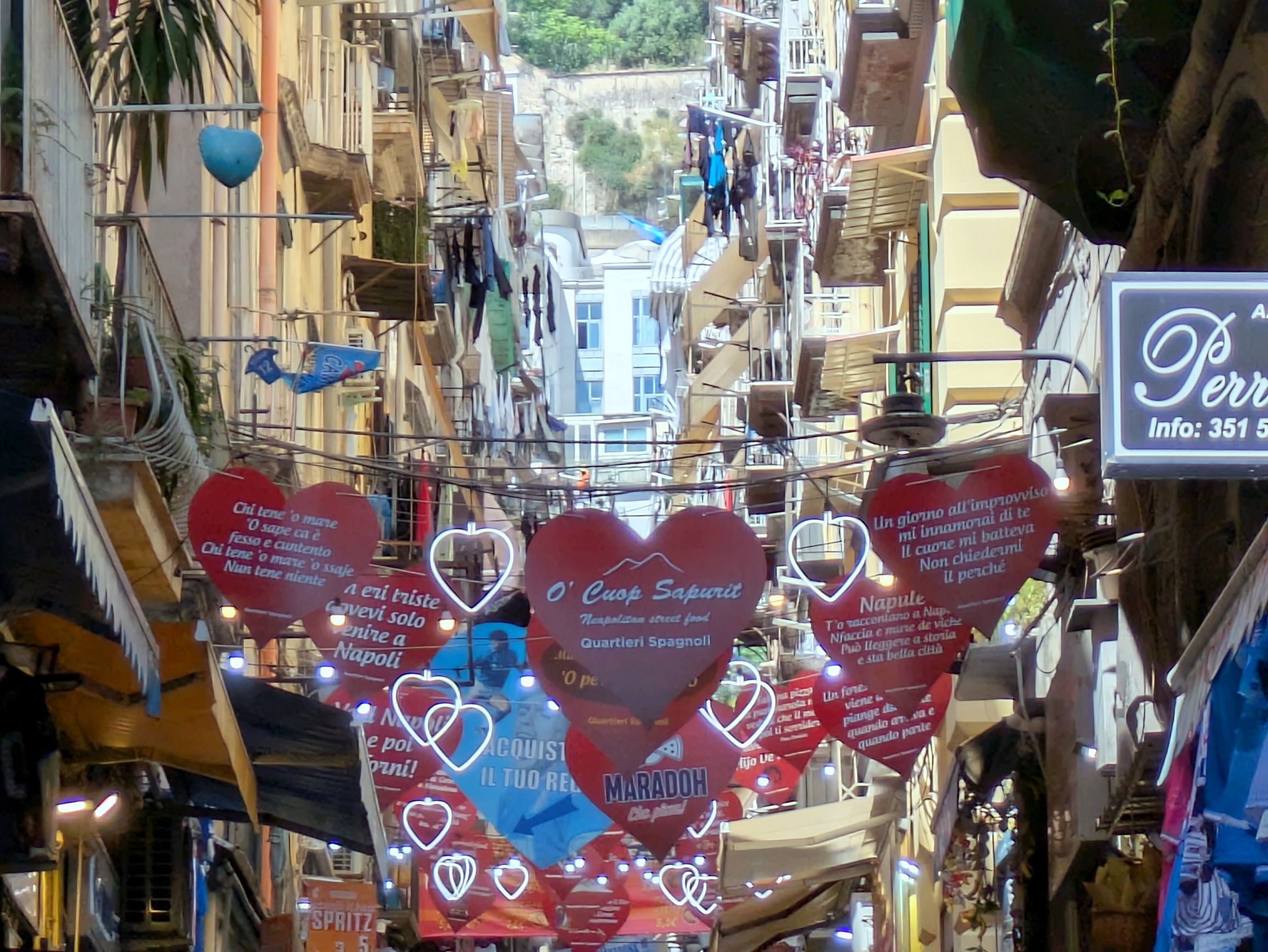
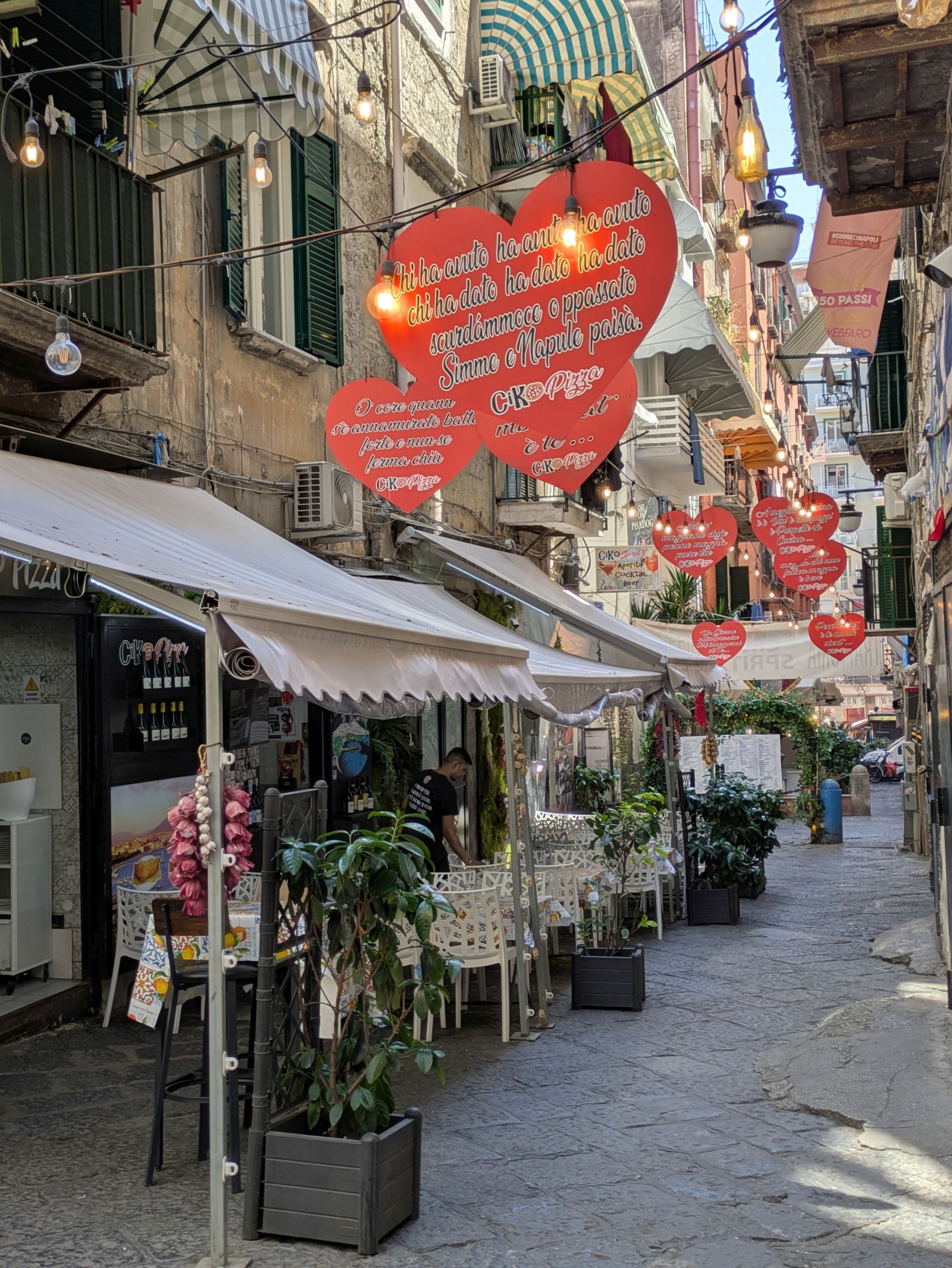
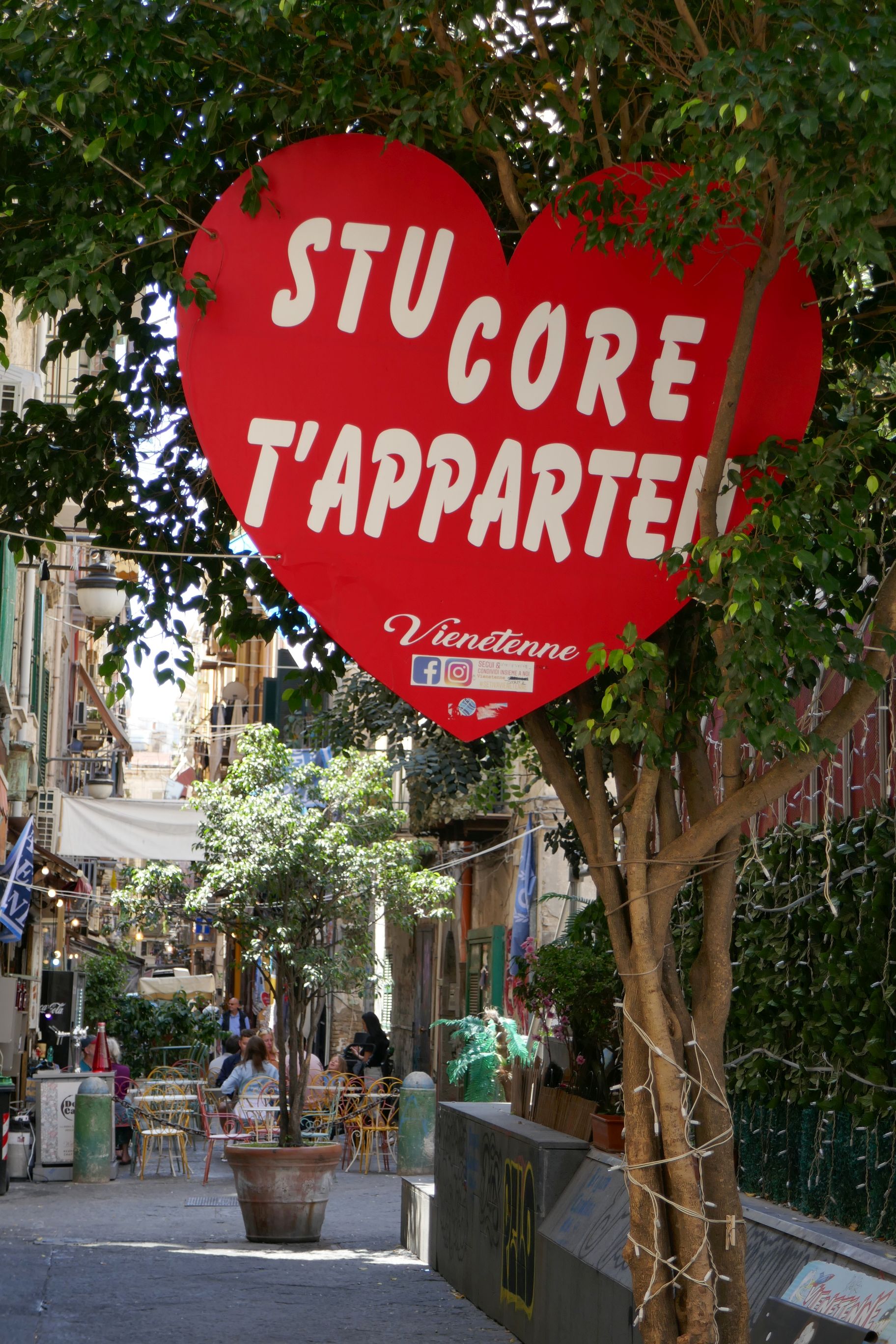
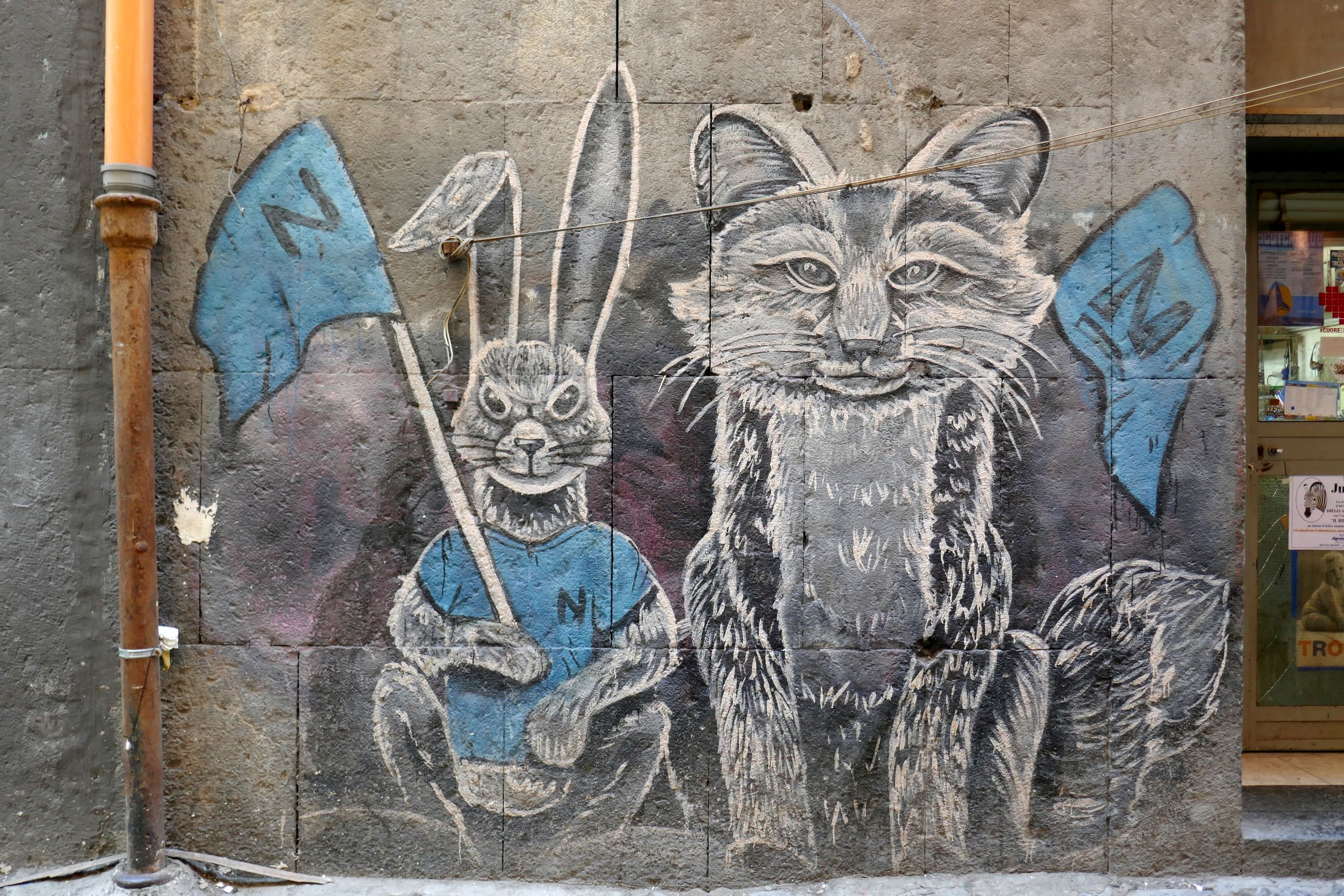
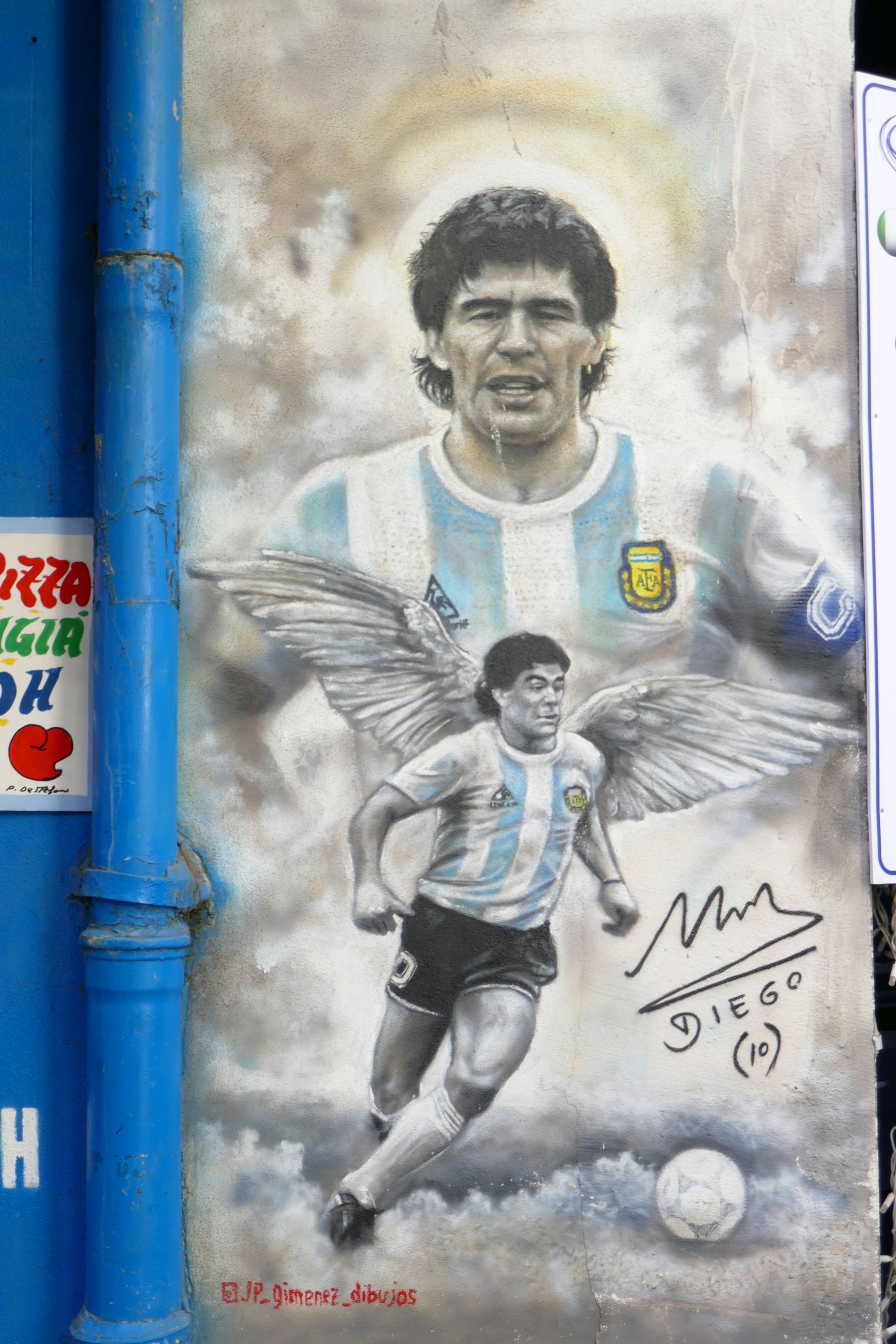
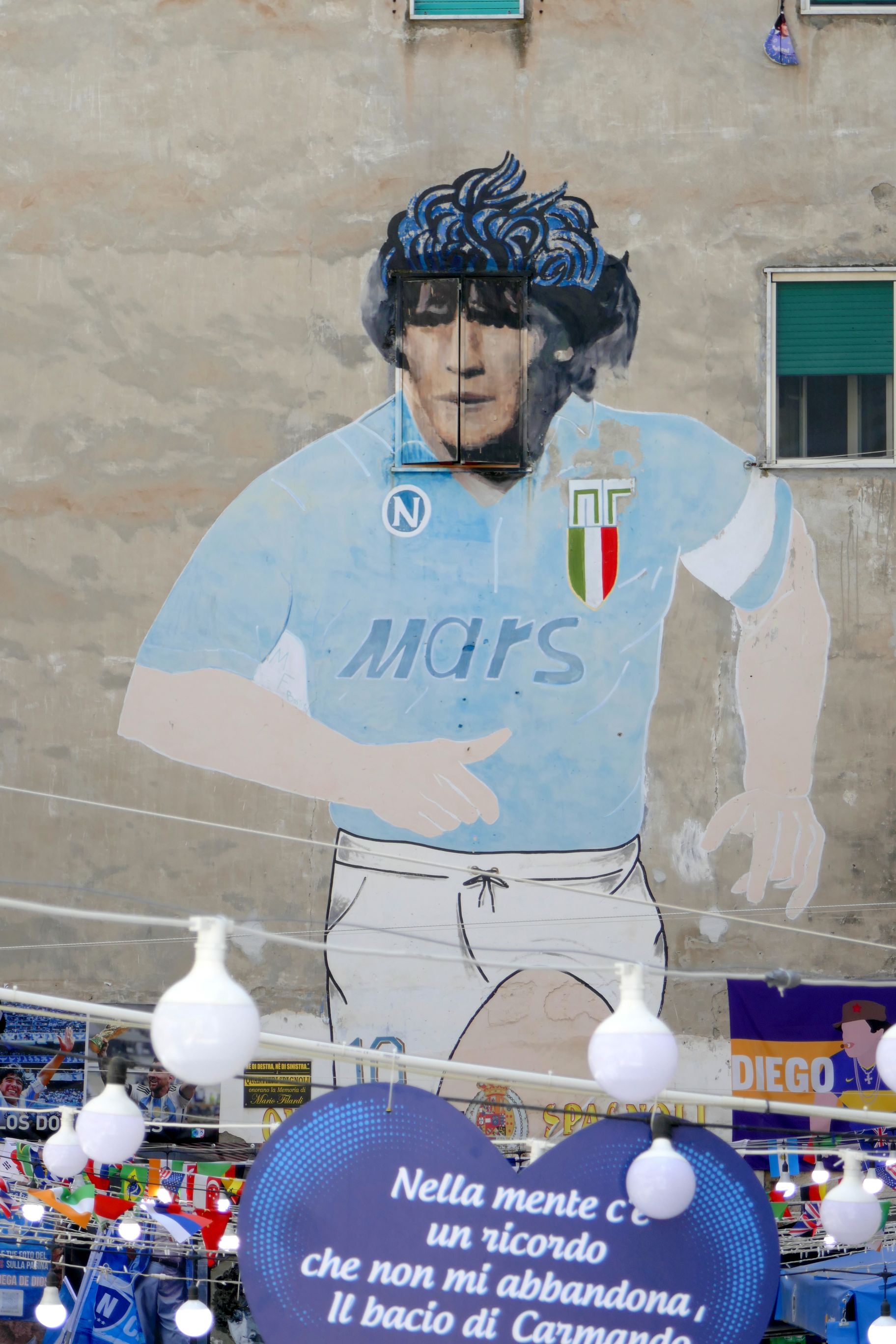
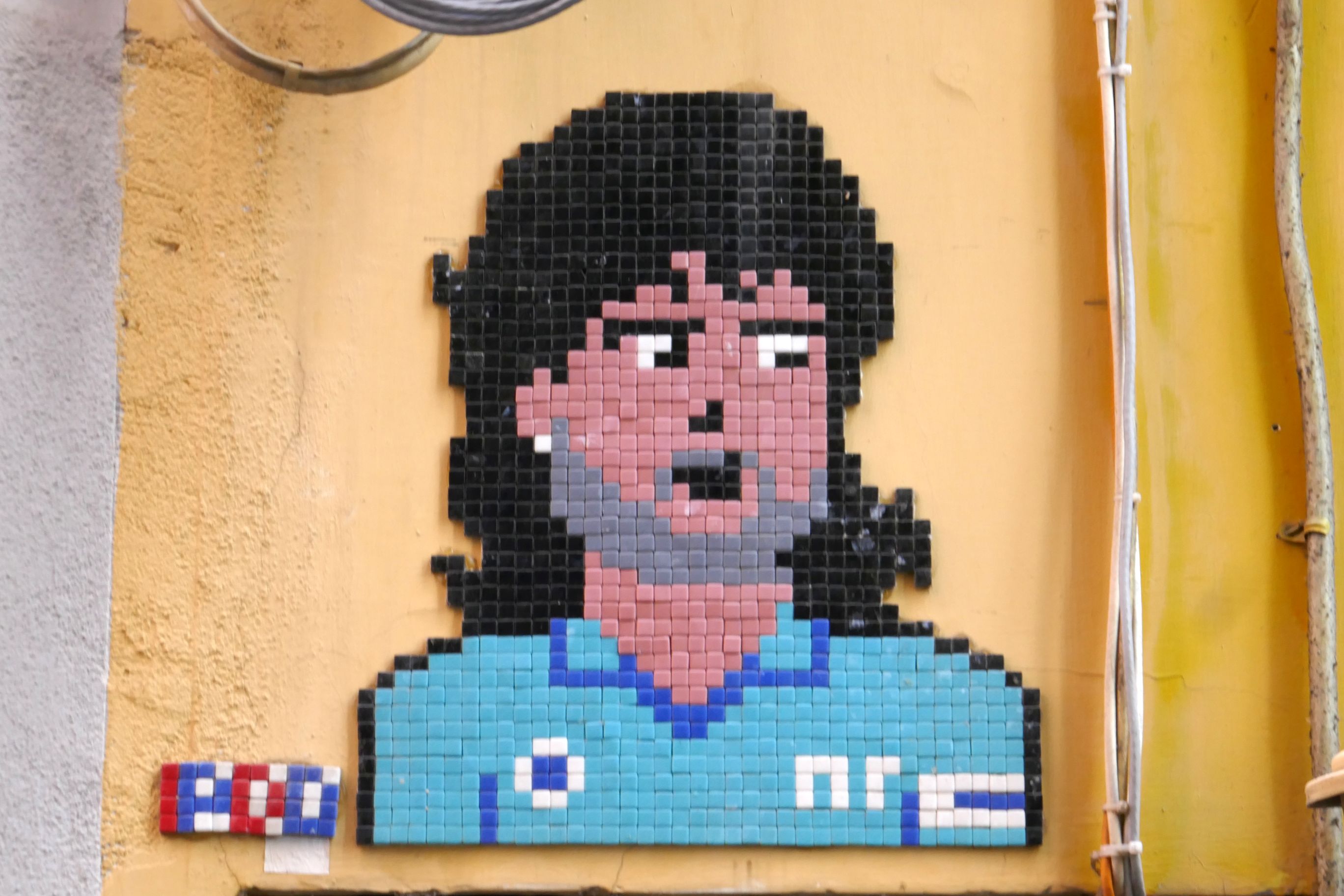
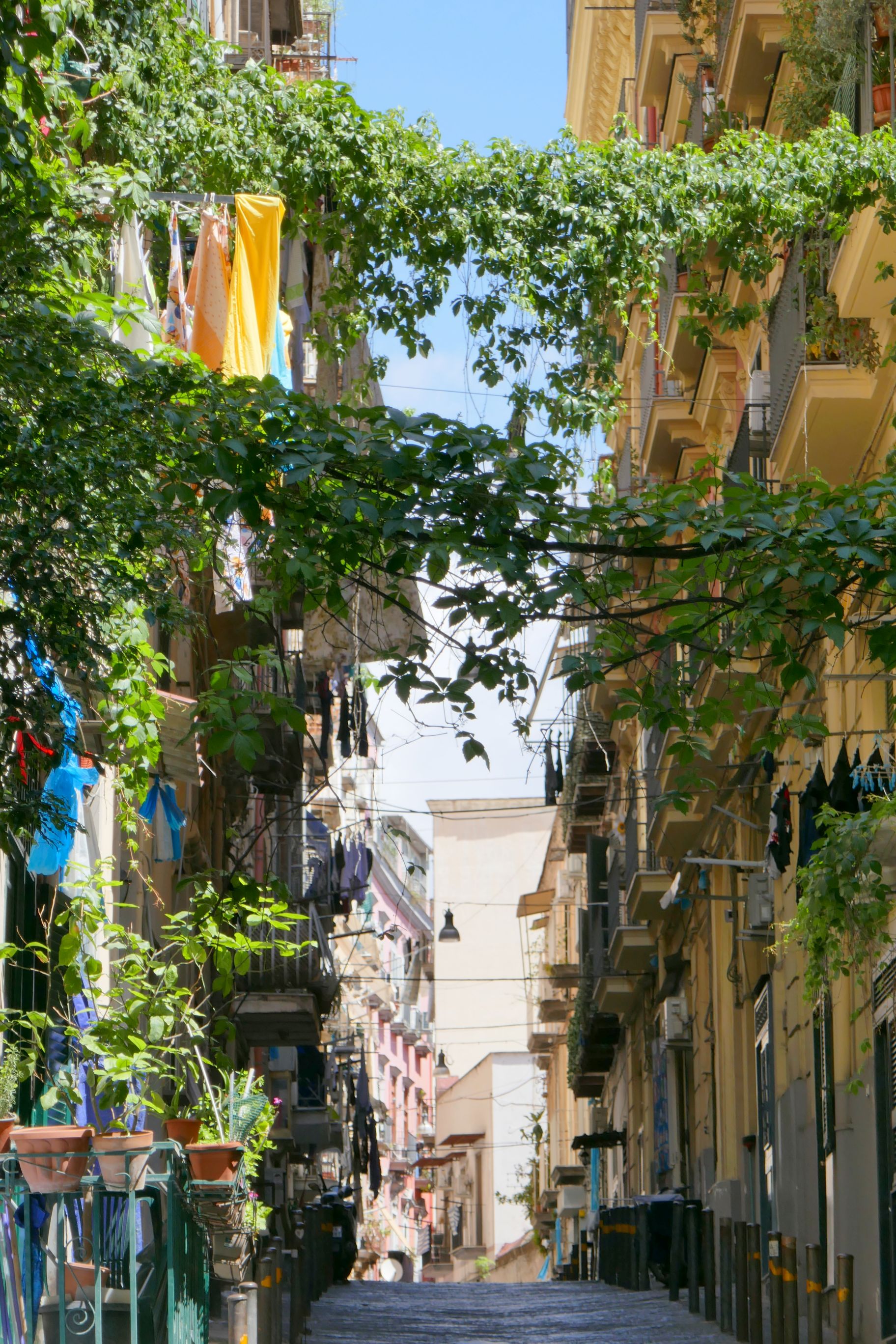
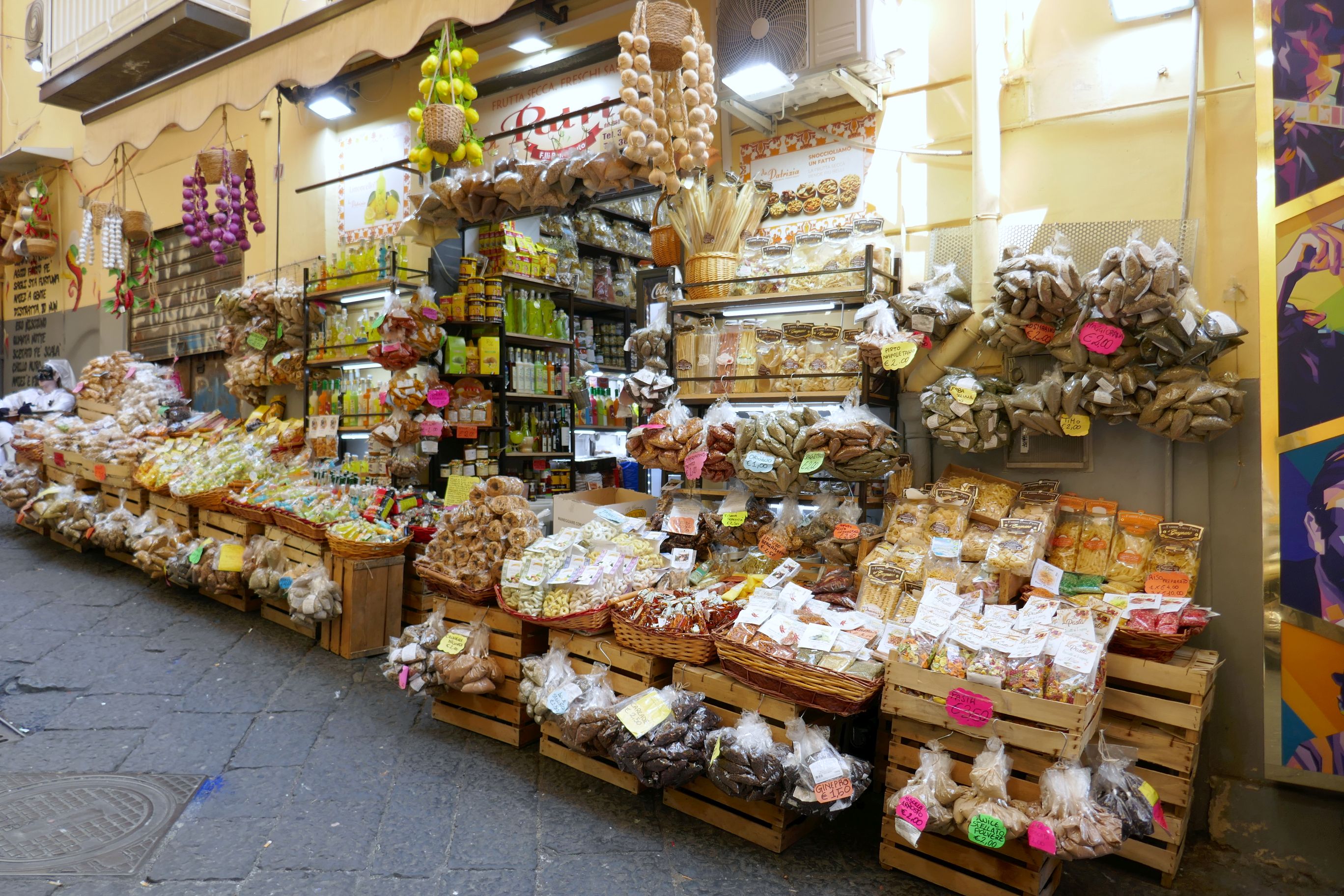
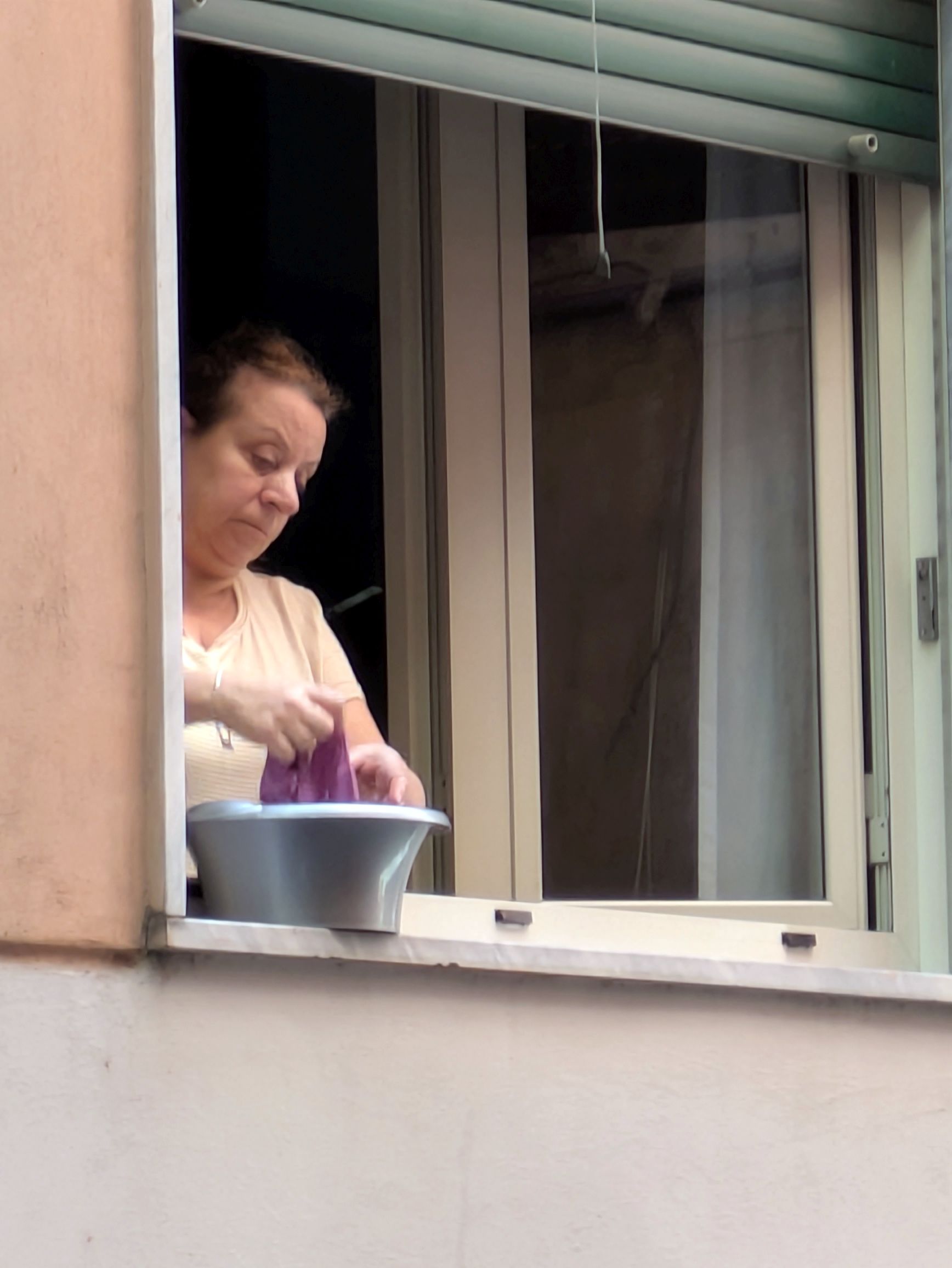
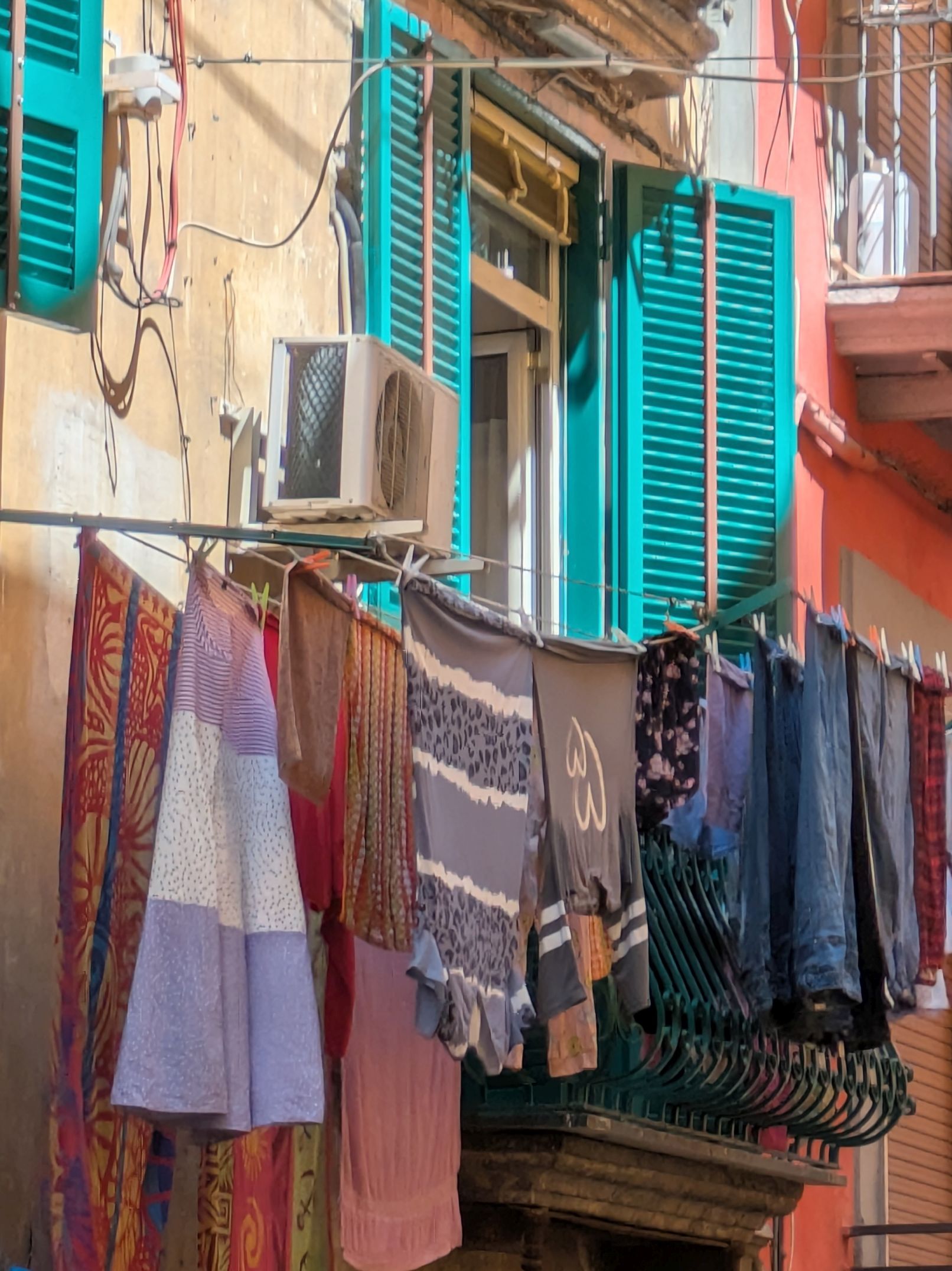
A fun place to poke around was Quartieri Spagnoli (Spanish Quarter), an eighteen streets by twelve grid with a population of 14,000 people that dates to the 16th century. The place is bustling, and motorcycle riders occasionally zip by on the narrow streets. They don’t seem to care about pedestrians, and I nearly got hit, making me wish I had eyes in the back of my head!  Still, it was an enjoyable area to explore and photograph.
This was one of my favorite travel moments and pictures of the trip. As we were walking by, this gentleman exclaims, “Brooks!” He was pointing to his running shoes, which were Brooks, like mine. He didn’t speak English, and I don’t speak Italian, but we managed to have a fun conversation through mime. He asked if I was a runner, and I shook my head no. I pretended to swim to convey I was a swimmer, and he pointed to himself that he swam, too. “Triathlon!” And he took out his phone to show me a picture of him at the finish line of a triathlon. Bruce shot this picture of us posing with our Brooks shoes, we laughed, and said, “Arriverdci!”

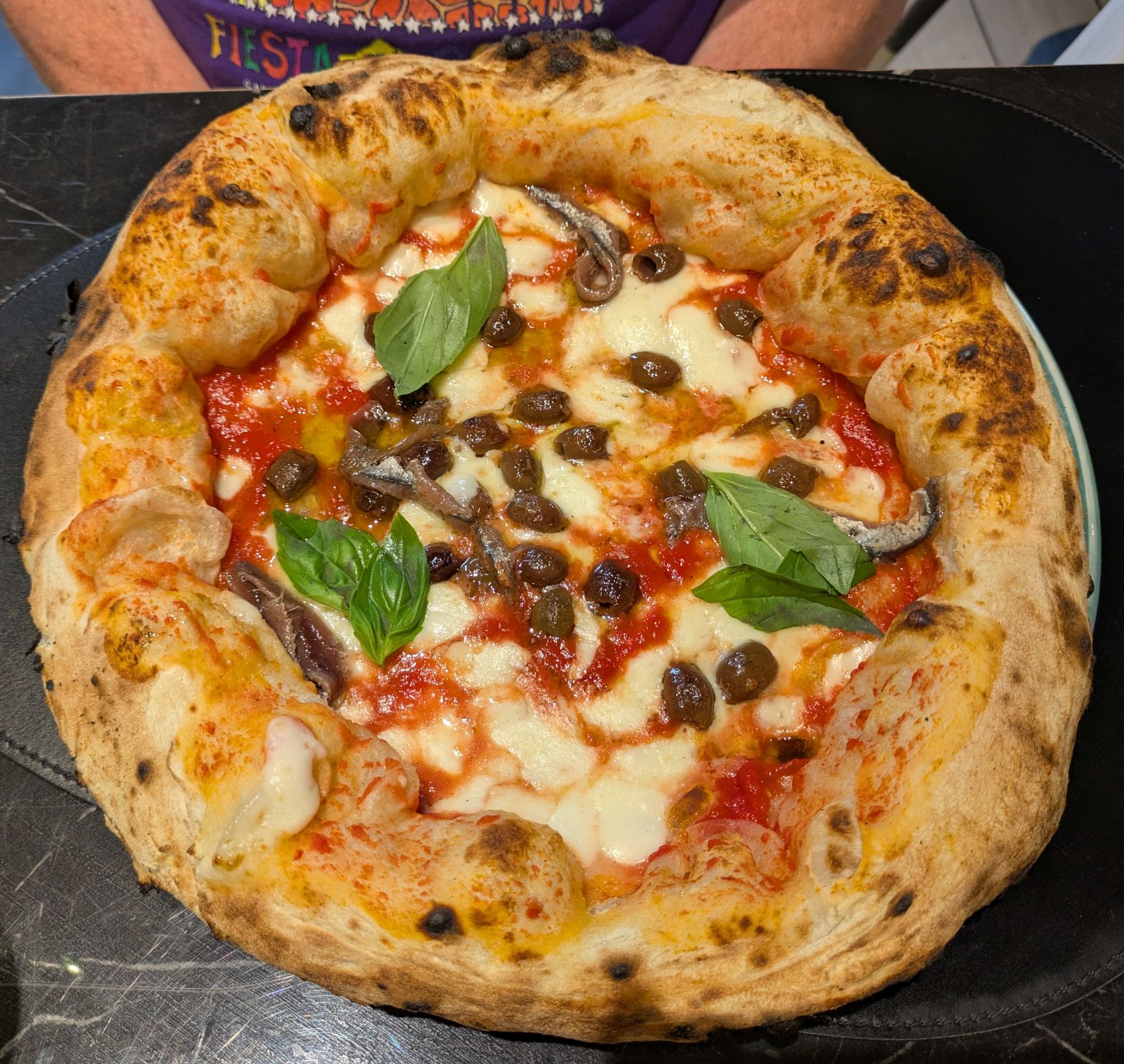
Since Naples was where pizza was invented, we had to partake in its famous invention!  We were provided with large scissors to cut our pizza into slices:

Reflecting on our time in Sicily, the Amalfi Coast, and finally, Naples, it was a wonderful three weeks of memories we will always treasure!

Our travels continued in Turkiye on May 20, which will be the subject of my next series of posts after a break. But first, I will slip in a post about my favorite travel tips, some of which I came up with during our six weeks of traveling.

Next up: MY FAVORITE TRAVEL TIPS

SICILY & AMALFI COAST #26: CRUISING TO CAPRI

While our small Overseas Adventure Travel (OAT) group spent the morning on a walking tour of Naples and visiting the National Archaeological Museum, Bruce and I opted to book a full-day boat tour to the island of Capri for a cruise around the island and free time exploring the island itself.  Fingers were crossed for calm seas and good weather, and we got both when it mattered the most!

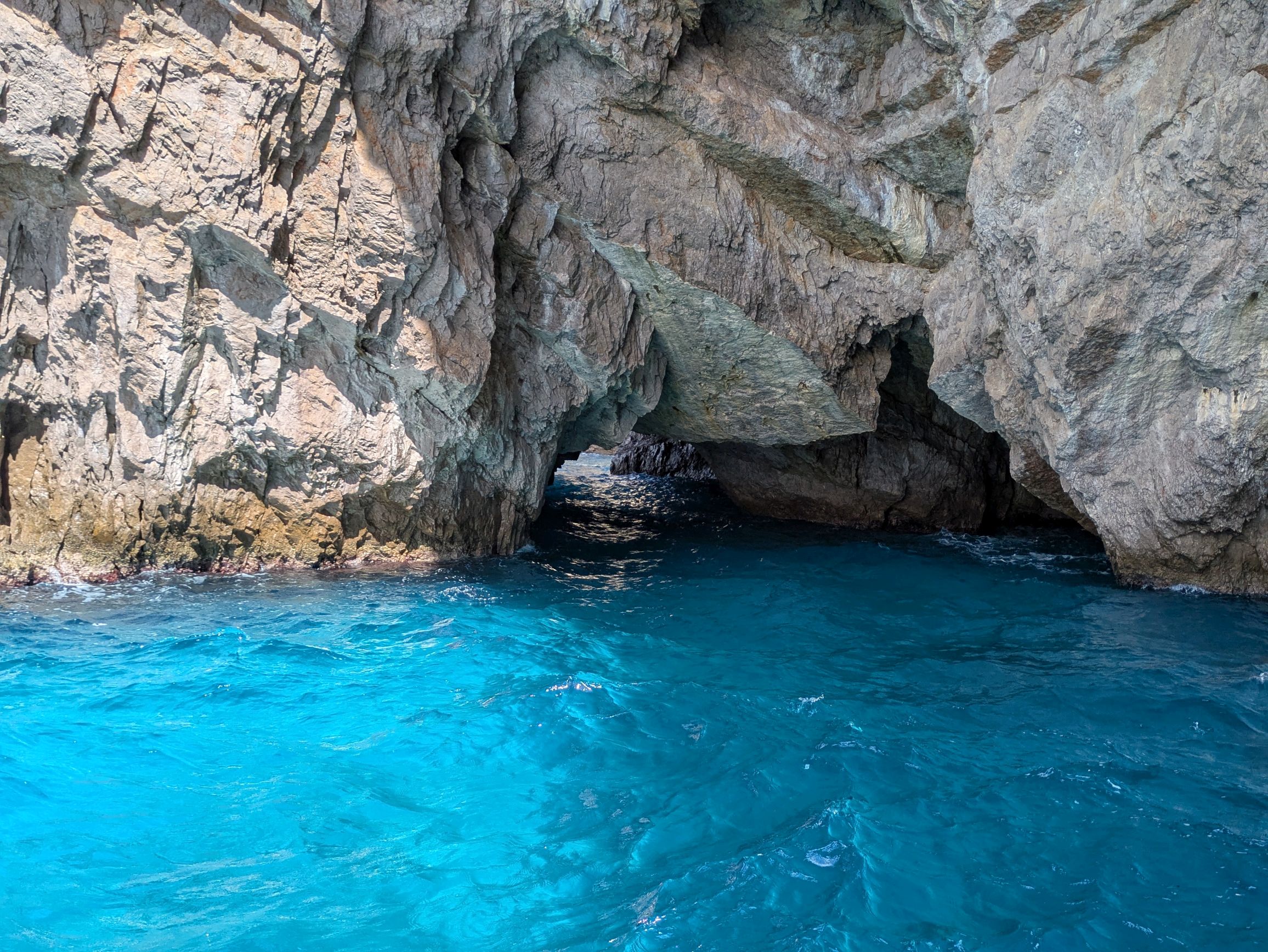
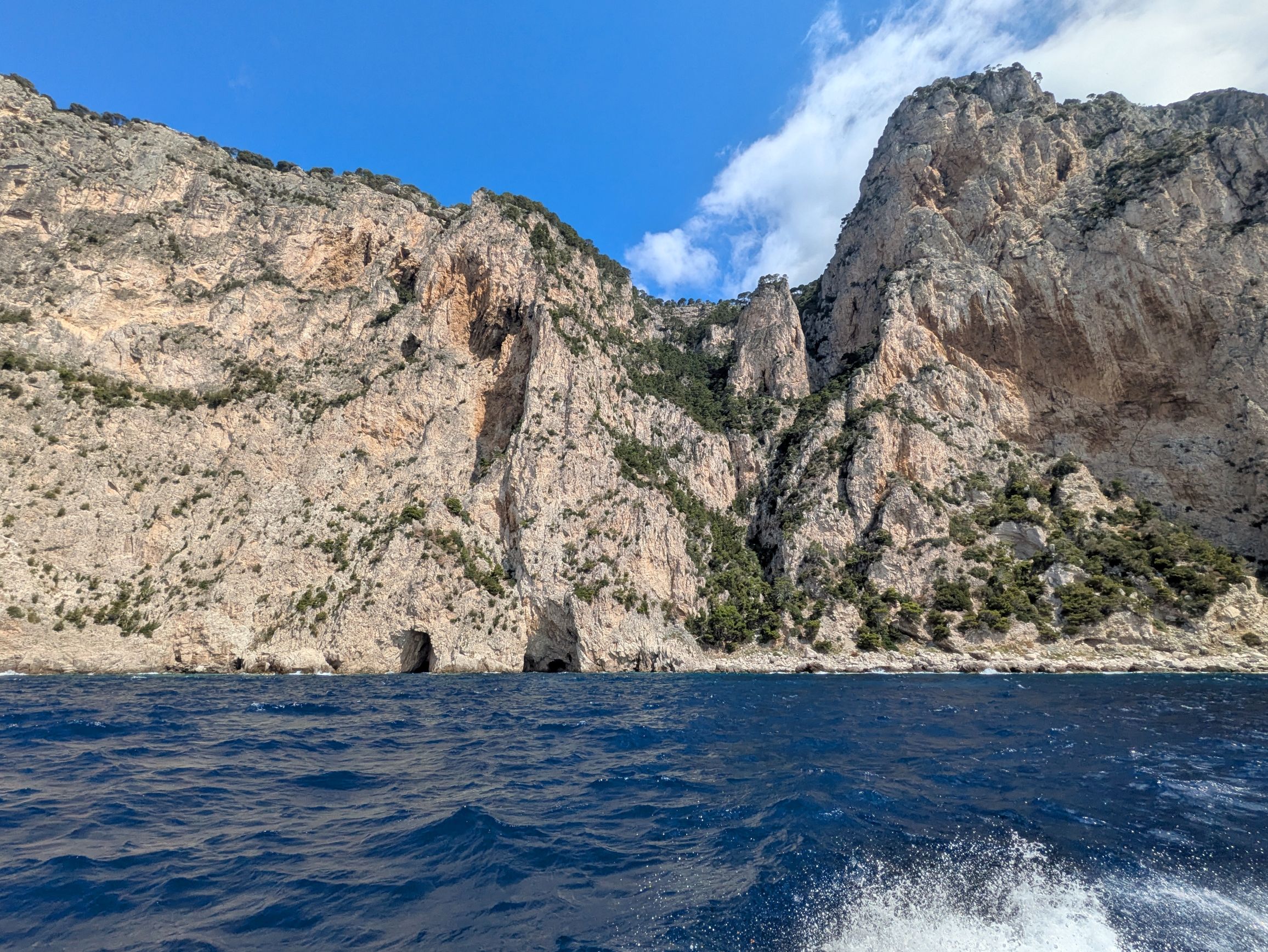
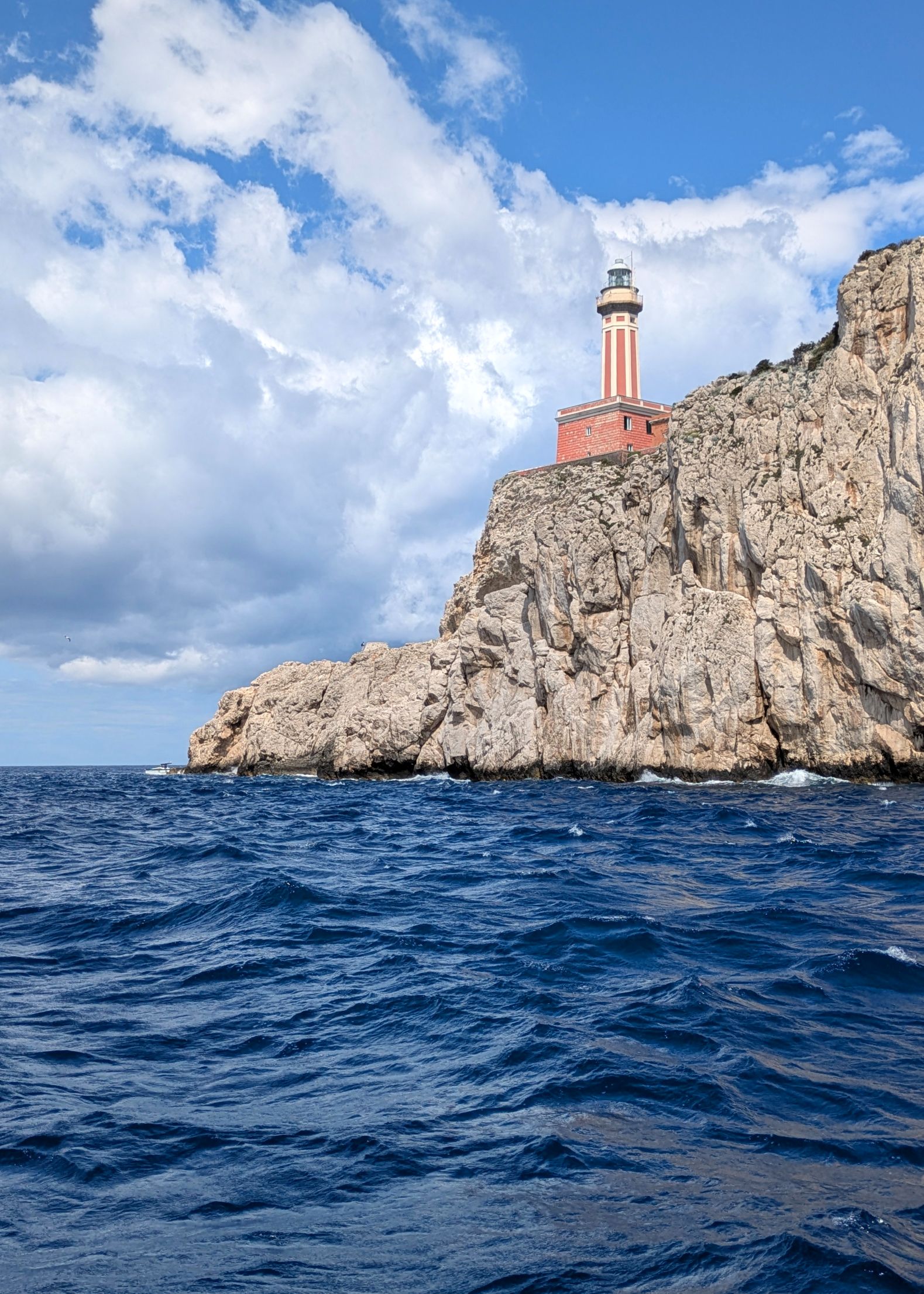
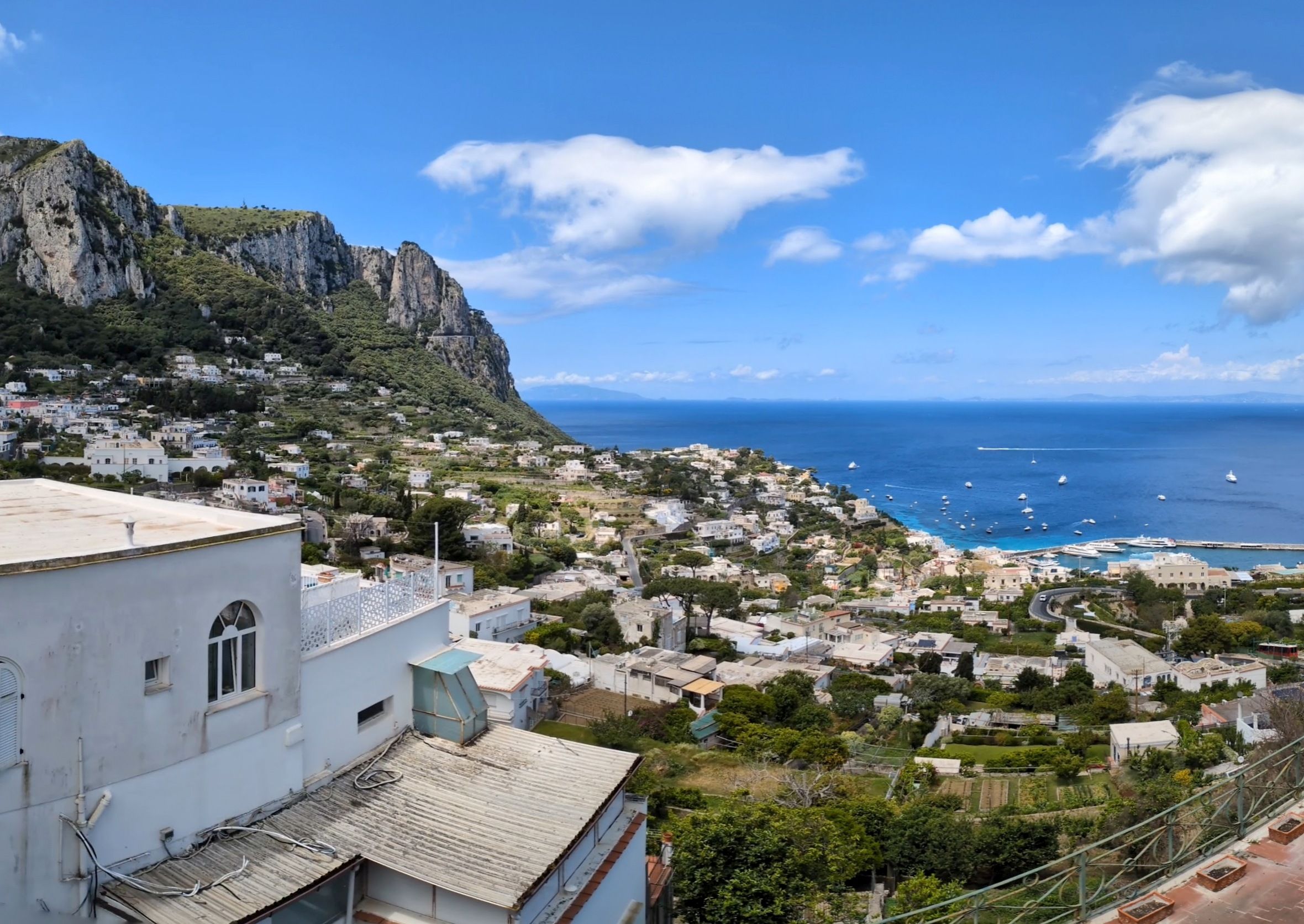
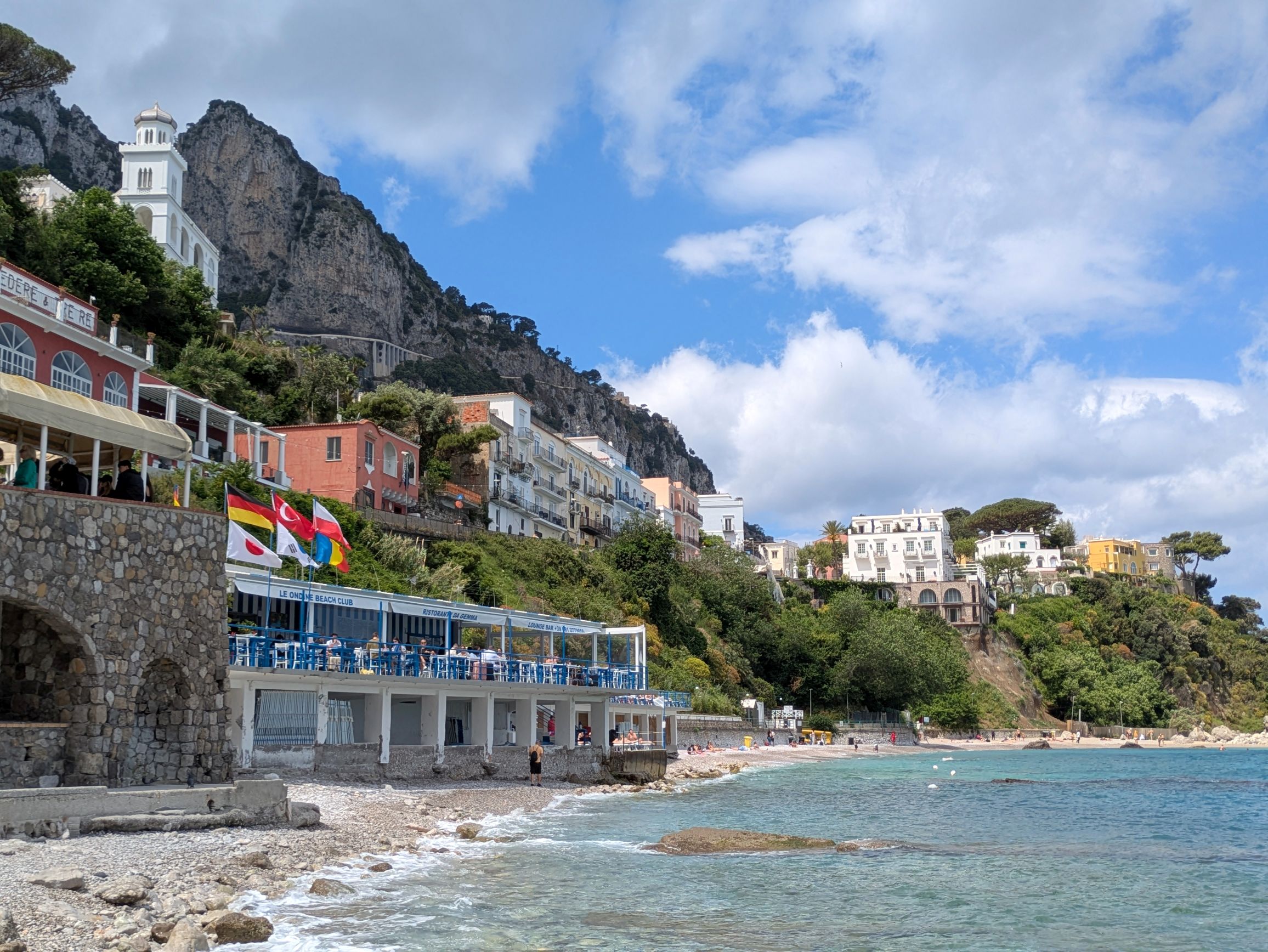
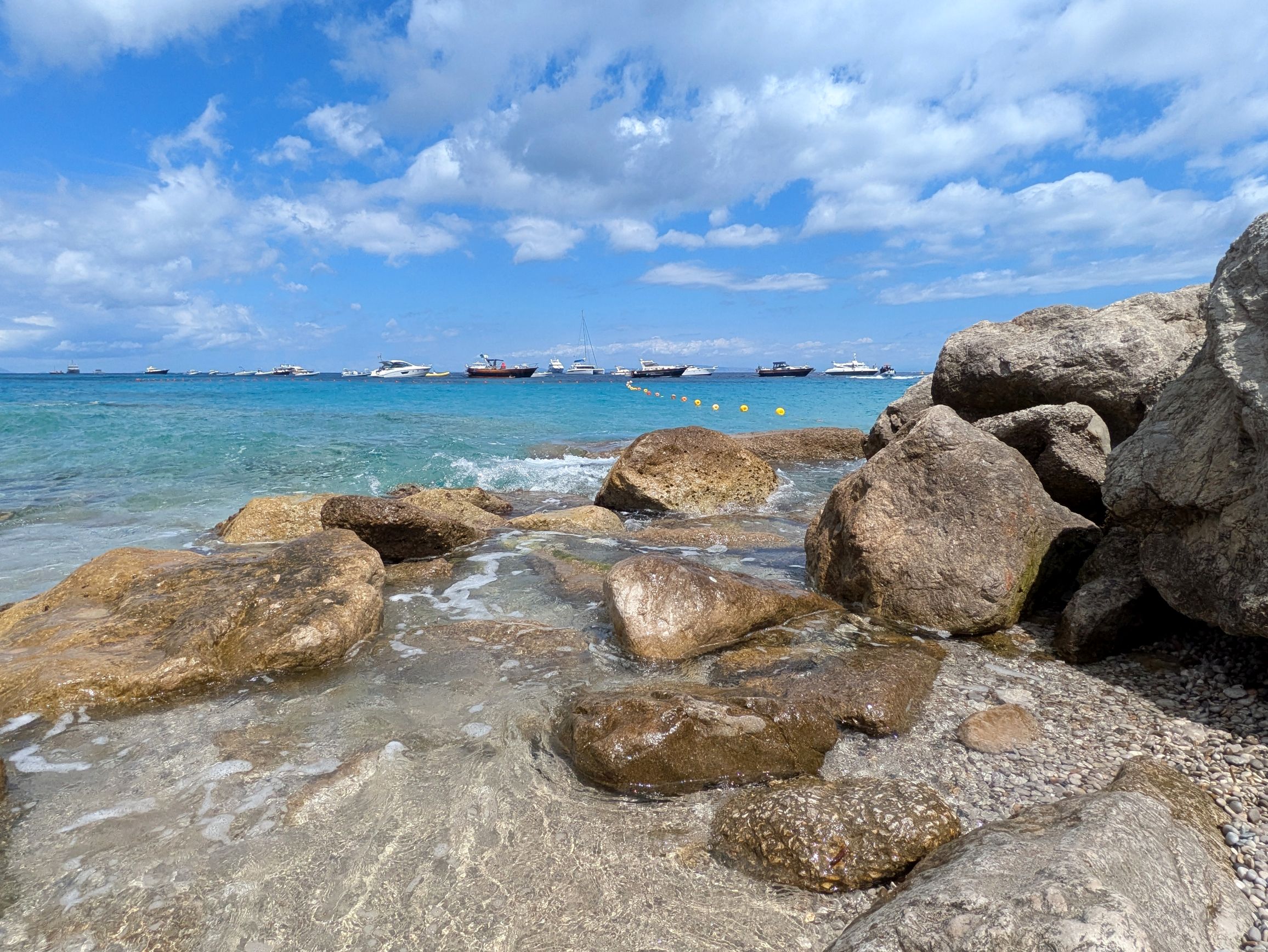
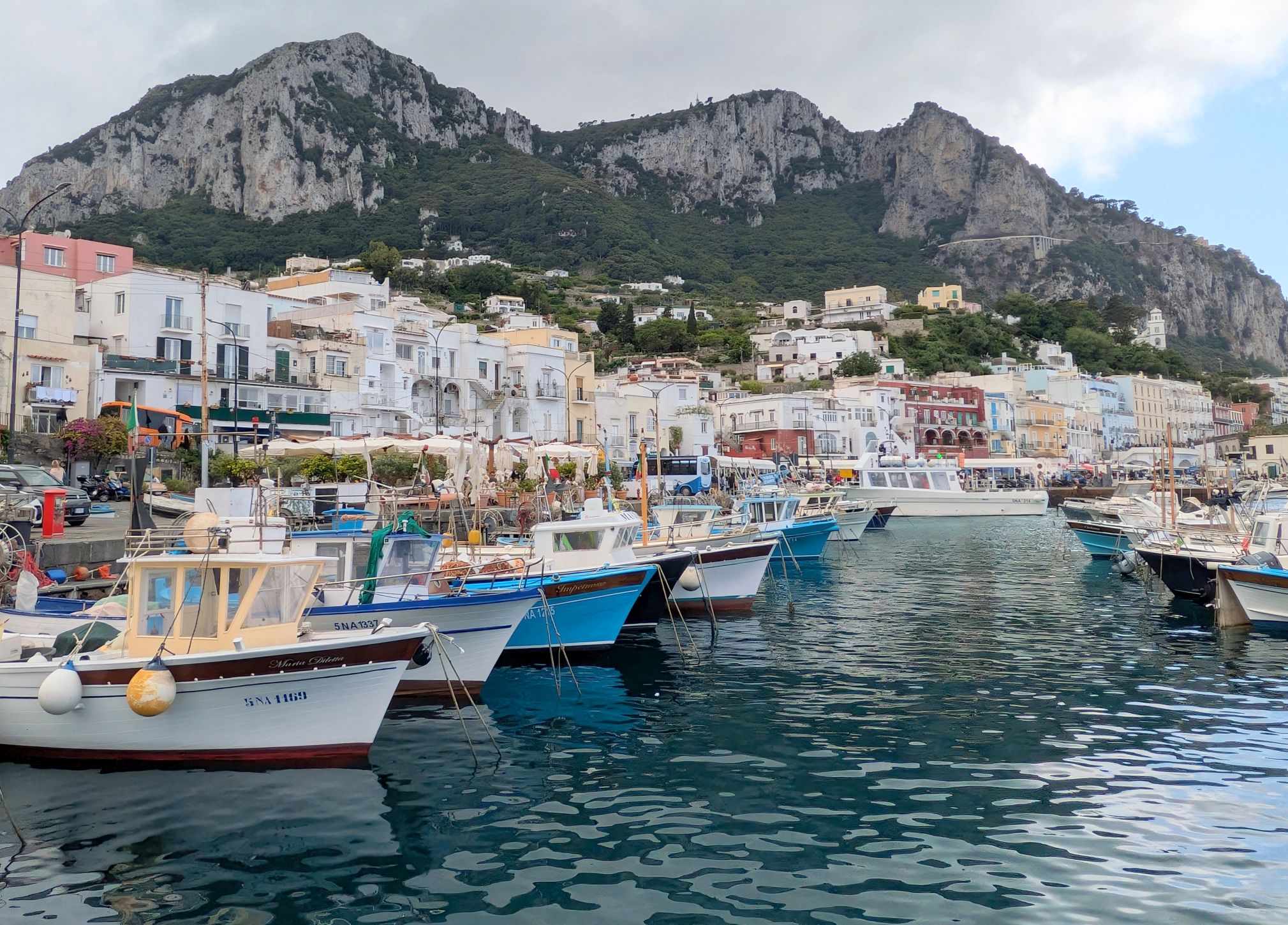
Capri, a popular resort destination, is located on the south side of the Gulf of Naples.  As we approached the island by boat, we noticed the steep and rugged limestone cliffs and numerous grottos.  Beautiful! We were in for a treat!  The water was a gorgeous shade of deep blue, and as we got closer, it turned to shades of turquoise, reminding me of the many tropical paradises I had the great fortune to SCUBA dive in many years ago. 

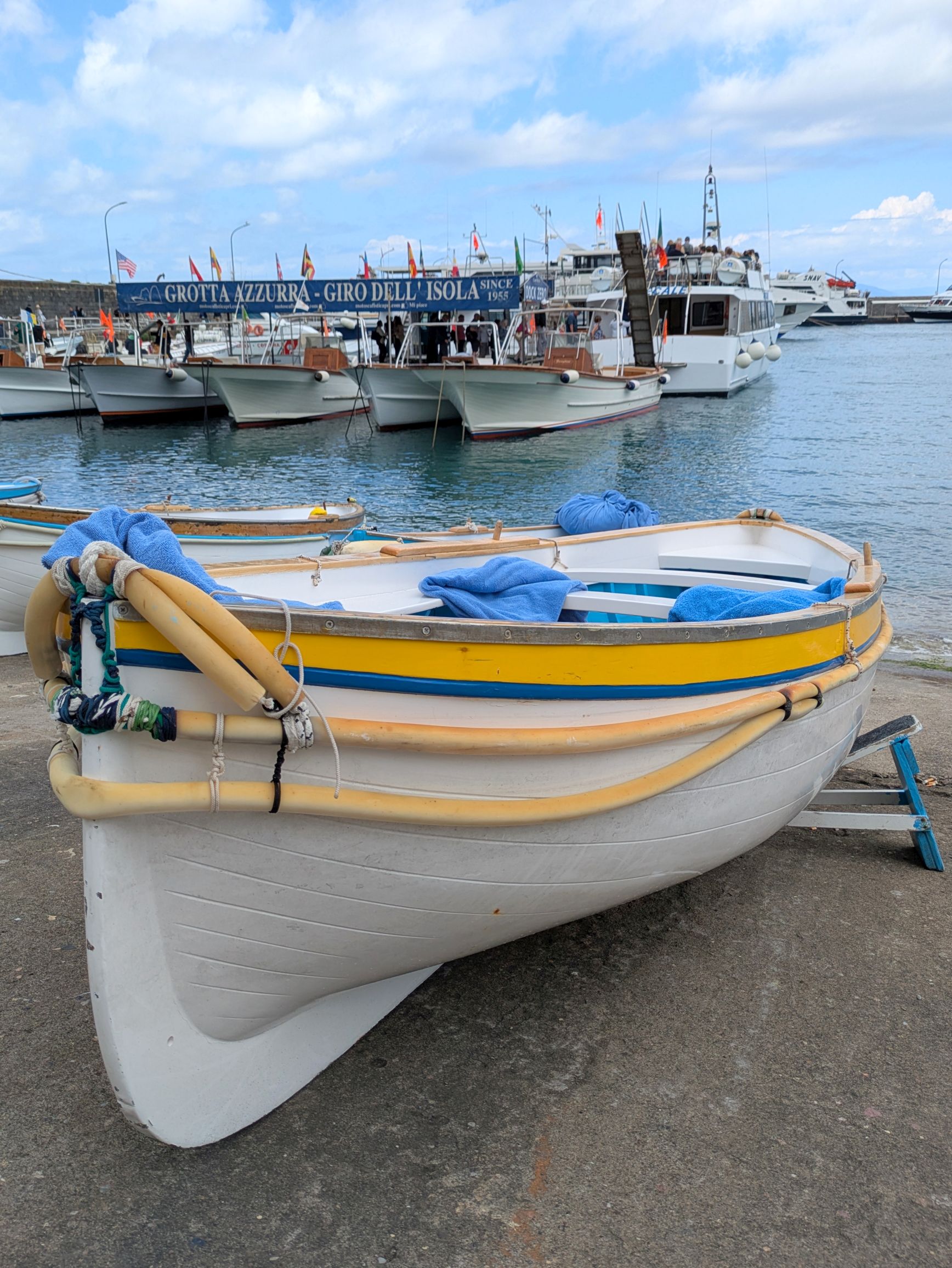
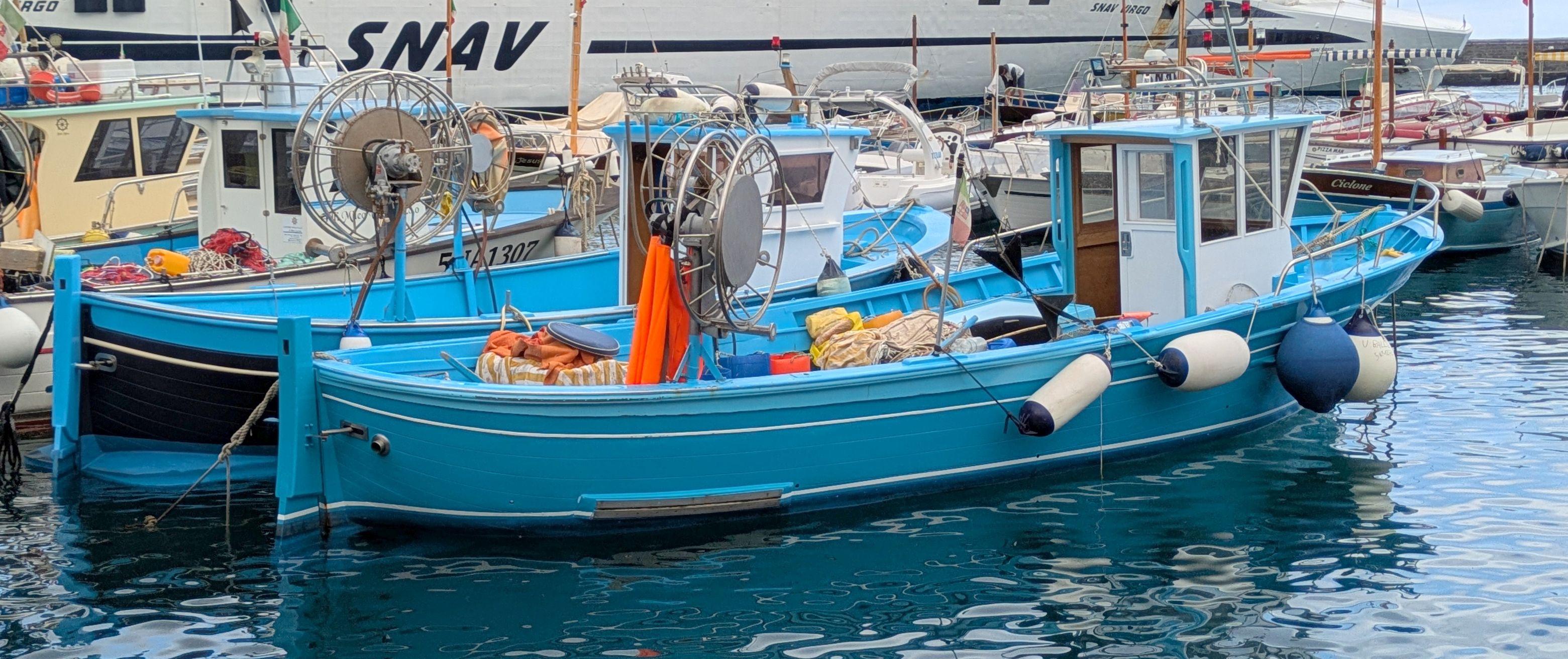
When we arrived at the harbor, we transferred from the ferry to a smaller boat that could maneuver close to the grottos as we circled the island.  Our tour didn’t include visiting the famous Blue Grotto, which we opted against, due to the amount of time it would require to see it.  Boats line up for their turn to off load their passengers to grotto tour boats, and the waiting time can be very long.  It was organized chaos when we cruised by, and I was happy we didn’t spend our time bobbing in place waiting!

(For all photos, click on the image for a full screen view.)

These are just some of the boats lined up for the Blue Grotto. There were many more not pictured!

The history of Capri is long.  Archaeological evidence indicates human presence dating back to the Neolithic and Bronze Age.  Fast forward to the late 19th century, the island became an increasingly popular resort for European artists, writers, and expatriates.  It gained a reputation as a tolerant haven, attracting wealthy gay men and lesbians seeking a more open life than elsewhere in Europe.

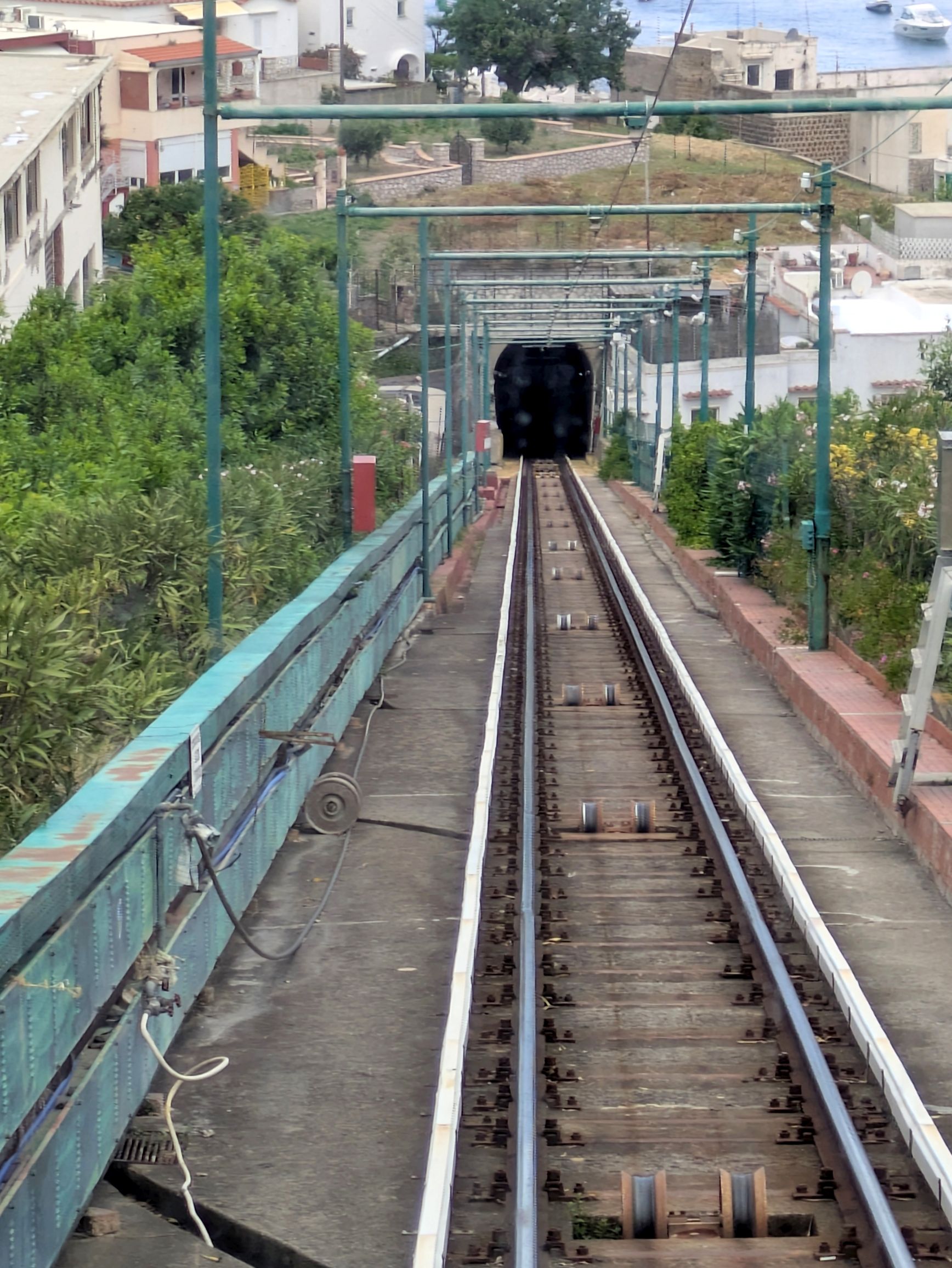
Following our cruise, we opted to hike three quarters of a mile up to the town (elevation 492 feet) rather than take the funicular, a decision I thoroughly enjoyed.  For Bruce, not so much.  It was very steep, there were a lot of stairs, and it was a hell of a workout.  We earned the gelato we enjoyed for lunch!

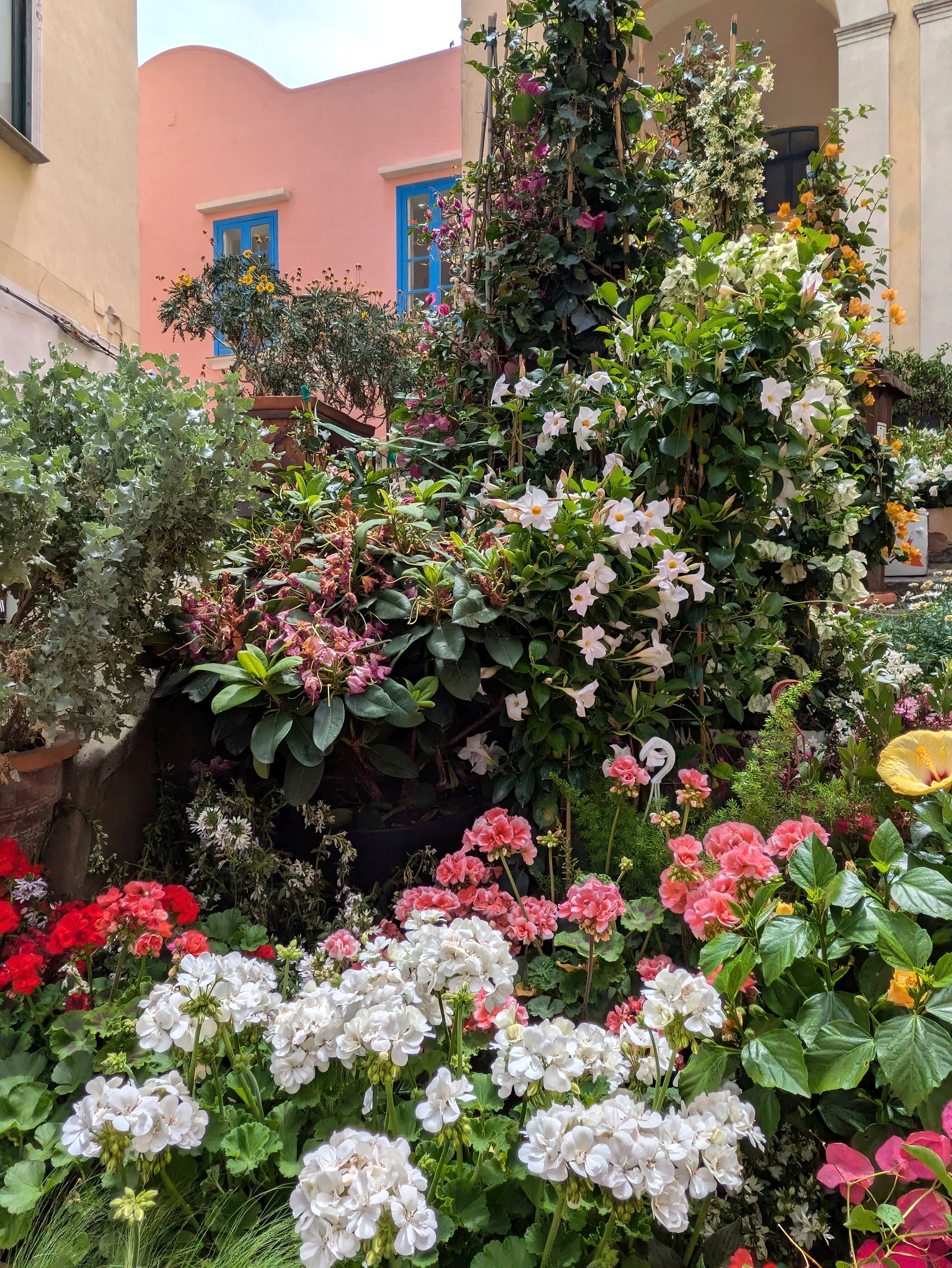
The views throughout the hike were stunning, and I enjoyed seeing the charming homes and gardens along the way.

The outer wall of one of the homes we saw during the hike up to town.

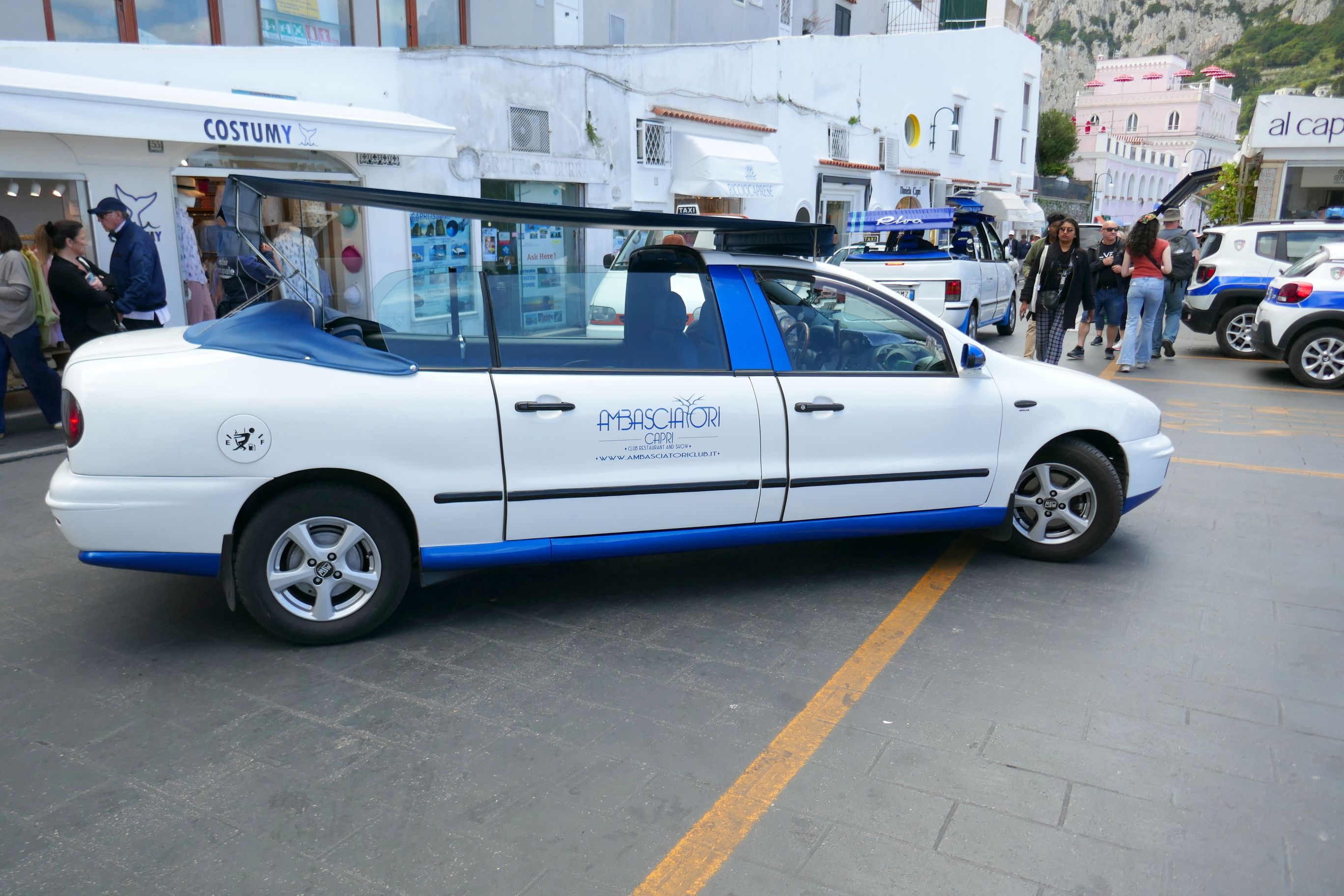
After arriving at the top, the mix of people we saw in town ranged from day trippers like us to very fashionable (and I presume quite wealthy) Europeans who had arrived by private yacht and were transported from the marina to town by these funny-looking, open top taxis:

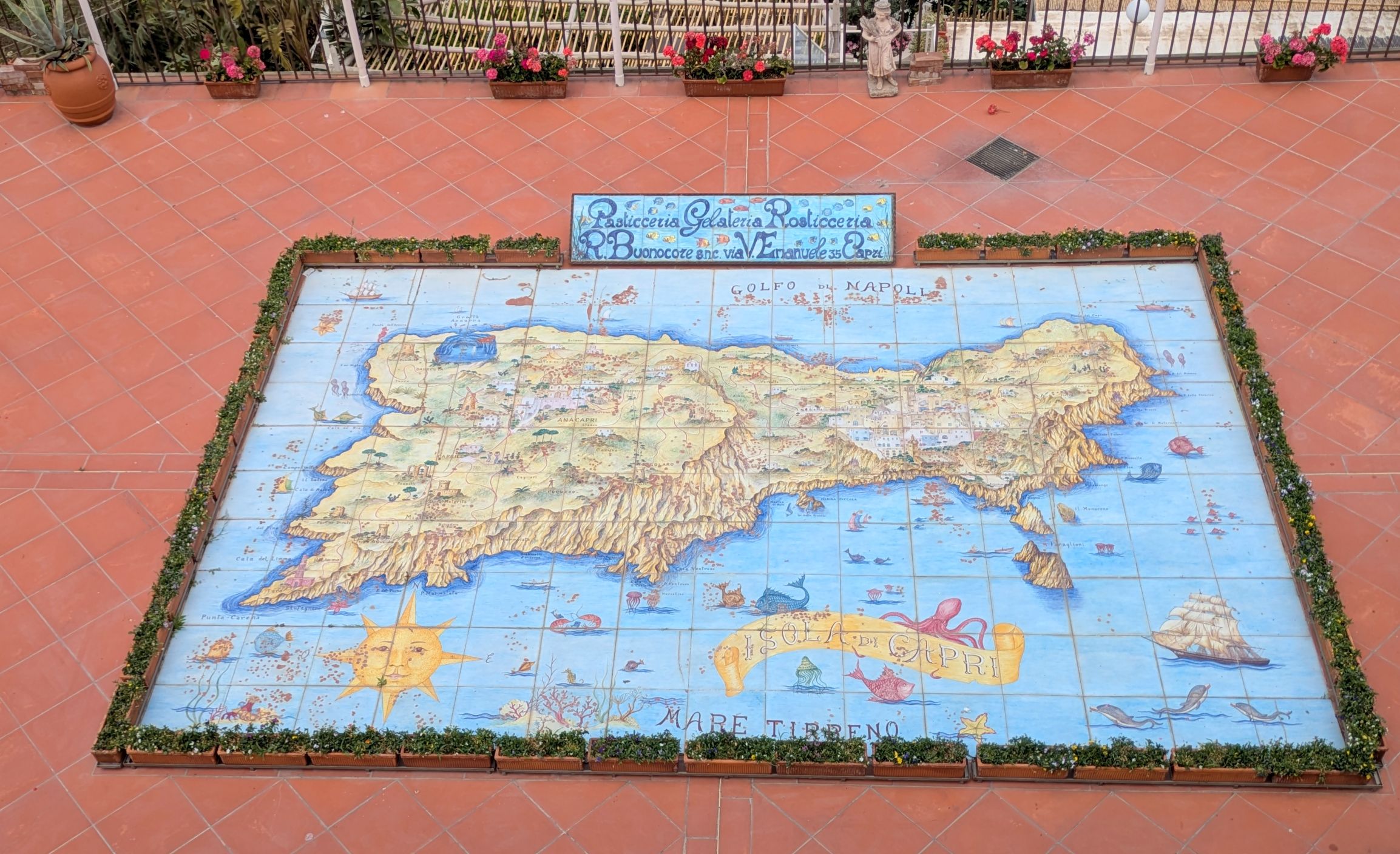
This was the place to people-watch!  While enjoying the spectacular views and checking out the interesting tile map of Capri on a lower-level patio from where we sat savoring our gelato, the crowds passed by providing plenty of entertainment. This place was hopping!

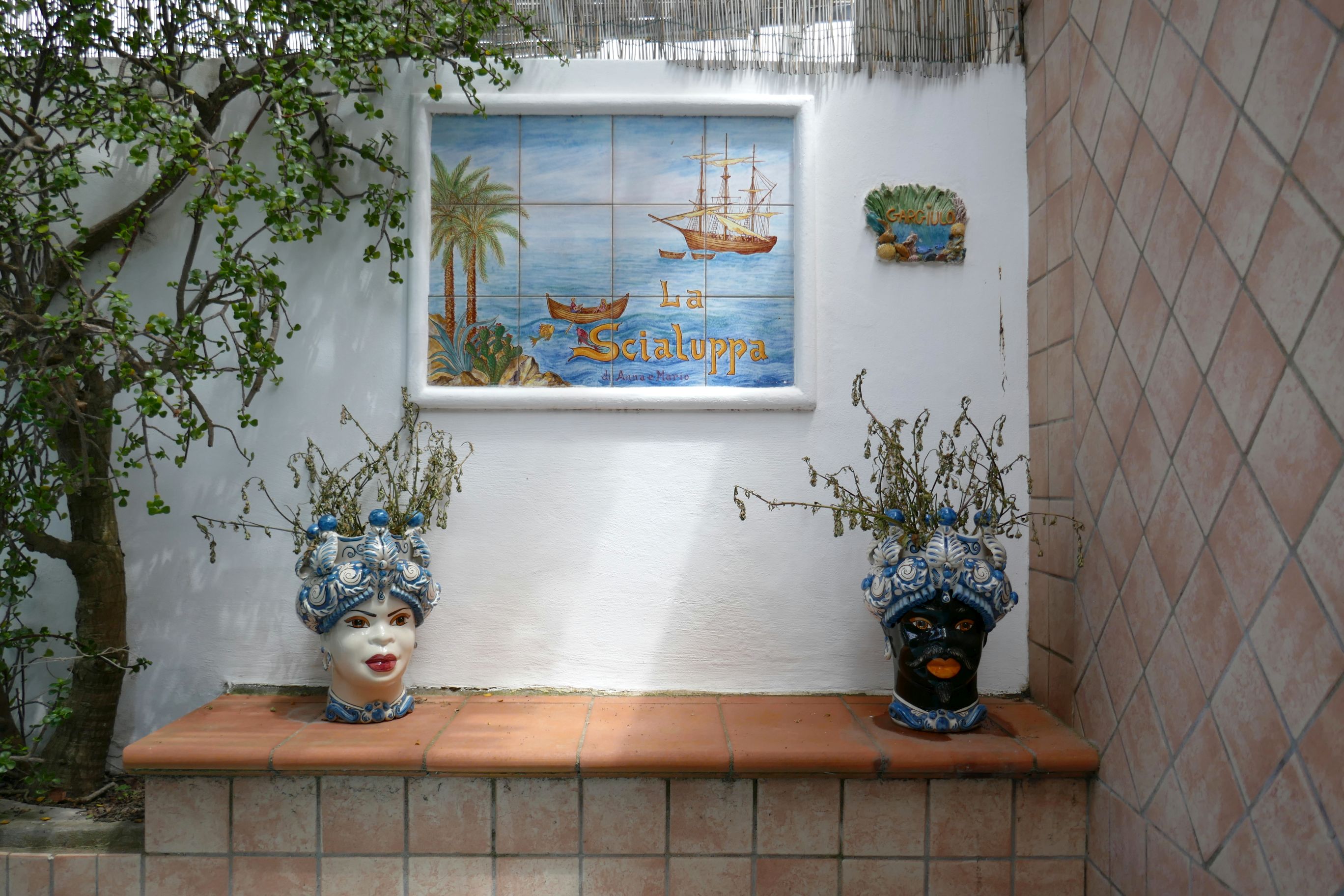
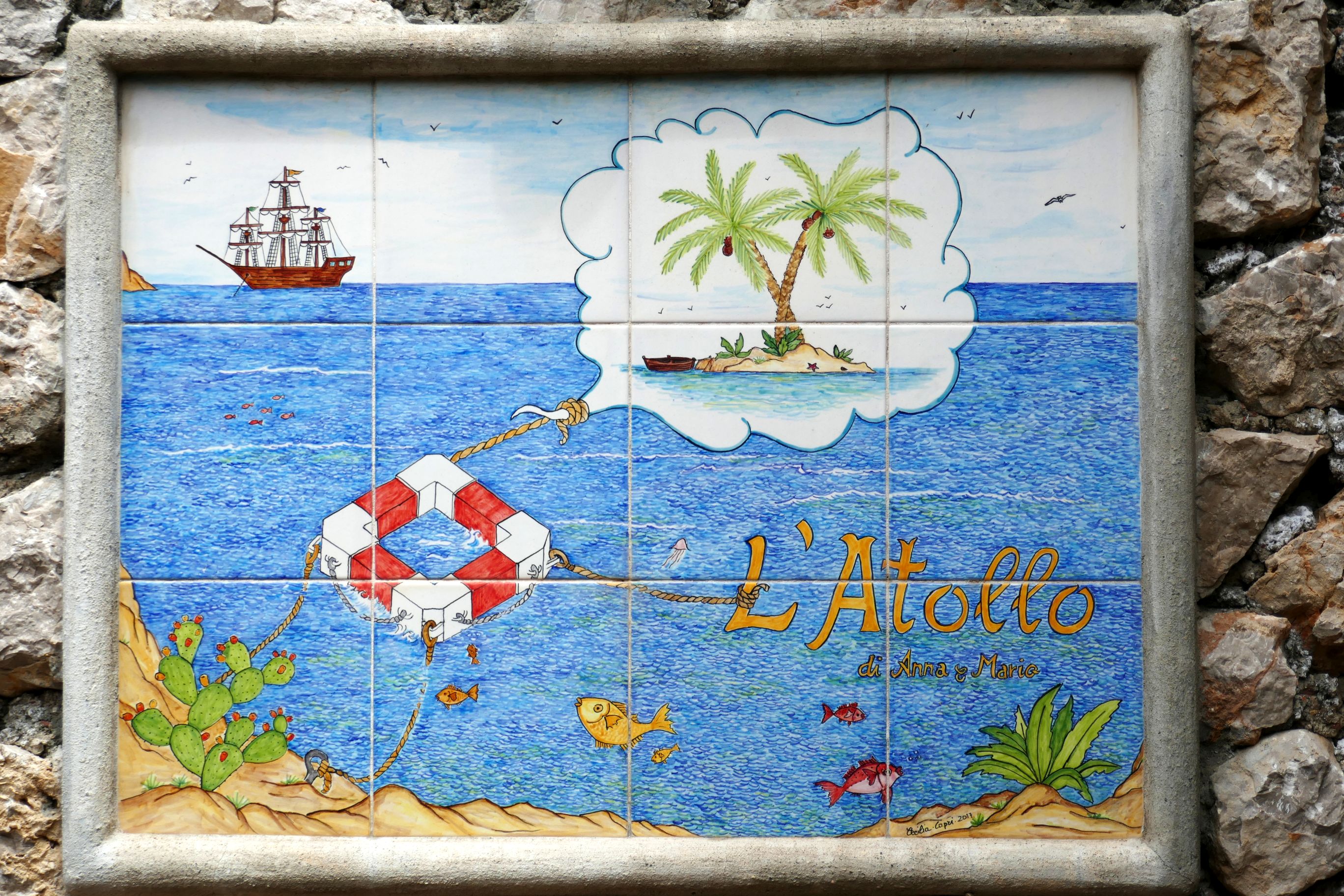
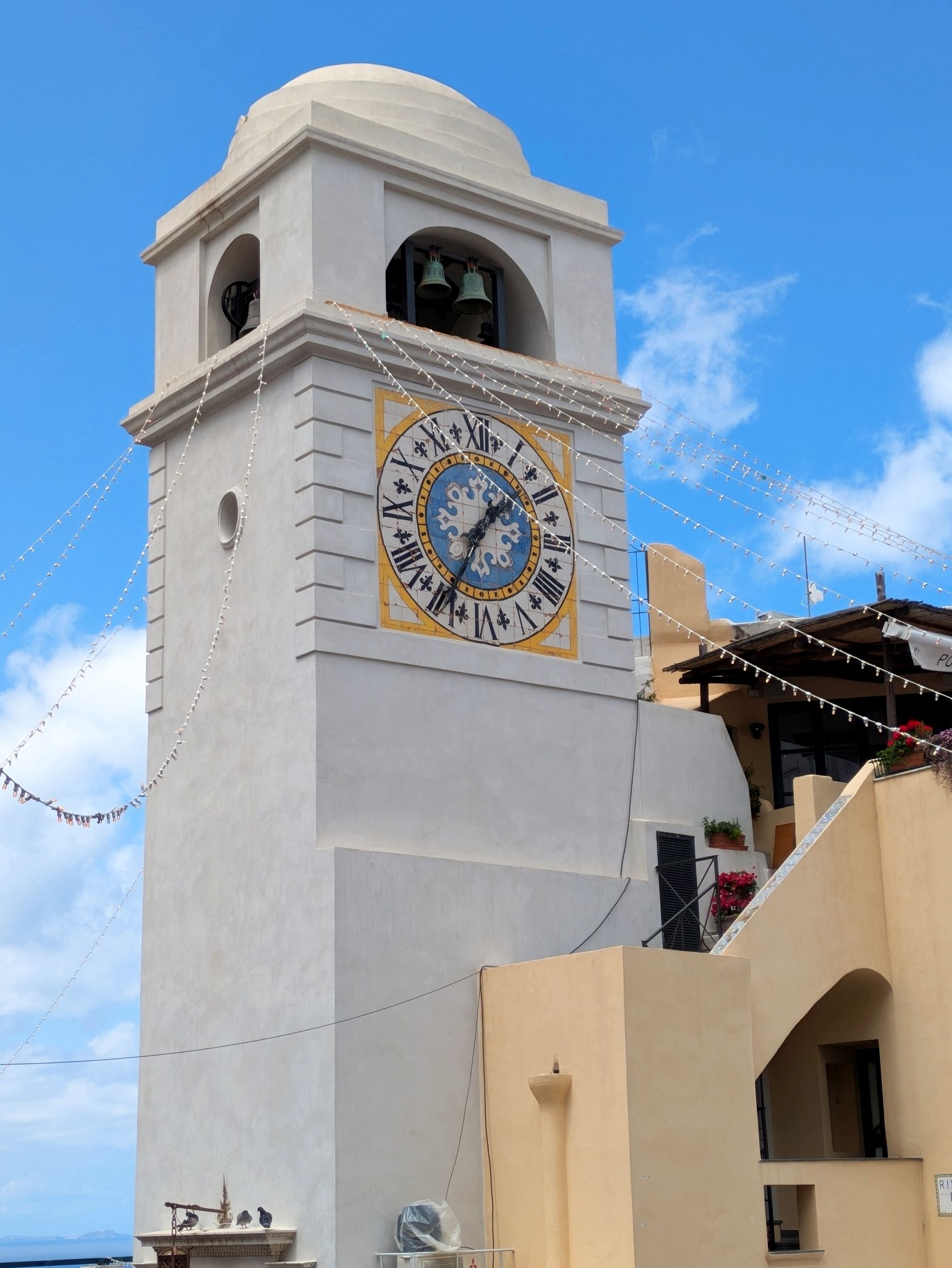
Scenes around town:

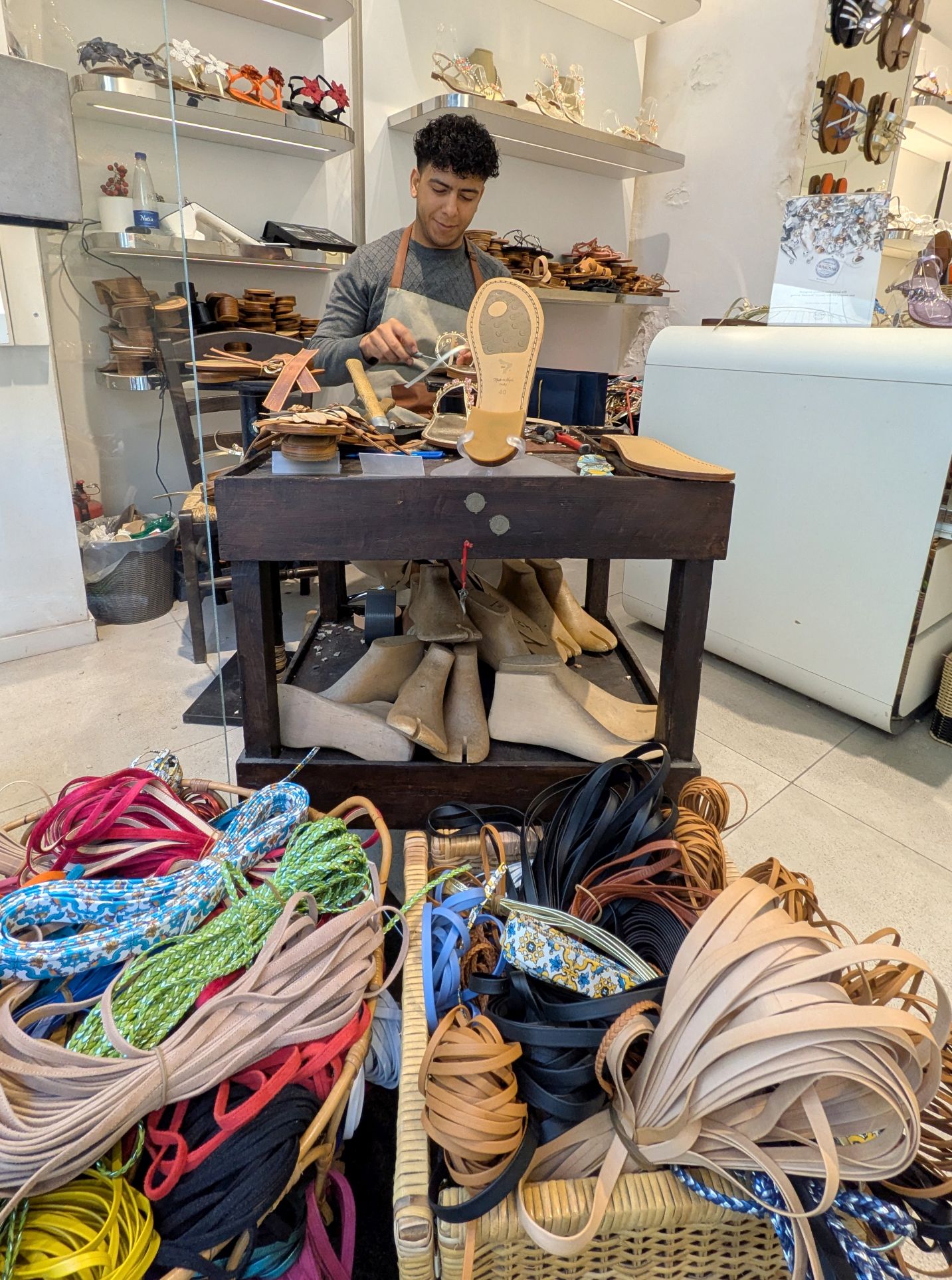
Custom sandal makers are popular in Italy and reasonably priced.
These sandals, on the other hand, were very expensive, I’m sure!
When it was time to return to the marina, we took the funicular.

Scenes around the waterfront and marina:

We were so glad we opted to spend the day seeing Capri! The boat ride back to the mainland was a wet, but fun one. We were greeted with a lovely, serene view upon our return.

Coming up next: SICILY & AMALFI COAST #26: WRAPPING IT UP IN NAPLES

SICILY & AMALFI COAST #25: PERSERVERING THROUGH POMPEII

(For all photos, click on the image for a full screen view.)

Our final morning in Maiori was beautiful!
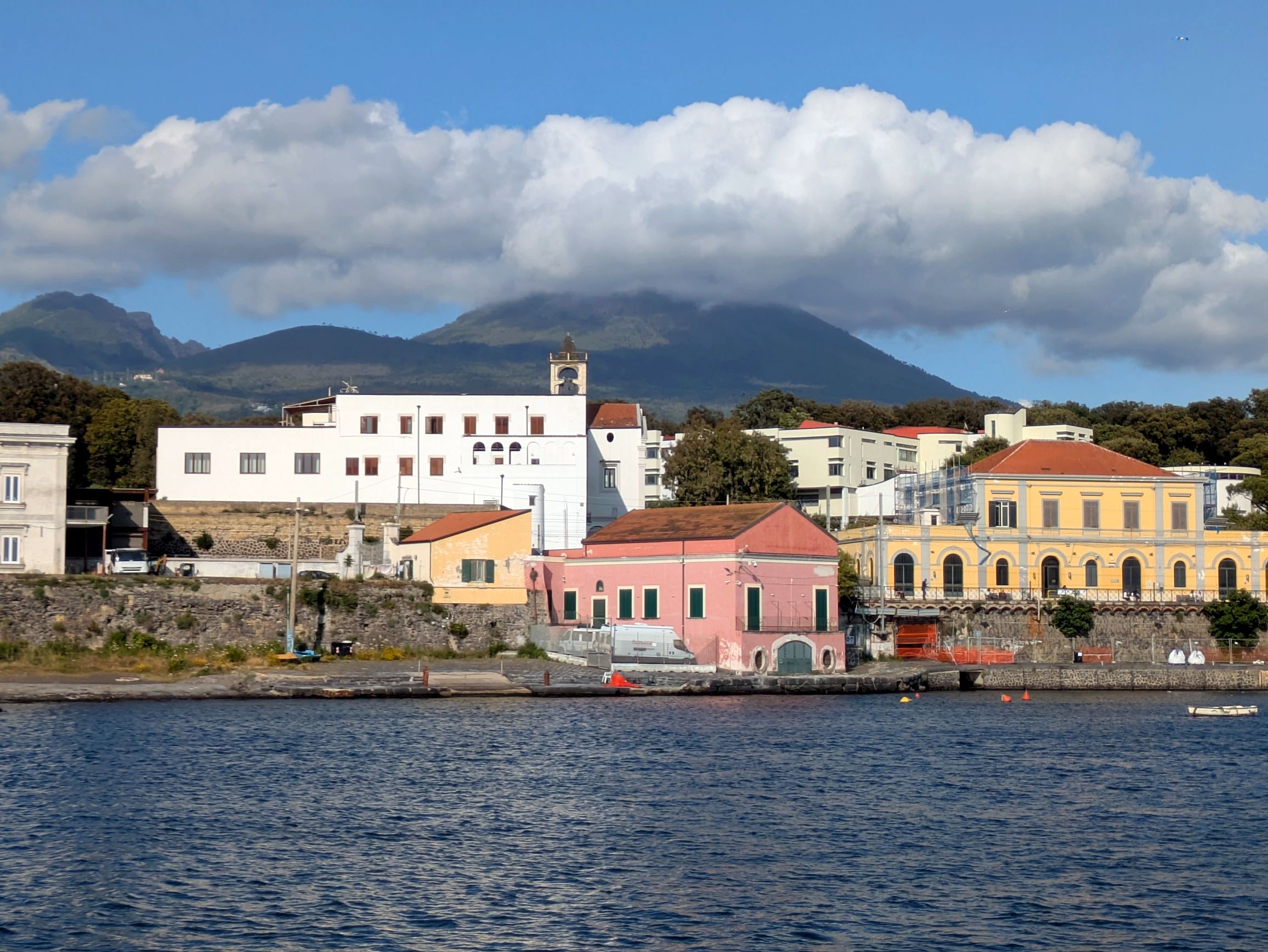
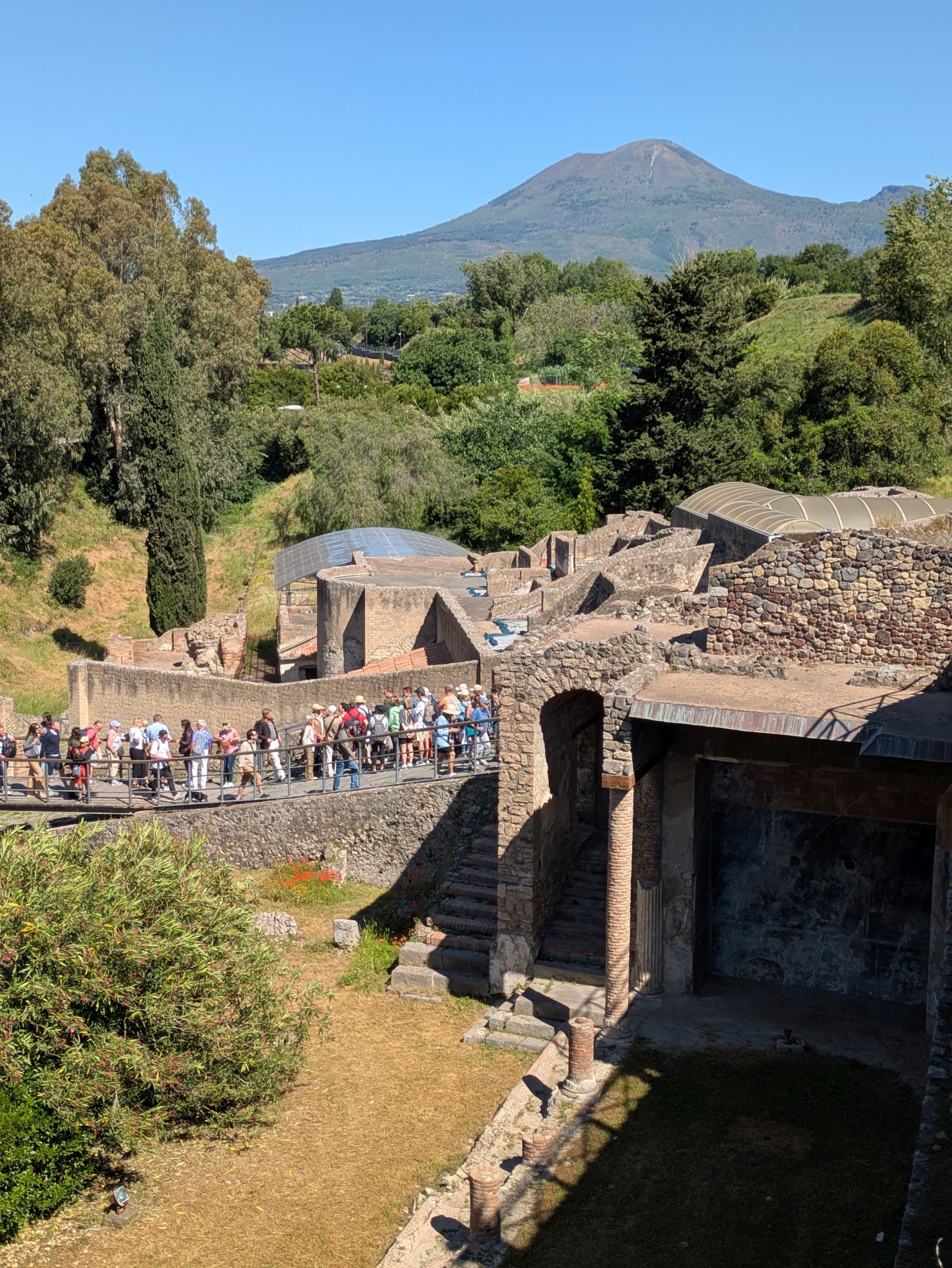
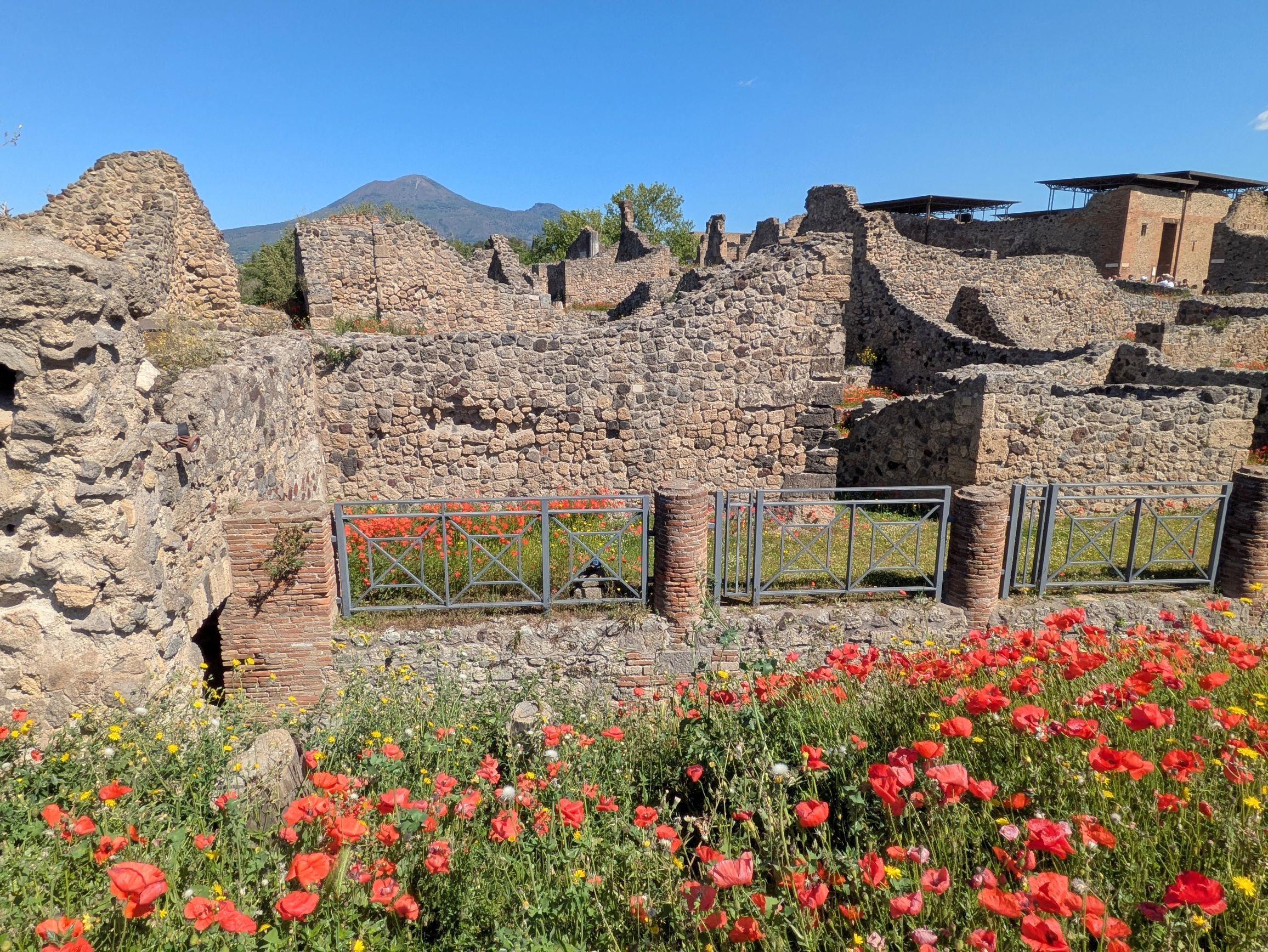
On our way to Pompeii, the views to Mount Vesuvius were gorgeous once again!

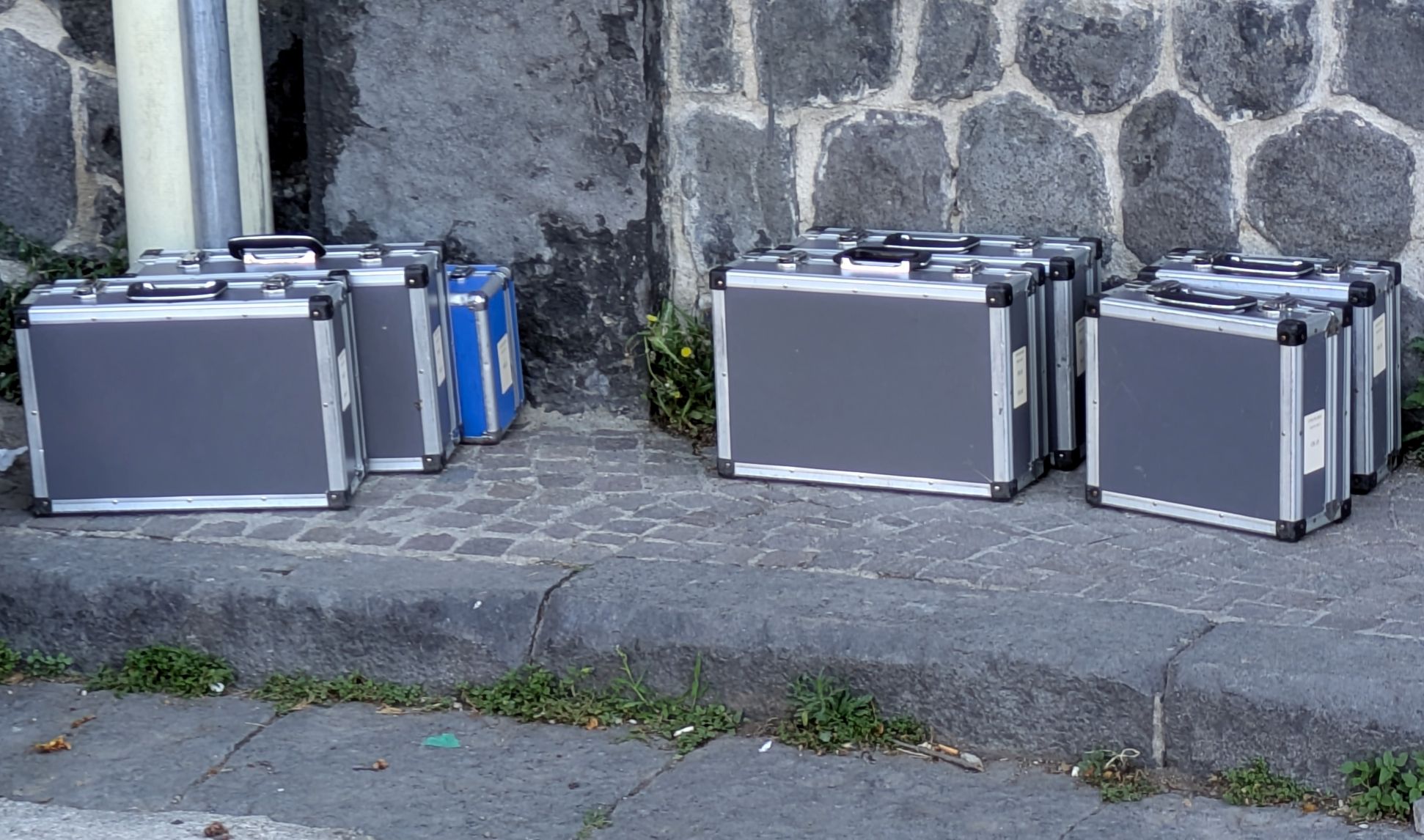
Our fun-loving tour leader, Francesco, normally a joking around kind of guy, was very serious about getting to Pompeii before it opened.  He said even if you have pre-purchased tickets like he had for our group, the lines to get in get very long.  Francesco was not wrong.  We arrived before opening, and it was already very crowded outside the gate.  See those cases in the picture below?  Each one was full of a busload of headsets that the local guides would use with their groups to speak to them while walking through the site.  The empty cases are held there until the group is ready to depart.  Those cases were just the beginning of a collection that would grow throughout the day!

It wasn’t as crowded after we got through the gate, because Pompeii is quite large at about 170 acres, and the tour guides lead their groups to different areas.  But still, there were so many people everywhere, because it is among the most popular tourist attractions in Italy, with approximately 2.5 million visitors annually.

One of the MANY tour groups…

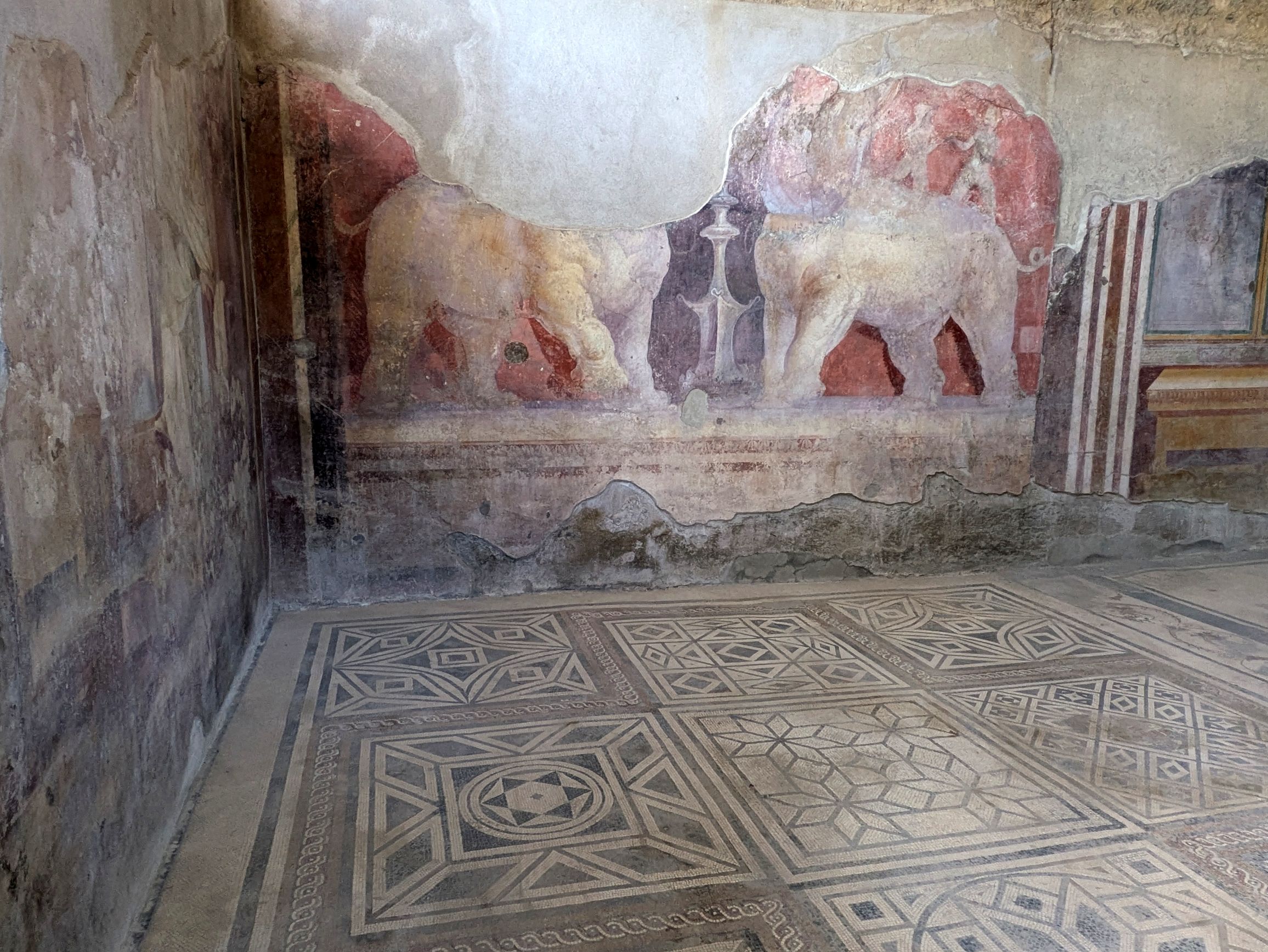
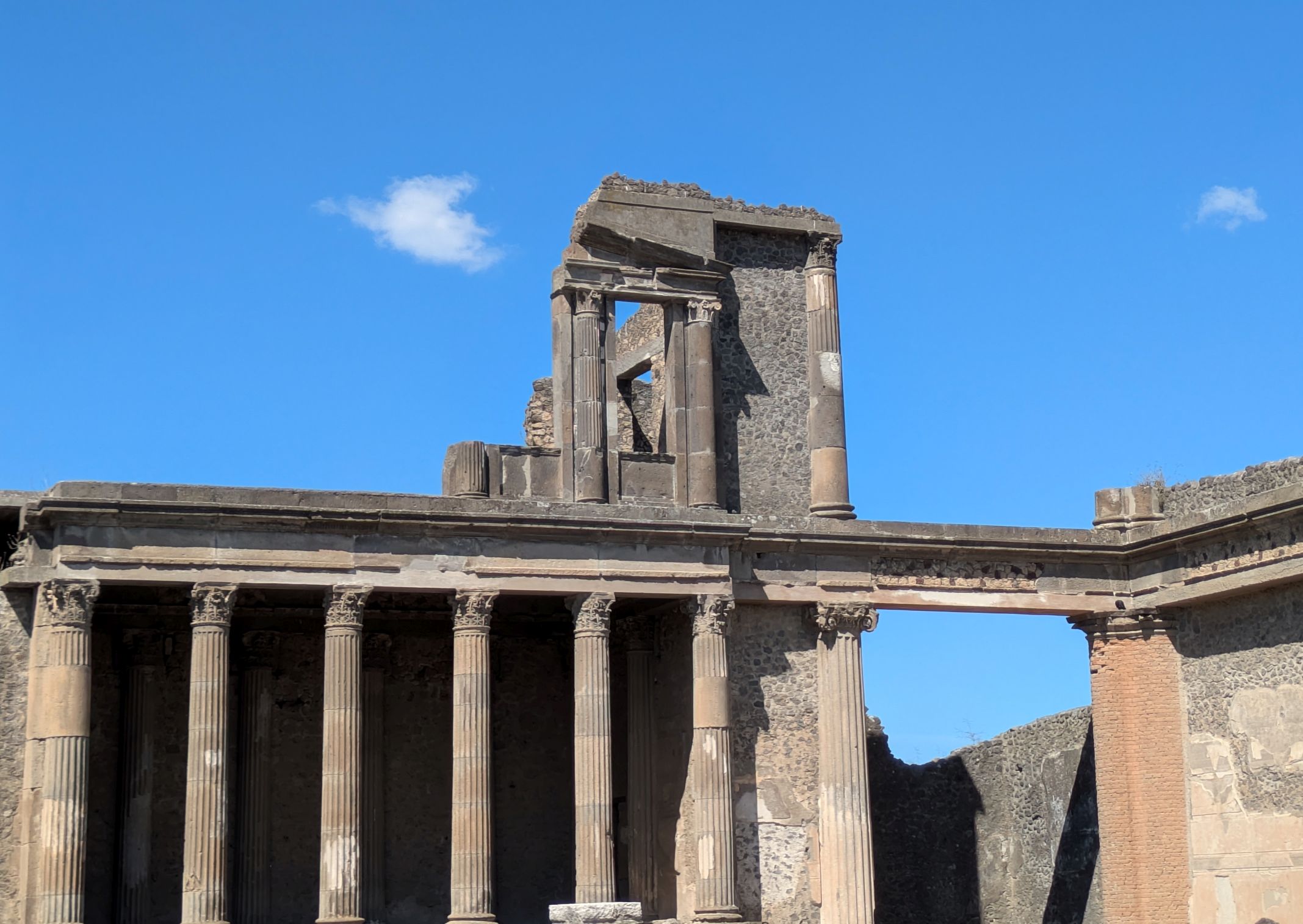
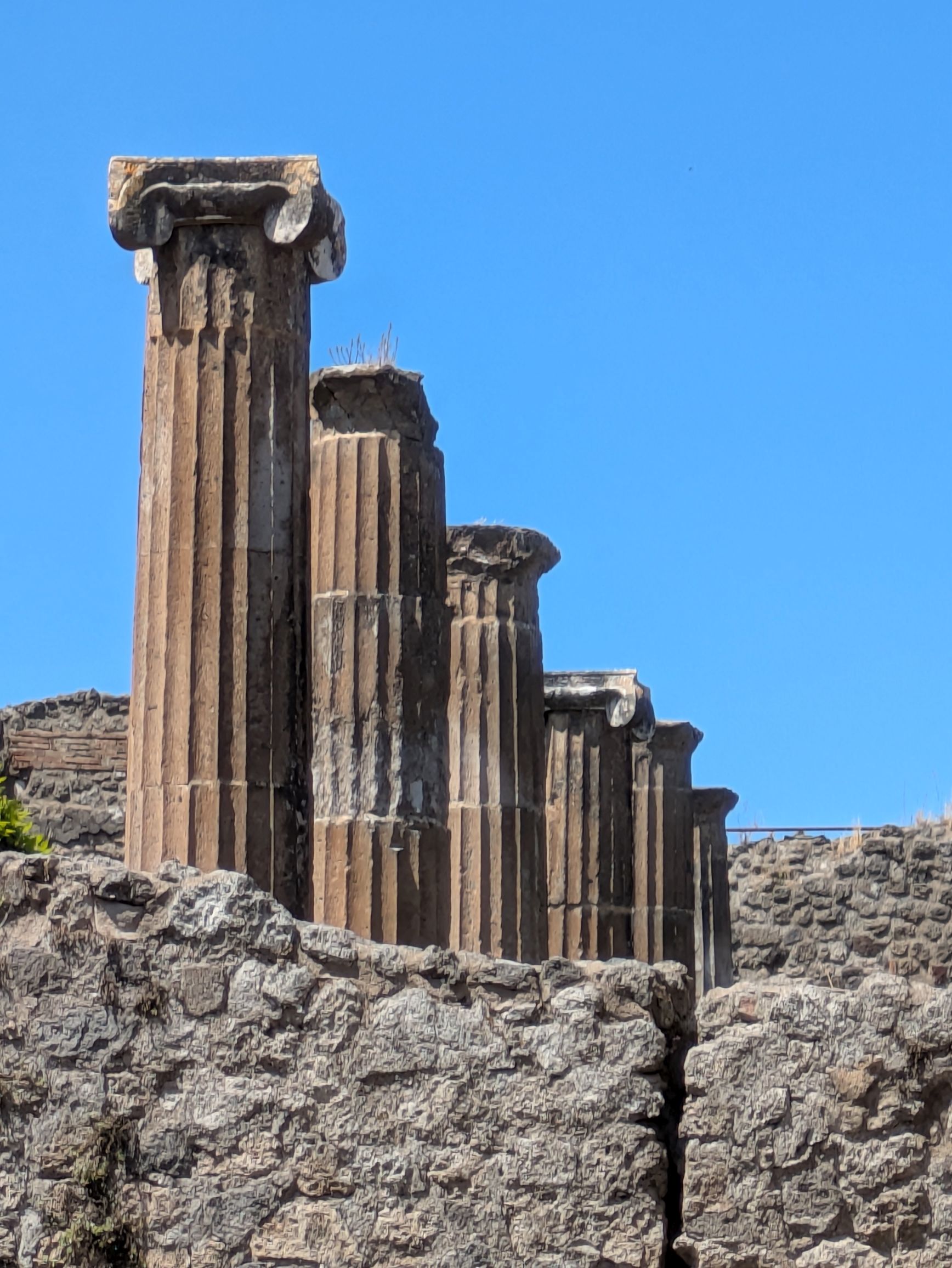
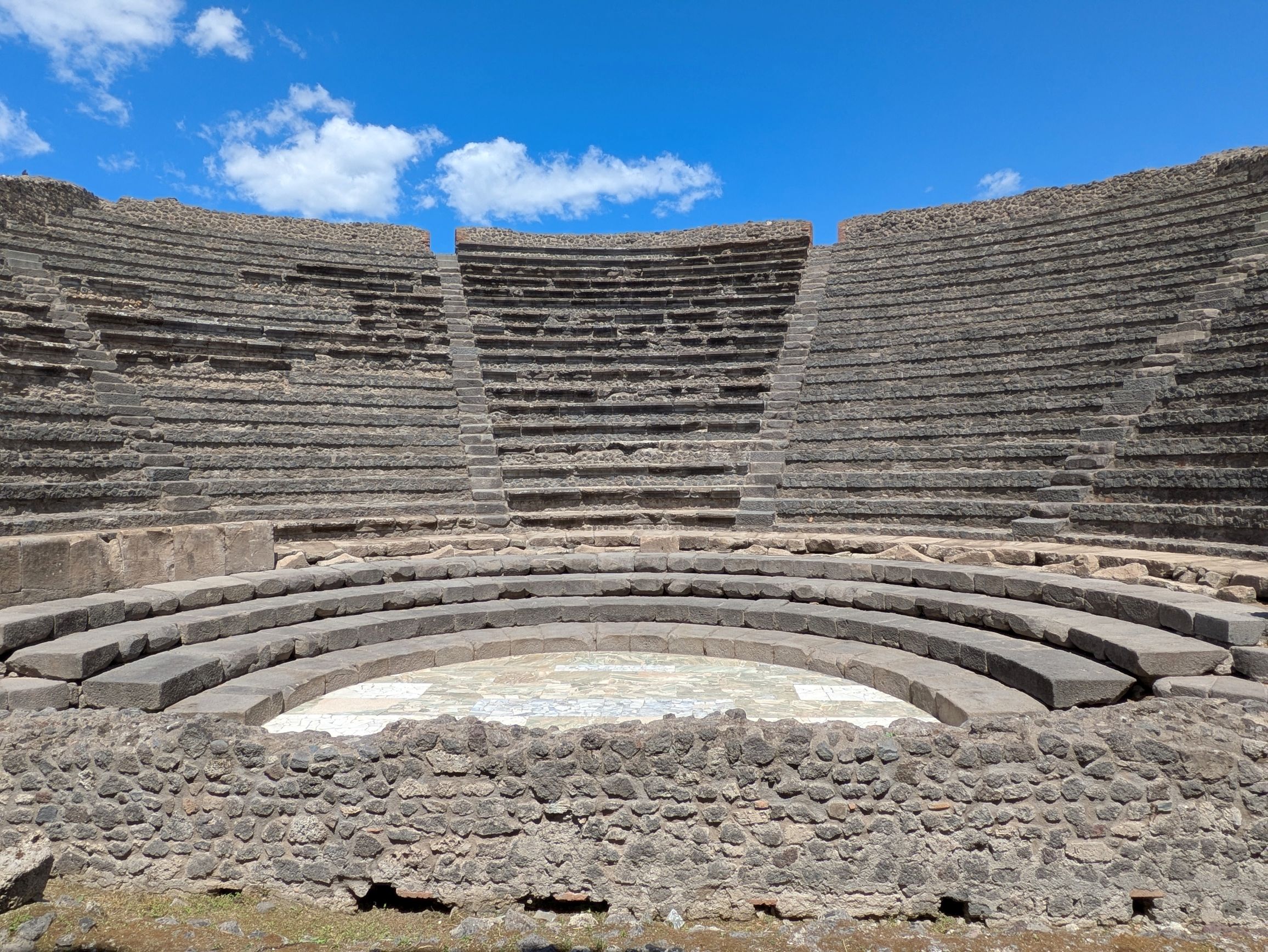
Having said all that, when you visit Italy, Pompeii is a must-see destination.  A UNESCO World Heritage Site, the city was buried in six meters of volcanic ash by the eruption of Mount Vesuvius in 79 AD.  Toxic gas and ash penetrated the entire town, killing what was estimated to be about 11,000 residents.   

It wasn’t until the 17th century that Pompeii was re-discovered.  And what a discovery it must have been!  The city and its treasures were well preserved, offering a unique snapshot of what Roman life was at the time.  It is the only archaeological site in the world that provides a complete picture of an ancient Roman City.

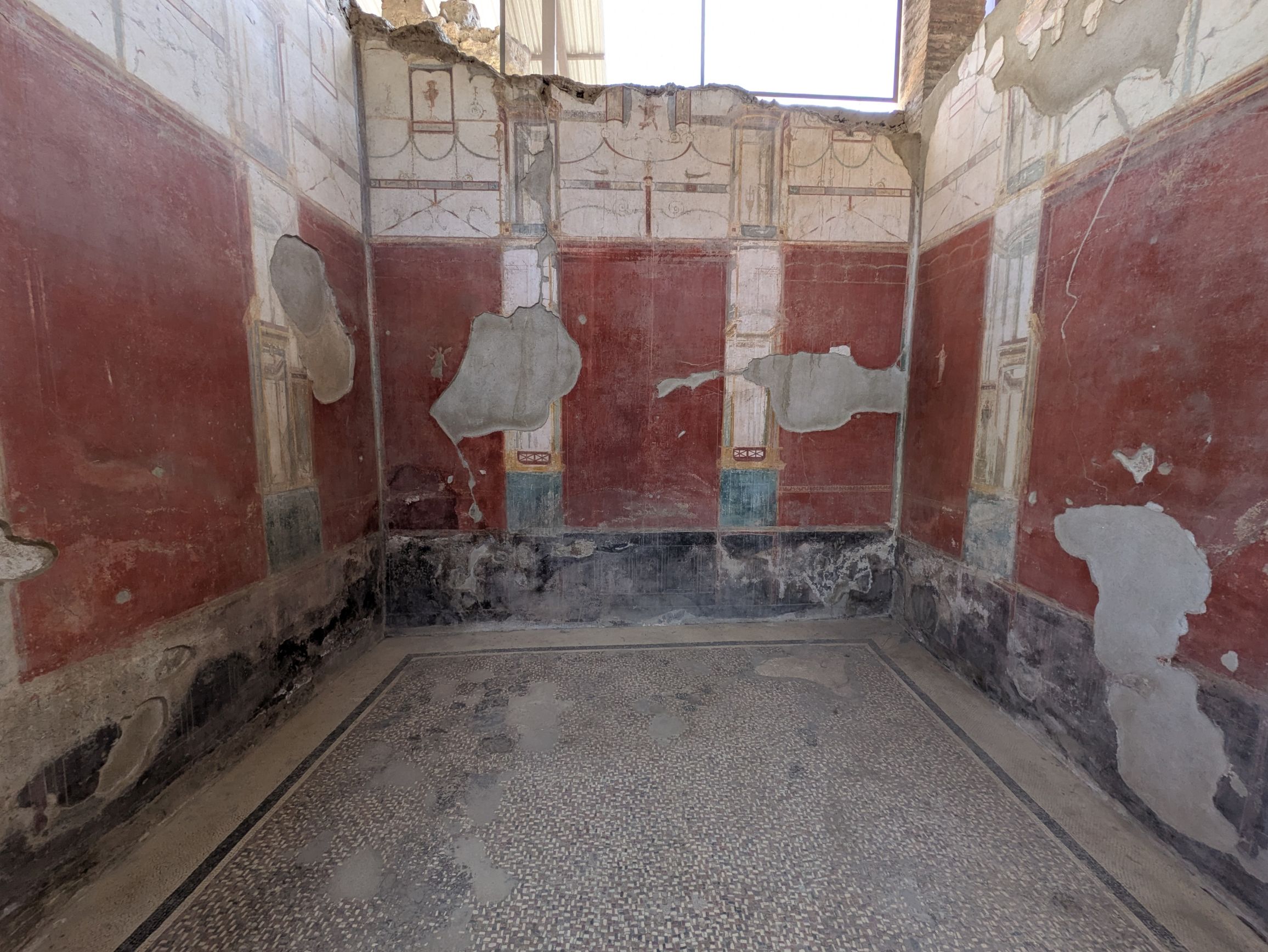
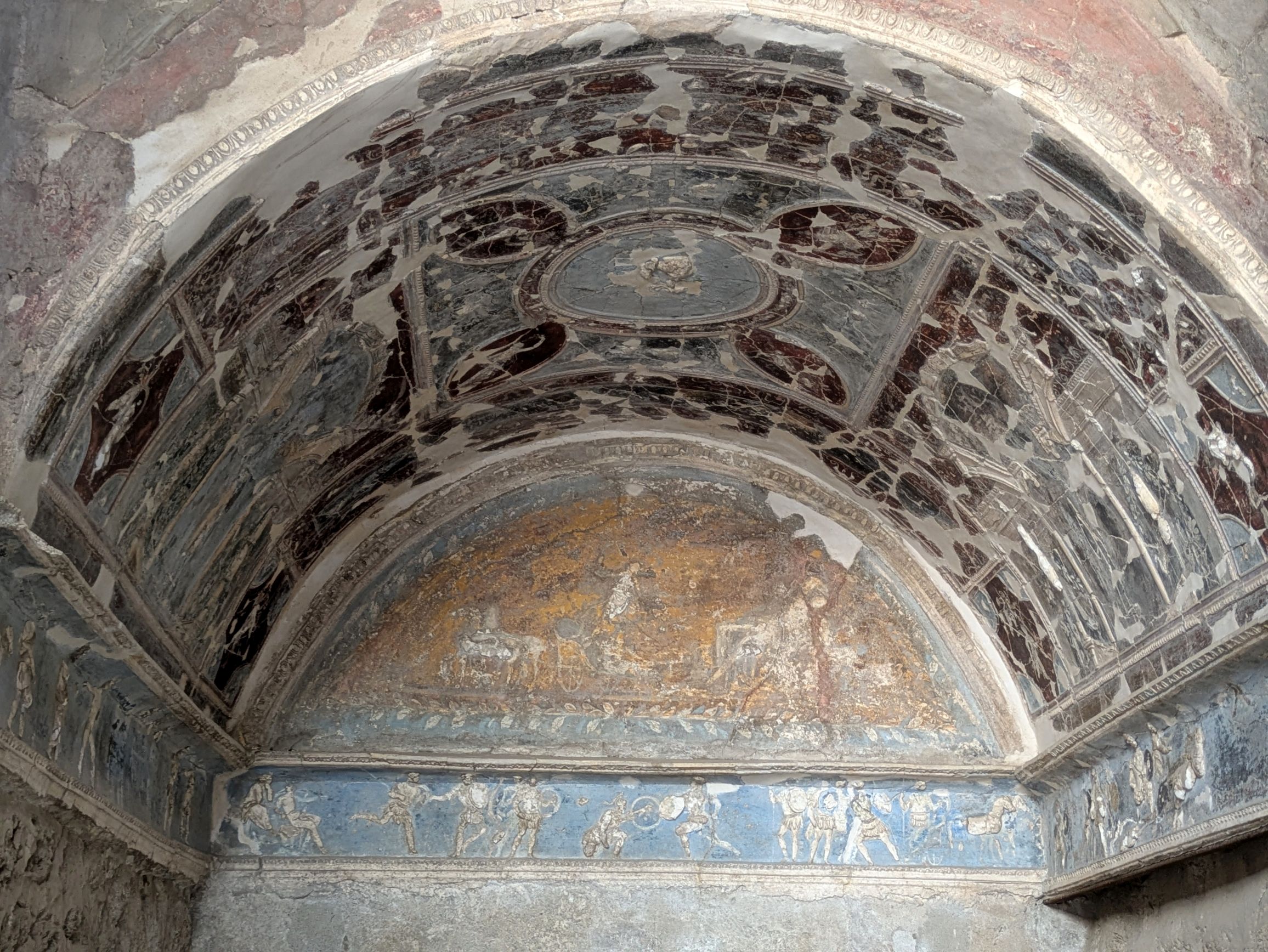
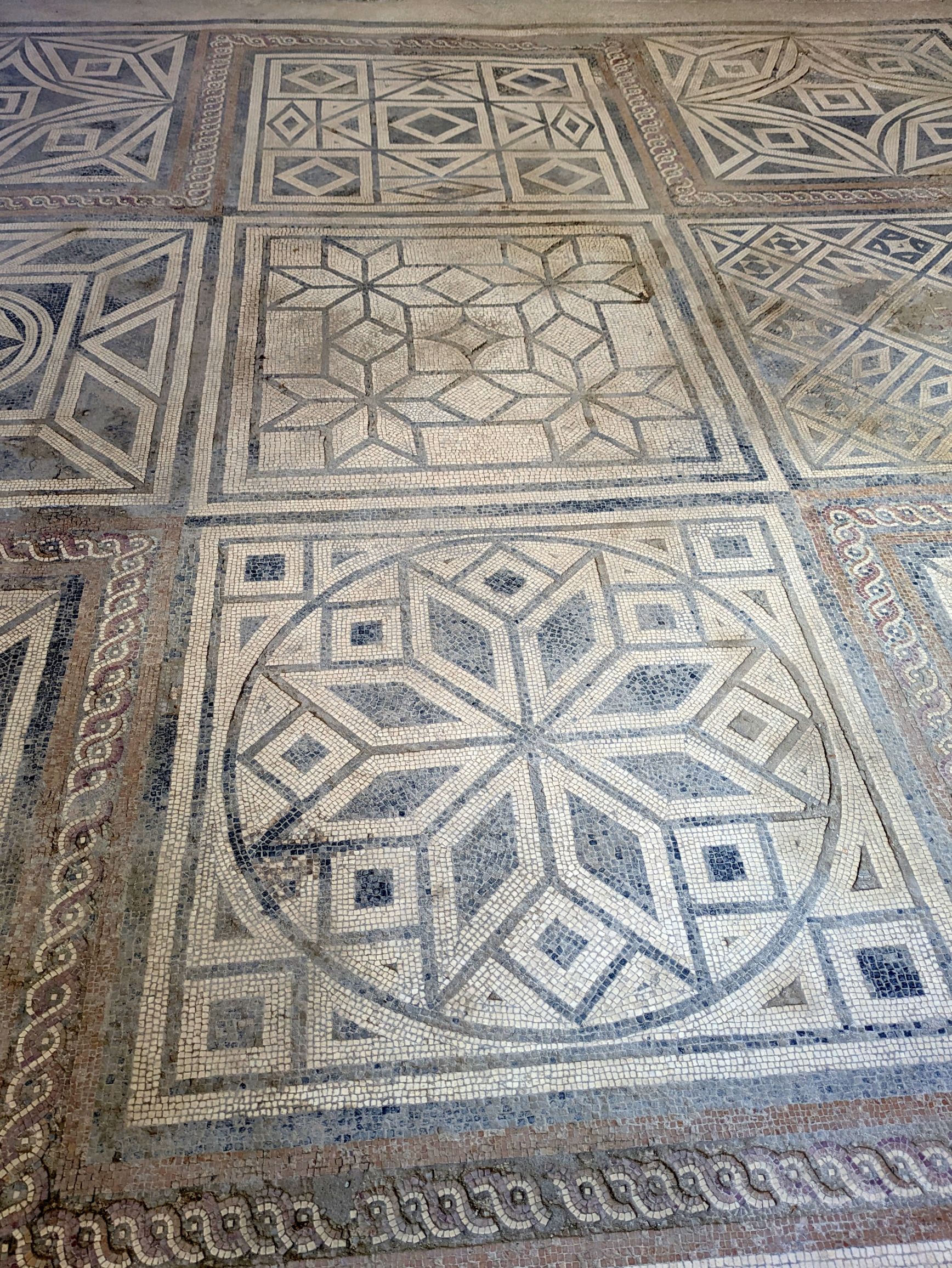
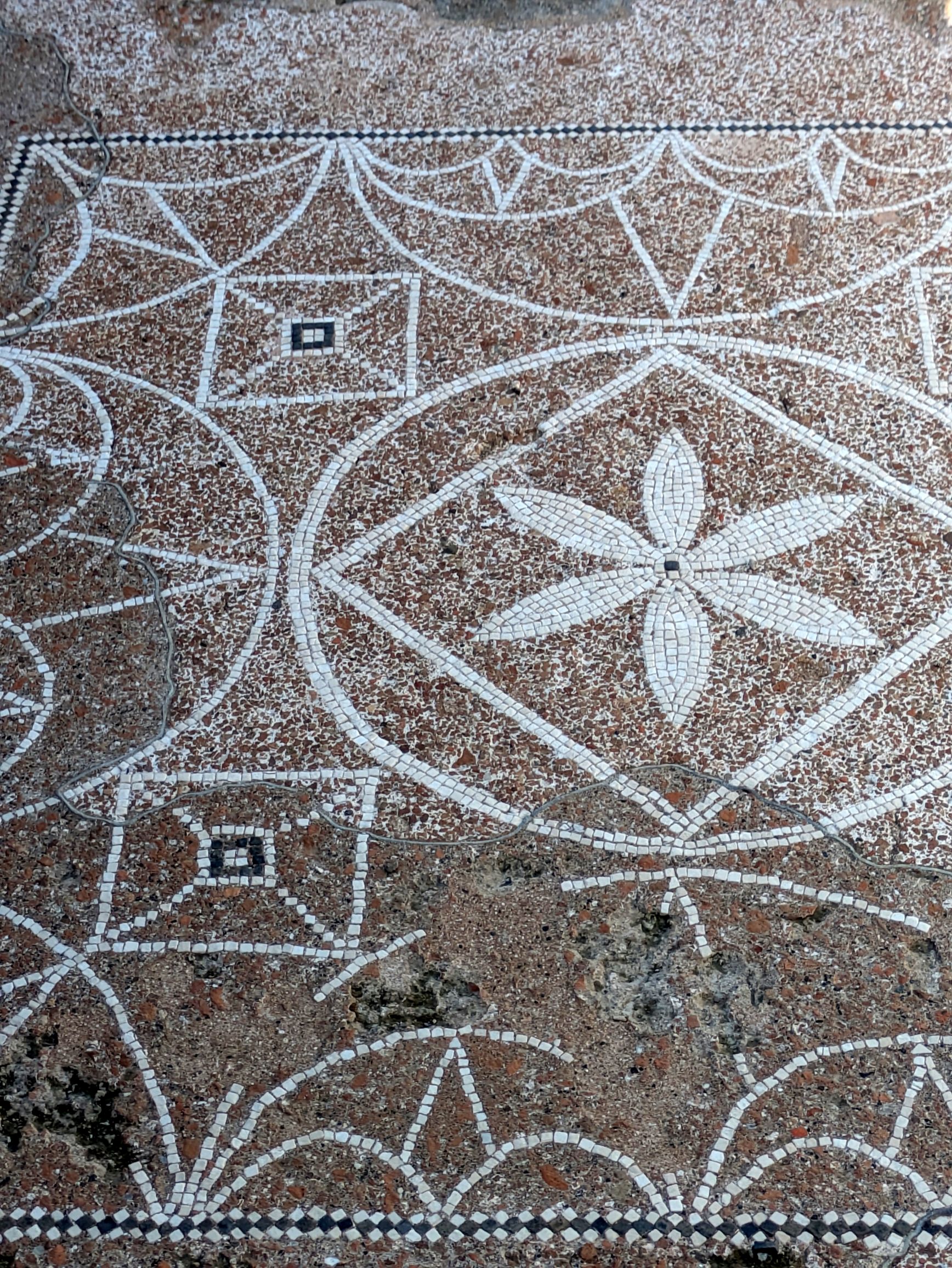
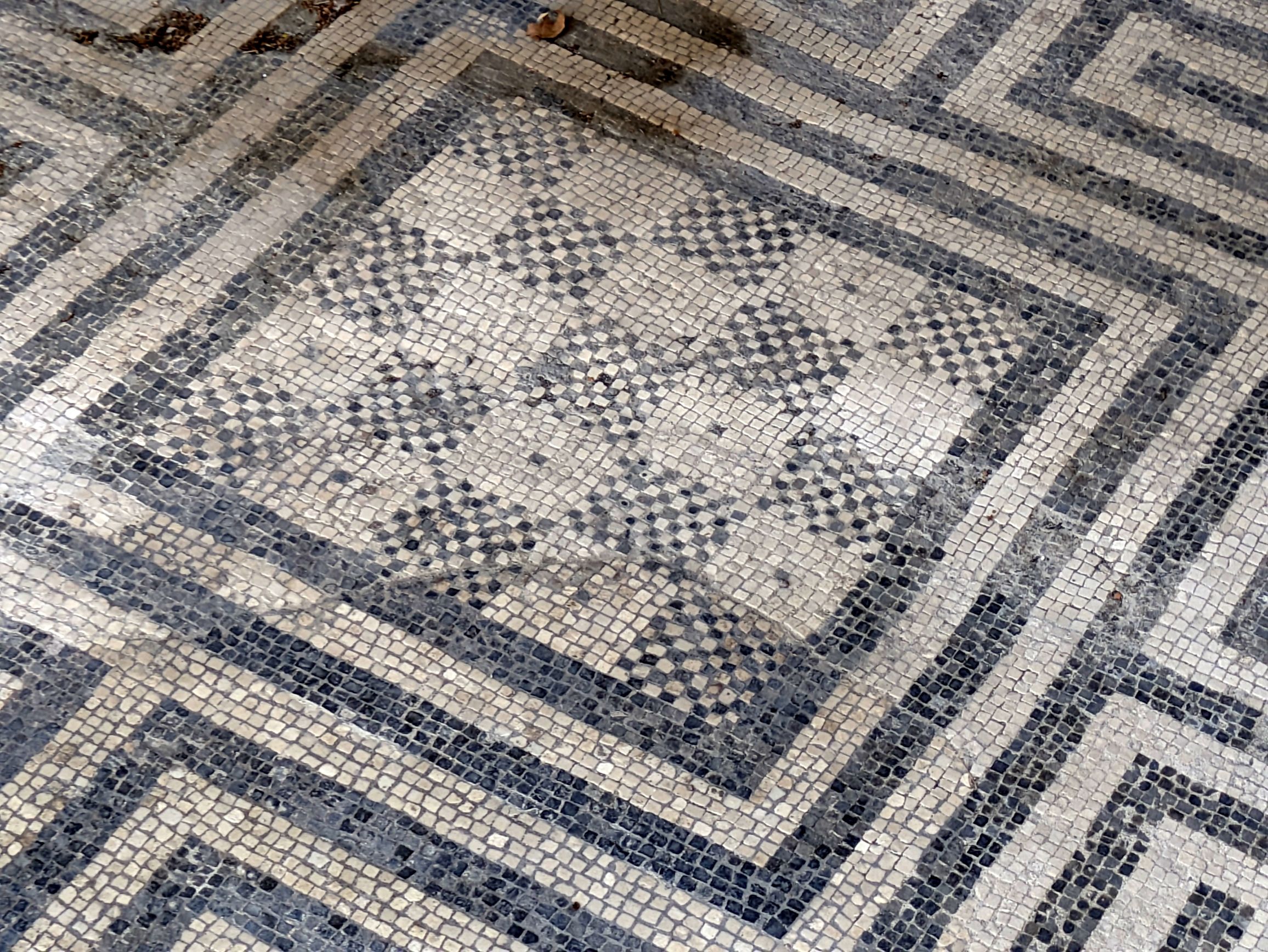
Pompeii was a wealthy town of beautiful public buildings and luxurious private houses decorated with fine artwork and furnishings.  Can you imagine what it must have been like to discover these treasures during excavation?

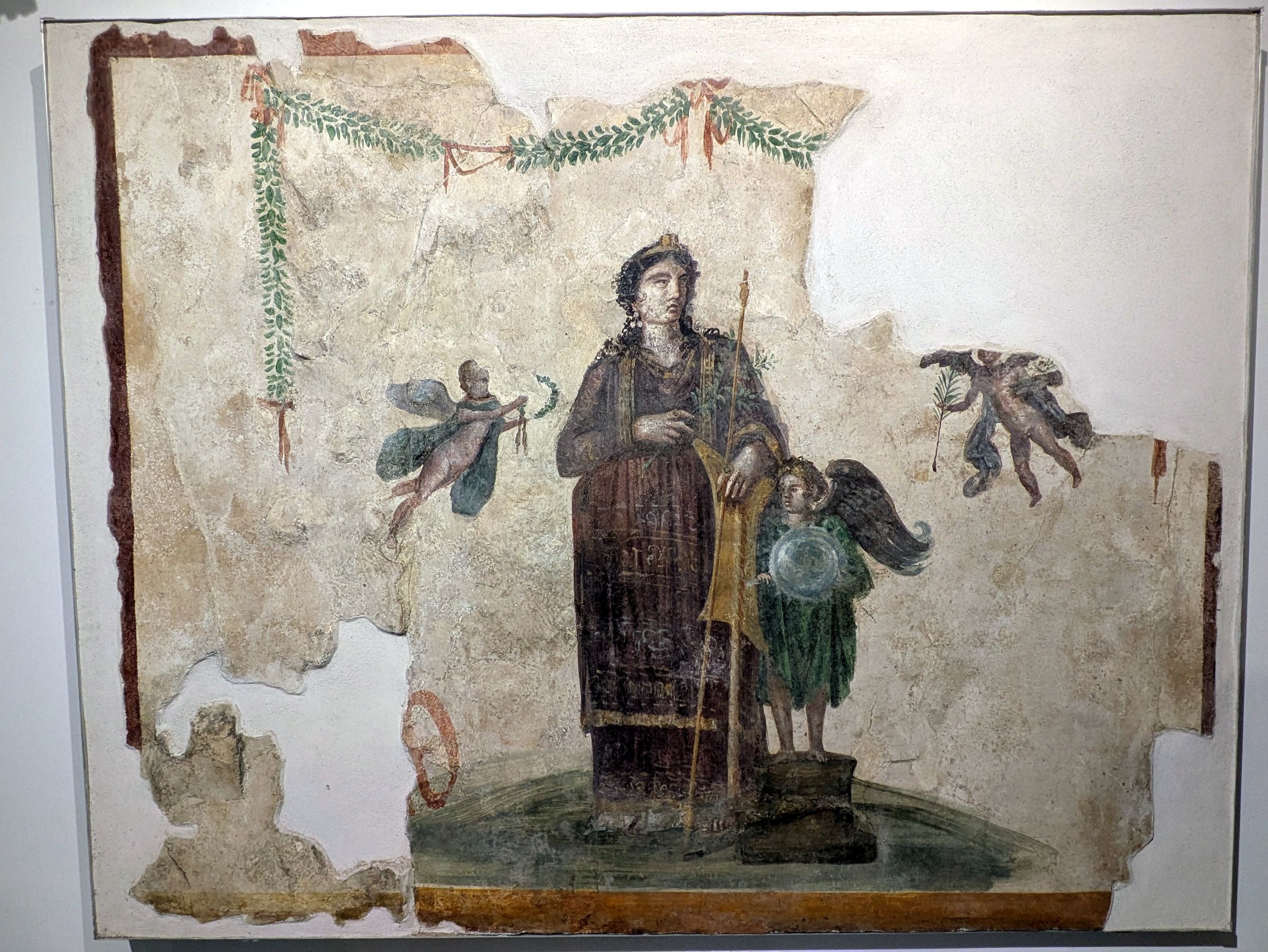
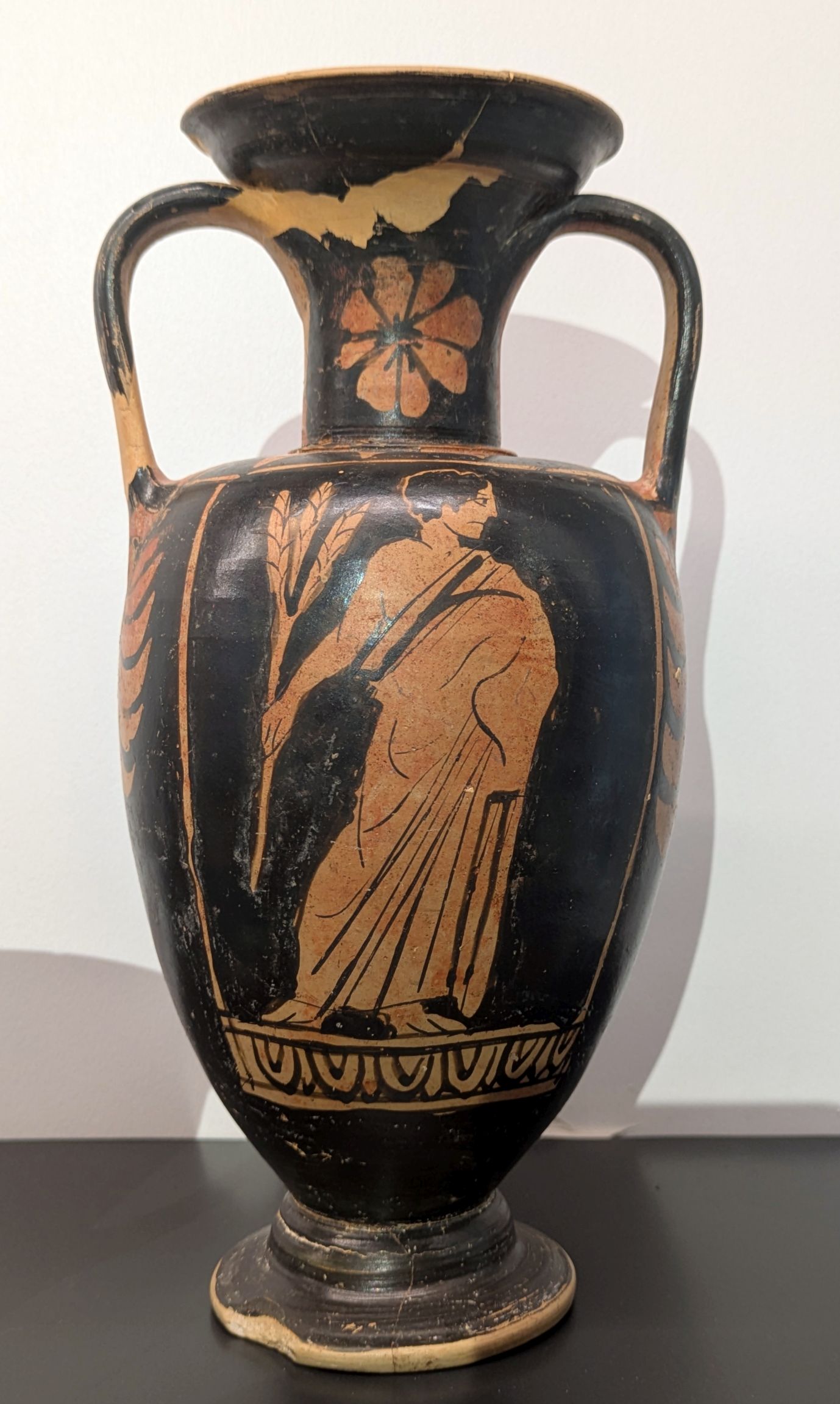
During our tour of the museum, we got to see some of these beautiful treasures:

Venus Pompeiana with Cupid, 1st Century Fresco
4th Century BC
This ceramic vessel from the 1st Century contains pigments used to decorate walls.

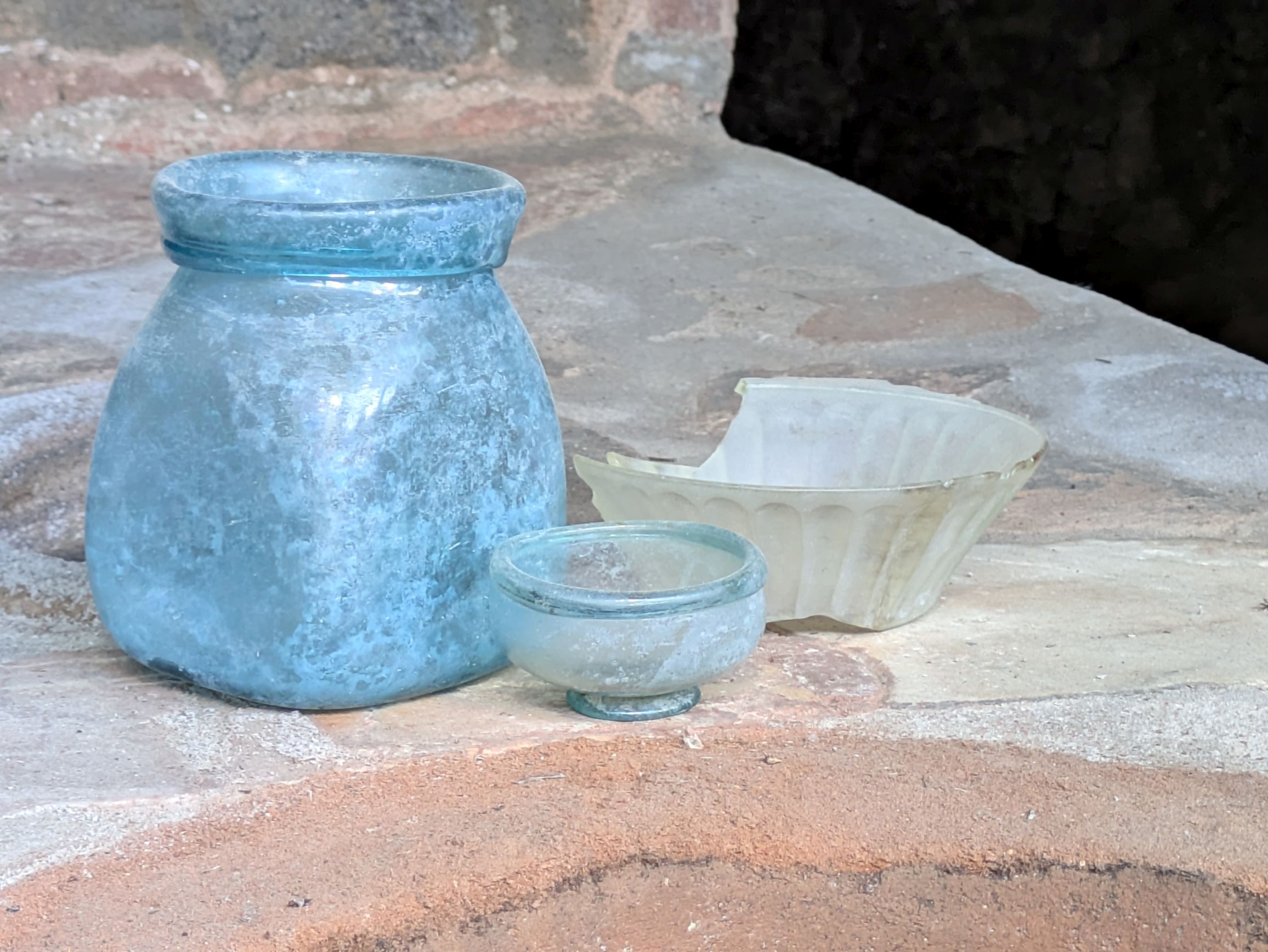
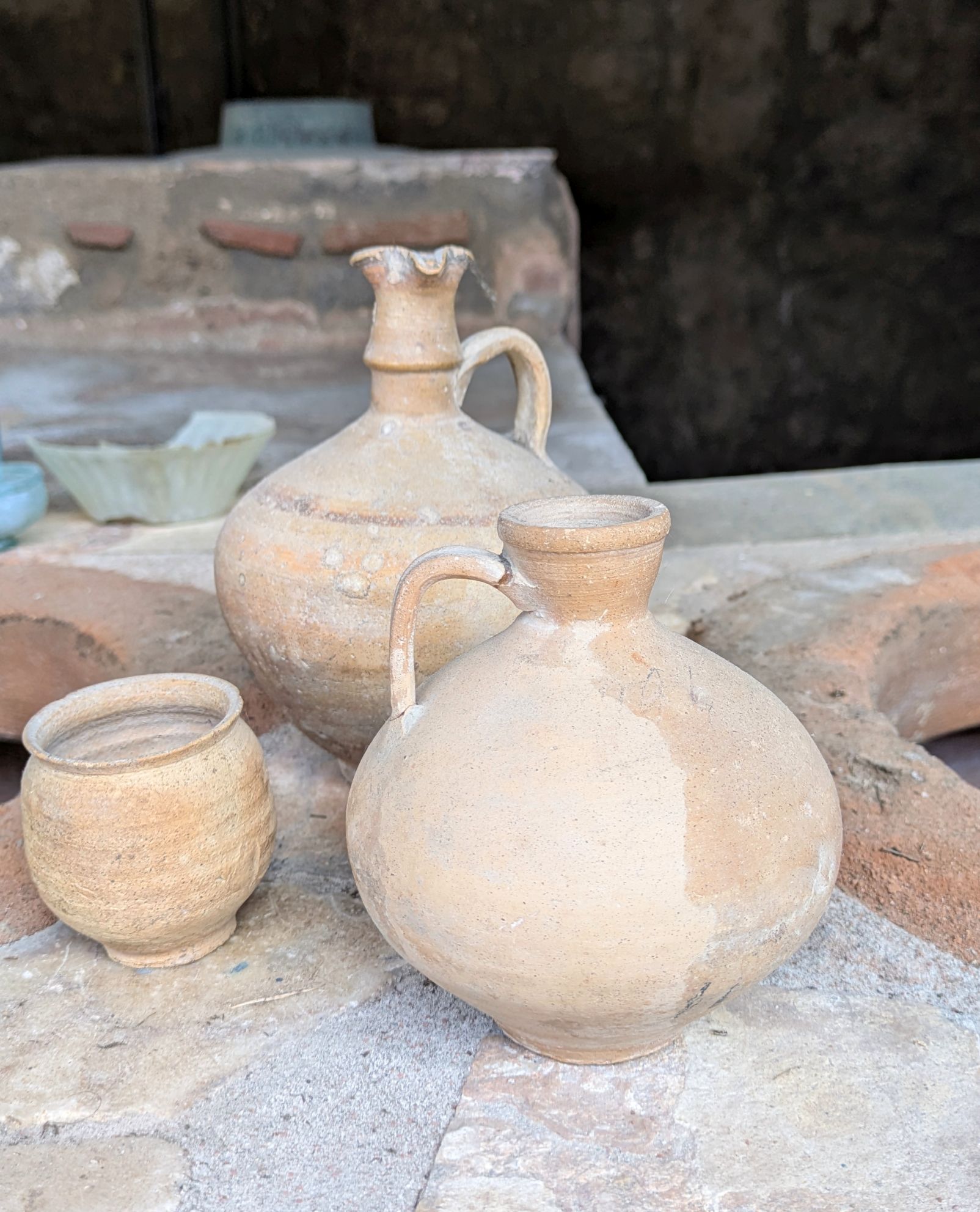
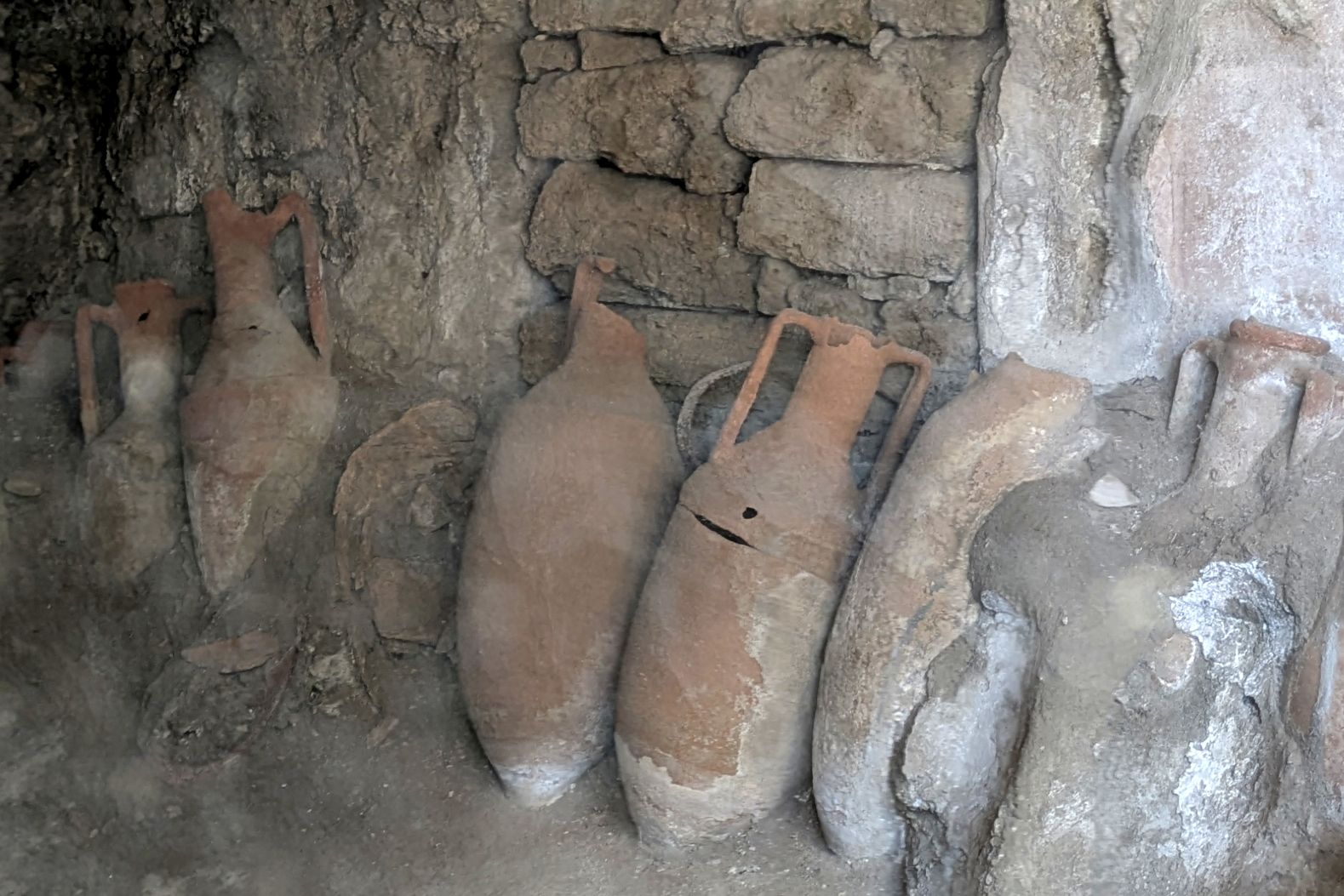
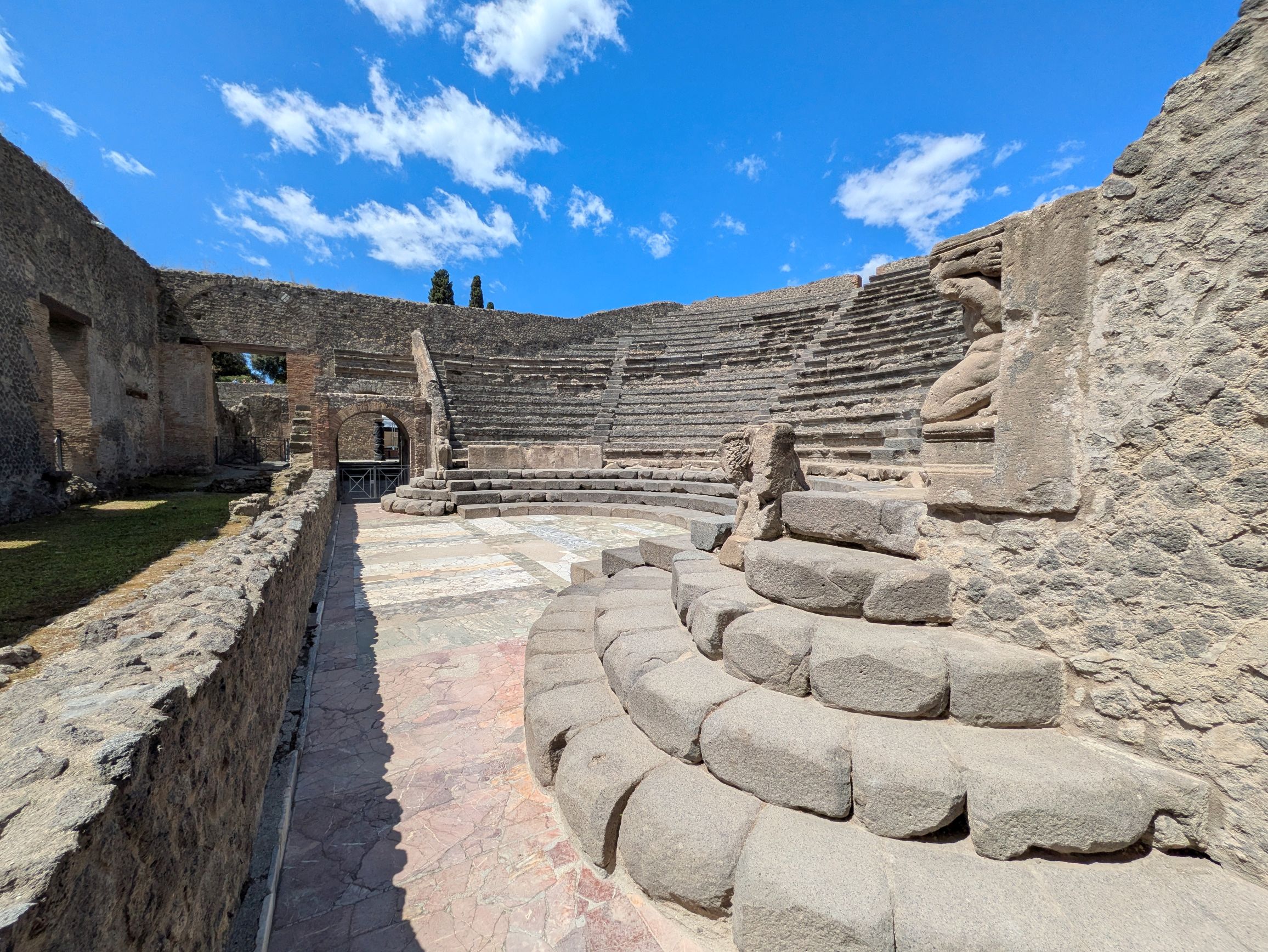
What we found interesting, however, were the remains of the shops and workshops we saw where pottery and glass serving pieces were made.  There were also bakeries, wool processing workshops, snack bars, an amphitheater, and more.

This was a tavern and these terracotta vessels contained the cooked food and drinks that were sold to customers. During excavation, utensils used for serving the food and drinks were found.

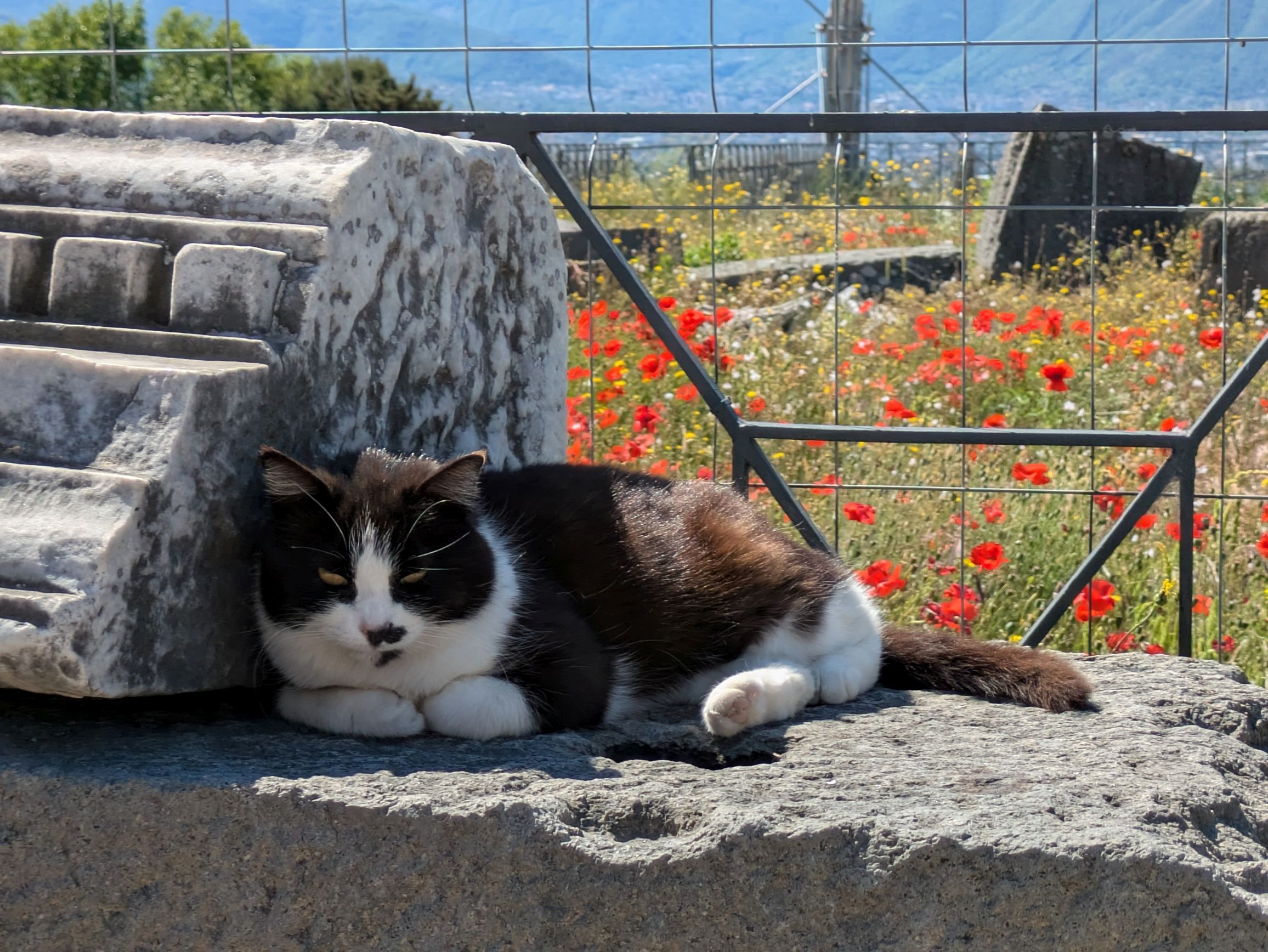
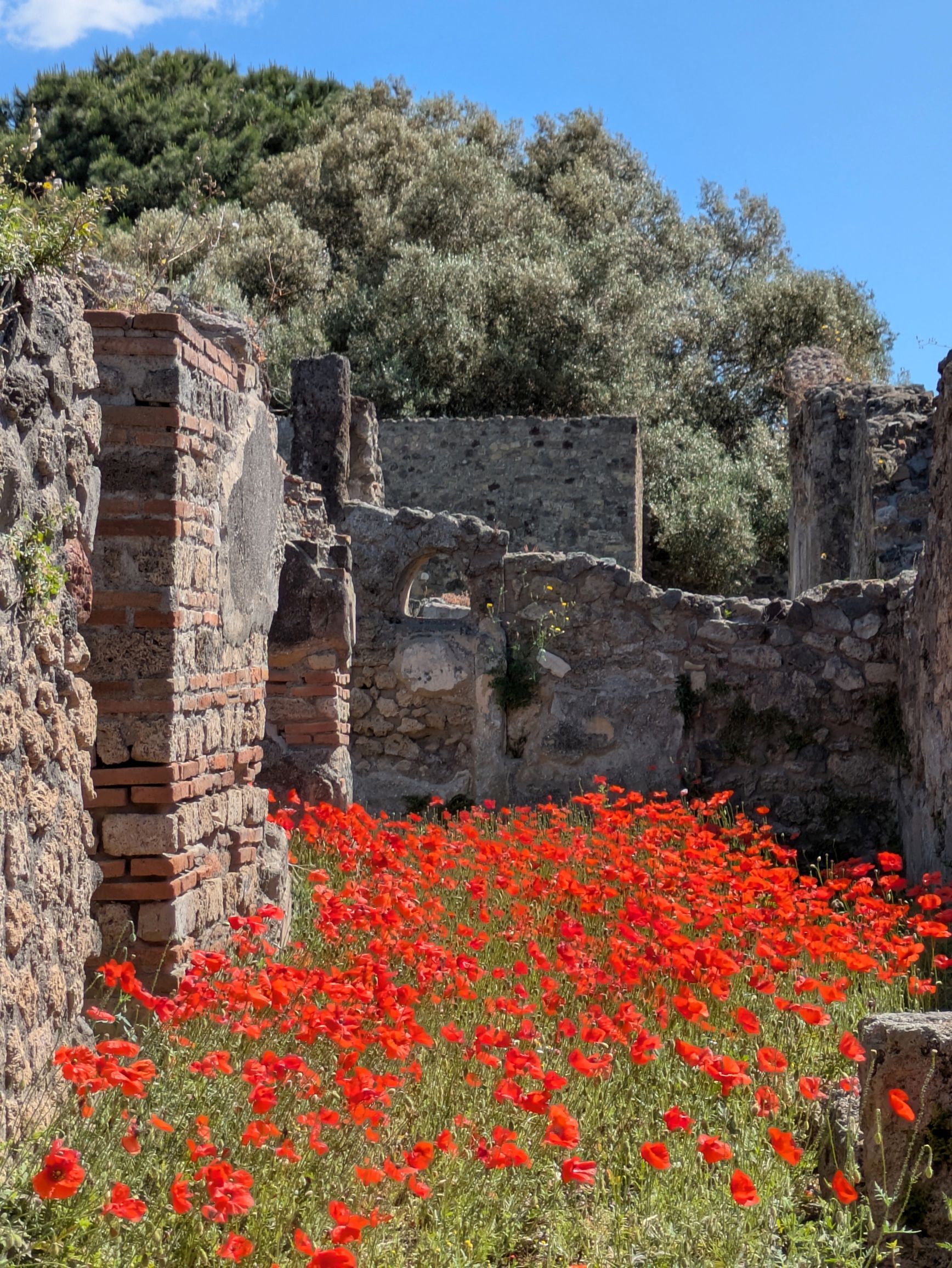
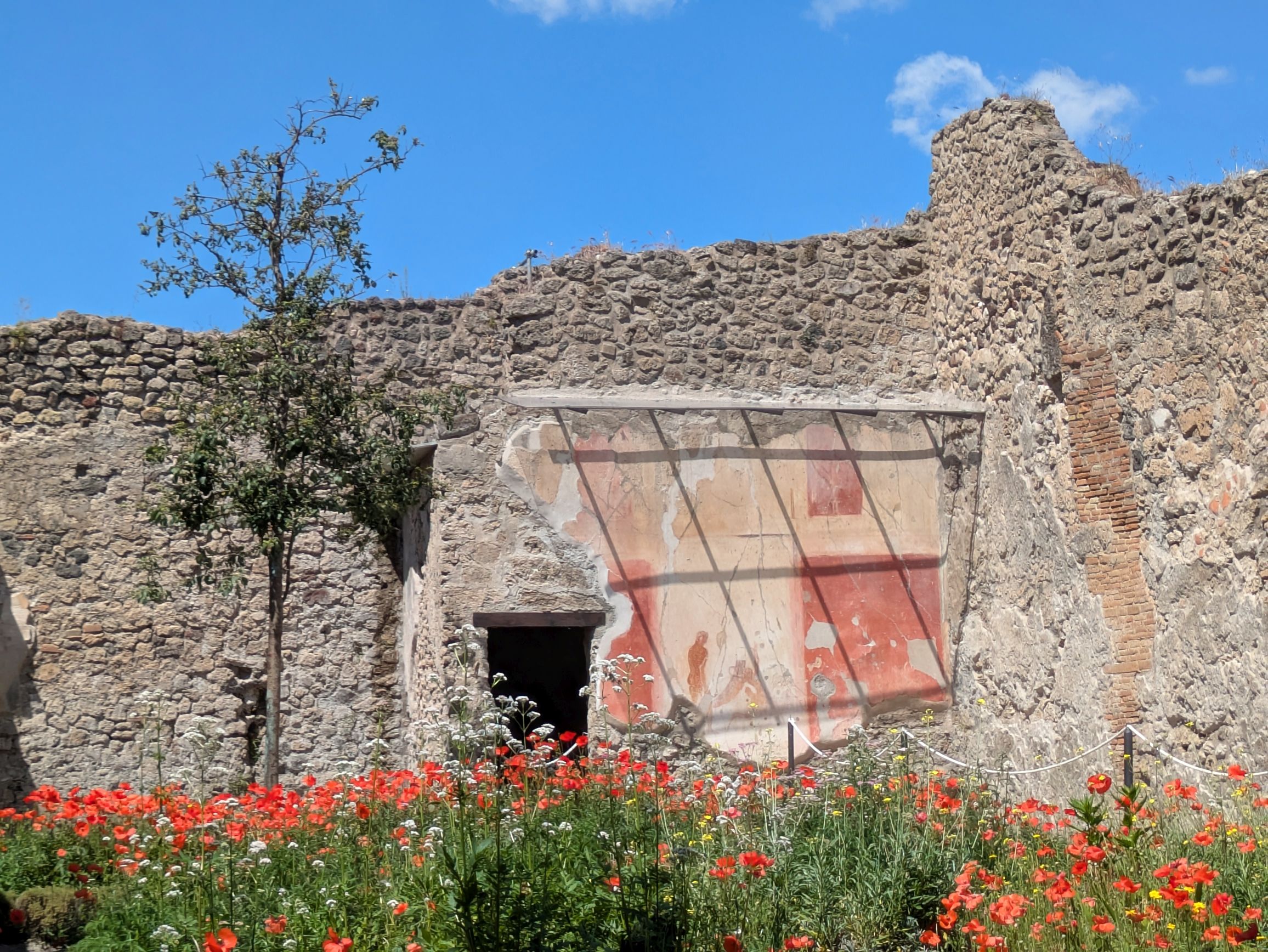
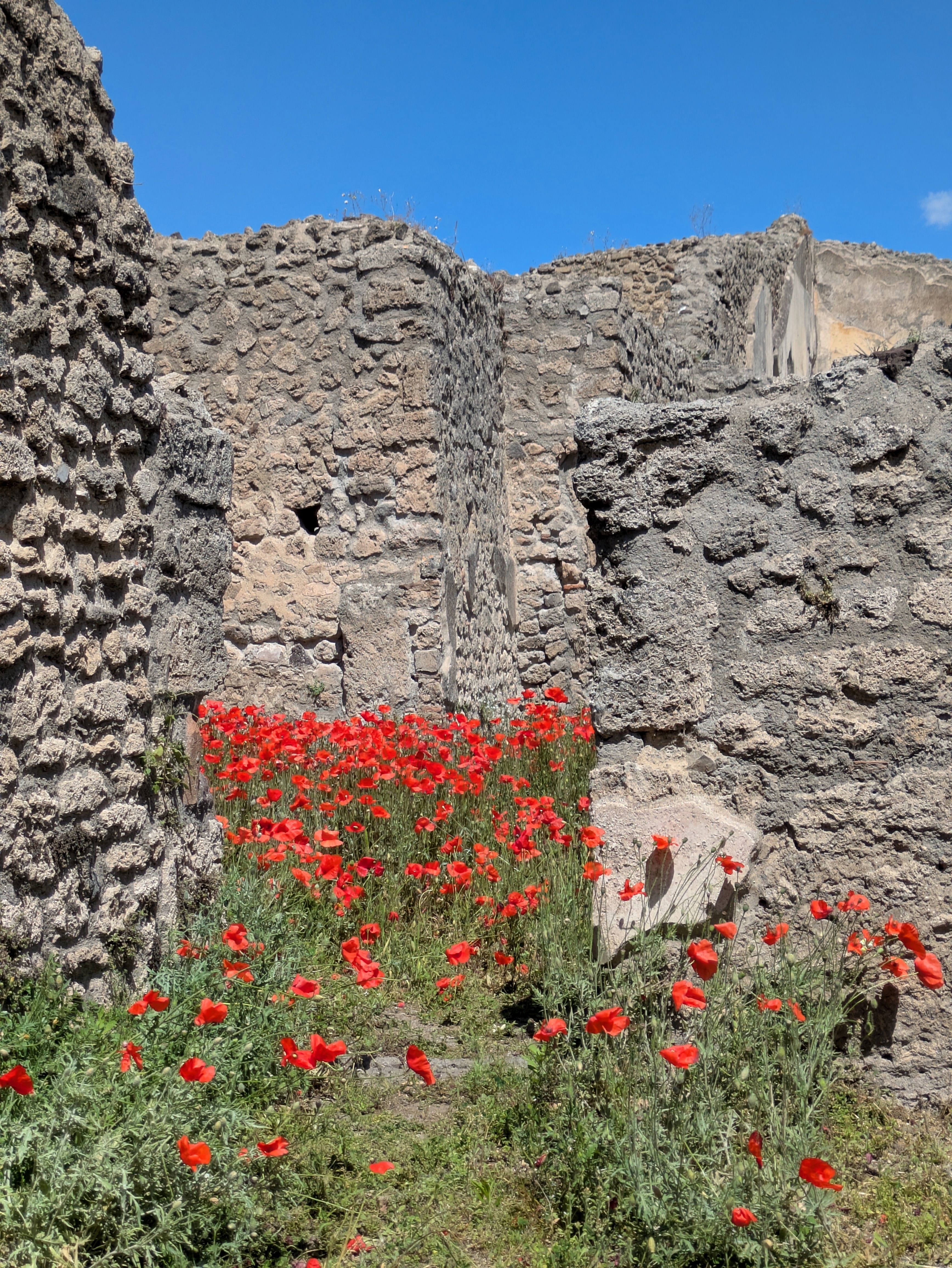
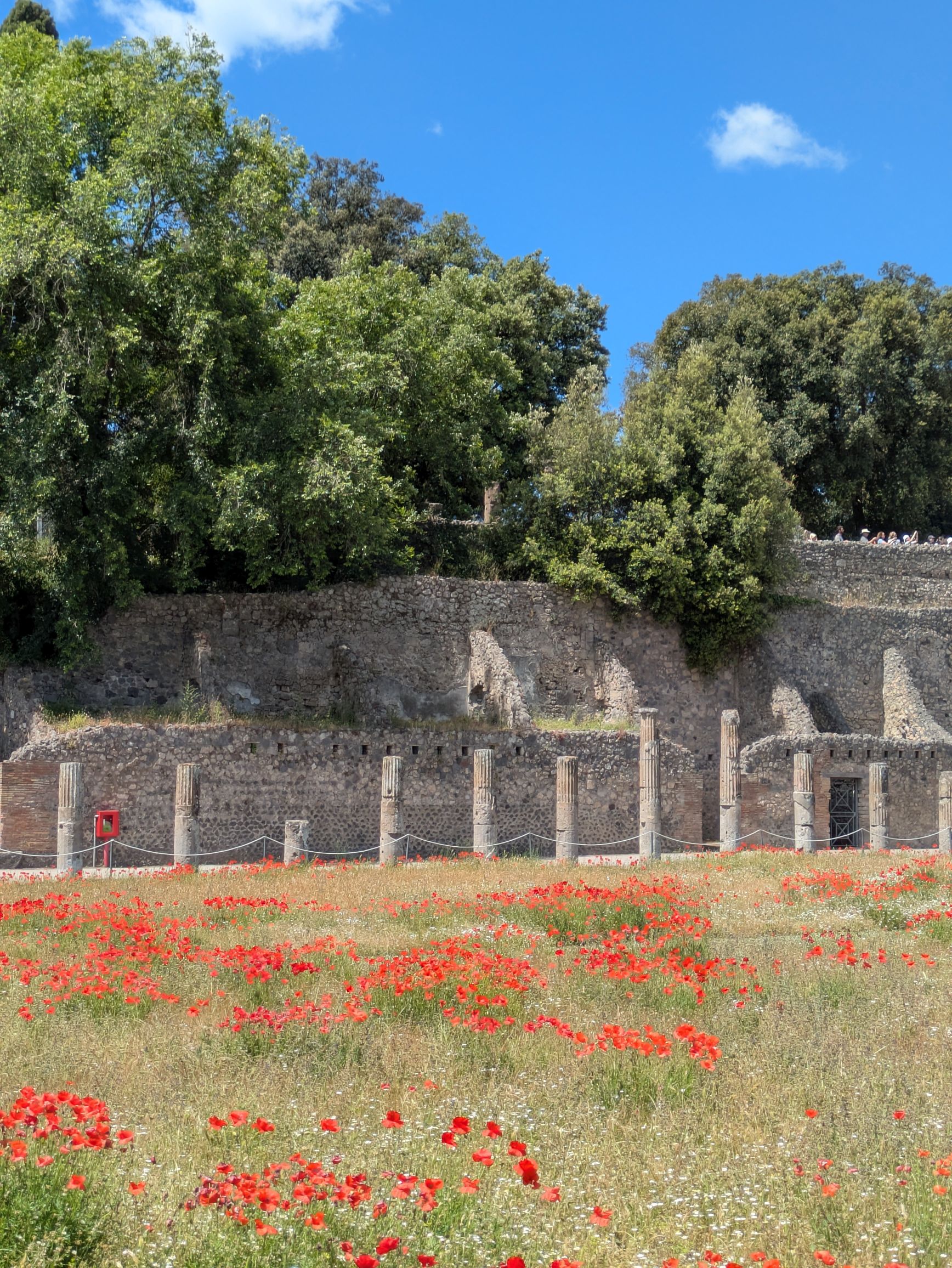
We were fortunate to be there on a gorgeous spring day when the red poppies were in bloom.

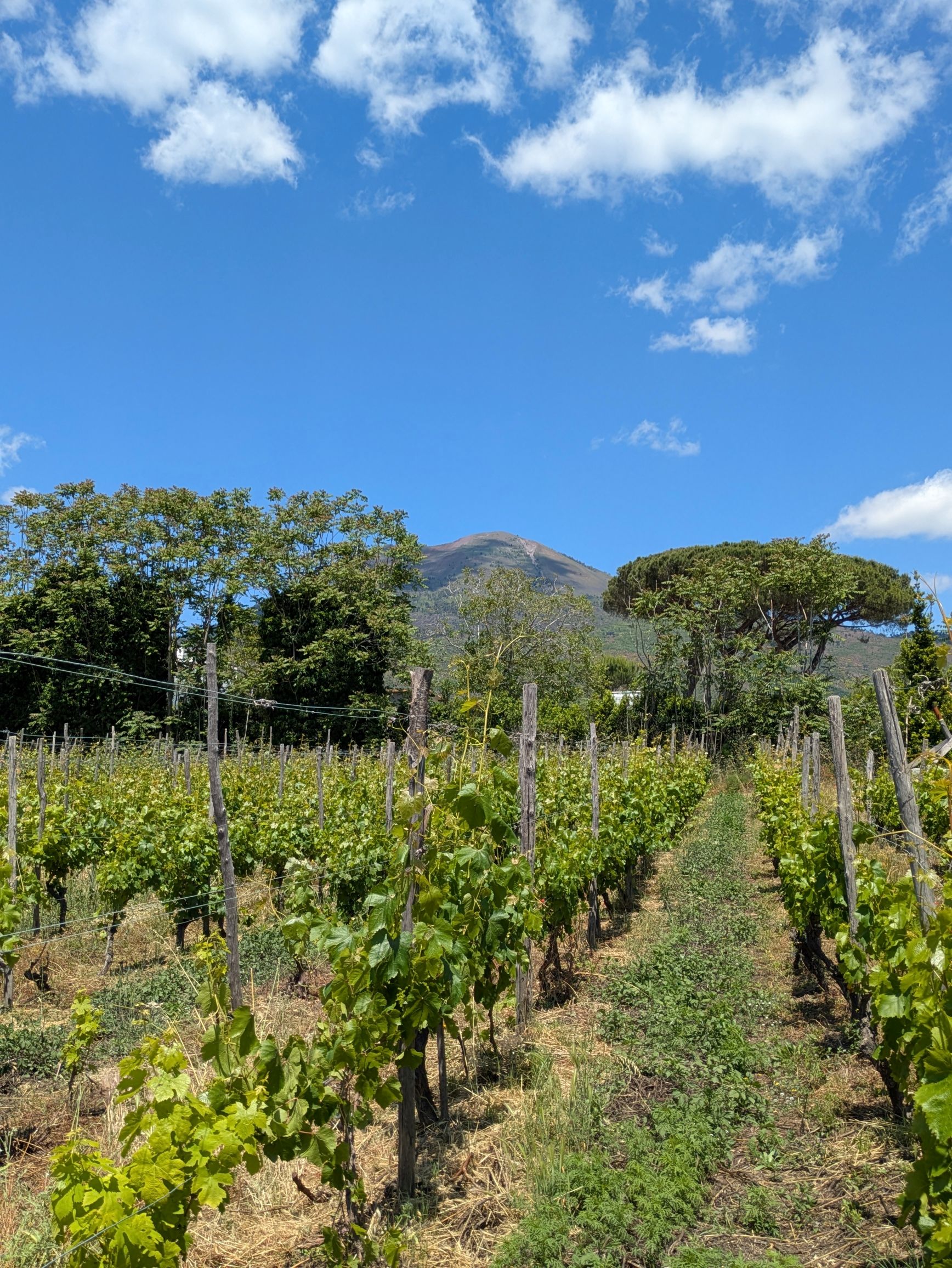
Following our tour of Pompeii, we had a much-needed relaxing (and quiet!) outdoor lunch at a local winery where we enjoyed views of Mt. Vesuvius.

Our final destination was Naples, our base for the final three nights of the tour.  More on Naples in post #26!

Next up:  SICILY & AMALFI COAST #25: CRUISING TO CAPRI