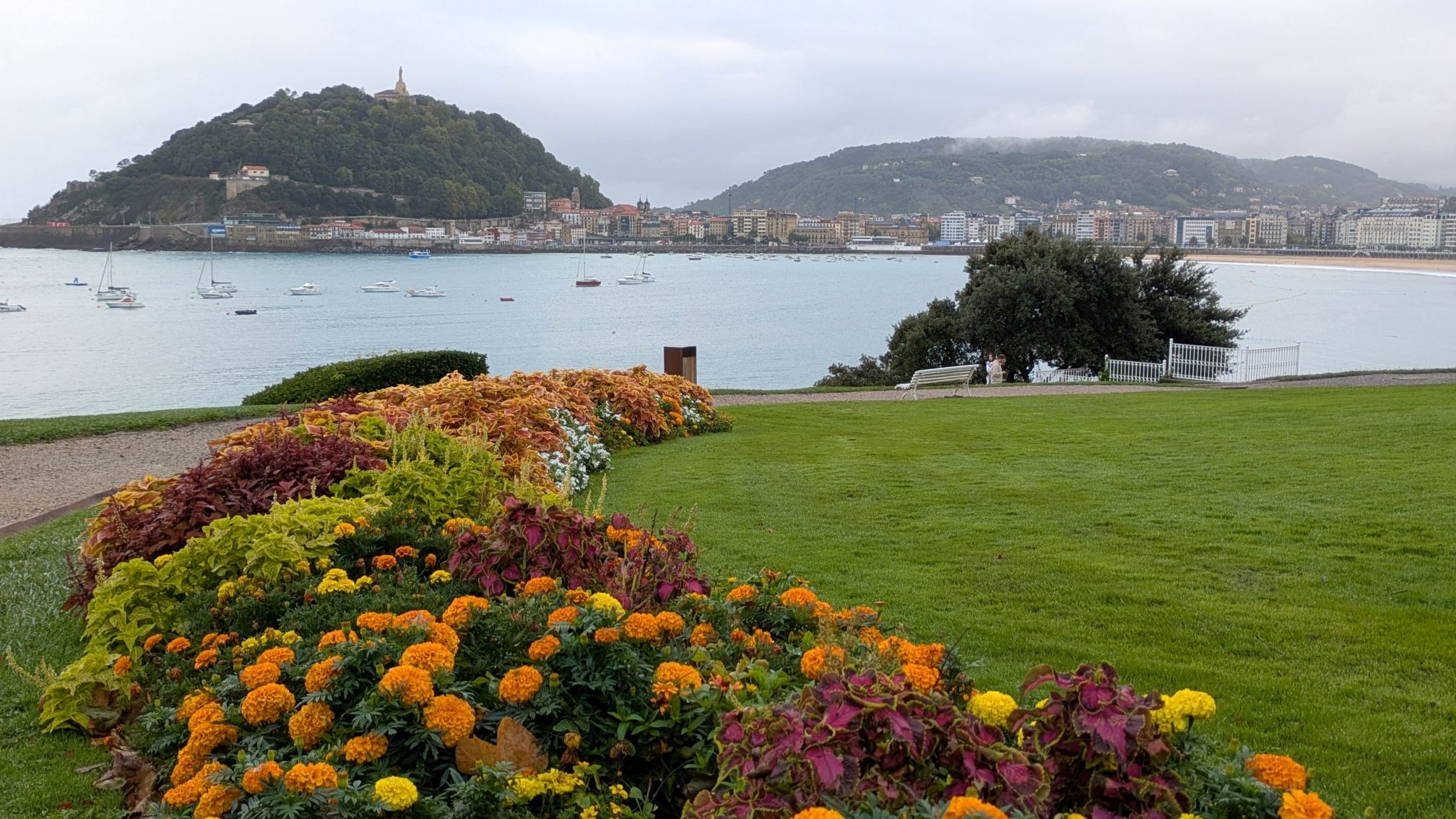
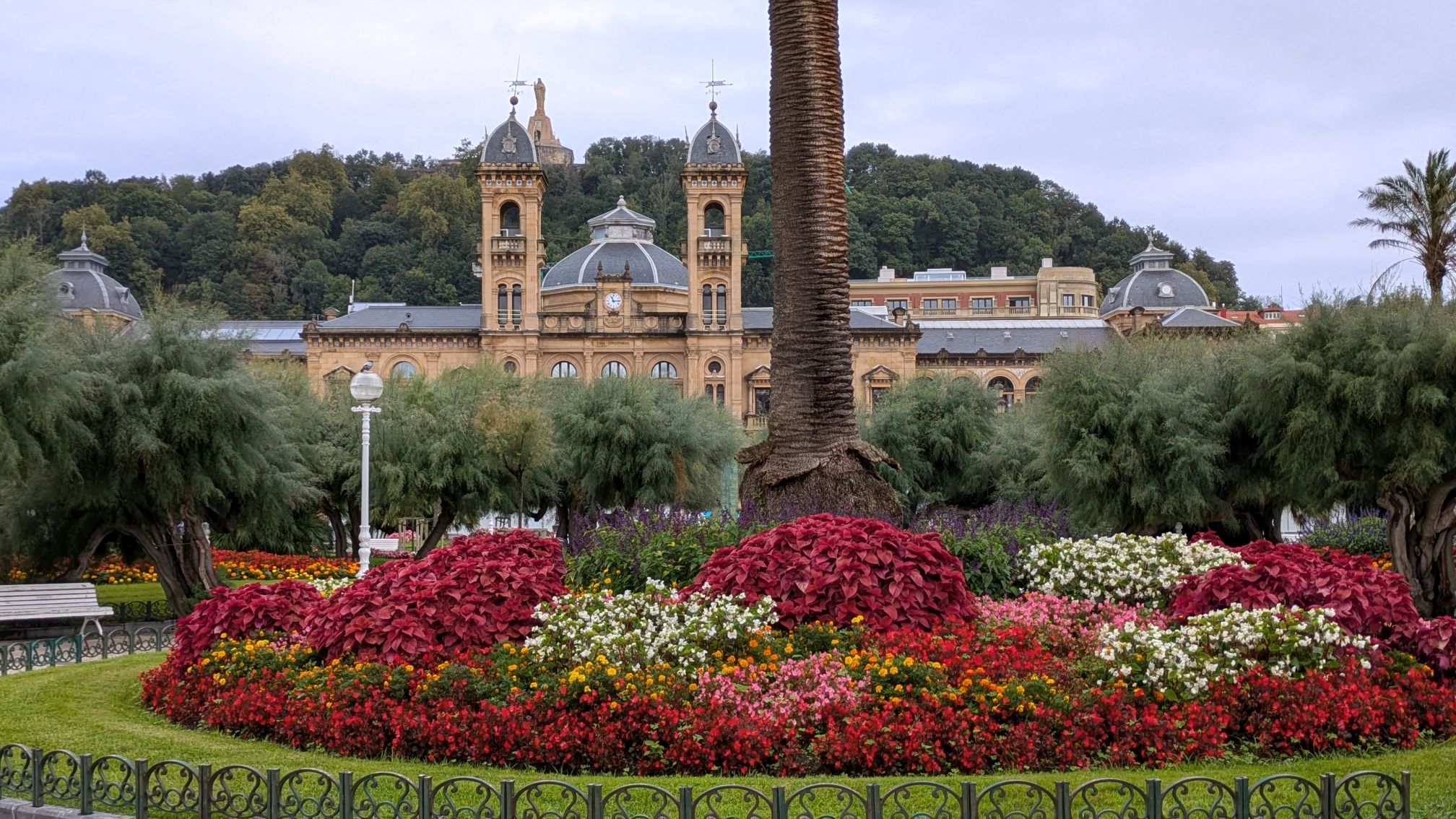
Although it was a dreary day at first, we enjoyed a lovely walk along the bayfront promenade, followed by time exploring the town. By the time we met up for lunch, the skies had cleared, and it was sunny blue-sky afternoon.
(For all photos, click on the image for a full screen view.)
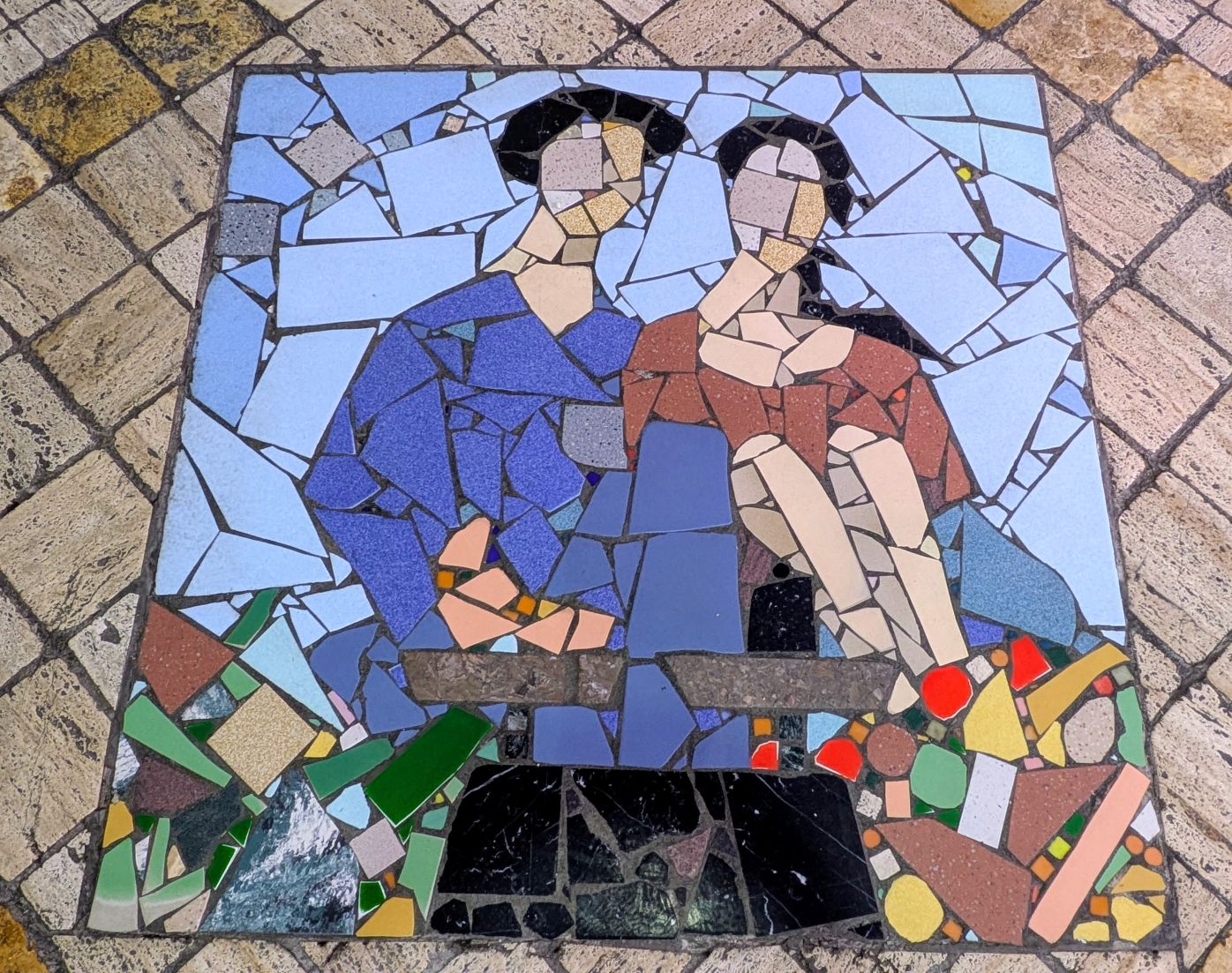
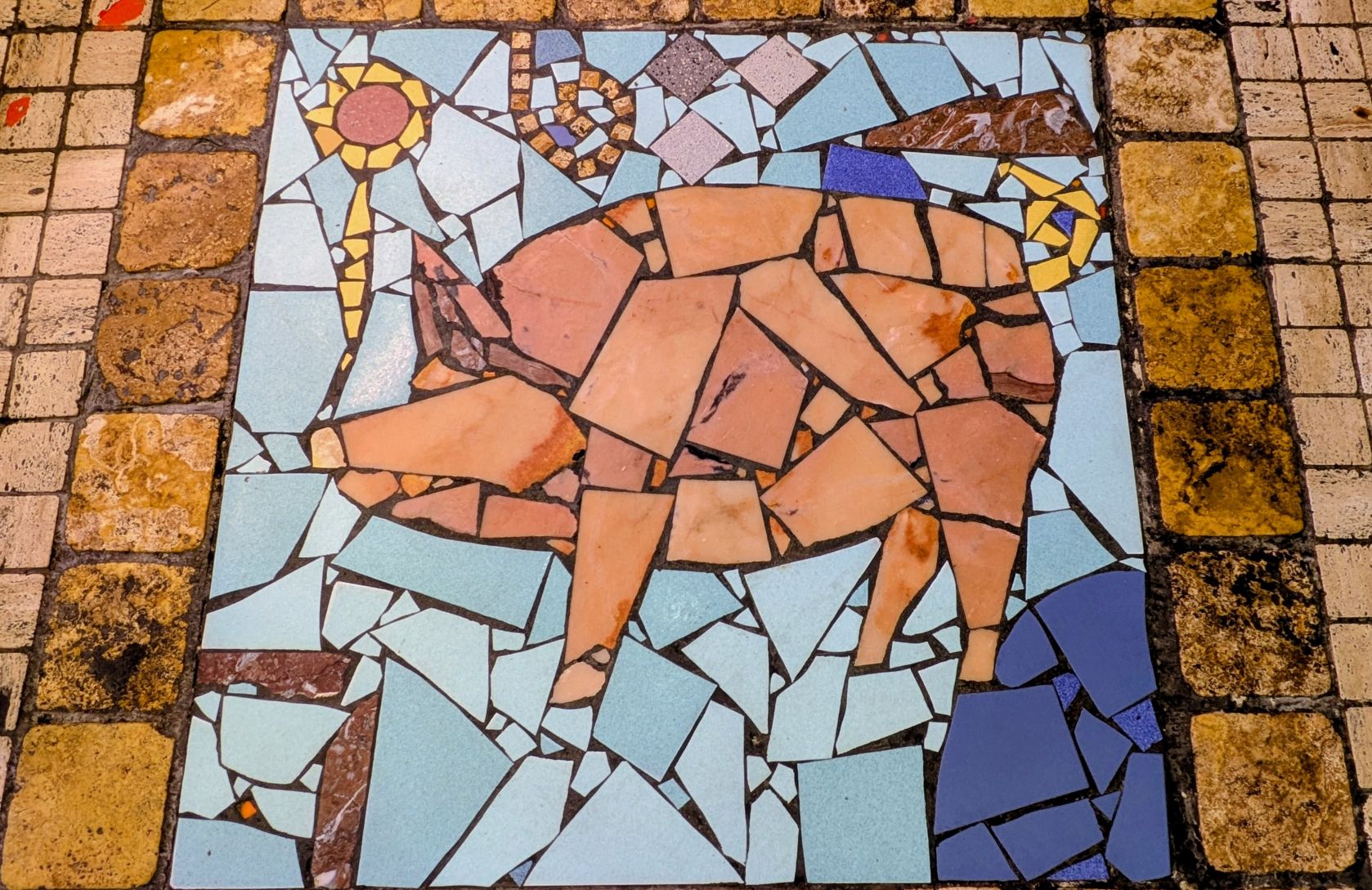
Tile mosaic pictures were a unique feature of the city market’s floors.
Truffles
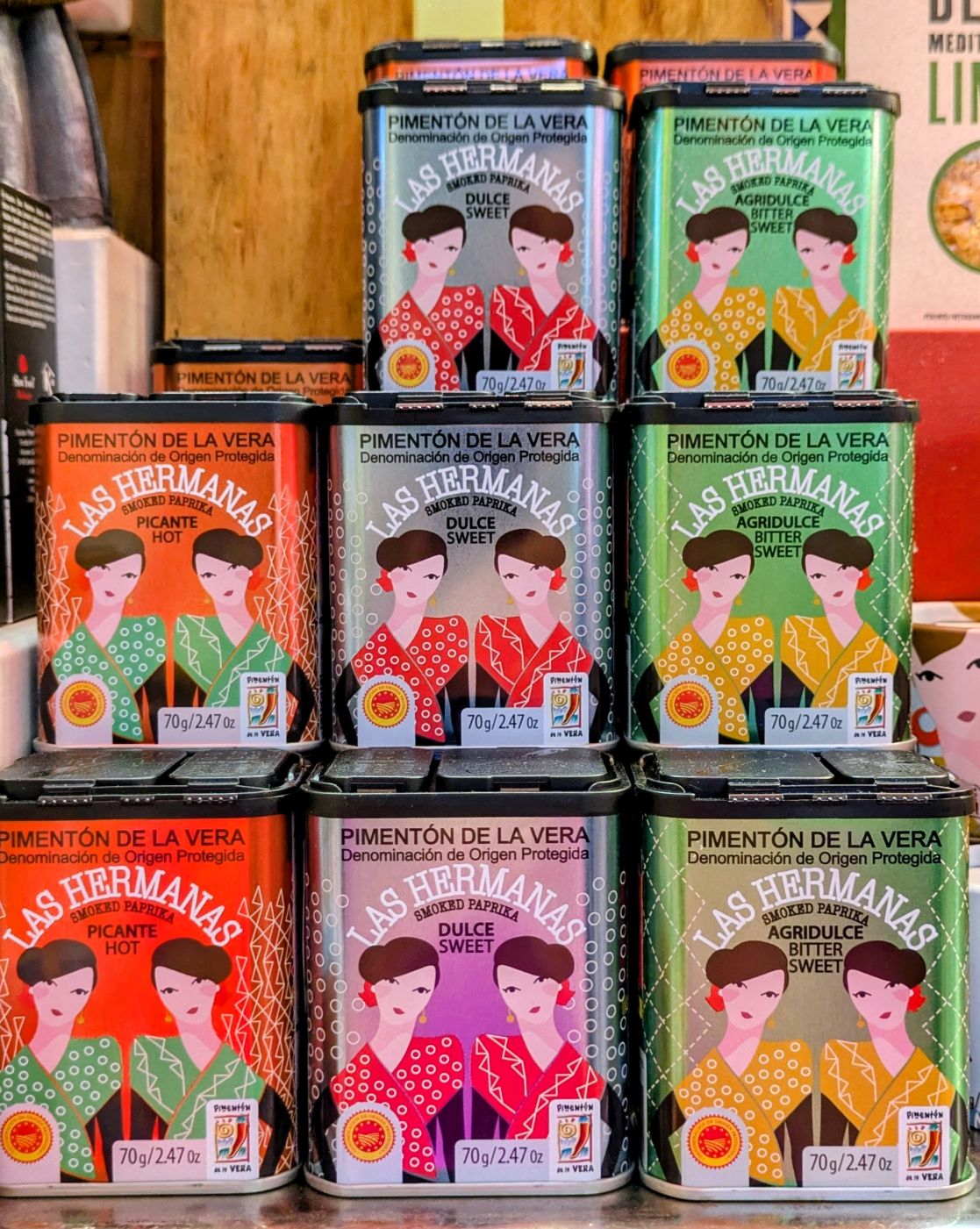
San Sebastian is Spain’s gourmet capital.
San Sebastian is also famous for its Basque Cheesecake. Created in 1988 by Santiago Rivera in La Vina, his pintxos bar, it became a big hit. What makes this cheesecake unique is its caramelized, nearly burnt exterior and its creamy, custard-like interior. Although other restaurants and bakeries have attempted to copy the original, we wanted to try a piece from where it originated. Our intention was to take a slice to go and have it for dessert that night, but we couldn’t help but to sneak a taste. Mmm-mmm good!
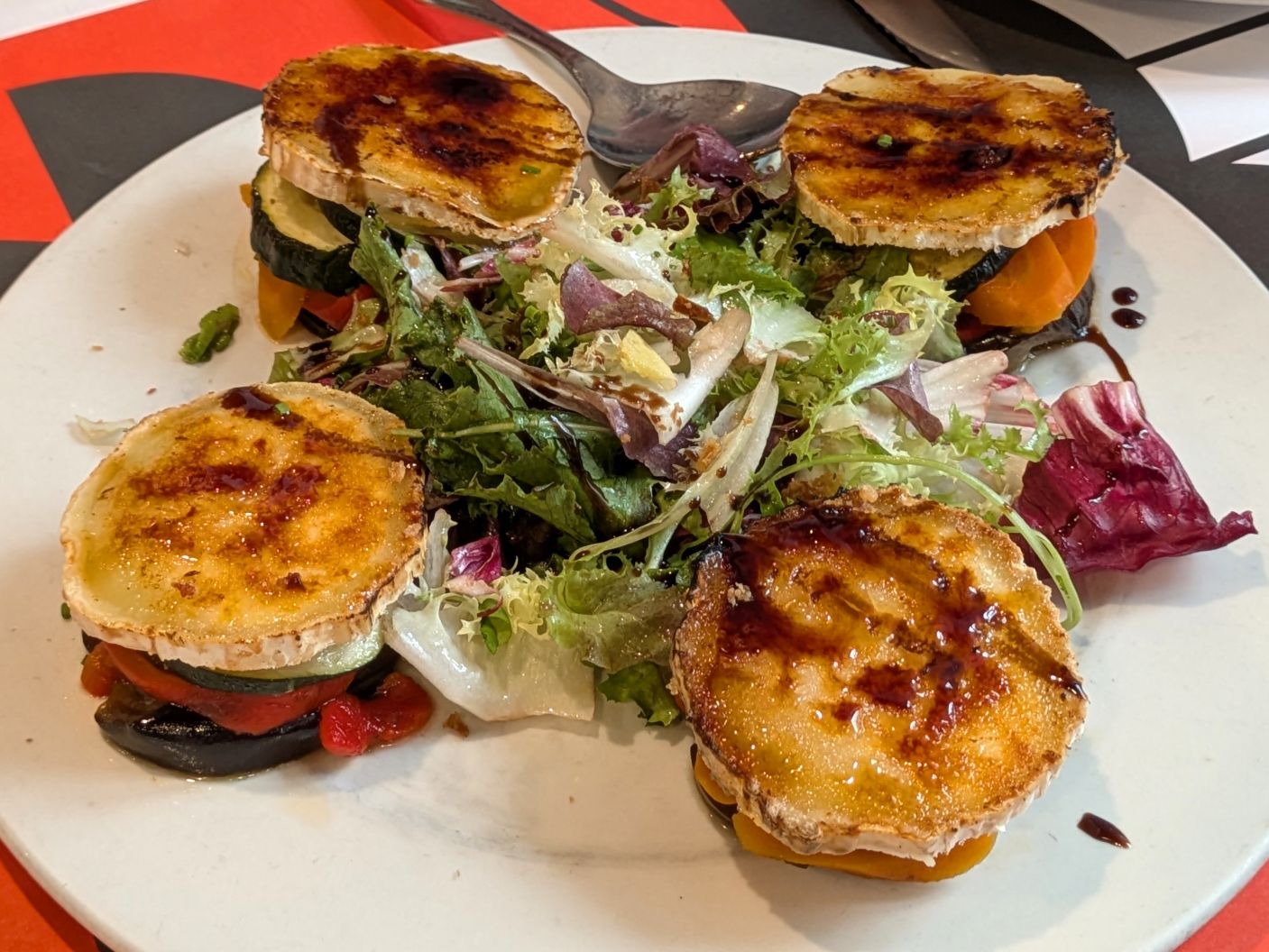
Our group lunch was at a fabulous restaurant, the Morgan Kompany. We shared several appetizers, but this goat cheese perfection was my favorite:
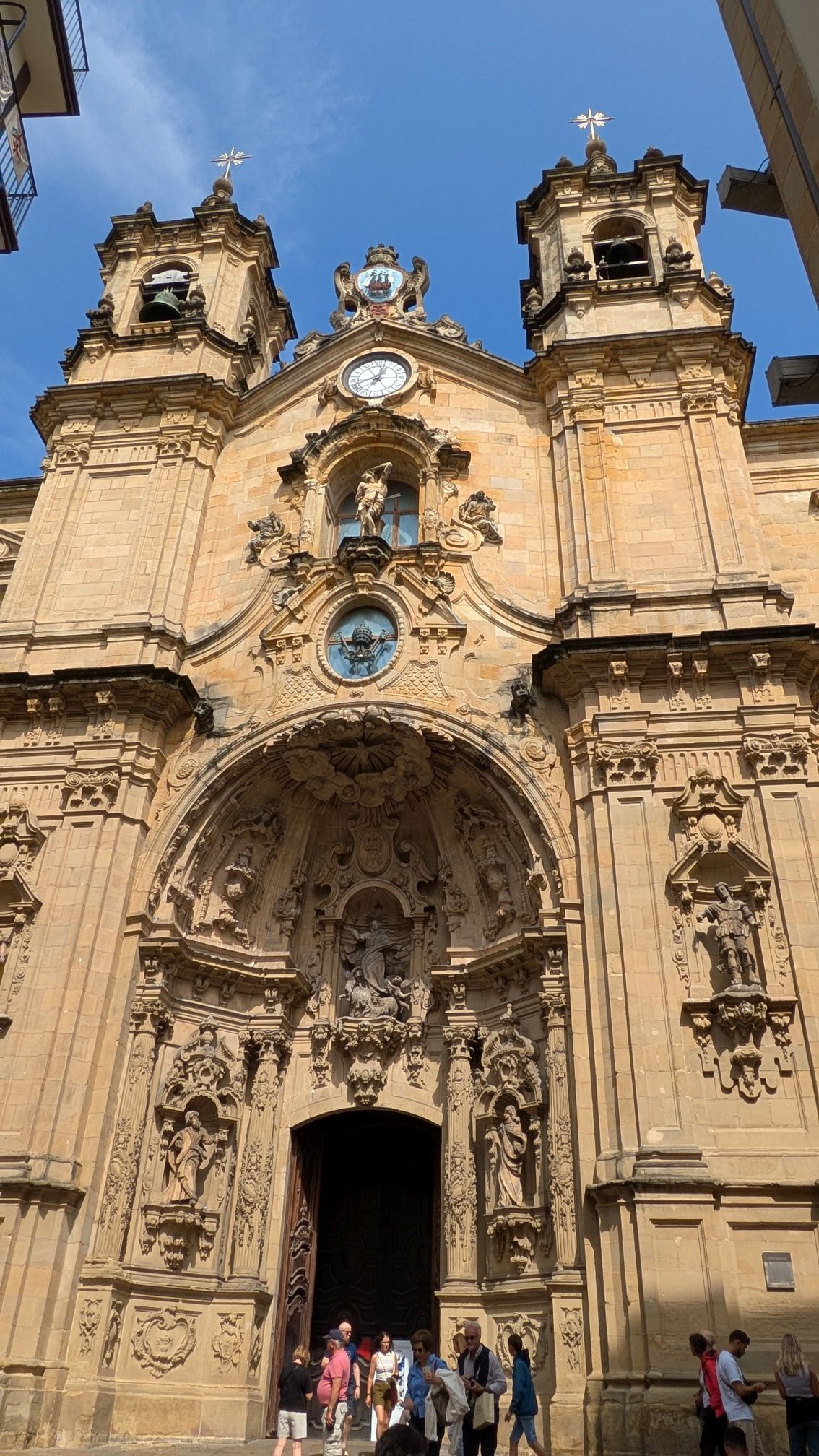
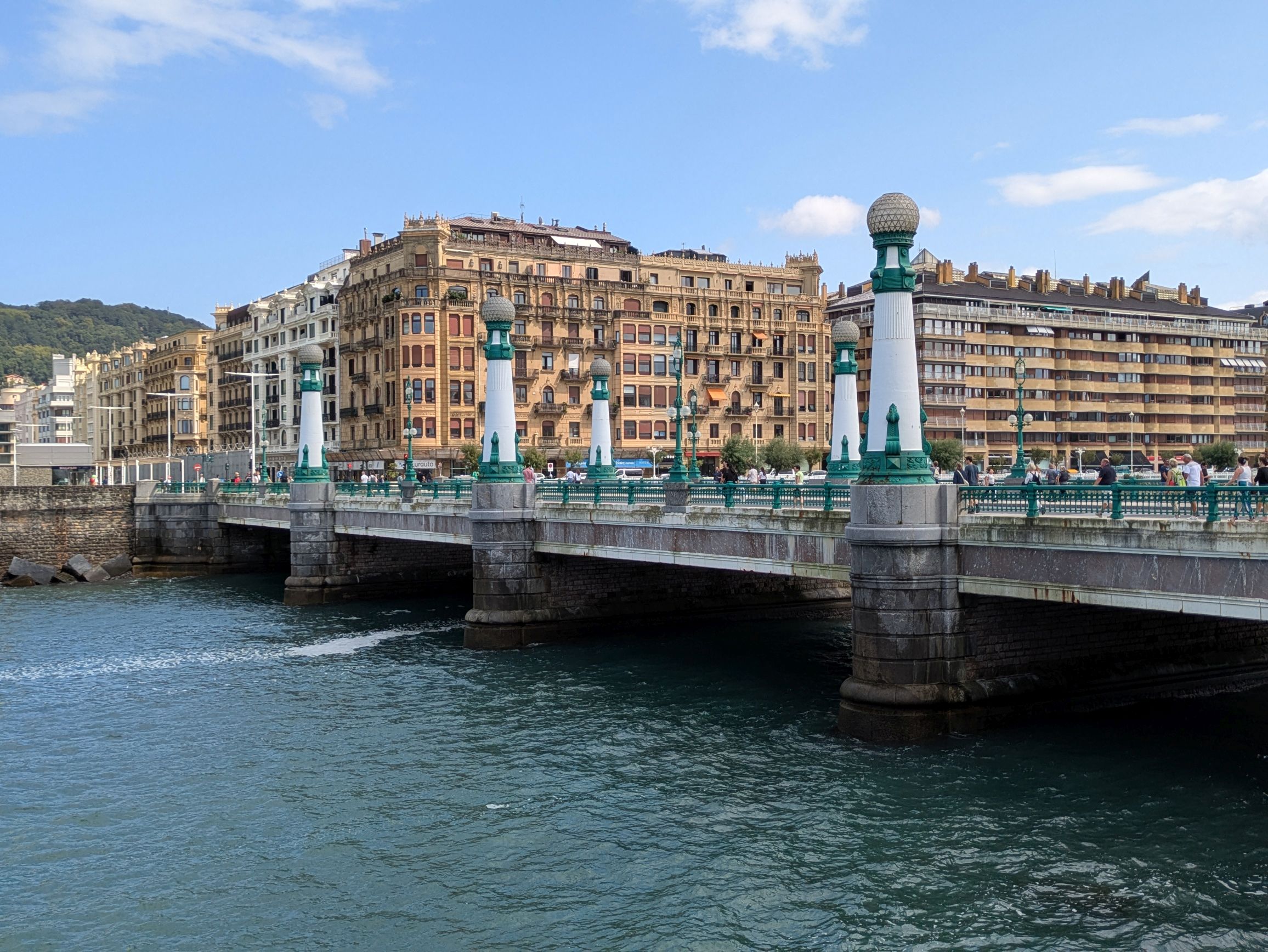
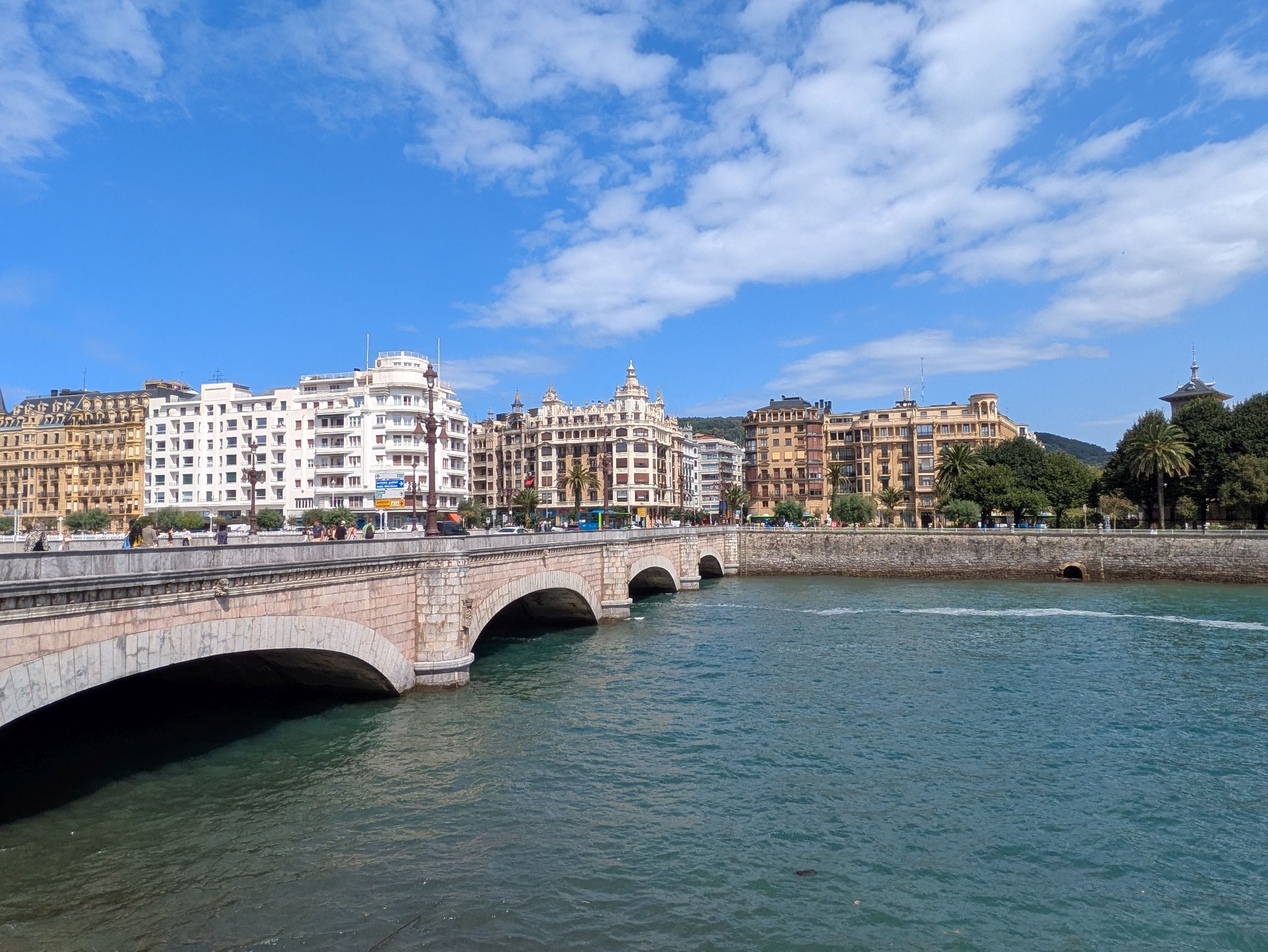
The afternoon stroll along the riverfront was so lovely! The sun was shining, we enjoyed more stunning views, and it was a nice way to conclude our visit before traveling on to Pamplona.
Coming up next: SOUTHWEST FRANCE, NORTHERN SPAIN & PORTUGAL #11: PLEASUREABLE PAMPLONA
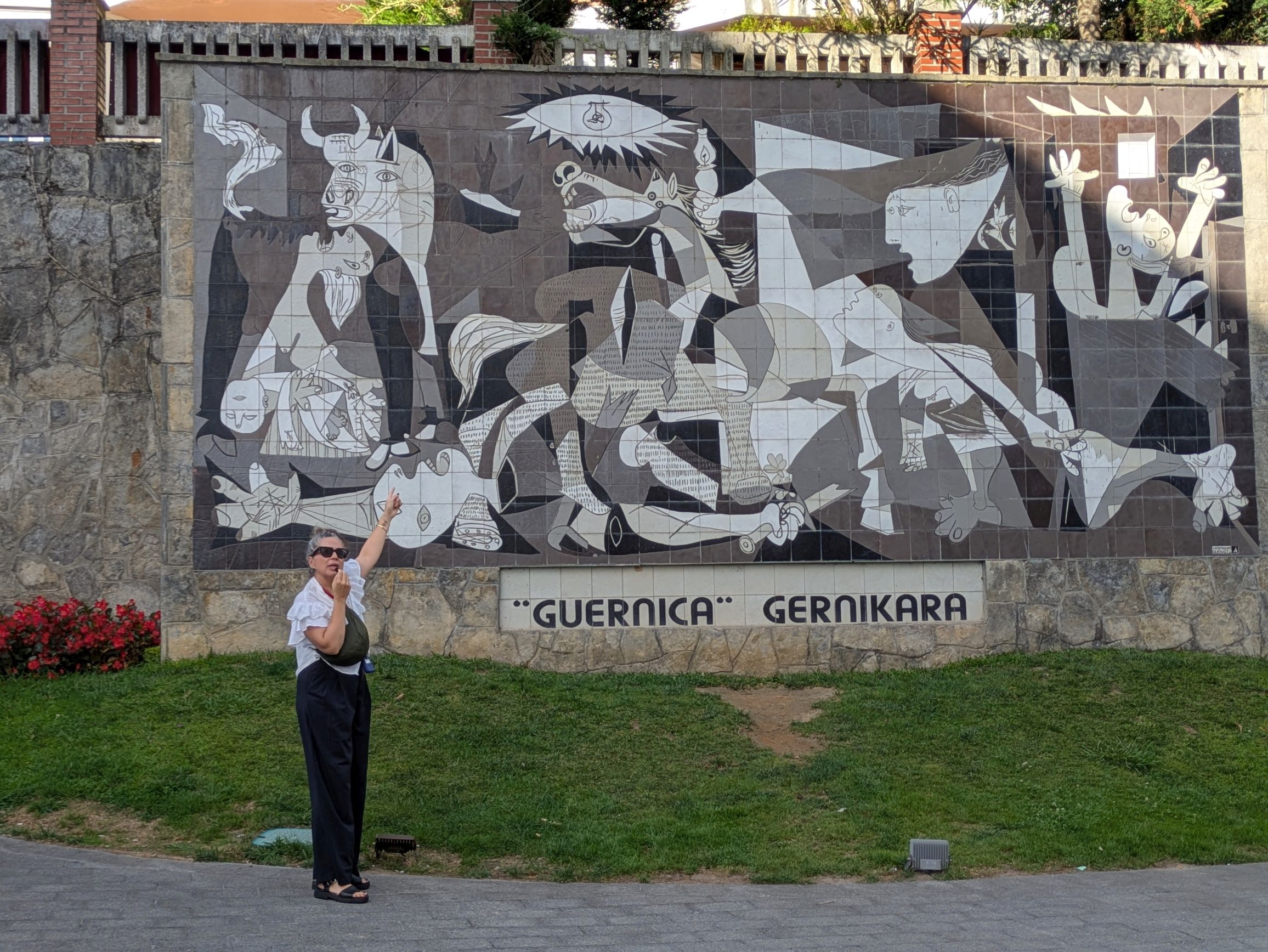
Following a full day of exploring Bilbao, we set out the following morning for a side trip to Guernica (or Gernika, in Basque), a small town in the Basque Country. 1937, during Spain’s civil war, was a devastating year for the town. Bombed by the Germans for three hours nonstop, the town was destroyed. Spain’s dictator, Francisco Franco, tried to deny what had happened to Gernika, but some journalists happened to be in town at the time and survived the bombing to record it and reveal the truth.
This devastation was immortalized by Pablo Picasso, a resident of Gernicka, in the famous painting that bears the town’s name. Picasso had lived there until Franco came into power, and then fled to Paris.
(For all photos, click on the image for a full screen view.)
Serena, our tour lead for the main trip, explains the history depicted in Picasso’s mural.
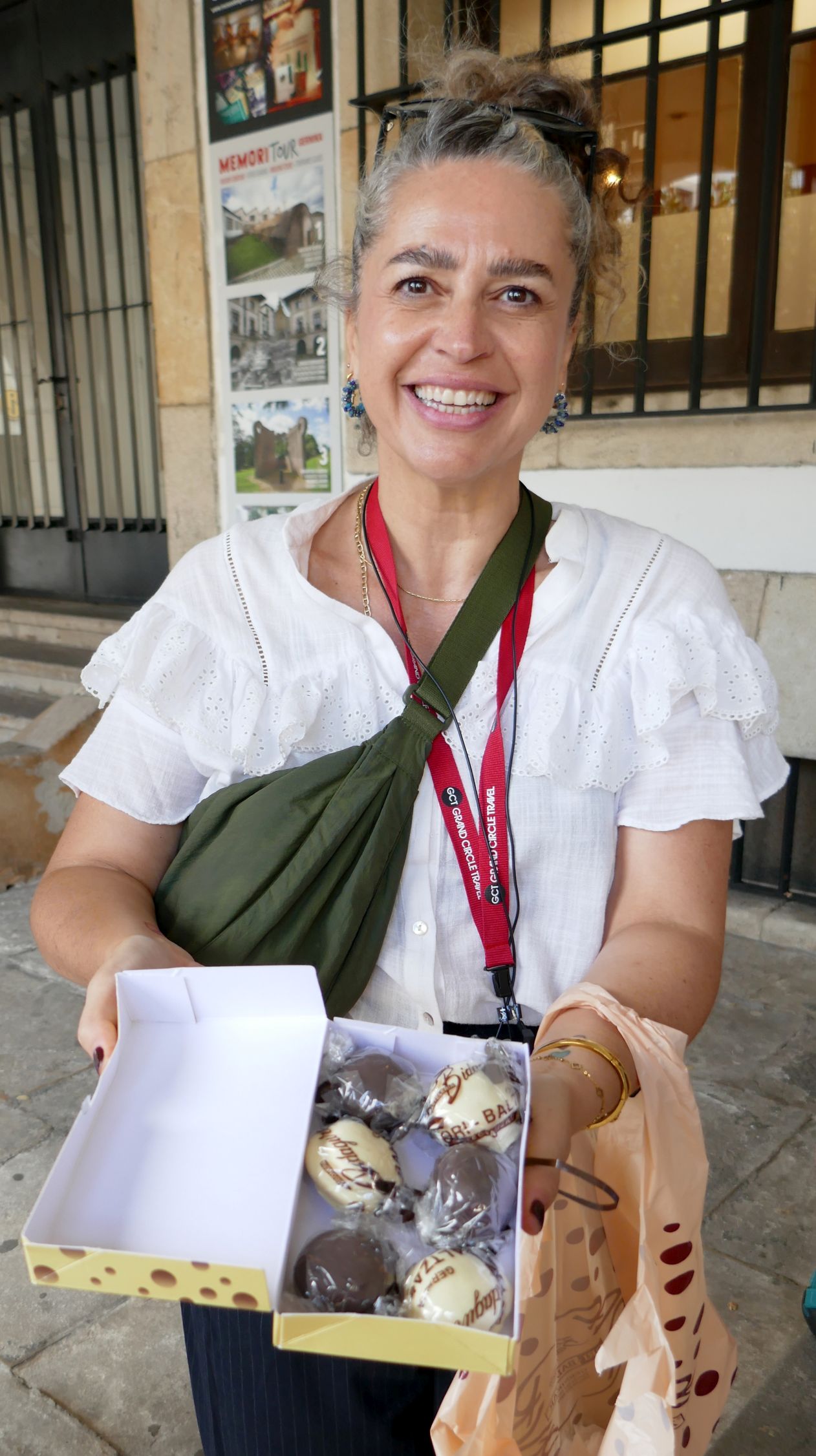
Serena shares some local Basque treats
We learned about the history behind the mural while visiting the Guernica Peace Museum, located in one of the only buildings that survived the Nazi bombing.
Next, we headed off into the Basque Countryside and visited a couple at their typical Basque farmhouse and learned about Basque traditions, including the preparation of talo, a local flatbread made from corn flour. Similar to corn tortillas, it serves as bread in Basque homes. We all chipped in to help make talo to accompany the traditional Basque lunch we enjoyed together.
Talo was prepared in a separate area adjacent to the farmhouse.
Talo
During the afternoon, we had free time to explore more of Bilbao. In the evening, we were divided into smaller groups to enjoy a home-hosted dinner. Our hosts, Blanca and David, were delightful, and Amaia, their translator, was a hoot! We had such an enjoyable time with them!
Blanca was to my left, David in front, and Amaia was next to David.
Next up: SOUTHWEST FRANCE, NORTHERN SPAIN & PORTUGAL #10: STUNNING SAN SEBASTIAN
Since at least the 14th century, Bilbao, the capital city of Spain’s Biscay province, was an industrial city. Over the centuries, it became more polluted and unattractive! By 1900, the city had developed into a shipbuilding center and was the wealthiest city in all of Spain. But in the mid-20th century, natural disasters and civil war crippled the city.
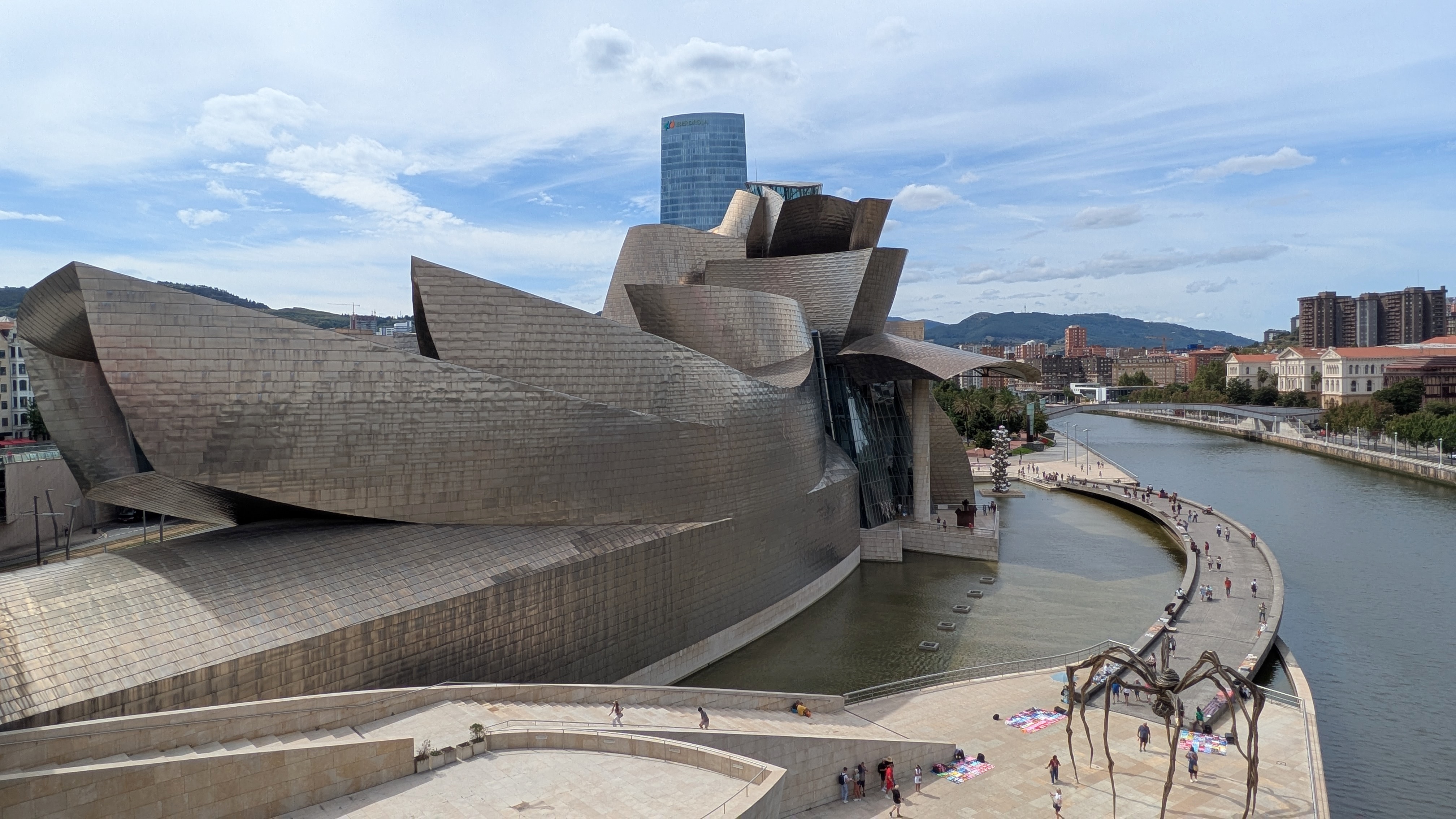
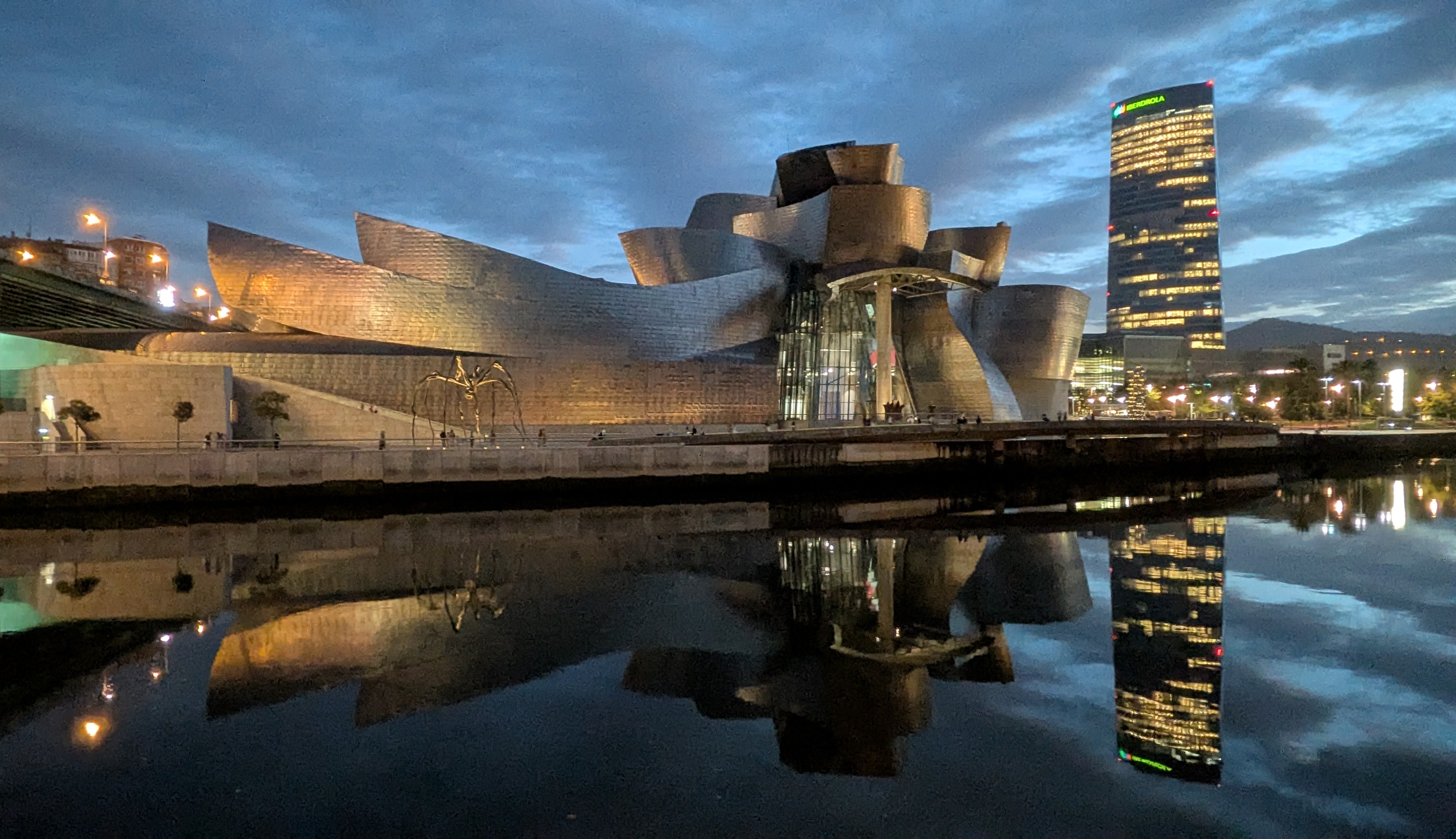
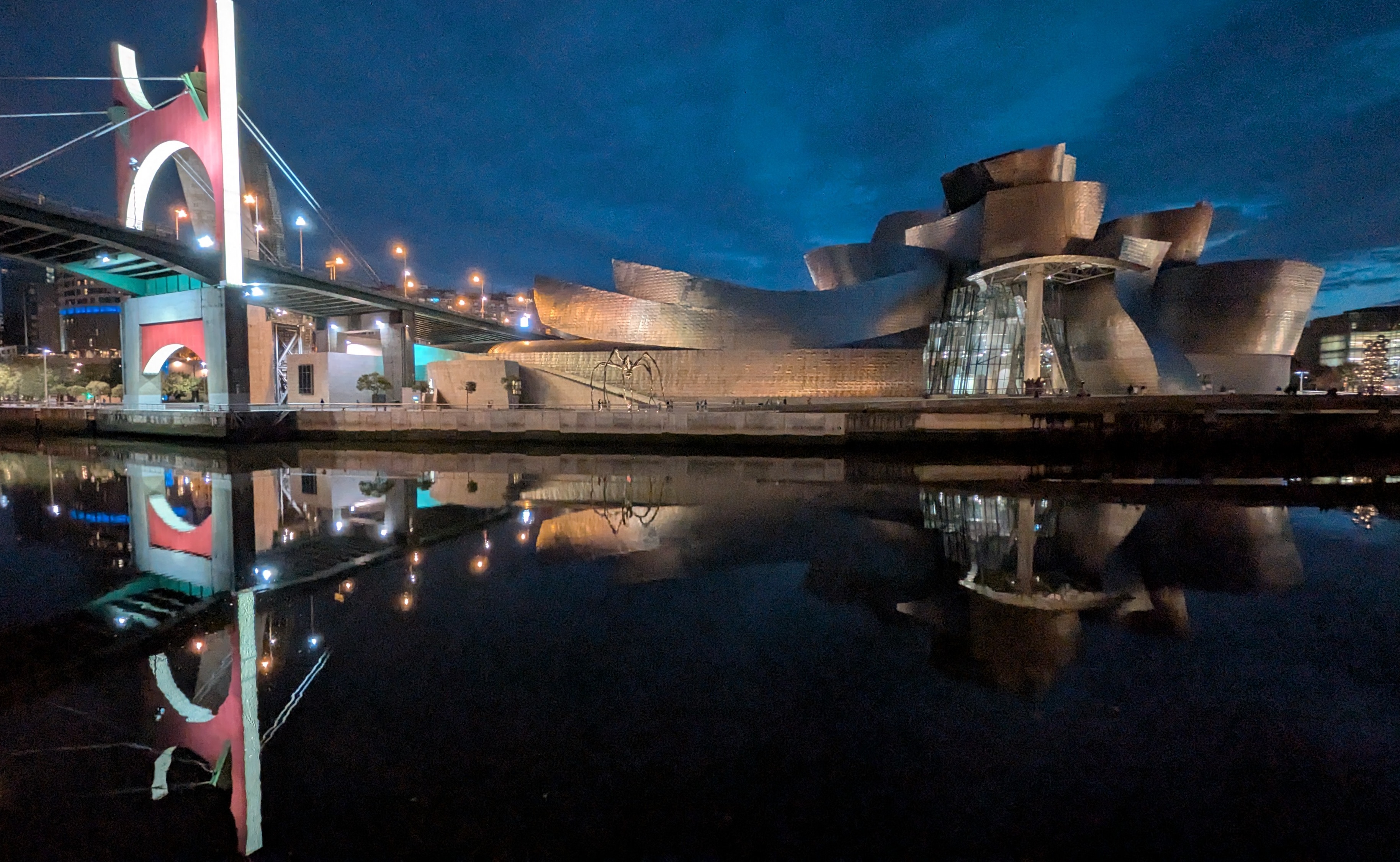
In the mid 1990’s all that changed, and Bilbao was revived and revitalized. Much of the credit for the turnaround goes to the Frank Gehry designed Bilbao Guggenheim Museum, located on the riverfront. The museum of modern and contemporary art, which opened in 1997, is visually an architectural masterpiece and the prominent centerpiece of Bilbao’s landscape.
Gehry’s choice of construction materials included limestone from Granada, which covered the base of the building and galvanized steel for the structure, which was covered with plates of titanium arranged in scales.
One of the most amazing facts about the construction of the Guggenheim Museum is that it was built on budget and on time. How many architects of buildings of that magnitude can make that claim?
Tourists have come from all over the world to see this gorgeous museum that is considered one of the most important modern architectural works, and the economic impact has been incredible! In its first three years, almost four million tourists visited the museum, helping to generate about 500 million euros in economic activity. The regional council estimated that the money visitors spent on hotels, restaurants, shops and transport allowed it to collect 100 million euros in taxes, which more than paid for the building cost.
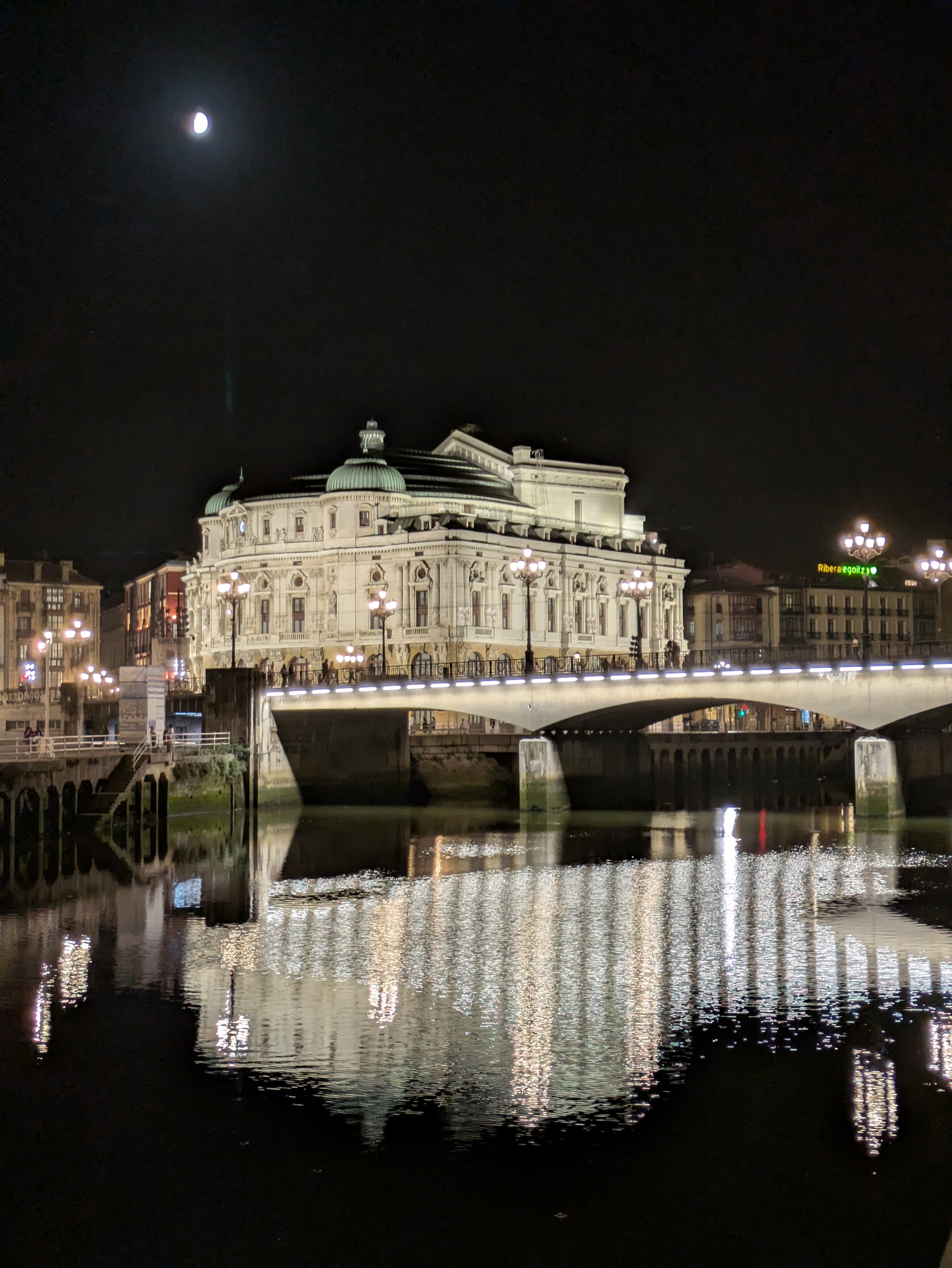
Viewing and photographing the Guggenheim Museum from the bridge and across the river, both during the day and at night, was a kick! Bruce and I had looked forward to seeing the museum’s exterior very much, and it did not disappoint!
(For all photos, click on the image for a full screen view.)
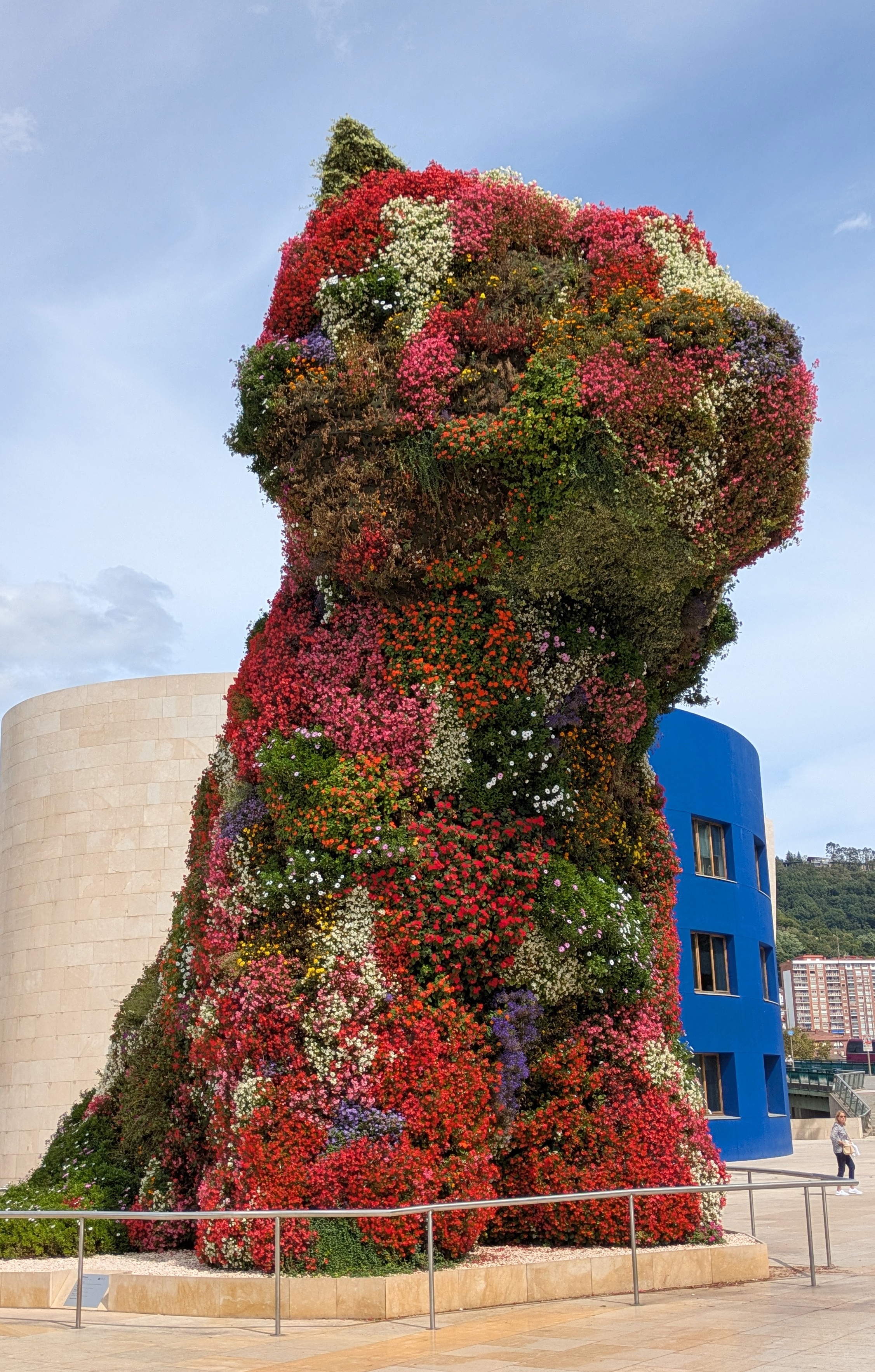
“Puppy,” the flower-covered pooch, sits at the entrance of the museum.
View from the bridge
More scenes along the river:
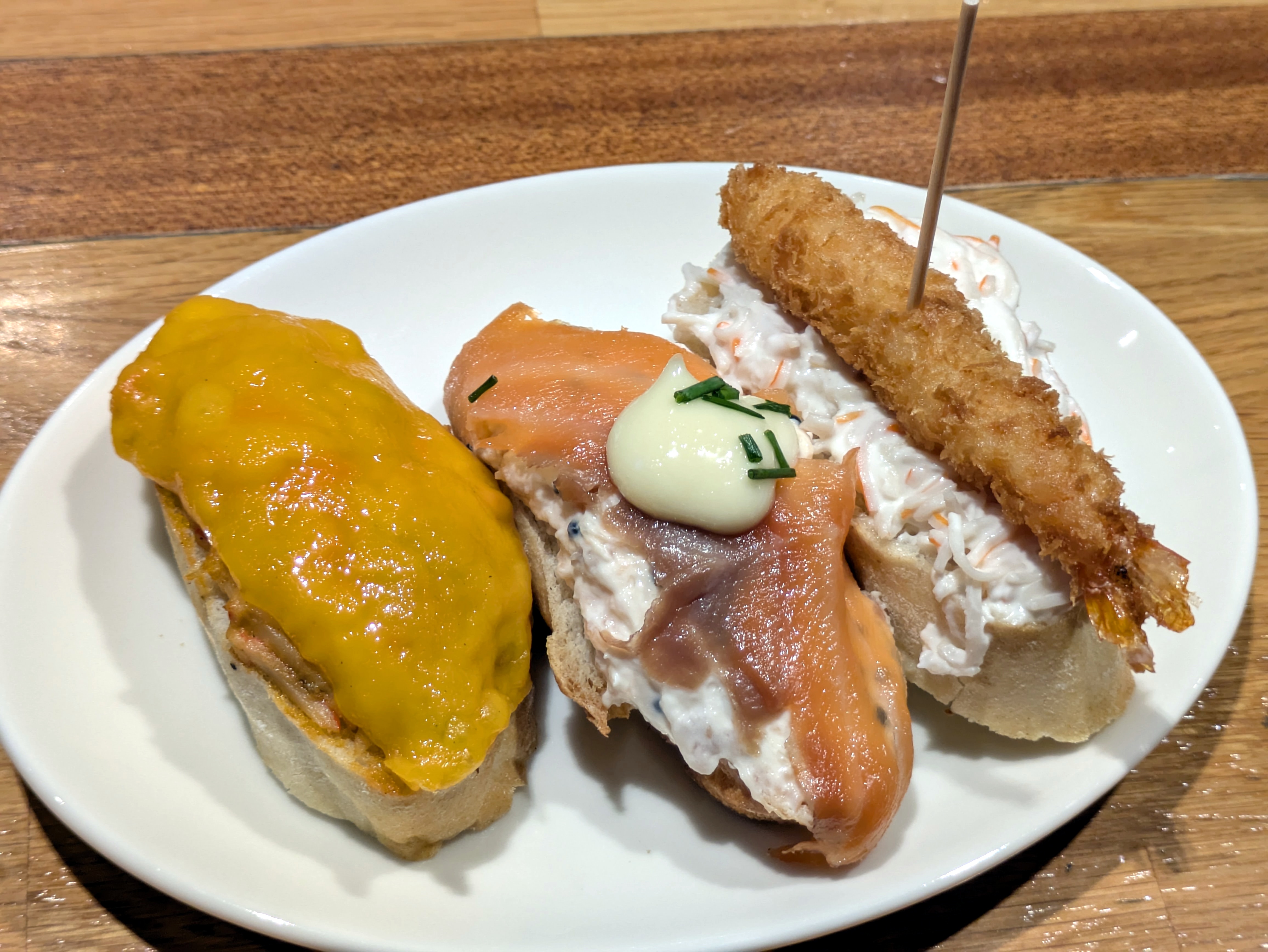
The other thing we looked forward to enjoying in Bilbao, the largest of the Basque Country cities (pop. 347,000+), was pintxos, a small snack with a bread base that is speared with a toothpick. It is the star of northern Spain’s world-renowned cuisine, and it’s fun to eat! Typically served in bars, each bar has its specialty, and they compete in culinary competitions for the coveted prize of having the best pintxos. Throughout the evening, it’s typical for groups of friends to meet up at a bar, have a pintxo or two with a drink, and then move on to another bar to sample more. It is very much part of the Basque Country social and culinary culture.
We sampled pintxos several times throughout our travels in northern Spain, including a lunchtime pintxos crawl in the medieval Old Town, the “Seven Streets” neighborhood. Dating to the 14th century, these were the original seven streets of Bilbao.
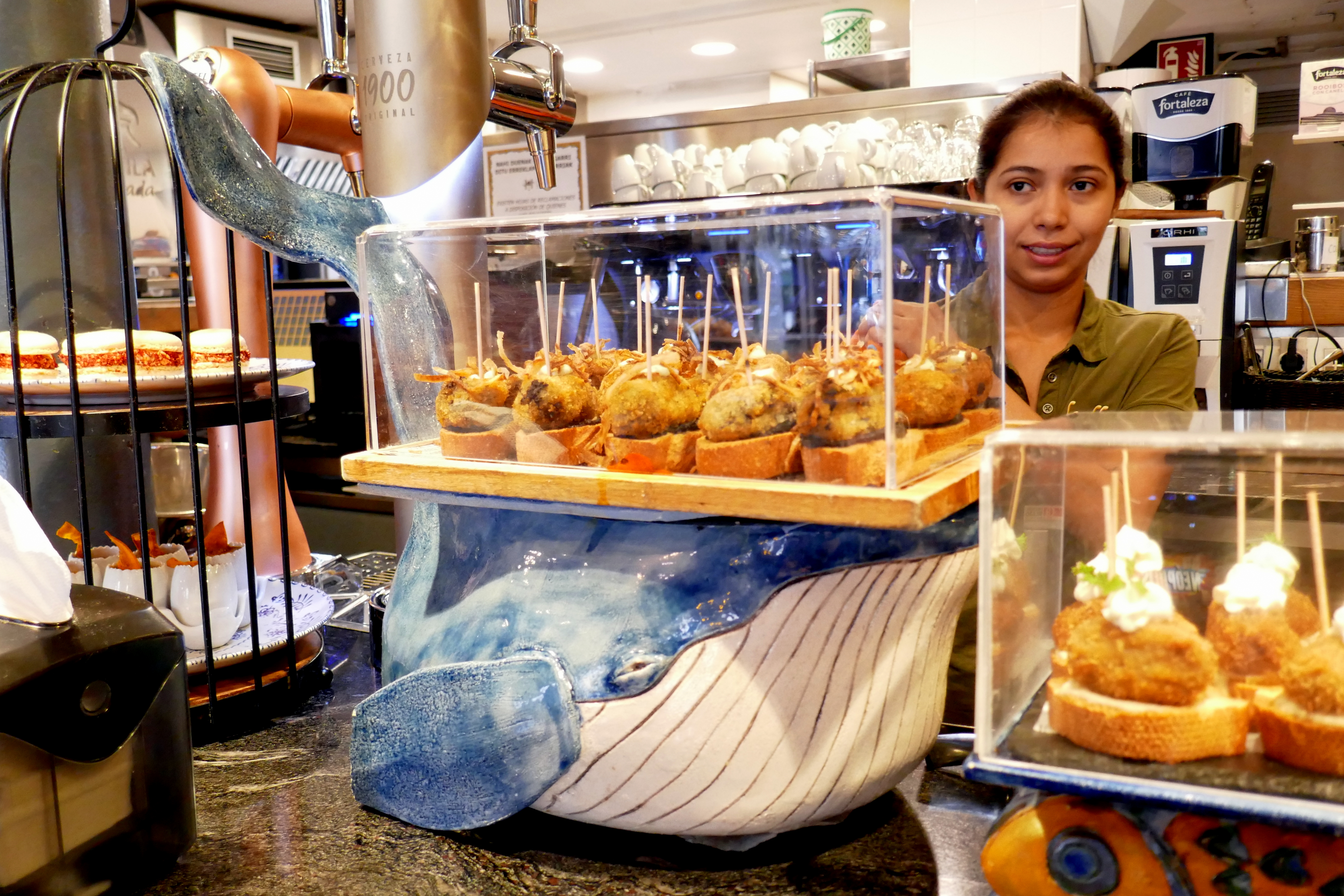
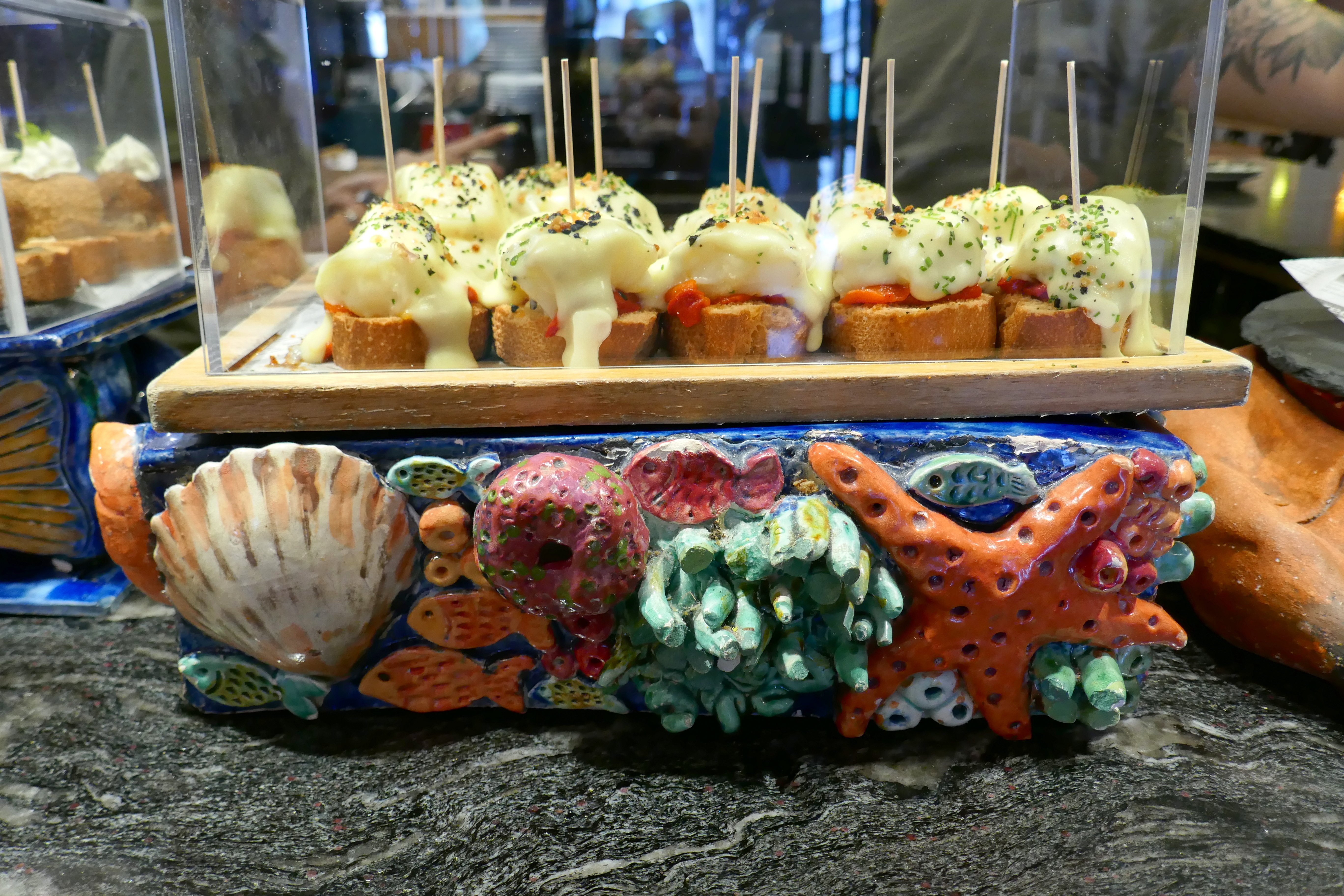
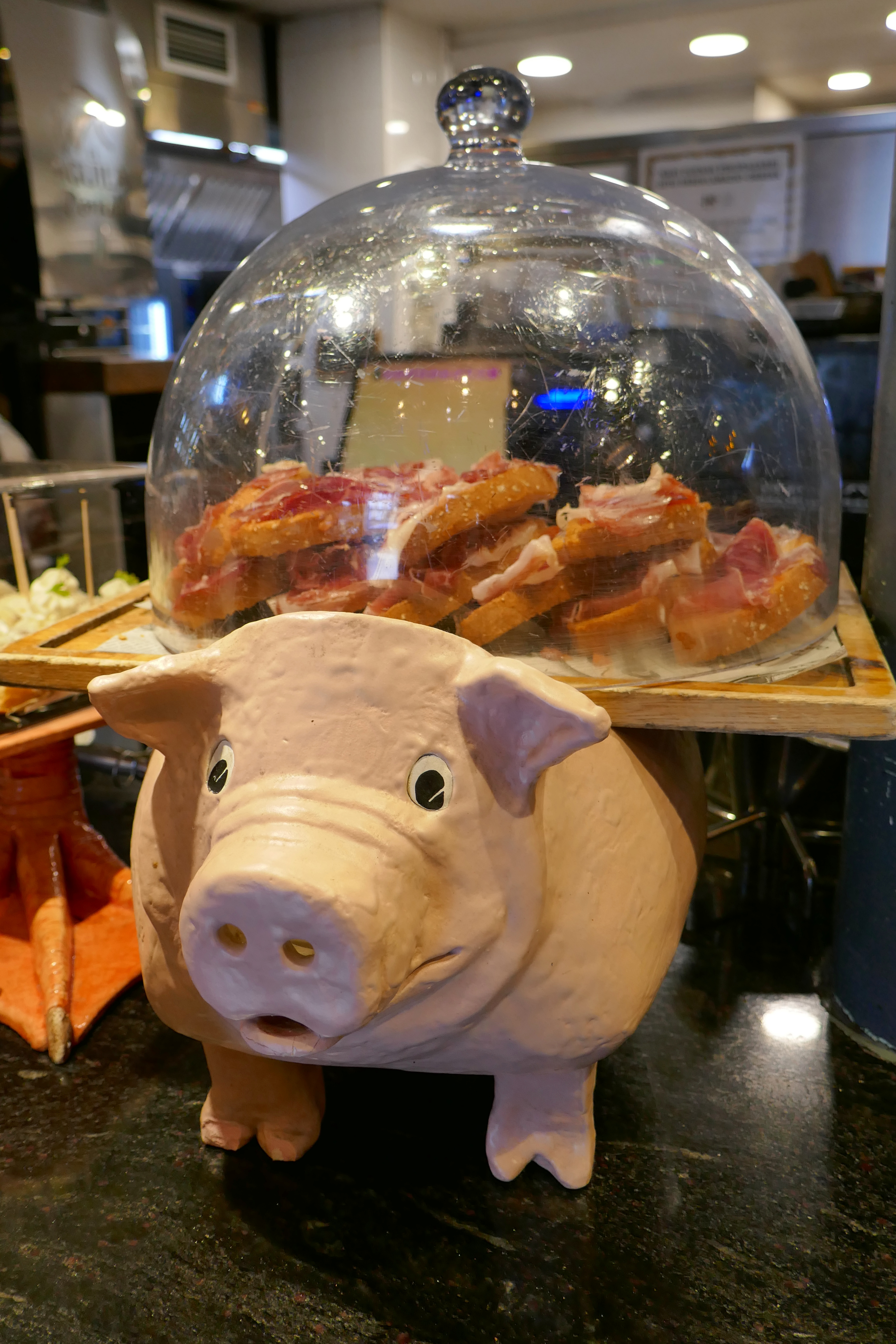
Our favorite pintxos presentation was at La Olla, in Plaza Nueva. Displaying their pintxos in themes, the fish pintxos were displayed on a ceramic whale, the other seafood was lined up on an underwater scene, and the pork pintxos sat atop a pig! It was adorable, yet practical for us, especially since we avoid eating red meat when possible and prefer seafood. We could just point to the ones we wanted.
These pintxos were enjoyed at a bar near our hotel.
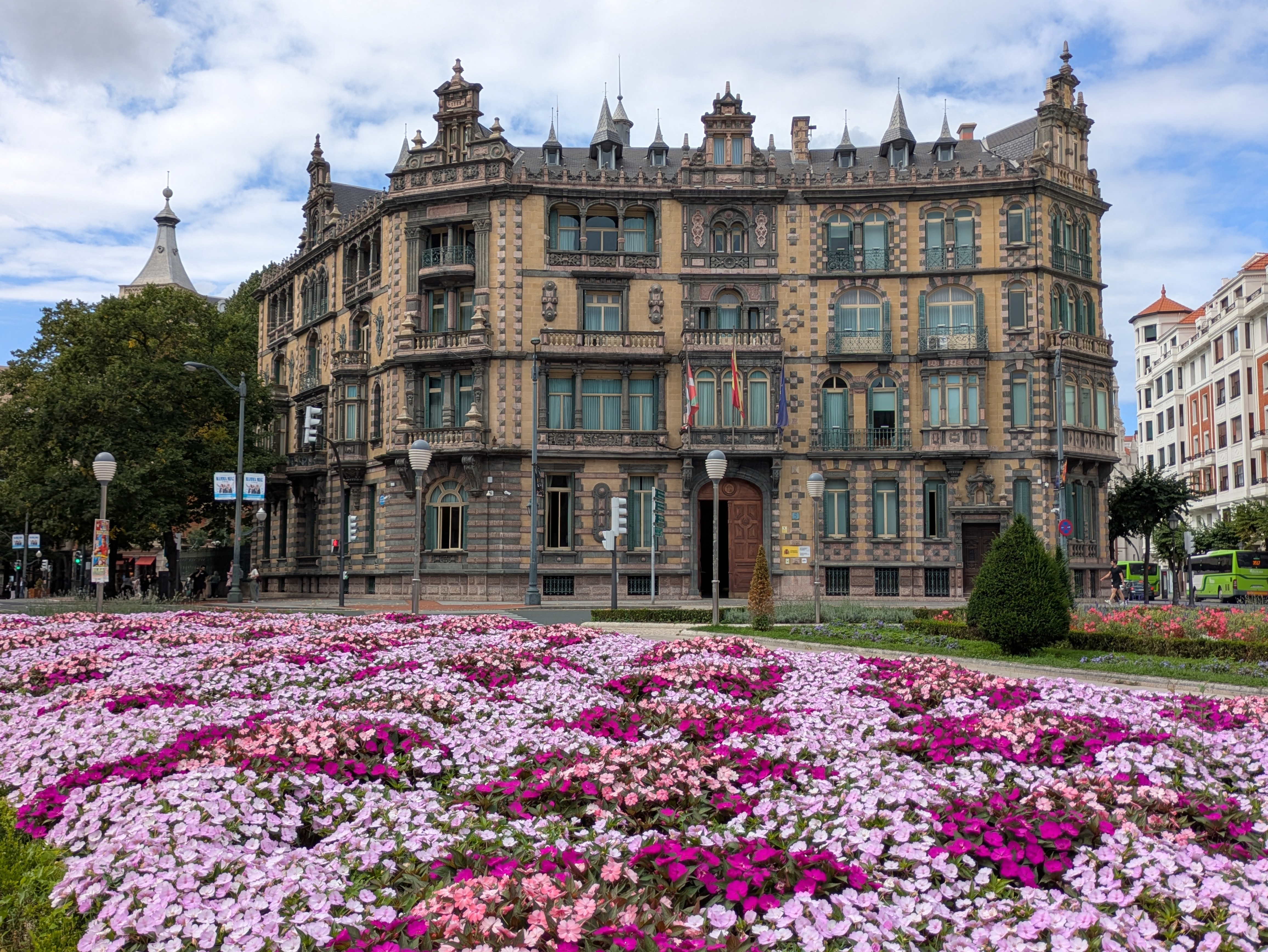
More scenes from around Bilbao:
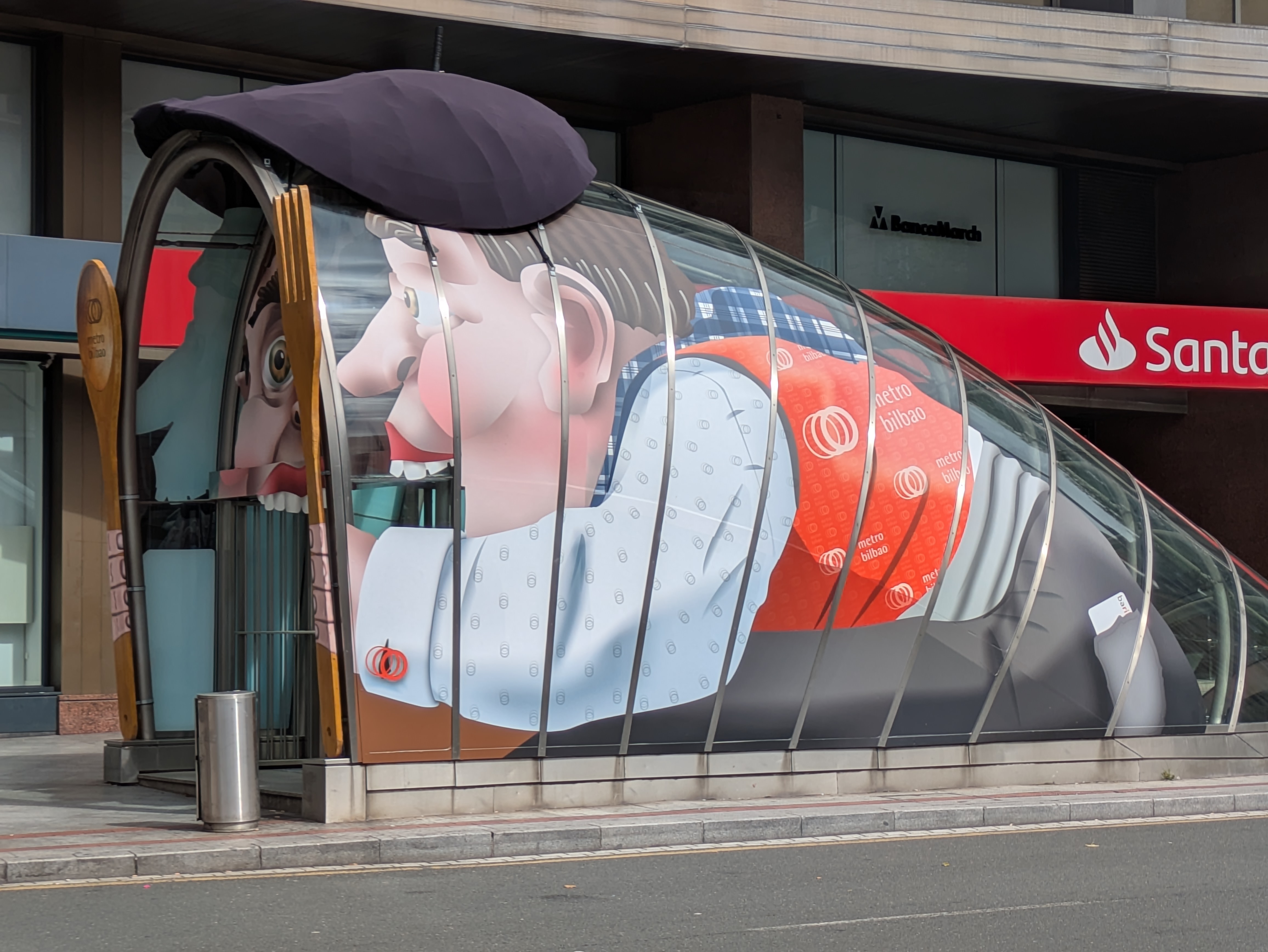
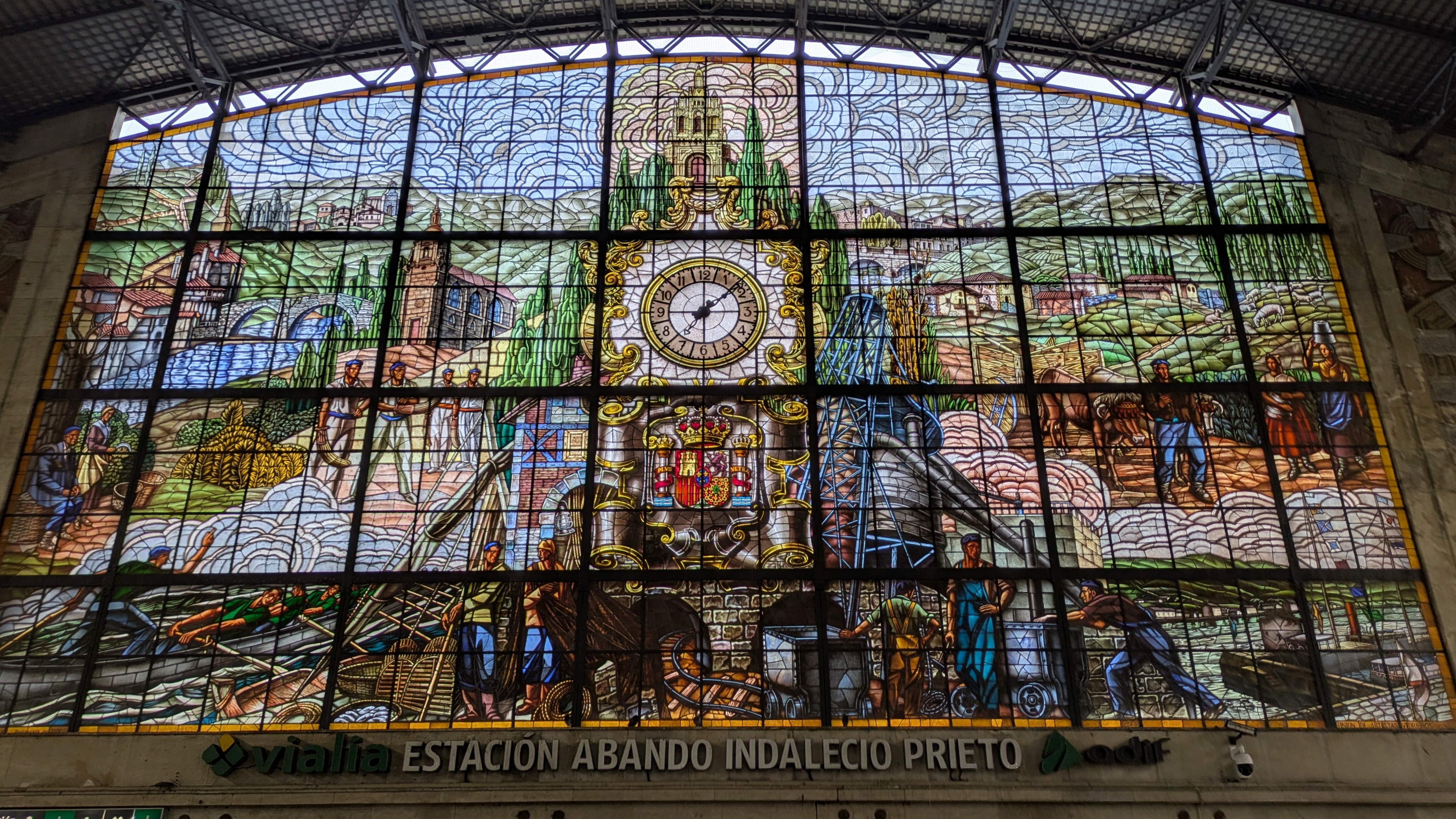
The creative entrance to the subway– CUTE!The train station’s incredible stained glass window was designed in 1948 by the celebrated painter Caspar Montes Iturrioz. It comprises 301 pieces of glass and is about 48 feet by 33 feet.
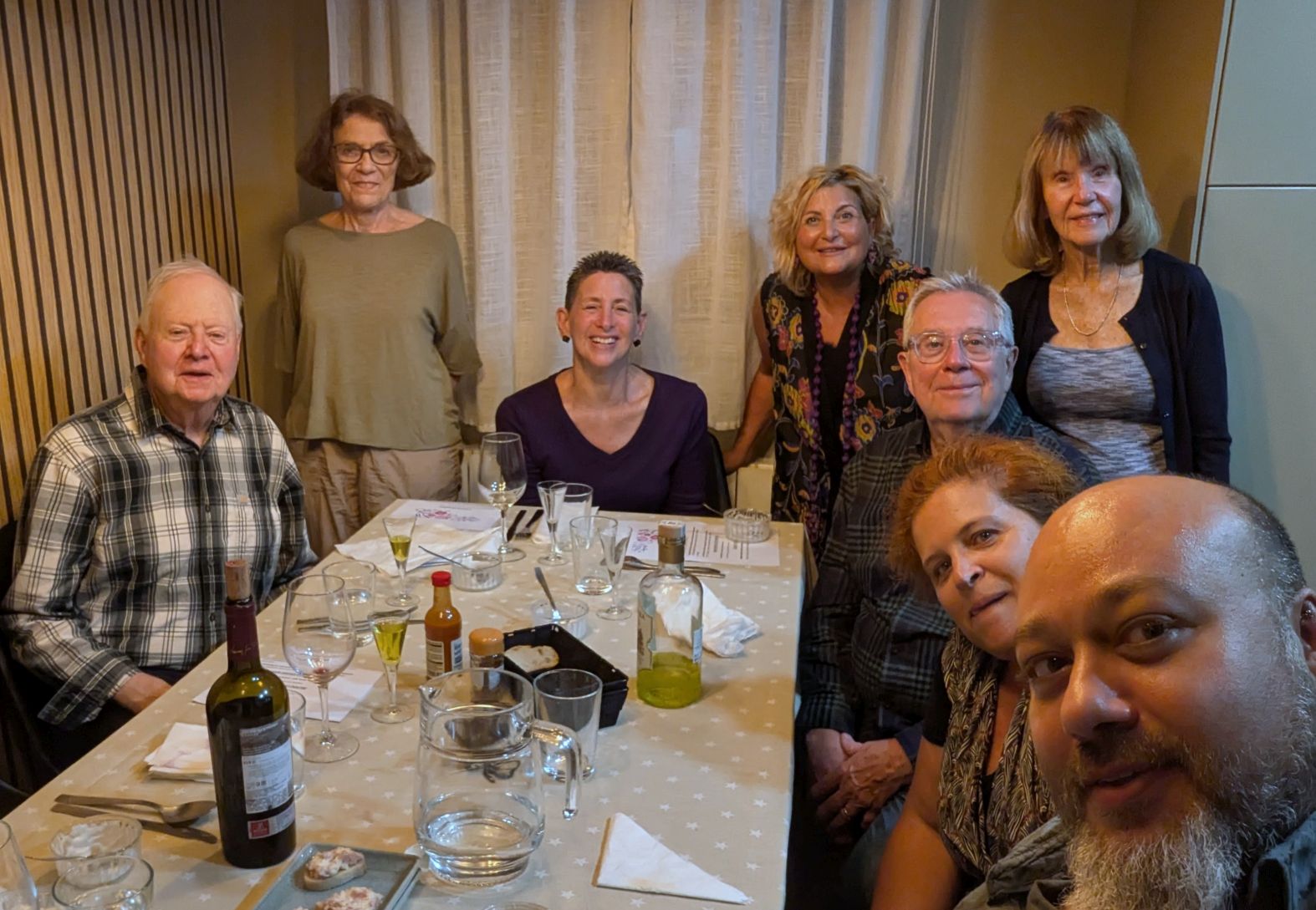
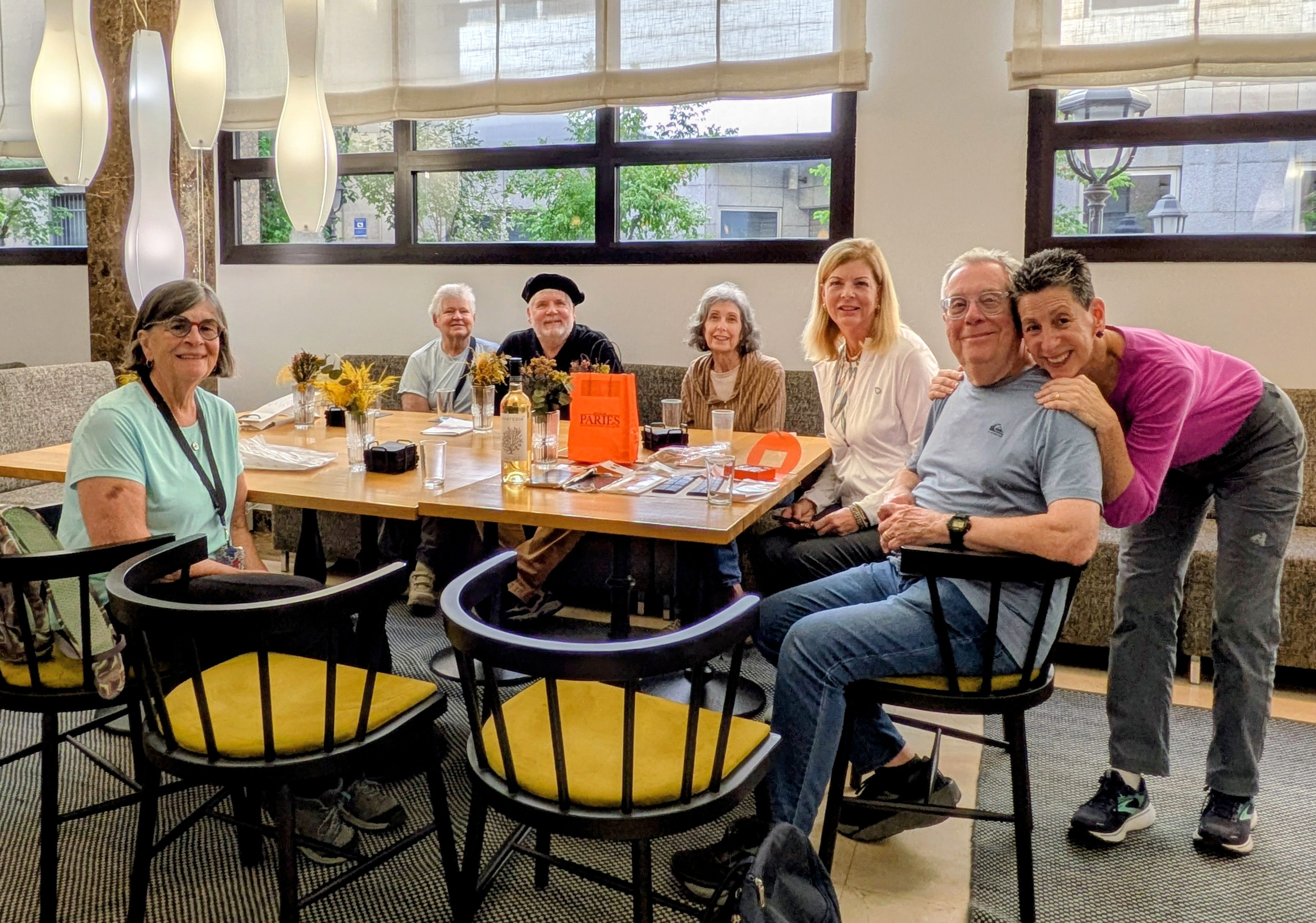
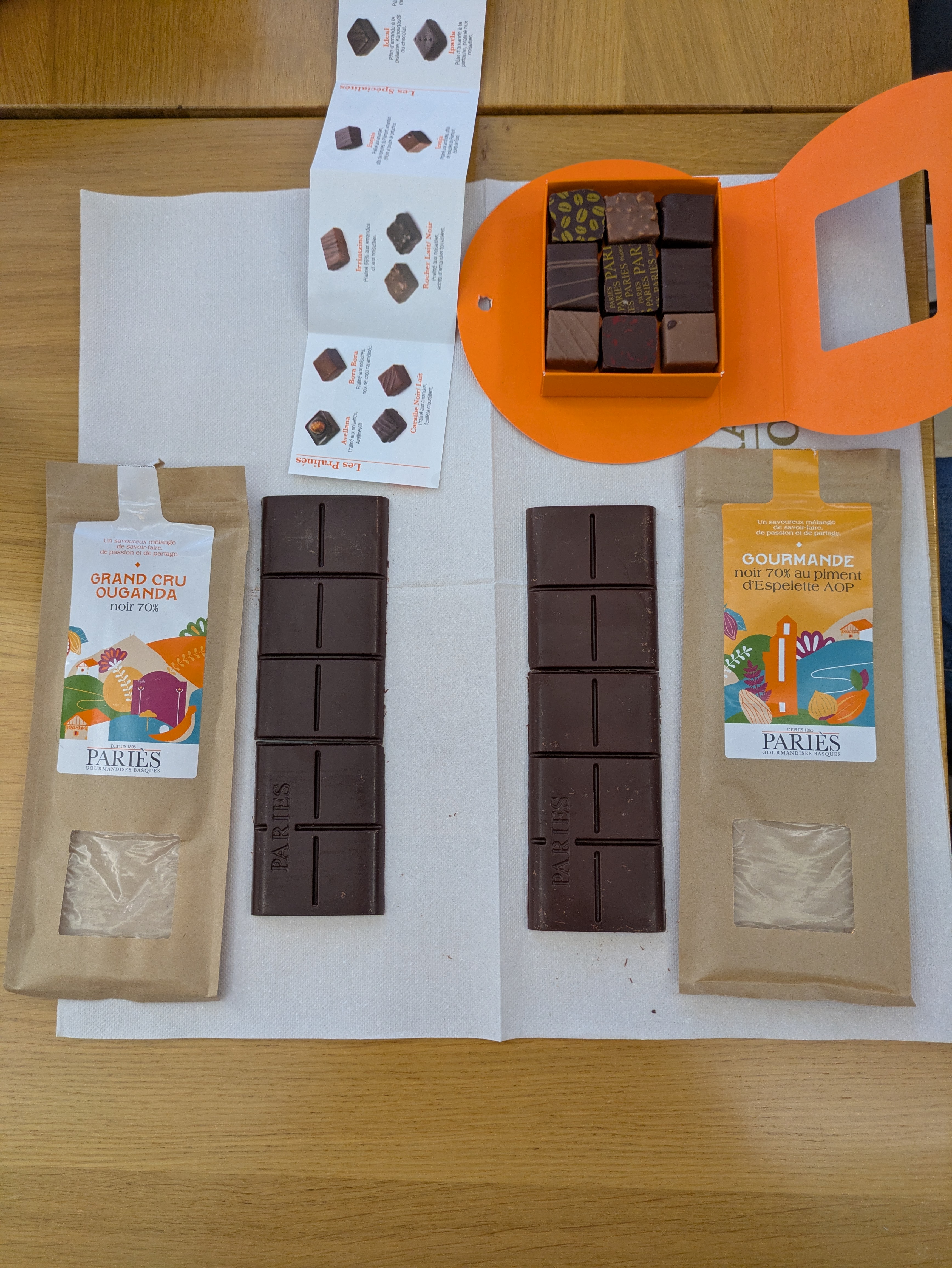
The seven of us on Tom’s pre-trip extension met in the hotel lobby to enjoy the wine and chocolate he gifted us.
Bruce and I found Bilbao, listed in the top ten most walkable cities, to be easy to navigate on foot, and very enjoyable!
SOUTHWEST FRANCE, NORTHERN SPAIN & PORTUGAL #9: GUERNICA, THE BASQUE COUNTRYSIDE, AND A HOME-HOSTED DINNER
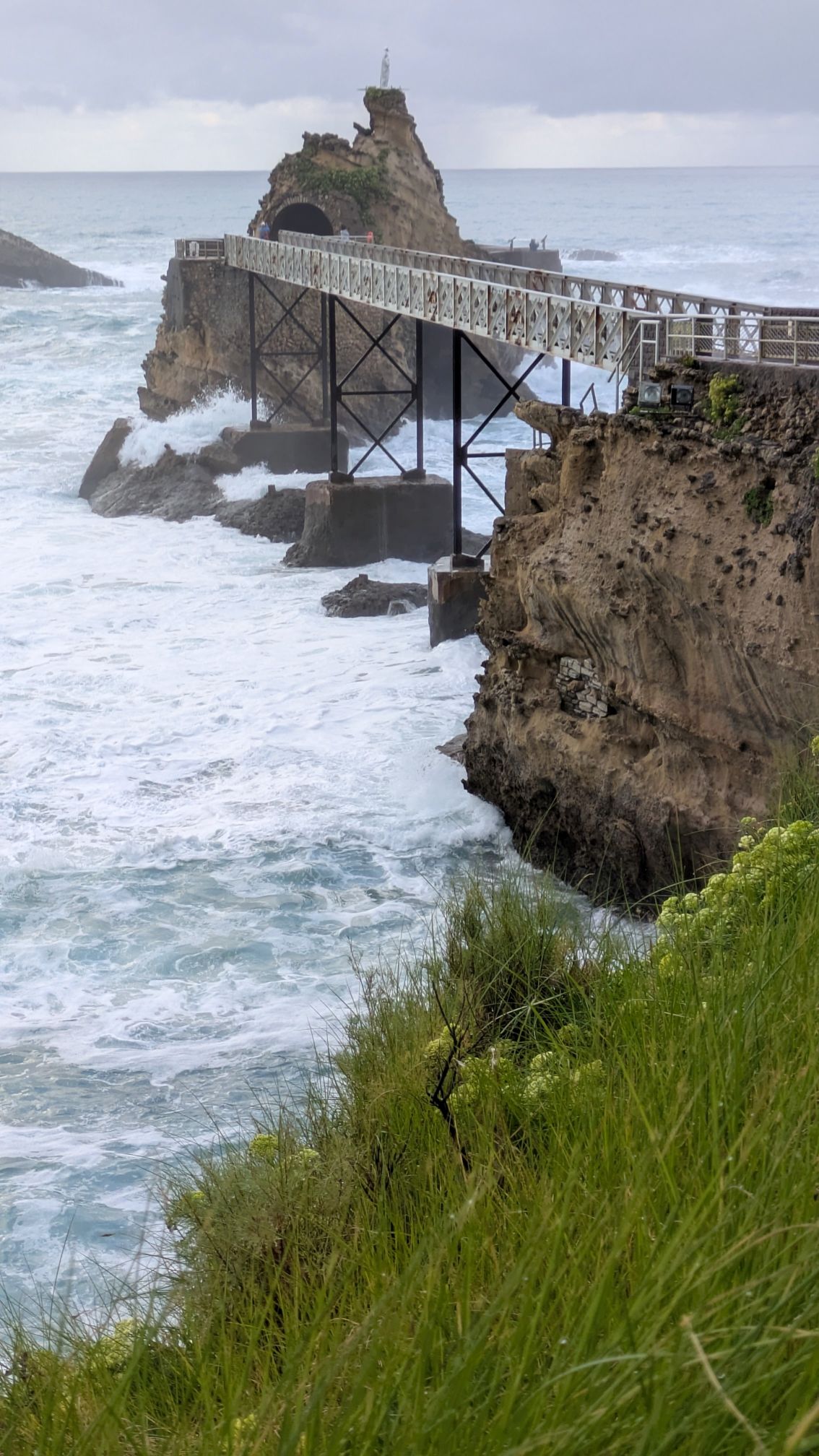
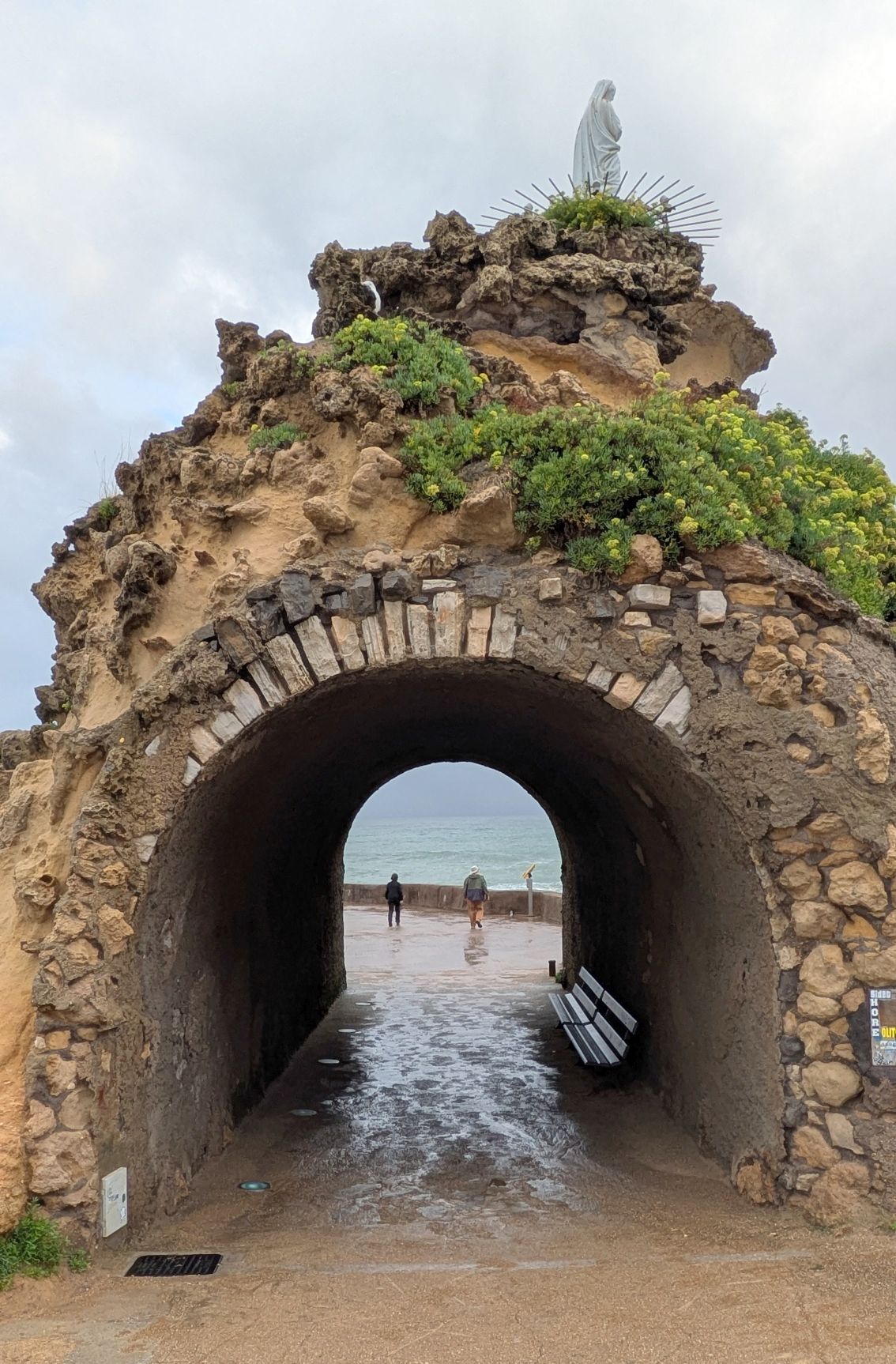
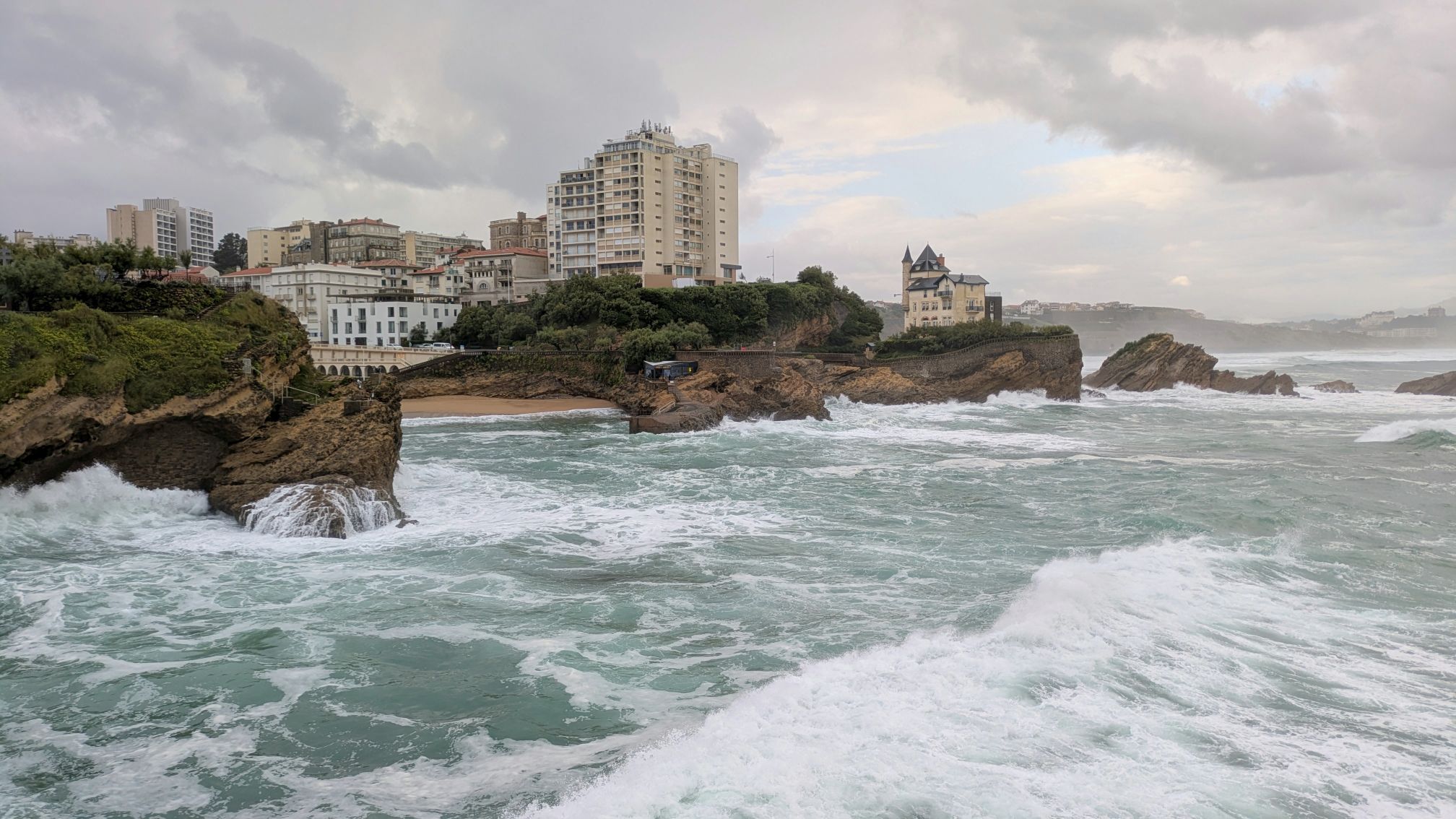
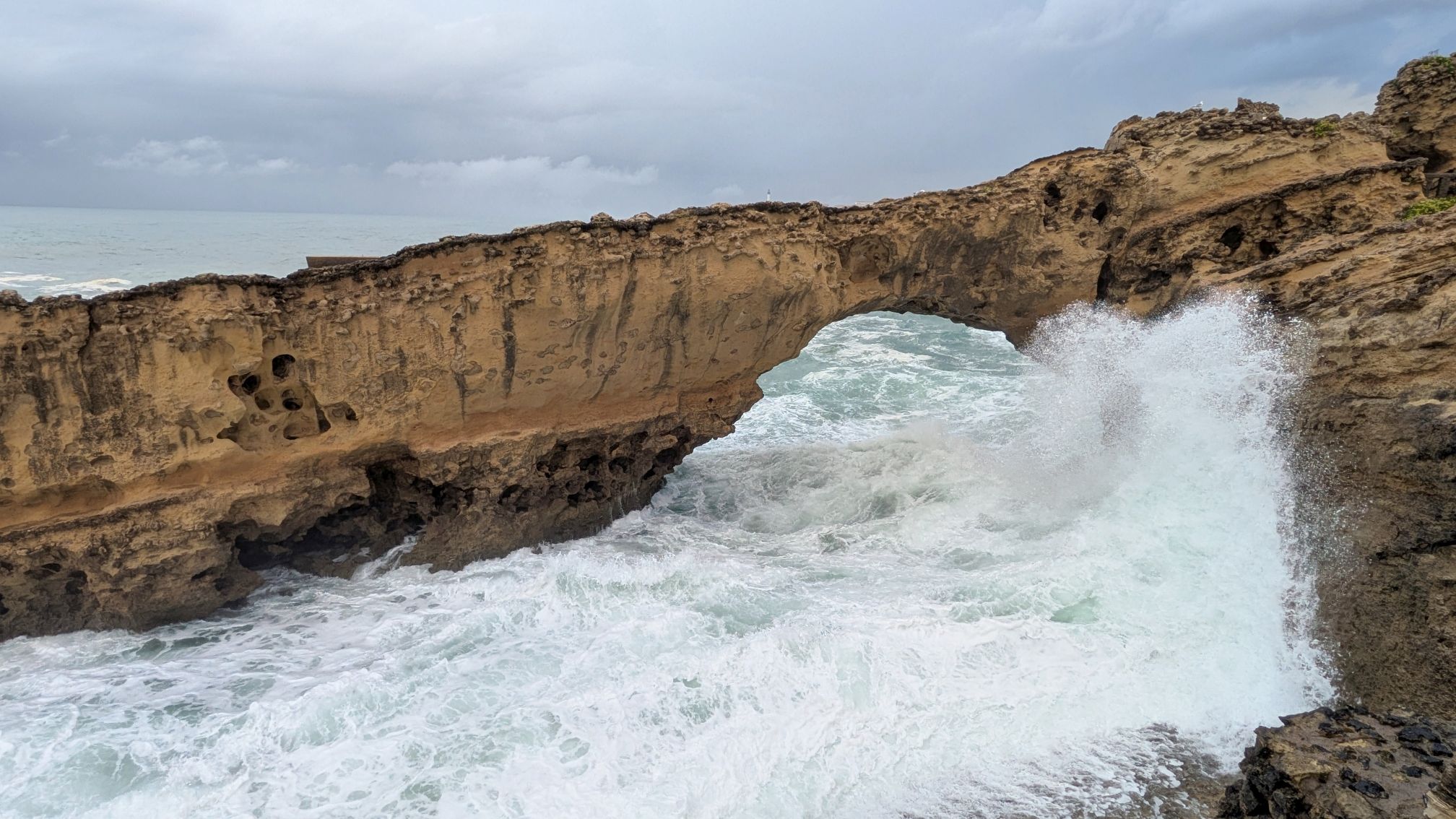
The last day of our pre-trip extension began as a rainy one, so our stops along the coast of Biarritz and Bay of Biscay were a bit of a bust at first and we missed out on what would have been beautiful views. Still, the tumultuous seas and dark skies were alluring in their own way, and I found them intriguing to photograph. Once I was out on the old wood-slat pier looking down on the waves crashing against the rocks, I didn’t want to leave. I could have stood there watching for hours, it was so mesmerizing.
(For all photos, click on the image for a full screen view.)
Not leaving the pier with the rest of the group was a mistake though. A large wave came crashing in, streams of water came rushing up through the slats of the pier and all over me. I was drenched! Thankfully, I was wearing quick drying travel pants, because I eventually dried out during the bus ride and while walking under the sunny skies of Saint-Jean-de-Luz.
Shot through the wet bus window while heading to our last stop in Biarritz
Biarritz is a surfing town, known for its huge waves (the second largest wave in Europe) and professional surfing tournaments.
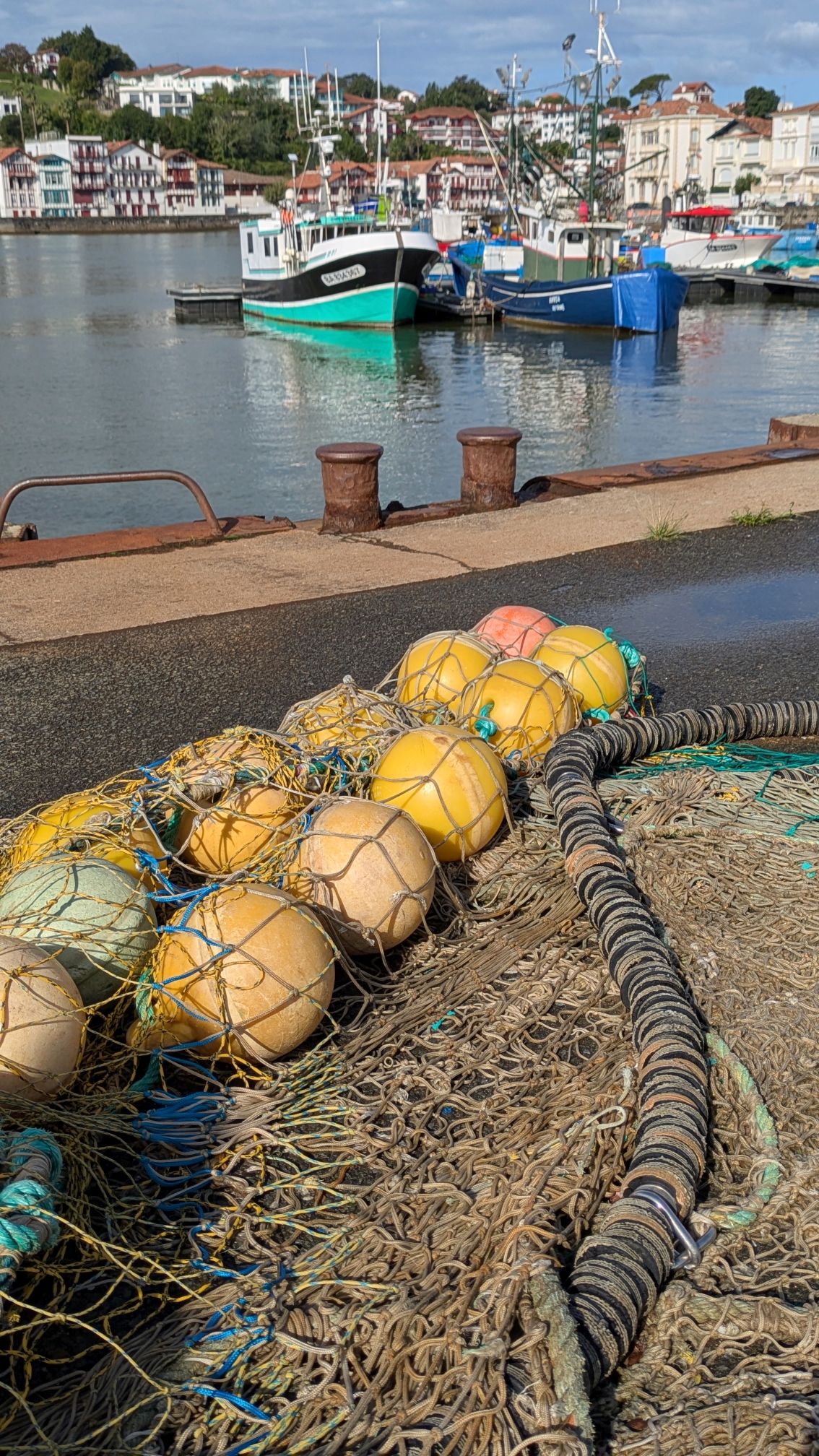
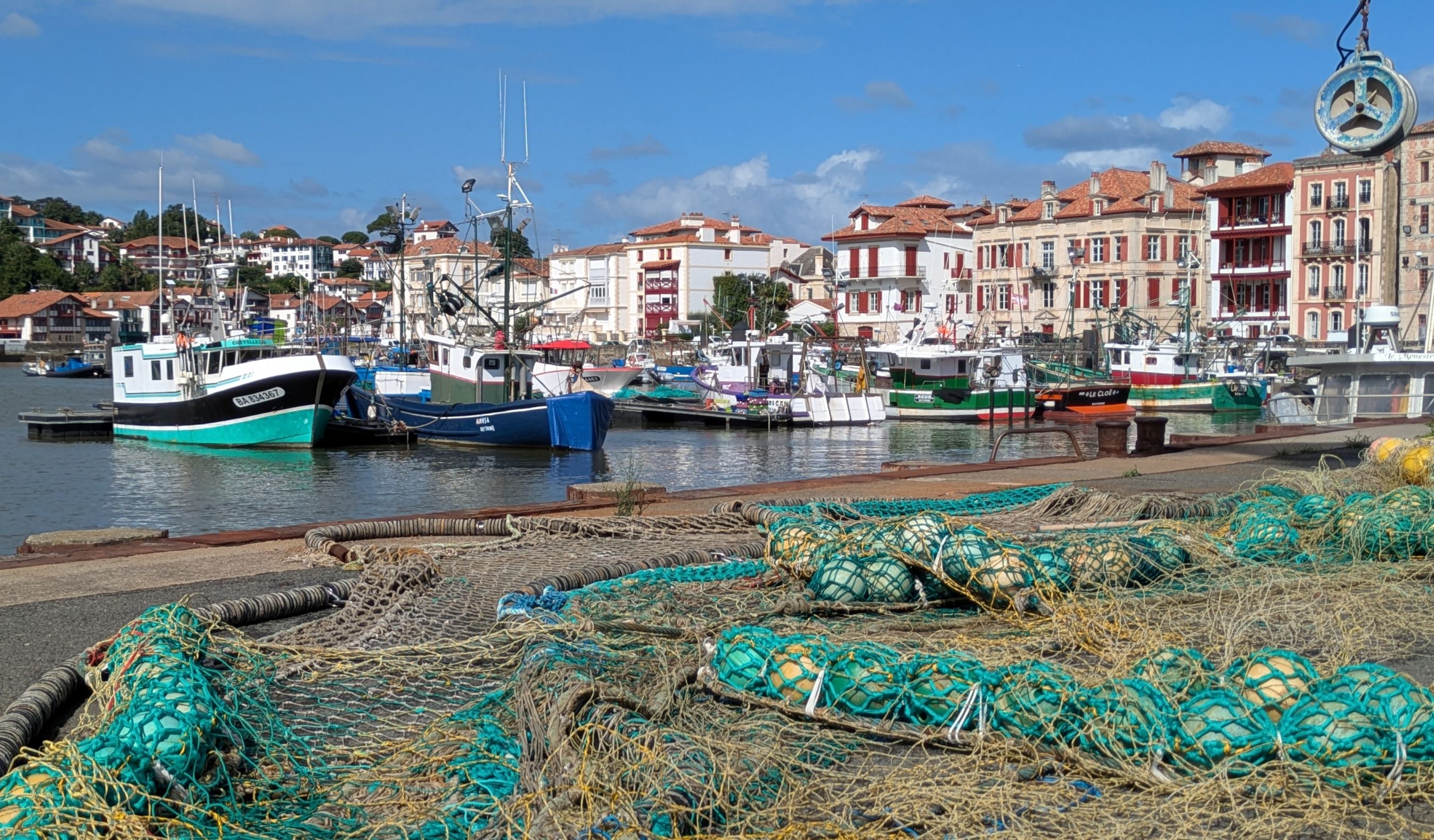
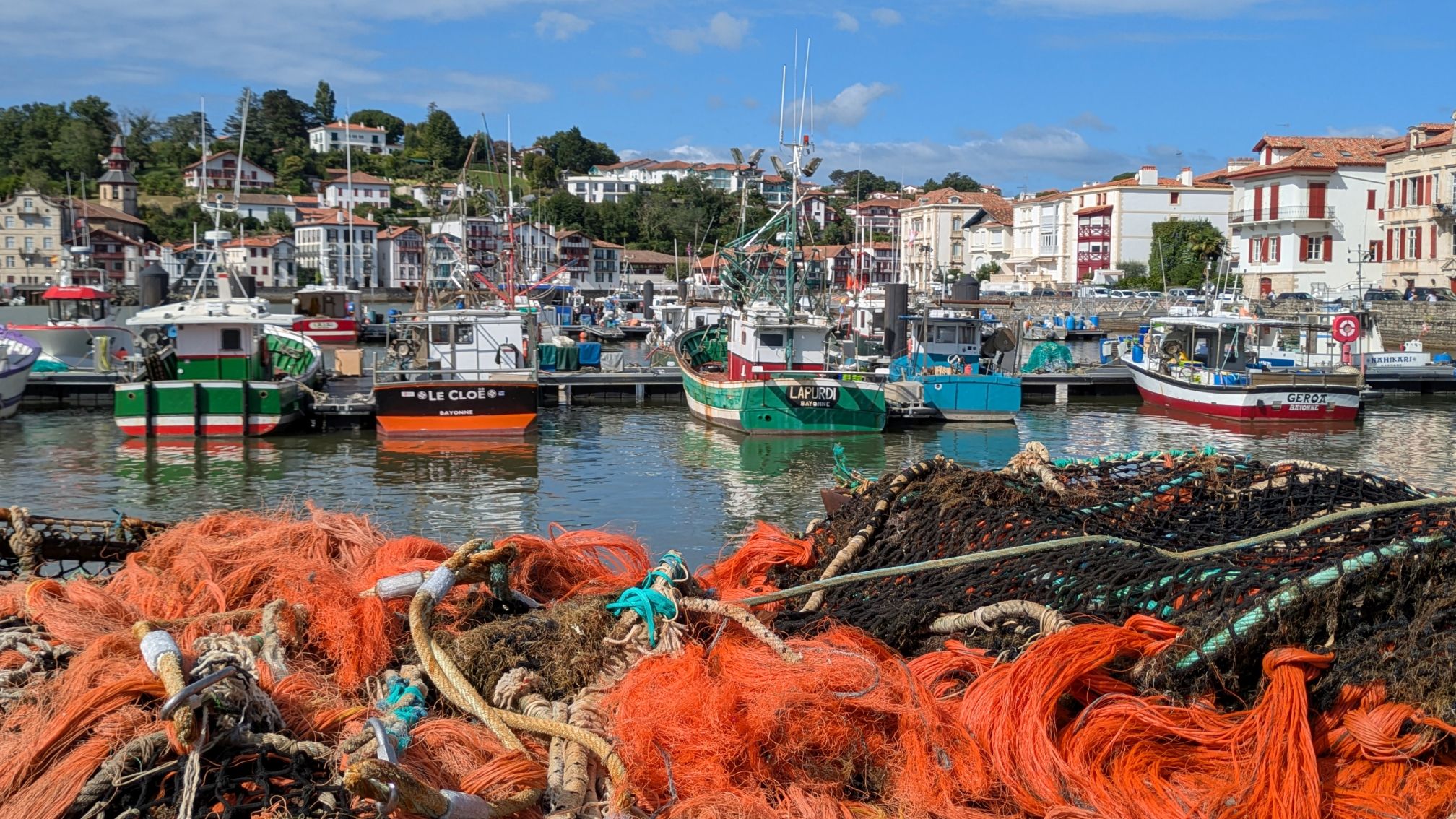
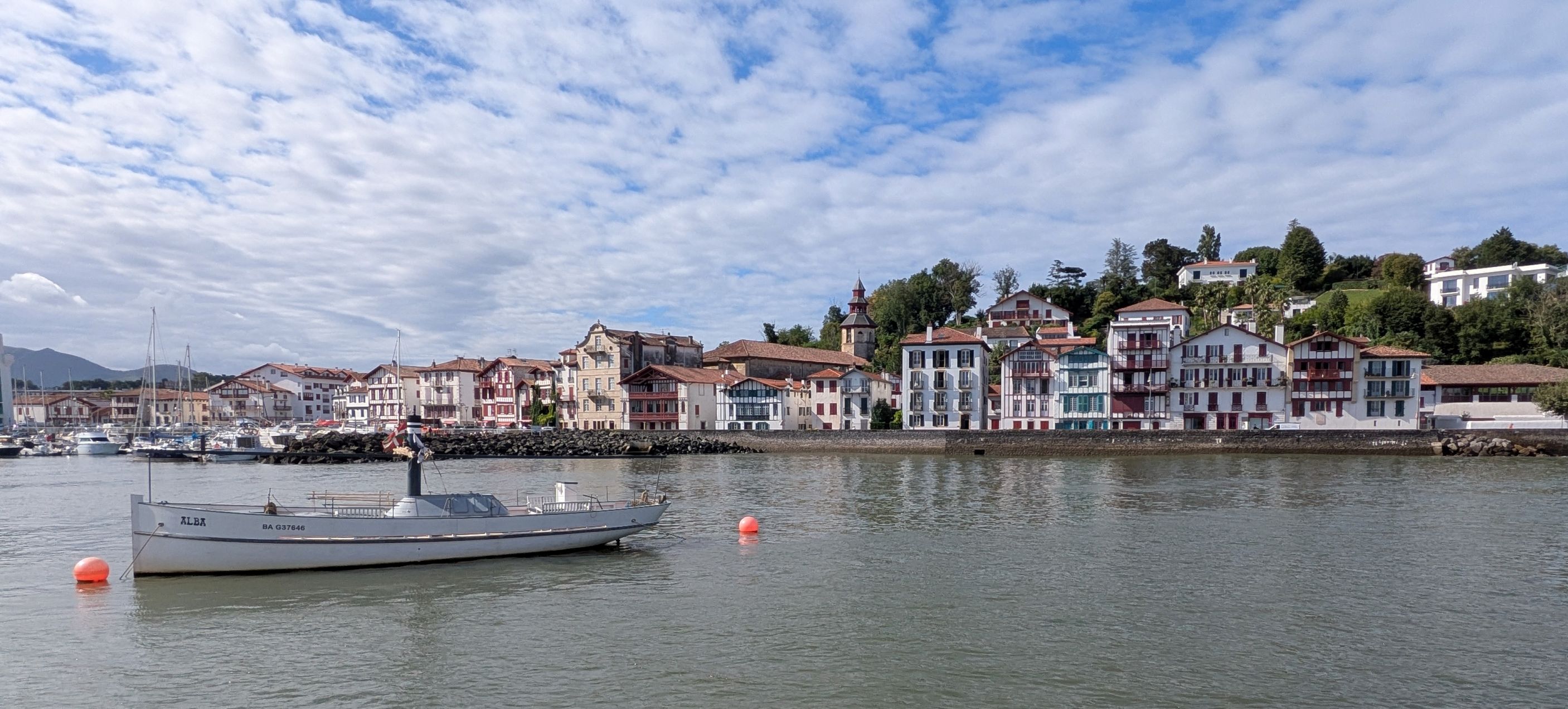
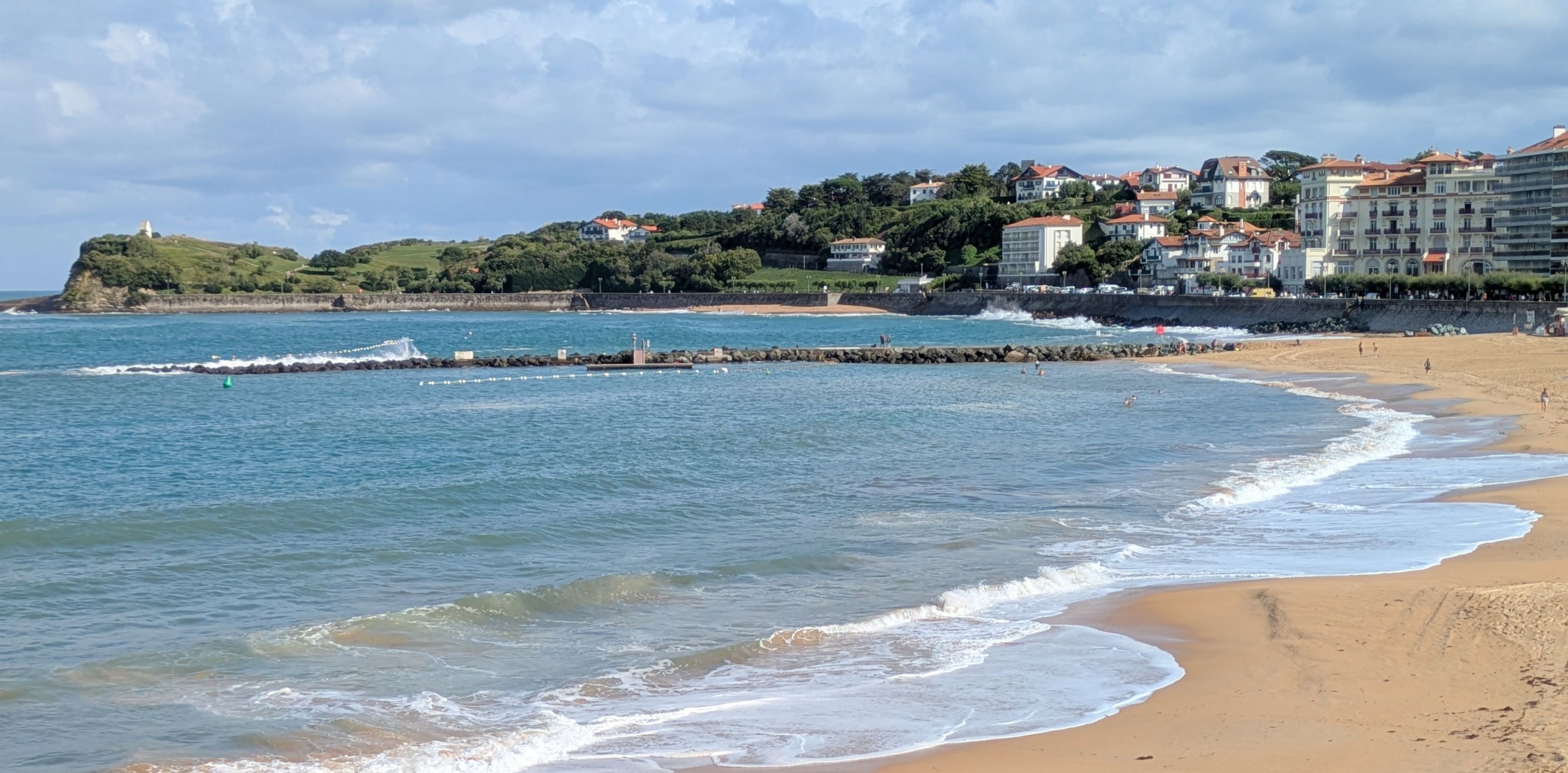
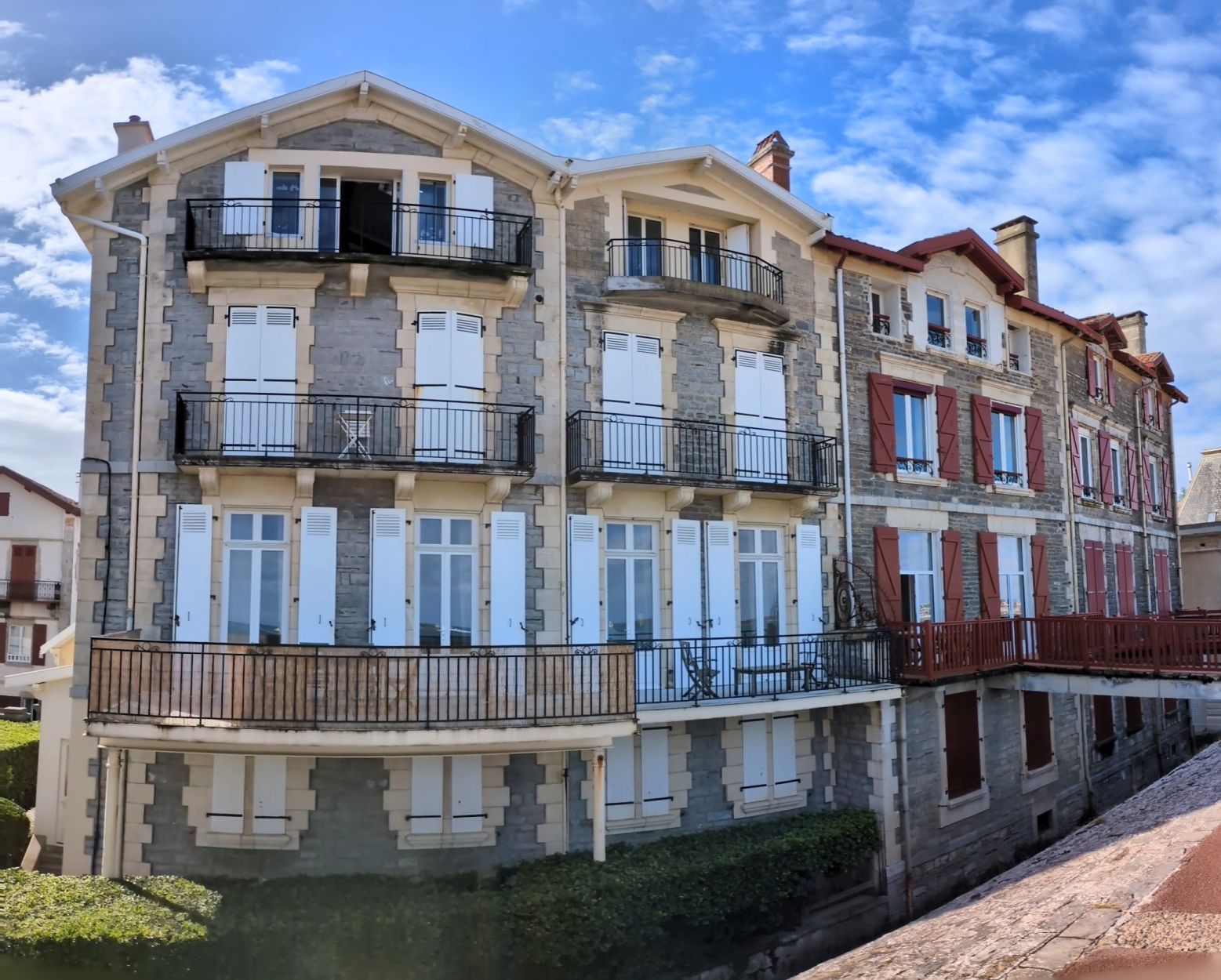
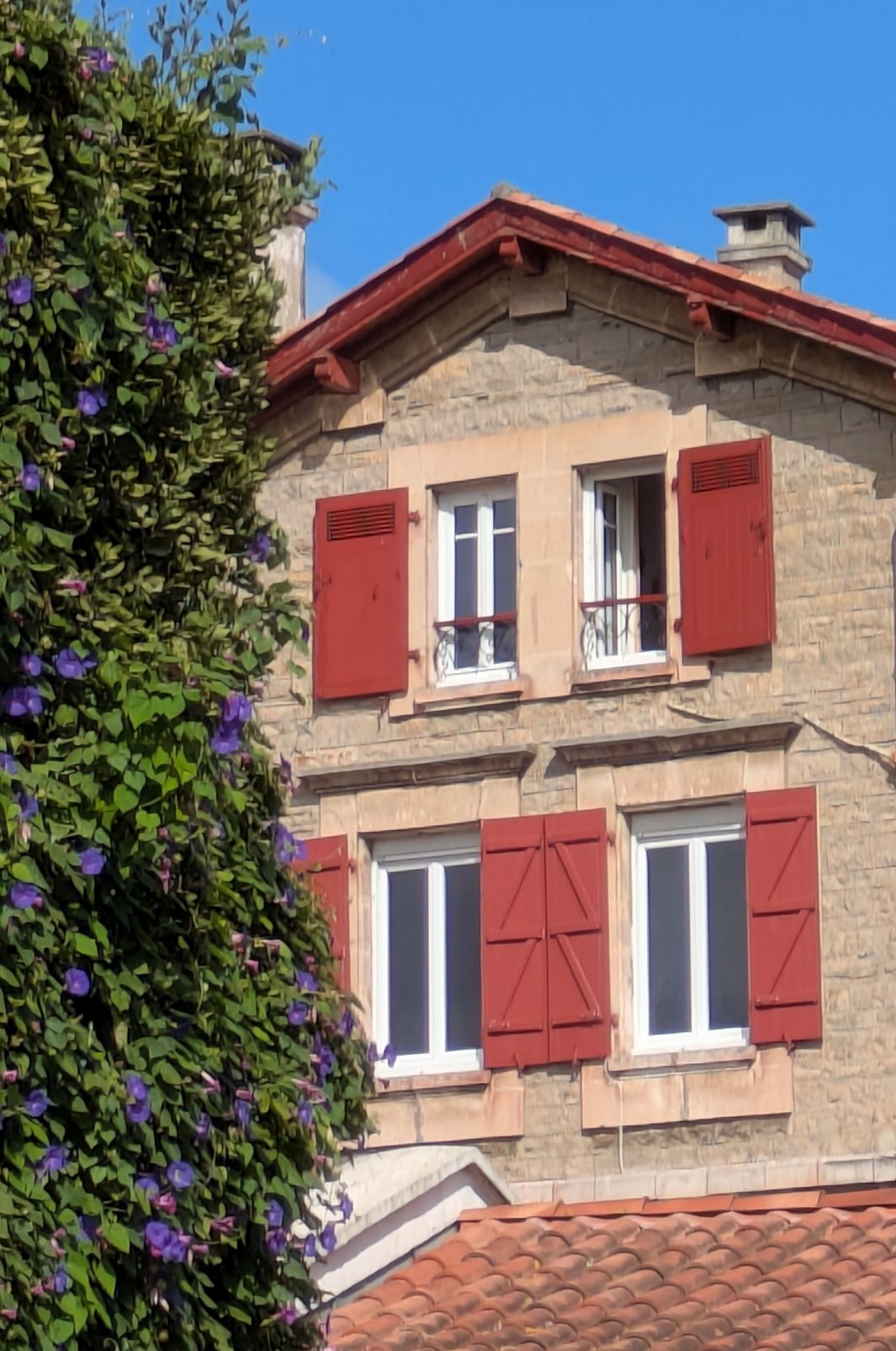
The picturesque fishing village and resort of Saint-Jean-de-Luz was a wonderful place for photography and taking in the views of the harbor and the beachfront of Bay of Biscay. Colorful half-timbered Basque homes added to the charm.
Beachfront homes:
Scenes around town:
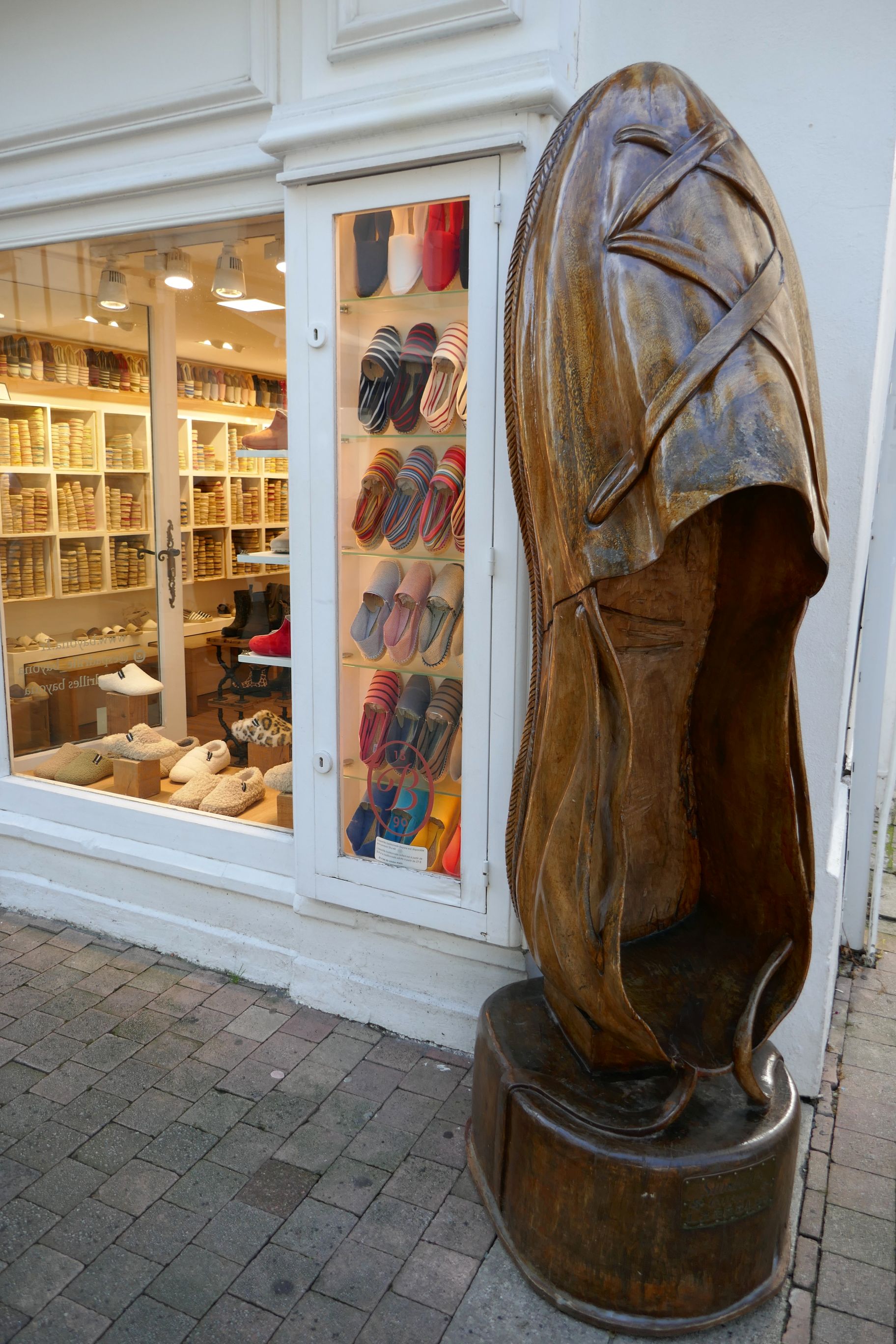
Biarritz is known for its striped and nautical fabrics…
Bayonne, like the other towns we visited in southwestern France, is in the Basque Country. Its history stretches back more than 2,000 years, so it is full of culture, beautiful architecture.
Built along the intersection of two rivers, it is located quite close to the Spanish border and has a population of more than 53,000 people. My favorite part of its history is that it became the unofficial chocolate capital of France in the 17th century. Cacao beans were first brought home to Spain by the Spanish colonists upon their return from South America. Since Bayonne was right next door, they got in on the action when Jews fleeing the Spanish Inquisition relocated in nearby Bayonne and started producing chocolate. Back then, there were 60 chocolatiers that all worked together to grow the industry, but each one had its own specialty
Currently there are about ten high-end chocolatiers in town, including Chocolat Cazenave, which has been making chocolate since 1854. I enjoyed stopping in at a few of the chocolatiers to look at their beautiful creations but took a pass on purchasing their pricey masterpieces.
An interesting part of Bayonne’s history began in the 1930’s when the Basque people sought autonomy and started a separatist movement. Although it culminated in a statute of autonomy in 1936, Spain’s dictator, Francisco Franco, abolished it when he came in power in 1939. The struggle continued for another twenty years until a faction of the Basque’s National Party broke away and launched a campaign of terrorism against the Spanish central government, making Basque regionalism one of the most destabilizing forces in Spanish political life.
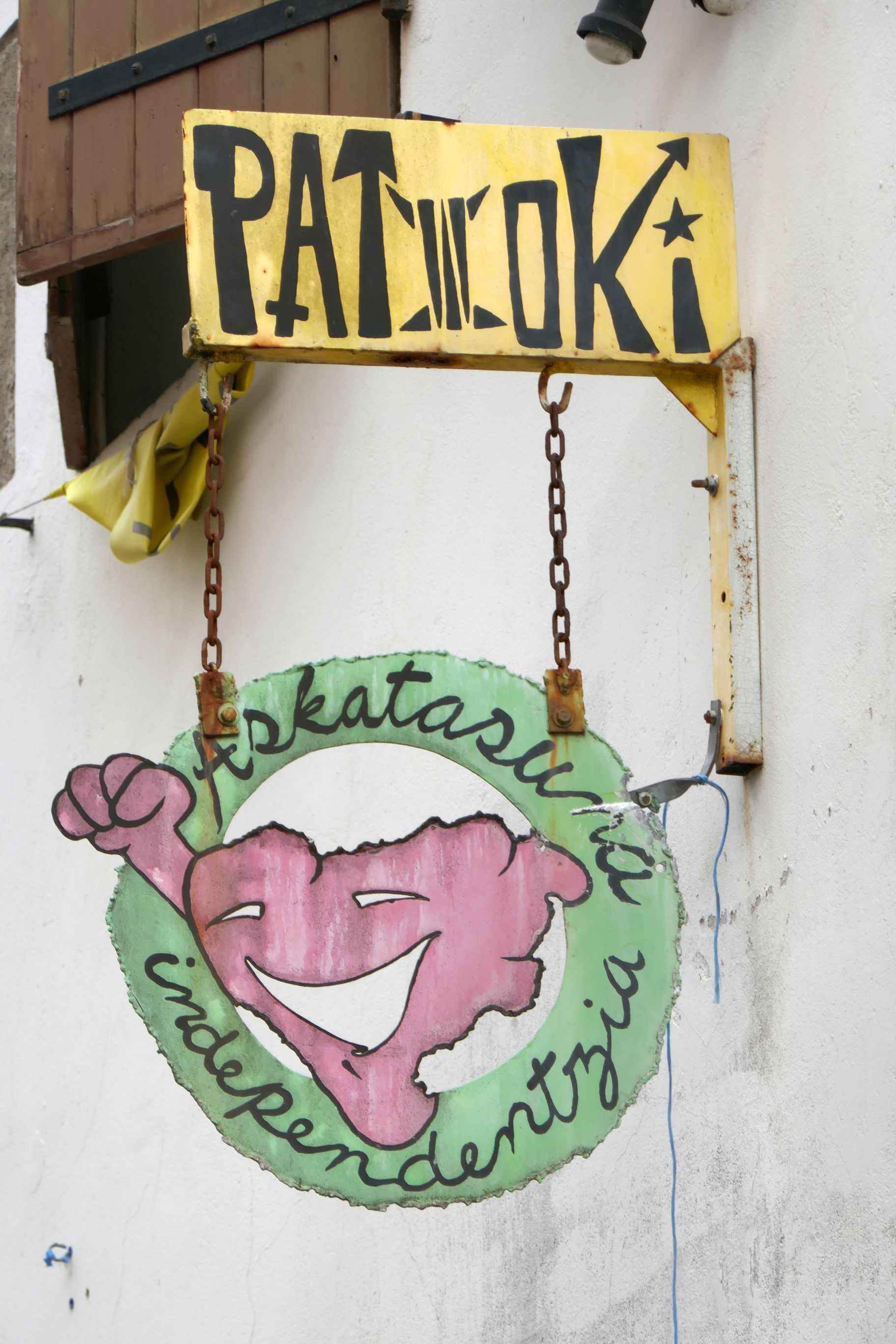
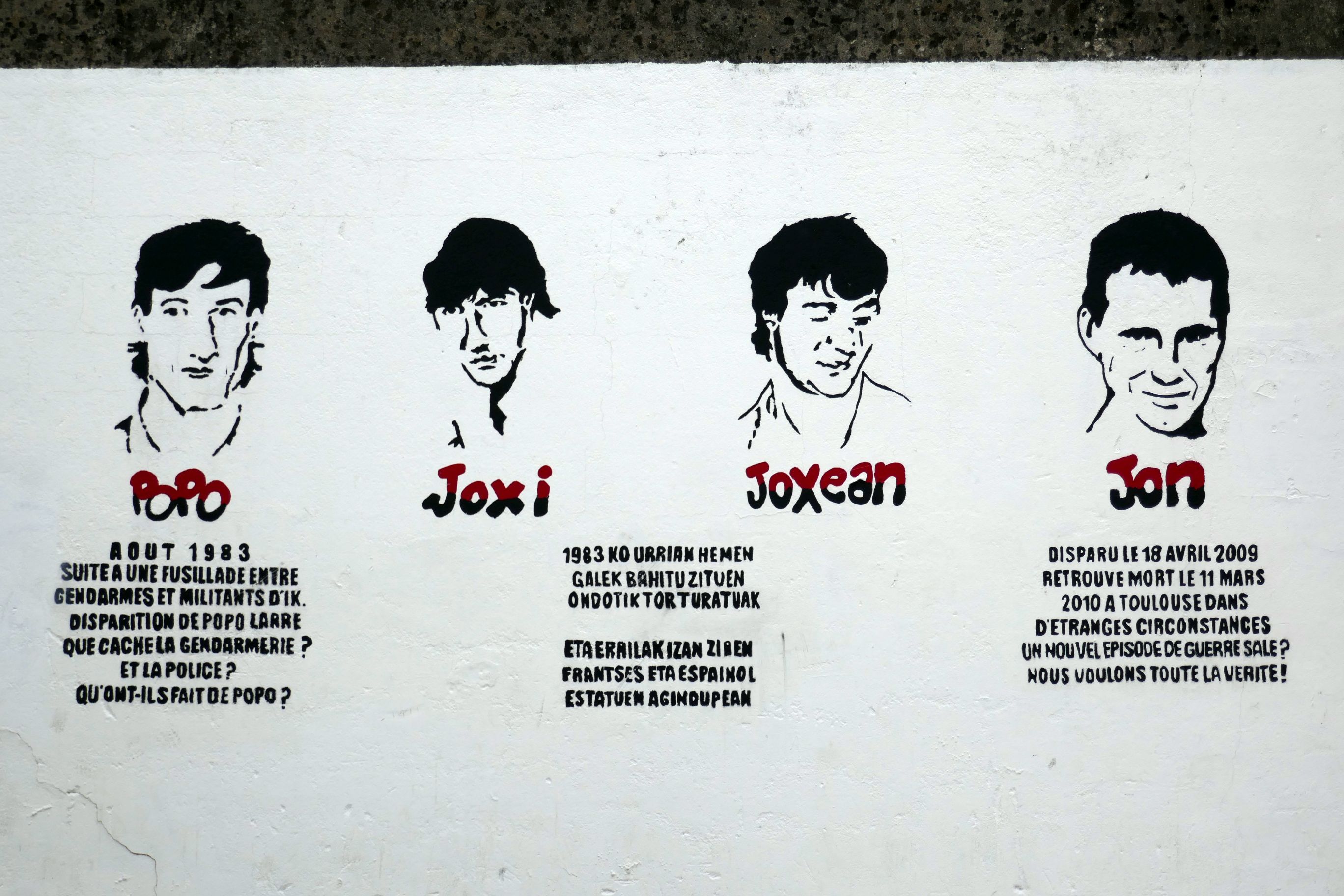
During our walking tour the morning following our arrival, we stopped by an ETA clubhouse and saw some of the political murals nearby, which were explained by Tom, our tour leader:
(For all photos, click on the image for a full screen view.)
Basque prisoners that were disappeared
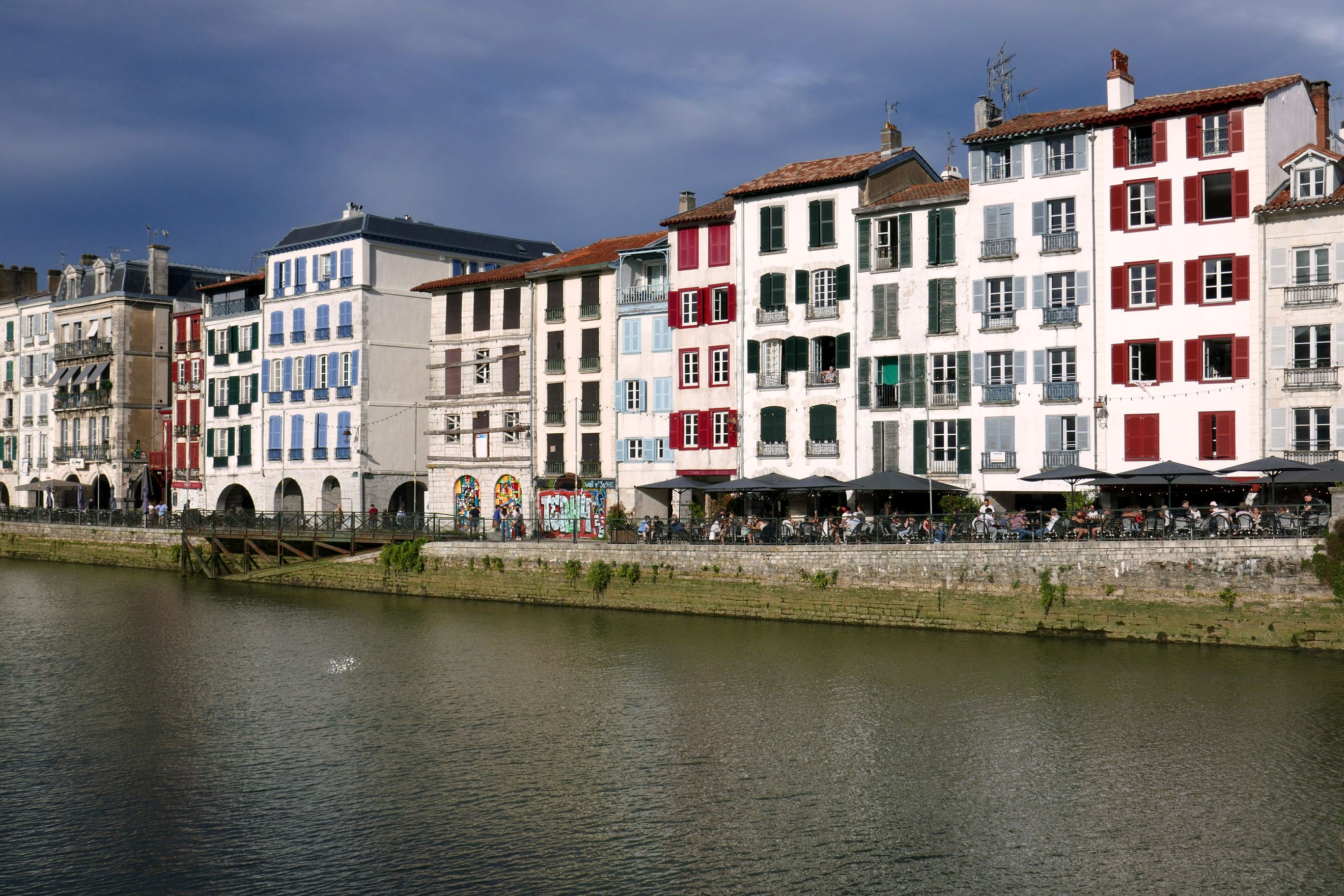
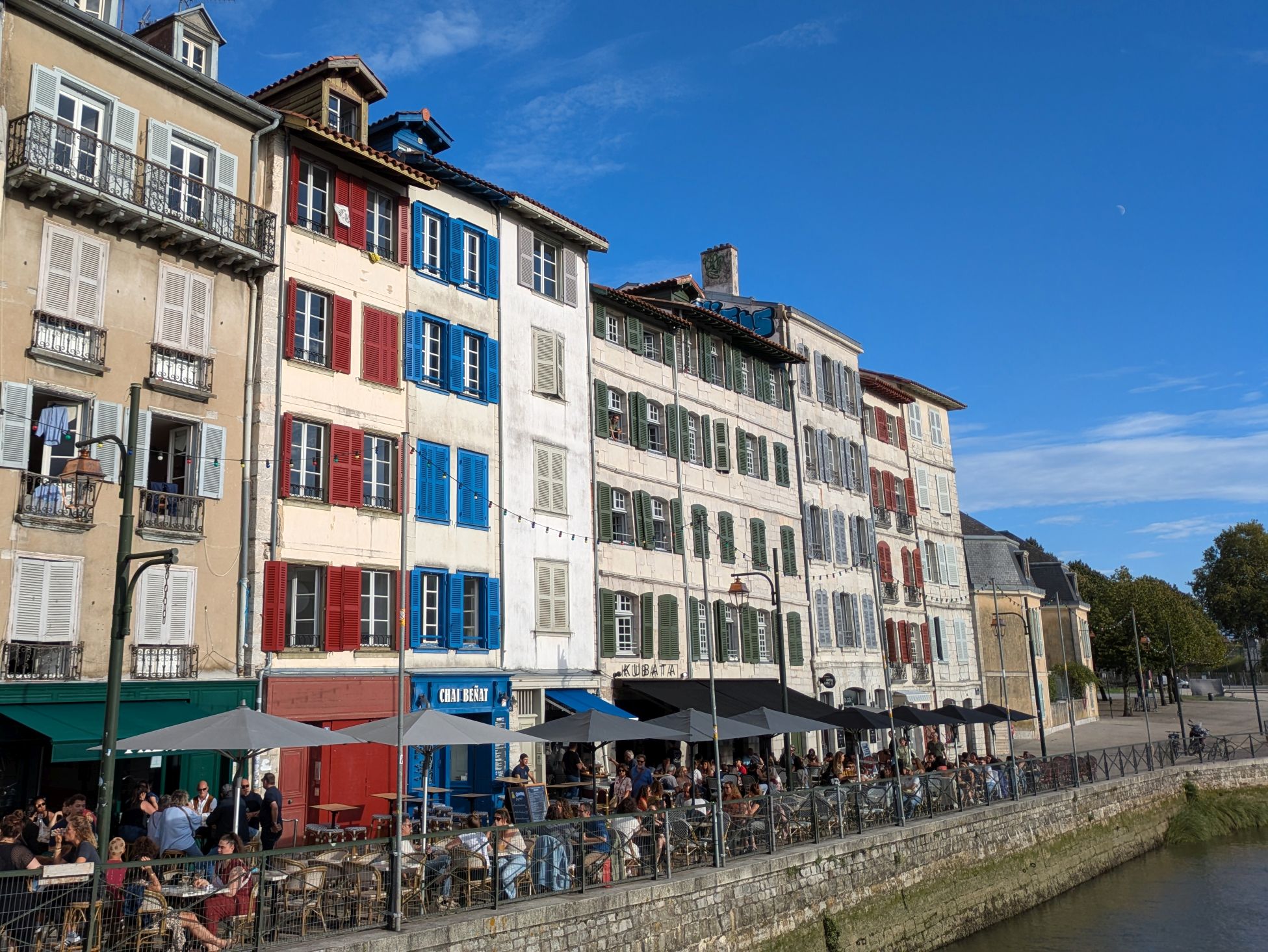
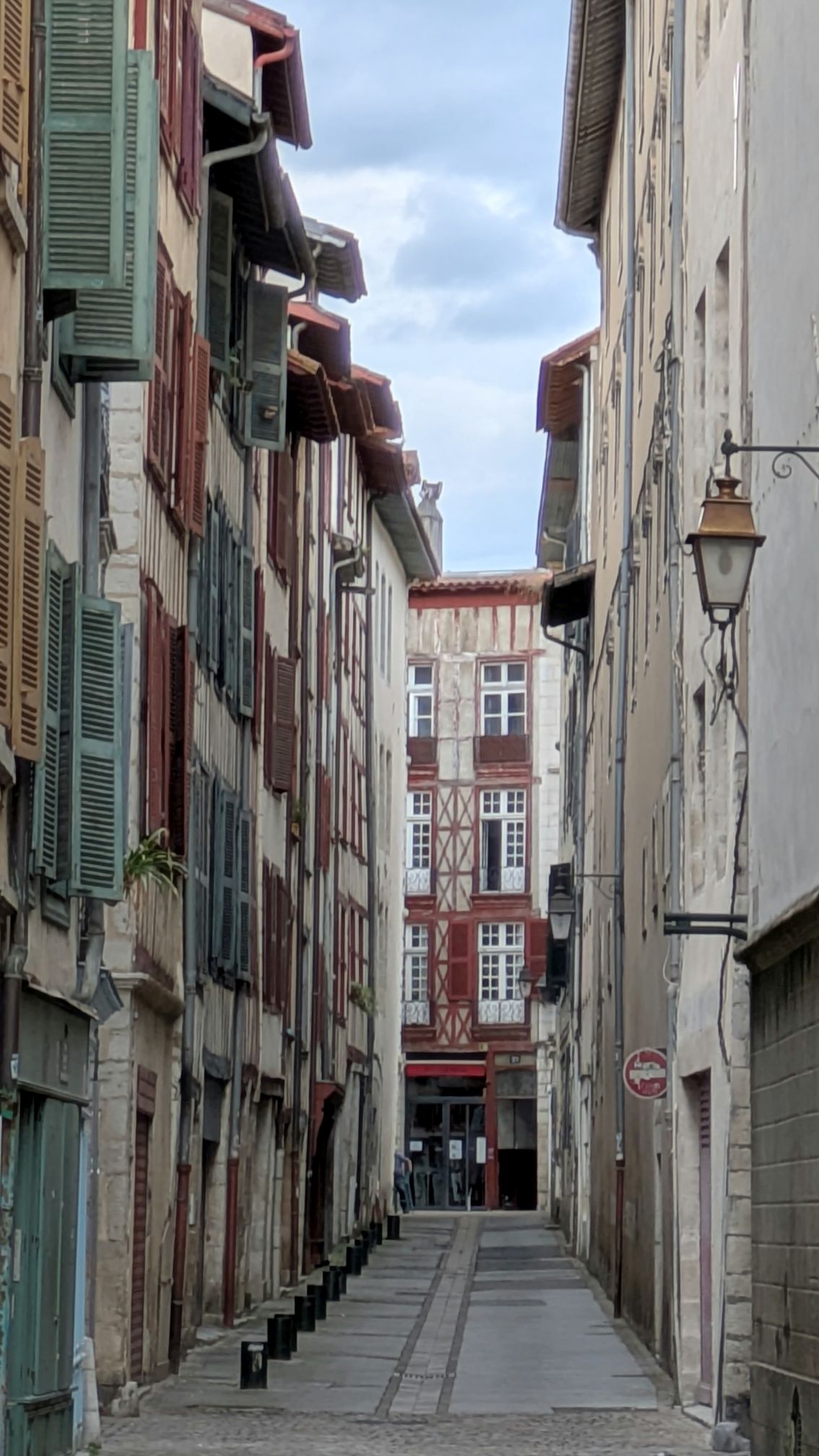
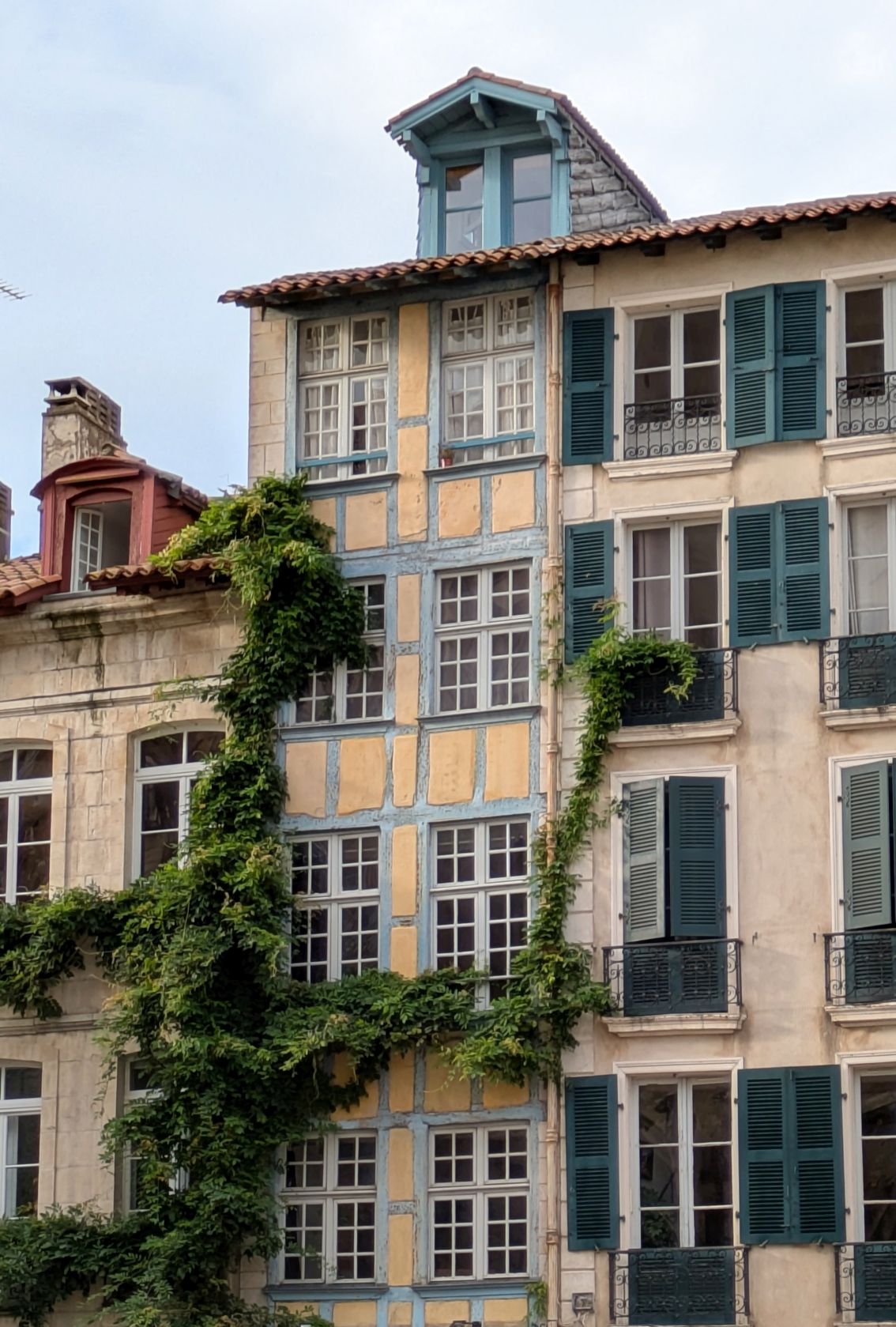
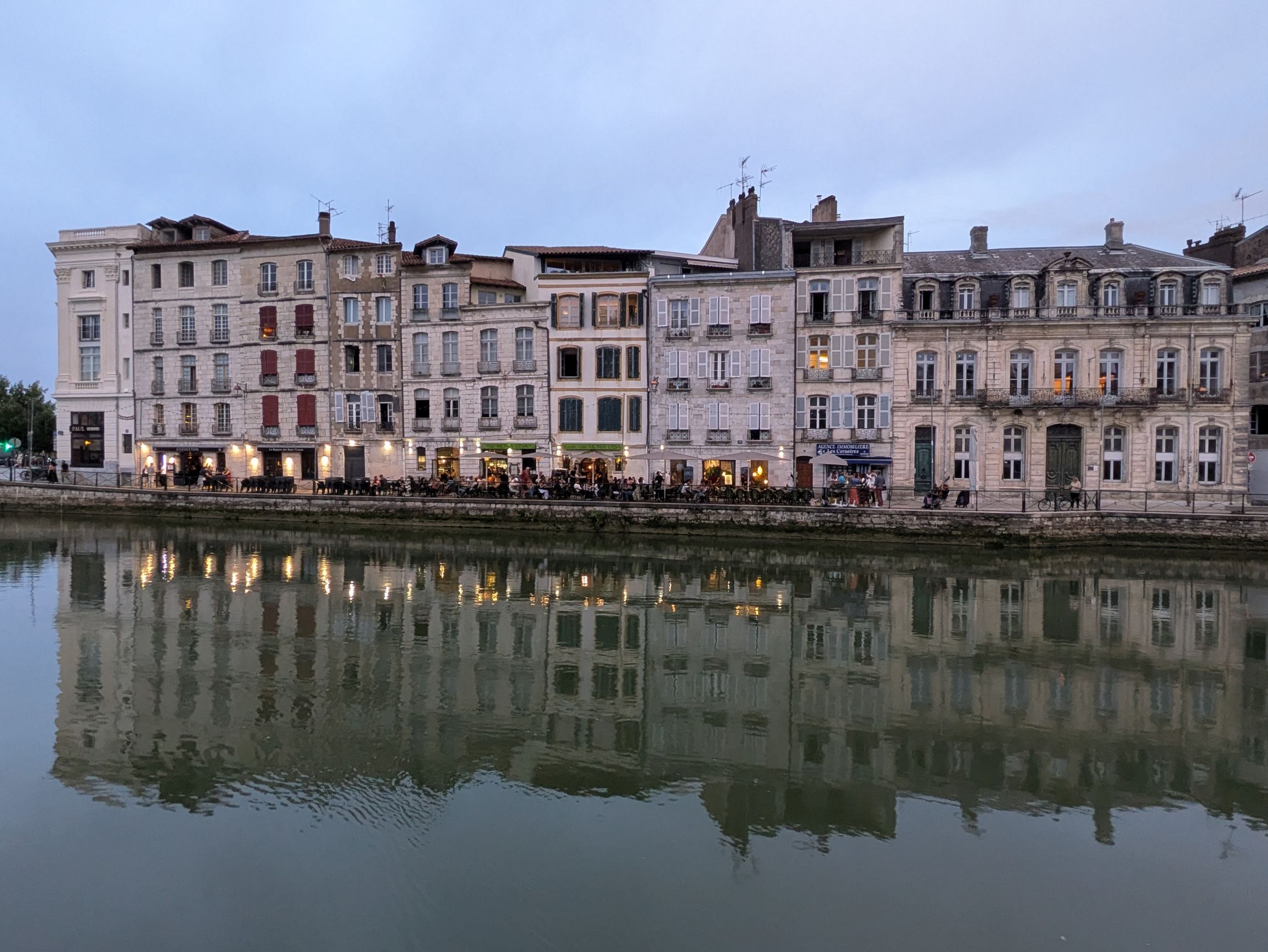
The views of the colorful half-timbered buildings along the rivers were charming and quite photogenic, especially in the late afternoon sun:
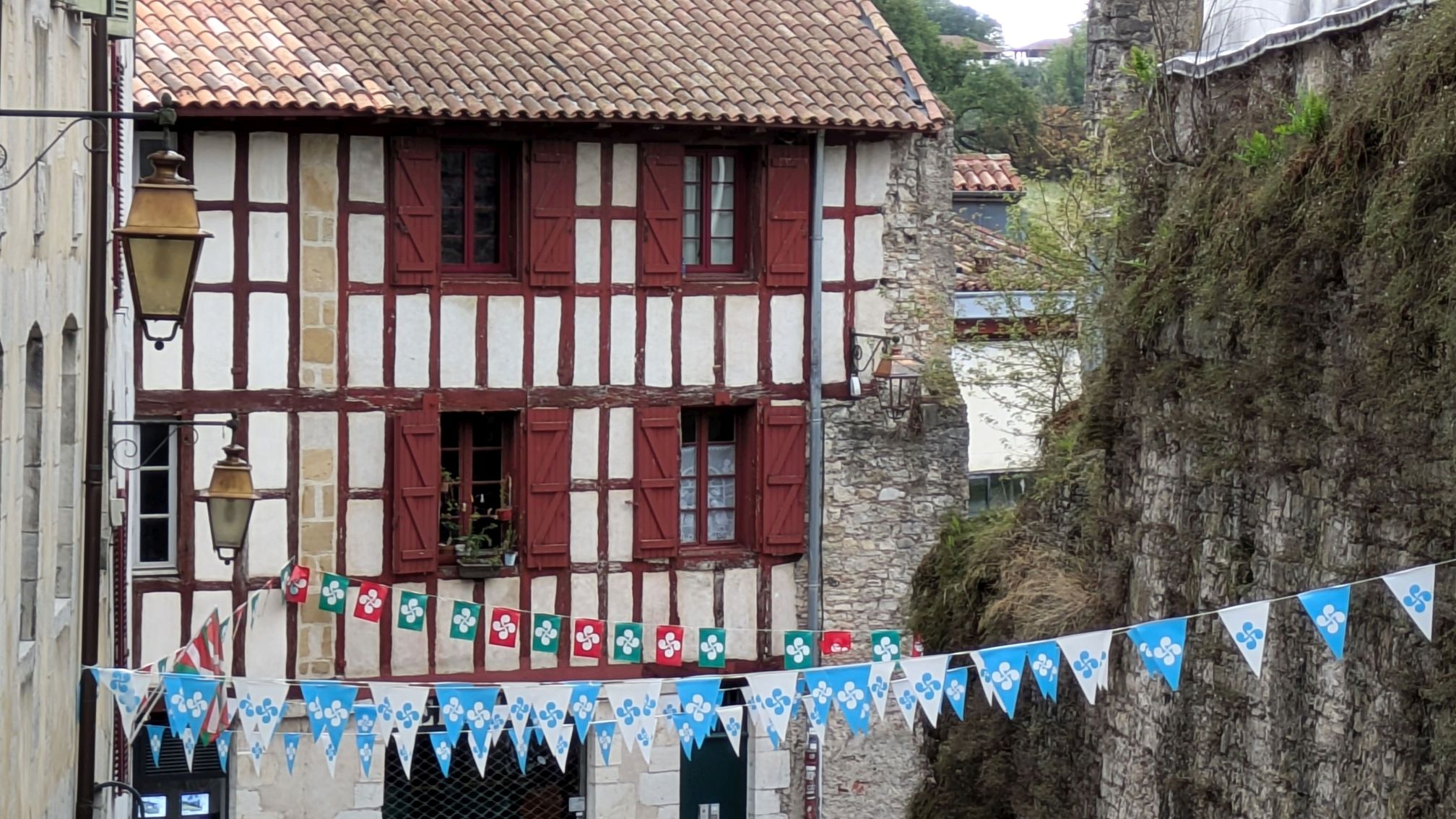
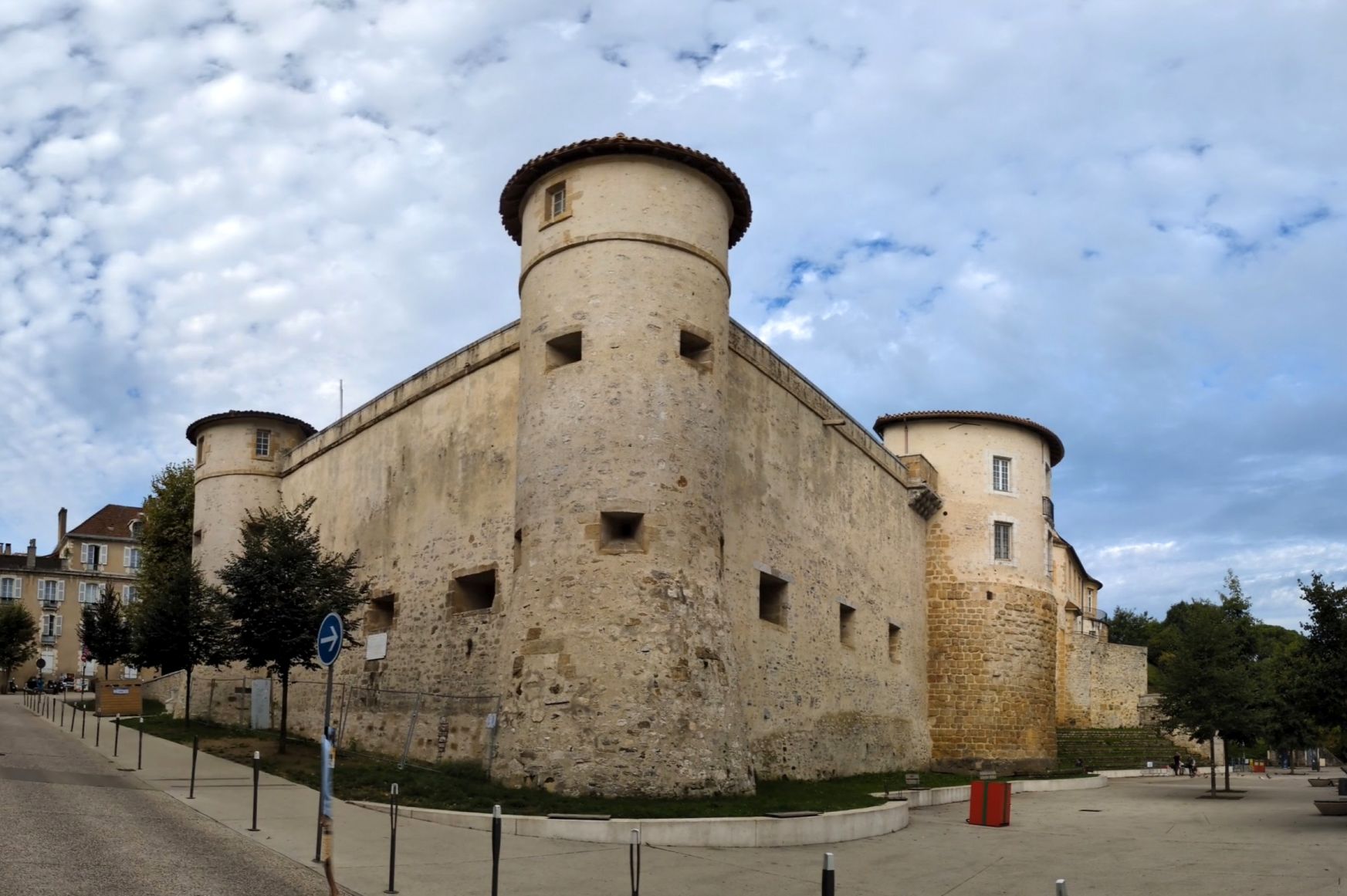
More scenes from around Bayonne during our two days in town:
The Basque flag hangs from the balcony
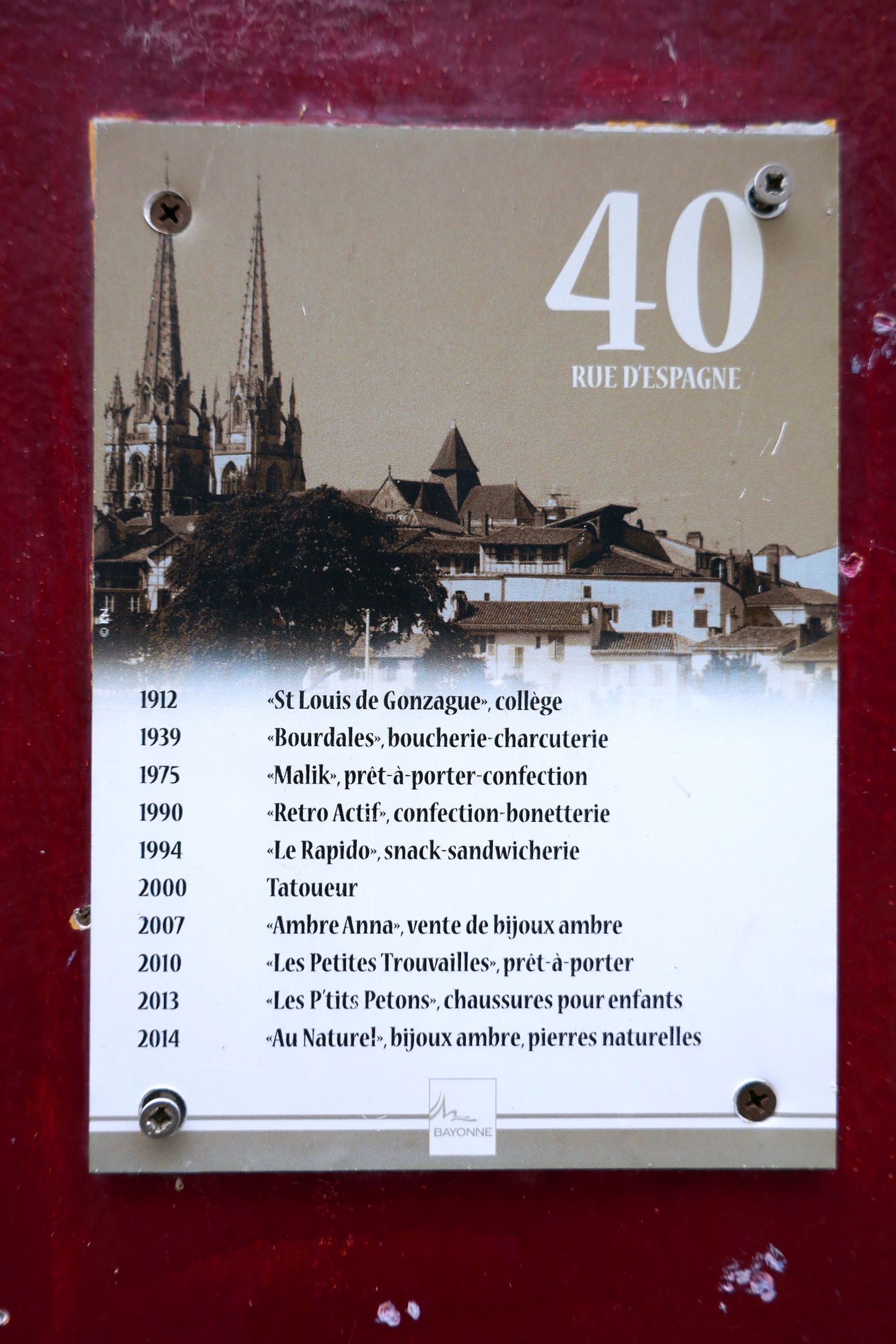
Some of the businesses had plaques in the front listing the history of the owners and what type of business it was each time.
There were also signs to be respectful of those historic buildings!
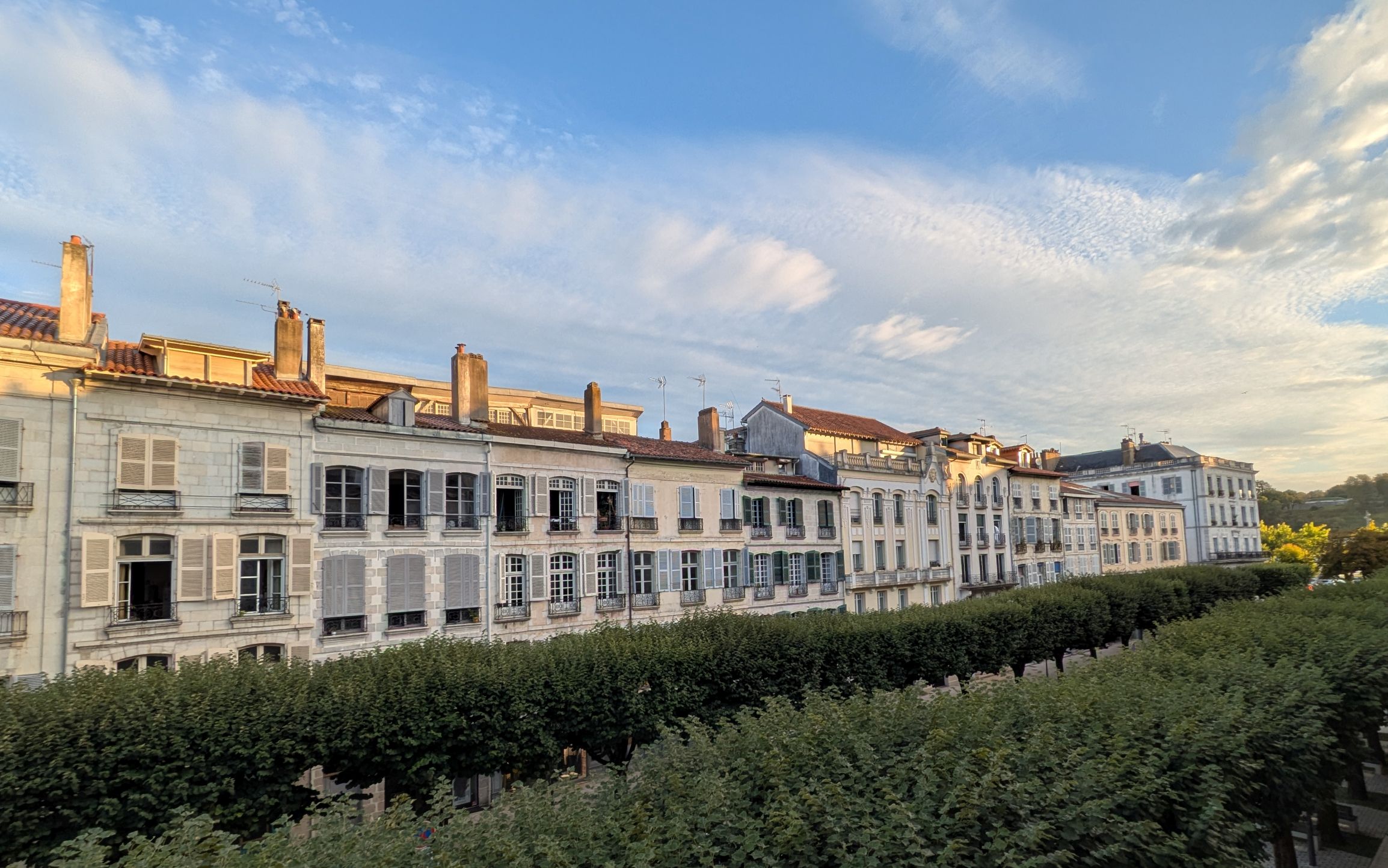
Down the street from our hotelThe view from our hotel room (left)The view from our hotel room (right)Distorted panorama of the sweeping view to the left, and then right from our hotel windowJust before dusk
The riverfront at dusk
Coming up next: SOUTHWEST FRANCE, NORTHERN SPAIN & PORTUGAL #6: BEAUTIFUL BAYONNE
Our OAT group left Carcassonne with Bayonne being our final destination for the day. Along the way, we stopped in Auch for a walking tour led by Tom, our tour leader, for the pre-extension portion of our tour.
Auch, in southwestern France, is a small, 800-year-old town of less than 23,000 people. It was too small to spend a lot of time in, but it was a lovely day for a walking tour and an al fresco lunch.
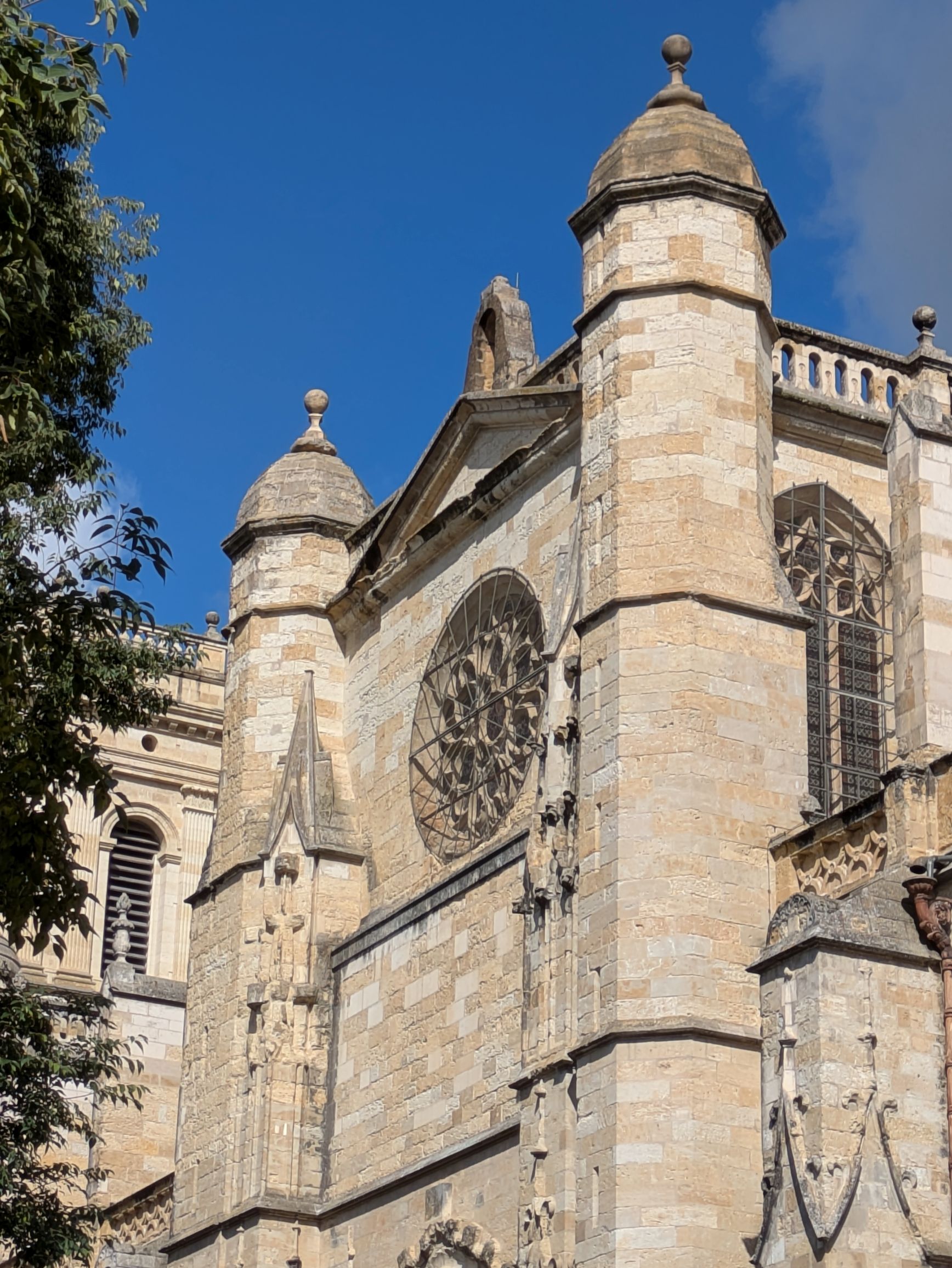
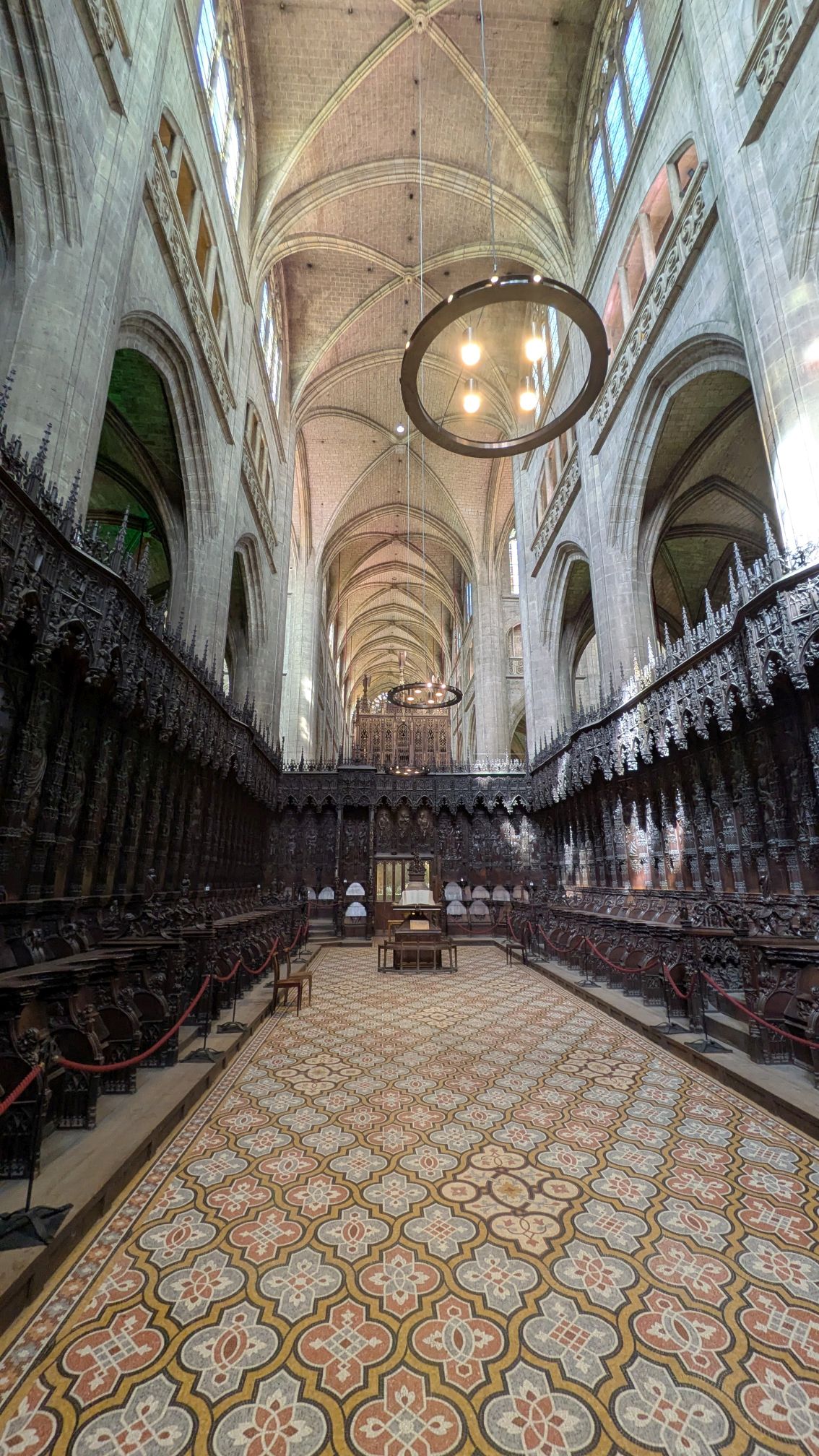
There was a wedding in progress at the Auch Cathedral, but we quietly scampered in to have a look around the areas where we could stay out of sight. A national monument, the interior was beautiful.
(For all photos, click on the image for a full screen view.)
It was also market day, so we had a quick look at the stalls and this clever wine bar on wheels:
More scenes from around Auch:
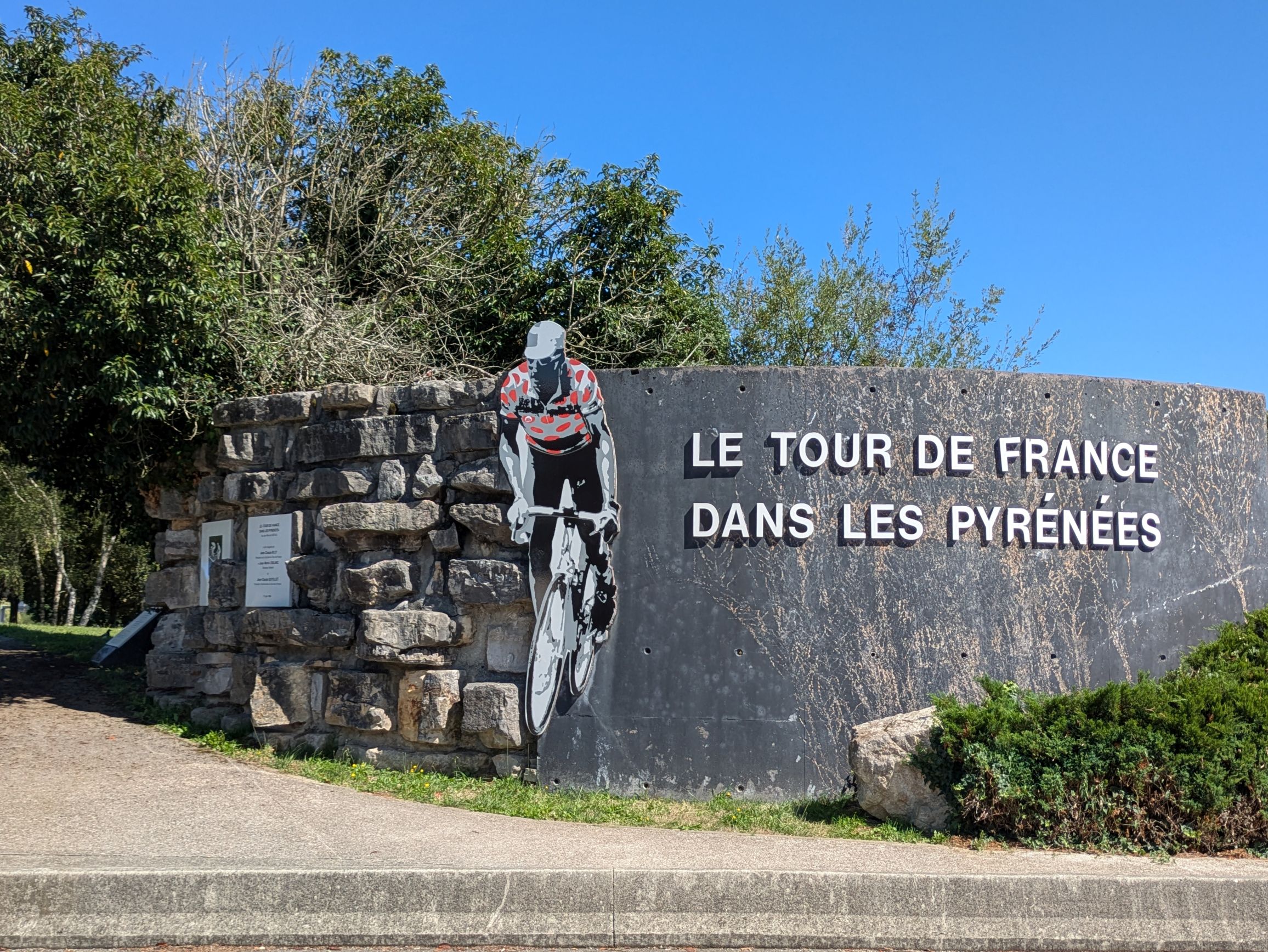
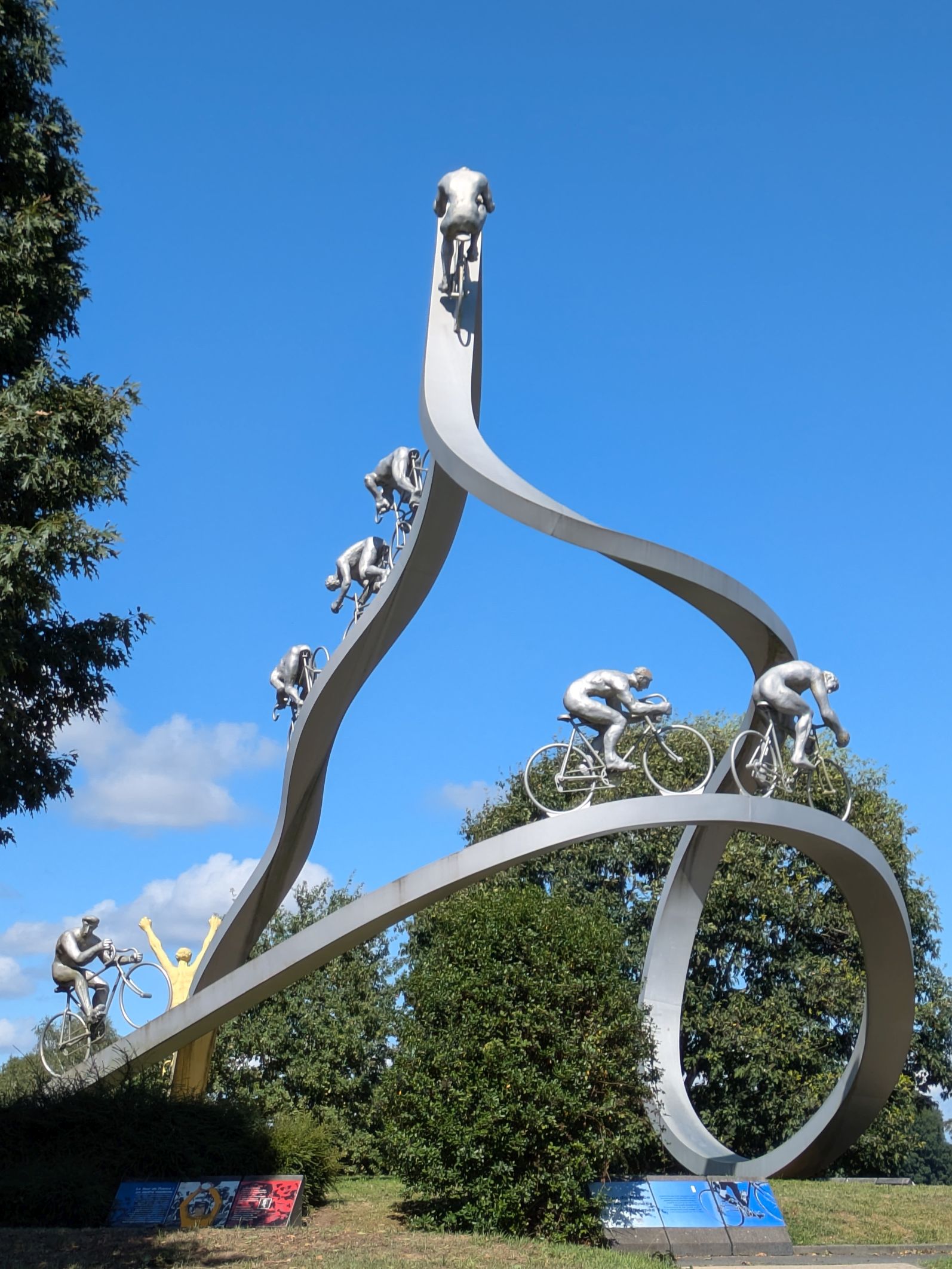
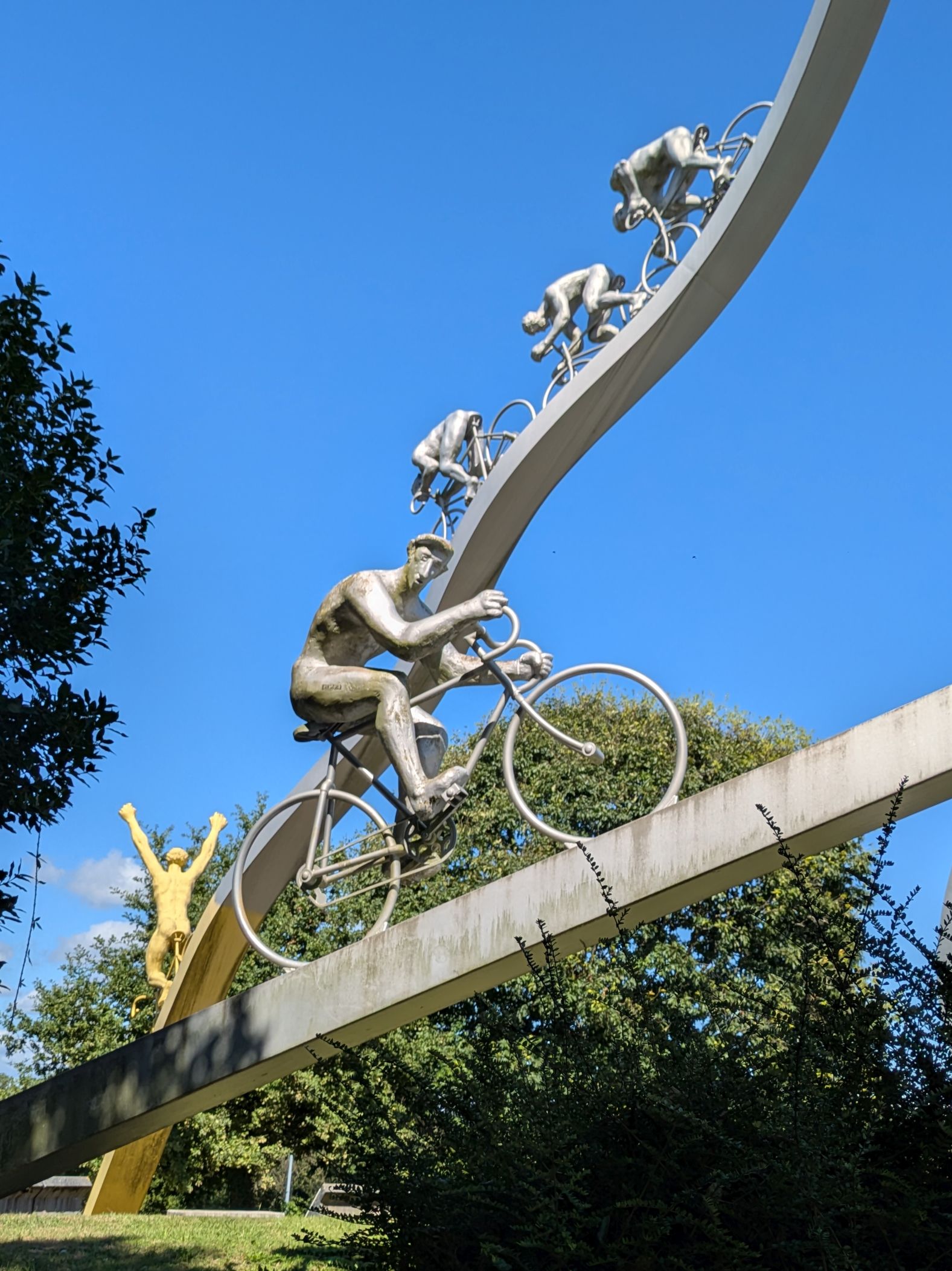
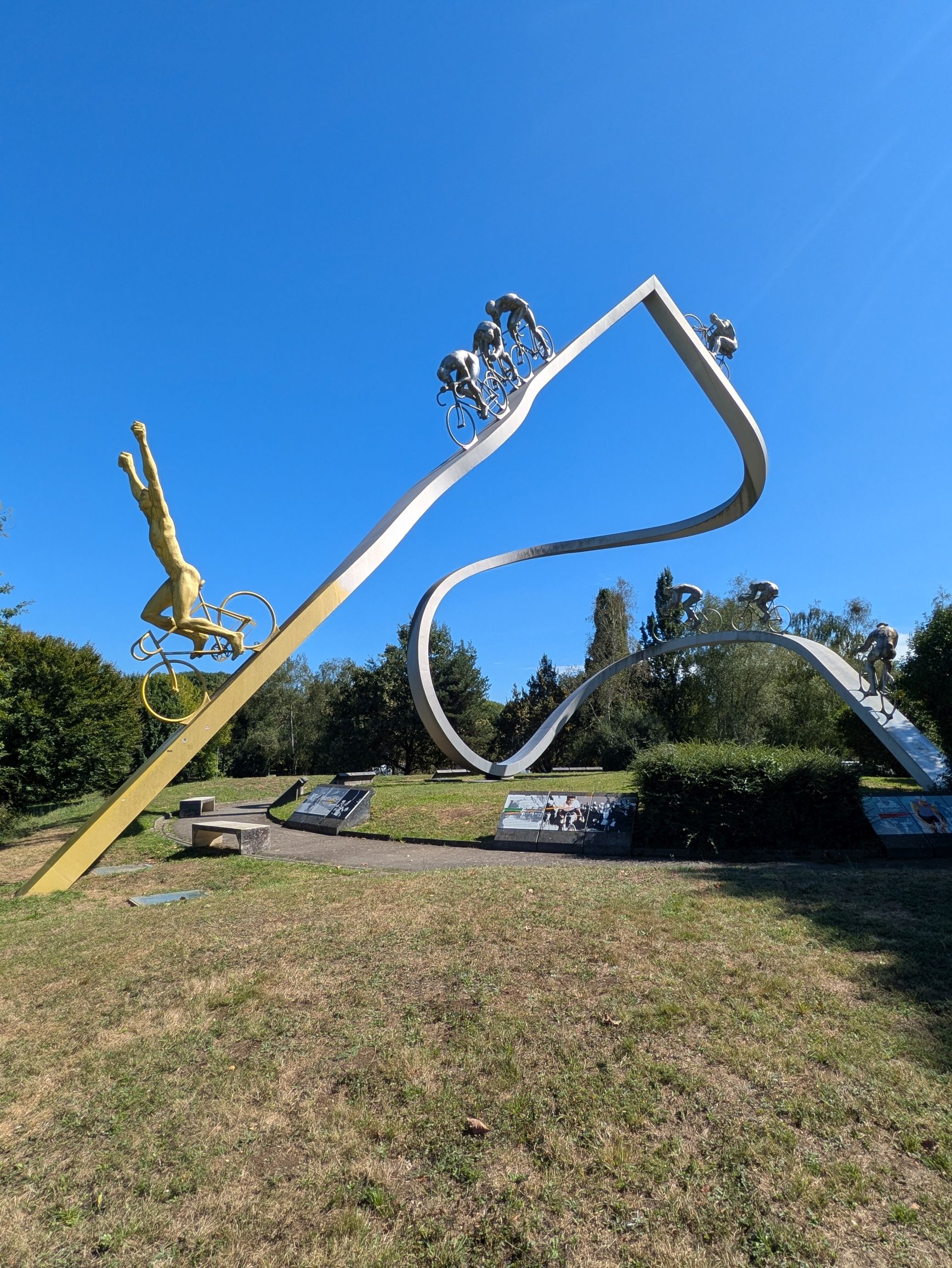
Another stop we made was to see the “Tour de France in the Pyrenees” (The Great Loop) sculpture by Jean-Bernard Metais. Located across from a gas station on the A64 motorway of the Pyrenees Mountains, it is quite a sight to see!
Next up:SOUTHWEST FRANCE, NORTHERN SPAIN & PORTUGAL #5: BEAUTIFUL BAYONNE
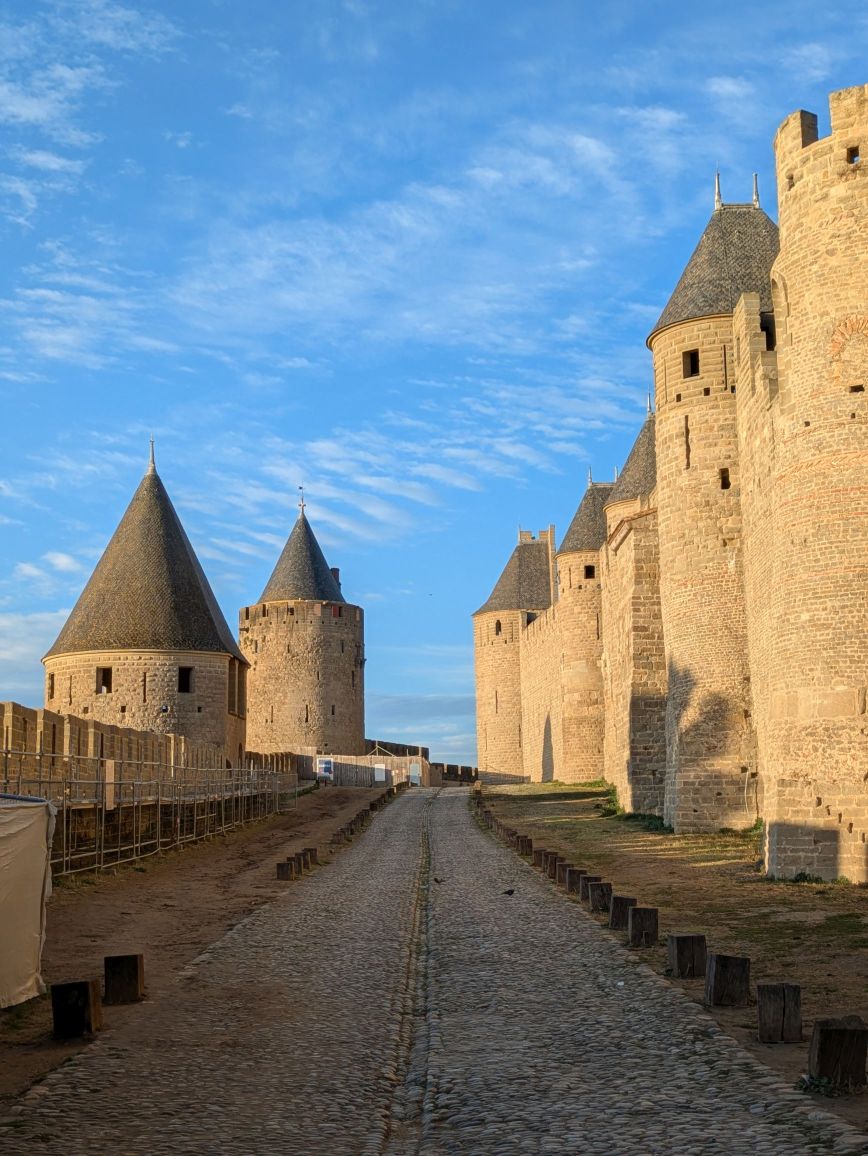
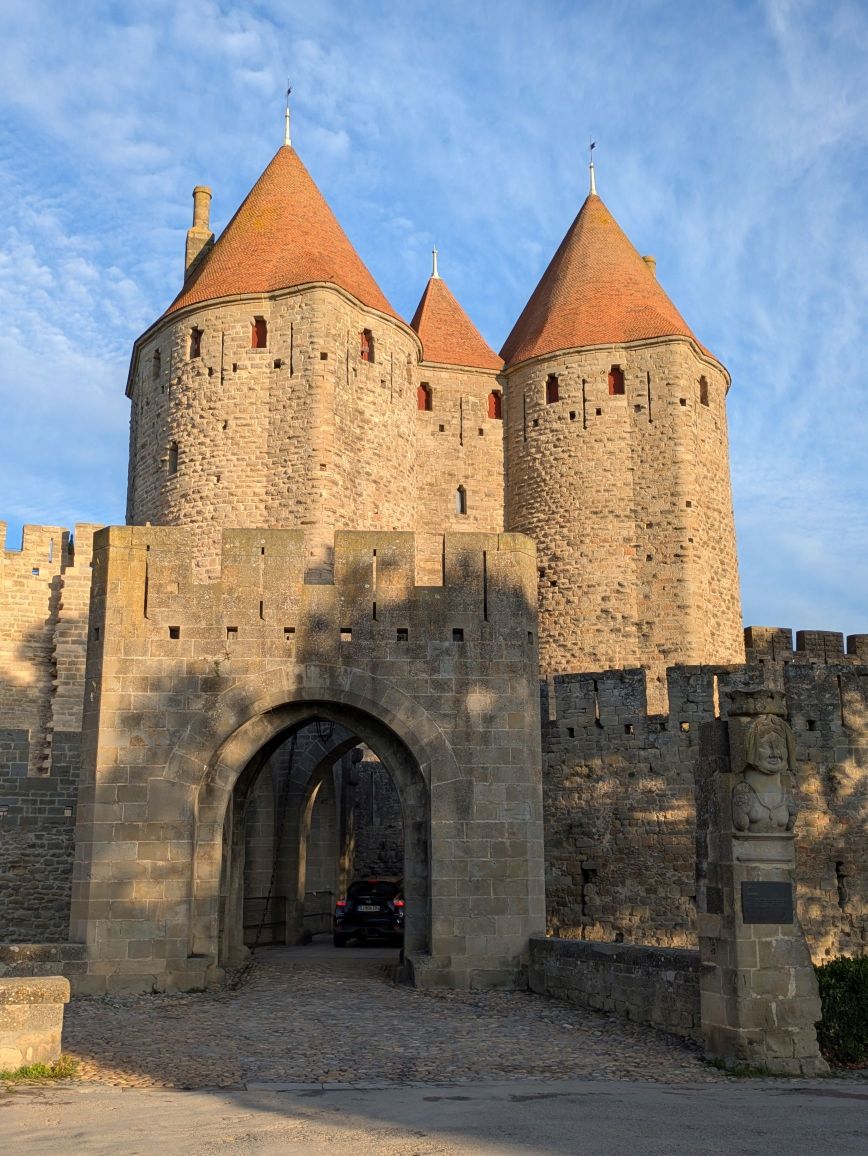
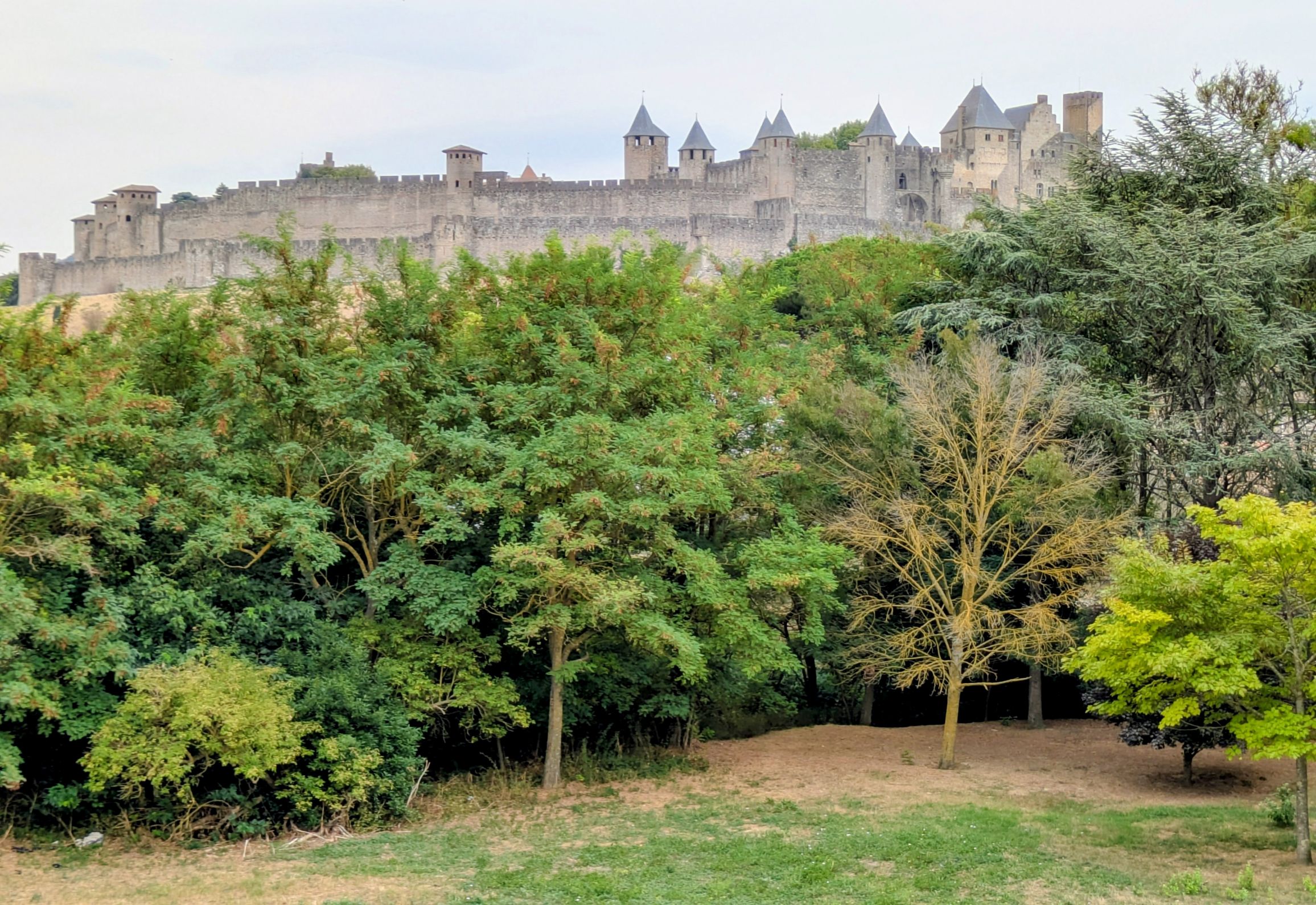
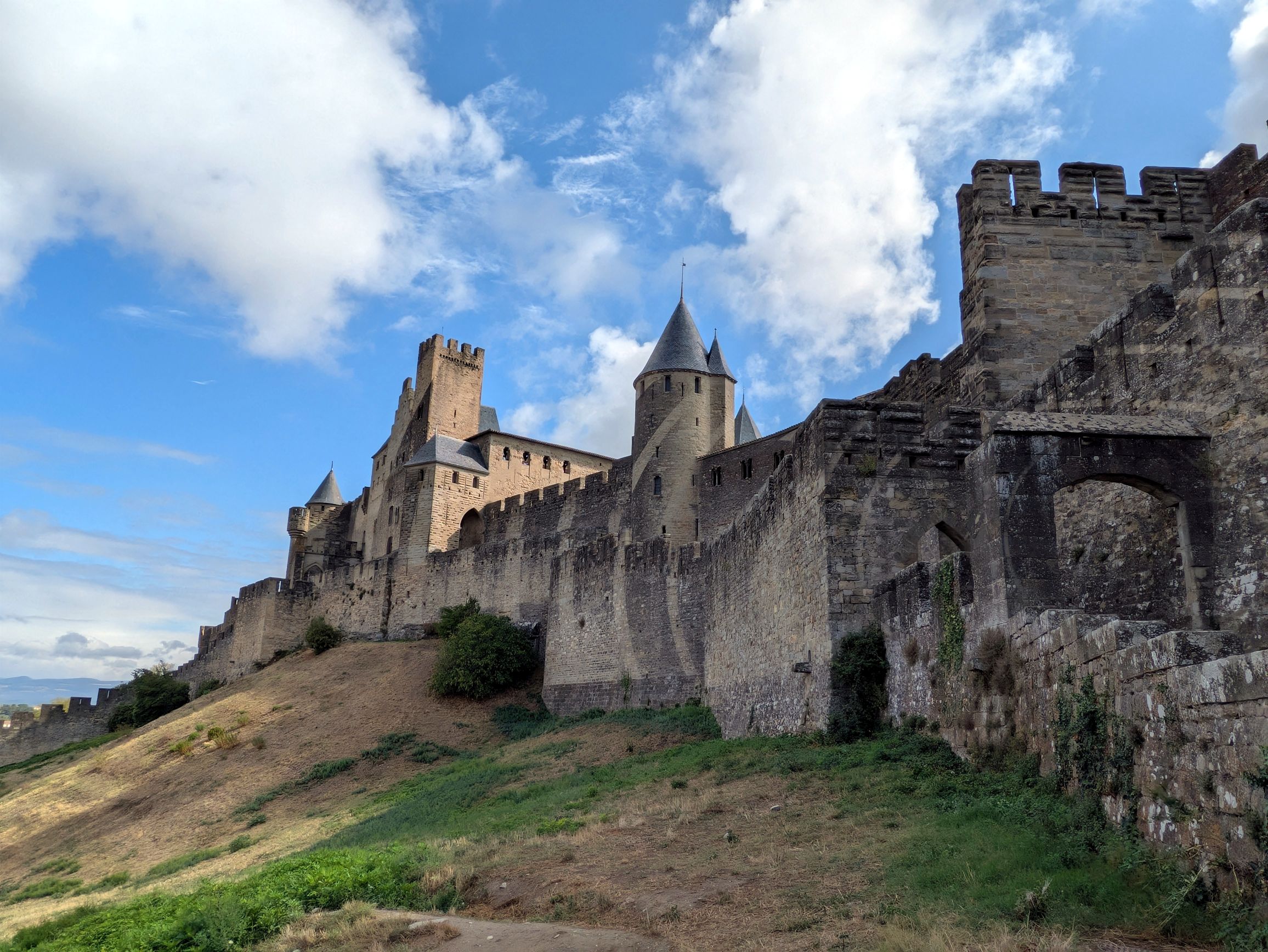
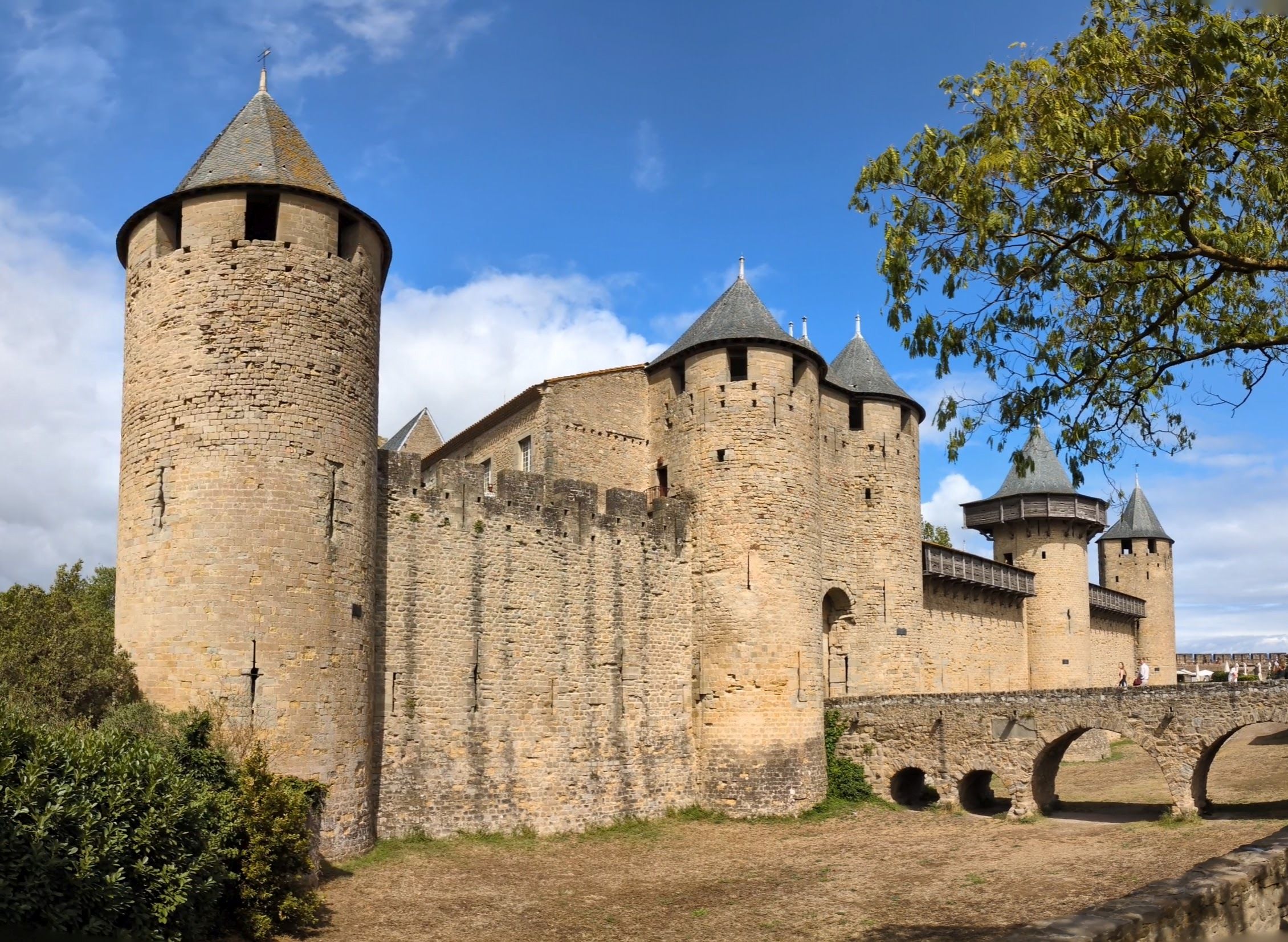
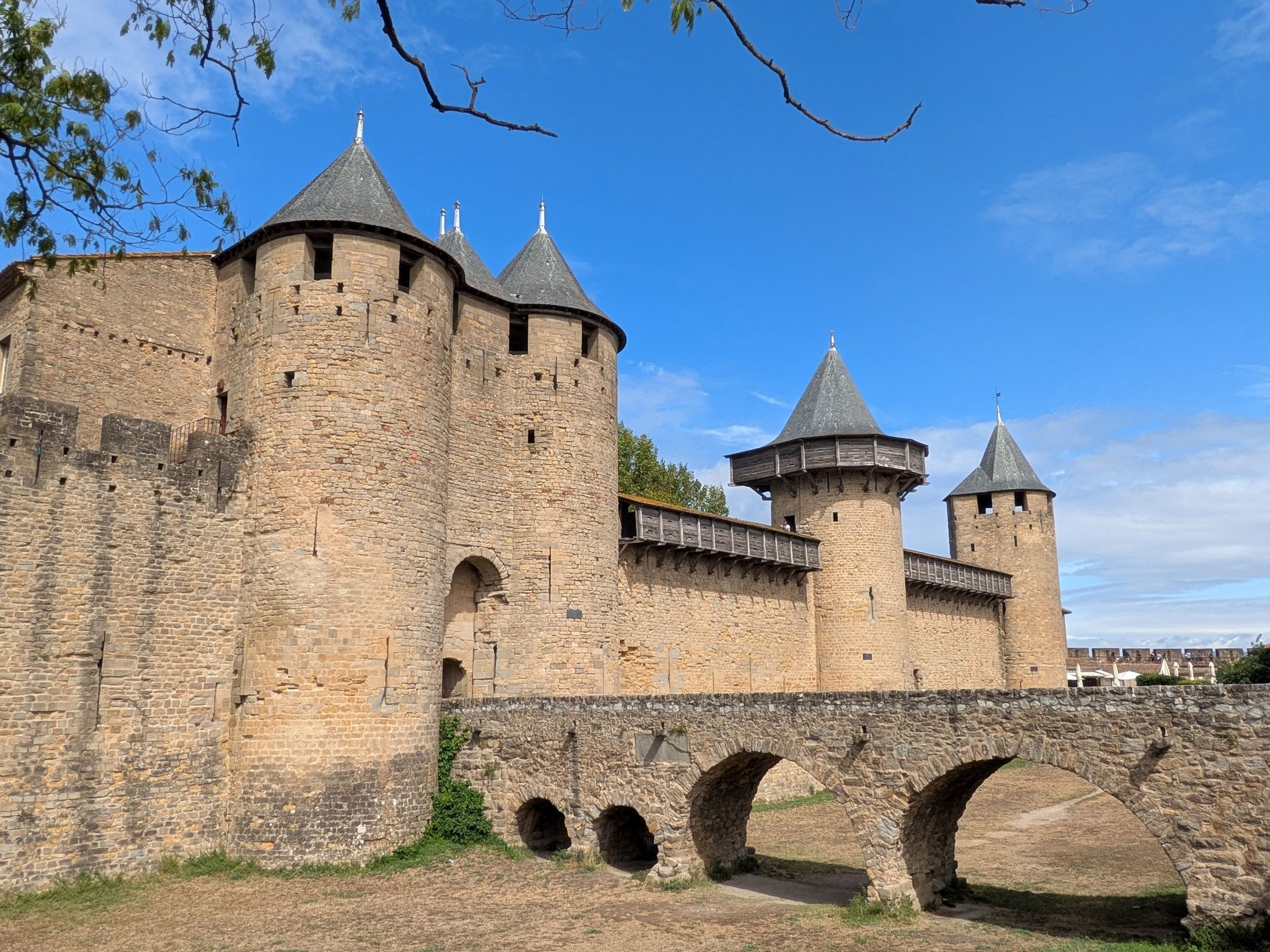
When we departed Carcassonne for our side trip to Albi, it was a sunny morning, so I captured some photos of the fortress as we made our way to the bus outside of the walled old city:
(For all photos, click on the image for a full screen view.)
The appeal of the medieval town of Albi is visiting the beautiful Toulouse-Latrec Museum and the magnificent Cathedral of Saint Cecilia of Albi (Albi Cathedral). By the time we arrived in Albi, it was cloudy (and sometimes rainy), so it was perfect for these (mostly) indoor activities.
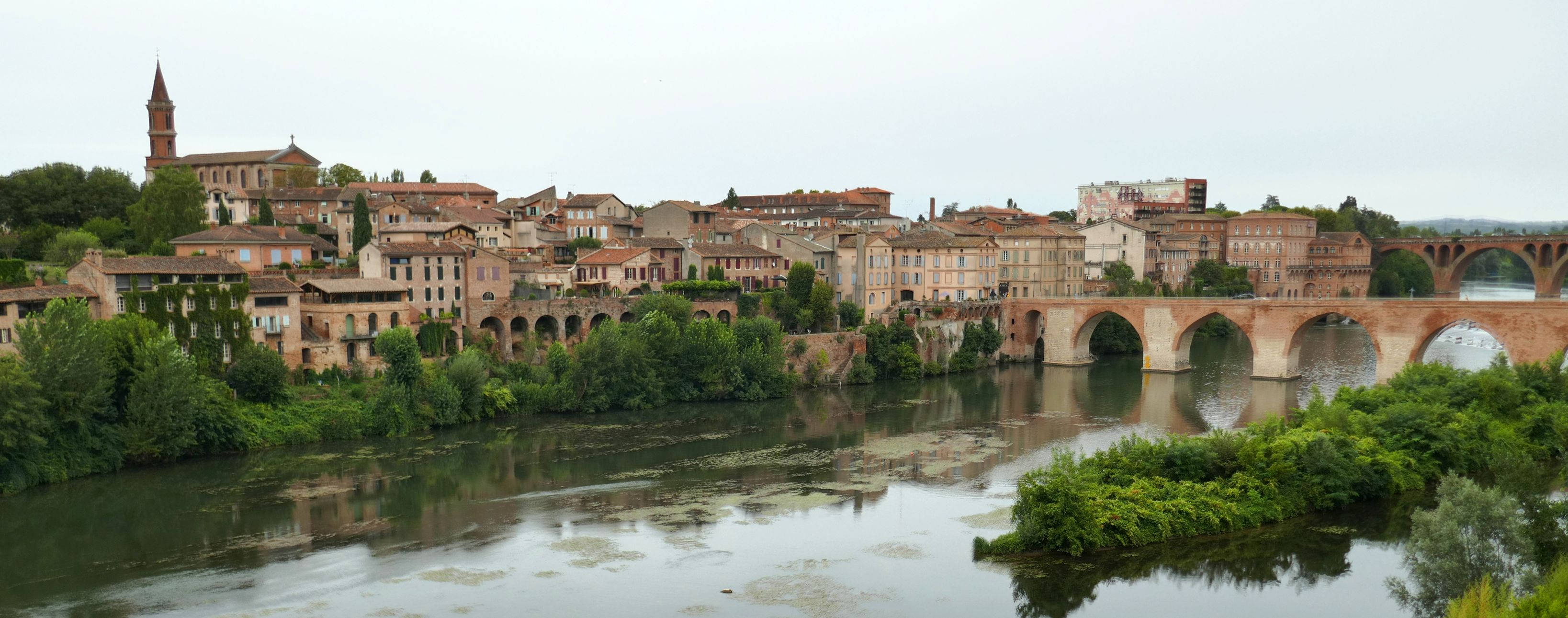
A UNESCO World Heritage Site, Albi is situated along the banks of the river Tarn and has a long history. First settled during the Bronze Age, there was a lot of growth in the town after a bridge was constructed across the Tarn in 1040. Fast forward several centuries, and Albi did an excellent job preserving and restoring its medieval architecture, which earned it the UNESCO designation.
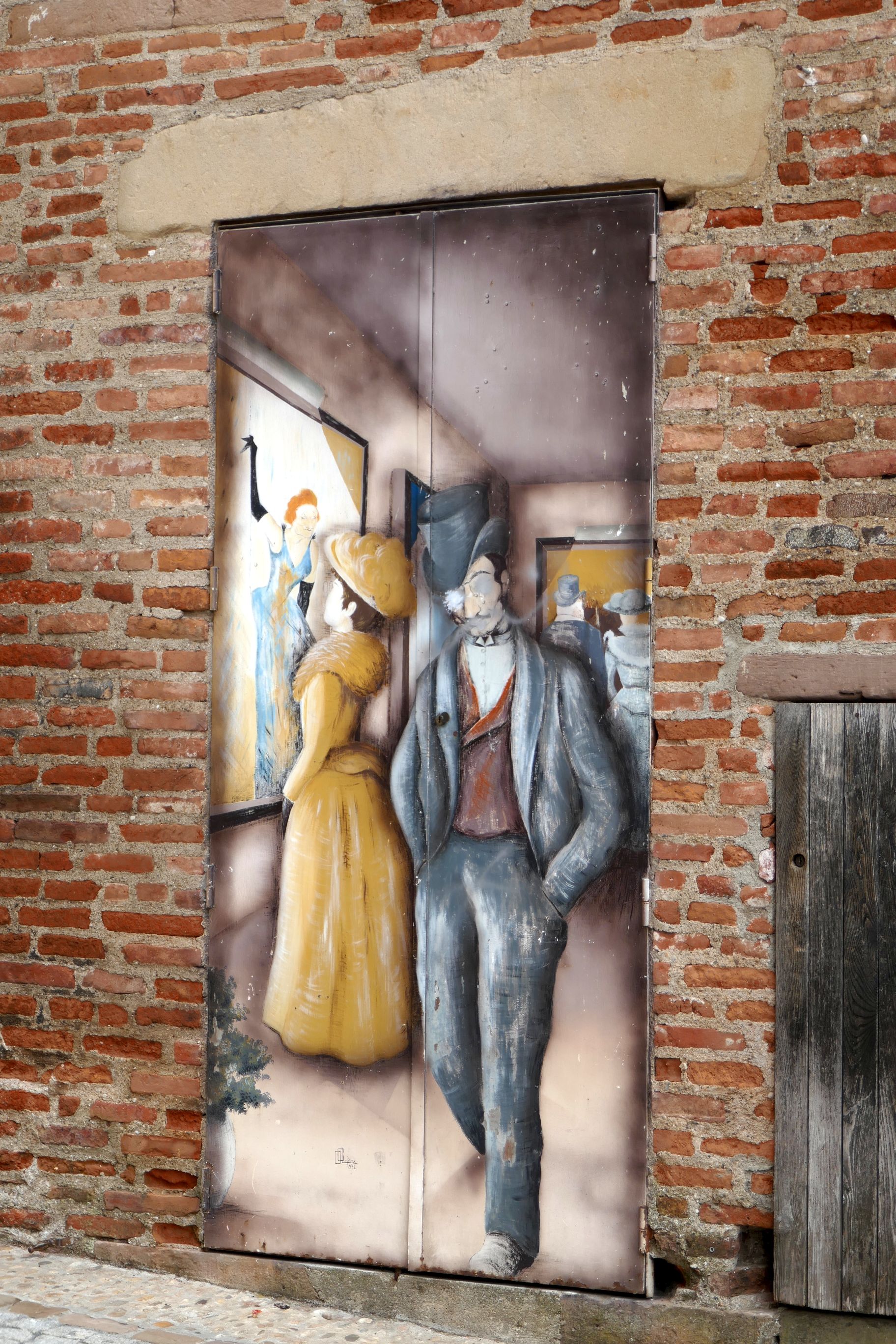
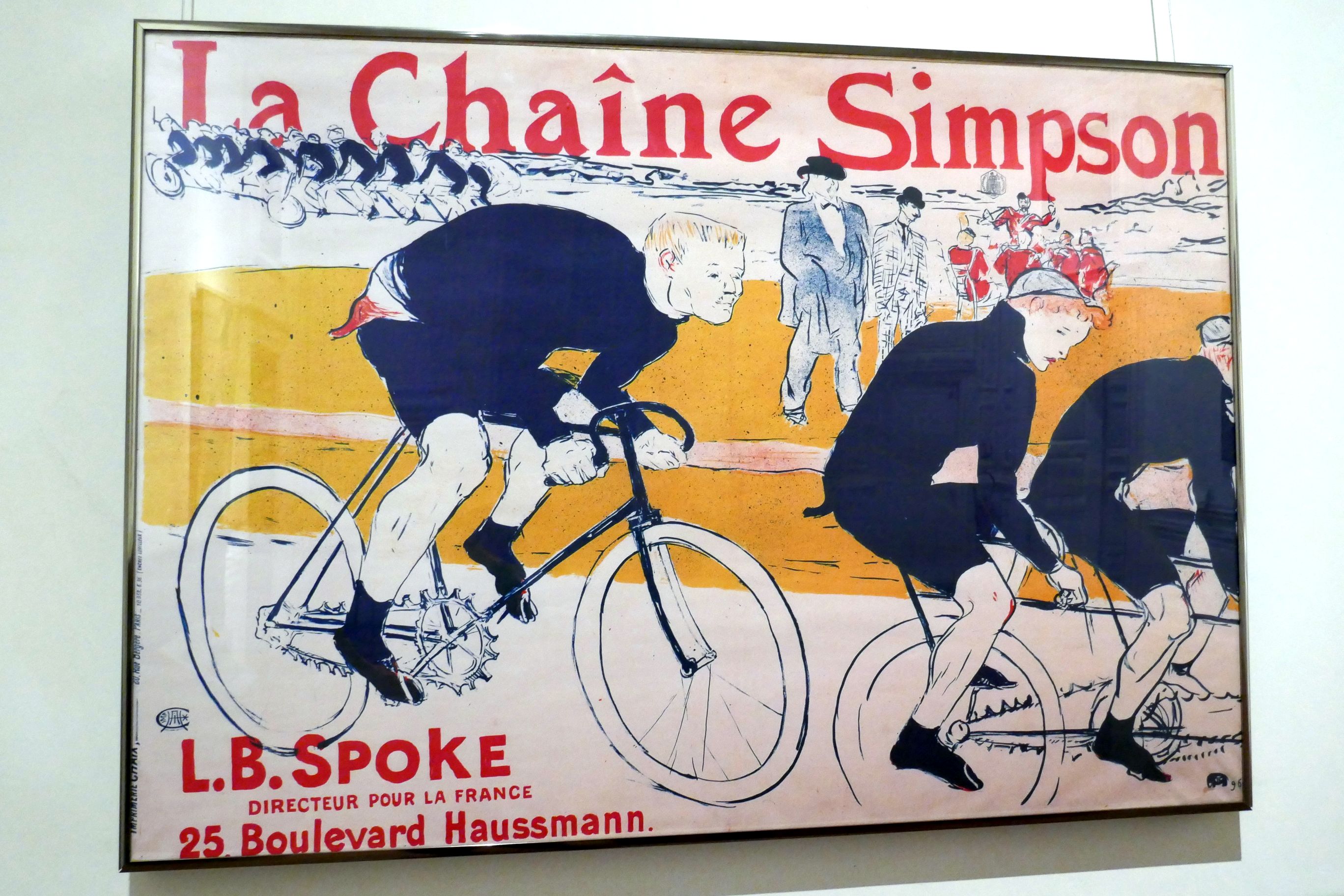
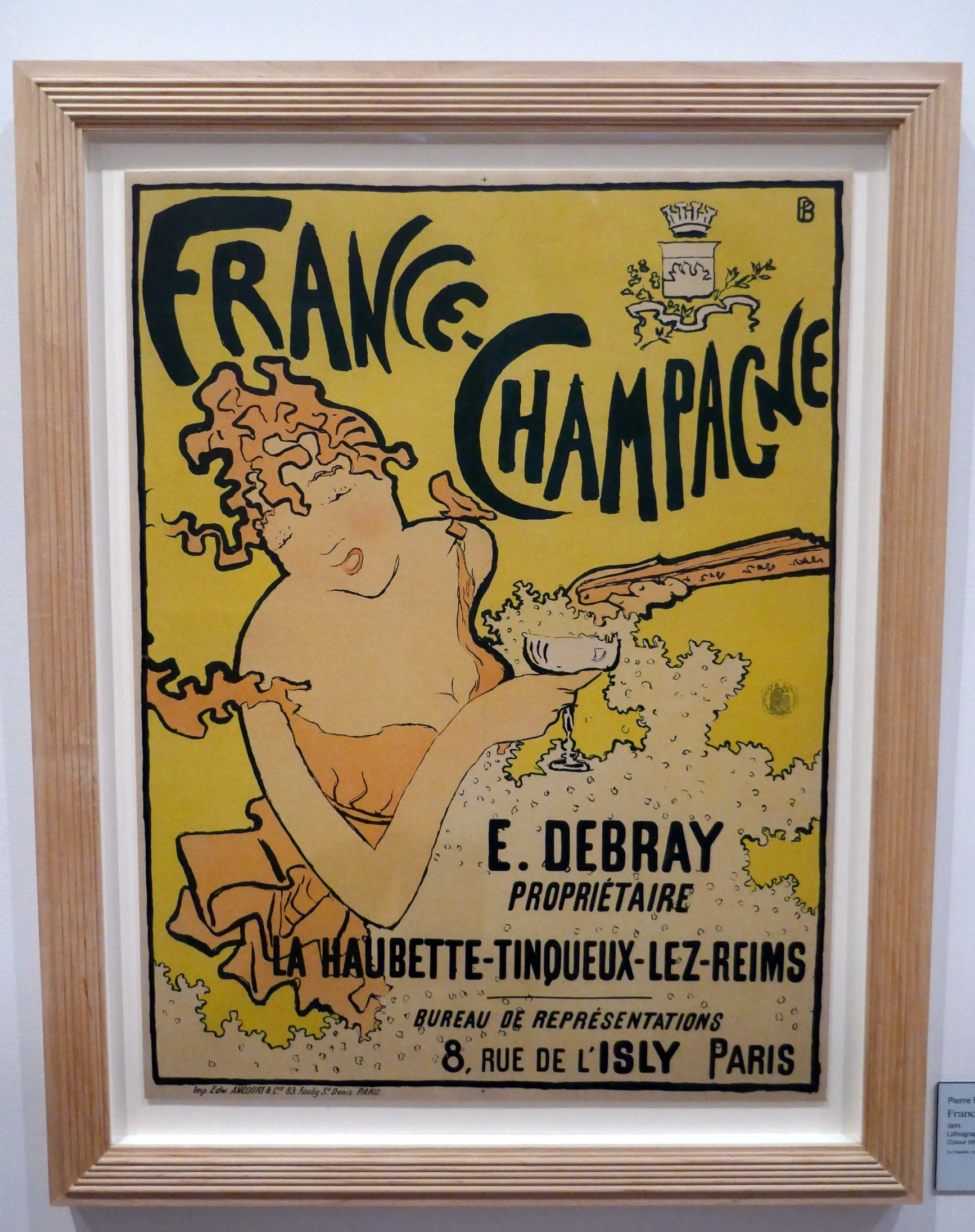
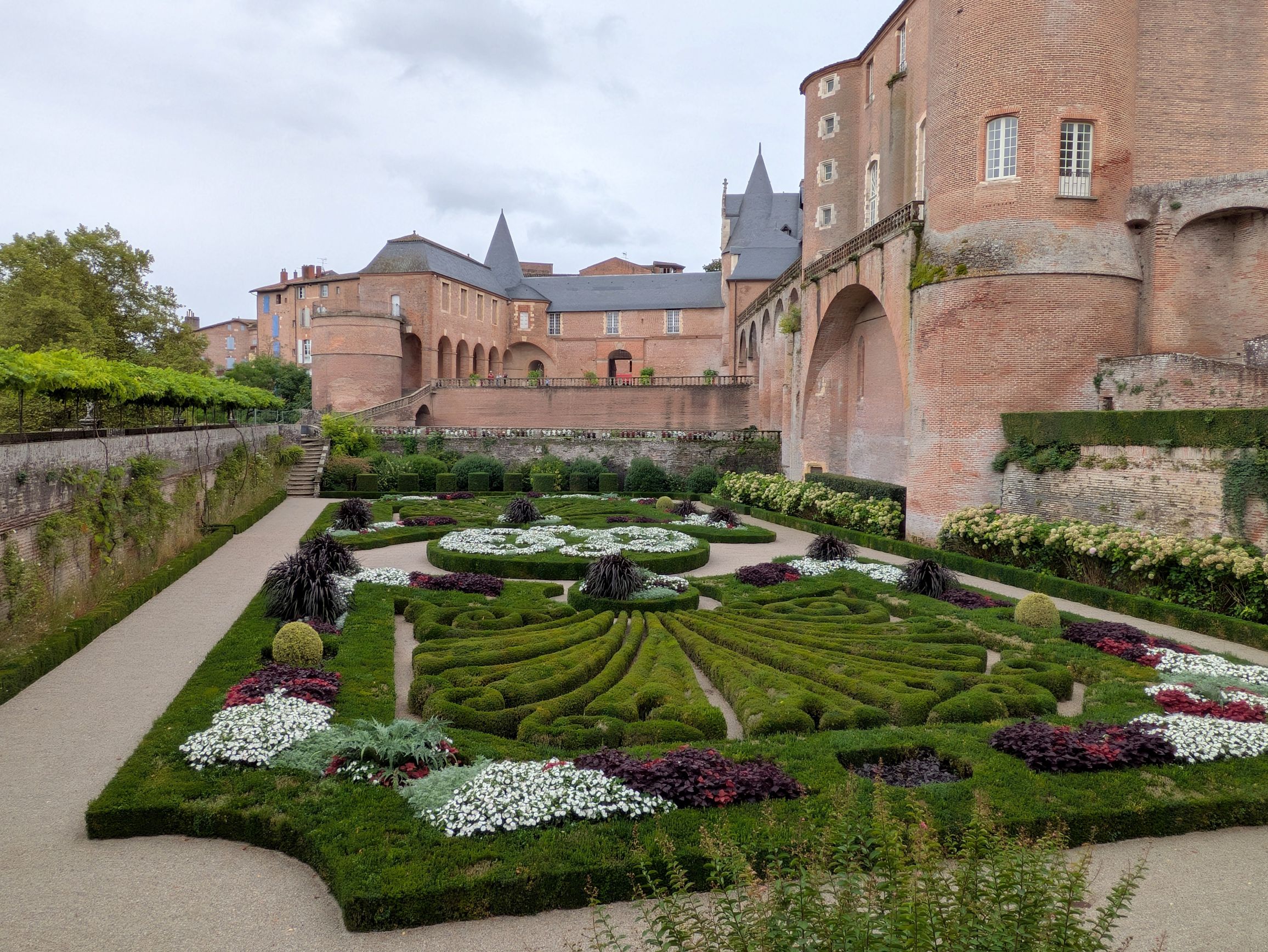
Formerly the Bishops’ Palace of Albi, the Toulouse-Latrec Museum is one of the oldest (13th century) and best-preserved castles in France. It was well worth visiting the castle, even if you’re not a fan of Toulouse-Latrec’s work or any of the other art exhibited in the museum. I enjoyed it all!
Albi was the birthplace of Henri de Toulouse-Latrec, and the museum honors his memory in style. Built prior to the cathedral, the palace was the residence of the Bishop of Albi and is connected to the cathedral tower. The entire complex was built like a fortress for protection from the Cathars, a heretical sect, which originated in Albi.
In 1922, the museum received a collection of Toulouse-Latrec’s work, donated by his mother, and the museum now houses over one thousand works by and about him.
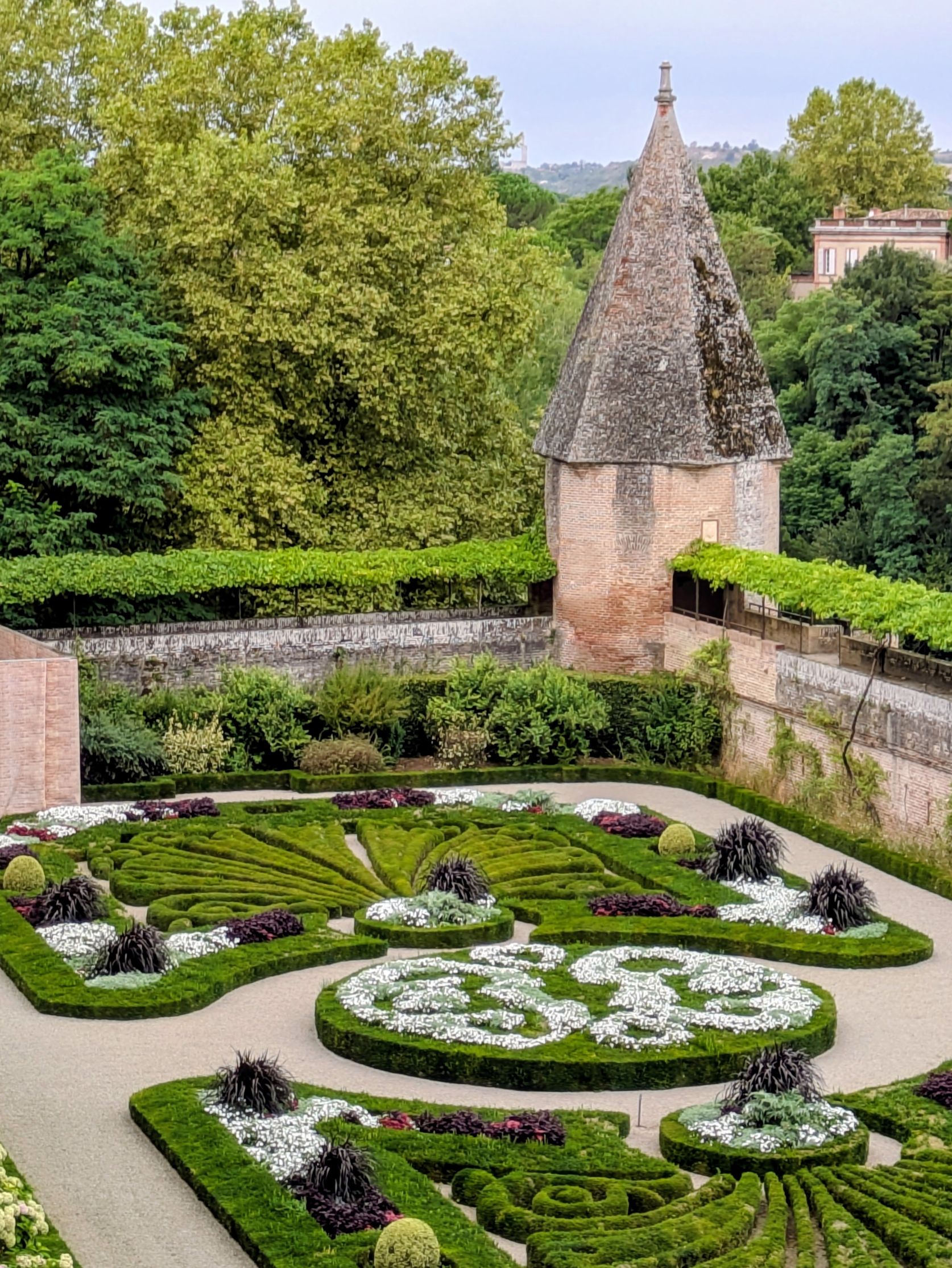
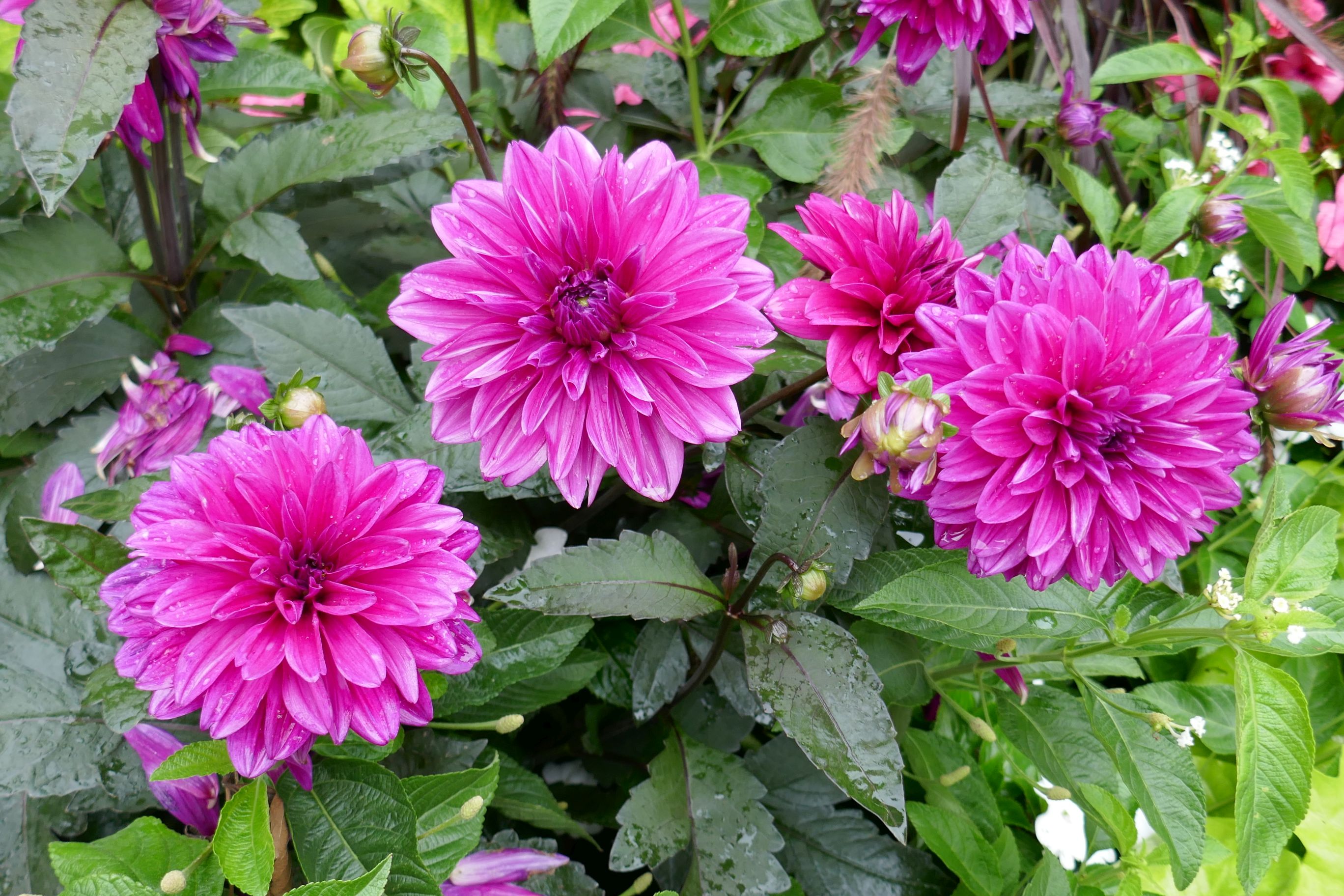
The interior of the palace is gorgeous, but the beautiful gardens are not to be missed as well.
View from the museum
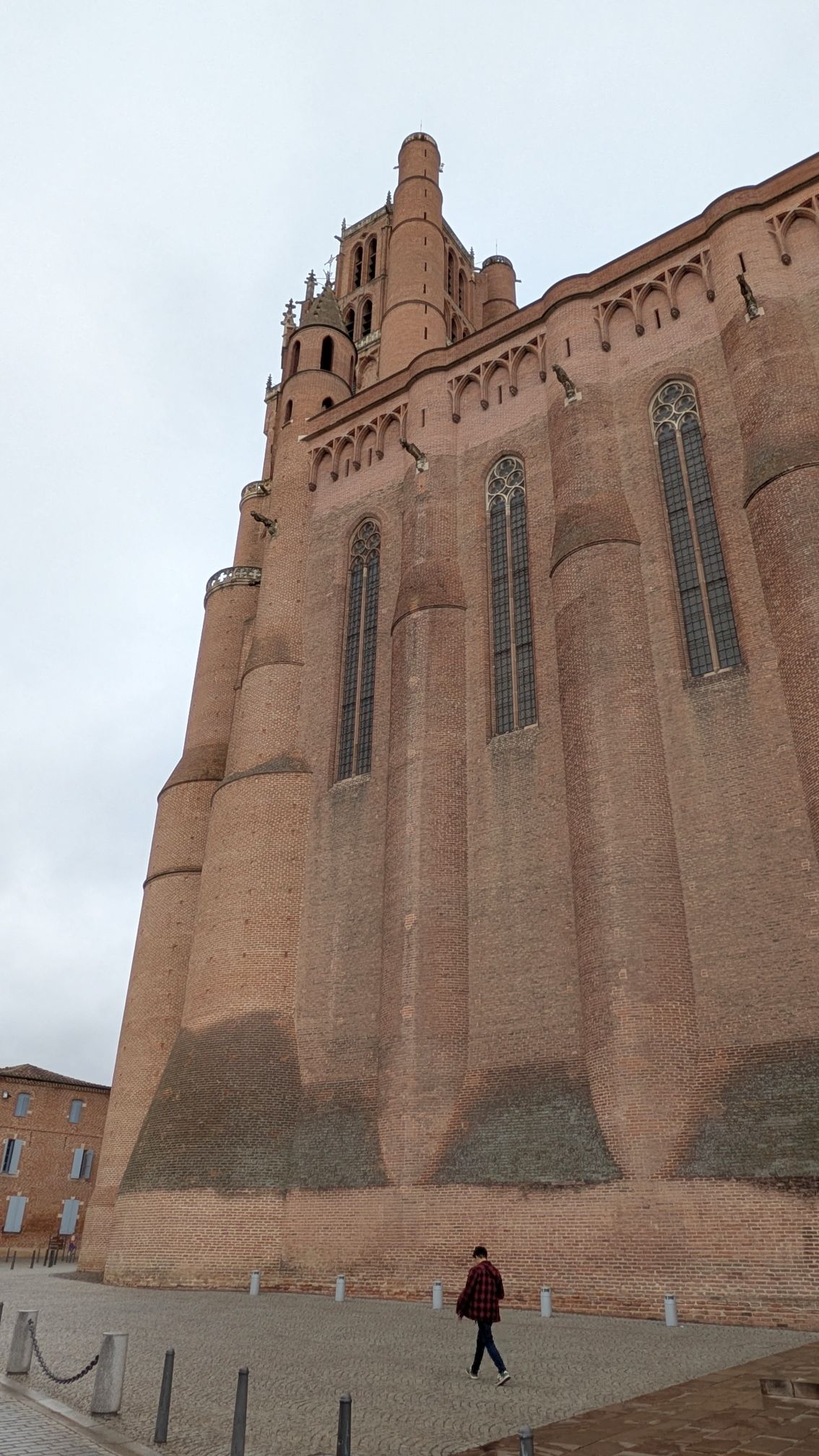
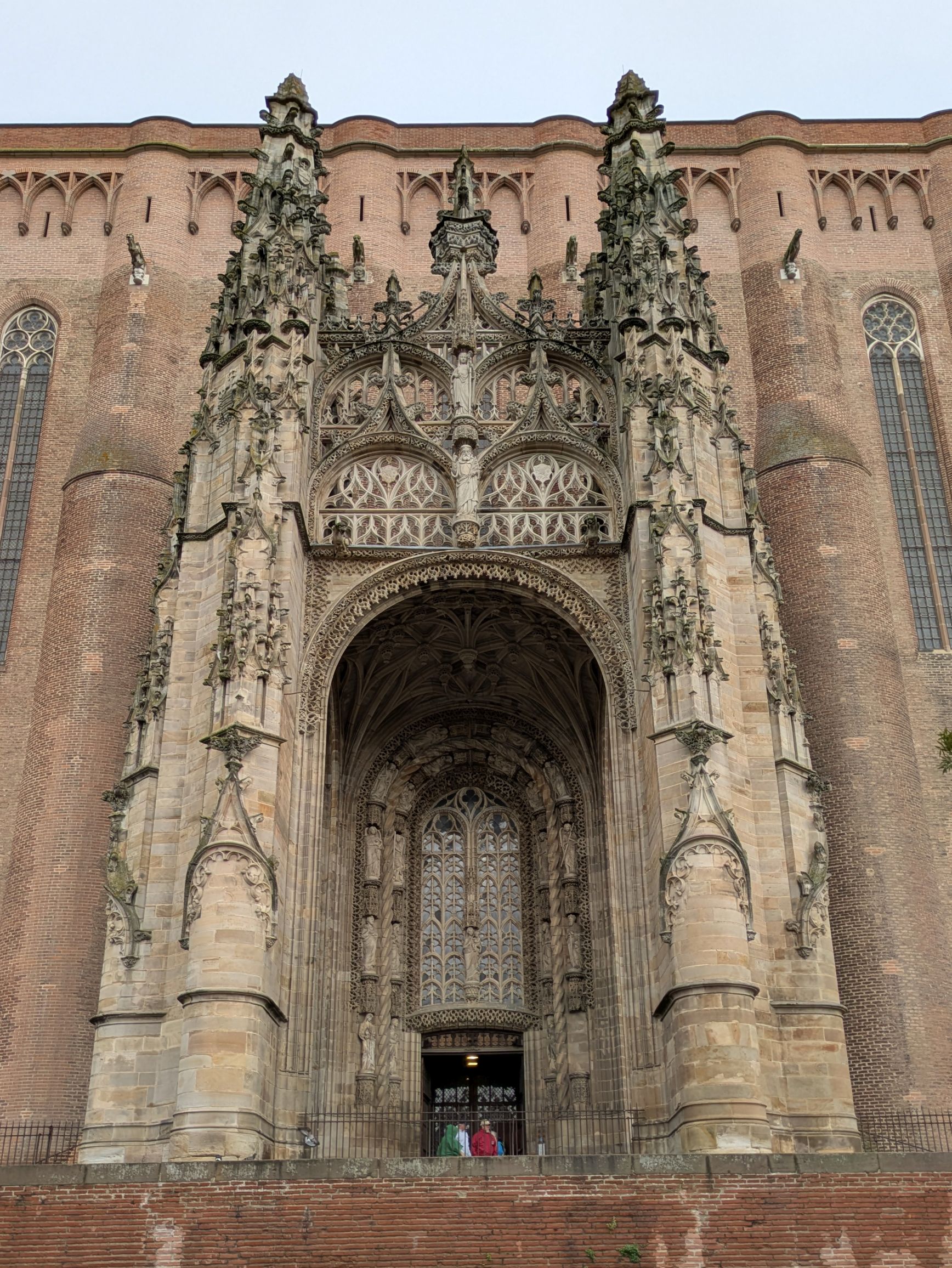
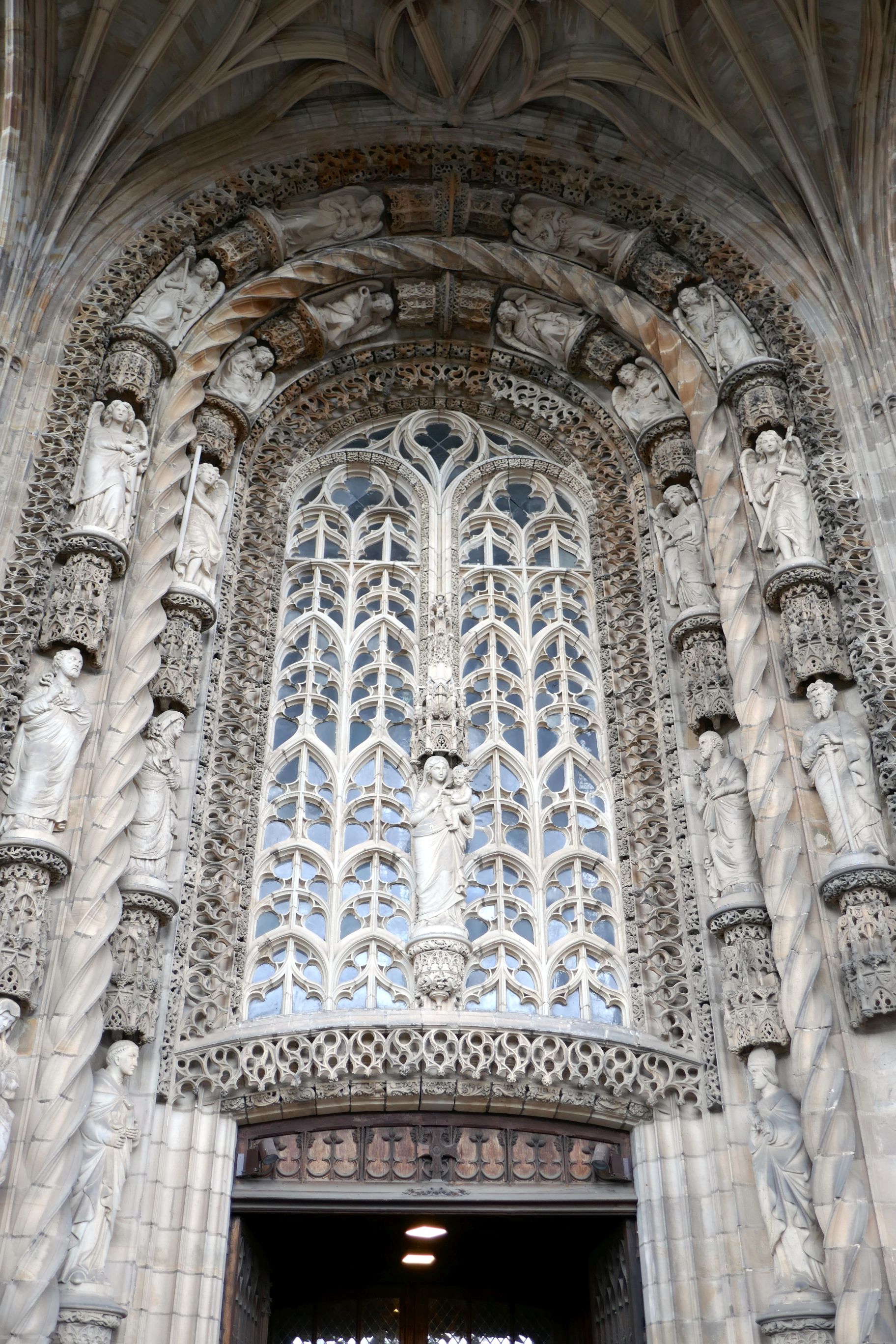
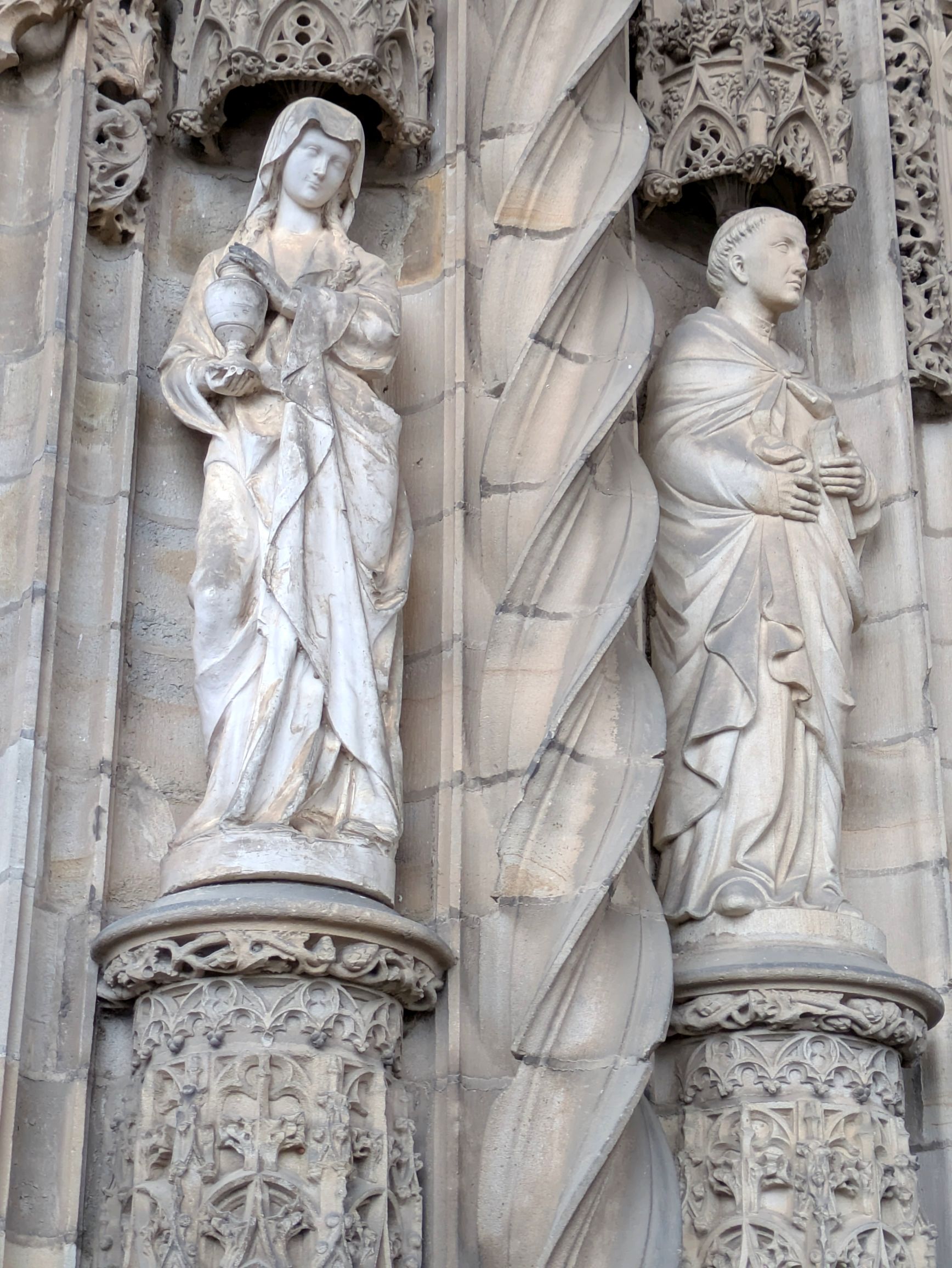
The Gothic cathedral was also a must-see marvel. Under construction for 200 years, it was finally completed in the late 1400’s. It is claimed to be the largest brick building in the world and has undergone many restorations over the years.
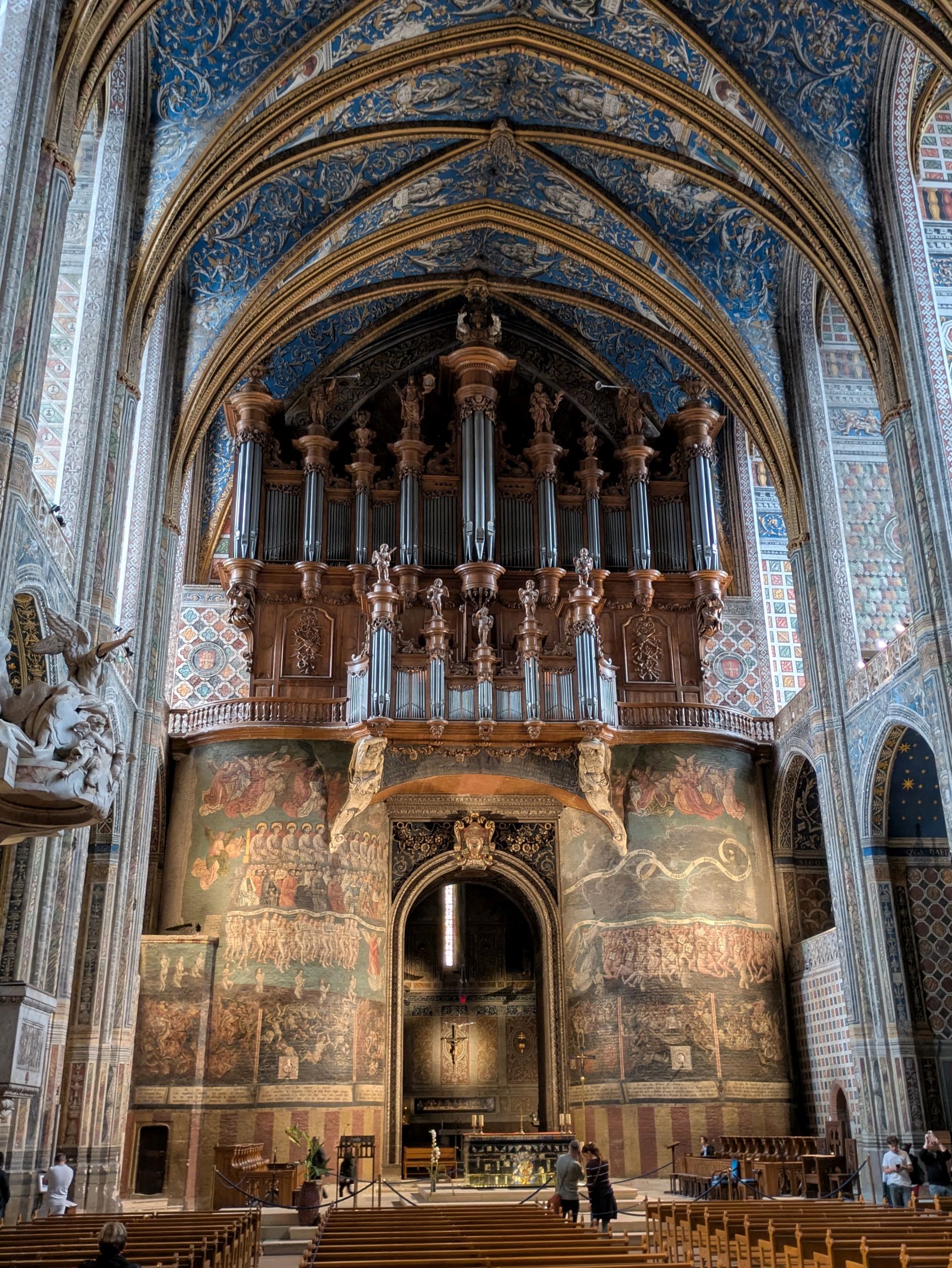
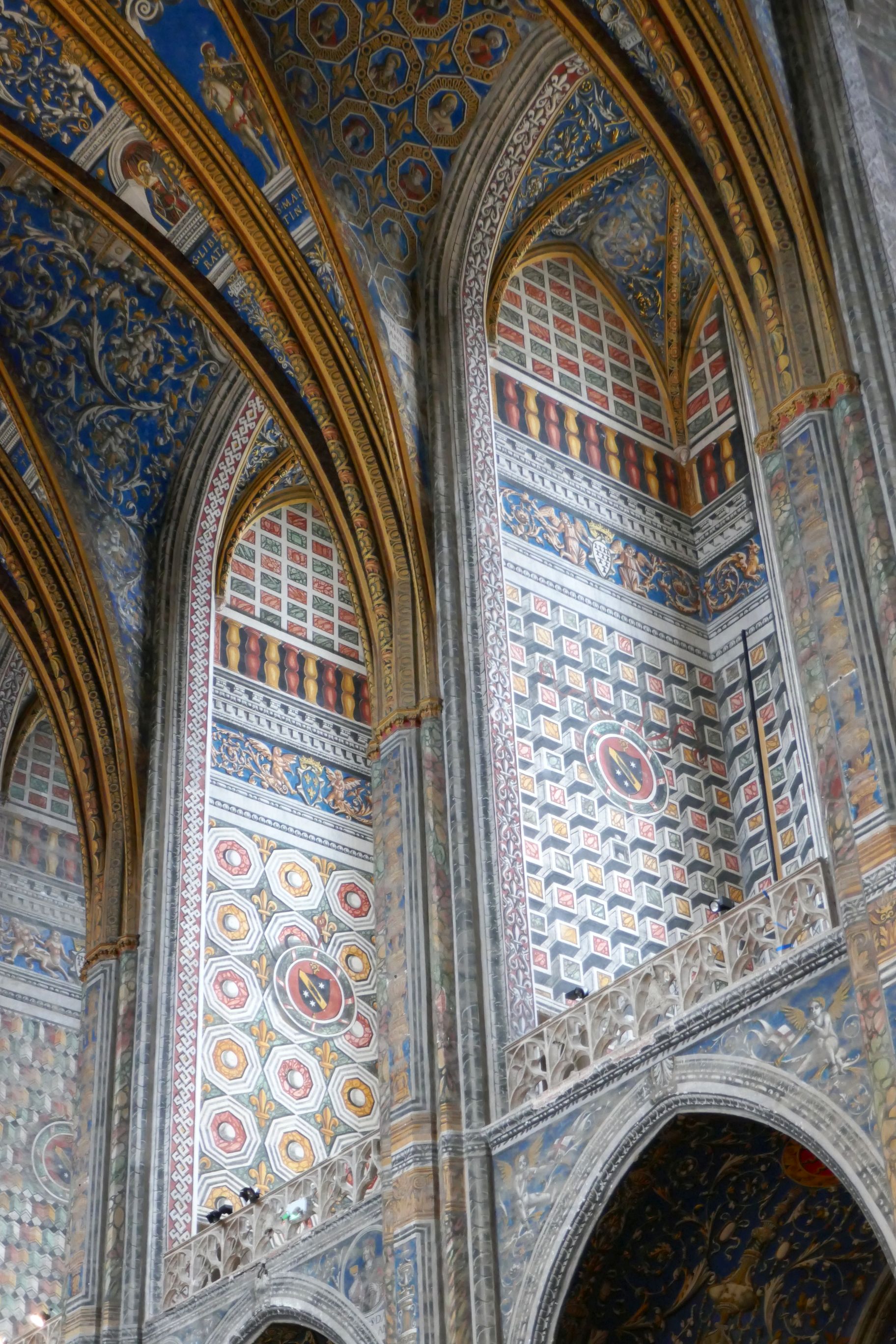
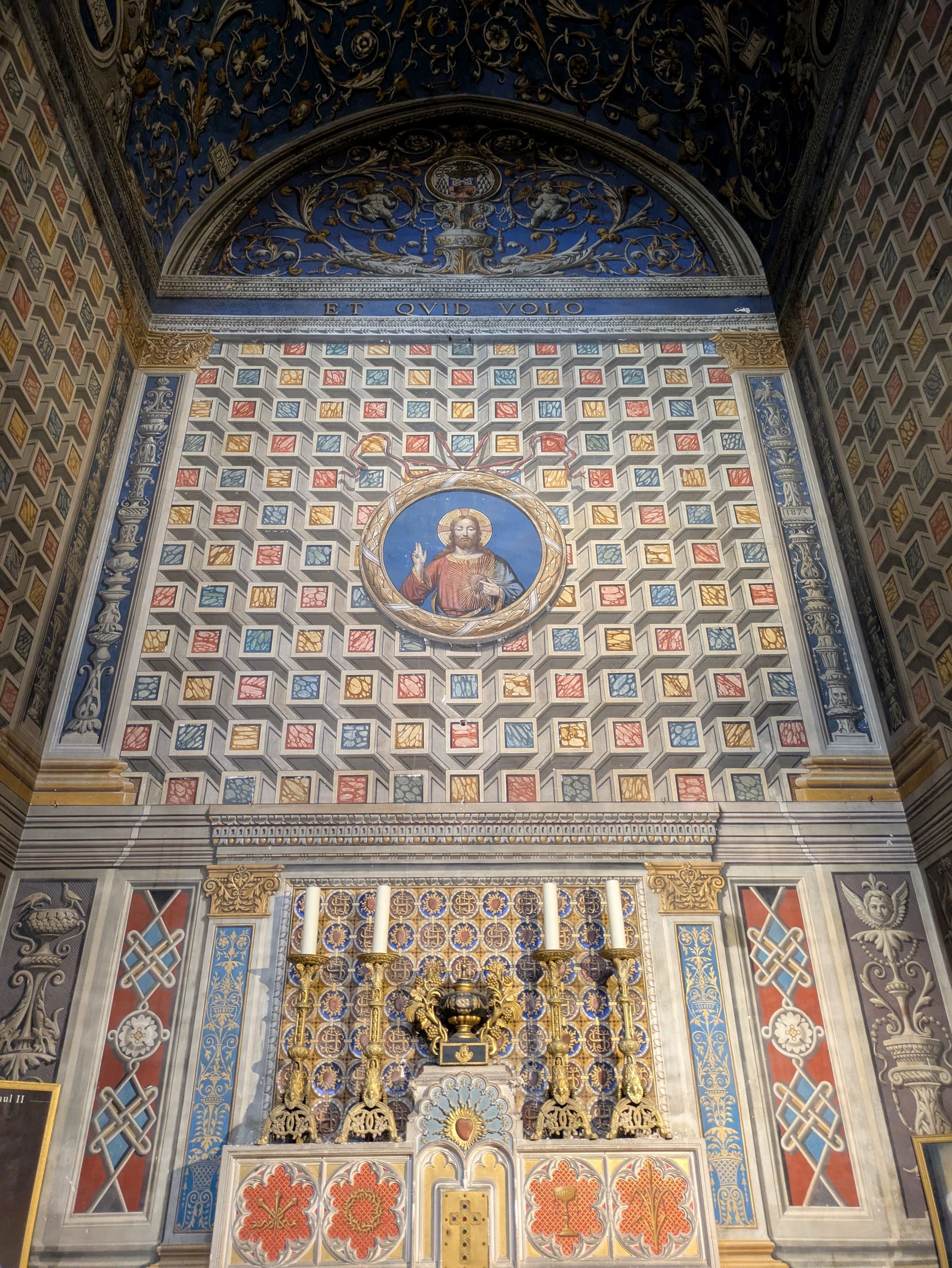
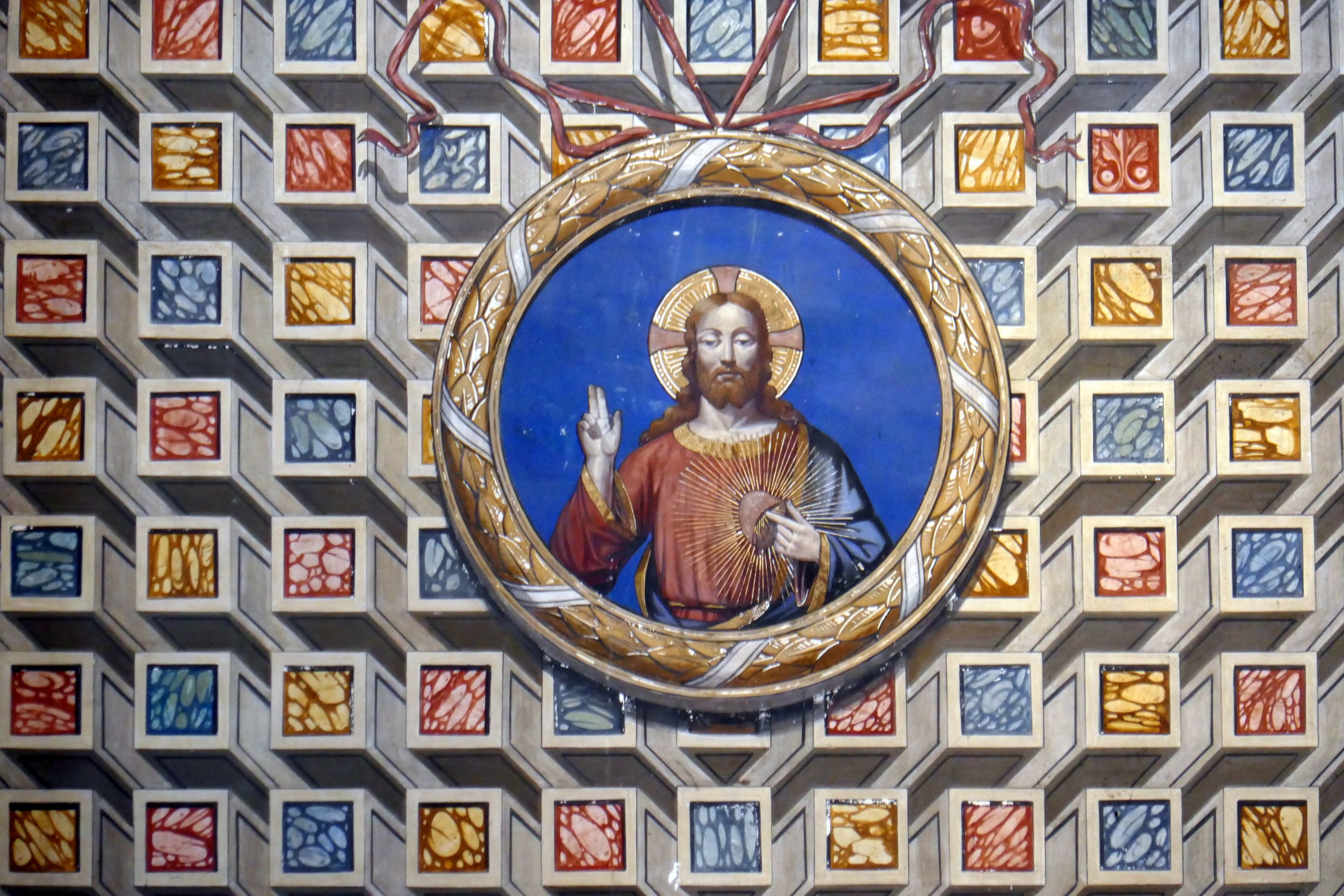
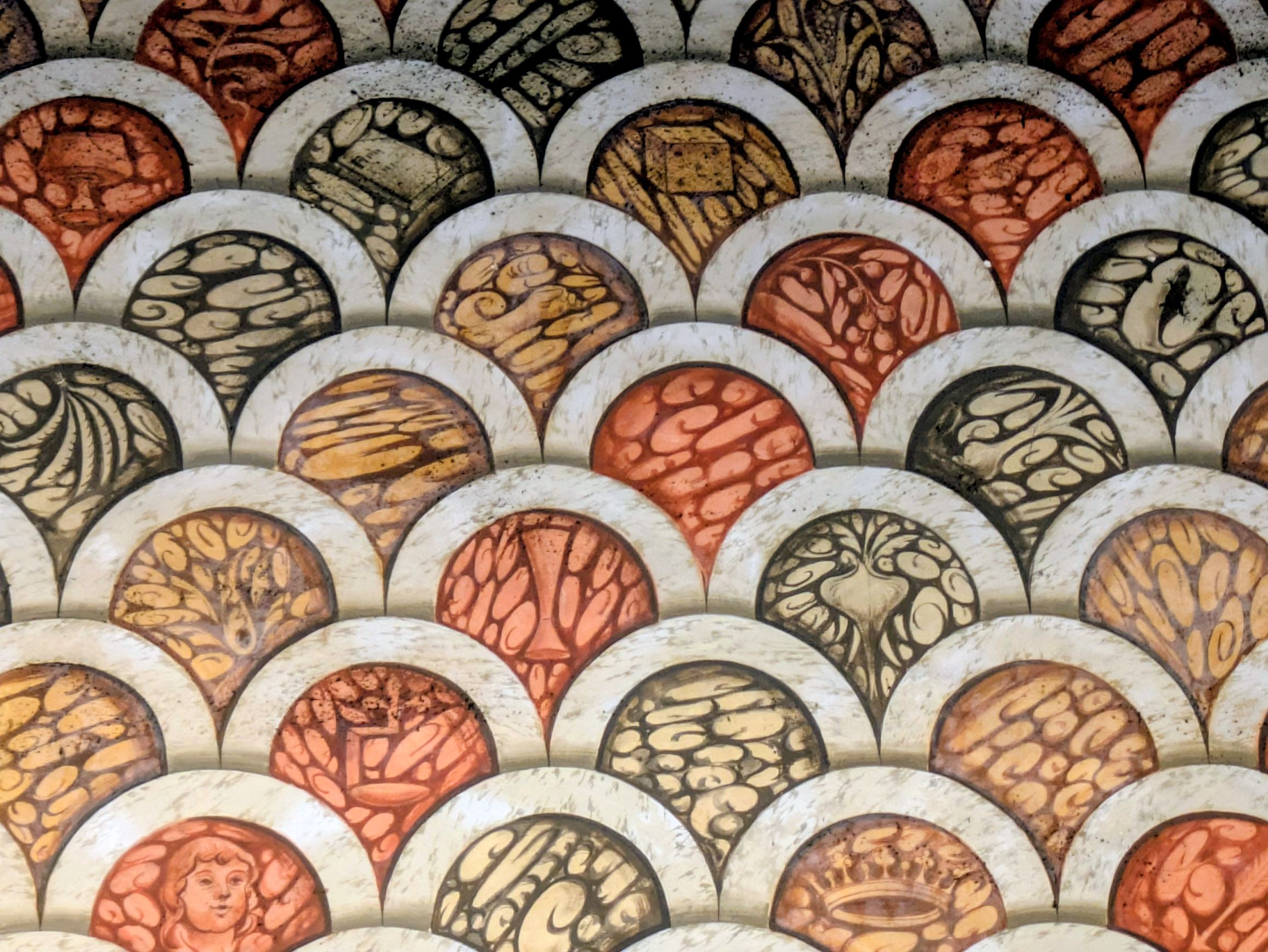
Although the interior was full of ornate art and sculpture, the wall paintings especially captured my interest. The bold colors and geometric designs on some of the walls were such a contrast from the exterior!
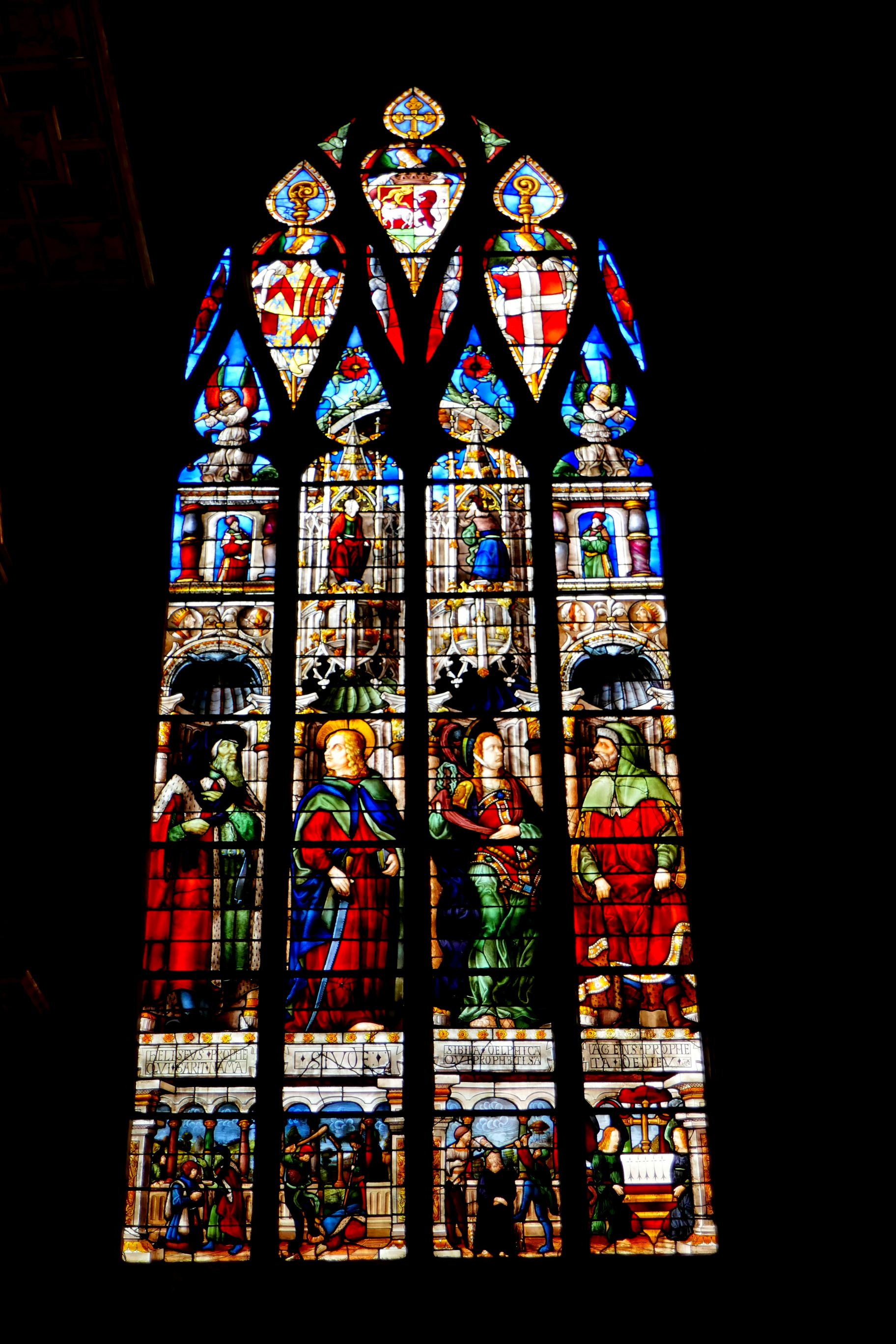
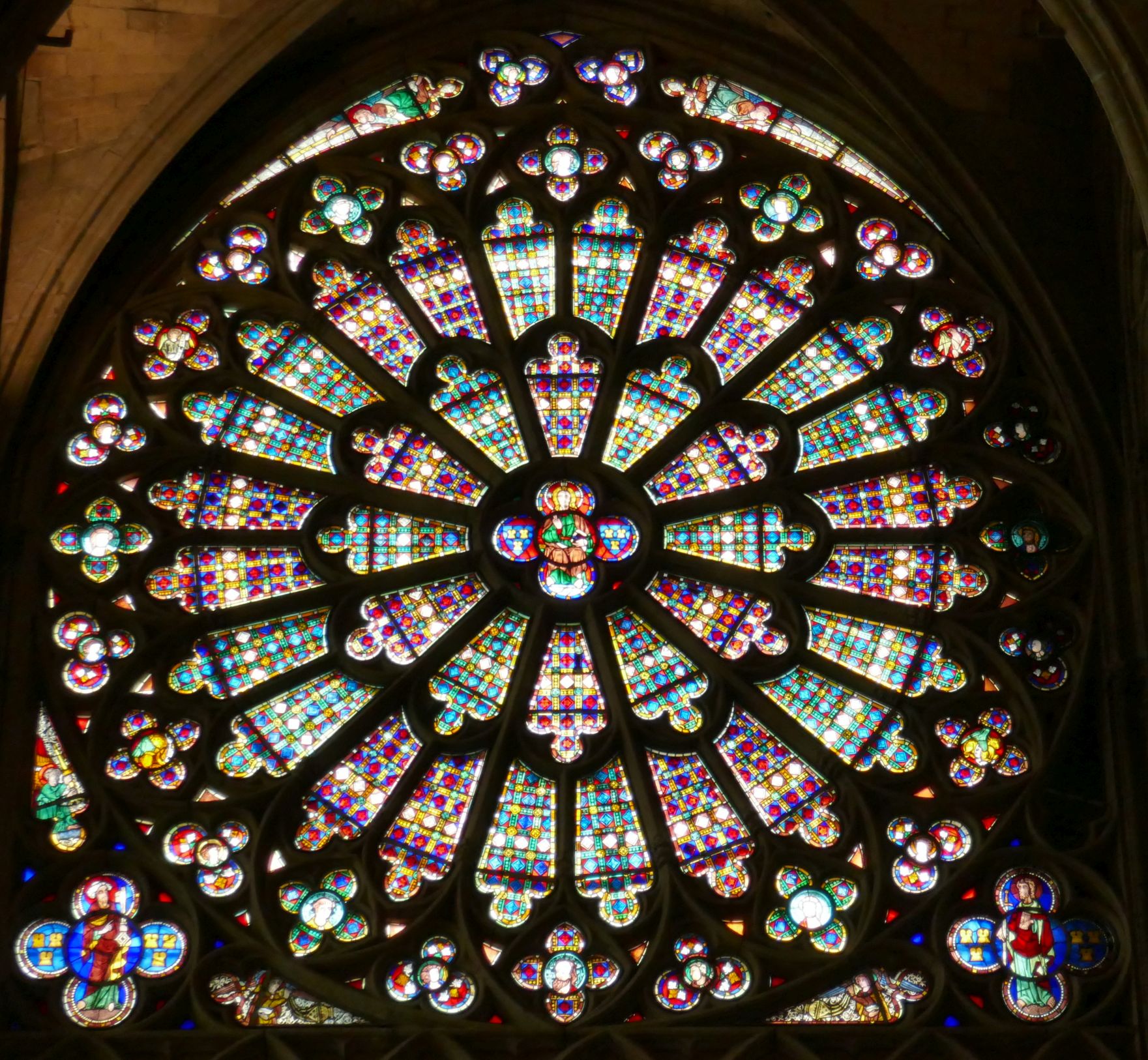
There were, of course, beautiful stained glass windows as well. (What’s a cathedral without stained glass?) Although most of the windows date to the 19th and early 20th centuries, there is still a small amount of stained glass from the medieval period that remains.
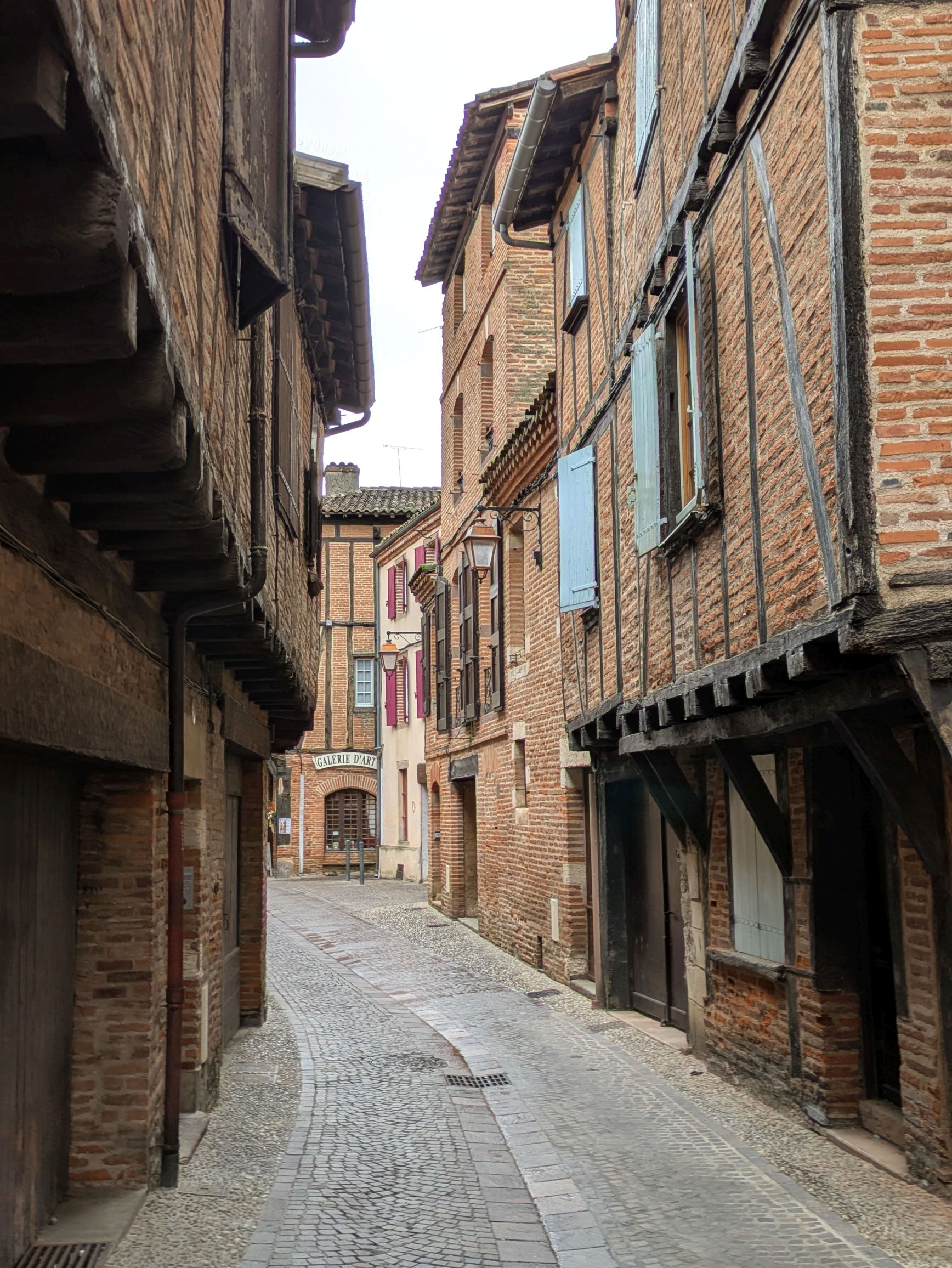
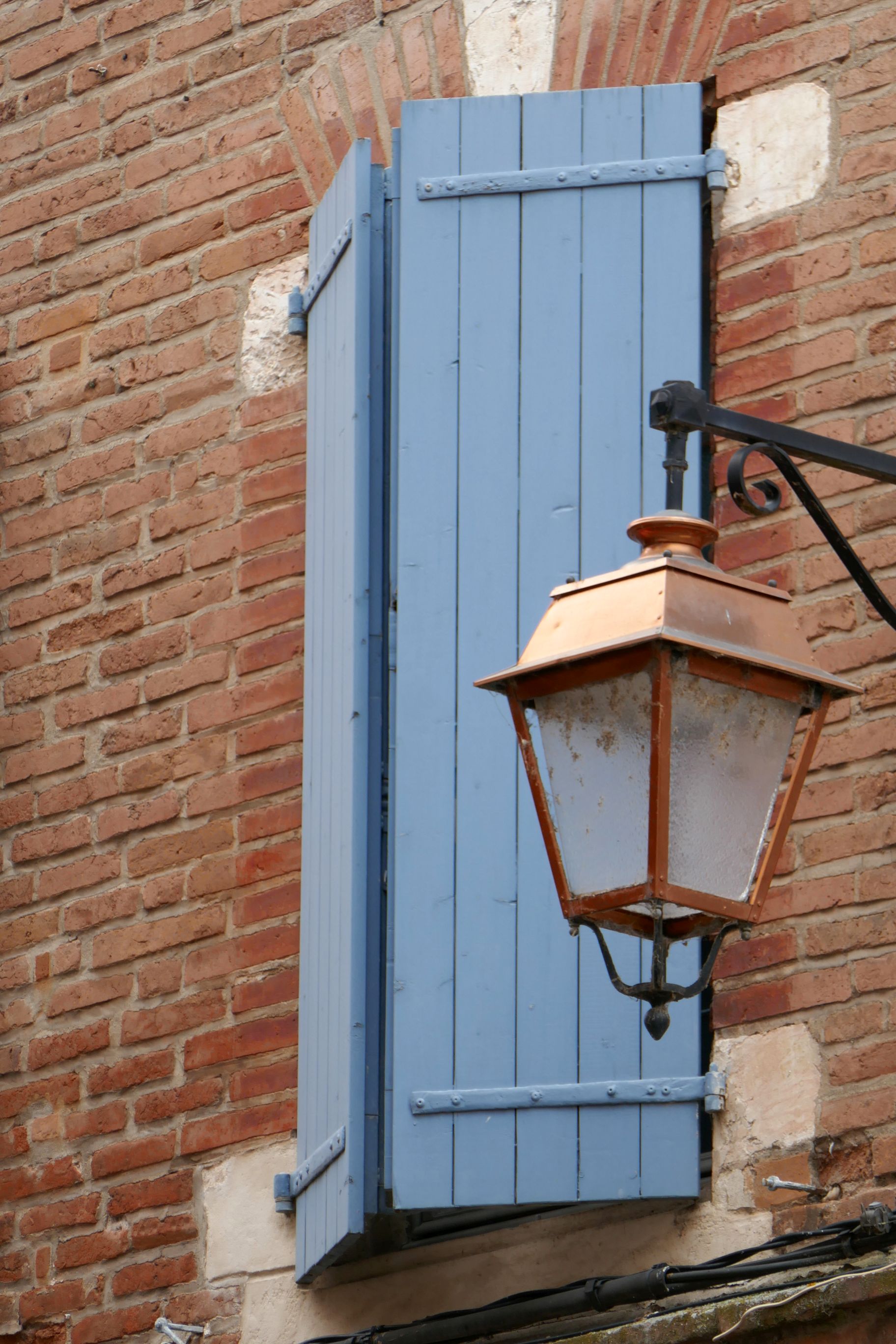
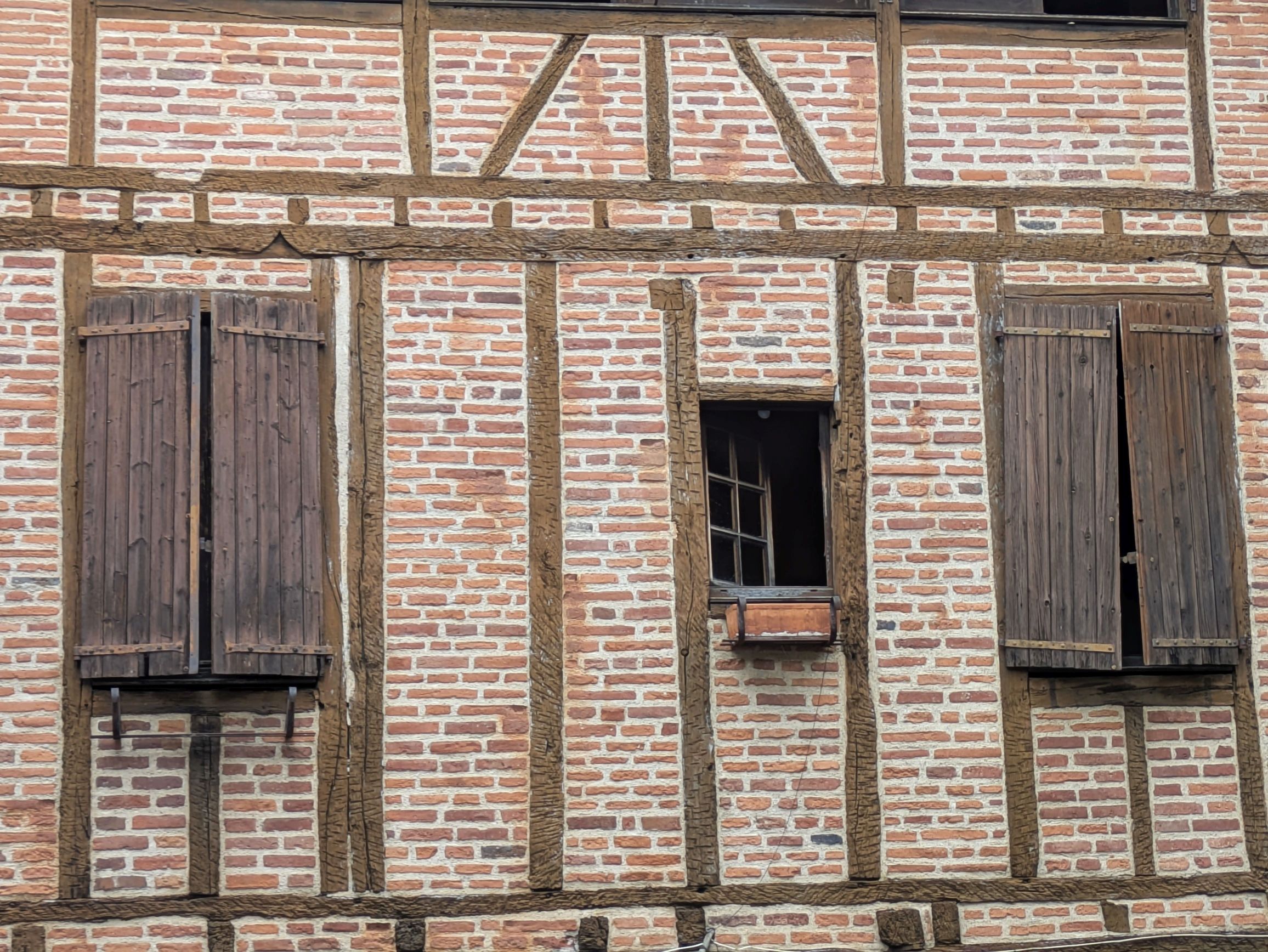
Scenes around the medieval town:
Coming up next: SOUTHWEST FRANCE, NORTHERN SPAIN & PORTUGAL #4: ATTRACTIVE AUCH
When I say “new” Carcassone, it’s a stretch, since the lower town below the walled fortress dates to the late medieval period. It is newer than the old, fortified city up on the hill!
Carcassone is in the Basque Country of France, straddling the border between France and Spain on the coast of the Bay of Biscay. The region is home to the Basque people, an ethnic group with their own culture and language, which is the oldest language spoken in Europe. They also share genetic ancestry, unique in that they have the highest percentage of Type O blood of any ethnic group.
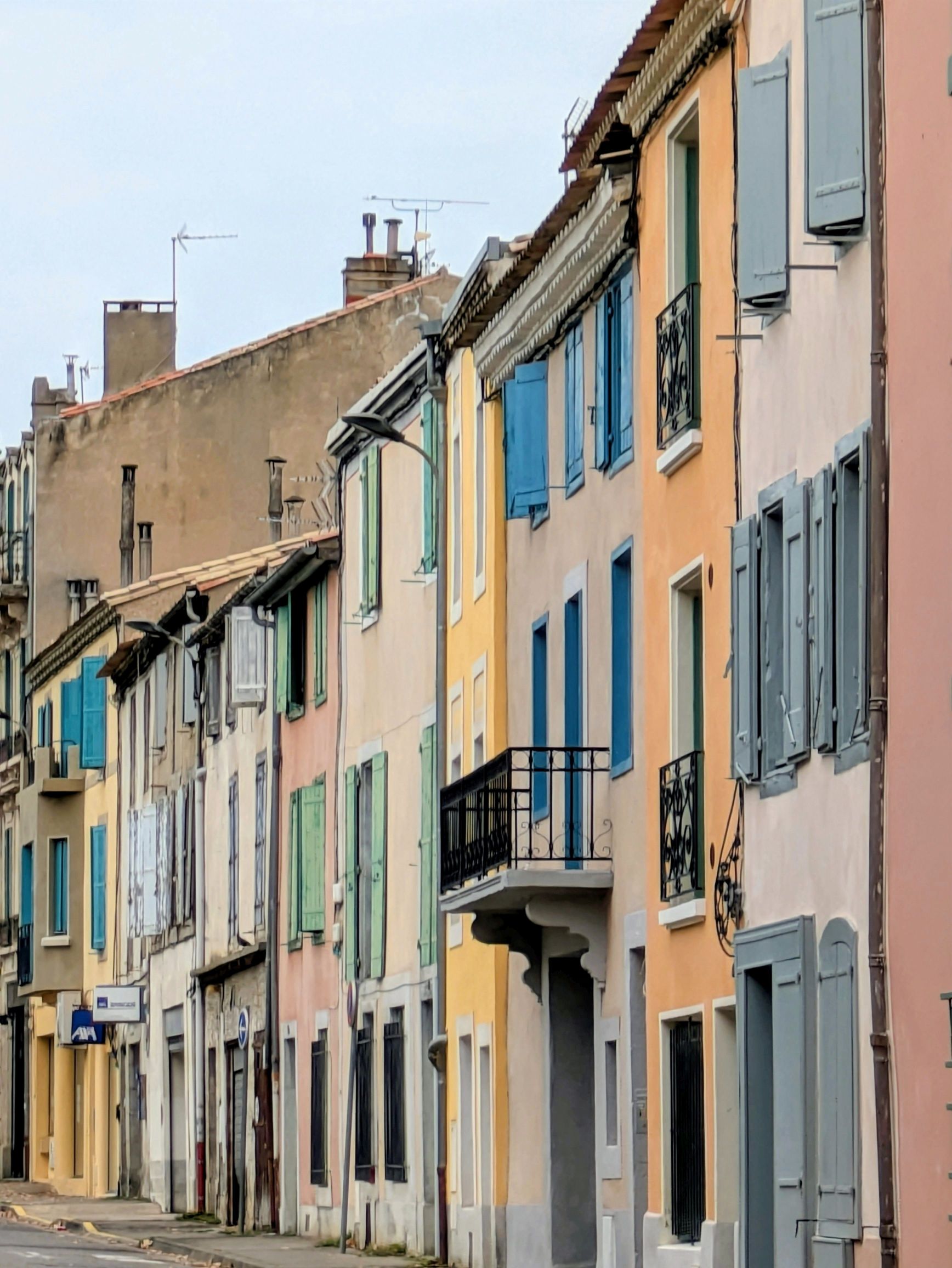
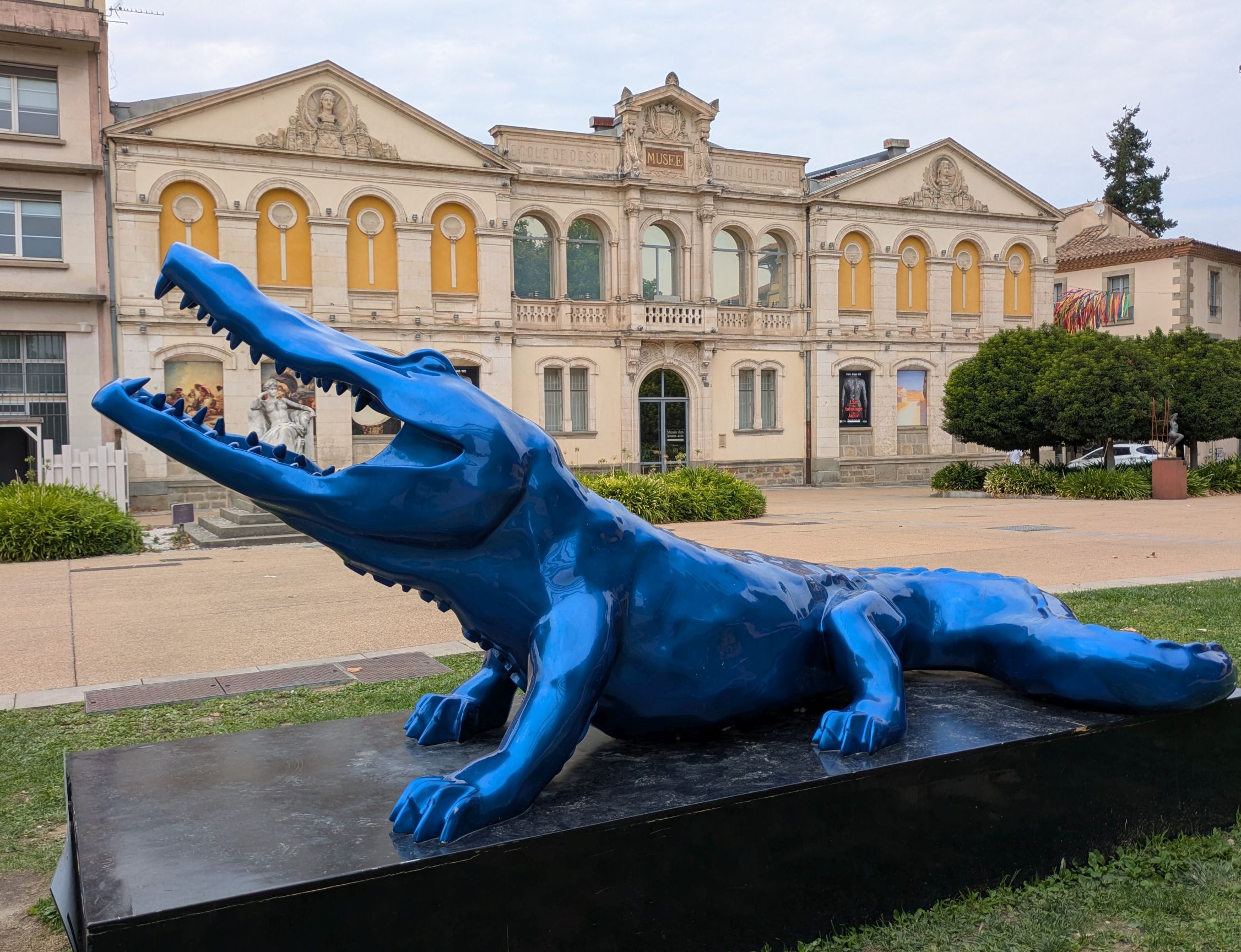
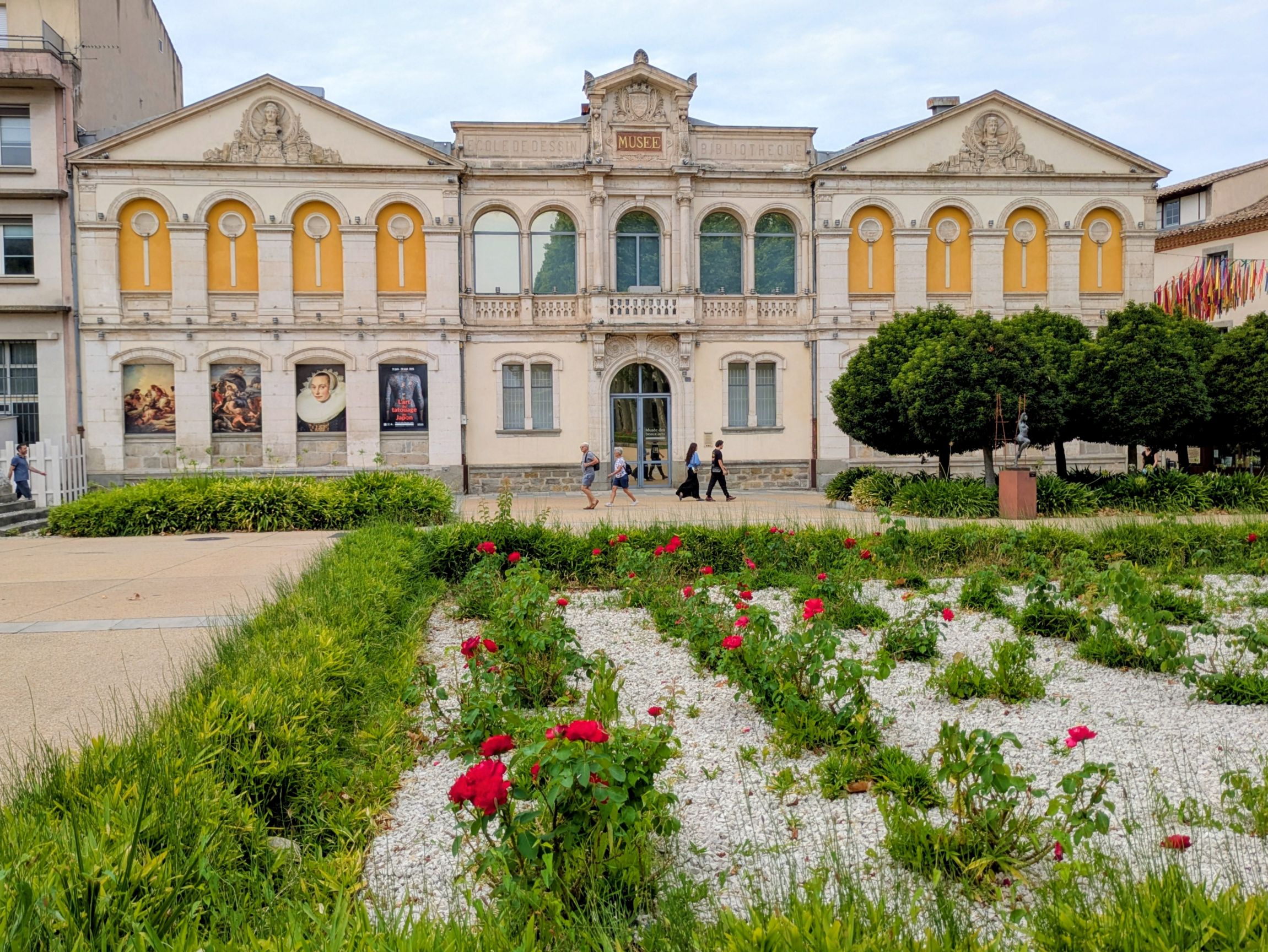
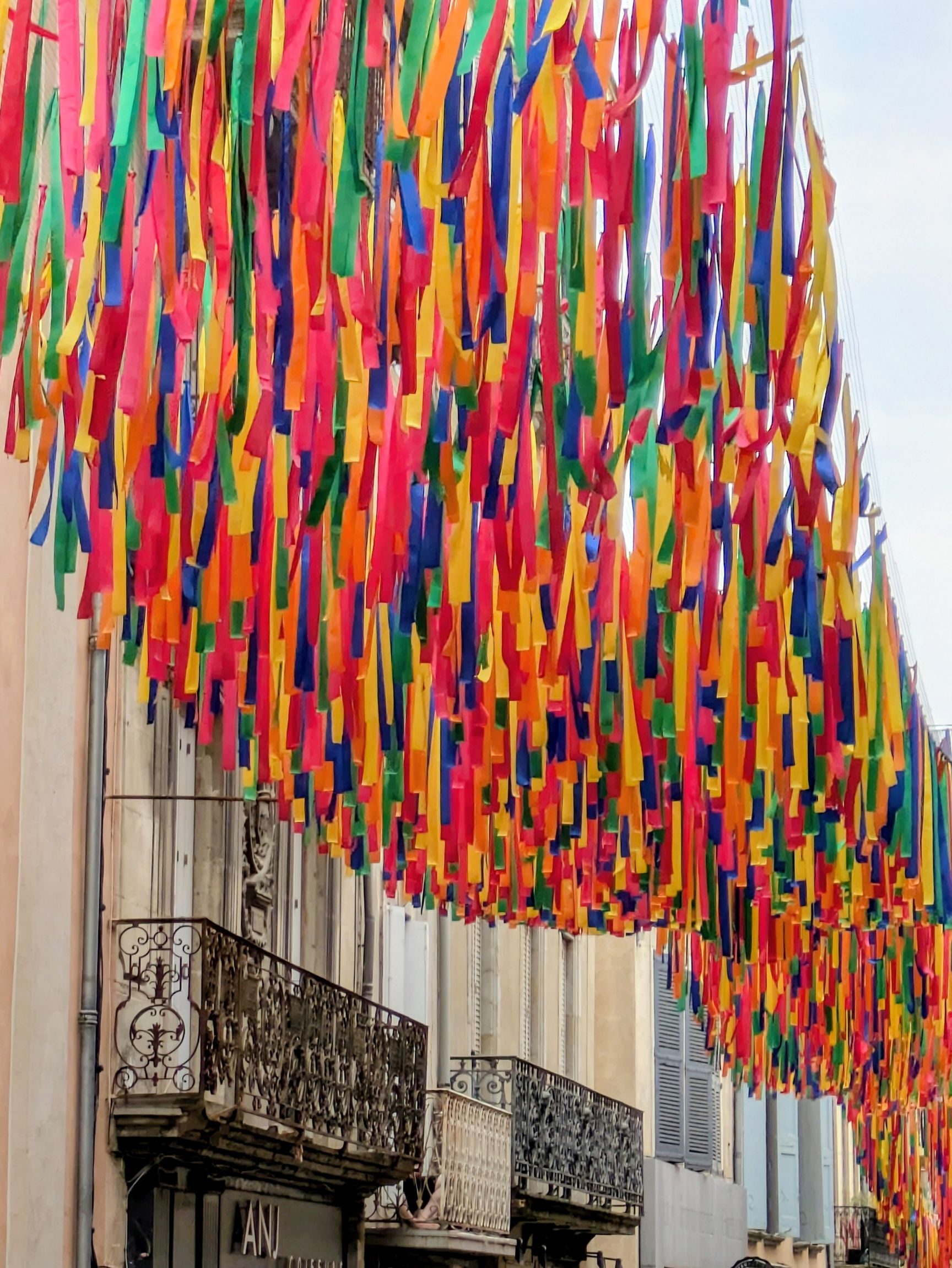
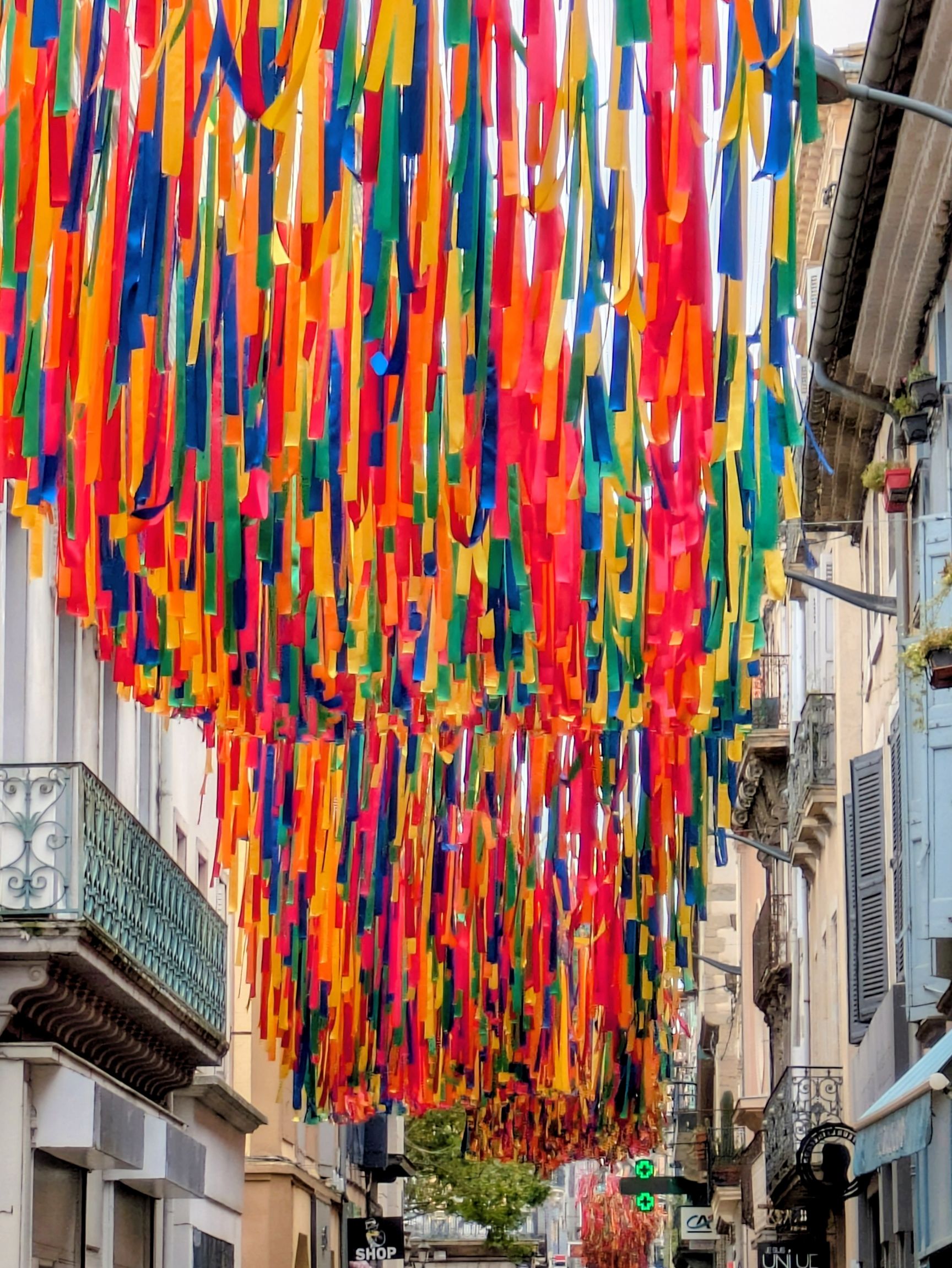
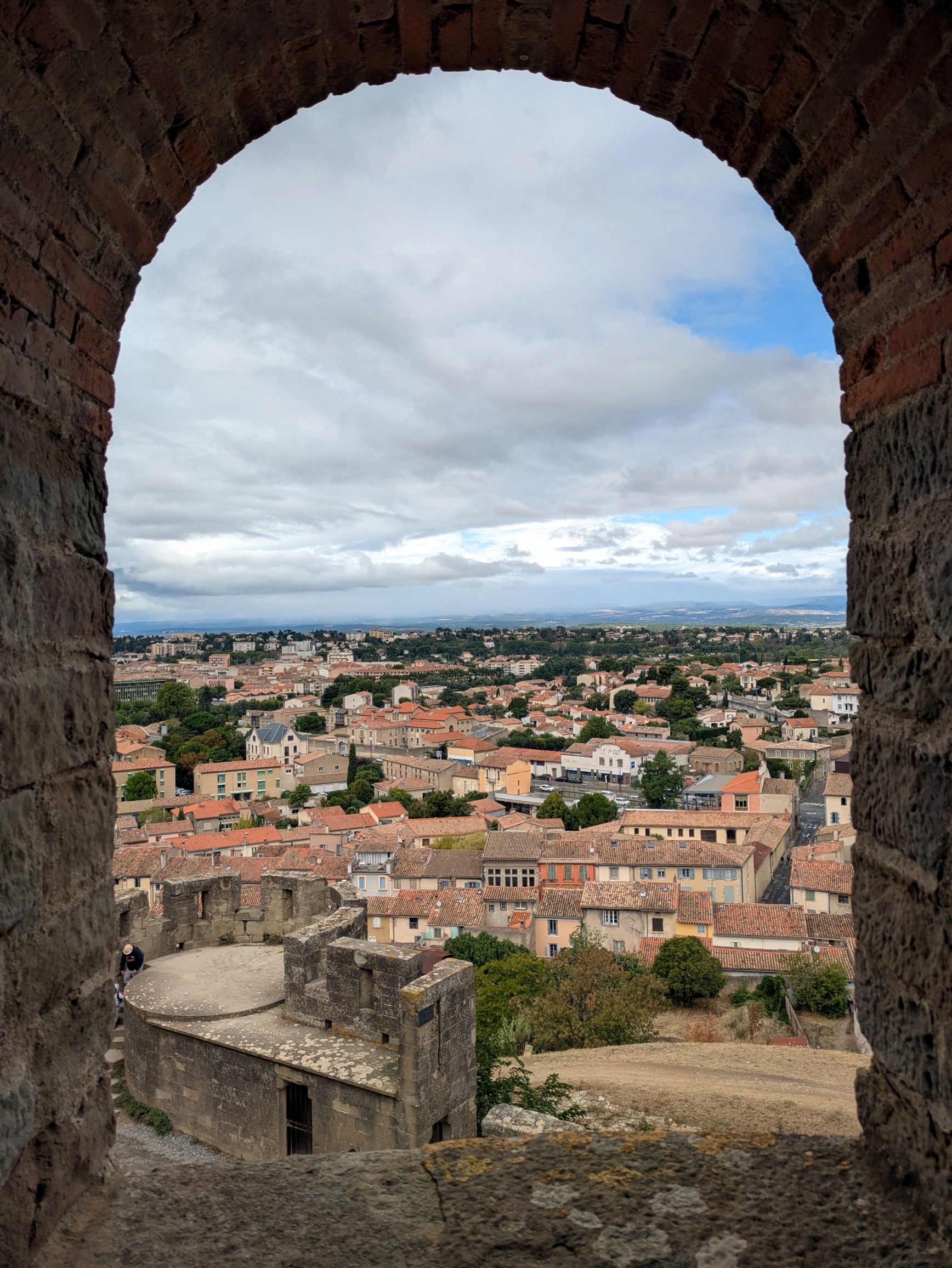
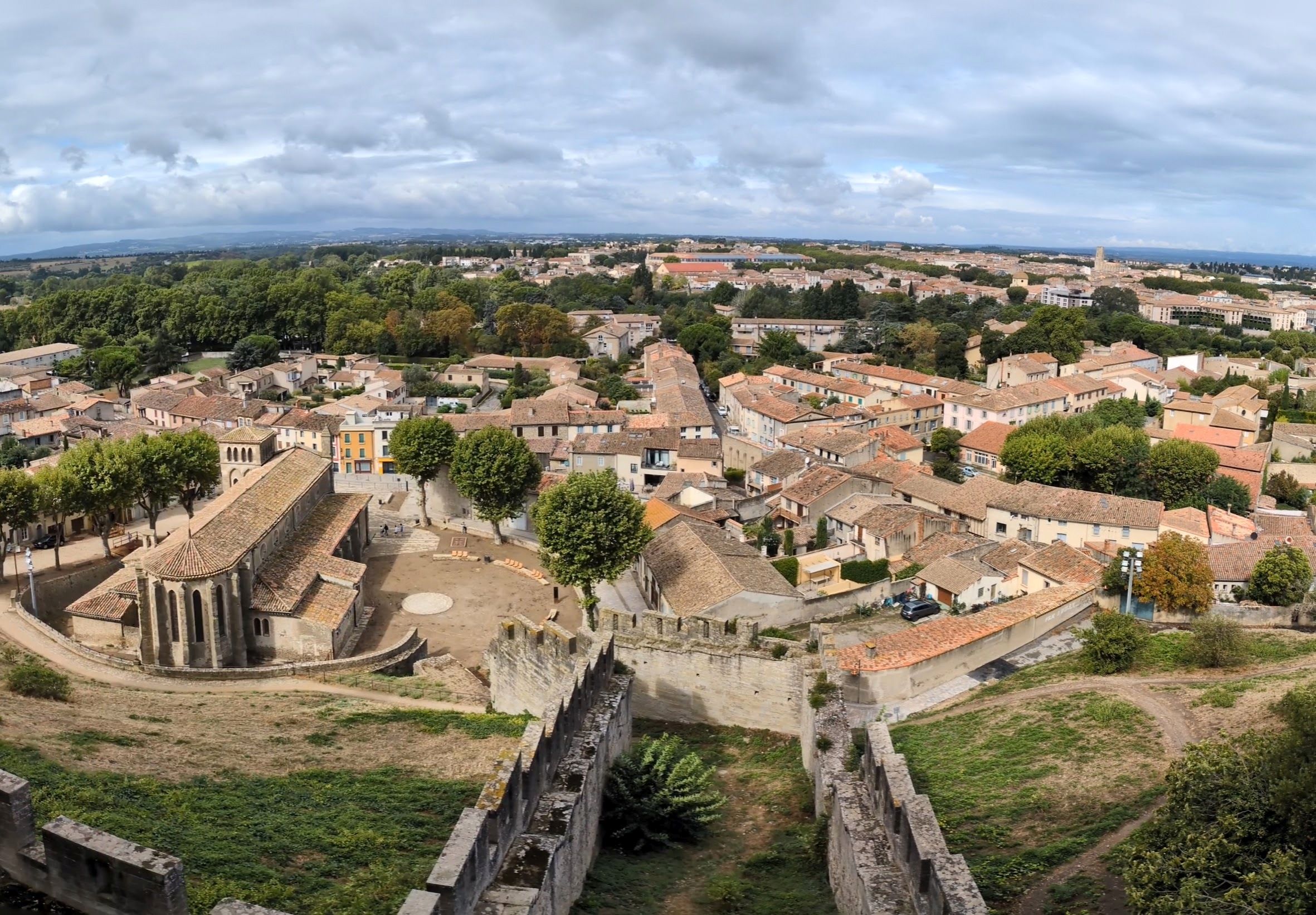
Exploring Carcassone can be challenging for the less mobile. It’s a bit of a steep scamper down the hill to get to the lower town on foot, but it was worth the effort to have a look around. The walk across the bridge over the Aude river offered nice (but not photogenic on this day) views, and the pastel painted homes on the other side of the bridge were nice to photograph. I especially enjoyed the odd choice of sculpture subject as well as the charming and colorful streamers over the streets in the center of town.
(For all photos, click on the image for a full screen view.)
Next up:SOUTHWEST FRANCE, NORTHERN SPAIN & PORTUGAL #3: APPEALING ALBI
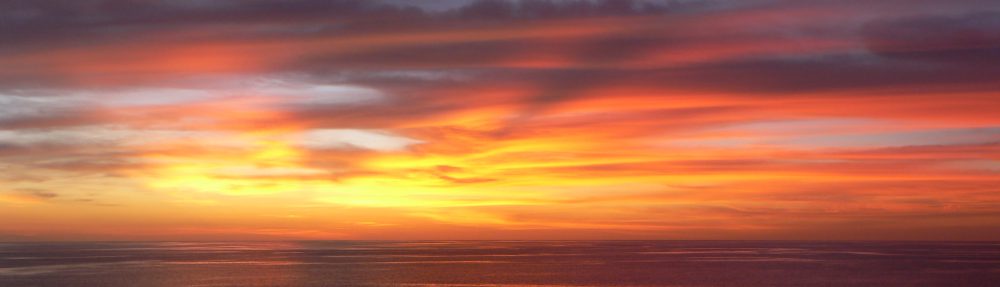
What a lovely way to begin our Overseas Adventures Travel (OAT) tour! We were greeted with a gorgeous sunrise at the airport in Paris, following our red-eye flight from Atlanta. Next, we boarded a flight to Toulouse, France, where we were transported by car to Carcassonne to begin our six-day pre-trip extension (in late August).
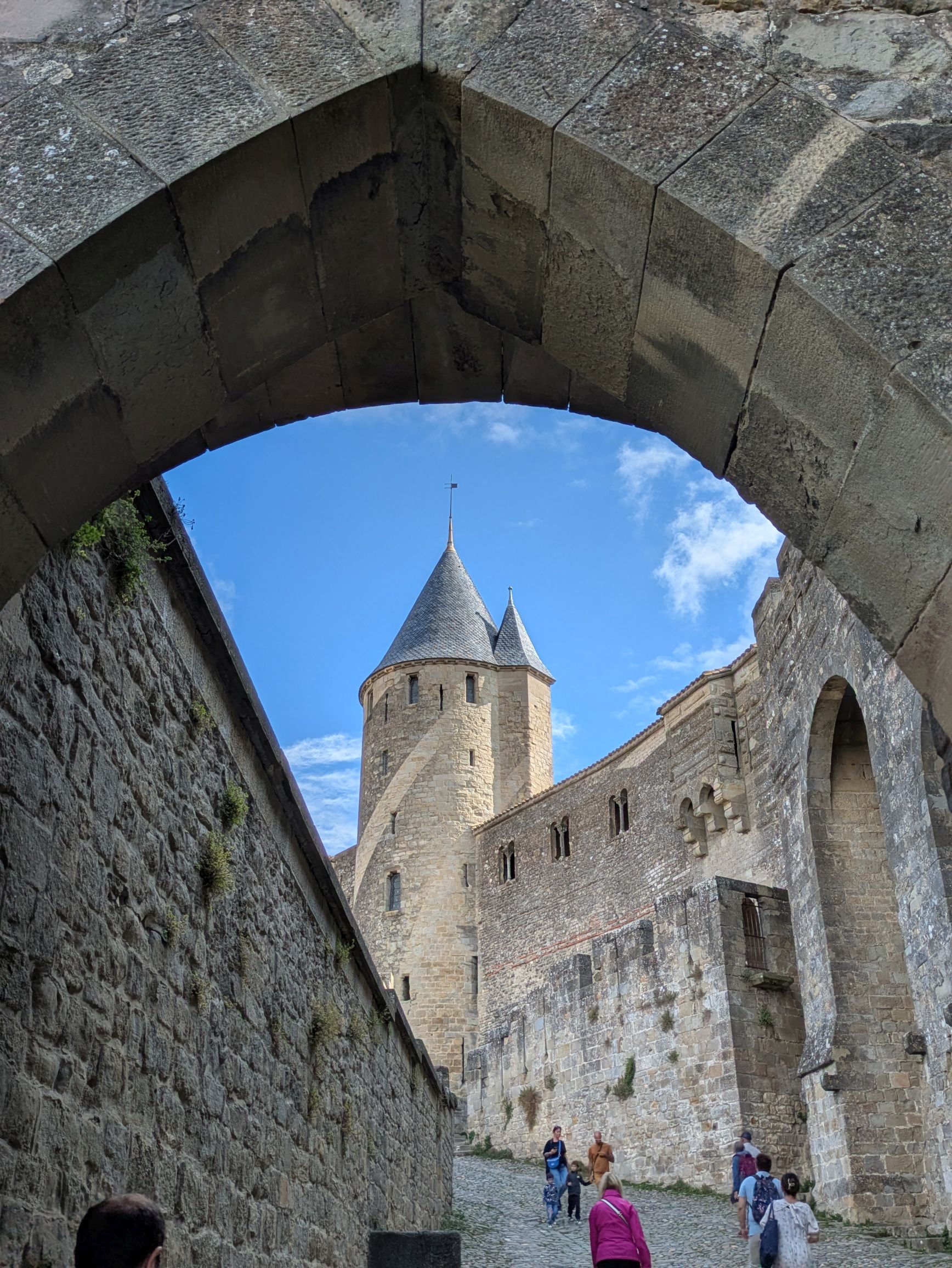
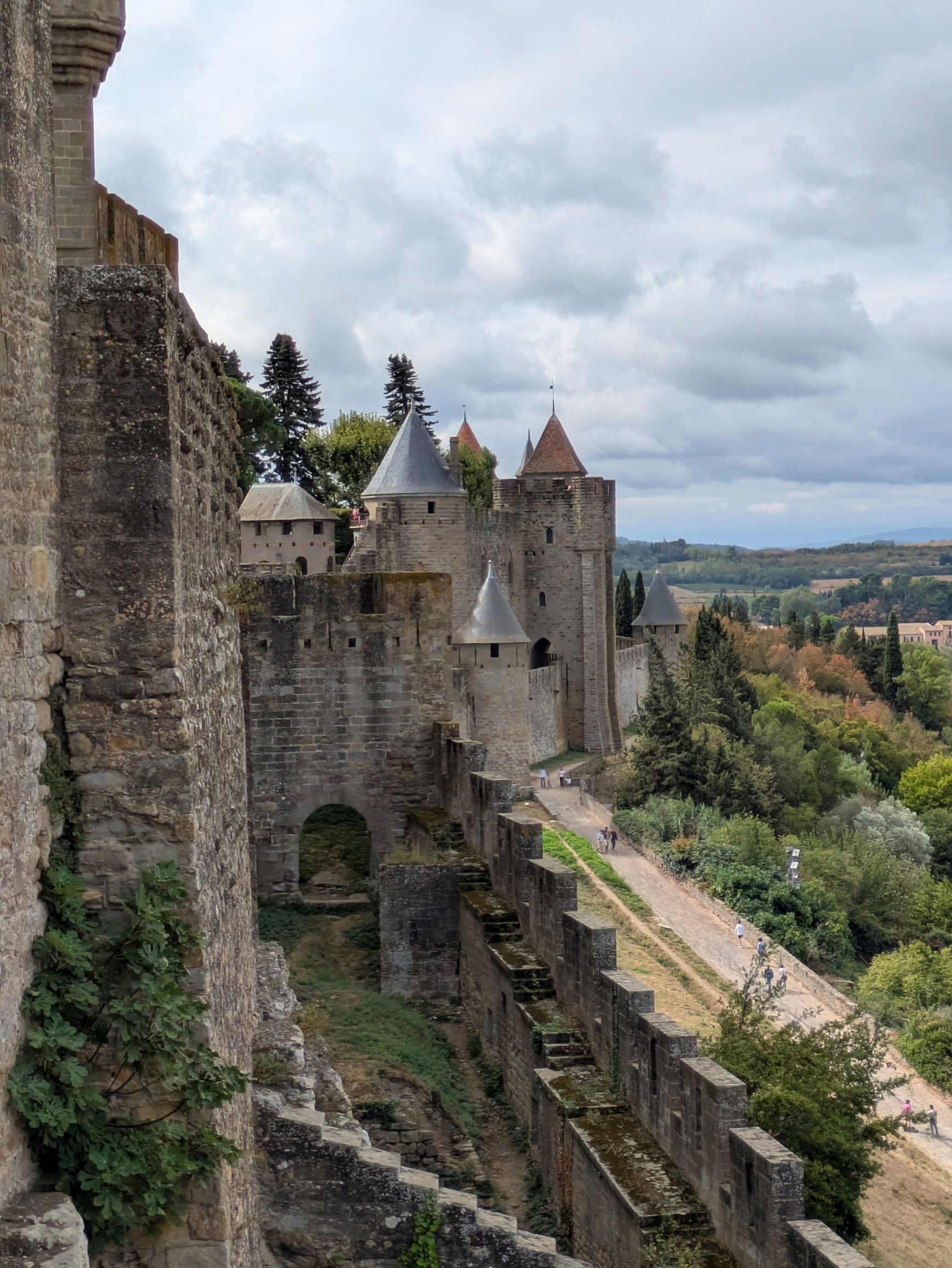
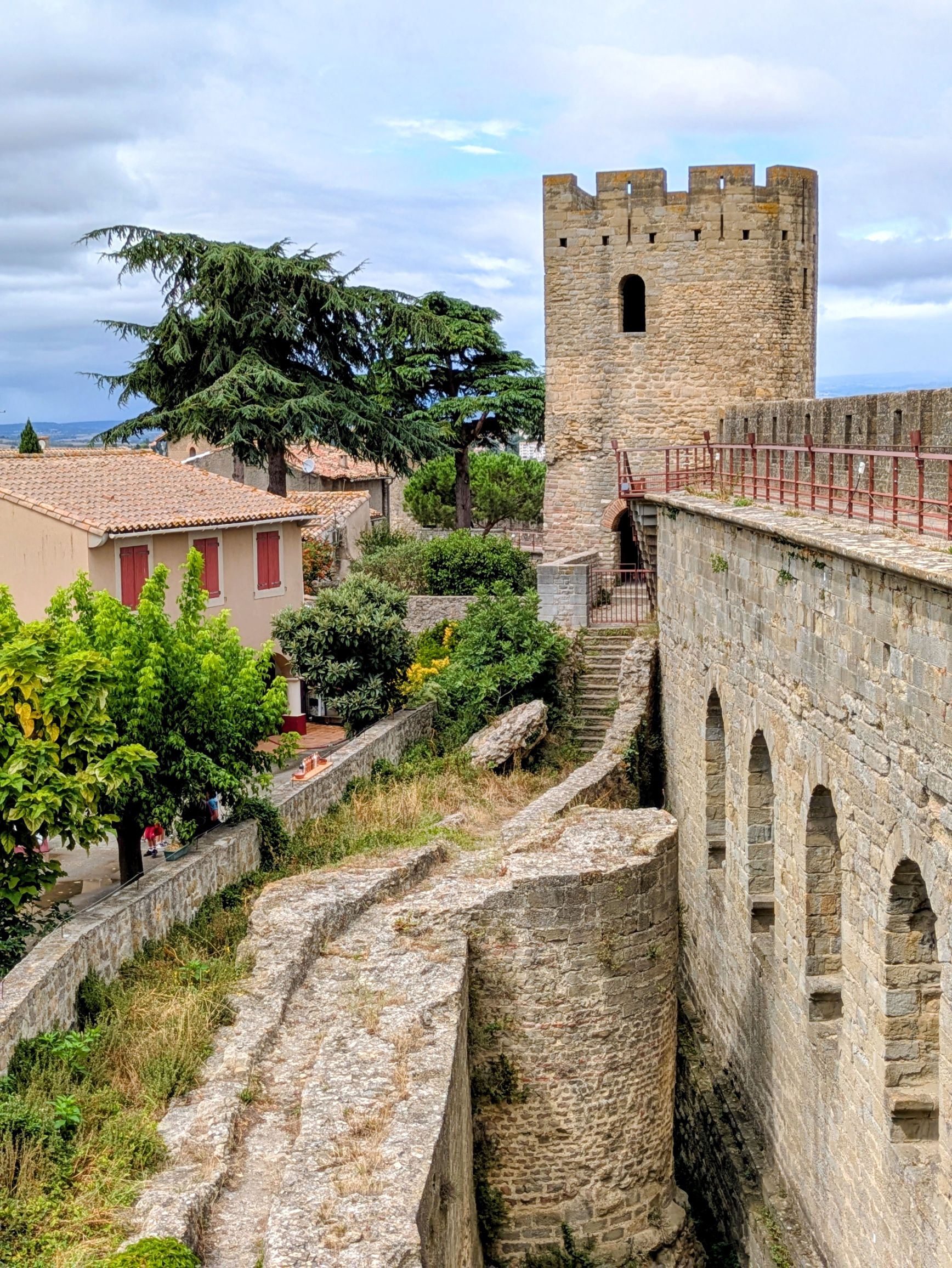
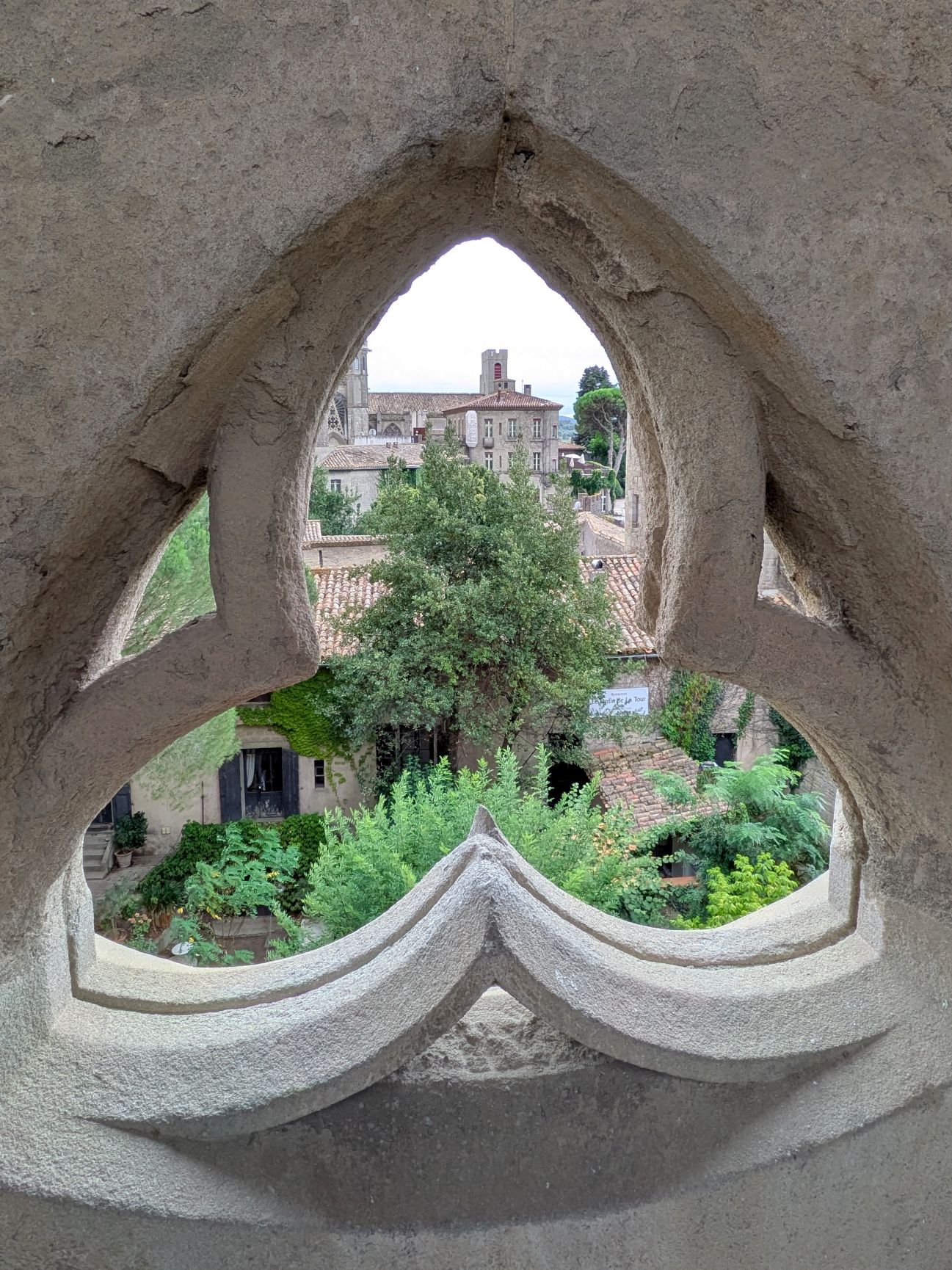
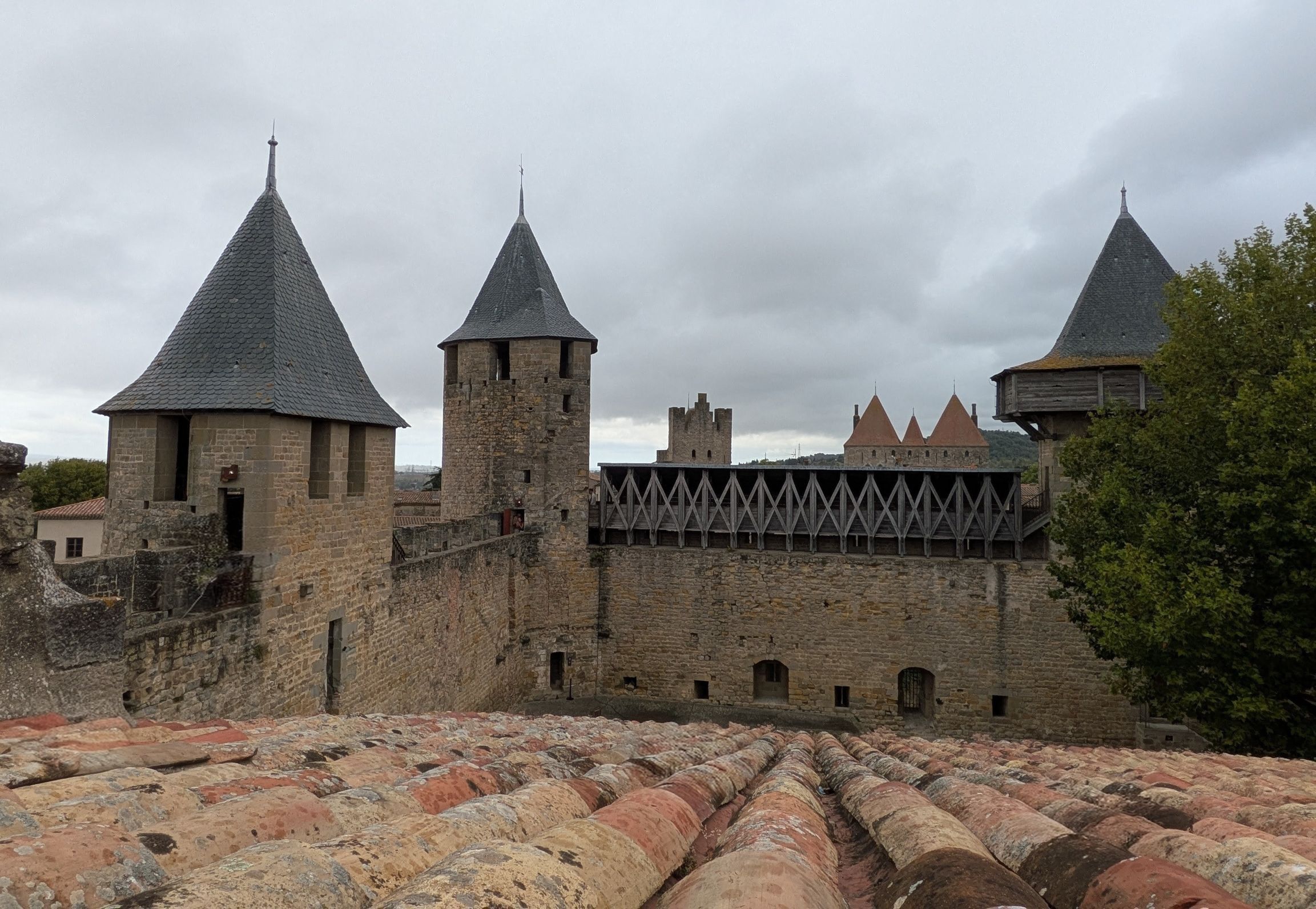
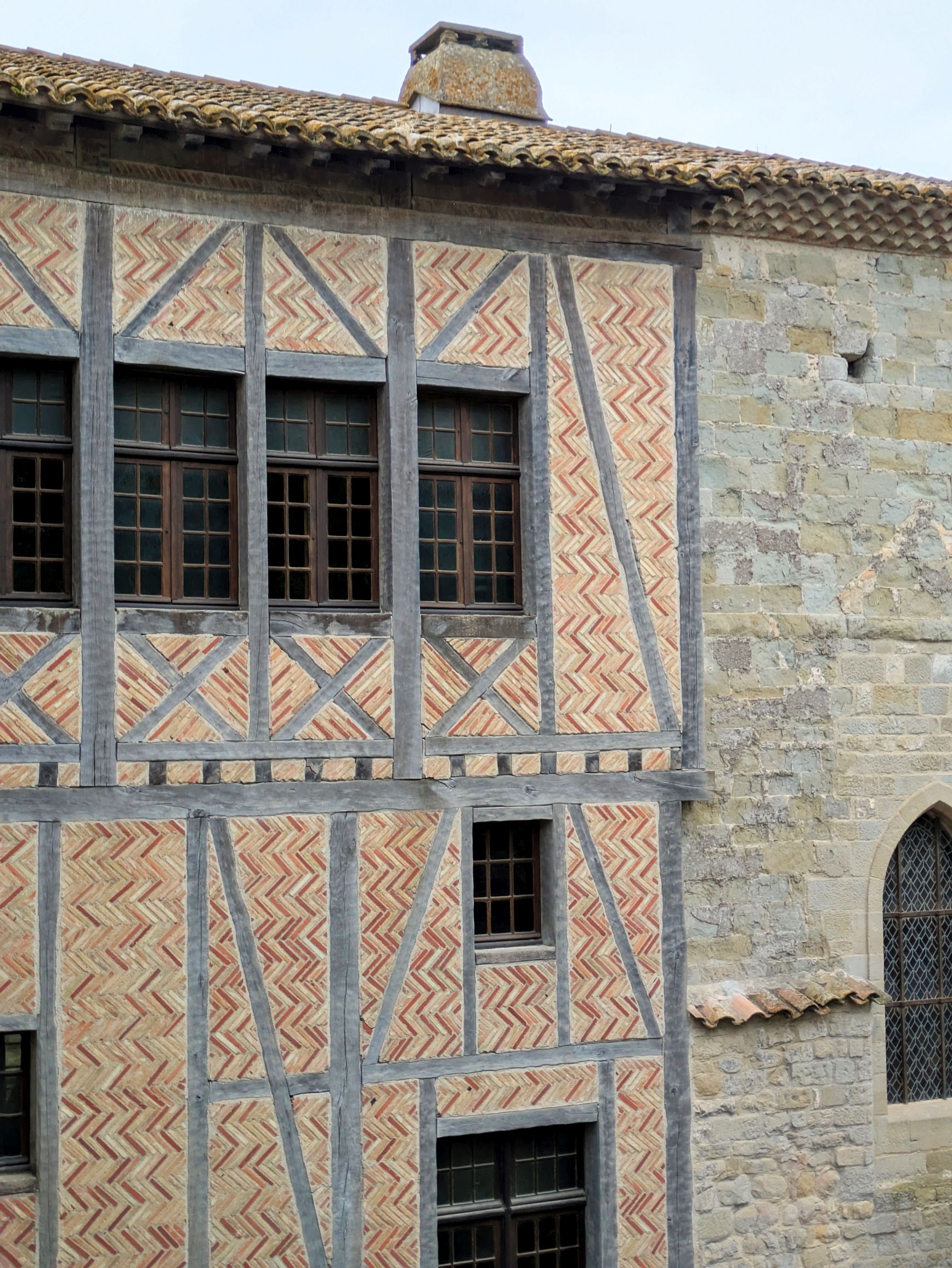
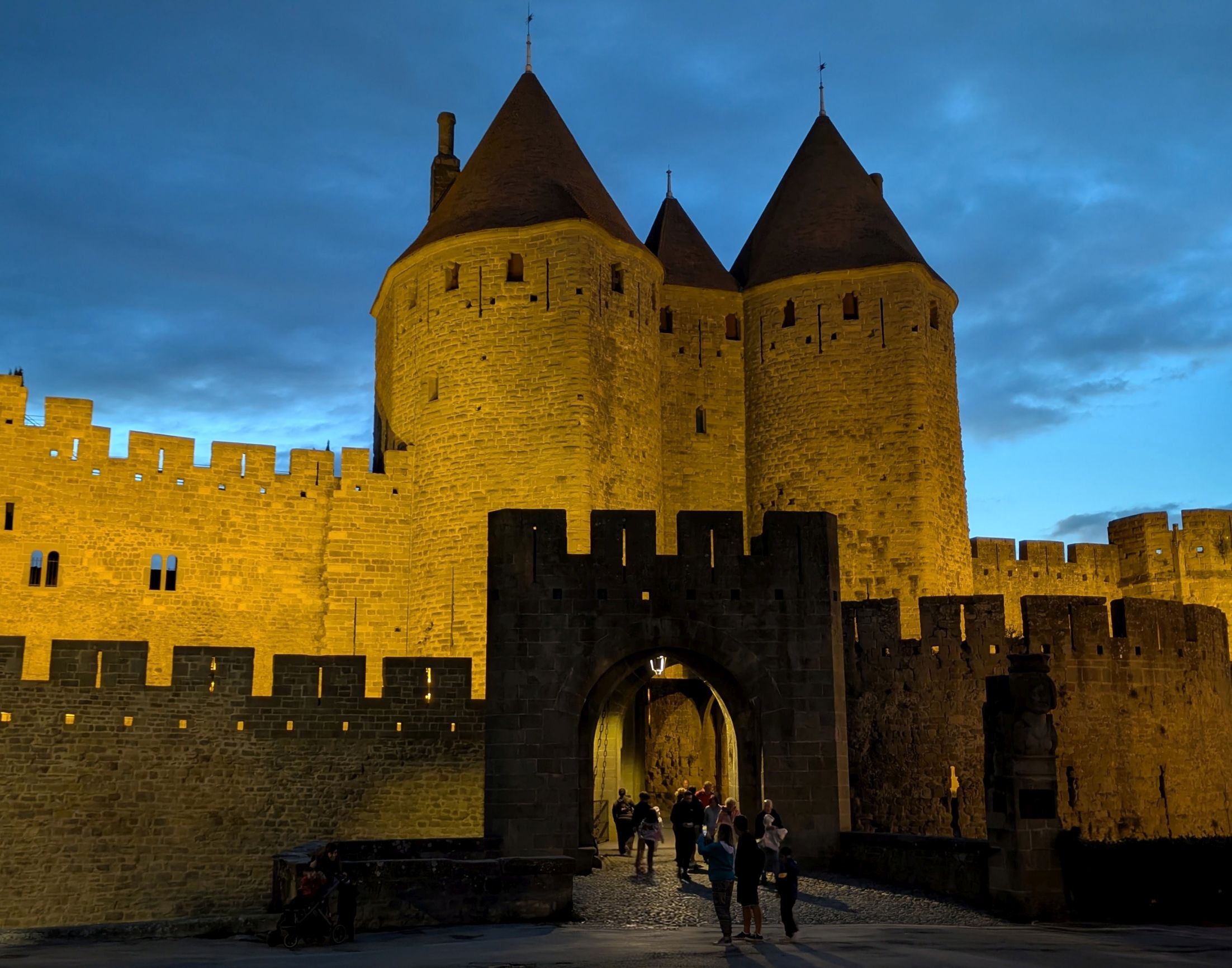
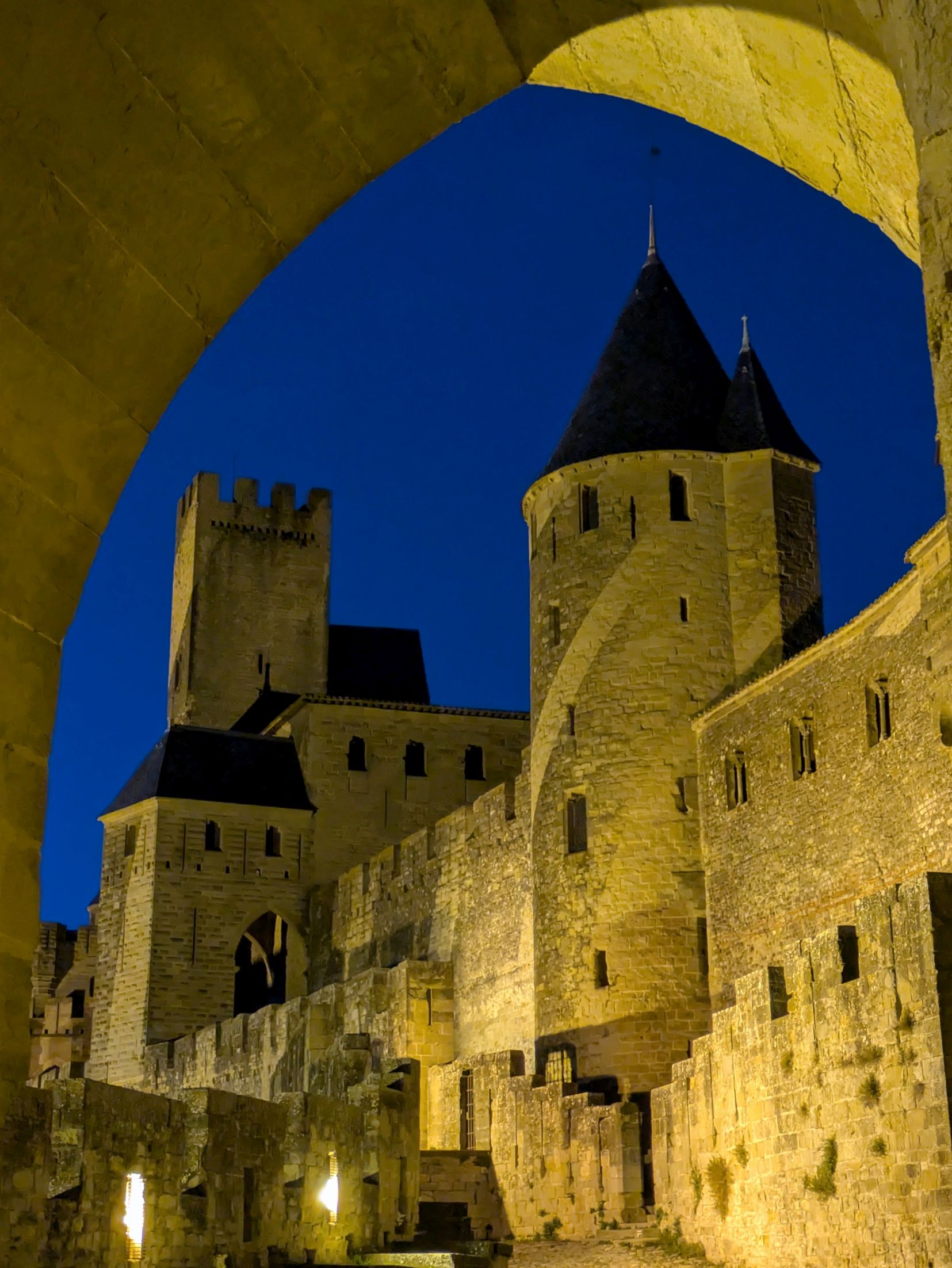
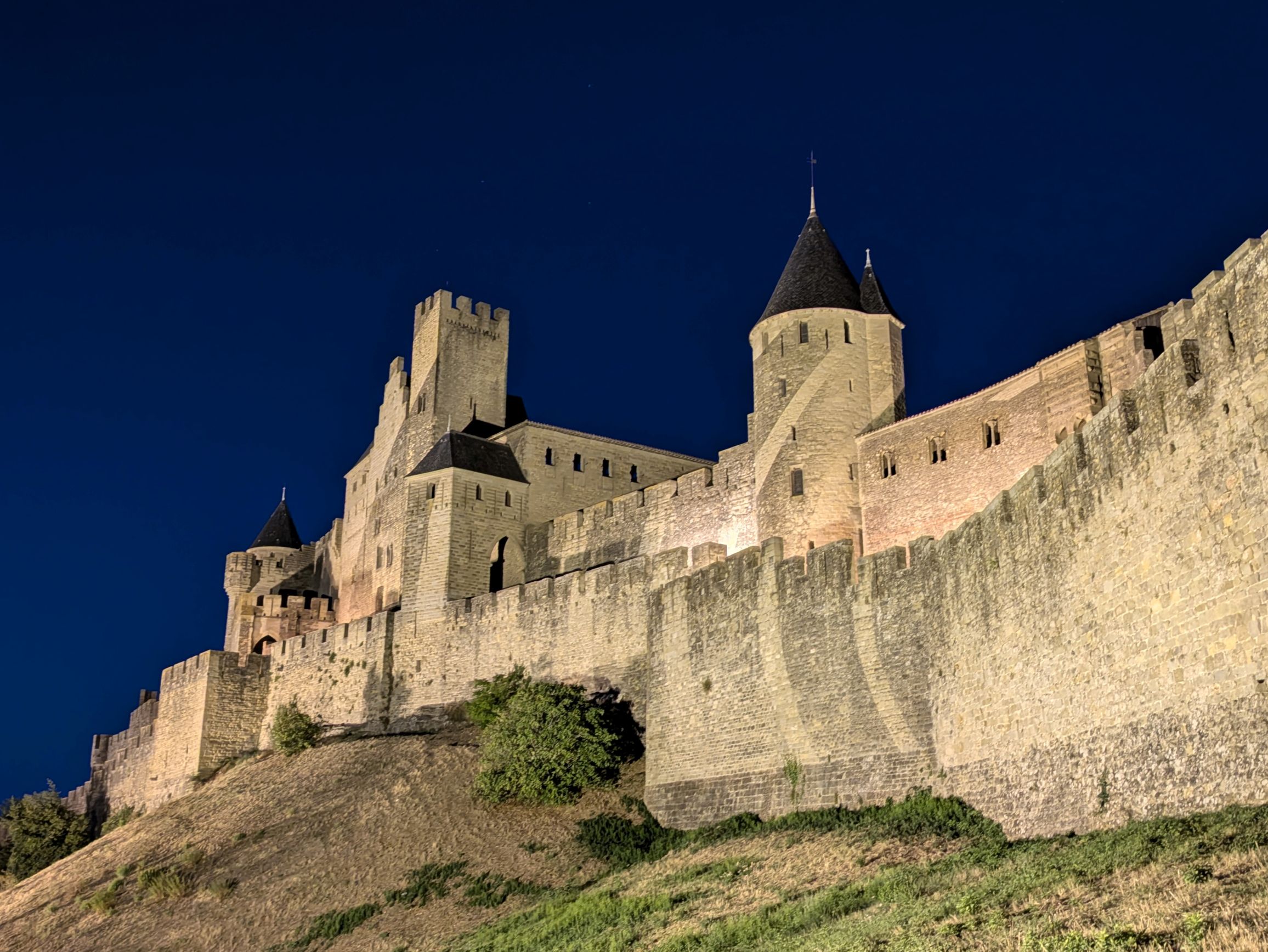
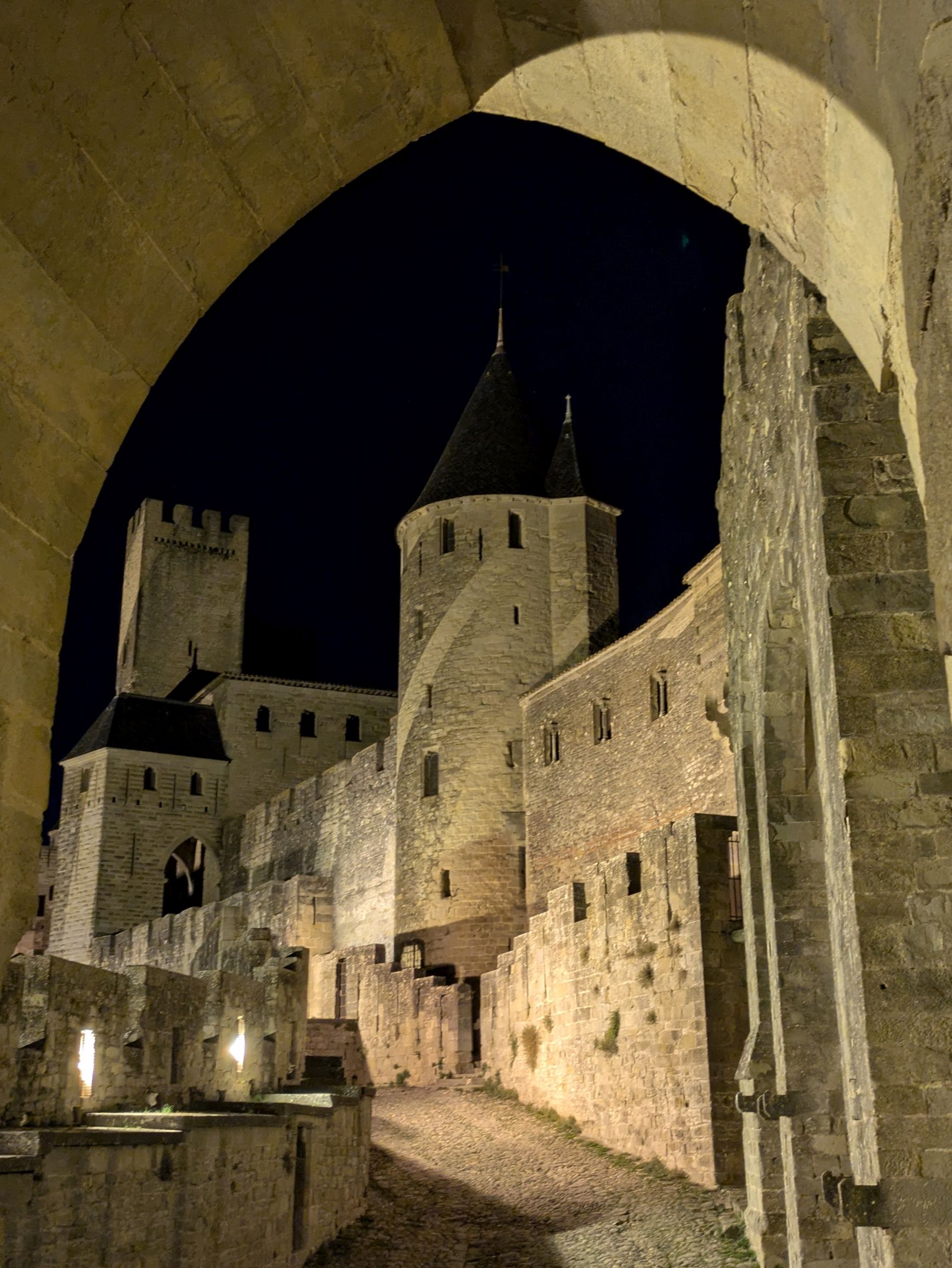
The old city of Carcassonne, located in southern France, is surrounded by a fortress high up on a hill overlooking the rest of the city. Step inside the walls, and you will feel like you have been transported back in time to the medieval period, 2,500 years ago.
(For all photos, click on the image for a full screen view.)
Our hotel was in the old city, just a short walk from the entrance of Cité de Carcassone, the medieval citadel (or fortress). We had arrived one day early, so we had three nights at the hotel with plenty of time to explore the charming old city on the hill as well as the newer city down below.
Although it rained during much of our time in France, we were fortunate to have some beautifully sunny periods to get in some good photography. We also enjoyed exploring and photographing the lighted citadel walls at night.
Entering the old city– a steep climb from the new city below
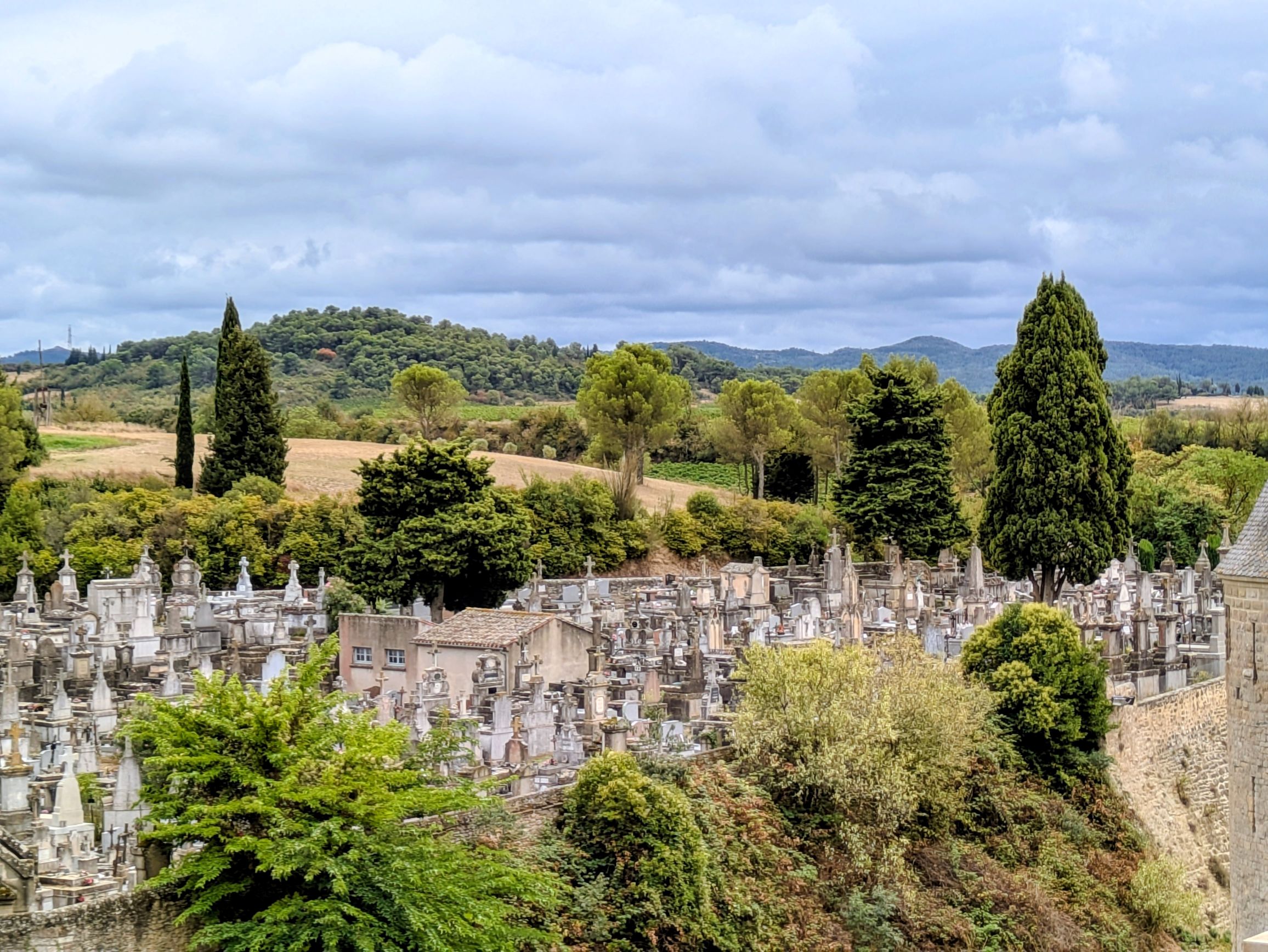
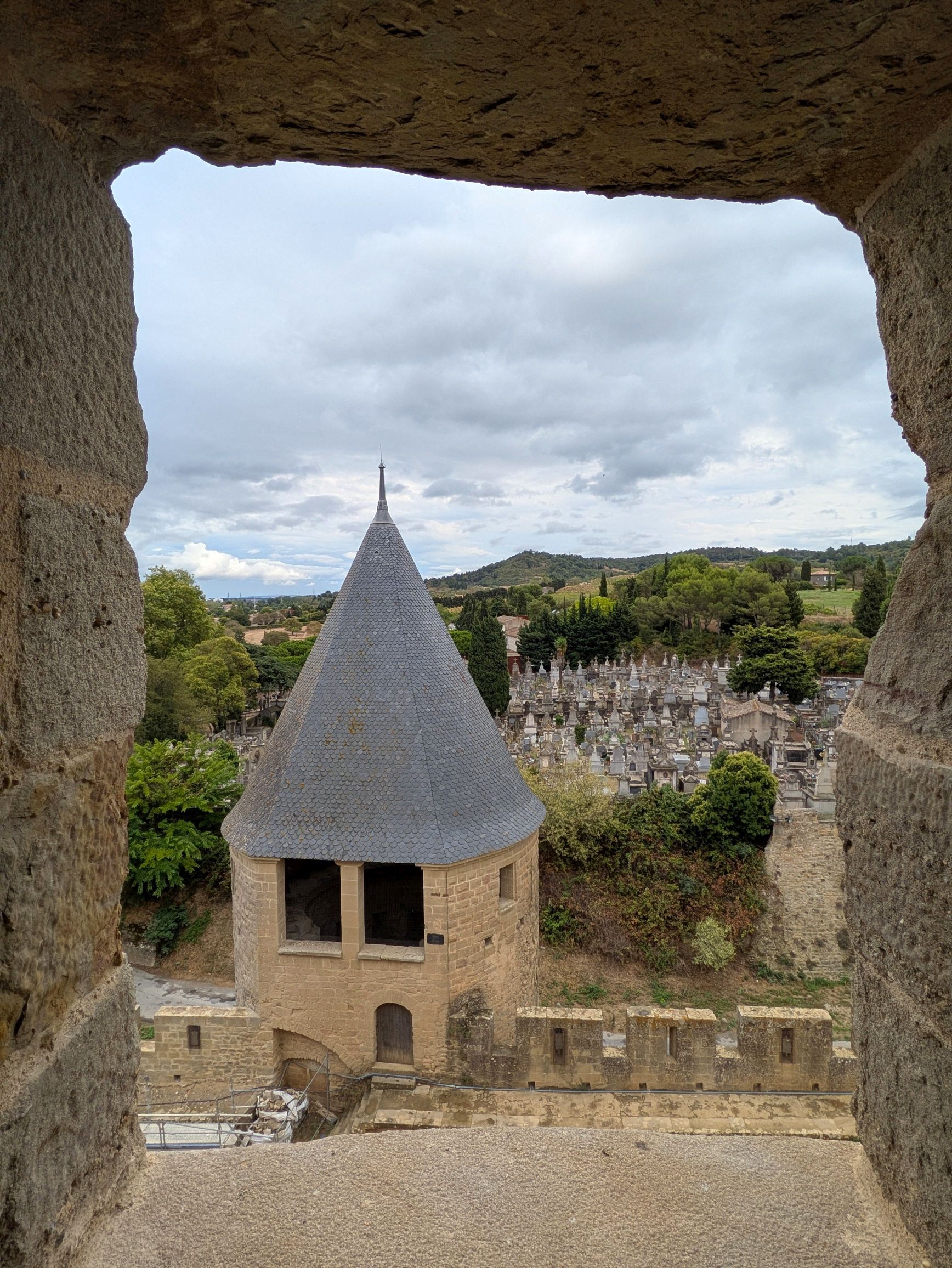
Cite de Carcassone, the medieval citadelInside the citadel museum, there was a computer-generated slide show projected on the wall of a large room. This image shows the citadel and a portion of the old city.The clouds were rolling in, so we bolted from the museum to get in our walk around the citadel walls before the rain arrived. This is a view down to the “new” city of Carcassone.
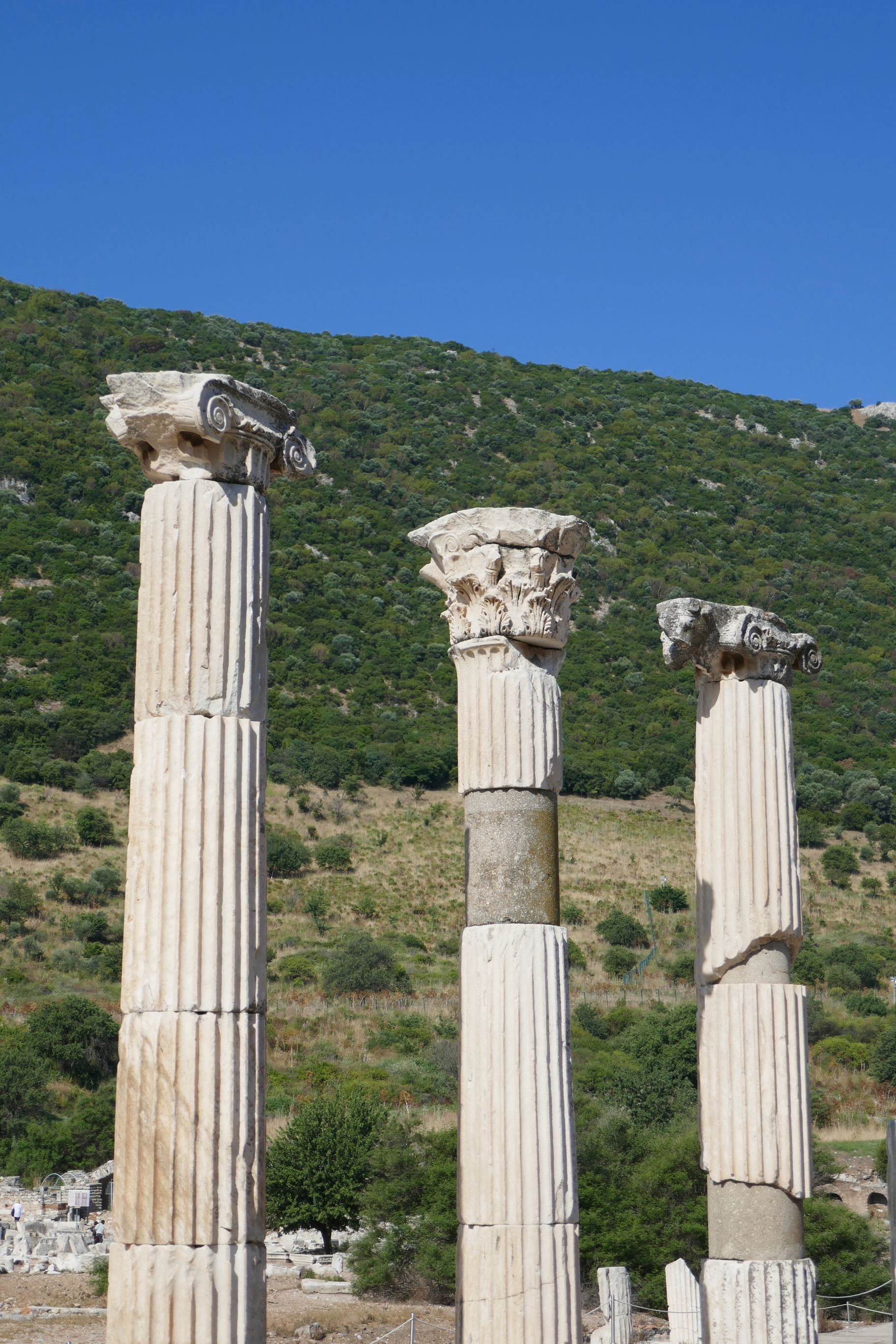
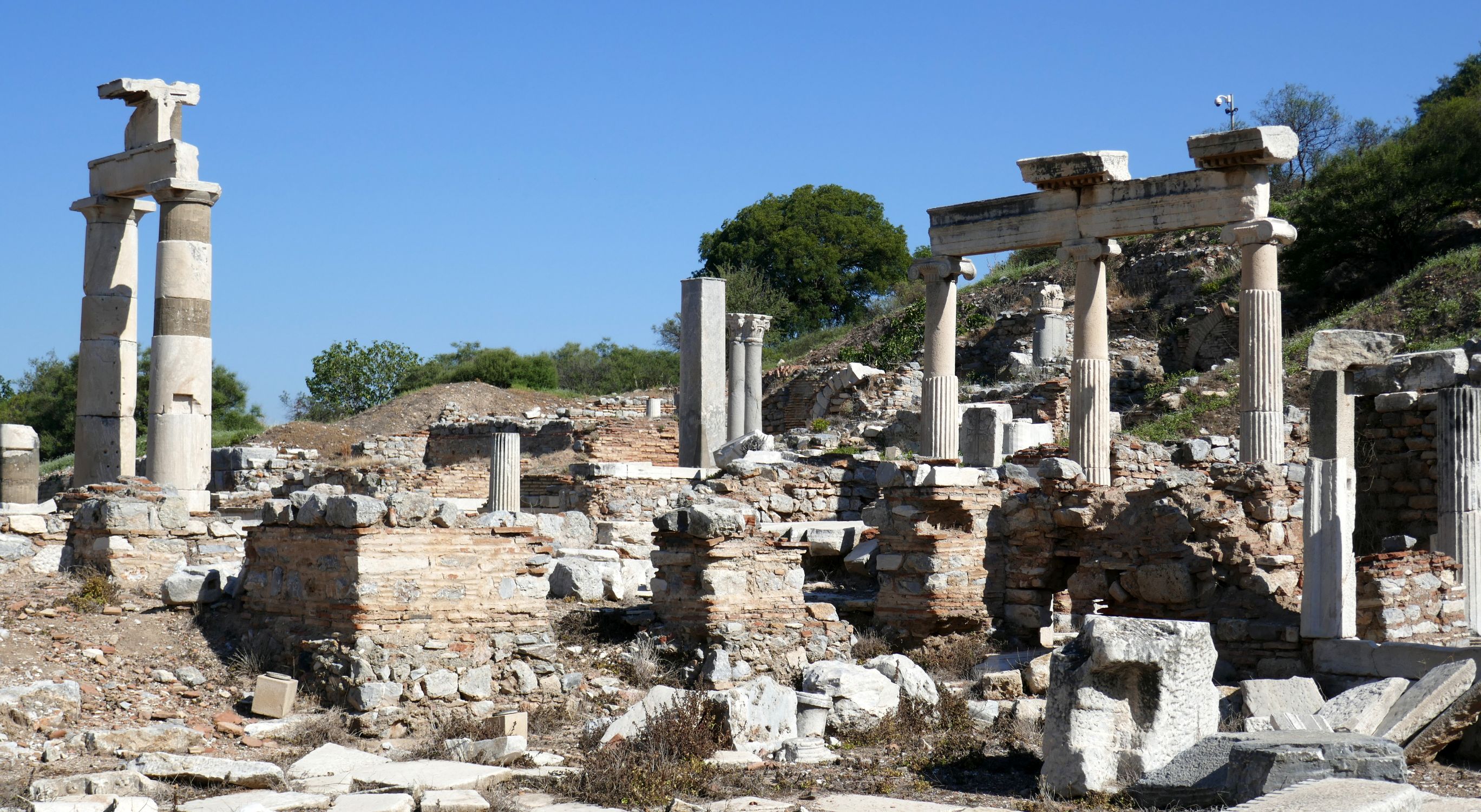
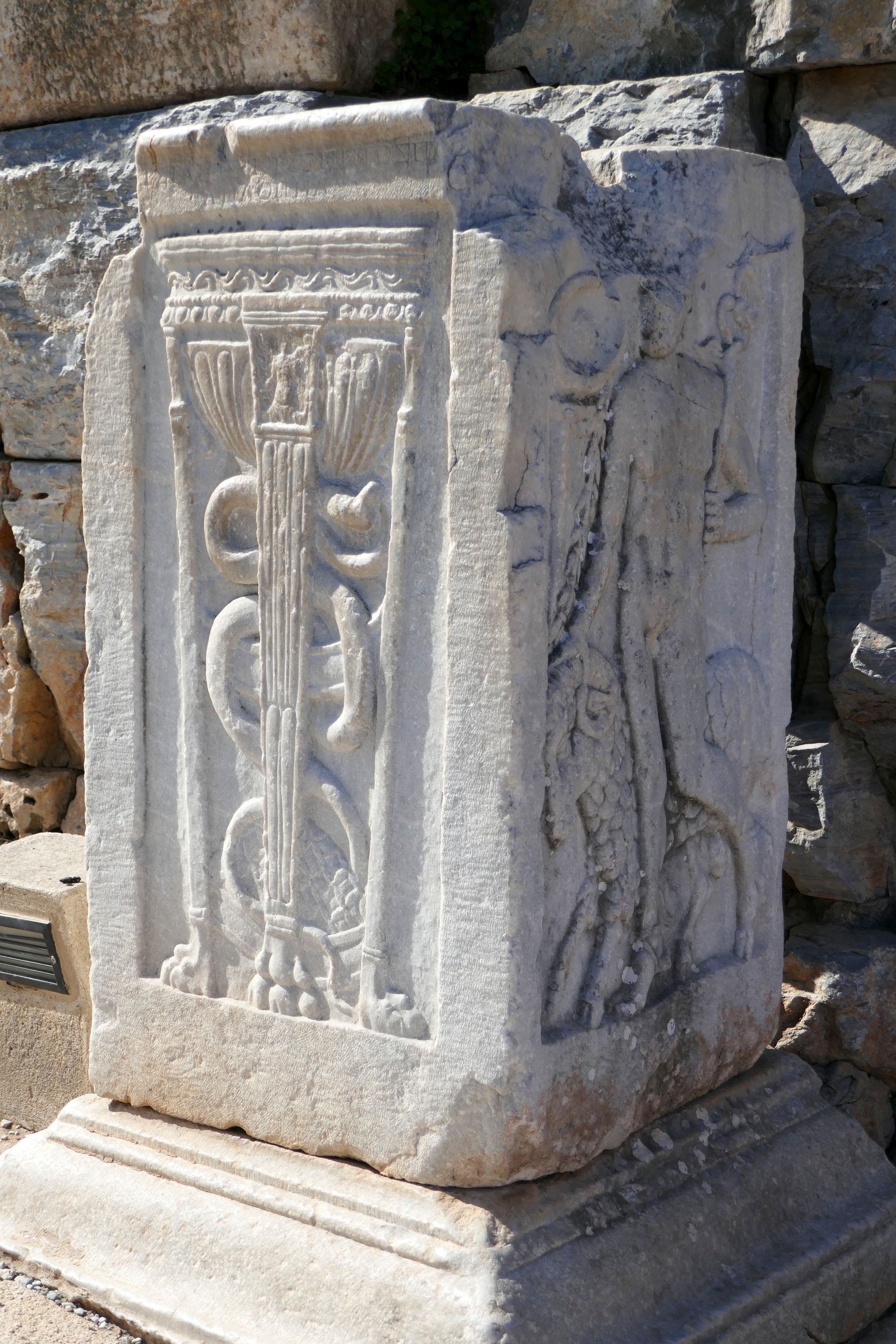
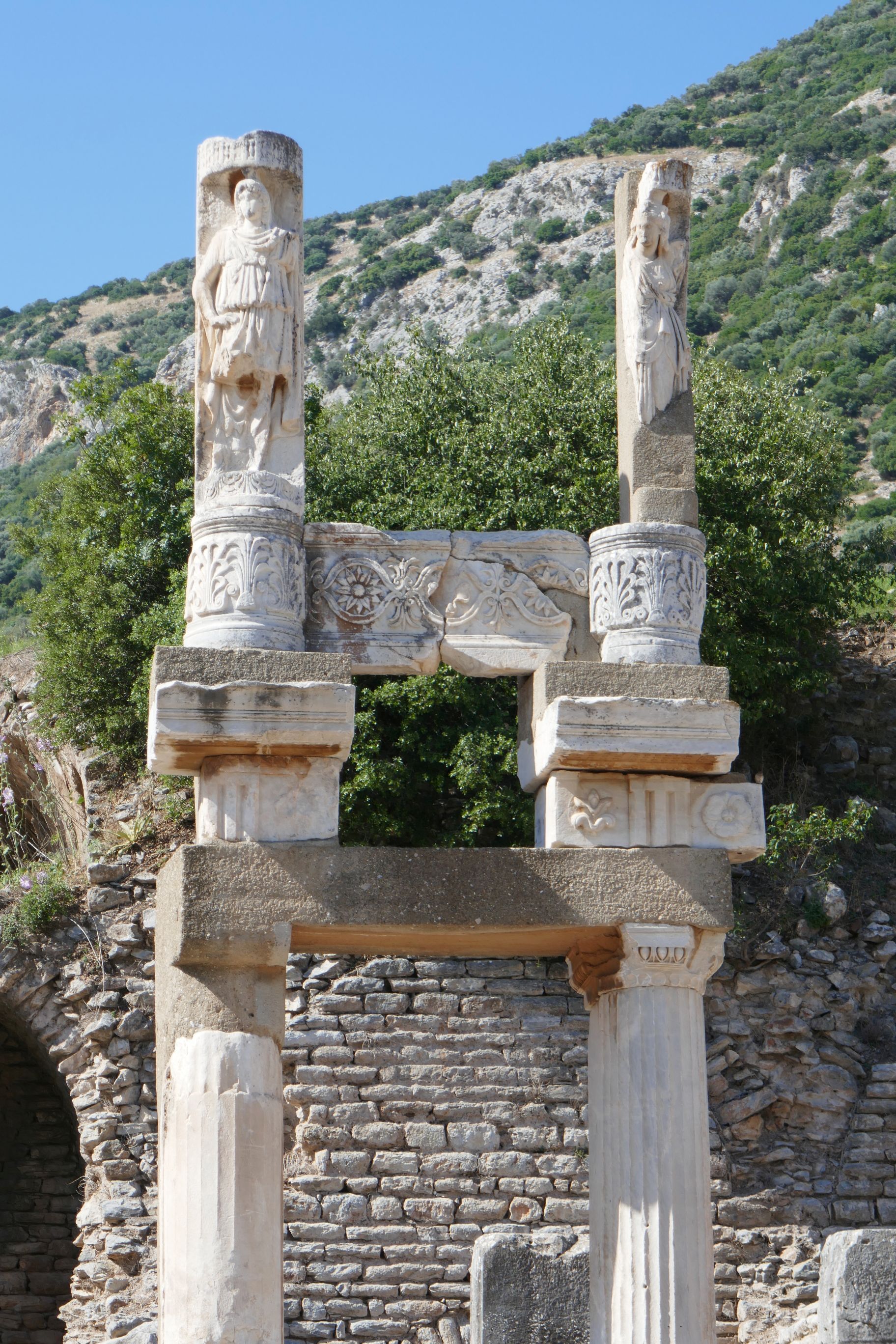
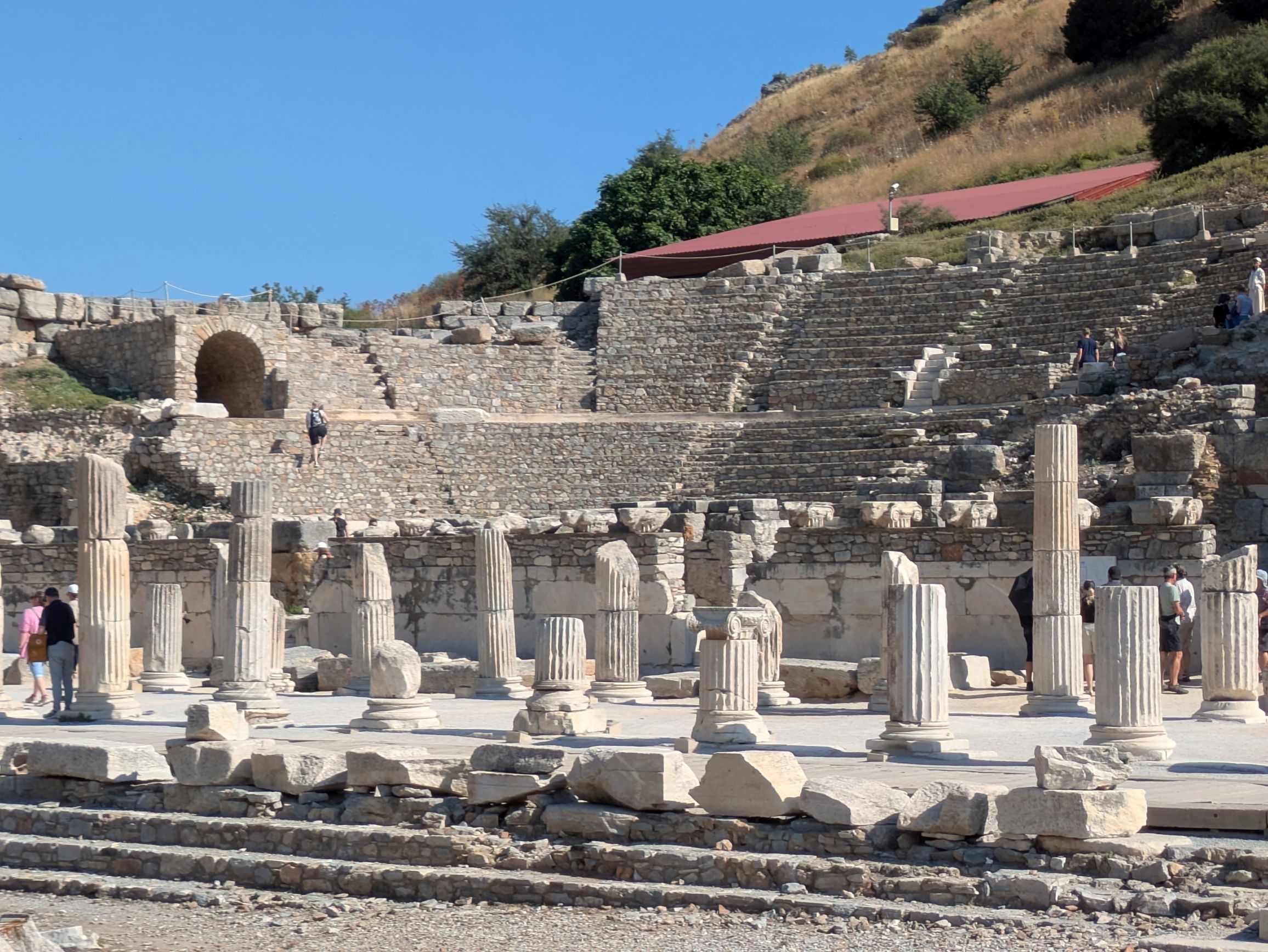
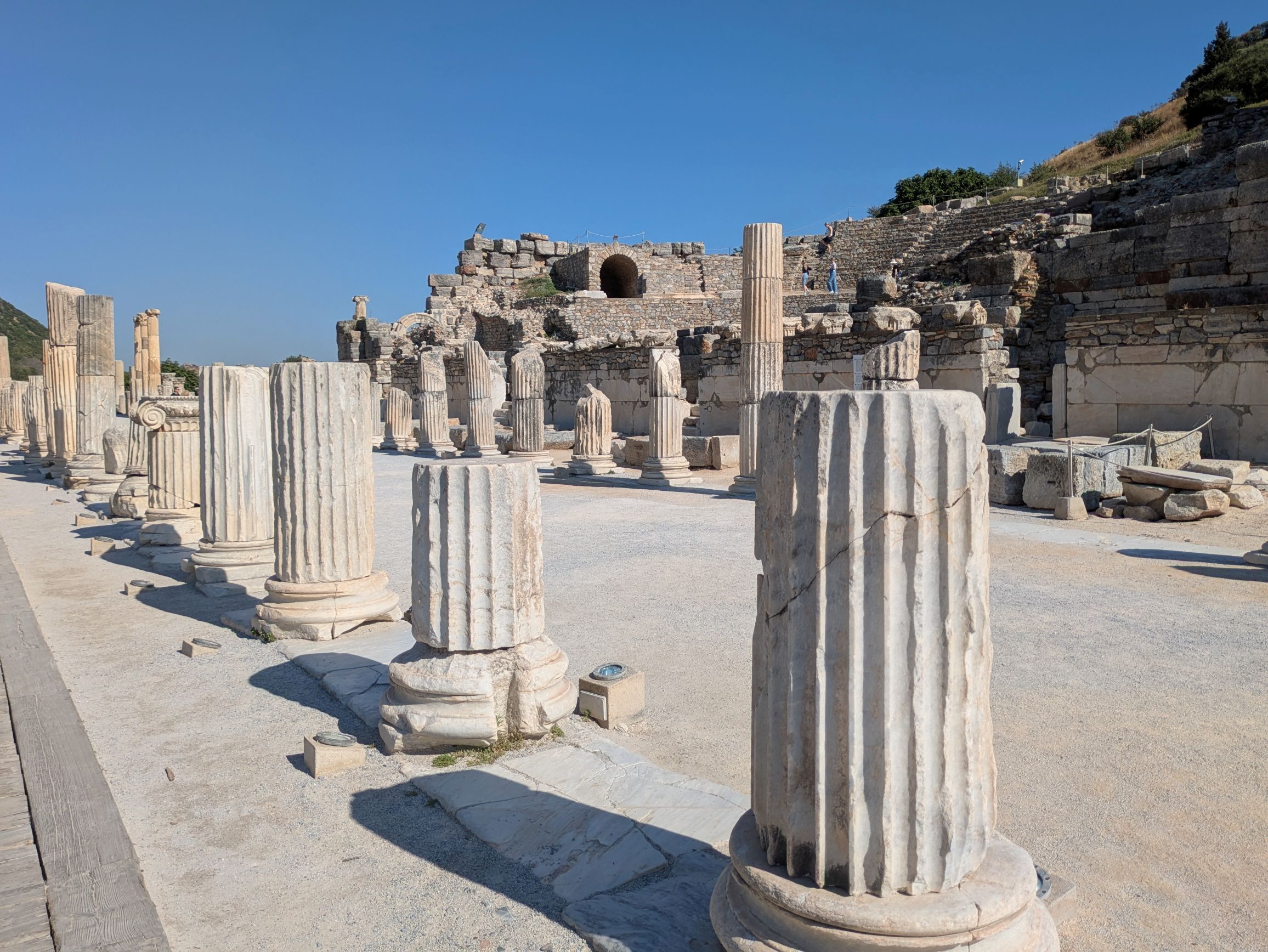
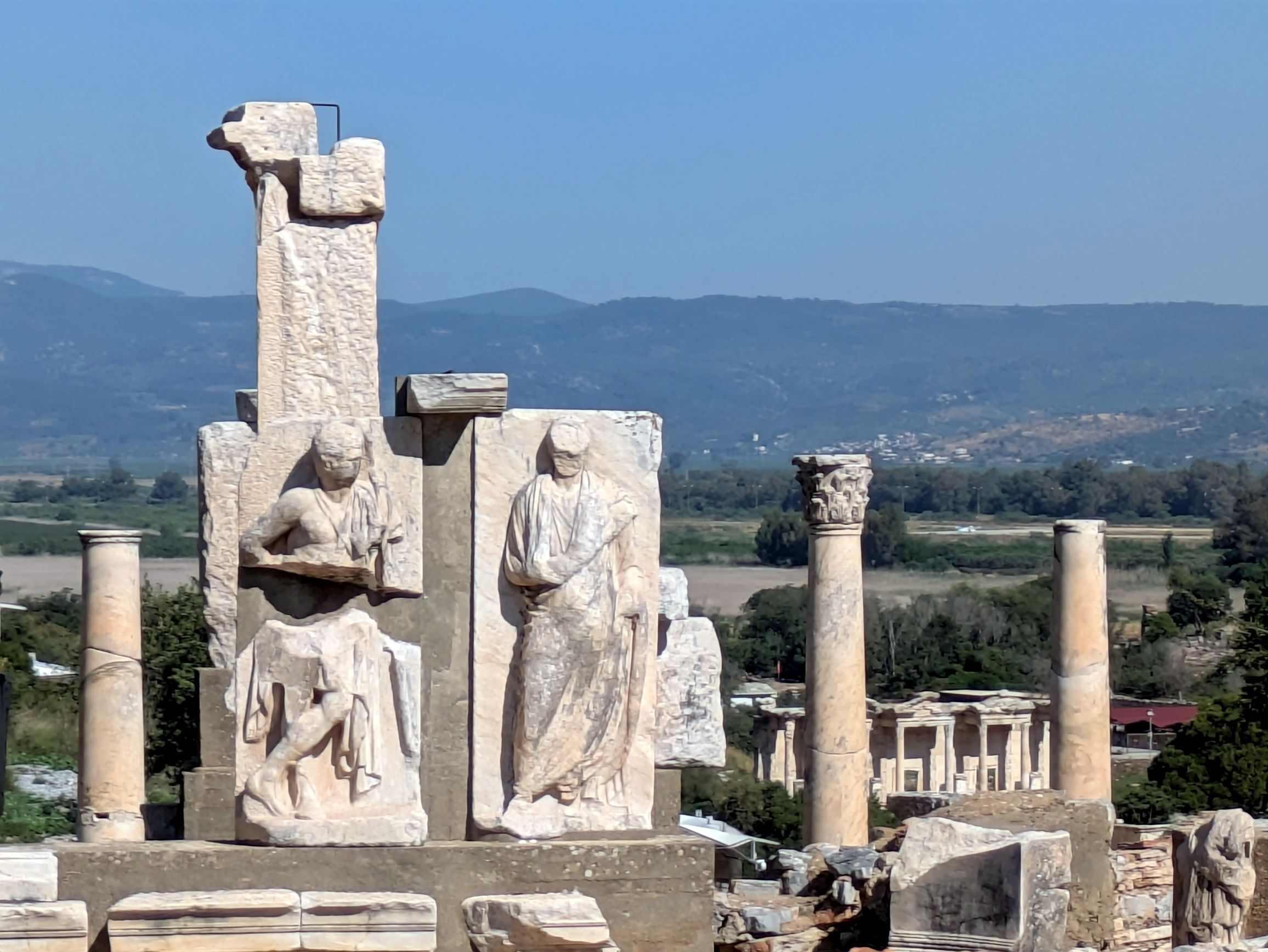
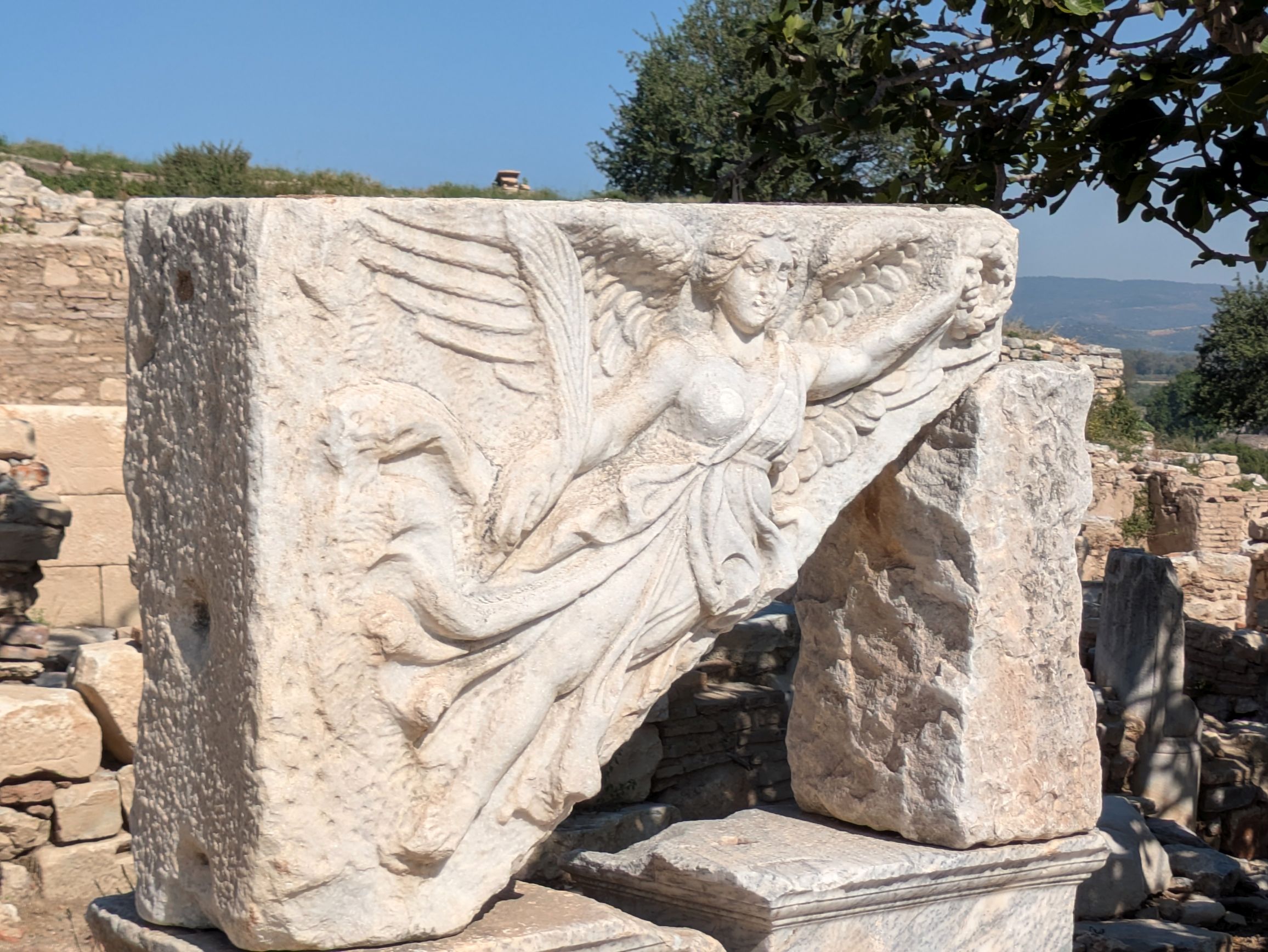
Ephesus was built in the 10th century BC, so its history is very long an involved—far too much detail to delve into in this post. To learn more about this ancient city, the Wikipedia article I linked to covers it quite well.
It was quite hot the day we were there, so much of what Nuri shared with us about Ephesus didn’t register. I was more concerned about finding a corner of shade to stand in as we toured the ruins and tried not to overheat. Had I been on my own, I would have visited at night, which would have been cooler and presented an interesting photographic perspective, since the ruins are well-lit. Besides, I’m sure it would have been less crowded.
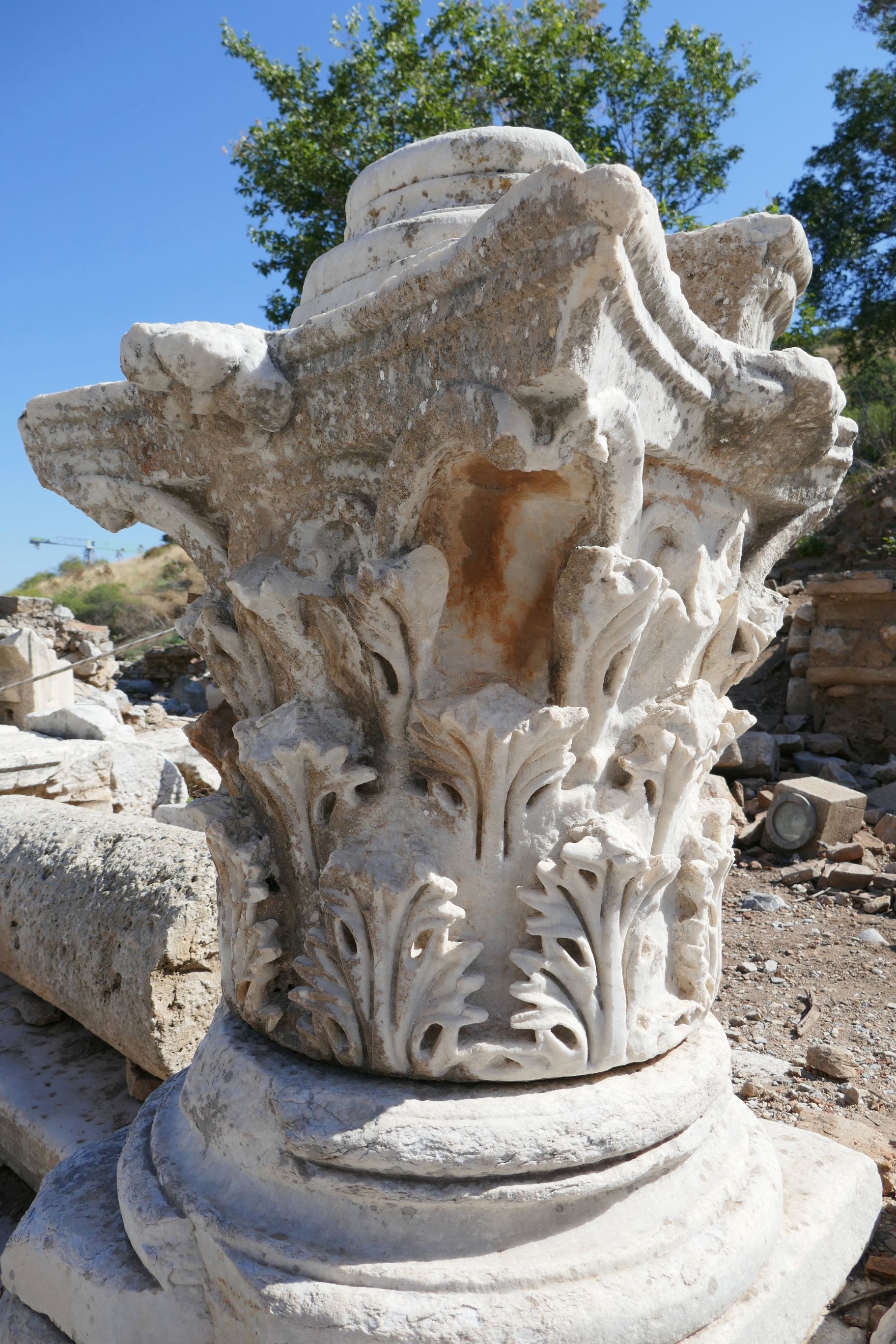
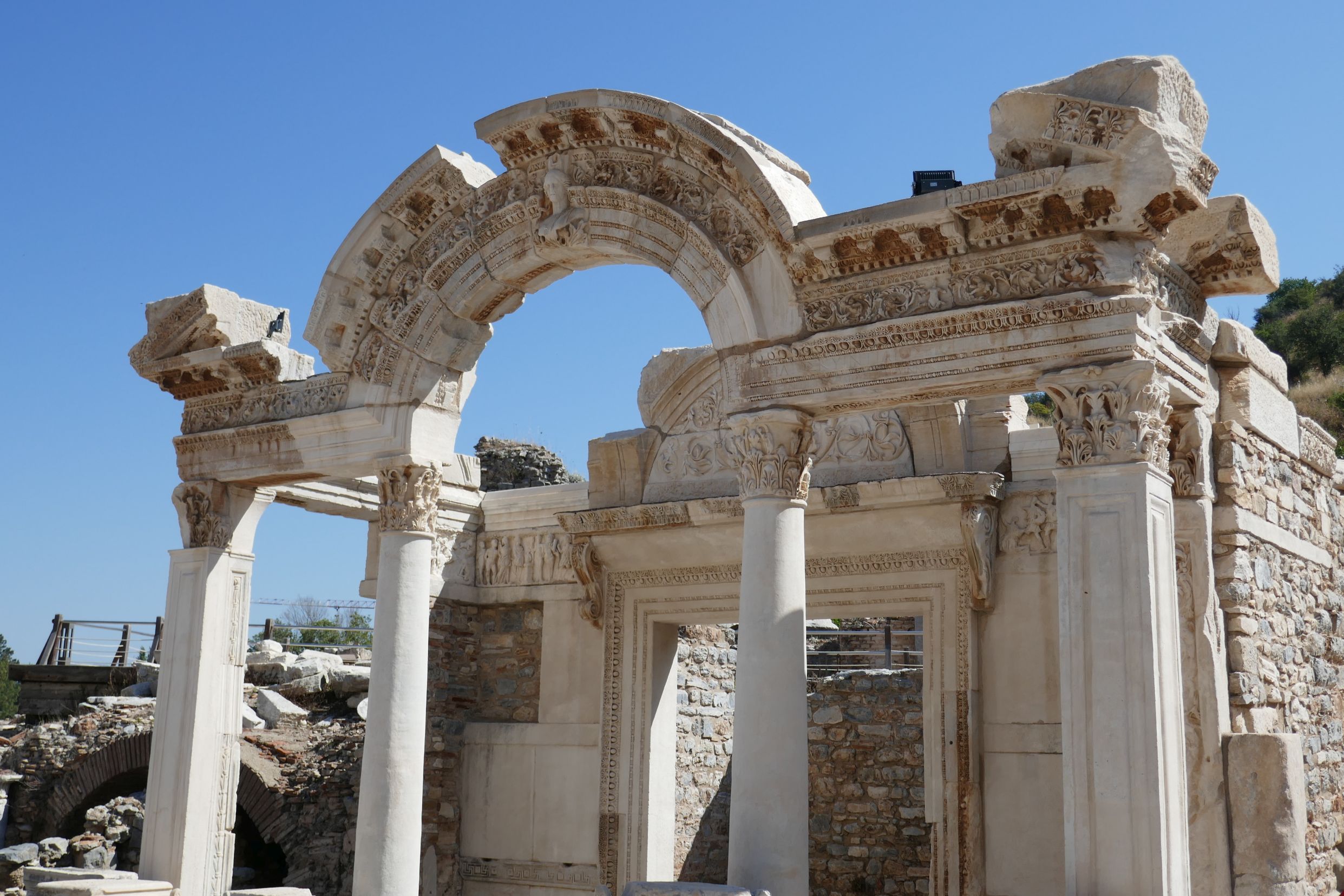
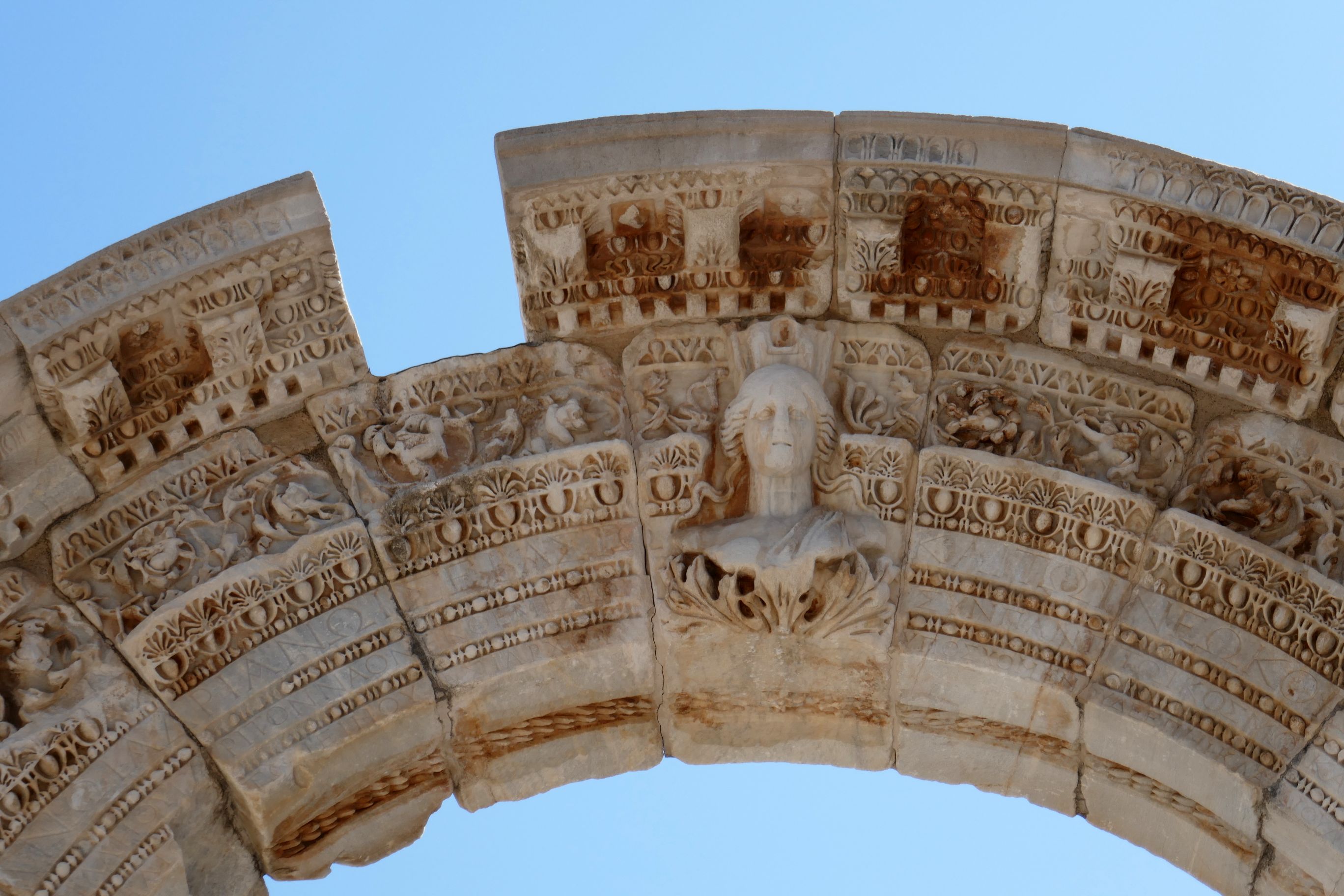
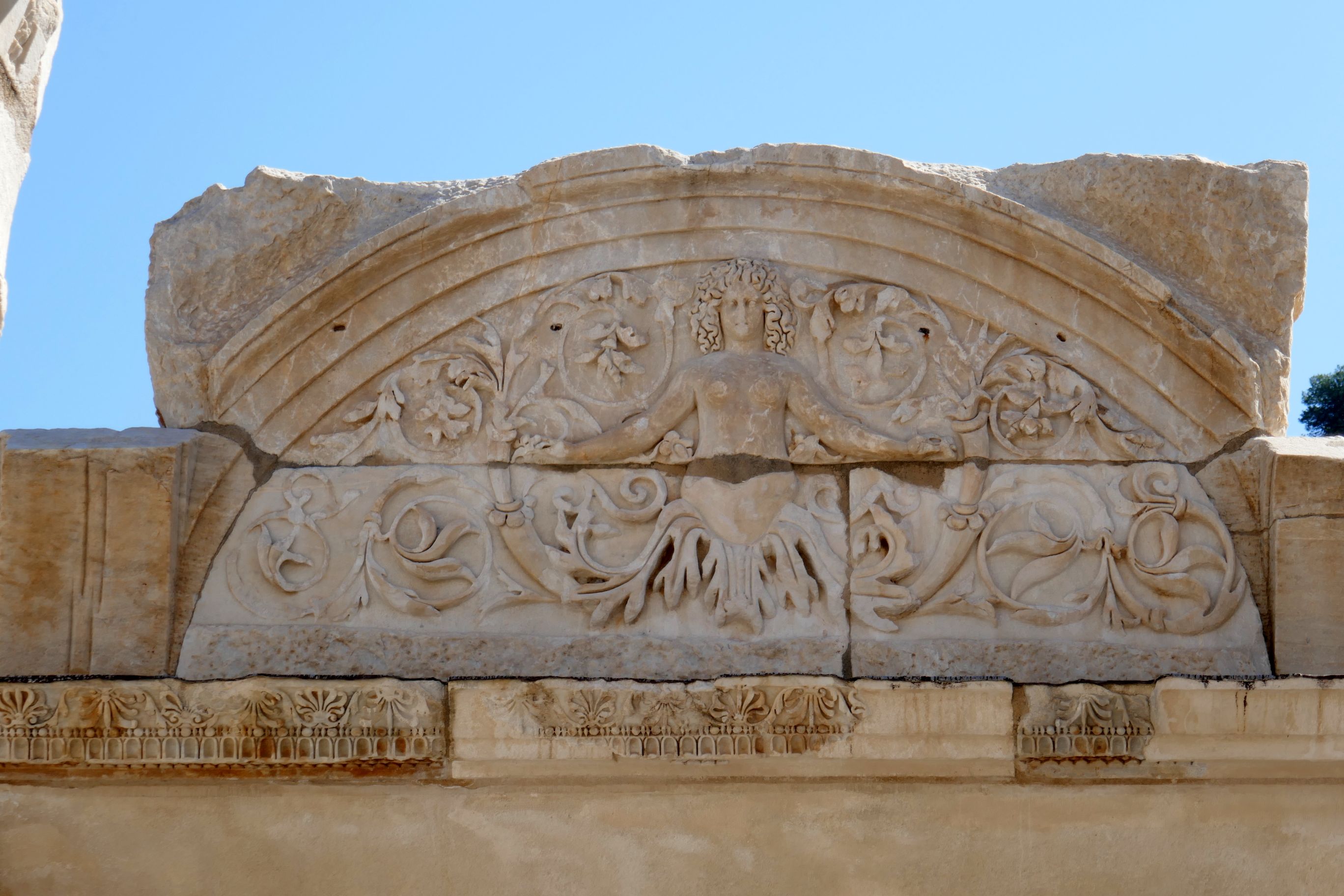
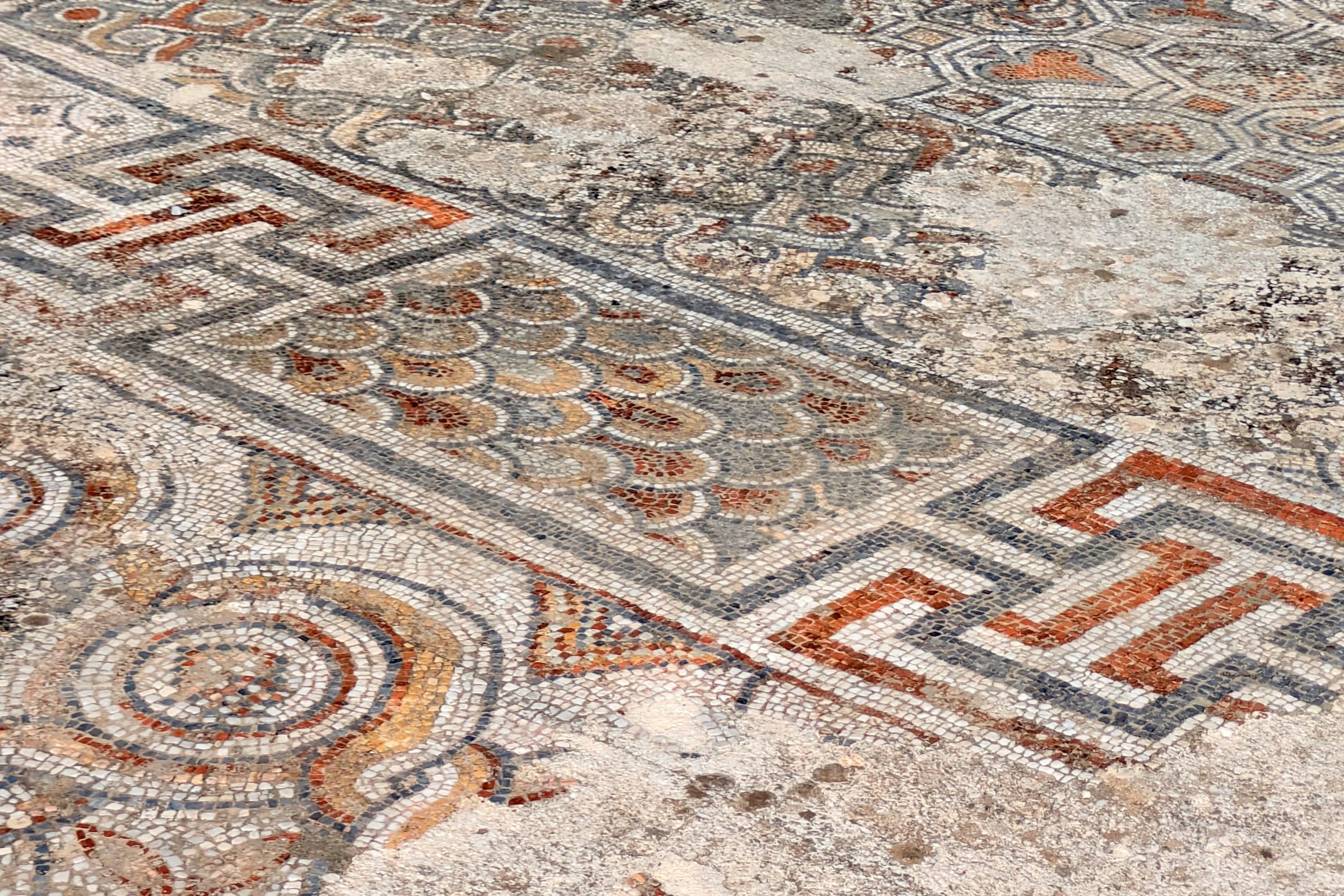
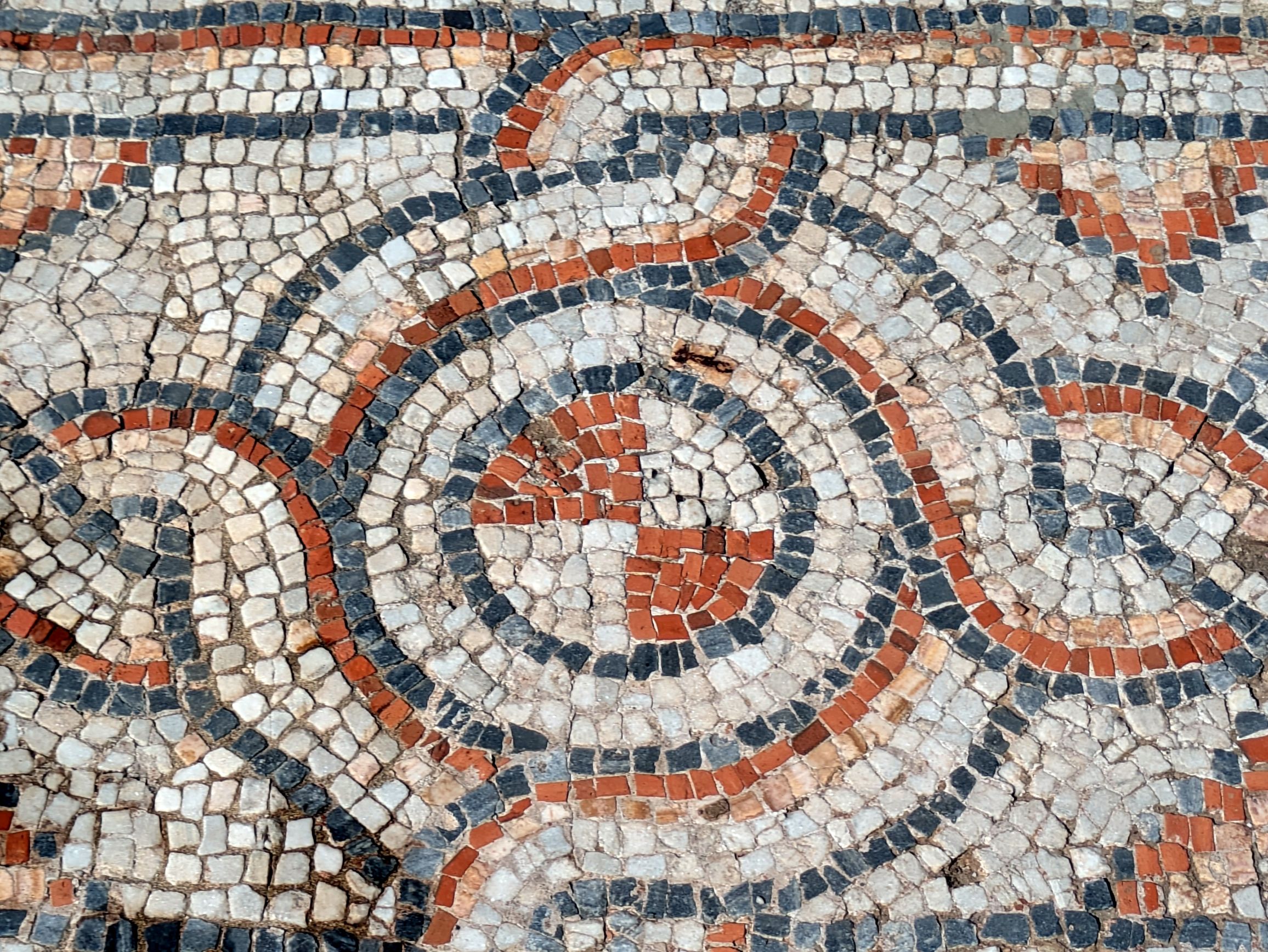
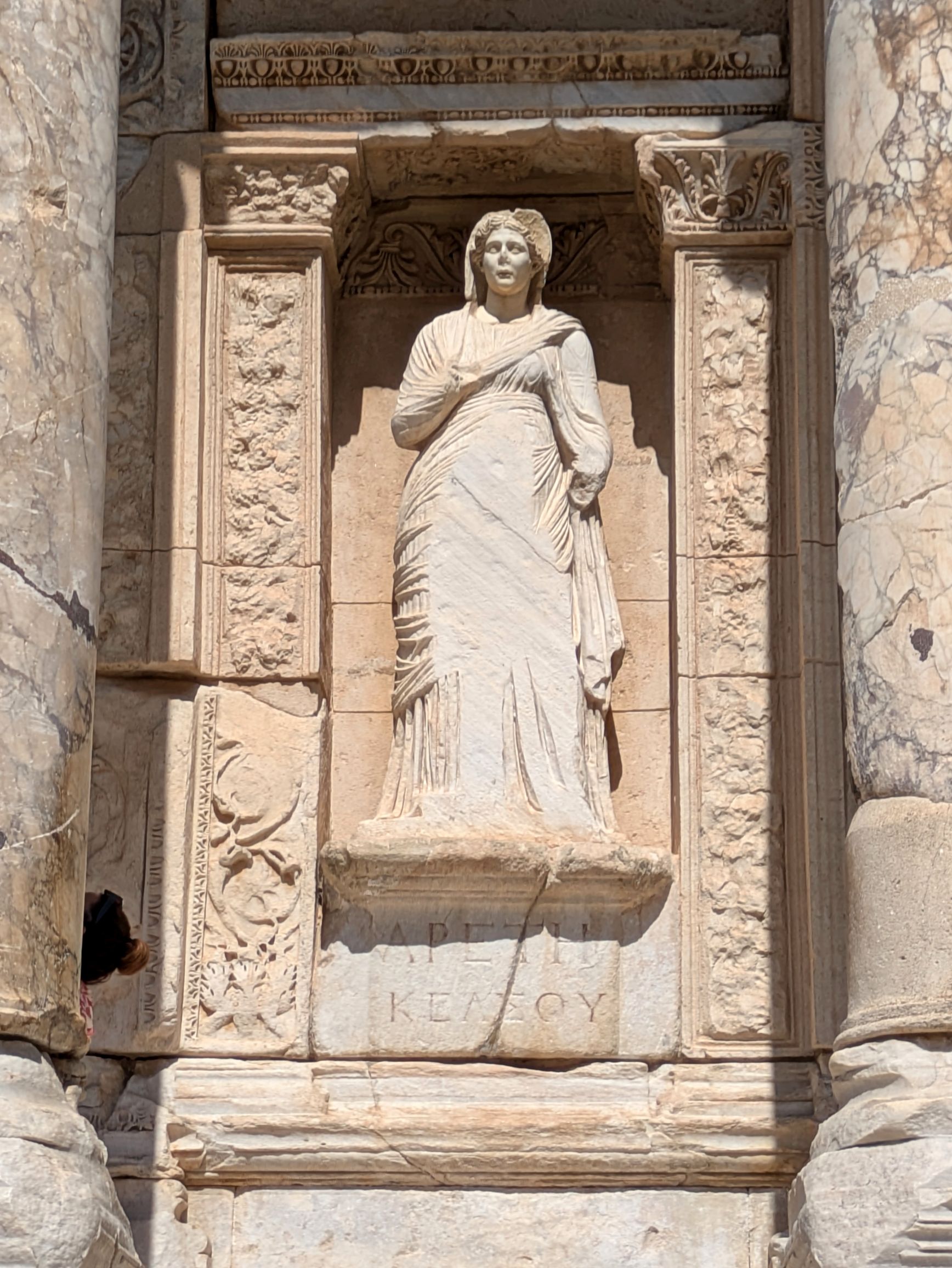
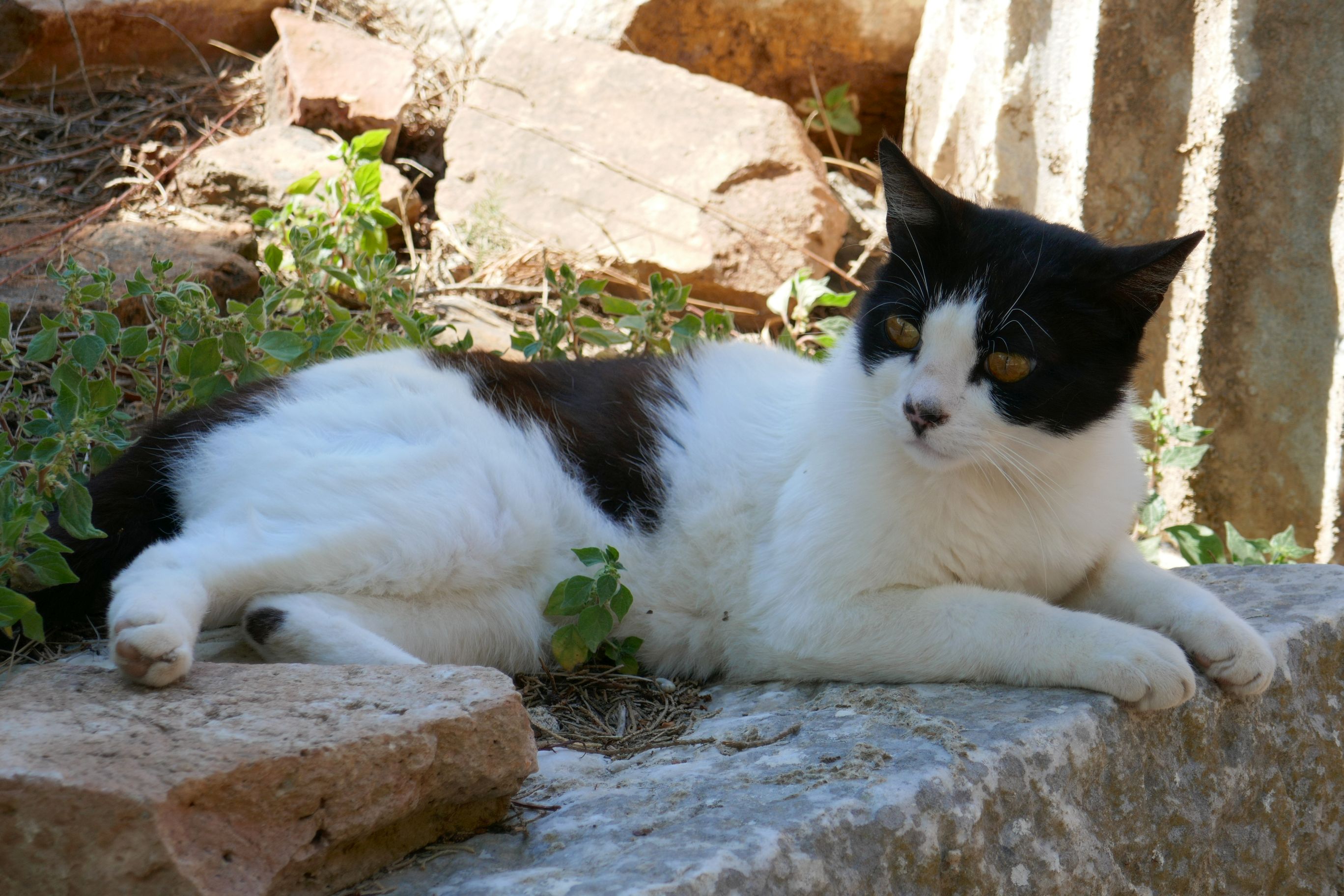
The following are scenes from the ruins:
(For all photos, click on the image for a full screen view.)
Toilets
Looking back at our two weeks in Turkiye, it was an amazing experience! A big thank you to our guide, Mehmet Nuri Guneysu, who shared so much of his culture with us. Cheers!
Coming up next: Southwest France, Northern Spain & Portugal





















































































 Elaine-iaK's Travels: A Traveler's Tales of People, Places, Photos, Pools... and CHOCOLATE!