ARGENTINA & CHILE #8: PETROHUE FALLS, A MUSIC SCHOOL, AND HOME HOSTED DINNER

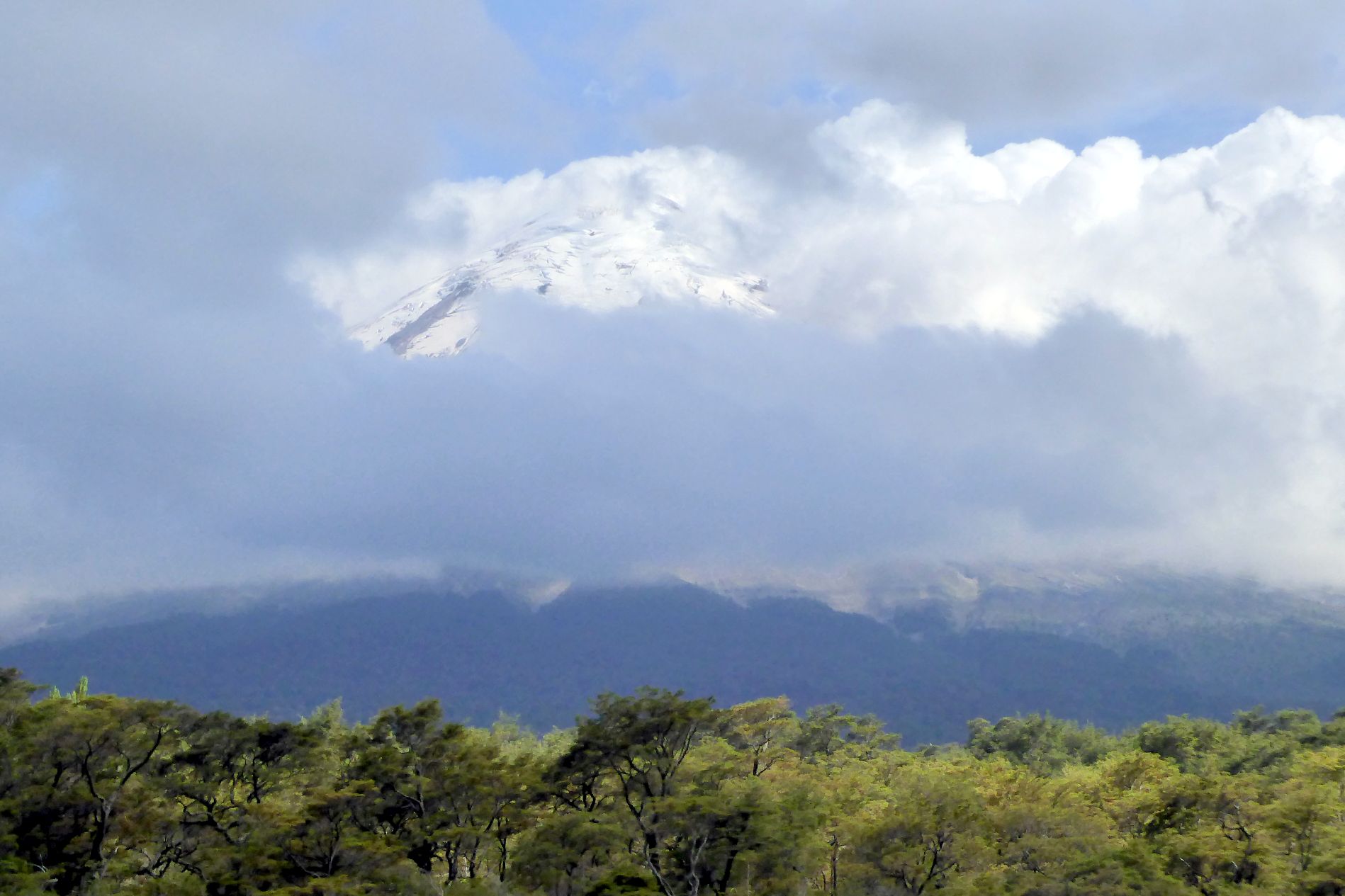
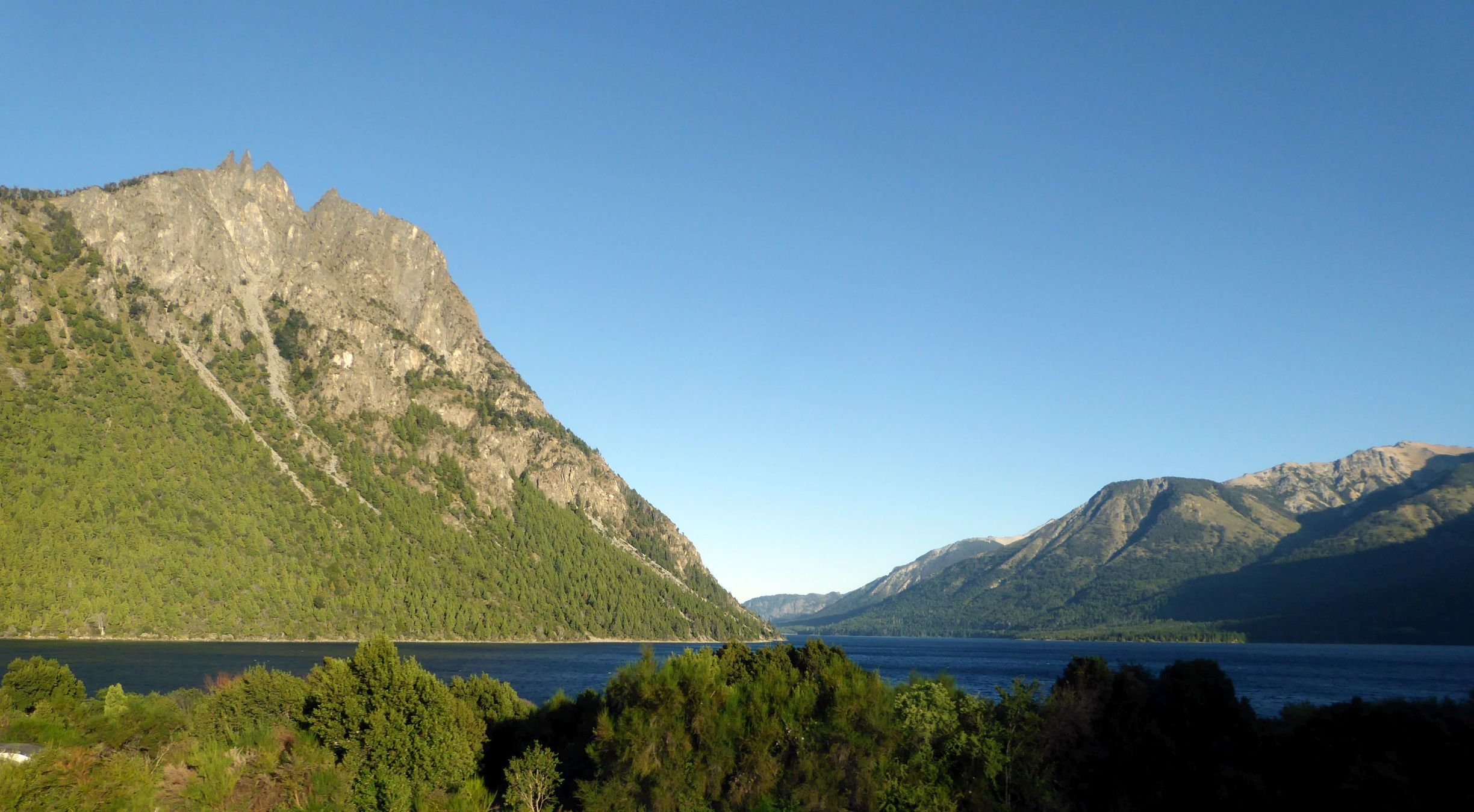
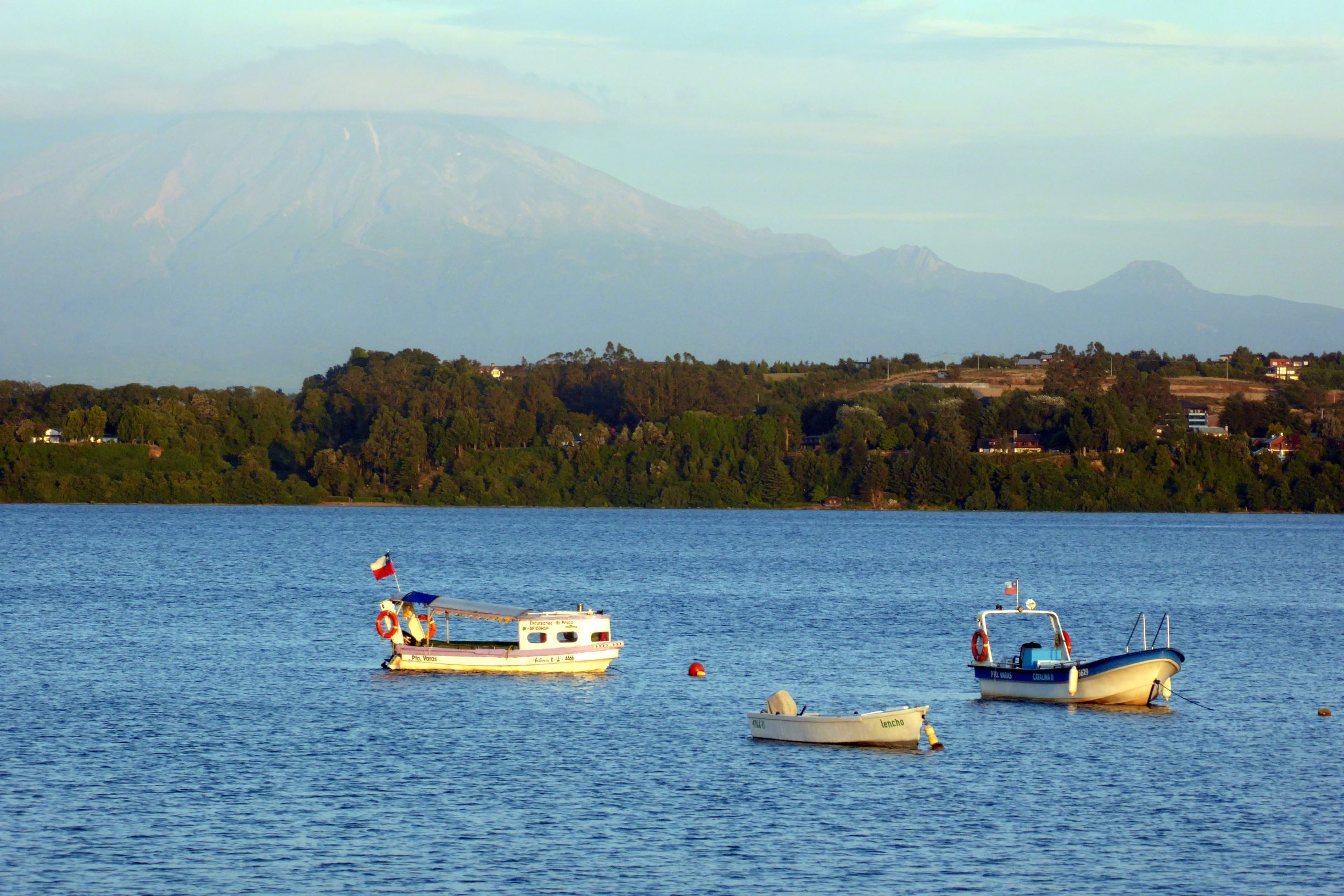
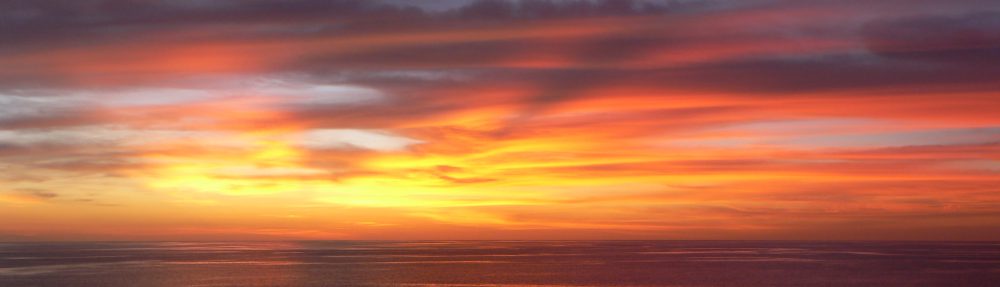
Orsano Volcano can be seen across the lake from Puerto Varas if it’s a clear day.  Fortunately, the 8,000-foot-tall volcano hasn’t erupted since 1869. There is another volcano that can also be seen from town, Calbuco, that erupted in 2015—the first time since 1972.  This morning, we got a peak at the volcanos in between the clouds that were forming and threatening to douse us with our first rain in eight days.  Fortunately, as it turned out, it didn’t rain until late in the day, when we were indoors, and it didn’t matter.

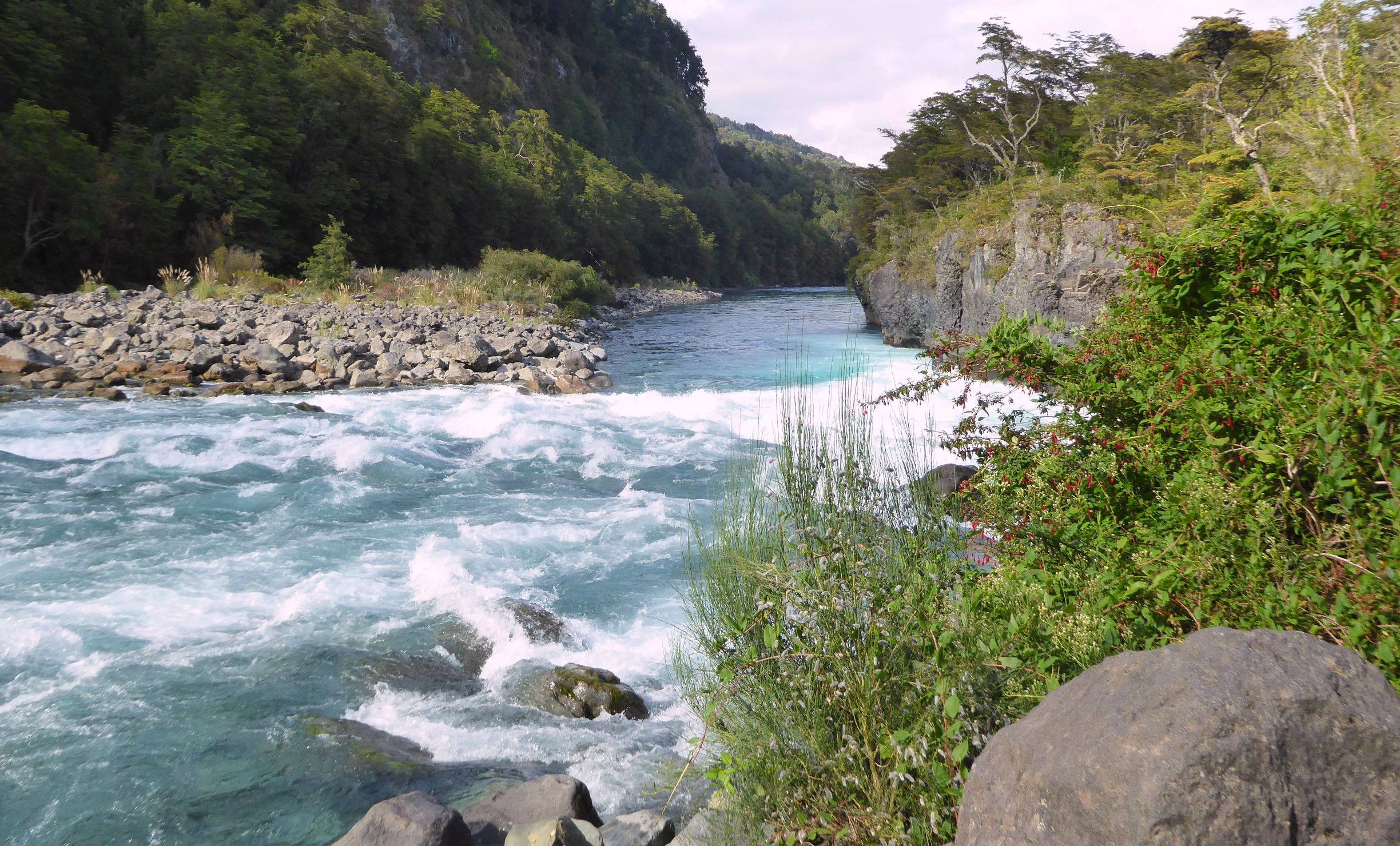
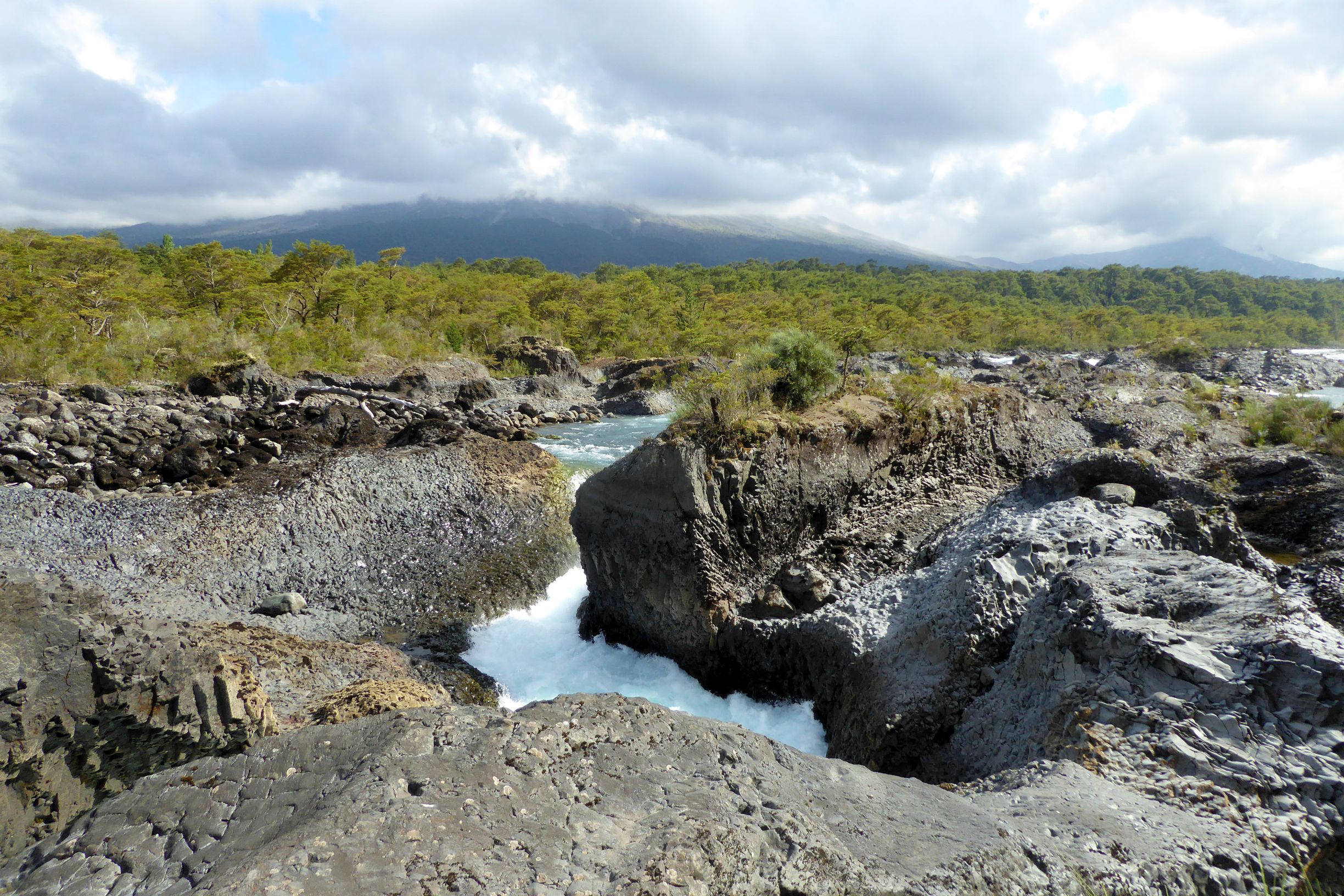
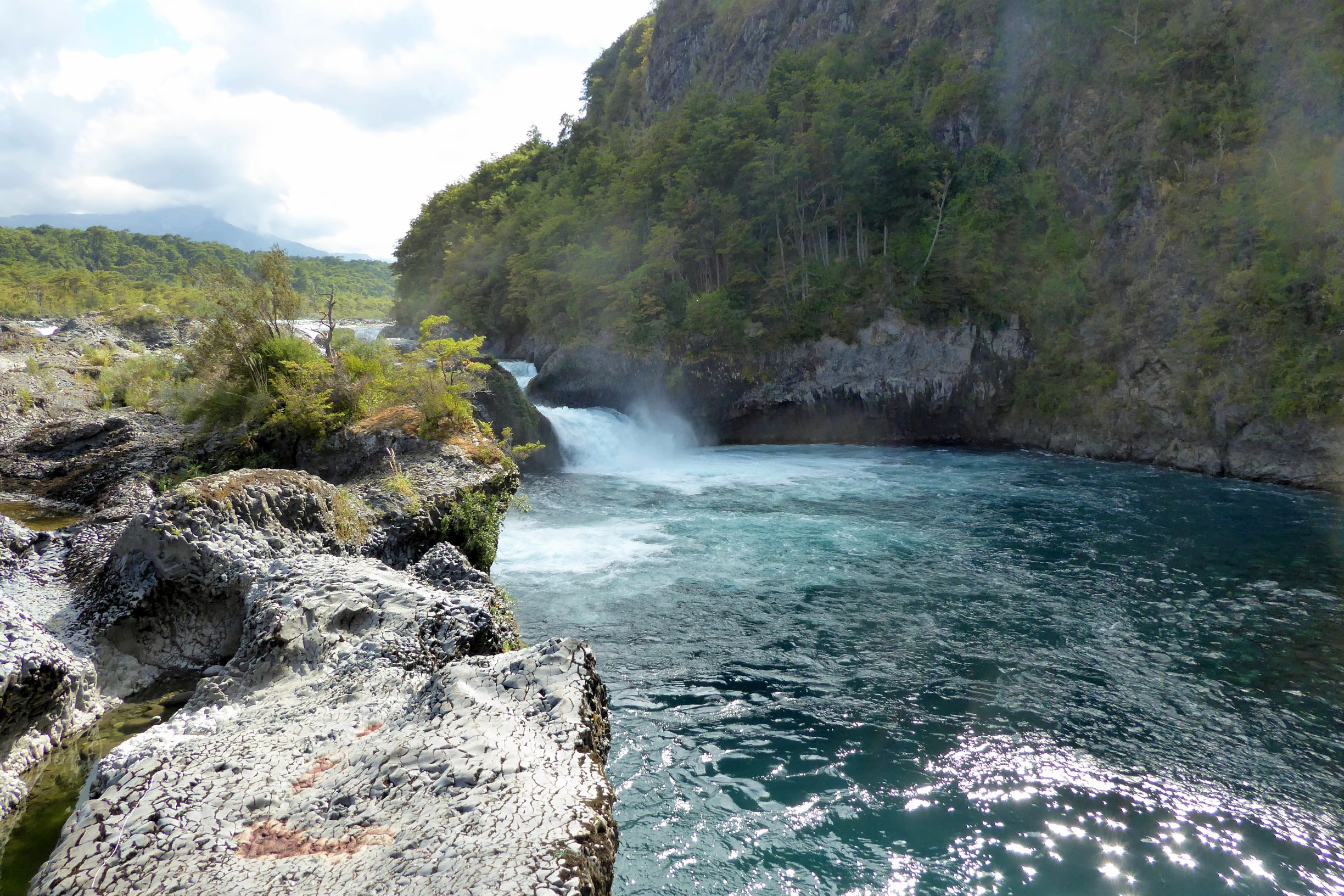
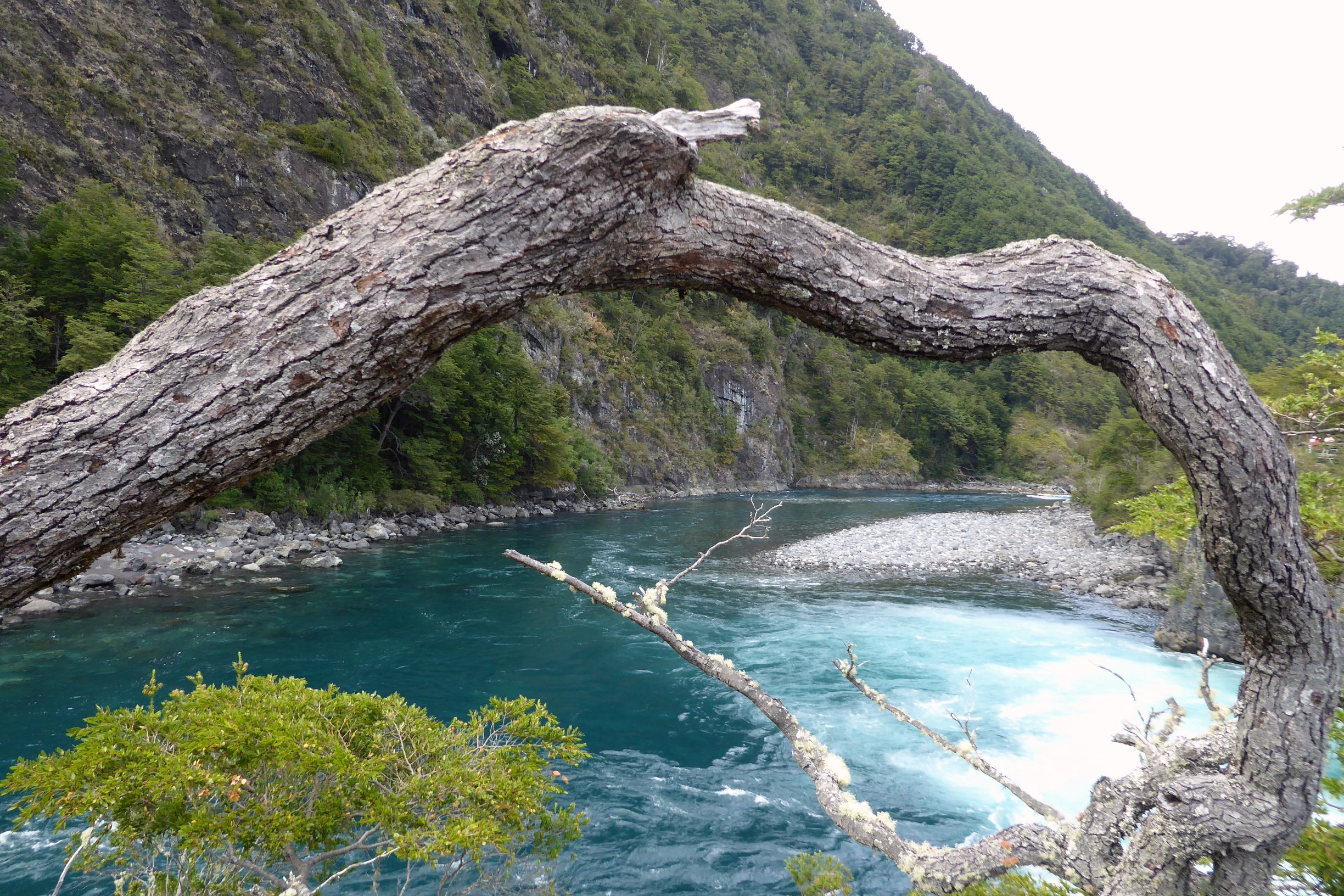
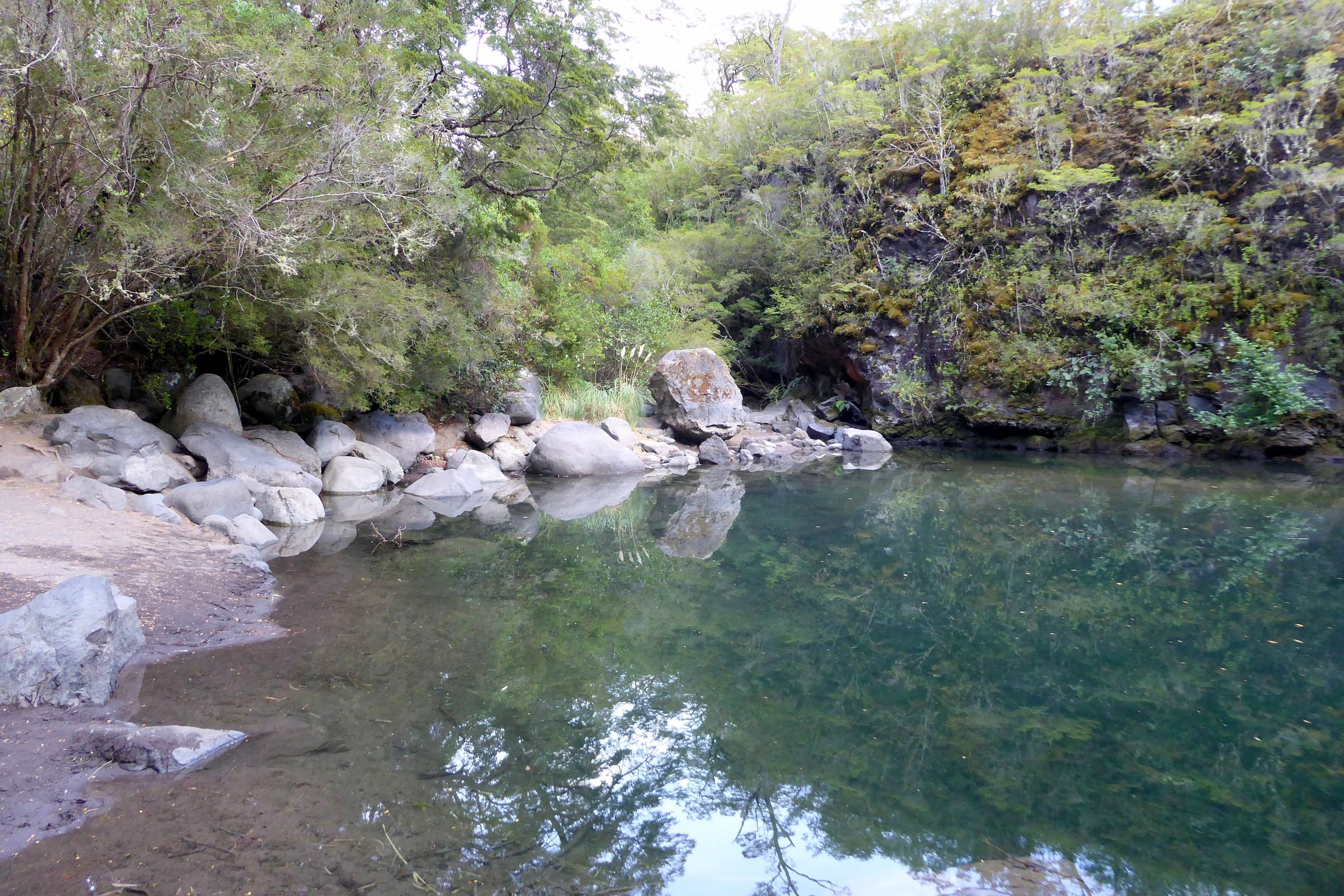
A rainy morning would have made for a messy and slippery hike—our first activity of the day.  It rains a lot over ten months of the year at  Petrohue Falls in Vicente Perez Rosales National Park , so we were lucky this wasn’t a wet day. 

The park is a popular tourist destination, so Andrea made sure to get us up and out early to beat the crowds.

Following our guided hike with Daniel, our local guide, we took a break for another “discovery” (we were getting good at the traditional toast by then), before having free time to explore the falls on our own.  The sun broke out from the clouds revealing a beautiful landscape and a snow-capped volcano.  Bruce and I spent almost all our time just watching the clouds pass by, listening to the water, and hoping for a better view of the volcano.  It was lovely!

(For all photos, click on the image for a full screen view.)

Scenes from our hike:
Mary caught me in action!
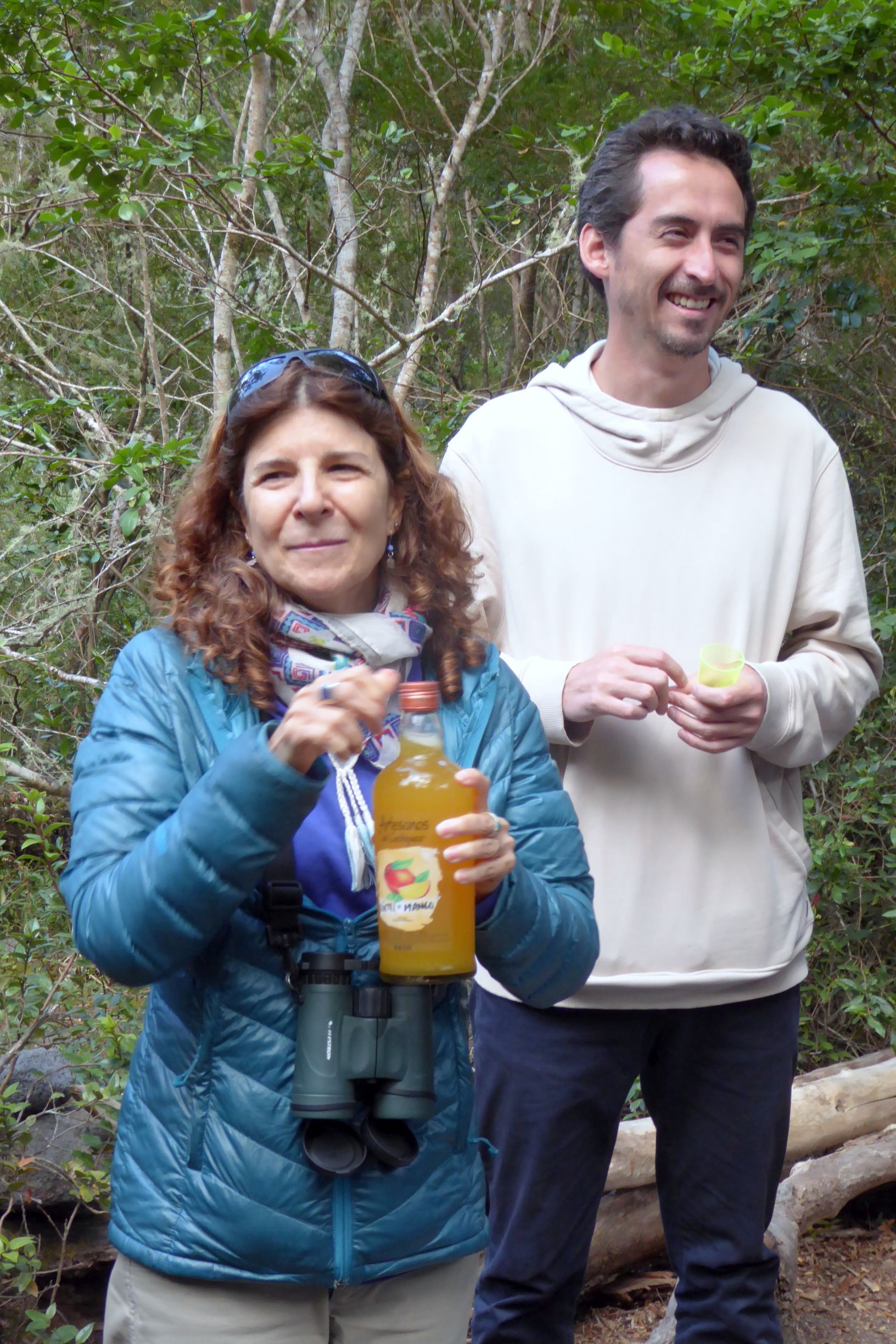
Andrea with another “discovery” joining our guide, Daniel
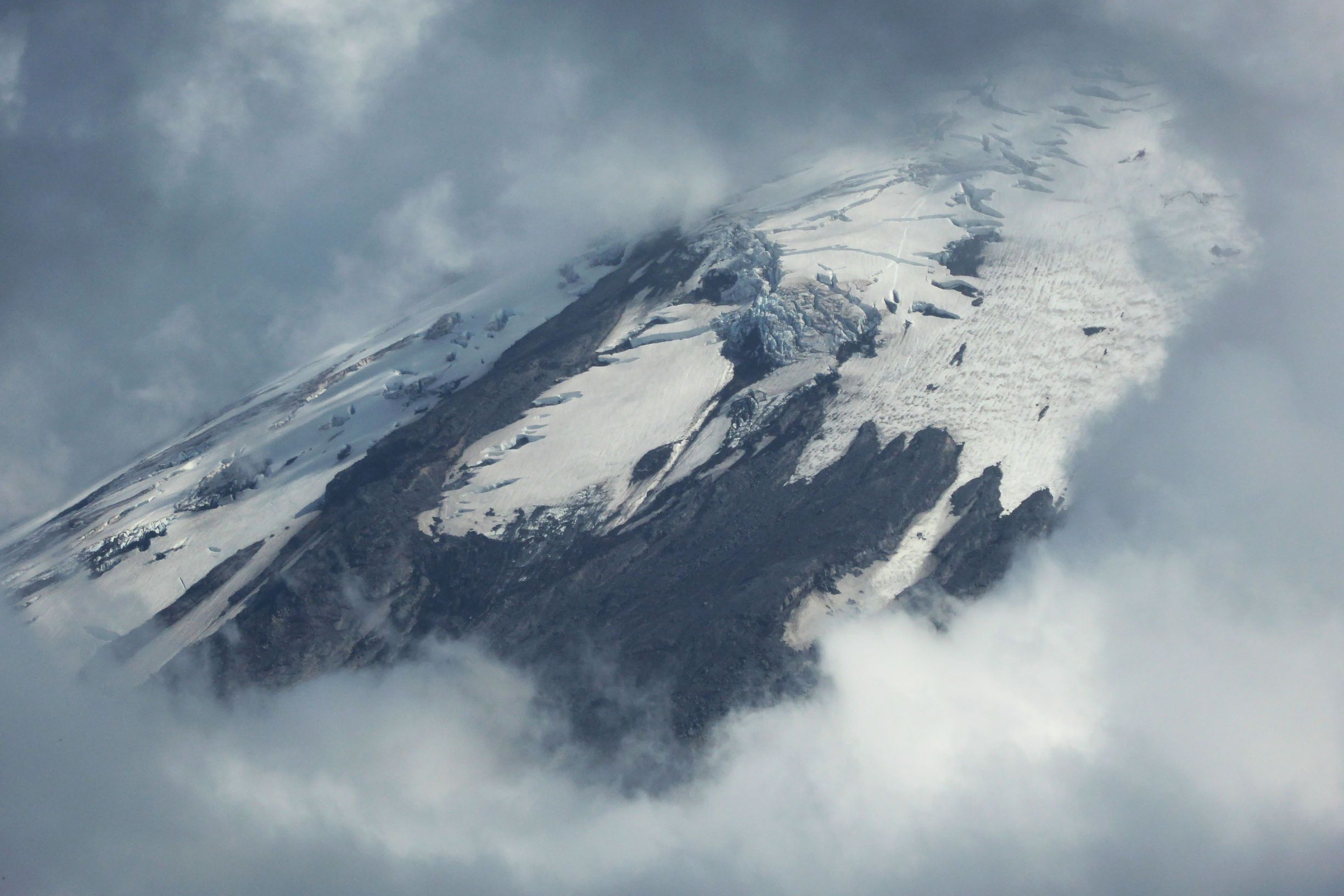
The volcano kept peaking in and out of the clouds; a very dynamic sky!
A close-up view

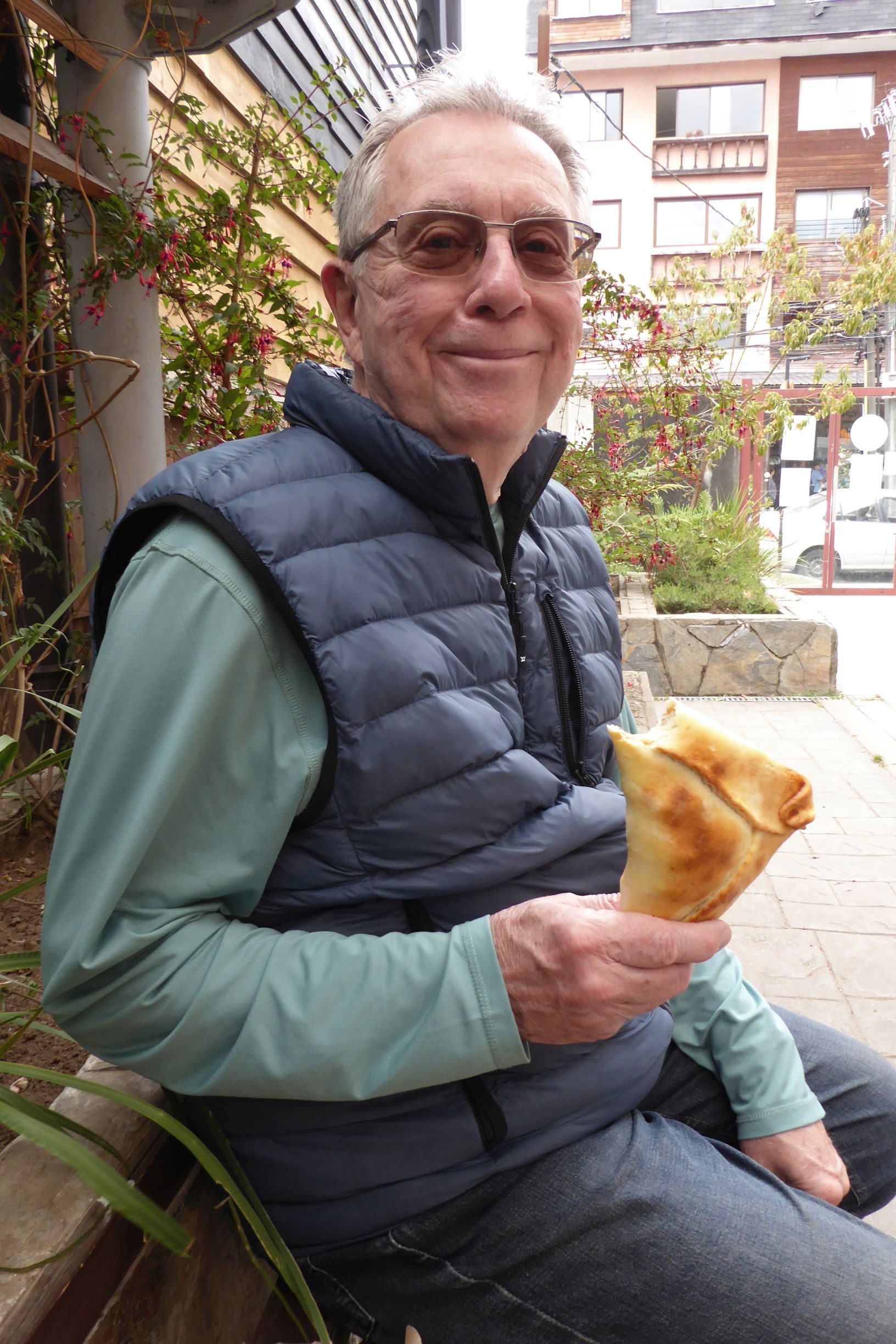
After we returned to Puerto Varas, we had a few hours of free time to grab lunch and enjoy the town.  We quickly grew fond of empanadas when we were in Argentina, but the ones we picked up at Café Danes were the best!
Here are more scenes around Puerto Varas:
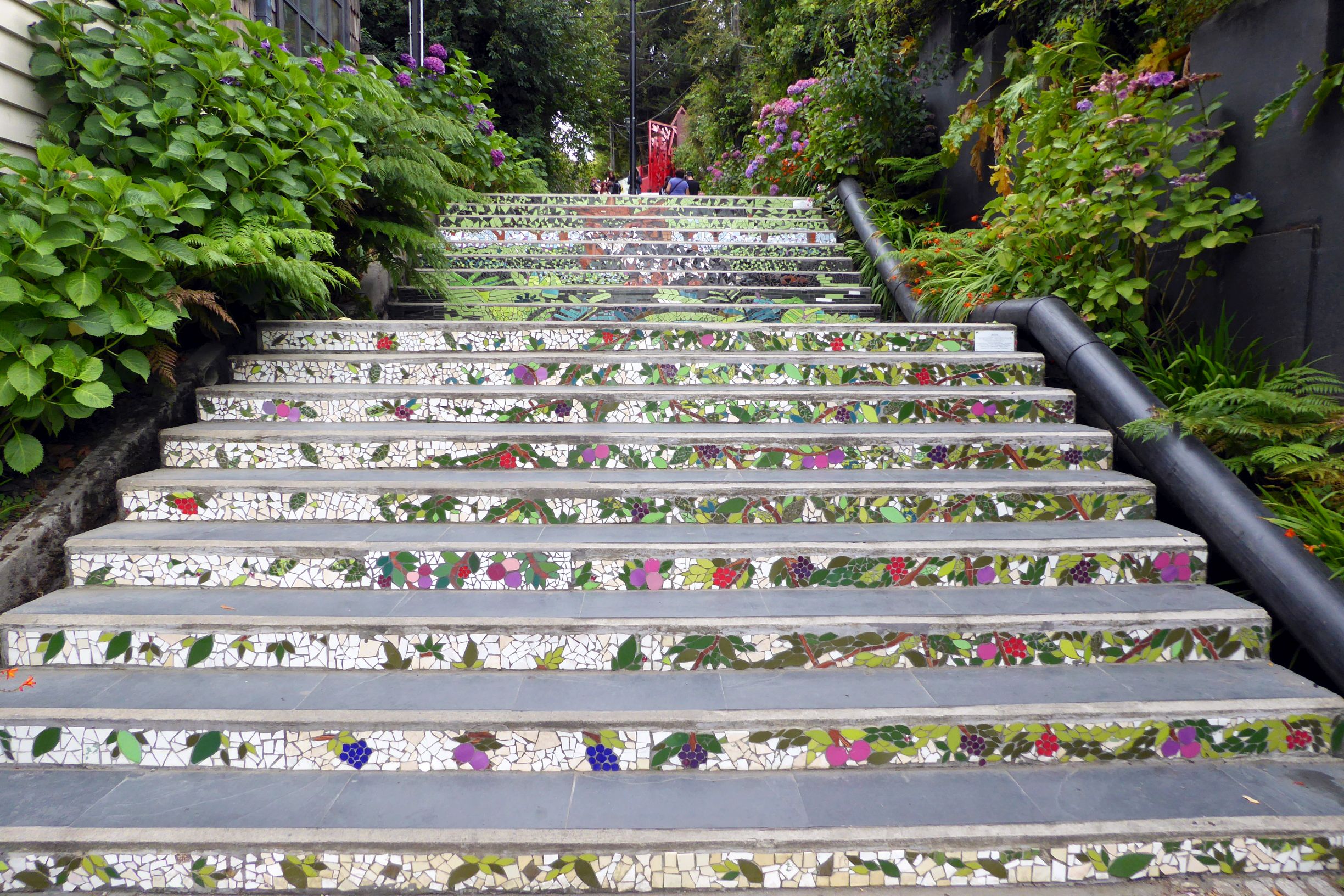
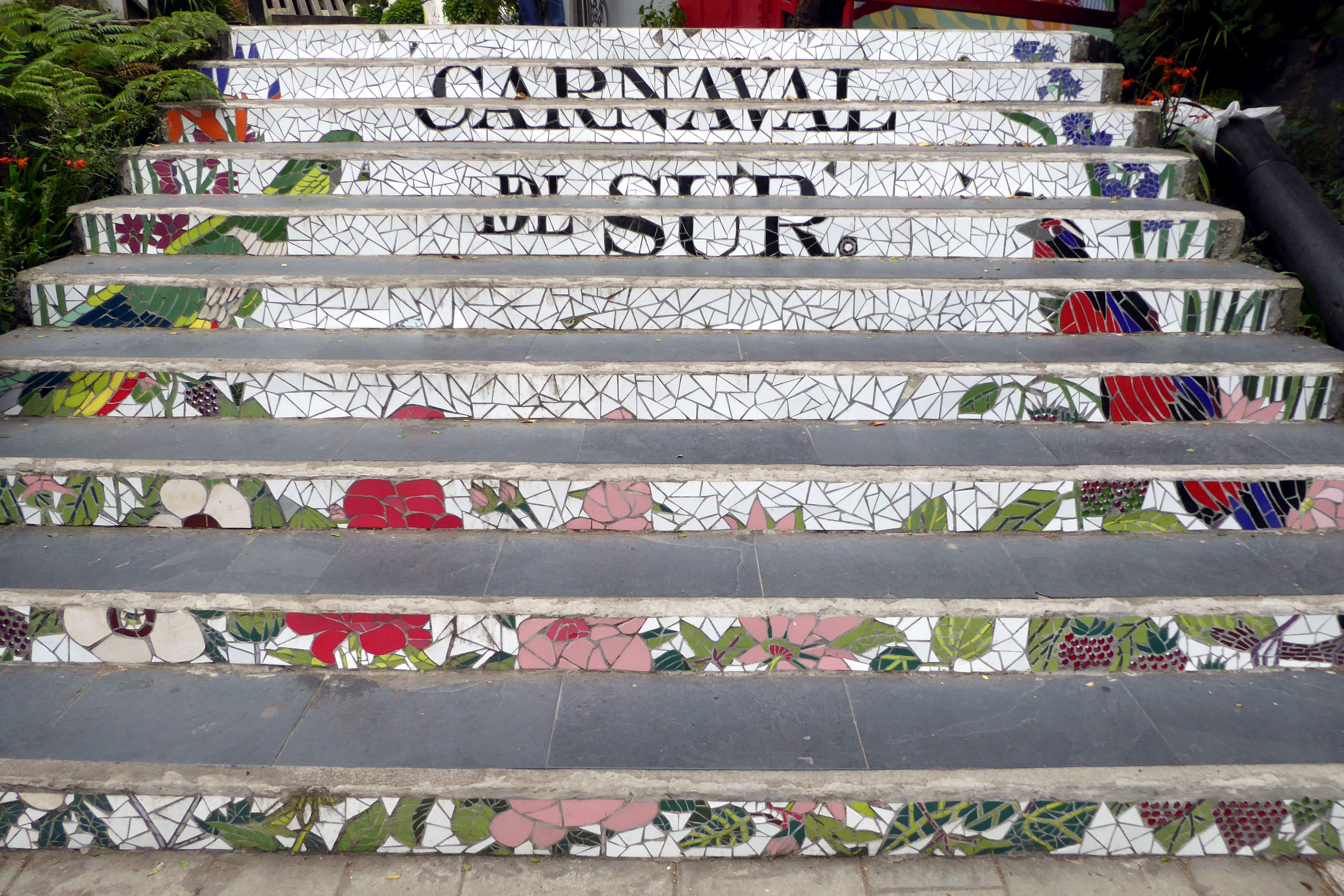
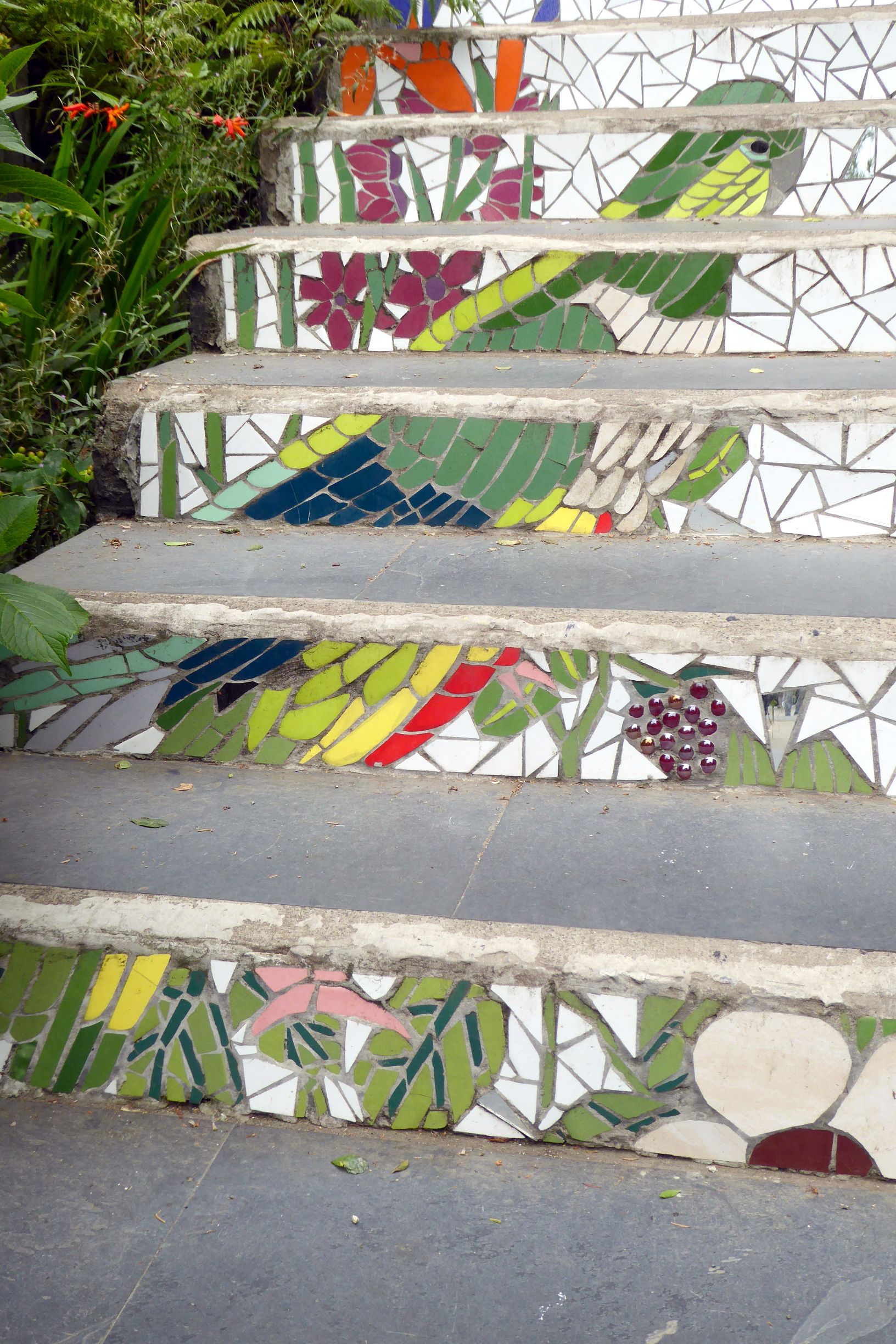
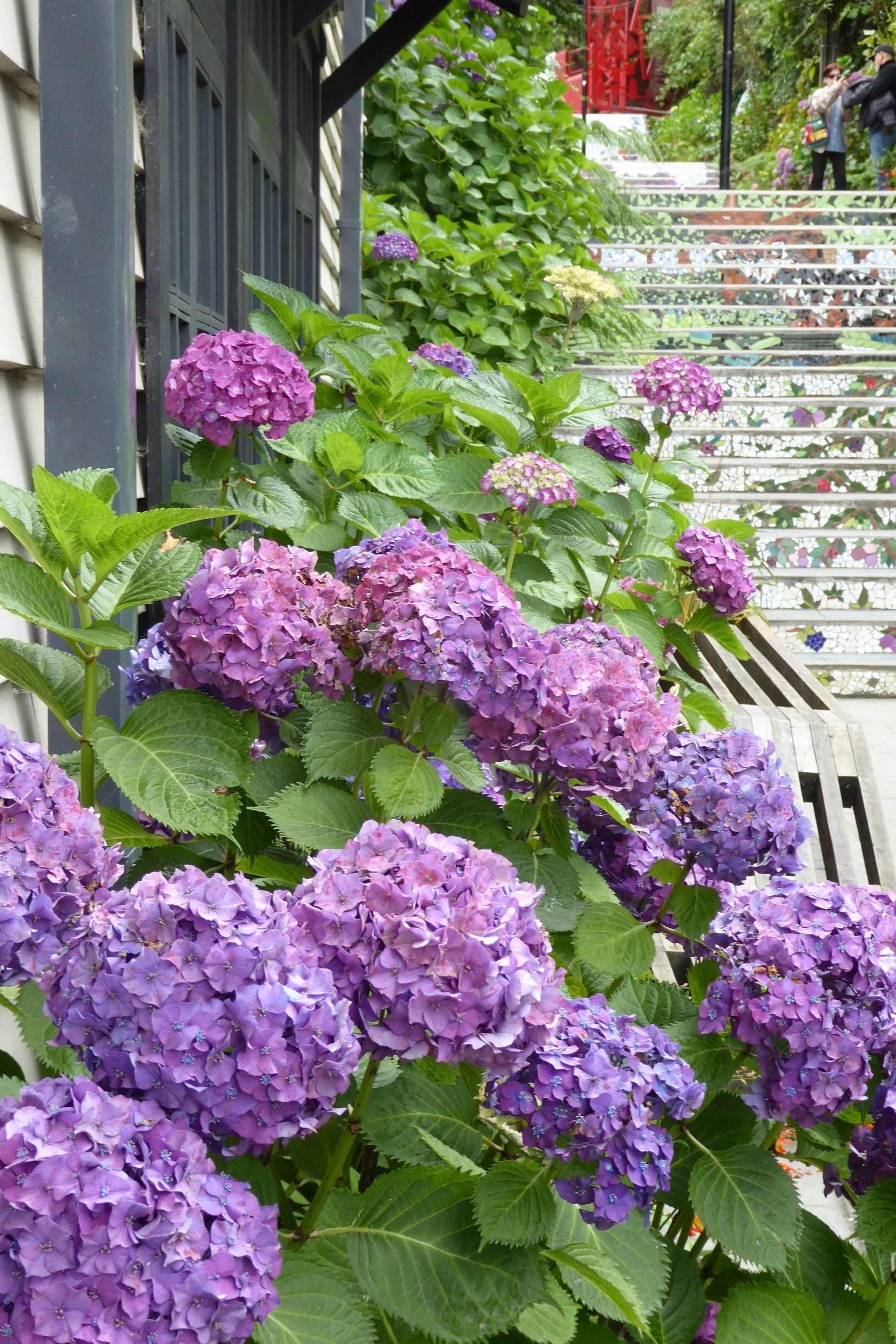
I just love these mosaic stairs!
The view from Kunstgarten (Garden of the Arts), located at the top of the mosaic stairs.
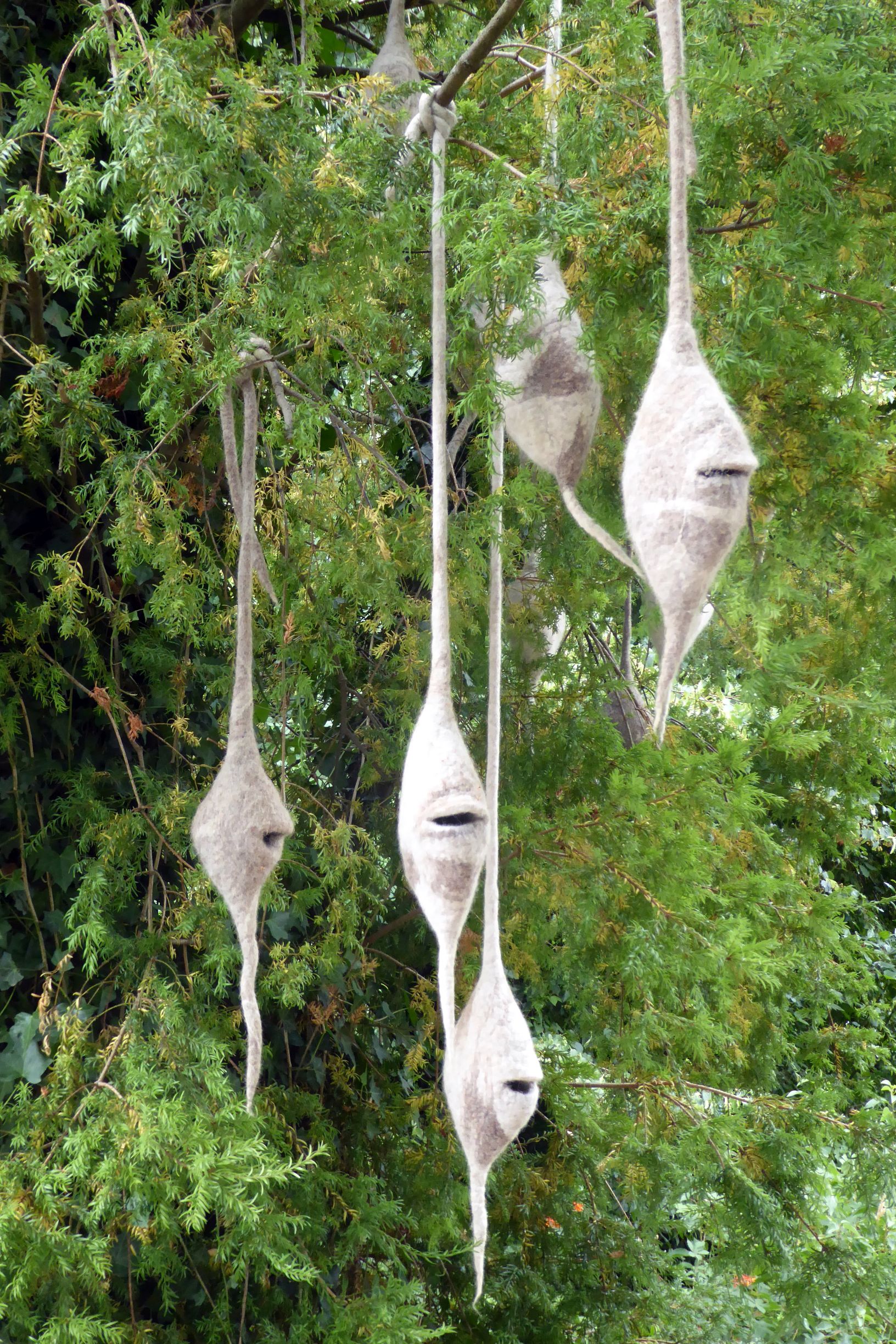
These, uh, interesting(?) wool fiber art sculptures were hanging from the tree at the entrance of the garden.
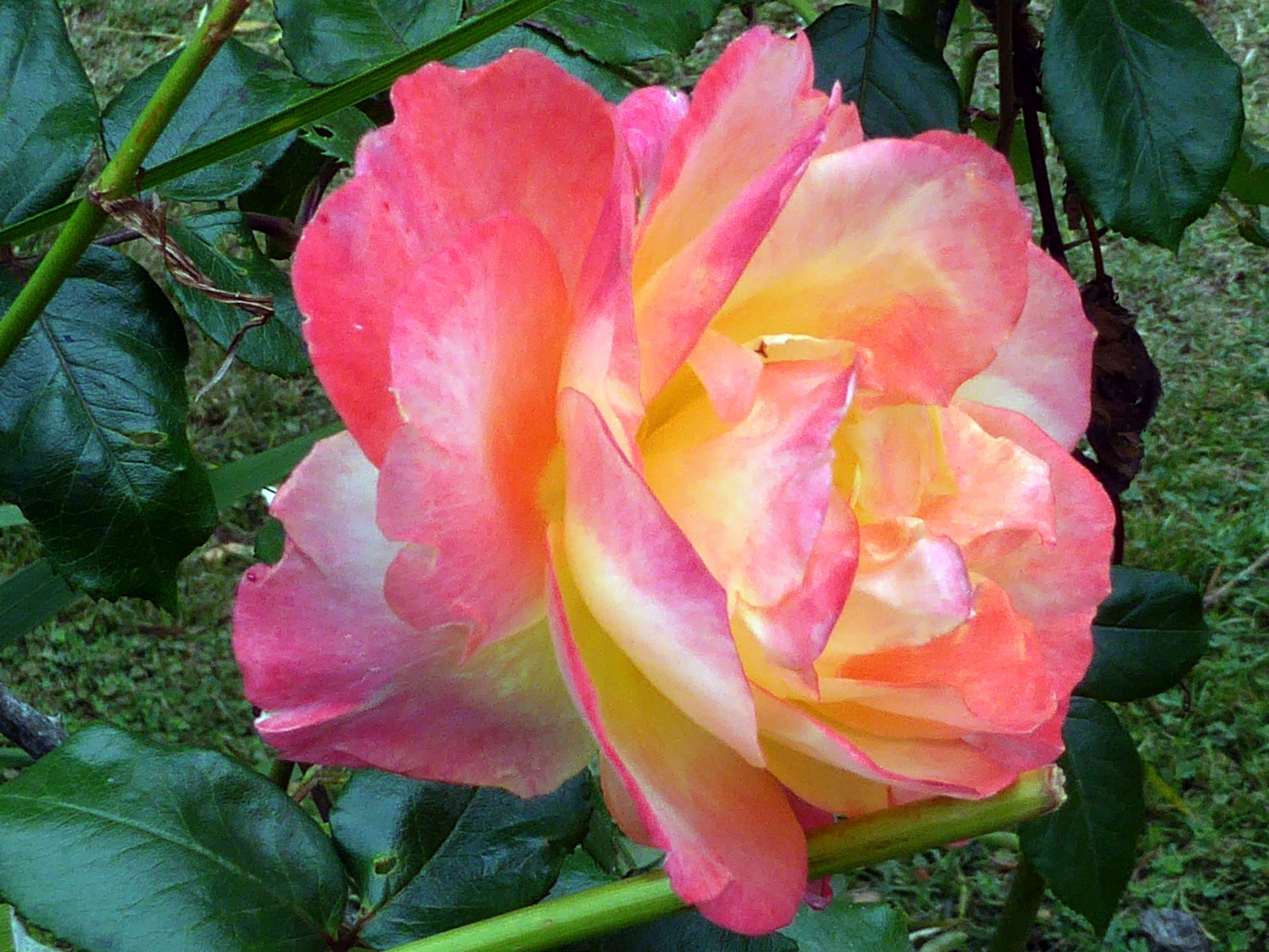
Rose bushes lined many of the sidewalks.

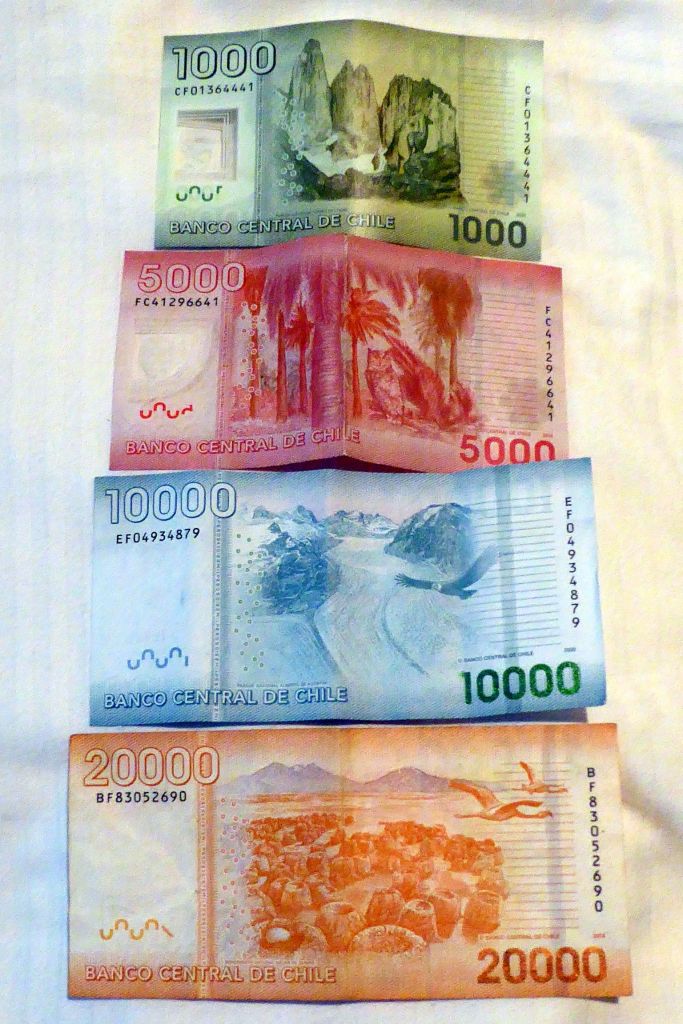
This is what the Chilean currency looks like. Their peso was valued a bit stronger than the Argentinean peso; however, they print larger denominations, making our wallets less bulky! Today’s exchange rate: $1 USD = 975 CLP. So, that green 1000 note is worth a little more than $1.

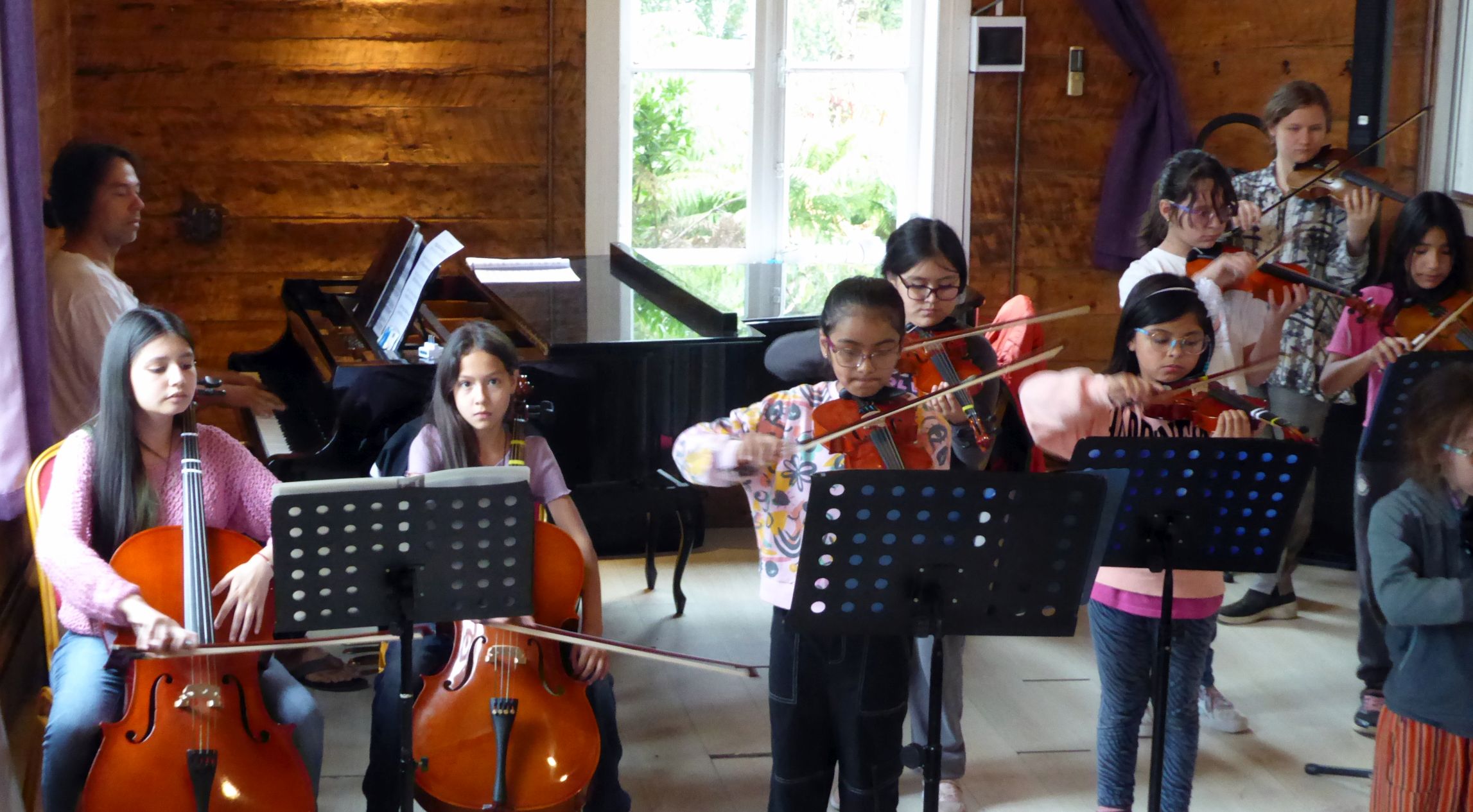
Later in the afternoon, we visited the Combas Music School, a wonderful school that is supported by Grand Circle Foundation.  This was the first performance for the new music students—so charming!
The evening was spent doing what Bruce and I look forward to each time we travel with Overseas Adventure Travel (OAT): a home hosted dinner.  It is always a great opportunity to visit with a family, enjoy the cuisine of their country, and have meaningful cultural interaction.

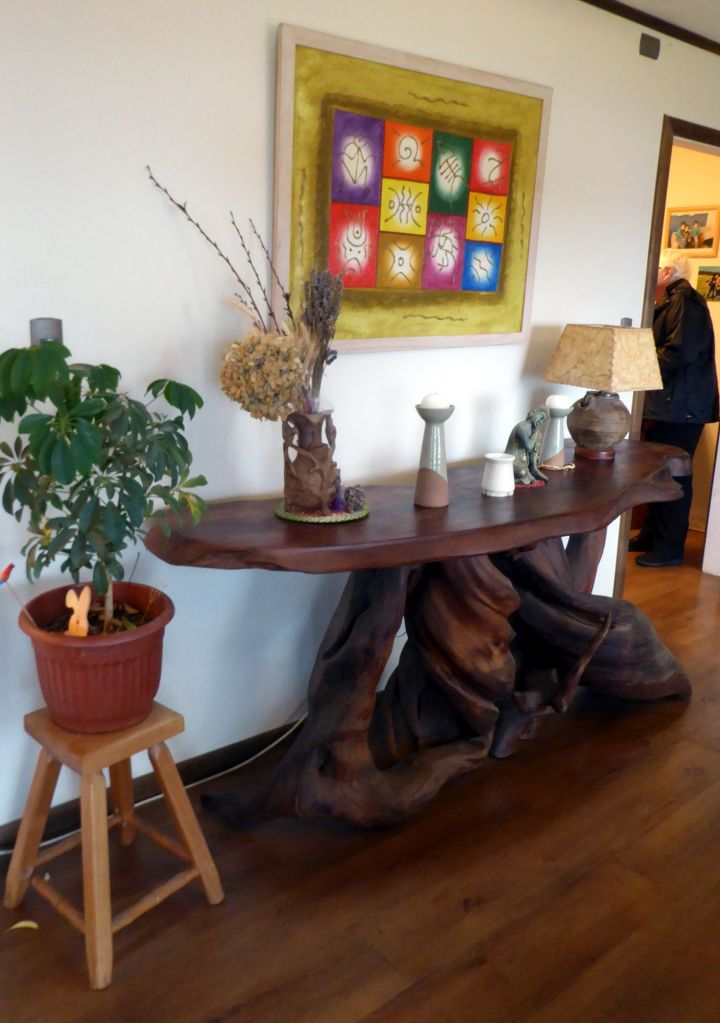
Our group of 16 was split in half to visit two different homes.  Bruce and I were assigned to Carolina and George, a warm and wonderful young couple.  As soon as we stepped into their home, I felt comfortable, and I loved much of the décor!  It felt almost too familiar; they were listening to American classic rock played by their local radio station!

Throughout Argentina and Chile, we had enjoyed Pisco Sour cocktails—a South American favorite—and learned how to make them at our hotel.  Carolina and George welcomed us with their version, which they make with whatever fruit they have available at the time.  Delicious!
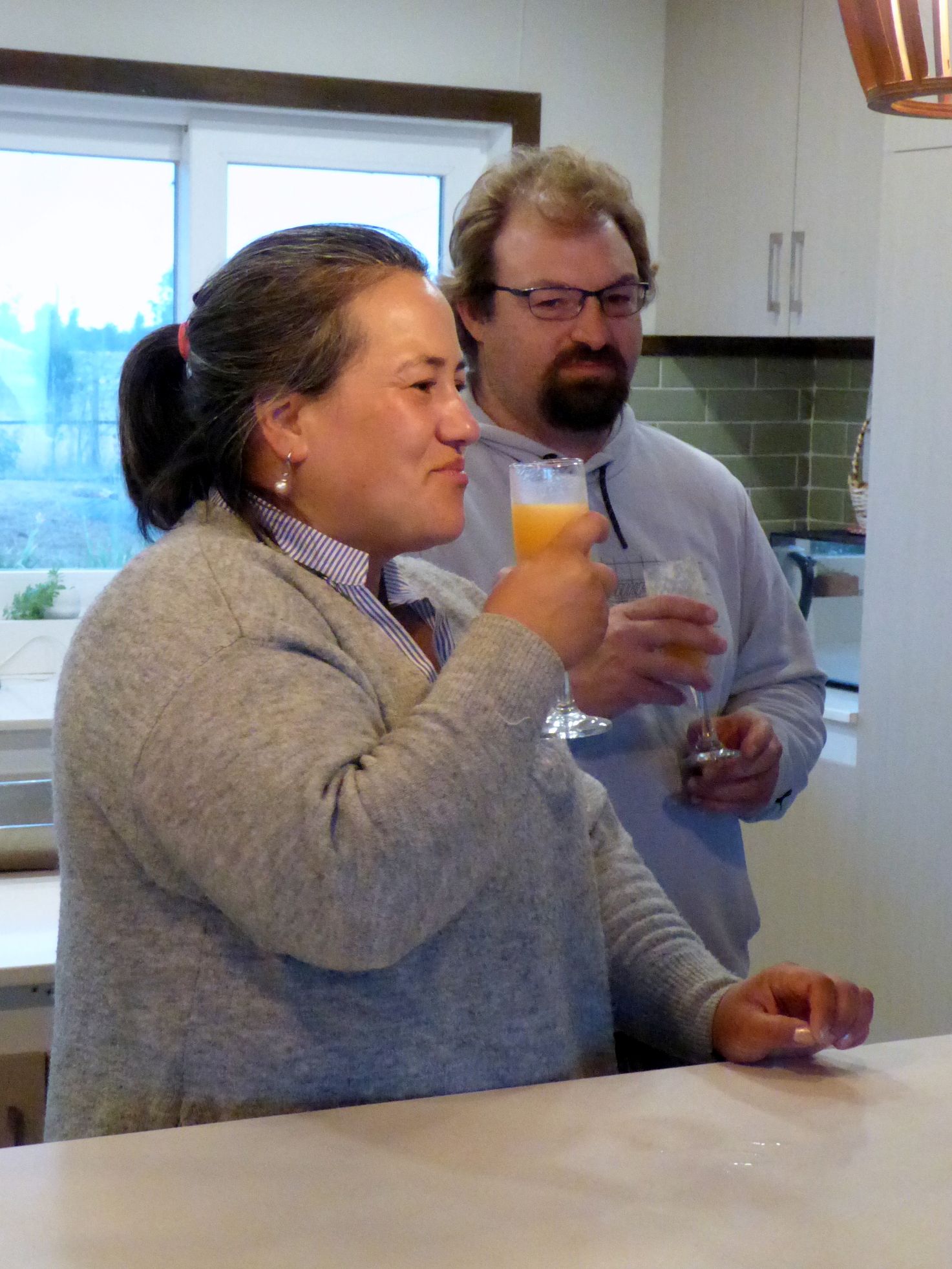
Carolina taught us how to make empanadas, which we enjoyed with our cocktails.  We all took turns making our own and George fried them while we chatted in the kitchen.  They were eager to learn where we were all from and to tell them something about our state.  Carolina had a map marking where all the OAT travelers they had hosted were from, and she was eager to see if we were from any new states.
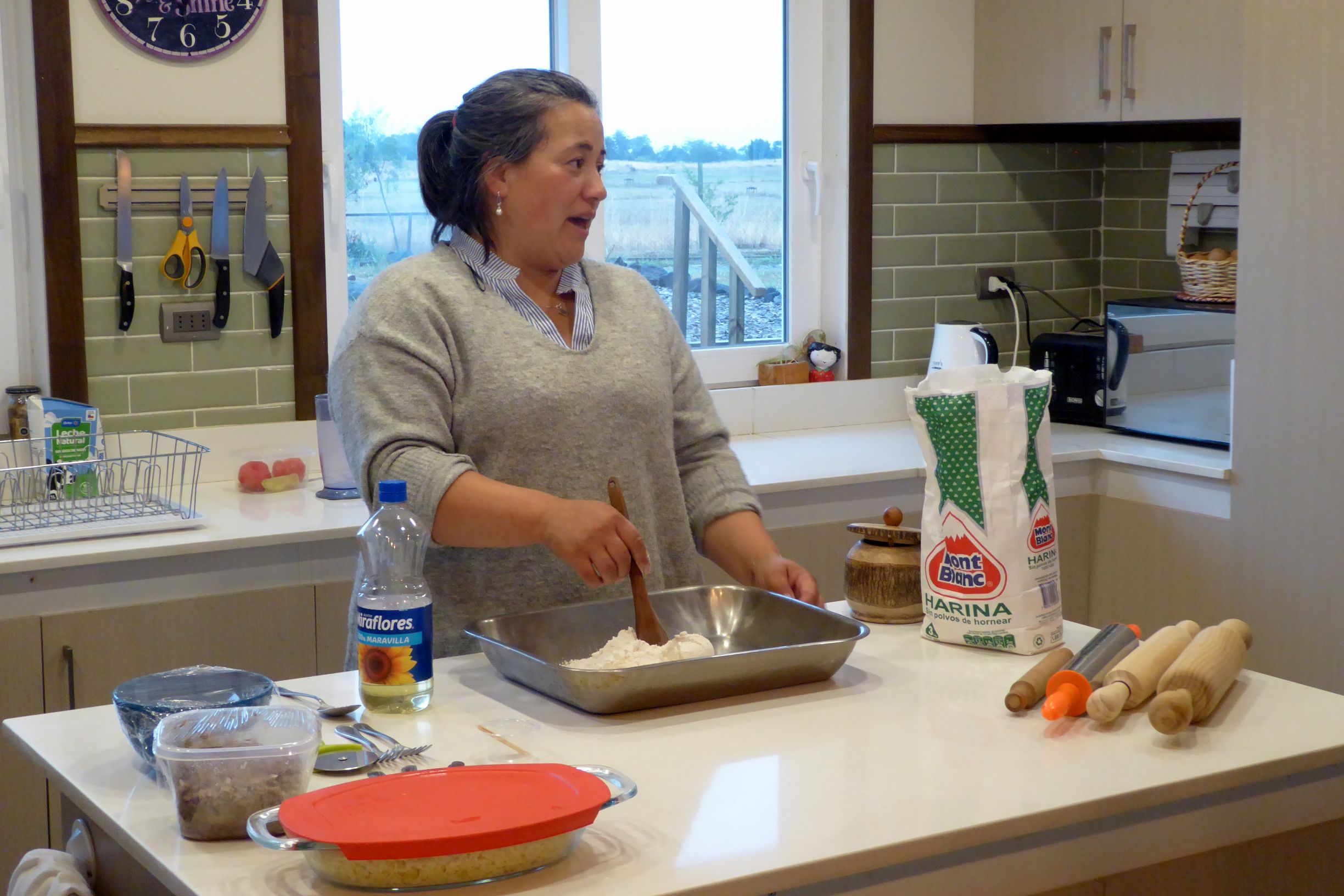
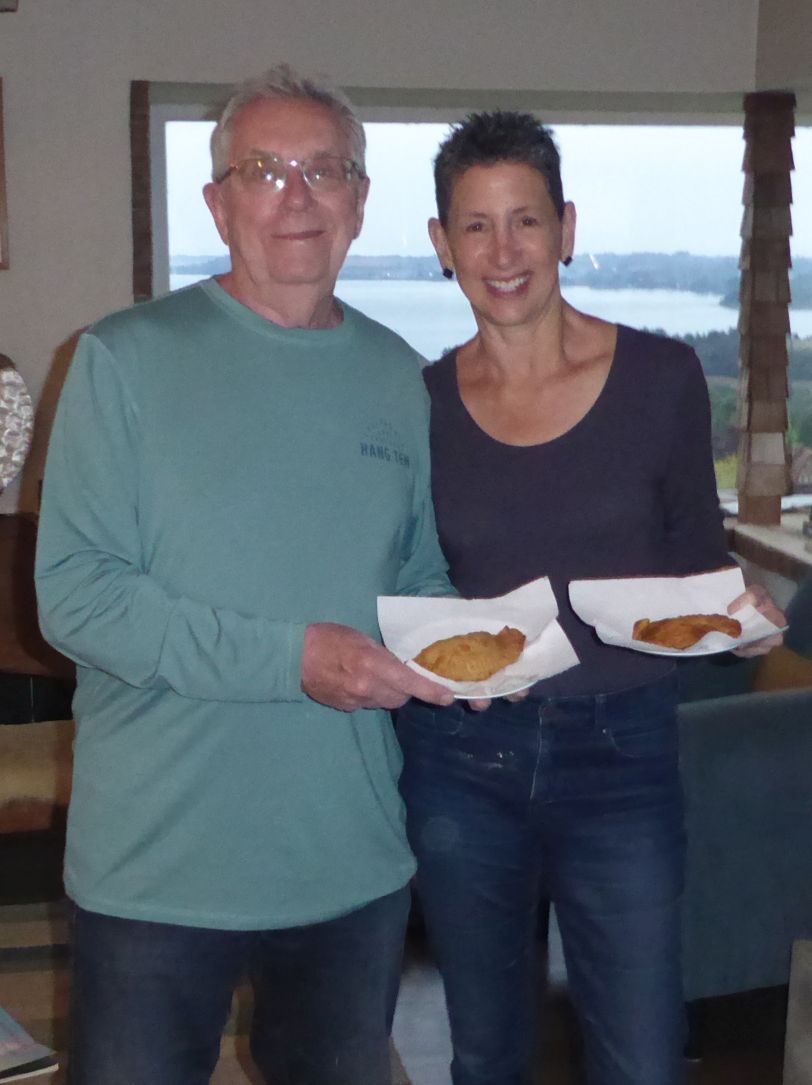
In between the laughs we all shared, we learned a lot about the two of them and their views about Chile.  Carolina is a former English teacher and now has her own business raising and selling plants.  George, also a business owner, is a landscape builder.

They explained that much like many countries throughout the world, including Argentina and the U.S.A., Chile is very politically divided.  Their current president, Gabriel Boric, is far left—opposite of Argentina’s far-right president.  Asked what their top concern is for their country, Carolina and George agreed that crime and safety worry them the most.  In October of 2019, there was a “spontaneous” (organized?) uprising in the city centers throughout the country.  Young people burned churches and city buildings causing major destruction.  They doubt it was spontaneous at all.  After all, ten metro stations in ten different cities burned at the same time.  Speculation is that it was connected to mafia.

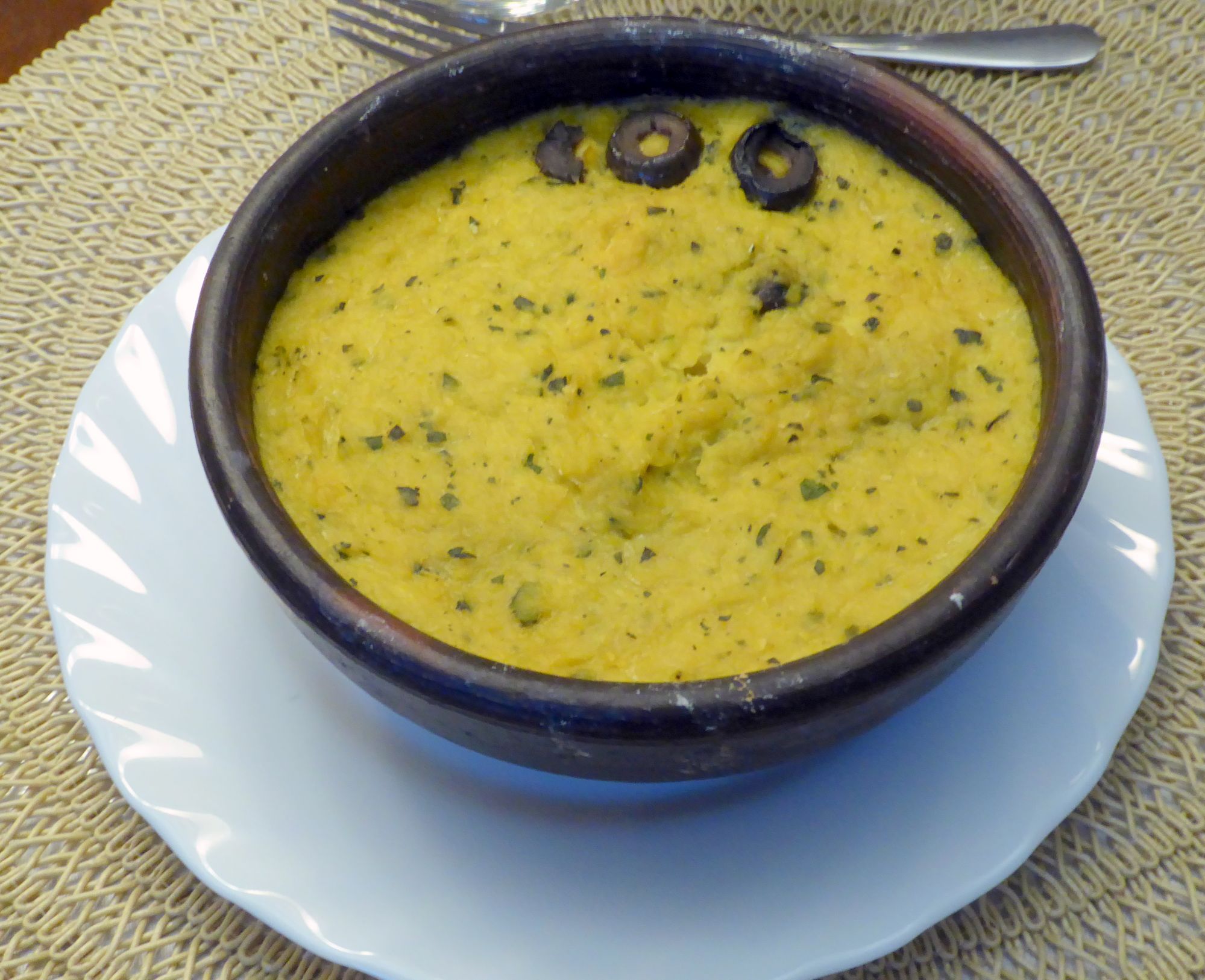
As we learned about our hosts and their concerns for their country (which sounded all too familiar; they echoed concerns we have in the U.S.A.), we enjoyed delicious corn pie with chicken—a traditional Chilean dish, followed by a German dessert.  German?  Yes, many Germans settled in Puerto Varas and the region, just like they had in Bariloche.
The evening ended too soon, as it always does during a home hosted dinner.  It was so enjoyable; the time flew by!

Coming up next:  ARGENTINA & CHILE #9: CHARMING CHILOE ISLAND
ARGENTINA & CHILE #7:  OVER THE ANDES TO CHILE WE GO!

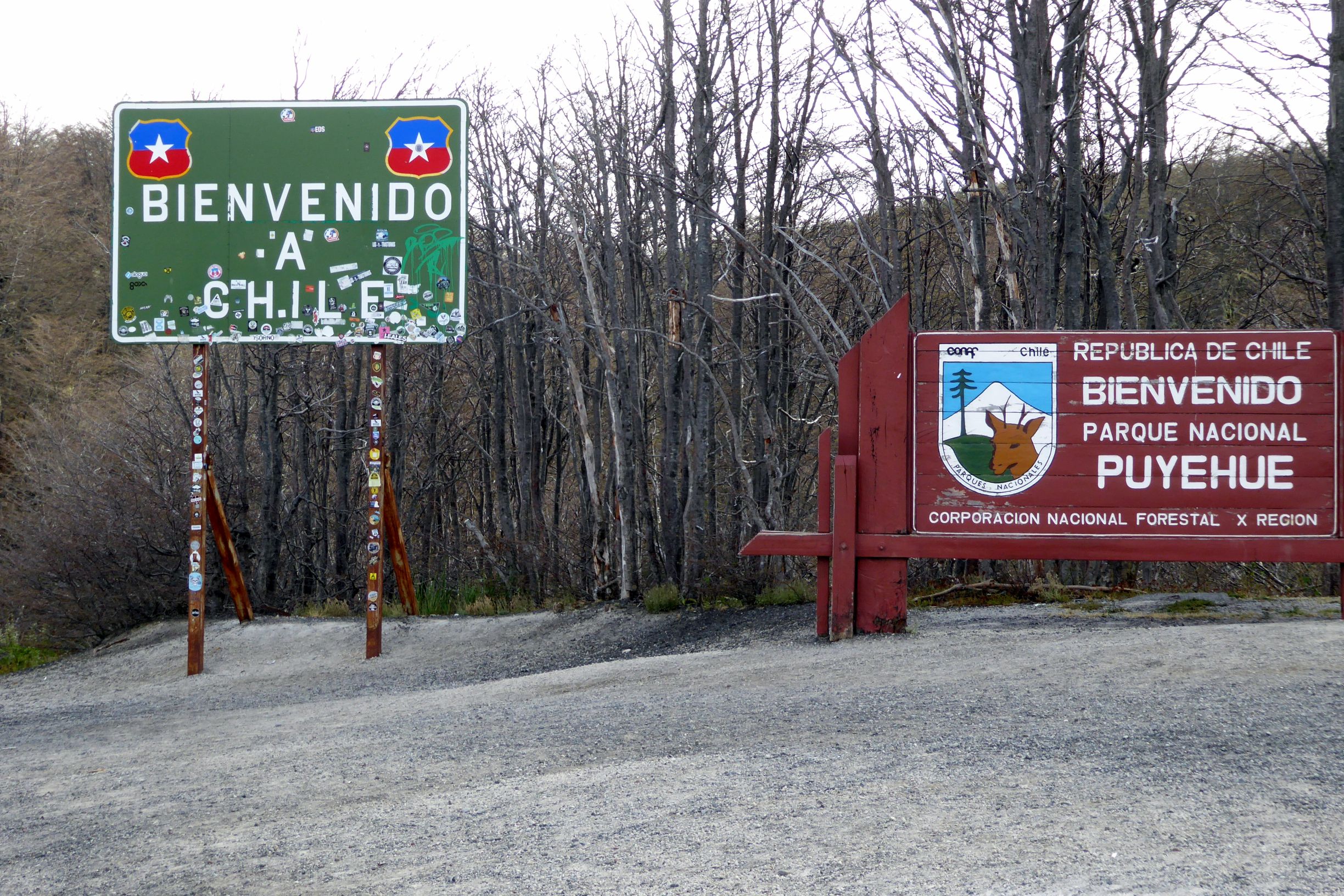
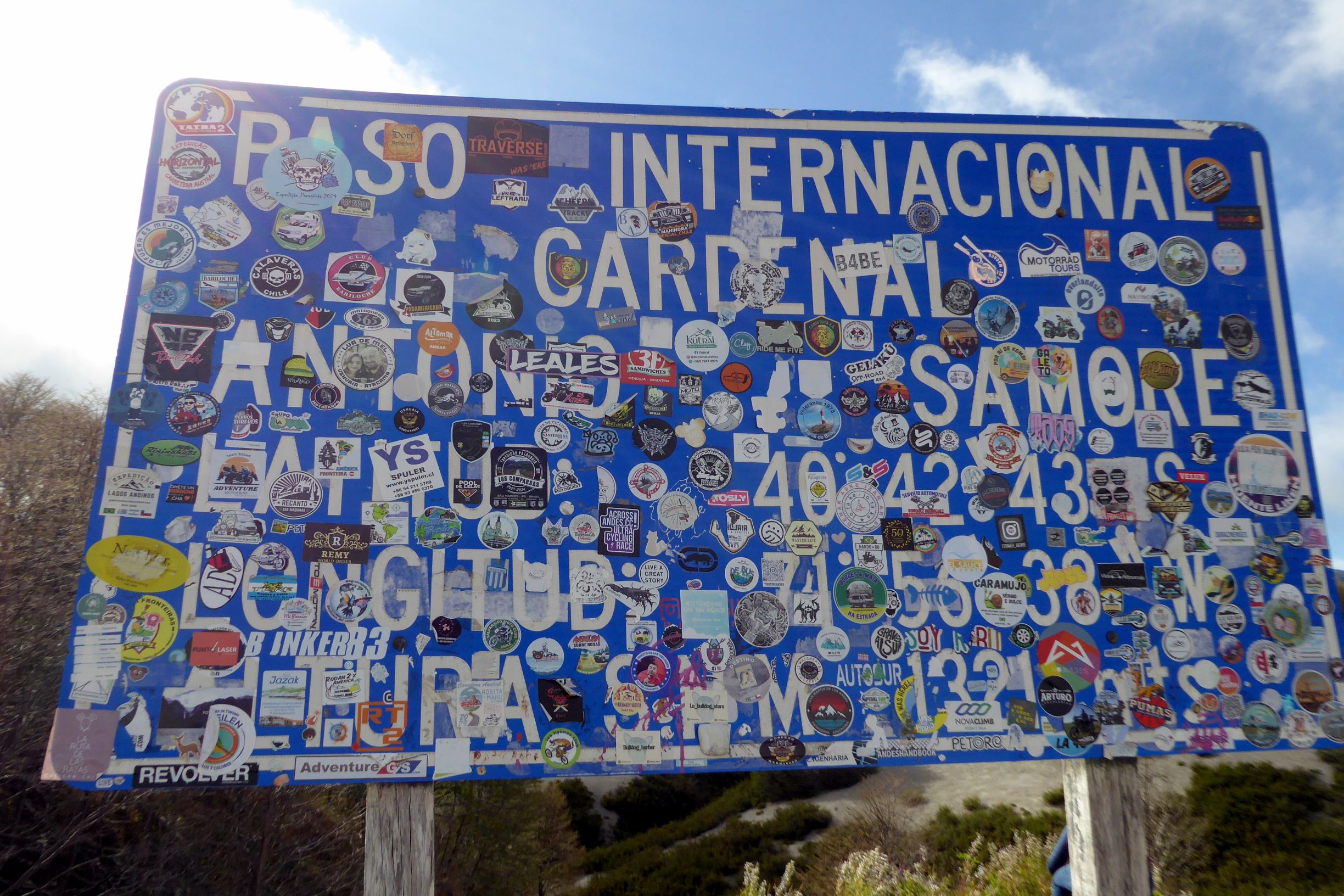
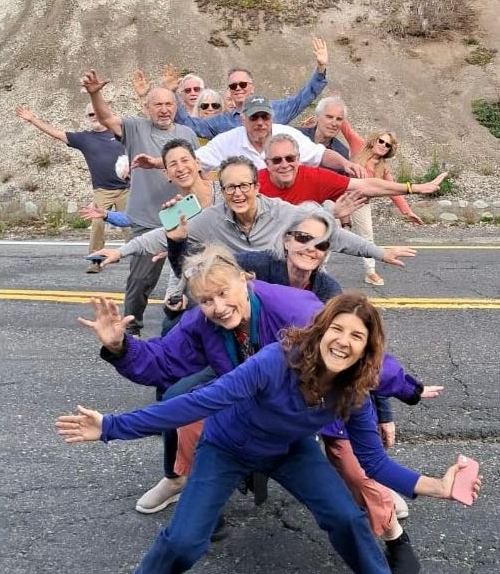
This was a big travel day by bus.  We drove into Chile by crossing over the beautiful Andes Mountains.  The Chilean border station where we stopped to have our passports checked and our luggage scanned for fruits, nuts, and other banned foods, was in Argentina.  The border itself, however, was technically at the top of the Andes at an elevation of 4,000 feet, 80 miles from Bariloche where we had departed.  When we arrived at this invisible border, we got out of the bus and had a decision to make:  Should we stay or should we go?  The group was split at first:

(For all photos, click on the image for a full screen view.)

To Chile we go!  (Fortunately, we escaped being obliterated by an 18-wheeler that sped by following our border-straddling stunt.  We celebrated our ultimately unanimous decision with another “discovery,” made a toast to Chile, and ventured on.

Along the way, while taking in the gorgeous views, we learned about our new country.  Andrea summed up the differences between Argentinians and Chileans with this comparison:  Argentina is the Italy of South America, and Chile is the England of South America.  In other words, Argentinians are loud, disorganized, (and drink mate); and, Chileans are humble, more conservative, organized, follow the rules, and drink tea.  As an Argentinian married to a Chilean, Andrea and Julio both agree on that assessment!

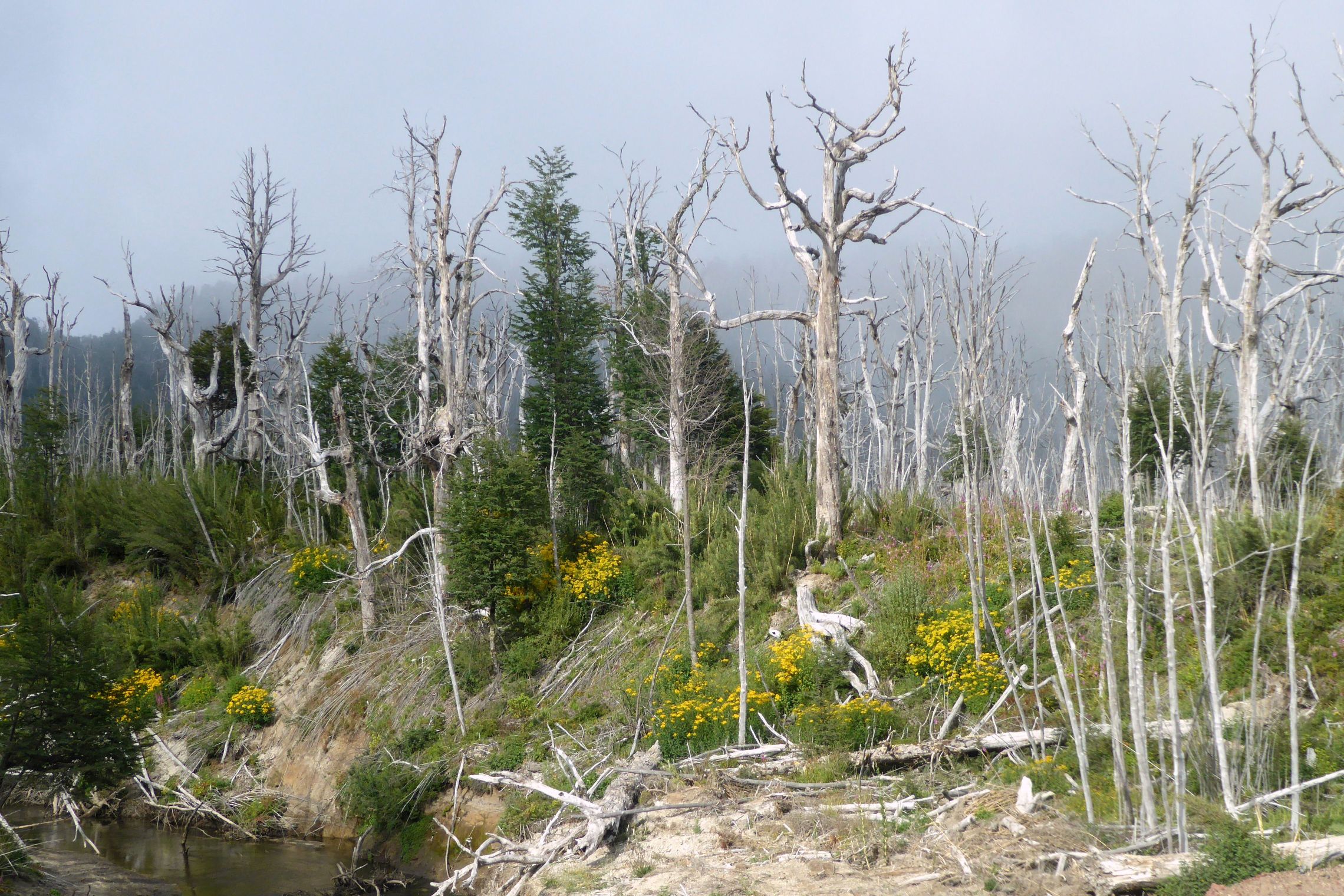
A wildfire had destroyed the forest, but it’s coming back!

Chile is a funny-looking country on the map.  It is very long (2,625 miles!) and narrow (averaging just 10 miles wide).  An arid desert is located at the north end, and the south has glaciers and a rugged terrain.  In between, there is everything from mountains and cliffs to valleys, and lakes as well as forests, islands, and canals.  The Andes separate the country from Argentina to the east, with the highest elevation being at 21,000 feet.  We were going to see Patagonia, in the south, beginning with the Lakes District, one of Chile’s five regions.  The region is famous for its wonderful cabernet sauvignon wine as well as copper and lithium production. 

Daniel, our local guide, told us a lot of interesting information about his country as we made our way towards Puerto Varas.  We learned that Chile is the second-largest salmon producer in the world after Norway.  Surprisingly, it’s not Pacific salmon they are farming, even though Chile faces the Pacific Ocean.  They are farming Atlantic salmon, because the Norwegians brought it over and taught the Chileans how to farm it successfully.   

We also learned that Chile experienced the biggest earthquake (9.6) ever recorded.  That was back in 1960, and it lasted ten minutes!  1,500 people were killed, and the earthquake caused a tsunami with 120-foot waves! 

Since then, Chileans have gotten used to earthquakes and have strict building codes.  The last big quake was in 2010—an 8.8—which also caused a tsunami and left many people homeless.  These days, Chileans consider a 7.0 earthquake no big deal.

More about Chile in the posts to come, but it was time to stop for lunch.  Fortunately, we didn’t get held up at the border station, which often takes three hours to get through.  It was quiet there, so it only took about 75 minutes to process our group—a good thing, because we were getting hungry!

Our lunch stop was a cute little family restaurant where we were served the most tender chicken I had ever eaten.  I felt a little guilty, though, because we could see those farm-raised chickens just outside the window as we enjoyed their former relatives.  Which one was going to be the next victim?

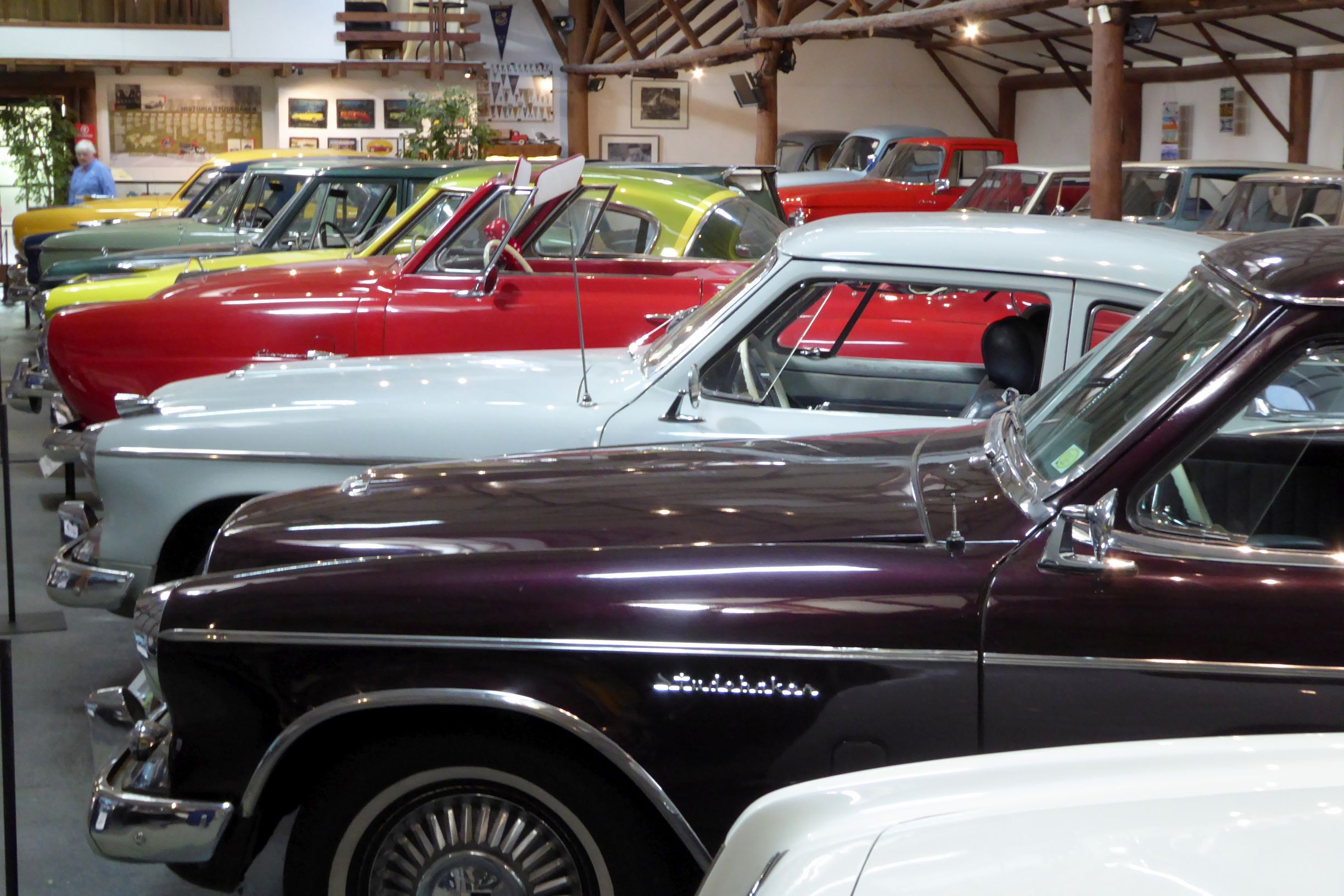
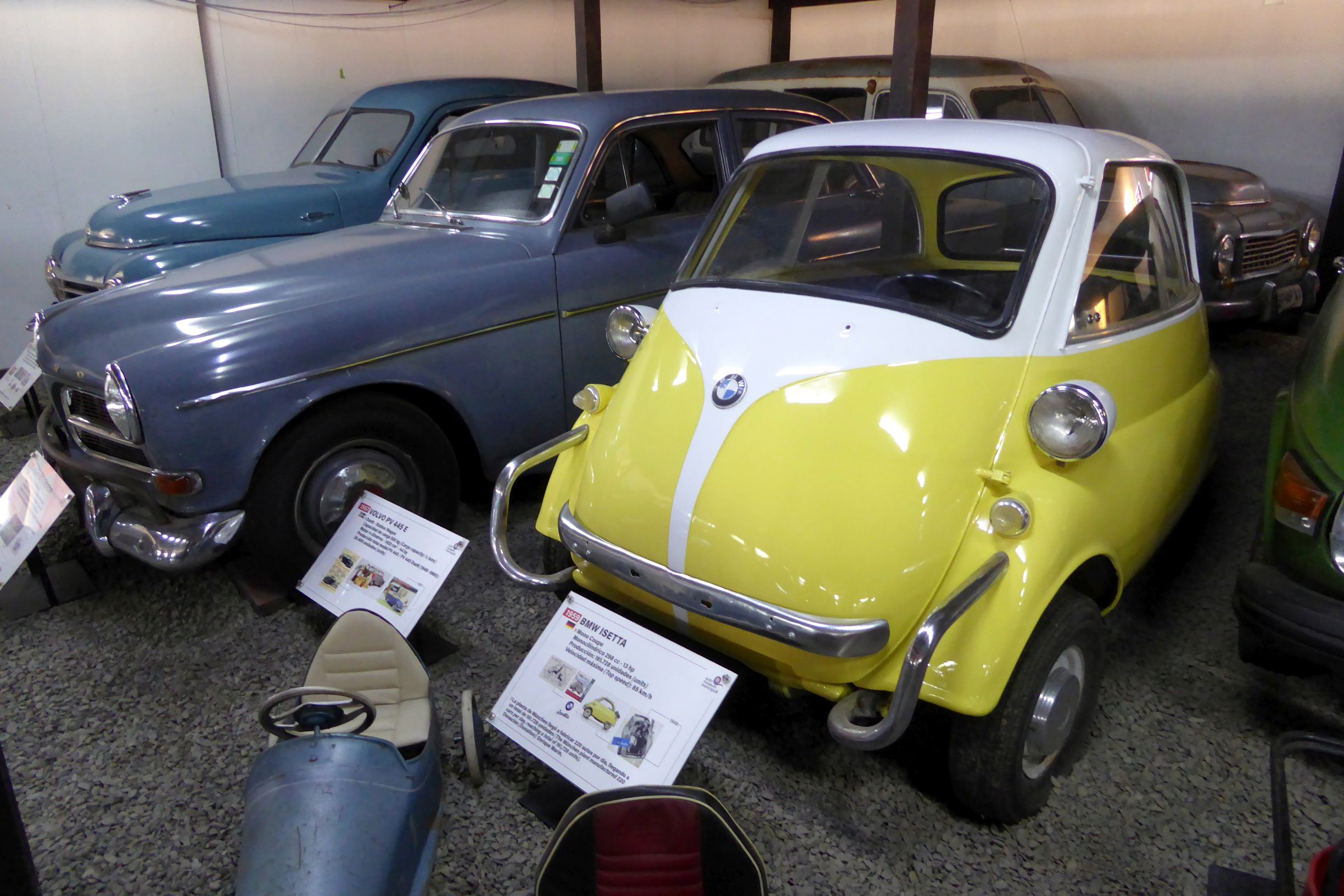
Before hitting the road, we stopped in to see Moncopulli, the auto museum located next door.  I just looked it up on Trip Advisor; it gets a 4-1/2 out of 5 rating.  Bruce and I agree; it was worth a visit if you are in the area!  The museum’s owner is a collector of Studebakers, and he opened the museum as a tribute to his father who owned a Studebaker.  Tragically, his parents were killed in a car crash when he was just 11 years old.  Now, the museum features his car collection as well as an assortment of Studebakers that were donated to the museum.

A funny little Beemer!

Onward ho to Puerto Varas we go!  It was a beautiful afternoon when we arrived—much different than the cold and windy weather we were expecting.  The remainder of the afternoon was free, so we headed out to get some Chilean pesos and explore the town before meeting up with the group at a local restaurant for dinner.

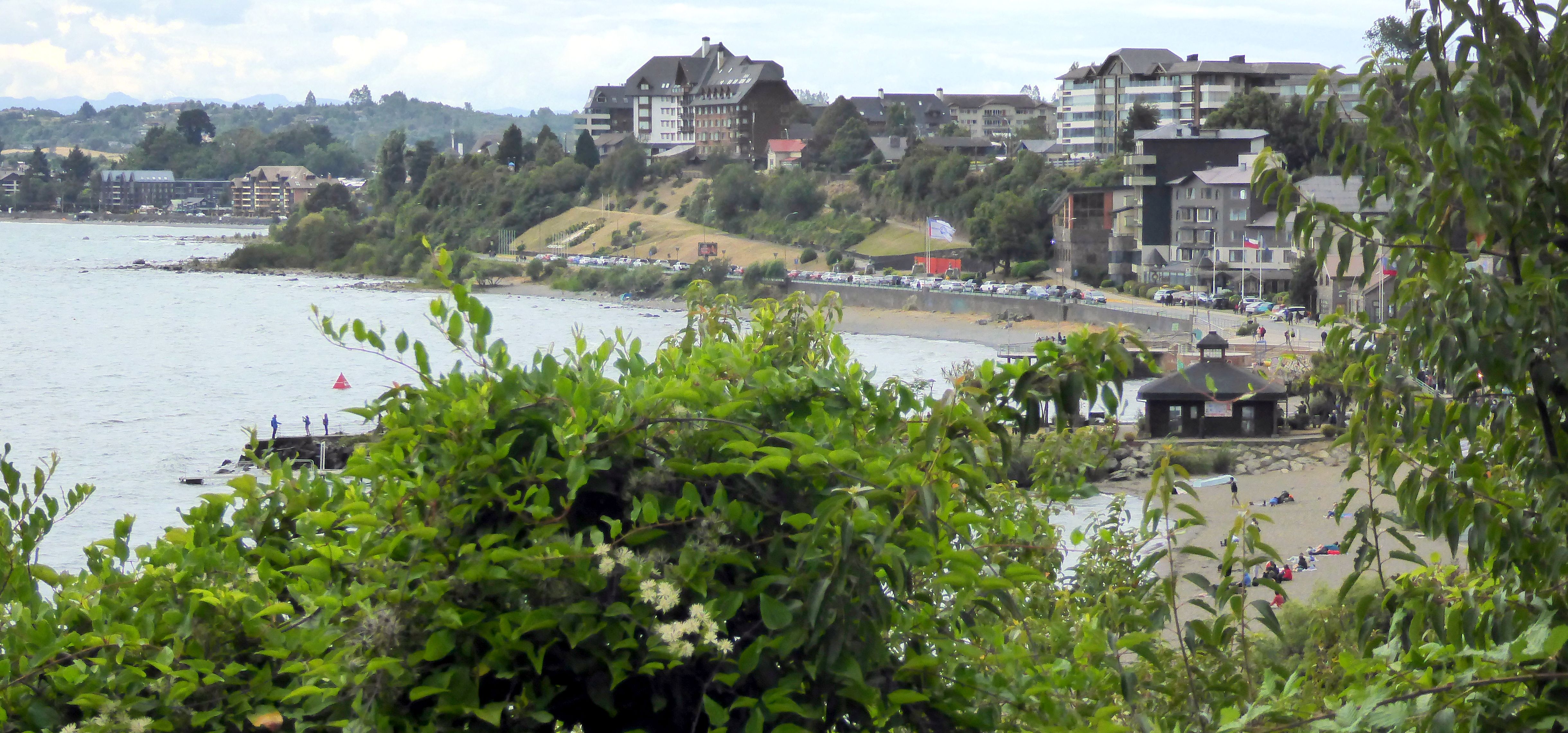
Puerto Varas faces Lake Llanquihue and is the gateway to Vicente Perez Rosales National Park. Known as the “City of Roses,” the sidewalks are lined with beautiful rose bushes that were in bloom.

The city was founded by German immigrants, which was evident in the architecture and vibe of the town. 

Here are a few scenes I captured while visiting the craft markets and walking along the waterfront of town:

Better views of the volcano in the background will appear in a future post.
Families enjoyed the beach on this rare warm and sunny afternoon and calm evening.

Next up:  ARGENTINA & CHILE #8: PETROHUE FALLS, A MUSIC SCHOOL, AND HOME HOSTED DINNER        

ARGENTINA & CHILE #6:  BLISSFUL BARILOCHE BONBONS AND A BBQ AT A FAMILY FARM

The morning didn’t start blissful—that came later.  First, a local gal, Nora, came to talk with our group about the Nazi presence in Patagonia following WWII.  It was interesting history I never knew about.

During the 1920’s-1940’s, Germans developed the ski industry in Bariloche and tourism grew.  During WWII, Argentina wasn’t exactly anti-Nazi.  Juan Peron was elected president during that period, and although he wasn’t a Nazi himself, he was pro-fascist. Argentina was the last to declare war against Germany. 

Following the war, Peron allowed selected Nazi war criminals to get fake identities, emigrate to Argentina, and blend in with the other Germans in Bariloche.  Peron only wanted those with science and technical backgrounds that could help develop technology in Argentina.  By having fake identities, these criminals were able to evade the courts.  Between 1947 – 1950, 300 high-ranking war criminals and 5,000 collaborators emigrated to Argentina and were protected by Peron.  Disgusting.

Moving on to much more blissful subjects, Bruce and I enjoyed the remainder of the beautiful morning by exploring more of Bariloche:

(For all photos, especially panoramas, click on the image for a full screen view.)

Tourists lined up to photograph the Bariloche sign!
This is the “beach” just up from our hotel and before the Bariloche sign. The water was frigid and the rocks didn’t look too comfortable to lounge on!
We stopped into the community center and looked down at the maze below.
This cathedral was built in the 1940’s.

The most blissful of that exploration, of course, was the Bariloche chocolate and gelato!  There’s good chocolate in Argentina?  Well, yes, as a matter of fact!  And, Bariloche, has the best in the country.  Remember all those Germans and Swiss who fled to Bariloche?  Well, as I mentioned in previous posts, there were a LOT of Italians who fled the devastating aftermath of the war as well, and some of them were fabulous chocolatiers. They had brought their recipes with them to Argentina, so they could continue making chocolate in their new country.  When these expats saw how Bariloche was developing into an attractive and successful alpine-like tourist town, they headed to what’s now known as “Little Switzerland.”

There are a lot of chocolate shops in Bariloche!  It reminded me of Brussels, Belgium; everywhere I looked, I saw another one!  Andrea had recommended Rapanui and Mamuschka, and my blog and Trip Advisor research came up with those two being rated among the best.  Rapanui, if you remember from my first post, had a location near our hotel in Buenos Aires.  We enjoyed some very delicious gelato there!  What I didn’t admit at the time, however, was how much chocolate I also enjoyed from Rapanui.  The truffles!  The dulce-de-leche filled chocolates!!  Pure heaven.

Well, I just had to compare Rapanui to Mamuschka, so I stopped in to purchase a selection—the cutest being these dulce-de-leche bears.  We had a gelato at Rapanui, too.

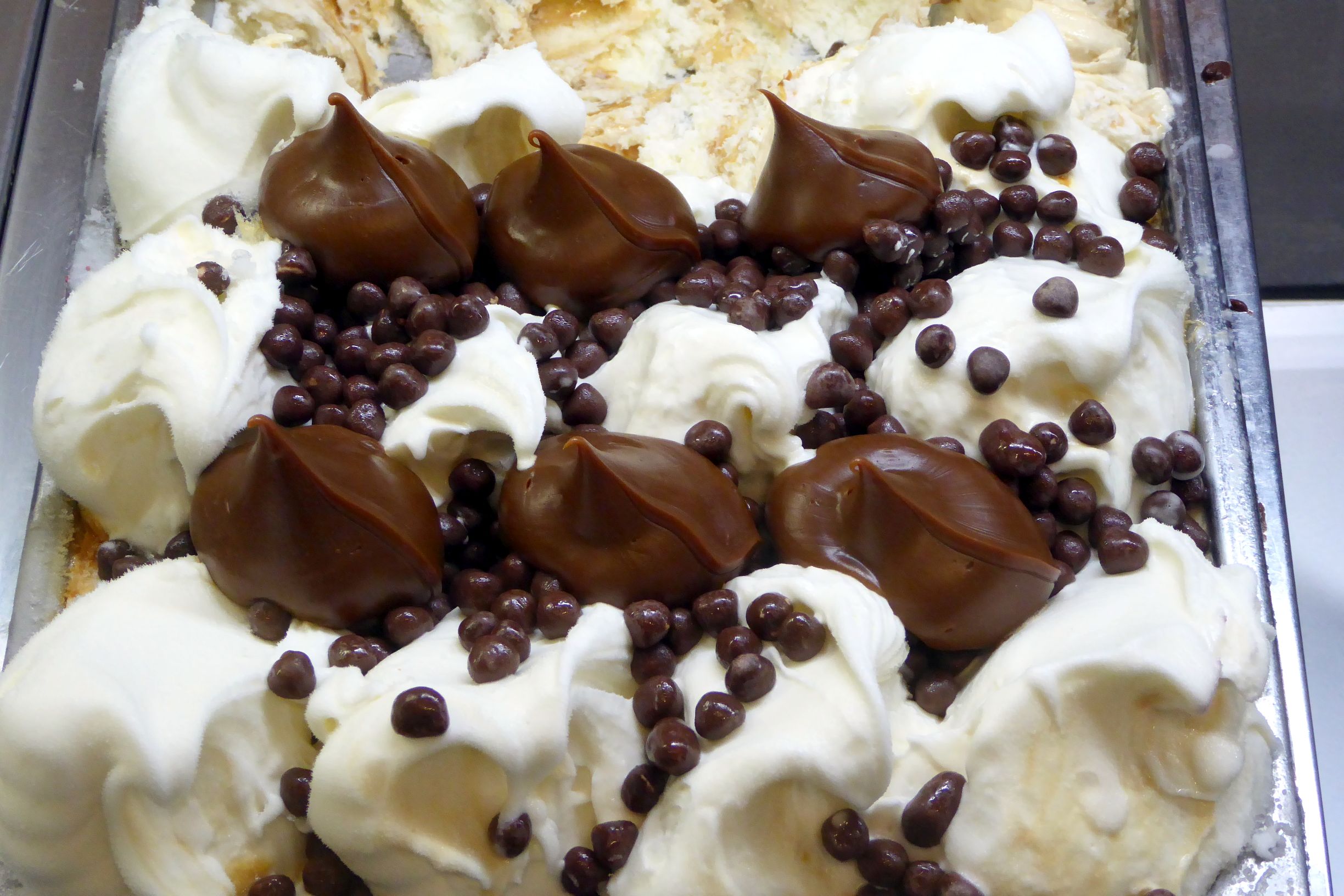
Rapanui gelato with dulce-de-leche
This cup of two gelato scoops will only set you back 2600 pesos or $2.60!

How can I choose the best?  Rapanui and Mamuschka were both blissful!

Bariloche had heated up quite a bit by the afternoon, topping out at around 90 degrees—our hottest day in usually cold Patagonia.  Horseback riding and a barbeque at a family horse farm was on the afternoon agenda, but it was just too hot for me.  I opted to stand in the shade to see the group off, and then scampered back inside for a cold face-dunk in the sink.

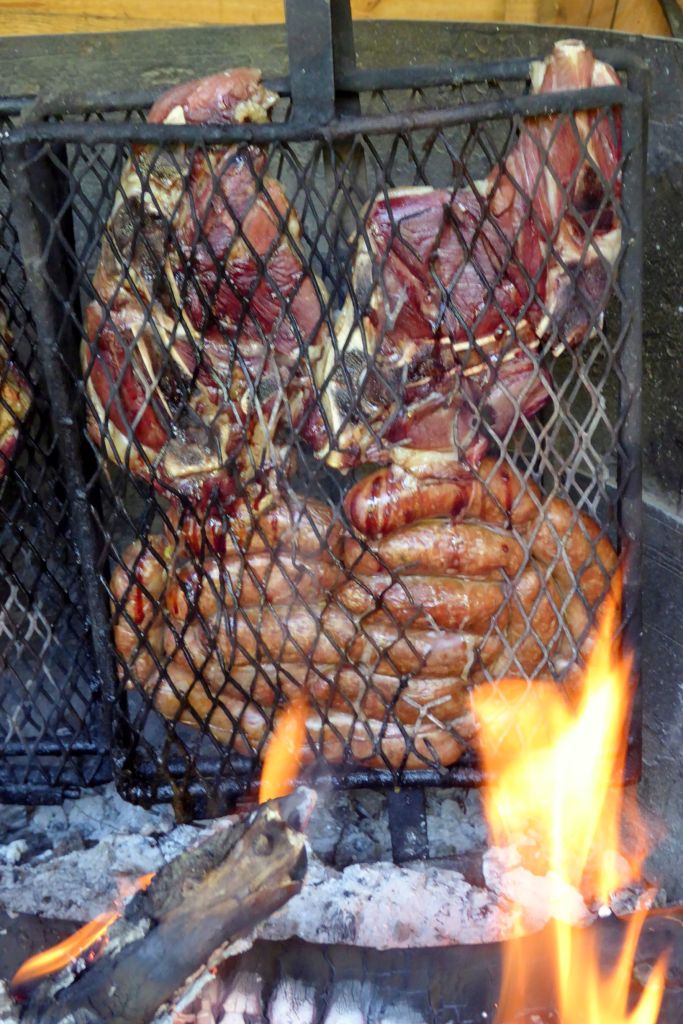
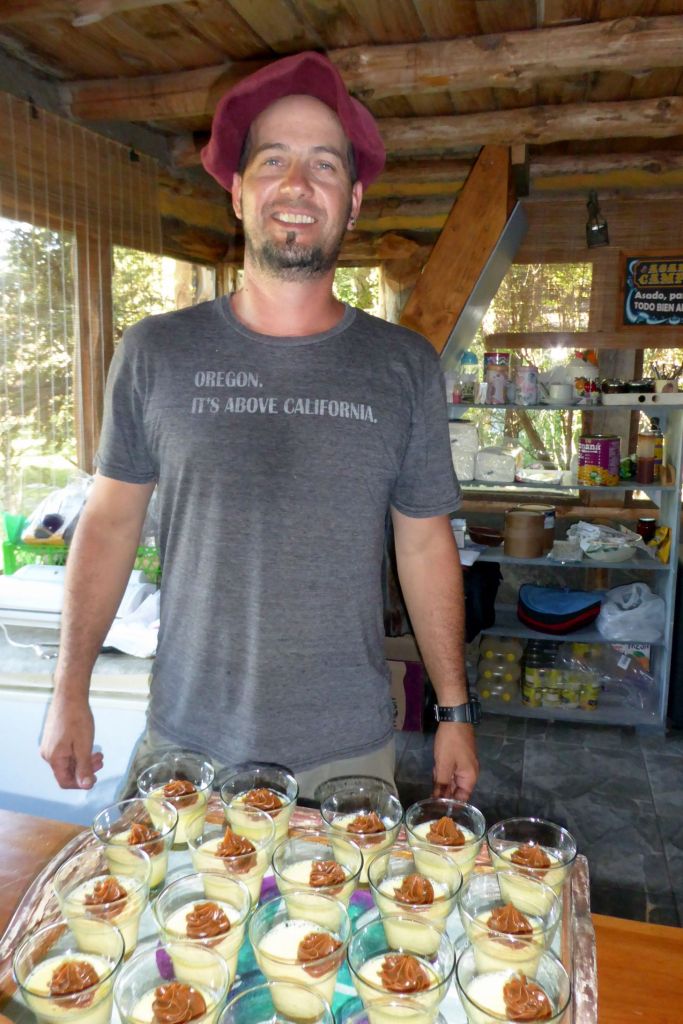
Los Haneck” was a very cool Patagonian ranch where we were warmly welcomed.  Bruce passed on the horseback riding as well, and we had a great time just hanging out with Andrea, Letti (our local guide), Monica Haneck, and her dogs.  Meanwhile, Chango and Pancho prepared a barbeque dinner of lamb, sausage, and chicken.  Served with salad (veggies—yay!) and a delicious dulce-de-leche-topped traditional flan; it was a fabulous feast!

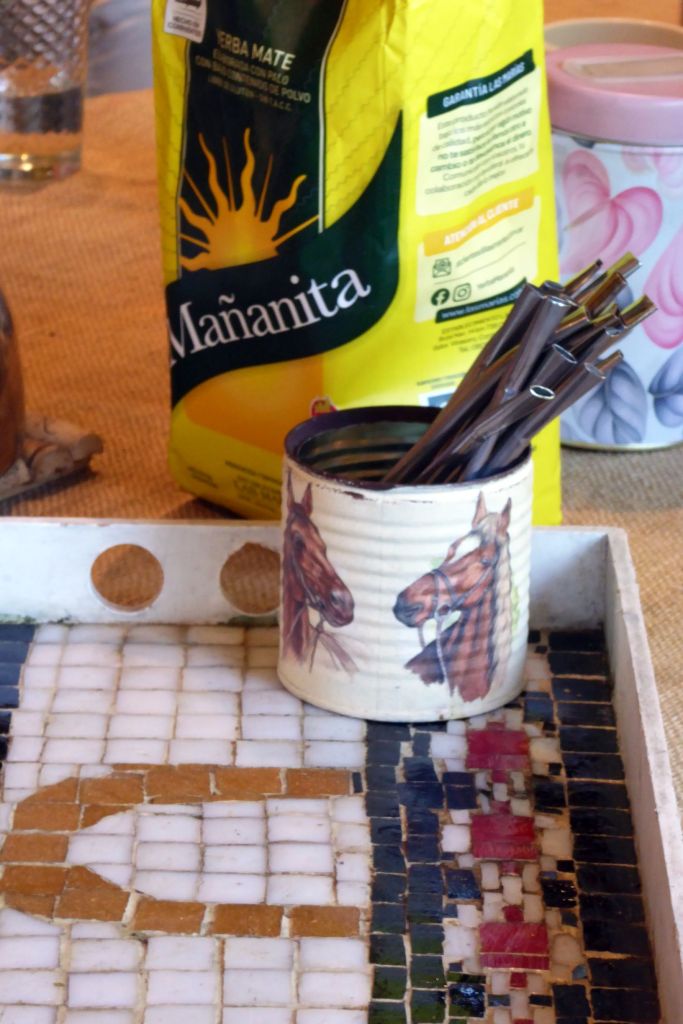
We also learned how to make and drink mate (“mah-tay”), which is an acquired taste, to say the least.  A caffeine-infused herbal drink traditionally served in a vessel made from a gourd, it’s very much a part of the Argentinian culture, especially in the northern part of the country where yerba mate is grown and harvested.  The favored drink of the gauchos (cowboys), the tradition began with the indigenous Guarani in what is now Paraguay, southeastern Brazil, Argentina, Bolivia, and Uruguay.

The etiquette attached to drinking mate is just as much a part of drinking mate as the mate itself.  It is drunk in social settings, with family and friends.  The same gourd and metal straw is passed around and shared by all, so you can imagine how much COVID disrupted this tradition!  Instead of passing the gourd and straw, they resorted to passing the thermos of hot water.

There is much more to mate and its consumption than I have written; it’s quite elaborate!  If you are ever in that part of the world, though, watch for somebody with a thermos held in the bend of their arm.  Chances are that same hand is holding a mate vessel with a metal straw, and they are on their way to share it with a friend!  (You will see what I mean in a future blog post.)

Meanwhile, let’s eat!

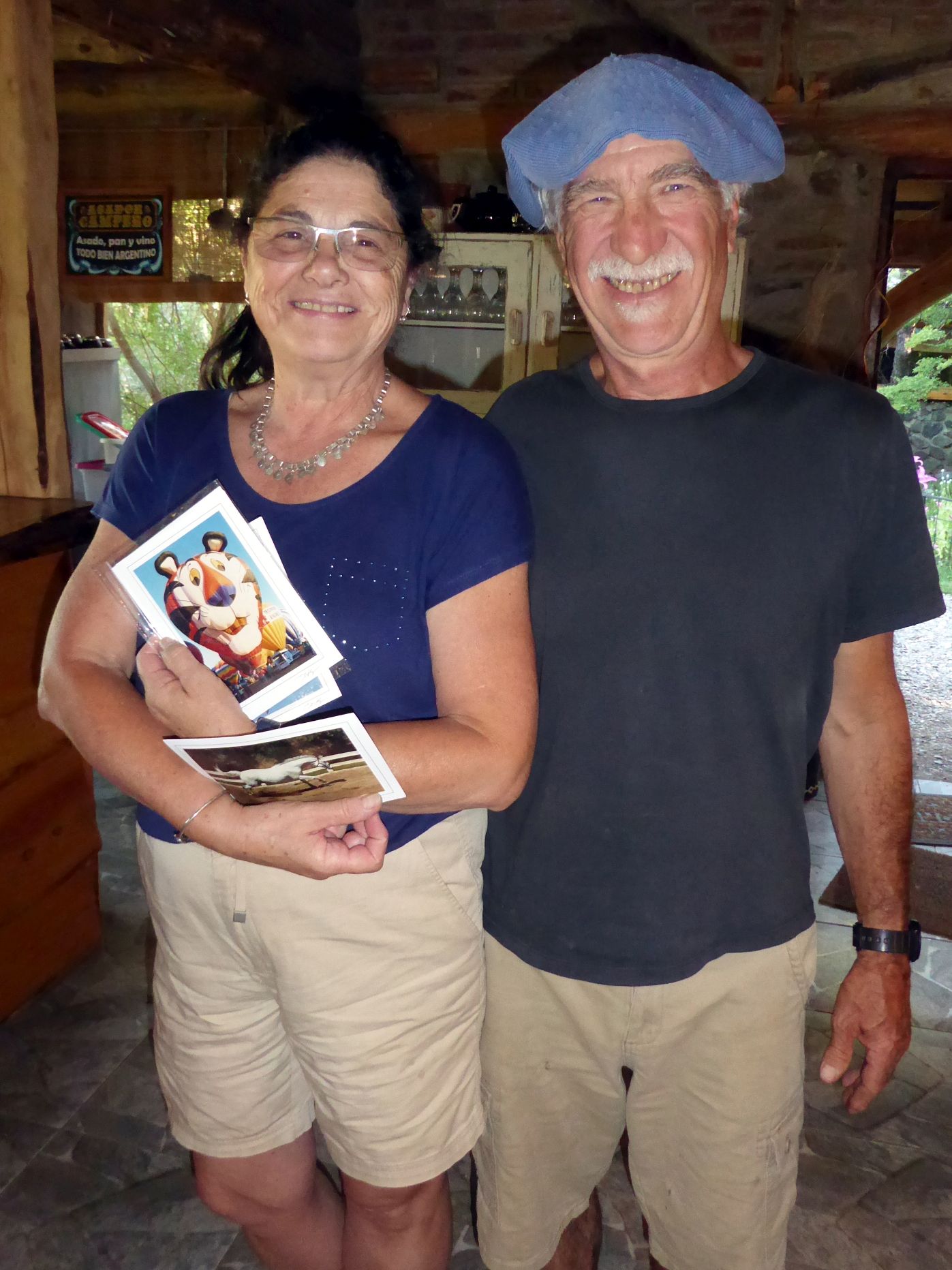
Monica and Chango with my photo notecards I gave them as a gift. Bruce gave Monica a gift of his fused glass jewelry.

Next up:  ARGENTINA & CHILE #7:  OVER THE ANDES TO CHILE WE GO!

ARGENTINA & CHILE #5:  BREATHTAKING VIEWS OF BARILOCHE & A BREWERY

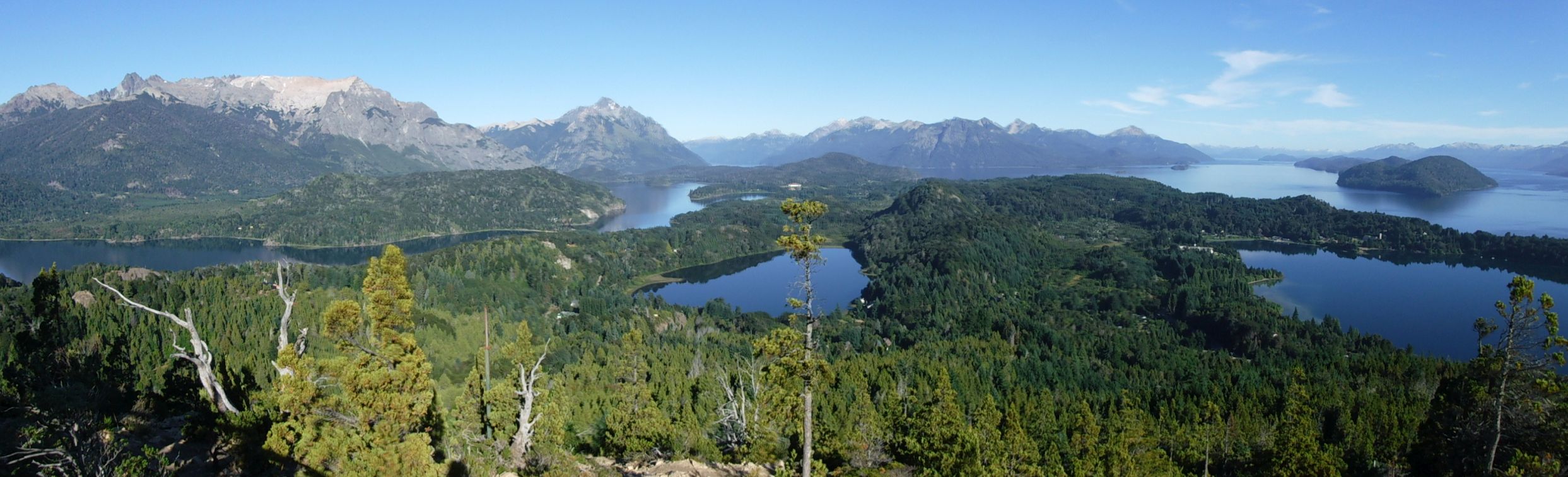
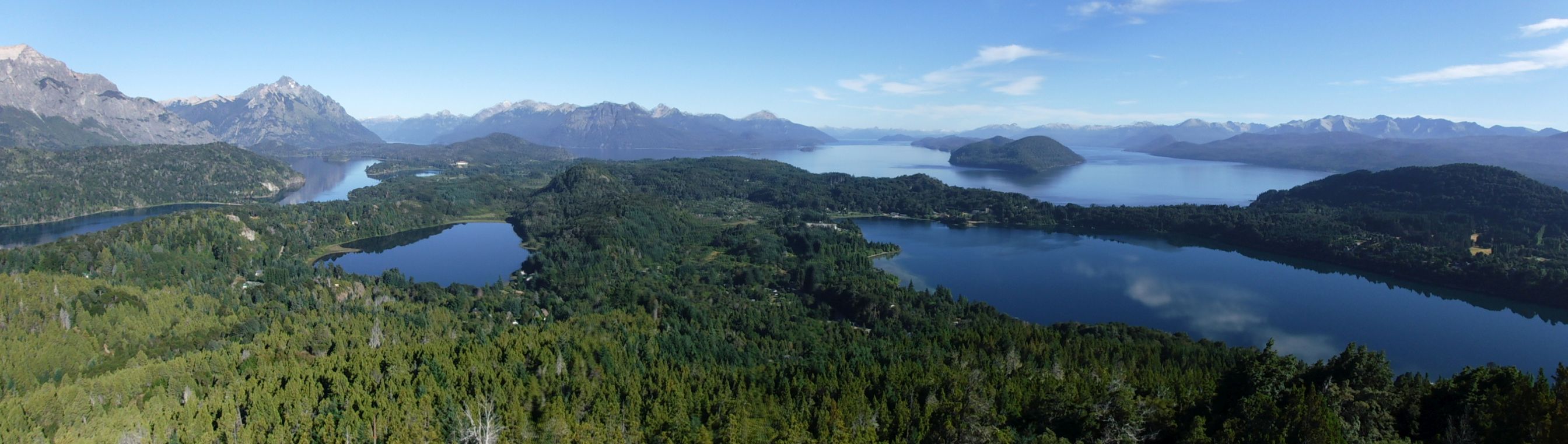
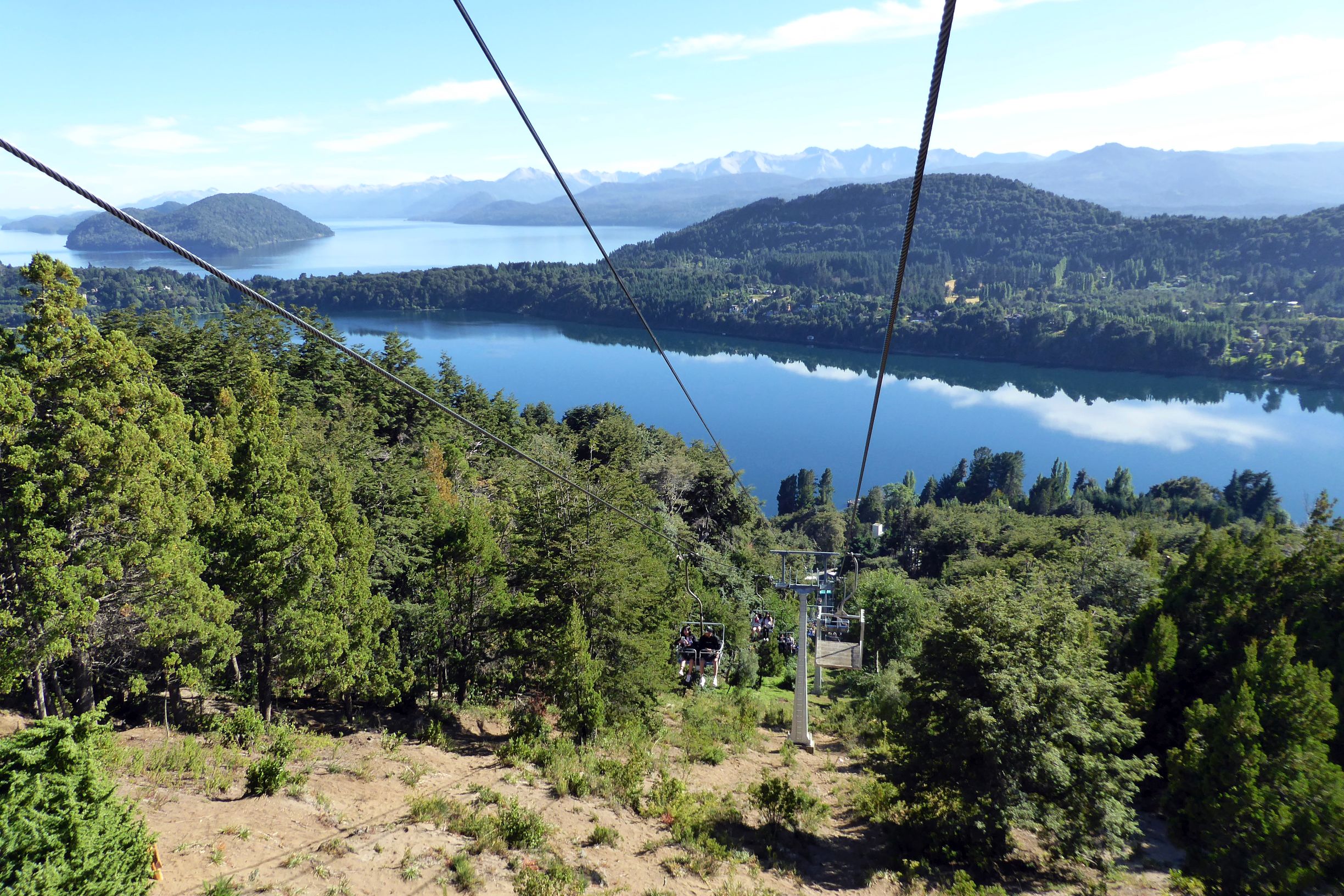
Looking over the trip itinerary, this was one of the days we were especially hoping for good weather.  A chairlift ride up Mount Campanario was on the agenda, so we could take in the views of Bariloche below.  Rain or fog would have been a big, bad, bummer!  This is what we got instead:

(For all photos, especially panoramas, click on the image for a full screen view.)

This sunrise view from our hotel room got us excited for the sunny day ahead!
We were surrounded by these tall trees as we made our way to the chairlift at the base of Mount Campanario.
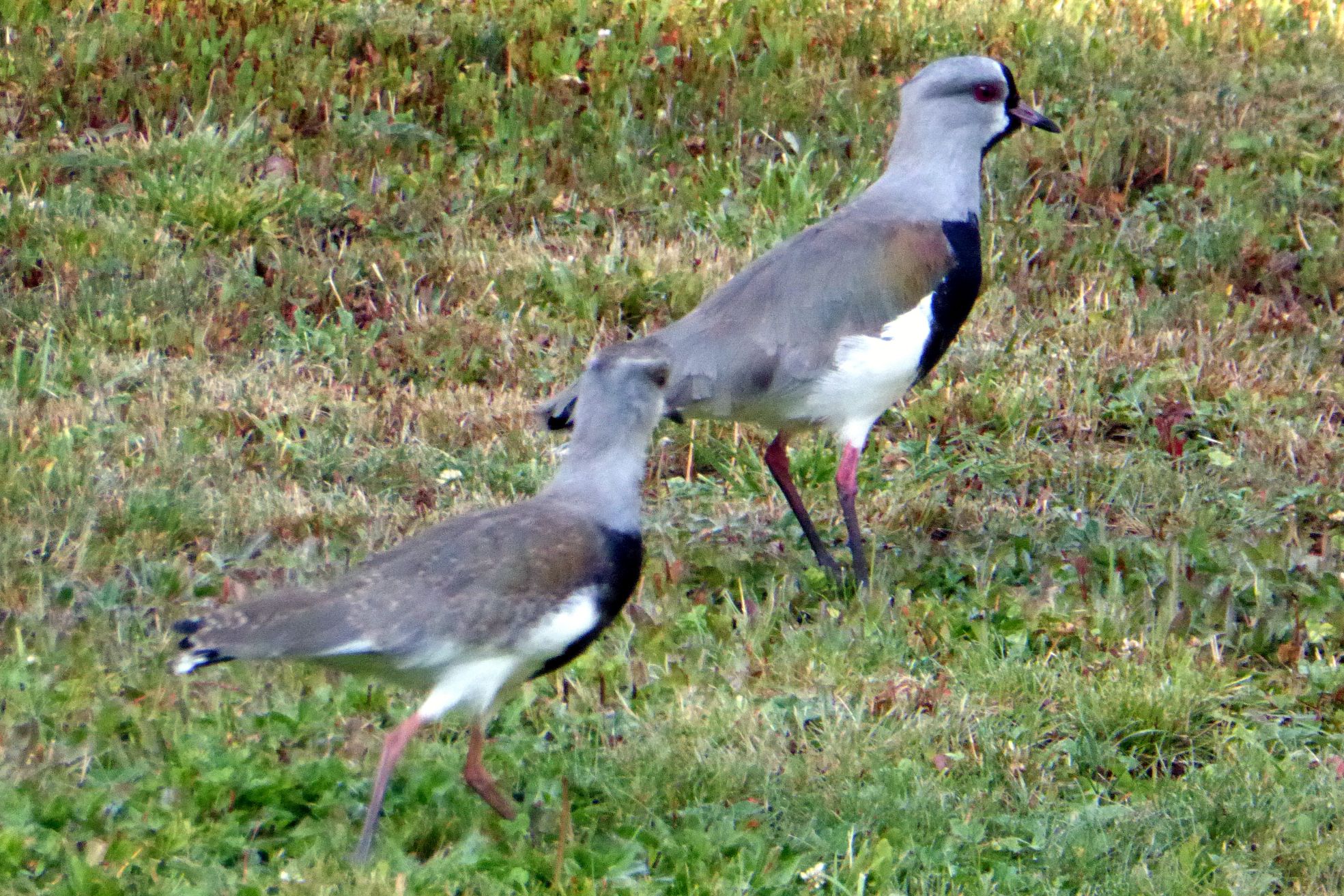
Southern Lapwings were poking around for breakfast.
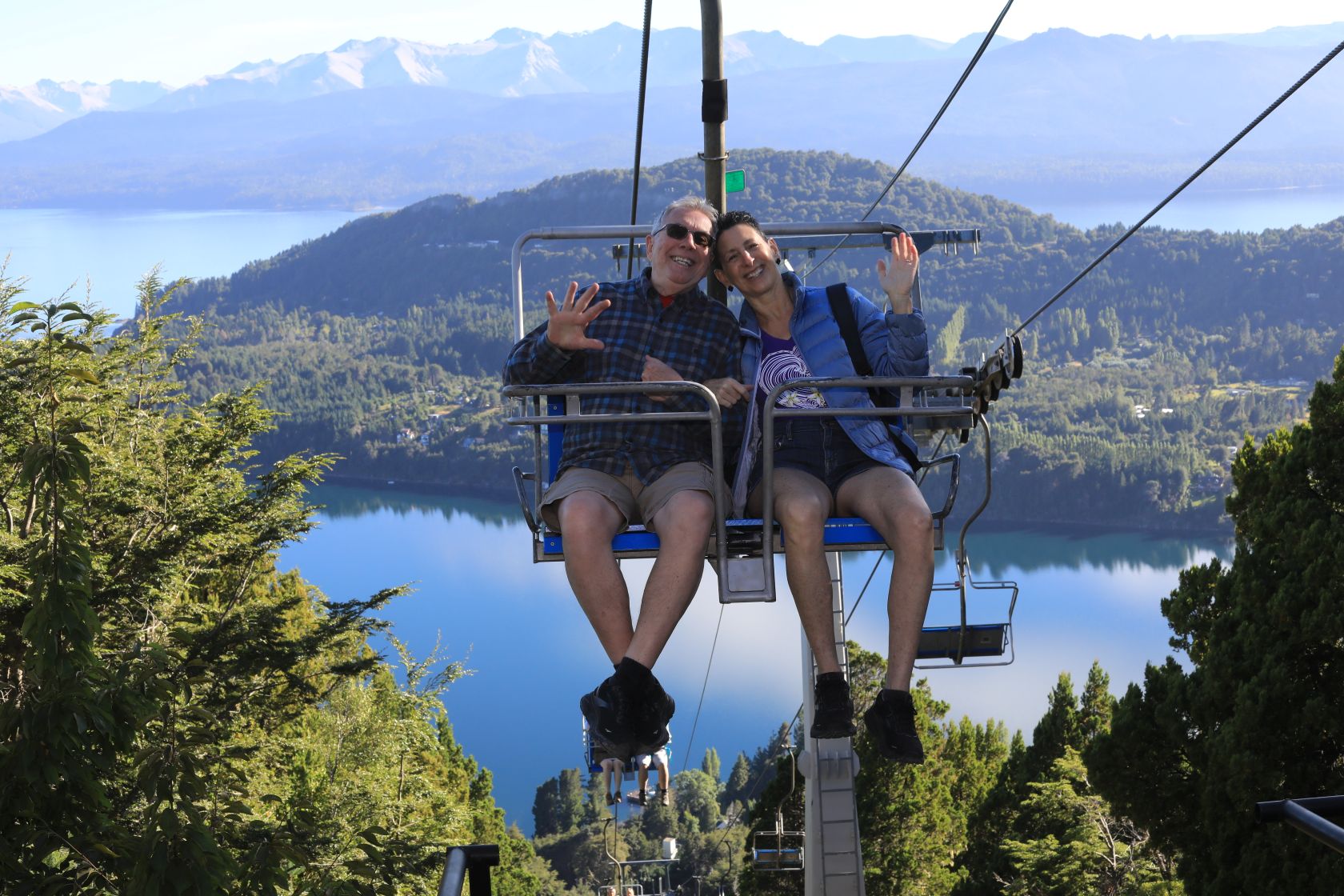
That’s us waving to you, dear readers!

We were told there would be a local guy shooting photos when we arrived at the top, so just smile and let him take the photo, because there would be no obligation to purchase it.  Bruce and I are not into selfies; we typically want just a shot or two taken of us at our favorite vistas of each trip and leave it at that.  At 3,000 pesos ($3), though, I decided to buy our photo as an insurance policy, just in case…  If the guy followed through and e-mailed the file, at least I would have one picture of the trip!  As it turned out, Andrea shot a ton of photos of us and the group throughout the tour, so I will be including more shots of us than usual in my upcoming blog posts.

Just look at these views!

We were absolutely in awe with gratitude!

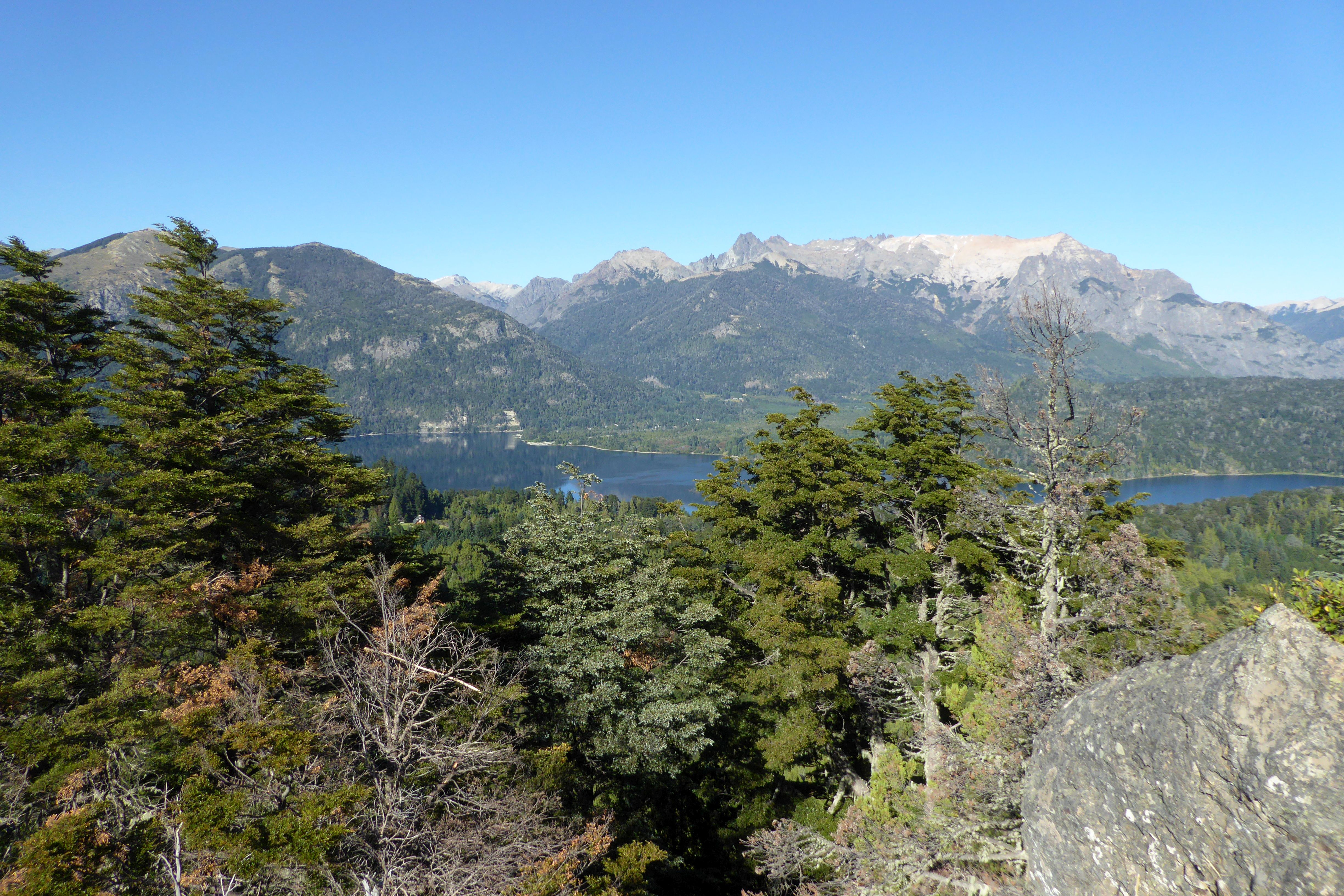
Following our visit to Mount Campanario, we went to Brazo Tristeza and did a beautiful hike around Lake Moreno.  Seeing it up close and personal was a different perspective than the birds-eye view we got atop Campanario, and we enjoyed seeing the flora and fauna of the area.

Make sure to click on this shot of Lake Moreno for a larger view. The lake was stunning!
The water was so clear, we could see fish swimming around by the shoreline.

We were rewarded with a little treat too—another one of Andrea’s “discoveries.”  This one was my favorite: Cusenier Dulce de Leche liqueur.  We all agreed it would taste delicious poured over Argentinian gelato!

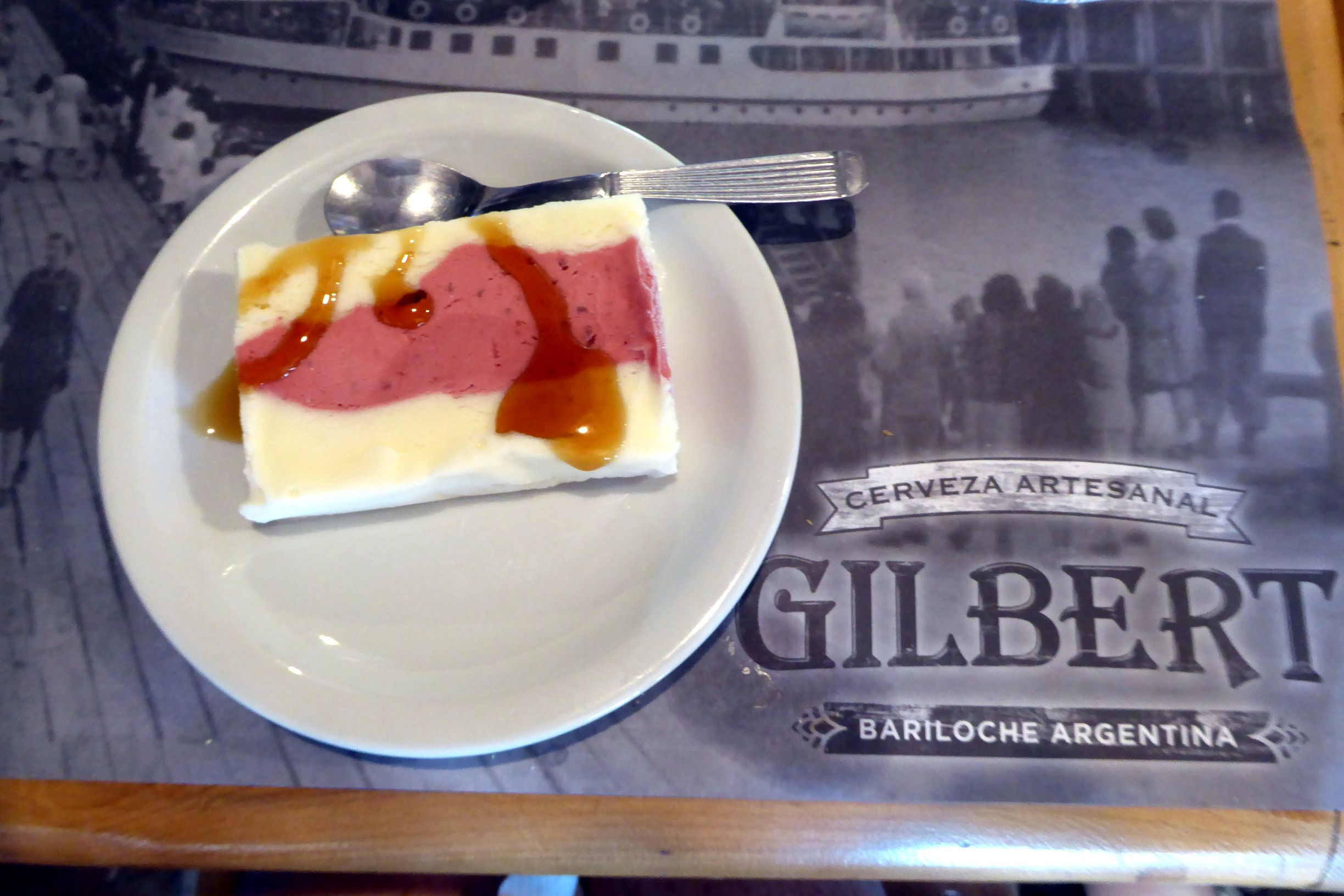
Our group lunch was at Gilbert Artesanal Brewery, where we first learned about their brewing process, and then tasted a few different offerings along with our lunch.

Ice cream with dulce de leche, of course!
We stopped at this view point on our way back to town.

Included lunches on these tours are like dinners, so when they are followed by “dinner on your own,” Bruce and I head to the local market or bakery and pick up something light to bring back to the hotel.  In this case, the weather was lovely and the views from the hotel patio were gorgeous, so our little patio picnic of bakery sandwiches was a delightful way to enjoy the evening.

Coming up next: ARGENTINA & CHILE #6: Blissful Bariloche Bonbons and a BBQ at a Family Ranch.

ARGENTINA & CHILE #4: BEAUTIFUL BARILOCHE

Bariloche” (San Carlos de Bariloche) was about a two-hour flight from Buenos Aires and well worth the effort it took for our group to get there.  There had been a strike of airport workers the day before, so all flights had been canceled, leaving the airlines having to deal with a big mess the day we flew out.  There was a long wait to check in; however, we made it to our gate in time for our flight.

Located in the mountains of northern Patagonia, we had expected it to be cold and windy, the typical weather for the region, even in the summer.  As a matter of fact, on the windiest days in Bariloche, cars line up in the parking lot next to the lake for a free car wash! 

I was shocked when the forecast showed a high of 79 and no wind on our day of arrival, and we were warned that we could experience all four seasons in a single day.  Don’t like the weather?  Wait five minutes, and it will change.  Except, it didn’t change much during the entire three days we were in Bariloche.  It was warm and sunny our first day and got even warmer!  So much for the cold-weather clothes and rain gear I had packed; I wore shorts and t-shirts in Bariloche!

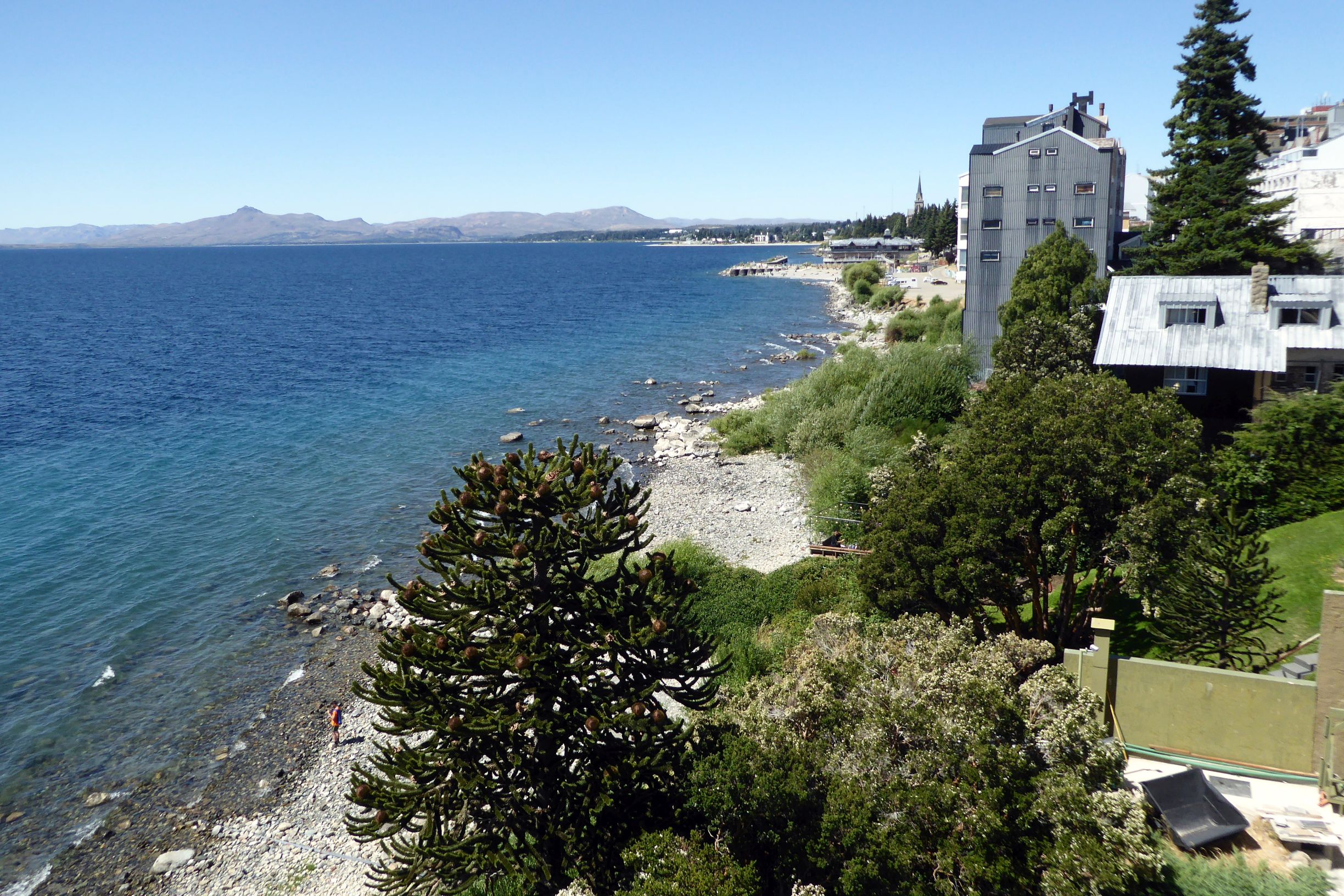
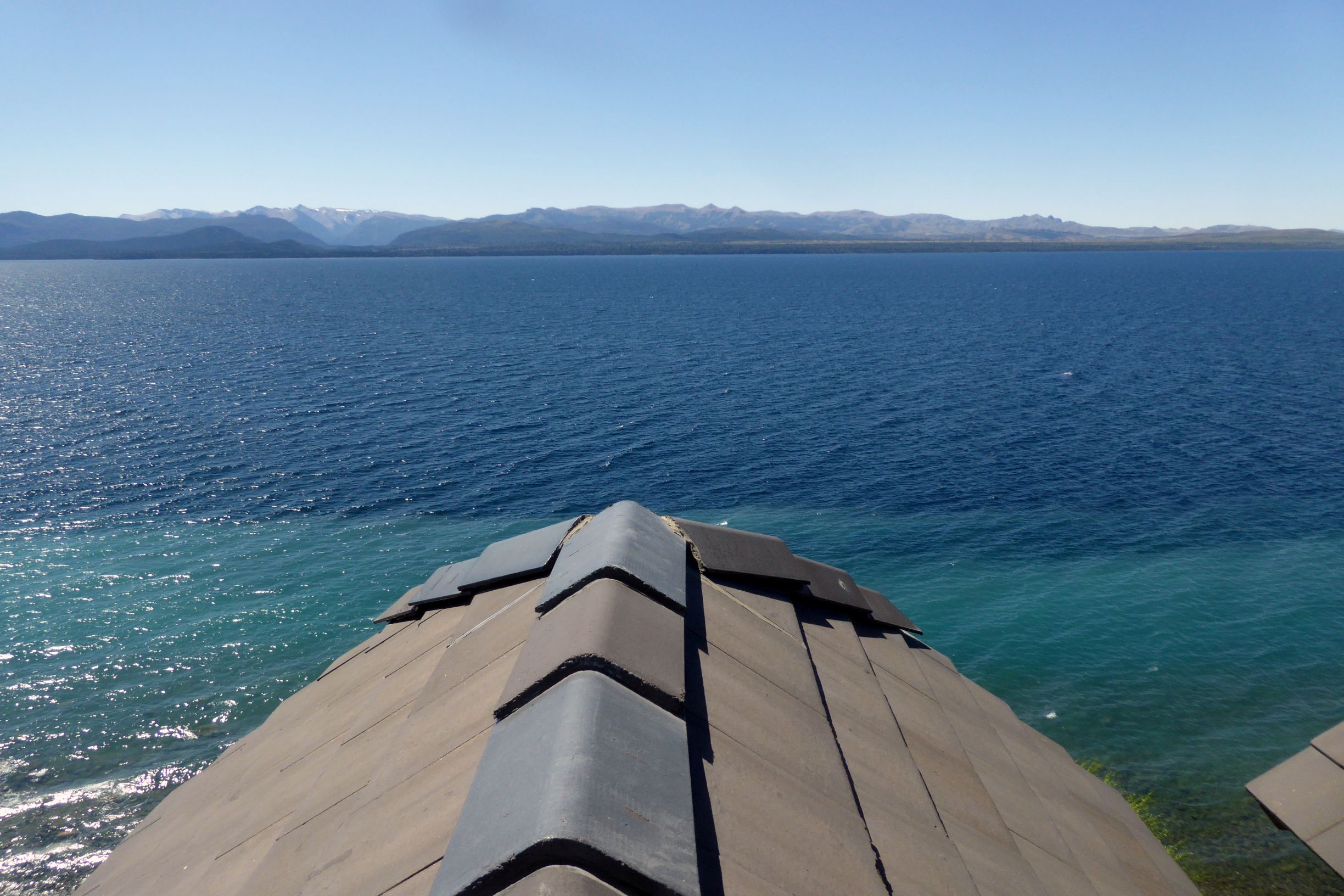
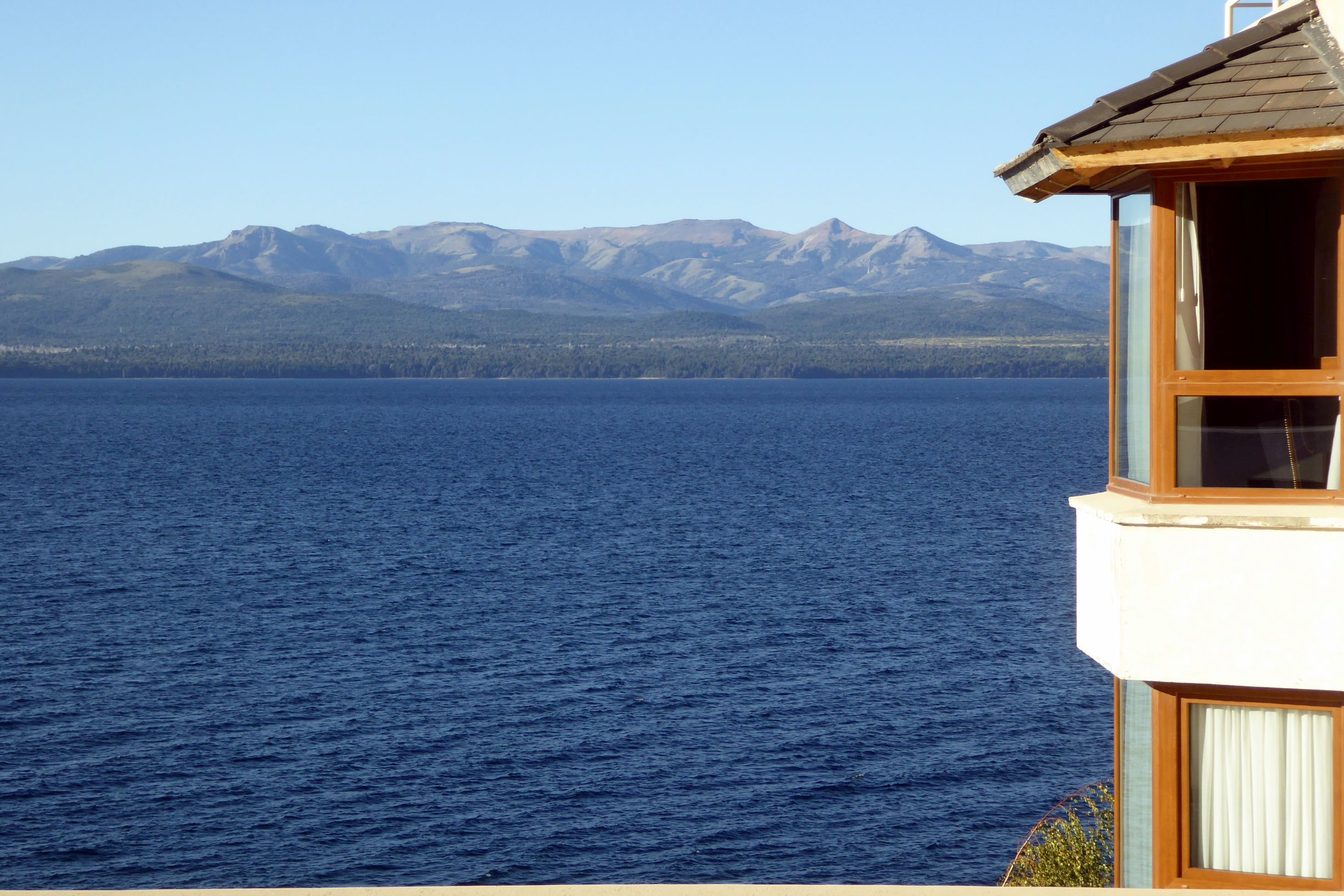
Upon our arrival at Cacique Inacayal Hotel, we were greeted with this breathtaking view of Nahuel Huapi Lake, a 40-mile long lake surrounded by the foothills of the Andes.  The hotel was beautiful—interesting architecture and a lot of wood and stone fit in perfectly with the Alpine vibe of this city settled by the Germans and Swiss.  Nicknamed “Little Switzerland,” it’s the second-most visited destination in Argentina, and I instantly could see why.  The city sits in the center of Nahuel Huapi National Park, which offers many outdoor activities and sightseeing, which we would be doing the following day.  Stay tuned!

(For all photos, click on the image for a full screen view. Desktop computer monitors are best!)

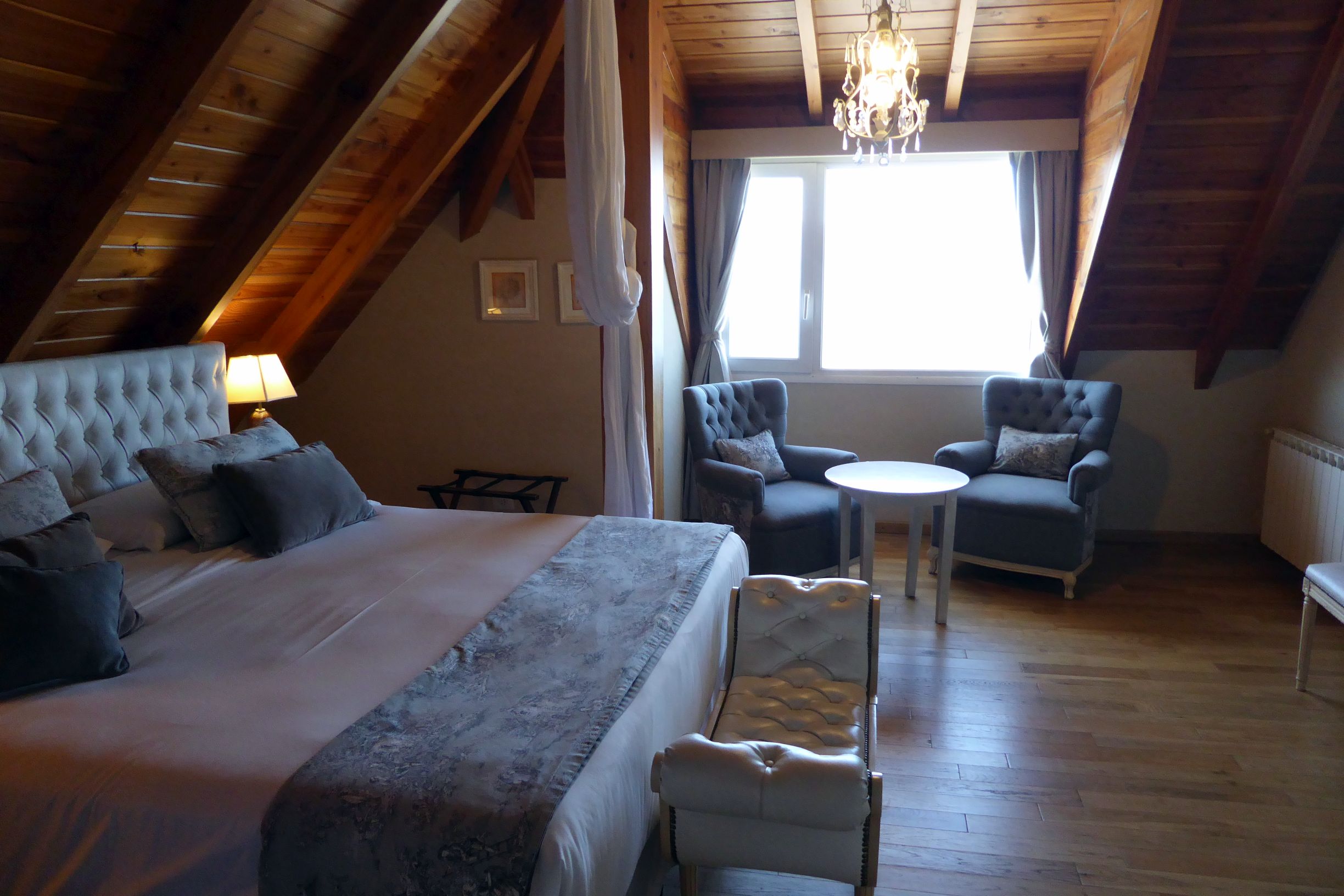
Meanwhile, we settled into our room before Andrea led us on a walking tour of the town.  We were fortunate the top-floor room we got was unwanted by the couple it was assigned to, because of the stairs required to reach it after the elevator ride.  We prefer taking stairs rather than elevators for the exercise, so we gladly accepted the switch.  This is our room with the gorgeous view:

The view of our top-floor room from the bar patio.

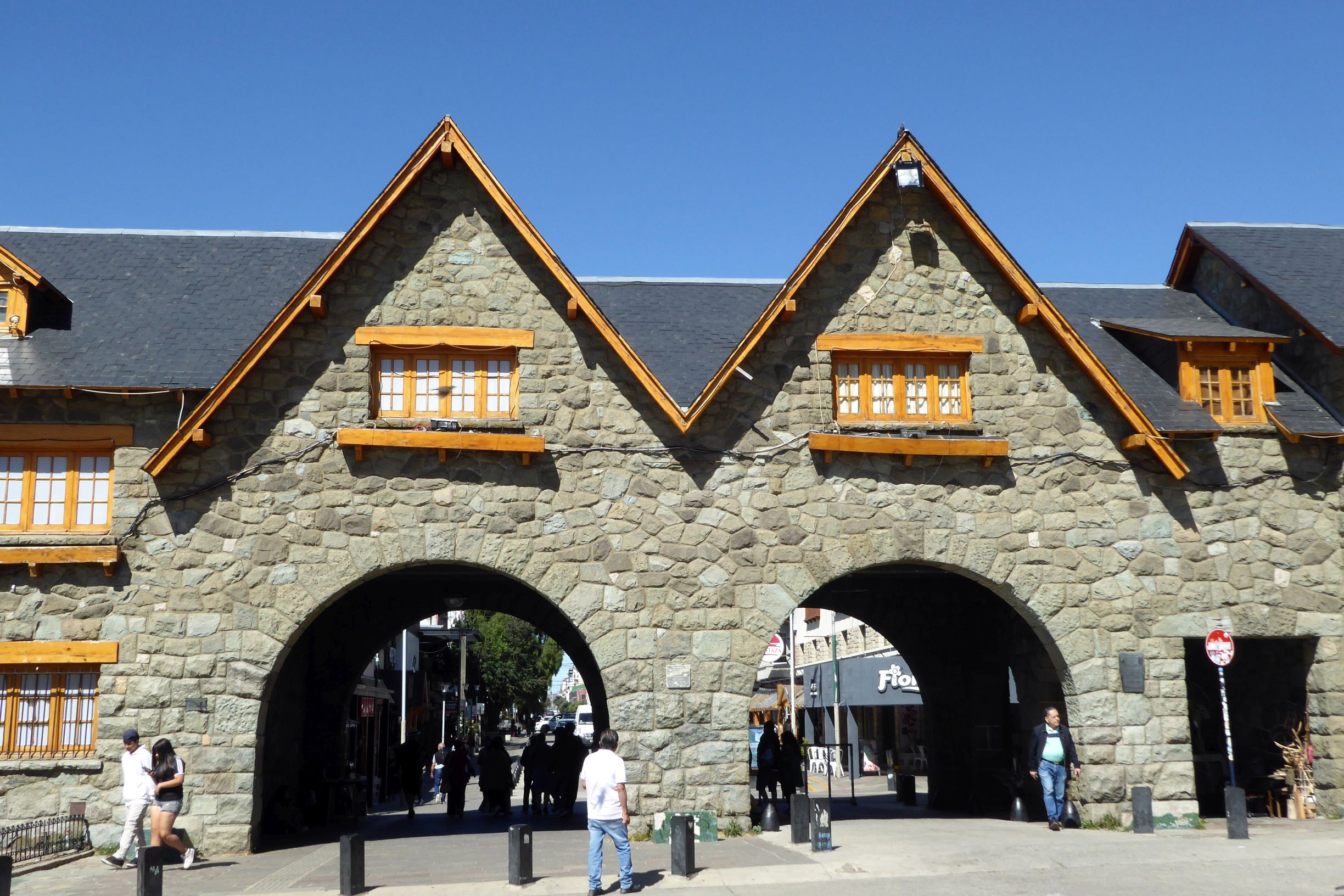
The town center was a short walk away, and I found it to be quite charming—and, a bit (pleasantly!) distracting.  Not only does Bariloche have the nickname “Little Switzerland,” but it lives up to that name with all its chocolate shops!  Stay tuned for more about that, too, in an upcoming post…

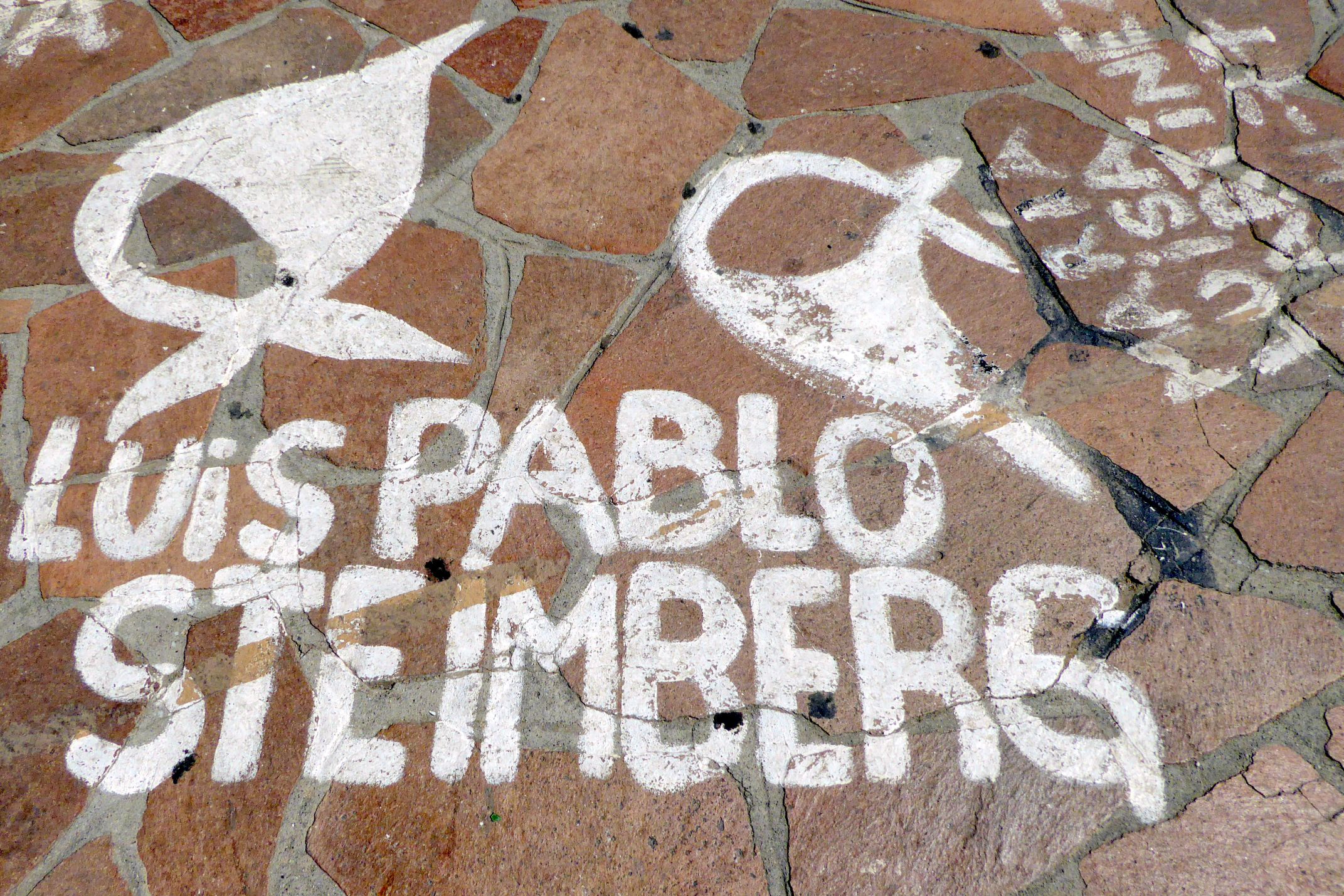
White scarf symbols of the Grandmothers of May Square were painted throughout the square, along with names of those who were “disappeared”– a memorial to those who were never found.
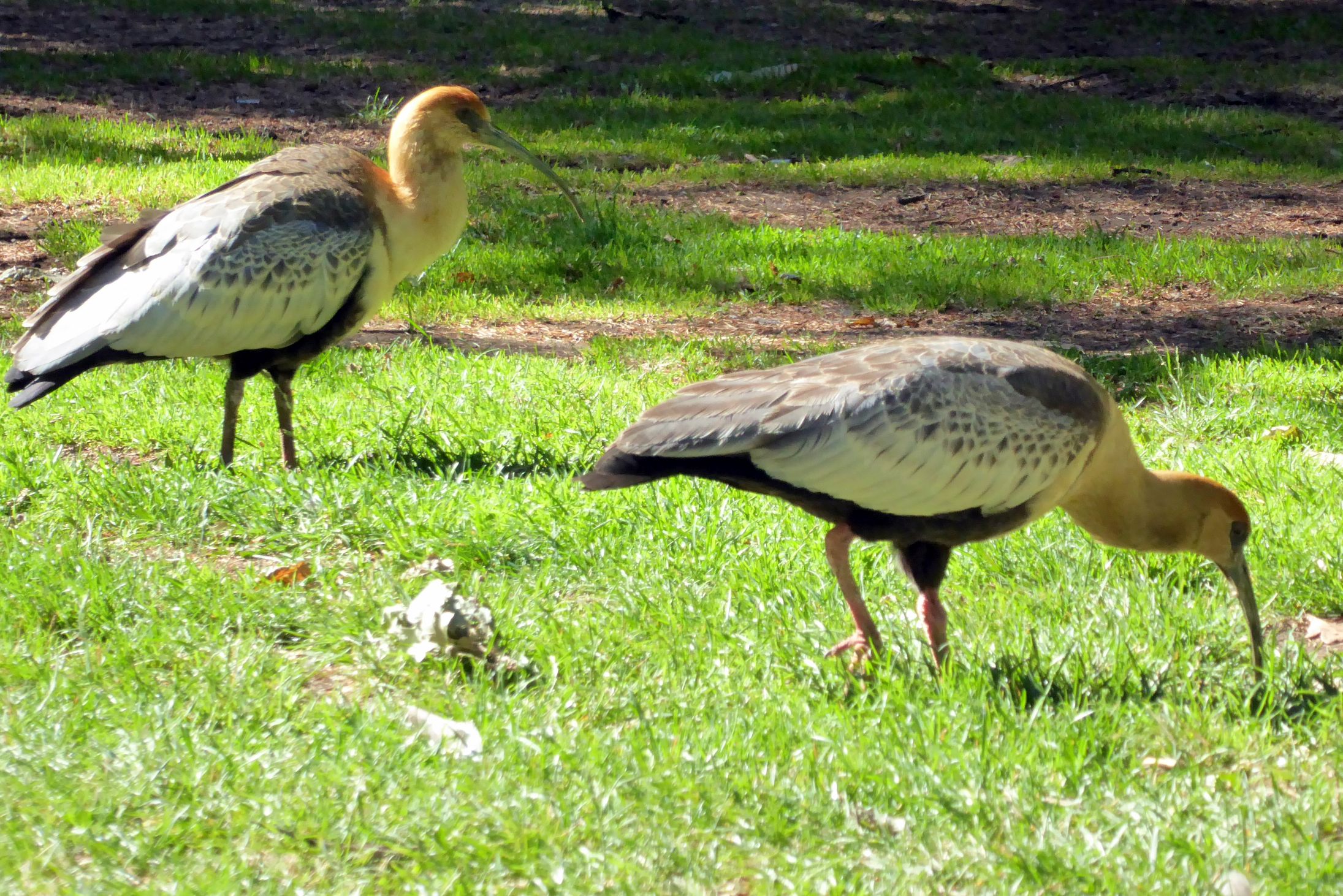
Black-Faced Ibis

Following our walking tour, we gathered at the hotel to meet Christina, from the Mapuche Nation, to learn about the struggles and culture of her native people.  MAPU (land) CHE (people) were the first people of the region which today covers the southern half of Chile and Argentina.  Throughout their history, they have had to fight fiercely to maintain self-determination and freedom—first, against the Inca Empire, and then for over 400 years against the Spanish, Chilean, and Argentinian authorities.

Why do native people always get the shaft?  American Indians, Alaskan Eskimos, Australian Aboriginals, New Zealand Maoris; and; the Mapuche, which evidence proves, have been in Patagonia for 16,000 years!  I could go on and on; there are many more natives just like them throughout the world getting the shaft.  They all have this in common: They were there first, but they are treated horribly by those who followed, and they get no respect.

In Chile, there is a law that doesn’t allow the Mapuche to protest.  If they do, they are considered “terrorists” under the anti-terrorist law.  The bottom line?  They have less rights than American Indians.

Learning about the Mapuche history and culture fascinated me, and I was most intrigued by their spiritual beliefs.  As Christina explained, they only believe in what they can see; they do not believe in God.  Our trusty guidebook explained it this way, “The spiritual belief of the Mapuche people is closely linked to the land and their natural environment from which the power of life emanates of a divine family that creates and sustains man and nature.  Man is perceived as a part of nature that is interconnected with all the surrounding elements.”

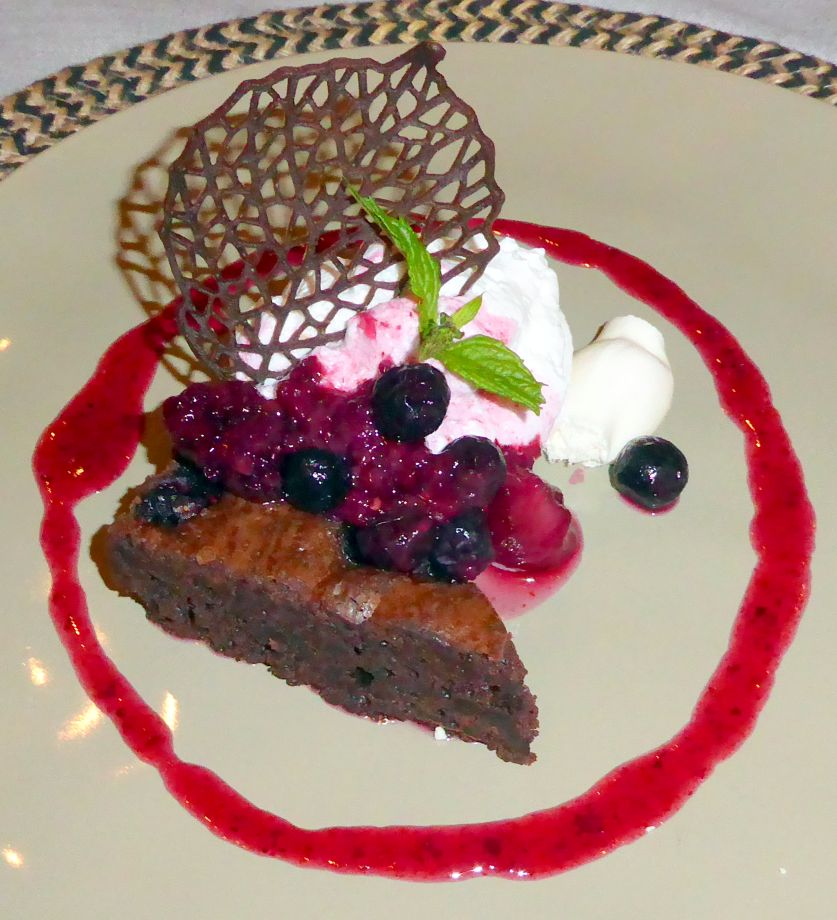
Our first day in Bariloche concluded with the group enjoying dinner together at the hotel—the best part being this exquisite chocolate dessert:

View of the sunset from our room

Next up:  ARGENTINA & CHILE #5:  BREATHTAKING VIEWS OF BARILOCHE & A BREWERY

ARGENTINA & CHILE #3: MORE OF BUSTLING BUENOS AIRES

Our (very!) full day began with a city highlights tour led by Nora, an excellent local guide.  The first destination was Plaza de Mayo (May Square), the main foundational site of Buenos Aires.  This is where history is made.  It has been the site of Argentina’s largest and most important political demonstrations.

(For all photos, click on the image for a full screen view. Desktop computer monitors are best!)

An afternoon view of the plaza when we returned following the city tour.
Metropolitan Cathedral on Plaza de Mayo

Plaza de Mayo is also the meeting site for Grandmothers of May Square and the location of their headquarters and museum of memory of 30,000 citizens who were detained during the military dictatorship of 1976 – 1983. We learned about the human rights organization and their work in trying to find the 30,000 young people who were “disappeared”— either kidnapped or born to mothers in prison, stolen, and illegally appropriated.  Assisted by United States geneticist Mary-Claire King, the Grandmothers have located about 25% of the estimated 500 children kidnapped or born in detention centers.  The kidnapped babies were part of a systematic government plan to have them appropriated to “correct” families that supported the dictatorship.

Our group met one of the victims, Guillermo, and heard his heart-wrenching story.  He is one of the (now adult) “disappeared” children who had been born to a Jewish mother but stolen and given to a Catholic couple and given a new identity.  He learned the truth at age 21.  Both of his grandmothers were part of the original Mothers of May Square.  He was found because his sister had provided DNA to find her parents.  It was through that match that he was found as well.

You can imagine how the truth destroyed Guillermo’s relationship with the couple he thought were his birth parents.  They had committed crimes by taking him, and then lied about it for 21 years.  As a result, his “father” served seven years in prison, and his “mother” served three years.  Neither sentence was long enough; car thieves serve more for their crimes.

Ultimately, he learned that his birth parents were “disappeared” for being student political activists who protested the dictatorship.  They were kidnapped, tortured, and killed.

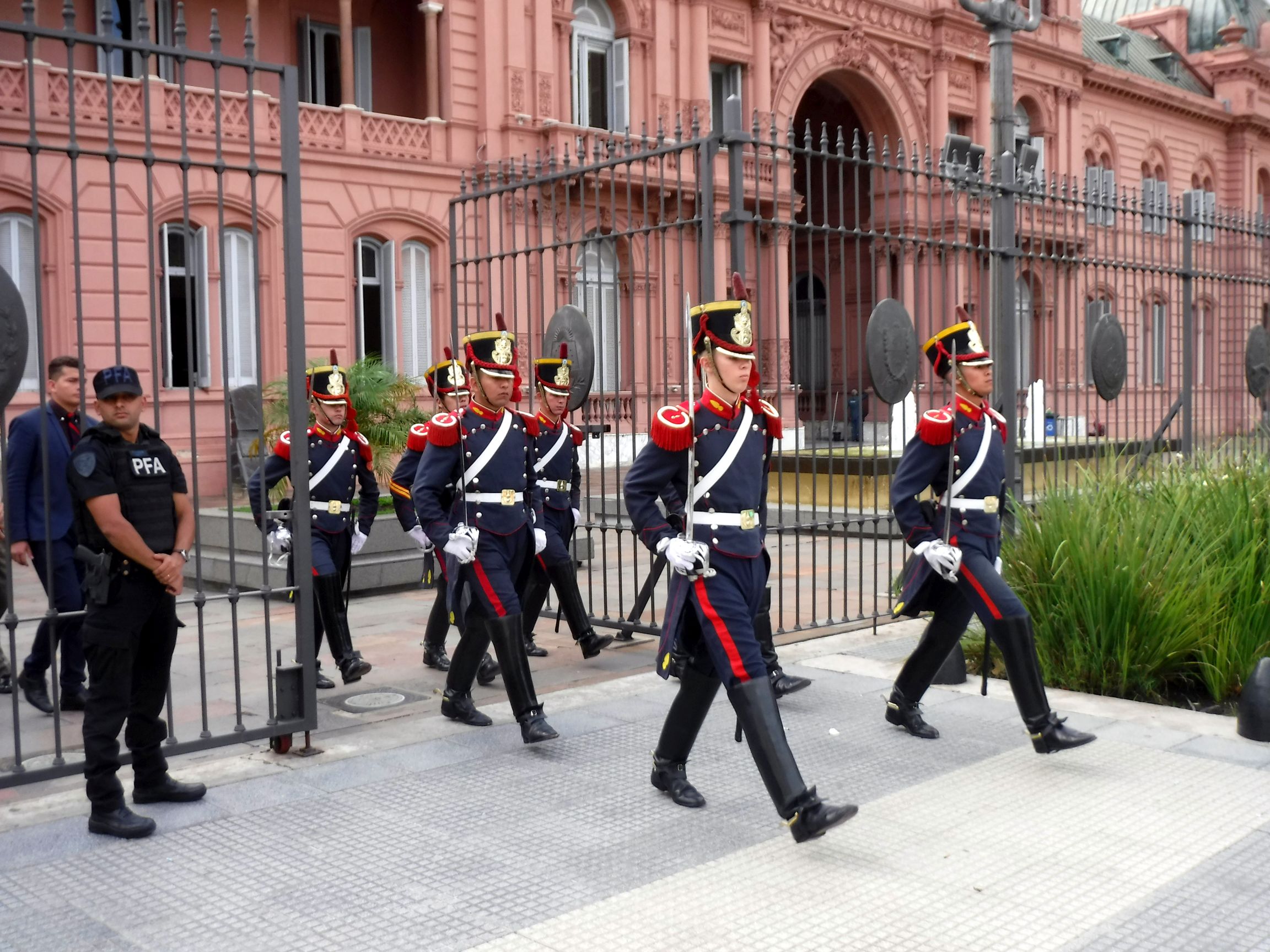
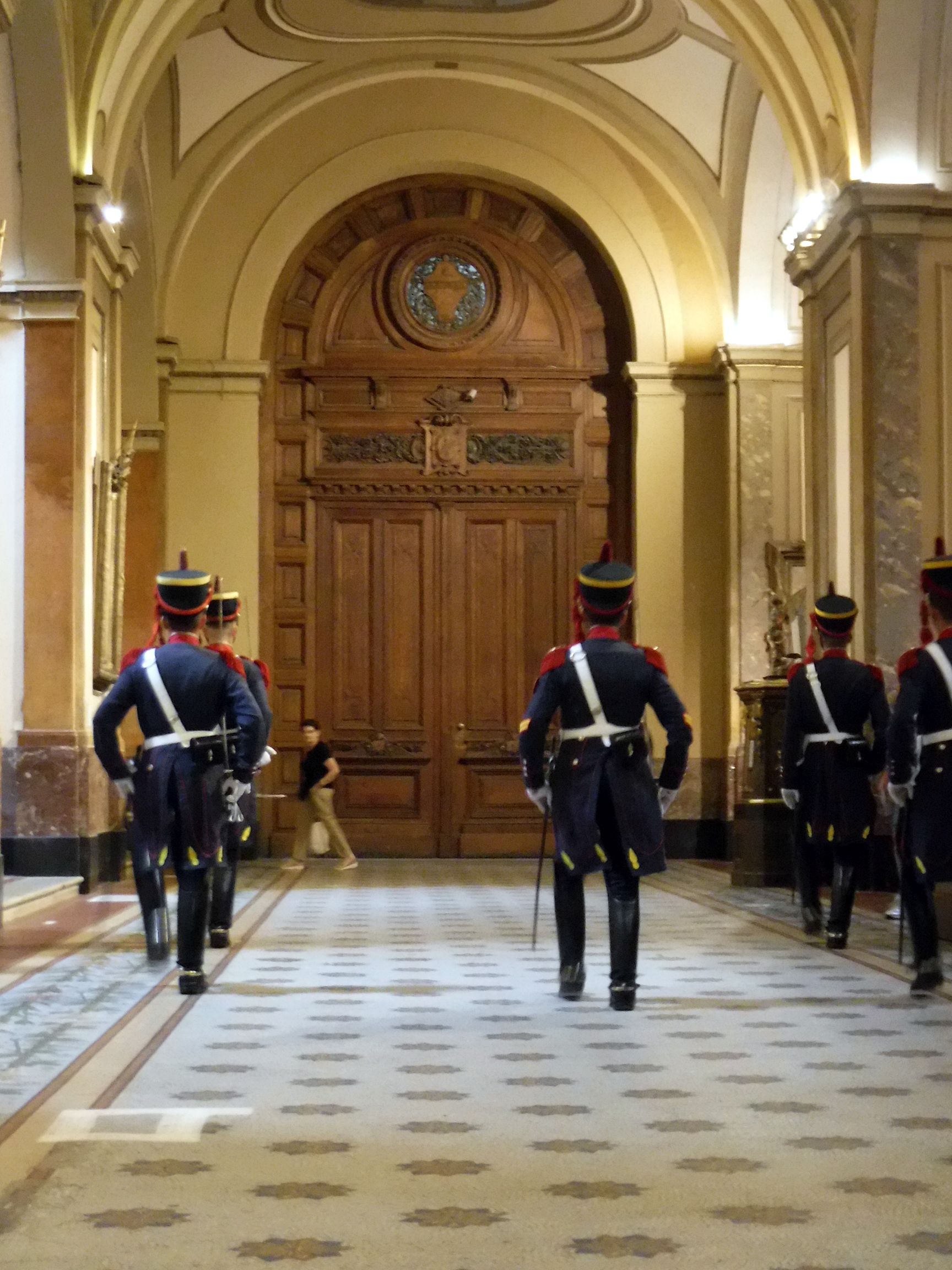
While we were at Plaza de Mayo, we saw the changing of the grenadier guard, marching from Plaza de Mayo to the monument of Argentina liberator San Martin inside Metropolitan Cathedral.

Casa Rosada (Pink Palace)

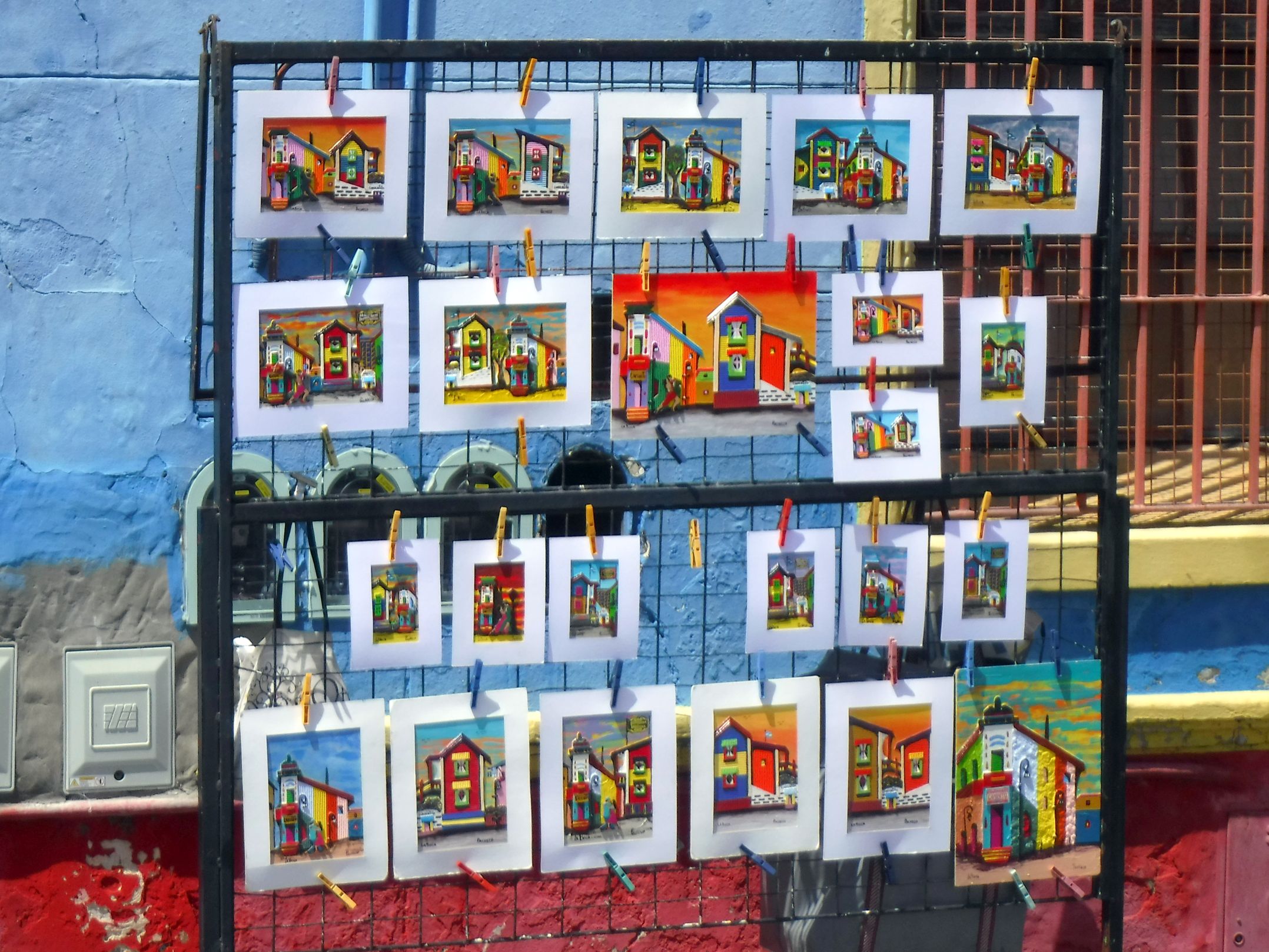
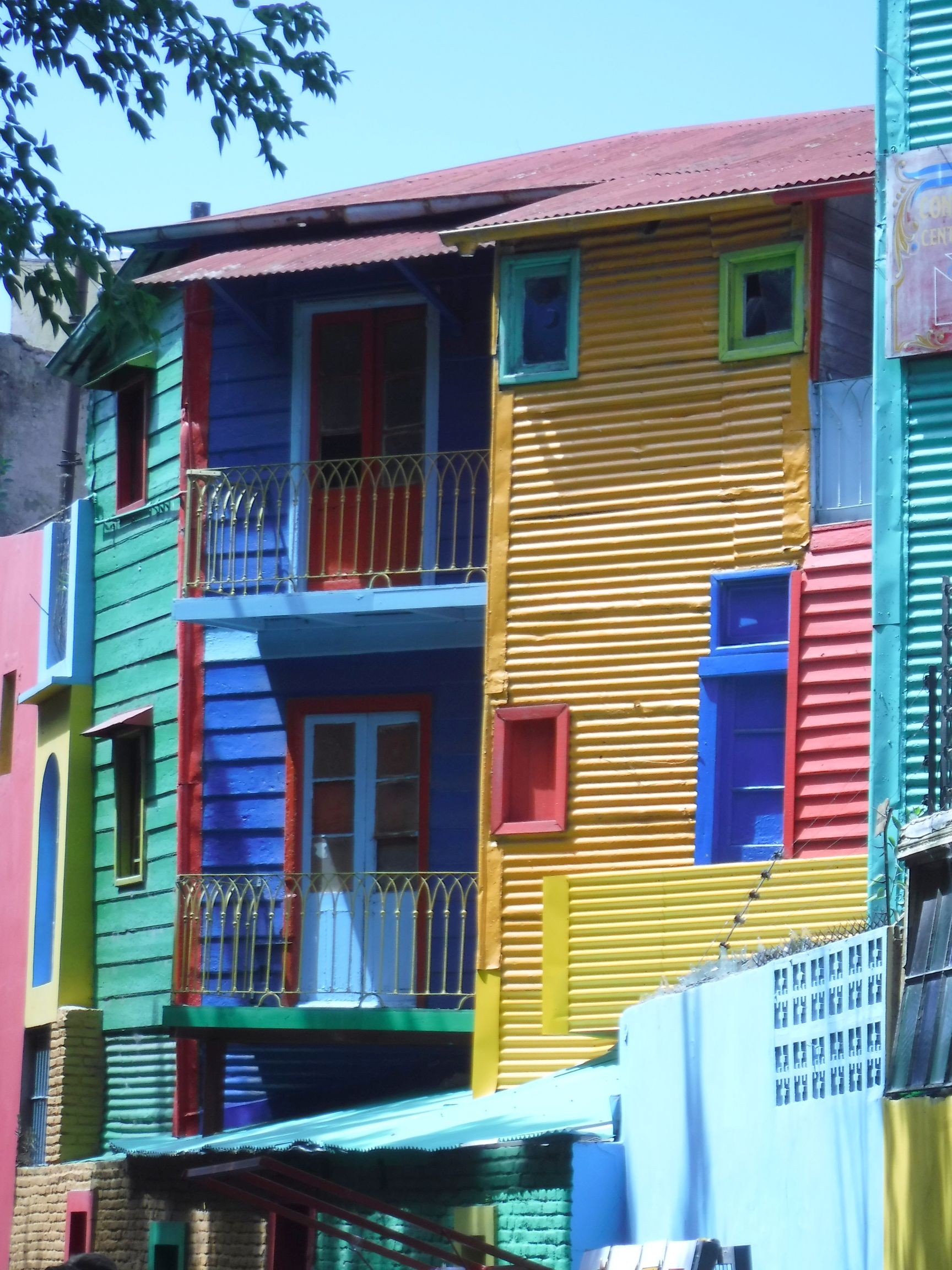
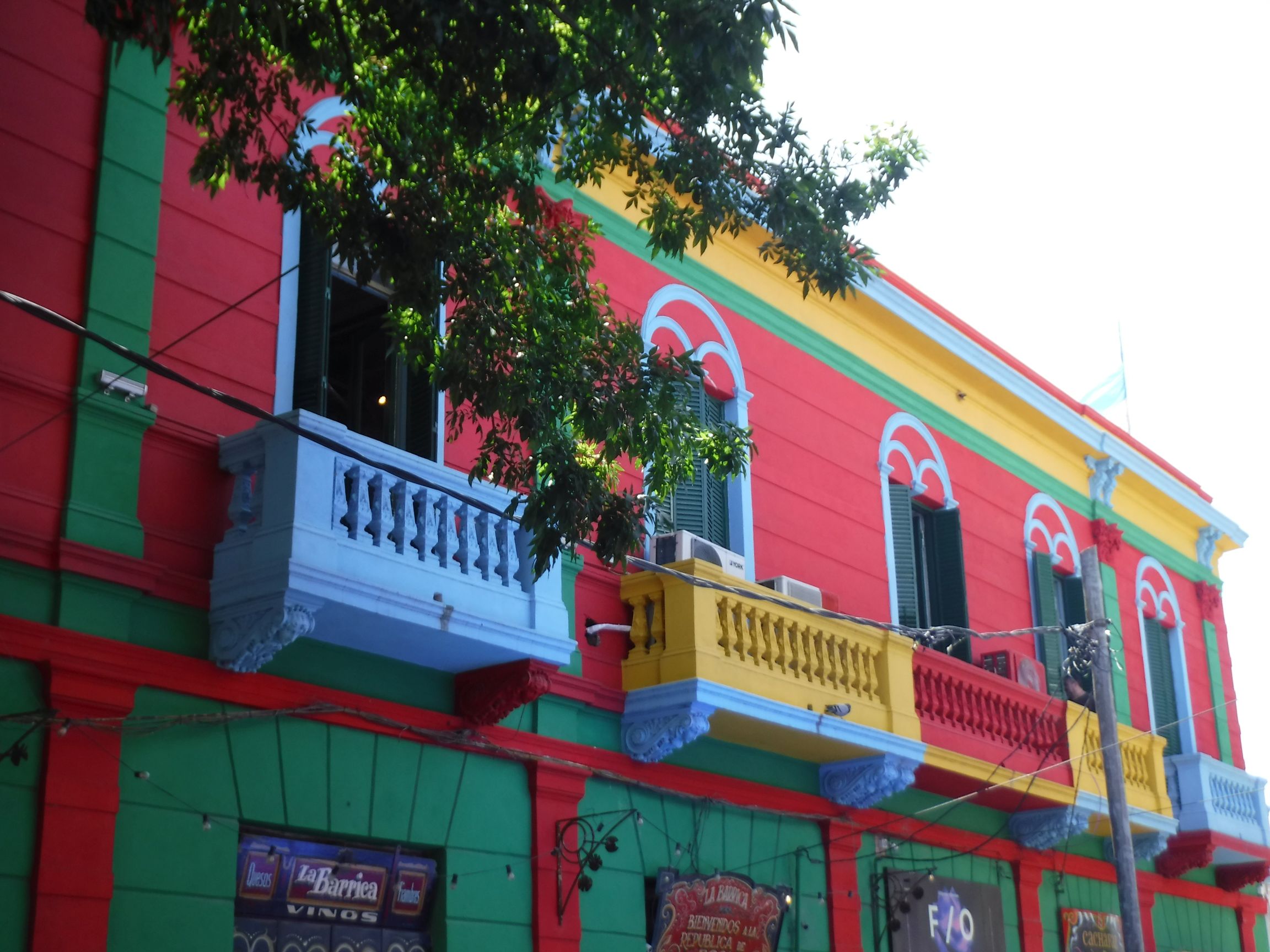
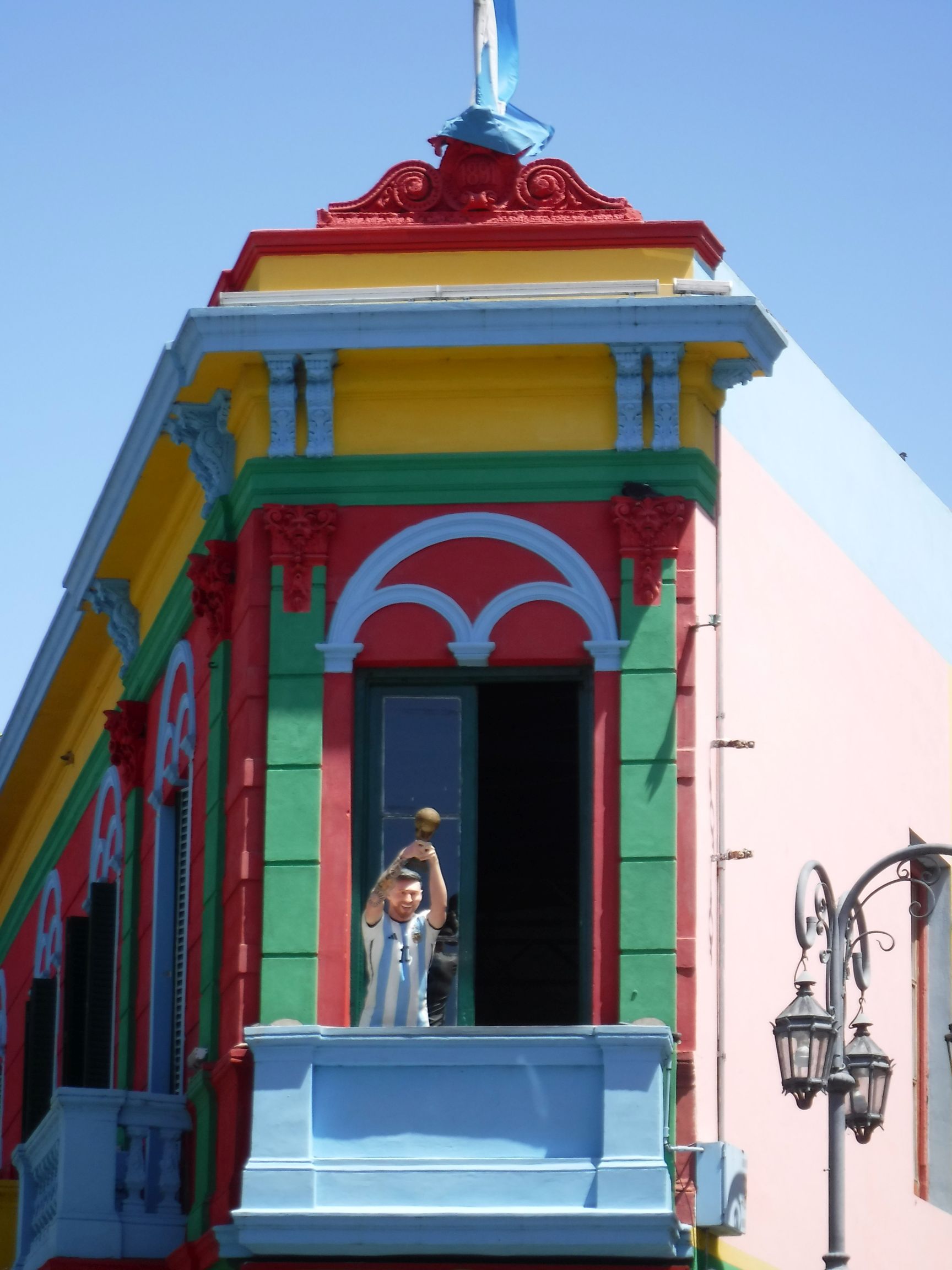
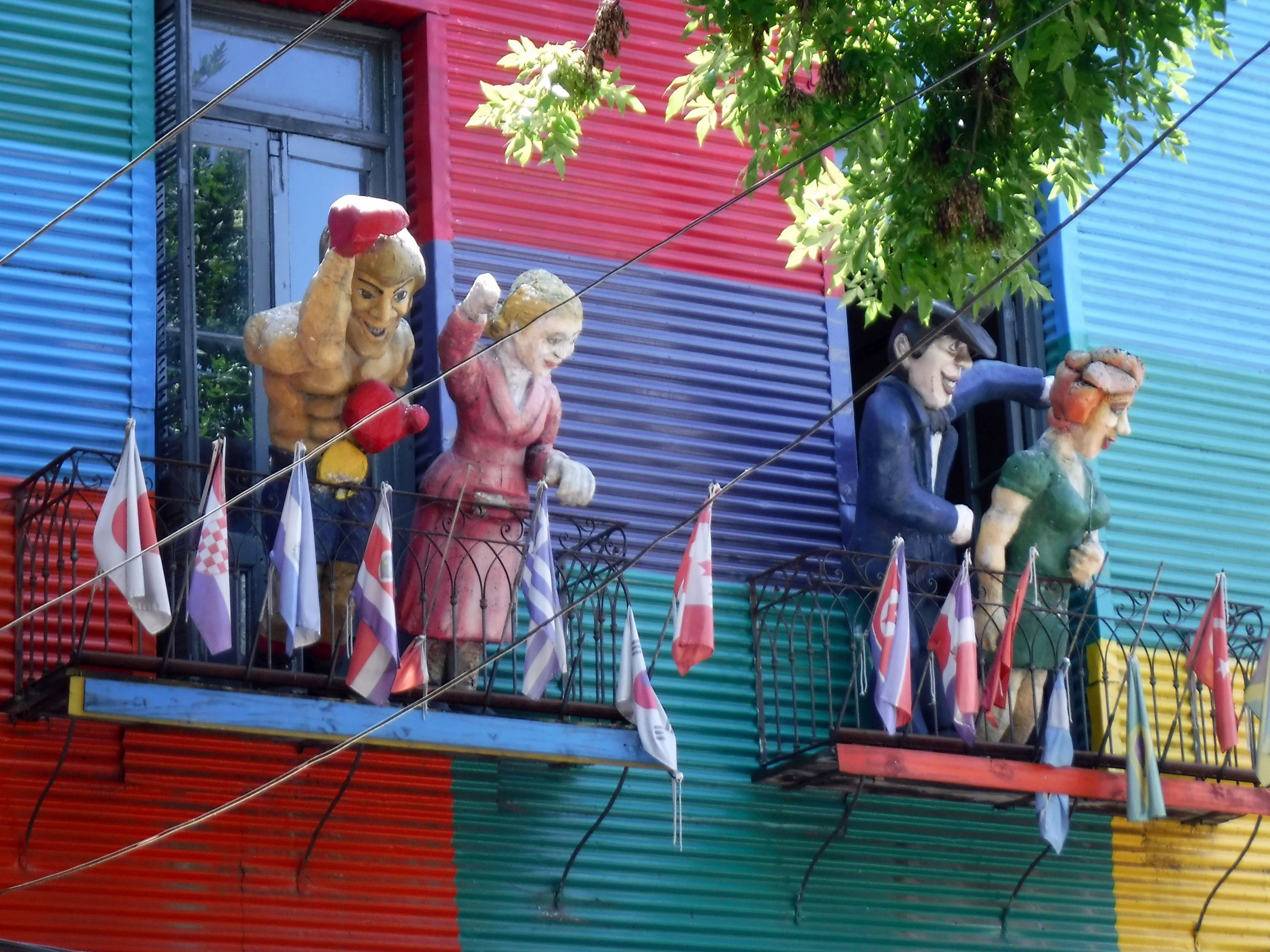
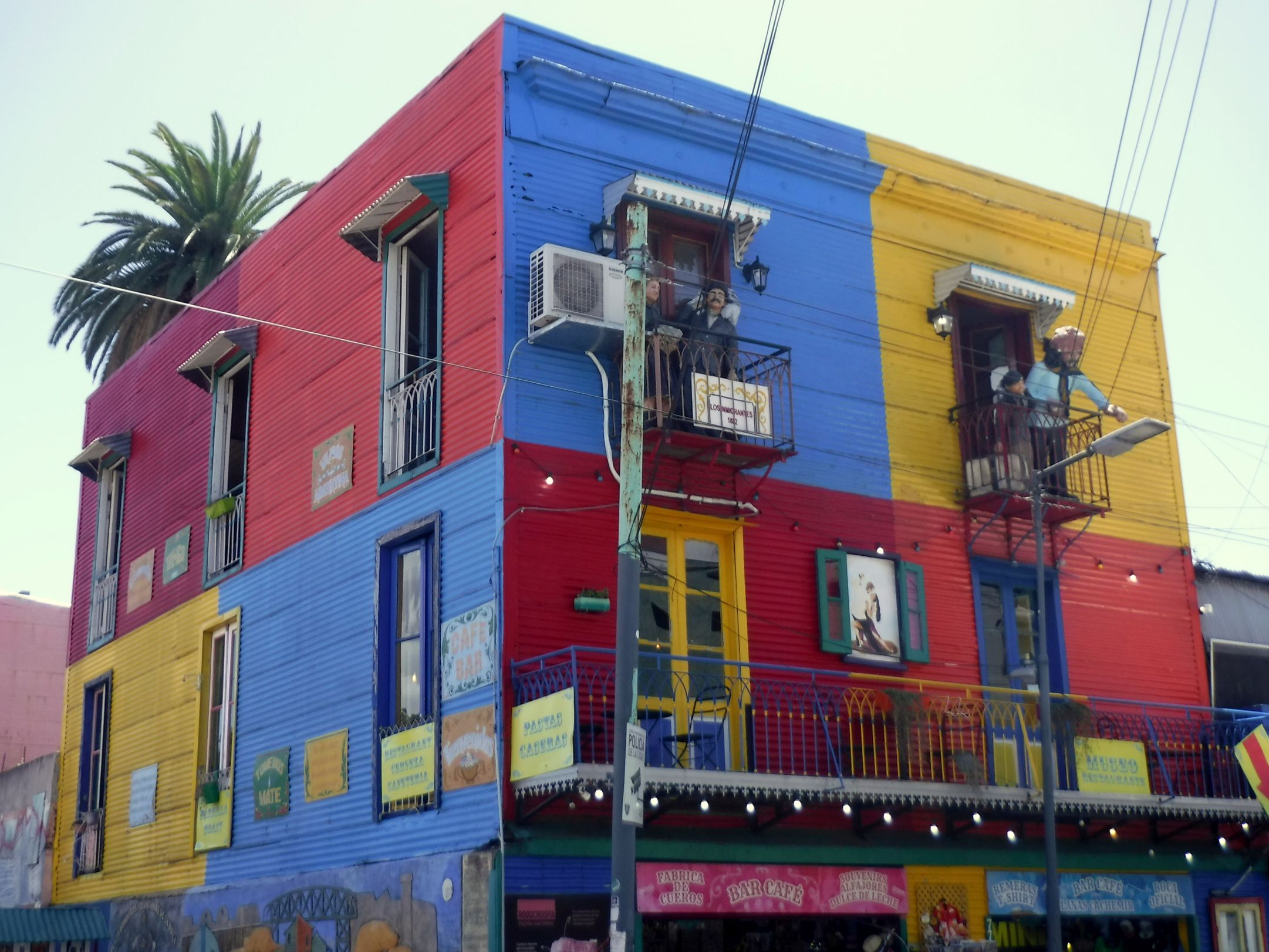
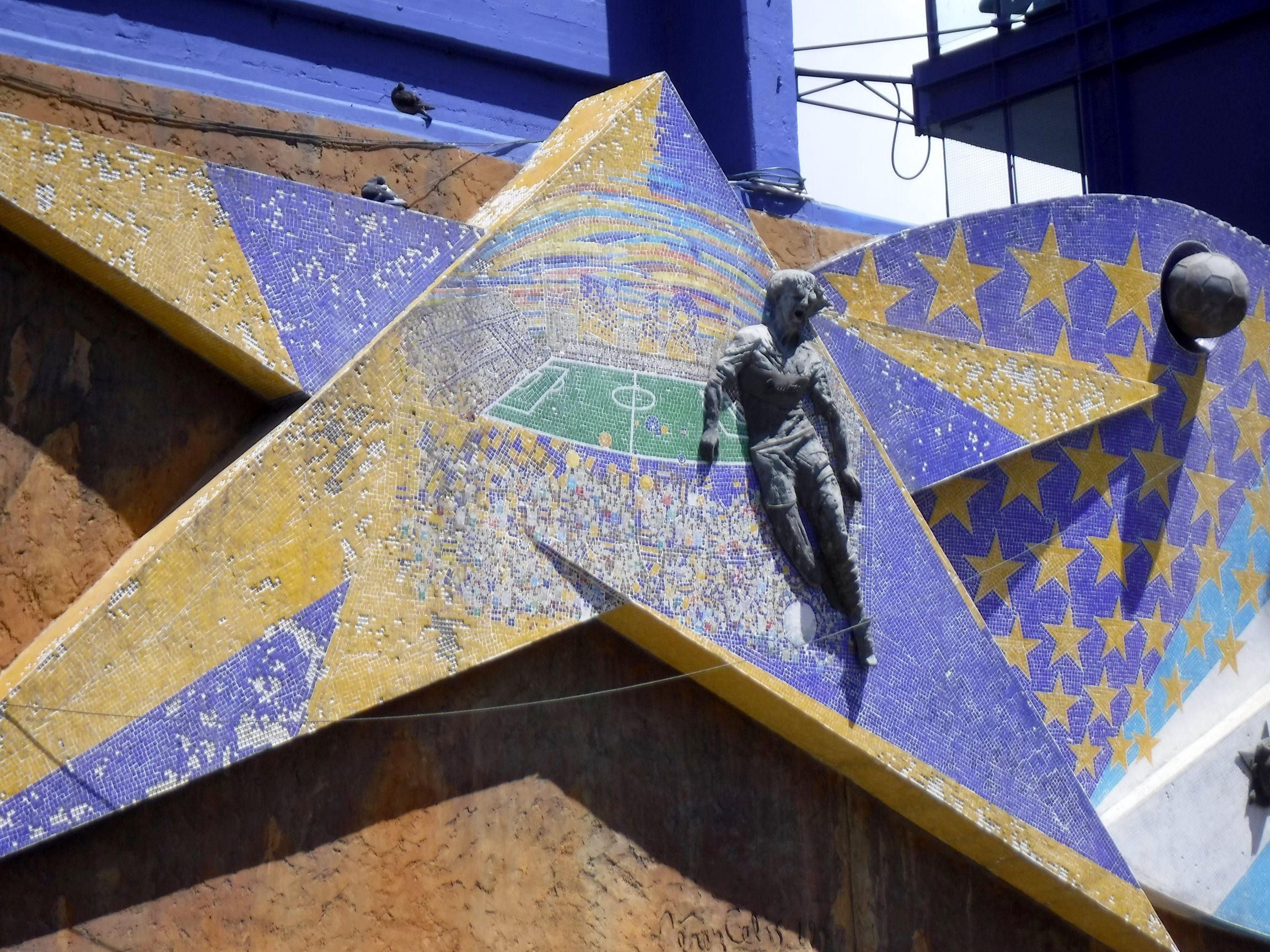
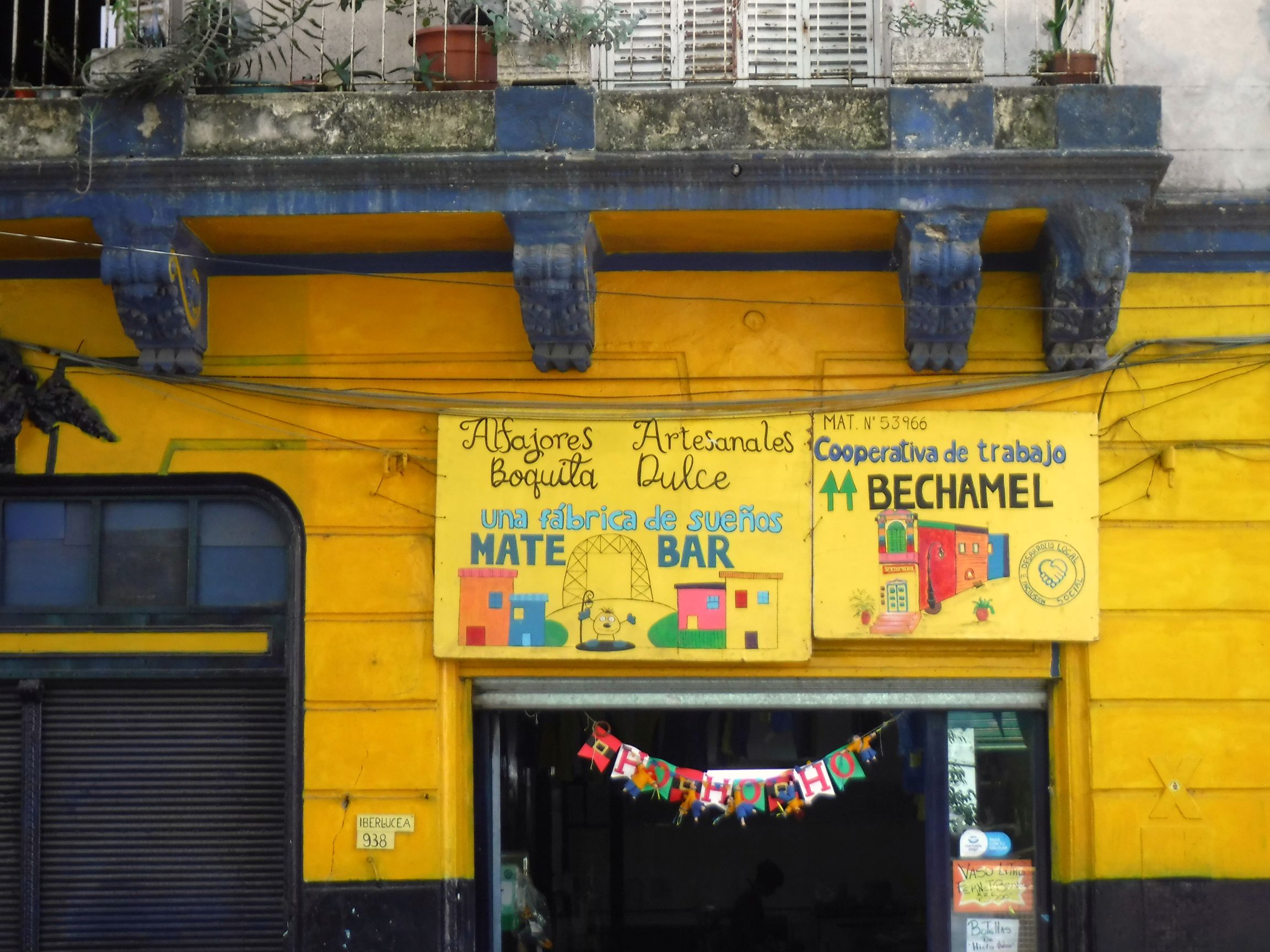
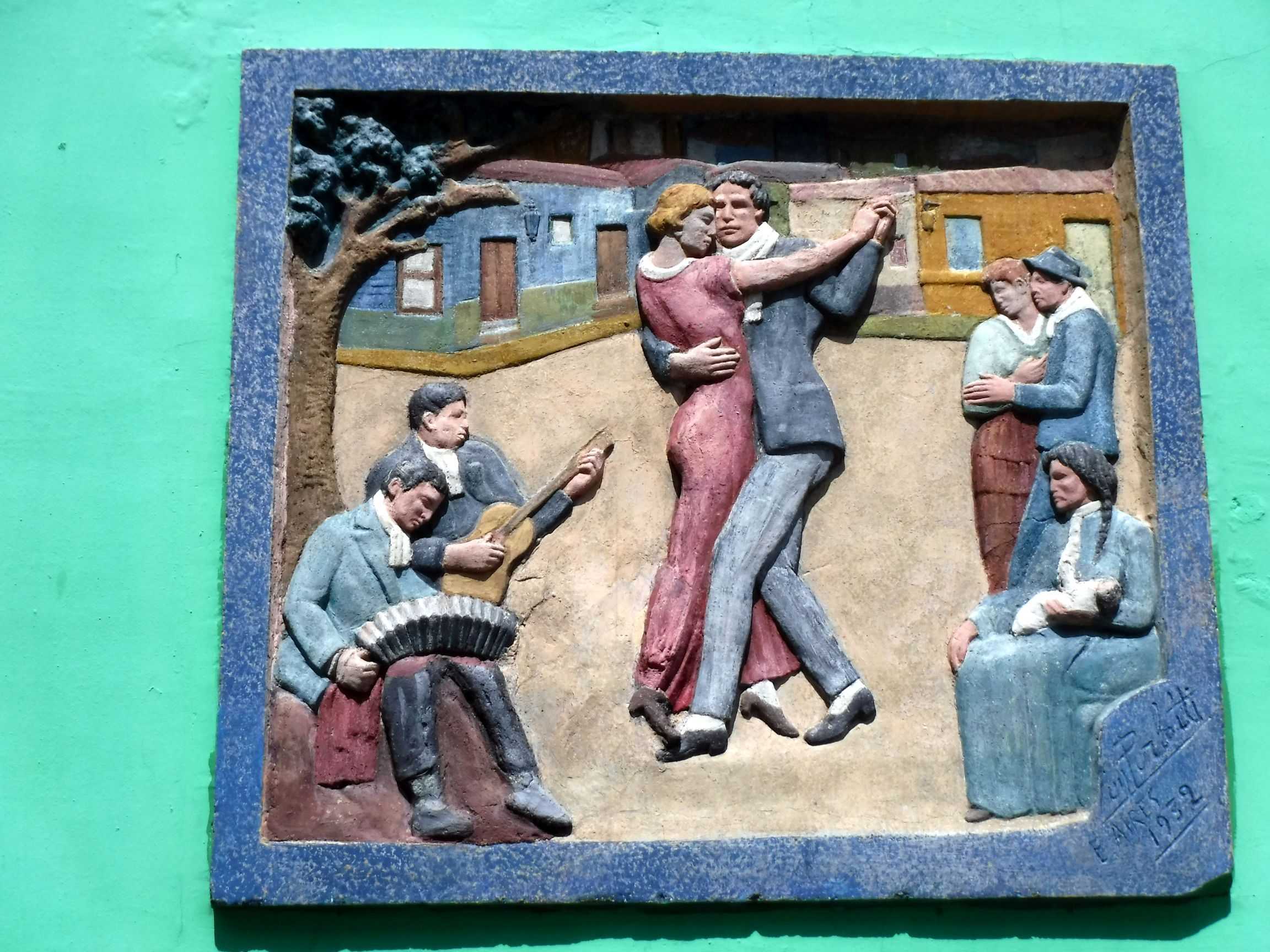
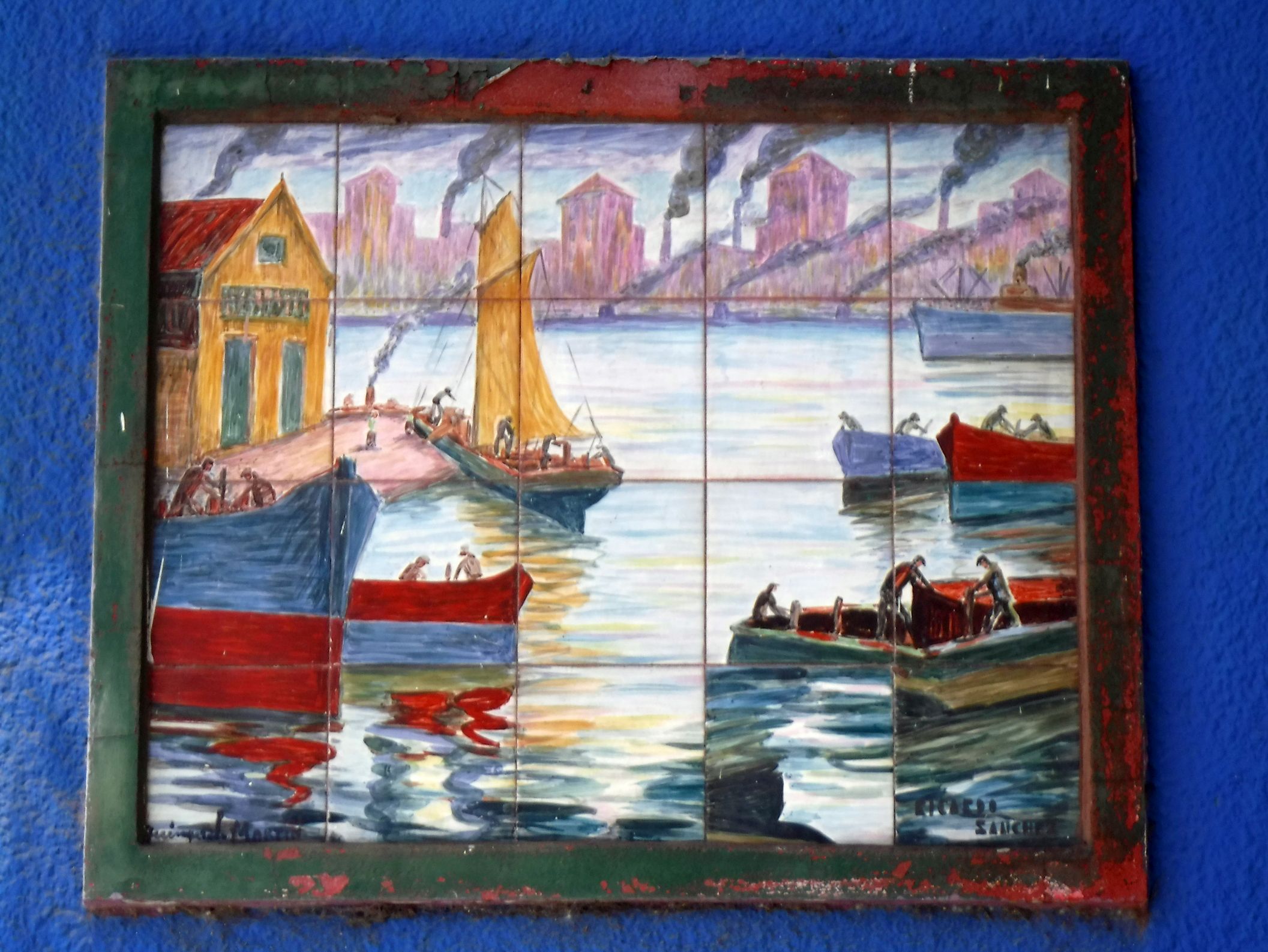
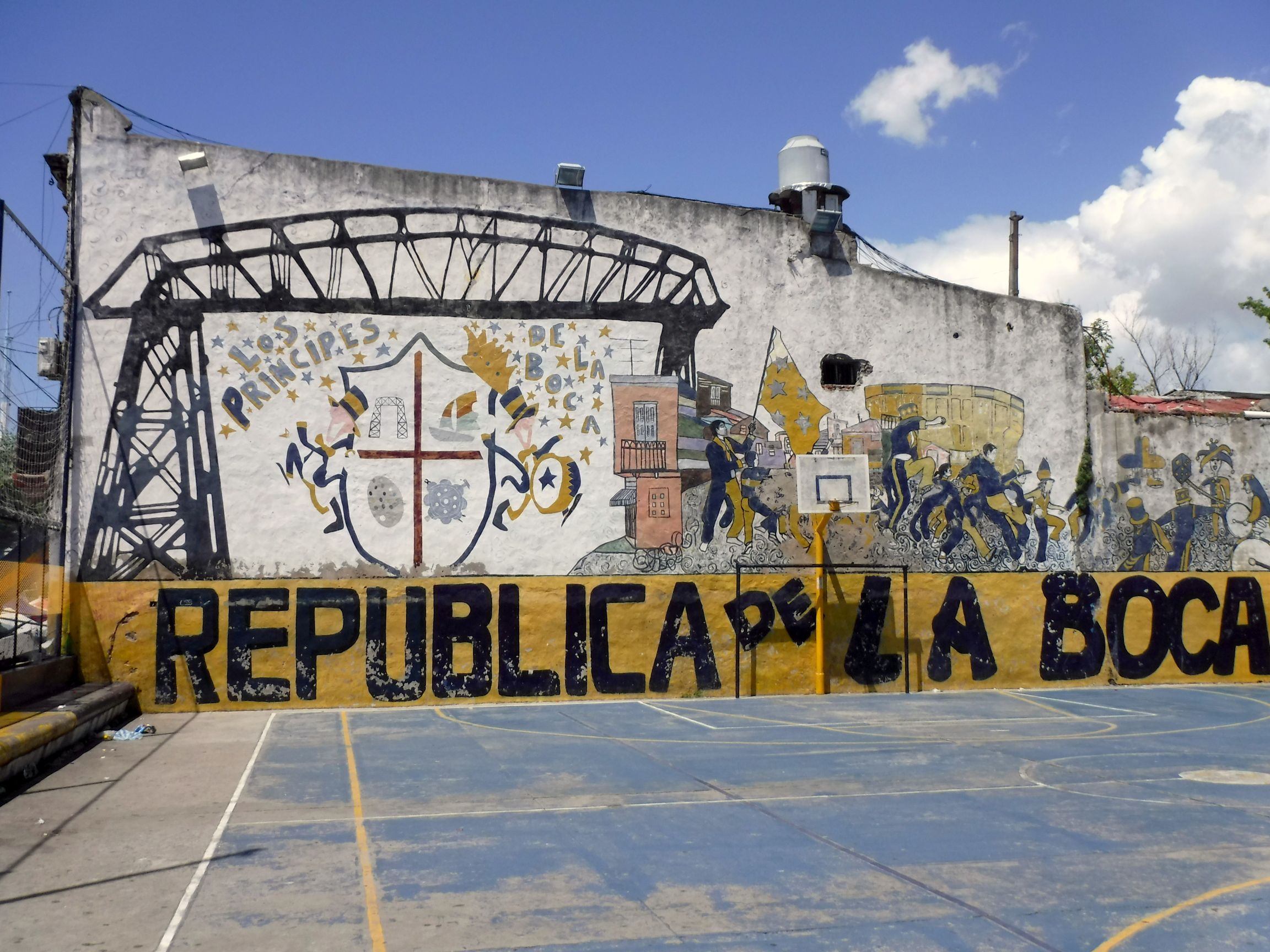
Next, we visited the colorful La Boca neighborhood where the Argentine tango was born.  “Colorful” is an understatement, really, because bright colors pop from every building and mural throughout the streets of this neighborhood settled by mostly Italian immigrants.  Blue and yellow are especially popular—the colors of their soccer team and neighborhood “futbol” stadium.

That’s a statue of Lionel Messi up on that balcony.
Everywhere we looked, there were these funky life-sized statues on balconies!
Boca Juniors Futbol (Soccer) Stadium
Several shops and houses were painted in the Boca Juniors team colors.
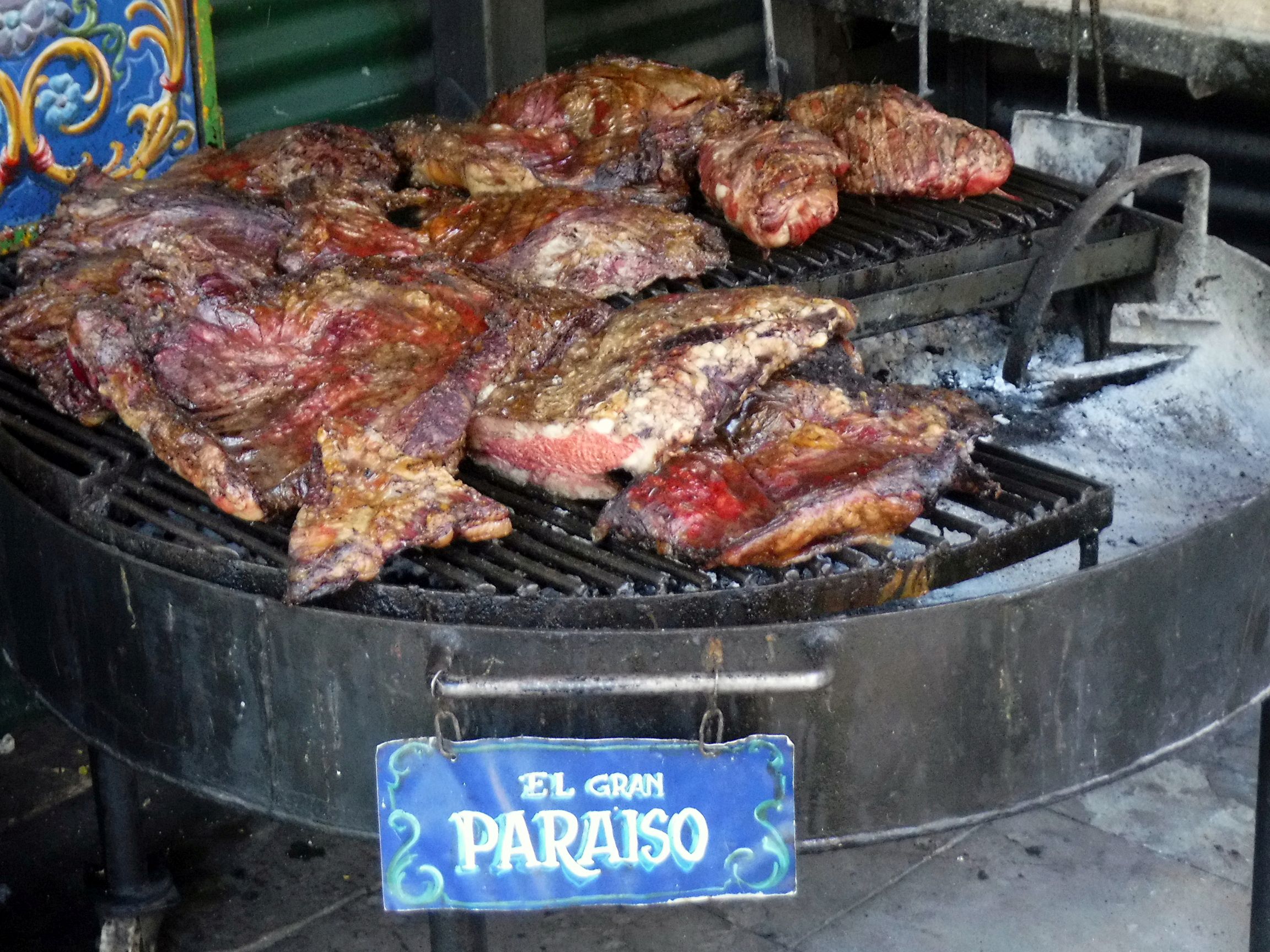
Argentinians love their meat…
…especially steak.
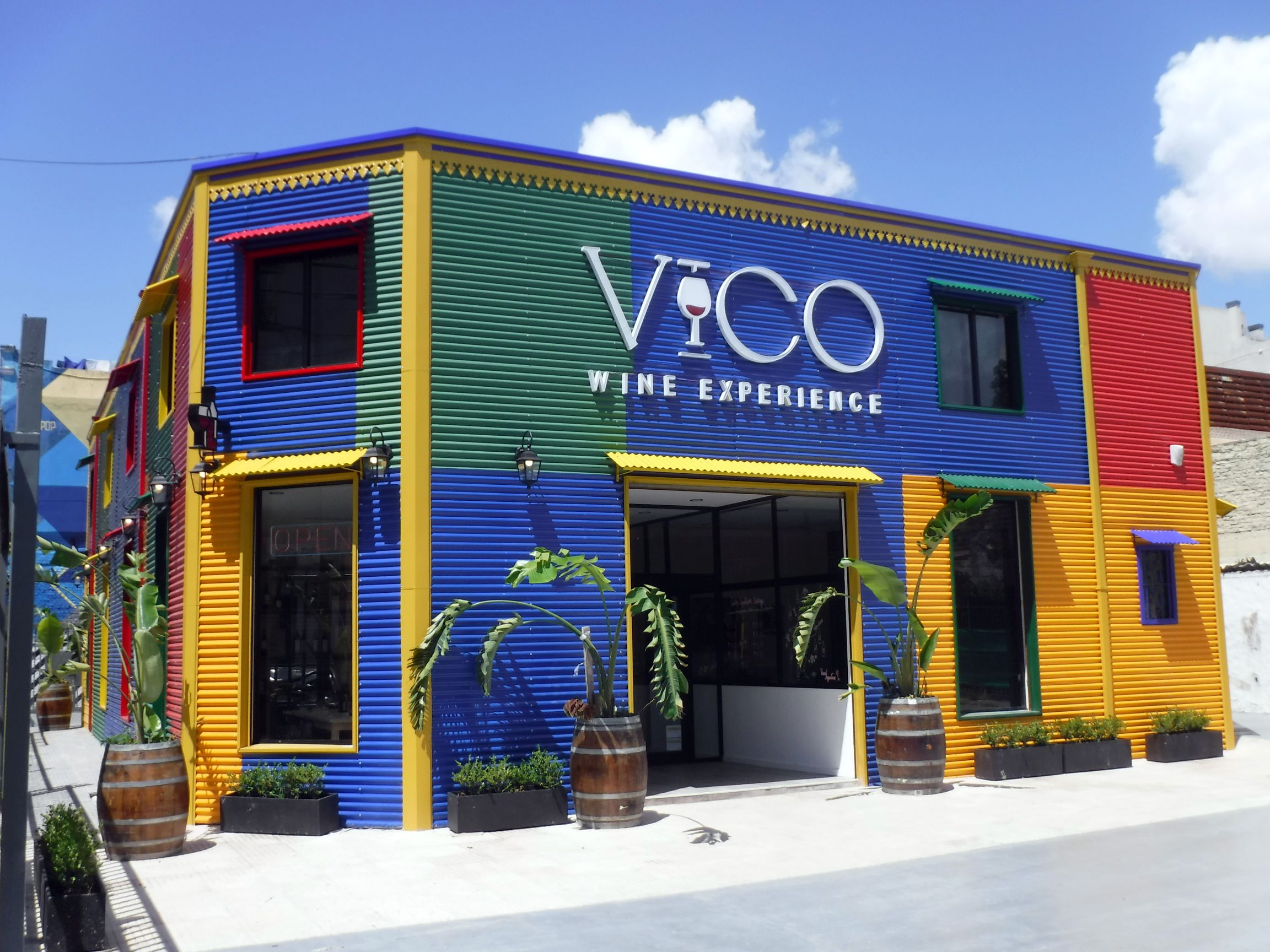
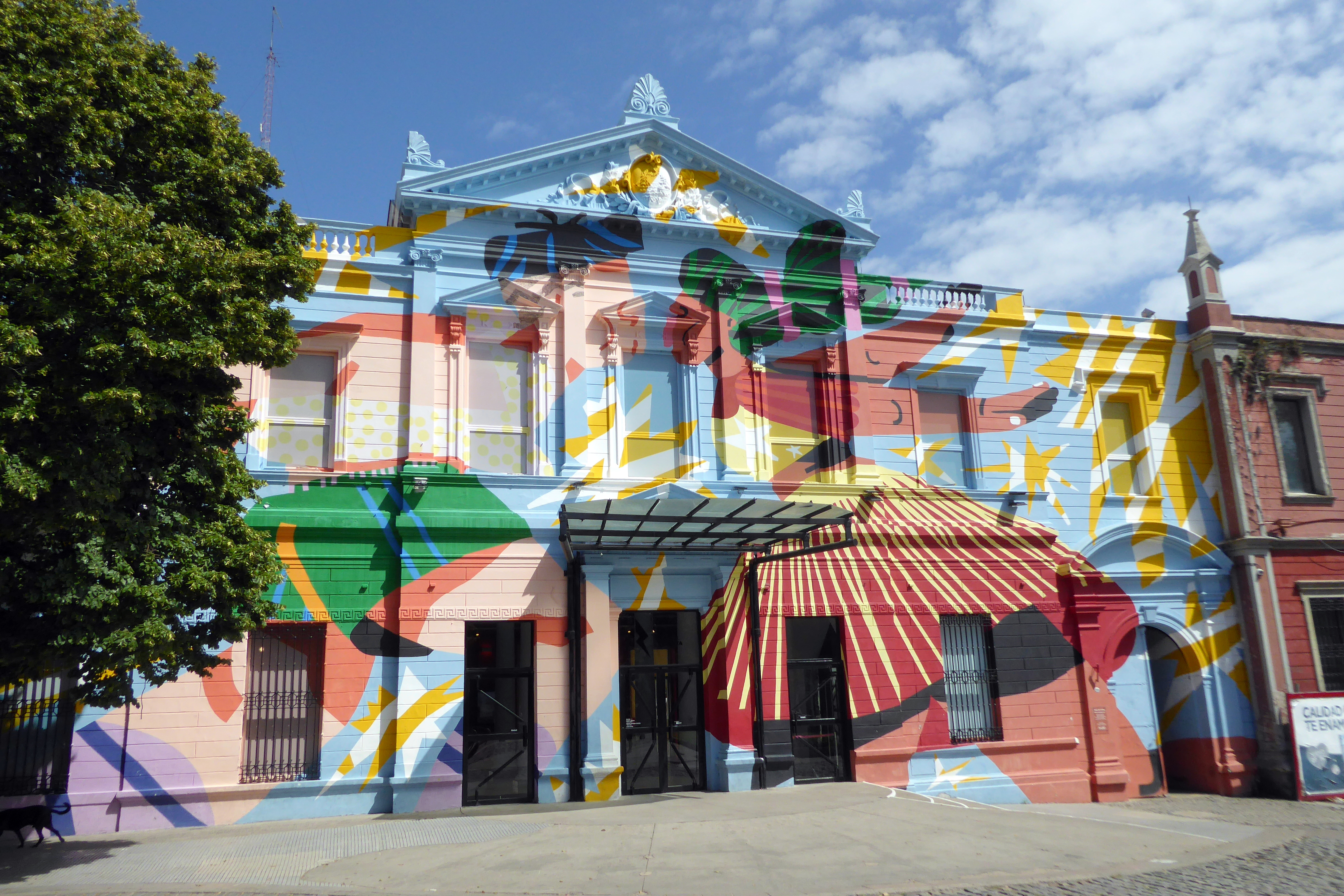
This newer business fit right in with its colorfully-painted facade.

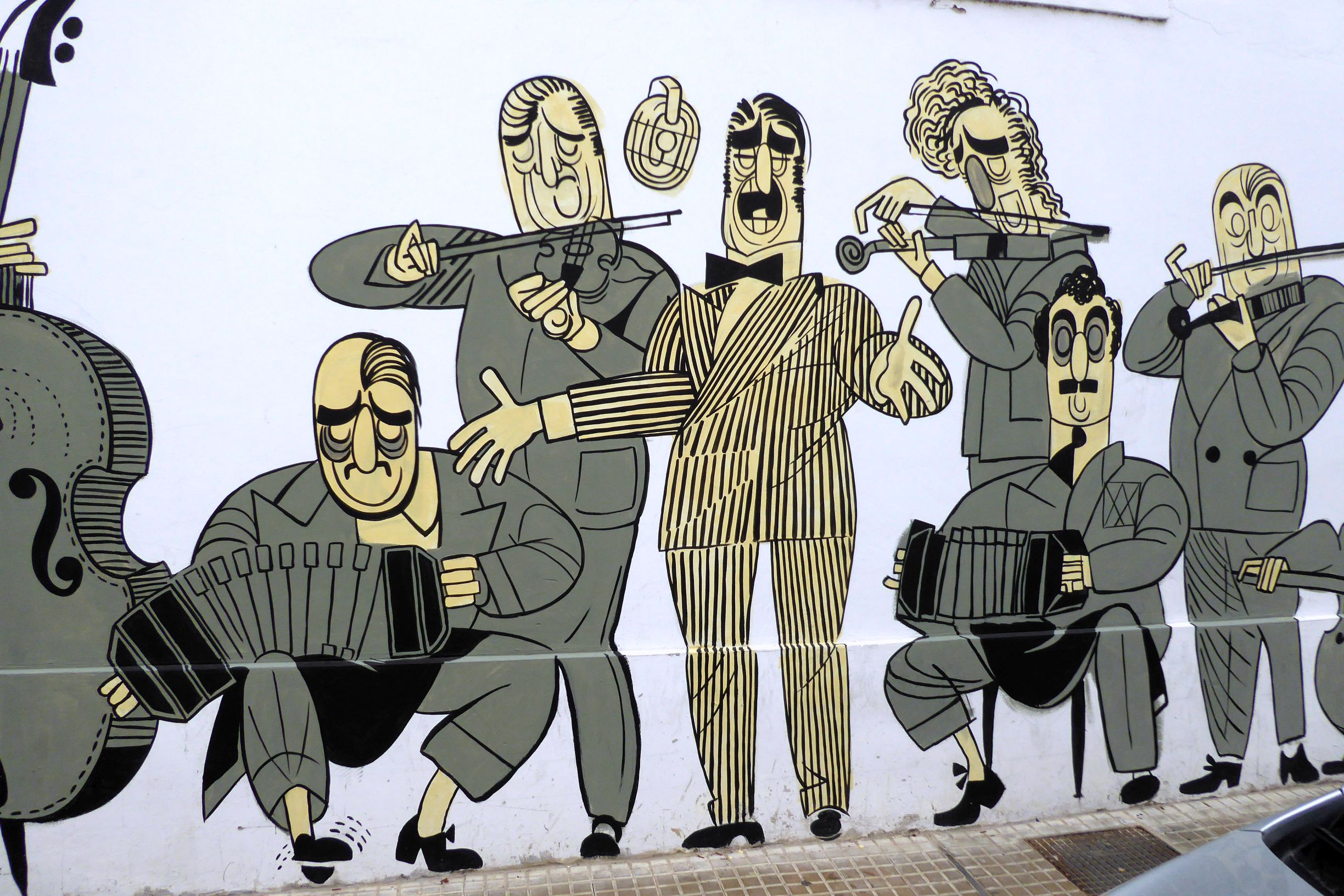
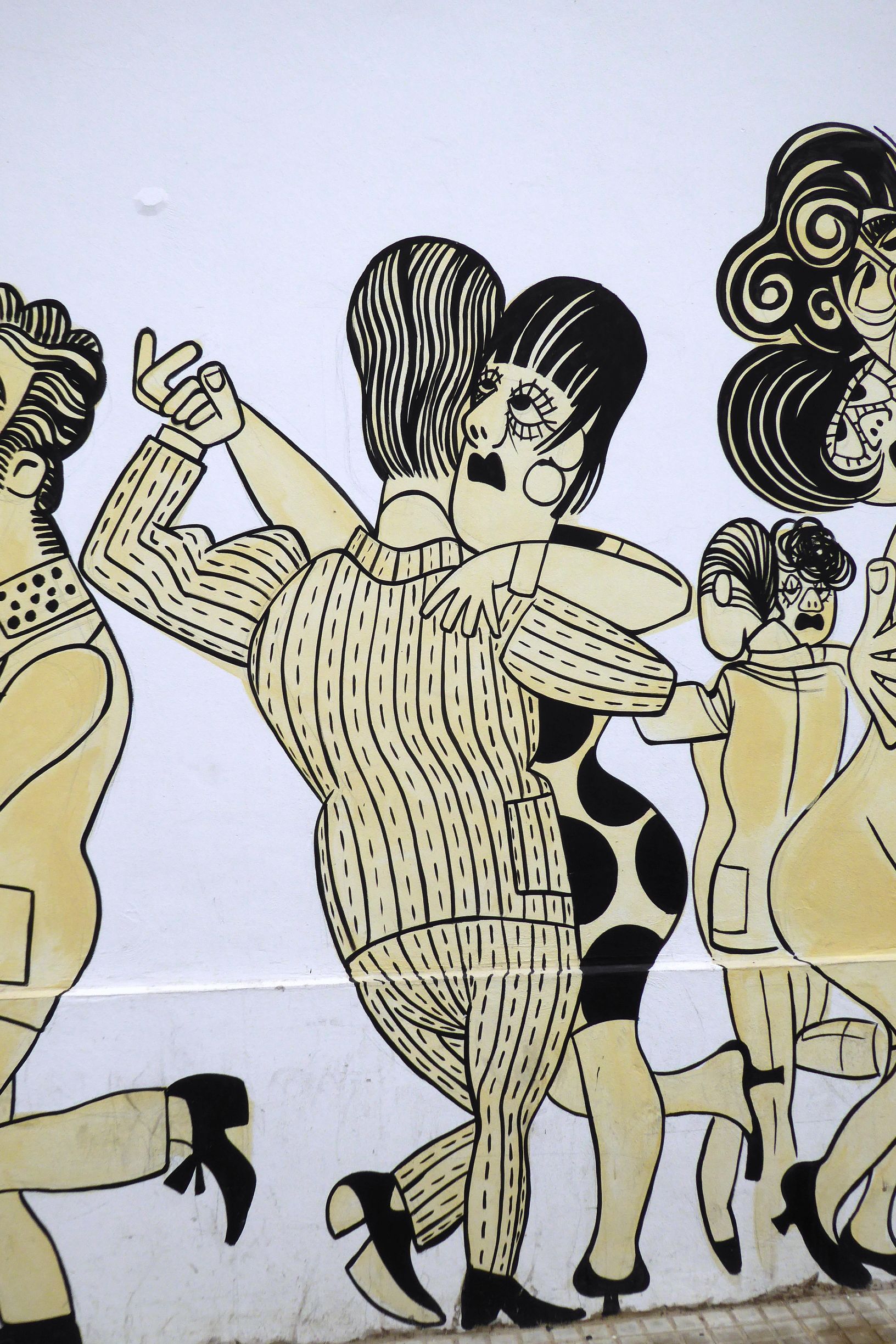
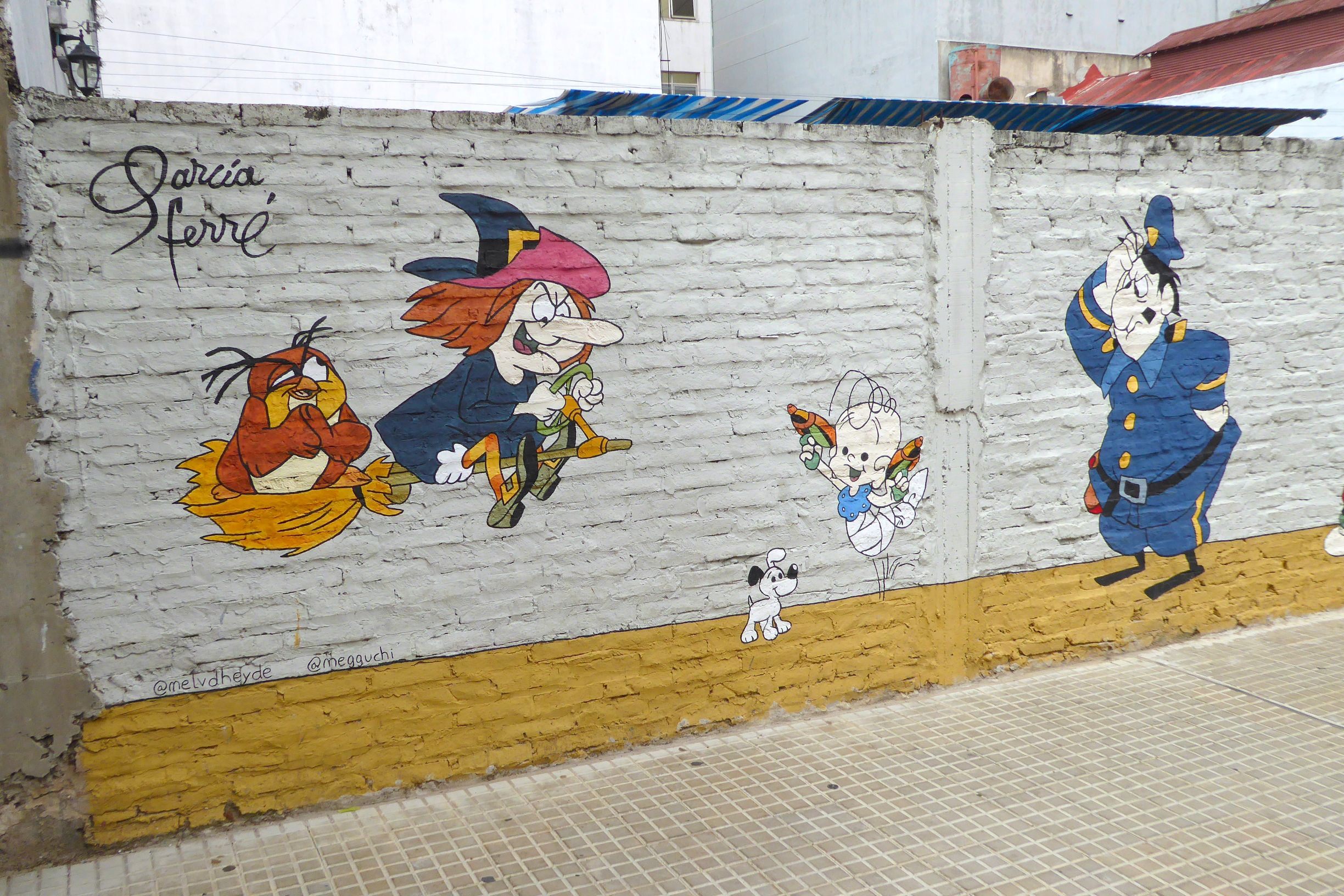
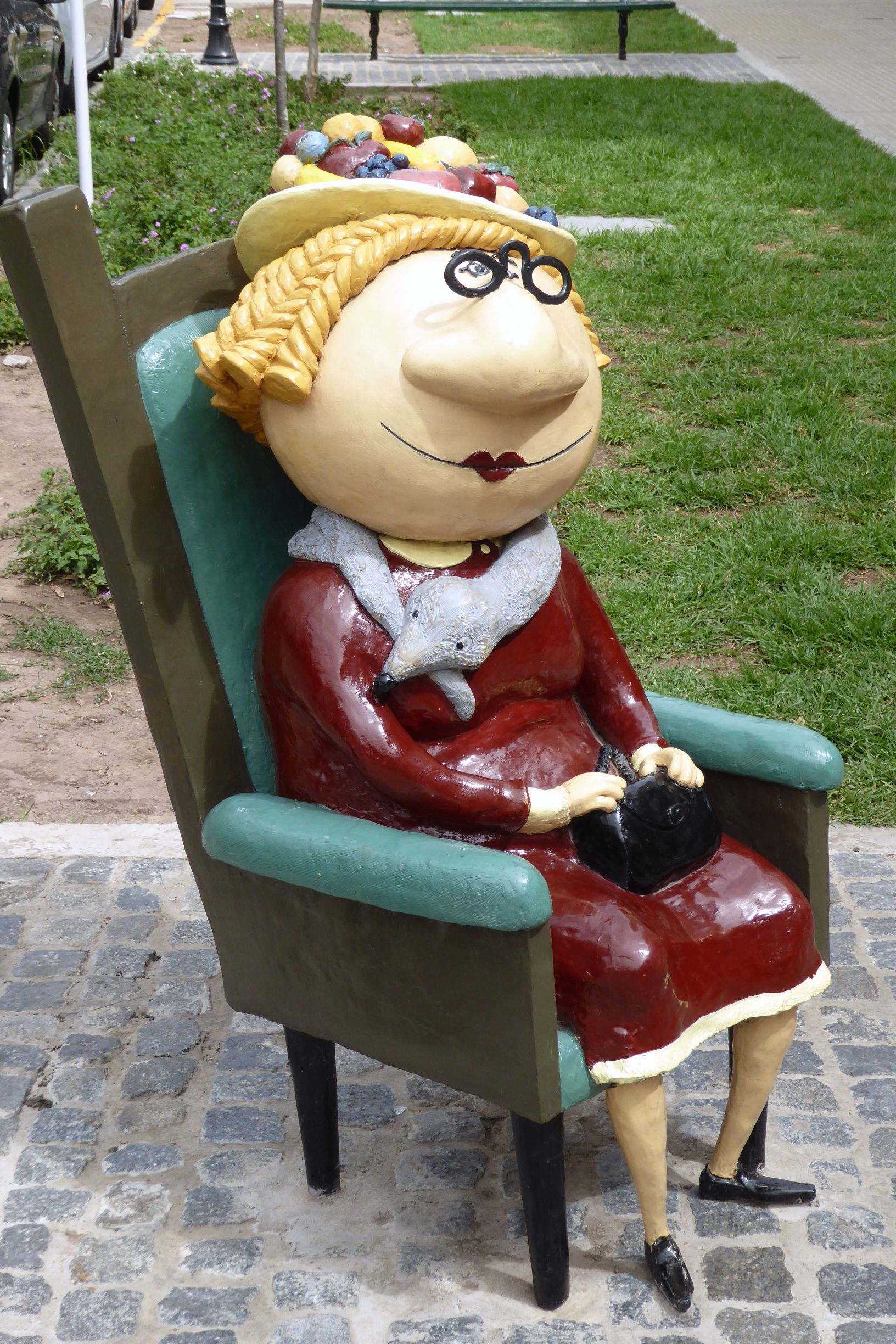
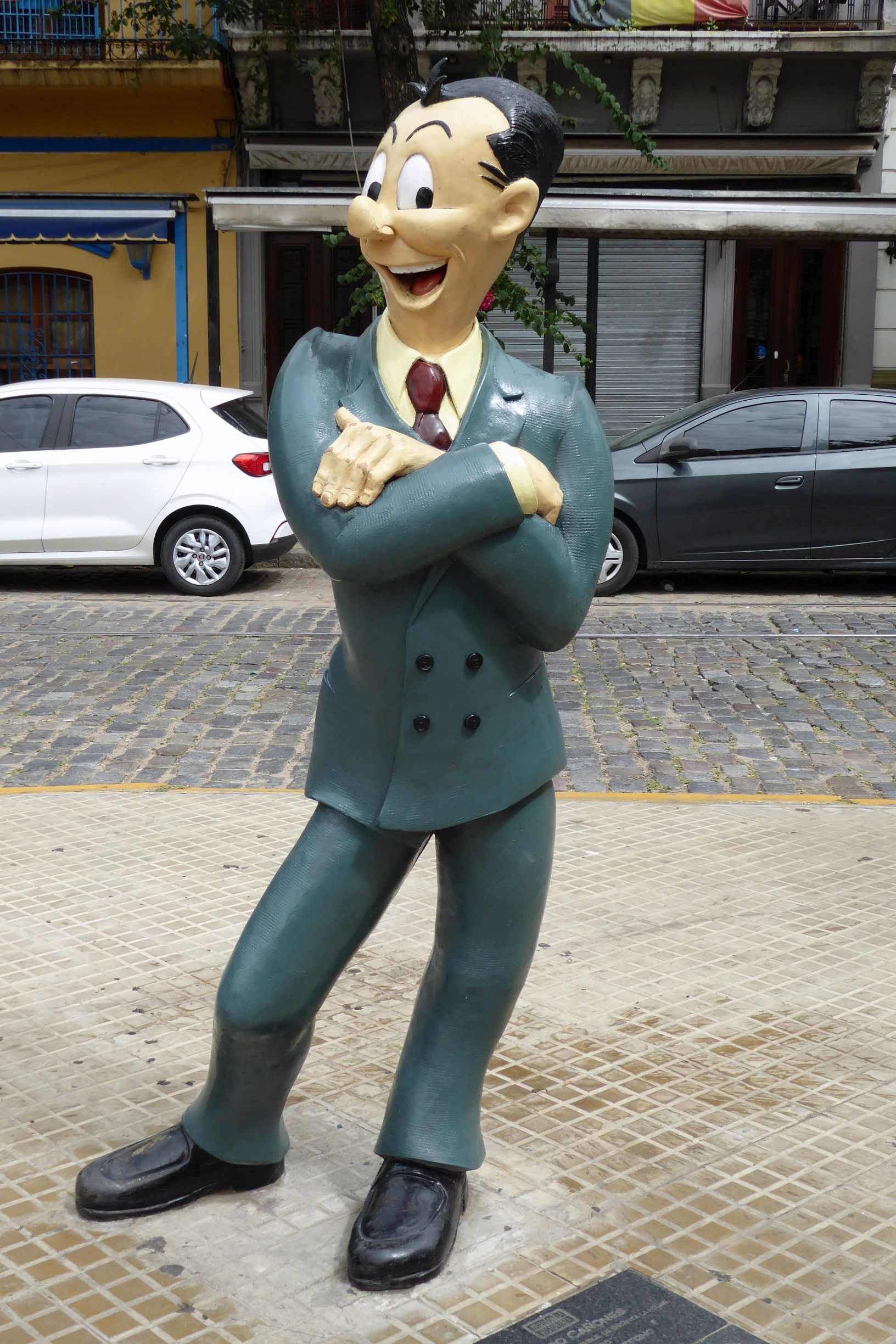
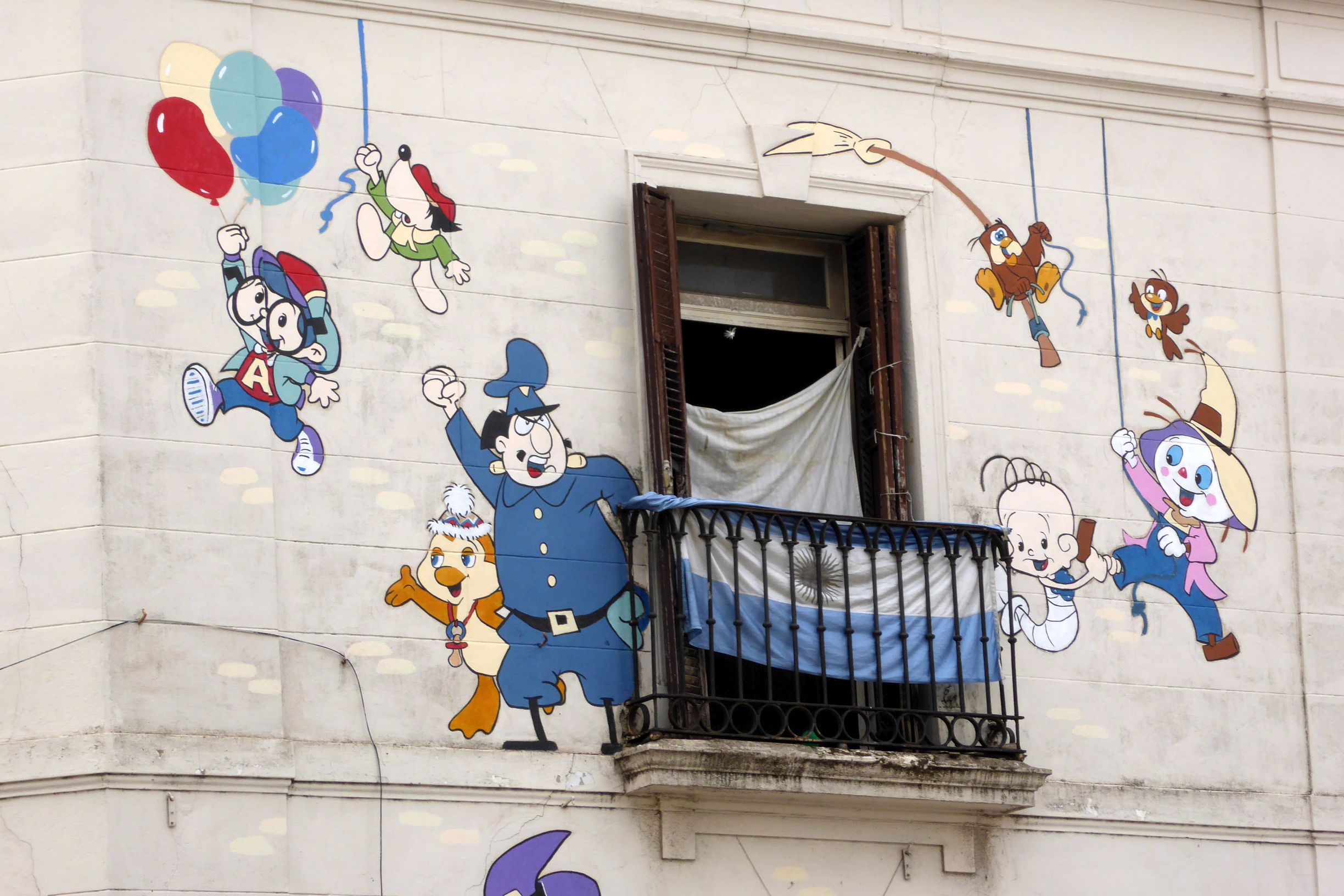
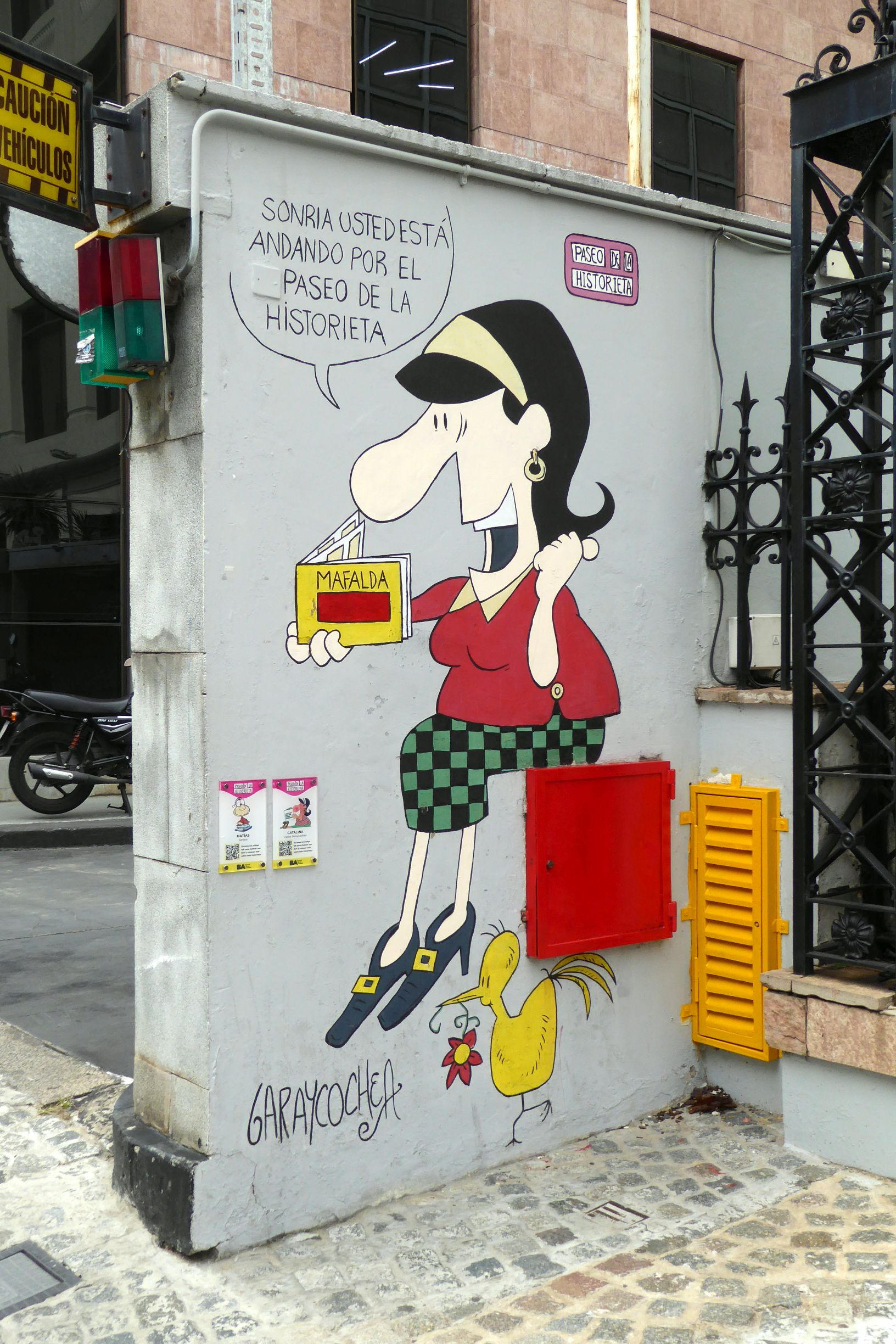
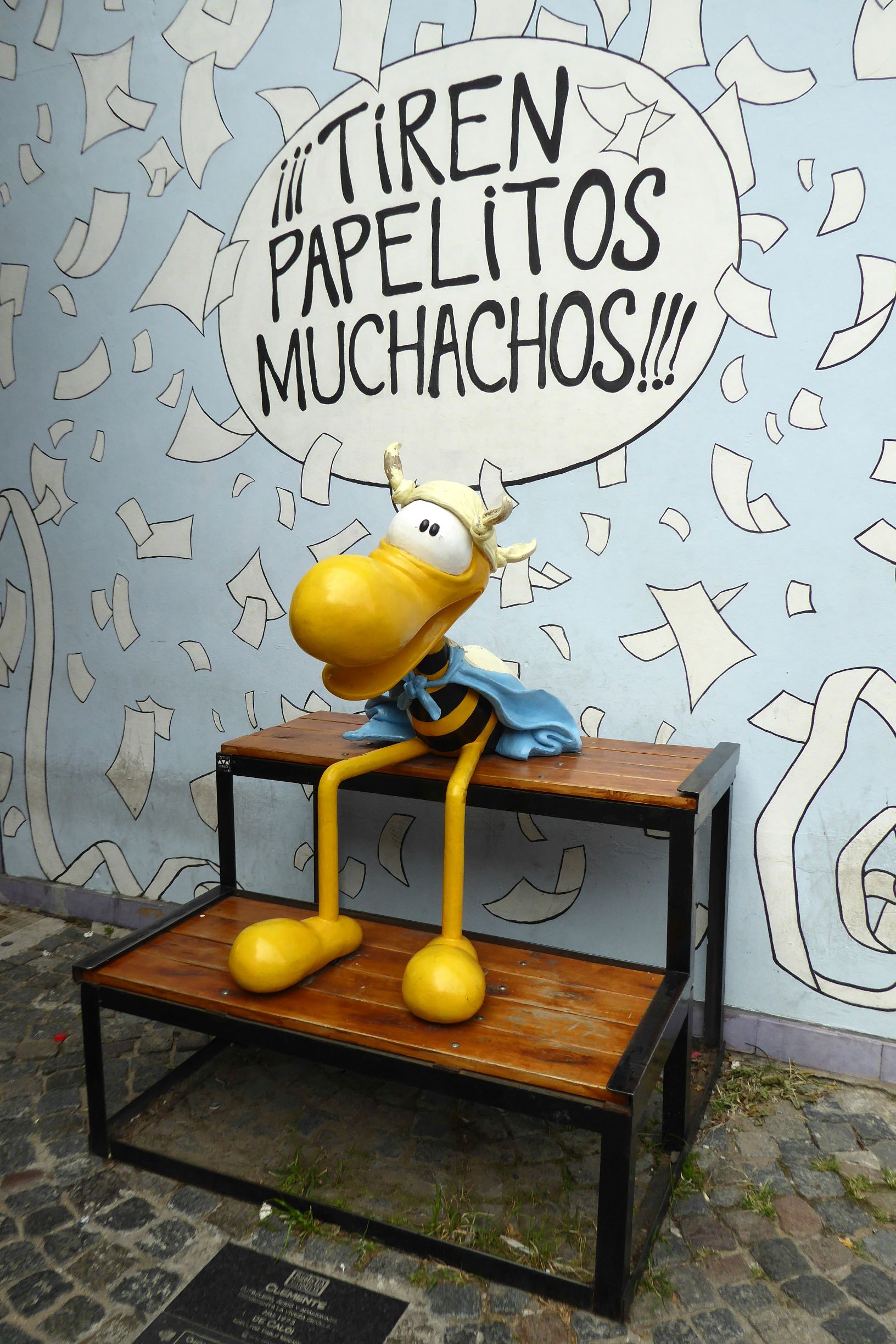
Following the city tour, we opted to be dropped off back at Plaza de Mayo to shoot a couple of afternoon photos of the square before walking to San Telmo, the oldest neighborhood of Buenos Aires.  We got a kick out of Paseo de las historieta, a four-block section of Balcarce Street full of street art dedicated to Argentina’s most popular cartoon characters.

Andrea’s Buena Onda OTT group: Notice what they are drinking! I’ll get back to that in a future post!

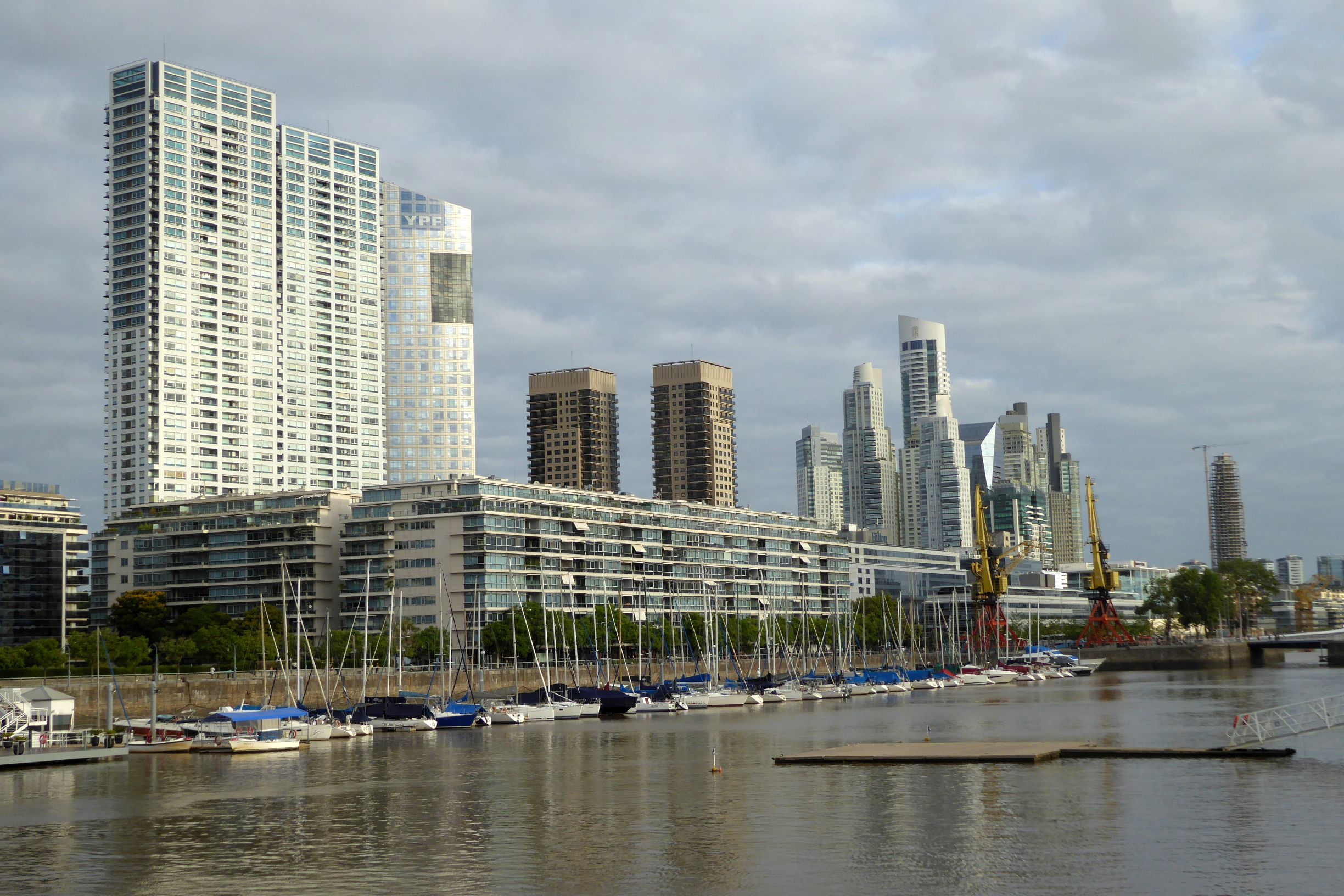
The posh and hip Puerto Madero was where our group enjoyed our Welcome Dinner.  Argentina is world-renowned for their steak, but Bruce and I opted for Pacu, a local fish. 

The view from our restaurant
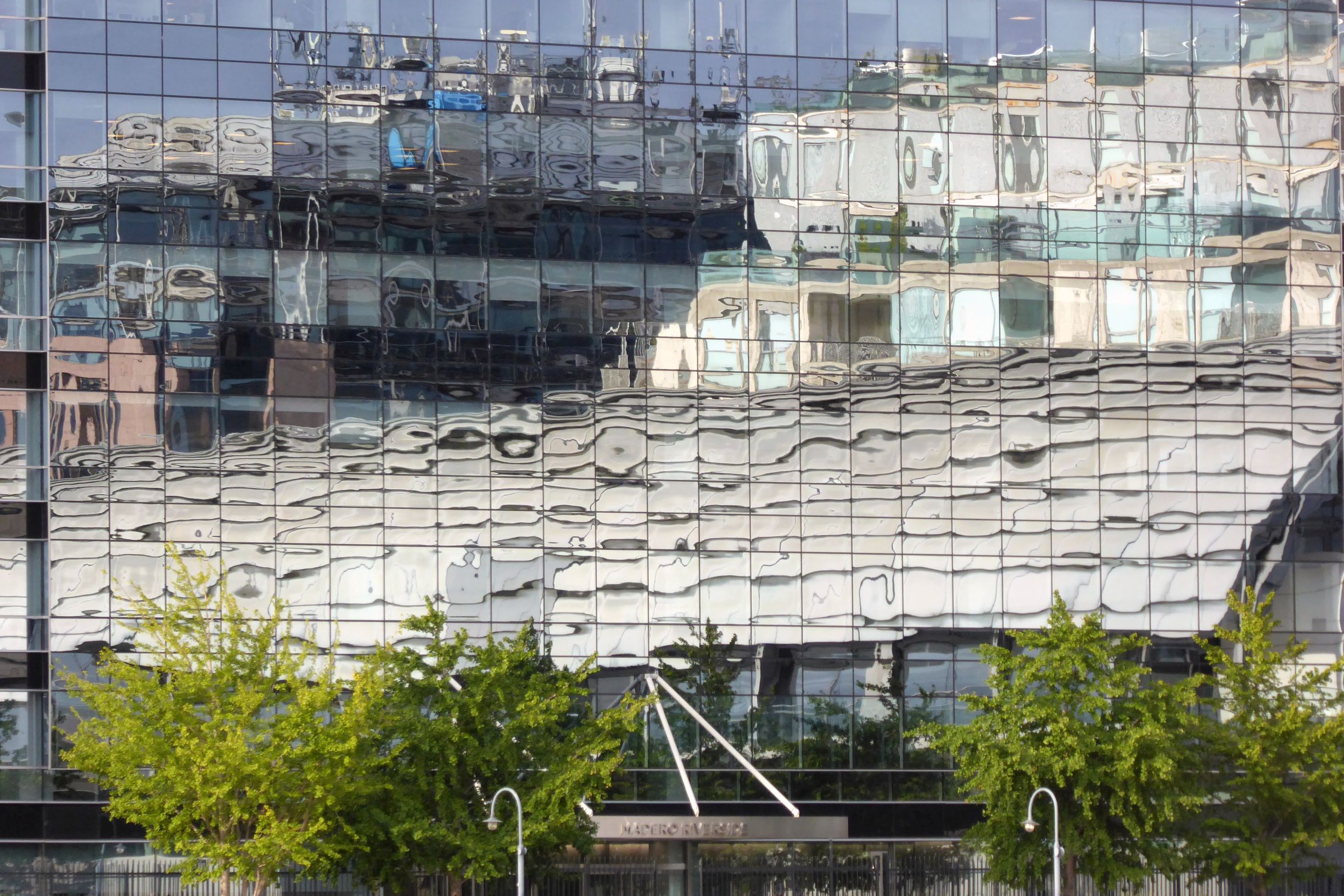
Reflections

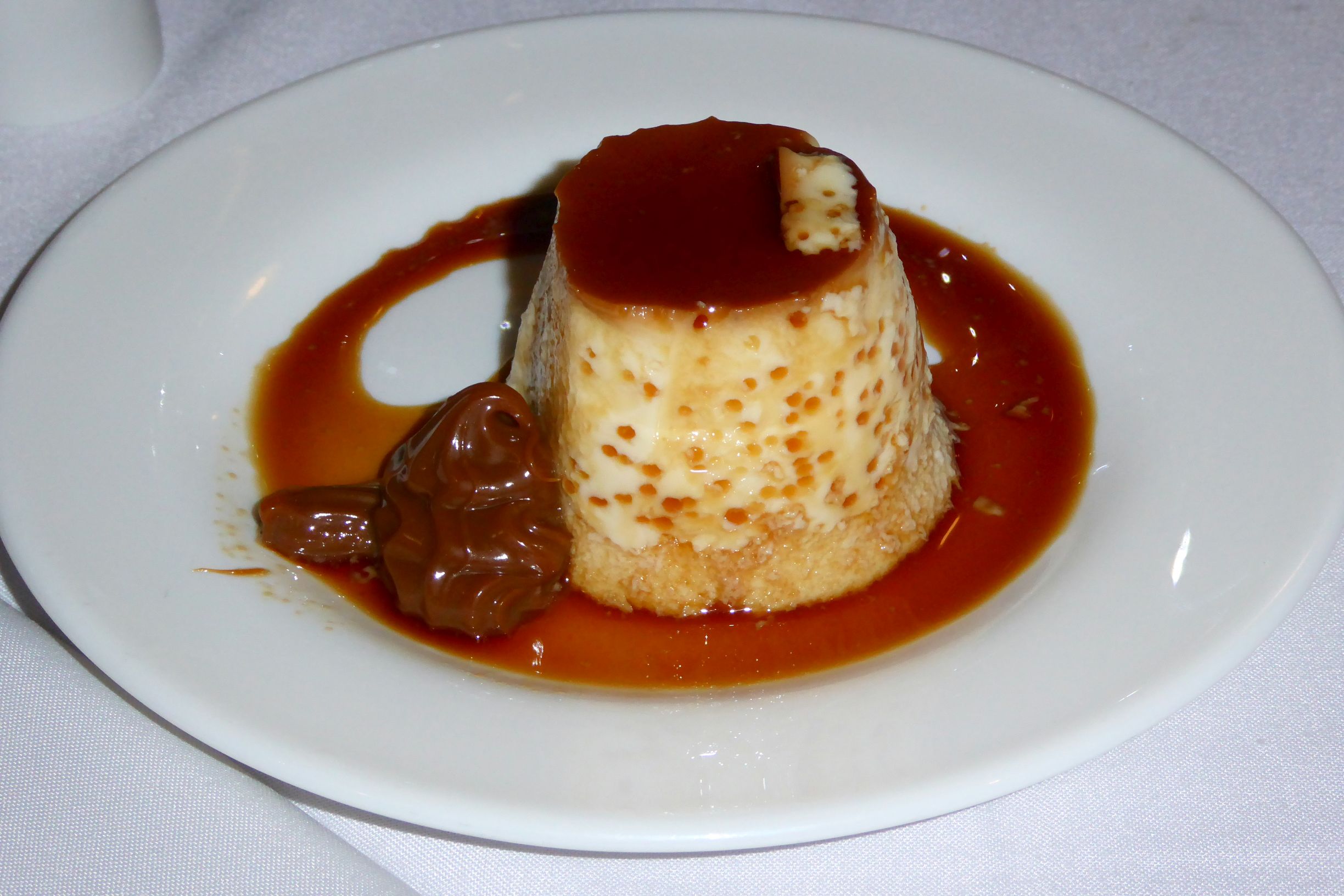
This was the first of many delicious varieties of dulce de leche desserts we enjoyed throughout the tour. I was hooked!

Coming up next:  ARGENTINA & CHILE #4:  BEAUTIFUL BARILOCHE

ARGENTINA & CHILE #2: BUSTLING BUENOS AIRES

For a quick Cliff Notes background on Argentina, I will shamelessly extract information here and there from the wonderful Overseas Adventure Travel guidebook Andrea gave us during our briefing: “Following independence from Spain in 1816, Argentina experienced periods of internal political conflict between conservatives and liberals and between civilian and military factions.”

Sound familiar? What country is not experiencing political conflict between conservatives and liberals?  Like the U.S.A., their country is very divided, and that division played out while we were in Argentina.

Fortunately, none of the numerous strikes and protests had a detrimental affect on our group or travels, but a lot was going on while we were in Argentina.  Javier Milei, the current president, has made a lot of people quite angry since being elected last December– especially those who don’t subscribe to his far-right point of views.  It made for some interesting discussions with Andrea, our trip leader, and her insight and passion added so much to our experience in her country.  As she explained, Argentinians are just as passionate about talking politics as they are soccer! 

More about Argentinian culture will be revealed throughout my blog posts, but if I had to sum up my impressions in just a few words, I would describe it as passionate, eclectic, and European.  Settled by the Spaniards and Italians, their influences permeate all aspects of Argentiniann culture.  There is also a large Jewish community—one of the largest in the world.

Buenos Aires, the capital of Argentina, is known as the “Paris of South America” or the “Cultural Capital of South America.”  It has a population of approximately three million people, but adding in the populated suburbs brings that total to ten million, ranking it in the top ten most populated cities in the world.

The safest area of this massive city was where our hotel was located, so Bruce and I focused on exploring the Recoleta neighborhood, since our feet were our mode of transportation during our first full day in the city.  One of our 16 group members, Diane, needed to get pesos, so we offered to show her where she could exchange her dollars and asked if she wanted to join us on our walk.  Andrea had given us a map with suggestions on what to see, so we set out on what proved to be the first of many beautiful days to come.  (As cliché as it is to talk about the weather, our group couldn’t help ourselves, because the weather was amazing throughout our three weeks in Argentina and Chile—even in Patagonia!)

Here are some scenes of the Recoleta district:

(For all photos, click on the image for a full screen view. Desktop computer monitors are best!)

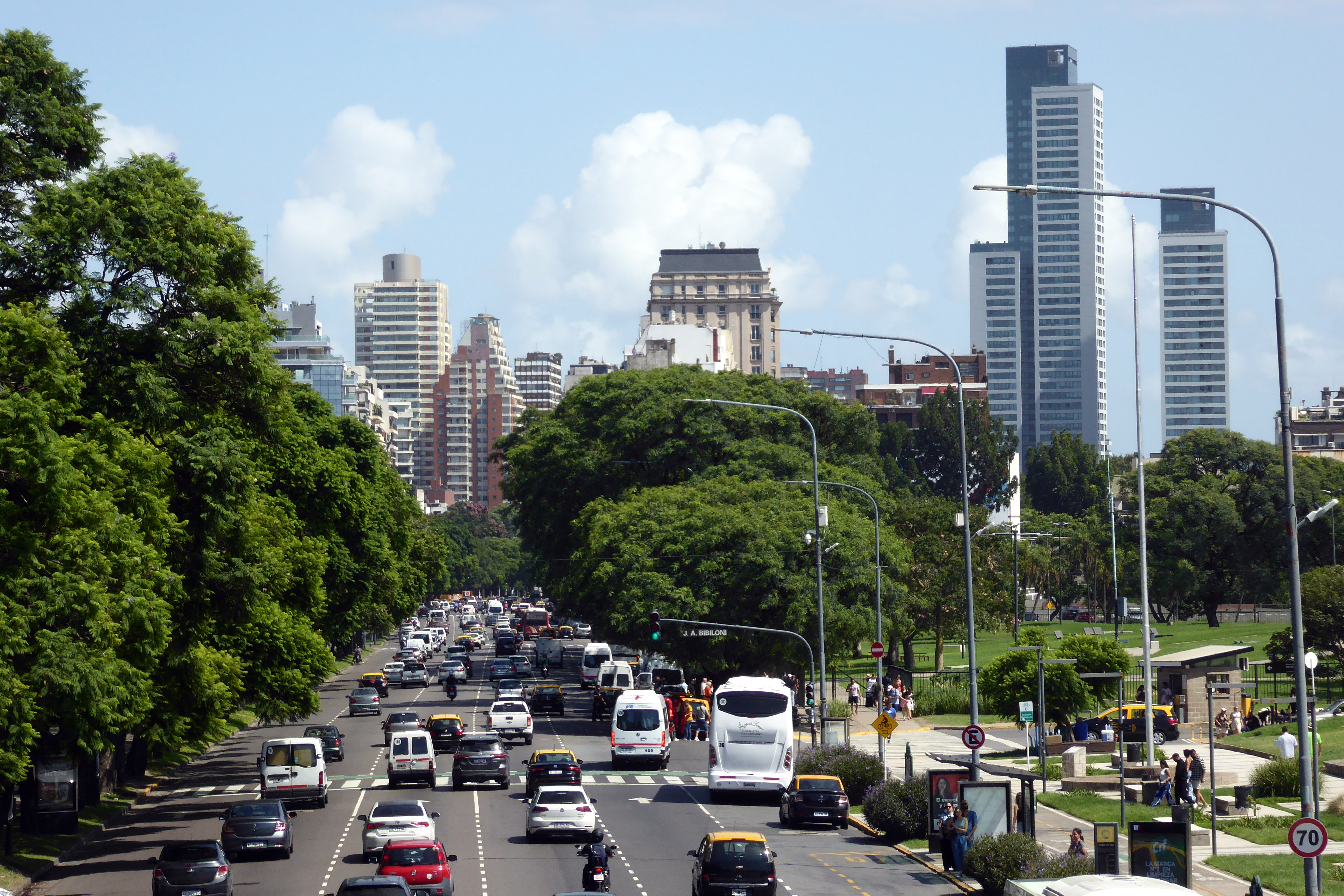
Avenida 9 de Julio (July 9 Avenue) is one of the widest avenues in the world. It has nine lanes with a leafy, gardened median between opposing flows of traffic. It is nearly impossible to cross it on foot on one green light!
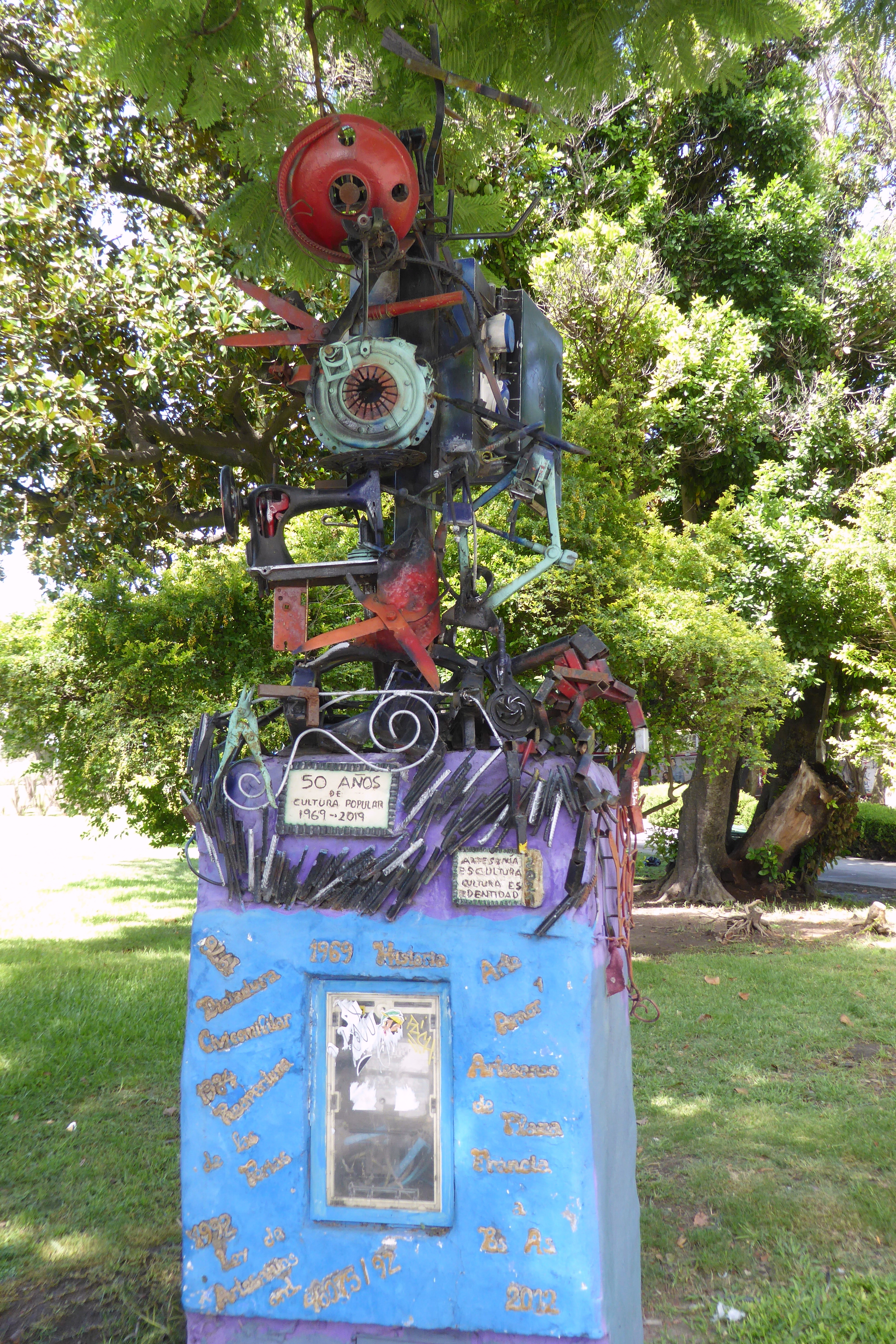
This curious sculpture was in one of the medians
We passed by the French and Brazilian embassies as we made our way through the posh area of the city, in Recoleta.
I was surprised to find these two British-styled phone booths at Placia Francia!
I loved this clever sculpture!
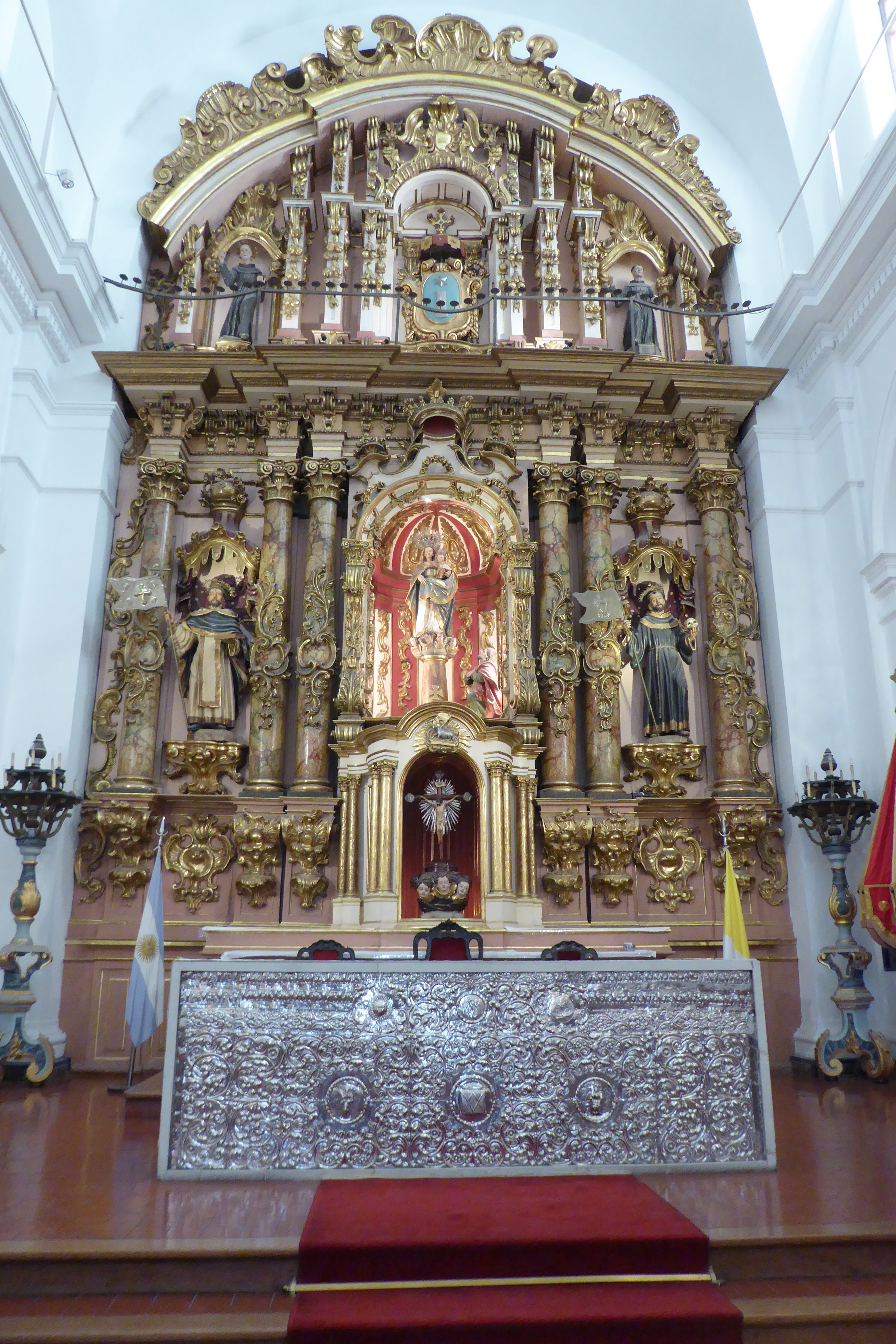
Basilica Nuestra Senora Del Pilar
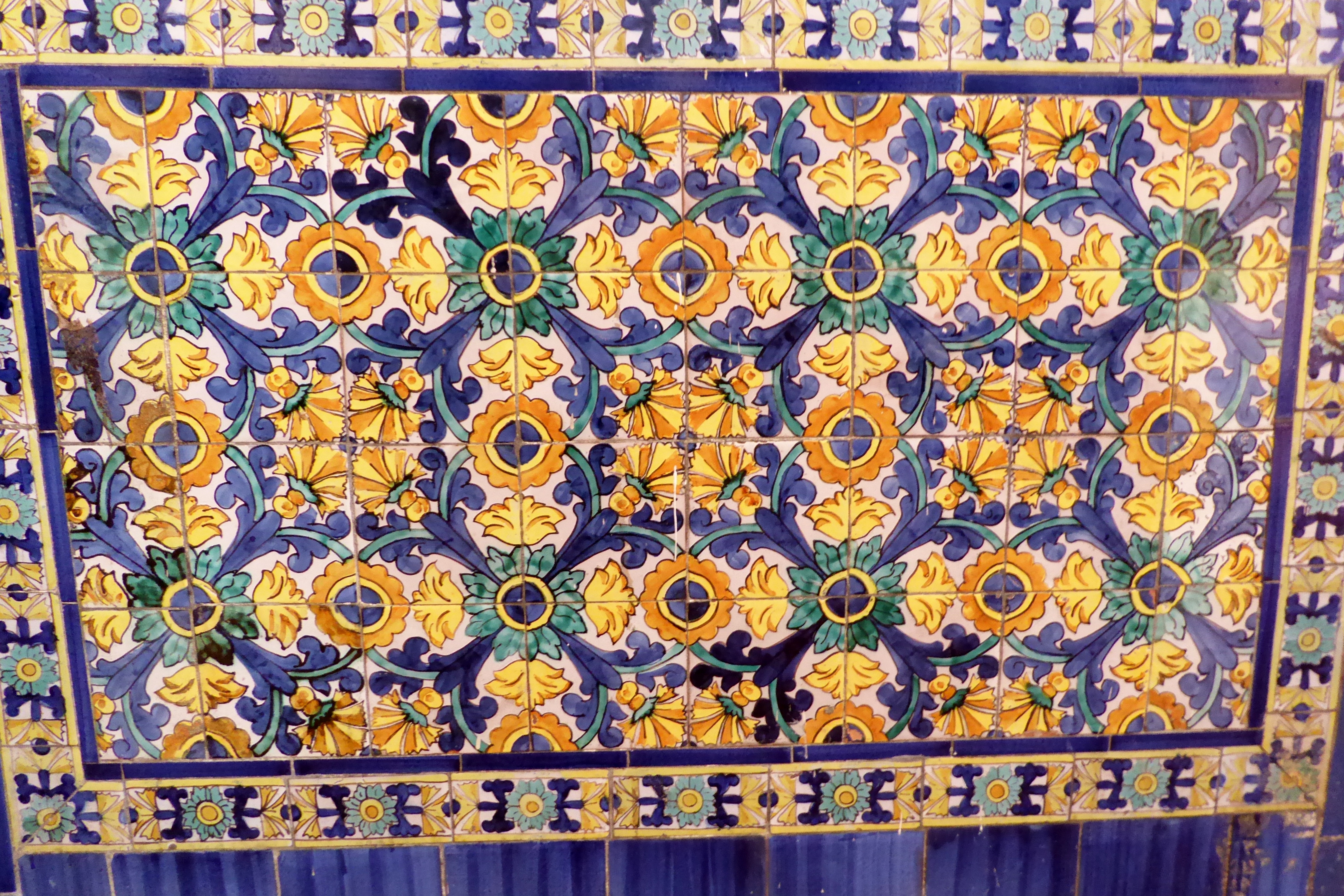
Colorful tiles in the foyer.
This museum was located adjacent to the basilica.
It was summer in Argentina, and the flowers and trees were gorgeous!
We were too early to see the jacarandas in bloom, but the trees were still beautiful!
This professional dog walker had his hands full!

Before our group set out for dinner, we met with Andrea for our welcome briefing.  We learned that throughout our trip, we would be traveling 5,000 total miles, crossing the Andes at an elevation of 4,000 feet, seeing 7 destinations, 1 capital city, 4 national parks, 1 UNESCO site, and 1 natural wonder.  We also enjoyed our first “discovery” of many—a sampling of one of Argentina’s “adult” beverages, a glass of Argentinian wine.  (We soon learned when Andrea announced a “discovery” that a local liqueur, wine, or food was soon to follow.  I love discoveries!)

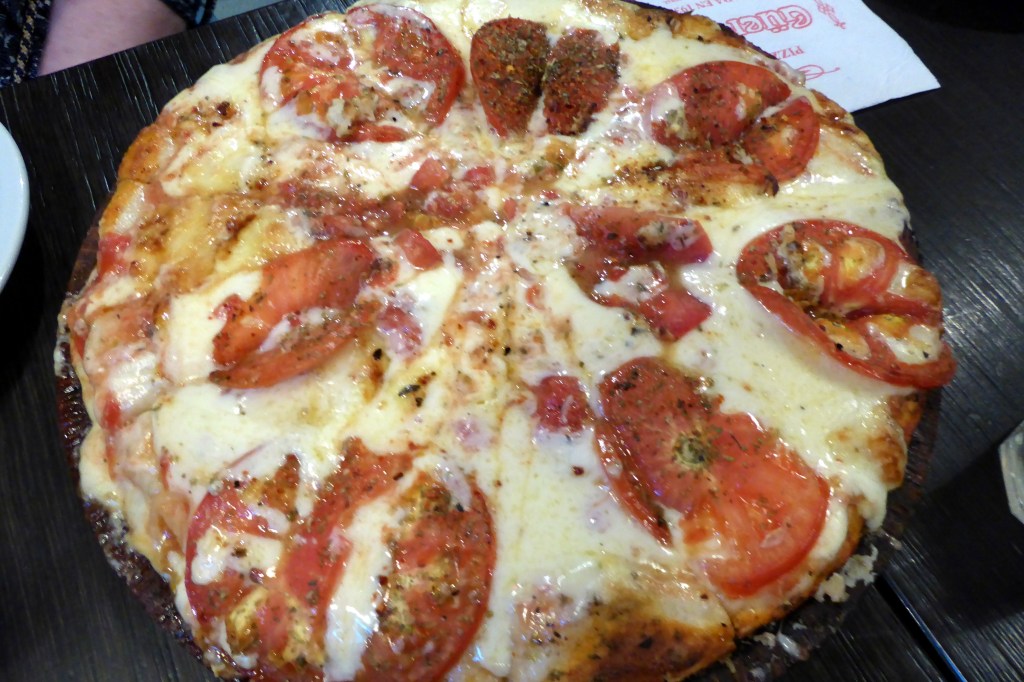
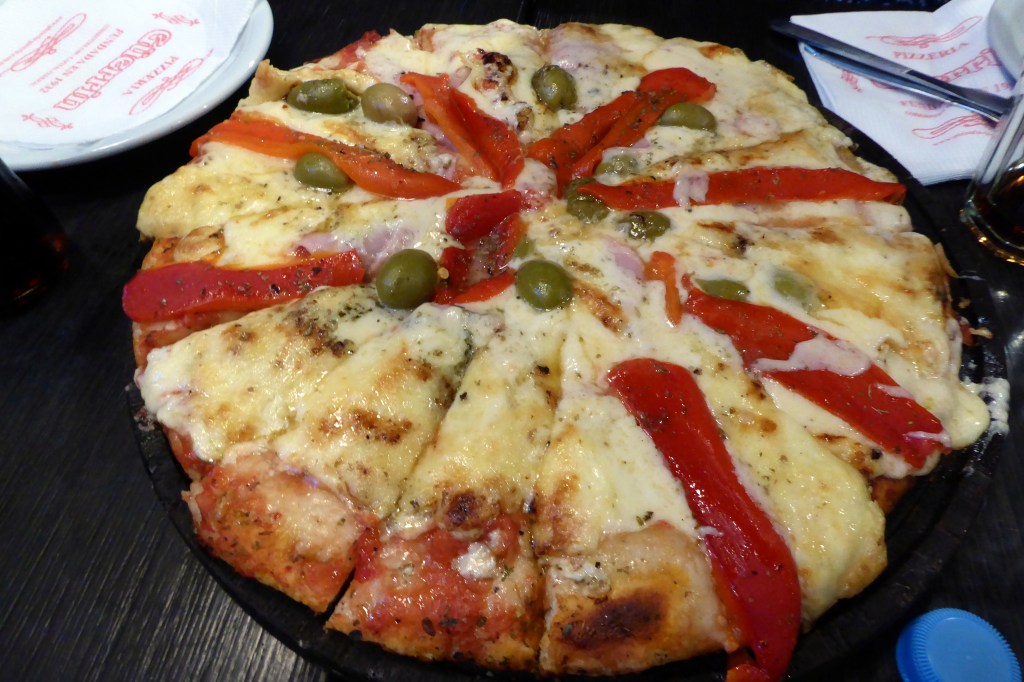
Speaking of discoveries, we all discovered that Andrea was not wrong when she said there was great pizza (and gelato!) in Buenos Aires, thanks to the Italians! Pizzeria Guerrin was muy bueno!

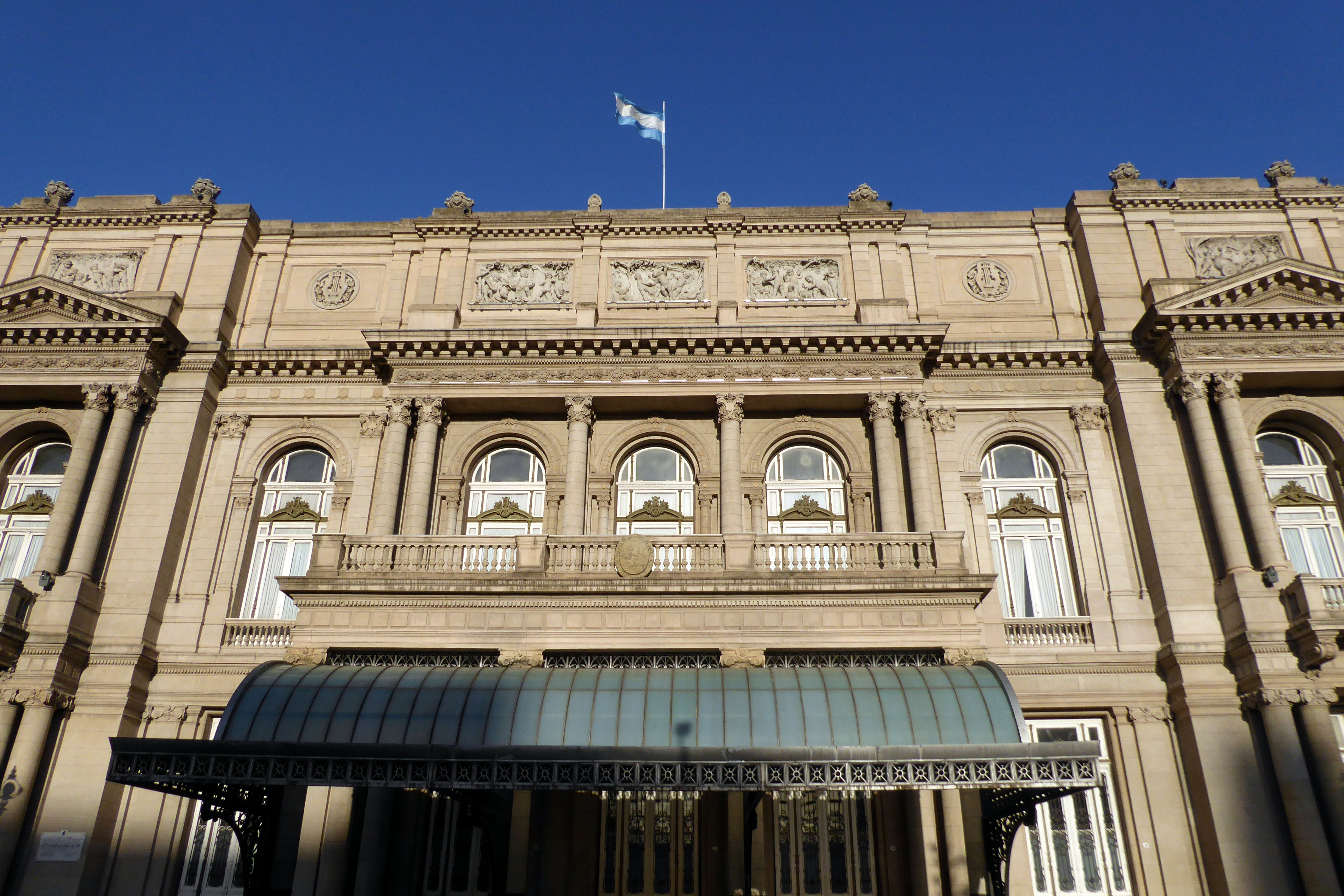
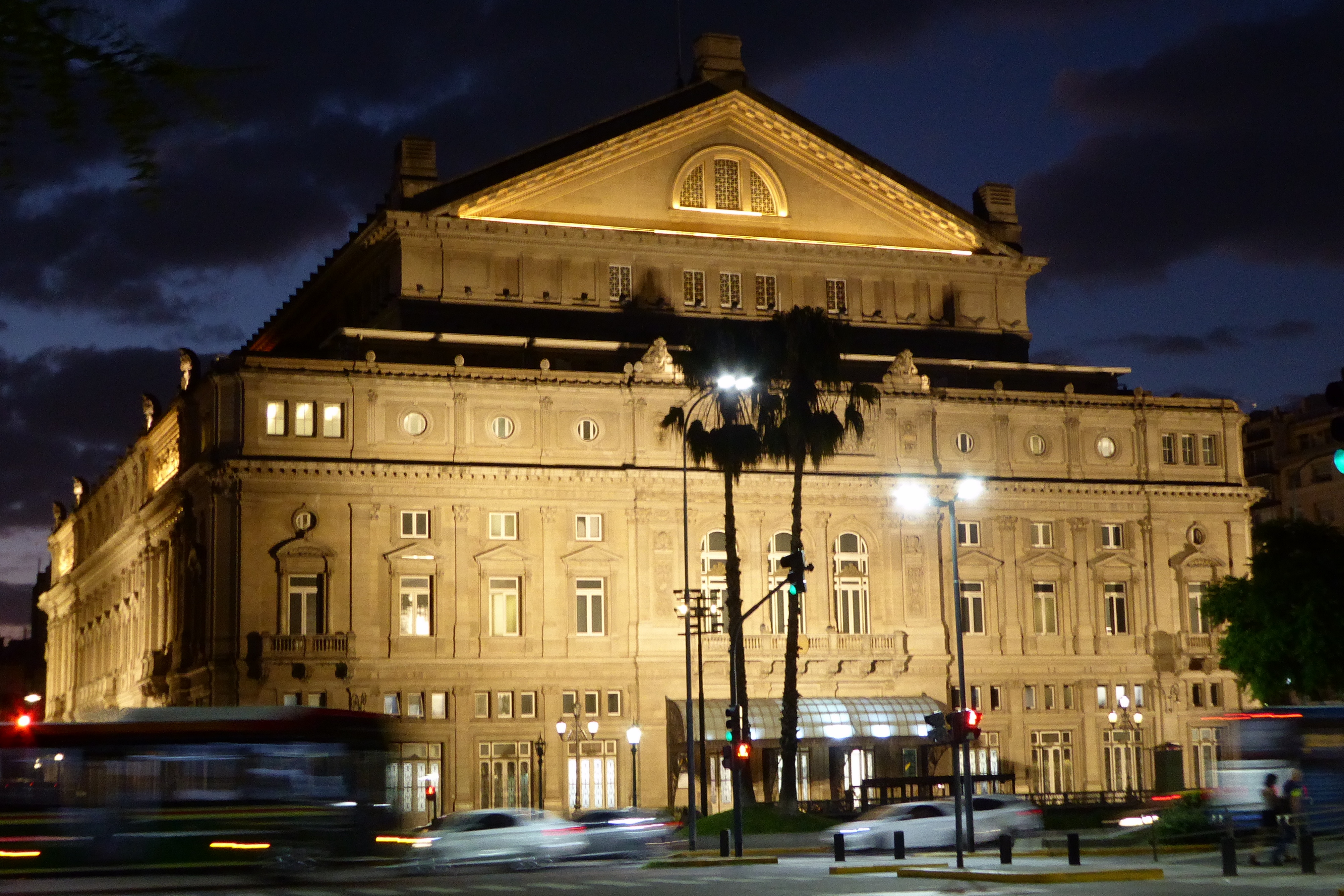
On the way to Pizzeria Guerrin, we stopped to see the world-famous Teatro Colon, considered one of the most important opera houses in the world.
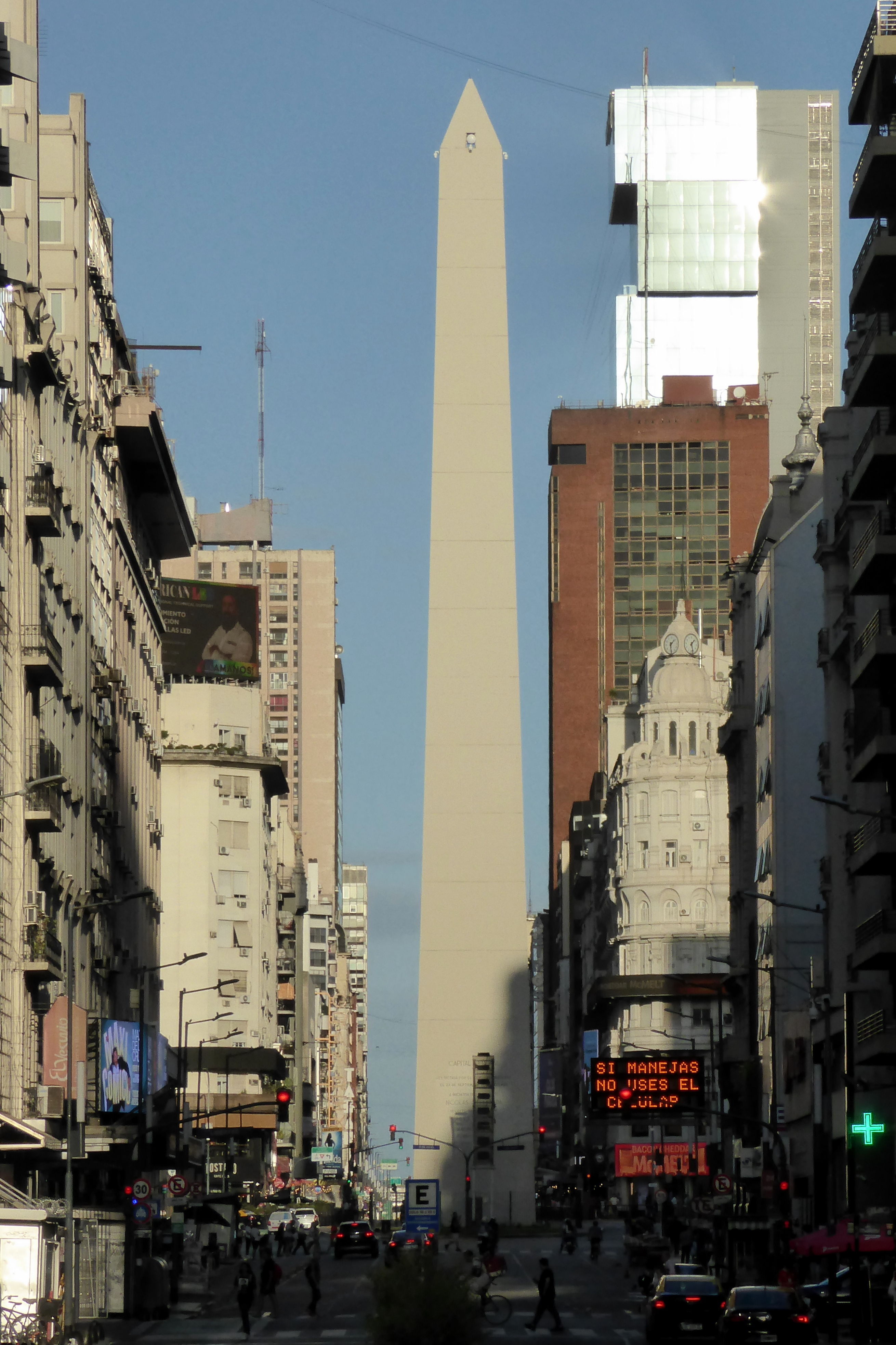
The obelisk of Buenos Aires is a national historic monument and icon of Buenos Aires. It is THE meeting point for political protests and celebrations, including Argentina’s 2022 World Cup victory.
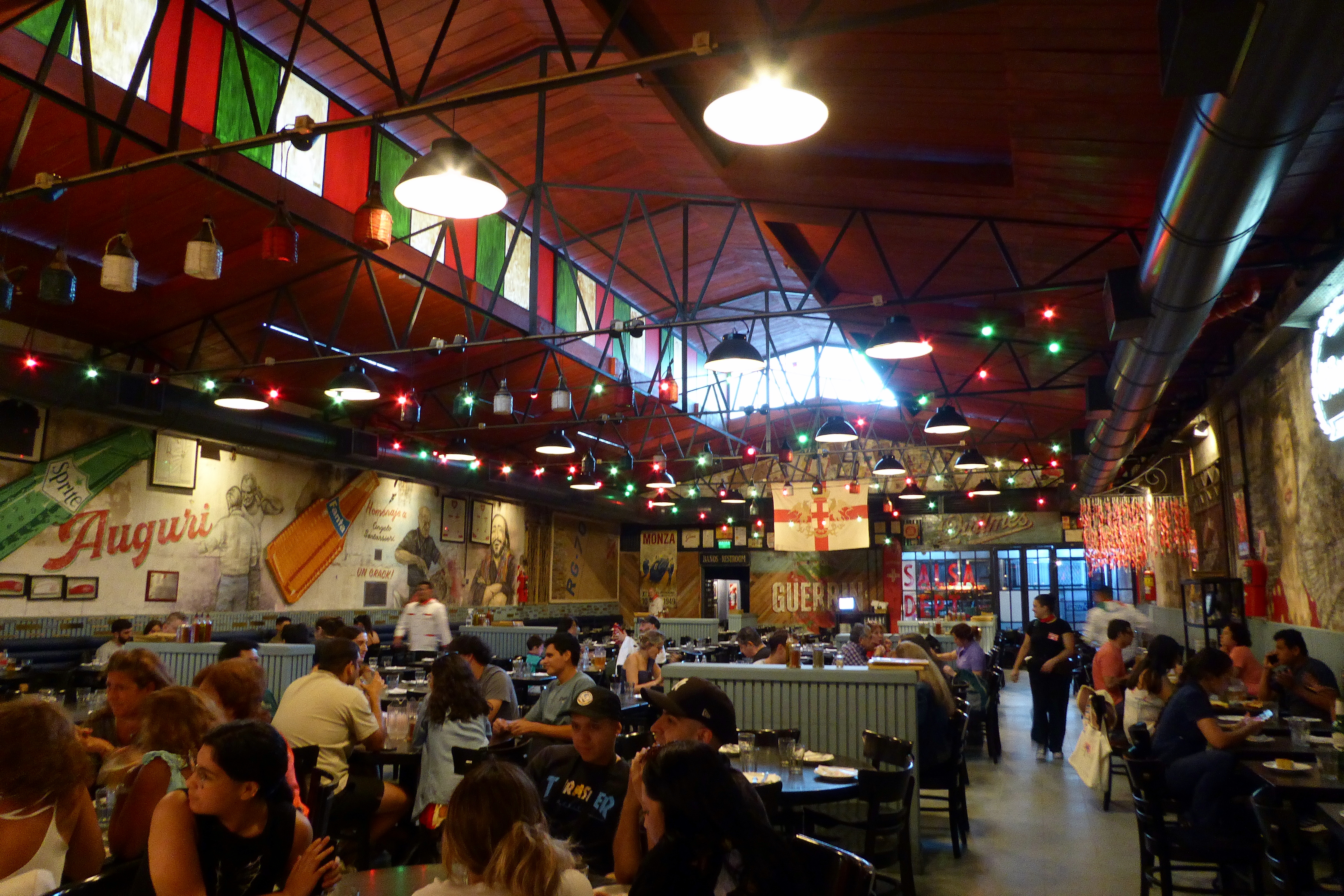
Pizzeria Guerrin, a popular theater district hangout for locals and tourists alike, was a fun and funky place. We passed through several smaller rooms before we arrived at our table in this larger room at the very back of the restaurant.
Their theater district is much like New York’s Broadway.
The Obelisk was lit up colorfully at night.
A night view of the opposite side of the opera house.

Next up:  ARGENTINA & CHILE #3: MORE OF BUSTLING BUENOS AIRES

ARGENTINA & CHILE #1: BEGINNING IN BUENOS AIRES

When Bruce and I were deciding on a destination for our third small group tour with Overseas Adventure Travel (OAT), we wanted to travel somewhere we had never been.  I contacted my fellow travelers from our Italy and Iceland OAT tours to ask them for their recommendations.  There were a few tours that kept popping up in their responses, so we booked those tours for 2024 and 2025—the first being Argentina and Chile.  I had never been to Argentina, so it would be my 72nd country to visit.  And, I had only visited Valparaiso, Chile, and the nearby wine region for a few days before boarding a ship for a cruise, so I wanted to see more.  Bruce had never been to either country.

Before our departure, we had received e-mails (with a cute photo!) from our trip leader, Andrea Salas.  The emails were loaded with great information, sprinkled with humor and colorful fonts, and full of personality.  It struck us both that Andrea was going to be an excellent and fun trip leader, and it was later confirmed during our pre-trip video conference with her on Whatsapp.  What a hoot!  We couldn’t wait to meet her in person.

On Valentine’s Day morning, we arrived in Buenos Aires for a day on our own before joining the group at Argenta Tower Hotel.  Fortunately, there was only a two-hour time difference from Georgia, so jetlag wasn’t an issue; but, lack of sleep on the redeye left us looking forward to a good night sleep.  Until then, we filled the day by getting our Argentinian pesos, taking Andrea’s advice to partake in Argentina’s awesome gelato at Rapanui, and exploring the city.

Argentinean pesos.  Now, that’s a loaded topic—literally.  $100 USD converted into a tall stack of pesos!  Splitting the wad with Bruce, neither of our wallets could close easily.  At the time, we received slightly more than 100,000 pesos—almost all in 1,000-peso notes, worth about $1 each.  (The extra was in 500 notes.)  Try cramming more than 100 bills in your wallet!  At least it was an easy conversion to calculate when pricing an item.  Knock off a bunch of zeros, and you have your dollar amount.

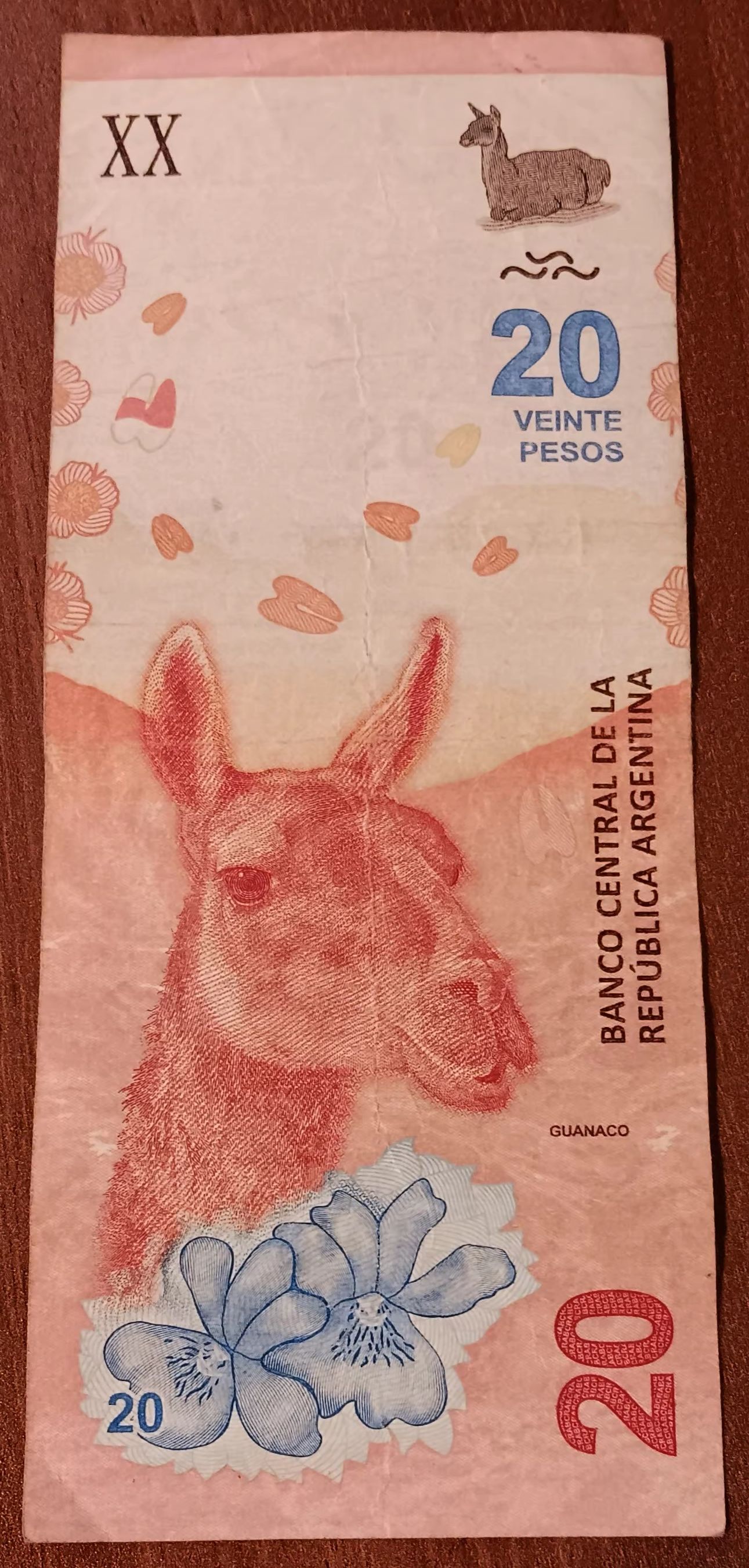
Their currency is quite attractive.  Here is the front and back of a few of their notes.

(For all photos, click on the image for a full screen view.)

This lovely 20 peso note features a guanaco (llama)—we saw a lot of those cuties while on the road.  This attractive note is only worth 2 cents now.  It probably cost more than that to produce it!

What is going on here?  Argentina has been experiencing 200% annual inflation!   You think the U.S. inflation rate is high? Hah!  I will happily accept our 3.1% inflation rate, thank you very much.

As a result of the Argentinean peso’s value, expenses for extras not included with the tour were very low for us.  Take the (amazing!) gelato at Rapanui, for example.  Our medium-sized cup of two scoops (dark chocolate and dulce de leche (carmel) of gelato set us back only $2.60 USD.  Ohhh, and it was sooo good!  (Andrea was spot-on when she claimed Argentinean gelato was just as good—or better—than Italian gelato.  After all, Argentina was settled by a lot of Italians!)

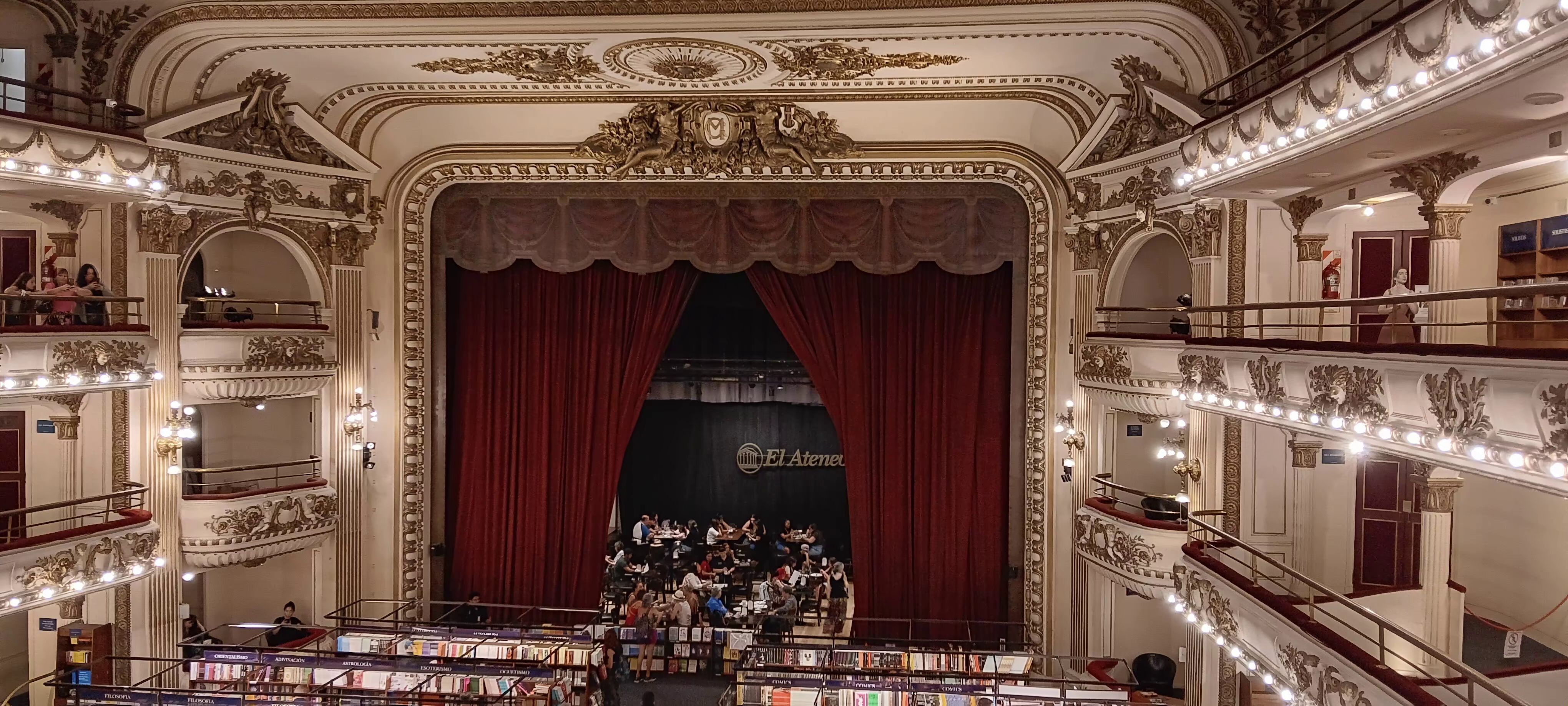
Thoroughly pleased with our first (of many!) Argentinean gelatos, we secured our bulging wallets and headed to the bookstore Andrea recommended visiting.  Now, this isn’t your ordinary bookstore.  El Ateneo Grand Splendid Bookstore, formerly a theater, was gorgeous!

After a casual dinner at a little Argentinean restaurant frequented by locals, we were ready to call it a day.

This was just the first of our three-week adventure, so I have many more posts to come!  Would you like to see more?  Go to my home page at www.ElainesTravels.com, scroll down to the “Sign me up!” button, and enter your e-mail address.  You will receive an e-mail when each new blog is posted.  Rather than reading the post in the e-mail, click on the blog title to read the post at my site for a better experience.  I do not monetize my blog, so you won’t see any dreaded ads!  If you would like to see a larger image of each photo, just click on it to view it full screen, better viewed on a desktop computer!  Although you can unsubscribe from my blogs at any time, I hope you will stick around for more adventures to come.  We have a lot more travel already scheduled for 2024 and 2025! 

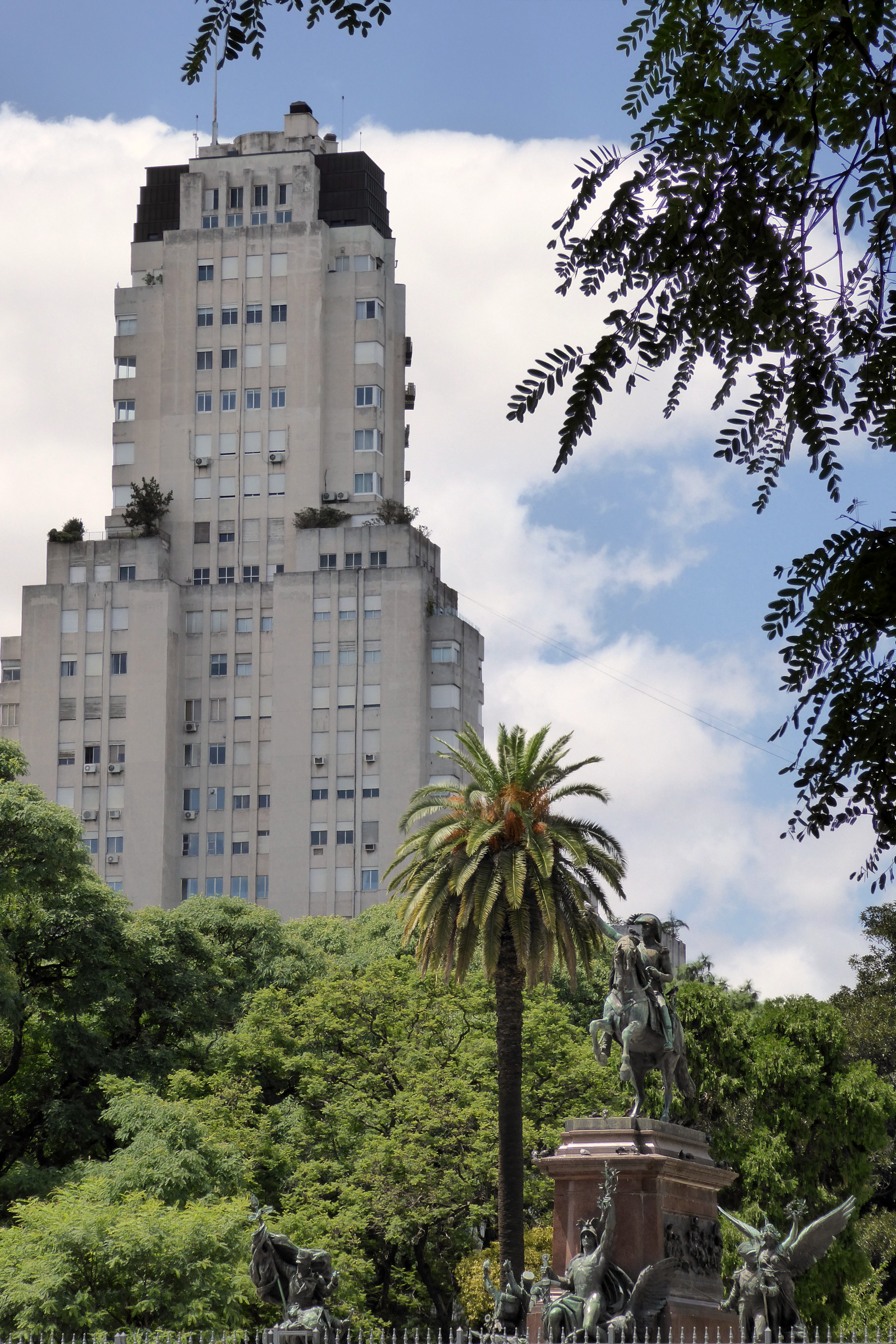
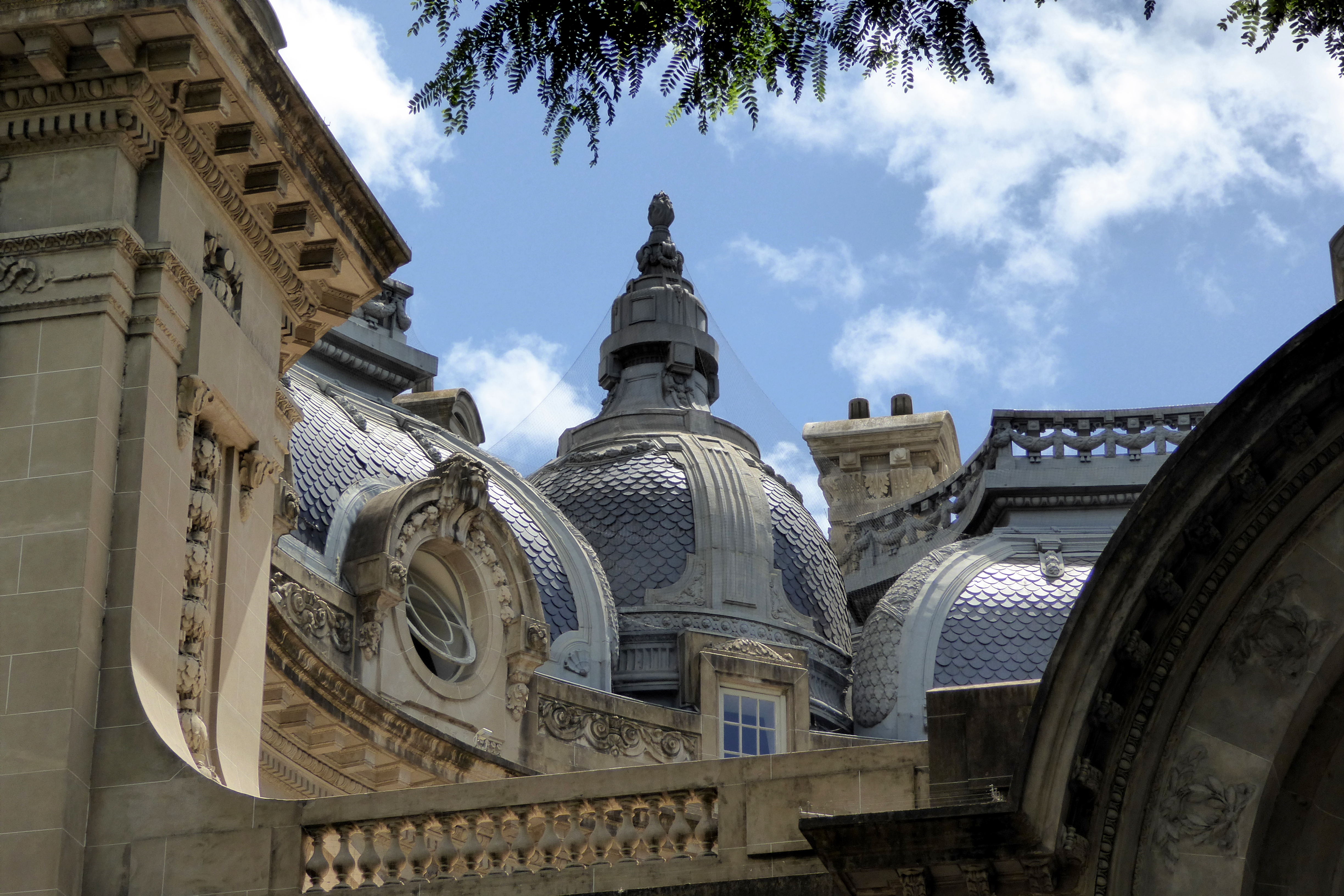
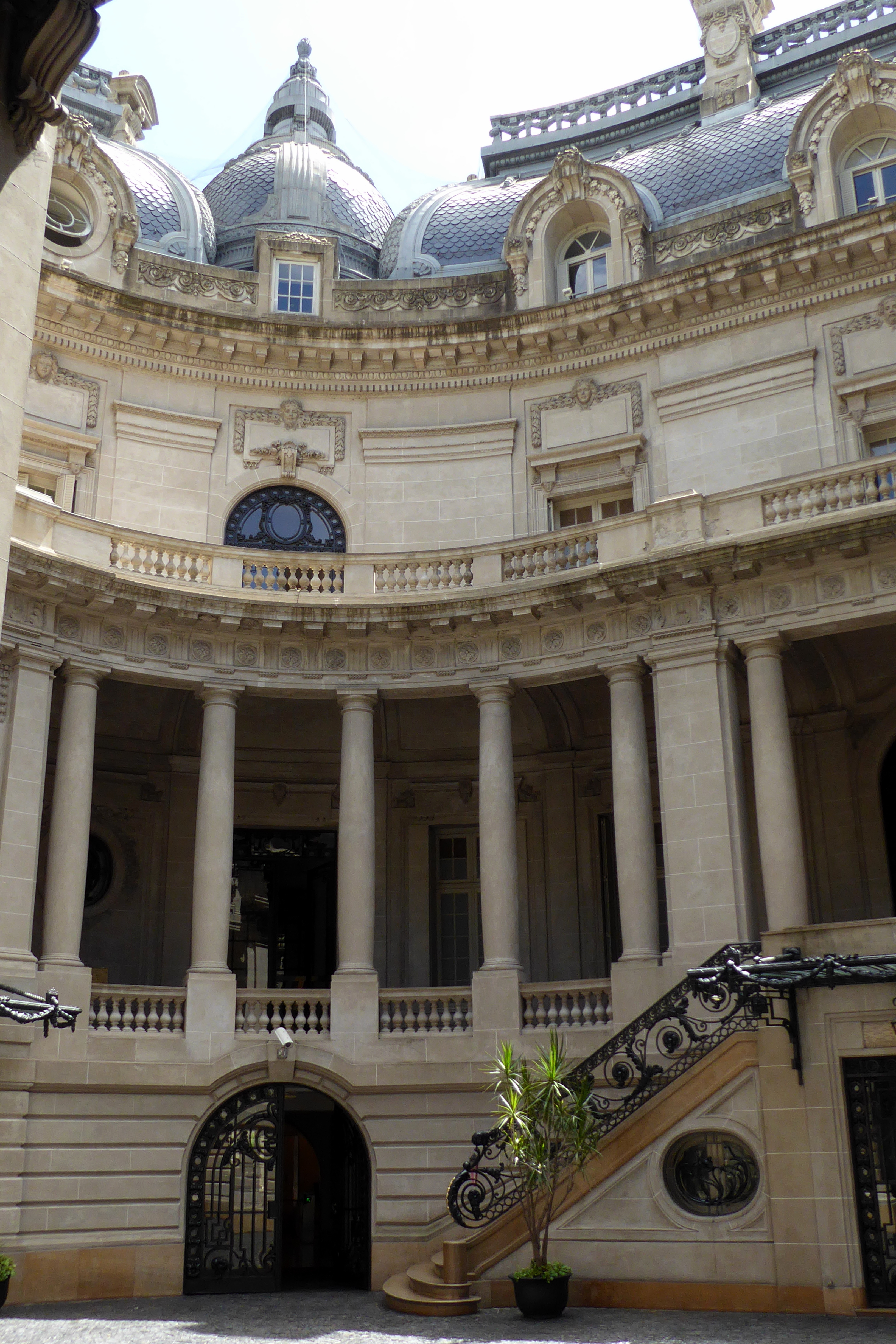
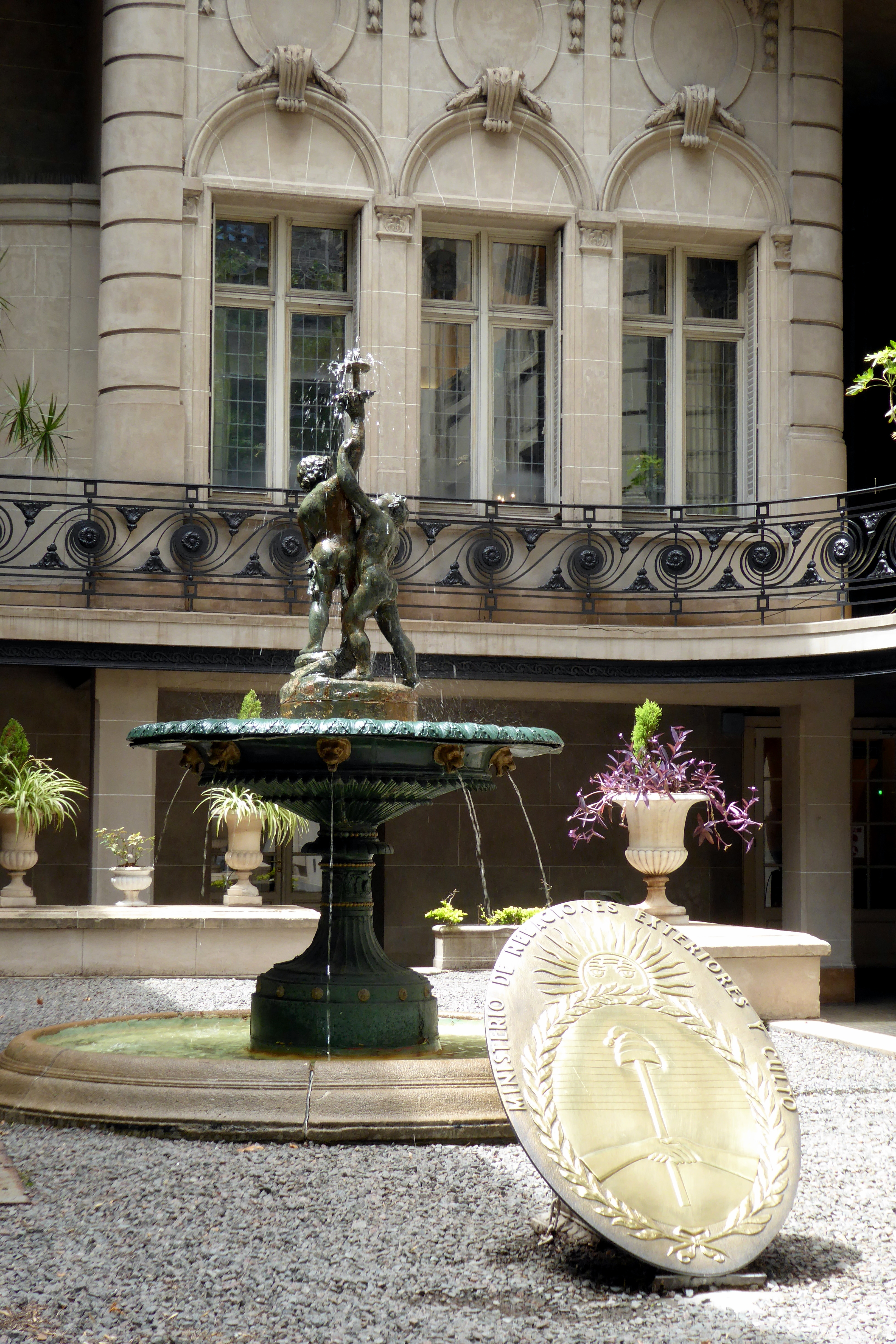
Meanwhile, I will leave you today with a few scenes from near our hotel at San Martin Square.

Located on San Martin Square, Palacio San Martin dates back to 1905.

Coming up next:  Argentina & Chile #2:  Bustling Buenos Aires

ICELAND #16: A SLIDE SHOW

To see a slide show (full screen) of my Iceland photos from our Overseas Adventures small group tour of Iceland, in July, 2023, click on “copy link” in the upper right hand corner of the YouTube screen and paste it in a your URL (where you would type in a website). You can view it full screen by then clicking on the open square symbol in the lower right hand corner of the YouTube window, which will expand it to full screen.

If small group travel is of interest to you, I highly recommend Overseas Adventure Travel (OAT). Although Bruce and I travel together, they do not charge a single supplement for those who travel on their own. Singles also get their own room at hotels. If you book, you can get $100 off your trip by providing my name and customer number (Elaine Krugman, #3018126) as the person who referred you. I will also get $100 off future travel– a win-win!

SCOTLAND #5 – TOURING THE SCOTTISH PARLIAMENT & SCENES AROUND EDINBURGH
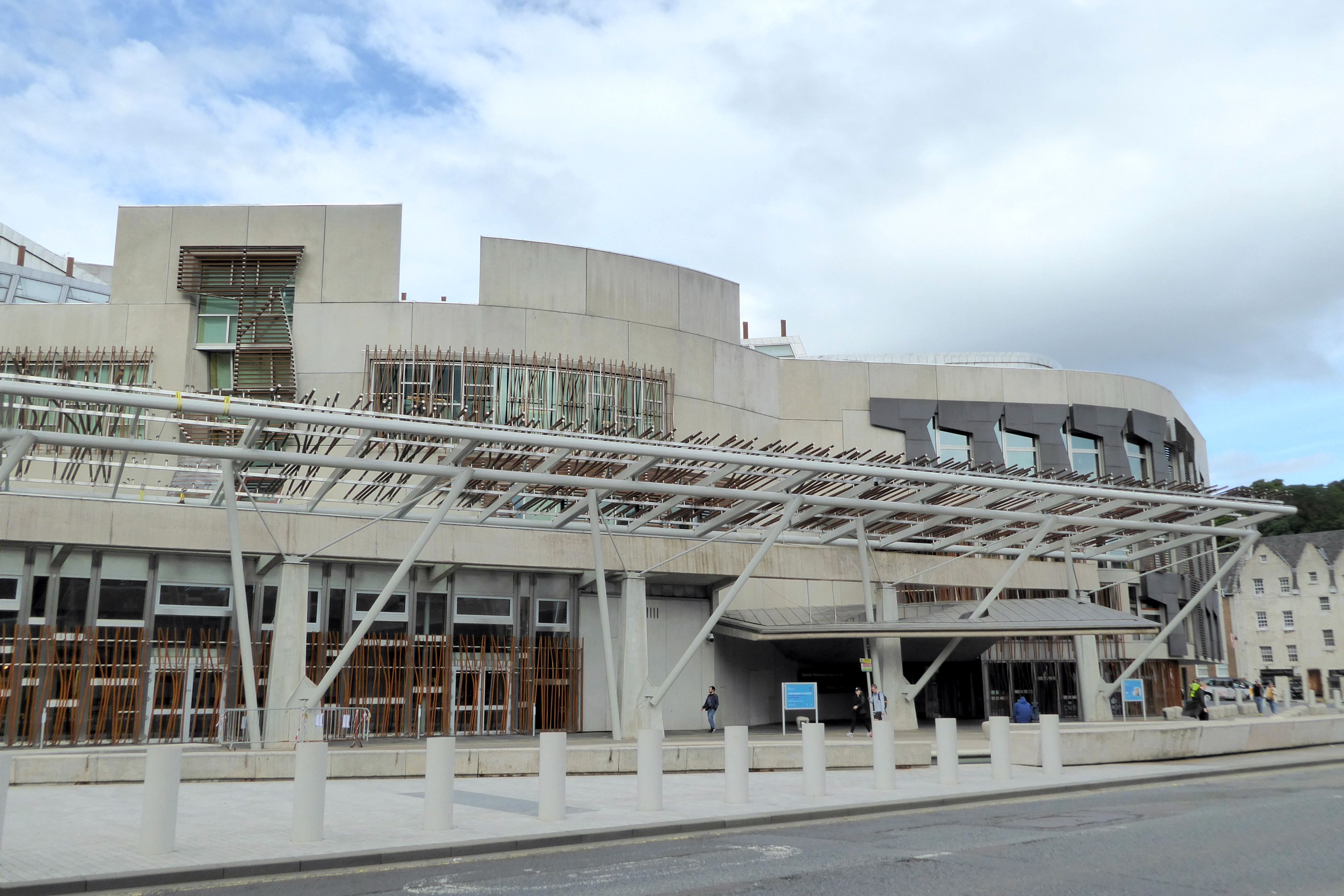
For our final day in Edinburgh, we booked a free tour of the Scottish Parliament Building, so we could see more of its unique architecture. 

Back in 1997, when Tony Blair became Prime Minister of the United Kingdom, he promised constitutional reform within the UK.  A Scottish referendum was held on two questions: to decide whether or not there should be a Scottish Parliament and whether that Parliament should have the power to vary taxation.  The majority of Scots voted Yes to both proposals.  In July of 1999, a Scottish Parliament met in Edinburgh for the first time since the Union of the Parliaments in 1707.

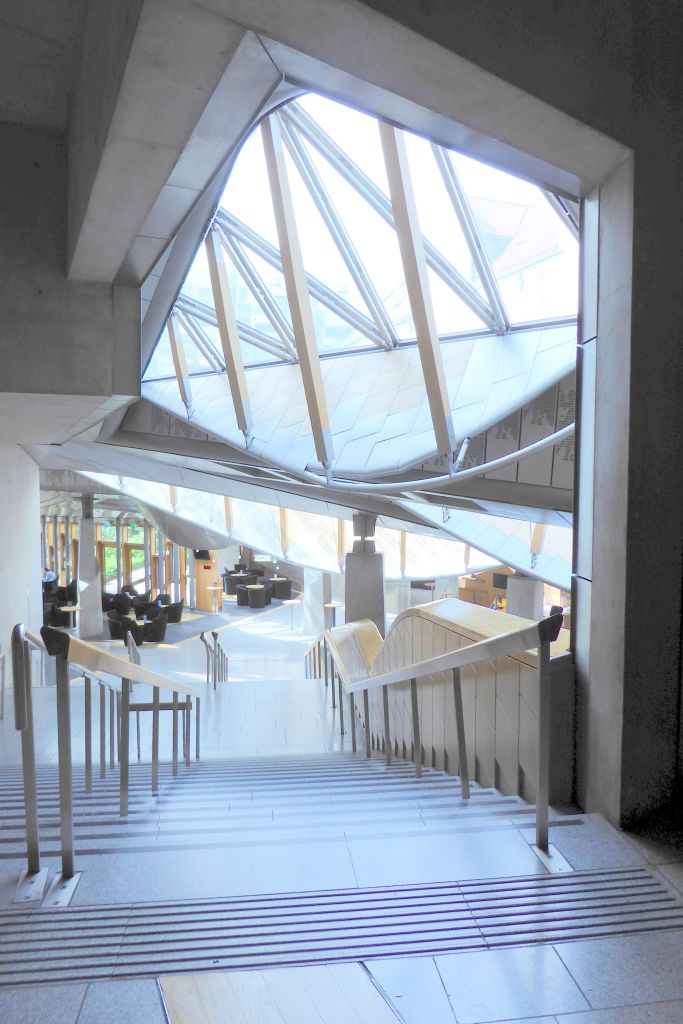
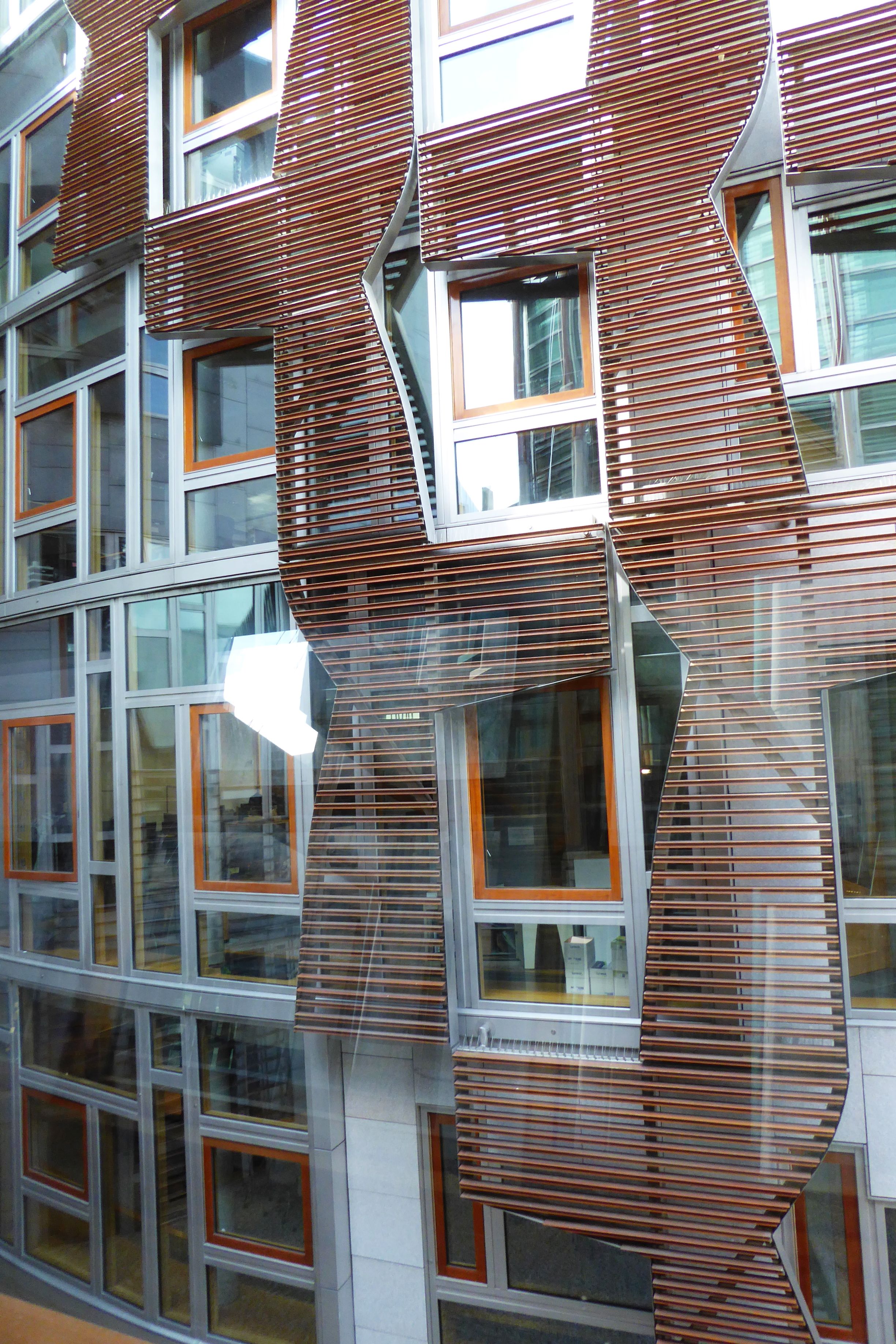
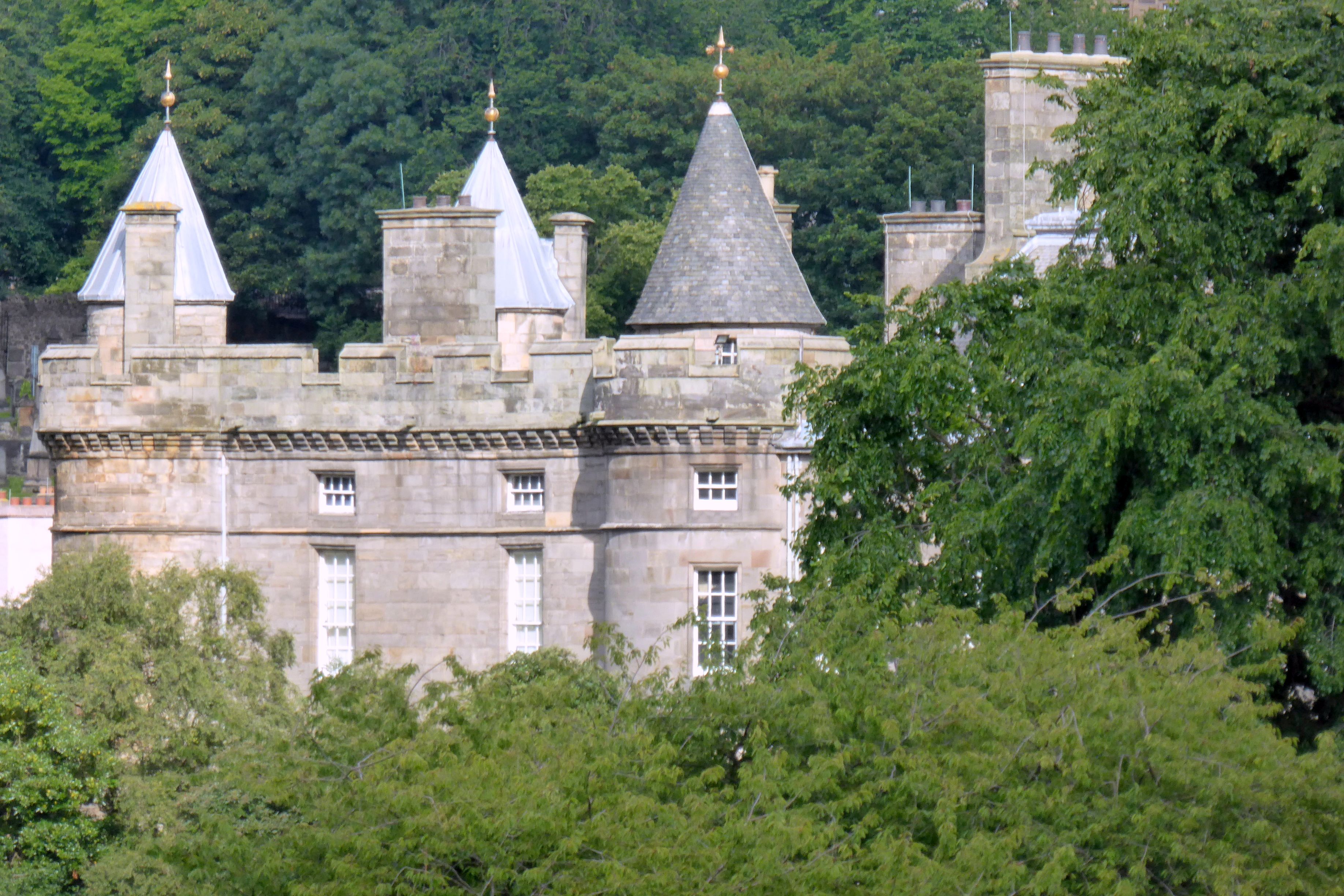
From 1999 to 2004, the Scottish Parliament Building was constructed adjacent to the Palace of HolyroodhouseEnric Miralles, the Spanish architect who designed the building, died before its completion.  How sad that he never got to see his creation and the awards it had won, including the 2005 Stirling Prize.

(For all pictures, click on the image to see full screen view.)

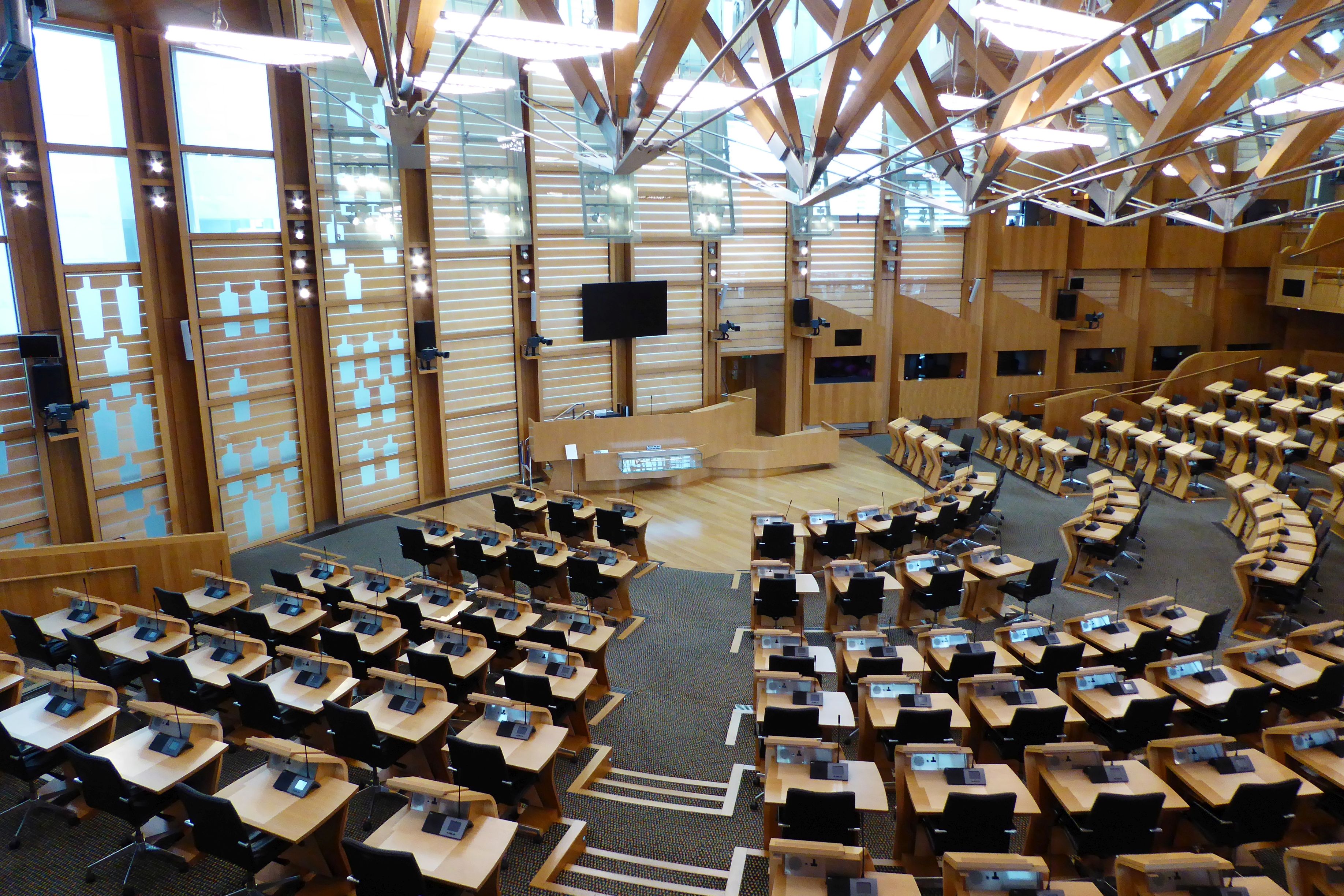
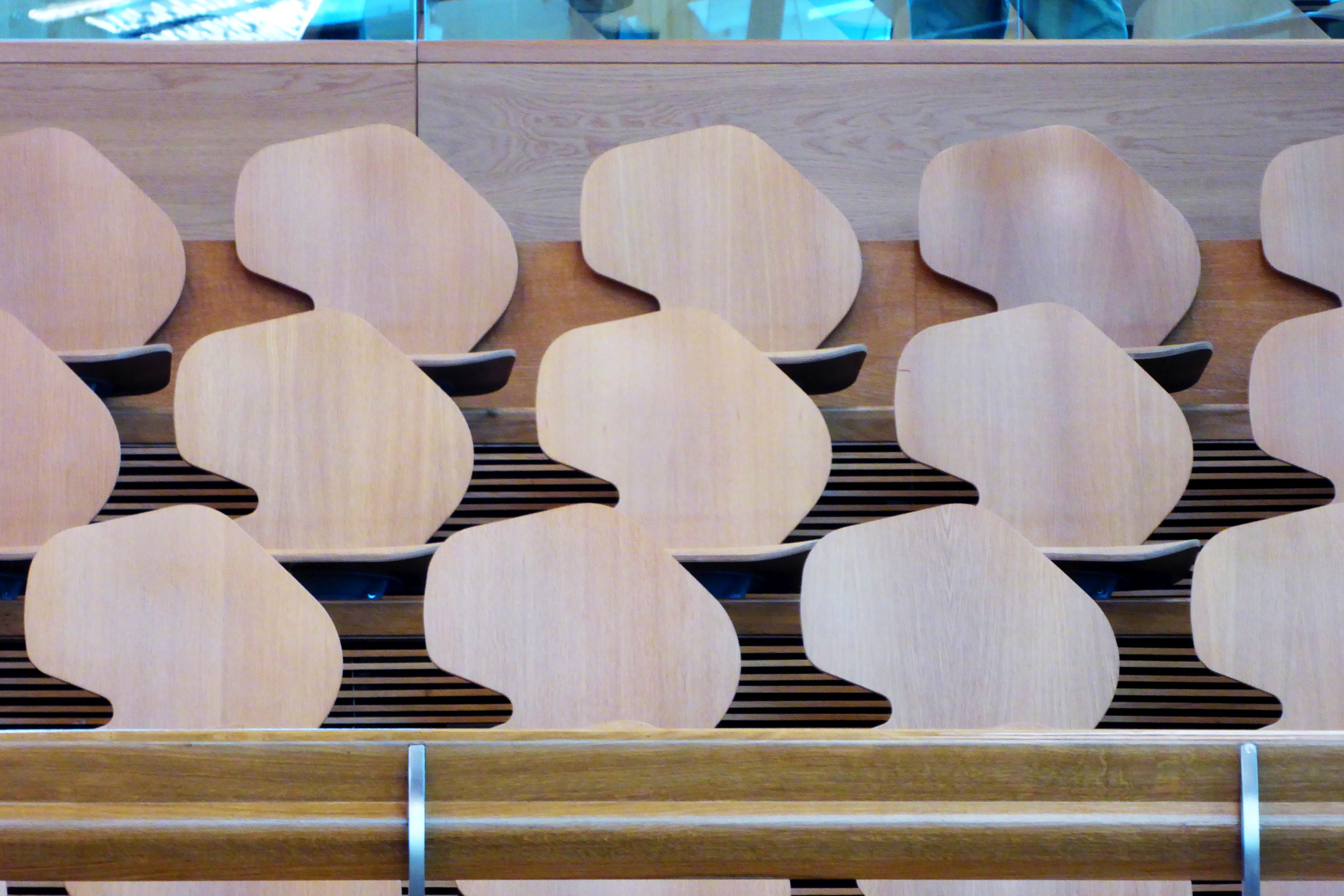
I thought the architecture was fabulous; very unique and interesting!  My favorite area was the debating chamber, a shallow elliptical horseshoe of seating, with the governing party or parties sitting in the middle of the semicircle and opposition parties on either side.  This layout is intended to blur political divisions and encourage consensus.  I liked the design of the desks, chairs in the gallery, the light fixtures, and the way the glass panels let in a lot of natural, diffused light.  Notice the designs in those glass panels. as well as in the light fixtures.  They look a lot like whiskey bottles, don’t they?  I can imagine how after a long session of debating, the politicians take a look at those bottles and wish they were real bottles full of whiskey!

Ceiling light fixture
This ceremonial silver and gold Scottish Parliament Mace symbolizes the power of the Scottish Parliament to pass laws.
She is made of Lego!

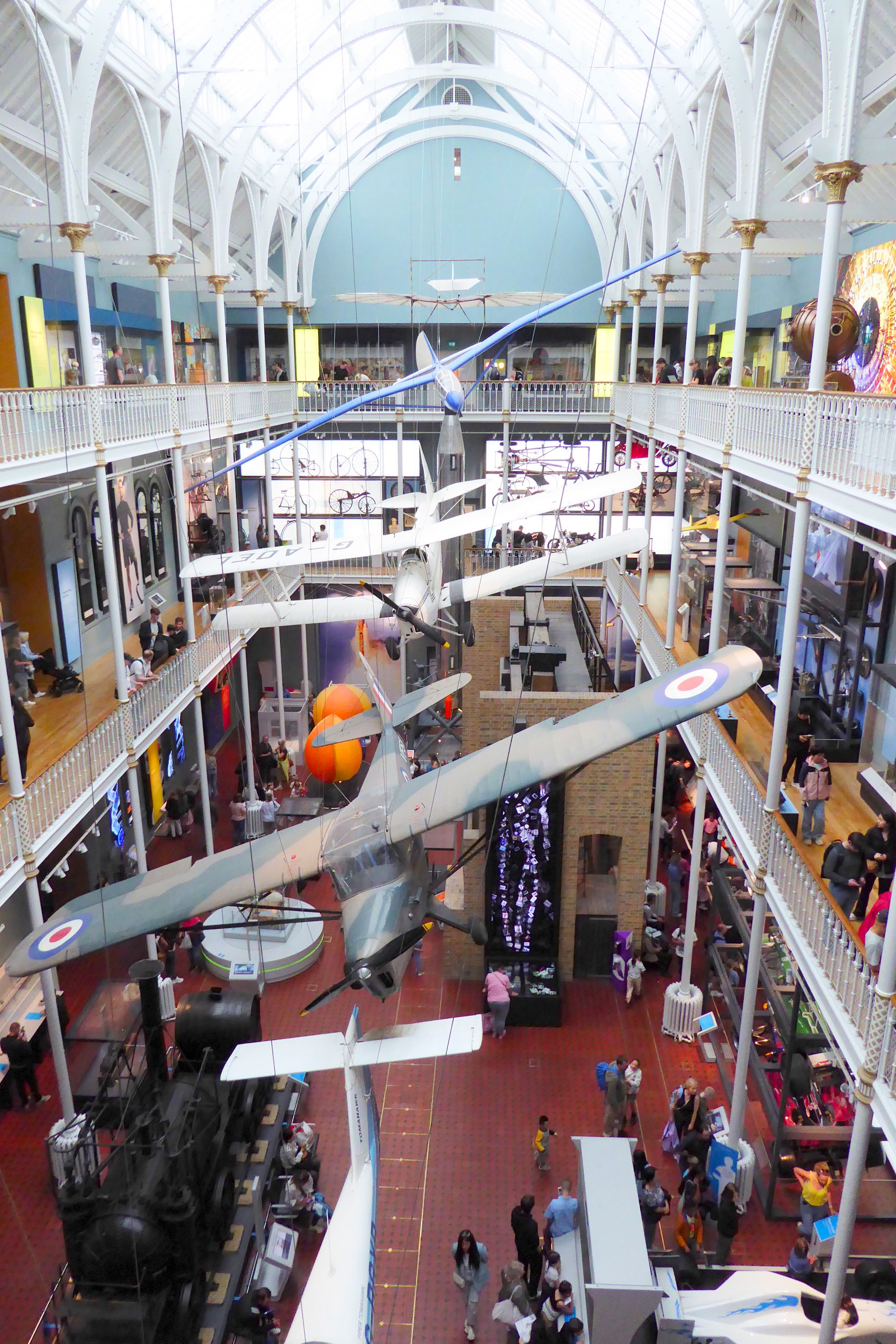
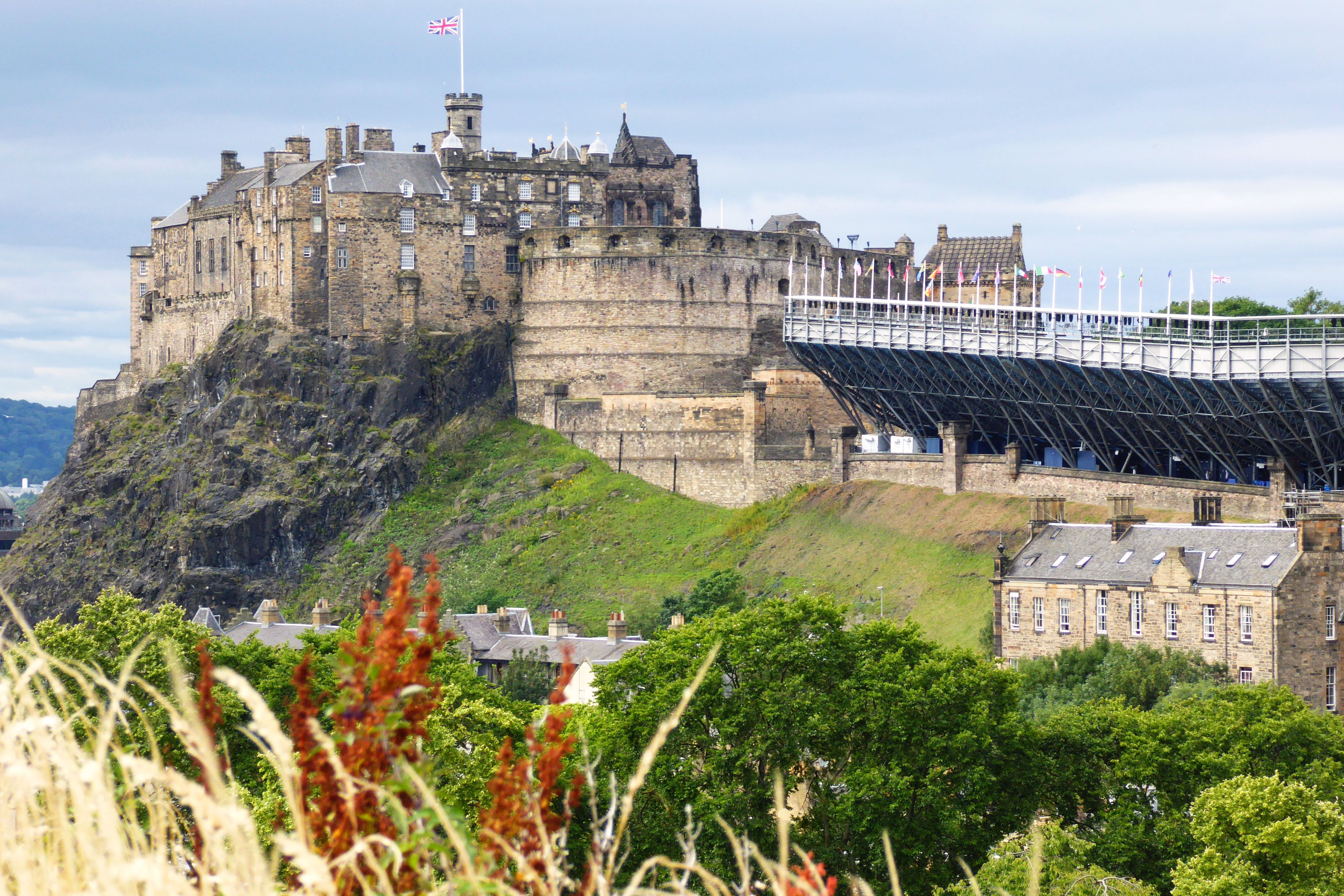
Following our tour, we returned to the National Museum of Scotland to see a few more exhibits and check out the views from the rooftop.  It was a perfect vantage point to see the Edinburgh Castle from another perspective.

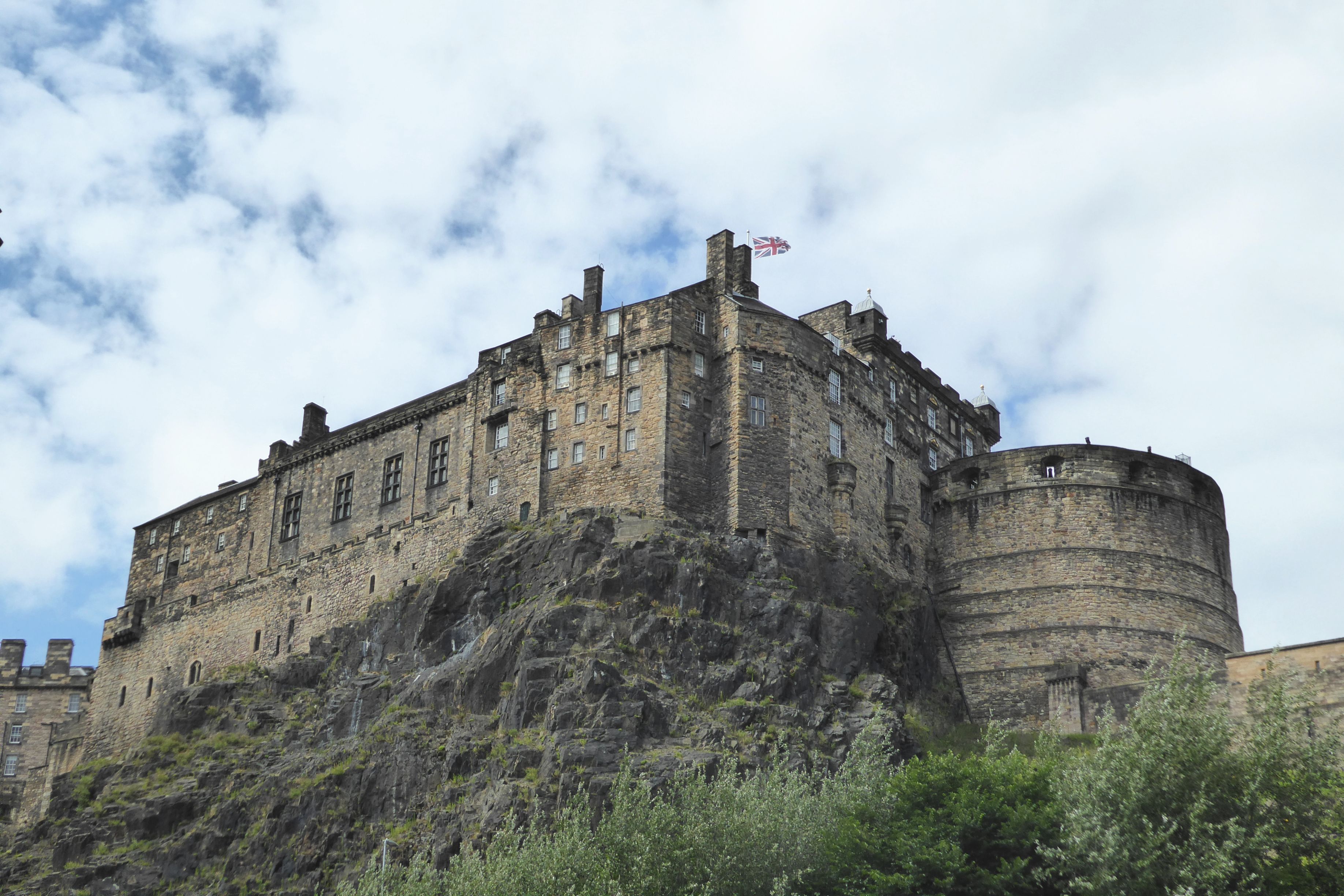
Edinburgh Castle as seen from the rooftop of the National Museum of Scotland.
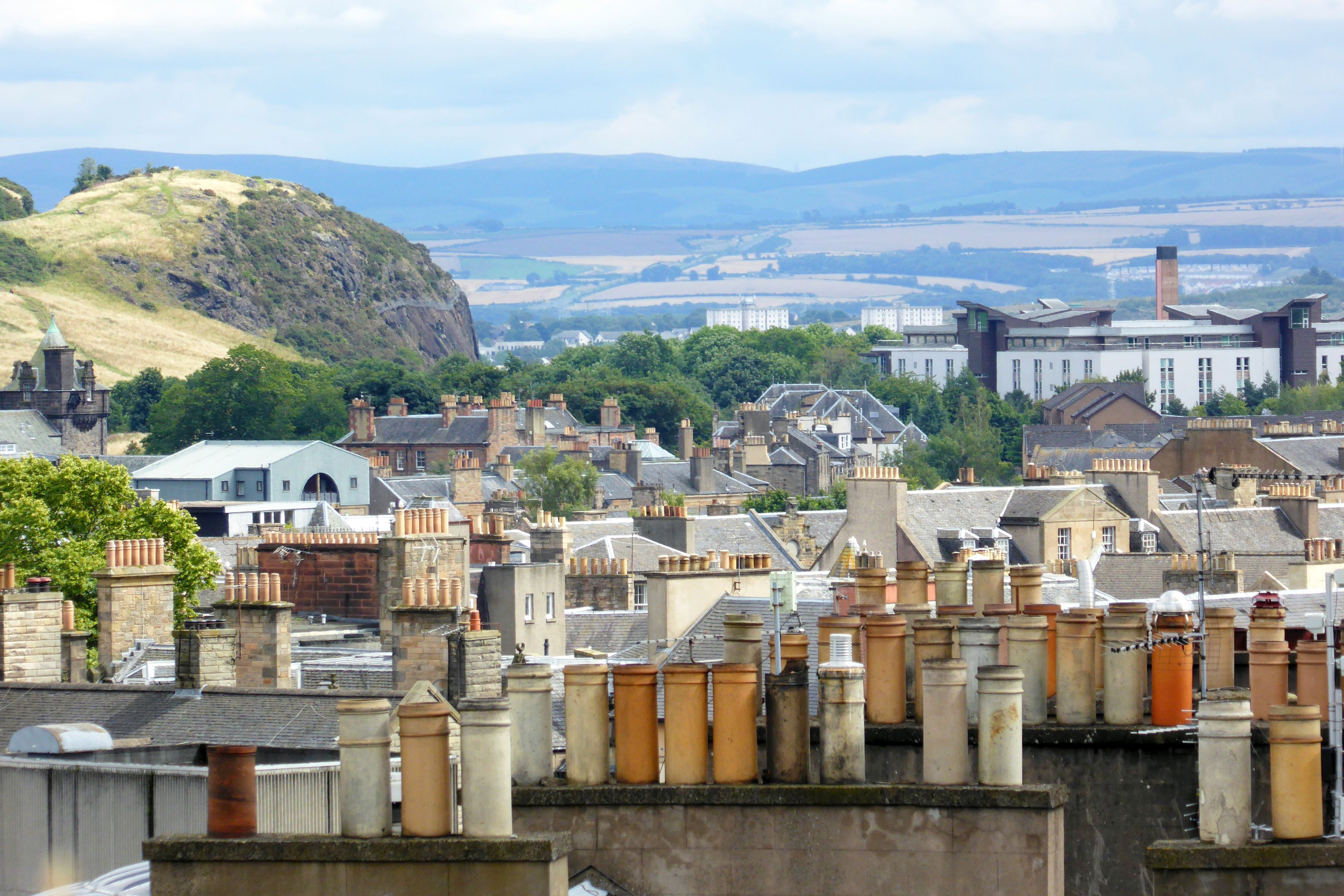
Holyrood Park and Arthur’s Seat

We enjoyed our final day in Edinburgh very much!  Having walked to the Scottish Parliament Building from our hotel through Holyrood Park and past Arthur’s Seat, and then adding more miles walking all over town, we made the most of our day!  It was a wonderful way to wrap up our stay in the city before returning home.

This view was photographed during our walk through Holyrood Park
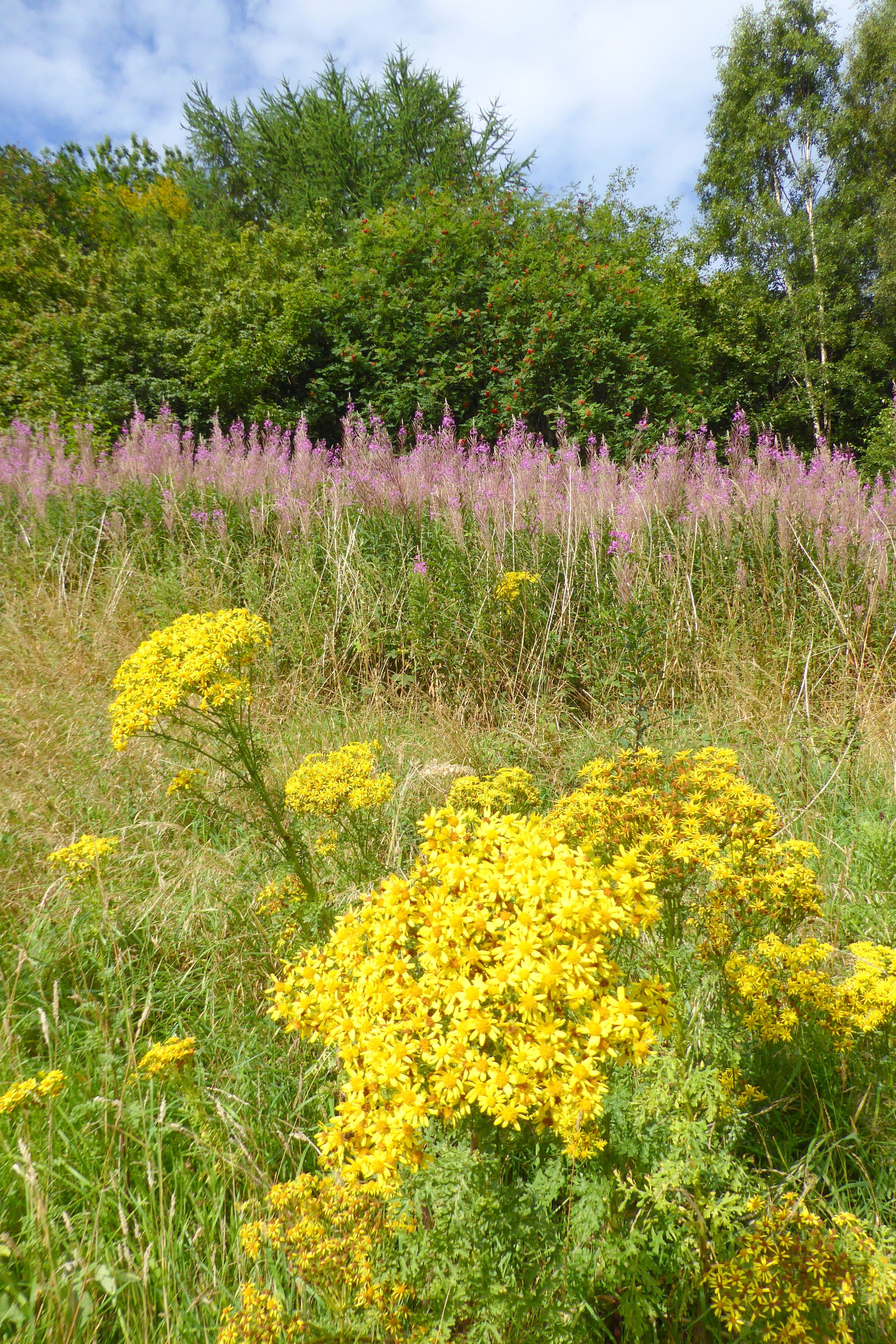
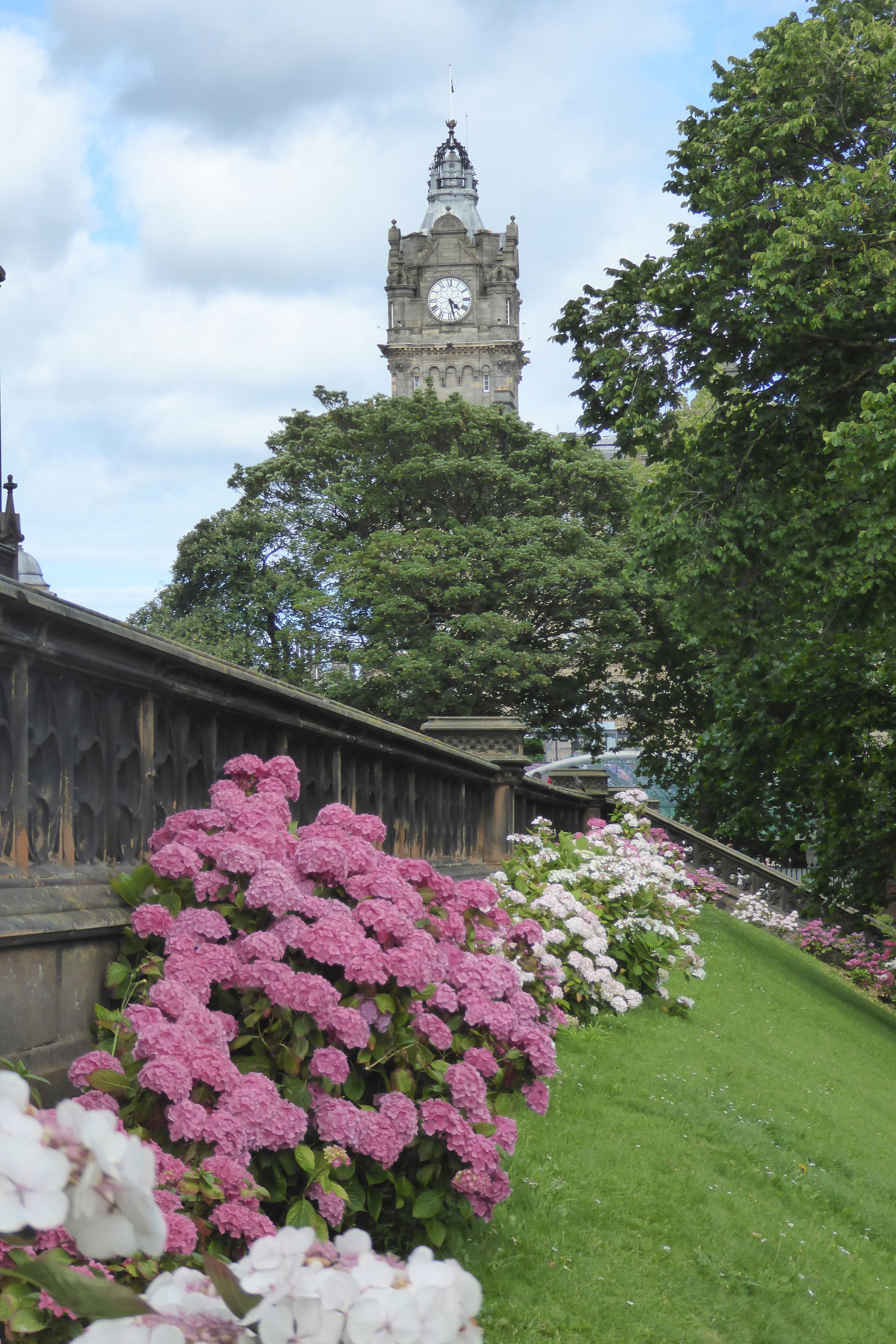
The flowers were blooming beautifully in the park!

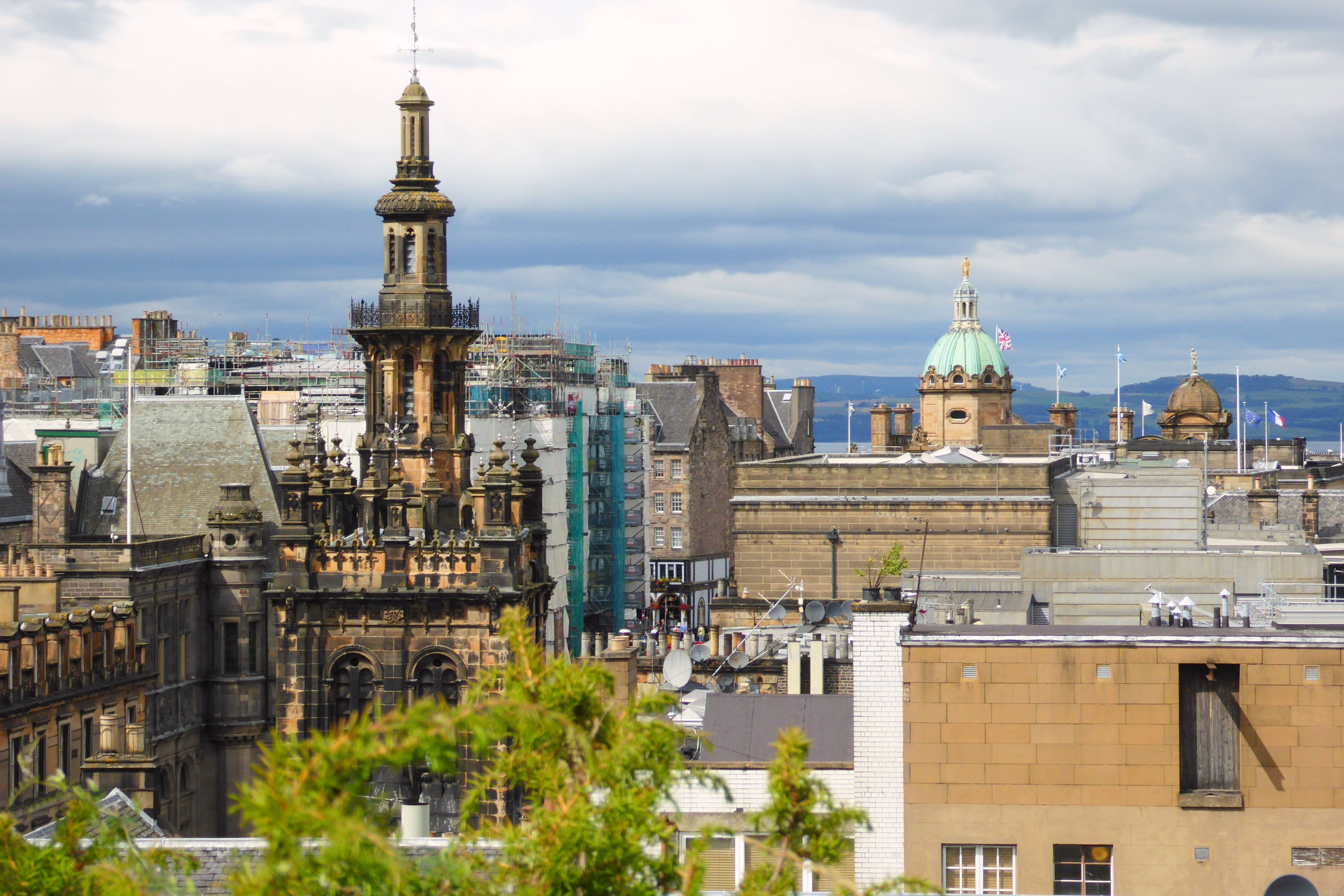
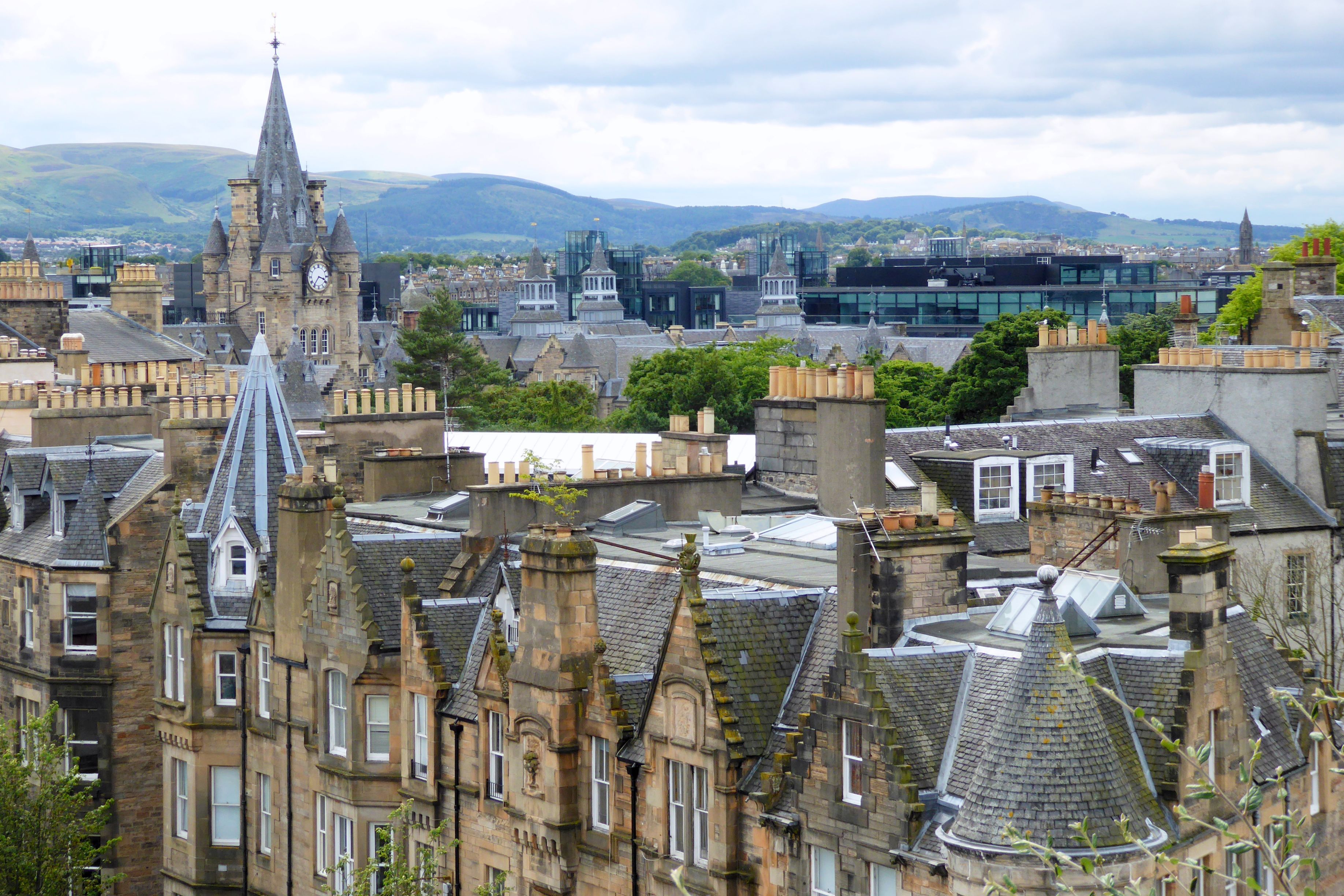
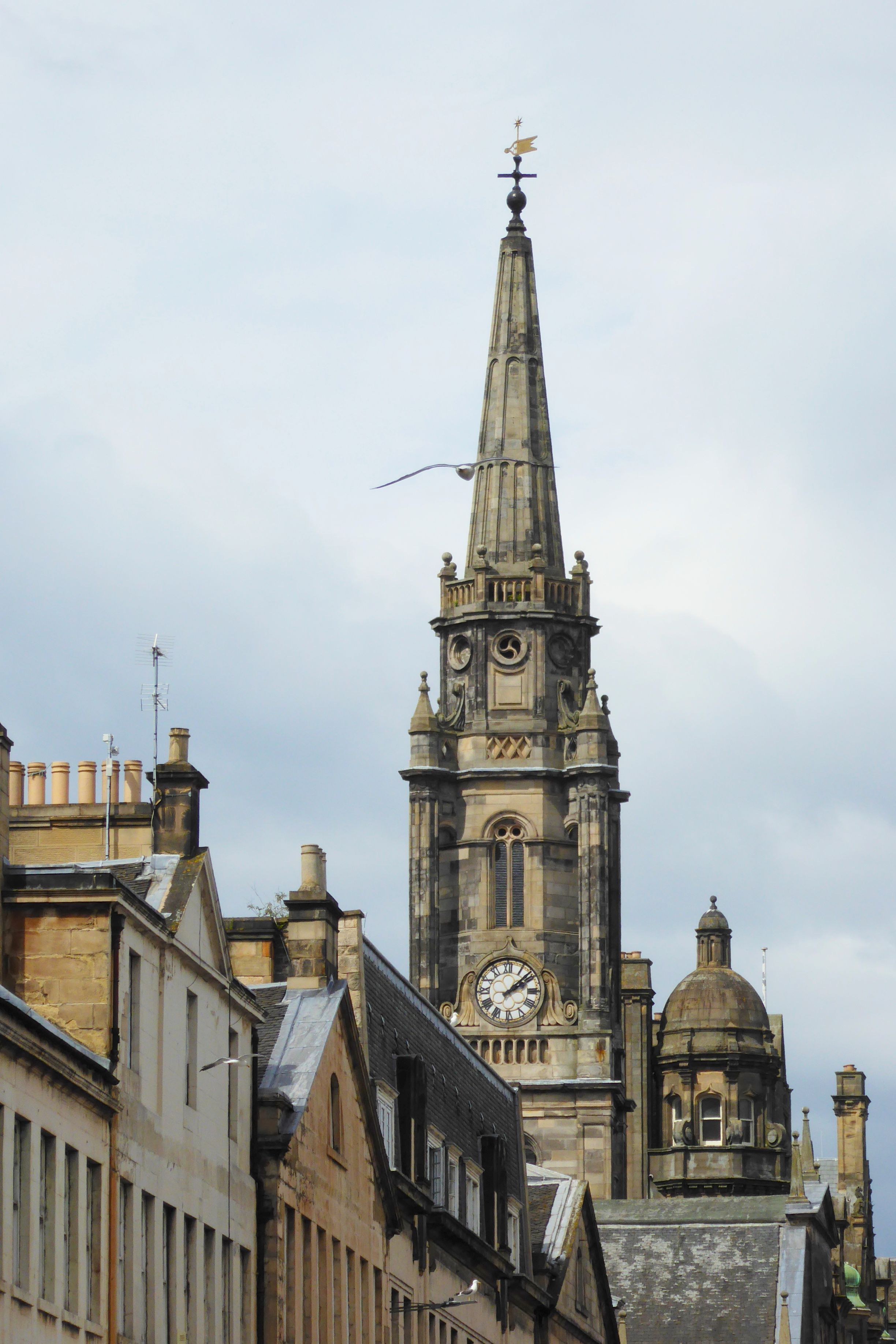
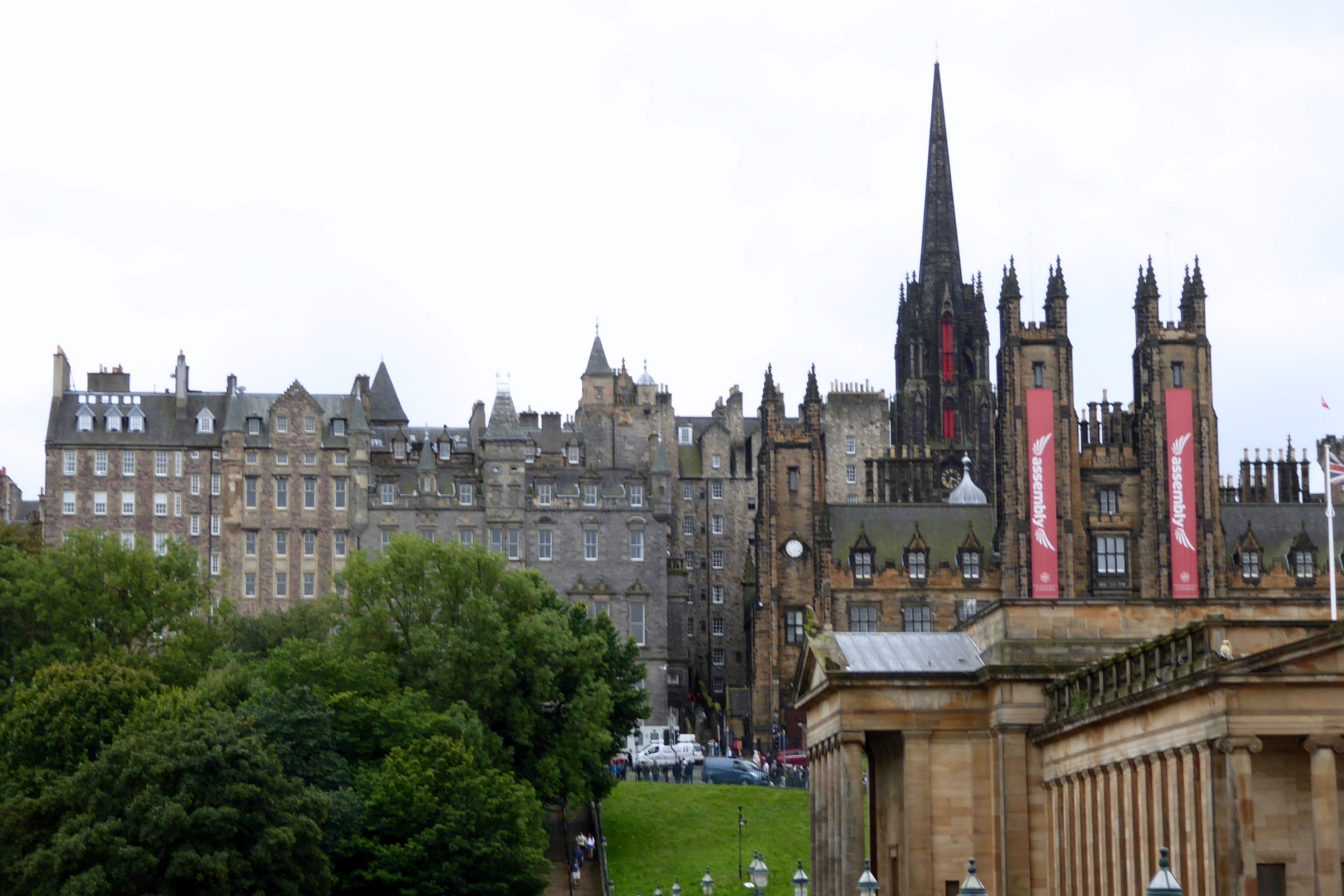
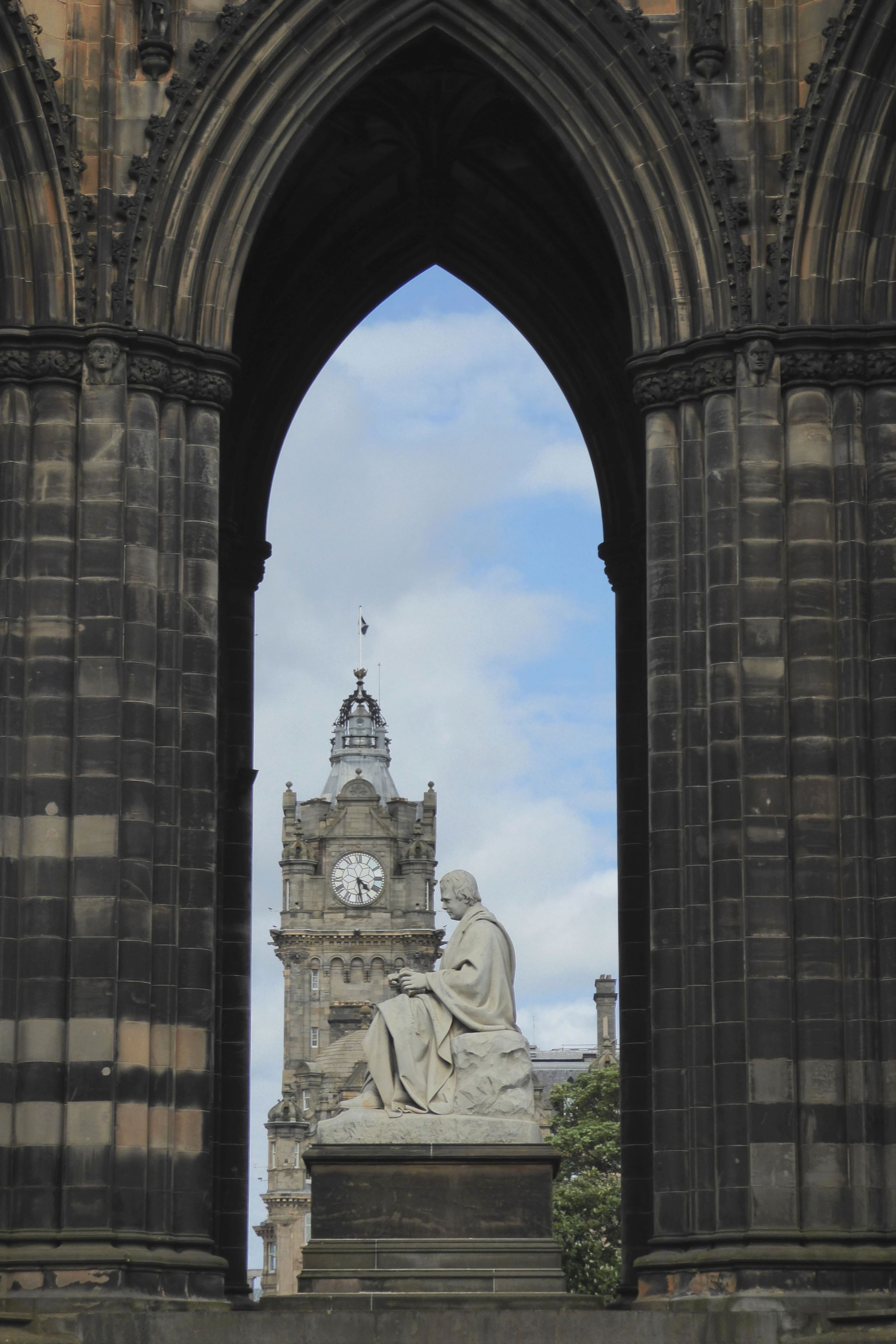
The following are photos I shot throughout our six days in Edinburgh that didn’t appear in my previous posts.

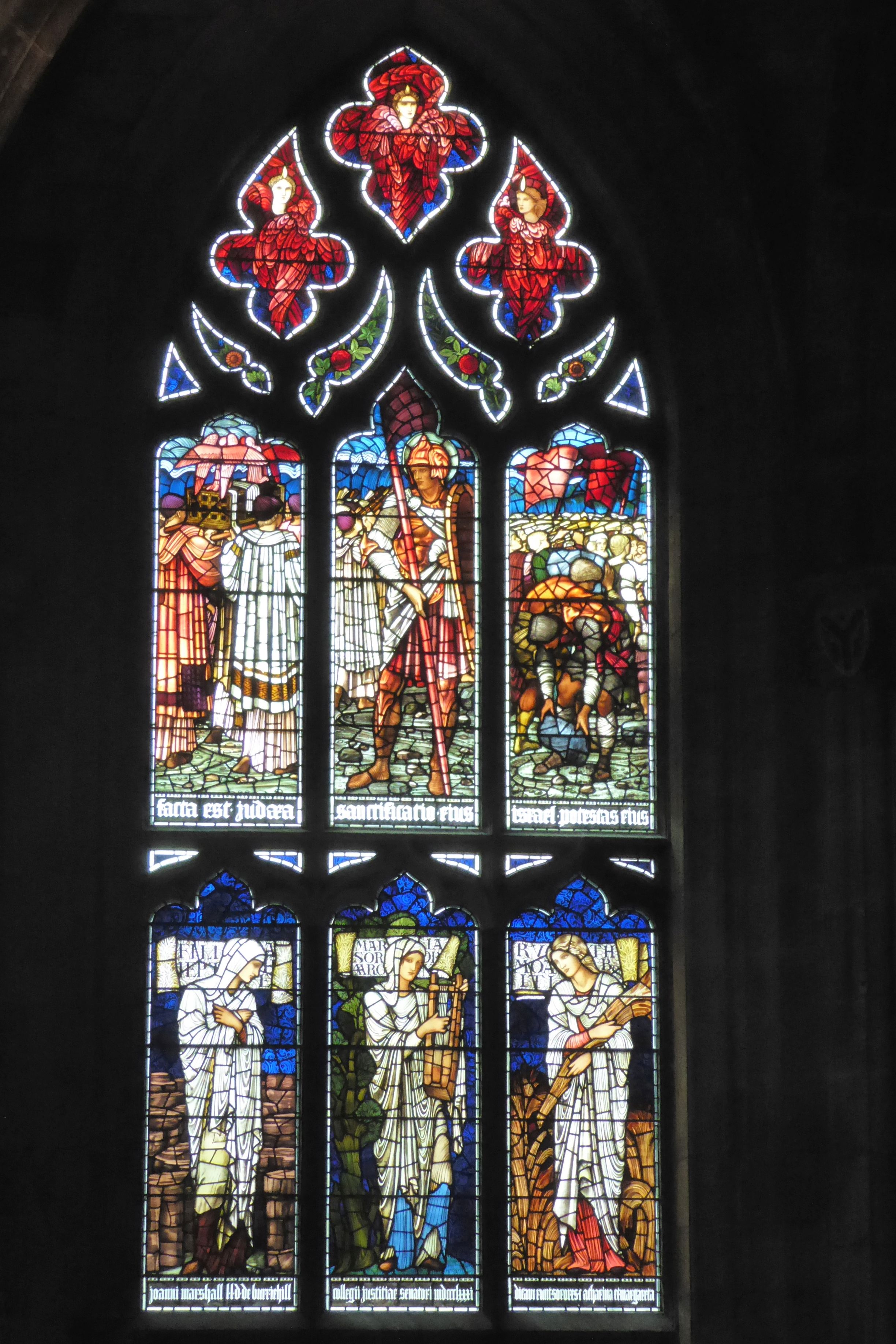
St. Giles Cathedral
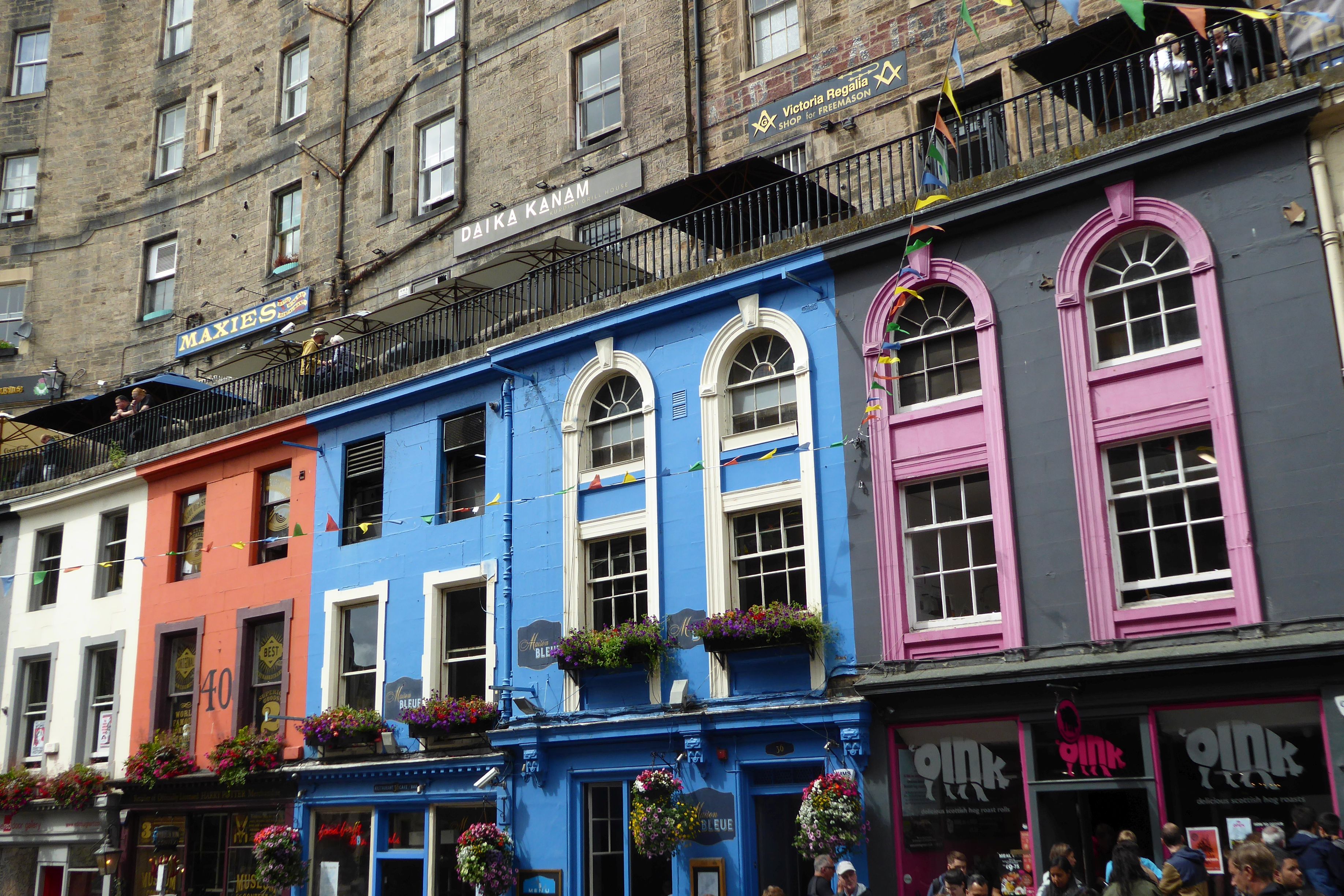
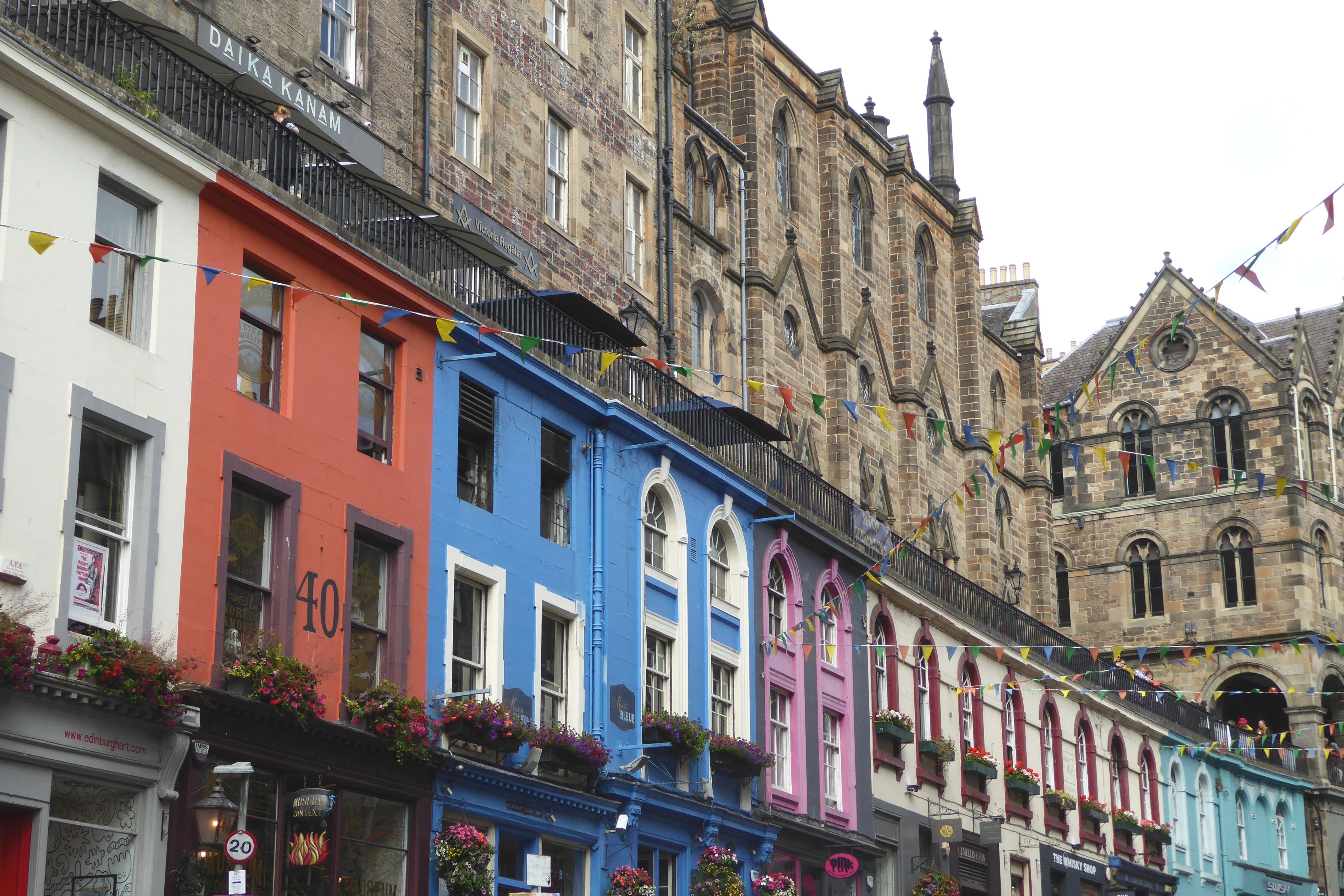
Victoria Street/ The West Bow is one of the most photographed streets in Edinburgh.
No, I did not Photo Shop that bird into the picture! I caught him flying straight towards me!
The view of Edinburgh Castle from the Grassmarket area of Edinburgh
This stairway was made of several types of stone.
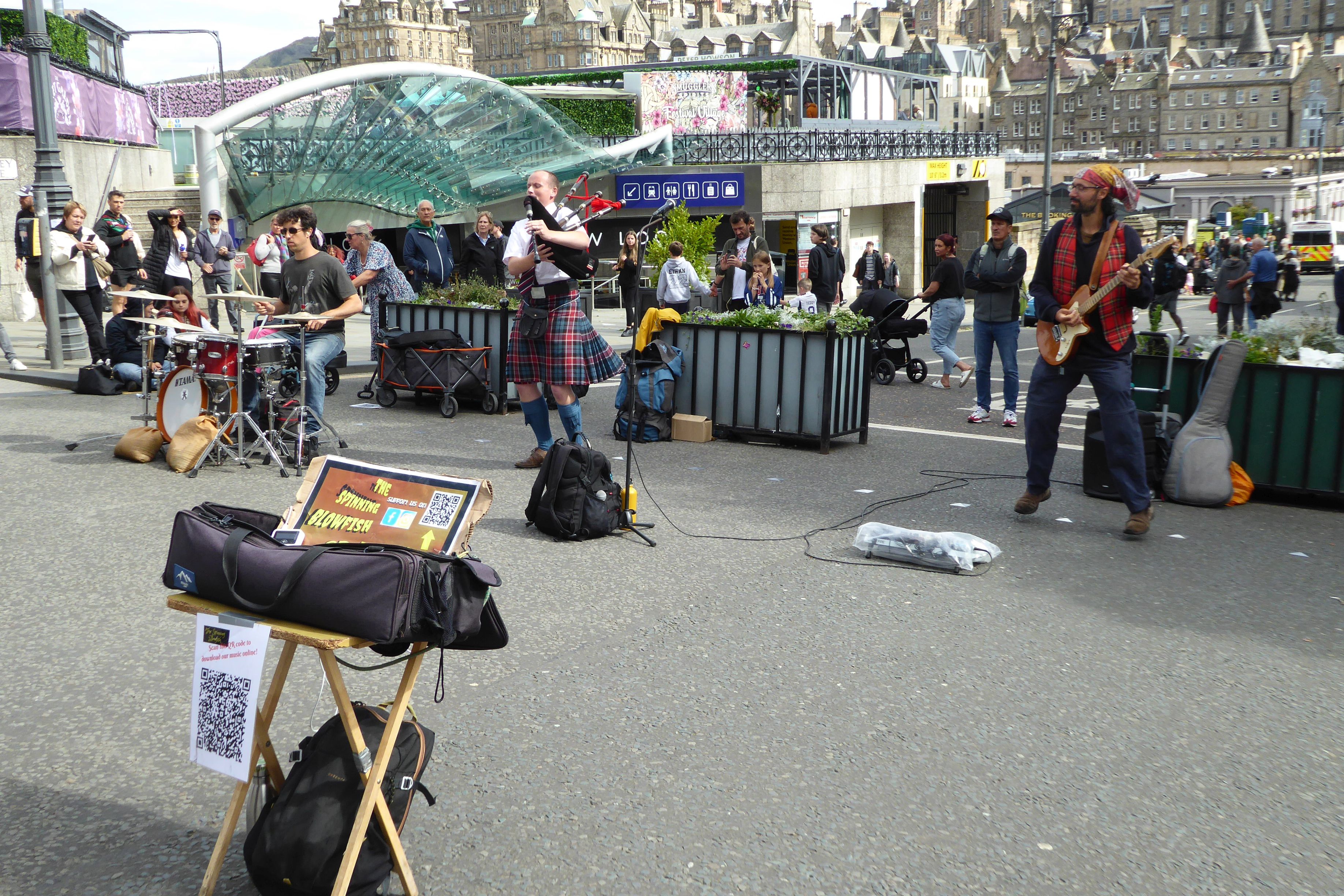
This group, performing near the Waverley Train Station, was an interesting mix with bagpipes. They played a cool rendition of Pink Floyd’s, “Wish You Were Here,” in honor of a former band member who had died.
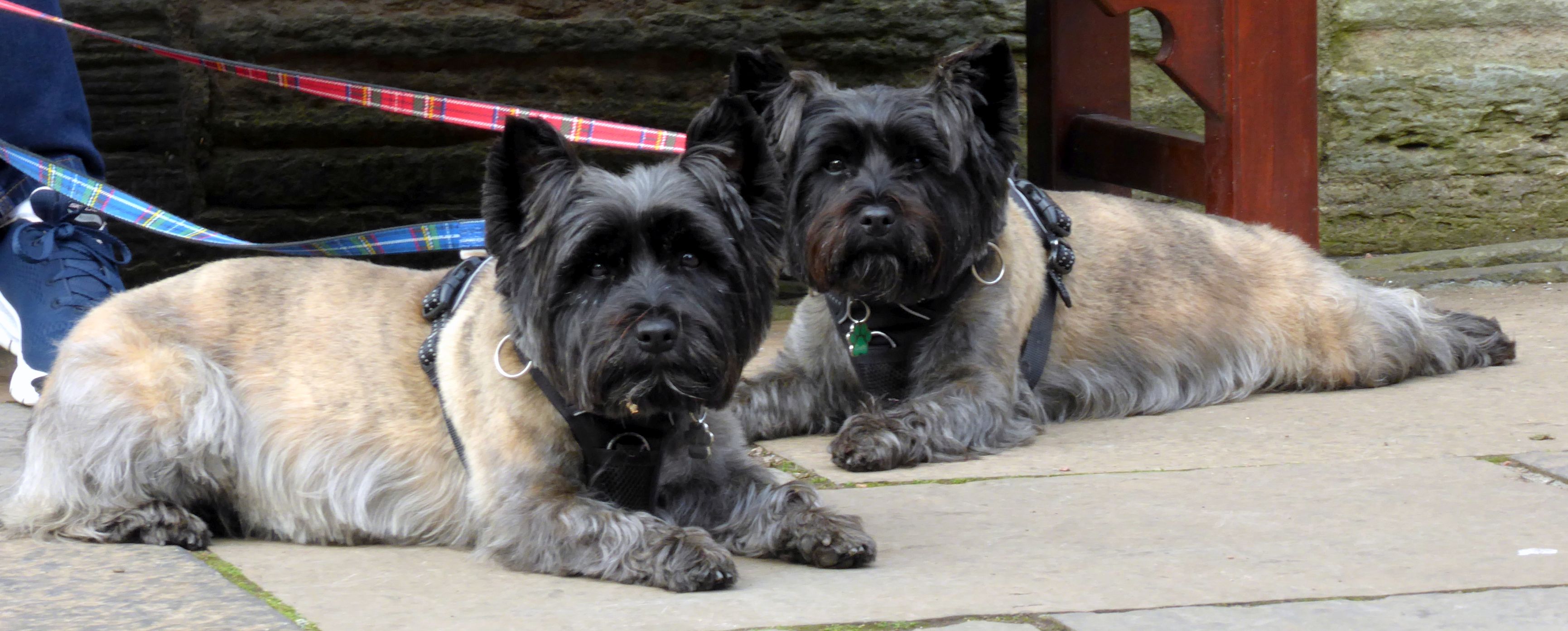
Scottish Cairn Terriers
These murals were painted on a temporary wall that was hiding a construction site.
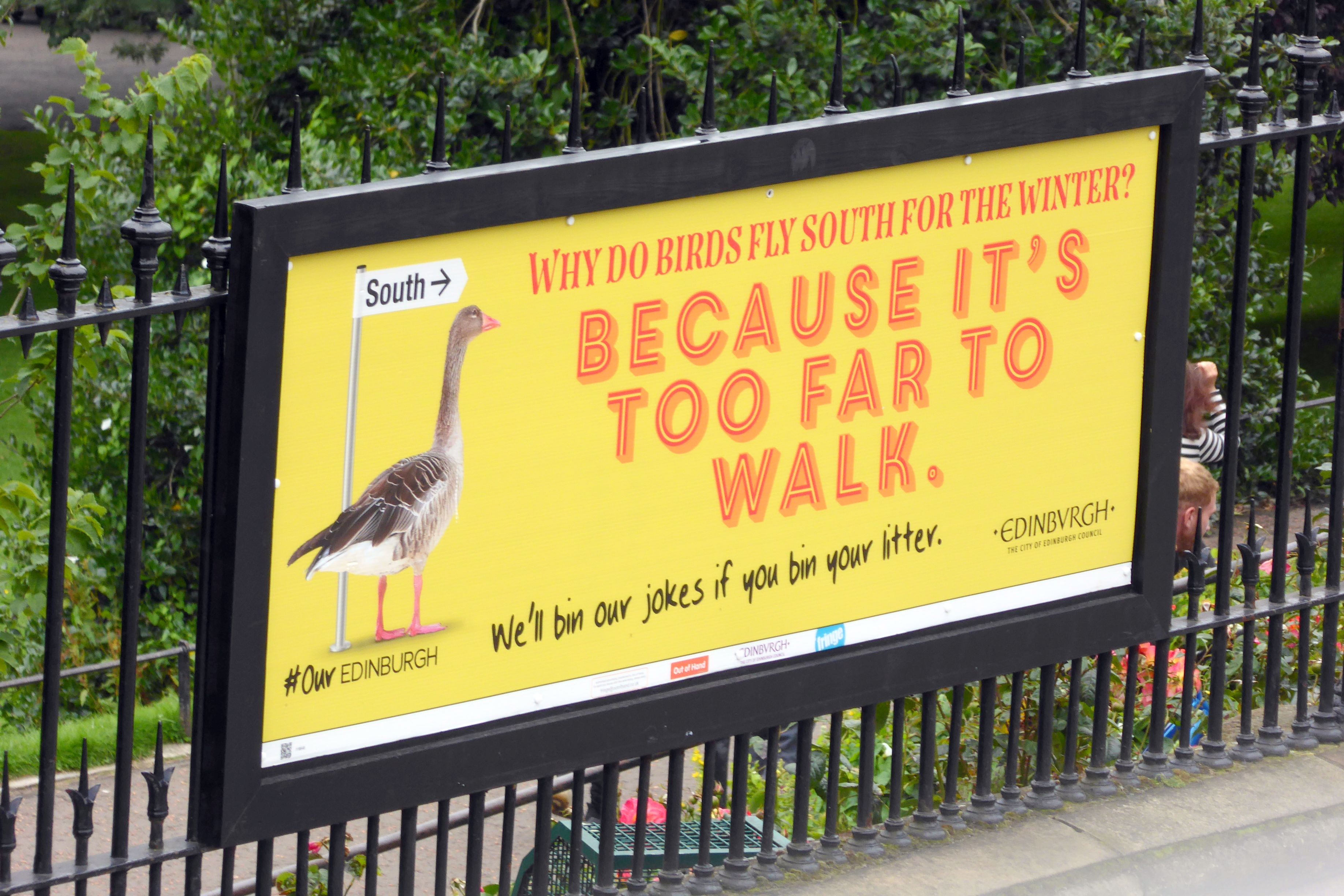
What a great adverstising campaign!
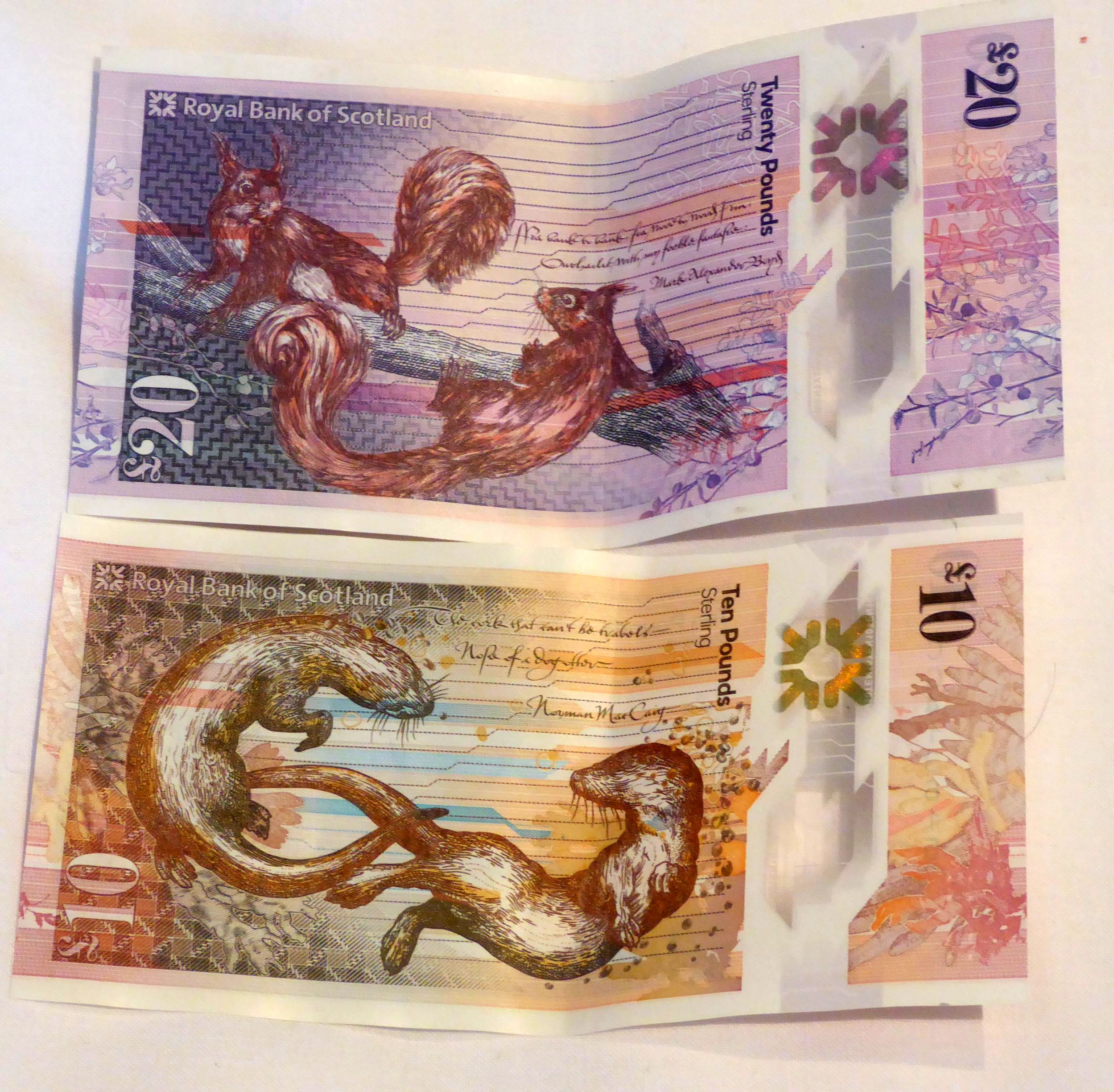
Their currency is a lot more colorful than ours…
…and cute!
I spent some of that currency on chocolate! This one was for my chocolate wrapper/ label collection.

Thank you for reading! Craft show season is just around the corner, so Bruce and I won’t be traveling internationally again until 2024. Stay tuned then for posts on Patagonia and many more!