PERU #6: LIKABLE LIMA (PART 6) – A FISH MARKET & DOWNTOWN

We had so many wonderful experiences during our first three days in Lima, and our last day was no different.  A local guide was with us for several hours and he was fabulous! 

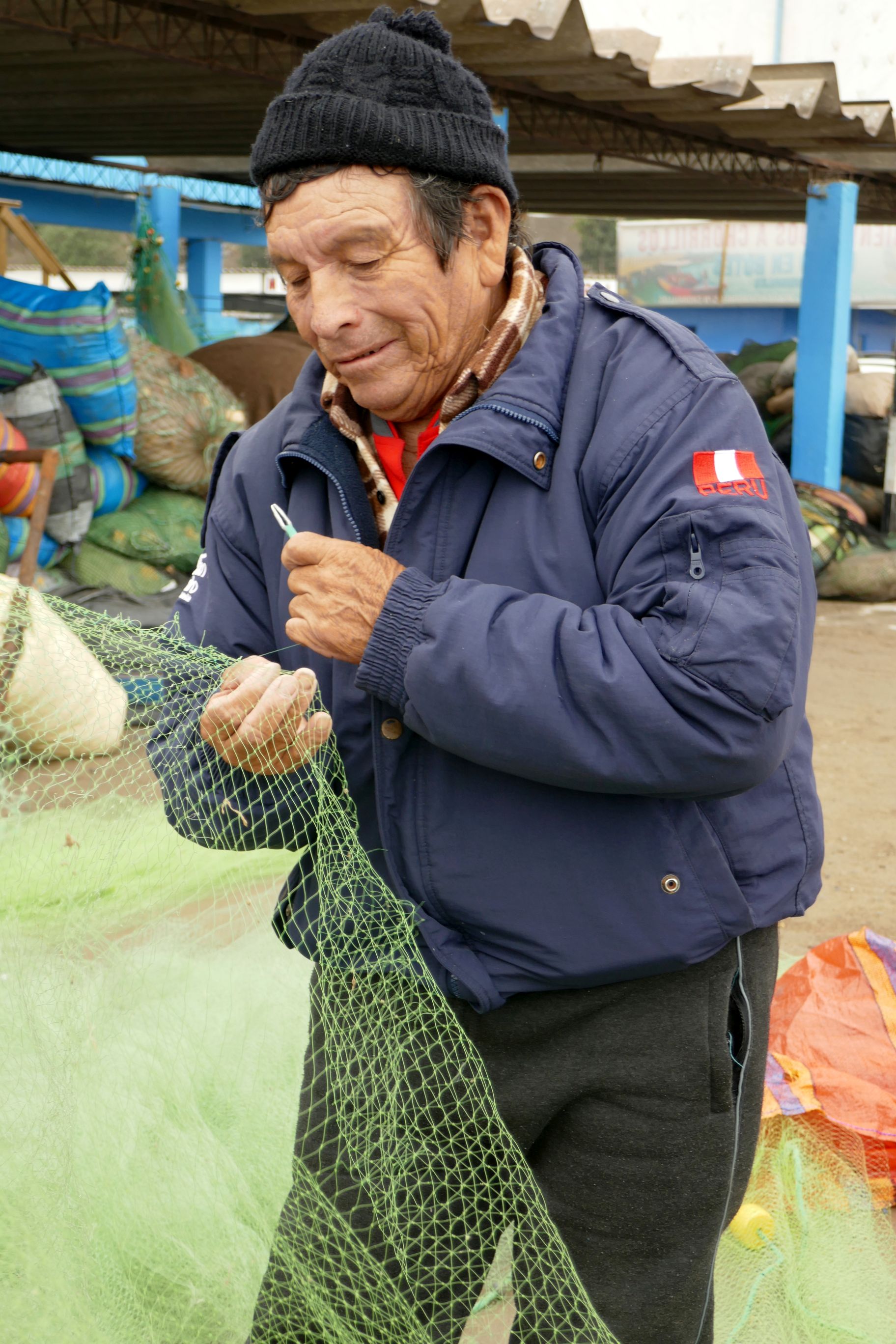
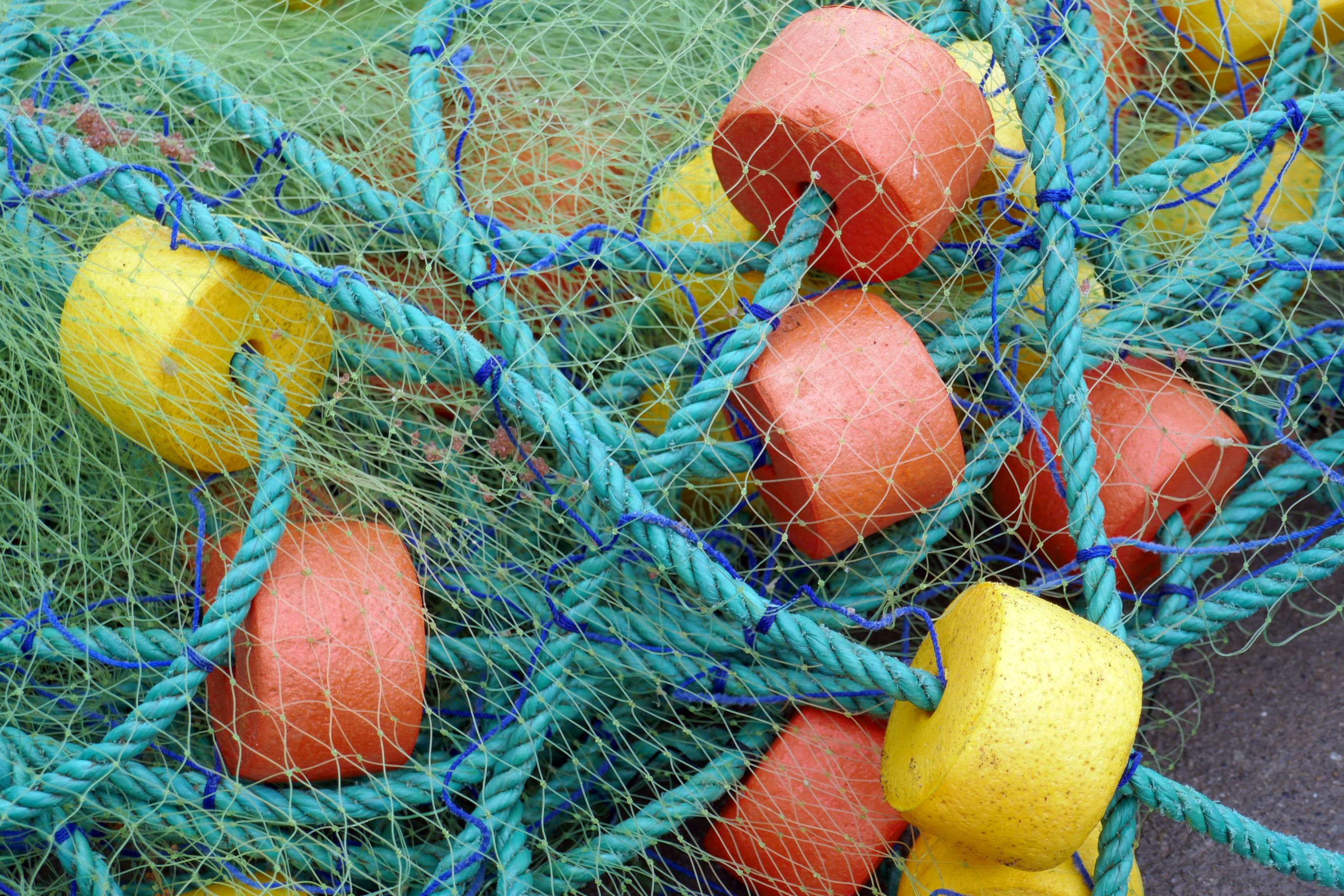
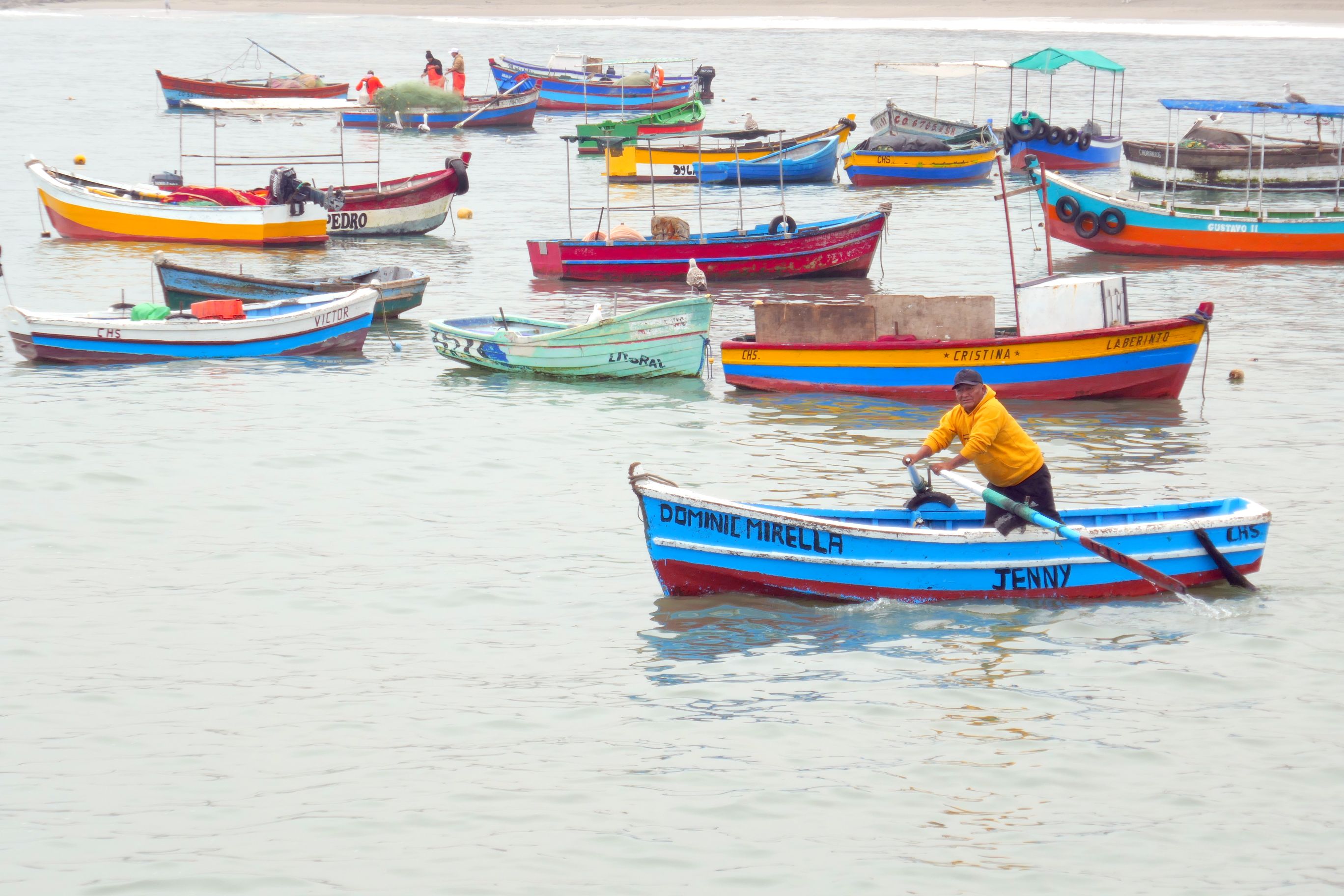
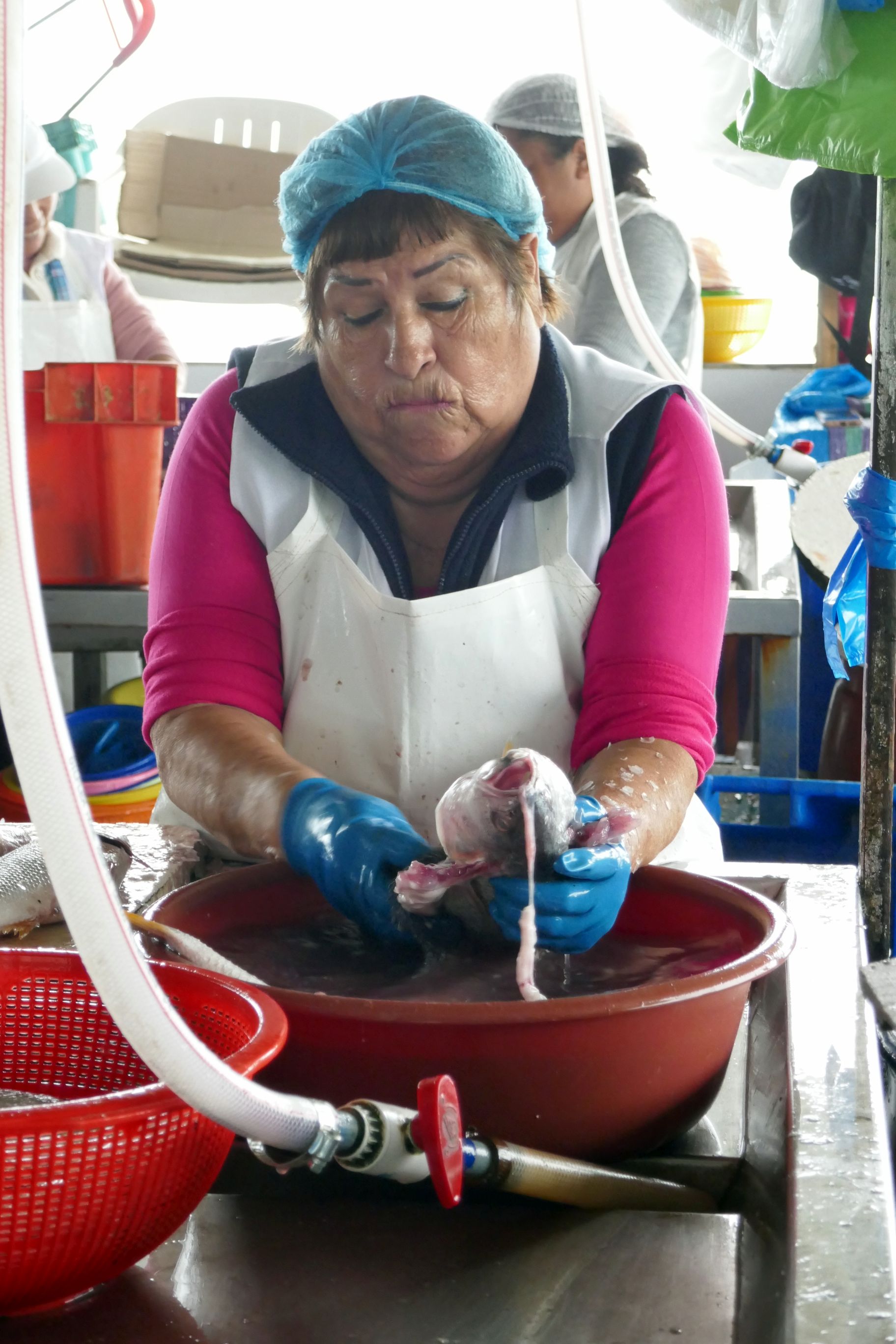
The morning began at a fish market where we learned about a typical day in the life of the local fishermen and the women who clean the fish when they are brought in.  They seemed happy to see us, tell us about their work, and answer our questions while joking around with each other as they cleaned the morning catch.

It was this fisherman repairing his net that caught my eye though.  As good as our guide was, I missed everything he said while watching and shooting this video—something I rarely do, but would have regretted if I hadn’t shot this short clip, because it instantly makes me feel happy:

A little background:  Fisherman make very little money in Peru.  They are the working poor of Lima and barely make a living.  But look at his joy!  He has turned what could be considered a tedious task into something fun.  At first, he didn’t notice me smiling and shooting this video, but when he did, he rushed over, gave me a little side hug around my shoulder and walked off for a quick break.  After he returned, he was back to dancing and the task at hand.  We never spoke a word, but I don’t think I will ever forget him.

(For all photos, click on the image for a full screen view.)
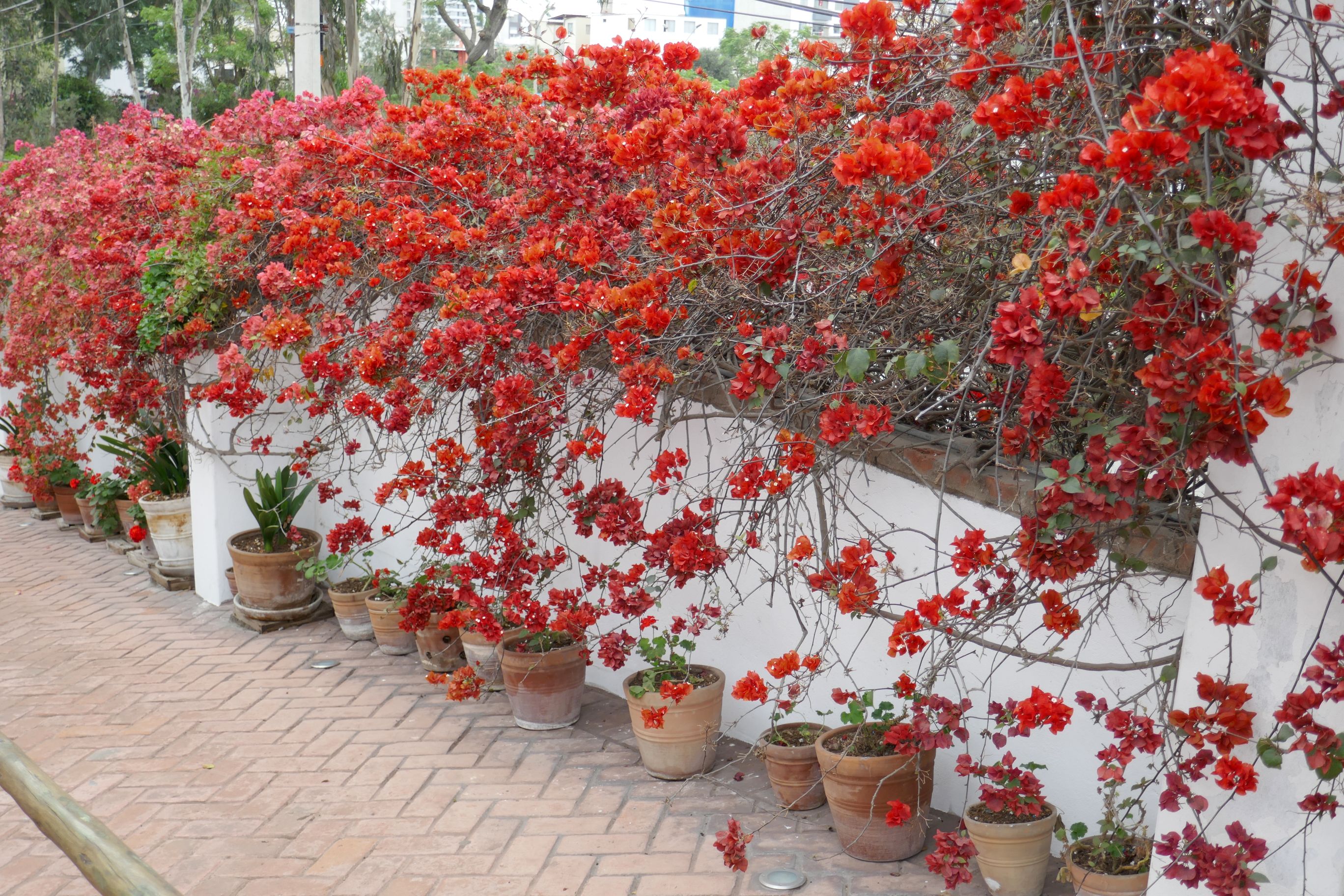
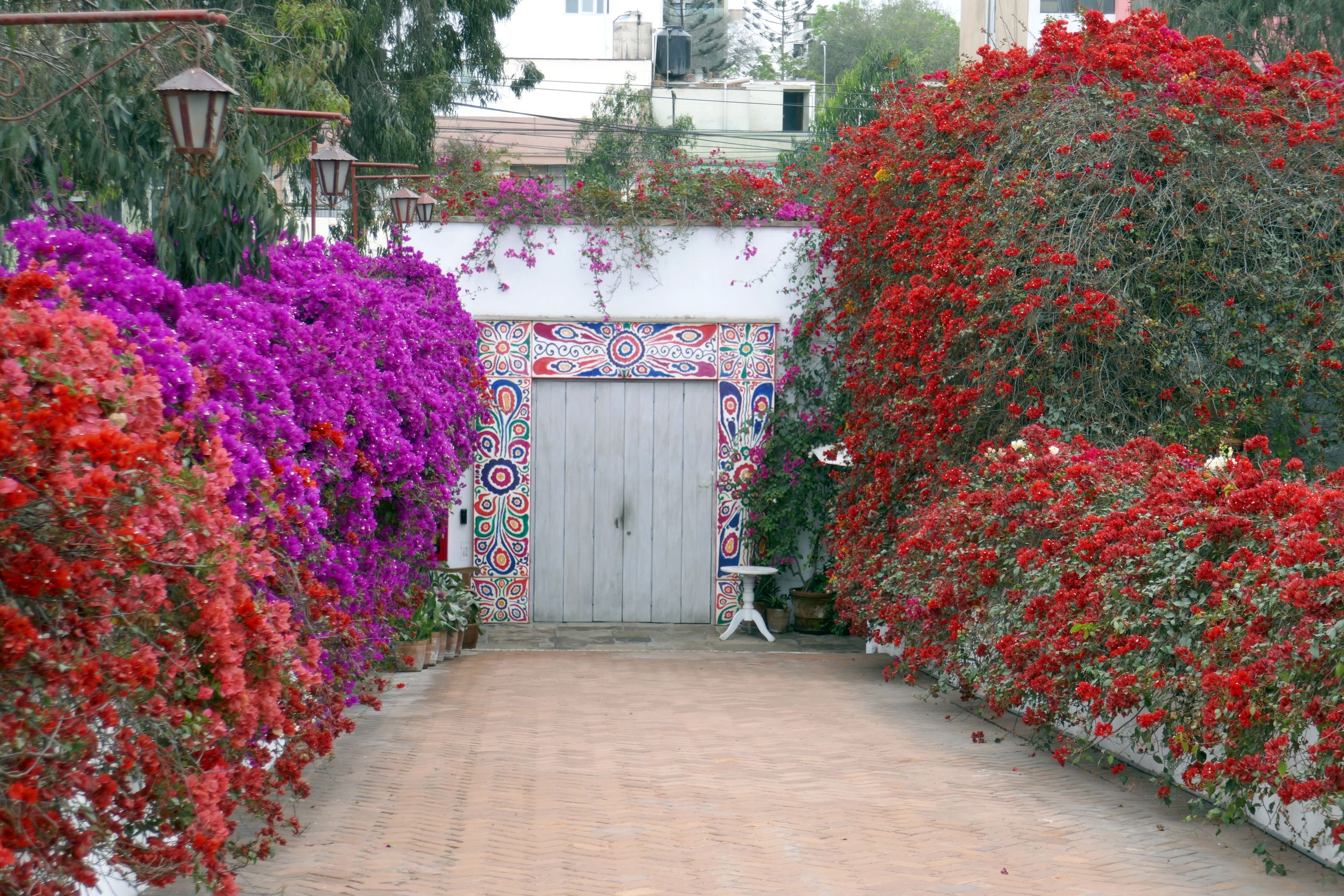
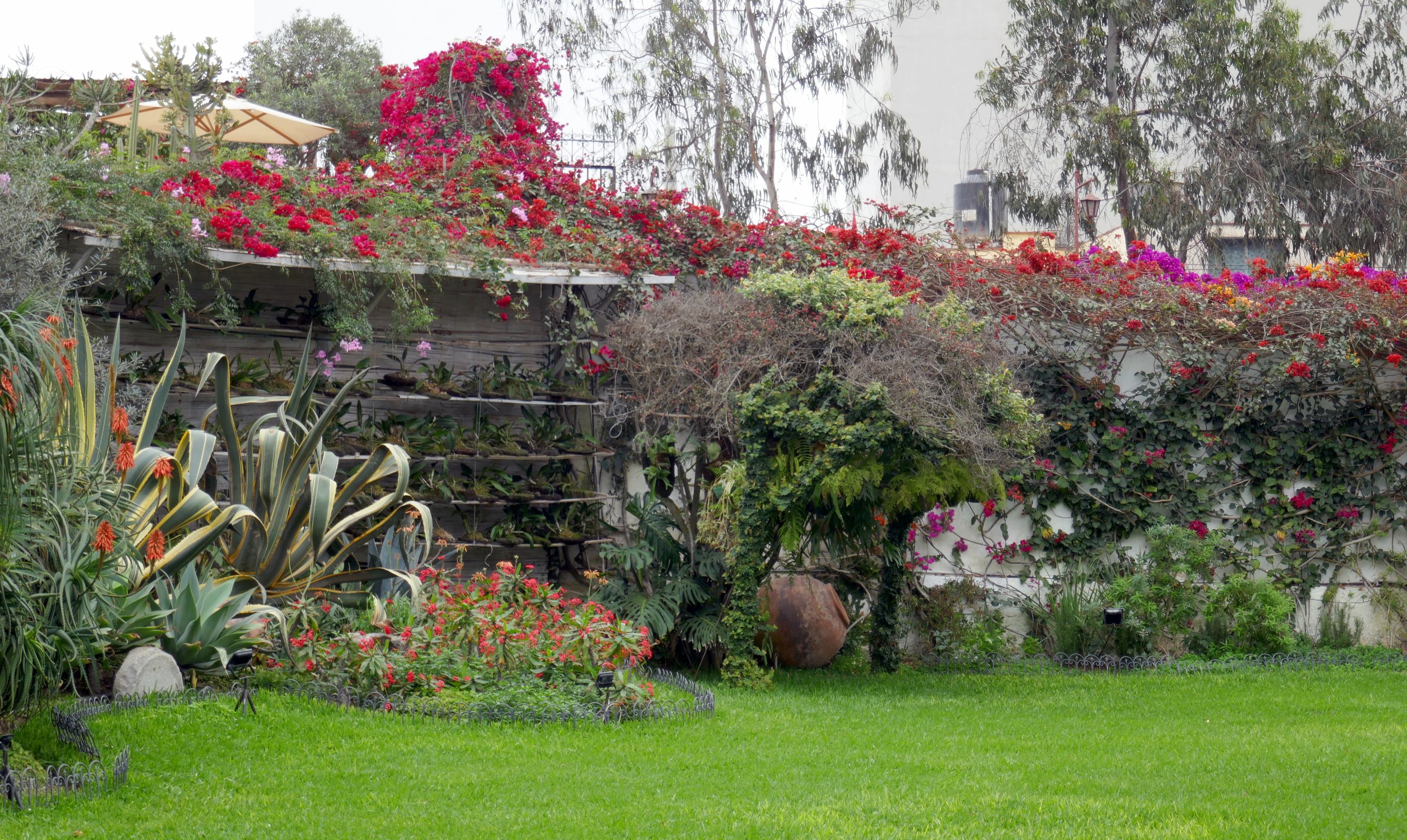
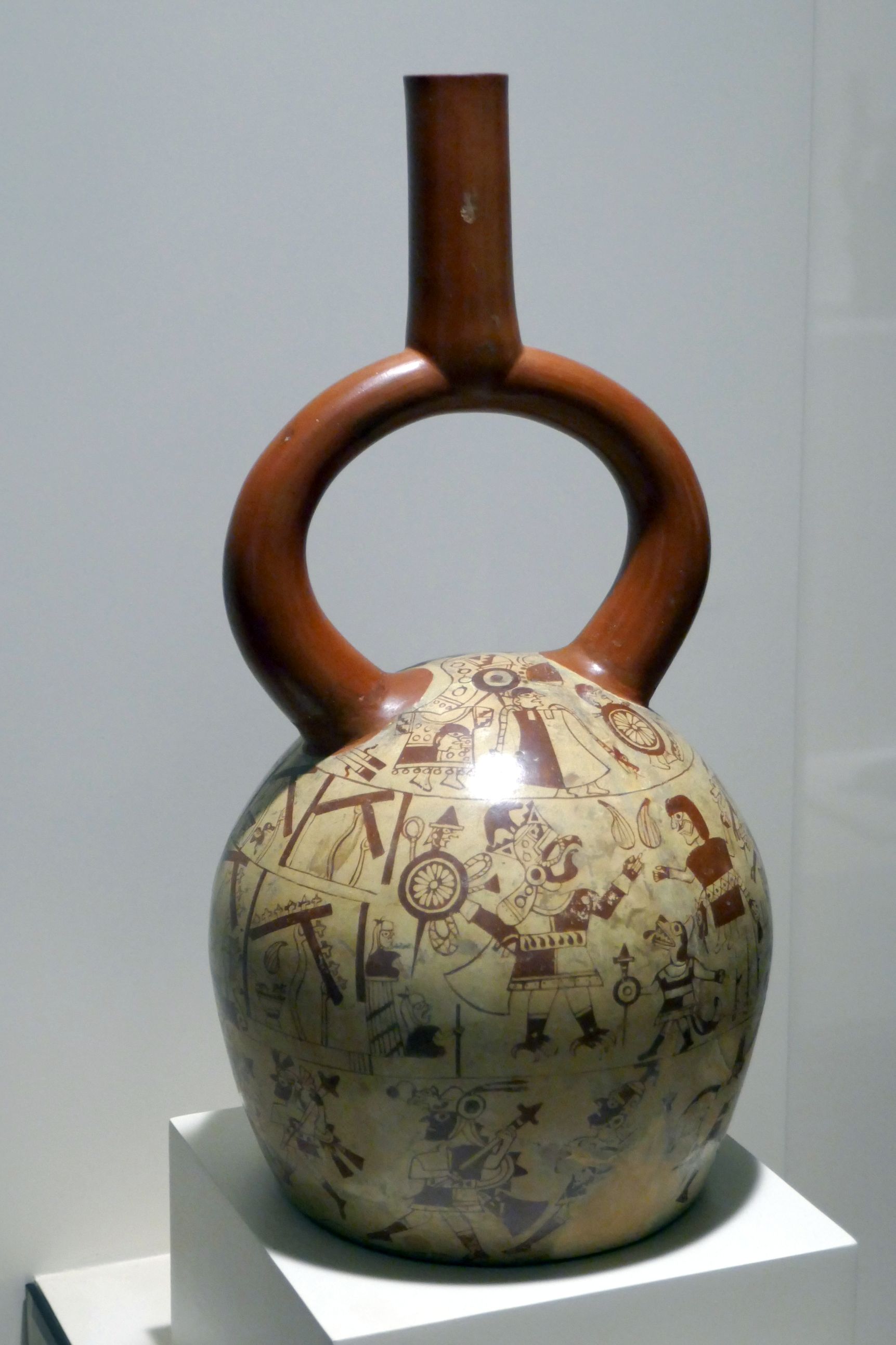
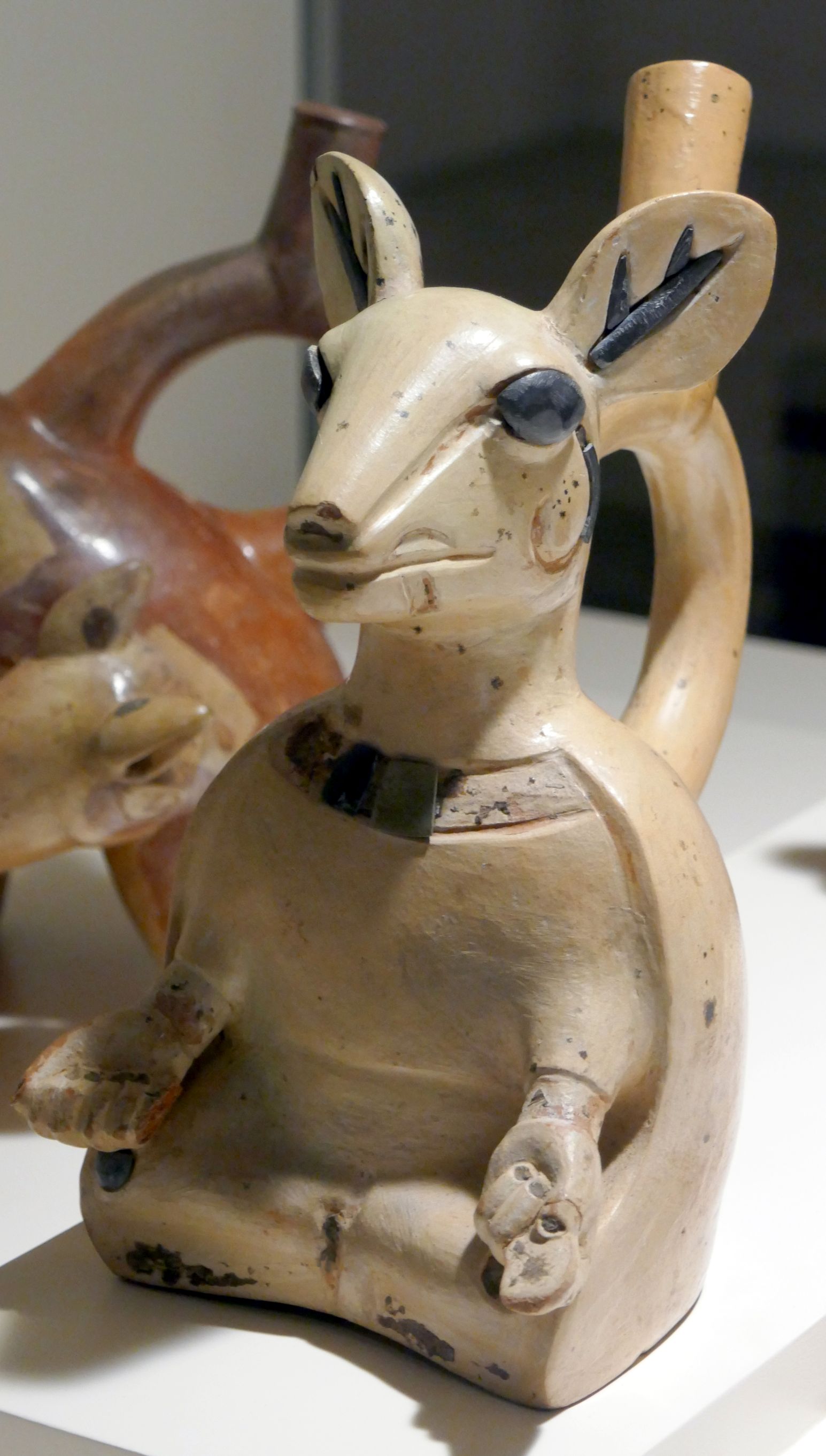
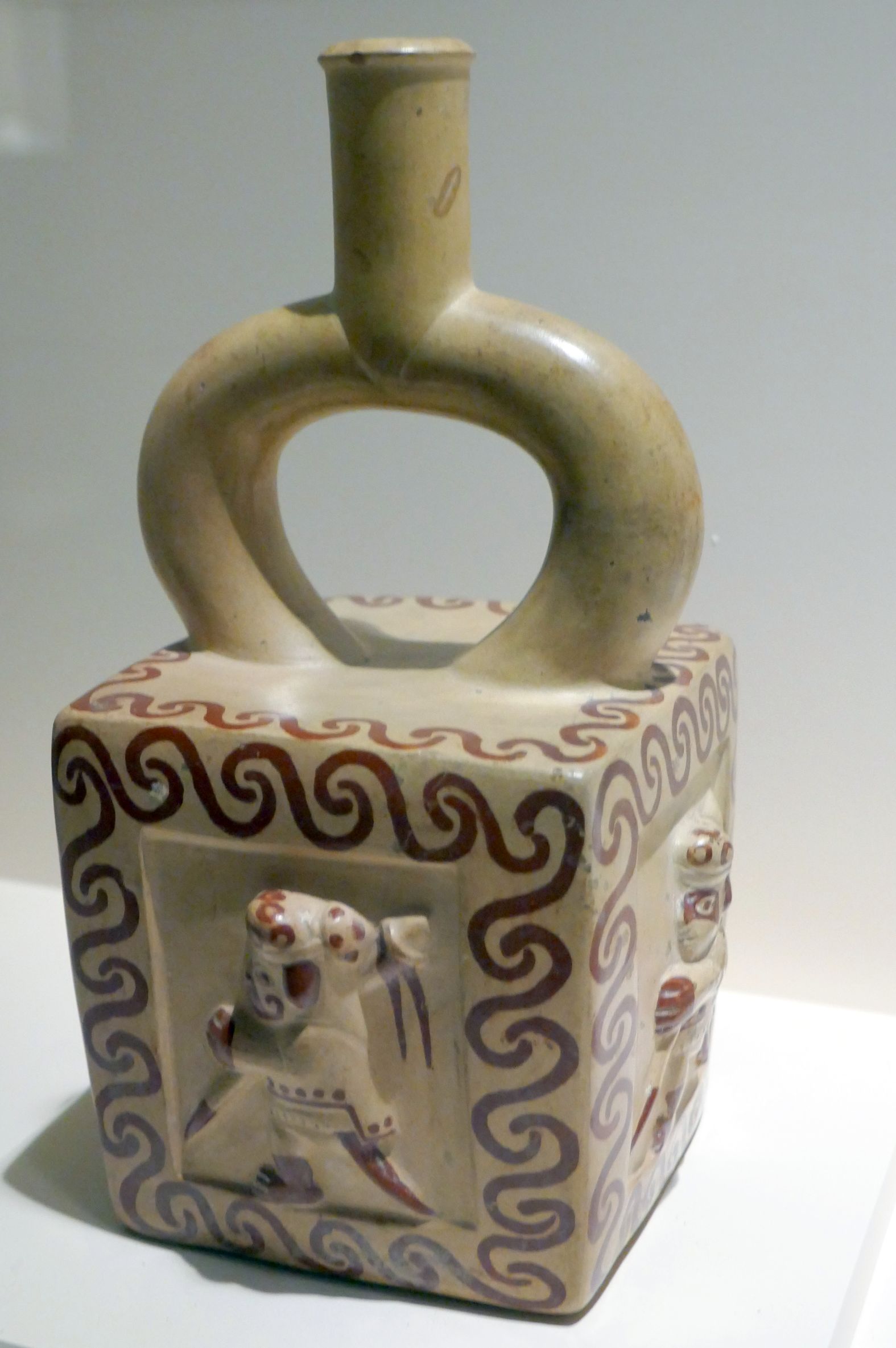
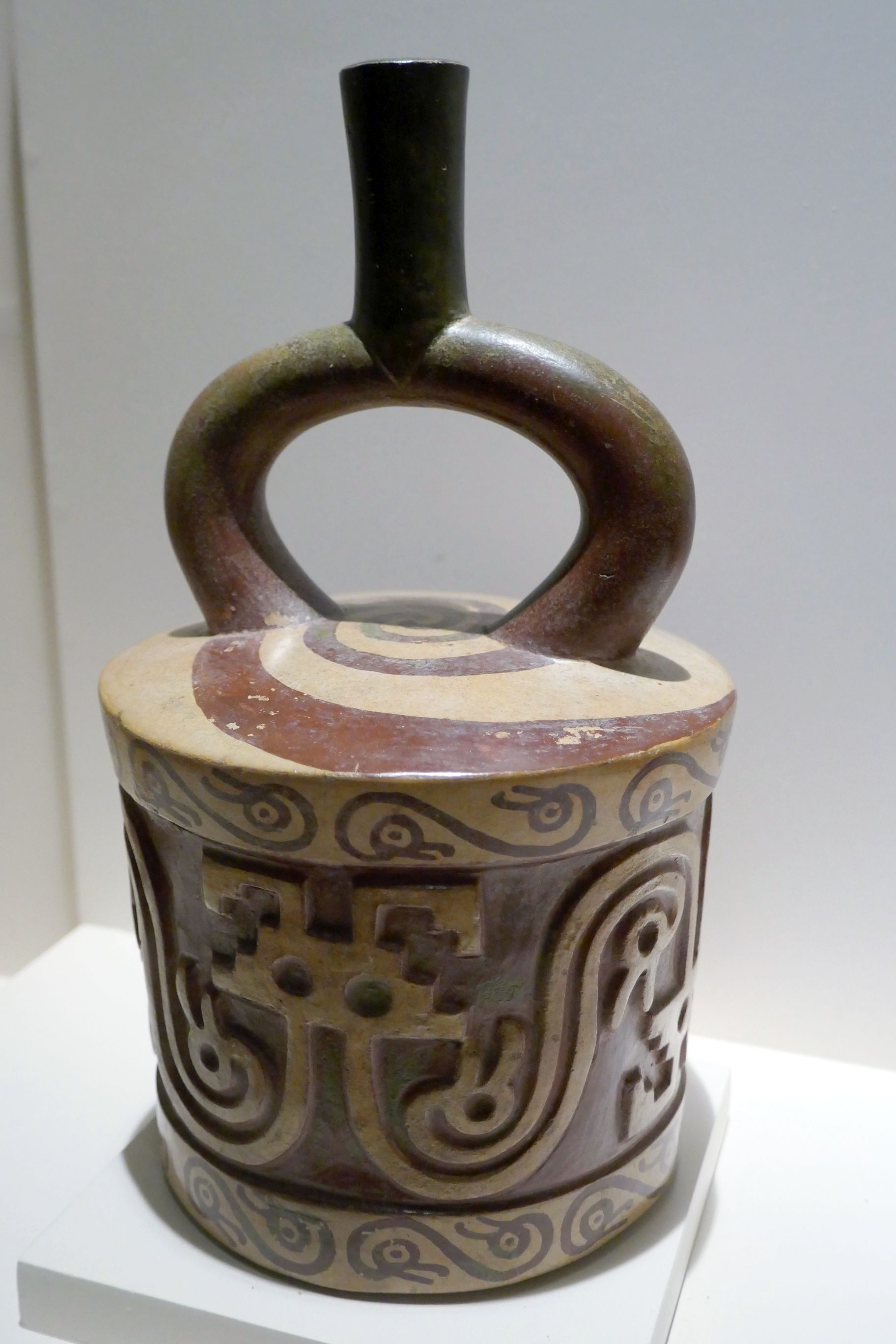
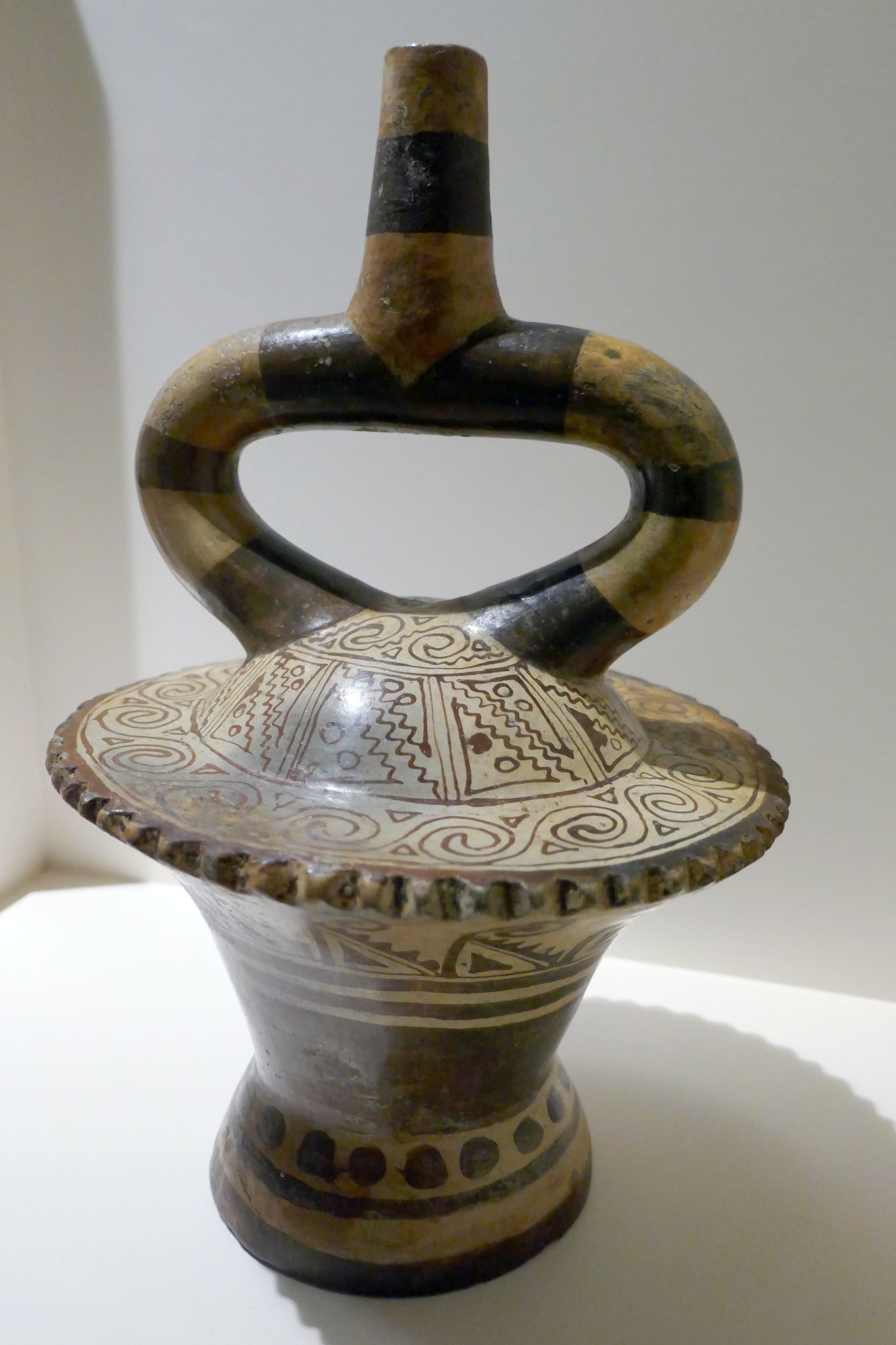
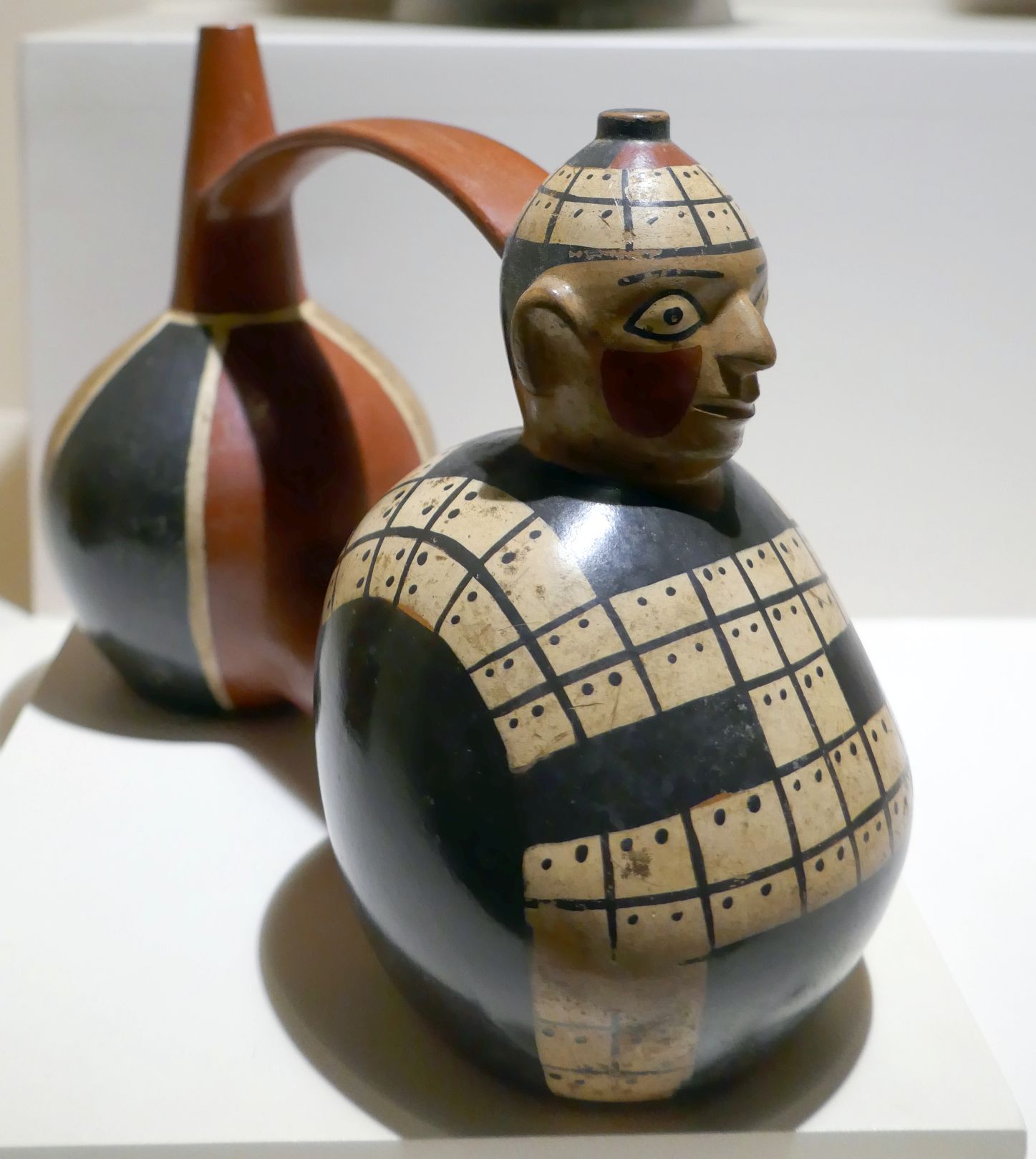
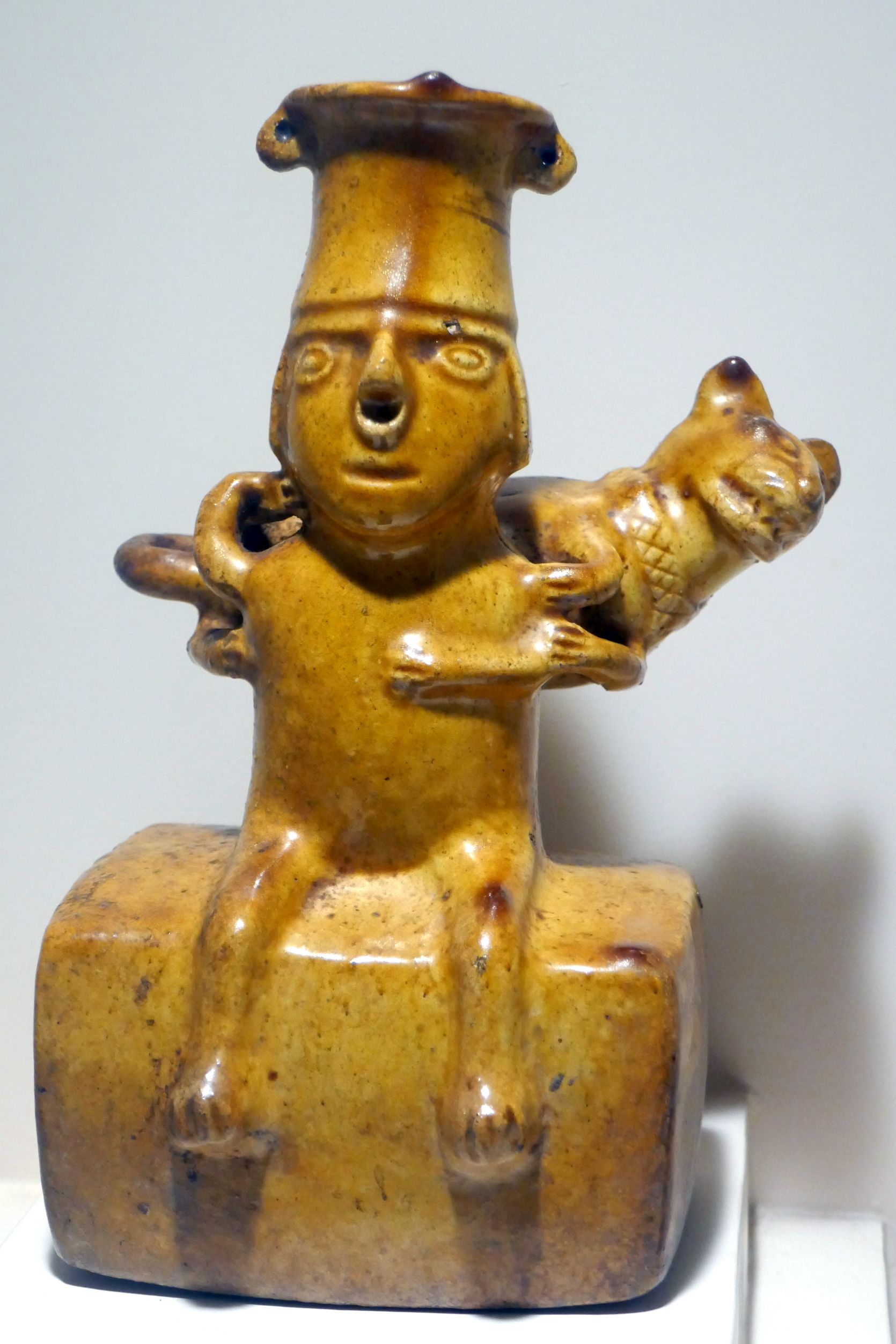
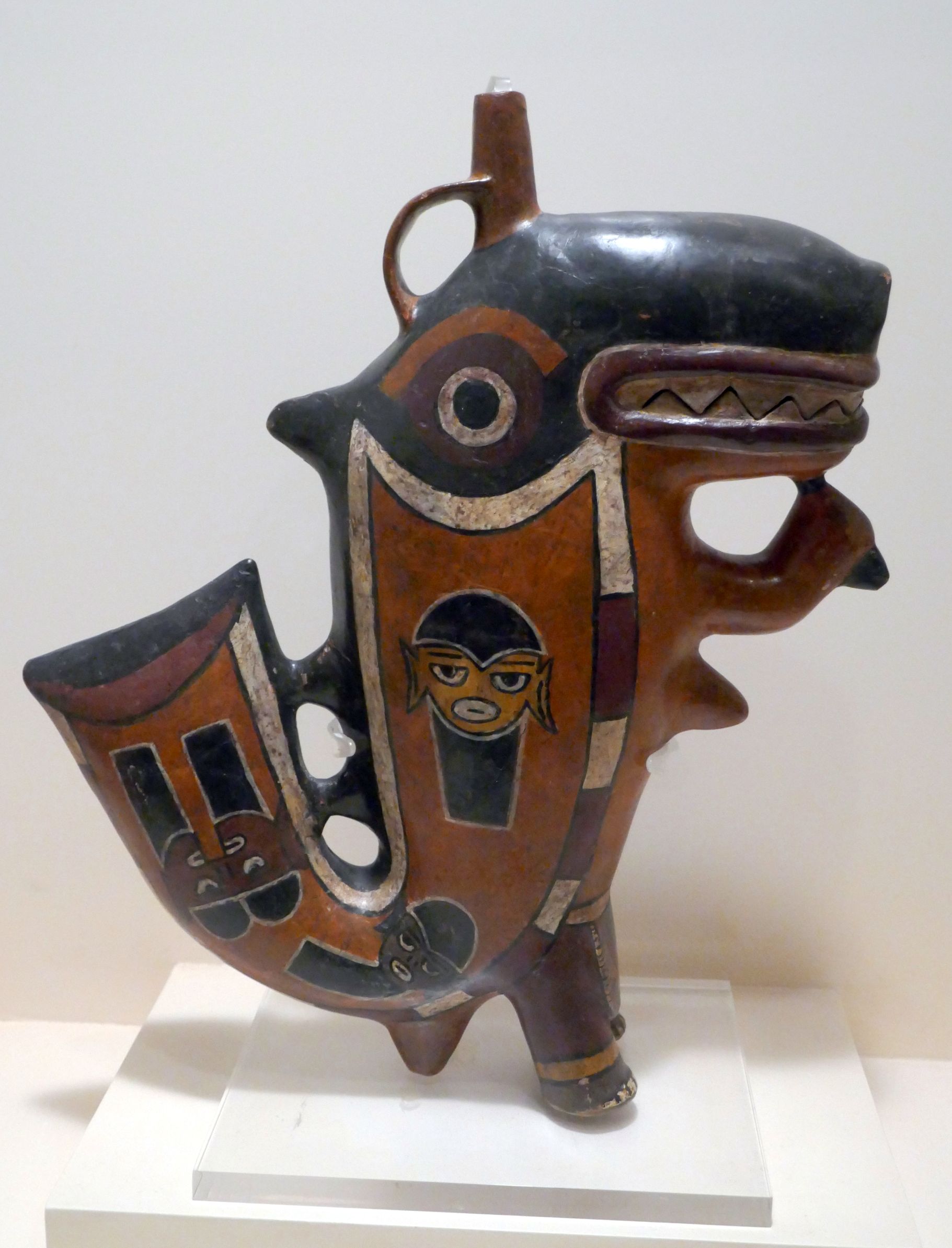
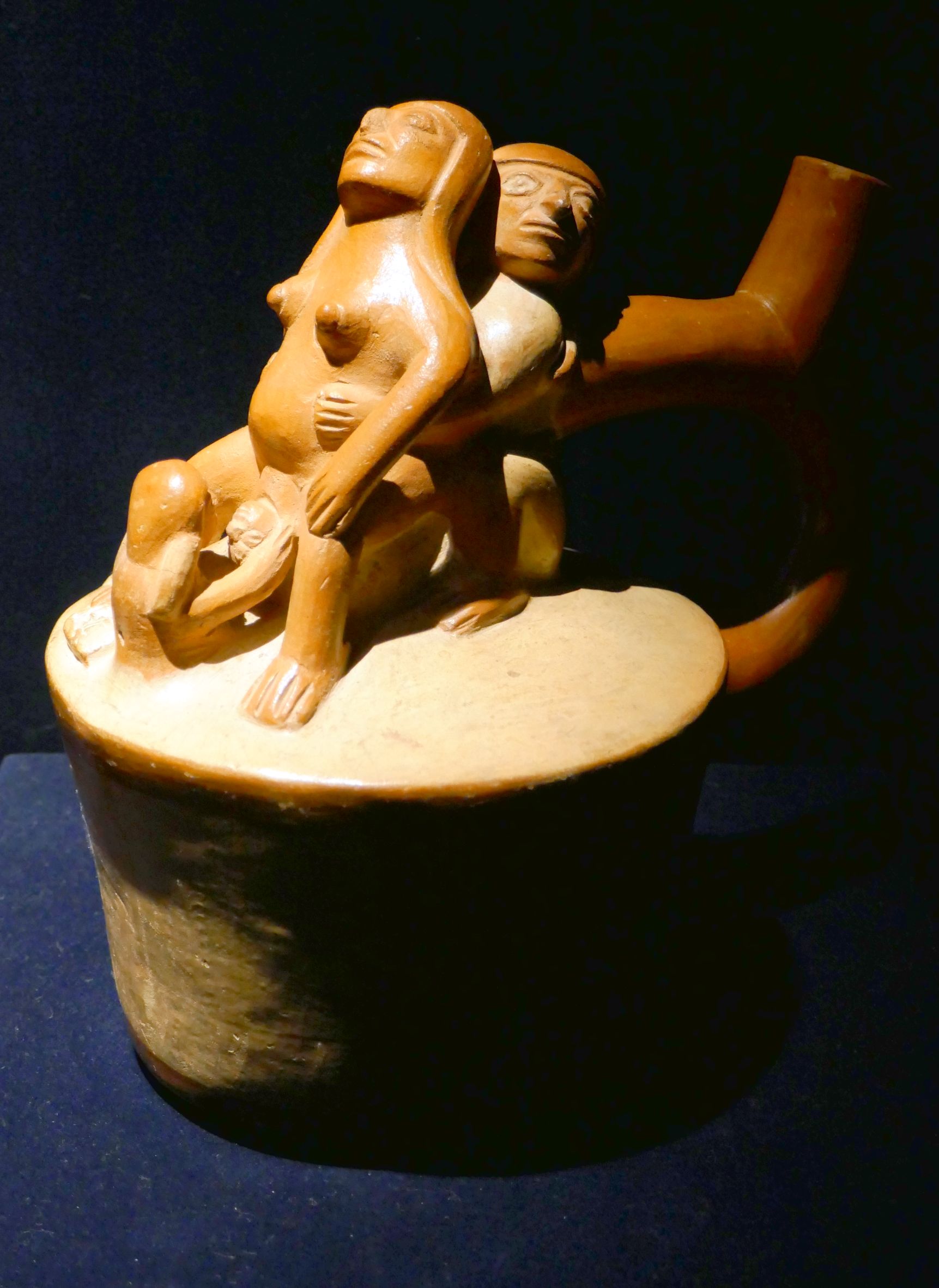
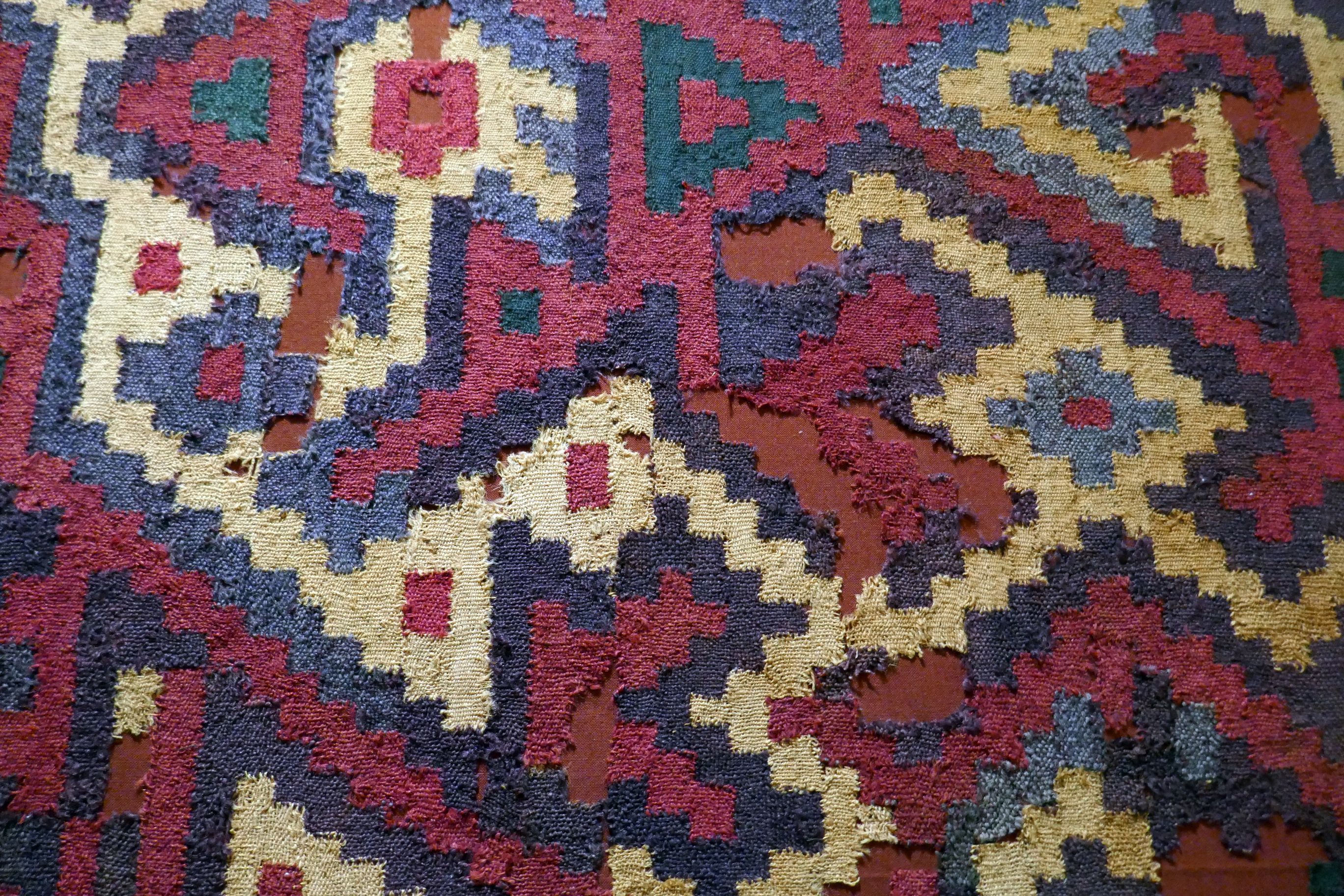
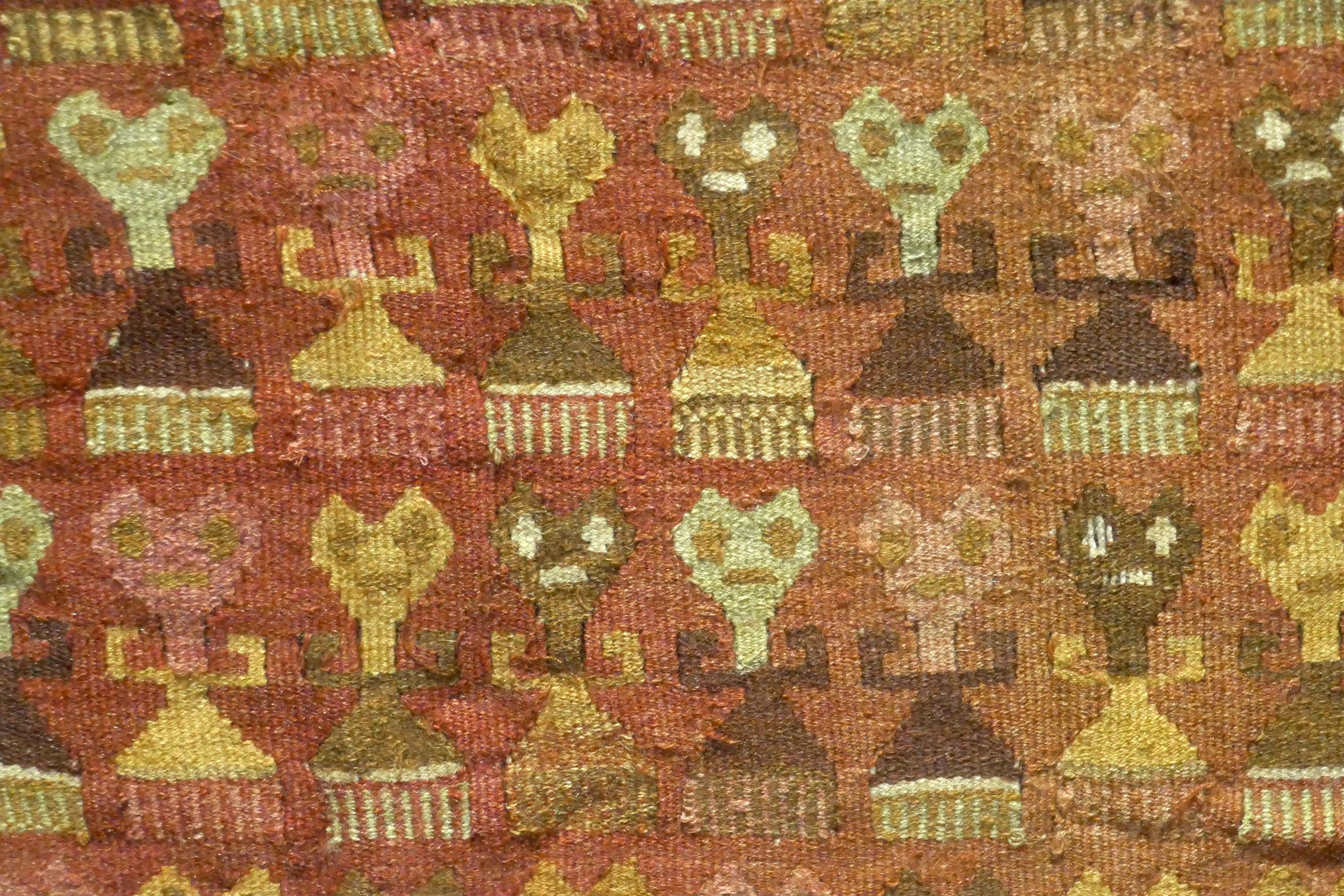
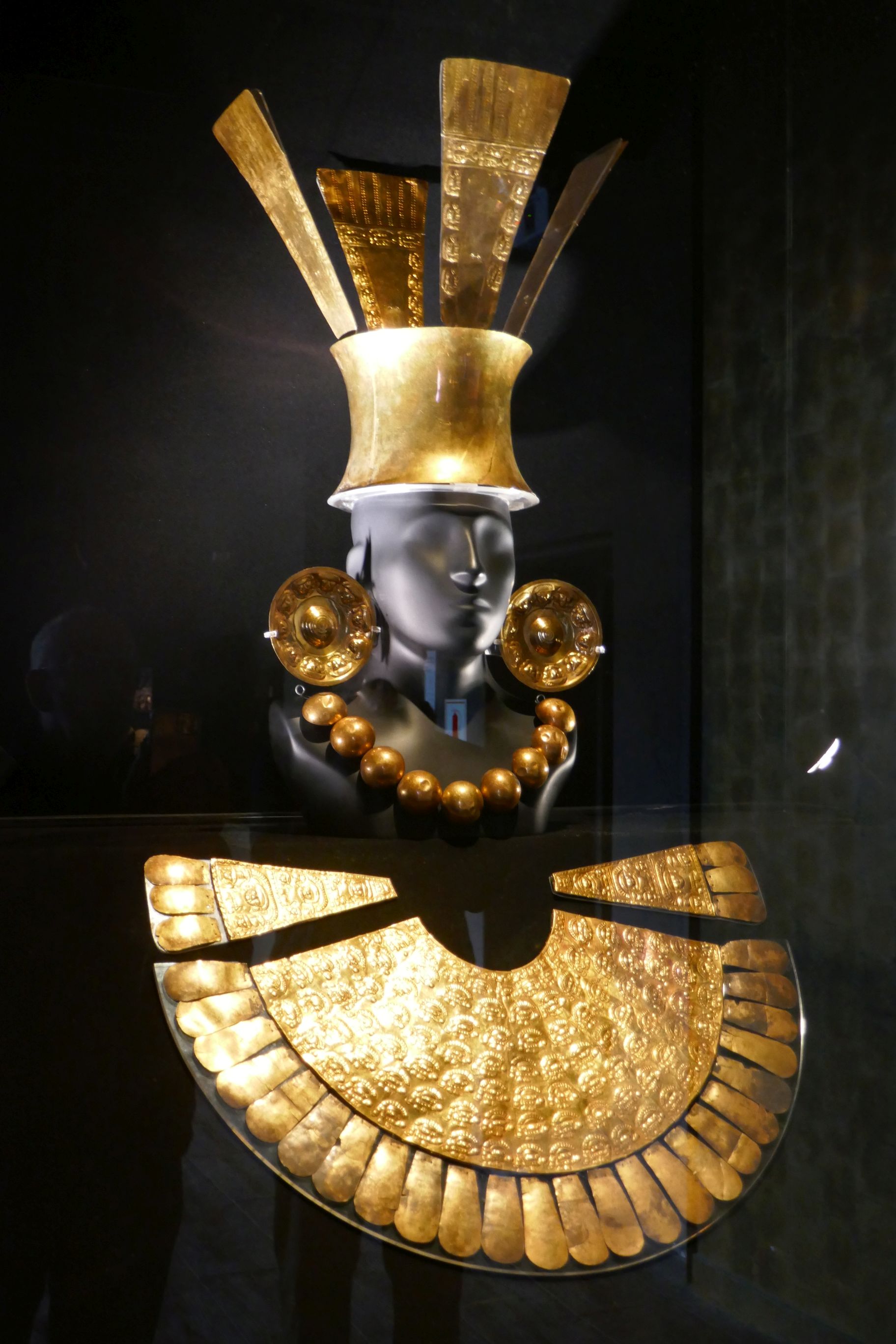
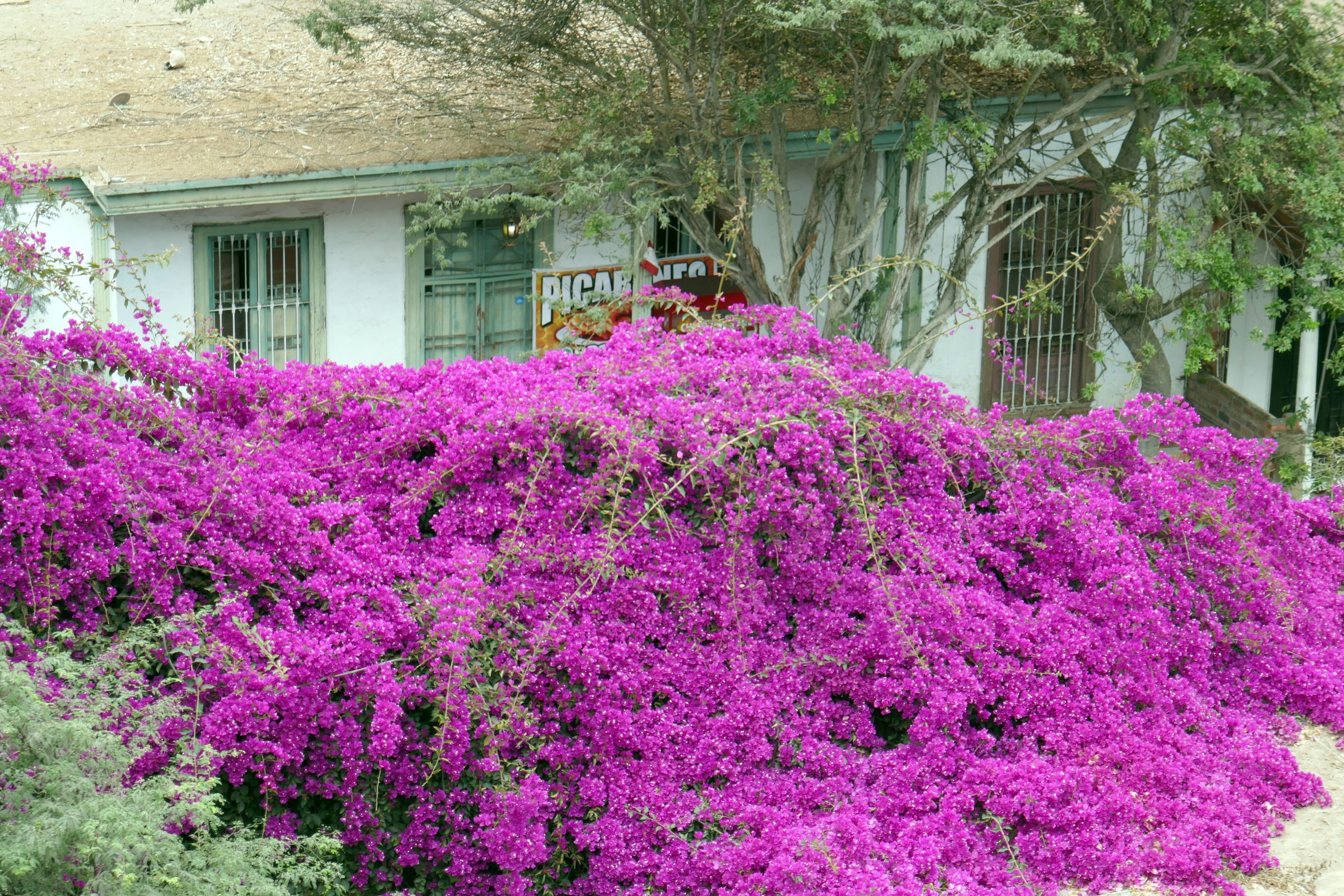
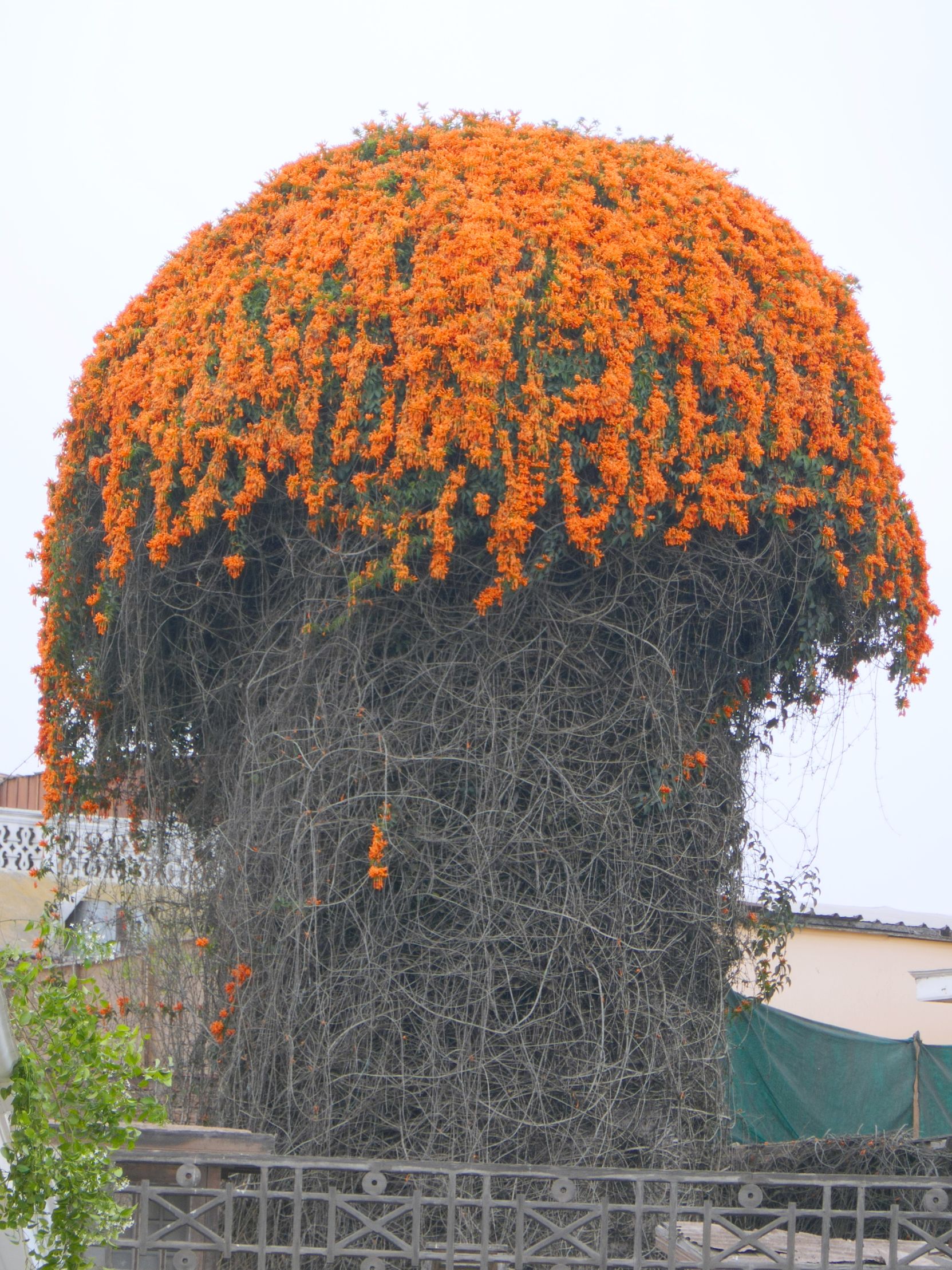
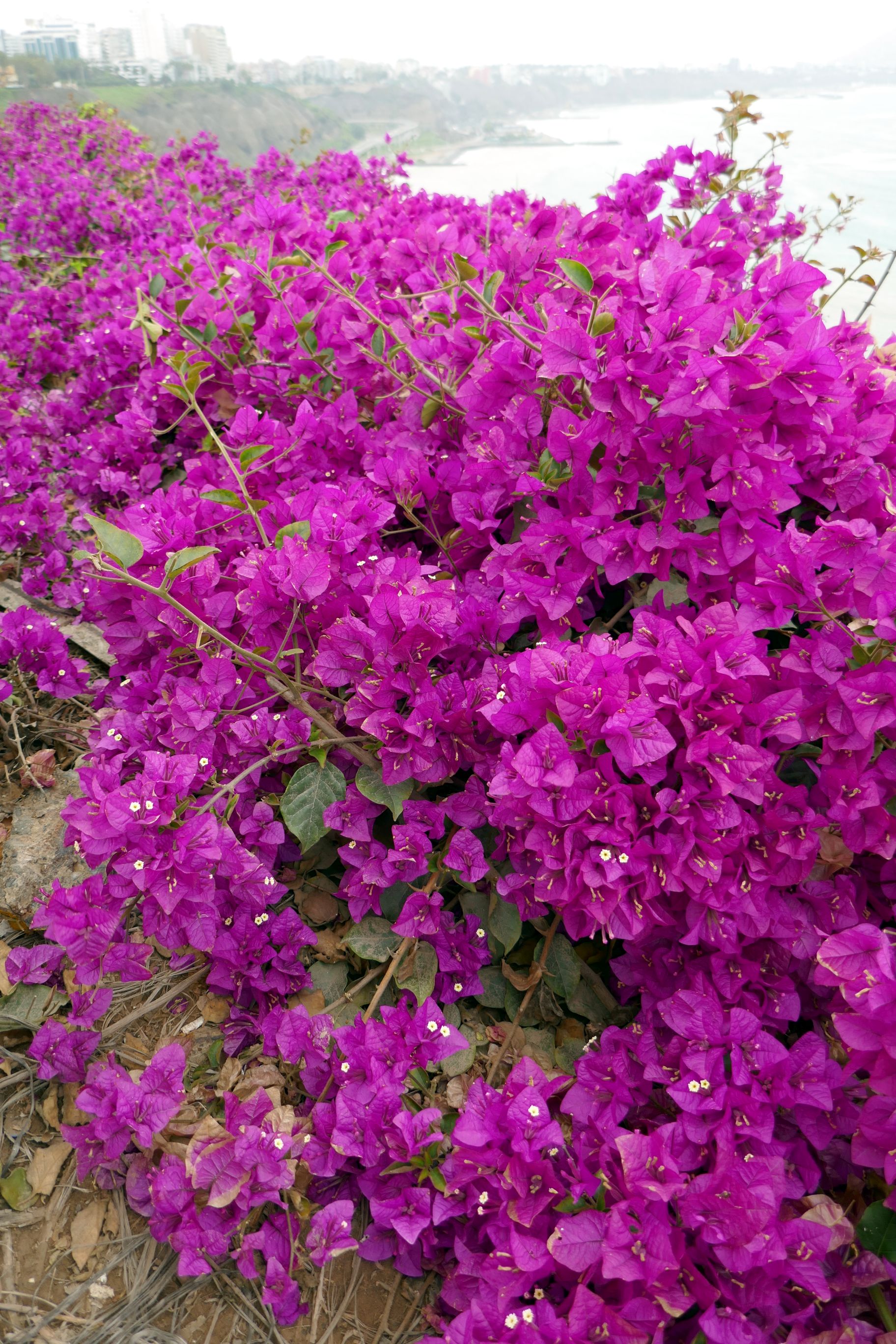
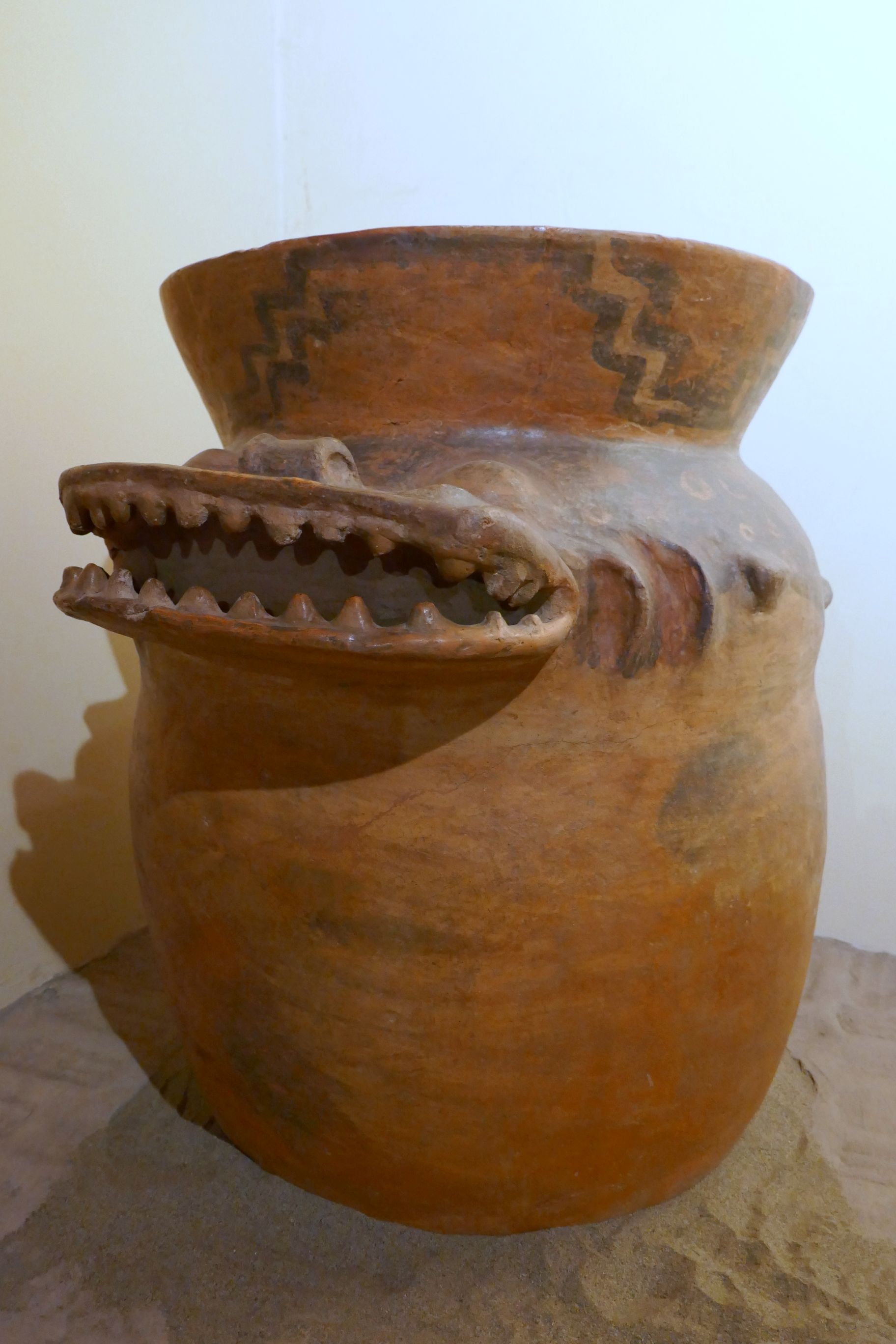
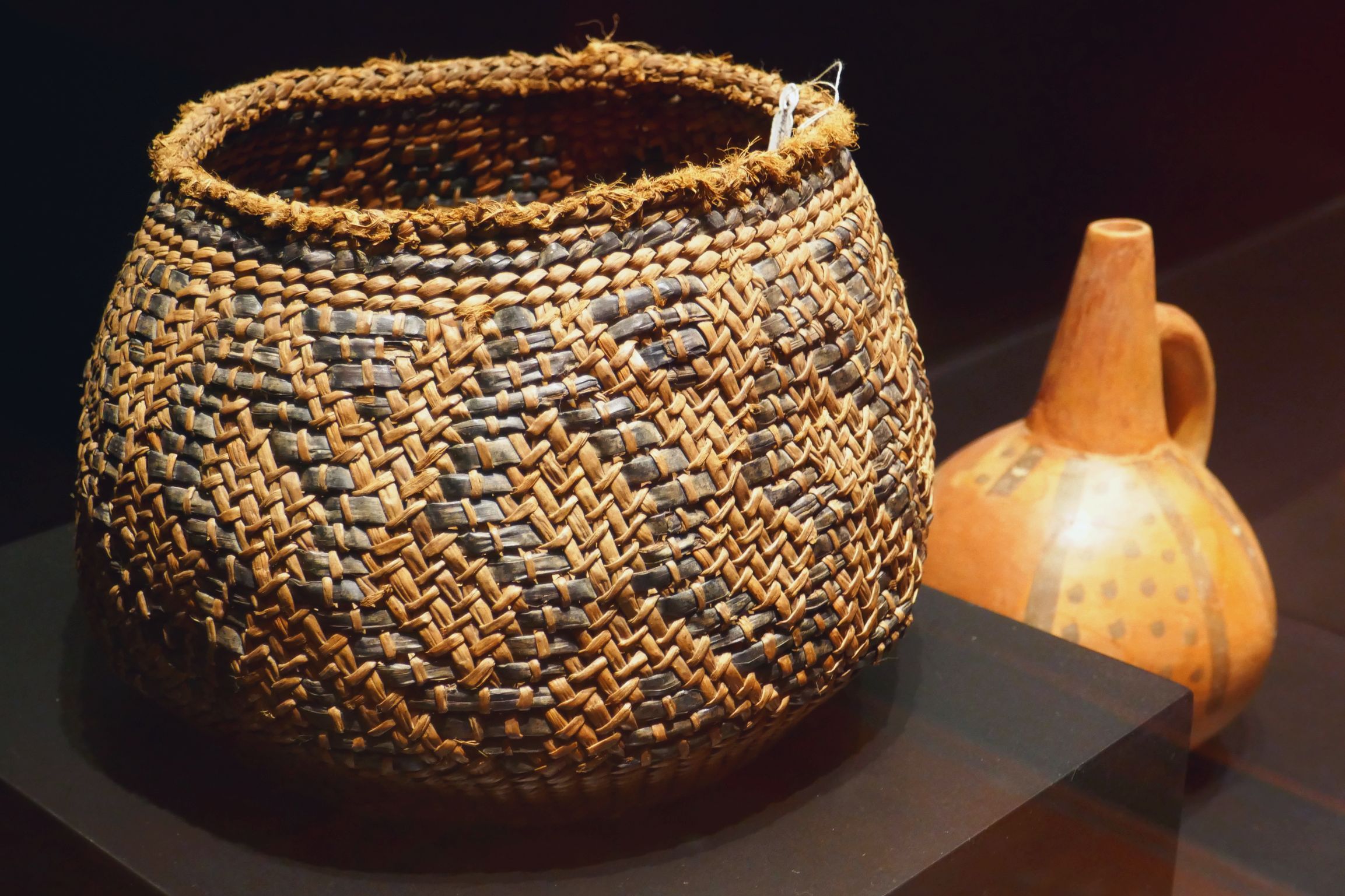
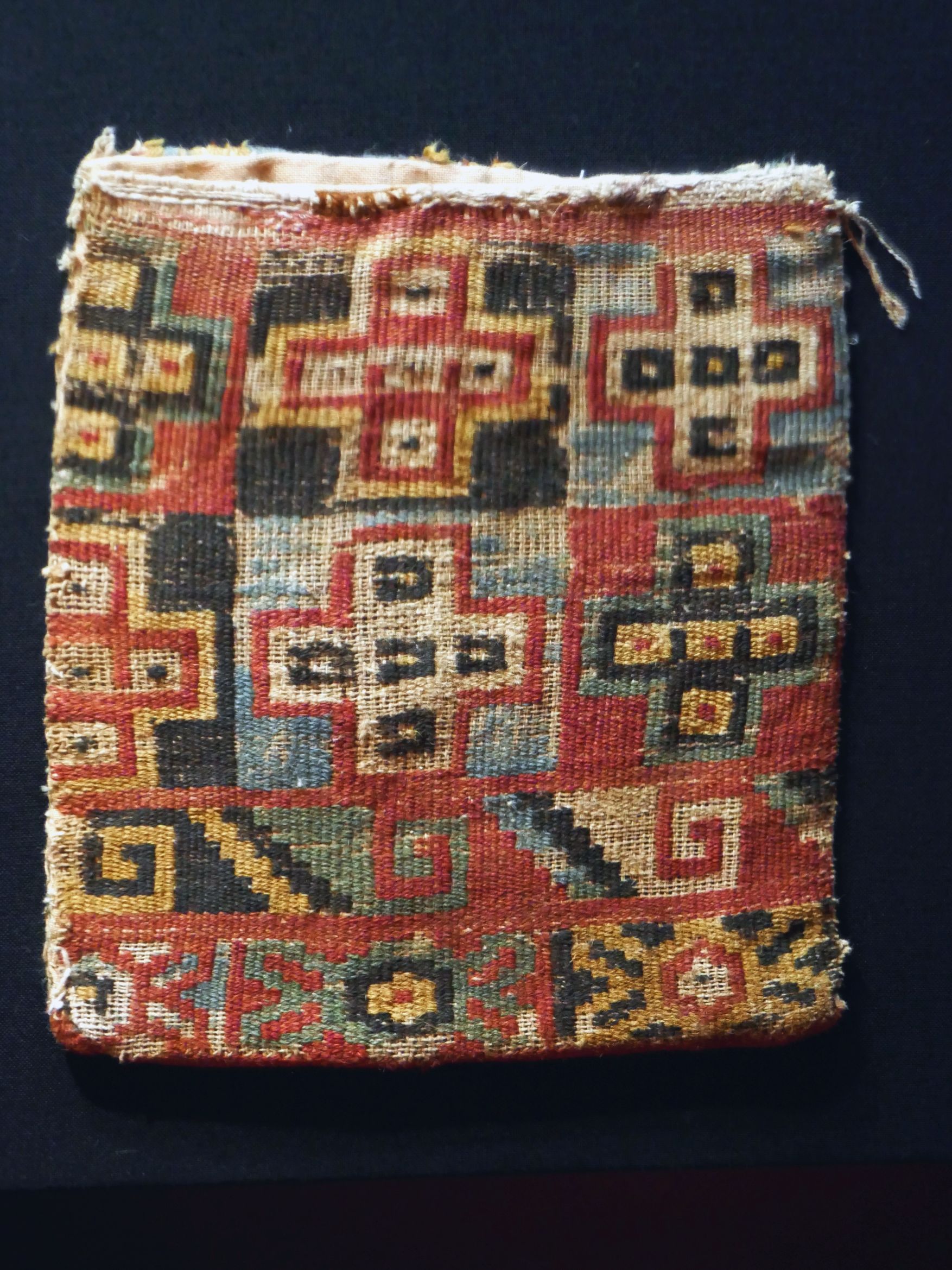
Our morning continued with a drive through the crazy Lima traffic to the beautiful  Larco Museum, an archaeological museum with an amazing collection of pre-Columbian pottery, textiles, jewelry, and more, recovered from the 200 archeaological sites within Lima.  The privately-owned museum is in an 18th century building with beautiful gardens and the most bougainvillea I have ever seen in one place!

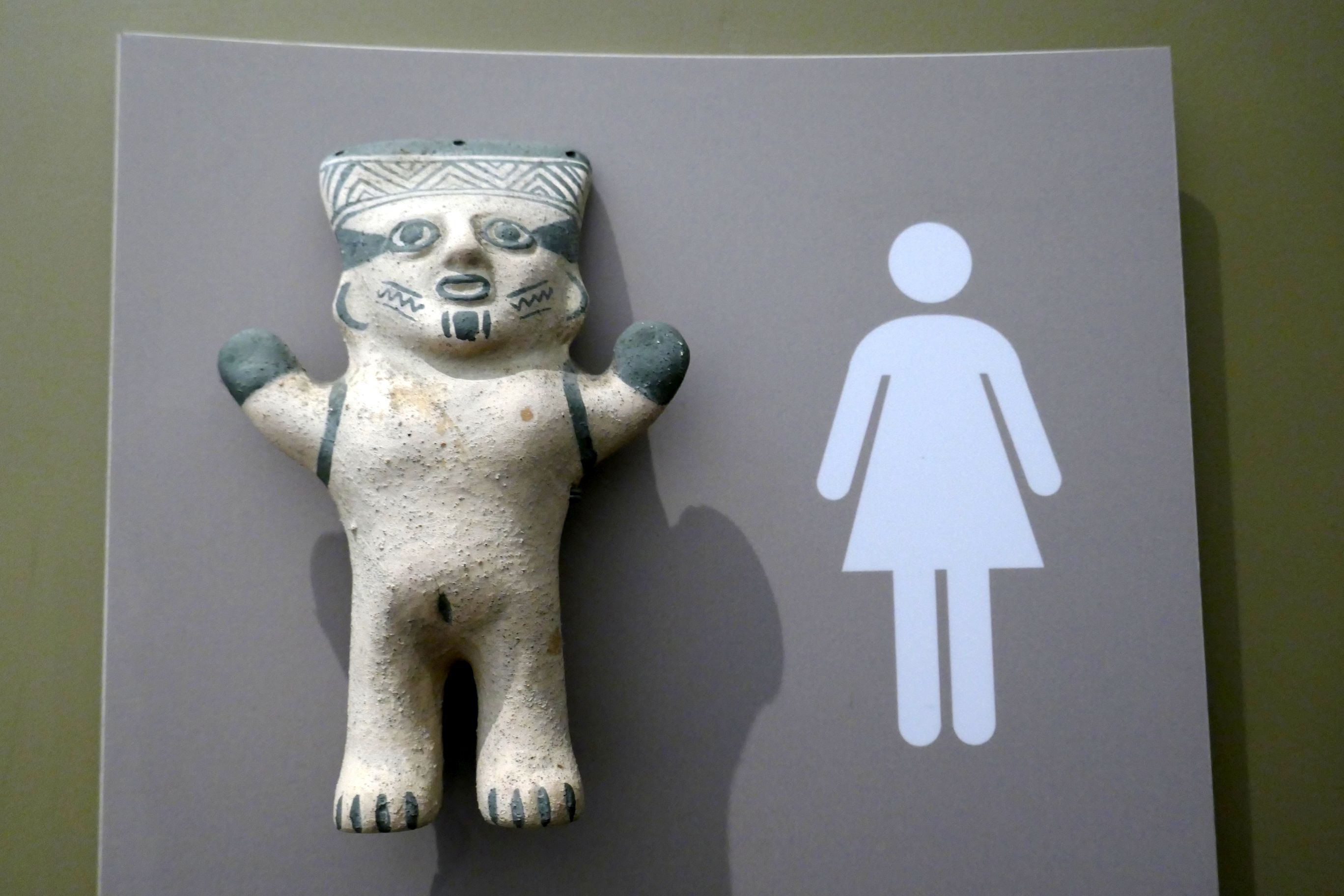
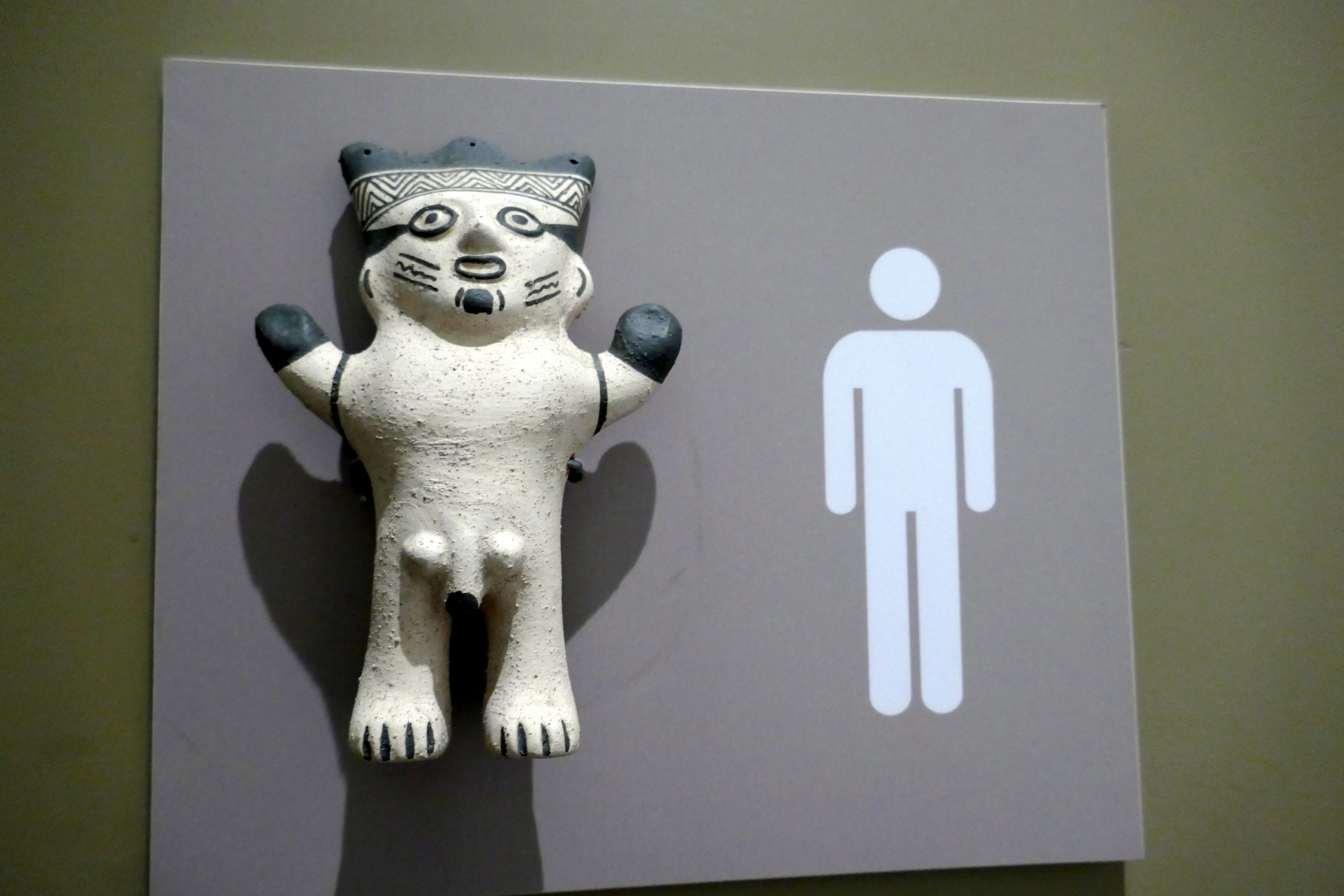
Even the restroom door signs were, uhhh, educational:

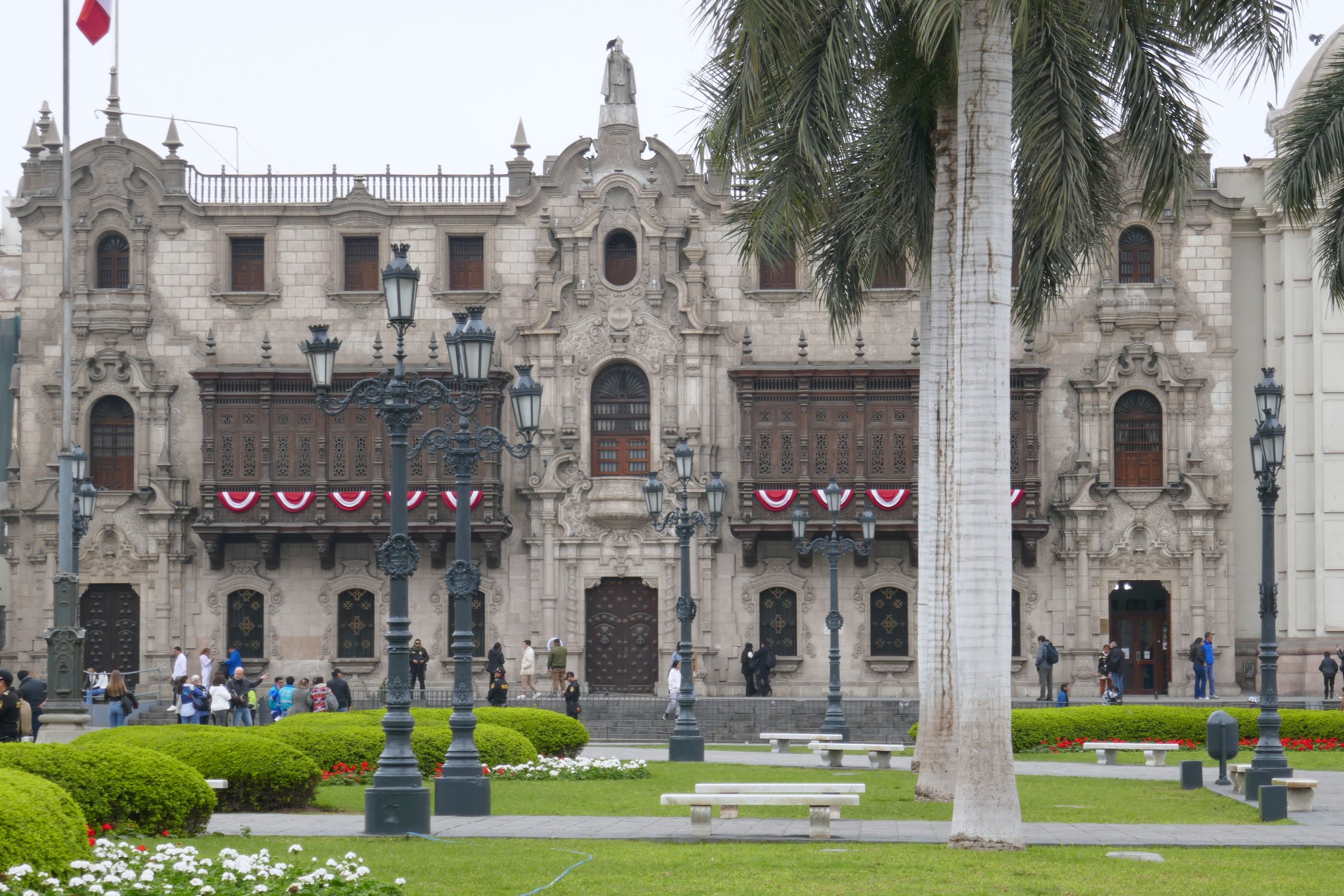
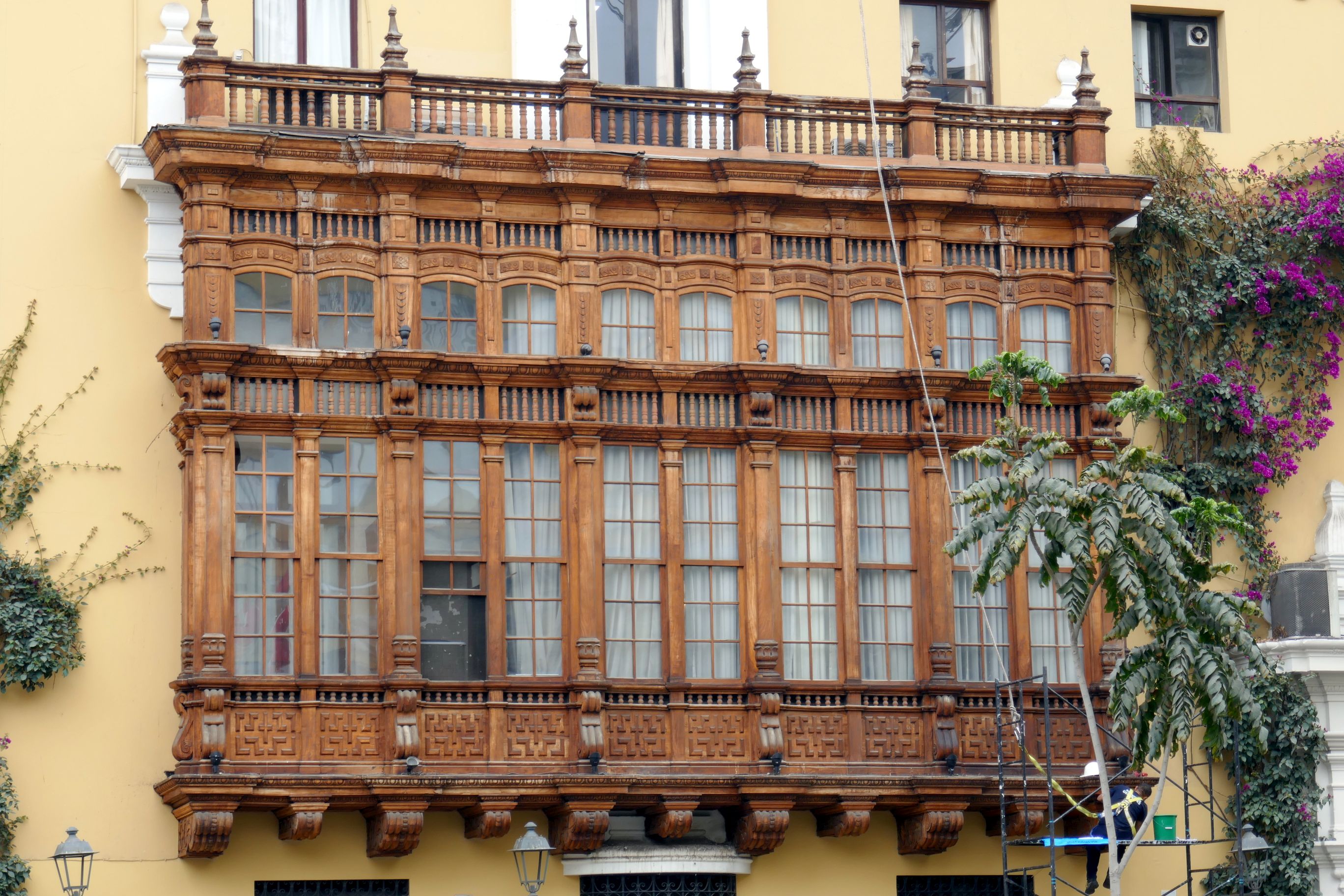
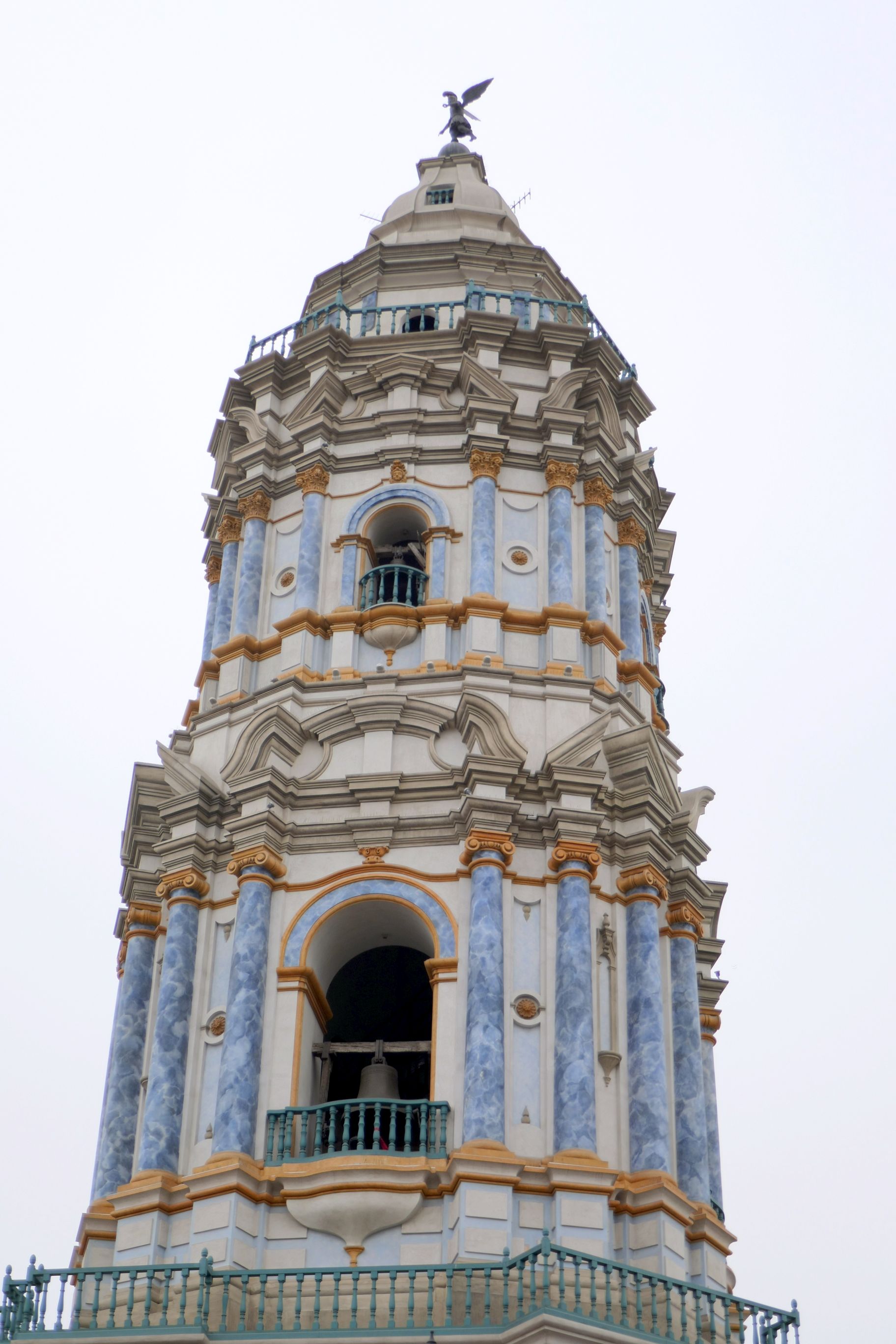
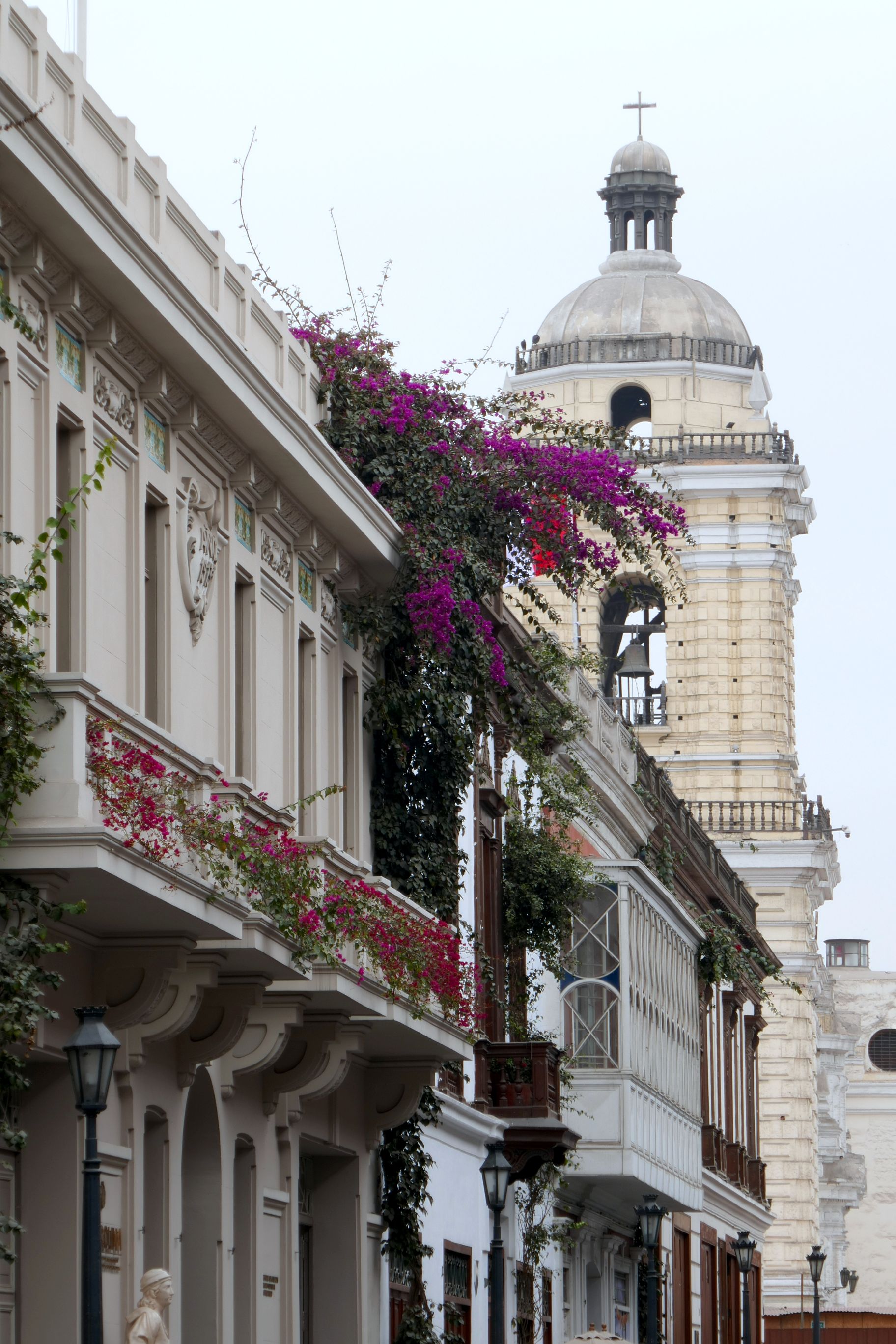
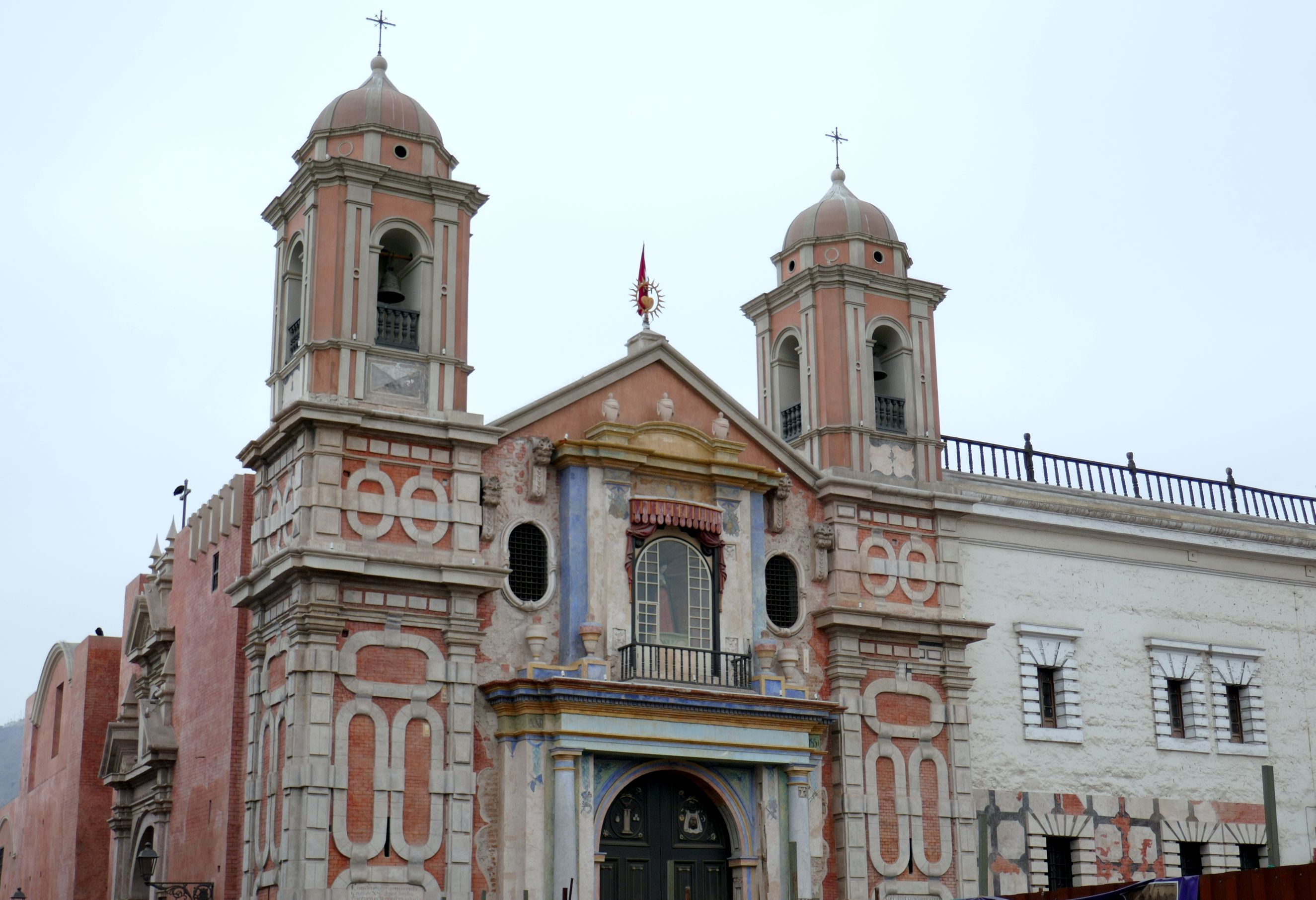
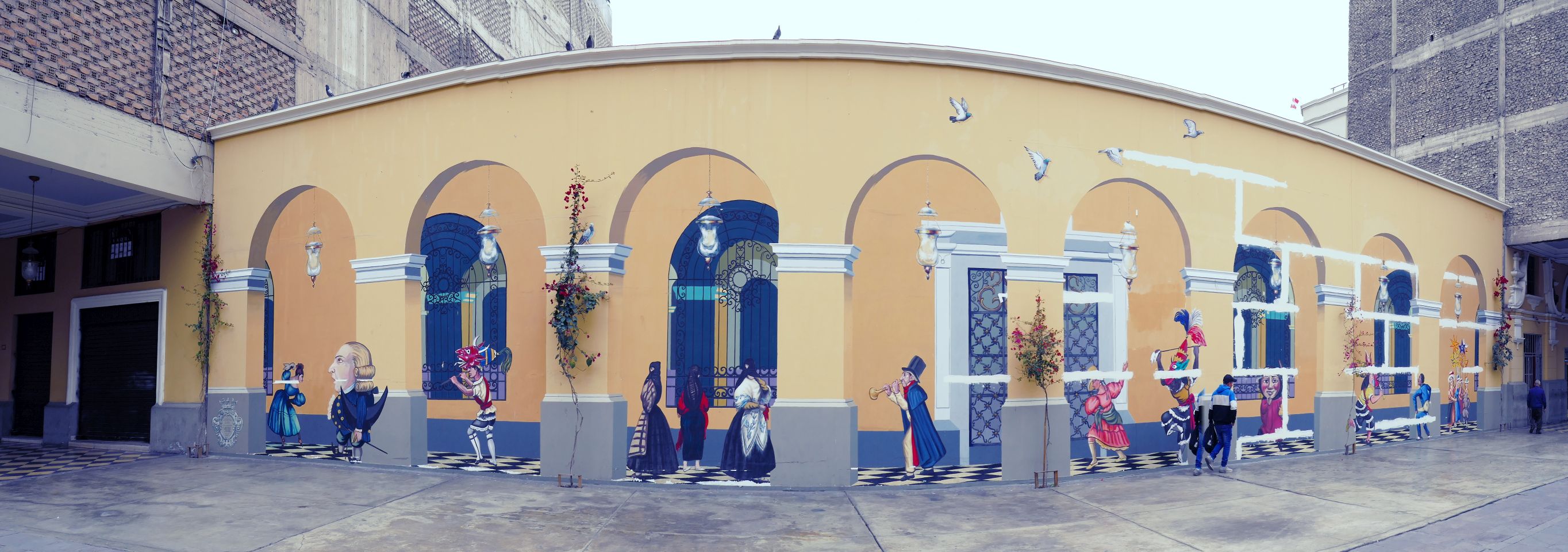
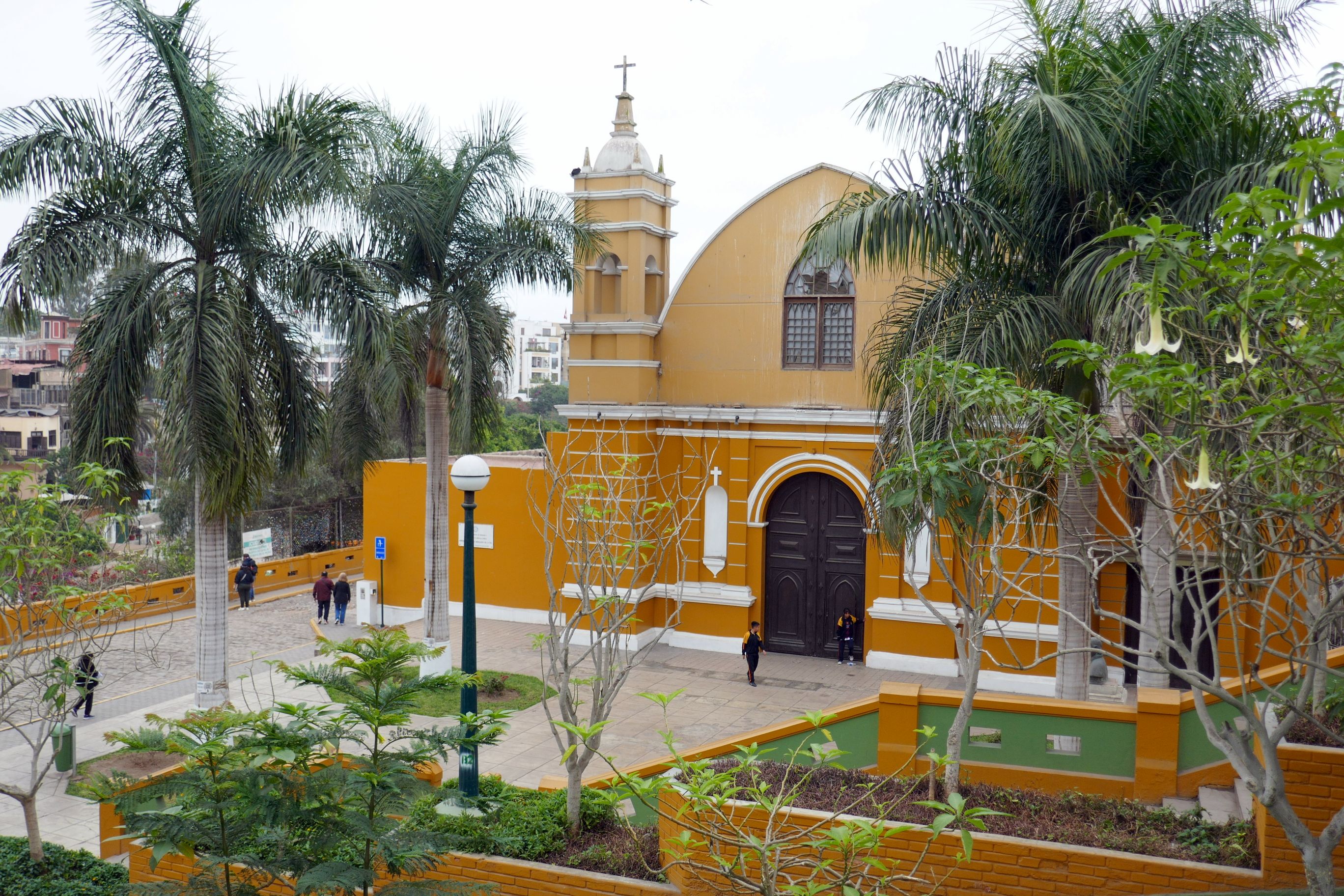
Next, we visited the Colonial District for a walking tour.  Lima has suffered many destructive earthquakes over the years, so few Colonial-era buildings remain in what is now an eclectic mix of architecture.  As a result, the Colonial District is registered as a UNESCO Heritage Site.

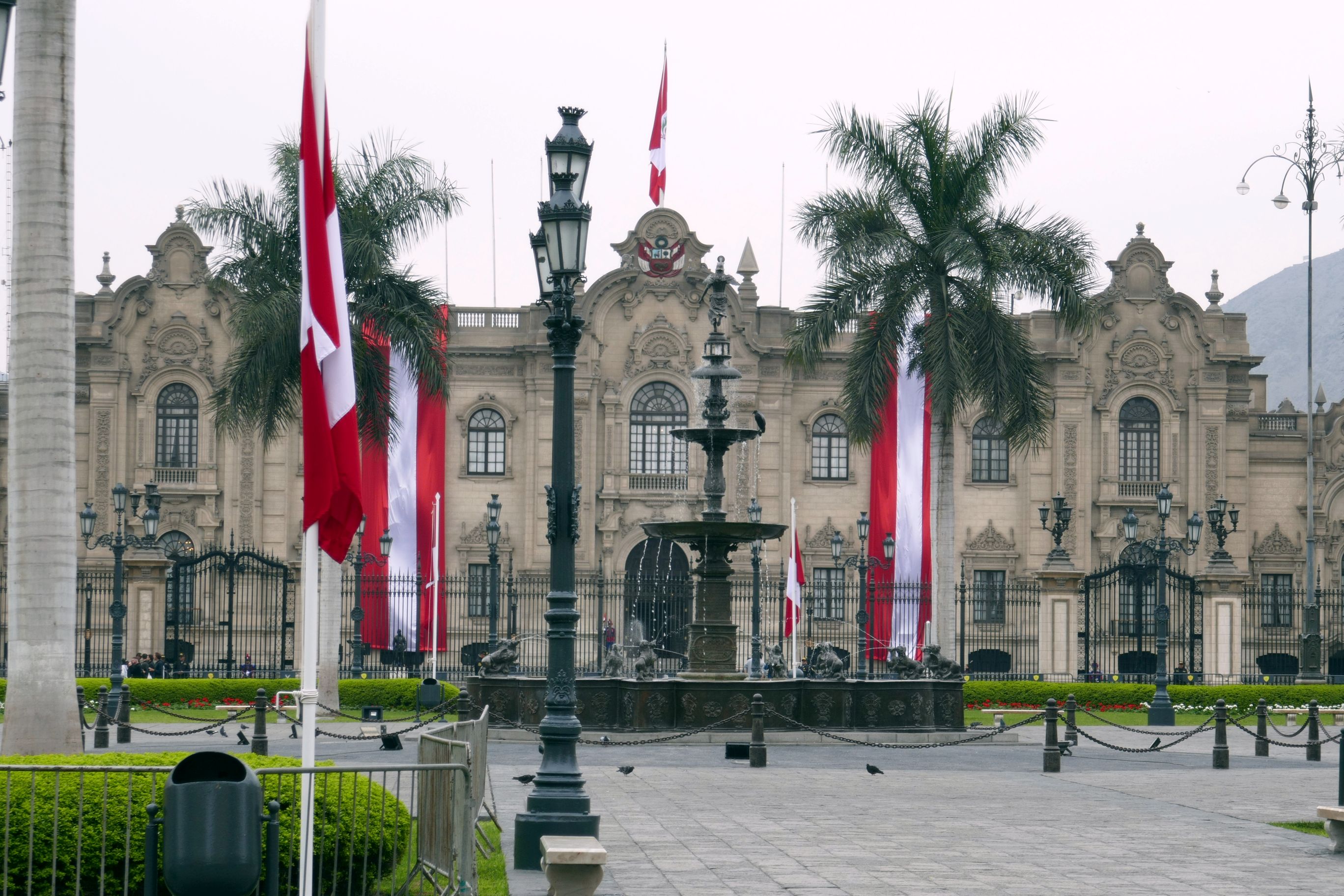
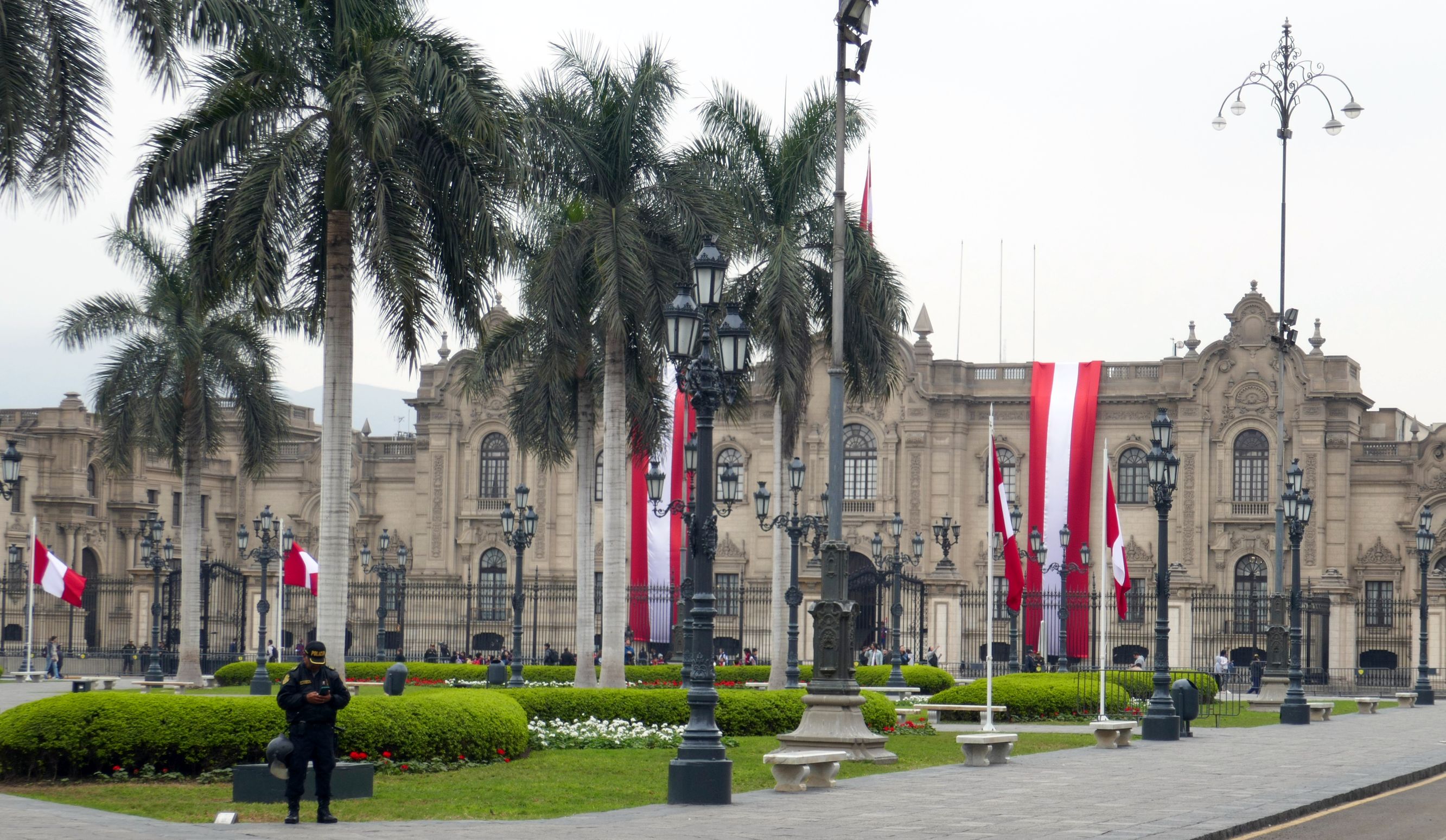
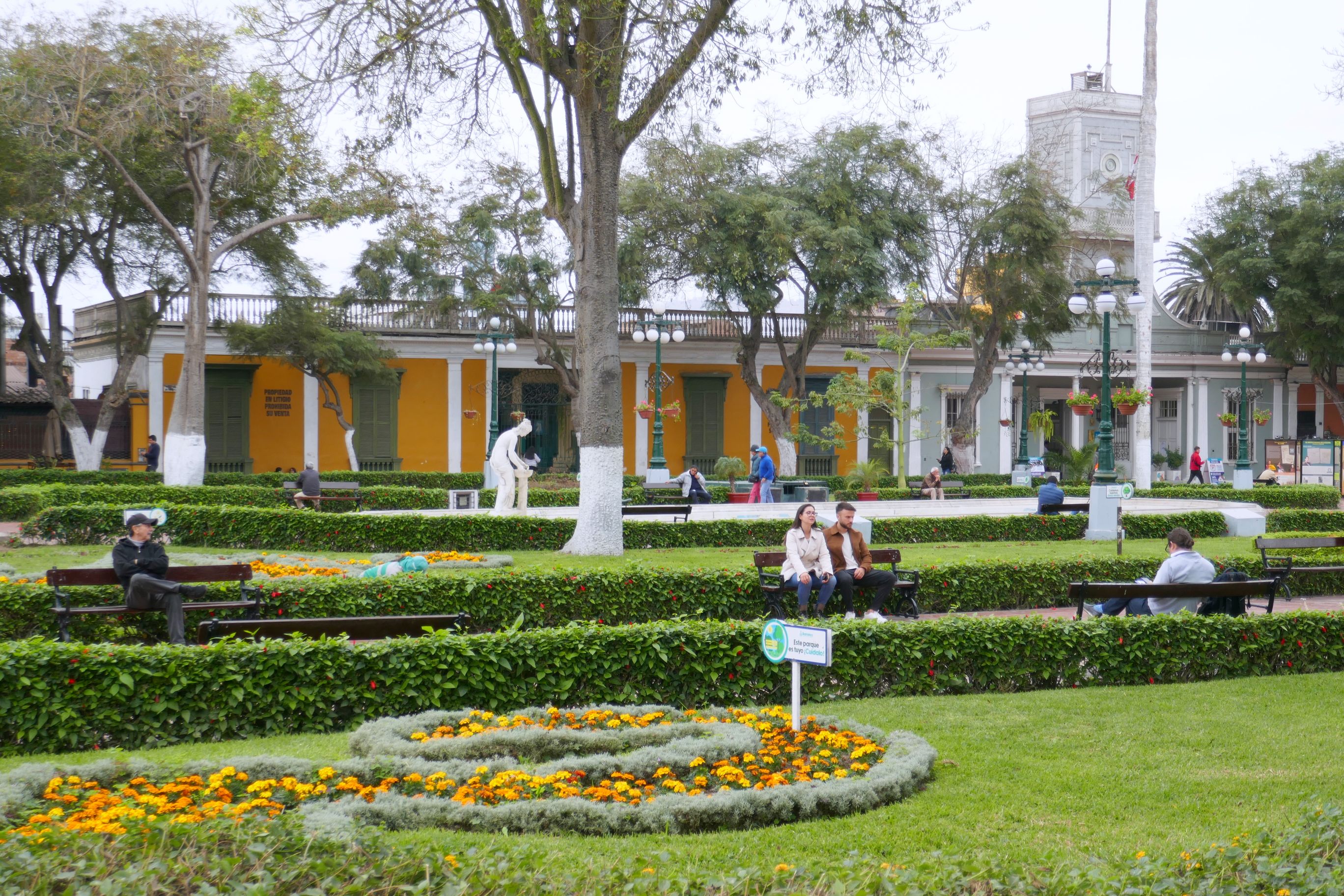
Our tour took us to Plaza Mayor de Lima past ornate government buildings, including the Government Palace and 1650’s-era fountain, while our guide shared a lot of interesting information about Lima.  I had no idea, but 75% of the city’s residents are from other places in the world making it very multi-cultural.

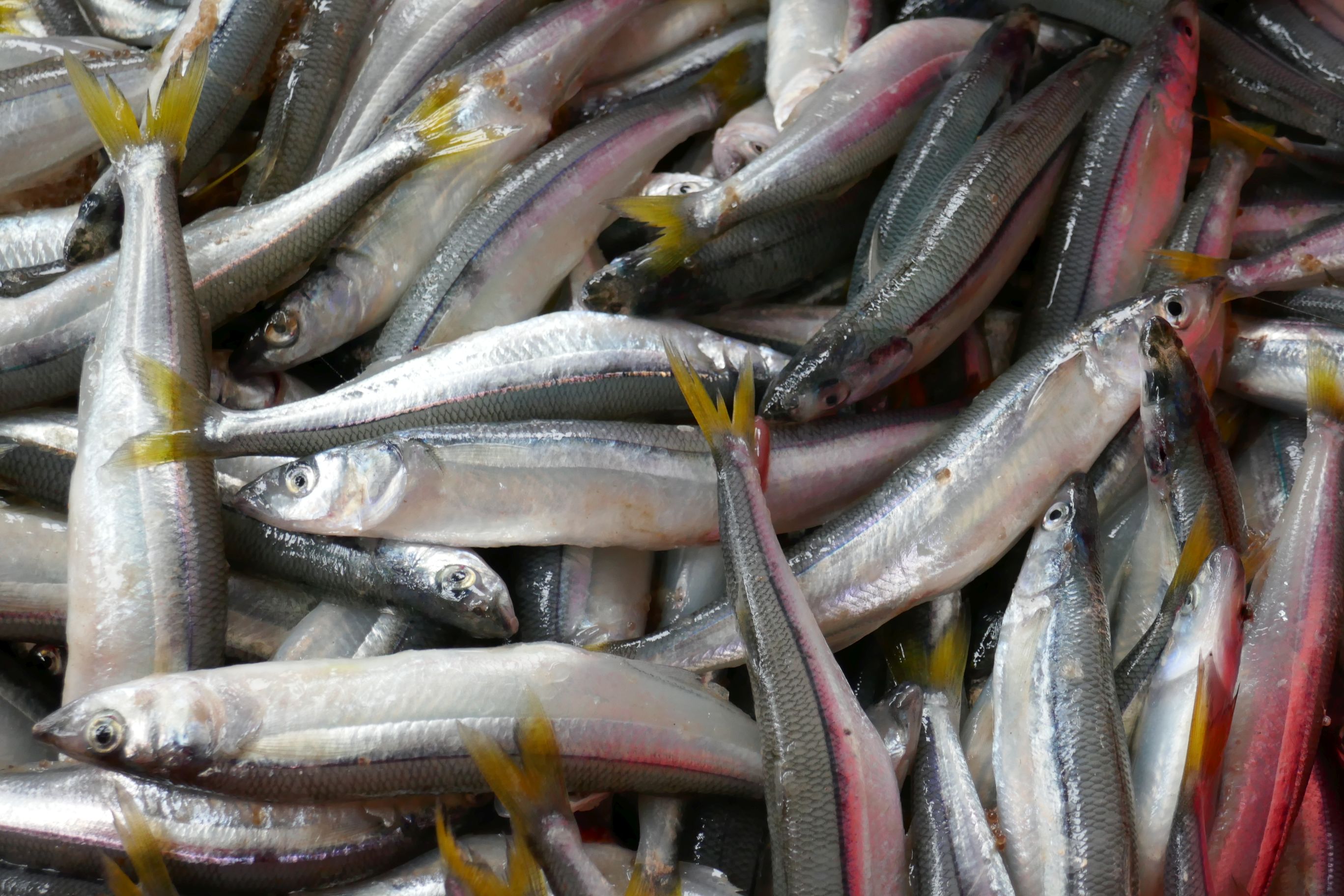
The oldest civilization in the Americas was in Peru, dating back to 3,000 B.C.  Since Lima is located just 12 degrees south of the equator, the tropical climate was conducive for many varieties of produce to grow.  It was also rich in seafood; more than 300 varieties of fish can be found in the region.  So, civilizations developed quickly and there was no need for them to migrate in search of food.  People settled in Lima for this reason, since many areas of Peru are desert.

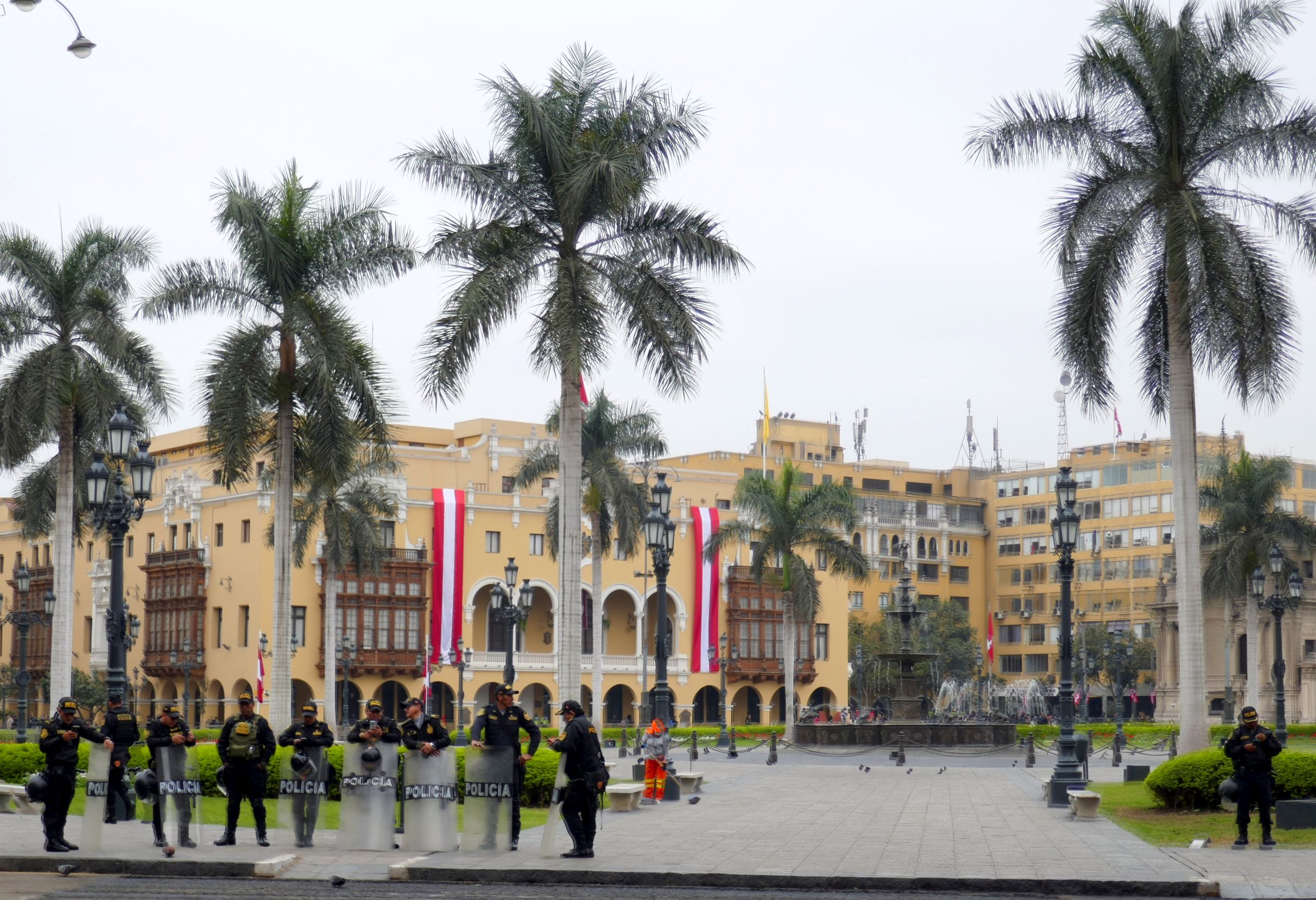
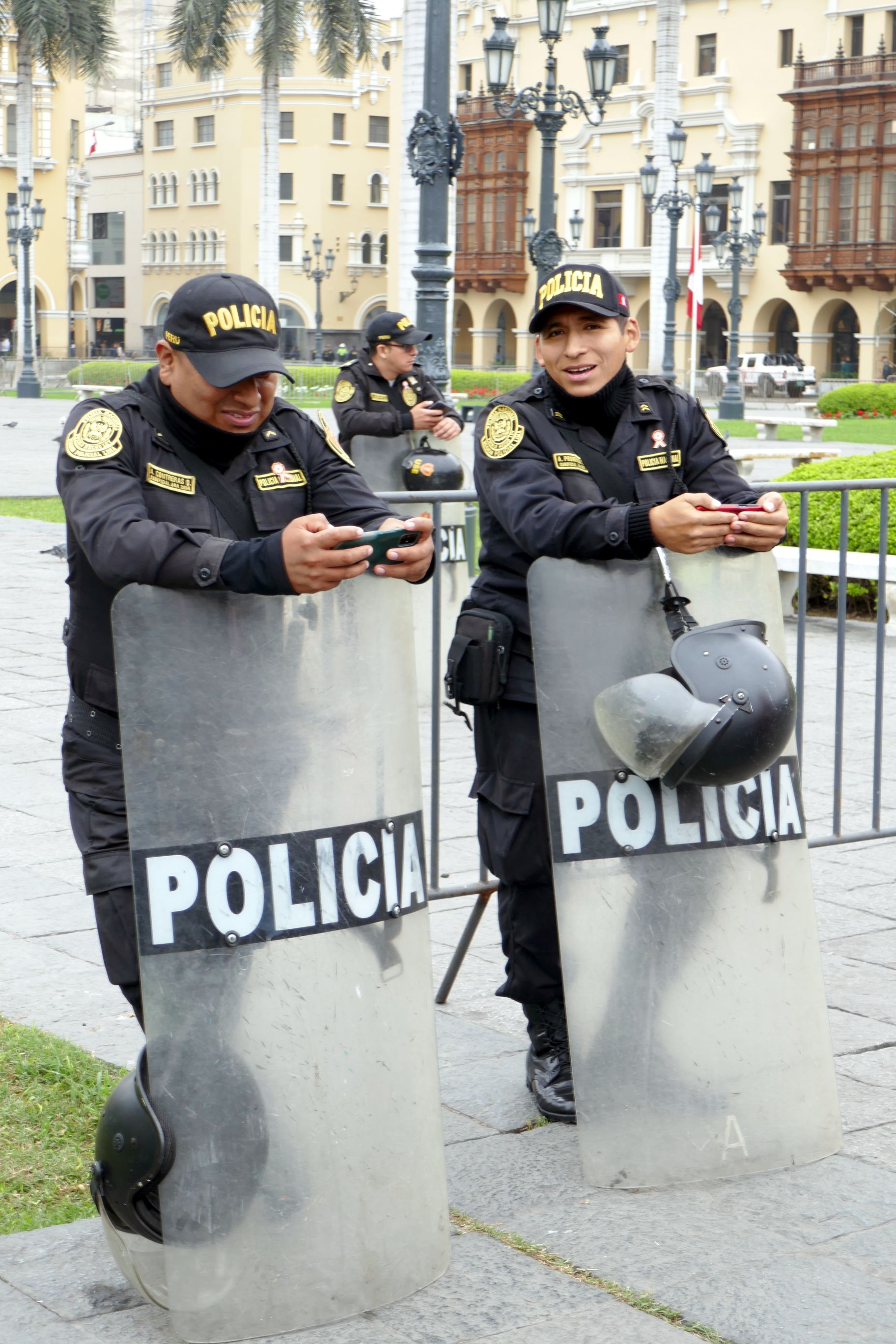
Throughout the square, as you may have noticed in a few of these pictures, the policia was hard at work… on their cell phones.

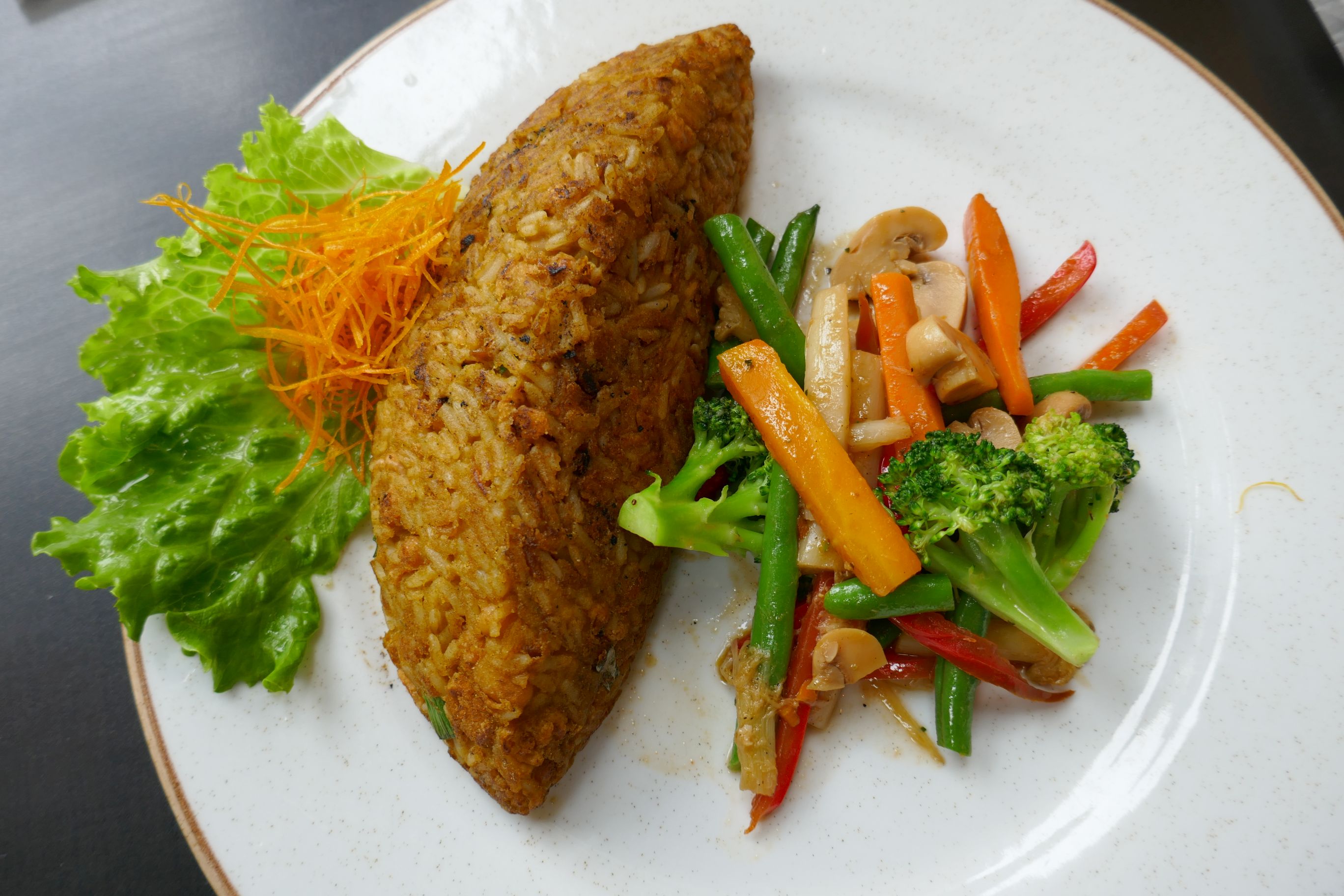
Before heading back to the Miraflores District, we enjoyed a lovely alfresco lunch of traditional Tacu Tacu (Peruvian rice and bean) and continued our walk through town.  It was such a fabulous day!

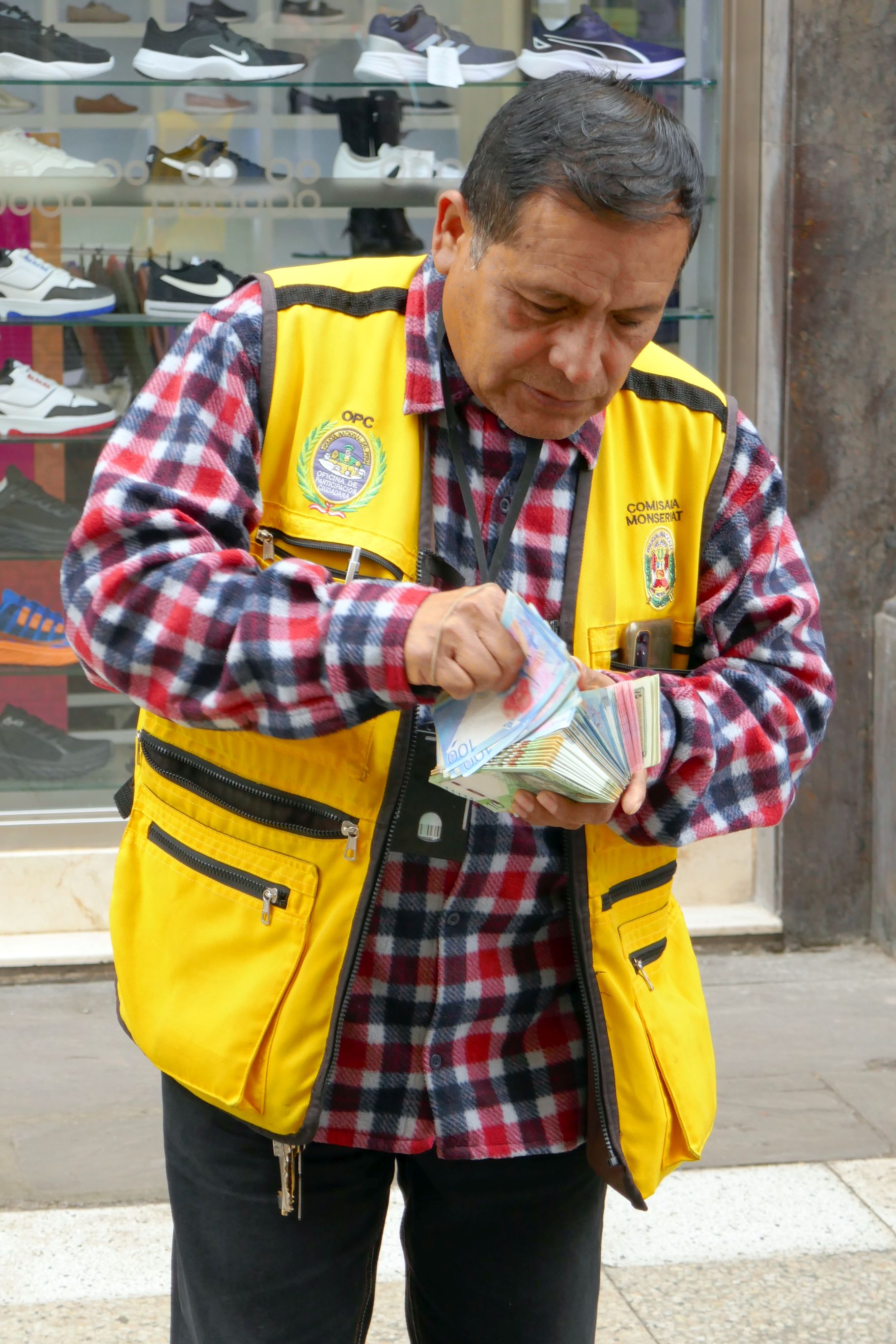
This is how you exchange your money; find somebody in an official yellow vest. Notice the guy on the right. He’s counting his U.S.$. As I watched, most of the stack were 100’s! By the way, counterfeit money is a huge thing in Peru and most of counterfeit U.S. money is made there.

Well, dear readers, after six posts covering four days in Lima, I will be continuing to Urubamba, Cusco, in my next post, but not until after my computer and I take an extended break for more adventures!

Coming up after the break: PERU #7: THE SACRED VALLEY SURPISE & PISAC RUINS

Coming up next:  PERU #5: LIKABLE LIMA (PART 5)

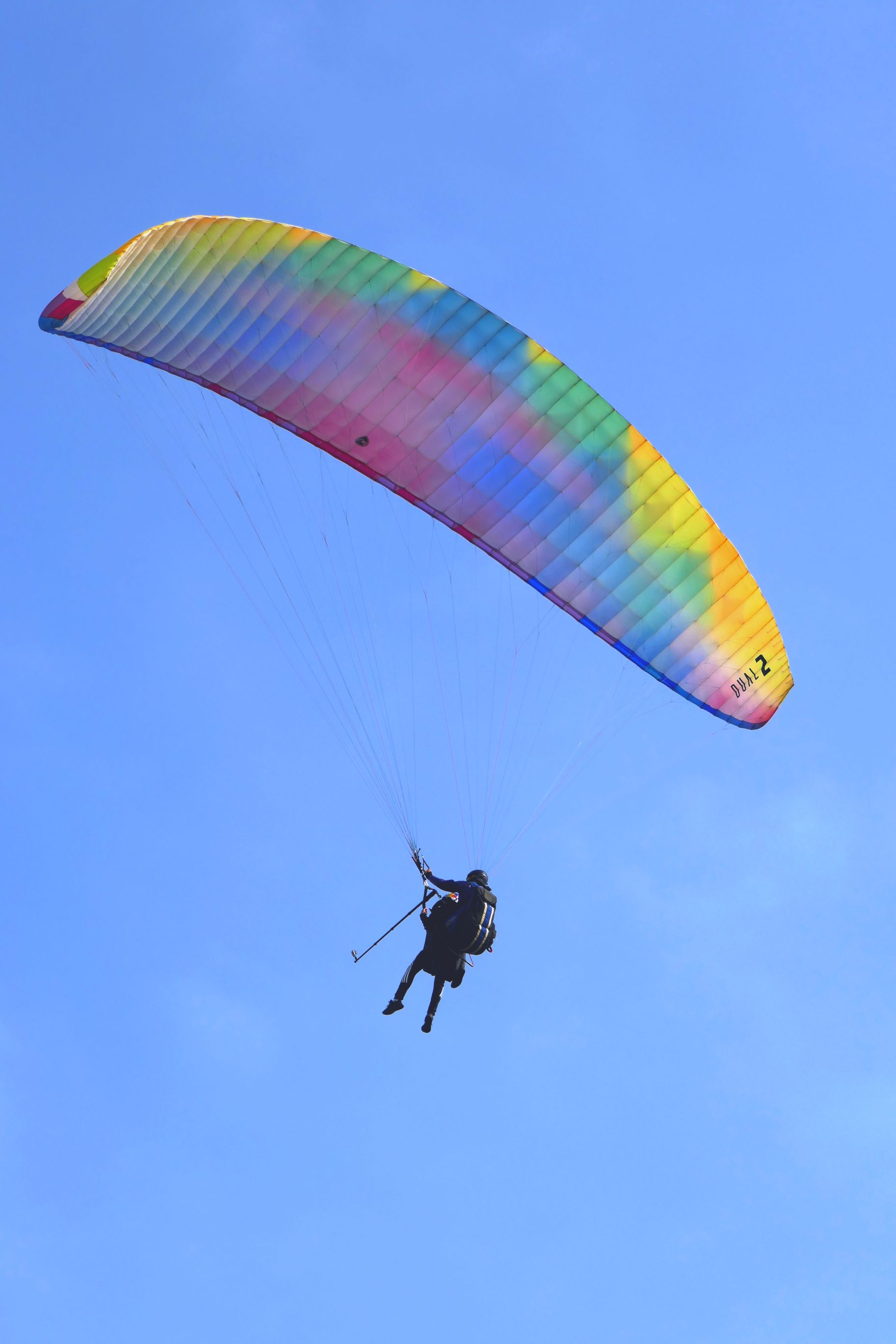
We got a rare sunny, (mostly) blue sky day in Lima, so following our walking tour and lunch with the group, Bruce and I headed back to the Malecon to watch the paragliders, while the rest of the group went to Barranco where we had already been.

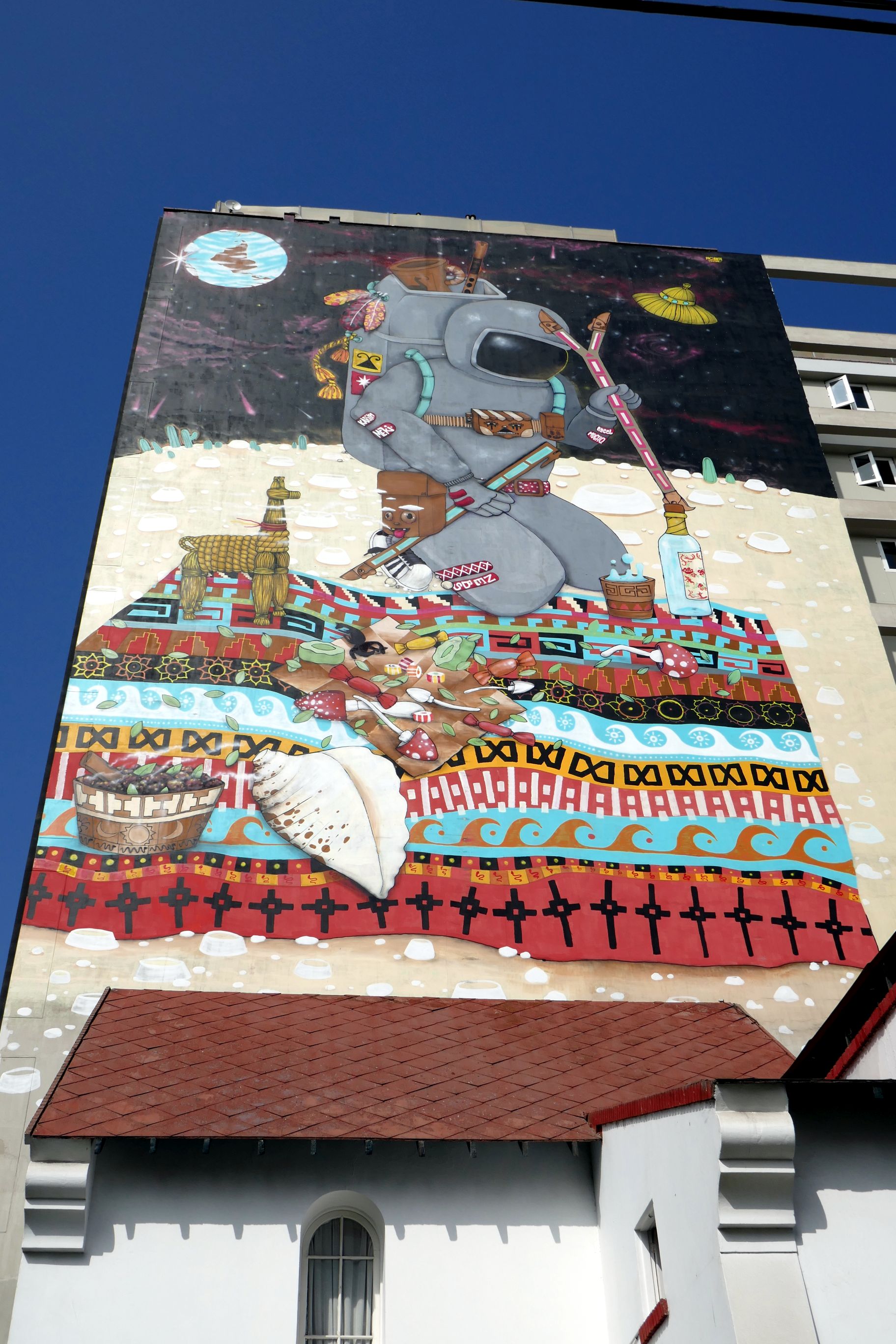
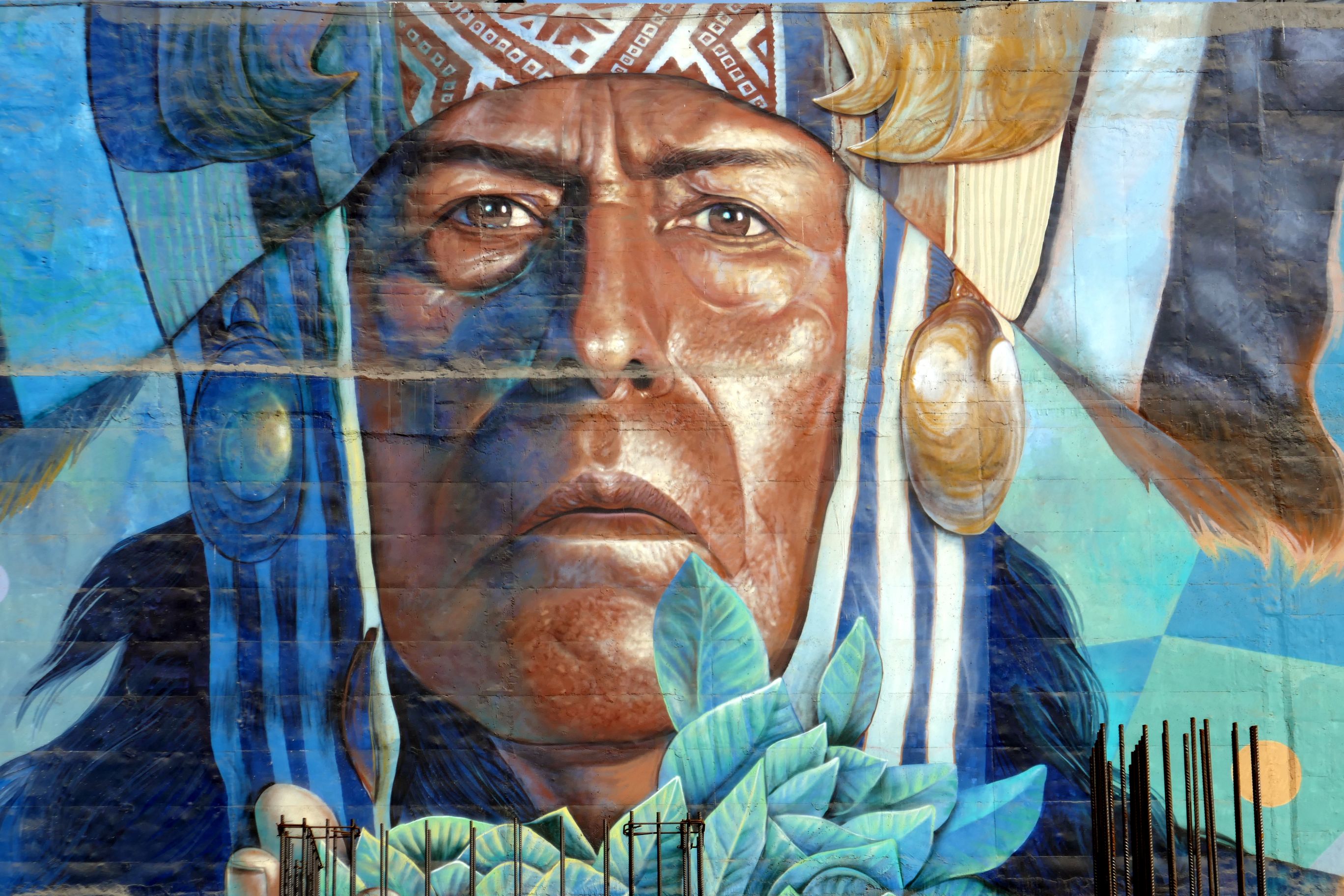
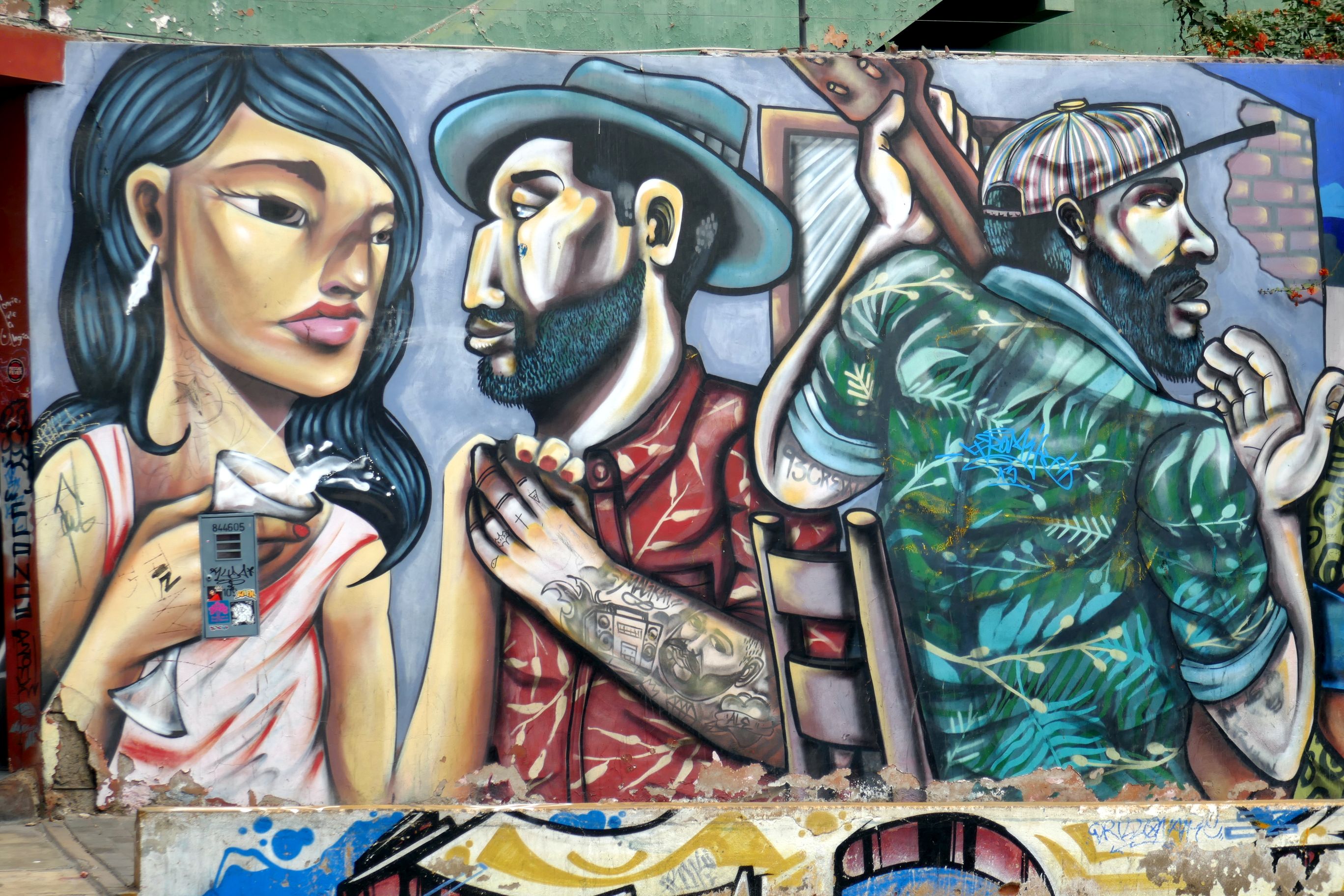
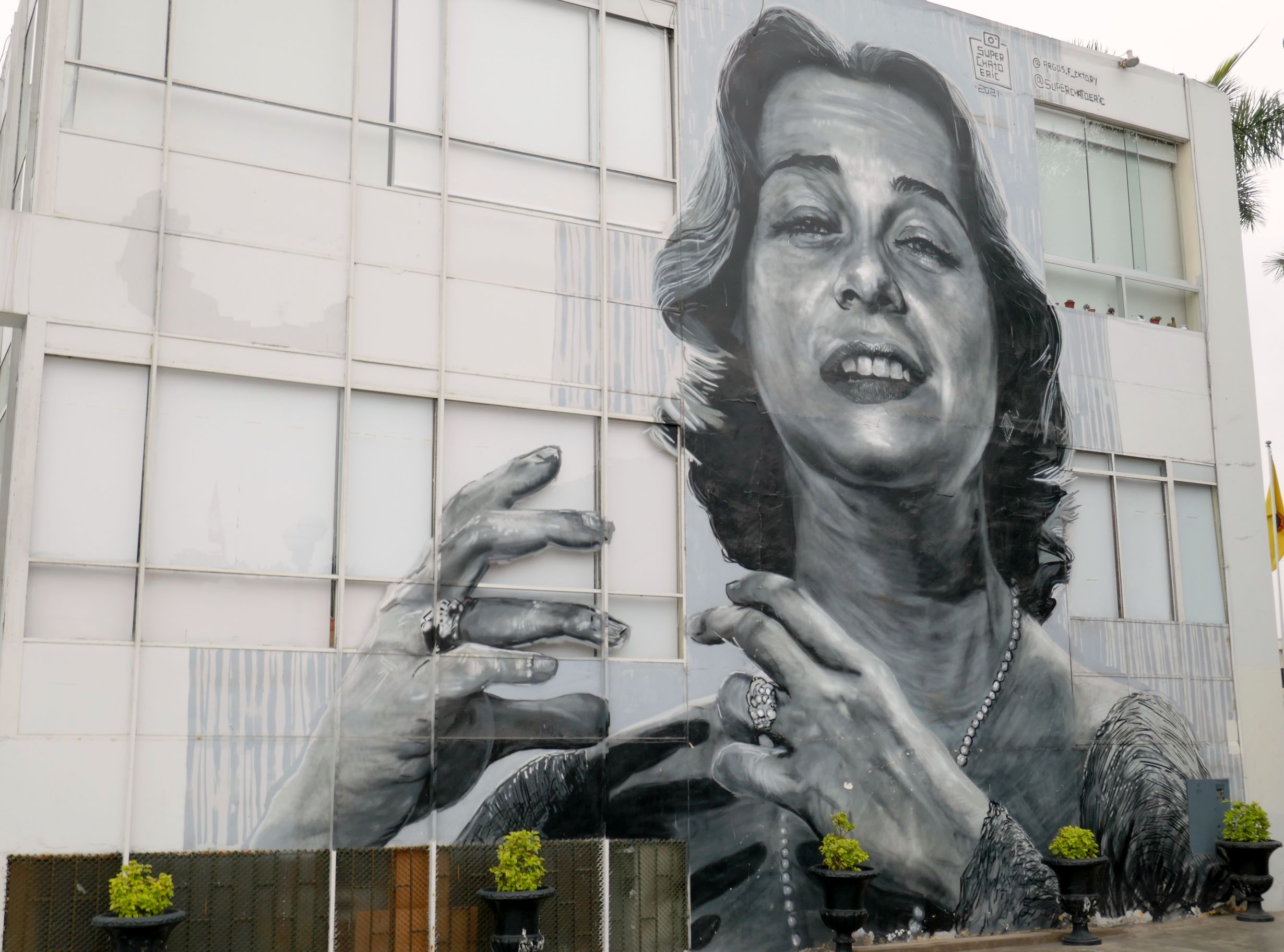
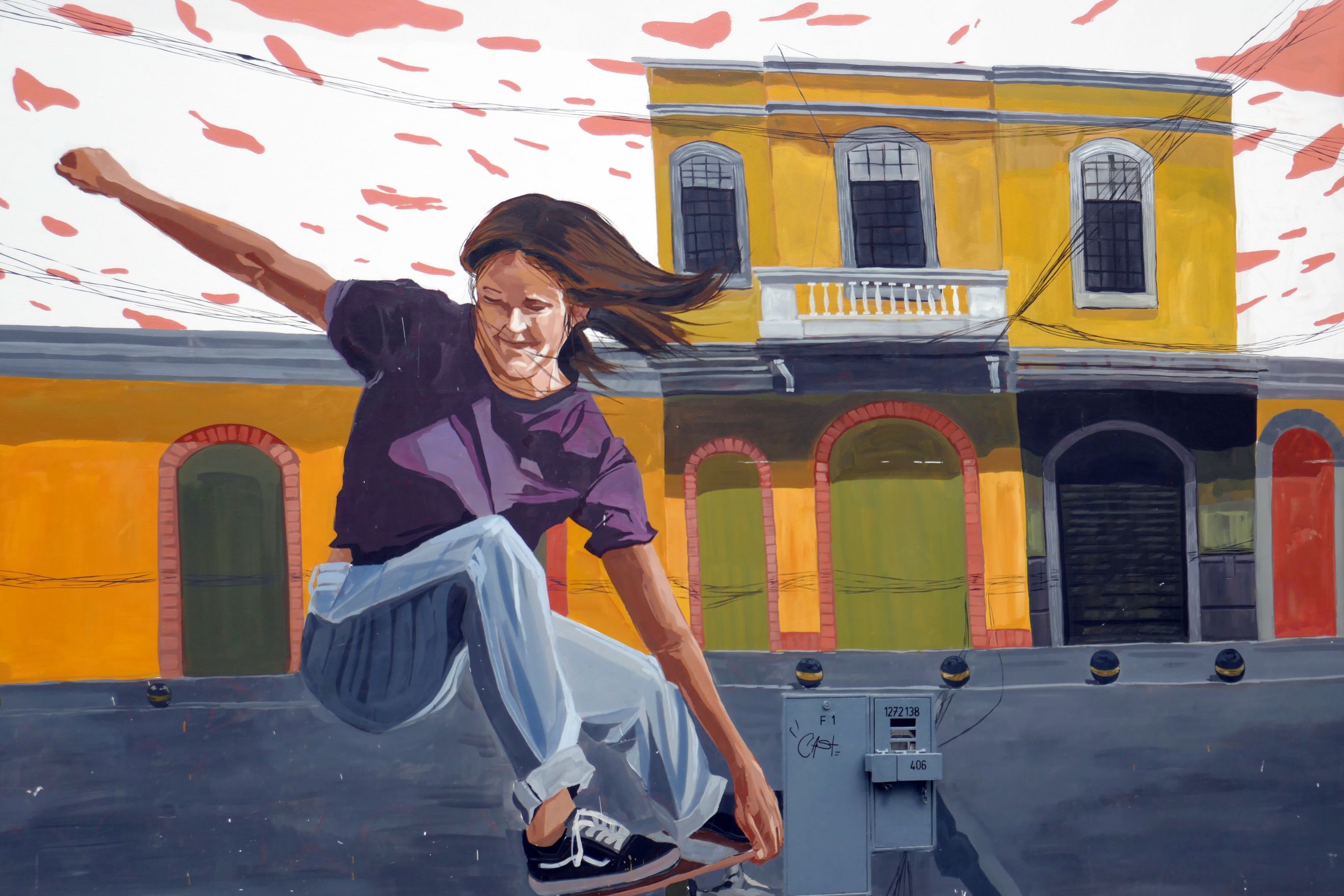
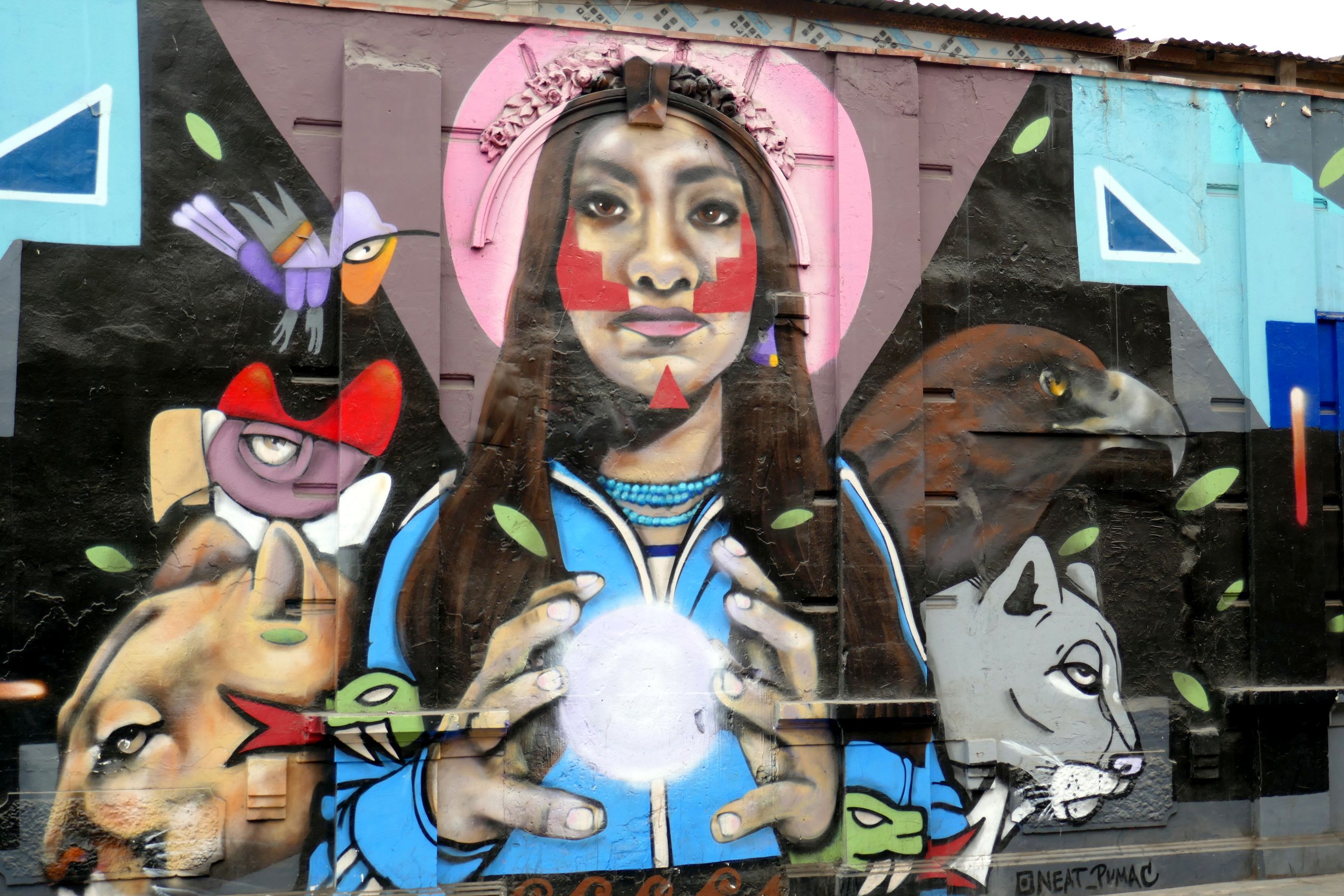
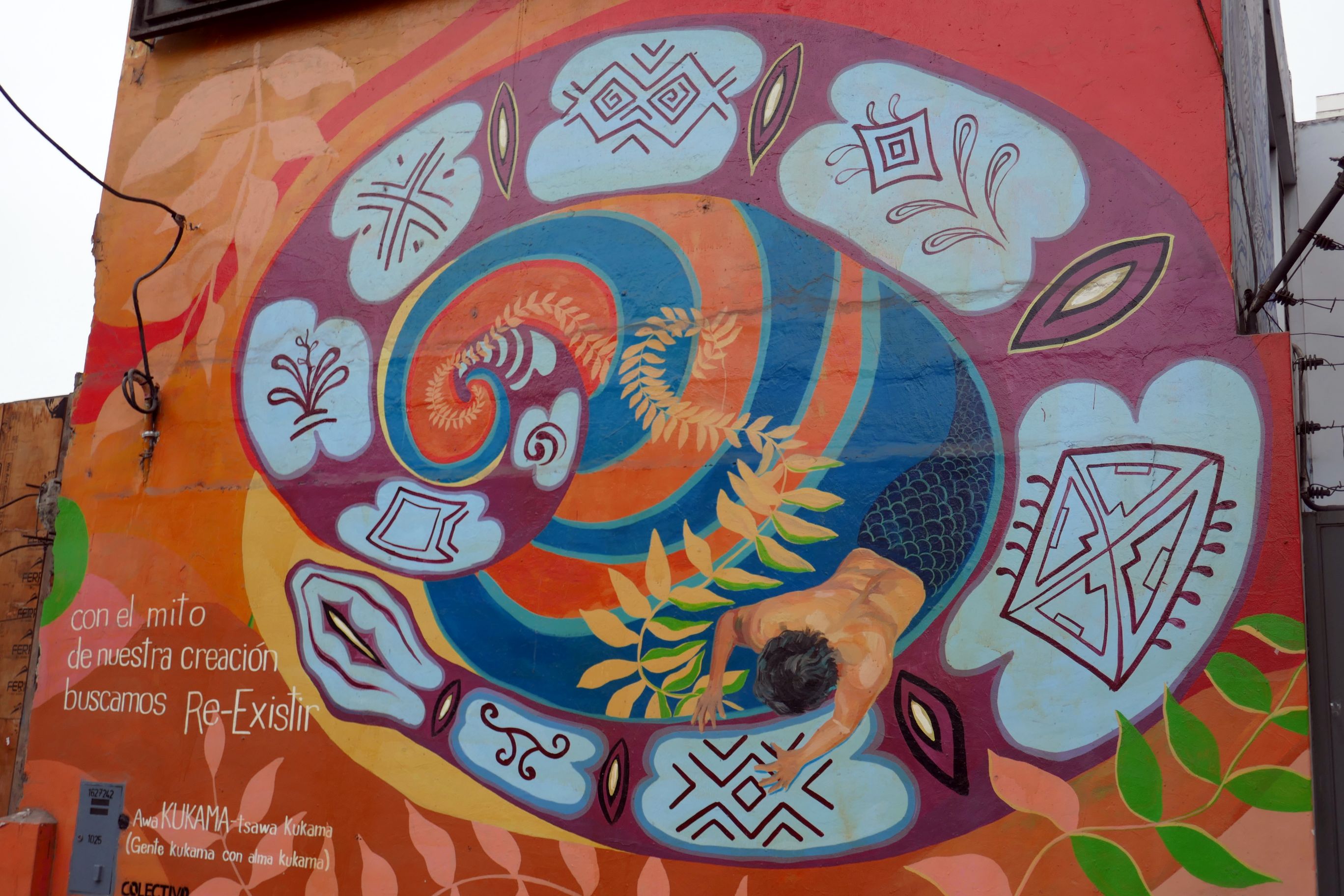
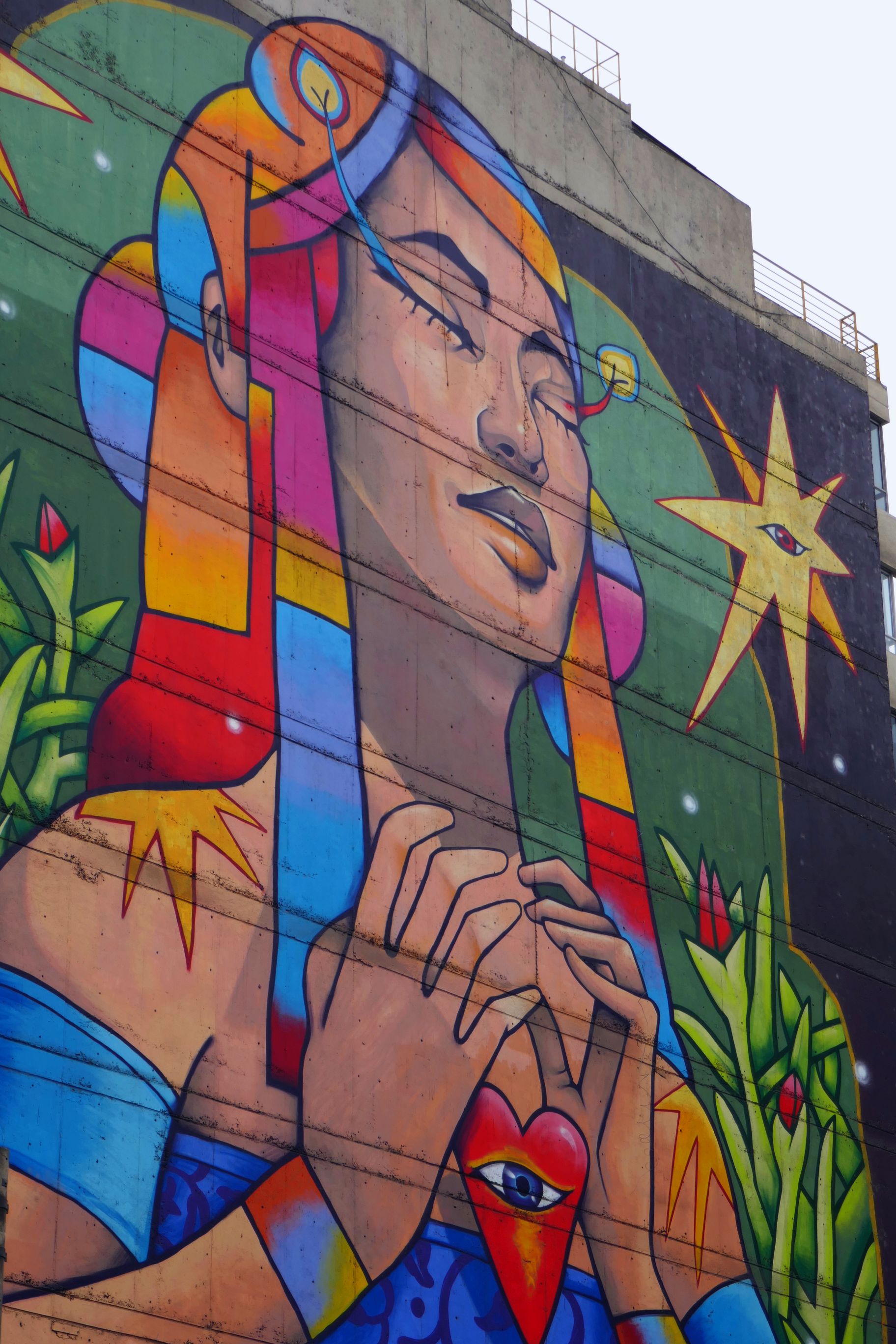
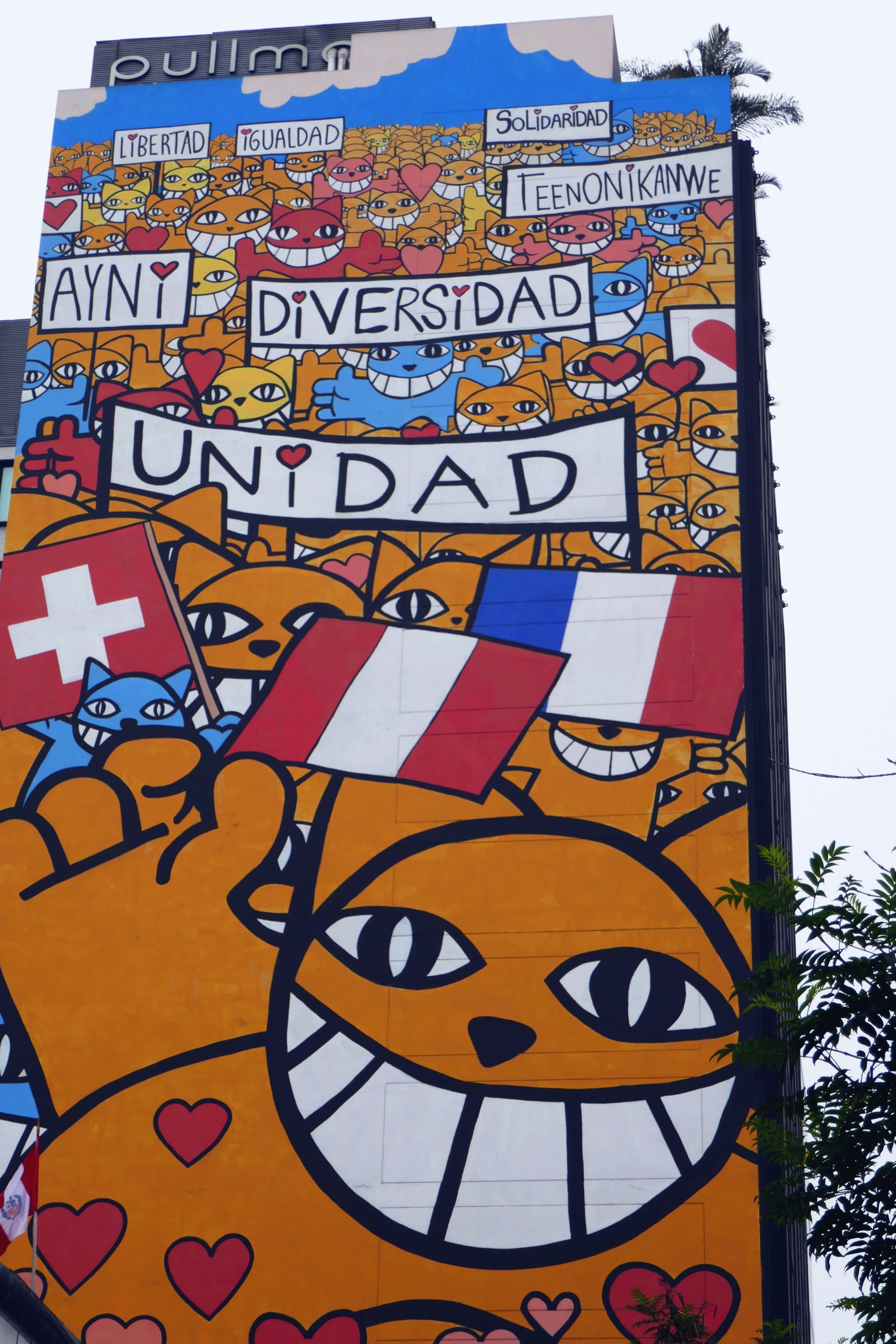
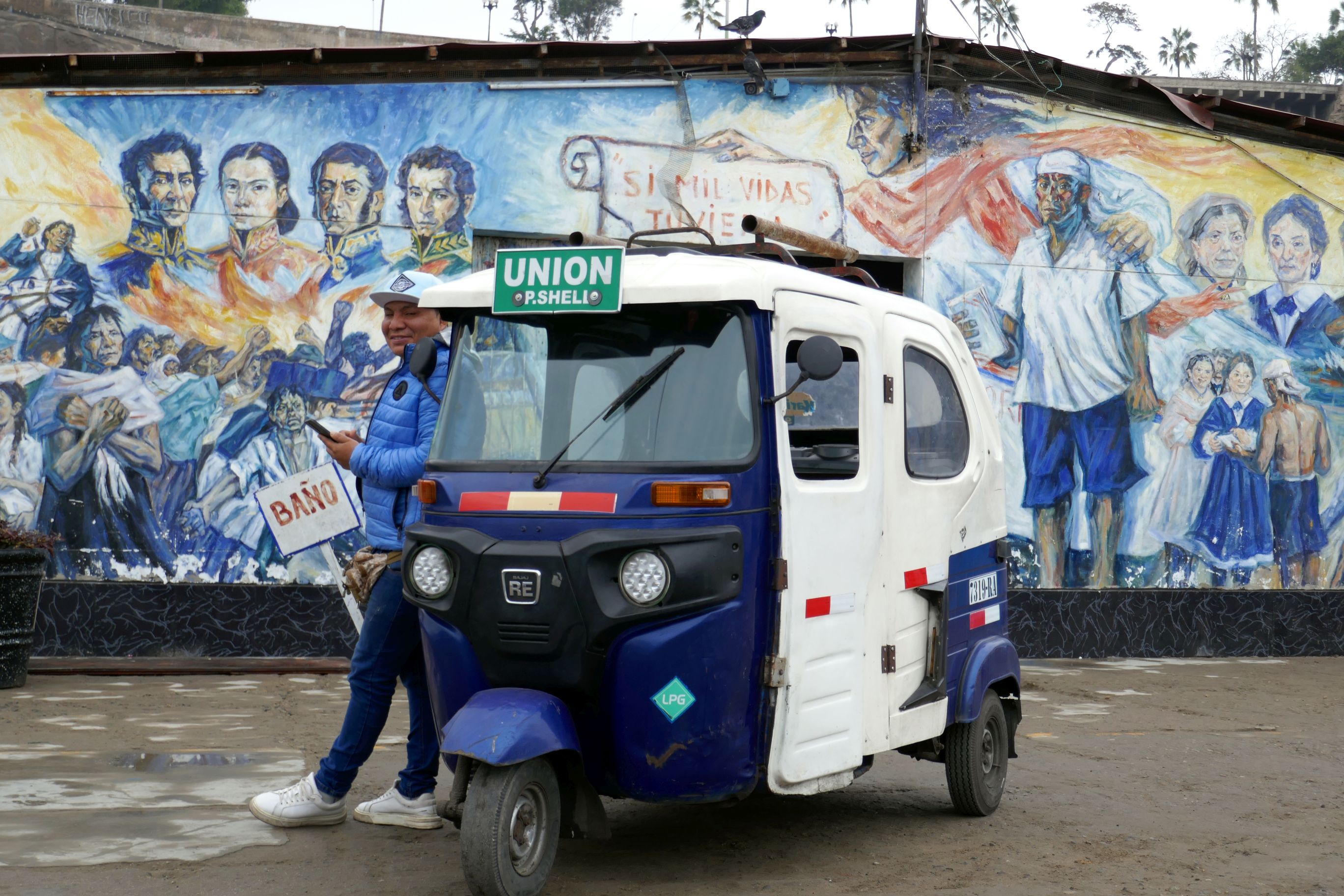
Along the way, I found a few murals: (For all photos, click on the image for a full screen view.)
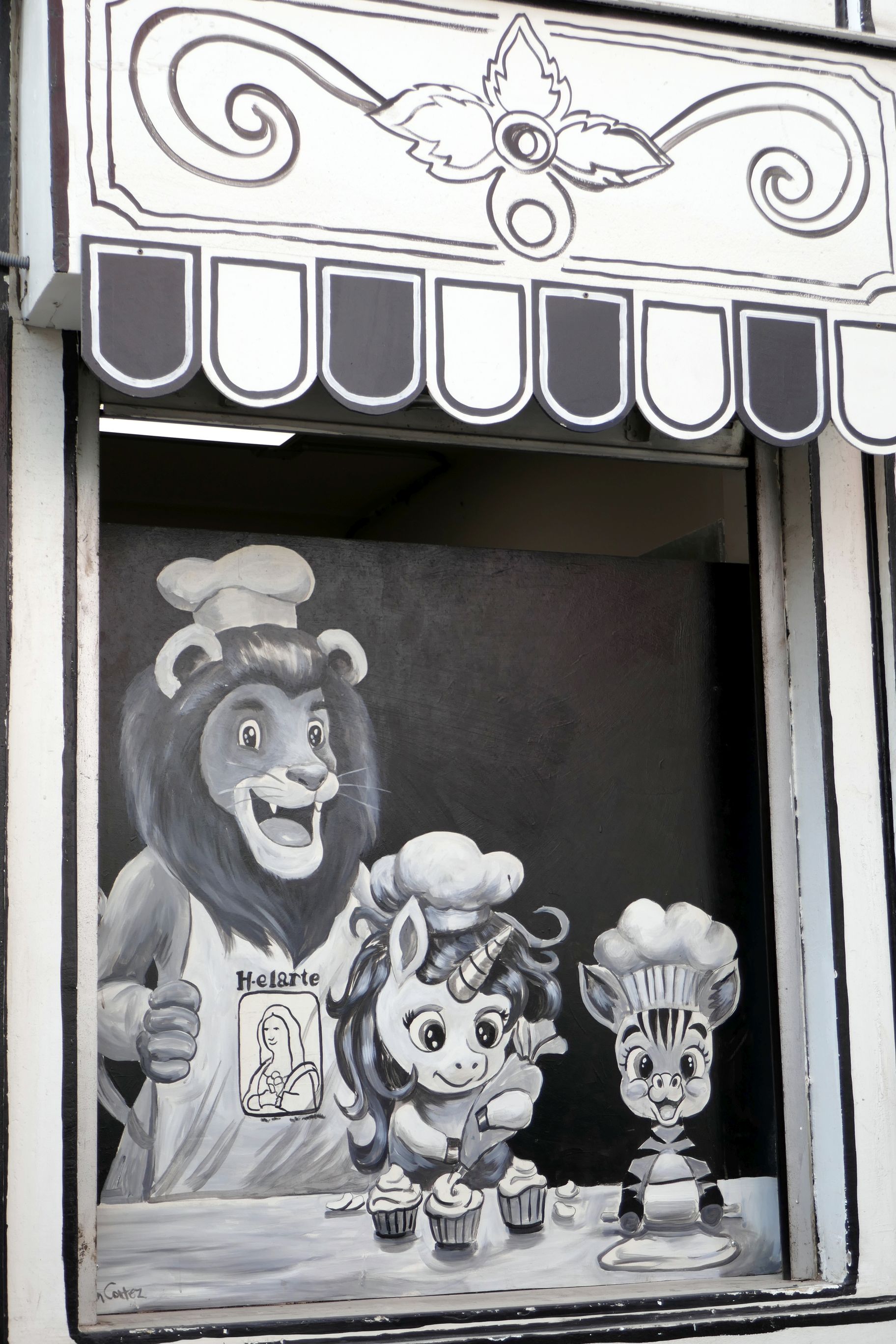
The entire facade of this restaurant was painted in cartoons.

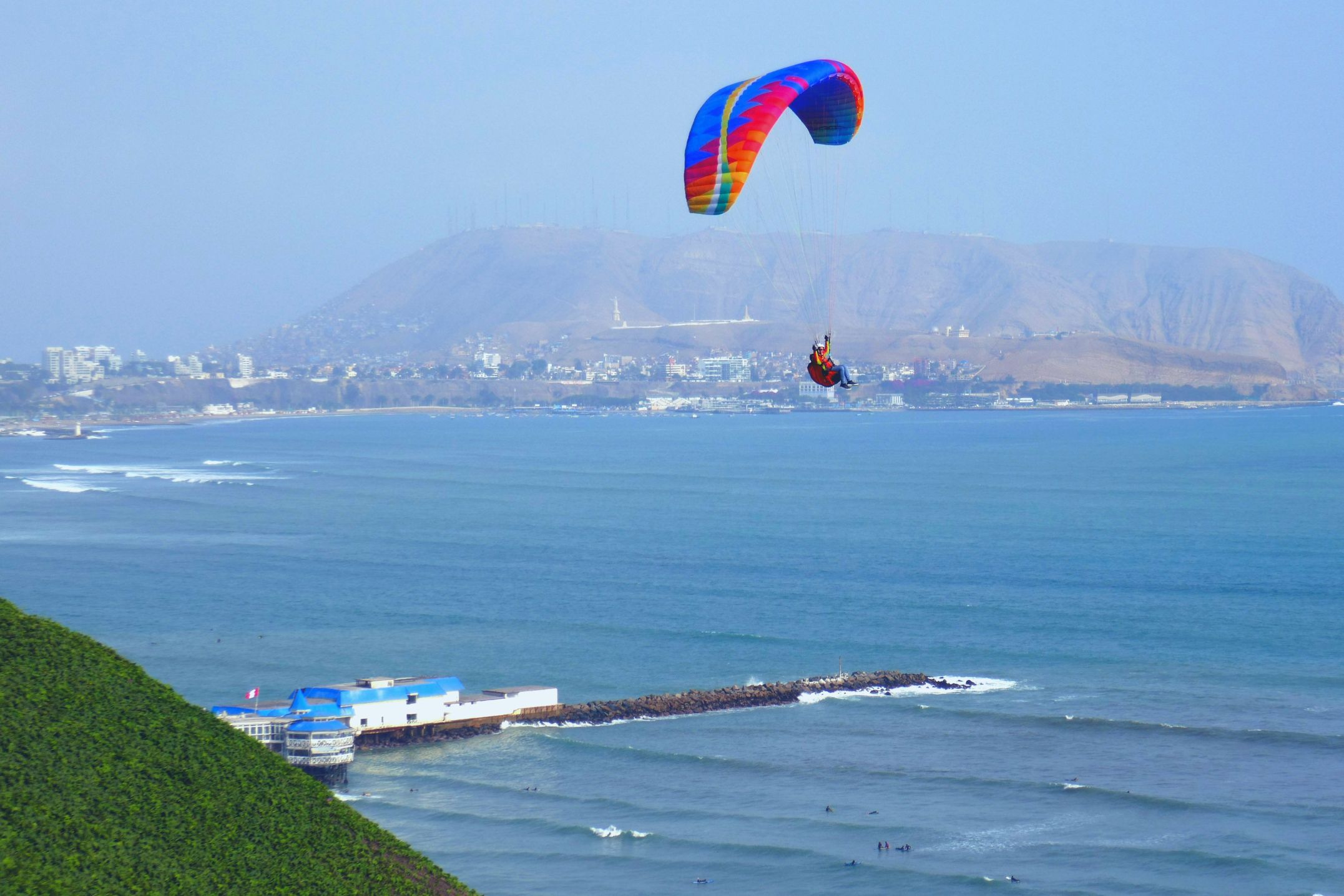
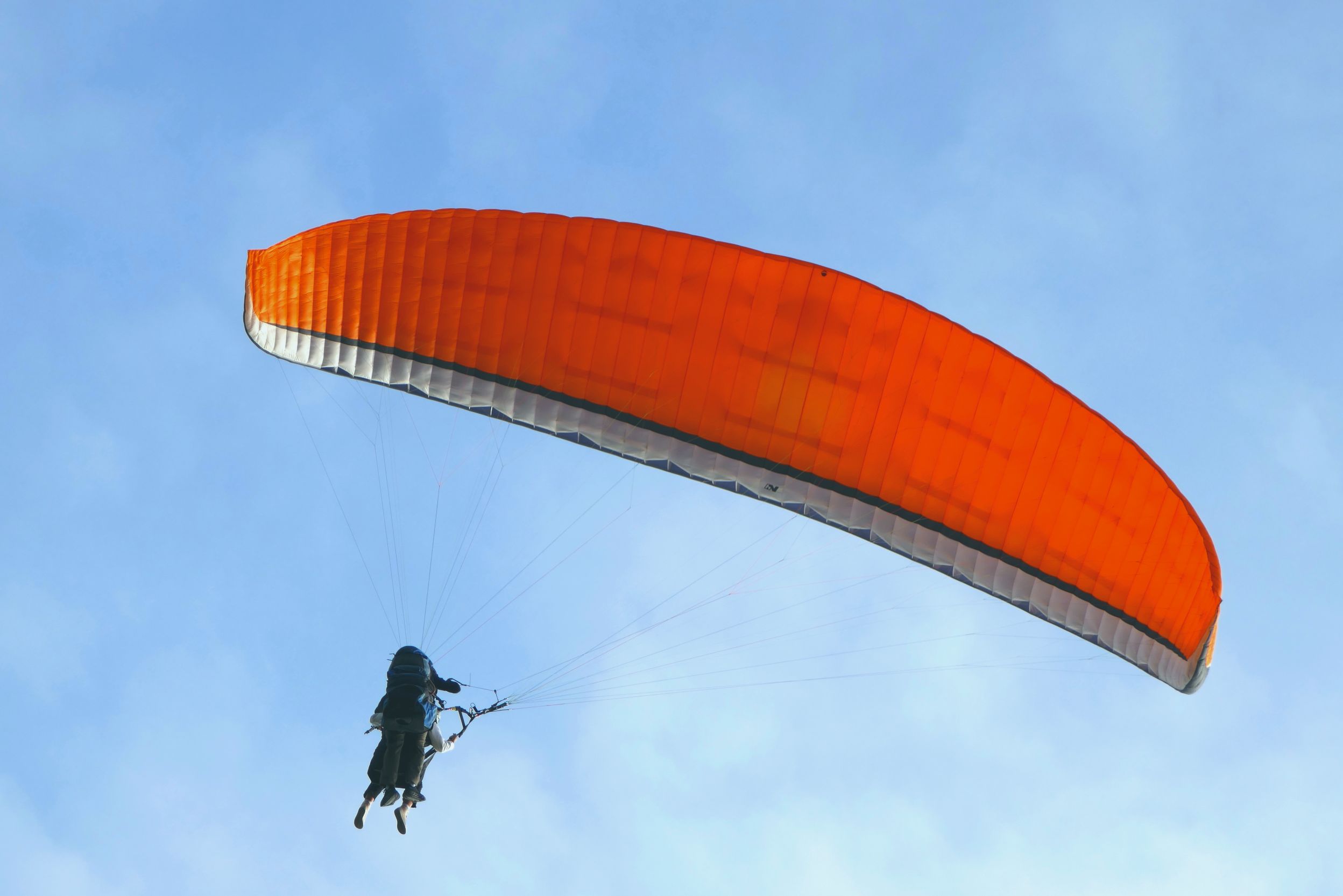
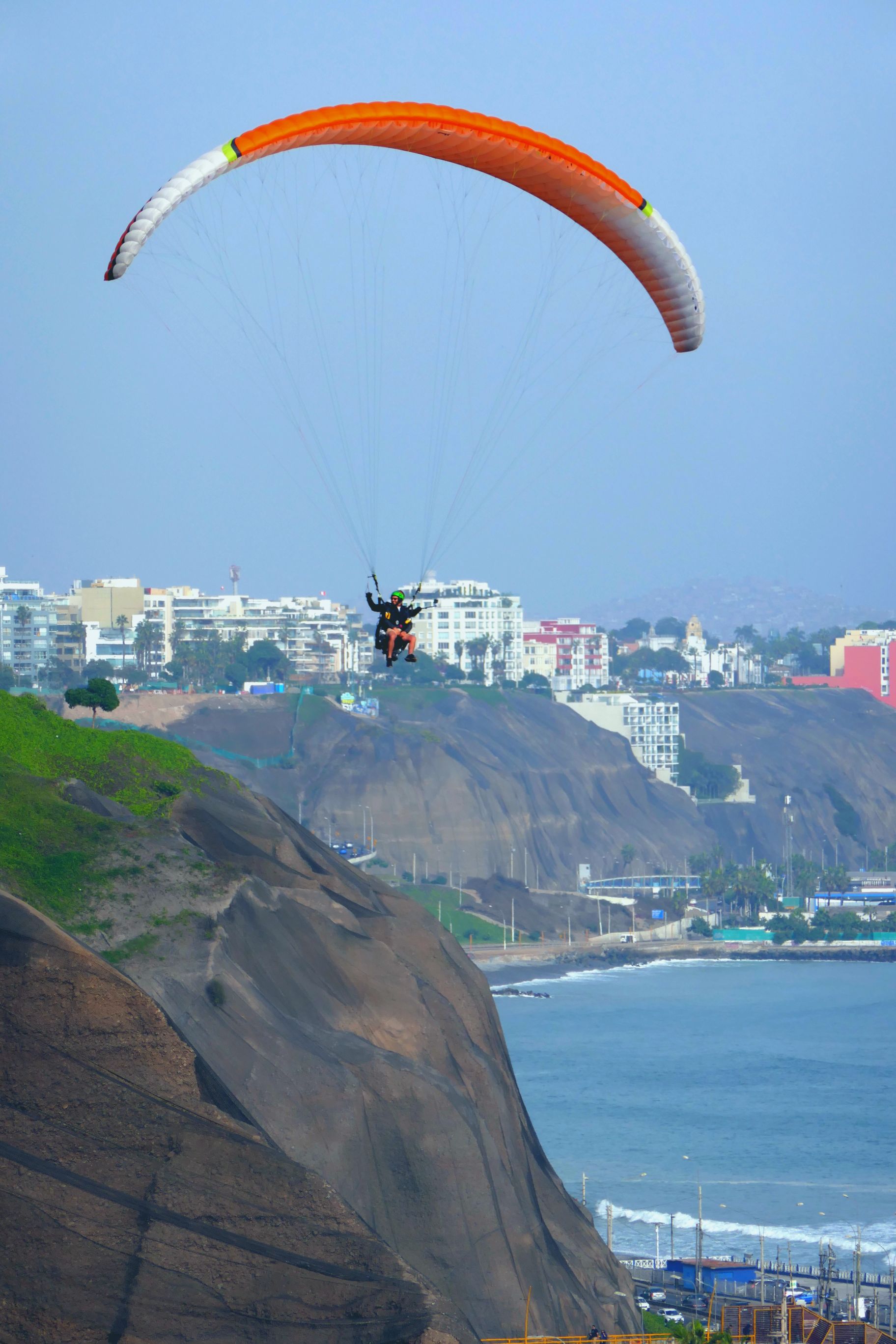
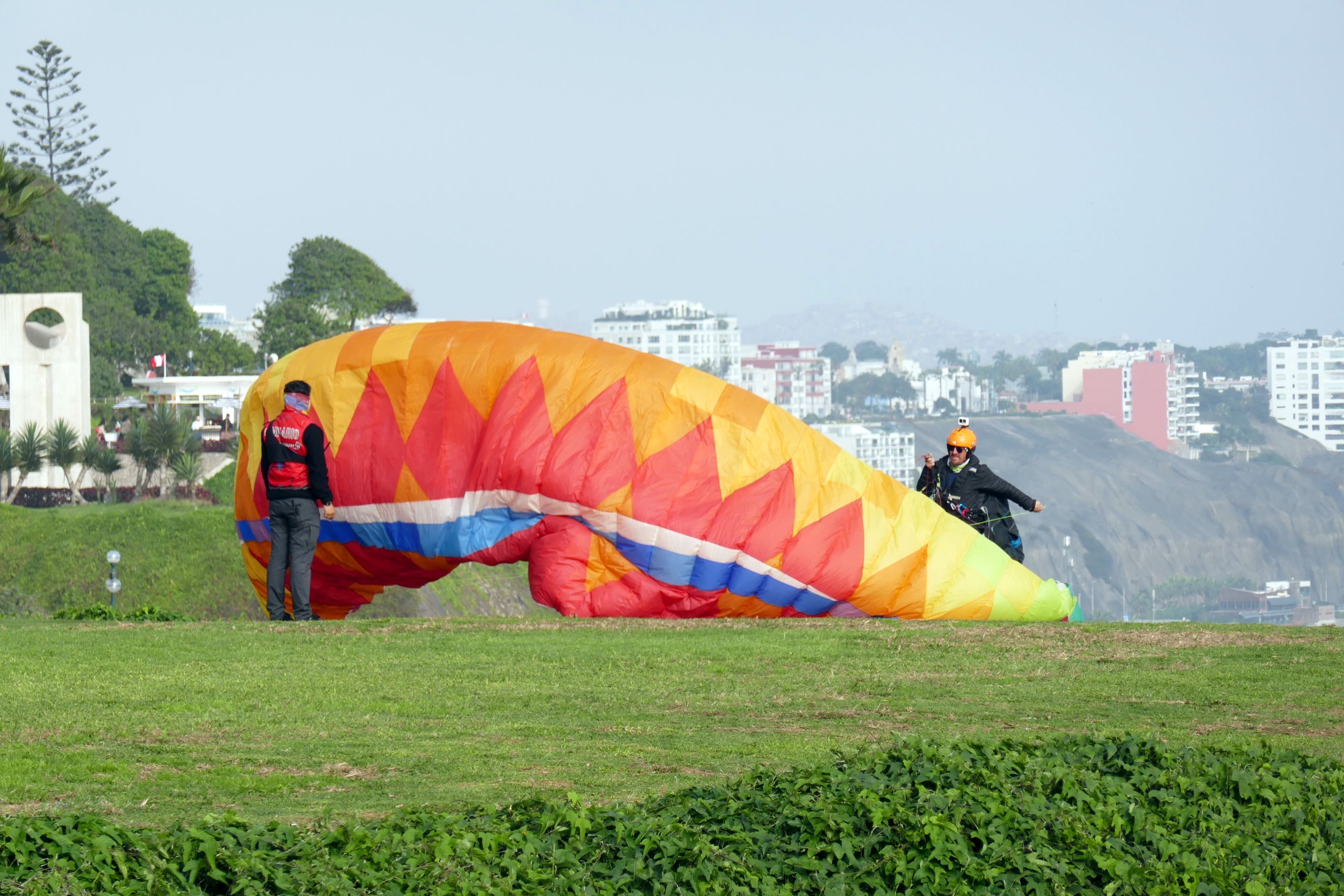
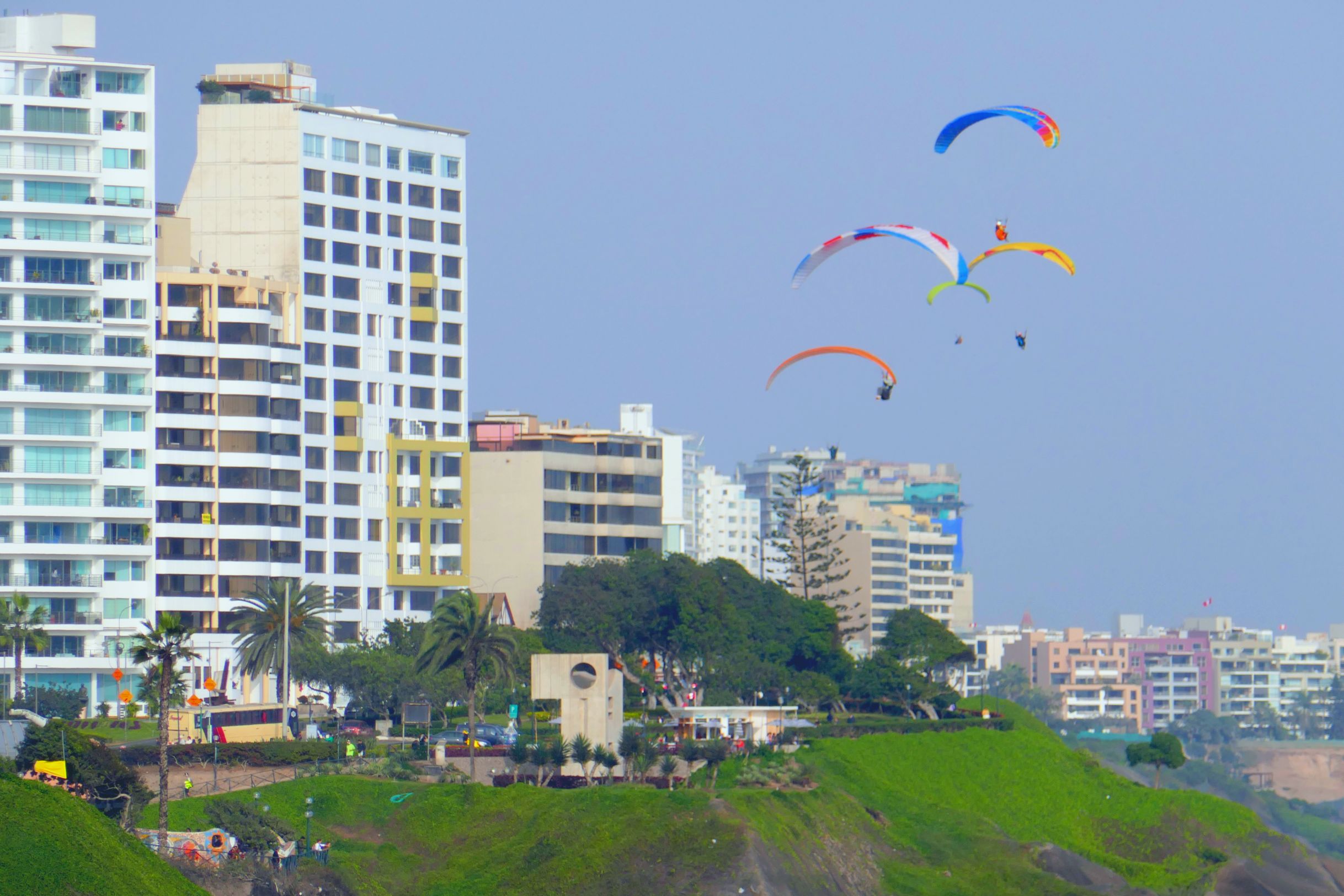
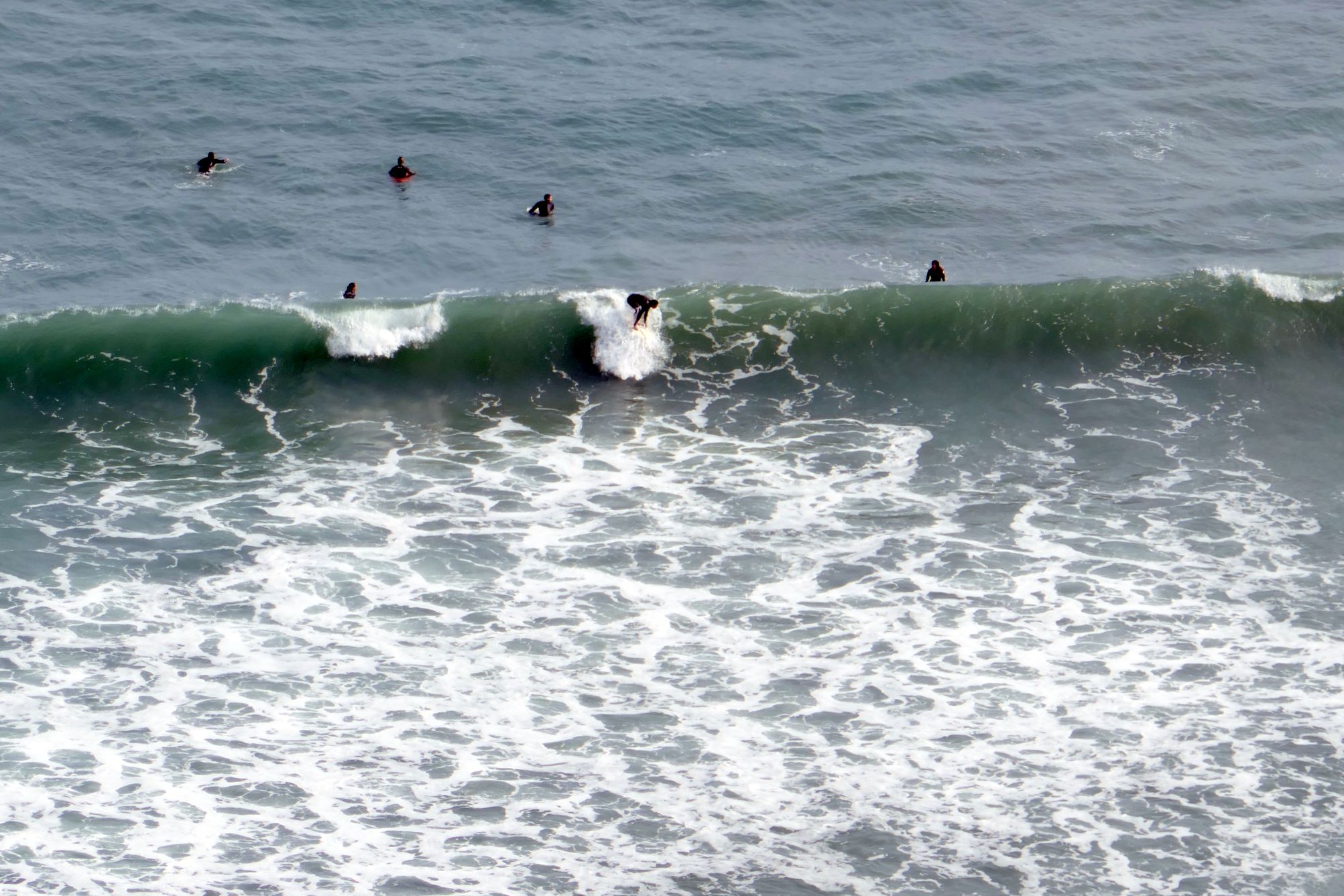
Paragliding in Lima is a popular activity and the parapuerto on the cliffs of the Malecon was a behive of activity while I watched the paragliders come and go.  It was a beautiful sight!  Between the paragliders and surfers, it was quite the entertaining day before we headed back for our second viewing of Circuito Magico del Agua (in my previous post).

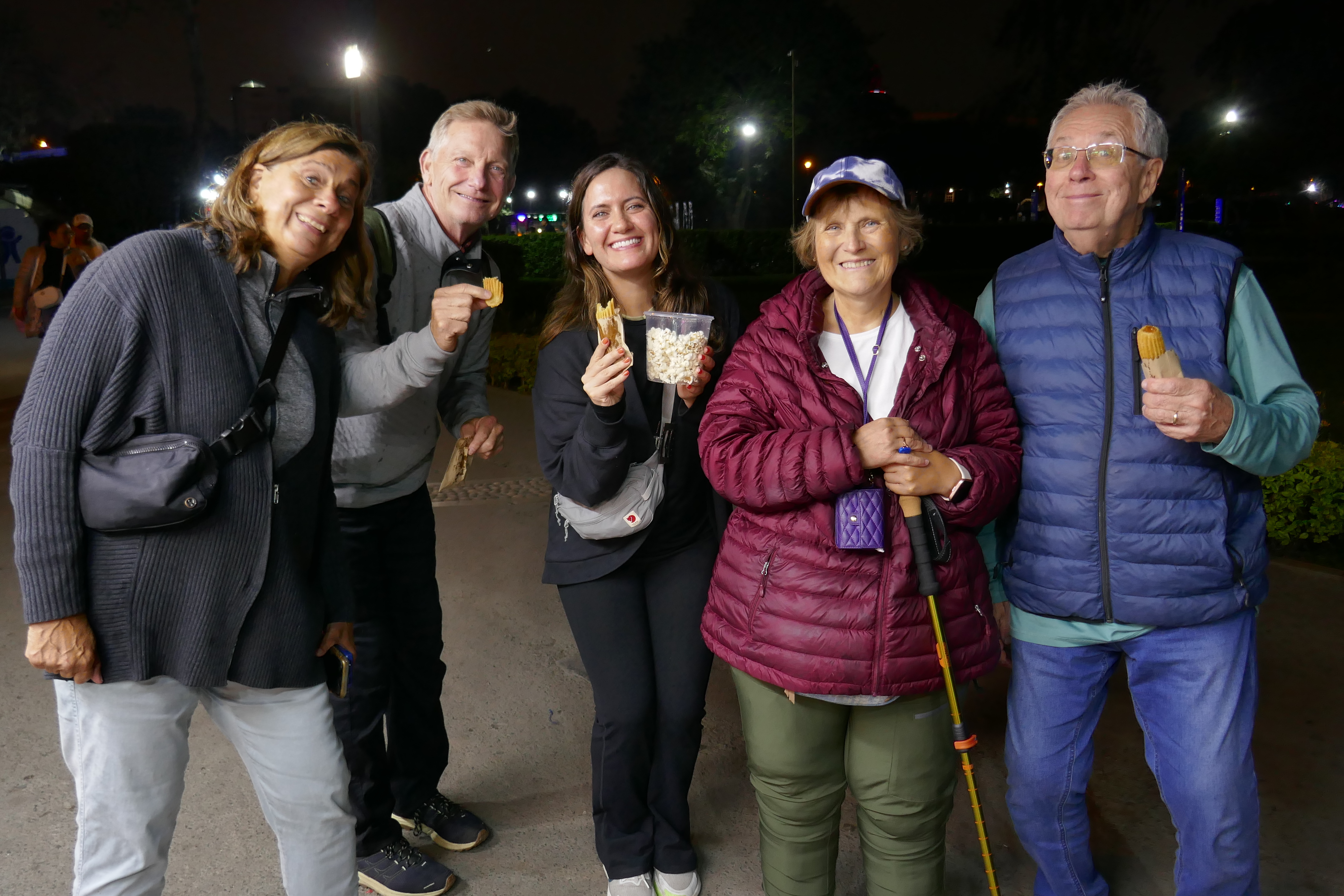
Before we headed back, the cart offering pan con chocolate was there again to tempt me, so I couldn’t resist another warm, gooey chocolate filled pastry.

Next up: PERU #6: LIKABLE LIMA (PART 6) – A FISH MARKET & DOWNTOWN

PERU #4: LIKABLE LIMA (PART 4) – CIRCUITO MAGICO DEL AGUA

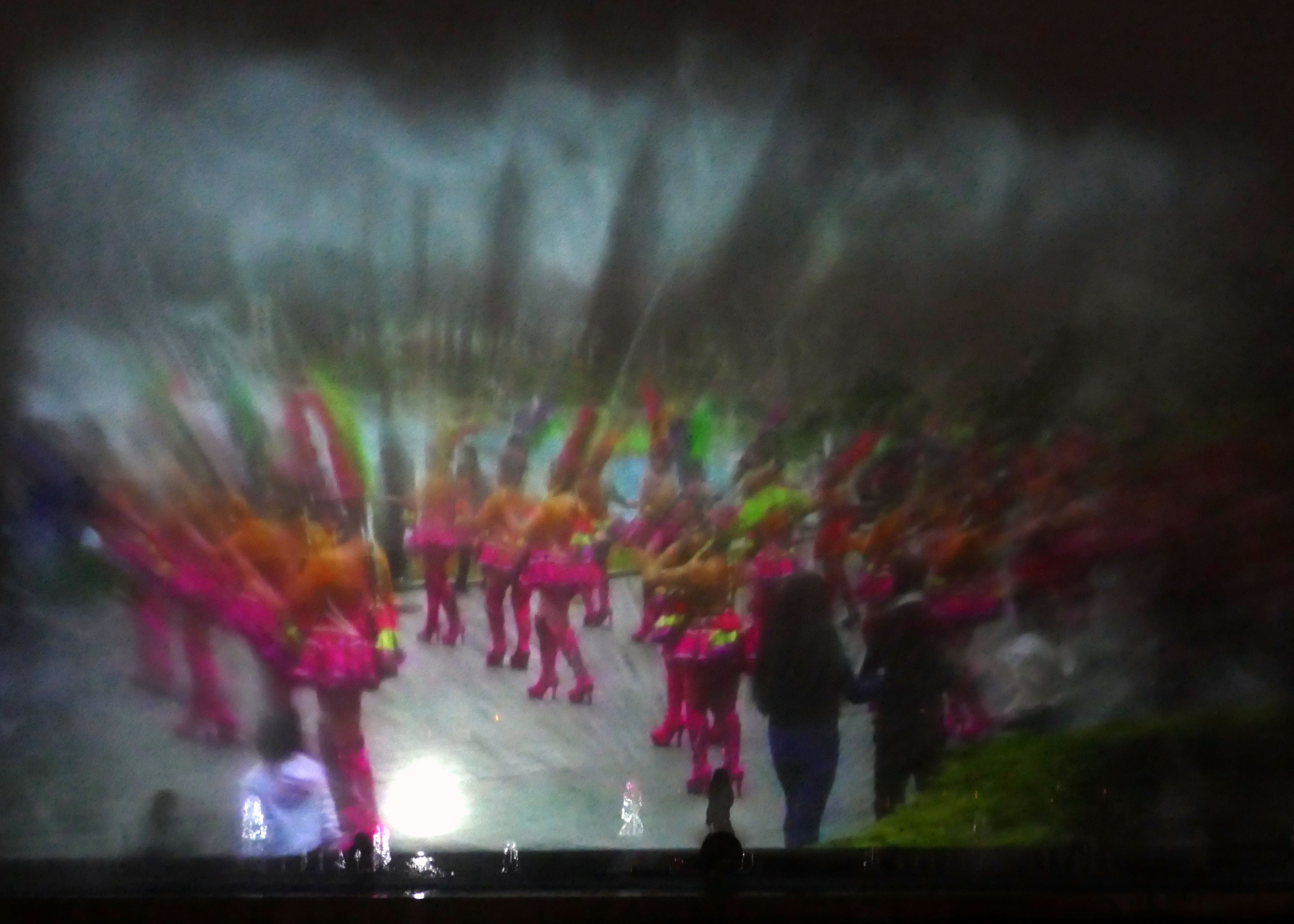
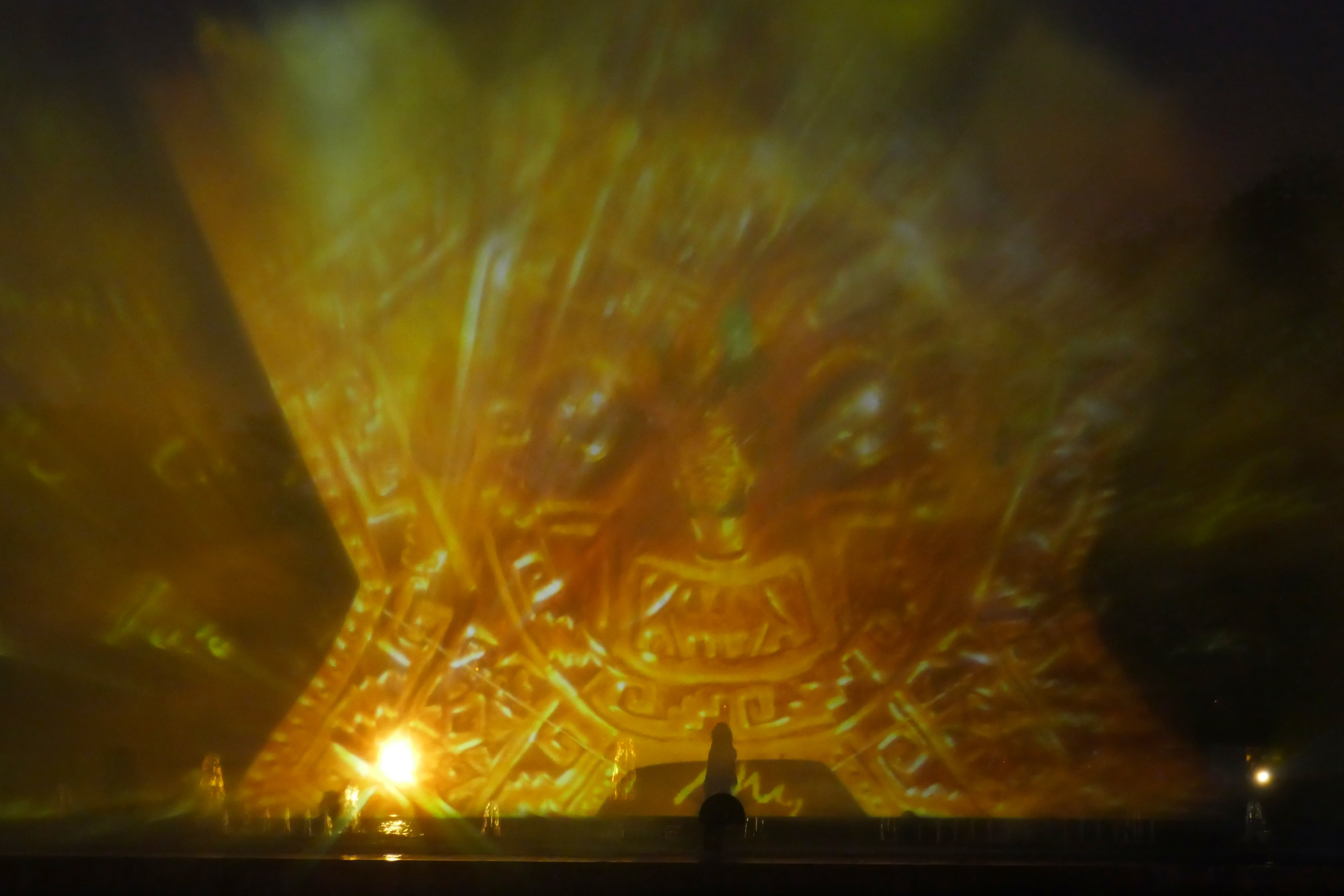
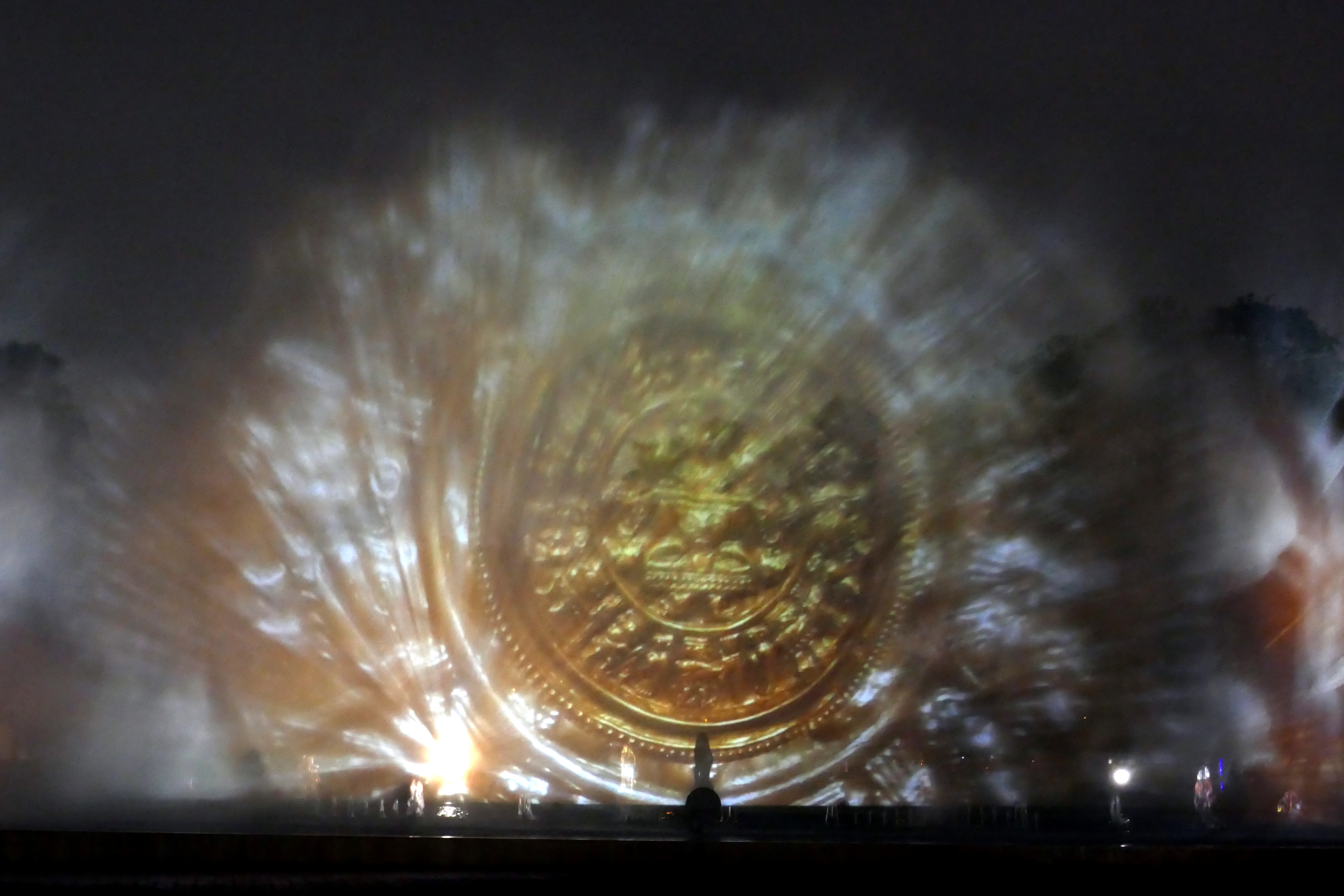
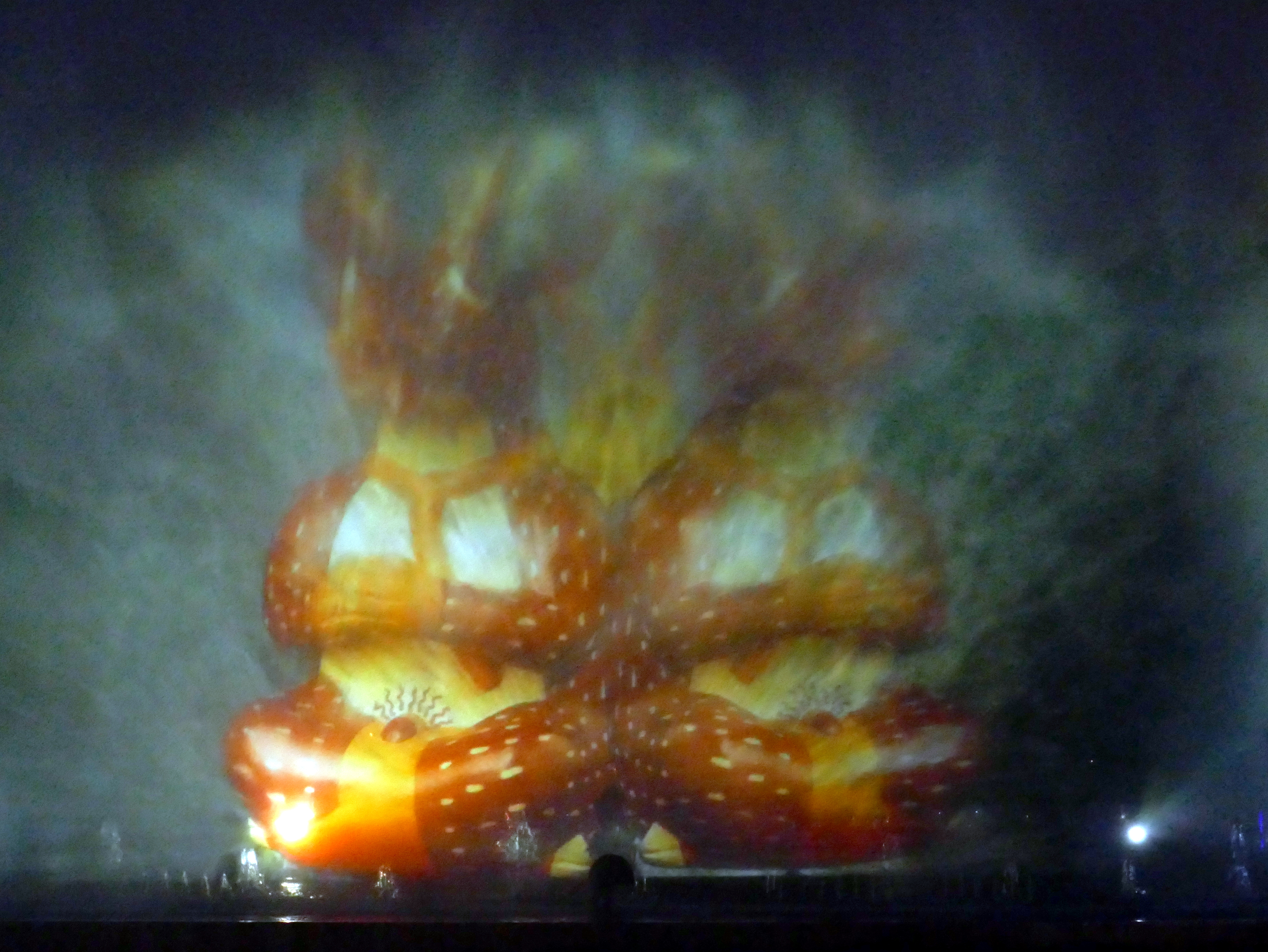
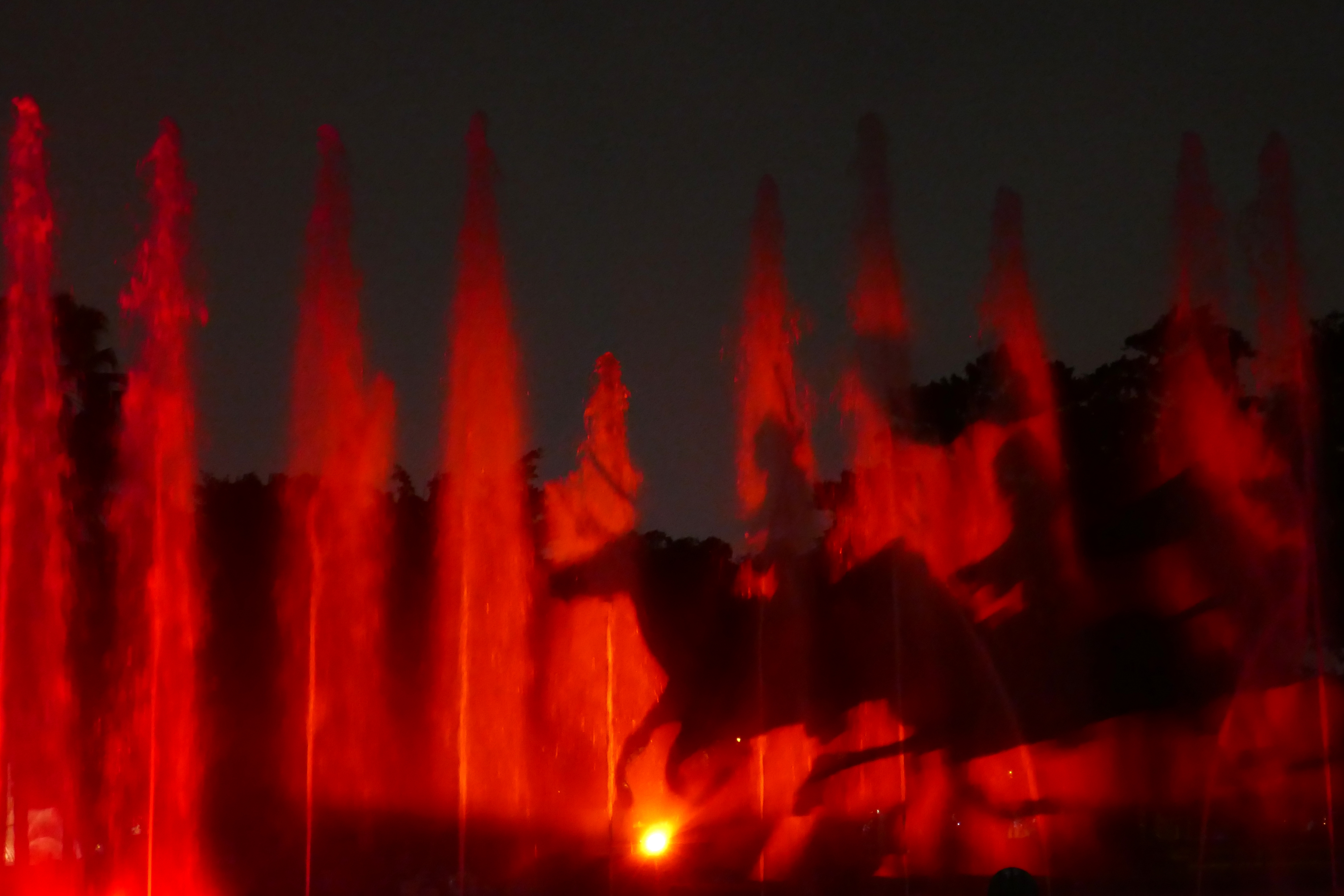
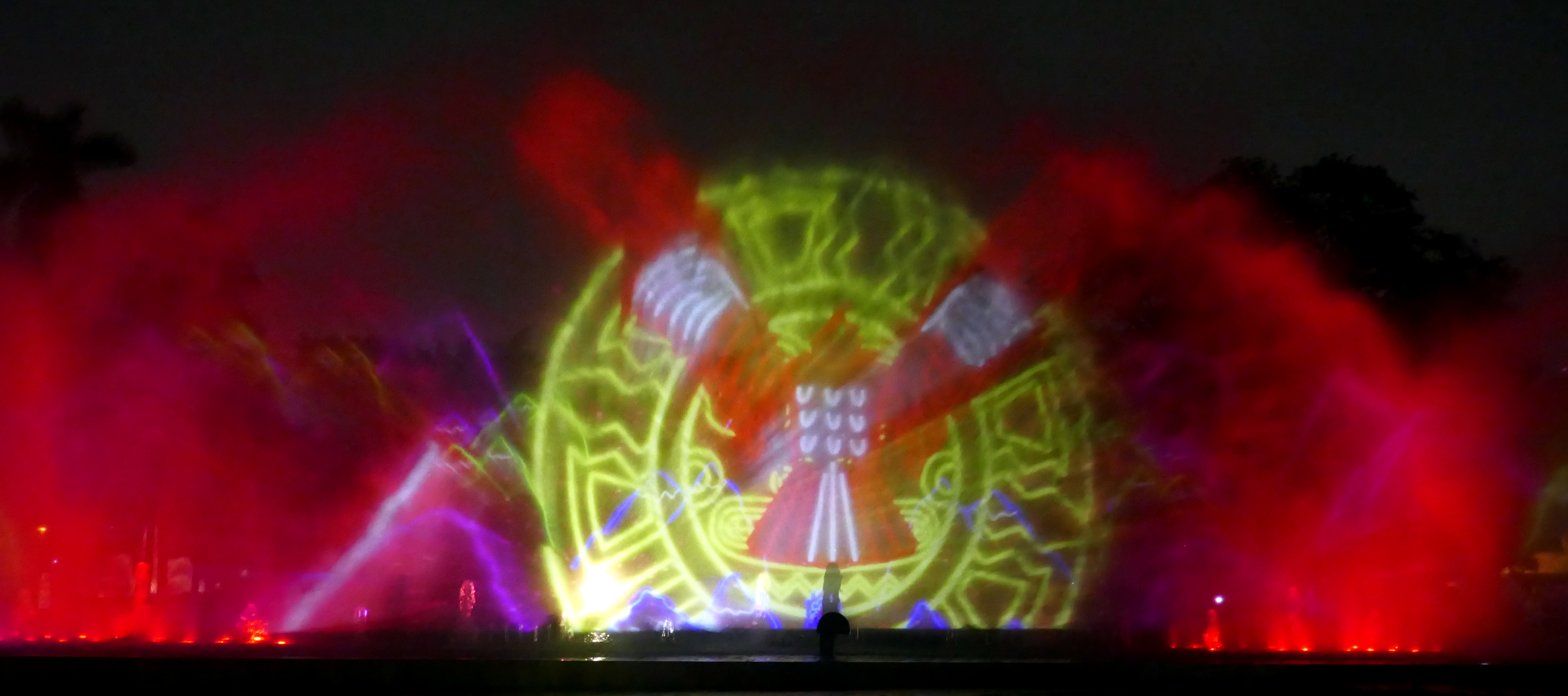
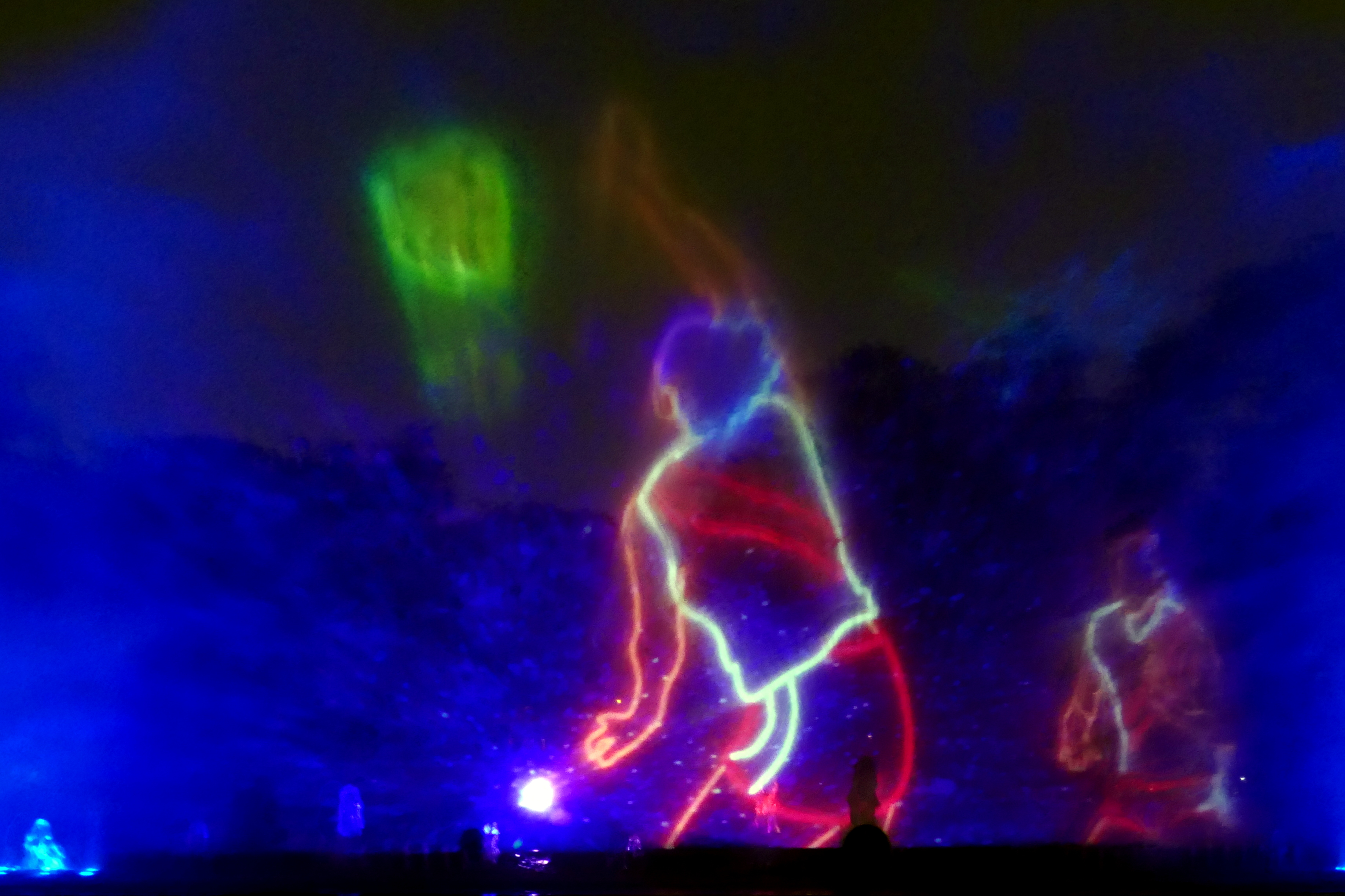
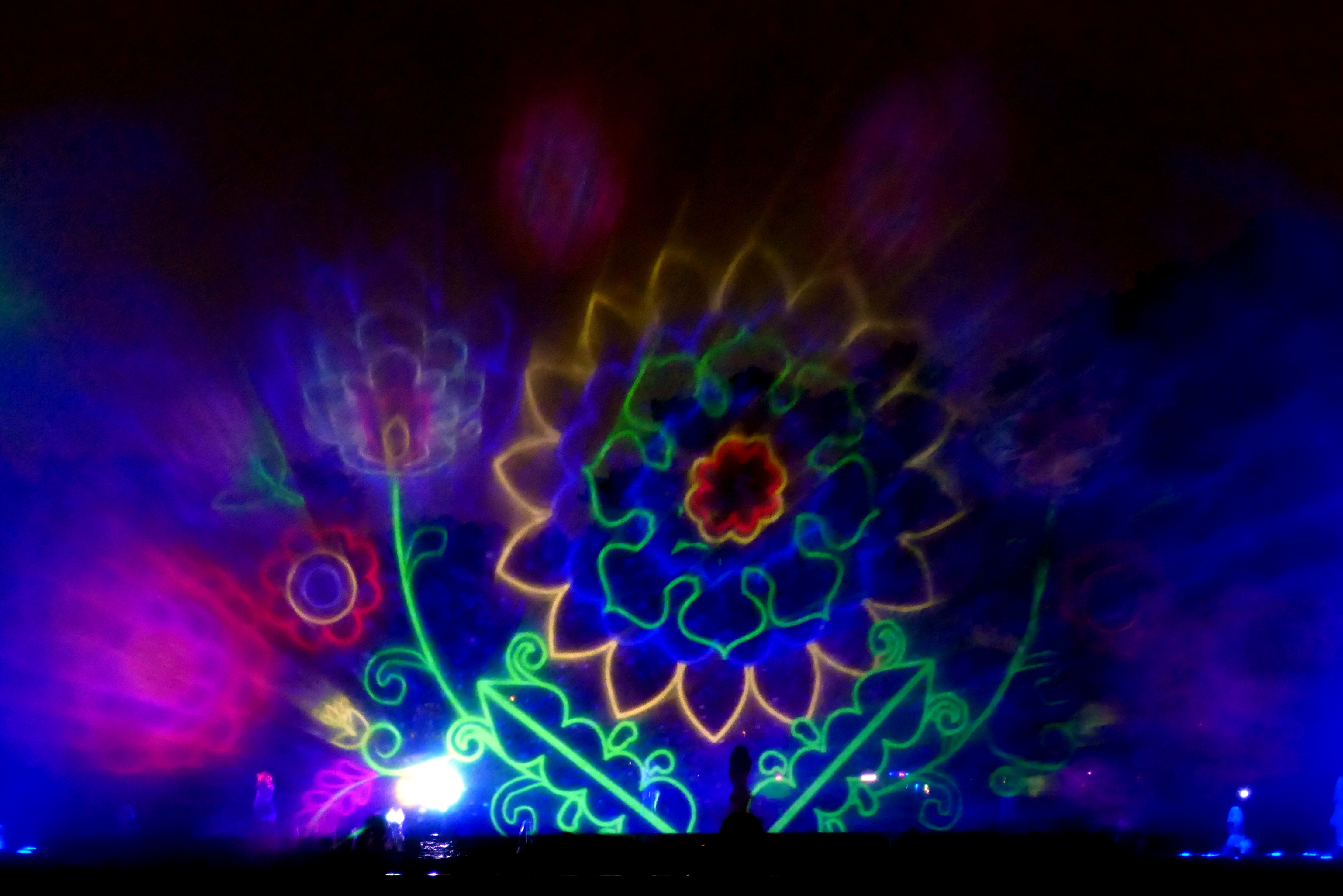
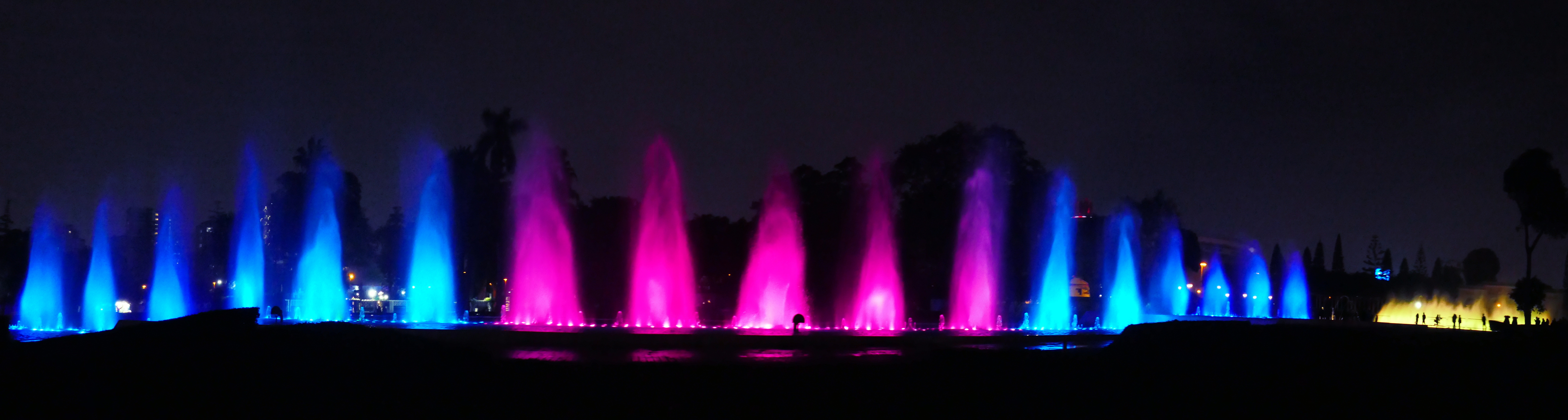
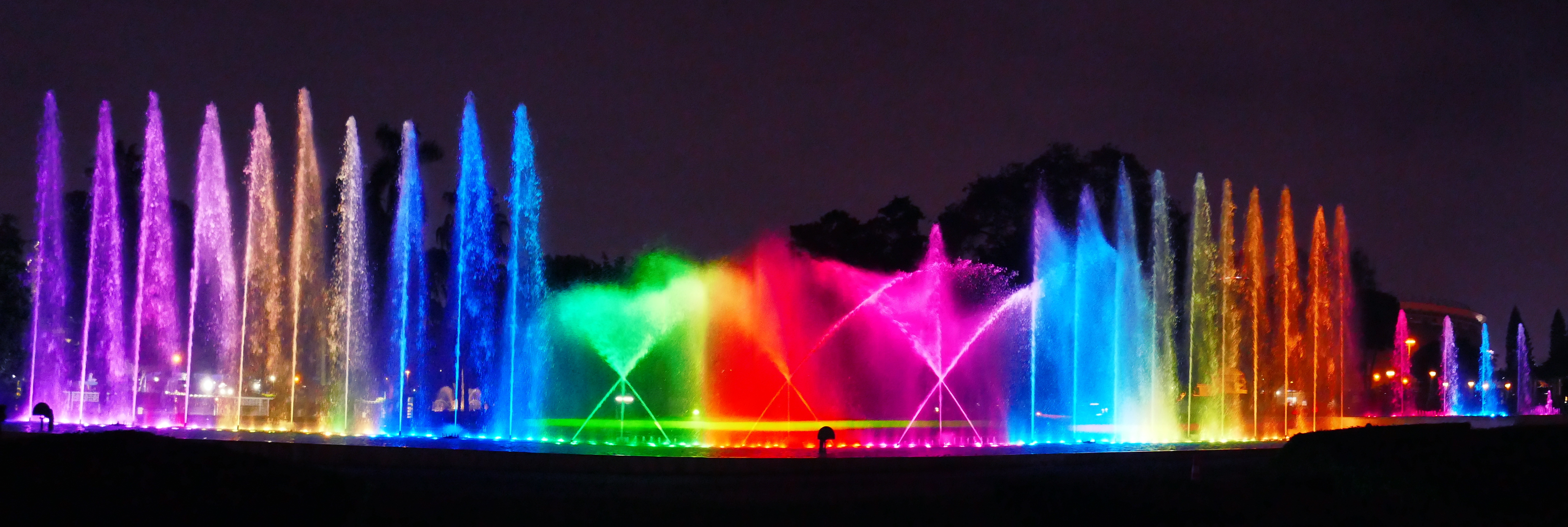
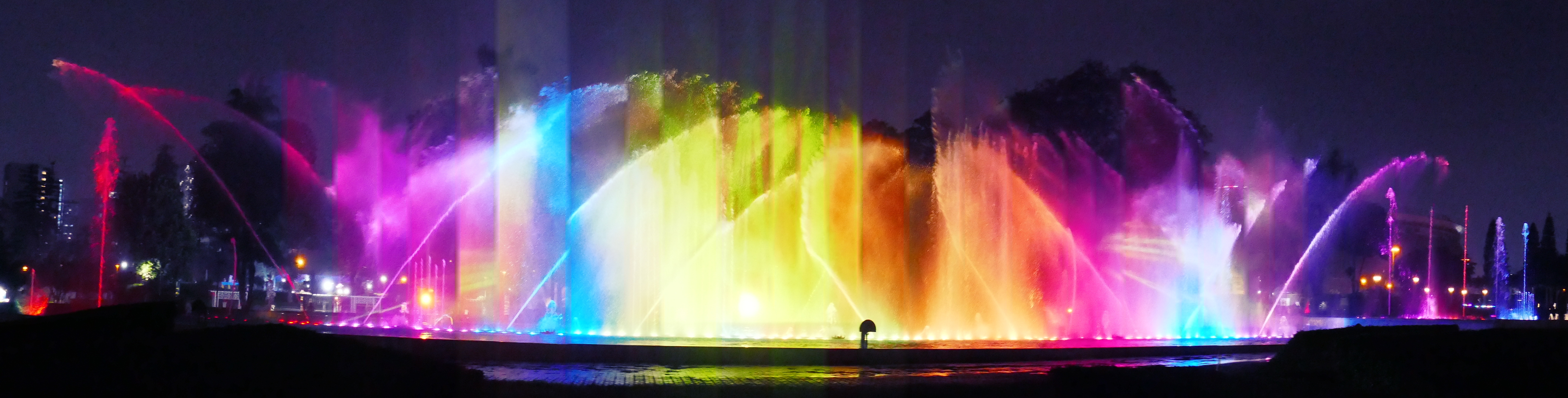
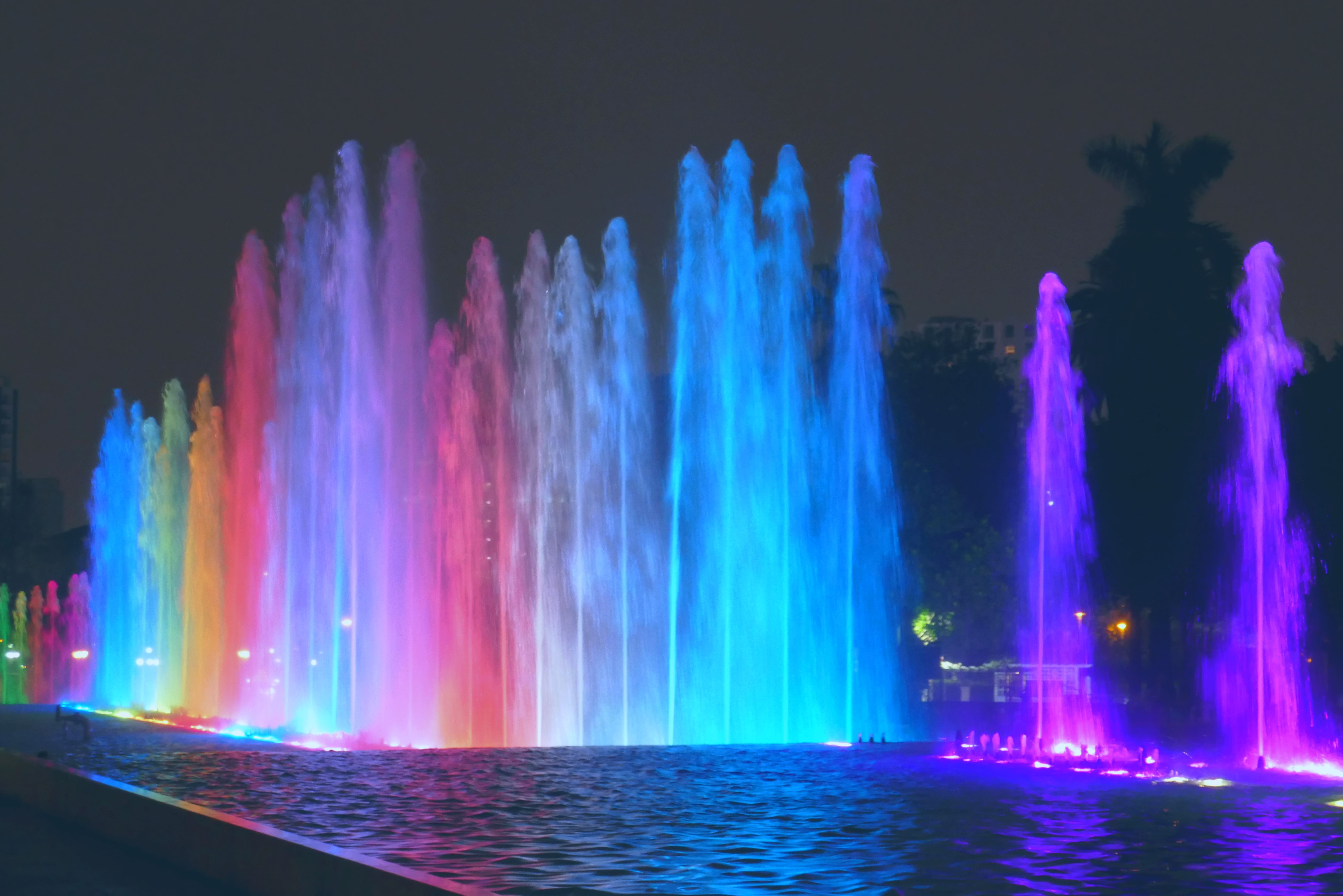
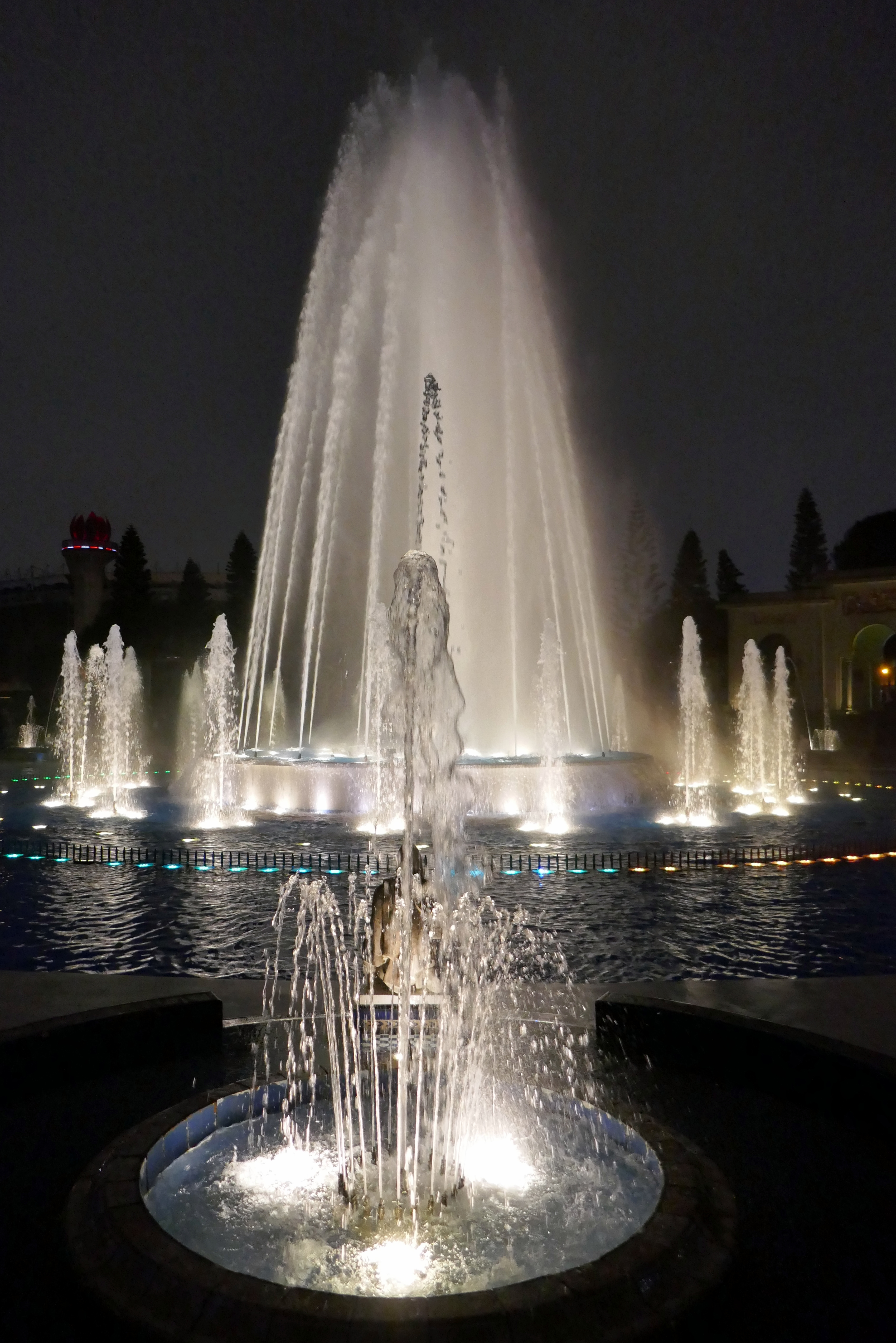
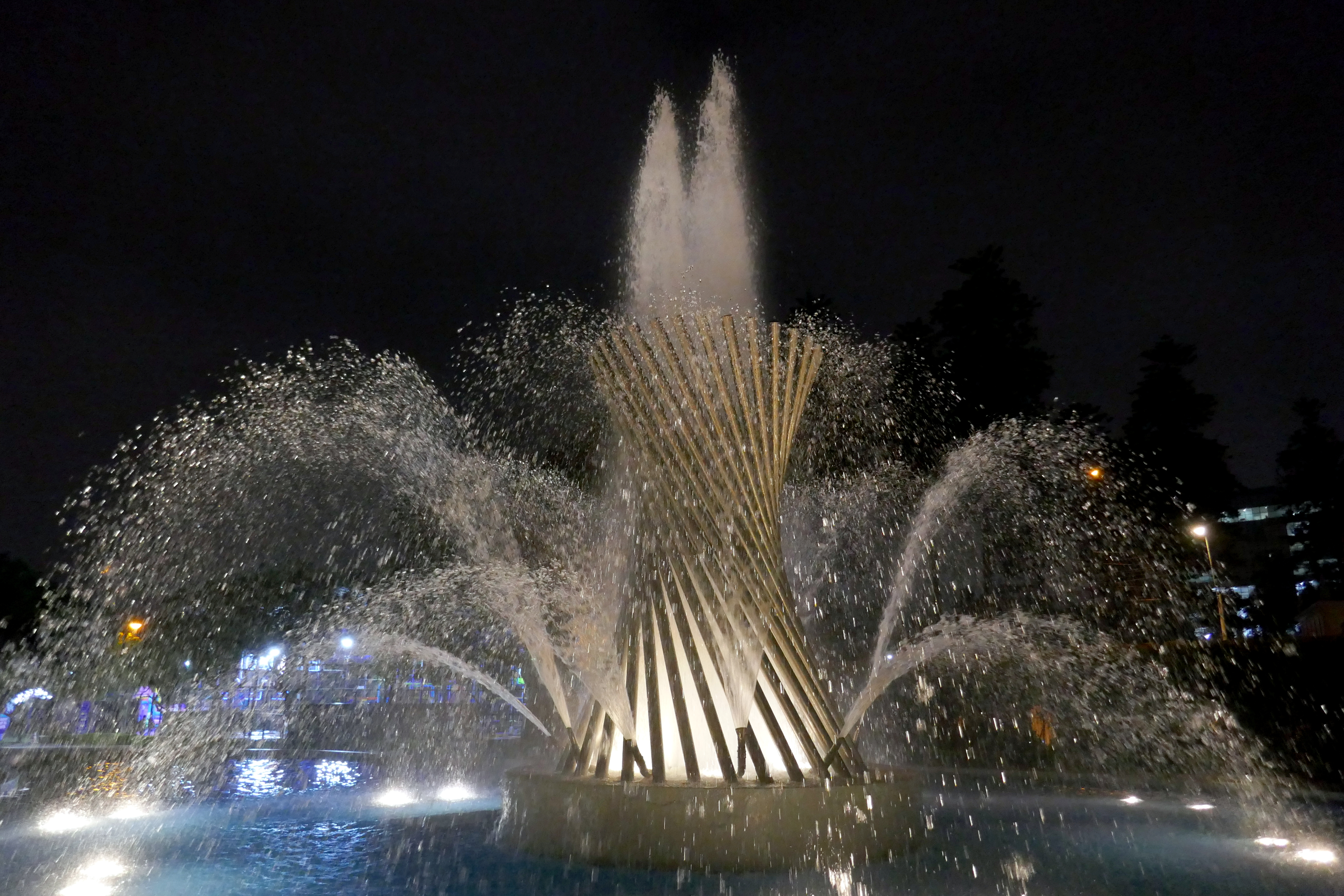
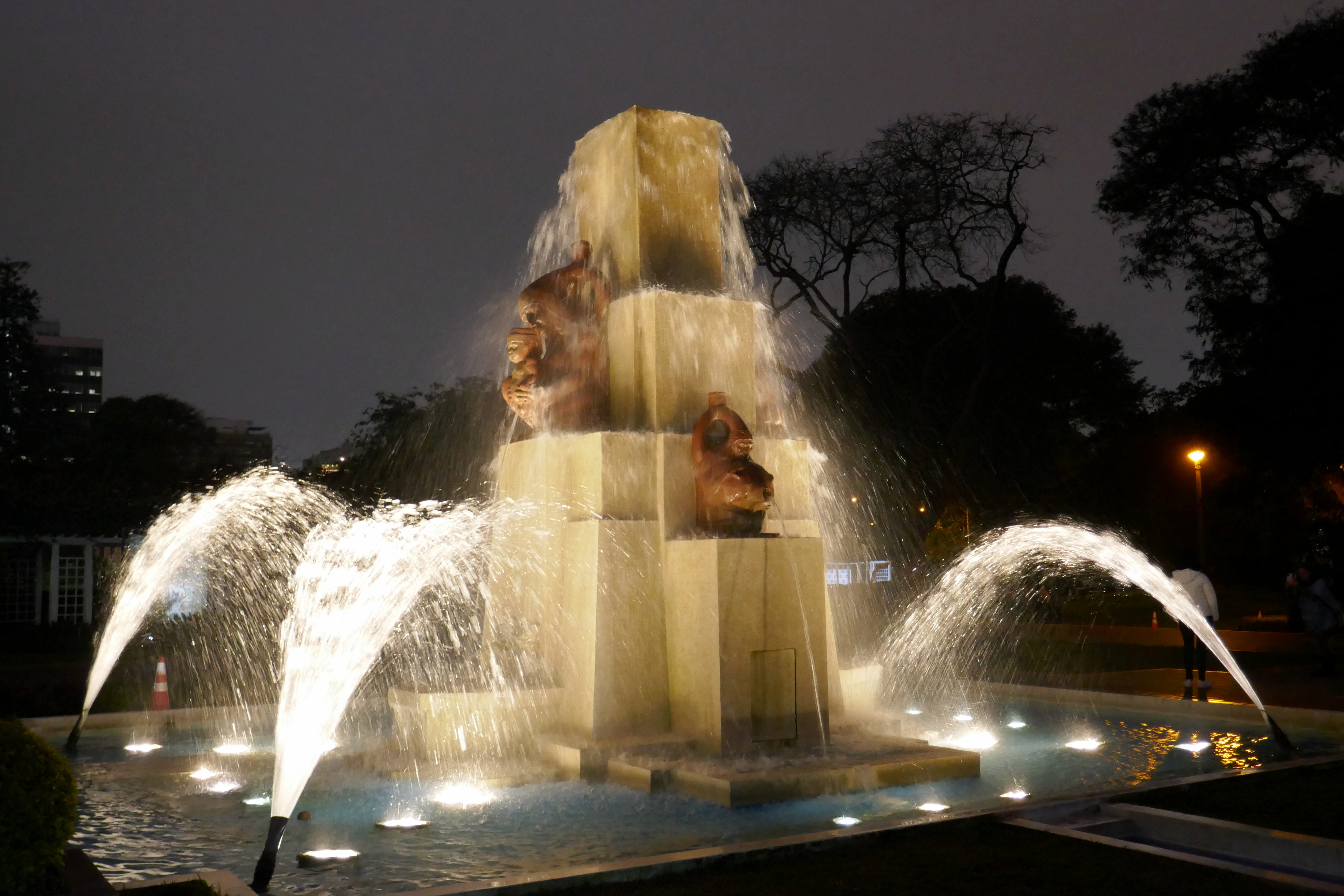
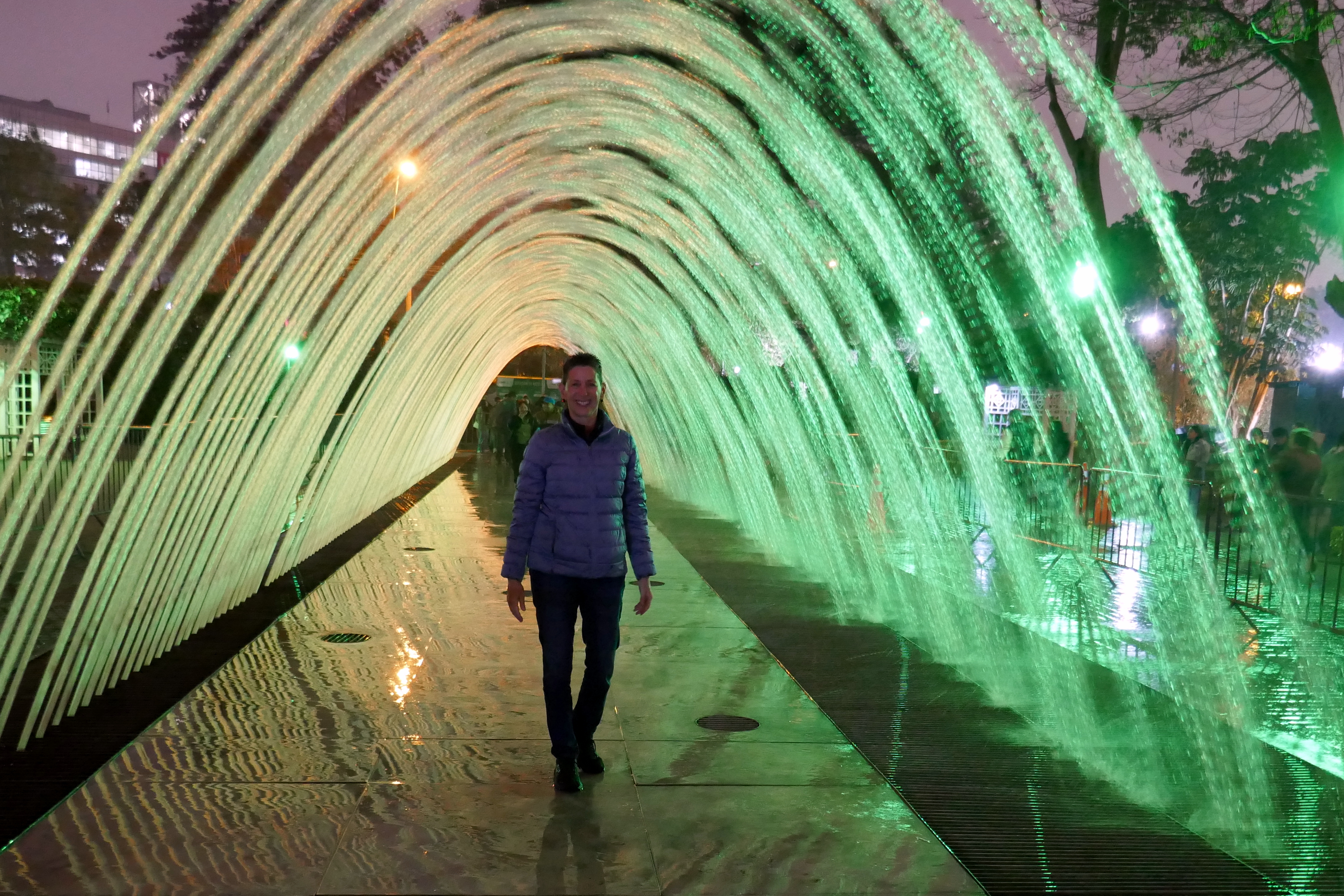
We enjoyed Circuito Magico del Agua so much the first night that we returned the following night and invited one of our group members, Pat, to join us.  The Magic Water Circuit, which began in 2007, is a permanent installation at Jr. Madre de Dios Parque de la Reserva and has become an icon of Lima.  The main attraction has thirteen cybernetic fountains.  Music, water, sound, and laser light are mixed to display an amazing show that chronicles the history of Peru with 3-D movies projected into the water fountains and laser displays.  Bruce and I had never seen anything like it, and we were in awe.

There are also several other ornamental fountains—one of which holds the Guiness World Record for shooting water the highest.  Seeing those alone would have been worth the Uber ride out there.

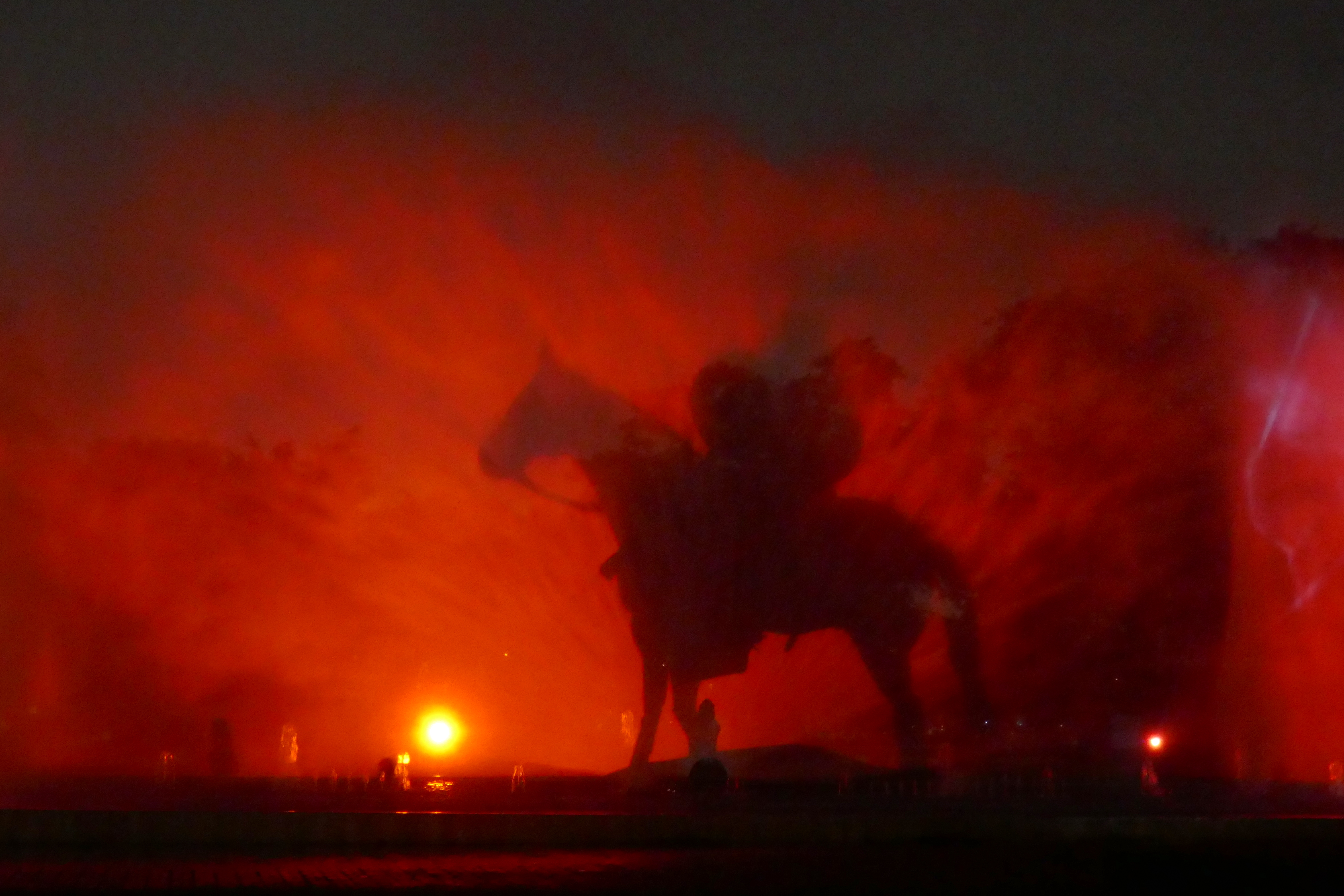
Although it was impossible to capture the movie images clearly, hopefully these photos taken during the two evenings at the park will give you a good idea of what we thoroughly enjoyed:

(For all photos, click on the image for a full screen view.)
All of the projections were HUGE!
Raul & Bruce
I got soaked!
We bumped into Allison, Joe, and Abby; that’s Pat and Bruce on the right.
We hadn’t eaten dinner, so we stopped at the grocery store in Larcomar for some empanadas right before they closed. Yummy!

Coming up next: PERU #5: LIKABLE LIMA (PART 5)

PERU #3: LIKABLE LIMA (PART 3) – BARRANCO DISTRICT

Adjacent to the Miraflores District of Lima is the Barranco District, considered to be Lima’s most romantic, bohemian, and artsy area of the city.  It is THE neighborhood for Peru’s leading artists, musicians, designers and photographers as well as a huge draw for surfers in search of the perfect wave.

Barranco is also known for its murals, which are a magnet for me and my camera.  I love color and photographing color— everything from hot air balloons, flowers, and tropical fish and coral (which I photographed while SCUBA diving) to murals.  Bruce enjoys murals as well, so we set off on foot via the Malecon, the long way to Barranco, but the route with the nicest views.

On the way to searching the streets for murals, we stopped at Dedalo, a beautiful old mansion-turned-gallery that hosts the work of more than 700 artists.   Eye candy!  Each of the many rooms displayed meticulously crafted items we admired and enjoyed seeing.  For anybody who appreciates beautiful crafts, this is a must-see destination if you ever visit Lima!

Since signs posted throughout the gallery invited us to “please take photos” and post them on social media, I will gladly do so here!  These are just a few:

(For all photos, click on the image for a full screen view.)
The wood floors were gorgeous!

Uplifted and inspired, we continued our walk, in search of murals, enjoying the town along the way.

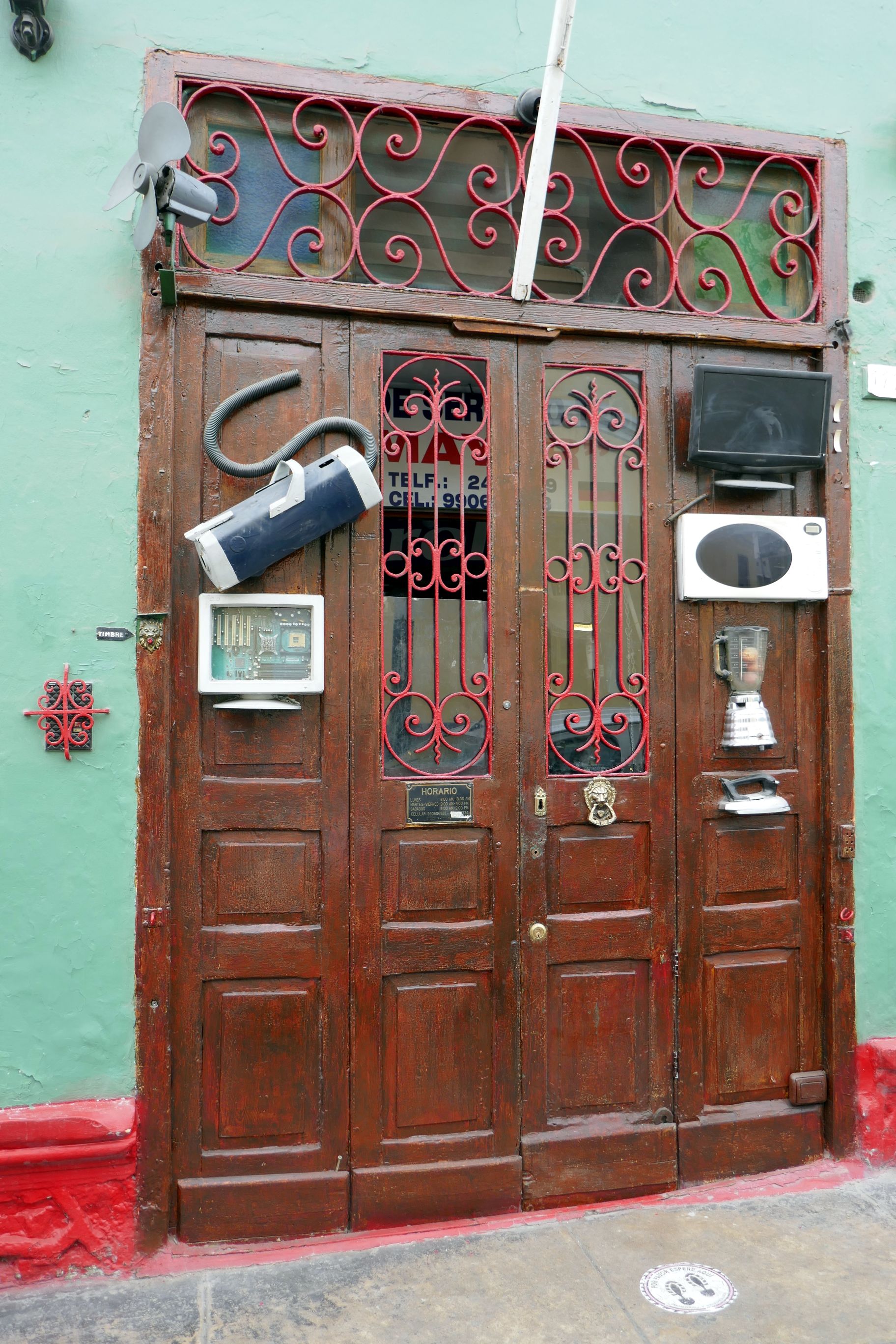
Don’t you just love this repair shop door? It made me laugh!

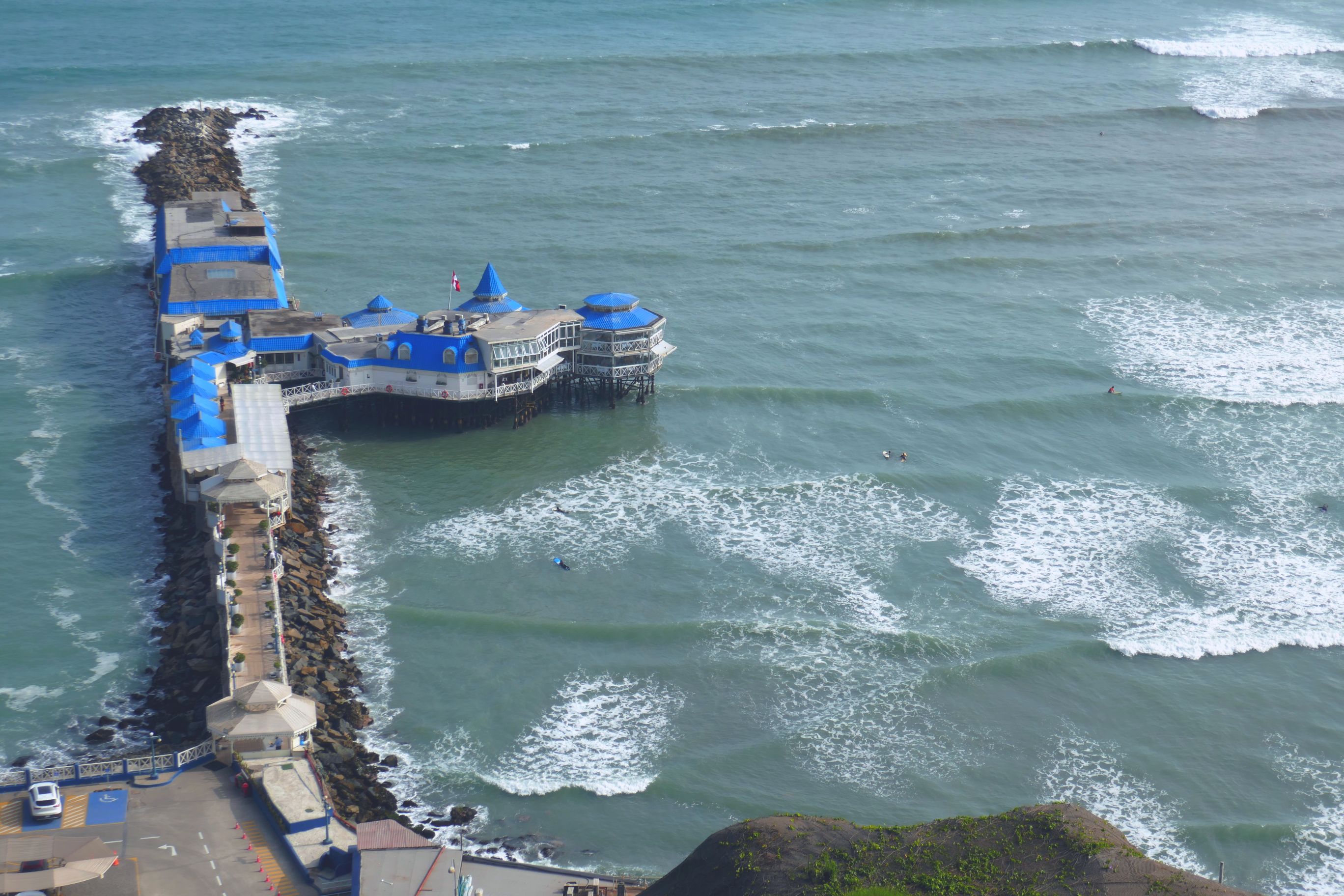
All the walking to and from Barranco built up our appetite, so we enjoyed dinner at Pardos Chicken in Larcomar, partly so we could enjoy the view of the surfers off in the distance.  It was another cloudy, humid day, so this picture doesn’t do justice to the incredible view we had out our booth window:

The actual tour didn’t start until the following day, but we received a call from Raul, our tour leader, just as we stepped into our hotel room to prepare to go out again.  “What are you doing this evening?” he asked.  Bruce replied, “We are going to see Circuito Magico del Agua!  Would you like to join us?”  So, off the three of us went to see the most amazing multimedia water fountain show we had ever seen!

Next up: PERU #4: LIKABLE LIMA (PART 4) – CIRCUITO MAGICO DEL AGUA

PERU #2: LIKABLE LIMA (PART 2)

Our first day in Lima, the capital of Peru, was a full one!  After seeing the parade, Parque Kennedy, the Inka Market, and Indian Market (all covered here), we walked the Malecon, Lima’s clifftop walkway.  It was located just two blocks from our hotel, so we enjoyed walking different parts of it each day while we were in Lima. 

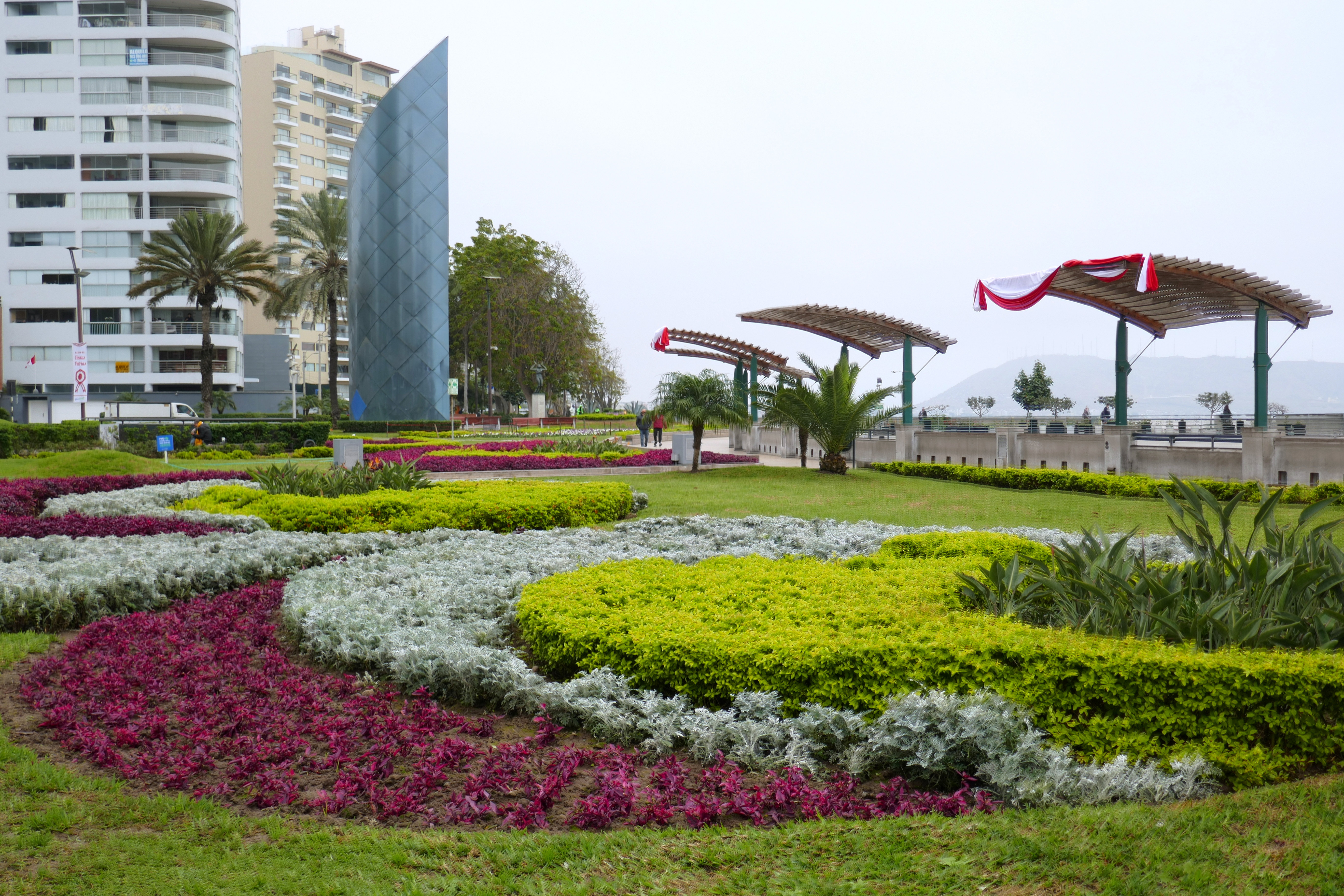
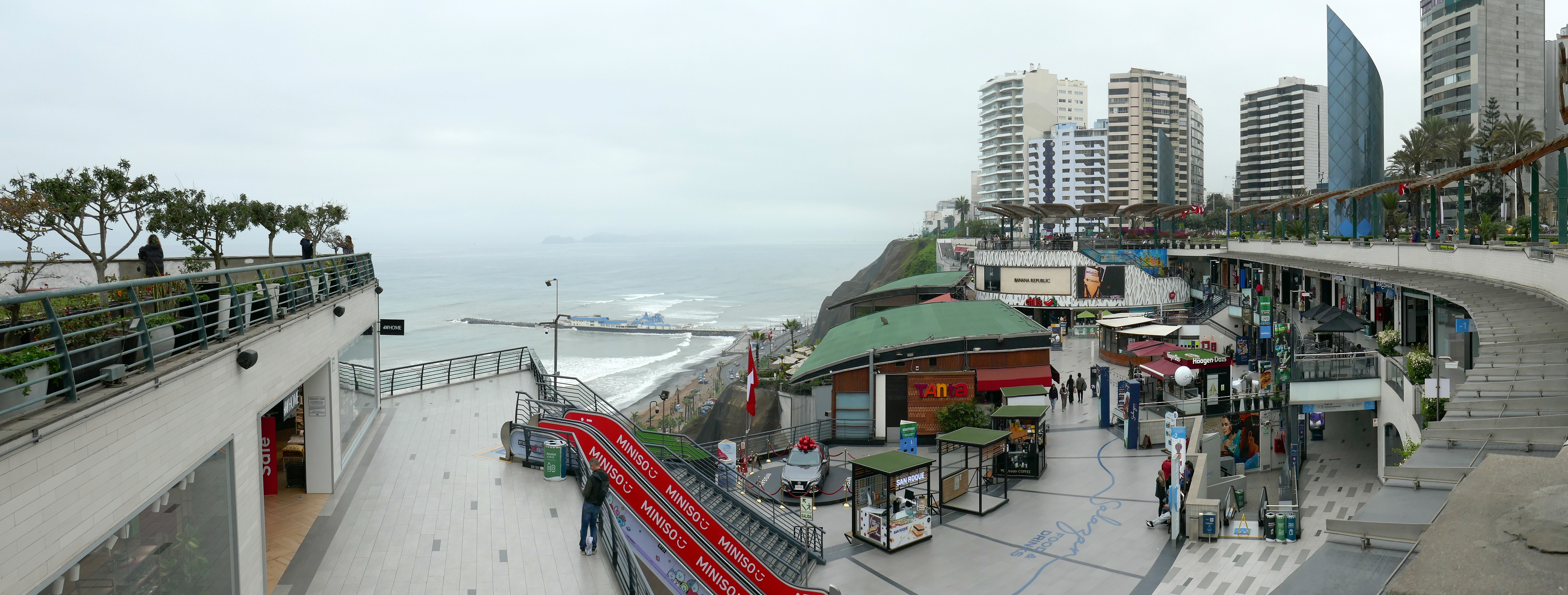
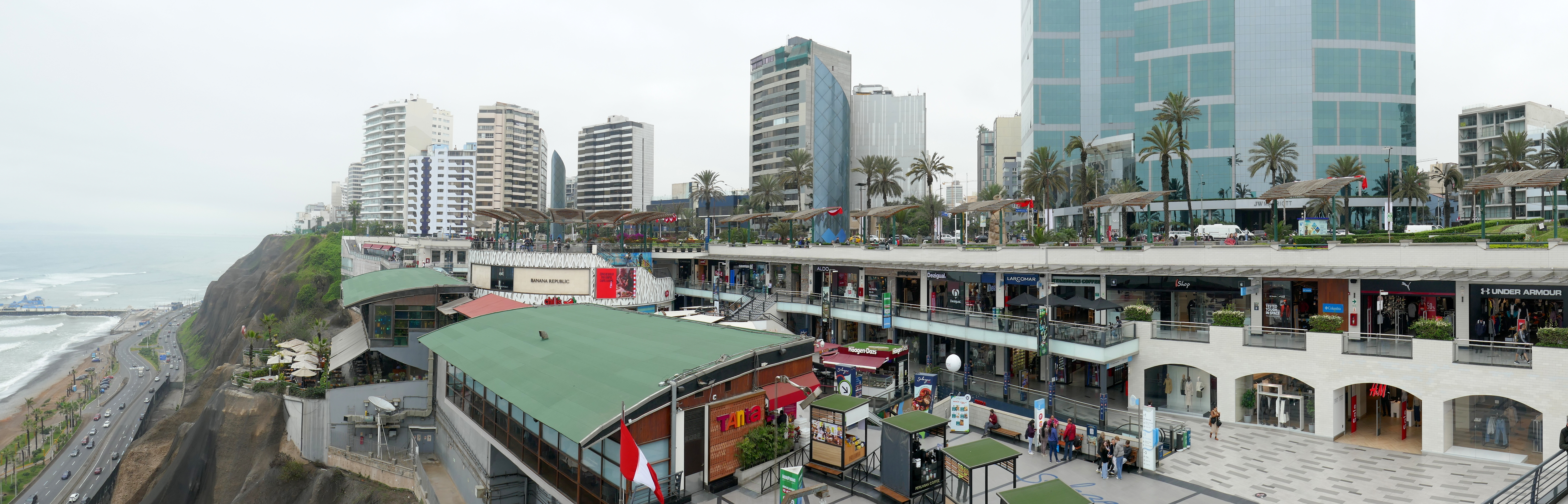
Larcomar, a shopping center built into the cliff, was right at the foot of the boulevard where our hotel was located, so we couldn’t help but to see it.  Shopping malls aren’t our thing, but this one was worth a stroll around just to see how it was situated on the steep cliff.  There were amazing views from the top level and restaurants!

(For all photos, click on the image for a full screen view.)
The sky wasn’t the prettiest while we were there, but we fully expected that.  Lima is known for its often foggy and always humid weather, but it was winter, so the temperature was in the 60’s.  I loved every minute of it!  The poor photography conditions was worth the trade-off to be out of the Georgia heat.

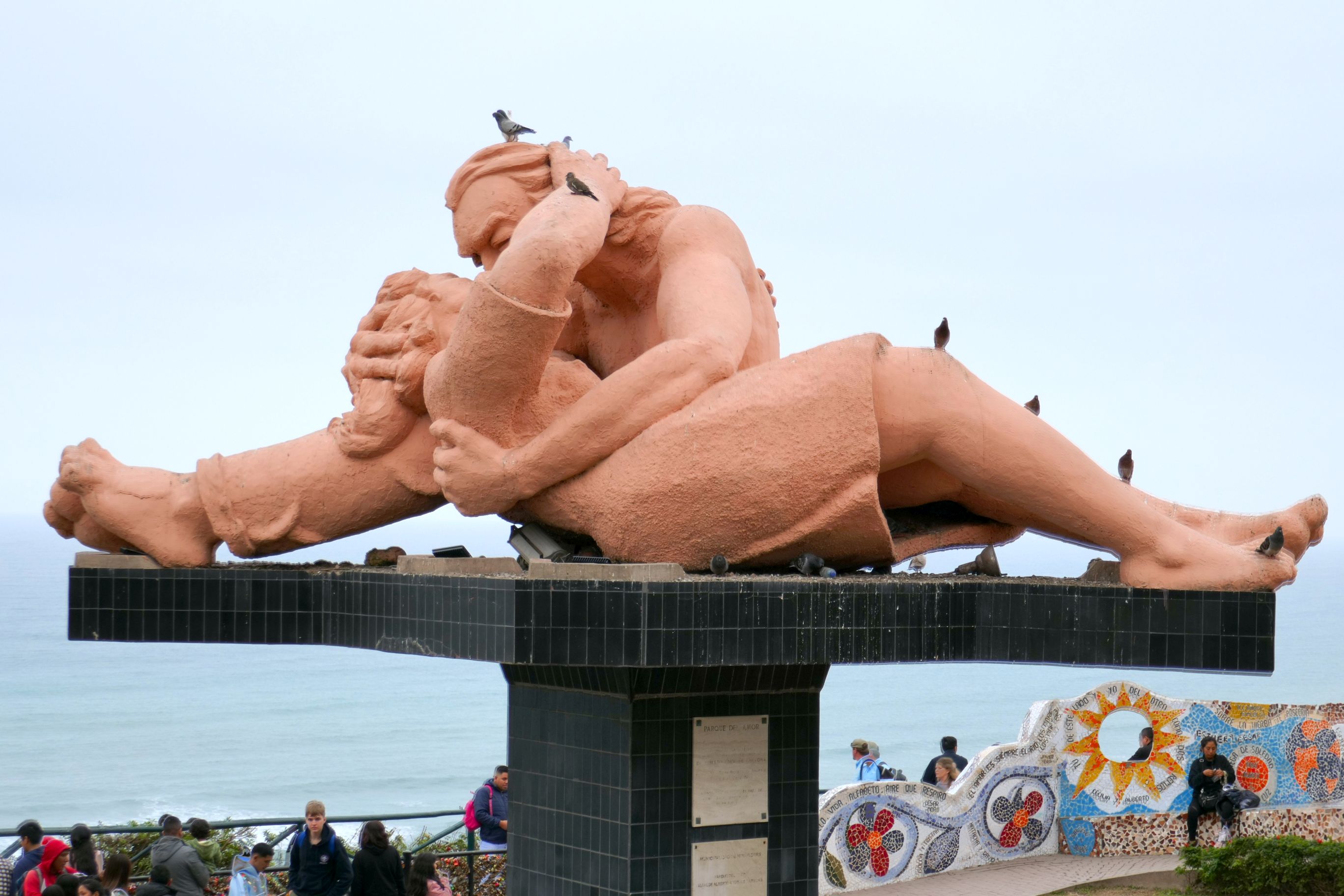
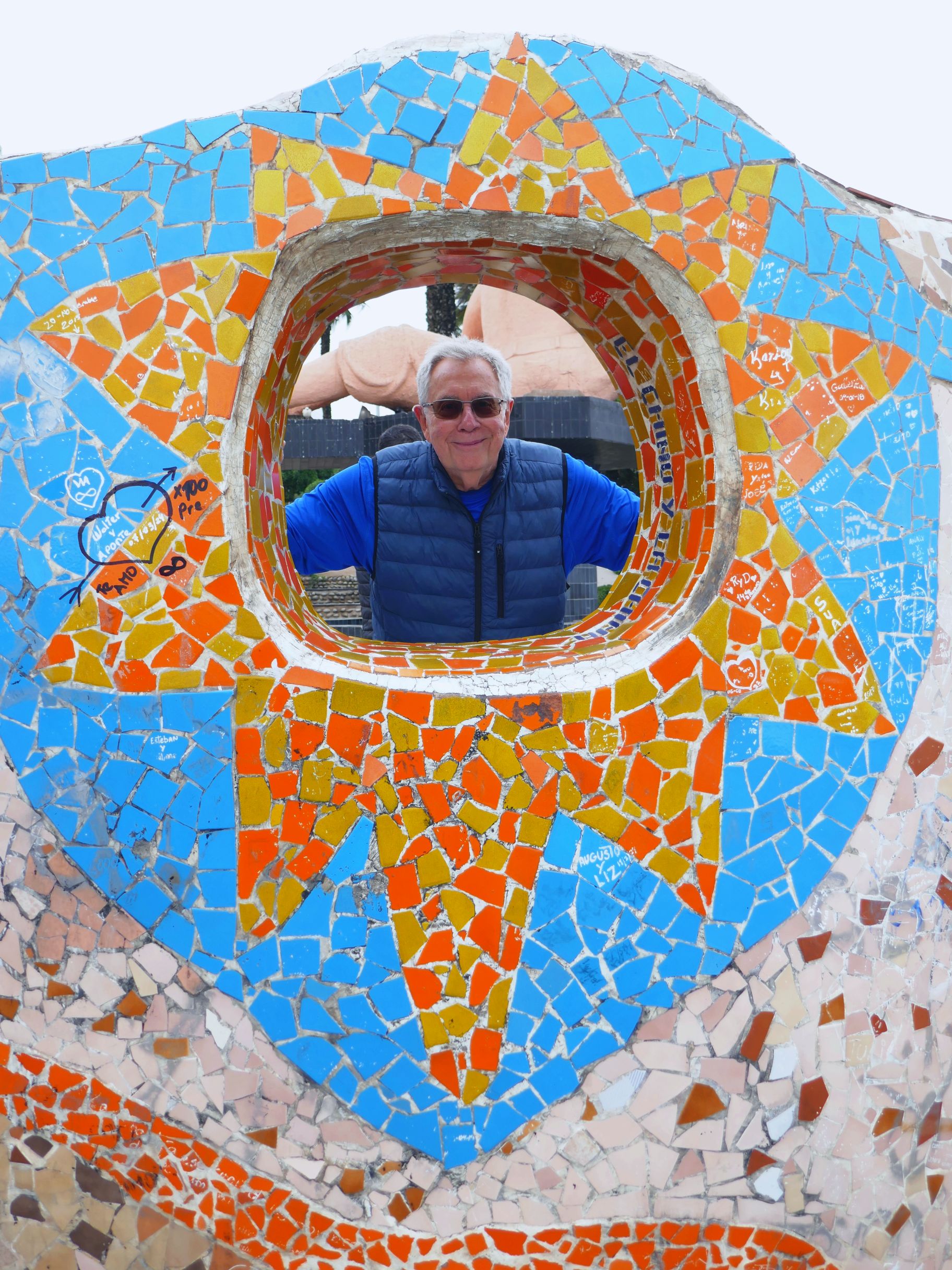
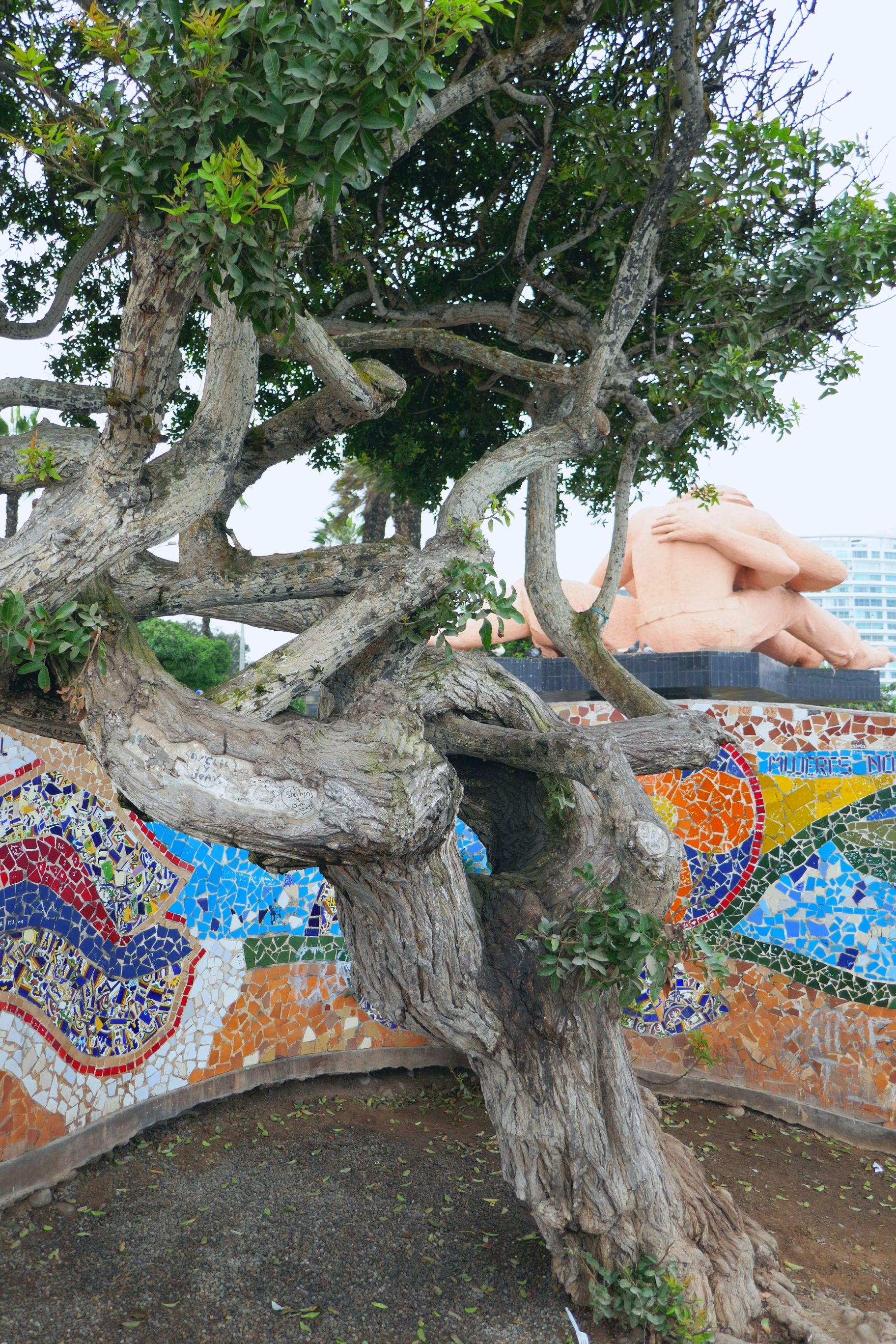
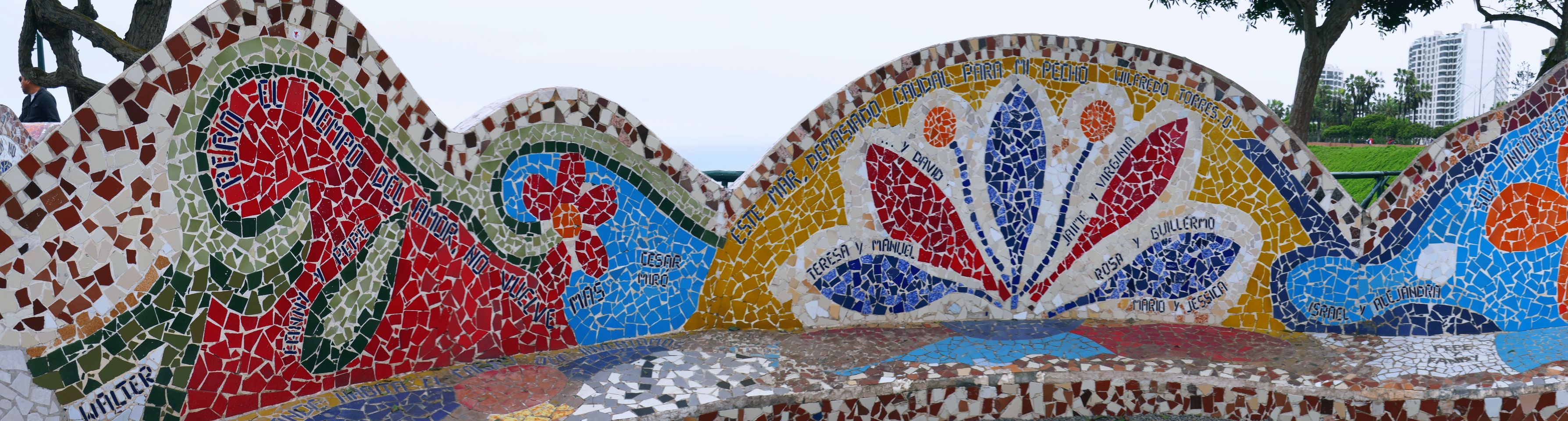
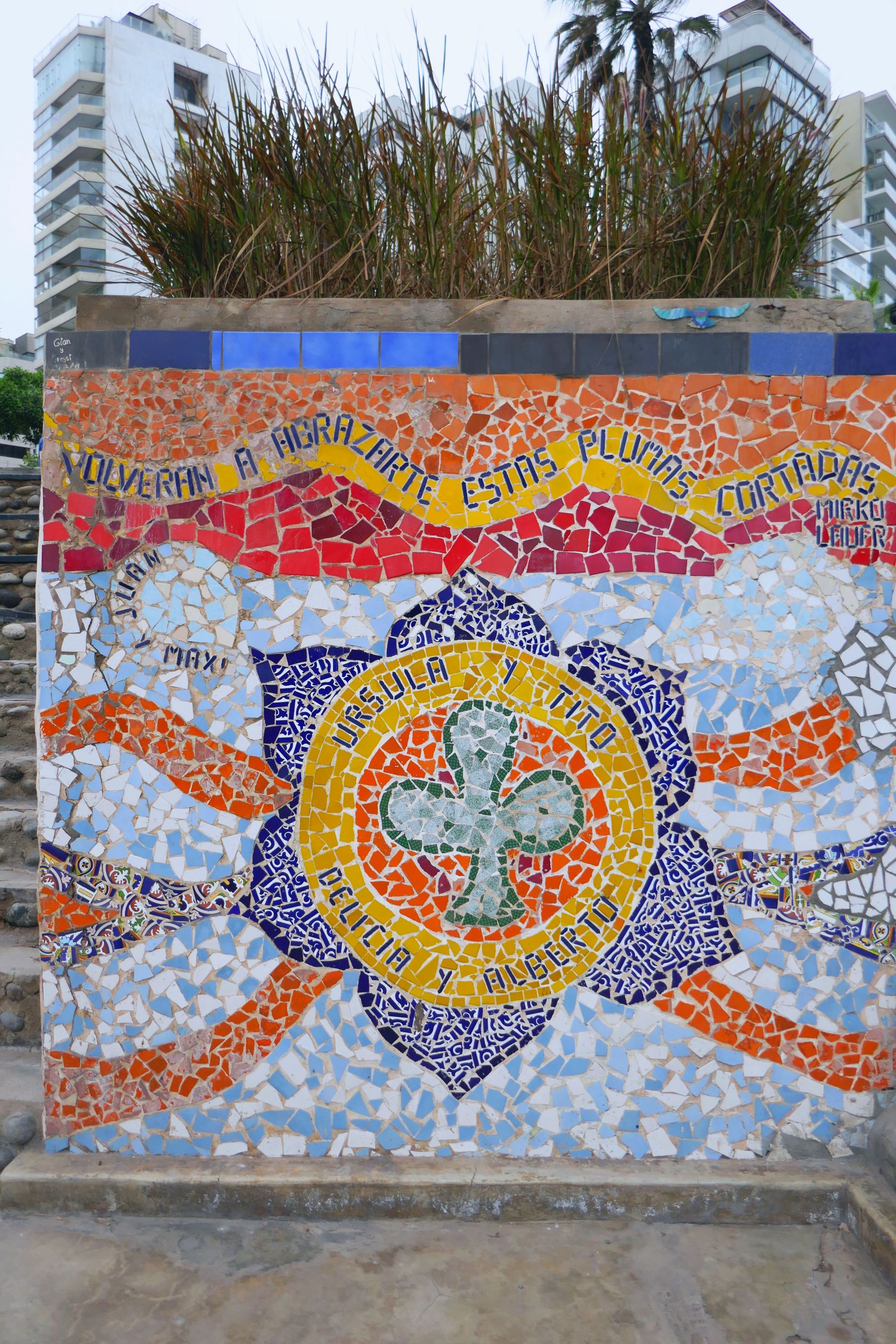
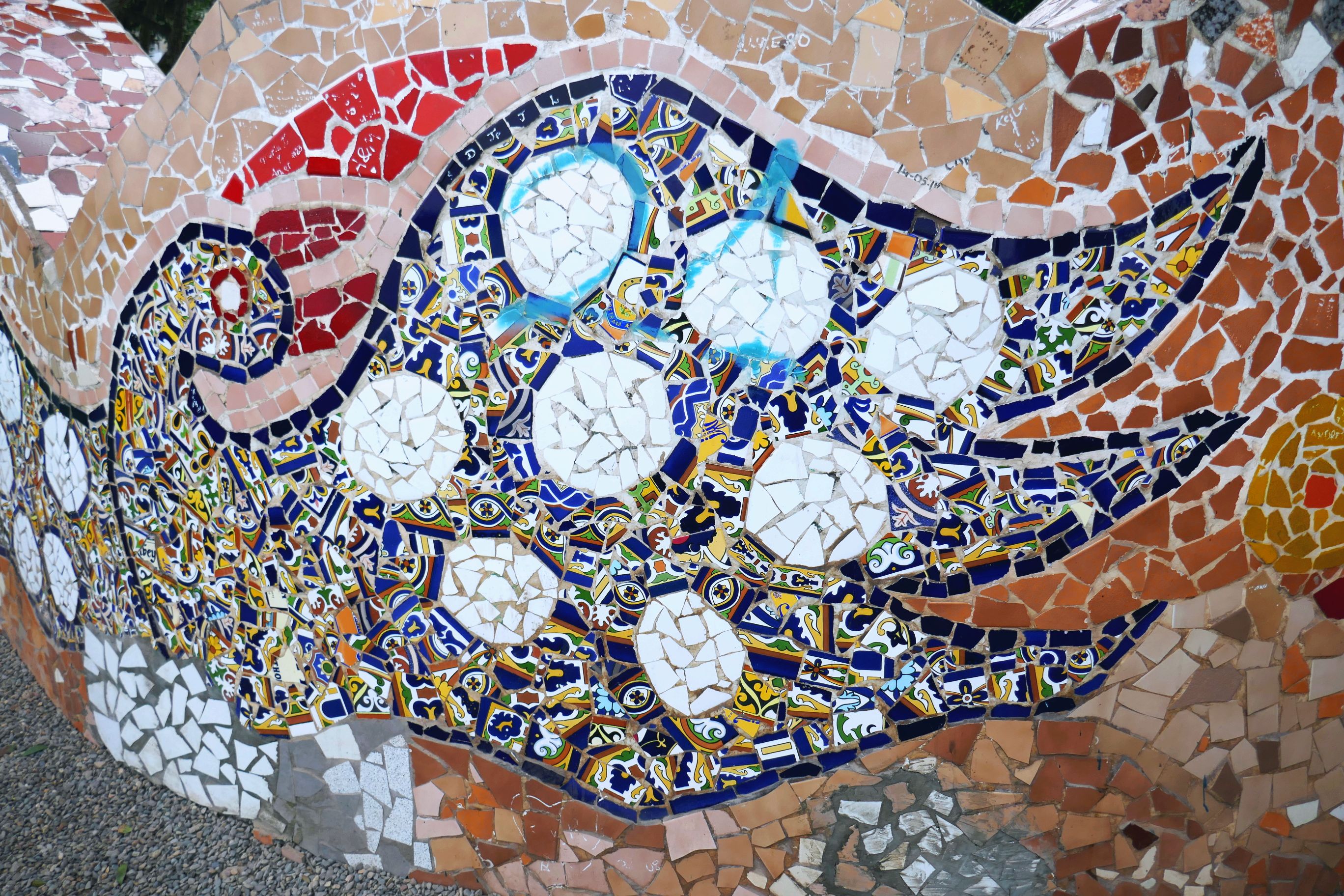
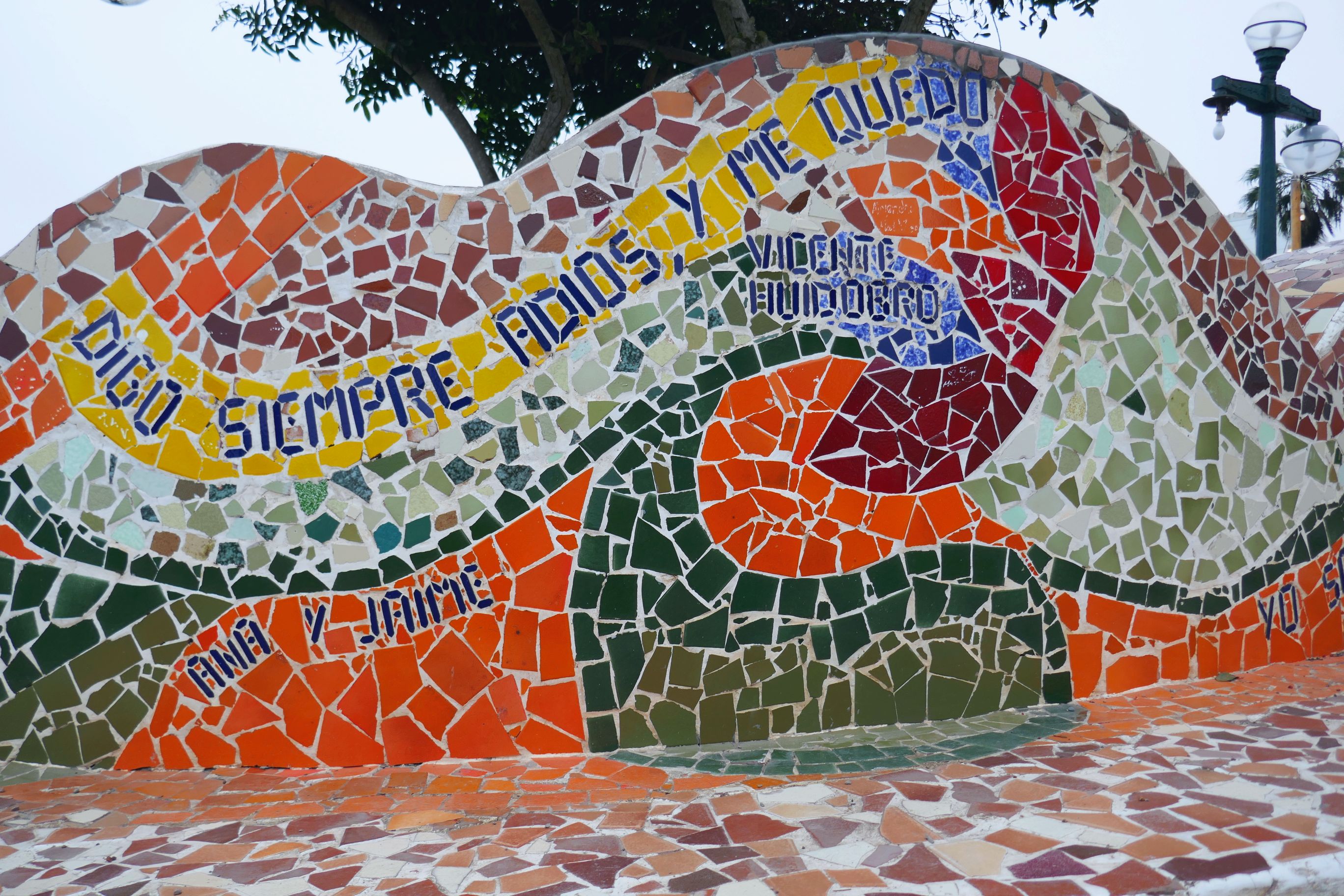
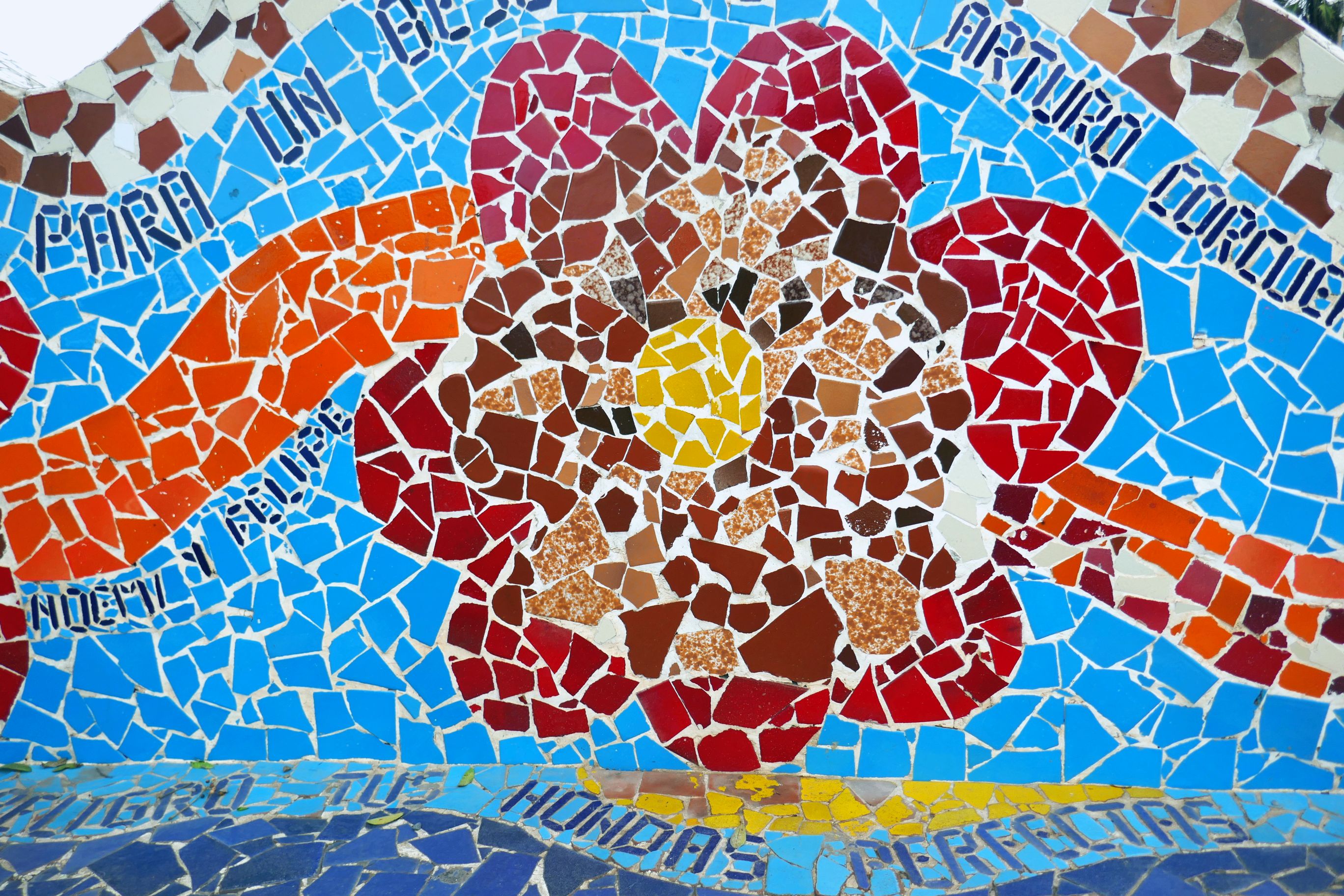
The cliff-top walk was beautiful with many small parks and bougainvillea growing everywhere.  Our destination for our first walk was Parque del Amour (Love Park), inaugurated on Valentine’s Day, 1993.  The centerpiece of the park is a huge sculpture called, “The Kiss” but we were there to see the Gaudi-inspired mosaics that included phrases and poems about love.  We loved it!

We had also hoped to see the paragliders that usually fly along the cliffs, but we didn’t see any.  Stay tuned, because they will appear in an upcoming post!

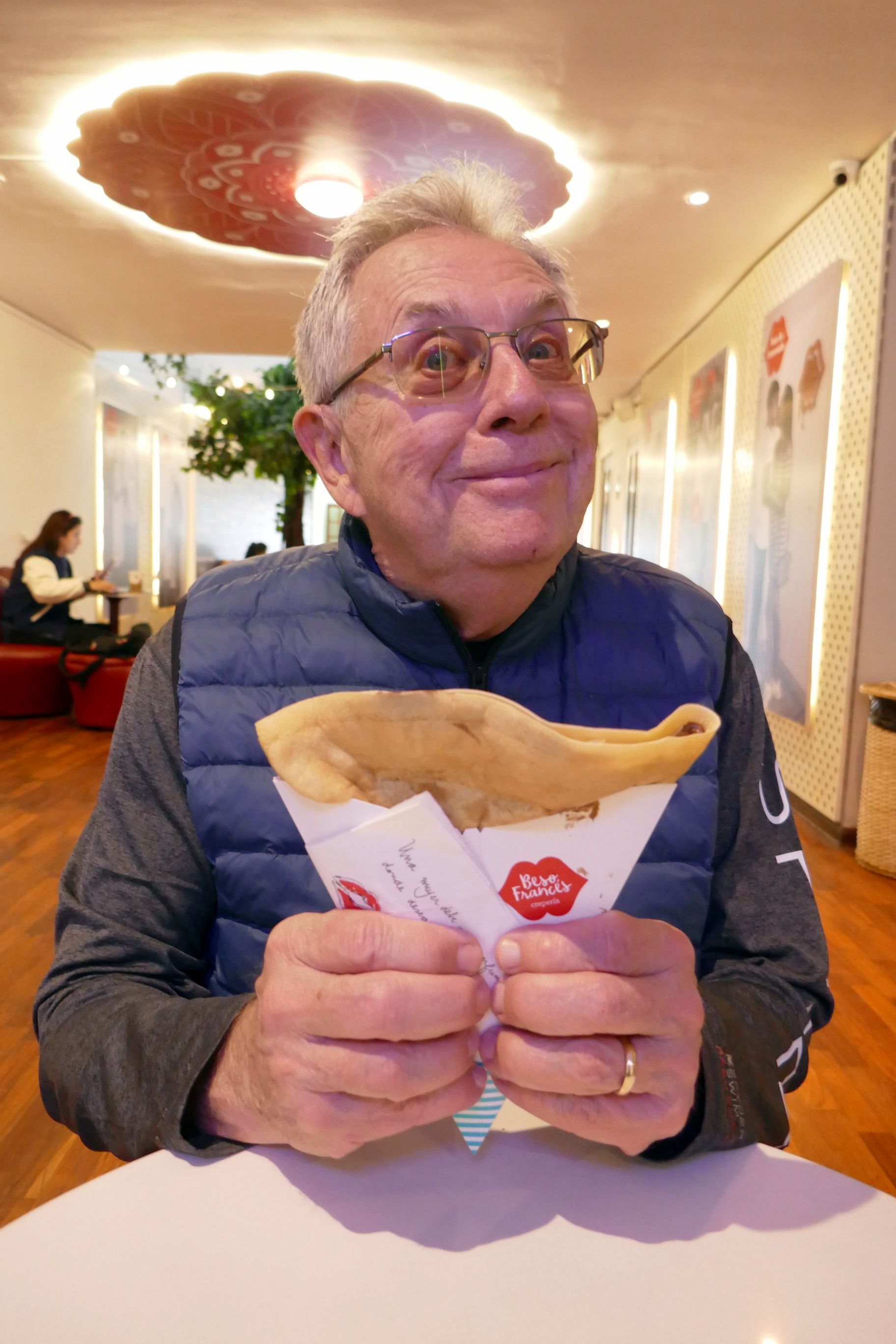
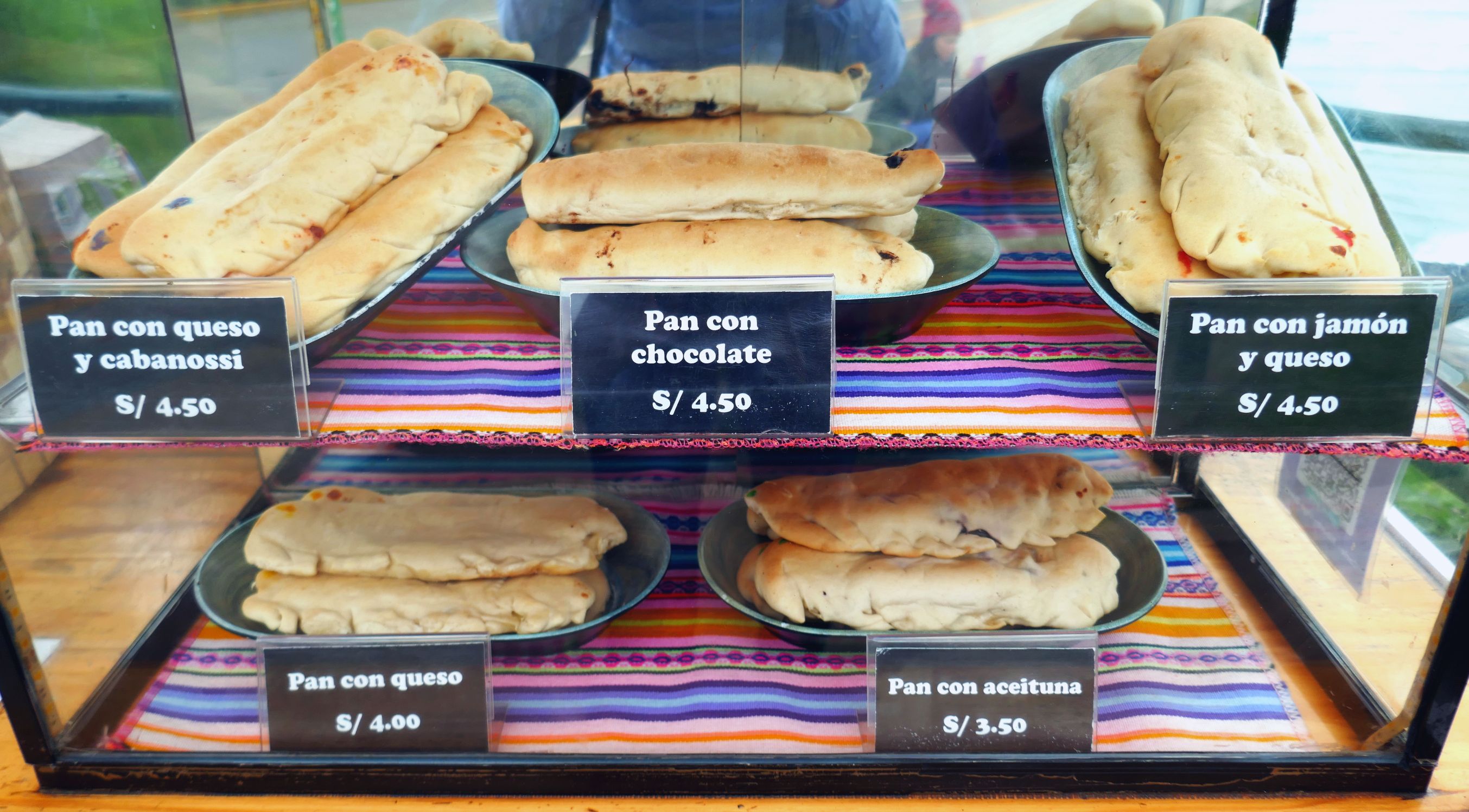
We enjoyed a Pan con chocolate, heated on the spot, while visiting Love Park. The U.S. price was the equivalent of only $1.20, and the warm chocolate and bread was delicious!

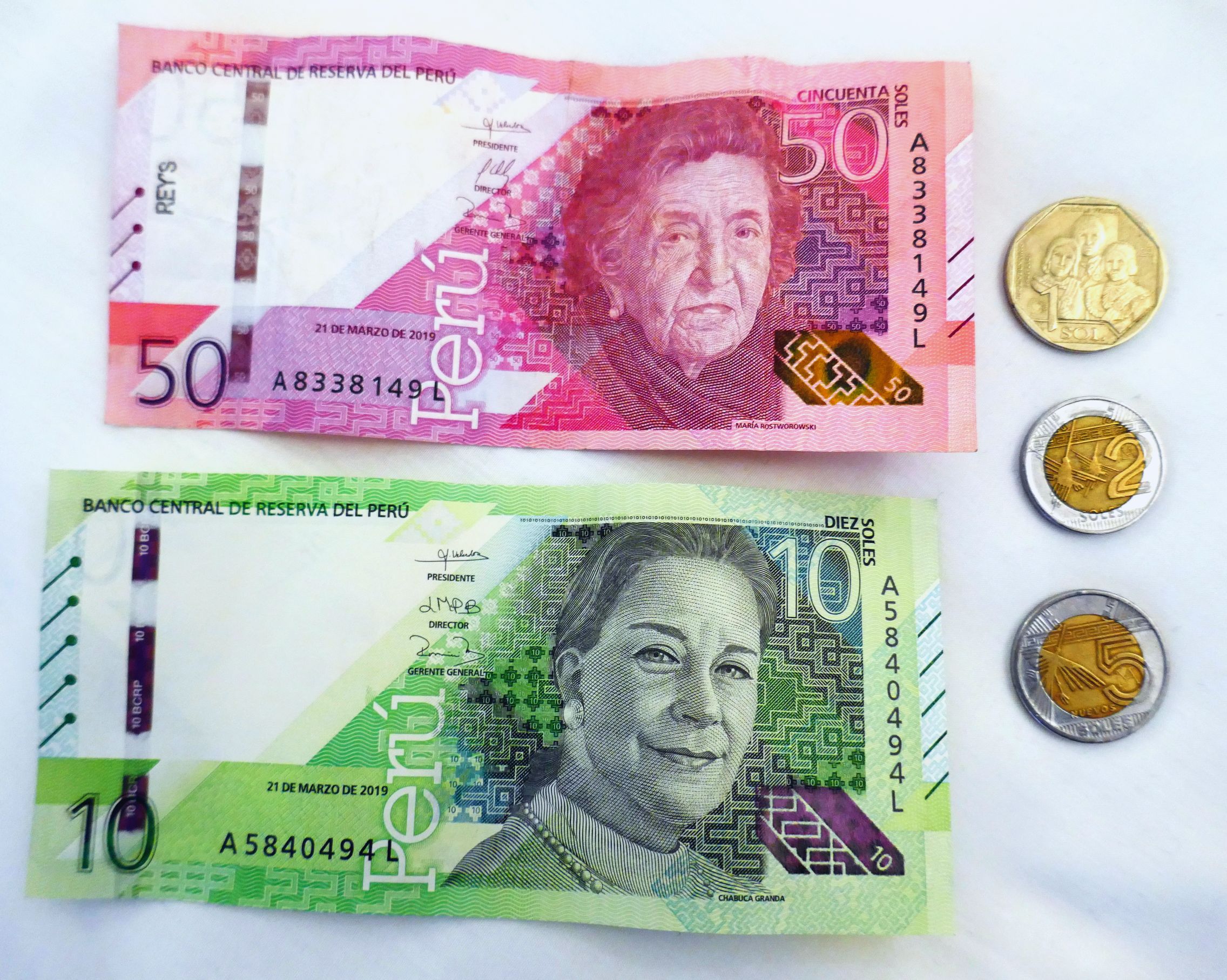
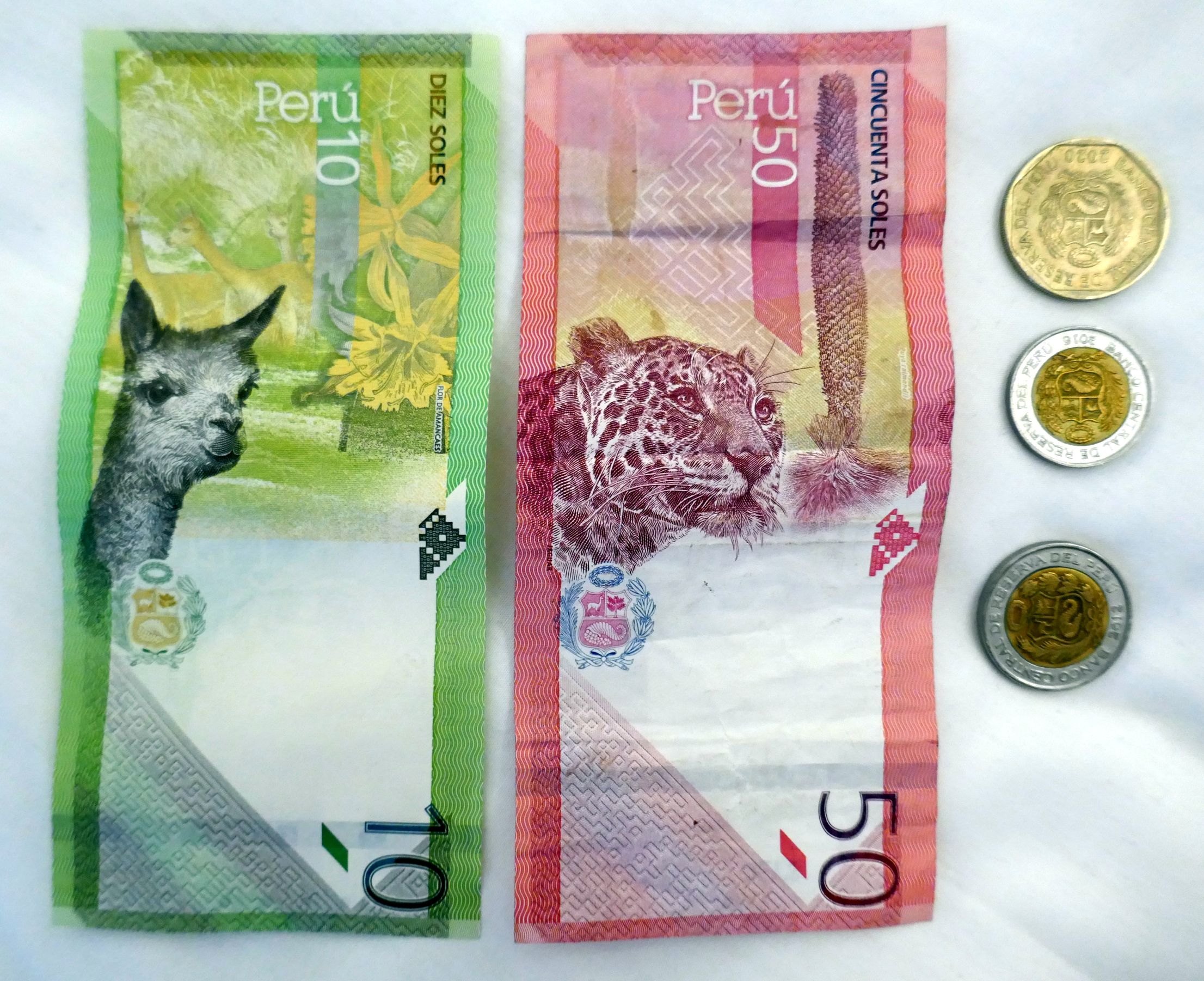
This is the Peru Sole, their currency.

Around our hotel:

Since the included meals with Overseas Adventure Travel are always multi-course, we usually opt for something lighter and more casual when we are on our own.  Bruce wanted our first dinner in Lima to be a treat, though, so we made reservations for Huaca Pucllana.  Located adjacent to the Huaca Pucllana ruins that we were planning to see, it worked out nicely to enjoy dinner first and then tour take the evening tour of the ruins.

What a memorable and fascinating evening!  The beautiful terrace of the restaurant overlooked the ruins, so we dined enjoying a very unique view!

Following dinner, we went next door to see the museum and take our evening tour.  There were just four other people, making the experience intimate and enjoyable.

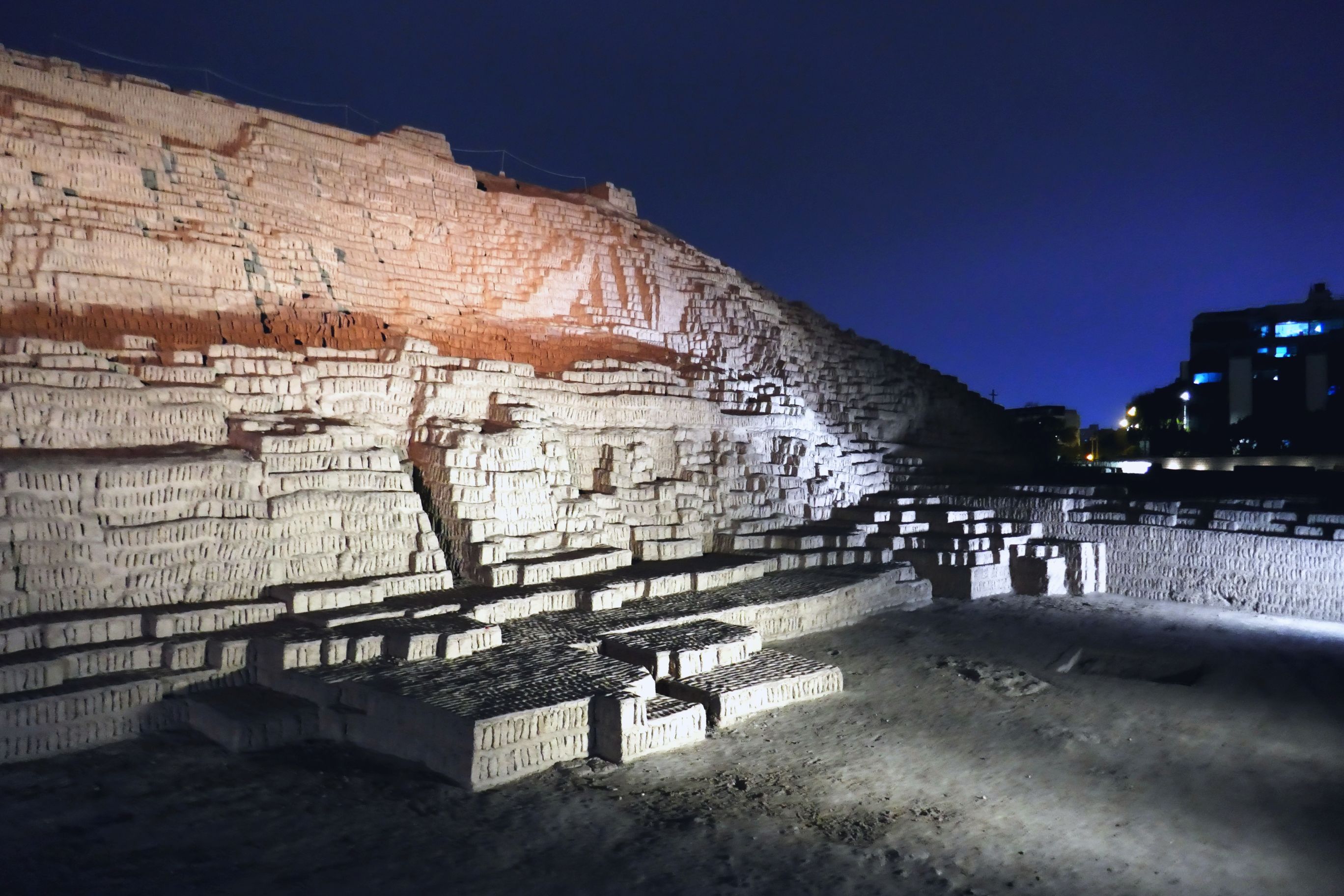
These ruins were amazing, once we understood the history and construction of the site.  Built as a ceremonial center between 450-650 A.D., they were abandoned for at least a century until the Wari society’s elite converted the top of the pyramid into a sacred space where their deceased were interred.  Later, the Ychsma people (1100 to 1450 A.D.) used it to bury their dead as well.  They also used it as a repository of offerings associated with ancestor worship.

The most amazing thing about these ruins was learning that what we saw was just a fraction of the size of the original site.  It was only by accident these ruins were discovered in the 1980’s during excavation work; the remainder has been built over during the past centuries.

The adobe and mud bricks were made and then stacked in this fashion for more stability.

Here’s a fun fact:  People think Maccu Picchu is ancient  at 574 years old, but Huaca Pucllana is 1,100 years old!

Coming up next: PERU #3: LIKABLE LIMA (PART 3)– BARRANCO DISTRICT

PERU #1: LIKABLE LIMA (PART 1)

I will be honest with you; Lima wasn’t on my bucket list.  It’s not that I didn’t want to go there; it’s just that I had been to Lima on a cruise many years ago and the city hadn’t left much of a lasting impression on me.  Ahhh, but that’s a downside of cruising.  How much can you really see in one day—or a part of a day?

To be very honest with you, we were supposed to have been on an American Queen Voyages expedition cruise in Alaska during the last half of July.  The company went bankrupt, so our cruise was canceled.  (Thankfully, we will be getting our deposit back no later than the end of September, according to the court settlement, so no money was lost.)

Why did we choose Peru to replace that trip?  We had traveled a few times with Overseas Adventure Travel and enjoyed our experiences, the tour was highly recommended by people on our past OAT tours, we wanted to see Machu Picchu, and we wanted to get out of the Georgia heat (In July, it’s winter in Peru).

The tour started in Lima, so, we decided to fly in early and explore more of the city on our own—a good decision, because we had some great experiences and a fun surprise!  My impression of Lima during our four-day visit definitely improved dramatically!

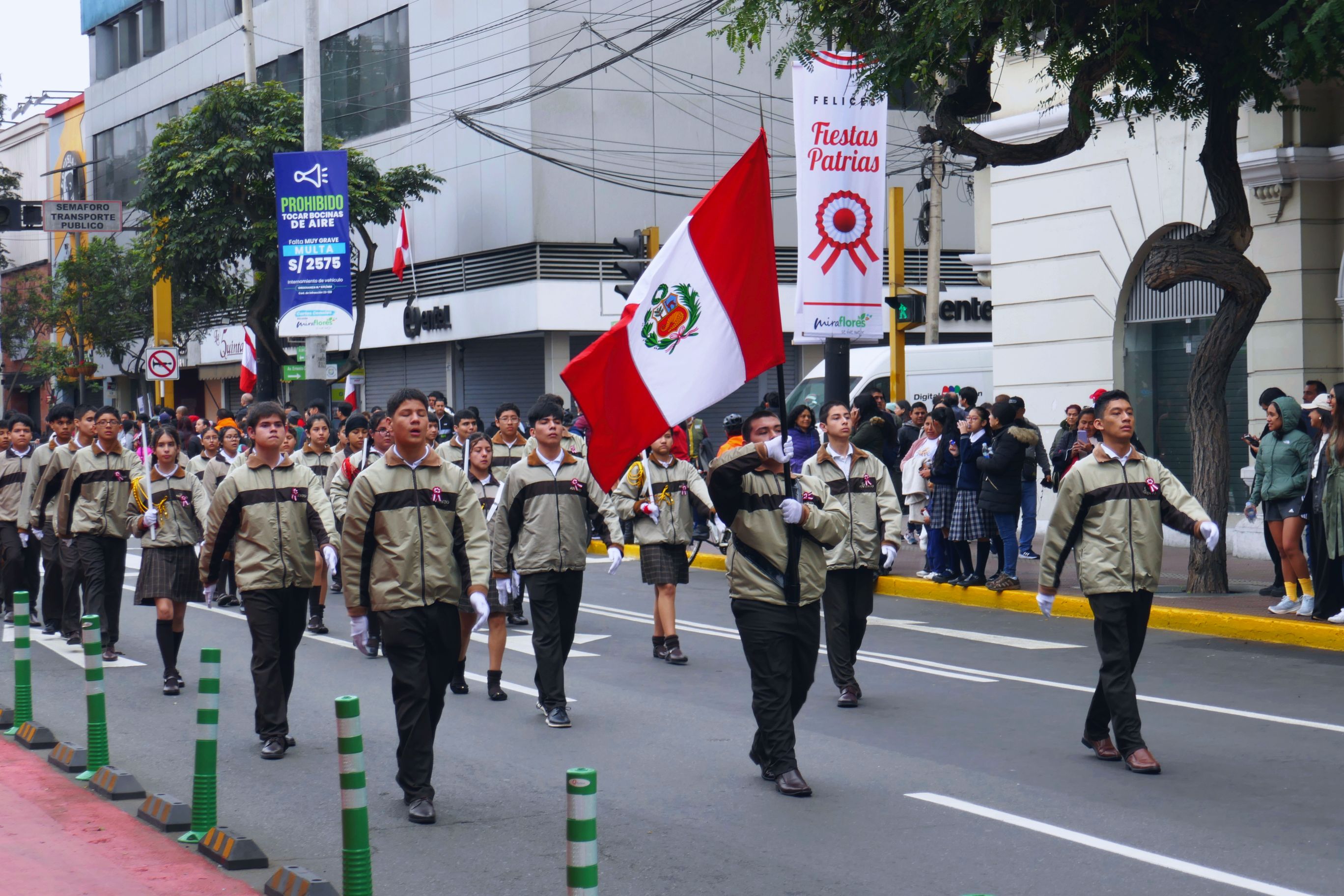
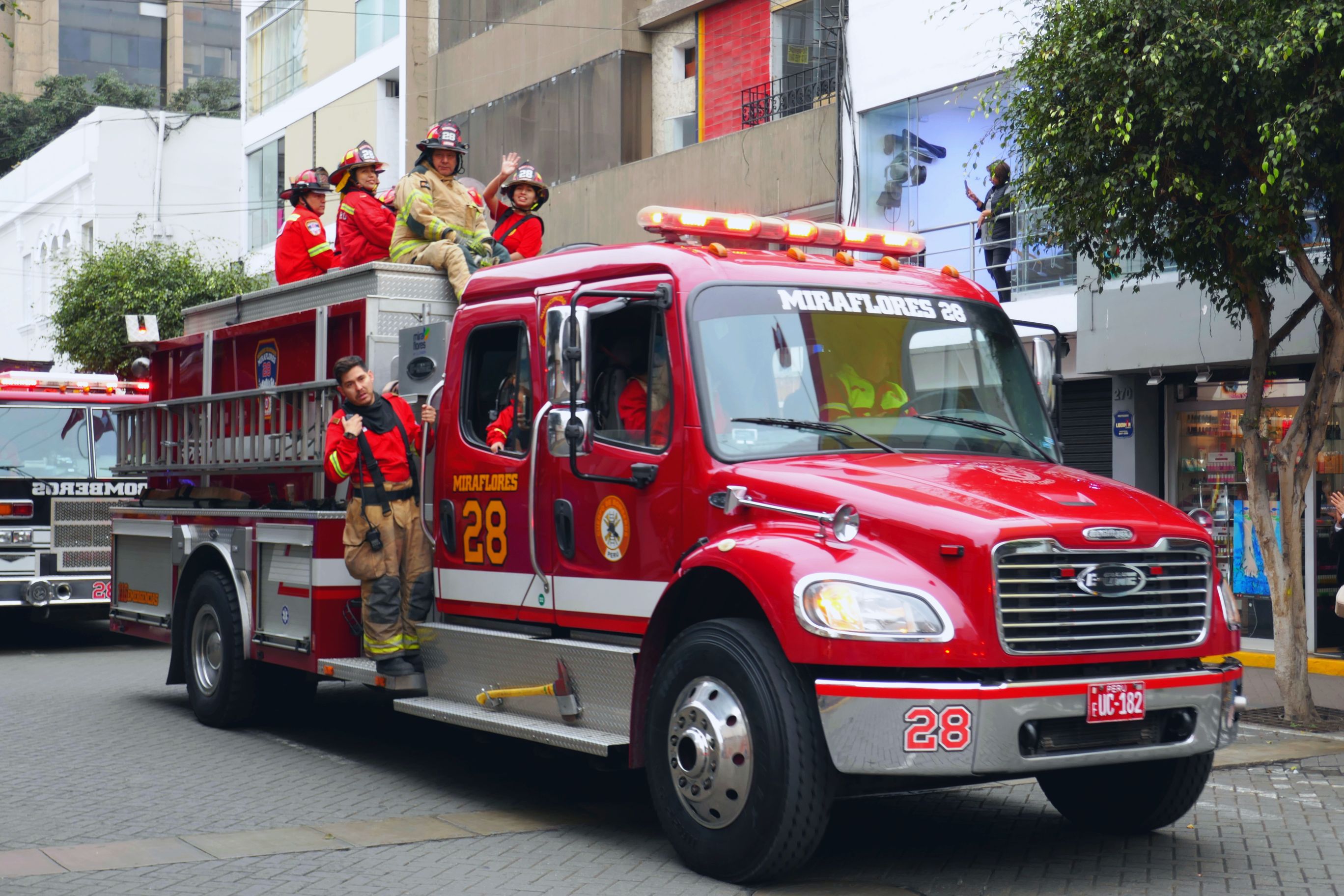
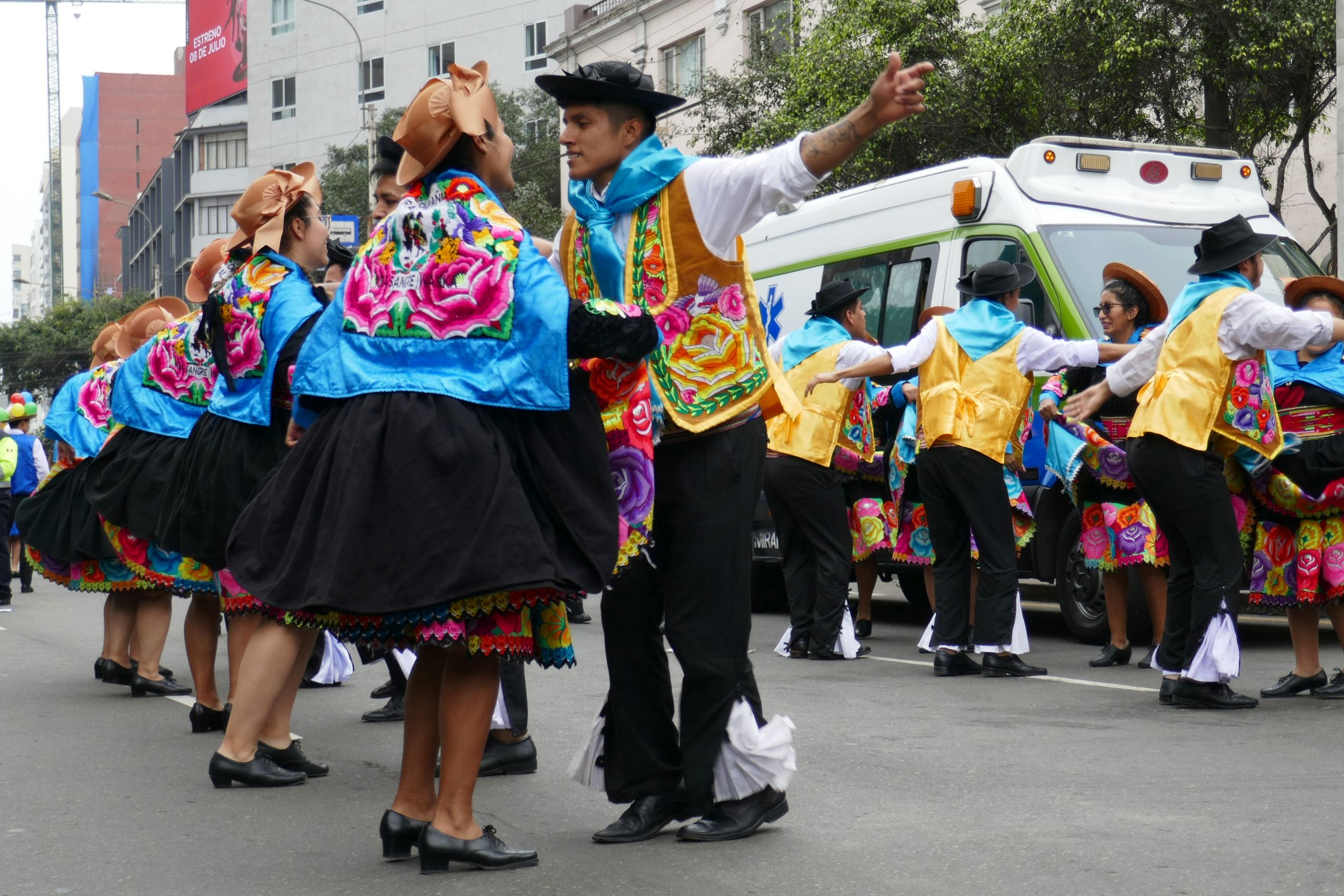
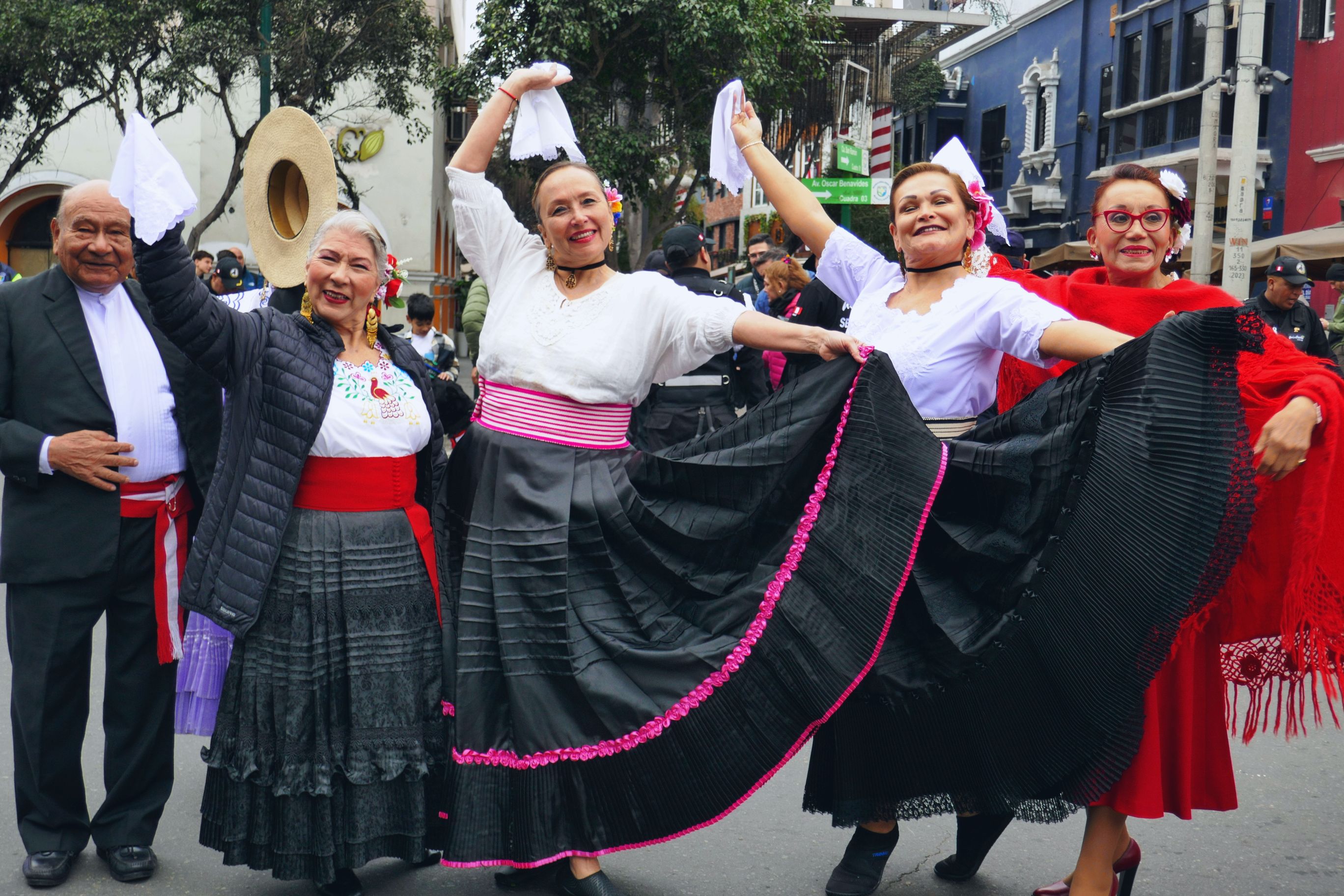
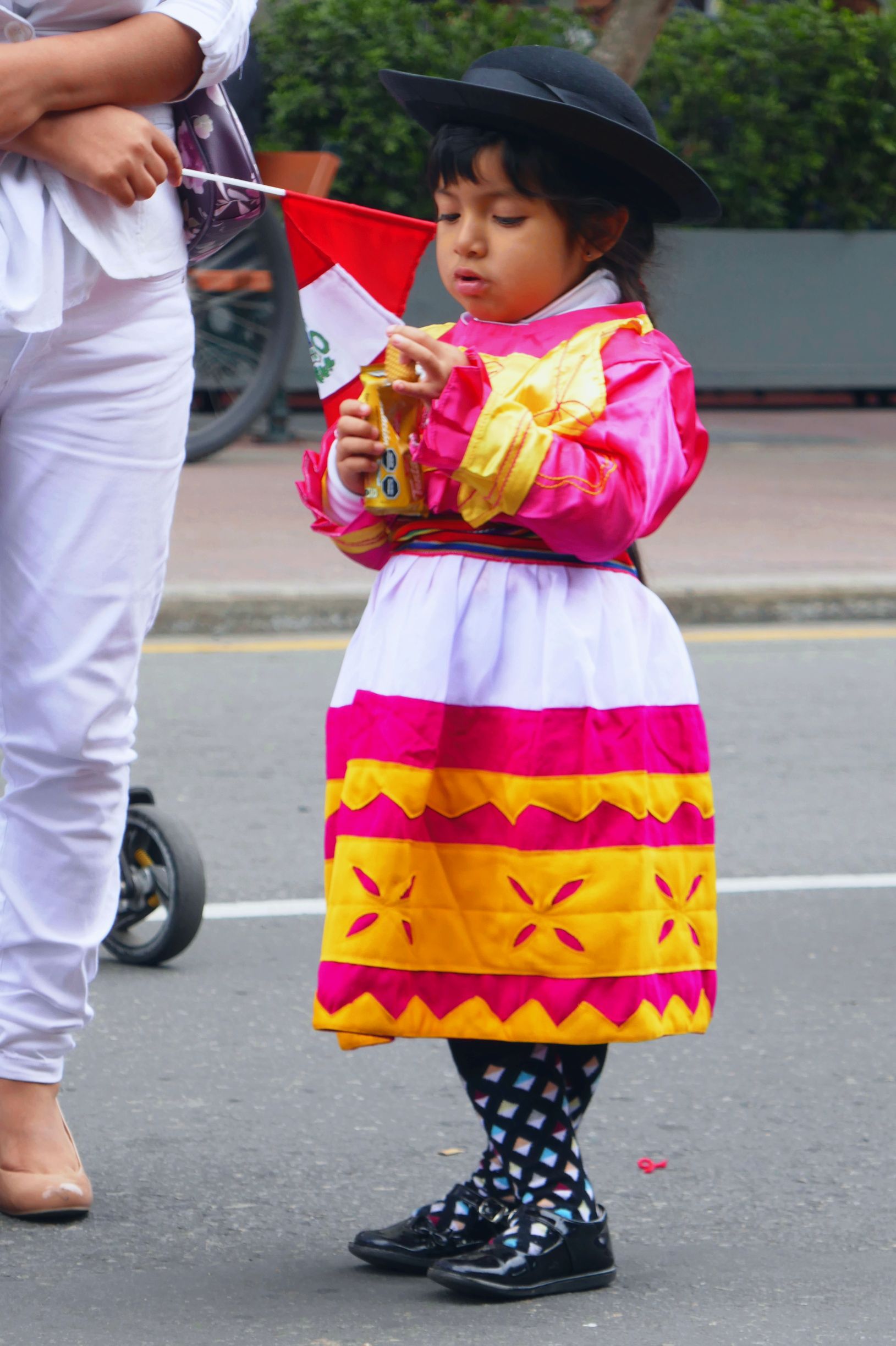
Based in the Miraflores district, we set out to explore the area the morning after our arrival.  Just a couple of blocks away from our hotel, we heard Spanish being spoken on a megaphone.  Then we saw more and more people—with signs—as we got closer.  Oh no!  Was this another political protest?  A possible riot brewing?  There were police everywhere! We hesitated before getting closer, but then we saw… a parade!  Who doesn’t love a parade?  It was a national holiday in Peru, and the celebration was on!

(For all photos, click on the image for a full screen view.)

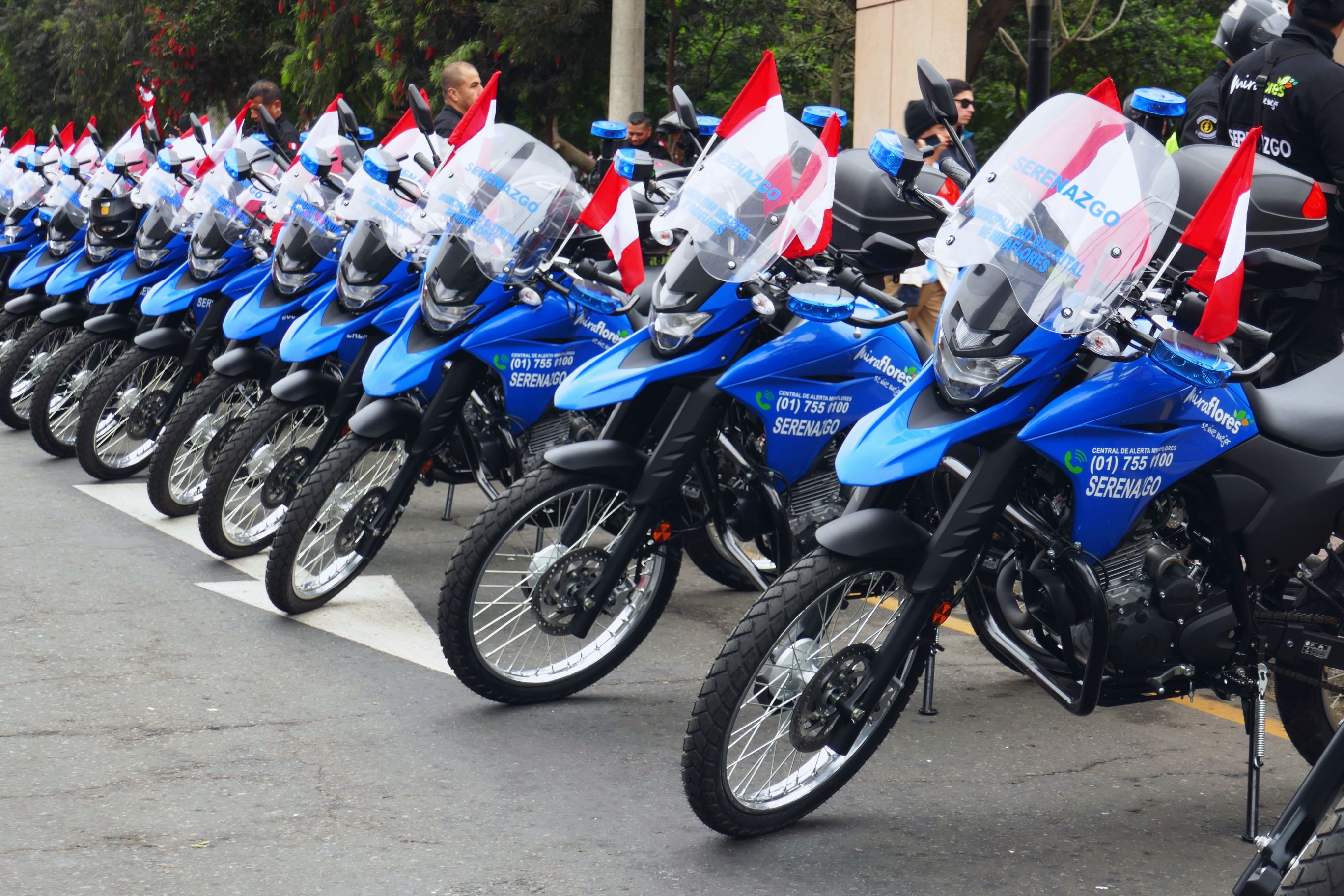
These were all police motorcycles.

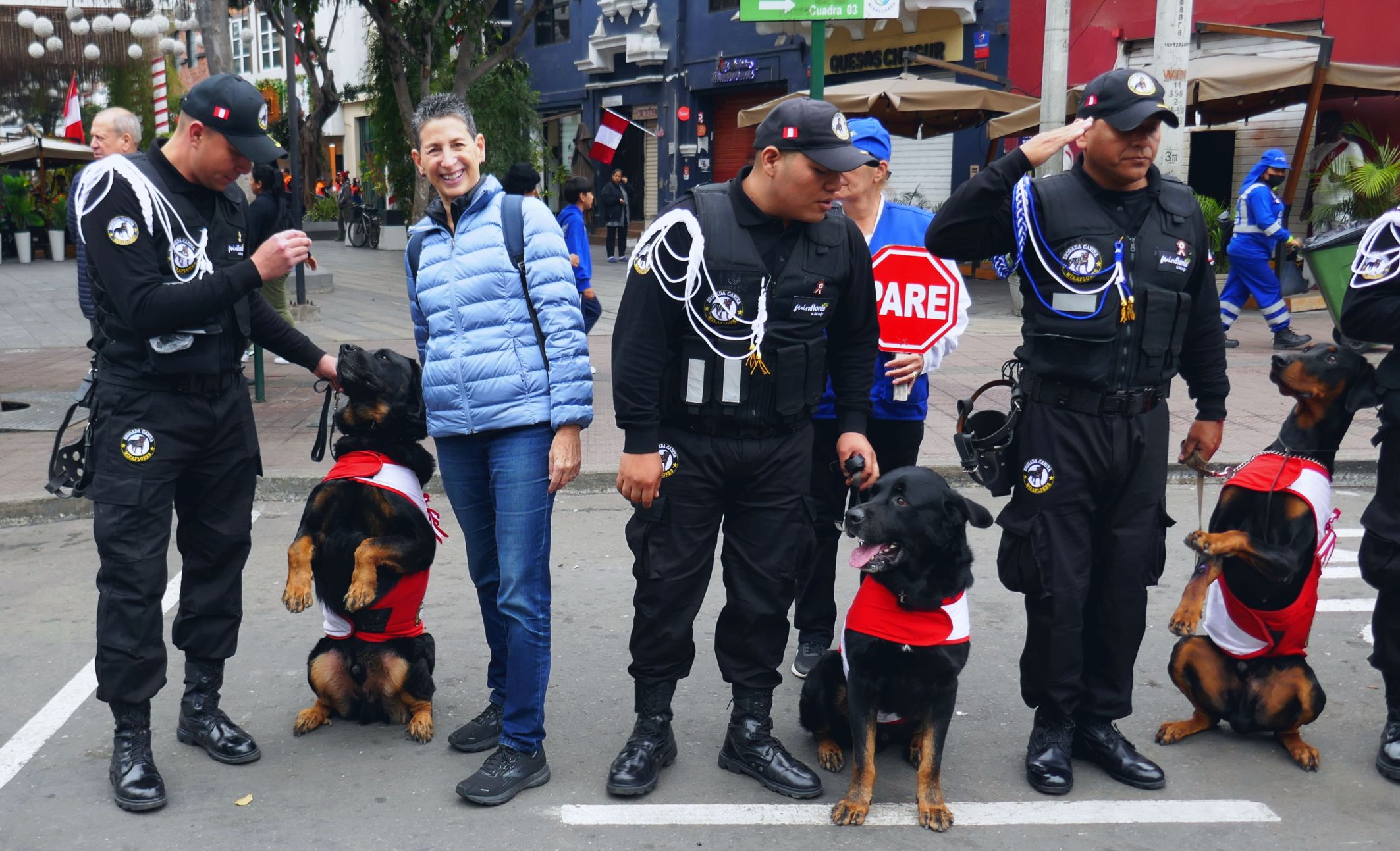
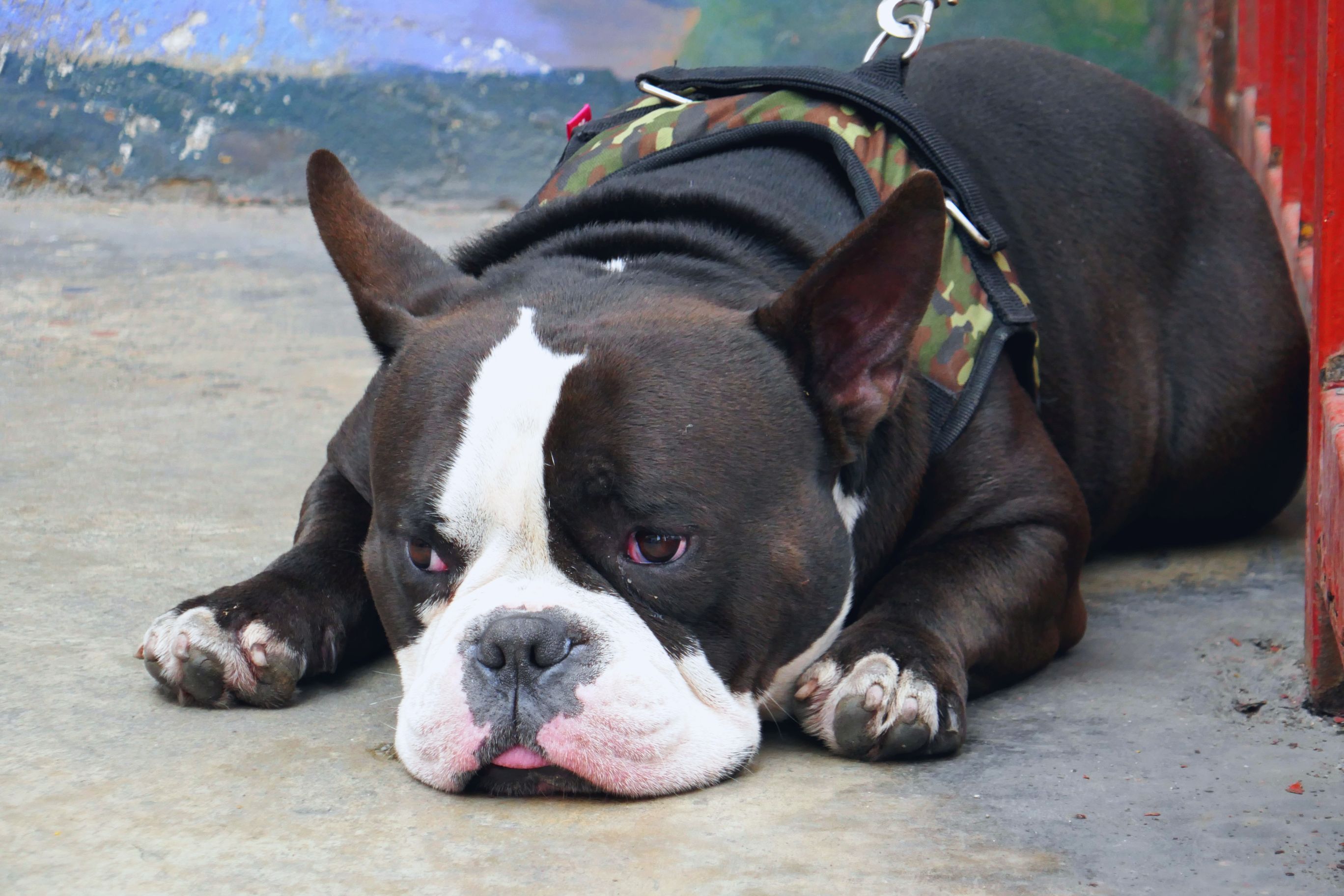
I was curious where the parade was going to and what else we might see on the route, so we followed along.  In addition to school marching bands, the fire department, cultural dance clubs, and service organizations, we came across the police department’s K-9 unit.  I have been in some foreign cities where it was illegal to photograph government installations, military, and police; so, I was hesitant to take any pictures, since I hadn’t researched Peru’s policy. The police were lined up with their (mostly) obedient dogs and I really wanted a photo!  I asked the one who looked like he was in charge if it was ok (by pointing to my camera and asking, “Photos, si?”), and with a proud grin across his face, he commanded attention from his unit, so I could get a good shot!  Jefe (“boss” in Spanish) didn’t have much luck getting them all to cooperate in sync, but no worries!  I was having a good laugh watching them all; it was quite entertaining!  He also let me get in the line, so Bruce could get a picture of me with the pooches. 

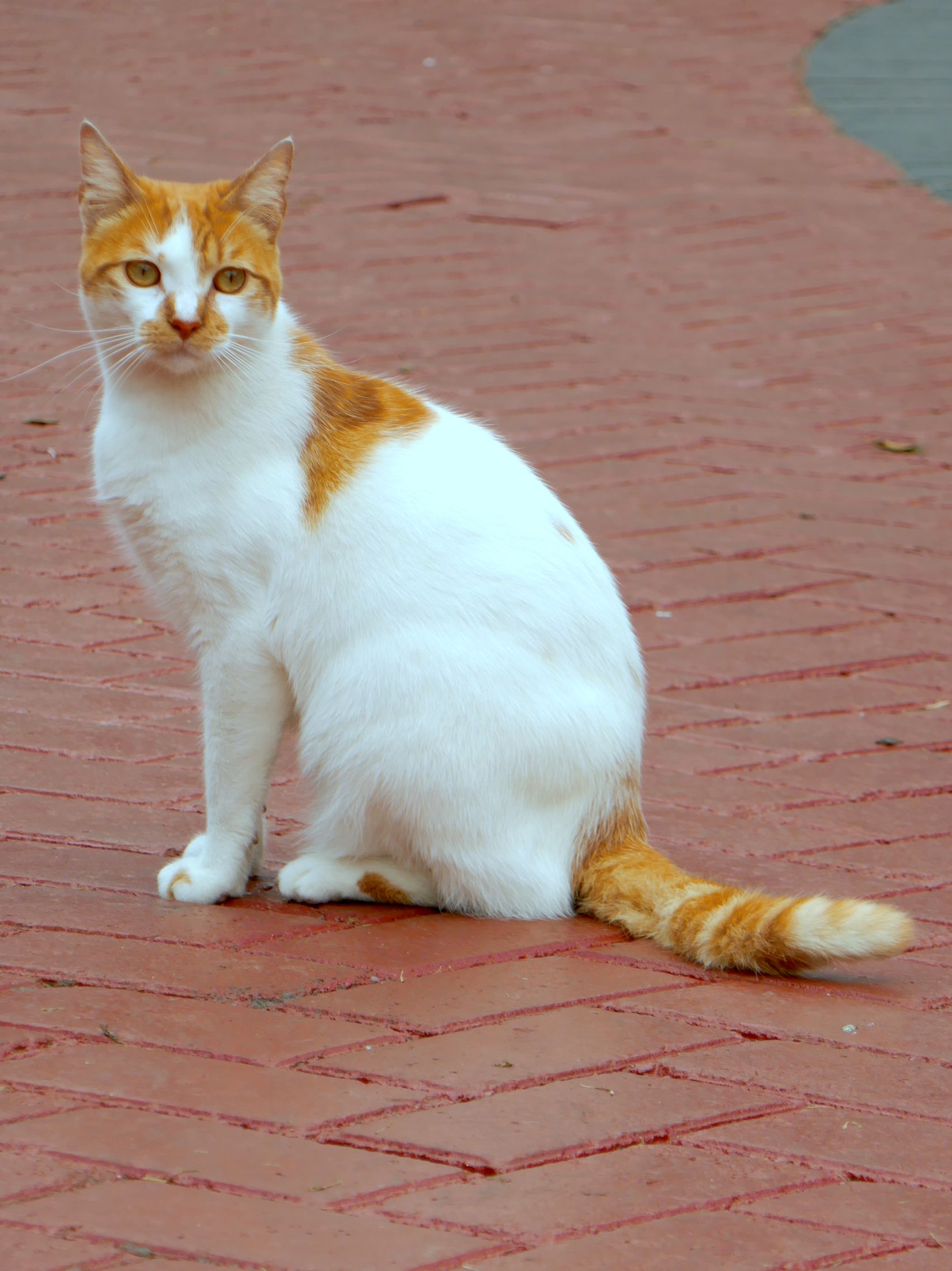
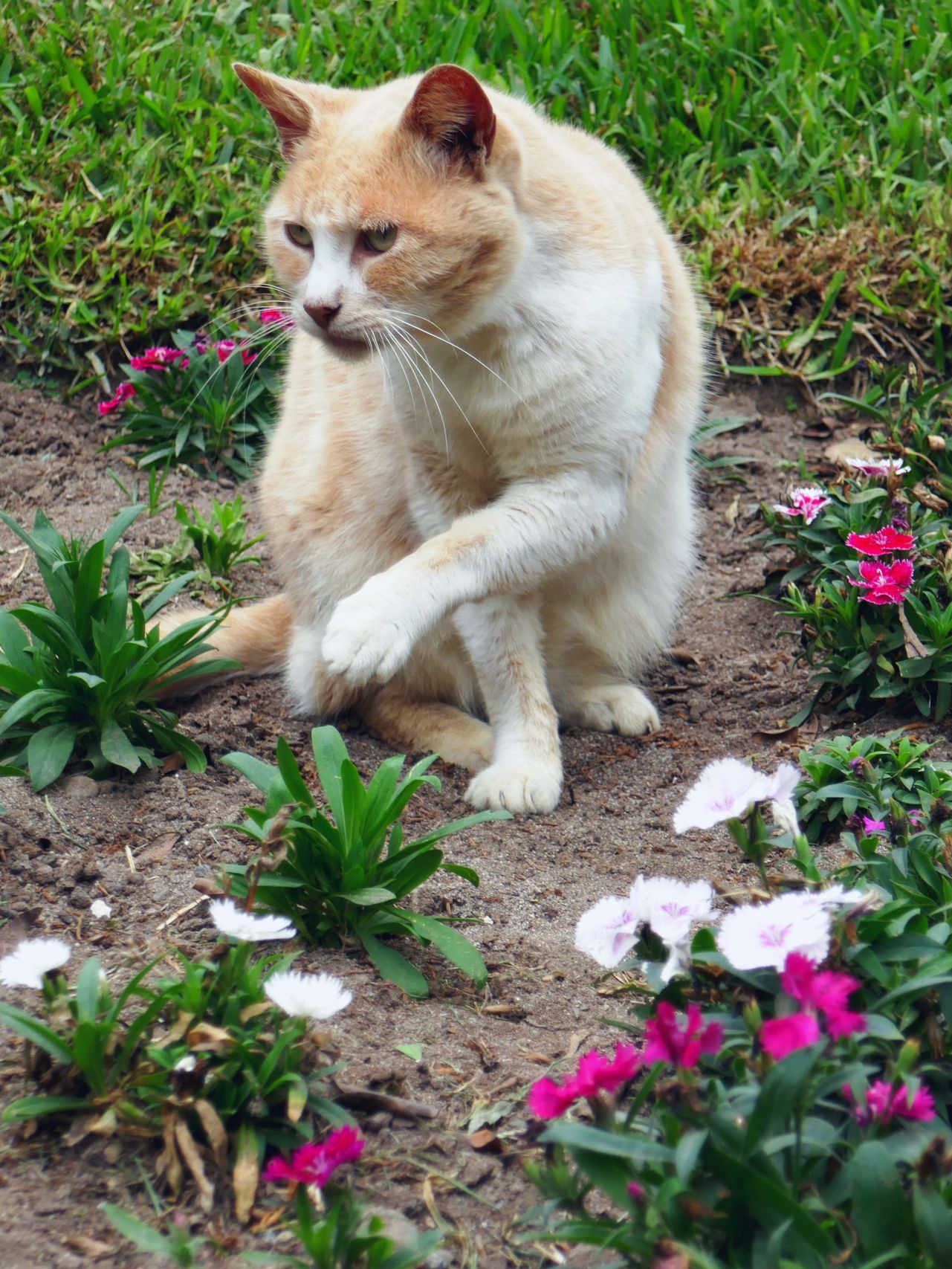
Through Jefe’s “interpreter” (the cop to my right in the photo who spoke very little English— and I speak about as much Spanish!), he invited us to watch them march to the end of the parade route.  The parade got backed up, though, due to the competition judging at the end of the route, so we continued to the craft markets after visiting the cats across the street in Lima’s central park,  Parque Kennedy.

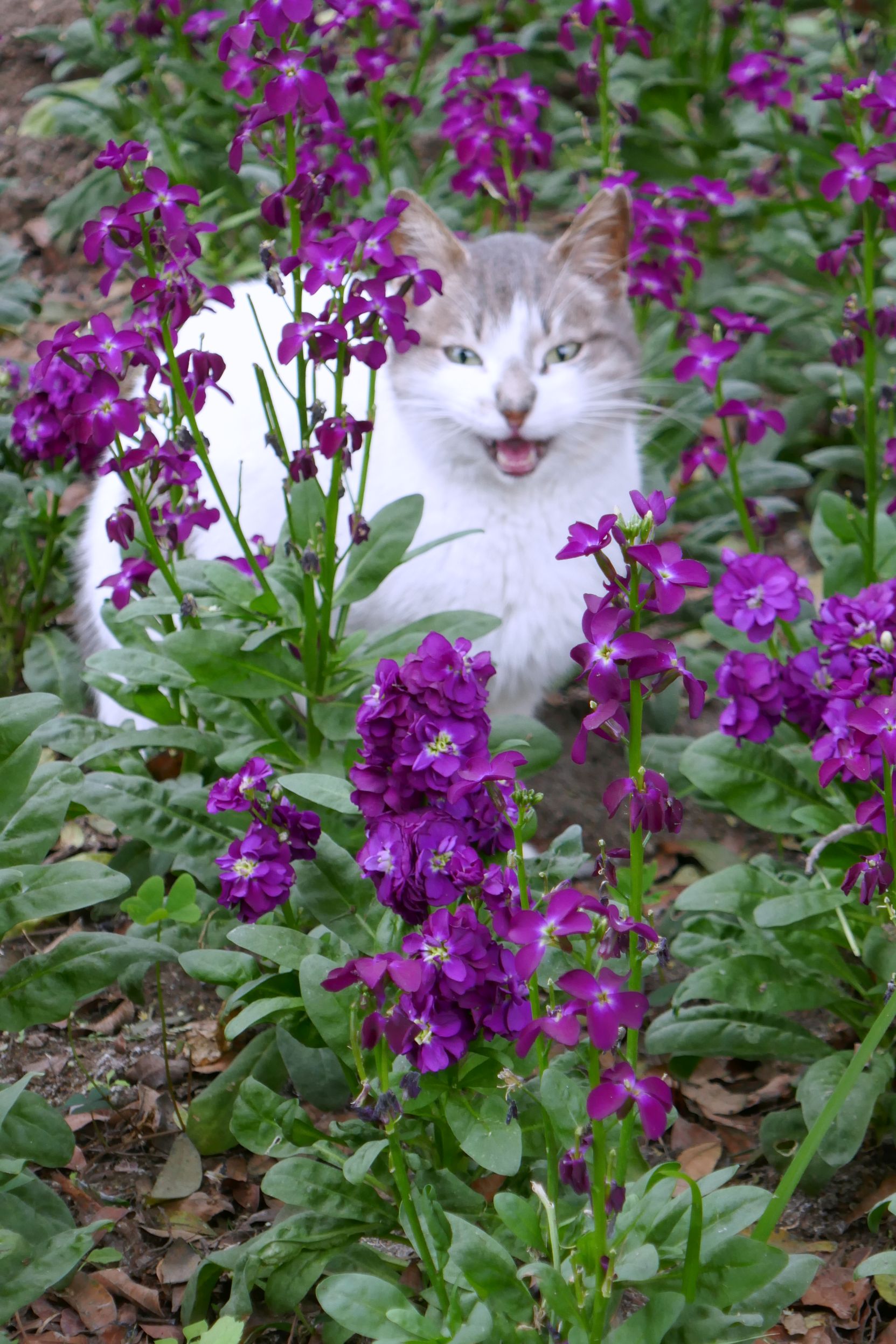
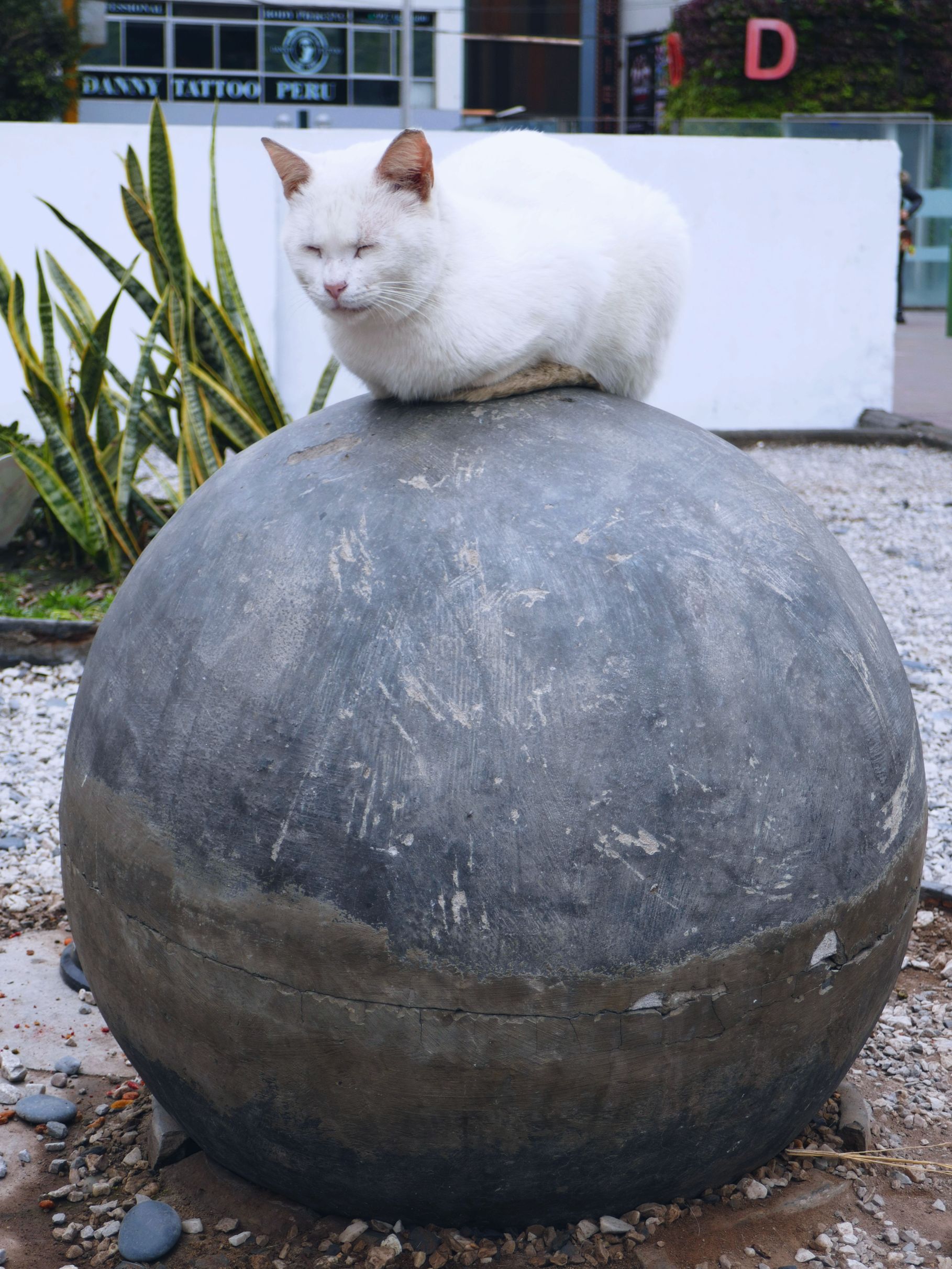
The cats are THE attraction at the park.  Back in the 1990’s the park was inundated with rats, so residents of the area brought their cats in to eliminate the problem.  That they did!  Ultimately, a group was organized to feed, leave fresh water, and care for the cats.  Now, people visit the park to watch, cuddle, and pet the cats and the park is rat-free.  Win-win!

Of course, the cats don’t necessarily stay in the park…

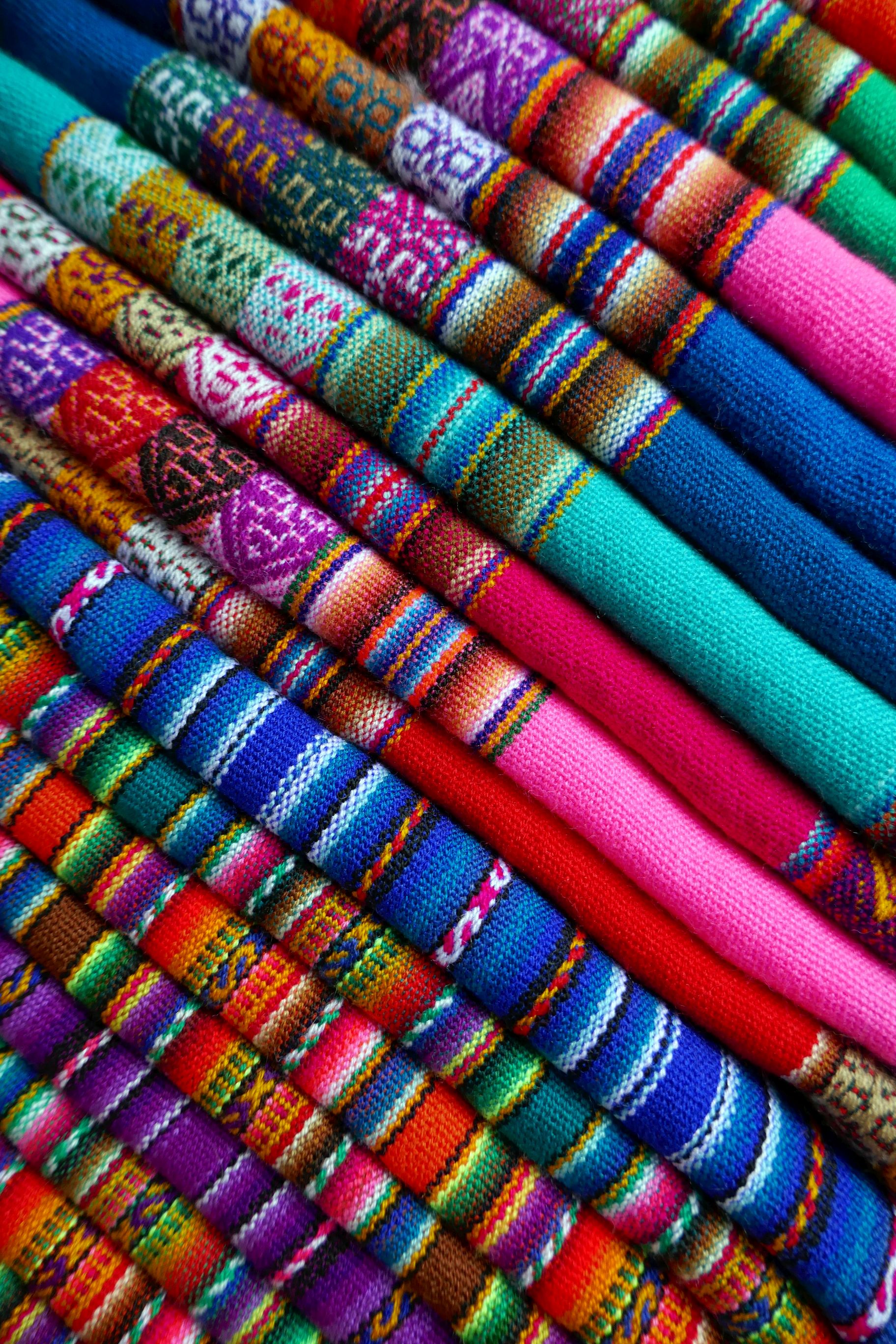
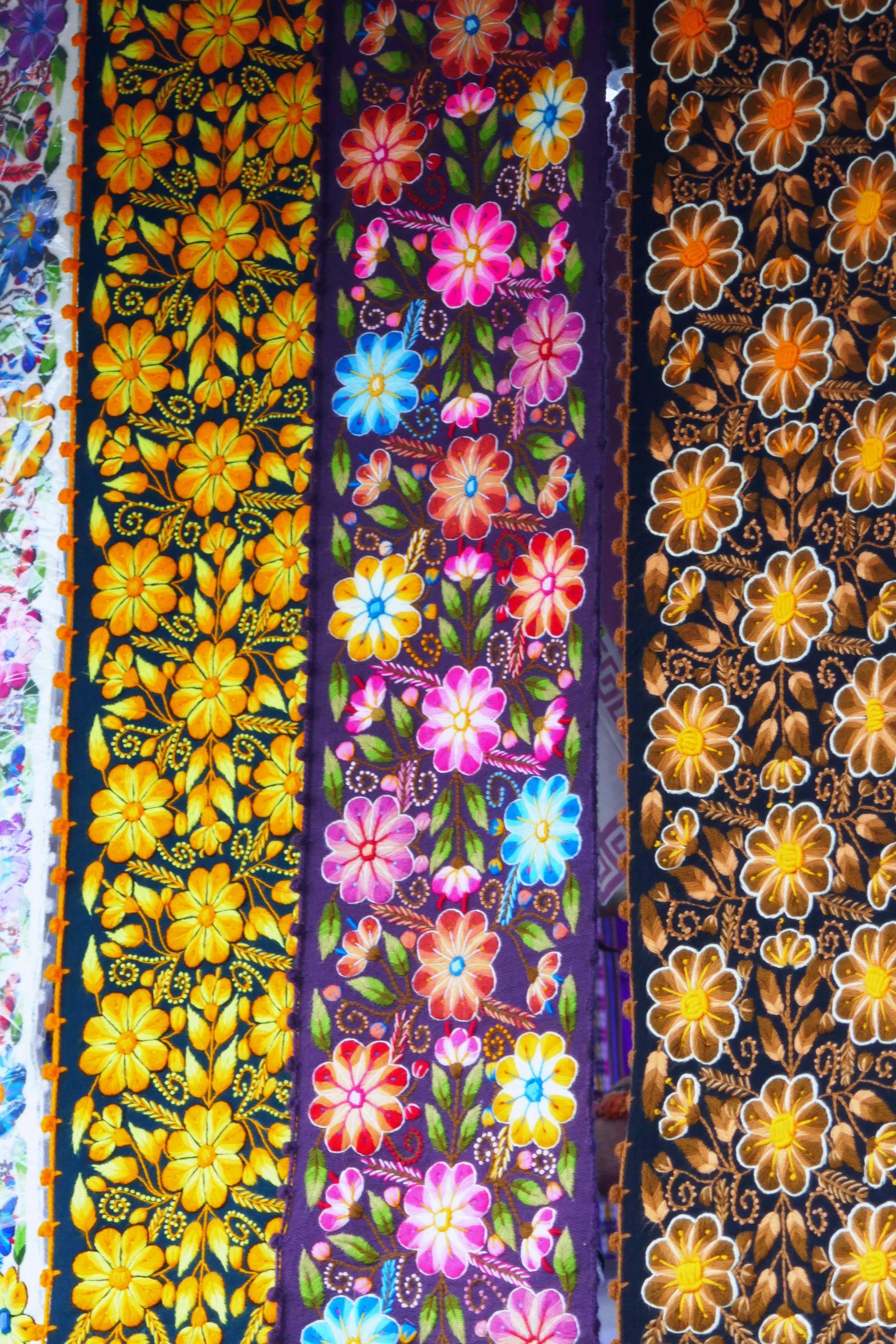
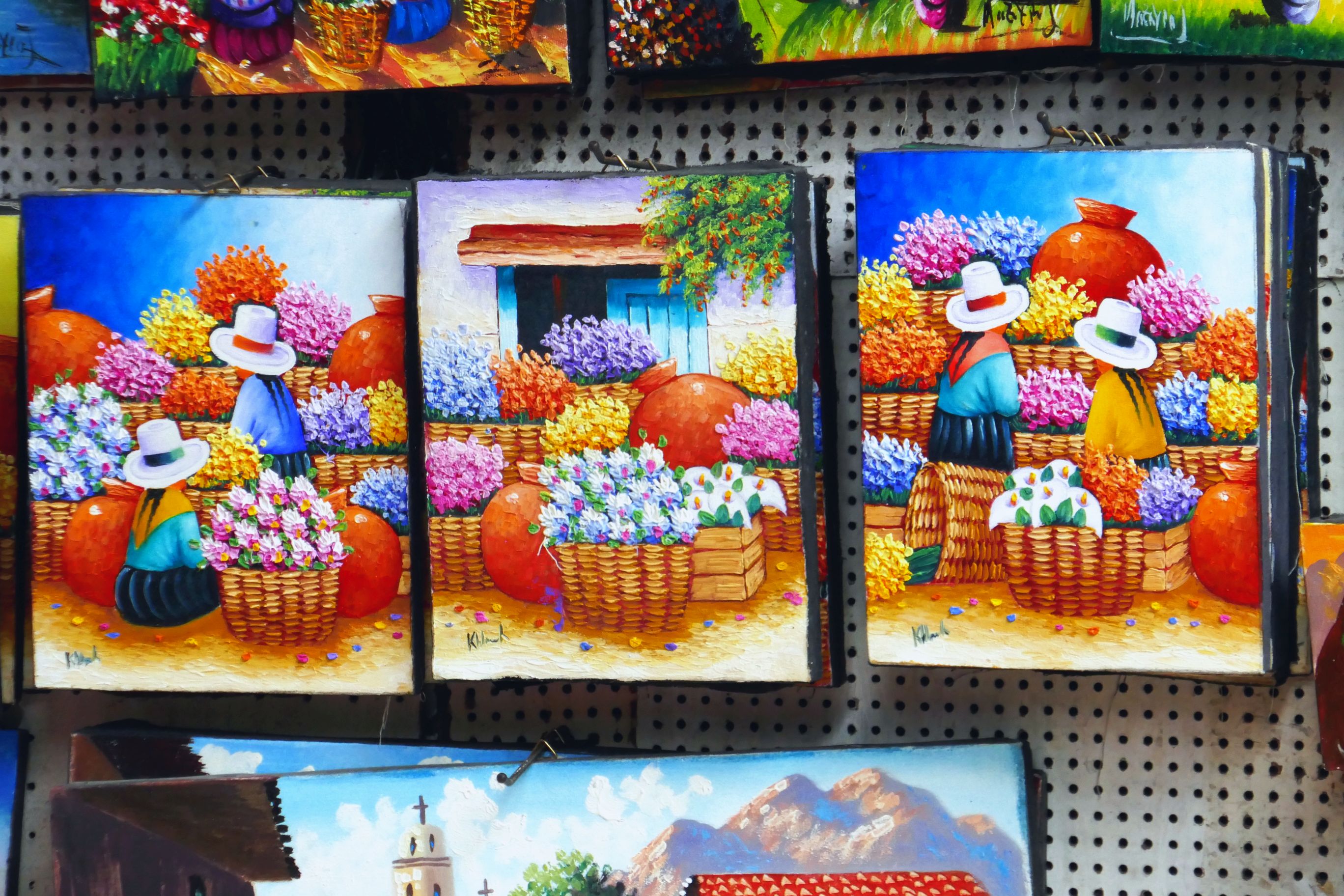
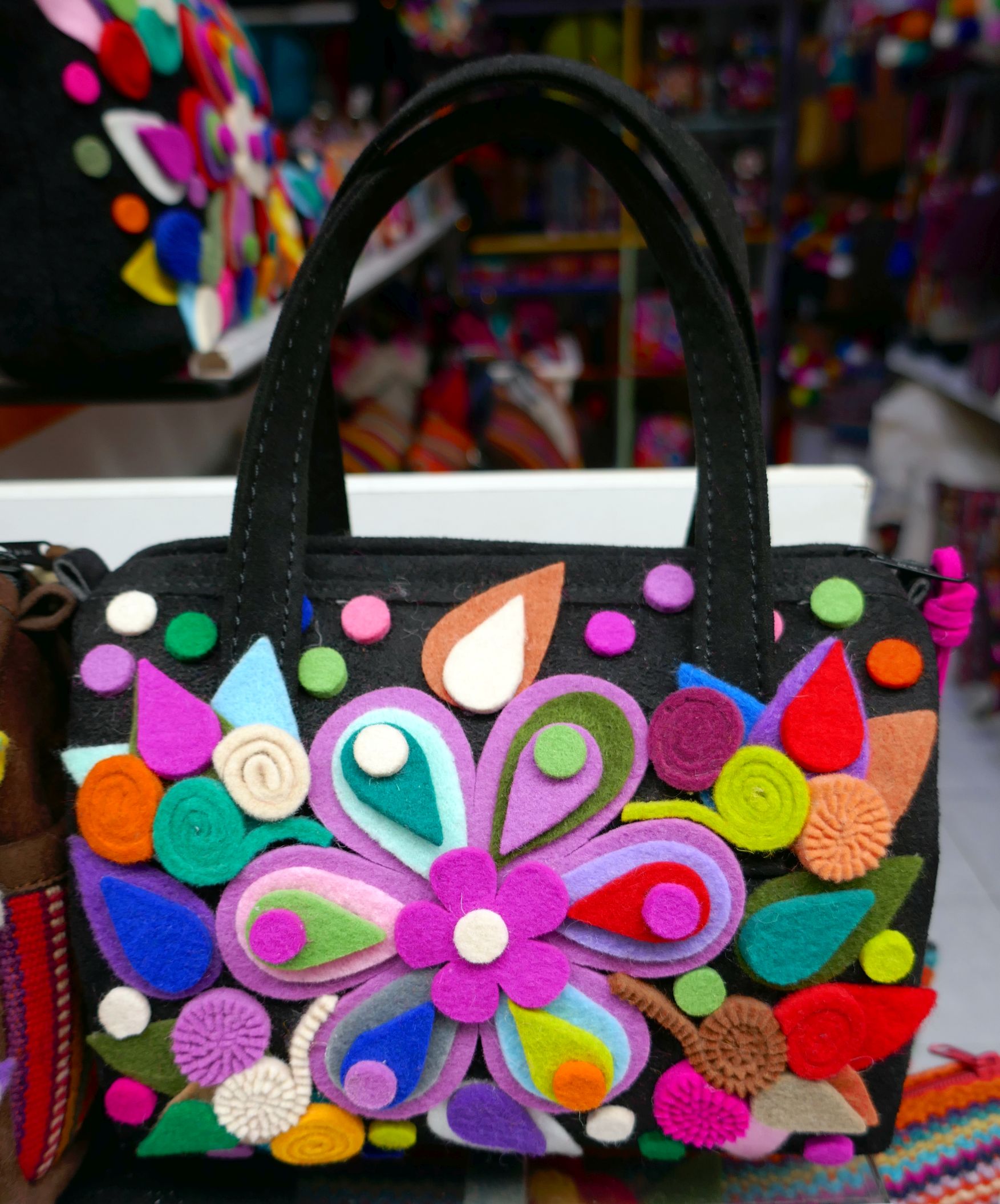
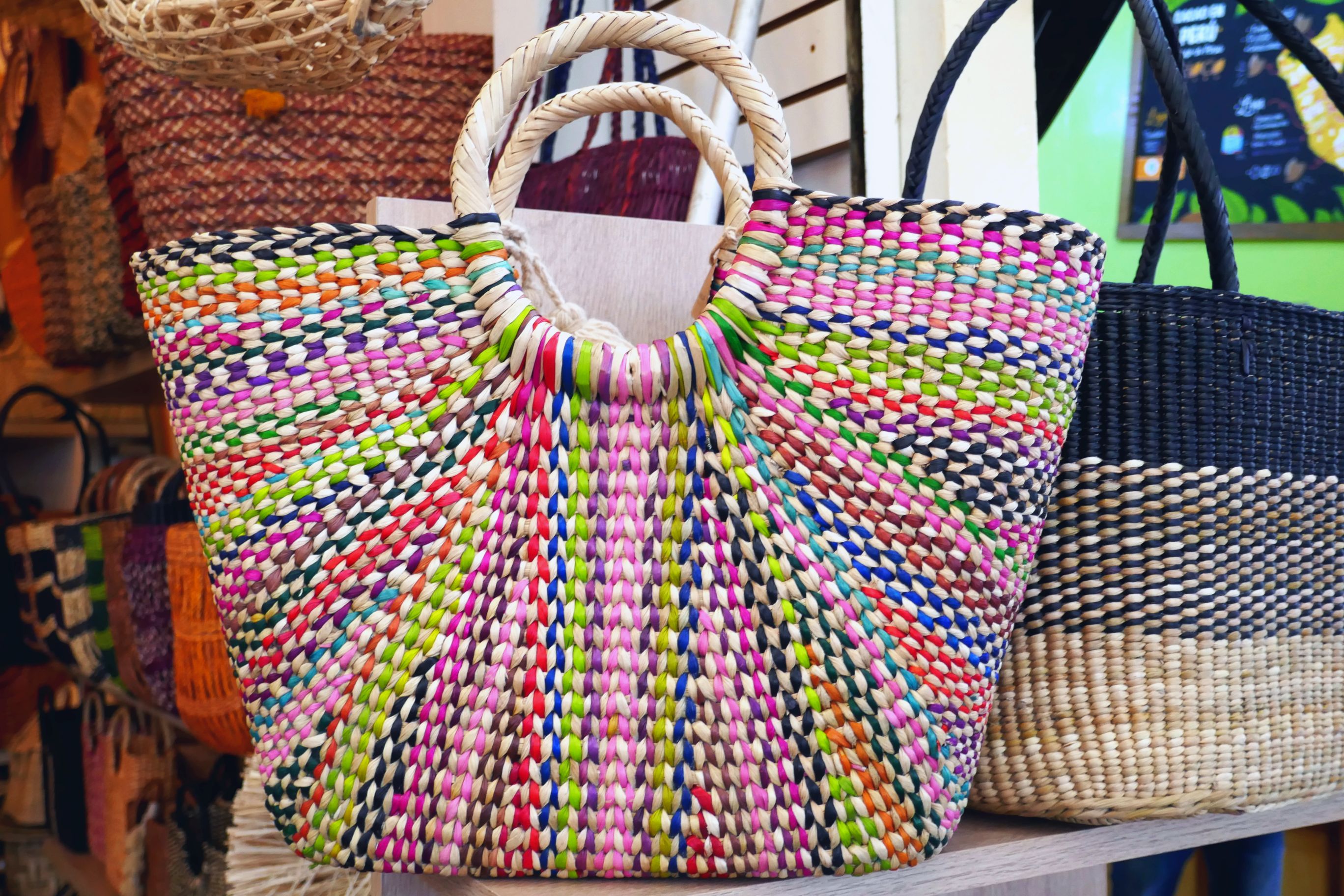
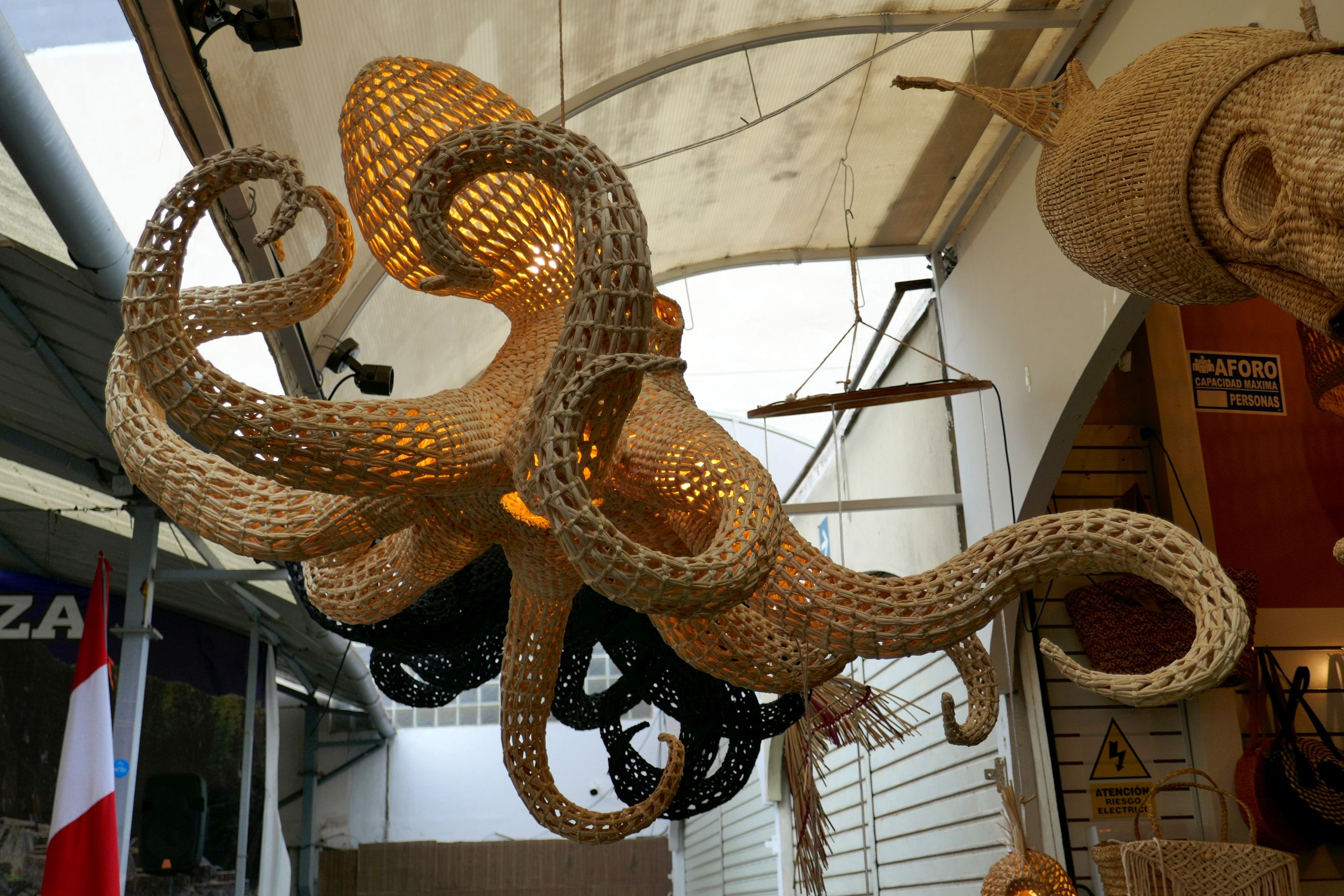
Our travels on foot took us next to the Indian and Inka craft markets where I feasted my eyes on all the colors:

Fortunately, our hotel was well-situated, but we still walked all over the Miraflores district and beyond…

Next up:  PERU #2: LIKABLE LIMA (PART 2)

SWITZERLAND & NORTHERN ITALY #21:  VENETIAN VILLA CONDULMER

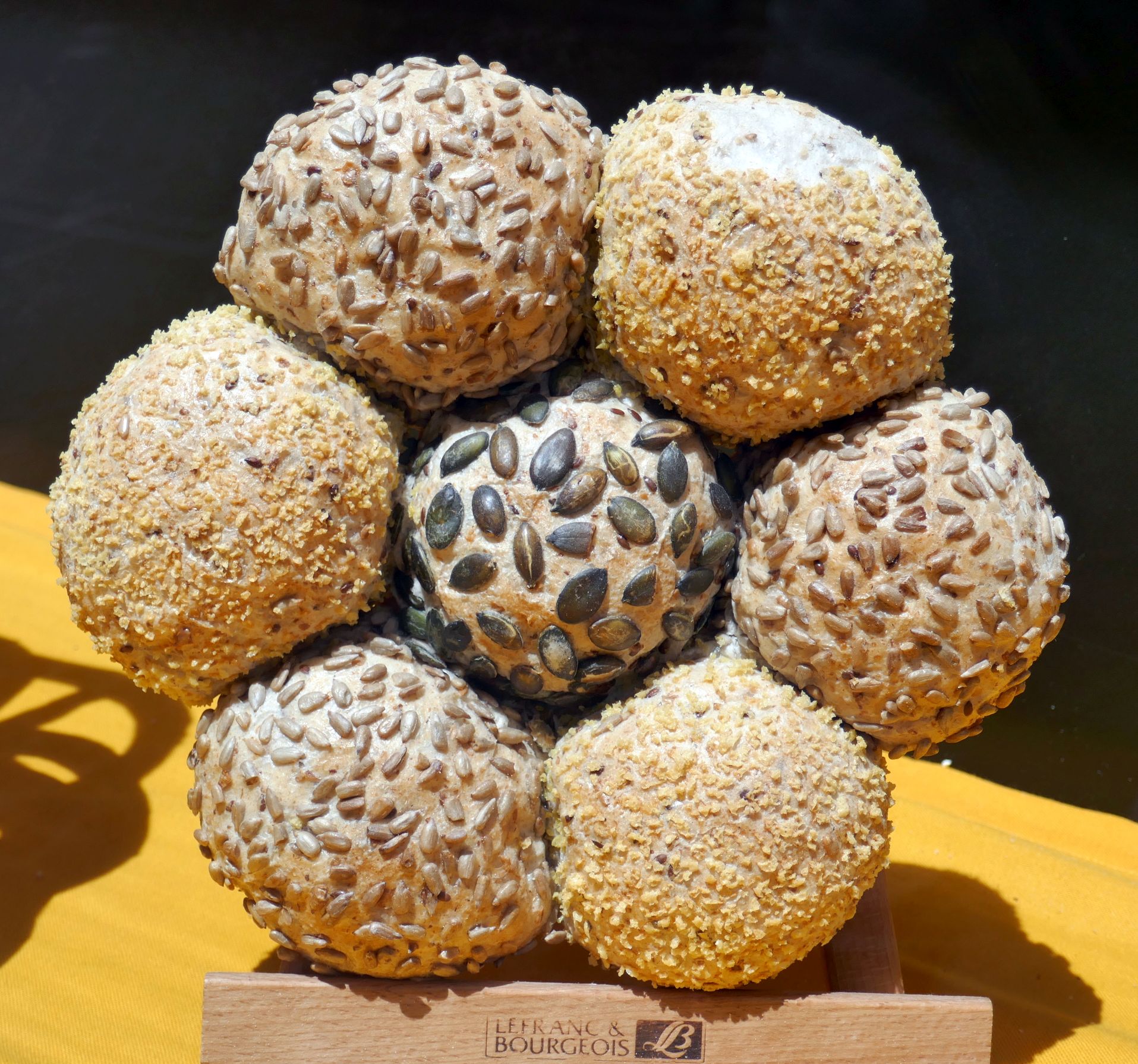
For our last day in Italy, we made our way from the Alps to the Venetian countryside, stopping at an apple orchard in Valsugana.  We learned from the owner about apple cultivation and the production of apple juice, cider, and vinegar.  Cherries were being grown there as well and we were fortunate to arrive just in time to taste them at their best!

(For all photos, click on the image for a full screen view.)
Lunch followed; a variety of home-cooked dishes that included apples as an ingredient, of course!

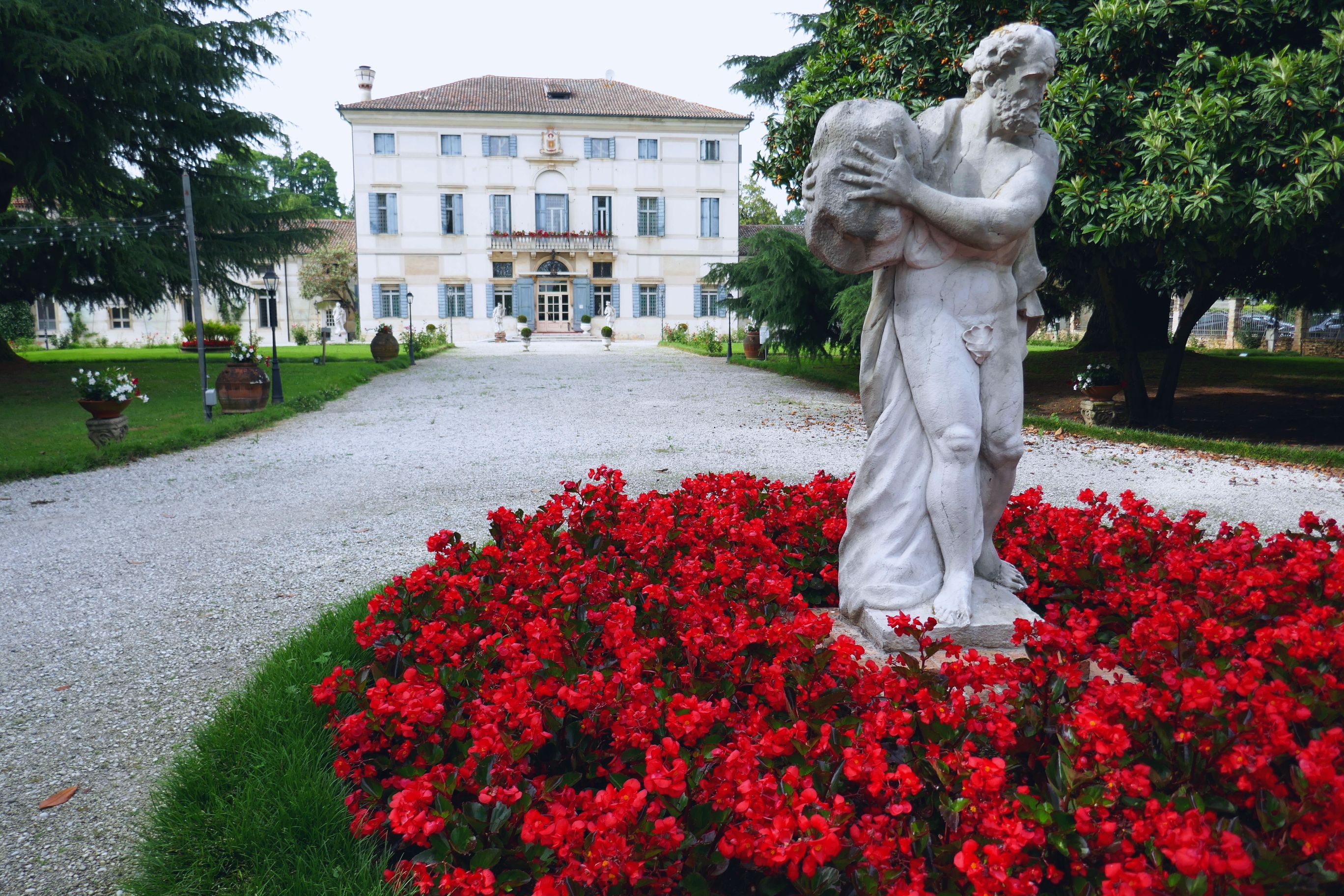
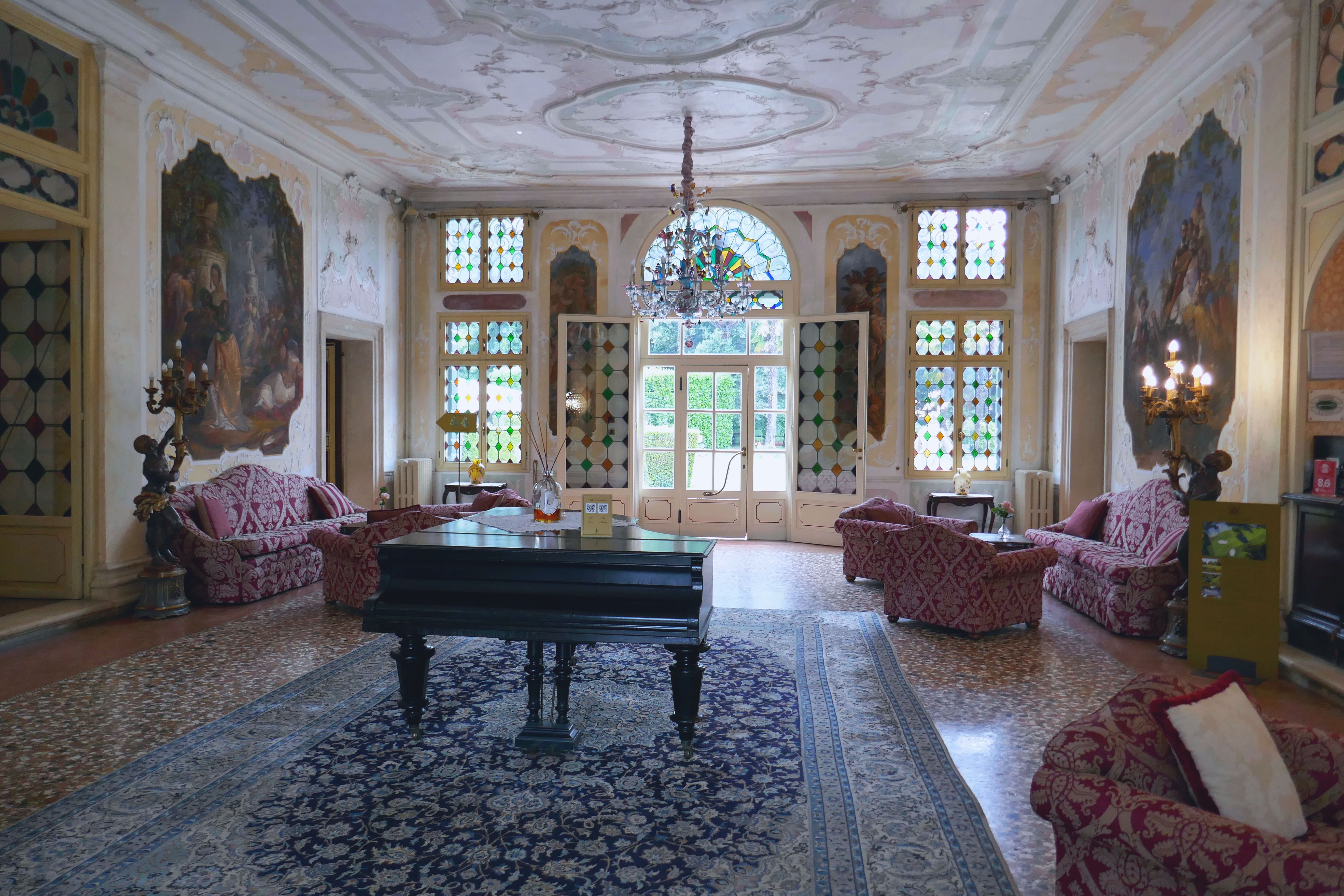
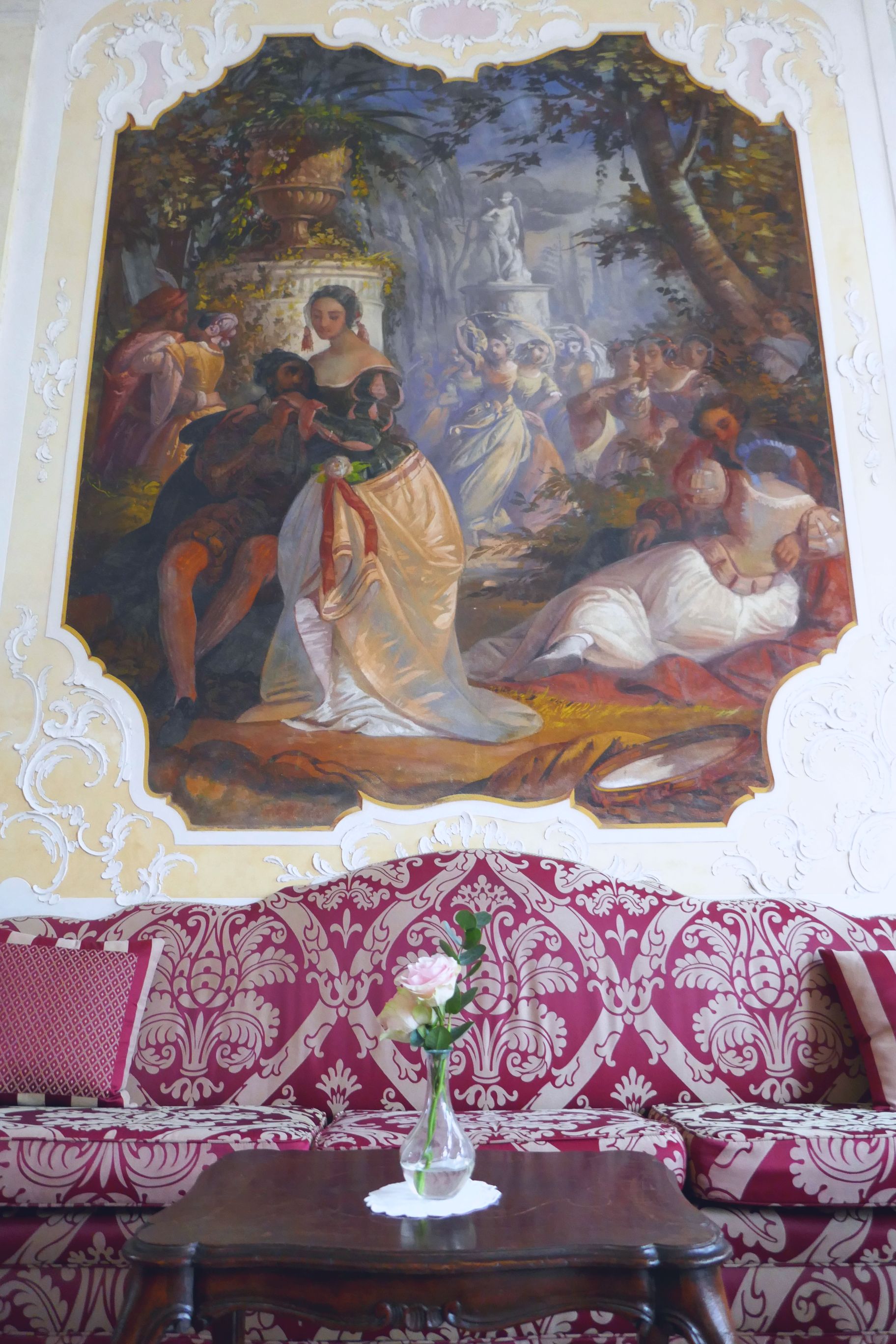
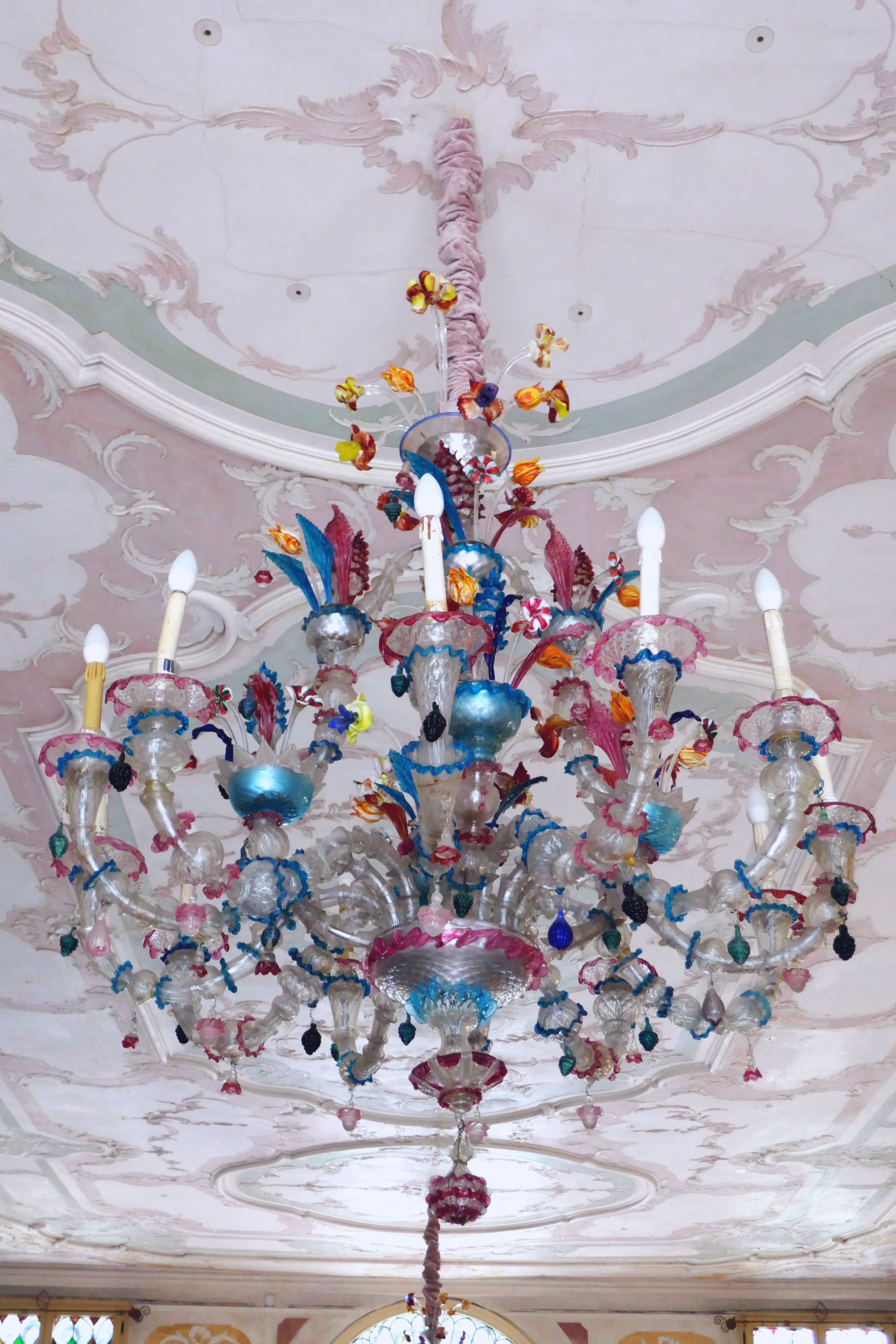
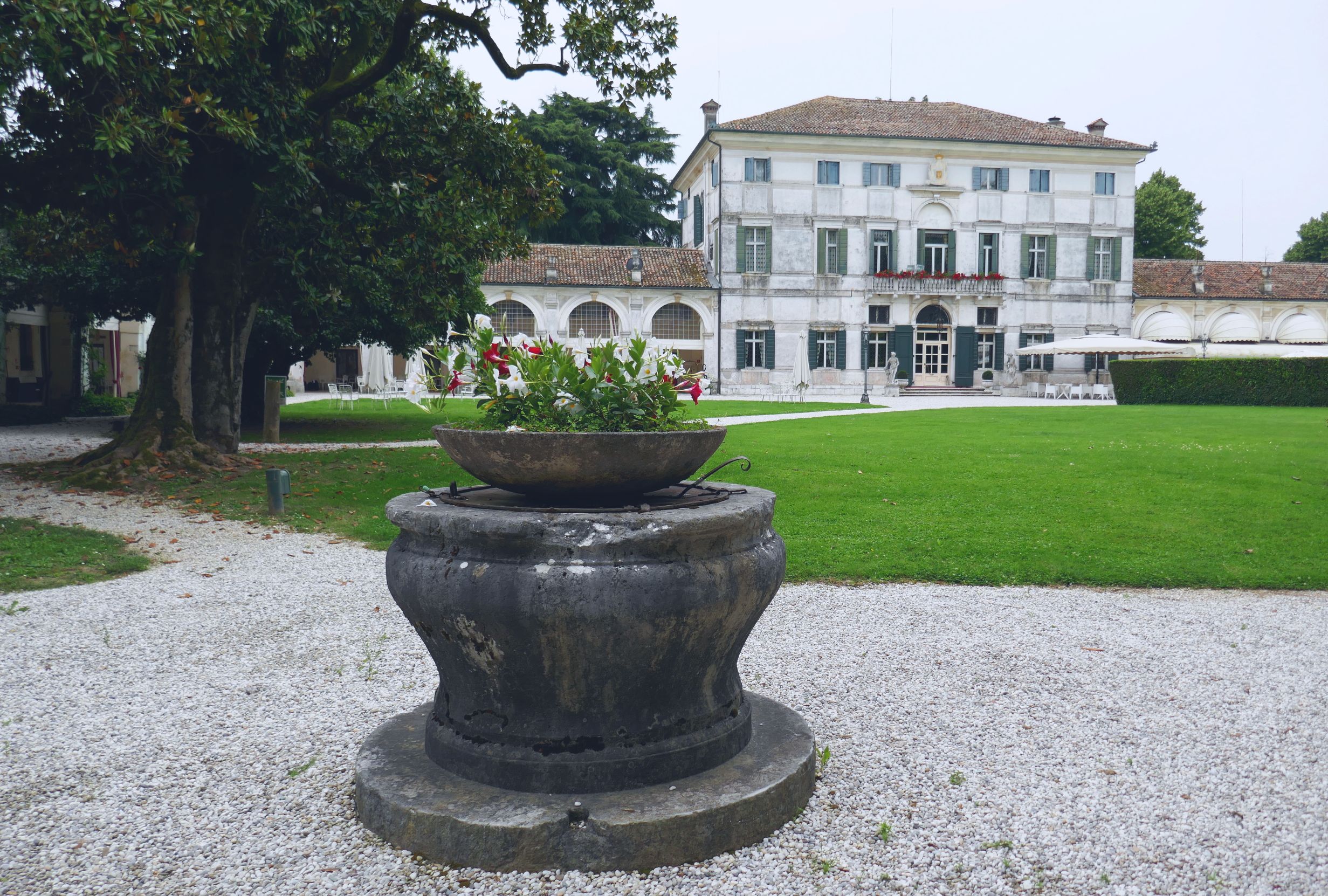
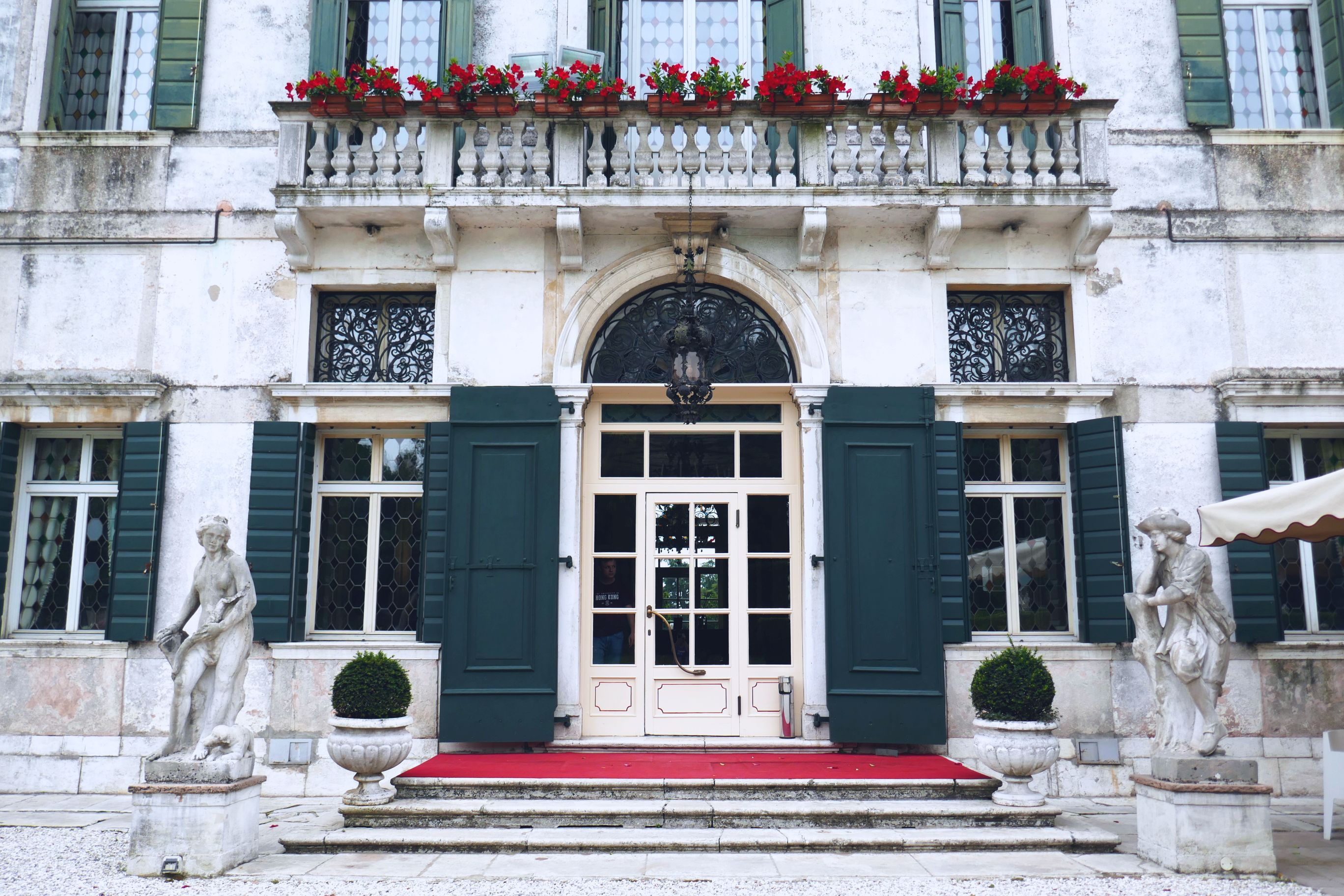
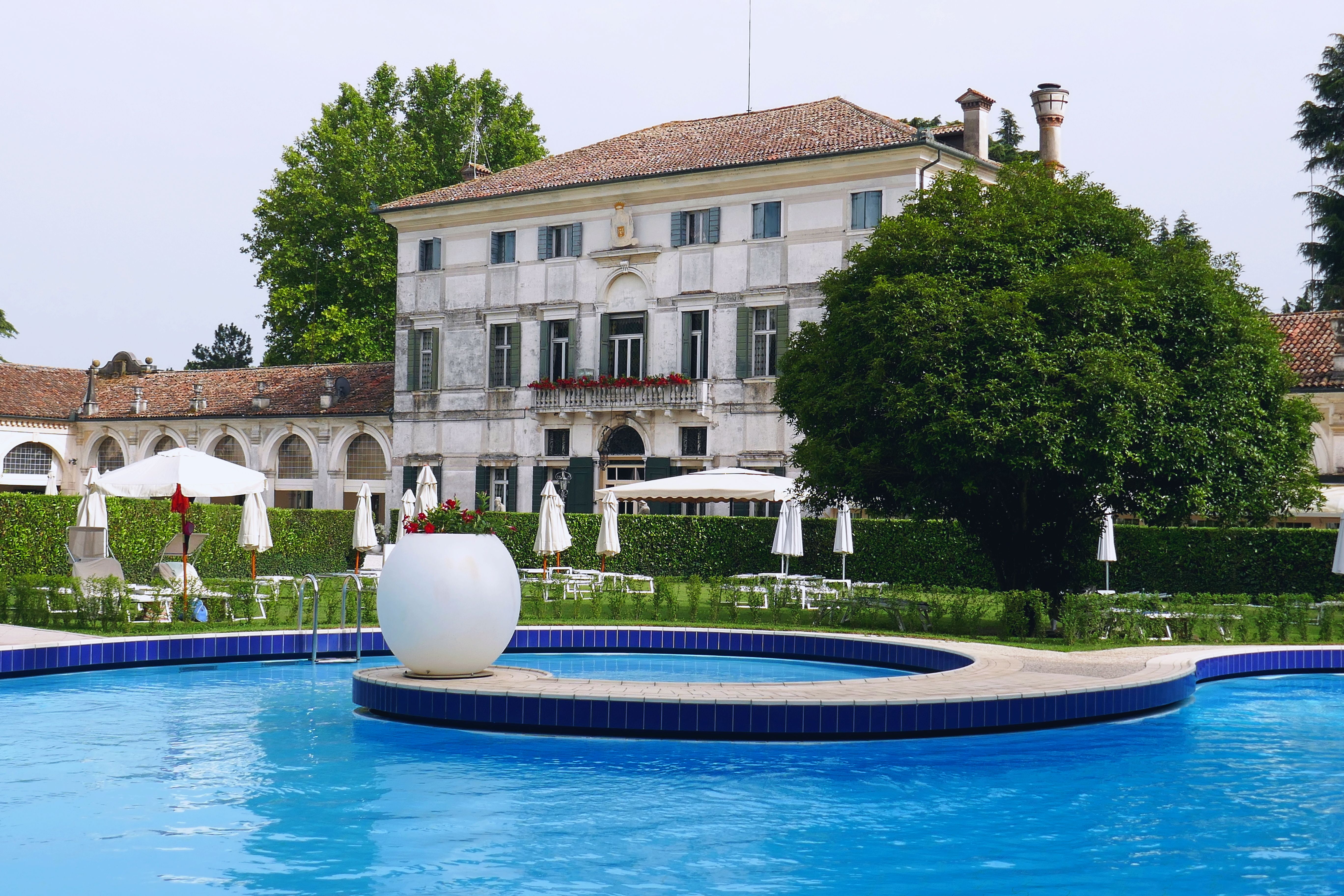
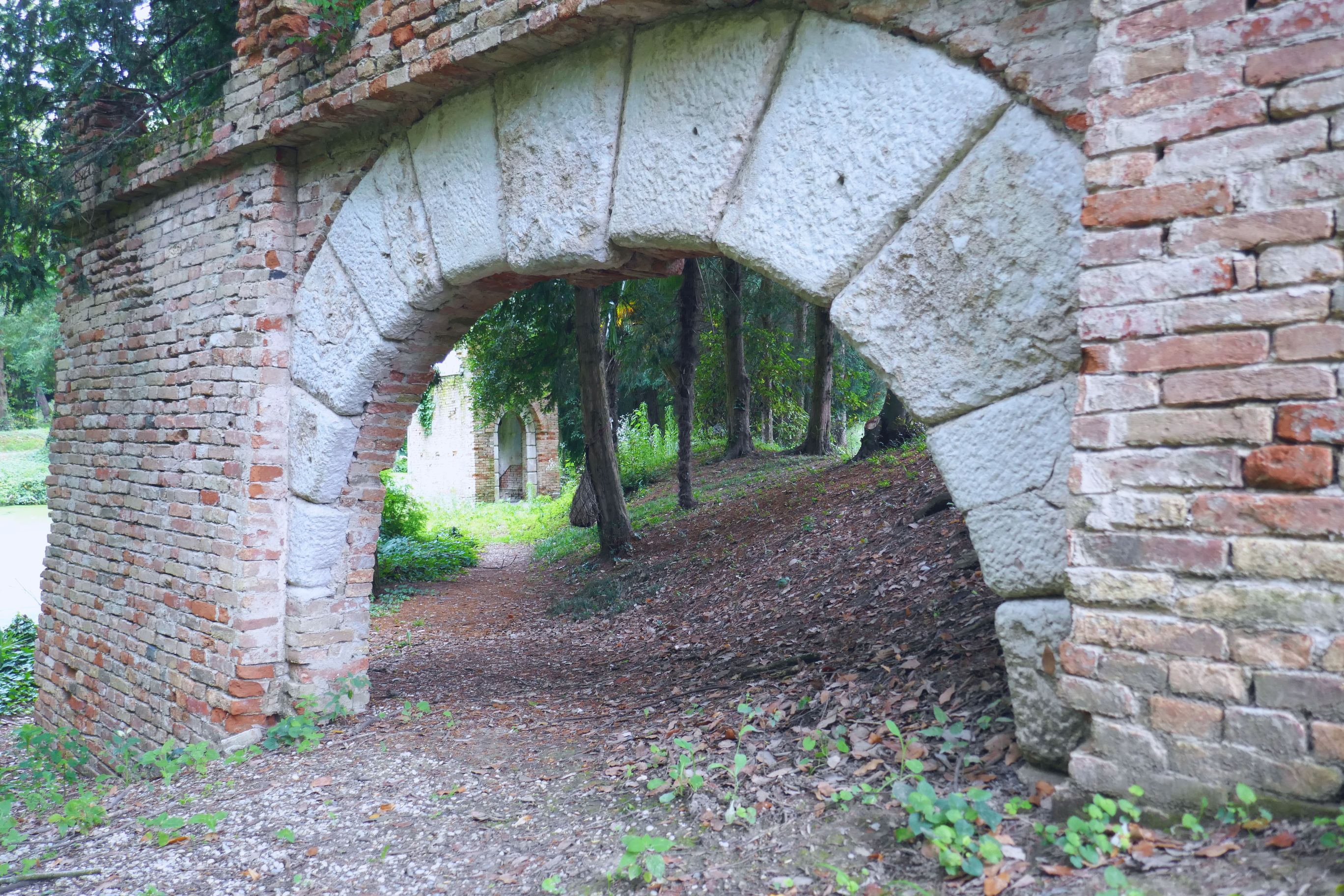
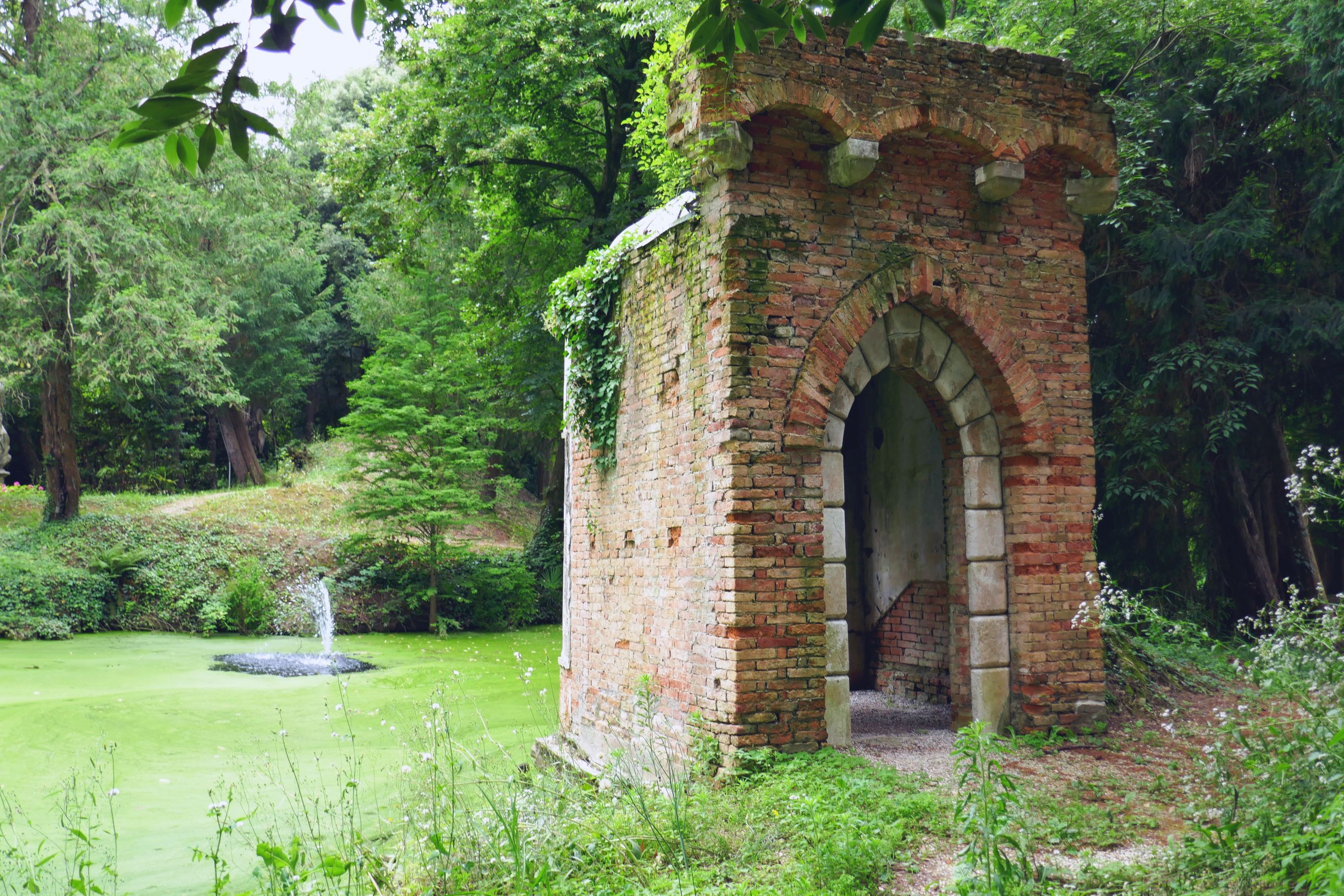
Our journey continued to Villa Condulmer where we stayed our final night.  Built in the 17th century as a monastery, it later became a private residence that changed owners several times. Famous composer, Guiseppe Verdi, was friends with the one of the owners and stayed there for a few months in the 1800’s.  In 1959, the villa was transformed into a hotel and features the piano that Verdi played during his stay.

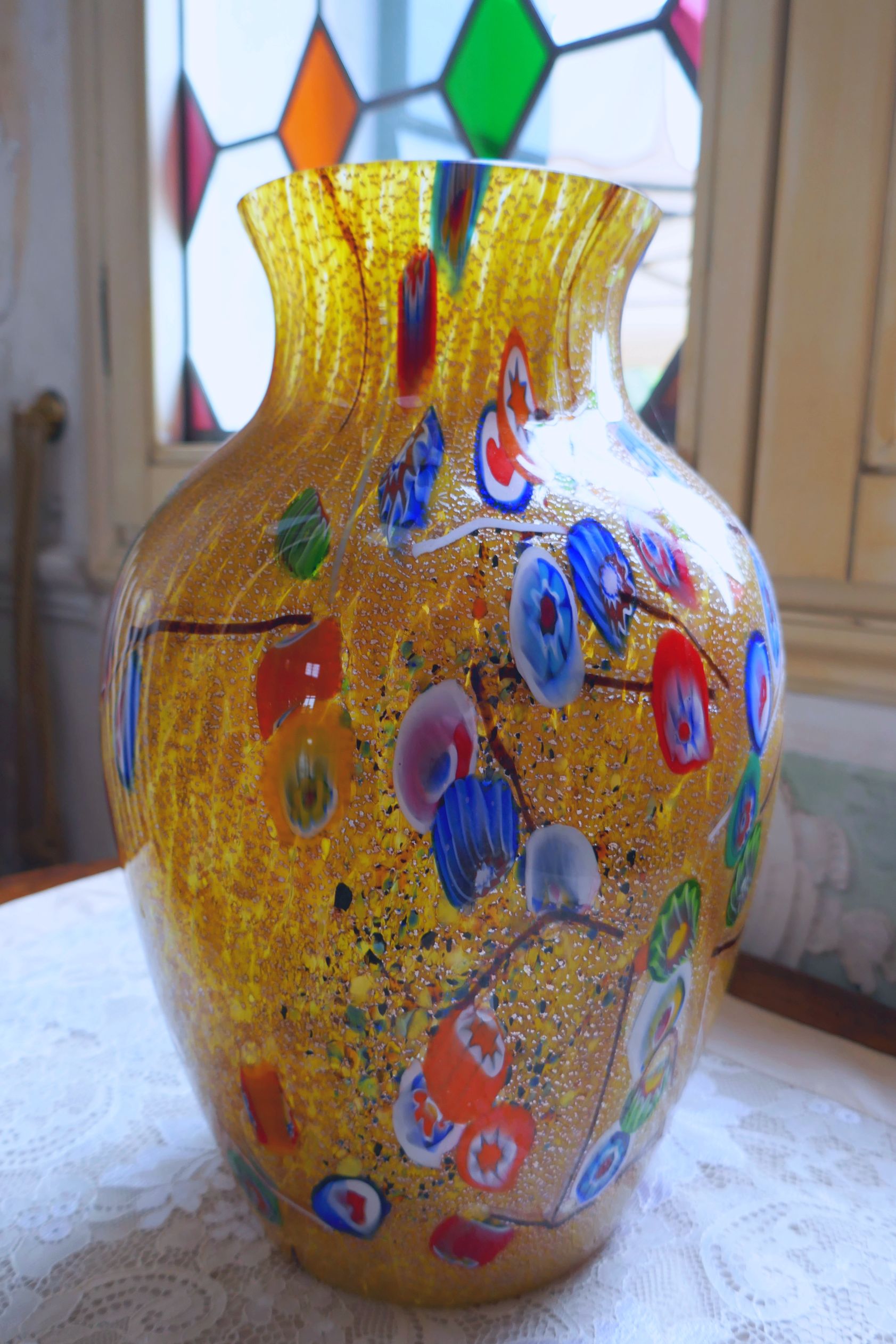
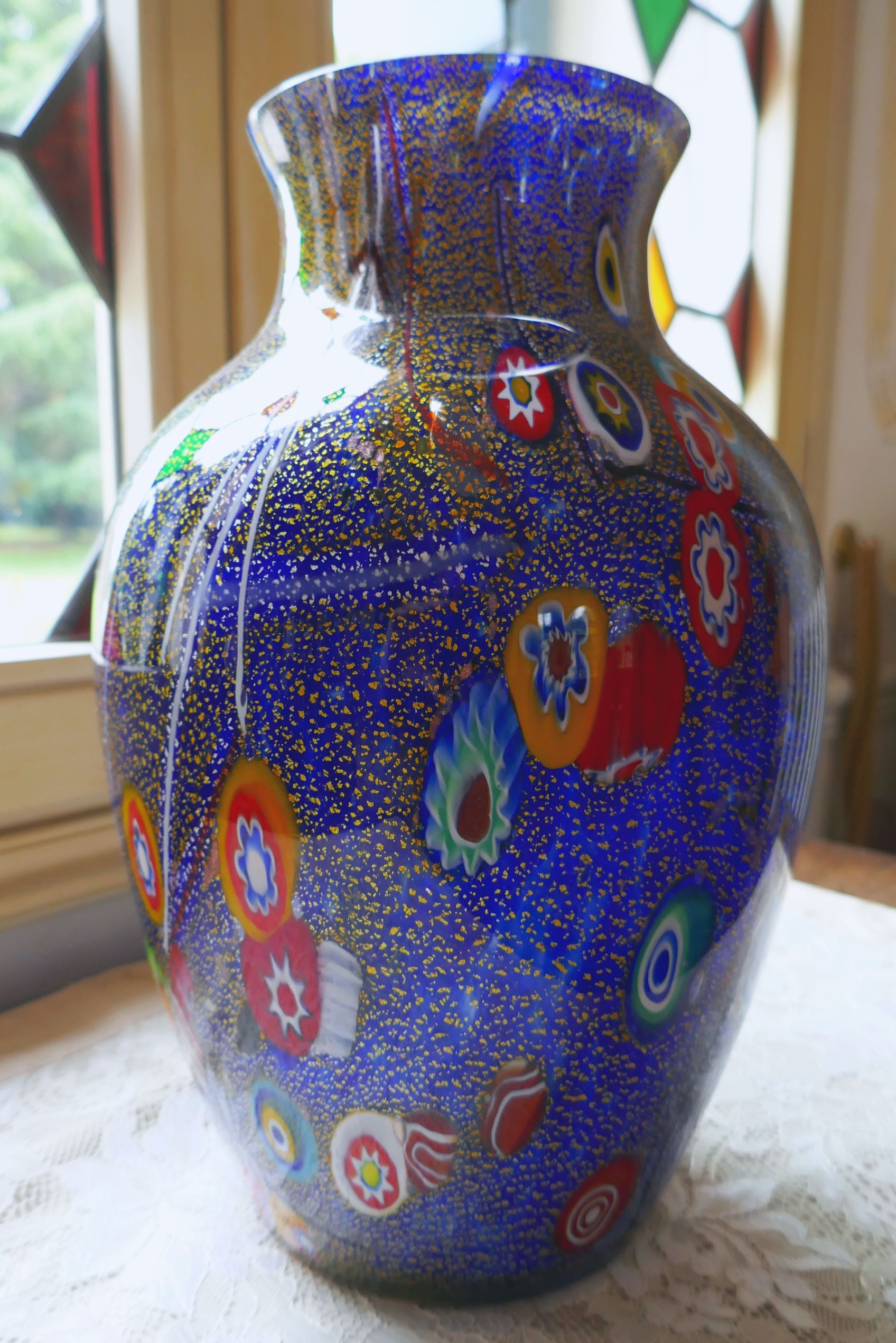
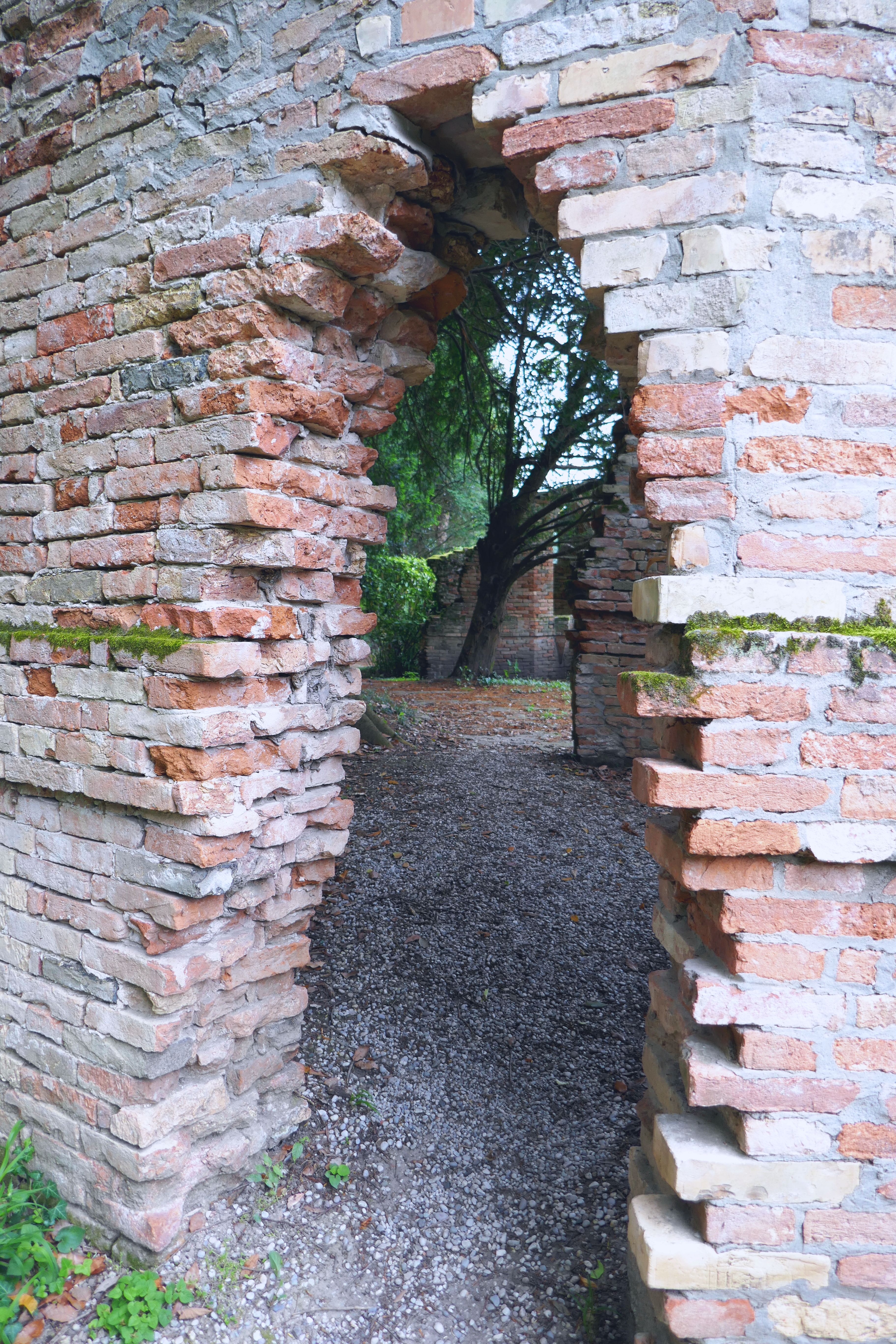
The villa was gorgeous!  We enjoyed meandering through the lobby, bar, and sitting rooms as well as the lush grounds in both the front and back.  It was a perfect place to relax and enjoy the last day in one of our favorite countries!

In the evening, following a champagne reception for our group, we enjoyed our last dinner together and bid farewell to our fellow travelers and Maria, our tour leader.

As was our previous three tours with Overseas Adventure Travels, we enjoyed it very much and highly recommend their small group tours.  If you do check out the site and contact OAT, please let them know Elaine Krugman referred you and give them my customer number: 3018126.  If you book a trip with them, not only will you receive $100 off because you were referred by me, but I will, too!

Thanks for joining me on this journey!  I hope you will return to see Peru!

Coming up next:  PERU #1: LIKABLE LIMA

SWITZERLAND & NORTHERN ITALY #20: LUSH LADIN VALLEYS & DAZZLING DOLOMITES

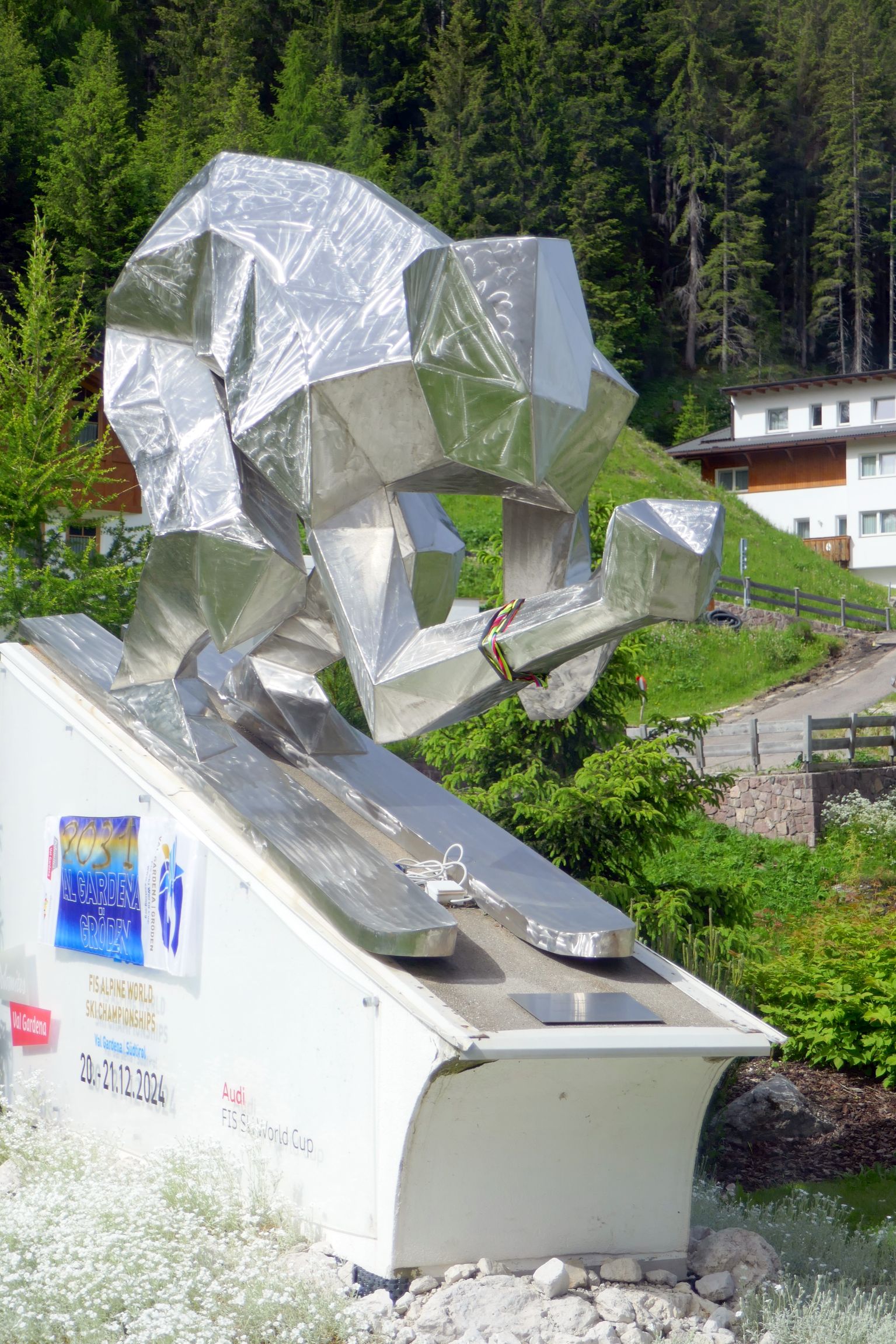
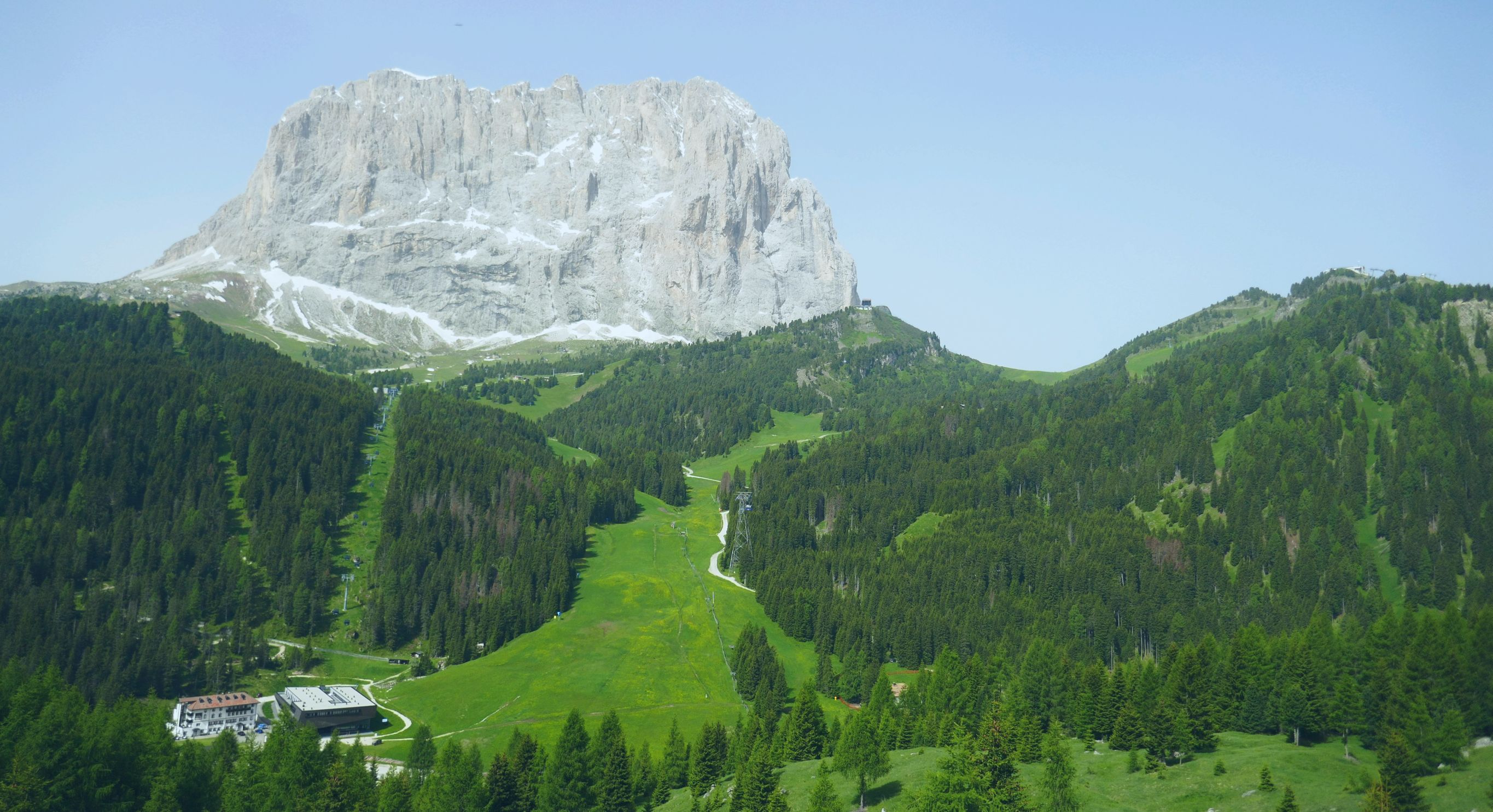
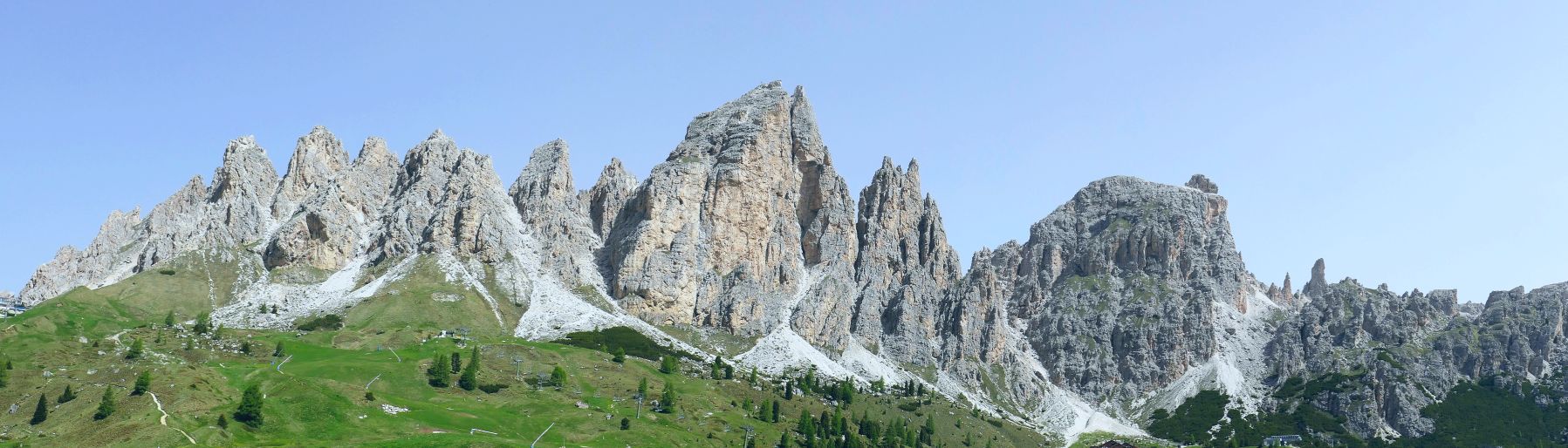
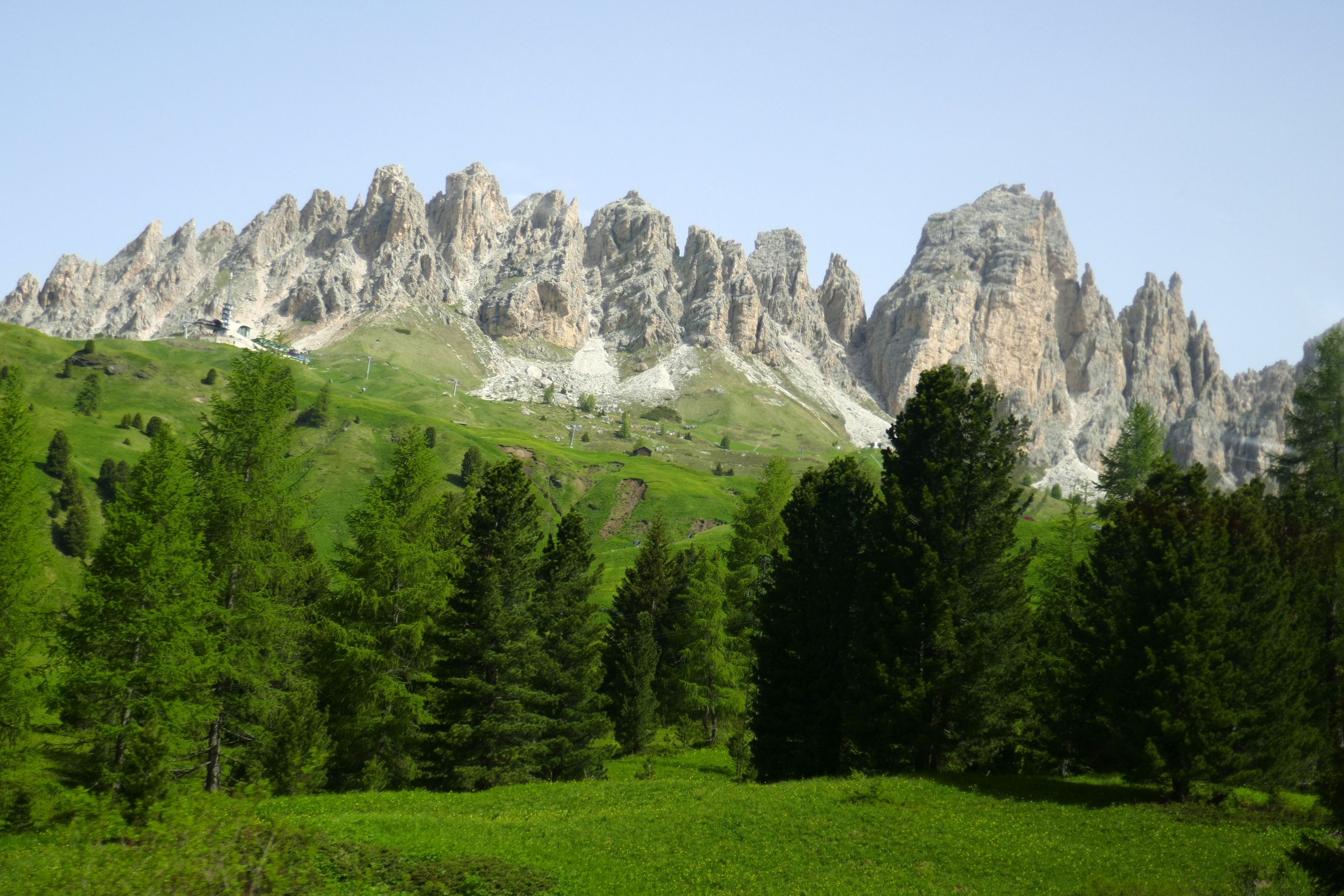
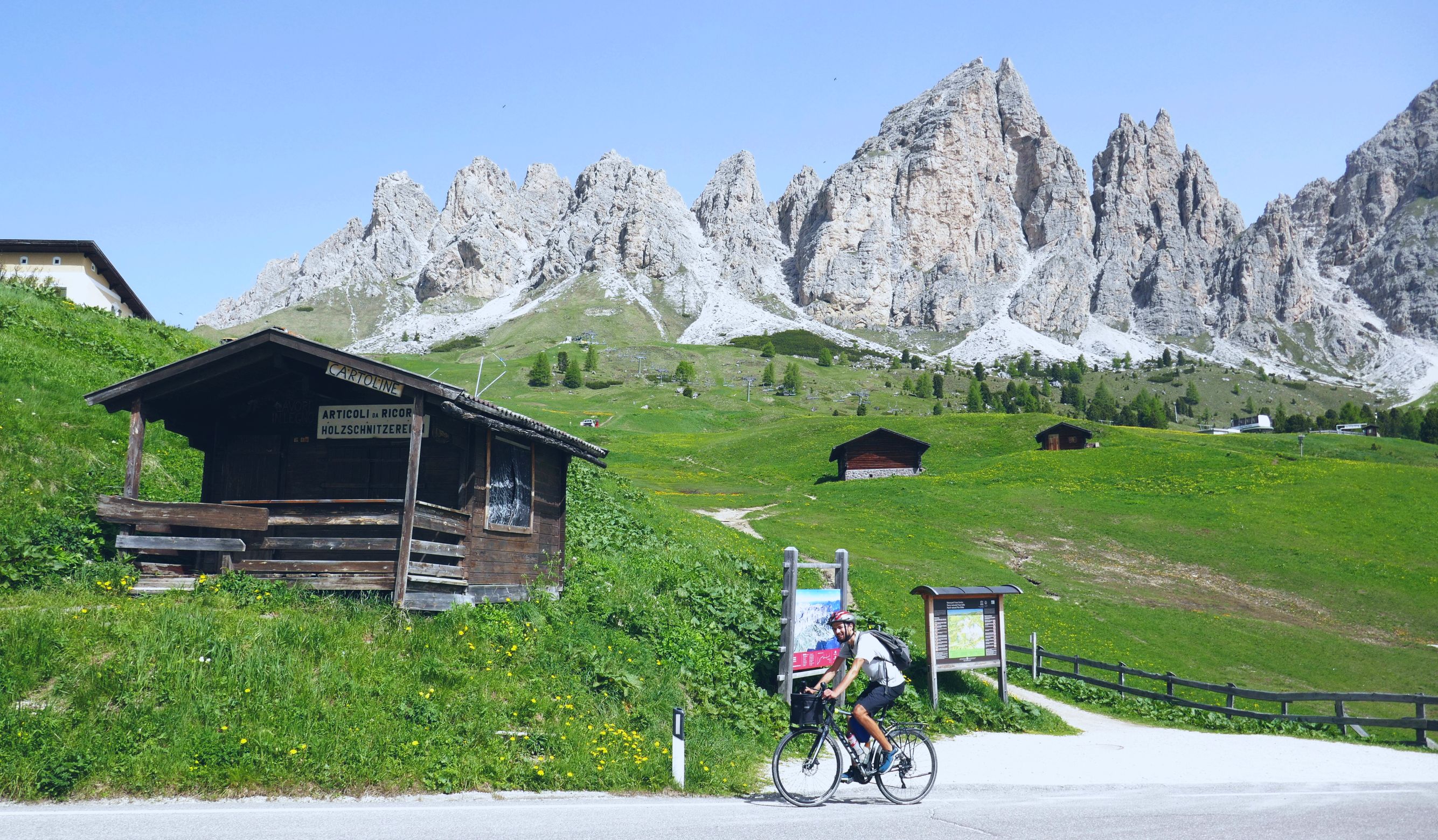
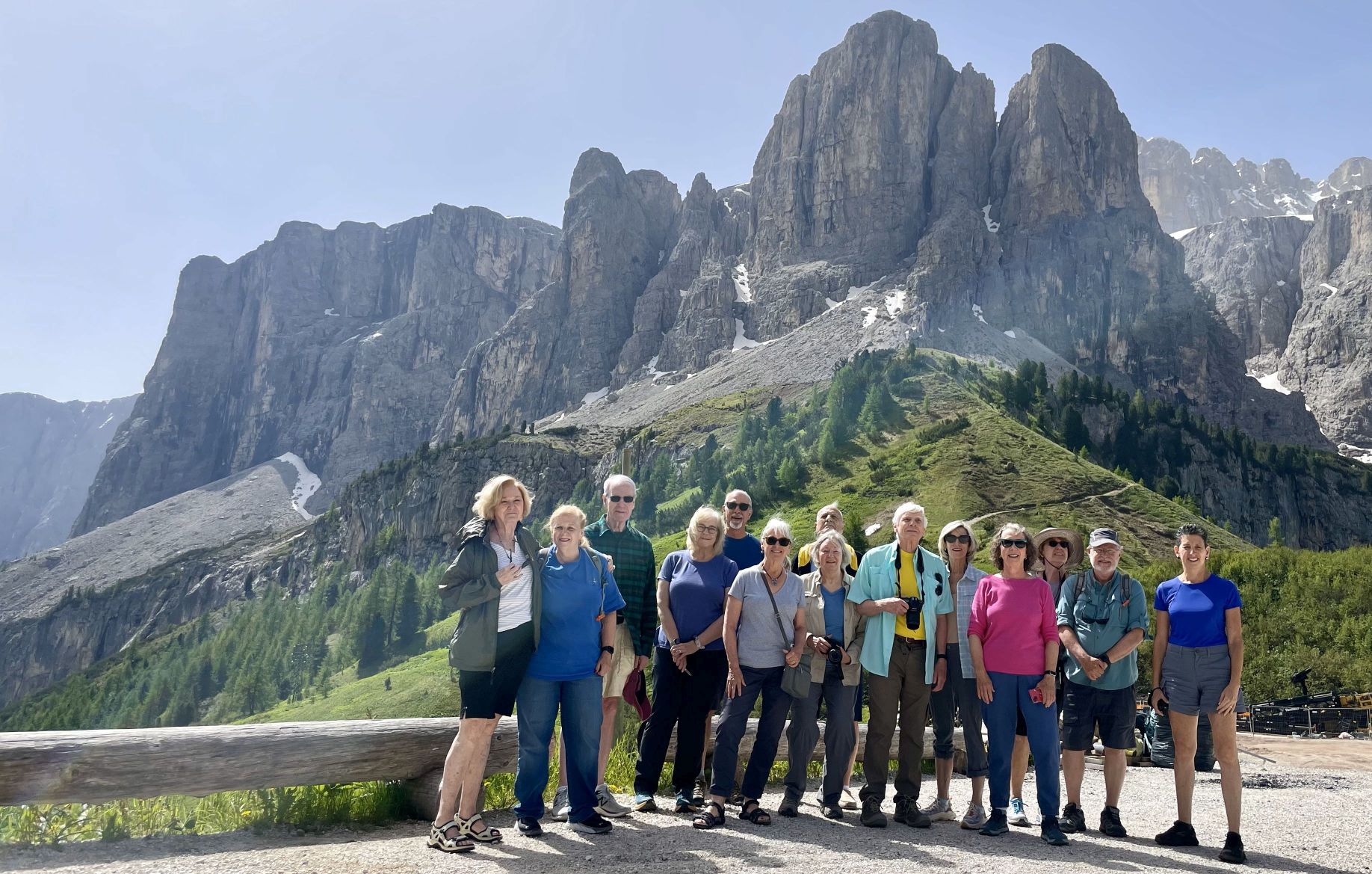
I was hoping for good weather on the day we would have the best views of the Dolomites and we got it!  As we made our way along the winding roads into the Val Gardena valley, the views were stunning.

This is a top ski area in the winter and a popular hiking and mountain biking destination the remainder of the year.  It is one of five valleys in the region where the main language spoken is Ladin, and the people are very proud of their language and culture.

(For all photos, click on the image for a full screen view.)

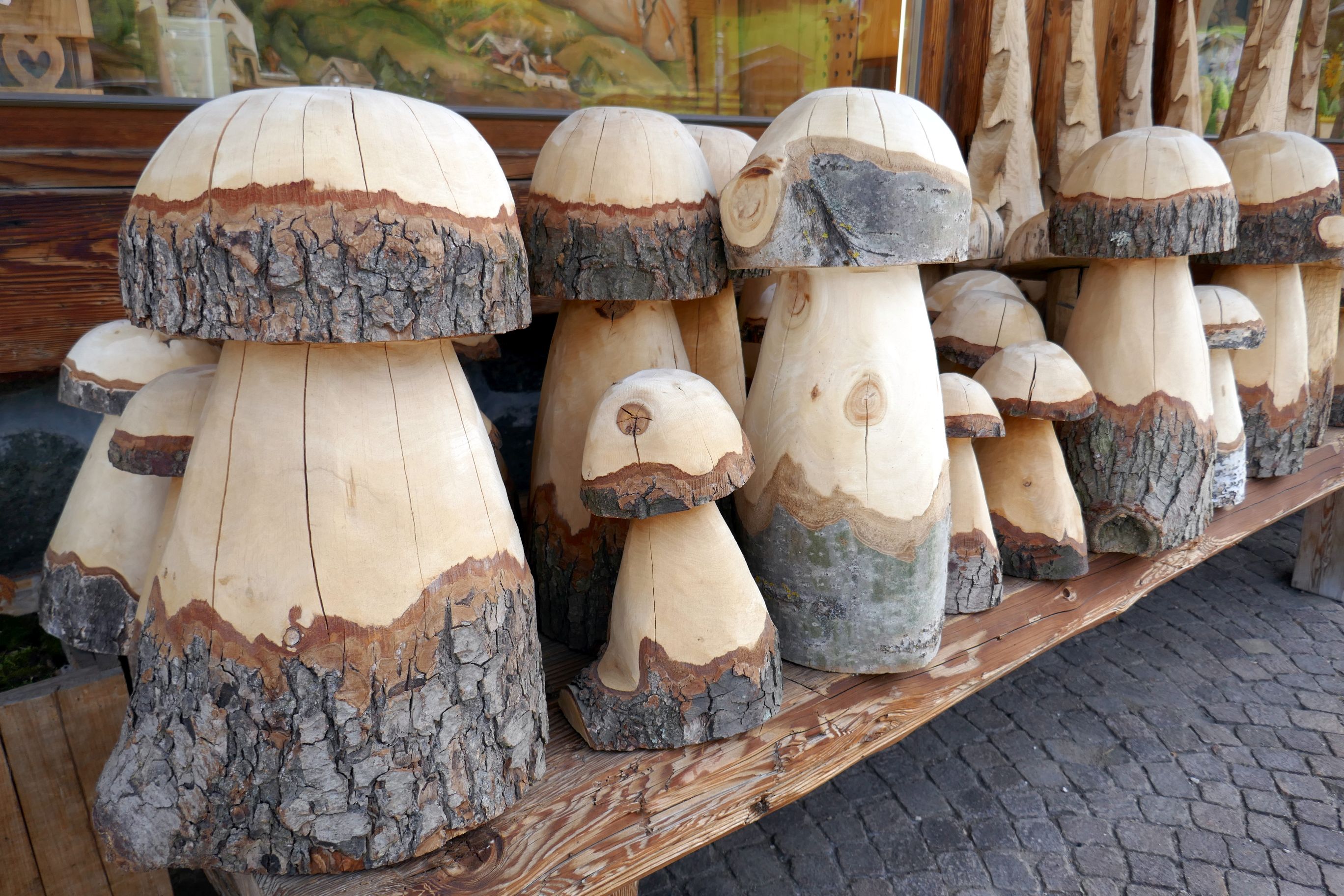
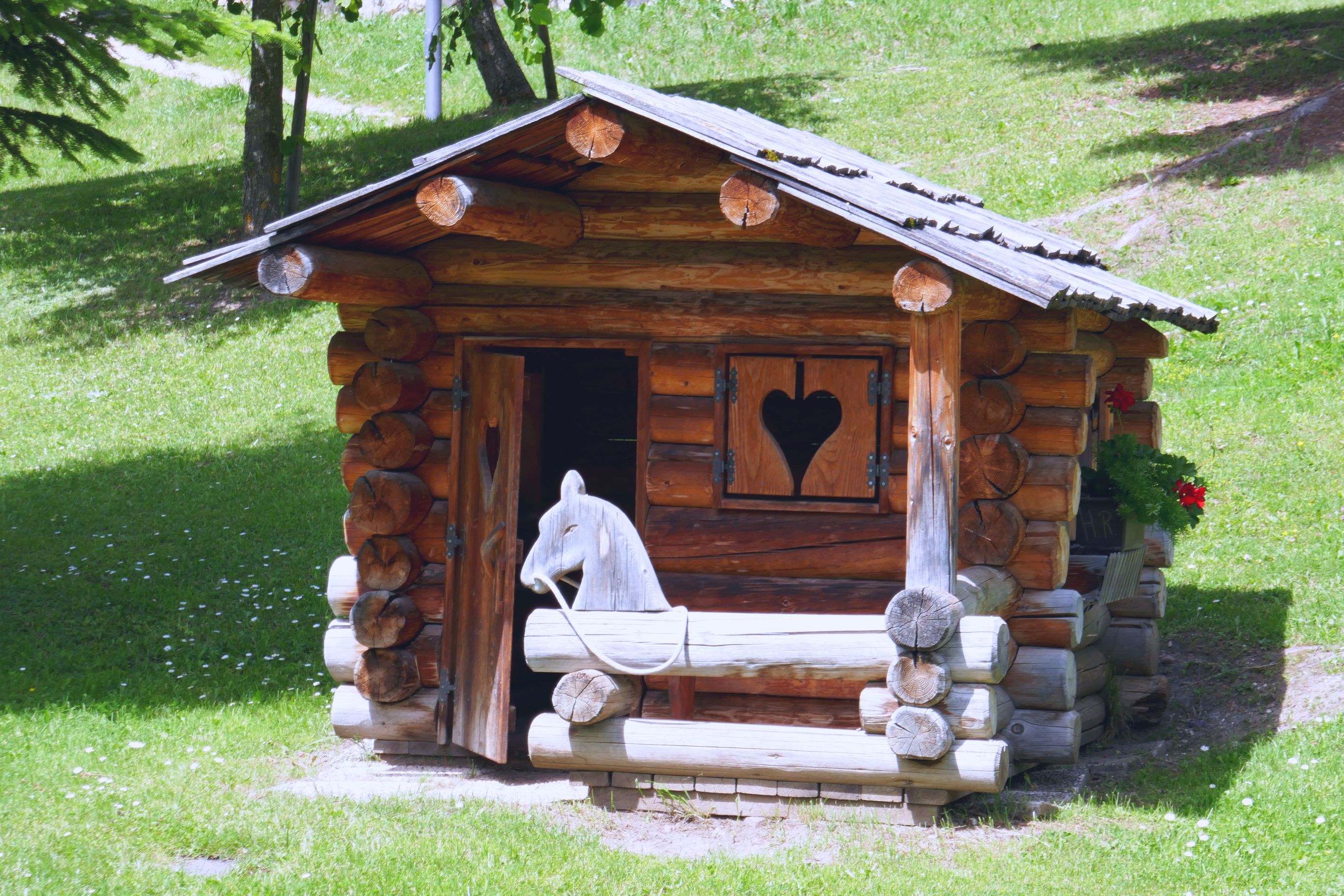
Wood carving is a traditional craft here and the local churches are adorned with intricate wood carvings.  We stopped at a shop to see some beautiful wood-carved creations as well as these large mushrooms—a nod to one of the staple foods in the region.

The main attraction, however, was the gorgeous scenery!

We met with Peter, a native of the area who could speak five languages fluently by the time he was 20 years old.  In addition to his native Ladin language, he grew up speaking the other two official languages of the region:  German and Italian.  During his earlier school years, he learned English, and then French when he was in high school.

Peter led us on a hike through the little village and through beautiful hillsides, while sharing his culture with us and pointing out the flora and fauna along the way.  Our hike concluded at a small lake, a popular ice skating and curling spot in the winter.

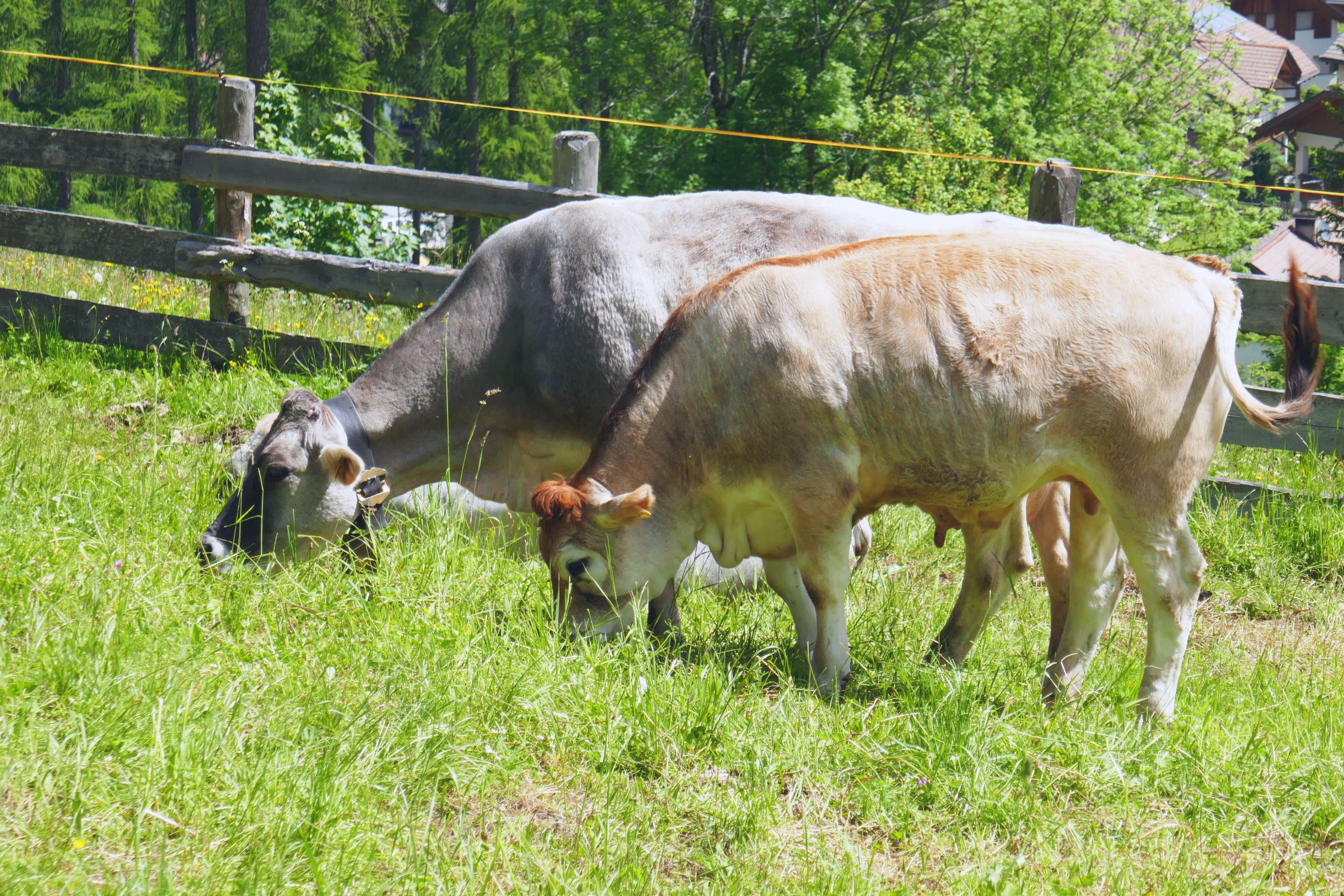
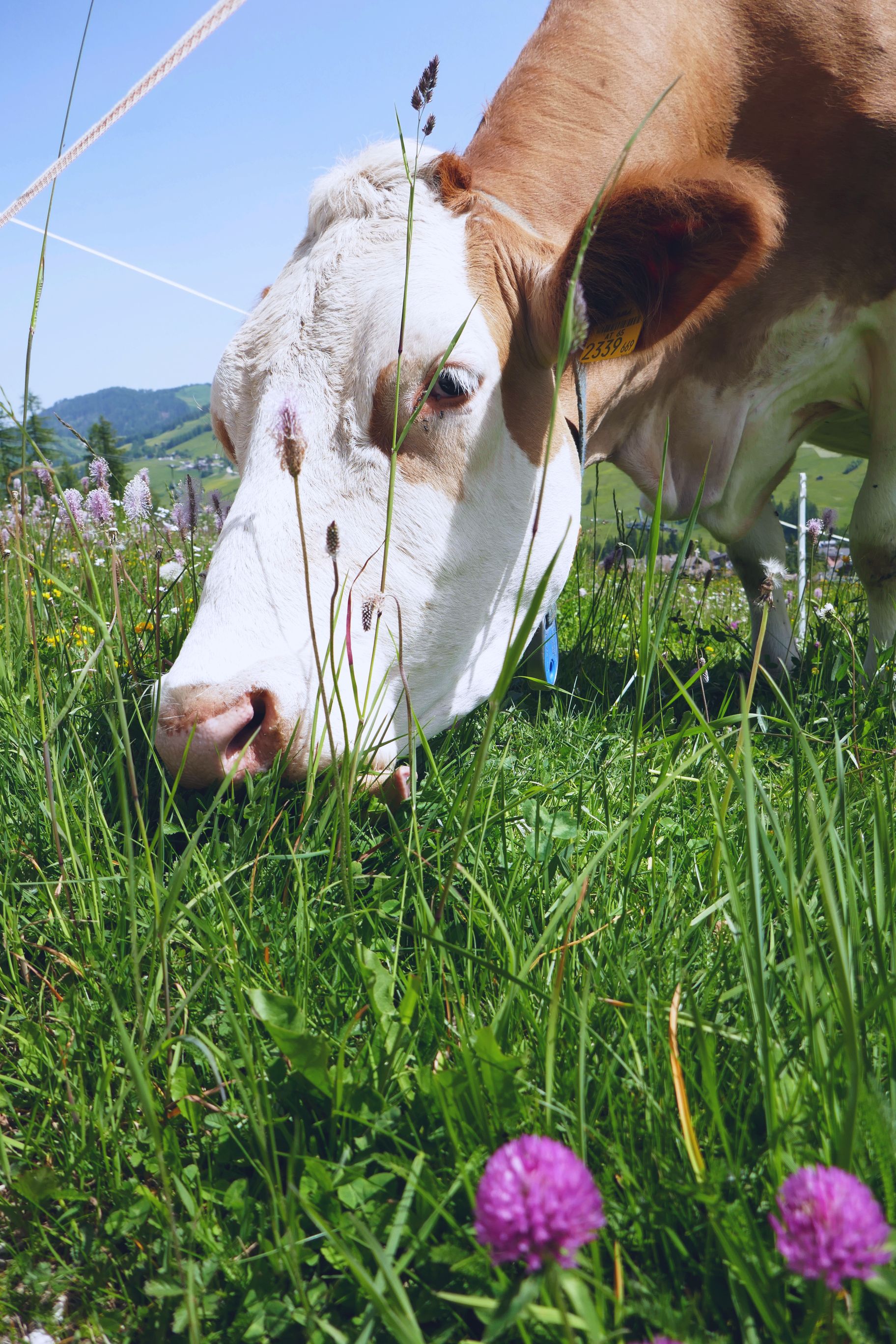
This is a popular skiing area, so there were several ski lifts– and a few cows.

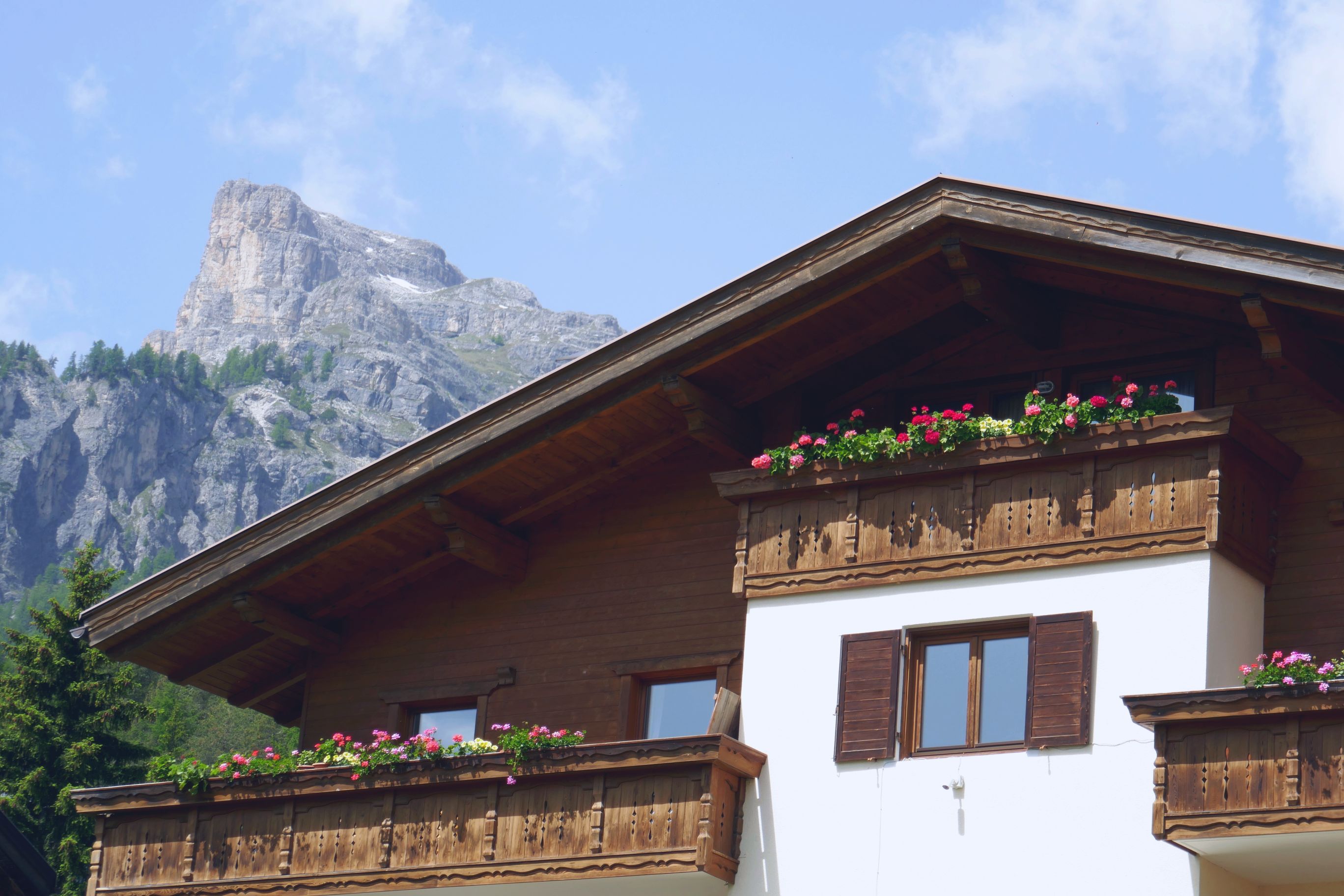
Following our hike, we stopped at the cutest little village for a traditional Ladin lunch.  It was a lovely day!

Few vegetables can be grown in northern Italy due to the climate, so tomato-based sauce is not used on pasta. Instead, they use butter, and lots of it!

Next up:  SWITZERLAND & NORTHERN ITALY #21:  VENETIAN VILLA CONDULMER

SWITZERLAND & NORTHERN ITALY #19: VISITING BOLZANO BY TRAIN & CABLE CAR

Our group hopped on a local train to Bolzano, the capital of the South Tyrol province of Italy, in the far north of the country.  The tourist bureau had issued a free transportation card to each of us, so the round-trip ride was free, as was the bus from the train station to the Museum of Archaeology to visit Otzi the Iceman.  Nice!

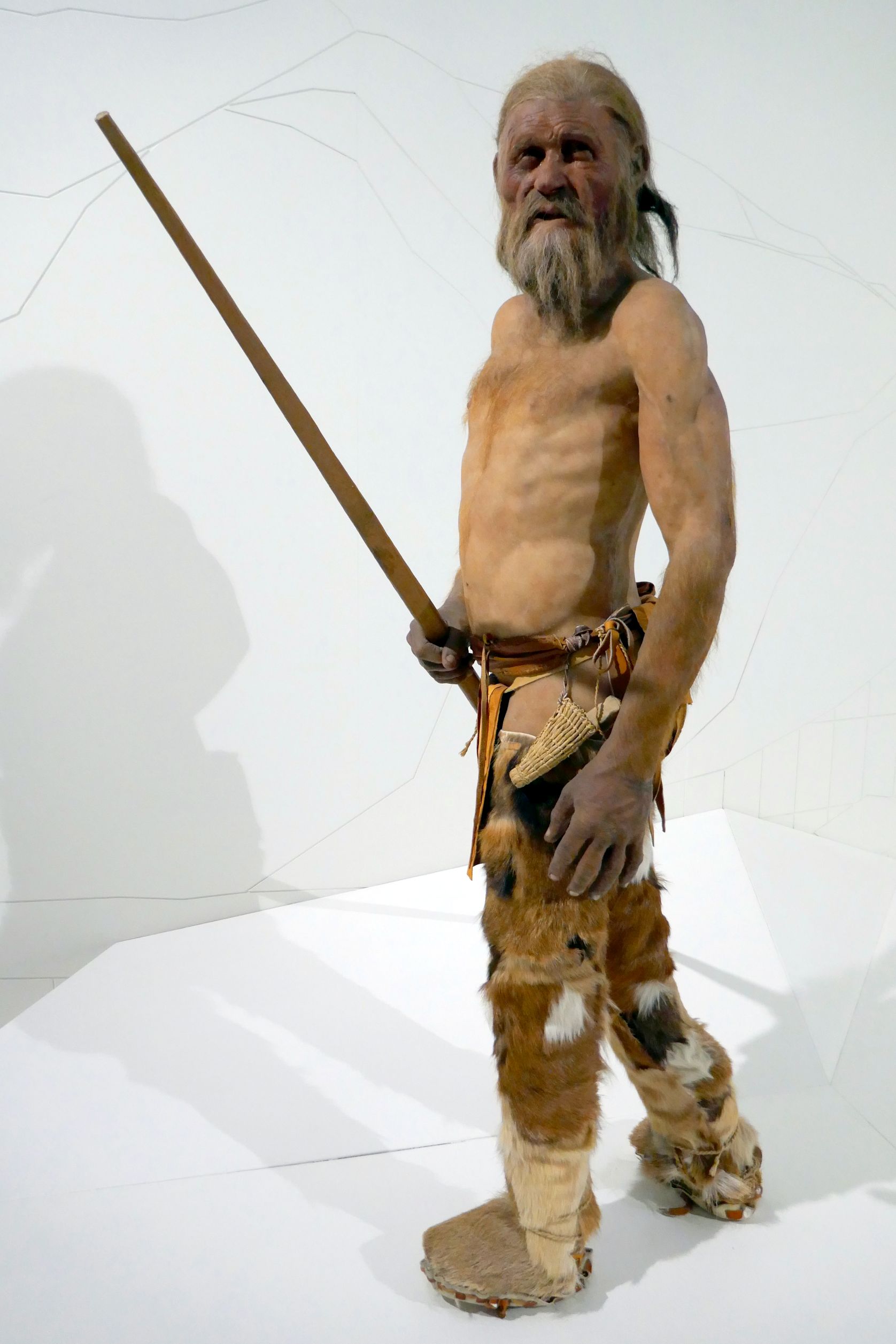
Otzi wasn’t much of a looker; he wasn’t tall, dark or handsome.  No, the bloke was actually a well-preserved 5,300-year-old mummy that was discovered in this region in 1991 by two climbers who saw a hand sticking out of the snow.  This is what he would have looked like back in his day:

(For all photos, click on the image for a full screen view.)

Otzi was analyzed and determined to be the oldest human discovered in Europe.  For many years, researchers were unable to determine Otzi’s cause of death, but when he was discovered, damaged equipment near him indicated mortal combat had taken place.  Ooooh, the plot thickens…

The mystery was solved in 2001 when a more detailed x-ray examination revealed an arrowhead in Otzi’s left shoulder.  He was murdered! Poor Otzi; may he rest in peace.

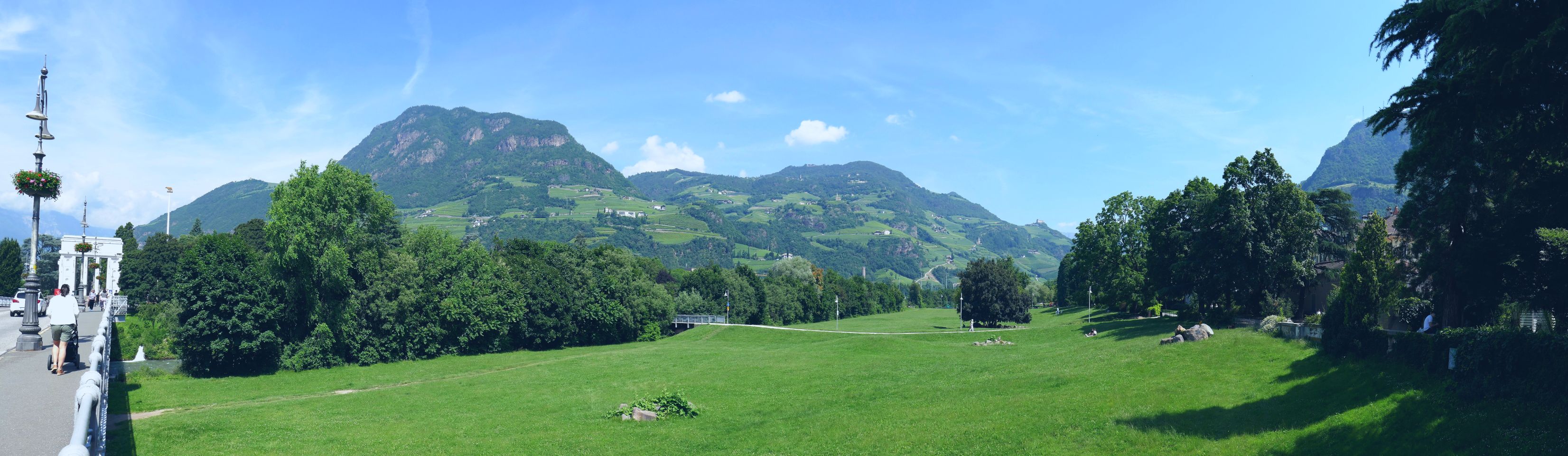
Some Scenes around Bolzano:

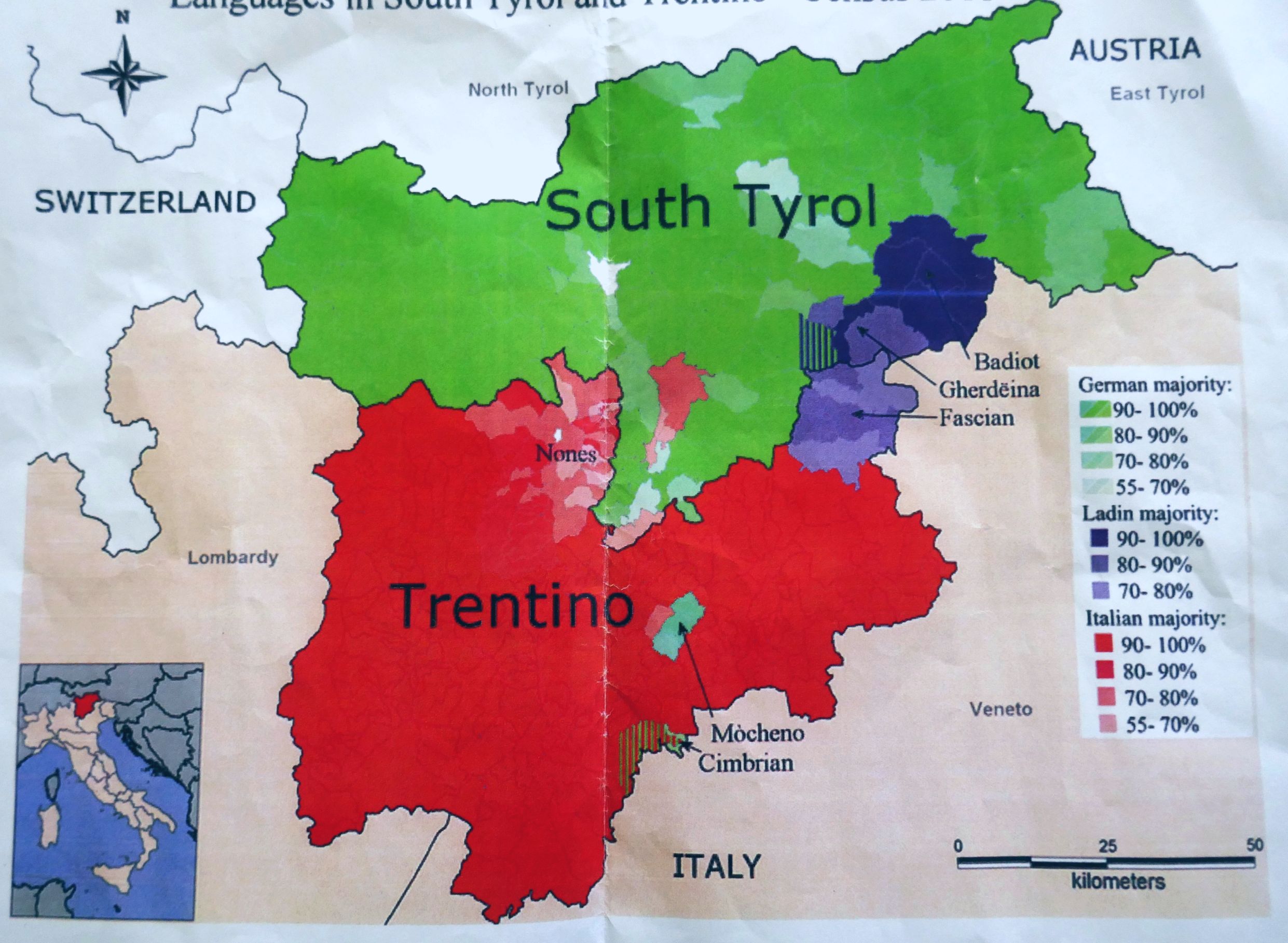
While visiting Bolzano, in addition to a walking tour, we met with two locals—one German, and one Italian, to learn about the history and culture identity of this area.  South Tyrol had been an Austrian territory for centuries, but as I had explained in my last post, Mussolini had done his best to destroy what used to be a rich German history, language, and culture.  Germans were treated badly and forced to abandon their homes and possessions if they refused to give up their language and culture.  They were also thrown in prison.  In 1939, Germans in the region were given a choice: Go to Germany and live under Hitler or stay and give up their German culture.  What a horrid choice!  Towns and families became split.  For the 70,000 people who went to Germany, they got good jobs, but for those who had owned land in South Tyrol, they were unable to sell it so they could leave.  Between 1939-1944, Germans who stayed ended up fighting against Hitler and, in many cases, their own families and friends who had left.  Hitler invaded Bolzano and Jews were immediately sent to concentration camps.

Following World War II, Germans had difficulty returning, because there was a lack of jobs or support from the government.  As a result, they formed the Unity Party to fight for their rights.  They were very poor and didn’t get along with the Italians, but they ultimately won their fight for equal rights and got their German names back.

In 1972, statutes were passed to become an autonomous region.  90% of tax money collected is kept in the region, and Tyrol is now the second richest region in the country. 

Today, there are three official languages protected by law in the region—German, spoken by 70% of the people, Italian, and Ladin, the oldest language of the three that is spoken by only 5% of the region’s population.

Thanks to some German and Italian ice skaters from the area that were top in the world at the time, they helped to bridge the cultures and bolstered national pride.  As a result, the Germans and Italians get along much better now.

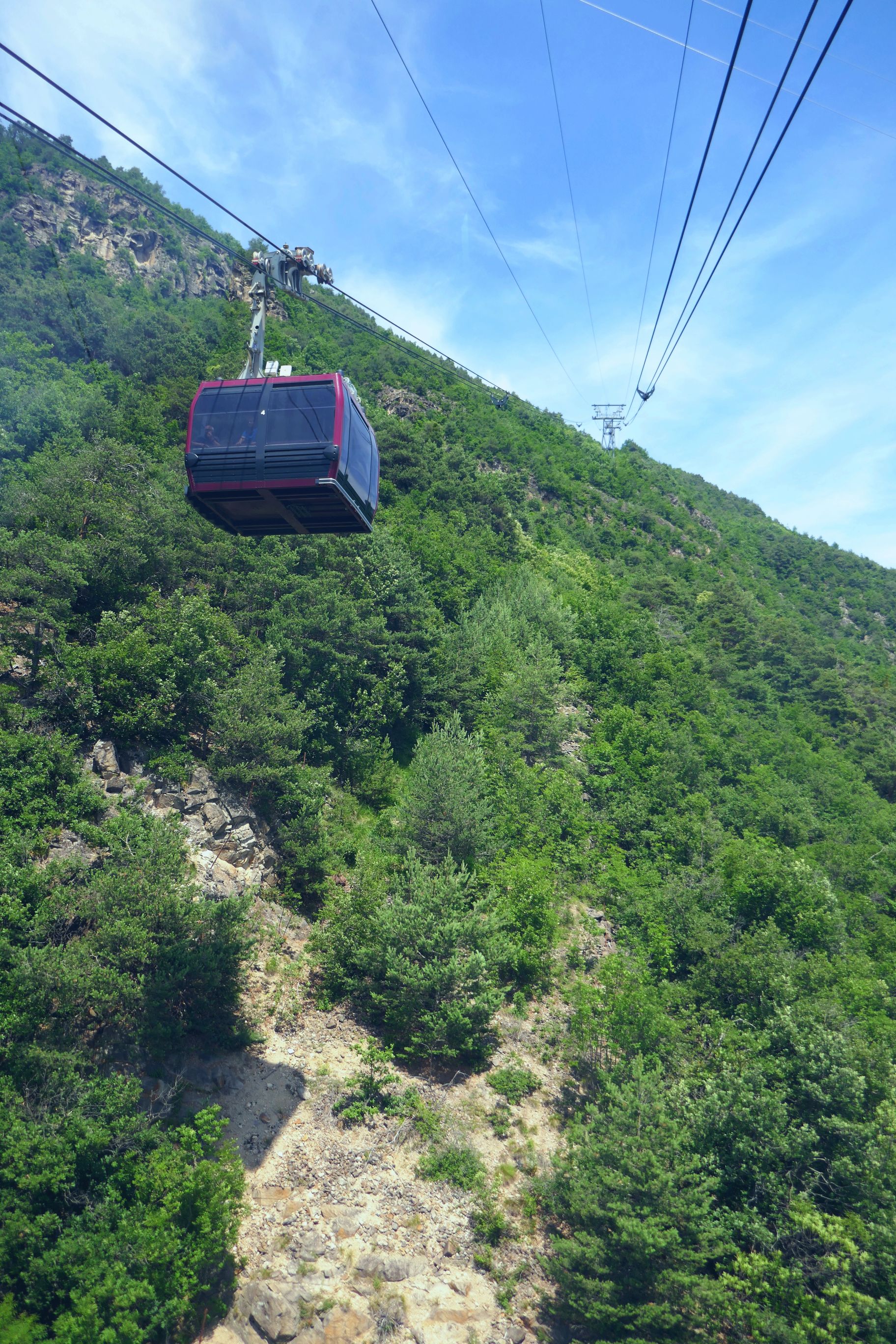
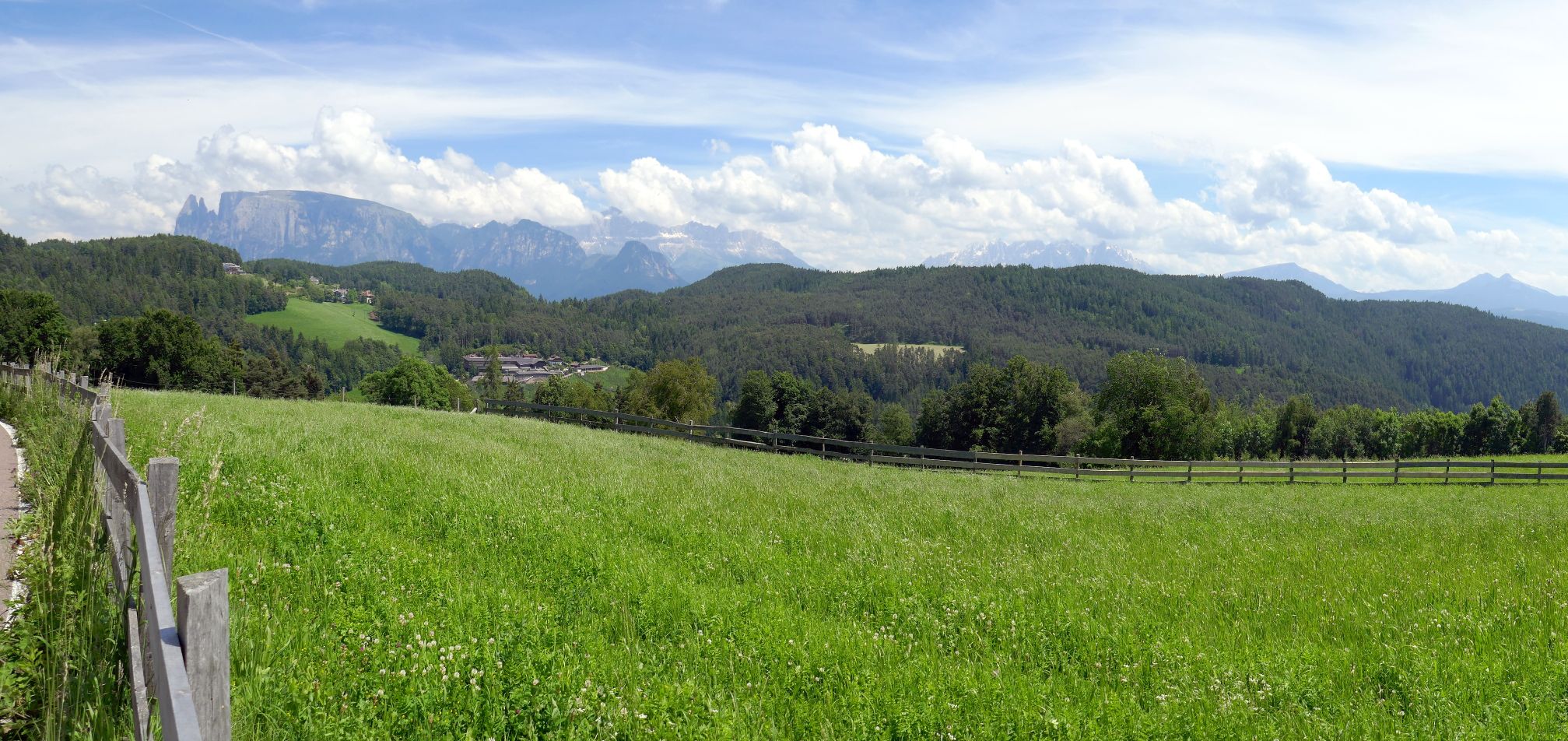
Following what turned out to be a riveting discussion and question/ answer session that went much more in depth about the cultural differences between the Germans and Italians in the region, we headed back to the train station.  Most of the group returned to Trento to take an optional tour.  Bruce and I opted to take the Renon Cable Car (also free with our card) to Oberbozen/ Soprabolzano and thoroughly enjoyed the views!

Coming up next: SWITZERLAND & NORTHERN ITALY #20: LUSH LADIN VALLEYS & DAZZLING DOLOMITES
SWITZERLAND & NORTHERN ITALY #18: OVERLAND TO BEAUTIFUL BRESSANONE / BRIXEN

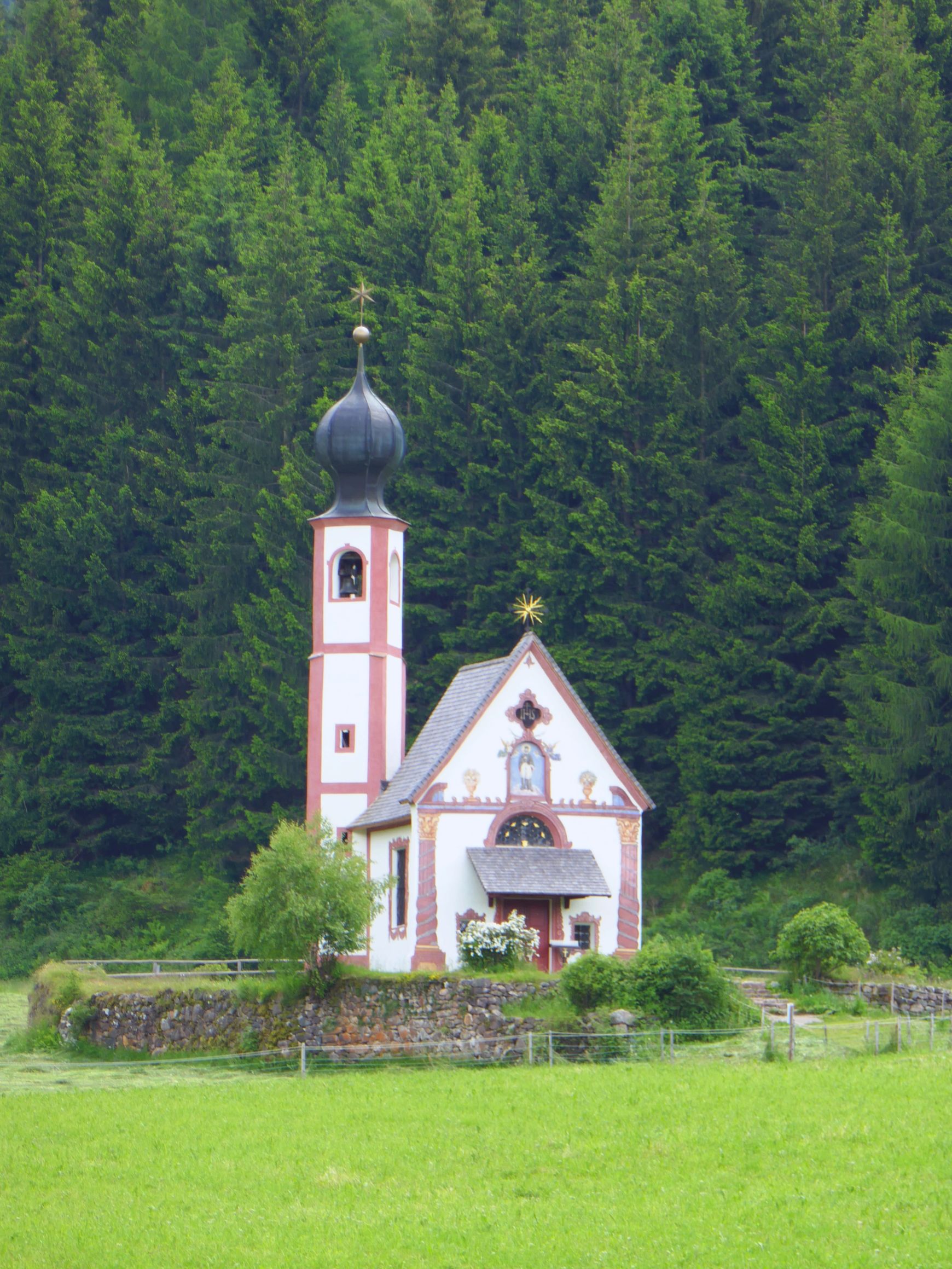
Our travels to Bressanone (aka Brixen) took us through the Val di Funes, a valley in northeast Italy with rolling hills dotted with farms and surrounded by steep alpine peaks.  We stopped for a hike along Santa Magdalena, a scenic trail that passed by family farms, a tiny church, and offered incredible views of the Italian Dolomites when the clouds cleared.  Following our hike and lunch at Fines Hotel & Restaurant, we were fortunate to catch some nice views of the jagged, spiked dolomite mountains. 

Dolomite is a carbonate rock, and the Italian Dolomites are comprised of 32 clusters of dolomite peaks that look like limestone spikes.  The large concentration of this type of rock is only found in Italy and is a UNESCO Heritage Site.

(For all photos, click on the image for a full screen view.)

What a thoughtful farmer, devising a back scratcher for his cows!
This is Gabriel Messner, hike leader and owner of the Fines Hotel & Restaurant where we had lunch. Look for him (hopefully!) in the next winter Olympics as a skier for Team Italy. As a national team member, he has hopes to make the cut!
The view of the Dolomites got better…
…and better. But they will get even better in my upcoming post!

This region of Italy is close to Austria, so the languages spoken are both German and Italian.  The cuisine, as we discovered at lunch, had a German influence—much different than what you would find in the south of Italy.

We continued on to Bressanone, which used to be called “Brixen,” a German name, until Mussolini, the horrible dictator, came in and changed all of the German names of towns and streets to Italian names and forced the residents to do the same.  The fascist didn’t stop there; he banned the German language and it wasn’t allowed to be taught in the schools.  Austrian history was forbidden from being taught as well.  Mussolini tried to wipe out that entire culture.  Thankfully, it was all ultimately reversed. Signs in the area are in both German and Italian, and German is one of the official languages.

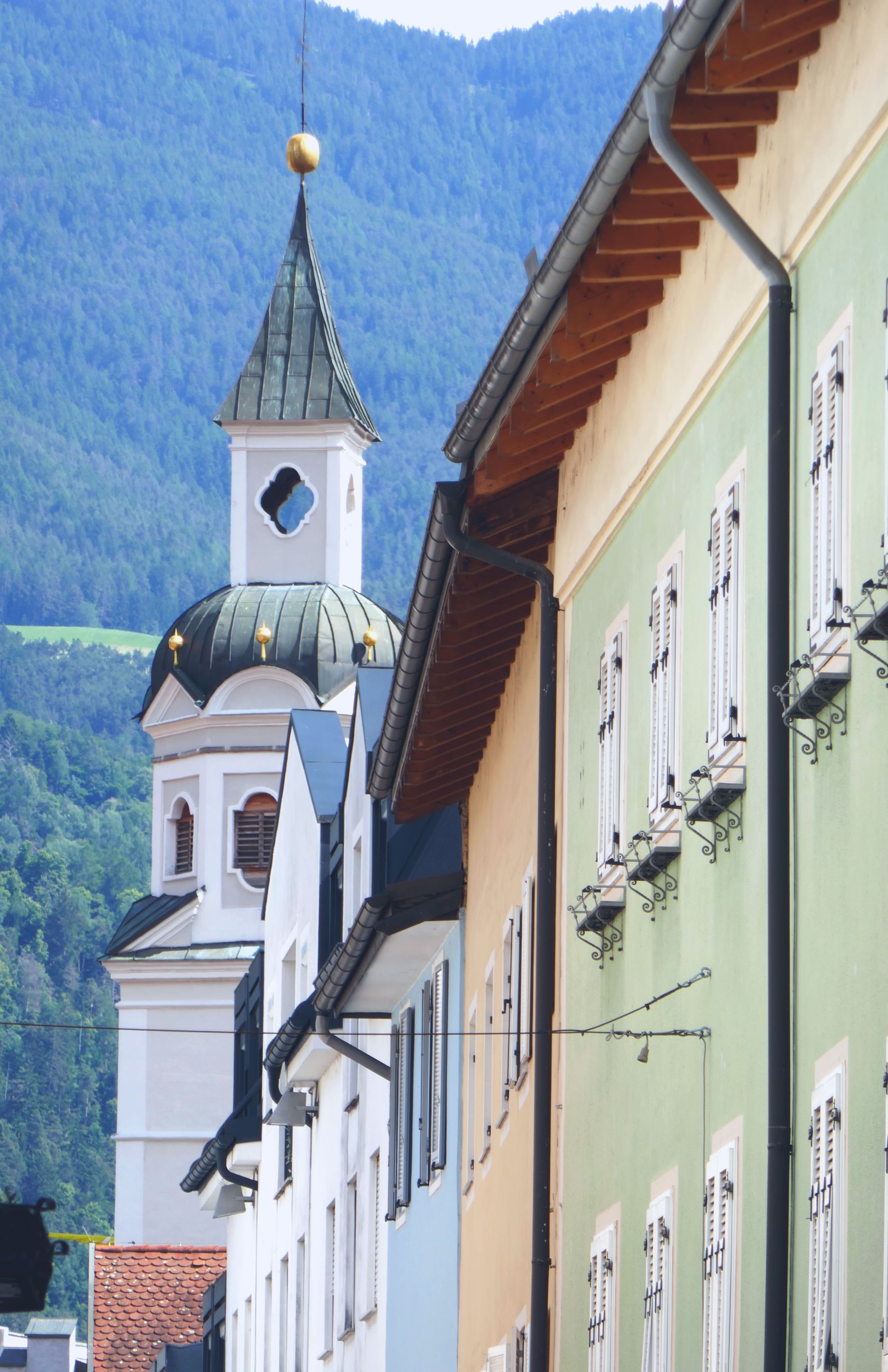
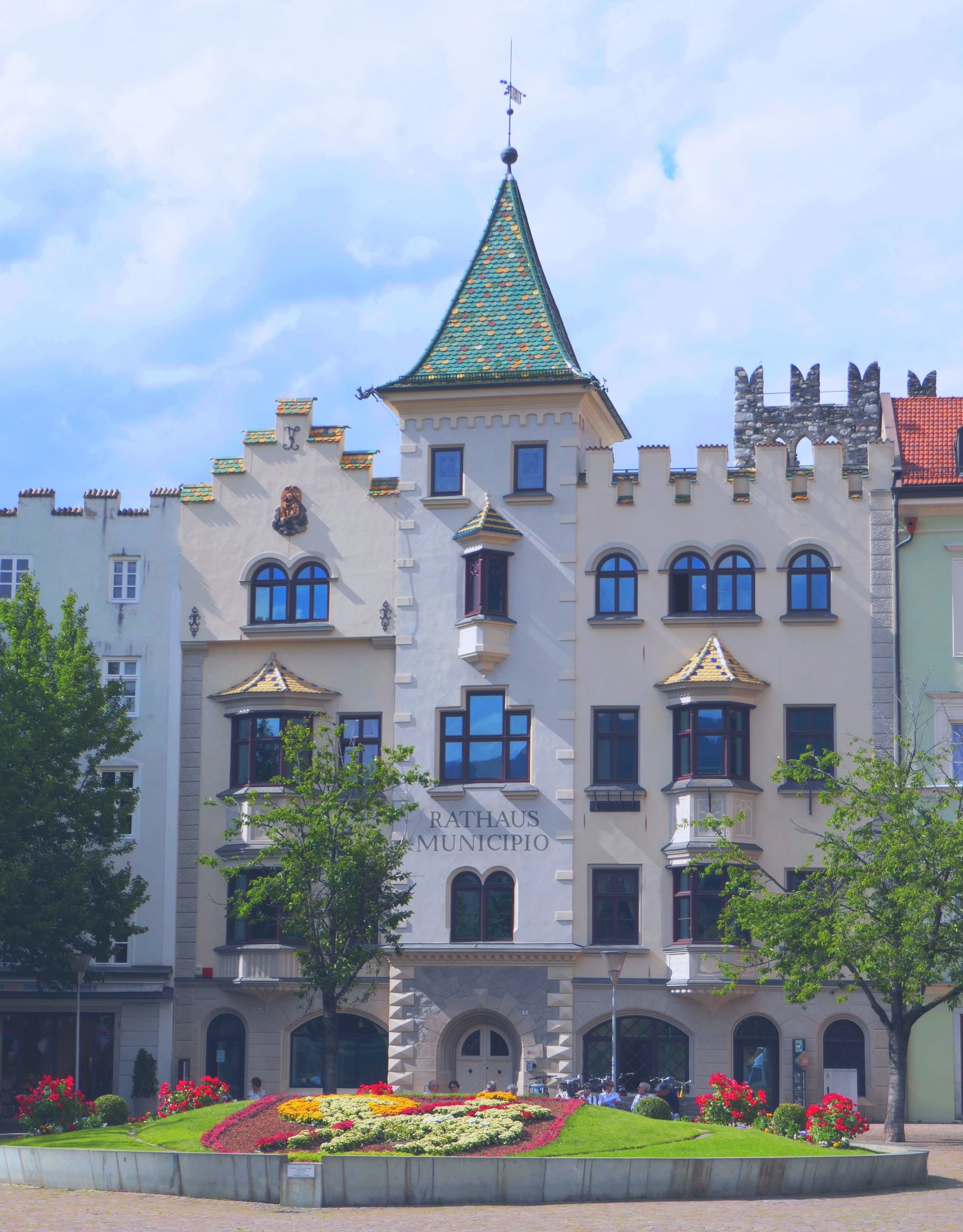
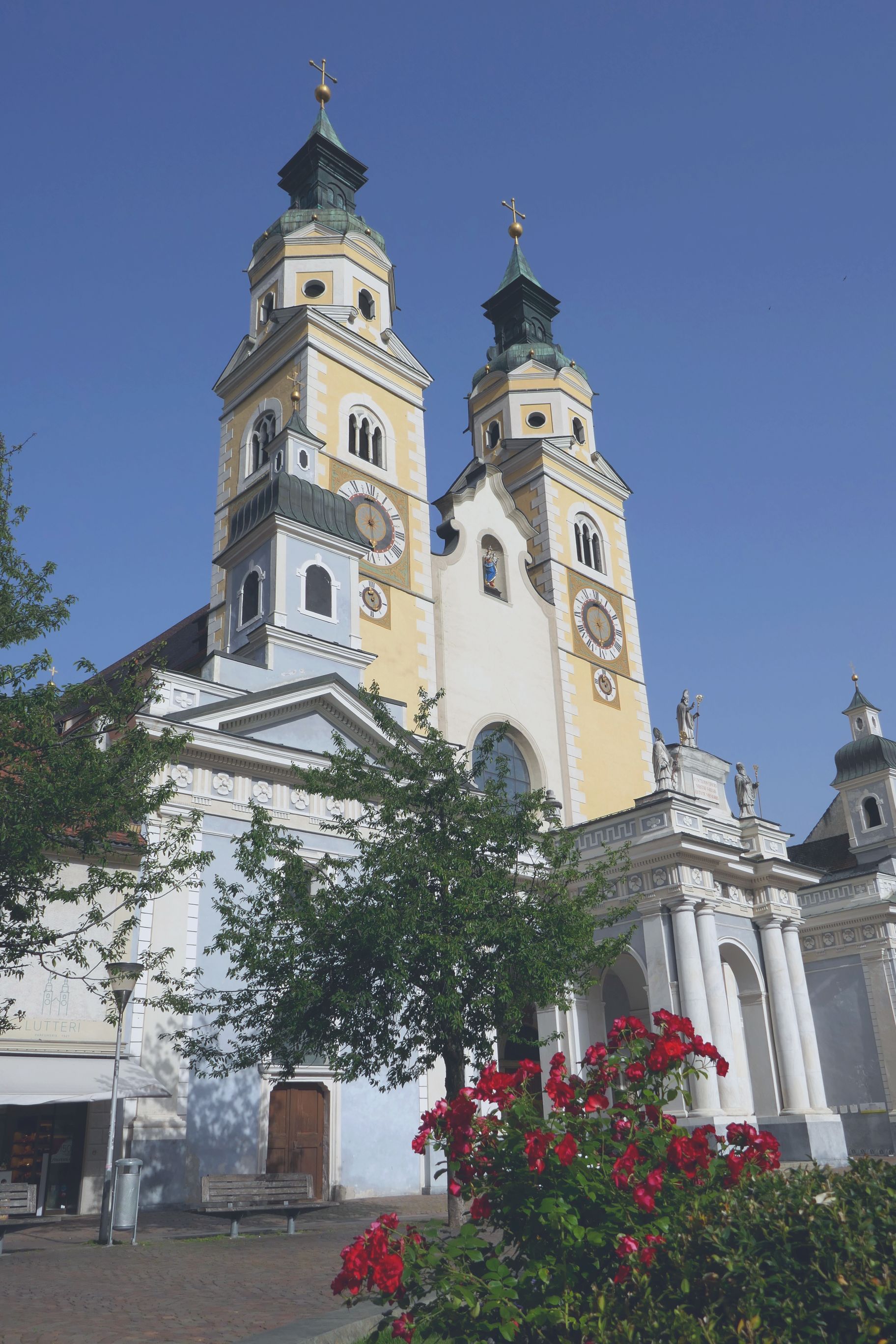
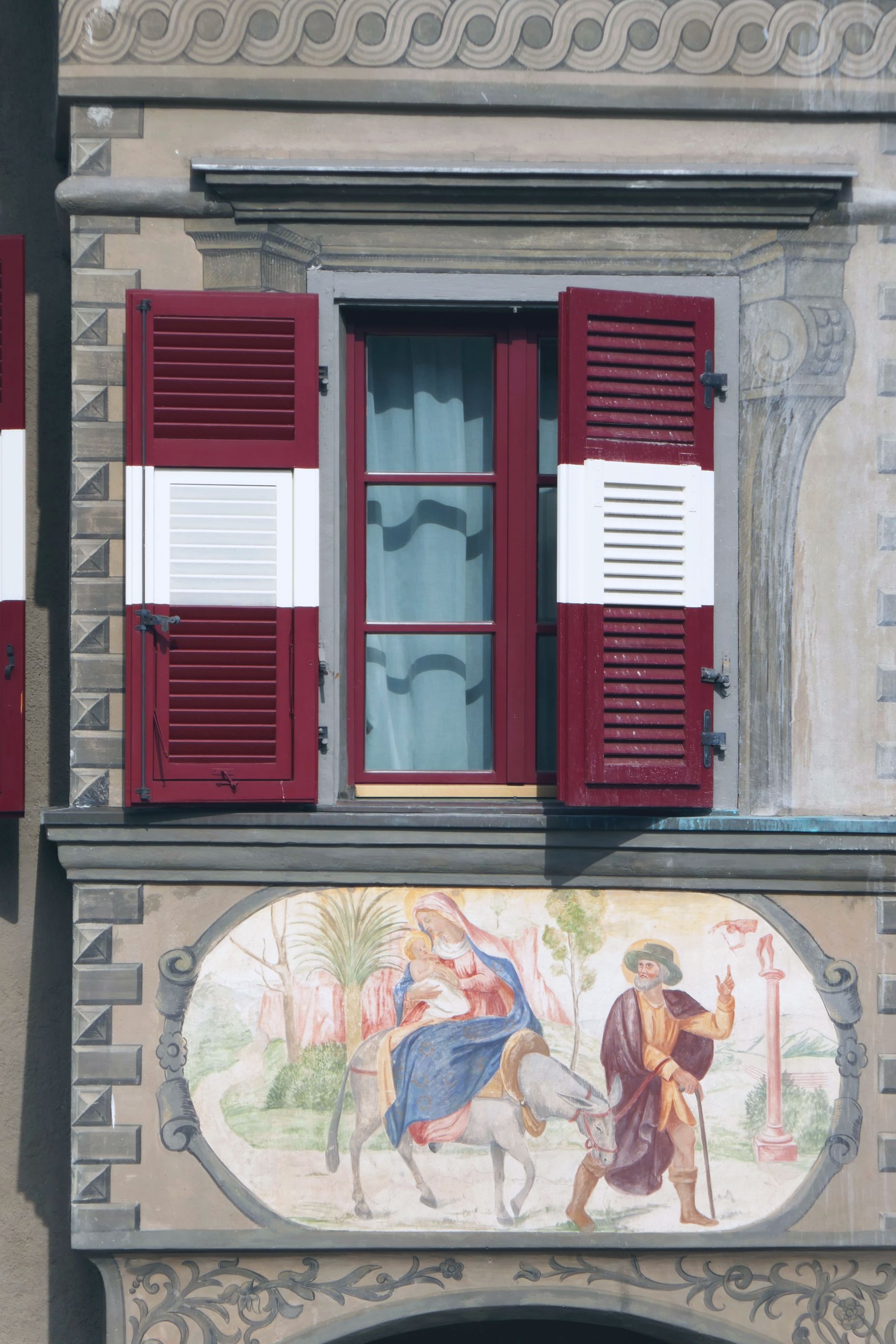
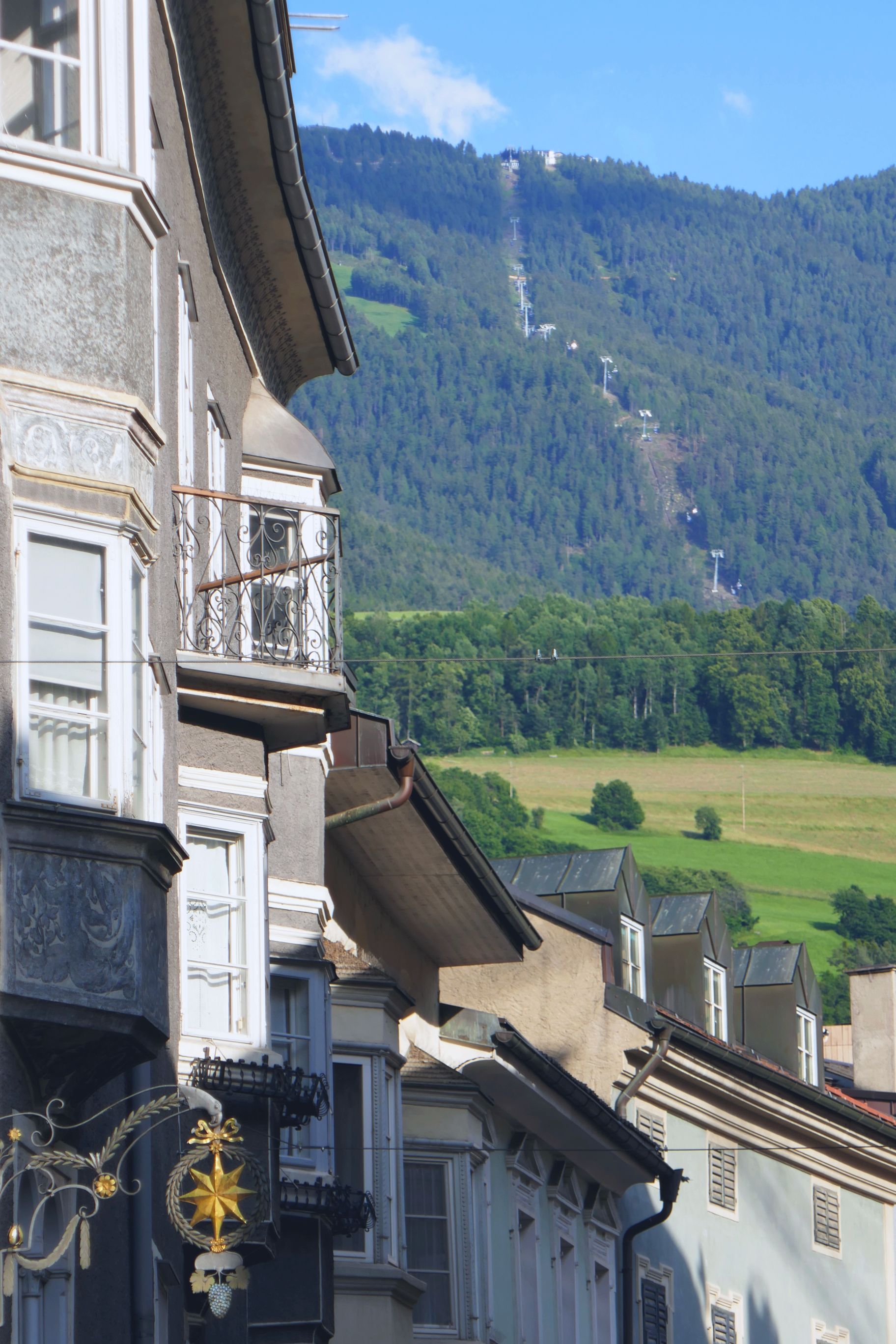
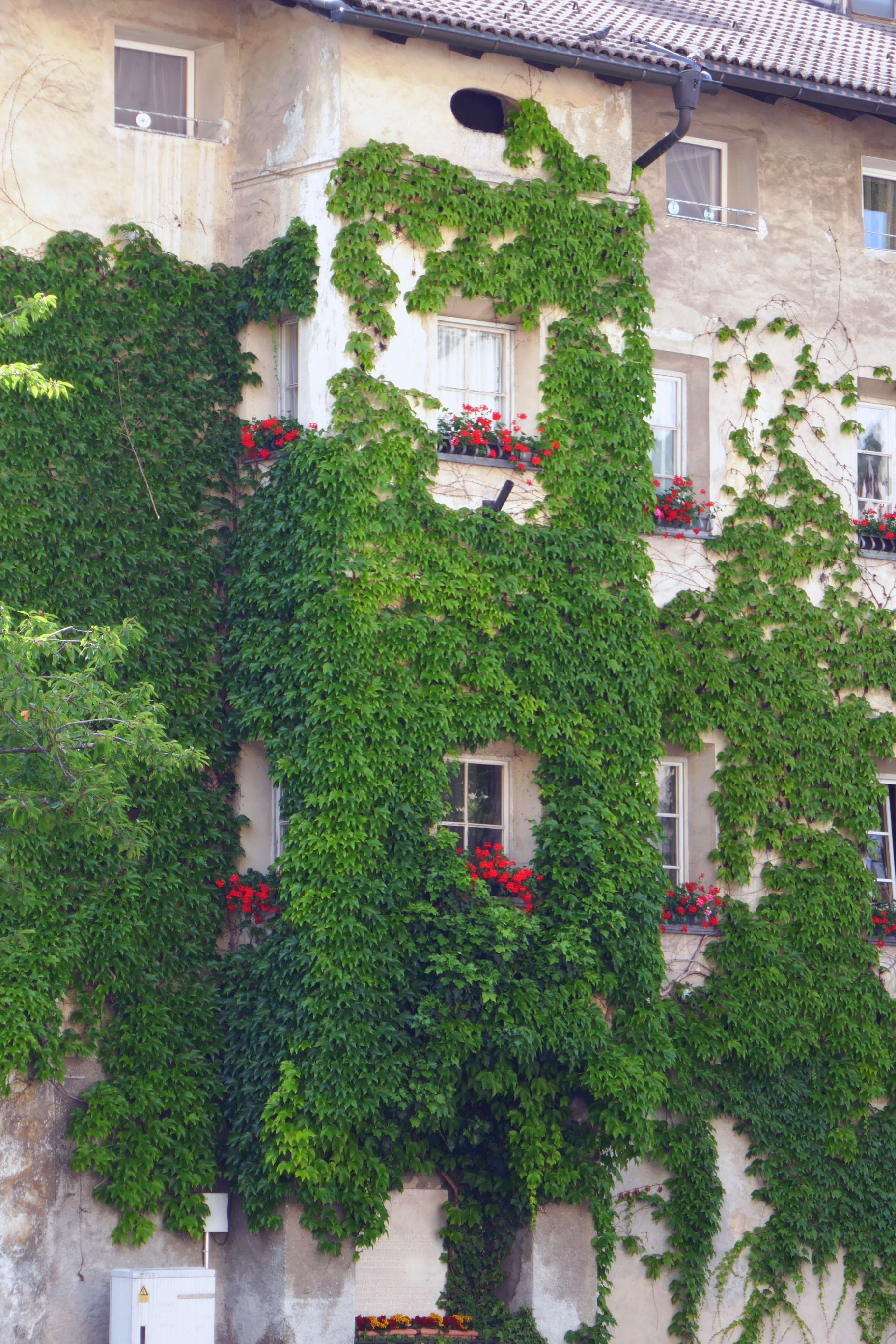
Bressanone / Brixen is a medieval town of about 23,000 people founded in 901 and located in the autonomous Trentino-Alto Adige region.  We found it to be quite charming and enjoyable to explore during the afternoon and evening.

Hotel Krone, our hotel in Bressanone, was established in 1717!
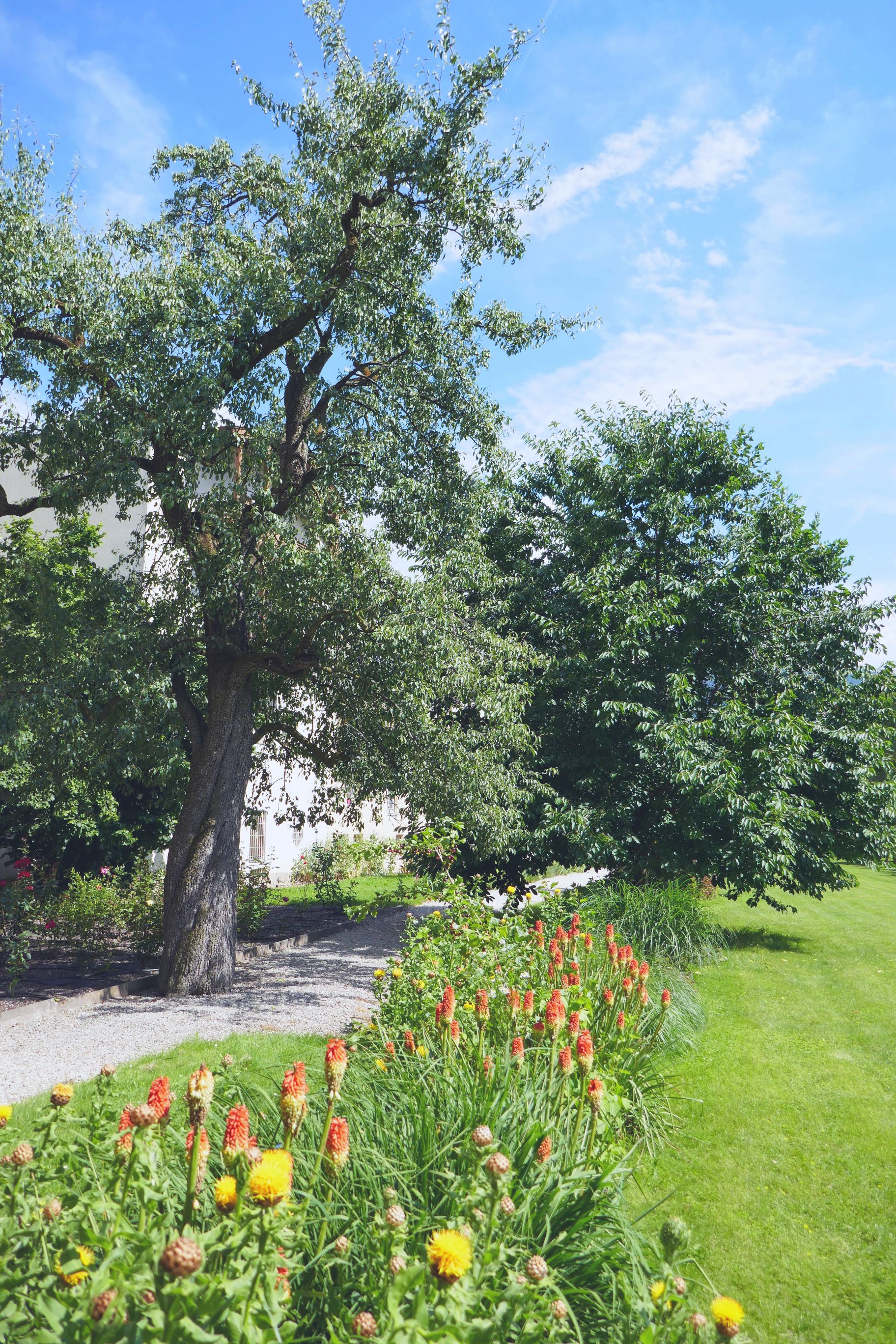
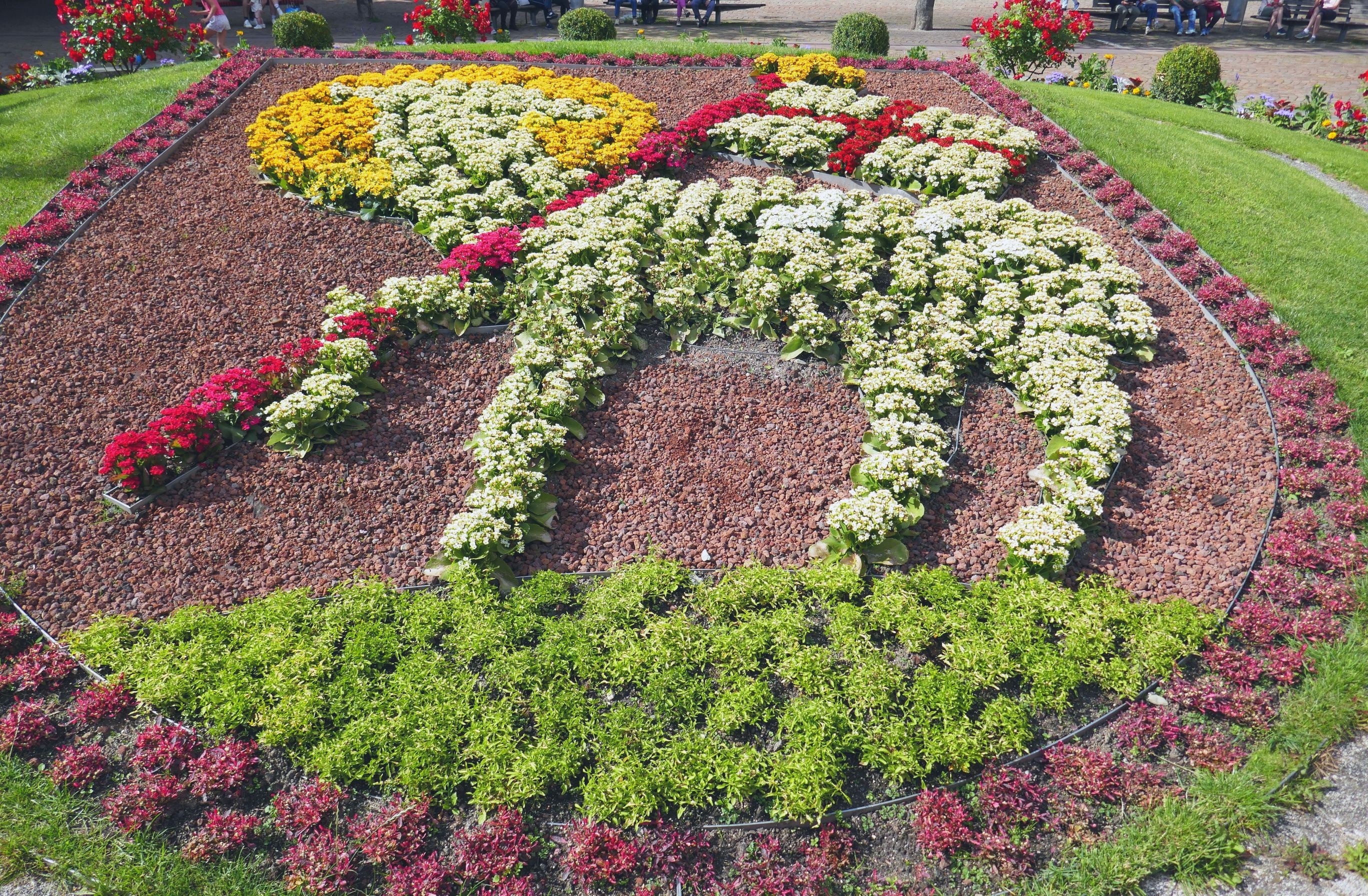
A beautiful garden and walking path down the street from our hotel.
An adorable (and funny!) puppet show in the piazza capped off a wonderful day!

Next up: SWITZERLAND & NORTHERN ITALY #19: VISITING BOLZANO BY TRAIN & CABLE CAR