SOUTHWEST FRANCE, NORTHERN SPAIN & PORTUGAL #6: MORE BEAUTIFUL BAYONNE

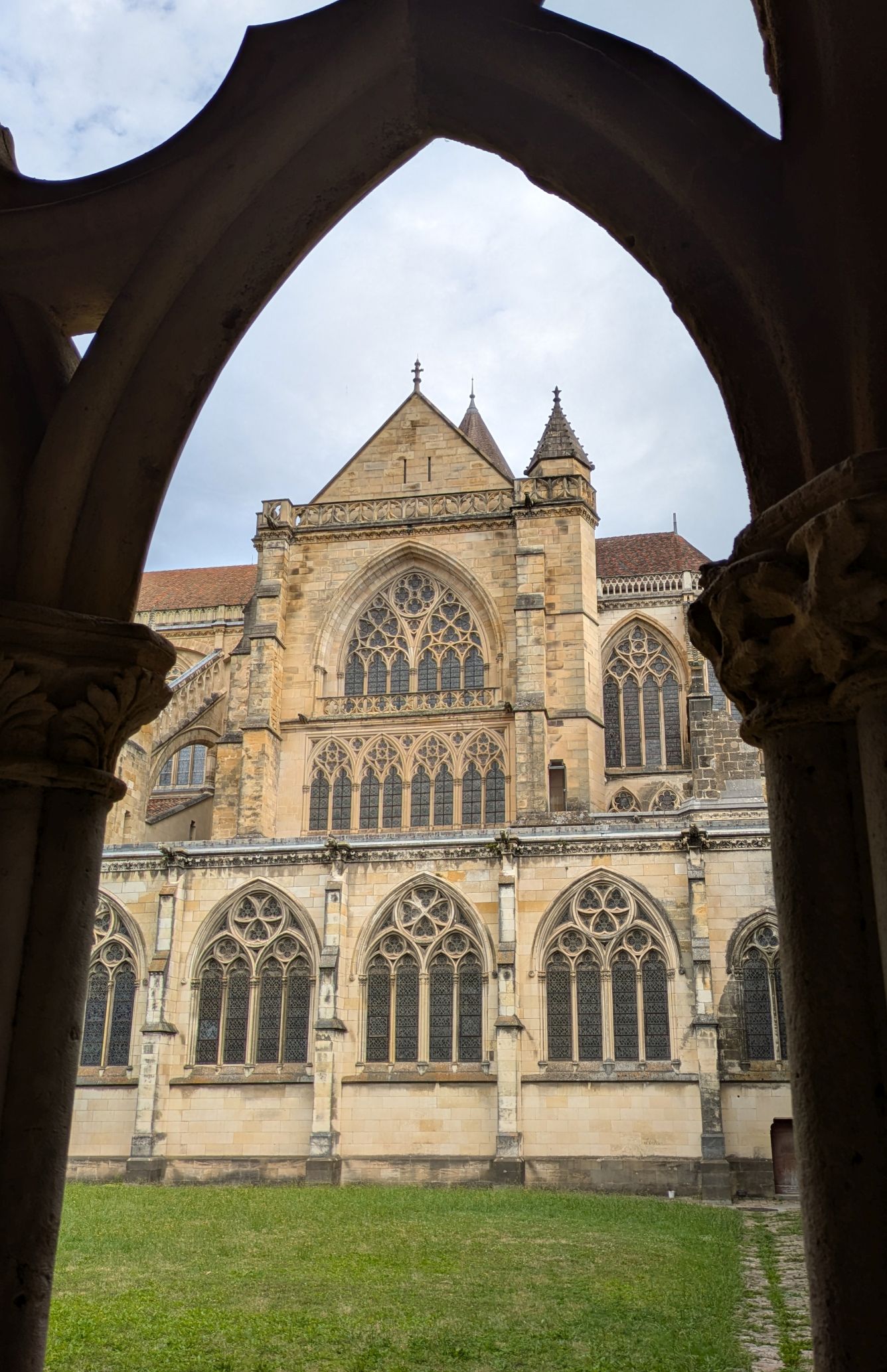
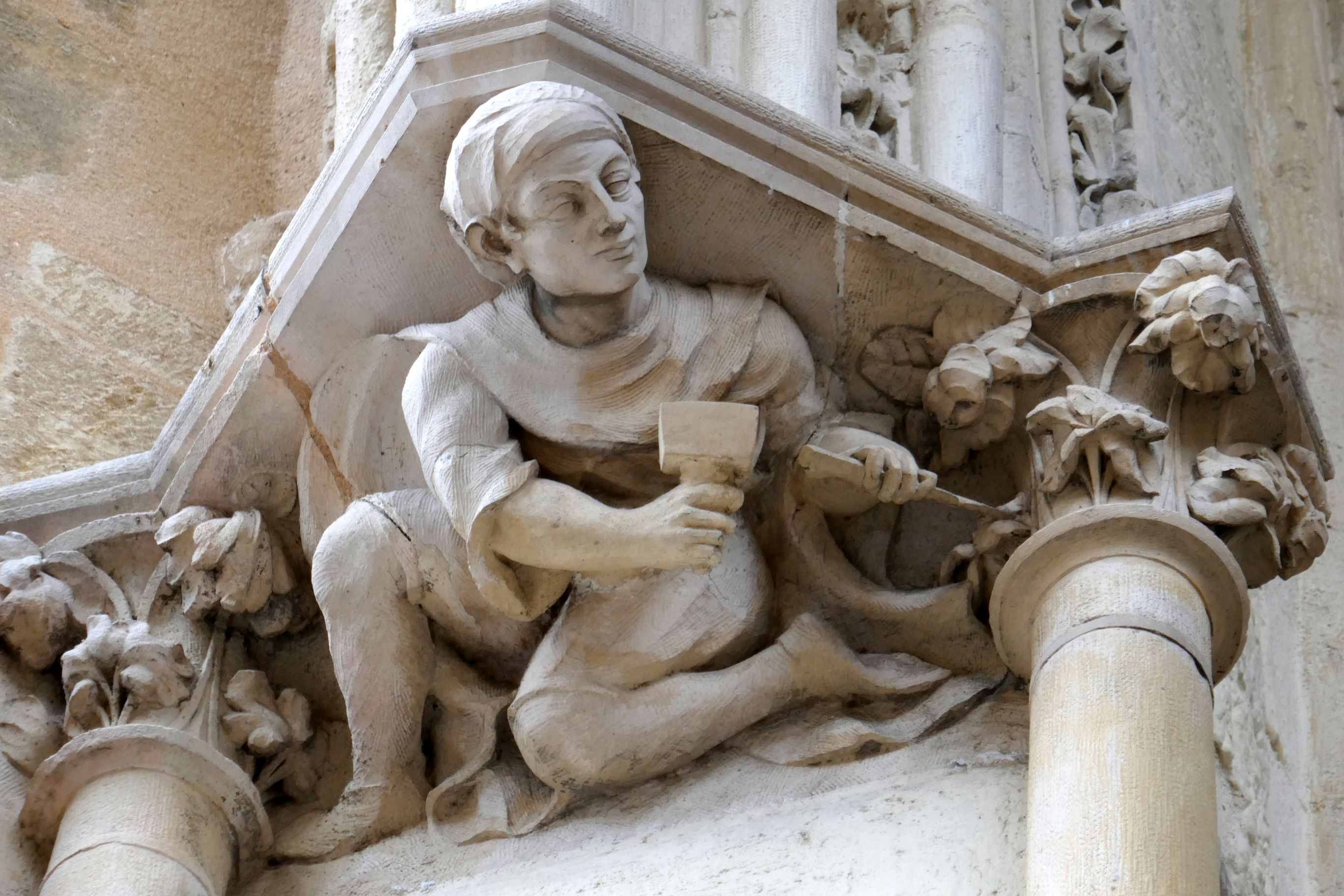
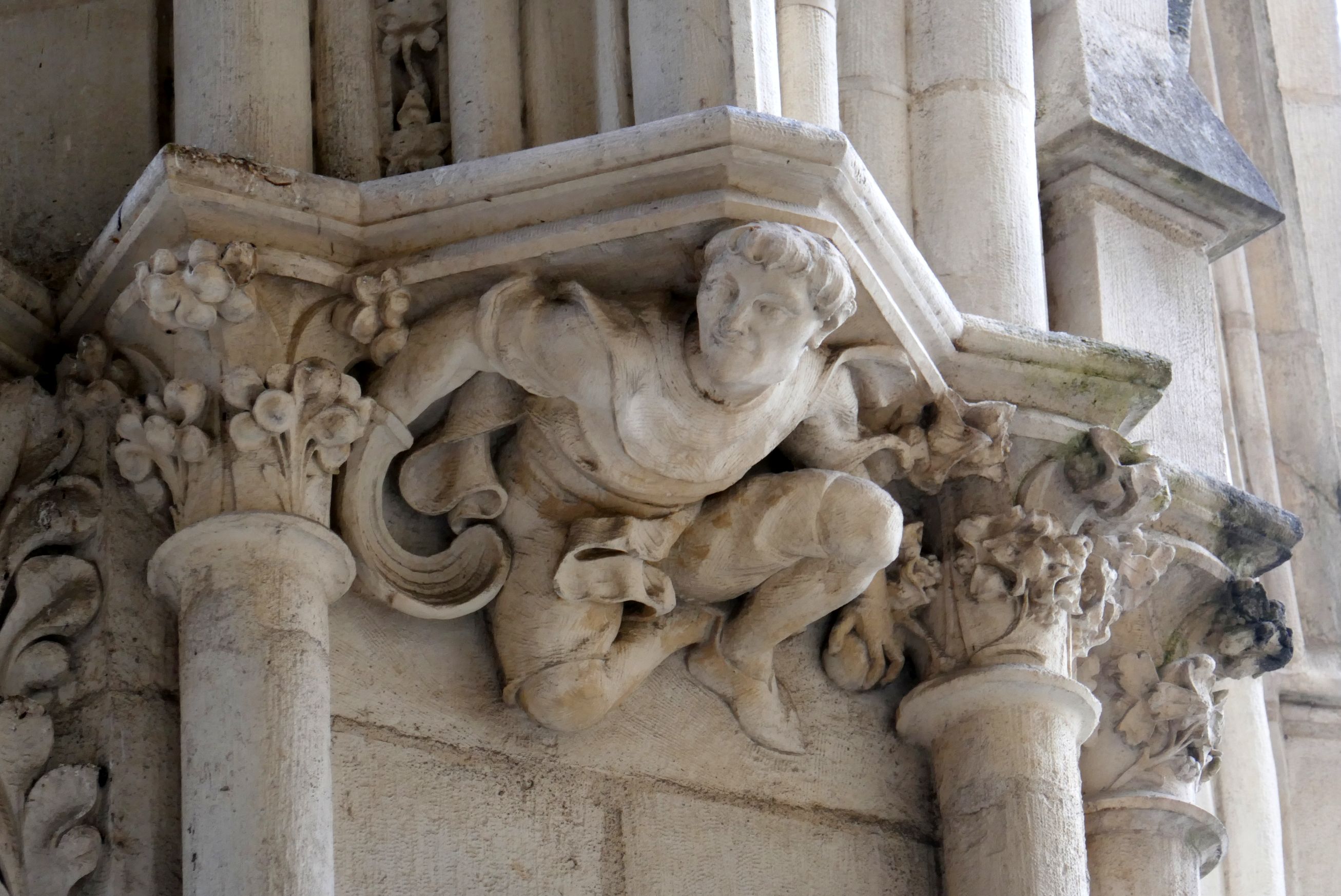
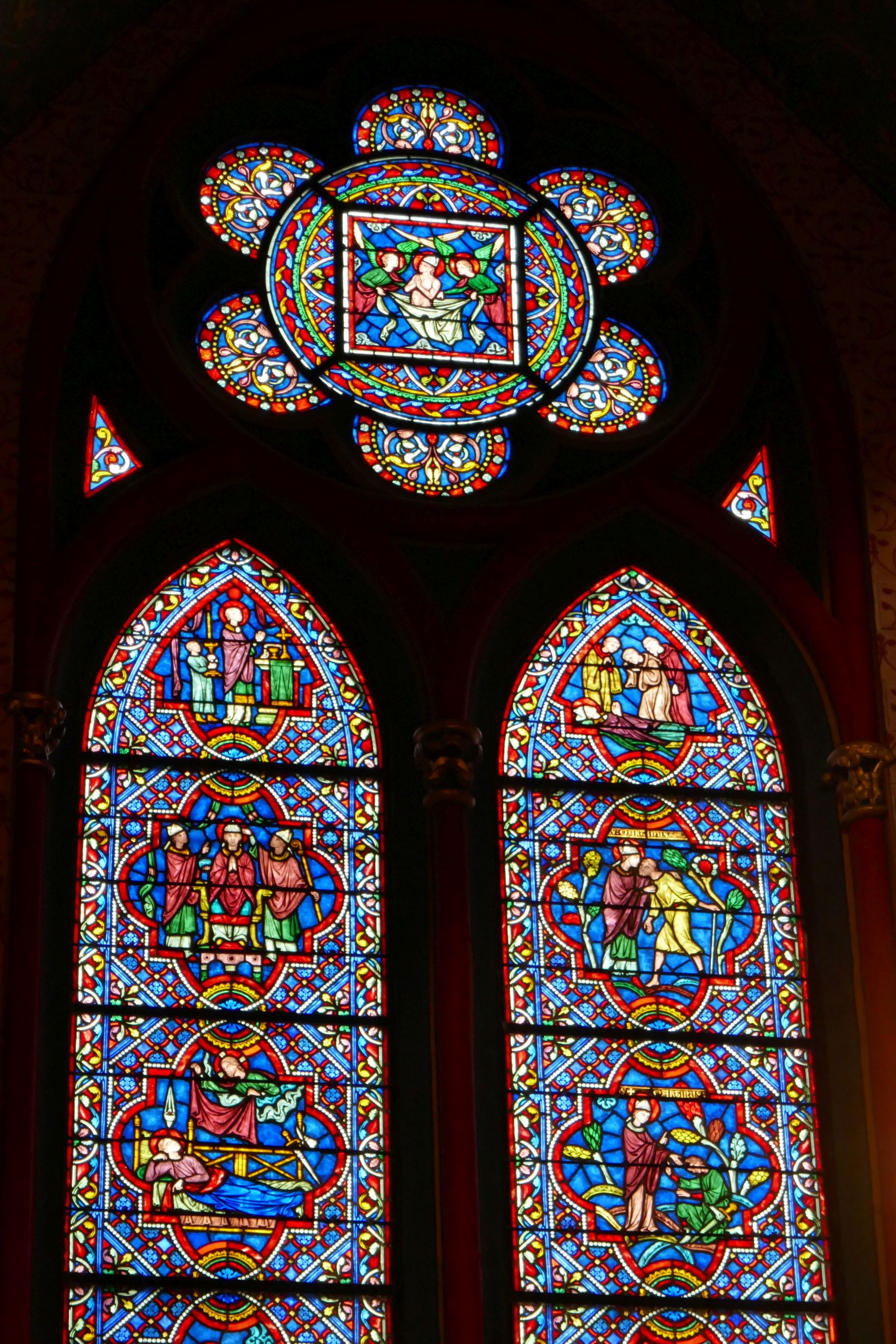
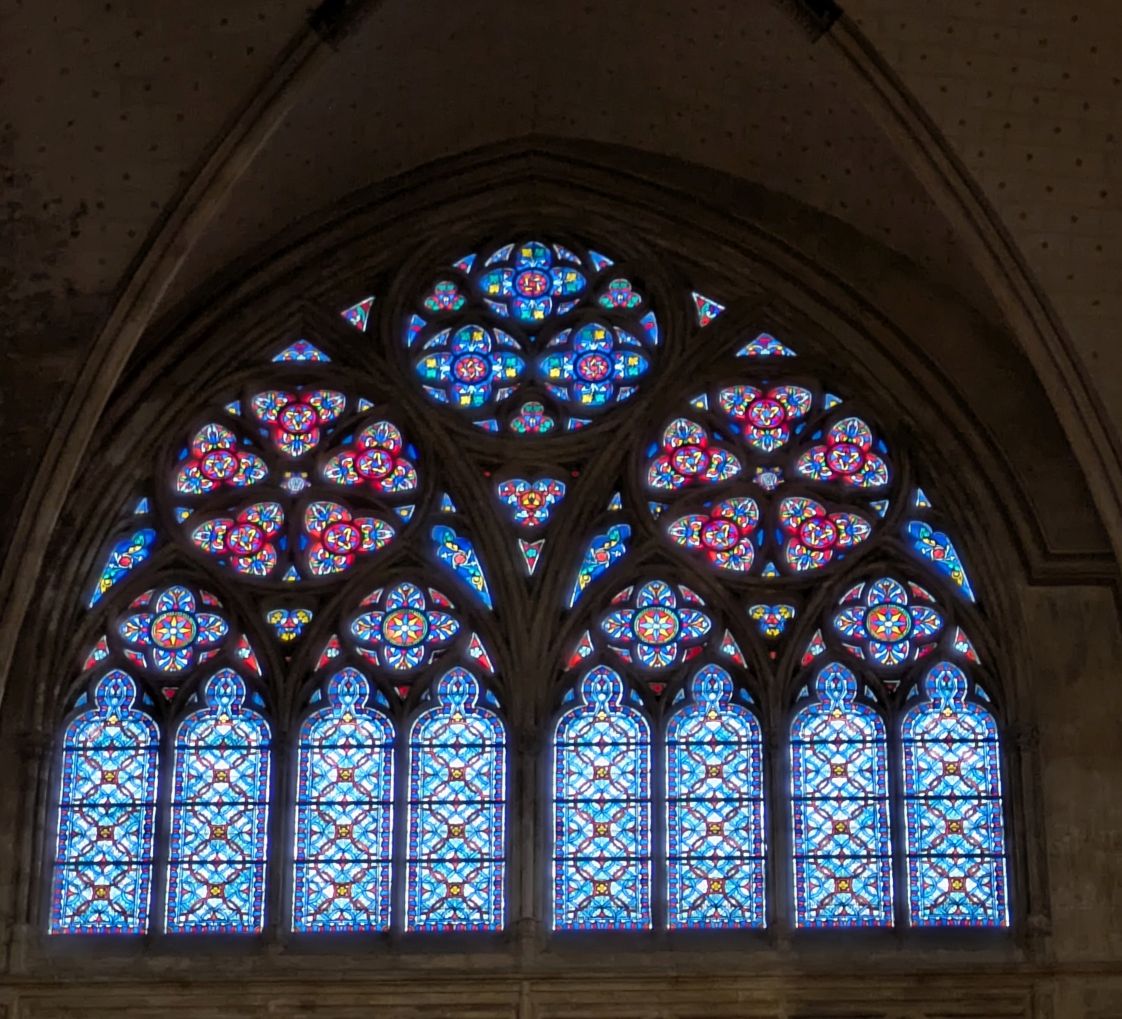
More scenes from beautiful Bayonne:

(For all photos, click on the image for a full screen view.)

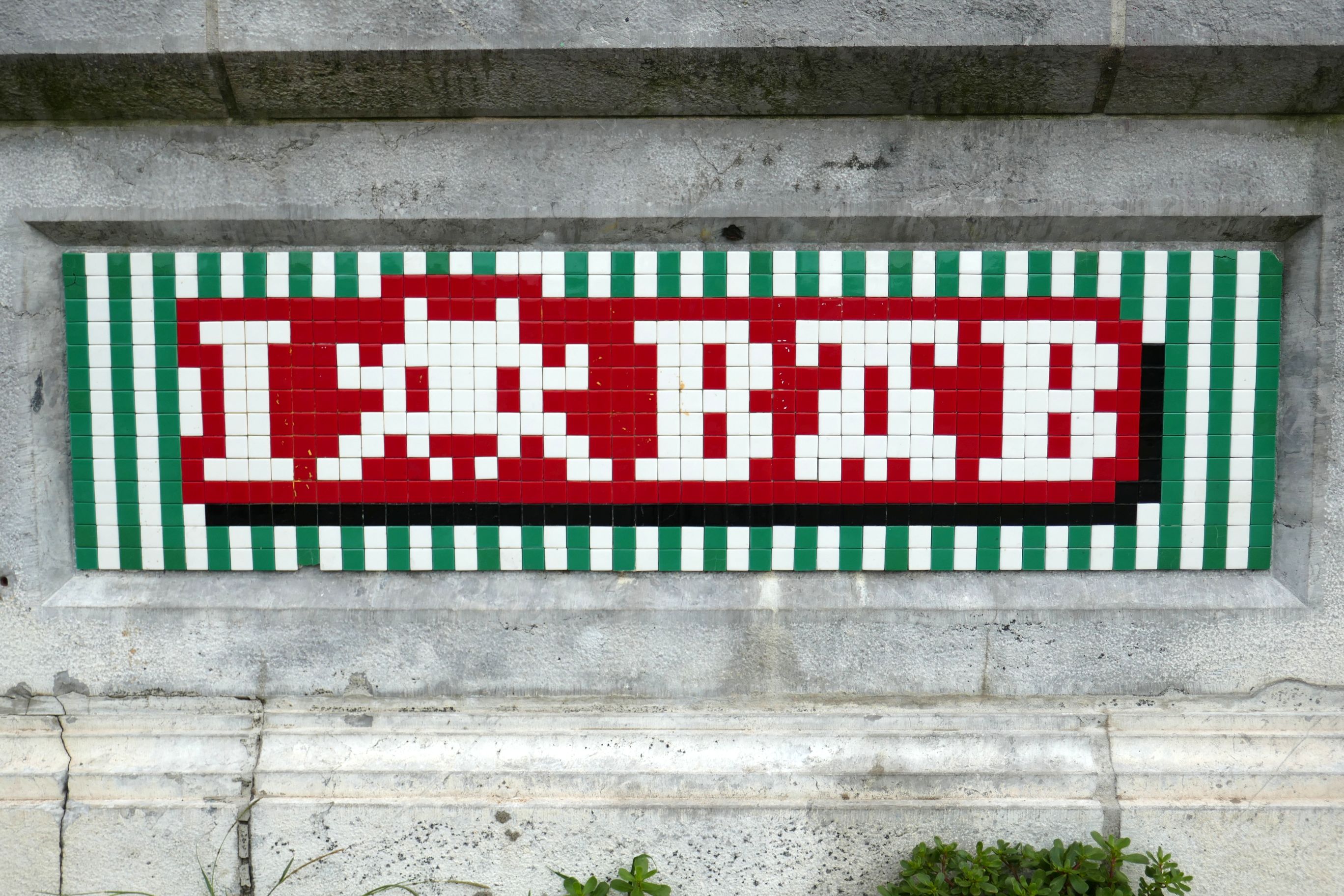
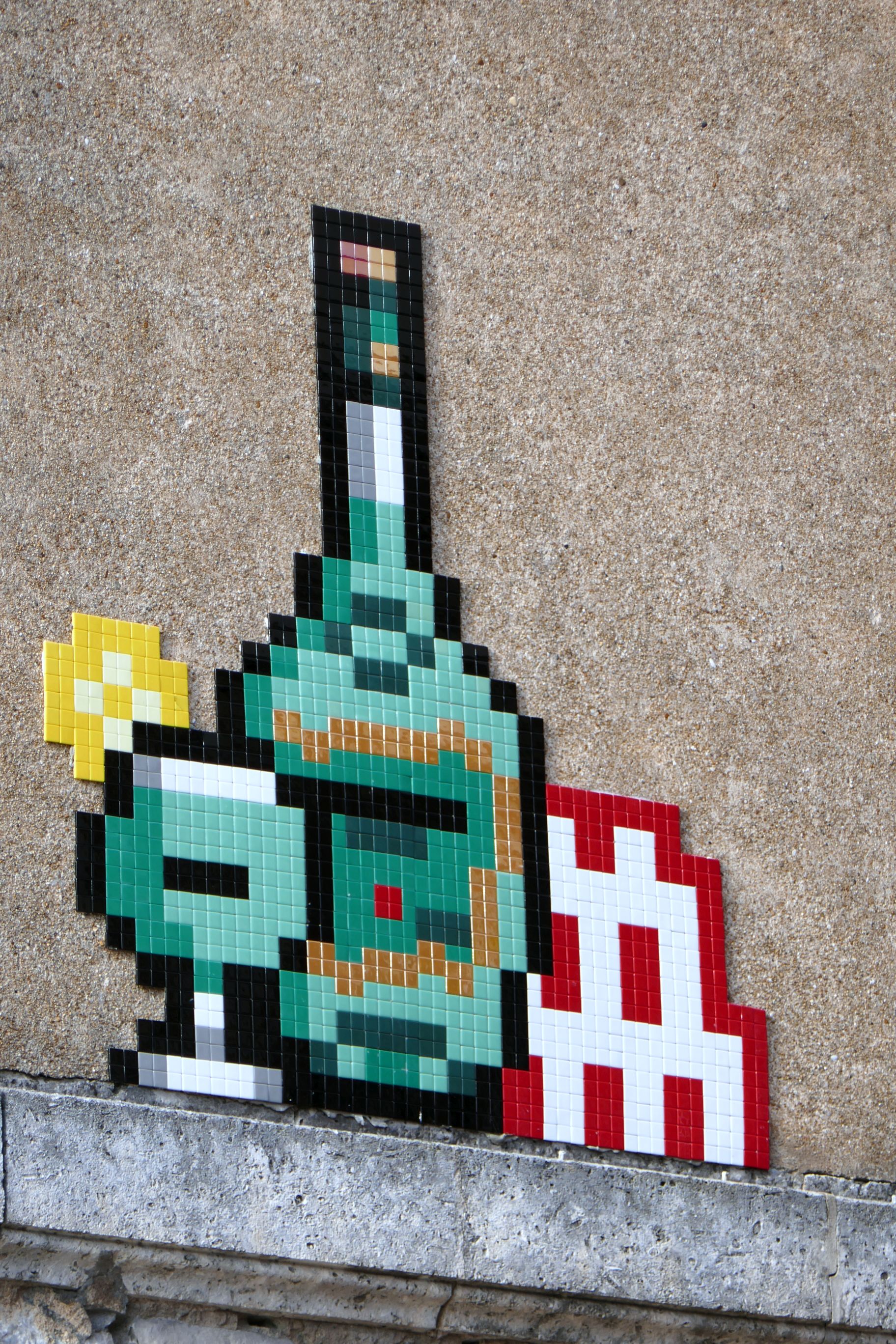
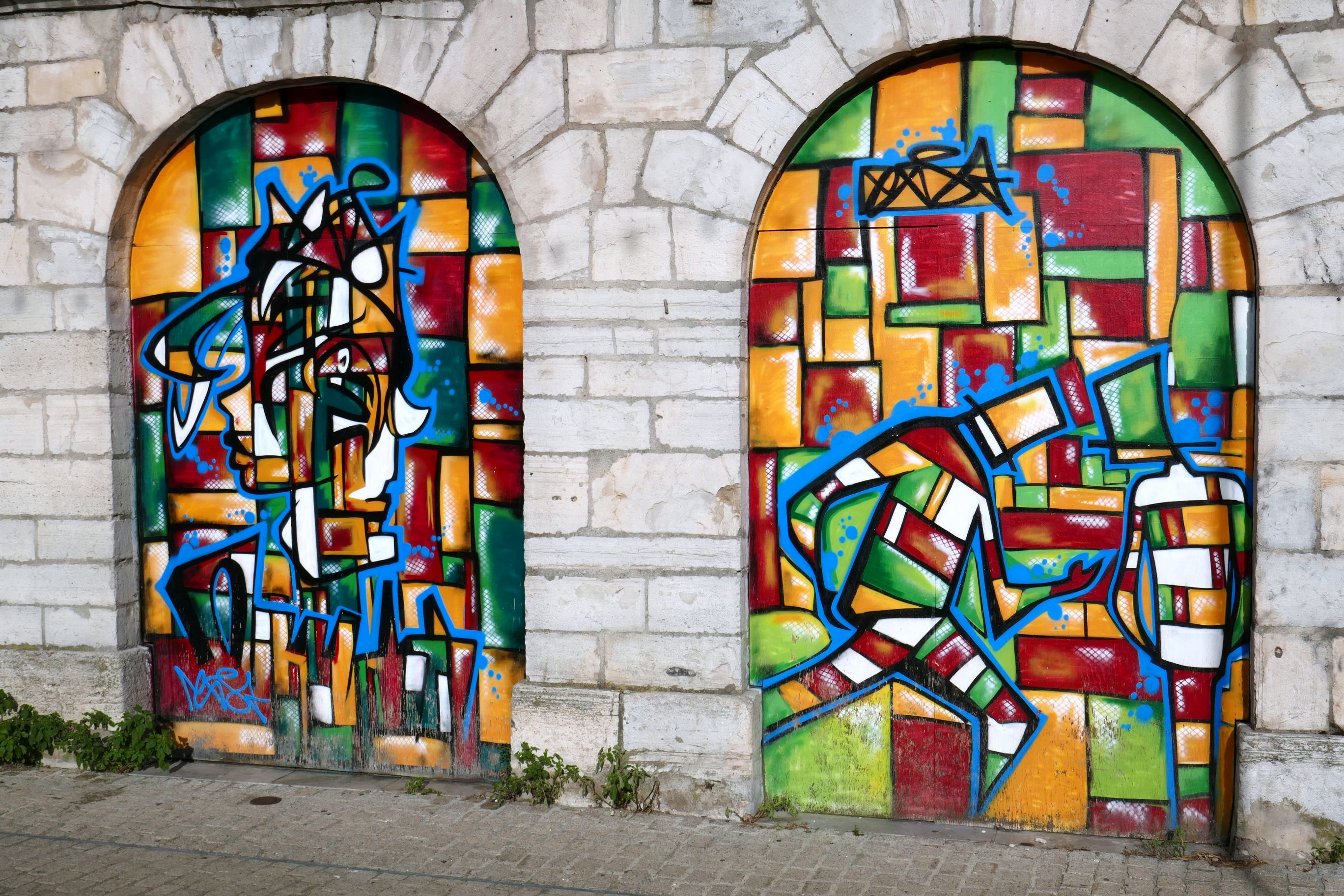
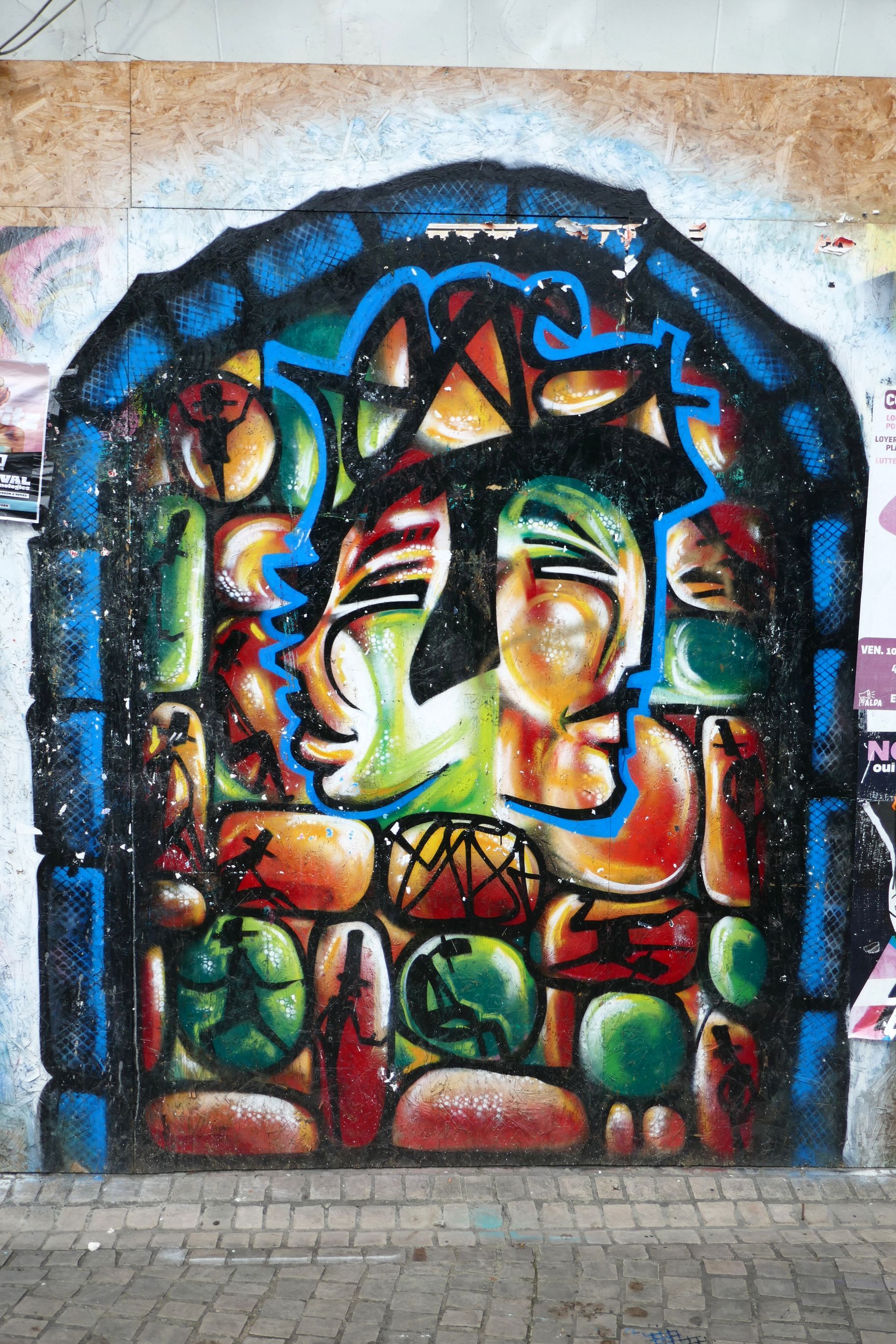
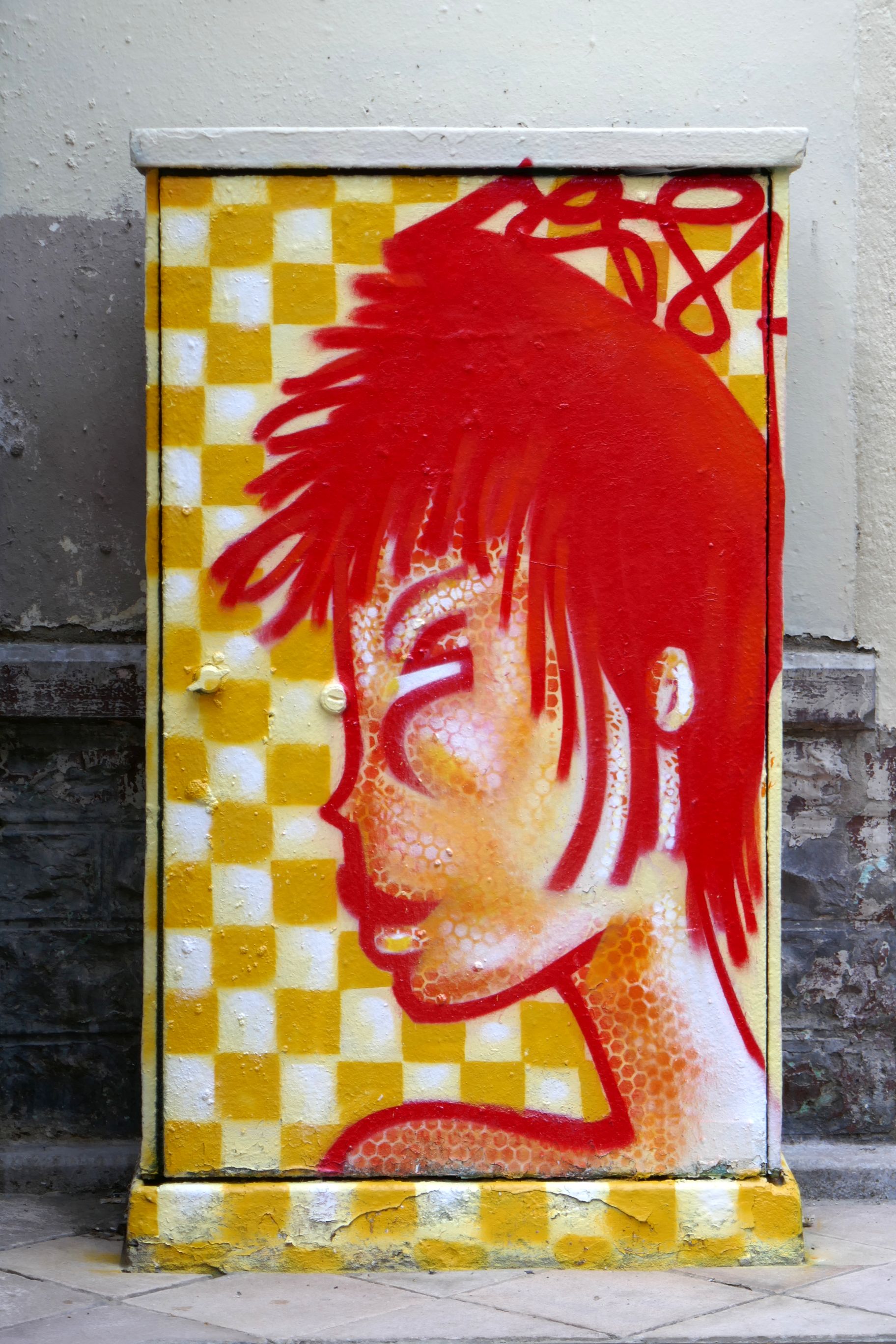
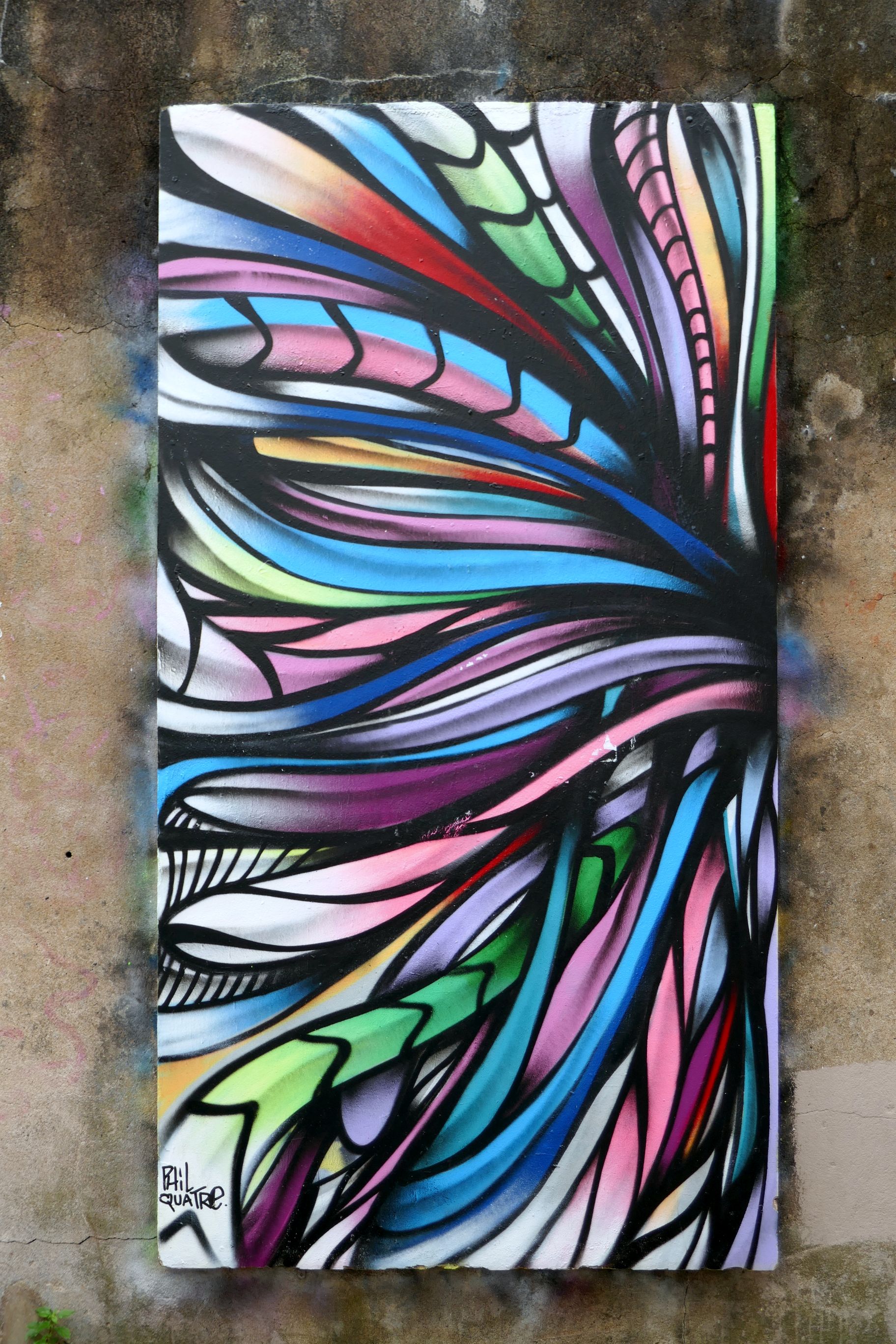
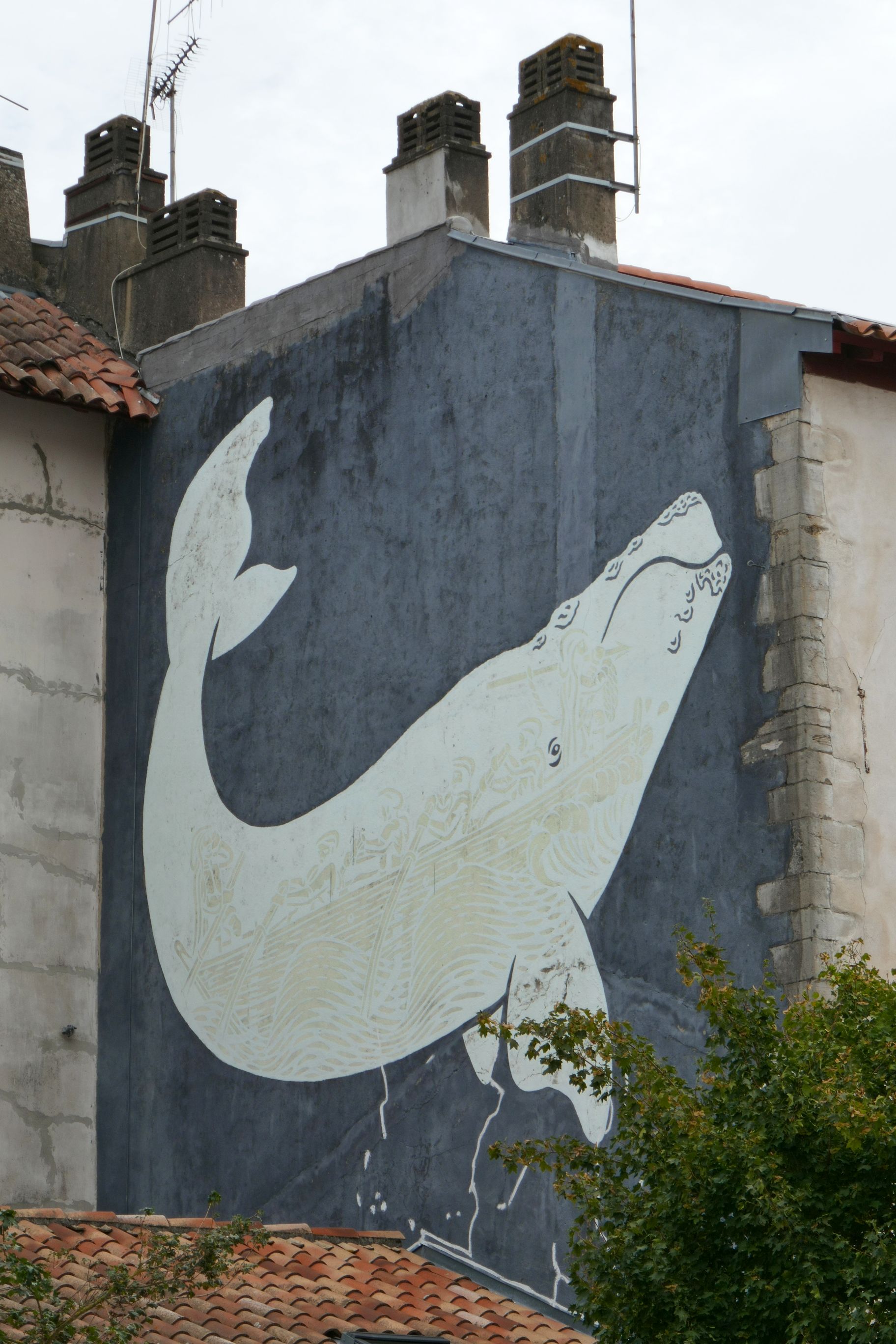
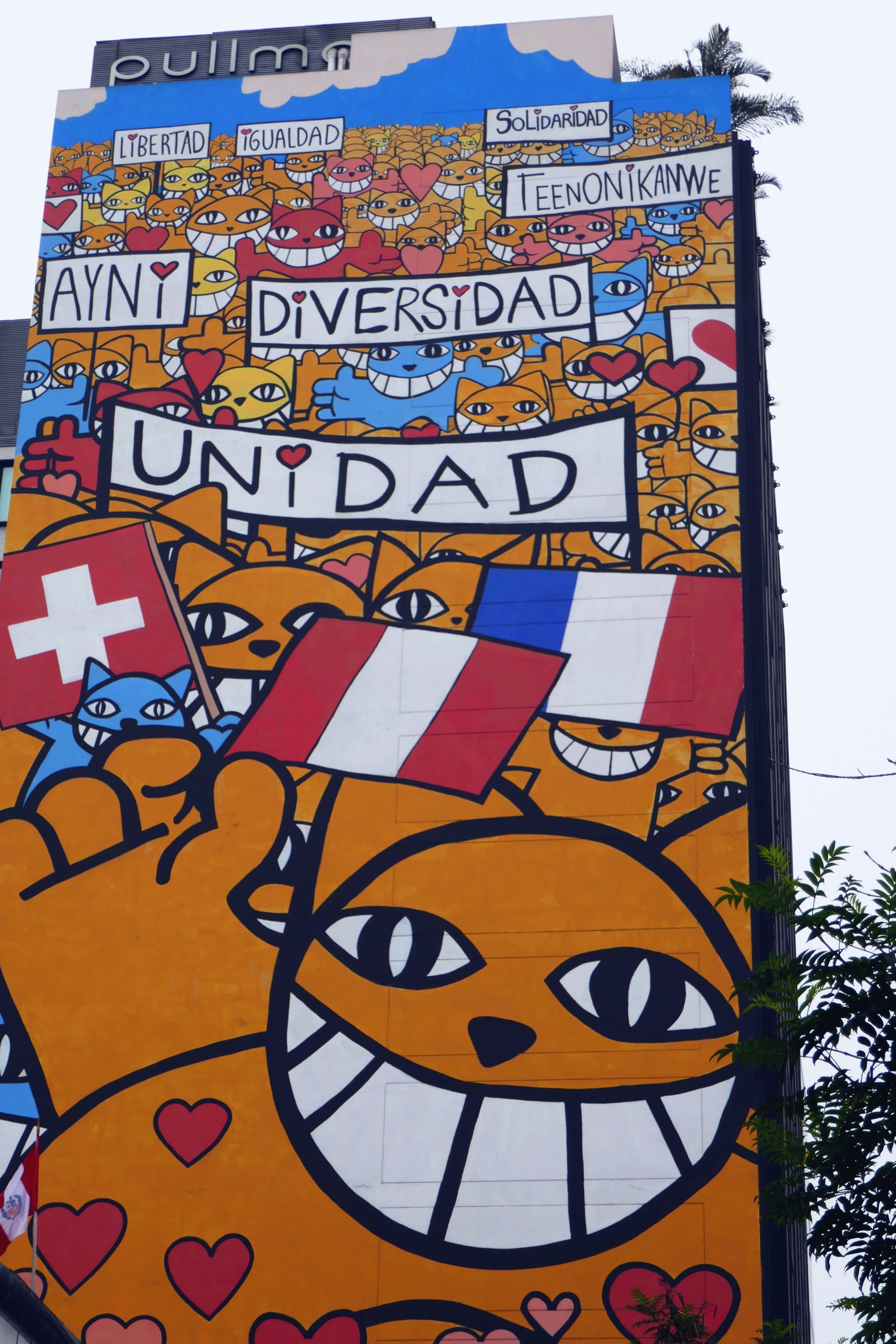
Street art around Bayonne:

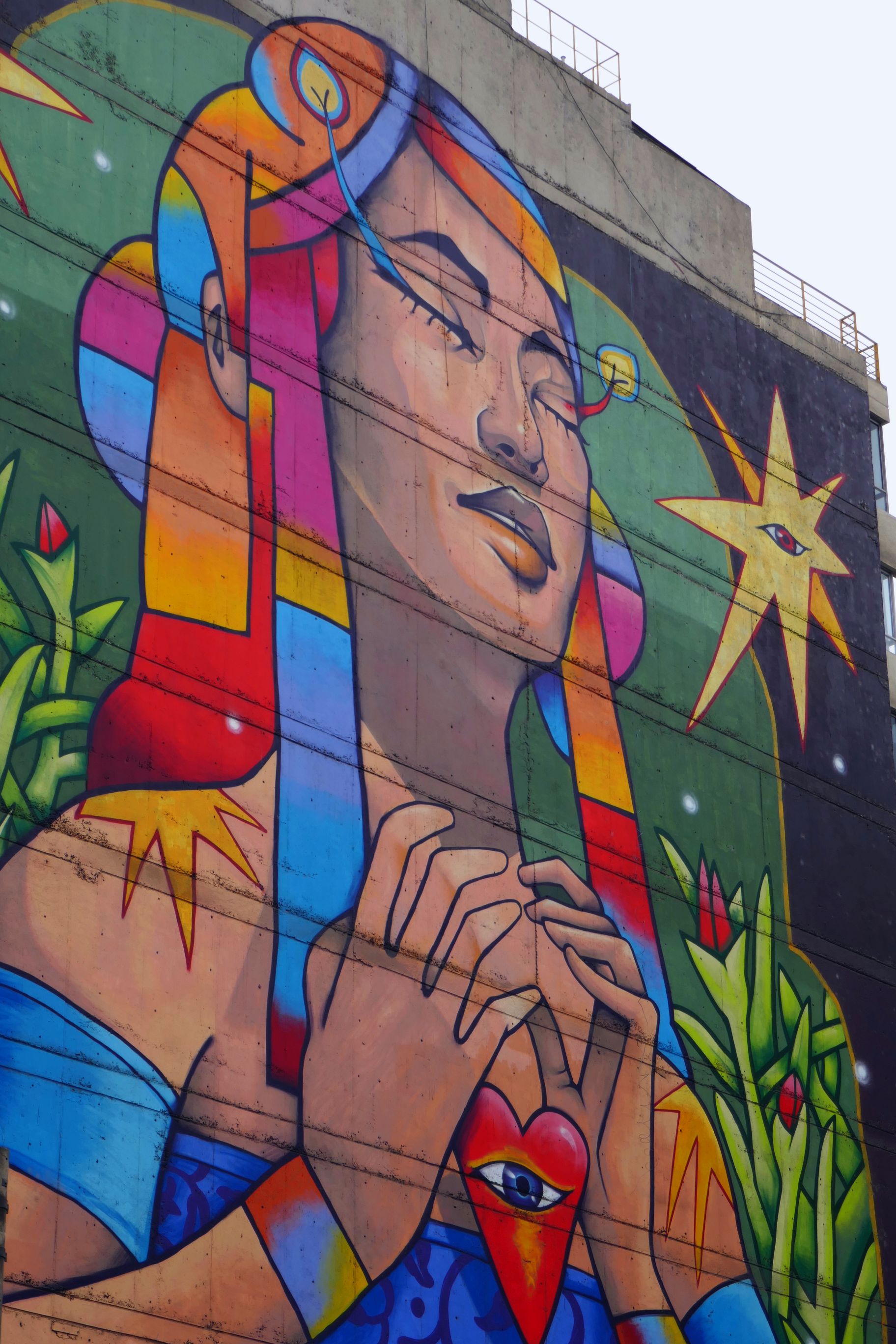
This mural about our digitally overloaded world a won a world competition.

The following tile mosaics are by Invader. According to Wikipedia, “Invader is a pseudonymous French street artist. He is known for his ceramic tile mosaics modeled on the pixelated art of 1970s–1980s 8-bit video games, many of which depict the titular aliens from the arcade games Space Invaders, Pac-Man and Super Mario Bros. (the inspirations for his pseudonym). As of December 2020, his creations can be seen in highly-visible locations in 79 cities in 20 countries.[1] To accompany his citywide installations, or “Invasions”, Invader publishes books and maps as guides to the locations of his mosaics.”

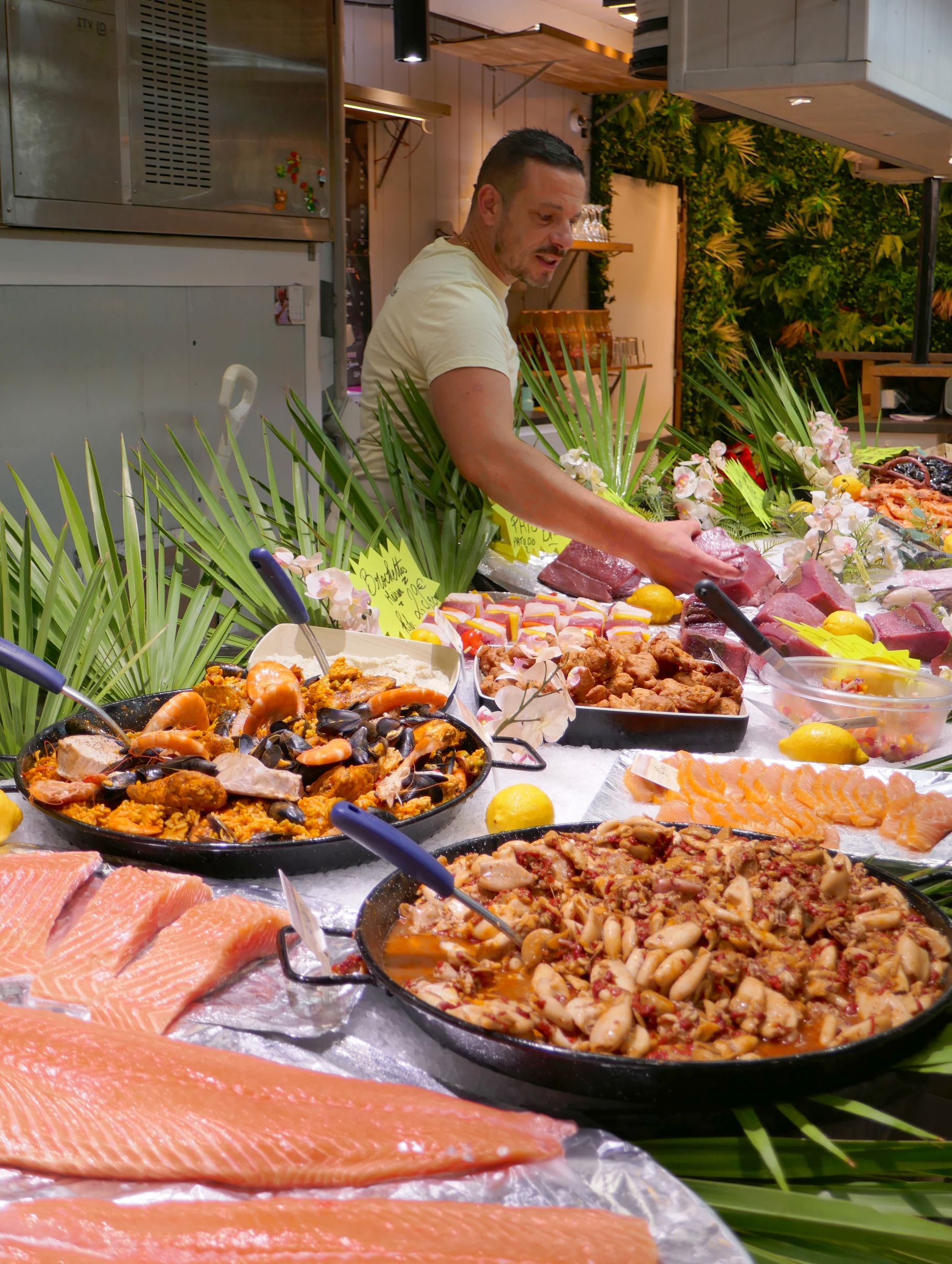
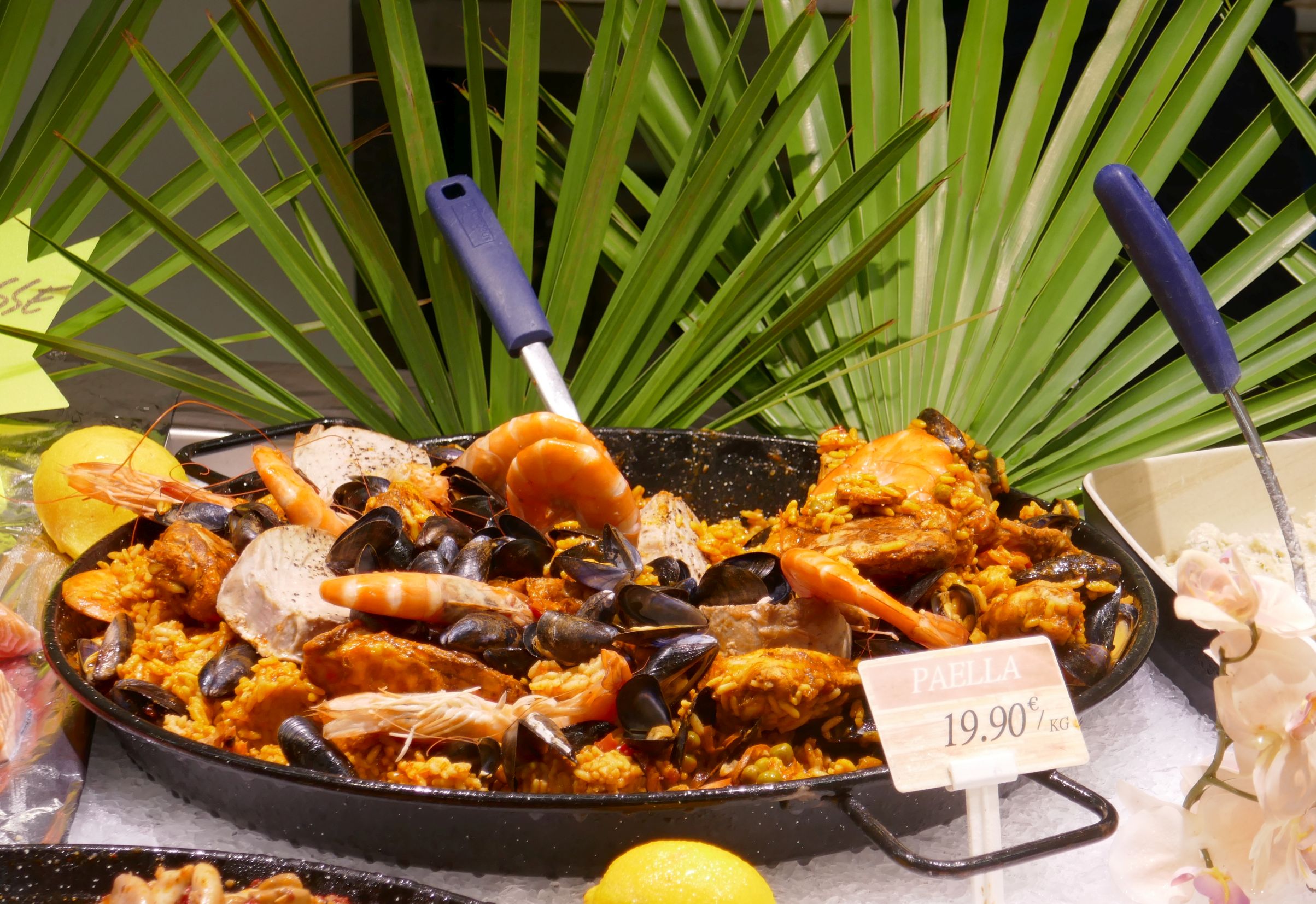
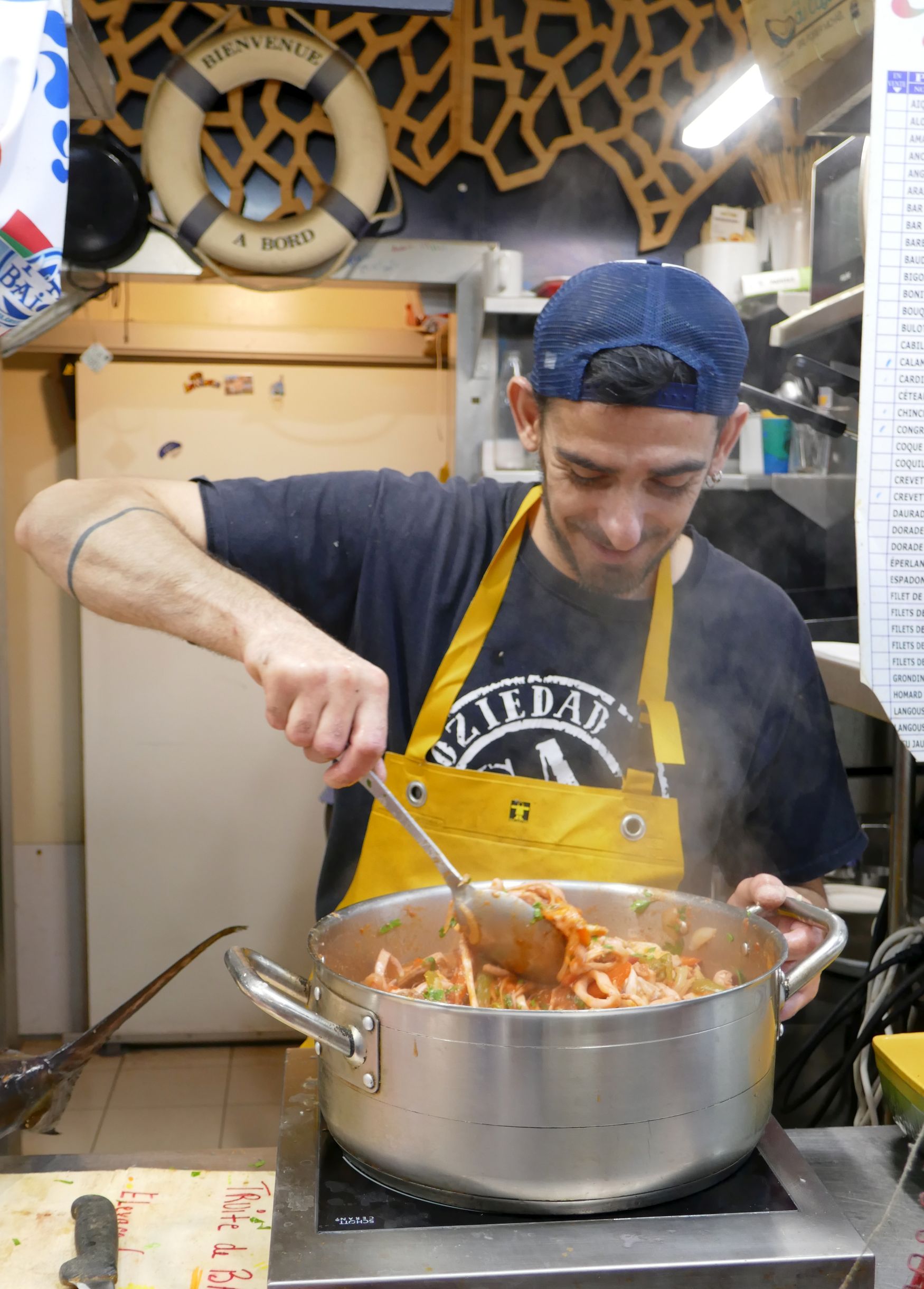
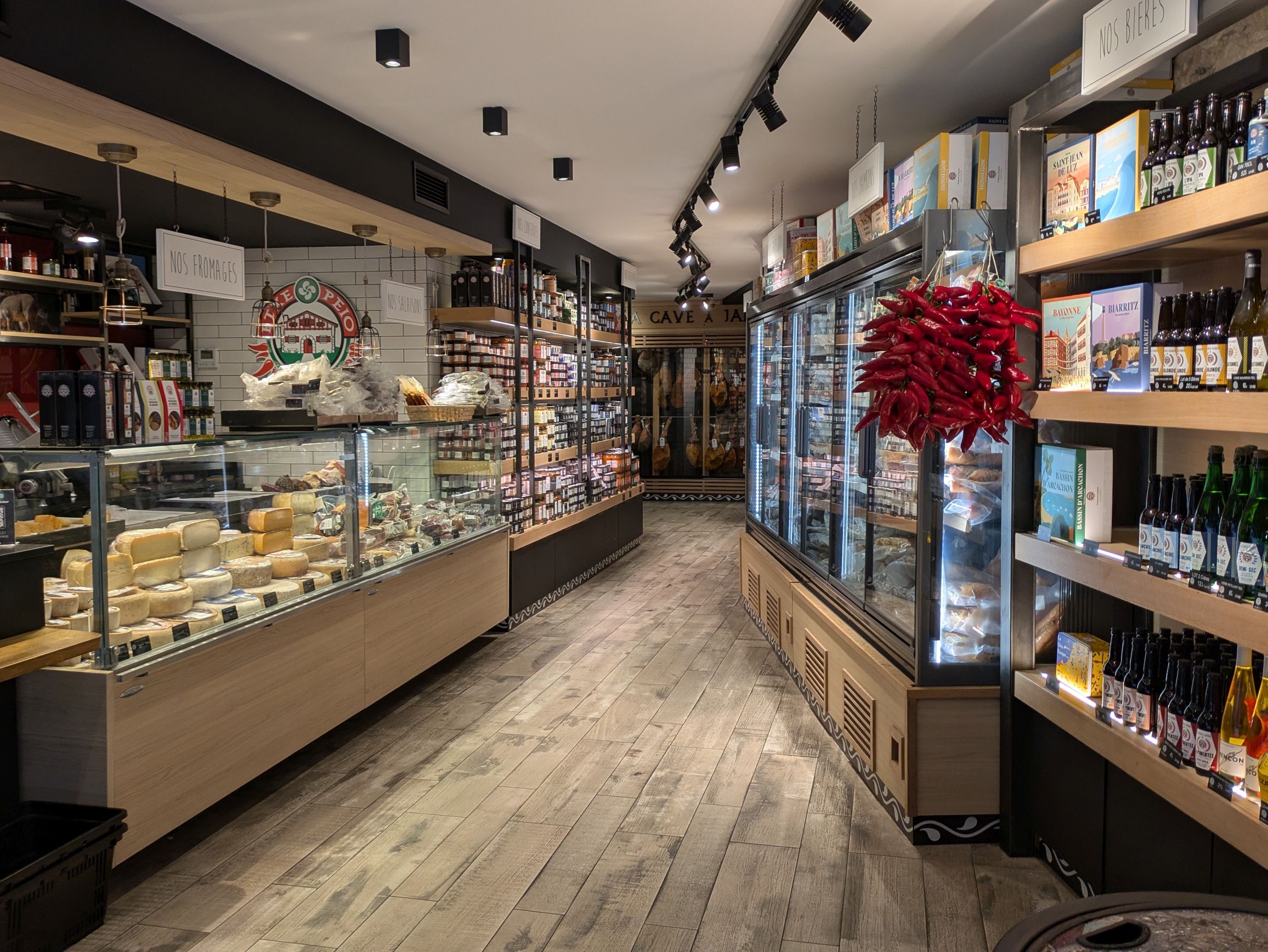
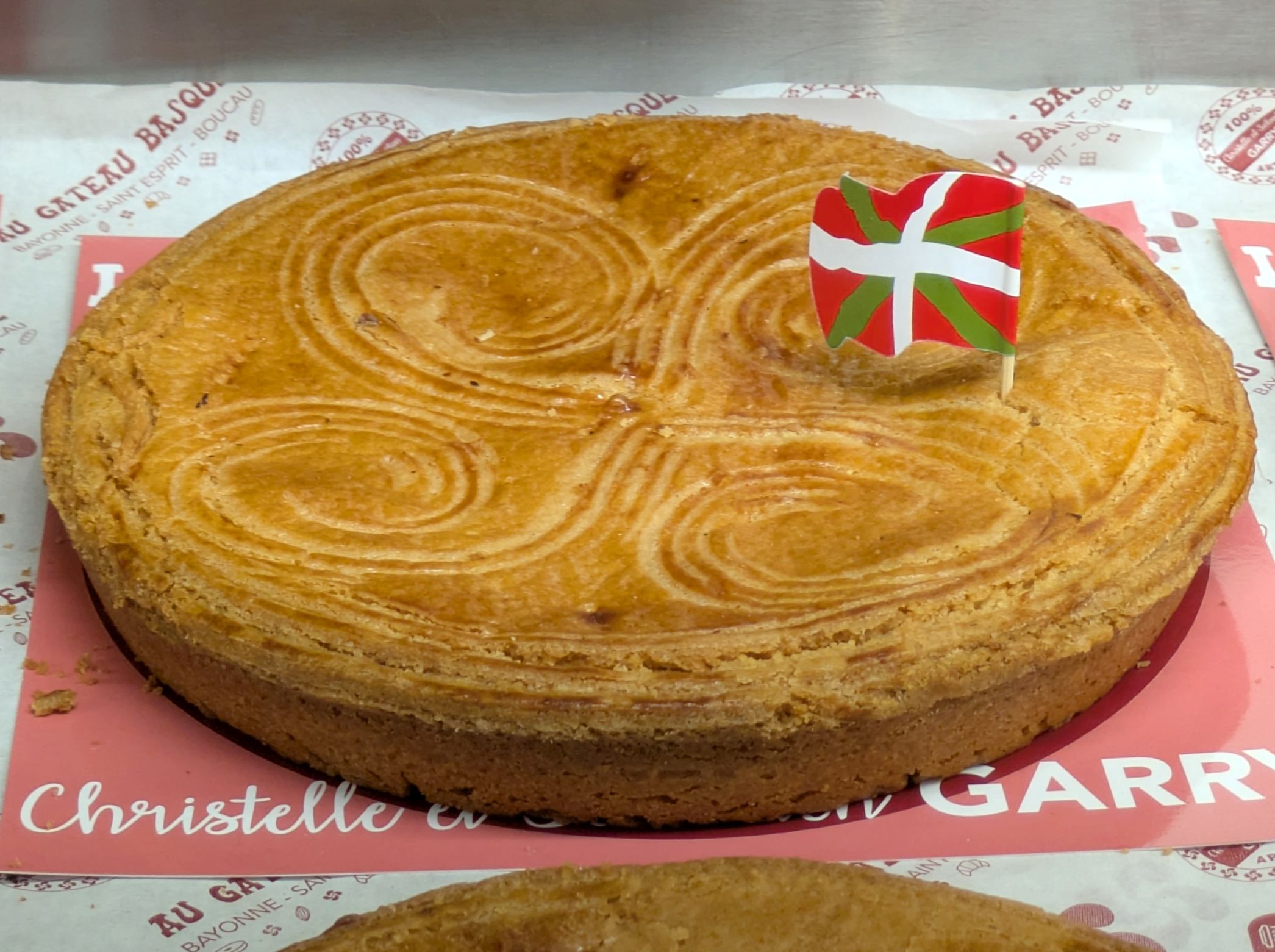
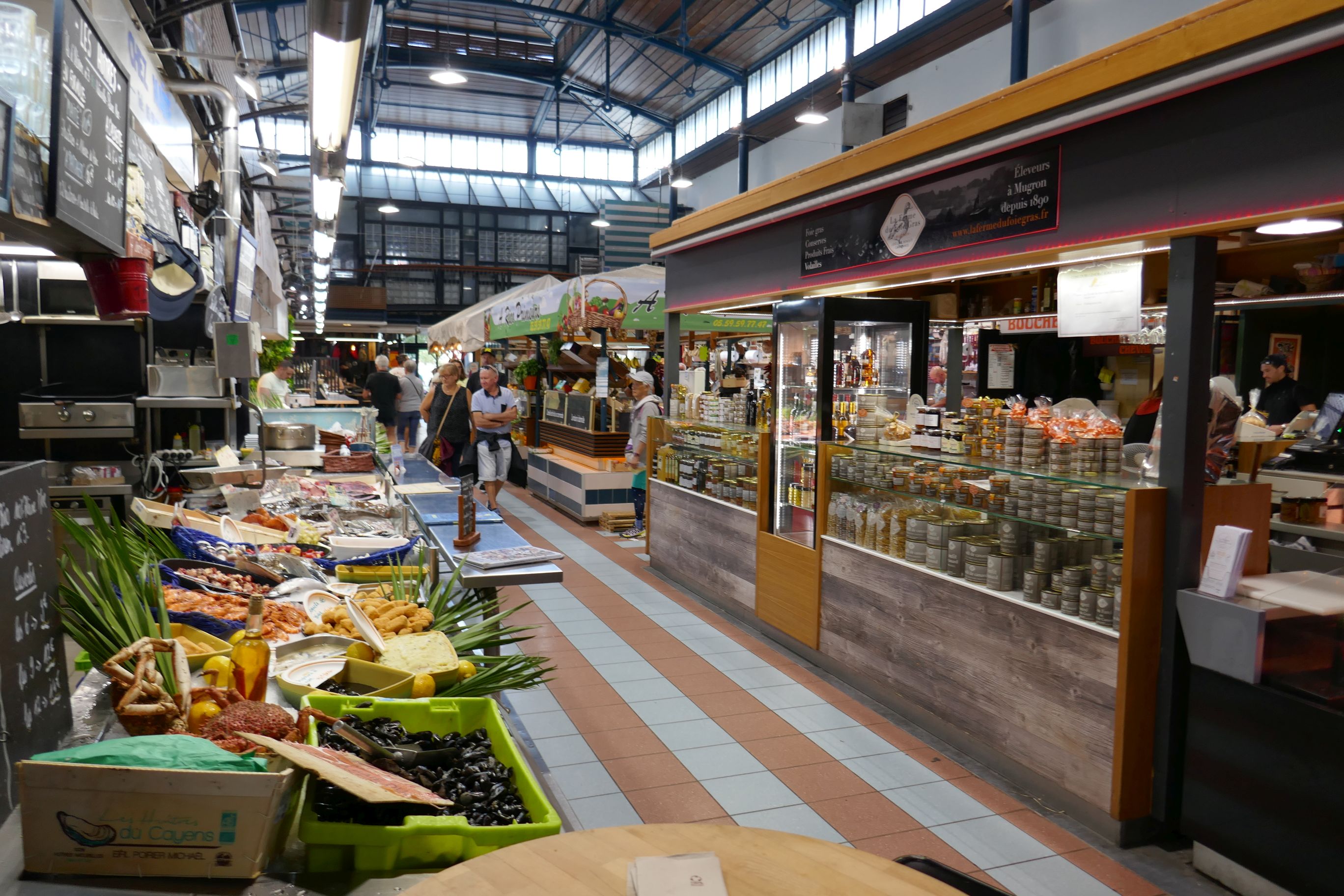
Markets & food of Bayonne:

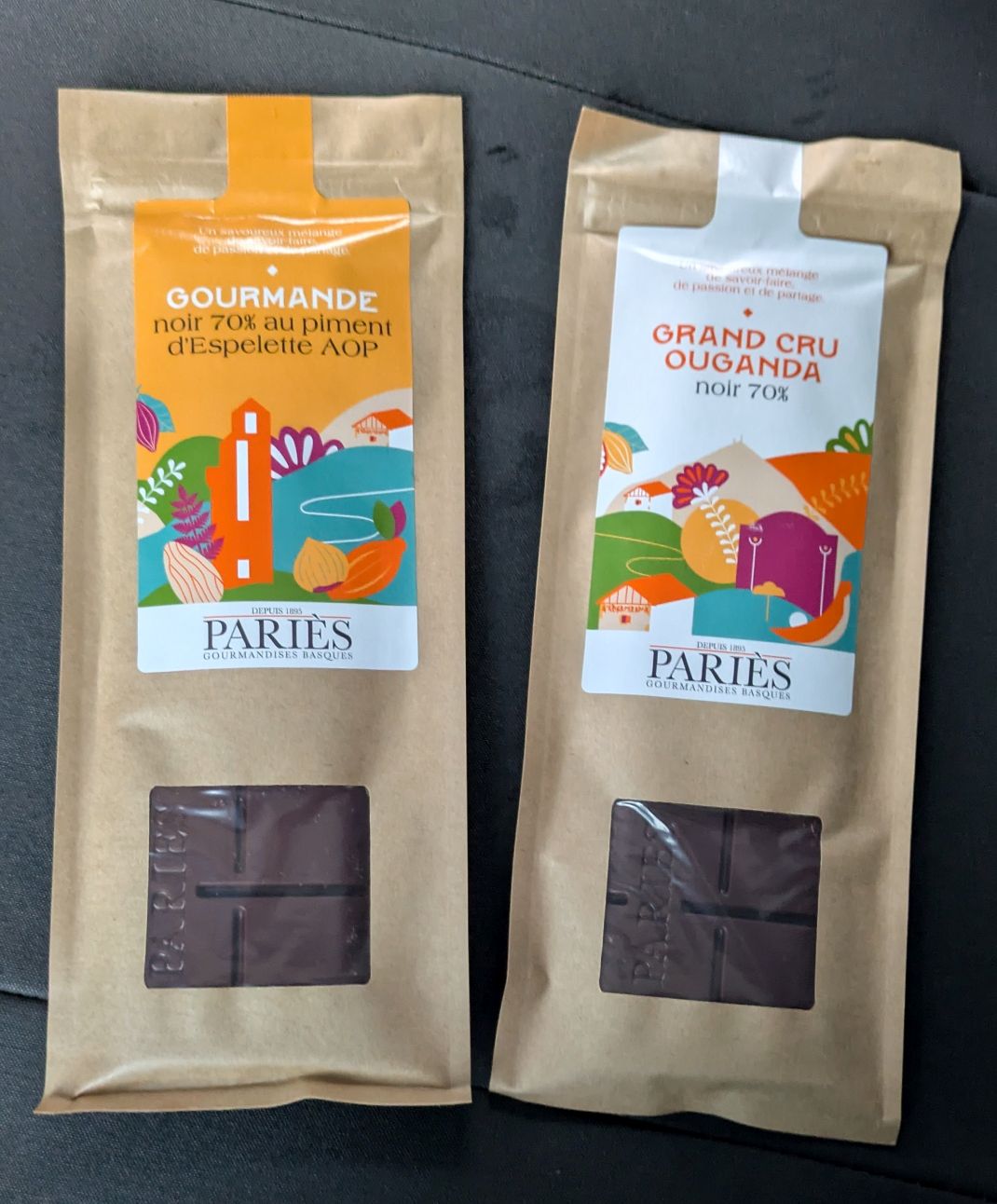
Some of the fabulous chocolate Tom gave to the seven of us on the pre-trip extension to share.

Coming up next: SOUTHWEST FRANCE, NORTHERN SPAIN & PORTUGAL #7: BIARRITZ & SAINT-JEAN-DE-LUZ

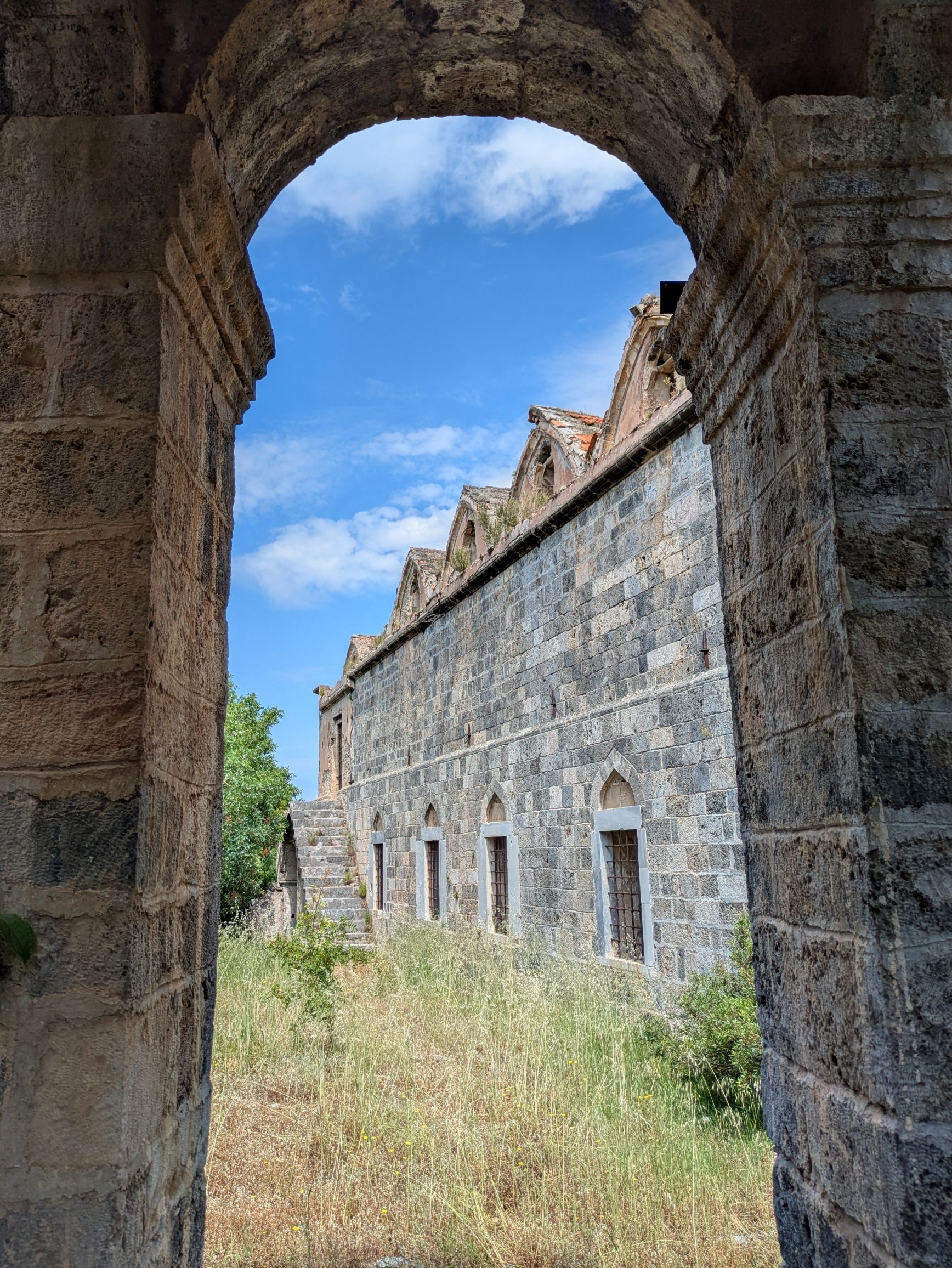
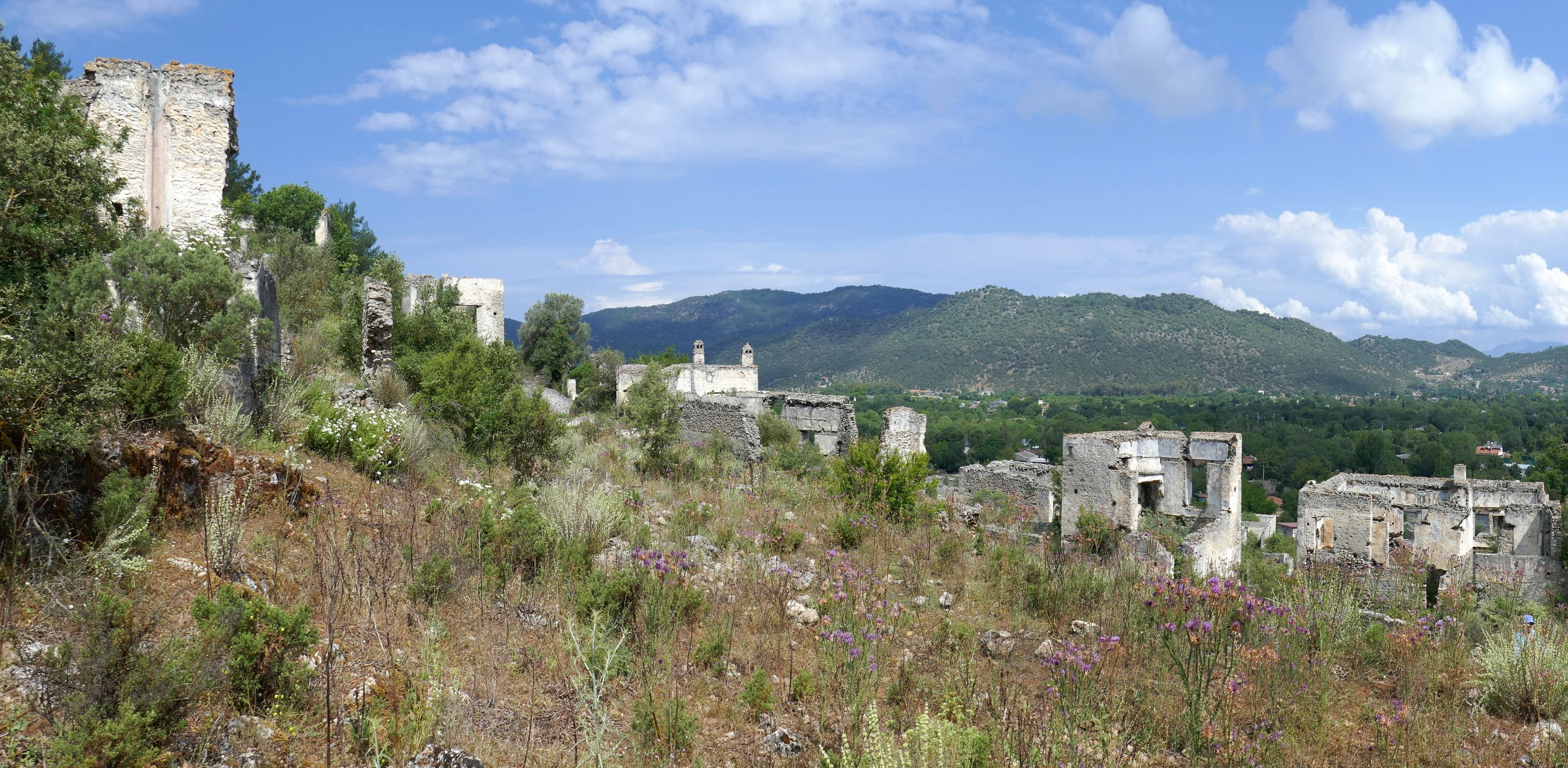
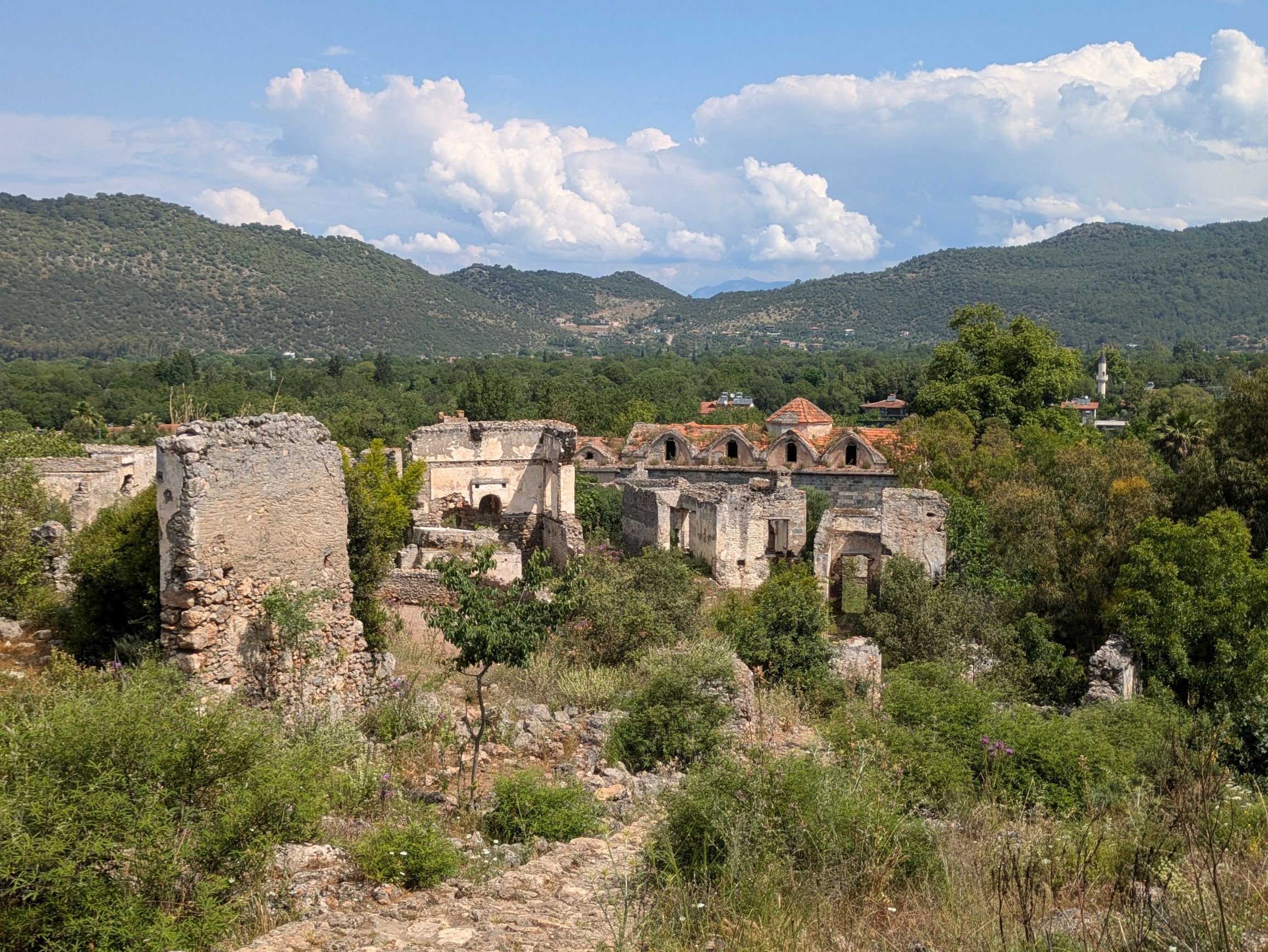
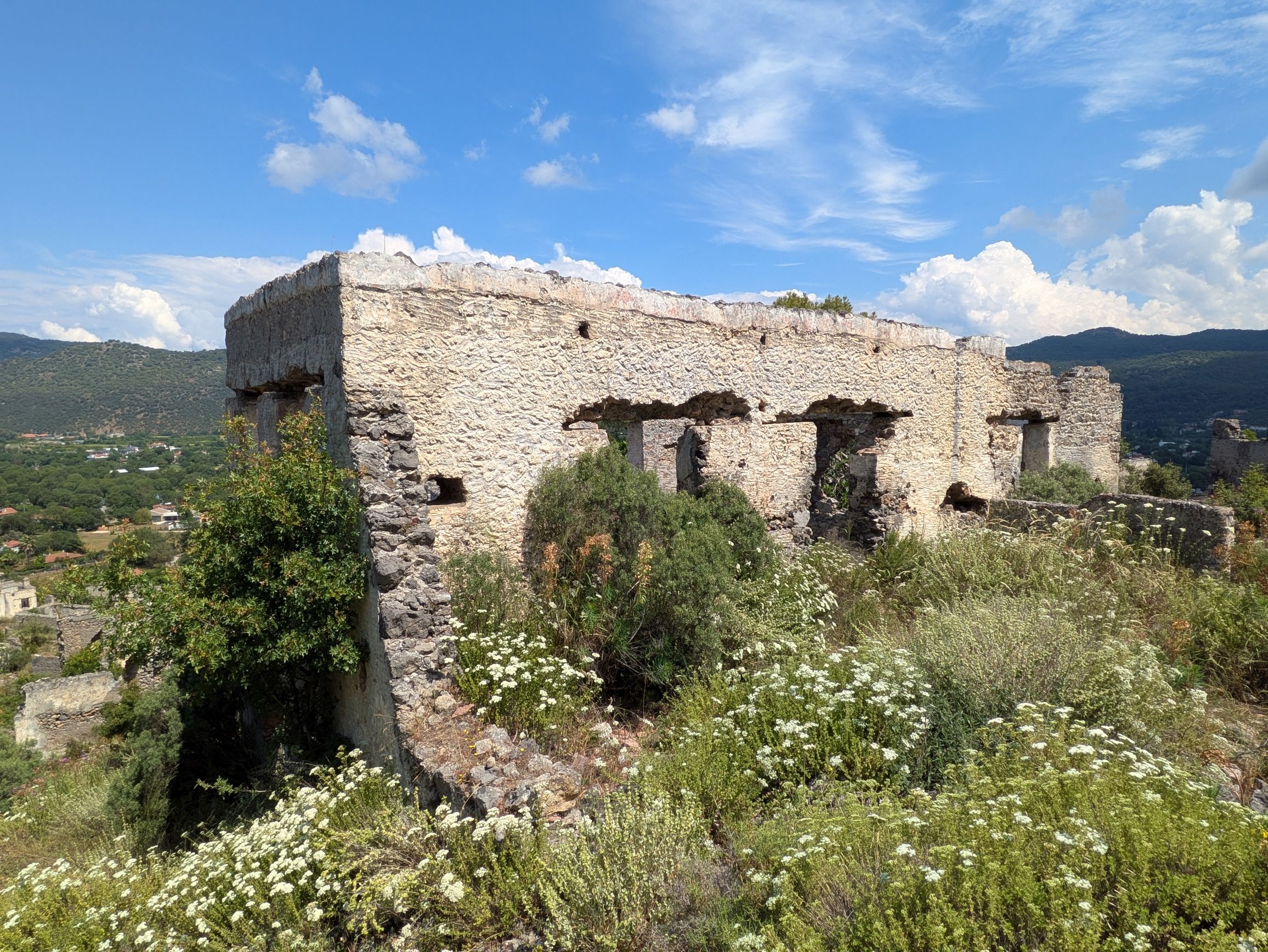
TURKIYE #12: HIKING KAYAKOY, A GREEK “GHOST TOWN”

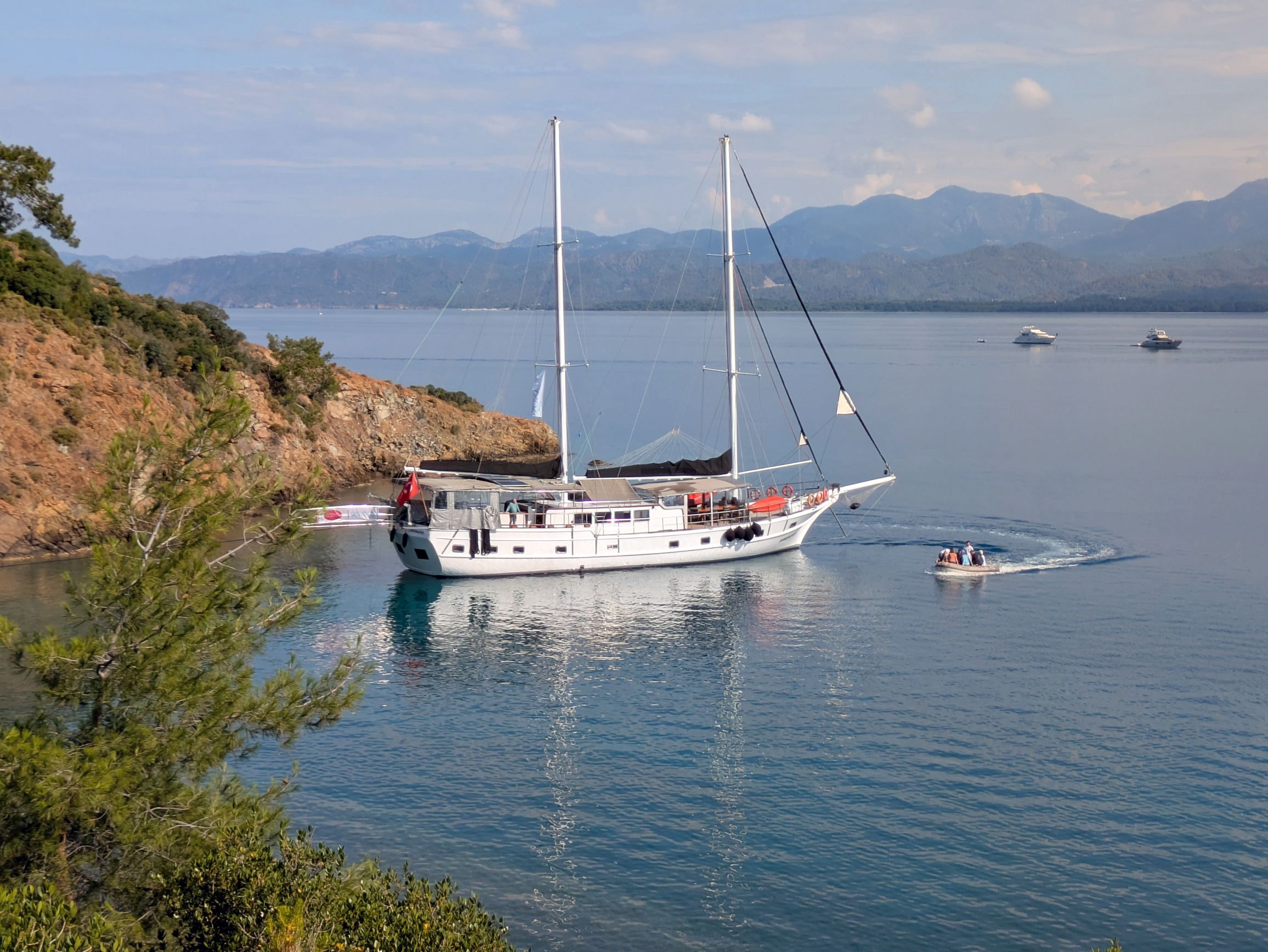
Our boat was anchored in a quiet cove overnight, and we were fortunate to wake up to such a beautiful day for our hike in the Greek “ghost town” of Kayakoy, located south of Fethiye. Following breakfast on board, the crew took us to shore, and we were transported to Kayakoy by minibus.

(For all photos, click on the image for a full screen view.)

Kayakoy has such an interesting—but sad—history. The people of this town were Greek Orthodox Christians and lived in relative harmony with their Turkish-speaking Muslim Ottoman rulers from the 14th century until the 20th century. In 1914, a campaign was started by the Muslims who wanted the Greek Christians out of Turkiye. In 1919, 6,500 villagers from Kayakoy (as well as other Greek Christians in Turkiye) were forced to leave by the government, and many died walking the 110 miles to cross Turkiye’s border. Others were forced into Ottoman labor.

From 1919-1923, the city depopulated, and then in 1923, the Greek and Turkish governments agreed on a population exchange. The Greeks living in Turkiye were relocated to Greece, and the Muslims in Greece were sent to Turkiye. All these people were forced out of their homes, soon to be occupied by newly exchanged residents. The Muslims who were sent to Turkiye refused to live in the homes of the previous Greek occupants, however, because many Greeks had died in their homes.  They said there were “ghosts” in those houses, so that is how it became an abandoned “ghost town.”

In 1954, some of the regulations of the treaty were lifted, so some of the victims returned to what they had viewed as their country—the place they had lived their entire lives until they were forced into exile.

Currently, 925 people live in the village, but most of the previously abandoned structures sadly remain that way.

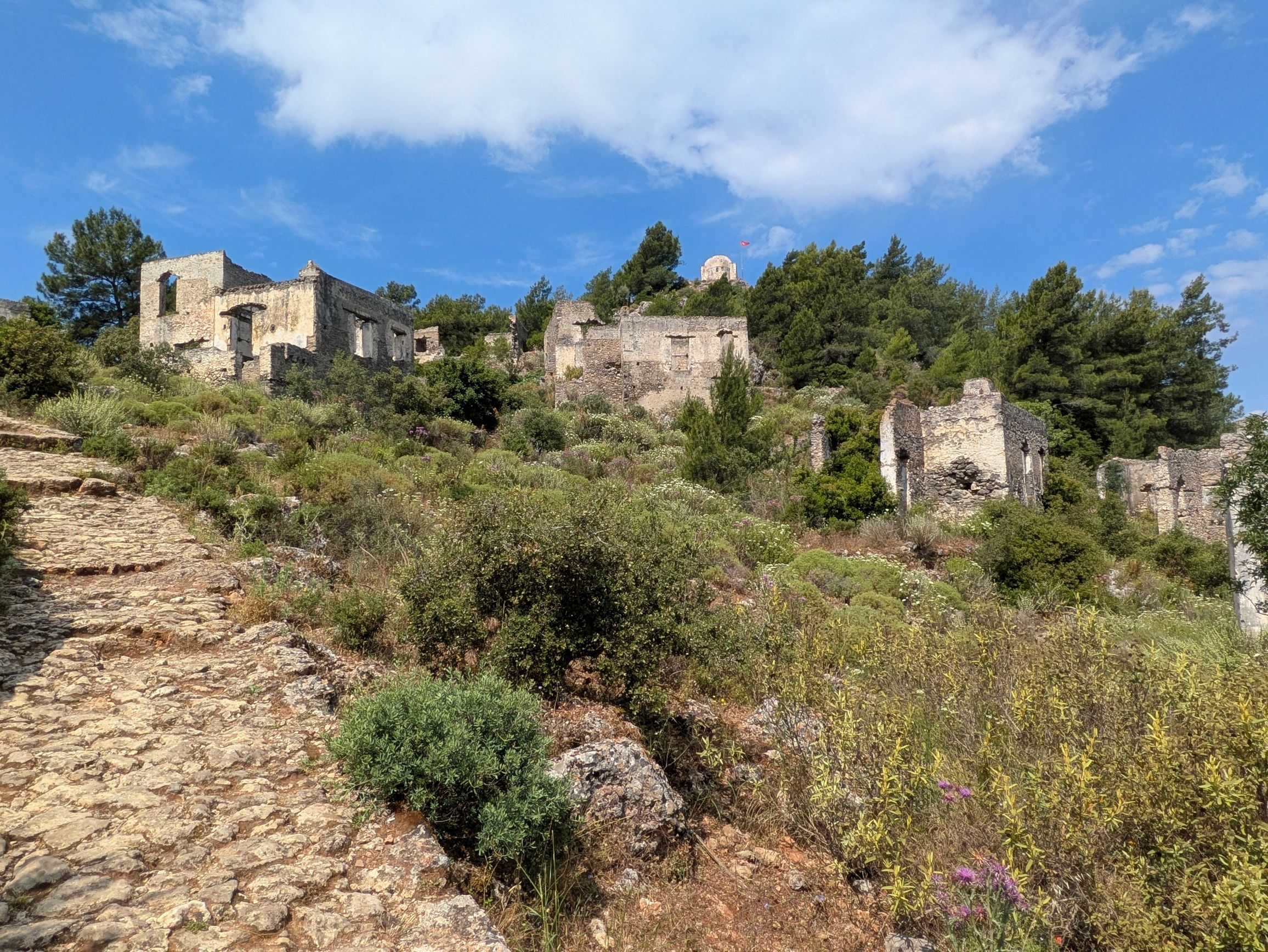
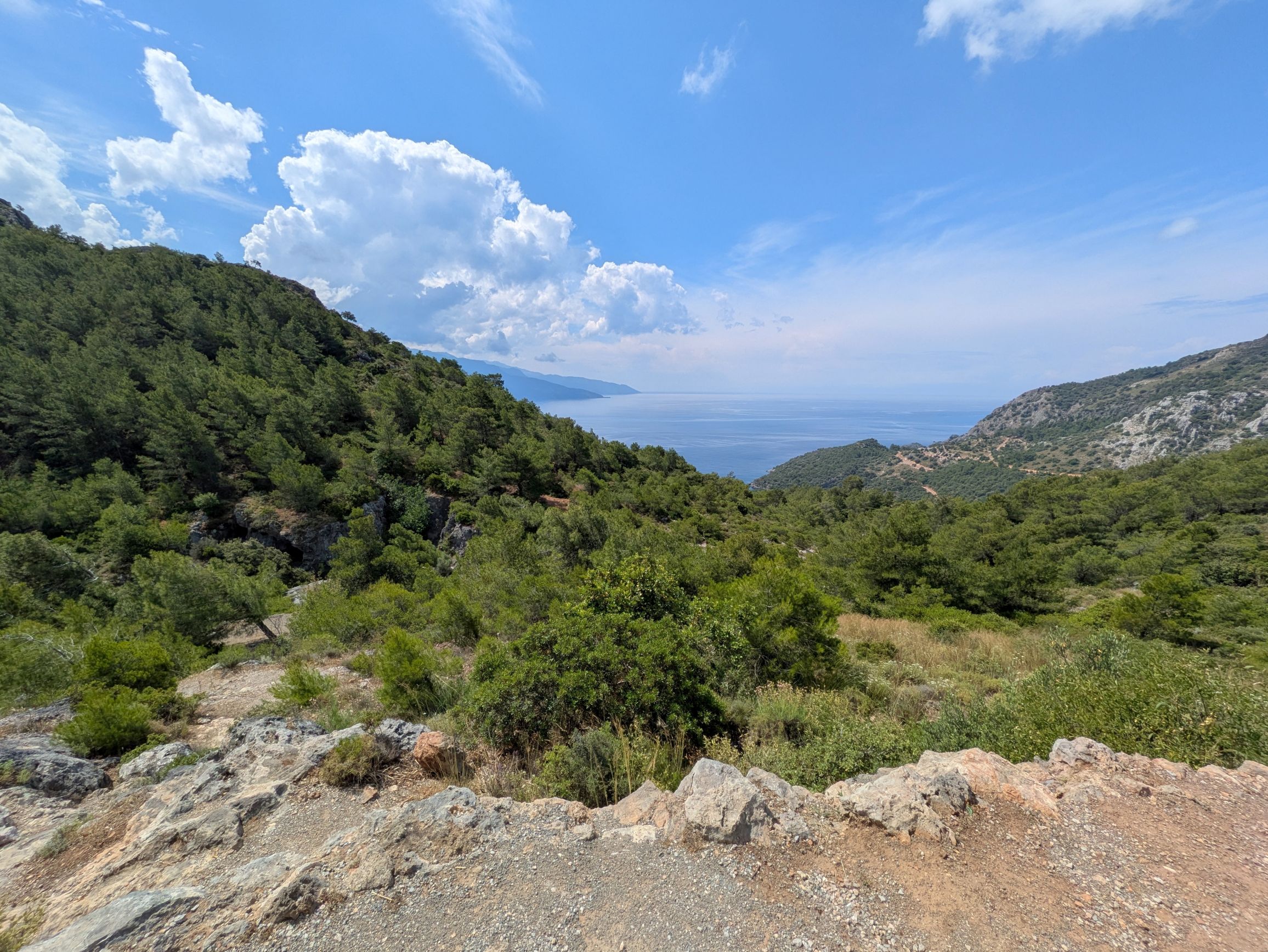
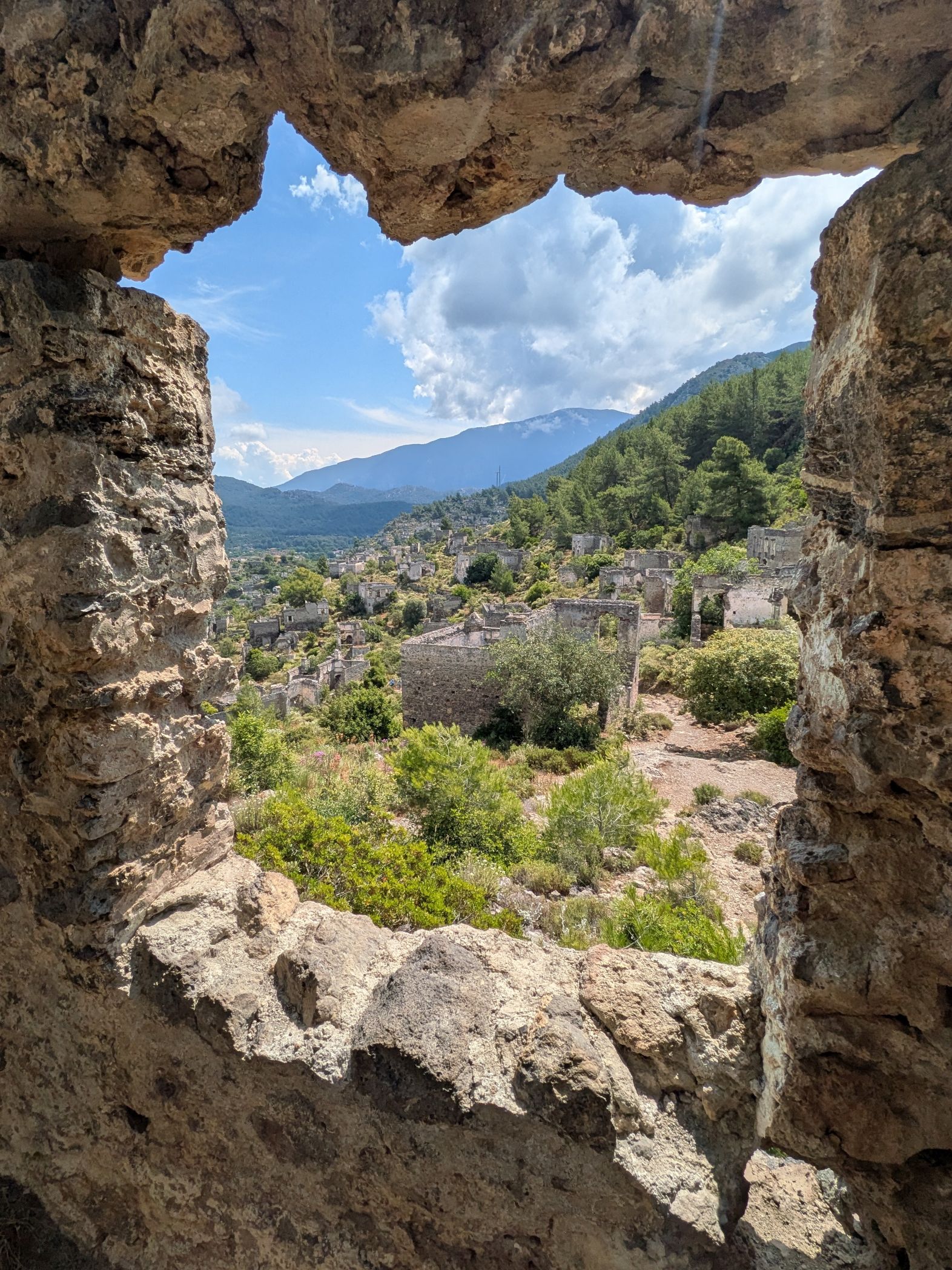
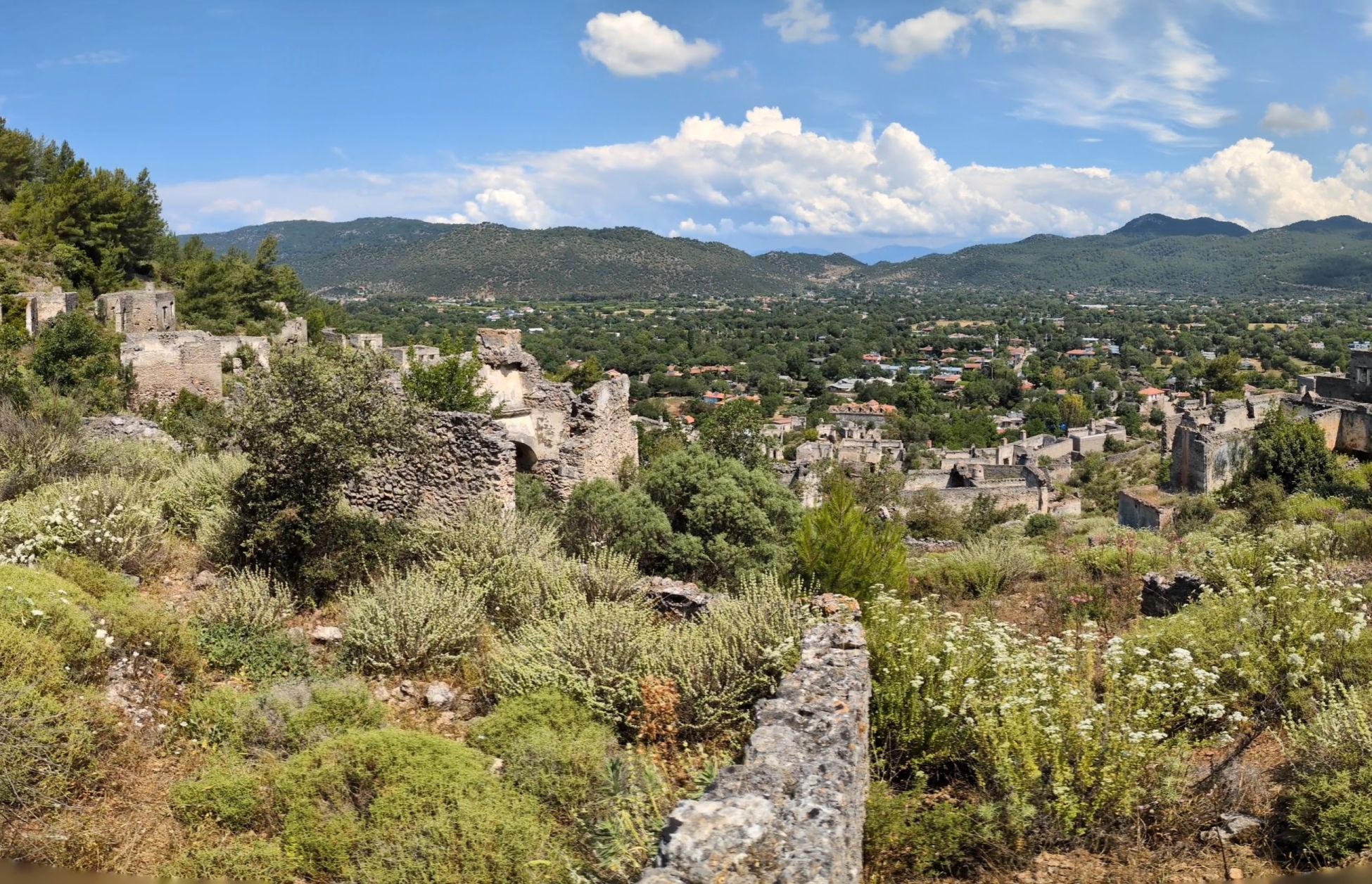
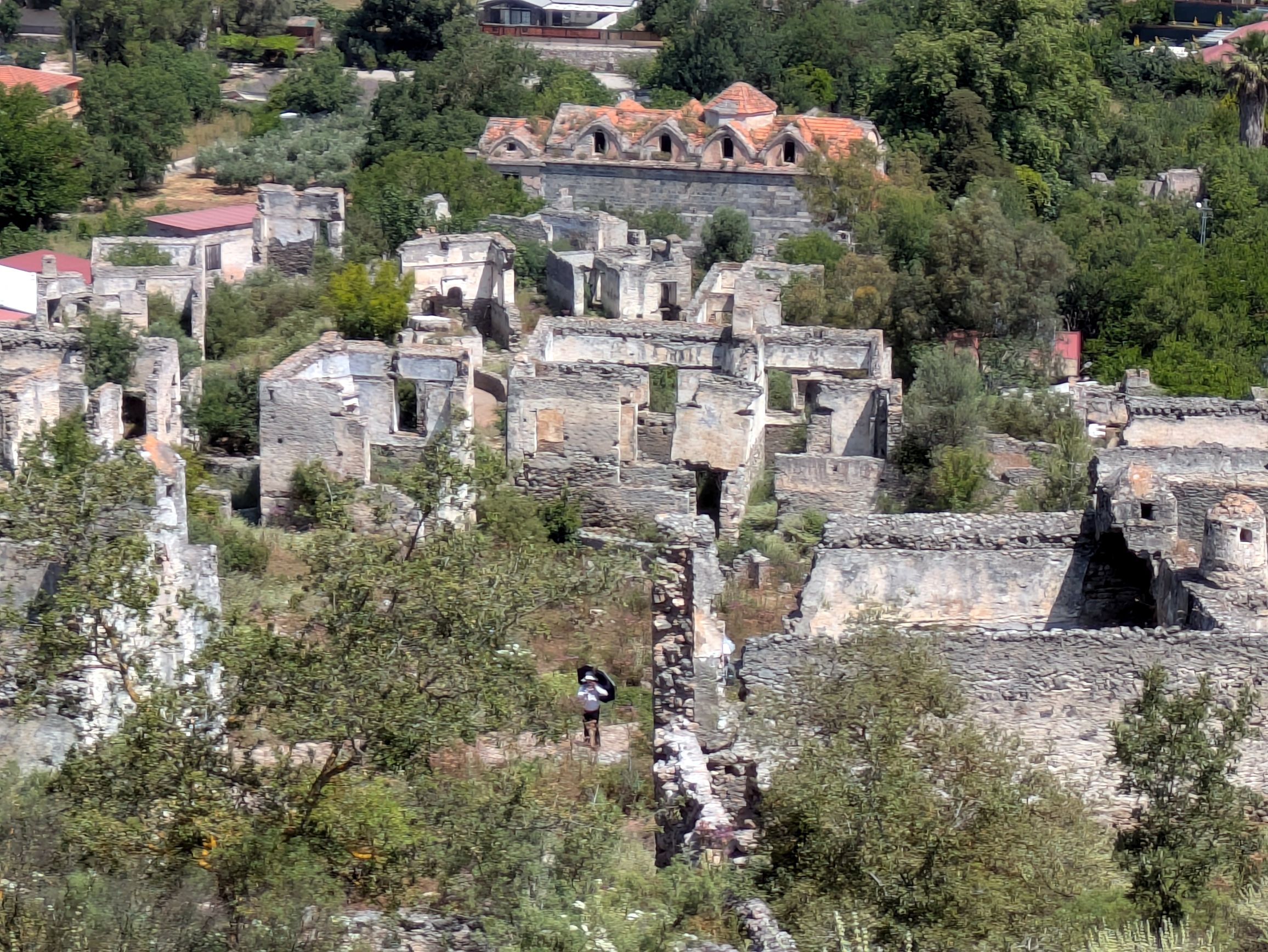
The hike, very steep at times, was beautiful and well worth the effort. The views were spectacular at the top, and the abandoned homes were quite photogenic.

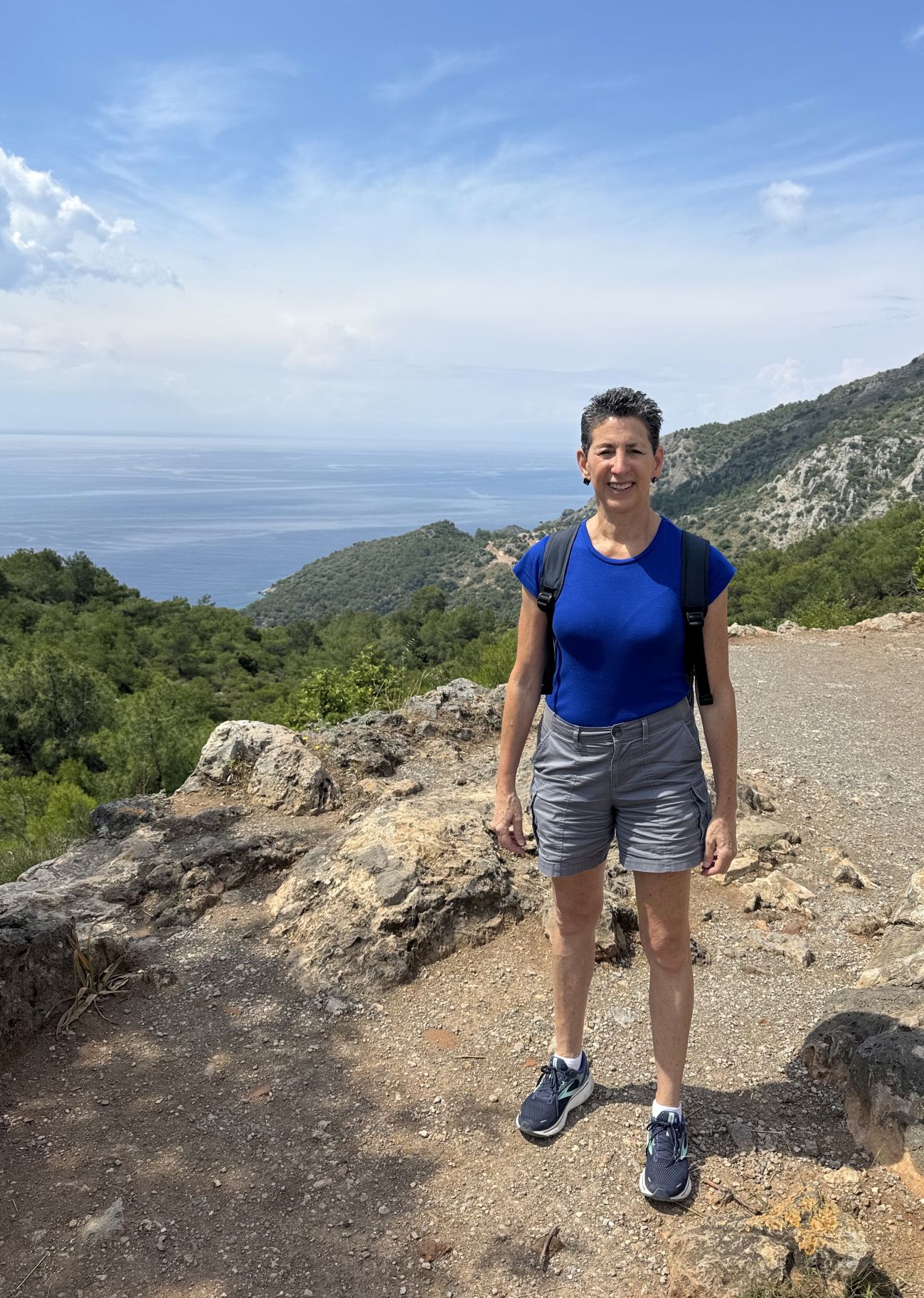
The building with the flag at the top of the hill was our destination. It was a steep climb!
I’m almost there!
I made it!
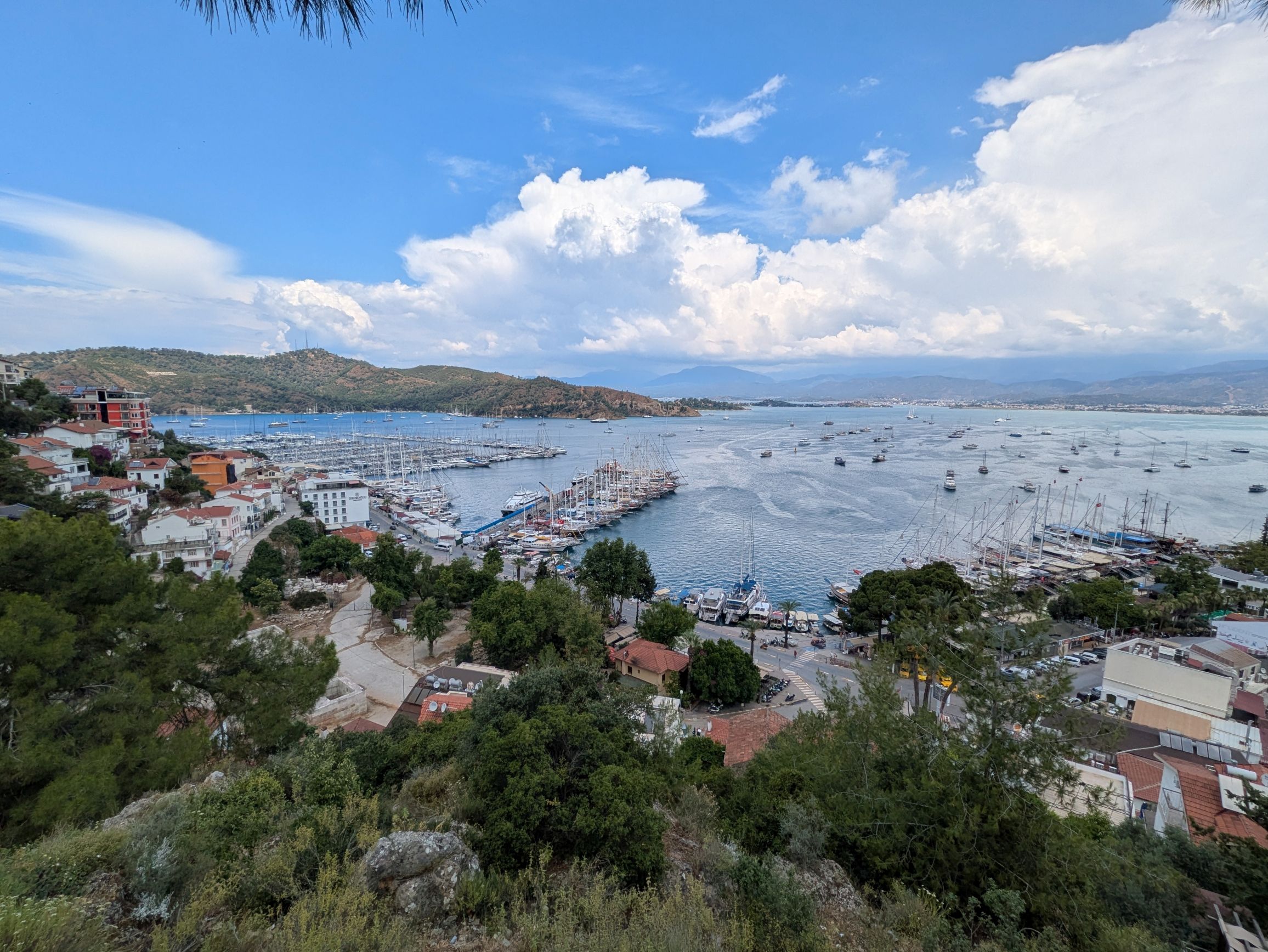
This view was our reward.
Another hiker offered to take our group photo.

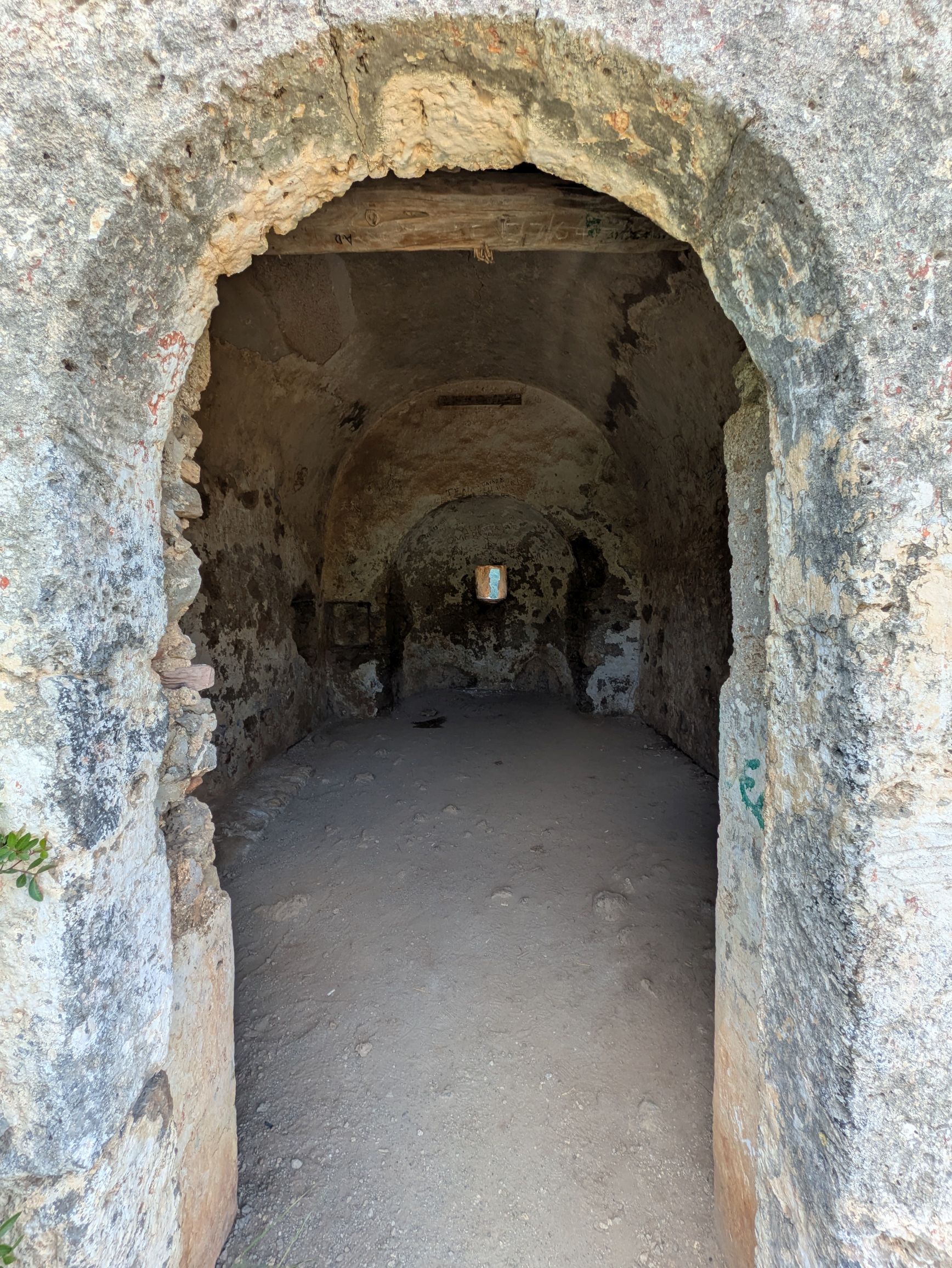
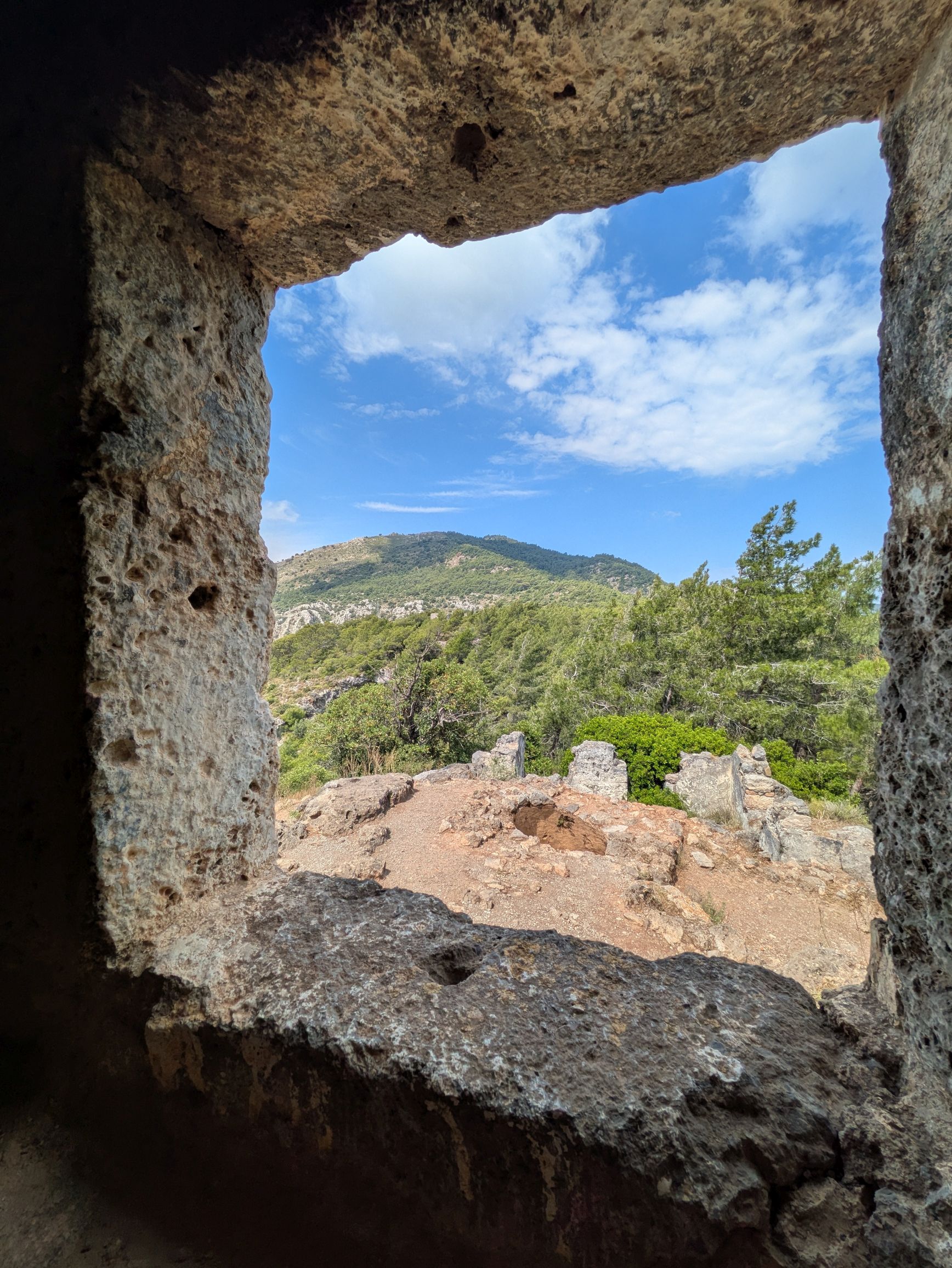
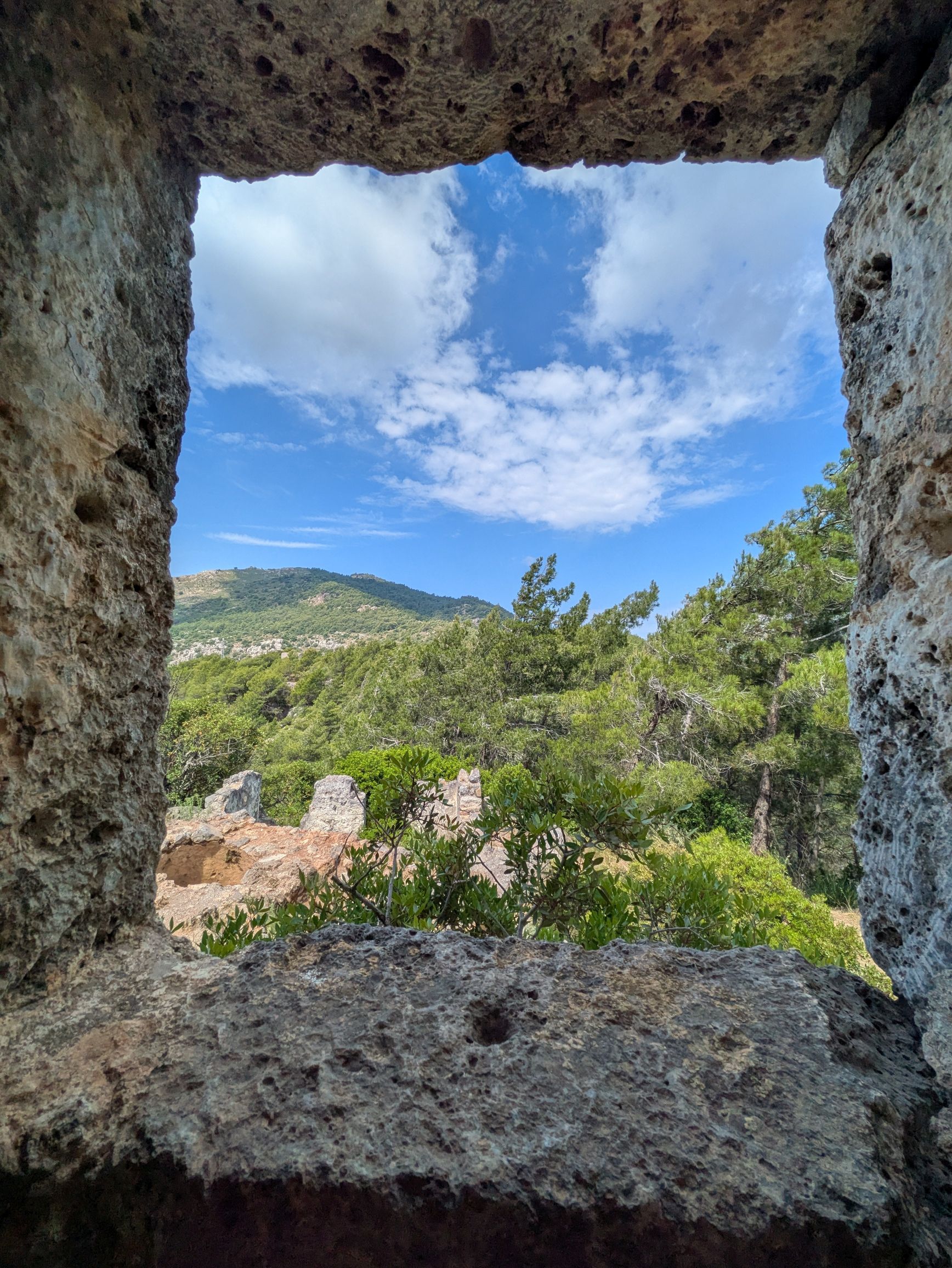
Views from the inside looking out:

Nuri, our tour leader, leading the way

Back in the little village of Kayakoy, we had some free time to wander around:

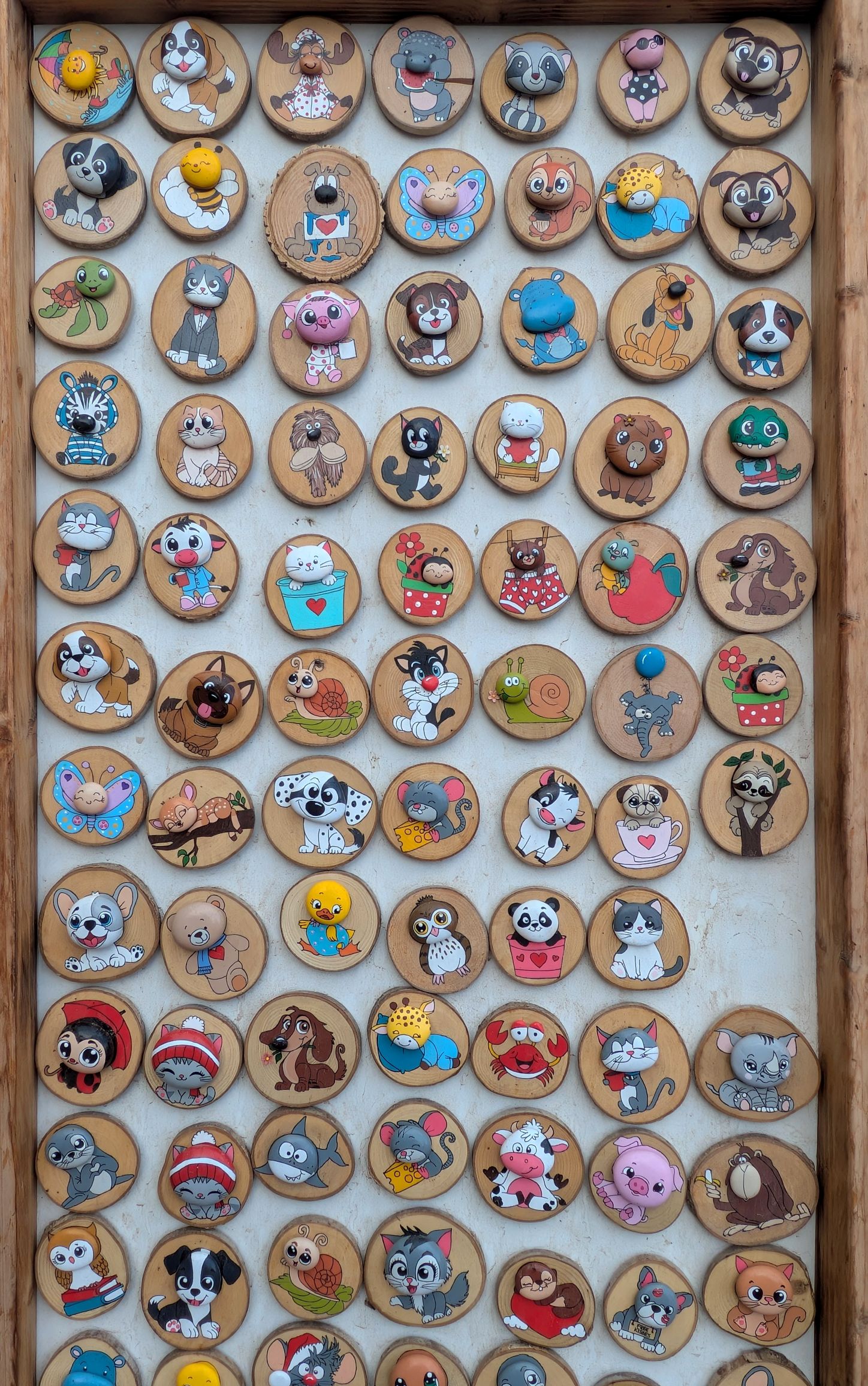
I fell in love with these hand-painted wood and stone magnets and purchased a couple of them.
The view from the bus on our ride back to the boat,

Next up: TURKIYE #13: HIKING & SWIMMING THE TURQUOISE COAST

MY FAVORITE TRAVEL TIPS

I have done a lot of traveling over the years—72 countries (according to Brittanica’s list) and 42 states. During my first big trip (for one year with my backpack in the South Pacific), I learned a lot and earned my stripes!  Times have changed since that post-university graduation year of 1984, especially with technology, so many of the tips I would have given back then are now obsolete.

This leads me to Tip #1: Do NOT, I repeat DO NOT buy an eSIM for your phone at your destination airport! For that matter, save yourself a lot of stress and purchase it at home before you leave! I witnessed a big problem firsthand on our Turkiye trip. Some members of our tour group purchased an eSIM at the airport upon arrival and it didn’t work with their phone, which they didn’t learn until later. They were also unable to get a refund.

My recommendation? I have an unlocked cell phone I use for travel and purchase a global eSIM from home through Airalo. I purchased the $89 one that is valid for 365 days and includes 20 GB of data, 200 minutes of phone, and 200 SMS texts. They also sell just data eSIMs, so make sure you click on the “Data/Calls/Texts” tab on the site if you want all three. For a discount, use referral code ELAINE7474.

There are Airalo eSIM options that are less expensive, but the valid period is shorter and they include less. Since we travel a lot internationally throughout the year, the 365-day eSIM works best for me, and I have not had any problems with it at all.

Tip #2: Do you use the safe in your hotel room? Have you ever forgotten something in that safe? On a previous trip, a fellow traveler forgot their passport in the safe and didn’t realize it until the bus had driven off. To avoid the same mistake, leave one shoe in the safe of the pair you will be wearing when you check out. I doubt you will leave the hotel wearing one shoe!

Tip #3: Check with your bank to see if it has a partner bank at your destination. I use an ATM card from Bank of America, and using their partner banks saved me $11 per transaction during my last trip.

Tip #4: If you are traveling with a spouse, you should each carry an ATM card and credit card in case one doesn’t work for some reason. We only own two credit cards, and we each carry a different one in case there is a problem.  I have also adjusted my bank and credit card settings to notify me by e-mail following every single transaction, no matter the amount, so I will know if either one has been compromised.

Tip #5: In a computer document, type a list of passwords, insert images of your scanned passport, wallet contents, and include any other important information you may need.  Make sure to PASSWORD PROTECT that document! Now, email or text it to yourself with a phony title. If you need to write down the password, DO NOT include what that password is for. Just put it on a piece of paper and put it somewhere safe.

Tip #6: Bruce and I hate wearing those travel waist belts, so I use a small Travelon security backpack that has straps that can’t easily be cut with a knife. It also includes locking zippers and other security features. My travel wallet (with security features) has a chain that I clip to the loop inside my pack. In crowds, I wear the pack in front of me.

Tip #7: Before packing cubes were invented, I used Ziploc bags for clothes and sucked the air out before zipping shut.  This kept my clothes organized and easy to repack in my backpack.  Compression cubes are so much easier now! Still, I always pack empty Ziploc bags for unfinished snacks purchased along the way, chocolate bars (which I ALWAYS buy), anything that could cause a messy disaster in my suitcase, and for handwash, as detailed in my next tip.

Tip #8: Pack light, and then handwash your clothes when needed. If the sink (or bidet) in your hotel doesn’t have a stopper, place your handwash in a large Ziploc along with detergent and water, zip shut, shake, and rinse. For a larger load, I either use the plastic laundry bag the hotel provided, or if it has holes, I use the plastic grocery bags I always stick in my suitcase.  Load it up with your laundry, soap and water, twist shut, shake, and rinse.  Forget to bring laundry sheets or detergent from home?  Use the hotel’s bath gel.  After doing your handwash and squeezing the water out, roll them up in a towel (which will absorb the excess water) and your clothes will dry quicker. 

Tip #9: In the morning when the room cleaning carts are in the hotel hallway, grab an extra towel and return the wet ones from your handwash.

Tip #10: Bring a couple of inflatable hangers for the t-shirts or blouses you wash.  They pack light, and clothes dry quicker.  They also come in handy if the hotel shorts you on hangers.

Tip #11: Pack an empty small spray bottle (I use one left from travel size hairspray) in your suitcase. If your clothes are wrinkled upon arrival, fill the bottle with water, hang your clothes up in the bathroom, and spray them.  Shake each one out with a vigorous snap, hang it back up, and your wrinkles will be gone when the water is dry.  (Yes, I carefully roll my clothes and even lay a dry cleaning bag in between the folds, but I still get some wrinkles!)

Tip #12: Spread a thin layer of Vaseline on your feet in any place susceptible to getting blisters.  This has worked every time for me, even after long hikes!

Tip #13: Traveling to a third-world country?  Toilet paper may not be available in public bathrooms.  Grab a roll from your hotel bathroom, stick it in that extra Ziploc bag you brought, and drop it in your backpack.  You will thank me later, and so will the others in the bathroom line you share it with!

Tip #14: Hotels in some countries do not provide facial tissue, or, if they do, it is very thin and scratchy.  The tissue in travel Kleenex packs is also not top-quality, so before you leave home, go ahead, splurge, and buy a box of the softest, cushiest tissue you can find.  Take it out of the box and fold them into Ziploc Snack Bags.  Drop one bag in your backpack and as many back-ups as you think you may need in your suitcase.  If you don’t get sick or have allergies, keep the unused bags in your suitcase for next time. (For that matter, keep all your travel stuff in your suitcase for your next trip.) If you do get sick, again, you will thank me.  You’re welcome.  Note: If you are fortunate to come across a hotel during your travels with cushy Kleenex, refill your bags.

Tip #15: Do you use a white noise machine at home?  Leave it there and download a free app on your phone.  I use Sleep Sounds.

Tip #16: Bring a few laundry clips or clothes pins for all sorts of uses.  I like to sleep in a dark room, so if the drapes won’t close well, I clip them shut.  They also come in handy for unfinished snacks, if your Ziploc bags are already in use elsewhere.  Another use is to clip together brochures and maps you collect along the way.

Happy travels!

UNITED KINGDOM #1: CHARMING CHESTER

In August, a few weeks after returning from Peru, Bruce and I traveled to the United Kingdom and Ireland for back-to-back tours with Overseas Adventure Travel (OAT)—a six-week long trip including post-extensions for each tour.  We returned home in early October, and then switched gears for craft show season for his fused glass jewelry.  In between, I finished up my posts and slide show on Peru, so I am finally able to begin posting about the U.K.

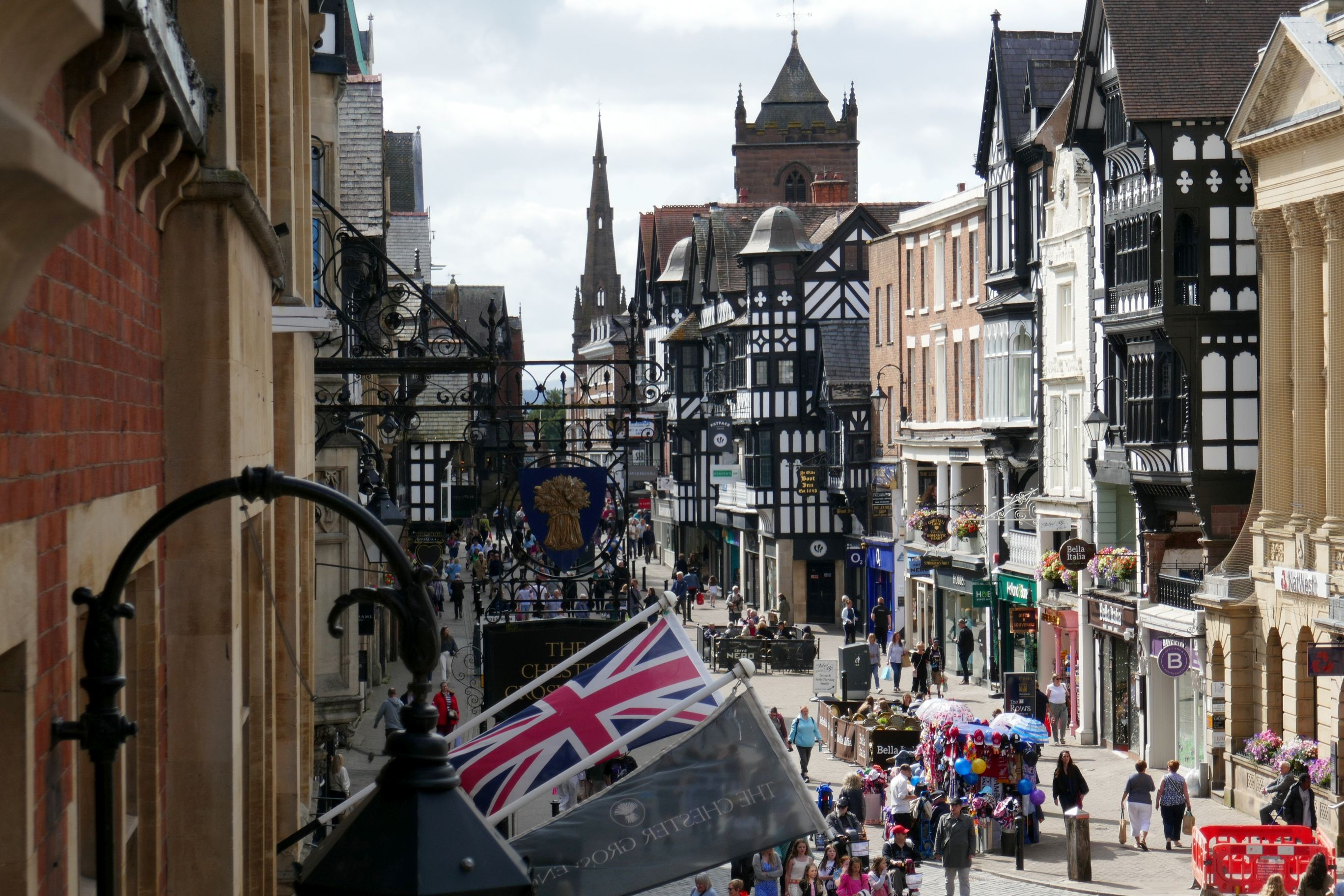
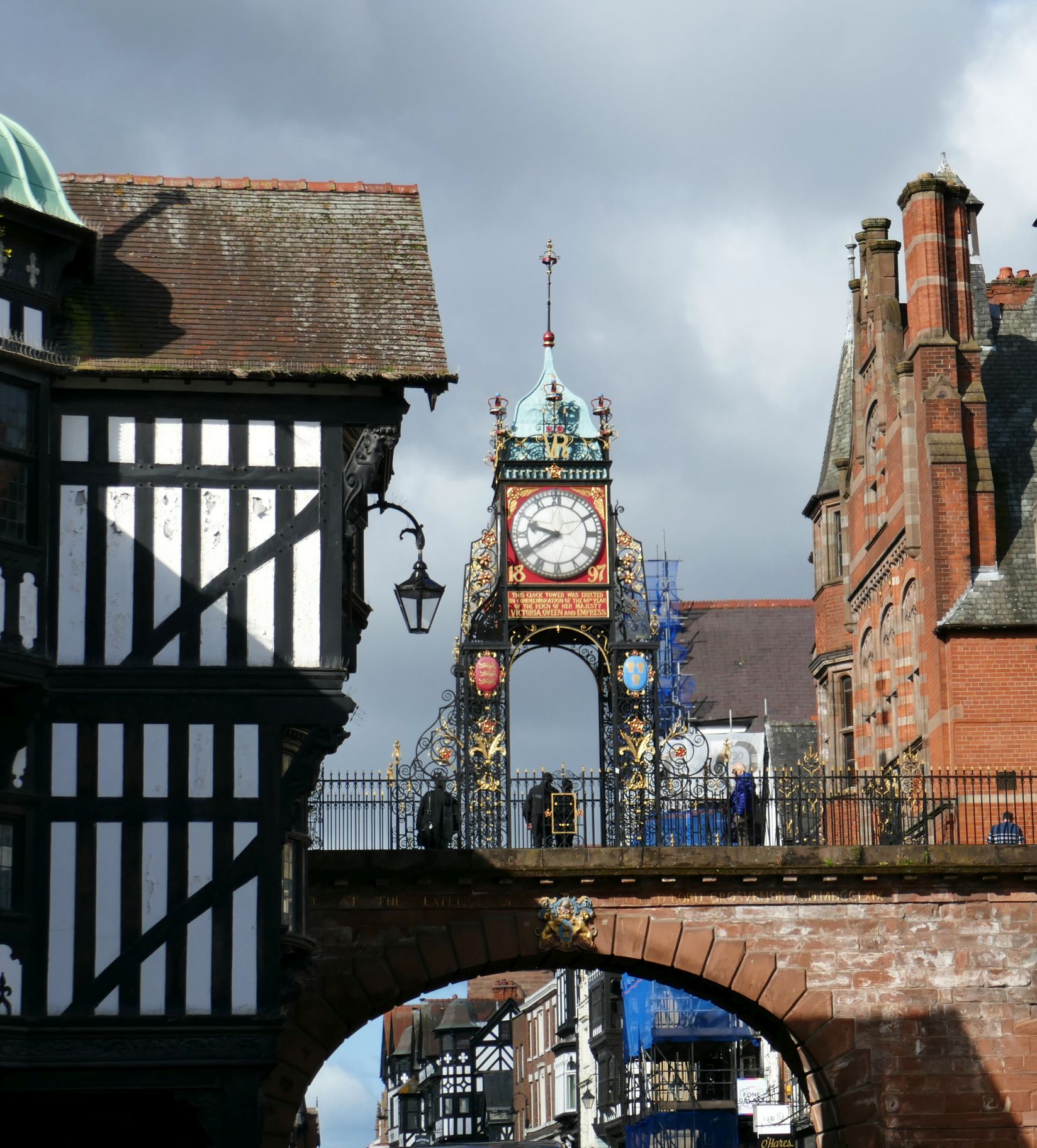
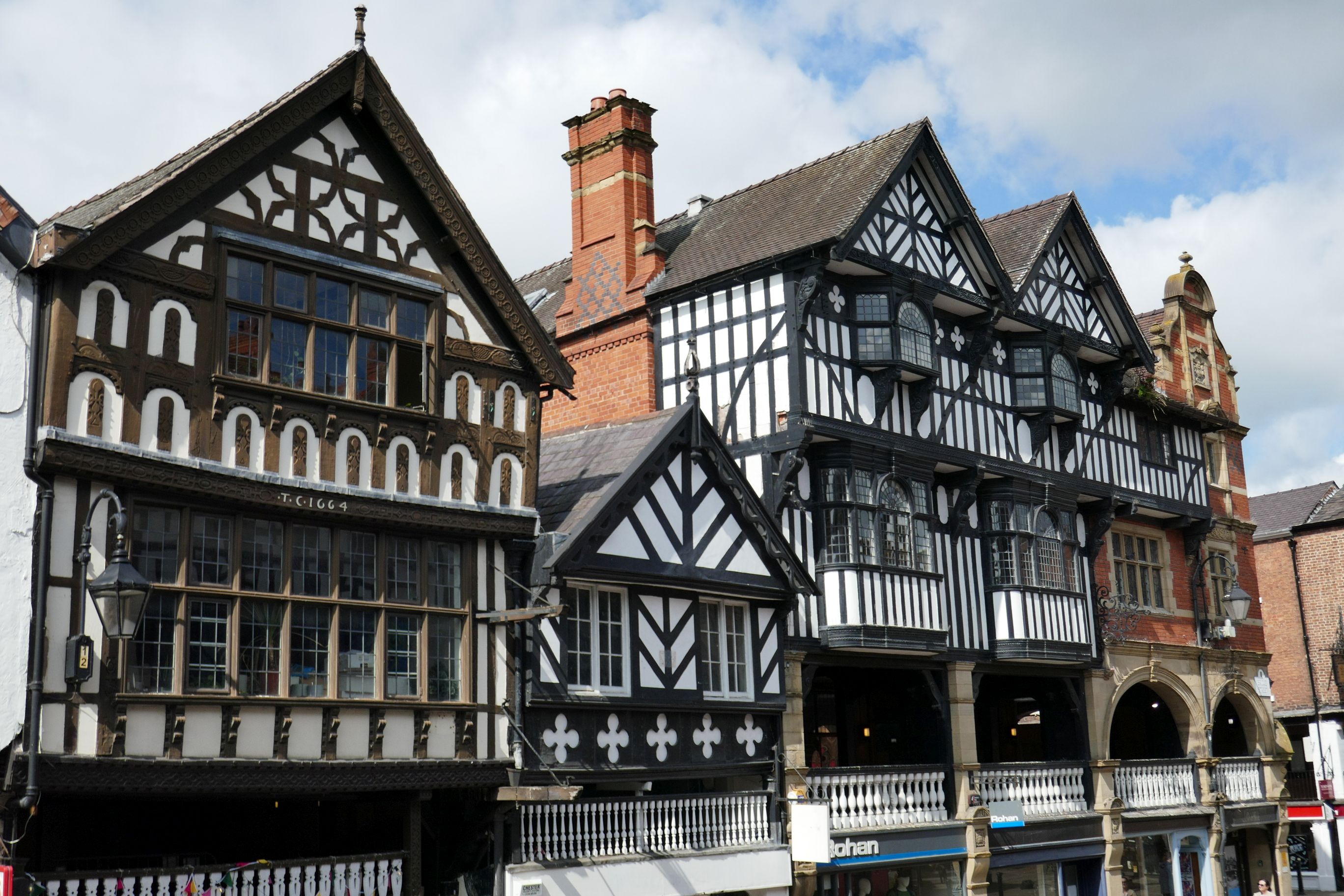
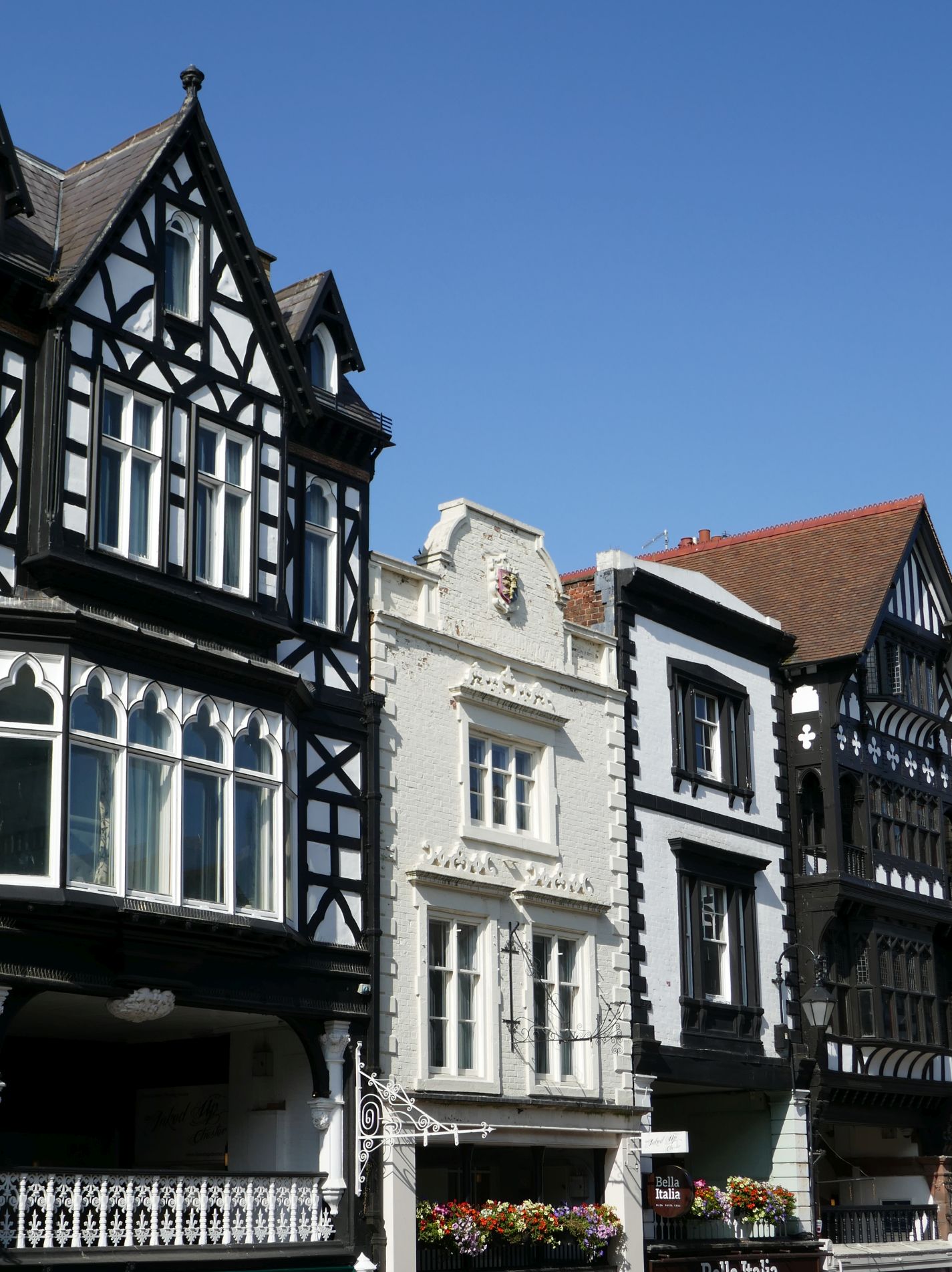
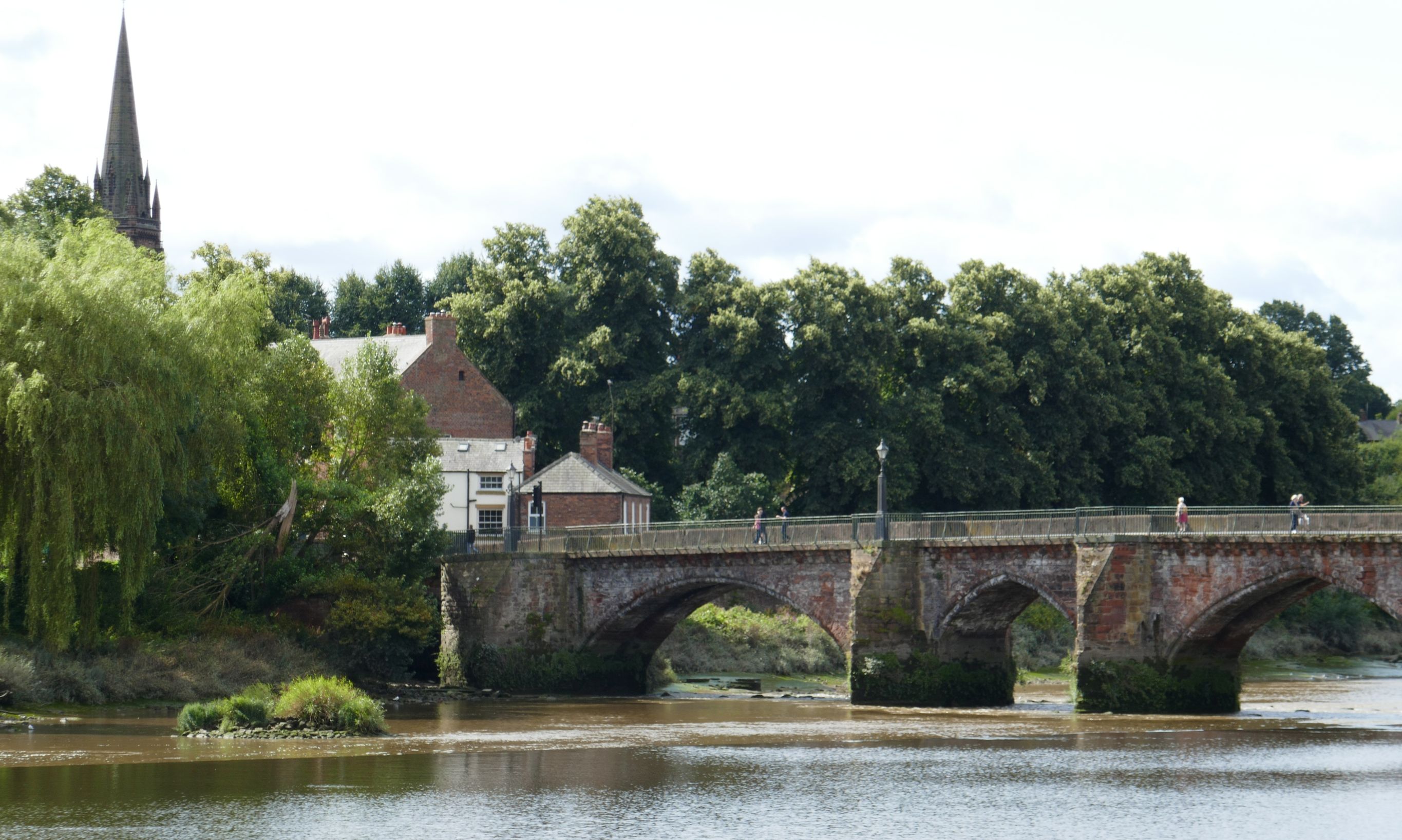
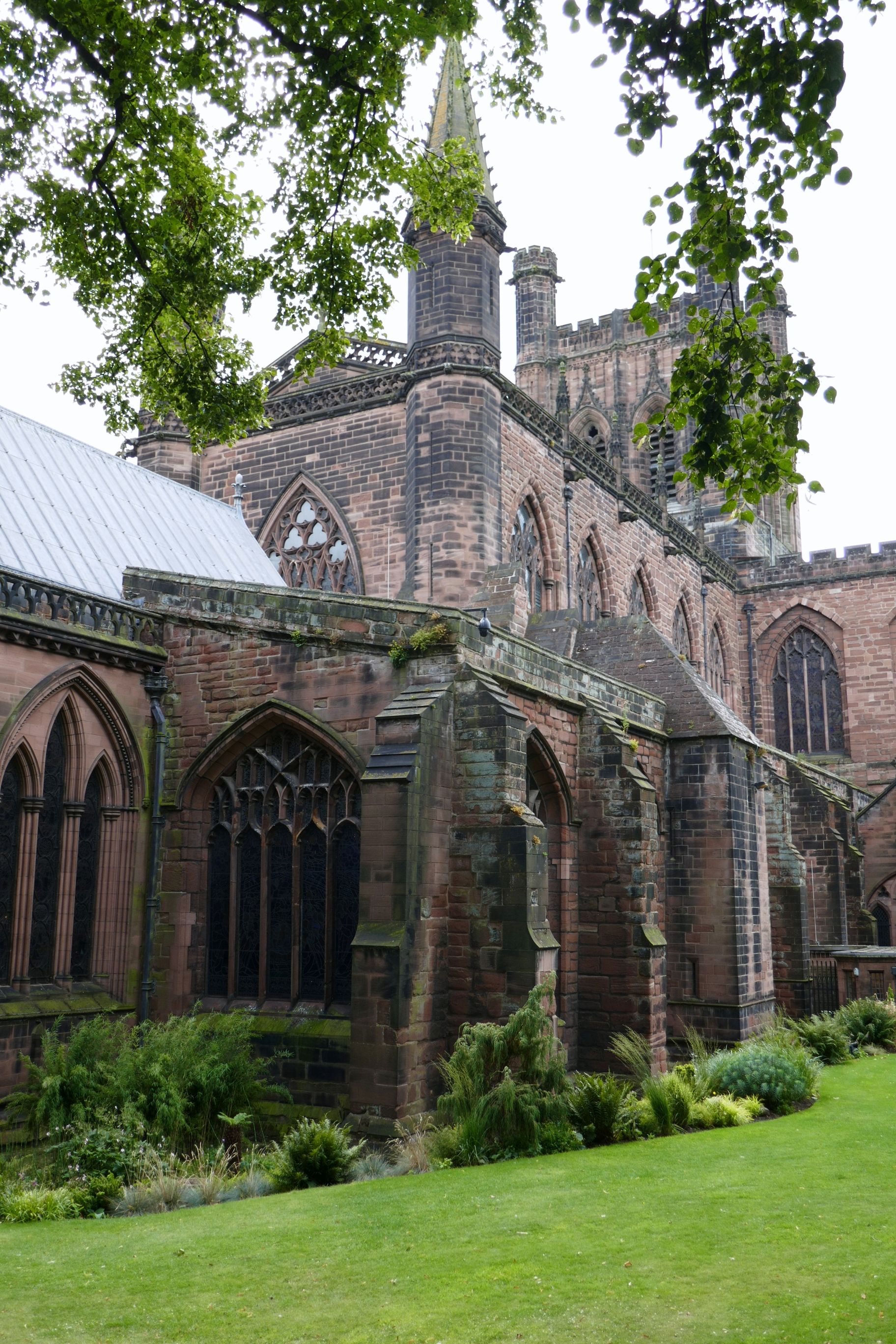
Welcome to England, dear readers!  We begin in the charming city of Chester, located in the northwest region of the country.  This city of about 93,000 people is old.  Founded in 79 AD as a Roman fort, it is surrounded by walls considered to be the best preserved in the country.  We enjoyed walking the walls, a two-mile circuit providing great views of the city, including the half-timber Tudor buildings and two-story covered arcades in the shopping district. 

Before Bruce and I embarked on our wall walk, we joined our group on a walking tour and tearoom lunch with Tom, our guide for the next two weeks.  Tom is from Wales, and we instantly liked his gentle, easy-going personality. 

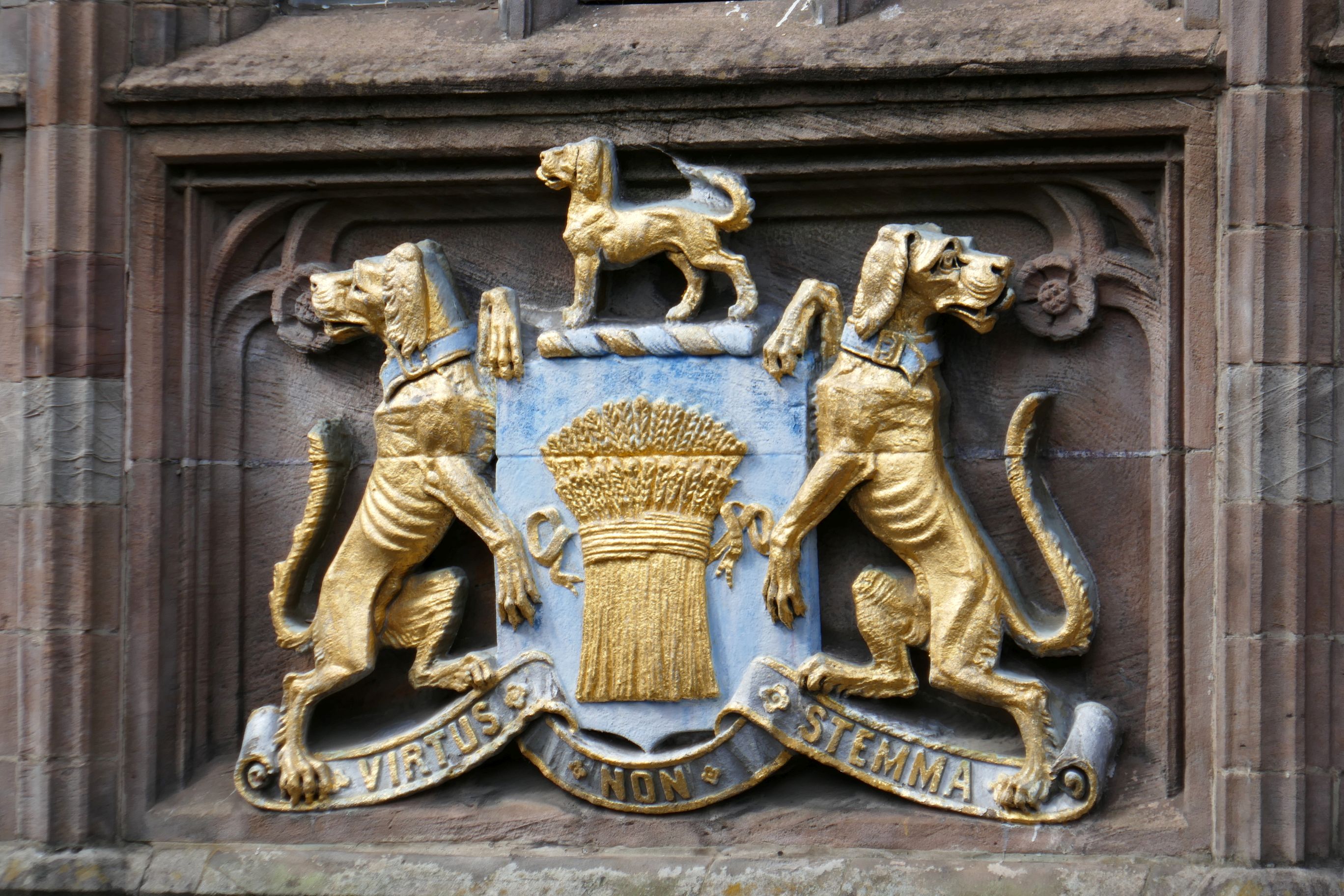
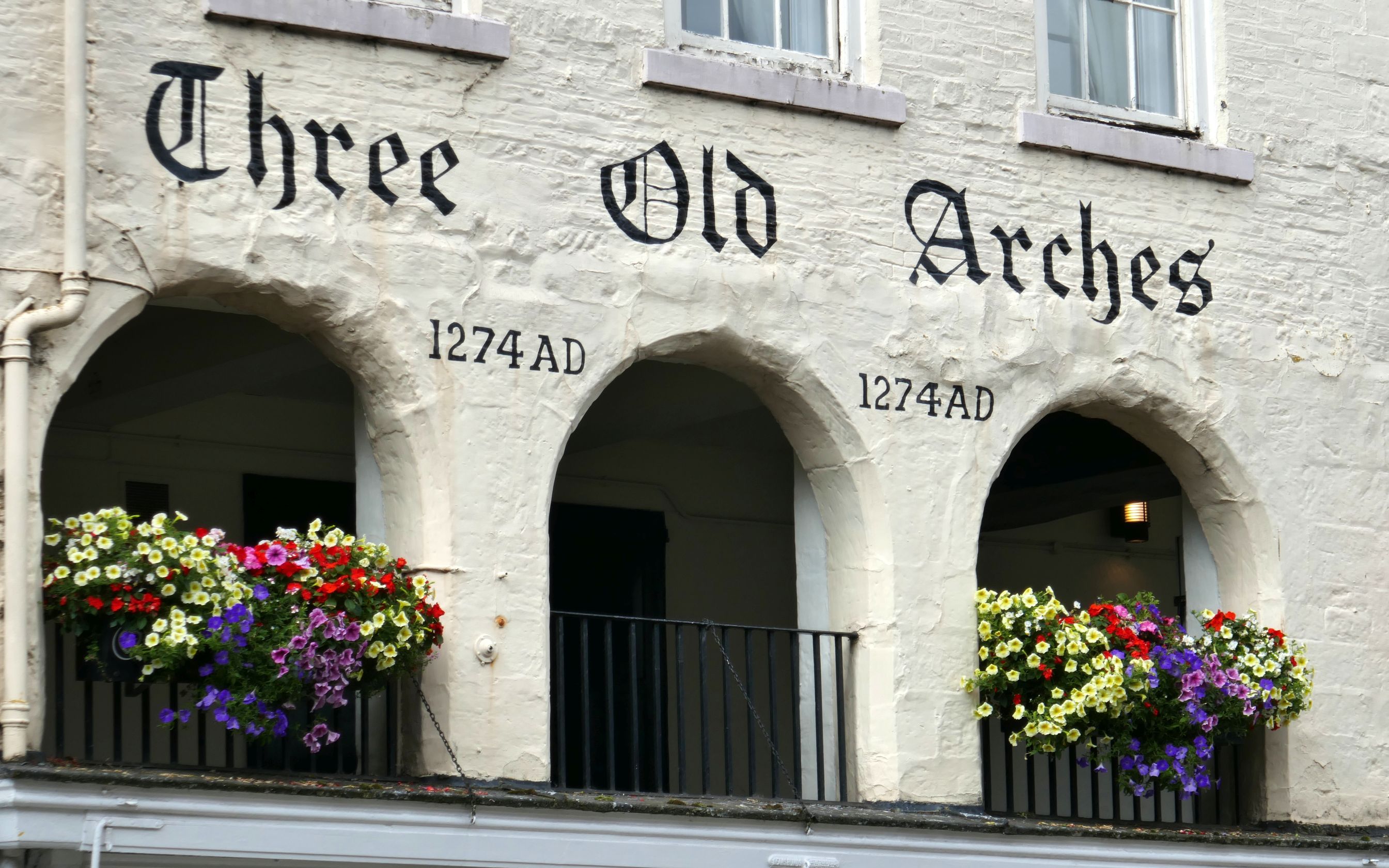
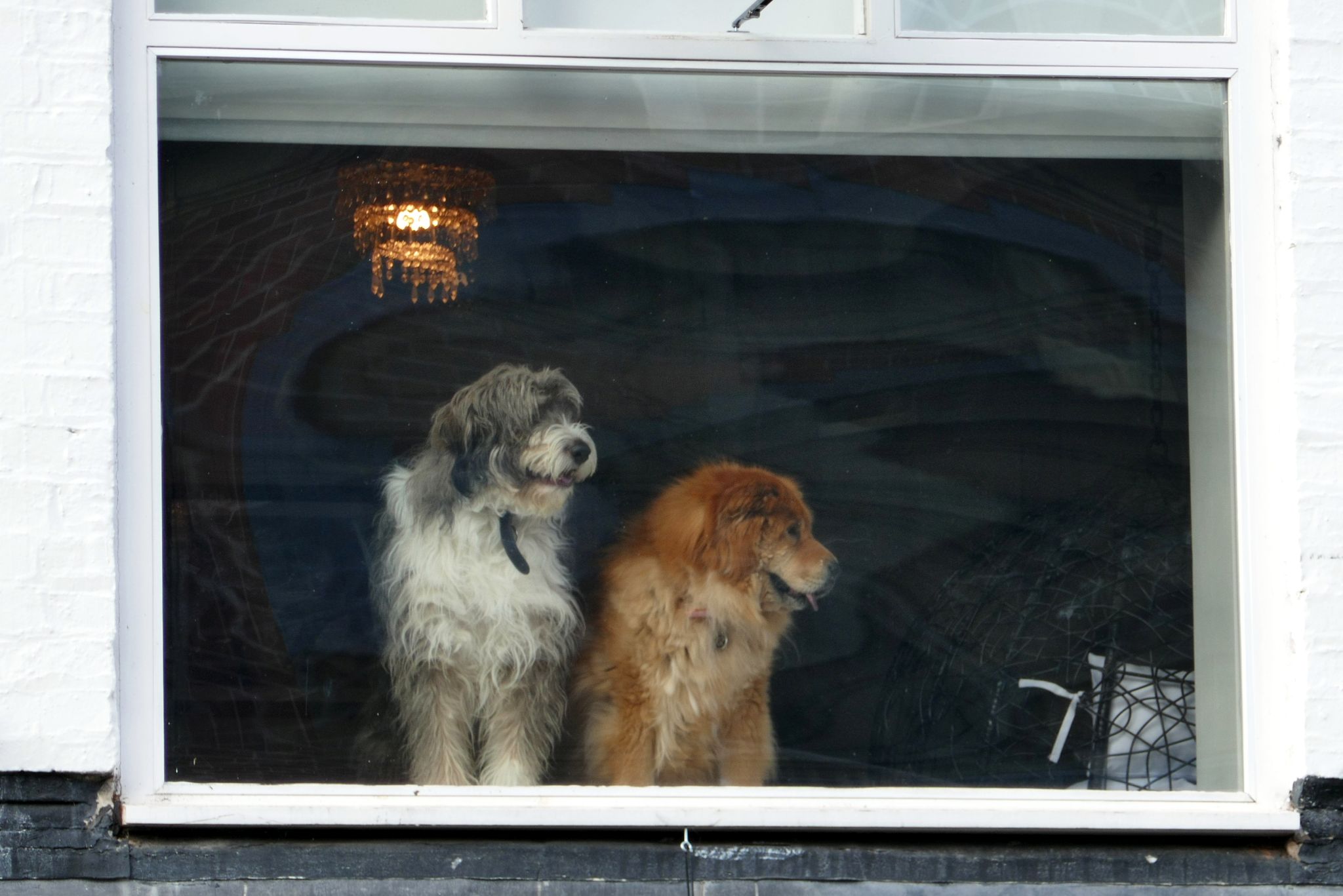
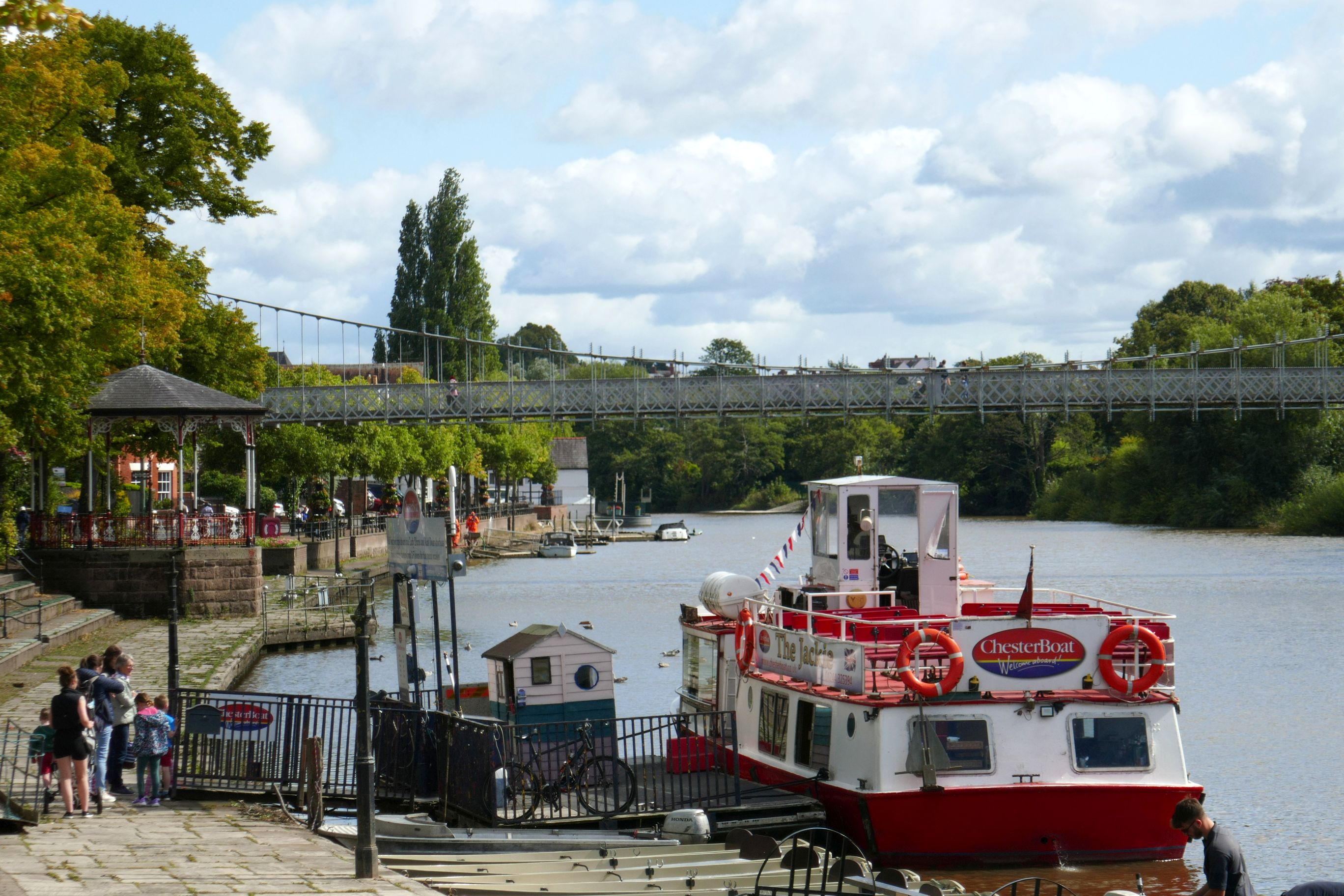
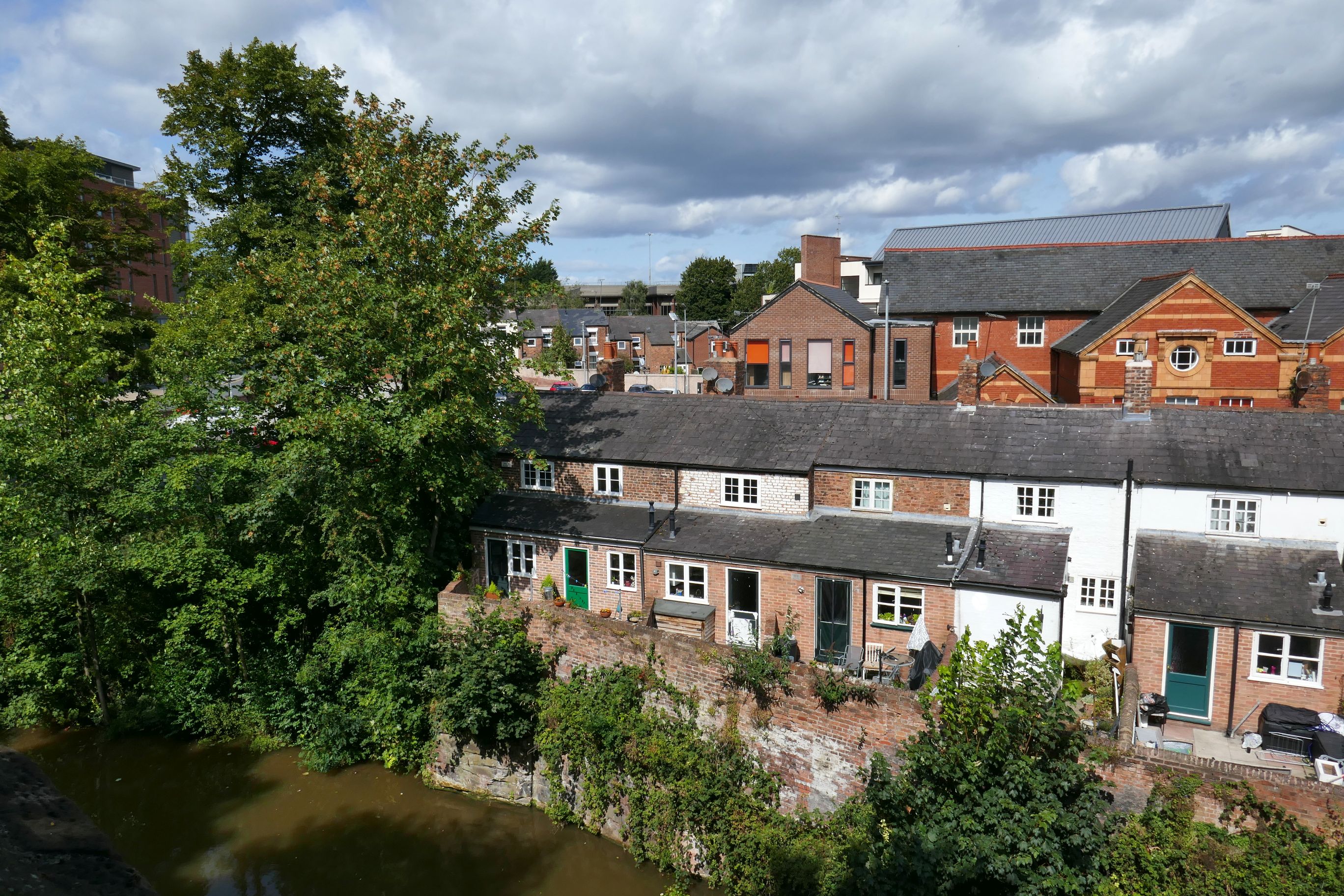
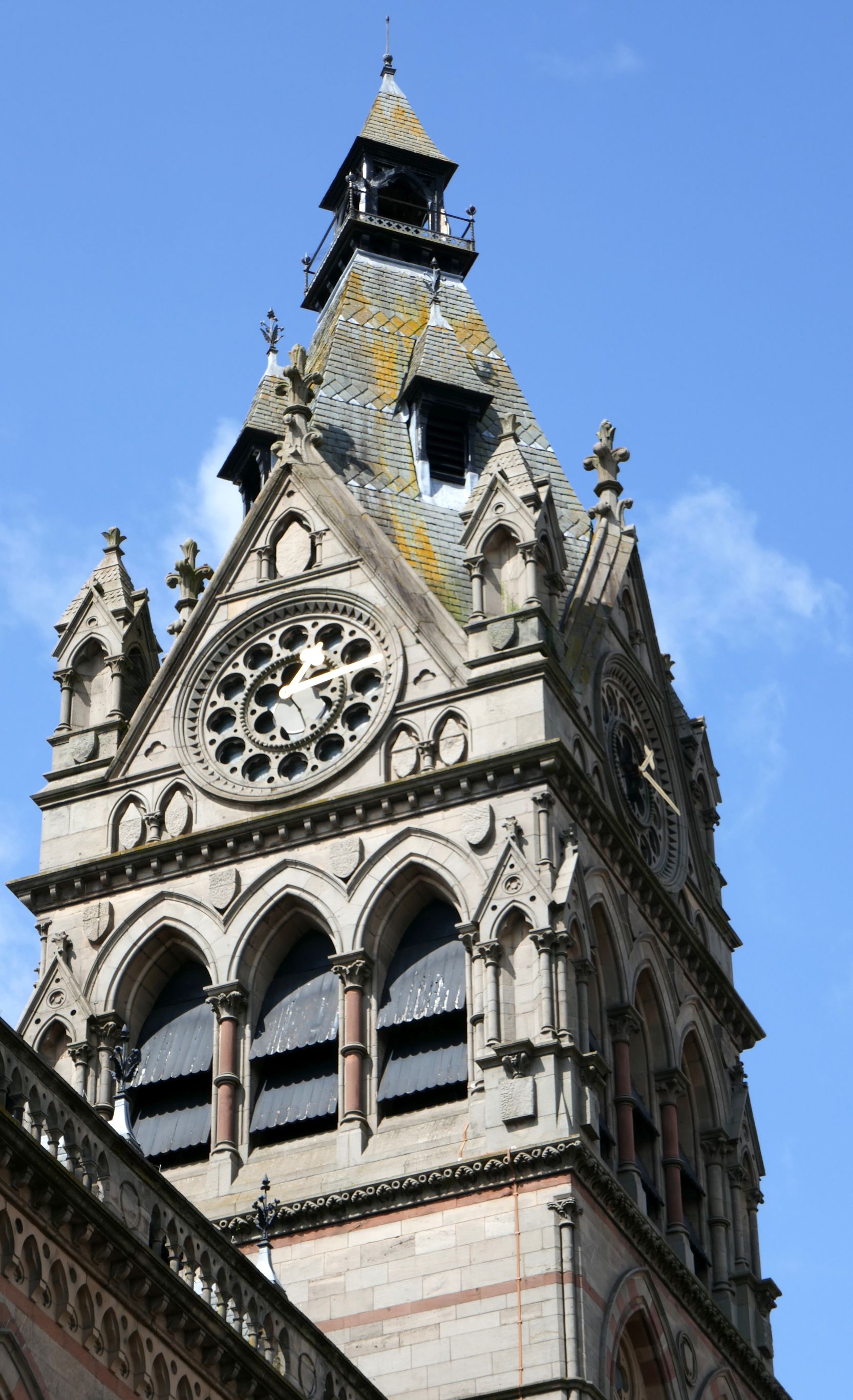
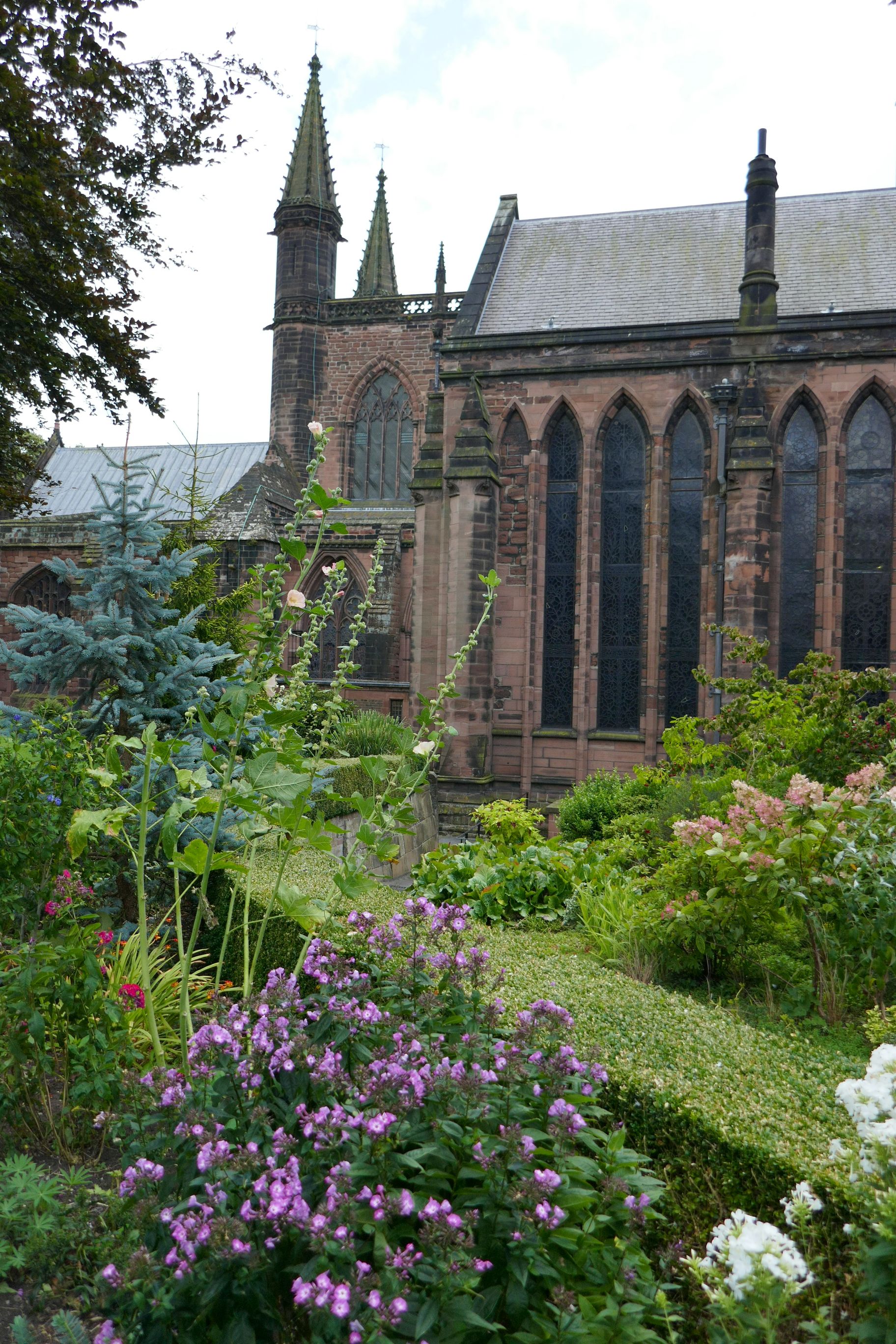
Here are scenes from around town during our stay in Chester:

(For all photos, click on the image for a full screen view.)

Looking out from an ice cream shop located on the top of the city wall near the clock (below).
This was a Roman Amphitheater. An artist was quite creative in painting a mural to continue what was left of the original stone wall.
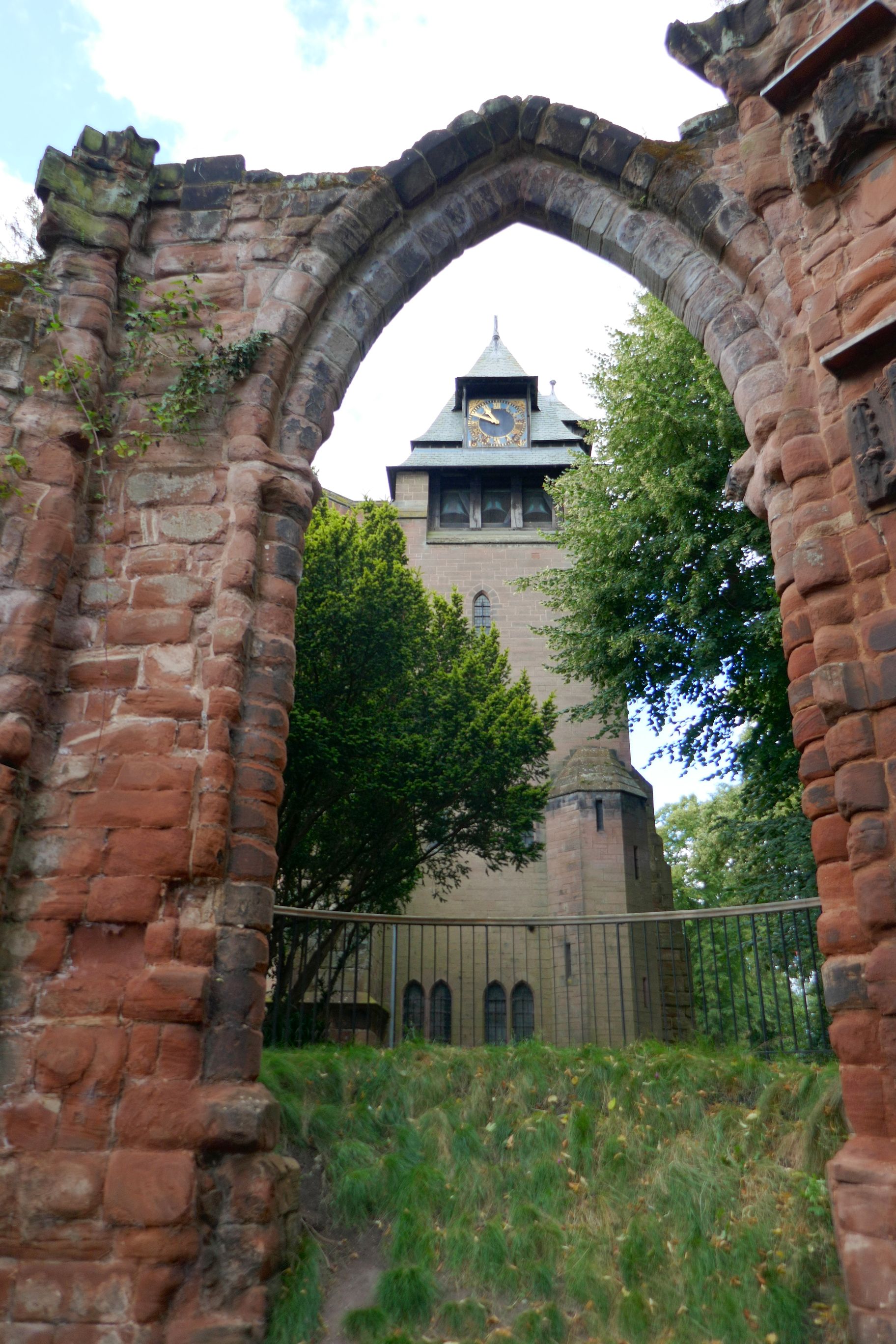
Remaining walls of what was originally Cathedral Church of St. John, dating back to 689, and is now Parish Church of St. John the Baptist.

Coming up next: UNITED KINGDOM #2: WONDERFUL WALES

PERU #13: A DAY IN THE LIFE OF ISKUCHACA AND CHINCERO VILLAGES

What I enjoyed so much about this tour of Peru was the wonderful mix of exploring amazing historical sites such as Machu Picchu, learning about the Incas, seeing how the locals work and live, and interacting with them.  The “Day in the Life” experience on each Overseas Adventures tour is all about those last two in the mix, so this was my kind of day!
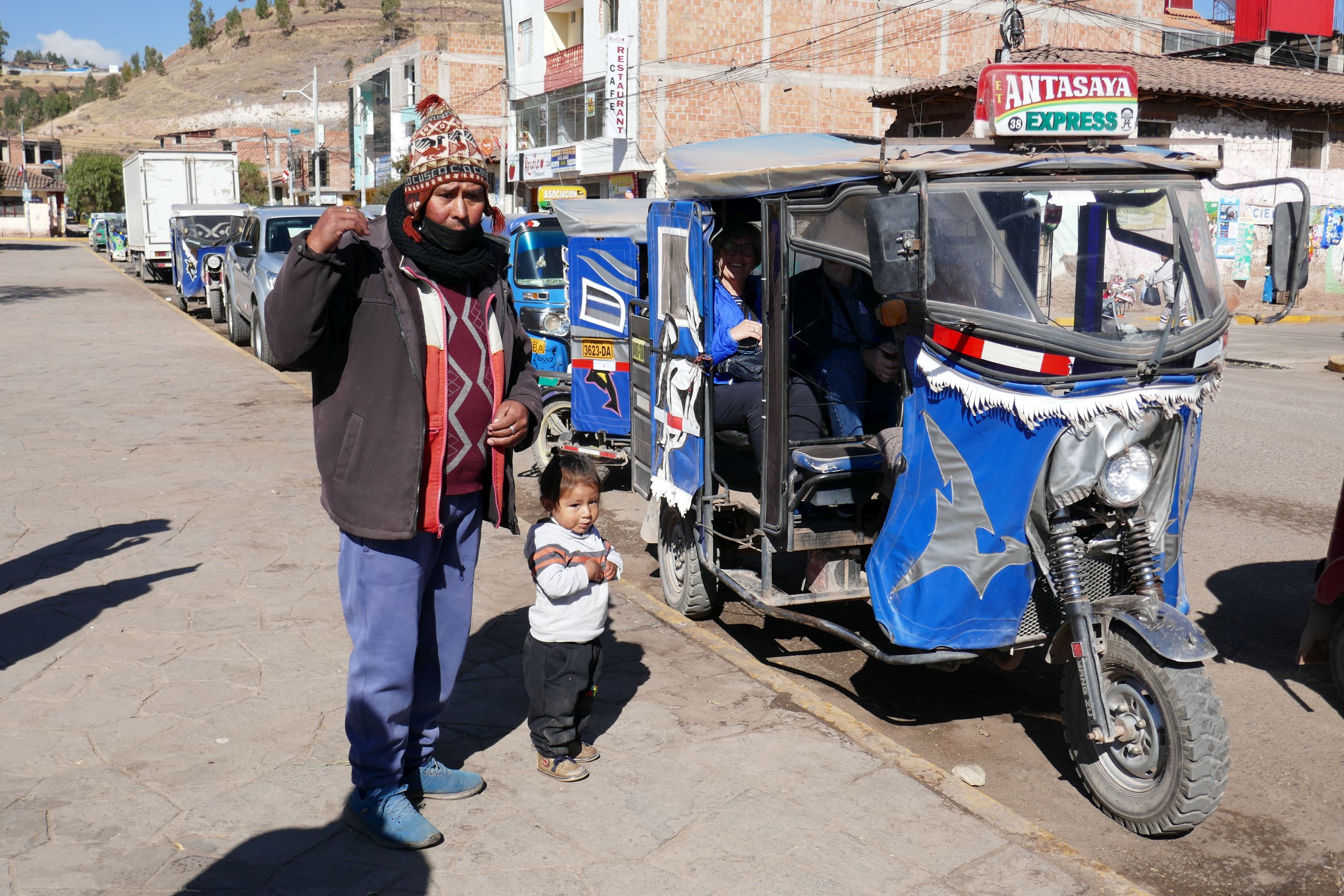
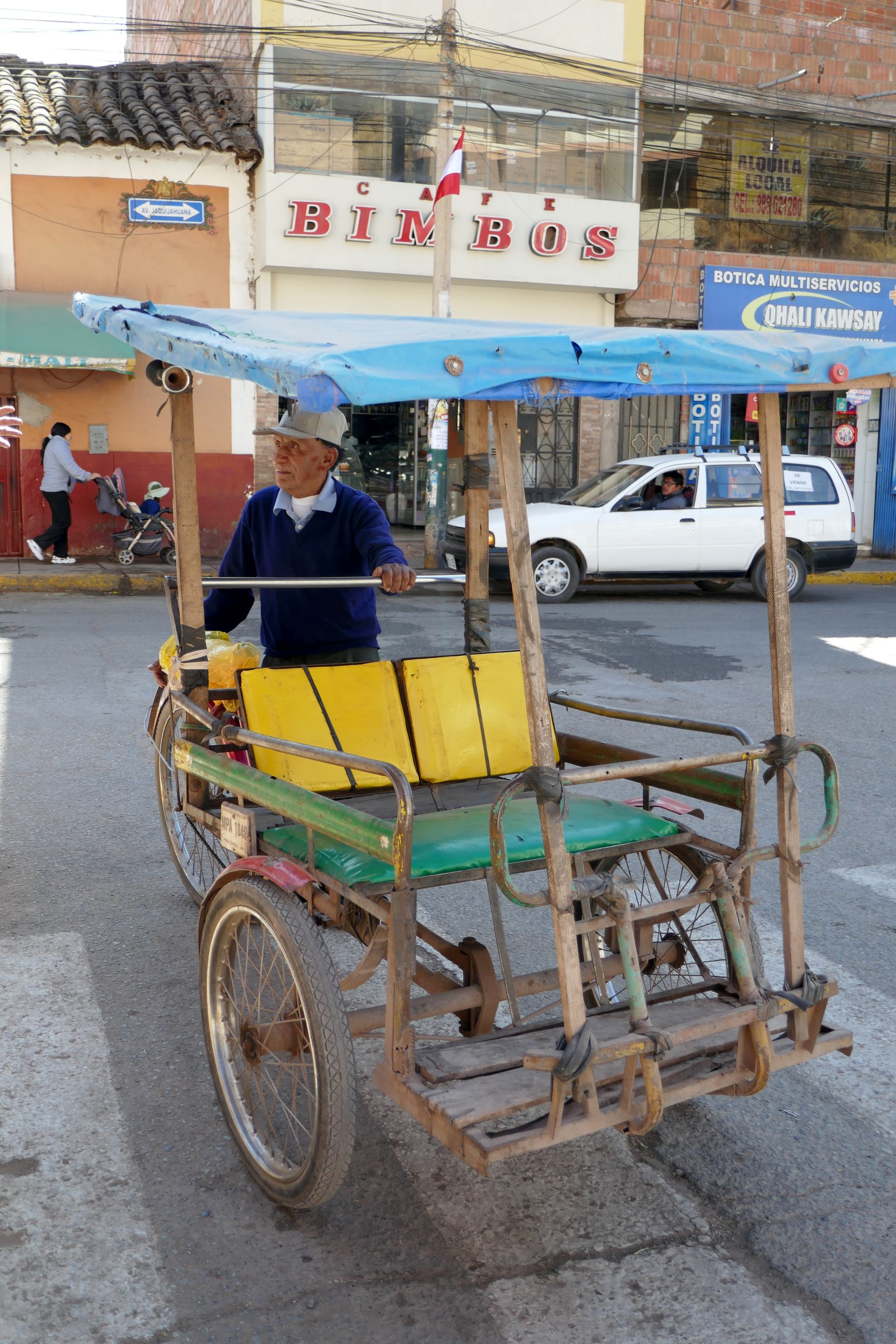
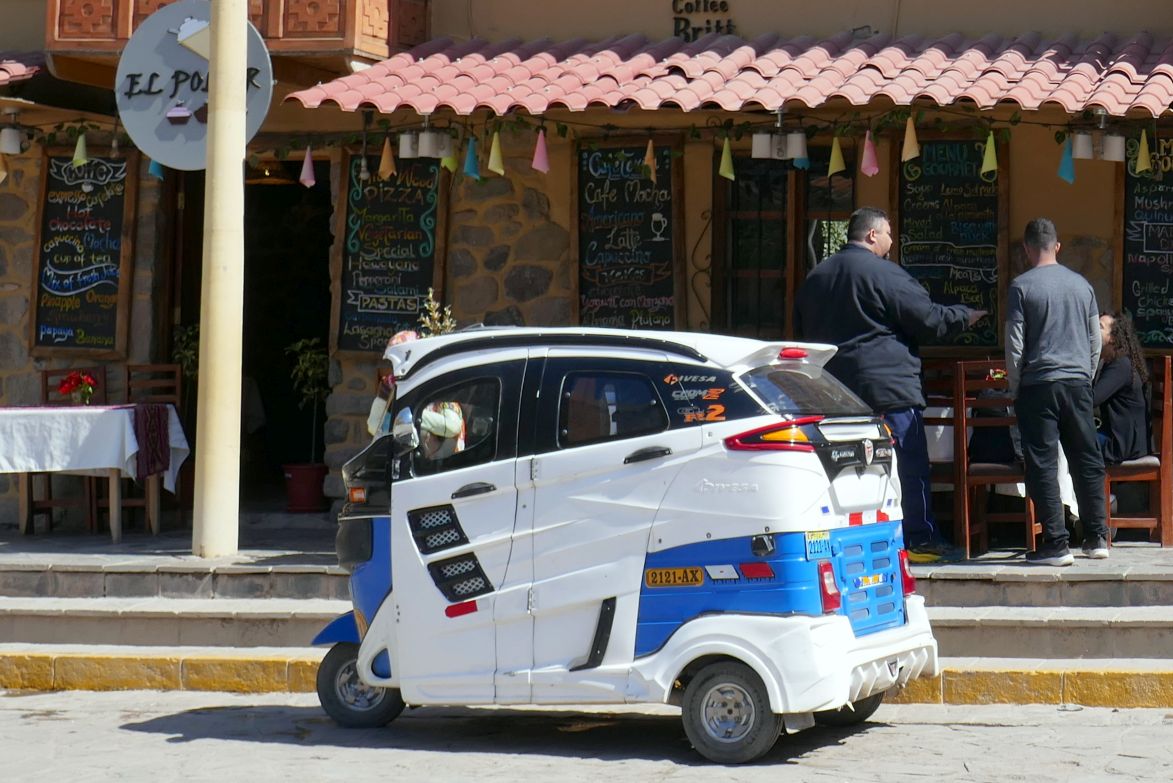
It was a day full of cultural discoveries, beginning with a visit to Izcuchaca (elevation 11,000 feet), a village in the Anta Province of Cusco.  The popular and most cost-effective mode of transportation in Peruvian villages is by moto taxi, so we did what the locals do.  Our bus dropped us off in town, and Raul hailed several moto taxis for our group of 16 to take us to the local mercado (market).  These three-wheeled covered motorcycles are cheaper than a car taxi—about 25 cents a ride.  Want to buy one of these three-wheelers?  A new one will set you back about $2,600.

(For all photos, click on the image for a full screen view.)

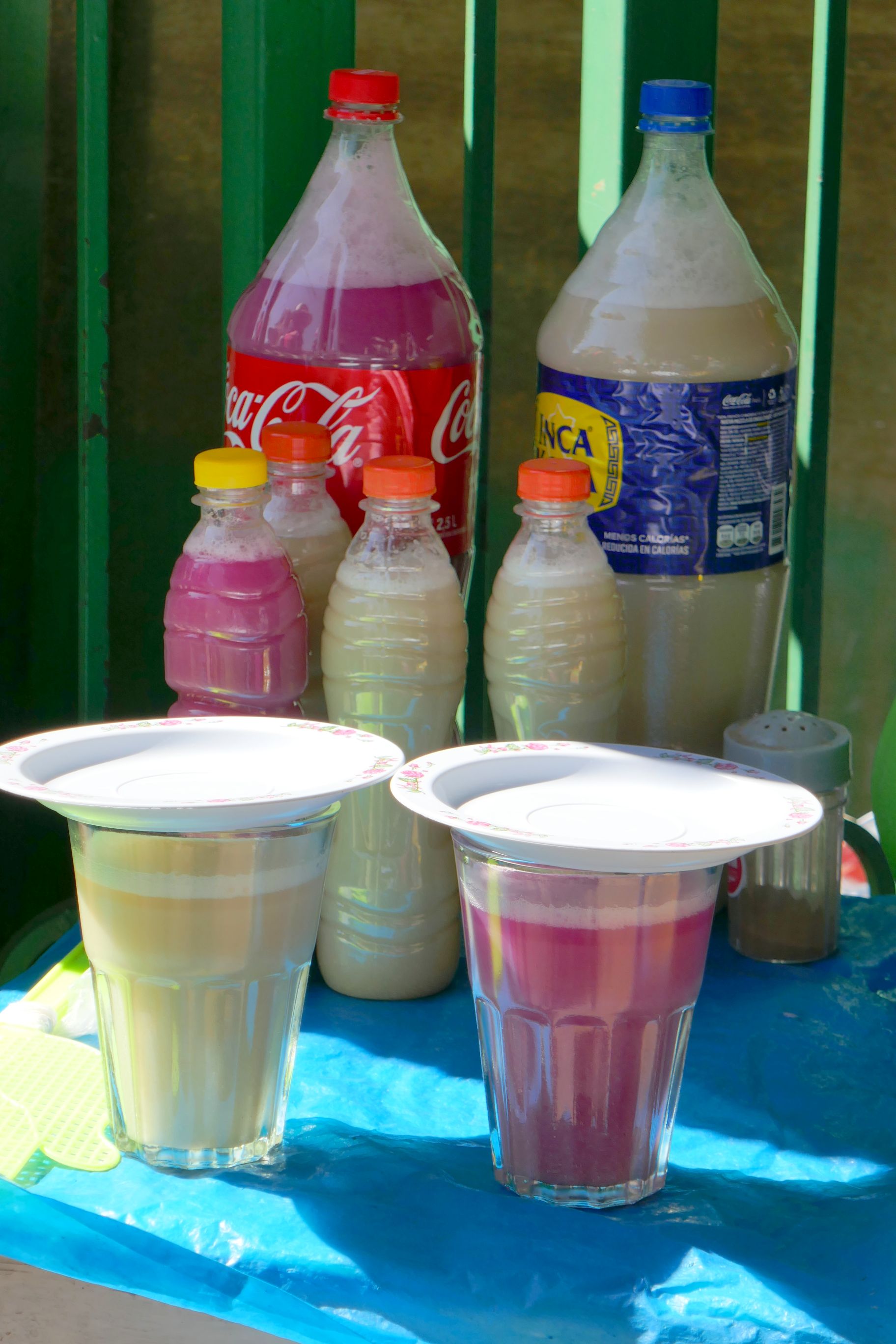
How about warm homemade corn beer? That large Coca Cola bottle of plain beer will cost you about 50 cents. Double it for strawberry.

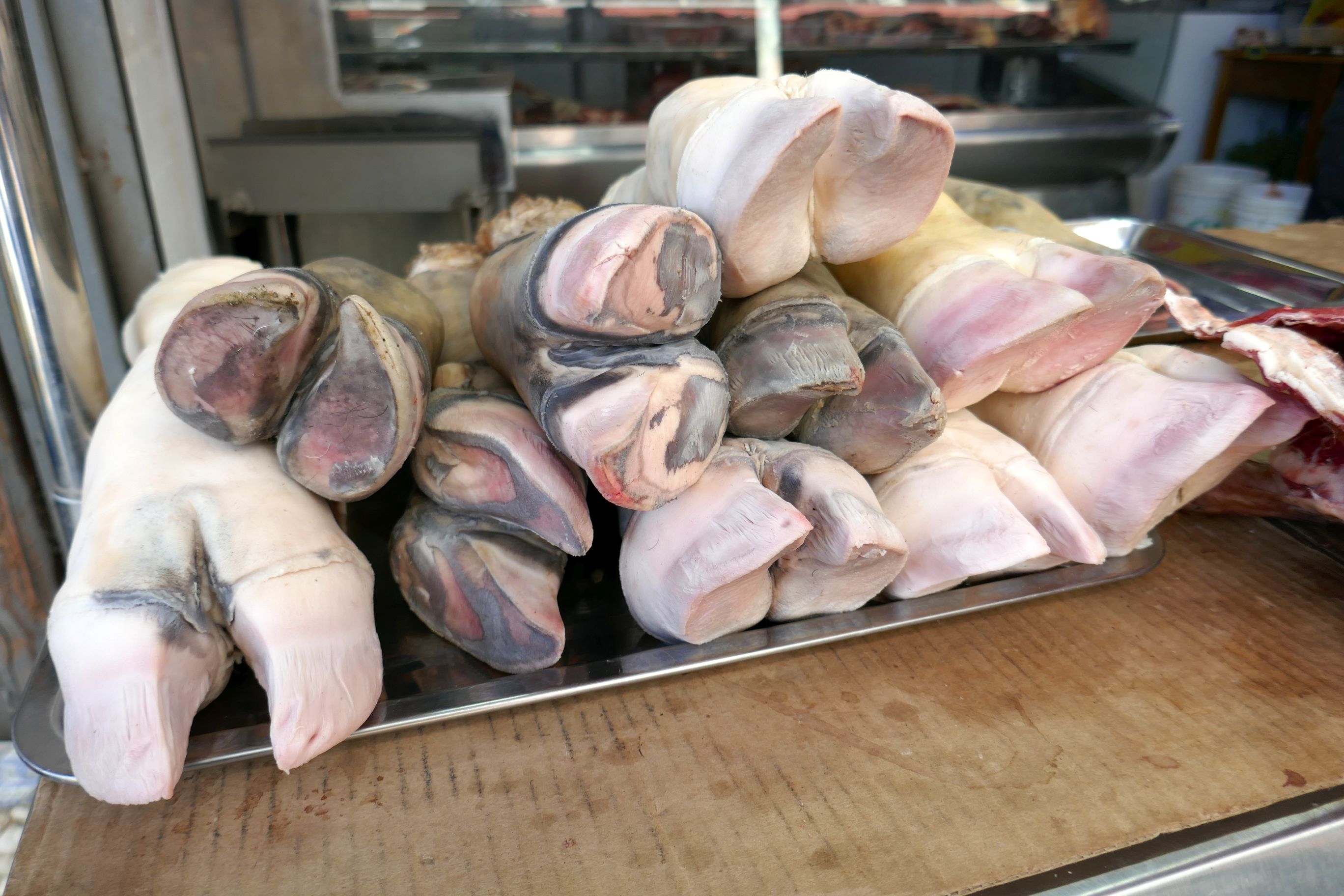
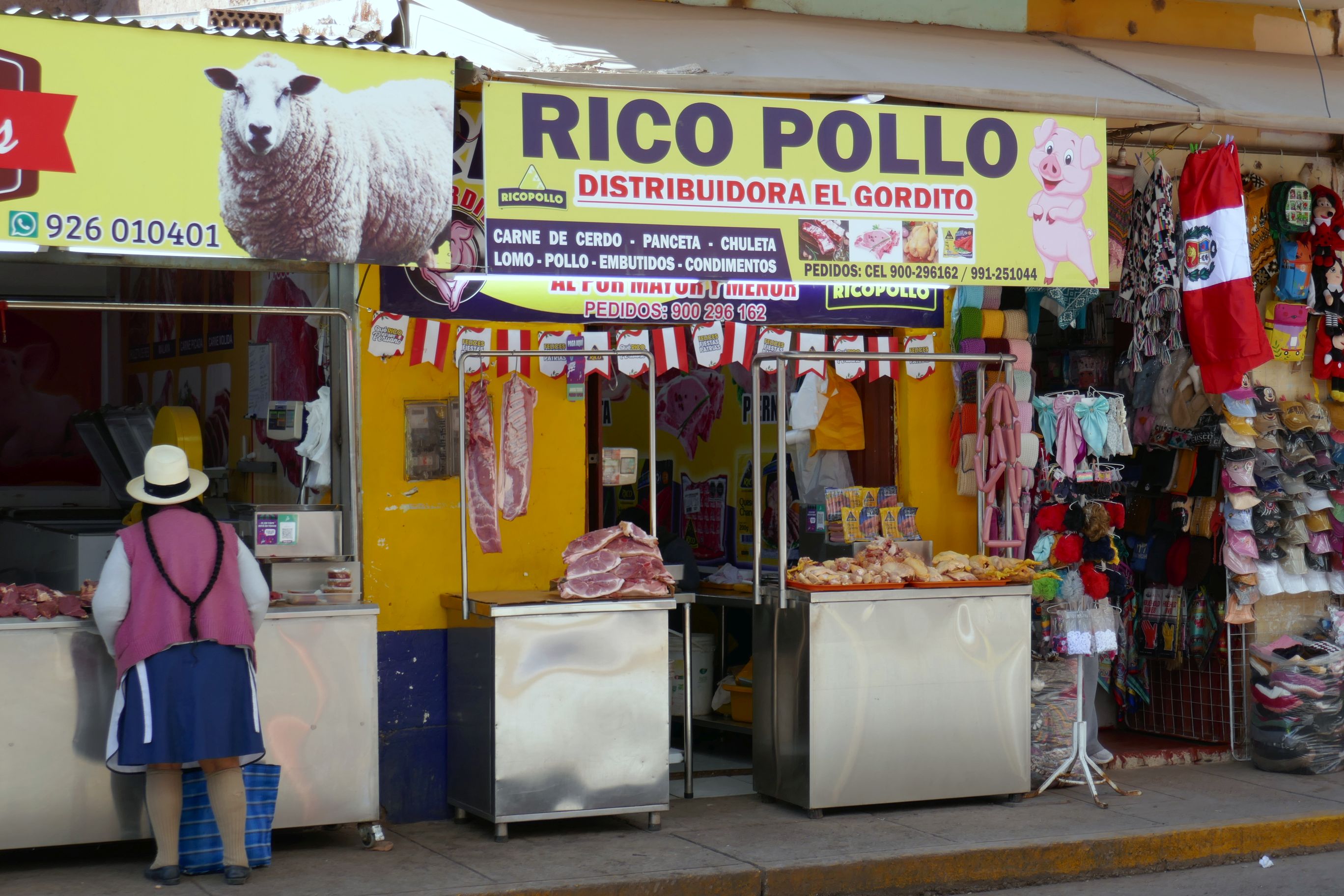
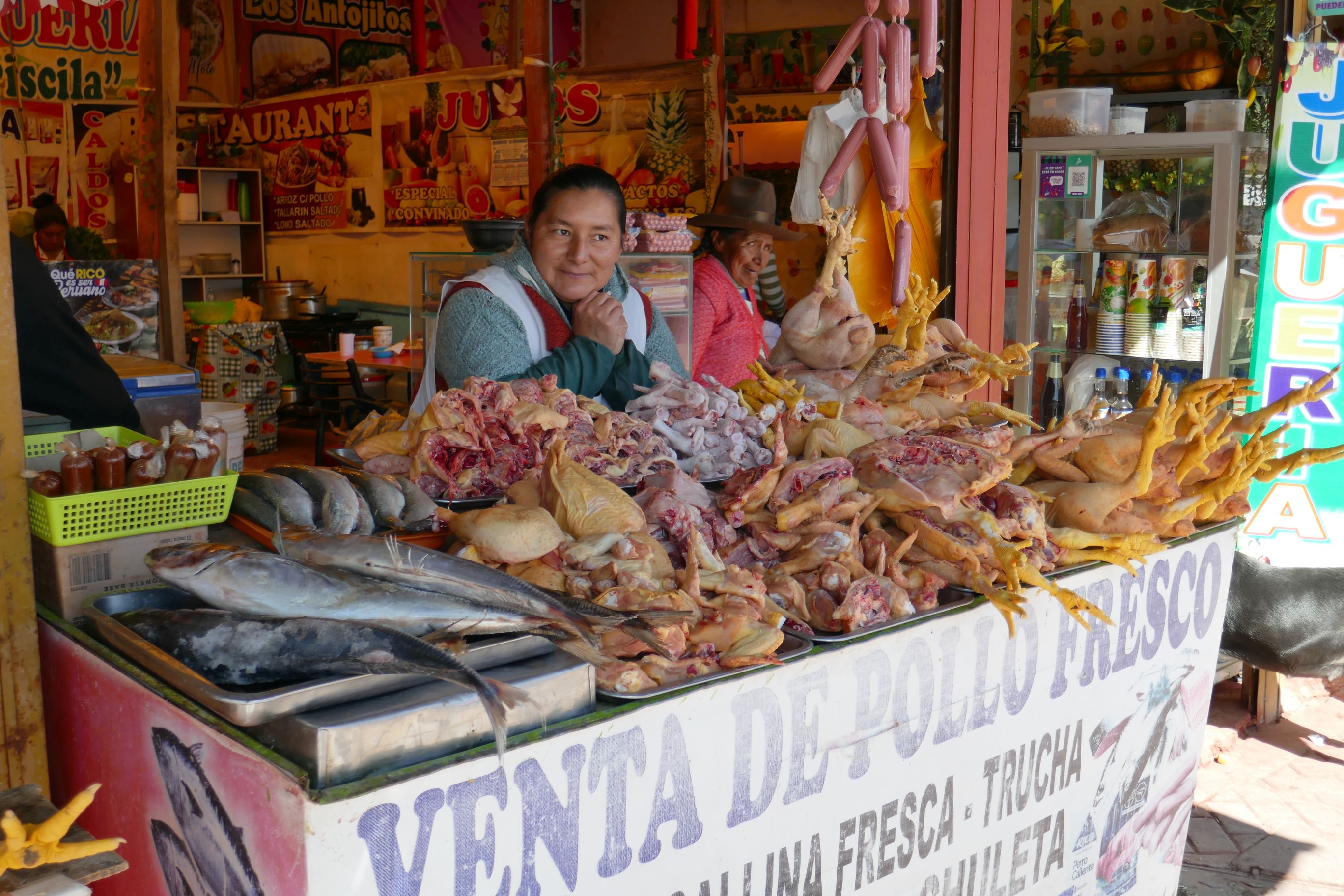
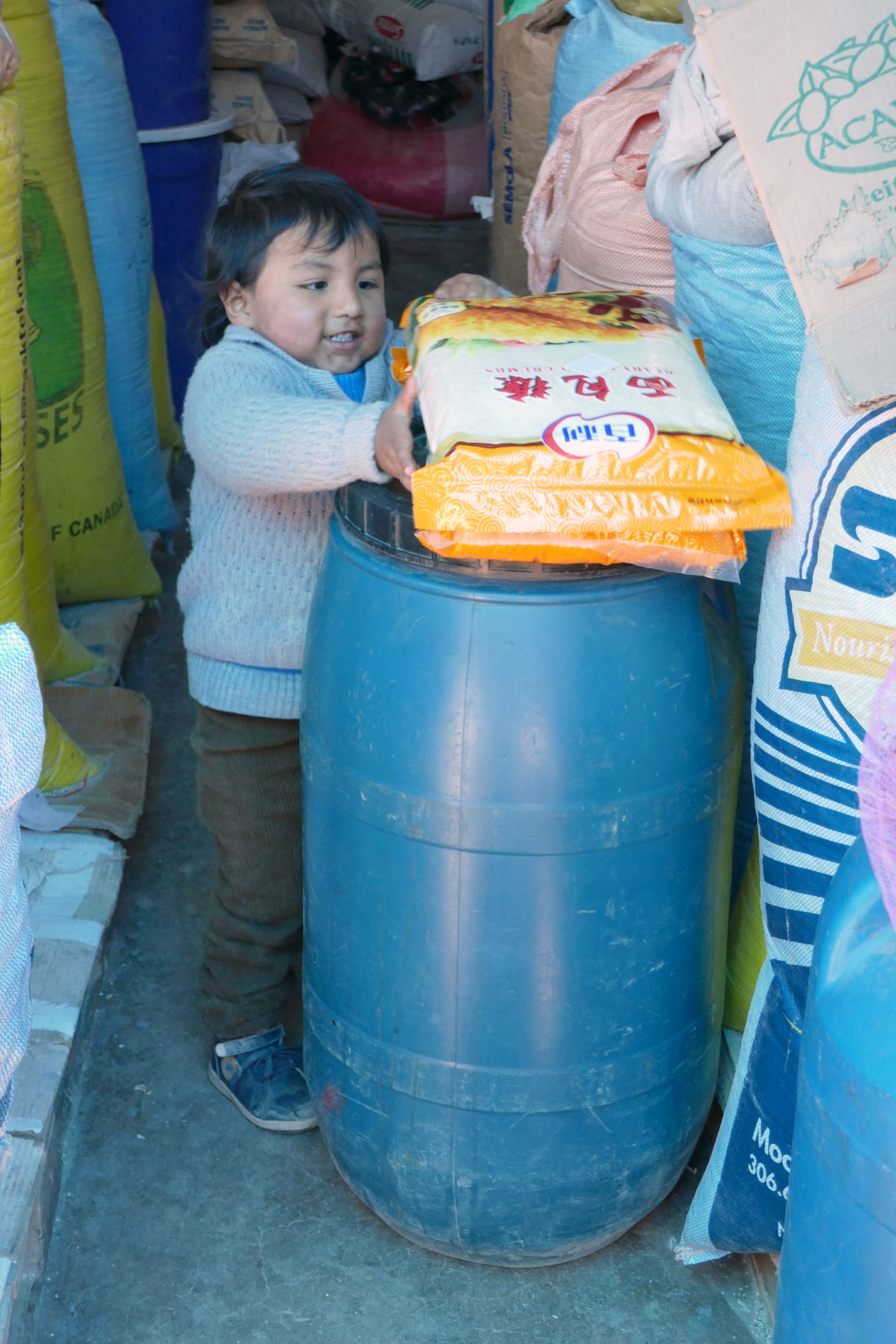
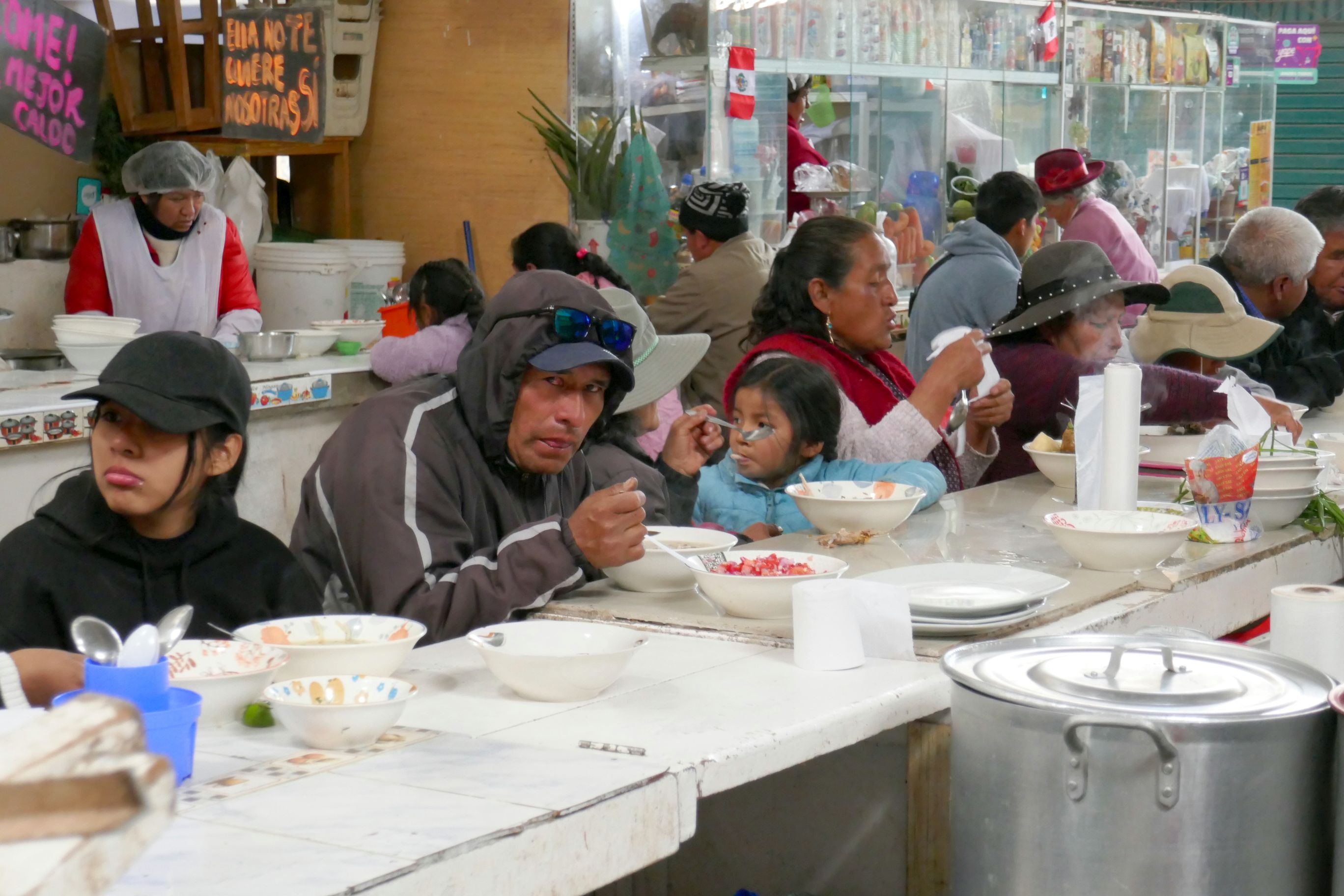
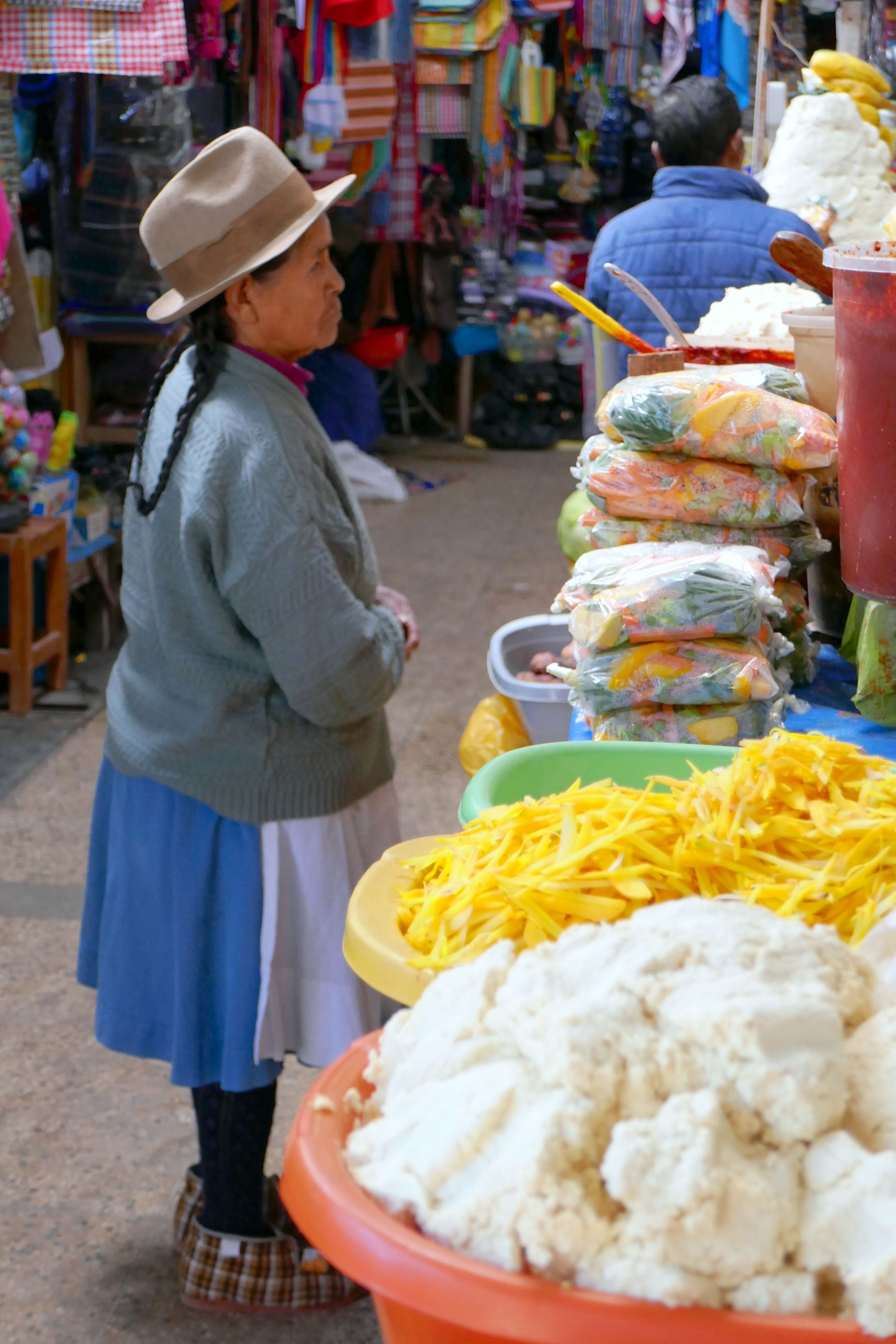
I enjoy wandering through a local, (non-touristy) market where I can observe, explore, do photography, and interact with the vendors using what little Spanish I can speak.  At this market, there was a busy soup counter filled with workers on their lunch break enjoying huge bowls of hearty chicken soup for about $2.75. 

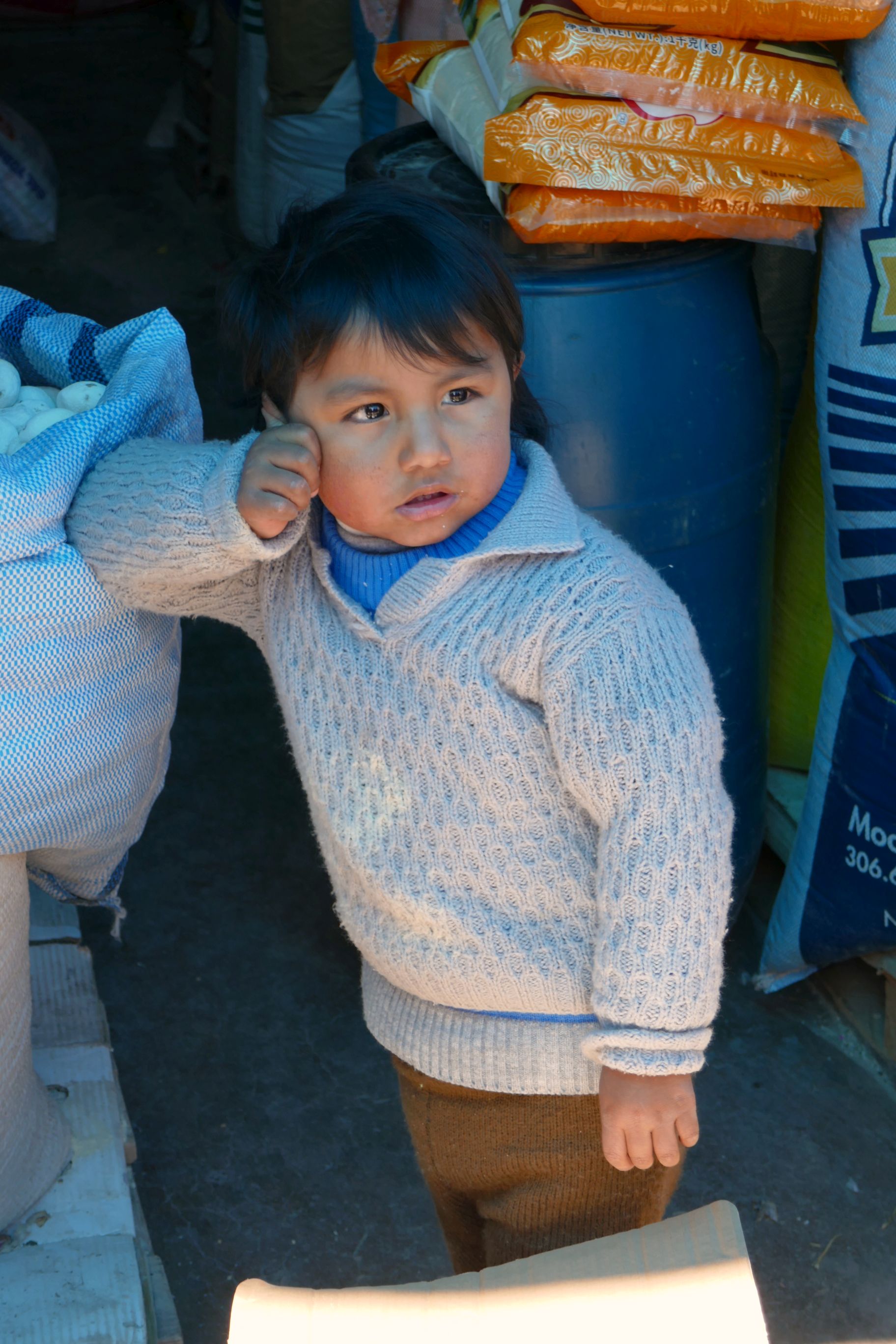
To put the cost of food in perspective, the minimum monthly wage in Peru is about $304—not a lot to live on.  As a result, poverty is high; the official poverty rate in Peru is 32-35%, but 60-70% in rural areas.  There is no welfare system, so both parents must work for a family to survive, leaving their children to fend for themselves with not much parental attention. 

As I wandered the market while Bruce went off in another direction, a few curious looks came my way, but nobody bothered me.  We found Peruvians in general to be a bit shy and quiet, but friendly when approached with a few words of Spanish.

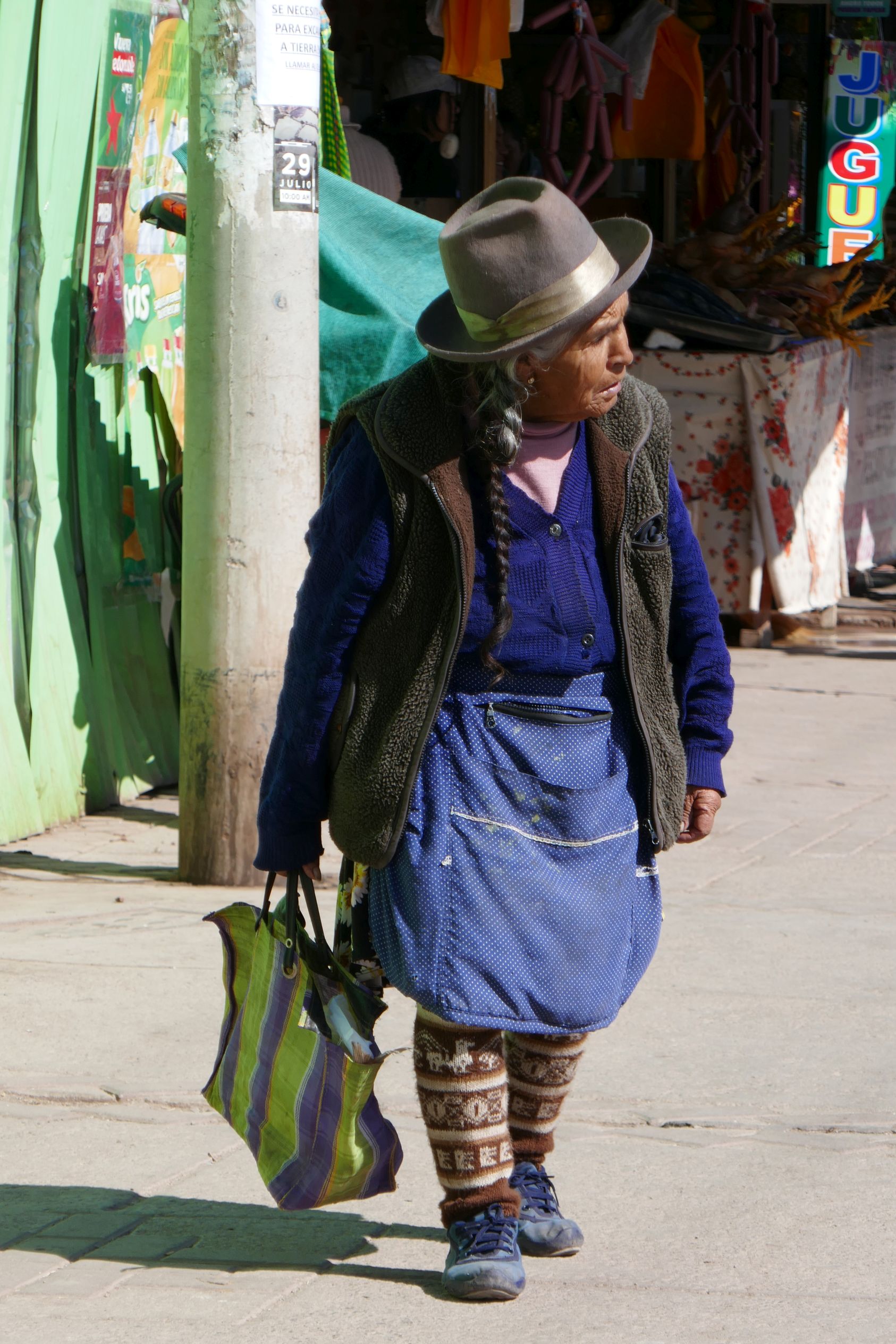
This 76-year-old man runs a cycle taxi service.

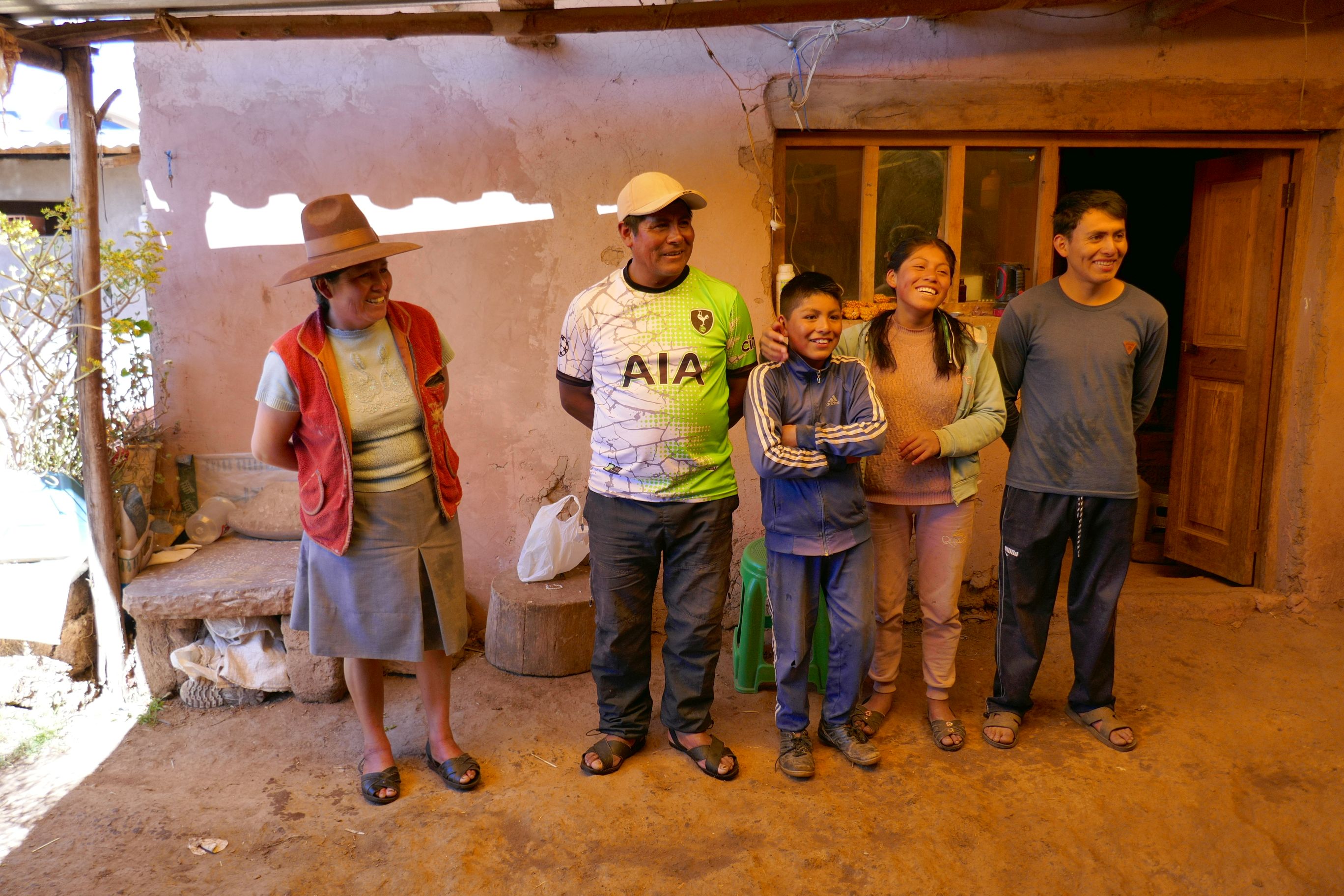
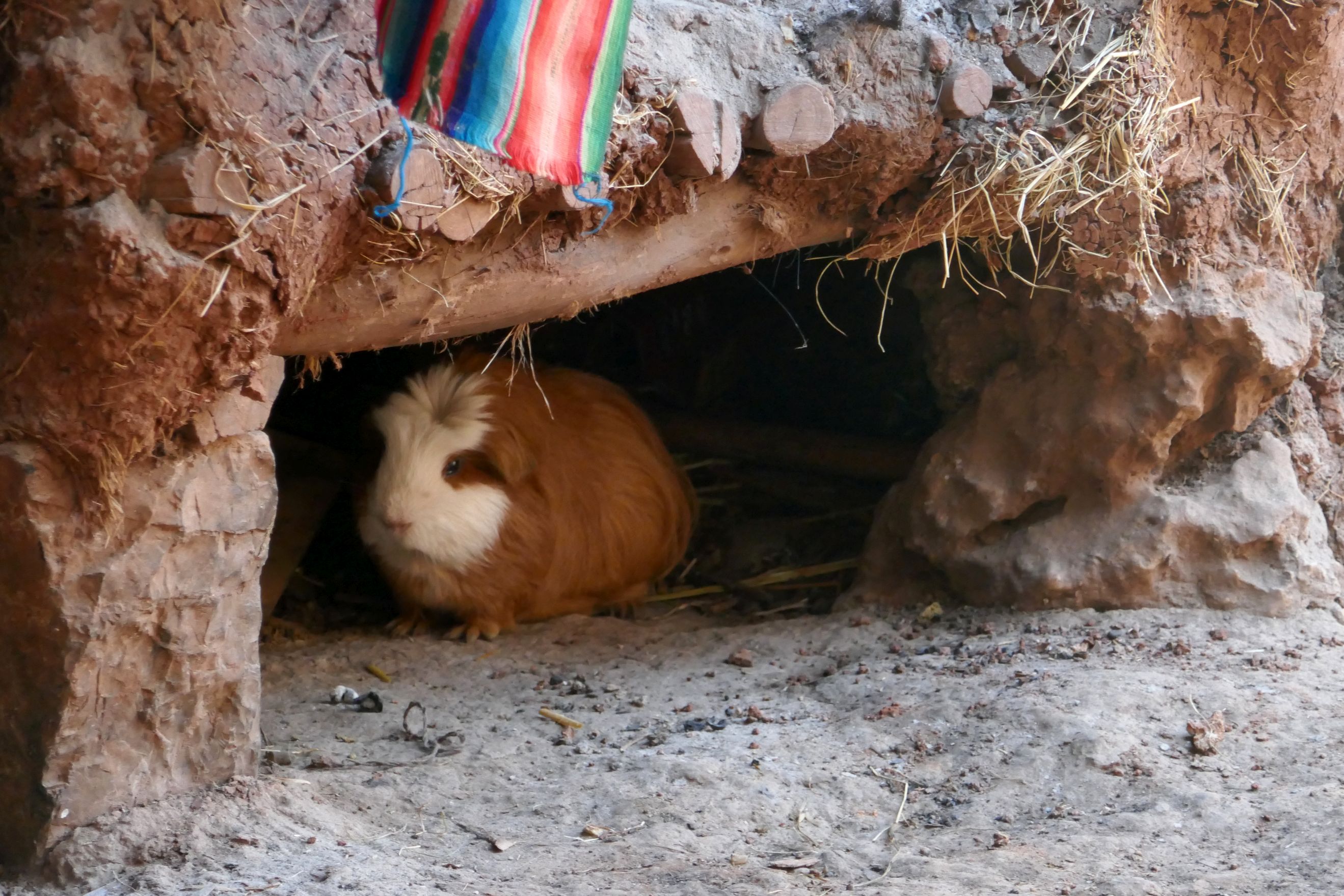
Next on the “Day in the Life” agenda was visiting a family at their home in the Chacan community.  This family of farmers has four bulls for breeding, pigs, guinea pigs, and a burro.

They grow their own corn and other produce that they take to the market on Sundays to sell. They can’t afford their own truck, so they pay a driver to pick them up with their produce.  They also can’t afford to buy a tractor for working the fields, so they rent one for about $25 per hour.

After touring their farm, we had the opportunity to ask the family questions with Raul as our translator. They were so warm and friendly and seemed to really enjoy having us at their home.

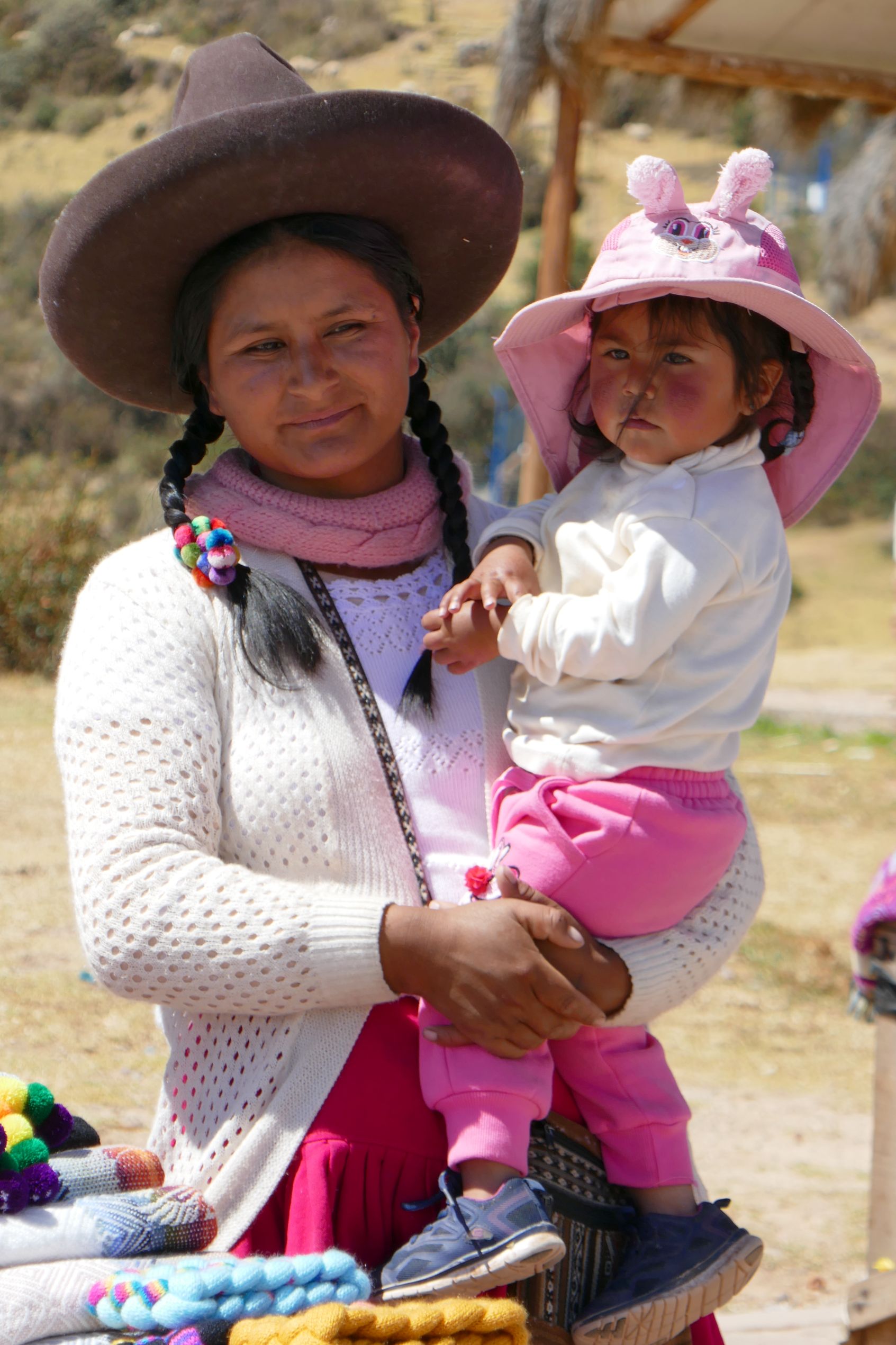
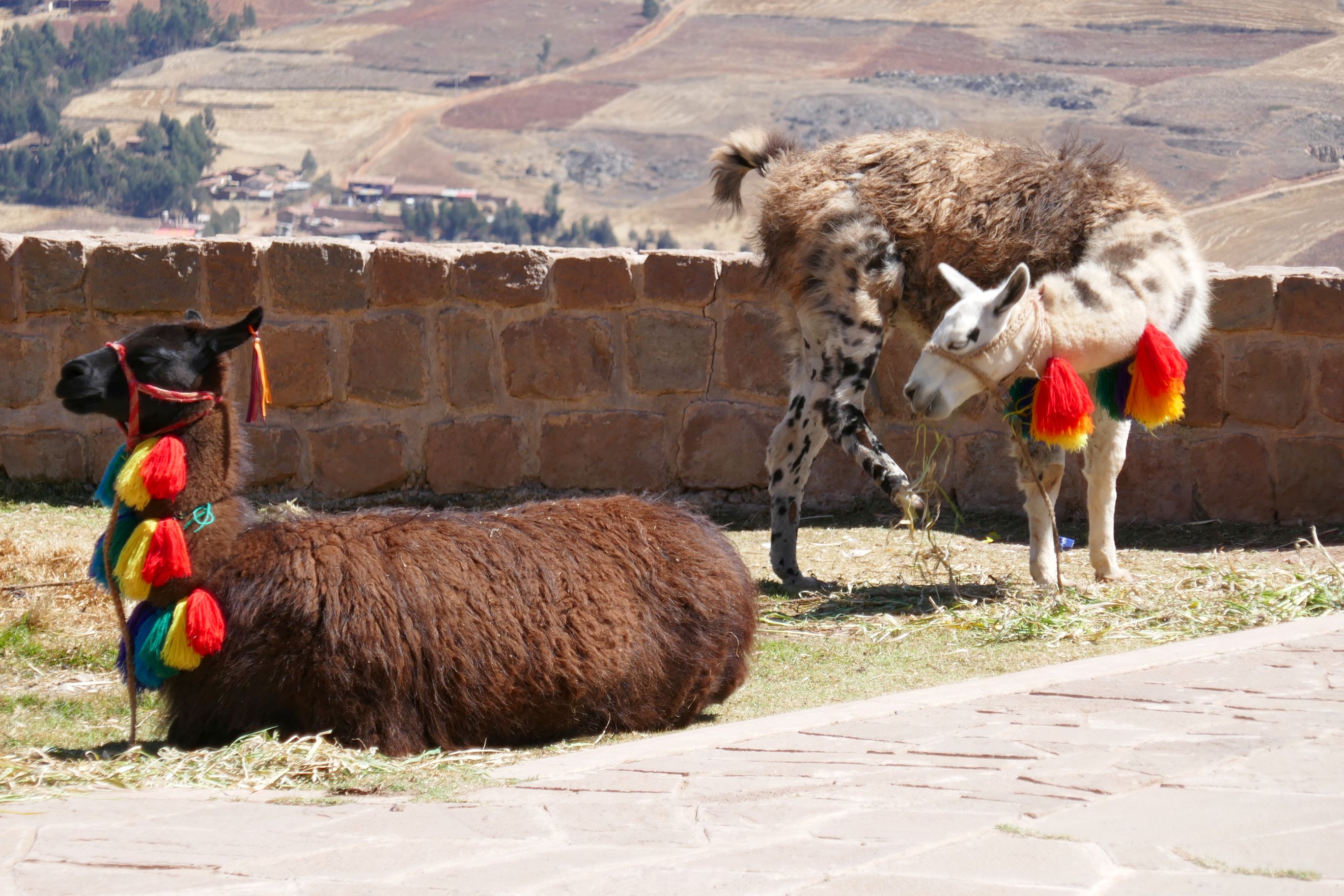
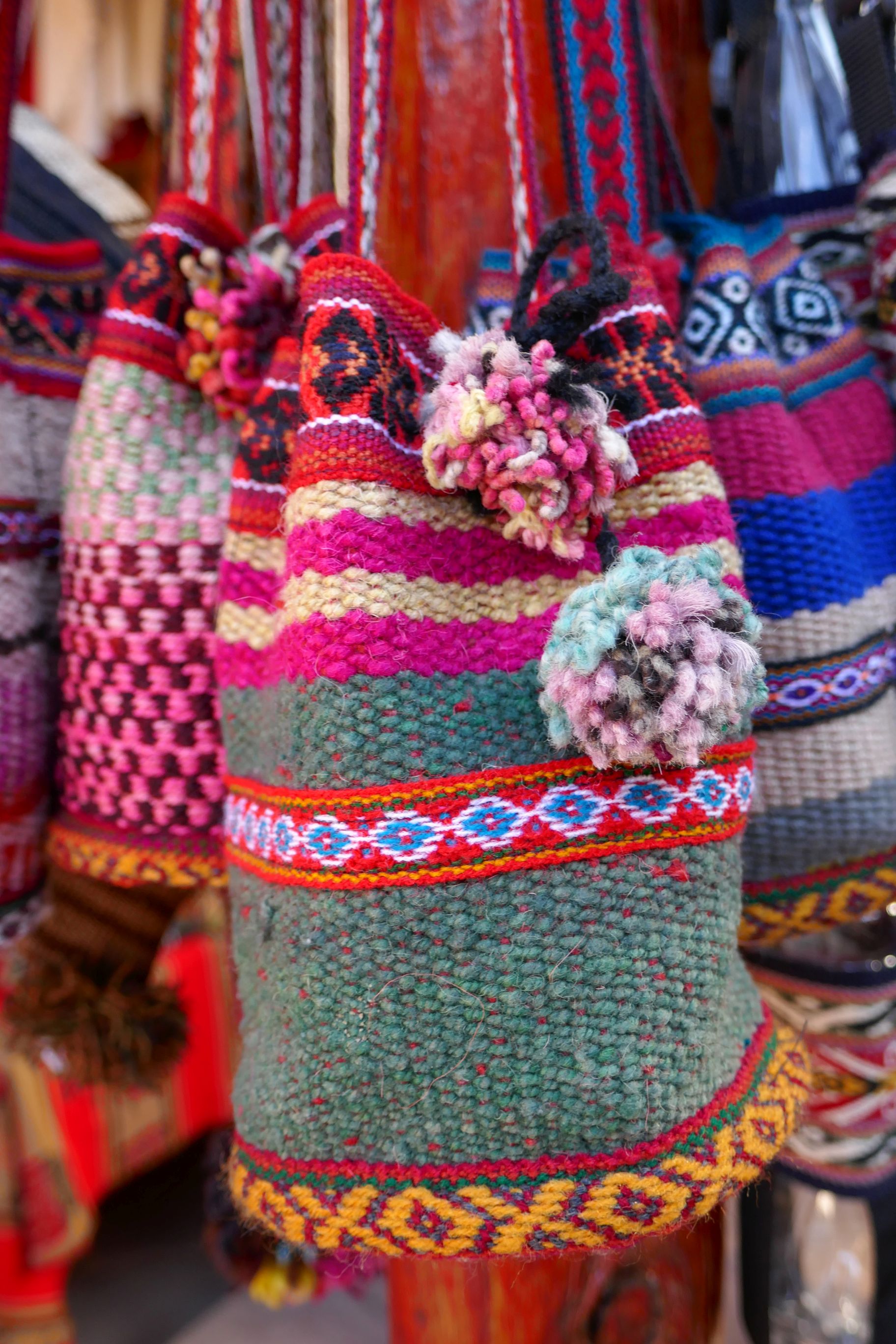
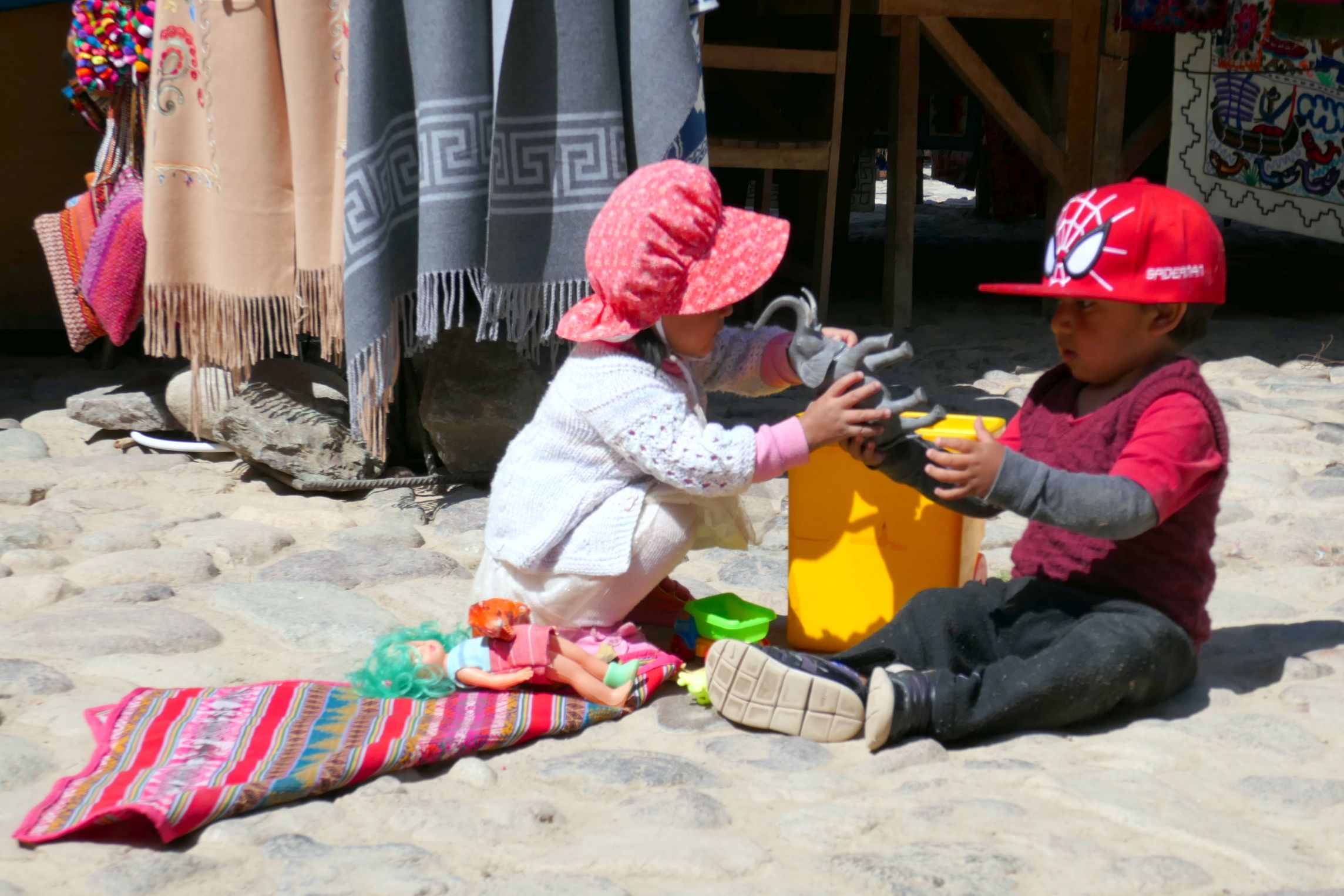
On our way to our next destination, we stopped at a viewpoint where locals were selling their wares:

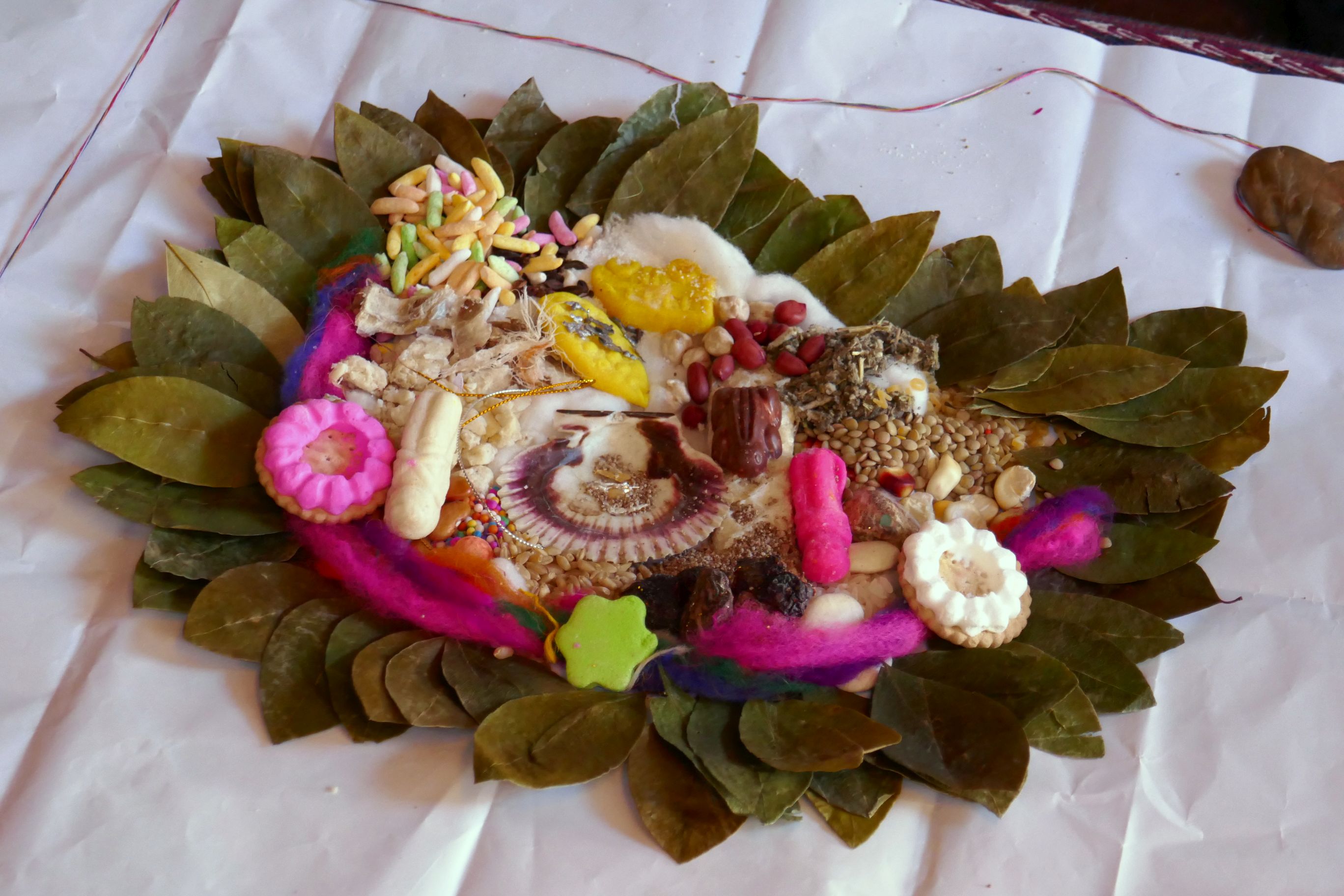
Next, we visited the “Medicine Man,” an Andean Shaman who performed a healing ceremony.  Although Peru is a Catholic country, about 75% of its people practice going to a Shaman.

Offerings were given to the Pachamama (Mother Earth) by packaging and burning them, and the Shaman wished for good health and safe travels for each of us. 

This was a very culturally full day, but we weren’t finished yet!  We experienced all of that before lunch!

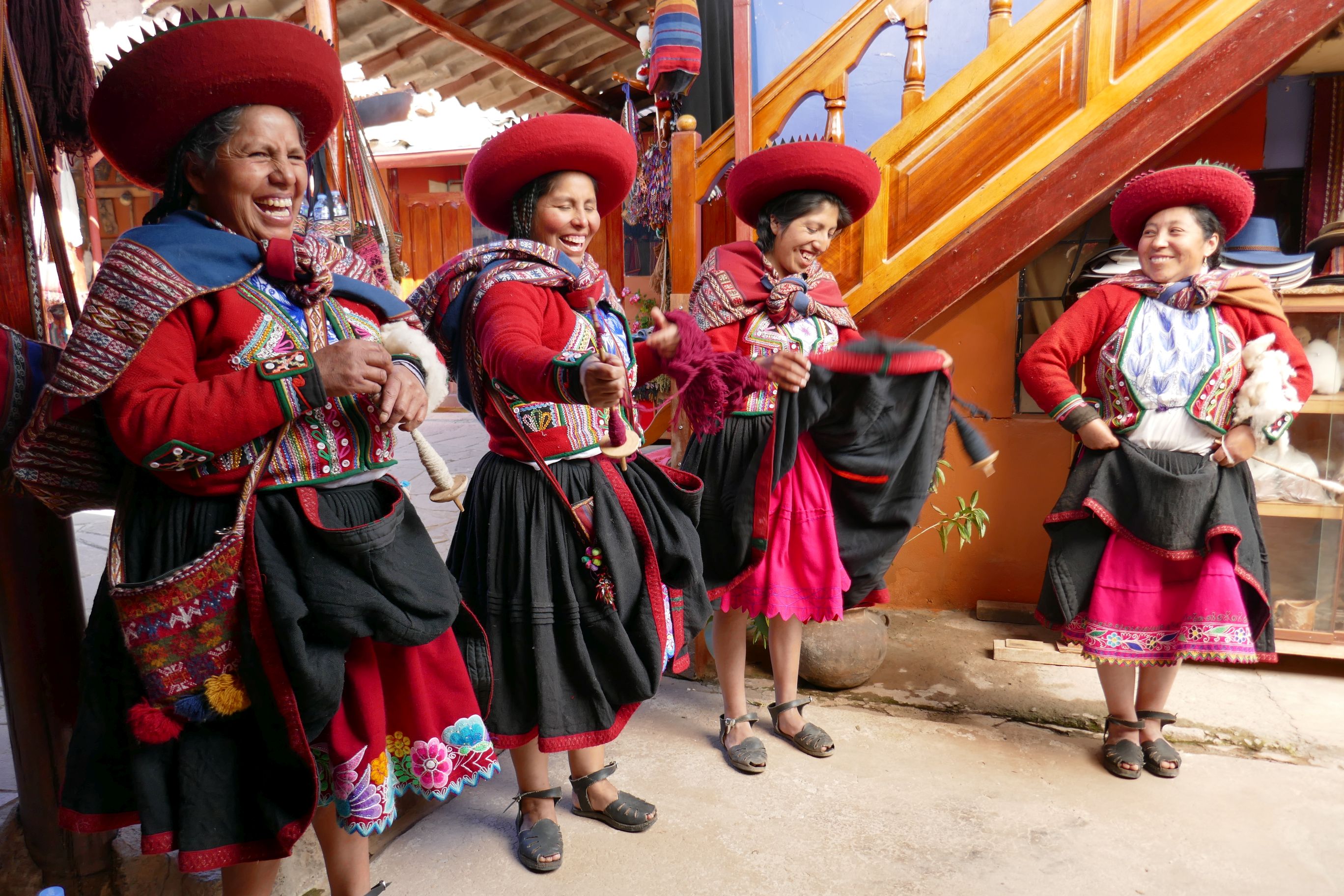
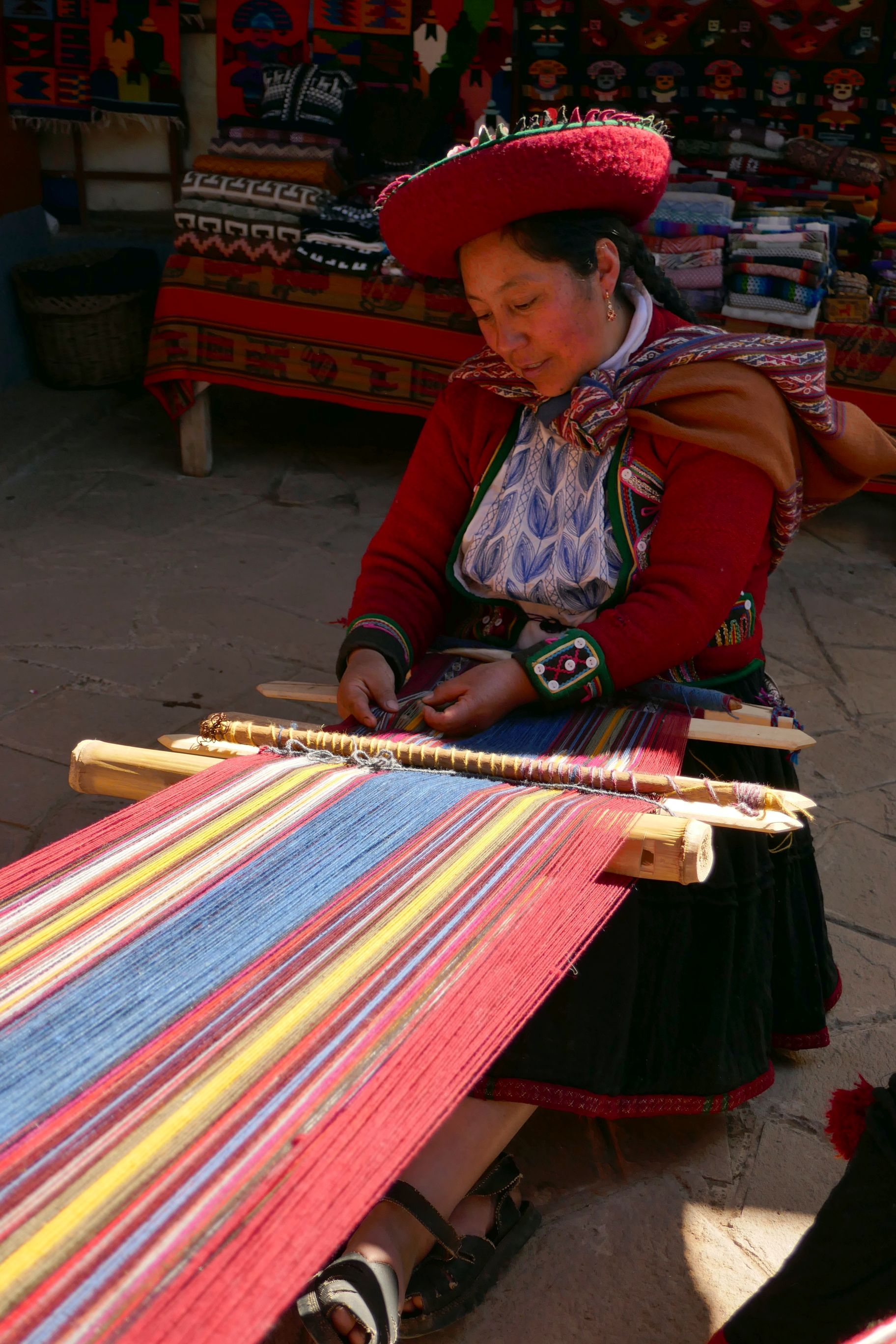
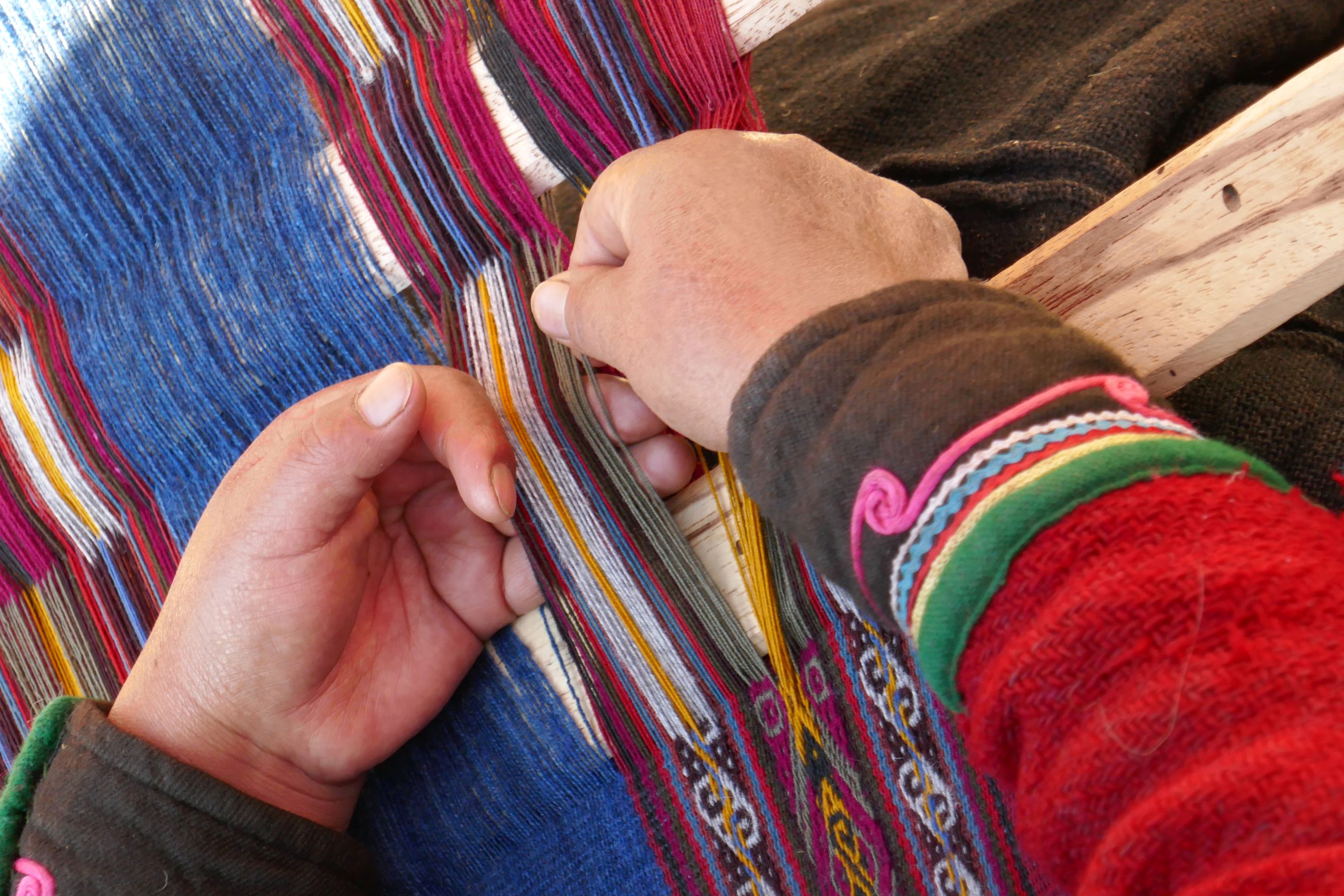
Our next stop was Chinchero Village at a textile weaving co-op where they prepared lunch for us and demonstrated the textile dyeing and weaving processes.  The women of the co-op all wore black skirts which represents Pachamama.

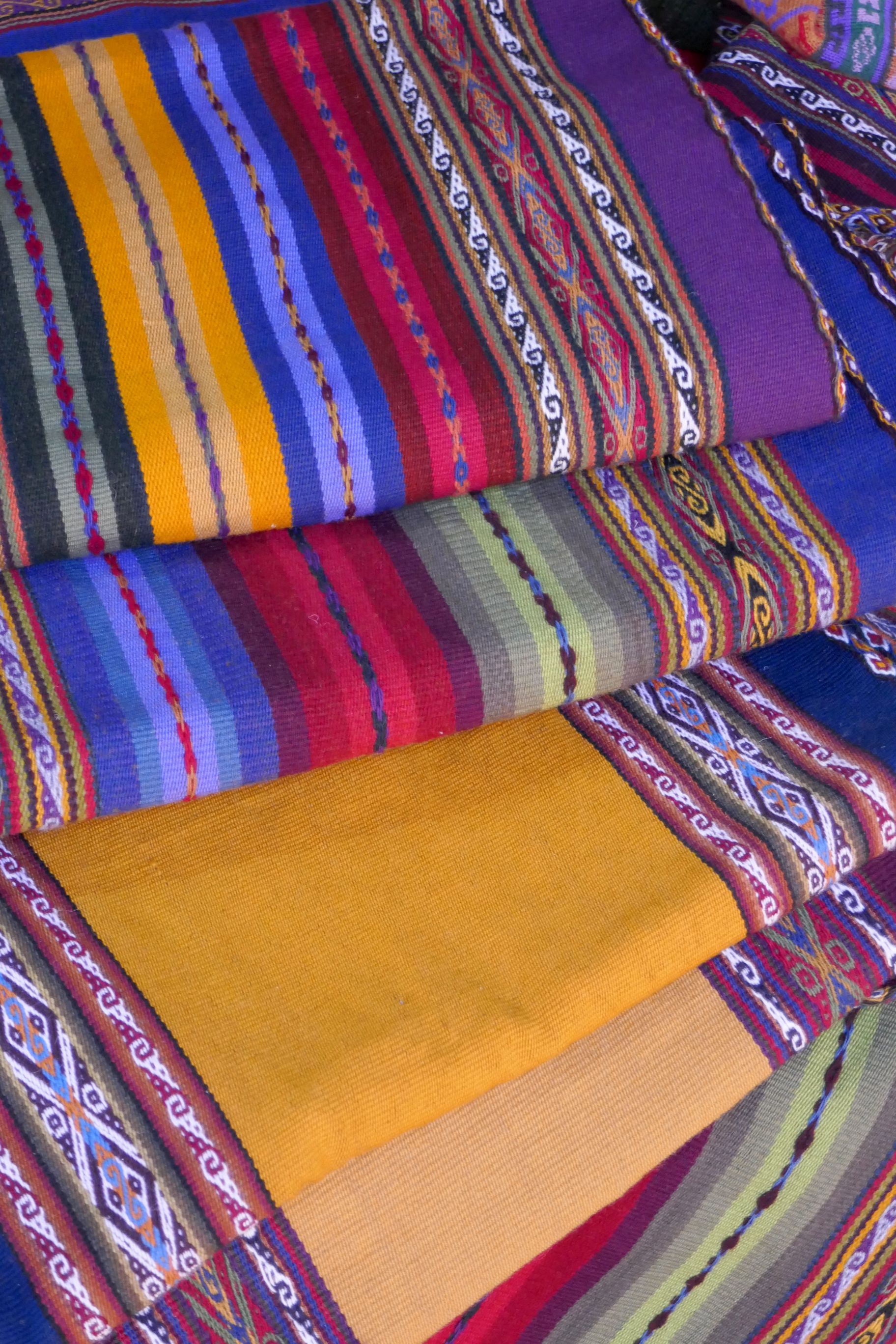
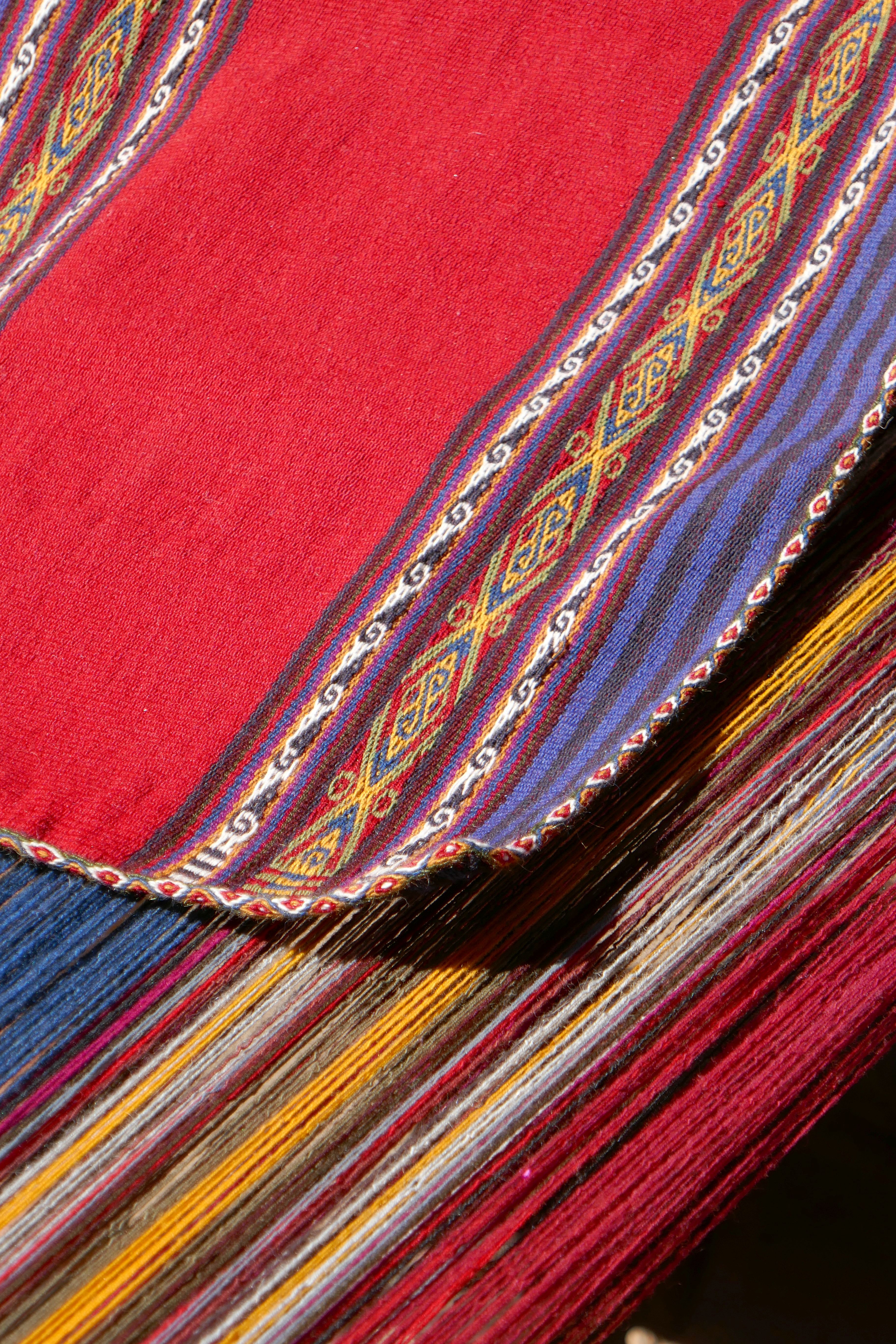
During the demonstration, they explained how the wool is cleaned using jicama that is grated in water.  It is strained and agitated, washed, and then dried in the sun before being dyed.  Natural fruits, plants, parasites, or lichen are used for the dyes.  Purple corn, for example, is used to dye wool purple, and cactus beetles are used to make red dye.  Salt is added to fix the color into the wool. 

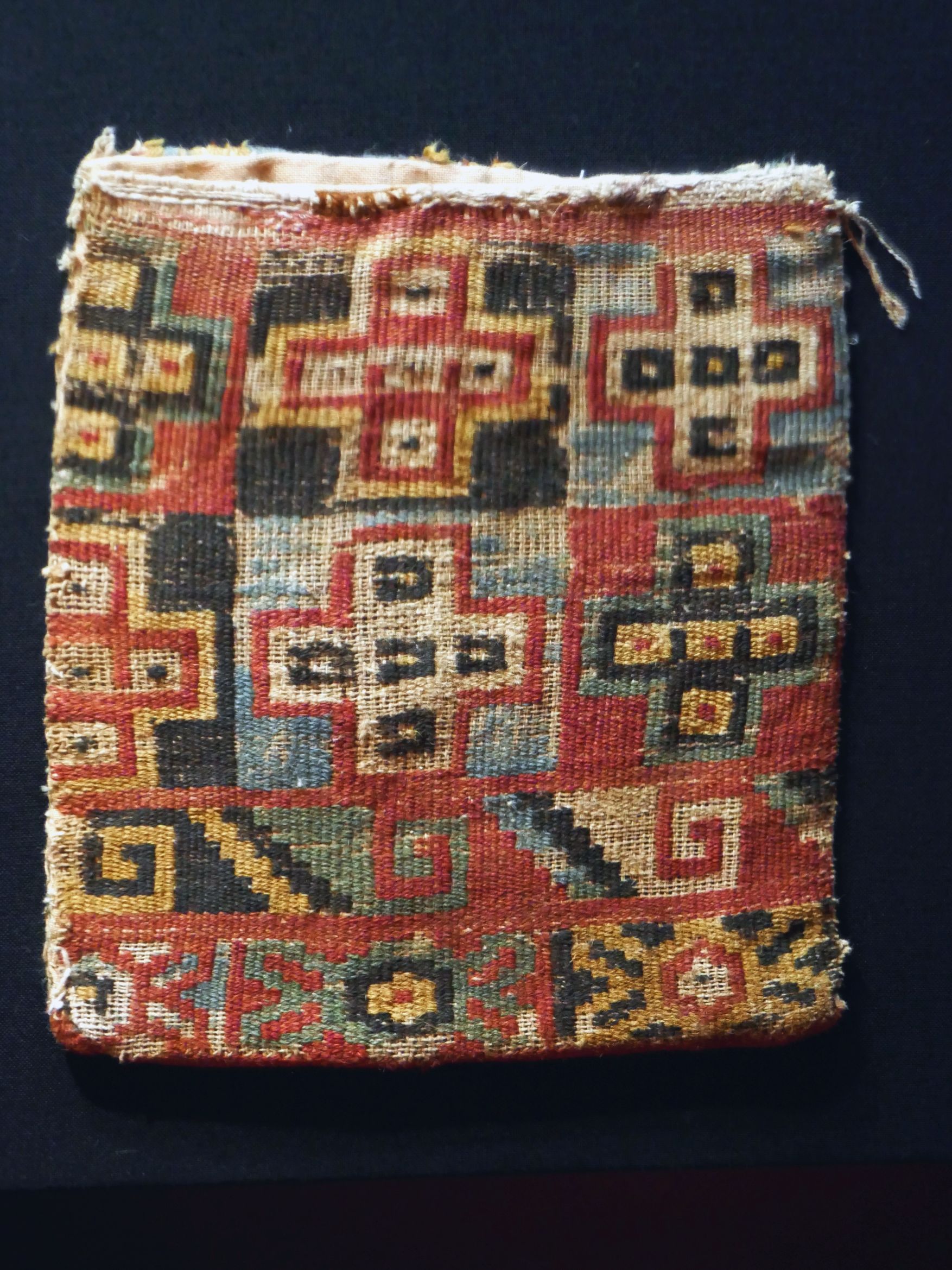
This beautiful hanging we bought from the weaver was made with a design representing serpents (white) and puma claws (in between the white serpents).  The colorful stripes represent the Cusco flag.  It took this weaver four months to make and it cost about $150.  She was also the cook for our lunch!

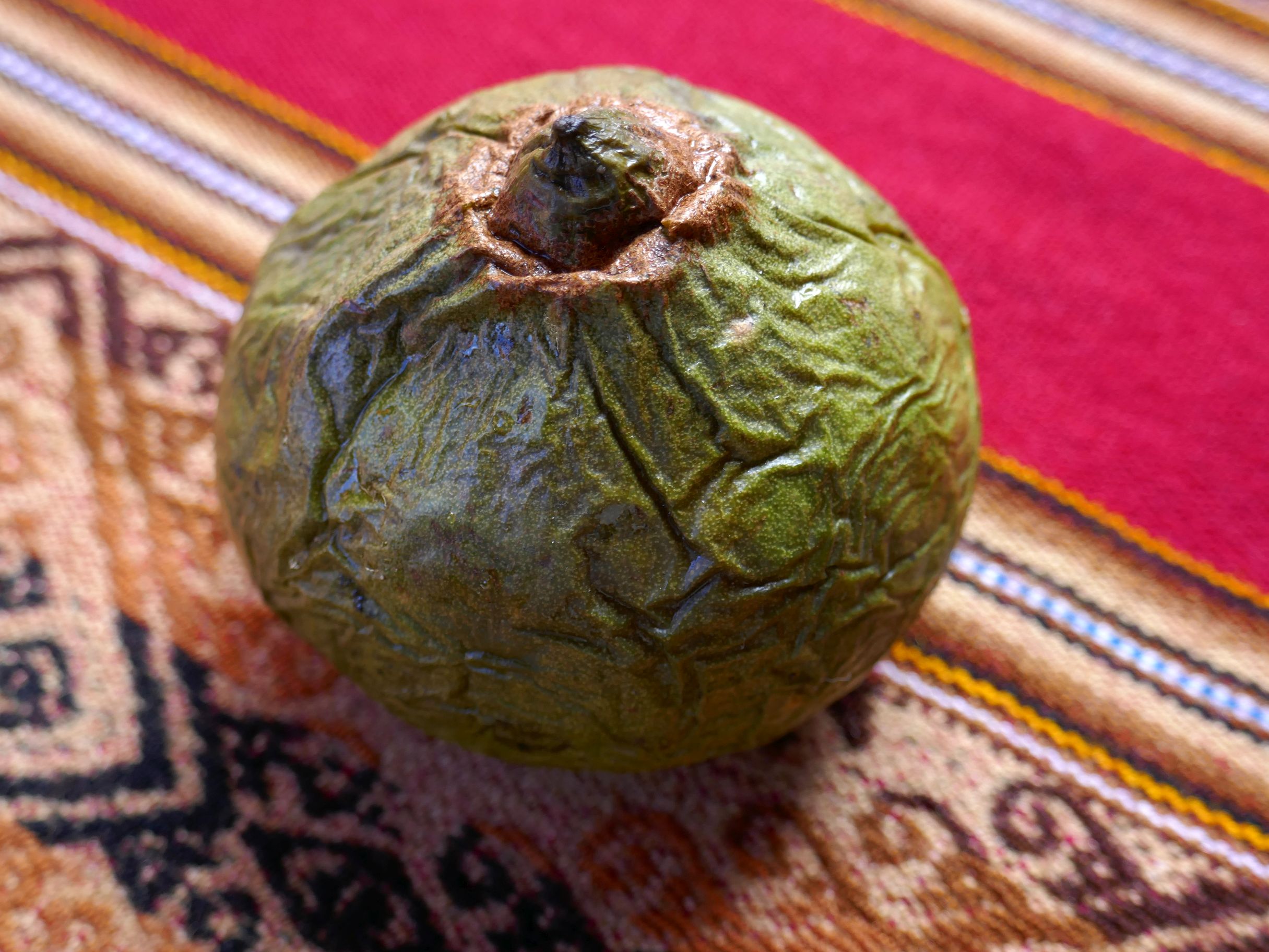
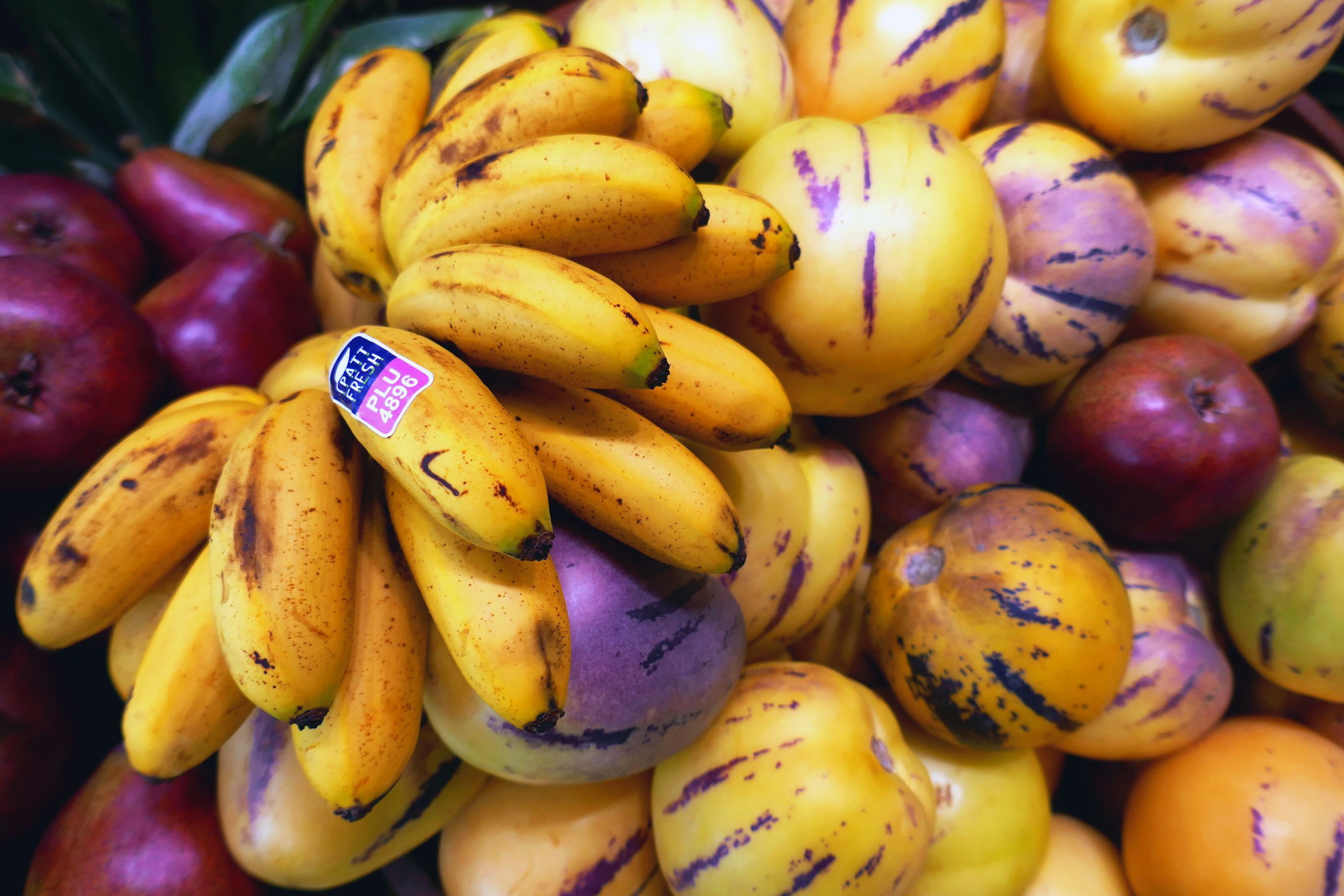
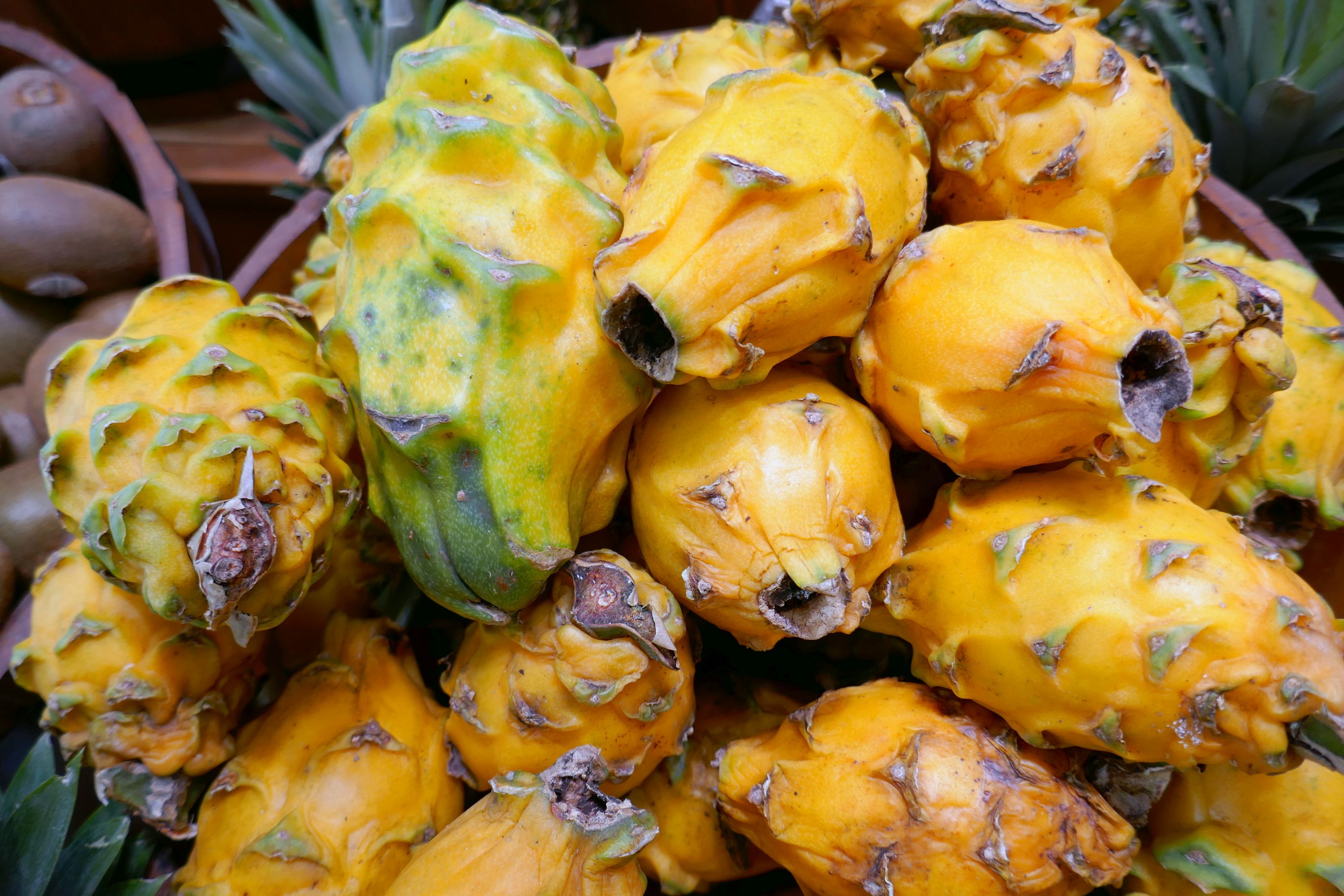
Chirimoya fruit
Lucamer fruit

We returned to Cusco to enjoy the remainder of the afternoon and evening on our own, but Raul made us an offer we couldn’t resist—the topic of my next post.

Next up:  PERU #14: MIND-BLOWING MERCADO SAN PEDRO

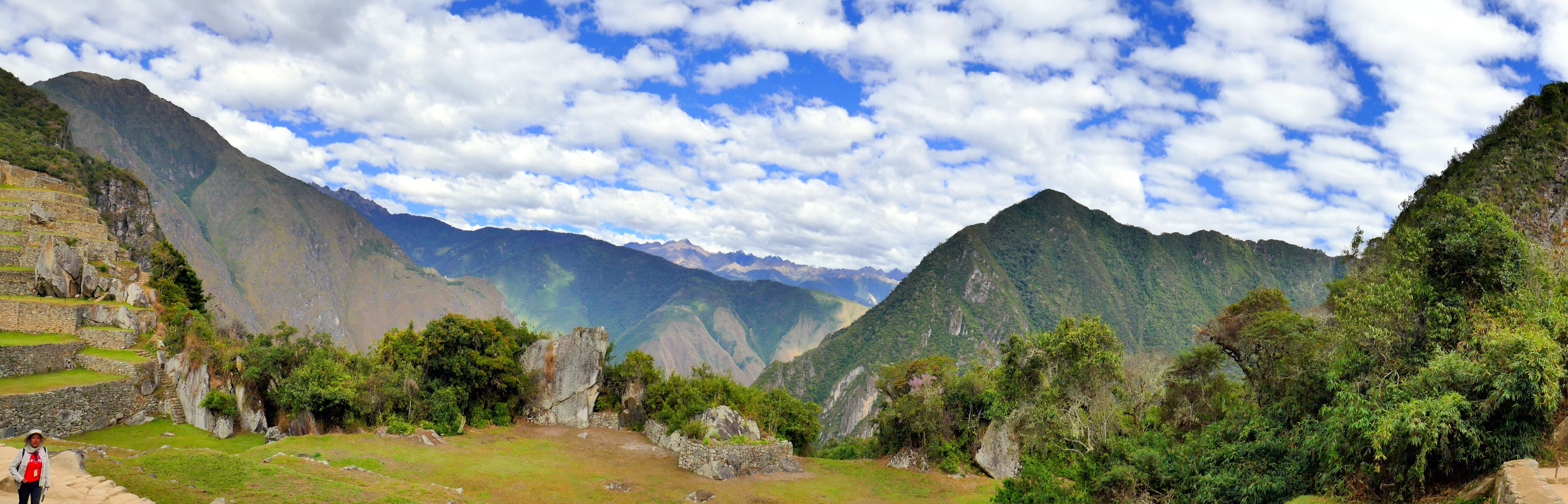
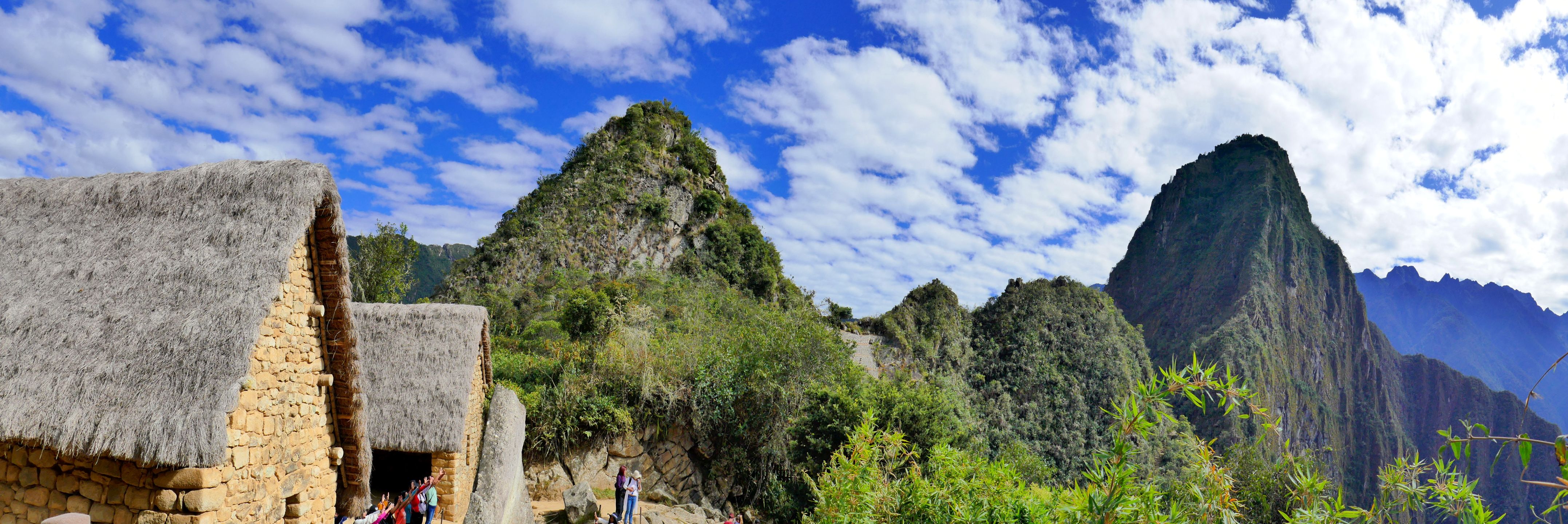
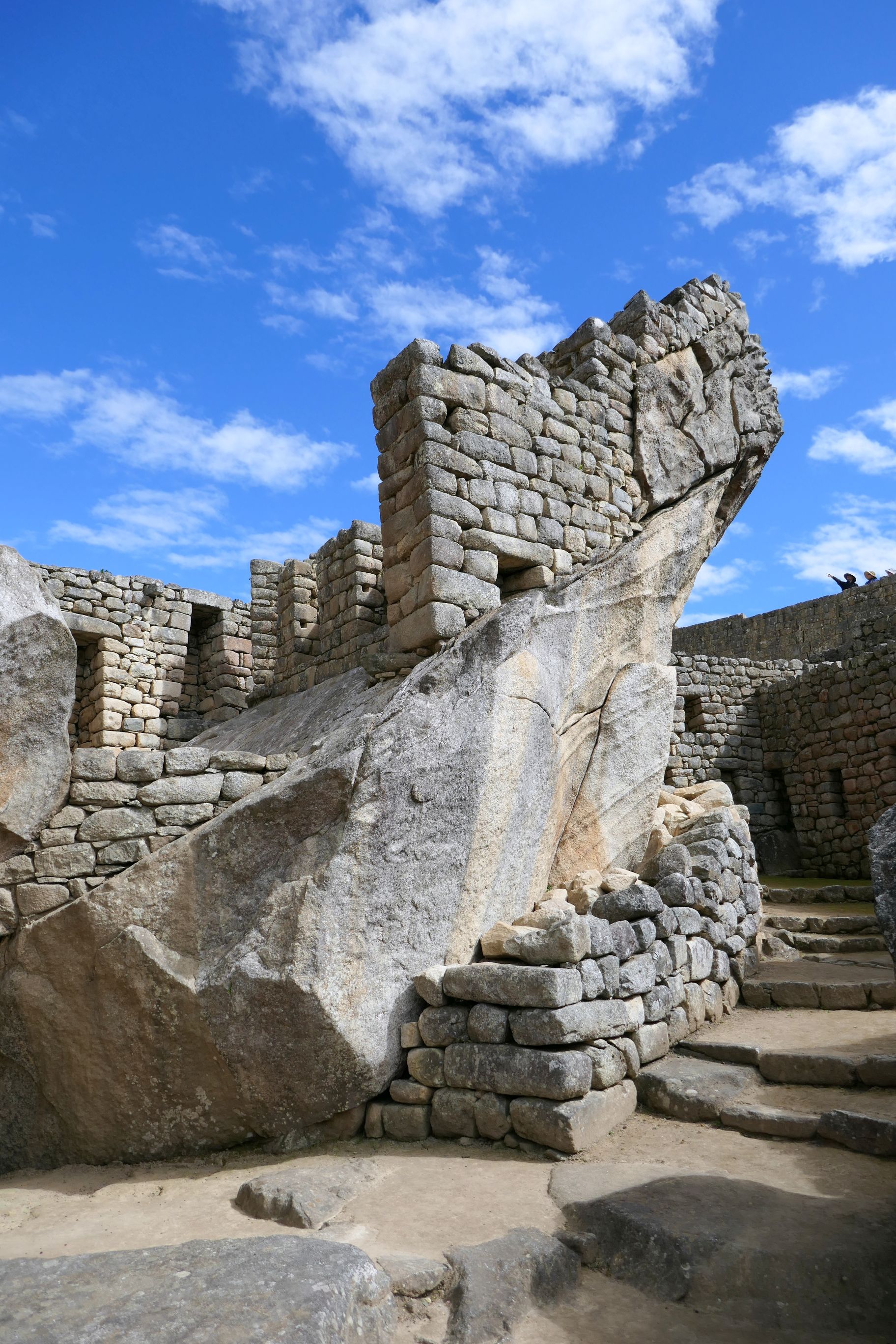
PERU #11: MORE MAGNIFICENT MACHU PICCHU!

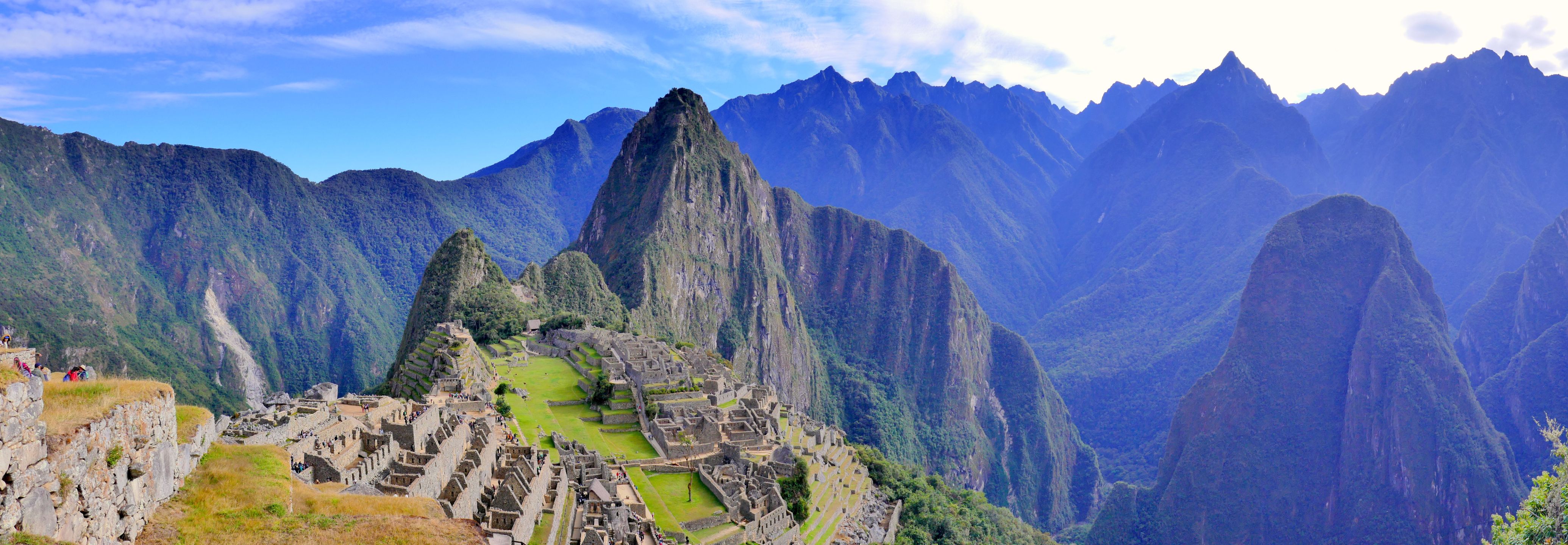
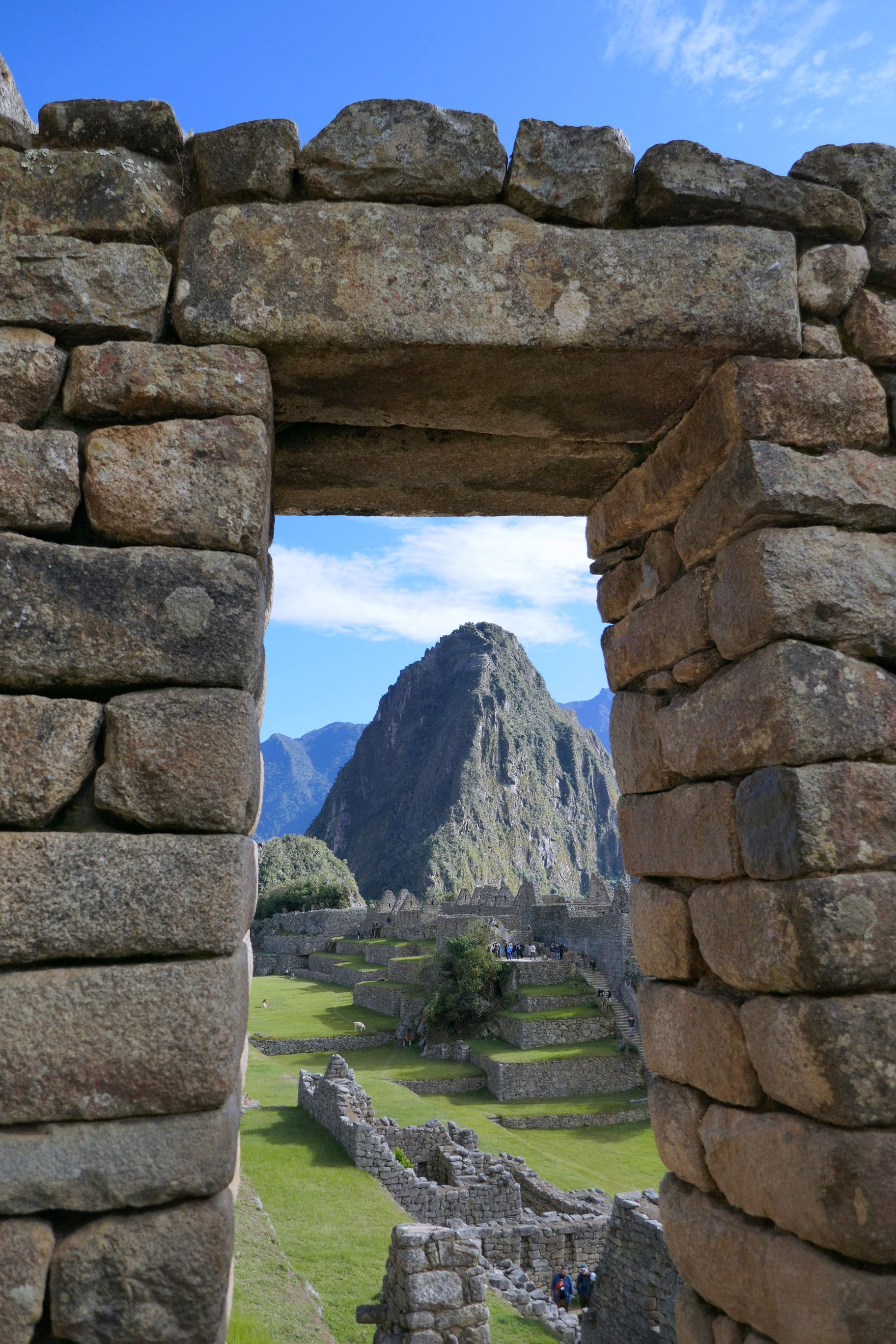
On most tours of Peru, seeing Machu Picchu is a one-and-done experience.  You get one opportunity, so you better hope the weather is good that day.  Our Overseas Adventure Travel tour had us scheduled for the afternoon with the opportunity to return early the following morning to see the ruins in different light conditions with far less tourists.  There was the hope, too, that if the weather was bad during the afternoon visit, it would be better (or at least different) the next morning.

Well, we hit back-to-back grand slams!  What a gorgeous morning!  Exploring one of the New 7 Wonders of the World in uncrowded conditions under sunny, blue skies was magical!
(For all photos, click on the image for a full screen view.)

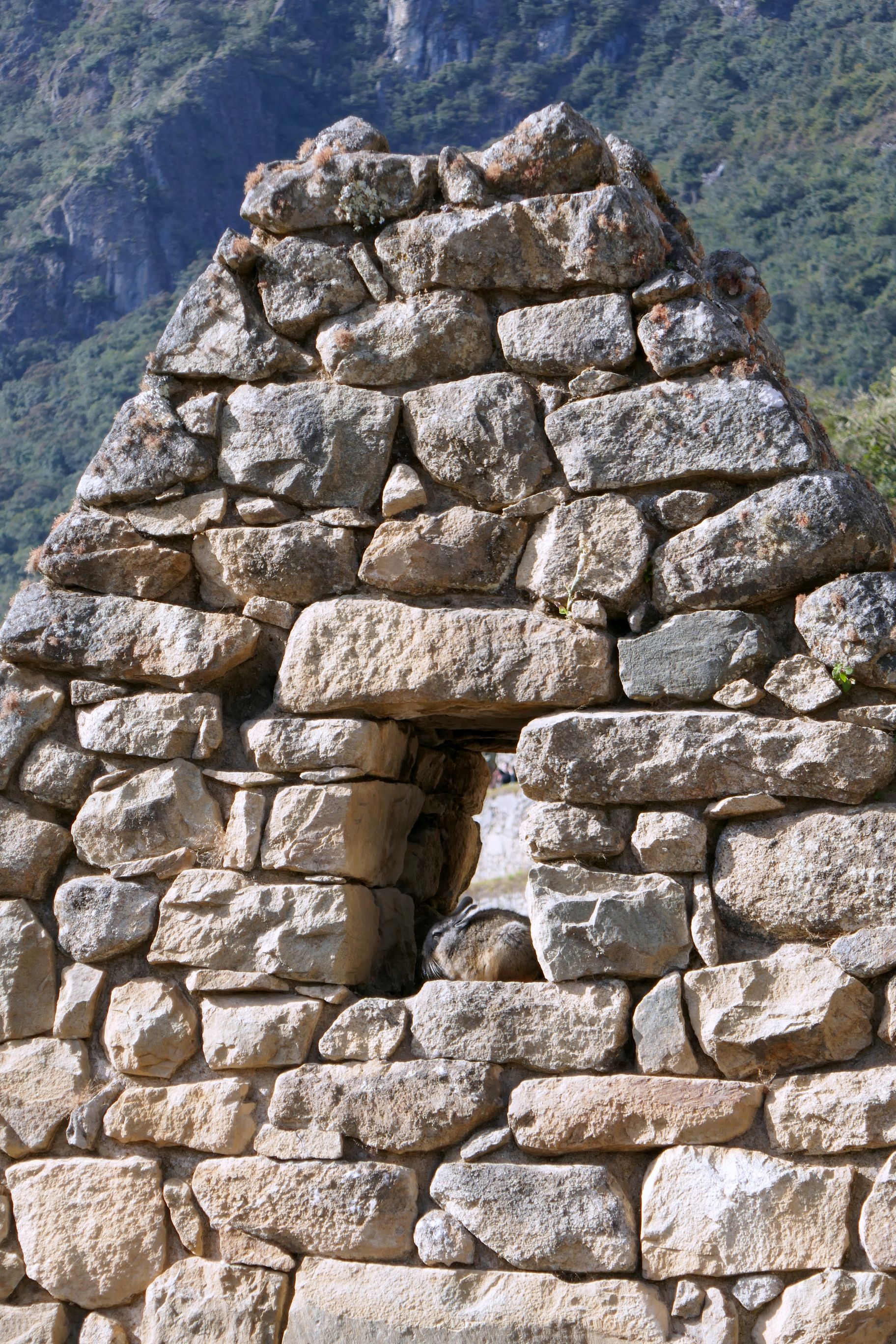
Look closely; that’s a rabbit napping in the nook!
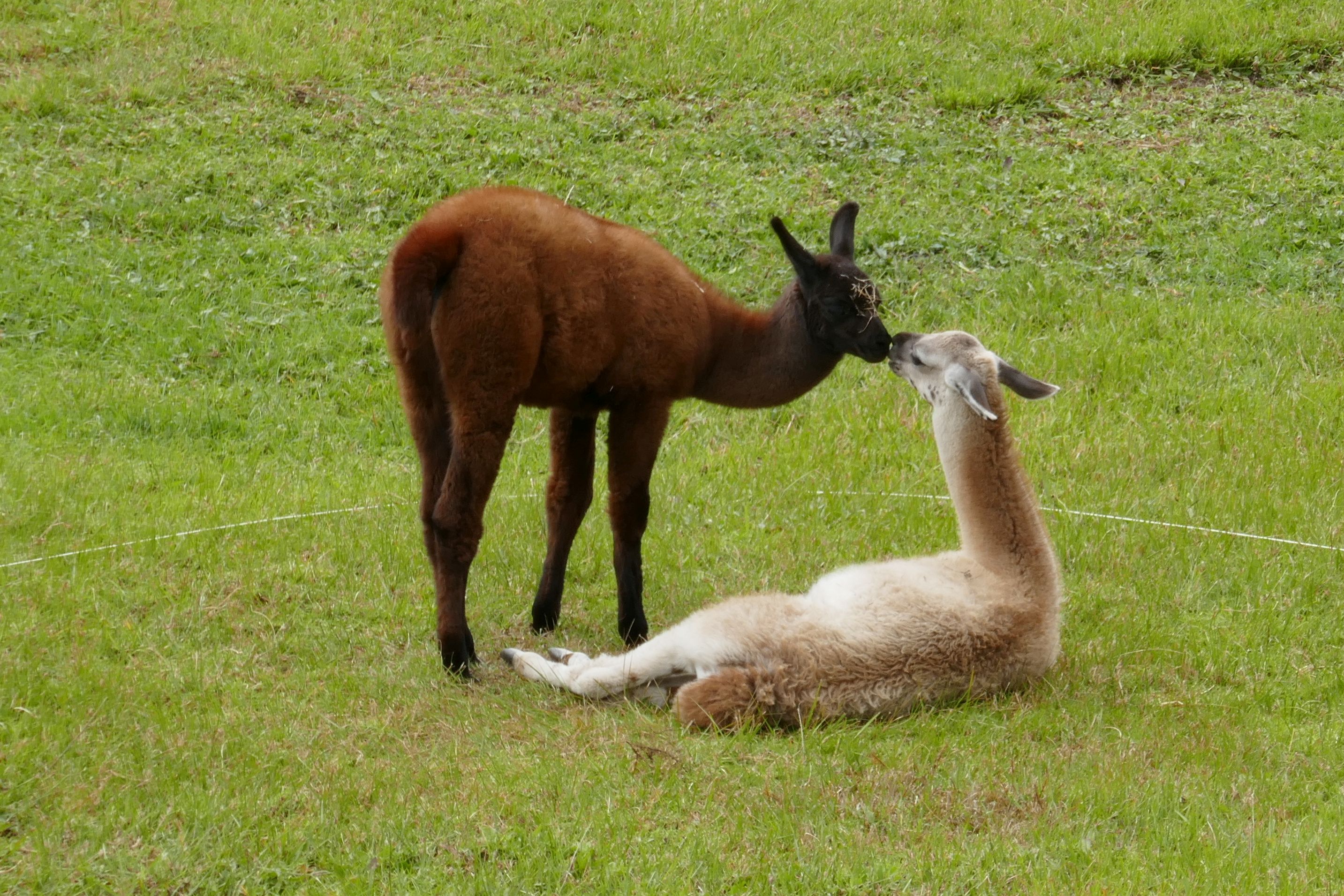
We saw alpaca this morning, too, and they were adorable!

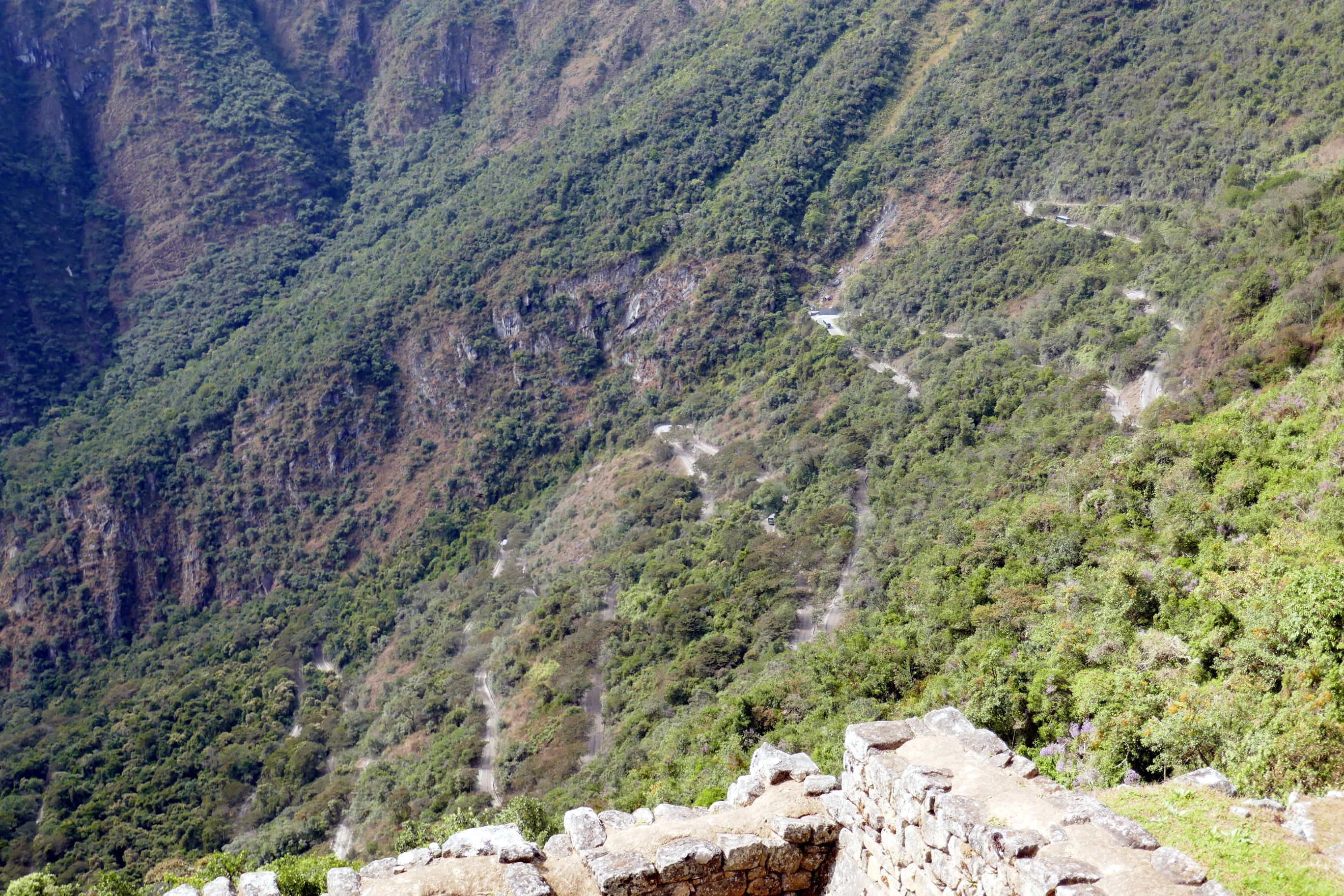
Following our steep, switch-back drive down the mountain from the ruins, we enjoyed a delicious lunch together before exploring the town of Machupicchu (aka Aguas Calientes).  Situated on the Urubamba River (aka Vilcanota River), the town is just 3.7 miles from the ruins of Machu Picchu, so it is a busy tourist destination.  I thought it had a great vibe, though.  Sure, there are tons of restaurants and shops to serve the tourists, but it is beautiful in some respects, too.  Surrounded by lush, tropical mountains, the town is hilly, and the river runs right through it. 

See those switch-backs beyond the ruins? The bus ride tested my stomach– and my nerves! The drivers were amazing, though.
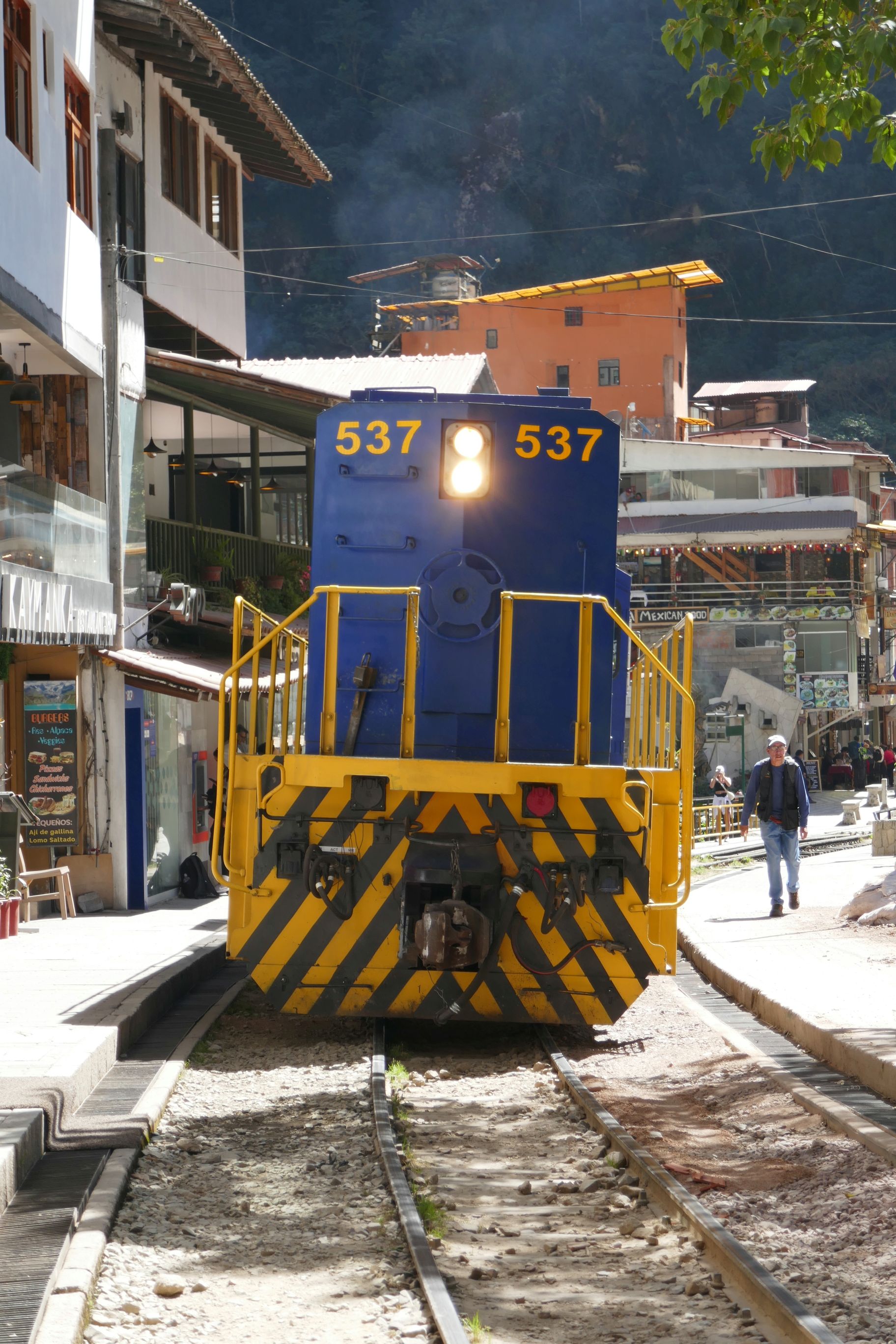
The train runs in the middle of town (and in front of our hotel).

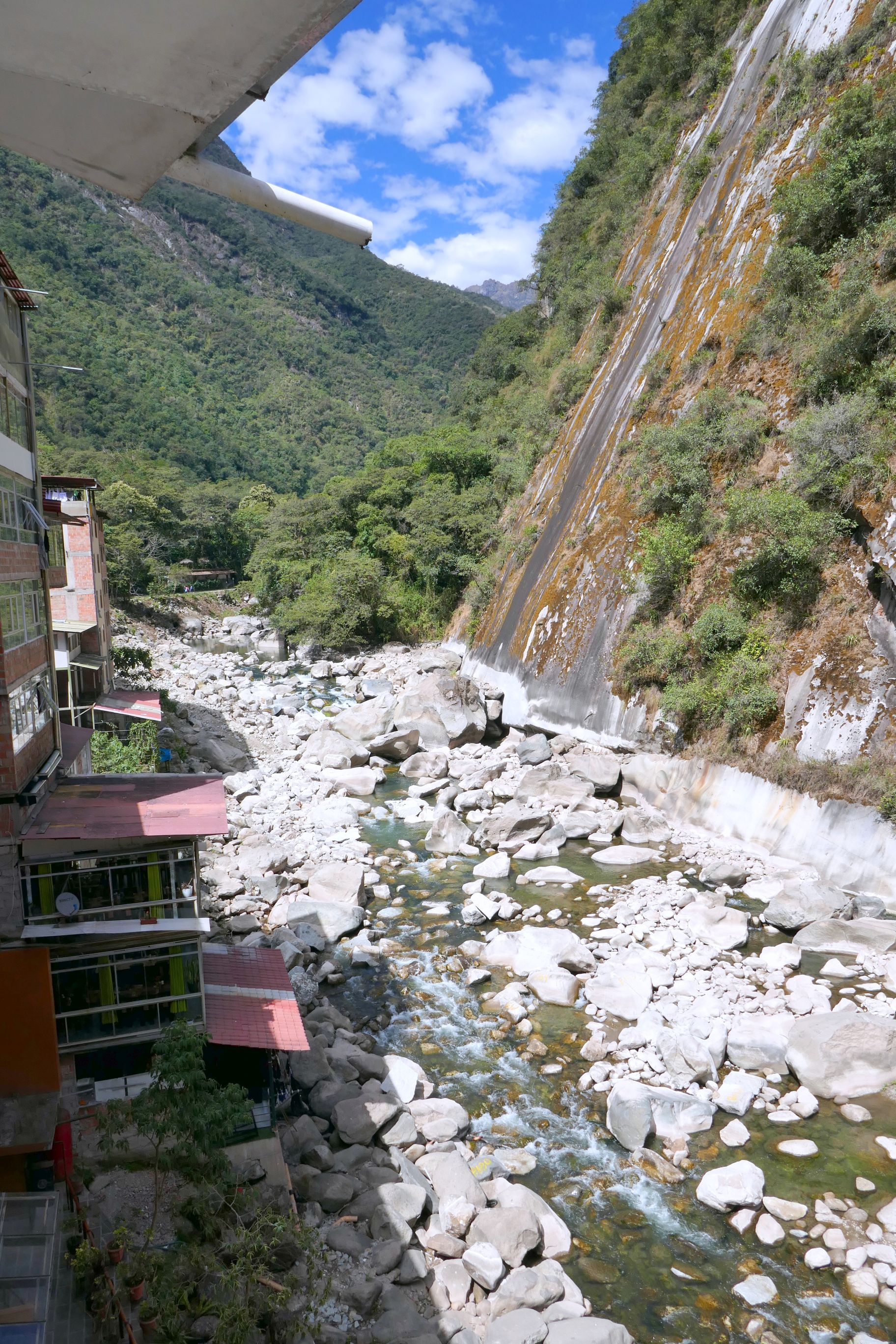
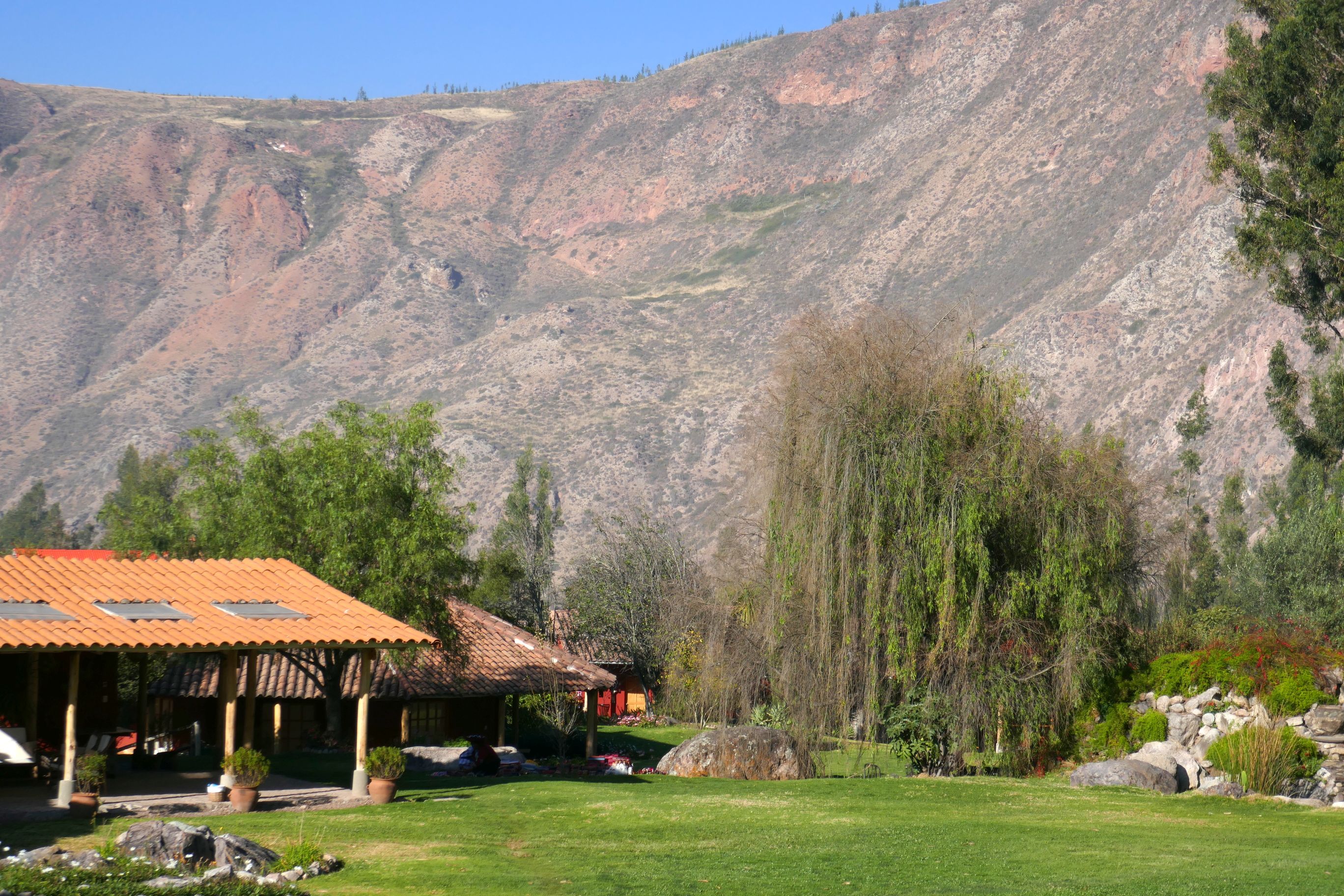
This was the view from our hotel room window. We left the windows open to enjoy the relaxing sound of the water:

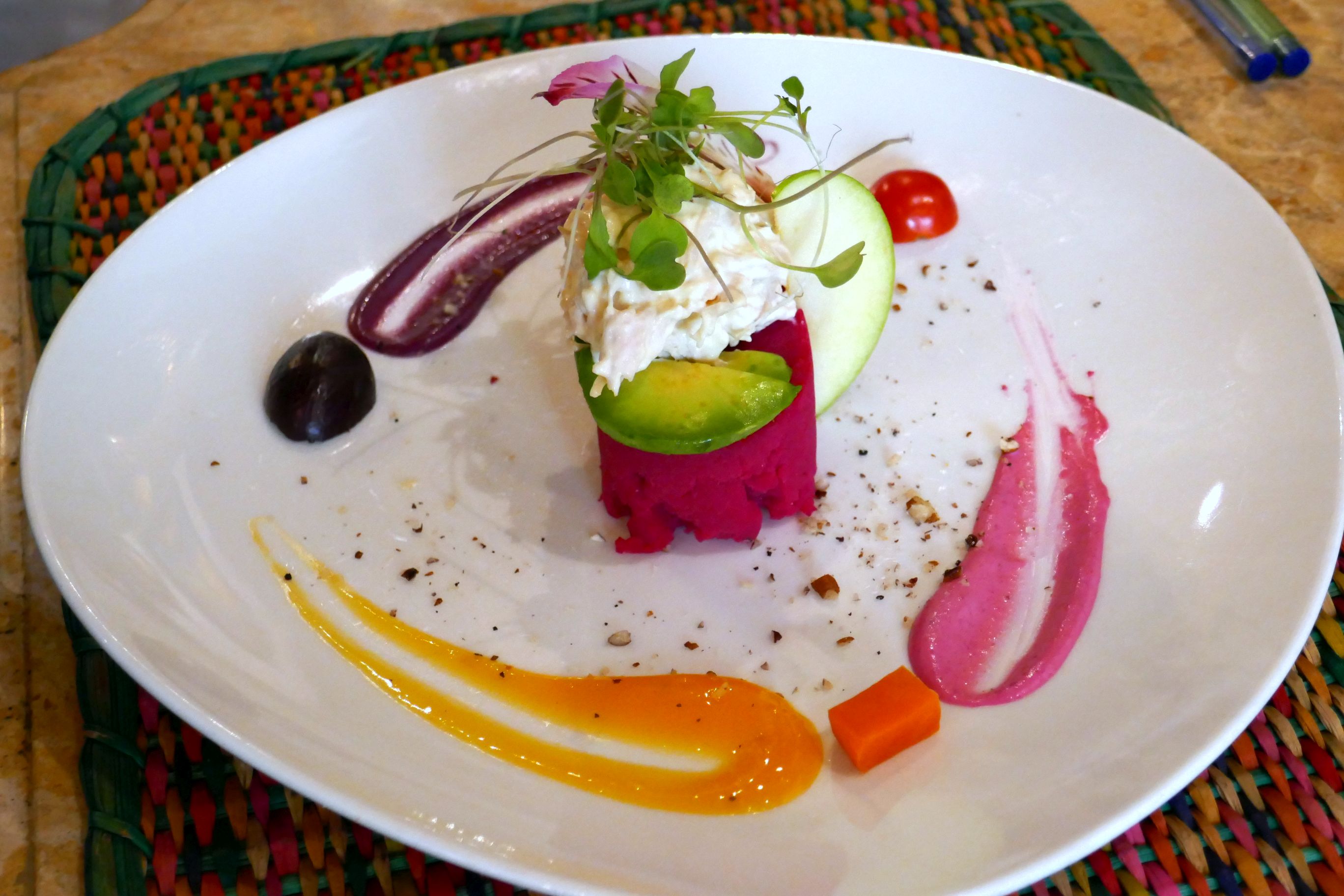
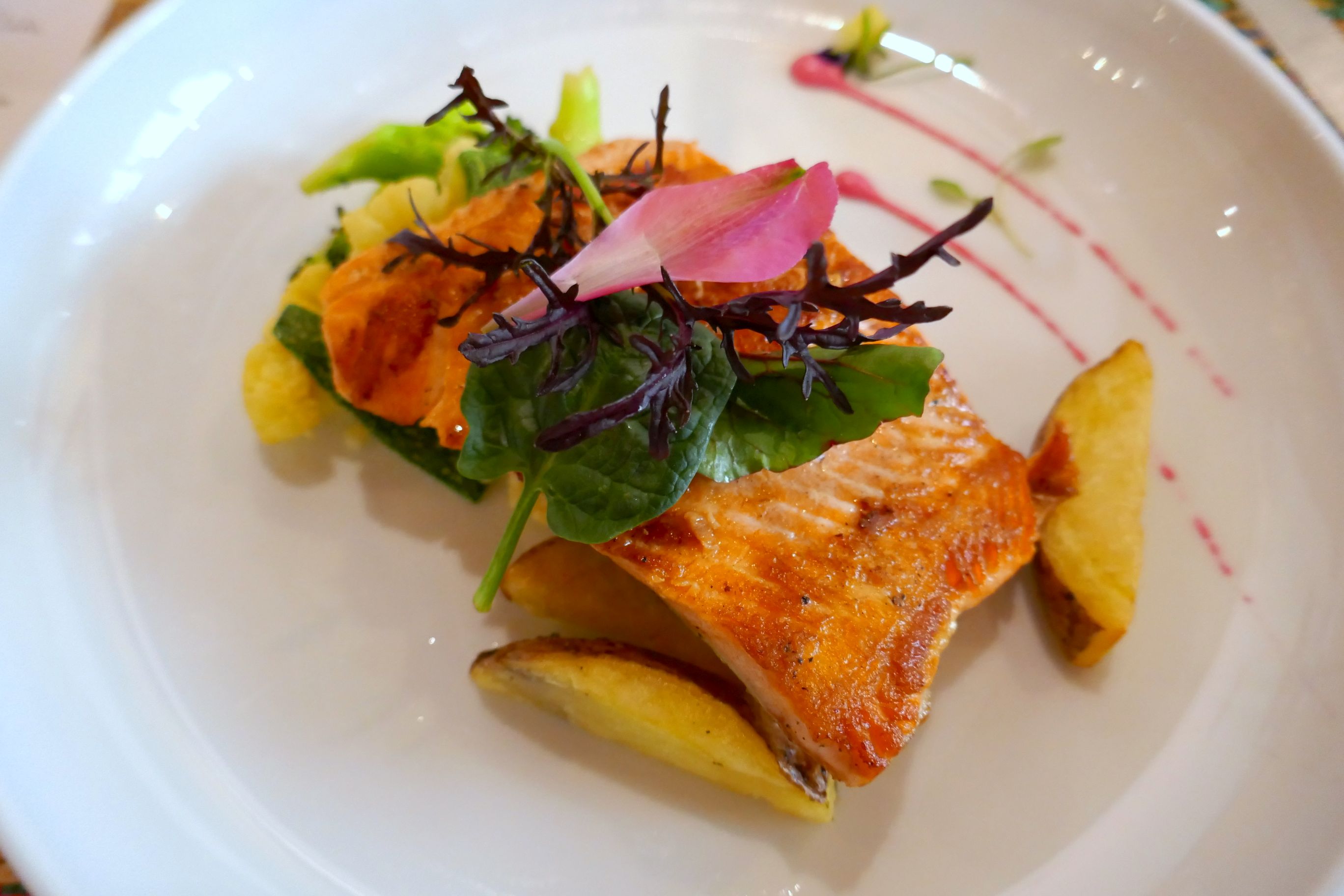
Our lunch at a local restaurant was beautifully presented and delicious!

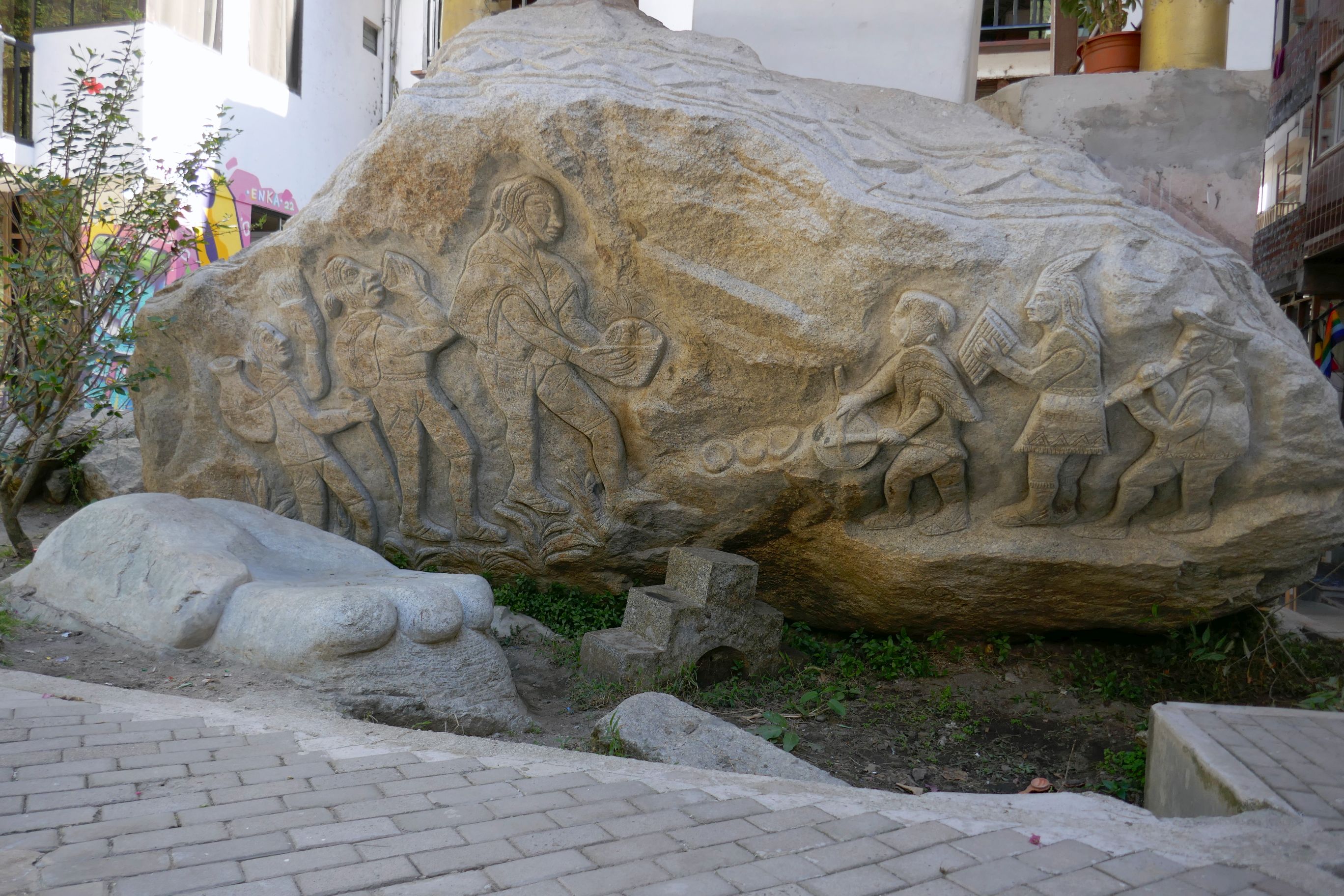
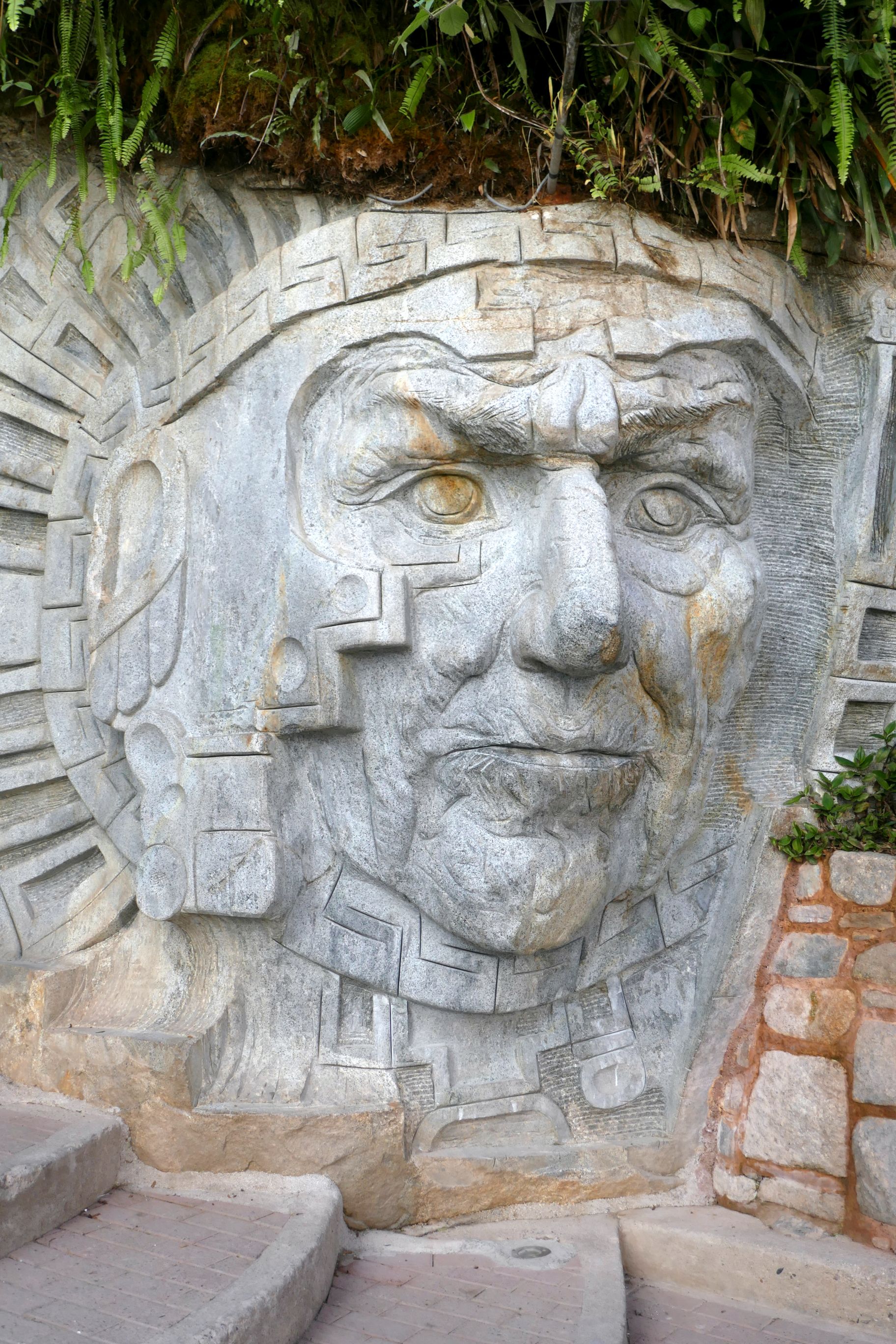
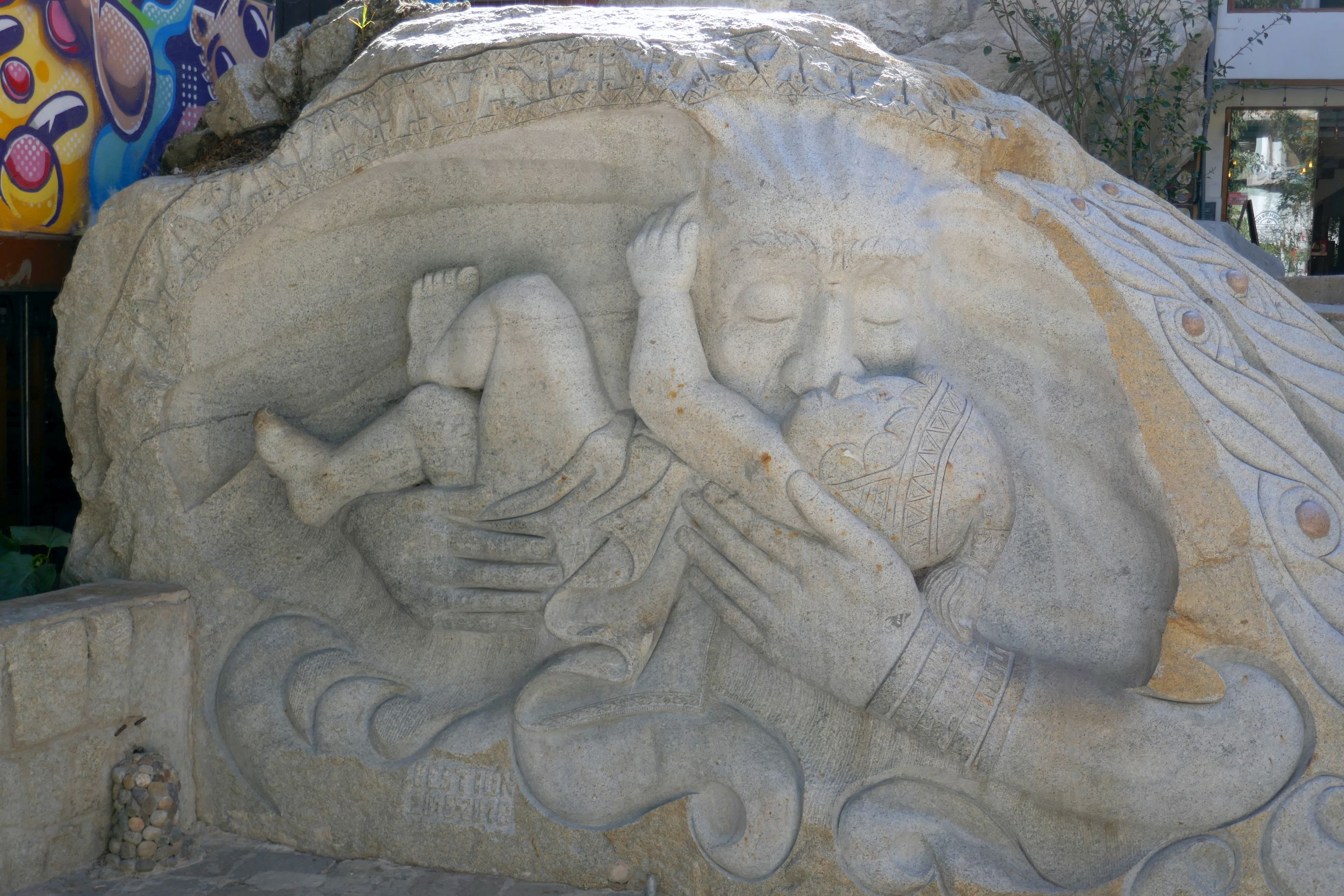
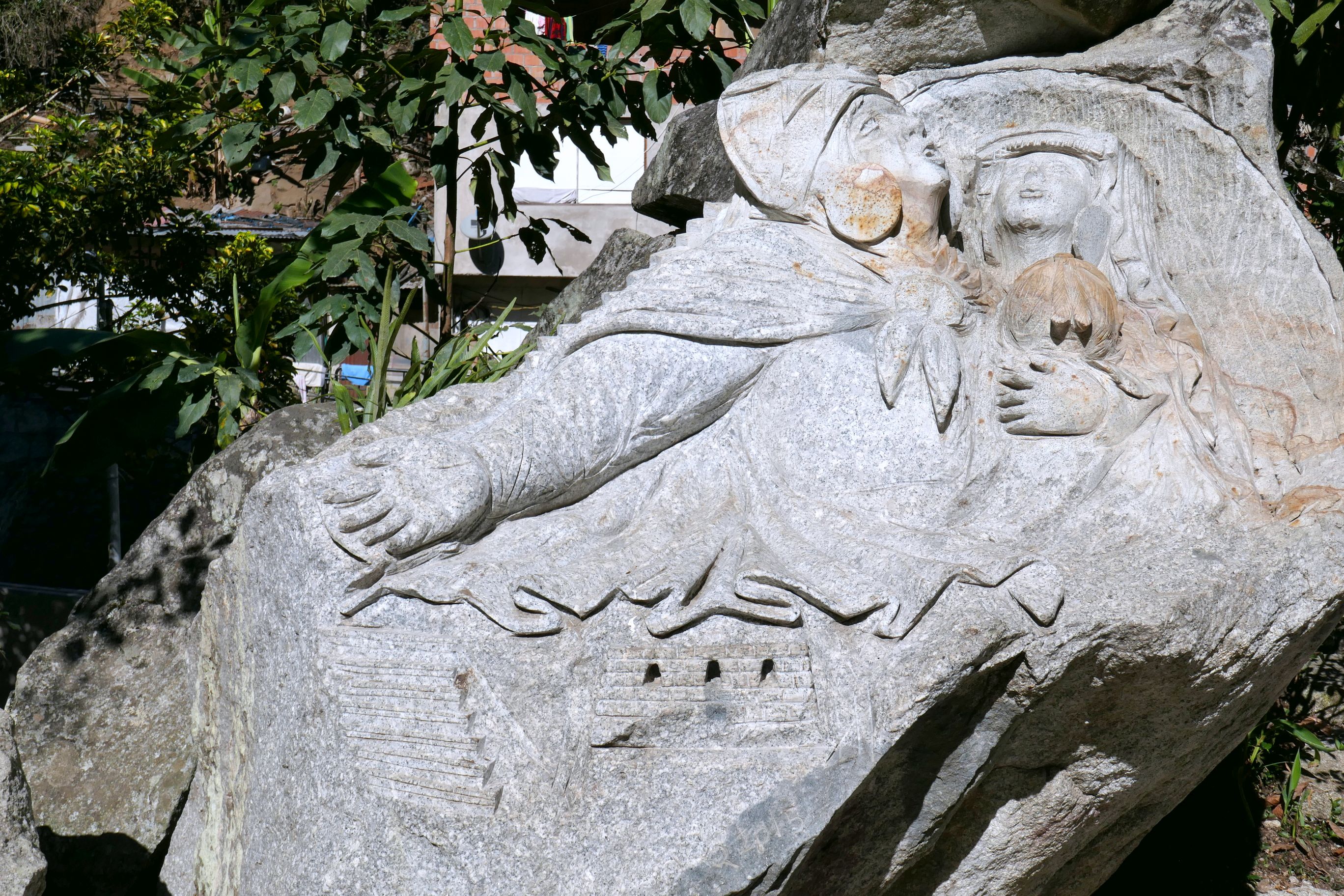
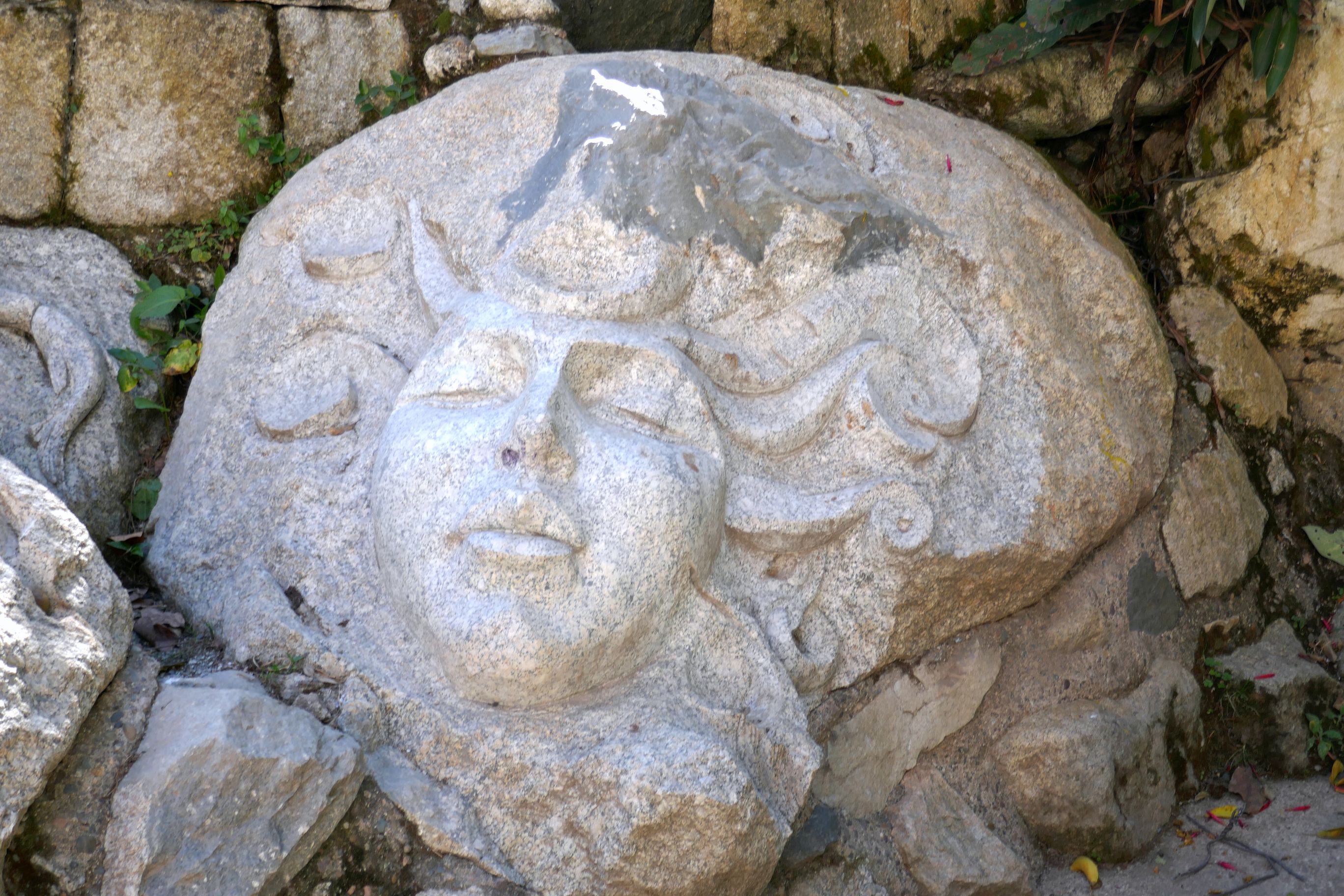
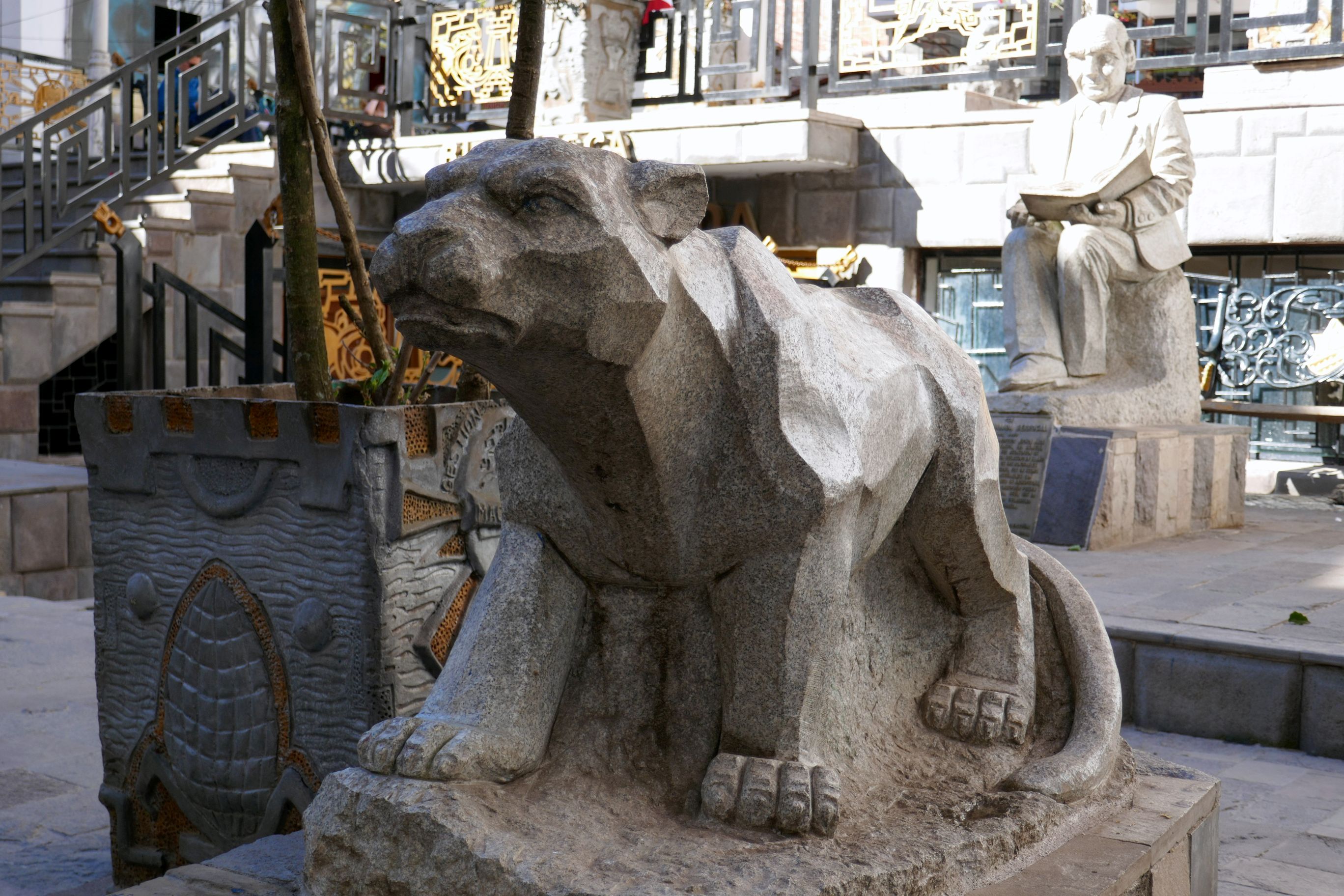
There are also amazing stone sculptures scattered throughout the town, and Raul took us on a walking tour to see them.  These are only some of the many we saw:

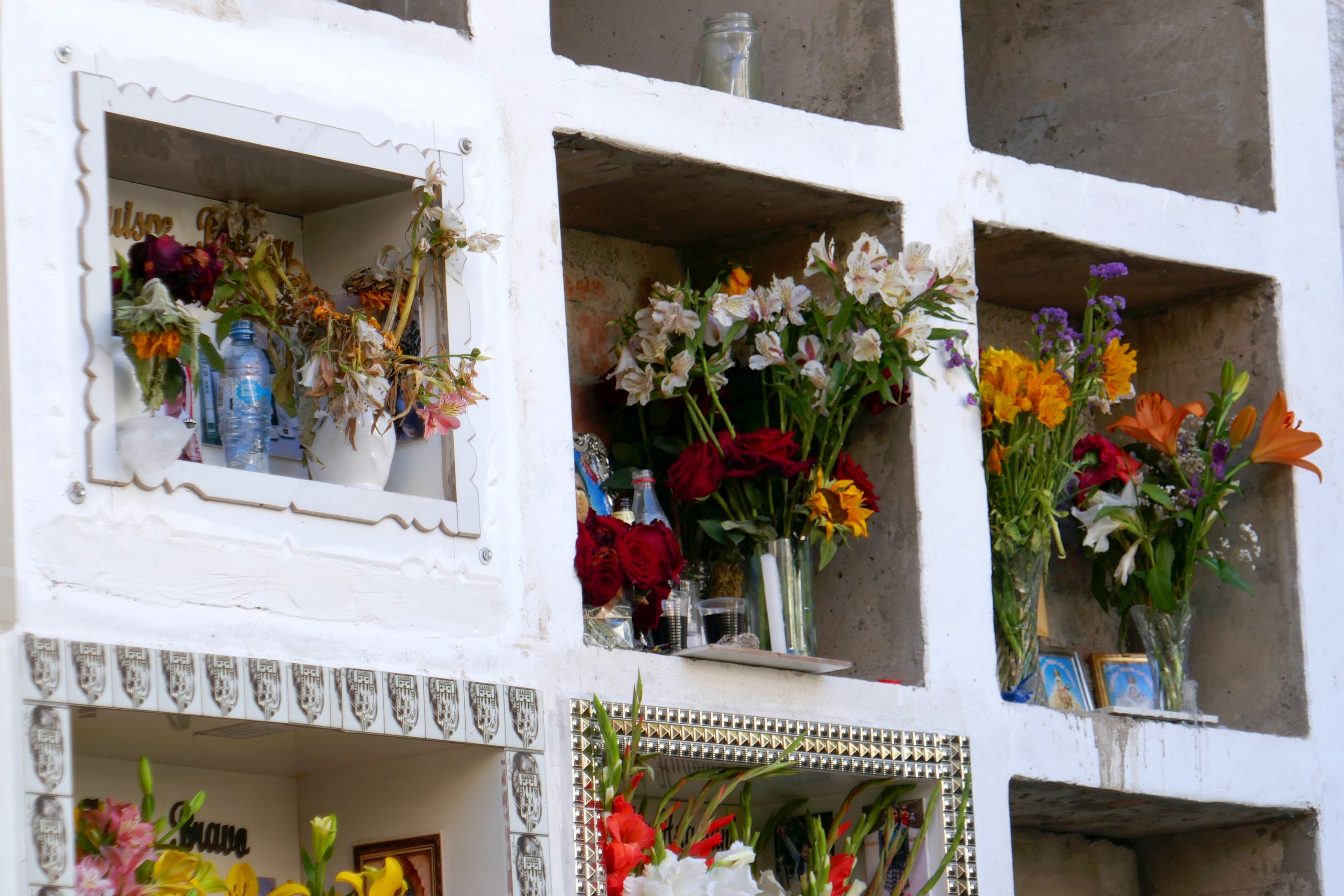
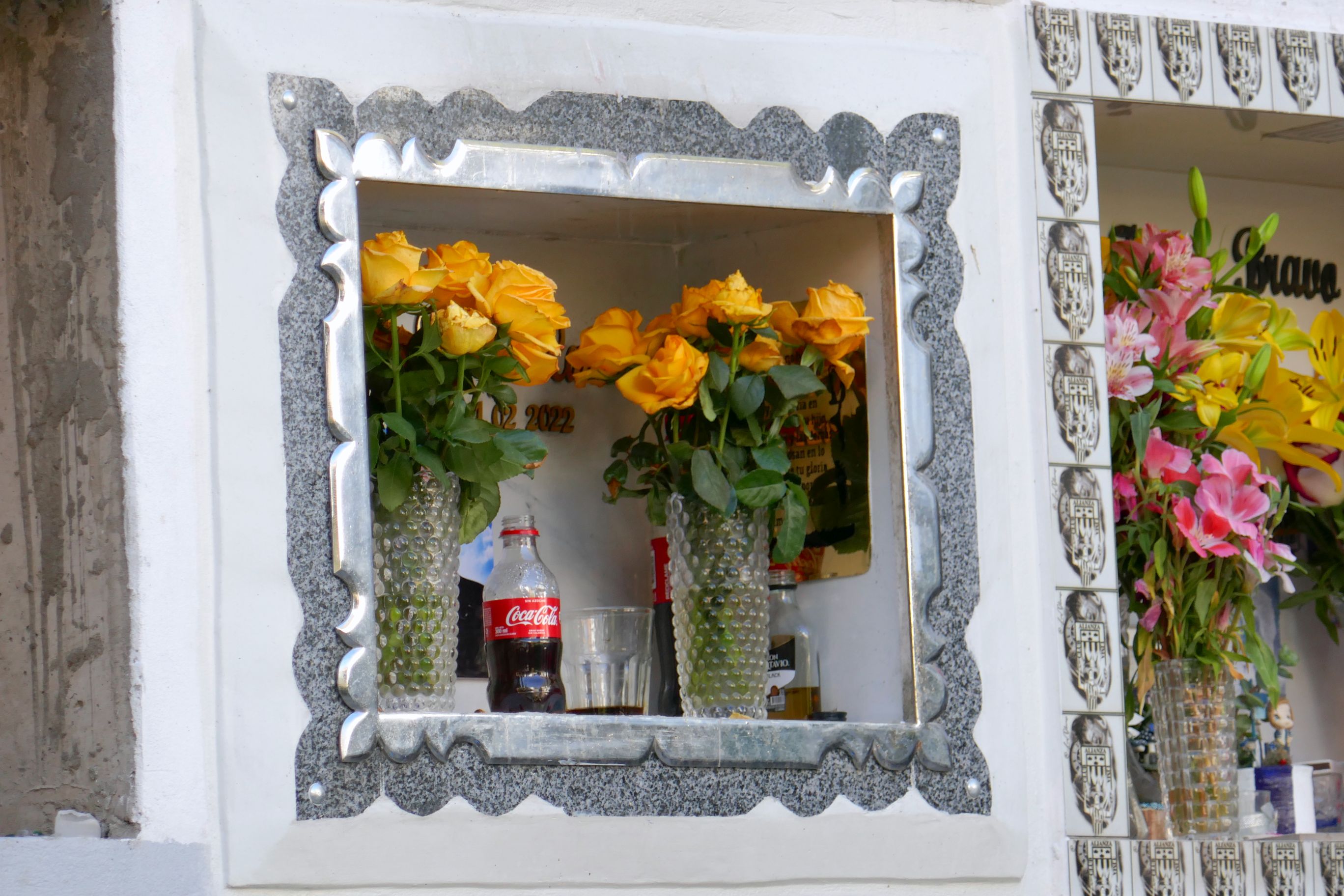
Raul also took us to see the cemetery, which was quite different than what we normally would see in the U.S.A.  There were high walls of cubicles with a casket in each one.  Family members decorate the front of the cubicle with the favorite things of their deceased loved one.  While we were there, parents were decorating the cubicle of their deceased daughter in memory of her birthday.  They were arranging beautiful flowers, and they stopped to talk with Raul and our group.  Their daughter had died in her sleep at the age of 22, and they never learned why it happened.  There was no hospital in the town and an autopsy was never done.  It was very sad, but we were grateful they shared their story with us.

Coming up next: PERU #12: COLONIAL CUSCO

PERU #8: RAFTING THE URUBAMBA RIVER, EXPLORING OLLANTAYTAMBO INCA FORTRESS, AND A HOME-HOSTED LUNCH

When the Incas arrived in the Urubamba Valley in the 1100’s, they discovered a mild climate and fertile soil, which was conducive for growing fruits and vegetables.  As a result, they settled in the area, their civilization and culture grew, and the valley became their sacred land. 

As we floated down the Urubamba River, we learned about the Incas from our river guide while taking in the views of the surrounding Andes. We could see the terraces the Incas constructed entirely by hand to grow their food—terraces that are still used today.

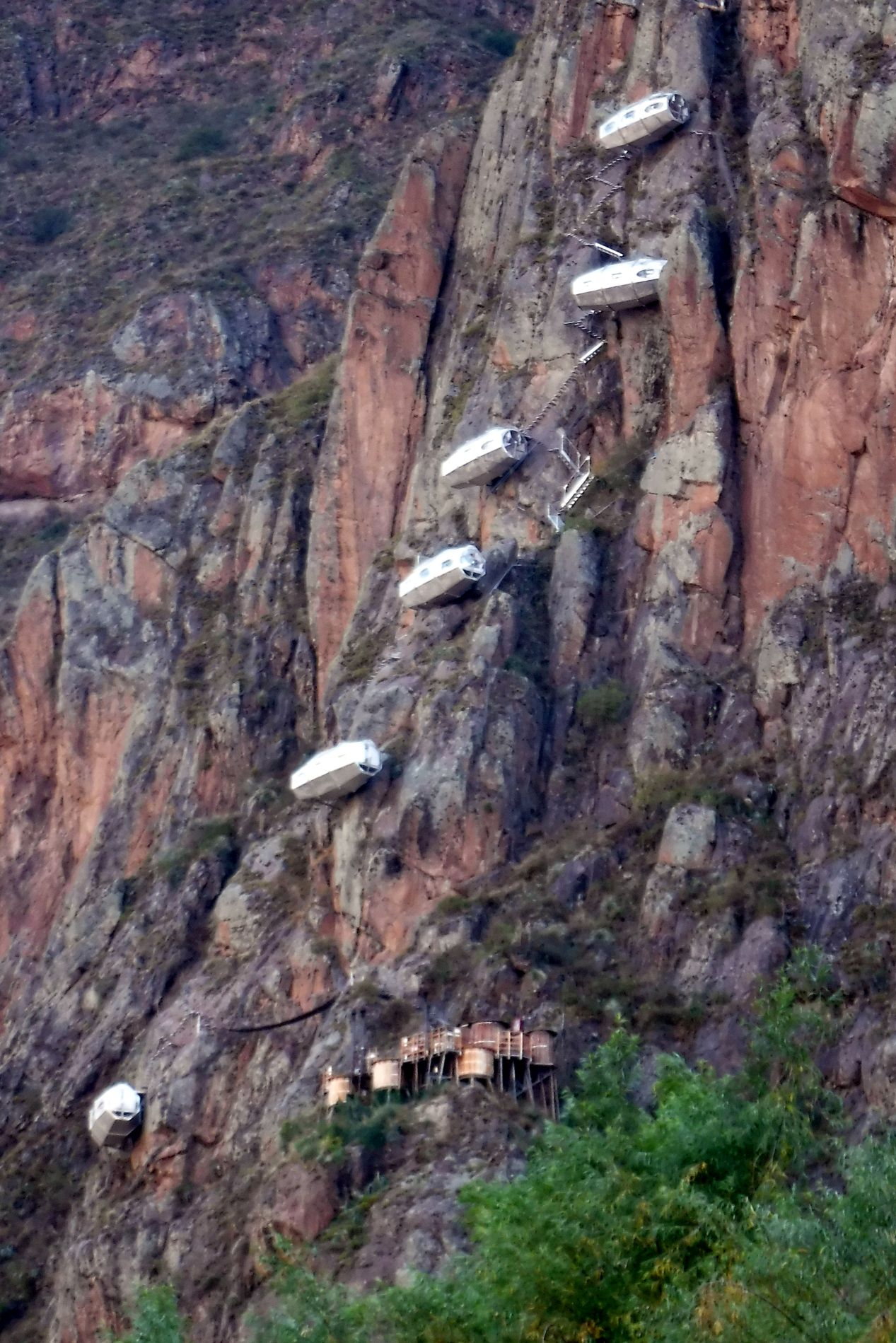
Those white structures hanging off the side of the mountain are hotel rooms for hikers!

It was a beautiful, sunny day, and the opportunity to be on the water brought joy to my heart!  Although we mostly floated, we had the opportunity to do some paddling over what was billed as “Class 1 Rapids.”  That may have been a bit of an exaggeration, but it was still fun!

Our group had split up into three boats, and each guide asked his paddlers to come up with a boat name.  I suggested “Buena Onda” for ours, which translates to “Good Vibes.”  It was the name Andrea, our Argentina & Chile tour leader, gave to our tour group when we traveled with her back in March.  One of the other boats was “Pisco Sour,” named after the favorite regional cocktail, and the other was the “Titanic,”—fitting considering they grounded into some rocks on their way down the river.  Fortunately, they fared better than their namesake; at least they didn’t sink.

After our float trip, we stopped at the rafting company’s facility to change into dry clothes. Evidently, they like cats, because they constructed this fabulous cat lodge for them!
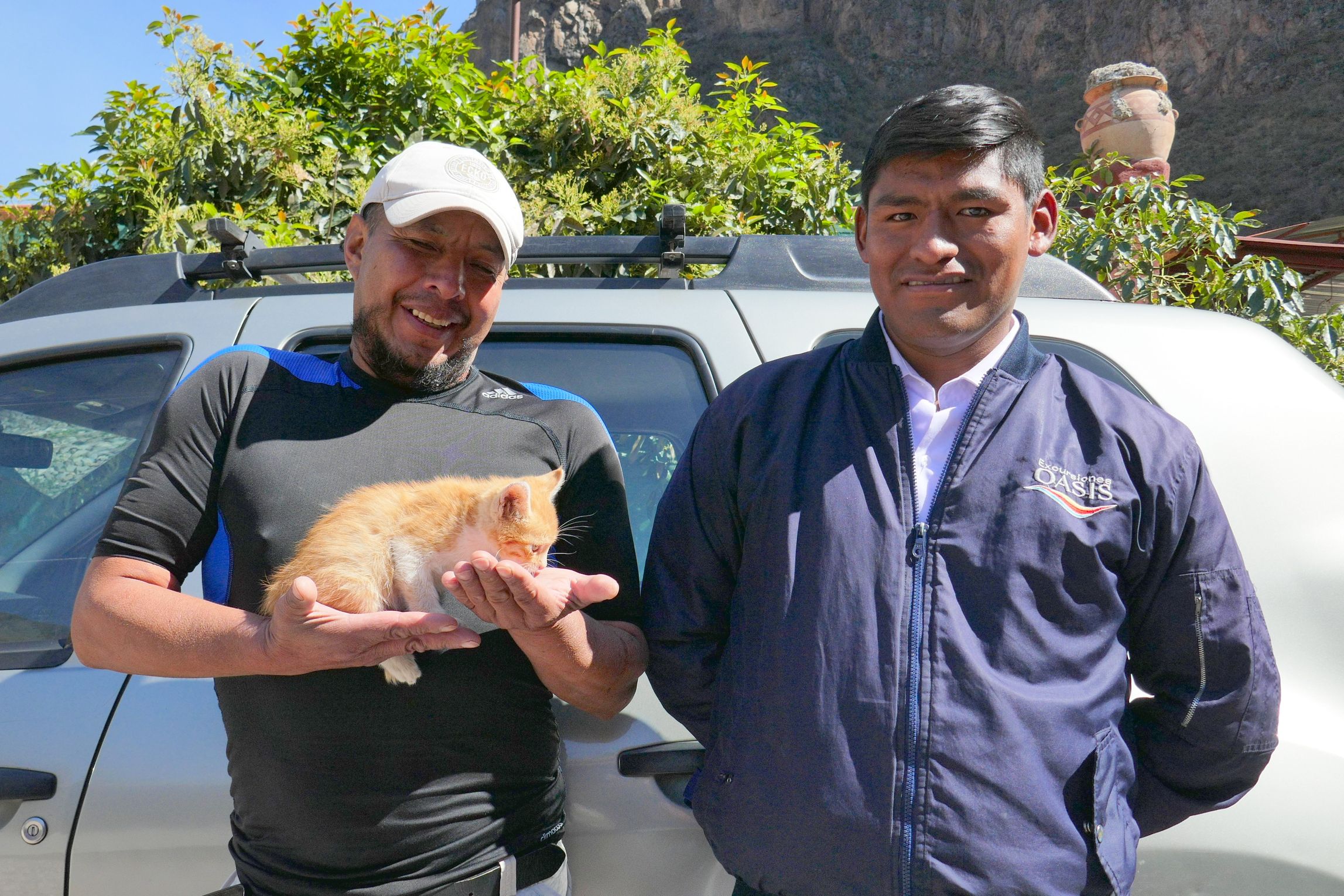
Our rafting guide and bus driver with a new friend.

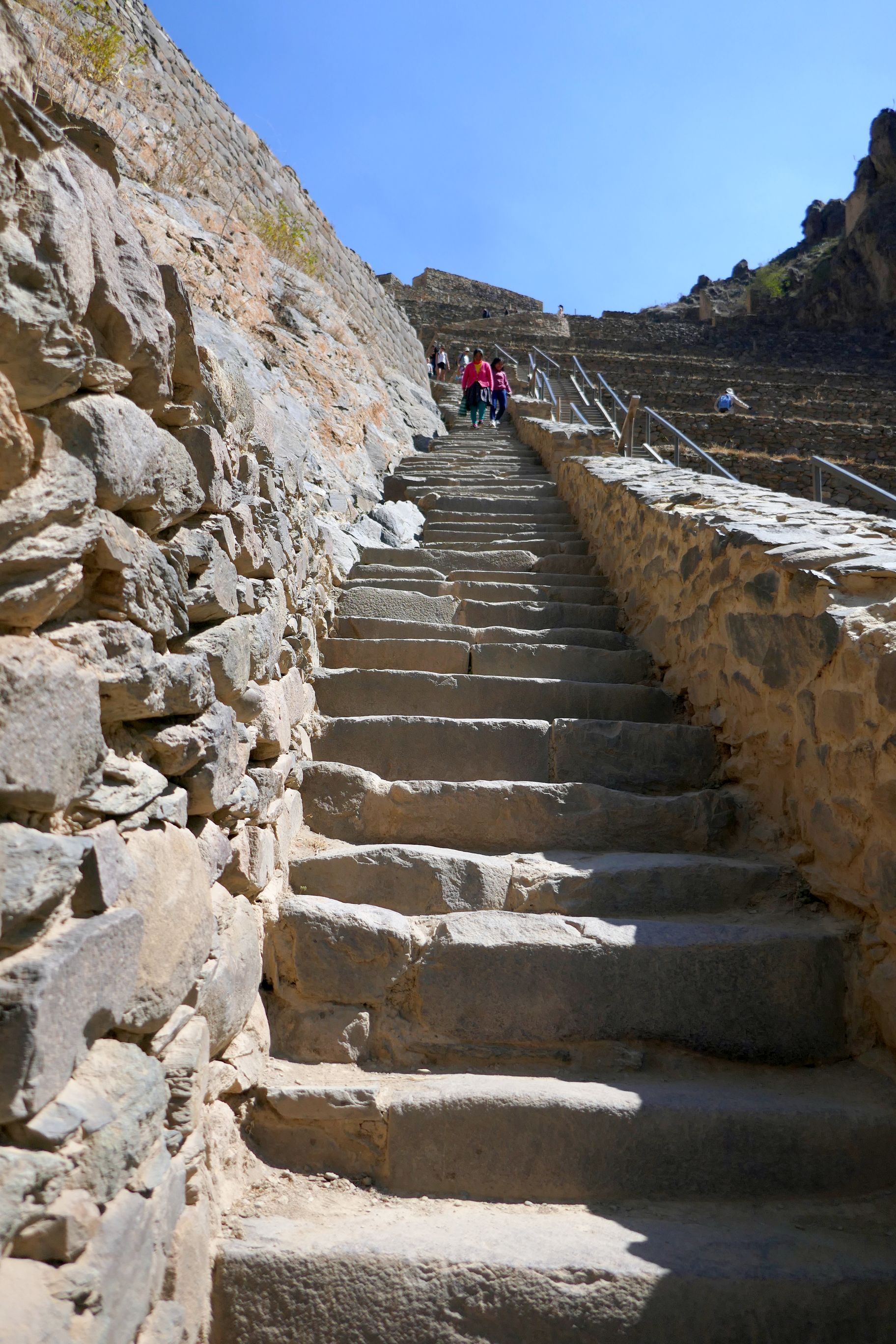
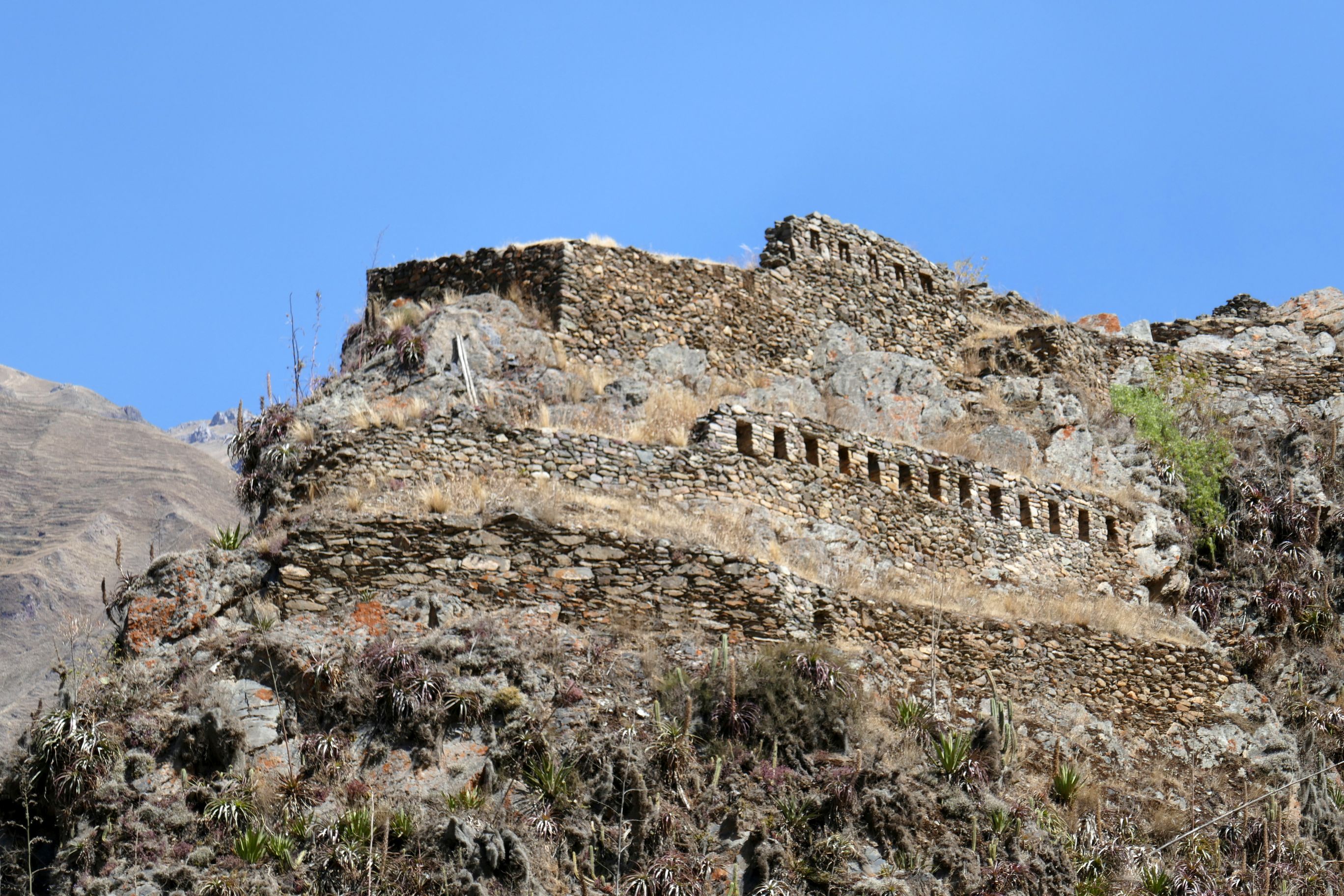
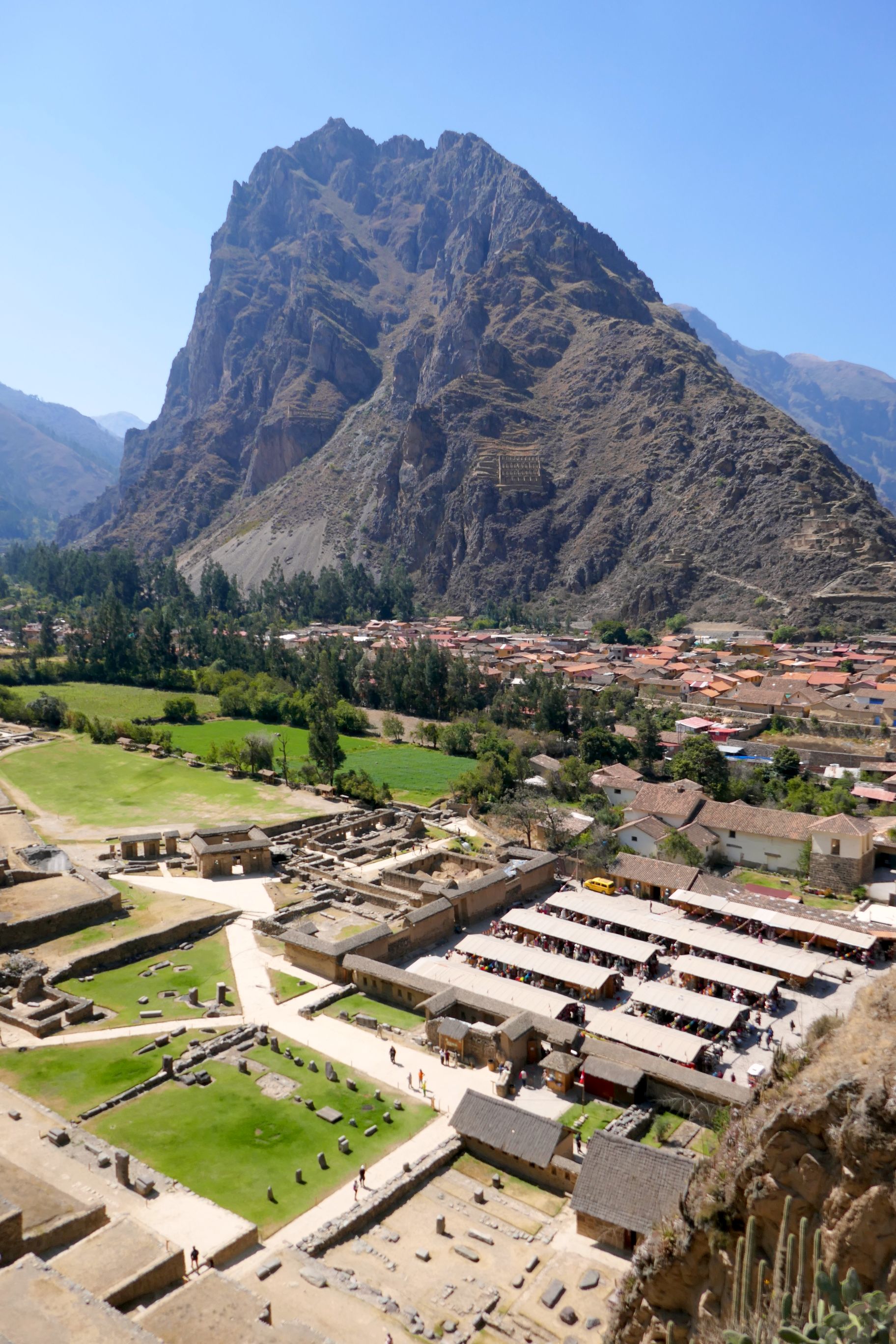
Paddling on the river was followed by hiking at the Ollantaytambo Inca Fortress— just my kind of day!  Our entire Peru tour was rated a 4 out of 5 for its “moderately strenuous” level of activity and high altitude, which was perfect for me.  I looked forward to hiking around these and the other ruins we visited throughout our tour, even if the air was thin.  As a competitive swimmer, I was aerobically fit and I had also prepared by walking fast laps and running stairs while wearing a KN95 mask after my swim workouts.  This was a great opportunity to test my fitness.

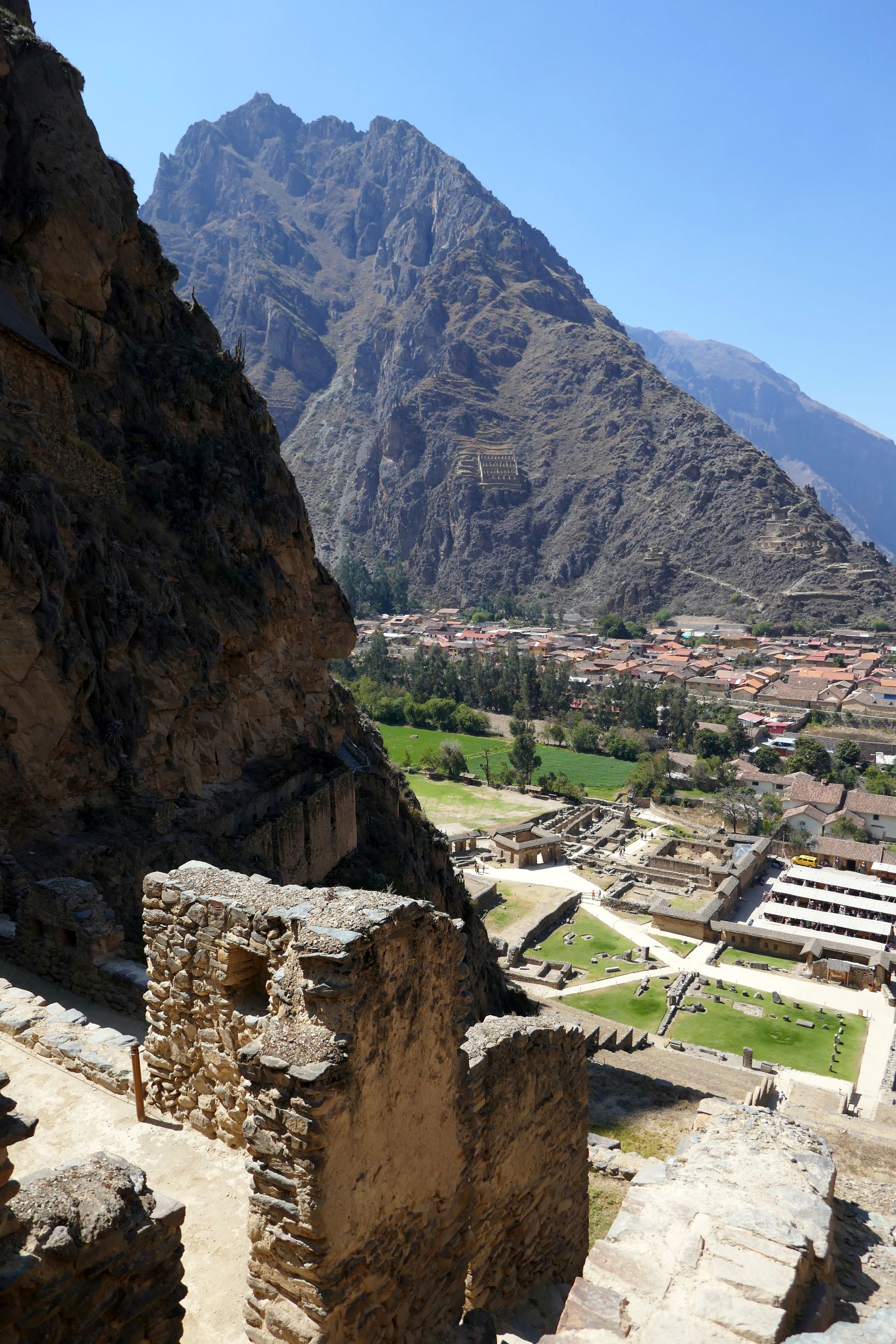
The spectacular views!  We were fortunate to have another sunny day, and the views from the top of the ruins were beautiful!  There were only a couple of us from our group that ventured up to the top, so we took turns taking a celebratory photo and stood in awe of what surrounded us.

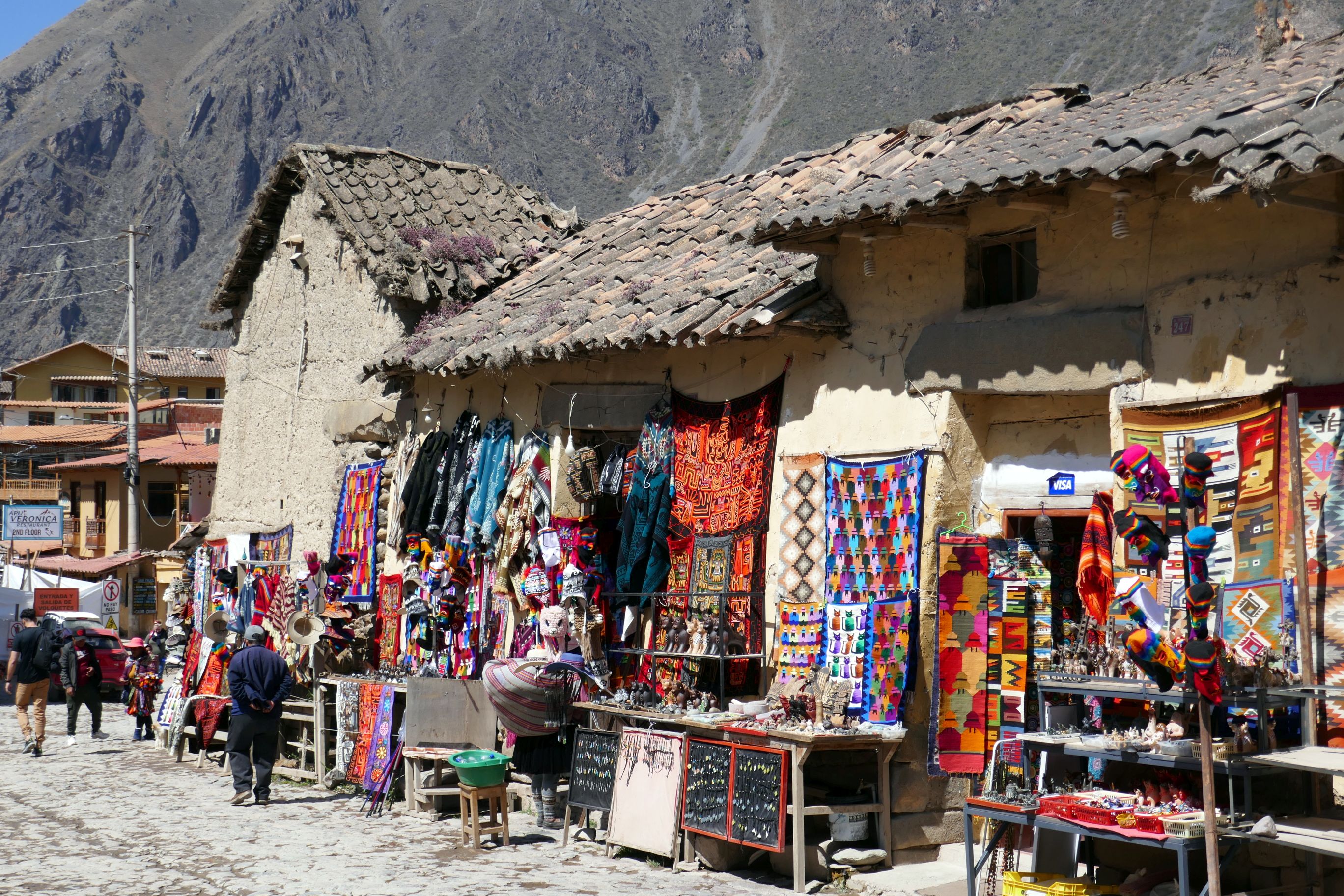
Back at the foot of the ruins and outside the walls of the national park was a craft market, so I spent the remainder of my free time roaming around shooting photos, while Bruce explored the lower area of the ruins with Raul and a few members from our group.

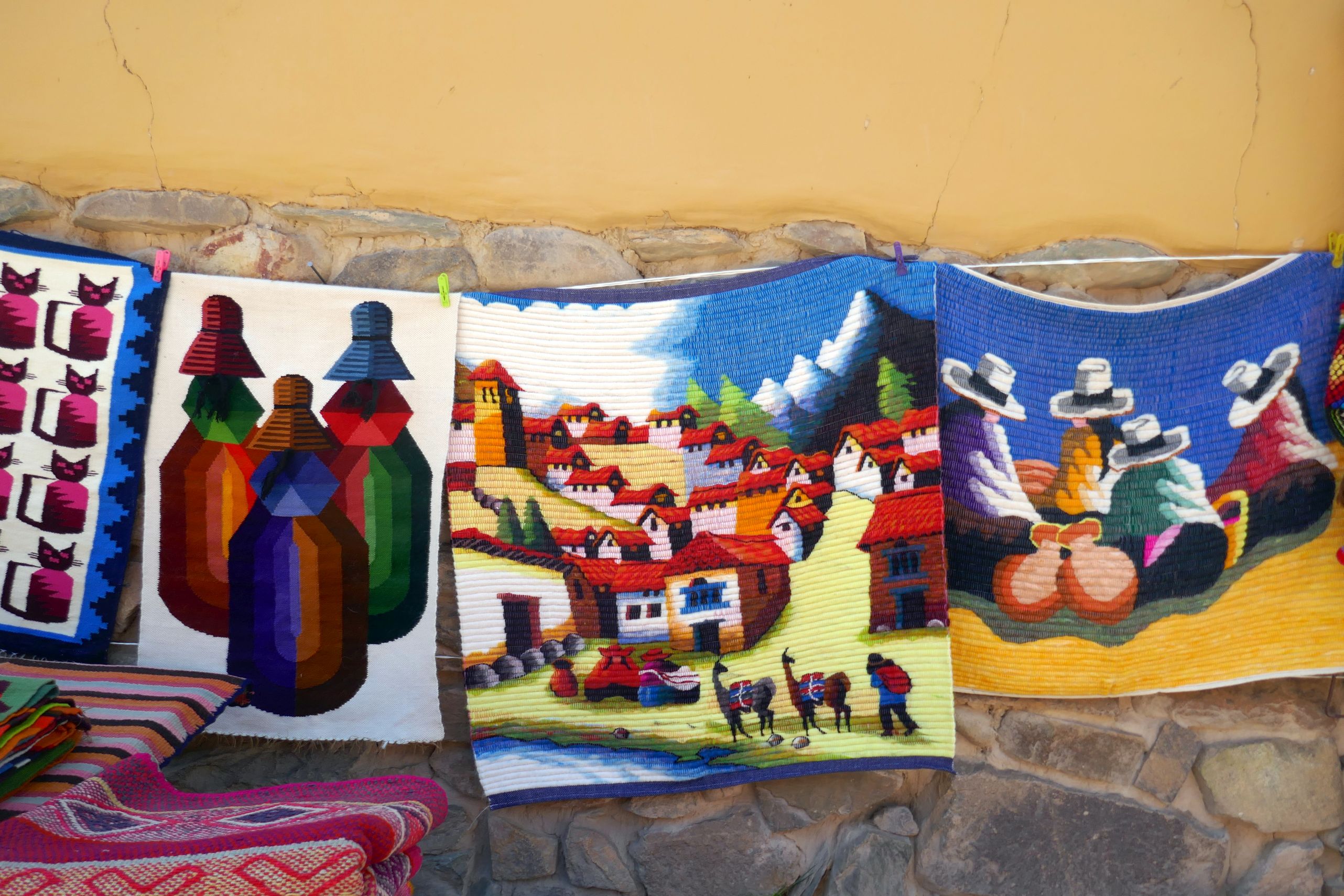
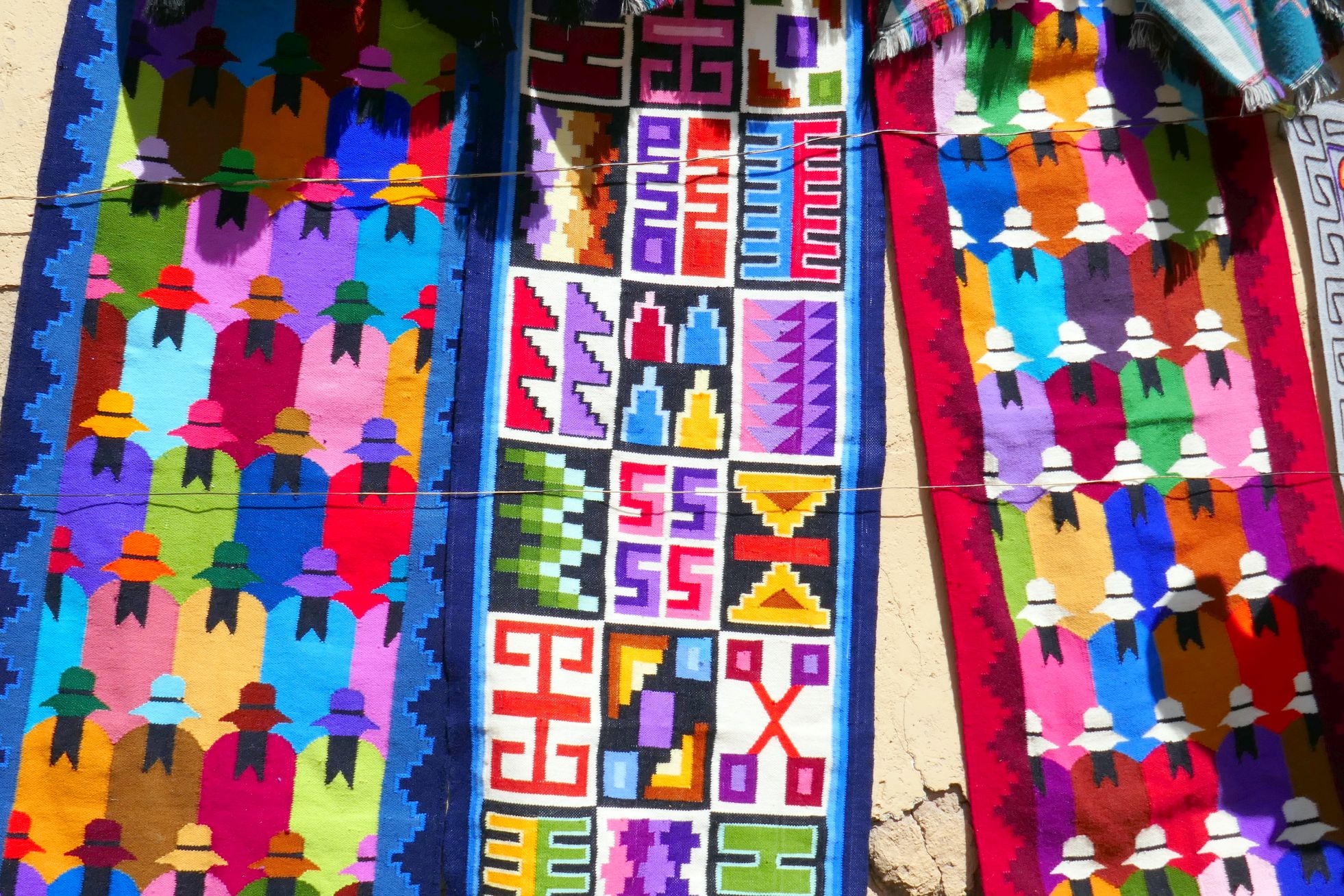
I’m not a shopper at home, but I love to see the native handicrafts in each country I visit, especially the colorful textiles in Central and South America.  They are so photogenic!

Although our day had already been so full of rich culture, history, and excitement, we still had our home-hosted lunch to attend!  This is always a favorite activity on an Overseas Adventure Travel (OAT) tour, so we looked forward to it.  Usually, the group is split up to visit three different homes in smaller group settings; however, that wasn’t possible for this tour due to the lack of available hosts.  Instead, we all went to visit the same family at a home with a large enough room to host the entire group. 

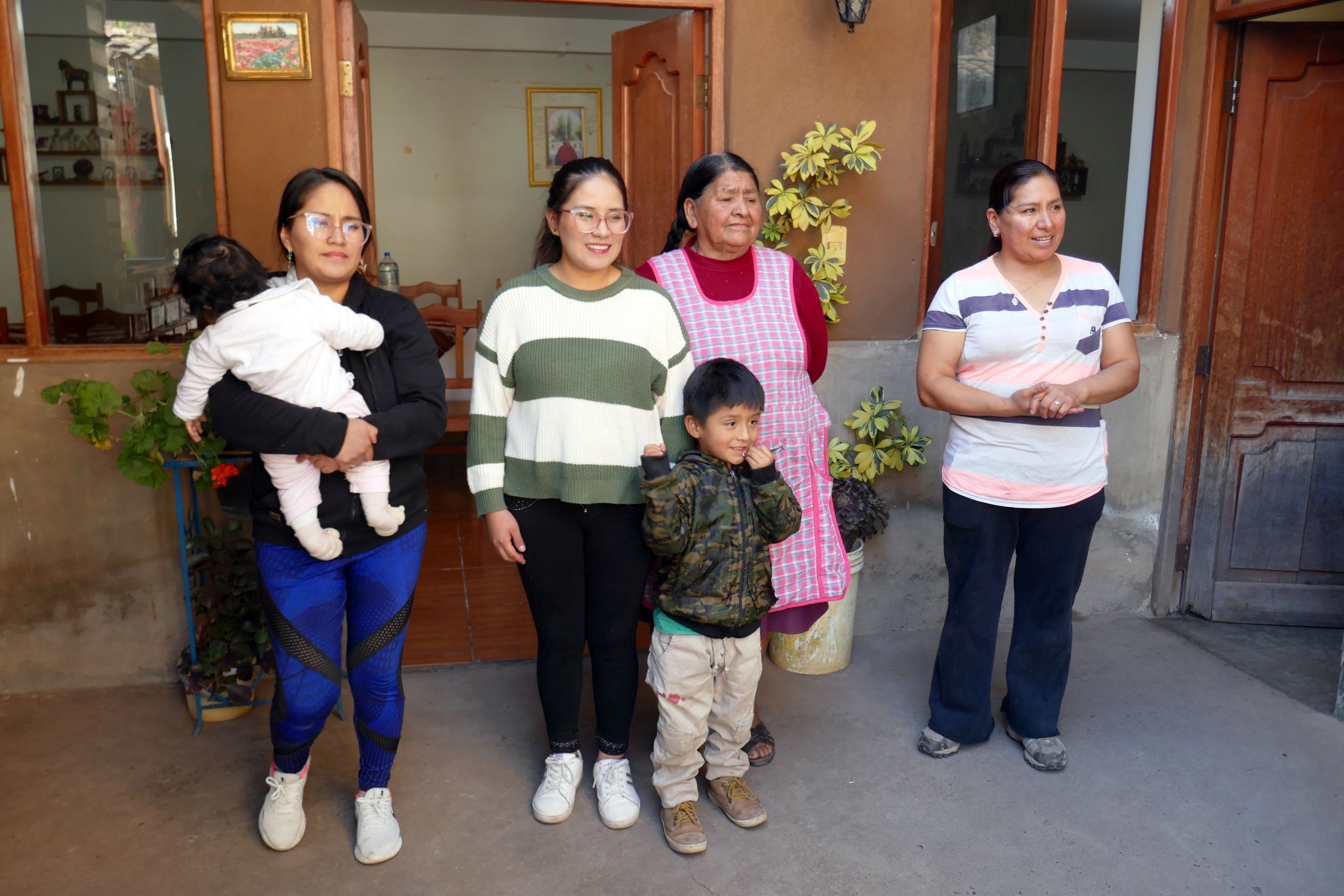
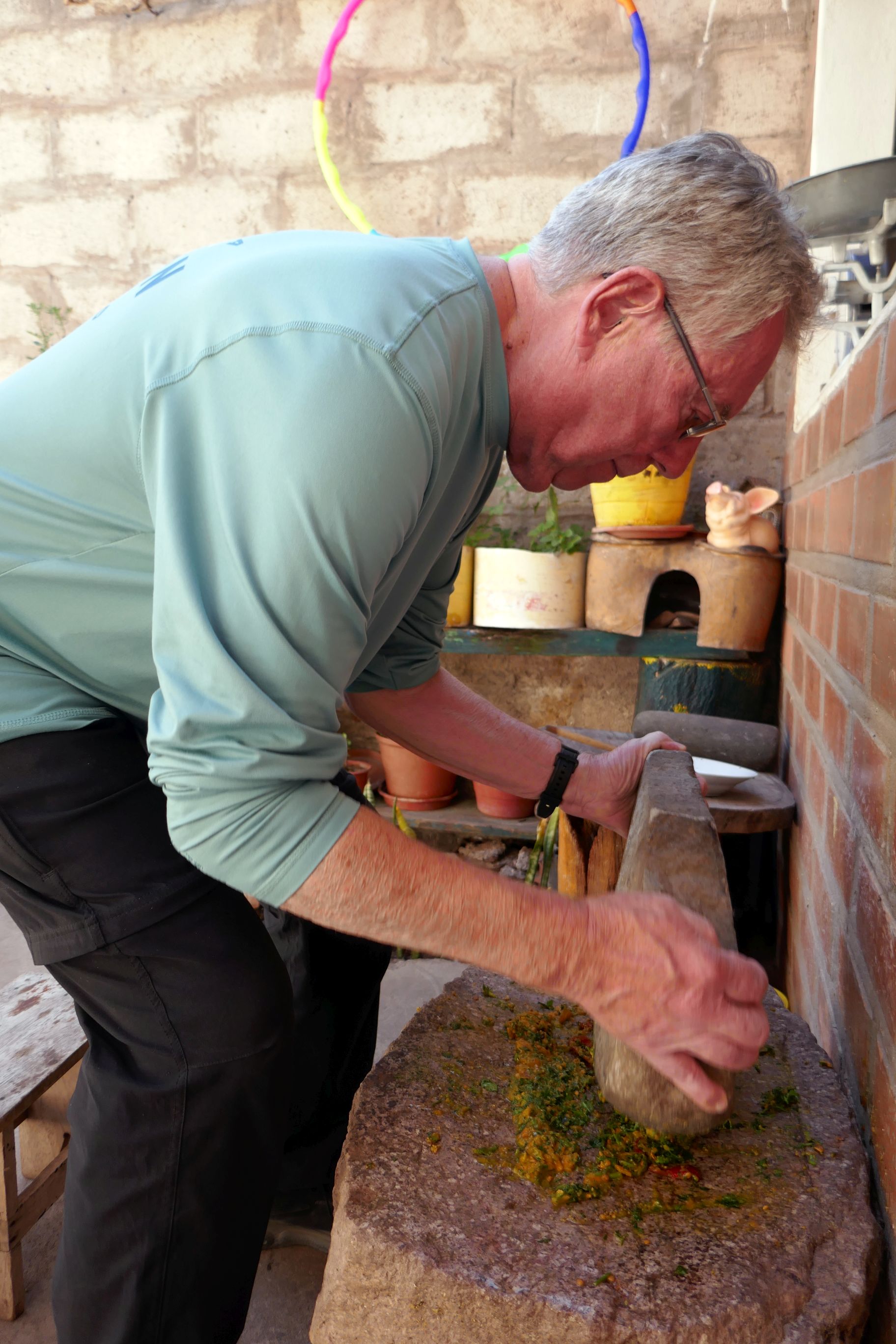
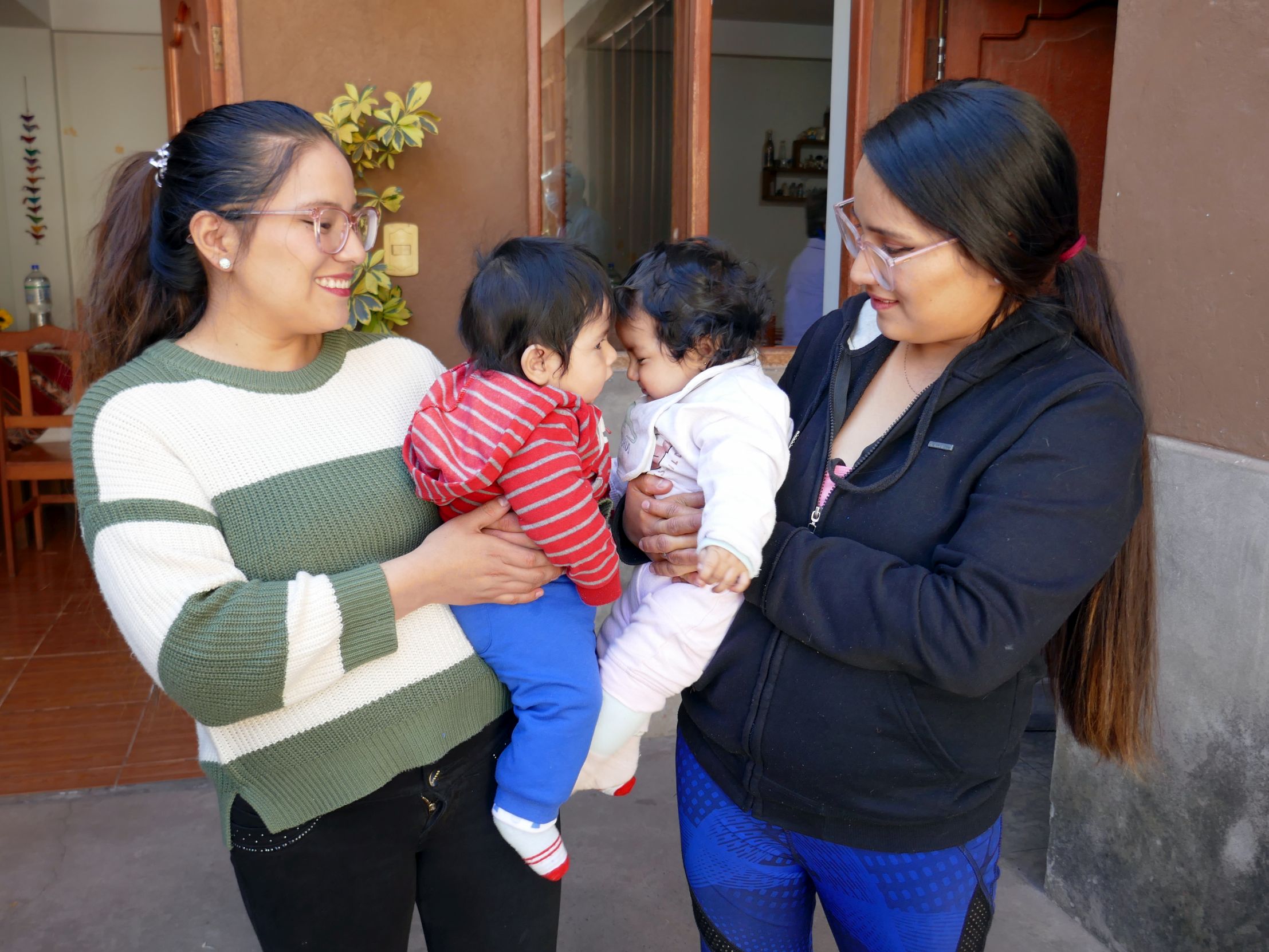
After meeting the great grandmother, mother, daughters, and great-grandchildren, we assisted with meal preparation and setting the table.  In their home, the kitchen is used for all meal preparation except for the cooking which is done outdoors.

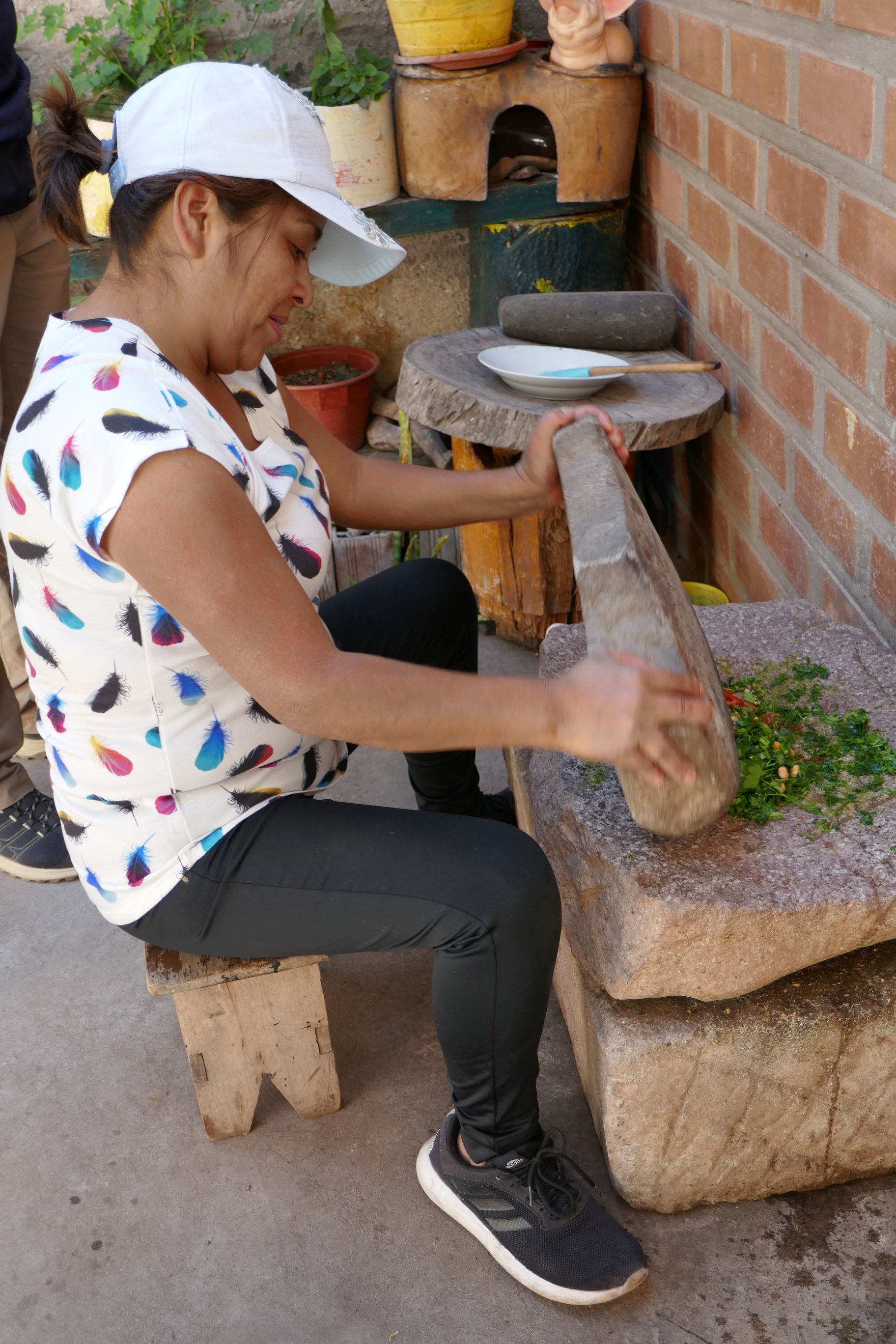
The salsa was also prepared outdoors the old-fashioned way, using a rock to chop the ingredients.  We took turns giving it a good whack.

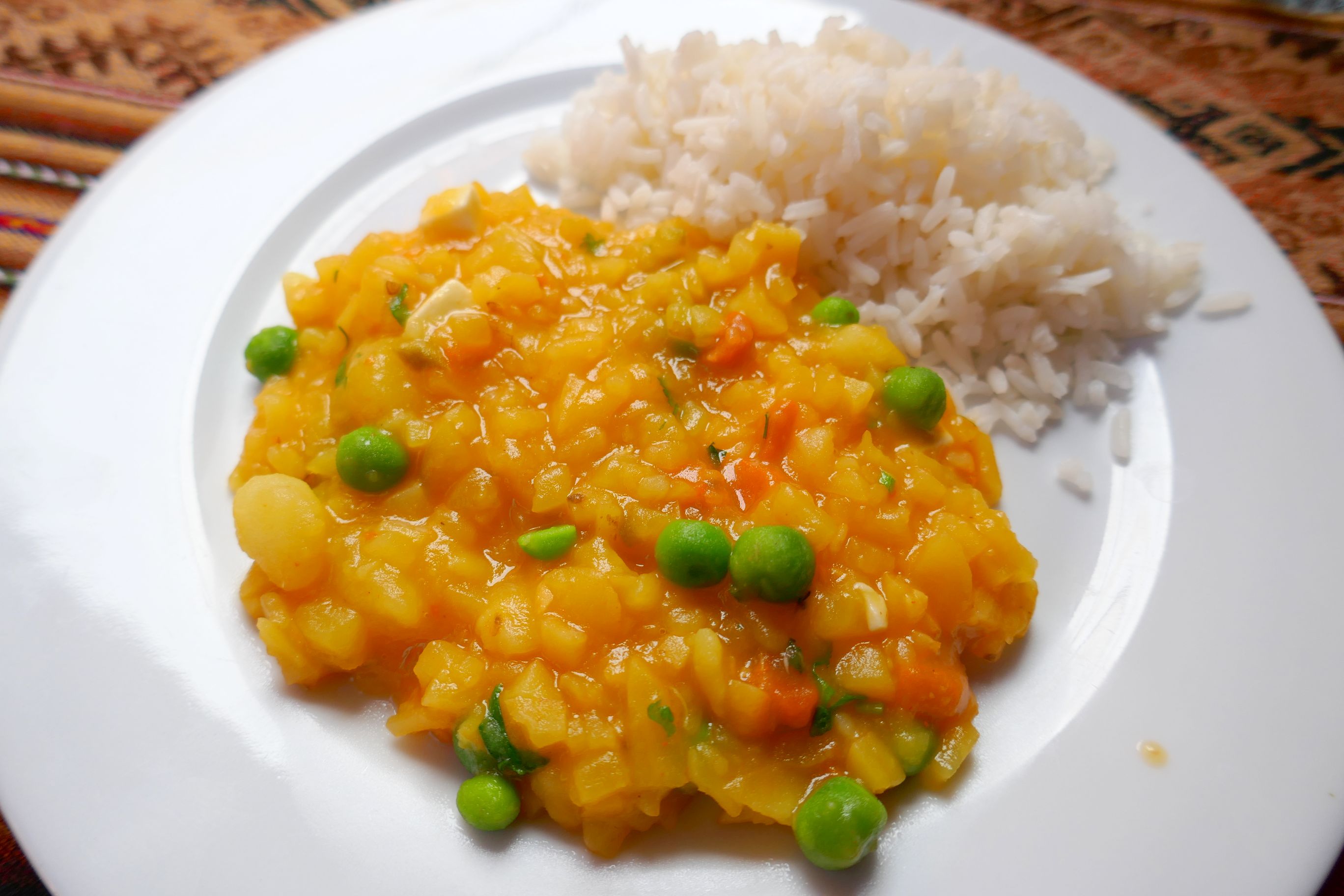
Lunch included tasty juice made from black corn, cinnamon, cloves, sugar and key lime.  We also had squash soup, delicious vegetable filled tortillas, and guinea pig.  Bruce and I gladly offered our shares of guinea pig to Raul. He loves the Peruvian delicacy; we preferred the tortillas and everything else.

After we all bid farewell to the family by presenting them with gifts we had each brought from home, we had one more stop to make before returning to the Villa Urubamba Hotel for a rest before our group dinner. 

The granddaughters showing off the new fused glass earrings Bruce had made and given them.

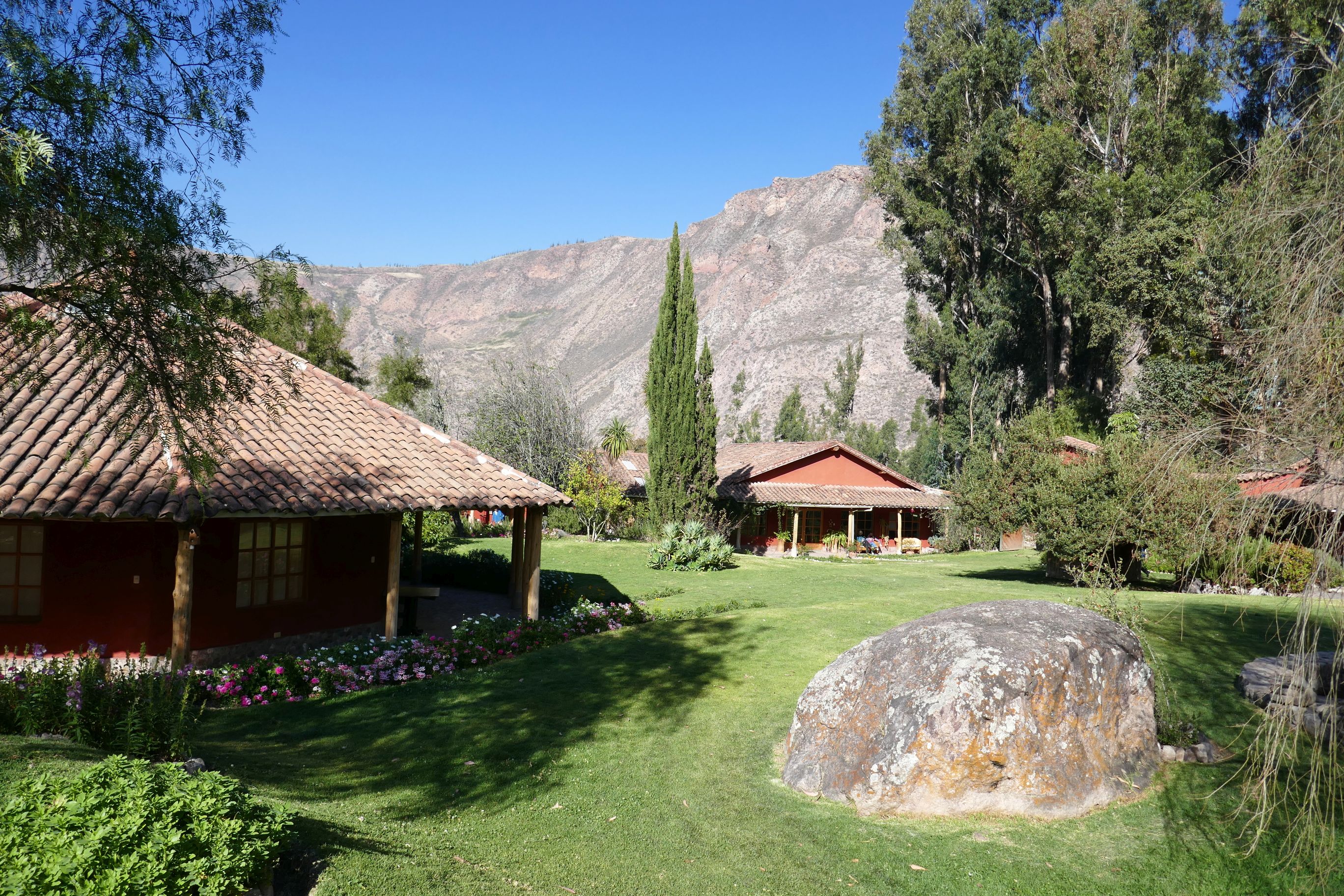
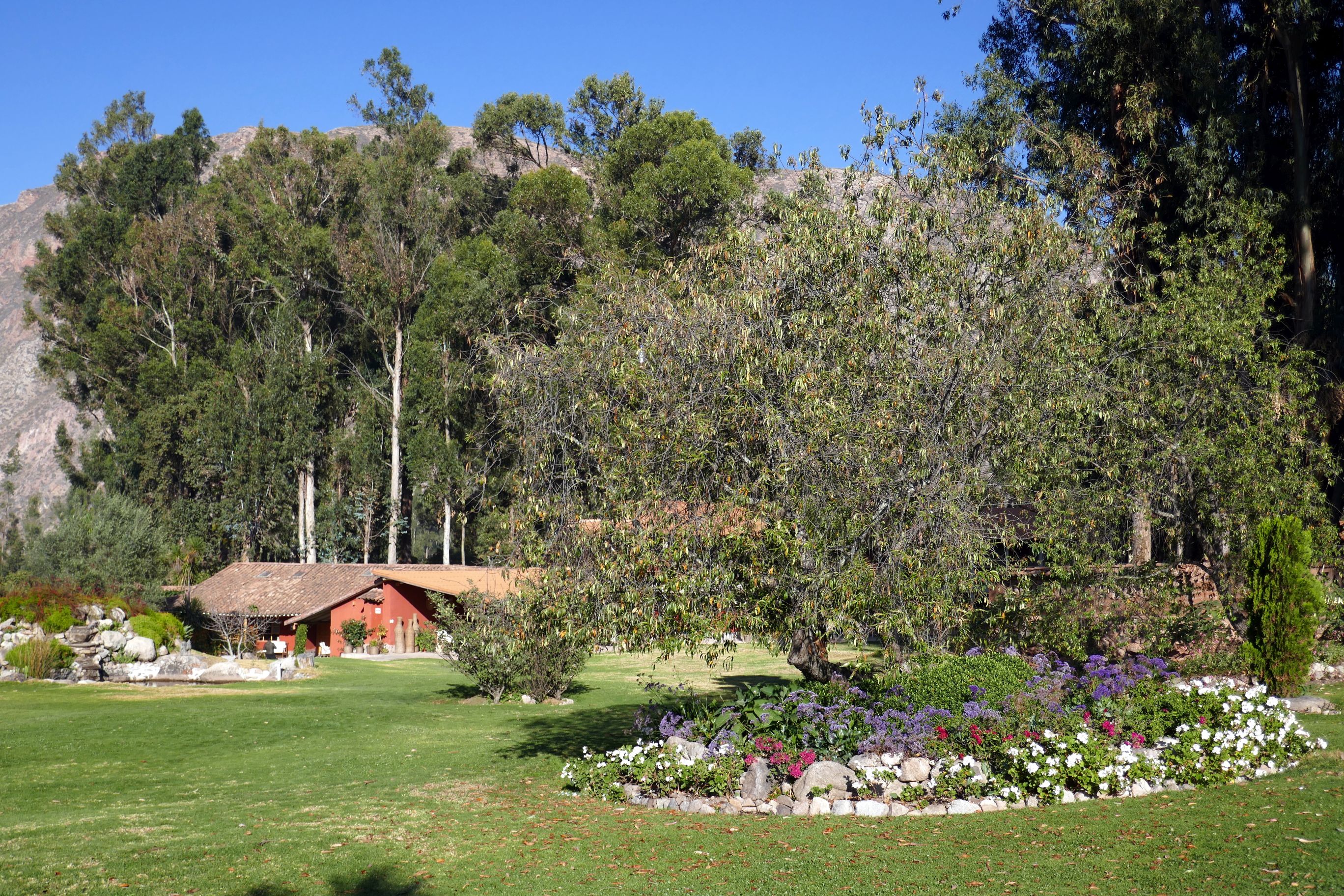
Another activity OAT includes on each tour is meeting with a local for a presentation and question/ answer period on the designated “Controversial Topic.”  In Peru, it’s the coca leaf industry, which will be the topic of my next post.  Until then, here are scenes photographed on the grounds of the hotel:

Displayed on the wall of our room; they made me smile!
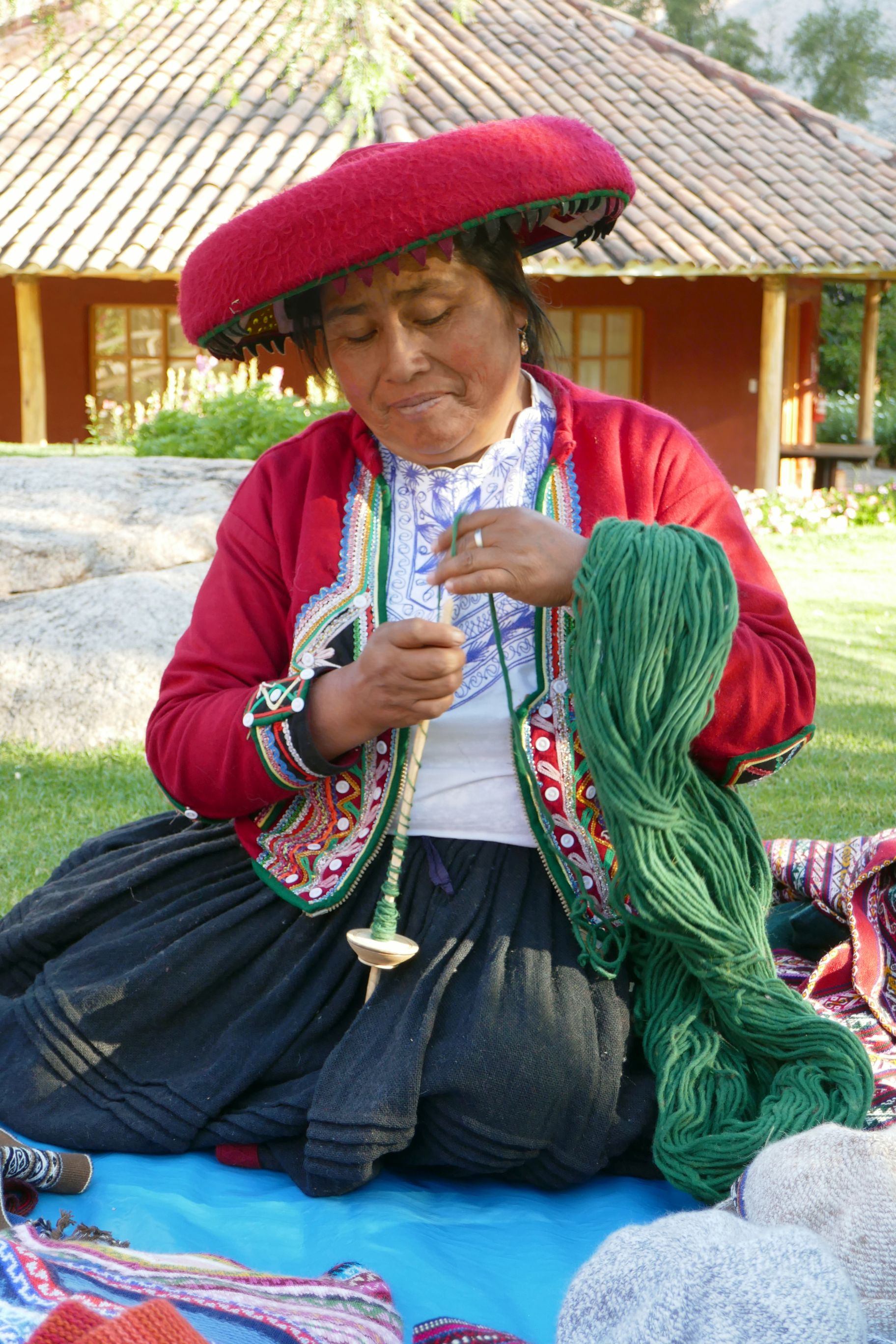
A woman from the area came to the hotel grounds to sell her handicrafts. Here, she is spinning wool the old fashioned way.
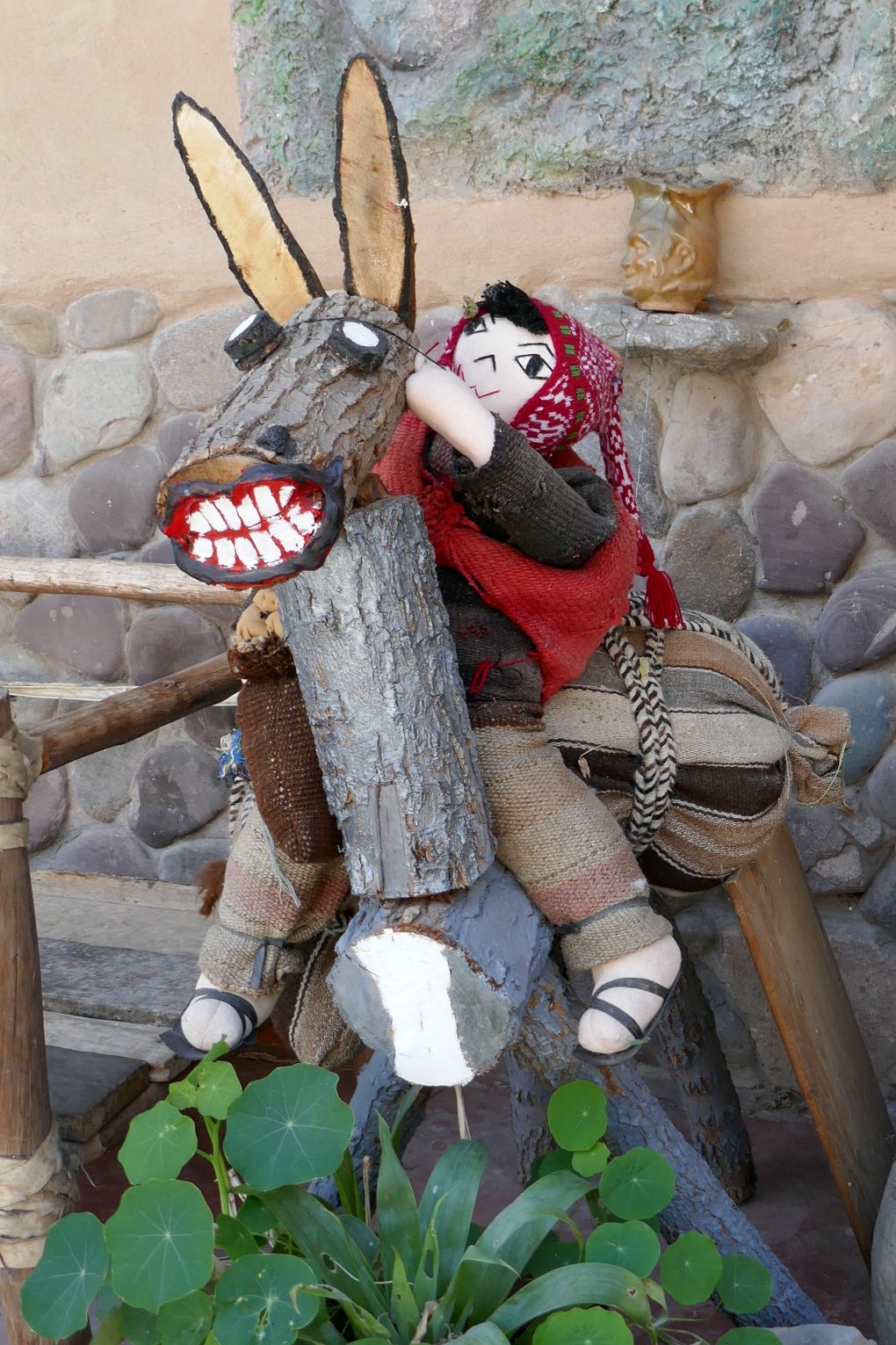
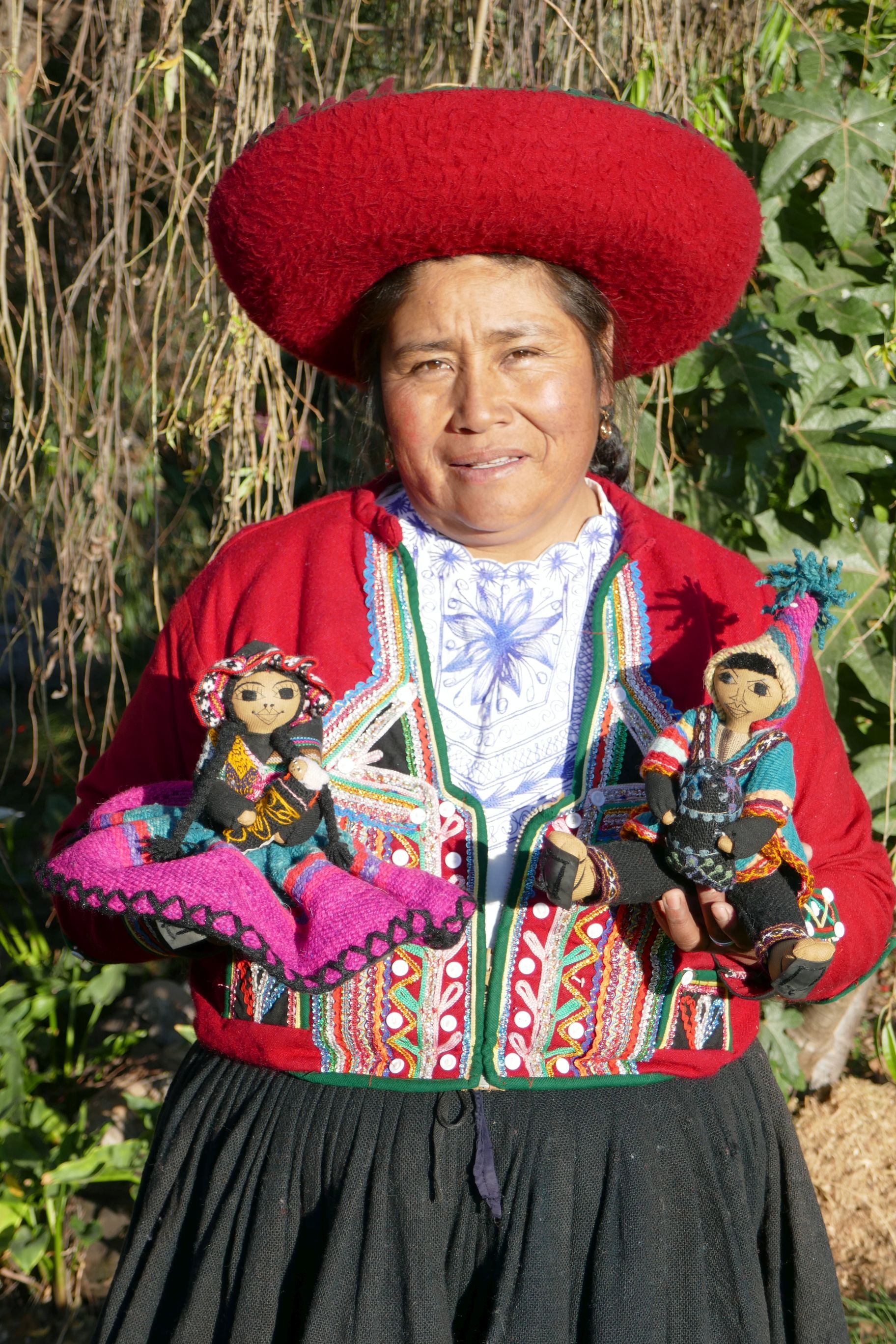
She made these dolls and the beautiful costumes they are wearing. I couldn’t resist; I bought the pair, and they sit on our fireplace mantle– Bruce’s recommendation!

Next up:  PERU #9: THE CONTROVERSIAL COCA LEAF INDUSTRY

PERU #2: LIKABLE LIMA (PART 2)

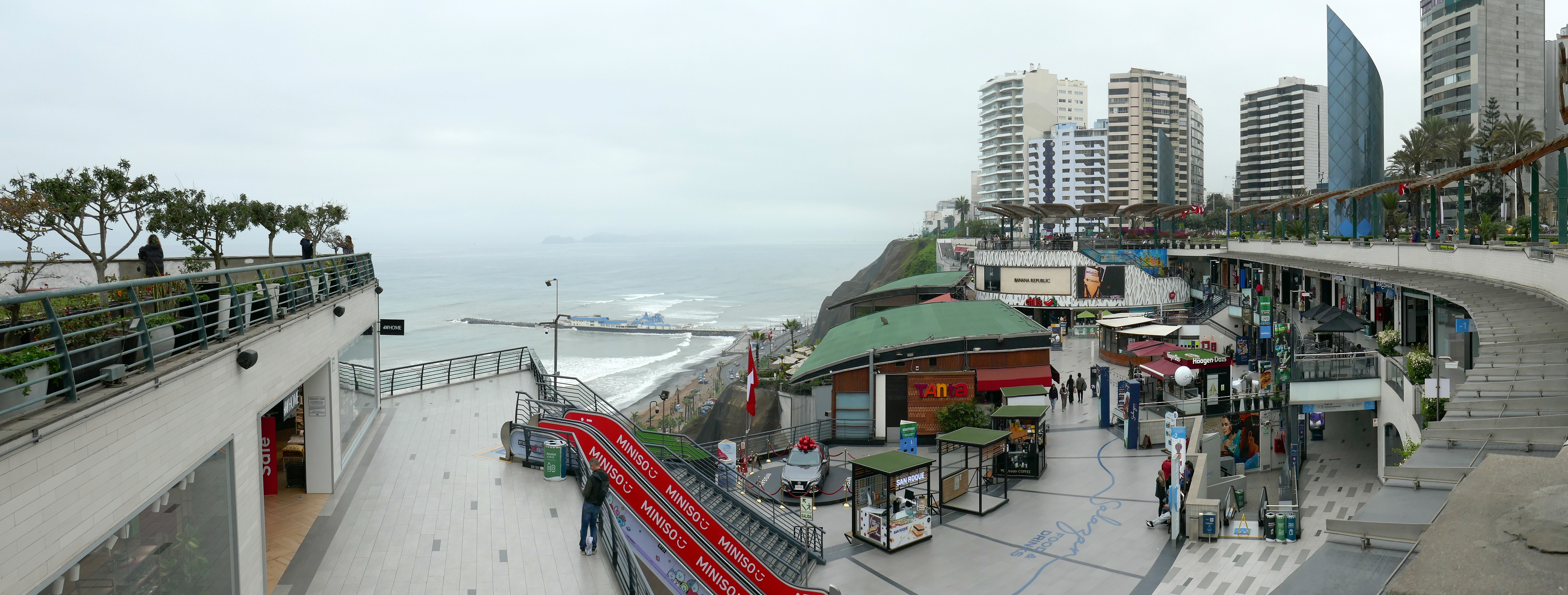
Our first day in Lima, the capital of Peru, was a full one!  After seeing the parade, Parque Kennedy, the Inka Market, and Indian Market (all covered here), we walked the Malecon, Lima’s clifftop walkway.  It was located just two blocks from our hotel, so we enjoyed walking different parts of it each day while we were in Lima. 

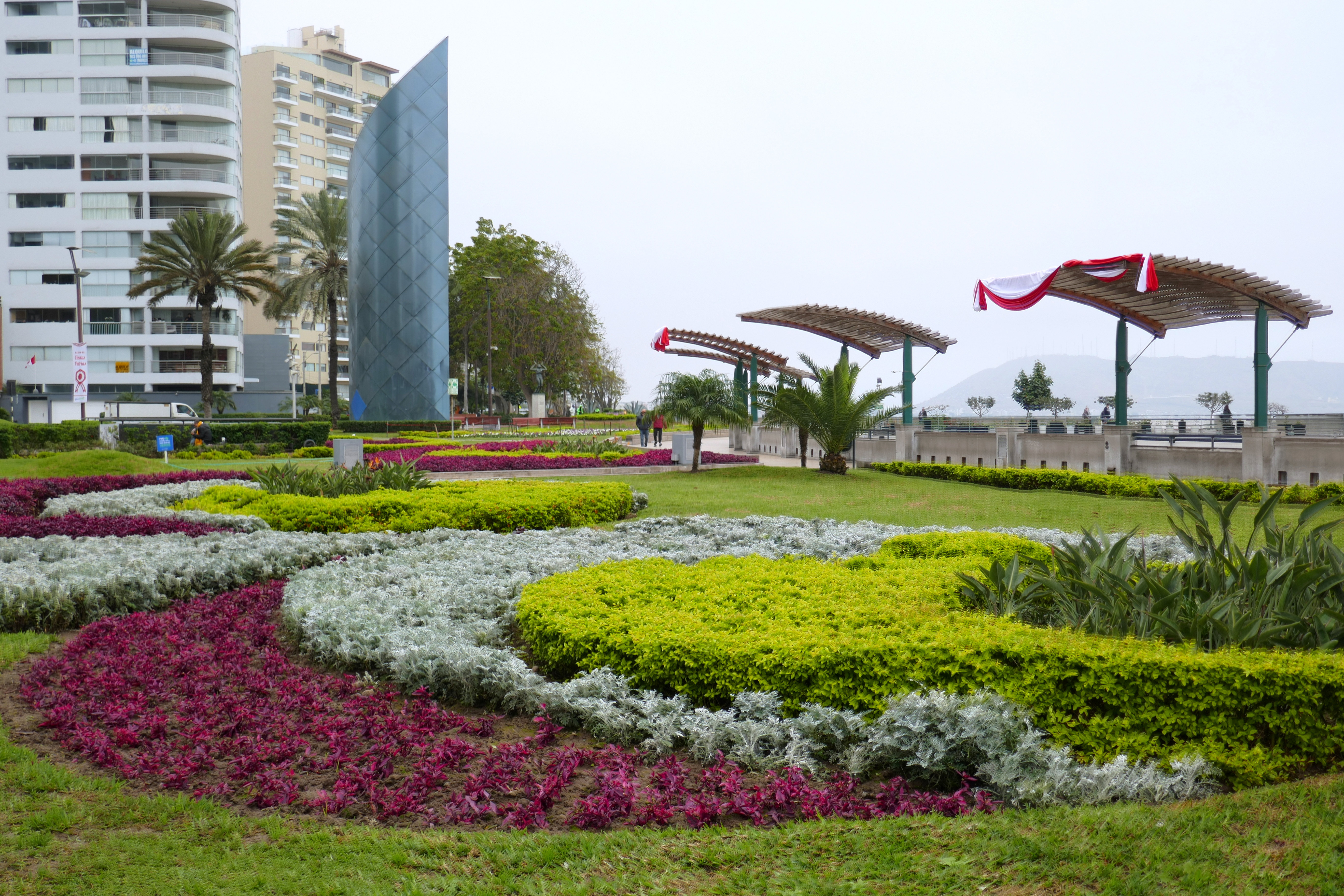
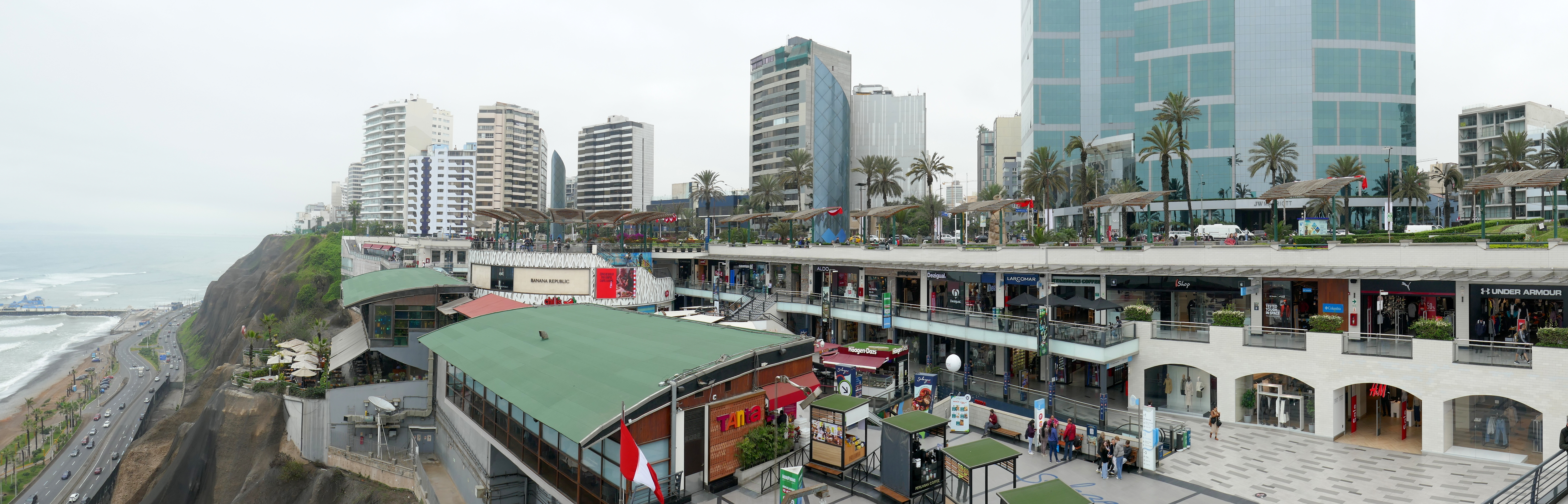
Larcomar, a shopping center built into the cliff, was right at the foot of the boulevard where our hotel was located, so we couldn’t help but to see it.  Shopping malls aren’t our thing, but this one was worth a stroll around just to see how it was situated on the steep cliff.  There were amazing views from the top level and restaurants!

(For all photos, click on the image for a full screen view.)

The sky wasn’t the prettiest while we were there, but we fully expected that.  Lima is known for its often foggy and always humid weather, but it was winter, so the temperature was in the 60’s.  I loved every minute of it!  The poor photography conditions was worth the trade-off to be out of the Georgia heat.

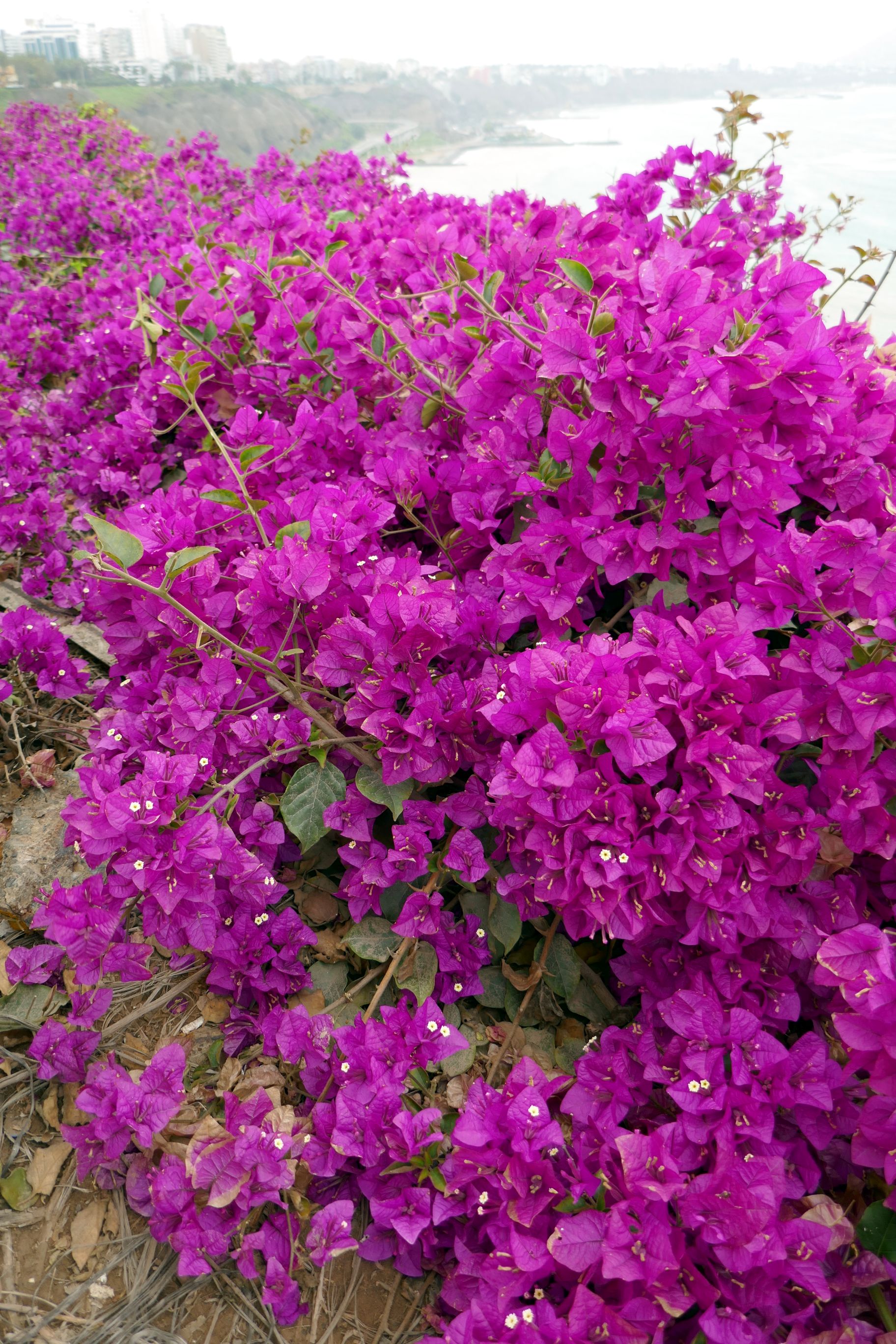
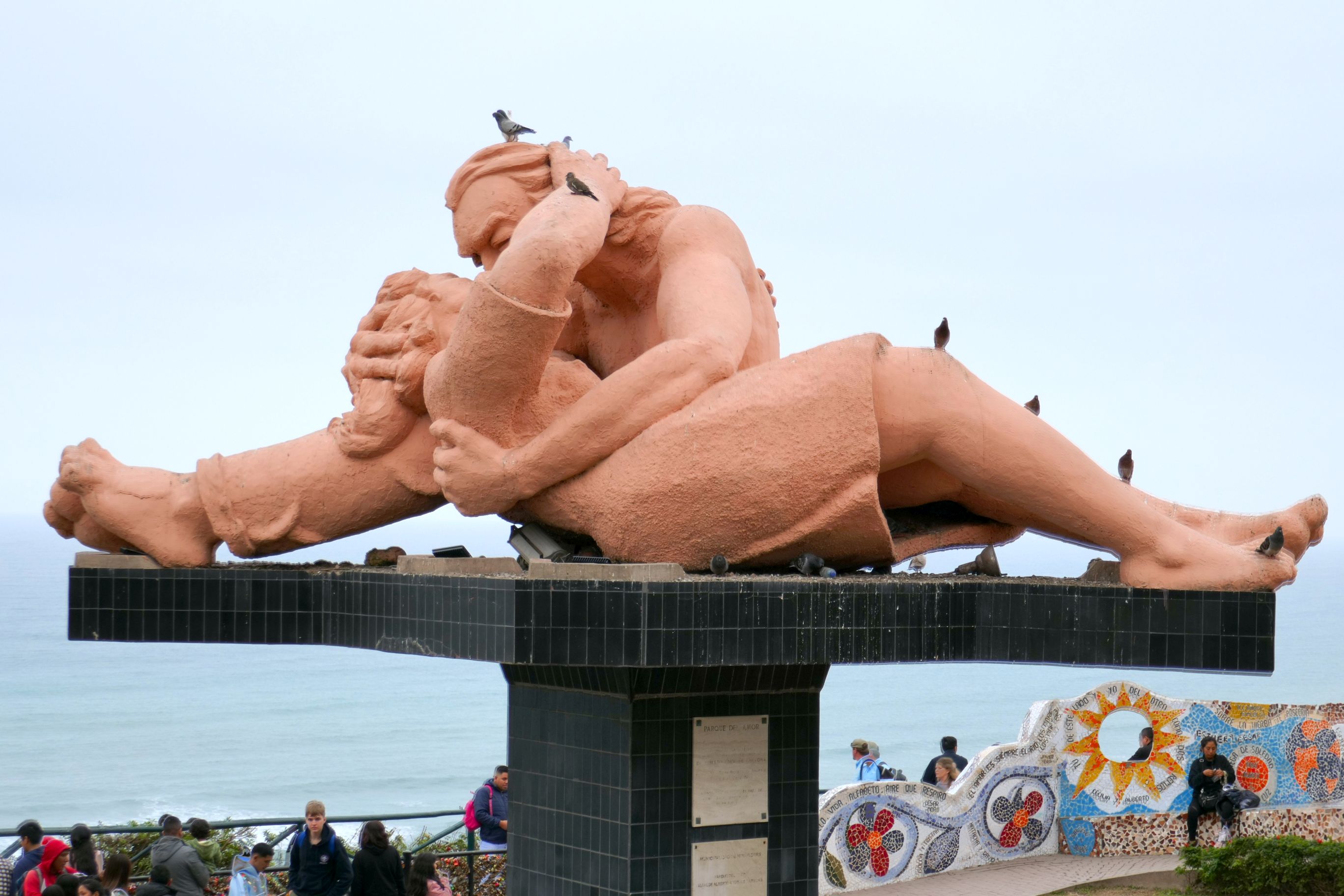
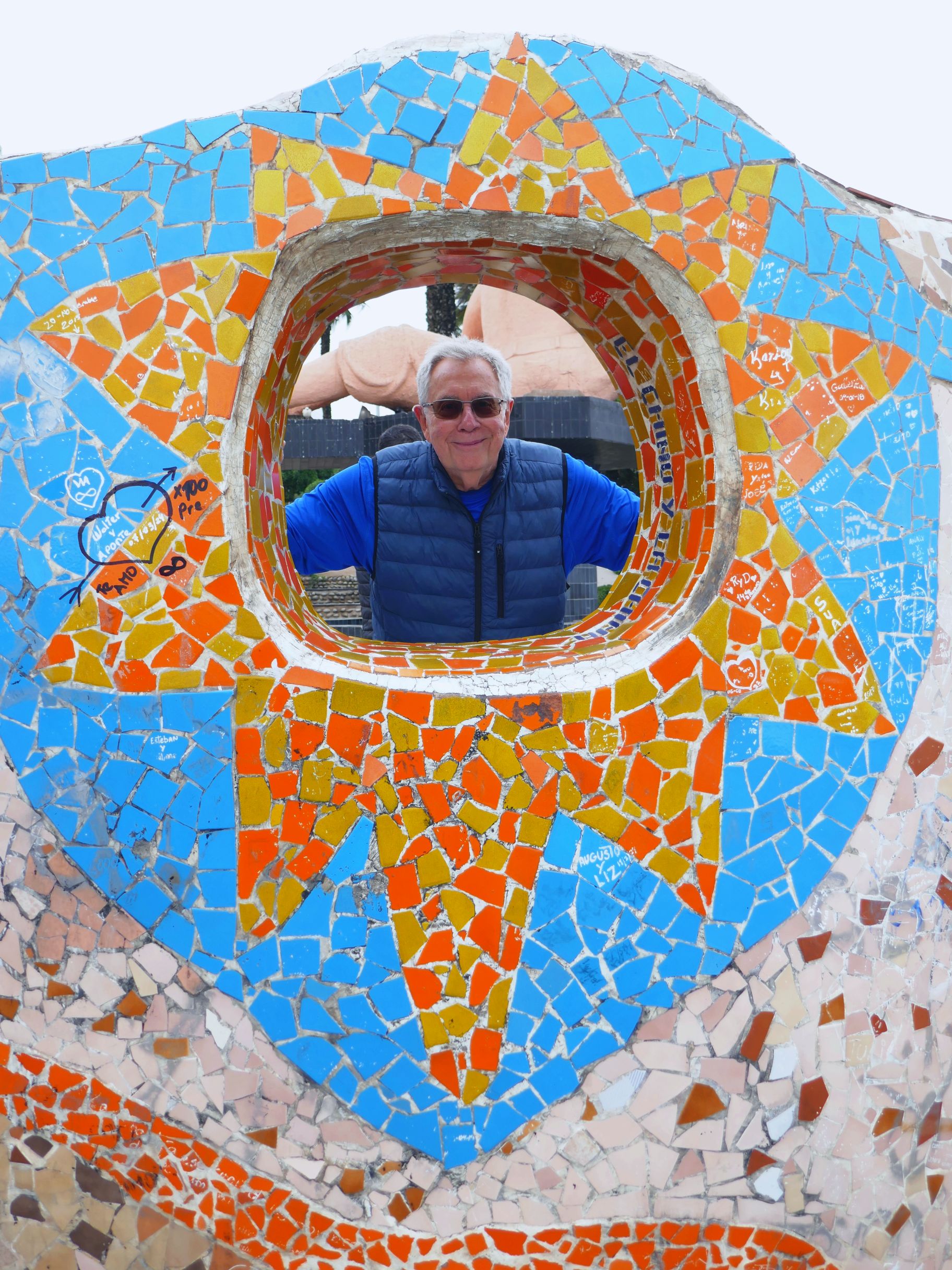
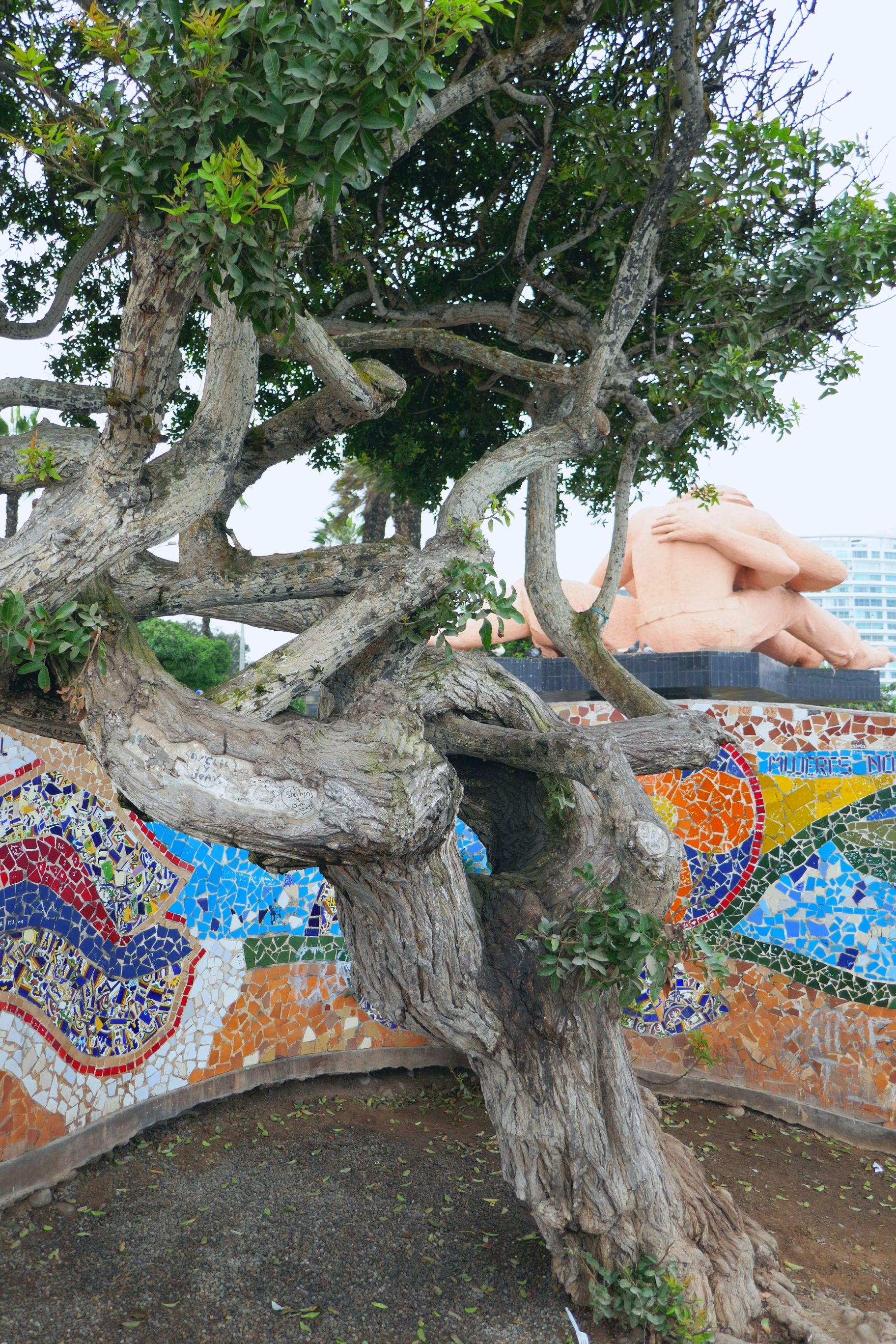
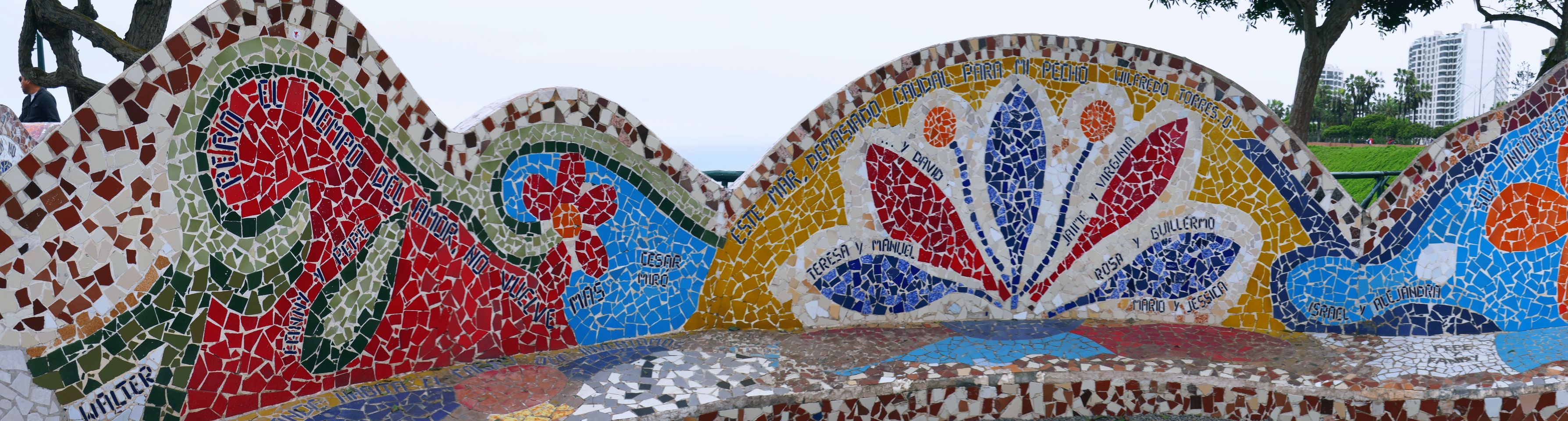
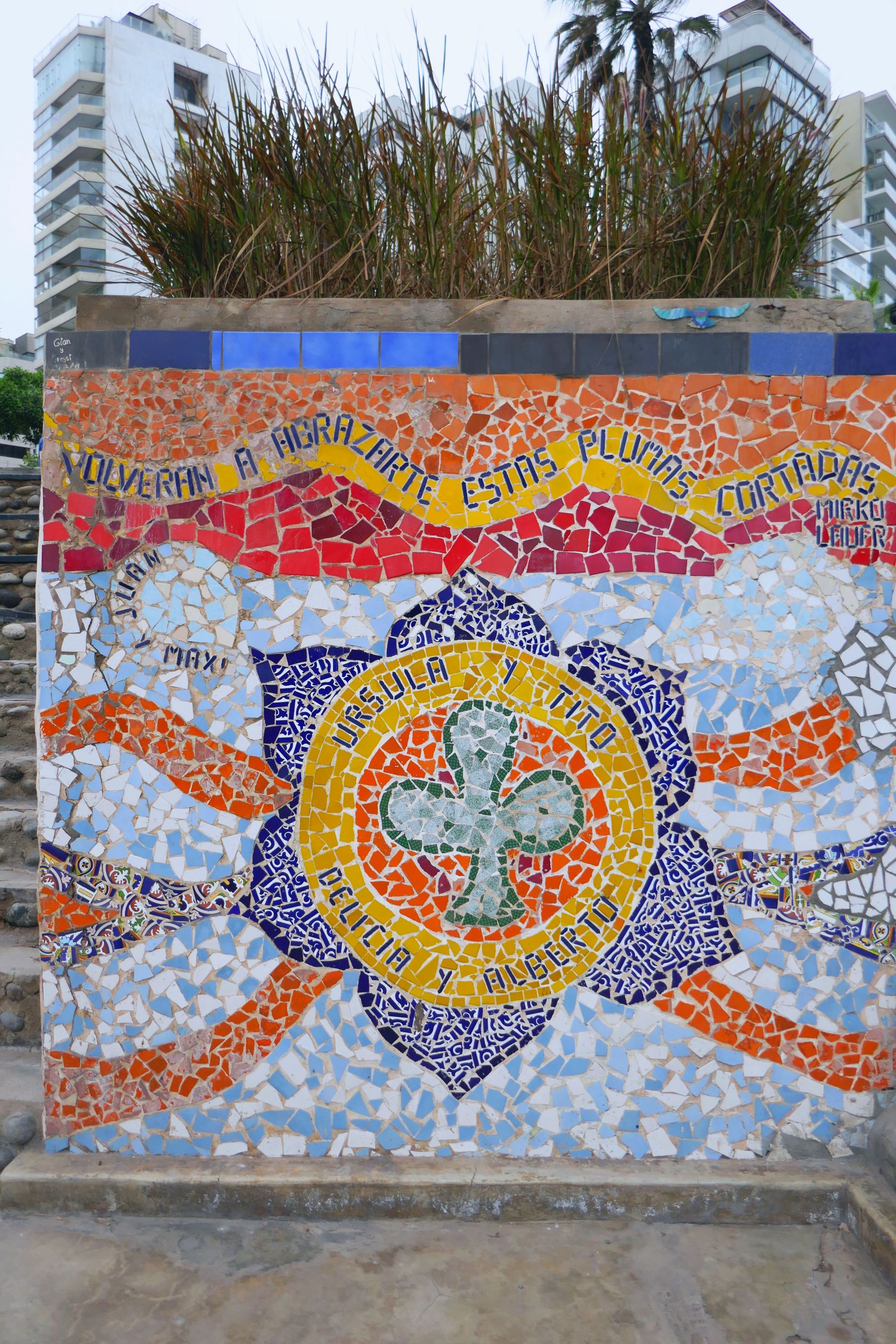
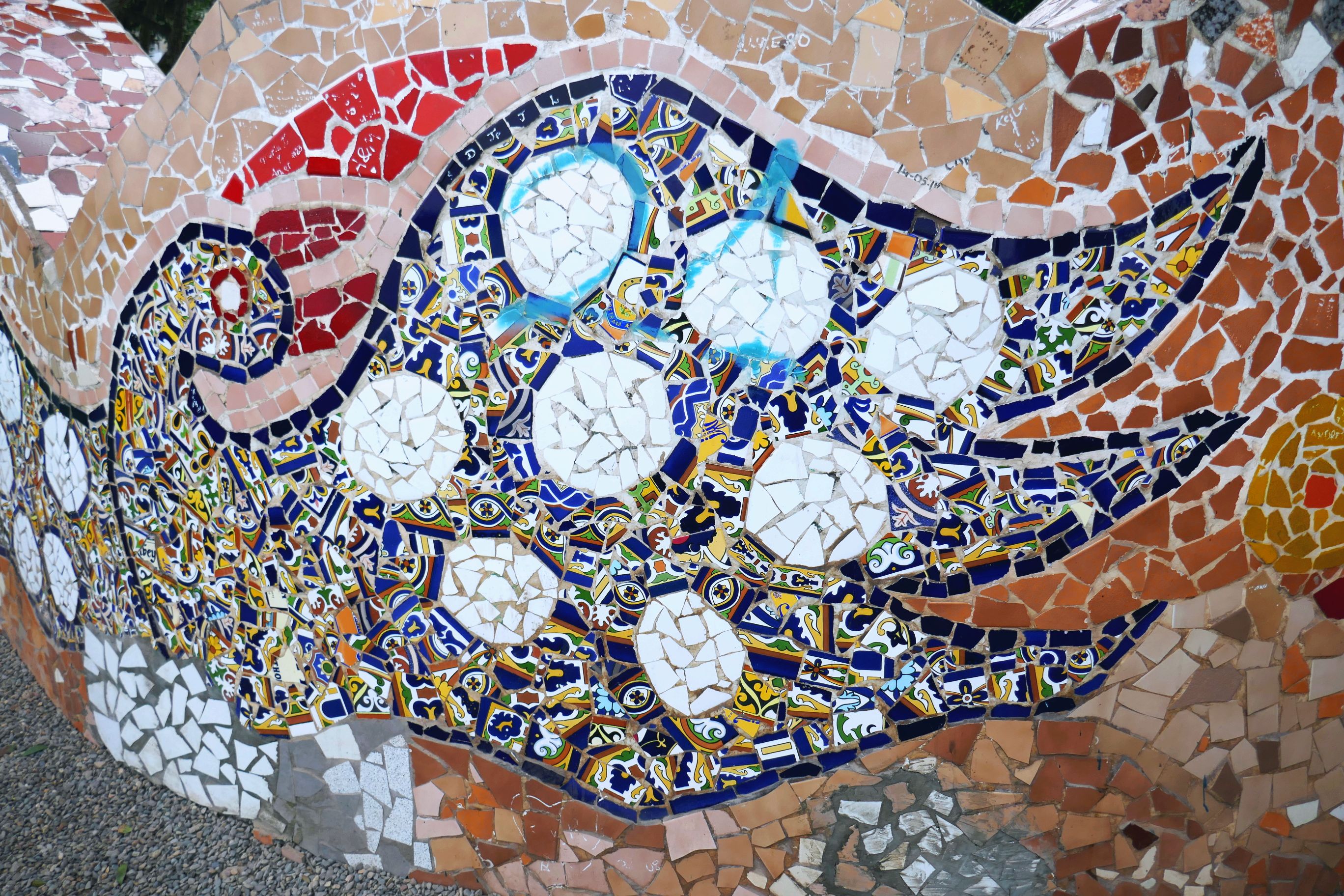
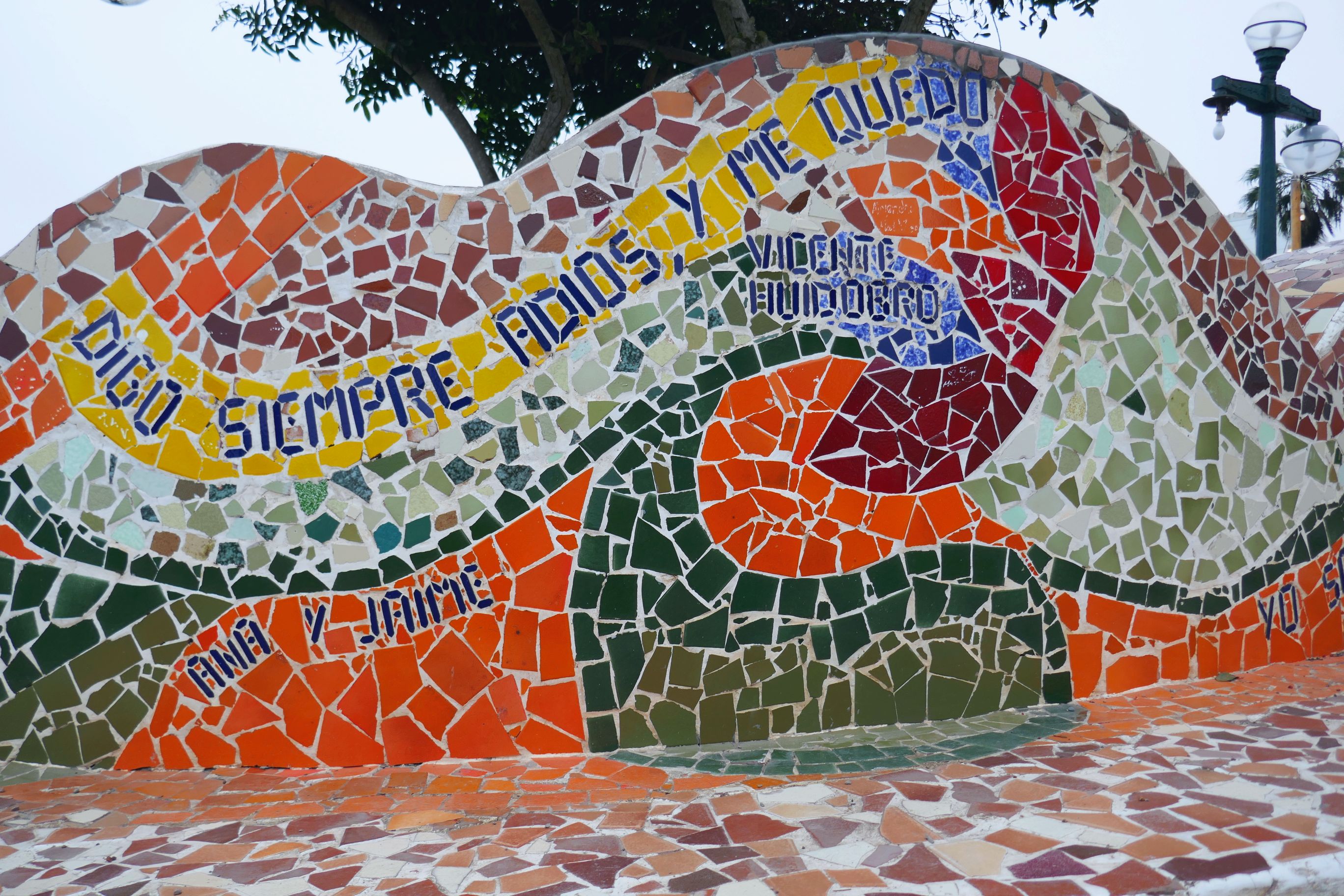
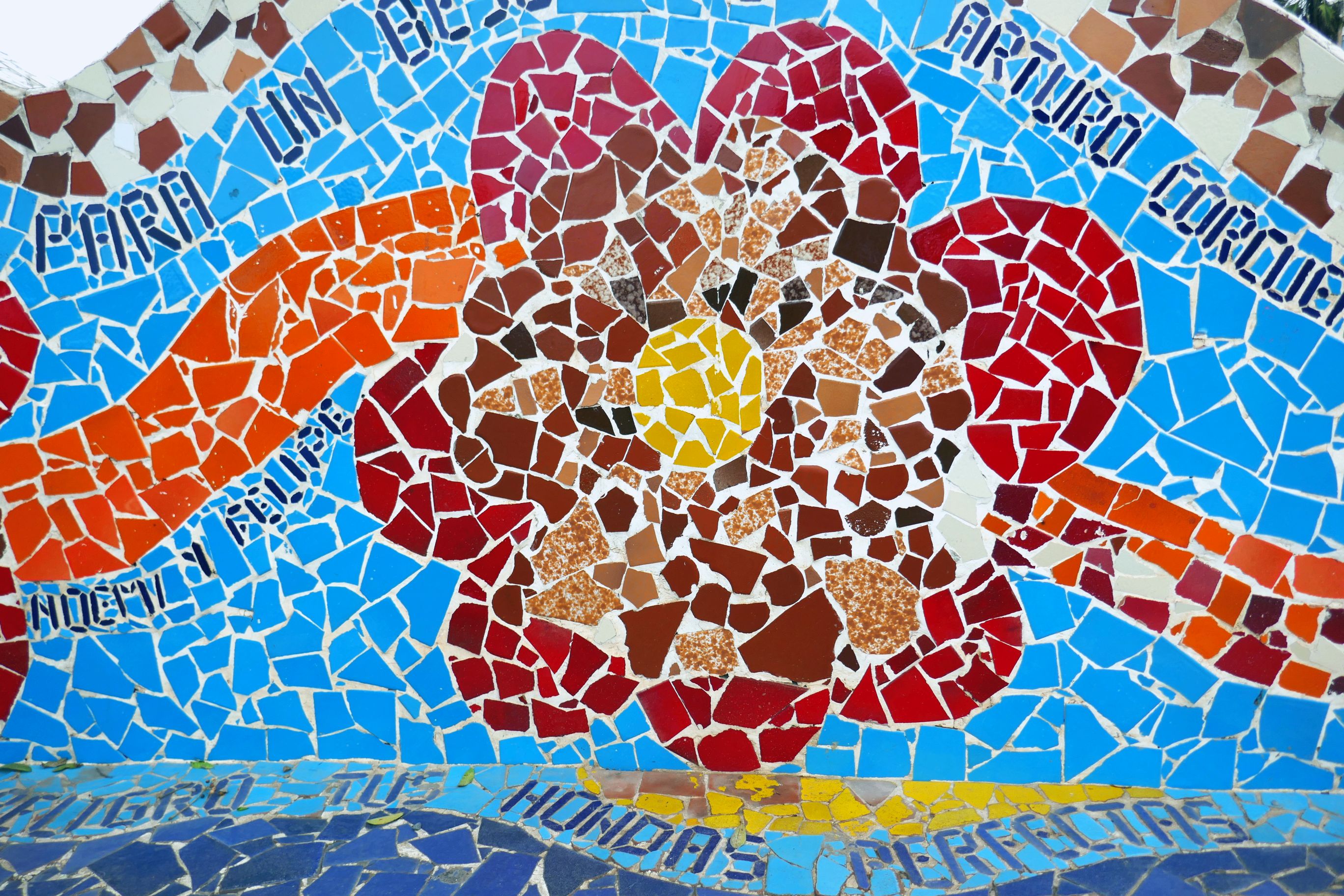
The cliff-top walk was beautiful with many small parks and bougainvillea growing everywhere.  Our destination for our first walk was Parque del Amour (Love Park), inaugurated on Valentine’s Day, 1993.  The centerpiece of the park is a huge sculpture called, “The Kiss” but we were there to see the Gaudi-inspired mosaics that included phrases and poems about love.  We loved it!

We had also hoped to see the paragliders that usually fly along the cliffs, but we didn’t see any.  Stay tuned, because they will appear in an upcoming post!

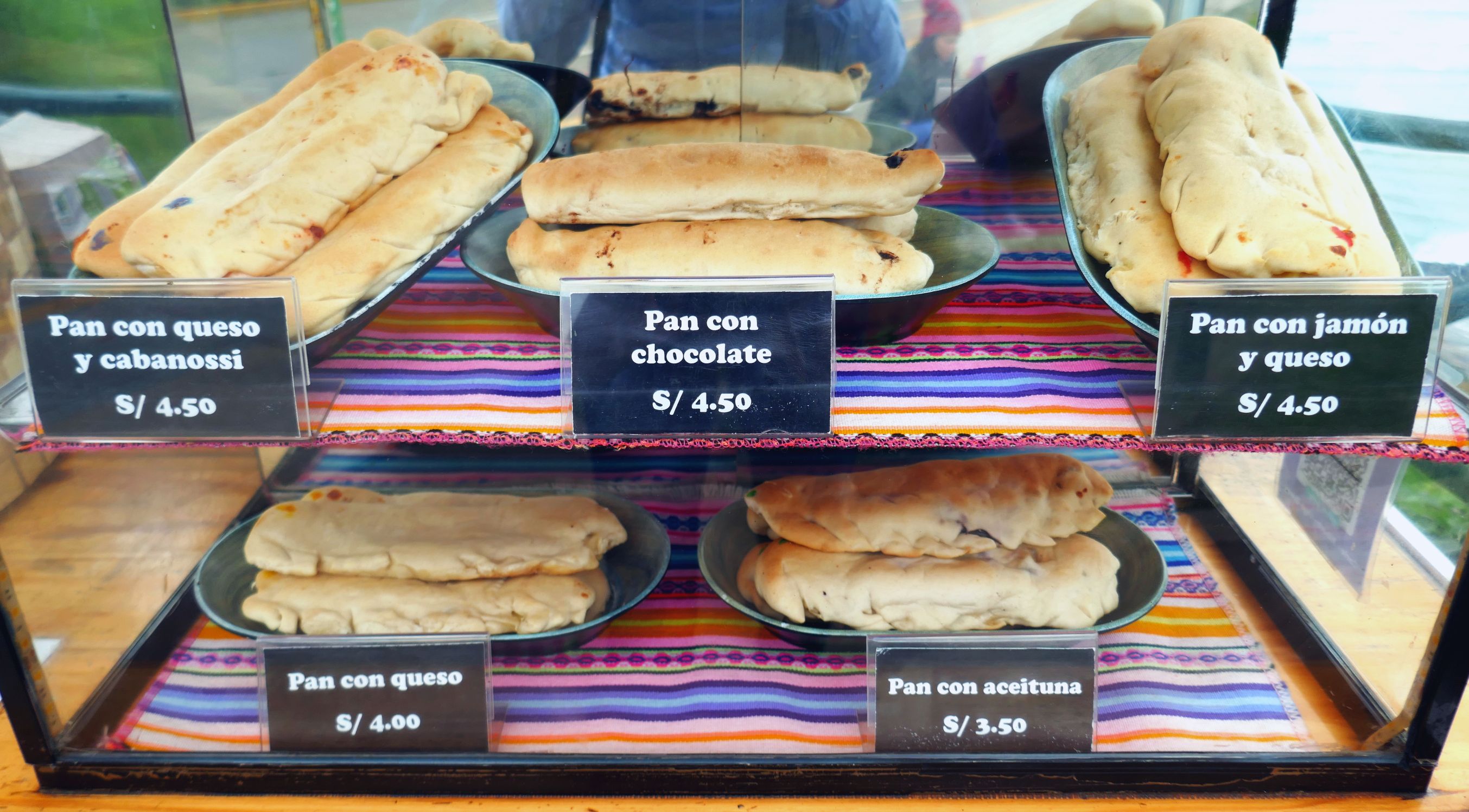
We enjoyed a Pan con chocolate, heated on the spot, while visiting Love Park. The U.S. price was the equivalent of only $1.20, and the warm chocolate and bread was delicious!

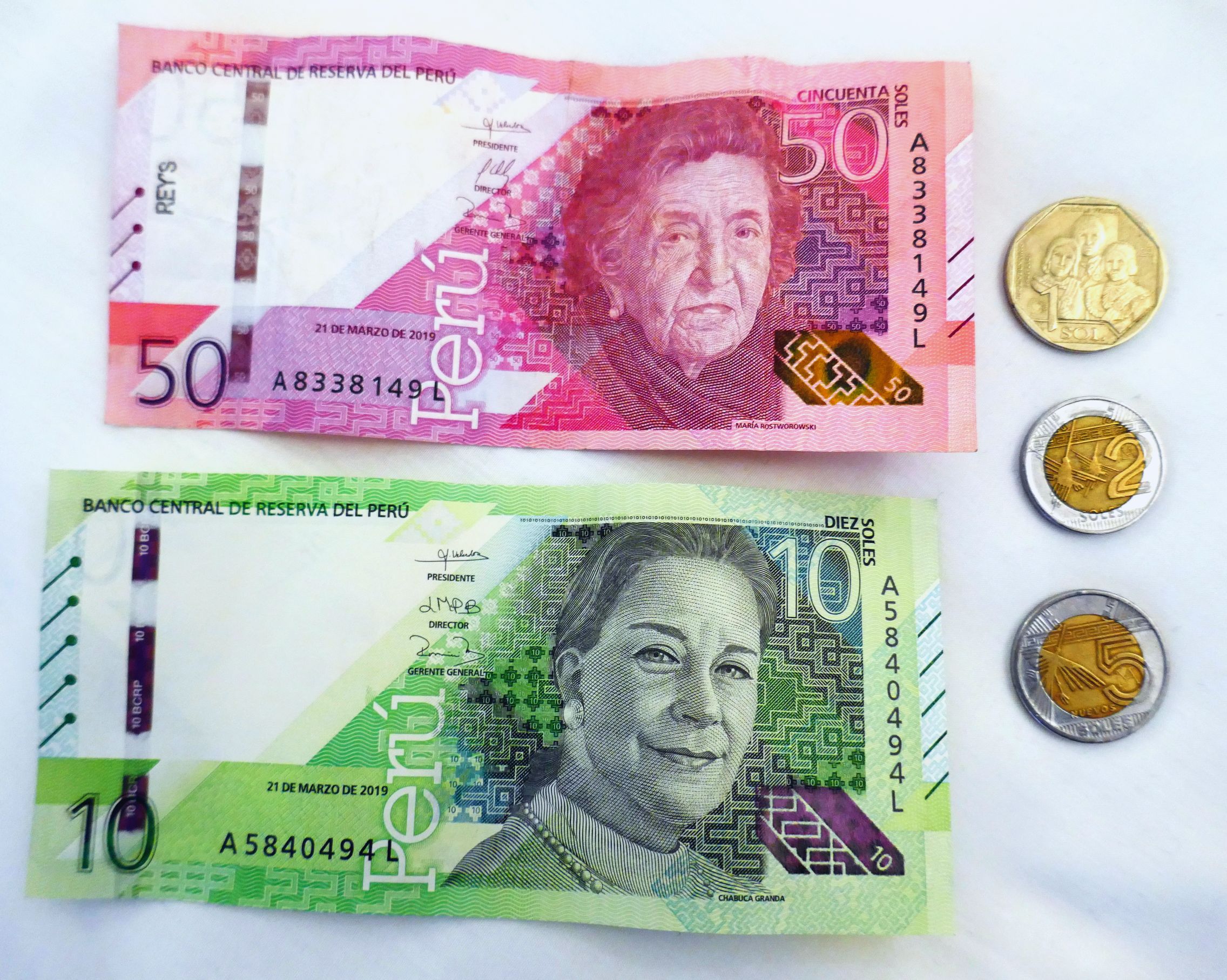
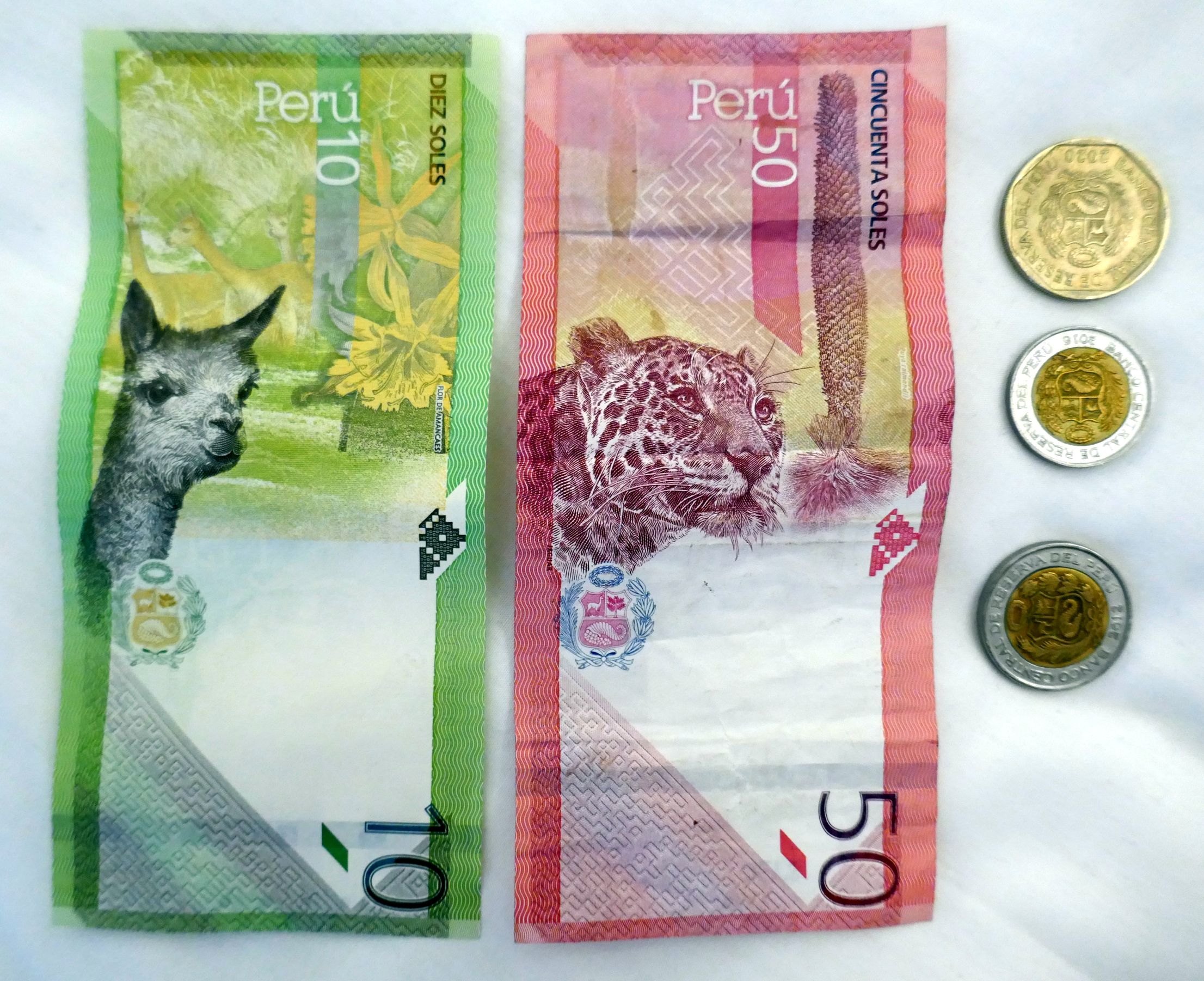
This is the Peru Sole, their currency.

Around our hotel:

Since the included meals with Overseas Adventure Travel are always multi-course, we usually opt for something lighter and more casual when we are on our own.  Bruce wanted our first dinner in Lima to be a treat, though, so we made reservations for Huaca Pucllana.  Located adjacent to the Huaca Pucllana ruins that we were planning to see, it worked out nicely to enjoy dinner first and then tour take the evening tour of the ruins.

What a memorable and fascinating evening!  The beautiful terrace of the restaurant overlooked the ruins, so we dined enjoying a very unique view!

Following dinner, we went next door to see the museum and take our evening tour.  There were just four other people, making the experience intimate and enjoyable.

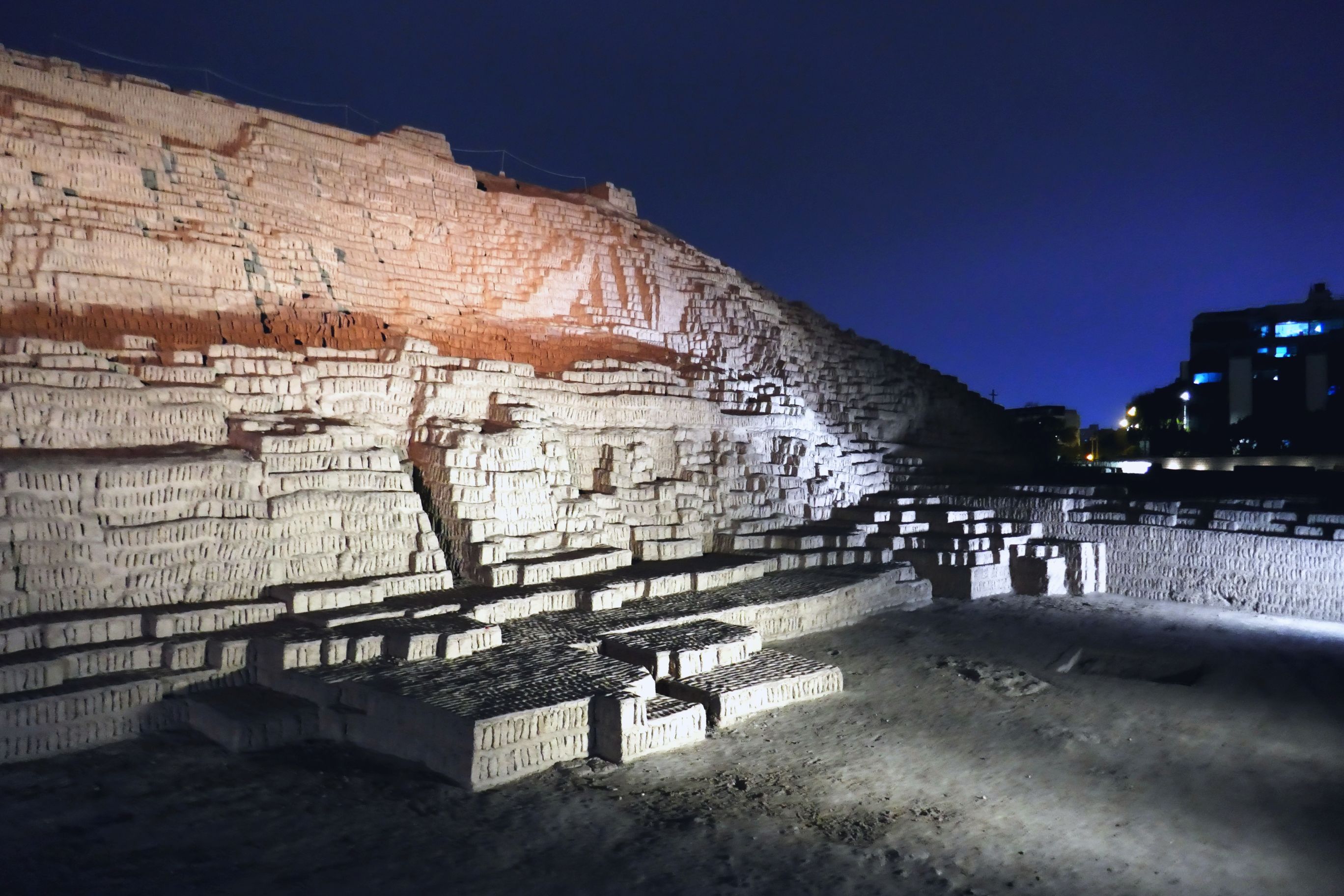
These ruins were amazing, once we understood the history and construction of the site.  Built as a ceremonial center between 450-650 A.D., they were abandoned for at least a century until the Wari society’s elite converted the top of the pyramid into a sacred space where their deceased were interred.  Later, the Ychsma people (1100 to 1450 A.D.) used it to bury their dead as well.  They also used it as a repository of offerings associated with ancestor worship.

The most amazing thing about these ruins was learning that what we saw was just a fraction of the size of the original site.  It was only by accident these ruins were discovered in the 1980’s during excavation work; the remainder has been built over during the past centuries.

The adobe and mud bricks were made and then stacked in this fashion for more stability.

Here’s a fun fact:  People think Maccu Picchu is ancient  at 574 years old, but Huaca Pucllana is 1,100 years old!

Coming up next: PERU #3: LIKABLE LIMA (PART 3)– BARRANCO DISTRICT

SWITZERLAND & NORTHERN ITALY #21:  VENETIAN VILLA CONDULMER

For our last day in Italy, we made our way from the Alps to the Venetian countryside, stopping at an apple orchard in Valsugana.  We learned from the owner about apple cultivation and the production of apple juice, cider, and vinegar.  Cherries were being grown there as well and we were fortunate to arrive just in time to taste them at their best!

(For all photos, click on the image for a full screen view.)

Lunch followed; a variety of home-cooked dishes that included apples as an ingredient, of course!

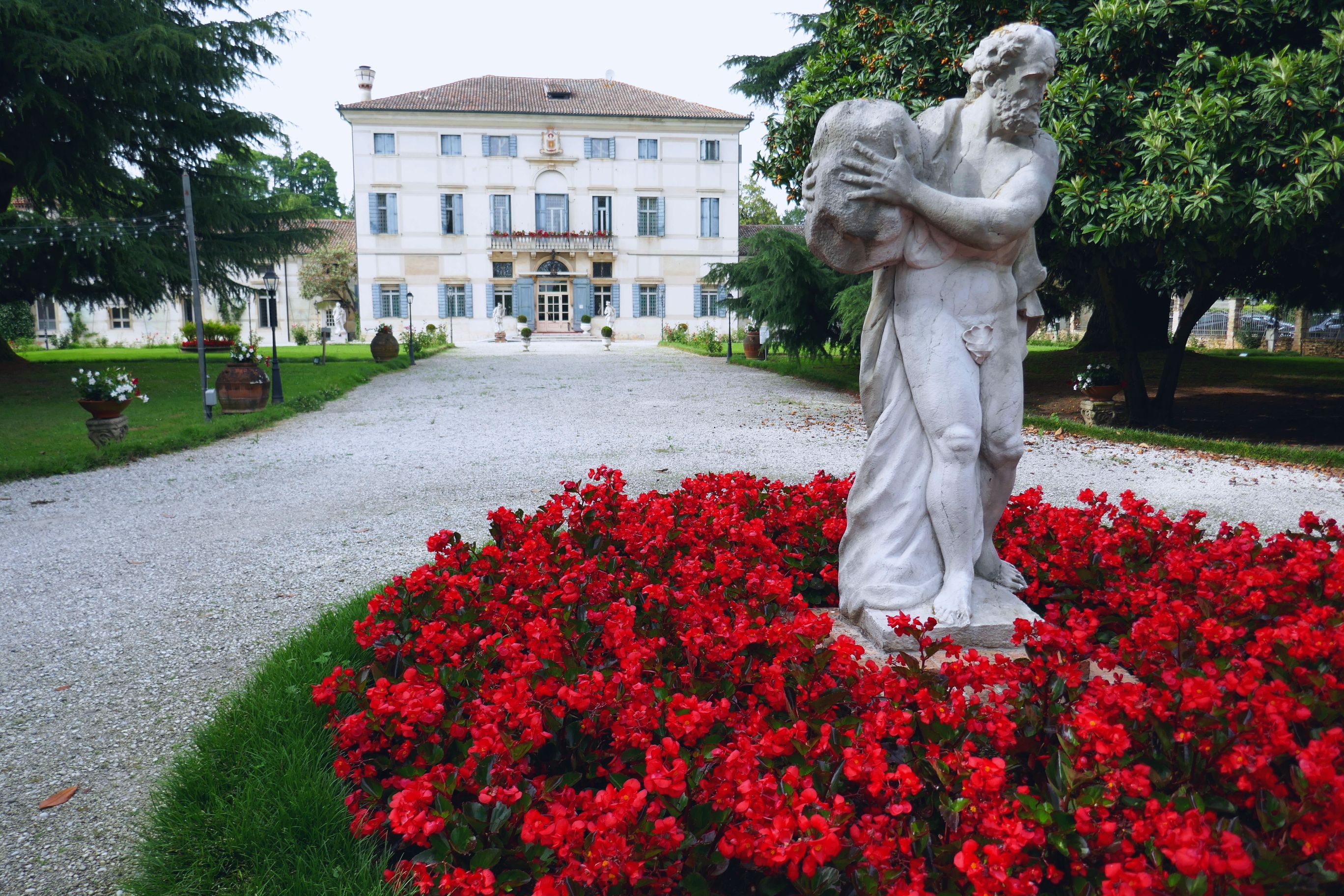
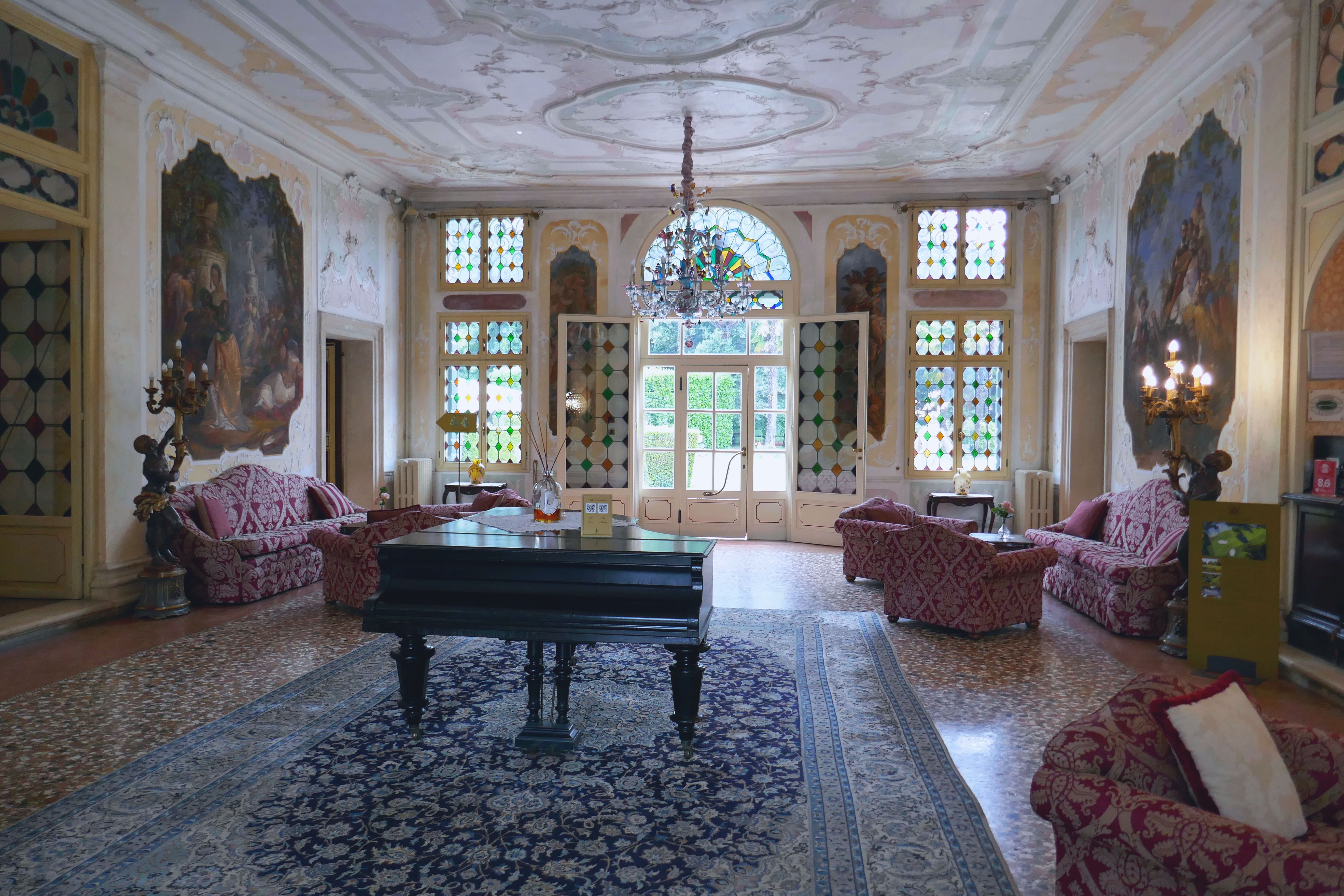
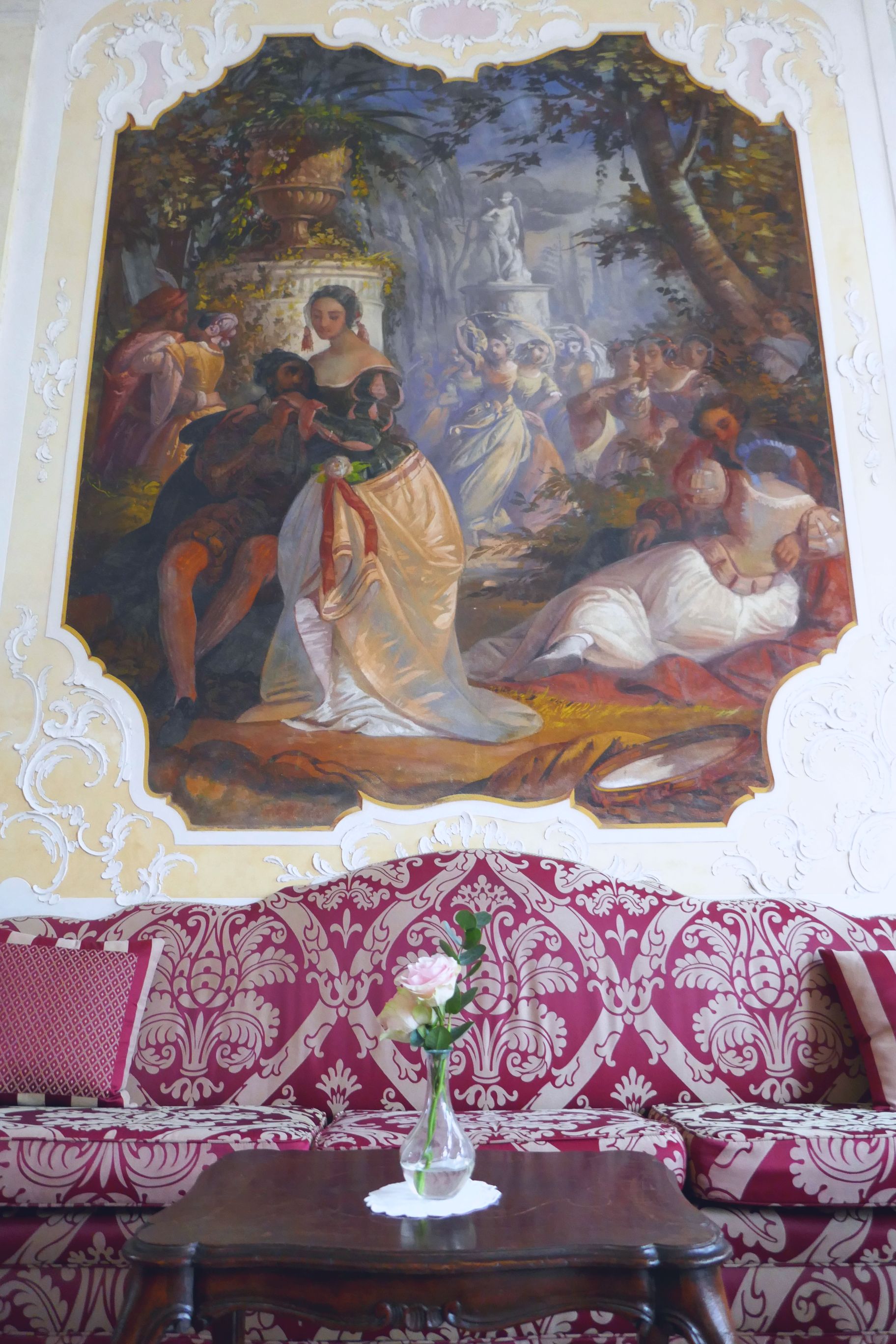
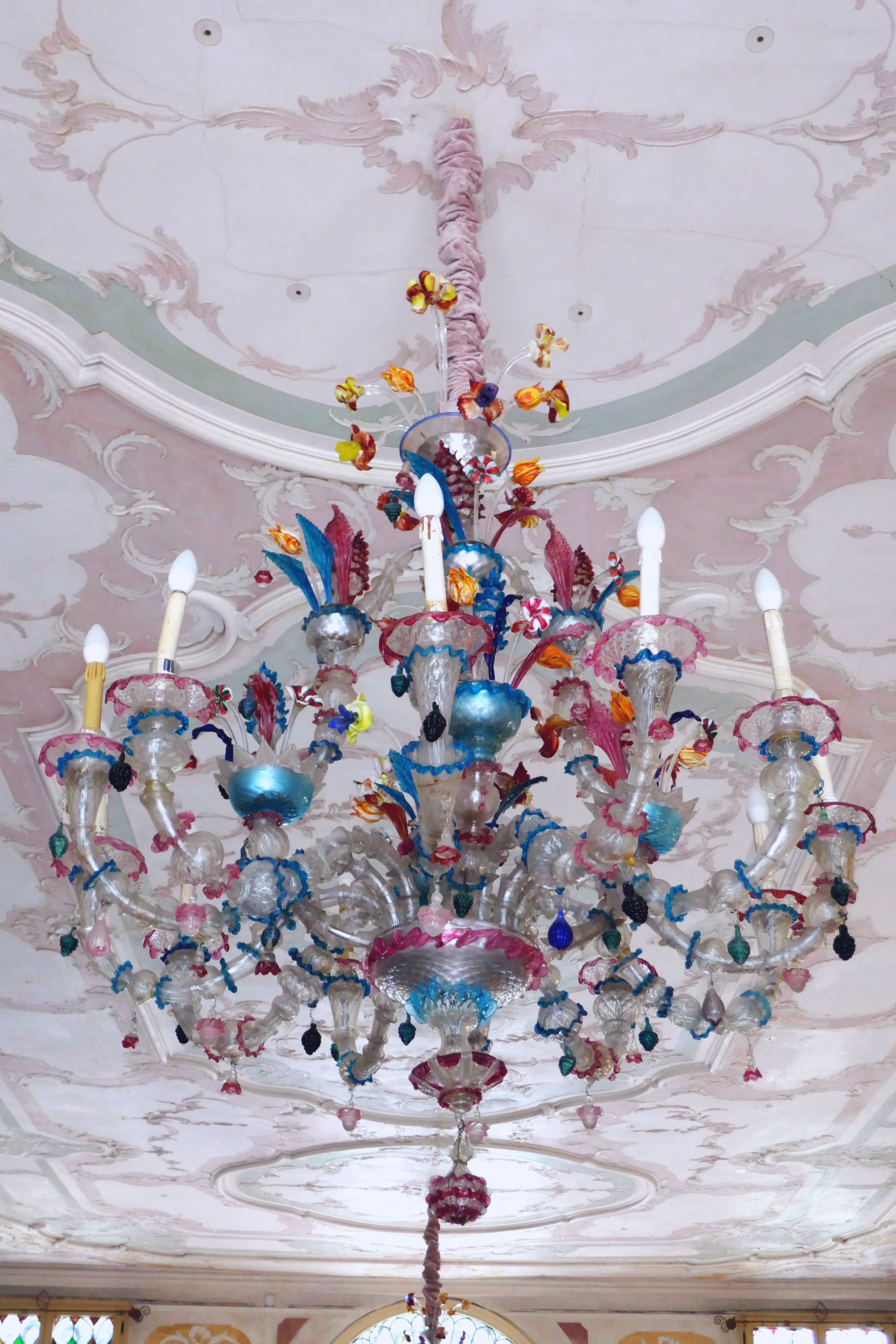
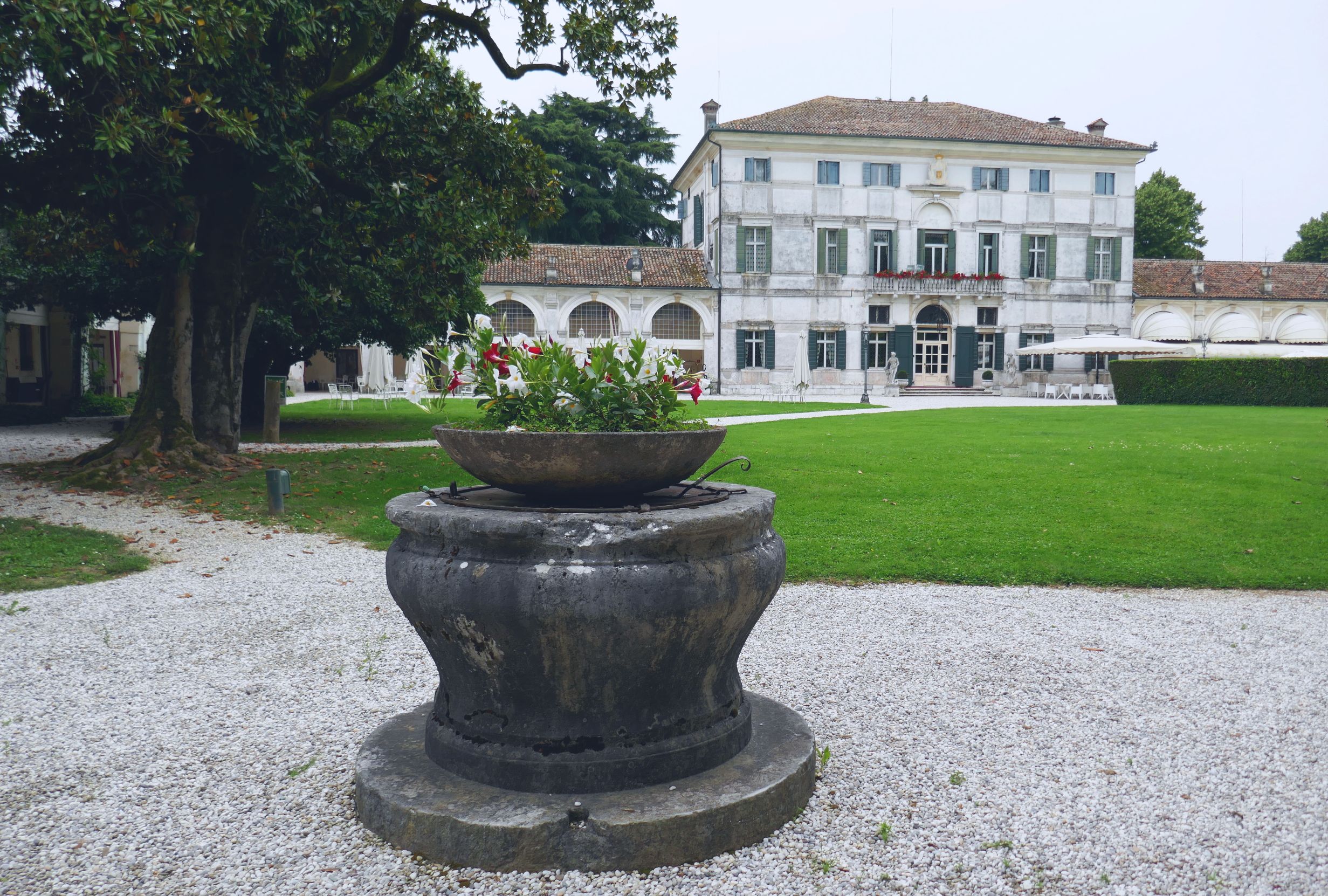
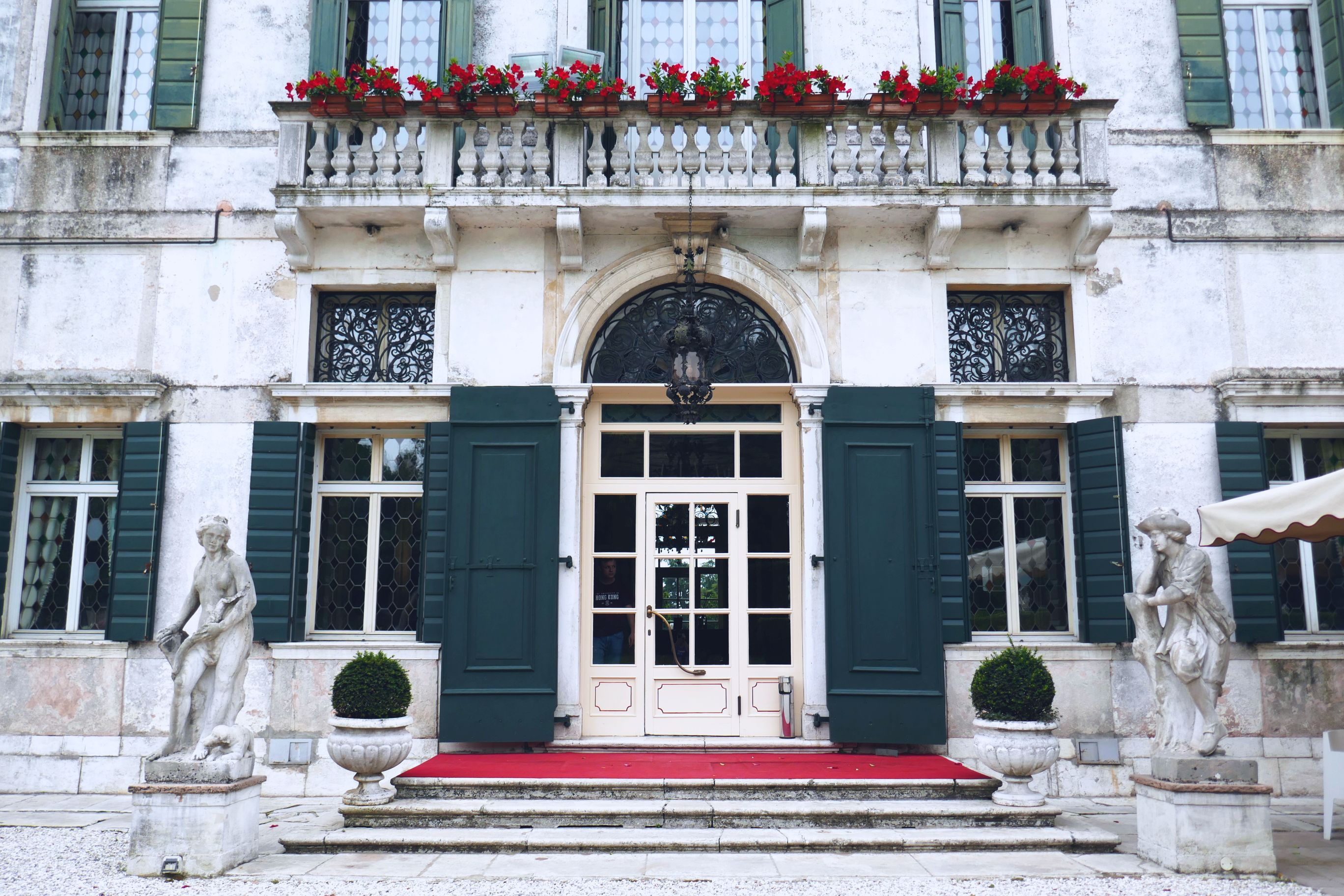
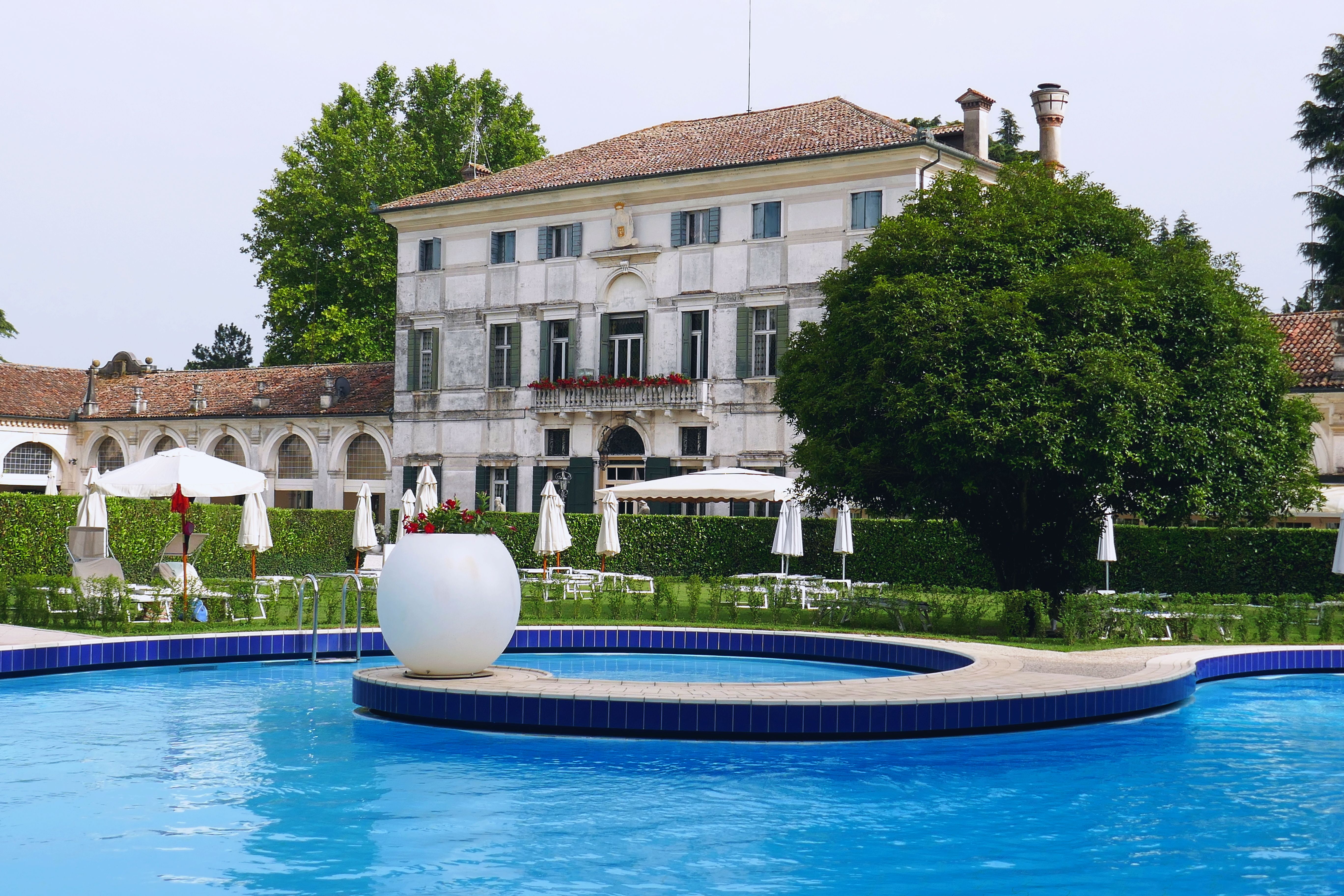
Our journey continued to Villa Condulmer where we stayed our final night.  Built in the 17th century as a monastery, it later became a private residence that changed owners several times. Famous composer, Guiseppe Verdi, was friends with the one of the owners and stayed there for a few months in the 1800’s.  In 1959, the villa was transformed into a hotel and features the piano that Verdi played during his stay.

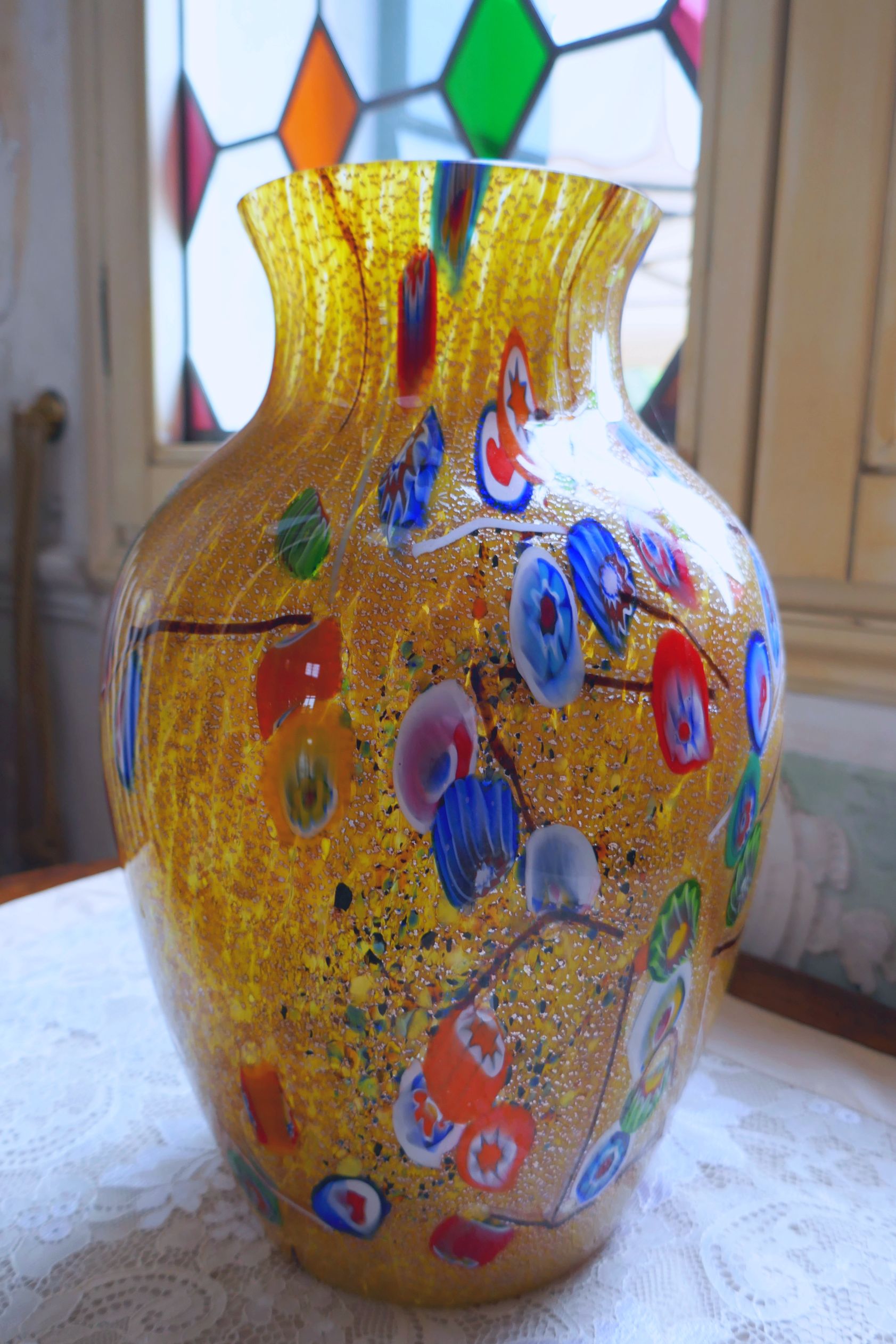
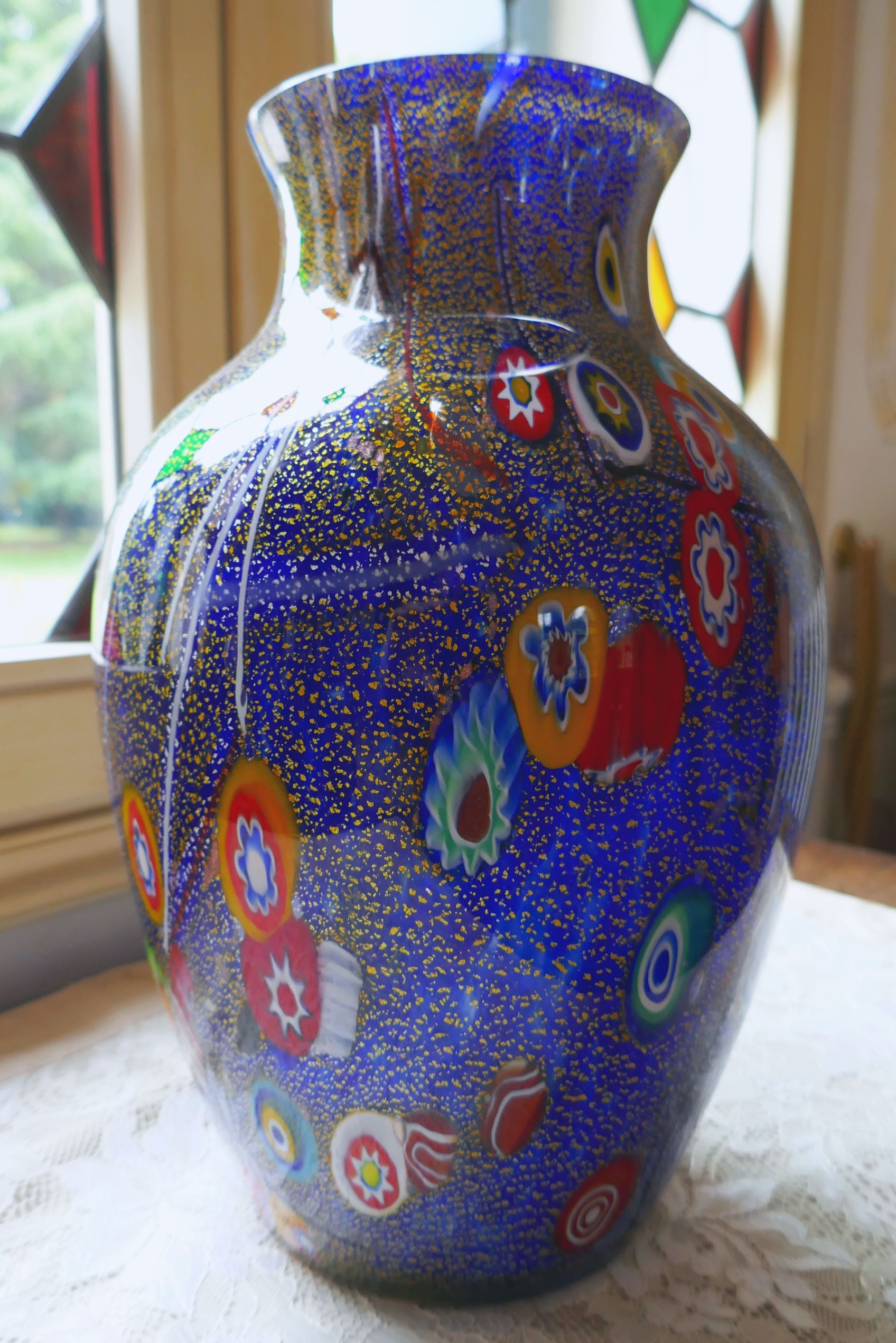
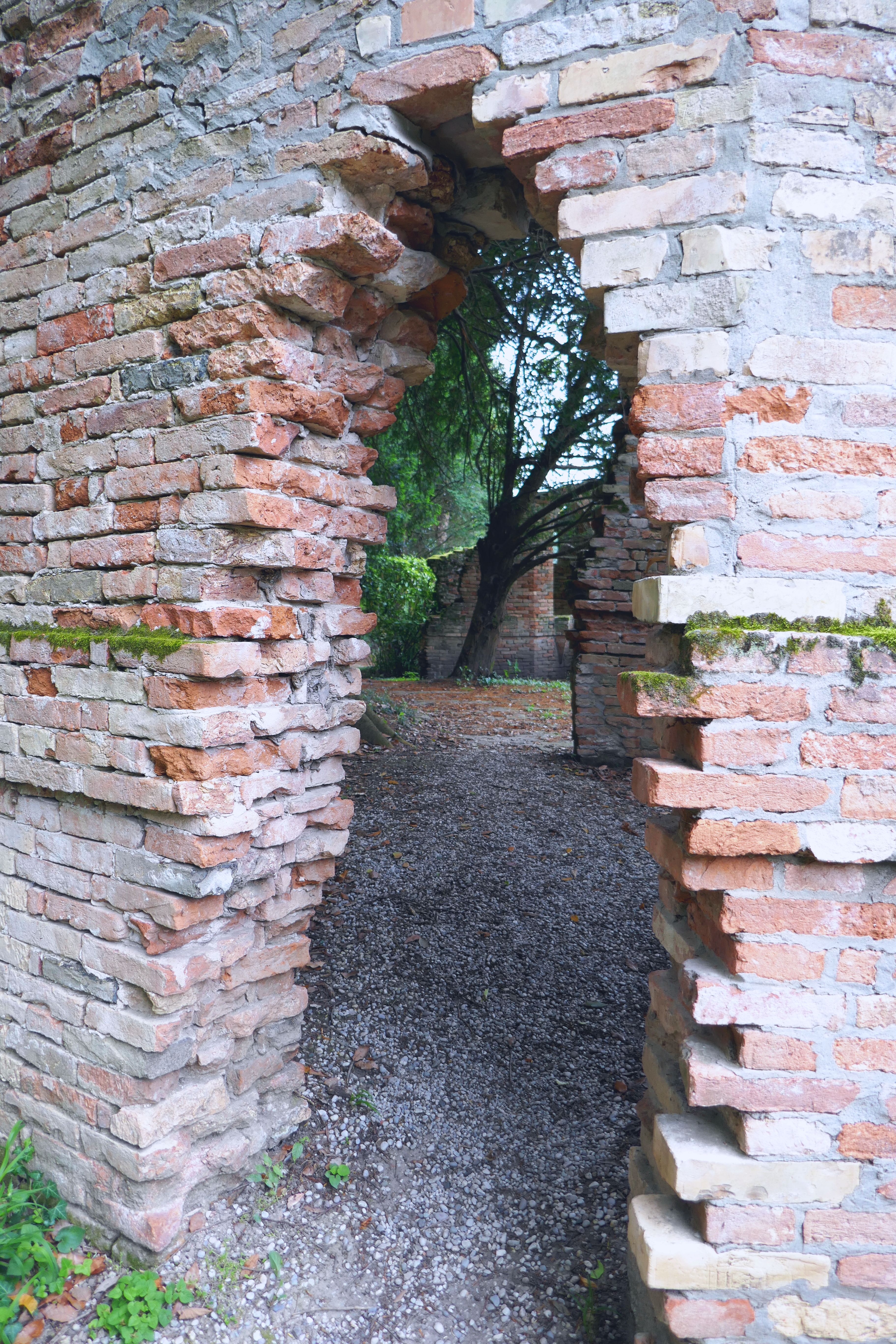
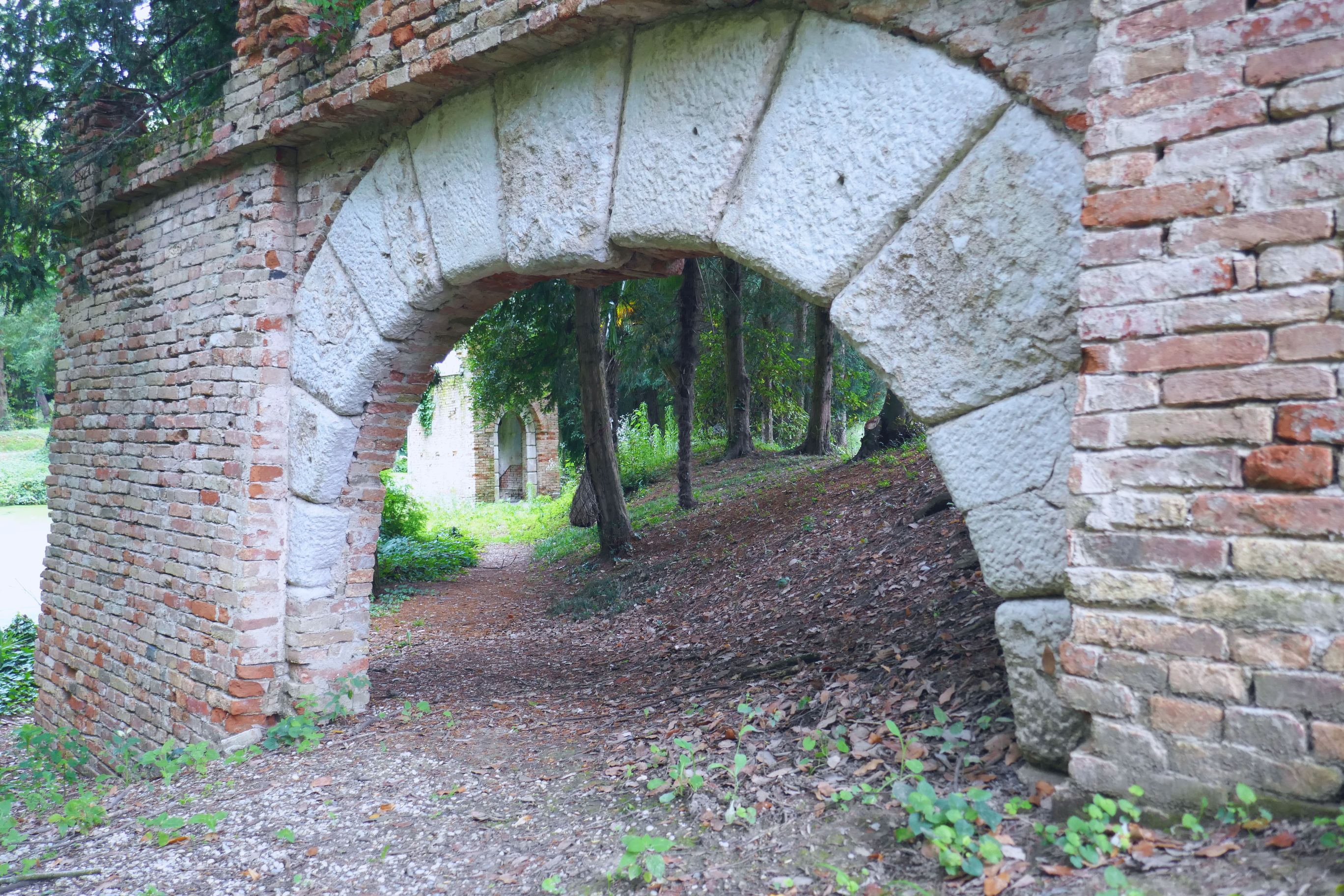
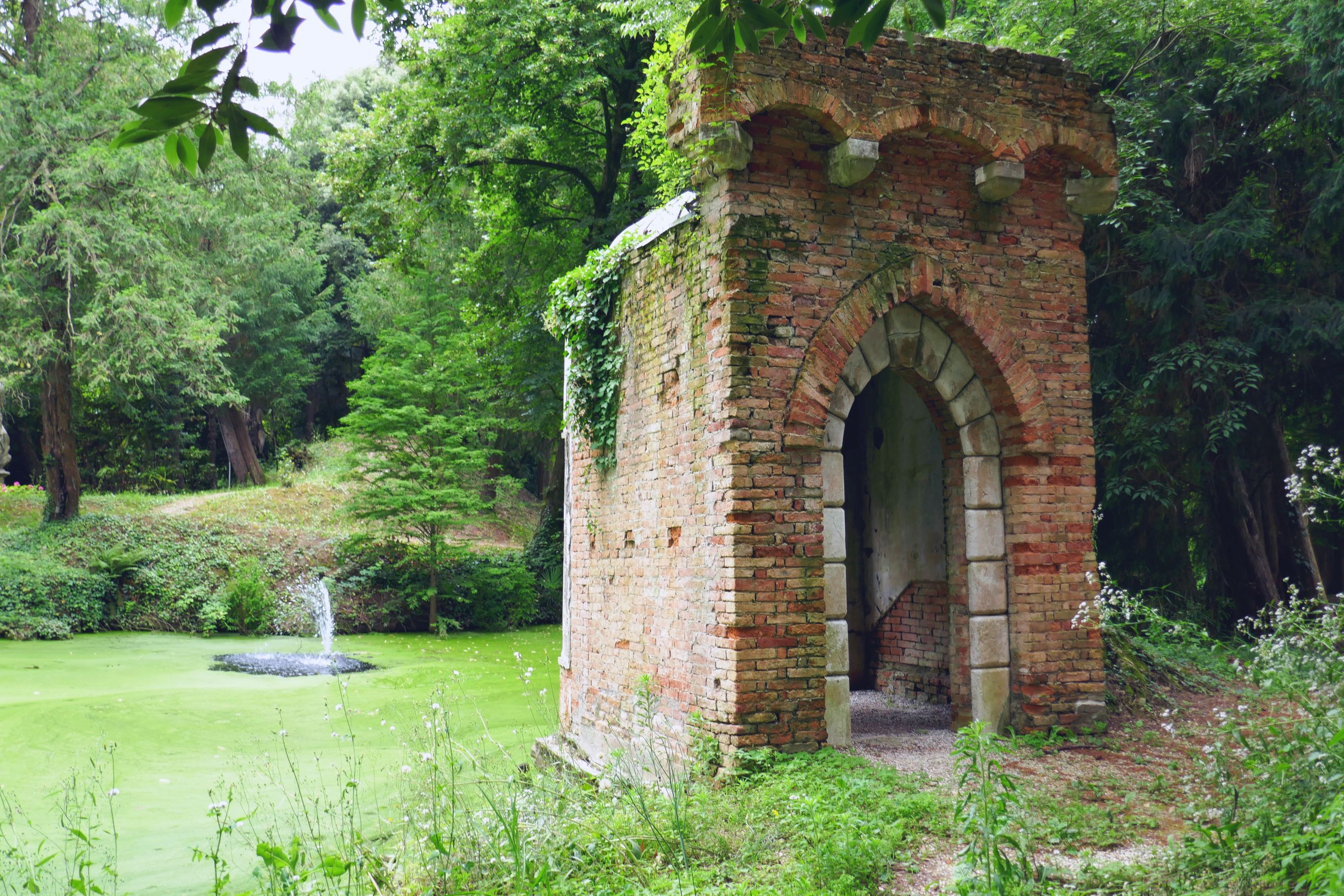
The villa was gorgeous!  We enjoyed meandering through the lobby, bar, and sitting rooms as well as the lush grounds in both the front and back.  It was a perfect place to relax and enjoy the last day in one of our favorite countries!

In the evening, following a champagne reception for our group, we enjoyed our last dinner together and bid farewell to our fellow travelers and Maria, our tour leader.

As was our previous three tours with Overseas Adventure Travels, we enjoyed it very much and highly recommend their small group tours.  If you do check out the site and contact OAT, please let them know Elaine Krugman referred you and give them my customer number: 3018126.  If you book a trip with them, not only will you receive $100 off because you were referred by me, but I will, too!

Thanks for joining me on this journey!  I hope you will return to see Peru!

Coming up next:  PERU #1: LIKABLE LIMA