Unknown's avatar

About Elaine-iaK's Travels

As a graduate of Recreation Administration, from San Diego State University, I have made recreation and travels my career and life’s passion. After graduation, I traveled solo for one year throughout the South Pacific, doing travel photography in a wide variety of settings. Upon my return, many of my photographs became the subjects of my newly created line of handcrafted photographic greeting cards, "Exquisite! By, Elaine", a business I have had since 1986. Check them out at: http://ExquisiteCards.fototime.com . In 1983, I began teaming up with my mom, Goldie, teaching arts & crafts to cruise ship passengers, aboard Princess Cruises and Royal Caribbean. In addition, I lectured on travel photography, as well as Australia and New Zealand history, aboard Princess Cruises. In 2004, I formed a new teaching team with my recently retired husband, Bruce, who serves as my "humble assistant" until 2010 when the cruise lines shifted the arts and crafts program to mostly being taught by their own staff. Currently, our favorite mode of travel is by river boat. Along the way, we enjoy poking around small European towns, meeting the people, seeking out interesting photo subjects, and always stopping at every chocolatier to make a purchase. Adding to my chocolate label and wrapper collection is a bonus! And, as a U.S. Masters swimmer, if I can find a pool to get in a swim with the locals, all the better! Cheers! Elaine-iaK ~ Believing in your dreams can be far more rewarding than living by your limitations~ -Karla Peterson

ARGENTINA & CHILE #15: ENJOYING EL CALAFATE

There was no way to get around it. This was going to be a long day on the road looking out a bus window while traveling north, crossing the border back into Argentina, and driving to El Calafate.

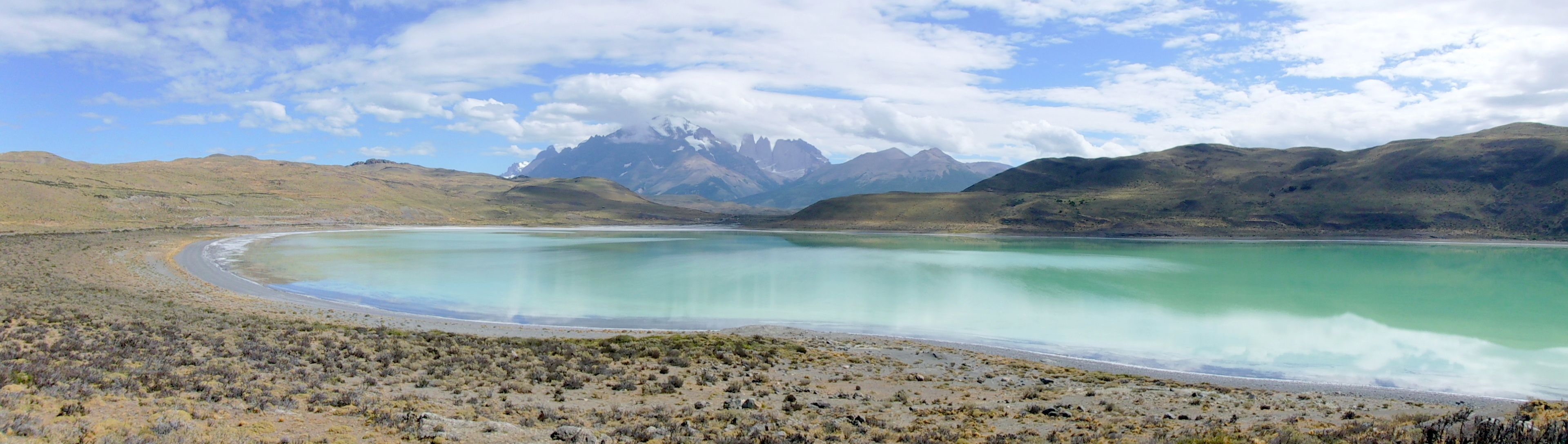
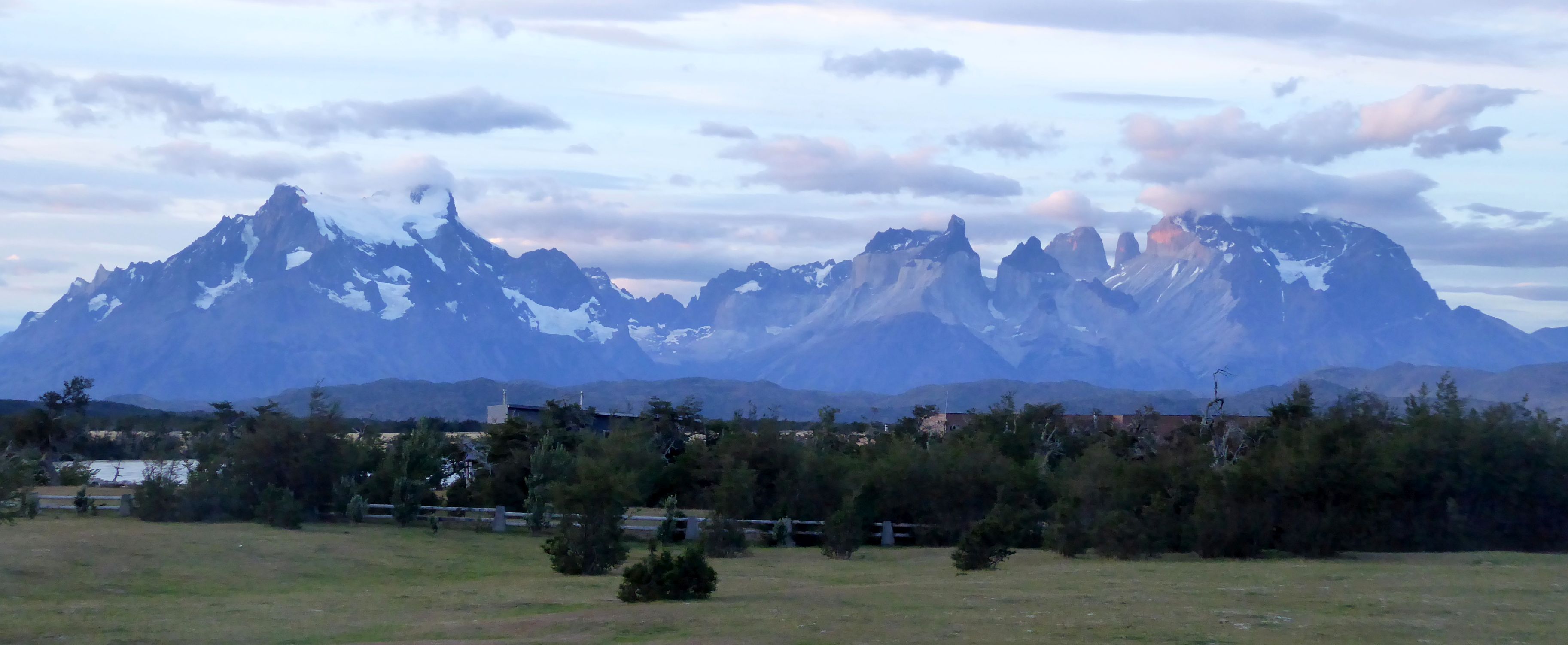
To begin our journey, we headed back up the hill and stopped for one last look back down to our hotel and to Torres del Paine National Park beyond.

(For all photos, especially panoramas, click on the image for a full screen view.)

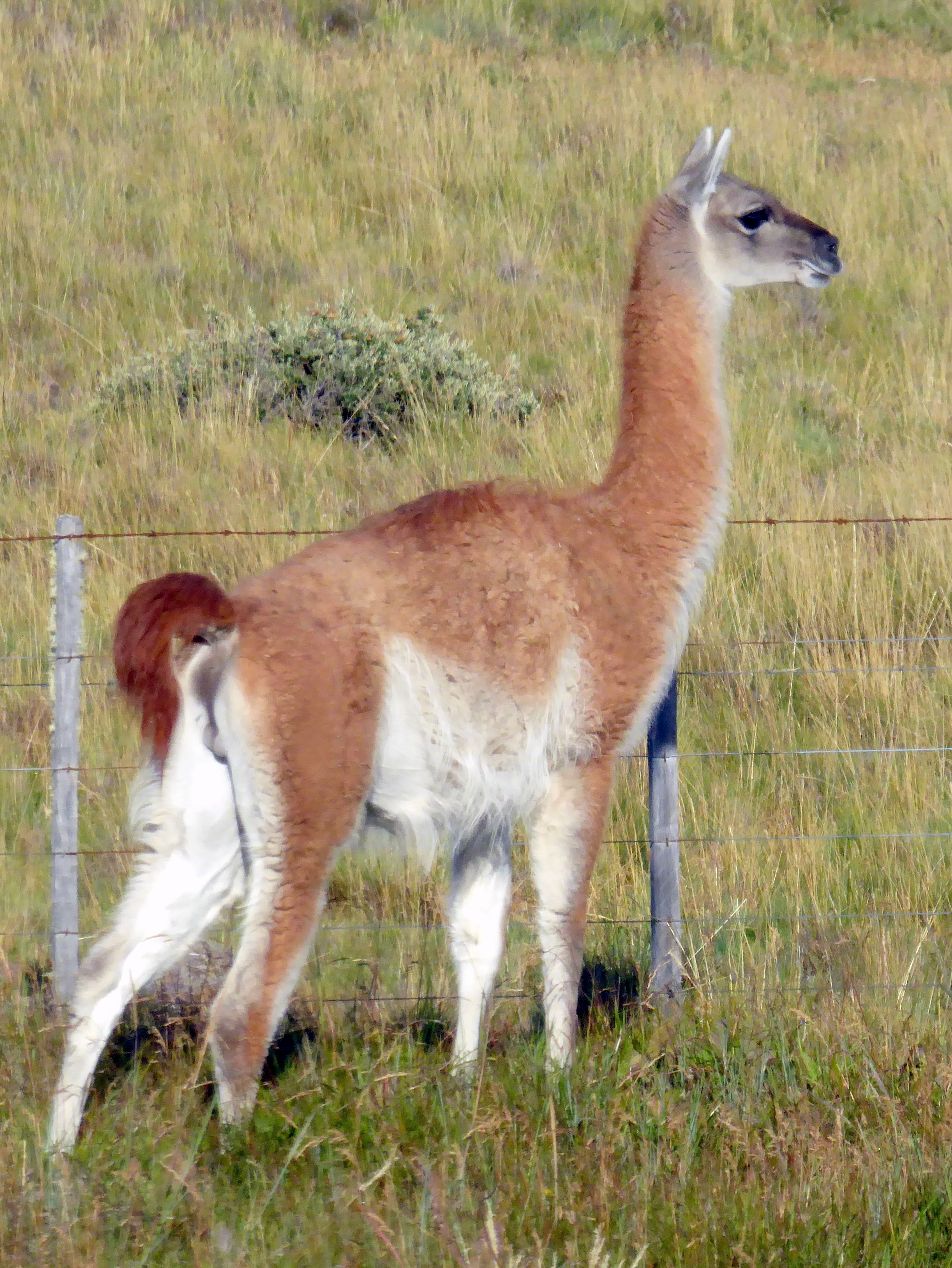
Along the way, we saw more beautiful guanacos off in the distance.  They are good at hopping fences, though, so we were forewarned.

A gorgeous day for a drive!

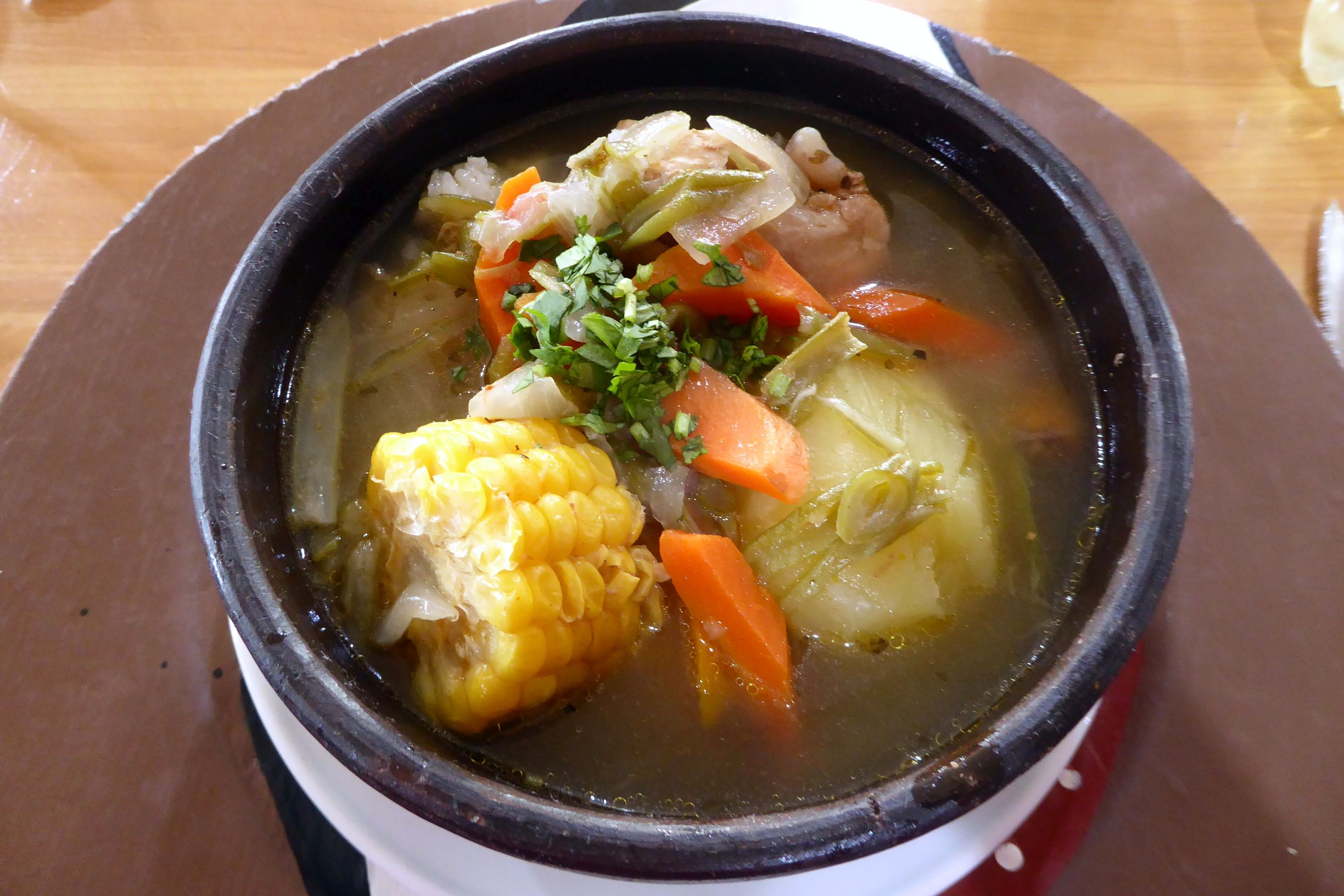
After a few hours on the road, we stopped at a restaurant, El Ovejero, in the middle of nowhere, for lunch.  It was attached to a hotel located at the border crossing and the crossroads between two routes that lead in and out of Torres del Paine National Park. We were charmed by the gaucho theme of the place and the authentic food we enjoyed for lunch. Cazuela is a traditional Chilean stew, and the one we were served was loaded with (much appreciated!) vegetables and chicken rather than beef.  To spice it up a bit, we could add Pebre, a Chilean sauce similar to Mexican salsa fresca.  Delicious!

Clever bar stools– perfect for a gaucho!
The restaurant and hotel, depicted in a wood wall panel
This artwork depicting the hotel was at the end of one of the dining tables.

Since we were leaving Chile and entering Argentina, we had to say goodbye to our bus and driver as well as Sergio, our guide.  Ola Ariel, our new guide!  The moment I saw him, I felt like I knew him from somewhere.  Well, I didn’t, but I realized he looked just like someone I knew from my childhood days while going to religious school at Temple Beth Shalom, in Long Beach, California, where I grew up.  Sure enough, like me, he was a Russian-Polish Jew, 100% Ashkenazie.  I couldn’t get over his Argentinian accent.  To my ears, it just didn’t compute!

Ariel was a hoot!  If I had to be stuck on a bus for that many hours, he was just the guide to be stuck listening to, because he was a great storyteller!  As he told us about the lifestyle and work of gauchos, he demonstrated their typical attire by dressing me up.  (Thanks, Lisa, for grabbing this shot!)

Although this was the day on the itinerary I was not really looking forward to, because of the long drive, it turned out to be quite enjoyable!

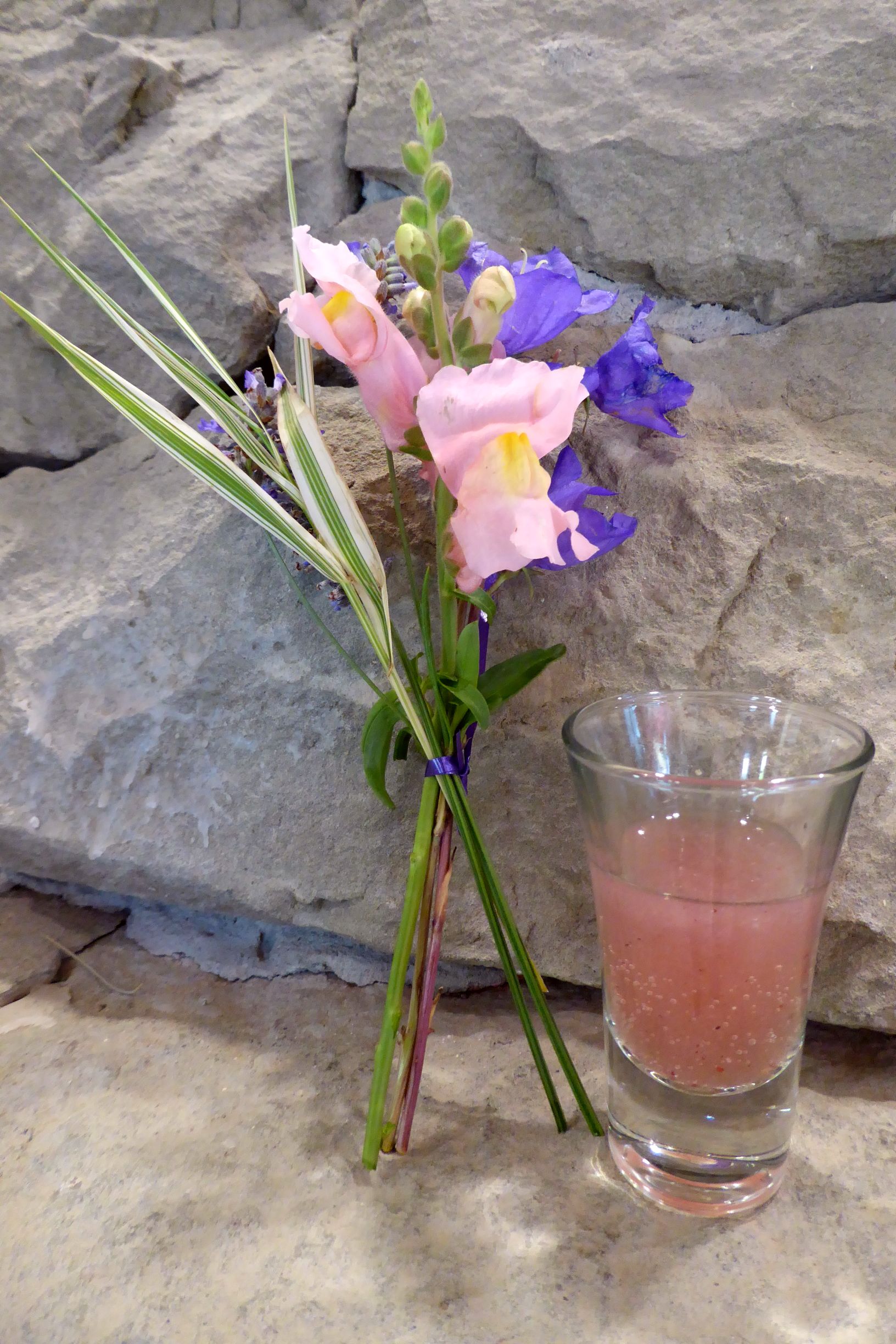
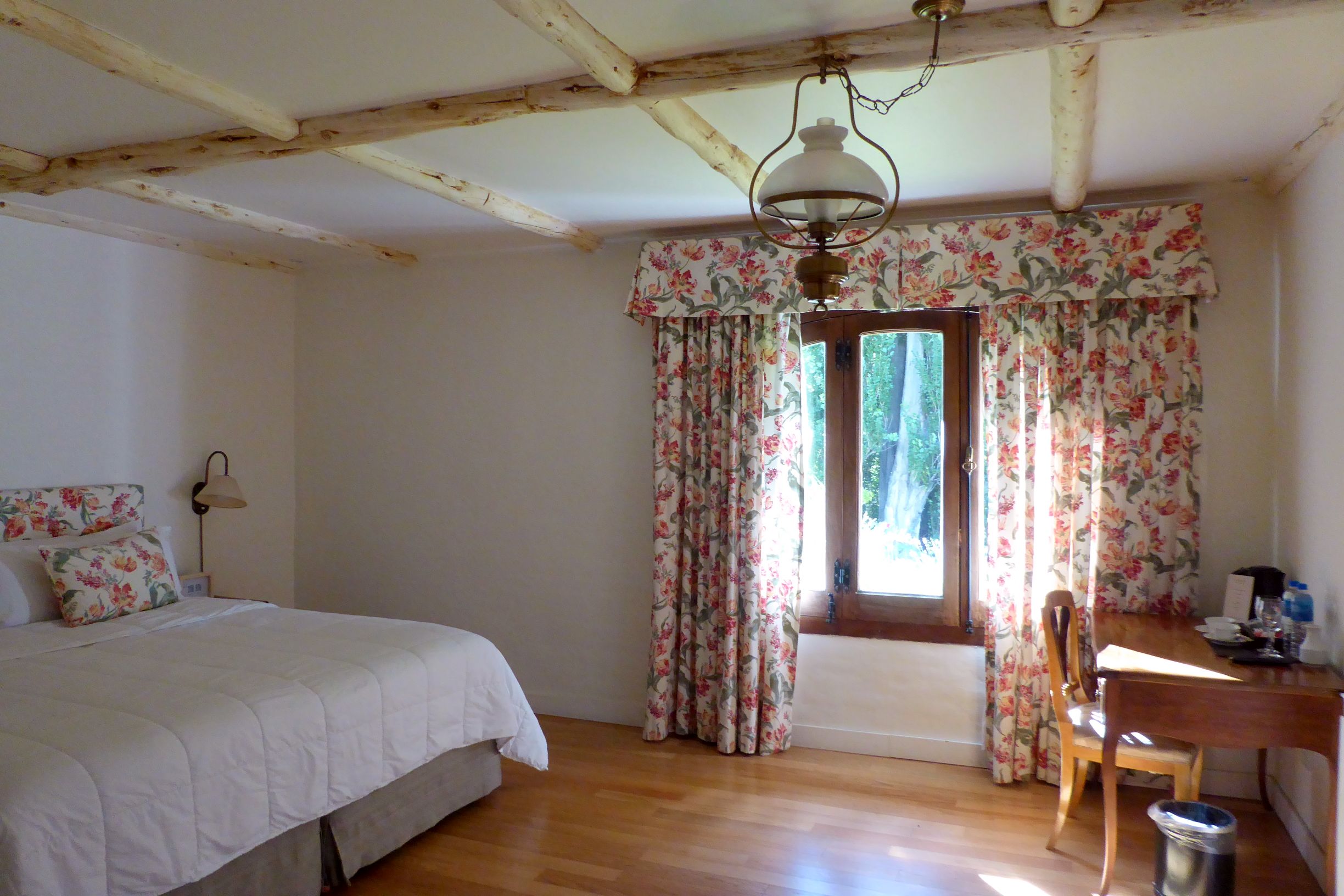
Kau Yatun Hotel, in El Calafate, was love at first site!  The beautiful grounds, authentic architecture—it was oozing with charm!  We were greeted with fresh flowers to place in the little vase in our room and gathered for a welcome drink—a nice touch.

The hotel’s entrance

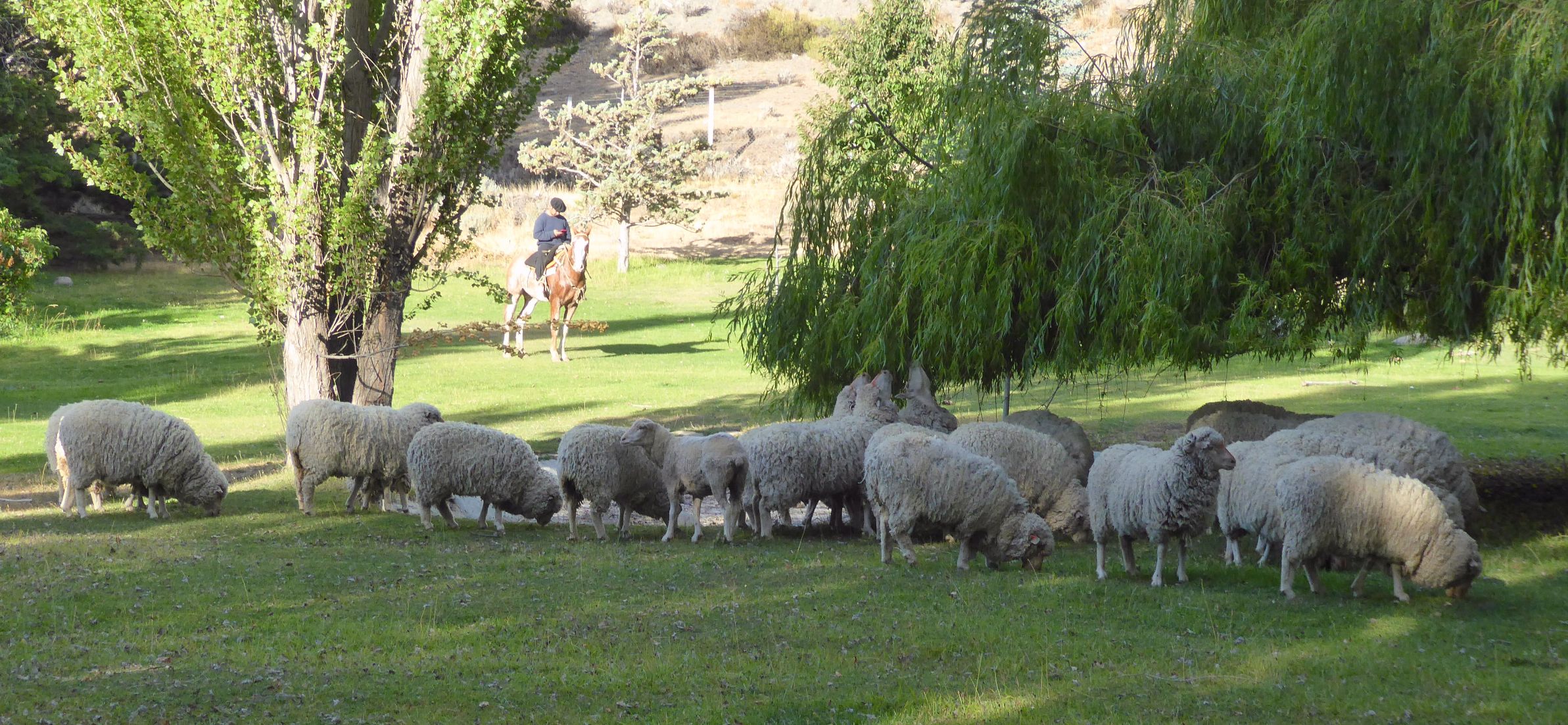
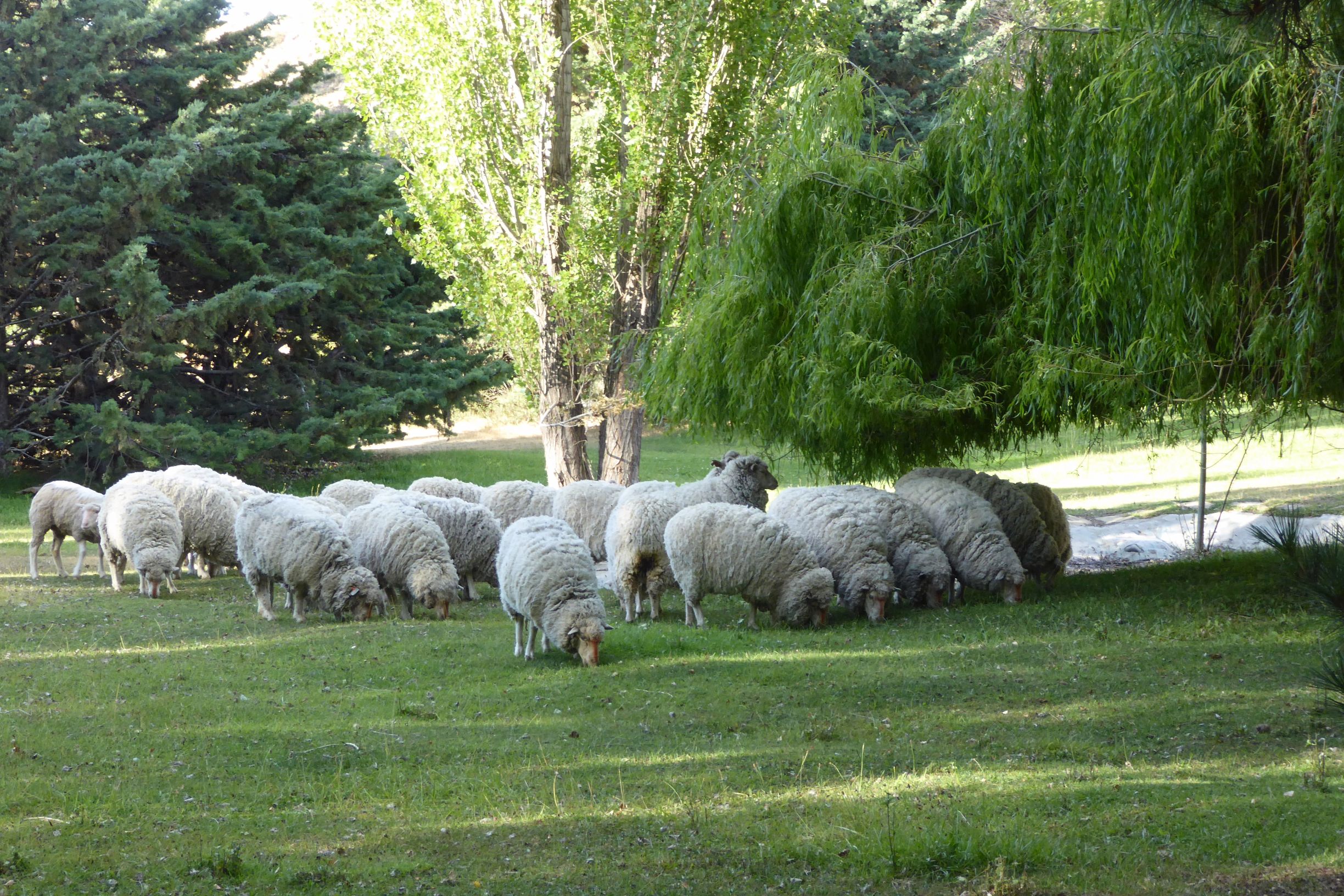
After settling in, Andrea took us on a walking tour to town, a short walking distance from our hotel.  Adjacent to the hotel, a gaucho was tending to his sheep.

Note the cell phone in this modern gaucho’s hand. Times have changed…

El Calafate is in Patagonia, but quite a bit north from where we had been in Punta Arenas.  The town of 25,000 residents is situated on Lake Argentino and is named after the calafate bush which has yellow flowers and dark blue berries.

This is the place to stay if you would like to visit Los Glaciares National Park and see Perito Moreno Glacier, our destination for the following day.  It’s a nice town, too, with buena onda—good vibes. 

Following our tour, I went on into town with a few members of the group to explore a little more before returning for our group dinner.  We would have the opportunity to see more of the town the following day.

On February 28th, it was still Christmas in El Calafate!
A few of the many stray dogs in El Calafate. The shelter holds 1,500 dogs, and it’s full. Sad…

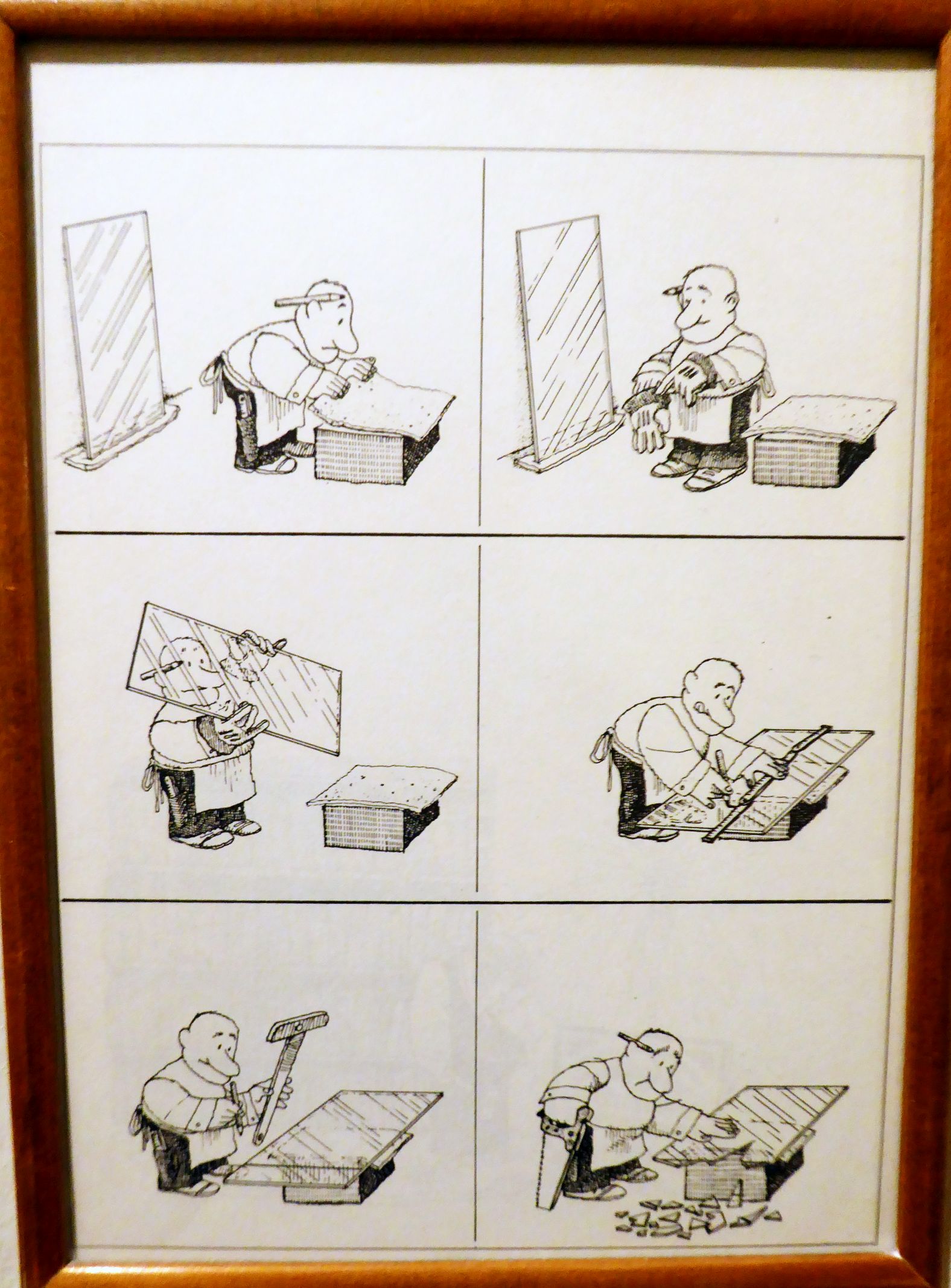
Back at the hotel, we got a kick out of the Quino cartoon panels they had displayed in the hallway at each room.  Coincidentally, this was the one outside our room.  As a glass artist, Bruce could relate!

Next up:  ARGENTINA & CHILE #16: A GORGEOUS GLACIER!

ARGENTINA & CHILE #14: MORE TREKKING IN TORRES DEL PAINE NATIONAL PARK

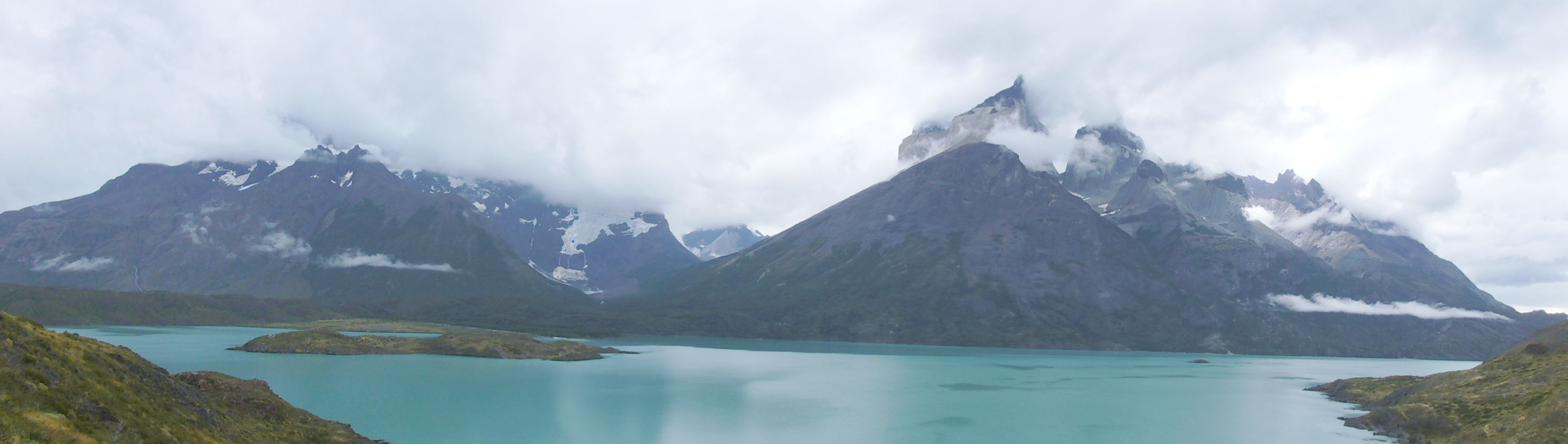
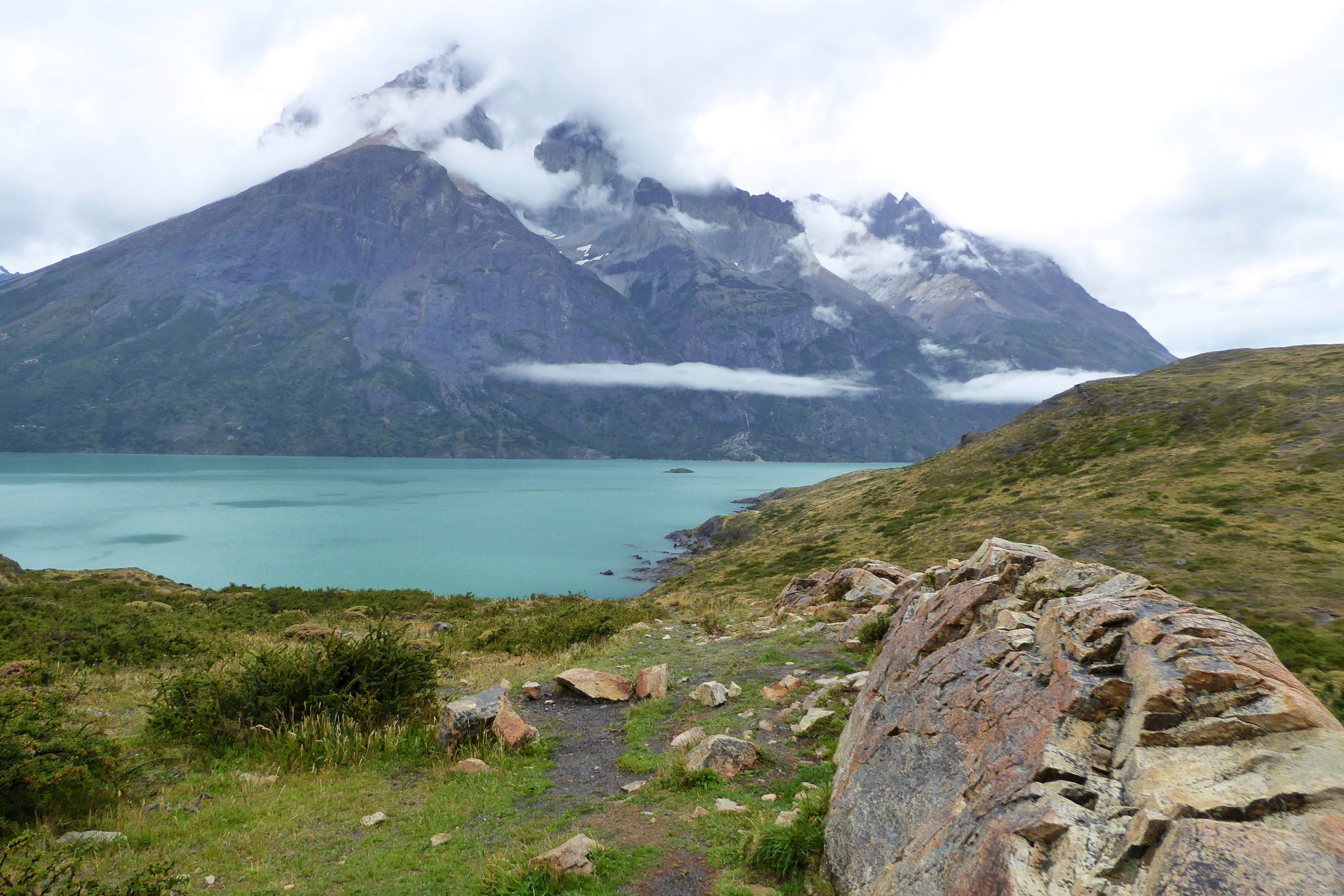
As it turned out, we had better weather during our first day of hiking at Torres del Paine National Park. We were so fortunate to have seen the granite peaks of Torres d’Agostini, Torres Central, and Torres Monizino in clear view, because it is rare they aren’t shrouded by clouds. In fact, it is so rare that our next local guide, Ariel, couldn’t believe it!  When Bruce told him we had seen the towers, Ariel asked, “Are you sure?” He thought Bruce was joking.

These were the towers on the right, the highest topping out at 8,200 feet above sea level:

(For all photos, especially panoramas, click on the image for a full screen view.)
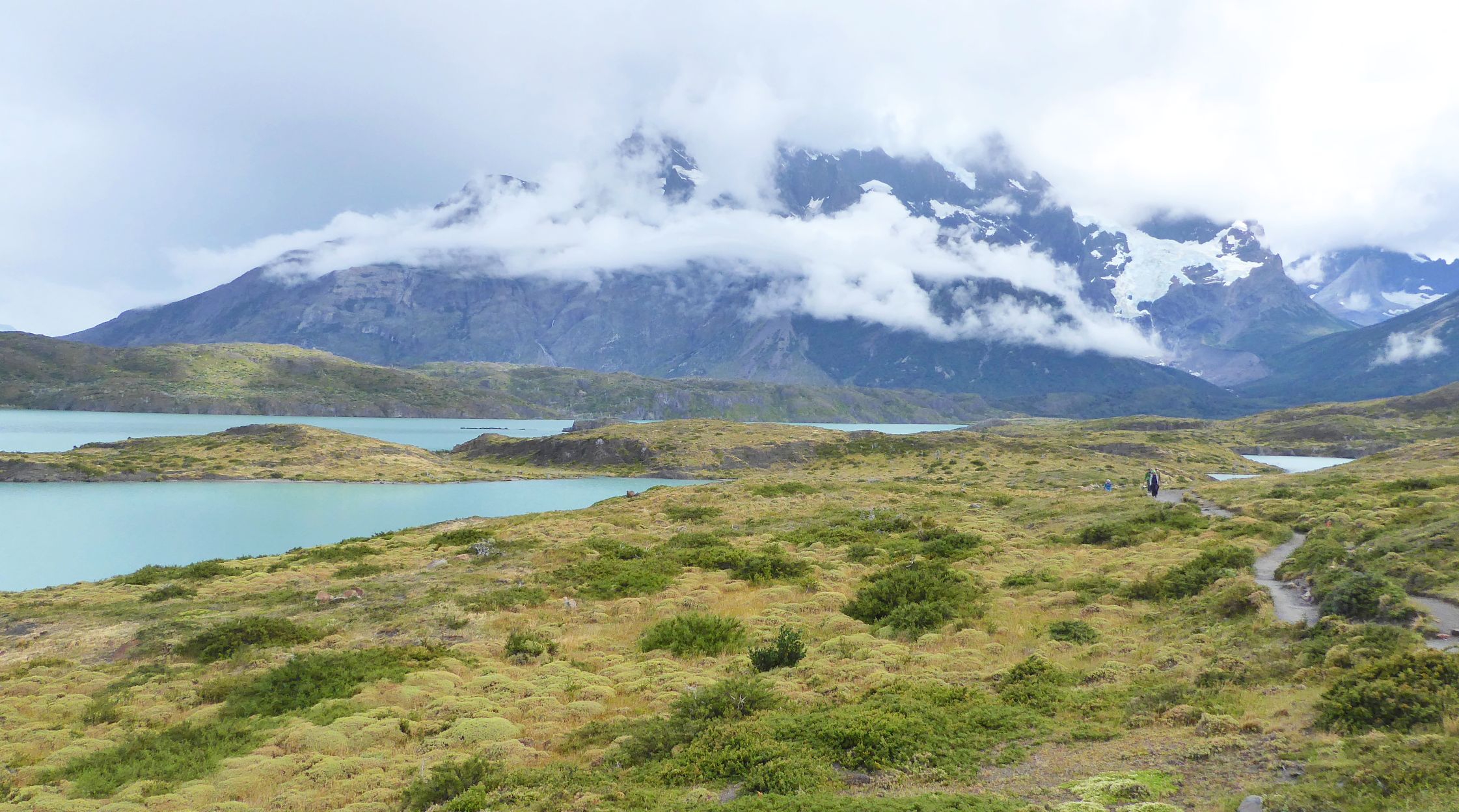
It had to happen at some point. We finally had a not-so-fabulous day of weather. Although it was cold and windy, which is typical for the region, the only rain we had was just a few sprinkles here and there. It was perfectly fine with me. After all, it is what we expected and hand prepared for when we packed for this trip. I finally got to use my Hot Hands!
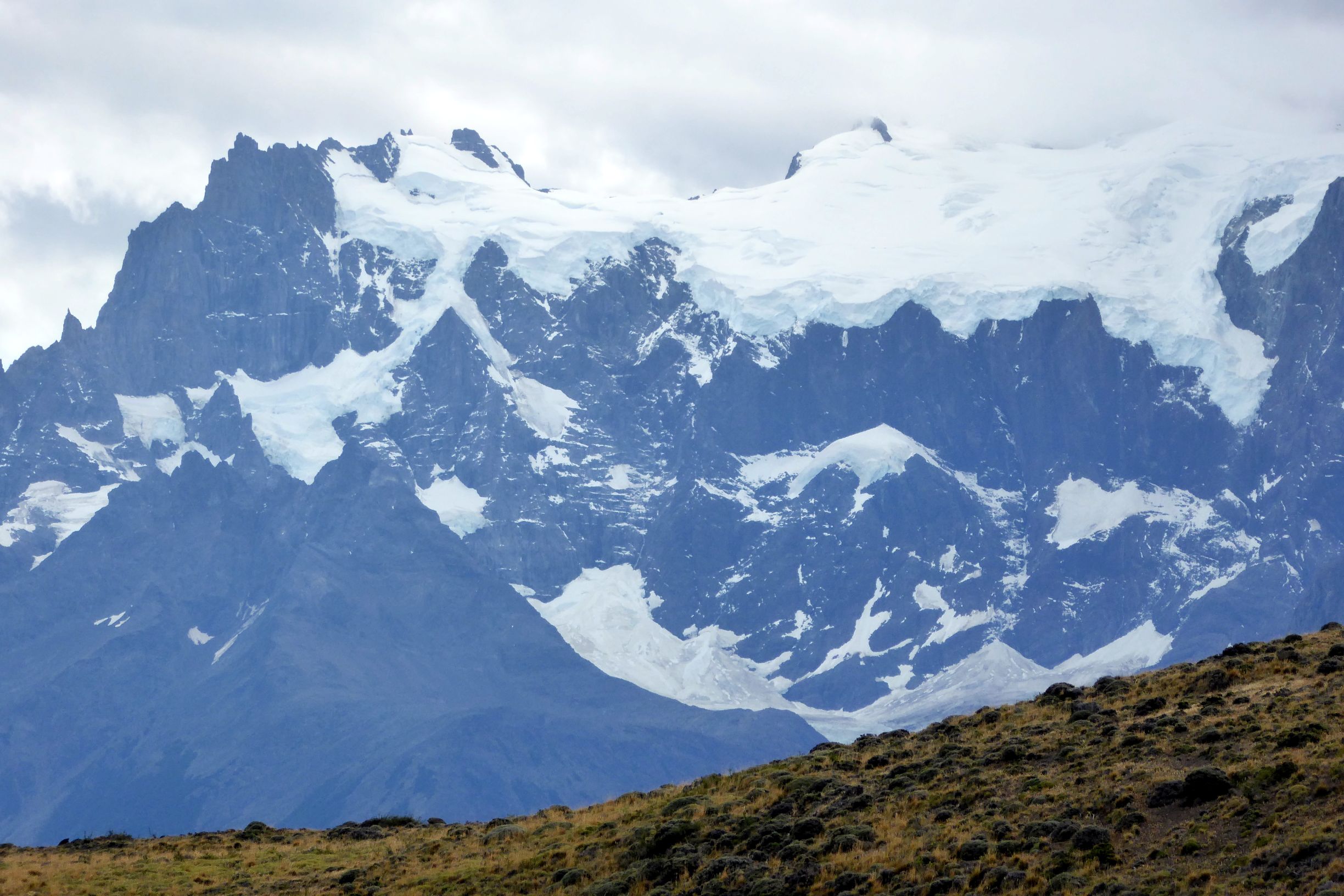
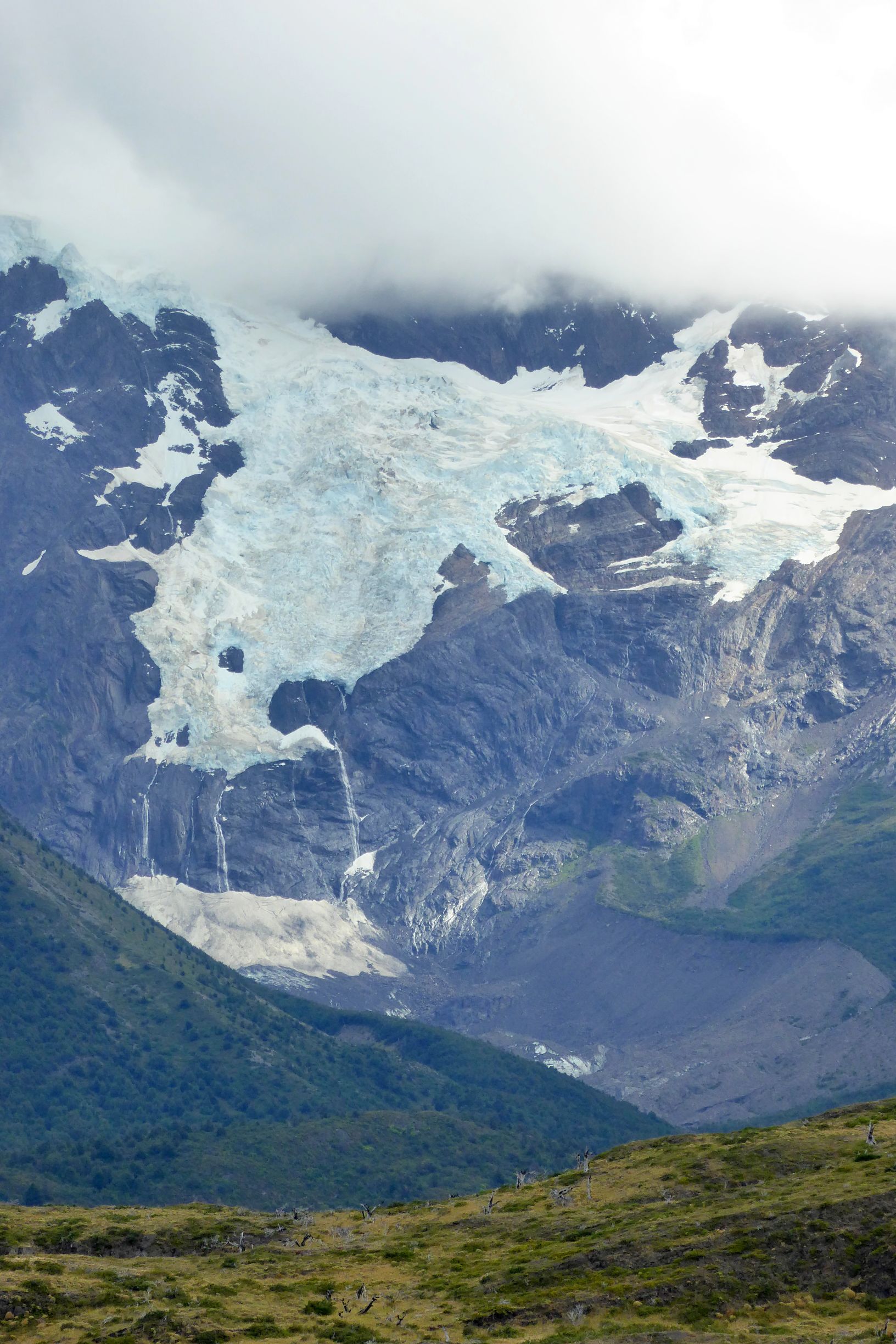
During our first hike, we saw breathtaking scenery, a hint of a rainbow, and heard an avalanche. After enjoying a delicious boxed lunch that included the most amazing fudgy brownie topped with a layer of ganache (WOW!), we did another hike and saw Grey Glacier off in the distance.

It was a long walk over a rocky beach to get to our second hiking trail, and it was going to be a steep climb up the trail. Bruce’s knee was bothering him, so he turned back while I continued on up the hill with some of the group. This is a telephoto shot of him down below on his solo walk back.
Iceberg from Grey Glacier
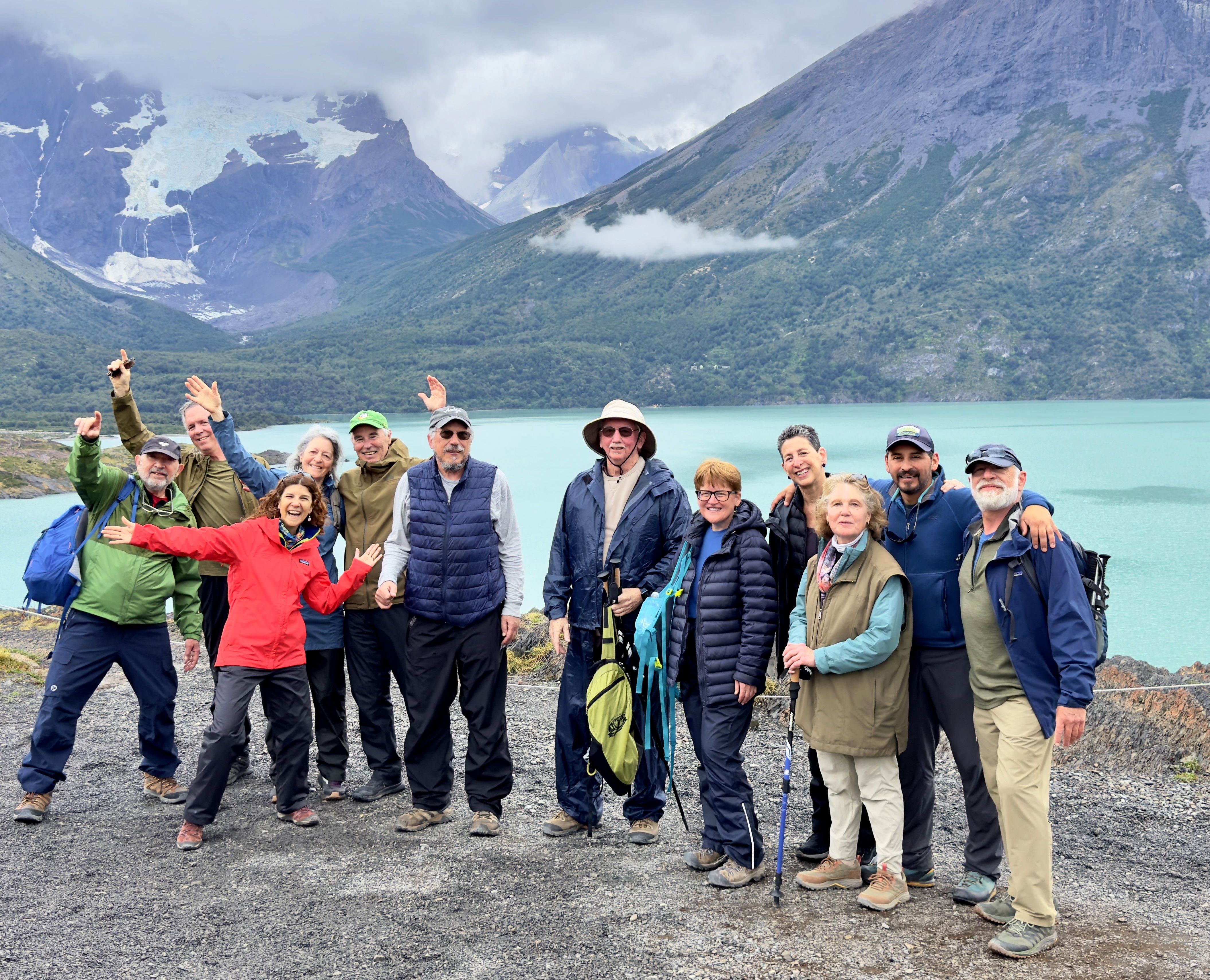
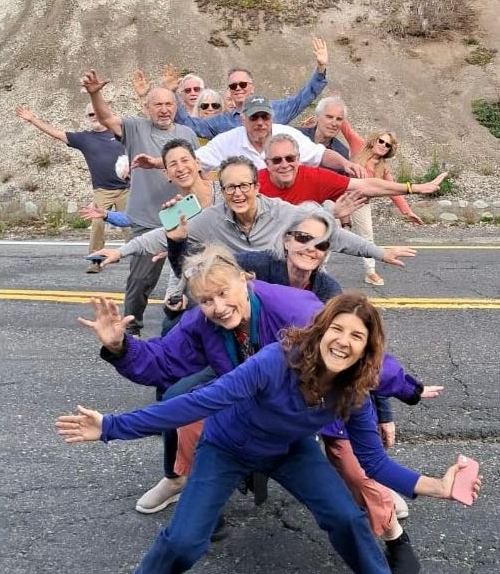
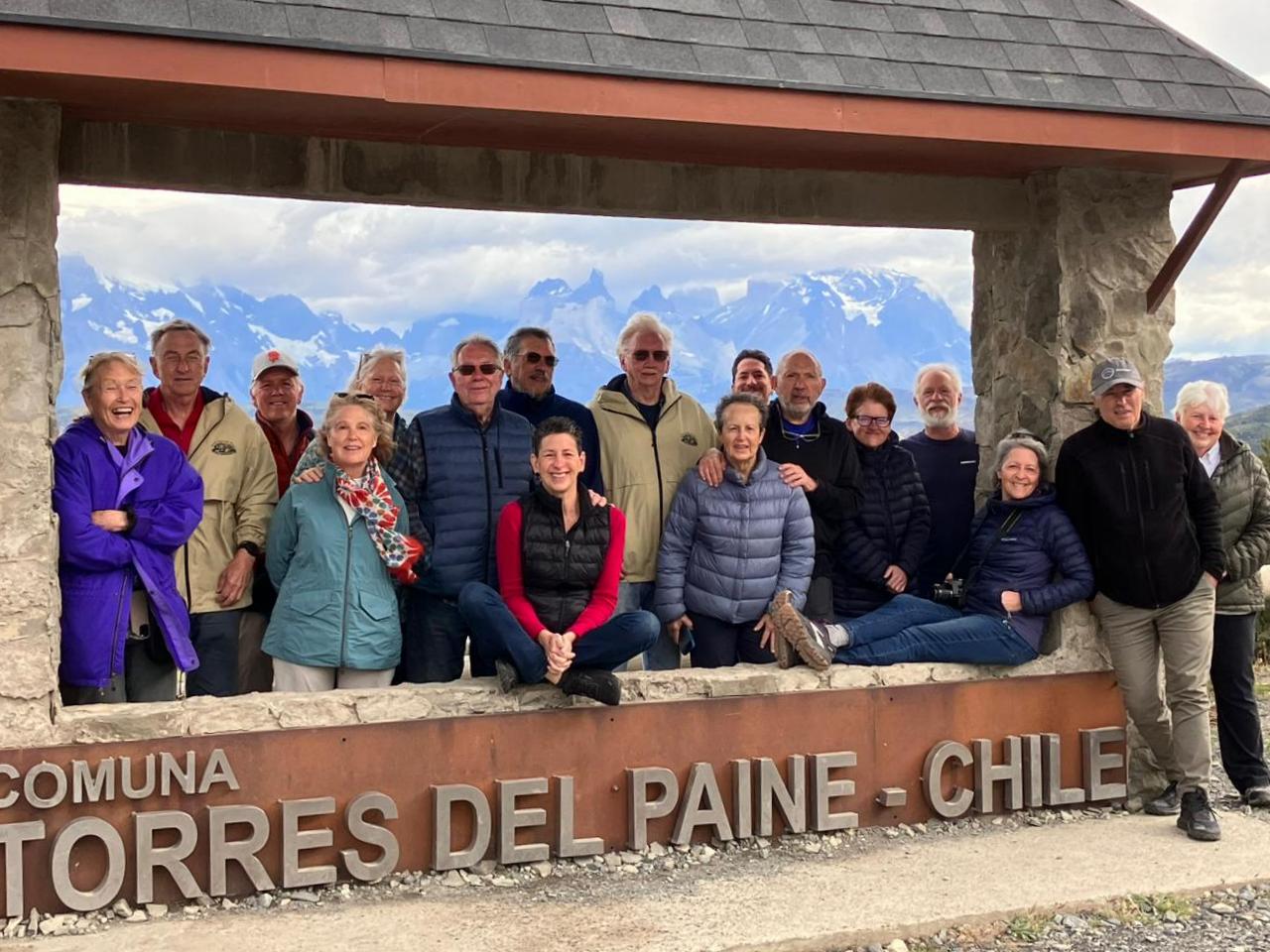
Our buena onda group with our tour leader, Andrea (in red), and our local guide, Sergio (second from right)
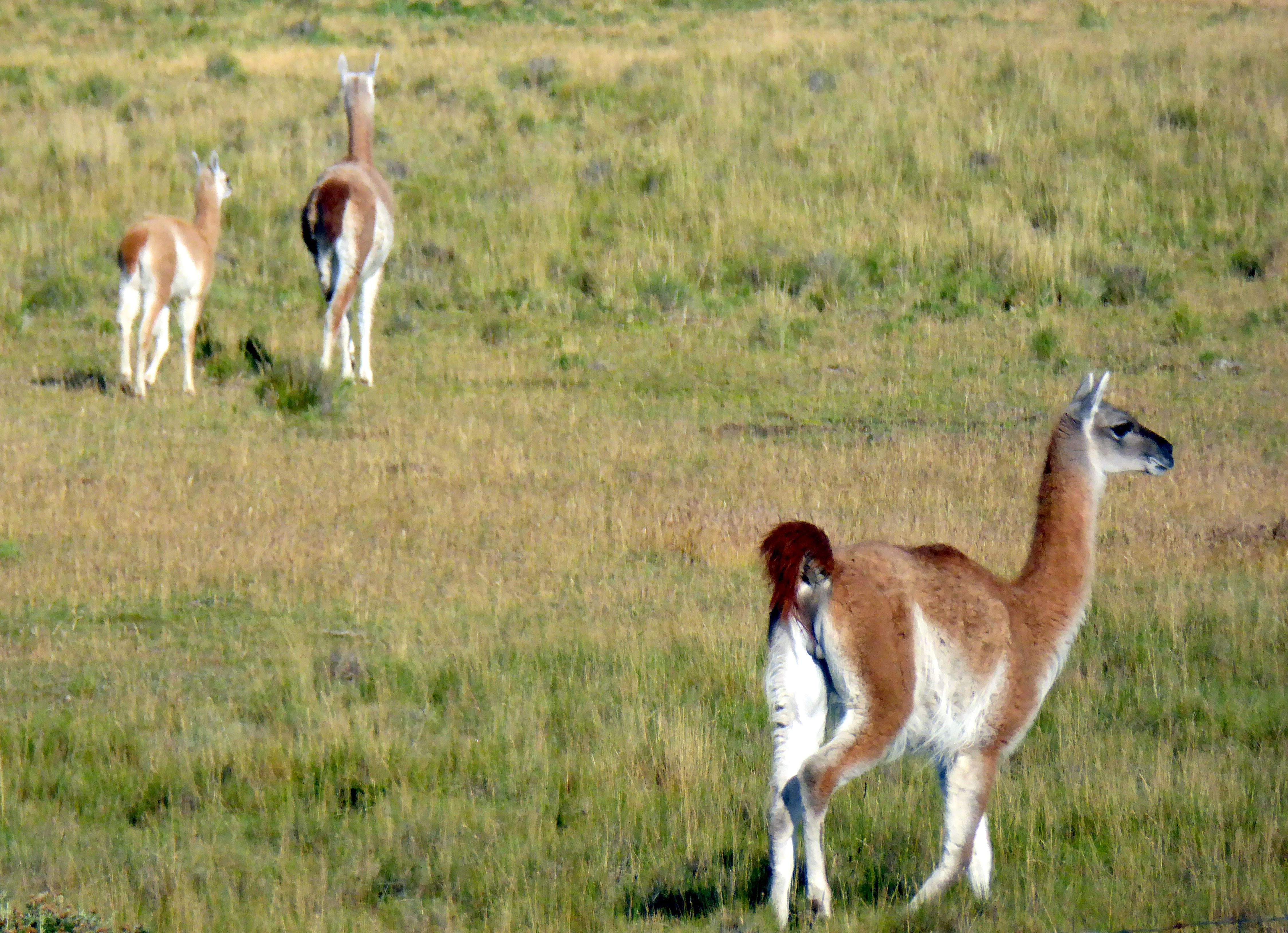
We saw more guanacos on the way back to the hotel.

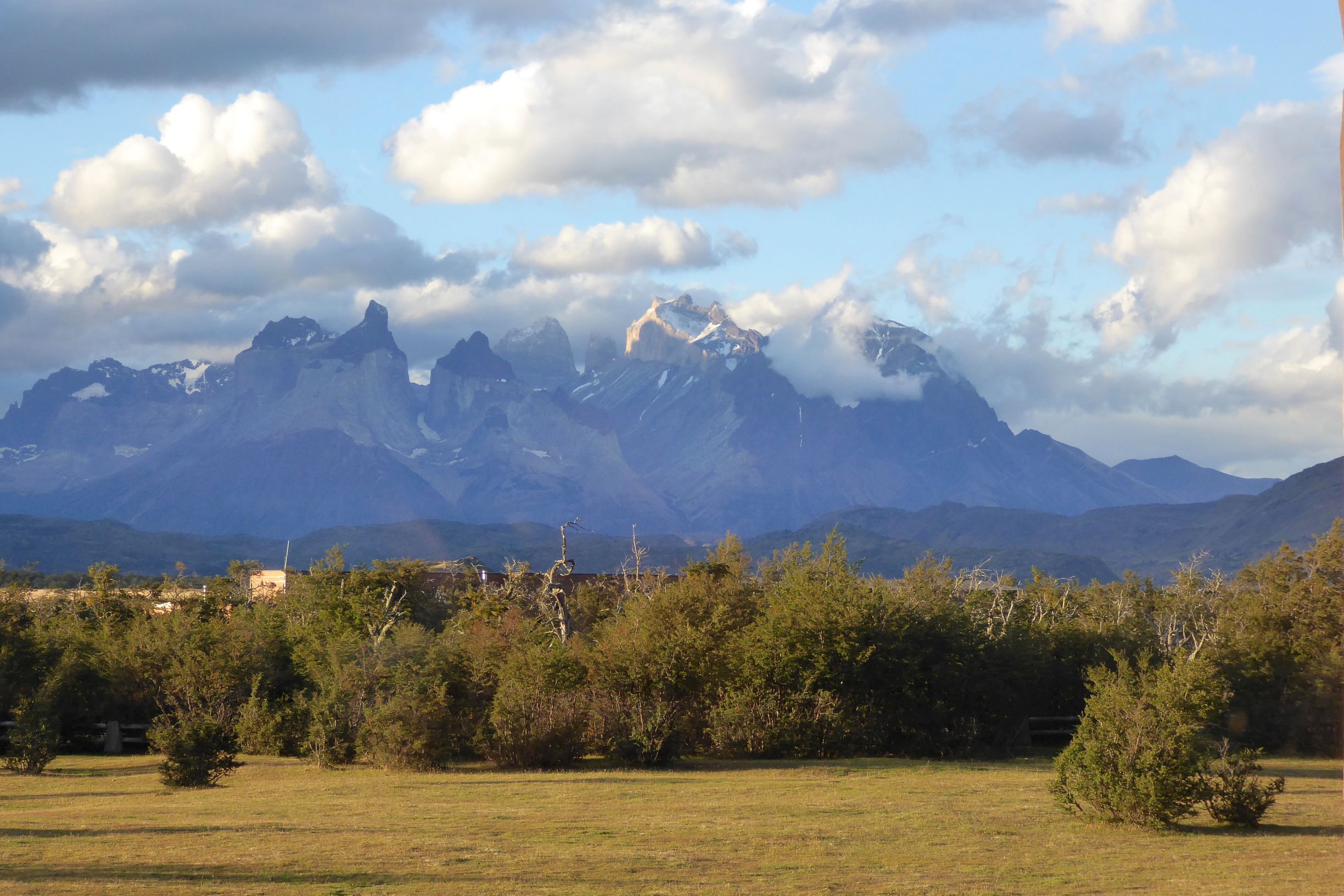
By the time we returned to Rio Serrano Hotel & Spa, the dark clouds had given way to a beautiful blue sky dotted with puffy white clouds. The scene looked like those landscape paintings you see displayed at a Sunday art show in the park. We couldn’t have had a more beautiful evening to enjoy during our dinner.

In my next post, we will be heading back into Argentina. Throughout our travels in Chile, Andrea and our local guides kept the bus rides interesting by informing us of recent history, current life challenges, and the culture of this beautiful country.  The following tidbits landed in my notebook:

During the period of 1973 – 1990, the country was under a dictatorship ruled by Augusto Pinochet.  He ruled with an iron fist and committed many civil rights crimes while he was in power.  Sound familiar?  What transpired in Chile was similar to Argentina.  (Officially) 3,000 people were taken and never found.  Meanwhile, the “Chicago Boys” returned to Chile after studying economics under Milton Freeman and worked their way into high-ranking government positions.  They established a free-market economy and constitution that remains today.  According to the transitional provisions of the 1980 constitution, a referendum was scheduled for 1988 to vote on a new eight-year presidential term for Pinochet.  Thankfully, he lost the vote, and the government has been a democracy since 1990.  Like many other countries, however, the country is extremely politically divided, as I described in a previous post.  Attempts were made by both the left and right to change the constitution, however, they failed each time to win enough votes.  About 65% of the 1980 constitution has been reformed, though.

Here on some brief facts on some hot button issues in Chile:

  • Public healthcare is good quality; however, it takes a long time to get treatment, and some people have died waiting.  Private healthcare is very expensive.
  • 10% of personal income is taken for retirement.
  • Gay marriage was allowed one year ago.
  • Abortion is allowed in cases where the health of the mother or unborn is at risk and rape.
  • Gun ownership is not common due to the paperwork required to prove mental fitness.
  • Central Chile is very progressive and not religious, whereas in southern Chile, the church is very influential.

Overall, Chile is very stable politically and economically compared to other South American countries.

I always find it interesting to compare the country I am visiting to what we are experiencing in the United States and reflect on how Americans respond to what we feel are “crises.”  Traveling, in my opinion, is an excellent way to gain perspective.  211% annual inflation in Argentina and 3% in the United States… Americans should be thankful; it could always be worse.

Next up: ARGENTINA & CHILE #15: ENJOYING EL CALAFATE

ARGENTINA & CHILE #13: TREKKING TORRES DEL PAINE NATIONAL PARK

Here’s a fun fact: The Magallanes region of Chile is so far south and so remote that no sales tax is levied on products to give the residents a break.  All products are transported from Santiago, so they are expensive enough as it is.  There’s a catch, though.  Don’t think you can buy a car tax-free, and then get away with taking it back up north.  Any cars purchased in the region must stay in the region.  If you want to drive north, you need a permit that lasts 90 days maximum, and then you had better turn that car around and head back south.

Your drive north is going to be a long one, too, because there is no road that goes continuously through the 2,600-mile-long country from south to north.  You must cross east into Argentina, and then head north, and finally back west into Chile. 

Many residents of this region will drive 500 kilometers (310 miles) each way, once per month, to shop at a large supermarket or Walmart to stock up on food and goods that are not available at their neighborhood stores (or they are way too expensive).

As a (mostly) pescetarian, I wouldn’t do so well as a Magallanes region resident.  They eat beef or lamb at all meals and have the highest rate of diabetes in Chile.

It’s a tough life in the frigid, windy climate, especially for the gauchos (cowboys), and especially in winter.  Each gaucho typically works 20,000 acres and manages 10,000 lambs. 

The cost of living is also very expensive in the region.  The minimum salary is $500 per month; however, rent averages $500 per month.  You think it’s tough here…

(For all photos, especially panoramas, click on the image for a full screen view.)

As we made our way to Torres del Paine National Park, we were fortunate to see a lot of wildlife.  Our bus driver was awesome!  Whenever he spotted wildlife, he would pull over and drive slowly or stop the bus, so we could observe and take photos out the window.
My favorites were the guanacos, which are similar to lamas, but native to South America.  When the Europeans first arrived in South America, there were an estimated half billion guanacos, but there are now approximately 500,000.

These cuties are fast!  We saw one jump over a fence and run off at probably a fraction of the 35 miles per hour they are capable of running.  Their only enemy is the puma, so they need to be able to outrun them, since there is no place to hide in the open land.

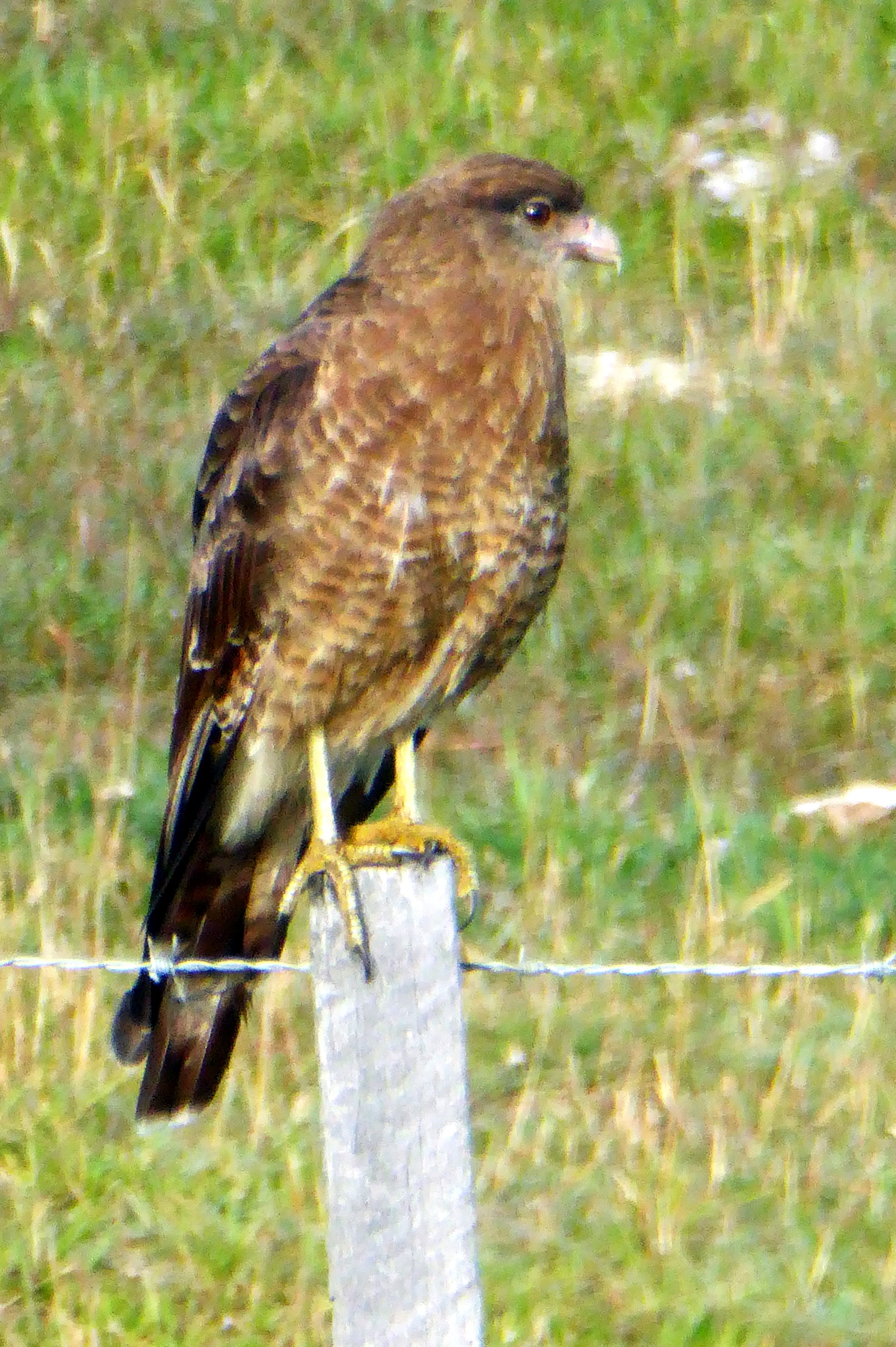
We also saw some beautiful, large birds:

Southern Crested-Caracara
Buzzard-Eagle
Black-chested Buzzard-Eagle

Surprisingly, while on our hike, we saw flamingoes, too!  They were too far away to get a clear shot, but I did get this (somewhat blurry) photo out the bus window of some flamingoes we saw while driving to the park:

Once again, we (somehow!) ended up with another day of good weather for our first hike.  More hikes would follow the next day, so our fingers were crossed!)

We made a pit stop here for refreshments. The sign reads, “Here we open when we arrive and close when we leave. If you come and we aren’t here, it is because we cannot meet.”

What a gorgeous park!  Torres del Paine National Park is widely considered to be South America’s finest and most beautiful national park—and one of the most remote places in the world.  Bruce and I felt so fortunate to have the opportunity to surround ourselves with such beauty.

We have Douglas Tompkins, founder of The North Face and co-founder of Espirit,  to thank for this protected land.  After selling his stake in Espirit, he spent a lot of time in Patagonia enjoying climbing, kayaking, and skiing.  This led him to develop an interest in land conservation and become an environmental activist.  Tompkins established the Foundation for Deep Ecology, which supports environmental activism and The Conservation Land Trust which works to protect wildlands.  Along with his wife, Kristine McDivitt, a former chief executive of Patagonia, they bought up a massive amount of land in Patagonia and donated it to the government of Chile to establish Torres del Paine National Park.  Sadly, Tompkins died in 2015 while kayaking with a group in Patagonia.  Large waves caused their kayaks to capsize in the 40-degree water, and Tompkins died at the age of 72 of hypothermia.

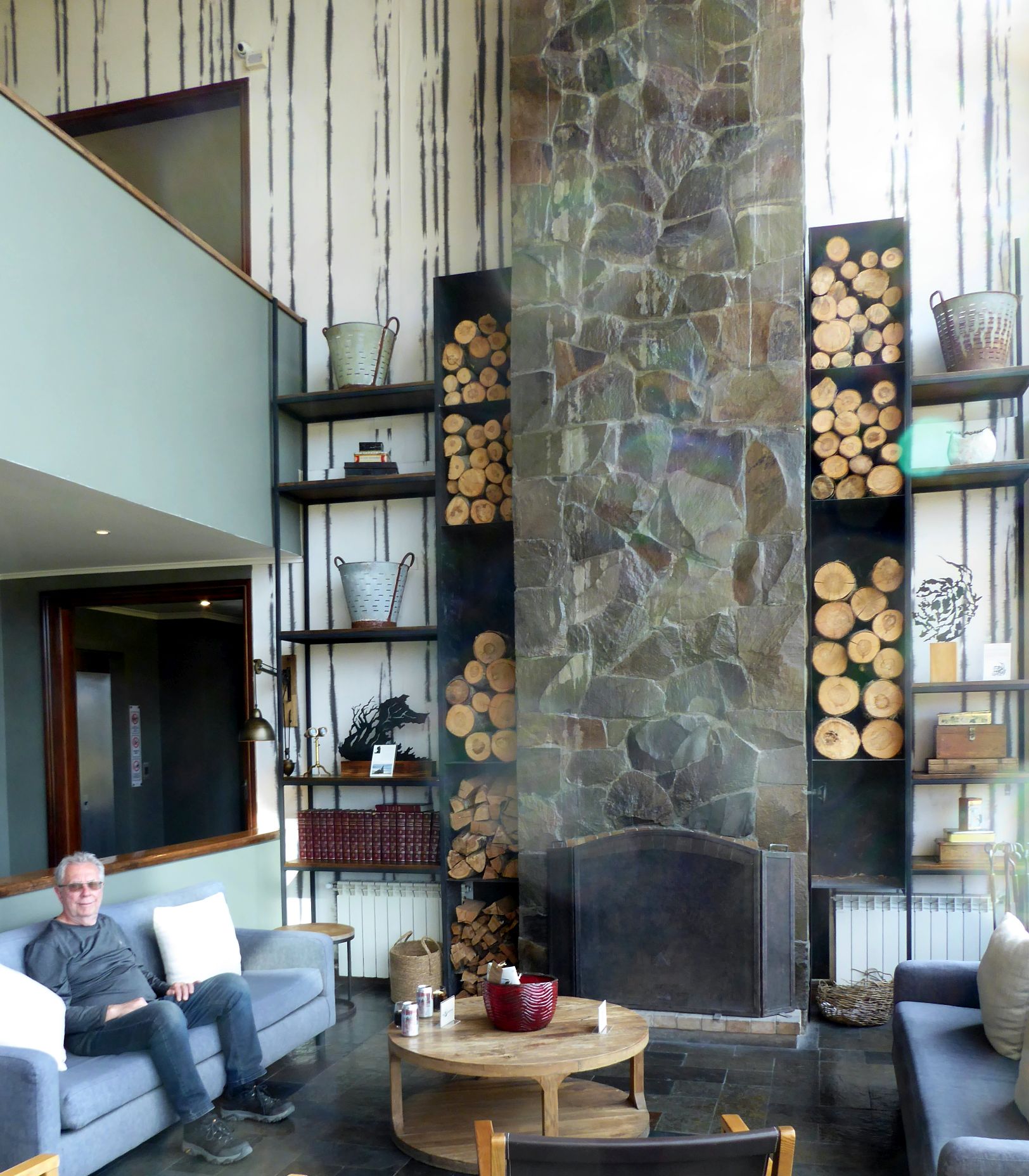
Following our hike, we continued on to the Rio Serrano Hotel, a wonderful all-inclusive hotel located in the national park.  I loved the vibe and atmosphere with all the wood and stone, and the views were gorgeous!  It was also a beautiful place to walk in the grounds surrounding the hotel. 

This was located just across the field from the hotel.

A nice touch in the room was a fully stocked mini refrigerator with a variety of non-alcoholic beverages and Chilean beer as well as healthy snacks.  Although we aren’t drinkers (at least when we don’t travel), we also enjoyed Pisco cocktails with the group.  Dinner was served upstairs in their dining room overlooking this view; a highlight of the trip:

P.S.  Don’t believe the title of this post; “trekking” just sounded good with “Torres”!

Next up:  ARGENTINA & CHILE #14: MORE TREKKING IN TORRES DEL PAINE NATIONAL PARK

ARGENTINA & CHILE #12: PLEASANT PUNTA ARENAS

Punta Arenas was quite a distance south from Puerto Varas—so far that the flight was over 2 hours long.  We were in the back of the plane with some empty seats, so the guy in the window seat in my row insisted I move over from the aisle, so I could see the beautiful views of the snow-capped Andes.  Meanwhile, he opted for the row behind us, which was really nice!  The window was quite scratched and cloudy, but I managed to get this shot out the window:

(For all photos, especially panoramas, click on the image for a full screen view.)

We were so fortunate to have relaxing and uneventful flights on this tour, and this one was no different.  It was smooth sailing through Puerto Montt airport before departure and an easy arrival at Punta Arenas.

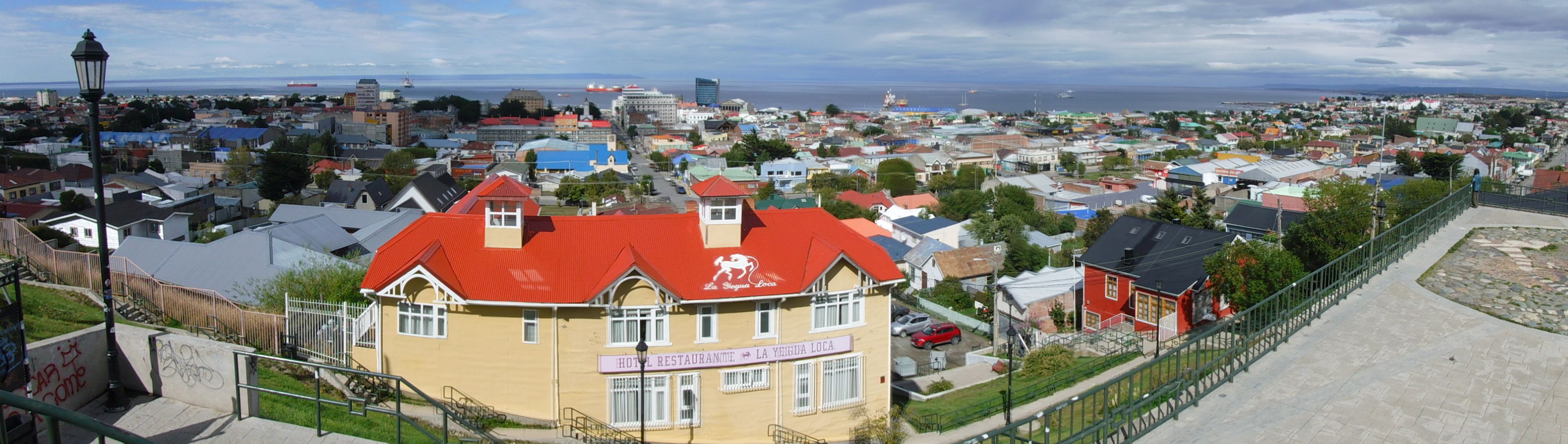
Located in Chile’s southernmost Magallanes region, Punta Arenas, one of the world’s most southerly ports, is the capital city with a population of 143,000.  There are only 184,000 people living in the entire region, because it is very remote, windy, and cold most of the time— except this day, when Bruce and I got quite warm walking around in the late afternoon sunshine!

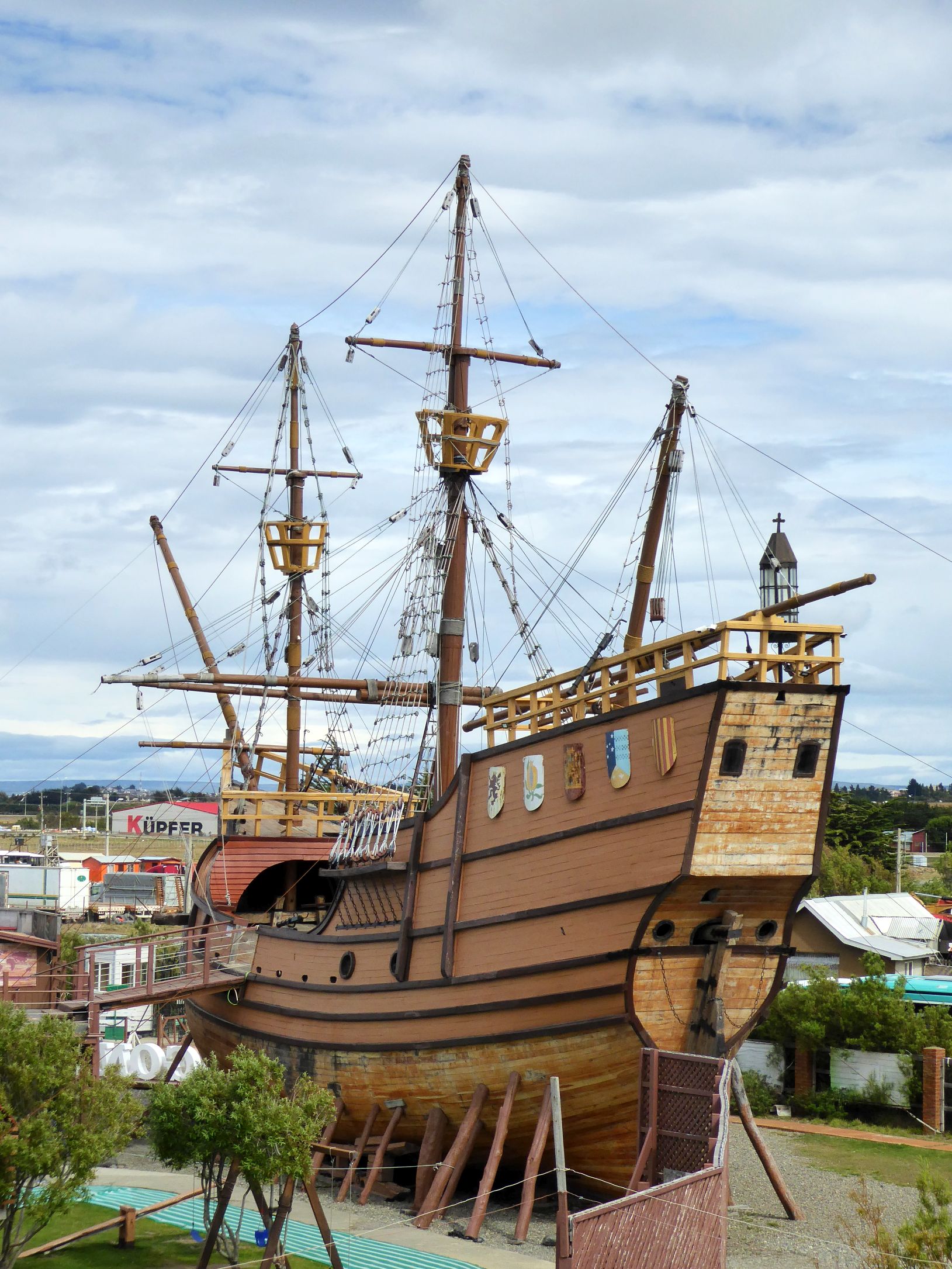
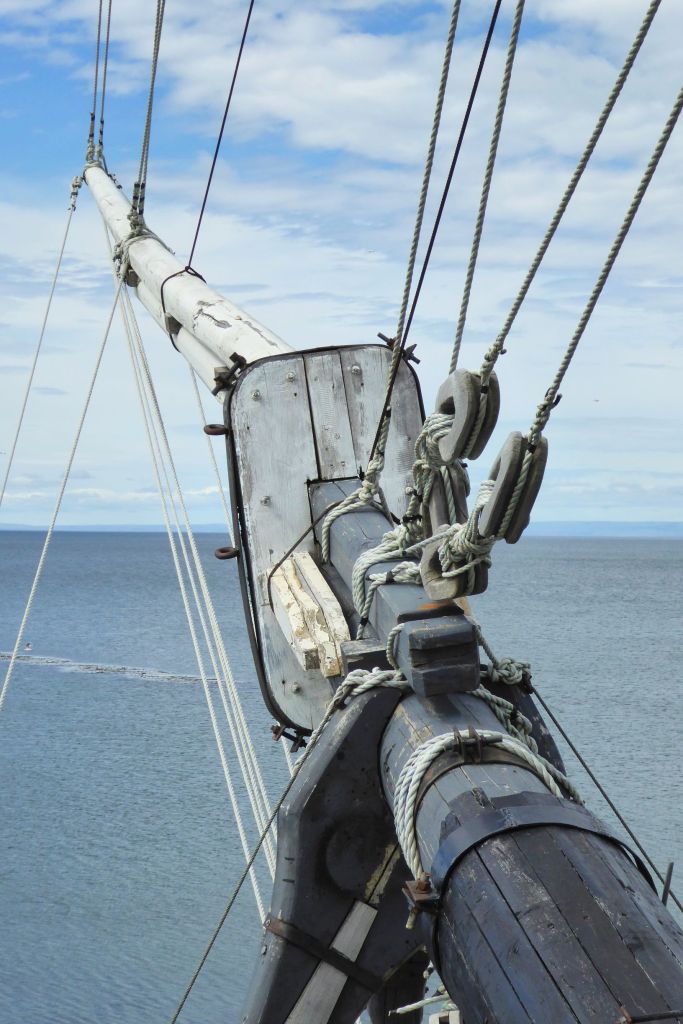
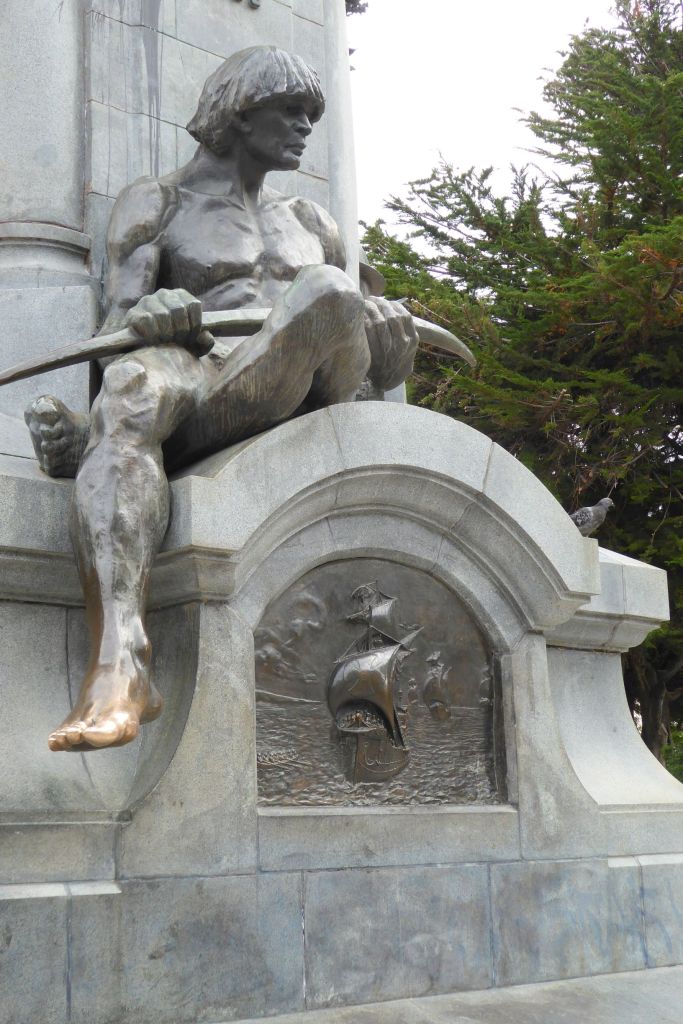
Following our arrival, we stopped at the Museo Nao Victoria to see replicas of the fleet of ships commanded by Ferdinand Magellan that contributed to the “discovery” of the area.  (I put “discovery” in quotes, because all of these “discoverers,” including Christopher Columbus, landed in places that were long inhabited by natives.)

It was fun to explore these replicas to see how they were built and to get birds-eye views of the Straight of Magellan.  I had never been that far south, so I wanted to dip my hand into what proved to be VERY cold water!  Our group did, too:

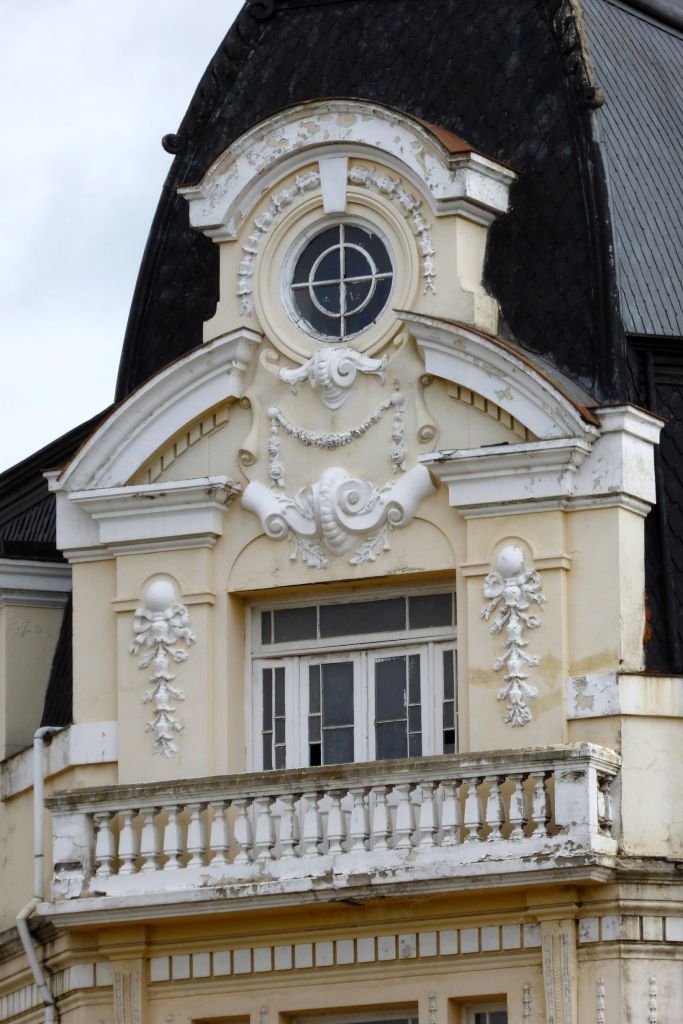
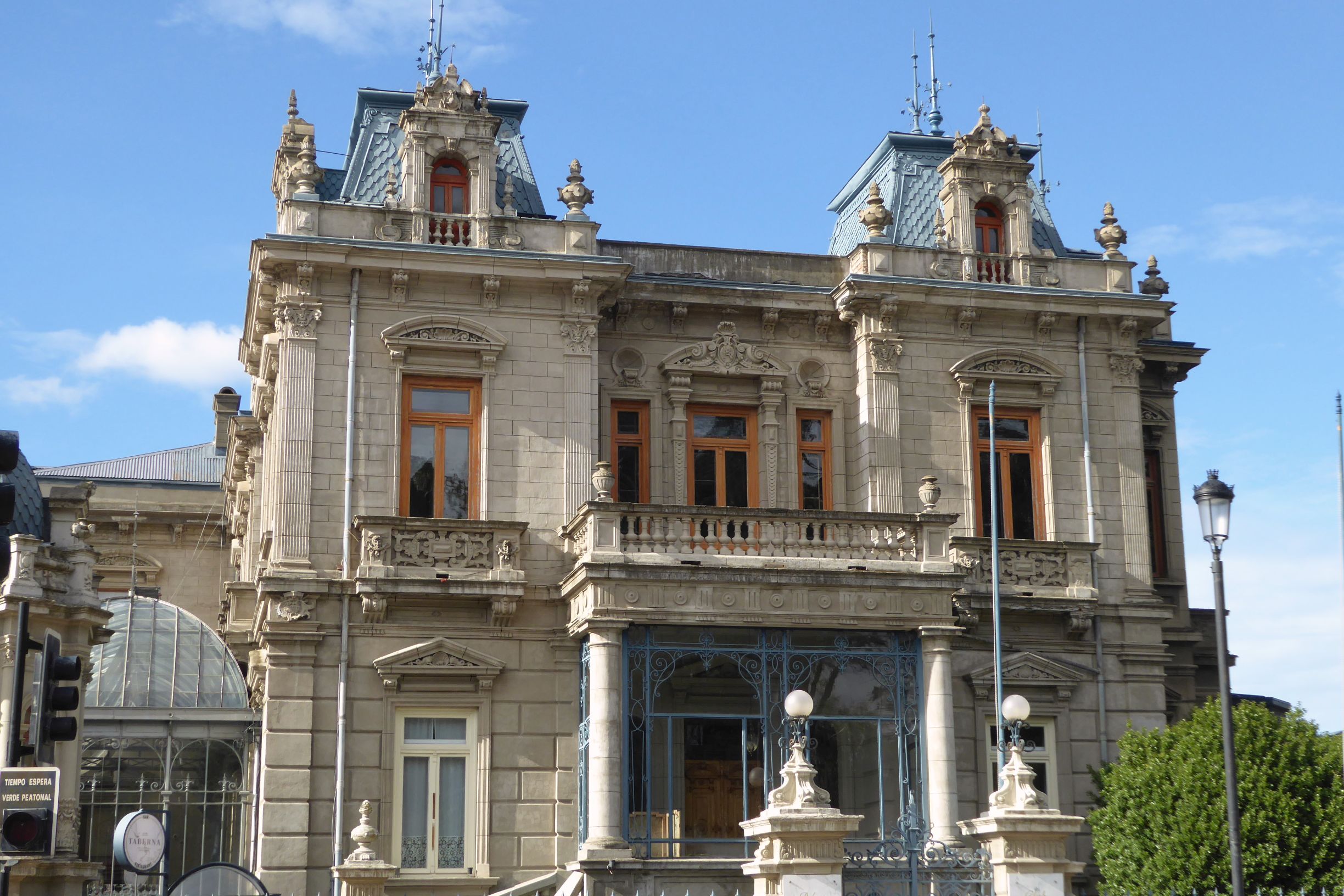
Upon our arrival in town, we took a bus and walking tour before arriving at our beautiful hotel located on the main square.  The Hotel Jose Nogueira, declared a National Monument, was the most beautiful building in this European-inspired city.  The rooms were quite unique, too.  I had never seen an octagon-shaped shower before (with two shower heads and a rain shower head above)!  It was so large, much of our group could have fit in!

Views from our city tour
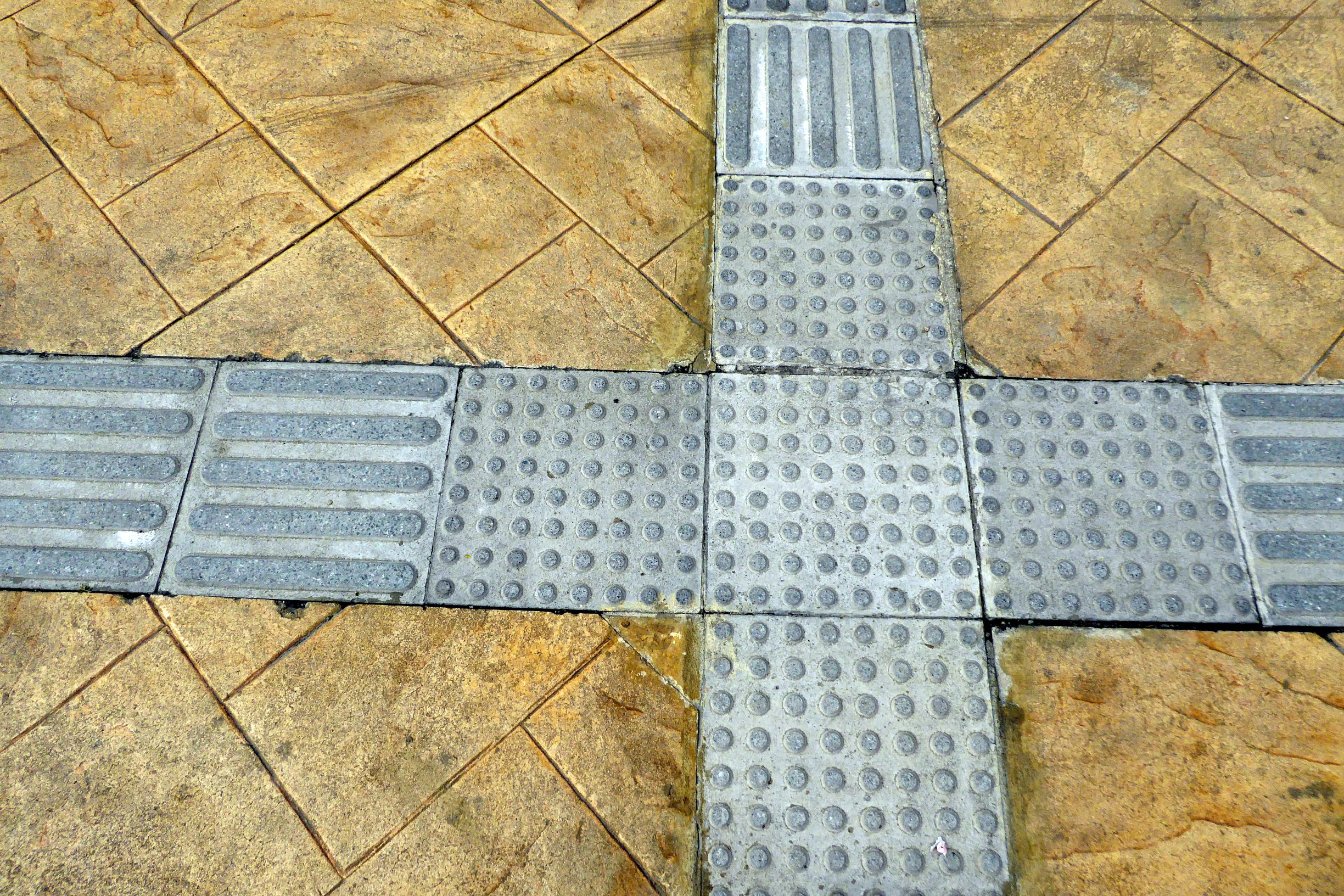
We noticed this on the streets in several cities. It is meant for the blind, so they know by the change in the raised pattern that they are at a corner or where two paths meet.

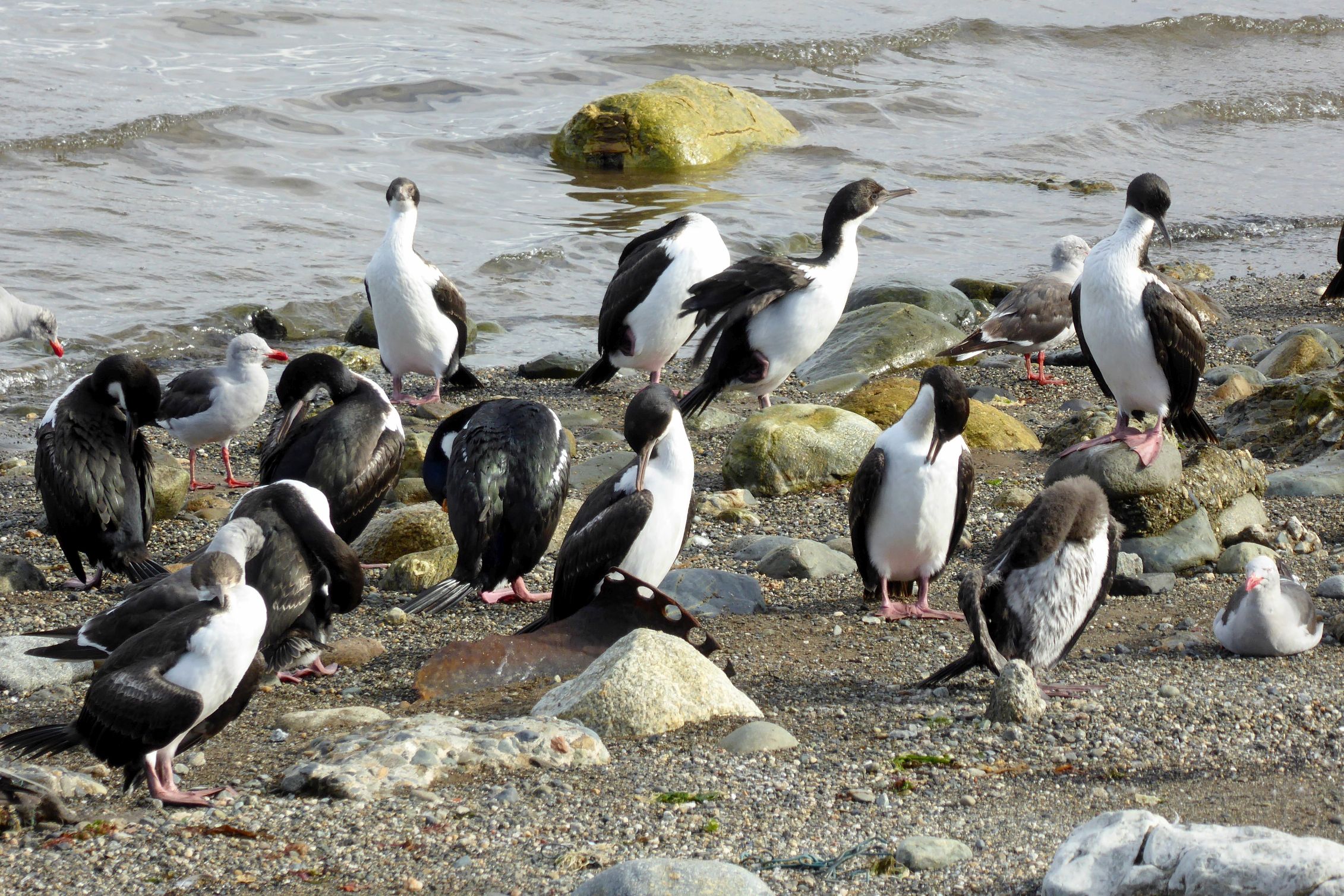
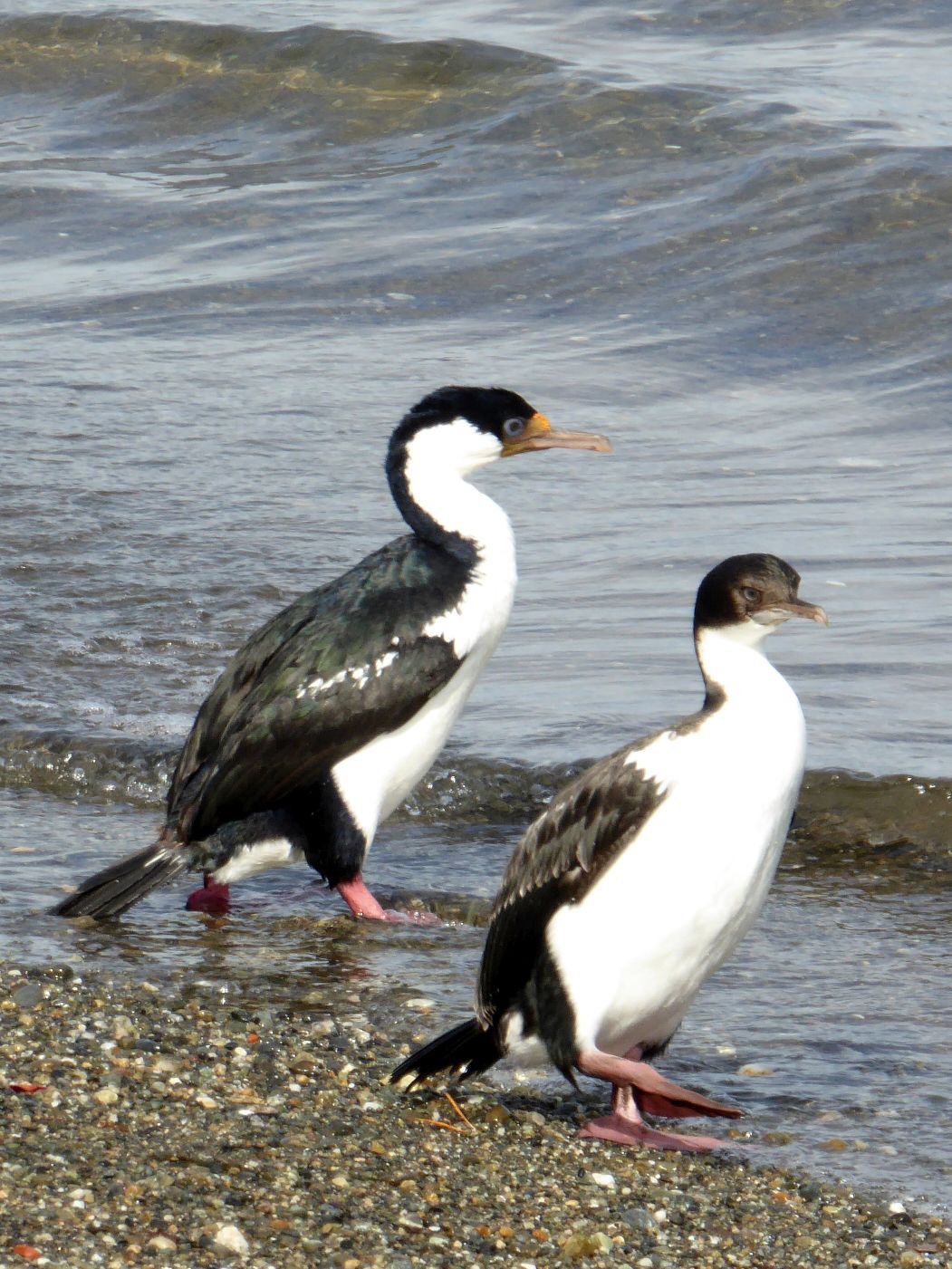
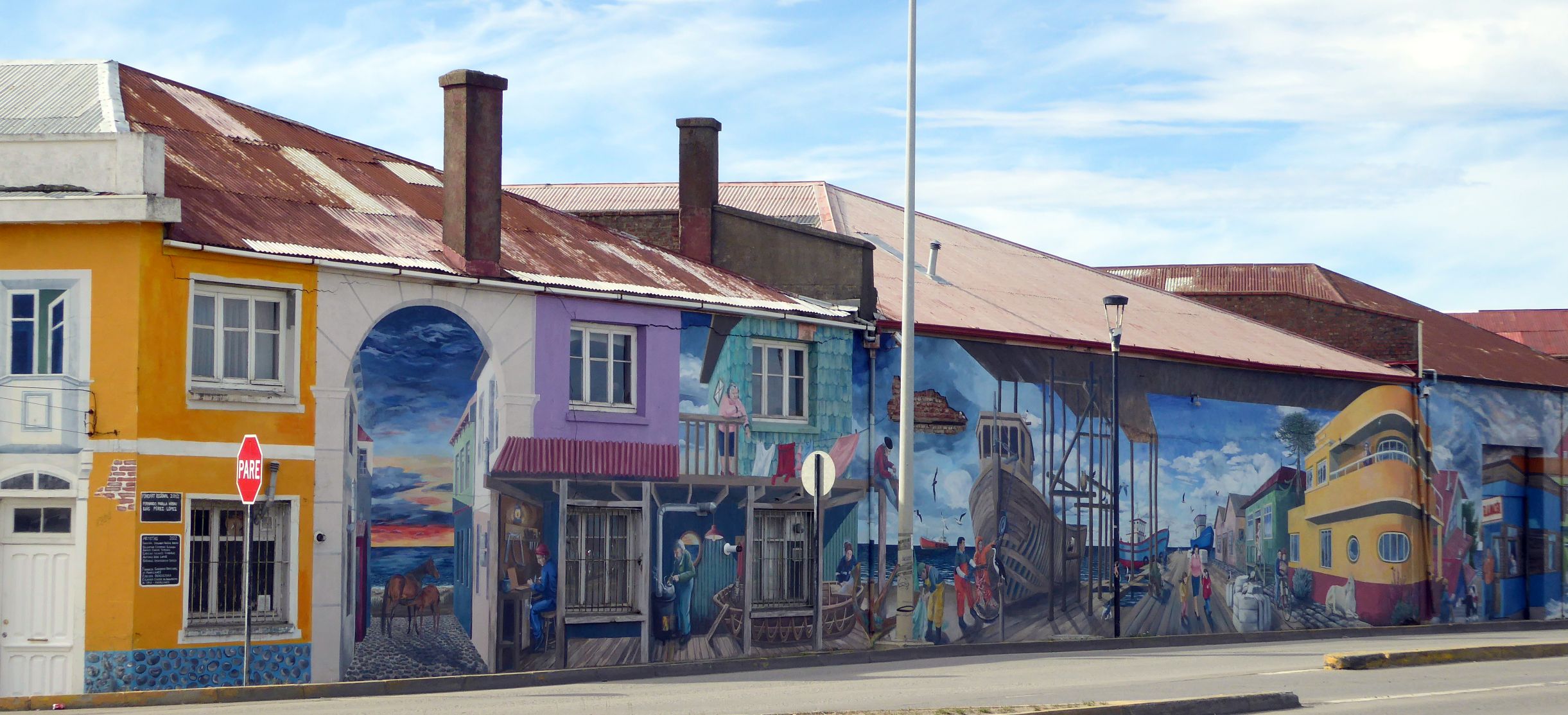
The remainder of the afternoon was free, and it was gorgeous outside, so Bruce and I headed to the waterfront to see painted murals that Andrea had told us about.  What we didn’t know we would also be seeing was this massive quantity of cormorants hanging out on the pier and beach!  I’m always excited just to see one of these beautiful birds but look at this!  They seemed to be enjoying the sun as much as we were on this uncharacteristically warm and calm day.

A larger-than-life-sized wood carving in front of a souvenir shop in town.
A surprise performance by a band and choir on the street near our hotel.
Flag of the Magallanes region: Blue represents the night sky with the Southern Cross, the gold represents the steppe region, and the white is snow.

Our group reconvened in the evening for a customary Pisco Sour, which I previously failed to explain other than it is the favorite cocktail of South America.  Pisco is a wine distilled into a high-proof spirit.  It is then mixed with a sour mix and tastes quite good!

A delicious salmon dinner in the hotel’s beautiful restaurant followed—a perfect ending to a wonderful day!

Coming up next: ARGENTINA & CHILE #13: TREKKING IN TORRES DEL PAINE NATIONAL PARK

ARGENTINA & CHILE #11: PHOTOGENIC PENGUINS AT PUNIHUIL

While visiting Chiloe Island, we had seen a few of the 16 wooden churches designated by UNESCO as World Heritage Sites.  On the way to Punihuil Wildlife Preserve, we stopped by the Museum of the Churches of Chiloe to learn about how these churches had been restored.

(For all photos, especially panoramas, click on the image for a full screen view.)

Next, we were off to see the penguins!  And, yes, it was another gorgeous, sunny, calm day—perfect weather for a boat ride!  Mother Nature sure was kind to us throughout our travels!

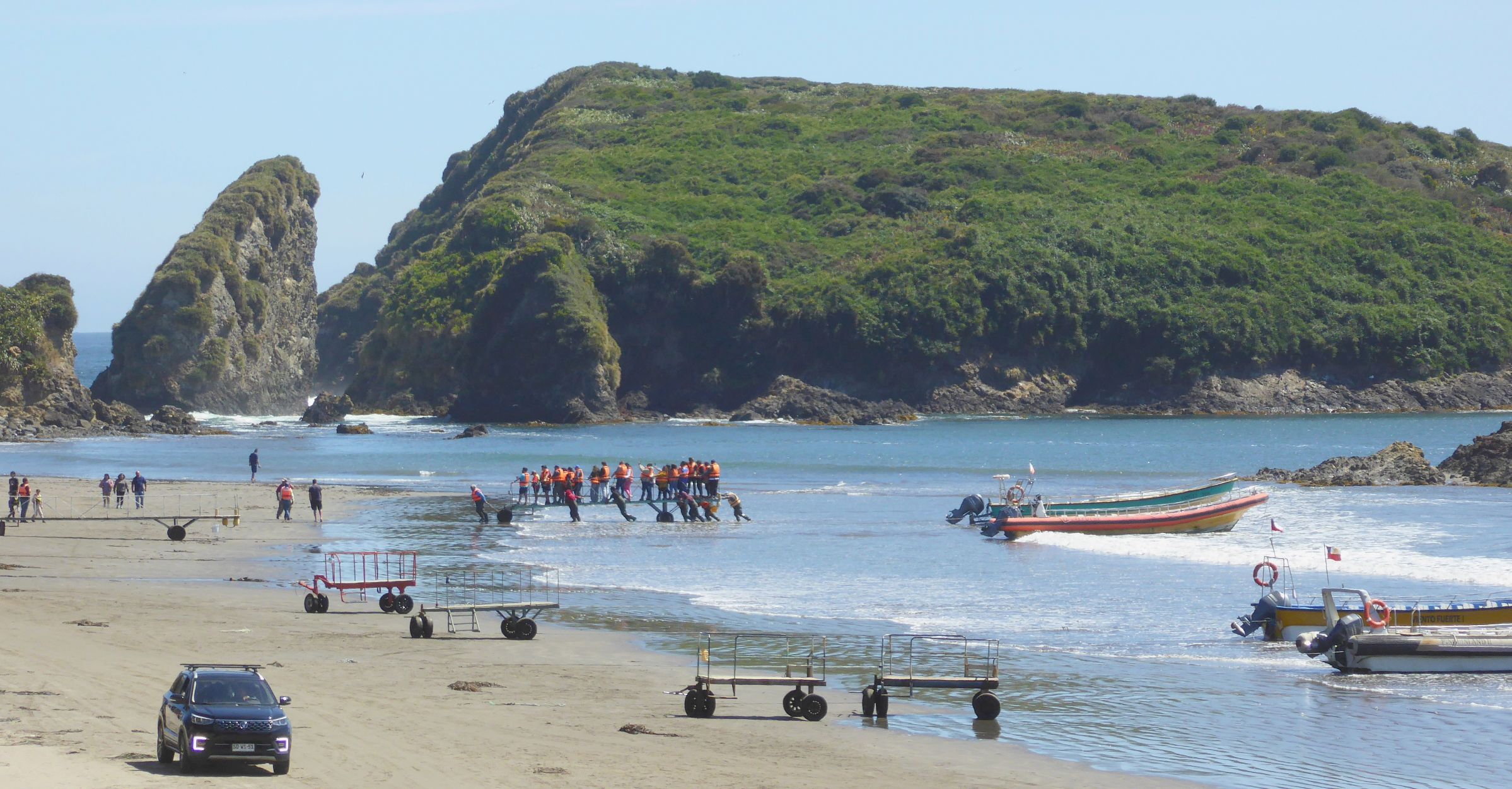
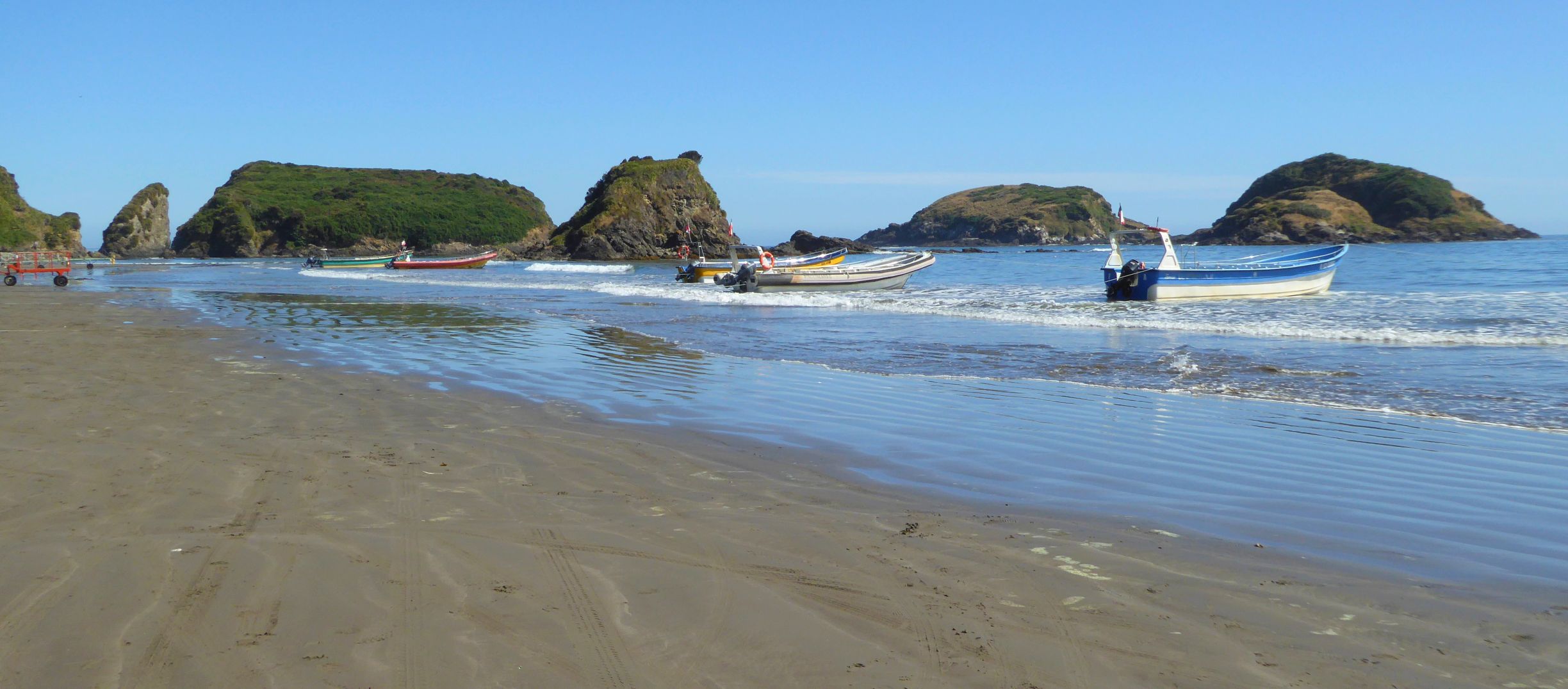
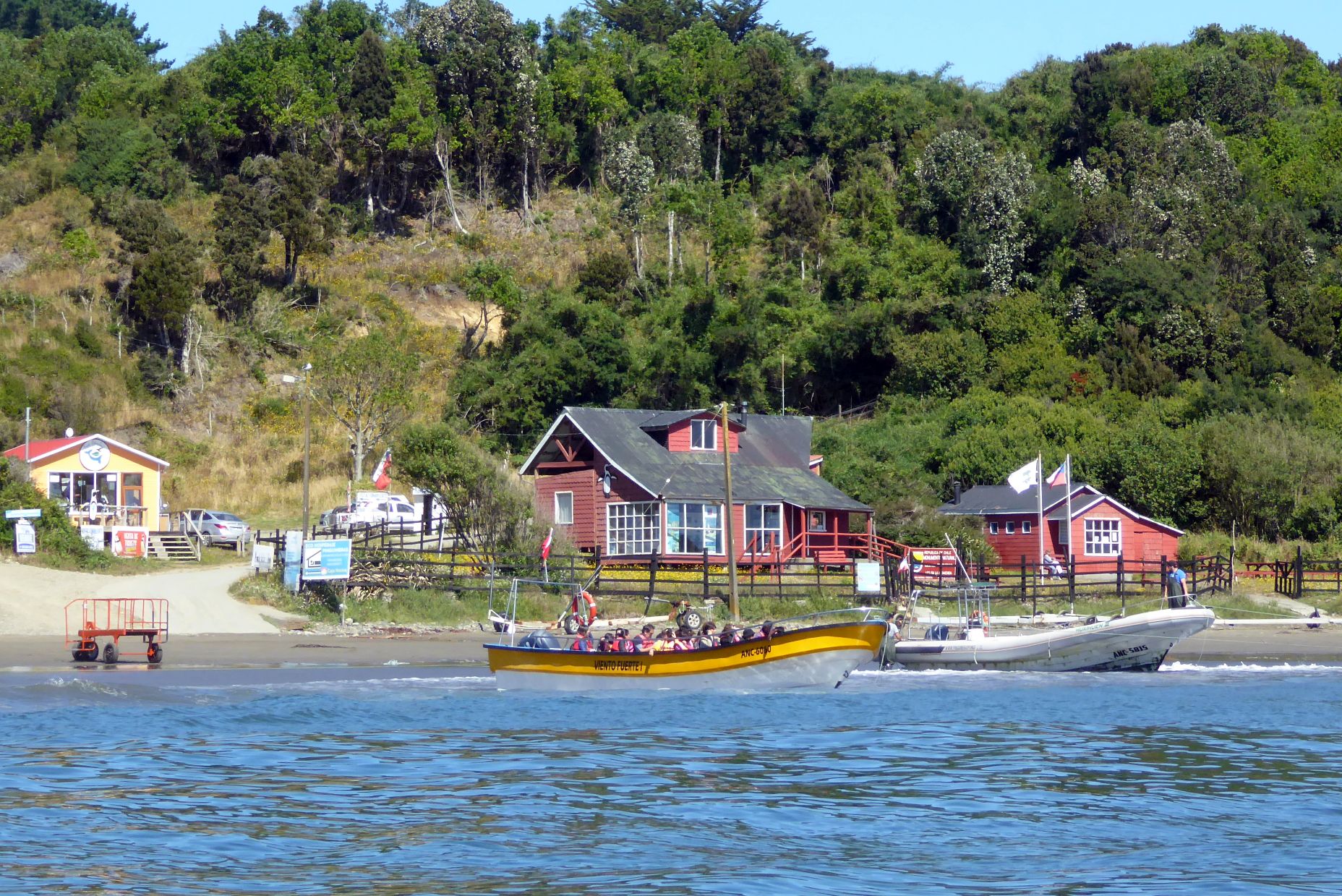
When we arrived at the boat launch, I was surprised to see that vehicles were permitted on the beach.  We drove right up to the site, collected our life jackets, and boarded a cart that was pushed down the shoreline directly to the boat.  No wet shoes on this boat trip!  I had never seen anything like it.

Punihuil Wildlife Preserve is comprised of three rocky islets off the coast declared a National Monument to protect the breeding colony of Humboldt and Magellanic penguins.  The best time to visit is October thru mid-March, so we were fortunate to see the penguins before they ventured back out to sea. 

On our way out to the preserve.

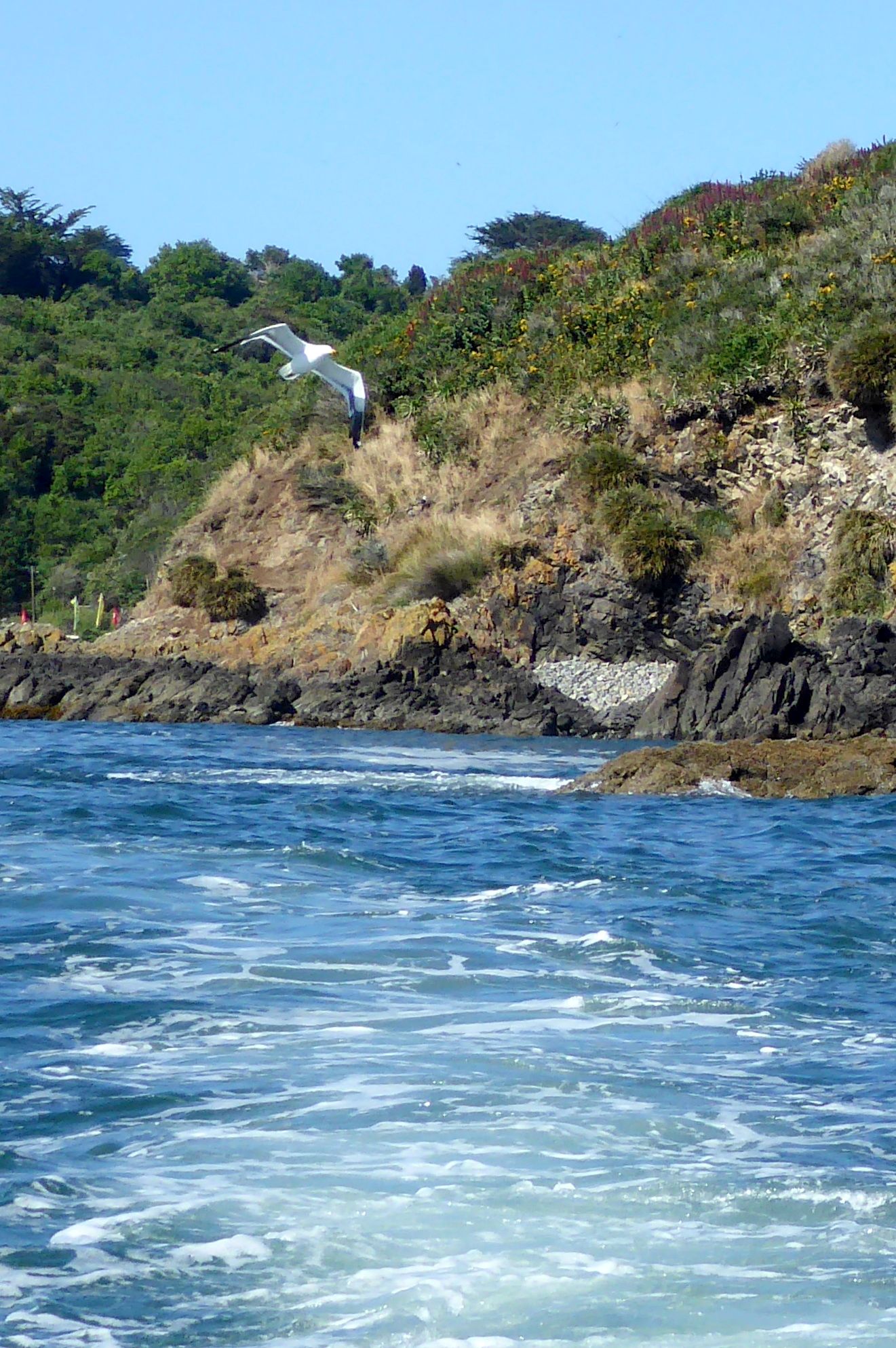
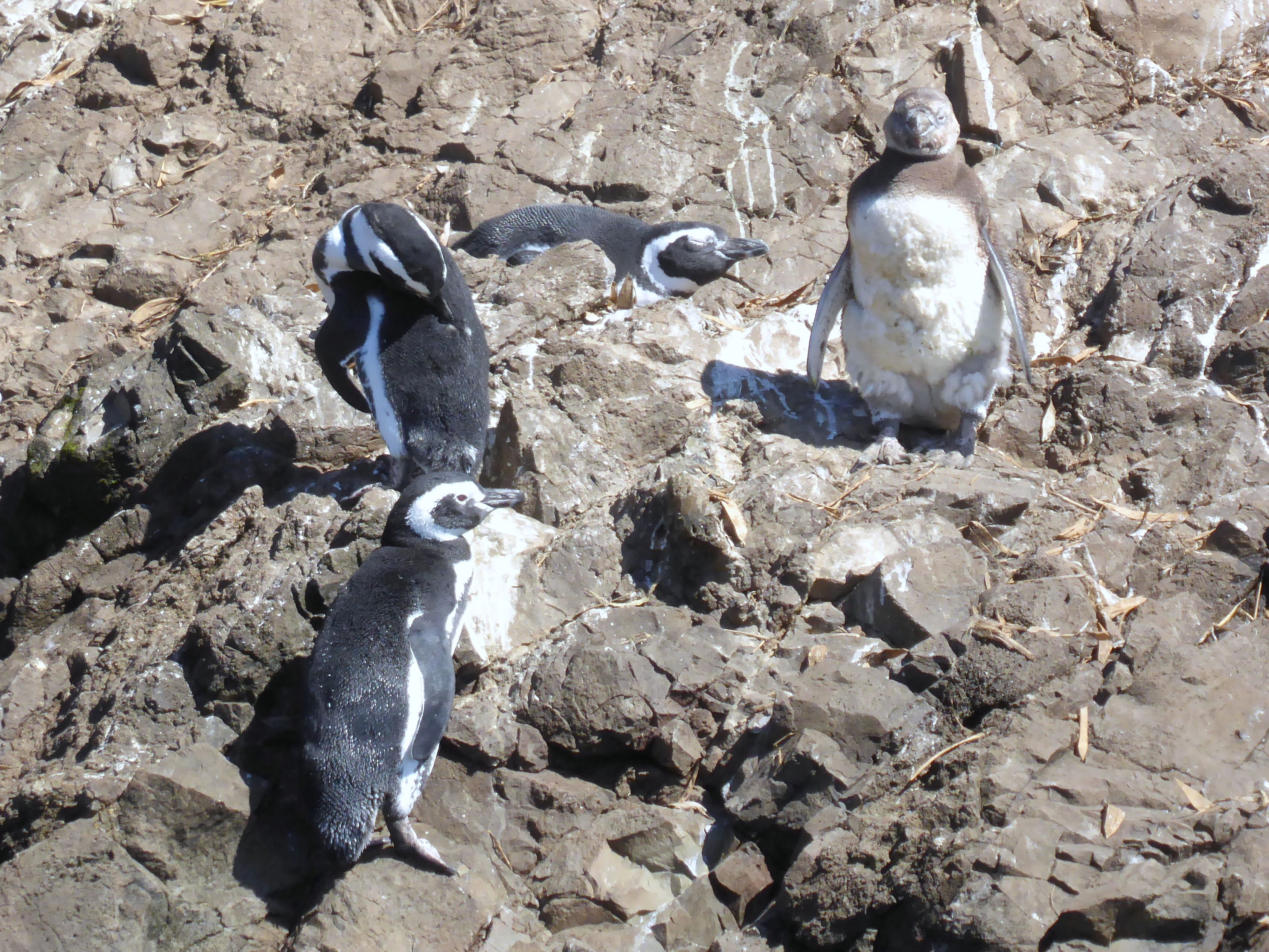
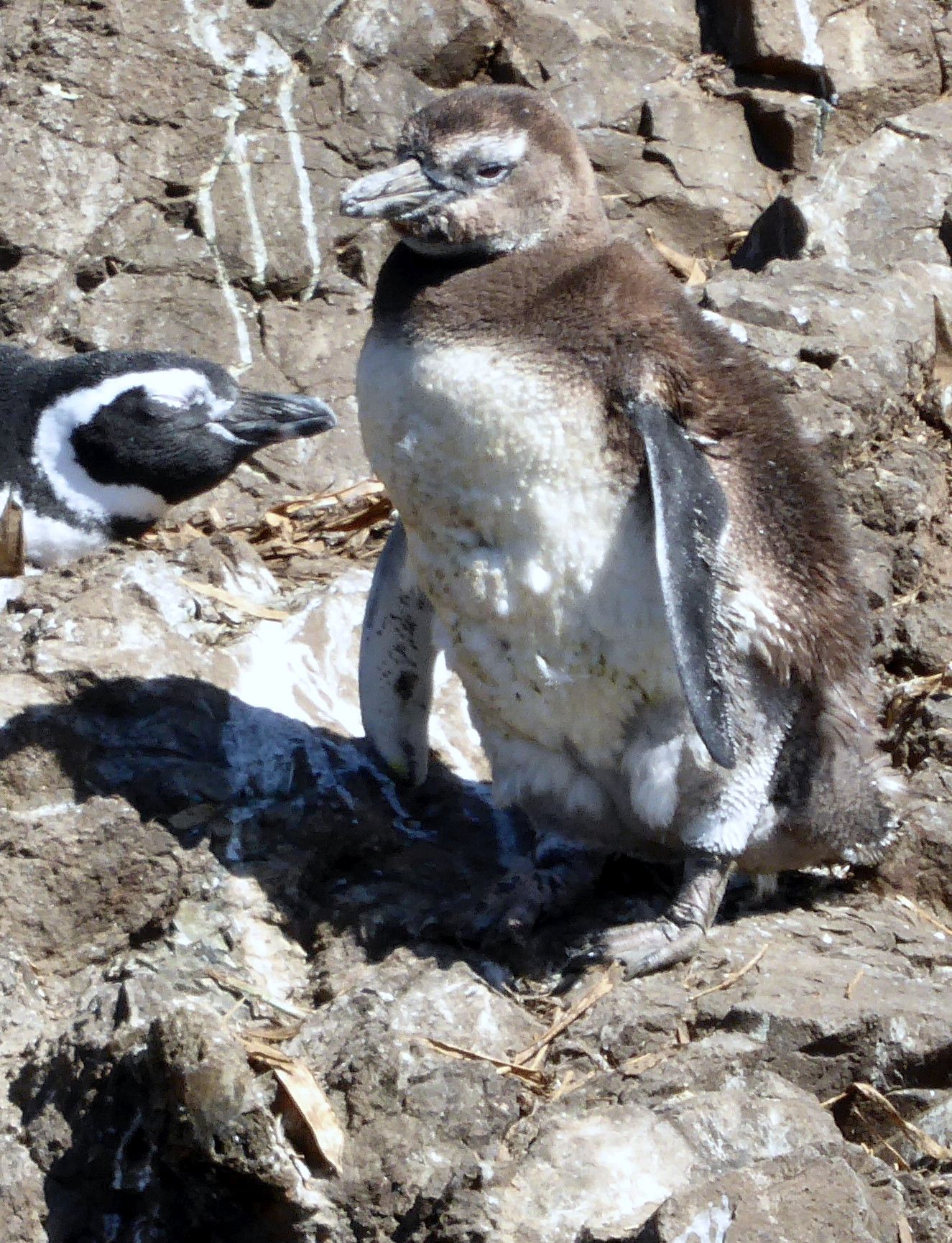
Although the boat was able to maneuver quite close to the islets for a good look, there was some boat movement with the current making photography of the birds a challenge.  I needed to back off the zoom to get sharper shots, so these photos have been cropped.

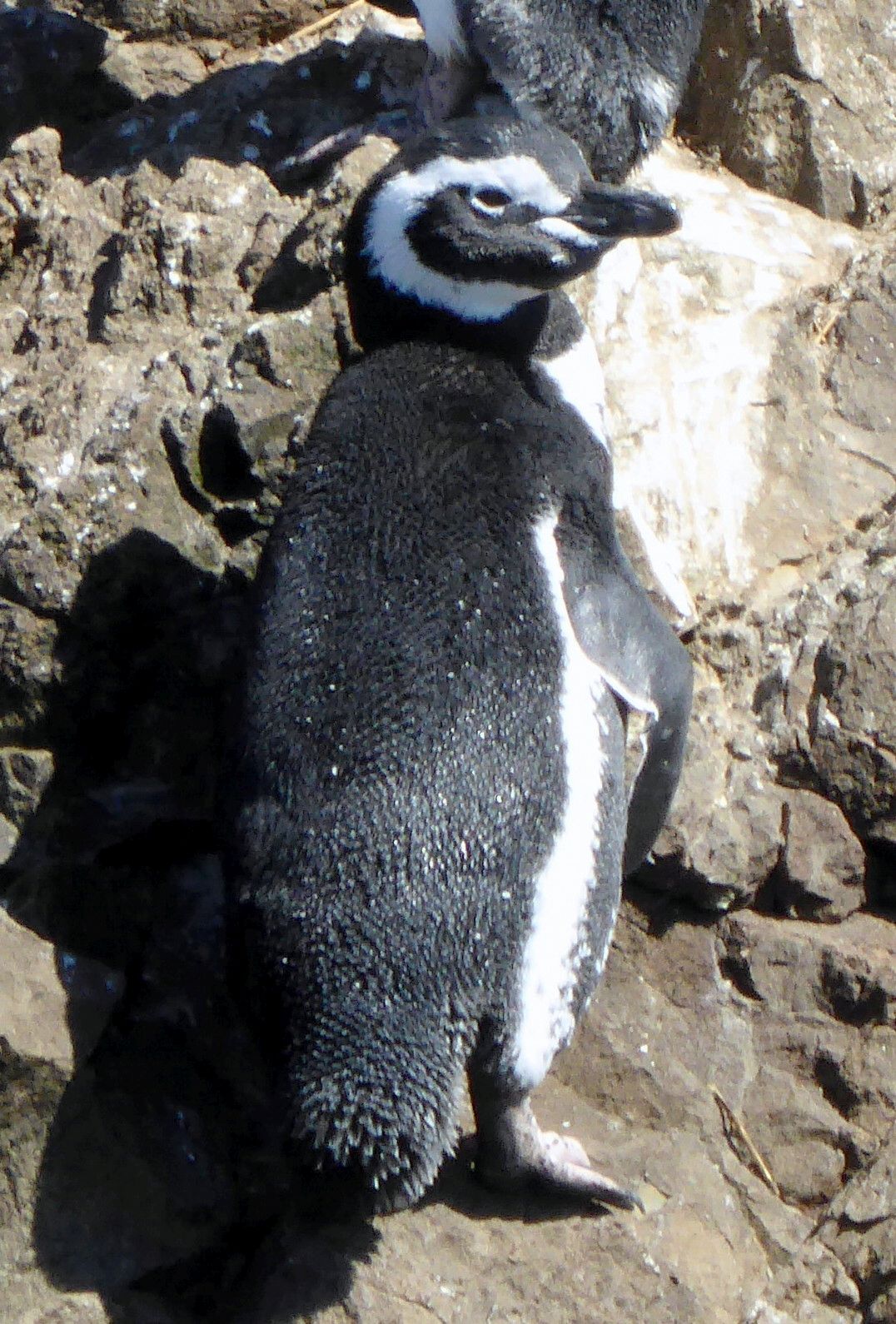
These cuties are Magellanic penguins.  They grow to be 24-30 inches tall and weigh 6-14 pounds:

Humboldt penguins, which range in size from 22-28 inches, have some pink in their face, so this is one here:

It was so exciting to see the penguins in their natural habitat, rather than at Sea World!

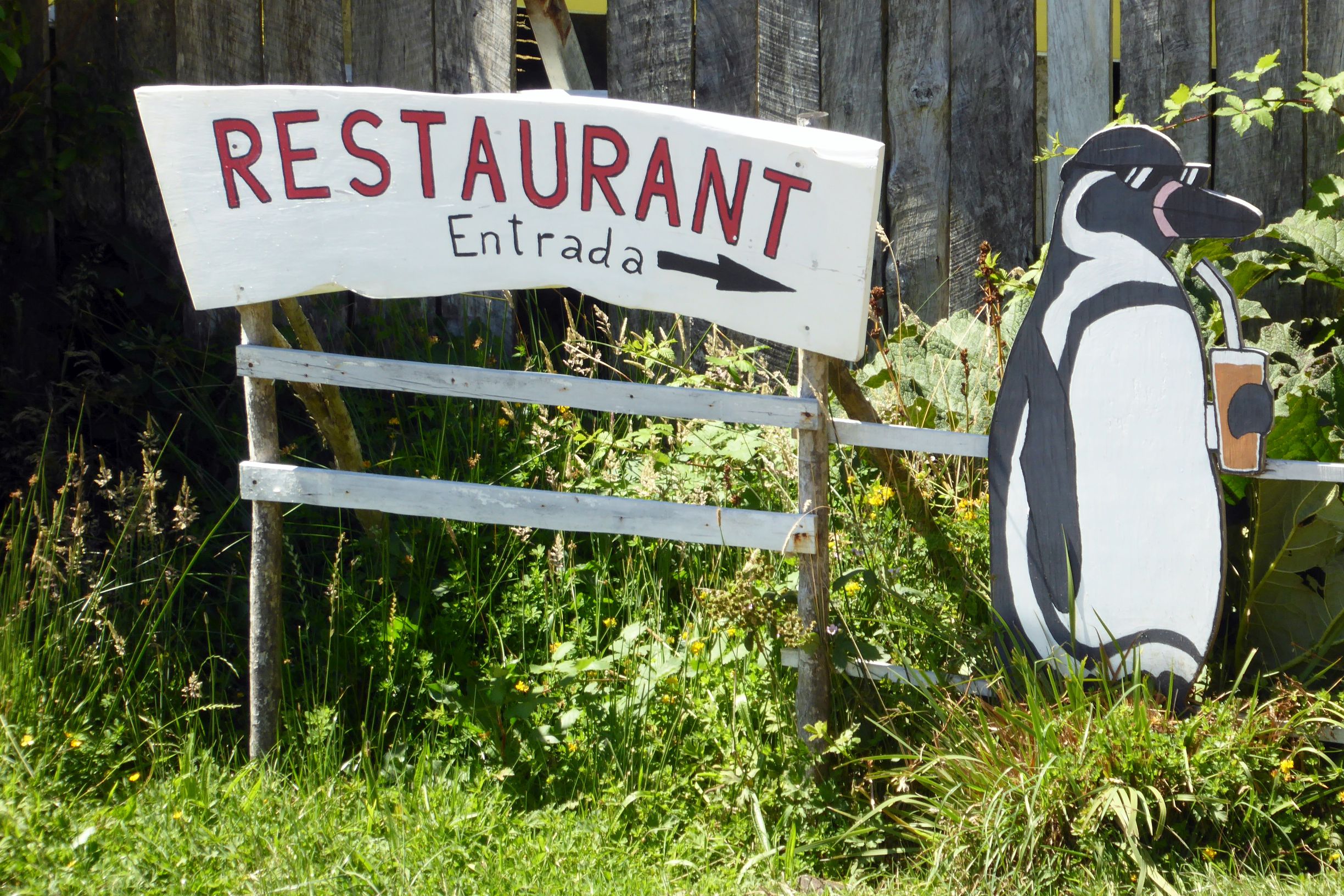
When we returned to the beach, our group had a seafood lunch at this restaurant with a beautiful view:

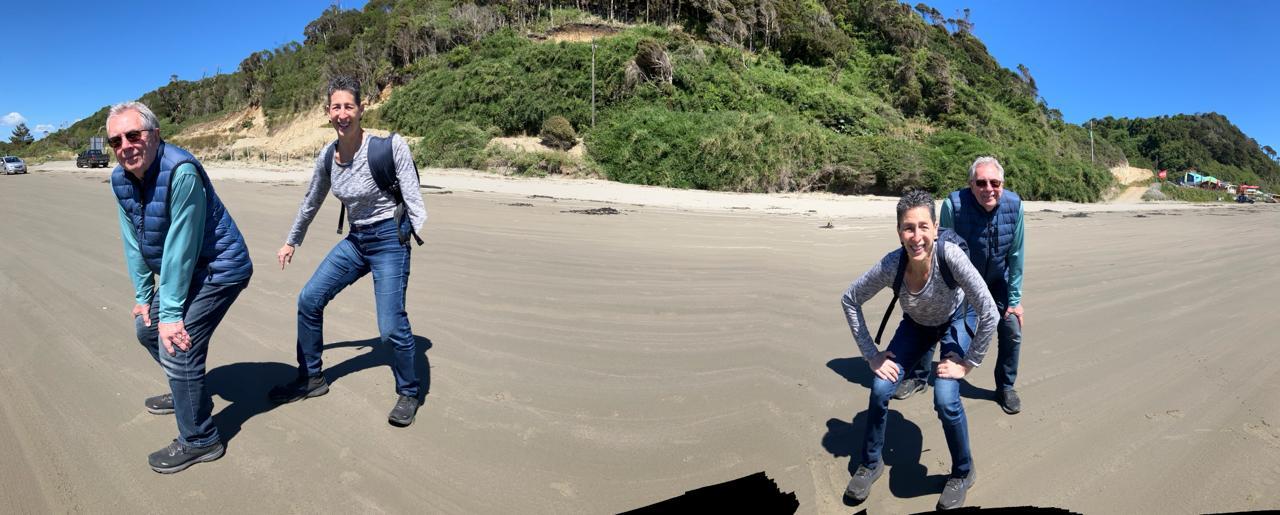
It was a lovely day for a walk on the beach afterwards, and Andrea snagged us for another “seeing double” fun photo:

Visiting Chiloe Island was a wonderful experience, but it was time to take the ferry back to the mainland for more adventures.  We returned to Puerto Varas and were ecstatic to see a clear view of the volcanoes!  Bruce and I grabbed an ice cream and headed out to enjoy the amazingly clear views, savoring one last evening in Puerto Varas before flying south to Punta Arenas, our southernmost city of the tour.

Coming up next: ARGENTINA & CHILE #12: PLEASANT PUNTA ARENAS

ARGENTINA & CHILE #10: A DAY IN THE LIFE OF THE RILAN COMMUNITY

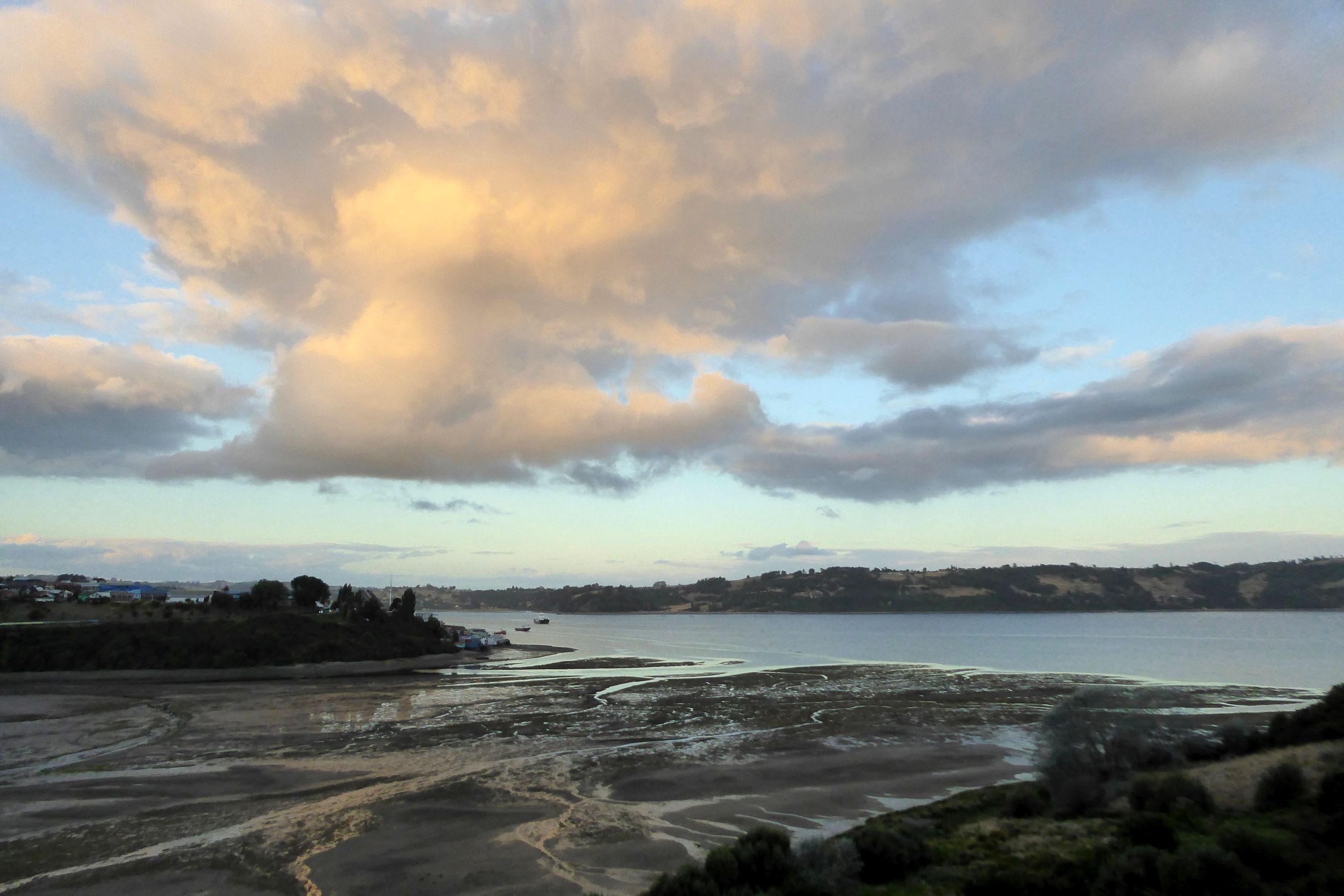
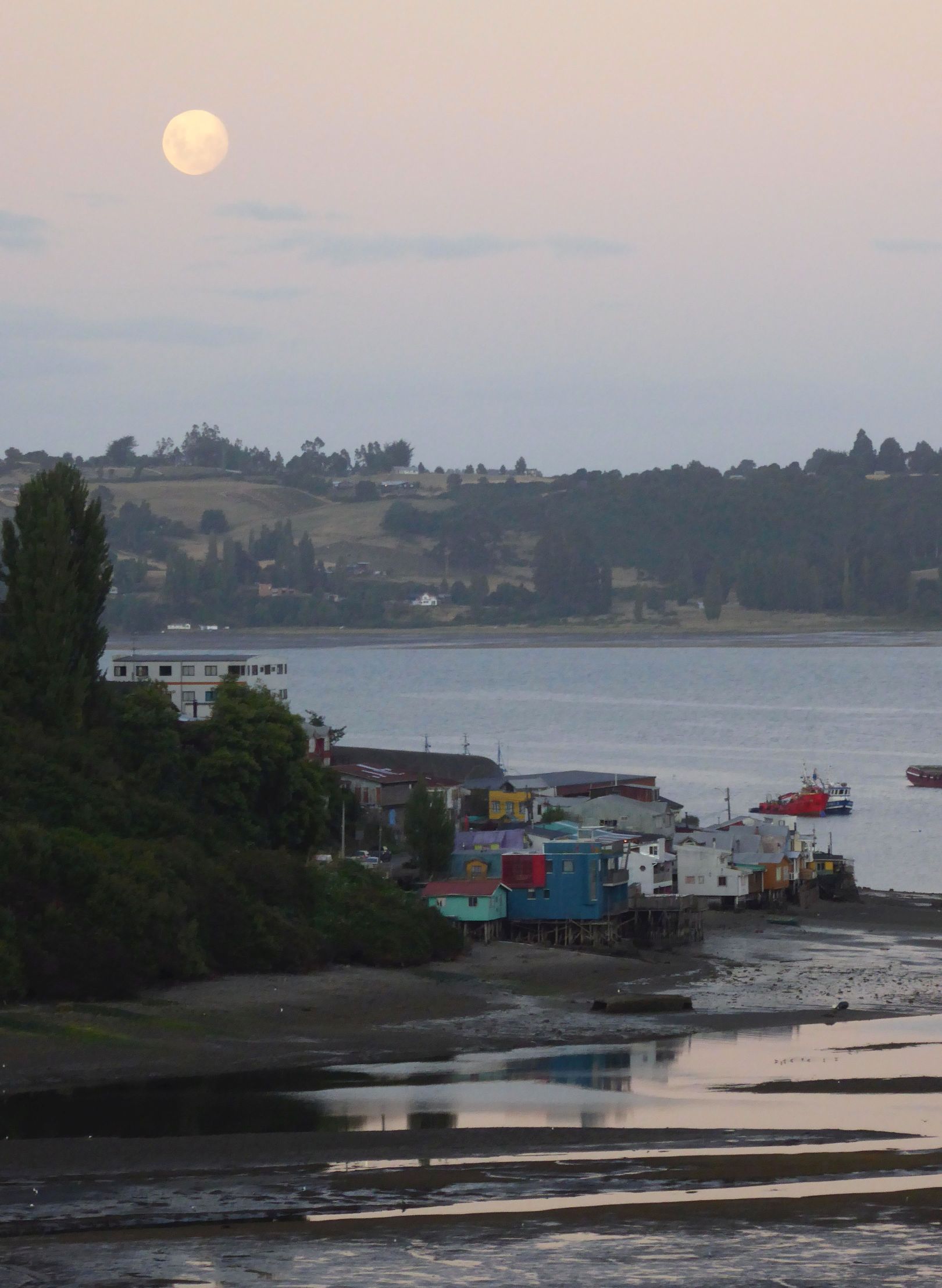
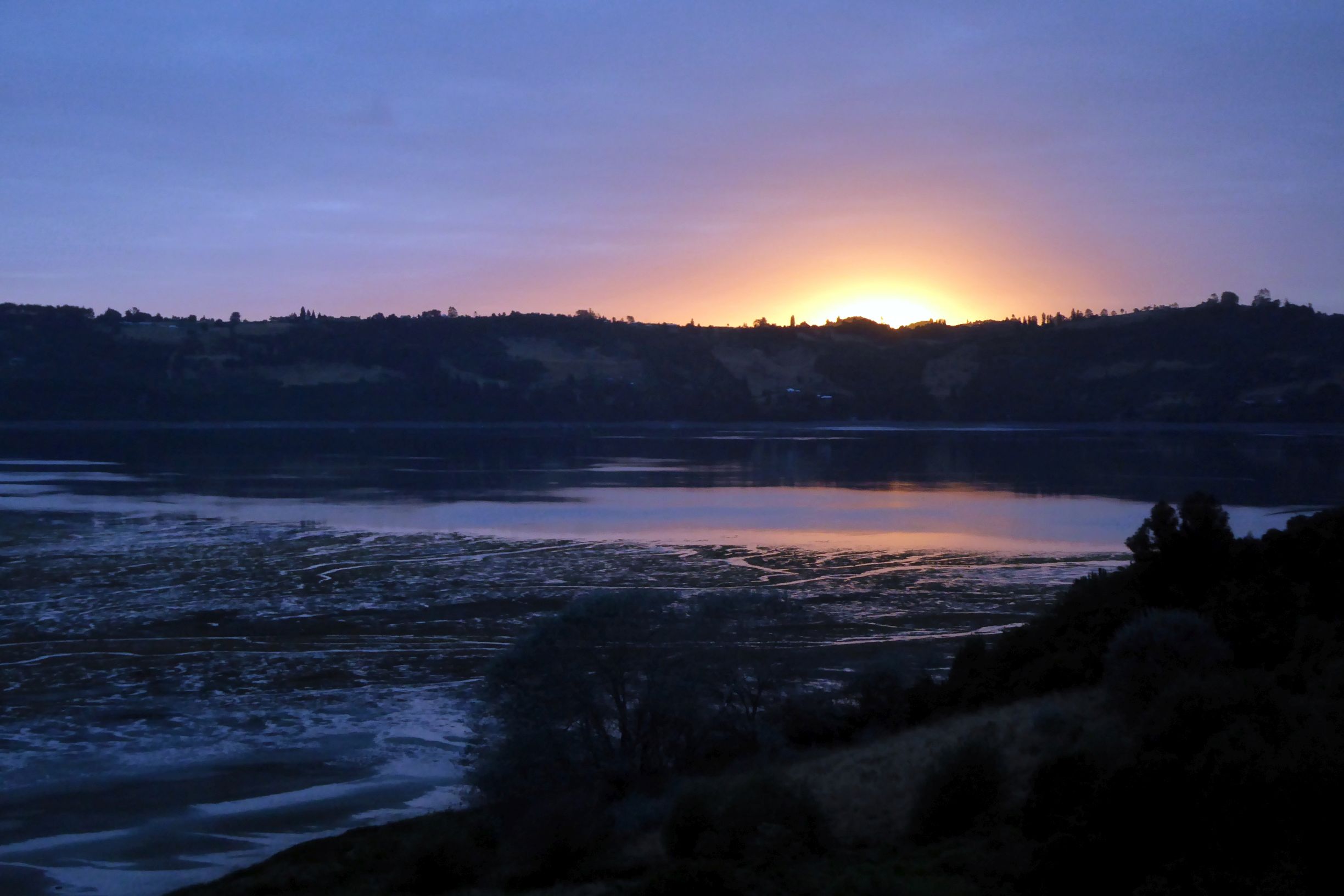
I’m big on taking notes when I travel, but I need to remember to read them thoroughly before I post a blog! I just now read that those “moonrise” and “sunset” pictures in my last post were actually moonset and sunrise pictures I shot on this day.  (That’s what I get for continually forgetting to reset the day and time on my camera before traveling!)

Anyway, breakfast was a treat this morning as we enjoyed the beautiful view as well as a buffet that included a warm Marraqueta (traditional Chilean bread) with delicious fresh guacamole and cheese—a common Chilean breakfast. 

Happily fortified, we were off for a brief stop to photograph the palifitos we had visited the previous day.  (We will see more later in the afternoon.)

(For all photos, especially panoramas, click on the image for a full screen view.)

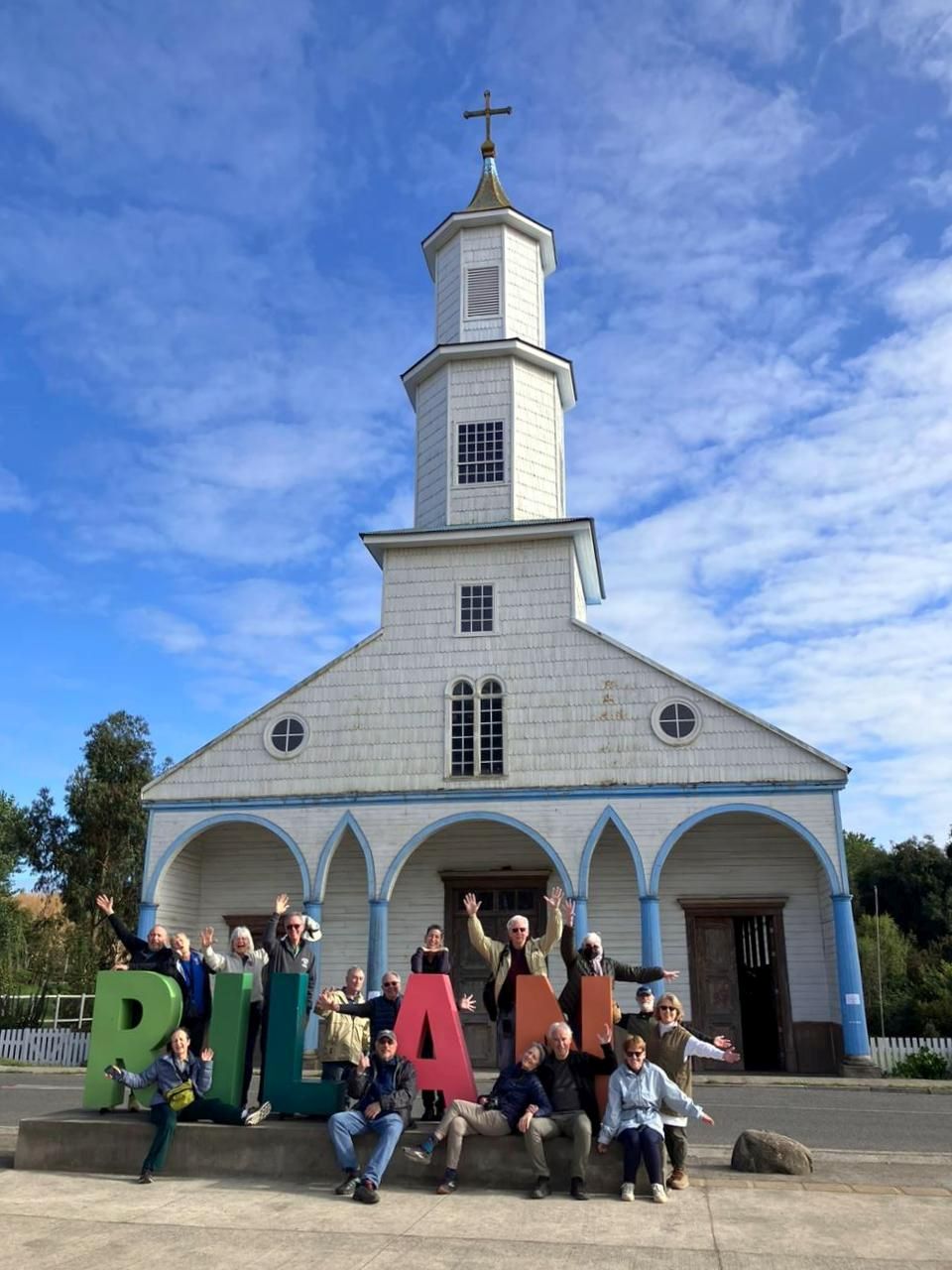
Next, we were off to the Rilan Peninsula for our Day in the Life adventure, beginning with a visit to the main square to see the Church of St. Mary, listed as a UNESCO World Heritage Site and a National Monument of Chile. 

Keeping with our buena onda tradition, Andrea gathered us for another cheesy group photo:

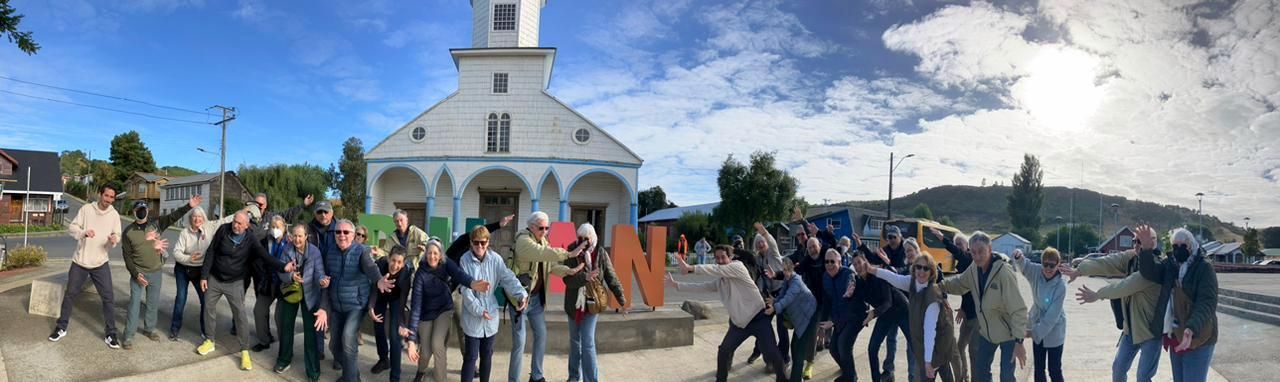
Now, this next shot was something I had never done before.  We played follow the leader—in this case, our local guide, Daniel.  As soon as Andrea panned past us, we quickly followed Daniel behind Andrea and got back in front of the camera—the reason you are seeing double!

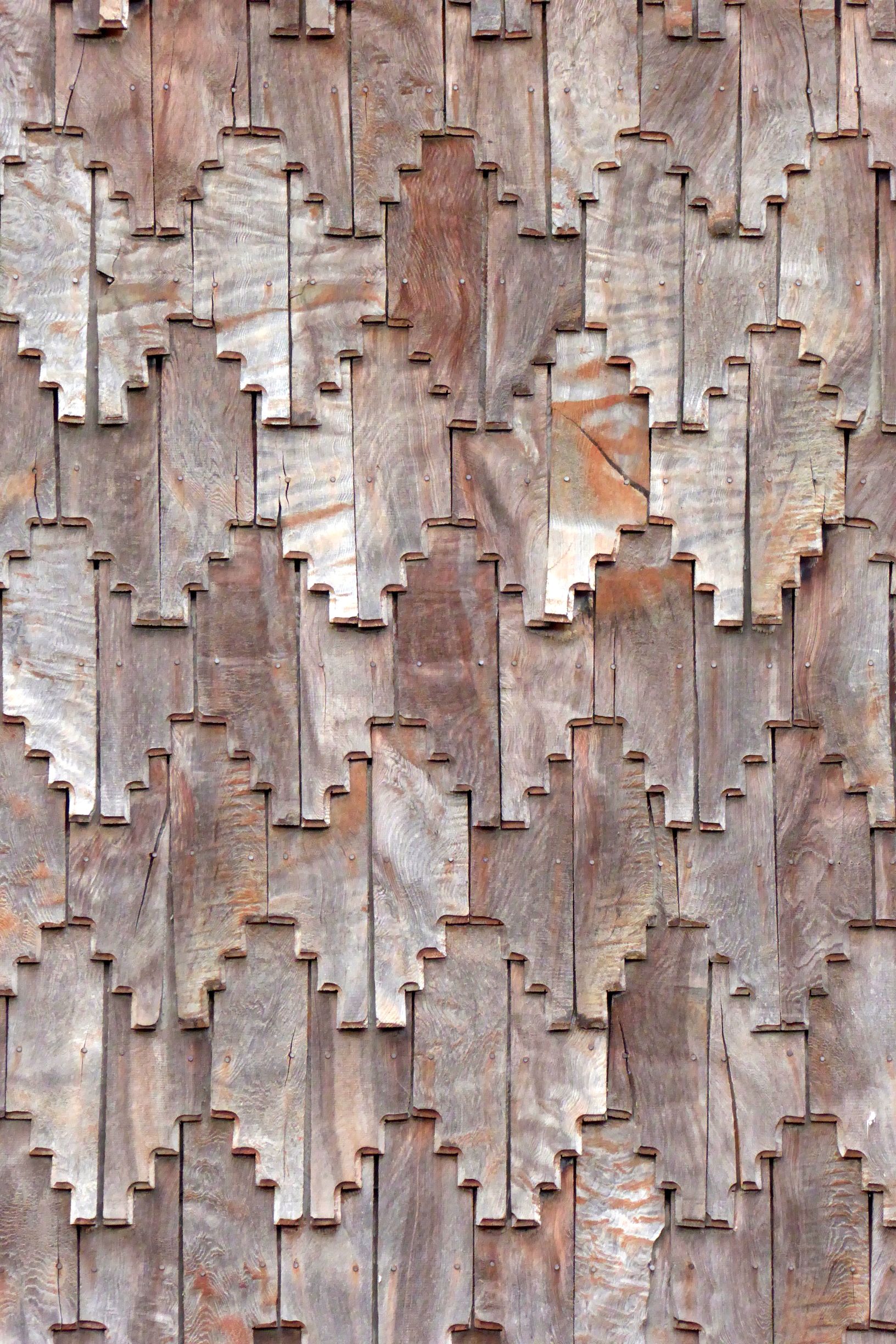
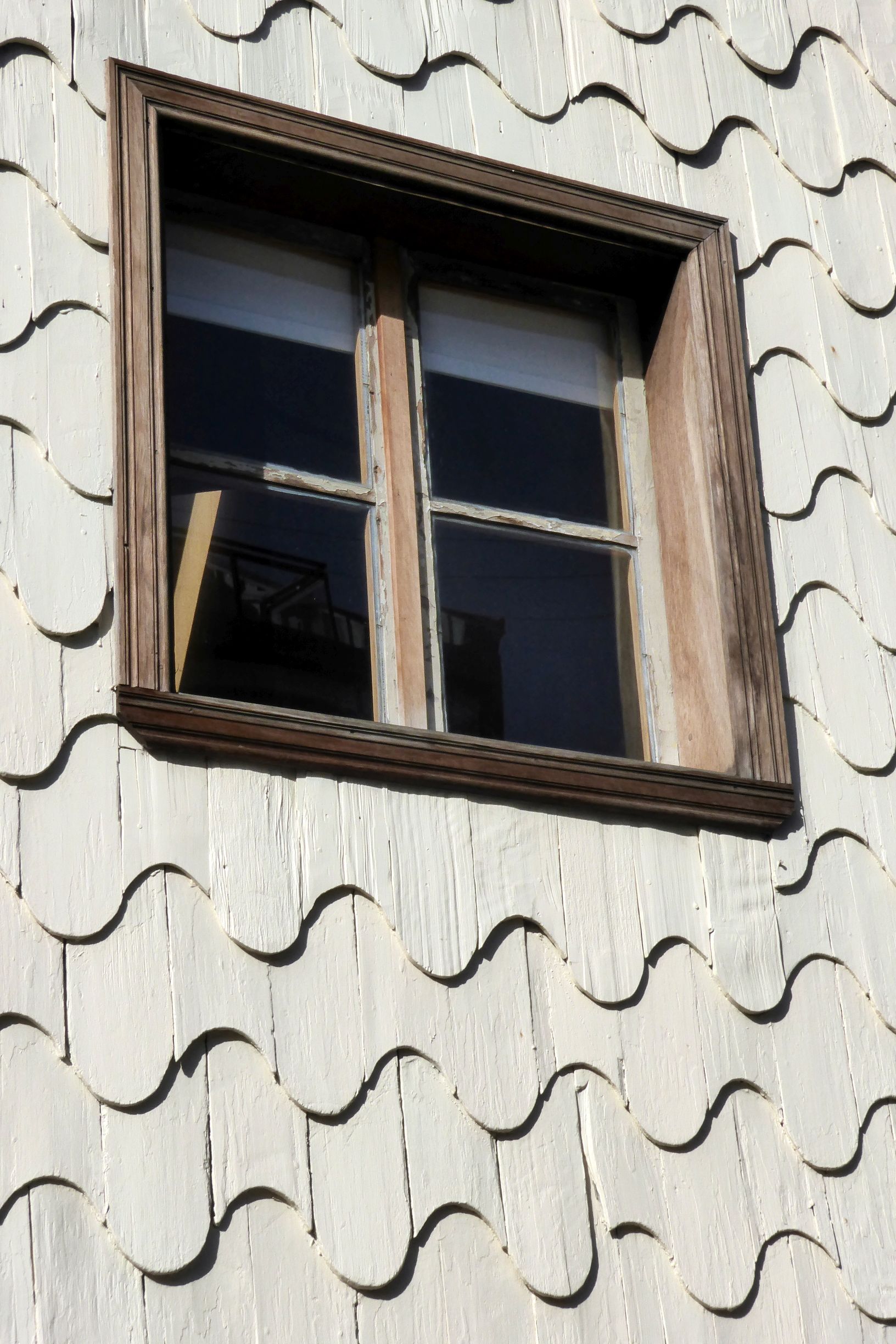
While the others went inside to explore the church further, I hoofed it up the hill to take a closer look at houses I had seen on the bus ride to the square.  I had been captivated by the artistically cut house shingles since arriving on Chiloe Island, and I wanted to see more.

When I returned to the church, I had just enough time to take a quick look at the interior before we walked across the square to Isle and Raul’s home and farm.

Raul & Ilse

Our “Day in the Life” experience with them was a day to remember!  We first gathered in the fogon—a covered structure separated from the house—where family and friends meet to share mate or tea and socialize.  It was a wonderful opportunity to learn about Isle and Raul’s life on the farm and hear their perspective on how their traditional ways of life are being threatened due to politics, technology, “progress,” the economy, and salmon farming.  Now that Chile is the second-largest producer of salmon in the world, it has had a huge impact on their community. 

Another possible threat (or benefit, depending on which side of the debate you are on) to the island is the bridge that is going to be built to connect the island to the mainland. Will the increase in traffic, pollution, and tourism affect the people and Chilote traditions on Chiloe Island?

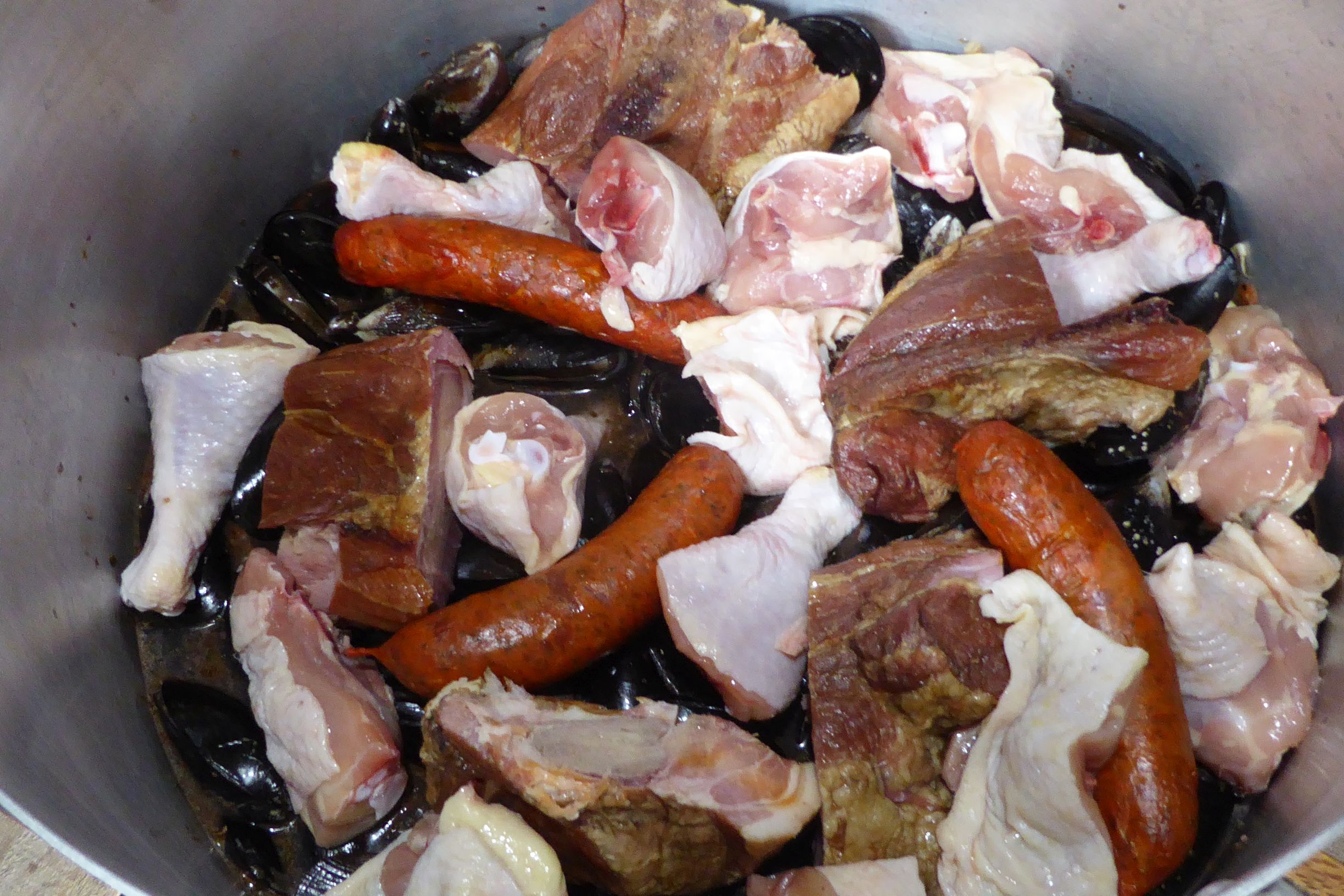
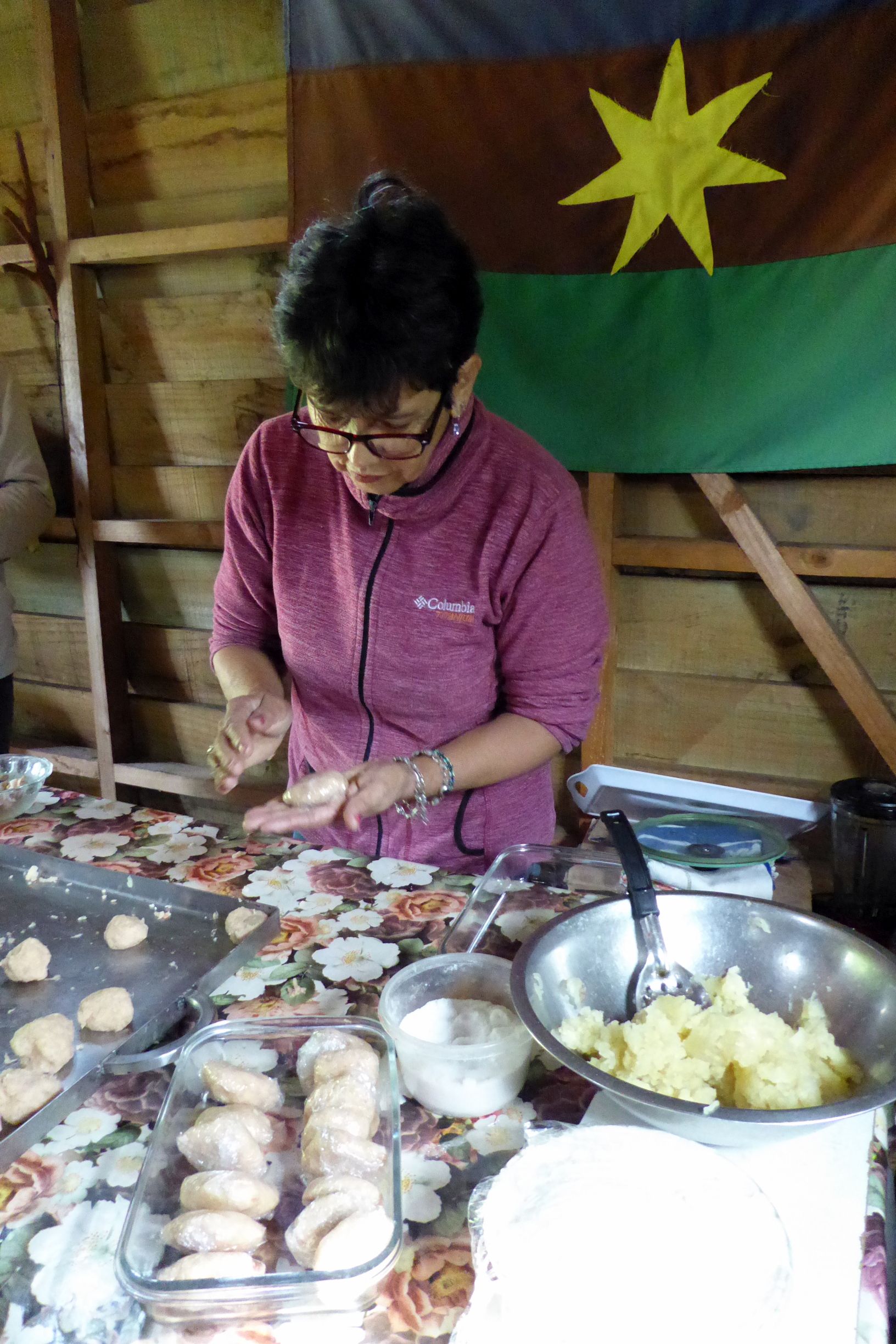
It was time for Isle to start preparing our lunch, a traditional meal called a curanto, so the group pitched in.  Curanto is a stew—this one including mussels, sausage, meat, potatoes, and greens that is cooked in a huge pot.  The group also prepared chapalele, which are potato dumplings that are wrapped in plastic wrap before they are added to the pot to be cooked.

Ilse preparing chapalele

One of the most important Chilote traditions is the “minga,” which is sharing essential tasks. A minga is a gathering of friends and acquaintances to roof a house (or even move a house!), build a fence, harvest a field of potatoes, or another project that requires a lot of labor.  The reward?  Curanto!  It reminds me of back in college when buddies helped each other move apartments or out of the dorm, except pizza and beer was the reward.

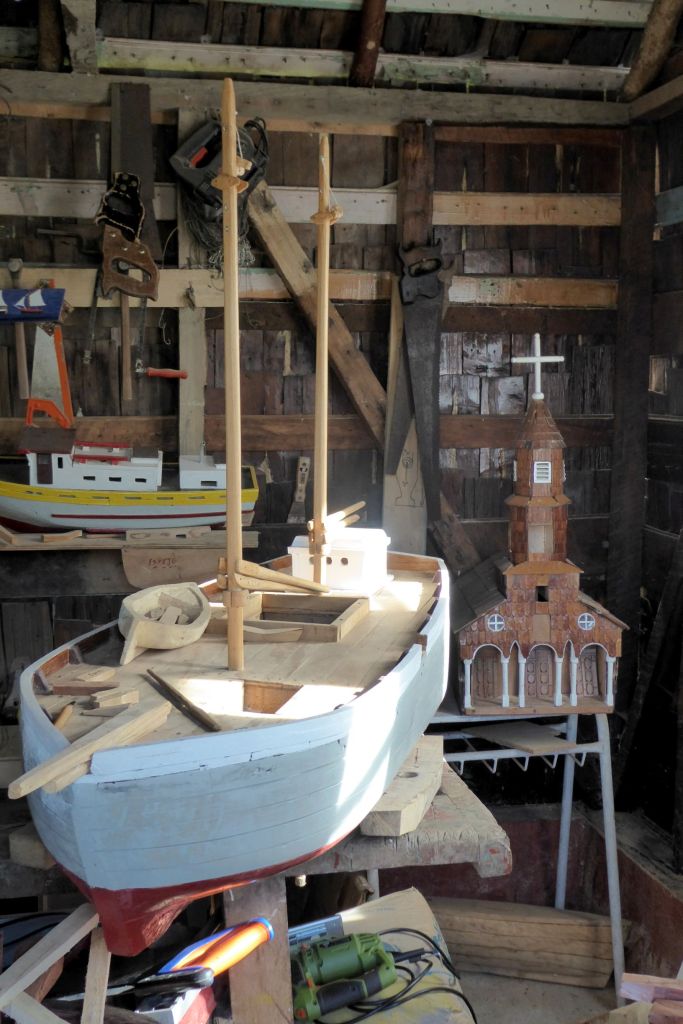
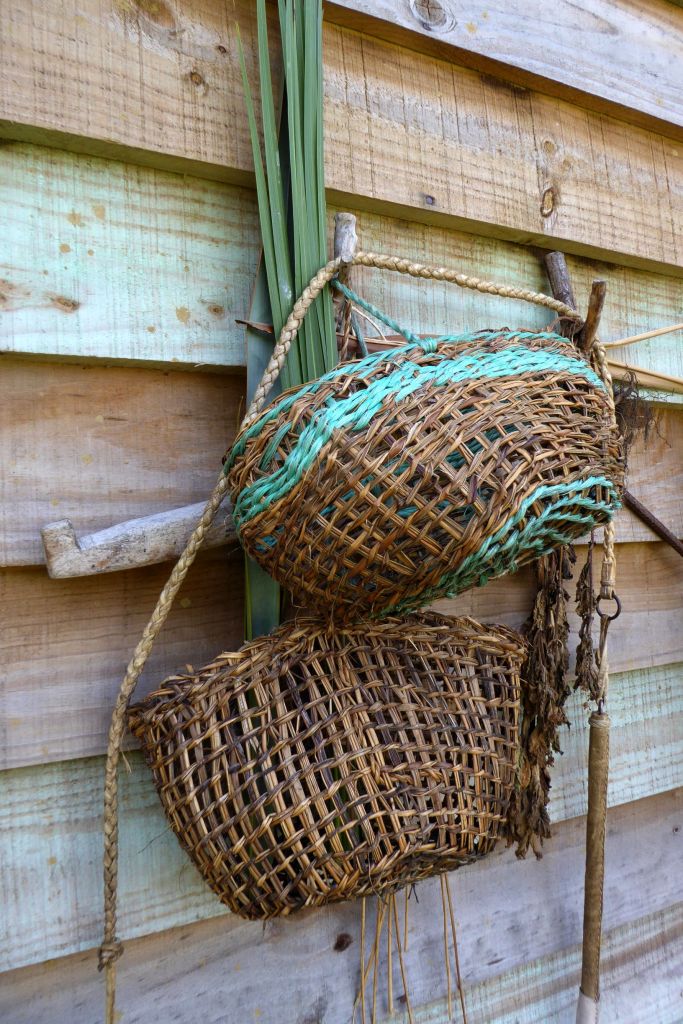
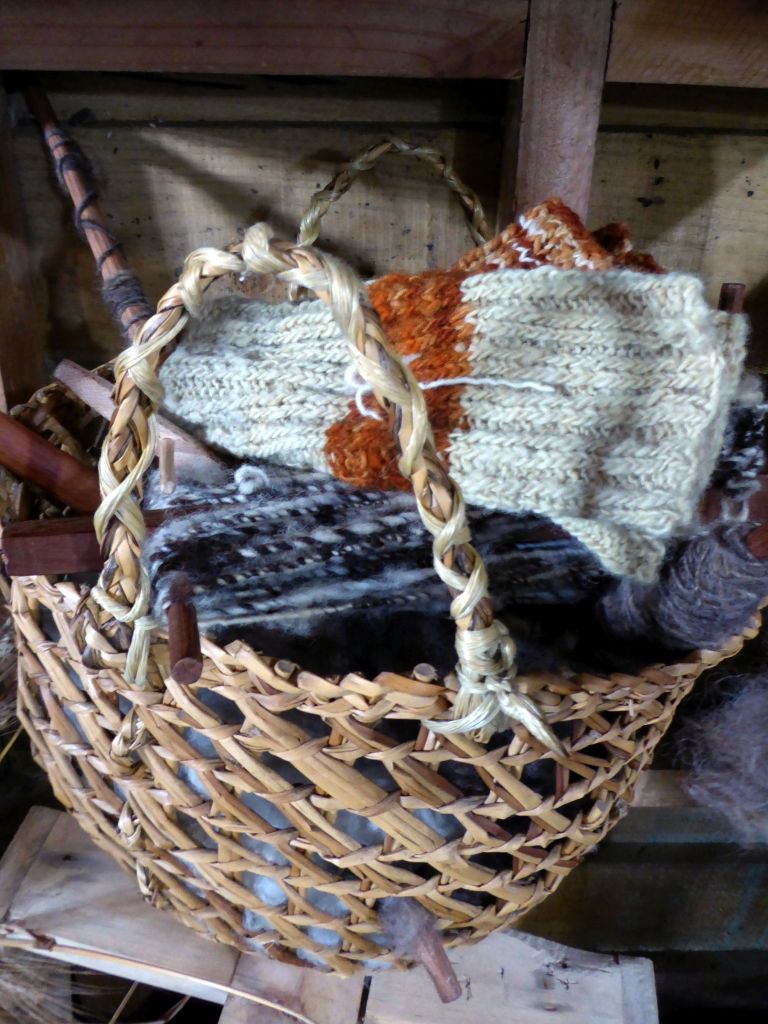
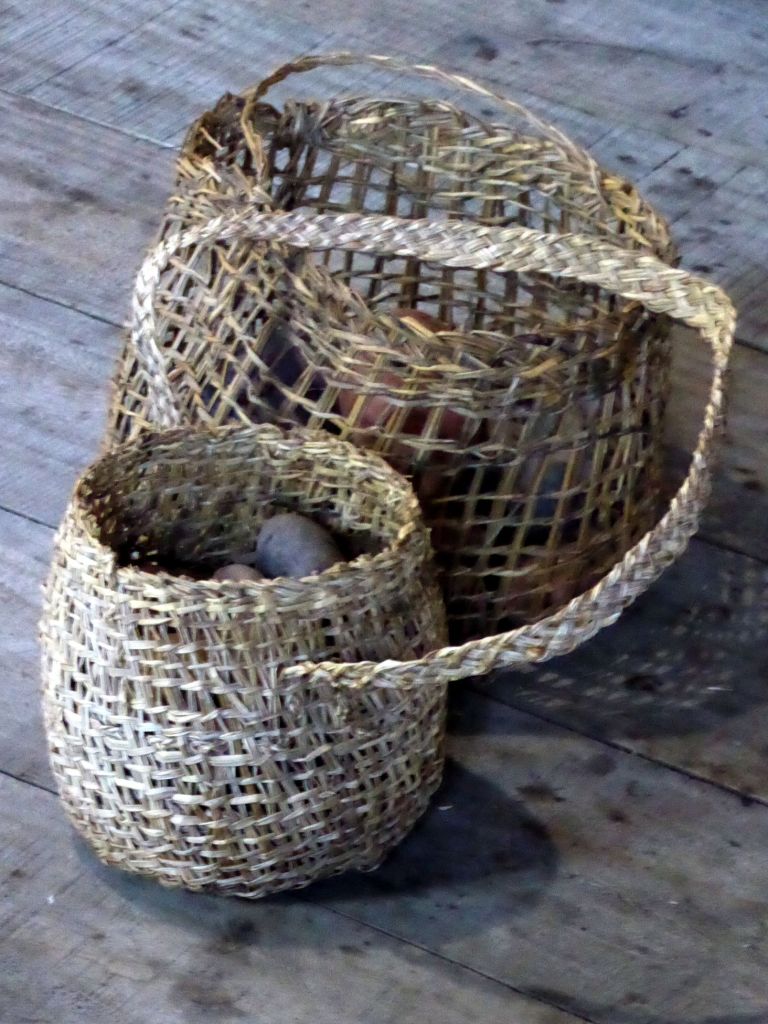
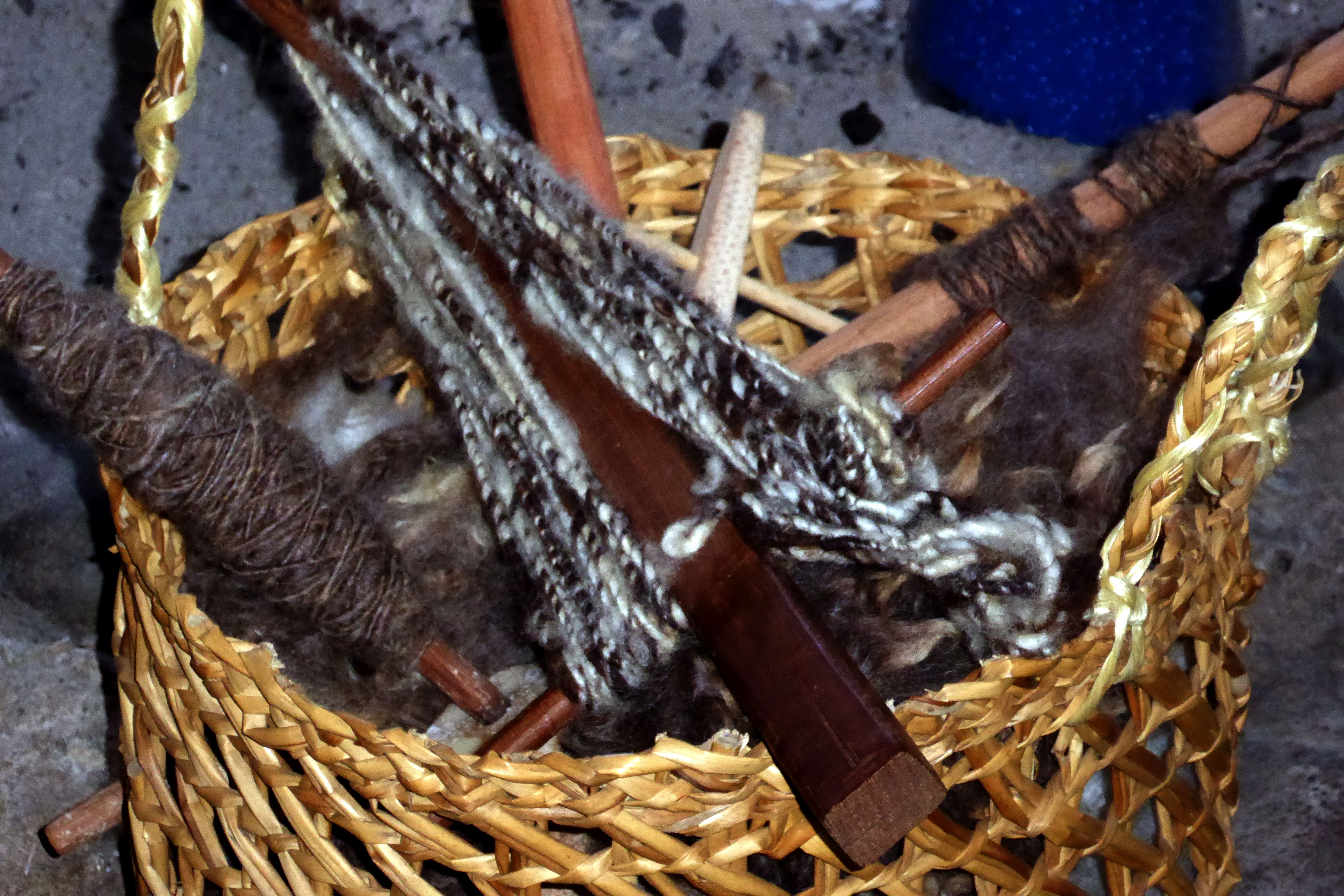
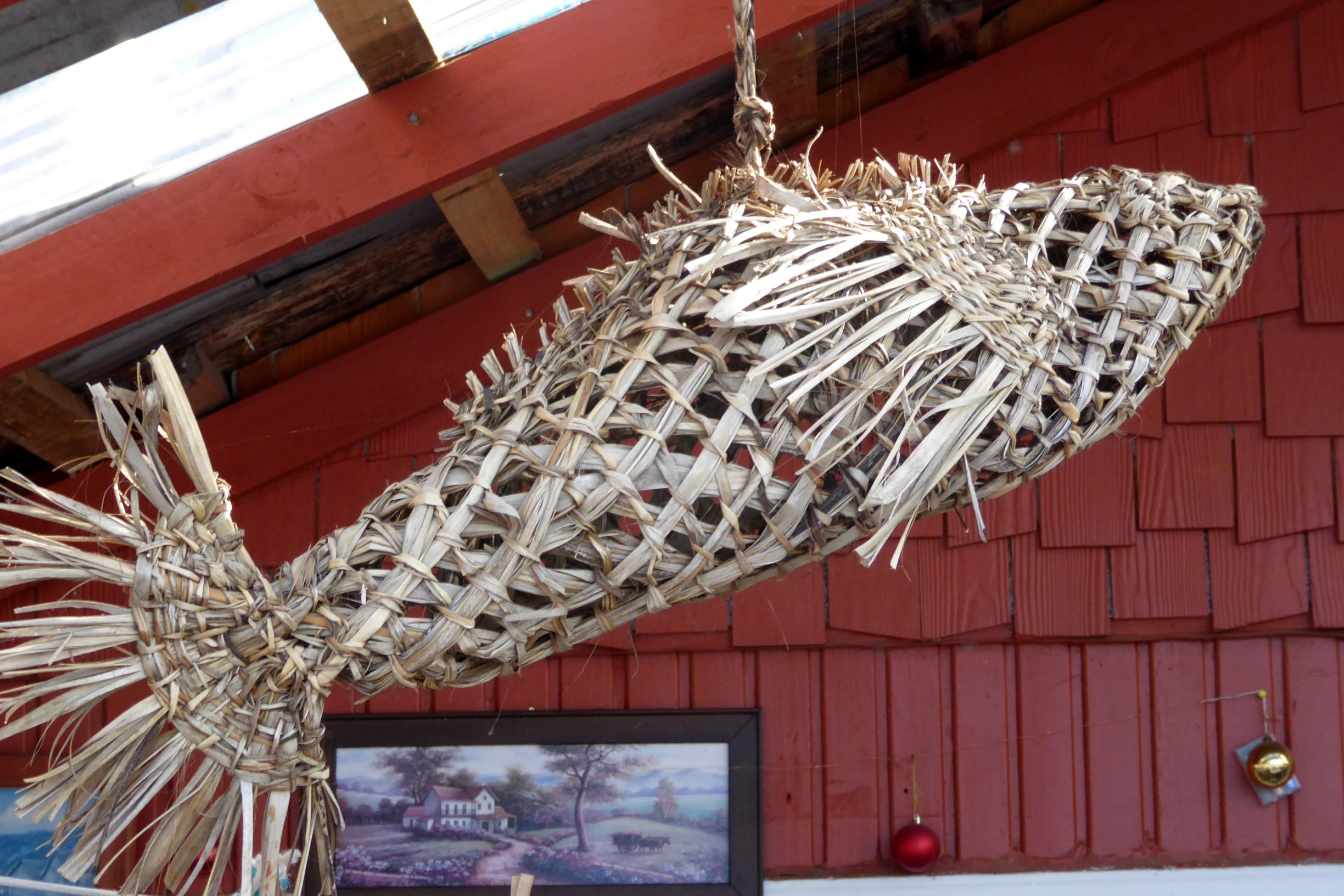
Meanwhile, Raul gave us a tour of the farm, which wasn’t just an ordinary farm.  Everywhere I turned, it was a feast for the eyes—at least my eyes!  I am always in awe of the creativity of crafters, and I love to see (and sometimes purchase) the folk art and crafts of the countries I visit—especially if I can interact with the artist or crafter rather than purchasing from a souvenir shop.  Between Isle and Raul, they seemed to make everything!  From knitted wool clothing and baskets, to wood carving and models, to hand-built food processors and presses; to… just everything!  I was simply in awe.

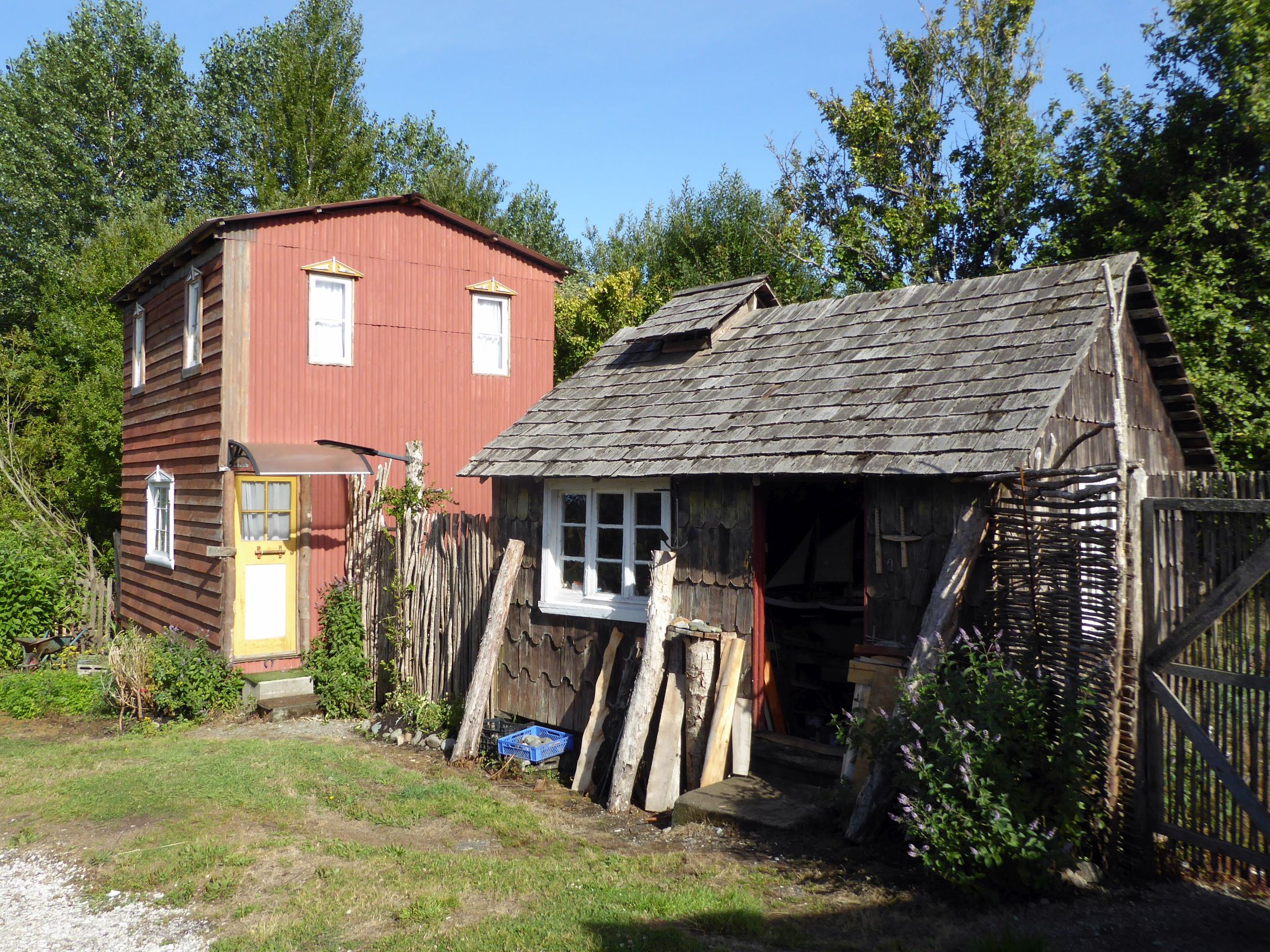
Raul’s workshop
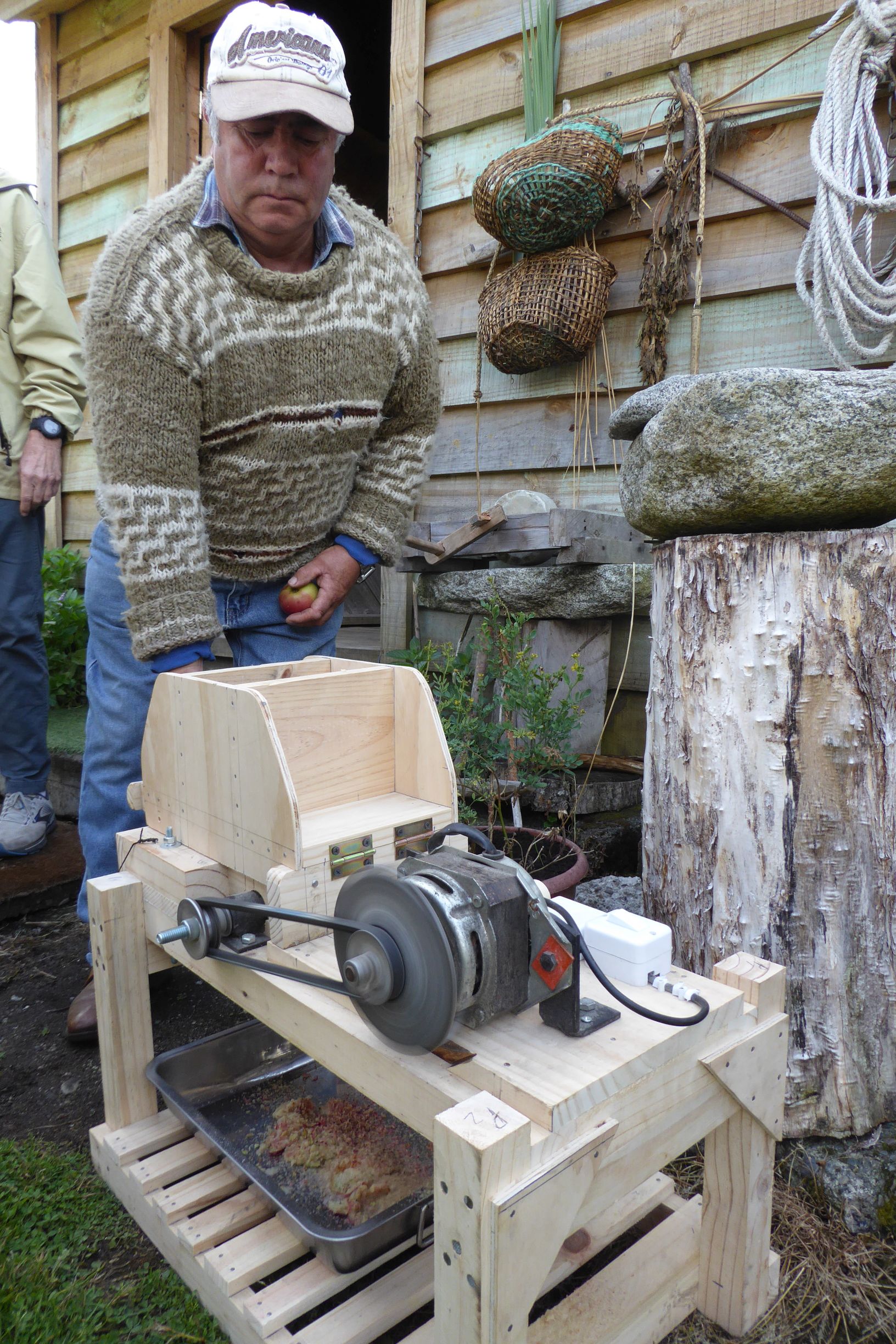
Raul built this food processor and is mashing apples.

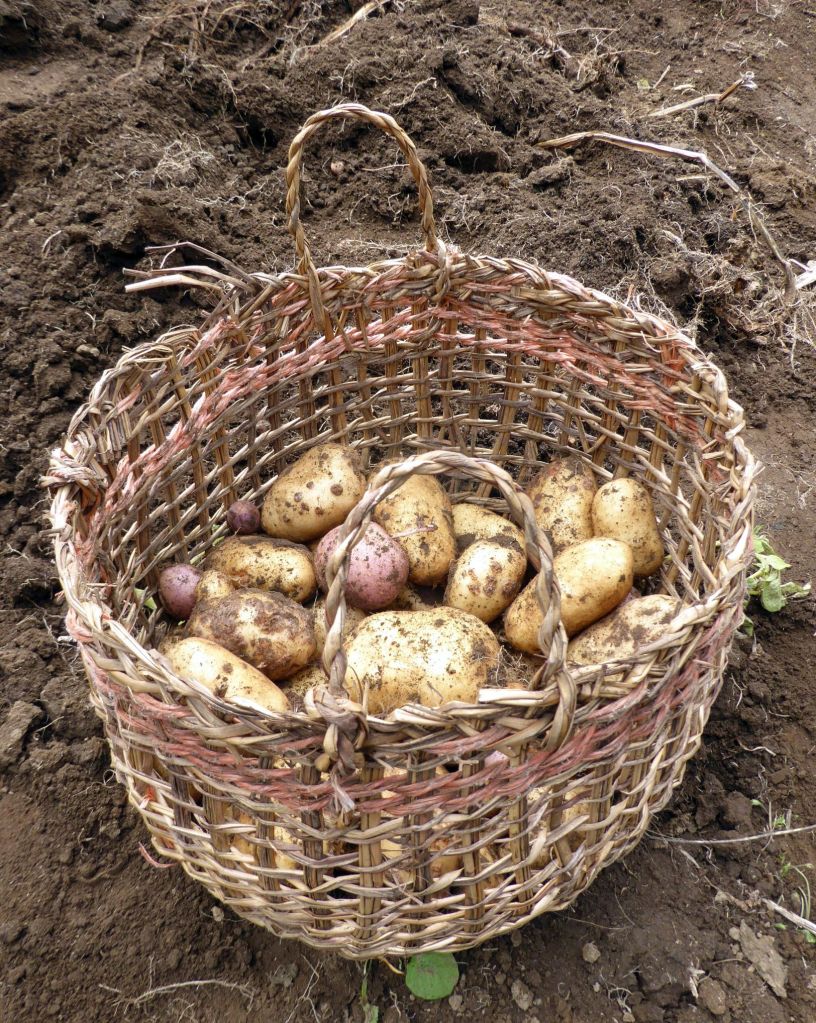
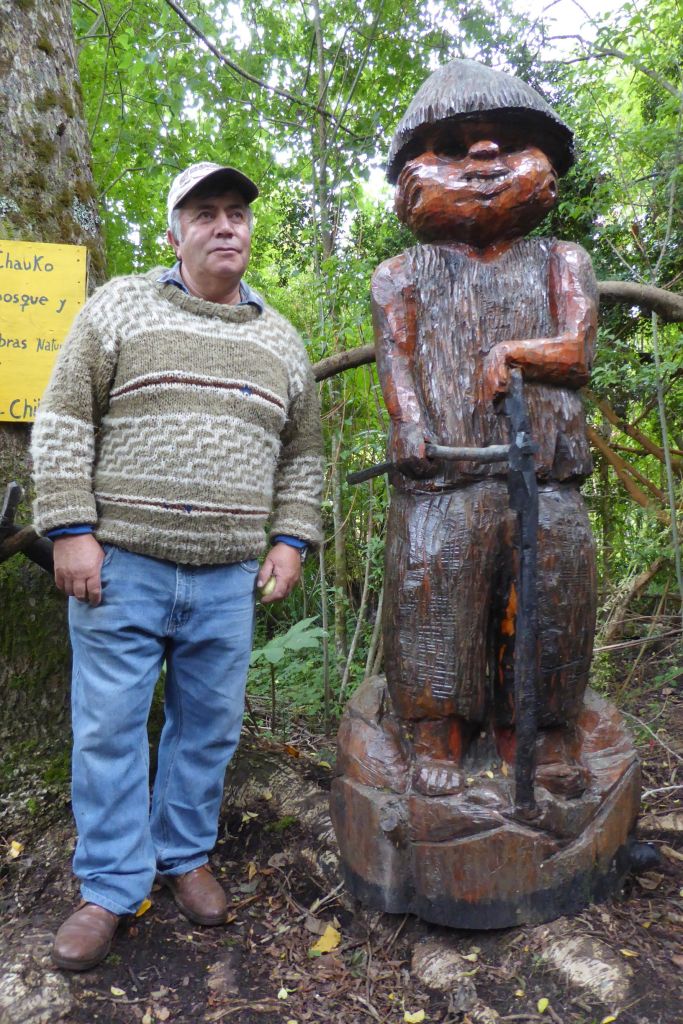
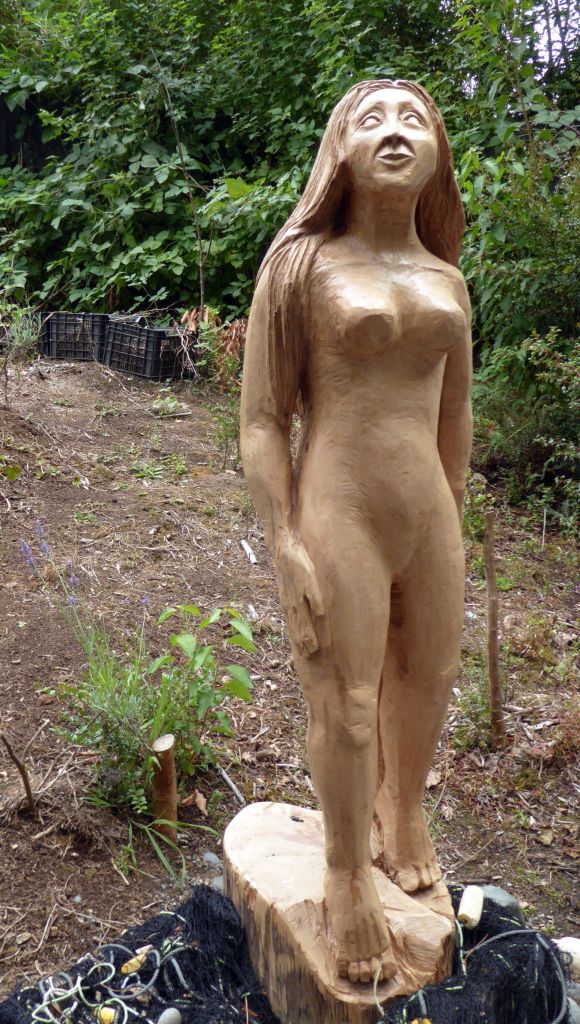
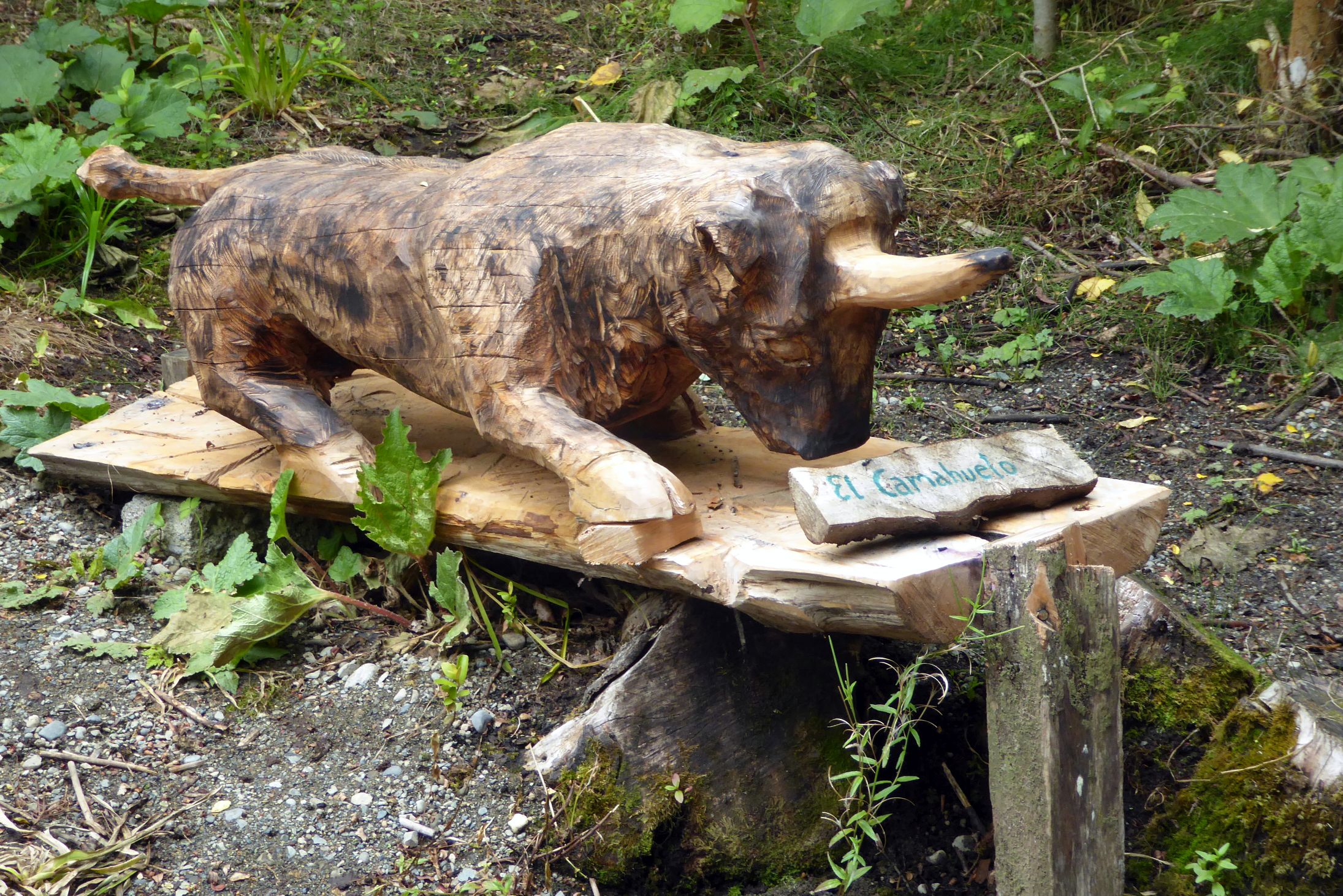
After helping Raul dig up some potatoes, he took us on a little nature walk through his property to see his life-size wood carvings.  Of course, he built his own bridge across a pond as well as the walkway.  Just look at this man’s talent!  His carvings depict famous mythological characters that are very much a part of the Chilote culture.

While the curanto finished cooking, Raul taught us how to play rayuela, a traditional Chilean game similar to bocce or horseshoes, except tejo (small disks) are used.  We also enjoyed a pisco sour, which became a popular drink among our buena onda group!

Our visit with Isle and Raul concluded with our sharing of the curanto for a wonderful lunch of good food, good company, and music performed by Raul and Daniel.  It was such an enjoyable experience!

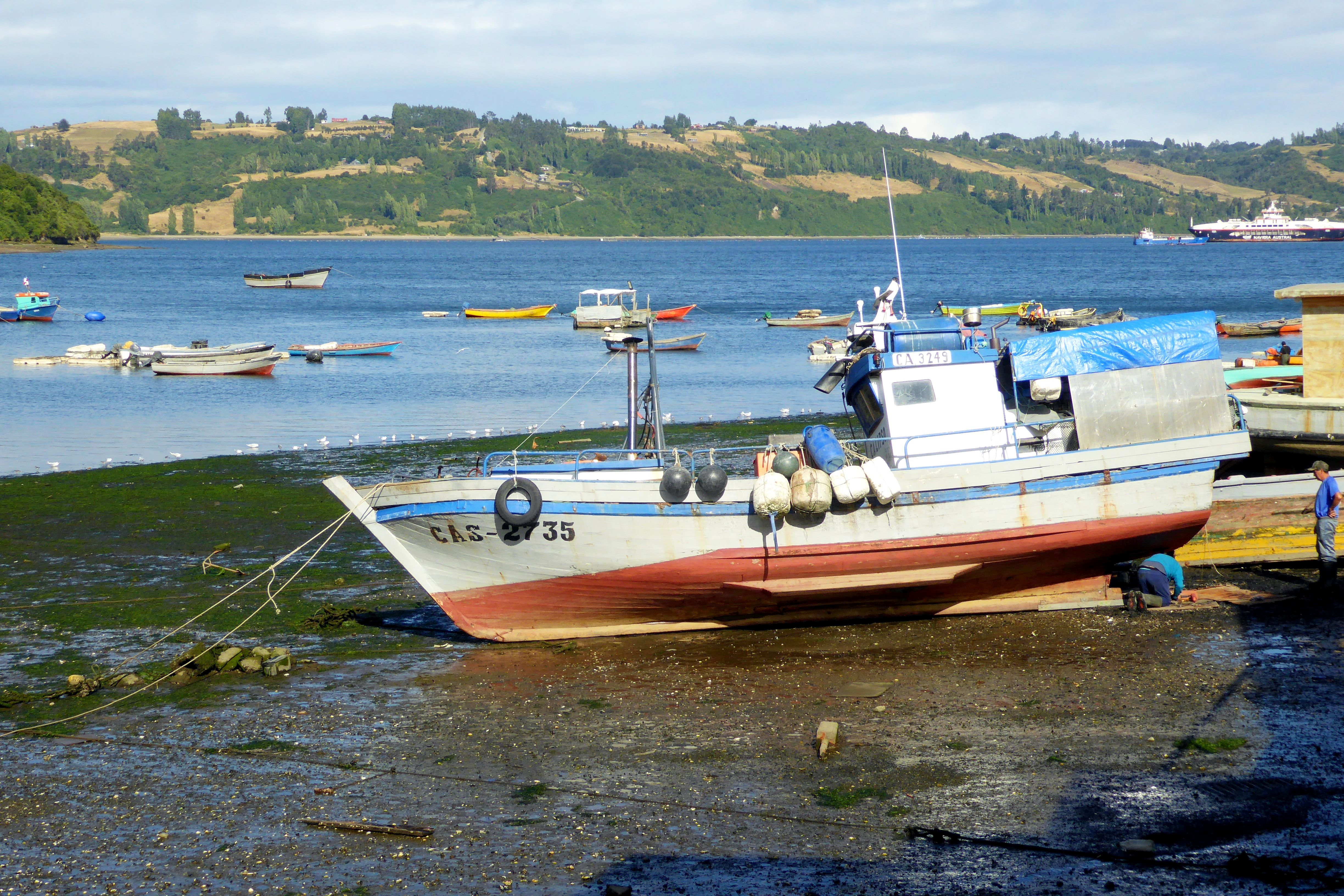
We weren’t done yet, though!  After departing Rilan, we returned to Castro and hopped on a boat (for just our group) to go see more palafitos.

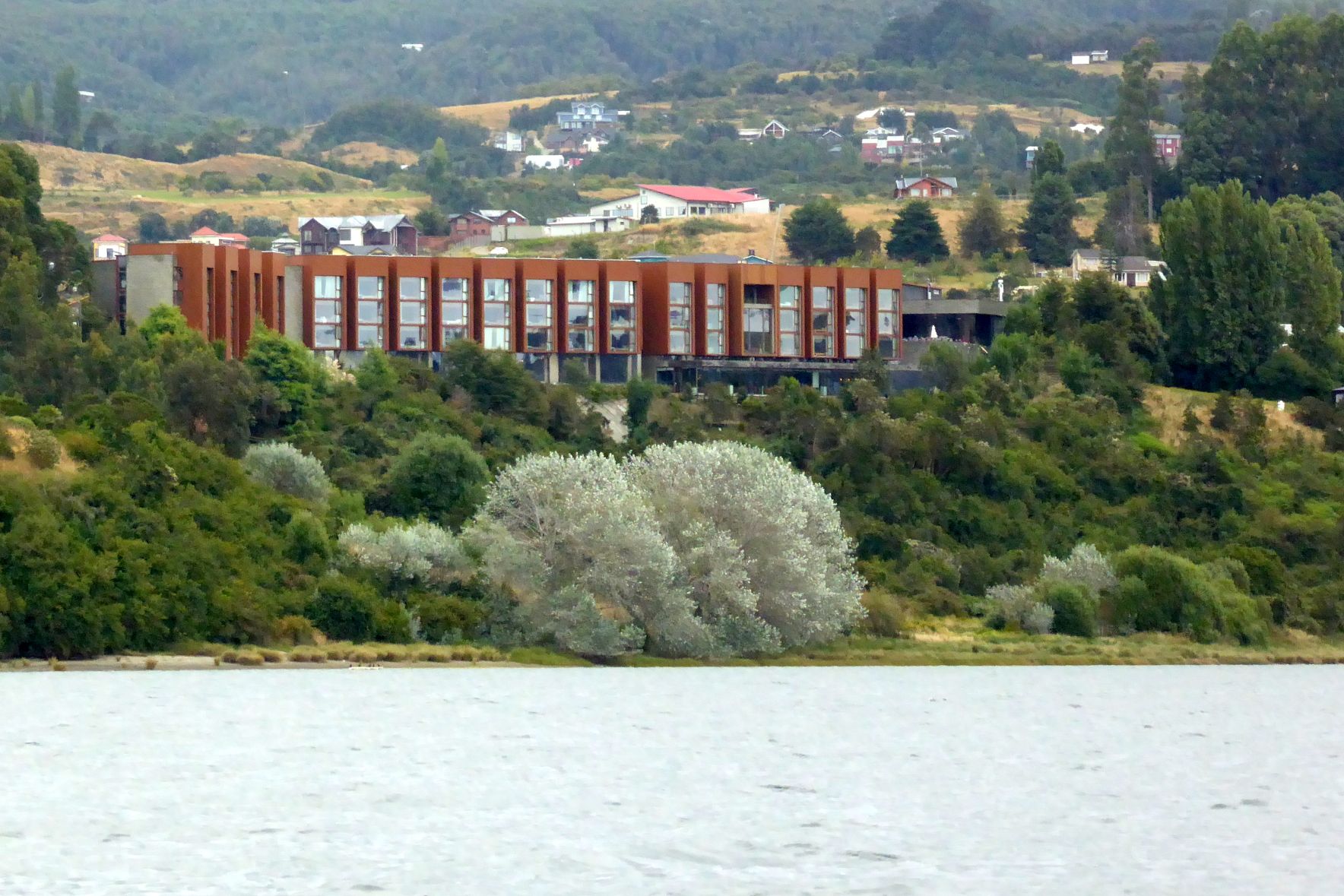
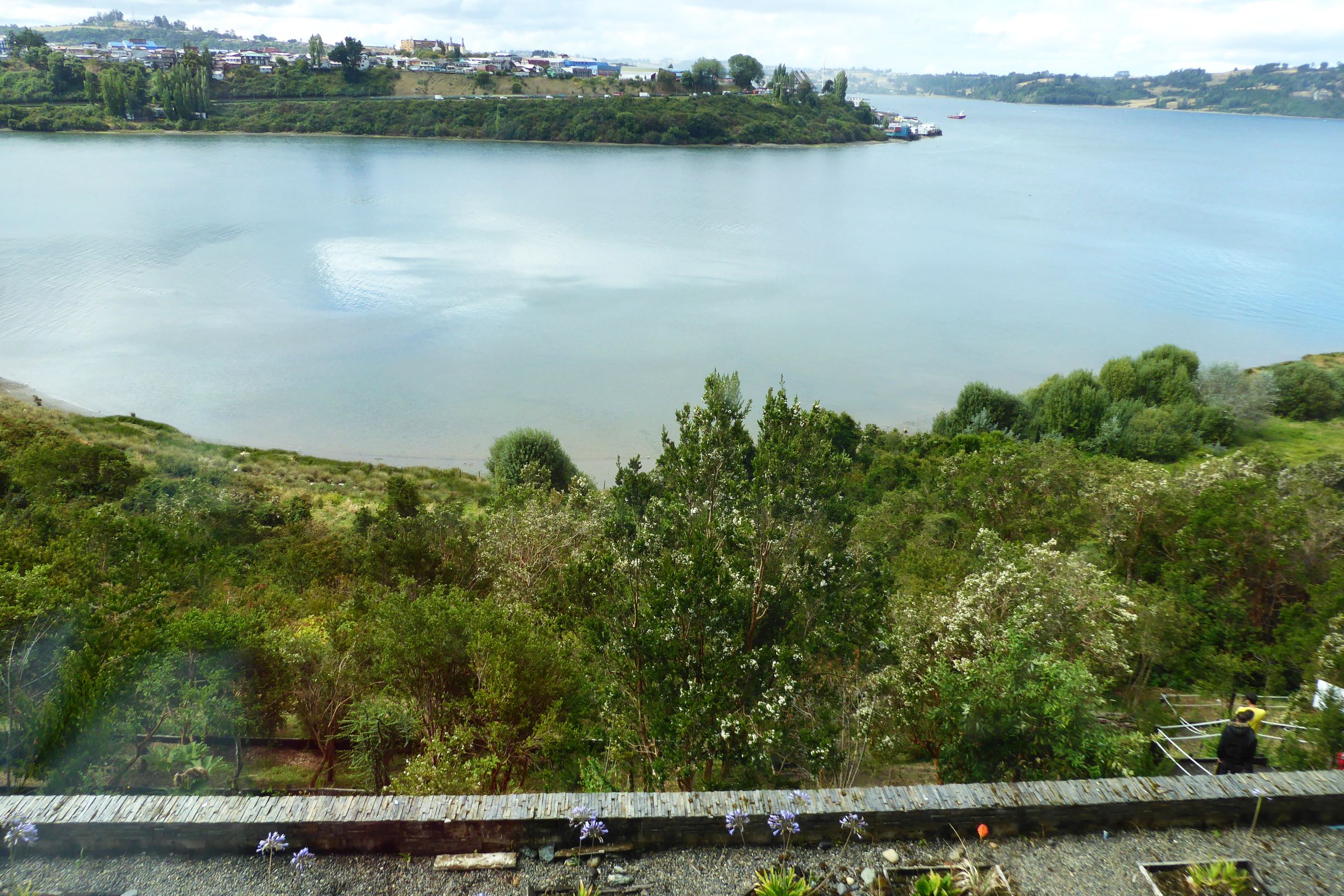
On the way to the palafitos, we could see our hotel and room facing the water.
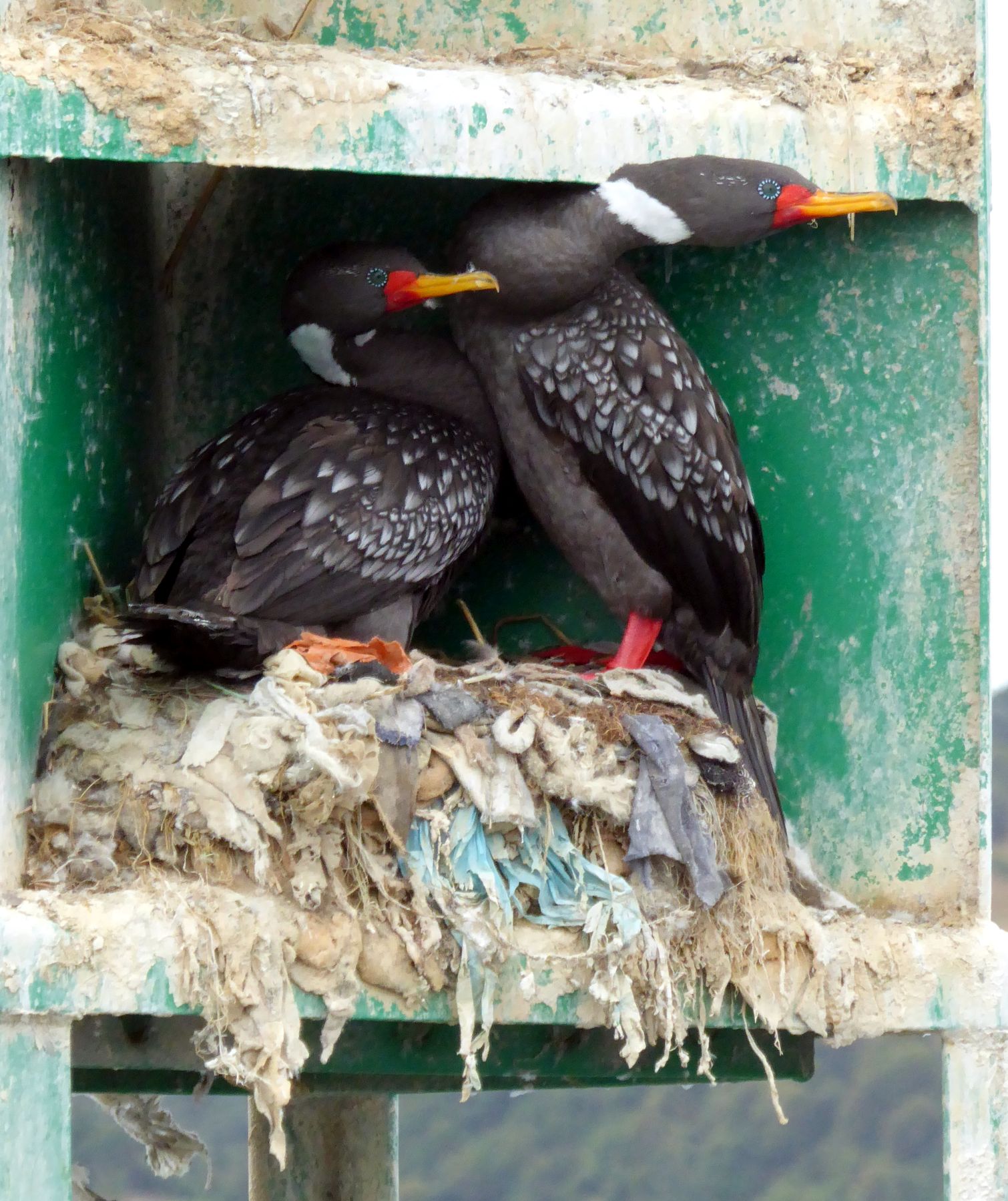
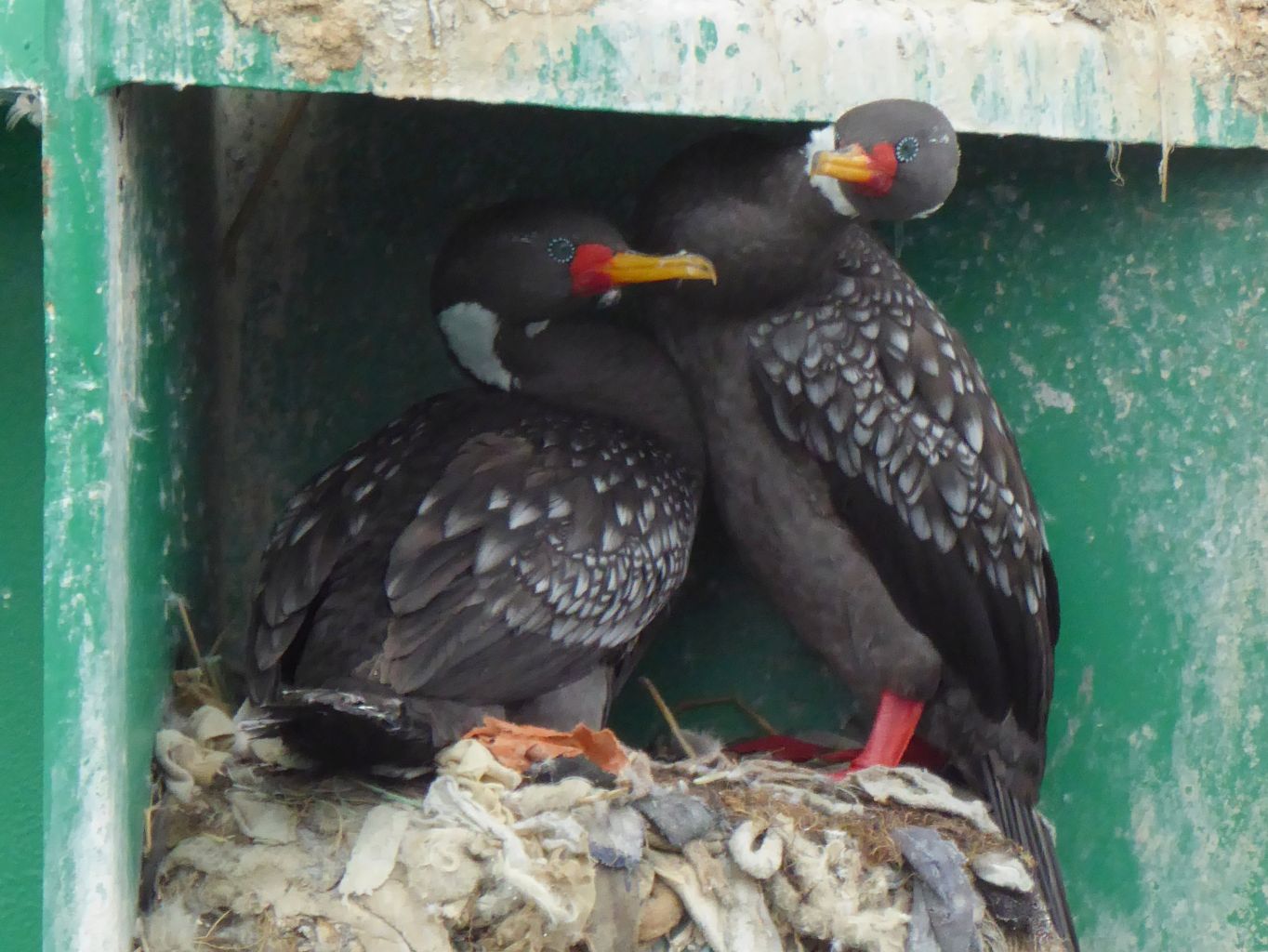
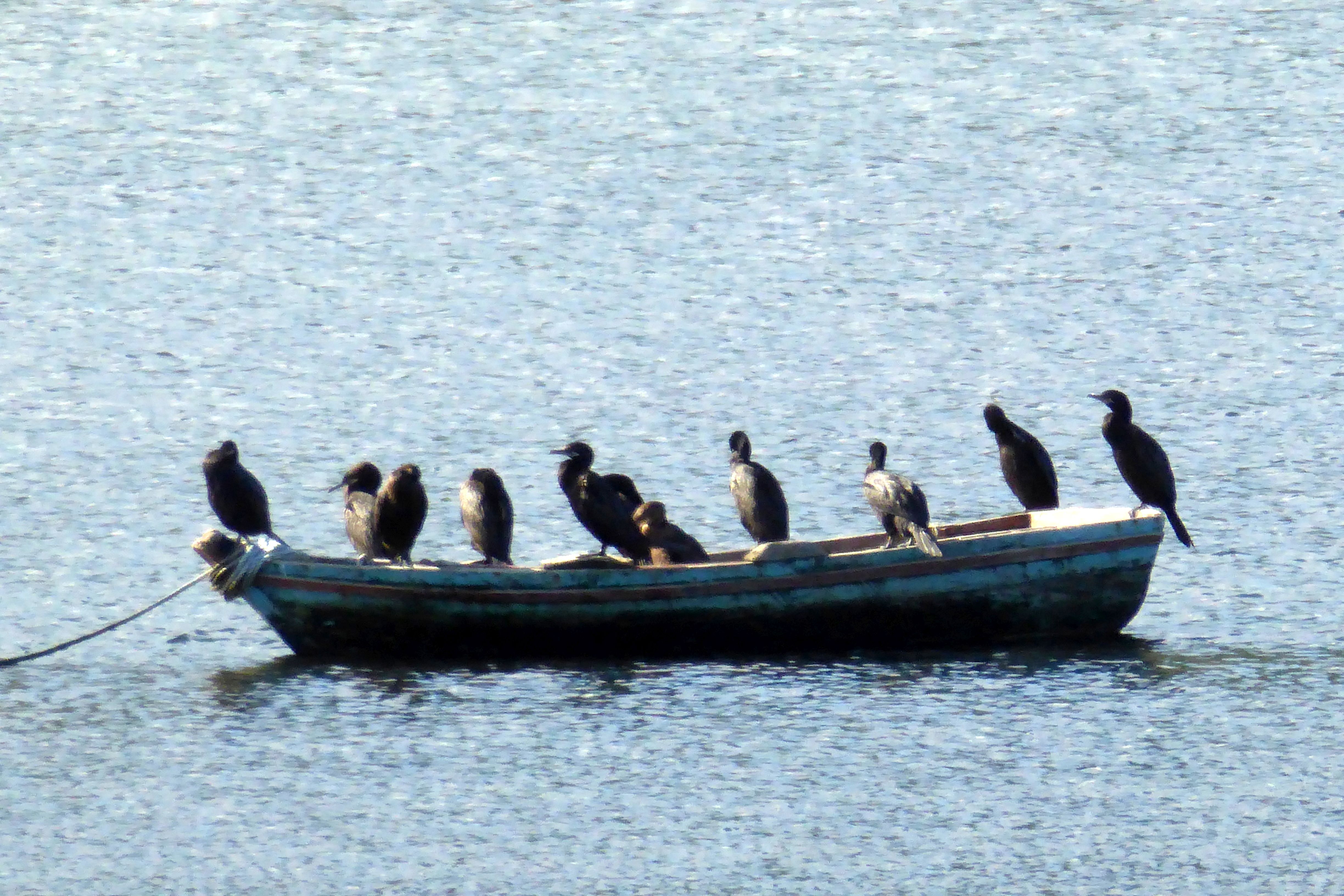
We were able to get quite close to these Red-legged Cormorants, and I zoomed in. I think they were quite used to boats coming by, because they didn’t fly off.
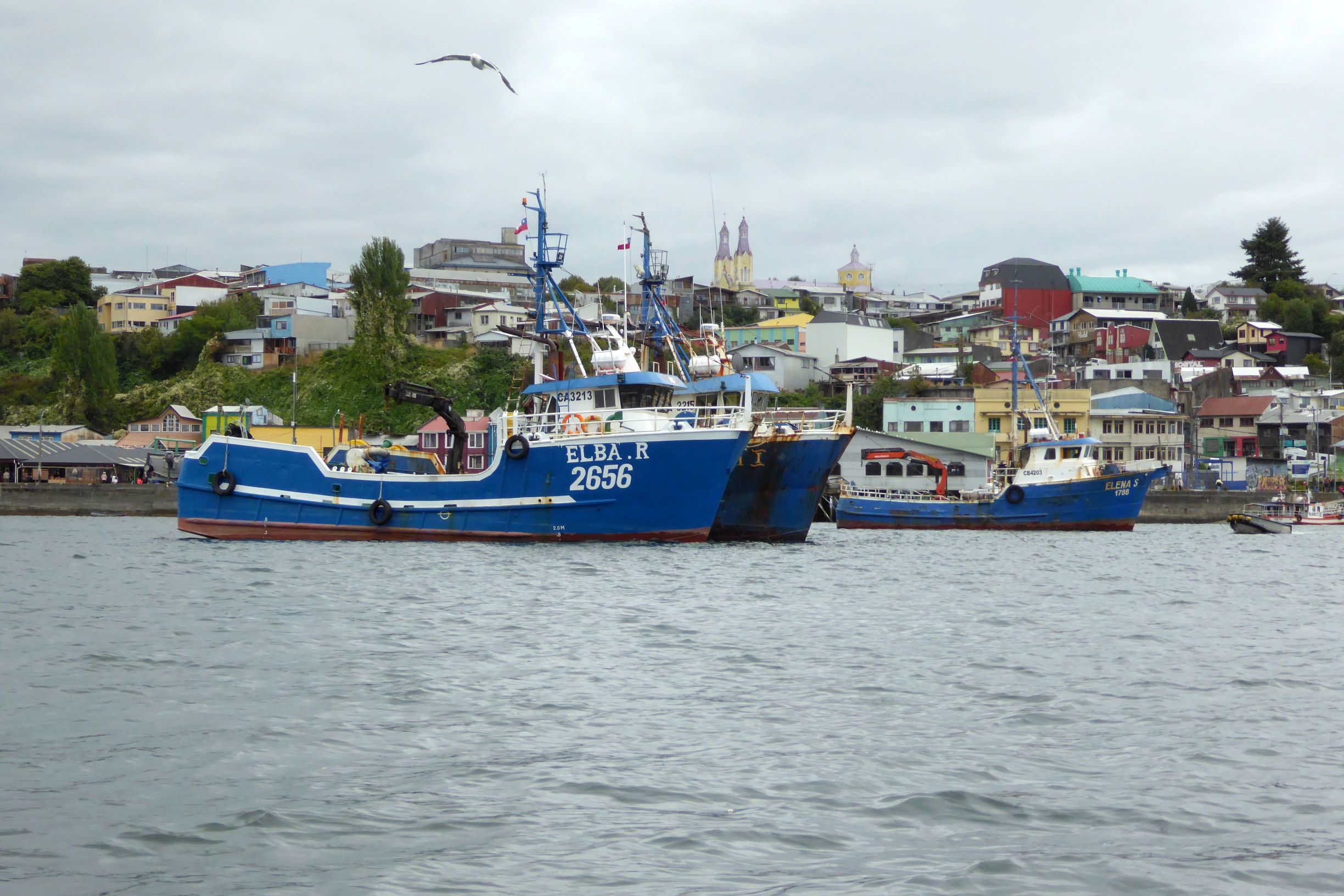
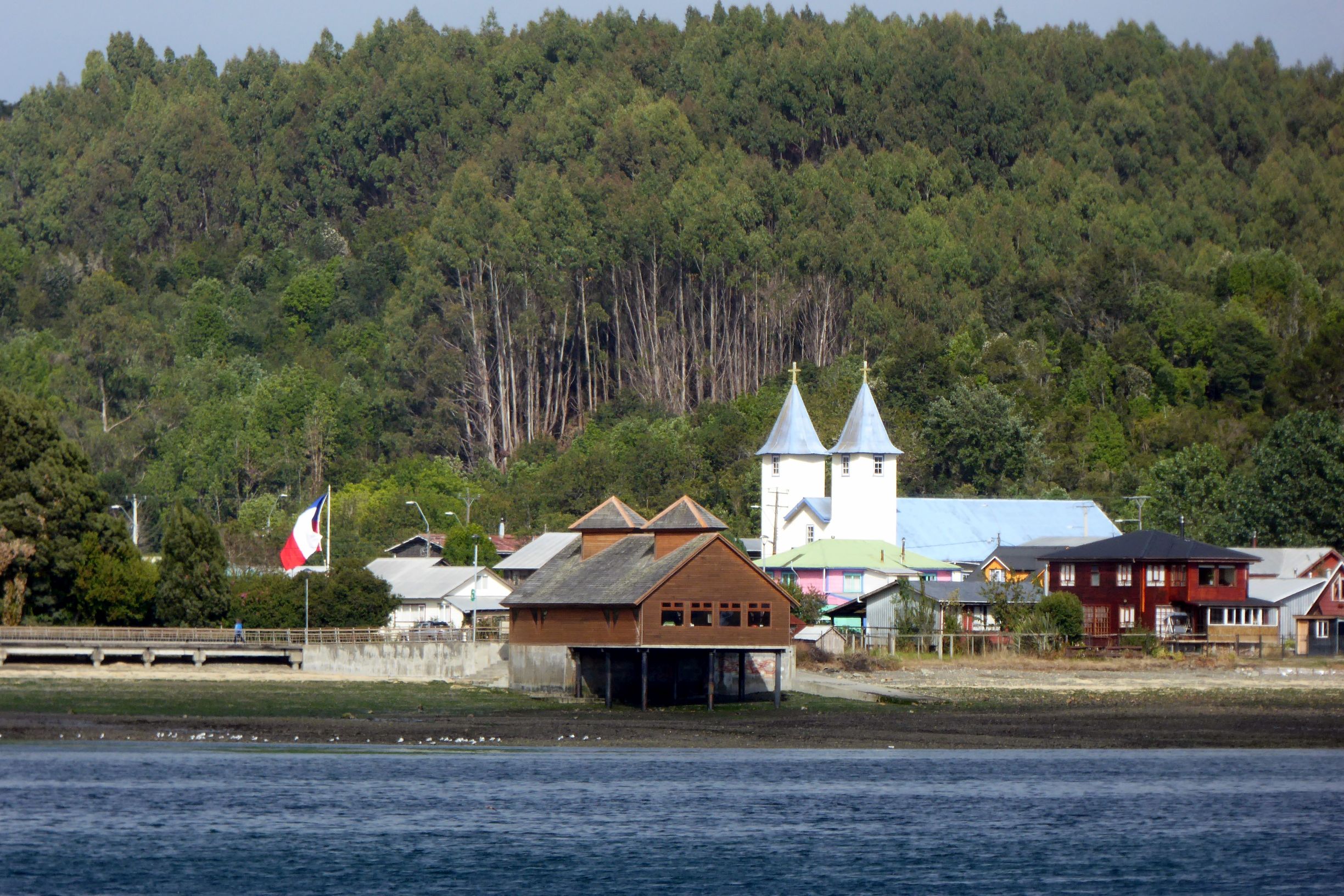
A view of Castro and the Church of San Francisco.
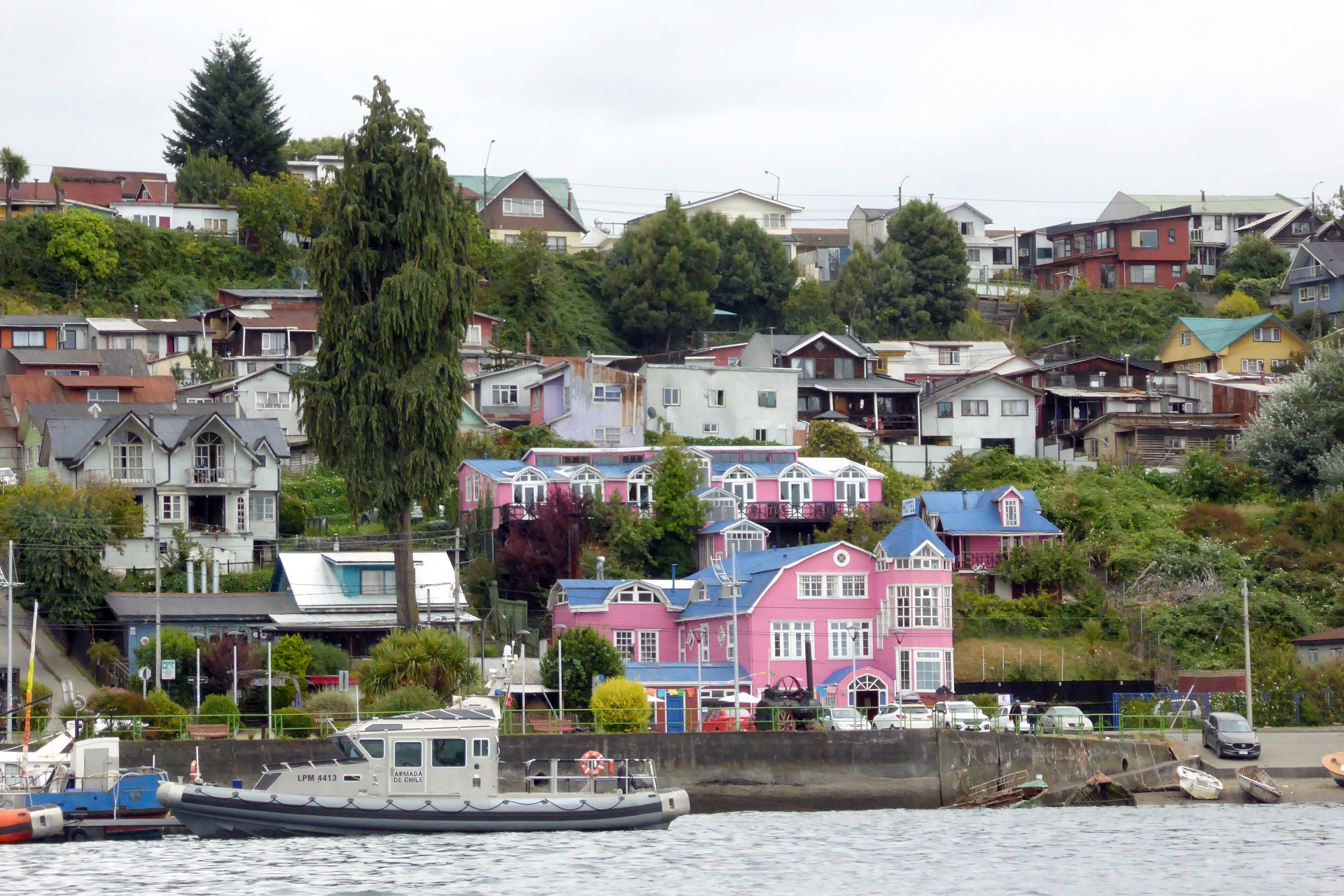
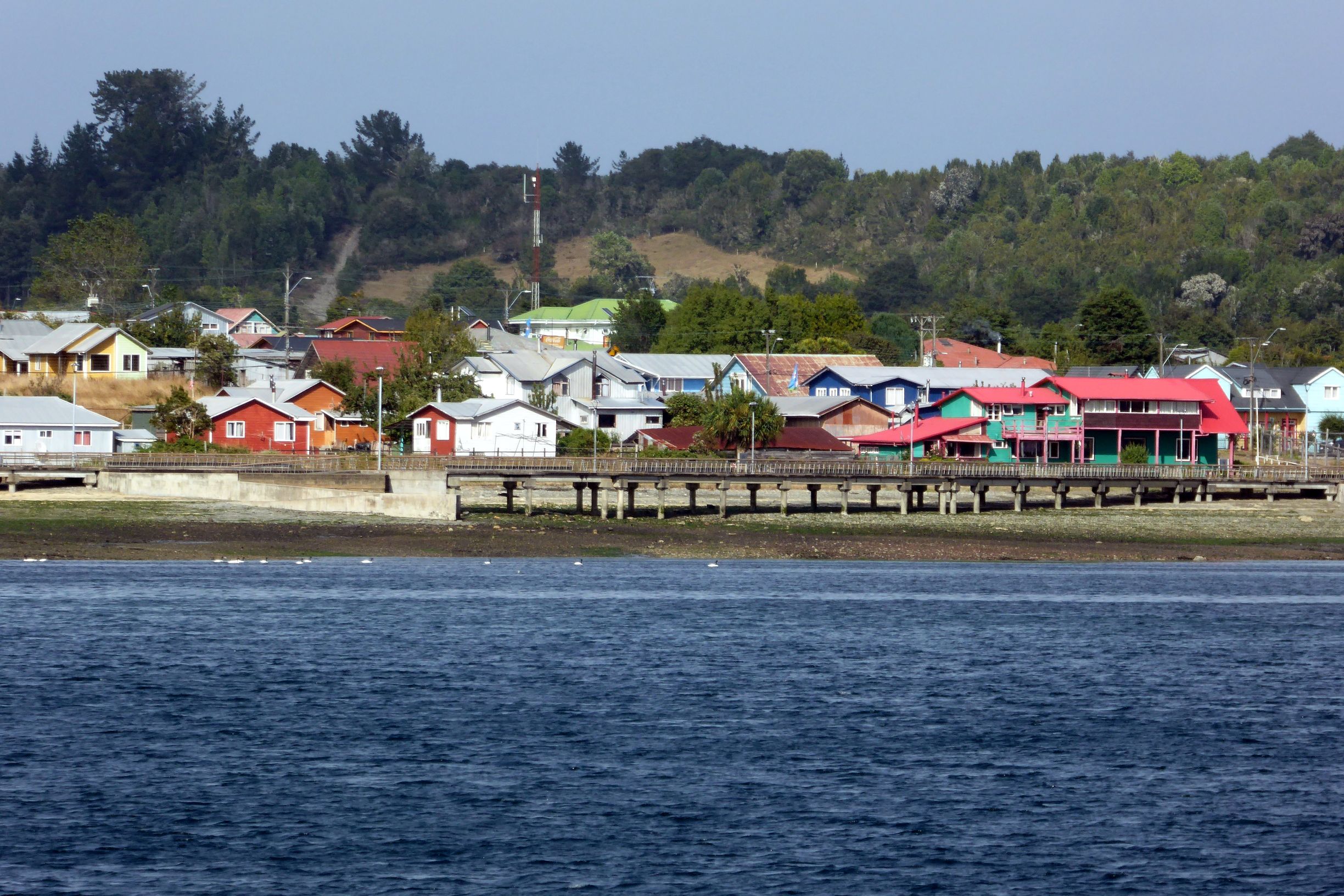
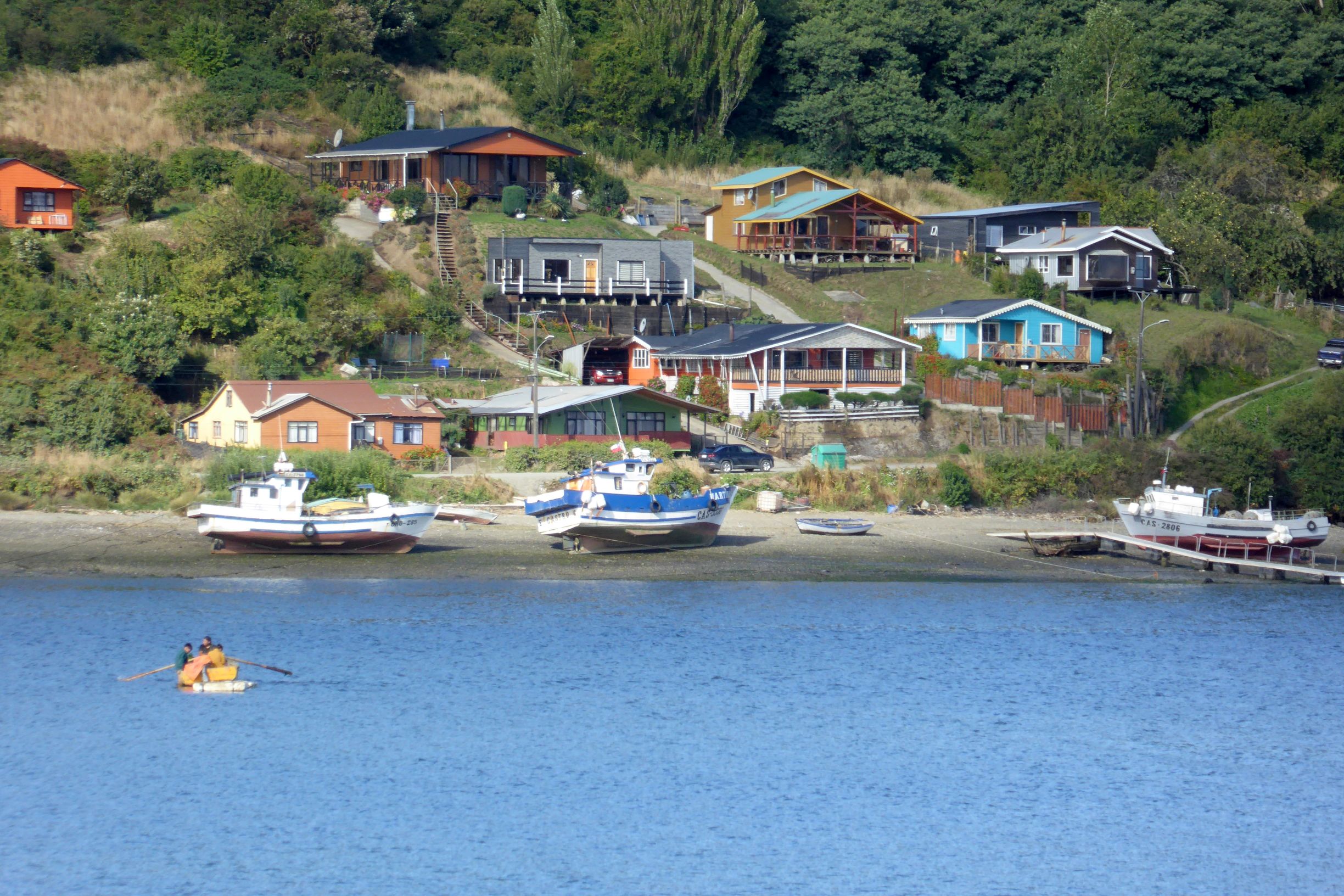
Palafitos, the houses on stilts.
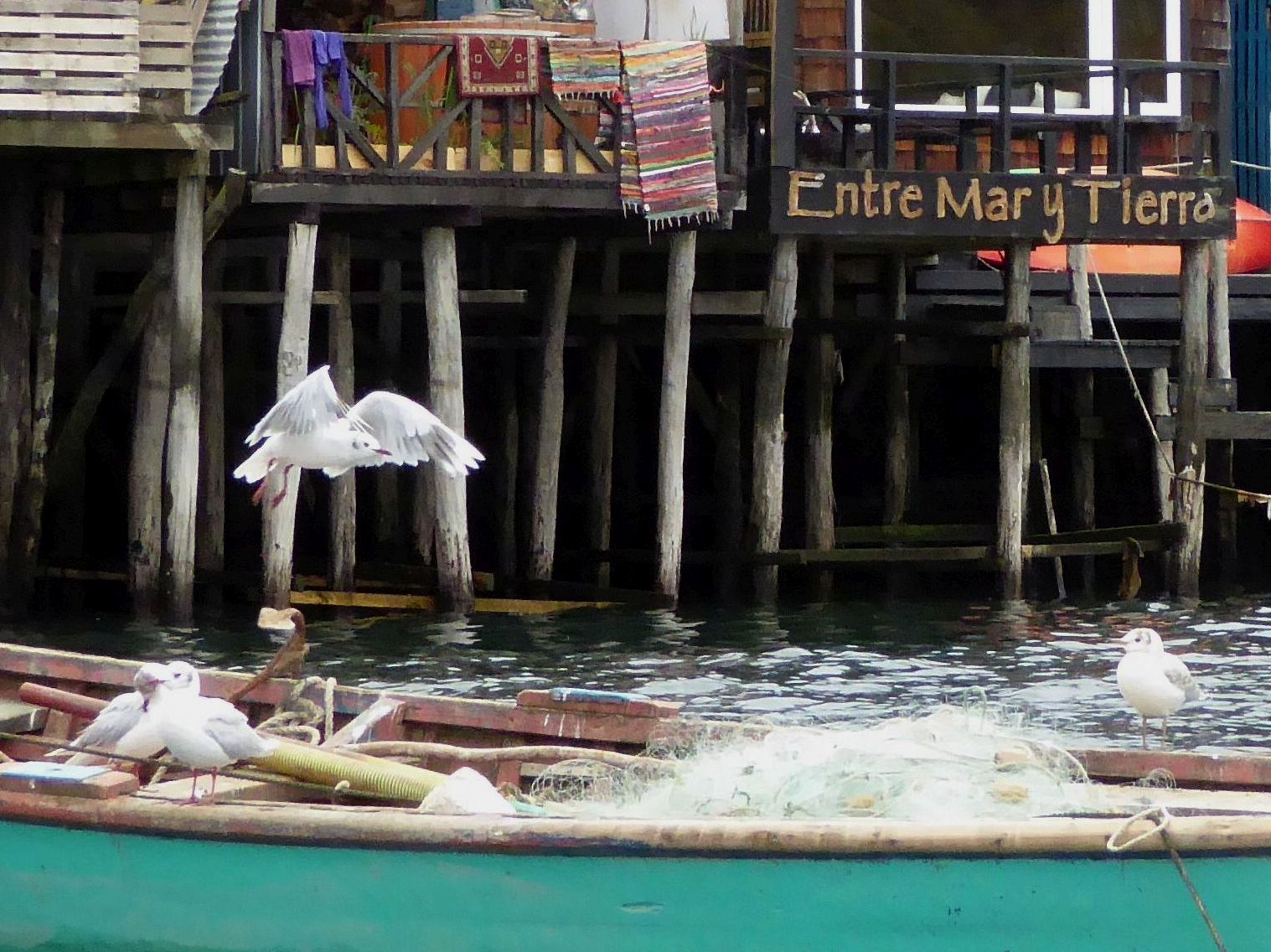
A closer view of this bird in flight. The sign reads, “Between sea and land.”
Captured from the bus window while heading back to the hotel.

What a fabulous and very memorable day!

Next up:  ARGENTINA & CHILE #11: PHOTOGENIC PENGUINS AT PUNIHUIL

ARGENTINA & CHILE #9: CHARMING CHILOE ISLAND

Chiloe Island, a ferry ride away from the mainland of Chile, was a place I looked forward to visiting after learning about the native Mapuche people and their values.  During our home hosted dinner, Carolina told us her mother lived in Chiloe and described the island’s people as humble and giving.  As she explained, “Being wealthy [in Chiloe] is having a meal to share with family and friends.”

Chiloe, “Land of the seagulls” in Mapudungan, is an archipielago located at the southern end of the Lake District of Chile with about 40,000 residents.  It’s a rainy place; it rains 75 inches a year.  Fortunately, we didn’t experience any of it—well, except when we were on the bus for a short time.

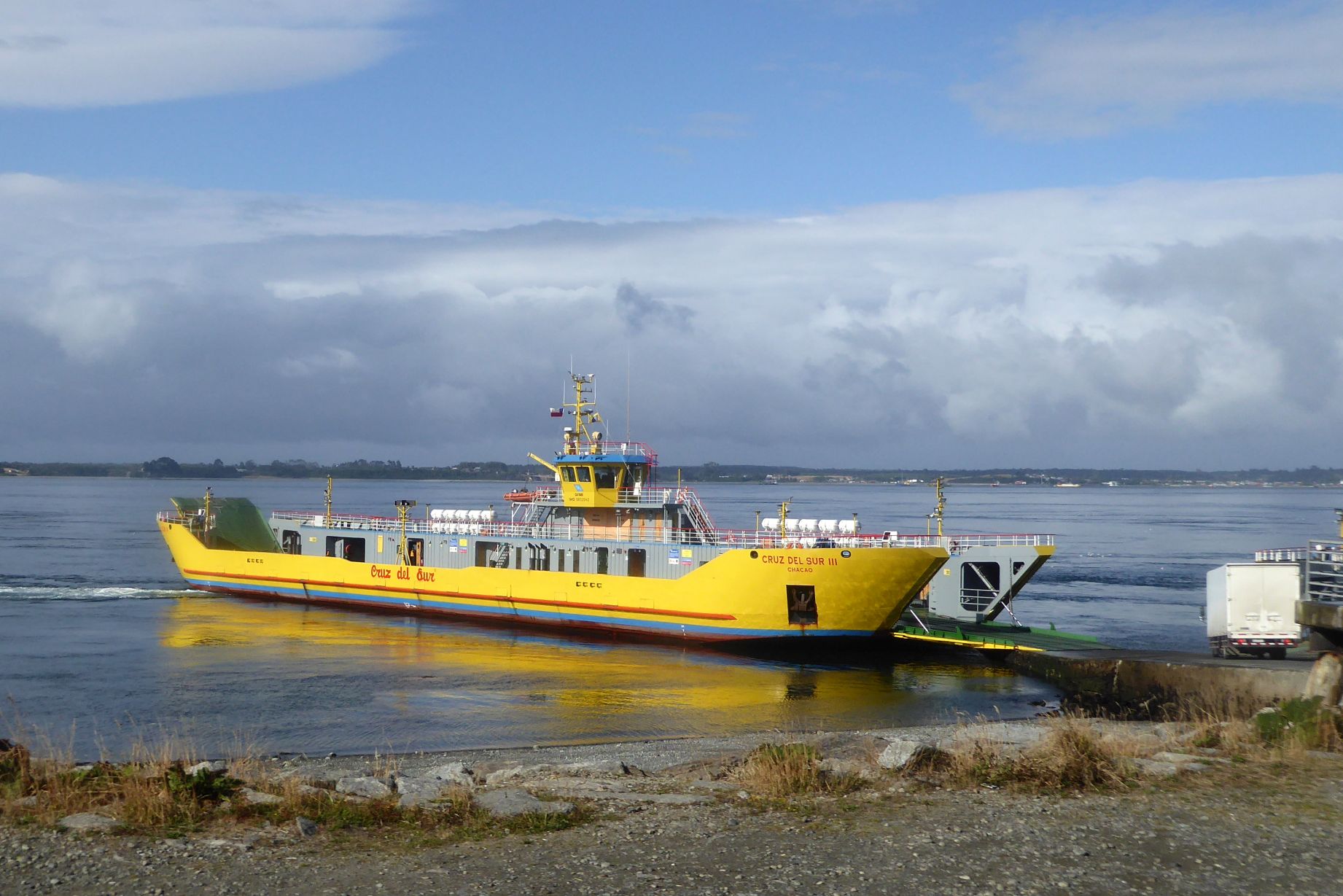
After driving along the Pan American Highway, we arrived at the landing and embarked the ferry, bus and all, to Chiloe Island.

(For all photos, especially panoramas, click on the image for a full screen view.)

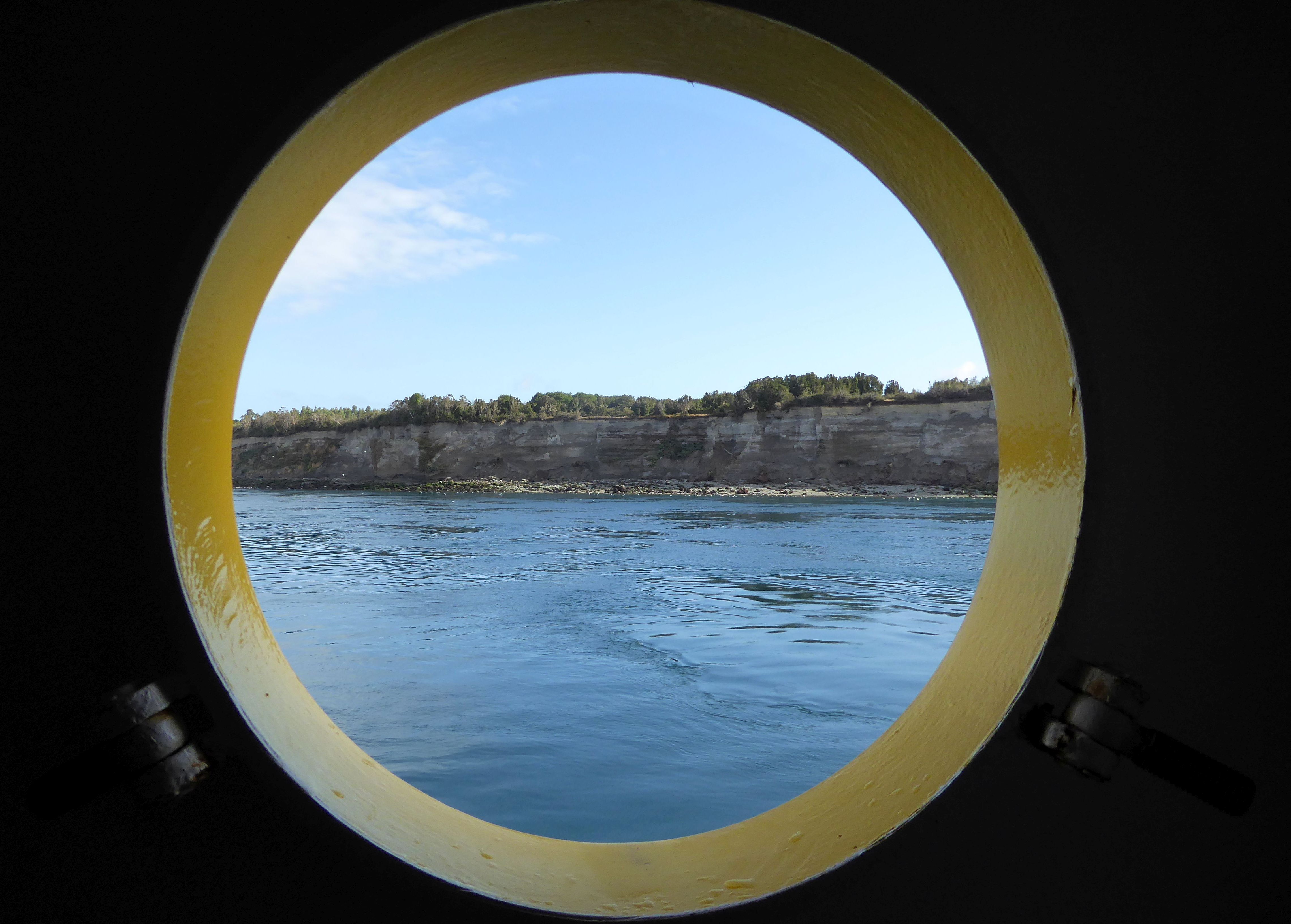
Once we pushed off, we were all permitted to vacate our vehicles and enjoy the one-hour crossing.  It was another lovely day, so we all went up on top to enjoy the views.  I always have my camera with me, so I took advantage and grabbed a shot during this quick pit stop in the head:

Following our arrival in the town of Chacao, we took a walk along the waterfront to the town square.  Along the way, we saw so many gorgeous birds, including this large beauty high up in the tree:

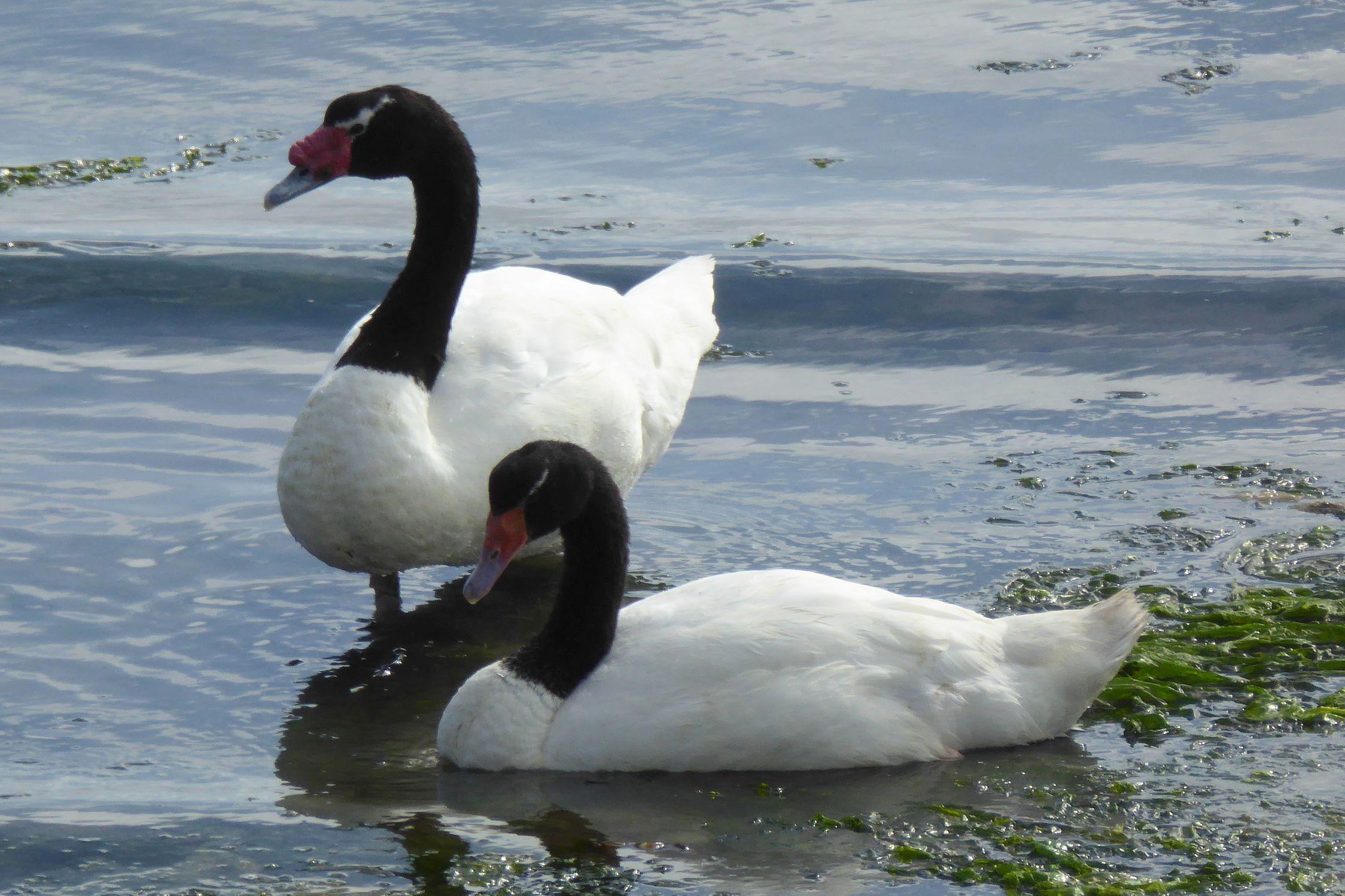
These are black-necked swans:

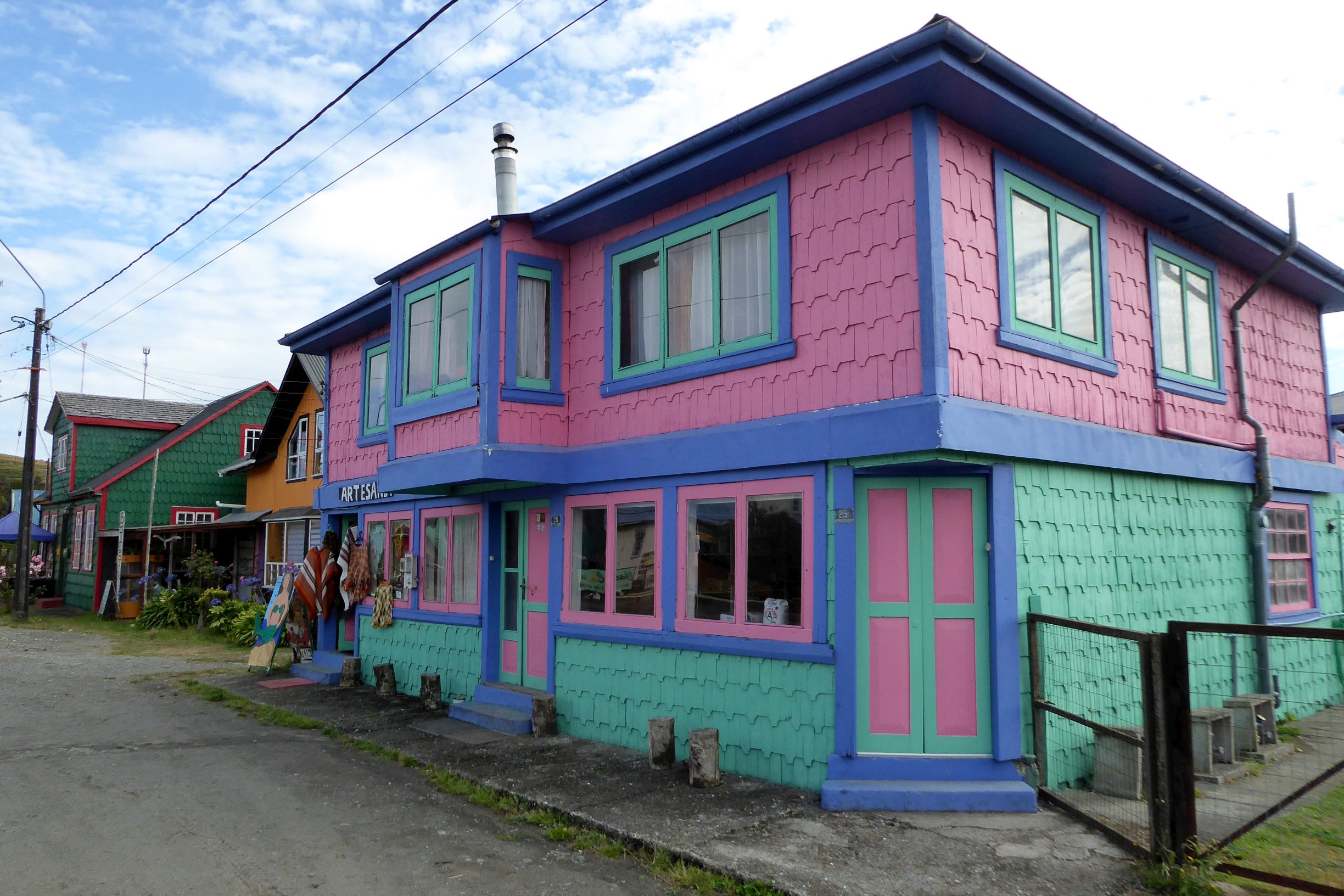
A unique characteristic of the architecture on Chiloe are the intricately cut house shingles.  Each builder has his own design, and locals can tell by that design who built which house.  The colorful buildings made me smile as did the warm and friendly people.

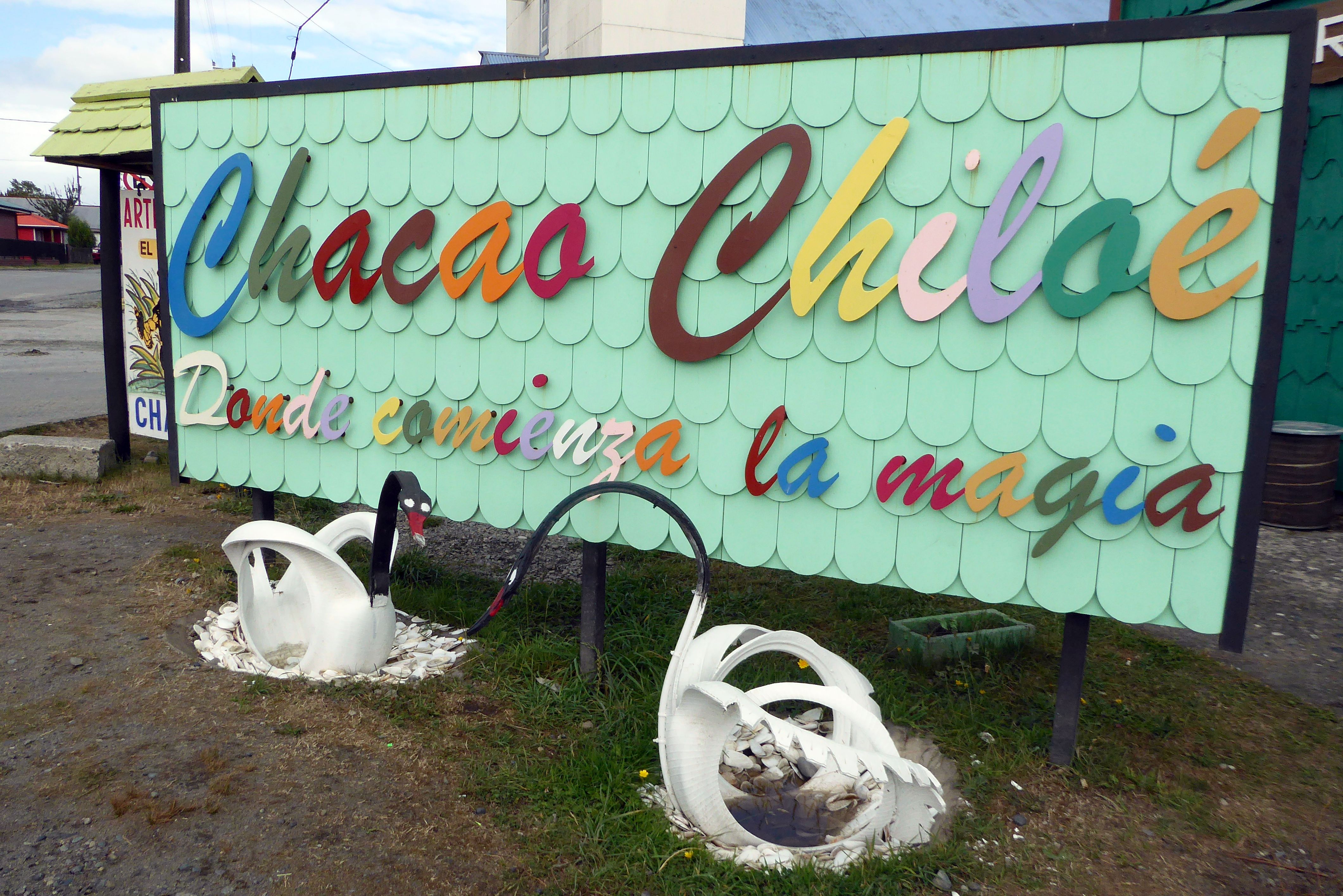
Translation: “Where the magic begins”

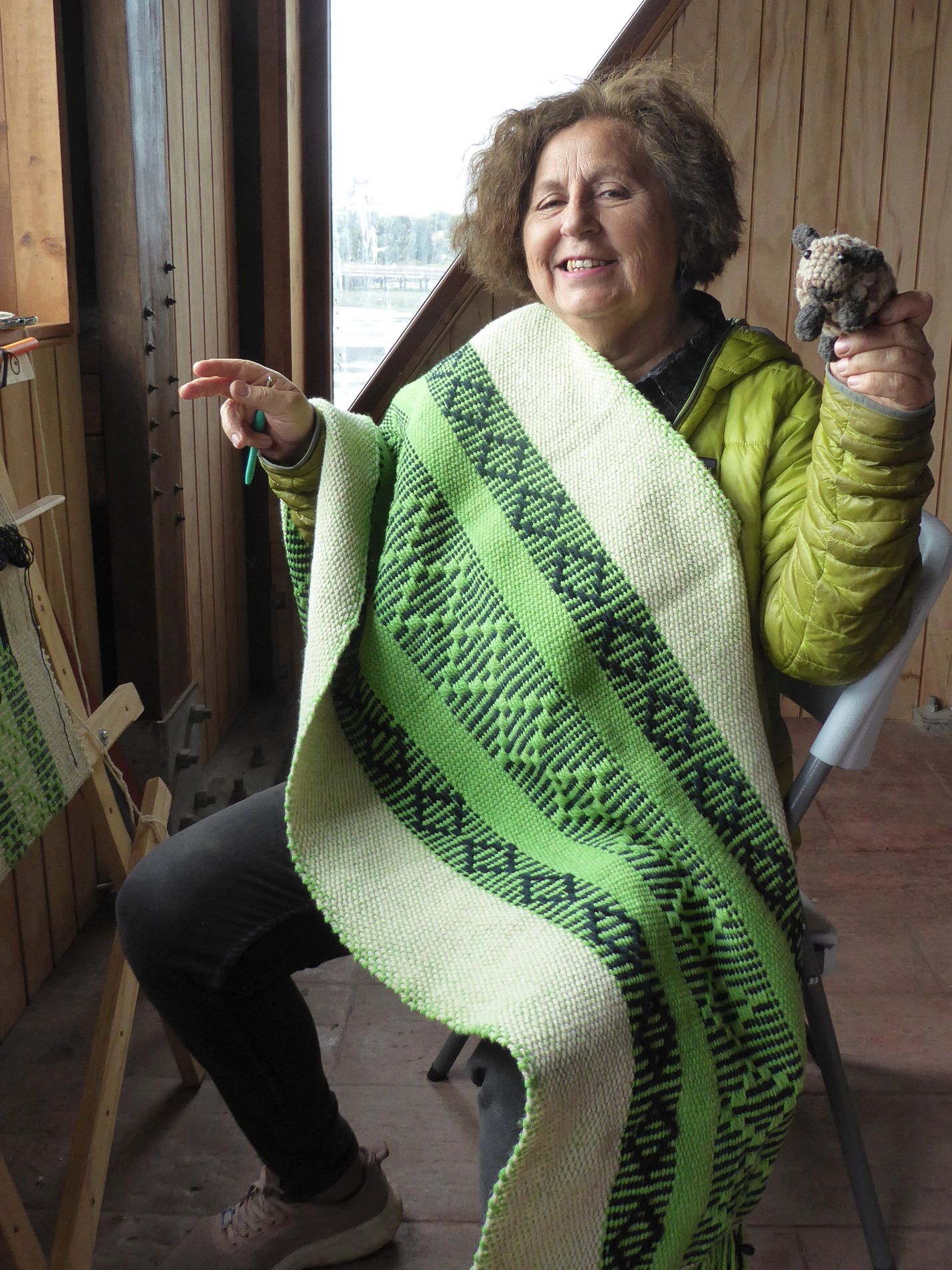
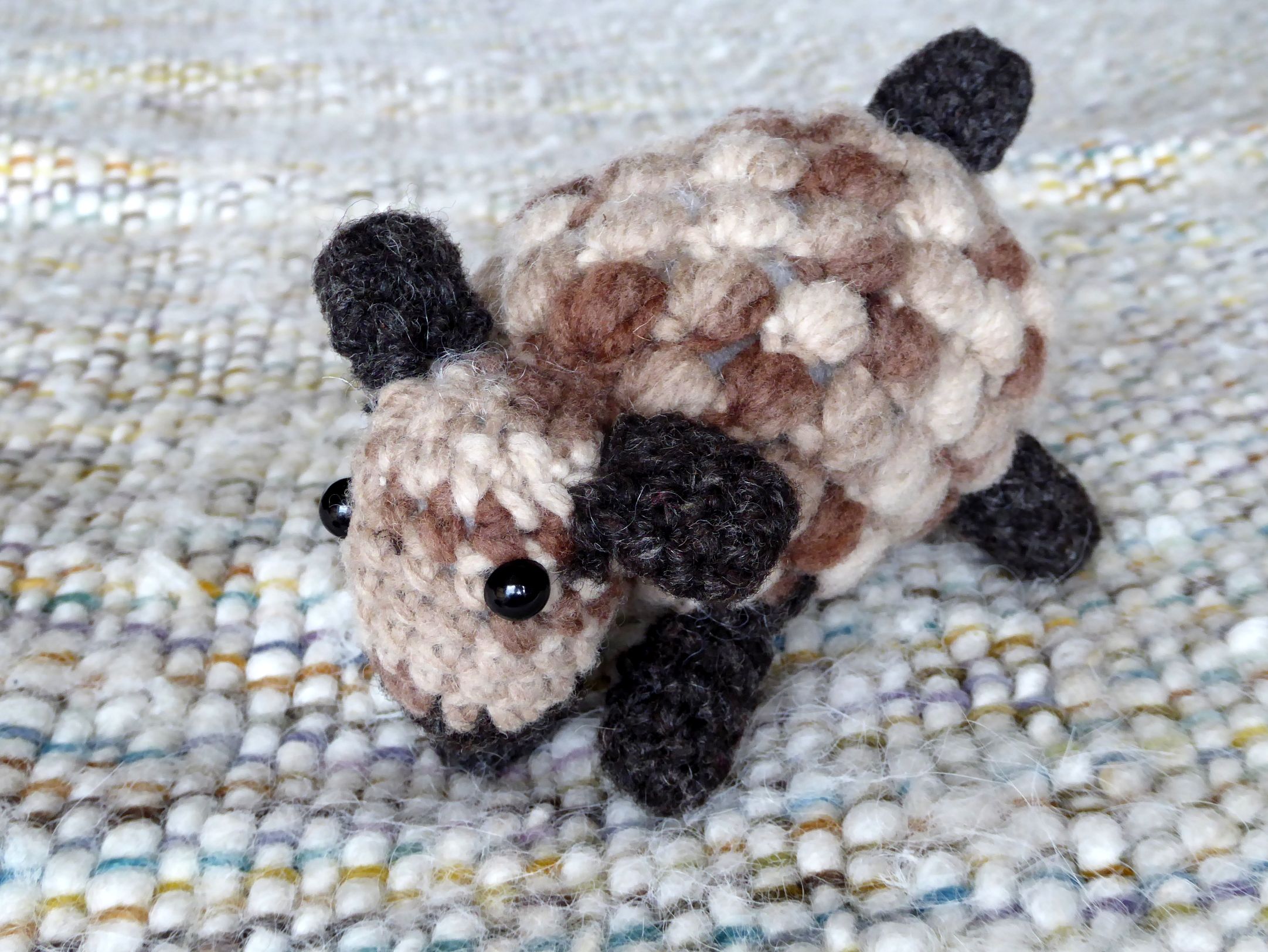
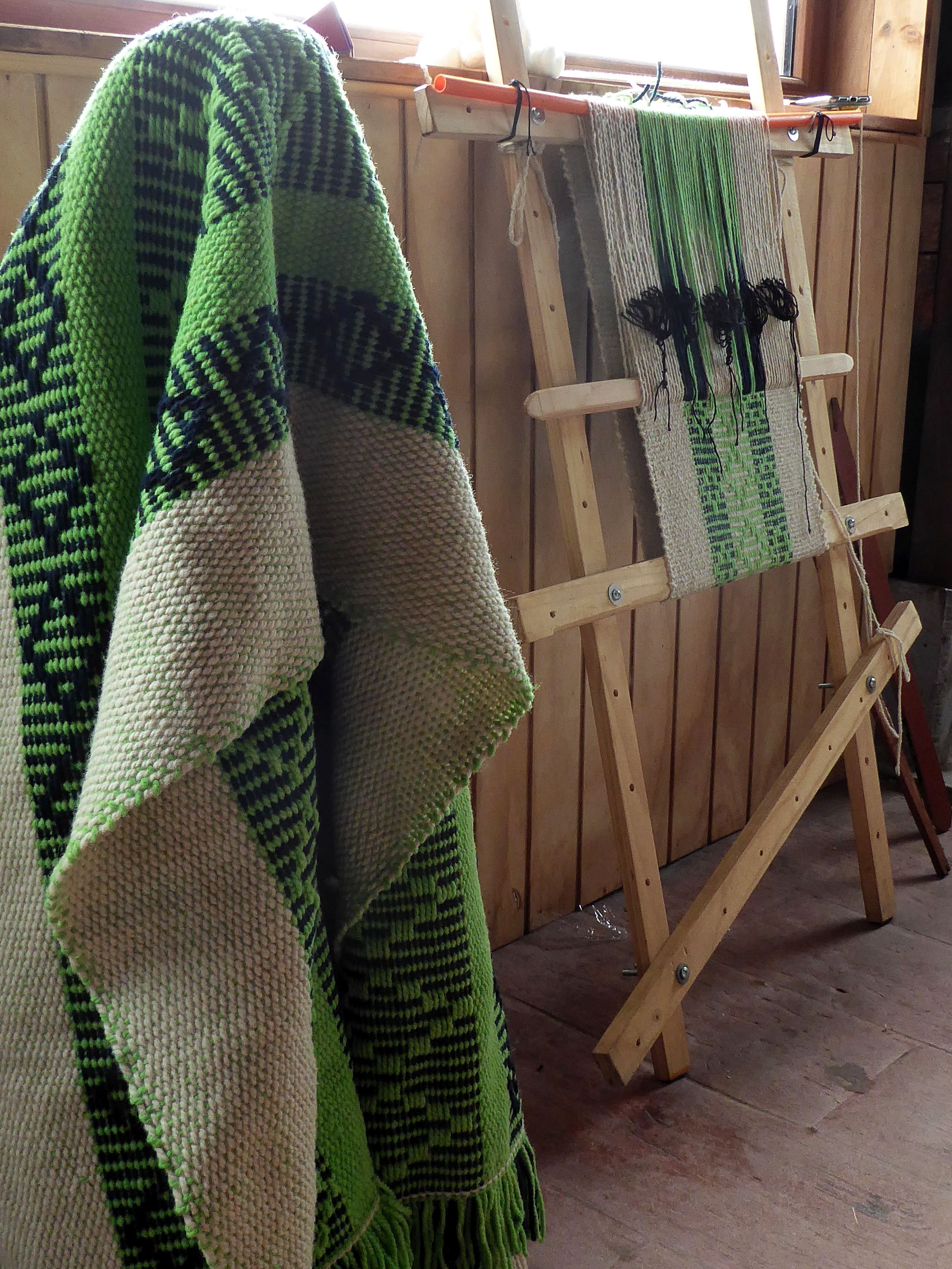
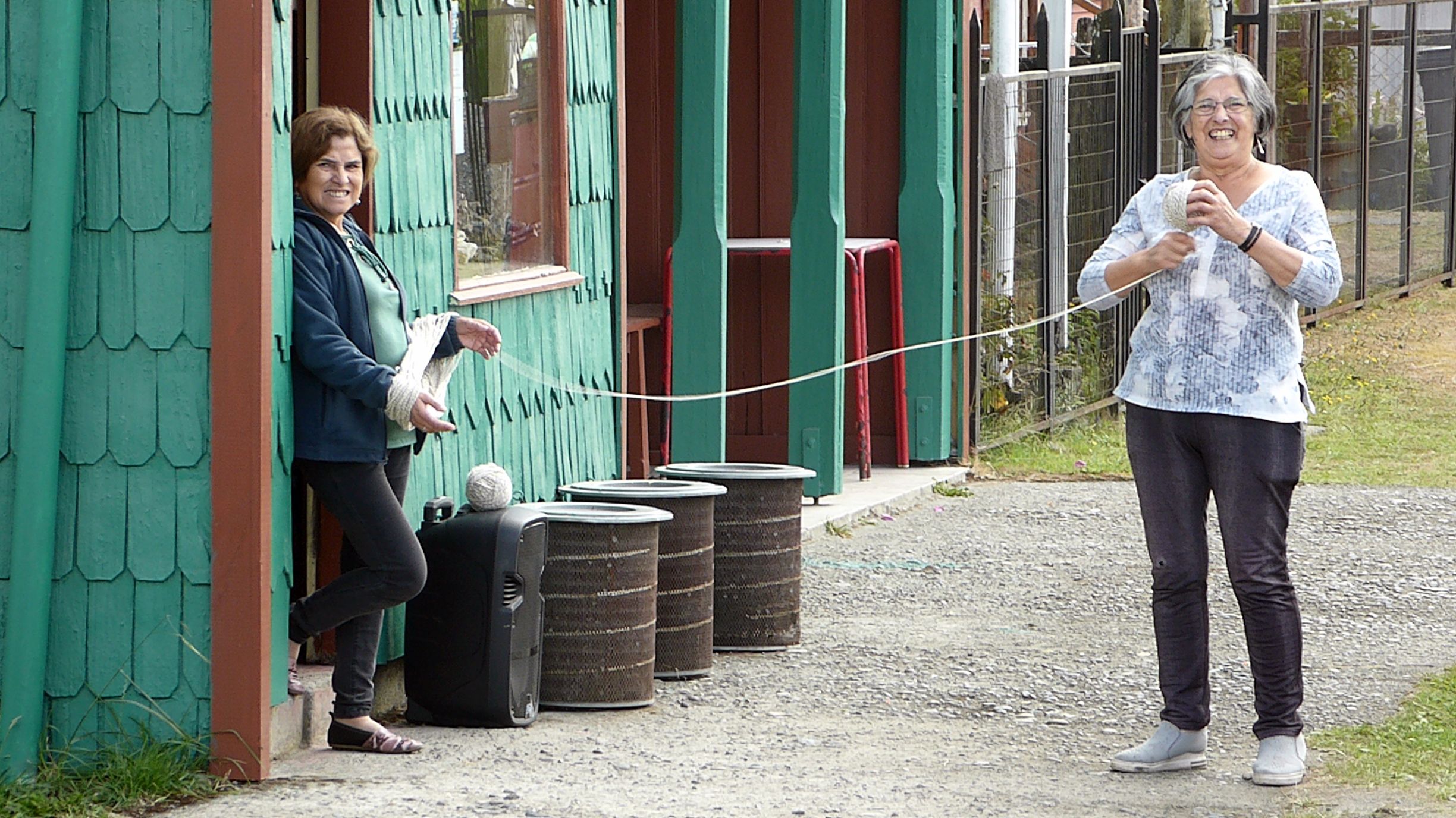
We popped into the community center to see what the local crafters were selling, and I had a wonderful interaction with a fiber artist who didn’t speak English.  Thanks to Jay, a fellow member of our group, I was able to learn the price of this adorable sheep and complete the transaction—only 2,000 pesos, which was just over $2!  The fun part, though, was trying to communicate with her in my limited Spanish.  I knew just enough to tell her how beautiful her work was!  She was flattered when I asked for a photo, and she made my day.  Her sheep keeps me company as I write these posts…

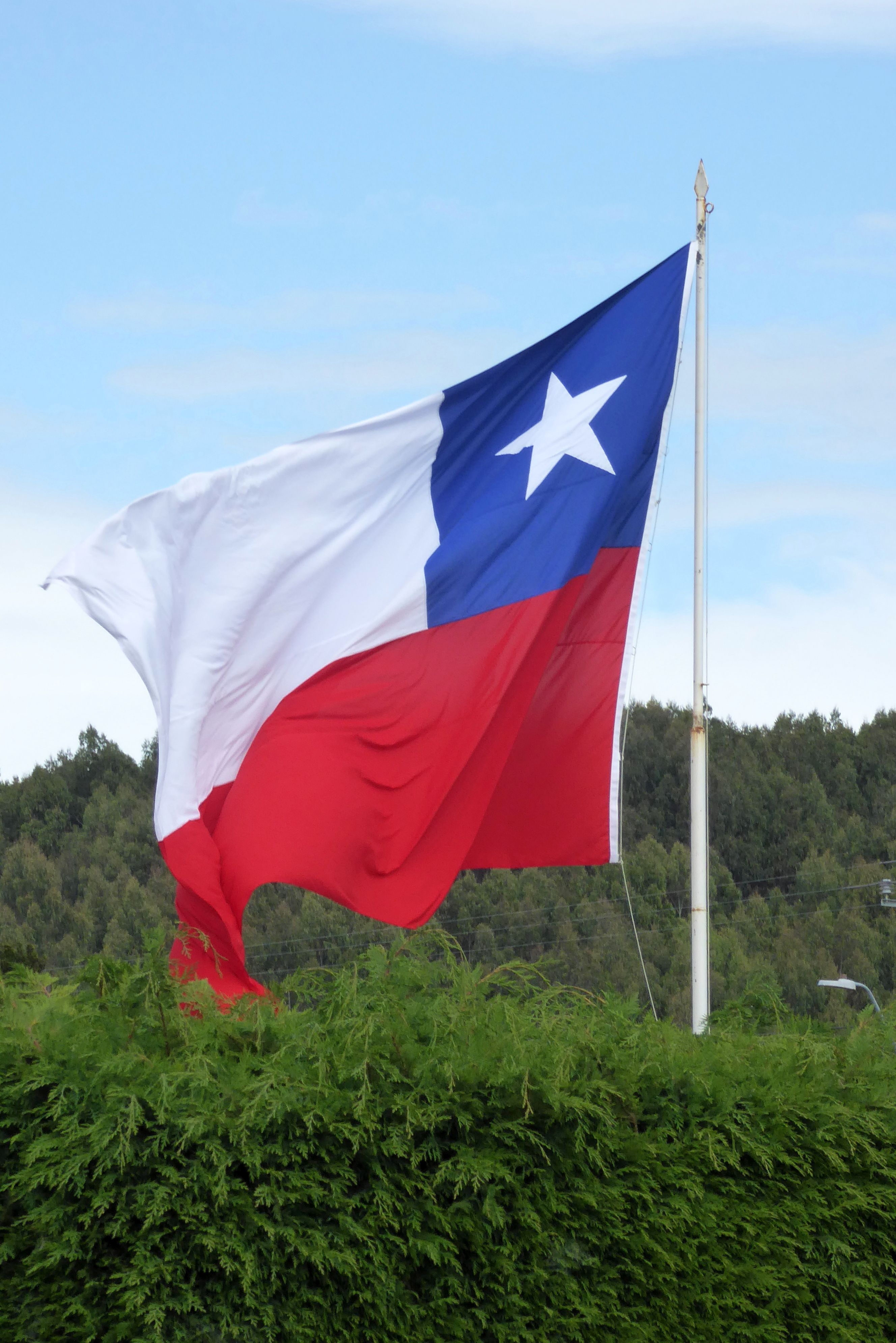
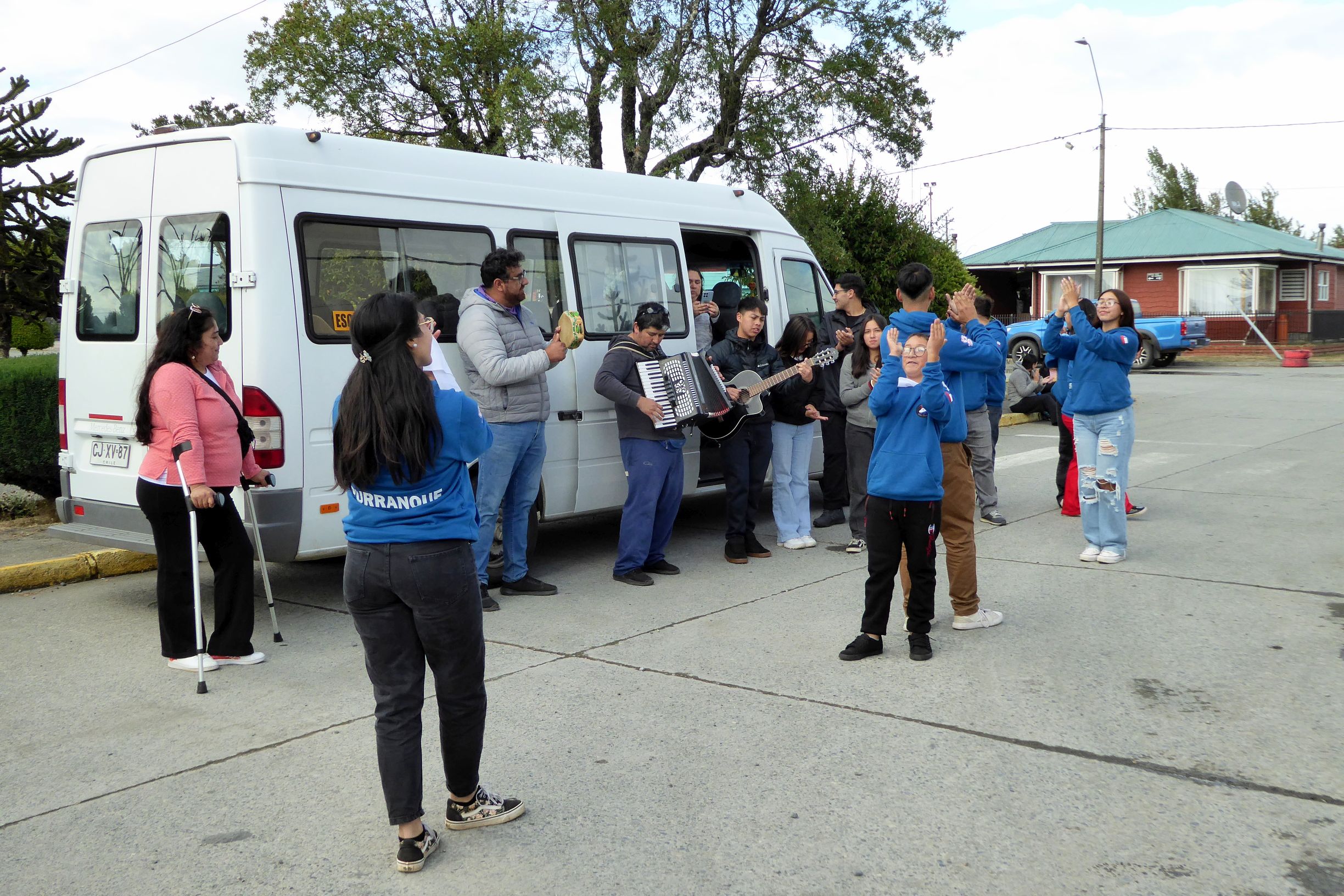
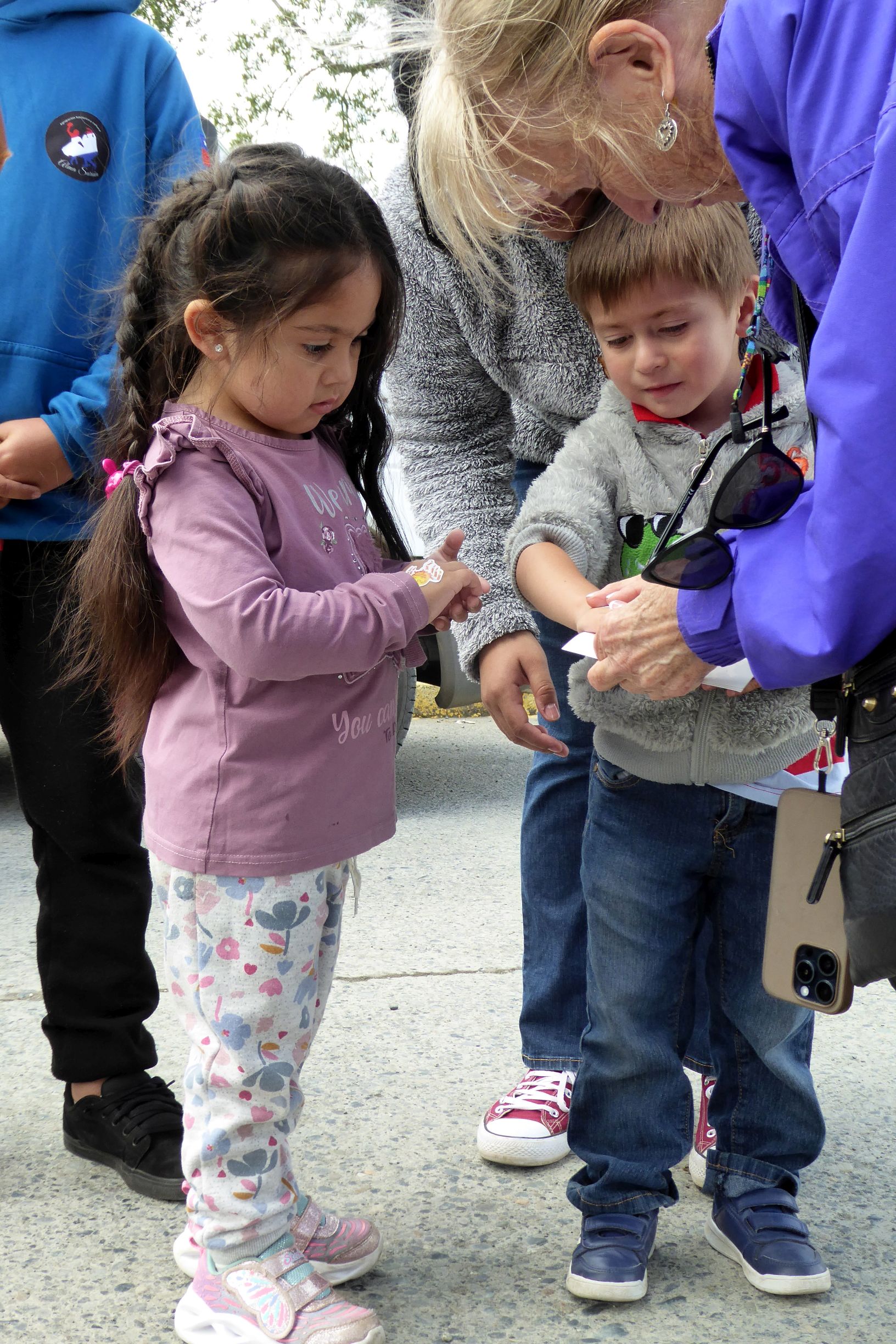
As I photographed the gigantic Chilean flag in the square, Andrea came running up to me and Bruce and exclaimed, “Come quick!”  She didn’t want us to miss an impromptu performance by a young music and dance group that was on tour.  They delighted us as well as the locals, including this woman and these shop owners who warmed my heart:

Mary, giving stickers to the children

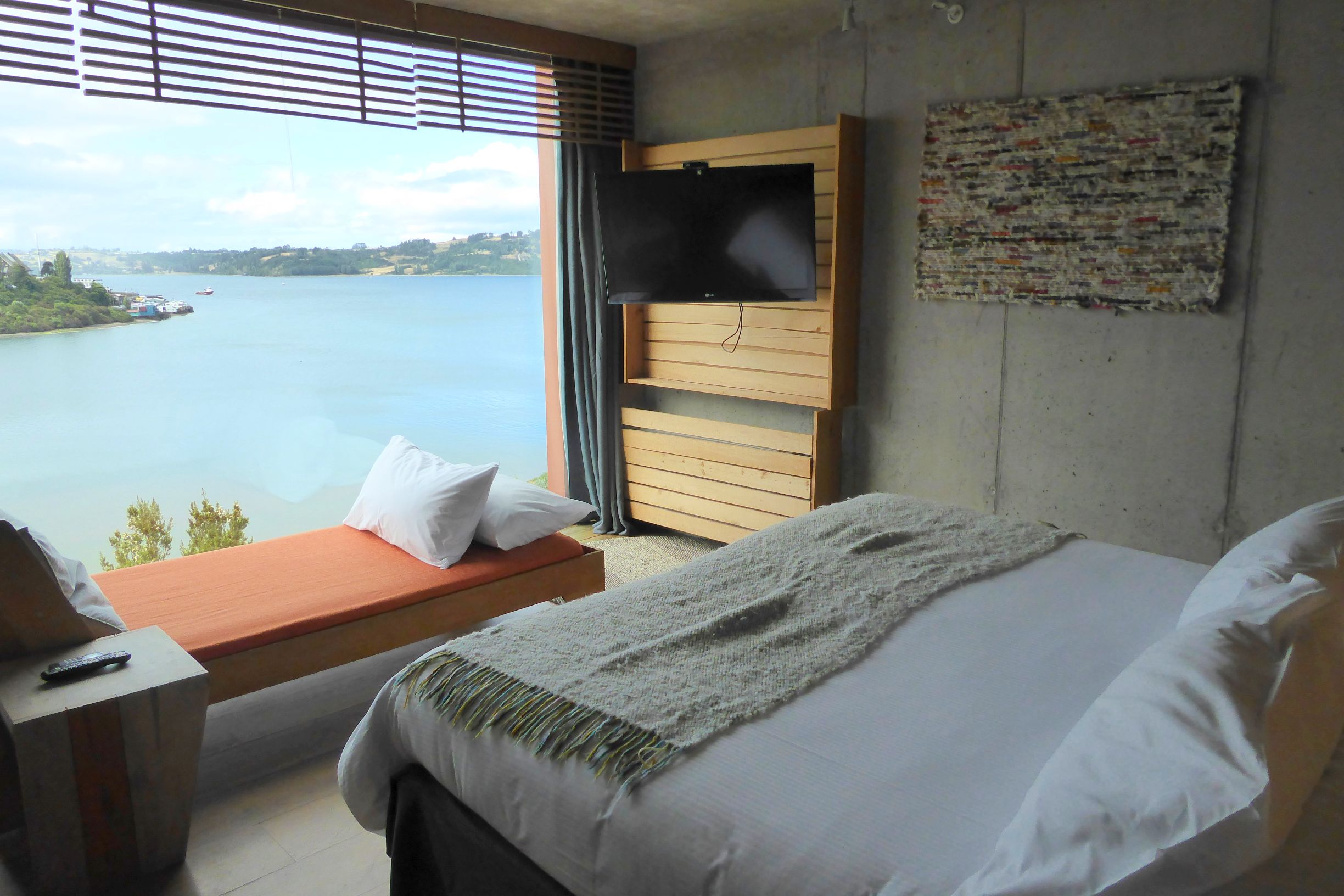
Following our visit to Chacao, we made our way through the rugged, windswept island to Castro, the capital of Chiloe Island.  We checked into the Enjoy Chiloe Hotel, which was a huge surprise given that Andrea told us not to expect it to be as nice as the Radisson in Puerto Varas.  (Evidently, she had received some complaints from past travelers, something I could not understand AT ALL after we arrived.)  Just look at this floor-to-ceiling view from our room!  Our jaws dropped!  We looked around and tried to figure out what was not to like. Sure, there were some stairs going down from the door and closet area to the bedroom; and, the location wasn’t as walkable as Puerto Varas, but look at his VIEW!  Just wait until tonight…

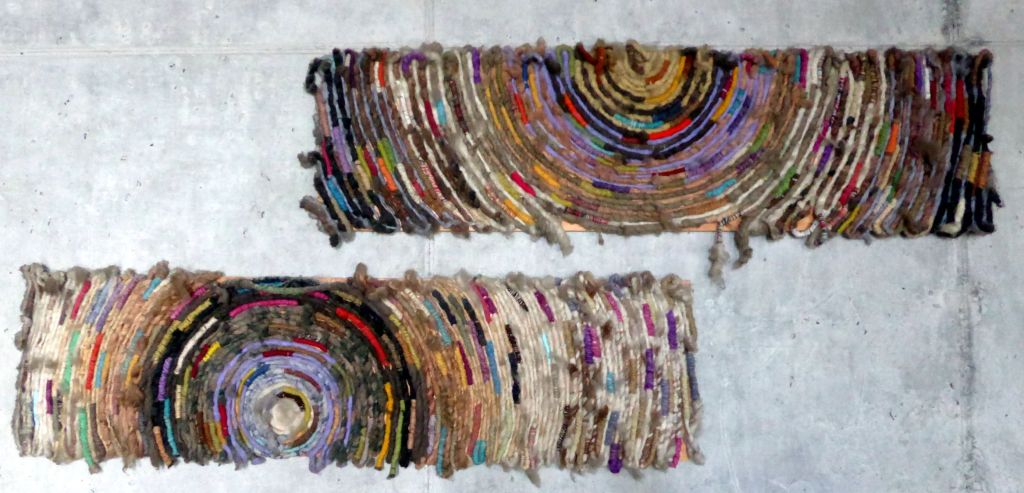
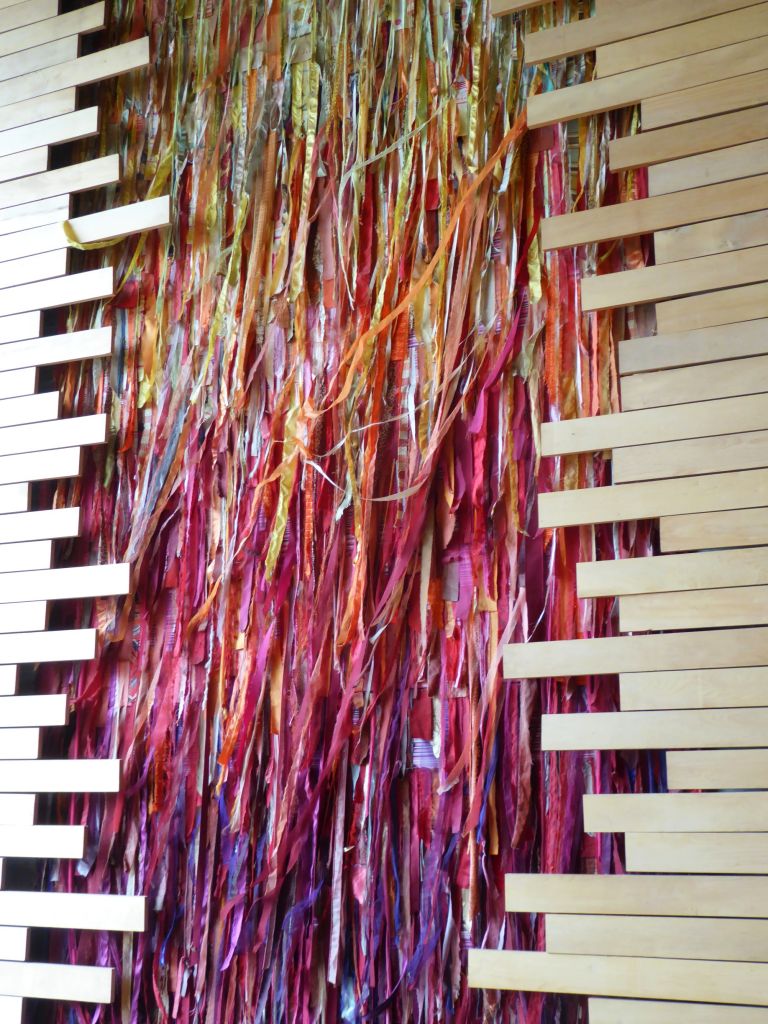
Meanwhile, while admiring the fiber arts pieces on display throughout the hotel (which made my heart sing, because my mom used to create beautiful fiber arts pieces), we made our way to the restaurant for a delicious lunch—with a VIEW!

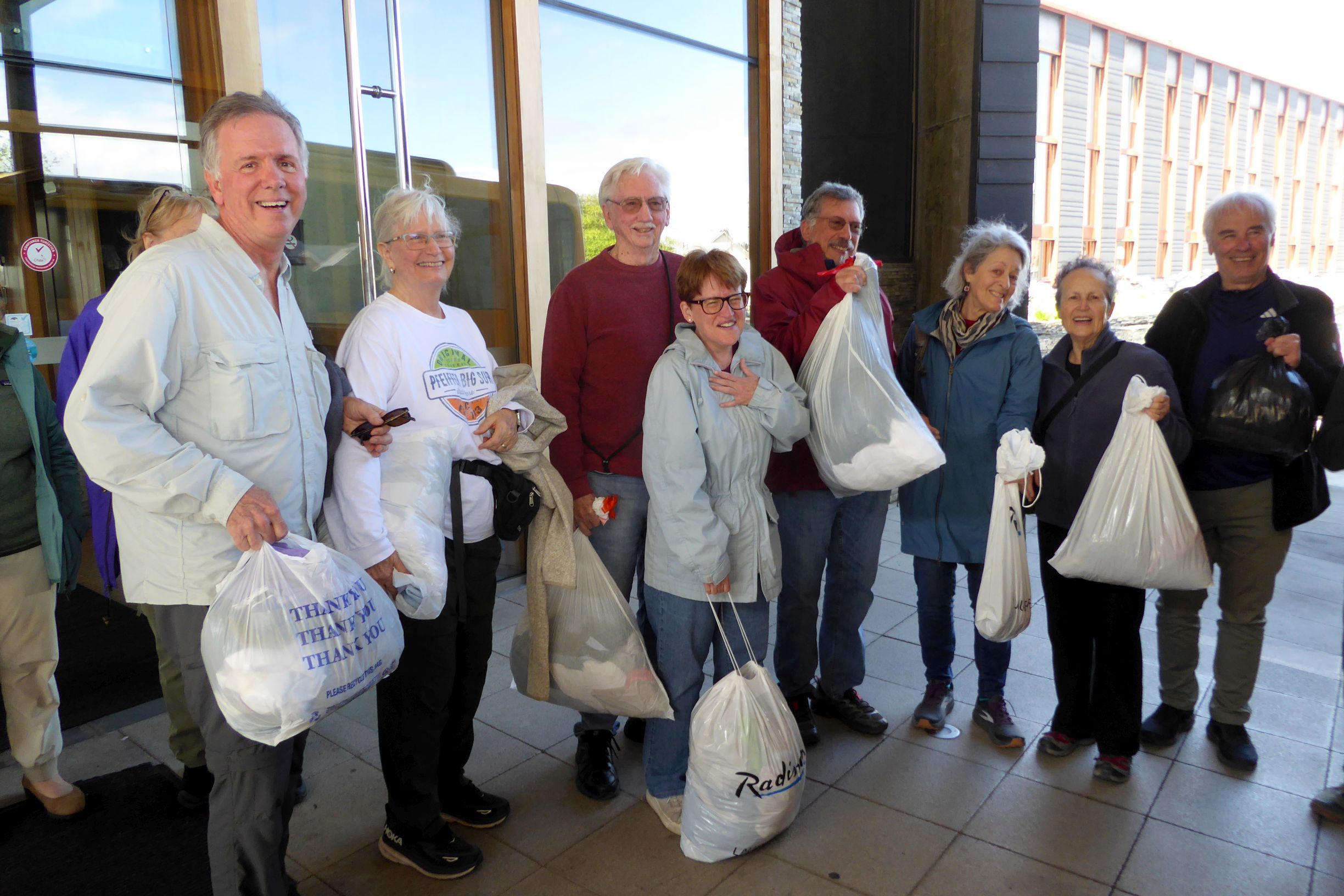
Time for a laundry stop!  I handwash our laundry as we go, so we took a pass, but on OAT tours, they always try to arrange somewhere for the group to have their laundry done along the way.  Drop it off, see the sites, and then return for a clean stack of clothes.

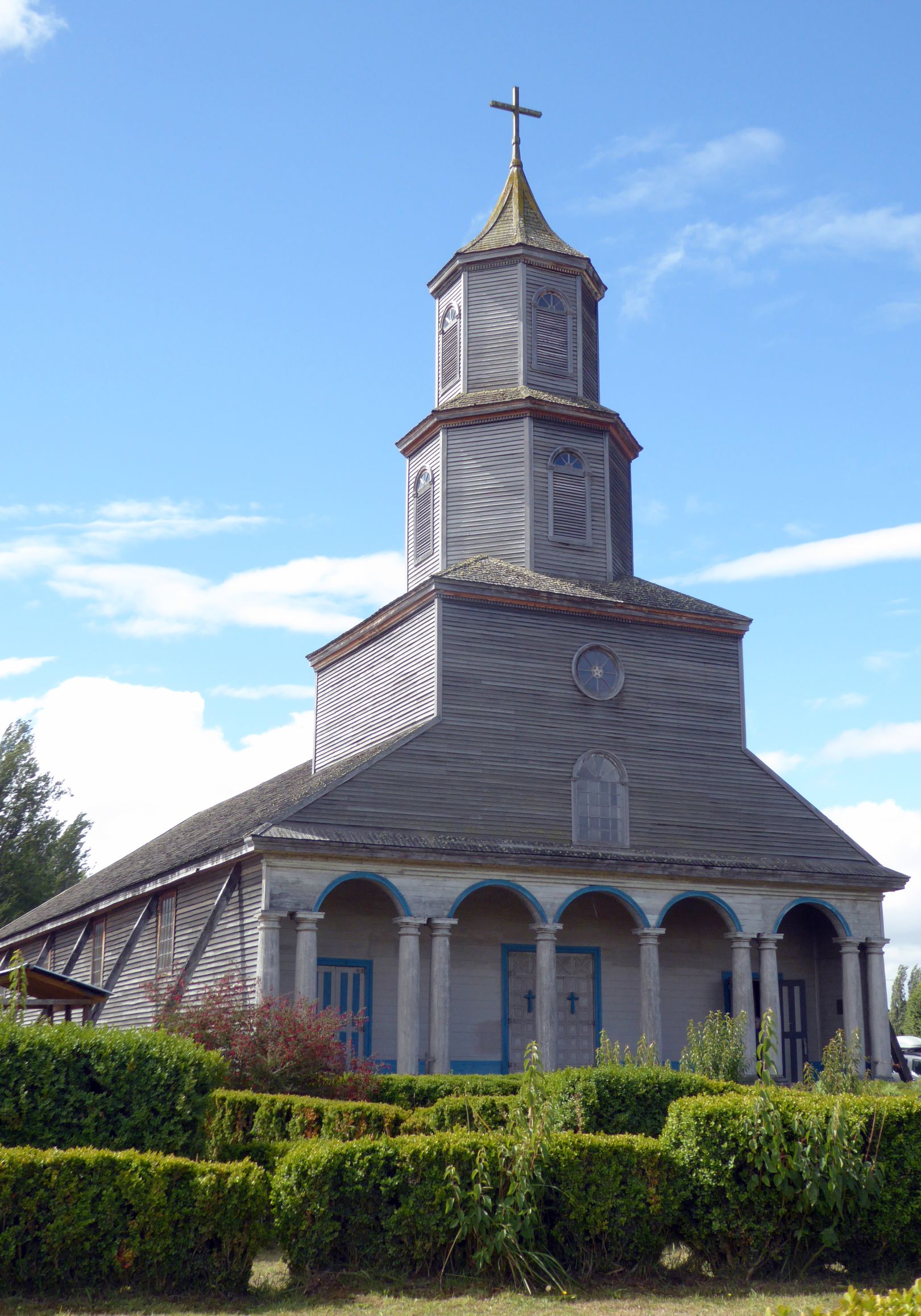
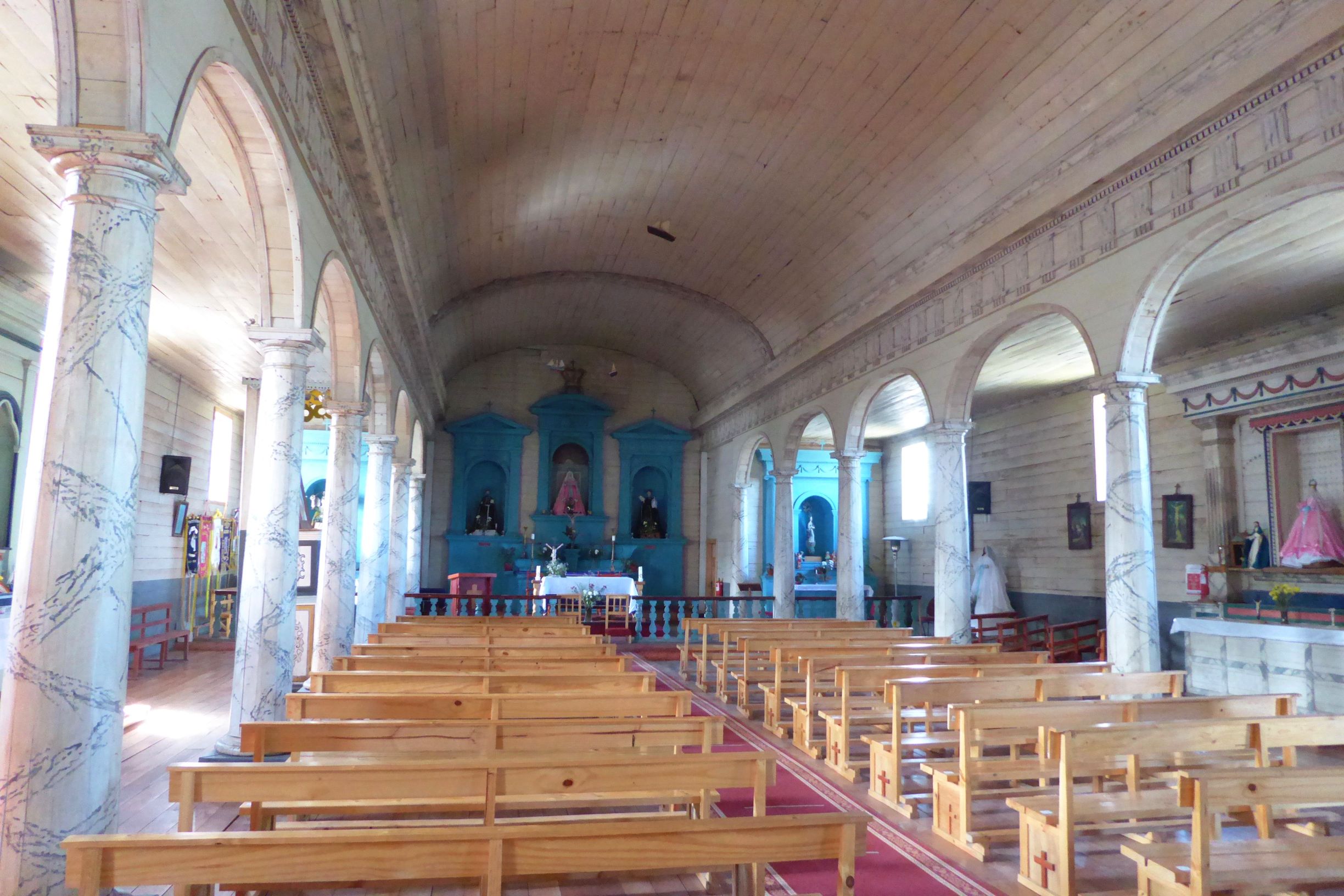
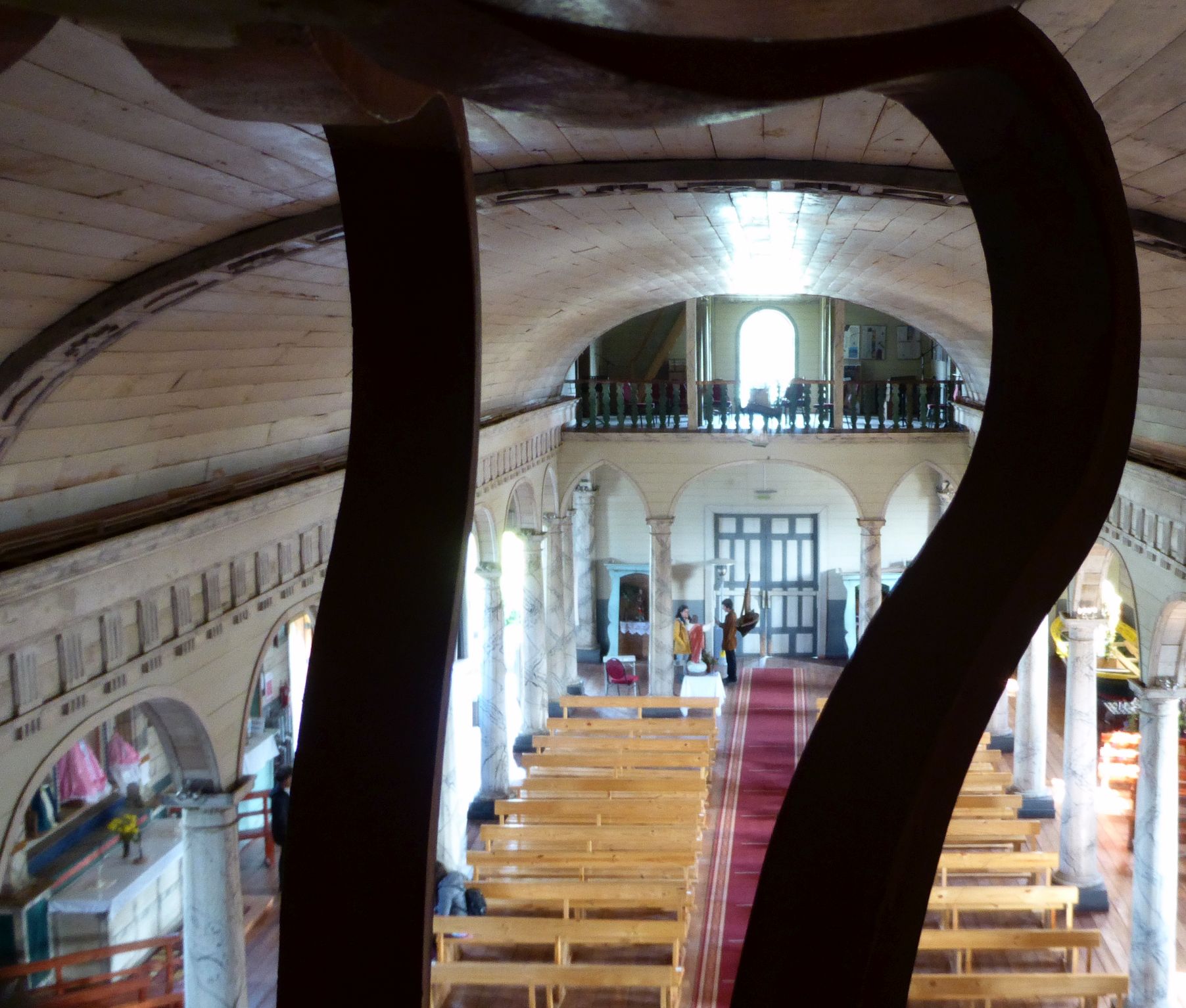
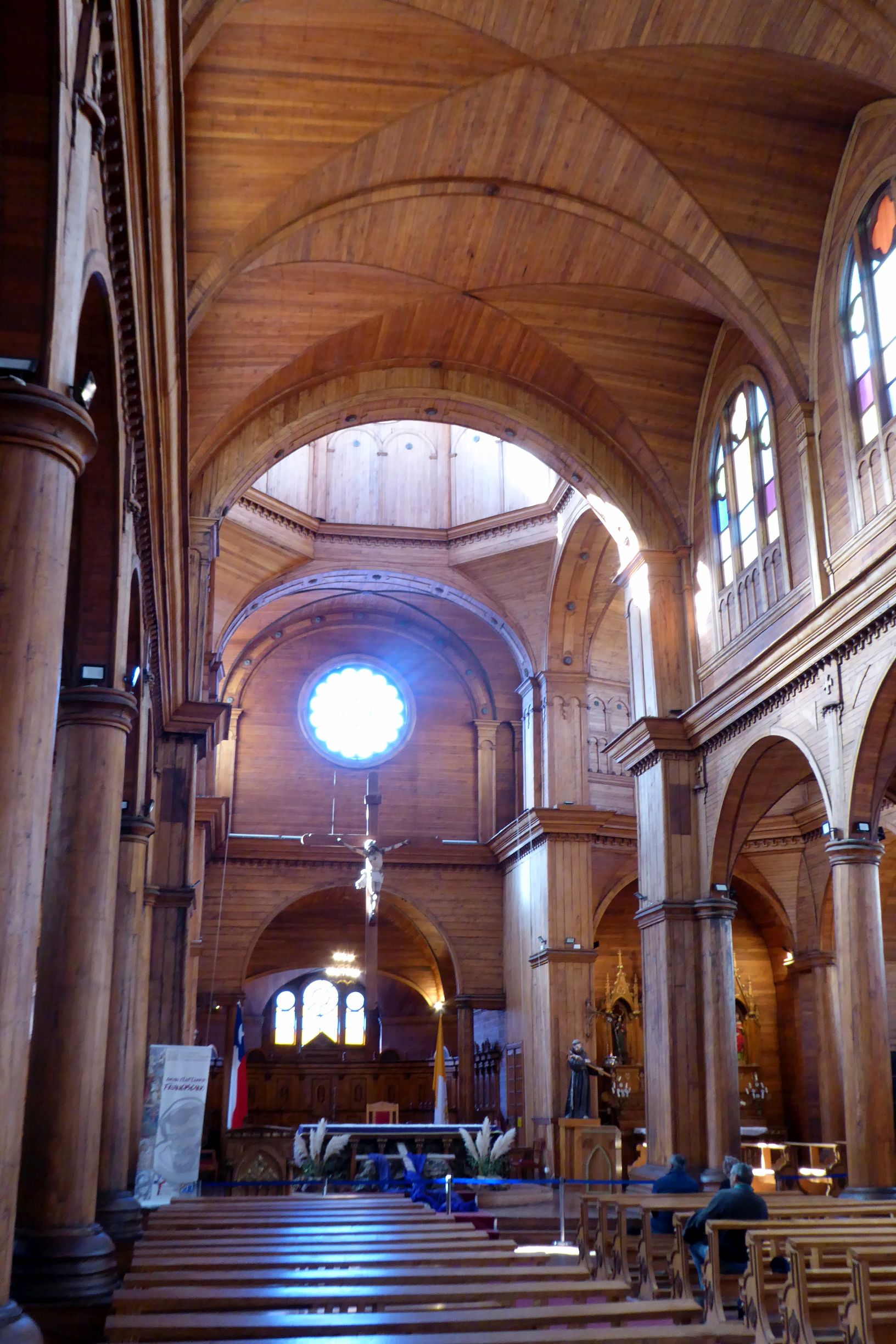
Our first stop was to see the Lady of Grace Church in Nercon, a UNESCO World Heritage Site and a wonderful example of Chilota architecture.  No nails were used; just wooden pegs, beams, and bent wood. 

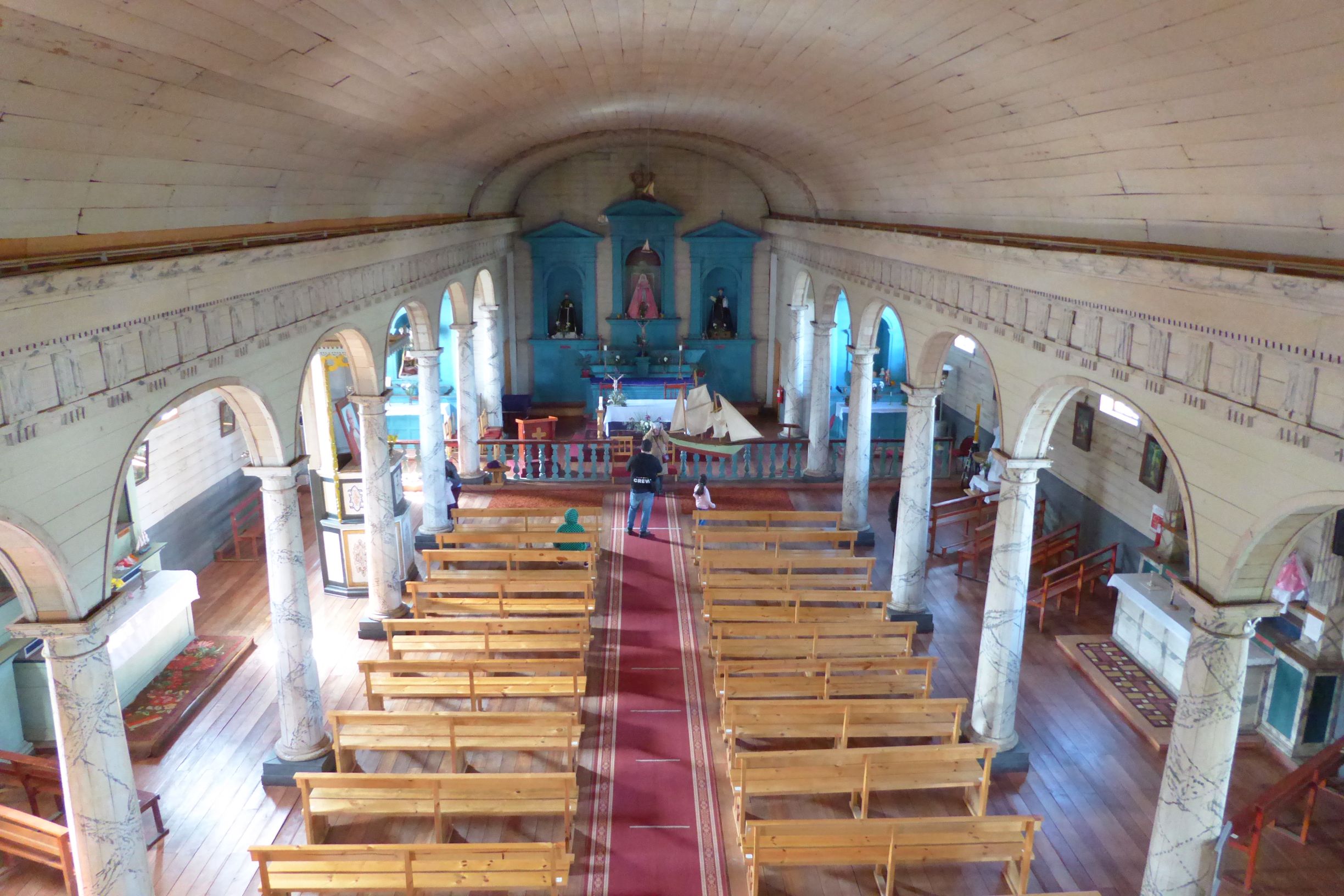
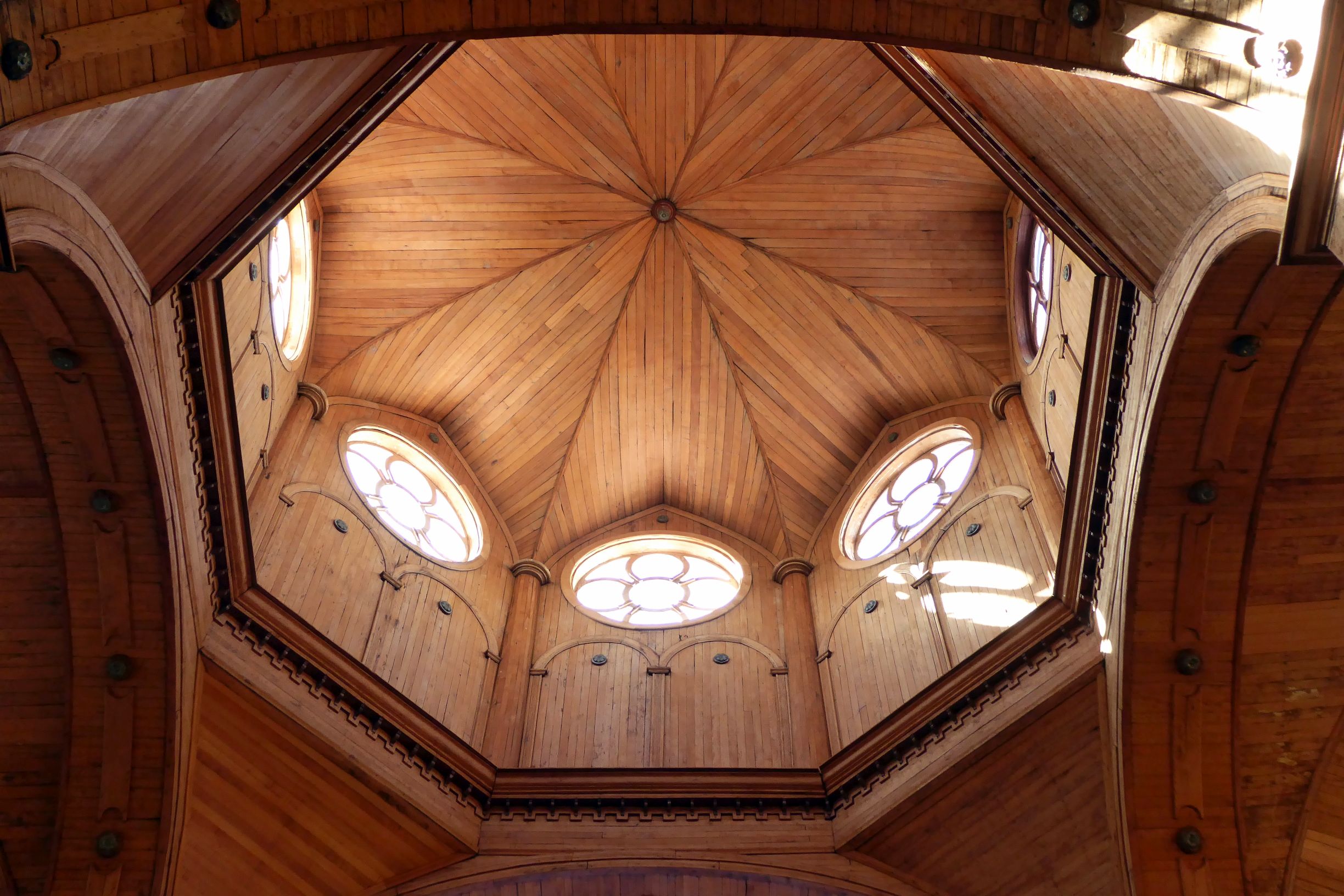
Our tour of the church included the attic where we were able to get a look at how the church was constructed.  From there I found a hole large enough for my camera to capture this unique view.

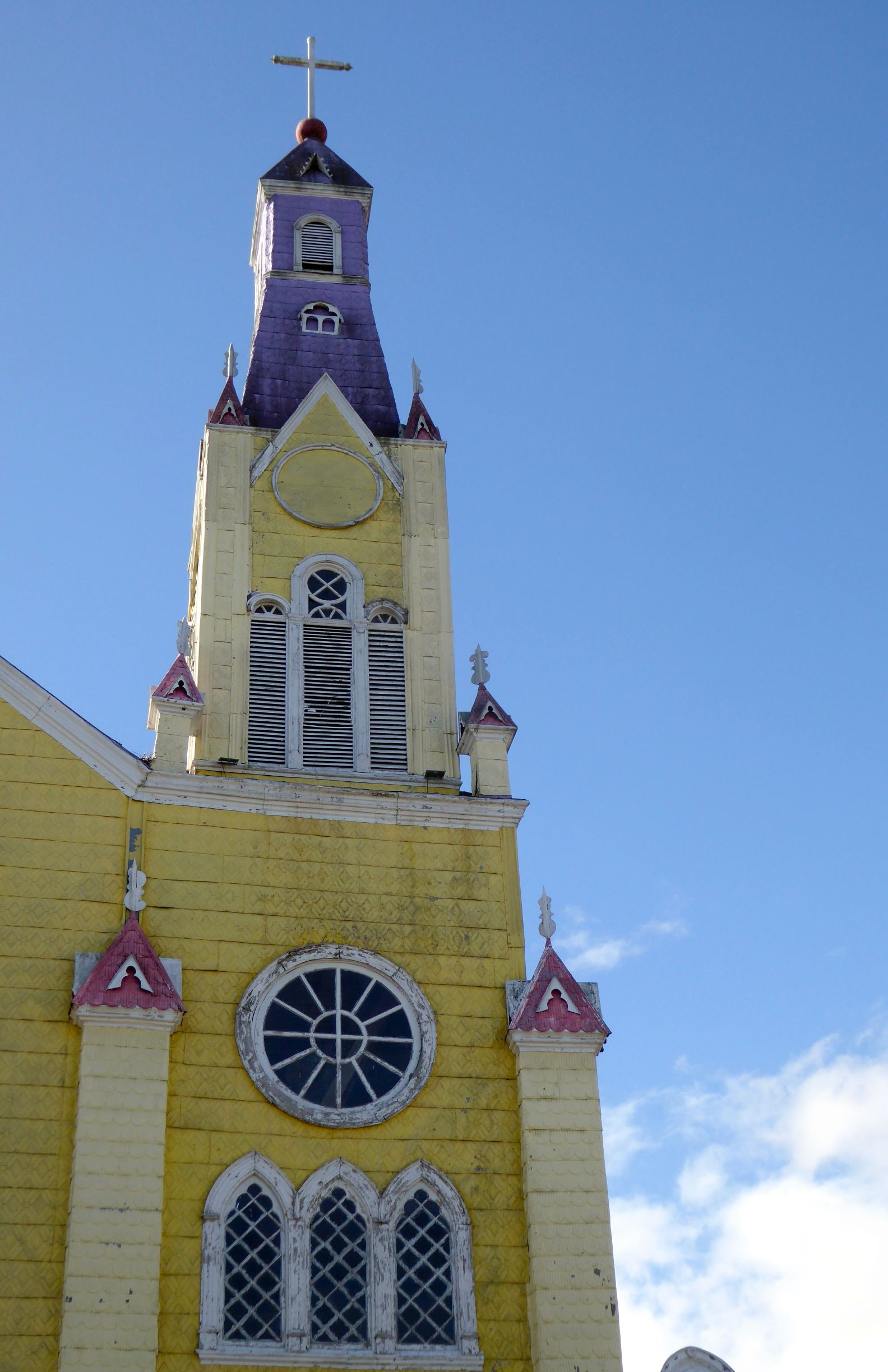
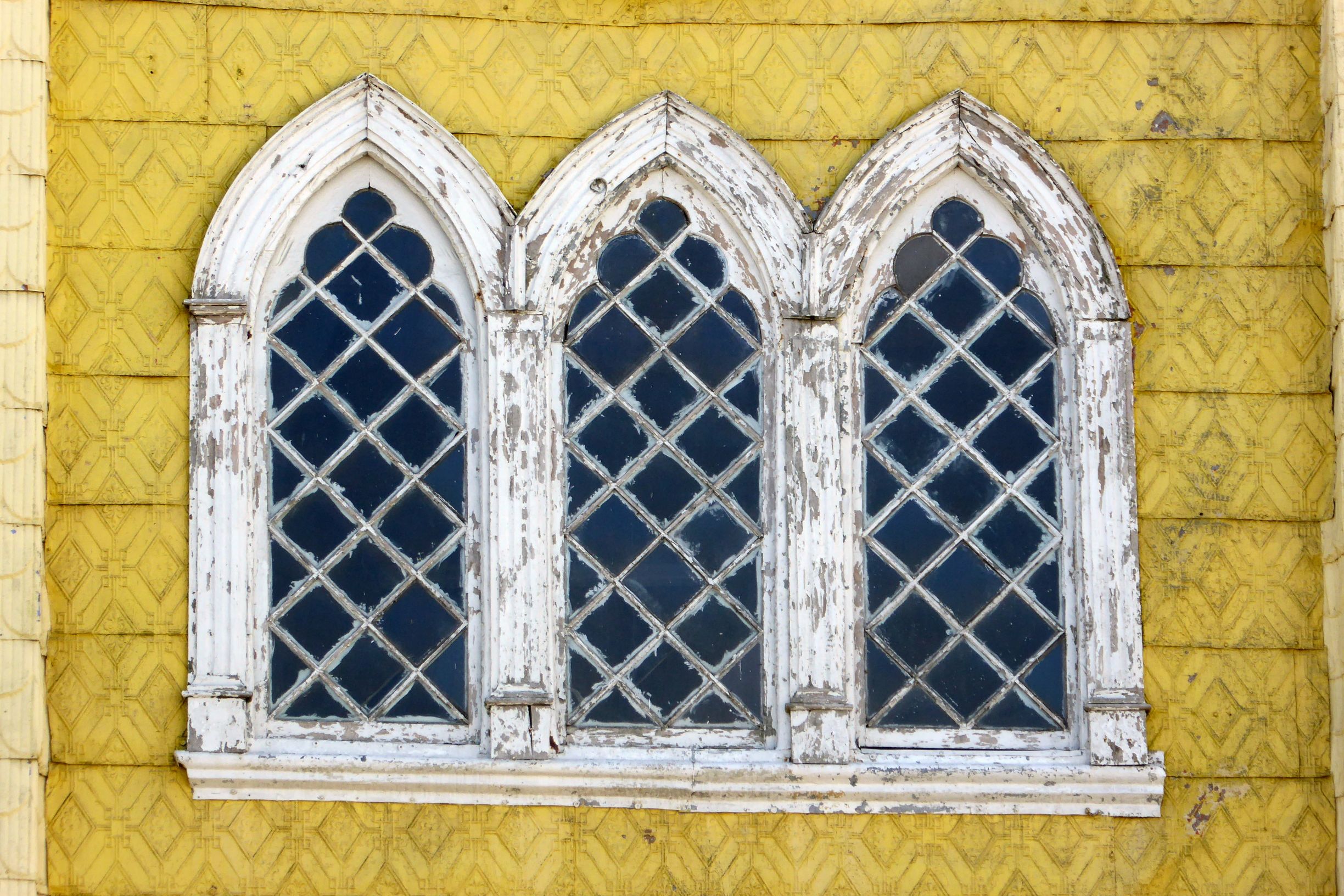
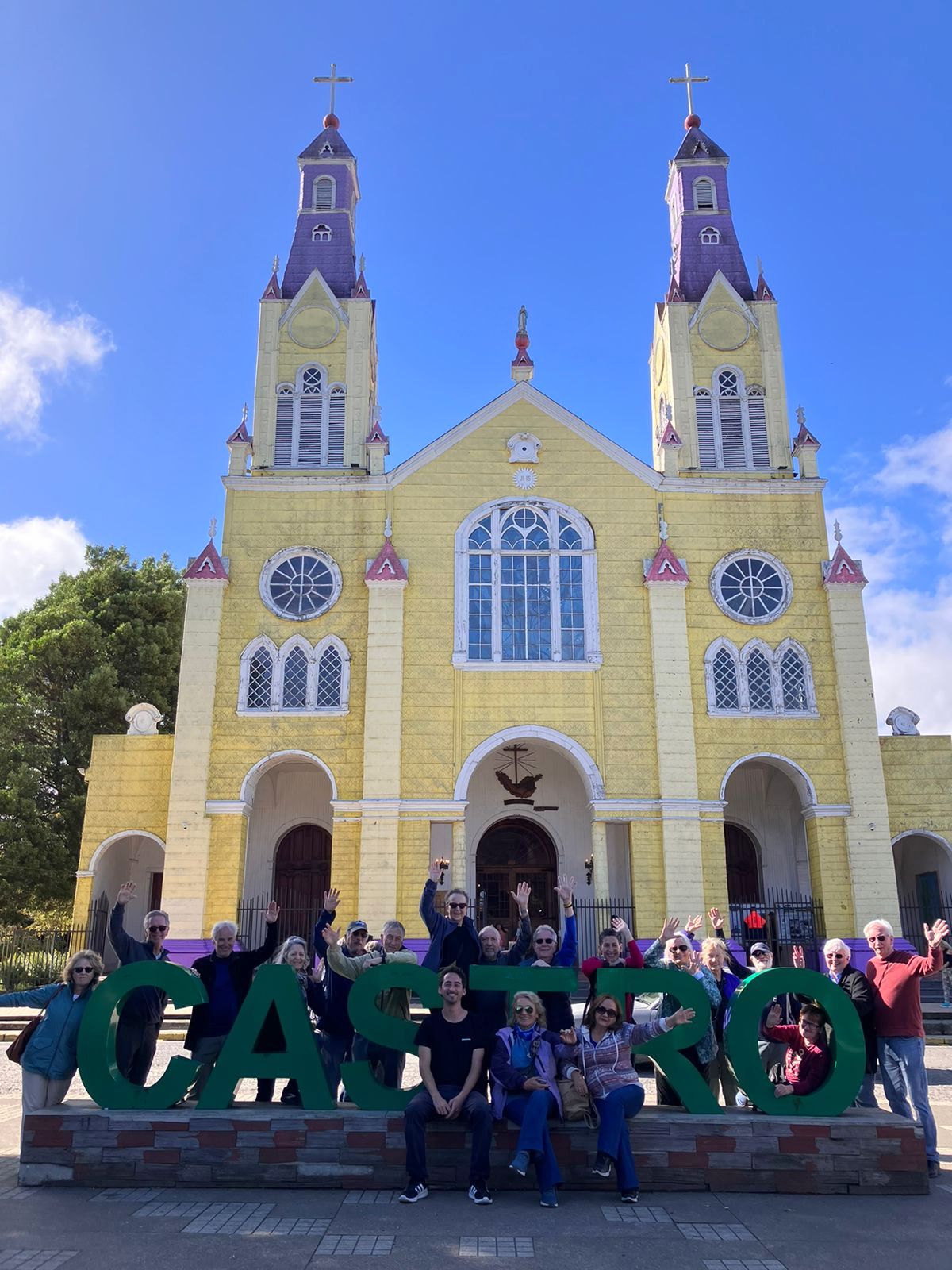
Returning to the main square of Castro, we visited another UNESCO site, the Church of San Francisco, built in 1910.  It is painted yellow to represent the sun, and the purple trim represents royalty.

Going to church is the big social event of the week for residents of Chiloe Island, but they are also helping immigrants from Venezuela and Haiti to settle in Chile.

Andrea loves taking group pictures, so she took this cheesy shot at the Castro sign.  There were two ladies from Santiago watching, and they wanted a picture with our “Buena onda” (good vibes) group, so we invited Sarah and Veronica to photo bomb our shot as honorary group members.  They were a hoot!

More scenes around the main square:

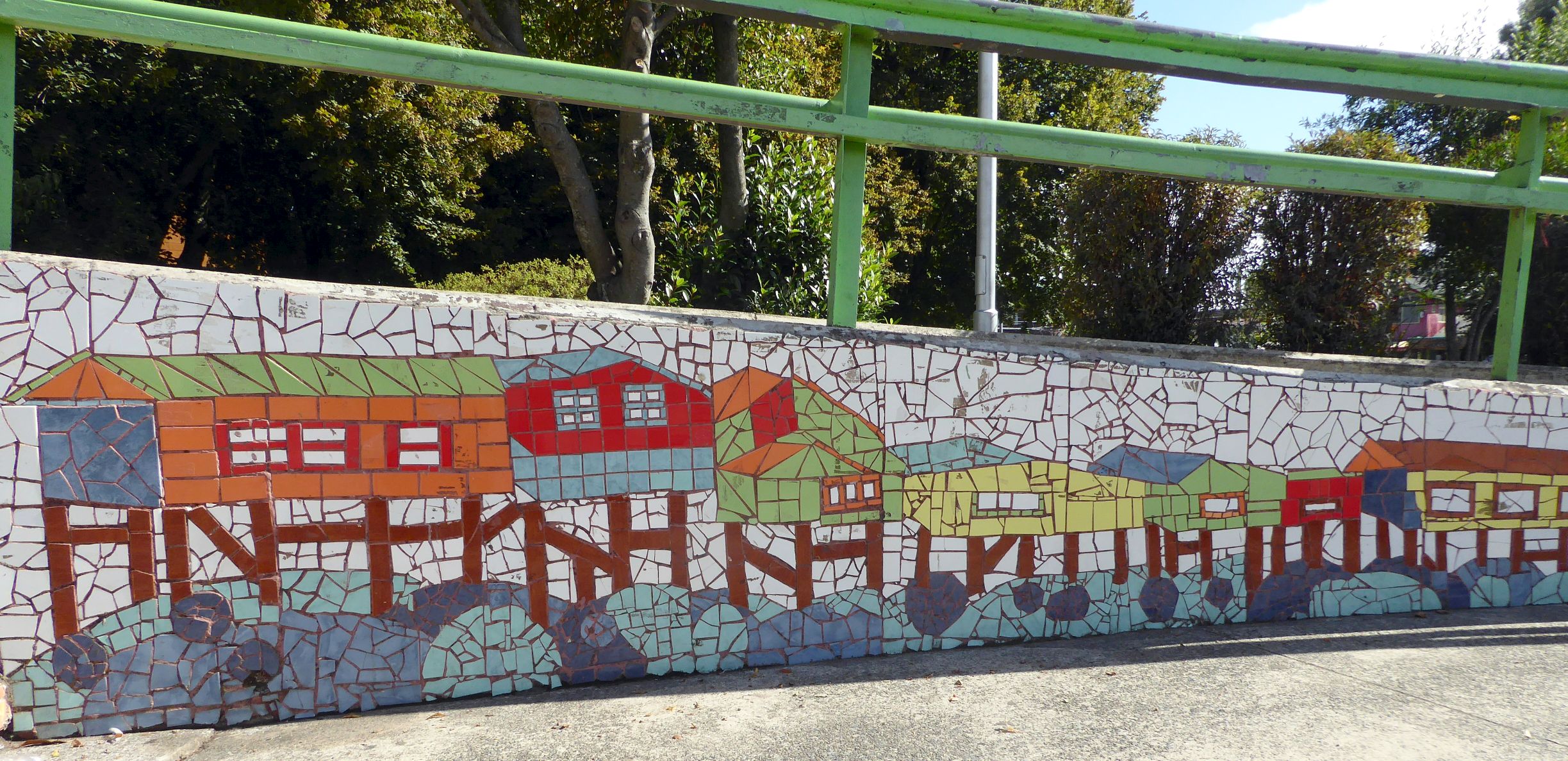
The afternoon concluded with a visit to see Castro’s iconic palafitos—colorful homes built on stilts that have become Castro’s biggest attraction.  Andrea and Daniel, our local guide who was with us in Puerto Varas, had a friend, Hanover, who lived in one, and we were invited to stop by for a look.  Hanover built the house himself and used 80 stilts to support it.

Most of the house is built on stilts, which are not pictured. You will see many more palafitos in a future post!

Several of the palafitos had decorative hand-cut shingles like we saw in Chacao.  A very hard wood is used and lasts about 40 years.  When the shingle wears out on one side, they just flip it over.  Bright paint colors are used (except for the one below) to contrast the cold, gloomy, and rainy weather that usually plagues the region.  But look at this day! Our luck continues…

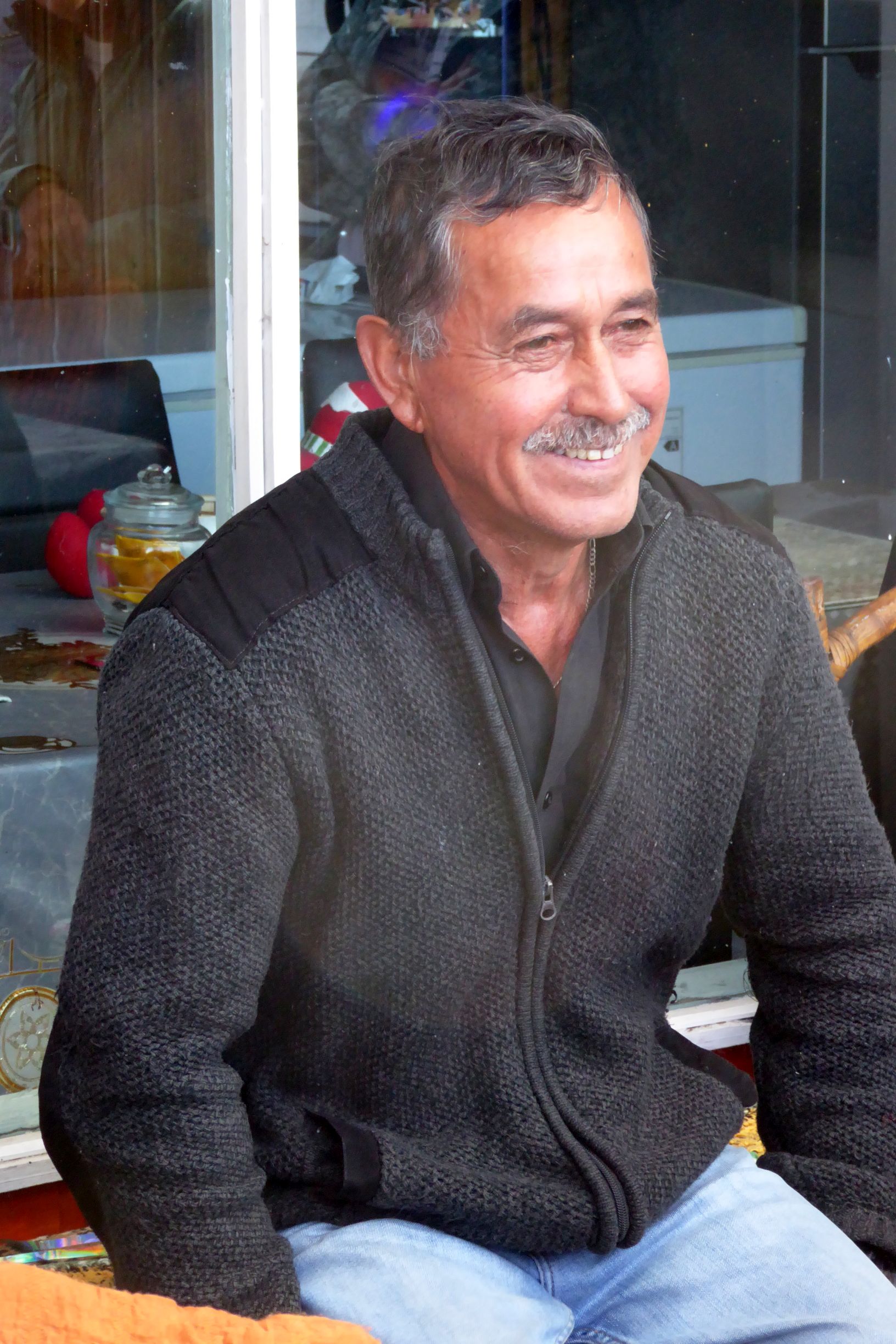
Hanover
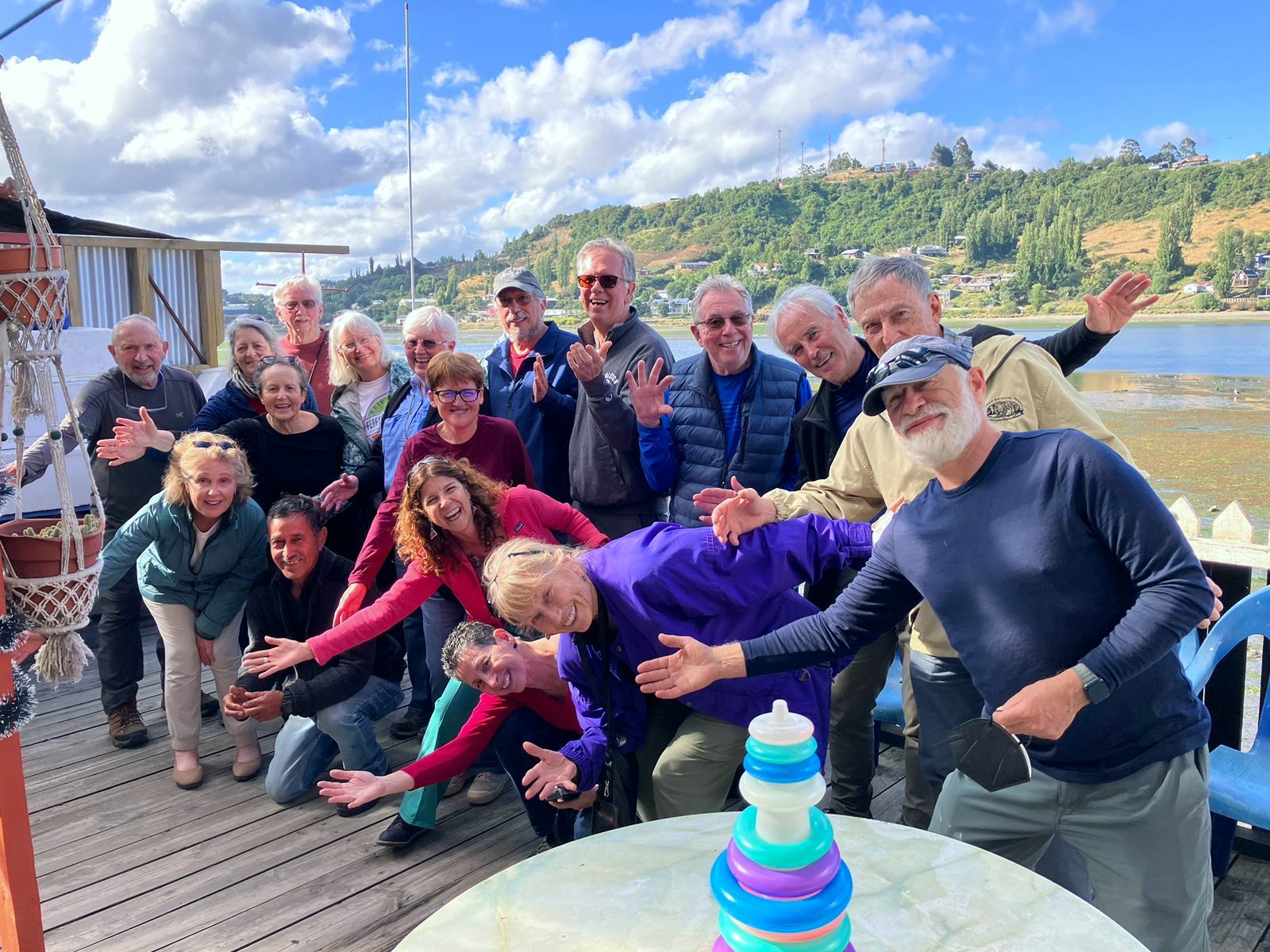
Our “buena onda” (good vibes) group having fun on Hanover’s deck. The stilt side (water side) of the house is considered the front of the house.

Views from the deck:

Evening views from our hotel room:

Next up:  ARGENTINA & CHILE #10: A DAY IN THE LIFE OF THE RILAN COMMUNITY

ARGENTINA & CHILE #8: PETROHUE FALLS, A MUSIC SCHOOL, AND HOME HOSTED DINNER

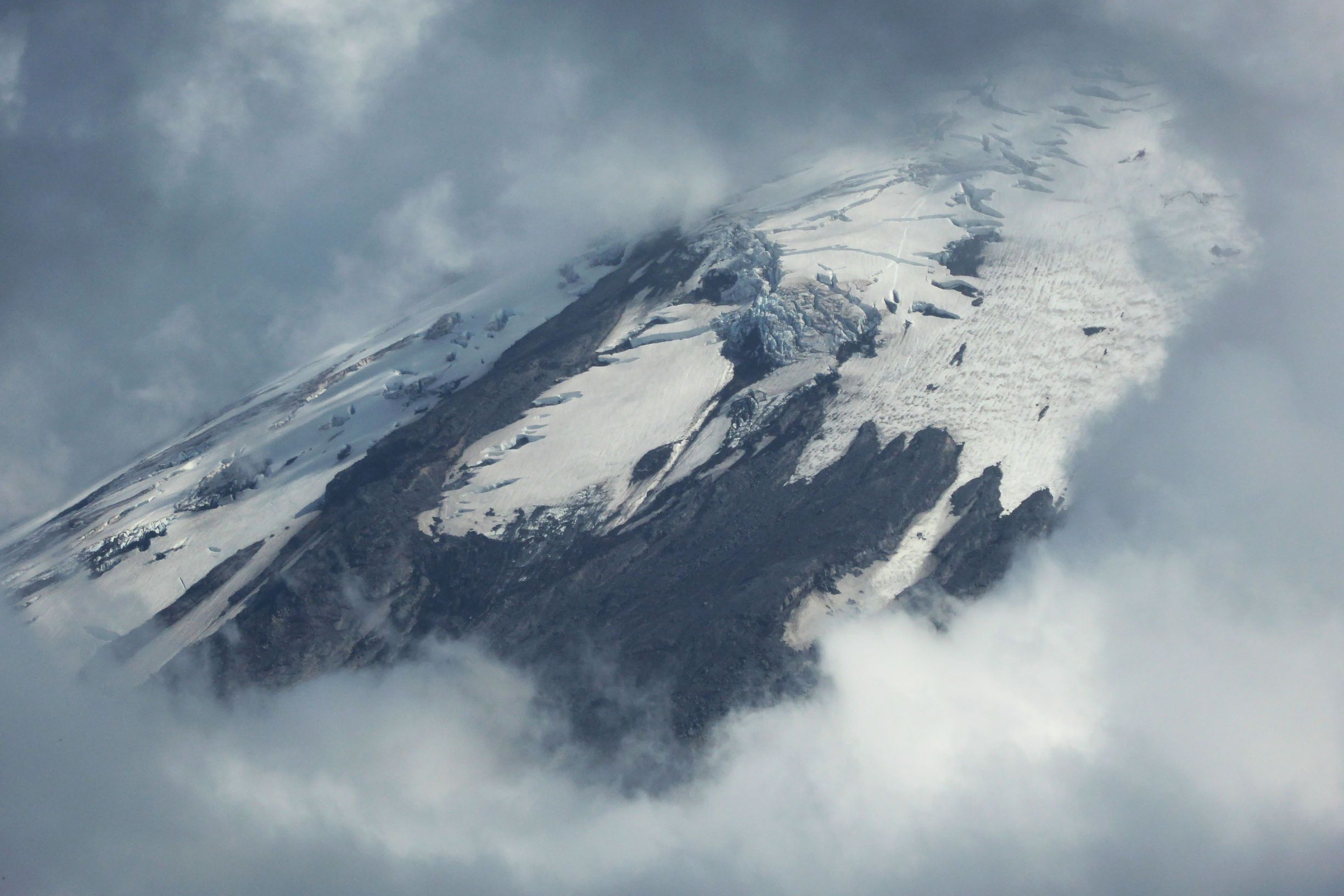
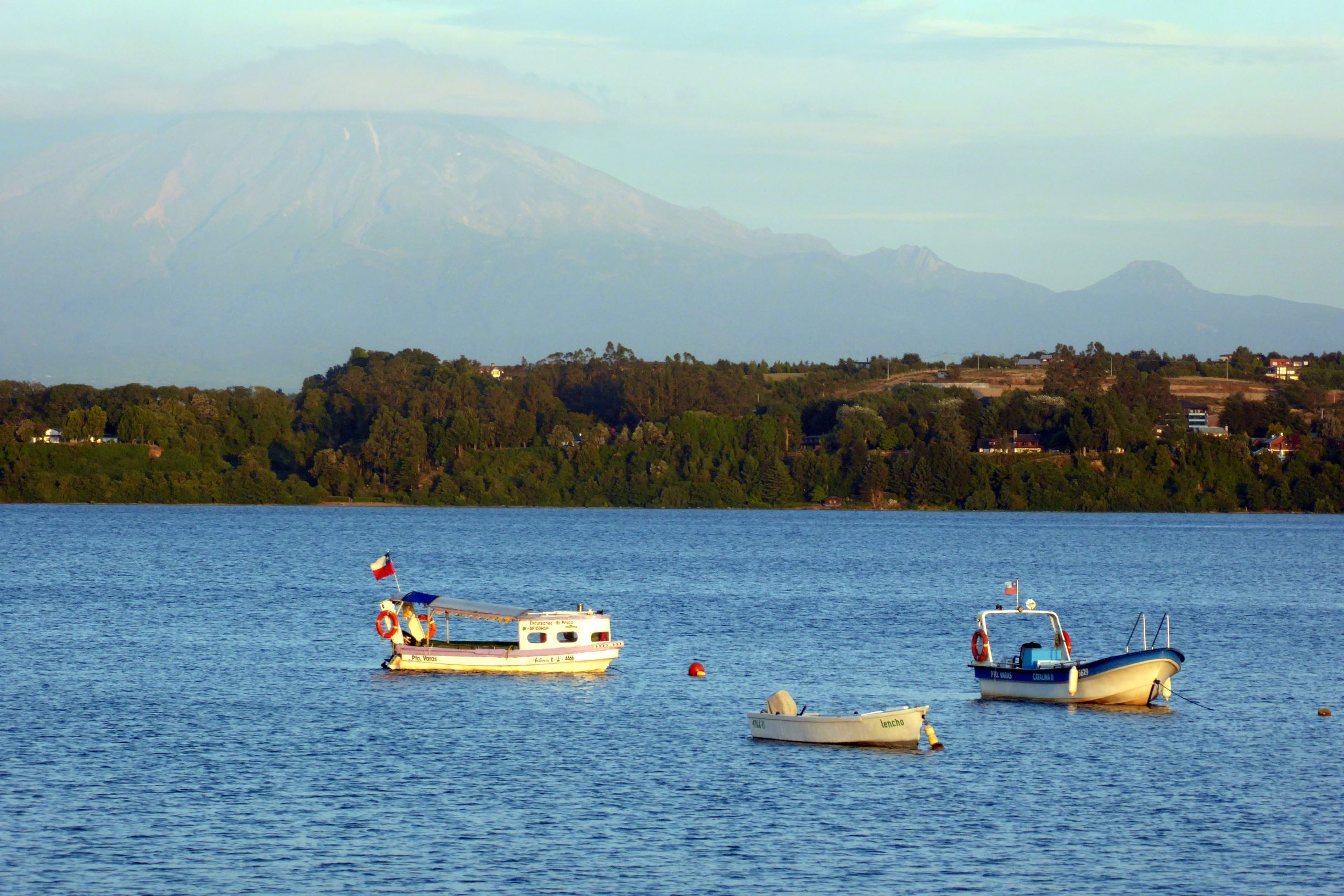
Orsano Volcano can be seen across the lake from Puerto Varas if it’s a clear day.  Fortunately, the 8,000-foot-tall volcano hasn’t erupted since 1869. There is another volcano that can also be seen from town, Calbuco, that erupted in 2015—the first time since 1972.  This morning, we got a peak at the volcanos in between the clouds that were forming and threatening to douse us with our first rain in eight days.  Fortunately, as it turned out, it didn’t rain until late in the day, when we were indoors, and it didn’t matter.

A rainy morning would have made for a messy and slippery hike—our first activity of the day.  It rains a lot over ten months of the year at  Petrohue Falls in Vicente Perez Rosales National Park , so we were lucky this wasn’t a wet day. 

The park is a popular tourist destination, so Andrea made sure to get us up and out early to beat the crowds.

Following our guided hike with Daniel, our local guide, we took a break for another “discovery” (we were getting good at the traditional toast by then), before having free time to explore the falls on our own.  The sun broke out from the clouds revealing a beautiful landscape and a snow-capped volcano.  Bruce and I spent almost all our time just watching the clouds pass by, listening to the water, and hoping for a better view of the volcano.  It was lovely!

(For all photos, click on the image for a full screen view.)

Scenes from our hike:

Mary caught me in action!
Andrea with another “discovery” joining our guide, Daniel
The volcano kept peaking in and out of the clouds; a very dynamic sky!
A close-up view

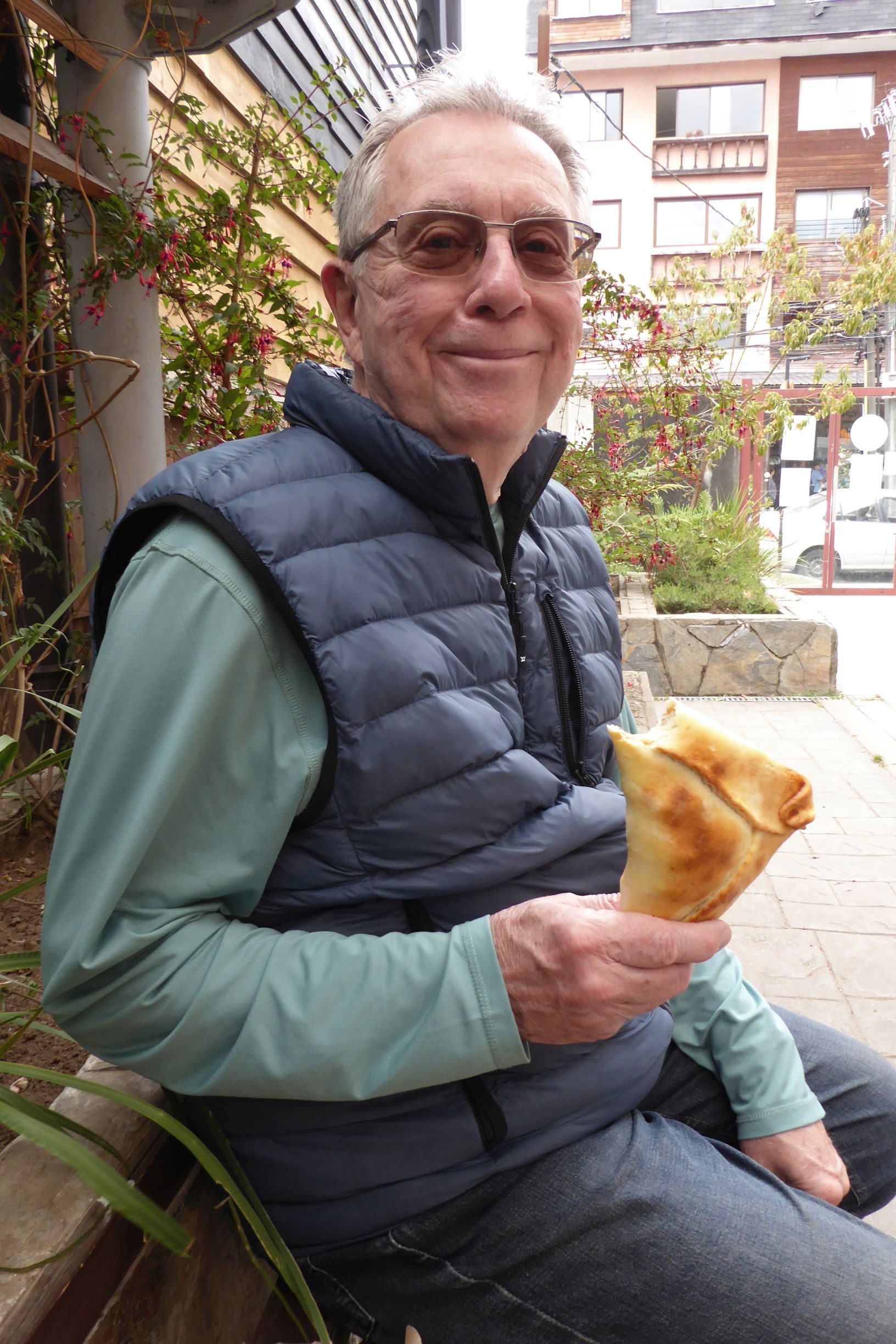
After we returned to Puerto Varas, we had a few hours of free time to grab lunch and enjoy the town.  We quickly grew fond of empanadas when we were in Argentina, but the ones we picked up at Café Danes were the best!

Here are more scenes around Puerto Varas:

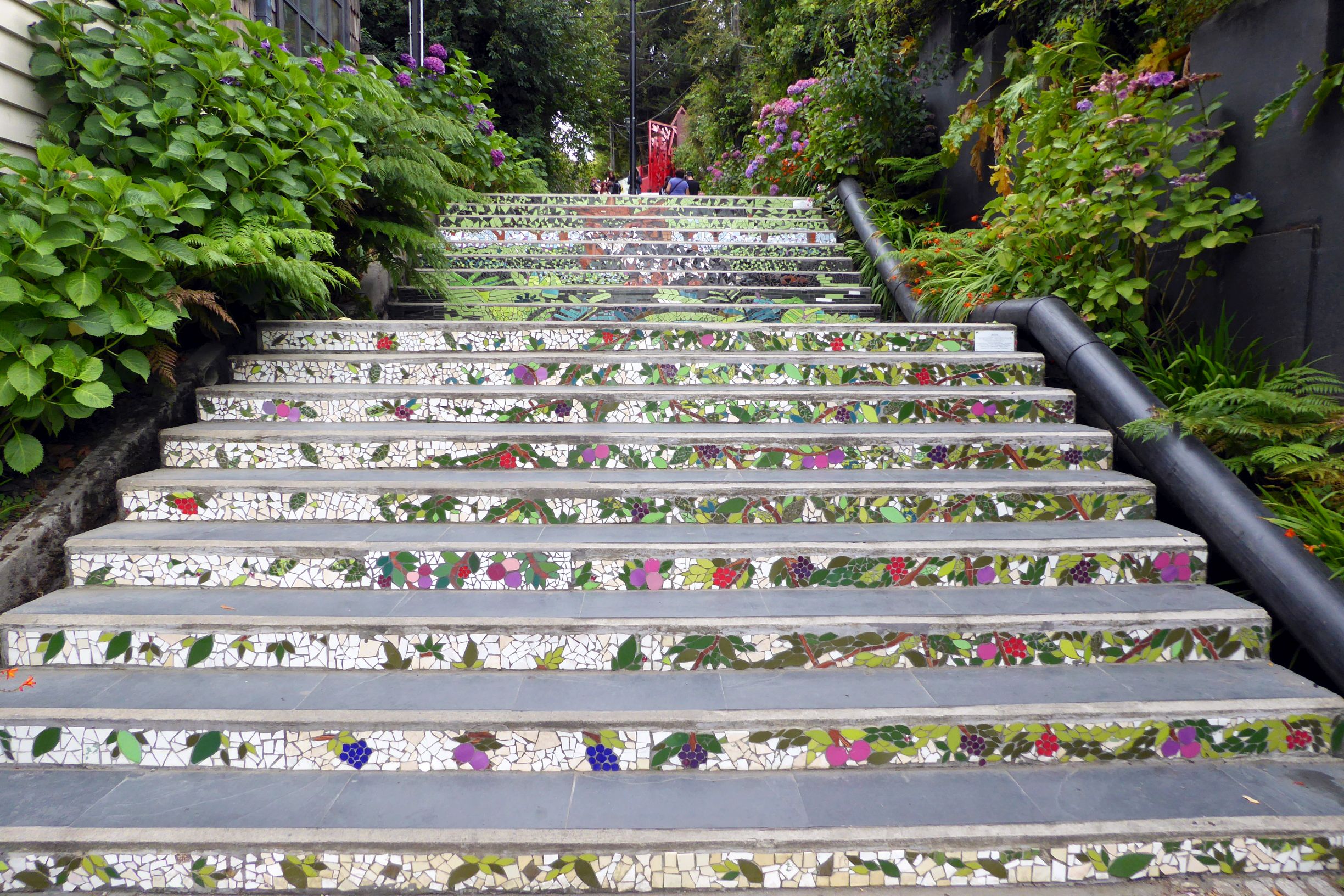
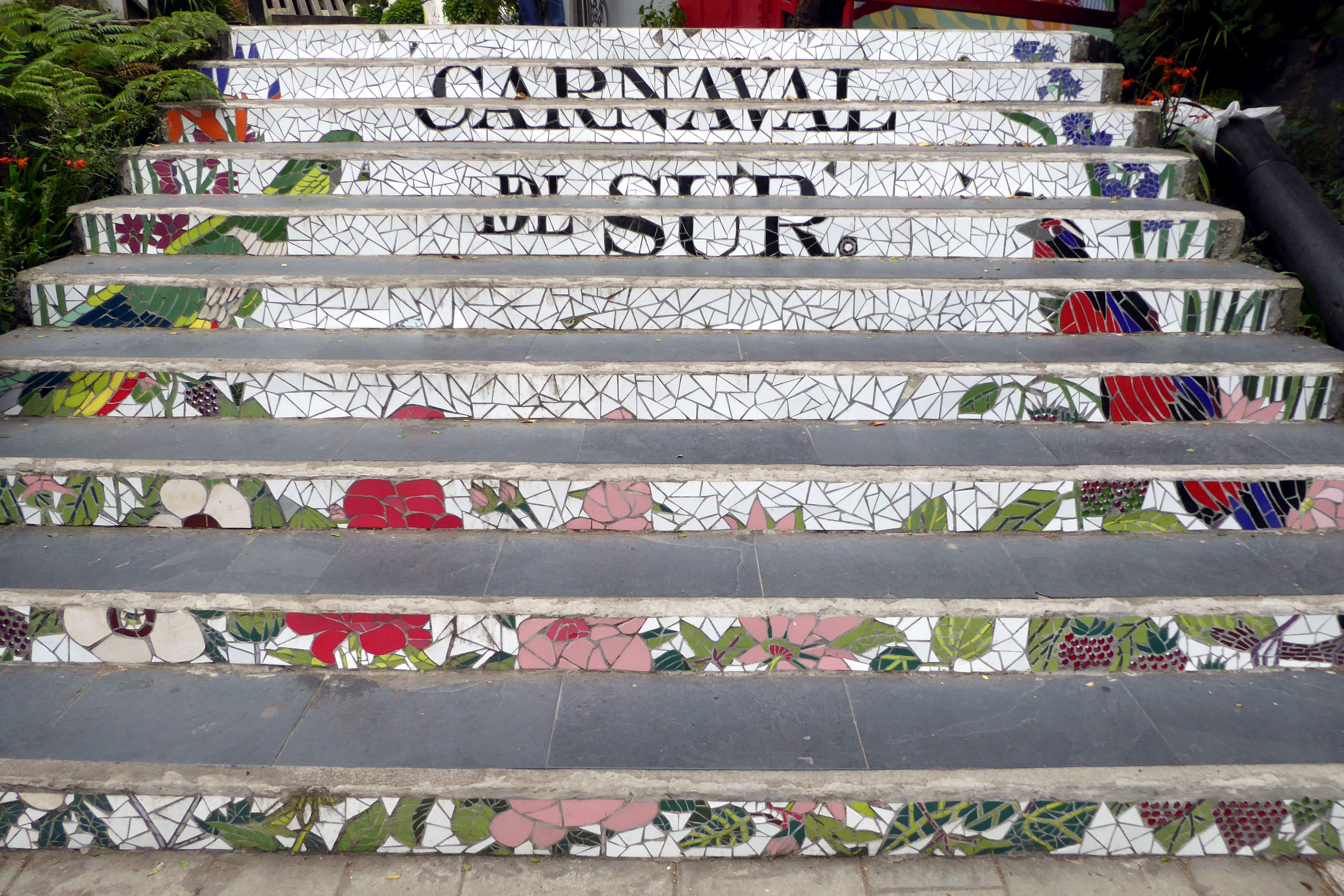
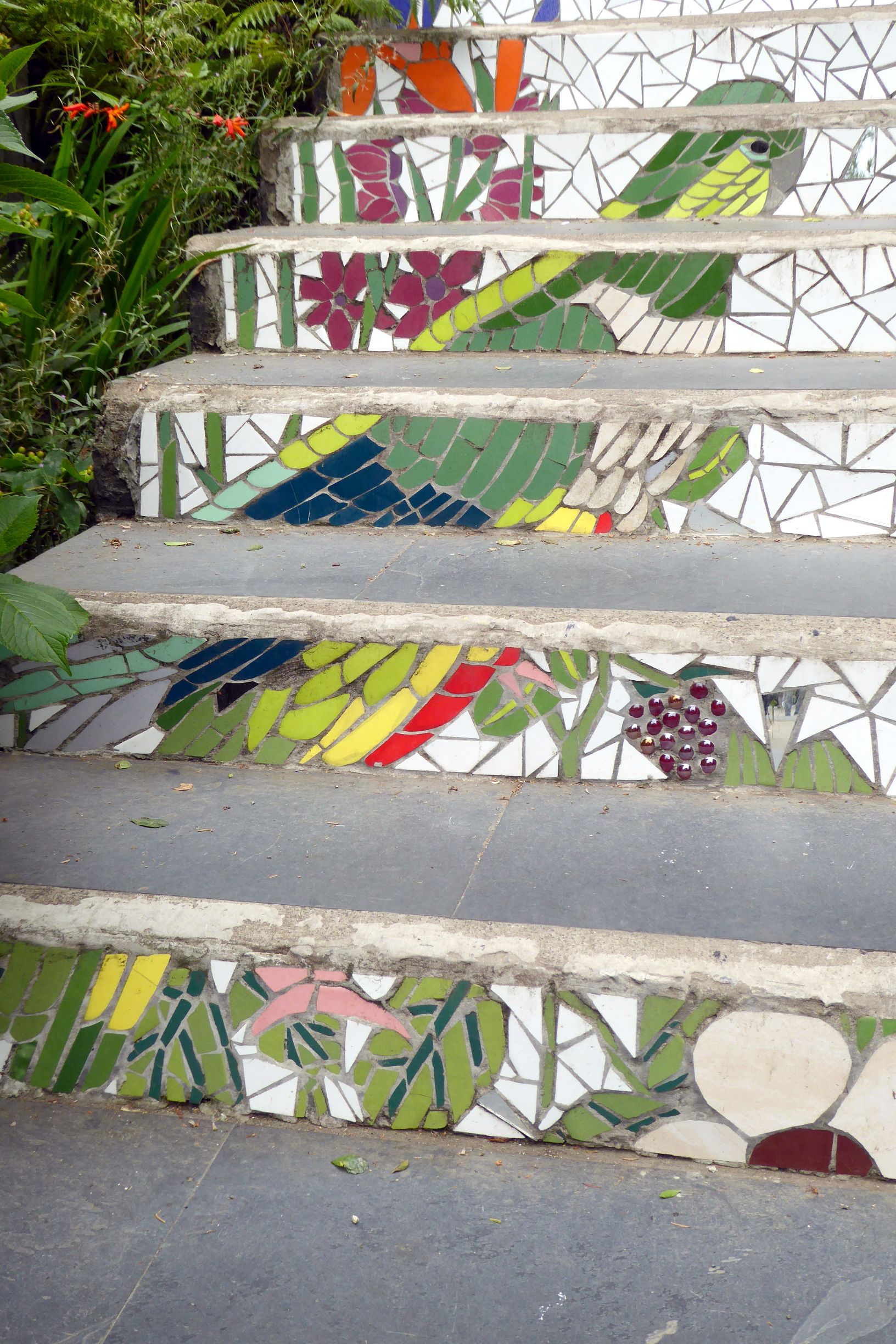
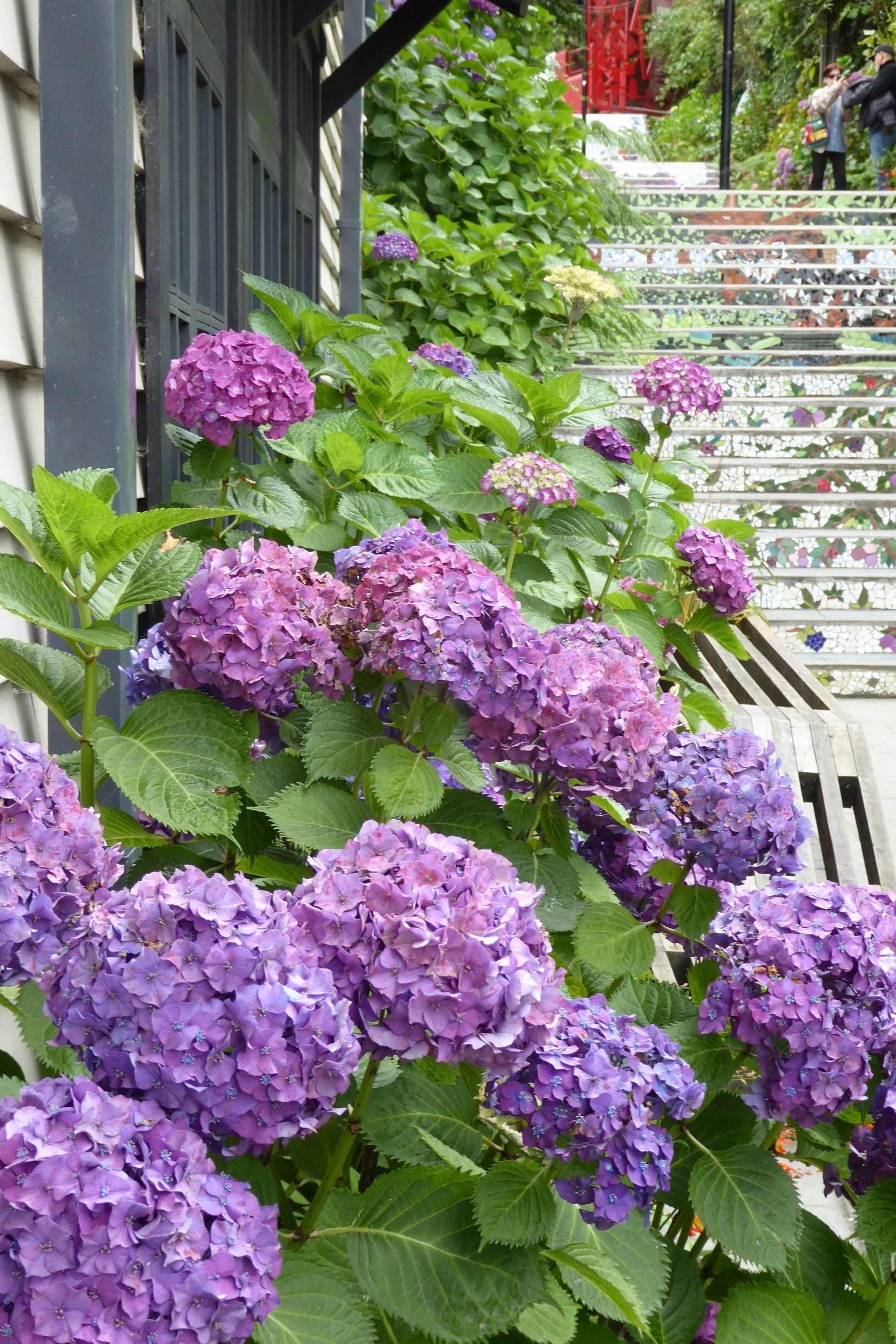
I just love these mosaic stairs!
The view from Kunstgarten (Garden of the Arts), located at the top of the mosaic stairs.
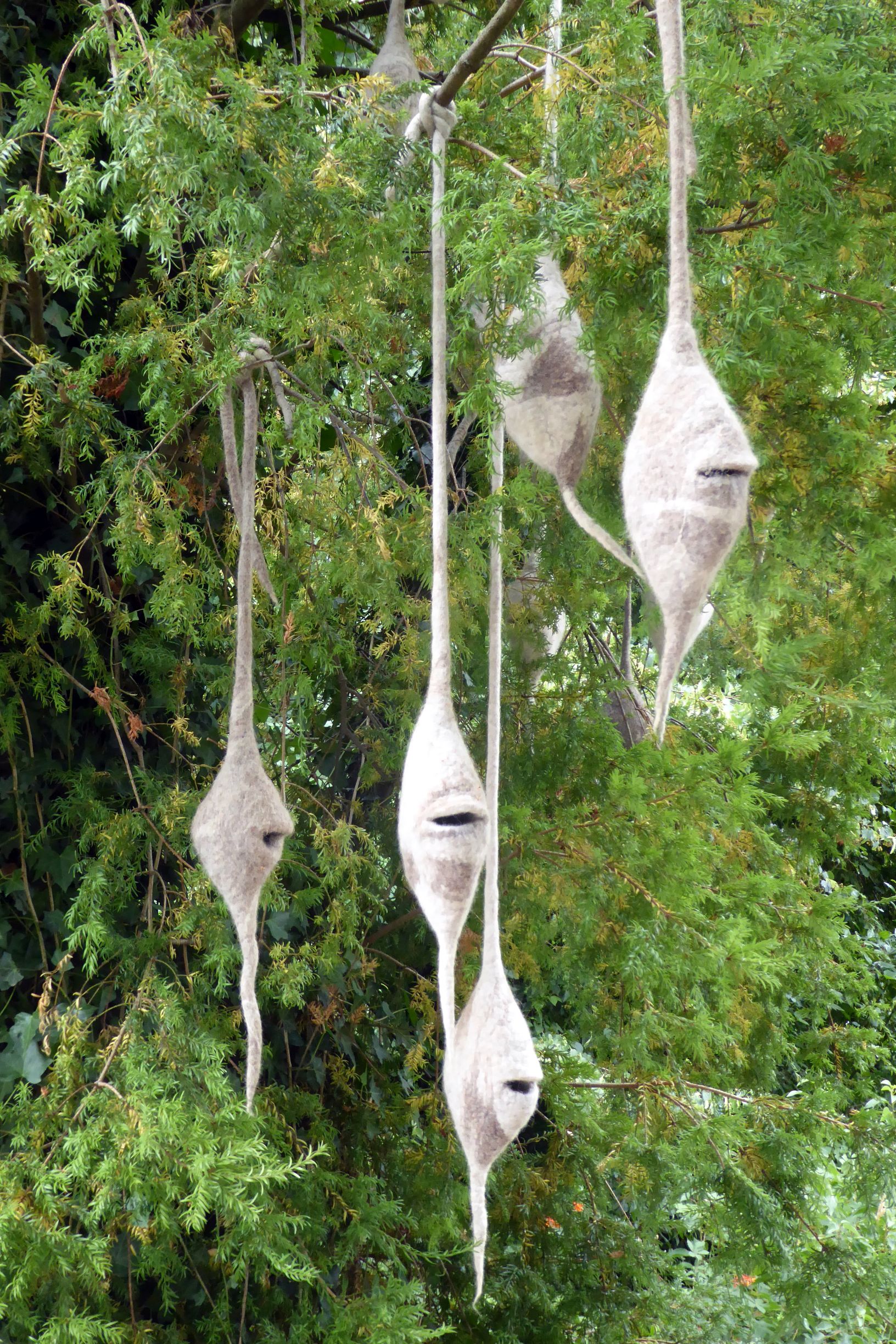
These, uh, interesting(?) wool fiber art sculptures were hanging from the tree at the entrance of the garden.
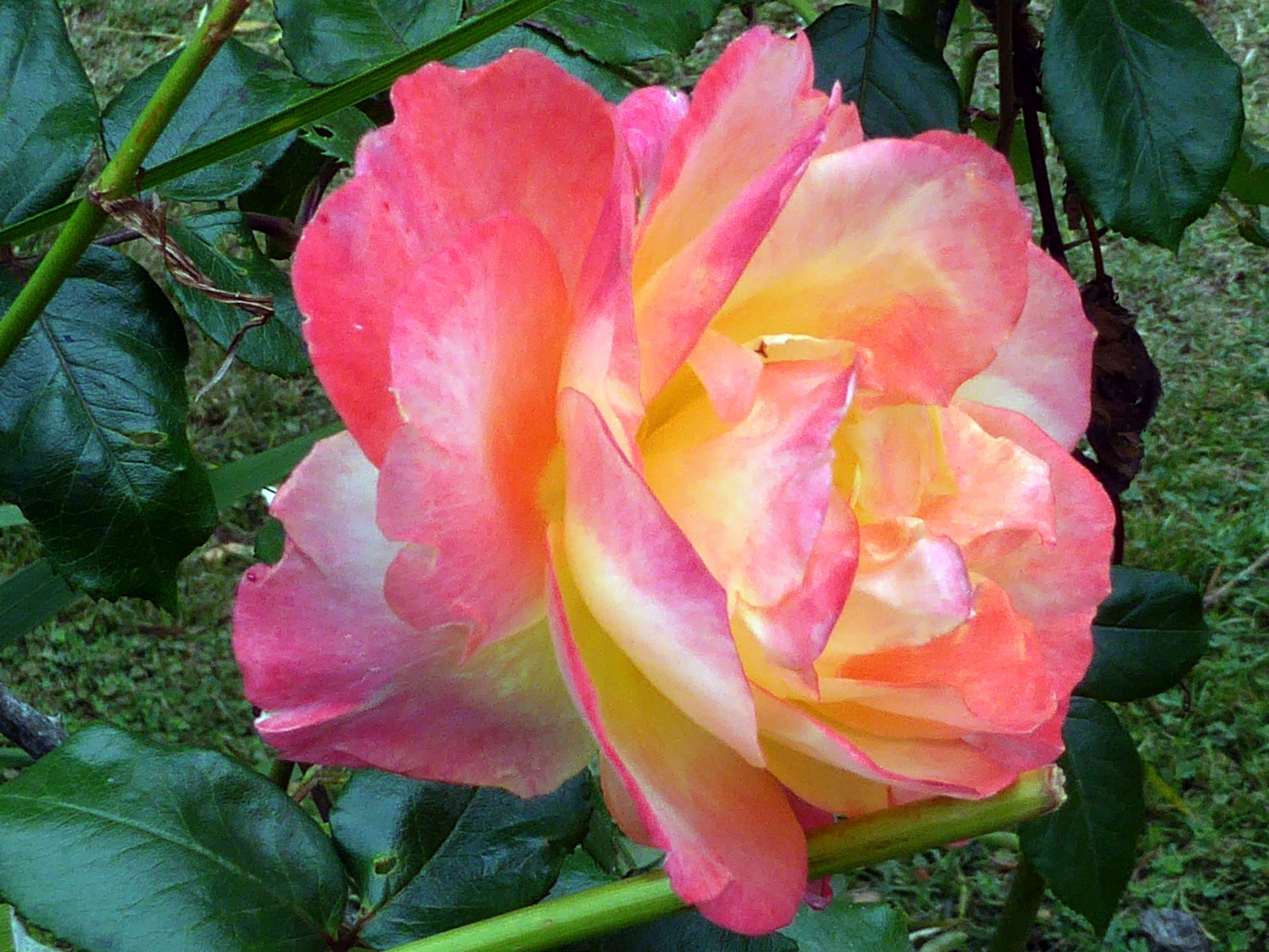
Rose bushes lined many of the sidewalks.

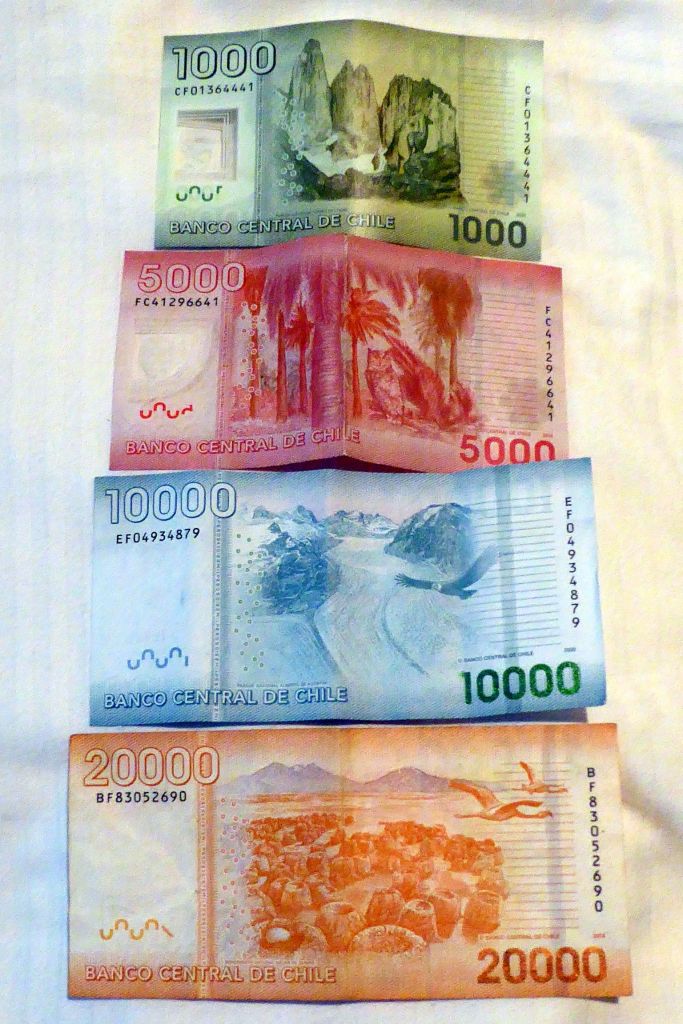
This is what the Chilean currency looks like. Their peso was valued a bit stronger than the Argentinean peso; however, they print larger denominations, making our wallets less bulky! Today’s exchange rate: $1 USD = 975 CLP. So, that green 1000 note is worth a little more than $1.

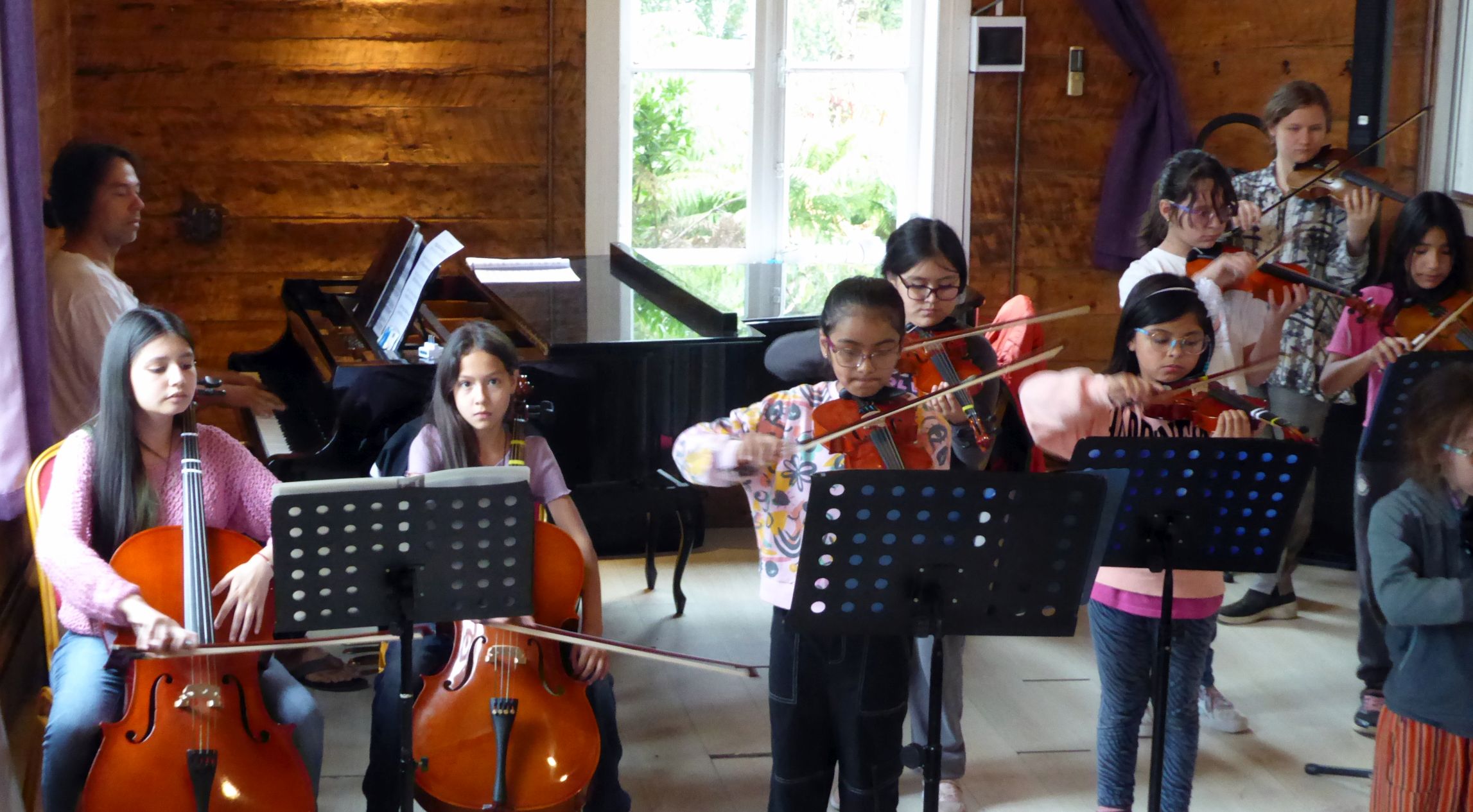
Later in the afternoon, we visited the Combas Music School, a wonderful school that is supported by Grand Circle Foundation.  This was the first performance for the new music students—so charming!

The evening was spent doing what Bruce and I look forward to each time we travel with Overseas Adventure Travel (OAT): a home hosted dinner.  It is always a great opportunity to visit with a family, enjoy the cuisine of their country, and have meaningful cultural interaction.

Our group of 16 was split in half to visit two different homes.  Bruce and I were assigned to Carolina and George, a warm and wonderful young couple.  As soon as we stepped into their home, I felt comfortable, and I loved much of the décor!  It felt almost too familiar; they were listening to American classic rock played by their local radio station!

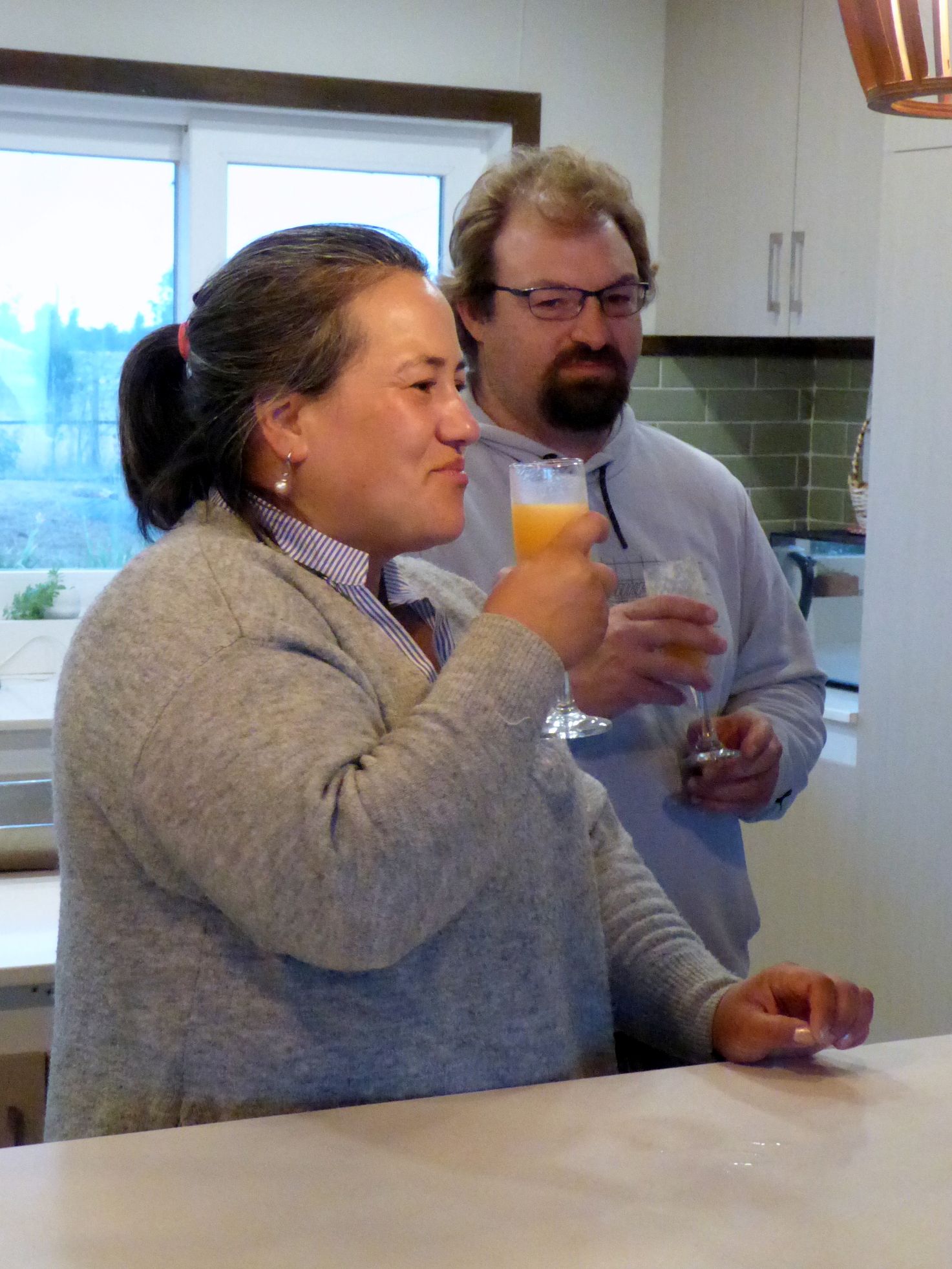
Throughout Argentina and Chile, we had enjoyed Pisco Sour cocktails—a South American favorite—and learned how to make them at our hotel.  Carolina and George welcomed us with their version, which they make with whatever fruit they have available at the time.  Delicious!

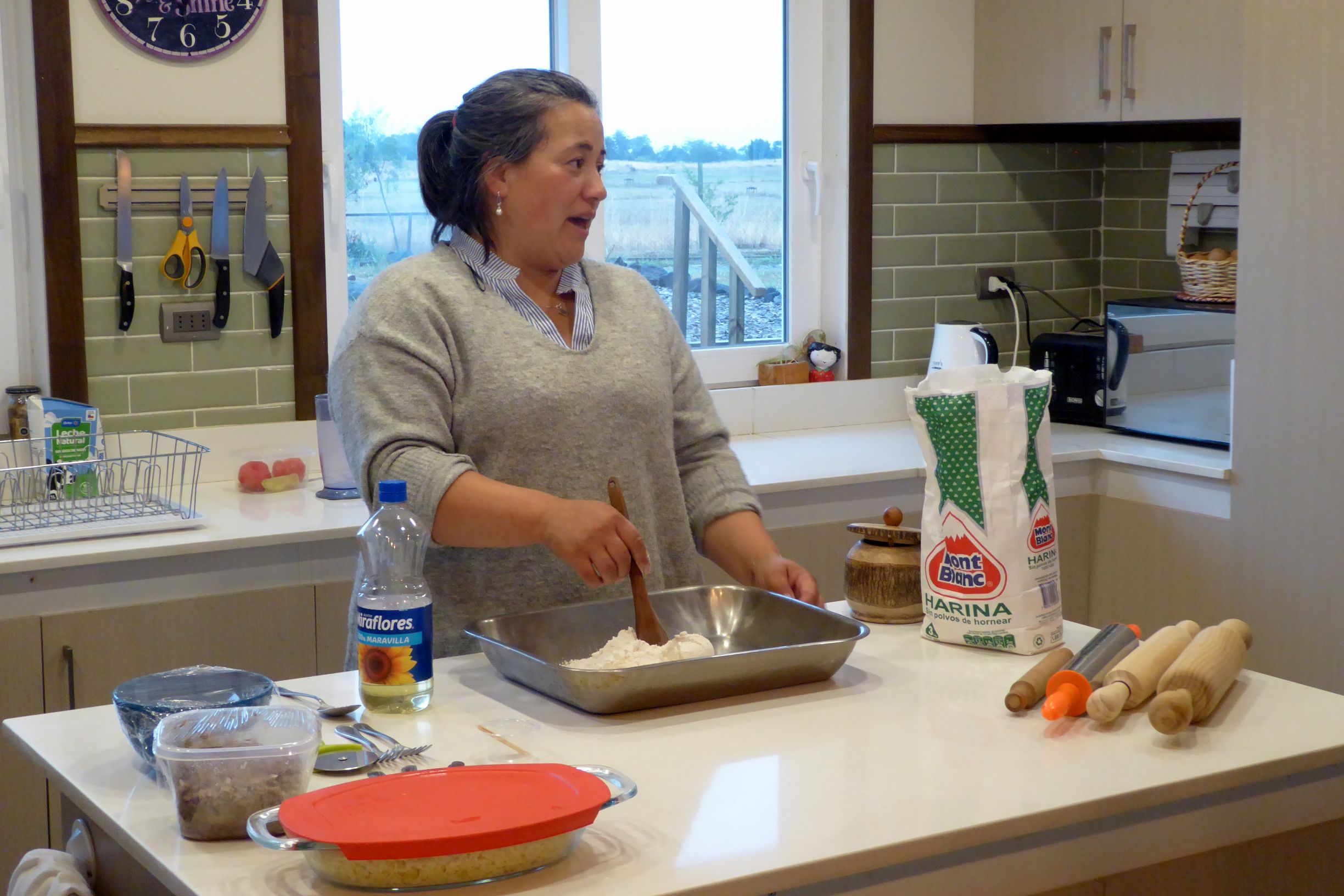
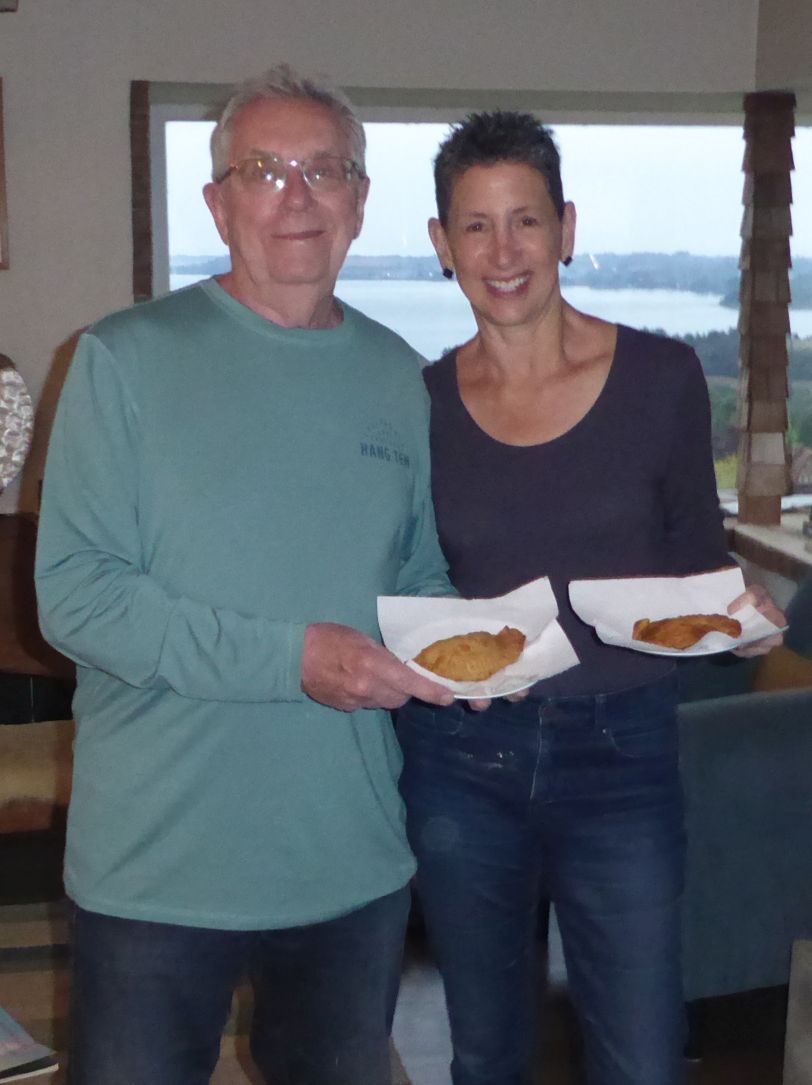
Carolina taught us how to make empanadas, which we enjoyed with our cocktails.  We all took turns making our own and George fried them while we chatted in the kitchen.  They were eager to learn where we were all from and to tell them something about our state.  Carolina had a map marking where all the OAT travelers they had hosted were from, and she was eager to see if we were from any new states.

In between the laughs we all shared, we learned a lot about the two of them and their views about Chile.  Carolina is a former English teacher and now has her own business raising and selling plants.  George, also a business owner, is a landscape builder.

They explained that much like many countries throughout the world, including Argentina and the U.S.A., Chile is very politically divided.  Their current president, Gabriel Boric, is far left—opposite of Argentina’s far-right president.  Asked what their top concern is for their country, Carolina and George agreed that crime and safety worry them the most.  In October of 2019, there was a “spontaneous” (organized?) uprising in the city centers throughout the country.  Young people burned churches and city buildings causing major destruction.  They doubt it was spontaneous at all.  After all, ten metro stations in ten different cities burned at the same time.  Speculation is that it was connected to mafia.

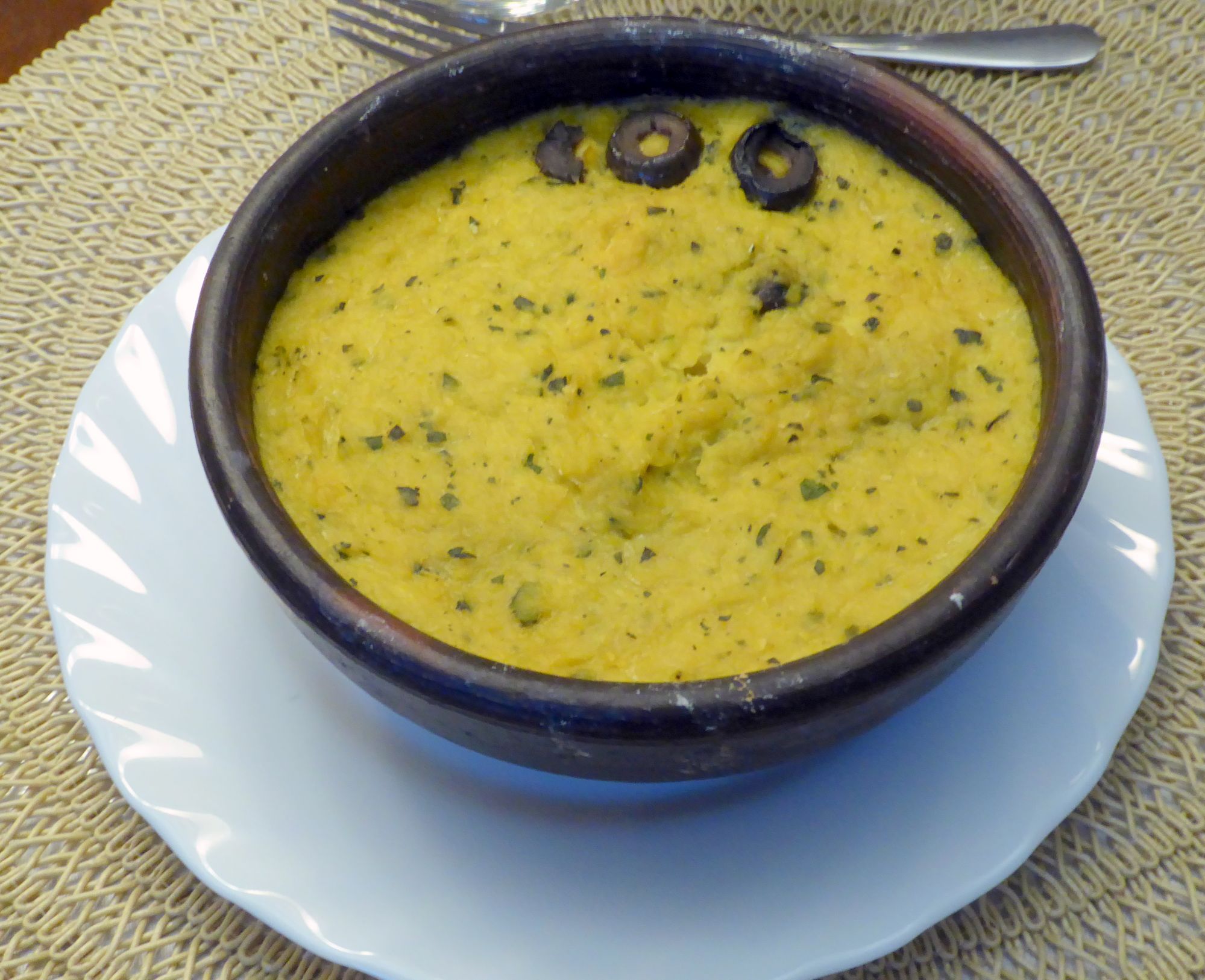
As we learned about our hosts and their concerns for their country (which sounded all too familiar; they echoed concerns we have in the U.S.A.), we enjoyed delicious corn pie with chicken—a traditional Chilean dish, followed by a German dessert.  German?  Yes, many Germans settled in Puerto Varas and the region, just like they had in Bariloche.

The evening ended too soon, as it always does during a home hosted dinner.  It was so enjoyable; the time flew by!

Coming up next:  ARGENTINA & CHILE #9: CHARMING CHILOE ISLAND

ARGENTINA & CHILE #7:  OVER THE ANDES TO CHILE WE GO!

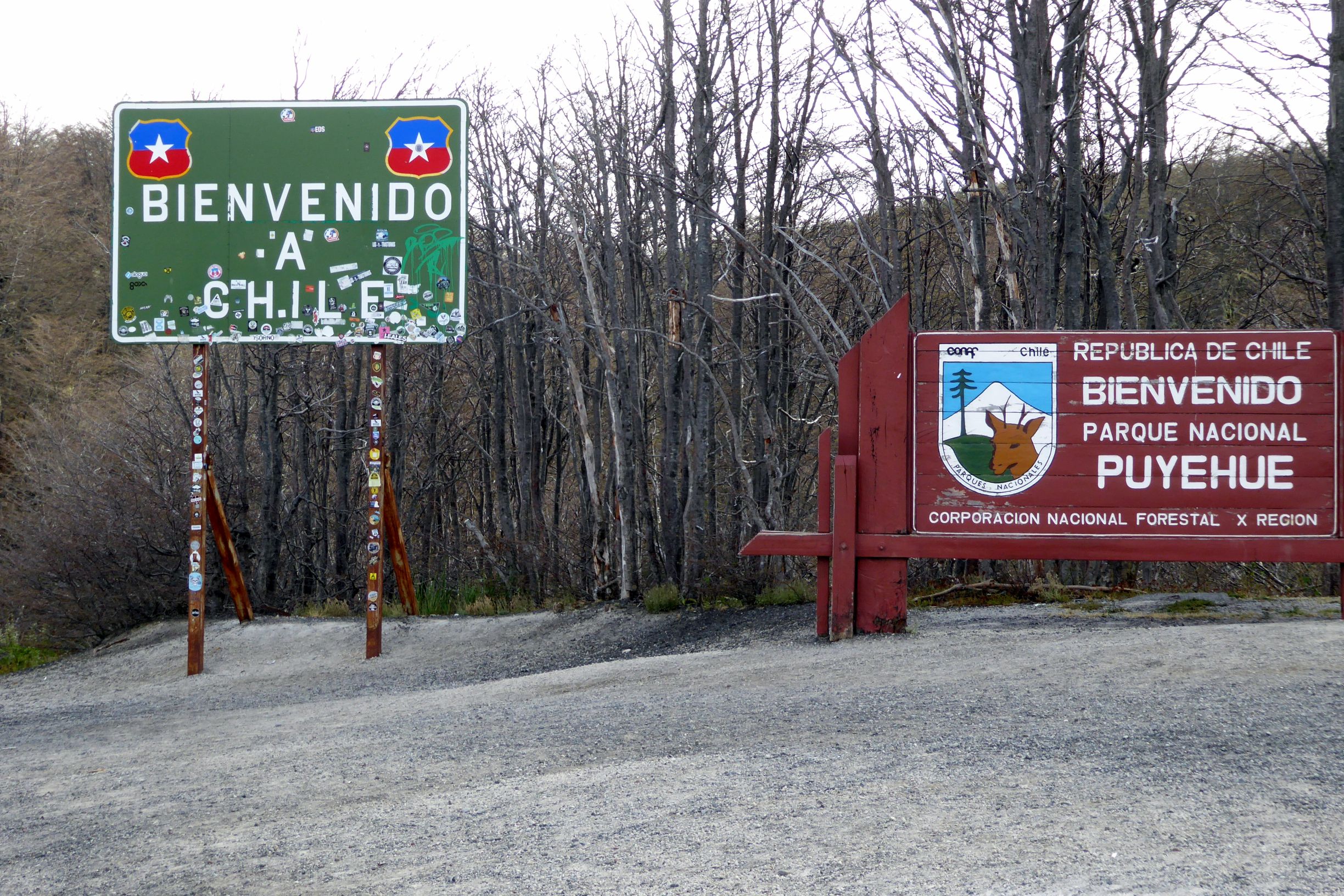
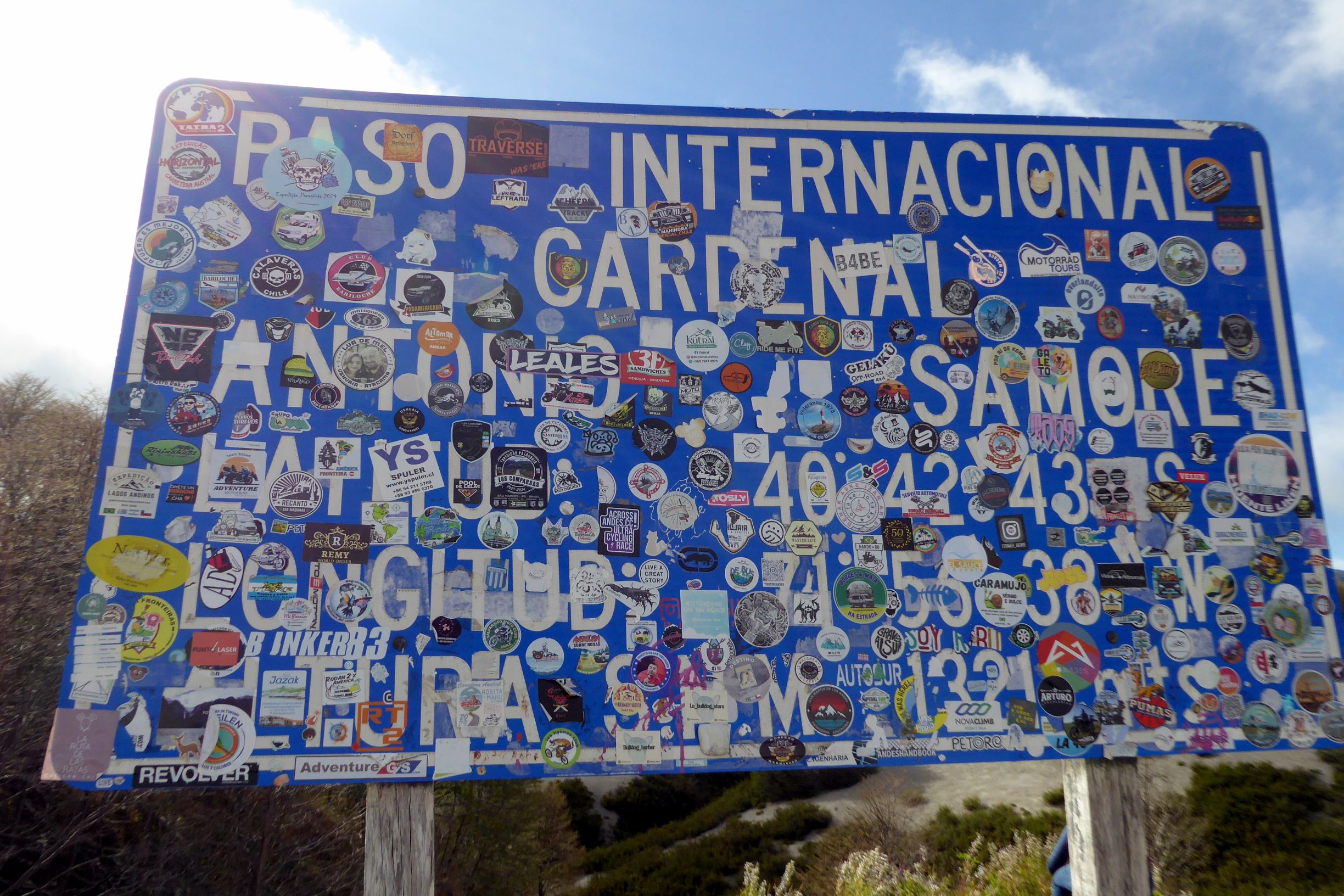
This was a big travel day by bus.  We drove into Chile by crossing over the beautiful Andes Mountains.  The Chilean border station where we stopped to have our passports checked and our luggage scanned for fruits, nuts, and other banned foods, was in Argentina.  The border itself, however, was technically at the top of the Andes at an elevation of 4,000 feet, 80 miles from Bariloche where we had departed.  When we arrived at this invisible border, we got out of the bus and had a decision to make:  Should we stay or should we go?  The group was split at first:

(For all photos, click on the image for a full screen view.)

To Chile we go!  (Fortunately, we escaped being obliterated by an 18-wheeler that sped by following our border-straddling stunt.  We celebrated our ultimately unanimous decision with another “discovery,” made a toast to Chile, and ventured on.

Along the way, while taking in the gorgeous views, we learned about our new country.  Andrea summed up the differences between Argentinians and Chileans with this comparison:  Argentina is the Italy of South America, and Chile is the England of South America.  In other words, Argentinians are loud, disorganized, (and drink mate); and, Chileans are humble, more conservative, organized, follow the rules, and drink tea.  As an Argentinian married to a Chilean, Andrea and Julio both agree on that assessment!

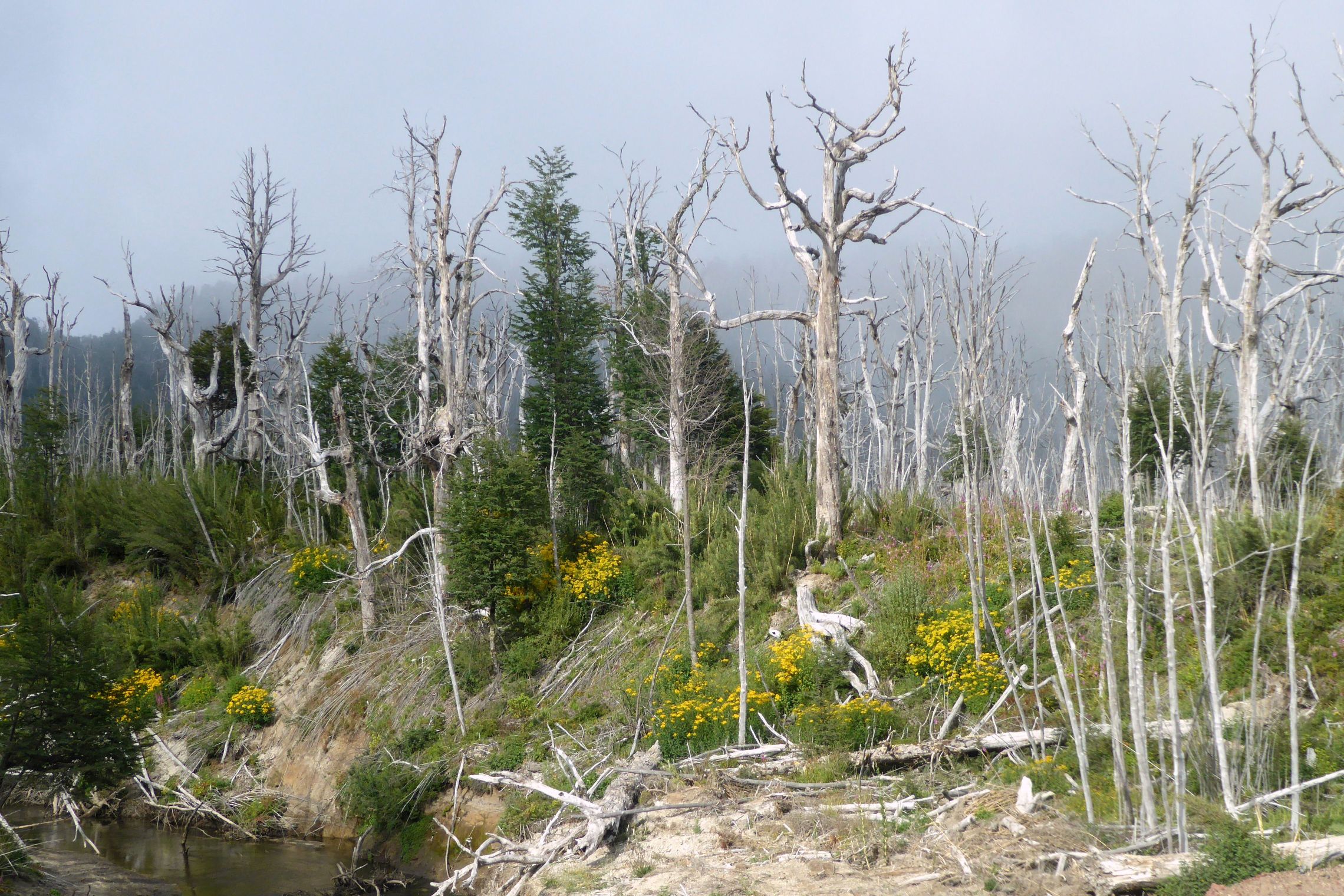
A wildfire had destroyed the forest, but it’s coming back!

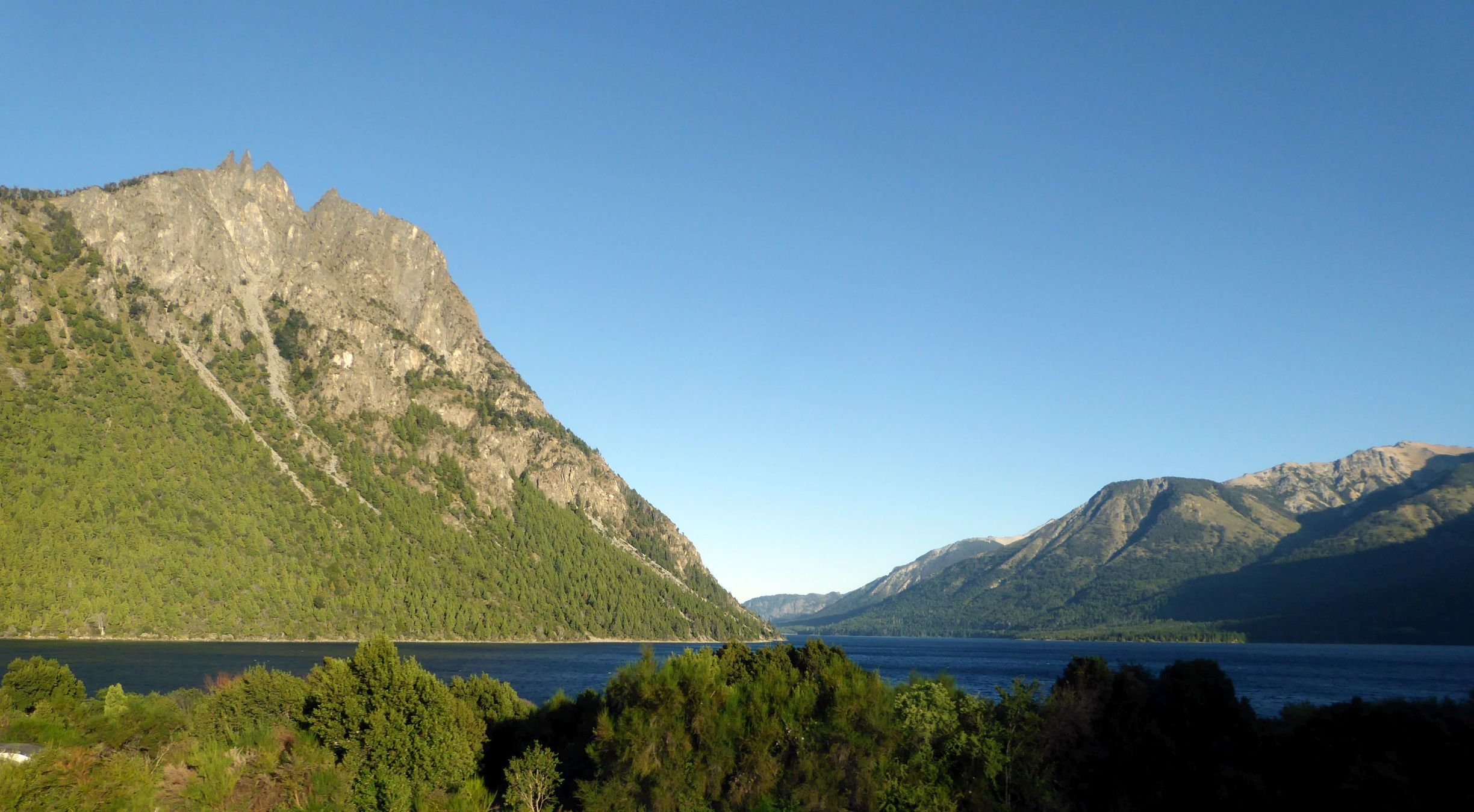
Chile is a funny-looking country on the map.  It is very long (2,625 miles!) and narrow (averaging just 10 miles wide).  An arid desert is located at the north end, and the south has glaciers and a rugged terrain.  In between, there is everything from mountains and cliffs to valleys, and lakes as well as forests, islands, and canals.  The Andes separate the country from Argentina to the east, with the highest elevation being at 21,000 feet.  We were going to see Patagonia, in the south, beginning with the Lakes District, one of Chile’s five regions.  The region is famous for its wonderful cabernet sauvignon wine as well as copper and lithium production. 

Daniel, our local guide, told us a lot of interesting information about his country as we made our way towards Puerto Varas.  We learned that Chile is the second-largest salmon producer in the world after Norway.  Surprisingly, it’s not Pacific salmon they are farming, even though Chile faces the Pacific Ocean.  They are farming Atlantic salmon, because the Norwegians brought it over and taught the Chileans how to farm it successfully.   

We also learned that Chile experienced the biggest earthquake (9.6) ever recorded.  That was back in 1960, and it lasted ten minutes!  1,500 people were killed, and the earthquake caused a tsunami with 120-foot waves! 

Since then, Chileans have gotten used to earthquakes and have strict building codes.  The last big quake was in 2010—an 8.8—which also caused a tsunami and left many people homeless.  These days, Chileans consider a 7.0 earthquake no big deal.

More about Chile in the posts to come, but it was time to stop for lunch.  Fortunately, we didn’t get held up at the border station, which often takes three hours to get through.  It was quiet there, so it only took about 75 minutes to process our group—a good thing, because we were getting hungry!

Our lunch stop was a cute little family restaurant where we were served the most tender chicken I had ever eaten.  I felt a little guilty, though, because we could see those farm-raised chickens just outside the window as we enjoyed their former relatives.  Which one was going to be the next victim?

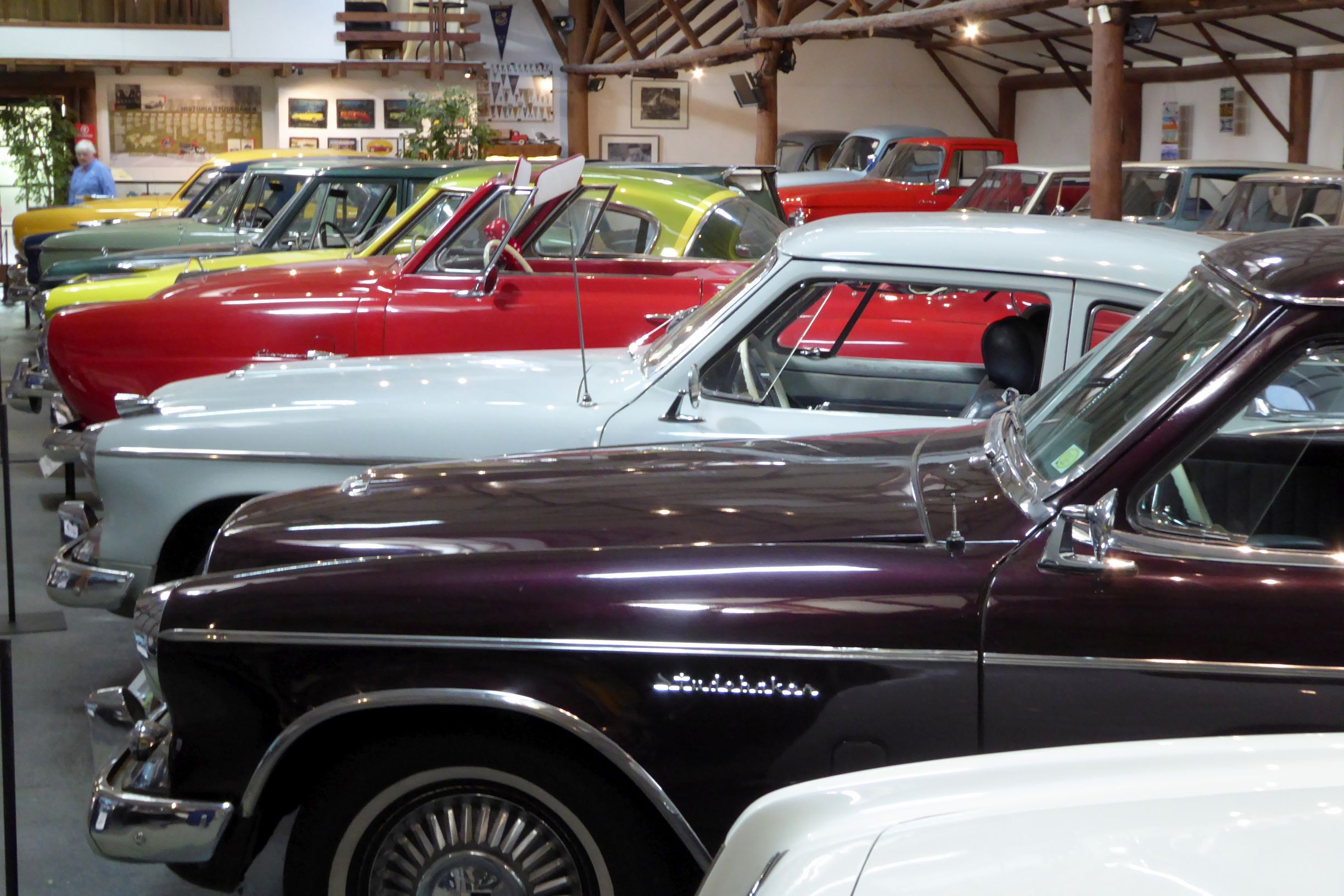
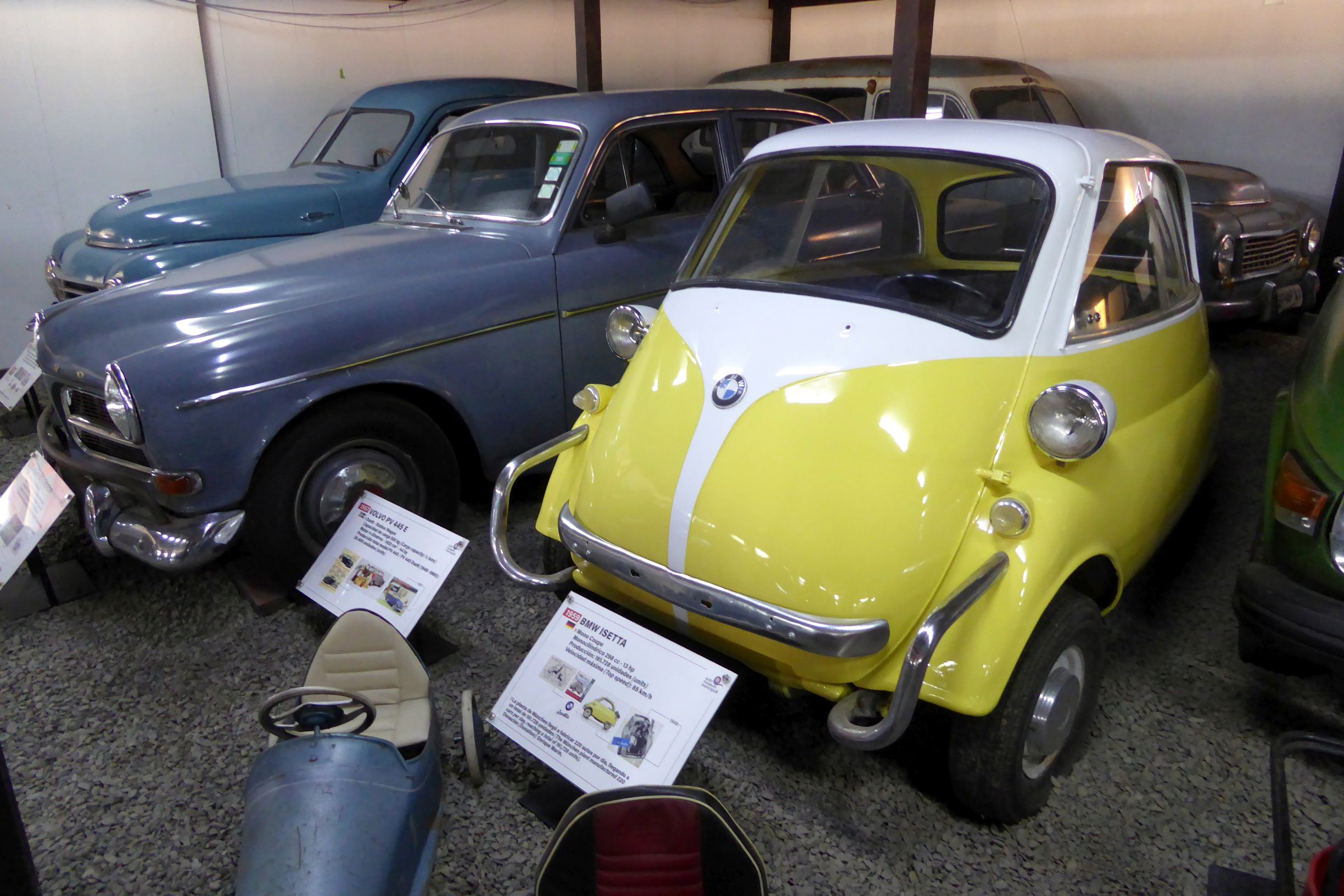
Before hitting the road, we stopped in to see Moncopulli, the auto museum located next door.  I just looked it up on Trip Advisor; it gets a 4-1/2 out of 5 rating.  Bruce and I agree; it was worth a visit if you are in the area!  The museum’s owner is a collector of Studebakers, and he opened the museum as a tribute to his father who owned a Studebaker.  Tragically, his parents were killed in a car crash when he was just 11 years old.  Now, the museum features his car collection as well as an assortment of Studebakers that were donated to the museum.

A funny little Beemer!

Onward ho to Puerto Varas we go!  It was a beautiful afternoon when we arrived—much different than the cold and windy weather we were expecting.  The remainder of the afternoon was free, so we headed out to get some Chilean pesos and explore the town before meeting up with the group at a local restaurant for dinner.

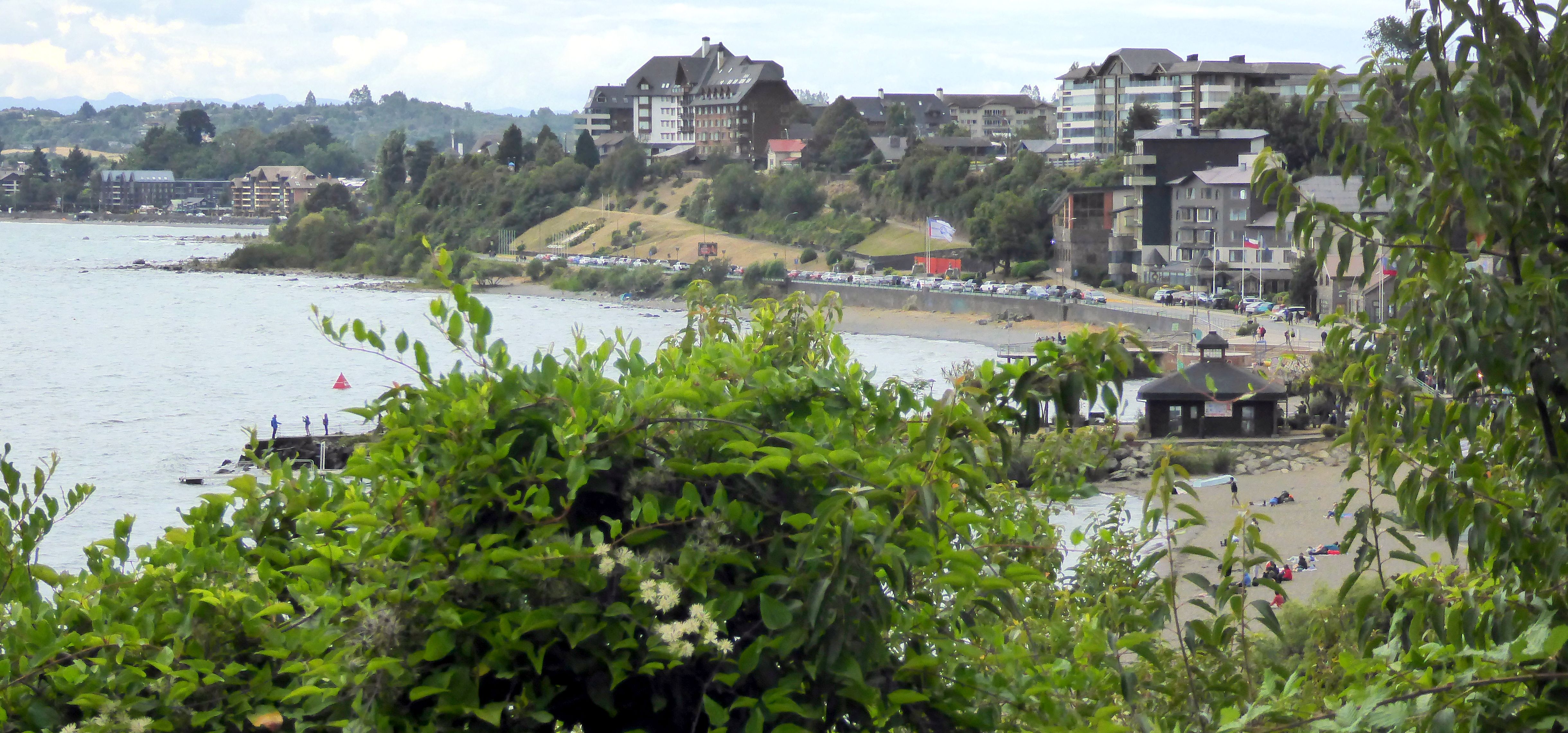
Puerto Varas faces Lake Llanquihue and is the gateway to Vicente Perez Rosales National Park. Known as the “City of Roses,” the sidewalks are lined with beautiful rose bushes that were in bloom.

The city was founded by German immigrants, which was evident in the architecture and vibe of the town. 

Here are a few scenes I captured while visiting the craft markets and walking along the waterfront of town:

Better views of the volcano in the background will appear in a future post.
Families enjoyed the beach on this rare warm and sunny afternoon and calm evening.

Next up:  ARGENTINA & CHILE #8: PETROHUE FALLS, A MUSIC SCHOOL, AND HOME HOSTED DINNER        

ARGENTINA & CHILE #6:  BLISSFUL BARILOCHE BONBONS AND A BBQ AT A FAMILY FARM

The morning didn’t start blissful—that came later.  First, a local gal, Nora, came to talk with our group about the Nazi presence in Patagonia following WWII.  It was interesting history I never knew about.

During the 1920’s-1940’s, Germans developed the ski industry in Bariloche and tourism grew.  During WWII, Argentina wasn’t exactly anti-Nazi.  Juan Peron was elected president during that period, and although he wasn’t a Nazi himself, he was pro-fascist. Argentina was the last to declare war against Germany. 

Following the war, Peron allowed selected Nazi war criminals to get fake identities, emigrate to Argentina, and blend in with the other Germans in Bariloche.  Peron only wanted those with science and technical backgrounds that could help develop technology in Argentina.  By having fake identities, these criminals were able to evade the courts.  Between 1947 – 1950, 300 high-ranking war criminals and 5,000 collaborators emigrated to Argentina and were protected by Peron.  Disgusting.

Moving on to much more blissful subjects, Bruce and I enjoyed the remainder of the beautiful morning by exploring more of Bariloche:

(For all photos, especially panoramas, click on the image for a full screen view.)

Tourists lined up to photograph the Bariloche sign!
This is the “beach” just up from our hotel and before the Bariloche sign. The water was frigid and the rocks didn’t look too comfortable to lounge on!
We stopped into the community center and looked down at the maze below.
This cathedral was built in the 1940’s.

The most blissful of that exploration, of course, was the Bariloche chocolate and gelato!  There’s good chocolate in Argentina?  Well, yes, as a matter of fact!  And, Bariloche, has the best in the country.  Remember all those Germans and Swiss who fled to Bariloche?  Well, as I mentioned in previous posts, there were a LOT of Italians who fled the devastating aftermath of the war as well, and some of them were fabulous chocolatiers. They had brought their recipes with them to Argentina, so they could continue making chocolate in their new country.  When these expats saw how Bariloche was developing into an attractive and successful alpine-like tourist town, they headed to what’s now known as “Little Switzerland.”

There are a lot of chocolate shops in Bariloche!  It reminded me of Brussels, Belgium; everywhere I looked, I saw another one!  Andrea had recommended Rapanui and Mamuschka, and my blog and Trip Advisor research came up with those two being rated among the best.  Rapanui, if you remember from my first post, had a location near our hotel in Buenos Aires.  We enjoyed some very delicious gelato there!  What I didn’t admit at the time, however, was how much chocolate I also enjoyed from Rapanui.  The truffles!  The dulce-de-leche filled chocolates!!  Pure heaven.

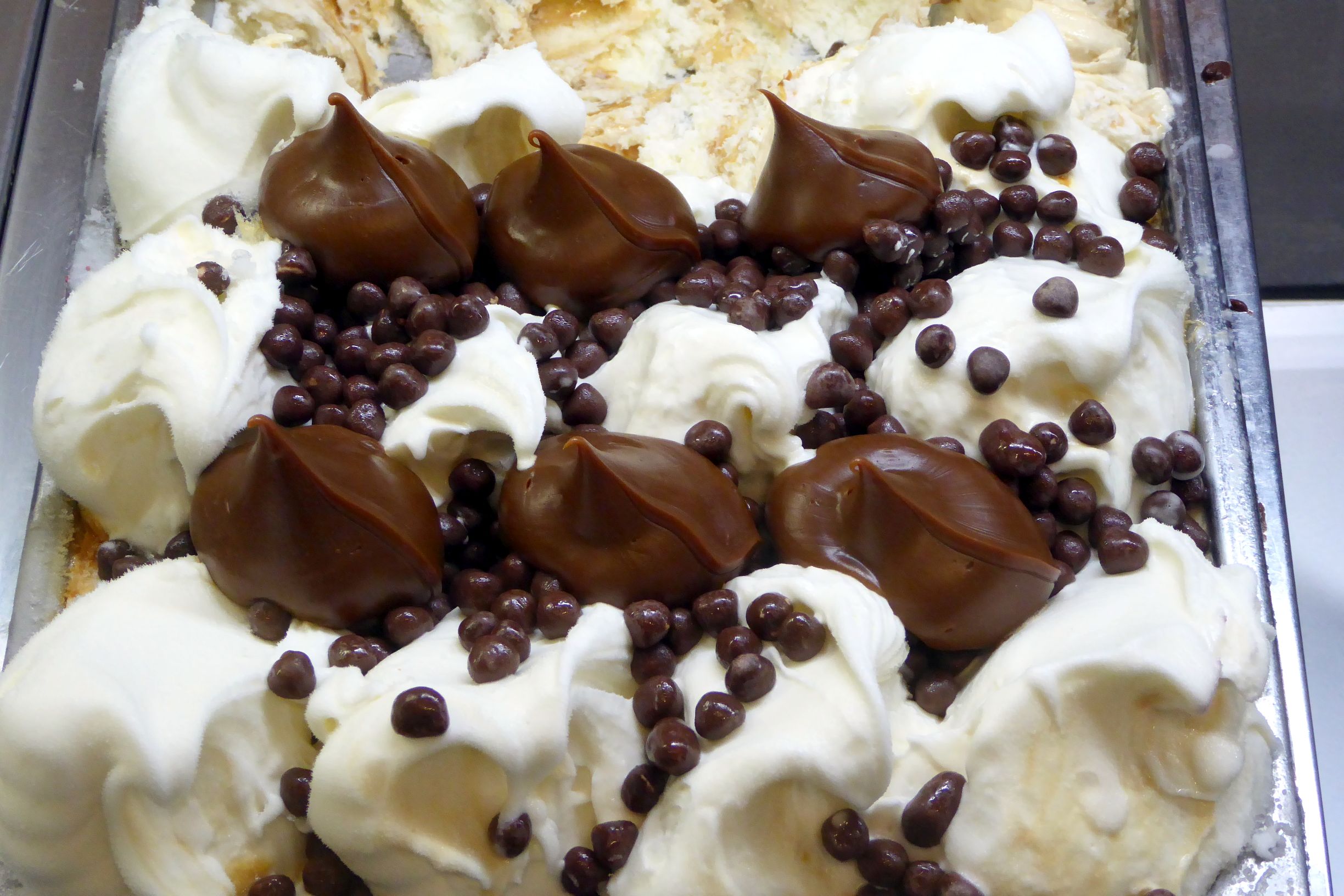
Well, I just had to compare Rapanui to Mamuschka, so I stopped in to purchase a selection—the cutest being these dulce-de-leche bears.  We had a gelato at Rapanui, too.

Rapanui gelato with dulce-de-leche
This cup of two gelato scoops will only set you back 2600 pesos or $2.60!

How can I choose the best?  Rapanui and Mamuschka were both blissful!

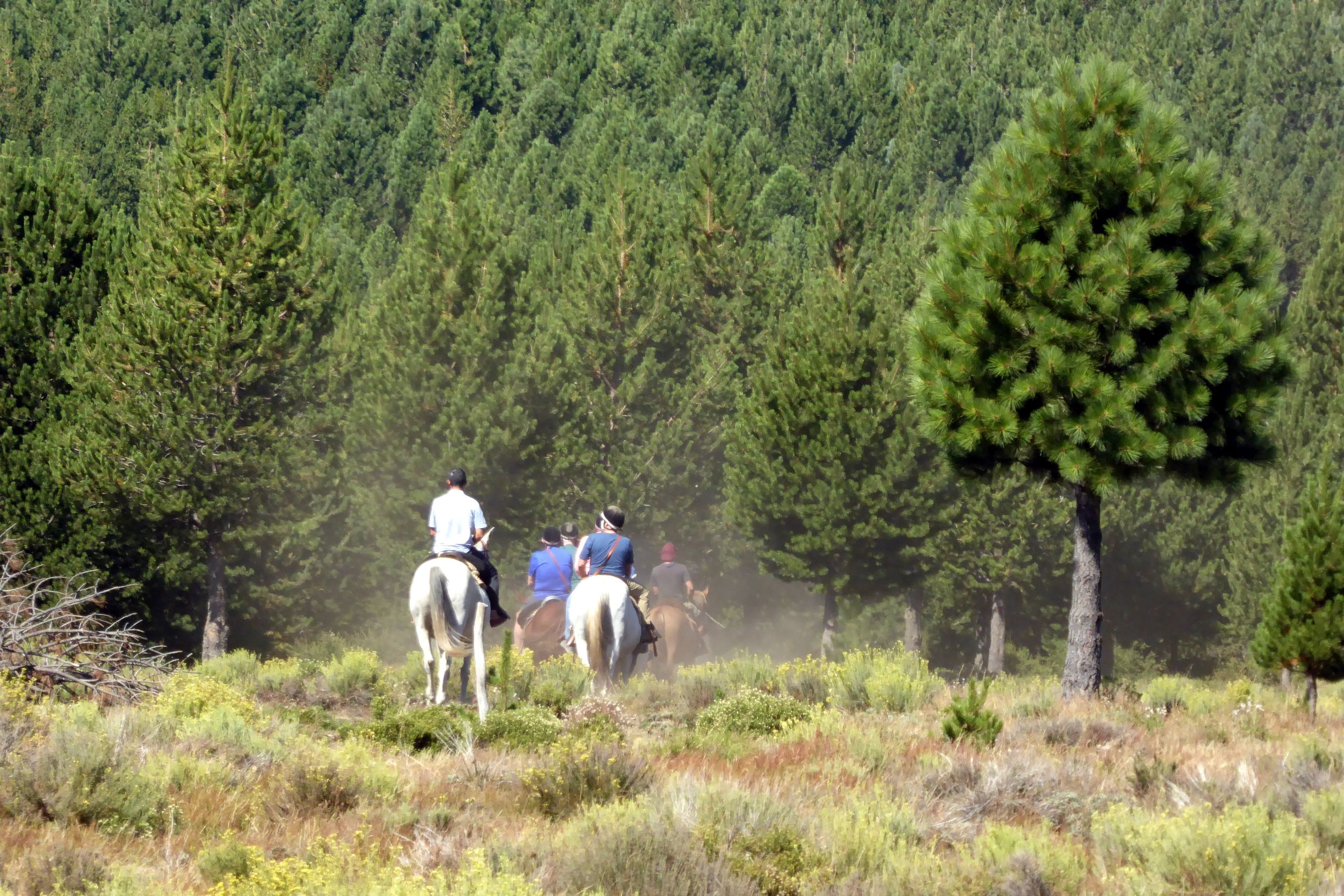
Bariloche had heated up quite a bit by the afternoon, topping out at around 90 degrees—our hottest day in usually cold Patagonia.  Horseback riding and a barbeque at a family horse farm was on the afternoon agenda, but it was just too hot for me.  I opted to stand in the shade to see the group off, and then scampered back inside for a cold face-dunk in the sink.

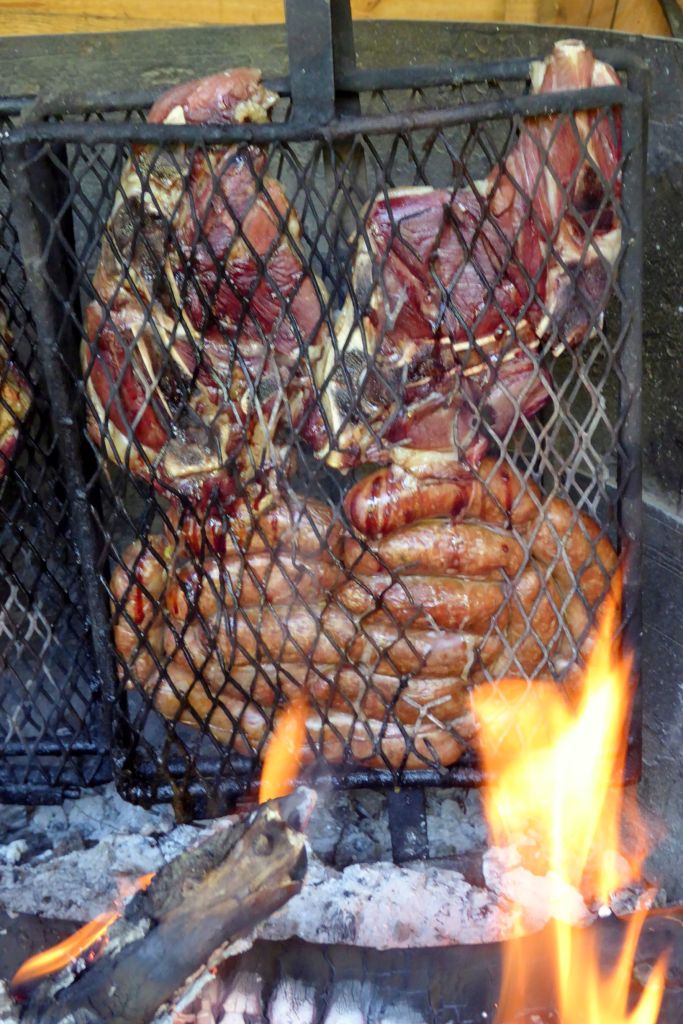
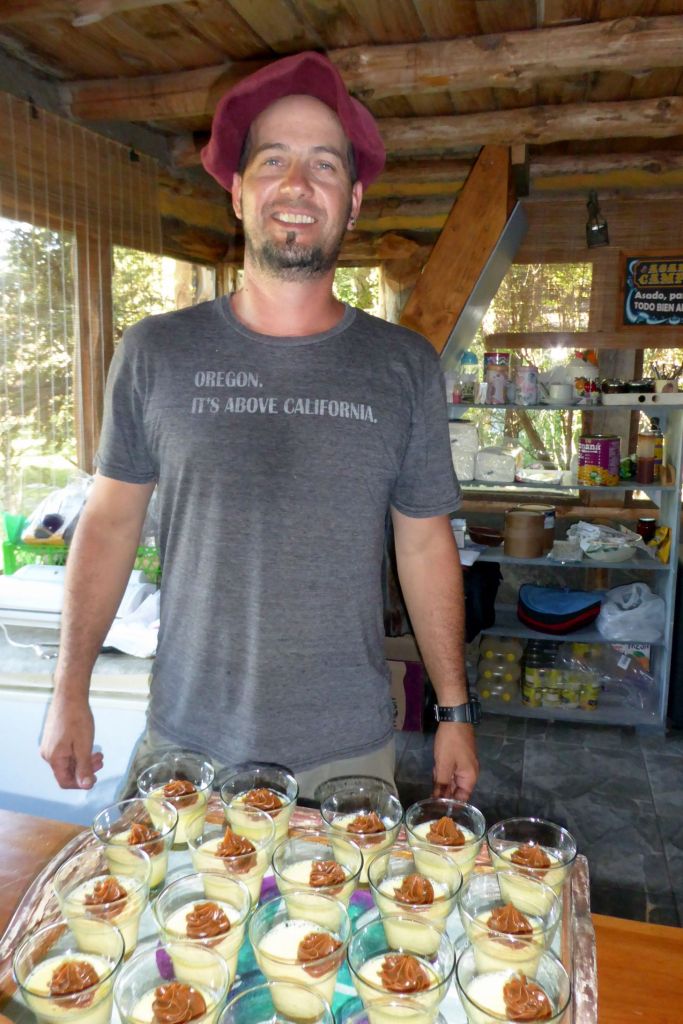
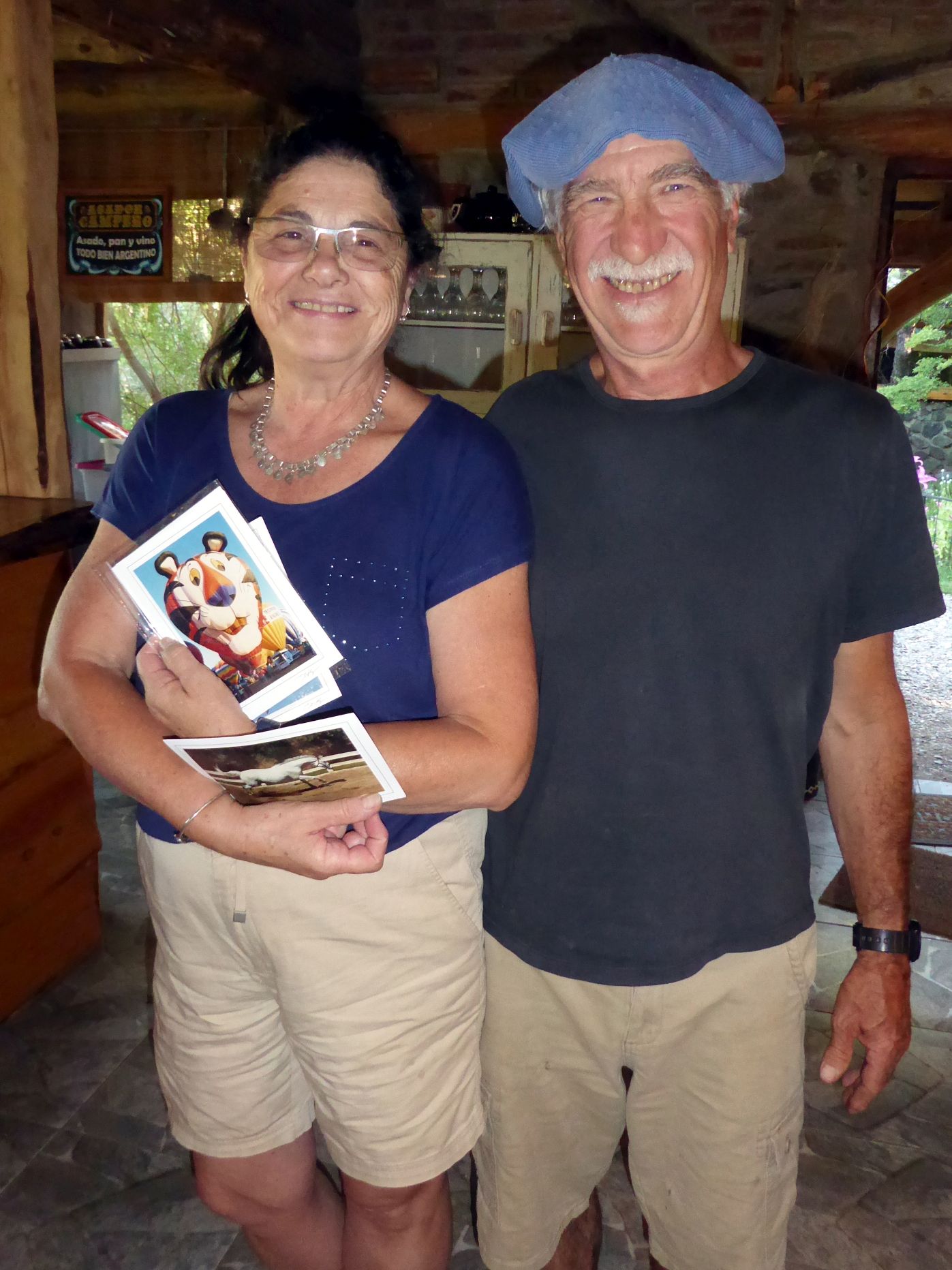
Los Haneck” was a very cool Patagonian ranch where we were warmly welcomed.  Bruce passed on the horseback riding as well, and we had a great time just hanging out with Andrea, Letti (our local guide), Monica Haneck, and her dogs.  Meanwhile, Chango and Pancho prepared a barbeque dinner of lamb, sausage, and chicken.  Served with salad (veggies—yay!) and a delicious dulce-de-leche-topped traditional flan; it was a fabulous feast!

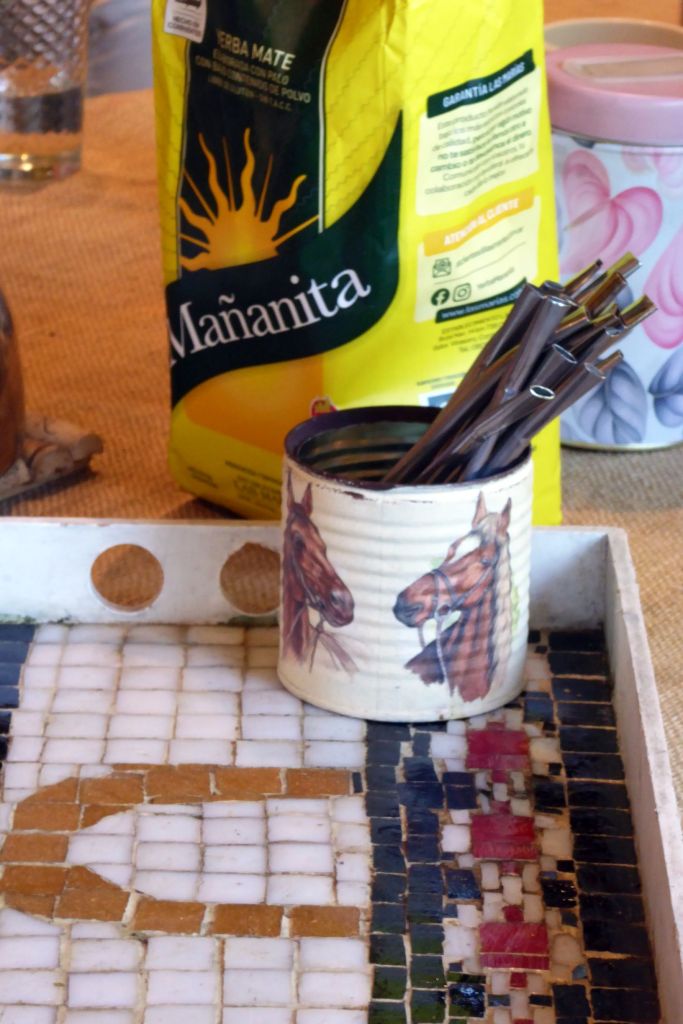
We also learned how to make and drink mate (“mah-tay”), which is an acquired taste, to say the least.  A caffeine-infused herbal drink traditionally served in a vessel made from a gourd, it’s very much a part of the Argentinian culture, especially in the northern part of the country where yerba mate is grown and harvested.  The favored drink of the gauchos (cowboys), the tradition began with the indigenous Guarani in what is now Paraguay, southeastern Brazil, Argentina, Bolivia, and Uruguay.

The etiquette attached to drinking mate is just as much a part of drinking mate as the mate itself.  It is drunk in social settings, with family and friends.  The same gourd and metal straw is passed around and shared by all, so you can imagine how much COVID disrupted this tradition!  Instead of passing the gourd and straw, they resorted to passing the thermos of hot water.

There is much more to mate and its consumption than I have written; it’s quite elaborate!  If you are ever in that part of the world, though, watch for somebody with a thermos held in the bend of their arm.  Chances are that same hand is holding a mate vessel with a metal straw, and they are on their way to share it with a friend!  (You will see what I mean in a future blog post.)

Meanwhile, let’s eat!

Monica and Chango with my photo notecards I gave them as a gift. Bruce gave Monica a gift of his fused glass jewelry.

Next up:  ARGENTINA & CHILE #7:  OVER THE ANDES TO CHILE WE GO!