As a graduate of Recreation Administration, from San Diego State University, I have made recreation and travels my career and life’s passion. After graduation, I traveled solo for one year throughout the South Pacific, doing travel photography in a wide variety of settings. Upon my return, many of my photographs became the subjects of my newly created line of handcrafted photographic greeting cards, "Exquisite! By, Elaine", a business I have had since 1986. Check them out at: http://ExquisiteCards.fototime.com .
In 1983, I began teaming up with my mom, Goldie, teaching arts & crafts to cruise ship passengers, aboard Princess Cruises and Royal Caribbean. In addition, I lectured on travel photography, as well as Australia and New Zealand history, aboard Princess Cruises.
In 2004, I formed a new teaching team with my recently retired husband, Bruce, who serves as my "humble assistant" until 2010 when the cruise lines shifted the arts and crafts program to mostly being taught by their own staff.
Currently, our favorite mode of travel is by river boat. Along the way, we enjoy poking around small European towns, meeting the people, seeking out interesting photo subjects, and always stopping at every chocolatier to make a purchase. Adding to my chocolate label and wrapper collection is a bonus! And, as a U.S. Masters swimmer, if I can find a pool to get in a swim with the locals, all the better!
Cheers!
Elaine-iaK
~ Believing in your dreams can be far more rewarding than living by your limitations~ -Karla Peterson
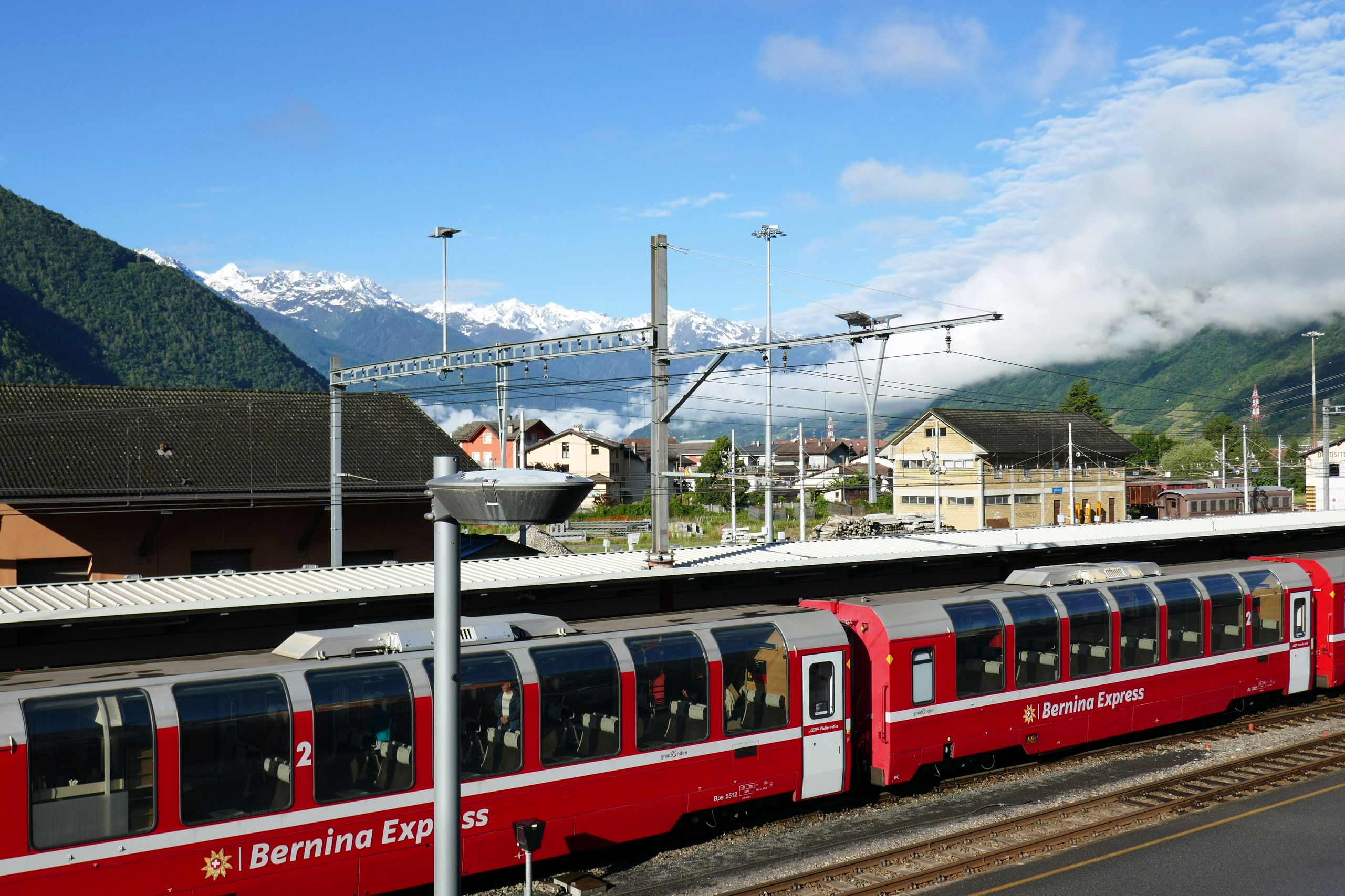
As we departed Tirano, I took one last look at the red Bernina Express train with gratitude. Yesterday had been an epic day in the Swiss Alps!
Now we were headed to Lake Iseo for new adventures. Along the way, we enjoyed beautiful views of Val Camonica and stopped in the little northern Italian town of Edolo.
(For all photos, click on the image for a full screen view.)
It had rained so much in Edolo that the water was flowing at a much higher level and volume than normal.
Our next stop was in the Franciacorta wine region where wonderful sparkling wine is produced using the traditional method. We toured the Bersi Serlini winery, and then sampled several of their sparkling wines followed by a delicious lunch.
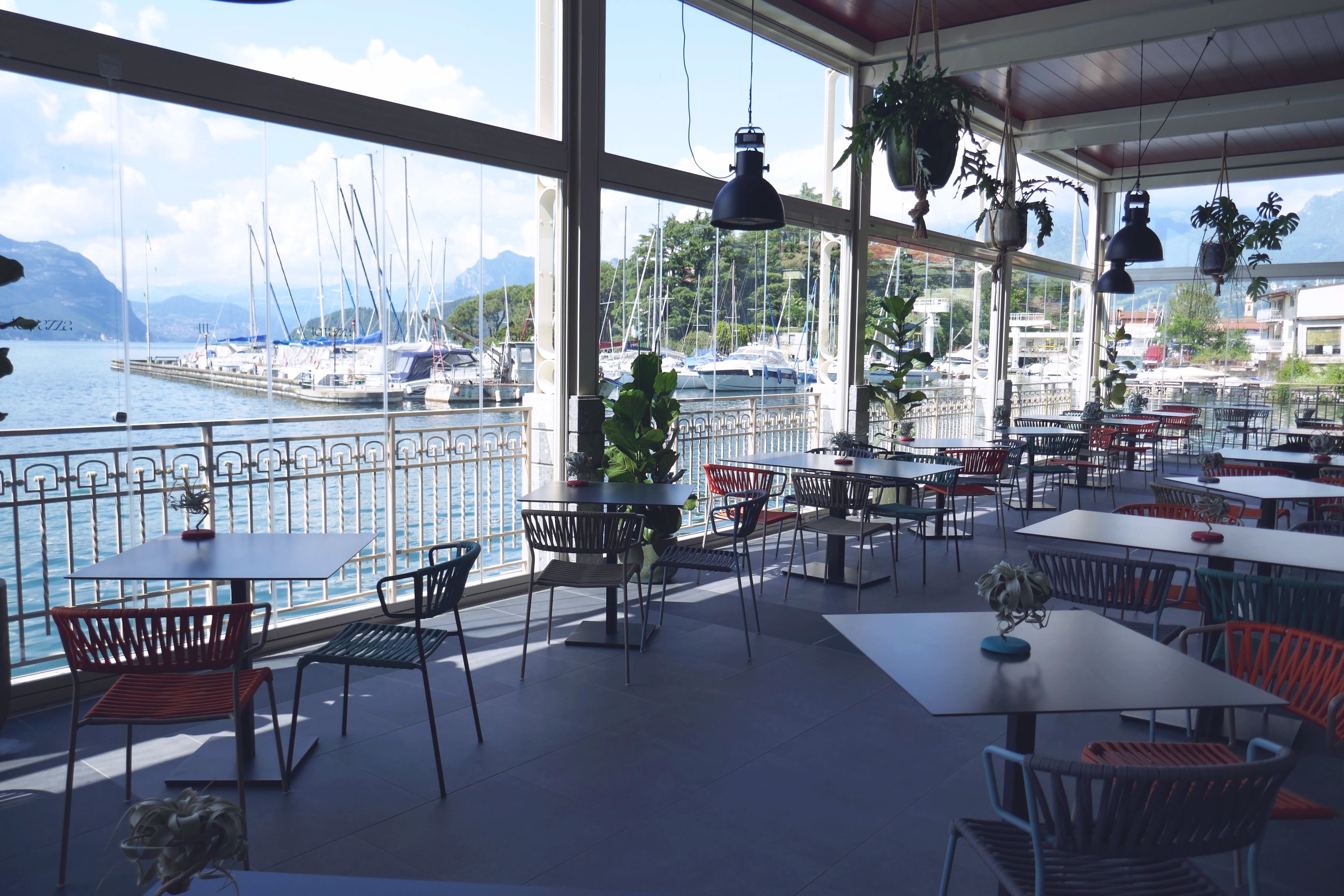
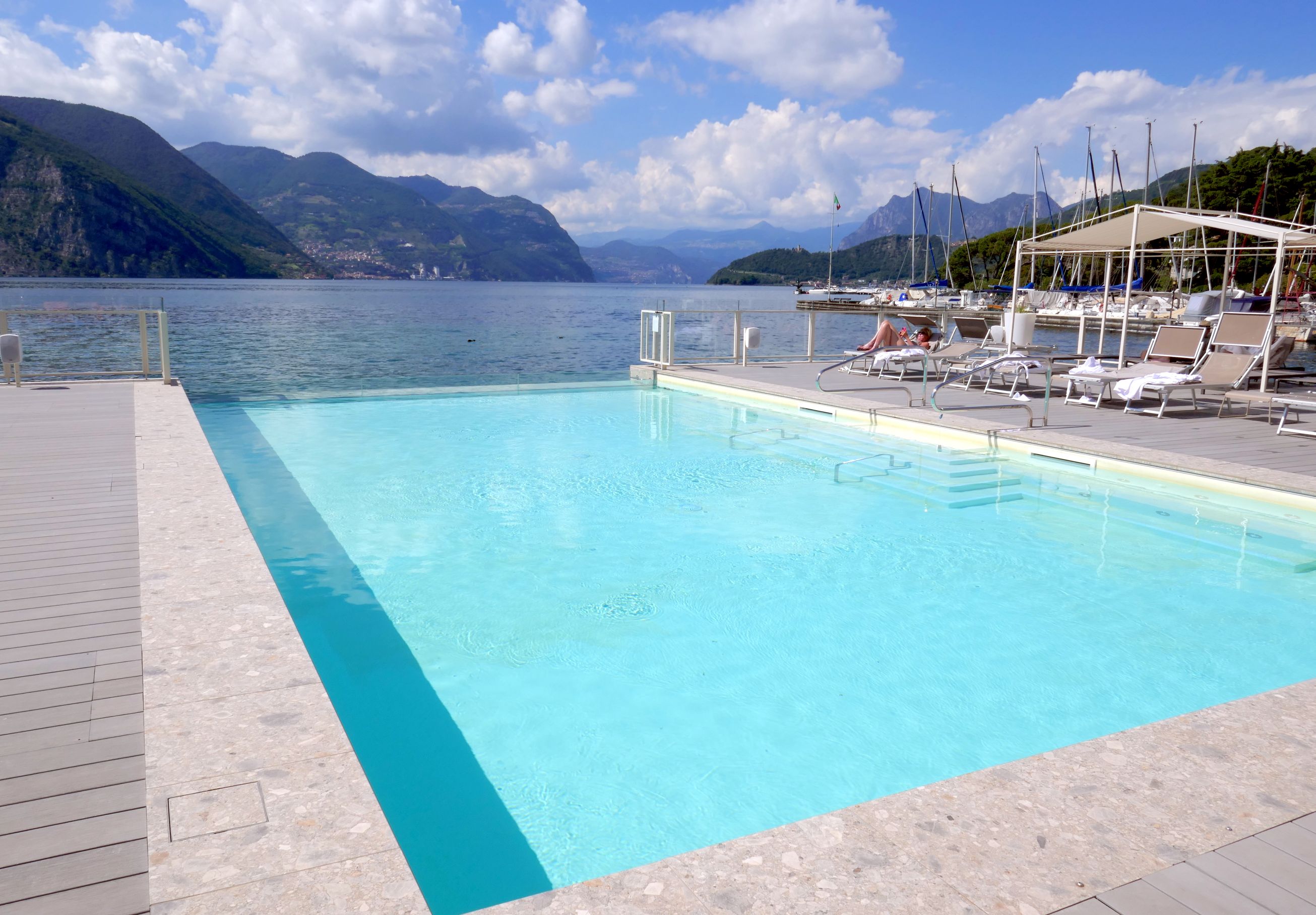
The final destination for the day was Hotel Araba Fenice, on Lake Iseo. Check out that link and you will see an aerial shot of the hotel’s location on their Trip Advisor page. What a gorgeous spot! The hotel does a great job taking advantage of the scenery with large lake-view windows and an infinity-edge pool. Although we had warm weather to enjoy the pool, the water temperature was 60 degrees, and the lake was even colder. Brrr!
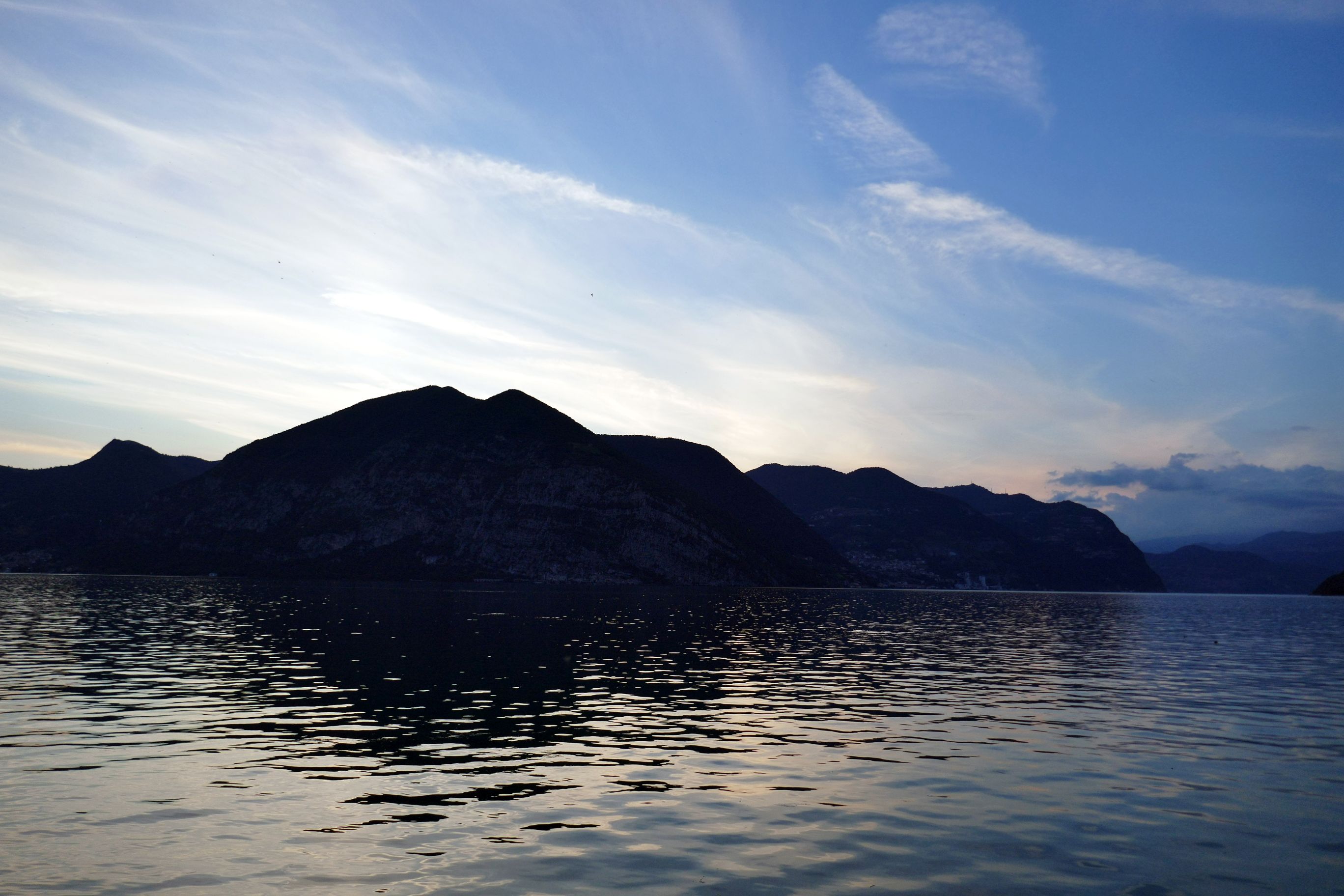
Lake Iseo, in the Lombardy region, is surrounded by medieval villages, and Bruce and I looked forward to exploring the town of Iseo the following day. Until then, we enjoyed a walk around the shore near our hotel with Maria, taking in the views at one of Pilzone’s tiny beaches.
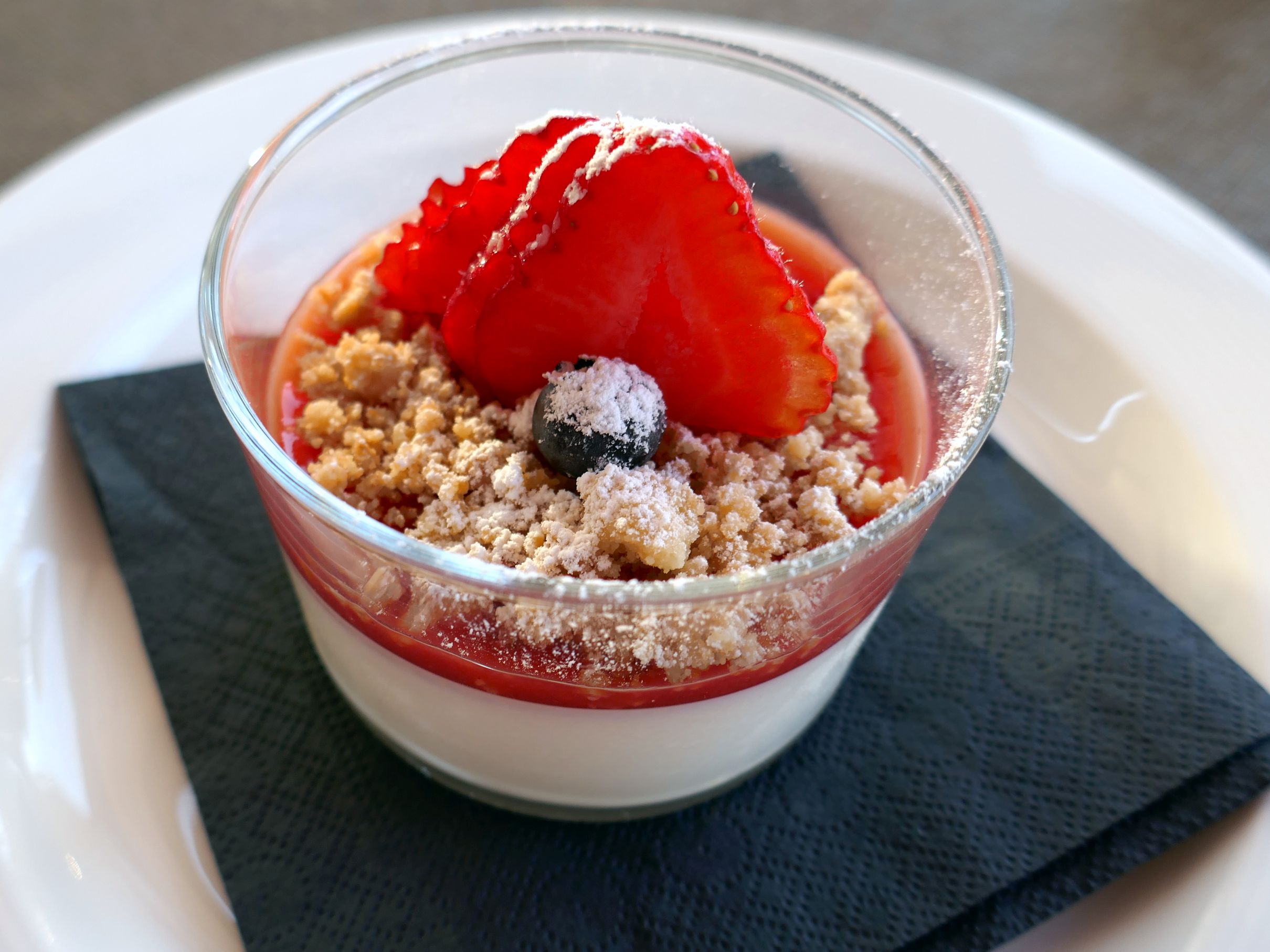
Dinner that night was in the hotel’s restaurant overlooking the lake. Not only was the view gorgeous, but the cuisine was fabulous, too!
Coming up next (after a break): SWITZERLAND & NORTHERN ITALY #15: MAGICAL MONTE ISOLA AND INTRIGUING ISEO
For the six people on the main tour who were not on the pre-extension, this was an opportunity to spend a day in Switzerland. I’m sure I could speak for the other nine of us that we were excited to see the Swiss Alps again!
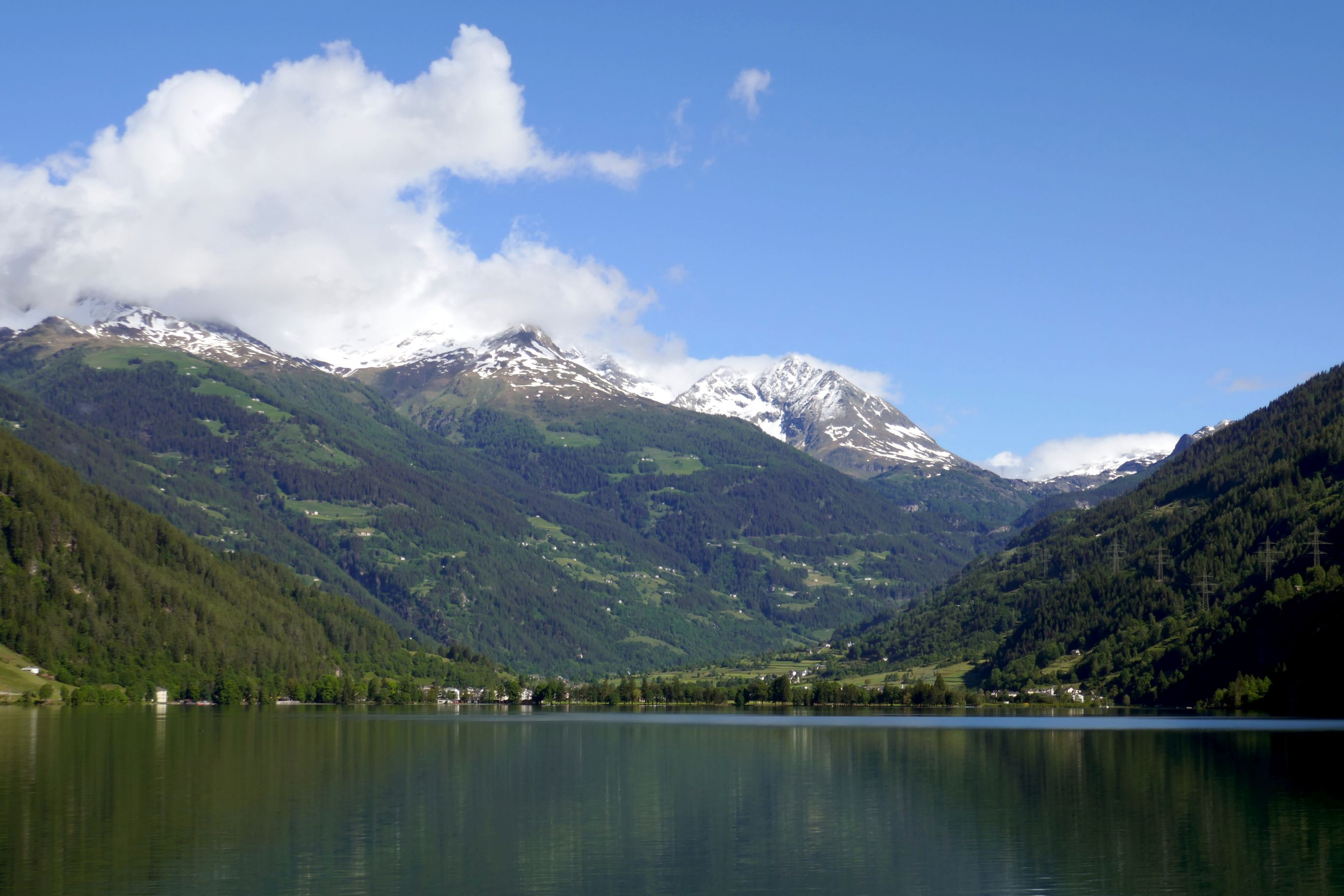
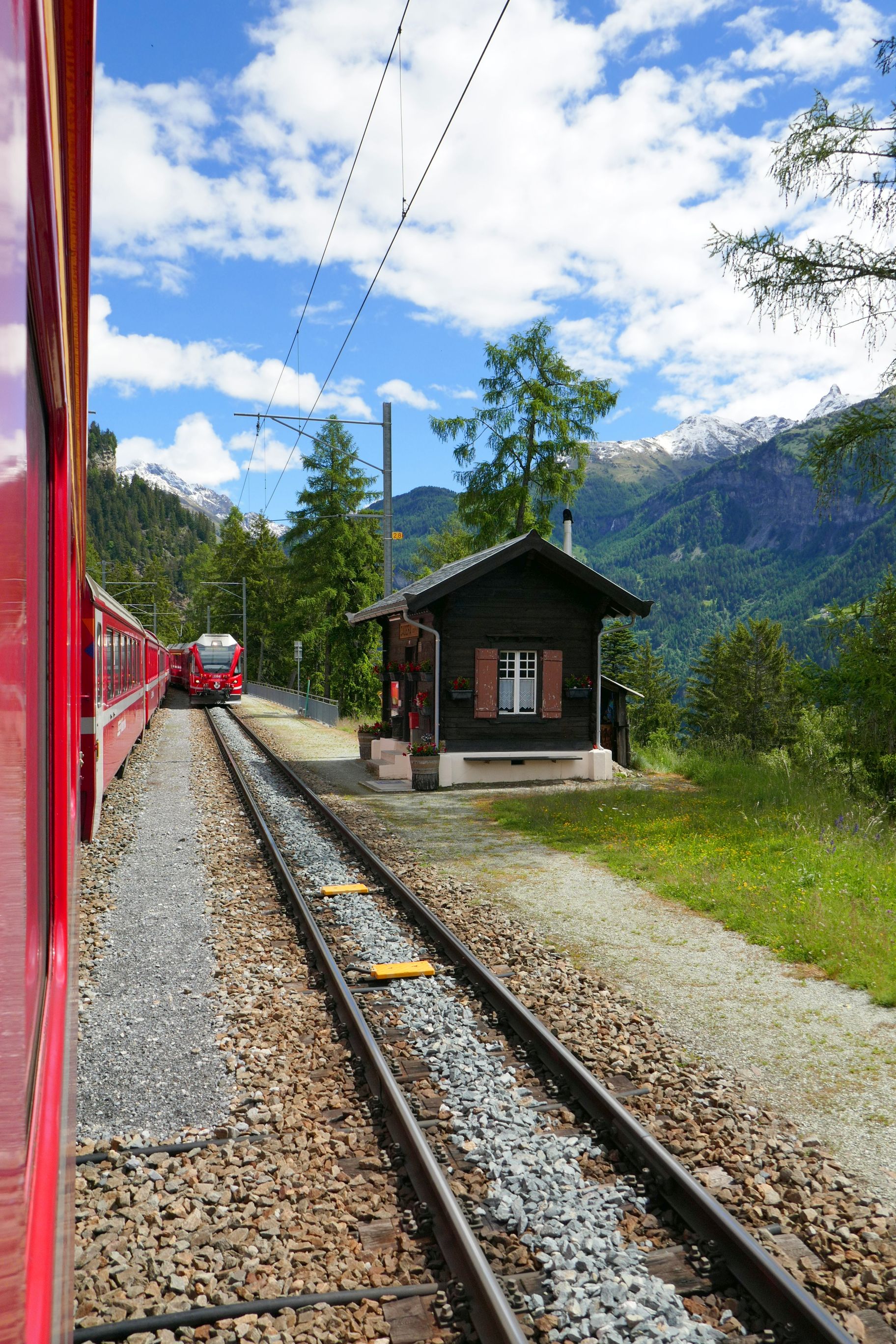
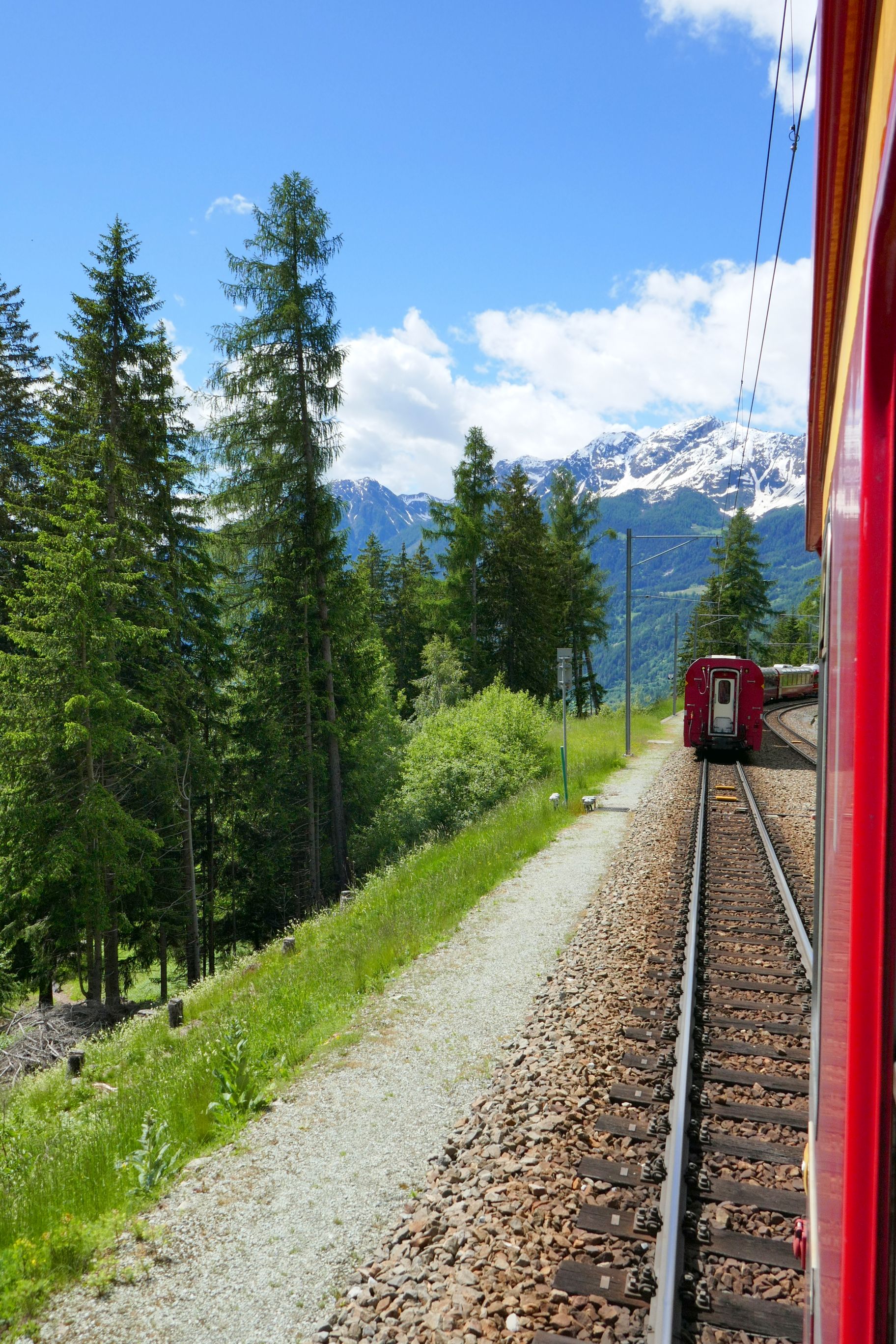
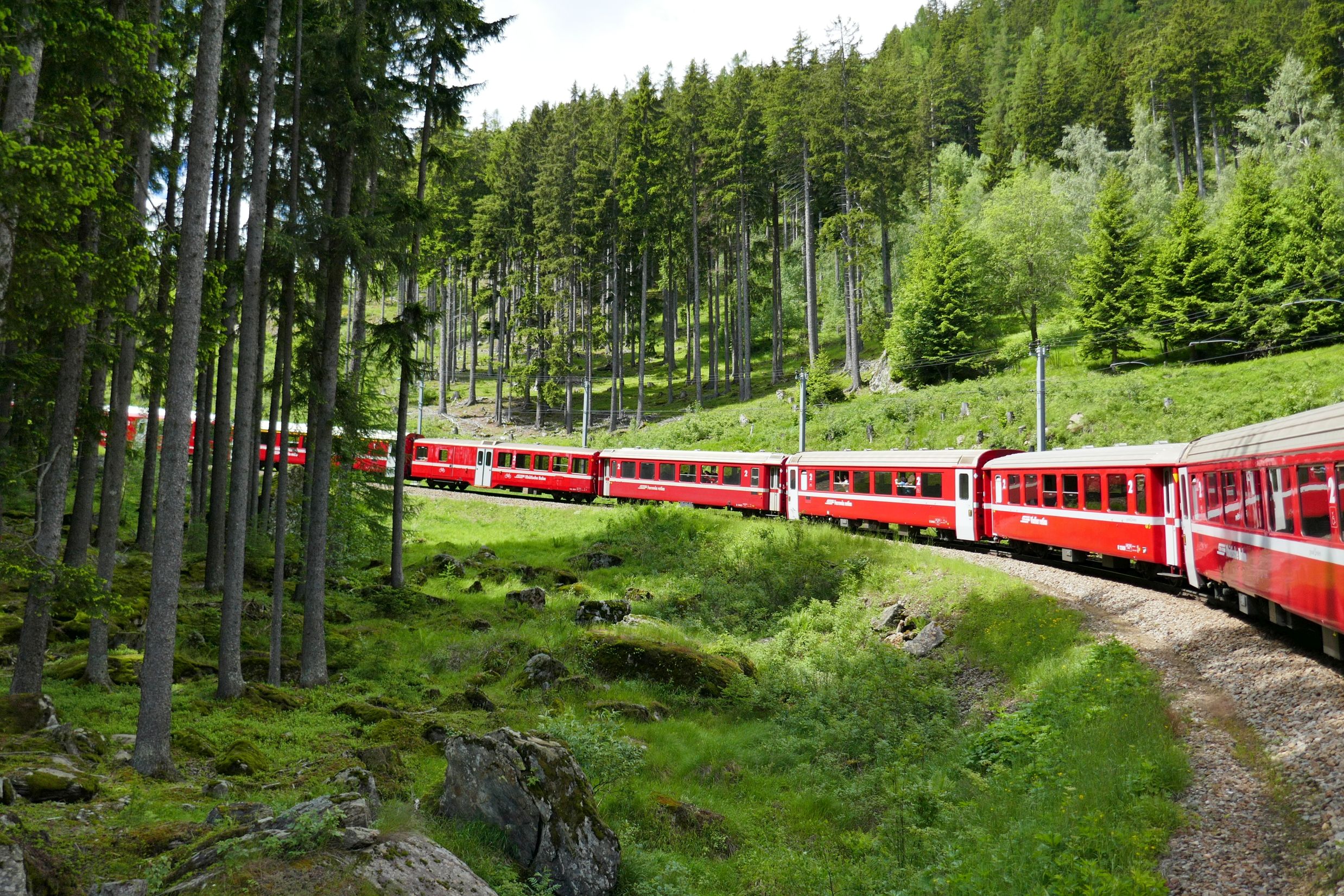
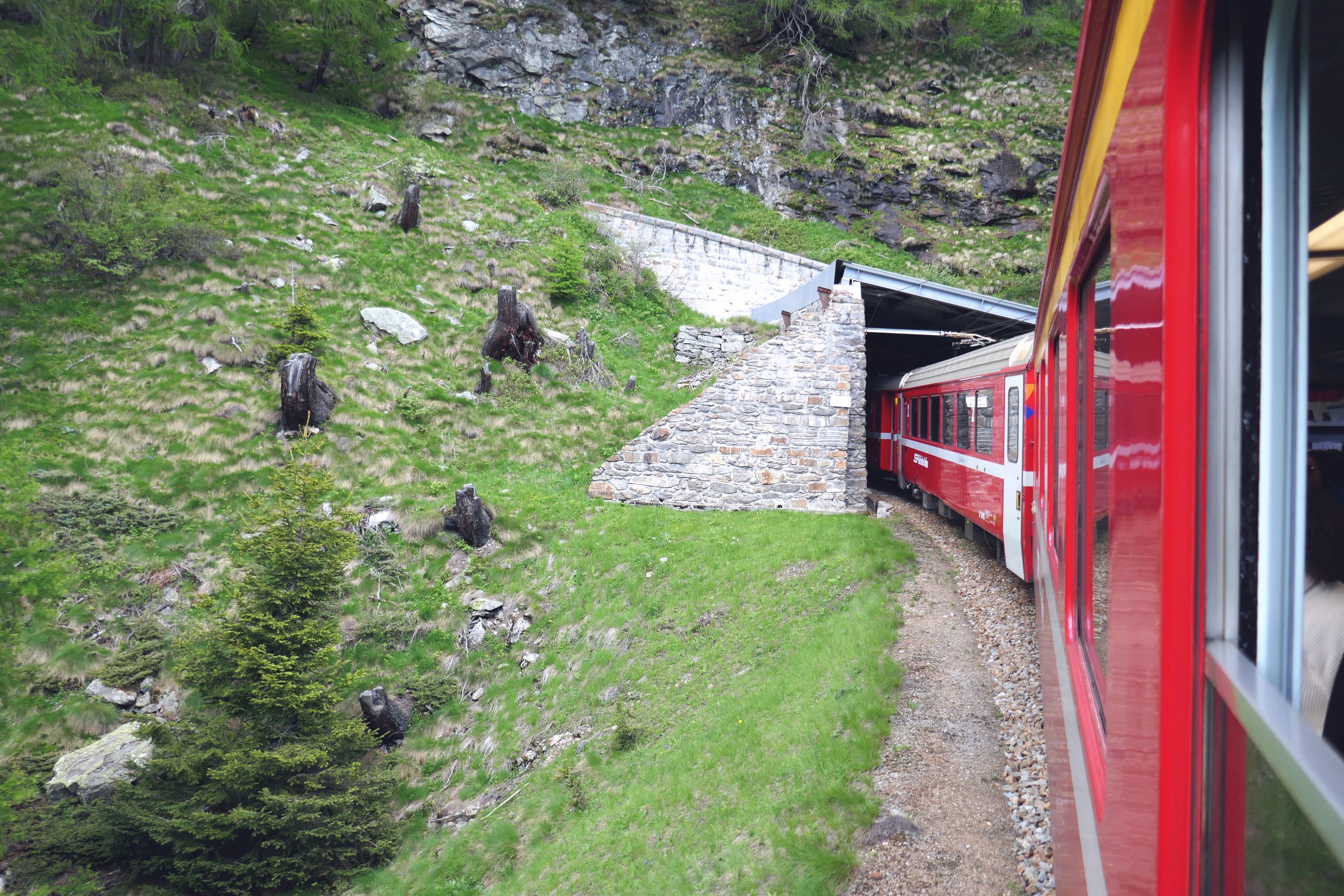
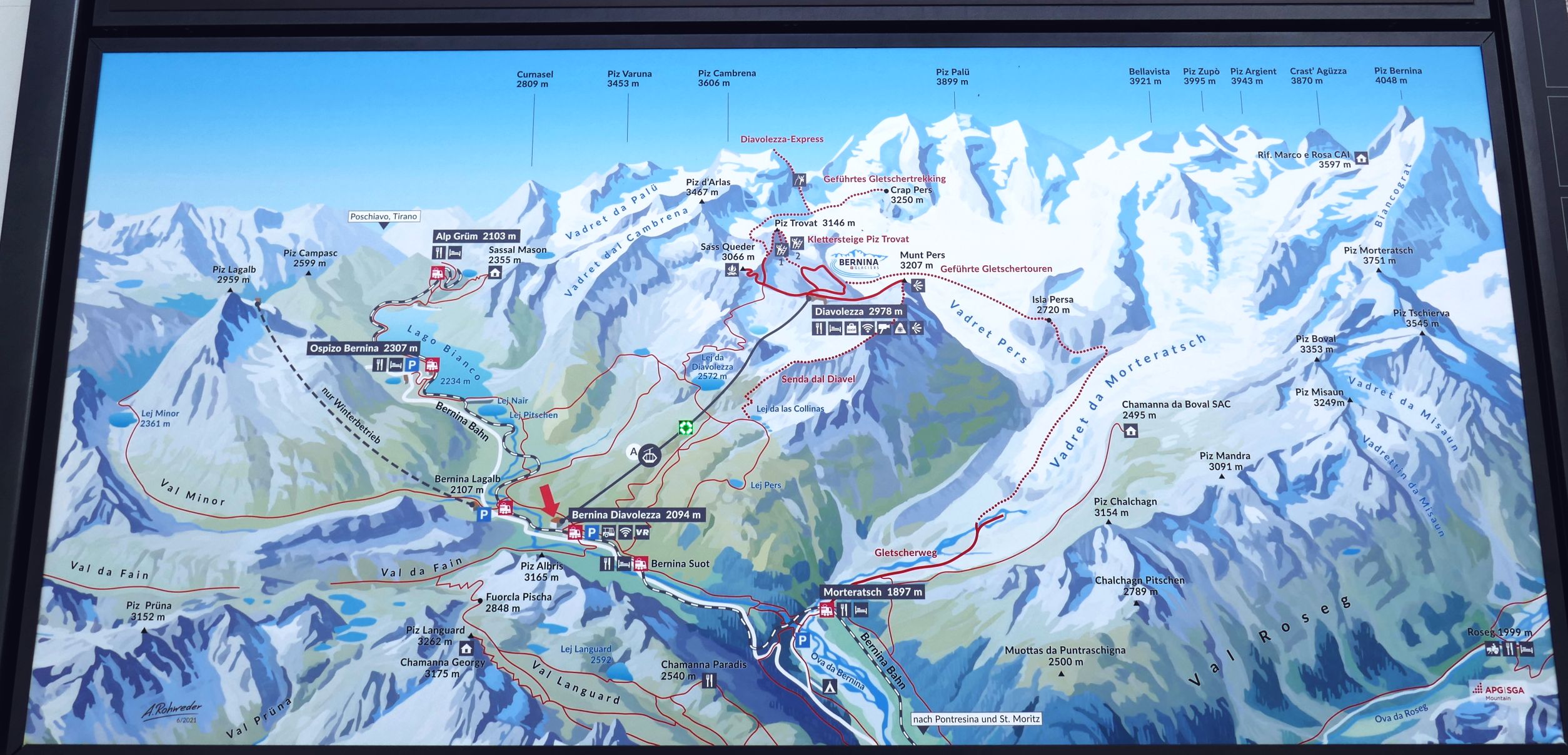
This day was what Bruce and I had looked forward to the most: Riding the Bernina Express. It is one of the few rail journeys designated a UNESCO World Heritage Site. Not only is it the world’s highest Alpine crossing (reaching an altitude of 7,400 feet), but also the steepest, with gradients up to 7%.
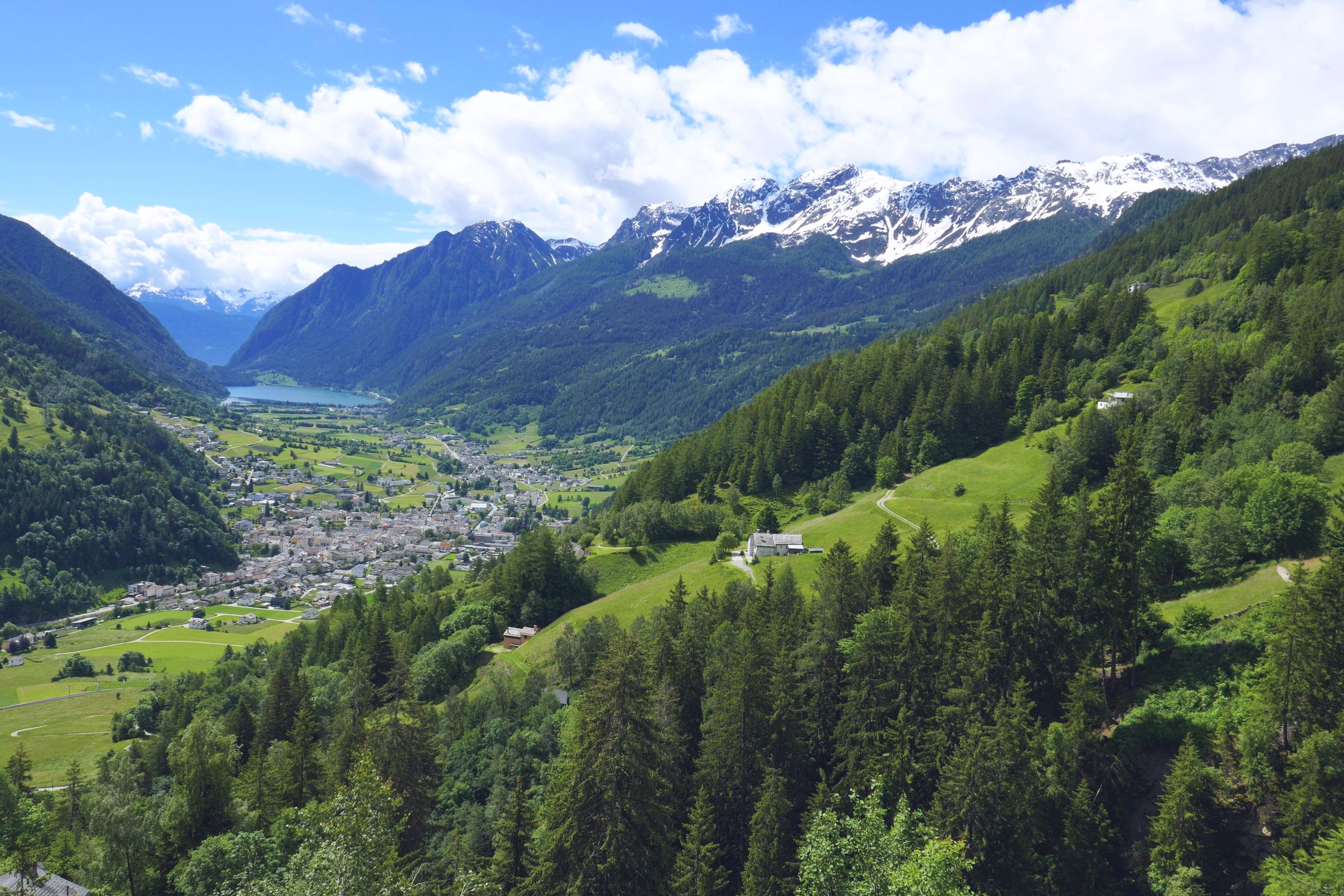
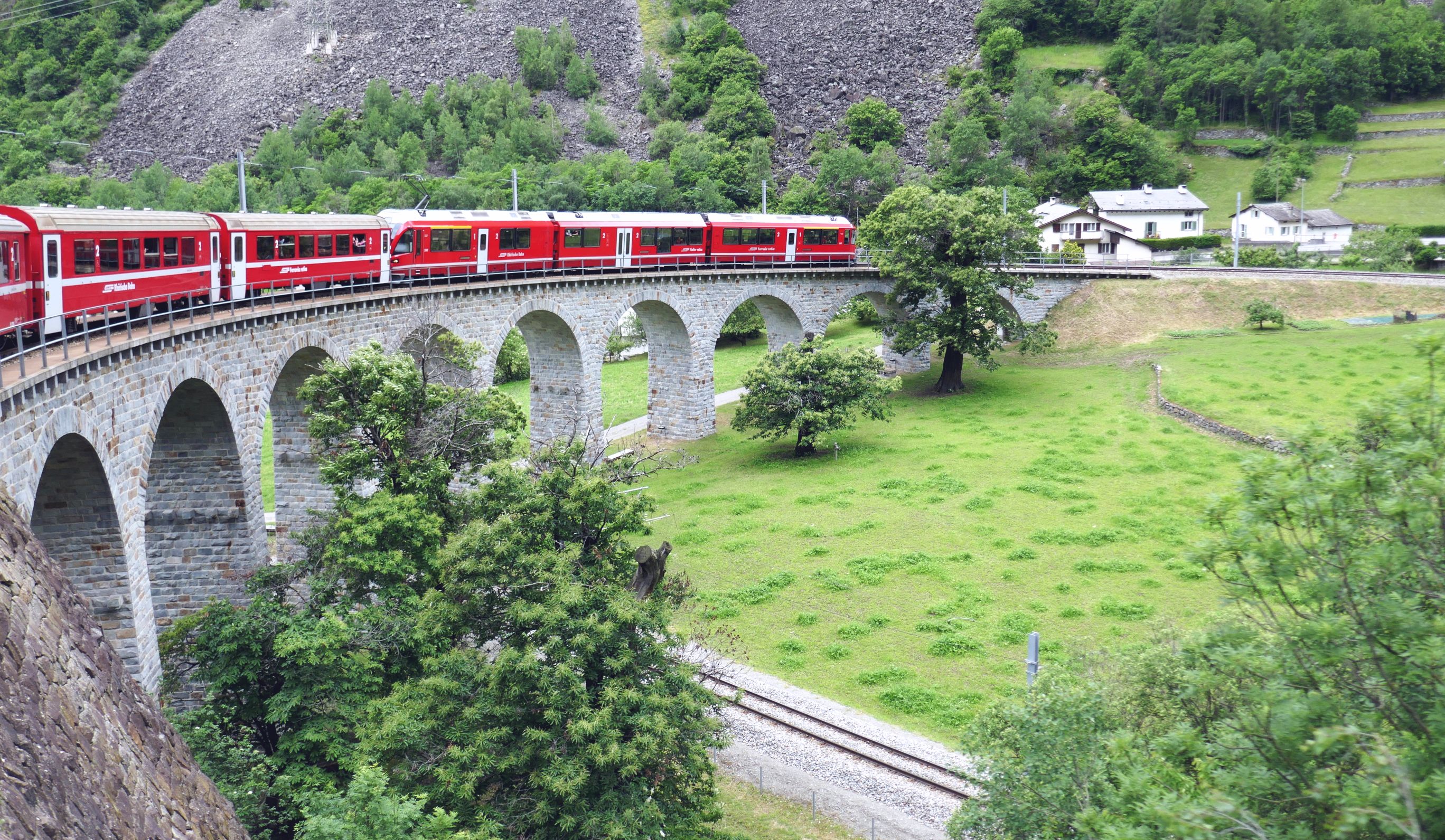
The journey took us over bridges and viaducts (including a full 360 loop over one of them), through tunnels, past glaciers and alpine meadows, and through tiny villages and vineyards. I did not take this ride sitting down or with the window closed! Fortunately, I was sitting across the aisle from another photographer in our group, so we shared windows on both sides of the train, jumping back and forth when we saw something worth shooting—which was often!
Our local guide, Roberto, was awesome! He rides the train six days per week as a guide, so he knew exactly when our cameras needed be ready for a spectacular scene. At times, it was a blink-and-you-miss it photo op, so he gave us a countdown, so we could capture the best shots.
Remember what I said in one of my Swiss blogs about trains being on time? Well, $#@* happens and it did happen on our journey. At one point in the 30-mile ride, we came to a complete stop and didn’t move. We waited, and waited, and waited… Roberto finally went in search of the conductor to ask what happened. The news wasn’t good. The driver of a huge crane truck didn’t lower the crane enough to go under the railway’s electrical lines, so he got in a tangle with those lines and the lines won. They came down and lost power, and a crossing arm was destroyed. It was a mess. Kudos to the efficient Swiss, though. They immediately called for a bus to pick us up and take us to the next station where the lines had power. To compensate for the inconvenience, we were upgraded to first class. I didn’t notice much difference except the restroom was quite large and nice!
If that’s the worst that would happen throughout our three-week trip (and it was), it was all good!
What was fabulous was our luck with the weather! Normally, there is no snow in mid-June, but it rained for two months straight, late into the season. Lucky for us, it stopped just in time. Come along on our journey and see for yourself!
(For all photos, click on the image for a full screen view.)
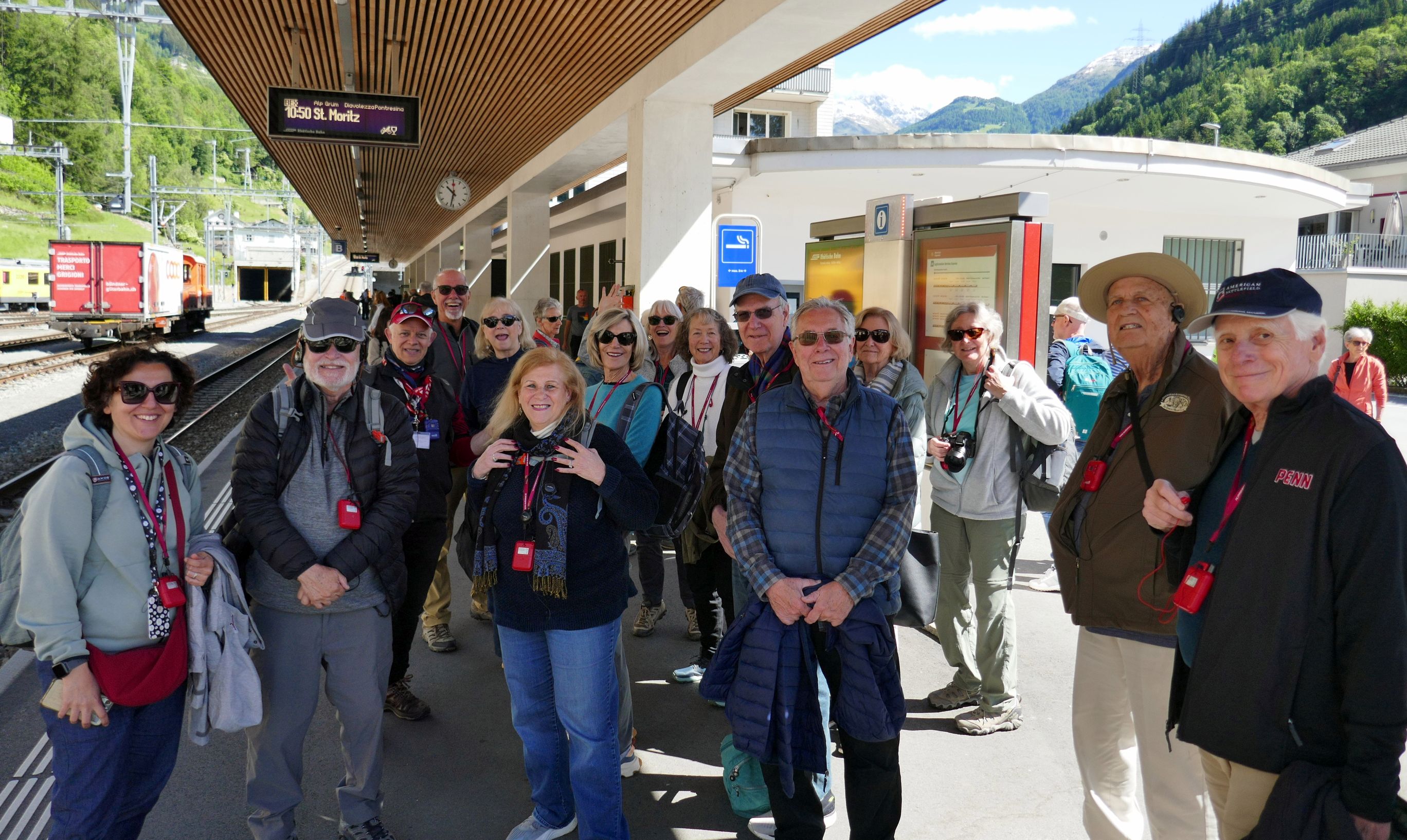
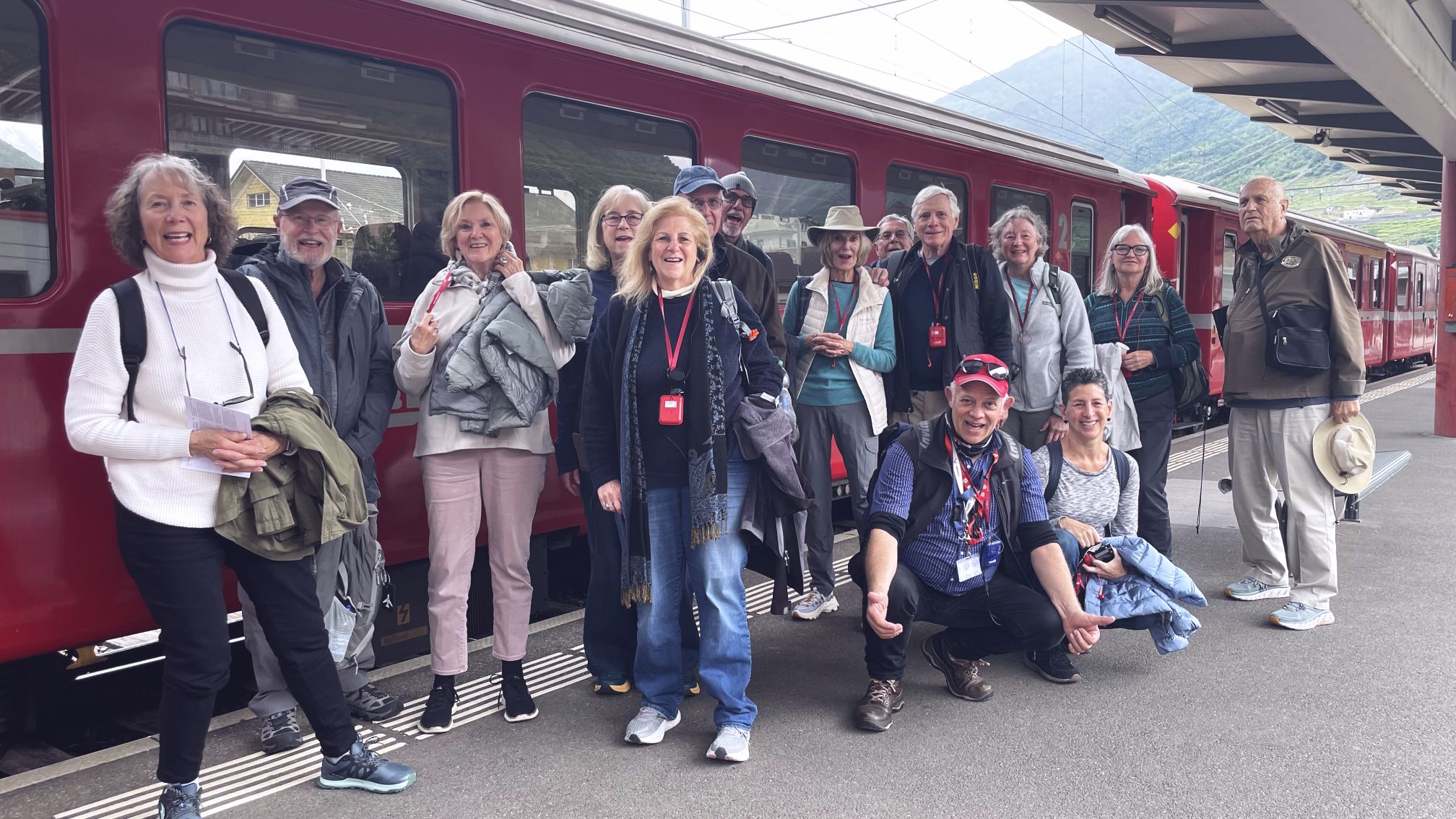
The view of our train from our hotel room in Tirano. We were so excited to wake up to a beautiful day!This was just the beginning of many beautiful scenes to come on our 30-mile Bernina Express Journey.Our group, waiting for Bernina Express train, #2.
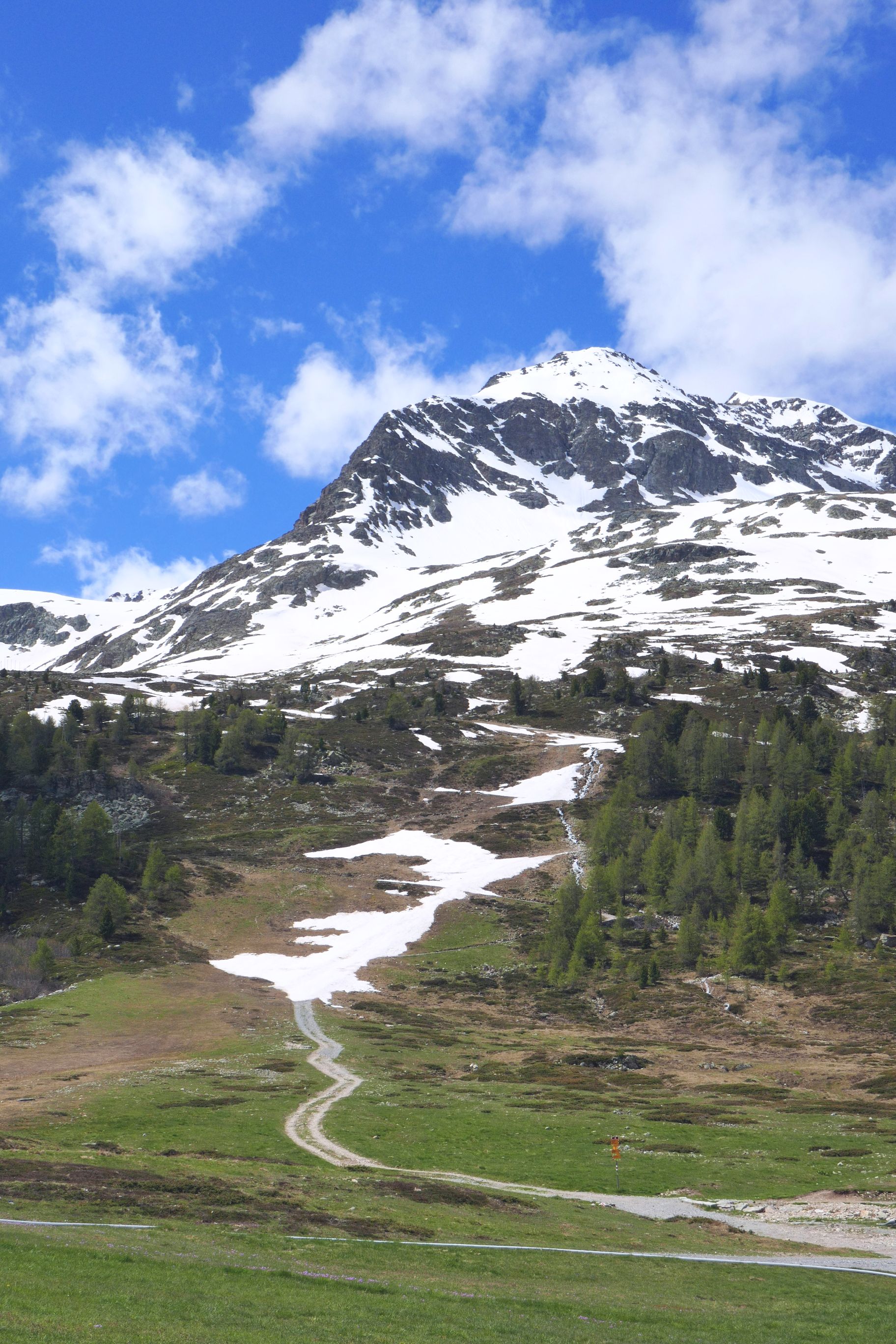
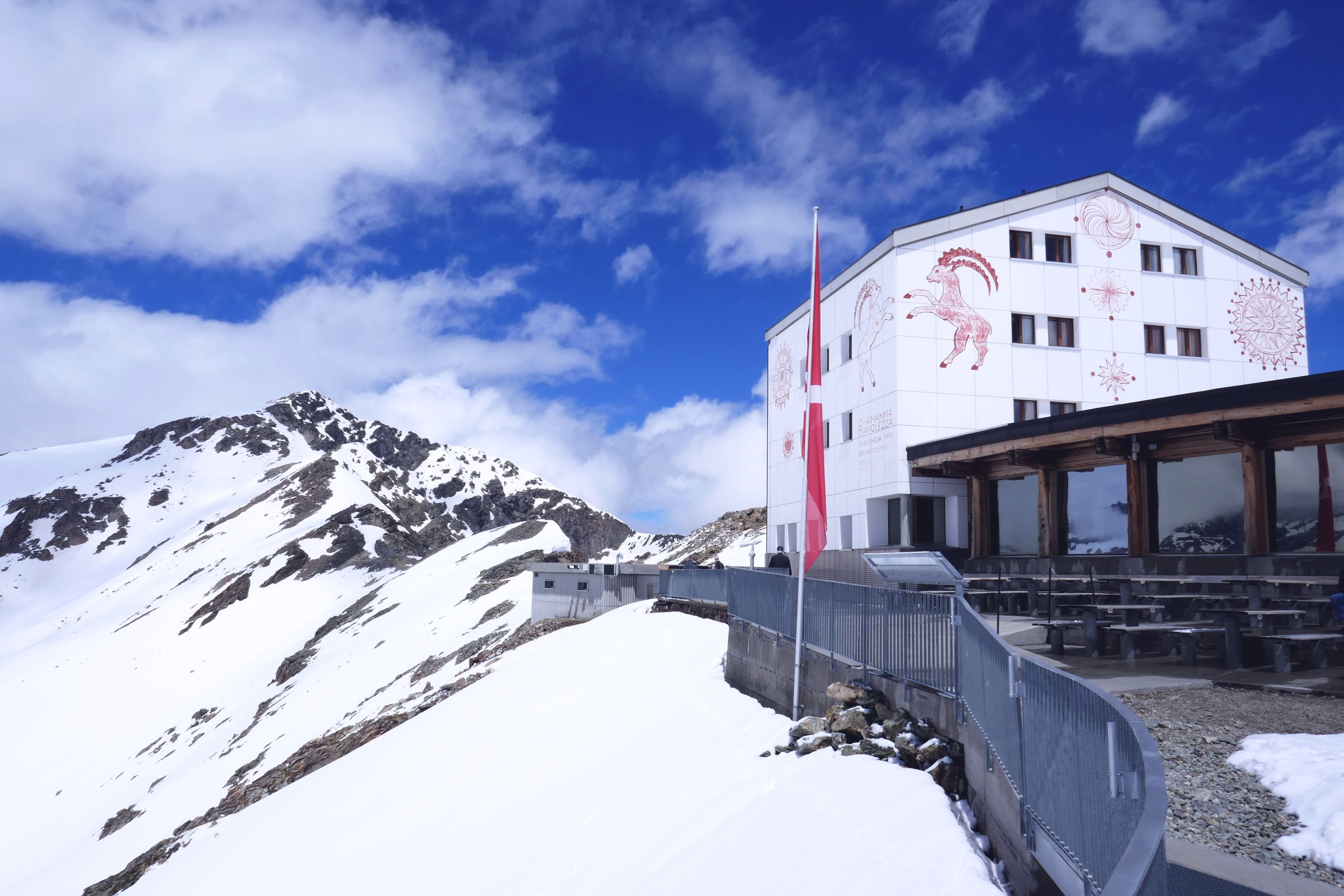
Upon arrival at the Diavolezza station, we took a cable car up to an elevation of 10,000 feet.The ride was spectacular! This was shot out the cable car window.
Seen while disembarking the cable car. Love it!
The view from the cable car ride back down. Dark clouds rolled in, so we were grateful to have enjoyed the beautiful weather while it lasted!
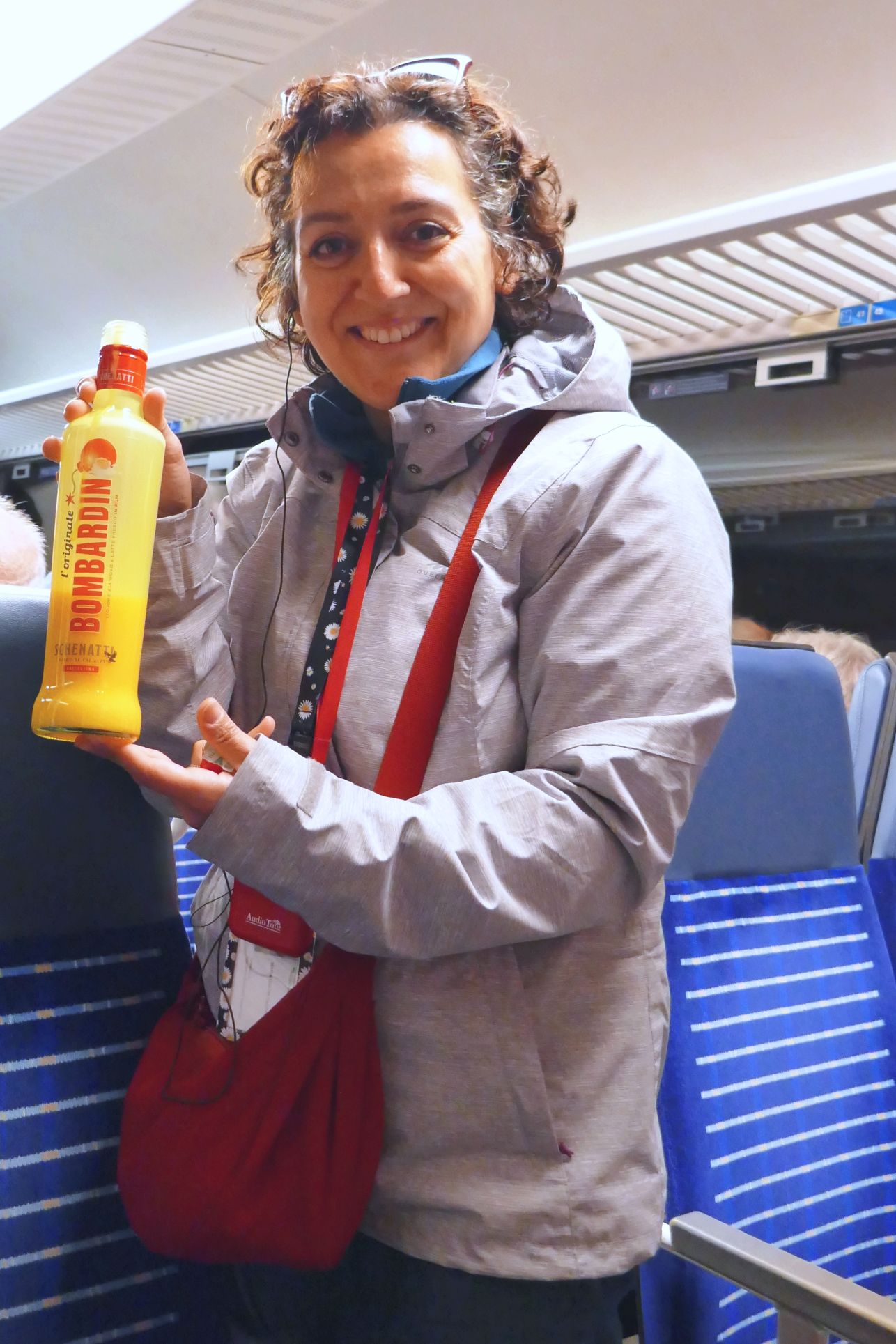
Maria shared a local spiced eggnog with us to celebrate during our journey back to Tirano.
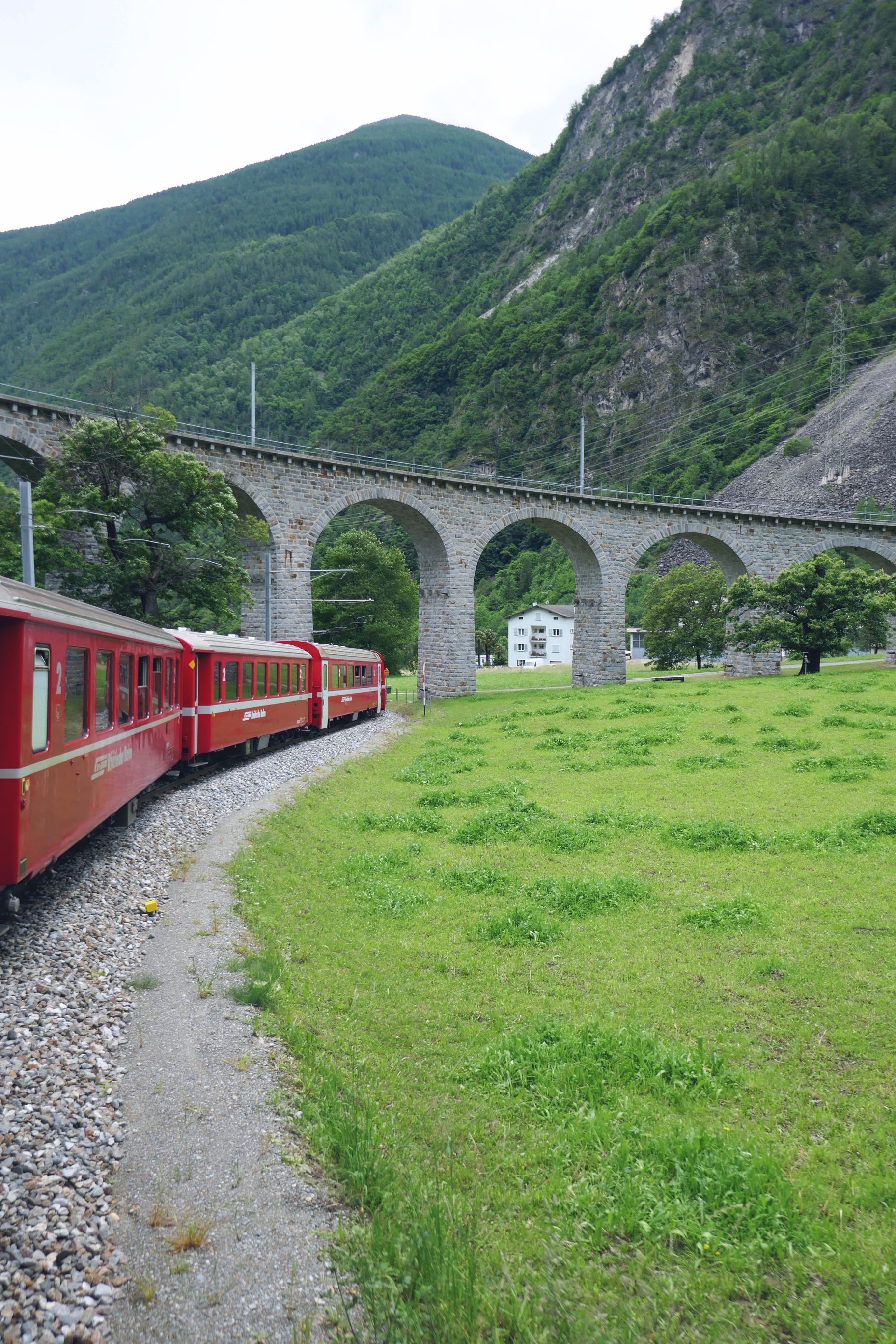
The track made a 360 spiral!
Next up: SWITZERLAND & NORTHERN ITALY #14: EDOLO AND LAKE ISEO
When I heard we would be visiting a goat farm for our “Day in the Life” excursion (an Overseas Adventure Travel feature on every tour), I immediately thought of my friend, Laura. Years ago, when she visited me and Bruce (and after we all had one too many glasses of wine), a funny conversation we were having about goats led to Laura exclaiming, “Bring in the goats!” I don’t remember what the story was or how the topic of goats came up, but “Bring in the goats!” has been a joke between us ever since. Whenever Bruce and I see goats, one (or both) of us quote Laura, have a giggle, and immediately think of her. So, Laura, this post is dedicated to you!
The farm we visited was in the Valtellina Valley, in the Alpine region of Italy near the Swiss border. Known for its agriculture and cheese-making, we participated in both activities after first meeting the goats.
First, a little background: The hillsides and hamlets of this region used to be home to the rich; however, when people started moving into the cities, the small hamlets became depopulated and abandoned. To encourage people to return and build the population back up, abandoned homes were offered by the government for 1 Euro, but with strings attached. The new owners were required to commit to renovating and living in these homes. That worked well during COVID, when people started working remotely, fleeing the cities, and repopulating the region. More and more people are continuing to return to farming and living in more remote places such as the Valtellina Valley again.
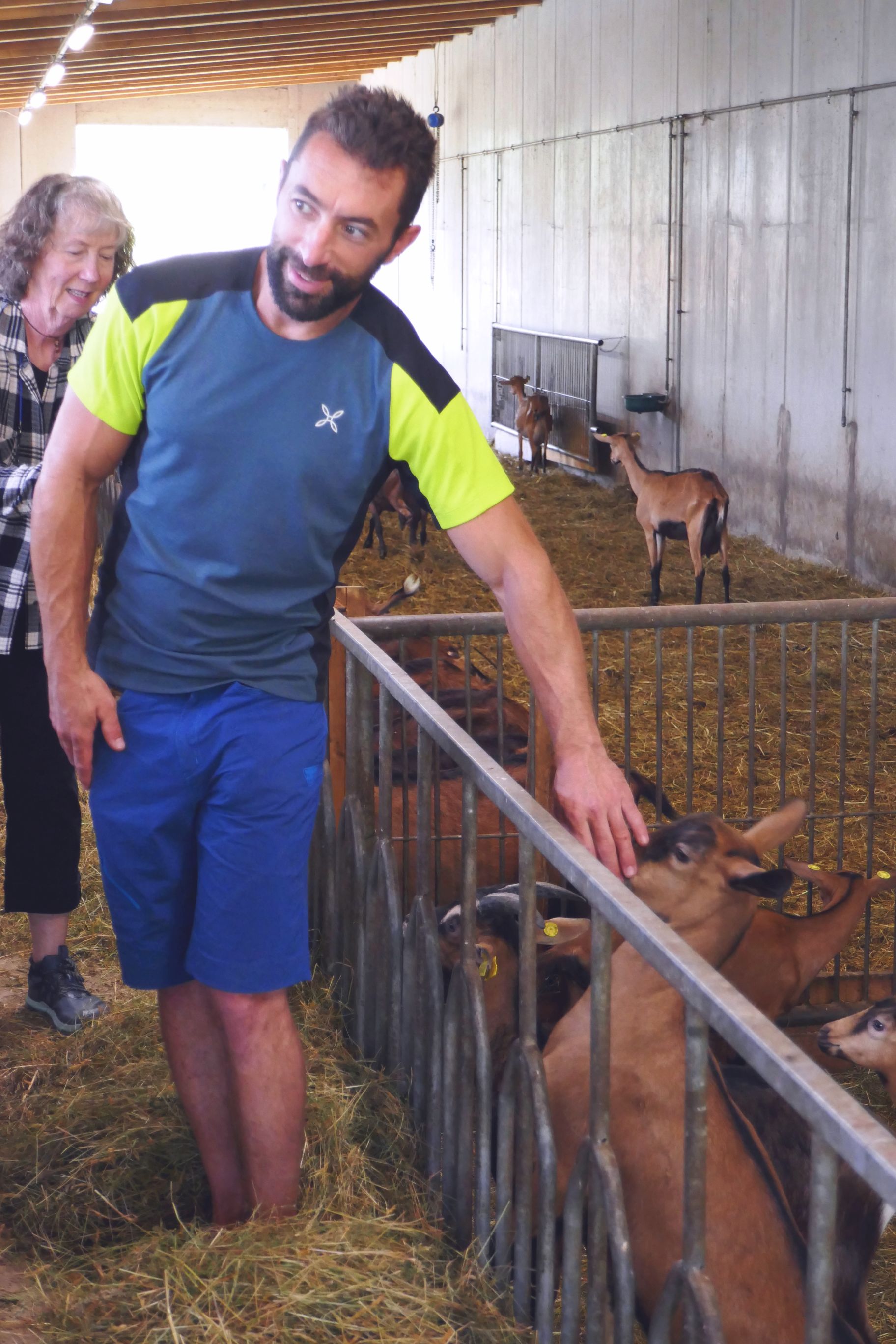
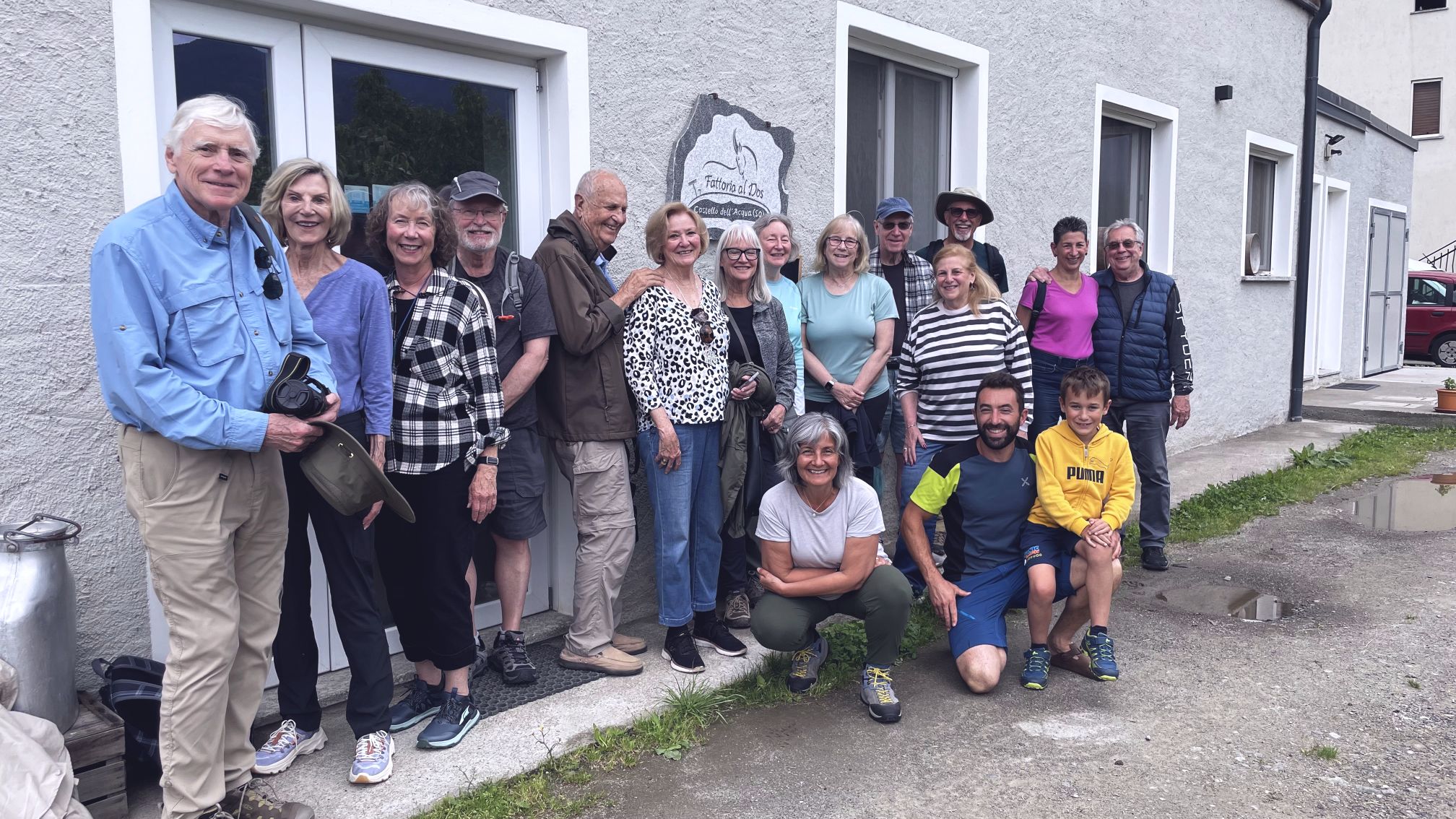
We visited Fattoria al Dos in Castello dell’ Acqua and were hosted by Gabriele, his son, Michele, and Gabriele’s dad. Their farm had been passed down by Gabriele’s great grandfather through the generations, and Gabriele now does most of the work while his father handles the tourism end of the business, such as hosting groups like ours.
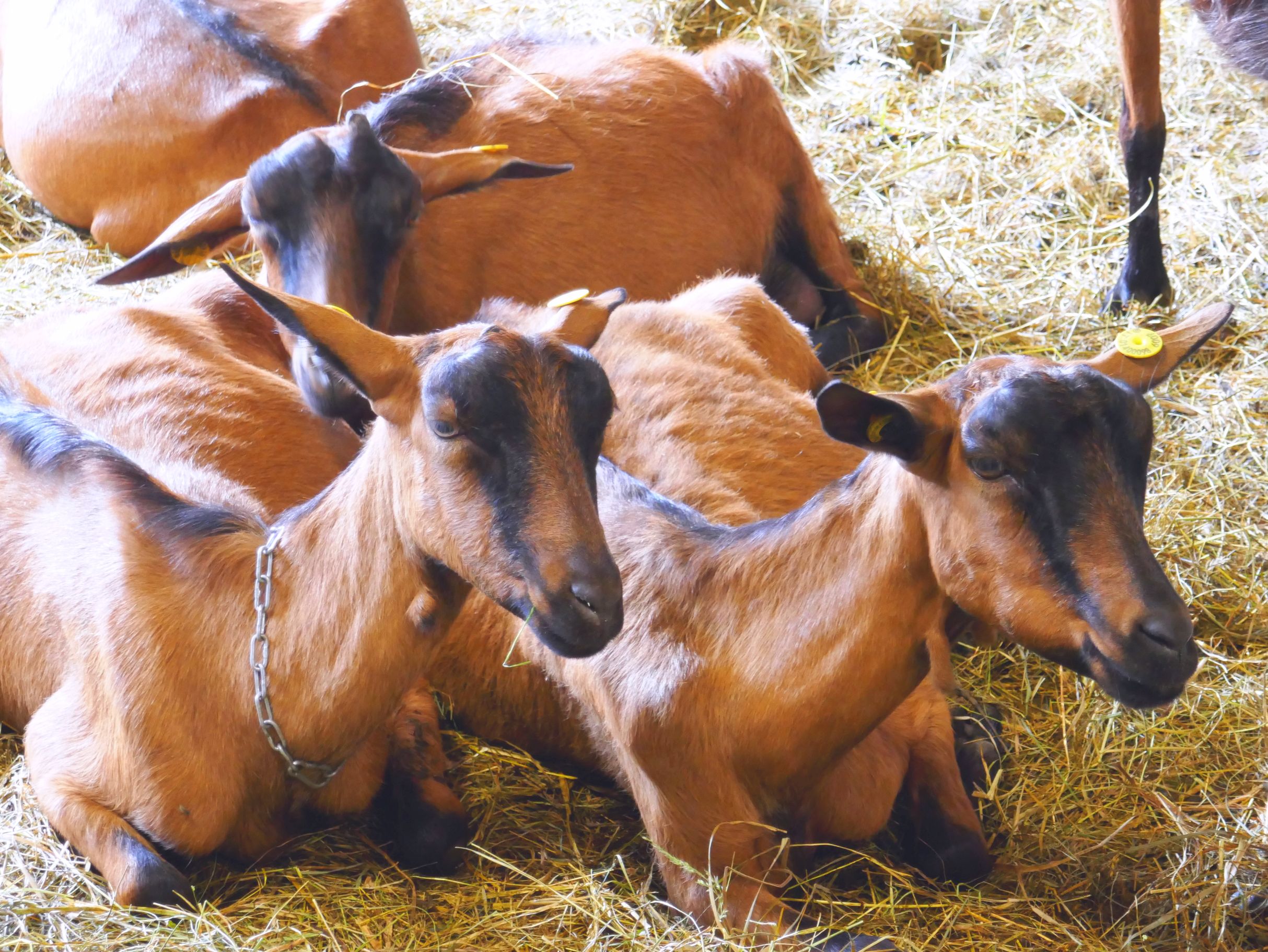
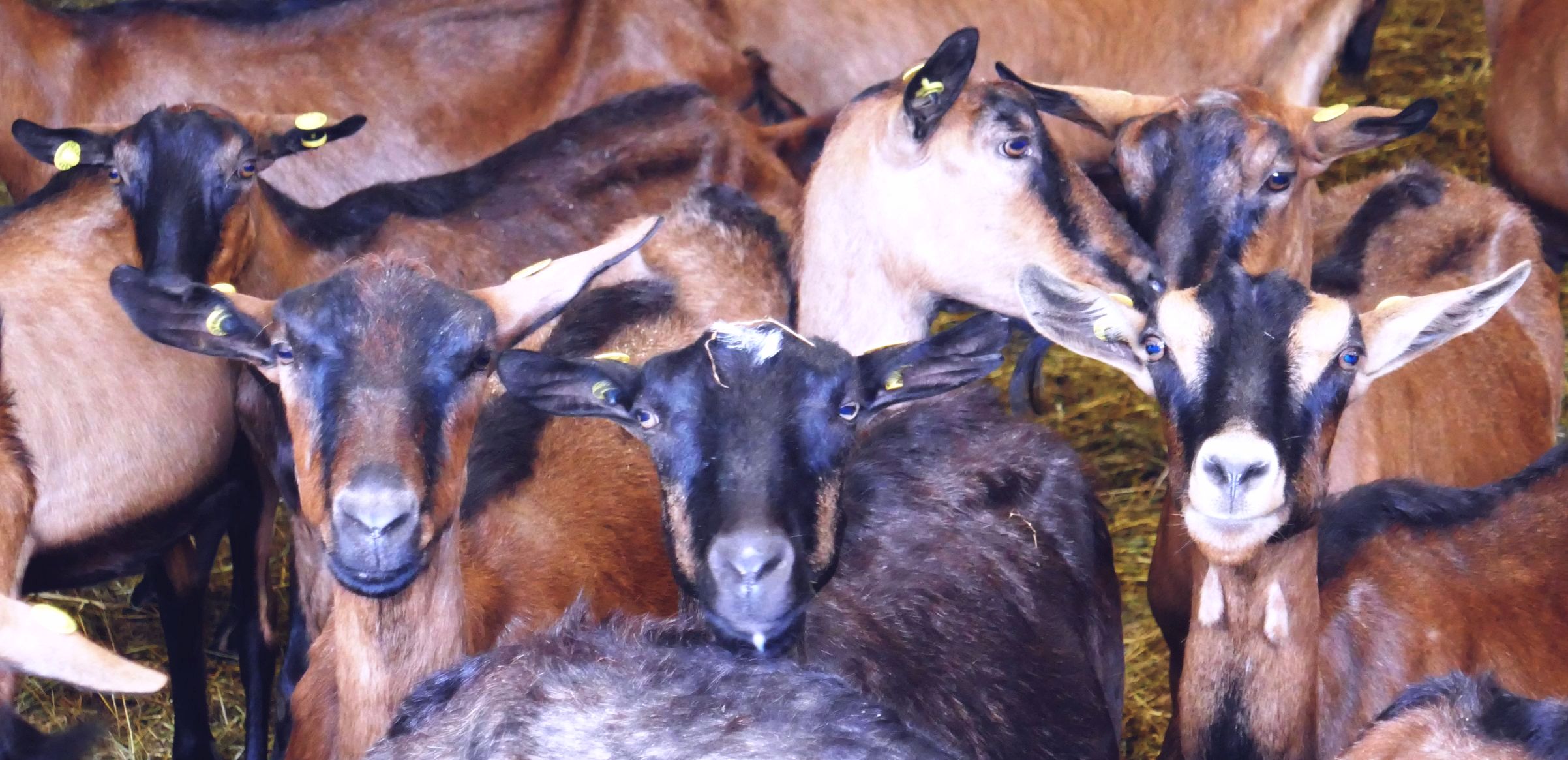
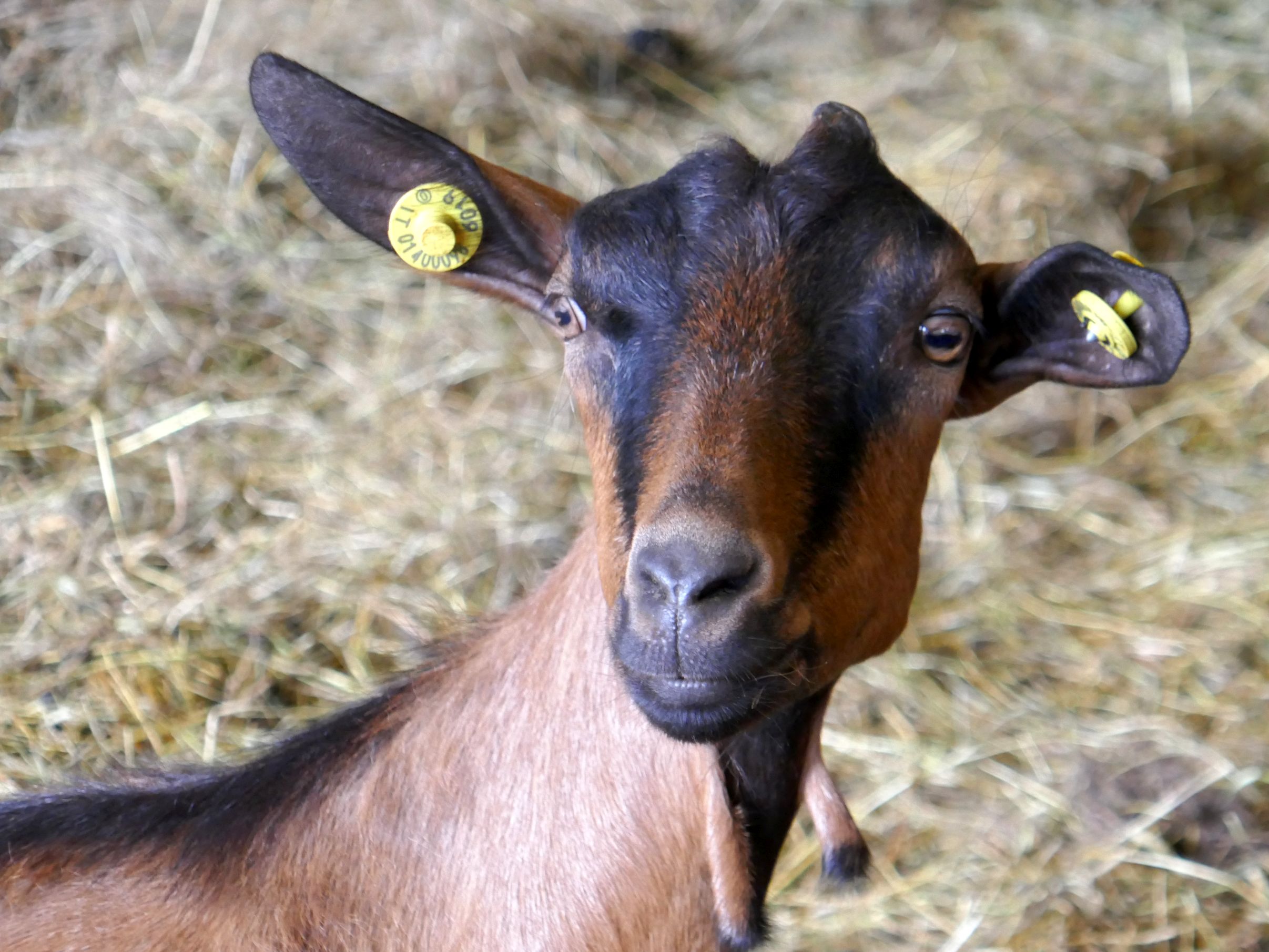
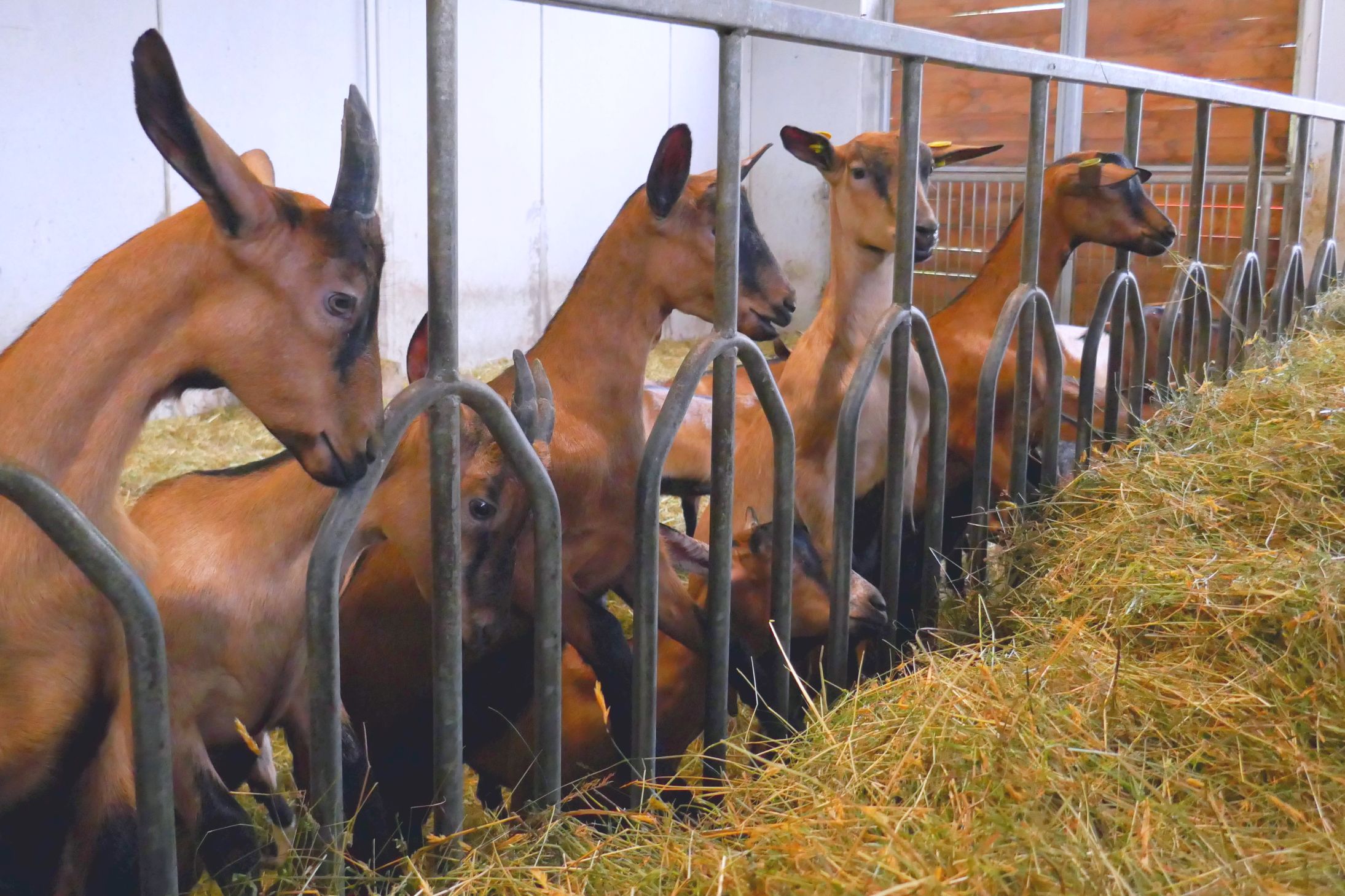
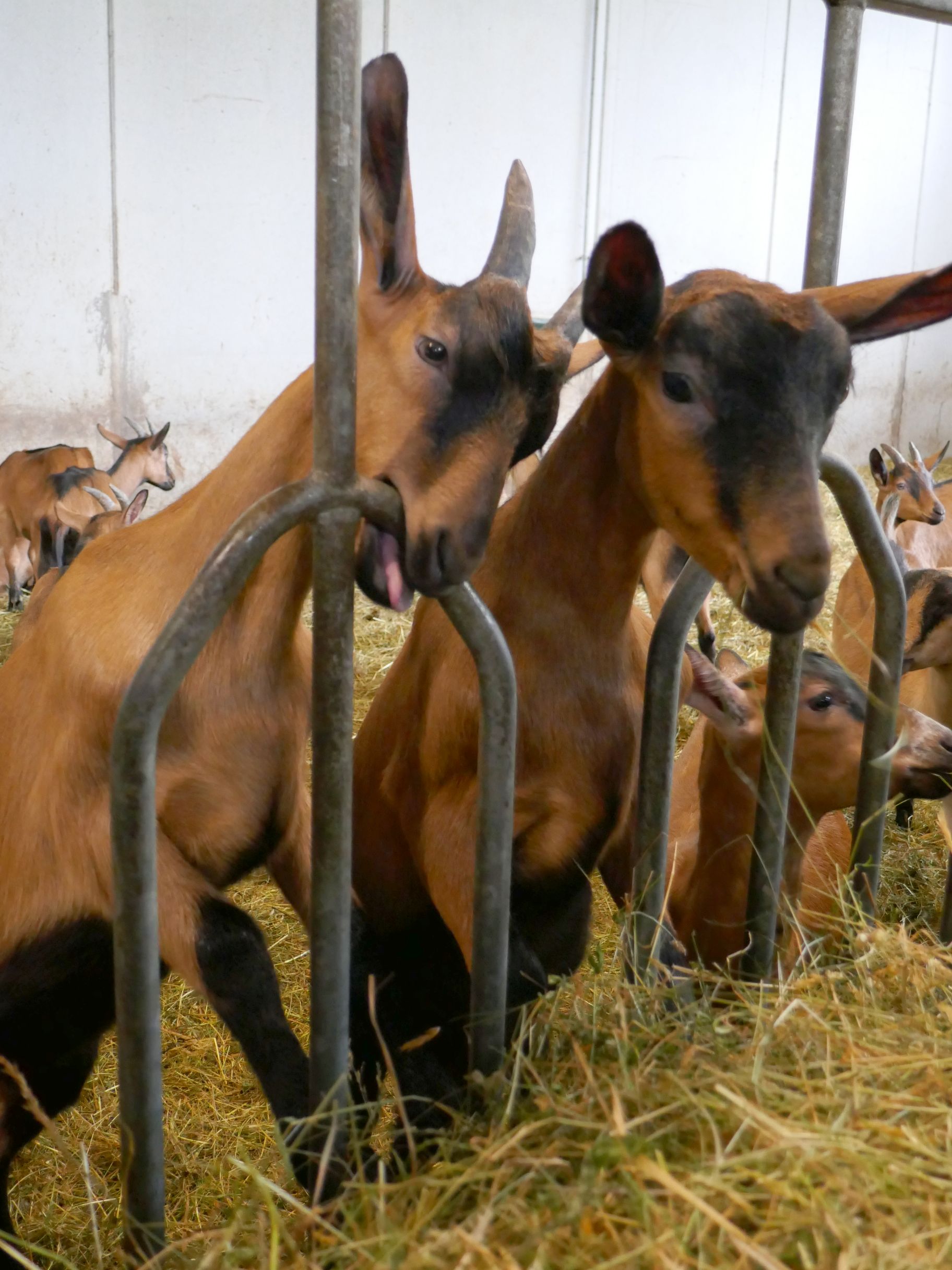
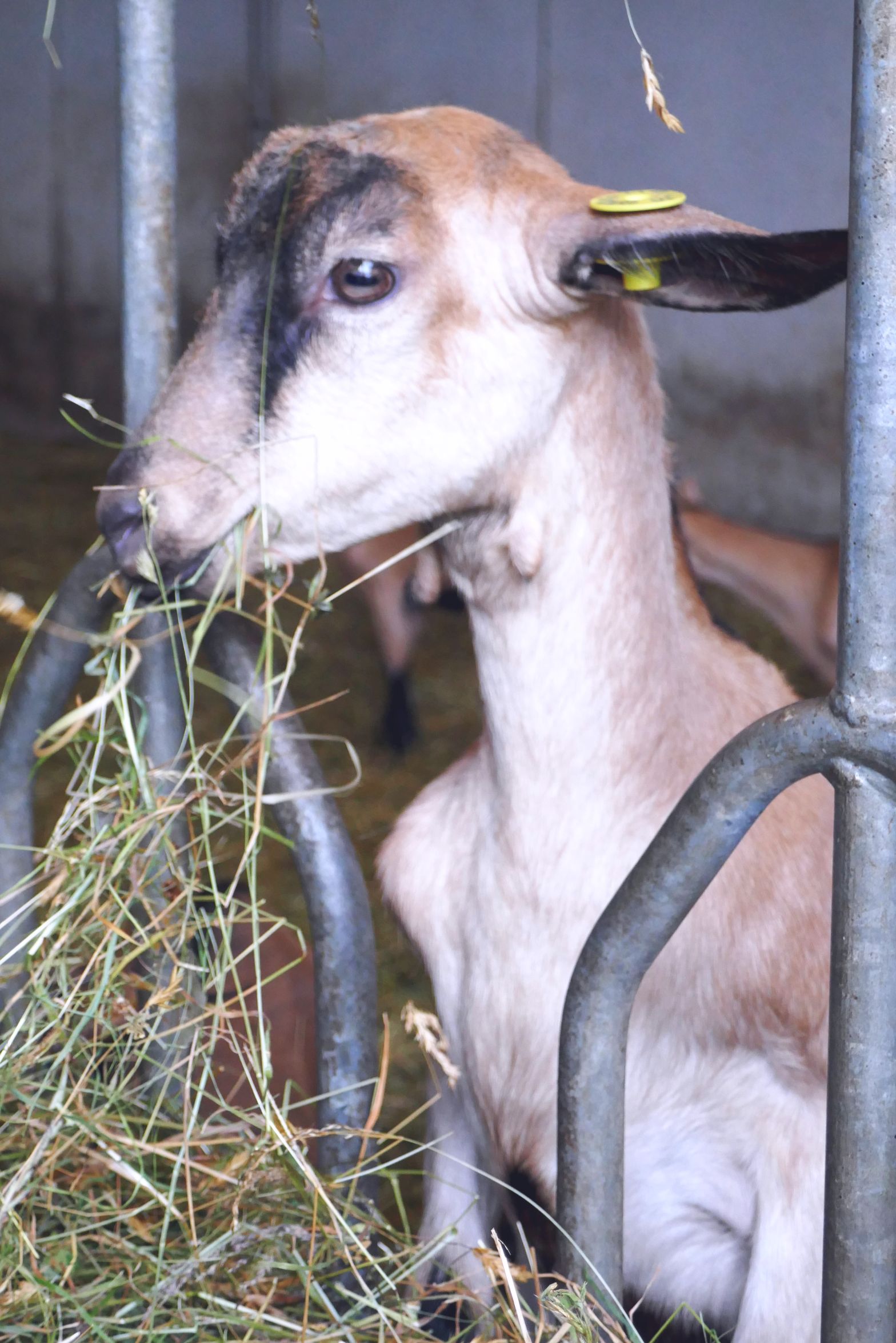
Their goats were a friendly bunch! They immediately came over to meet us, and they loved being scratched on the head! If we stopped giving them attention, they just stood there and stared at us, waiting for more. It was quite evident that once we were on the scene, they didn’t care about eating the hay that was piled up for them.
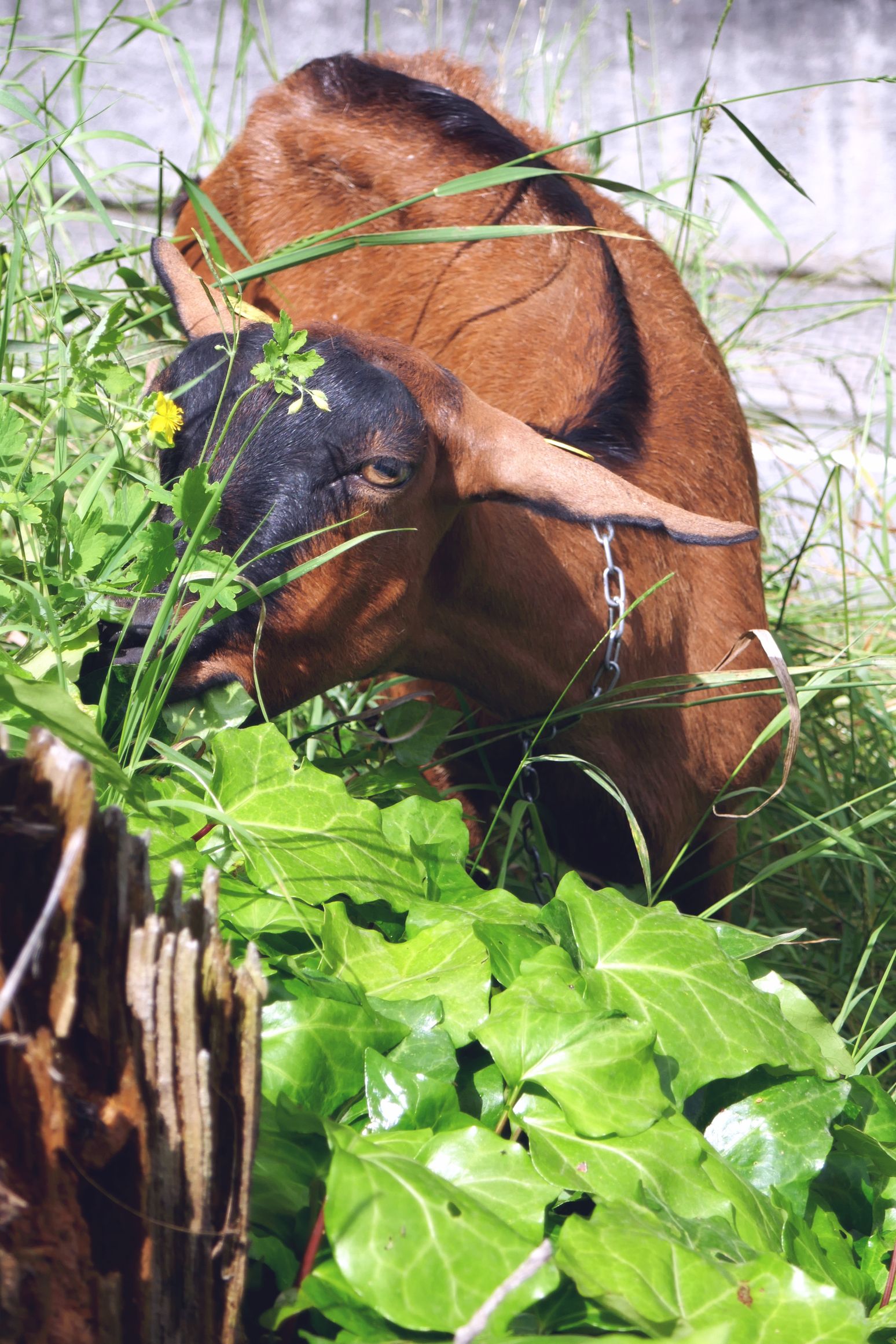
After learning about their goats and the milking process, the scene that unfolded brought out an instinctive, “Bring in the goats!” from both of us. While we watched, the goats were brought out of the barn and herded by their dog, Simba, to an area where they could feast on fresh grass.
Simba, keeping an eye out on the goats.
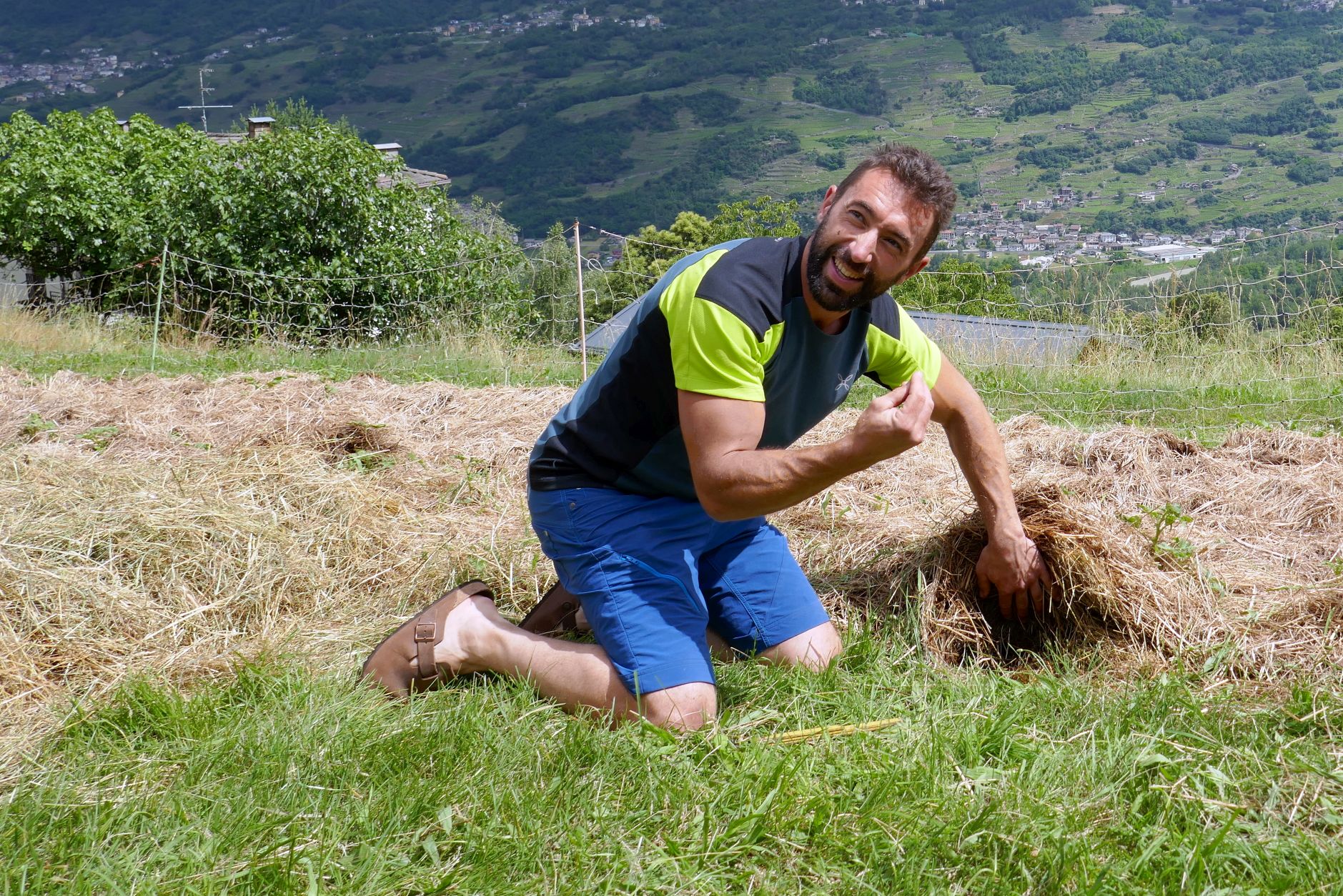
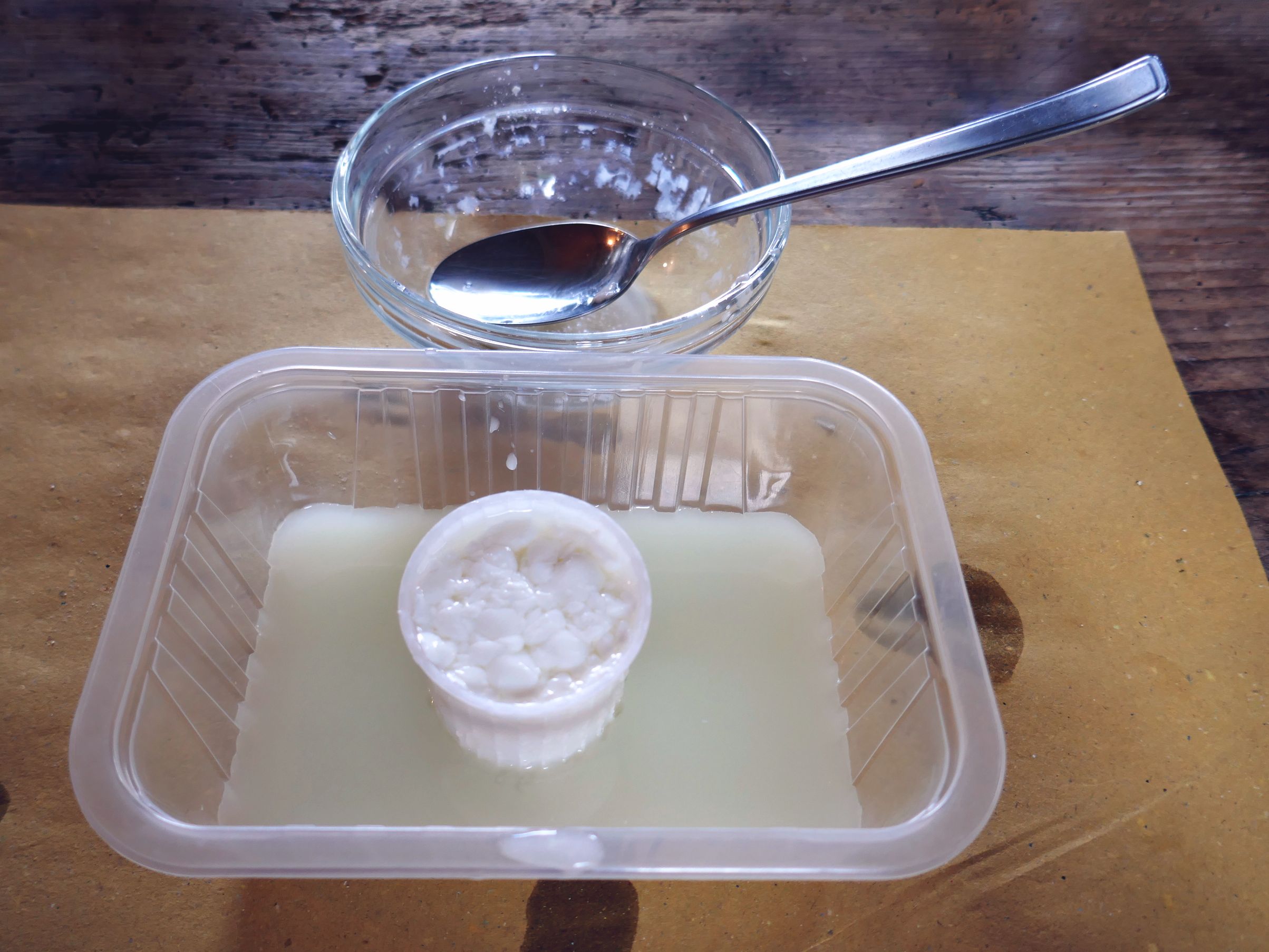
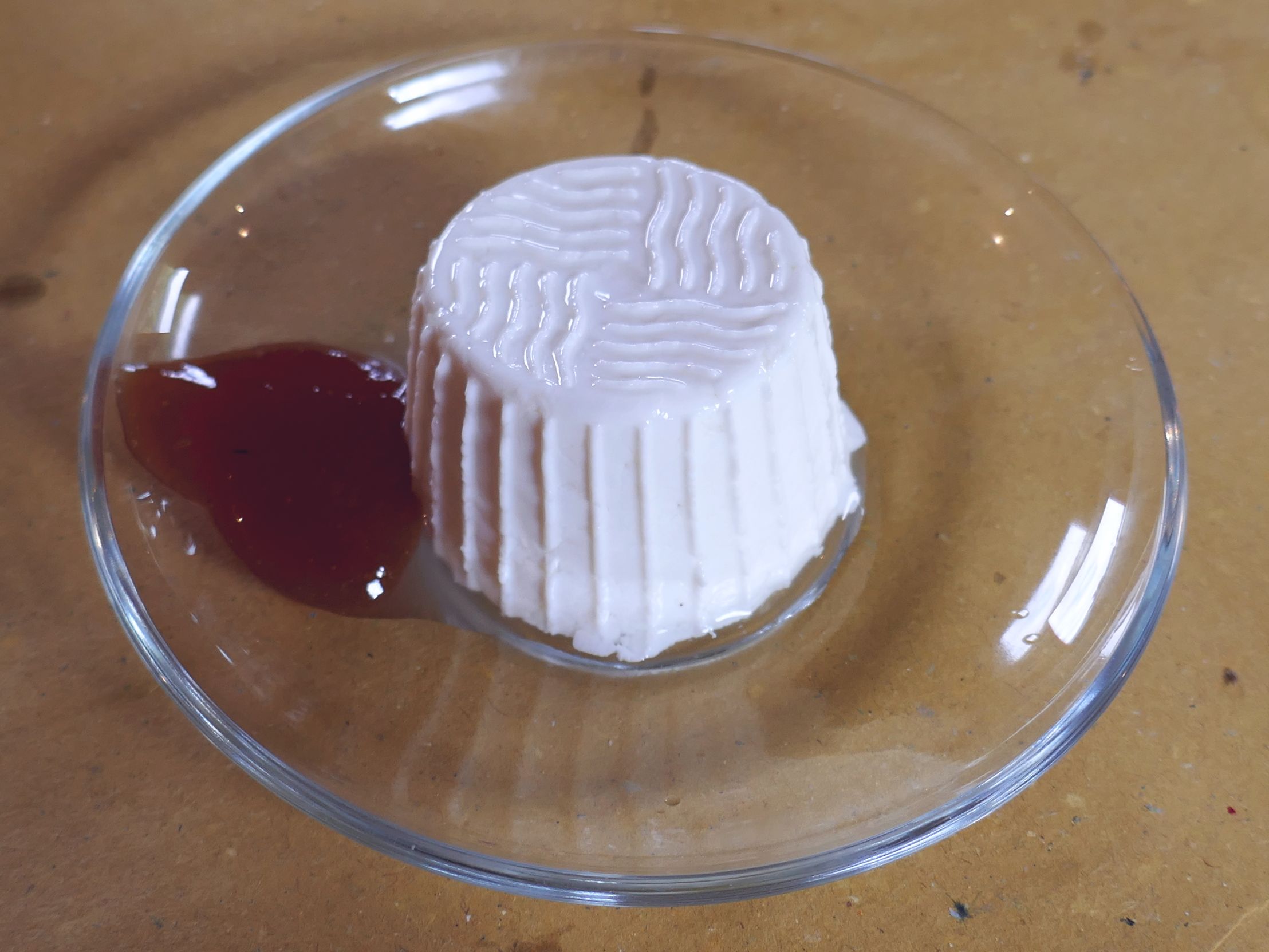
We also helped plant potatoes and learned how to make goat cheese. Their 60 goats yield about 30-40,000 liters of milk a year that is worked into cheese. One hundred liters of milk yields about 17-33 pounds of cheese, just to give you an idea of their production, which they sell locally.
It was interesting tasting the different cheeses they make, from young to aged. We were then served a traditional farm lunch of risotto. For dessert, we enjoyed the cheese we each had made, accompanied by homemade fruit jam or honey.
Our time at the farm was so enjoyable, and it was fun learning about the life of the three generations working the farm. Gabriele and his wife are hoping that Michele will carry on the tradition!
Looking down the hill from their farm, the view was of this little village cemetery.
Following our return to Tirano, Bruce rested while I wandered through the town doing photography, one of my favorite travel activities. I most enjoy exploring quaint, character-filled places that inspire my curiosity, encourage me to peek and poke around corners, get lost, and totally immerse myself in the moment. Tirano was one of those places.
Entering the historic quarter,,,
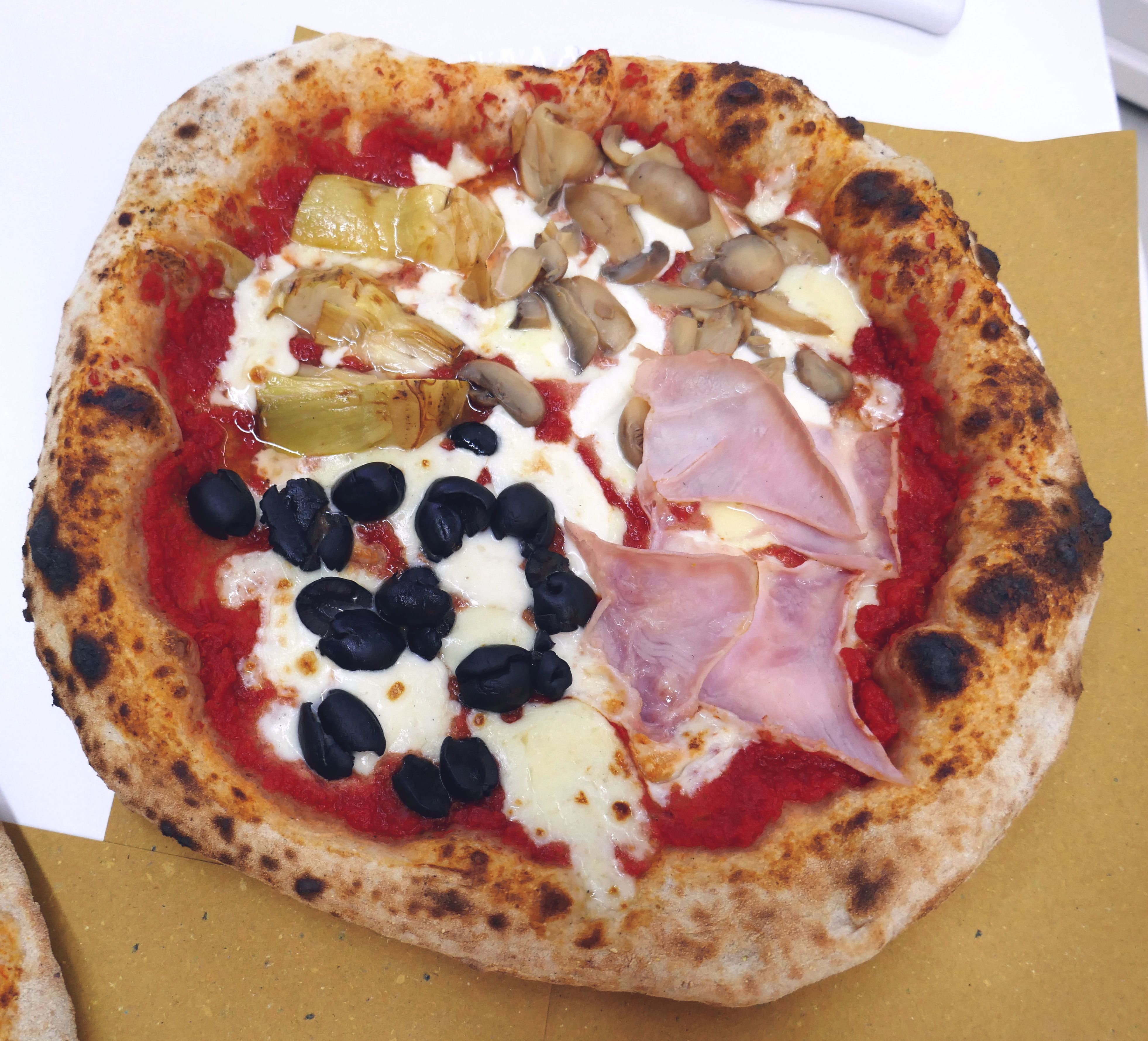
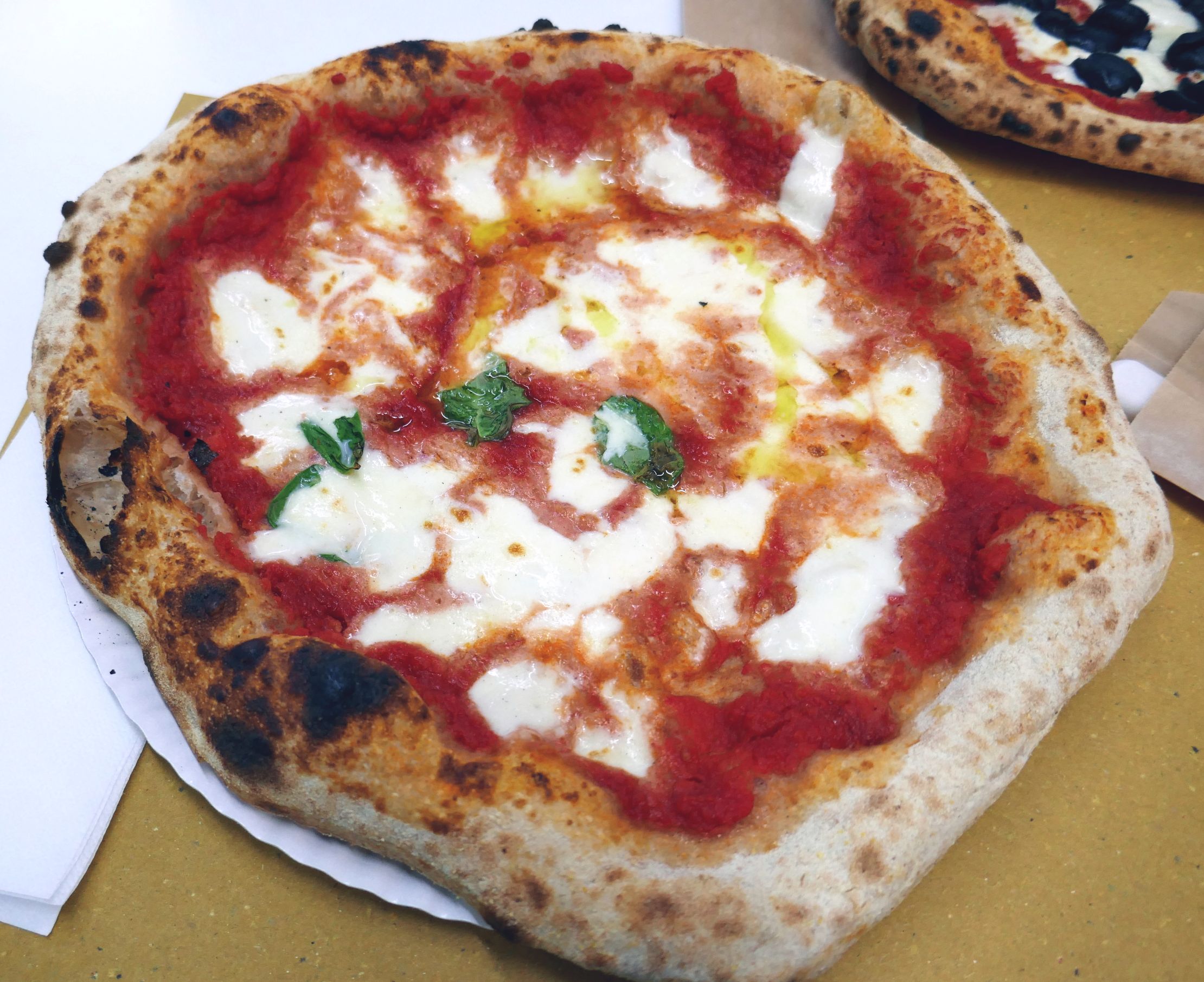
Our evening concluded with these wood-fired pizzas that cost only $13– for both! The one on the left is a traditional “pizza quattro stagioni” (four seasons), which explains why the ingredients were kept separate! Bruce and I split the pizzas, but I passed on the “winter” season.
Coming up next: SWITZERLAND & ITALY #13: ALL ABOARD—AGAIN!
Following that epic thunderstorm the night before, we weren’t sure what we would be waking up to on this morning. I hopped out bed, flung open the curtains, and exclaimed, “SUN!”
(For all photos, click on the image for a full screen view.)
On the way to Varenna.
It was sure to be a beautiful day in Varenna, located just 20 miles from Lecco and situated on Lake Como in the Lombardy region of Italy. Founded by fisherman in AD 769, this town is old! It is currently a popular tourist destination, so we were fortunate to beat the crowds that would be arriving later on the ferries, when we took our morning stroll along the waterfront. As time ticked by, the little town became more and more crowded. Thankfully, by then, we were making our way back to our meeting spot and had already done the photography I had hoped to accomplish without people in every photo.
This little town of 800 people has loads of character and photographic possibilities! I enjoyed exploring the many staircases leading to the upper town and seeing the nooks and crannies along the way.
The view across Lake Como from Varenna
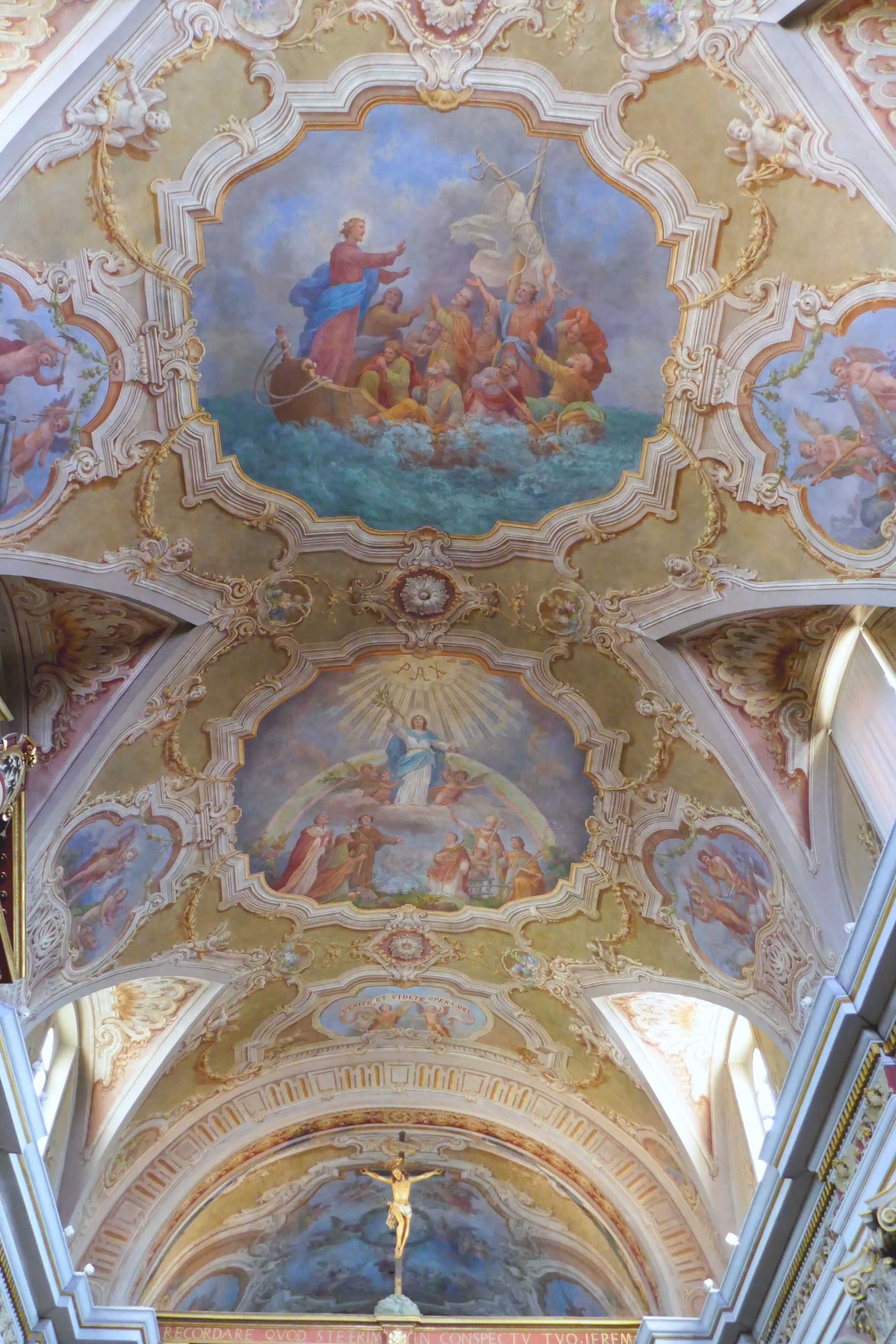
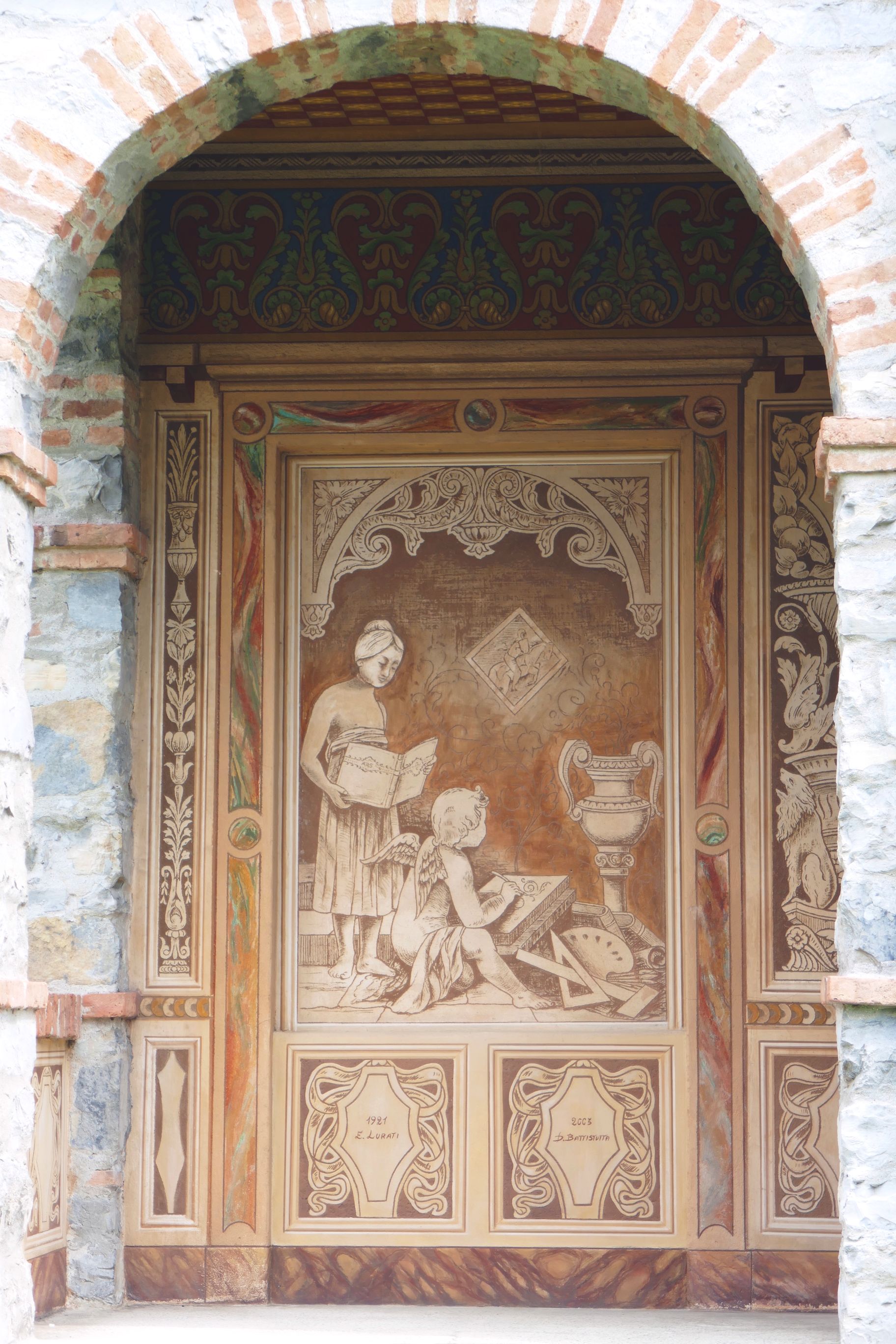
Church of San Giovanni Battista (St. John the Baptist Church) was built before the year 1000! We were fortunate it was open, so we could see the interior frescoes.
As we made our way back, the crowds were growing larger on the walkway!
After dining al fresco with our group for lunch in Varenna, we traveled on to Tirano, the beginning point of the famous Bernina Express train to the Swiss Alps. After settling in at the hotel, Maria led us on an orientation tour of the town. The skies became quite dark and gray; quite the opposite of our bright, sunny morning. More about Tirano in my next post! Until then, thanks to all of you who have sent emails about my posts! I appreciate it!!
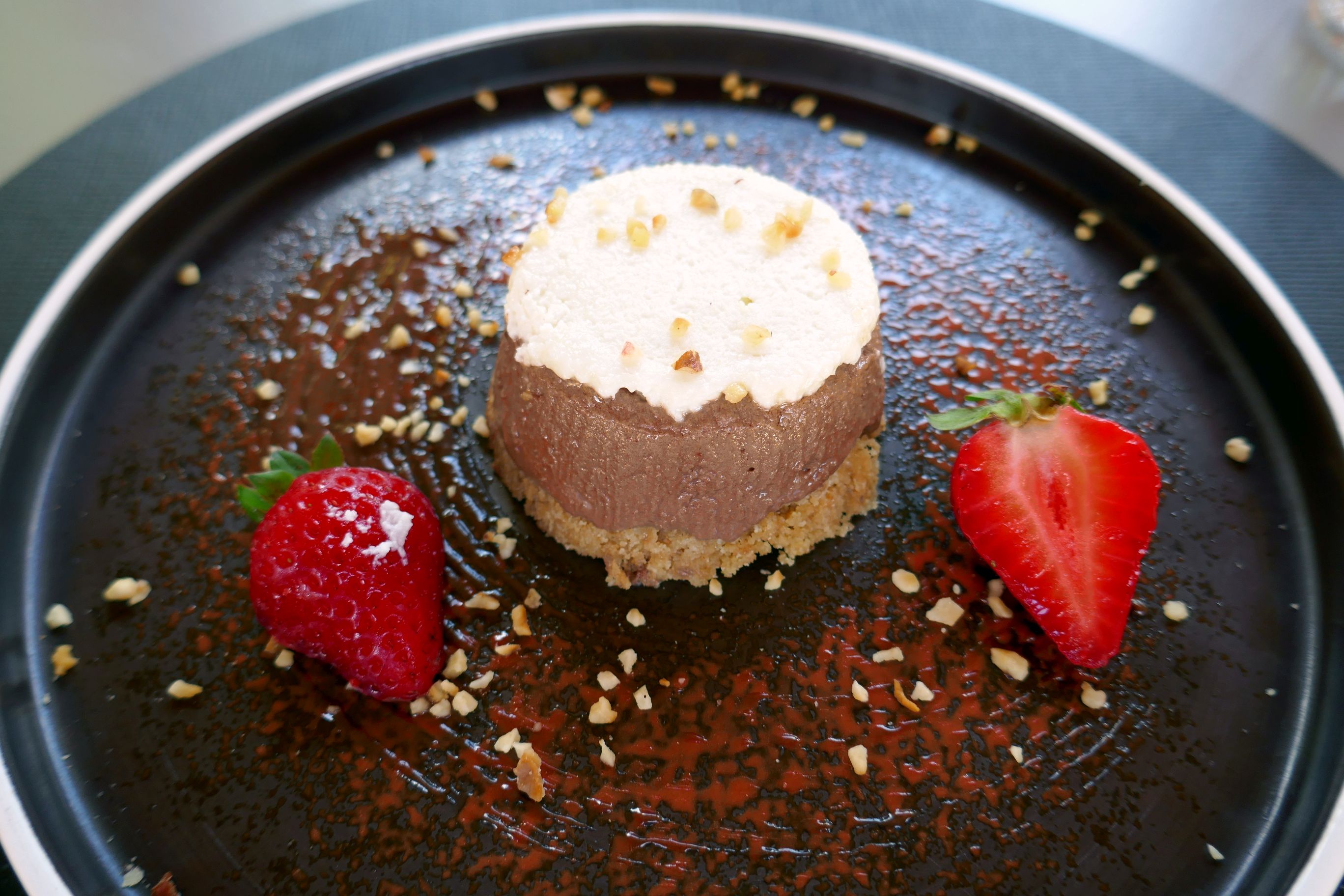
The dessert at lunch was fabulous! It was chocolate; what’s not to like?
Next up: SWITZERLAND & ITALY #12: VENTURING OFF TO A VALTELLINA VALLEY GOAT FARM& TIRANO
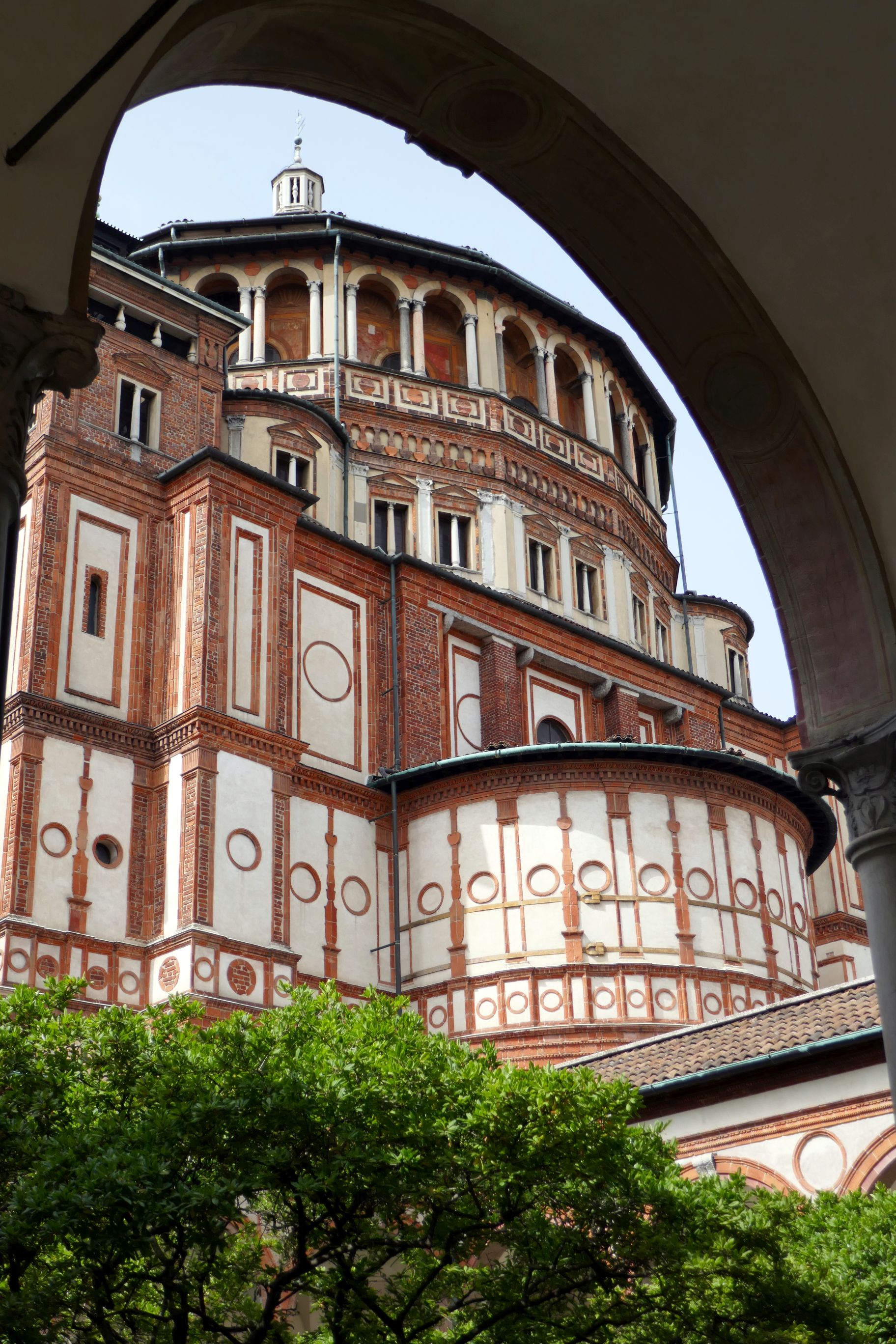
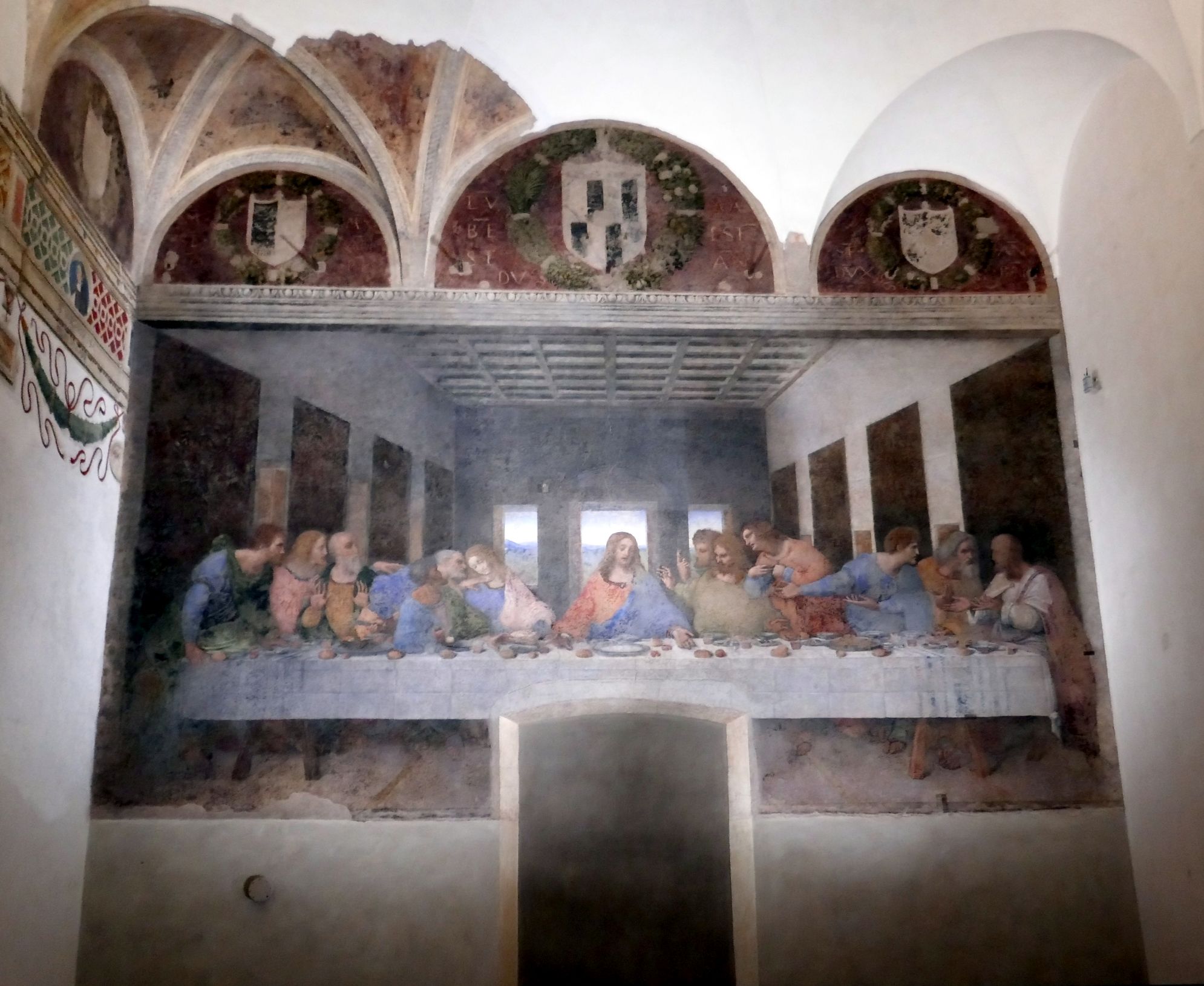
We didn’t see much of the city of Milan, but what we did see was marvelous! The day began with a visit to the church and convent, Santa Maria delle Grazie, home of Leonardo Da Vinci’s world-famous mural, The Last Supper. This mural is so famous that it is viewed by 1,000 people per day (on timed tickets), and the tickets are sold out three months in advance. Only small, guided groups are allowed in to see it at a time, and it is very tightly controlled with high-tech security.
(For all photos, click on the image for a full screen view.)
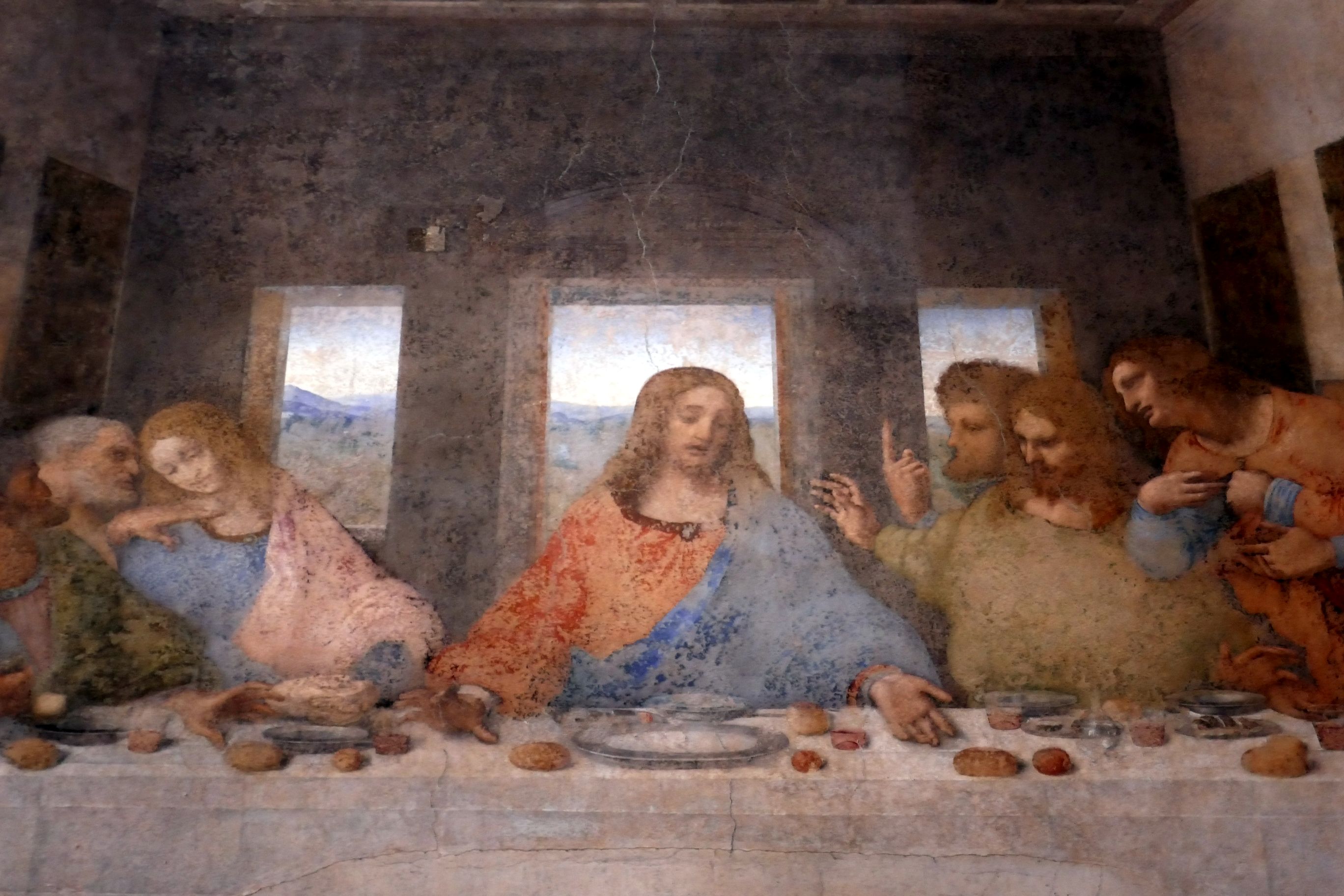
The church, built after the convent, dates back to 1490 and is a UNESCO World Heritage Site. Da Vinci painted the mural in 1495-1498, during the High Renaissance period. “Truly I tell you. One of you will betray me.” These were the words spoken by Jesus that provoked intense emotions in the twelve apostles. Da Vinci portrays their shock in his masterpiece that has been viewed by countless people over hundreds of years.
Da Vinci used an innovative “dry” technique (a mixture of oil and tempera to bind the pigments) that enabled him to ponder his work and achieve vivid color effects with translucent glazes. This technique, however, made the painting extremely fragile and in need of continuous restoration. The latest restoration was completed in 1999.
Directly opposite The Last Supper is The Crucifixion, by Giovanni Donato da Montorfano. He used the traditional technique of “fresco” wall painting to portray a scene where saints and “blessed souls” of the Dominican order, with the city of Jerusalem in the background.
Next, a local tour guide took us around the historic city center of Milan, which is known as the only “European” city in Italy. People come from all over to work in Milan and are quite open to experimentation and innovation, especially in fashion. Jobs in Milan are the best-paying jobs in Italy, but the flip side is that housing is the most expensive as well. Apartments cost anywhere from 12,000 to 15,000 Euros per square meter. Compare that to the 400 Euro in Perugia where our tour leader, Maria, lives and it is shocking!
The day we were in Milan the European Union elections were taking place, but only 7% of Italians voted. In general, Italians don’t follow politics and are not informed. 50% don’t vote at all, and that percentage is growing. Sound familiar?
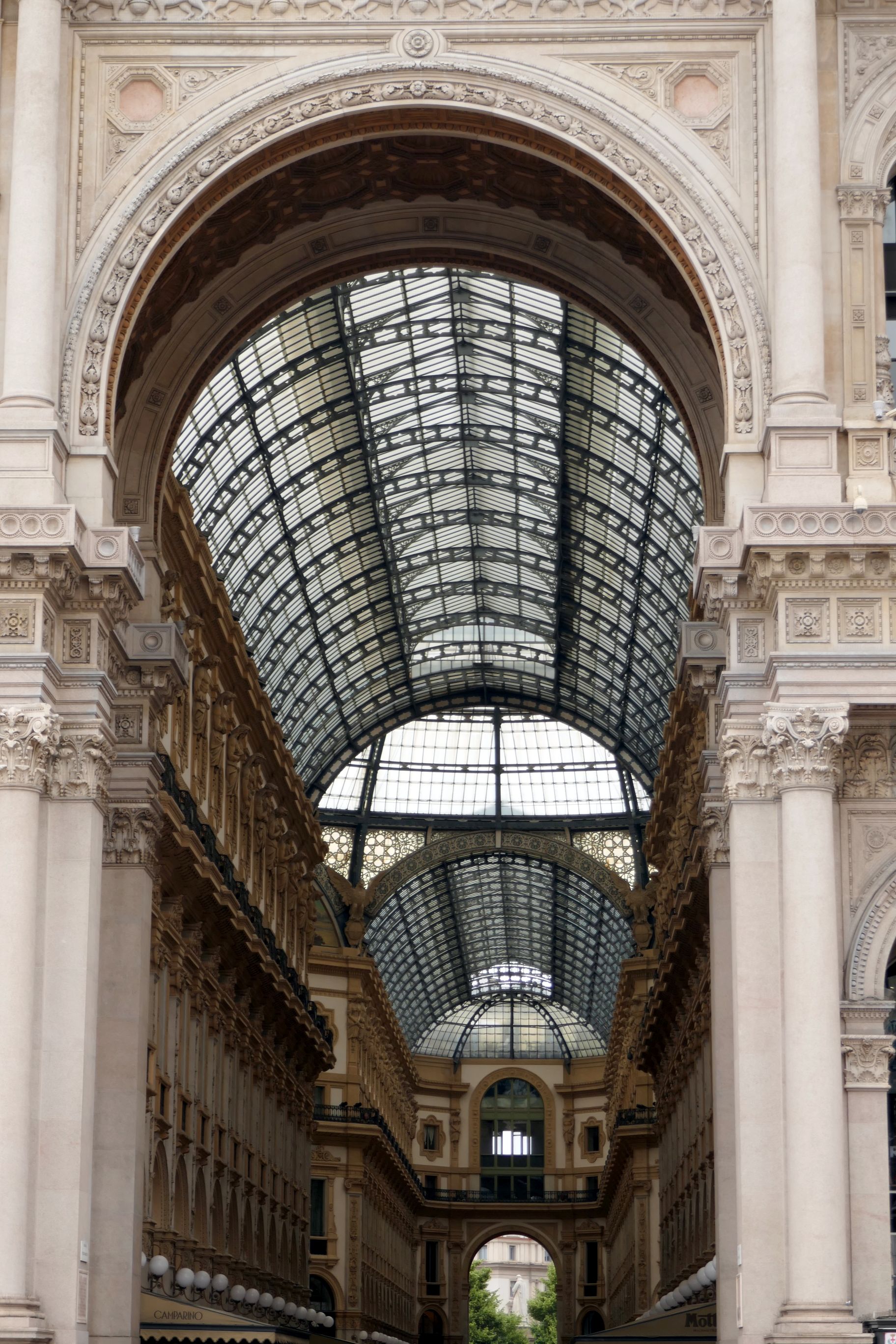
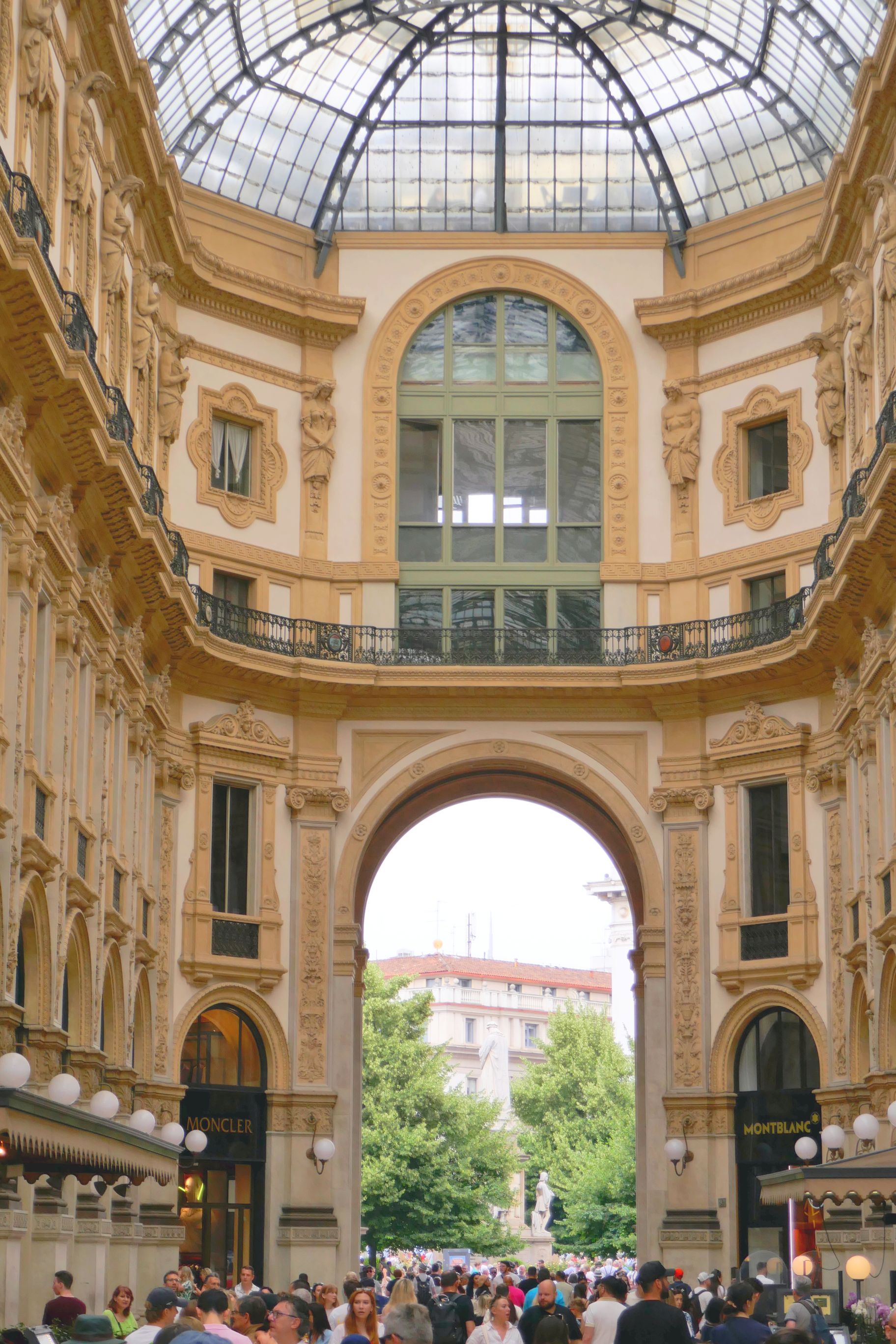
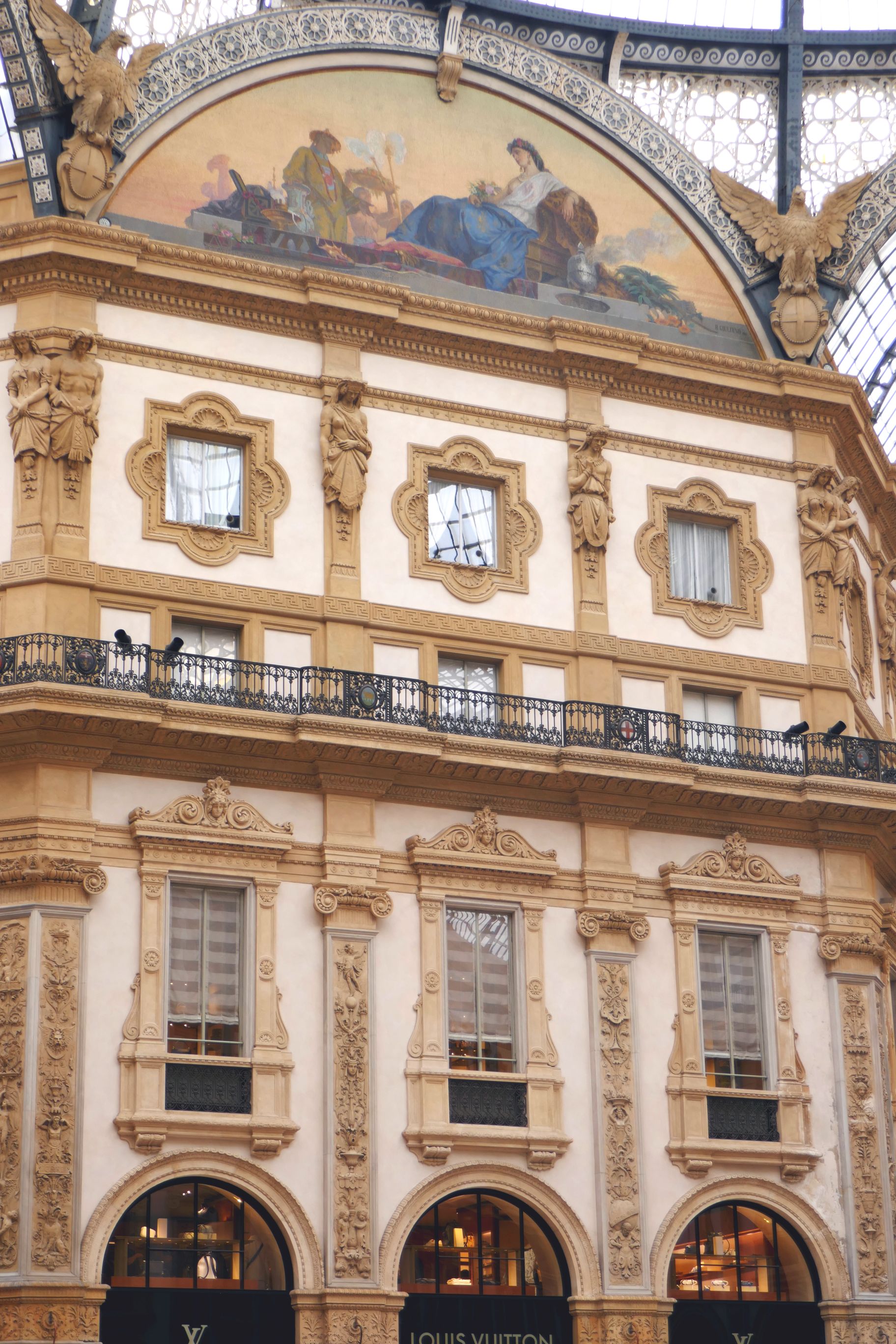
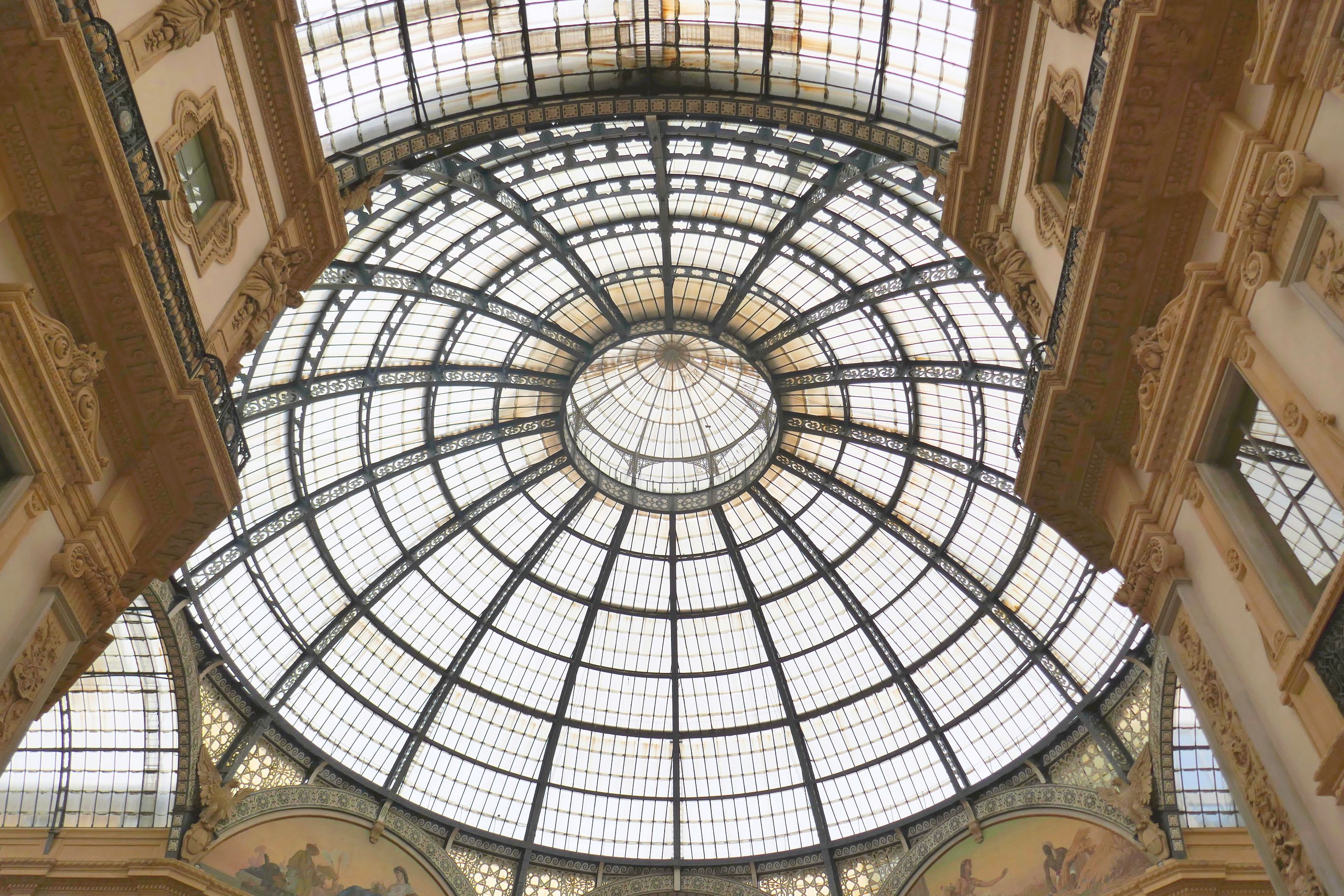
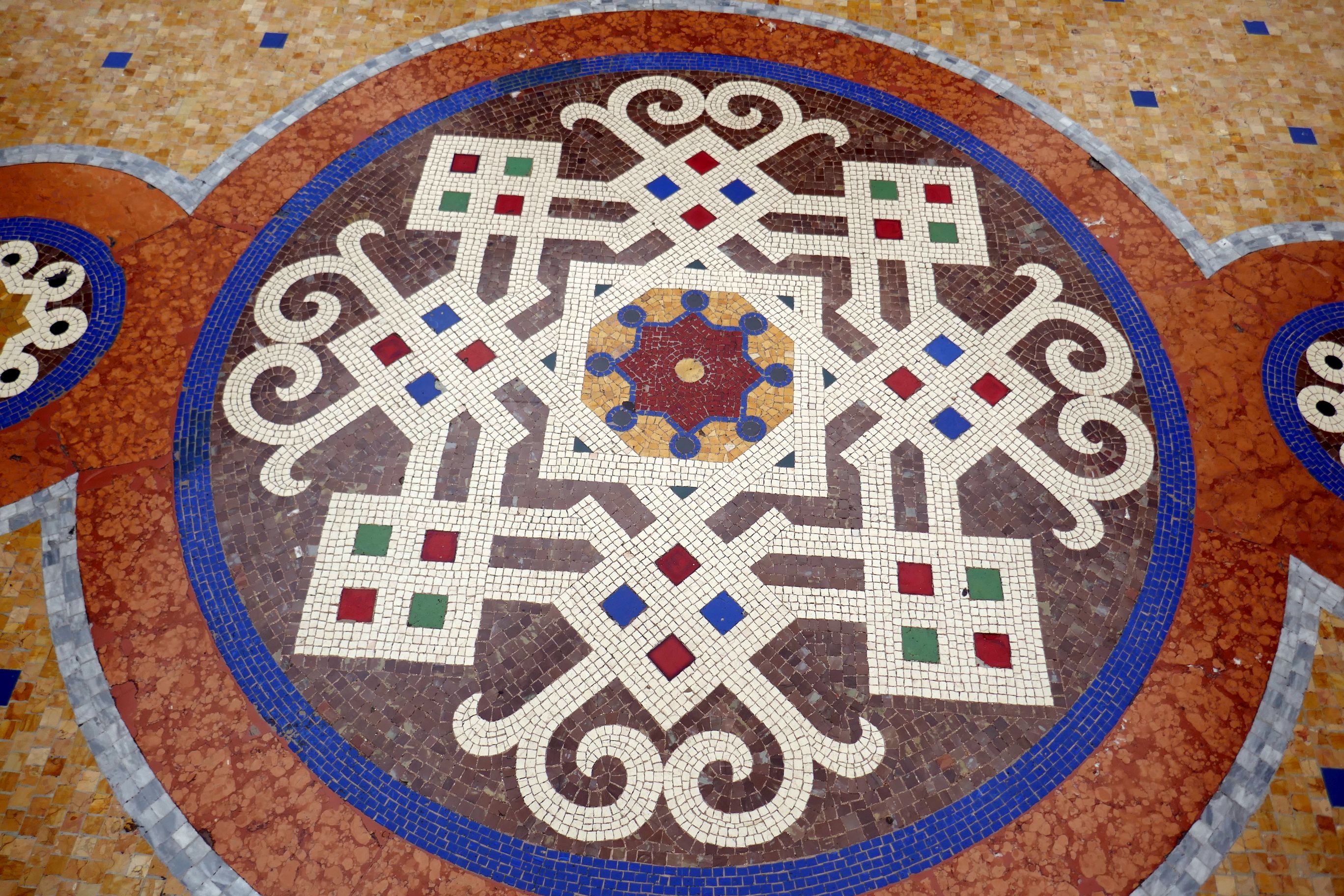
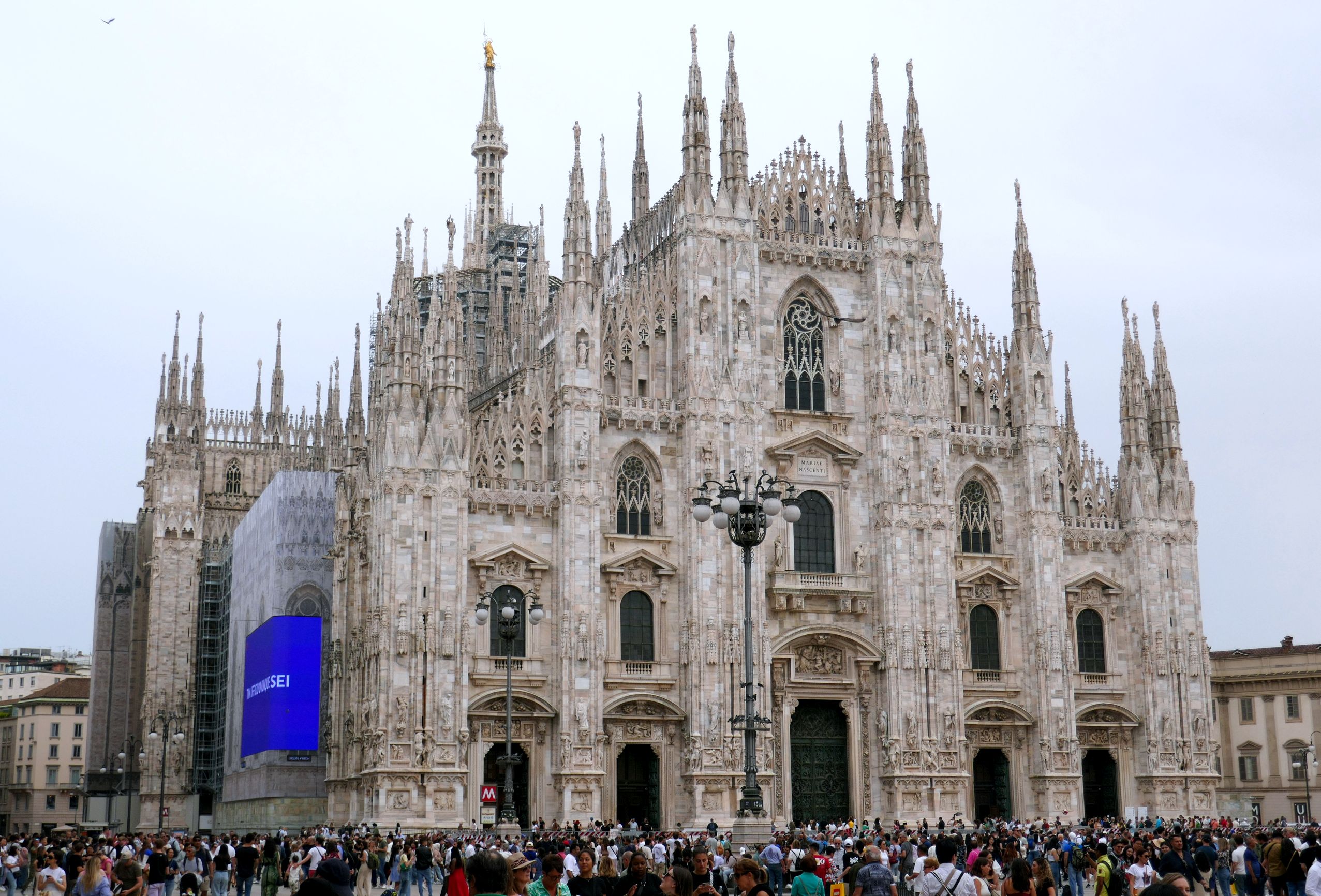
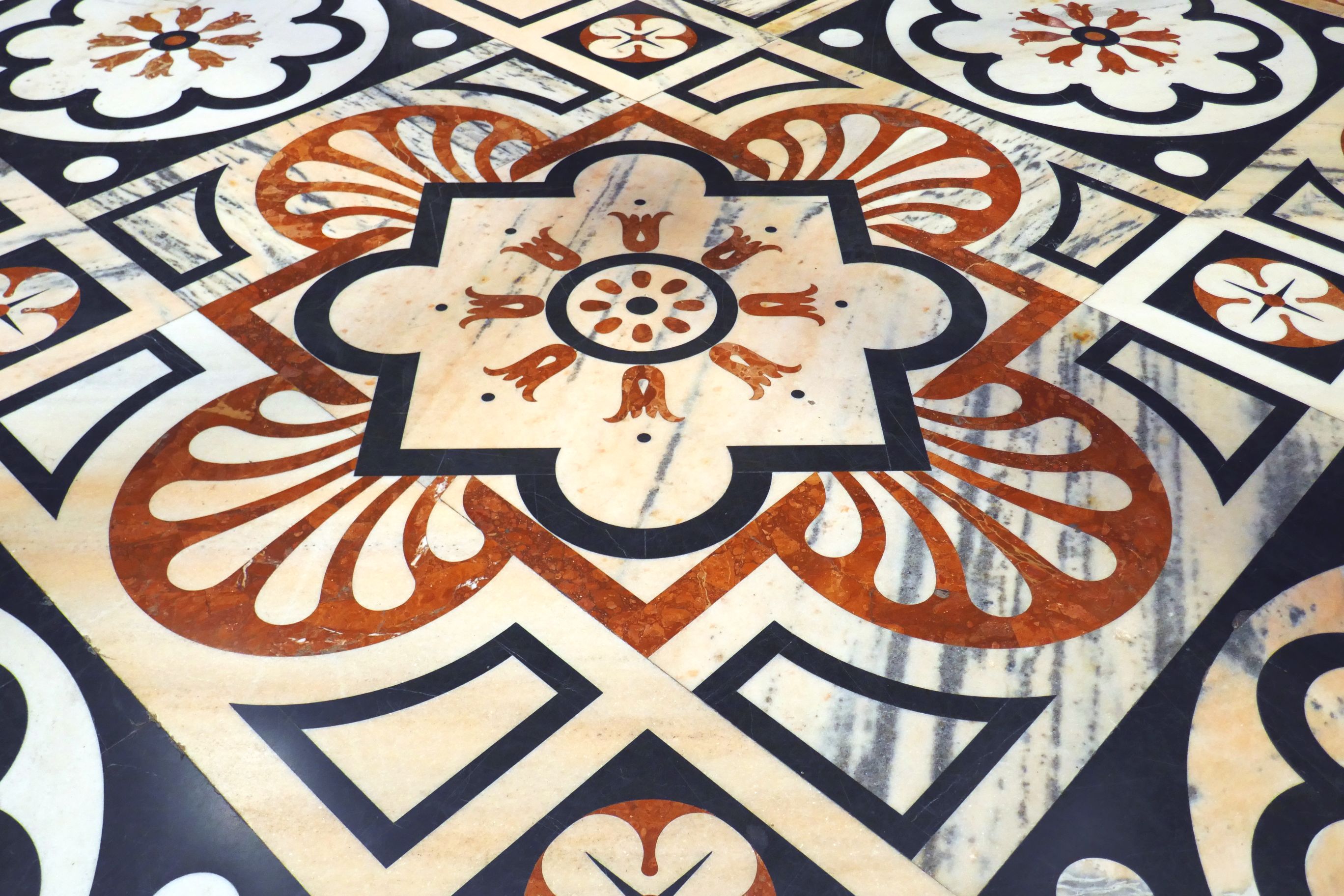
Our walking tour took us past the Teatro La Scala opera house and Duomo di Milano to the Galleria Vittorio Emanuelle II. This is no ordinary shopping mall; it’s the place to shop! Not that we were there to shop; haute couture isn’t our thing. Built in the late 1800’s, the architecture, with its glass dome and mosaic floors, is gorgeous.
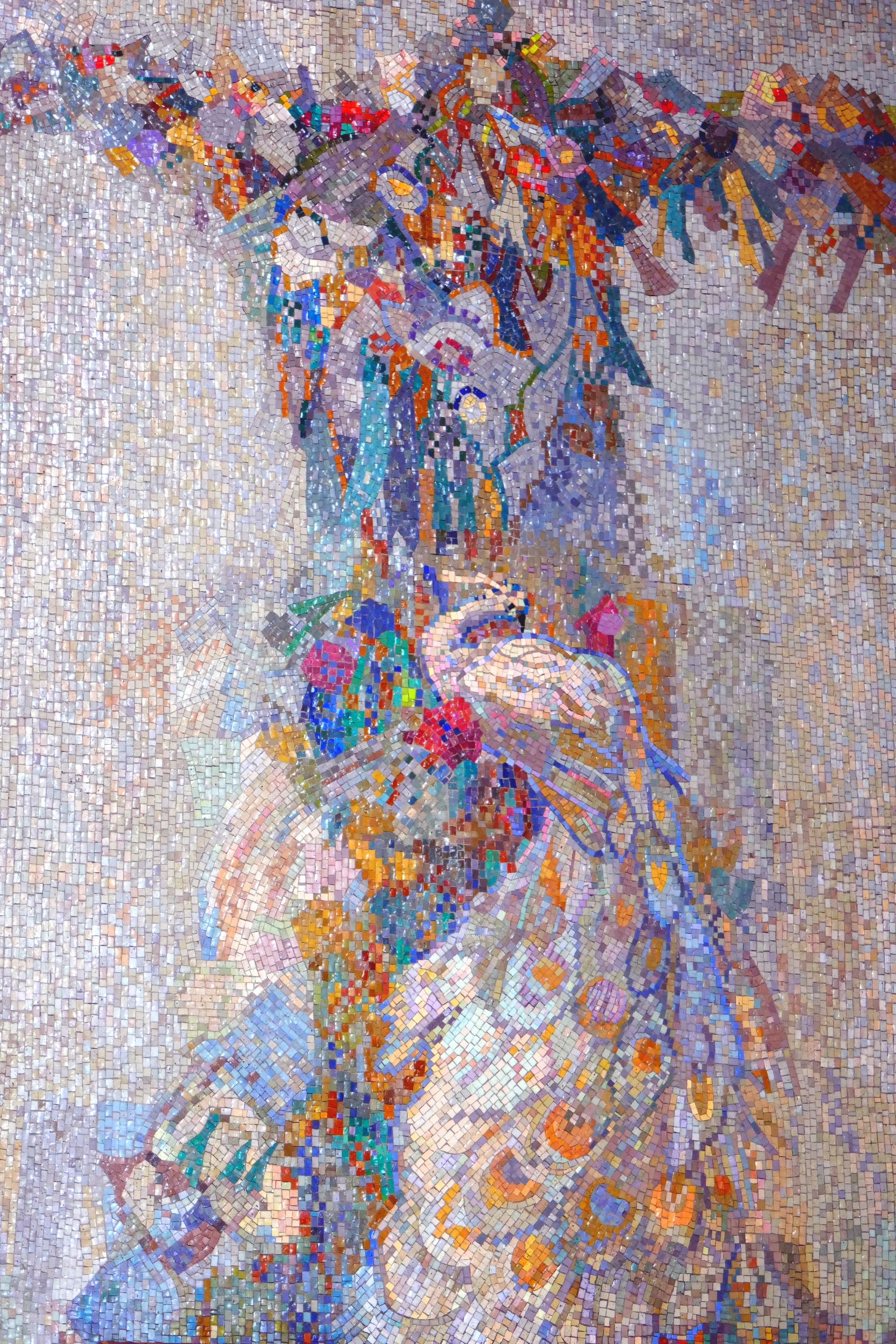
This mosaic mural was in the bar famous for serving Campari drinks.
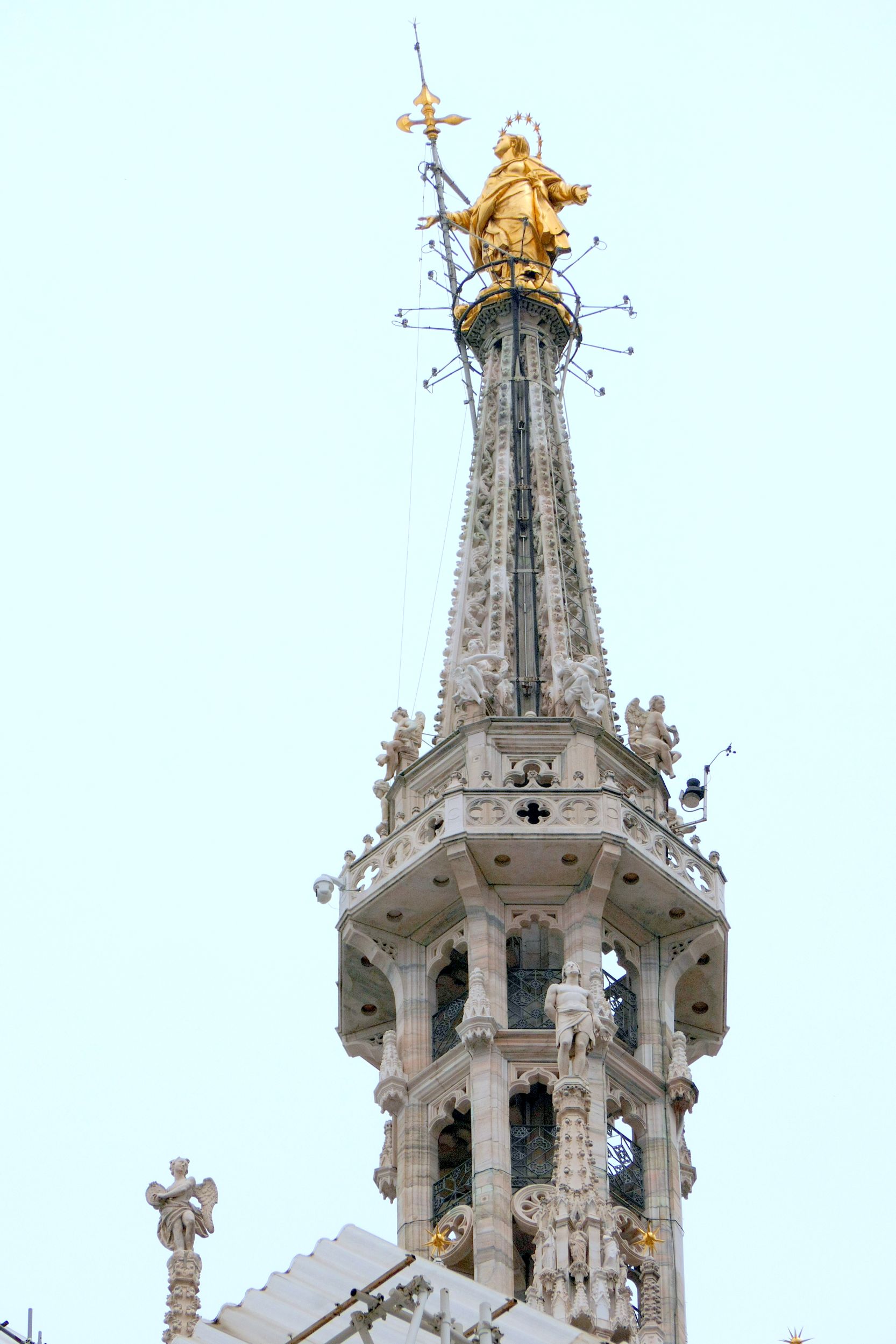
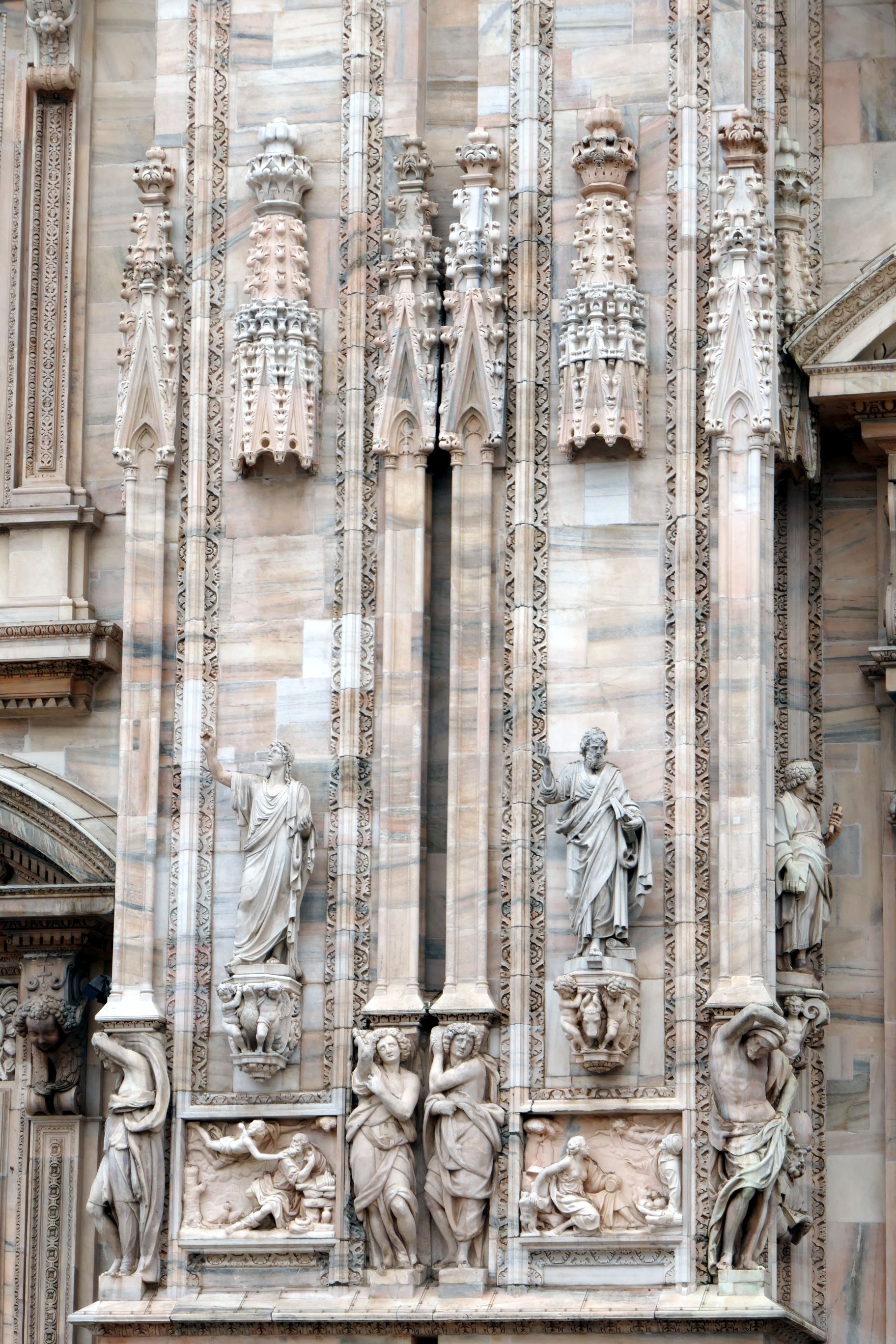
Following the tour, we had free time, so Bruce and I visited the duomo. We had pre-purchased tickets, which allowed us to bypass the long lines, so we were grateful!
The duomo took nearly six centuries to complete and seats 40,000 people! Started in 1386, construction was finally finished in 1965 and is the largest church in Italy. In the world, it ranks third in size.
We may not seen anything other than Milan’s historic city center, but what we did see was nothing short of amazing and beautiful!
Our evening was spent back in Lecco, where we walked as a group to a local restaurant for dinner.
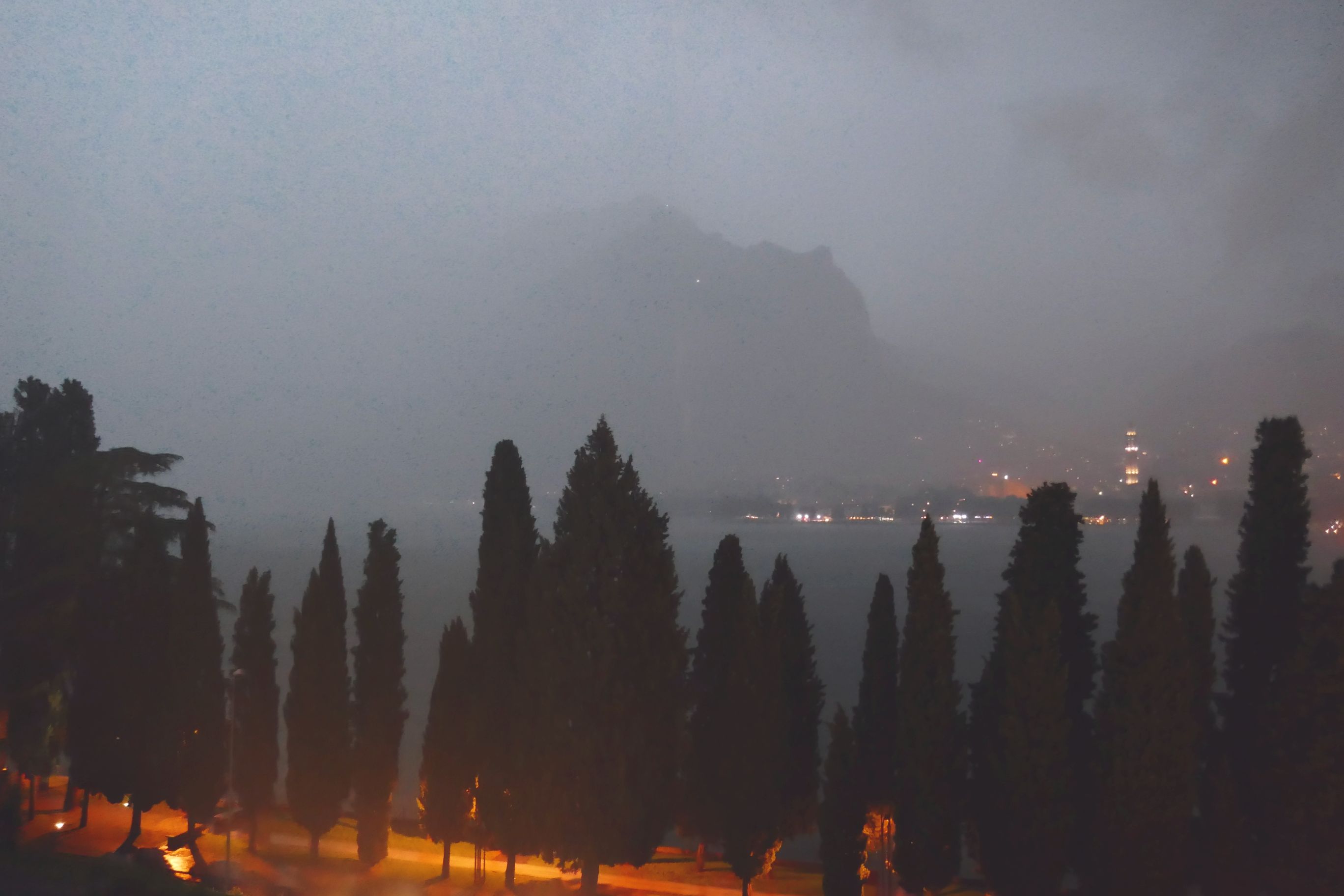
Following our return, the skies opened up! The electrical storm that followed was like fireworks on the 4th of July. This is a video I shot from our hotel balcony. At times, the auto-focus got fooled, but you will get a good idea of what it was like.
Coming up next: SWITZERLAND & ITALY #11: VIBRANT VARENNA
A new country and new currency. I have gotten in the habit of bringing home currency that I know I will be using again. In this case, Italy is on the Euro, so I kept extra Euros from our 2023 trip to Tuscany and Umbria, knowing we would be returning to Italy again. As for those Swiss Francs? I spent my last remaining coins on chocolate, of course!
Having written a lot about Italy in my past blogs, I won’t get into any of those topics this time around. I will, however, make a few distinctions between Switzerland and Italy. Take the roads, for example. Swiss roads are excellent and constantly being improved, which isn’t the case in Italy. The trains in Switzerland are also extremely punctual (After all, they are known for their fabulous watches!). In Italy, not so much. How about those restrooms. I had never seen such a nice and clean restroom as the ones on Swiss trains! In Italy, they were often missing a toilet seat, for starters…
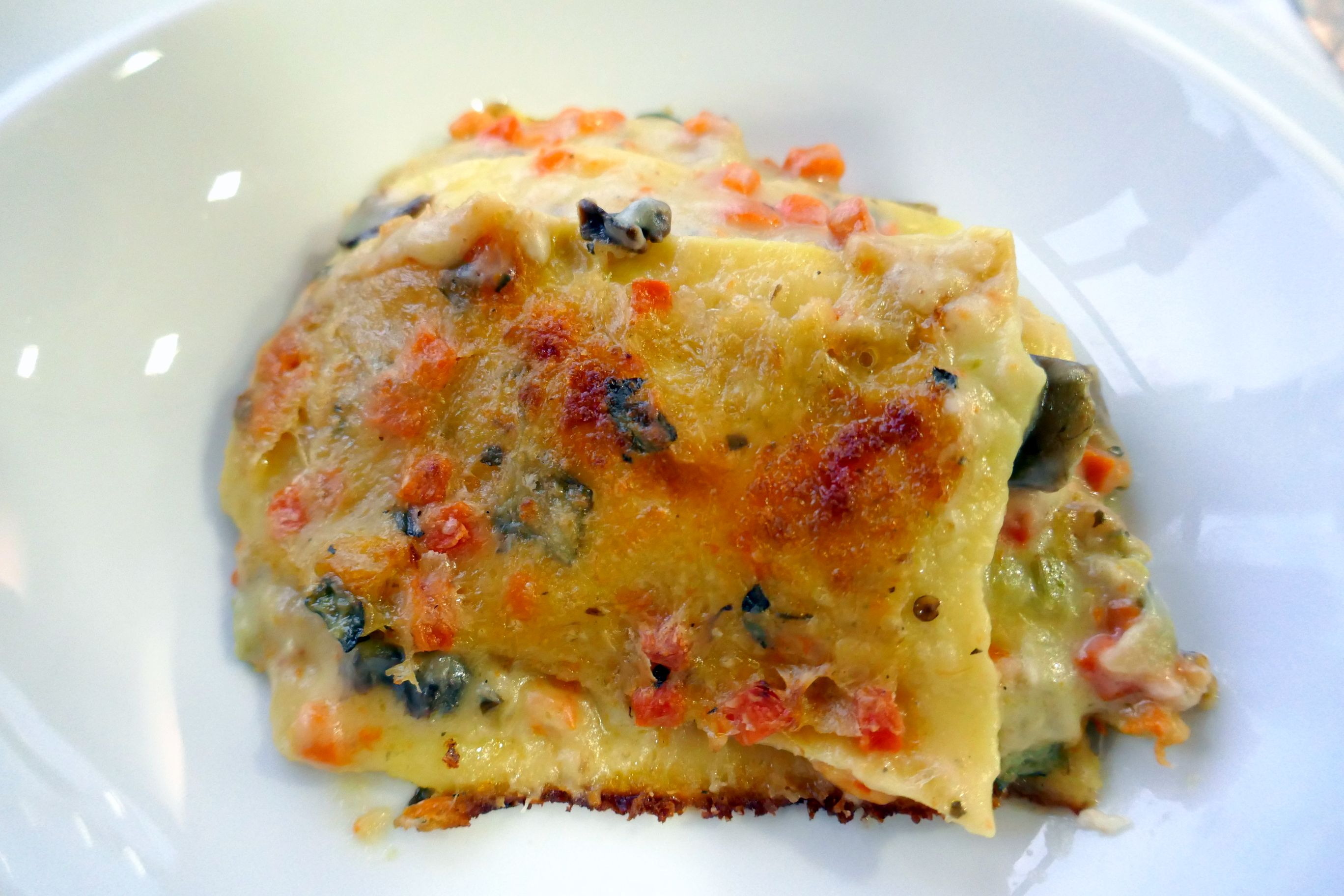
Still, there is a reason this was my fifth time in Italy: I absolutely love it! What’s not to love? The country is beautiful, the people are warm and friendly; and the food is amazing! Although, if it’s typical Italian cuisine you are searching for with lots of fresh ingredients (especially vegetables), don’t go to northern Italy; just stick with the south. Northern Italy may be gorgeous, but the climate isn’t conducive for growing a variety of vegetables, so they aren’t the easiest to find. Would you like a beautiful California-style salad? Fuhgetaboutit. A rich tomato-based sauce on your pasta? Nope! Rich cream sauce and meat will appear on your pasta. Even if you order “lasagna with vegetables” like I did at dinner, the vegetables are micro-diced—just a nice little splash of color for interest. You can find plenty of mushrooms, however; they are native to the area, as are white truffles.
(For all photos, click on the image for a full screen view.)
This may have been lacking in vegetable volume, but it sure was big on flavor!
The bottom line? Don’t go to northern Italy for cuisine with fresh ingredients, but DO go for the drop-dead gorgeous scenery!
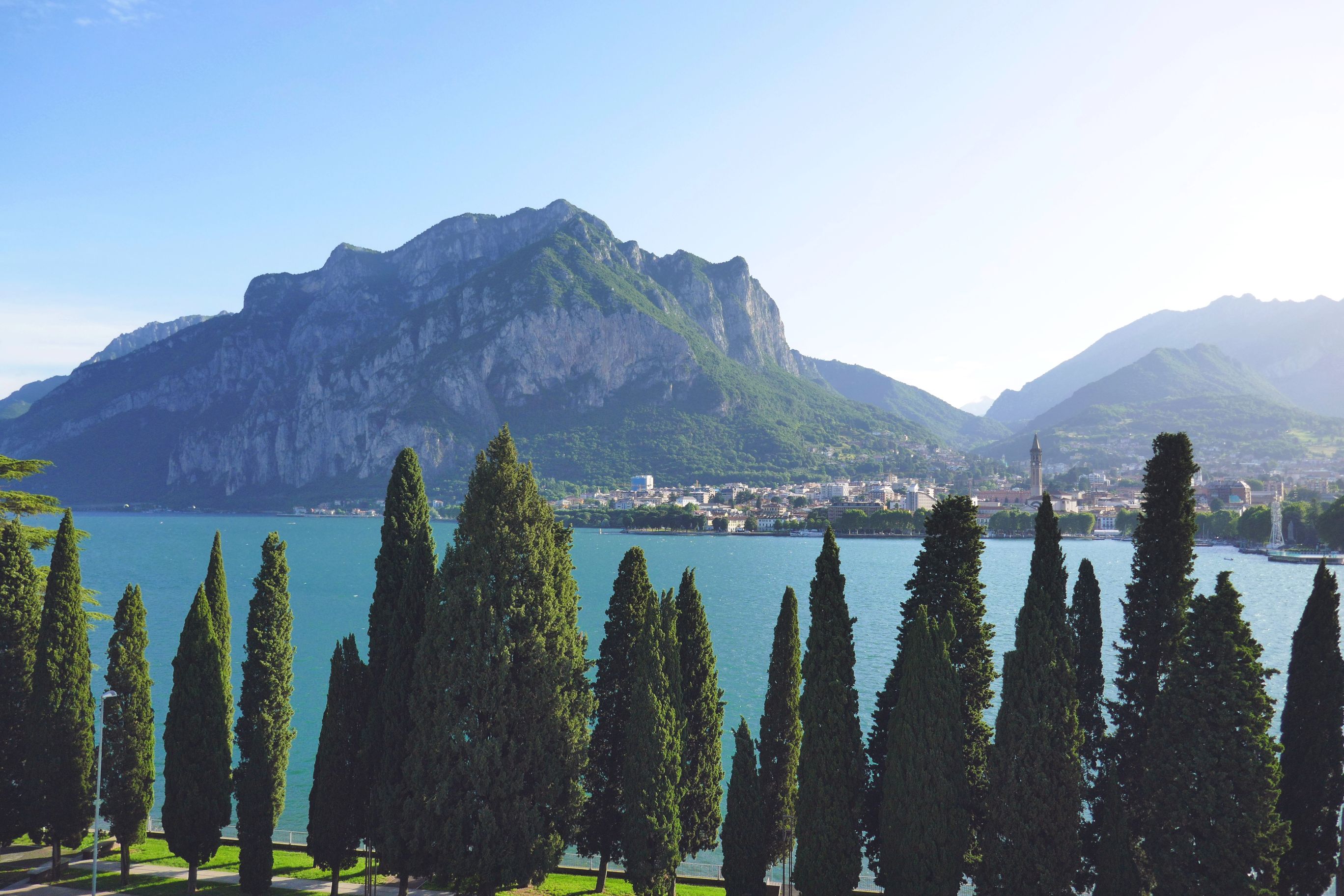
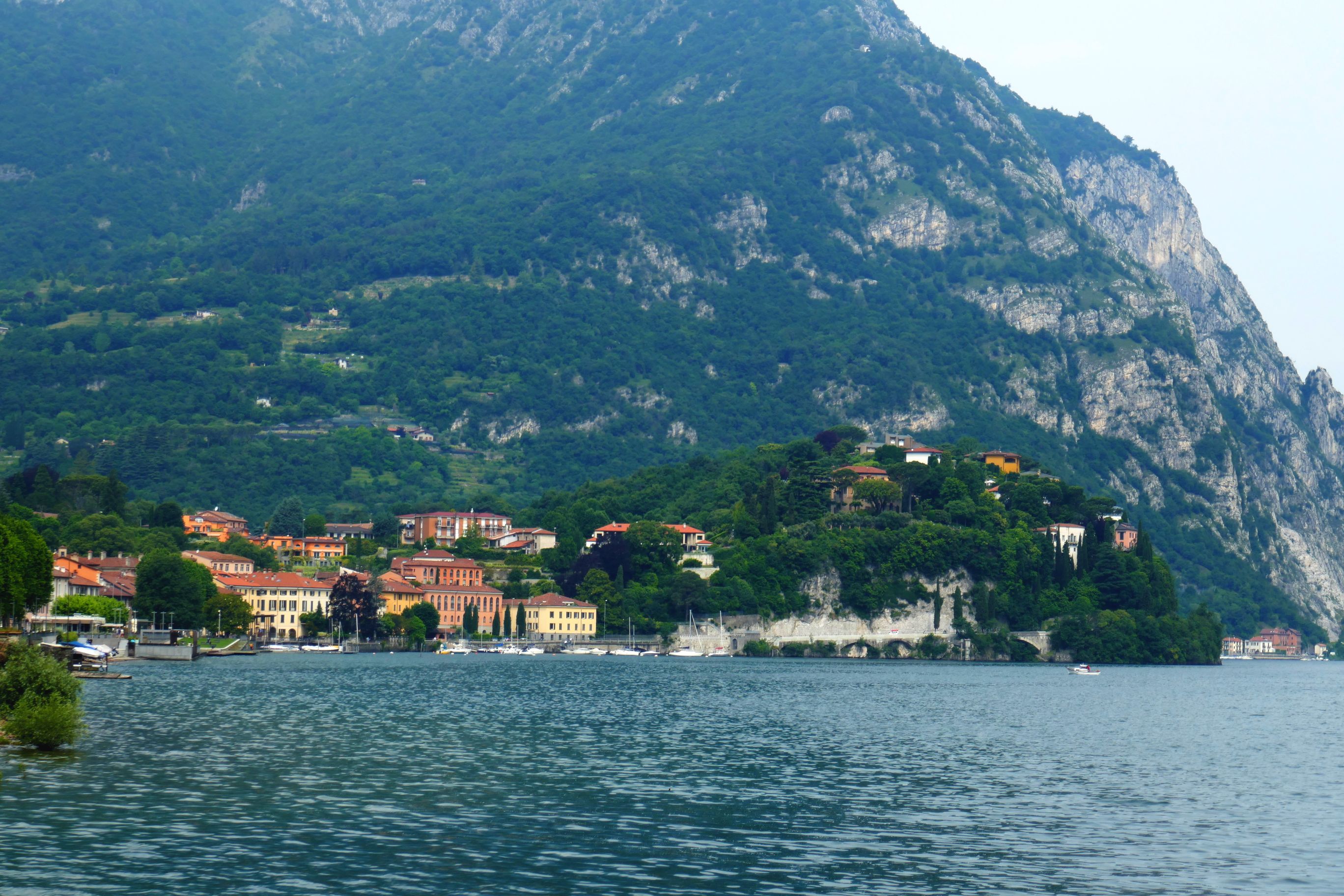
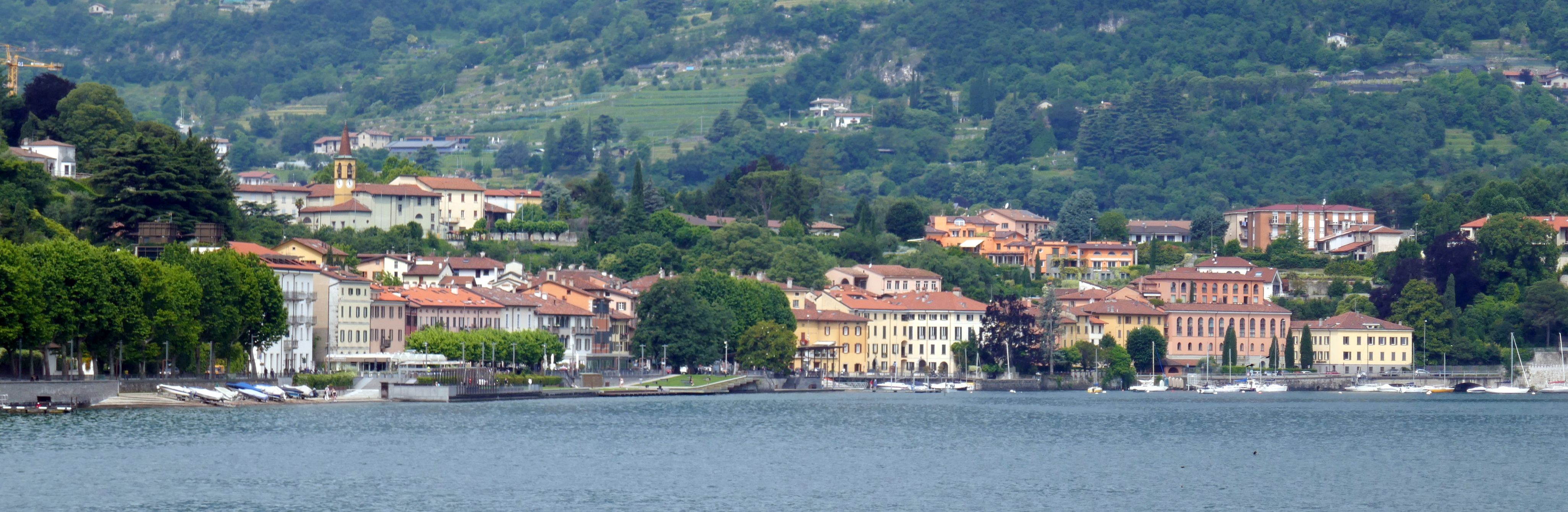
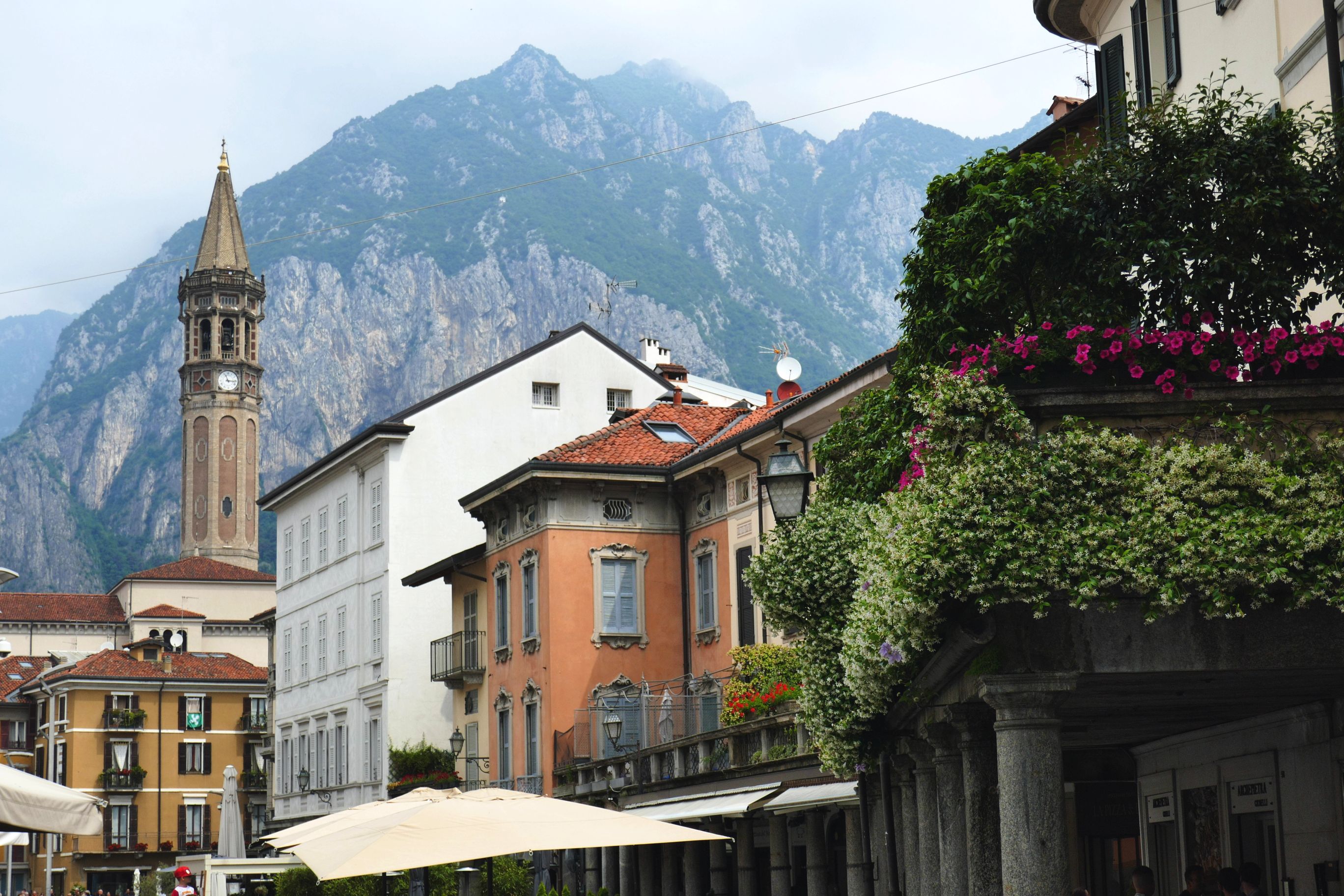
We began our tour in the Lombardy region in Lecco, along the shores of Lake Como, and 30 miles north of Milan. At less than 50,000 people, it’s a small, less touristy city and easy to navigate on foot.
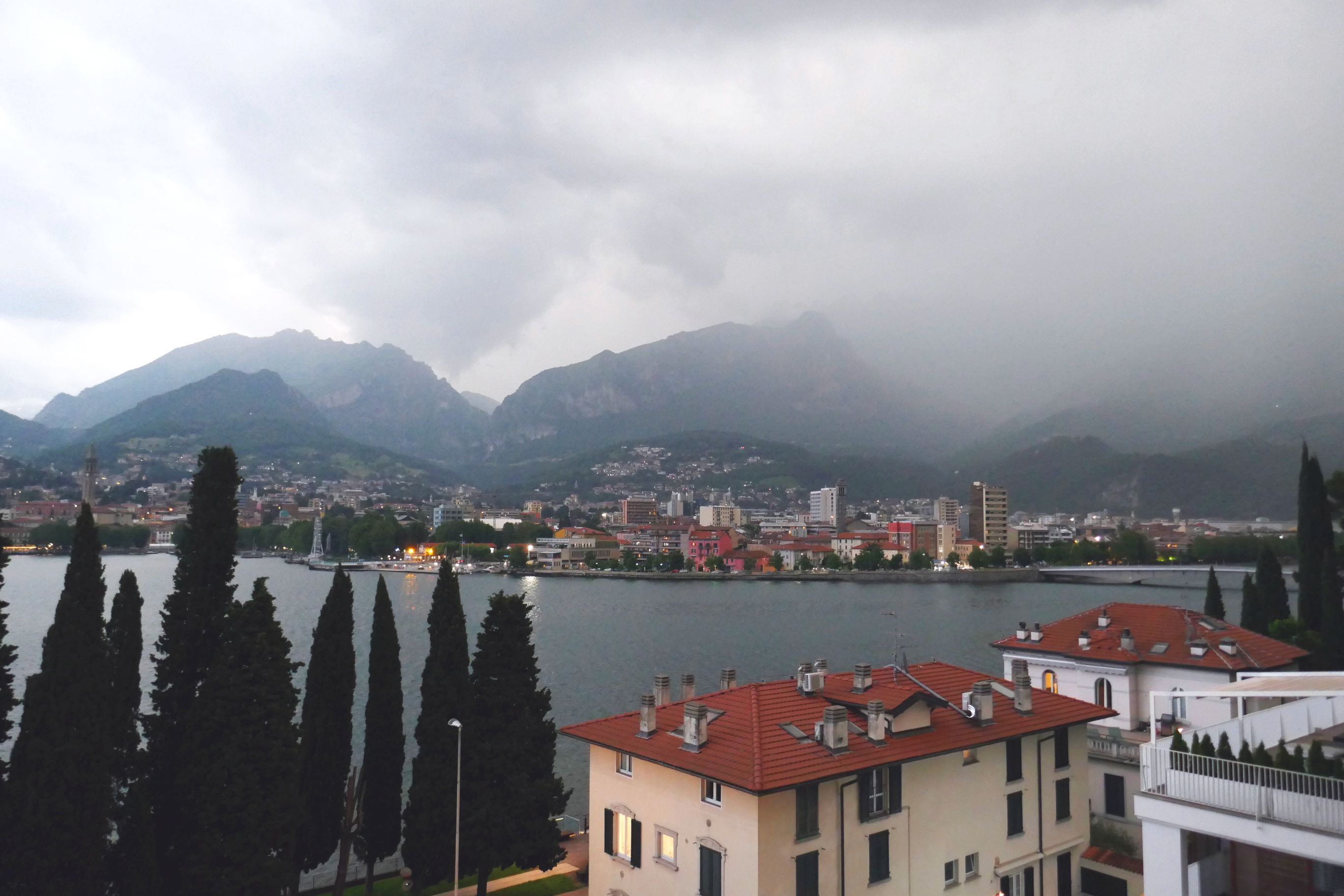
Our hotel, located across from Lecco, had a beautiful view of the lake and town. Had the skies been clearer, we would have also had amazing views of the mountains beyond.
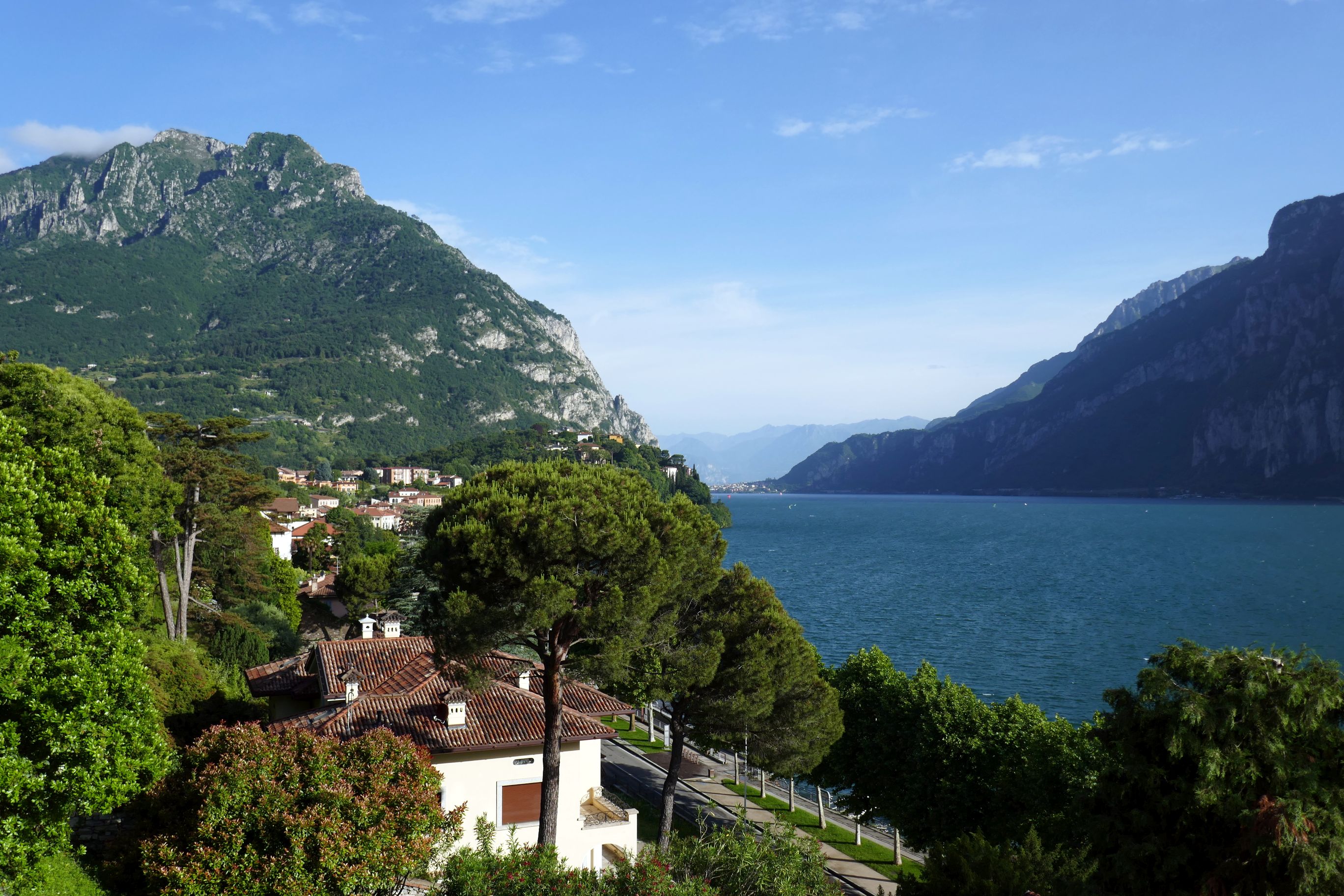
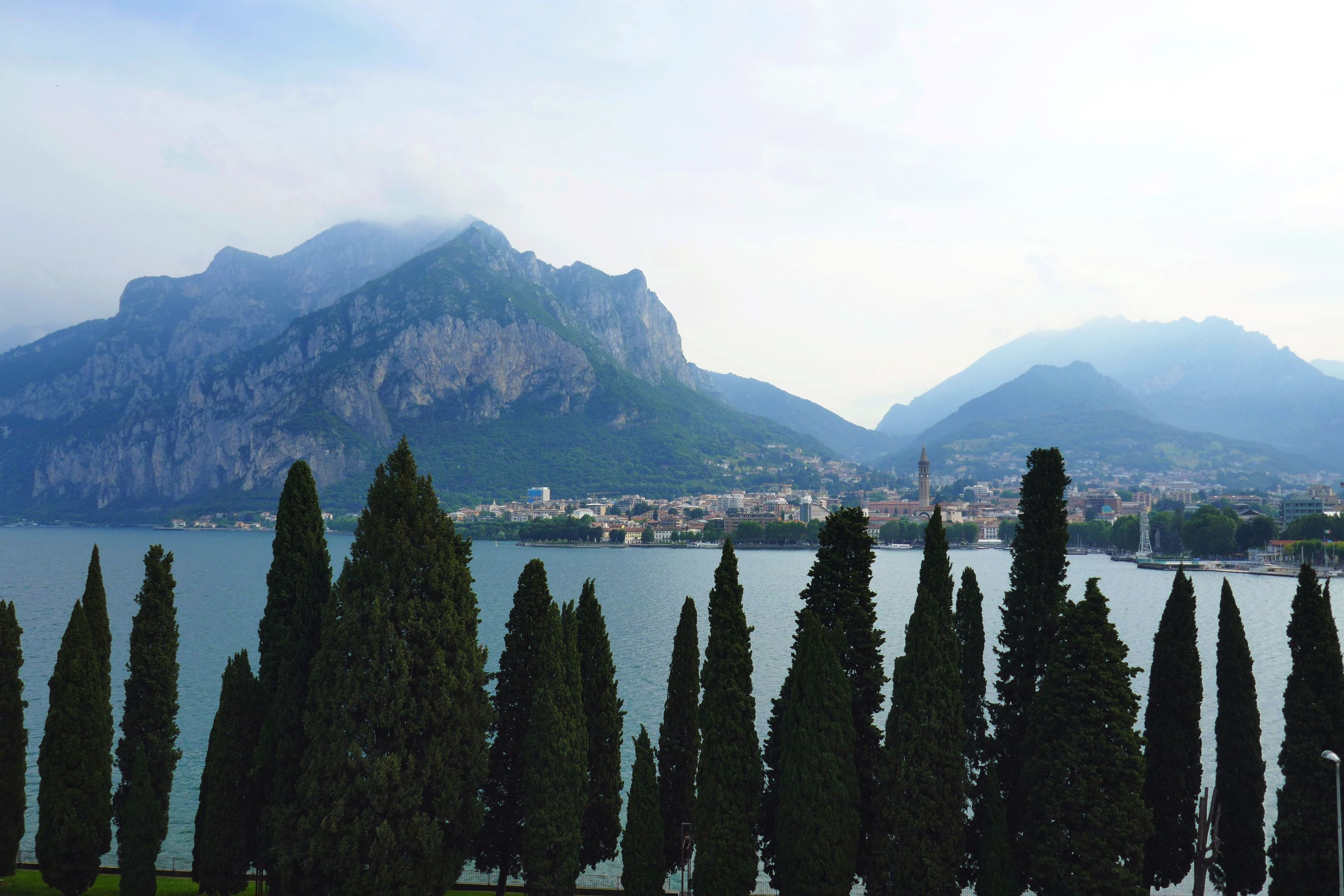
The view off to the left of our hotel
Following a walking tour by our Italy tour leader, Maria, we had time on our own.
Author Alessandro Manzoni was from Lecco.
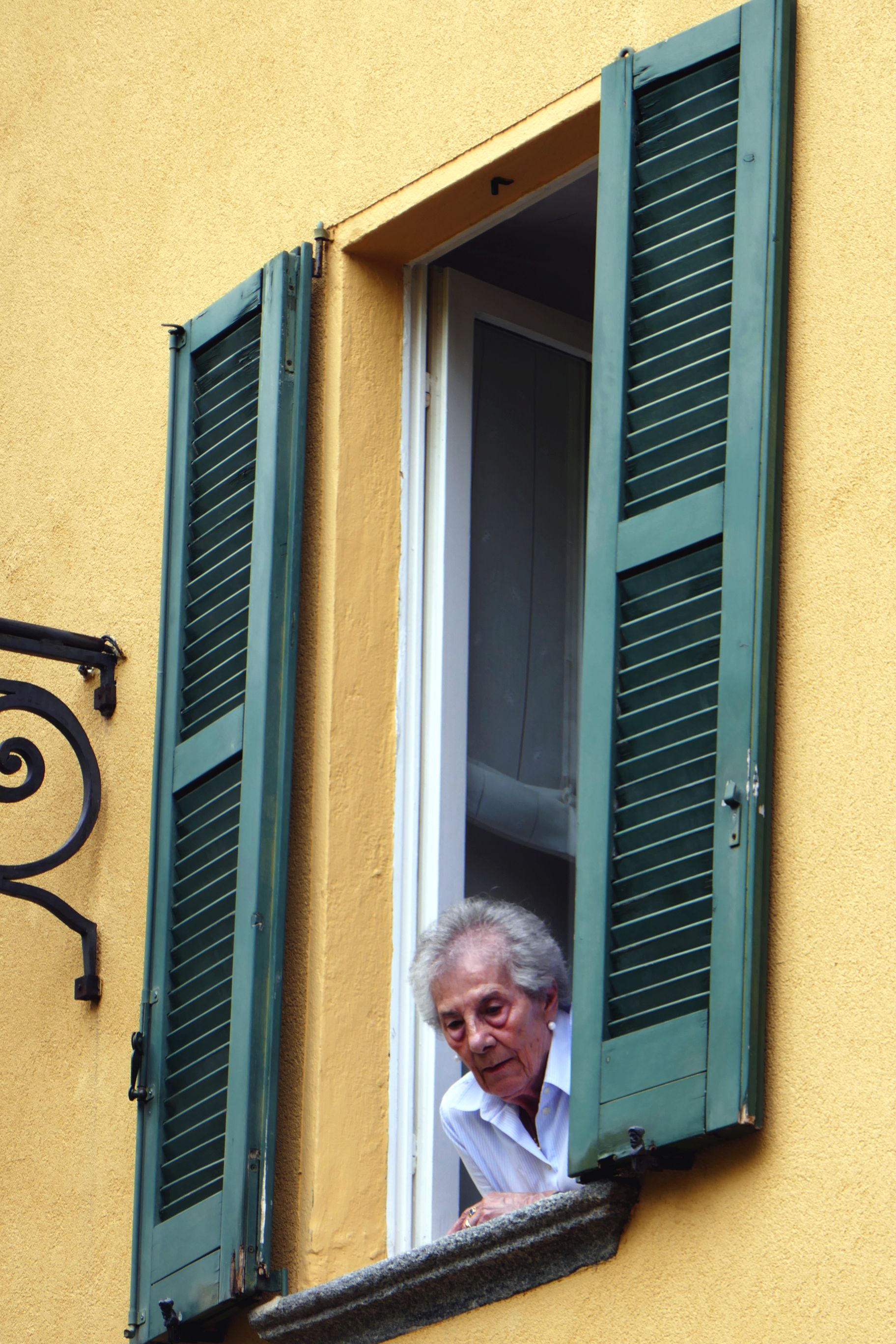
This woman kept an eagle eye on the gardener down below watching his every move.
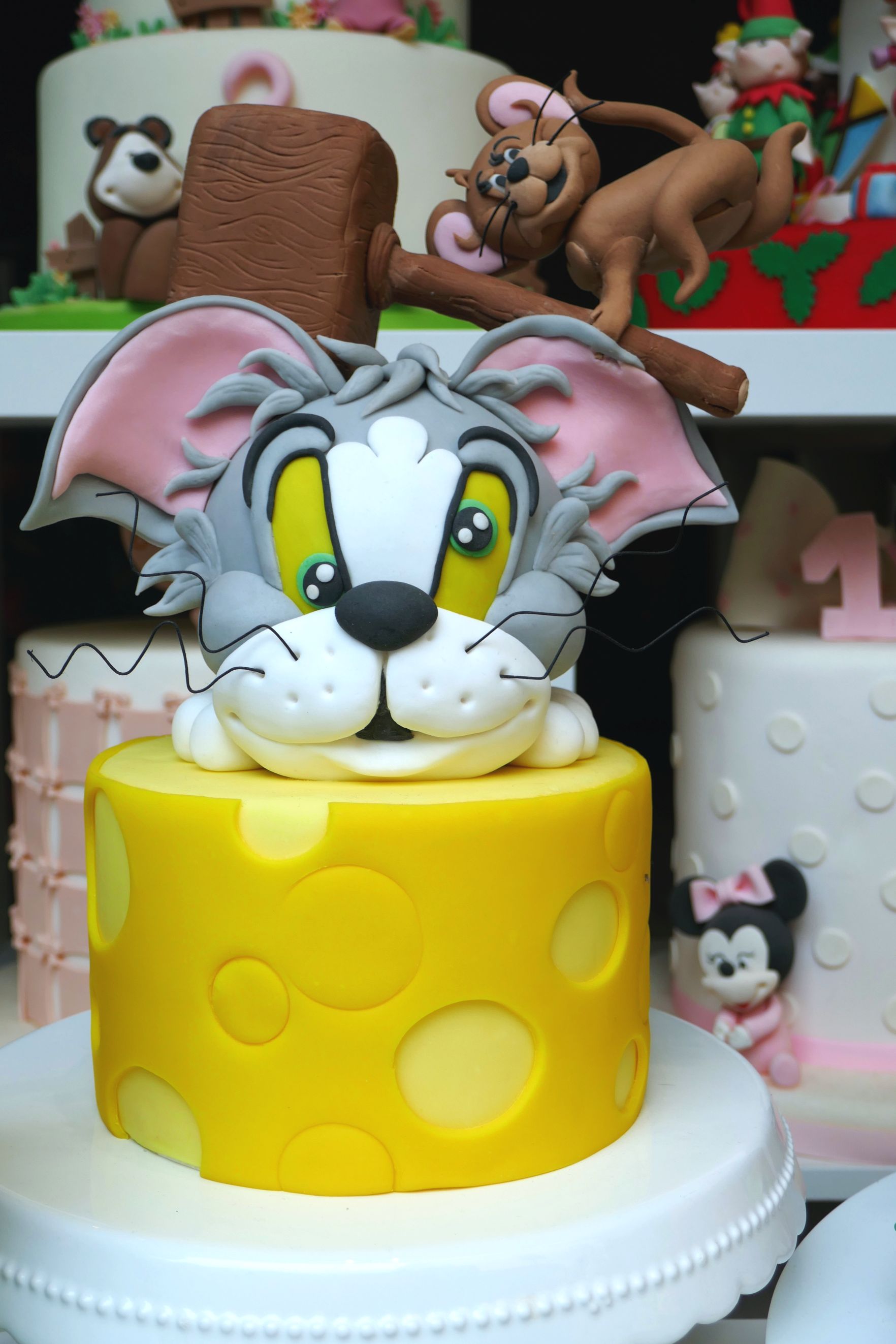
I had never seen such adorable cakes as in this bakery!
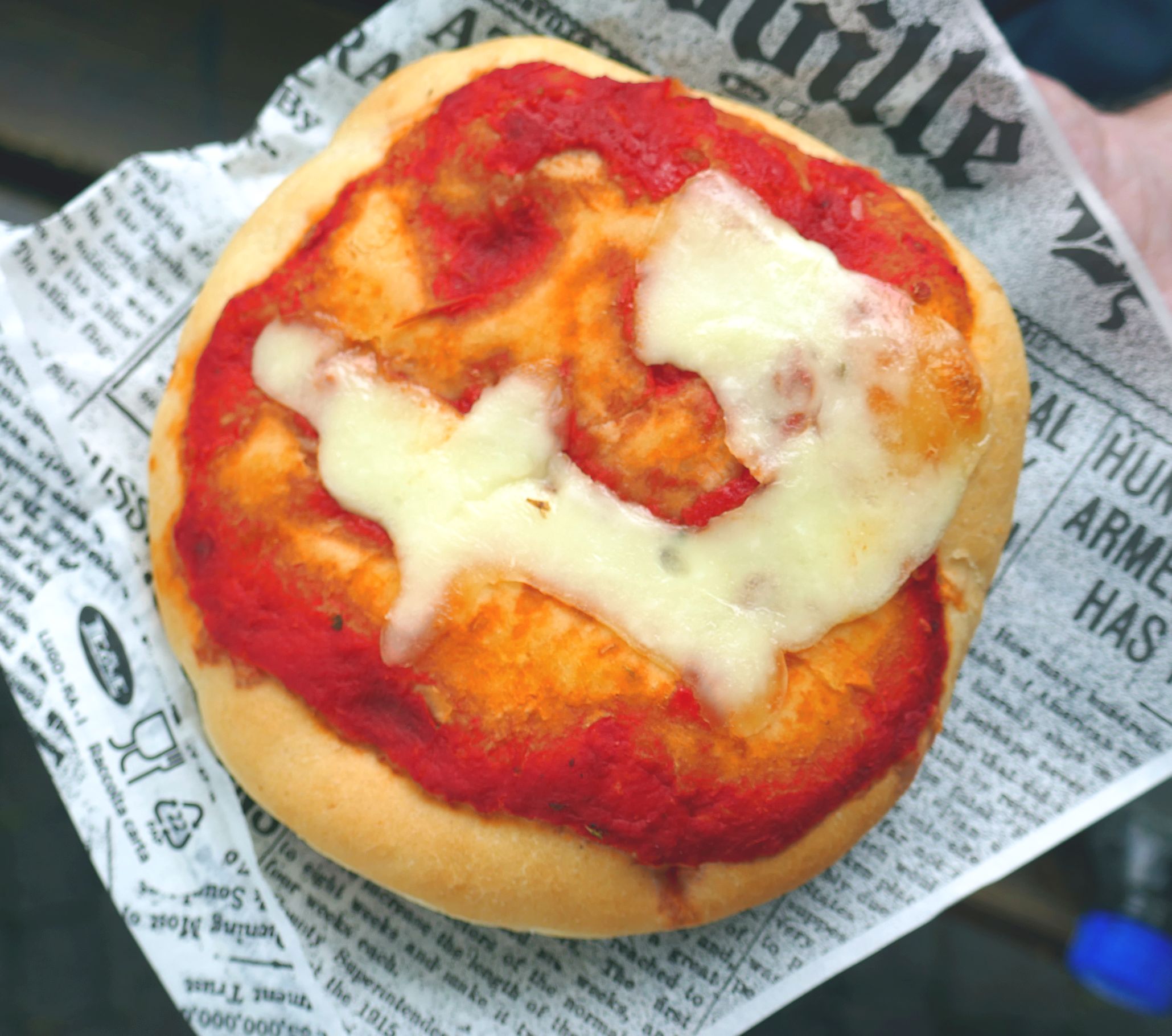
Pizzette (miniature pizzas) were a convenient snack-on-the-go.
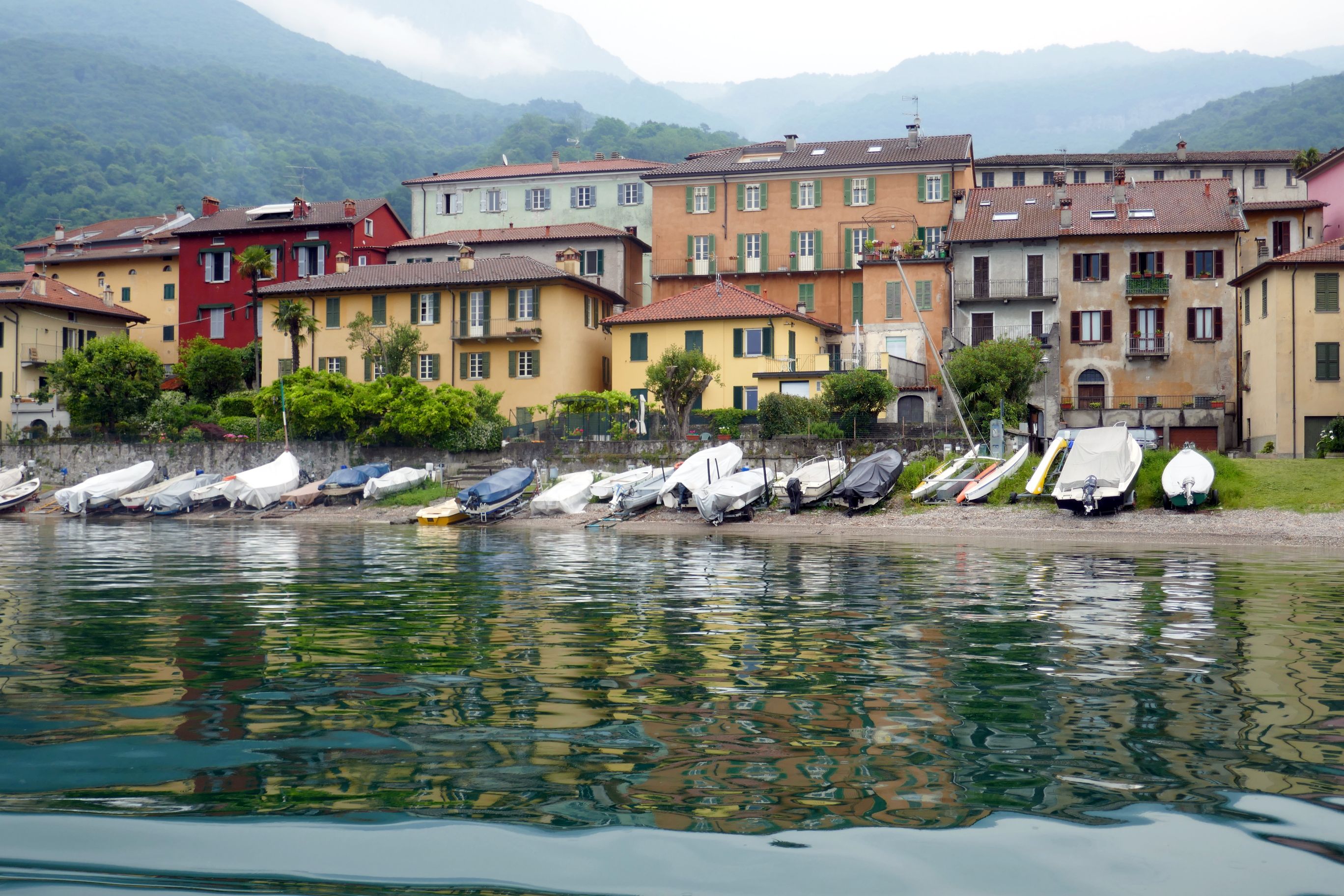
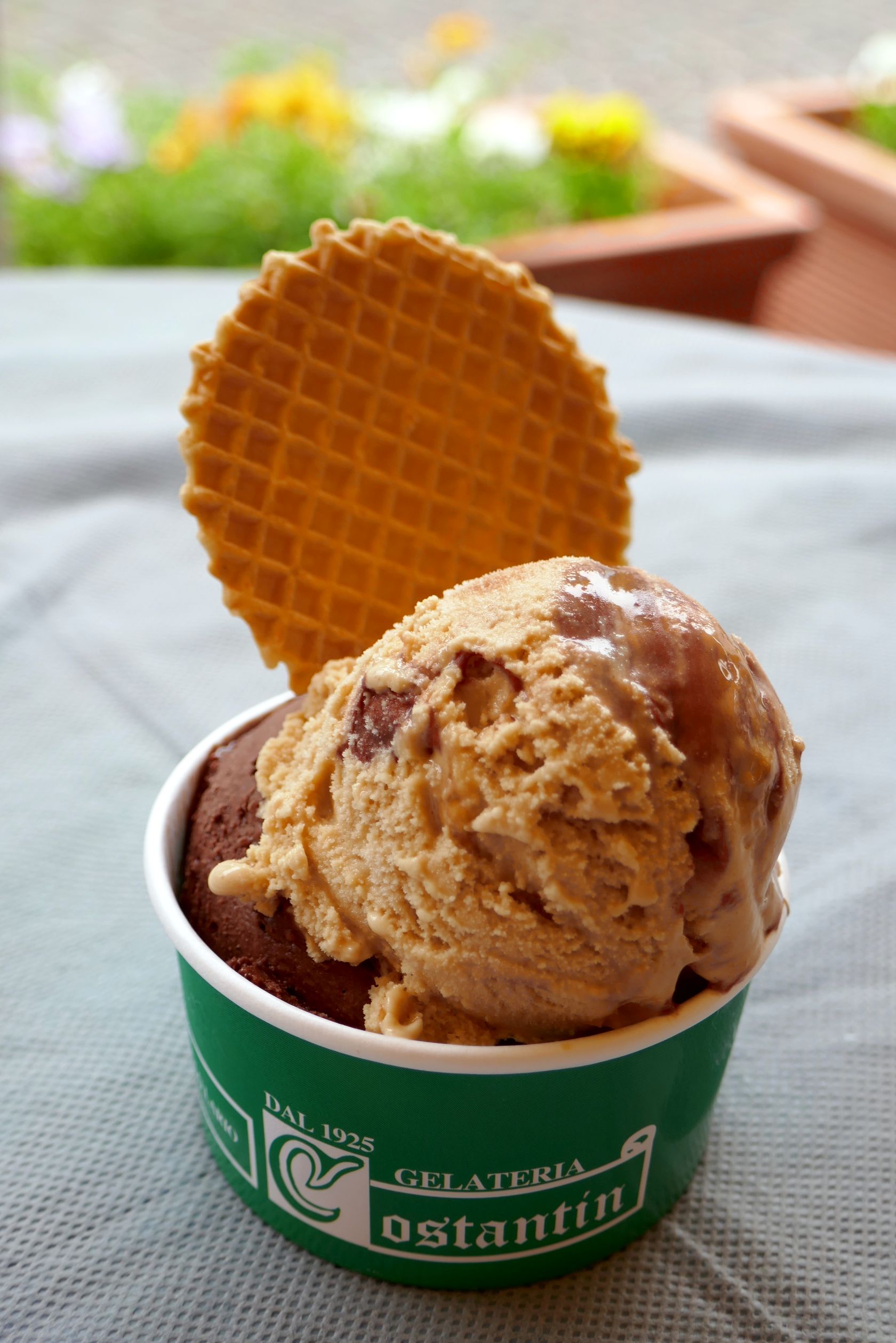
Next, we took a ferry to the quaint town of Mandello, a picturesque commune of less than 11,000 people. We were treated to delicious gelato before wandering through the town and ending up at the train station for a ride back to Lecco.
Check out this ferry employees badge when he had hair and looked much younger. He has been with the ferries for a long time!
Our first day in northern Italy was so enjoyable—relaxing and lovely!
Getting in and out of Zermatt can only be accomplished by train or helicopter, so we took a short train ride out, and then met up with our bus driver for our transfer to Lecco, Italy, through Simplon Pass. Along the way, we pulled off for a stunning view of the scenery that surrounded us.
(For all photos, click on the image for a full screen view.)
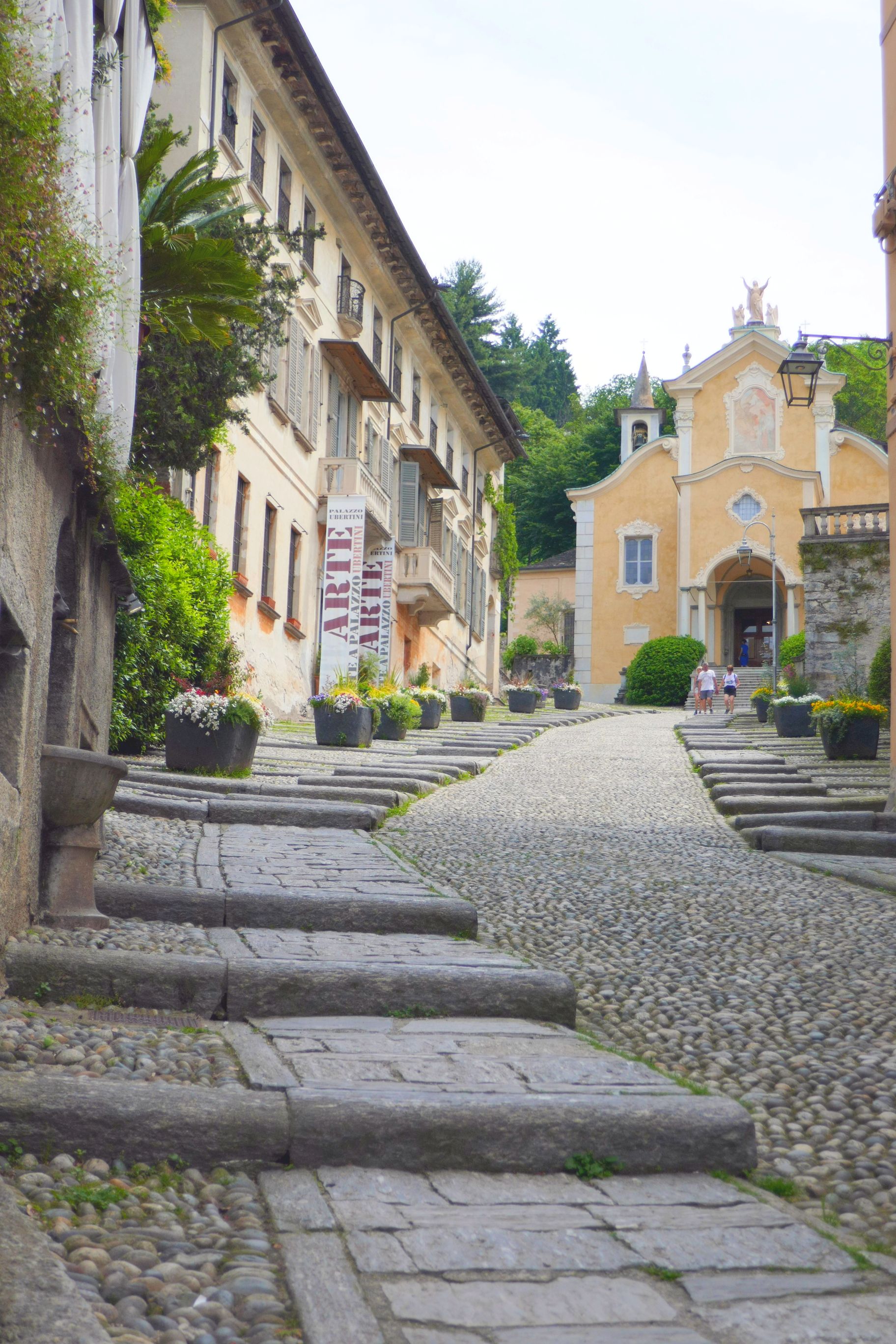
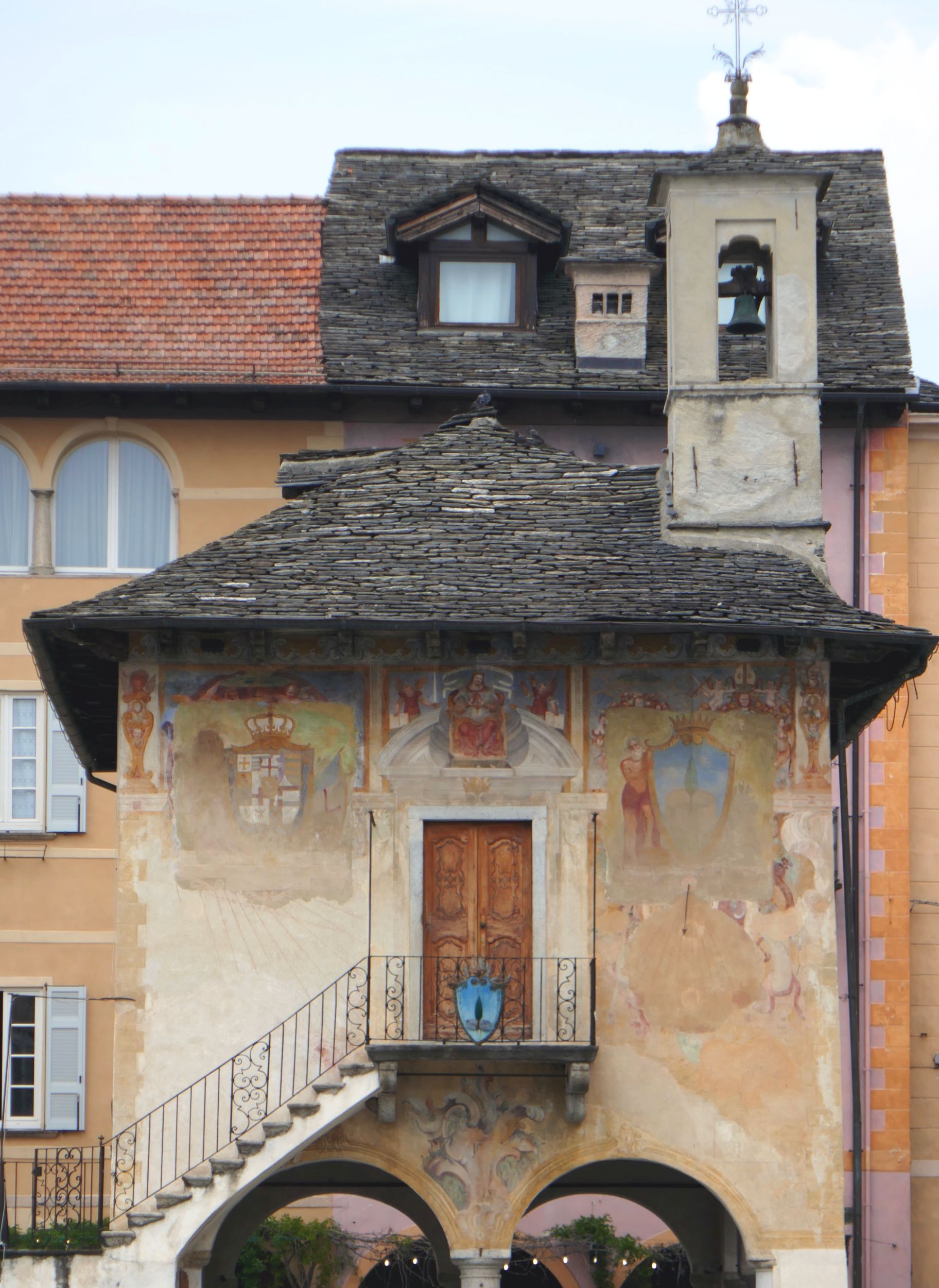
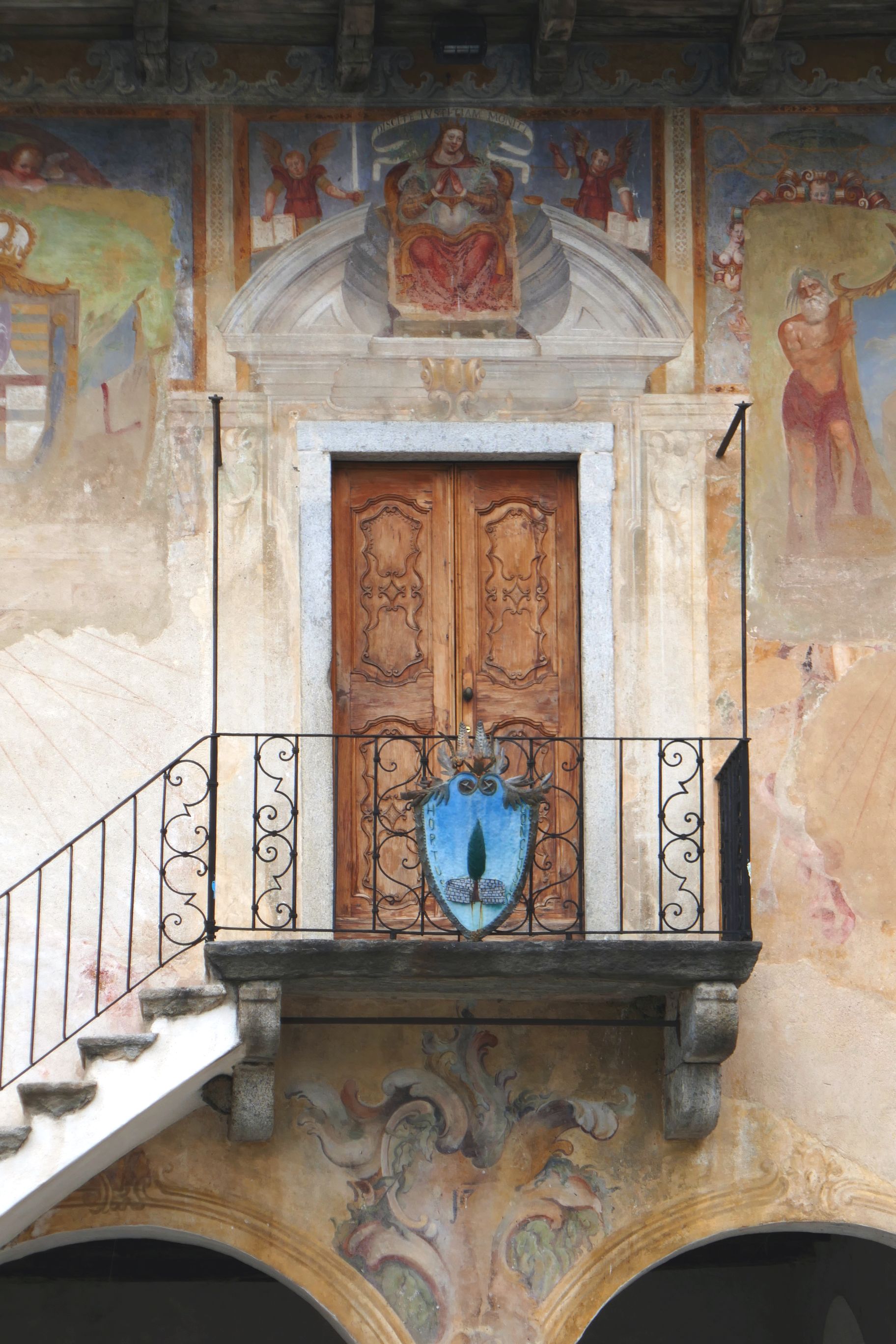
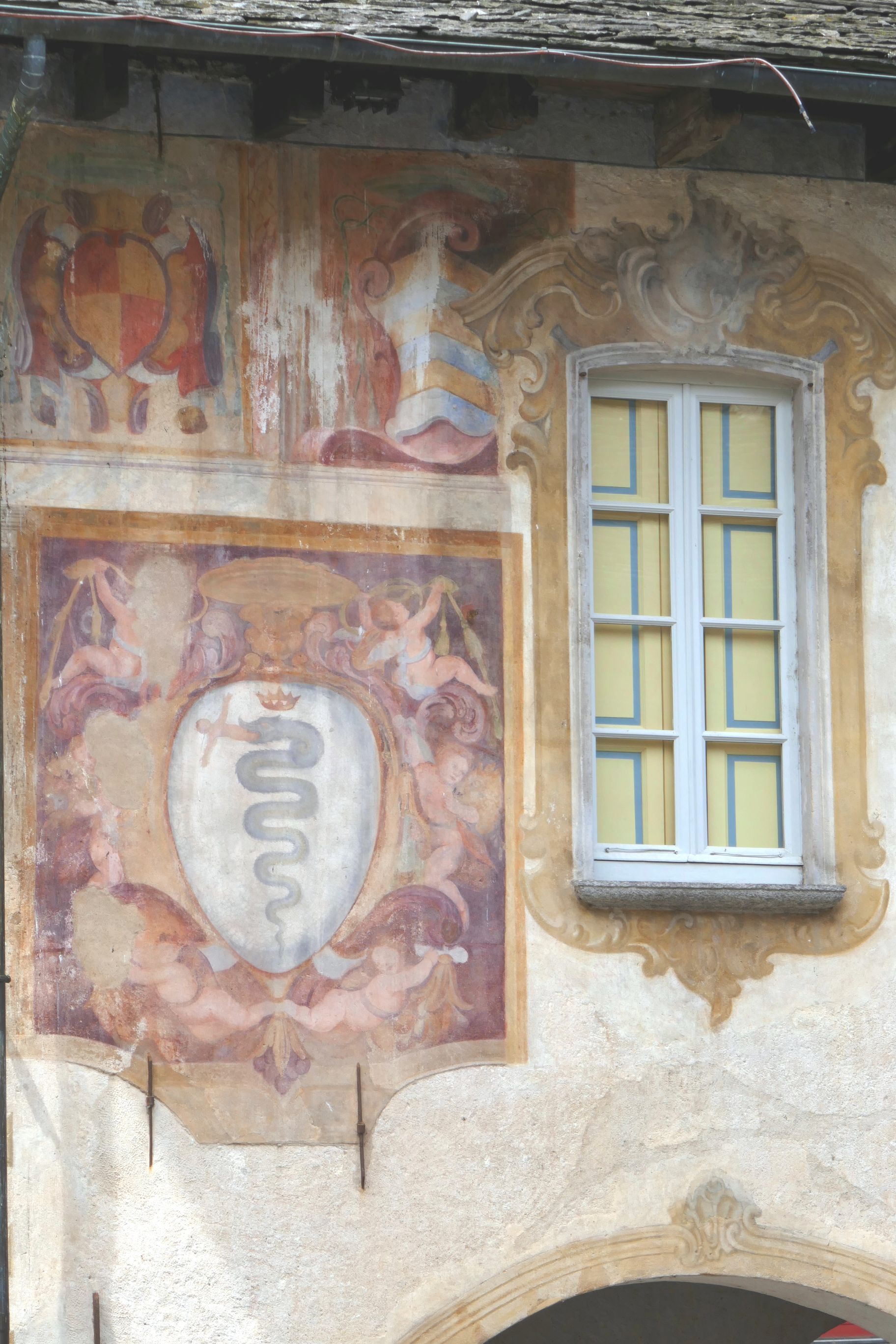
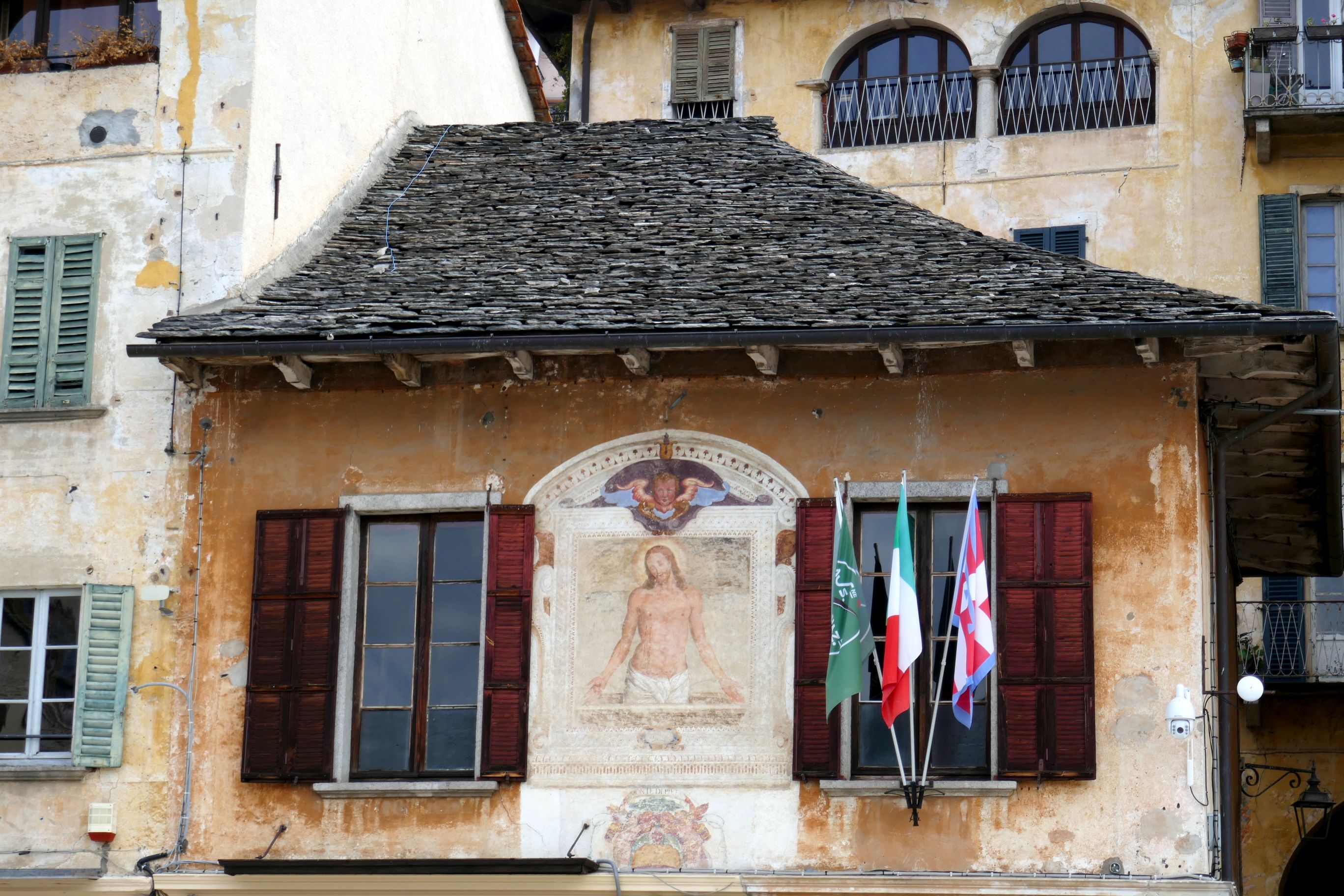
For an al fresco lunch and some free time to explore, we stopped at Lake Orta. The road was so narrow, our driver had to park the minibus, so we could transfer to a local van to continue, requiring two trips for our group of nine and Susy. The town was so charming and photogenic—well worth tackling those logistics.
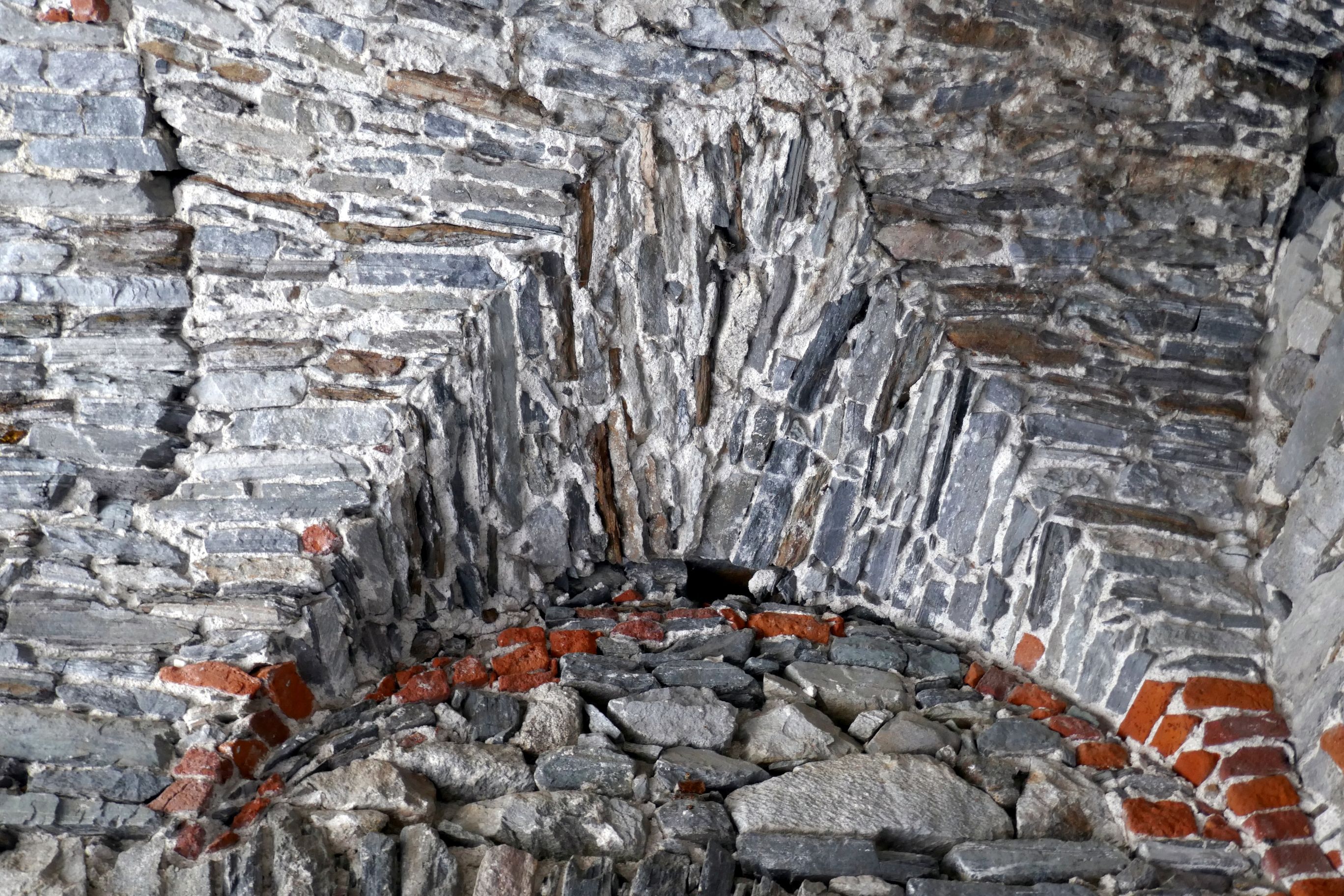
The following are scenes from this beautiful little town, beginning with the side of the short stone tunnel we walked through, which revealed the next scenes.
Coming up next up: SWITZERLAND & ITALY #9: LOVELY LECCO
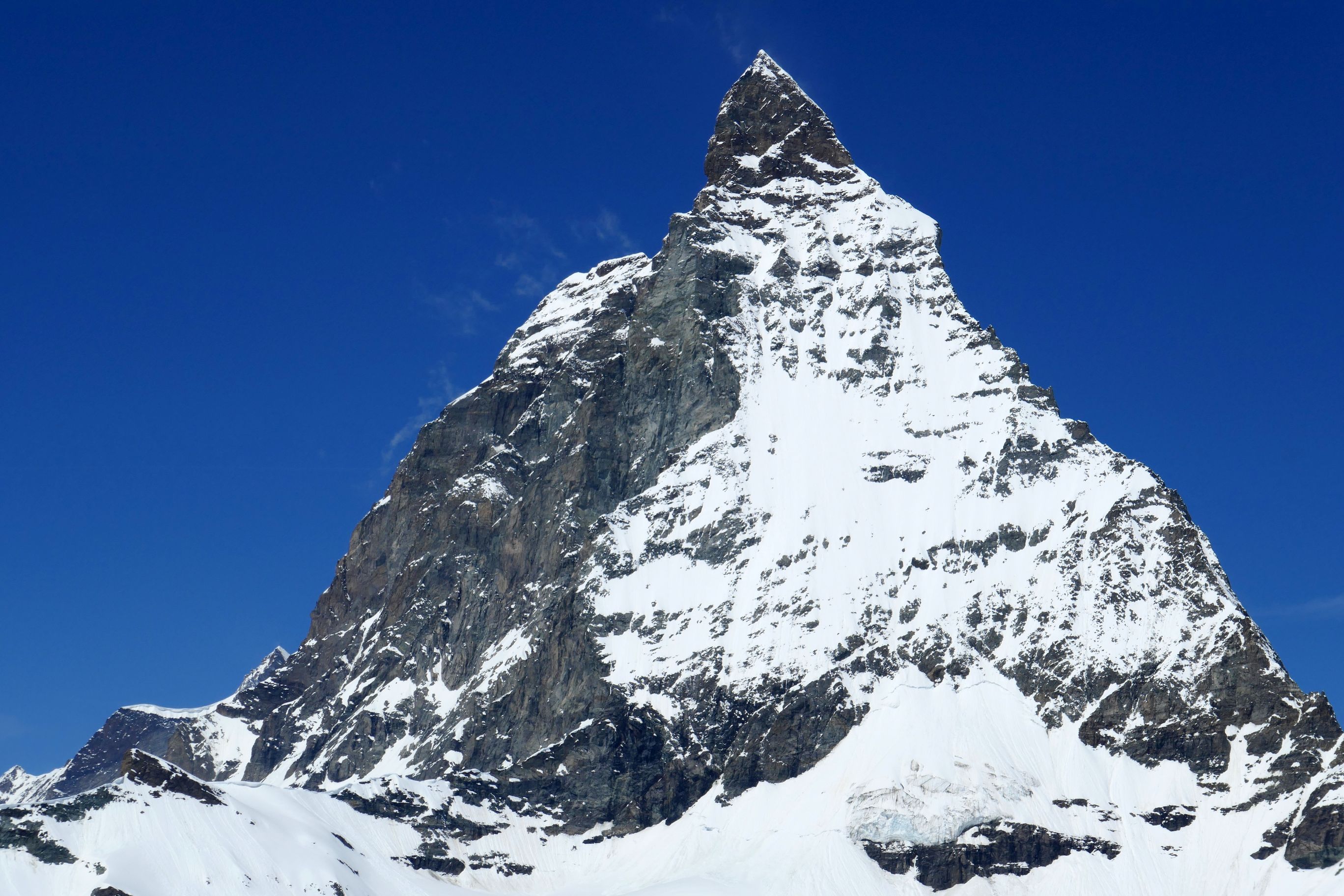
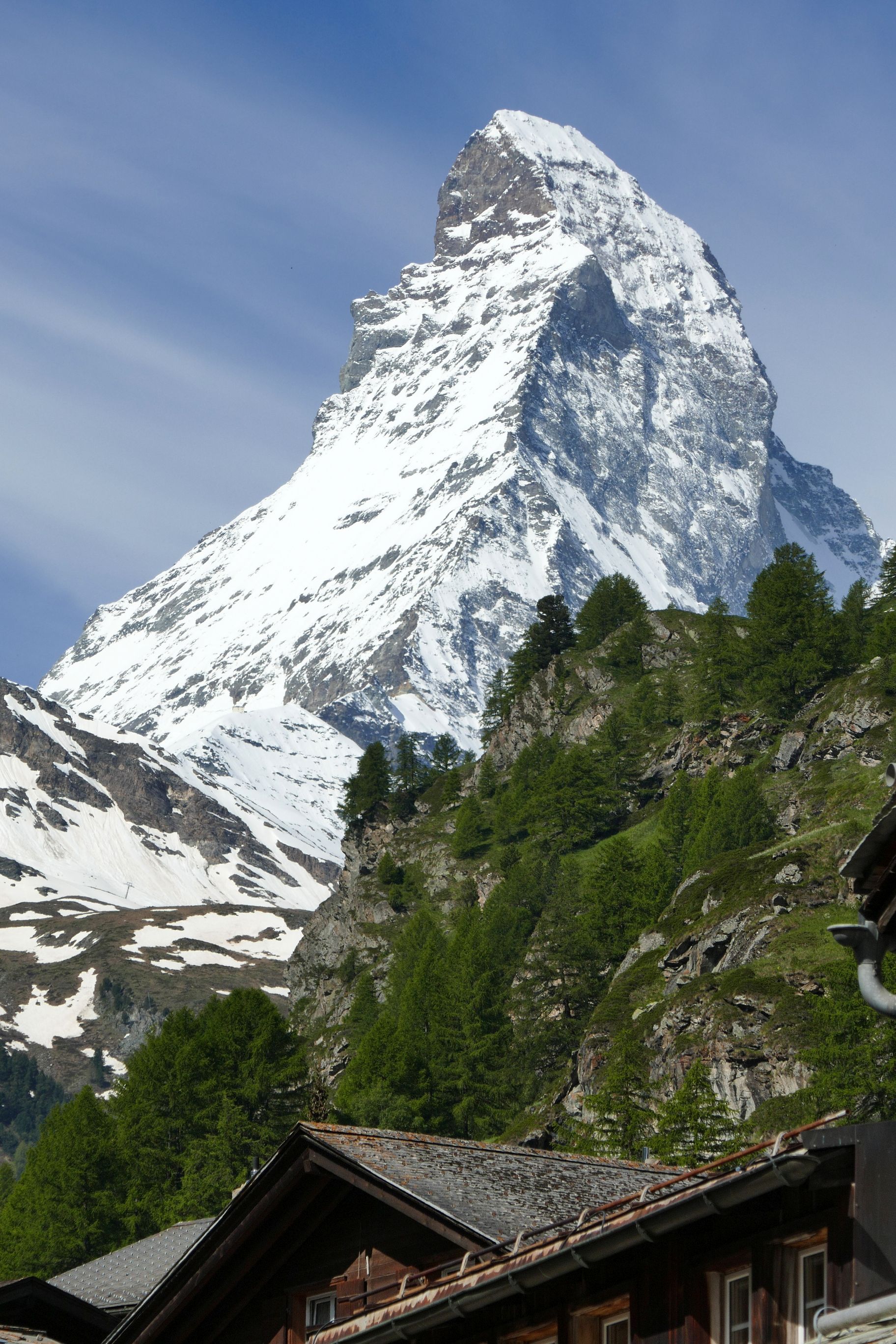
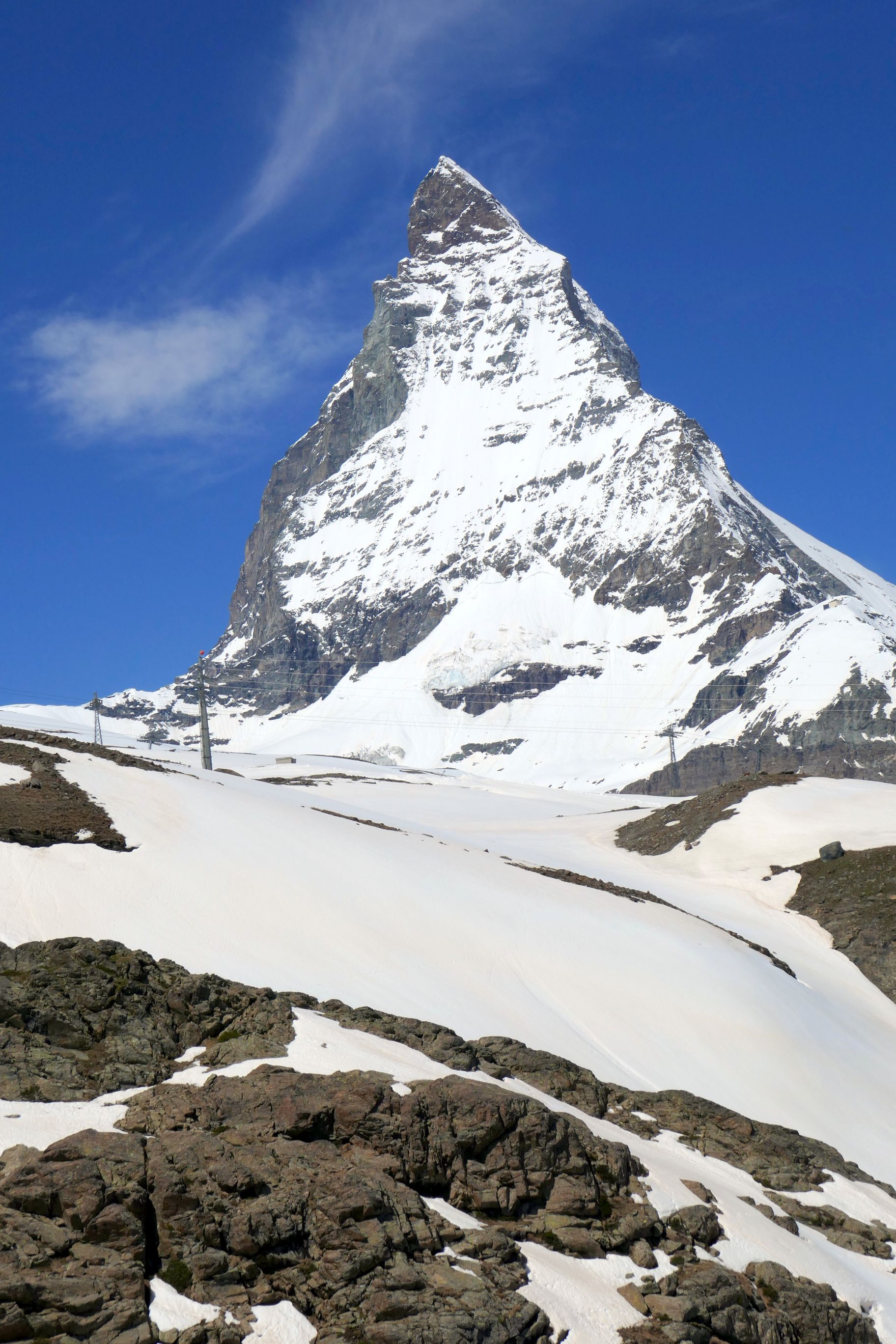
Breathtaking. Absolutely breathtaking! As I took in the view, I remembered back to when I was a small child growing up in Lakewood, California, eighteen miles from Disneyland. Back then, Disneyland issued ticket books, and the rides were categorized by ticket letters. An “A” ticket ride was a yawner, but an “E” ticket was the most coveted— your ticket to the best rides (with the longest lines). My brother and I always made a beeline for the “Matterhorn,” a roller coaster ride that took you by bobsled in and around the mountain. At the time, I didn’t know there was a real Matterhorn in Switzerland; I just thought it was a thrilling Disneyland ride!
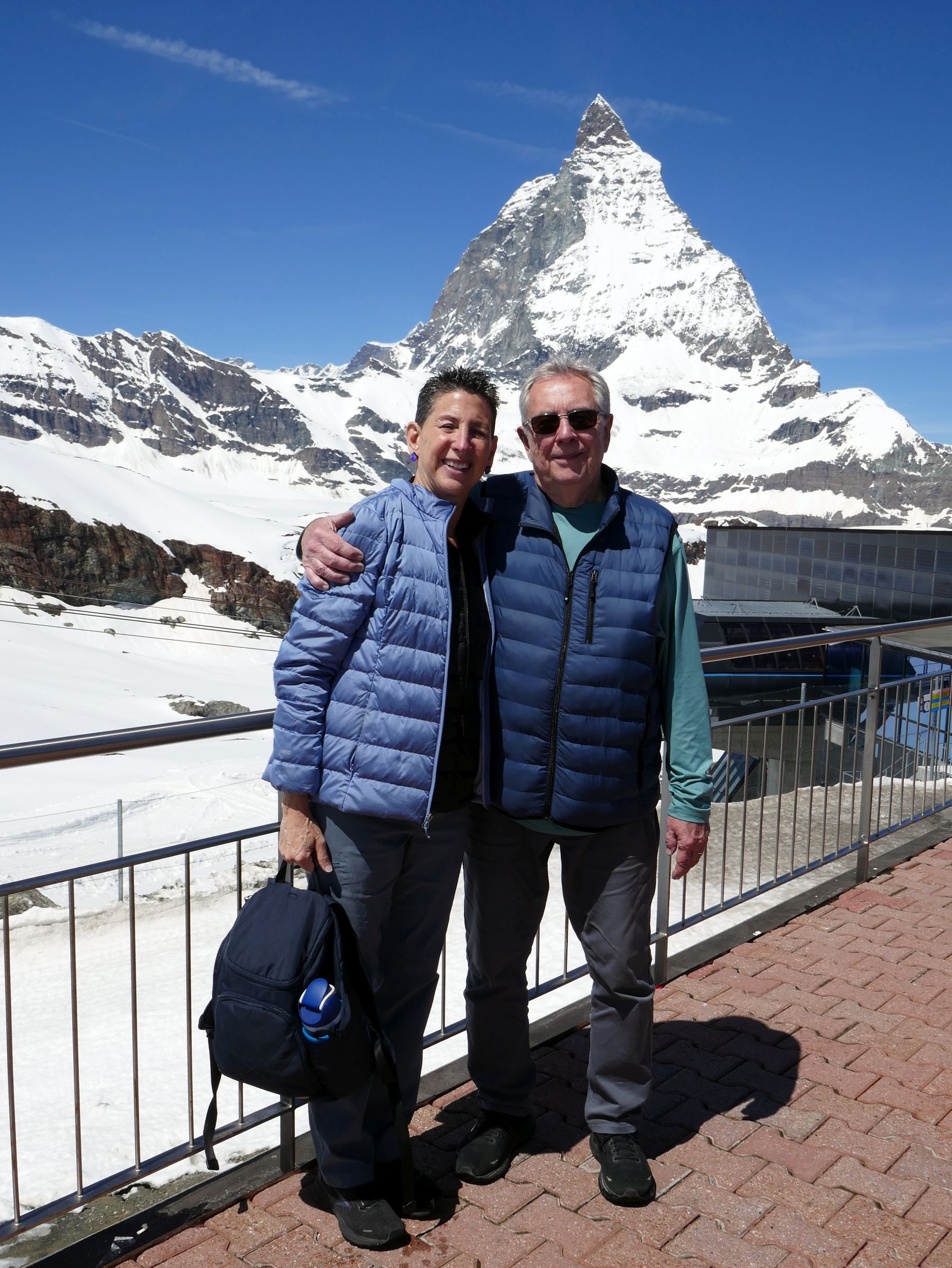
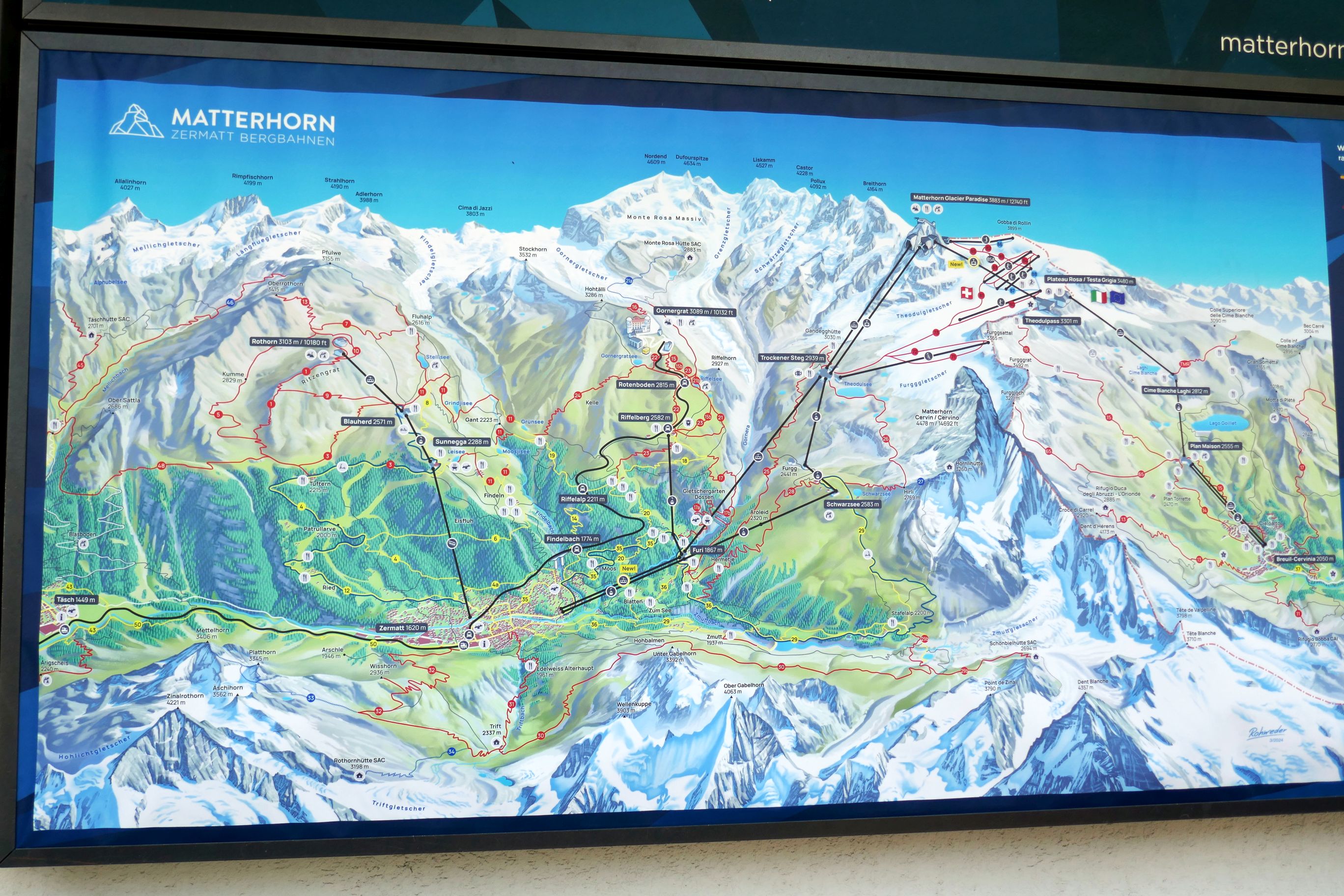
Here we were seeing the real thing, as close as we could get without getting in the snow and hiking to it. What a sight to behold! The highest point is at an elevation of 14,691 feet and we were viewing it from Trockener Steg at 9,642 ft. And, we had the entire viewing deck to ourselves for a while. Where was everybody?
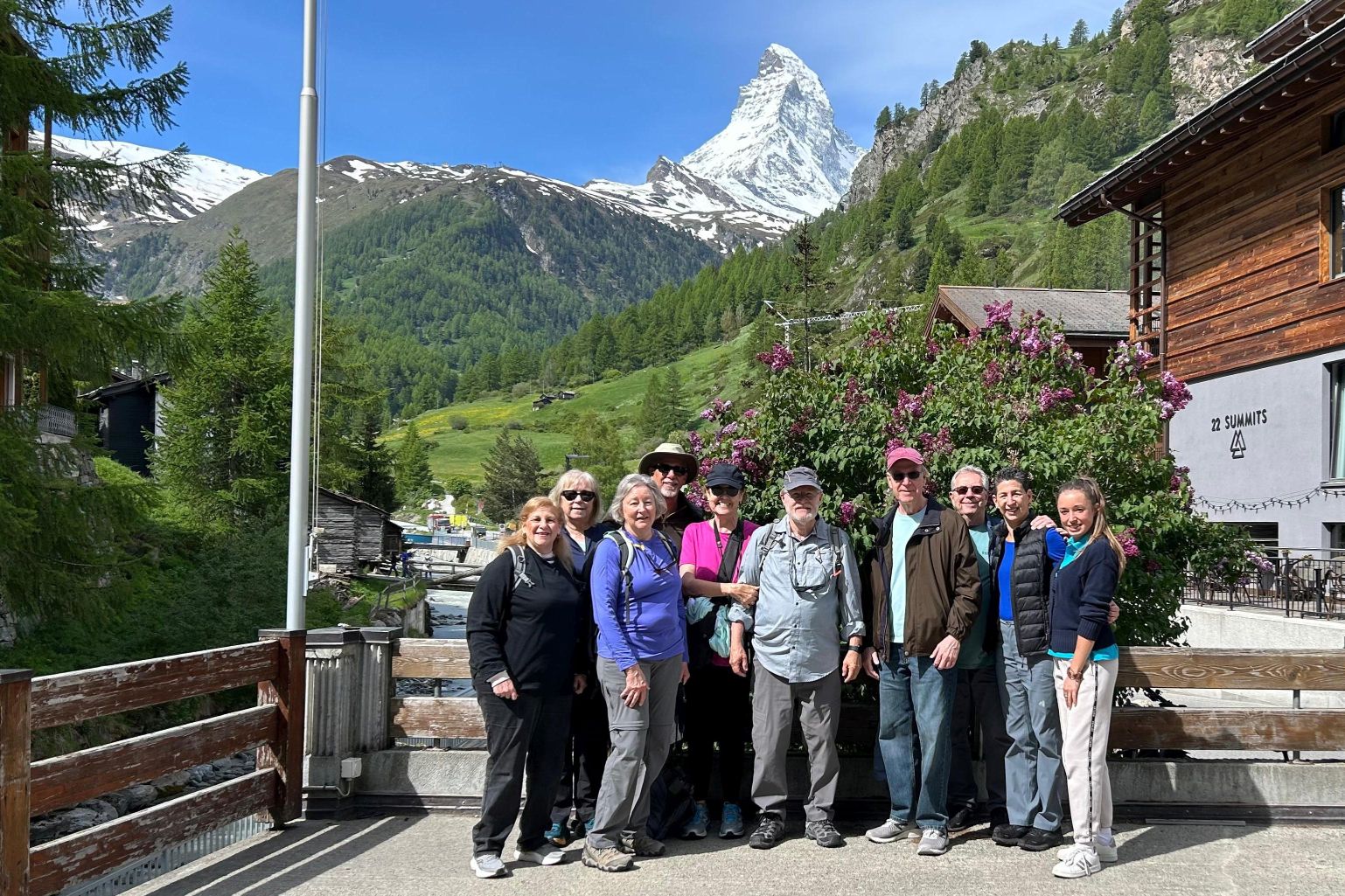
Our tour leader, Susy, sharing information about the Matterhorn to our group of nine travelers.
Not your typical souvenir! The Matterhorn was inside this bar glass.
Taking in the views from the gondola on our way back down.
On the way back down, we all got off at the Furi gondola station. The group decided to stop at the restaurant for a snack before deciding whether to ride the gondola back down to Zermatt or hike the remainder of the way. As we settled in, I gazed out the window and saw nothing but clouds. The beautiful blue sky was shrouded by those clouds I had seen roll in earlier that morning, which meant the Matterhorn was now white on white—that is, if you could see it at all. We celebrated our good fortune of having seen it during the morning before the clouds rolled in!
To save his aching knee (most likely, another meniscus tear acquired during our Patagonia trip), Bruce opted to ride the gondola back to town. I hiked the three miles back—or at least I had hoped to “hike,” but I ended up on a paved road the entire way. Still, it was a beautiful walk, and I was able to find some interesting subjects to photograph:
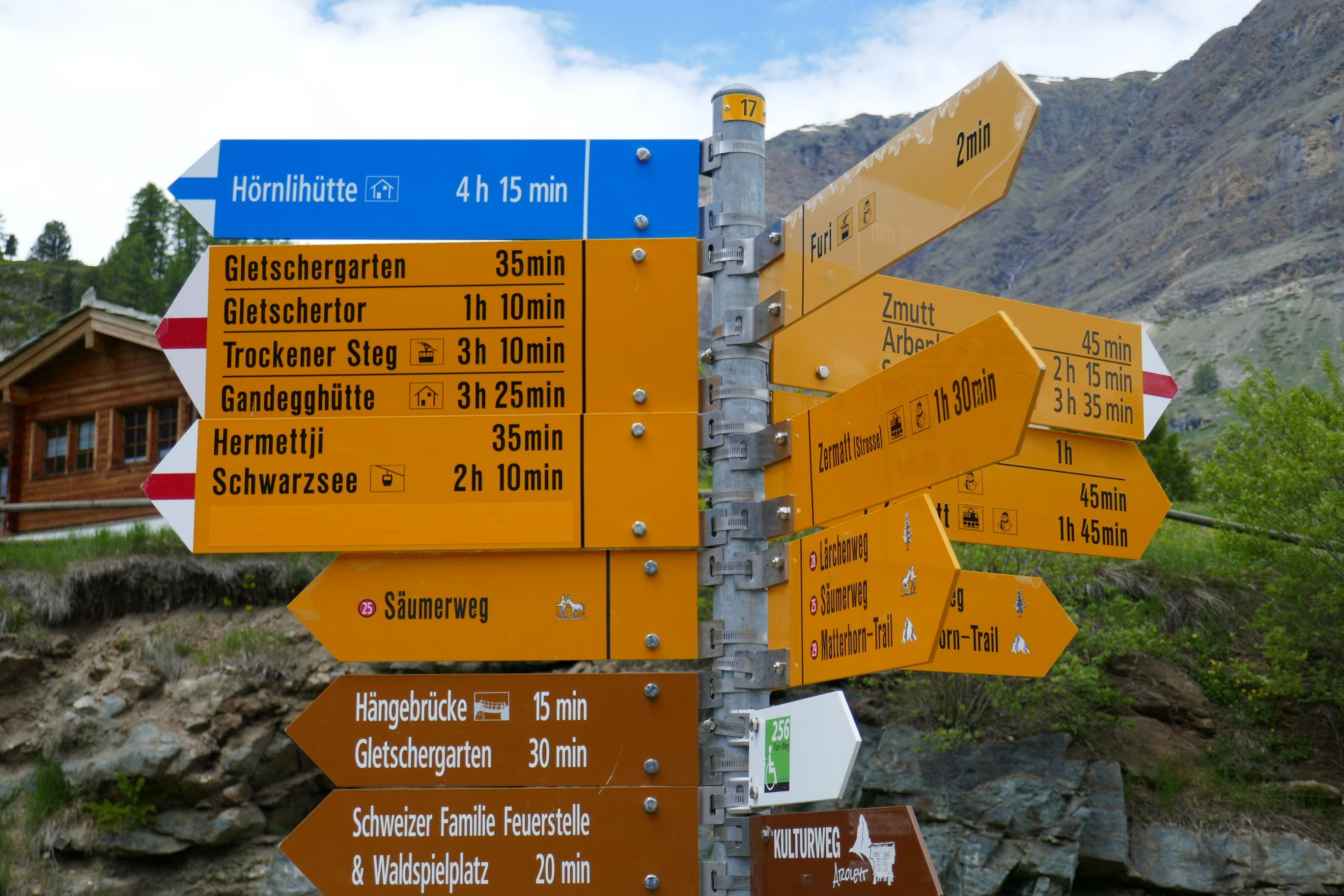
Susy said to follow the Zermatt signs back down to town, but there were three different paths. Which one would lead to where I would be meeting Bruce? It was an adventure, but I managed to get there!
Scenes along the 3-mile hike back down to Zermatt:
Those clouds I mentioned earlier? There they are! This is that white-on-white I was talking about; snow against a mucky sky. Zermatt is in the valley off in the distance, and where I was headed during my solo hike.
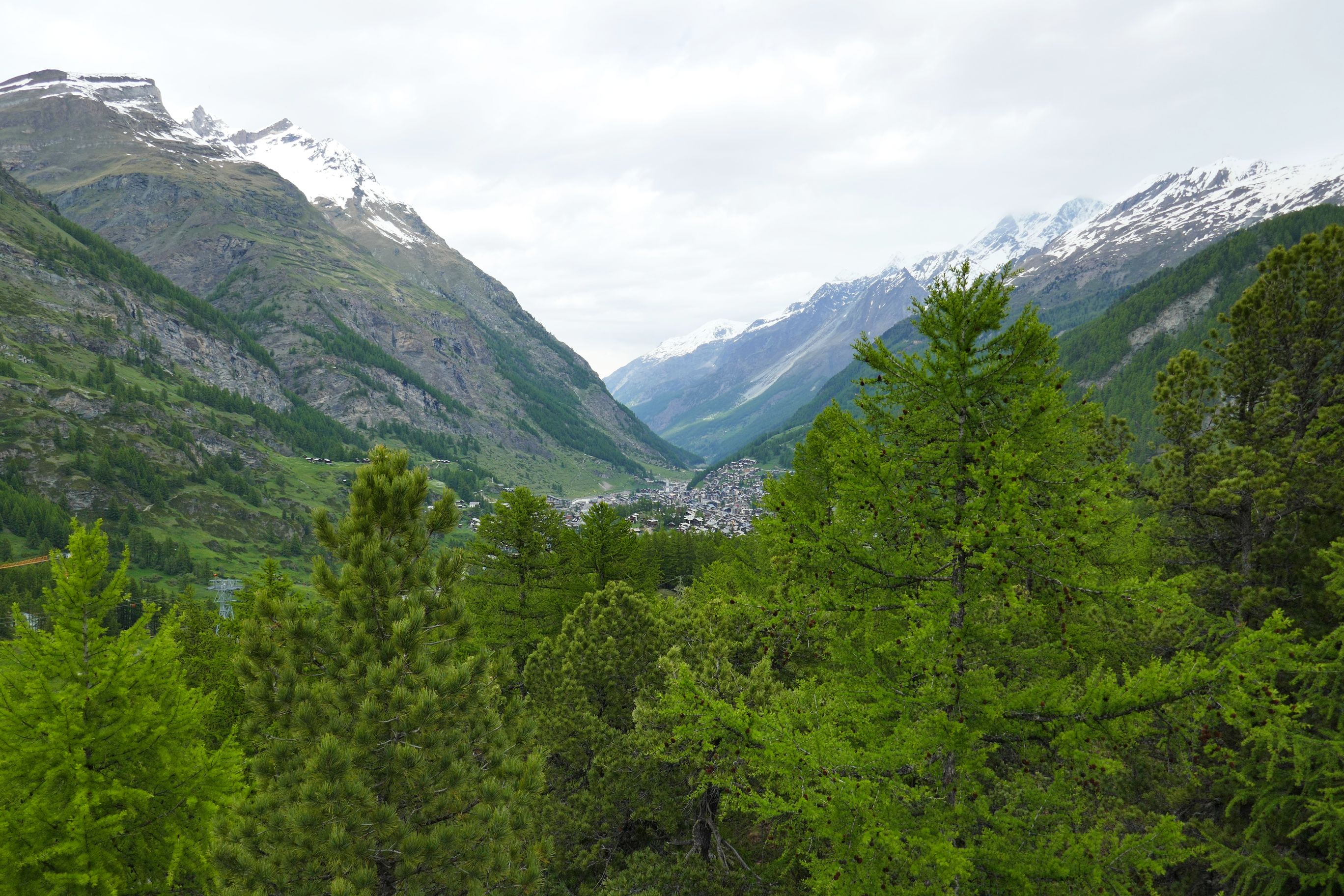
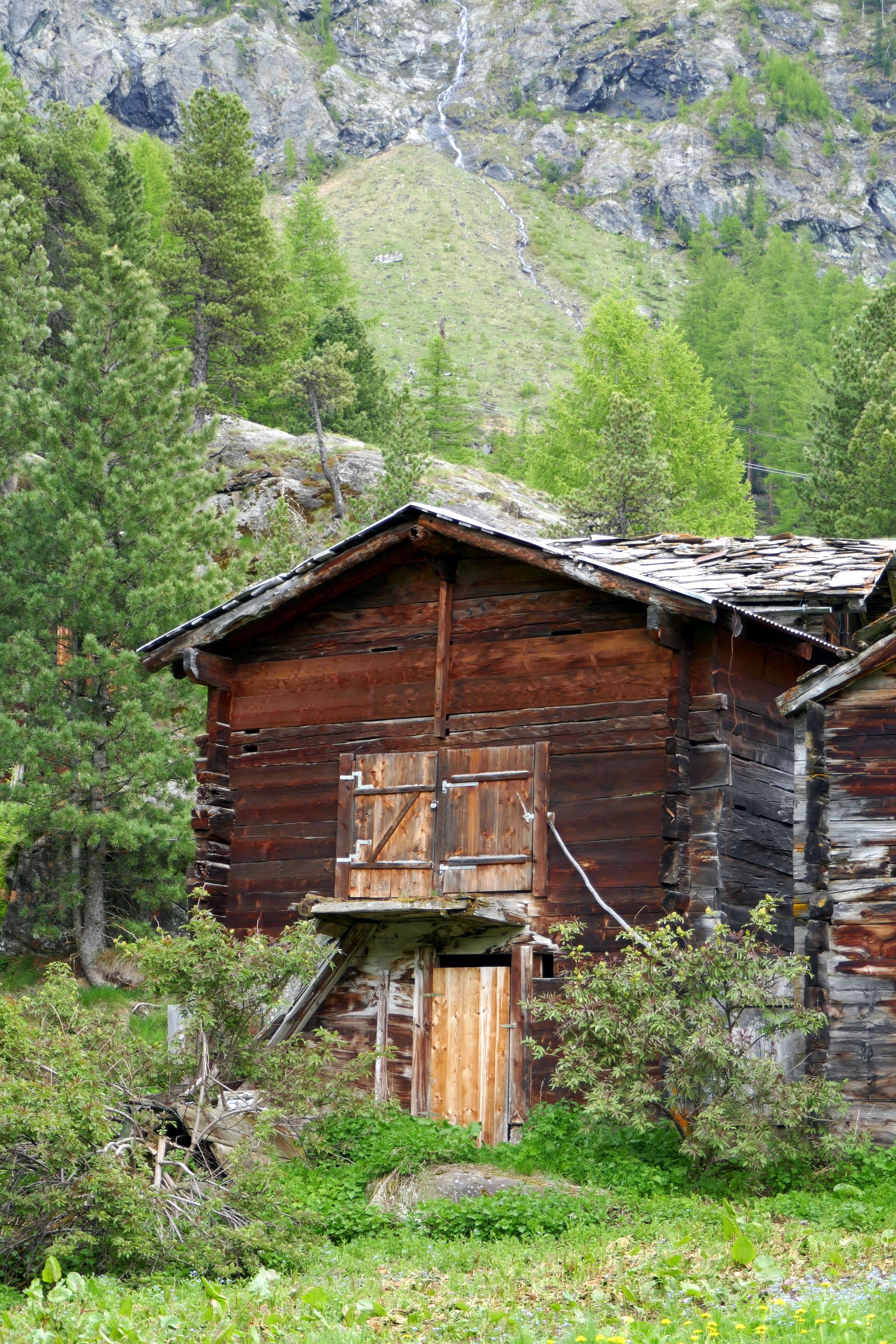
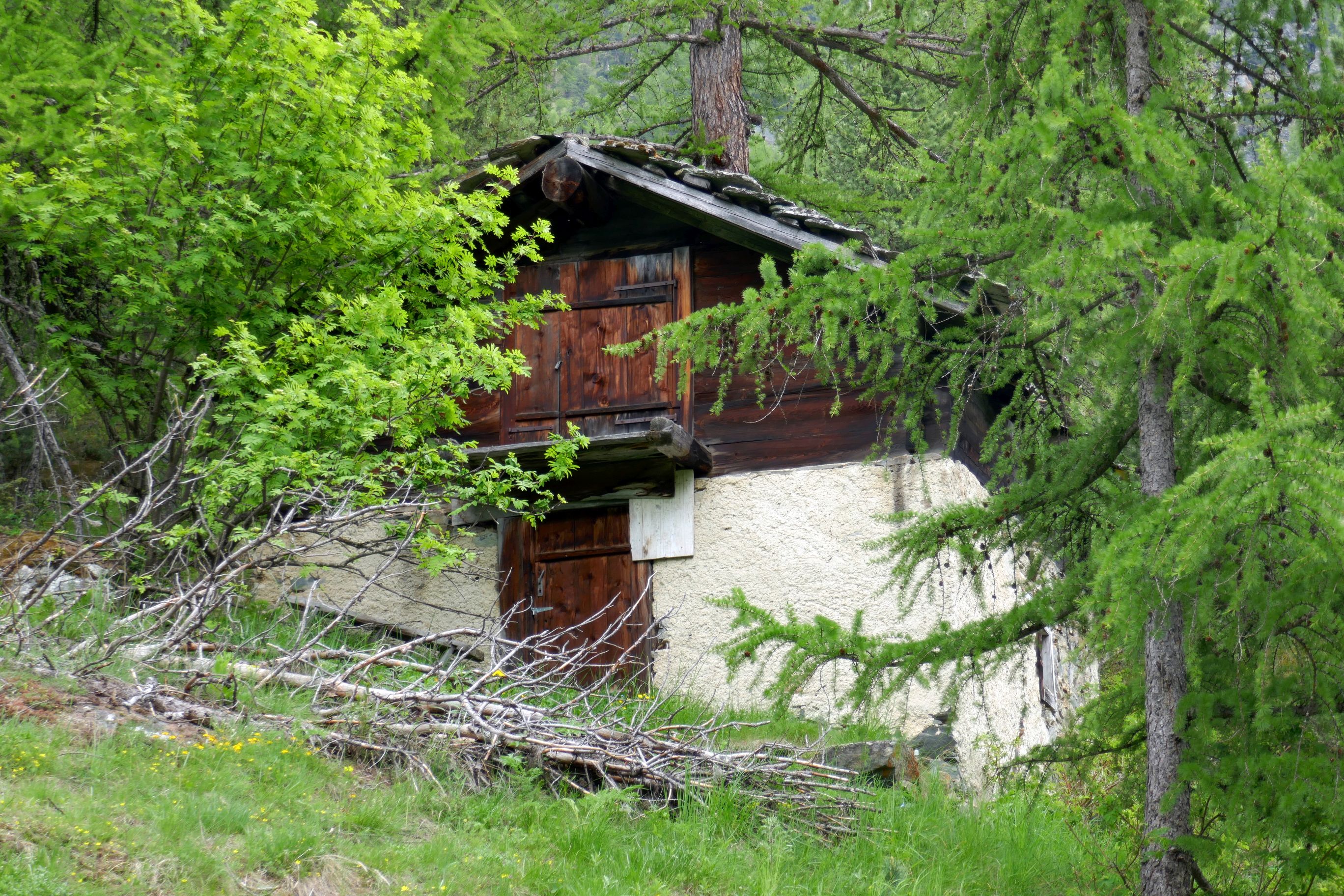
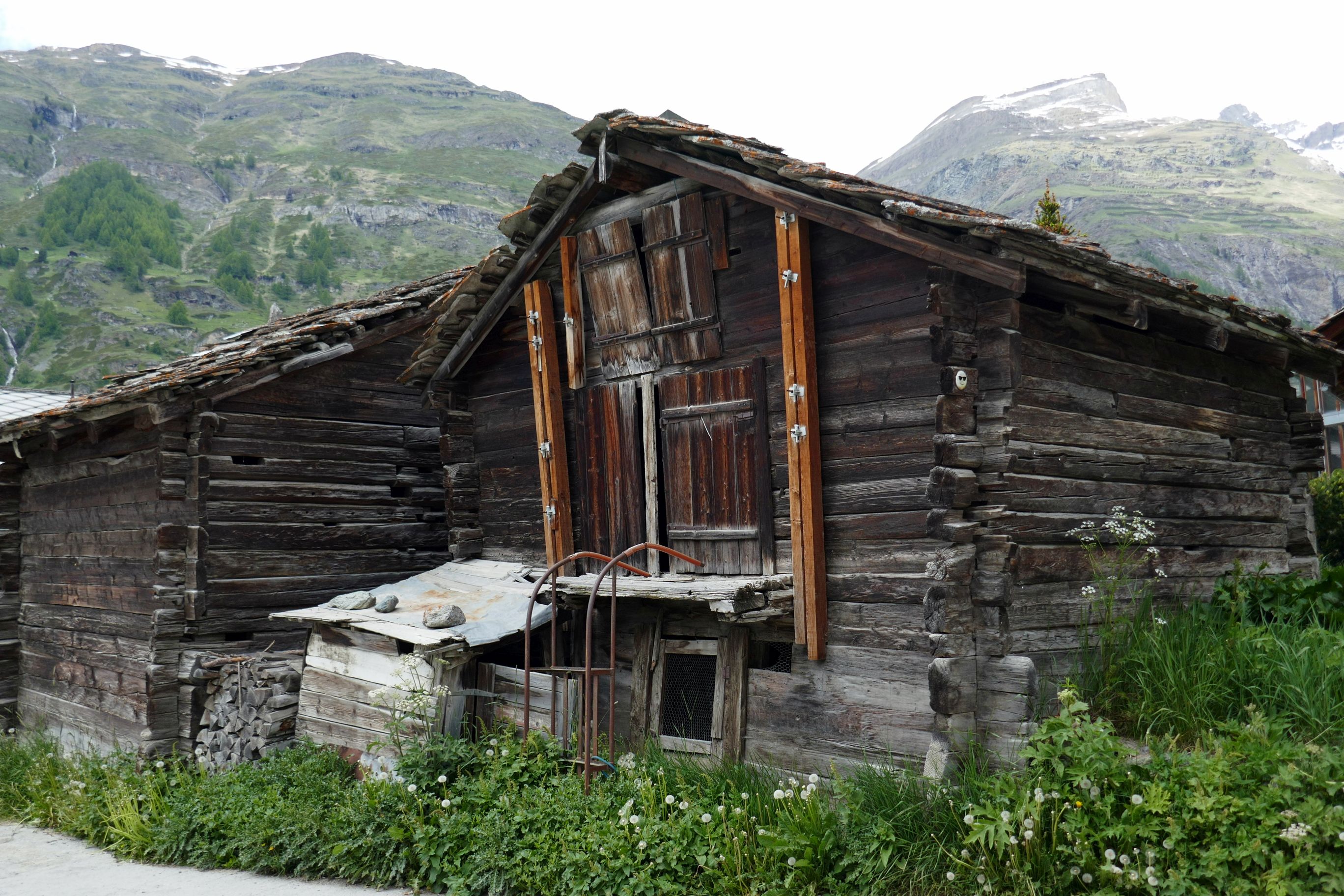
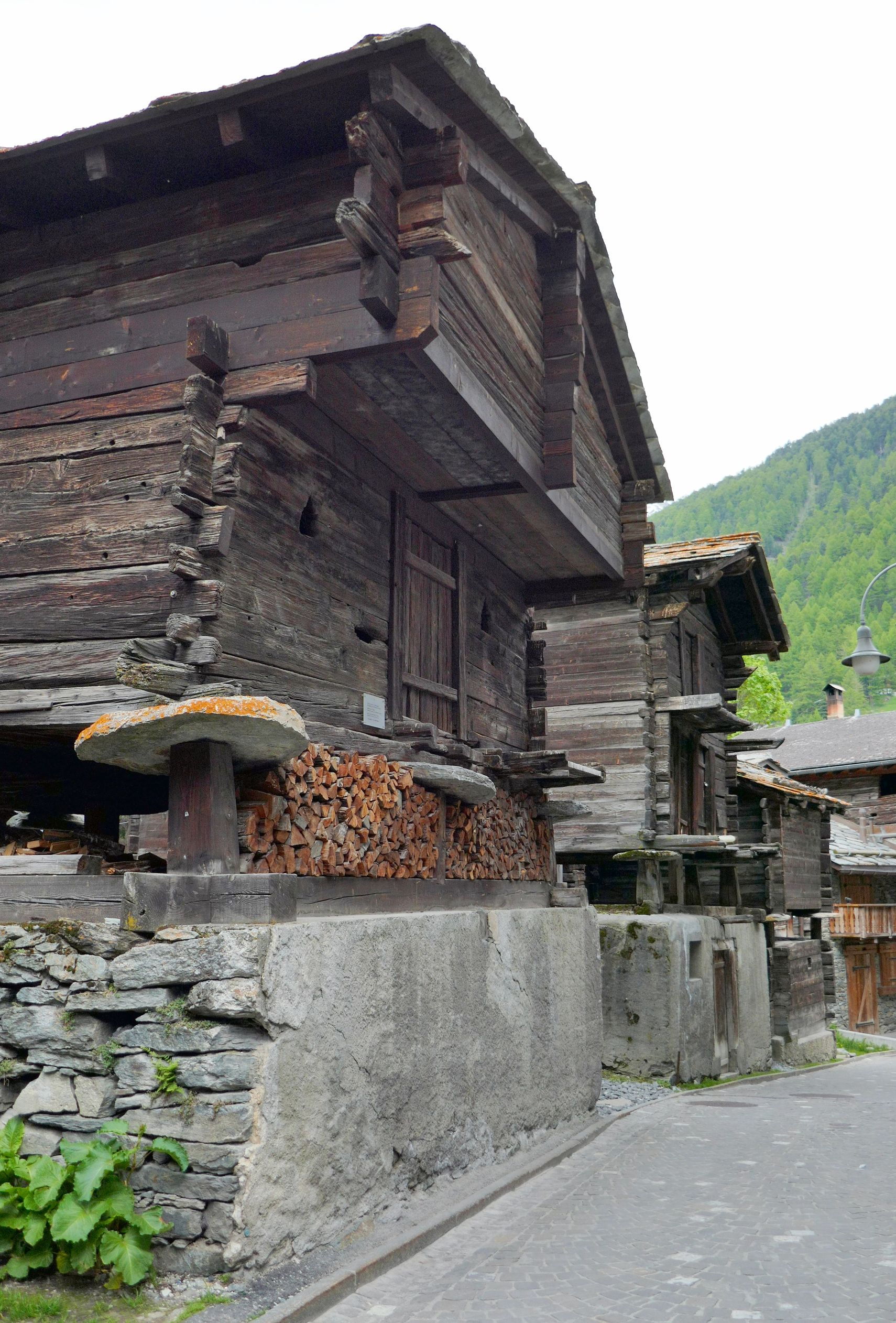
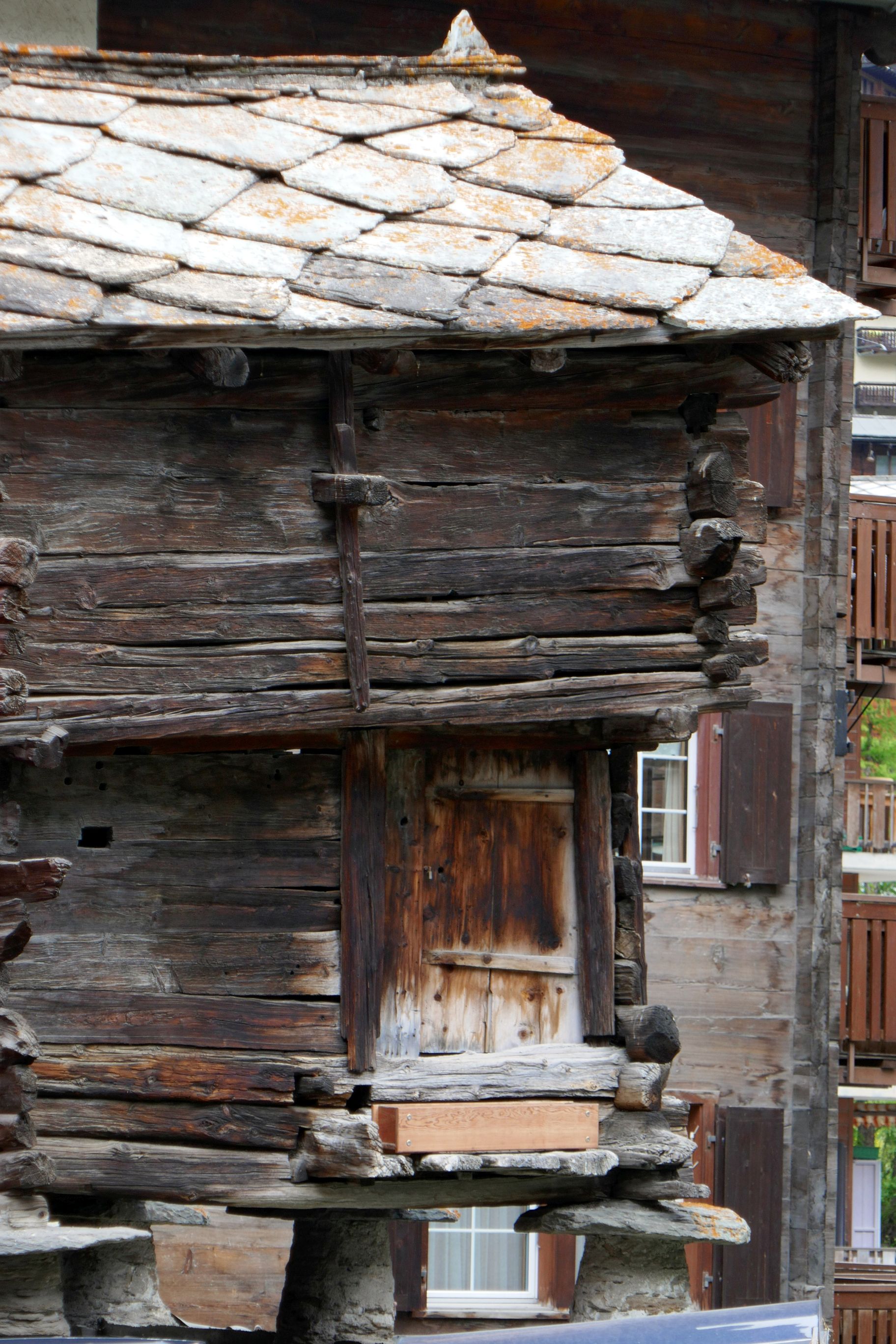
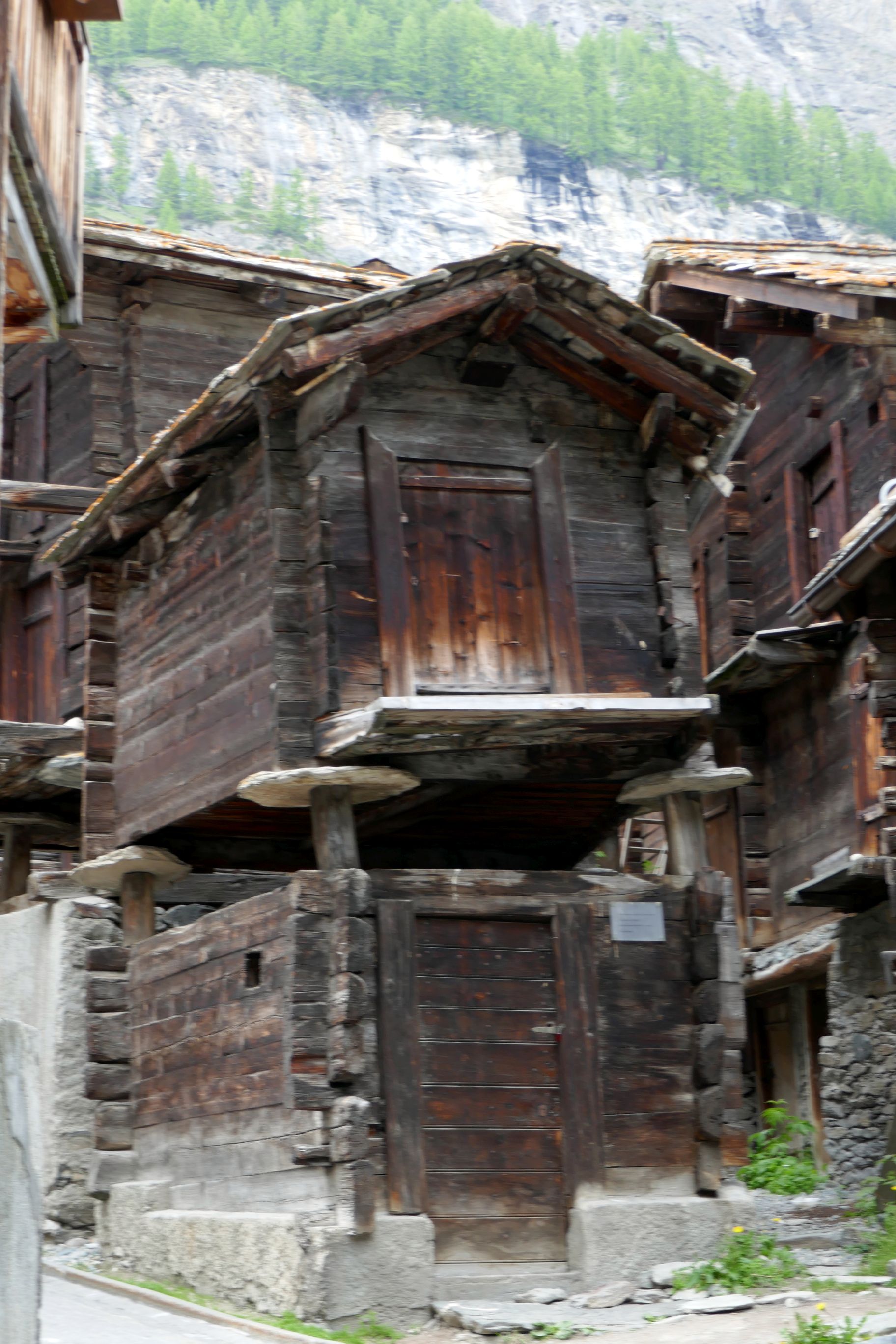
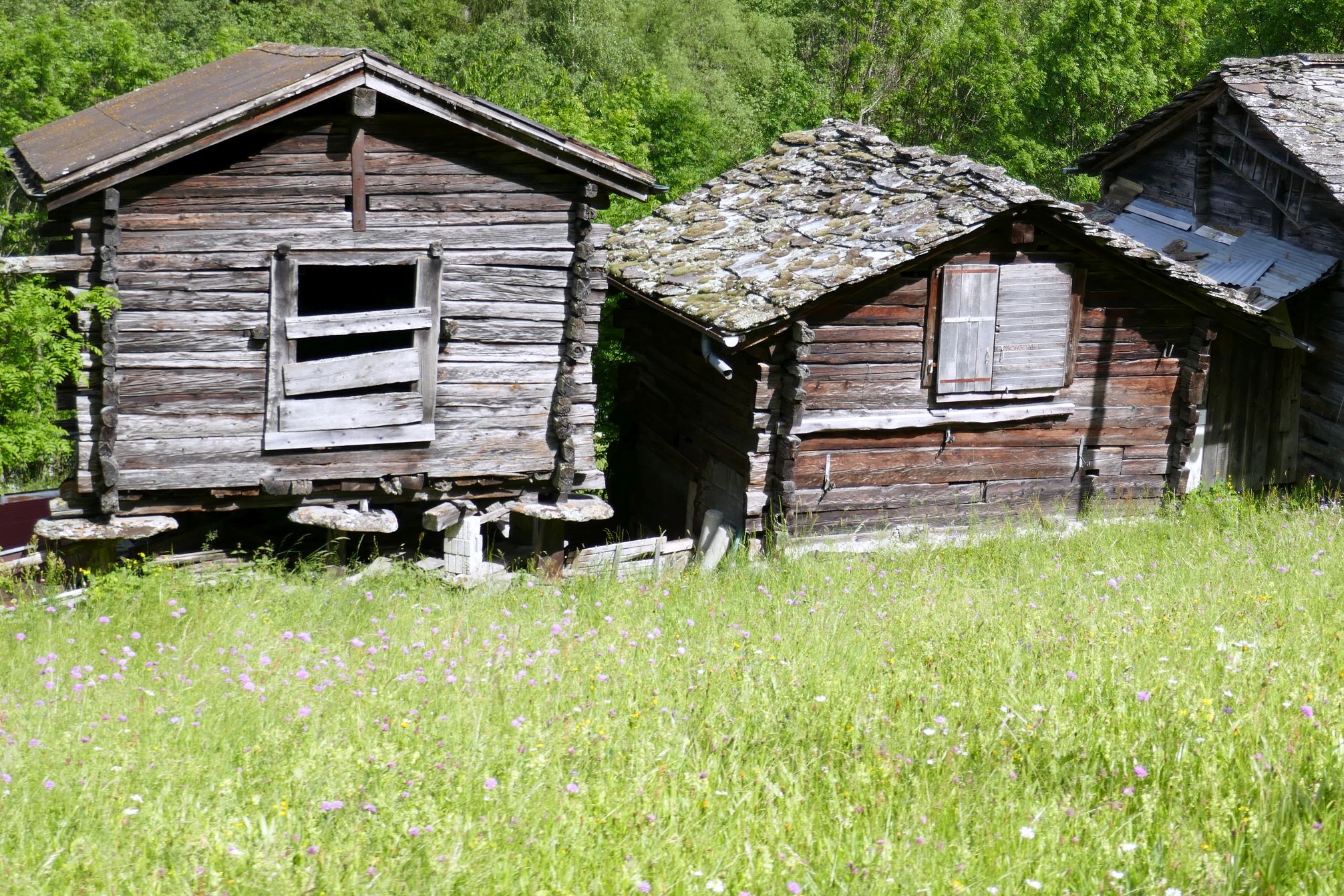
After meeting back up in town, Bruce and I visited the small historic quarter on Hinterdorfstasse. The 17th century wooden homes, barns and sheds were so interesting. Some had been renovated, others left as is.
It had been such a magical day! We were so grateful to have experienced such a wonderful week in Switzerland, especially this day.
Next up: SWITZERLAND & NORTHERN ITALY #8: ONWARD HO TO ITALY WE GO!
When we went to bed the previous night, we had hoped to wake up to a sunny day and blue sky. Snow-capped mountains look so flat against a mucky background, and we were hoping to see and photograph the Matterhorn at its best. Bruce and I were not disappointed. Just look at the view out our window!
(For all photos, click on the image for a full screen view.)
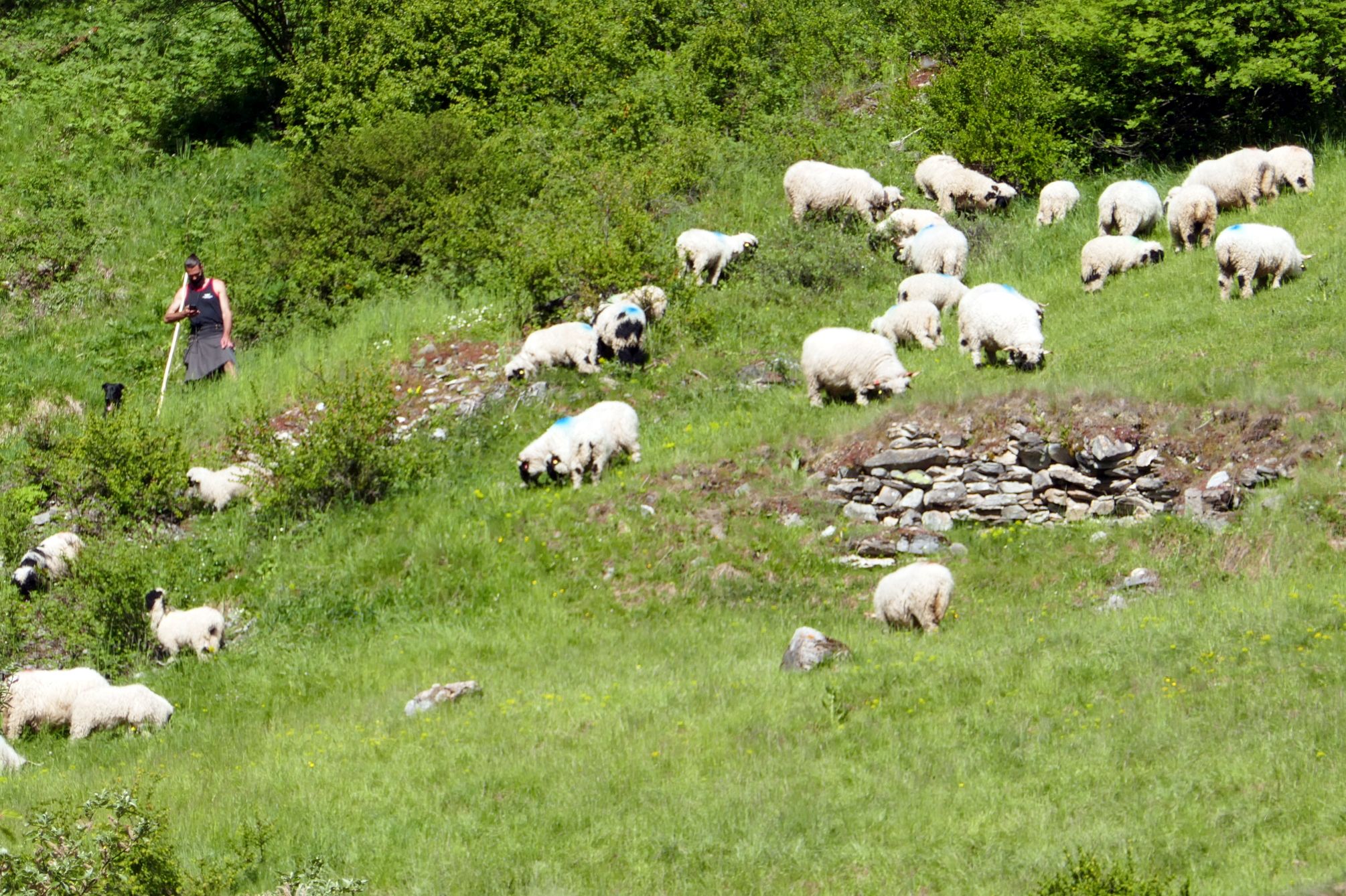
I could hear cowbells off to the right. I was quite surprised to find this kilt-clad shepperd checking out his cell phone.
Before heading to the Matterhorn, however, Susy led us on a walking tour of the town. As more clouds gathered in the distance, all we could think of (and mutter to each other) was, “Let’s get on with this tour and get up to the Matterhorn before we lose our awesome weather and views!” Zermatt could wait until after the Matterhorn! No disrespect to the town, though.
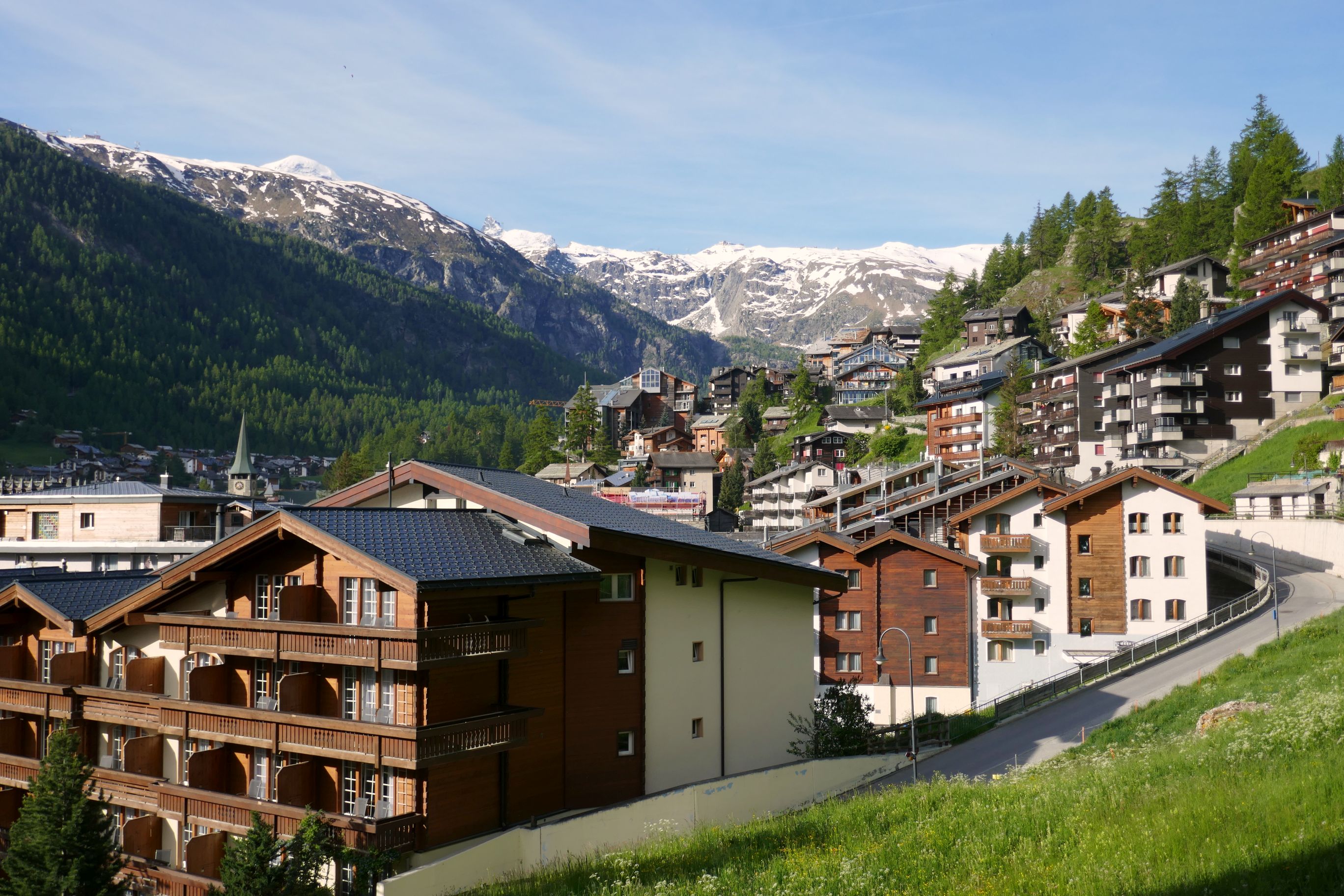
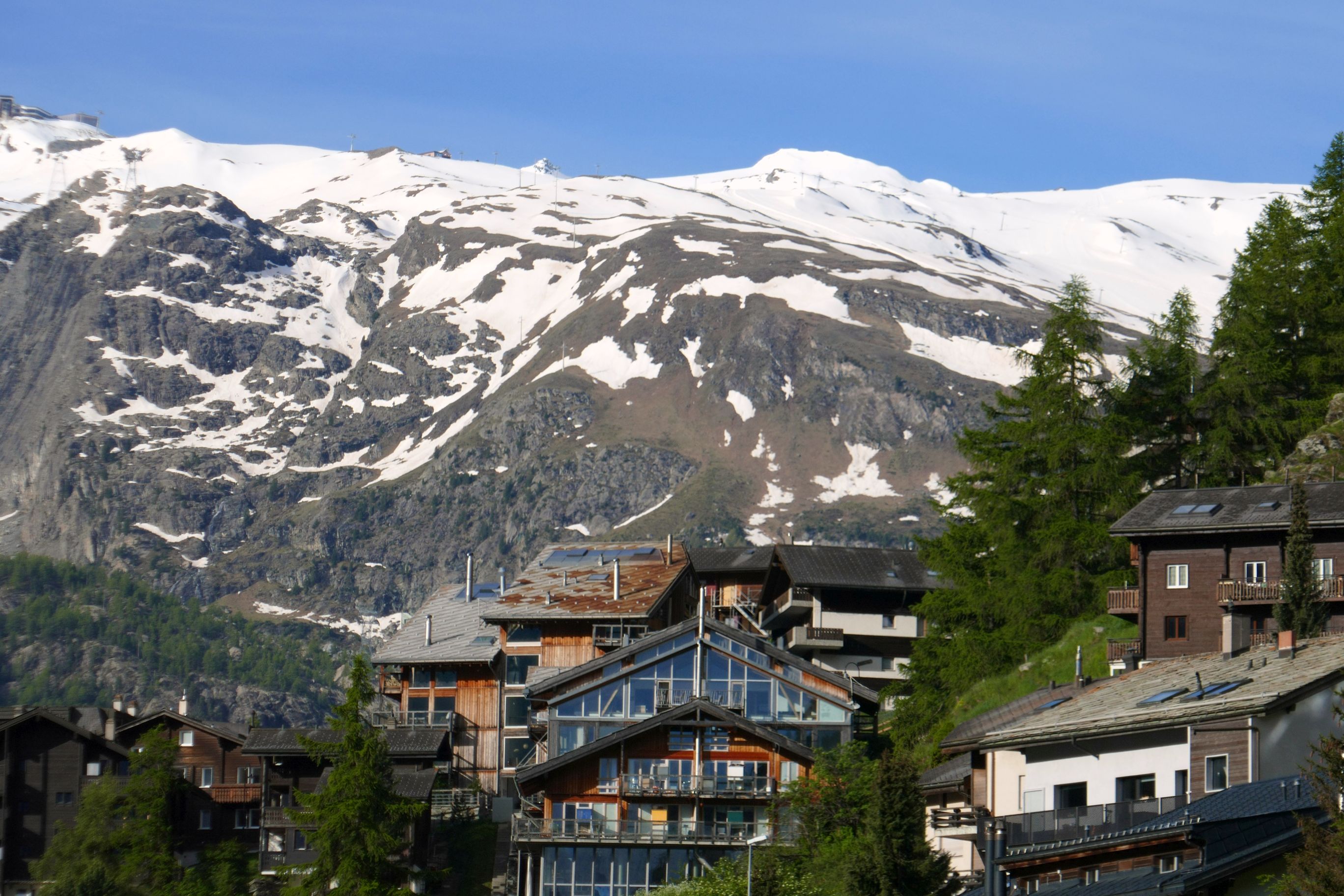
Zermatt, in one word, is AWESOME! Sure, it’s a tourist town, but for good reason. In the winter, it’s a premier ski and winter sport resort, and the rest of the year, Zermatt is great for hiking and so much more, including skiing! The area is Europe’s largest and highest lying summer skiing region, and the training site for numerous national ski teams.
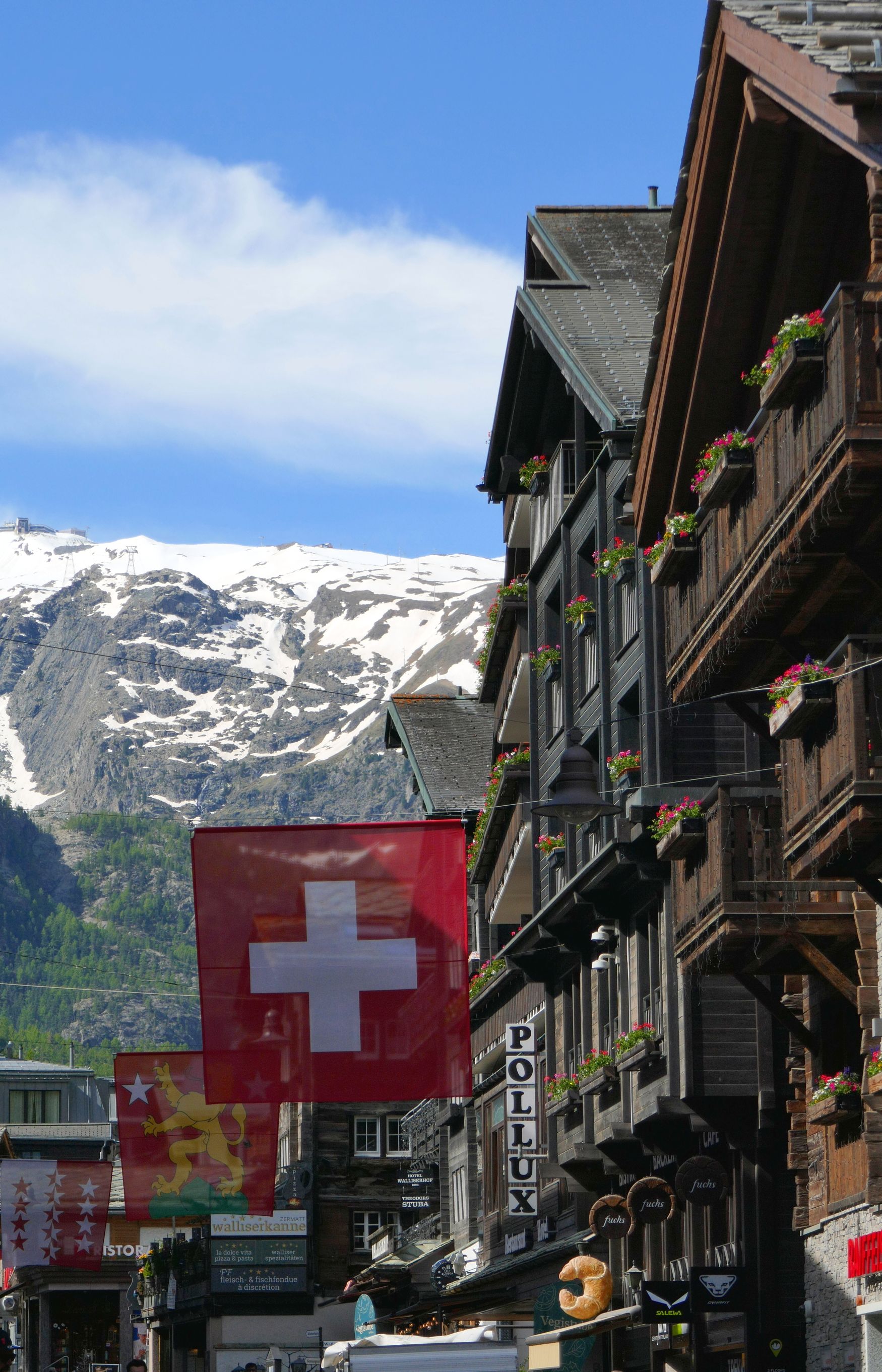
Full of Swiss charm, Zermatt is very photogenic. I can remember admiring Zermatt and the Matterhorn in picture calendars my dad used to bring home from his medical office. Pharmaceutical reps gave them out at the end of the year, so they could remind doctors of their drugs they “should” prescribe to their patients throughout the following year. But how many calendars does one medical office need? Lucky for me, Dad kept the notepads and pens at the office and brought home the calendars for us kids to enjoy. I blame those calendars, in part, for inspiring my insatiable desire to travel. I blame my dad’s slide show screenings following his international adventures with my mom, too. And, I “blame” with total gratitude…
An interesting feature of Zermatt is that gas and diesel vehicles are prohibited, which is great for the environment. The only vehicles allowed in Zermatt are electric— music to my ears! (We realized just how much we had appreciated the quiet once we arrived in Italy and were surrounded by loud motorcycles!)
During our walking tour, we saw a few locals walking their dogs, and we also saw a guy walking his bull. BULL??? After doing a double-take and catching this shot after he passed, I had to wonder what would have happened if his bull got angry. I didn’t want to stick around to find out.
As the path through town gradually ascended, our anticipation of seeing more of the Matterhorn grew. This was our first unobstructed view:
Our walking tour ended where the magic was about to begin—at the station where we would board a gondola to the Matterhorn viewing platform. Surprisingly, we had beaten the crowds and had no problem getting on the next gondola. When we arrived at the top, there were times we had the entire viewing area of the upper deck all to ourselves!
Free Kleenex was offered before boarding the gondola. That’s a first!
We were headed up the line on the left with the first stop at Sunnegga, followed by another ride up to Blauherd.
Coming up next: SWITZERLAND & ITALY #7: ZERMATT & THE MAGINFICENT MATTERHORN (Part 2)
Although our end destination for the day was Zermatt via the Glacier Express train, our travels along the way were spectacular. The day was beautiful—perfect timing as this was one of the highlight days of the trip.
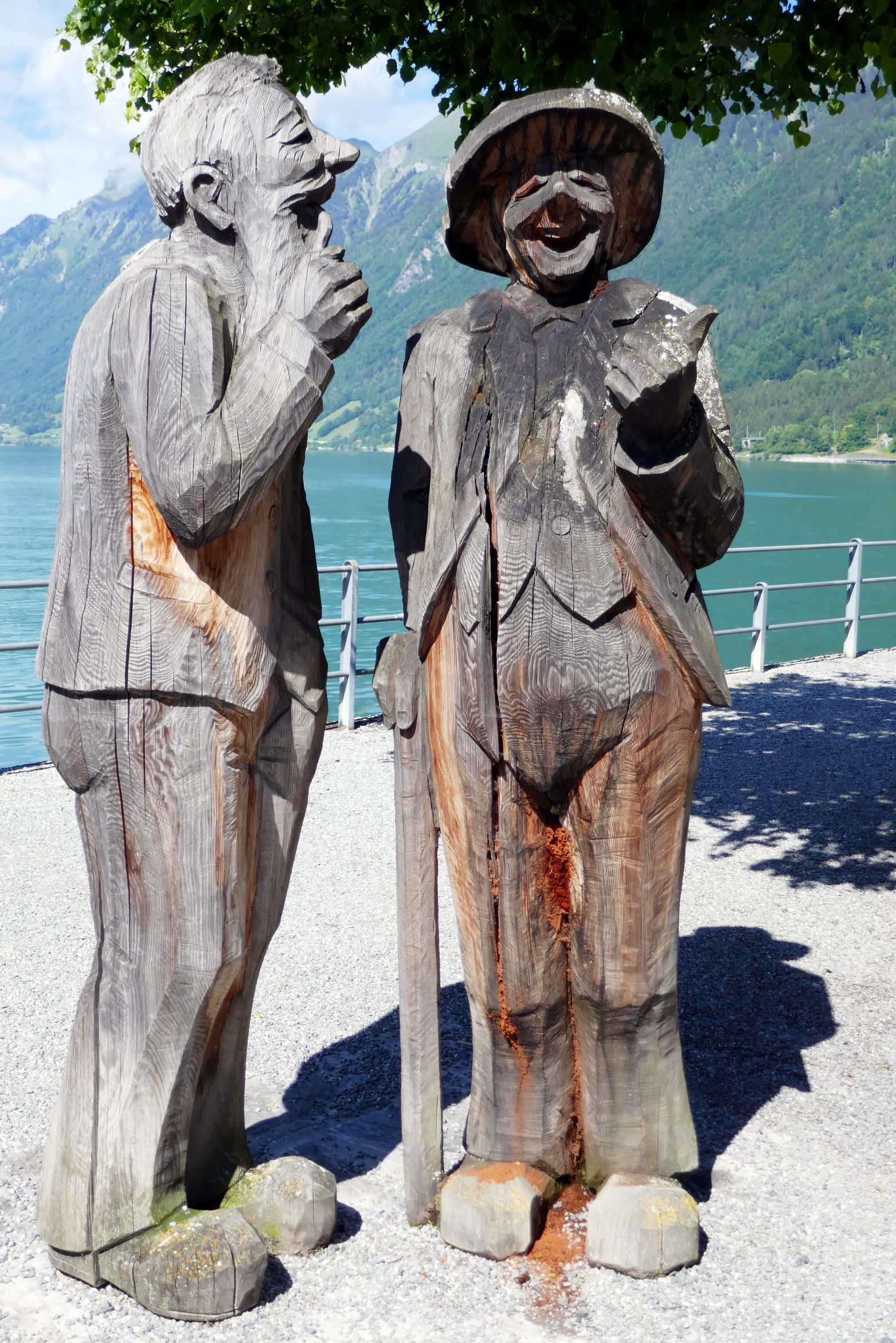
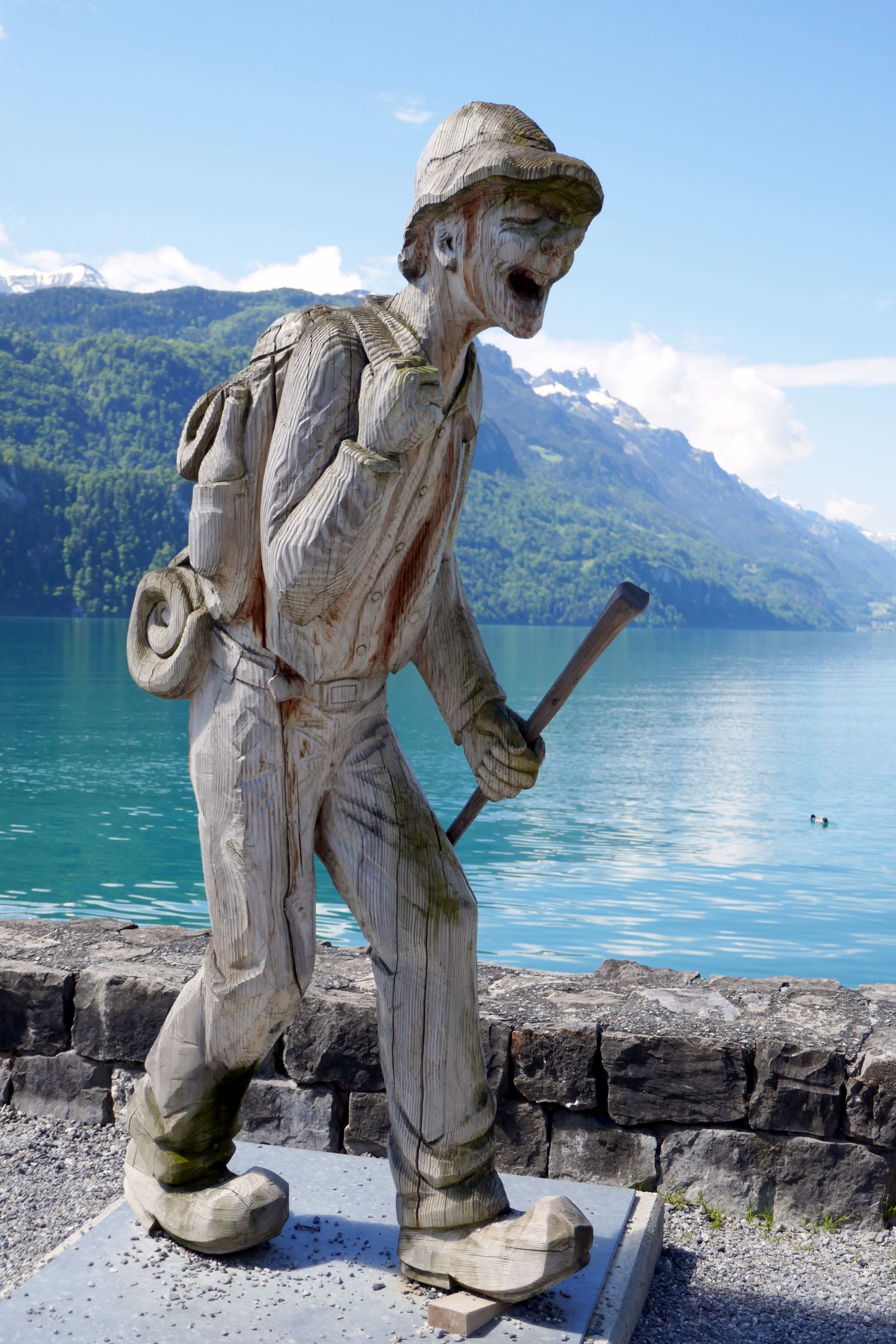
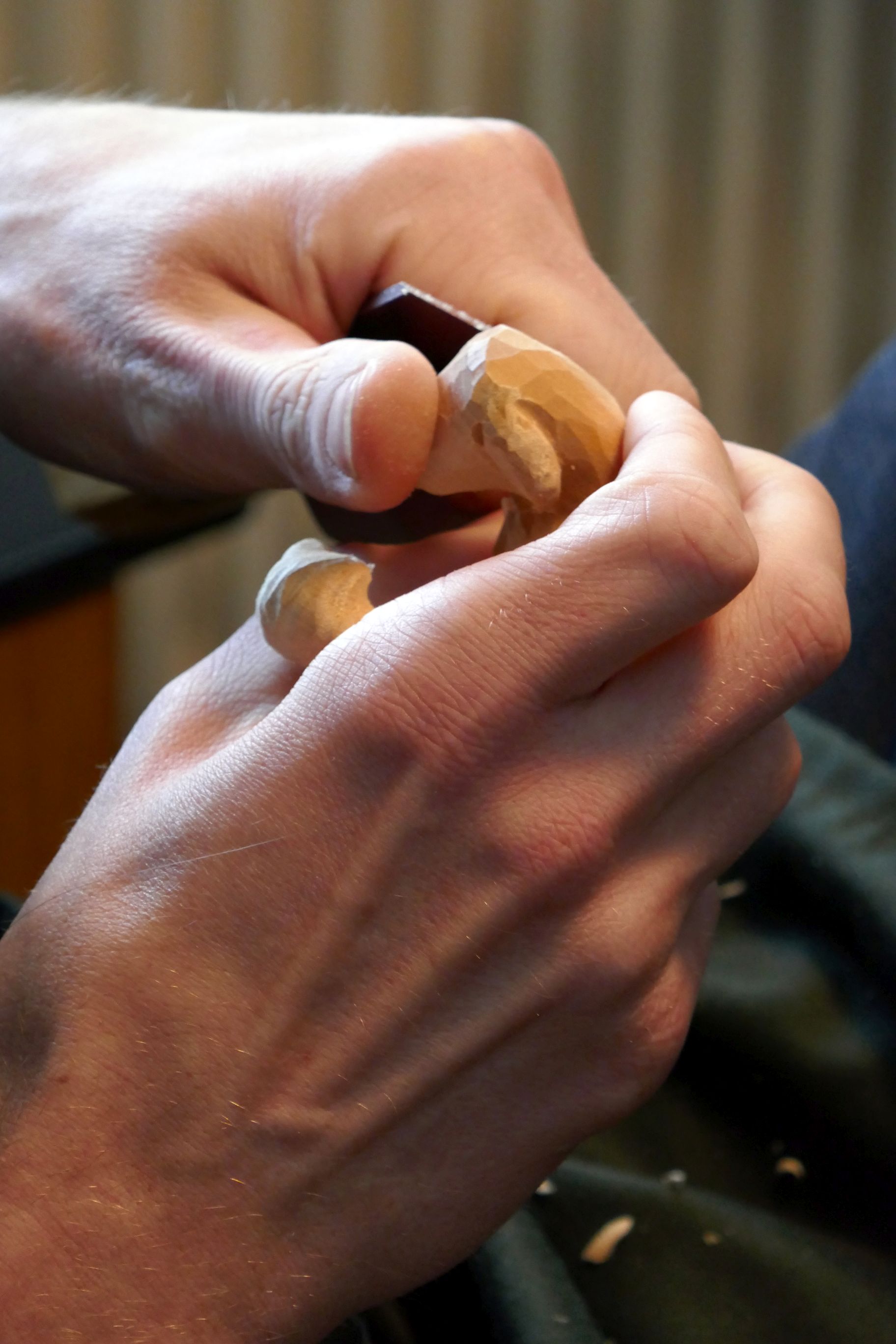
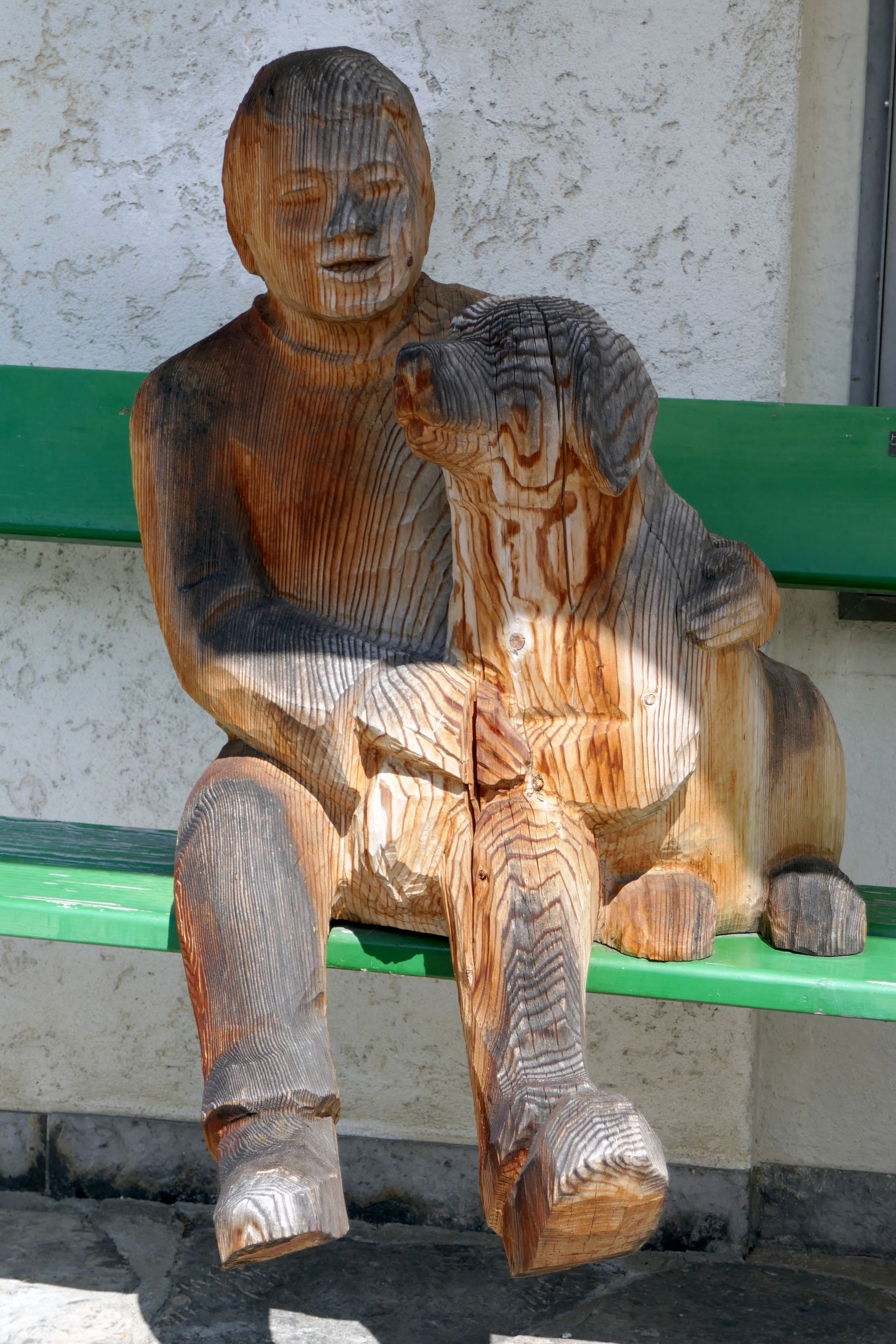
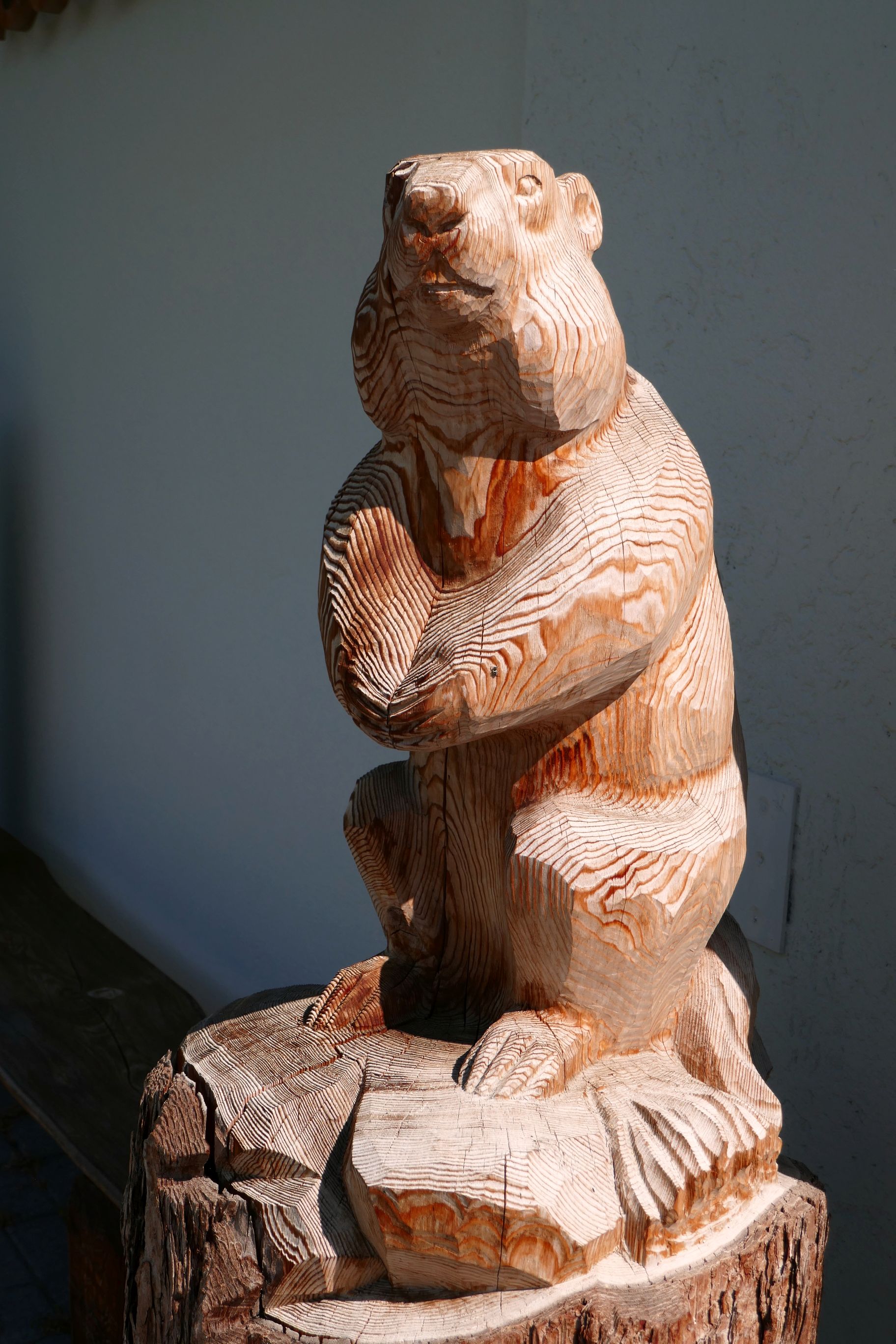
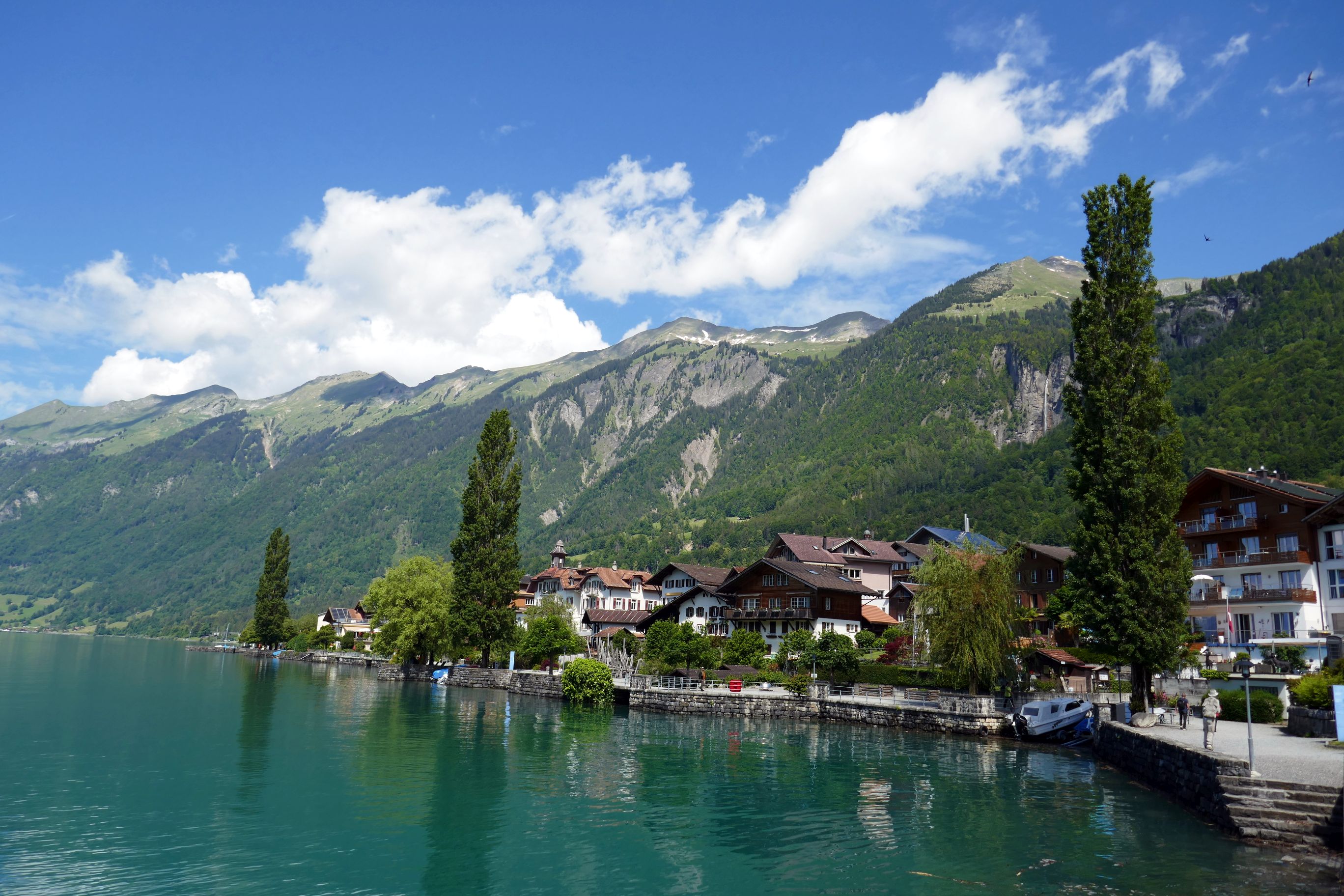
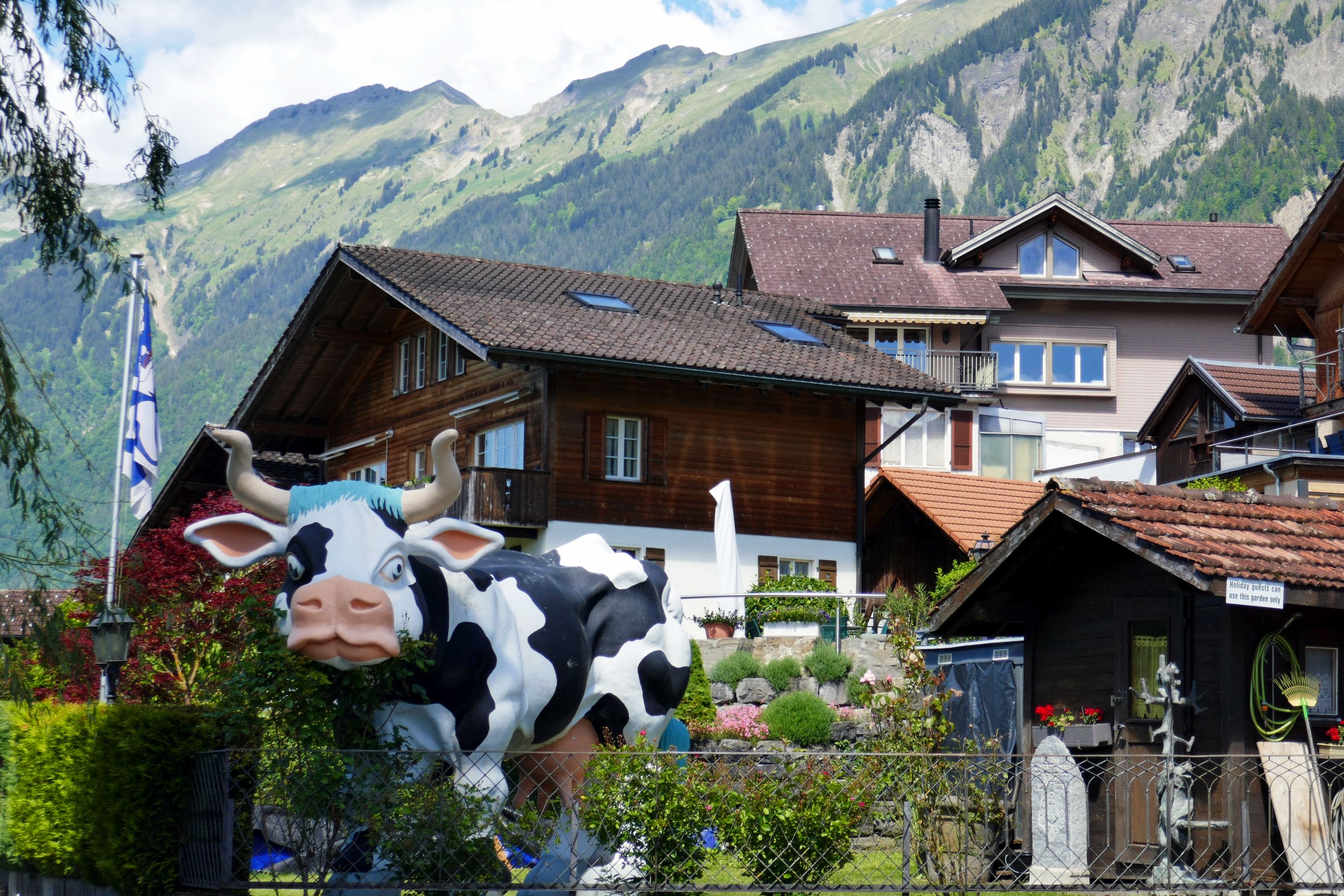
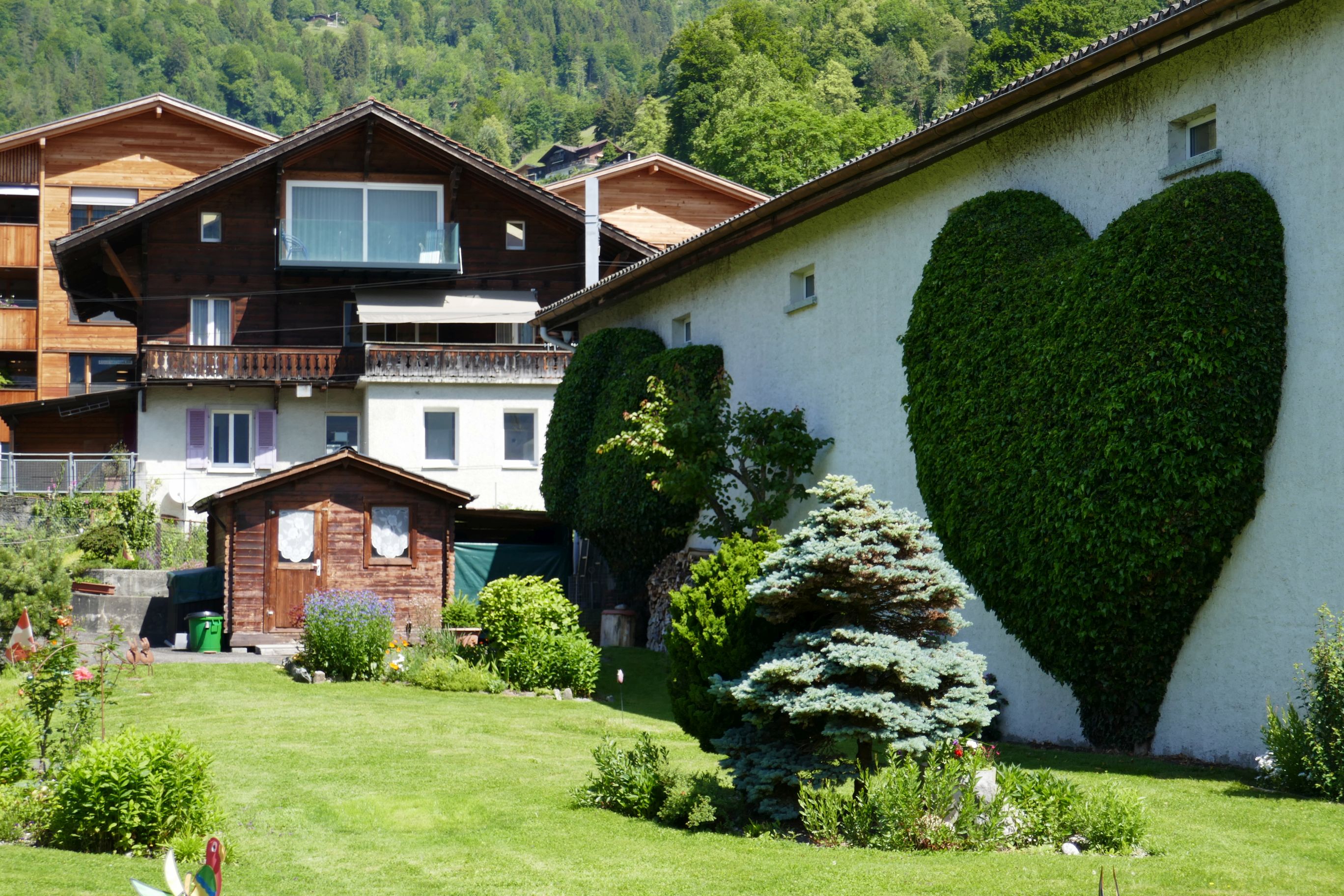
Our first stop was the charming and picturesque alpine village of Brienz where we strolled along the lakefront. The village is known for its talented wood carvers, and everywhere we looked, there were charming carvings that we enjoyed along the way. We also visited a shop to see wood carvers working on their creations.
(For all photos, click on the image for a full screen view.)
This village felt like being in a post card or photo calendar that had come to life—a feeling I had felt repeatedly throughout Switzerland. My photos don’t do Brienz justice, but these are the scenes I shot during a short visit to this tiny village:
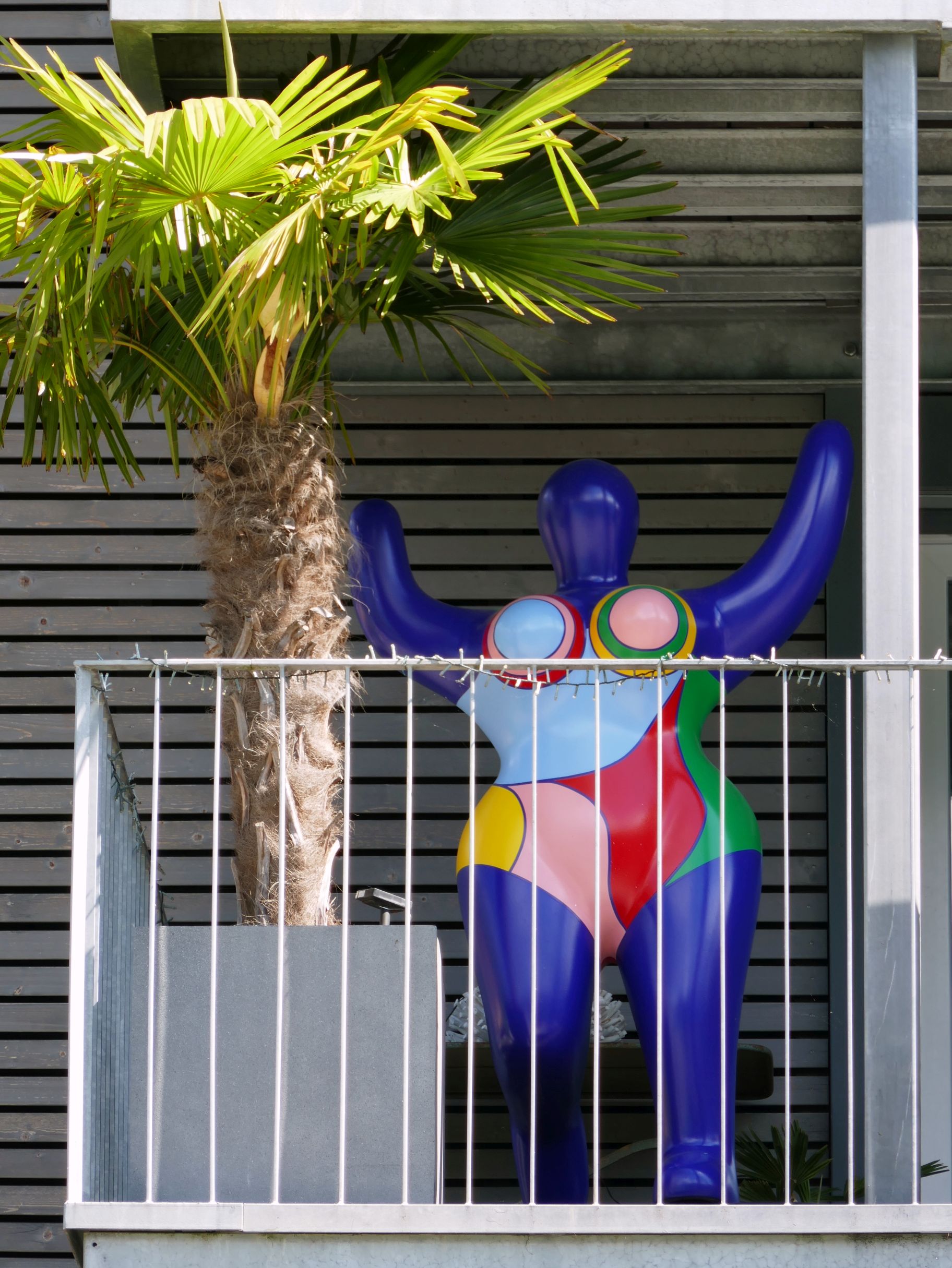
I never thought I would see palm trees in an alpine village, especially after I turned my back to the mountain view below.
Behind this sign was a set of lounge chairs. There was another set further down the lakeside path. Nice!
Circling Lake Brienz on our way to our next destination.
What our group of nine was about to experience next was something none of us could say we had done before: Ride on a car train IN our minibus! This was required to get through the nine-mile tunnel that would lead us to the train station to board the Glacier Express. While waiting our turn, there was enough time to run off to capture a few shots of the beautiful snow-capped mountains surrounding us.
A popular spot for paragliding, I was also able to capture this paraglider getting a birds-eye view on a spectacular day.
After being ushered onto the train, there were a few minutes to hop out and catch a shot before we left for our dark journey.
A view from the bus windshield.
Headlights spared us from nine miles of darkness.
Our lunch stop in Brig before boarding the train was fabulous! Dining al fresco on a delicious meal of local cuisine.
All aboard the Glacier Express! Known as the world’s slowest express train, the shiny and spotless red locomotive took us through tunnels and across bridges, from one gorgeous panorama view to another.
I bolted from my seat as soon as I realized viewing the scenery and shooting photos through the windows just wasn’t going to cut it. After a few attempts shooting through small open windows at the end of the car, I made my way back to the bar where I joined a German tourist who had the same idea. We had the entire area to ourselves, the windows were huge, and they opened from the top down—perfect for photography. As the two of us chatted, we wandered back and forth from the left side to the right, shooting whatever caught our interest on each side. We had a blast! Photographers take note: If you ever ride the Glacier Express, abandon your seat and make your way to the bar car!
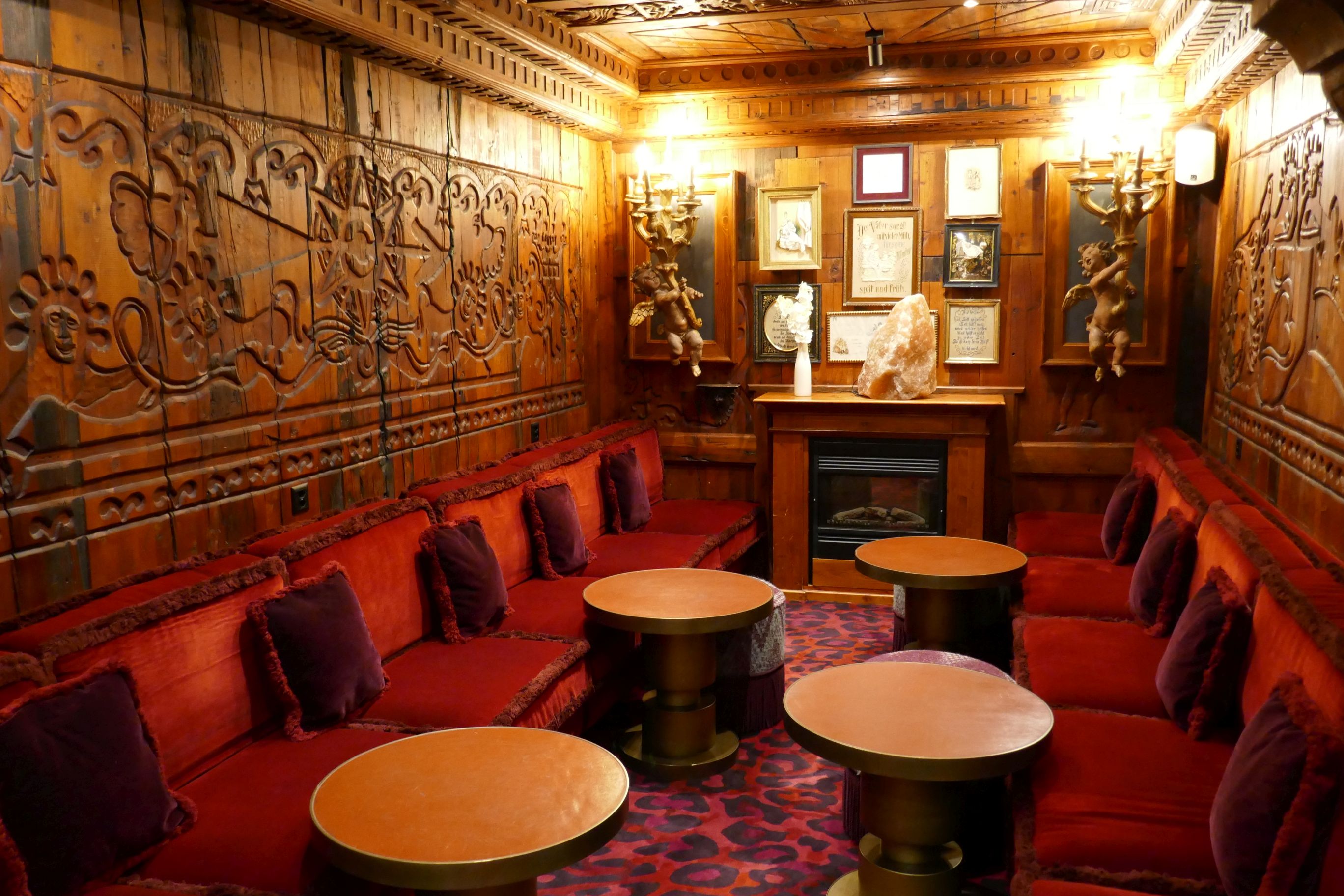
Our arrival to Zermatt brought smiles and feelings of excitement as we were about to see the highlight of Swiss beauty: the Matterhorn and the charming village that serves as its gateway. The mountain would have to wait until the following day, but checking into Hotel Alex, just a short walk away from the train station, was an amazing sight itself. None of us expected what we were about to see and experience.
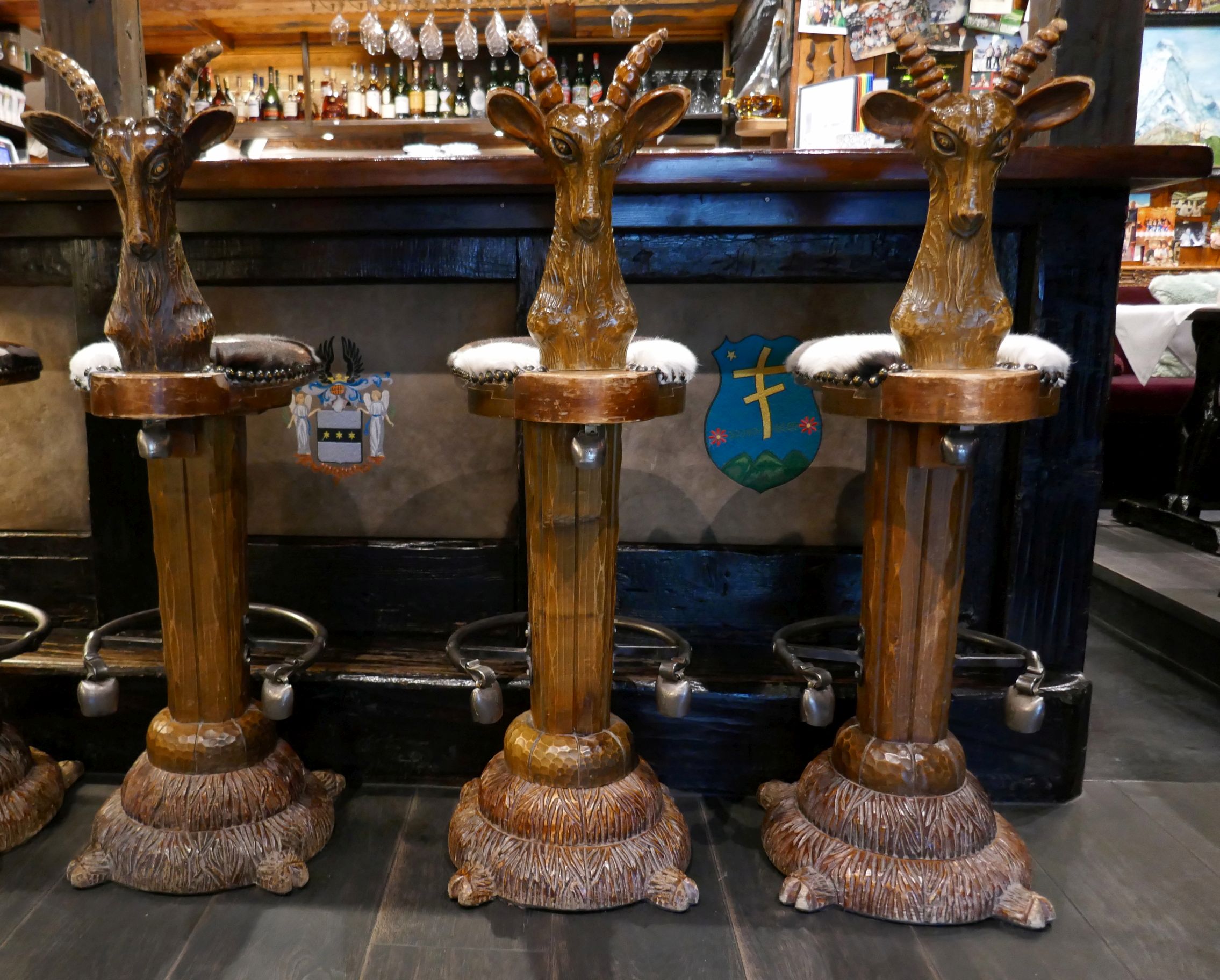
Tap the cowbell under your seat when you are ready for your next drink!
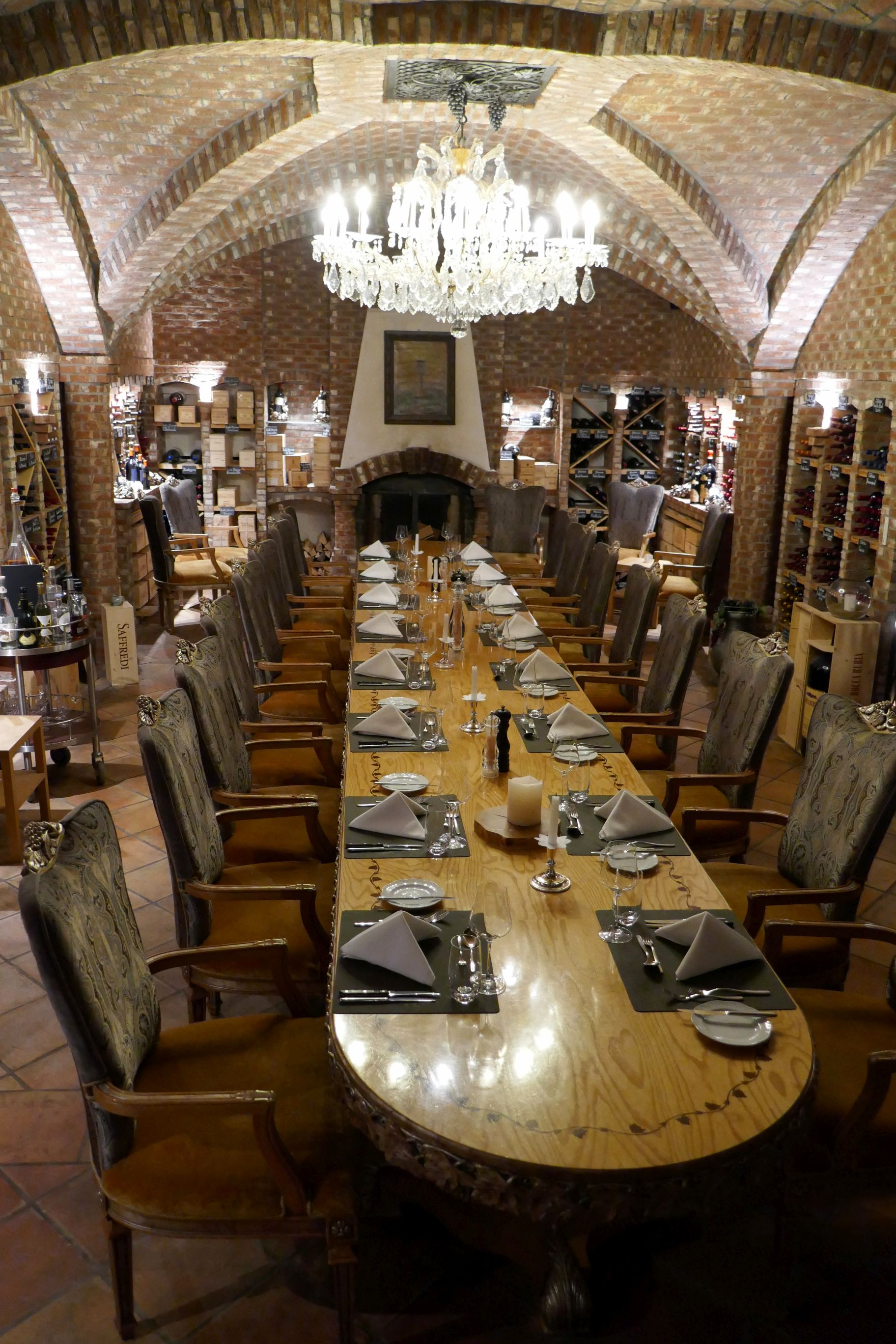
The restaurant’s wine cellar
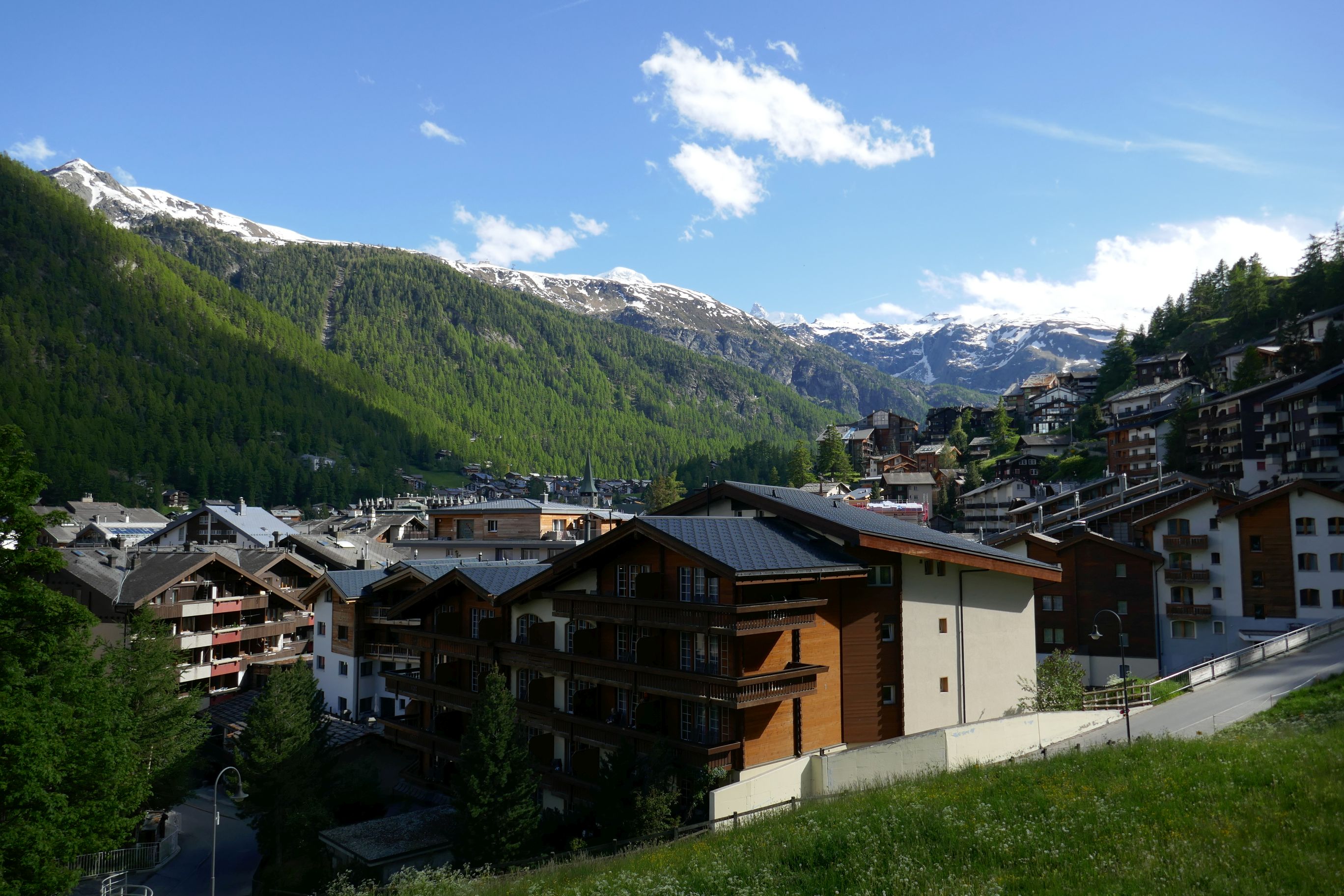
The late afternoon view from our room. The Matterhorn, not visible from our room, was off to the right.
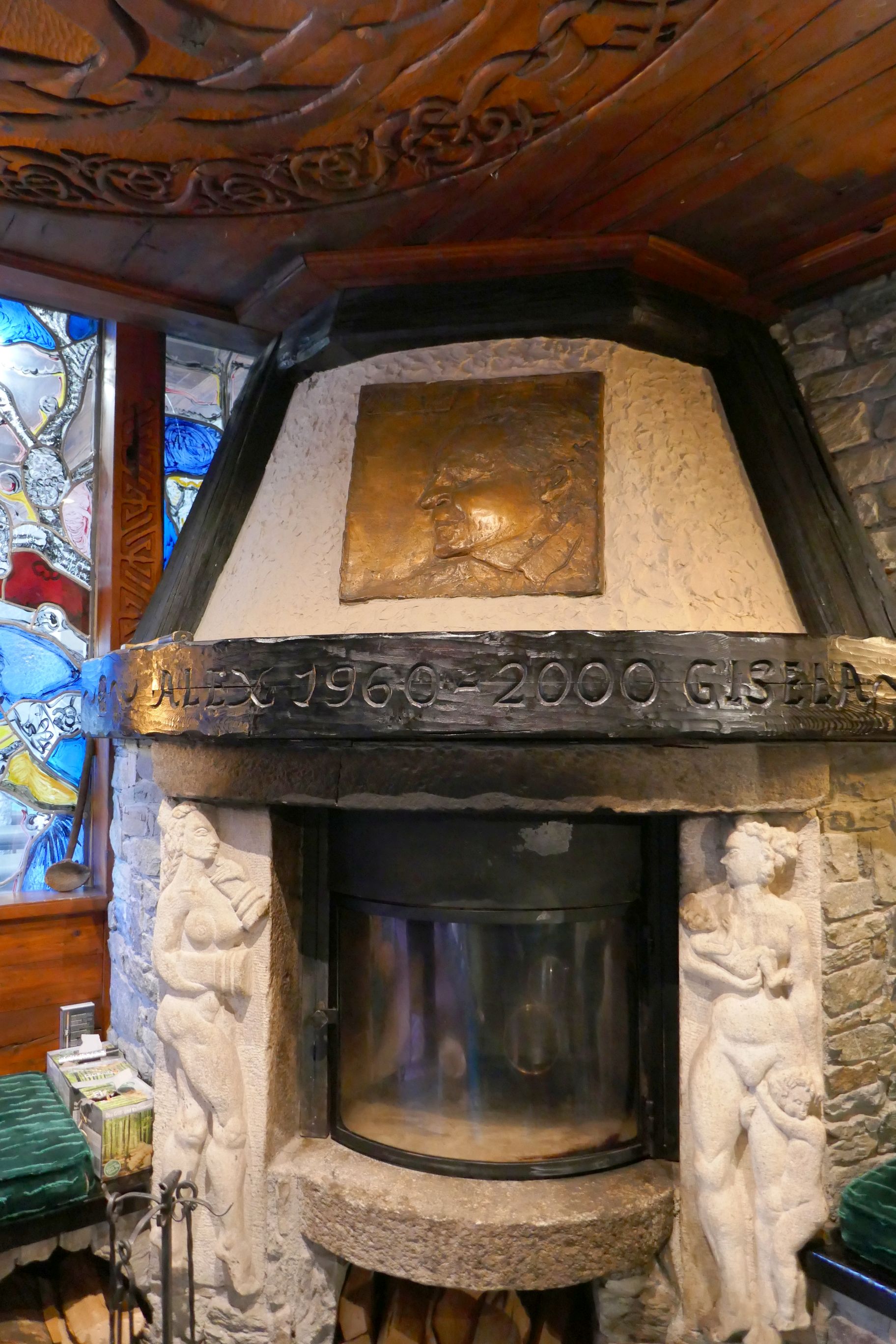
Founded in 1961 by Alex Perren Sr., the former ski instructor and mountain guide, along with Gisela Becwar who he married in 1964, put their love and full dedication (and a lot of money) into their resort. The next generation currently runs what is one of the most memorable places we have ever stayed.
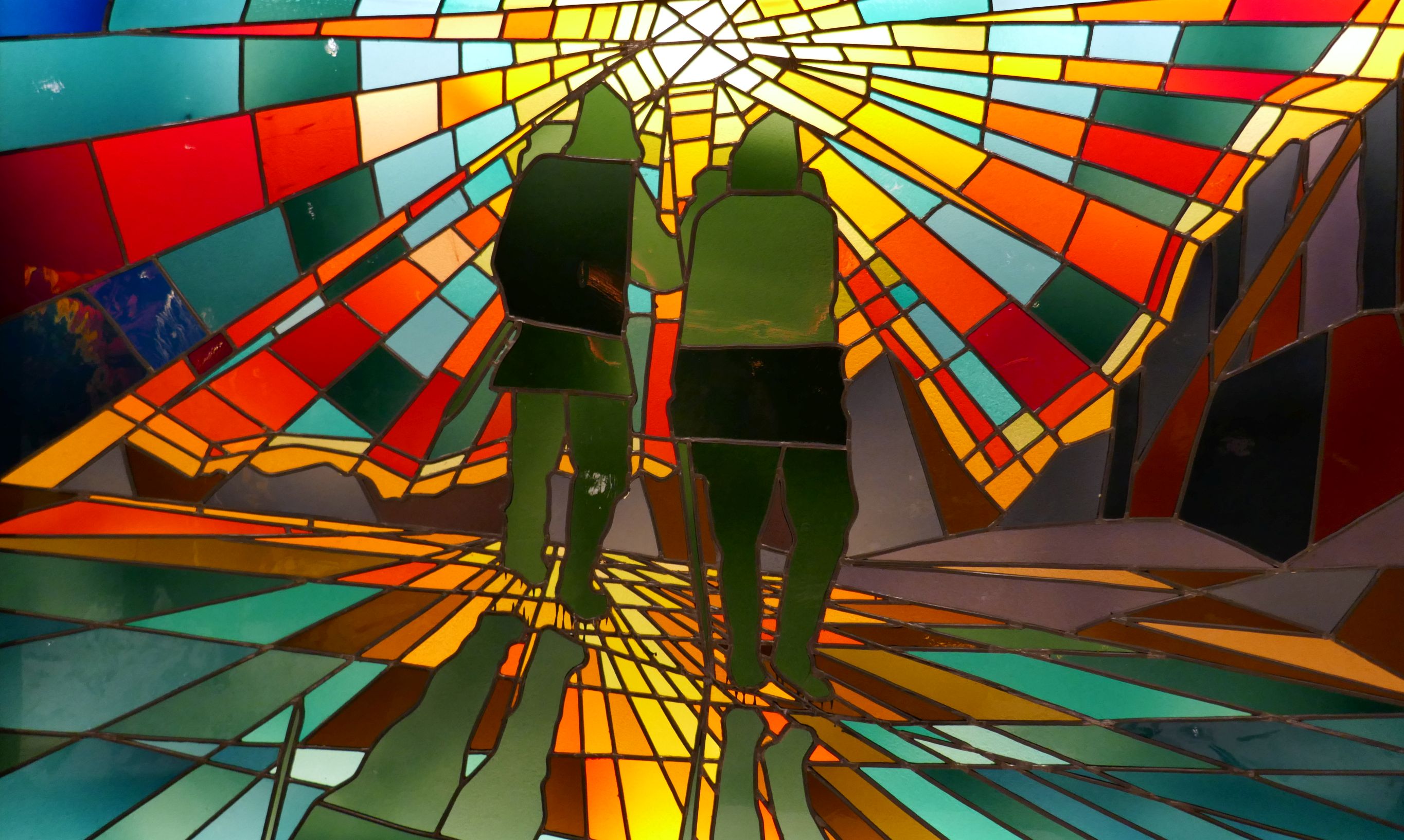
These are three of the large stained glass panels that were mounted on the walls of the restaurant where we had dinner our first night. They depict Alex and Gisela enjoying their outdoor adventure passions.
Next up: SWITZERLAND & ITALY #6: ZERMATT & THE MAGNIFICANT MATTERHORN
































































































































 Elaine-iaK's Travels: A Traveler's Tales of People, Places, Photos, Pools... and CHOCOLATE!