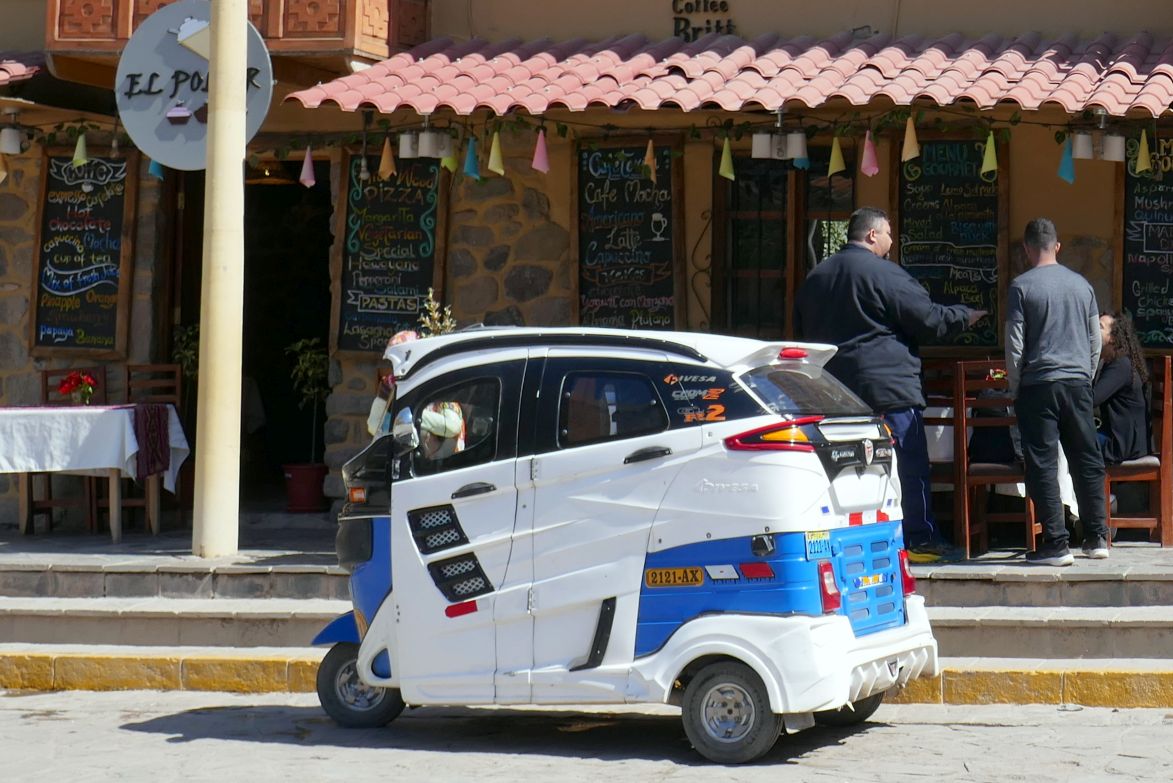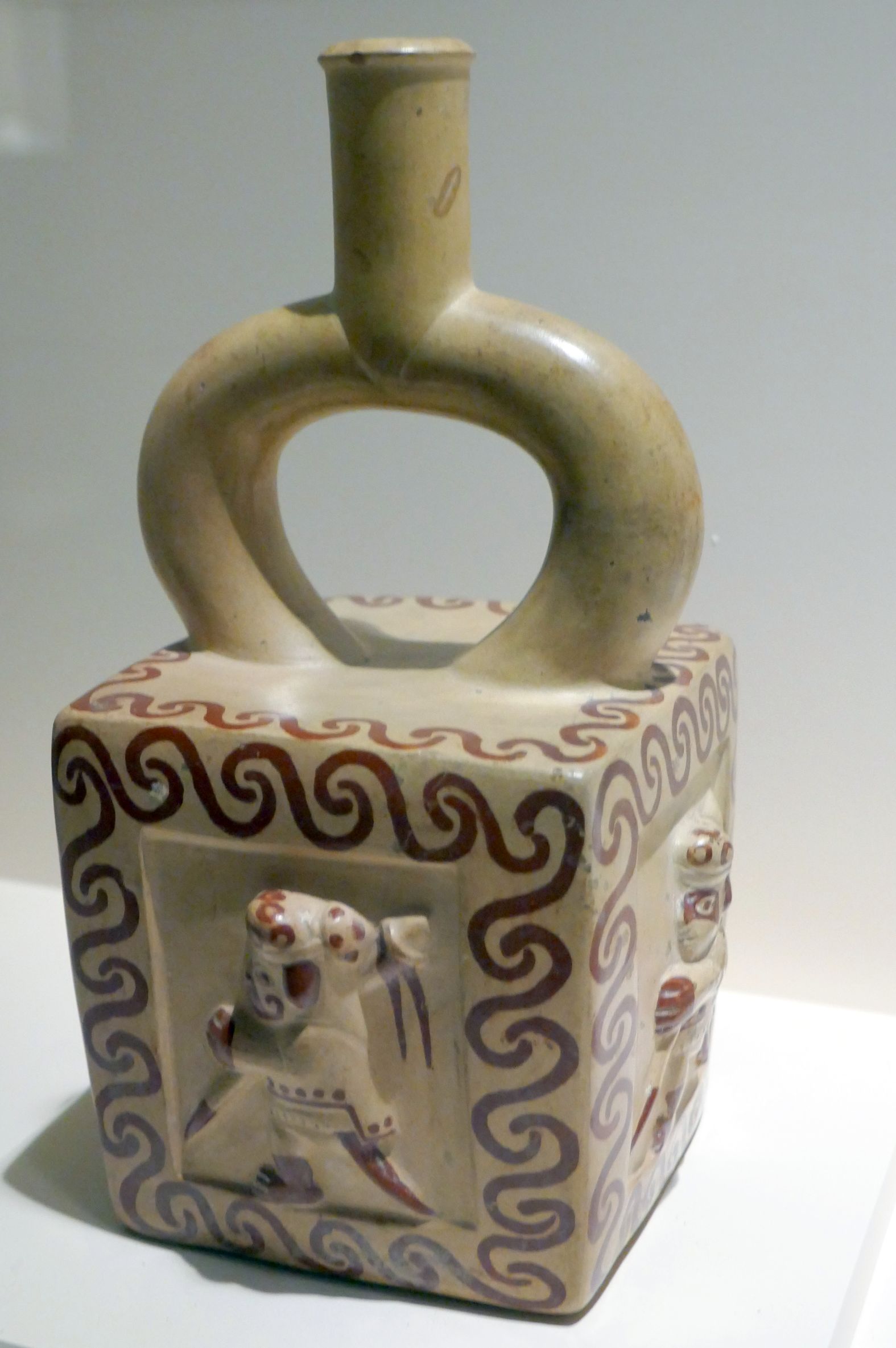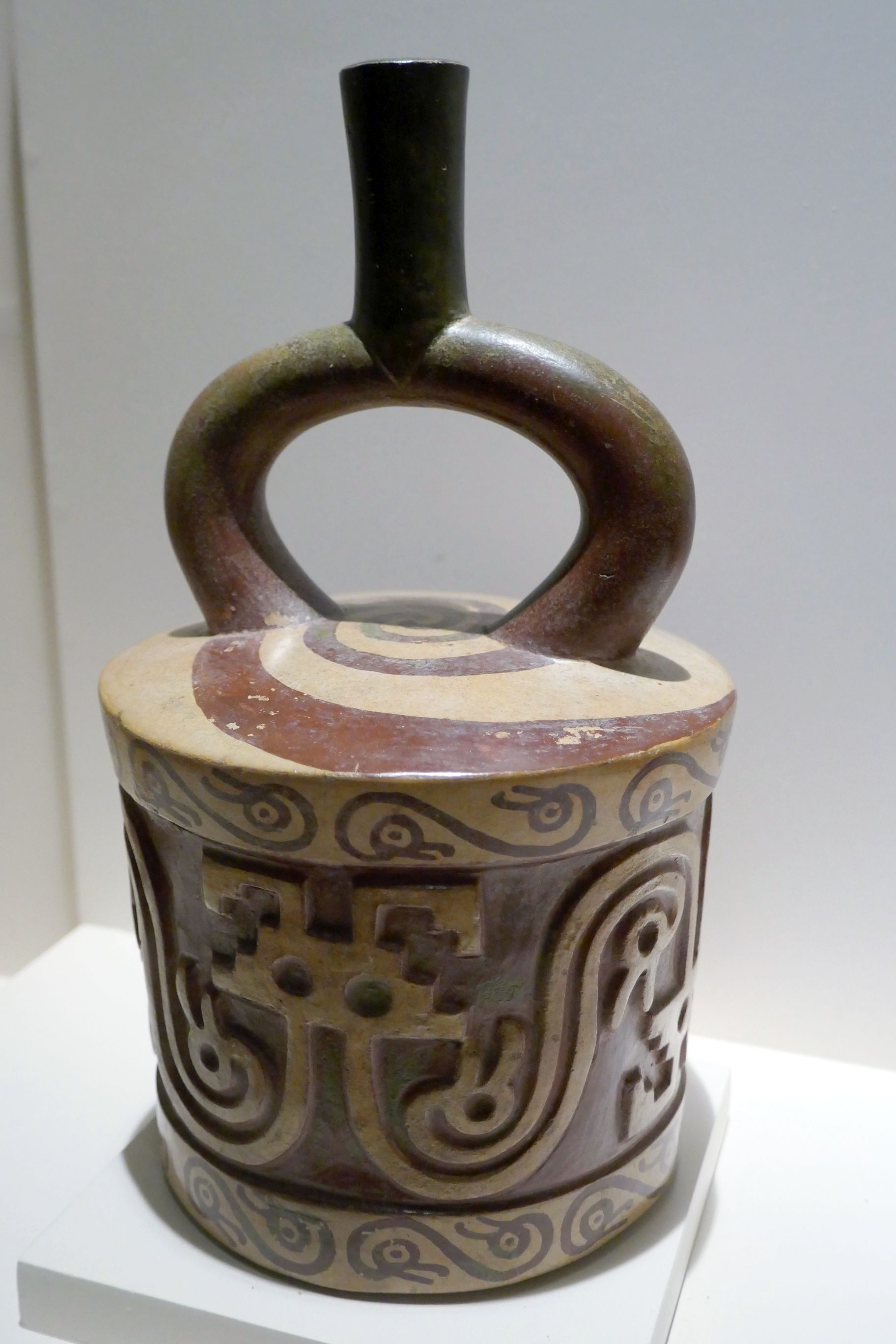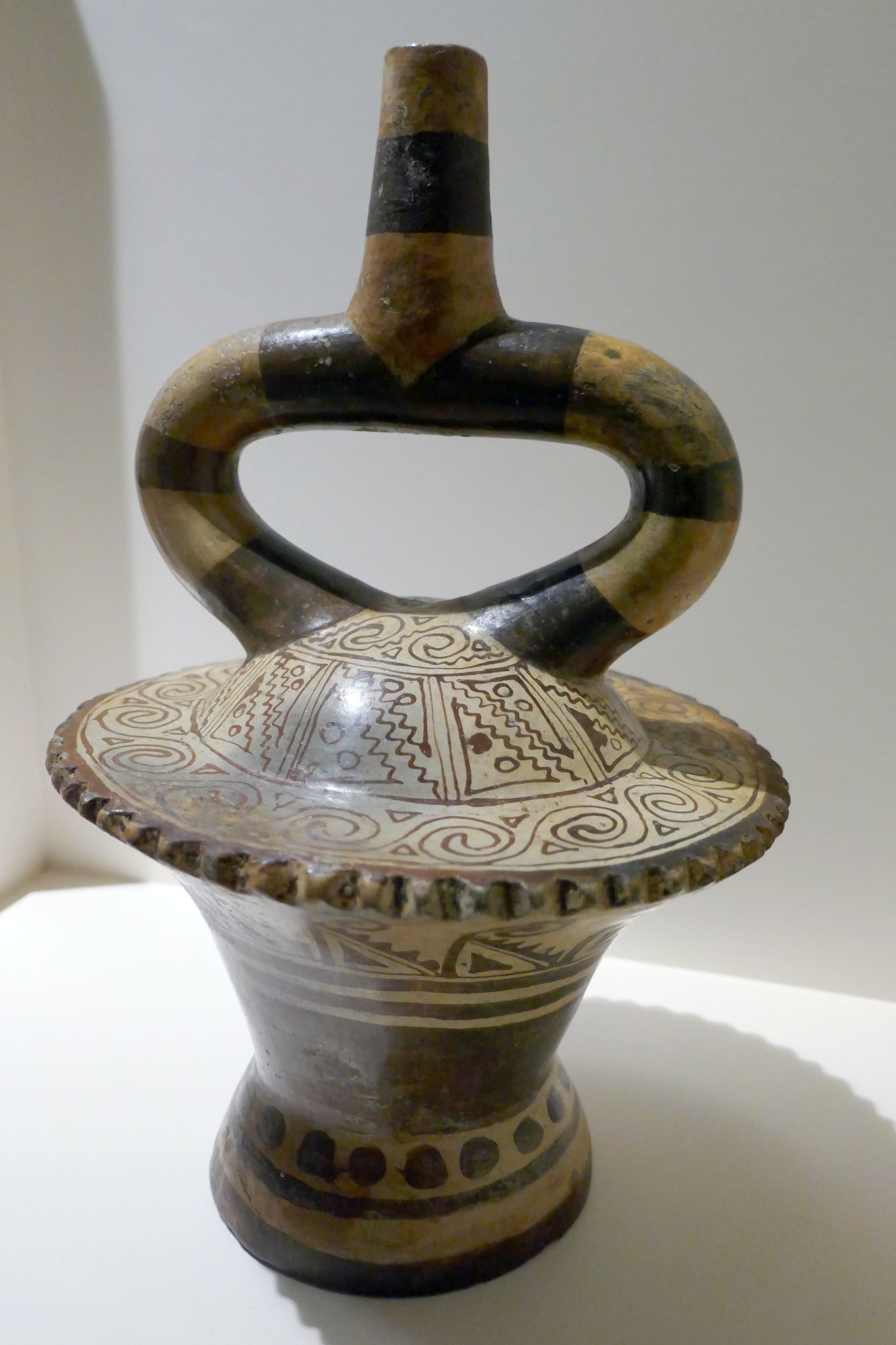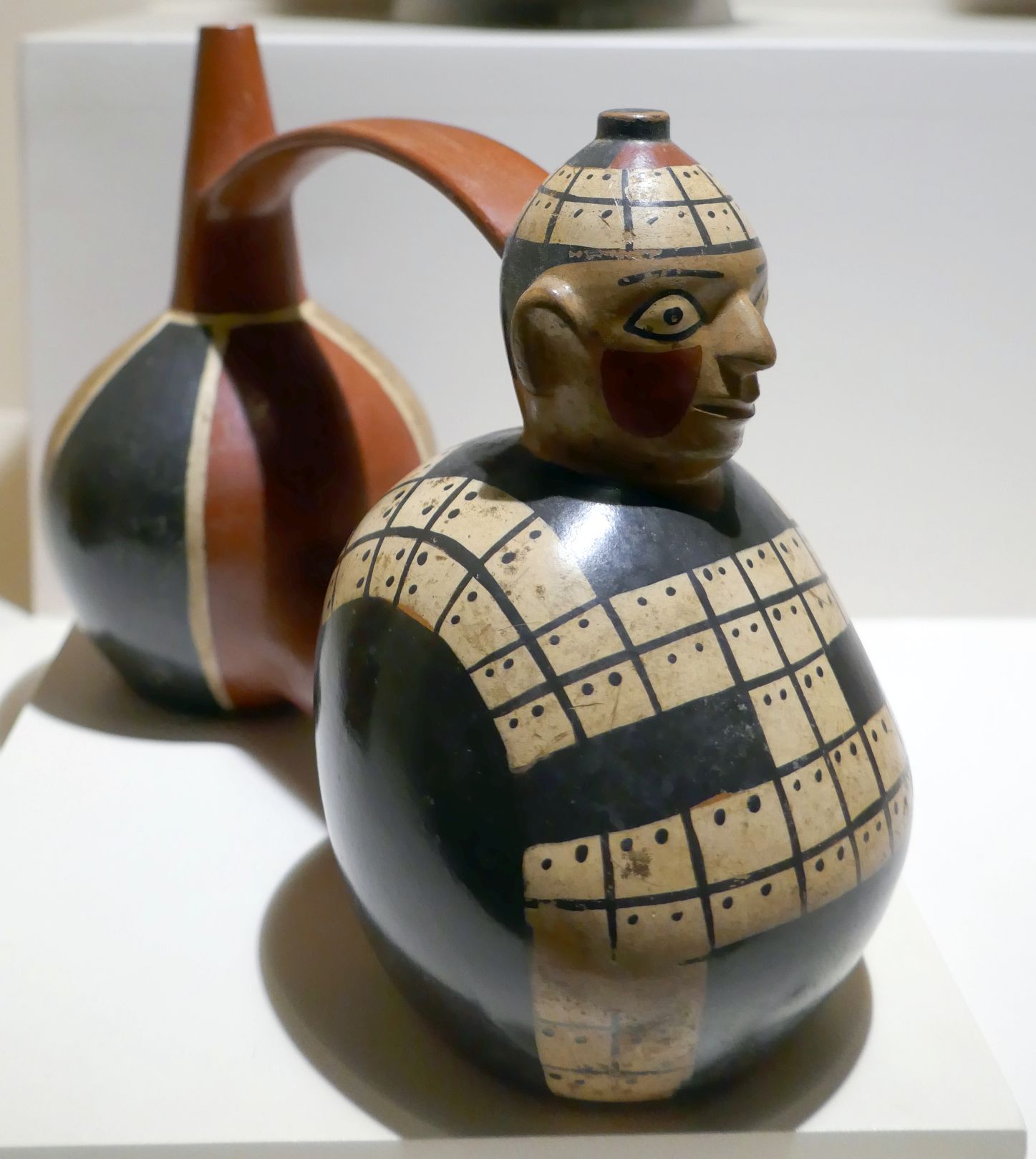
As a graduate of Recreation Administration, from San Diego State University, I have made recreation and travels my career and life’s passion. After graduation, I traveled solo for one year throughout the South Pacific, doing travel photography in a wide variety of settings. Upon my return, many of my photographs became the subjects of my newly created line of handcrafted photographic greeting cards, "Exquisite! By, Elaine", a business I have had since 1986. Check them out at: http://ExquisiteCards.fototime.com .
In 1983, I began teaming up with my mom, Goldie, teaching arts & crafts to cruise ship passengers, aboard Princess Cruises and Royal Caribbean. In addition, I lectured on travel photography, as well as Australia and New Zealand history, aboard Princess Cruises.
In 2004, I formed a new teaching team with my recently retired husband, Bruce, who serves as my "humble assistant" until 2010 when the cruise lines shifted the arts and crafts program to mostly being taught by their own staff.
Currently, our favorite mode of travel is by river boat. Along the way, we enjoy poking around small European towns, meeting the people, seeking out interesting photo subjects, and always stopping at every chocolatier to make a purchase. Adding to my chocolate label and wrapper collection is a bonus! And, as a U.S. Masters swimmer, if I can find a pool to get in a swim with the locals, all the better!
Cheers!
Elaine-iaK
~ Believing in your dreams can be far more rewarding than living by your limitations~ -Karla Peterson
We bid “adios” to Machu Picchu and Aguas Calientes and took the train back to Ollantaytambo. Our tour bus met us there to drive us to Cusco (“Cuzco” in Spanish) where we would be staying for the remainder of the tour.
(For all photos, click on the image for a full screen view.)
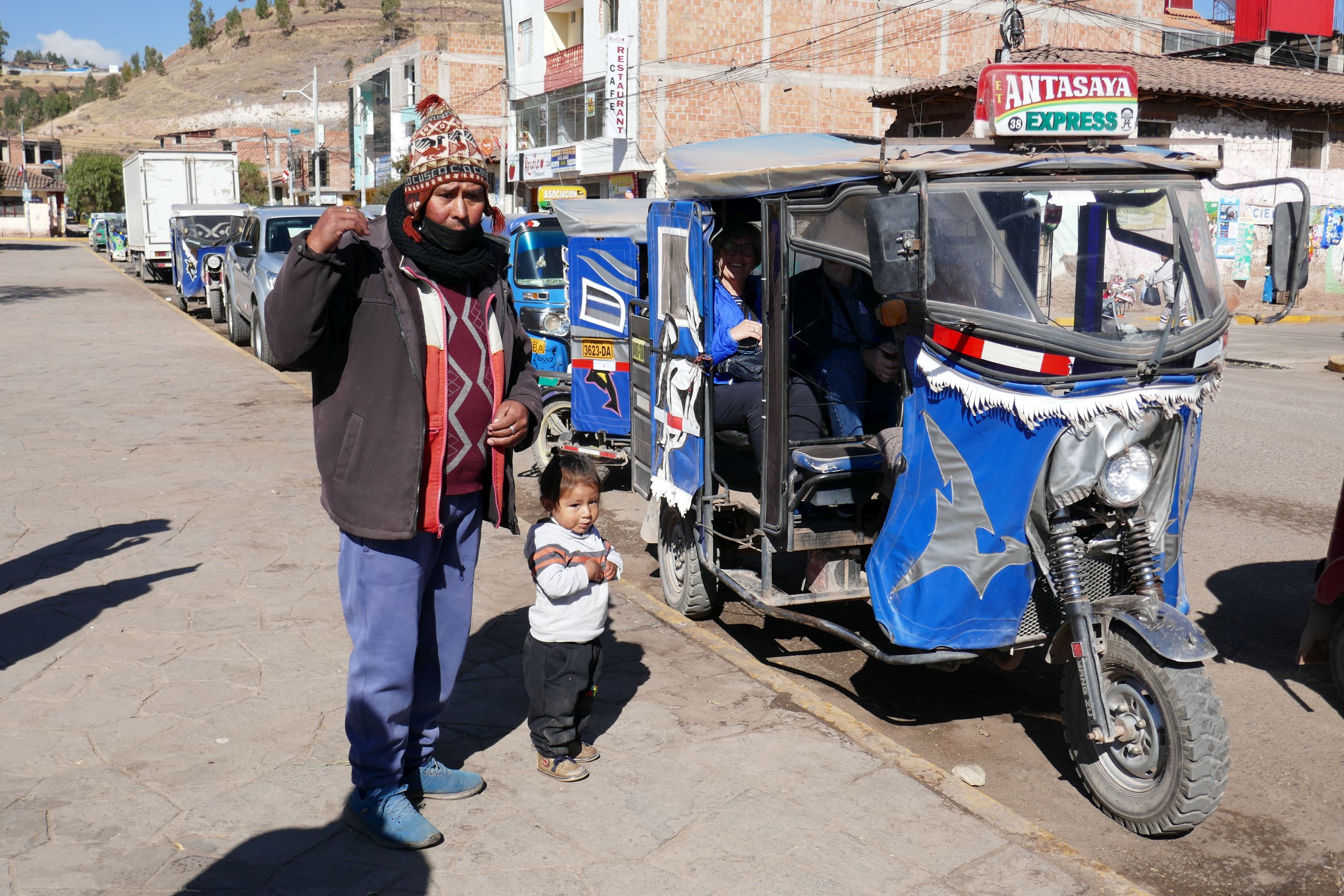
It was a lovely day for a drive!
Cusco, a UNESCO World Heritage Site, is at an elevation of 11,200 feet, so there were times Bruce and I could feel our respiration rate increase as we hoofed it around town during our free time.
Now a city of about 428,000 people, it is the capital of the Cusco province. Back in the 13th to 16th centuries, it was the capital of the Inca Empire. That all ended when the Spanish came…
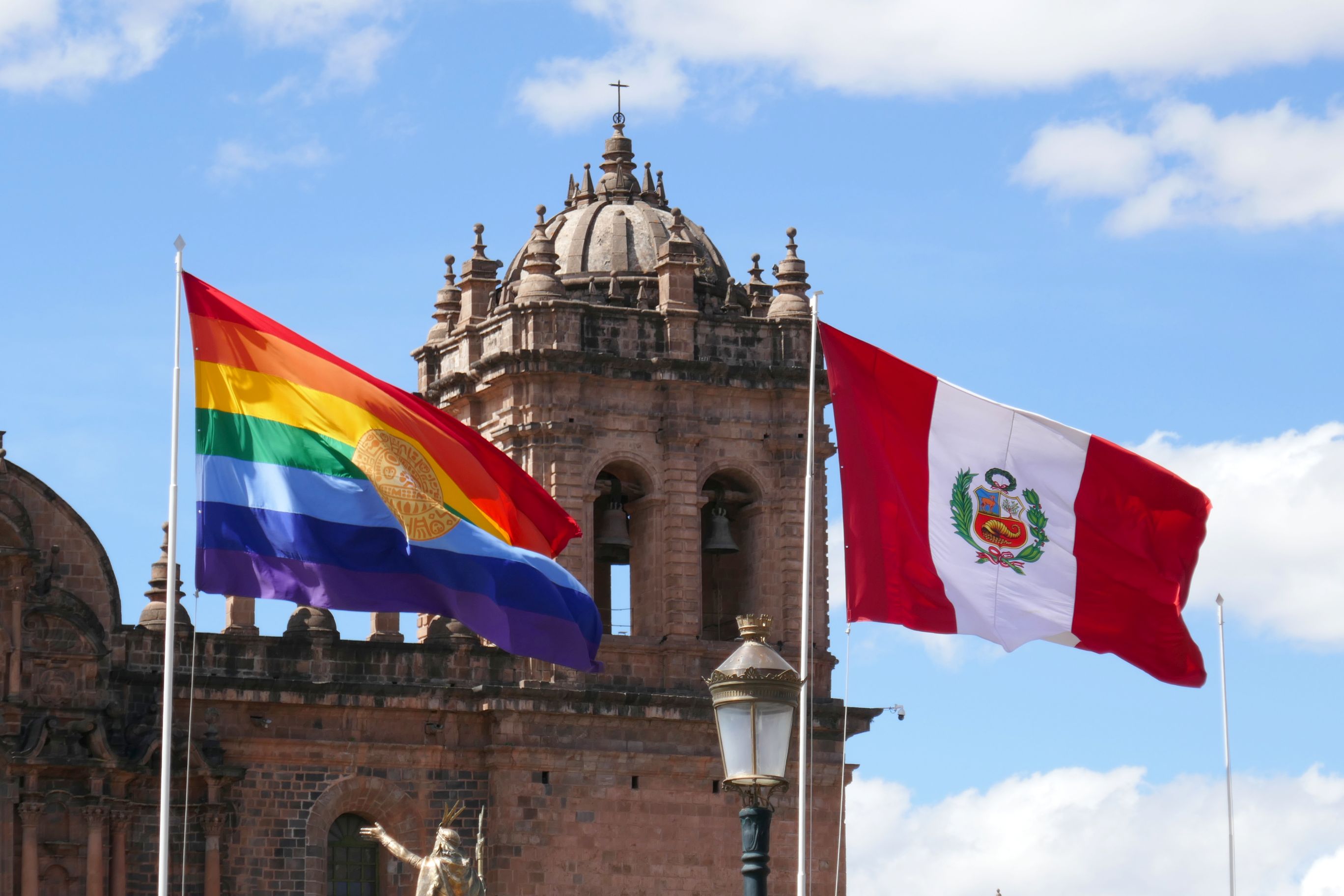
Raul led us on a walking tour of Cusco to explore what the Incas had called “the navel of the world.” The city was laid out in the shape of a puma, which was sacred to the Incas.
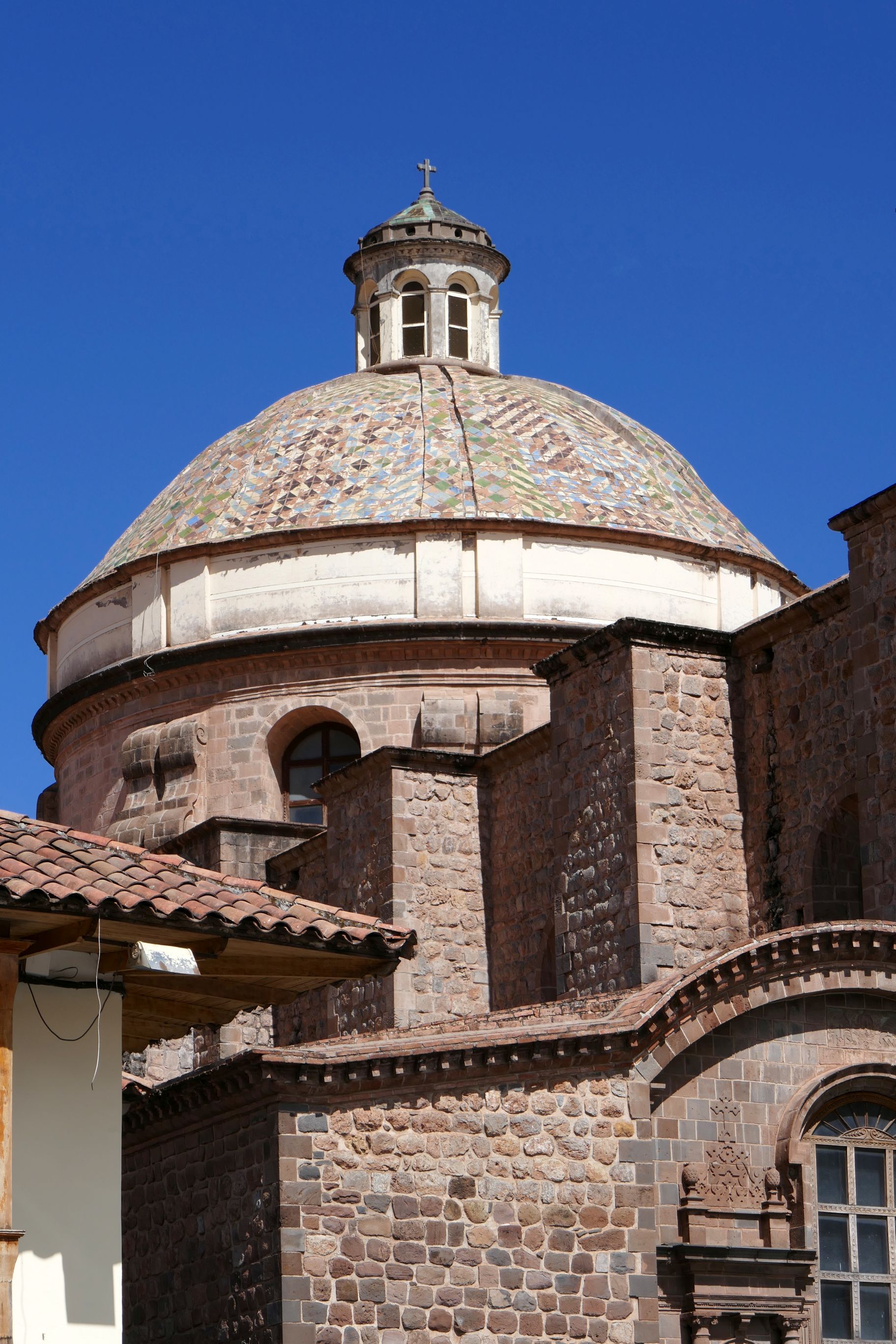
The heart of the city is Plaza de Armas, and its centerpiece is the colonial 17th-century cathedral.
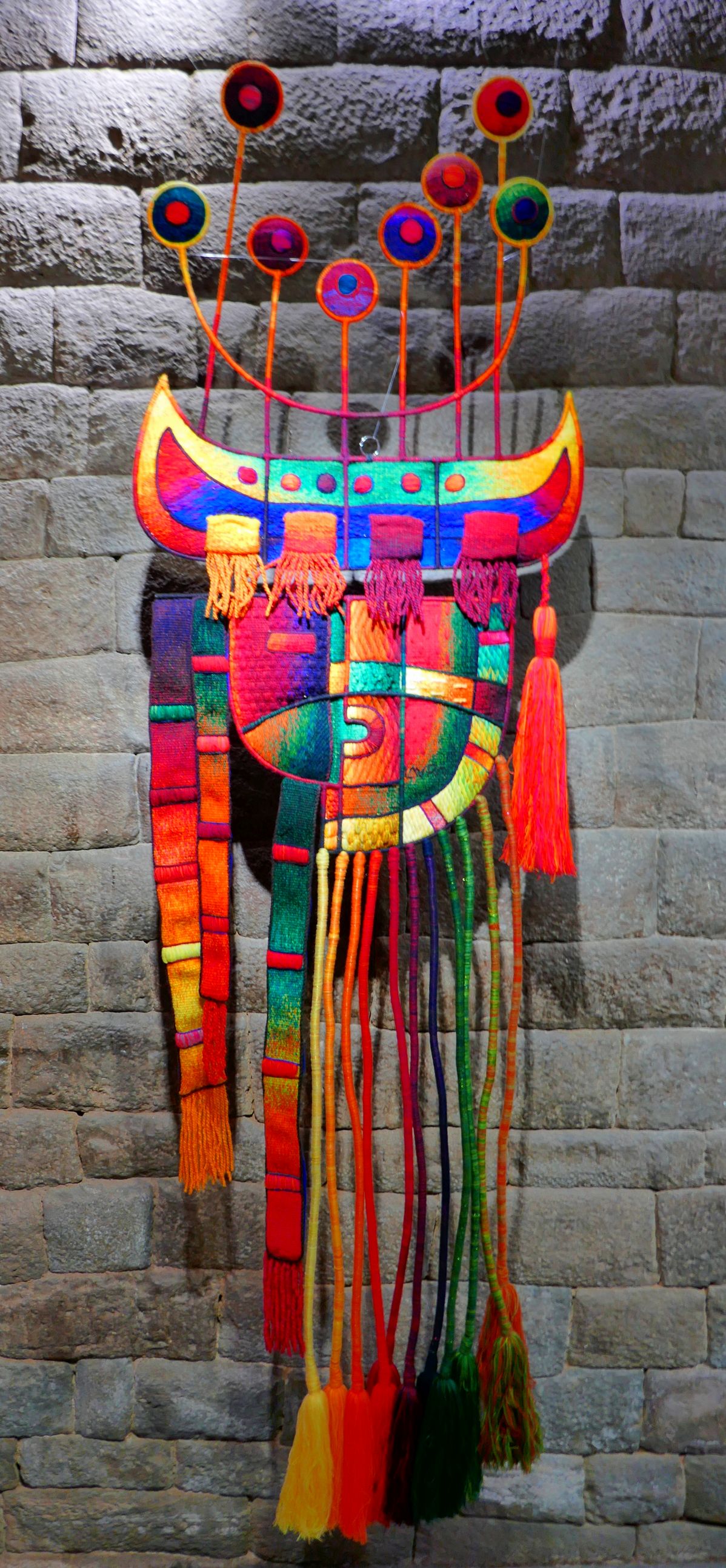
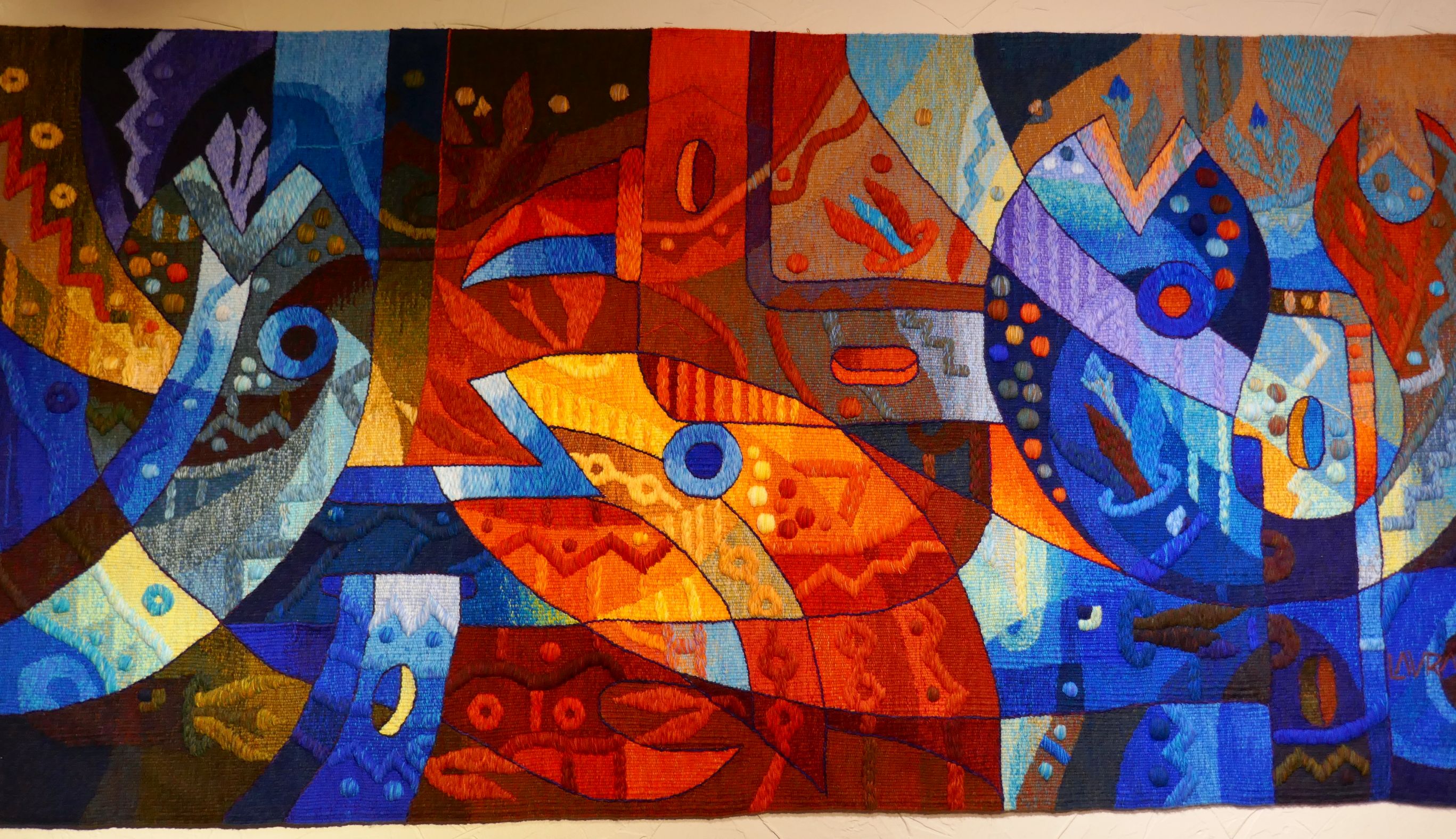
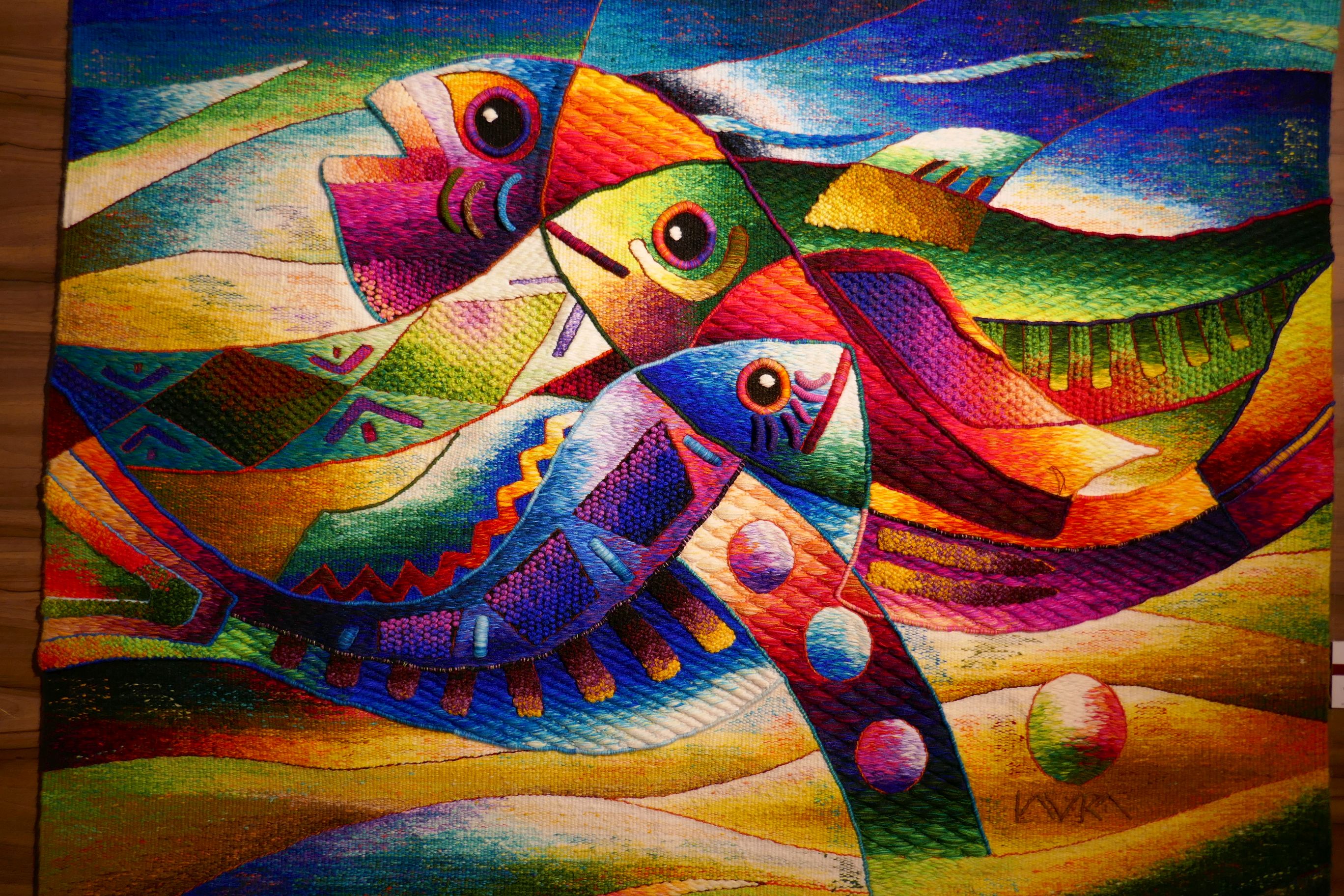
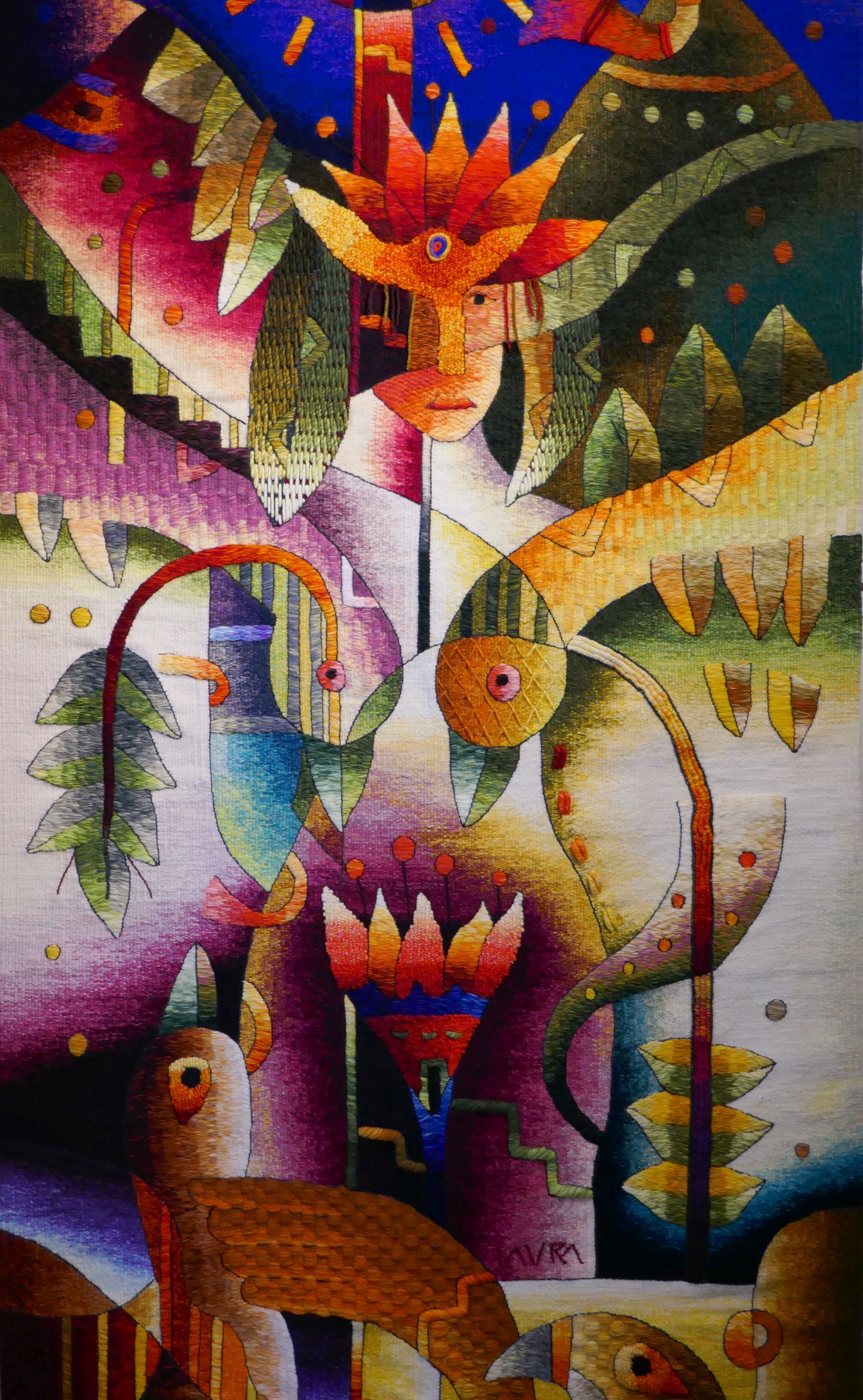
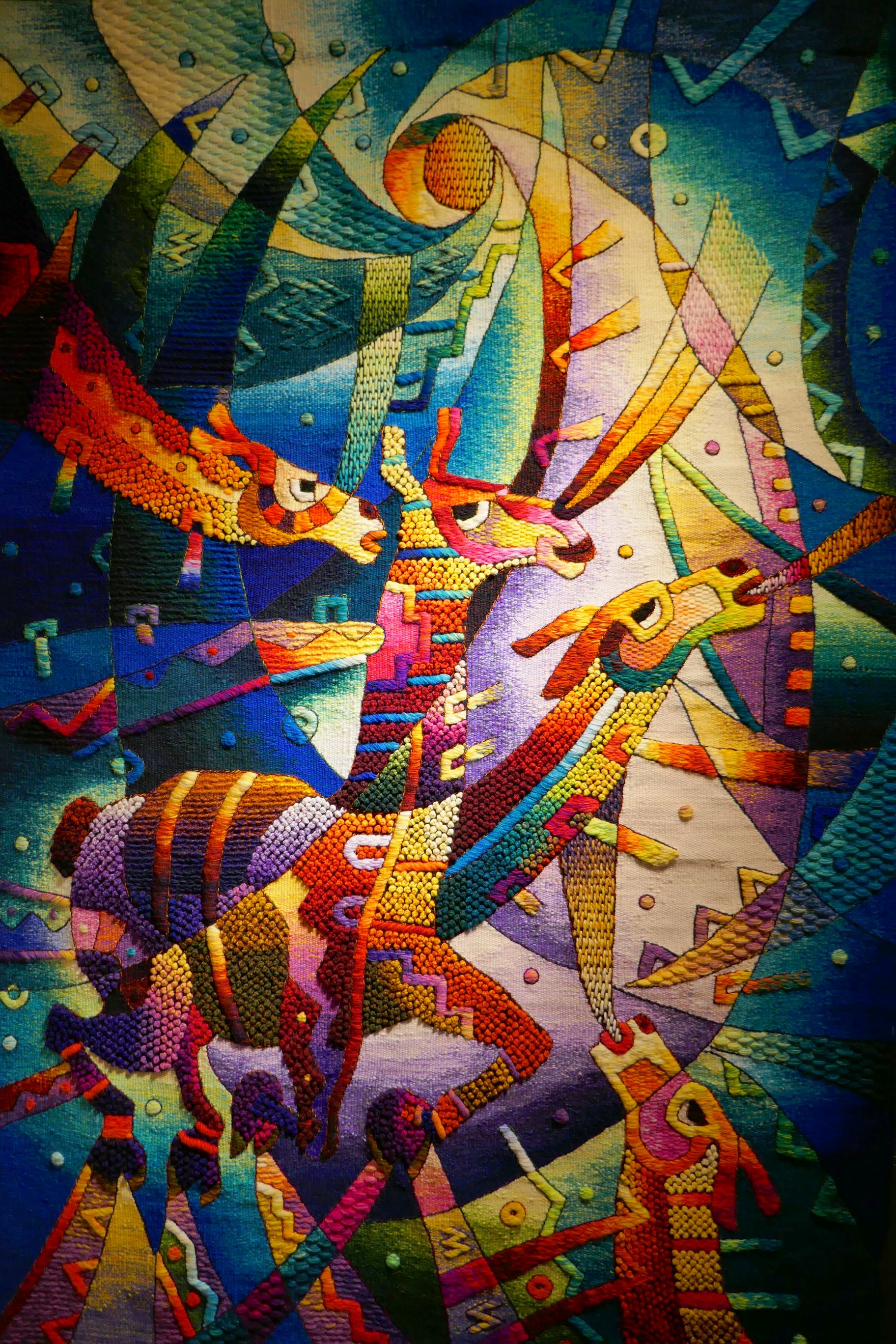
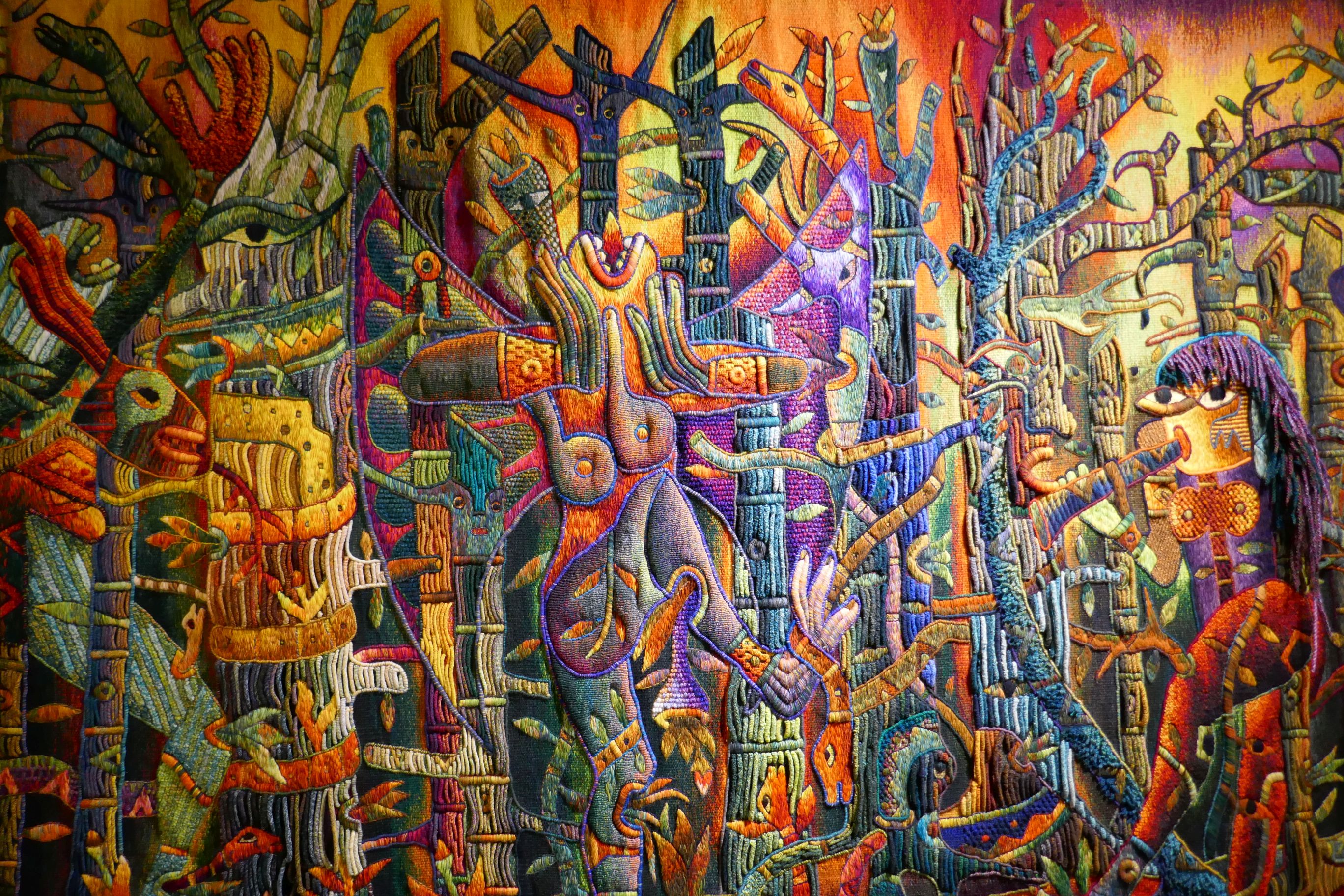
Our favorite stop on the tour was Museo Maximo Laura, which exhibited the vibrant collection of Laura’s tapestries. Check out the link, and I’m sure you will agree the museum is colorful eye candy! We were amazed at the explosion of colors and intricate designs of these labor-intensive works of art.
Thankfully, the signs posted encouraged its guests to take photos and post them on social media. I was overjoyed to do so! Sharing Maximo Laura’s work with you is my pleasure.
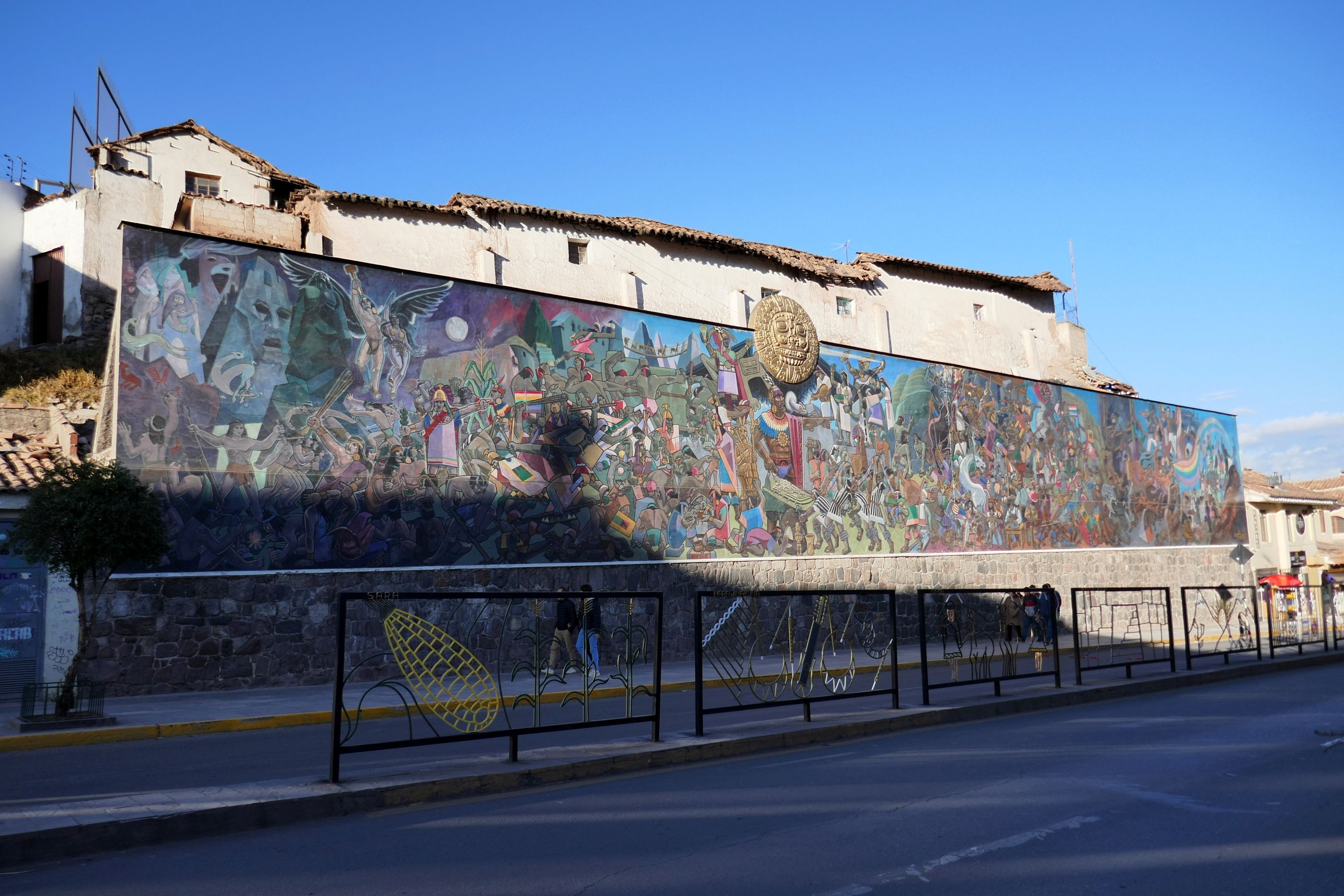
More scenes around Cusco:
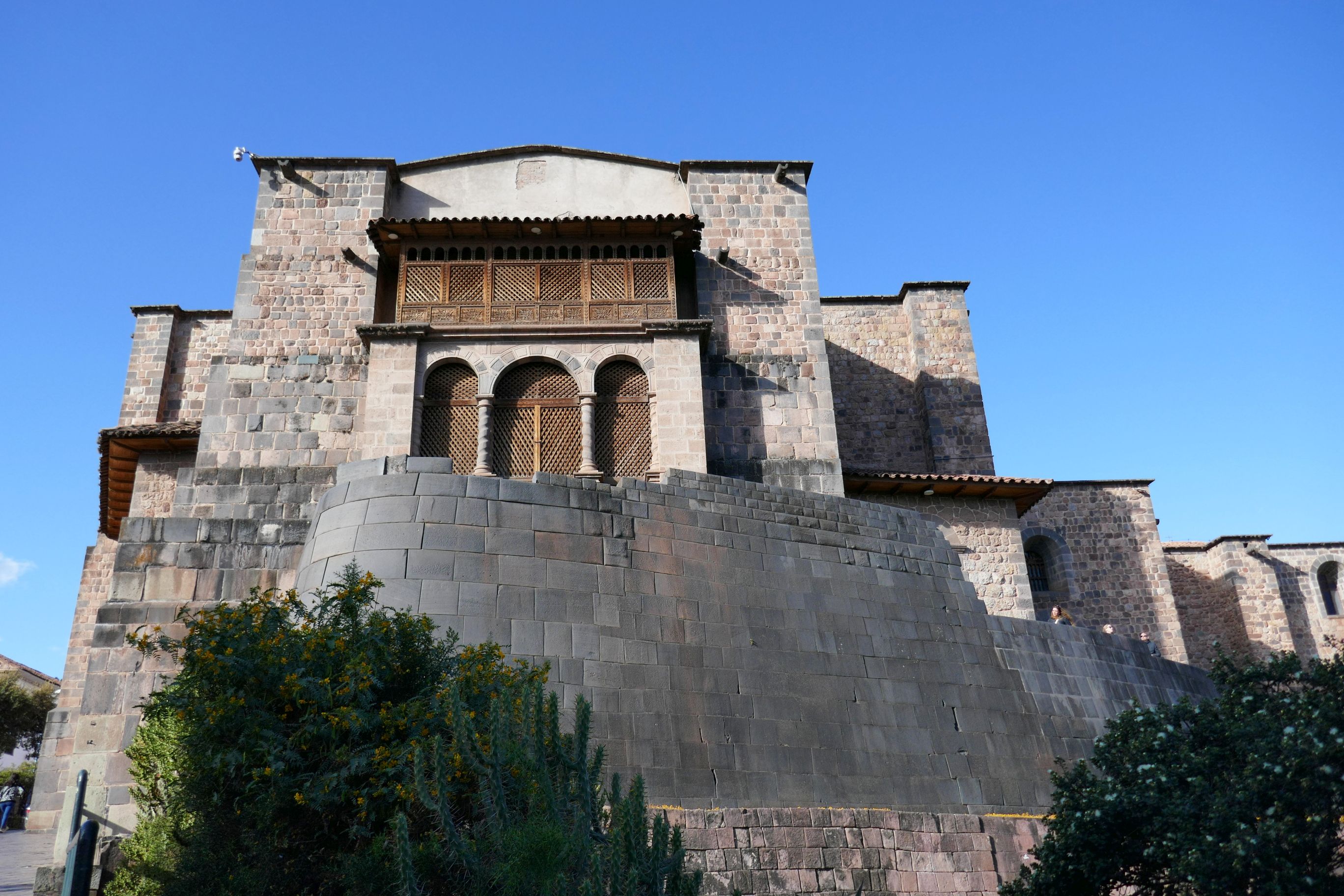
Santo Domingo Convent
The view from the convent
We wrapped up the beautiful day by returning to the plaza for an evening stroll.
Next up: PERU #13: A DAY IN THE LIFE OF ISKUCHACA AND CHINCERO VILLAGES
On most tours of Peru, seeing Machu Picchu is a one-and-done experience. You get one opportunity, so you better hope the weather is good that day. Our Overseas Adventure Travel tour had us scheduled for the afternoon with the opportunity to return early the following morning to see the ruins in different light conditions with far less tourists. There was the hope, too, that if the weather was bad during the afternoon visit, it would be better (or at least different) the next morning.
Well, we hit back-to-back grand slams! What a gorgeous morning! Exploring one of the New 7 Wonders of the World in uncrowded conditions under sunny, blue skies was magical!
(For all photos, click on the image for a full screen view.)
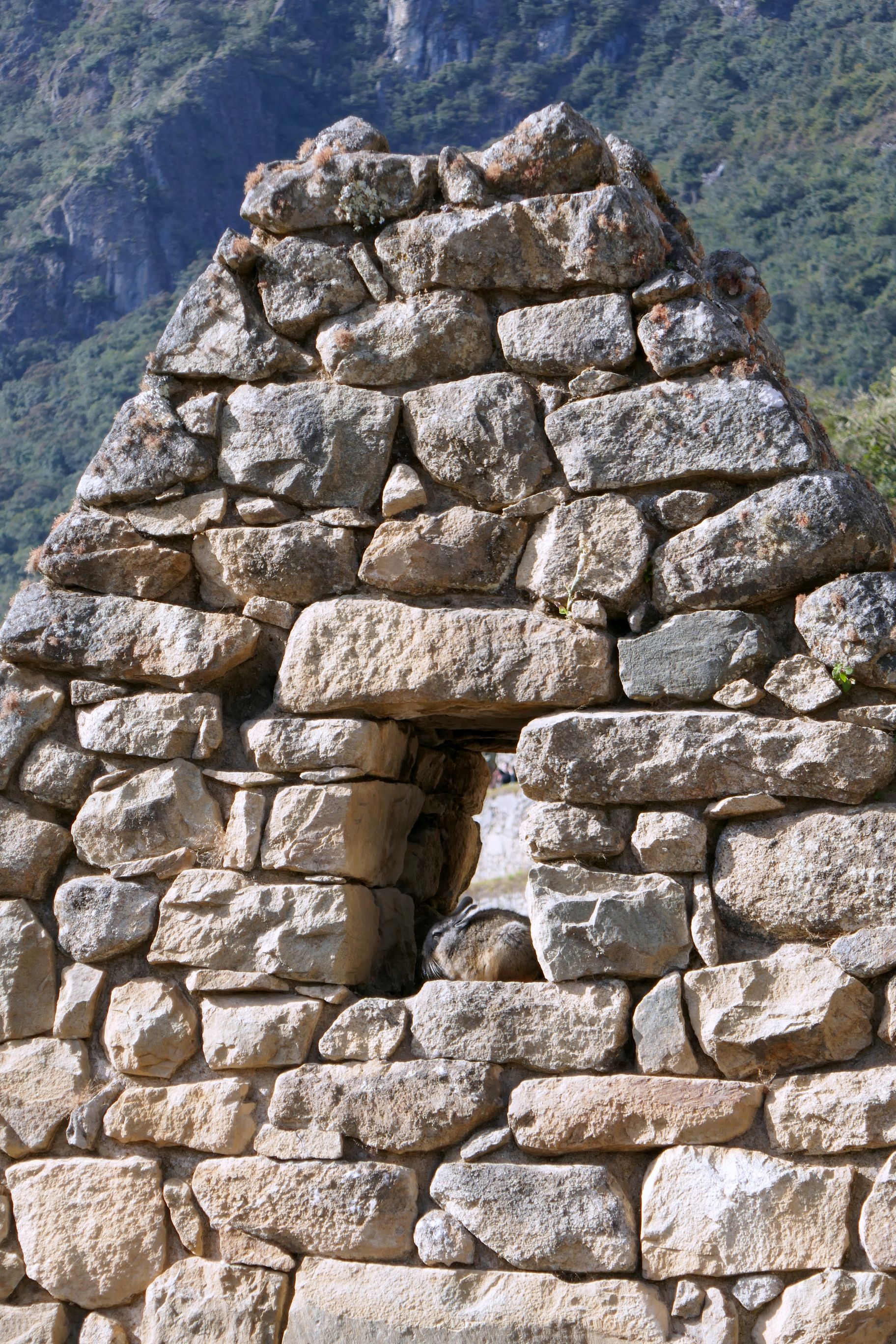
Look closely; that’s a rabbit napping in the nook!
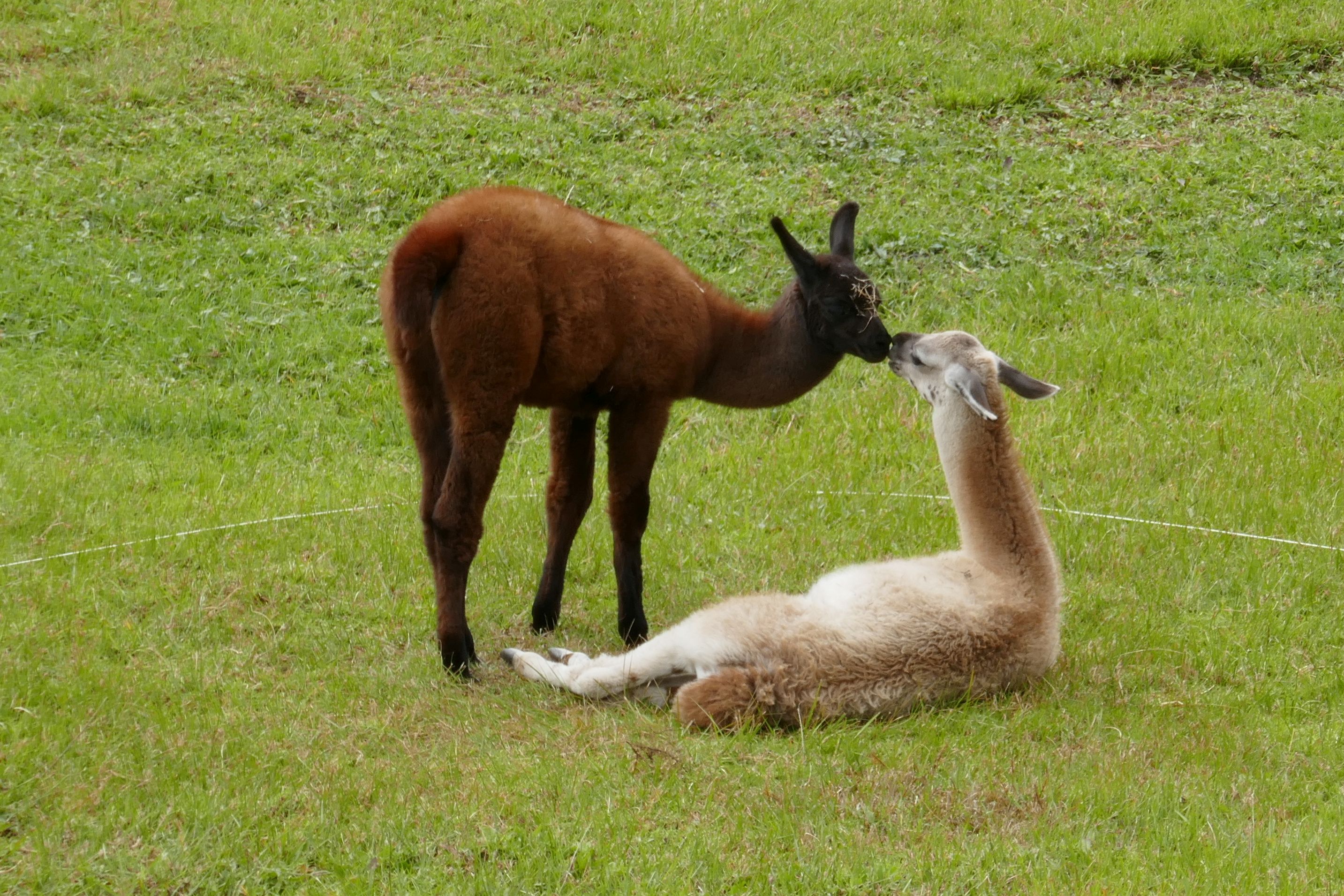
We saw alpaca this morning, too, and they were adorable!
Following our steep, switch-back drive down the mountain from the ruins, we enjoyed a delicious lunch together before exploring the town of Machupicchu (aka Aguas Calientes). Situated on the Urubamba River (aka Vilcanota River), the town is just 3.7 miles from the ruins of Machu Picchu, so it is a busy tourist destination. I thought it had a great vibe, though. Sure, there are tons of restaurants and shops to serve the tourists, but it is beautiful in some respects, too. Surrounded by lush, tropical mountains, the town is hilly, and the river runs right through it.
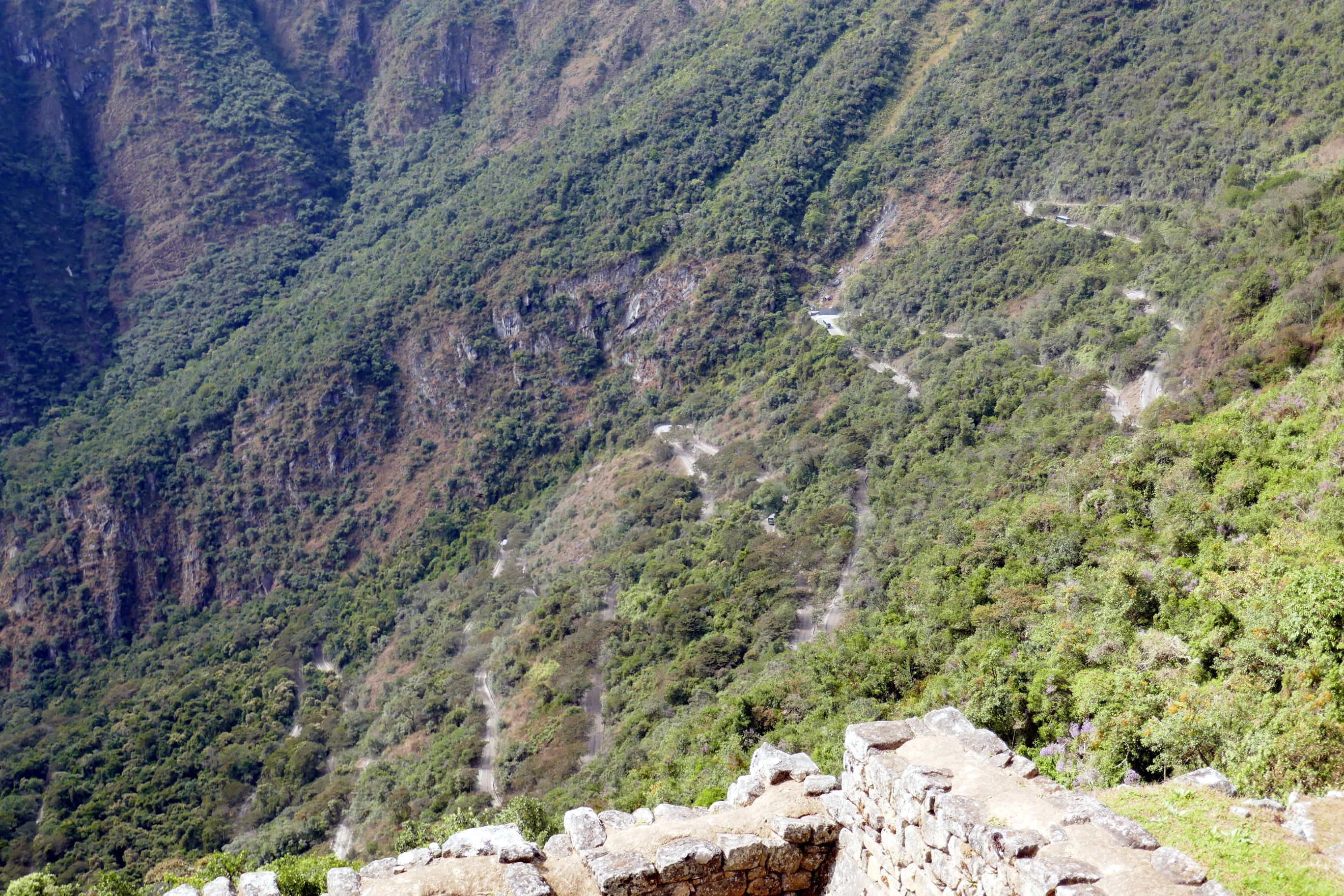
See those switch-backs beyond the ruins? The bus ride tested my stomach– and my nerves! The drivers were amazing, though.
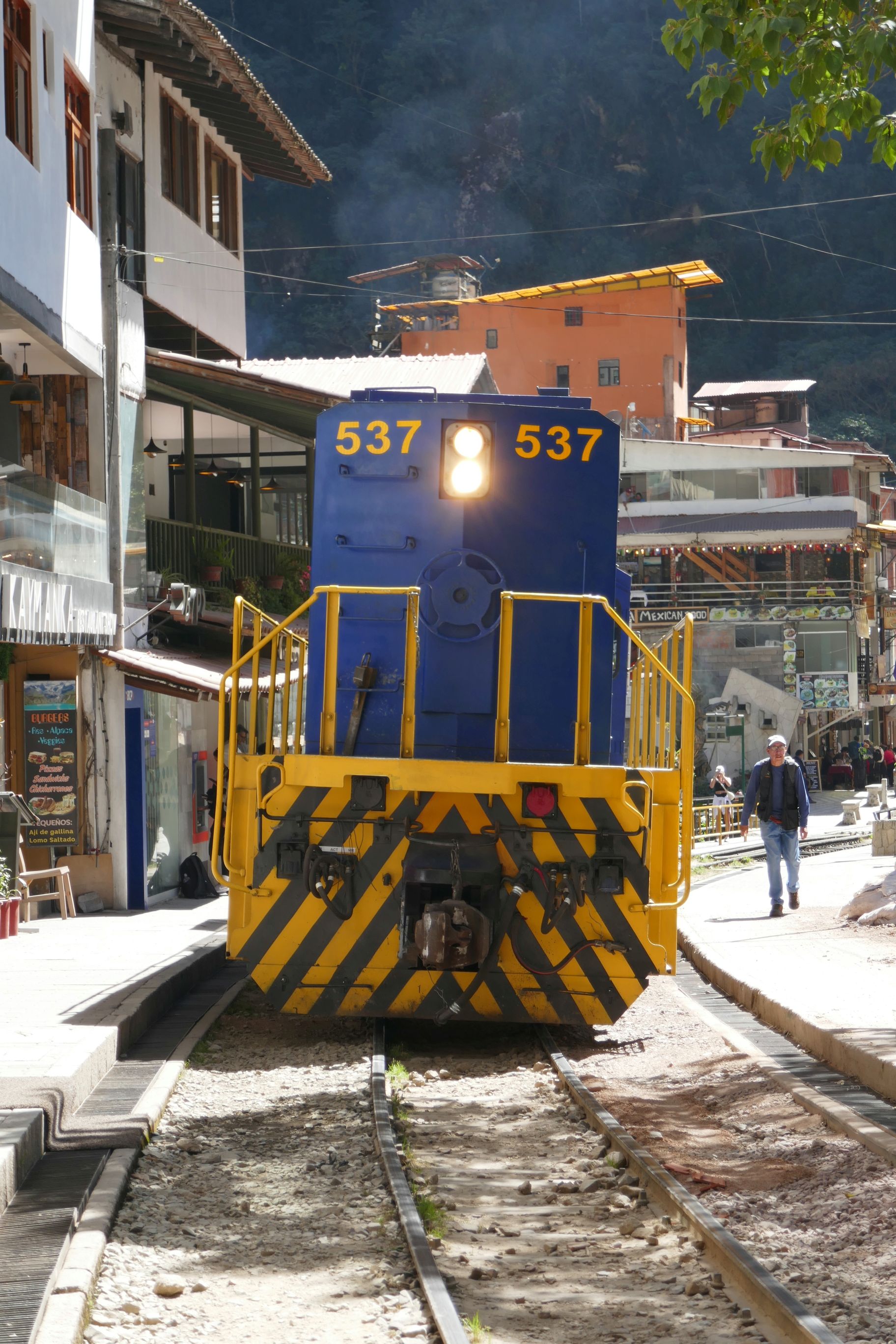
The train runs in the middle of town (and in front of our hotel).
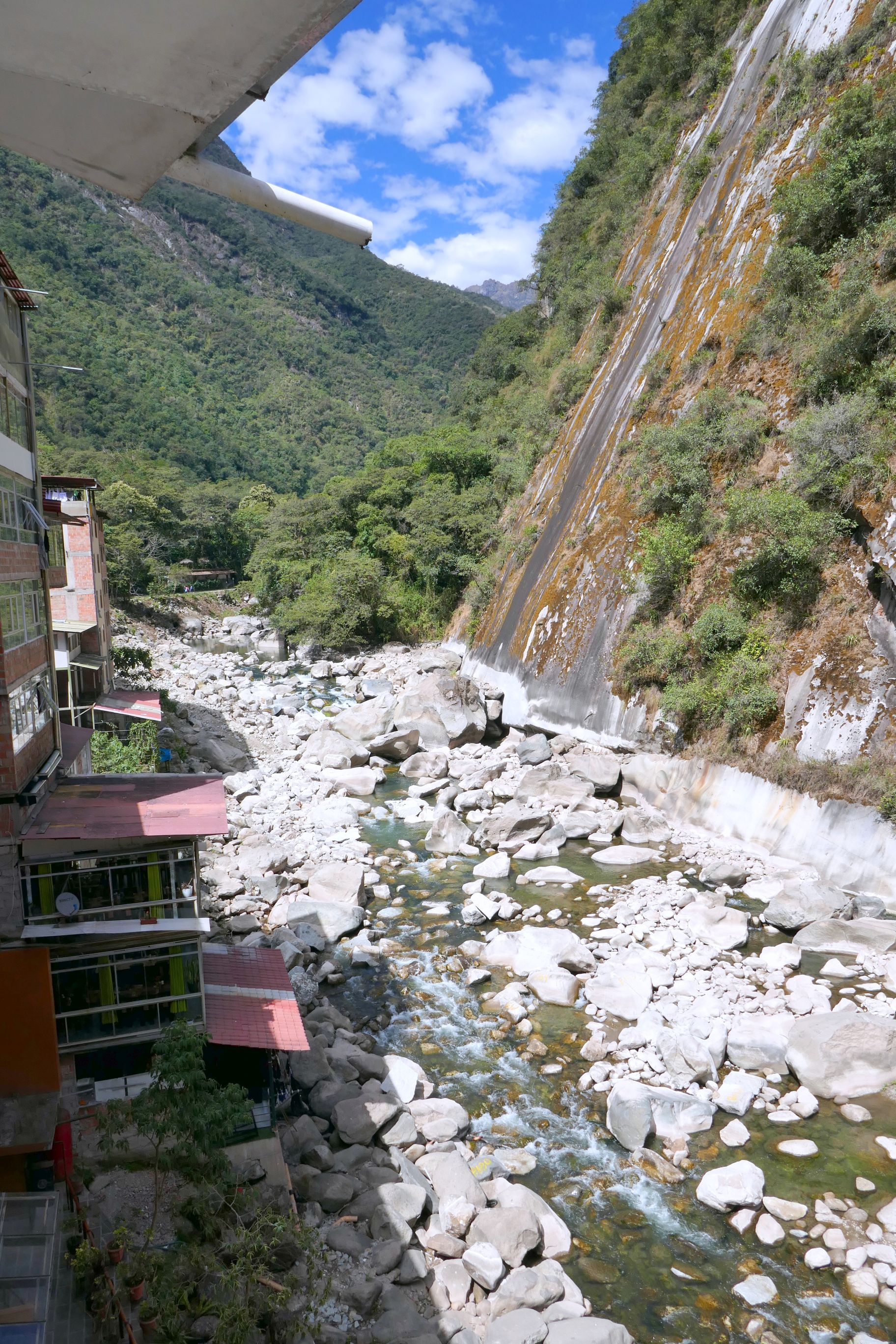
This was the view from our hotel room window. We left the windows open to enjoy the relaxing sound of the water:
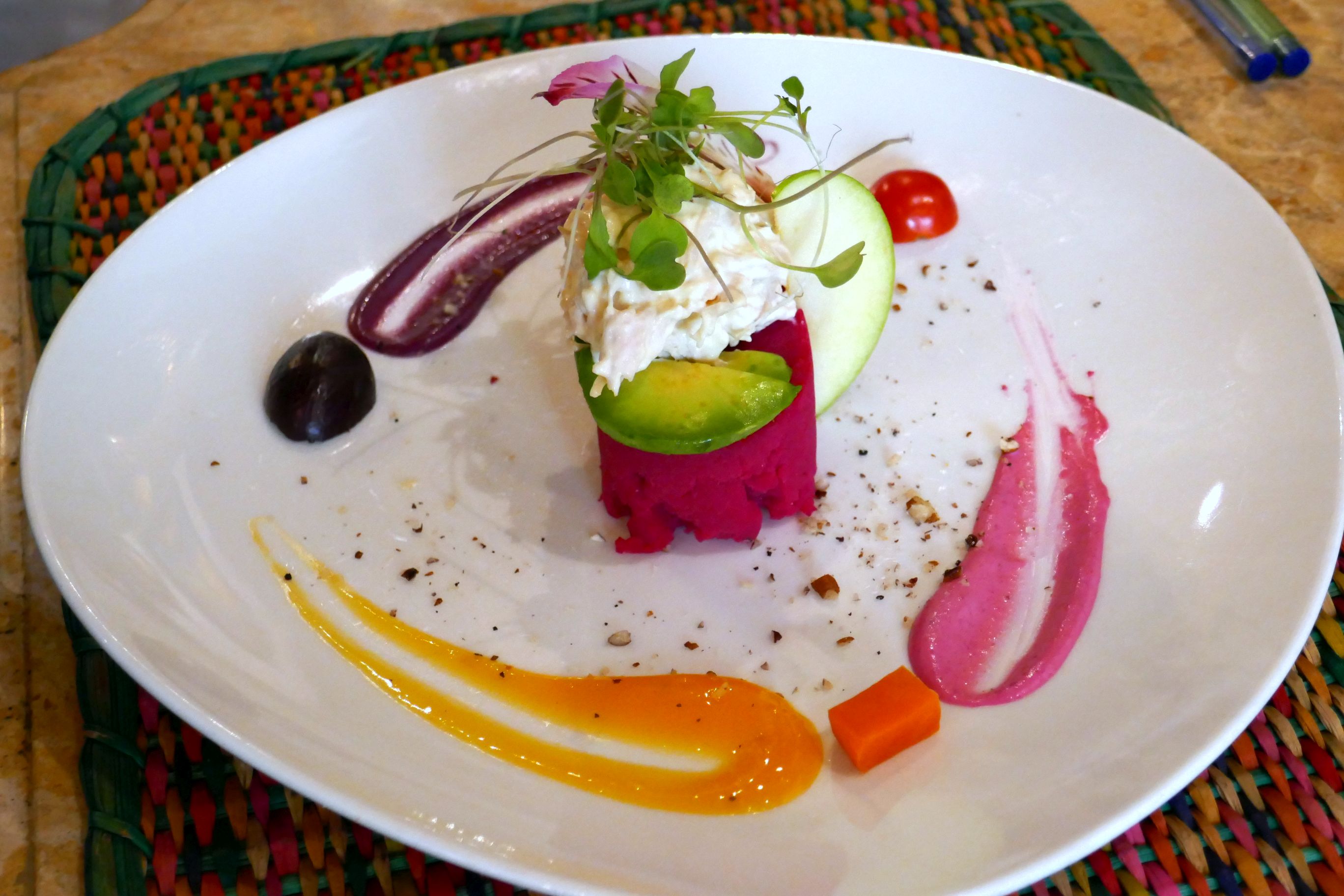
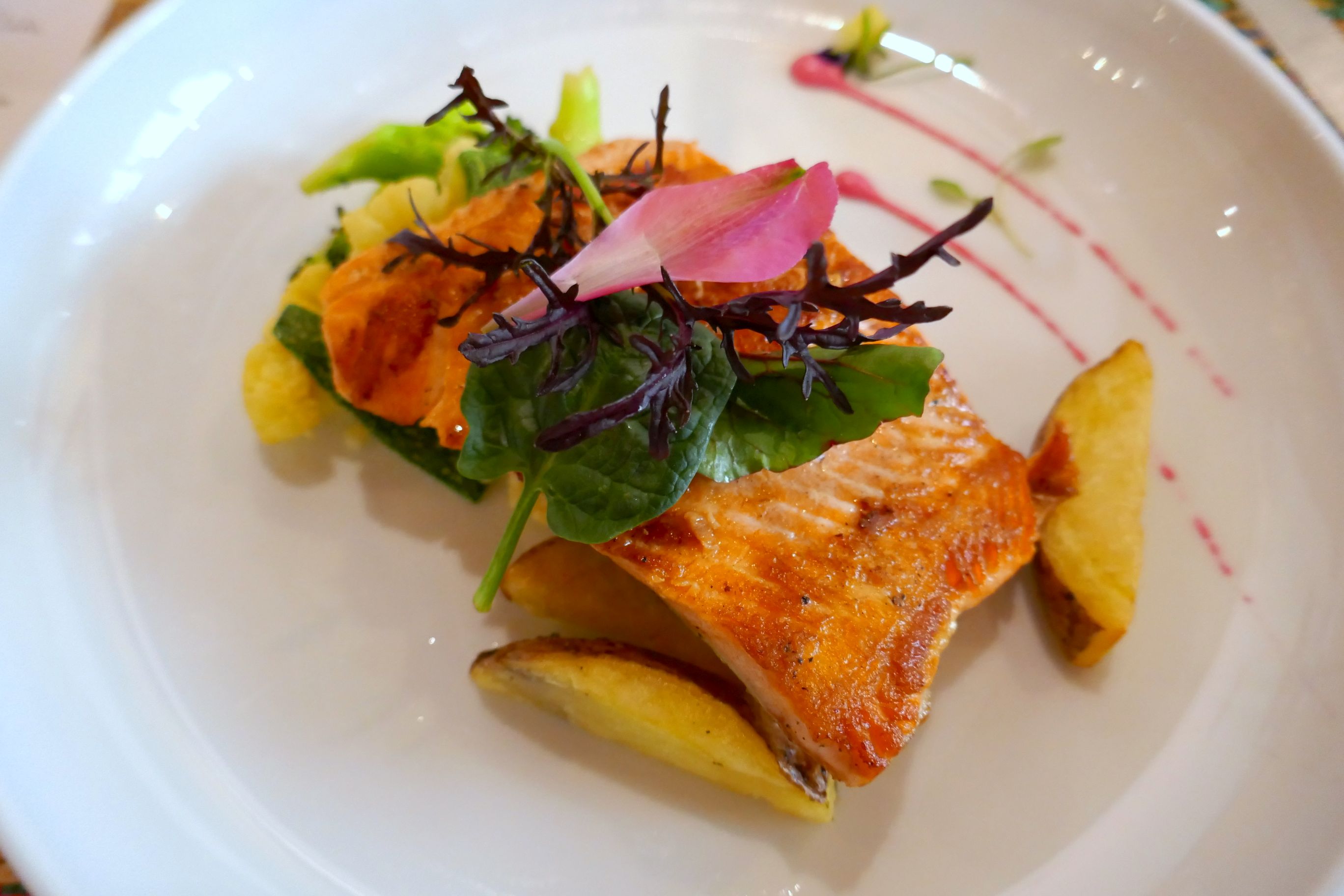
Our lunch at a local restaurant was beautifully presented and delicious!
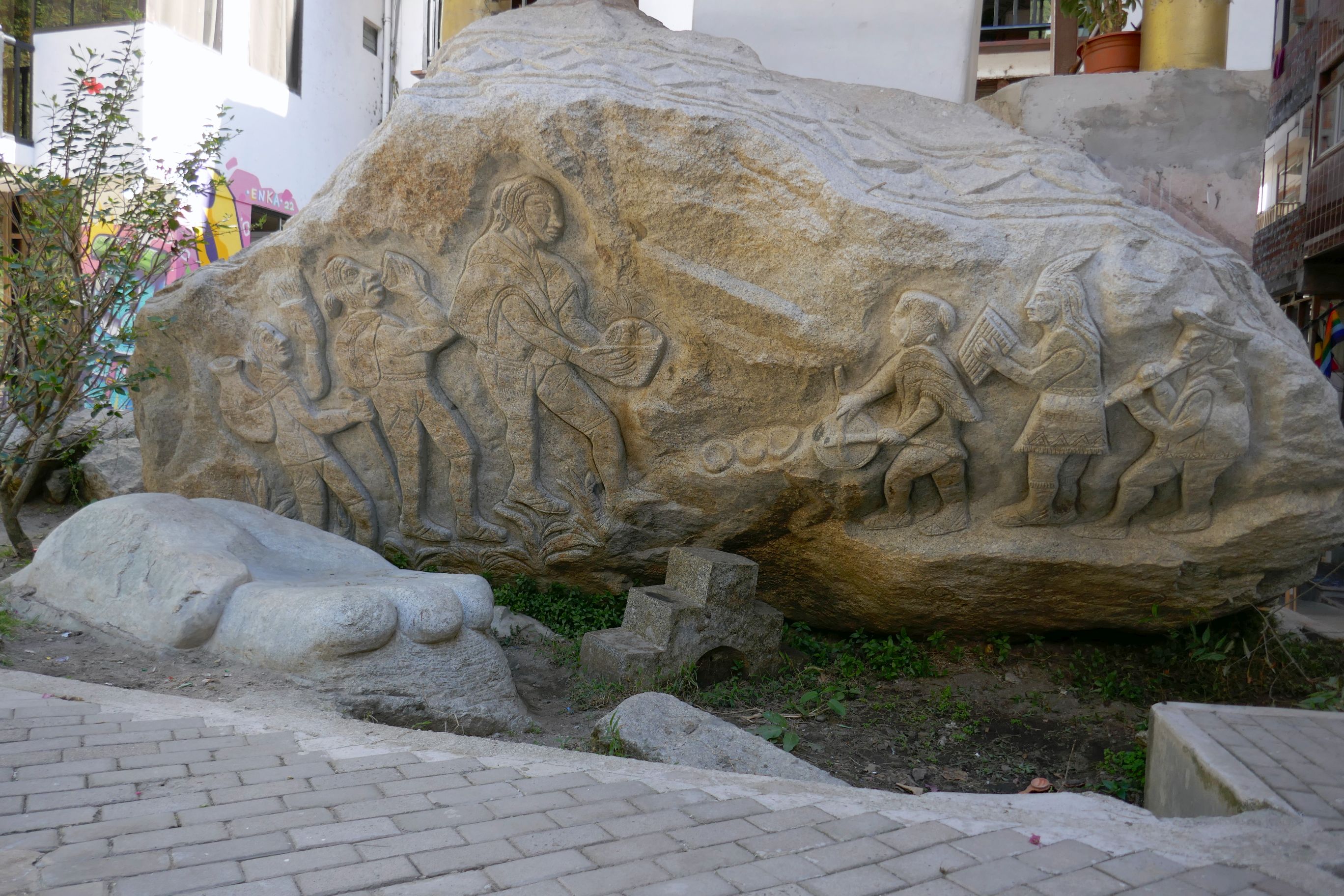
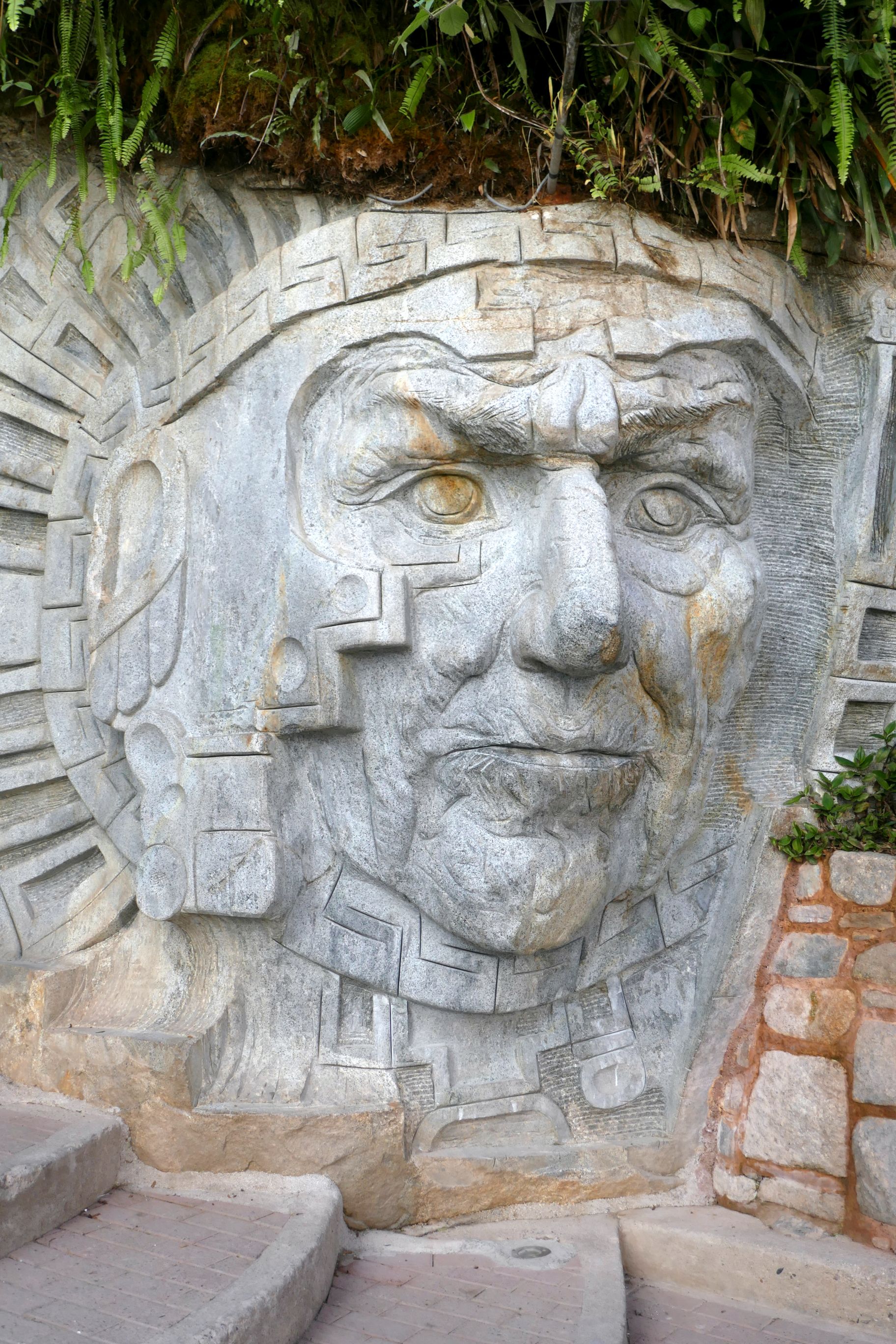
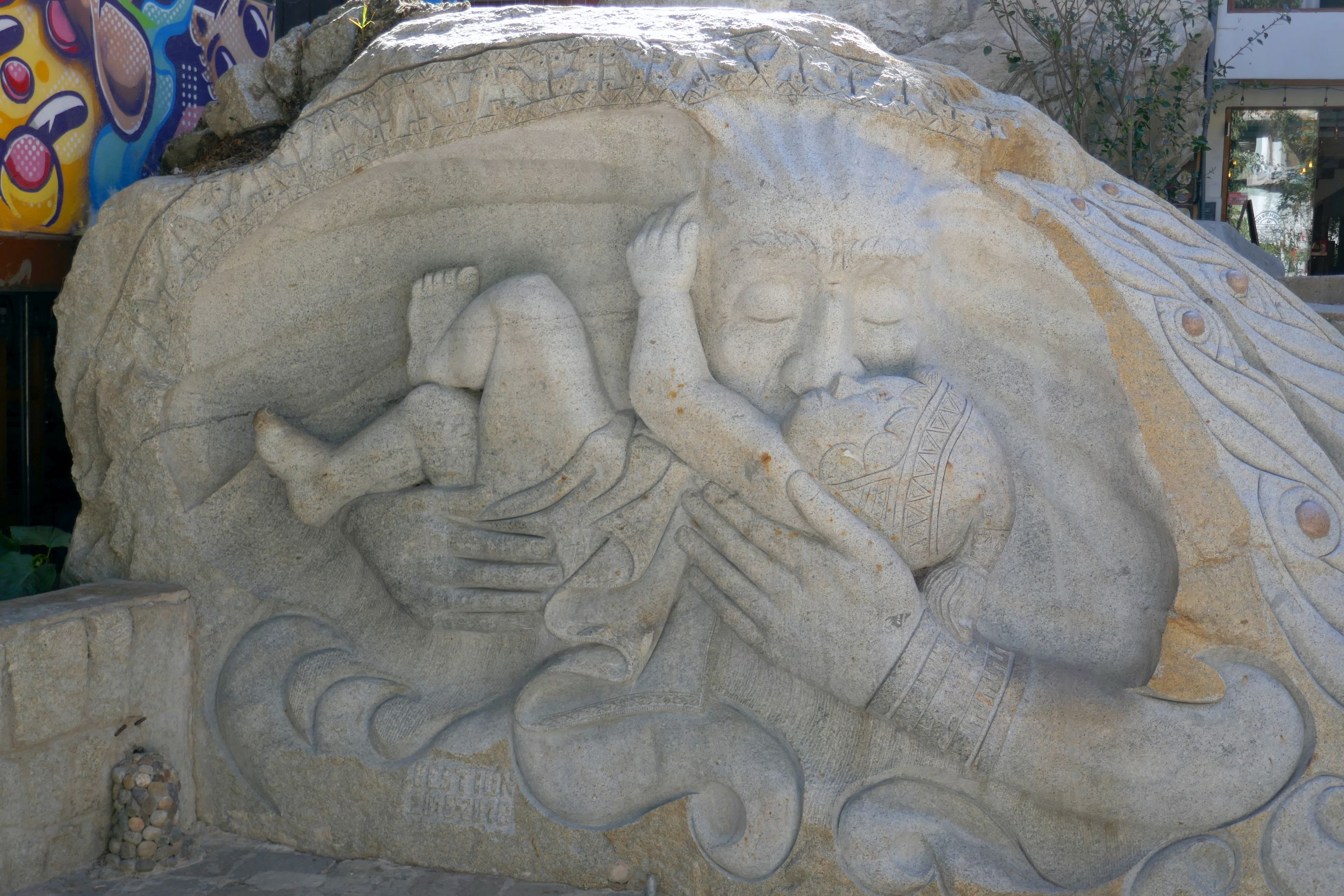
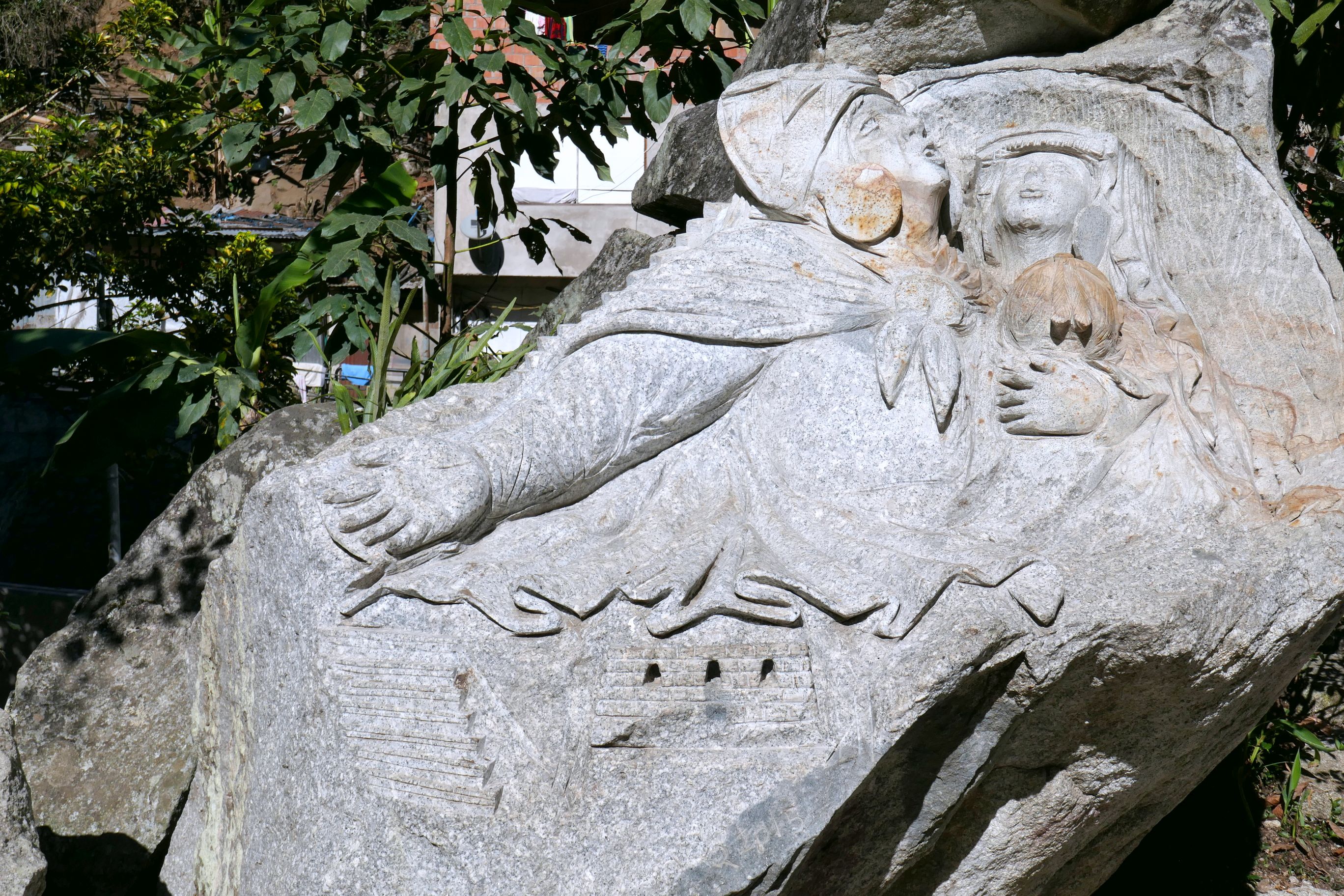
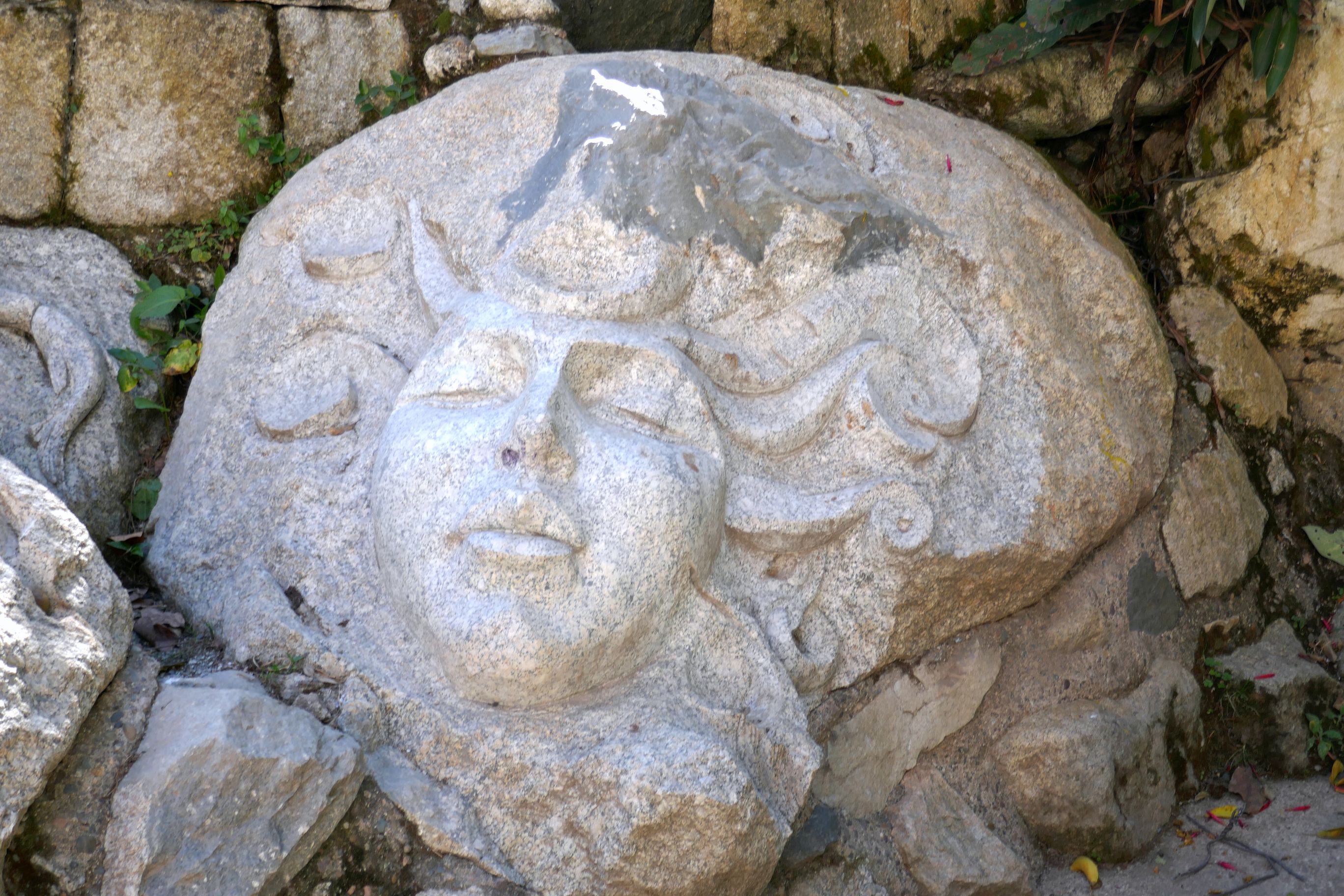
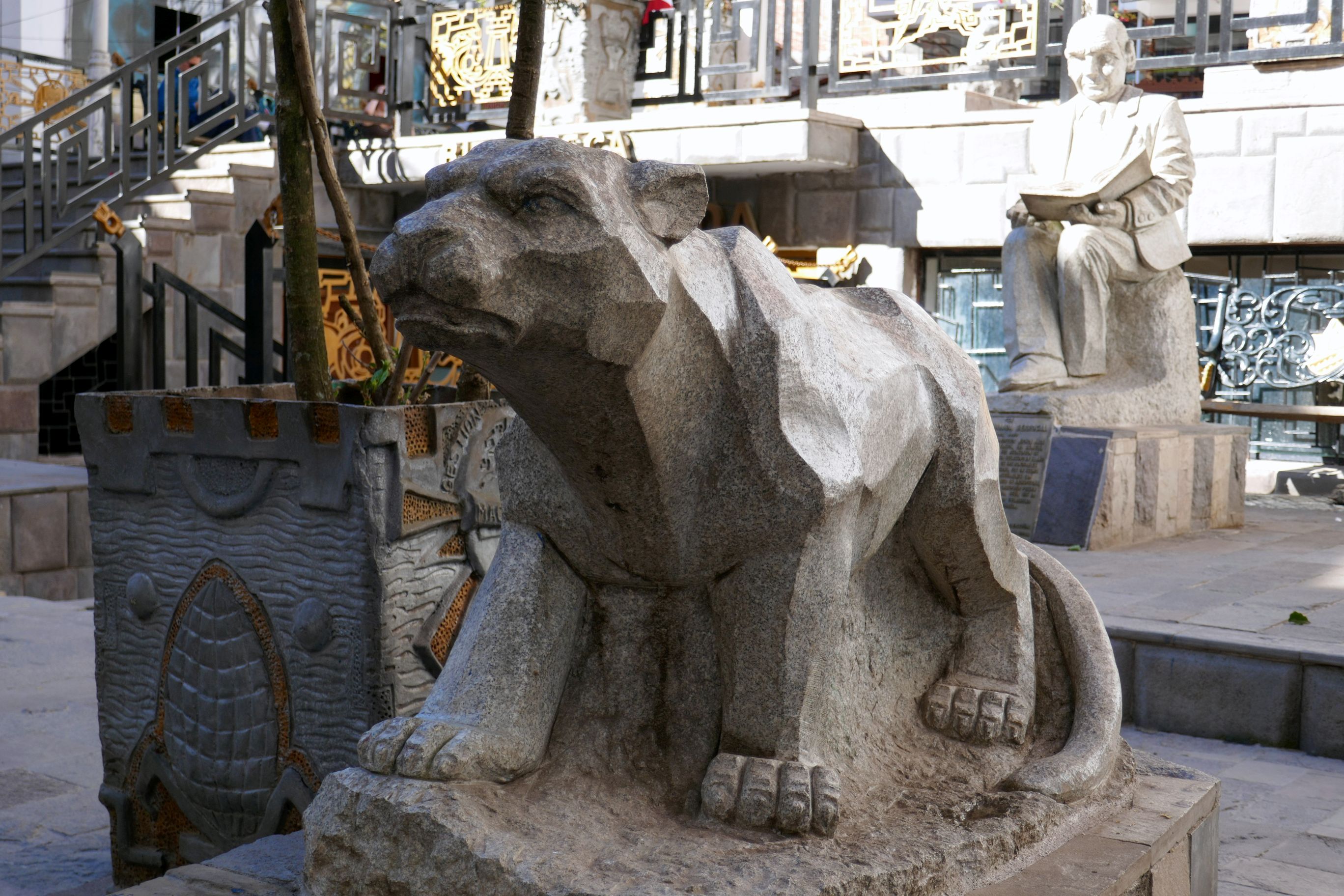
There are also amazing stone sculptures scattered throughout the town, and Raul took us on a walking tour to see them. These are only some of the many we saw:
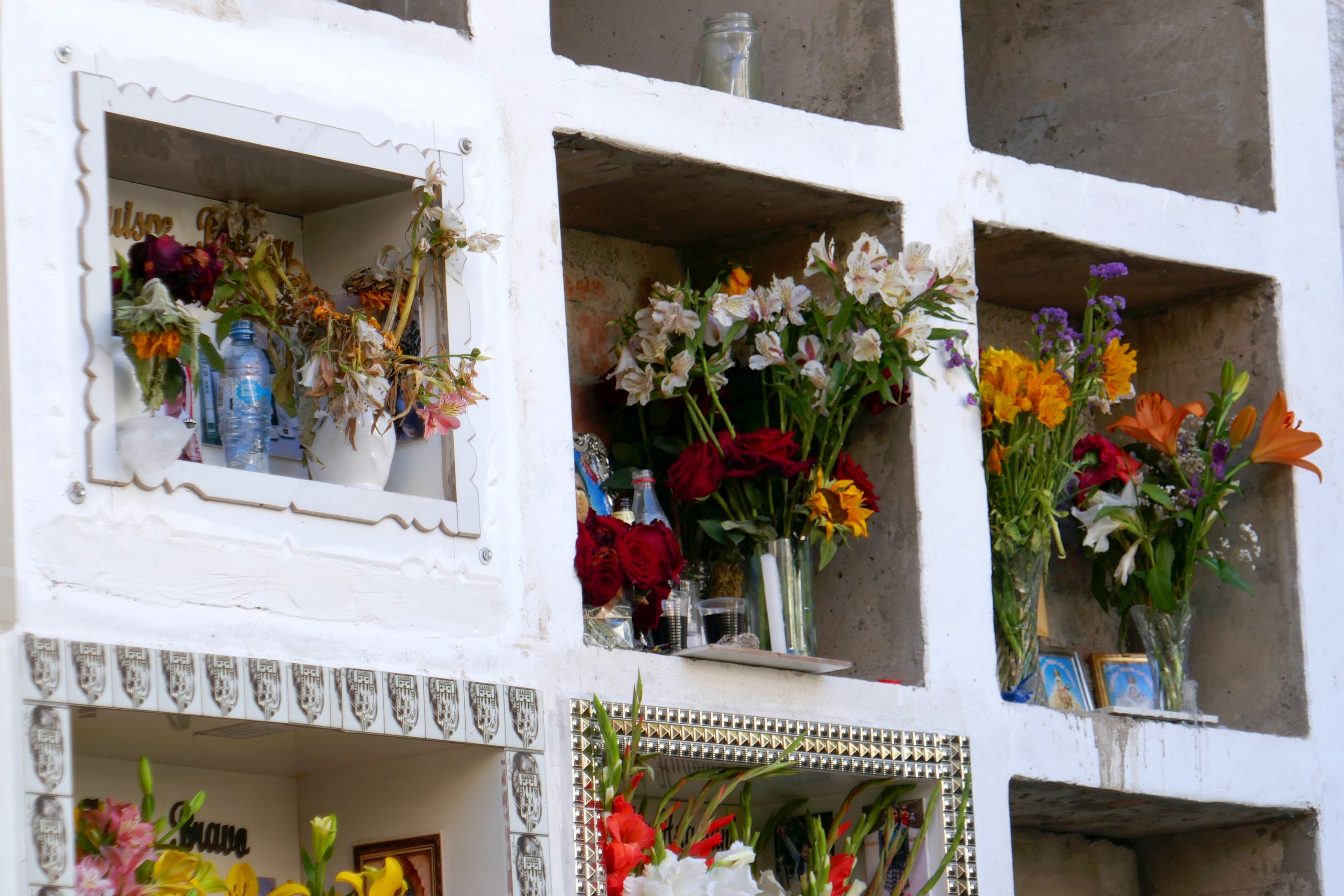
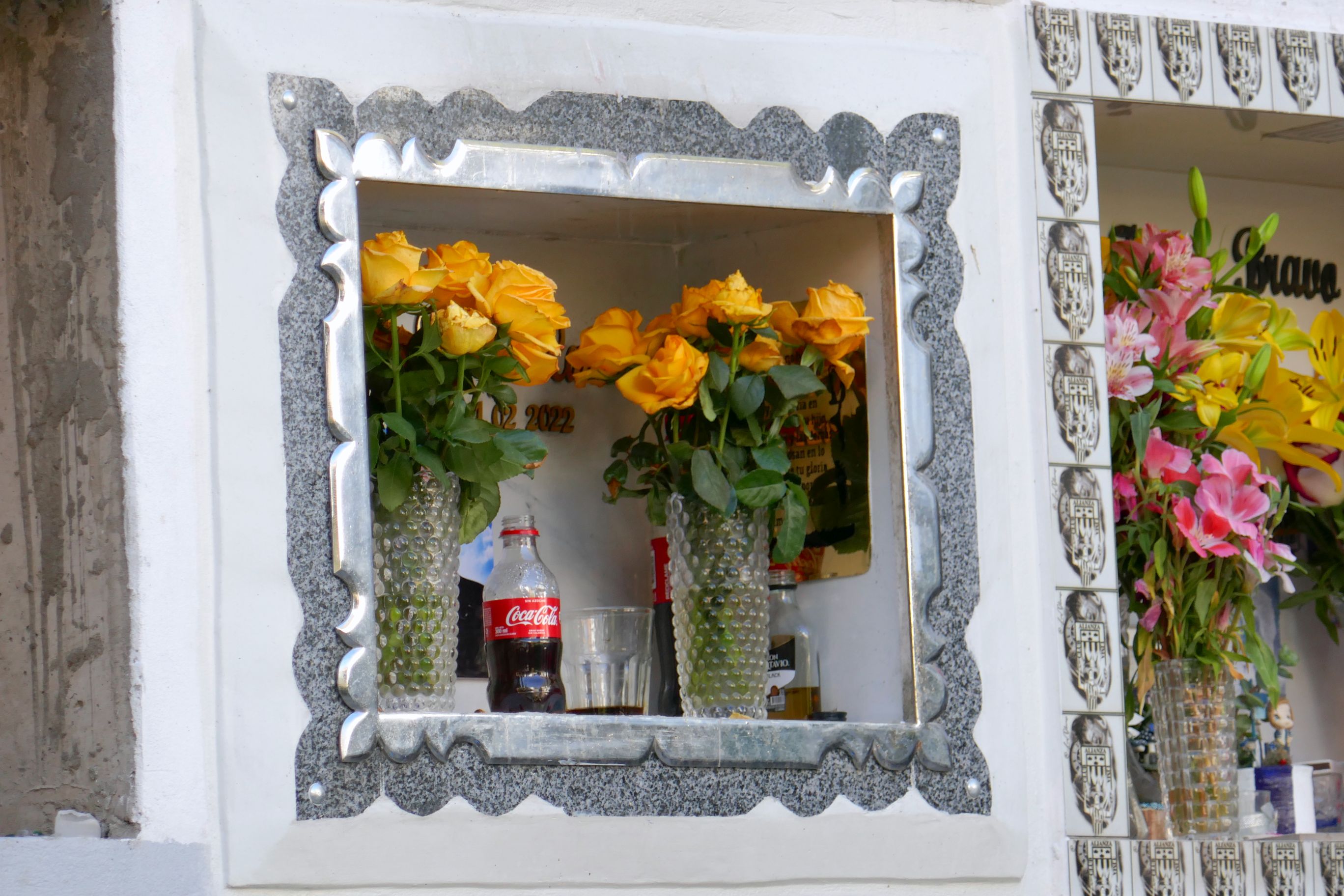
Raul also took us to see the cemetery, which was quite different than what we normally would see in the U.S.A. There were high walls of cubicles with a casket in each one. Family members decorate the front of the cubicle with the favorite things of their deceased loved one. While we were there, parents were decorating the cubicle of their deceased daughter in memory of her birthday. They were arranging beautiful flowers, and they stopped to talk with Raul and our group. Their daughter had died in her sleep at the age of 22, and they never learned why it happened. There was no hospital in the town and an autopsy was never done. It was very sad, but we were grateful they shared their story with us.
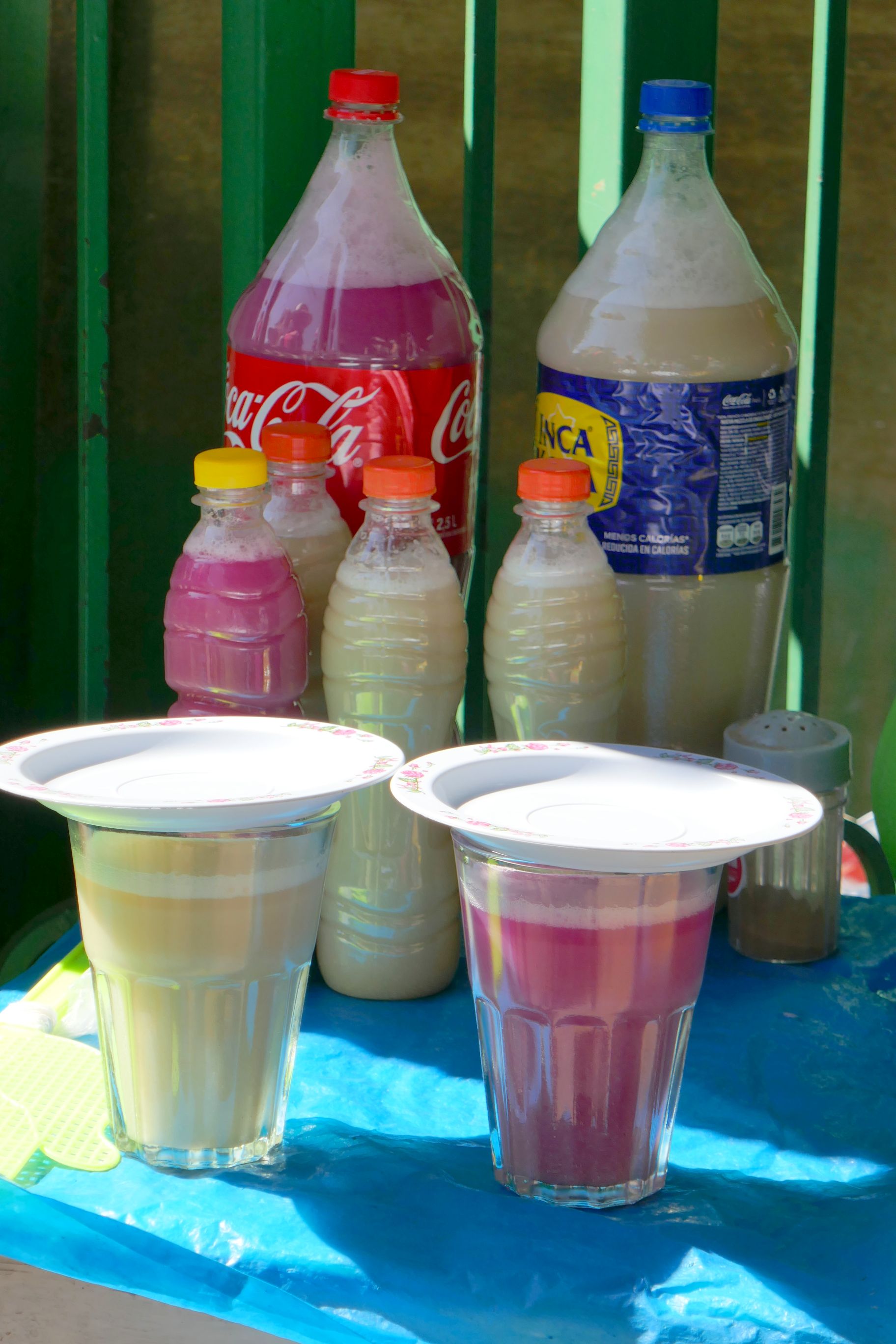
Traveling to Machu Picchu required a return to Ollantaytambo to catch the train. On our way there, we stopped to visit a woman who makes Chicha (corn beer), a very popular fermented beverage in the region, especially since regular beer is not sold in local stores. She sells a large glass of corn beer at her bar for 50 cents and strawberry corn beer for $1.
(For all photos, click on the image for a full screen view.)
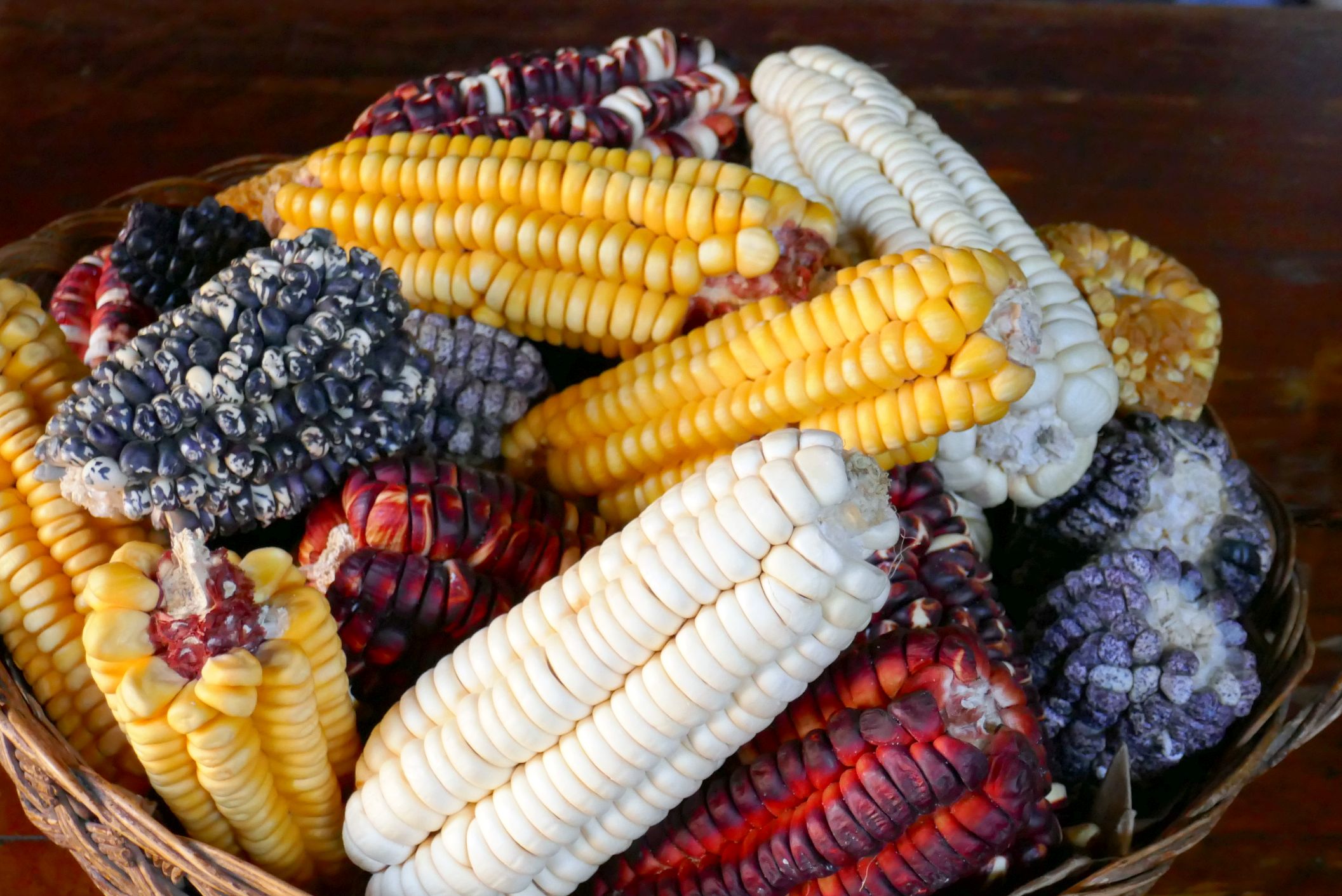
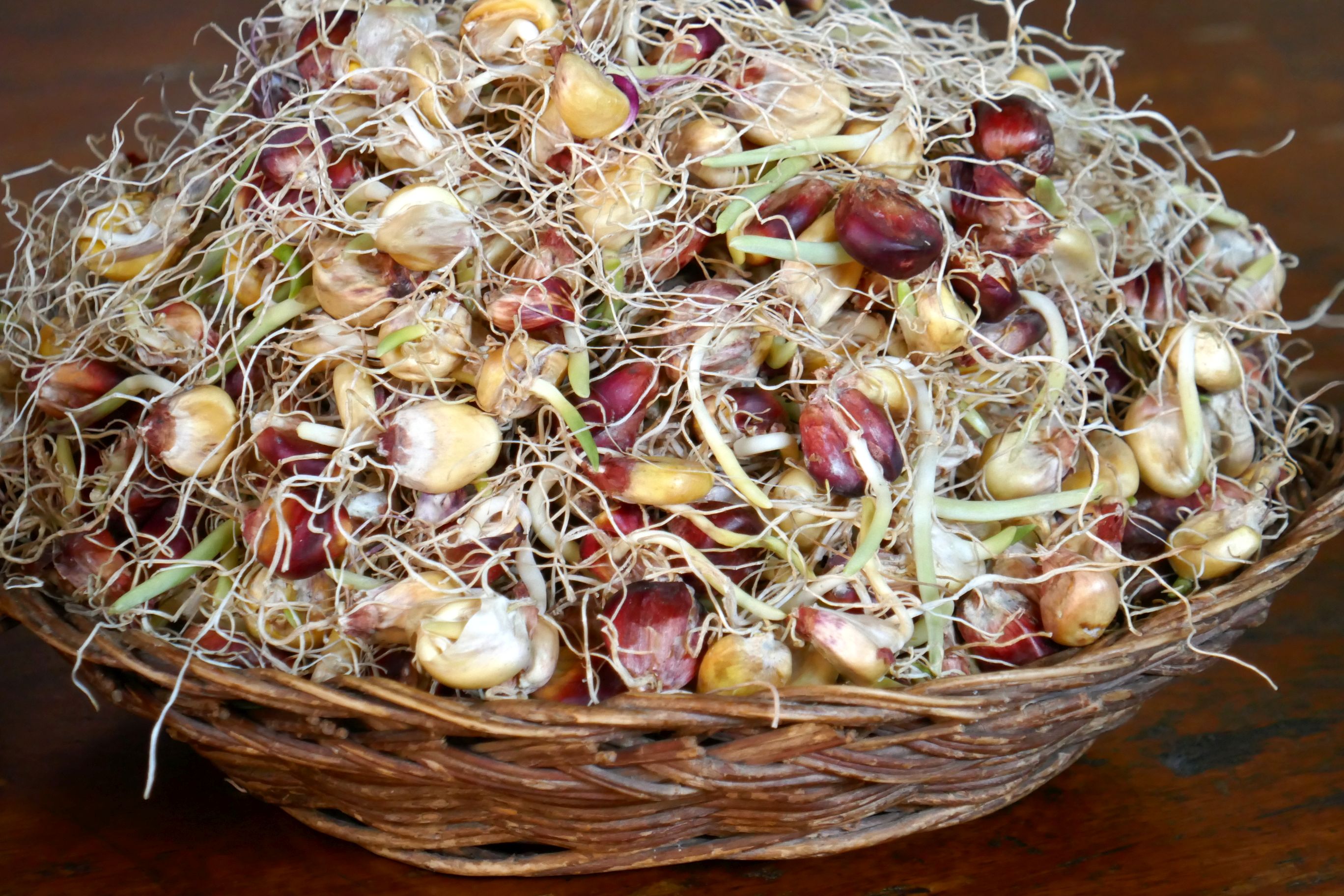
We learned about the process of making the beer, which begins by removing corn from the cob and spreading it out on plastic sheets. Water is added, and then it is packaged up, covered, and placed in a cool shady spot to ferment for three days. After tasting both flavors, we all agreed it was, uh, an acquired taste. But if you go to Peru and want to buy some, just look for a Chicheria. If it is available for sale, there will be a red flag on a stick out in front of the store.
The beer is fermented in those large clay pots (in the back).
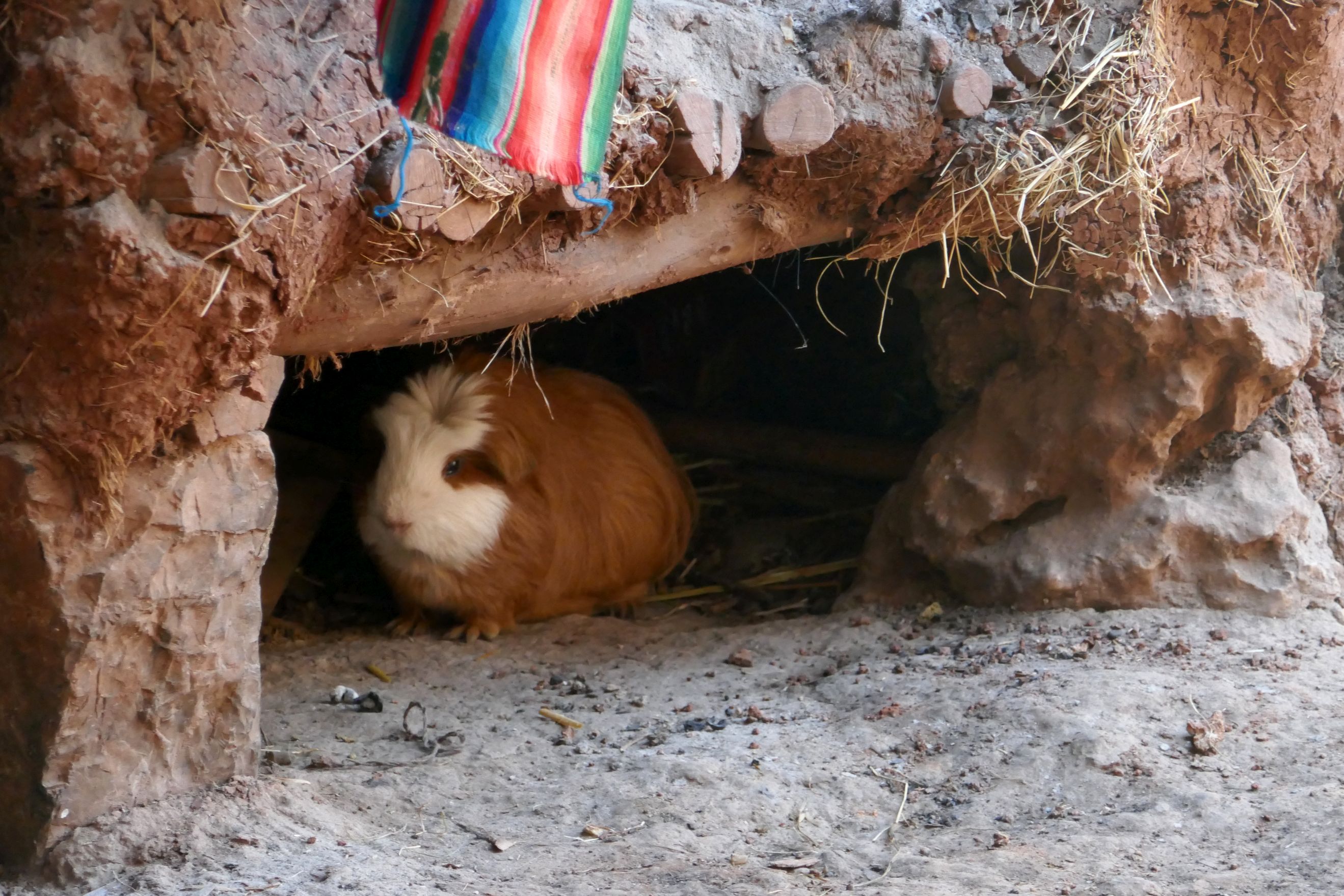
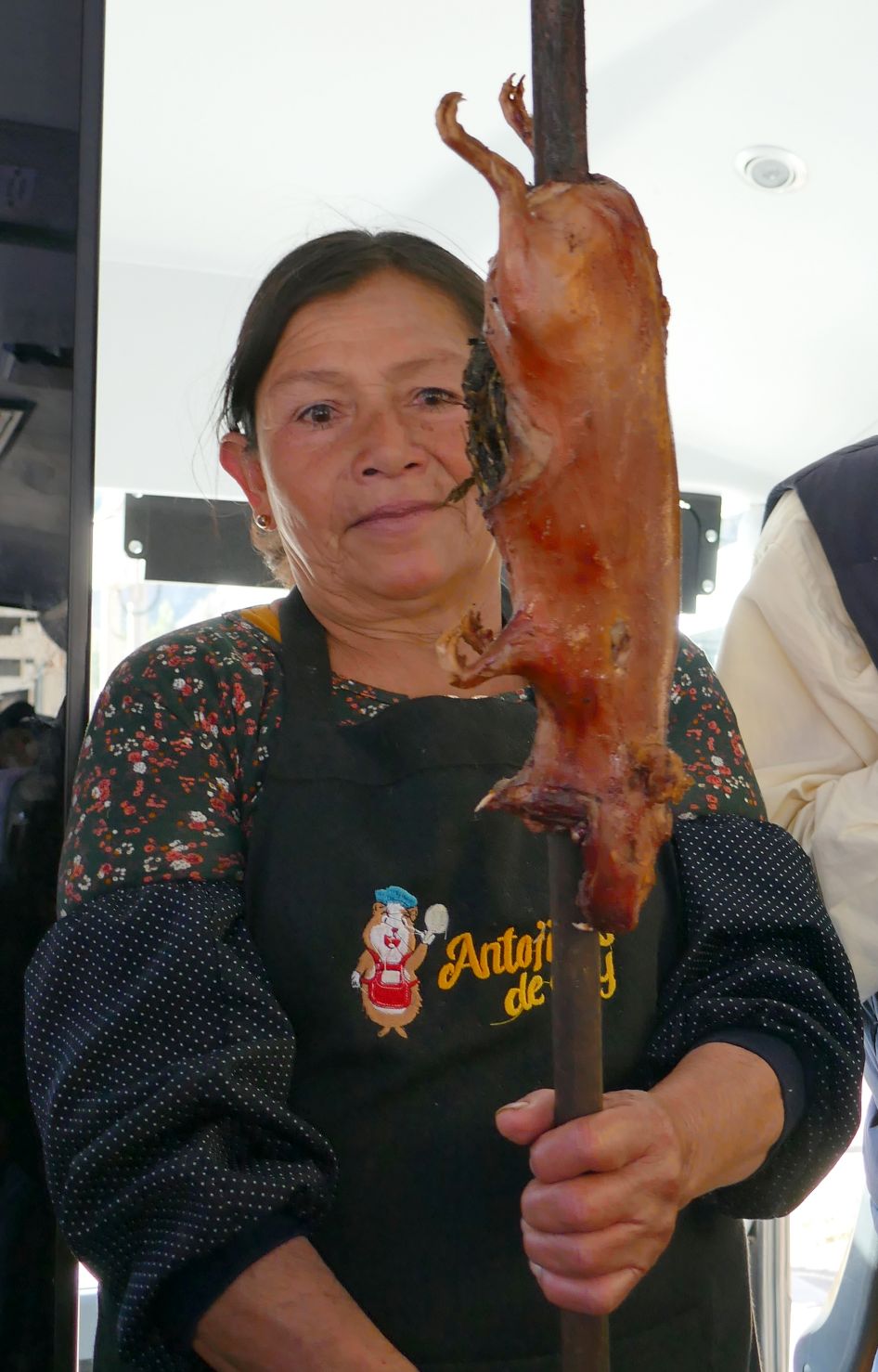
I noticed they also raise guinea pigs, their national delicacy.
At the bar, the favorite activity while drinking corn beer is playing Sapo, a coin toss game:
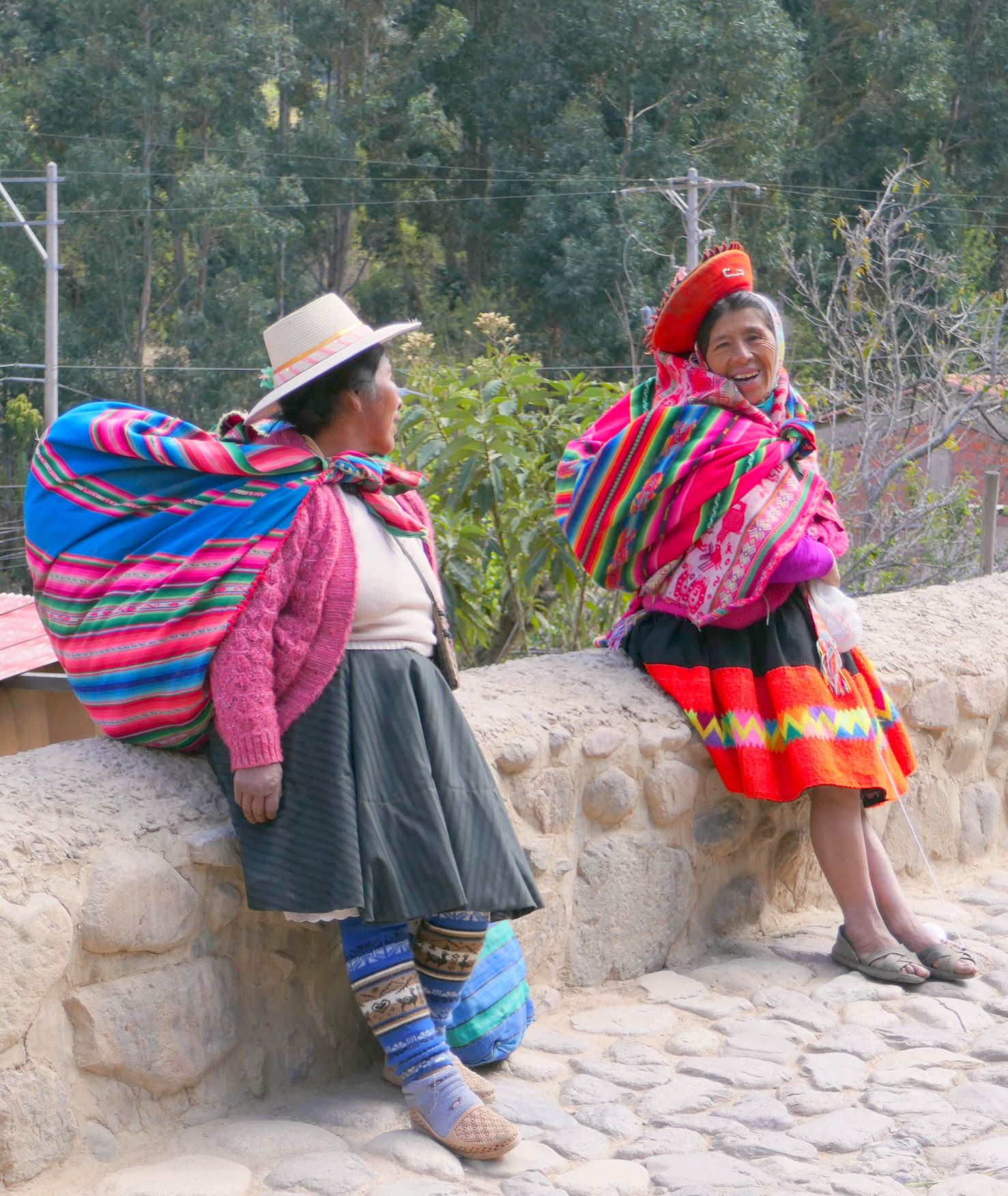
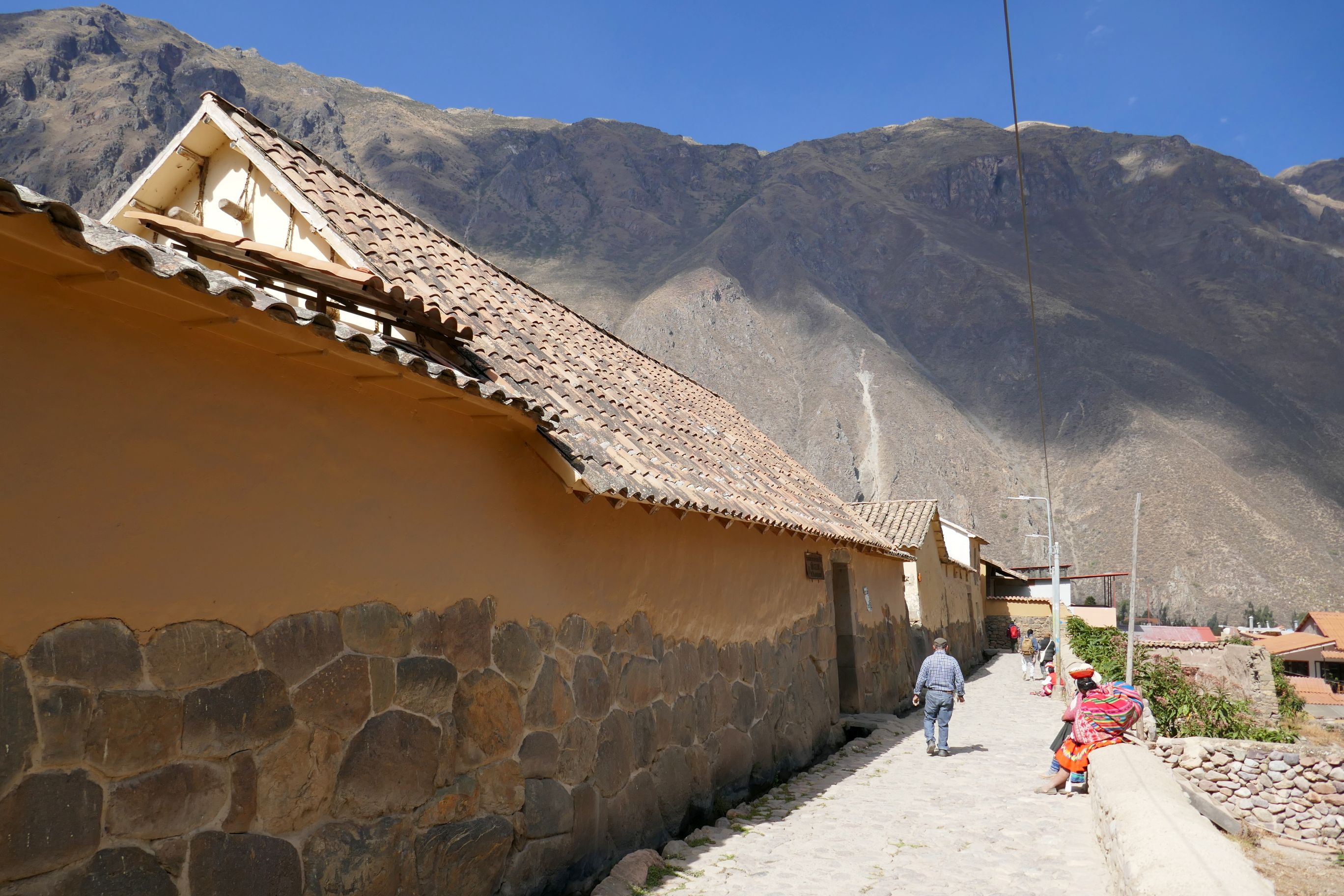
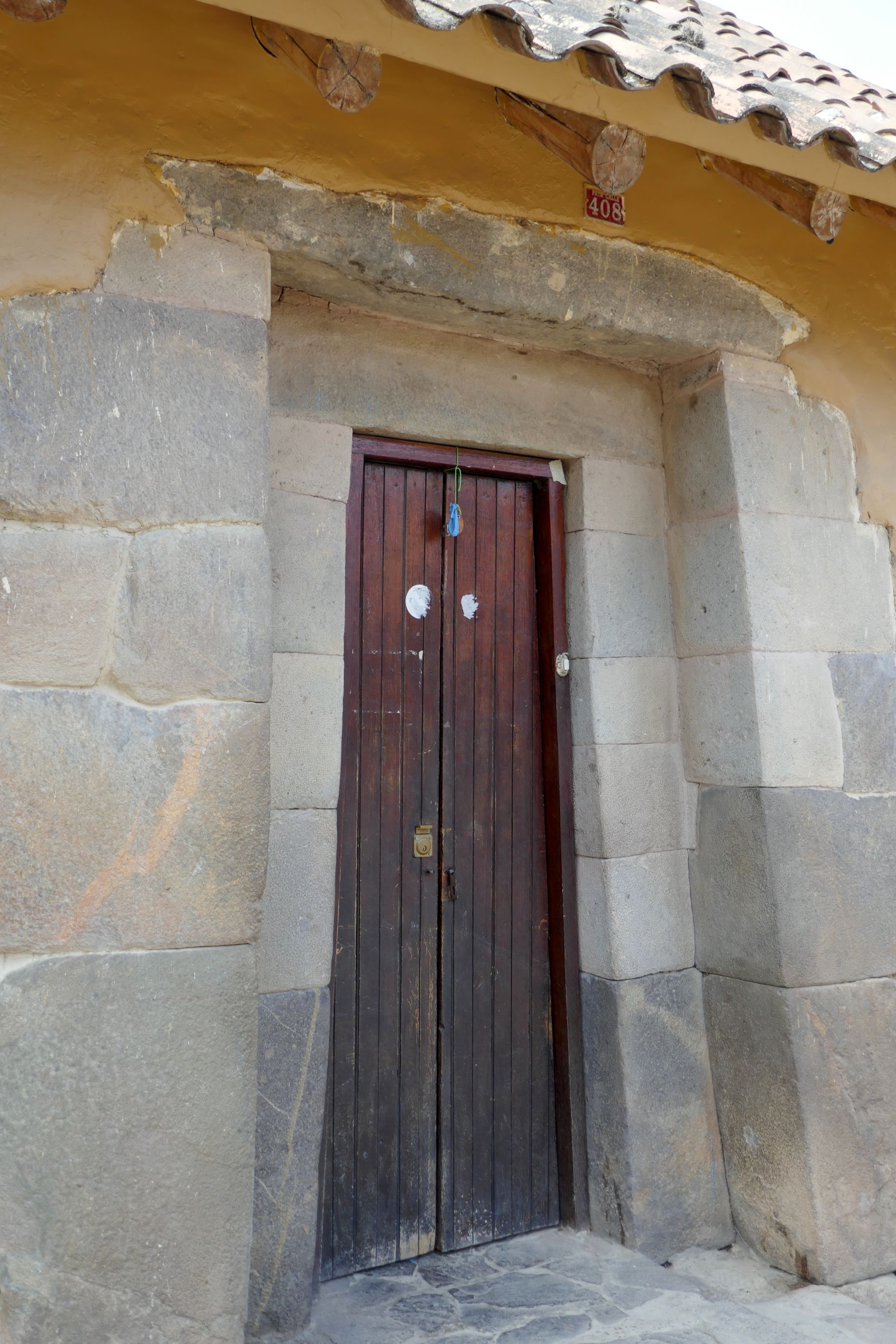
Our group continued back to Olantaytambo, arriving early enough for Raul to take us on a walking tour of the town before boarding our train. We had previously hiked the ruins and saw the craft market, so Raul took us through other areas of the village where we could see how the locals live and meet a few along the way.
The train ride to Machu Picchu was beautiful, gradually becoming more tropical as we got closer. What a spectacular day! Our research on Machu Picchu had left us with very low expectations for good weather, since we had learned it is often foggy (or rainy) with anywhere from low to no visibility. We figured our luck had to run out at some point. Except for the rain we had in Lucerne, Switzerland, back in May, we had experienced unbelievably fantastic weather during our travels this year. Surely, we would arrive in Machu Picchu and see… nothing.
But we didn’t! When we disembarked the train in town, the sky was blue and full of beautiful “Simpson” clouds (named after the white cartoon cumulus clouds that appear at the beginning of “The Simpsons” TV show.) Glorious!
Next step in the journey: Hop on a bus and head up the hairpin switch-back road to the ruins! We were almost there!
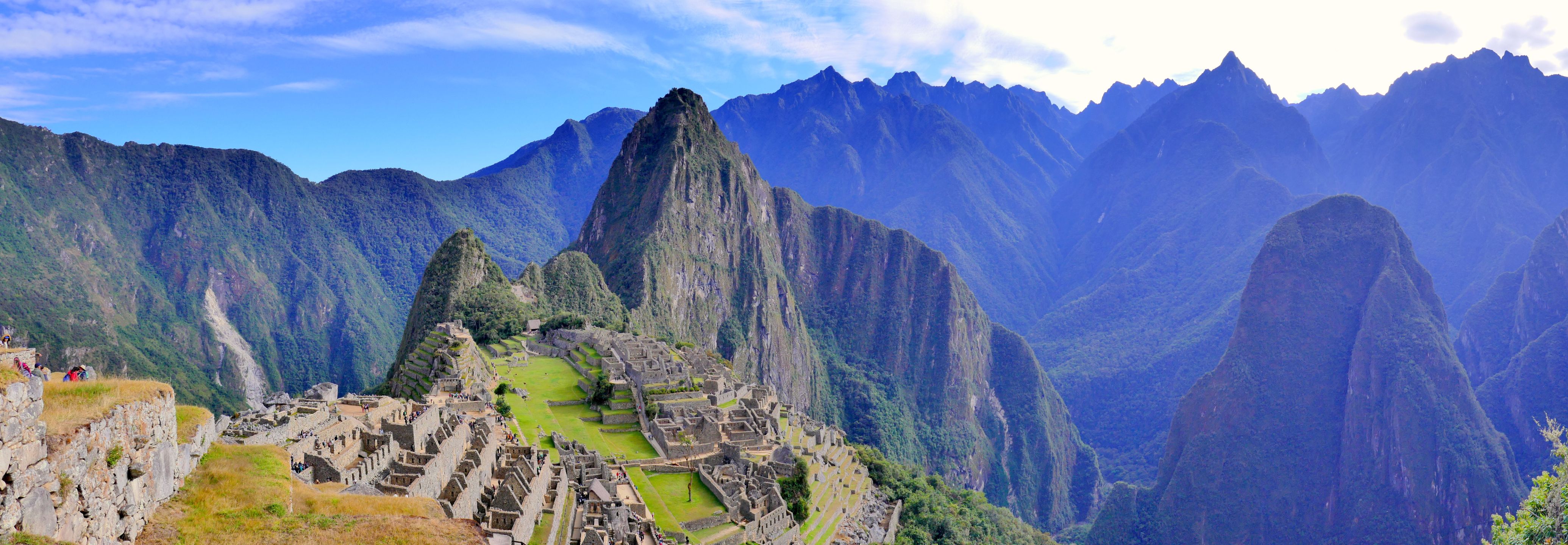
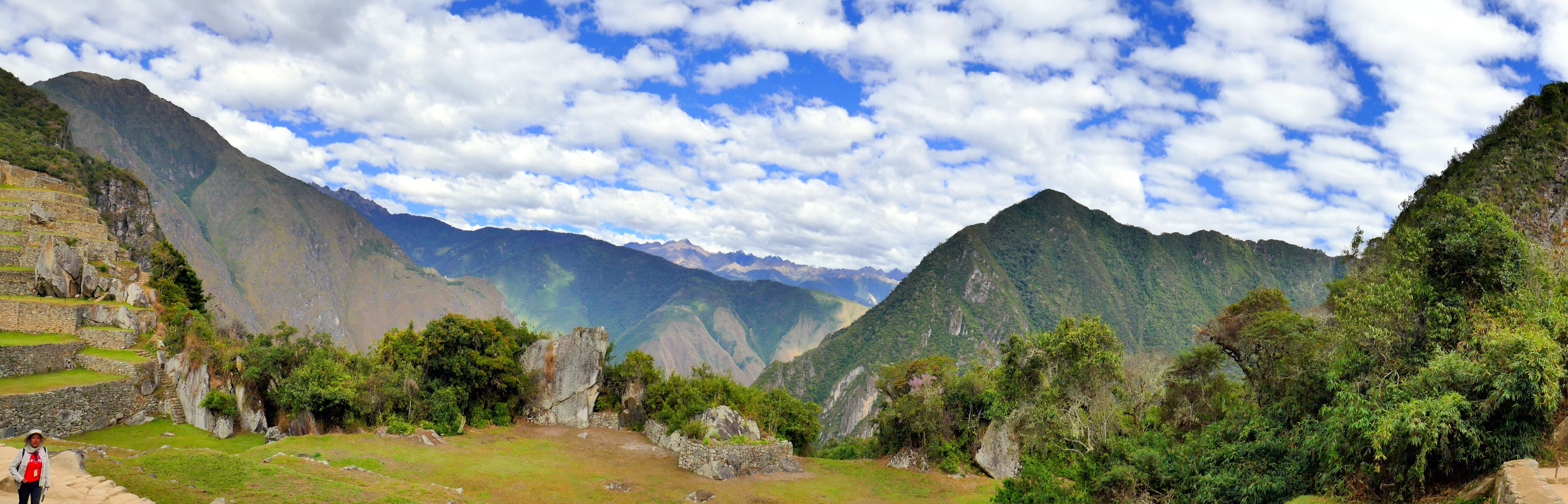
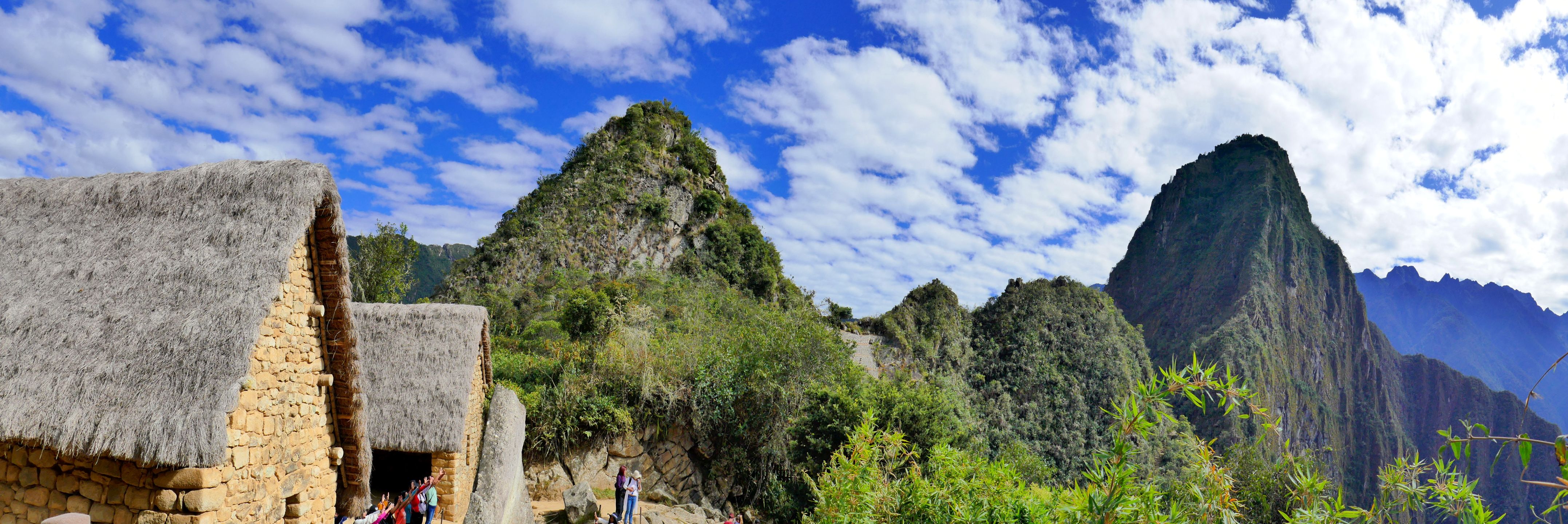
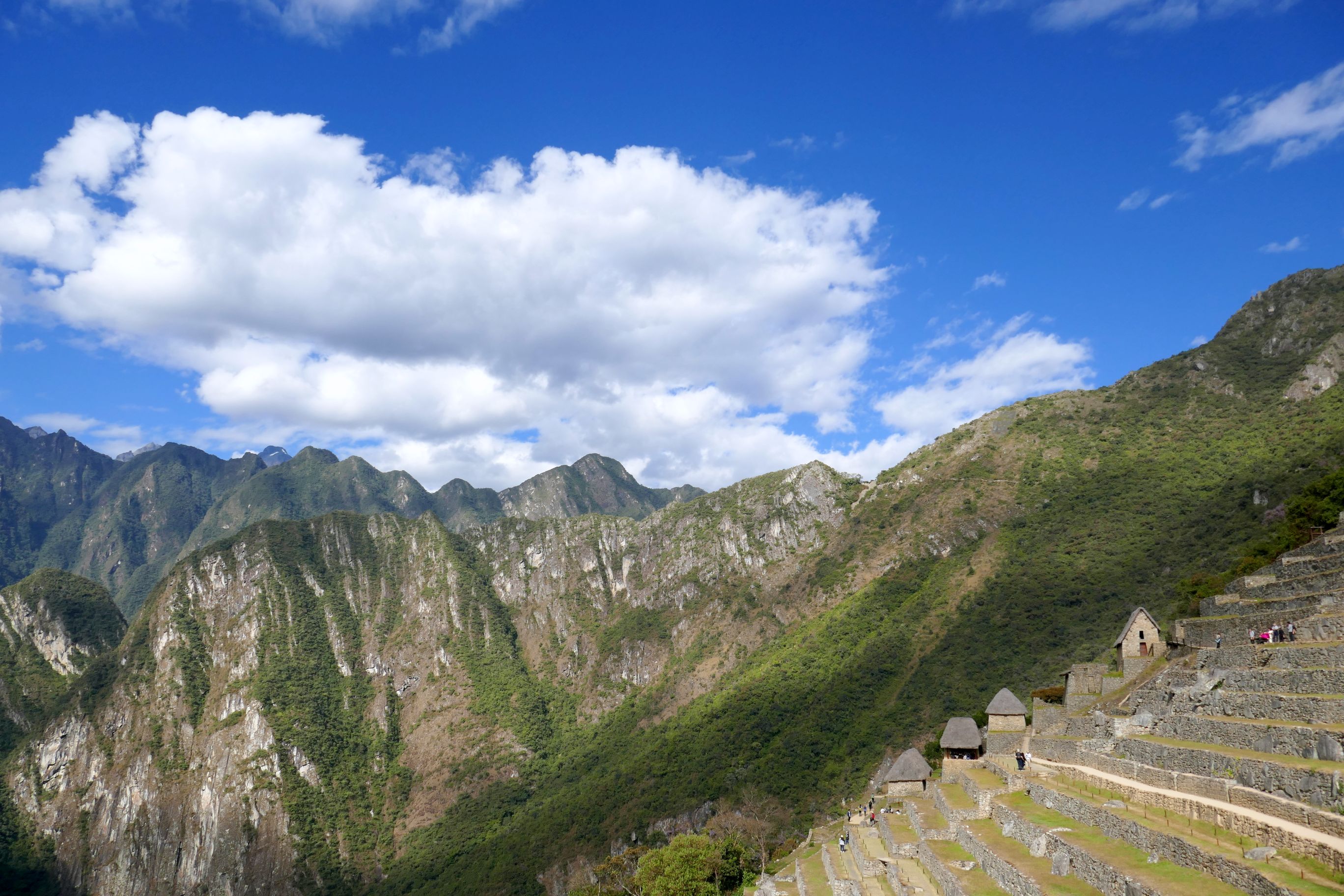
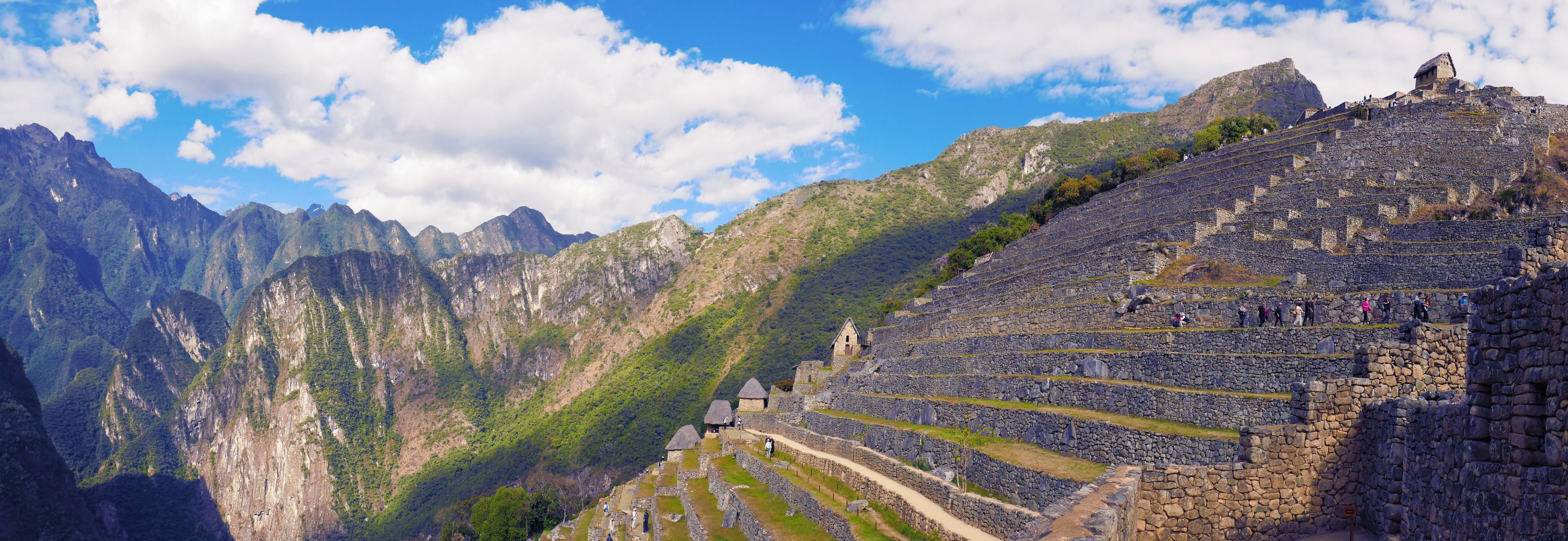
A UNESCO World Heritage Site, Machu Picchu is a 15th-century Inca citadel that was built on a mountain ridge at an elevation of 7,970 ft—a piece of cake to negotiate after adjusting to the higher altitude of Urubamba.
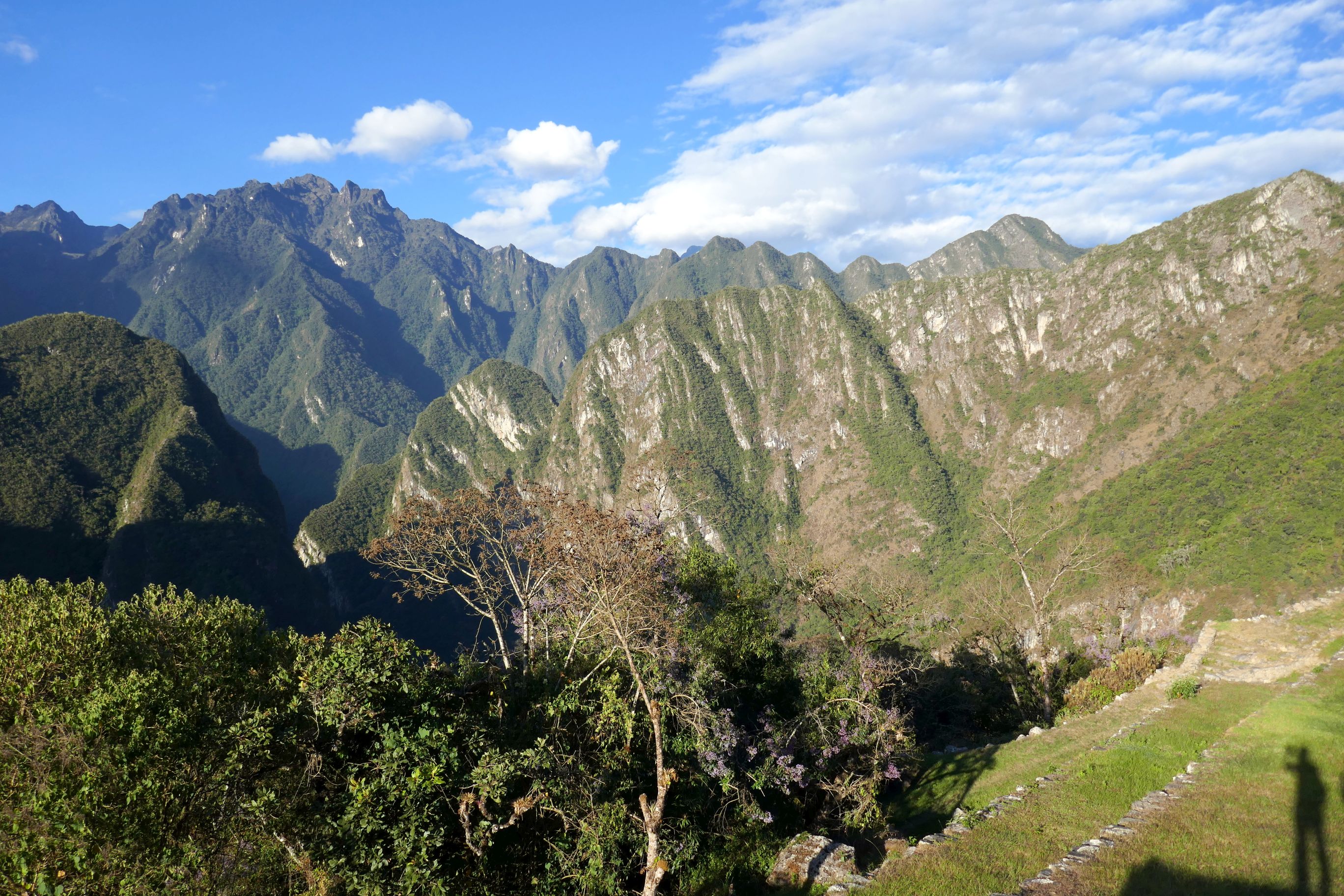
This was our first glimpse of the mountain view before we saw the ruins:
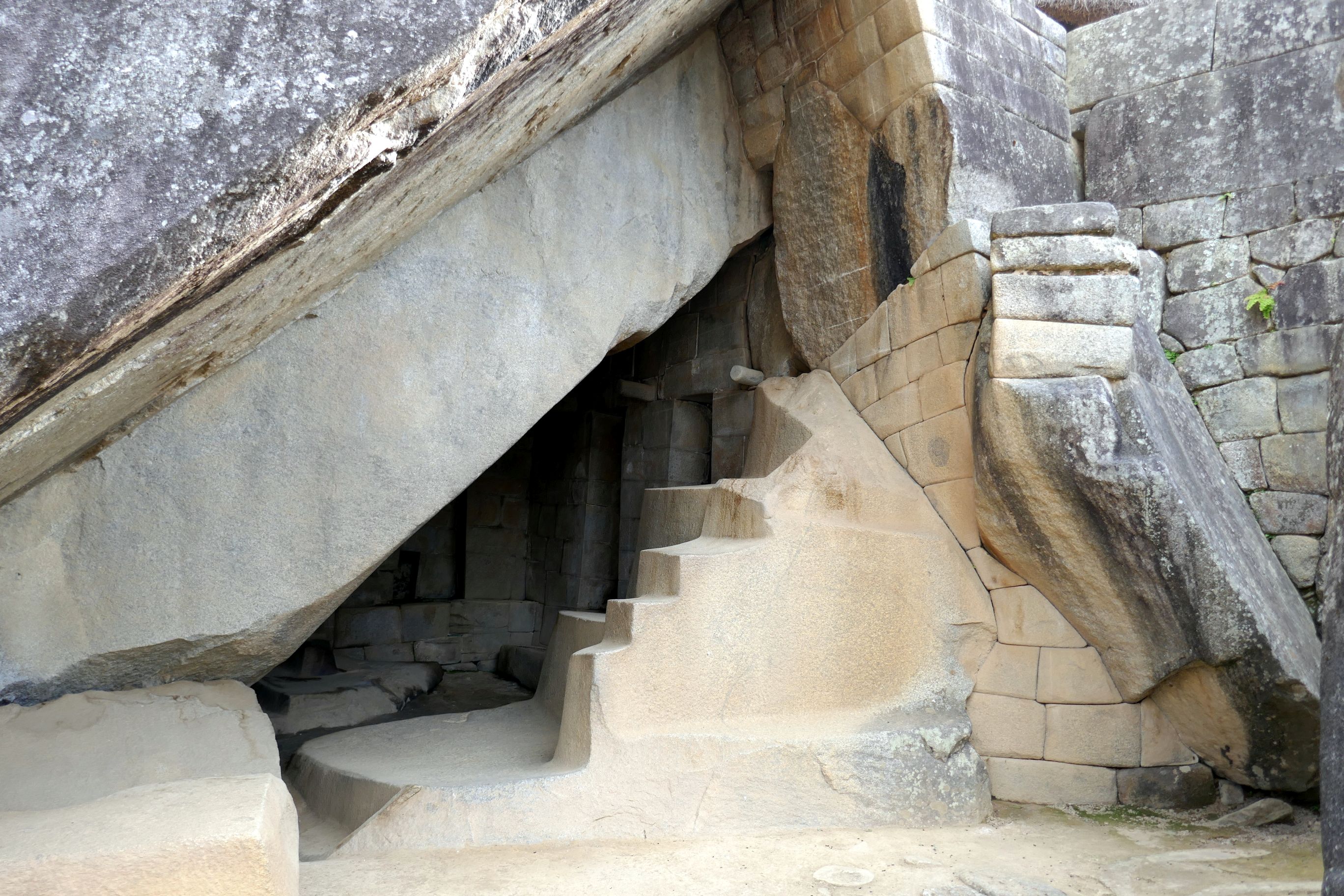
We learned a great deal of fascinating information and history about the Incas and Machu Picchu during our late afternoon visit (as well as during our return visit the following morning). I will spare you the details, however, and just share my pictures instead.
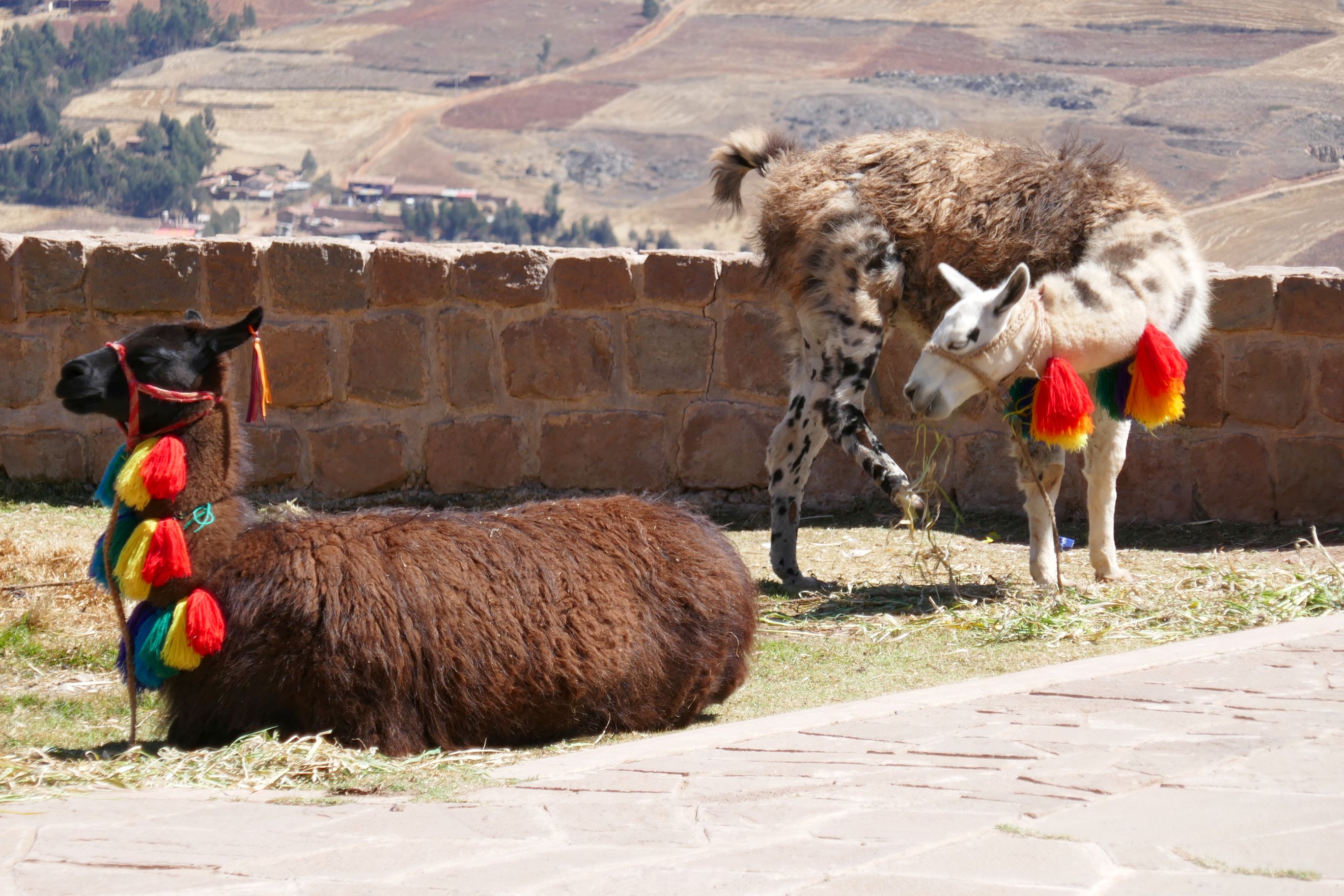
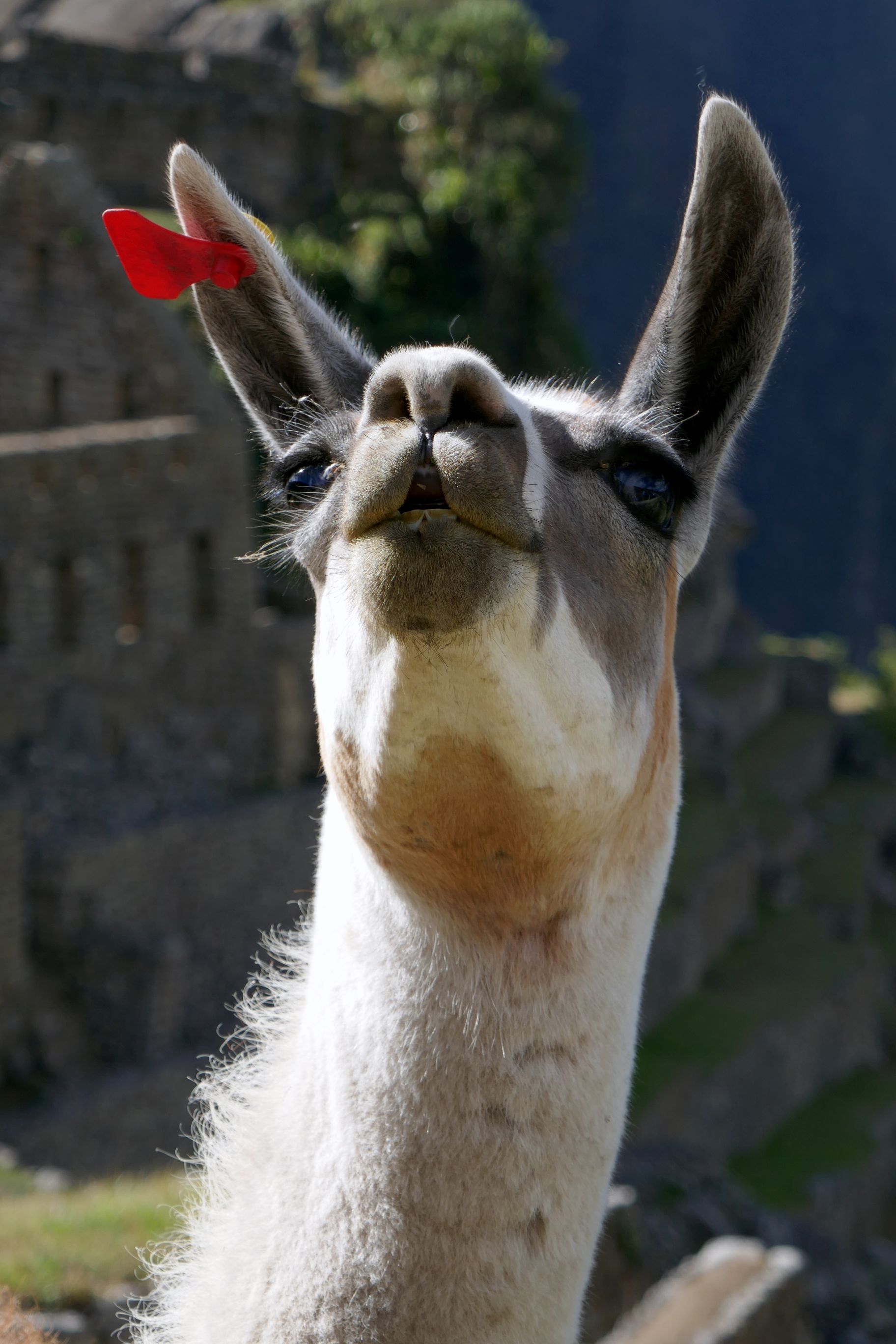
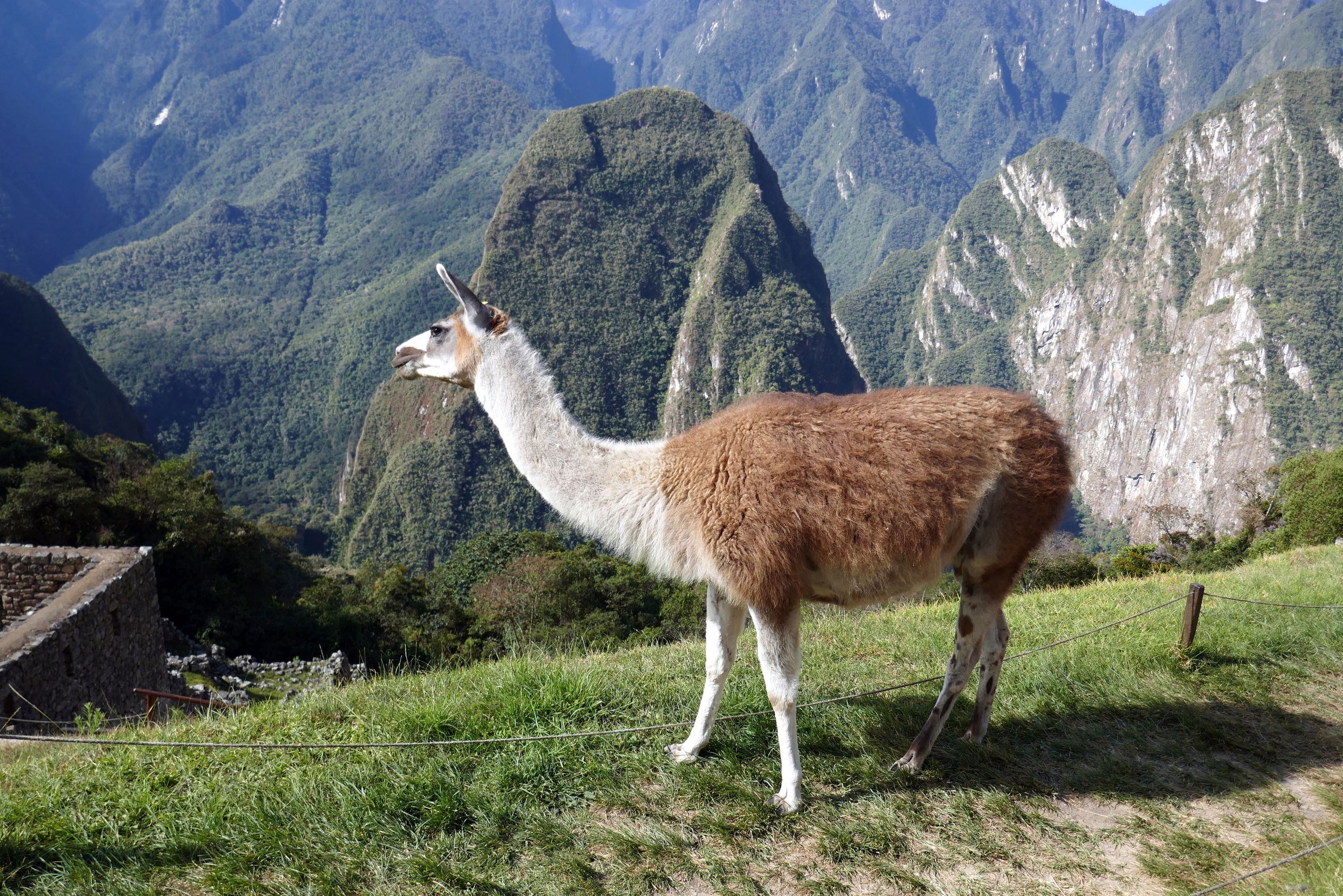
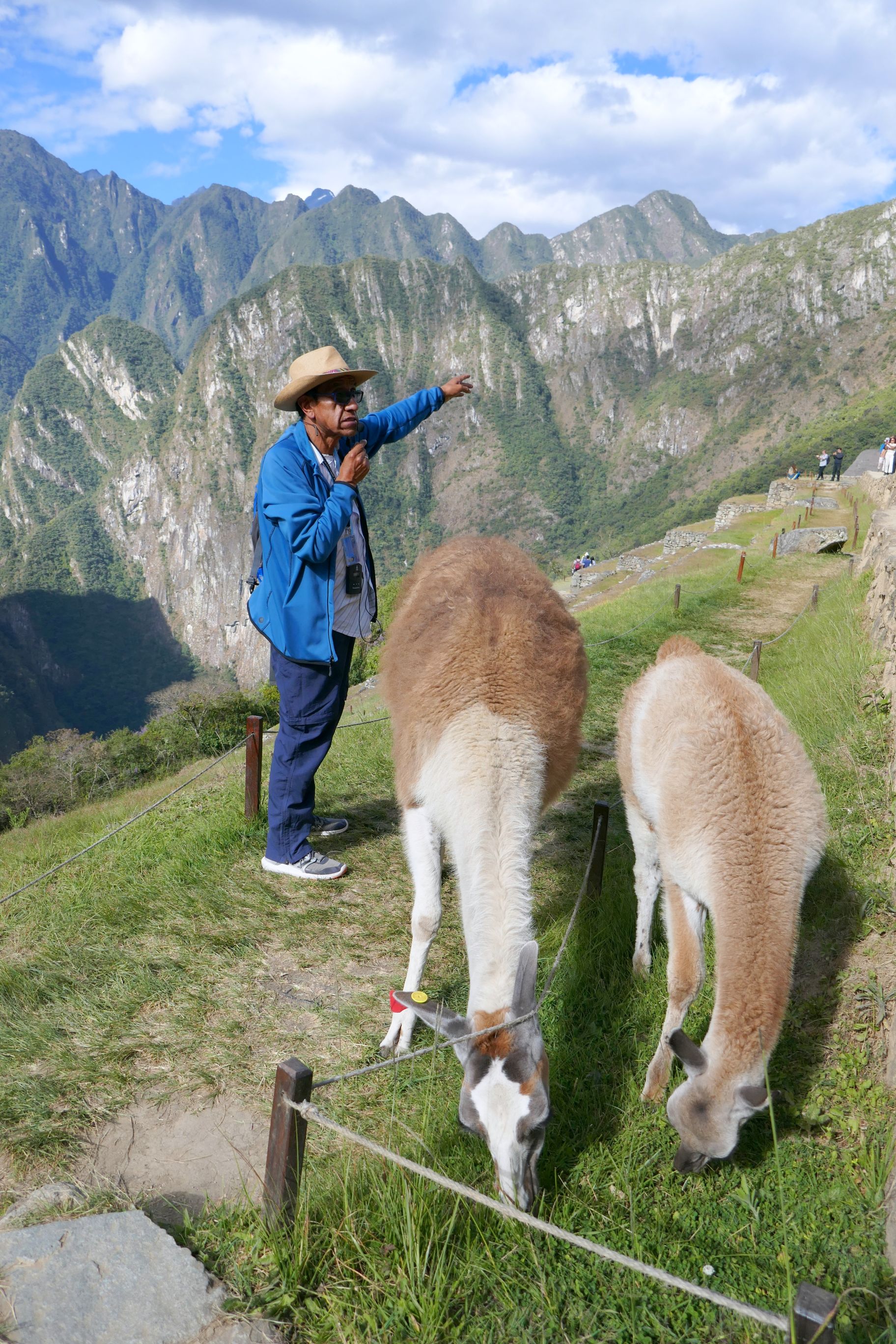
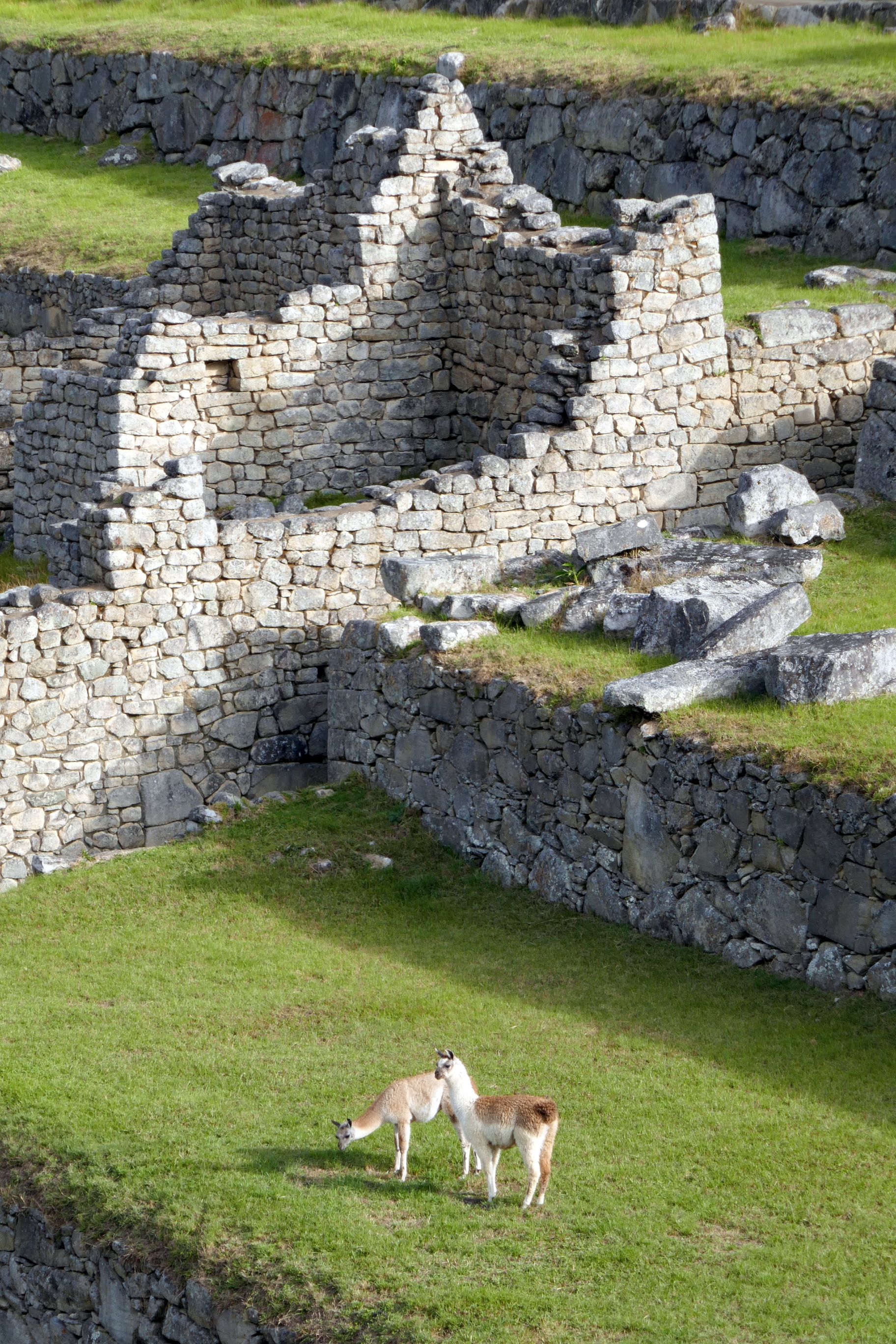
Our research also revealed that we may see an alpaca at Machu Picchu. As Raul stopped in a roped off area to share some of his vast knowledge of the Incas with us, this gal and her baby waited patiently for him to move, so they could walk past him to graze on the grass. They finally gave up and walked behind him, giving us all a good laugh while Raul was oblivious!
I think Raul finally caught on!
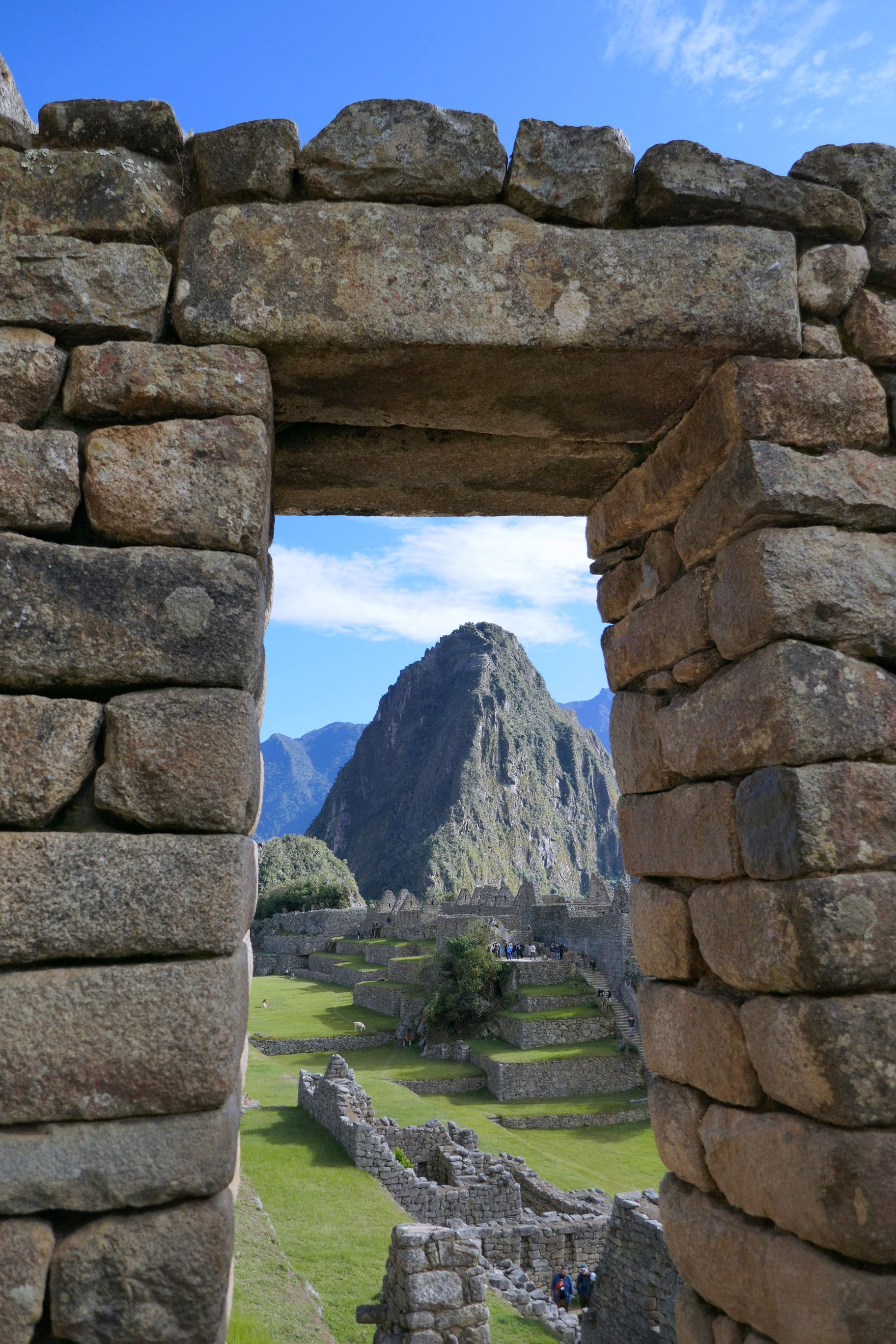
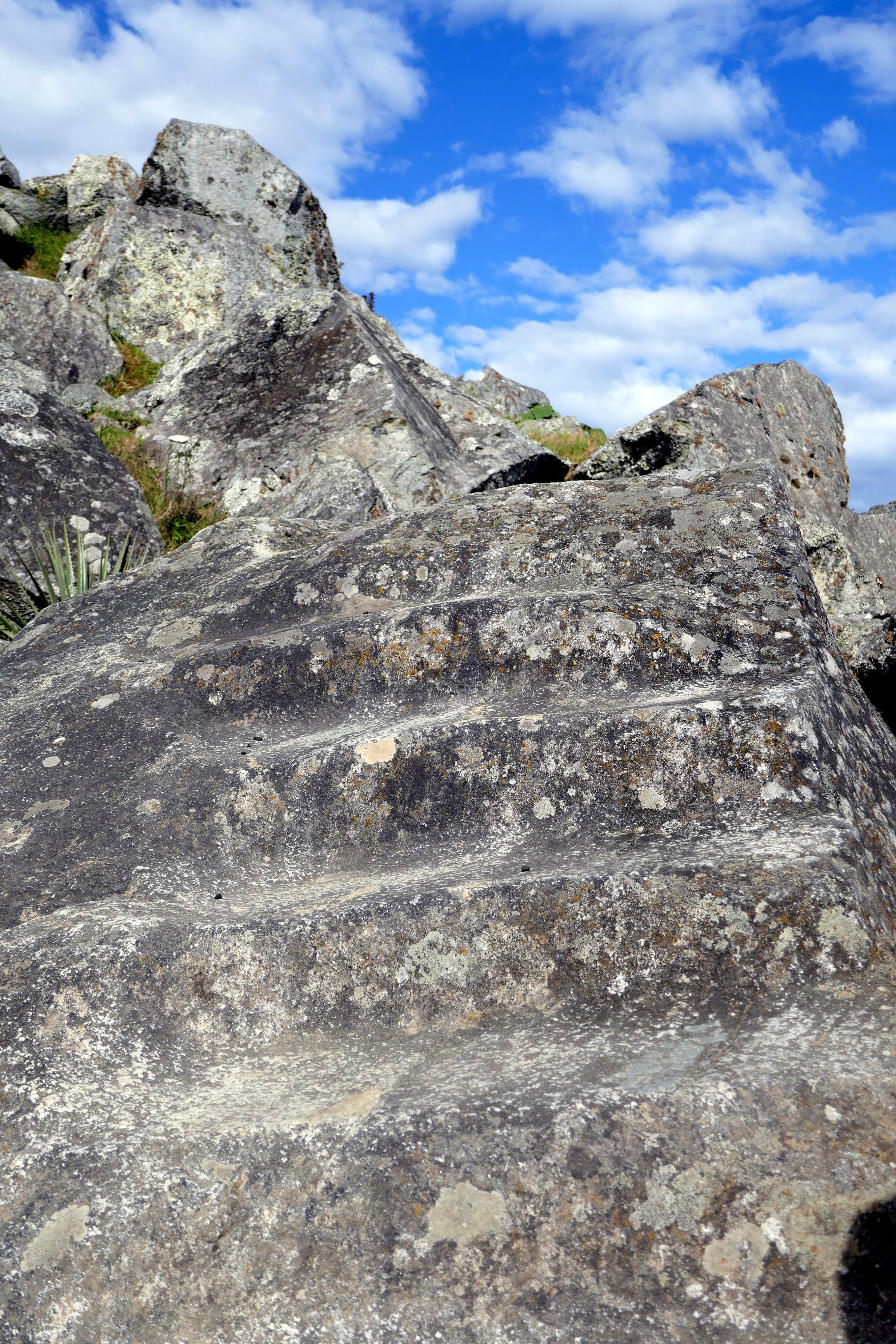
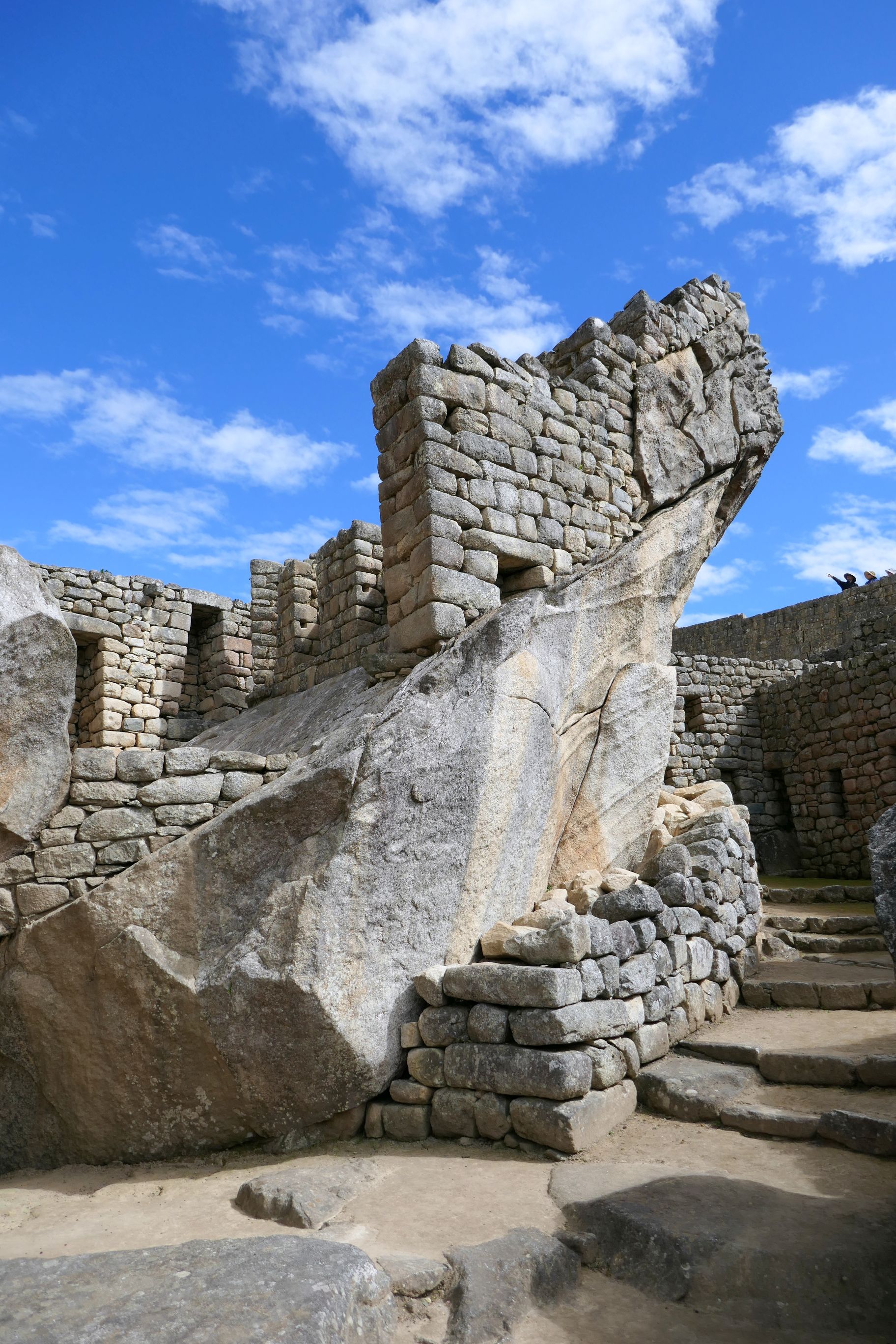
How the Incas built these amazing structures back in the 15th century is beyond me! Look at the detail in both this photo and the one below!
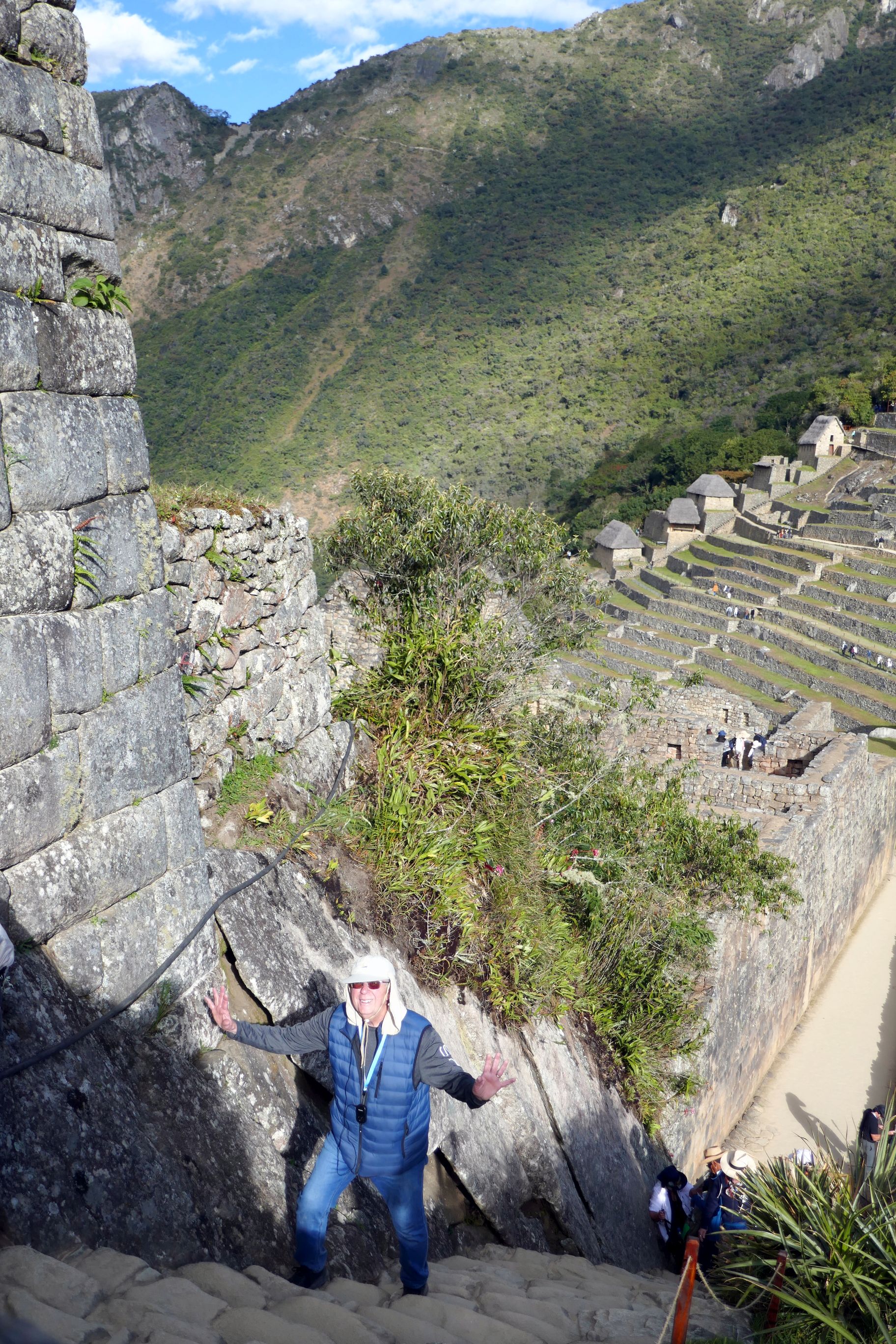
Bruce will soon discover the view from the top was well worth the steep climb!
One last photo of the magnificent view at the end of a beautiful day. That’s me in the lower right corner.
After disembarking the bus in Urubamba, Raul led us down a dusty alley to meet with “Elena” (not her real name) on the patio of her home. The “Controversial Topic” for this tour was the coca leaf industry, and we were there to hear about it first-hand.
The coca leaf, the primary source of cocaine, has been listed as a Schedule 1 substance by the United Nations Single Convention on Narcotic Drugs since 1961, so it is illegal to use. Coca is a native plant in Peru and Bolivia, however, and has played a significant role in traditional Andean culture for centuries; so, these countries are exempt from this law.
Since ancient times, coca leaves have been an important trade commodity between the lowlands, where it is cultivated, and the higher altitudes, where it is widely consumed to relieve altitude sickness, hunger, and fatigue. Natives either chew the leaves or brew it in a tea known as “Mate de Coca.” There is also a high rate of cocaine use and addiction in Peru.
Elena is a cultivator of coca, selling the leaves in markets and bartering the leaves for produce she is unable to grow. She leaves her home along with other family members in Urubamba at 5:00 AM, travels by train, and then car to her field, arriving at 5:00 PM. (Coca must be grown at a 5,000-foot elevation; Urubamba is at an elevation of 9,420 feet.). Each family member harvests for three days, and then brings 3 kilograms by bus, along with other produce, back to Urubamba.
Until Empresa Nacional de la Coca (ENACO) became a Peruvian state company under private law in 1982, Elena and her family earned double the amount of money for the same amount of coca leaves she could sell legally today. Since 1982, however, ENACO has had a monopoly on the commercialization of coca, buying up all the cultivated coca leaves from 31,000 legal producers at a fraction of its former value, and then selling it to the Stepan Company and other companies for medicinal use. (Much of the crops are also exported to Mexican and Columbian cartels.) How did ENACO become a monopoly? President Garcia, the corrupt president of Peru at the time, was responsible for giving ENACO the sole contract.
Unable to live on half the income she was previously making, Elena now cultivates coca illegally, and then smuggles it onto the bus by hiding it on her person. She brings back produce to avoid looking suspicious. If she gets arrested, she pays off the corrupt police. (They have a habit of reporting far less than what they confiscate, selling off the rest.) She then (very carefully) sells or barters it at local markets.
This has been Elena’s life since the age of 18; she is now 70. Speaking with travel groups from Overseas Adventure Travels is how she supplements her income.
Coming up next: PERU #10: FROM OLLANTAYTAMBO TO MACHU PICCHU
When the Incas arrived in the Urubamba Valley in the 1100’s, they discovered a mild climate and fertile soil, which was conducive for growing fruits and vegetables. As a result, they settled in the area, their civilization and culture grew, and the valley became their sacred land.
As we floated down the Urubamba River, we learned about the Incas from our river guide while taking in the views of the surrounding Andes. We could see the terraces the Incas constructed entirely by hand to grow their food—terraces that are still used today.
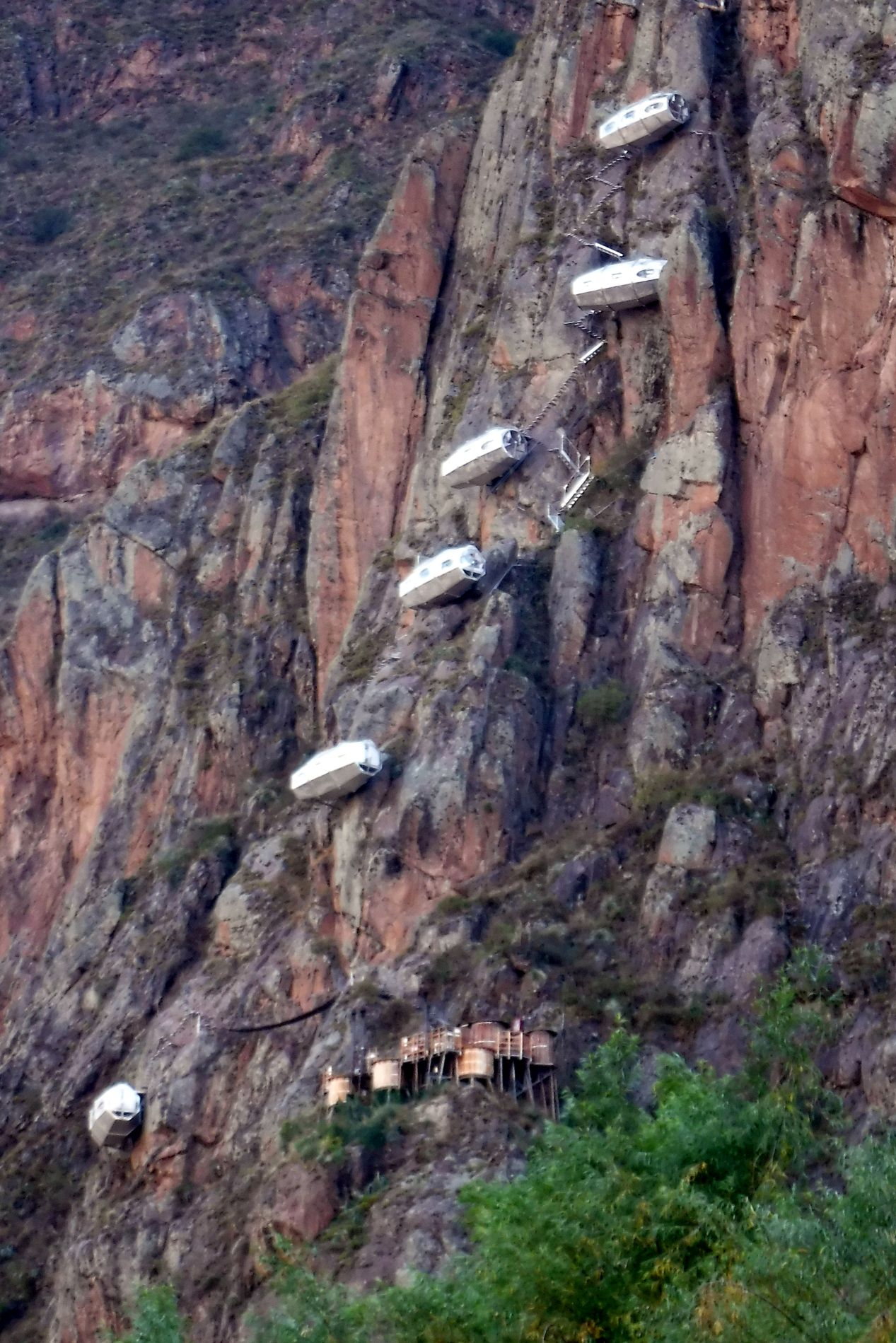
Those white structures hanging off the side of the mountain are hotel rooms for hikers!
It was a beautiful, sunny day, and the opportunity to be on the water brought joy to my heart! Although we mostly floated, we had the opportunity to do some paddling over what was billed as “Class 1 Rapids.” That may have been a bit of an exaggeration, but it was still fun!
Our group had split up into three boats, and each guide asked his paddlers to come up with a boat name. I suggested “Buena Onda” for ours, which translates to “Good Vibes.” It was the name Andrea, our Argentina & Chile tour leader, gave to our tour group when we traveled with her back in March. One of the other boats was “Pisco Sour,” named after the favorite regional cocktail, and the other was the “Titanic,”—fitting considering they grounded into some rocks on their way down the river. Fortunately, they fared better than their namesake; at least they didn’t sink.
After our float trip, we stopped at the rafting company’s facility to change into dry clothes. Evidently, they like cats, because they constructed this fabulous cat lodge for them!
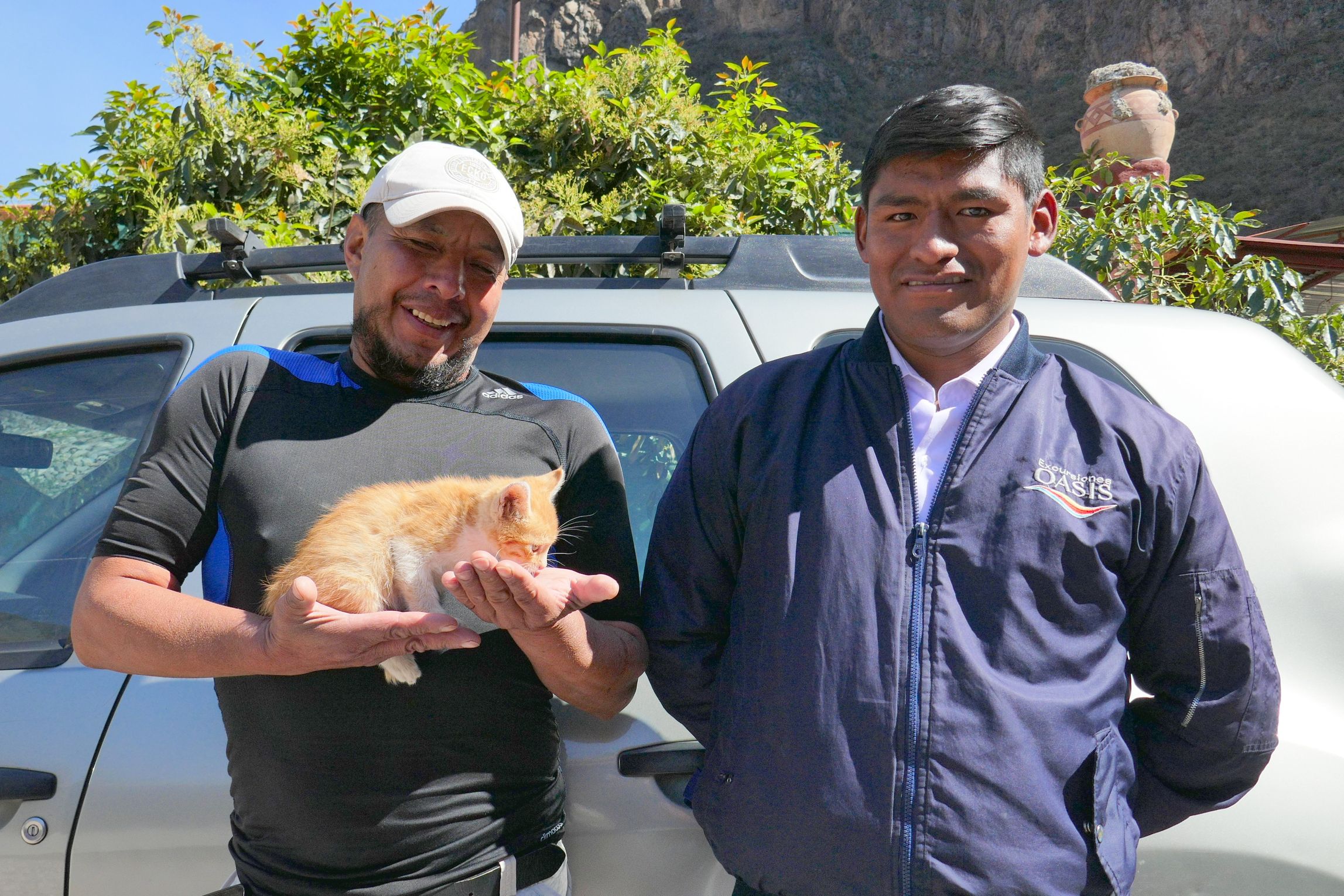
Our rafting guide and bus driver with a new friend.
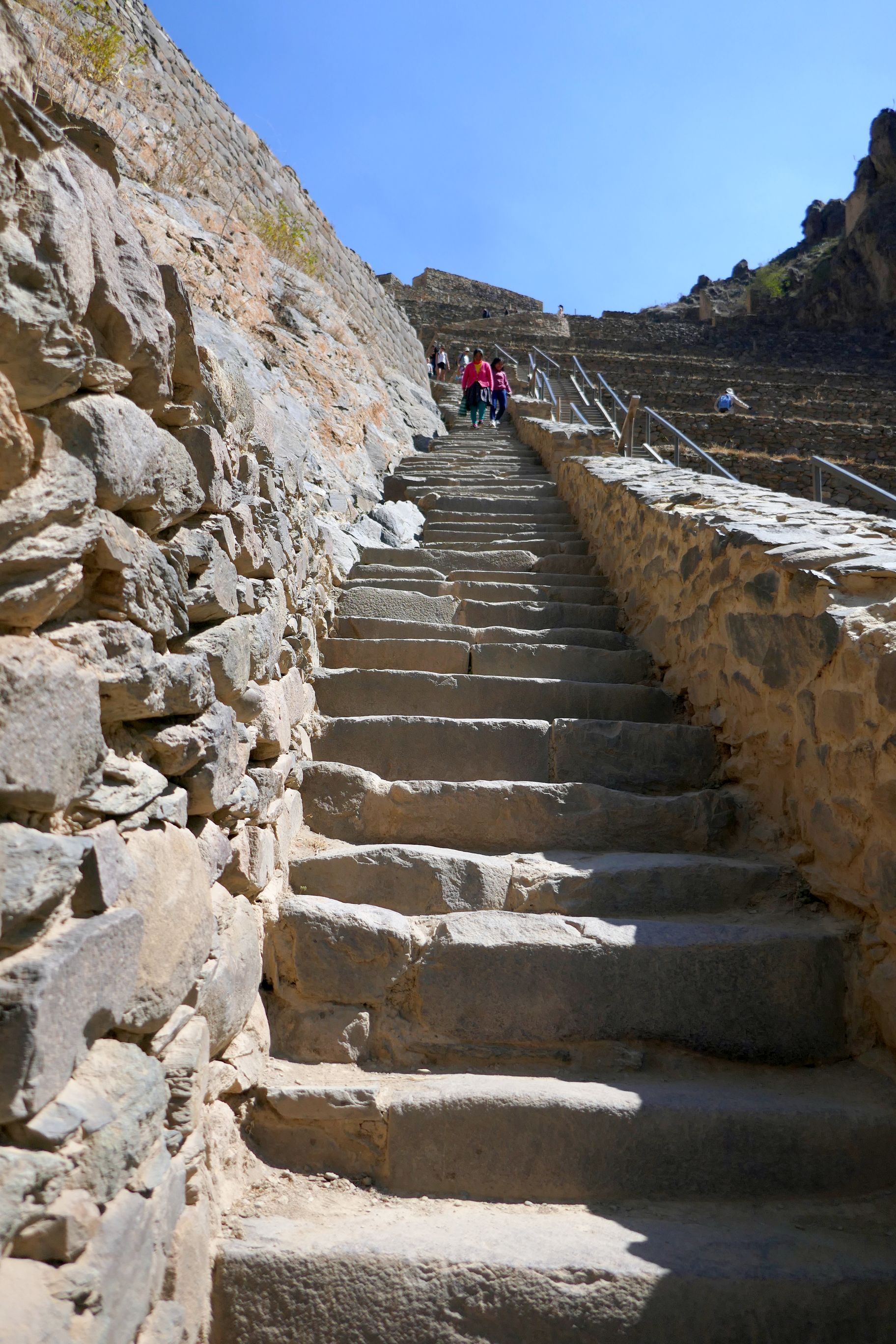
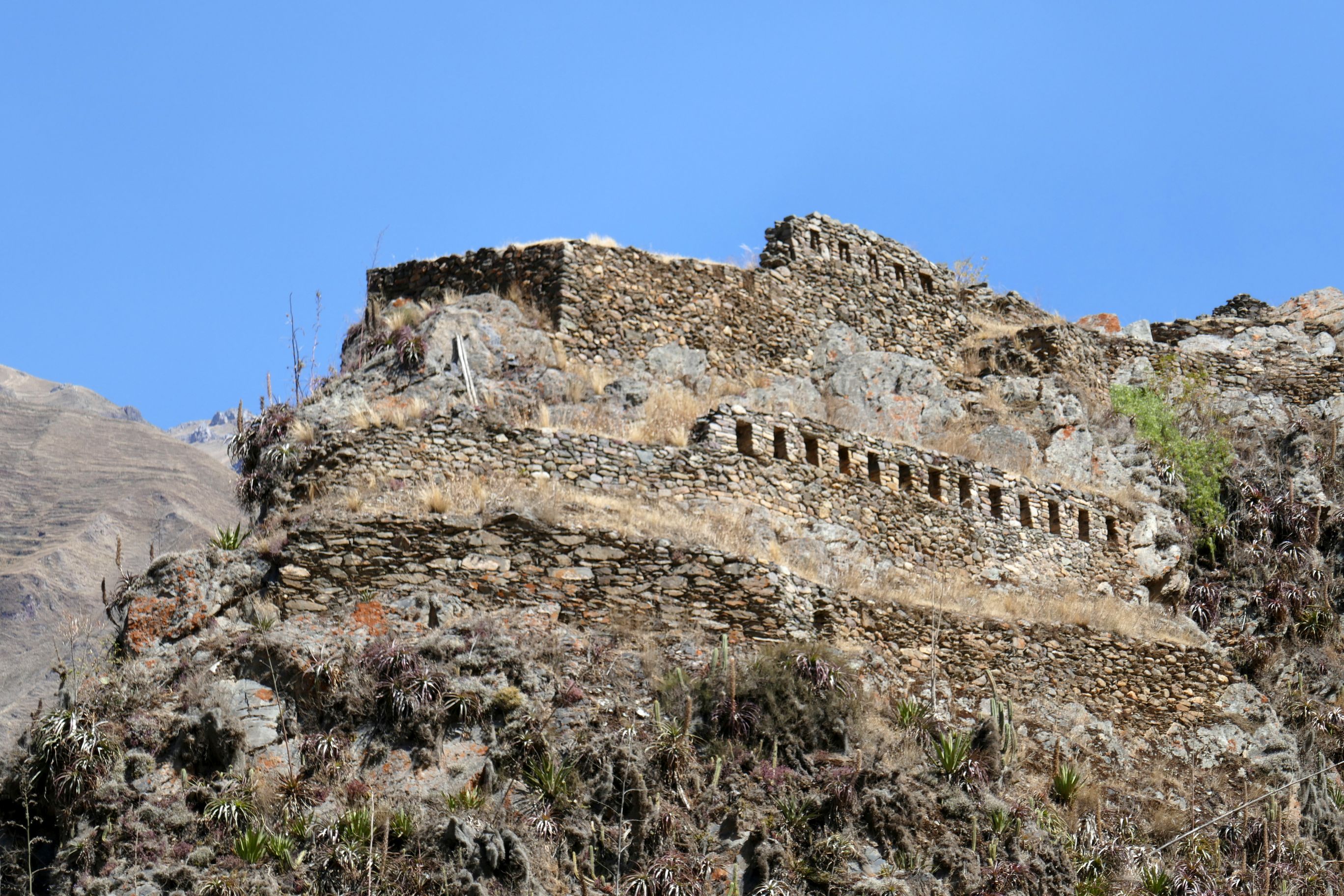
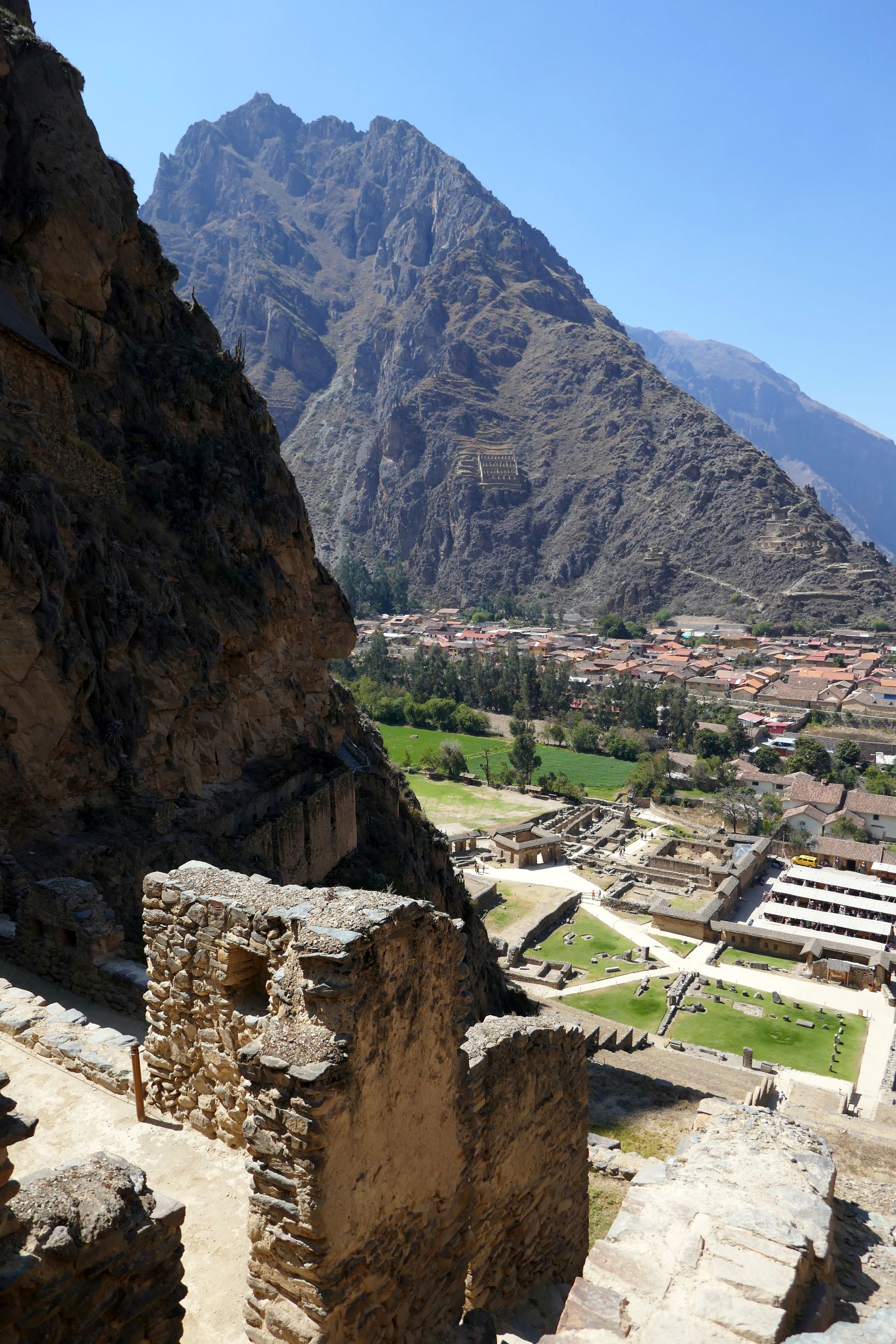
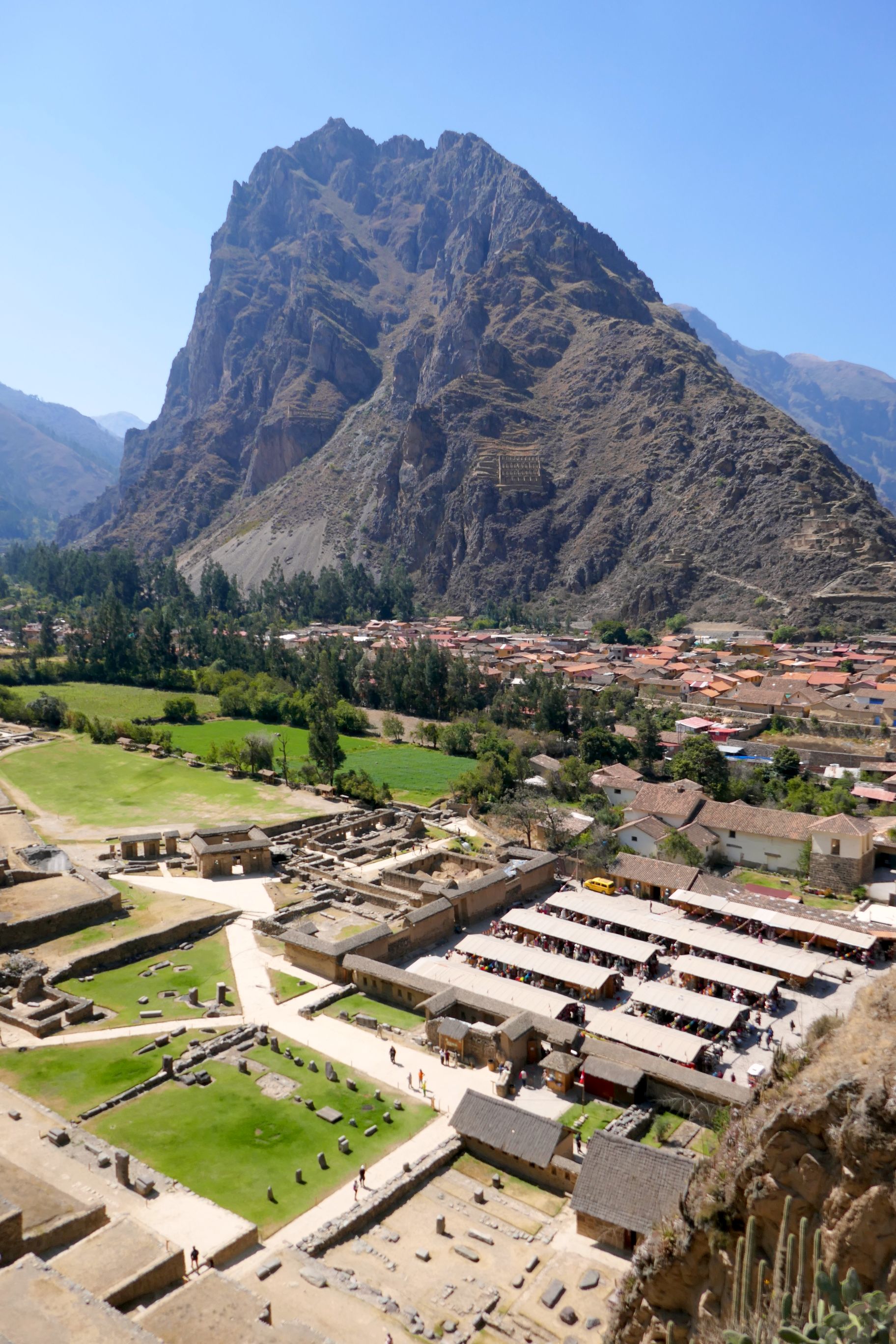
Paddling on the river was followed by hiking at the Ollantaytambo Inca Fortress— just my kind of day! Our entire Peru tour was rated a 4 out of 5 for its “moderately strenuous” level of activity and high altitude, which was perfect for me. I looked forward to hiking around these and the other ruins we visited throughout our tour, even if the air was thin. As a competitive swimmer, I was aerobically fit and I had also prepared by walking fast laps and running stairs while wearing a KN95 mask after my swim workouts. This was a great opportunity to test my fitness.
The spectacular views! We were fortunate to have another sunny day, and the views from the top of the ruins were beautiful! There were only a couple of us from our group that ventured up to the top, so we took turns taking a celebratory photo and stood in awe of what surrounded us.
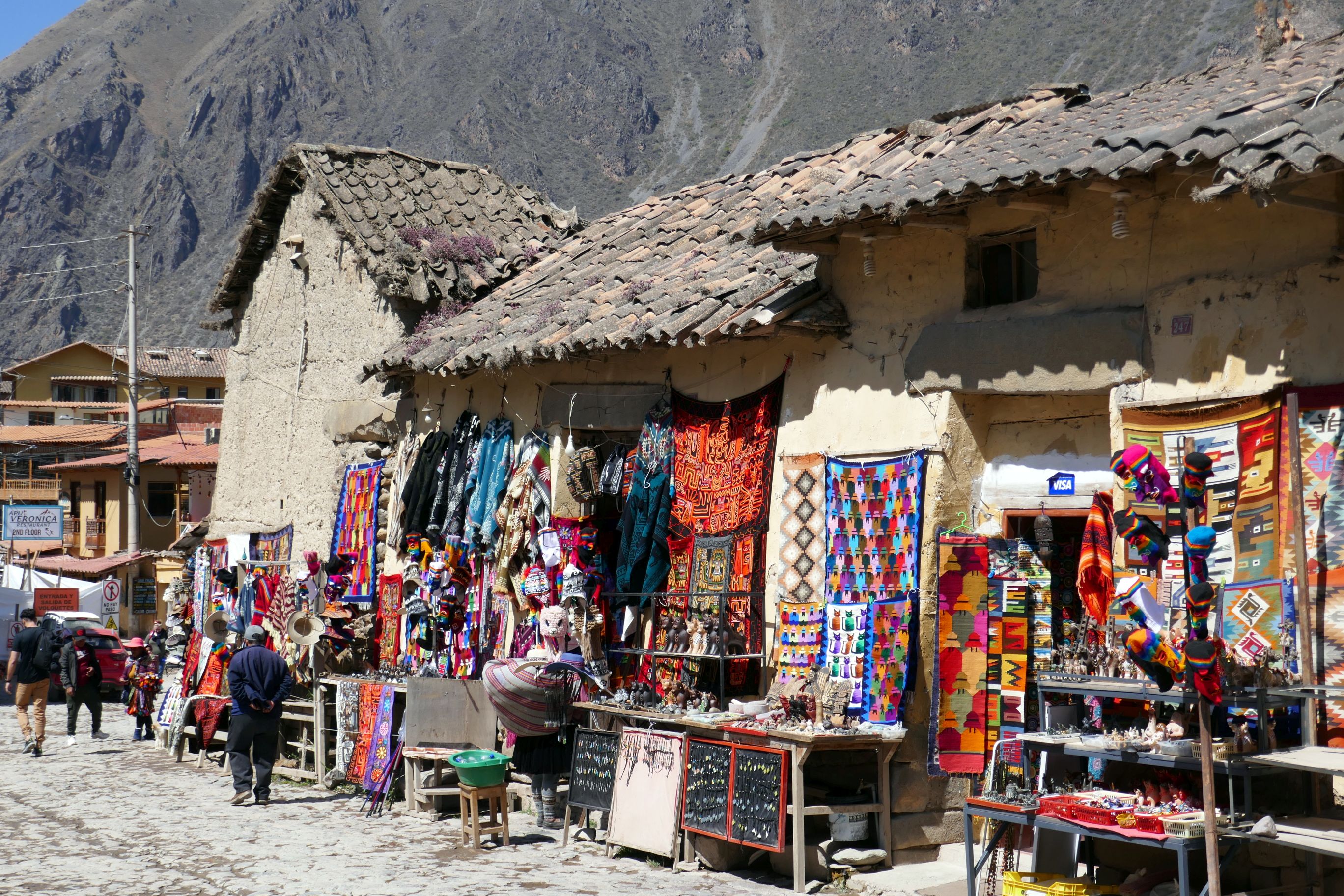
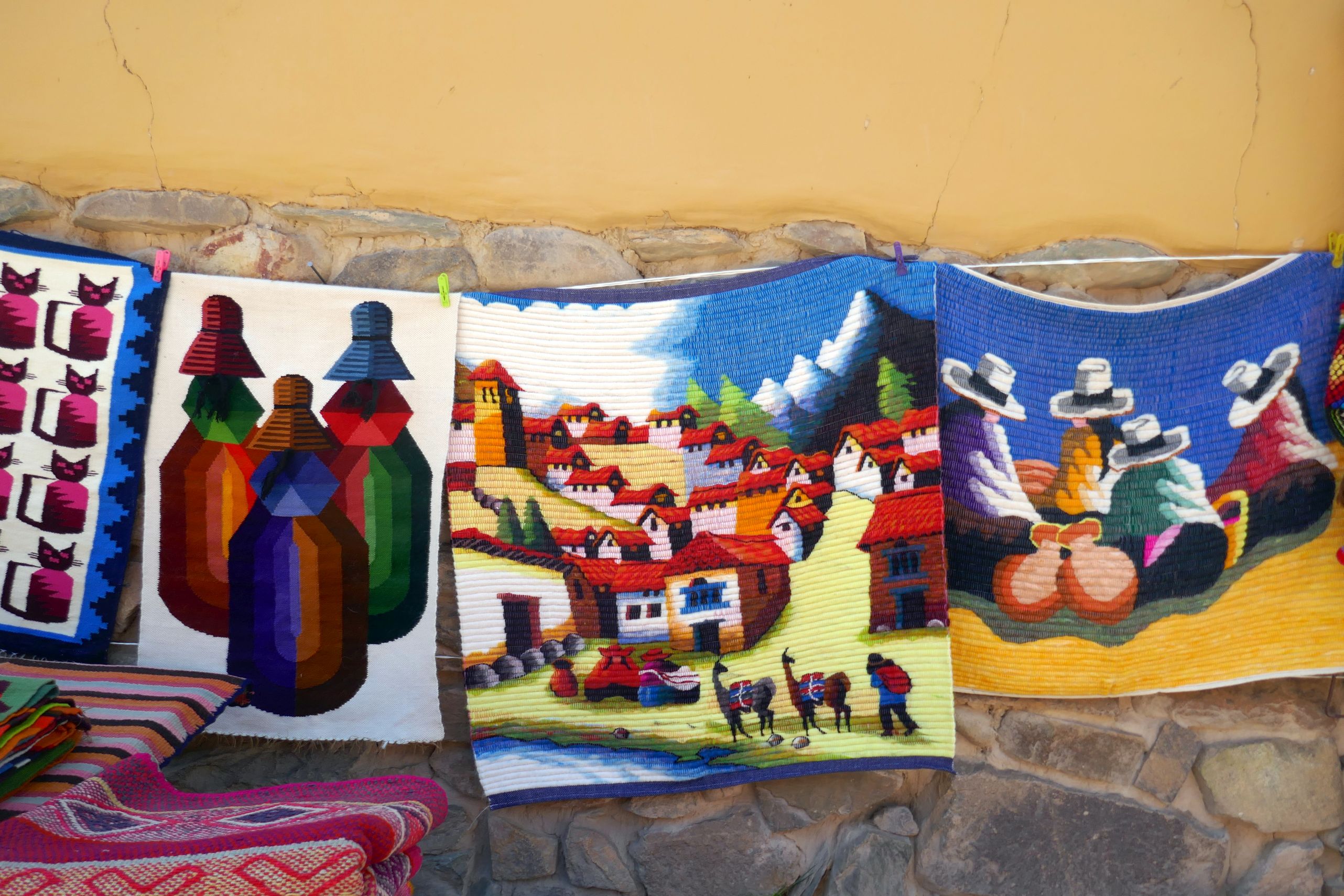
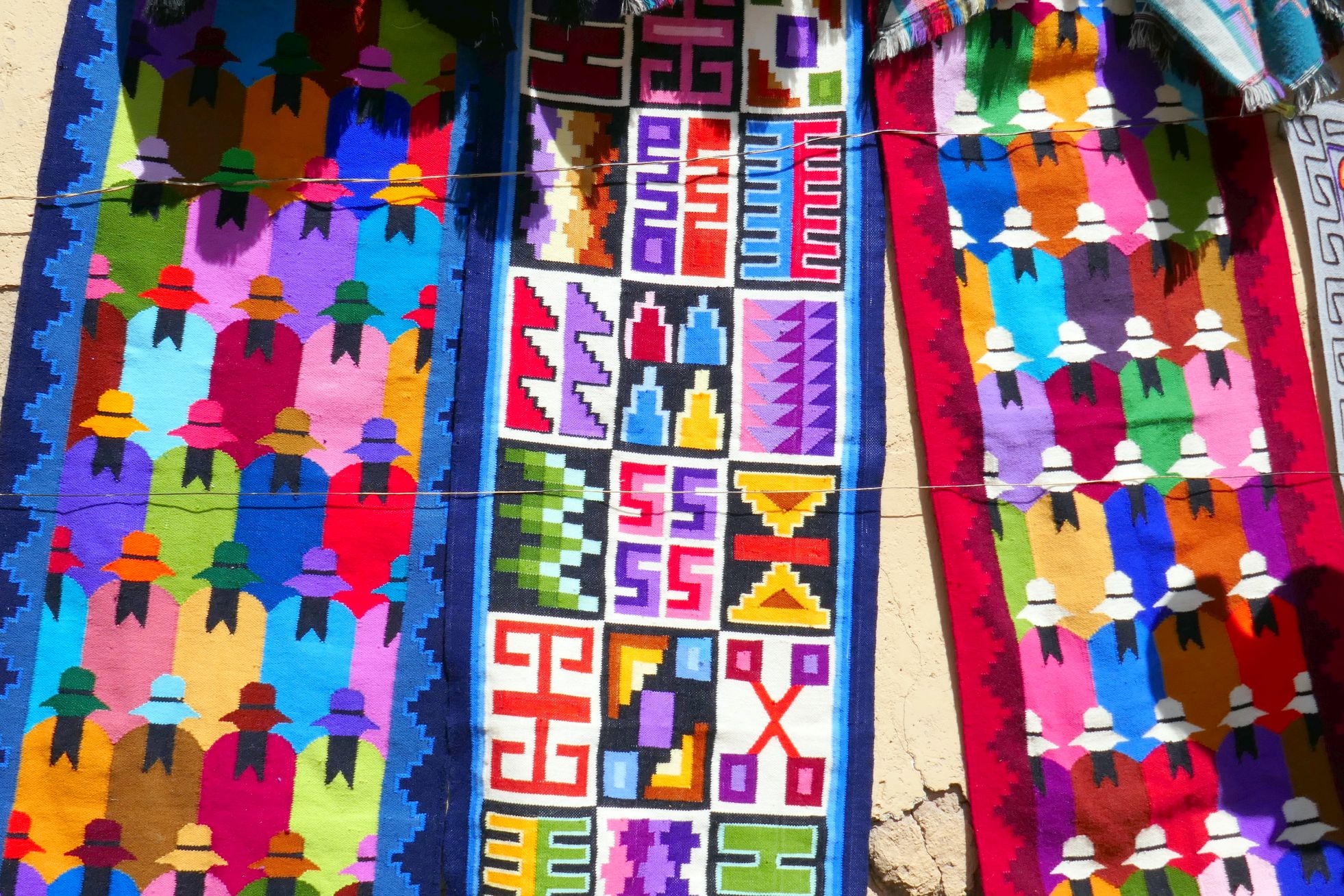
Back at the foot of the ruins and outside the walls of the national park was a craft market, so I spent the remainder of my free time roaming around shooting photos, while Bruce explored the lower area of the ruins with Raul and a few members from our group.
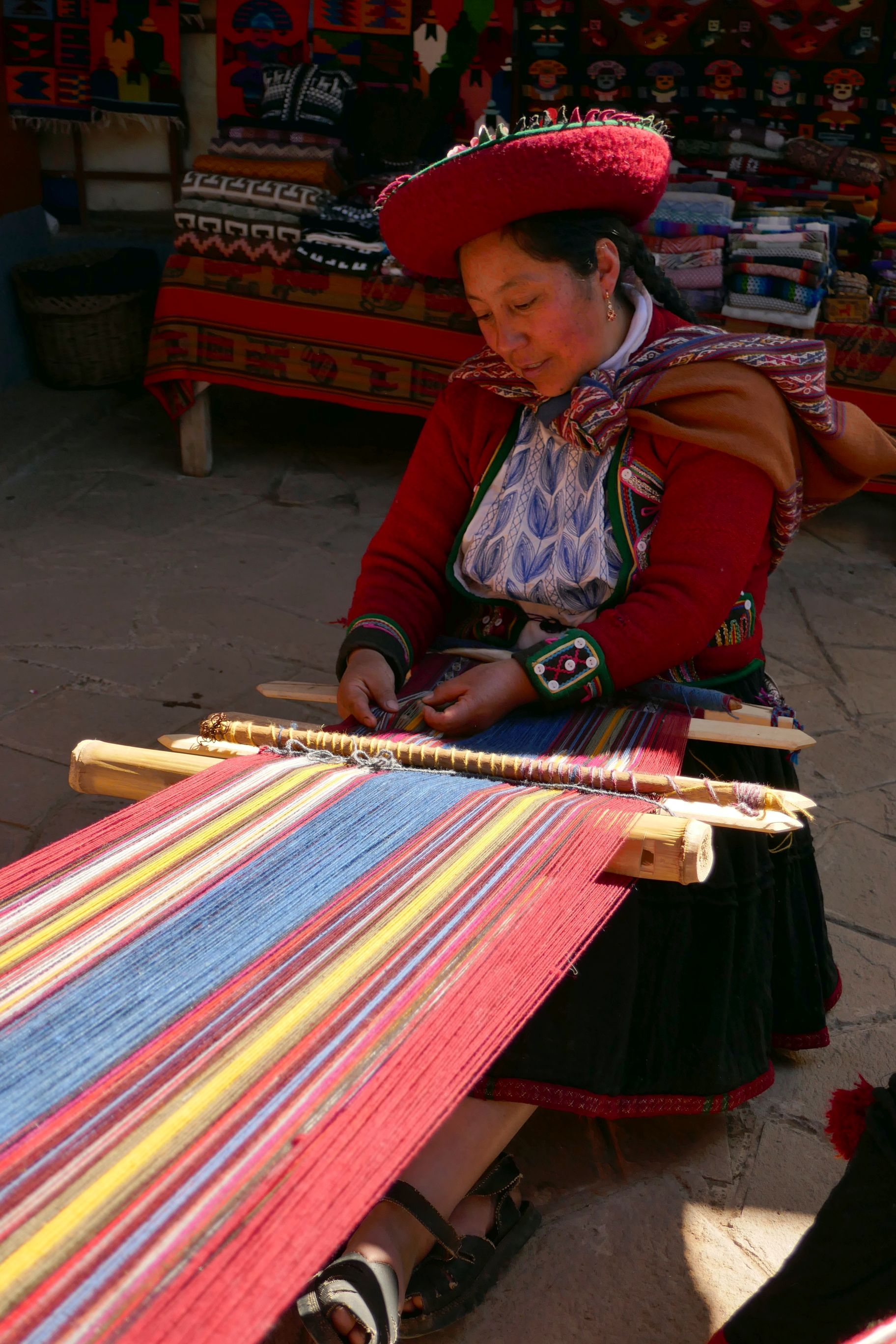
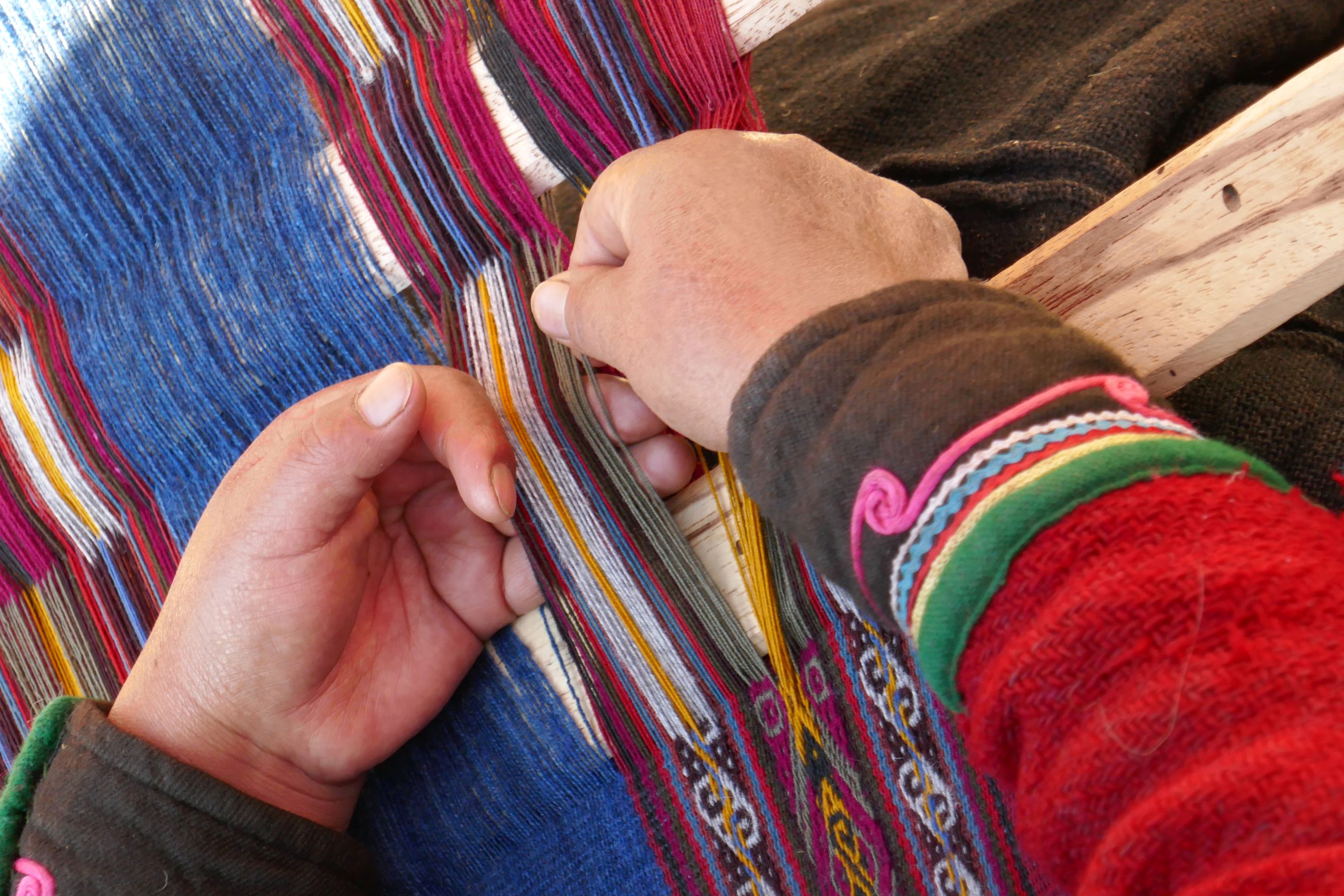
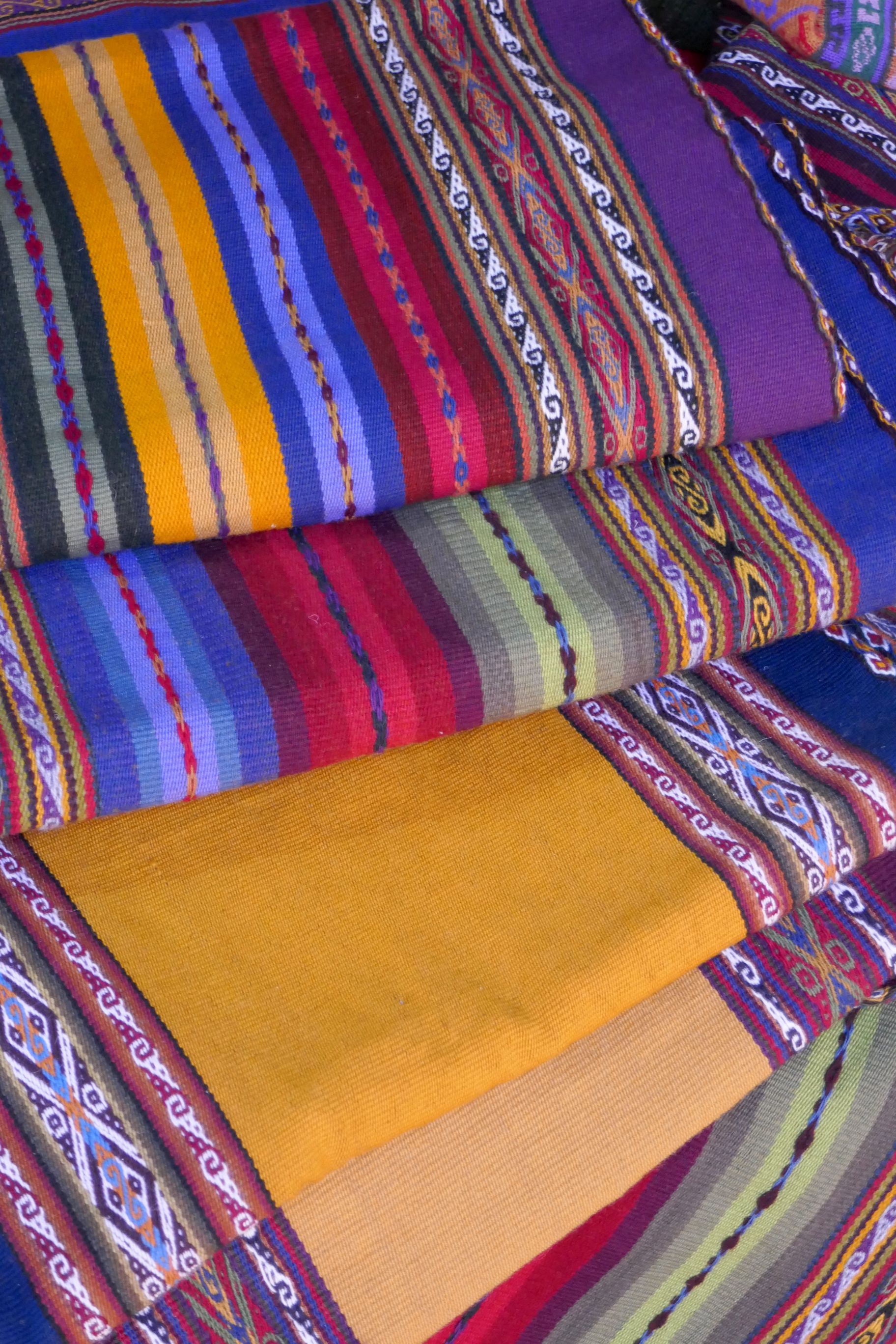
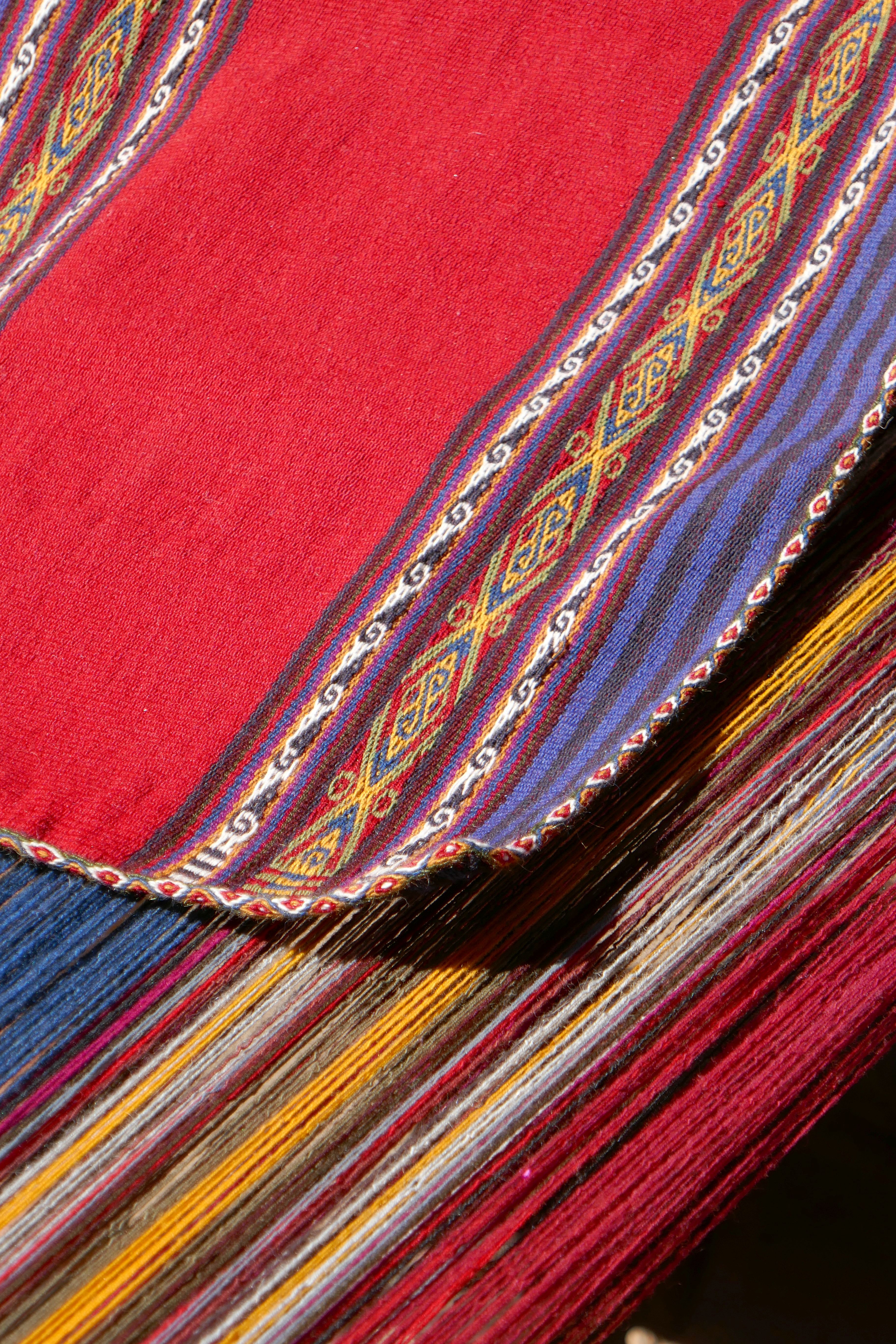
I’m not a shopper at home, but I love to see the native handicrafts in each country I visit, especially the colorful textiles in Central and South America. They are so photogenic!
Although our day had already been so full of rich culture, history, and excitement, we still had our home-hosted lunch to attend! This is always a favorite activity on an Overseas Adventure Travel (OAT) tour, so we looked forward to it. Usually, the group is split up to visit three different homes in smaller group settings; however, that wasn’t possible for this tour due to the lack of available hosts. Instead, we all went to visit the same family at a home with a large enough room to host the entire group.
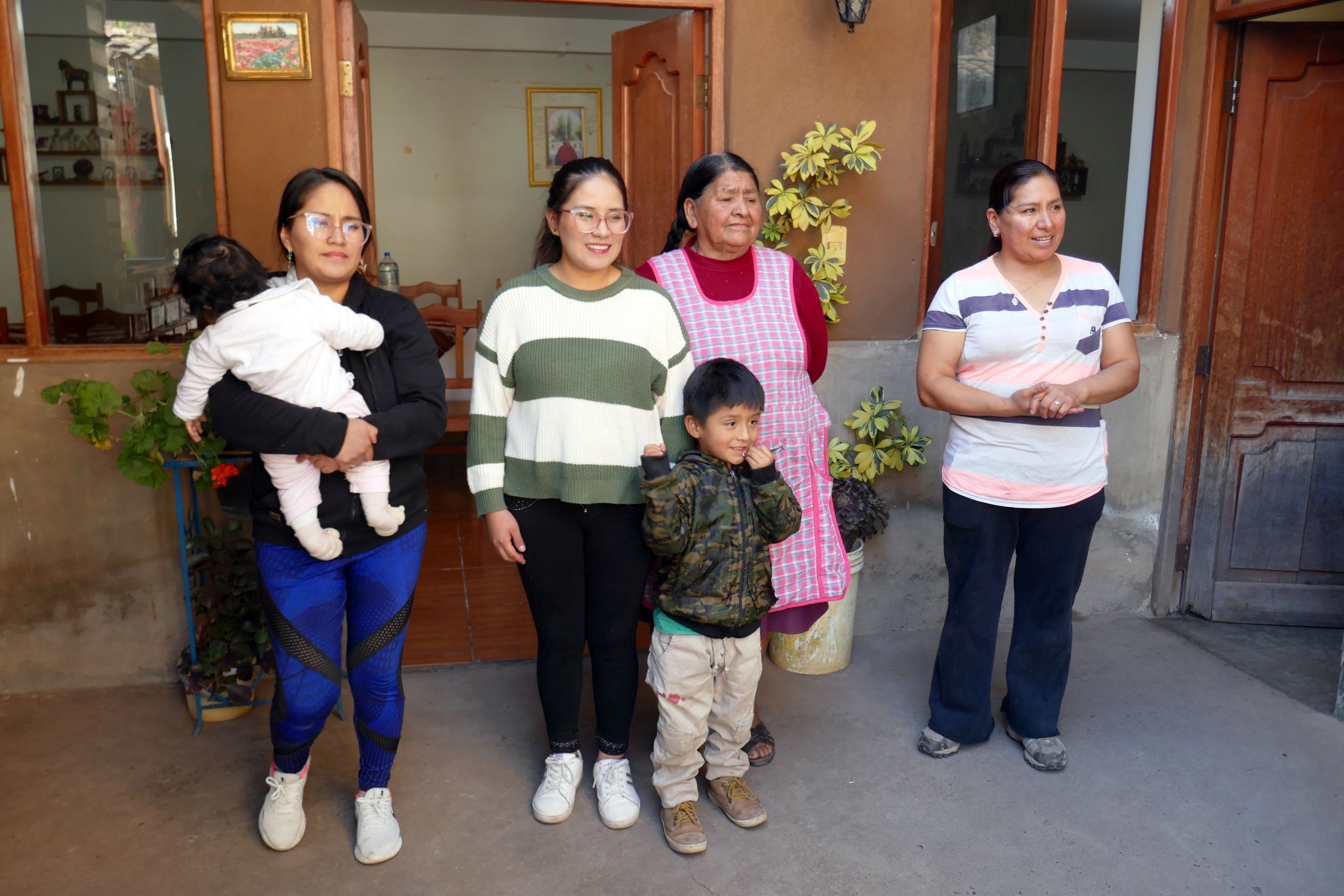
After meeting the great grandmother, mother, daughters, and great-grandchildren, we assisted with meal preparation and setting the table. In their home, the kitchen is used for all meal preparation except for the cooking which is done outdoors.
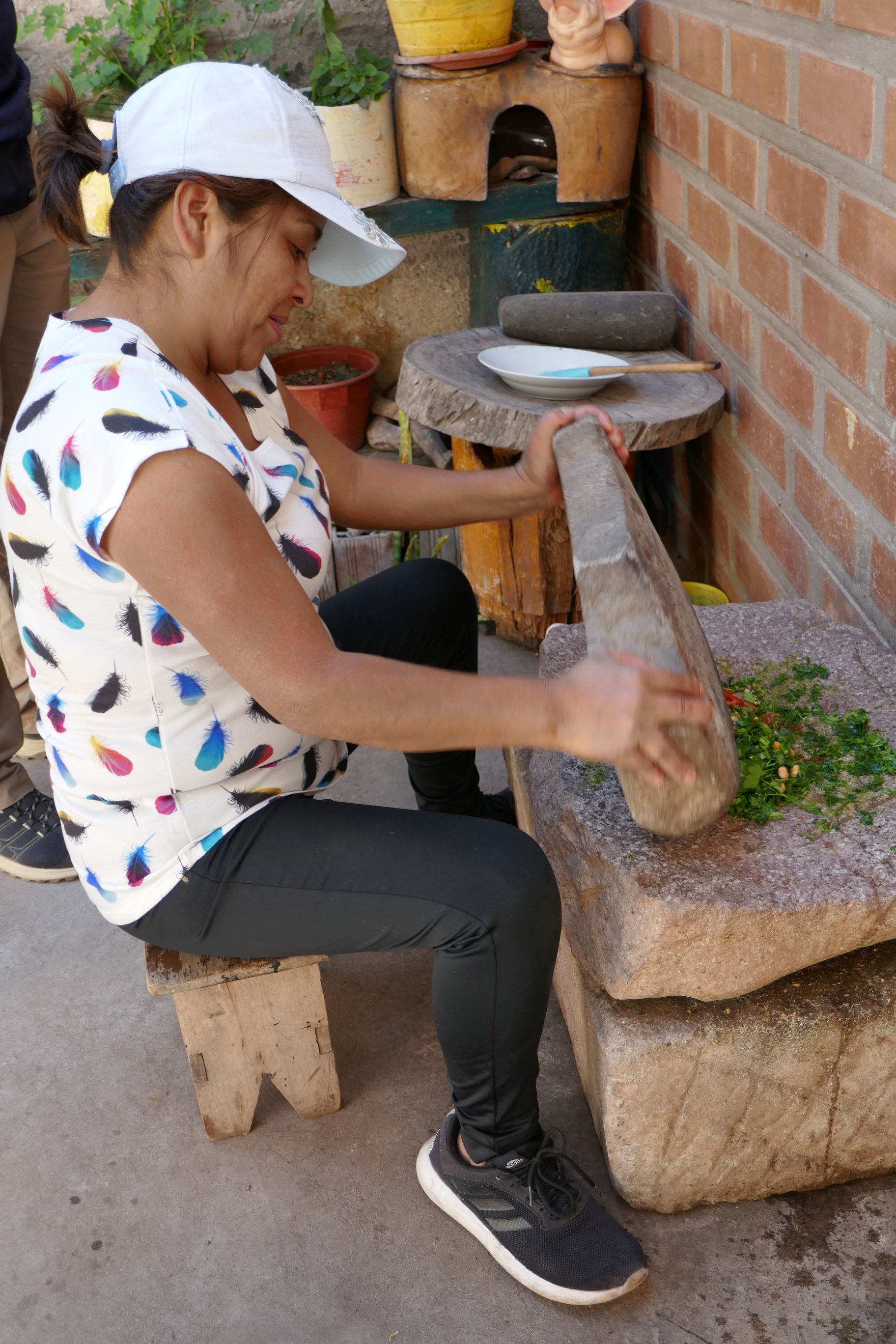
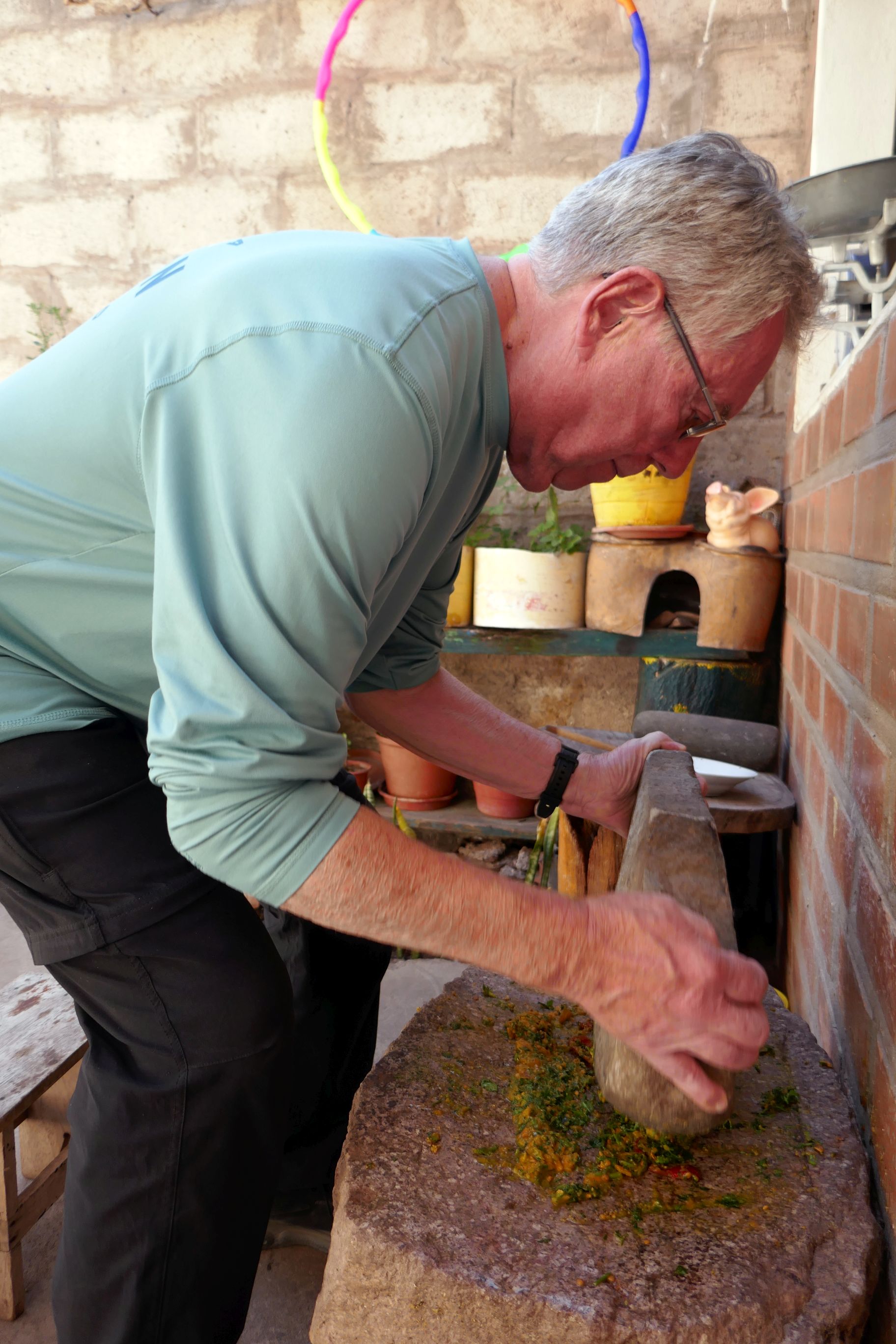
The salsa was also prepared outdoors the old-fashioned way, using a rock to chop the ingredients. We took turns giving it a good whack.
Lunch included tasty juice made from black corn, cinnamon, cloves, sugar and key lime. We also had squash soup, delicious vegetable filled tortillas, and guinea pig. Bruce and I gladly offered our shares of guinea pig to Raul. He loves the Peruvian delicacy; we preferred the tortillas and everything else.
After we all bid farewell to the family by presenting them with gifts we had each brought from home, we had one more stop to make before returning to the Villa Urubamba Hotel for a rest before our group dinner.
The granddaughters showing off the new fused glass earrings Bruce had made and given them.
Another activity OAT includes on each tour is meeting with a local for a presentation and question/ answer period on the designated “Controversial Topic.” In Peru, it’s the coca leaf industry, which will be the topic of my next post. Until then, here are scenes photographed on the grounds of the hotel:
Displayed on the wall of our room; they made me smile!
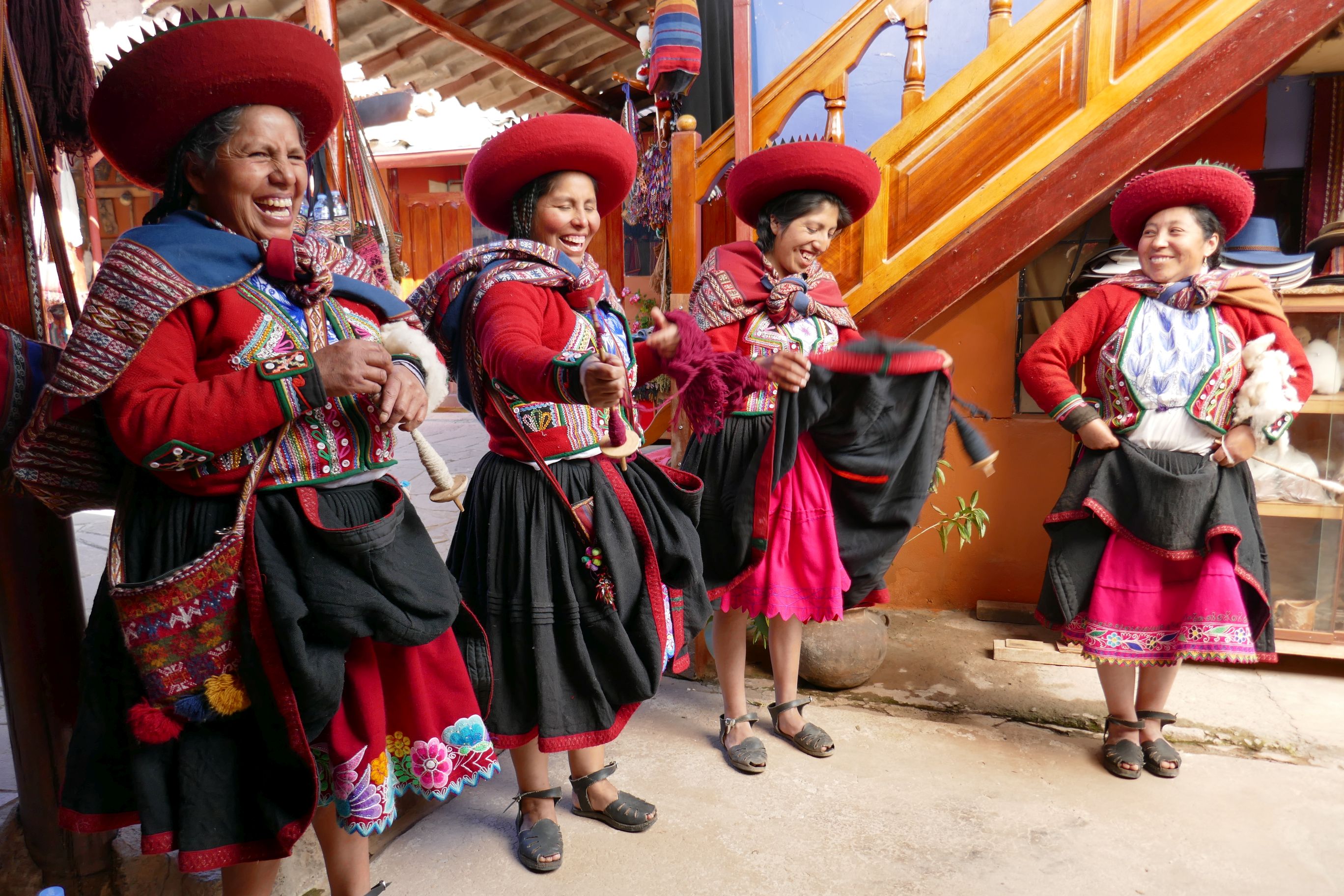
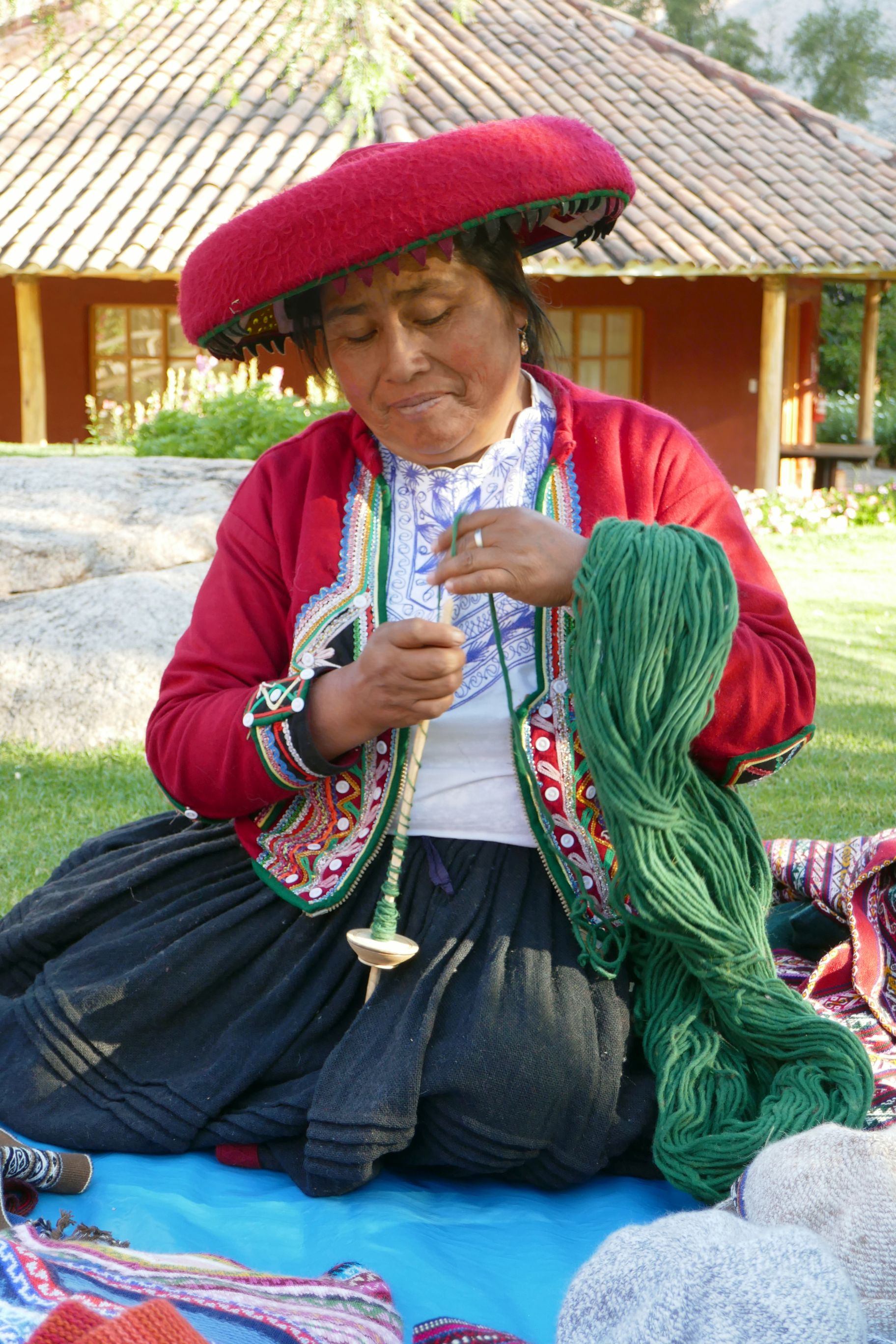
A woman from the area came to the hotel grounds to sell her handicrafts. Here, she is spinning wool the old fashioned way.
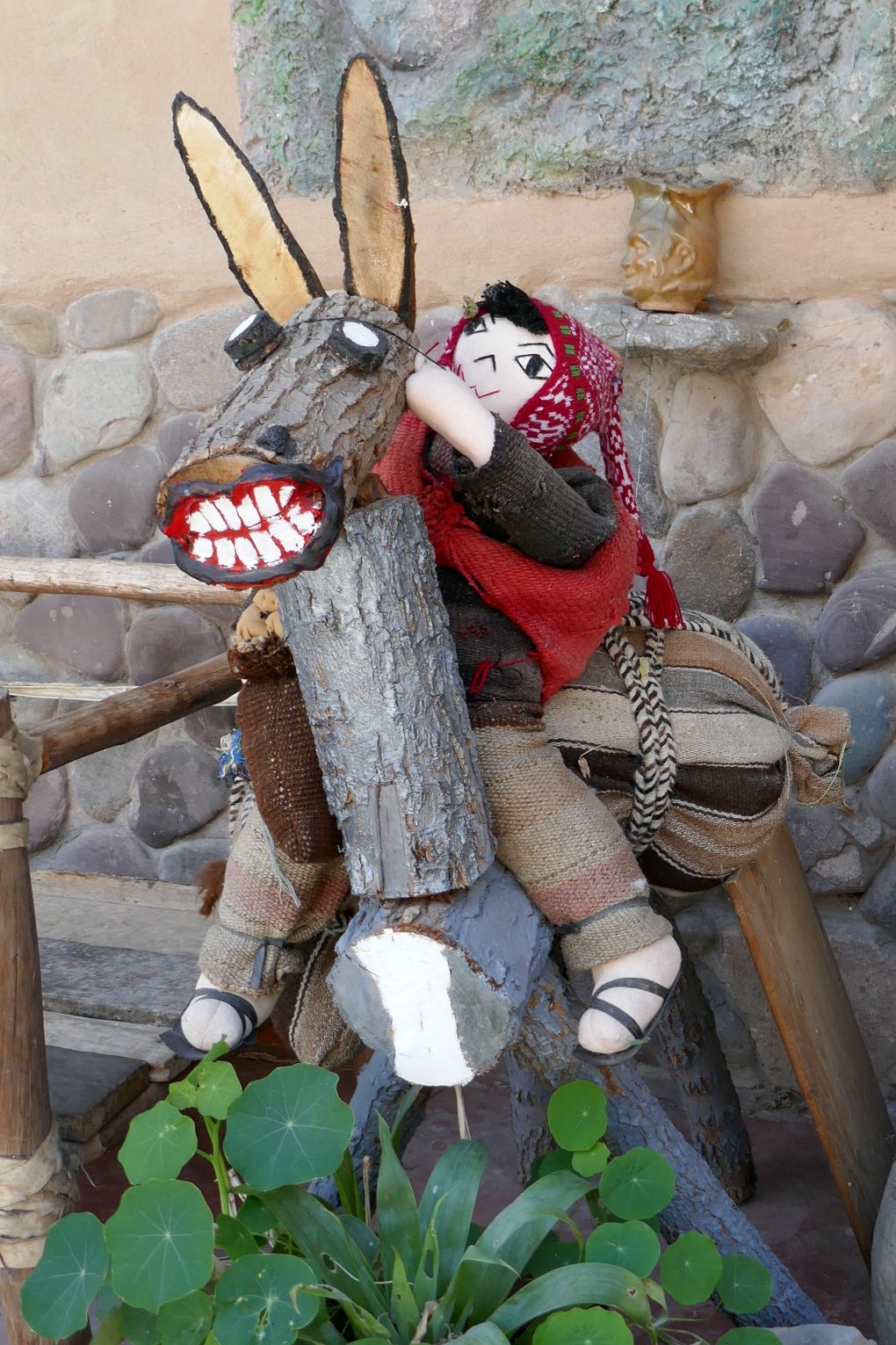
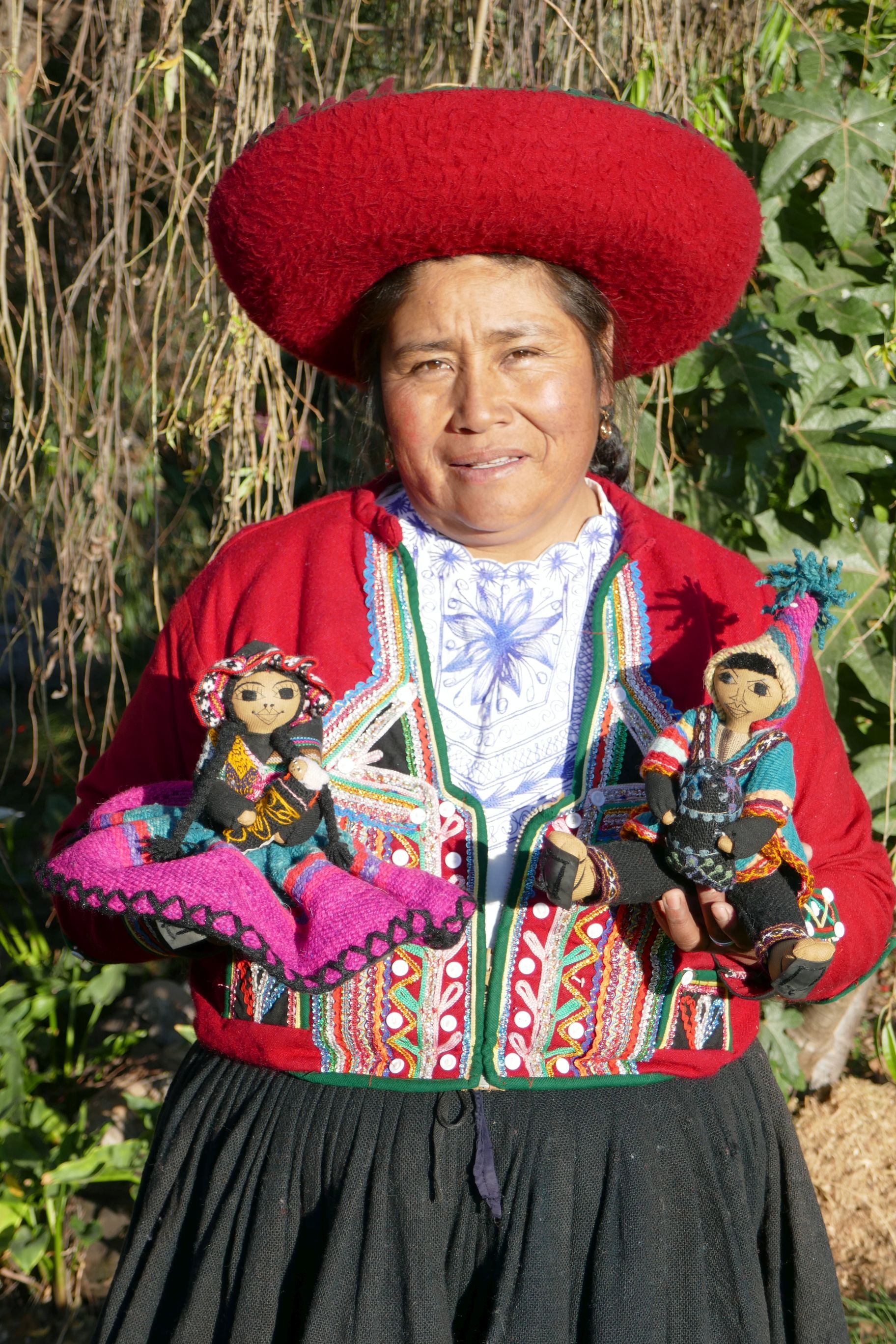
She made these dolls and the beautiful costumes they are wearing. I couldn’t resist; I bought the pair, and they sit on our fireplace mantle– Bruce’s recommendation!
Next up: PERU #9: THE CONTROVERSIAL COCA LEAF INDUSTRY
Our time in Lima turned out to be so much more enjoyable than we expected, and we knew it was only going to get better from there—assuming we could adapt to the dramatically increased altitude we were about to experience. Altitude sickness could hit anybody, no matter how fit and healthy you are. The only thing we could do is stay very hydrated, abstain from alcohol, and follow the other medical recommendations I had researched. Not only would we be seeing Machu Picchu on this tour, but we would be visiting other ruins and towns at even higher altitudes, so it was important to stay disciplined.
Seeing these high-altitude destinations requires flying into Cusco, which is at an elevation of 11,200 feet—quite an increase from sea level! We would be returning to stay in Cusco at the end of our tour, but on this day, our final destination was Urubamba (elevation 9,420 feet), in the Sacred Valley of the Incas. Sleeping at a lower elevation was the recommended way to ease our transition to the high altitudes of the Andes, so Overseas Adventure Travel (OAT) planned the itinerary perfectly.
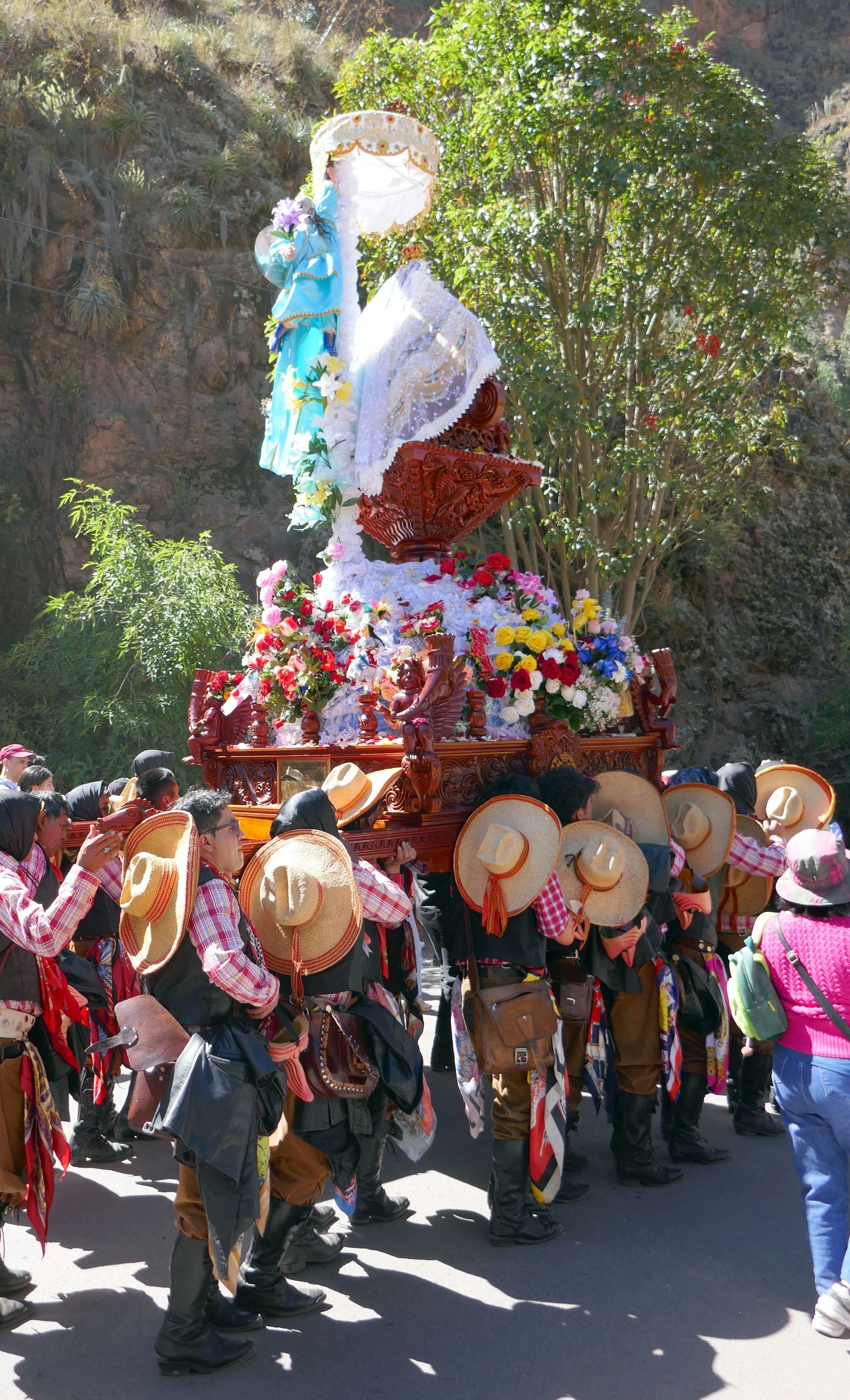
Before arriving in Urubamba, however, we would be making stops along the way to see Inca ruins. At one point, we encountered a blocked road full of people– something we had not expected given the sparse population of the area. We saw a crowd and wondered what had happened. Nothing happened; it was another parade! After encountering a surprise parade in Lima, we never thought it would happen again, but it did; and it was fabulous!
(For all photos, click on the image for a full screen view.)
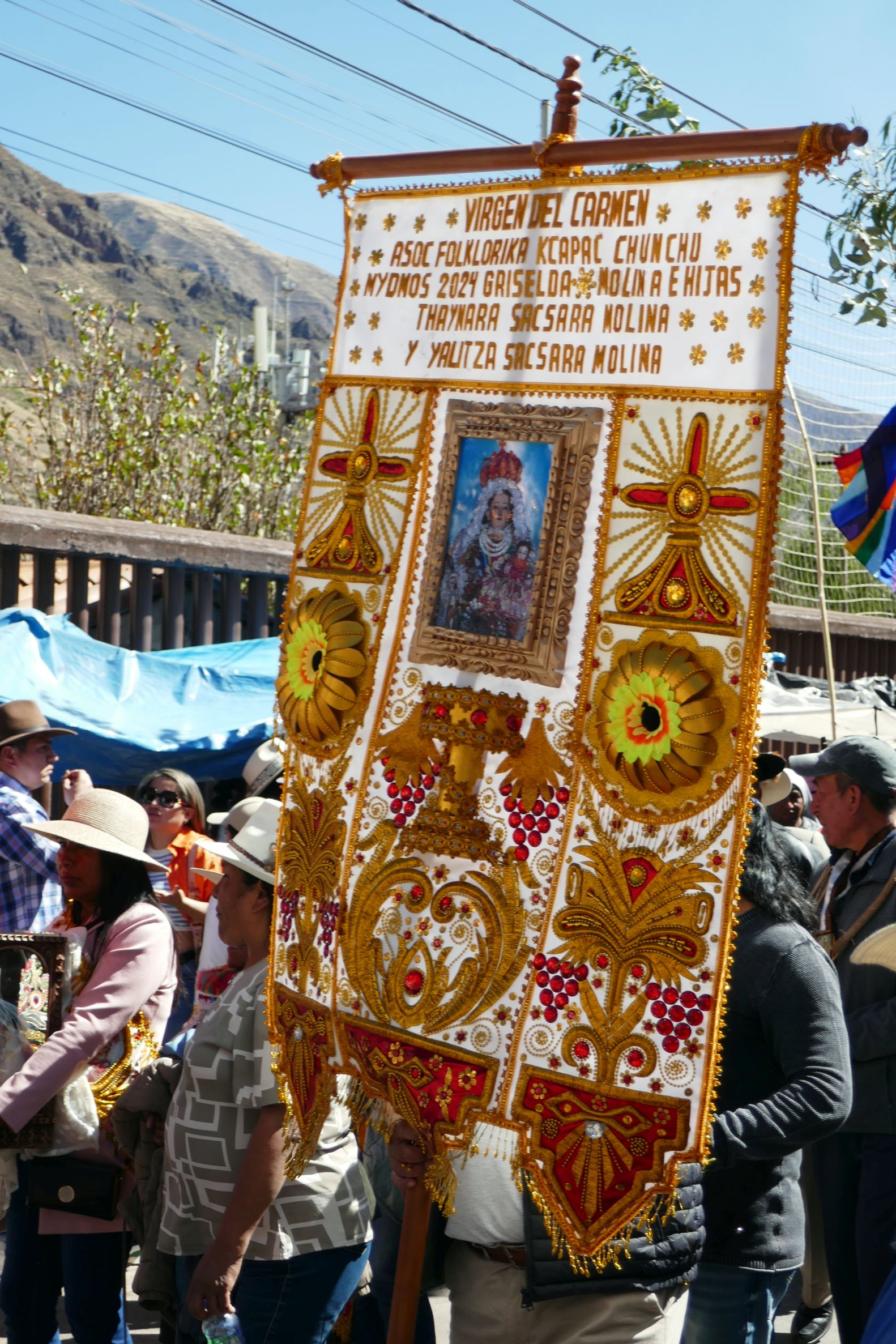
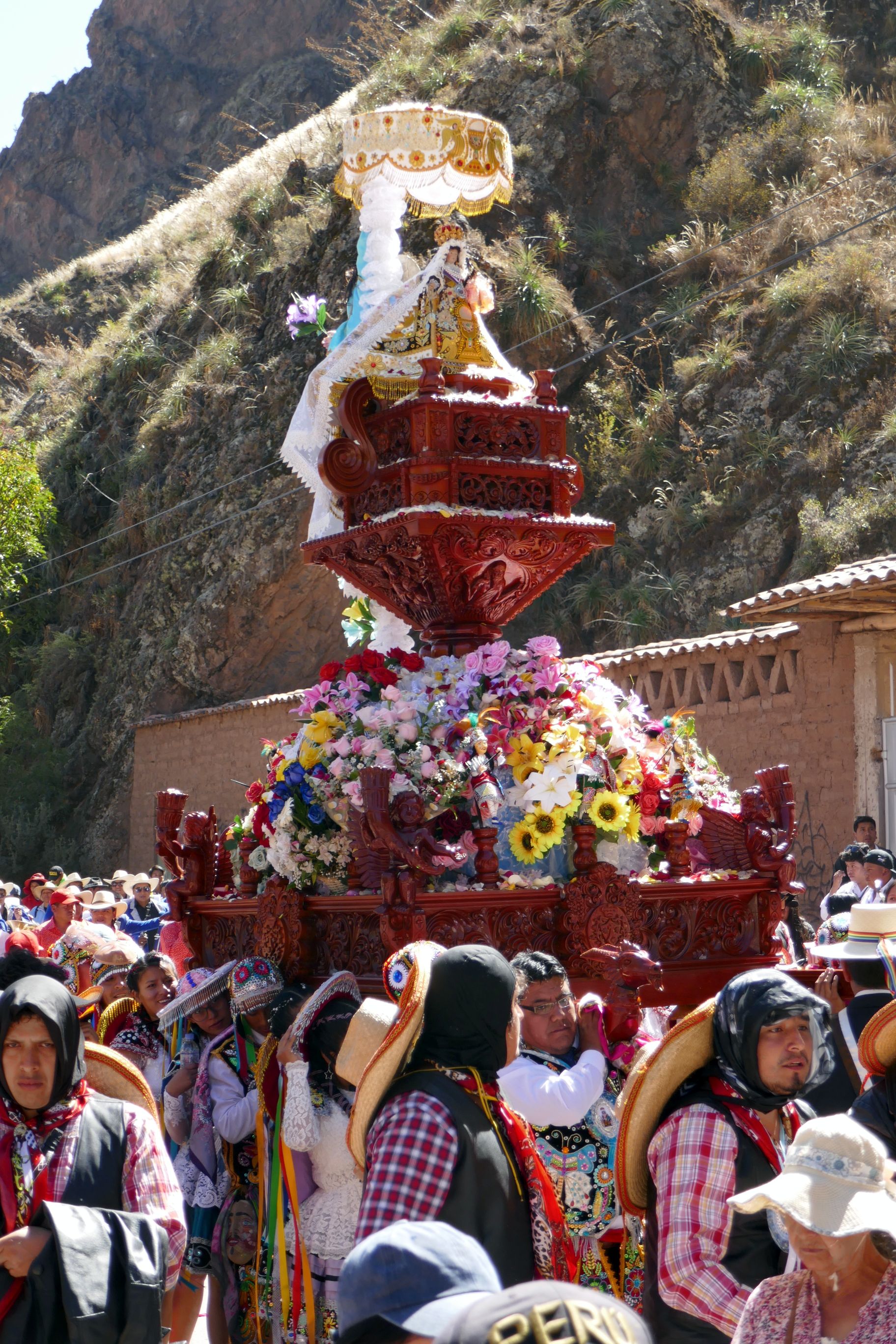
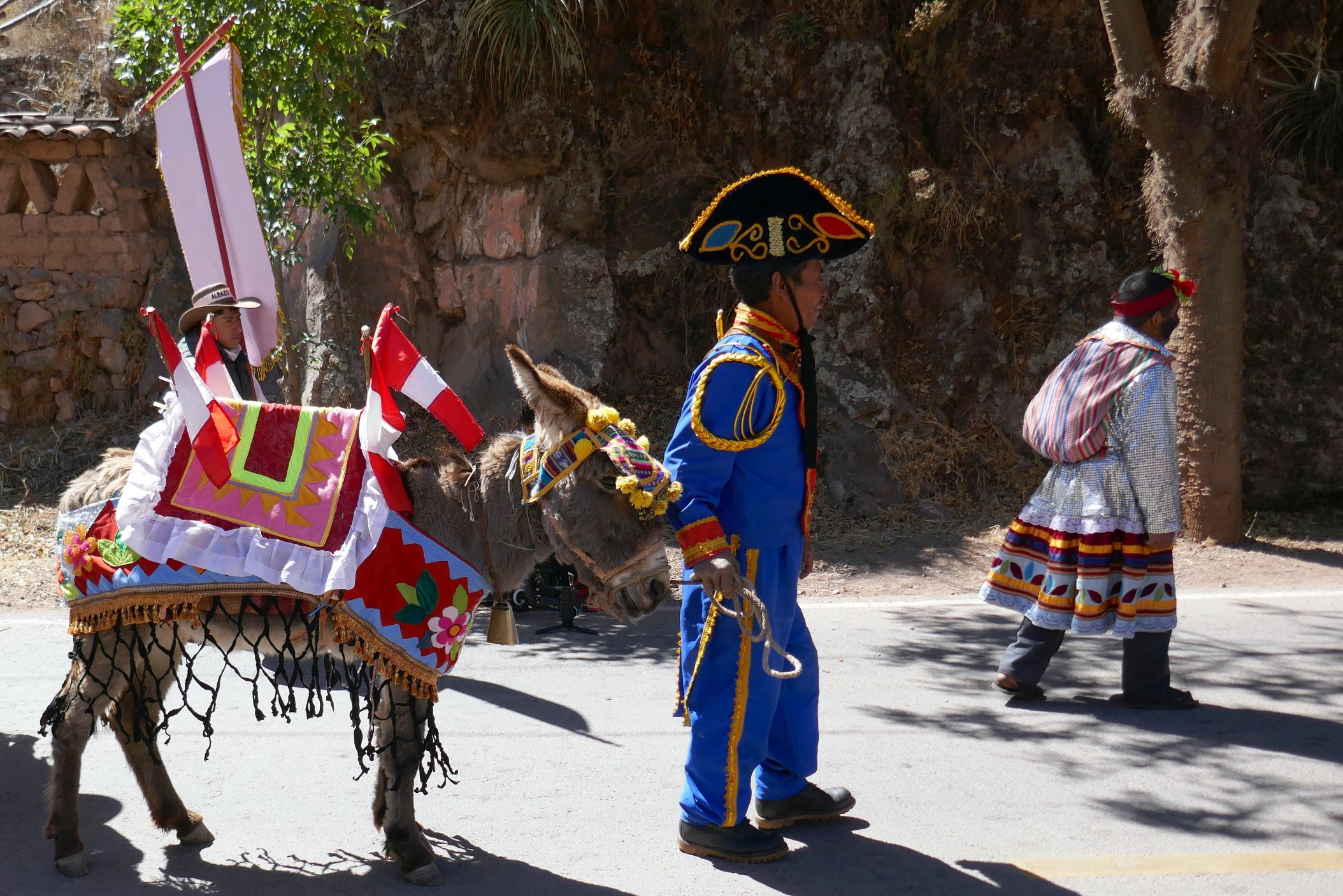
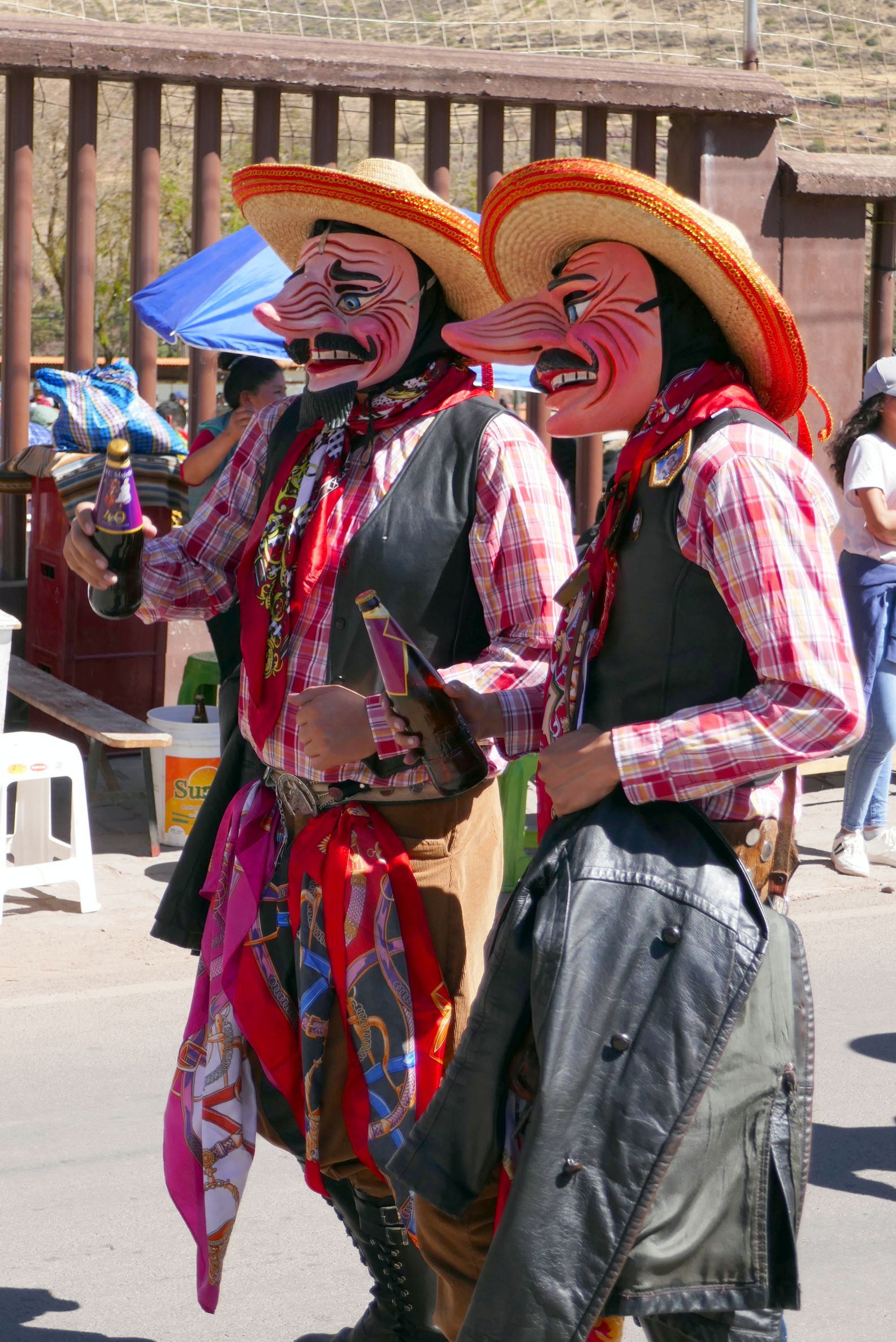
The parade and festival was celebrating Virgen del Carmen, an annual celebration that draws thousands of Peruvians and tourists to Pisac . Raul, of course, knew all about it, but he wanted to surprise us. He was hoping our timing would be right for the parade, and it was spot-on. Encouraging us to jump out of the bus and join in on the fun, I didn’t hesitate. I grabbed my camera and told Bruce I would meet him at the end of the route where the bus would catch up to us. It was too crowded and chaotic to stick together, and the bus wasn’t going anywhere until the parade concluded. So, if you can’t beat ‘em, join ‘em! And that we did!
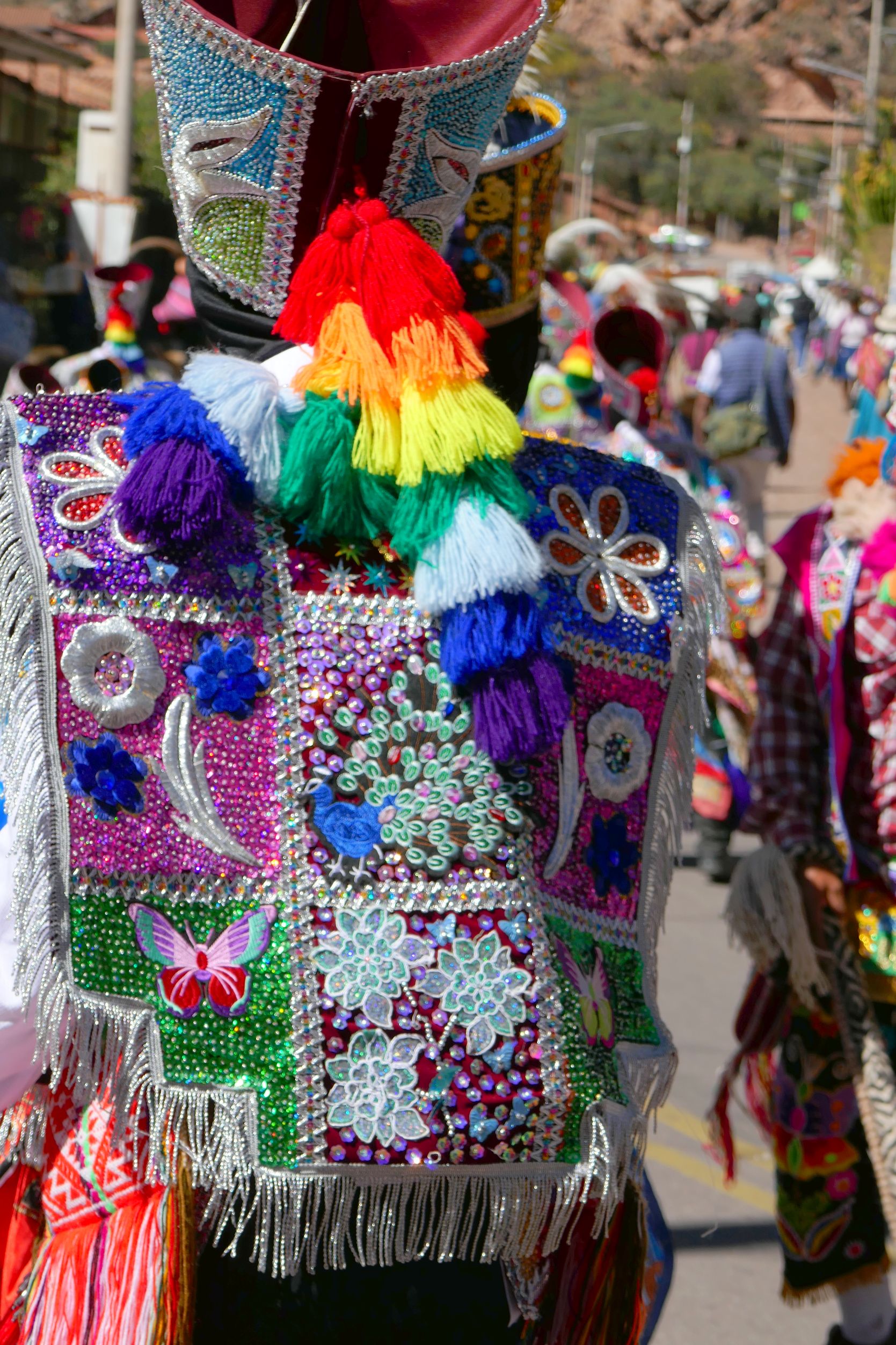
What a joyous, colorful, and noisy celebration! The participating folkloric dance groups were dressed in amazing handmade costumes, competing for the top prize. Each year, many hours are spent making each new costume by hand with every sequin and applique sewn on individually. What a feast for the eyes! The entire experience was a great introduction to the culture of the Sacred Valley.
Notice her brown hat as well as the white and black hats worn by the women above? The color indicates the class and status of each woman and where they are from. This woman’s brown hat indicates she is from the Andes.
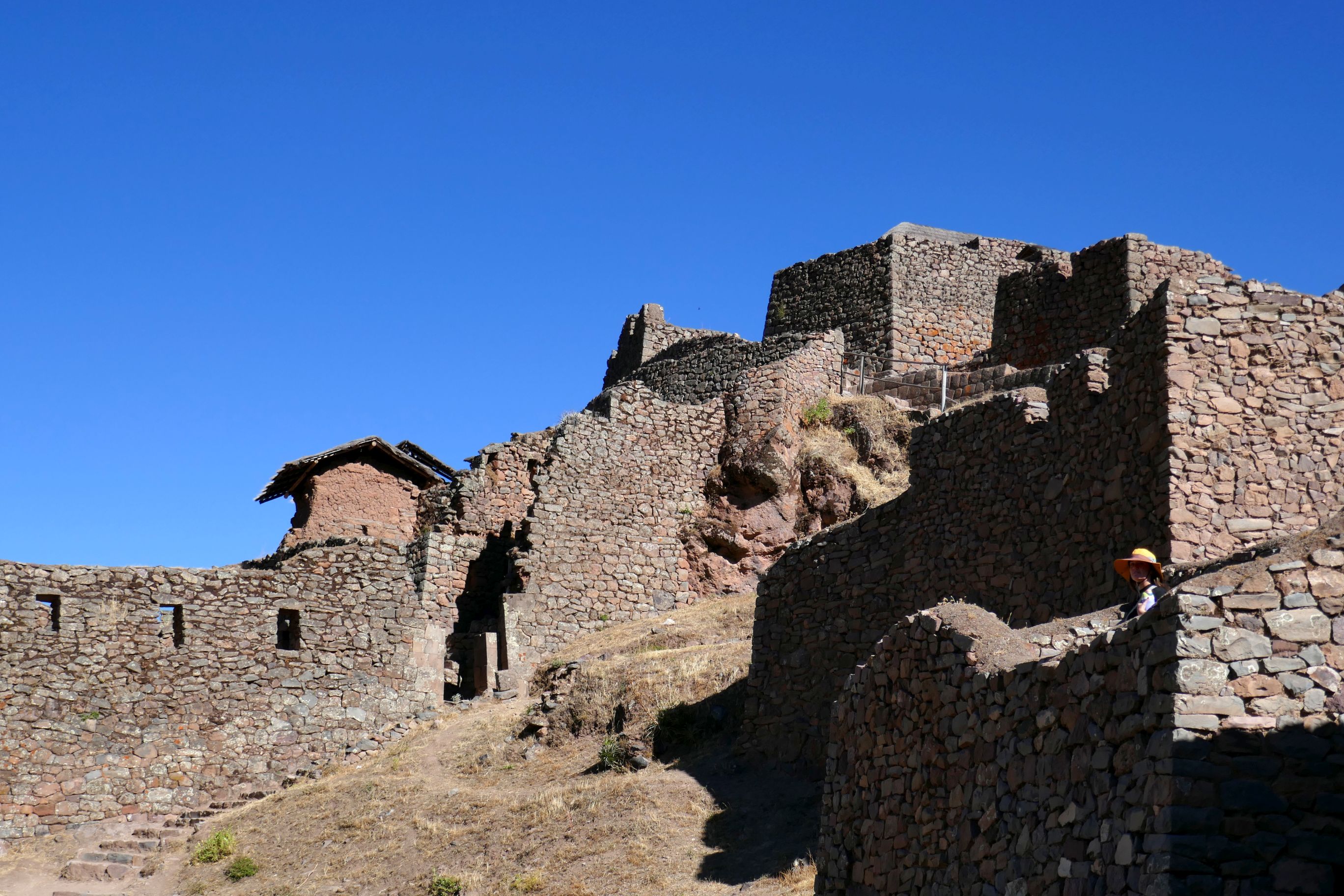
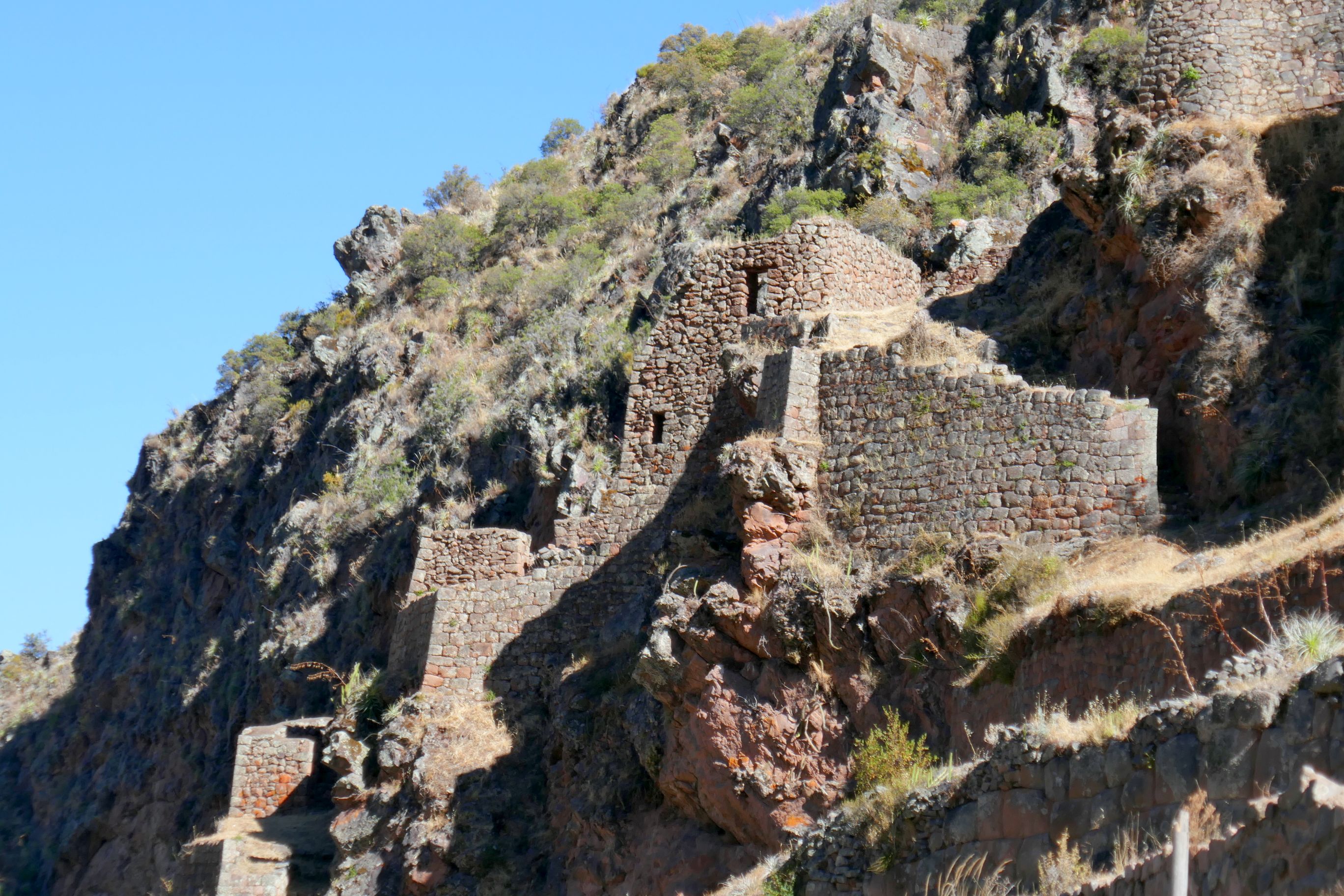
After we piled back on the bus, we ascended along a switchback road above the Vilcanota River to explore the Pisac Ruins. A well-preserved ancient Inca complex, it is one of the top historical sites to visit in the Sacred Valley and a UNESCO World Heritage Site.
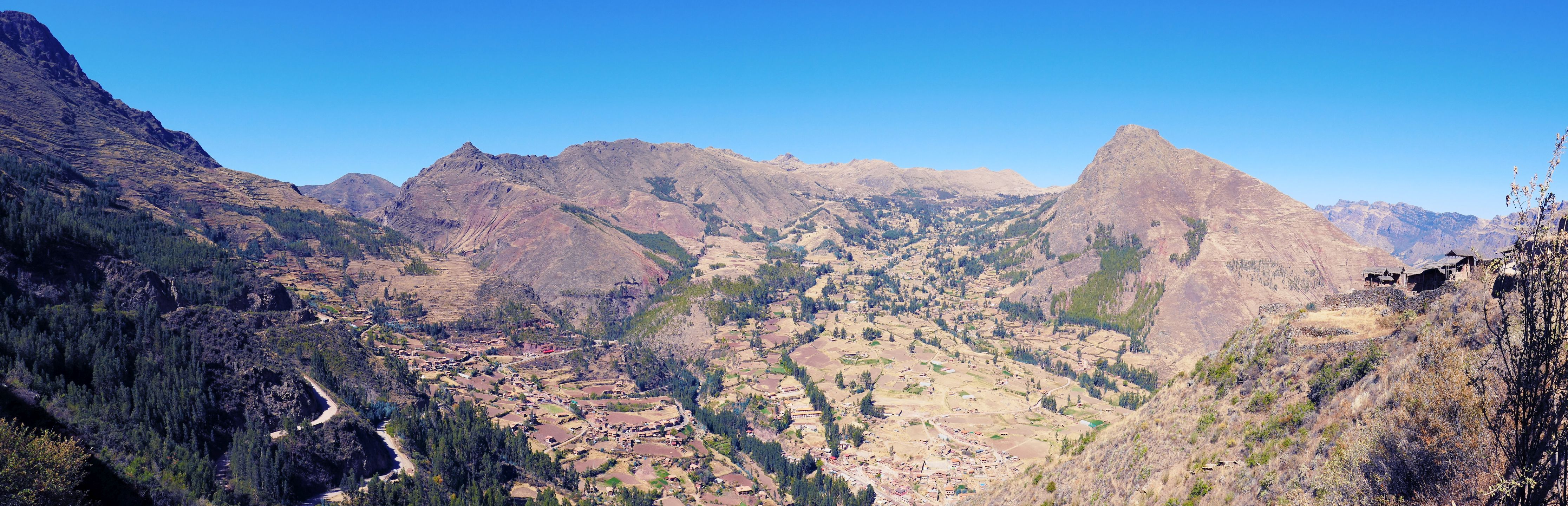
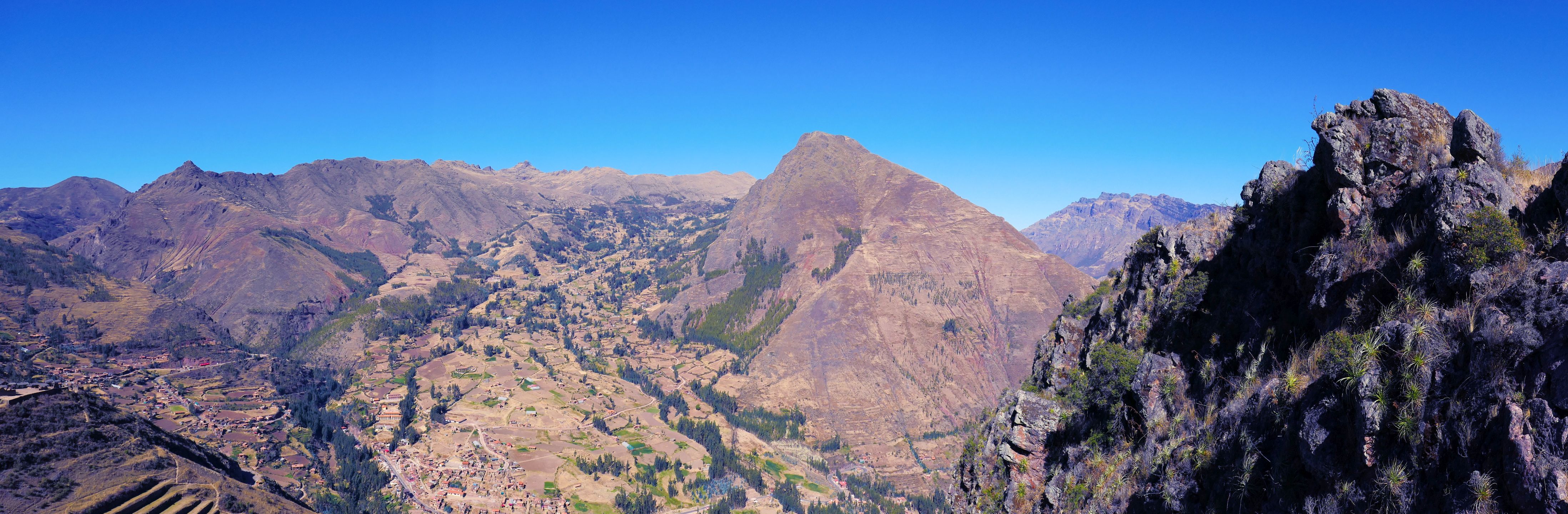
So far, so good! The high altitude hadn’t registered with my body yet, so I was able to climb up to the top of the ruins at 11,400 feet to enjoy the beautiful vista of the Sacred Valley.
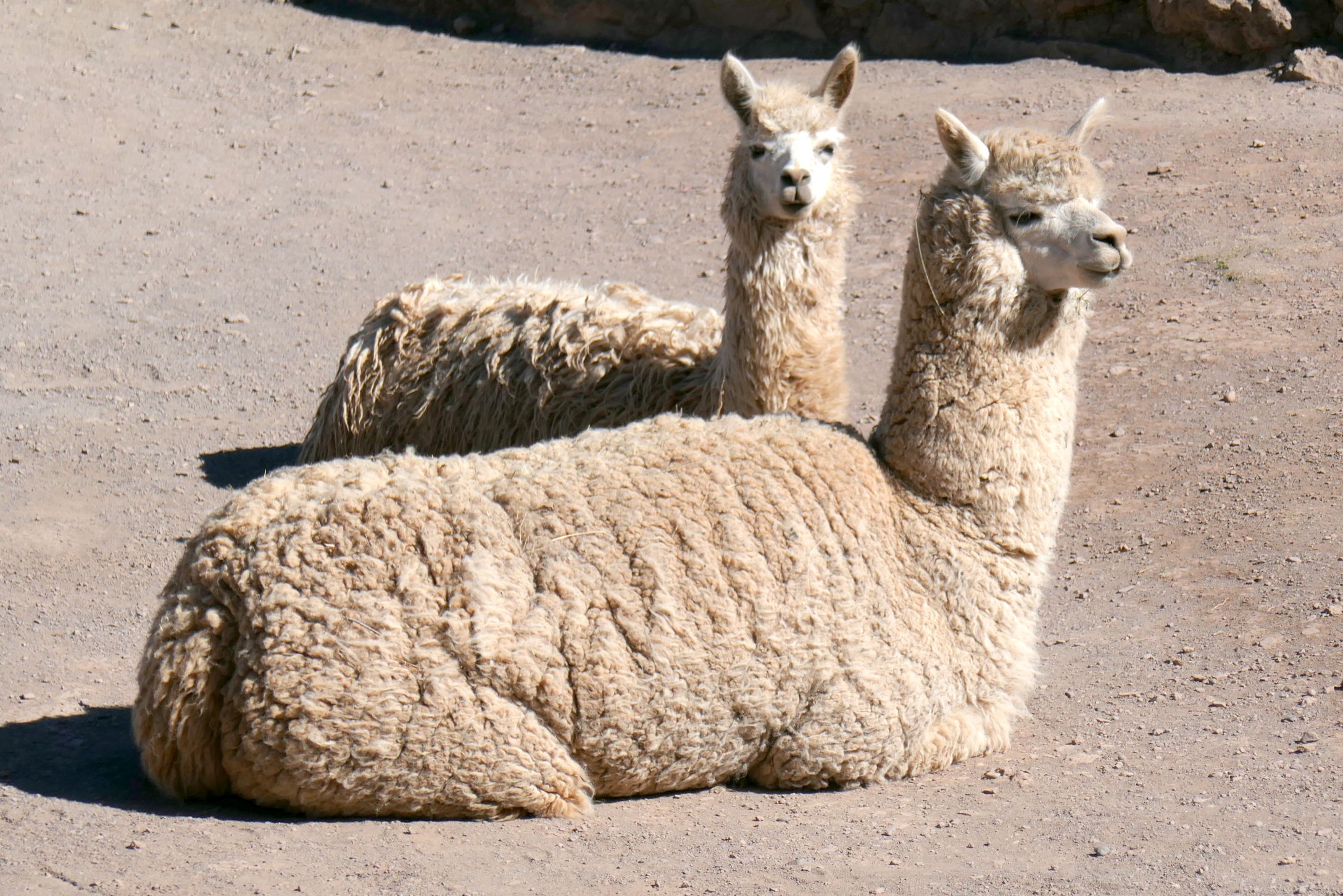
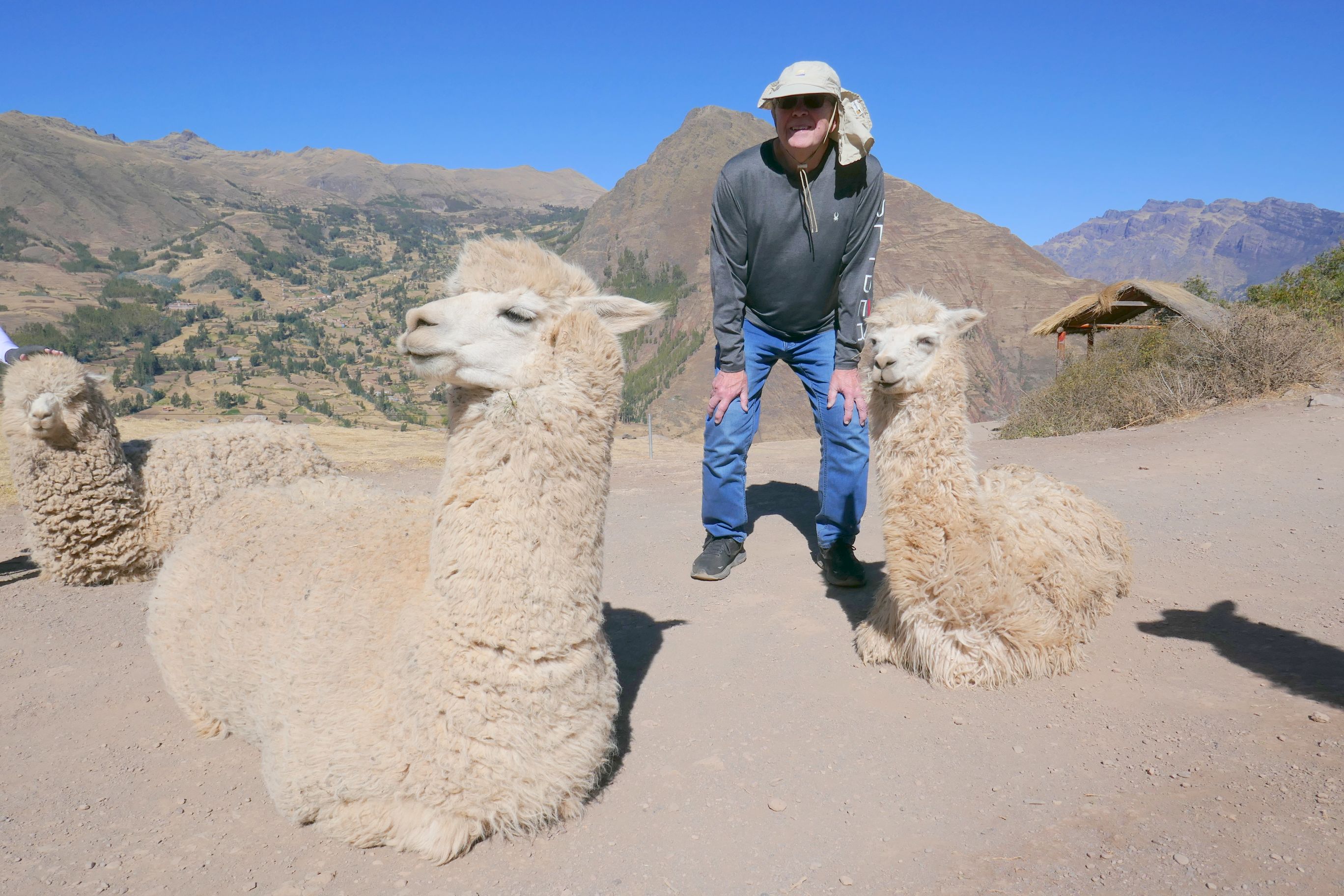
During our hike, we were greeted by some very mellow and tame resident alpacas! They have become so used to people; they were unfazed:
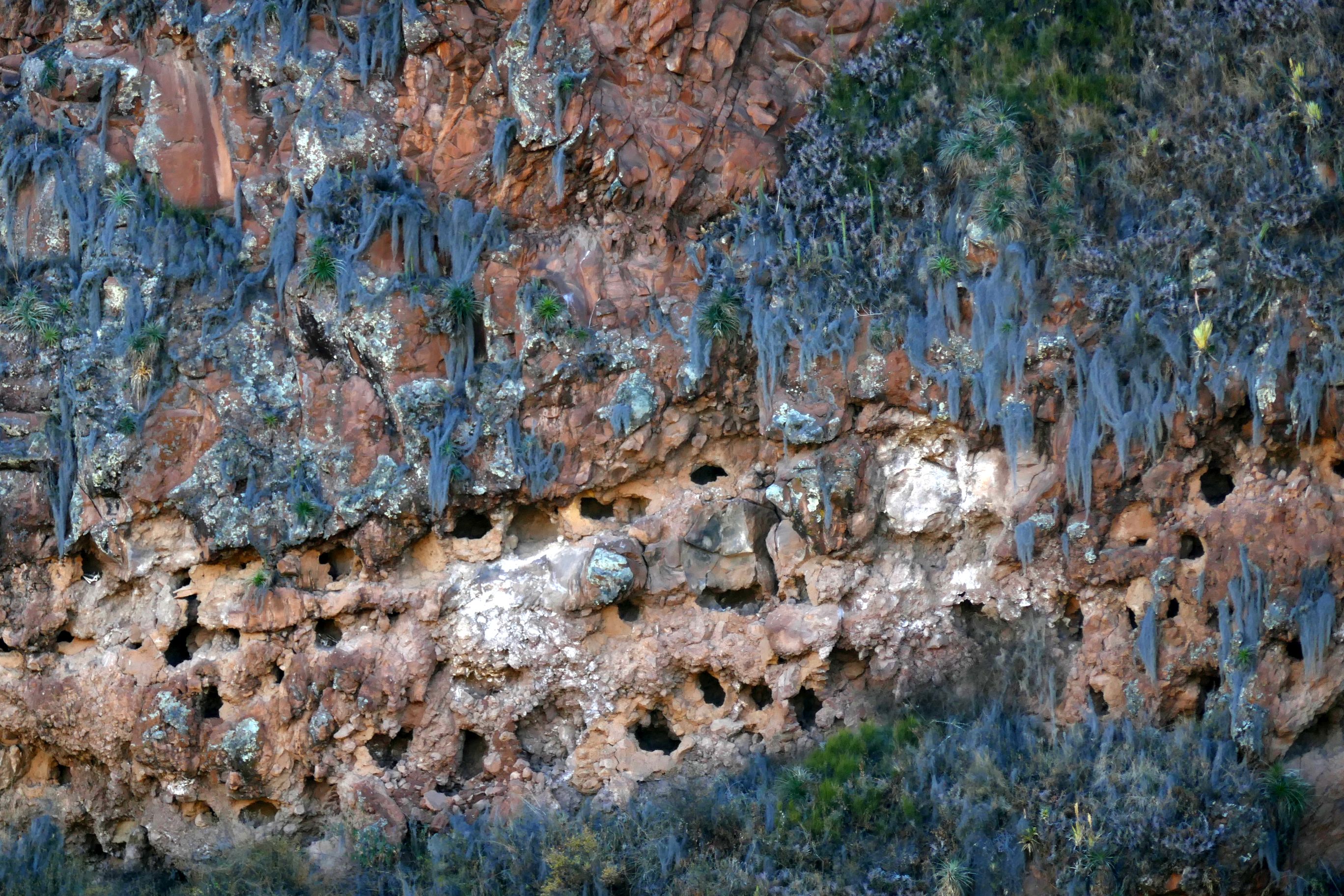
The purpose of the terraced complex was to keep an eye on and control the tribes who lived below. In the following picture, note the holes in the hillside. These holes were burial sites where the dead were buried in a fetal position:
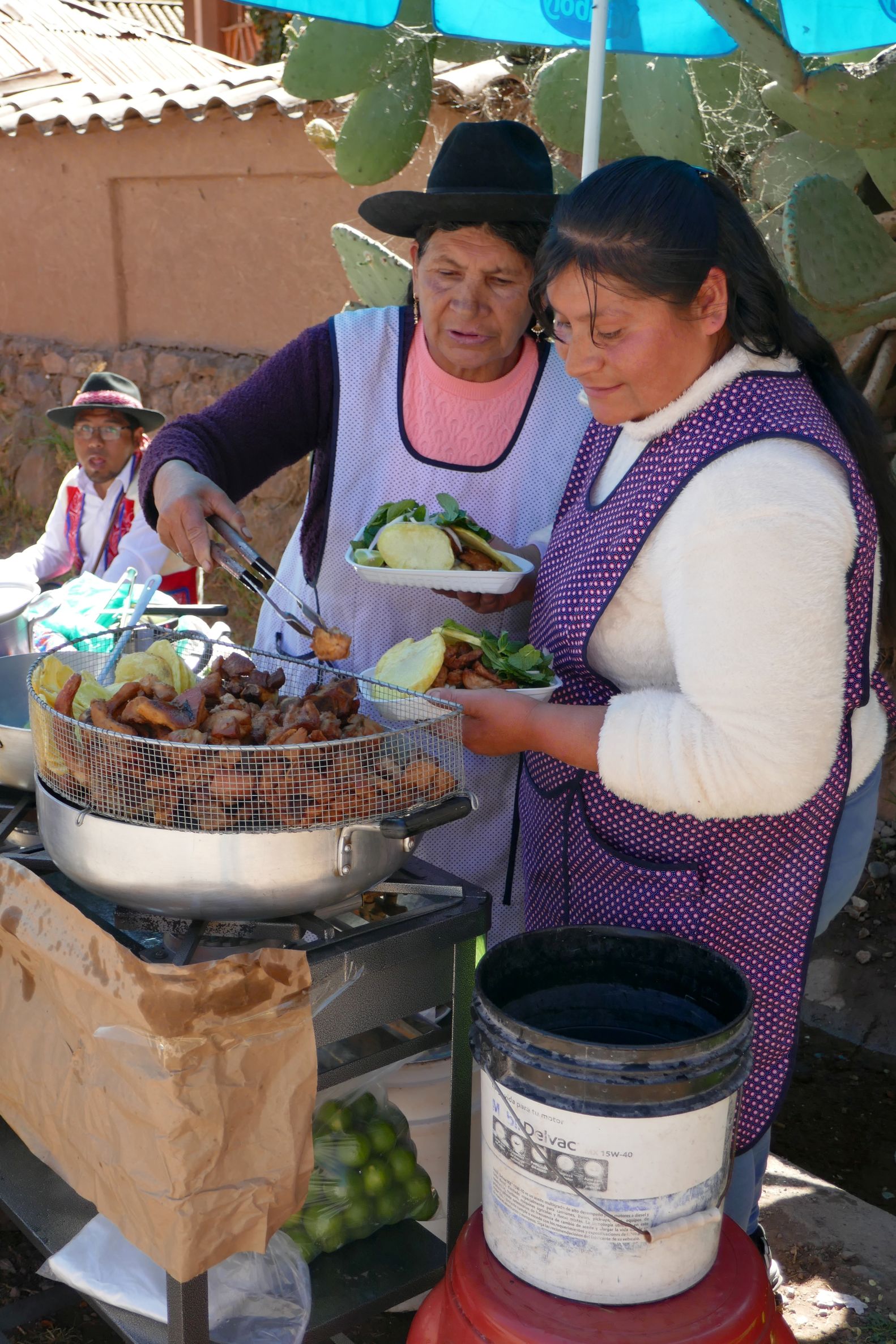
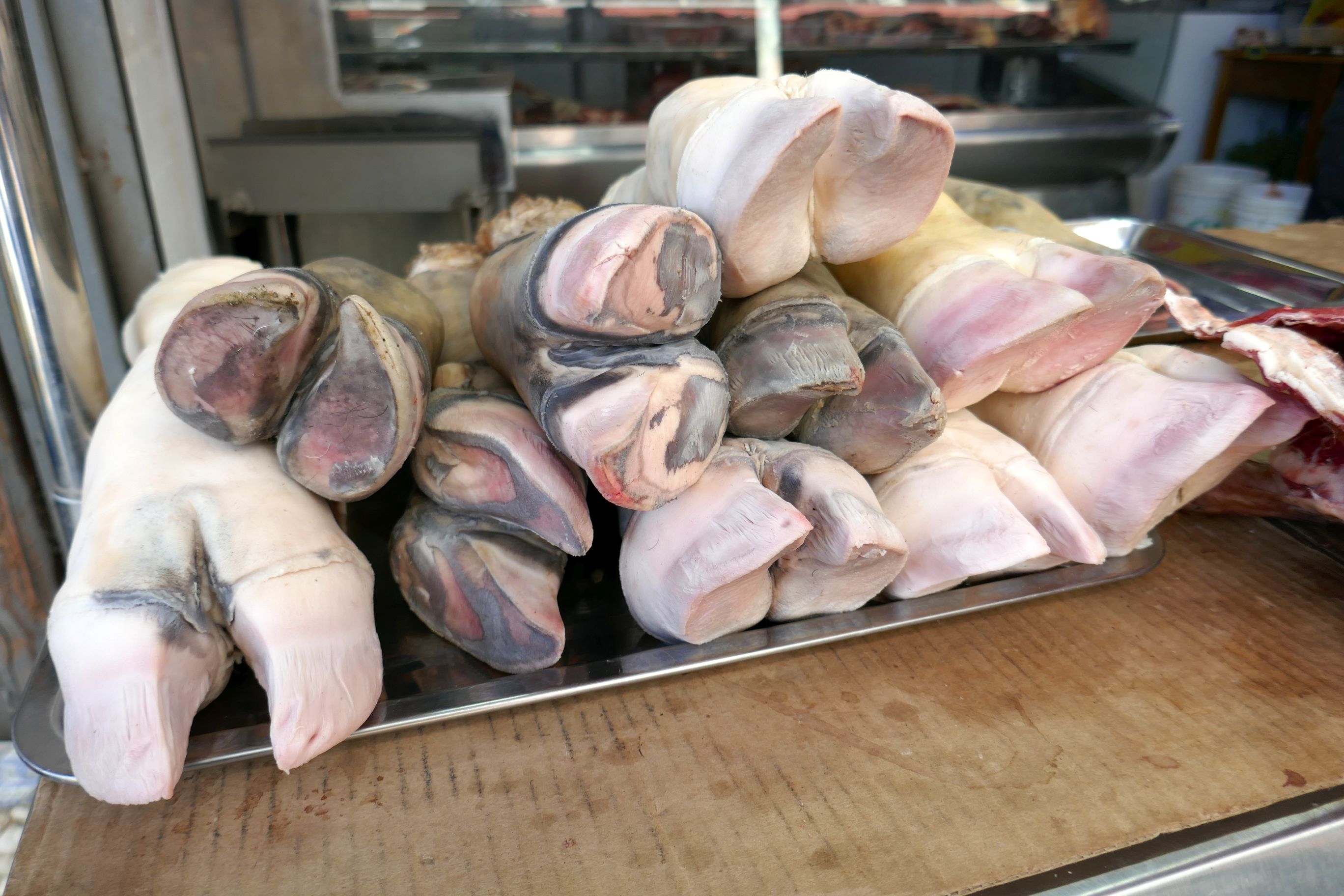
On the way to our hotel, Raul had the bus driver pull over and asked this woman selling roasted guinea pig if she would come aboard to show us. Guinea pig is a delicacy in Peru; however, I grew up with my sister’s pet guinea pigs…
In the late afternoon, we arrived in Urubamba at the beautiful Villa Urubamba Hotel. I will post more pictures in my next blog, but this is the musician who entertained us at dinner this evening. I enjoyed his music so much, I bought his downloads, which I will use in my slide show which will appear in my last Peru blog post:
Eder Alvarez Alejos of NativAndina
Fortunately, the altitude never made either of us sick. I had a headache that first night—nothing a couple of Tylenol couldn’t cure by the next morning. A few others in our group weren’t so fortunate!
Coming up next: PERU #8: RAFTING THE URUBAMBA RIVER, EXPLORING OLLANTAYTAMBO INCA FORTRESS, AND A HOME-HOSTED LUNCH
Before I return to posting about Peru, I wanted to backtrack and make a slide show to finish out Switzerland & Northern Italy. Overseas Adventure Travel (OAT) gives a $250 credit for future travel for post-trip slide shows, so I am trying to get caught up before we book more travel.
Meanwhile, my long “break” from blogging was due… more travel! Bruce and I spent six weeks in the U.K. and Ireland! We had a fabulous time, saw some beautiful places, and had amazing weather once again! After I complete my Peru blogs and slide show, I will write all about it.
Now, grab your popcorn, turn up your speakers, click on the video, and make sure to watch on full screen for the best view!
We had so many wonderful experiences during our first three days in Lima, and our last day was no different. A local guide was with us for several hours and he was fabulous!
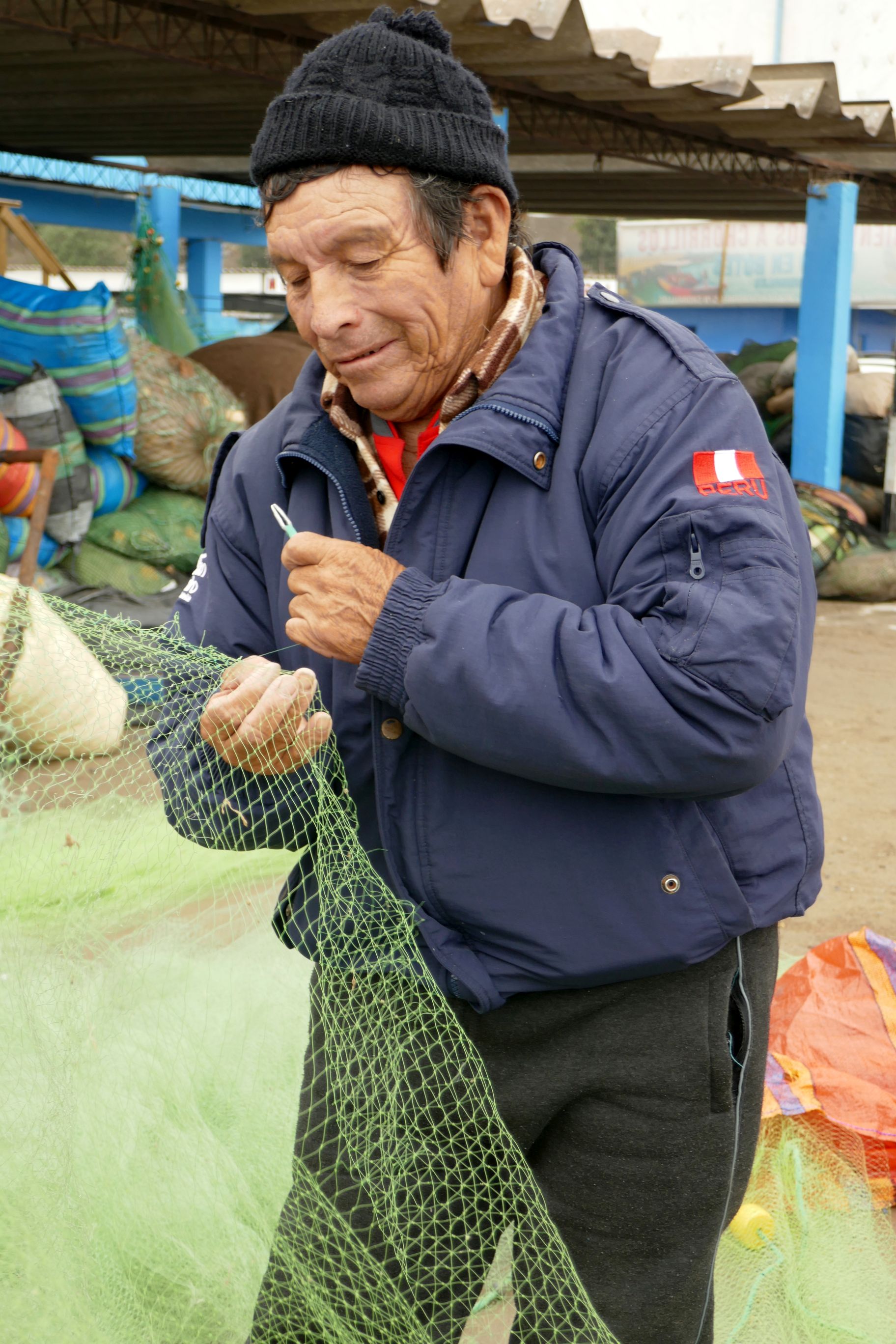
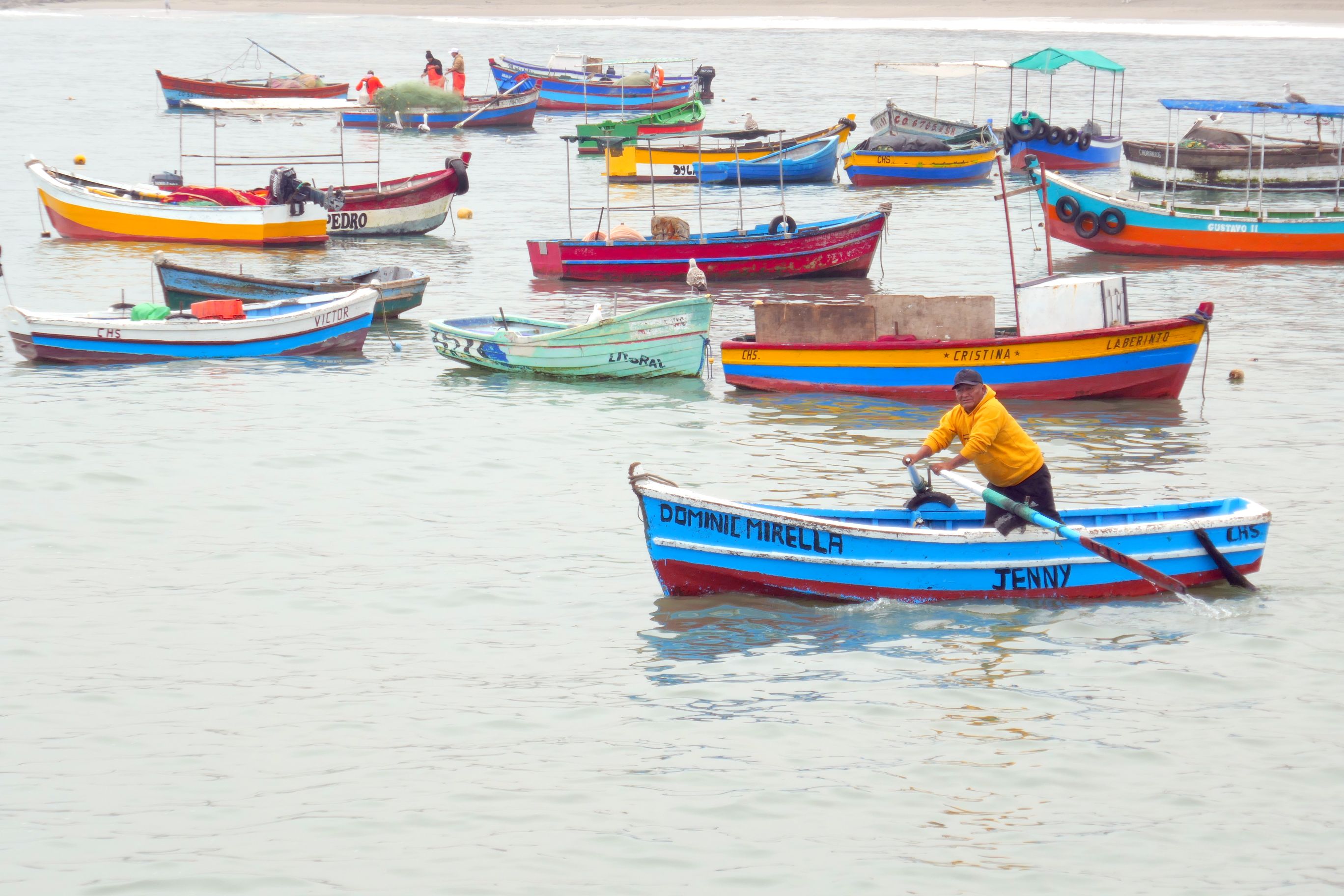
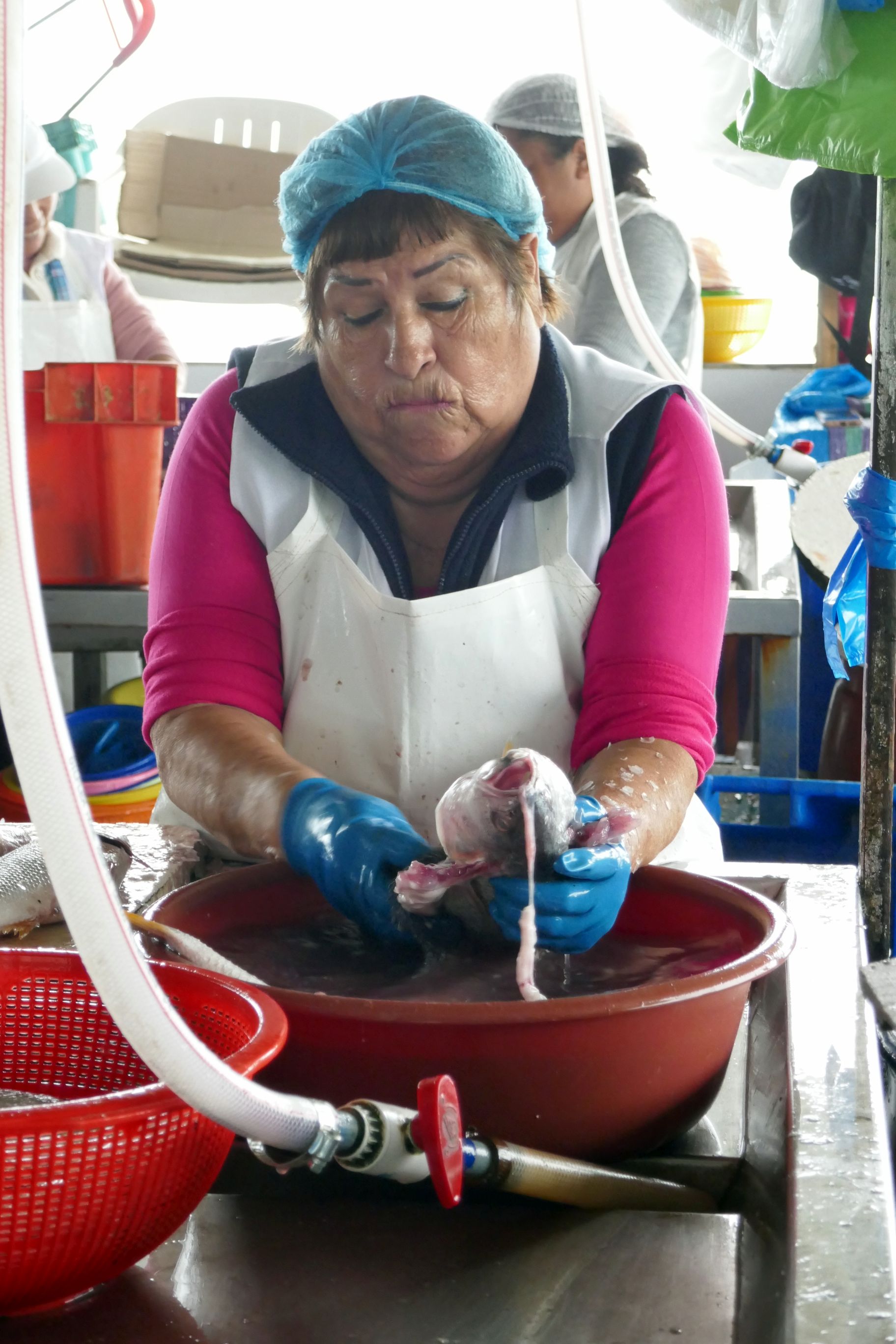
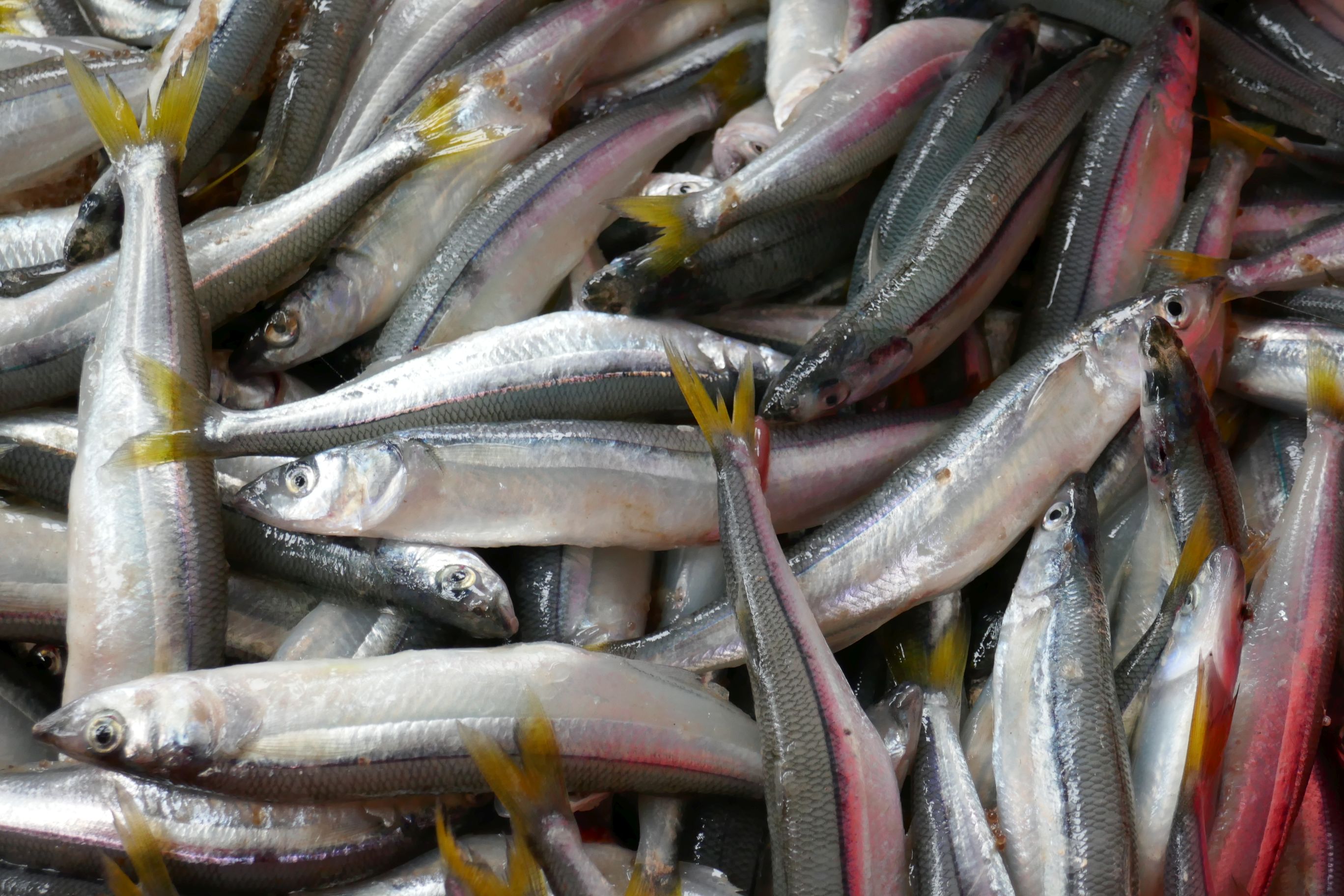
The morning began at a fish market where we learned about a typical day in the life of the local fishermen and the women who clean the fish when they are brought in. They seemed happy to see us, tell us about their work, and answer our questions while joking around with each other as they cleaned the morning catch.
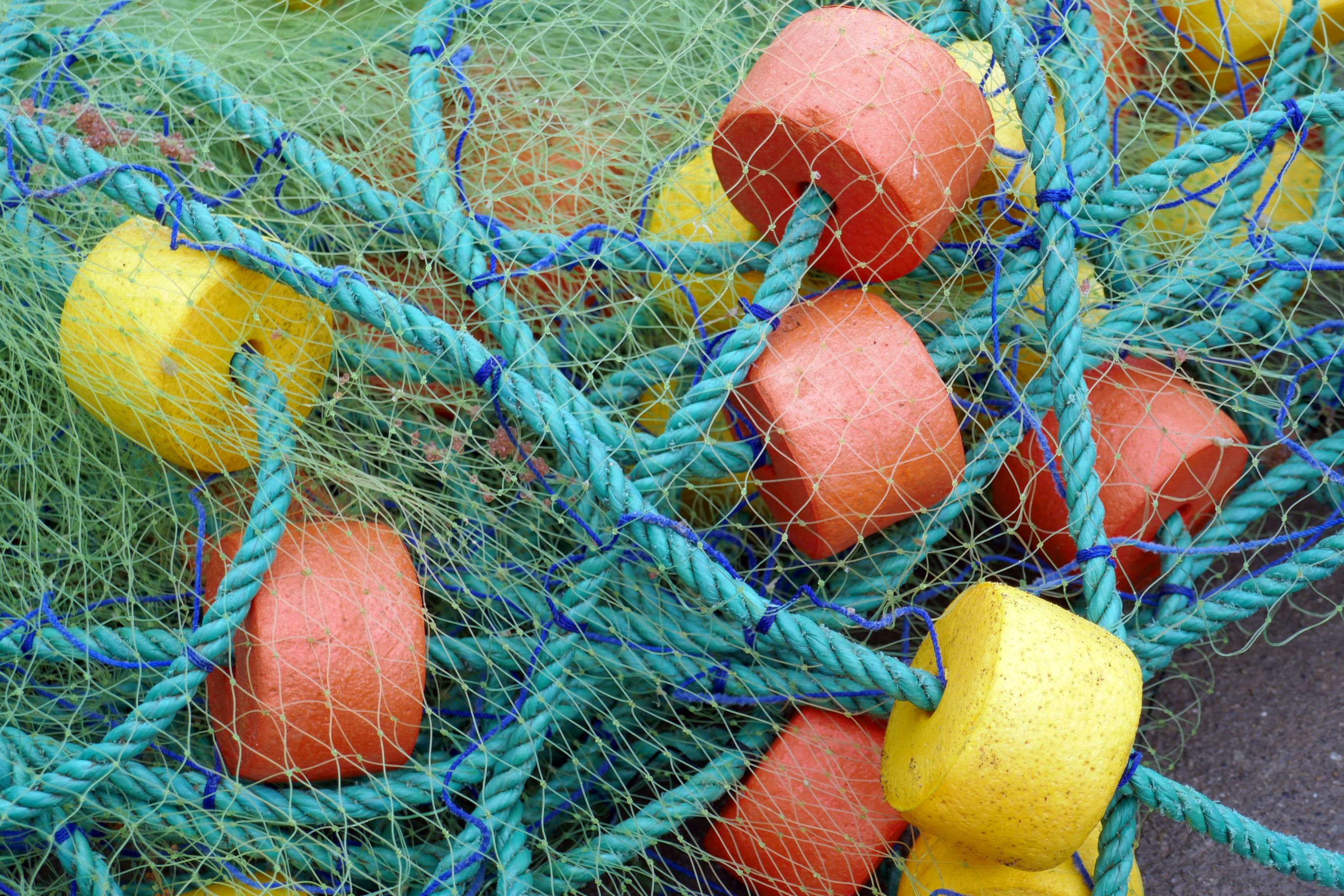
It was this fisherman repairing his net that caught my eye though. As good as our guide was, I missed everything he said while watching and shooting this video—something I rarely do, but would have regretted if I hadn’t shot this short clip, because it instantly makes me feel happy:
A little background: Fisherman make very little money in Peru. They are the working poor of Lima and barely make a living. But look at his joy! He has turned what could be considered a tedious task into something fun. At first, he didn’t notice me smiling and shooting this video, but when he did, he rushed over, gave me a little side hug around my shoulder and walked off for a quick break. After he returned, he was back to dancing and the task at hand. We never spoke a word, but I don’t think I will ever forget him.
(For all photos, click on the image for a full screen view.)
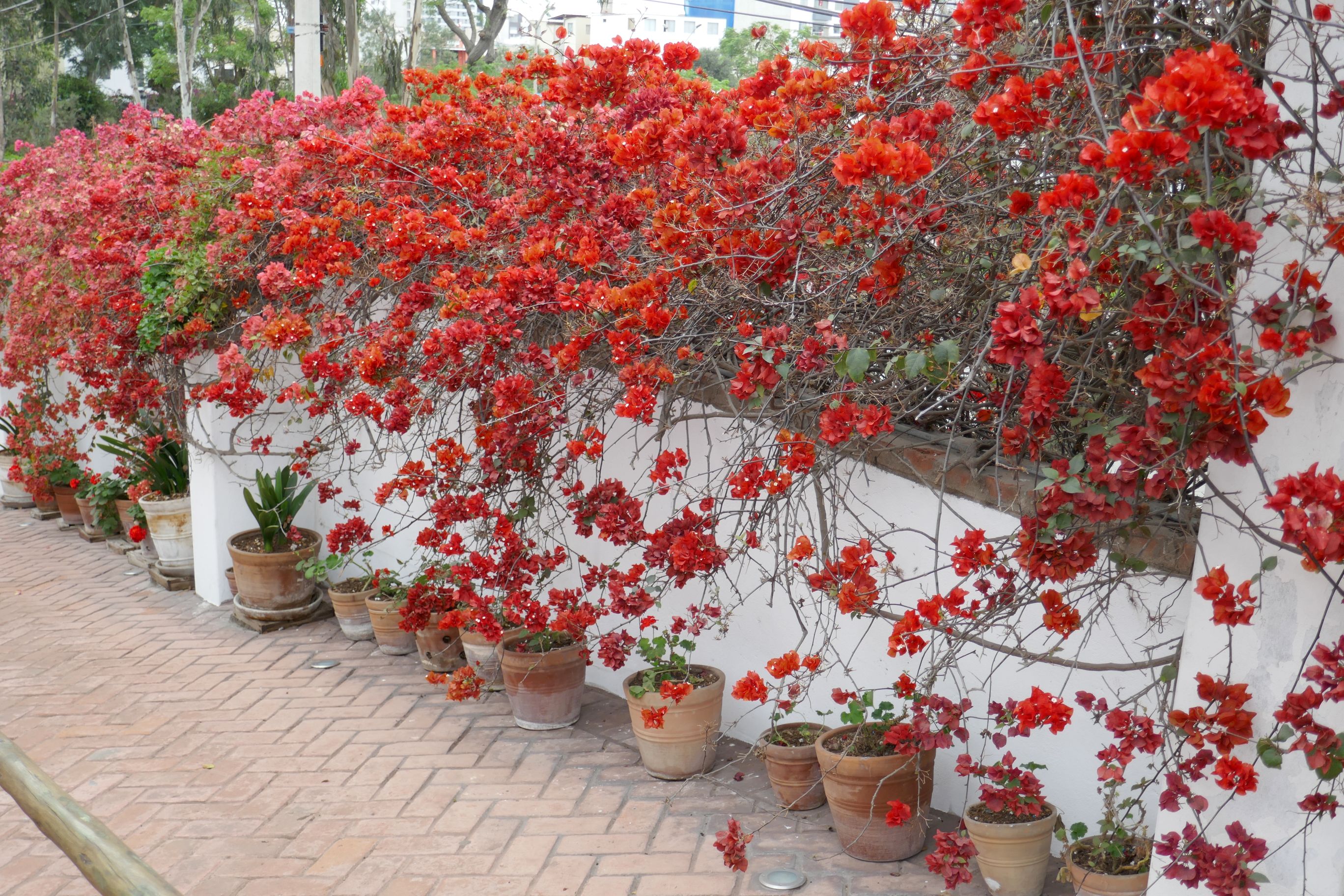
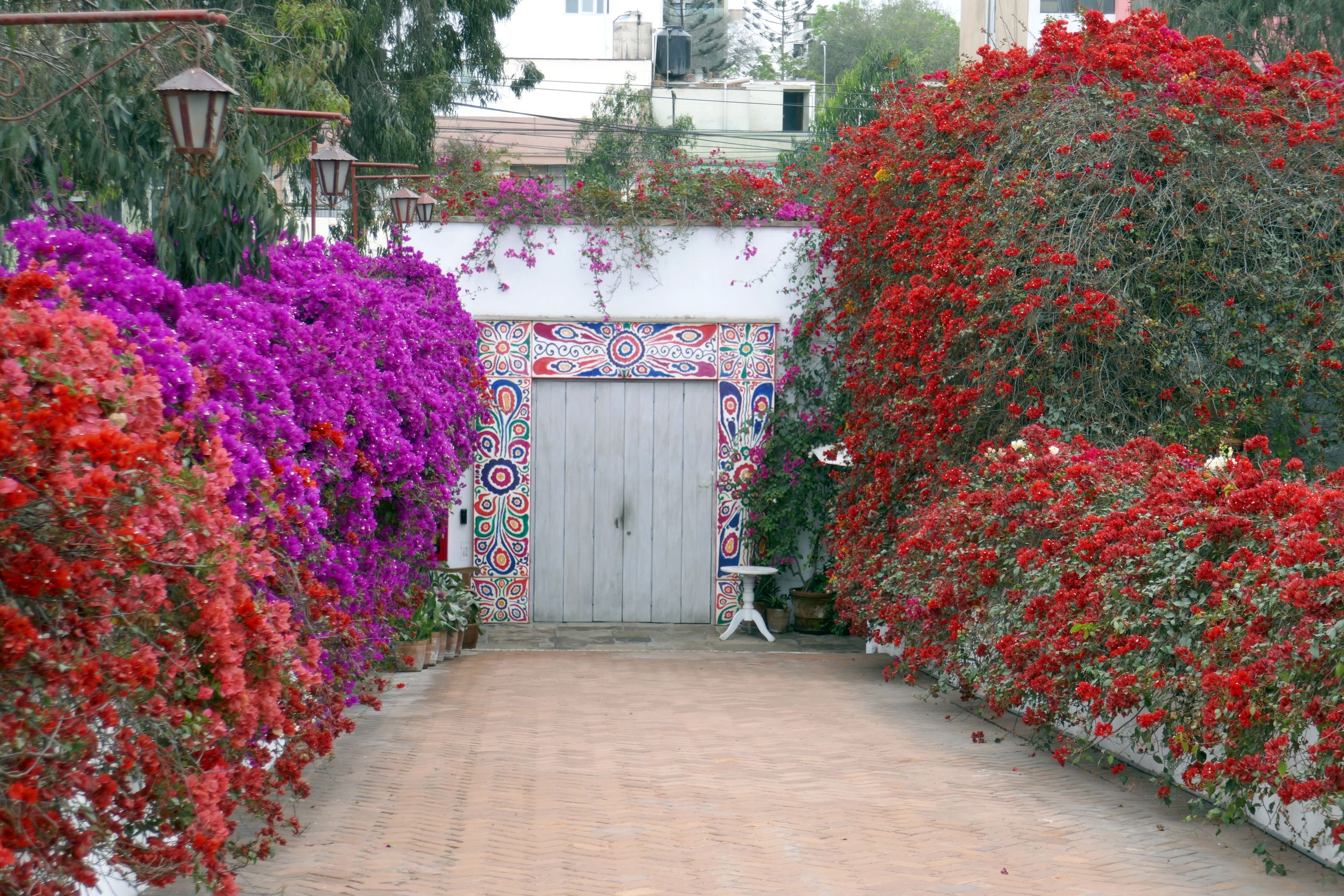
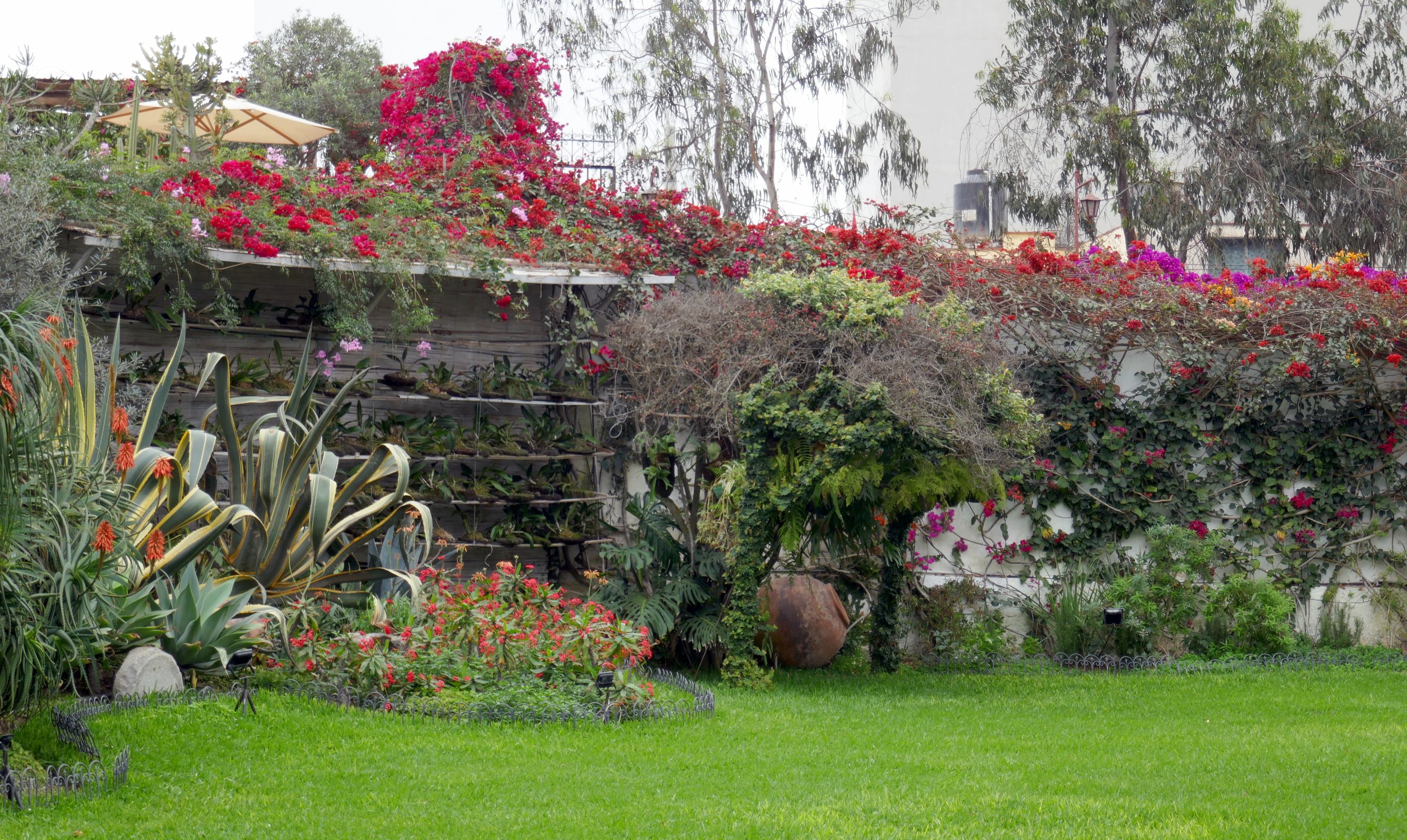
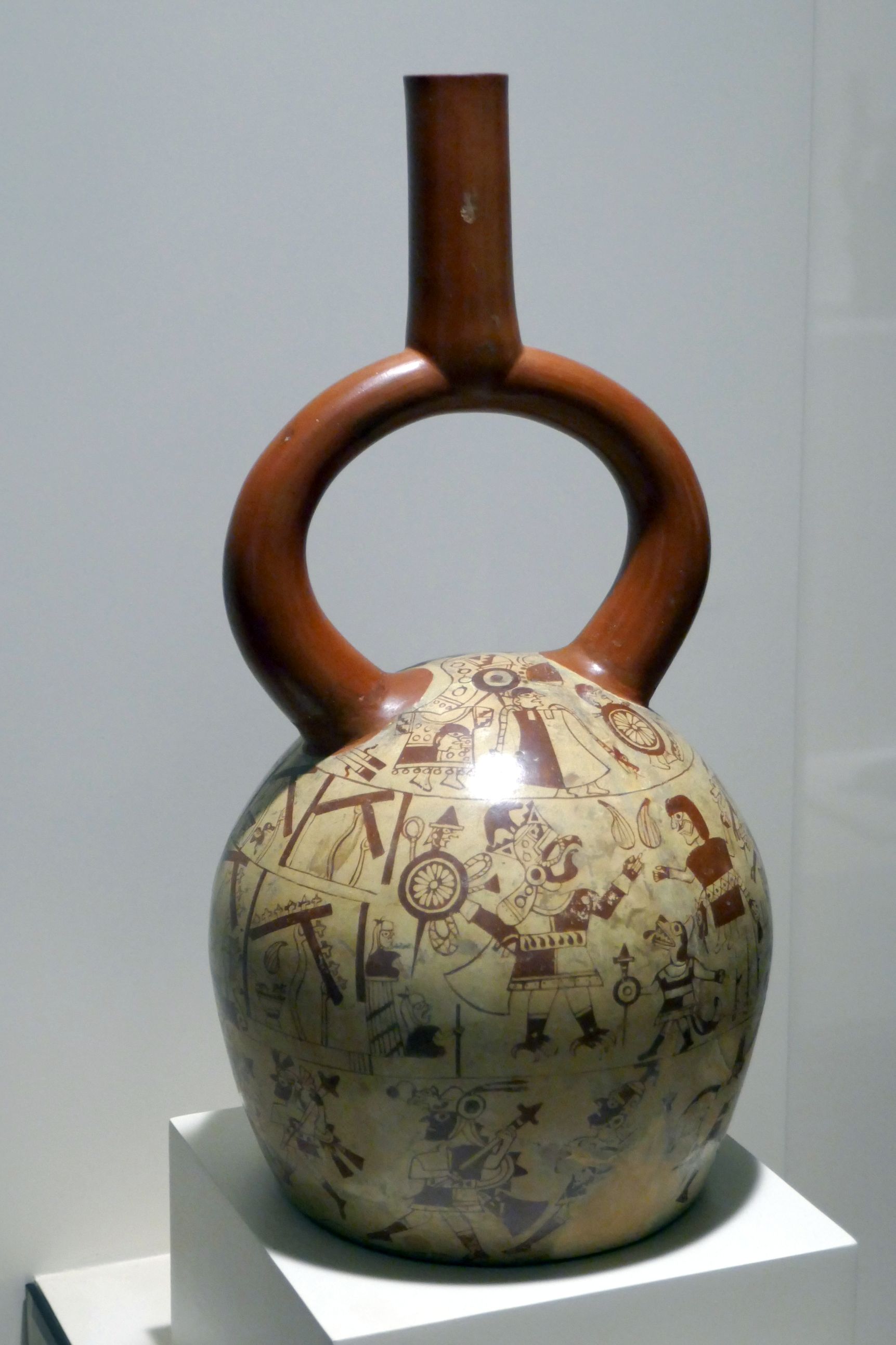
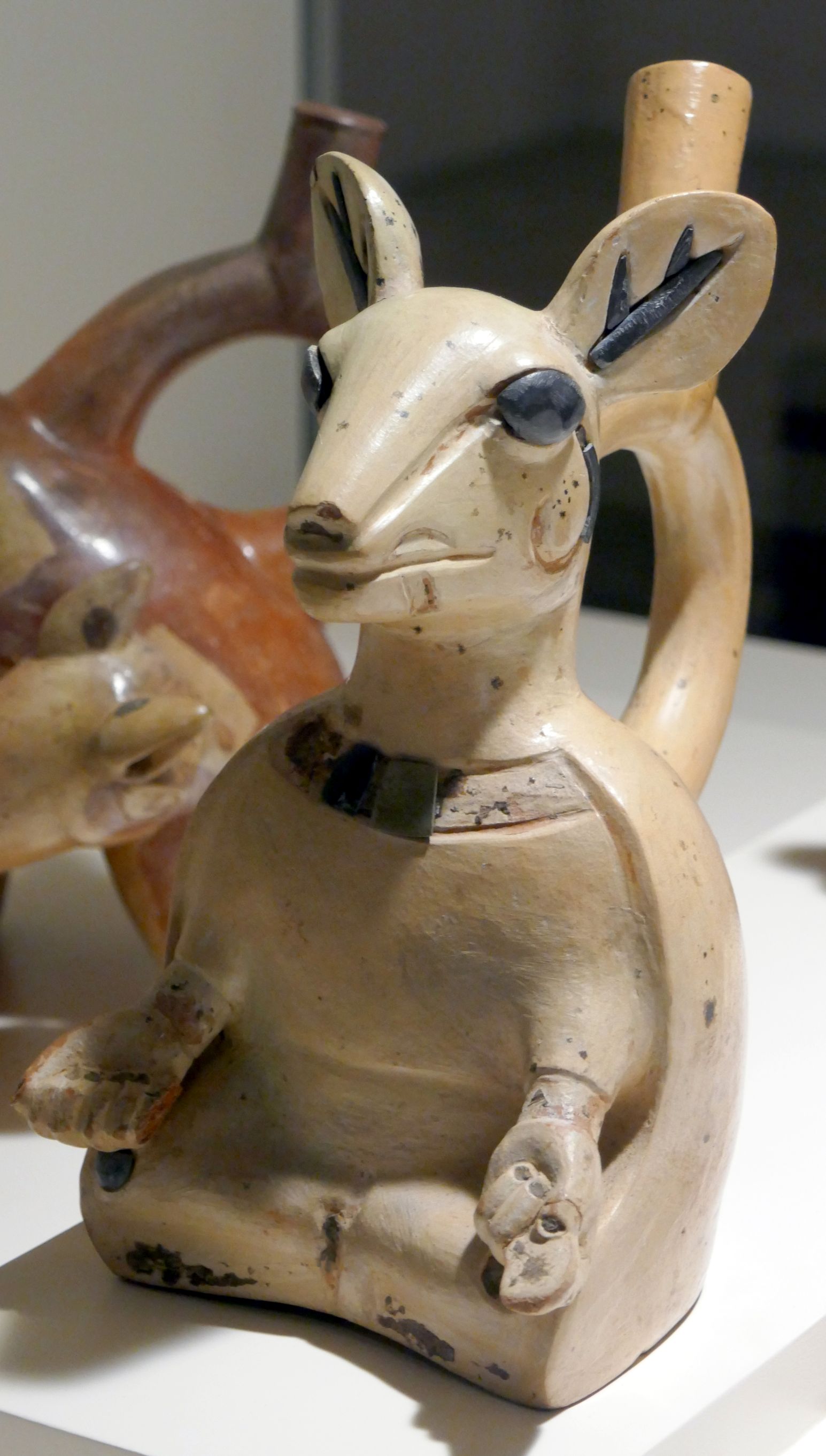
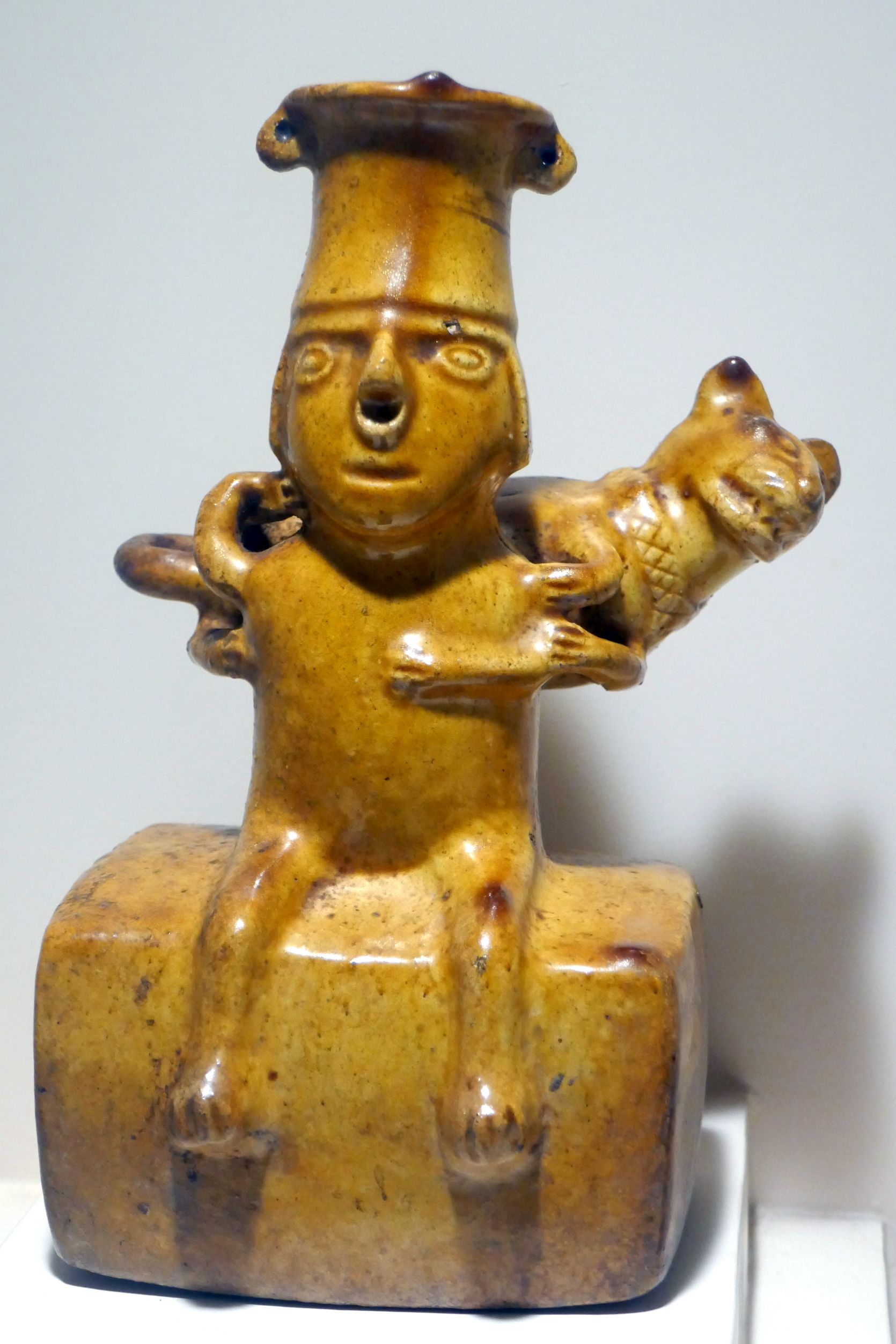
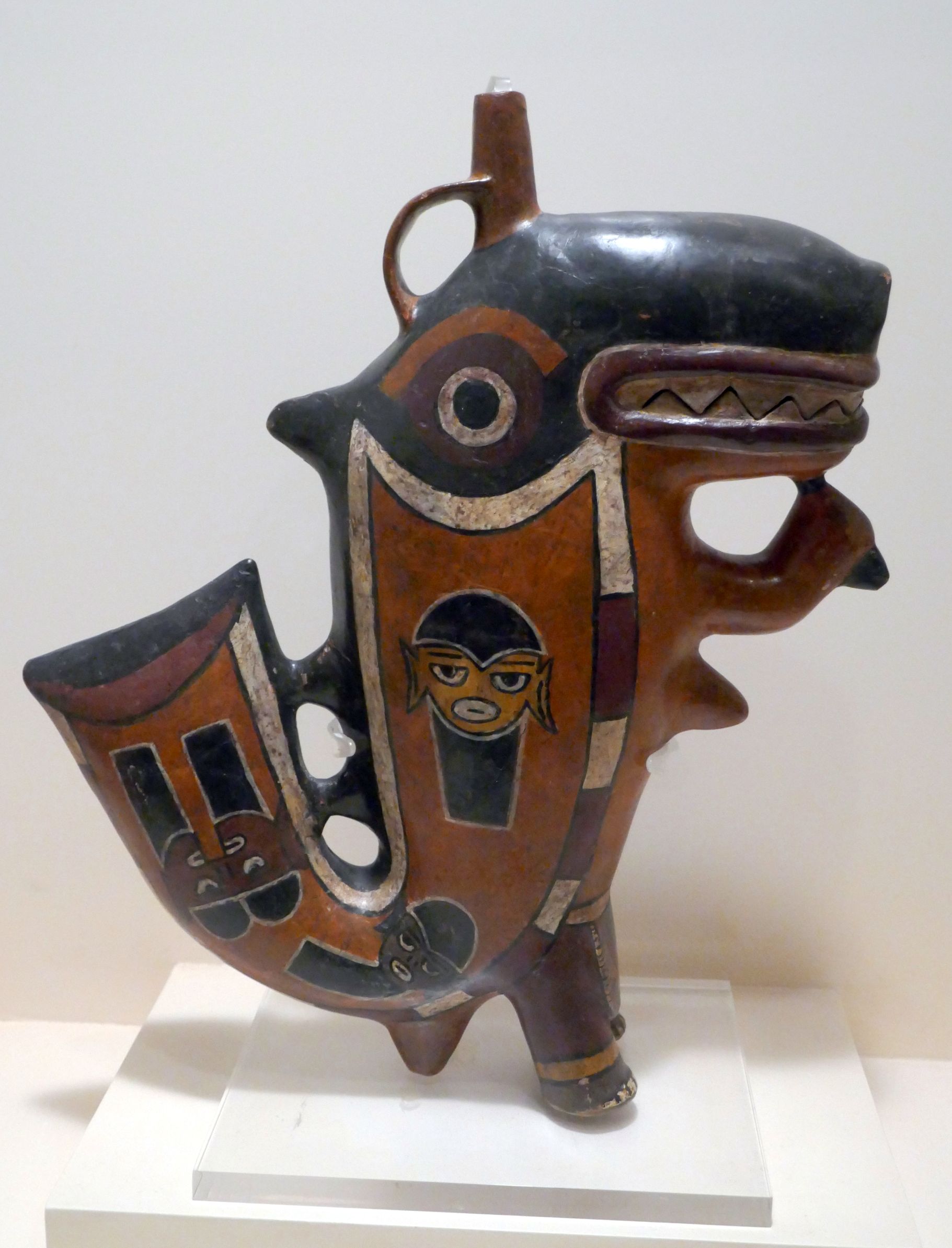
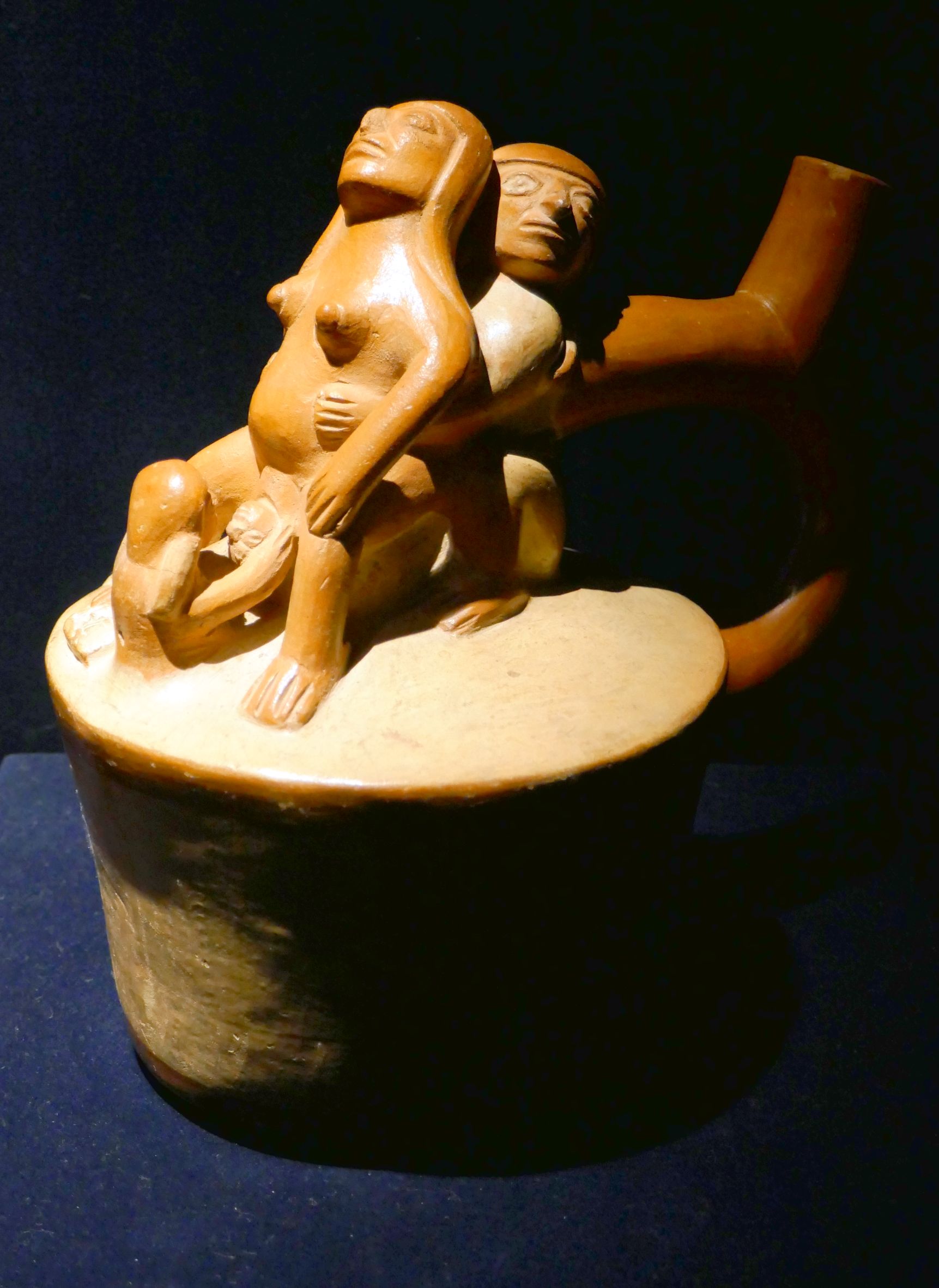
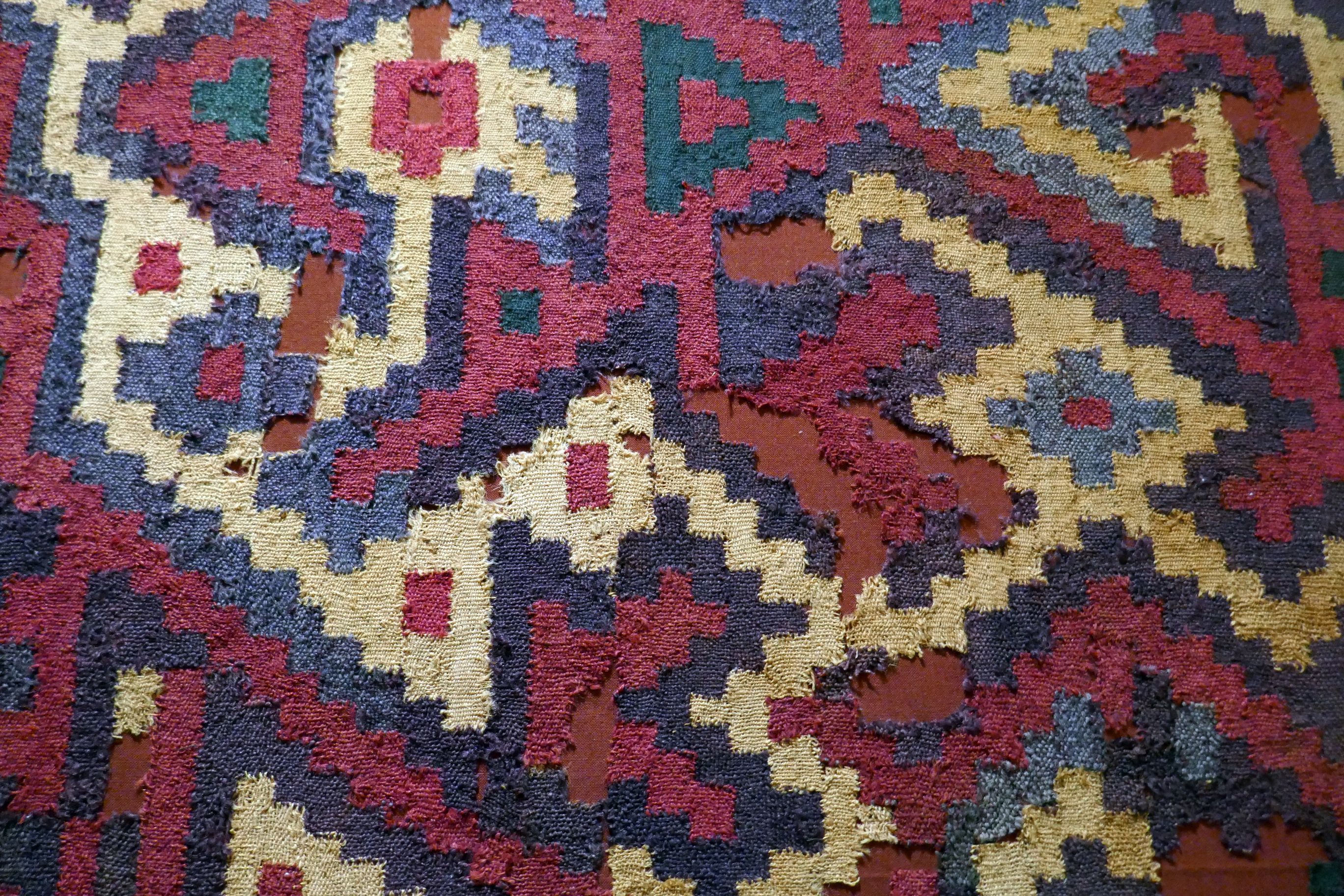
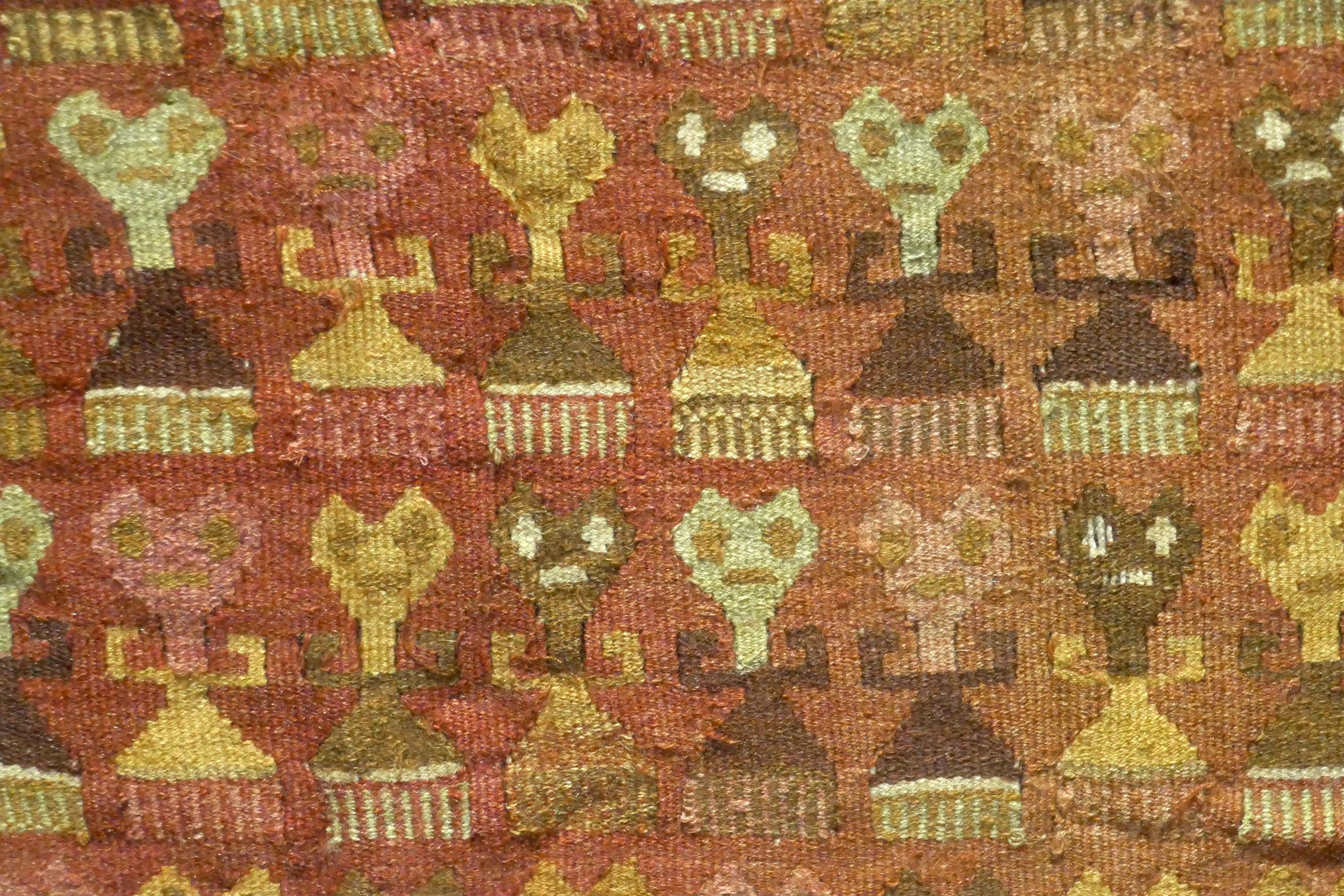
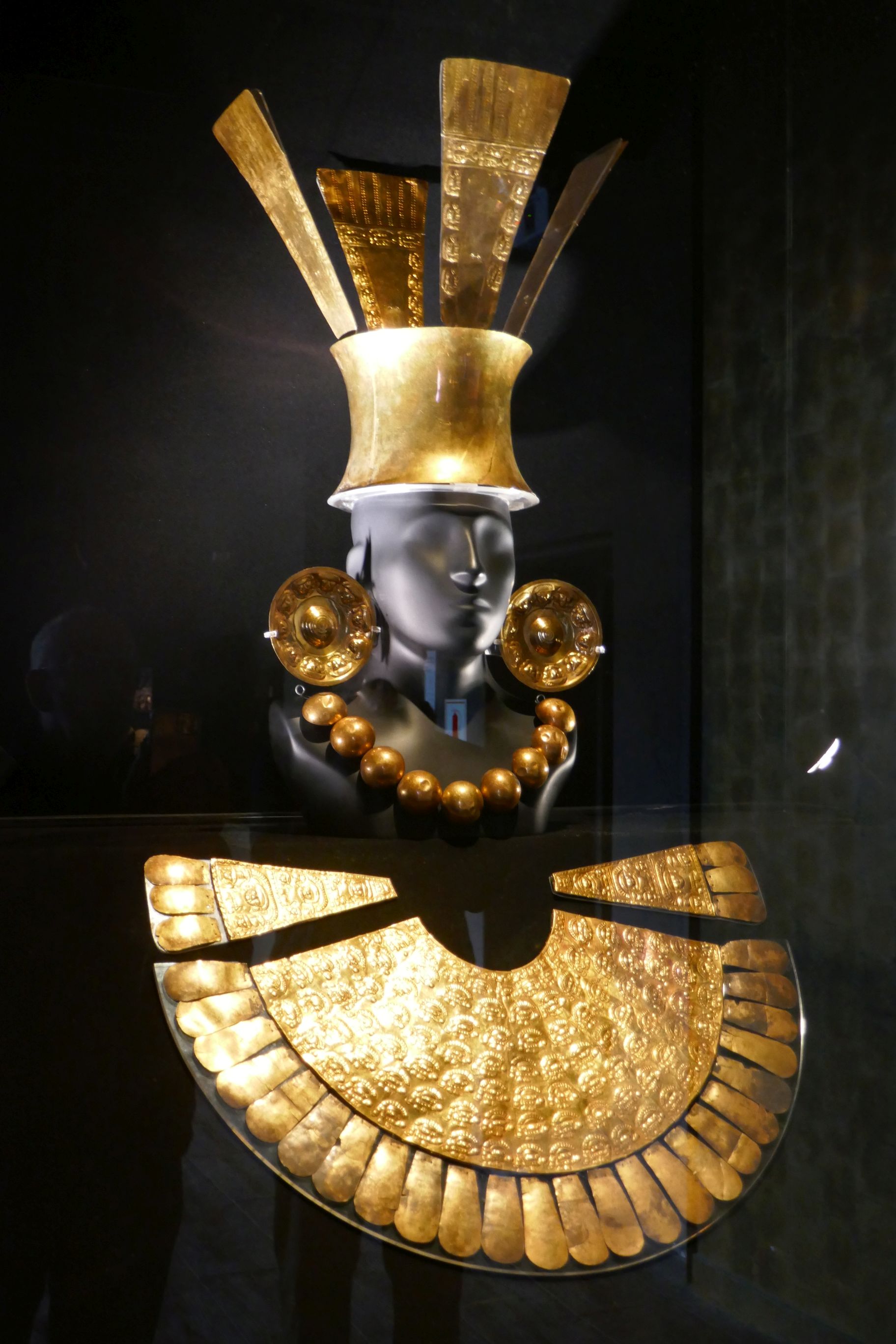
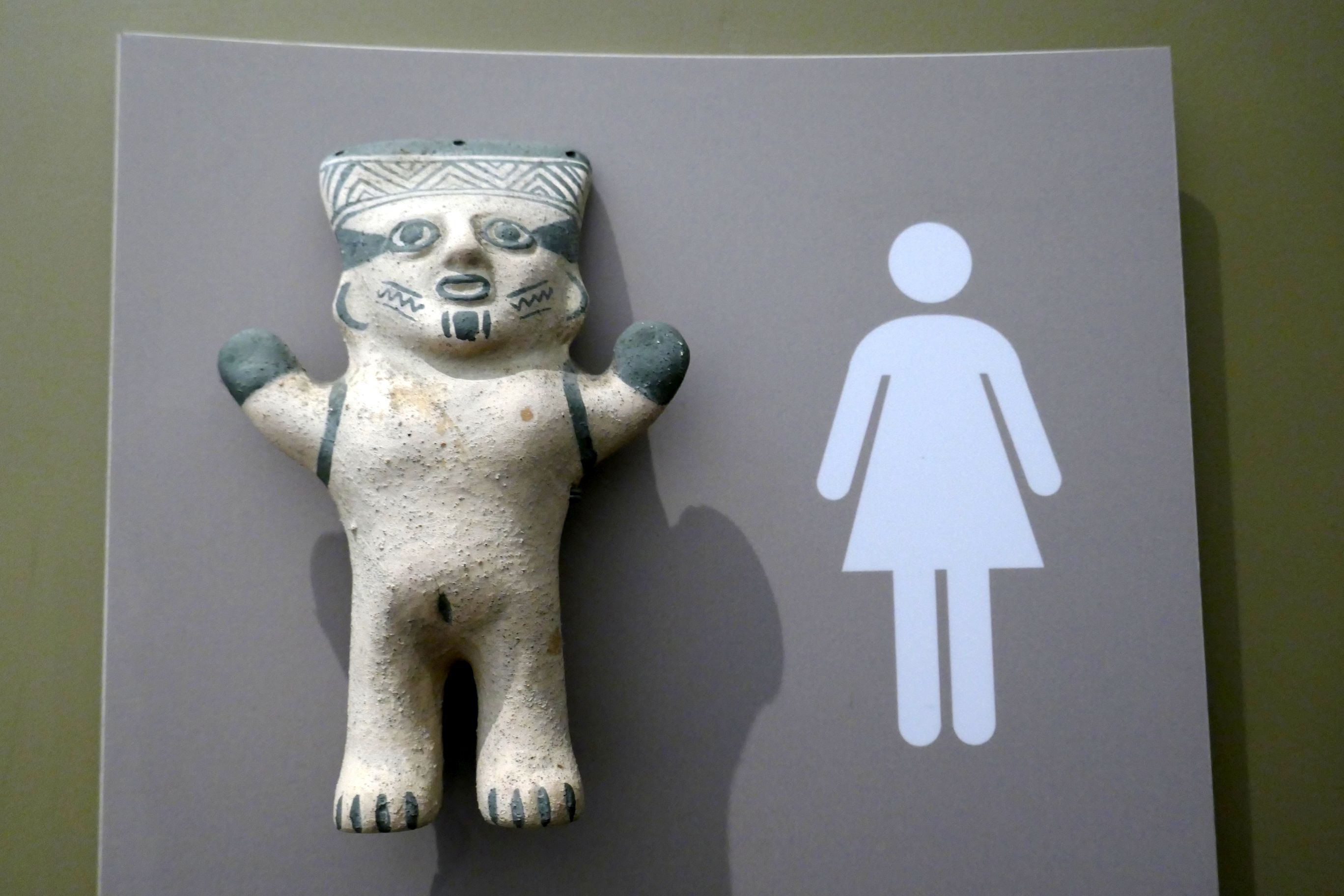
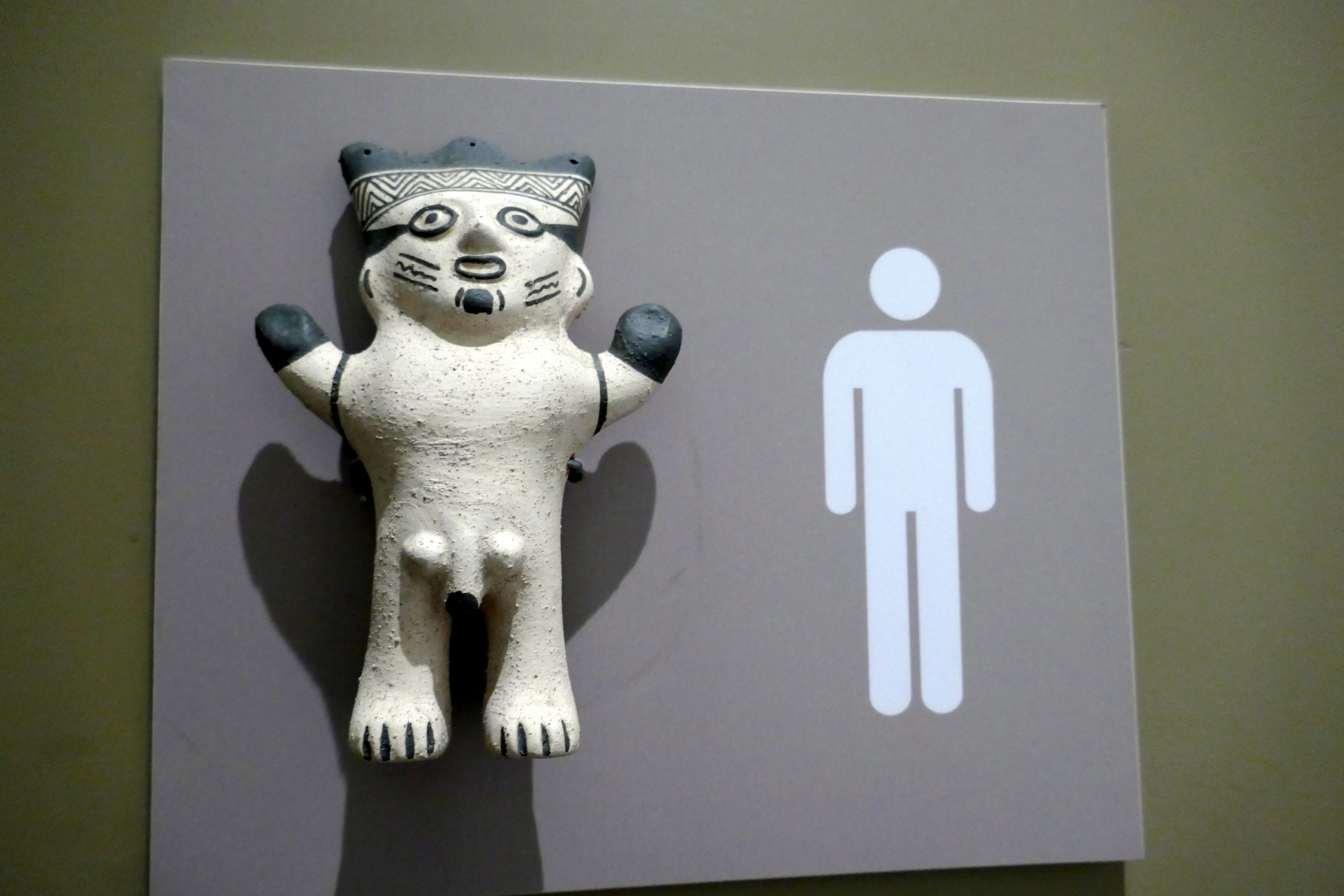
Our morning continued with a drive through the crazy Lima traffic to the beautiful Larco Museum, an archaeological museum with an amazing collection of pre-Columbian pottery, textiles, jewelry, and more, recovered from the 200 archeaological sites within Lima. The privately-owned museum is in an 18th century building with beautiful gardens and the most bougainvillea I have ever seen in one place!
Even the restroom door signs were, uhhh, educational:
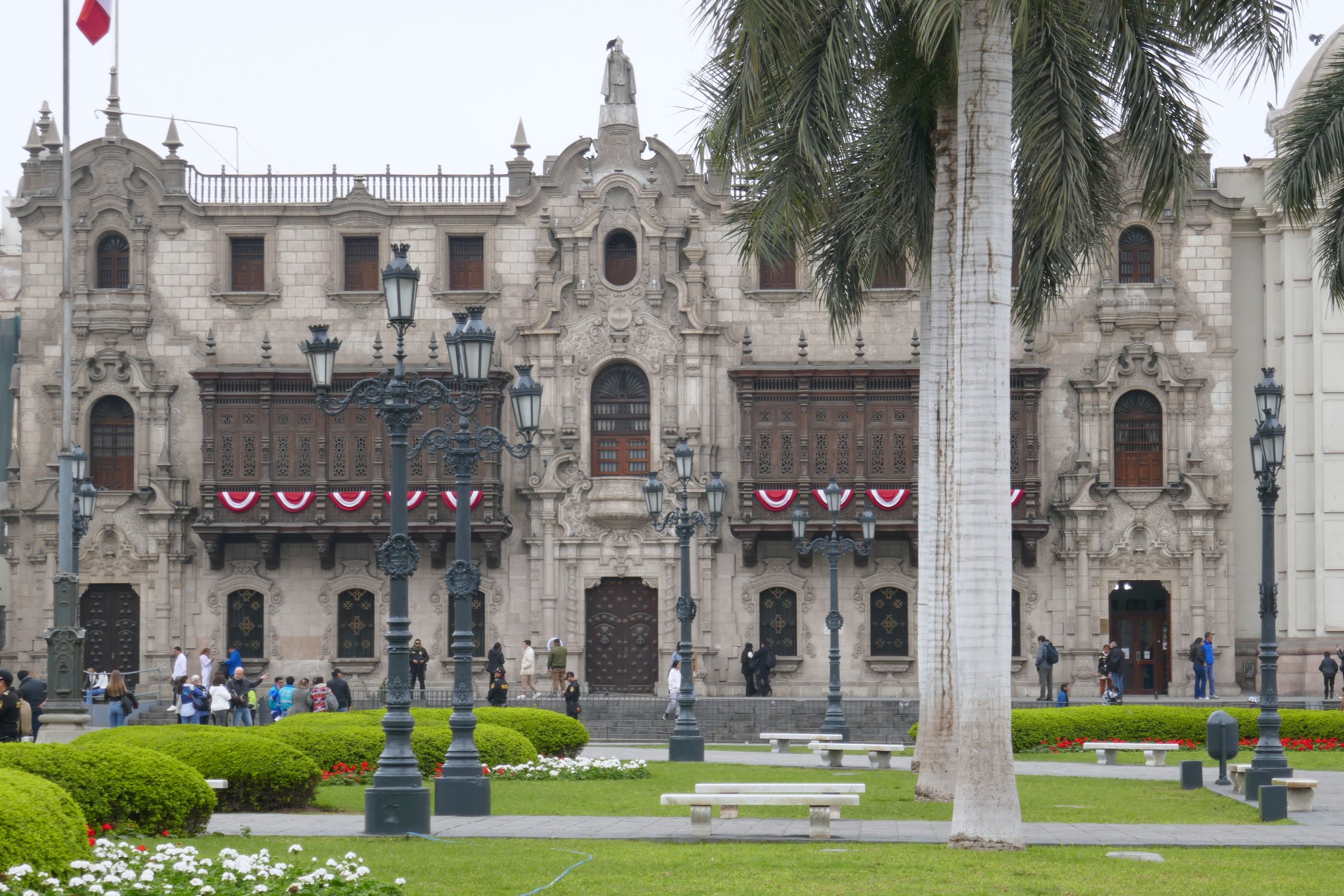
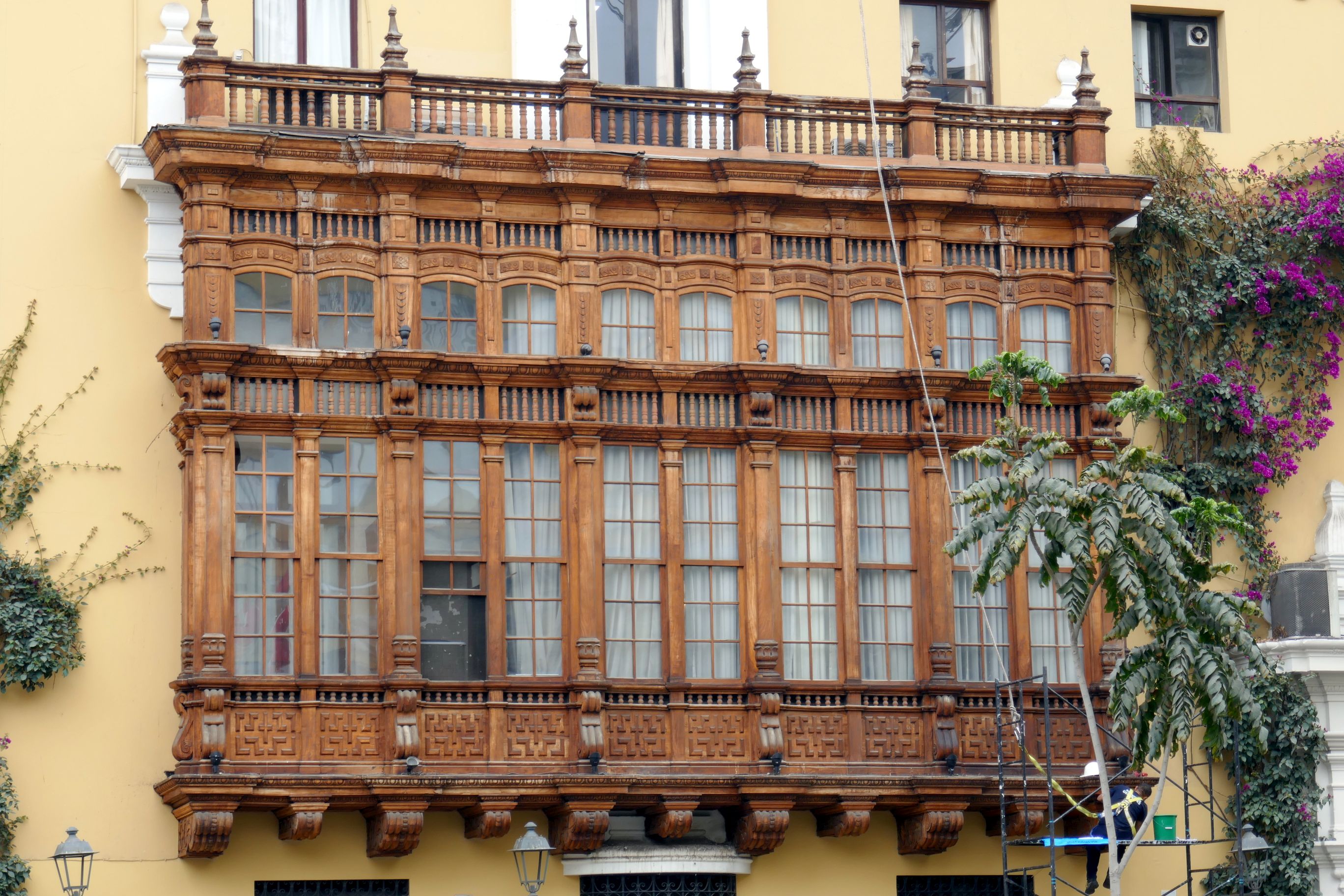
Next, we visited the Colonial District for a walking tour. Lima has suffered many destructive earthquakes over the years, so few Colonial-era buildings remain in what is now an eclectic mix of architecture. As a result, the Colonial District is registered as a UNESCO Heritage Site.
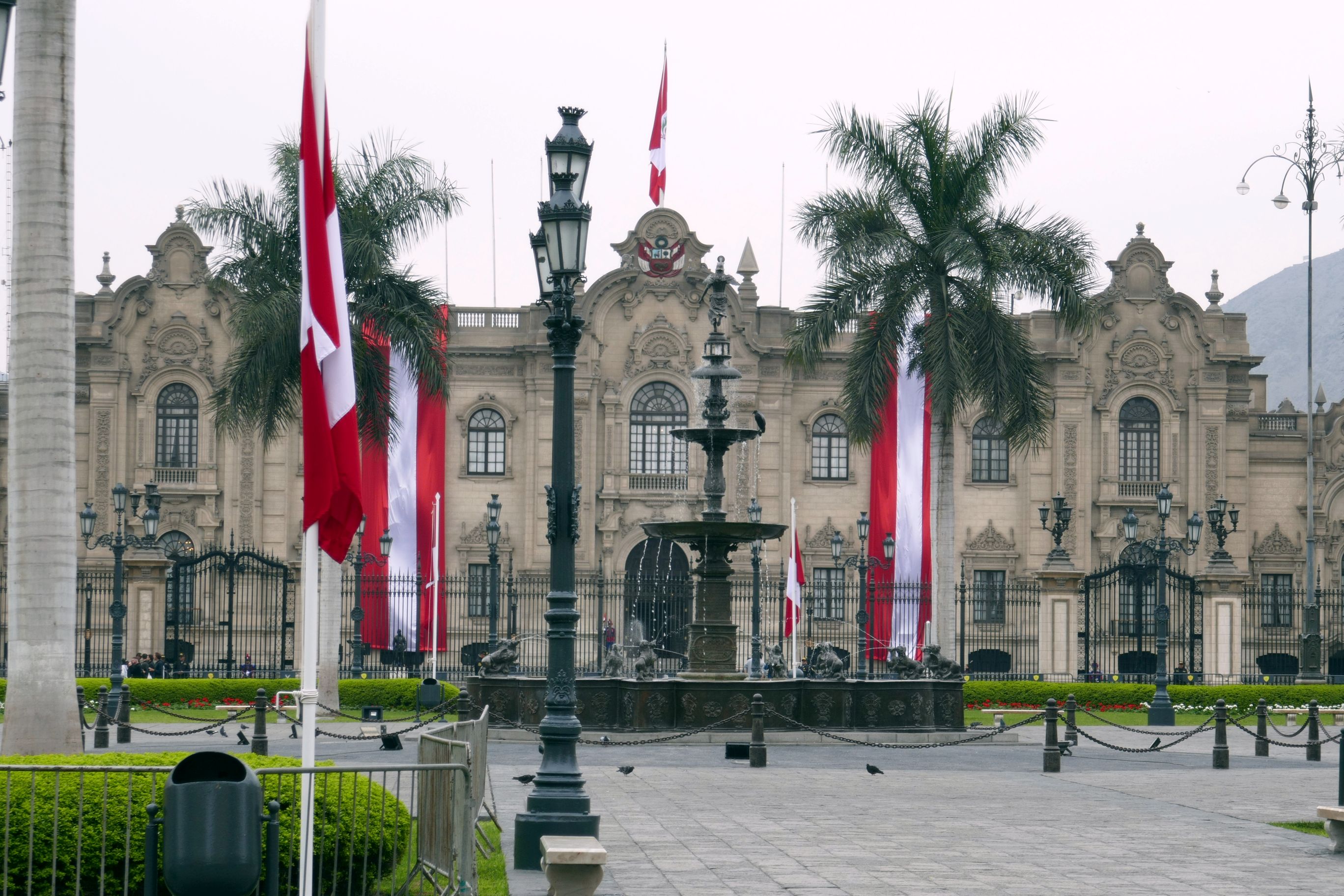
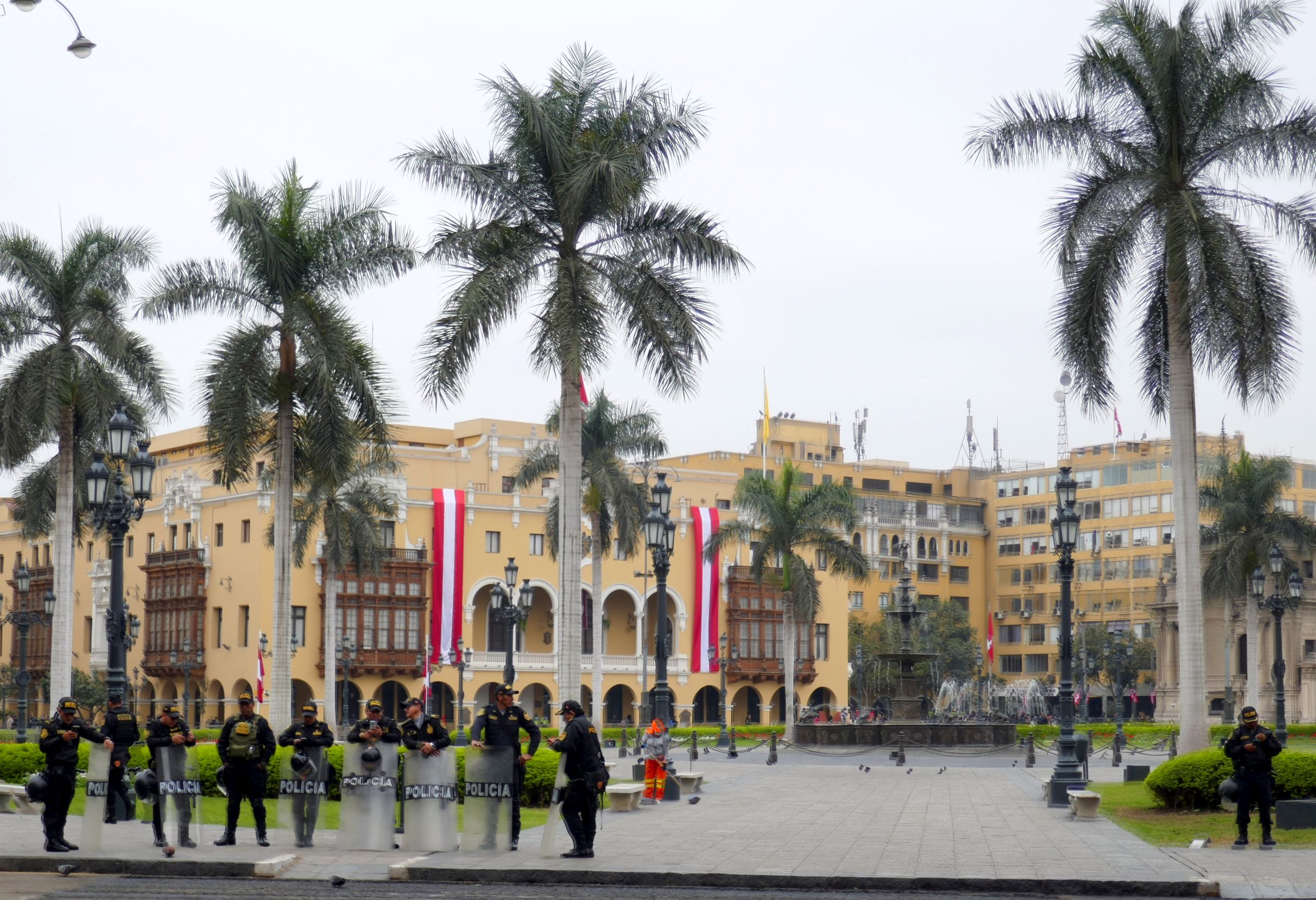
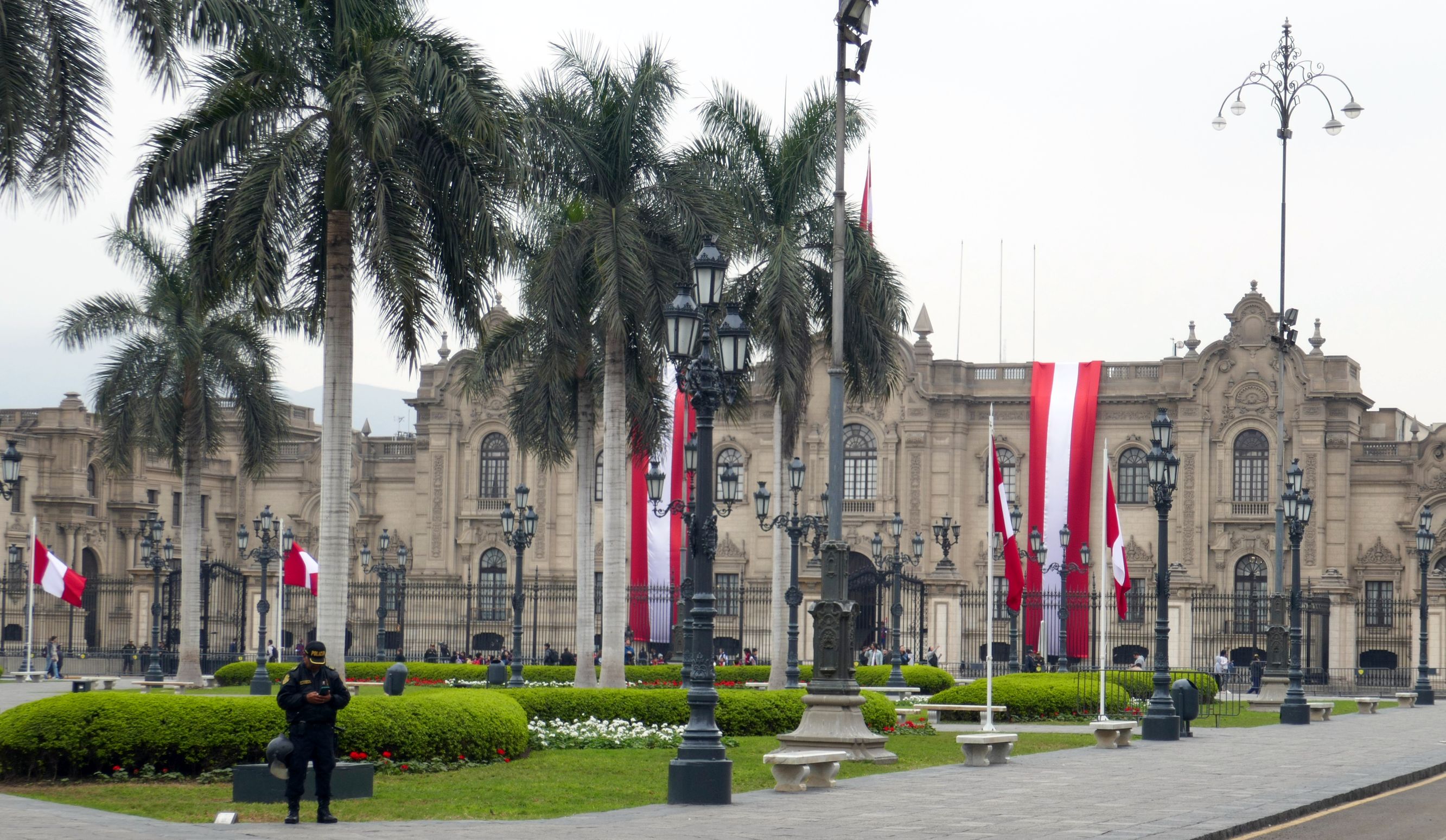
Our tour took us to Plaza Mayor de Lima past ornate government buildings, including the Government Palace and 1650’s-era fountain, while our guide shared a lot of interesting information about Lima. I had no idea, but 75% of the city’s residents are from other places in the world making it very multi-cultural.
The oldest civilization in the Americas was in Peru, dating back to 3,000 B.C. Since Lima is located just 12 degrees south of the equator, the tropical climate was conducive for many varieties of produce to grow. It was also rich in seafood; more than 300 varieties of fish can be found in the region. So, civilizations developed quickly and there was no need for them to migrate in search of food. People settled in Lima for this reason, since many areas of Peru are desert.
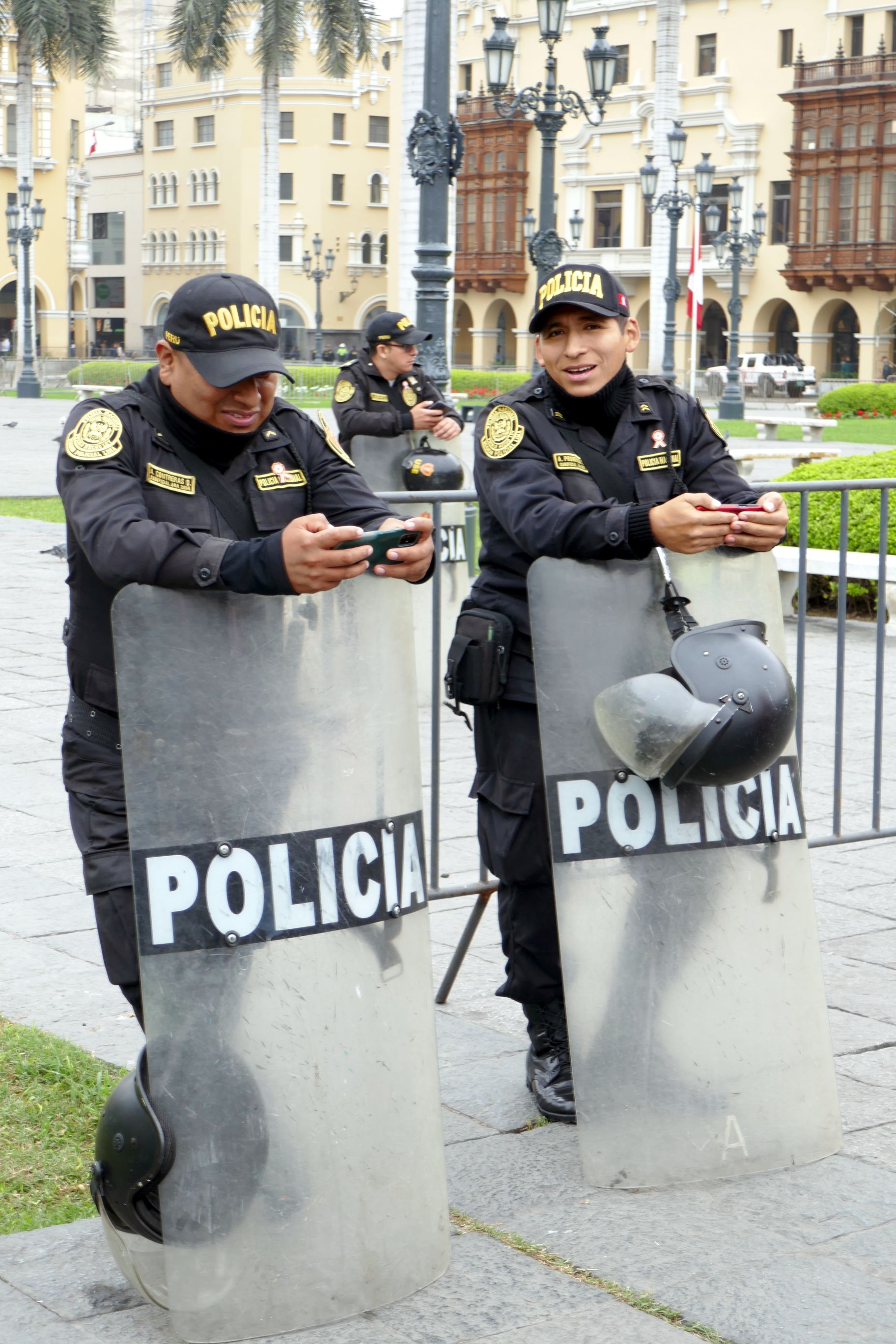
Throughout the square, as you may have noticed in a few of these pictures, the policia was hard at work… on their cell phones.
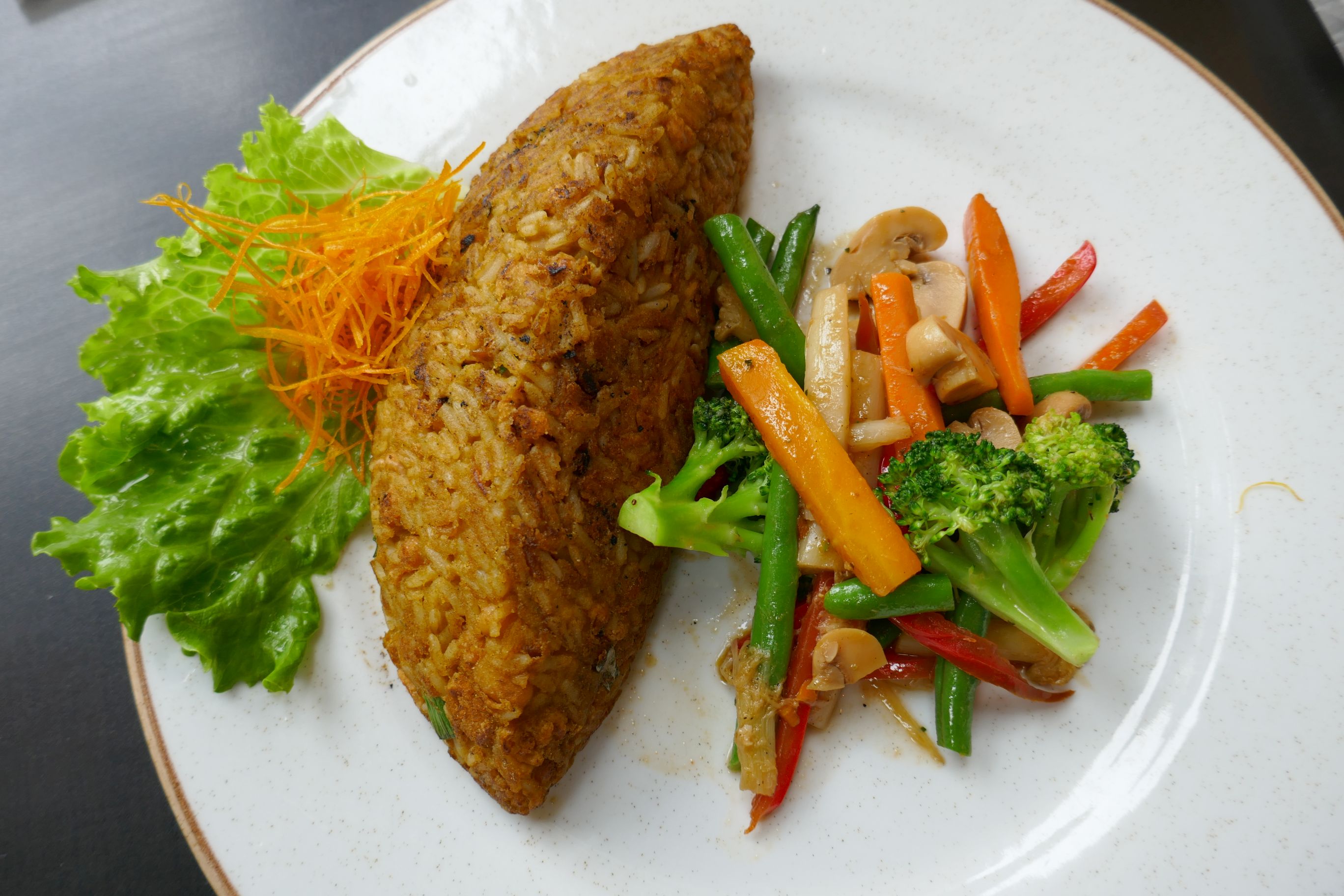
Before heading back to the Miraflores District, we enjoyed a lovely alfresco lunch of traditional Tacu Tacu (Peruvian rice and bean) and continued our walk through town. It was such a fabulous day!
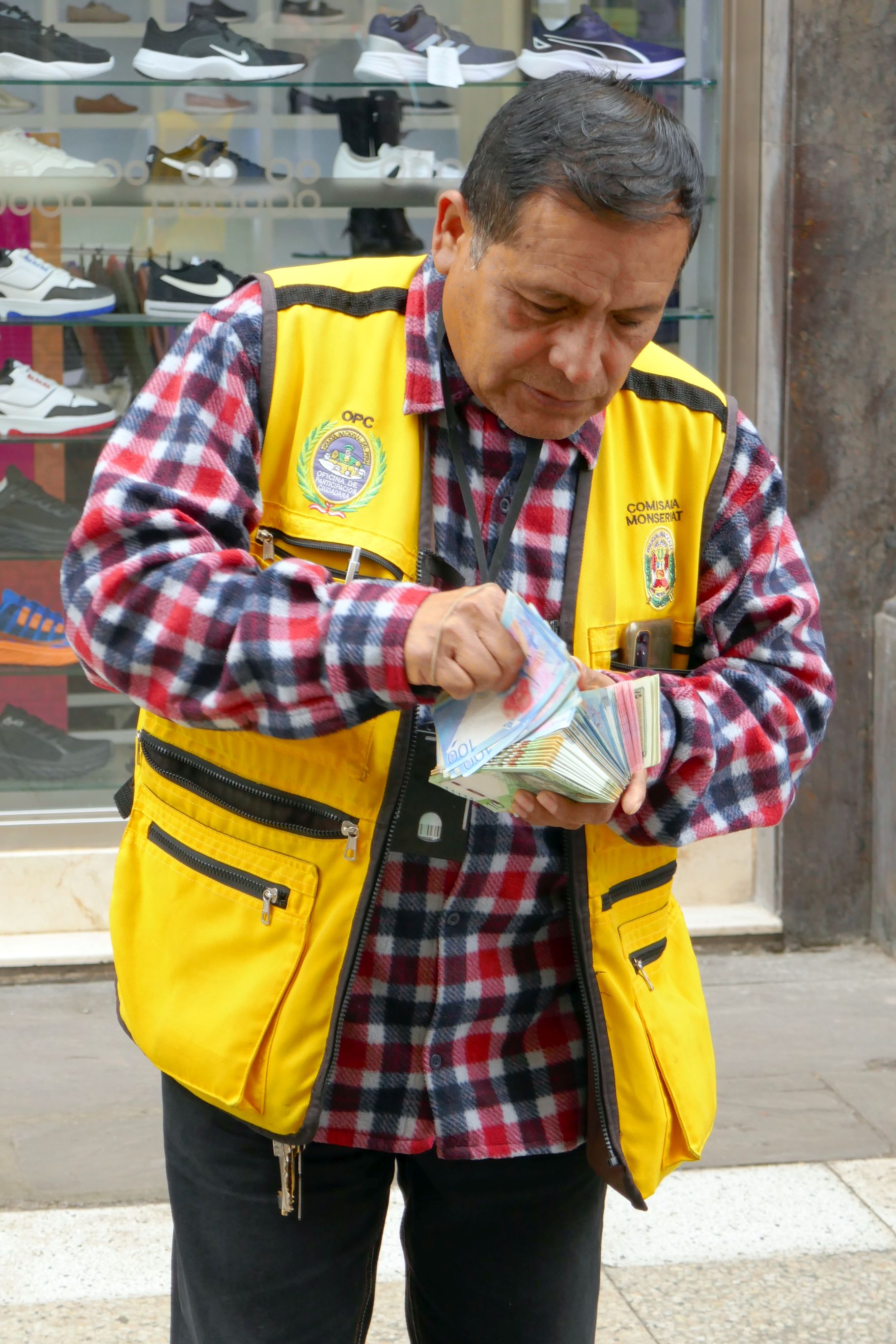
This is how you exchange your money; find somebody in an official yellow vest. Notice the guy on the right. He’s counting his U.S.$. As I watched, most of the stack were 100’s! By the way, counterfeit money is a huge thing in Peru and most of counterfeit U.S. money is made there.
Well, dear readers, after six posts covering four days in Lima, I will be continuing to Urubamba, Cusco, in my next post, but not until after my computer and I take an extended break for more adventures!
Coming up after the break: PERU #7: THE SACRED VALLEY SURPISE & PISAC RUINS
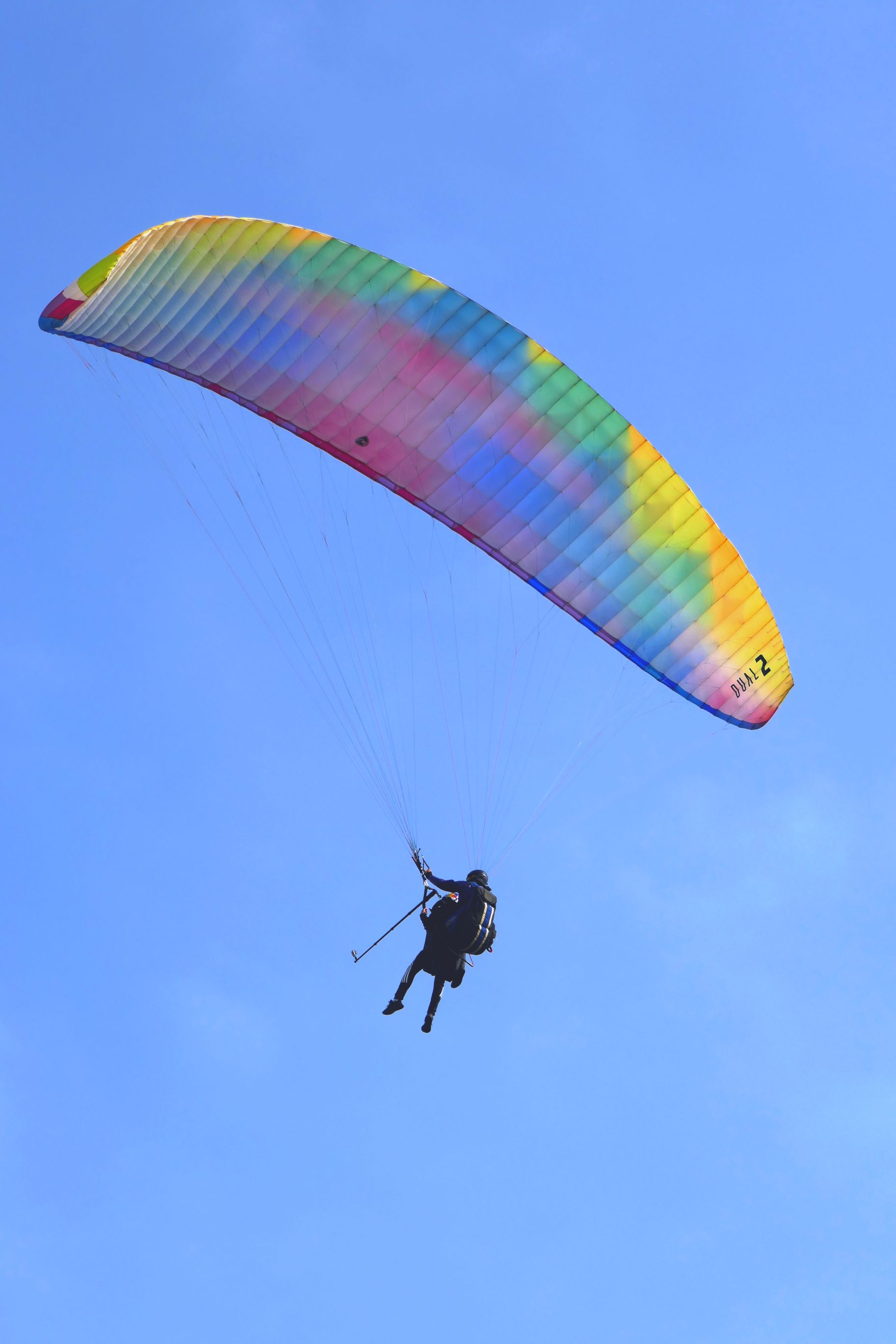
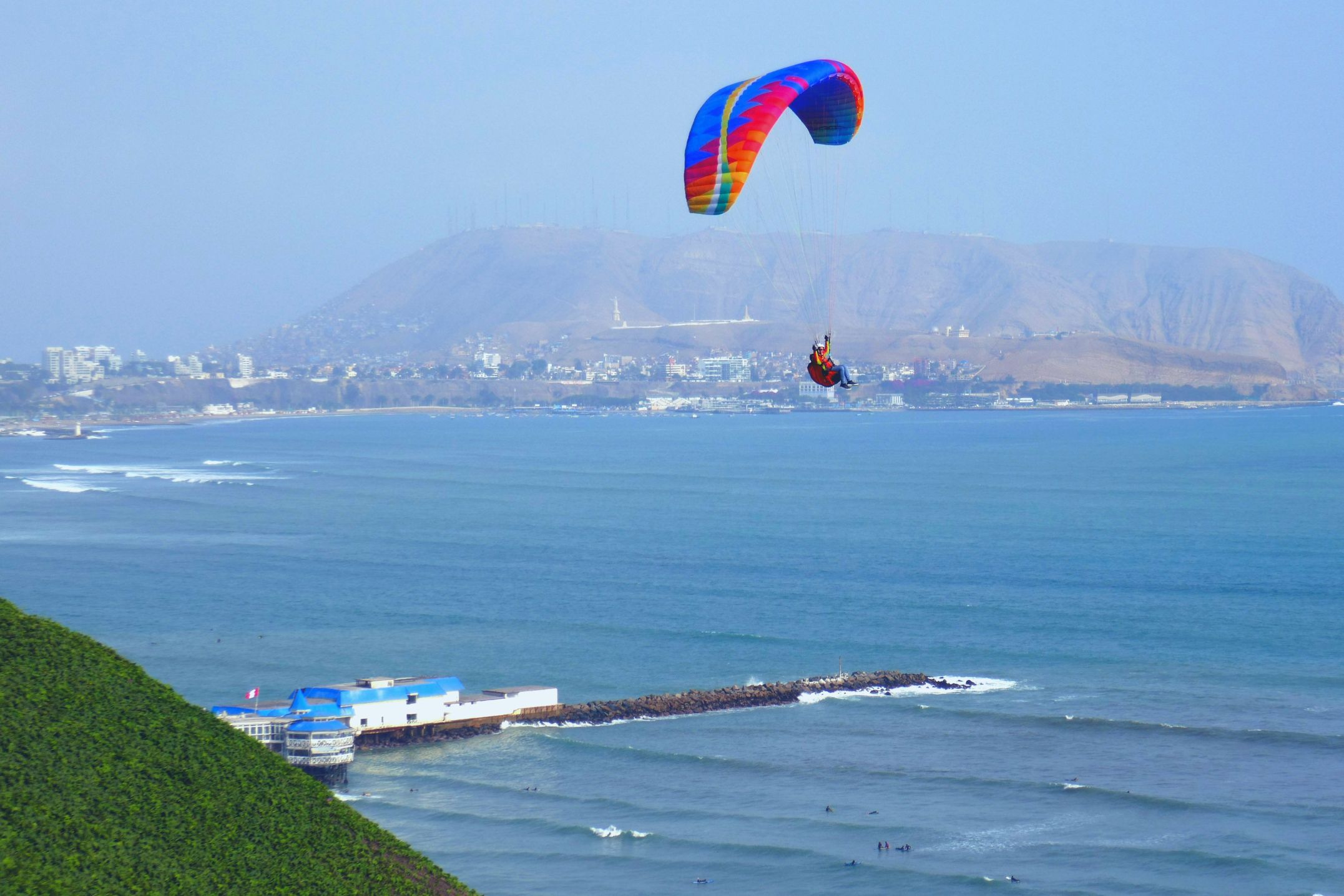
We got a rare sunny, (mostly) blue sky day in Lima, so following our walking tour and lunch with the group, Bruce and I headed back to the Malecon to watch the paragliders, while the rest of the group went to Barranco where we had already been.
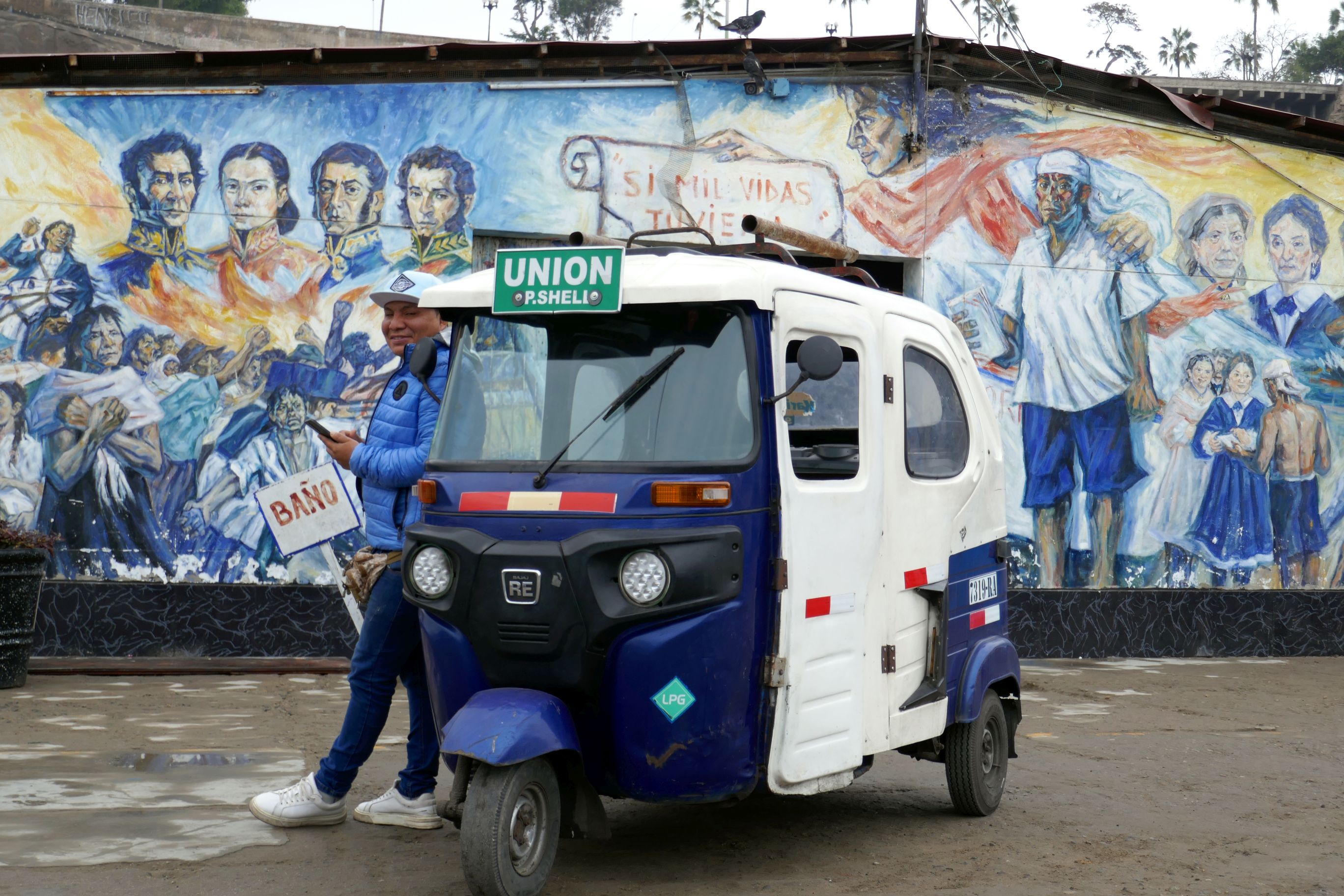
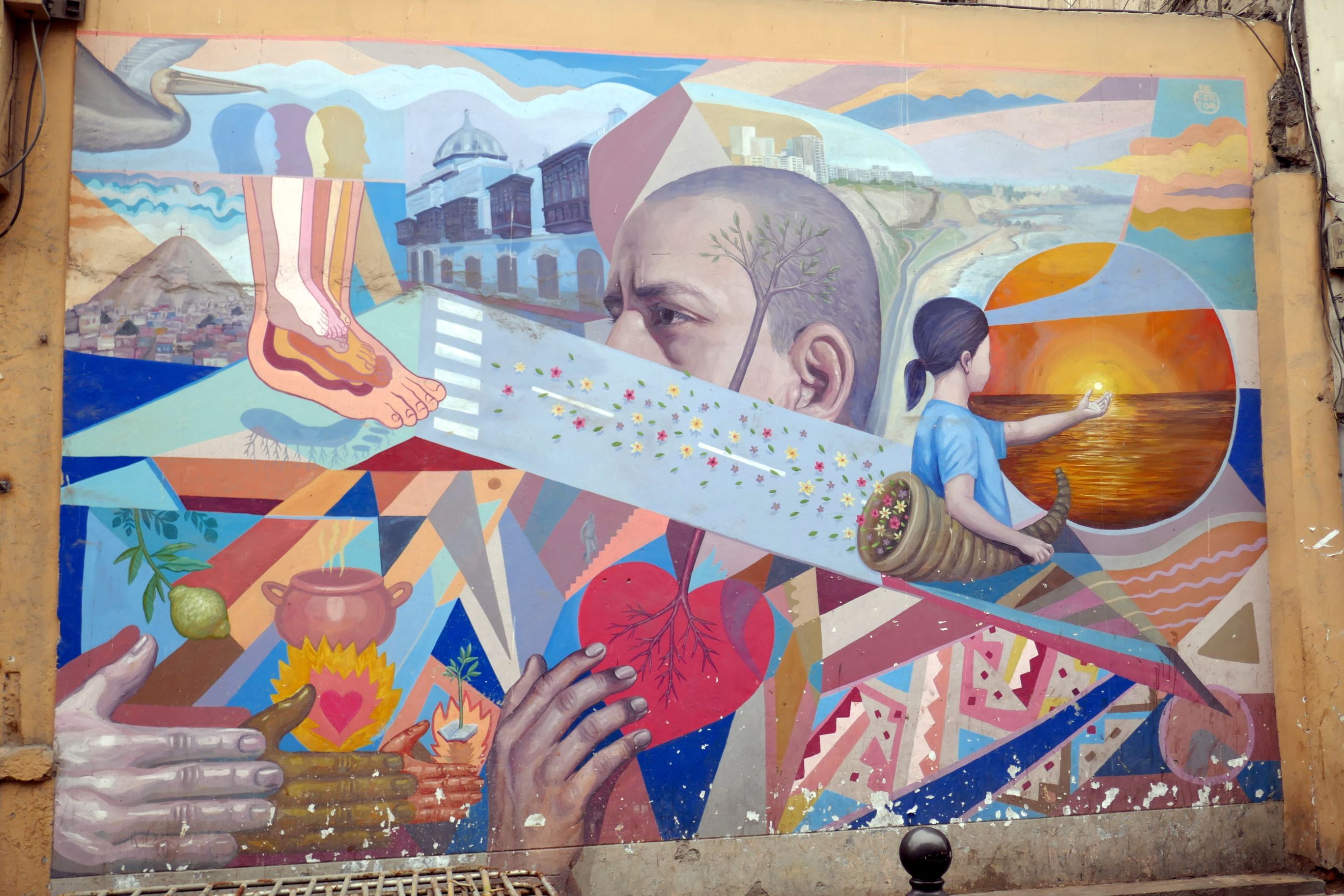
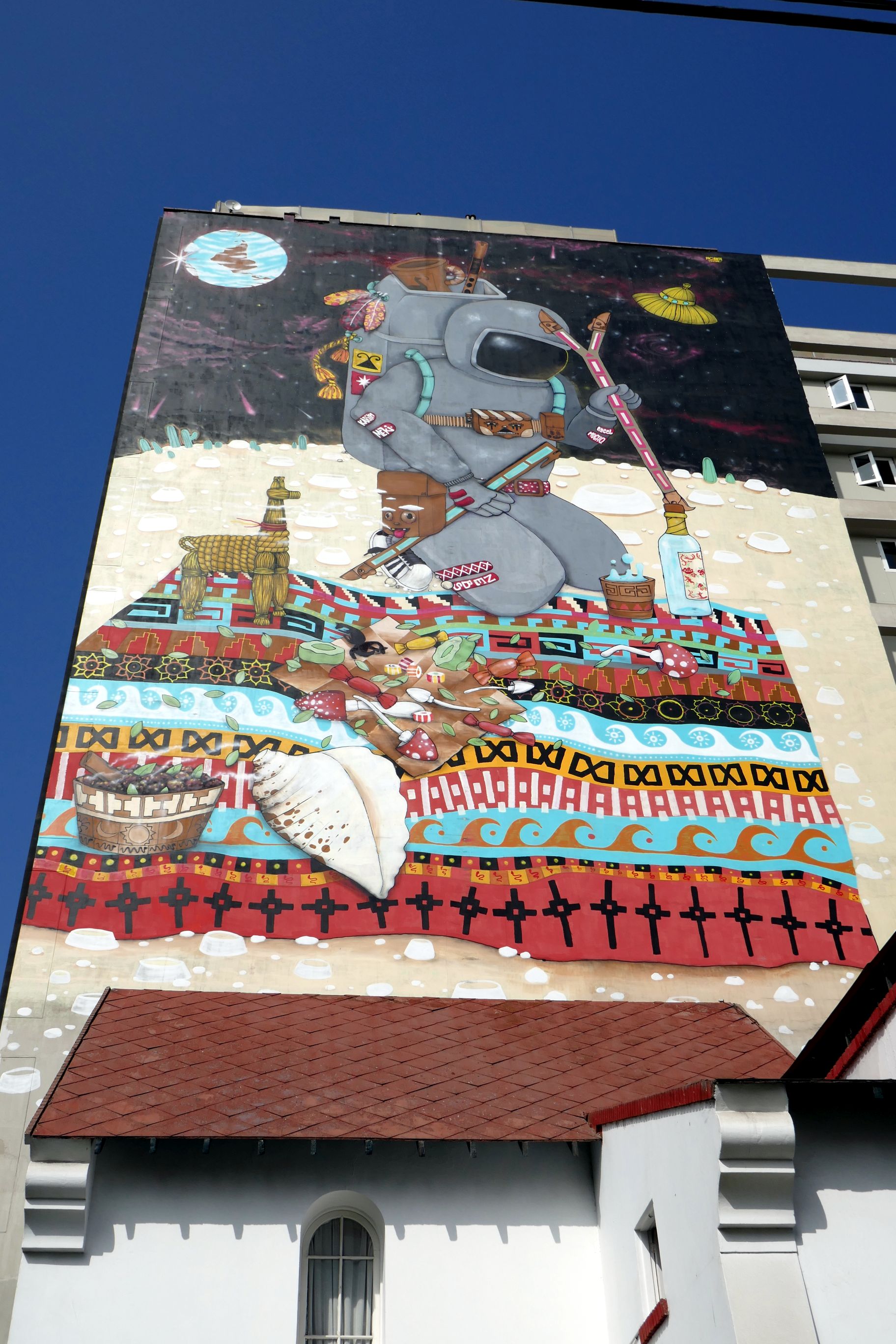
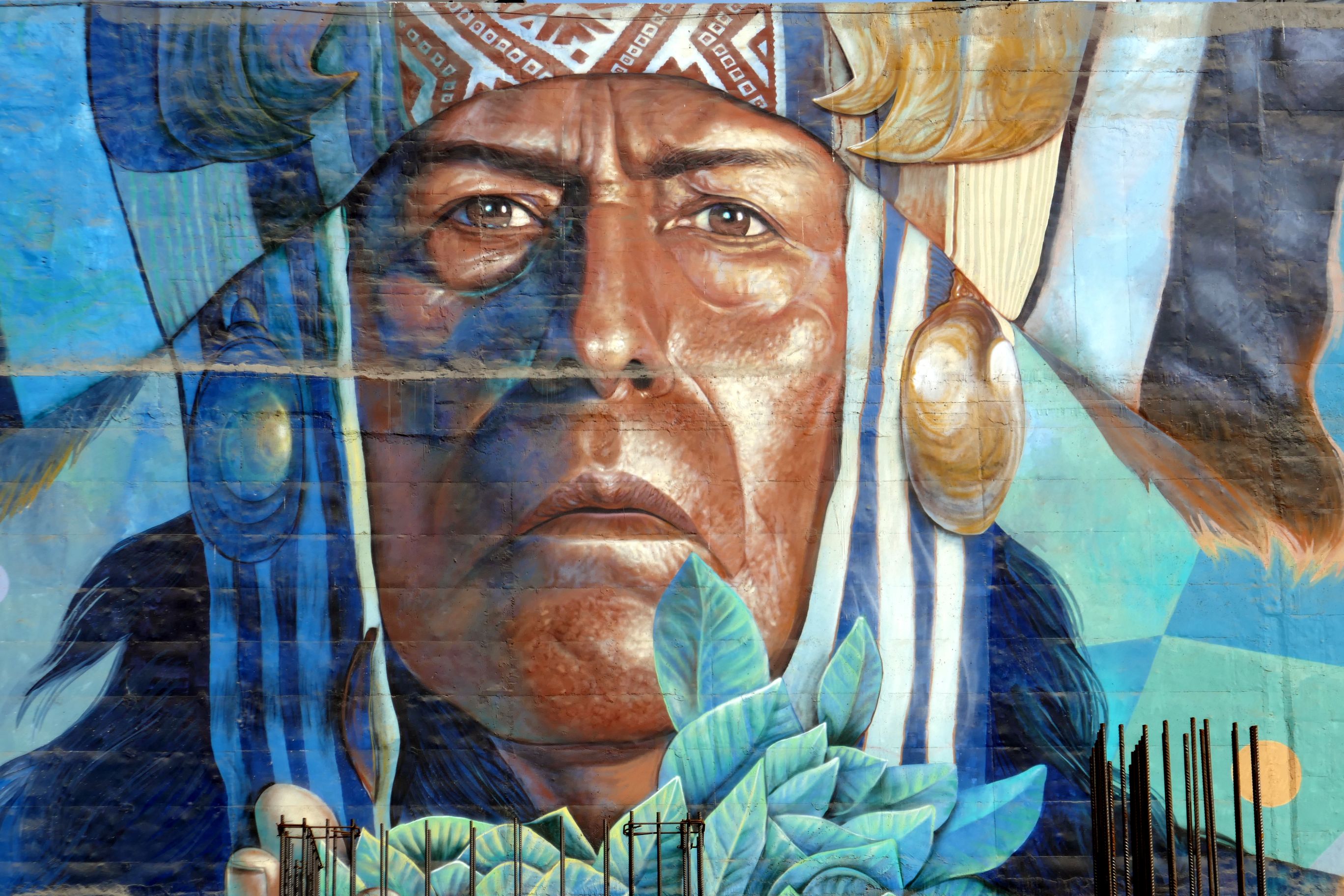
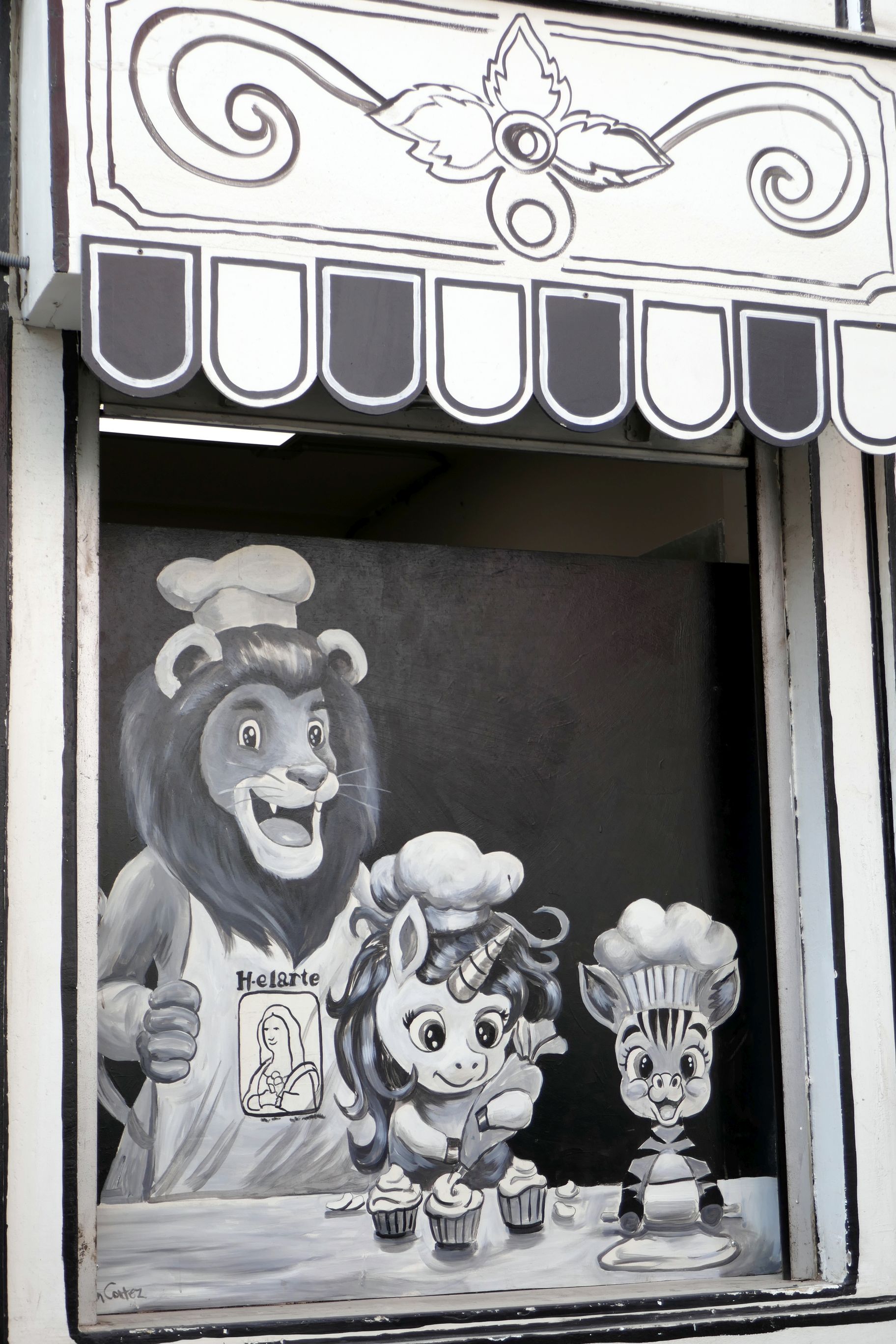
Along the way, I found a few murals: (For all photos, click on the image for a full screen view.)
The entire facade of this restaurant was painted in cartoons.
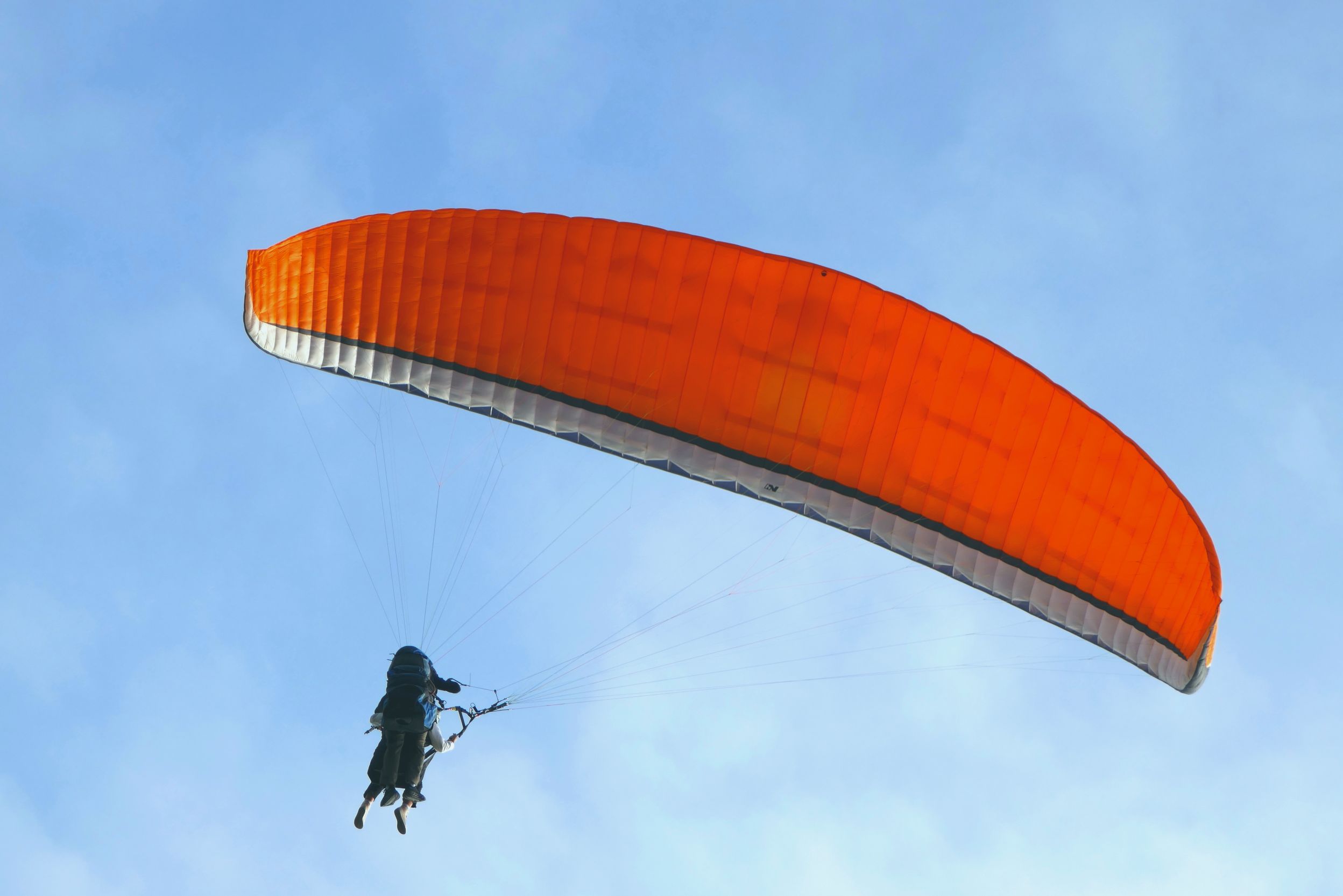
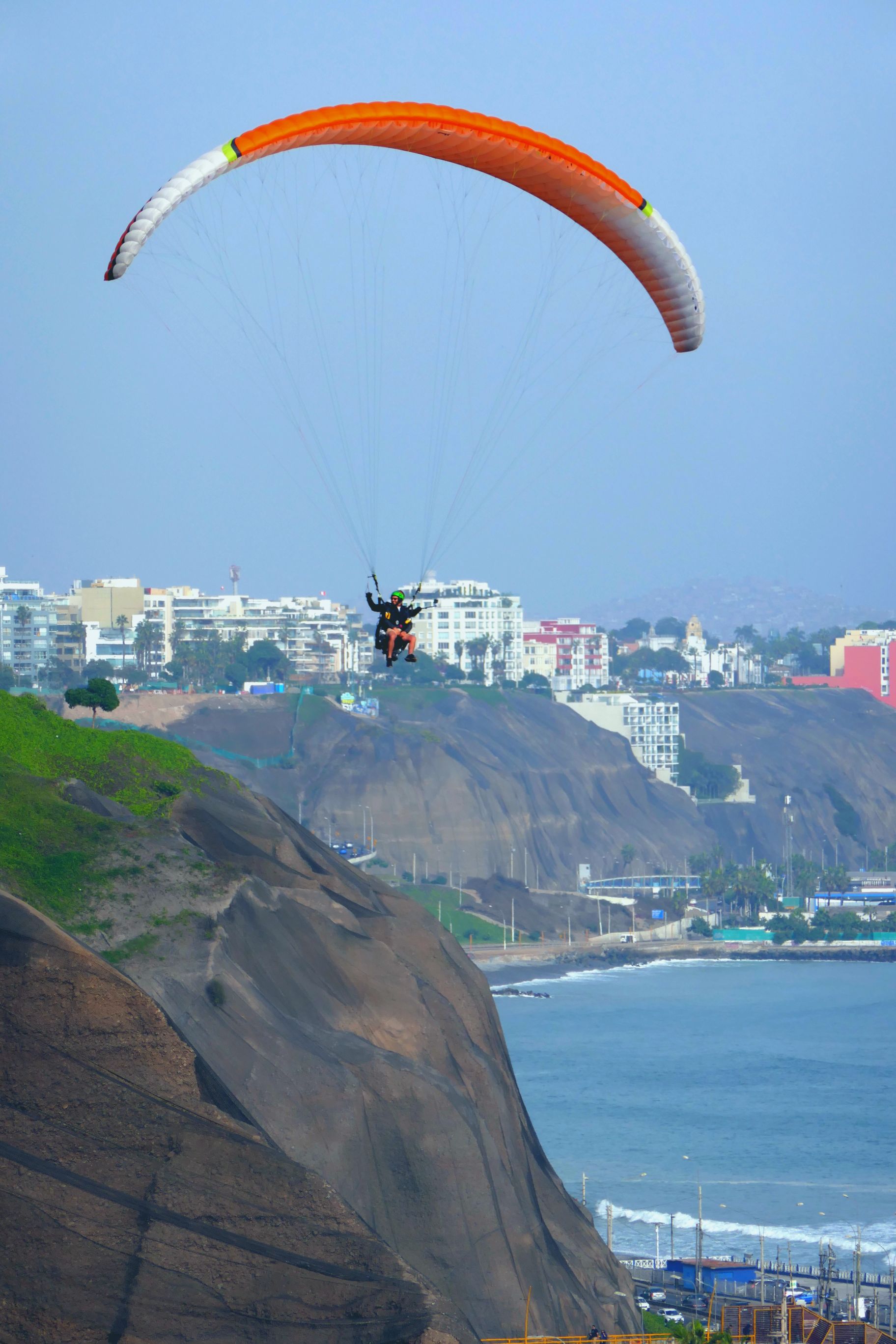
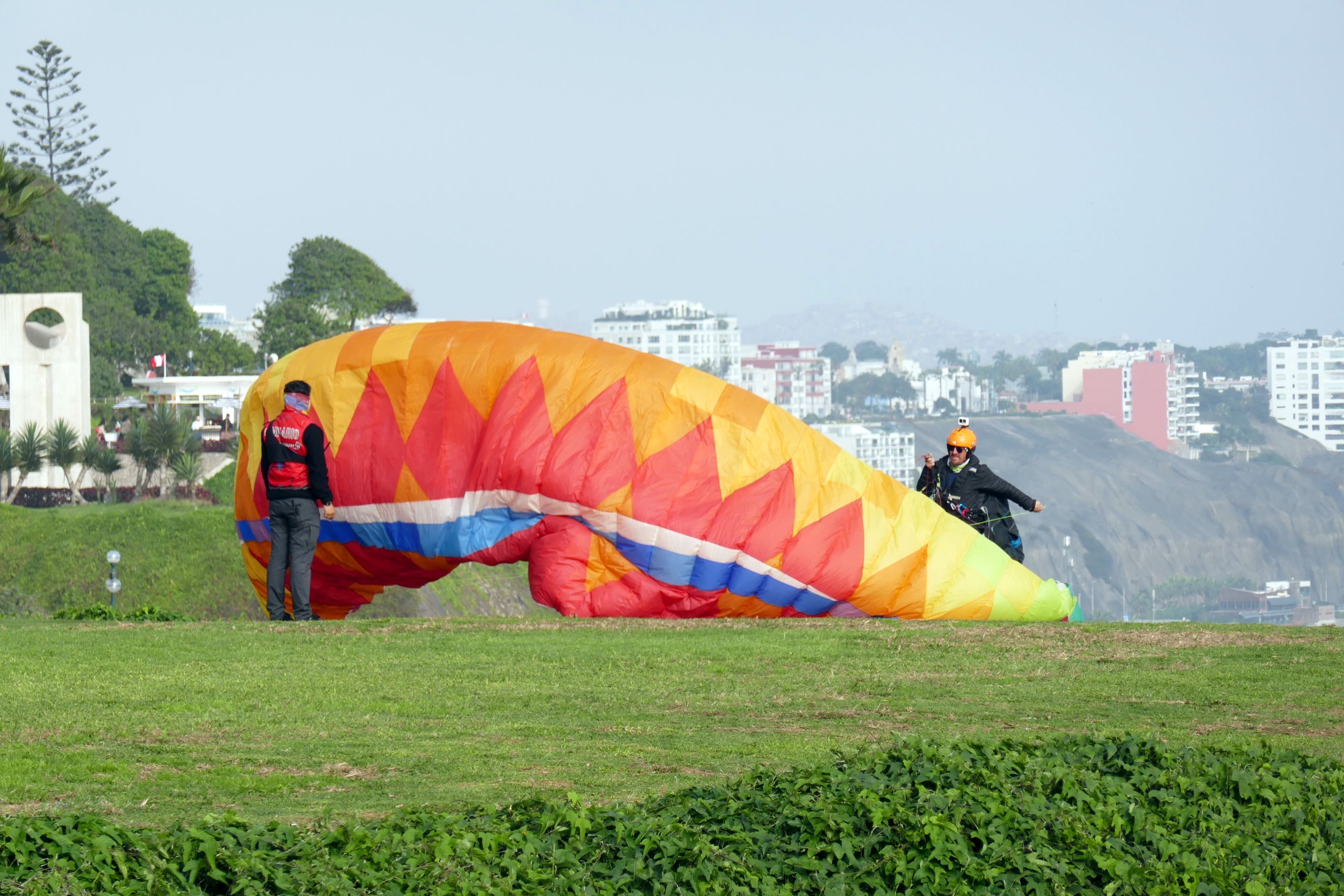
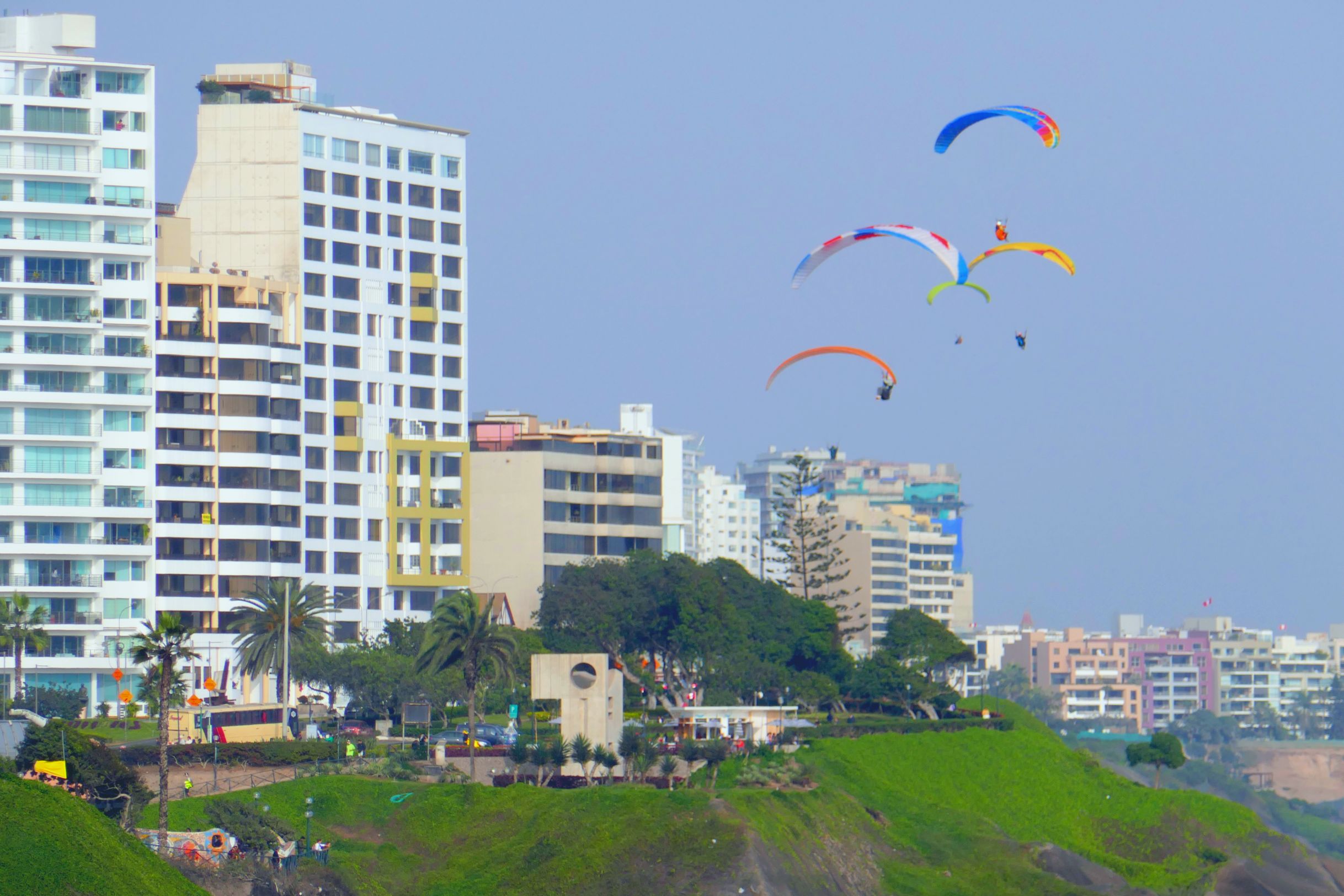
Paragliding in Lima is a popular activity and the parapuerto on the cliffs of the Malecon was a behive of activity while I watched the paragliders come and go. It was a beautiful sight! Between the paragliders and surfers, it was quite the entertaining day before we headed back for our second viewing of Circuito Magico del Agua (in my previous post).
Before we headed back, the cart offering pan con chocolate was there again to tempt me, so I couldn’t resist another warm, gooey chocolate filled pastry.
Next up: PERU #6: LIKABLE LIMA (PART 6) – A FISH MARKET & DOWNTOWN
We enjoyed Circuito Magico del Agua so much the first night that we returned the following night and invited one of our group members, Pat, to join us. The Magic Water Circuit, which began in 2007, is a permanent installation at Jr. Madre de Dios Parque de la Reserva and has become an icon of Lima. The main attraction has thirteen cybernetic fountains. Music, water, sound, and laser light are mixed to display an amazing show that chronicles the history of Peru with 3-D movies projected into the water fountains and laser displays. Bruce and I had never seen anything like it, and we were in awe.
There are also several other ornamental fountains—one of which holds the Guiness World Record for shooting water the highest. Seeing those alone would have been worth the Uber ride out there.
Although it was impossible to capture the movie images clearly, hopefully these photos taken during the two evenings at the park will give you a good idea of what we thoroughly enjoyed:
(For all photos, click on the image for a full screen view.)
All of the projections were HUGE!
Raul & BruceI got soaked!We bumped into Allison, Joe, and Abby; that’s Pat and Bruce on the right.
We hadn’t eaten dinner, so we stopped at the grocery store in Larcomar for some empanadas right before they closed. Yummy!