Since at least the 14th century, Bilbao, the capital city of Spain’s Biscay province, was an industrial city. Over the centuries, it became more polluted and unattractive! By 1900, the city had developed into a shipbuilding center and was the wealthiest city in all of Spain. But in the mid-20th century, natural disasters and civil war crippled the city.
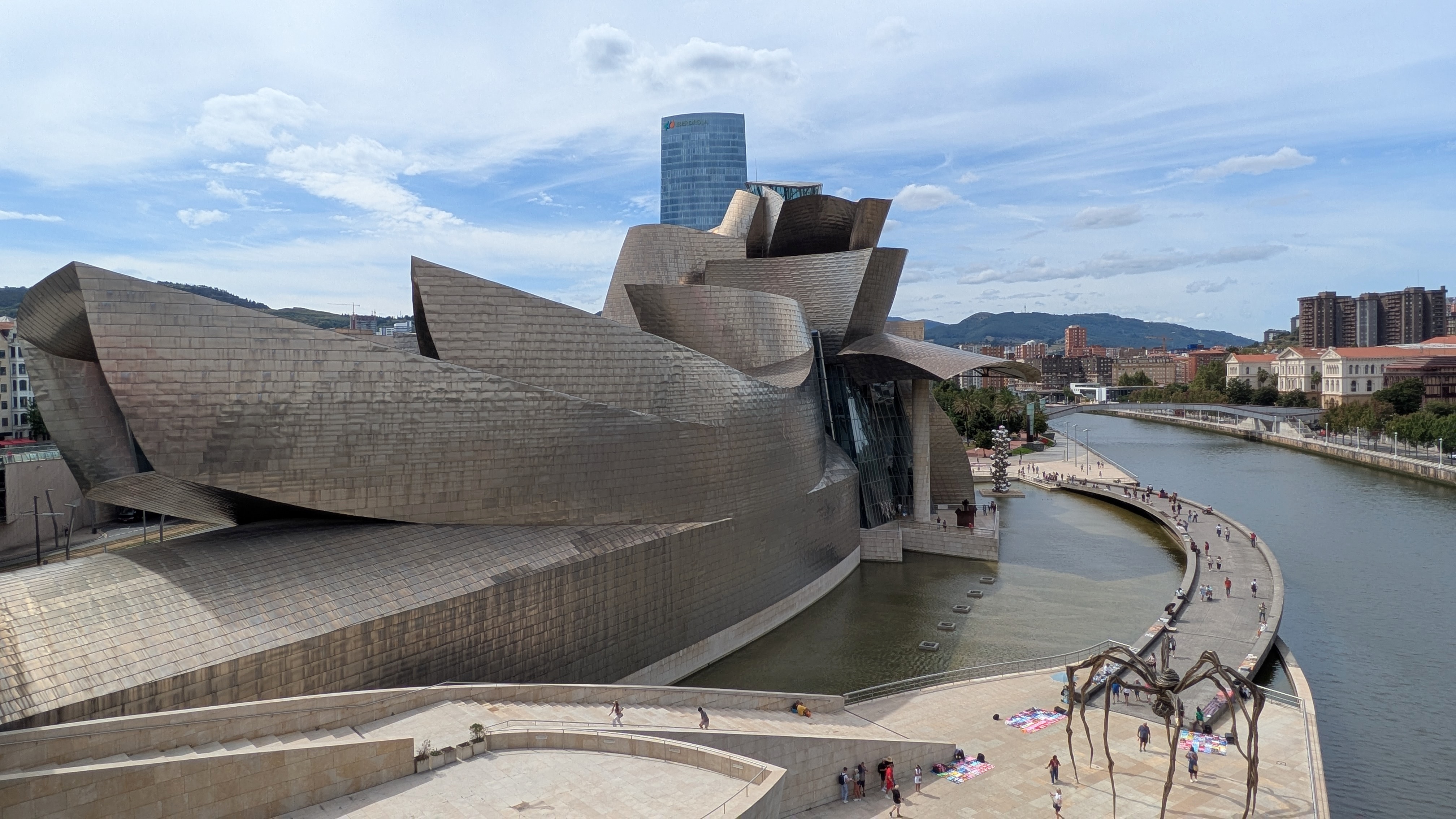
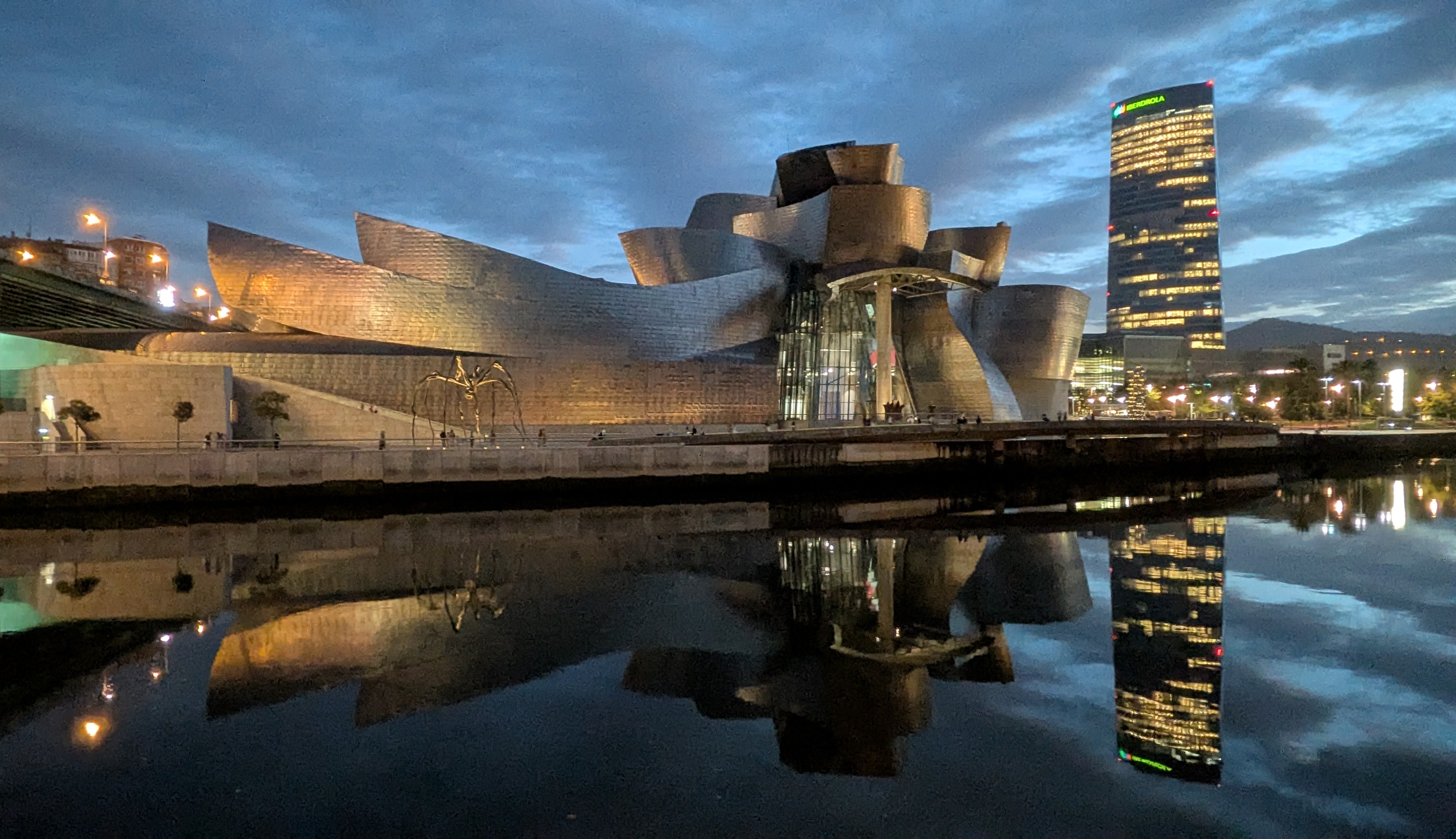
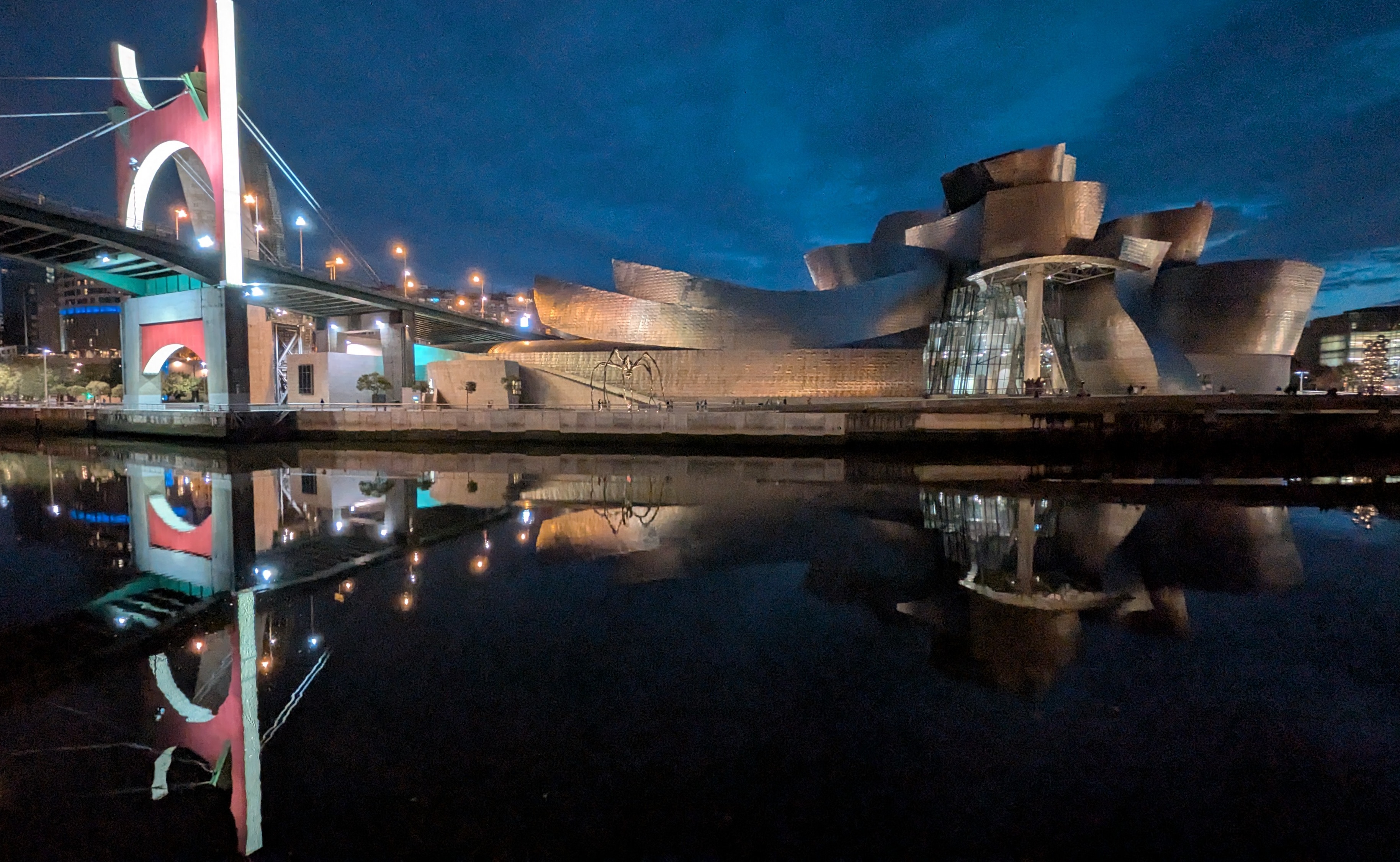
In the mid 1990’s all that changed, and Bilbao was revived and revitalized. Much of the credit for the turnaround goes to the Frank Gehry designed Bilbao Guggenheim Museum, located on the riverfront. The museum of modern and contemporary art, which opened in 1997, is visually an architectural masterpiece and the prominent centerpiece of Bilbao’s landscape.
Gehry’s choice of construction materials included limestone from Granada, which covered the base of the building and galvanized steel for the structure, which was covered with plates of titanium arranged in scales.
One of the most amazing facts about the construction of the Guggenheim Museum is that it was built on budget and on time. How many architects of buildings of that magnitude can make that claim?
Tourists have come from all over the world to see this gorgeous museum that is considered one of the most important modern architectural works, and the economic impact has been incredible! In its first three years, almost four million tourists visited the museum, helping to generate about 500 million euros in economic activity. The regional council estimated that the money visitors spent on hotels, restaurants, shops and transport allowed it to collect 100 million euros in taxes, which more than paid for the building cost.
Viewing and photographing the Guggenheim Museum from the bridge and across the river, both during the day and at night, was a kick! Bruce and I had looked forward to seeing the museum’s exterior very much, and it did not disappoint!
(For all photos, click on the image for a full screen view.)
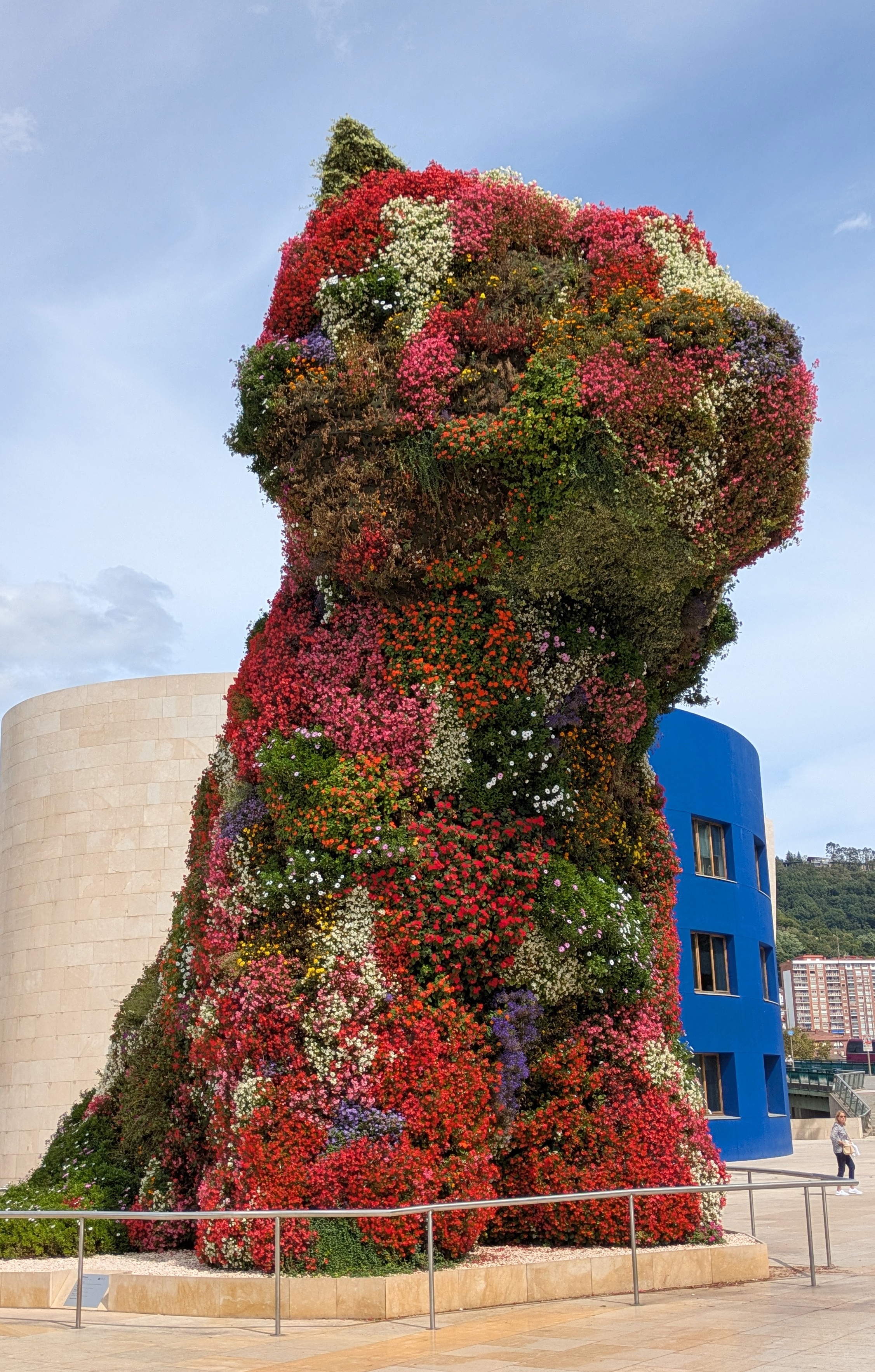
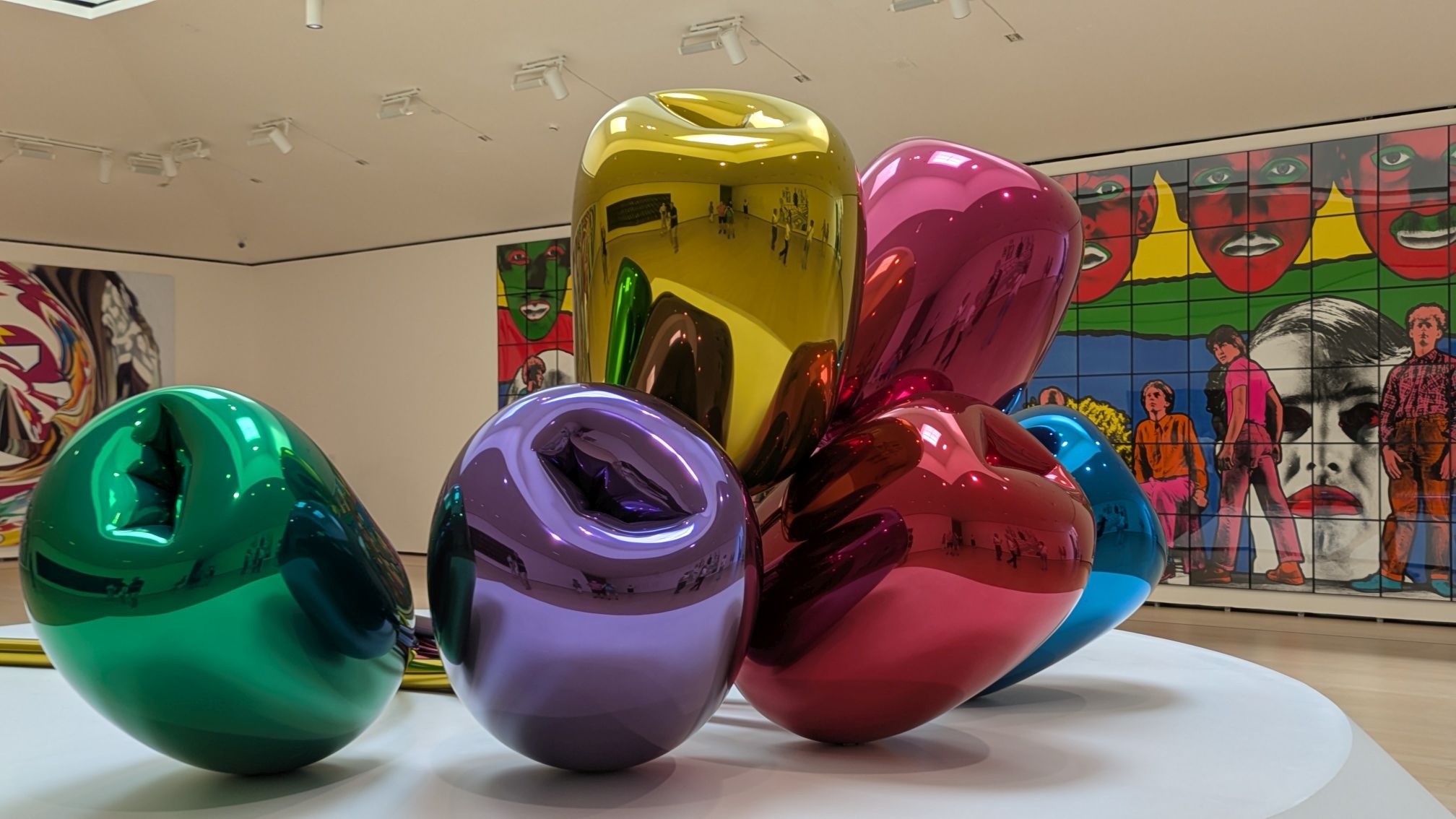

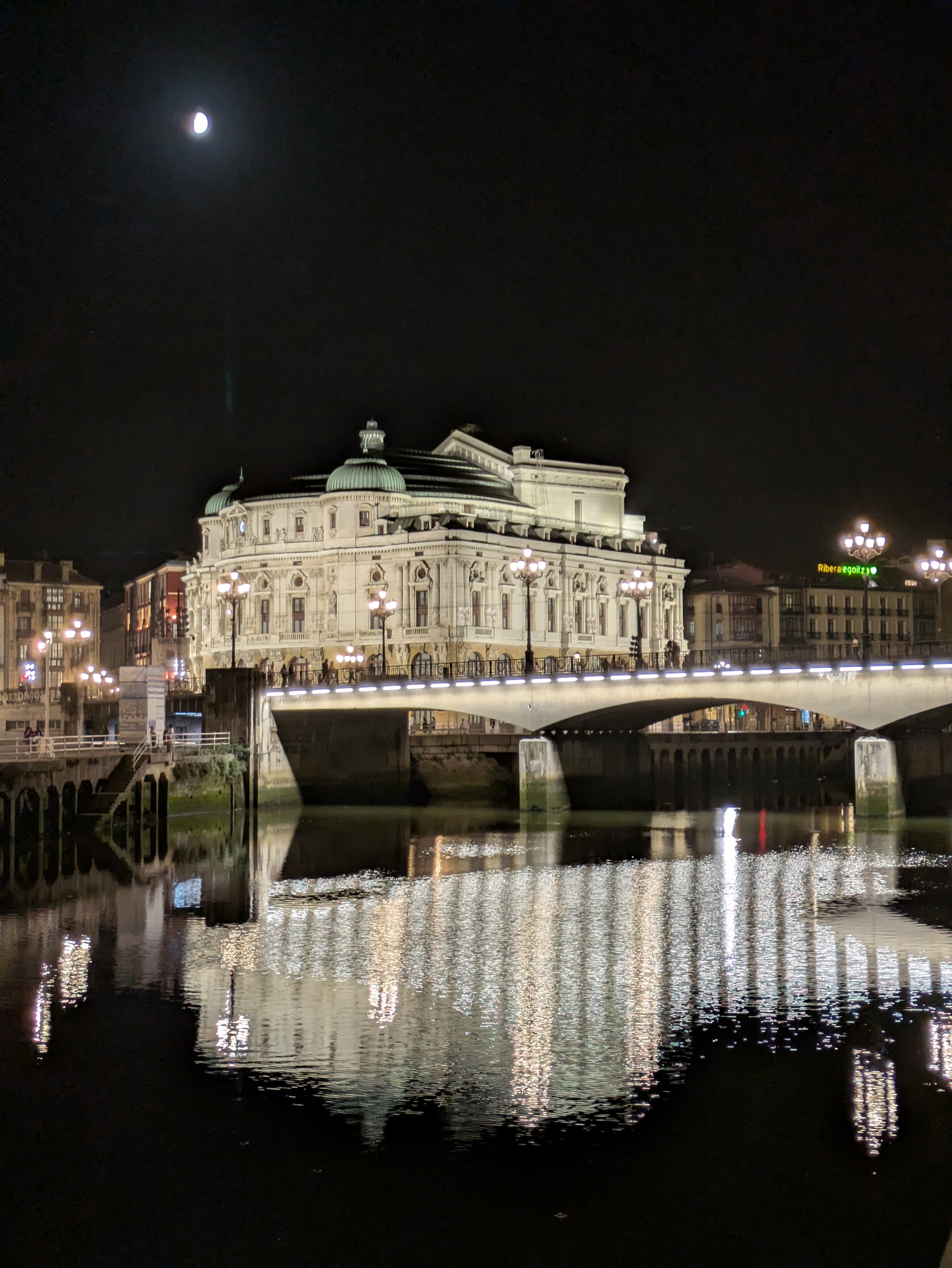
More scenes along the river:

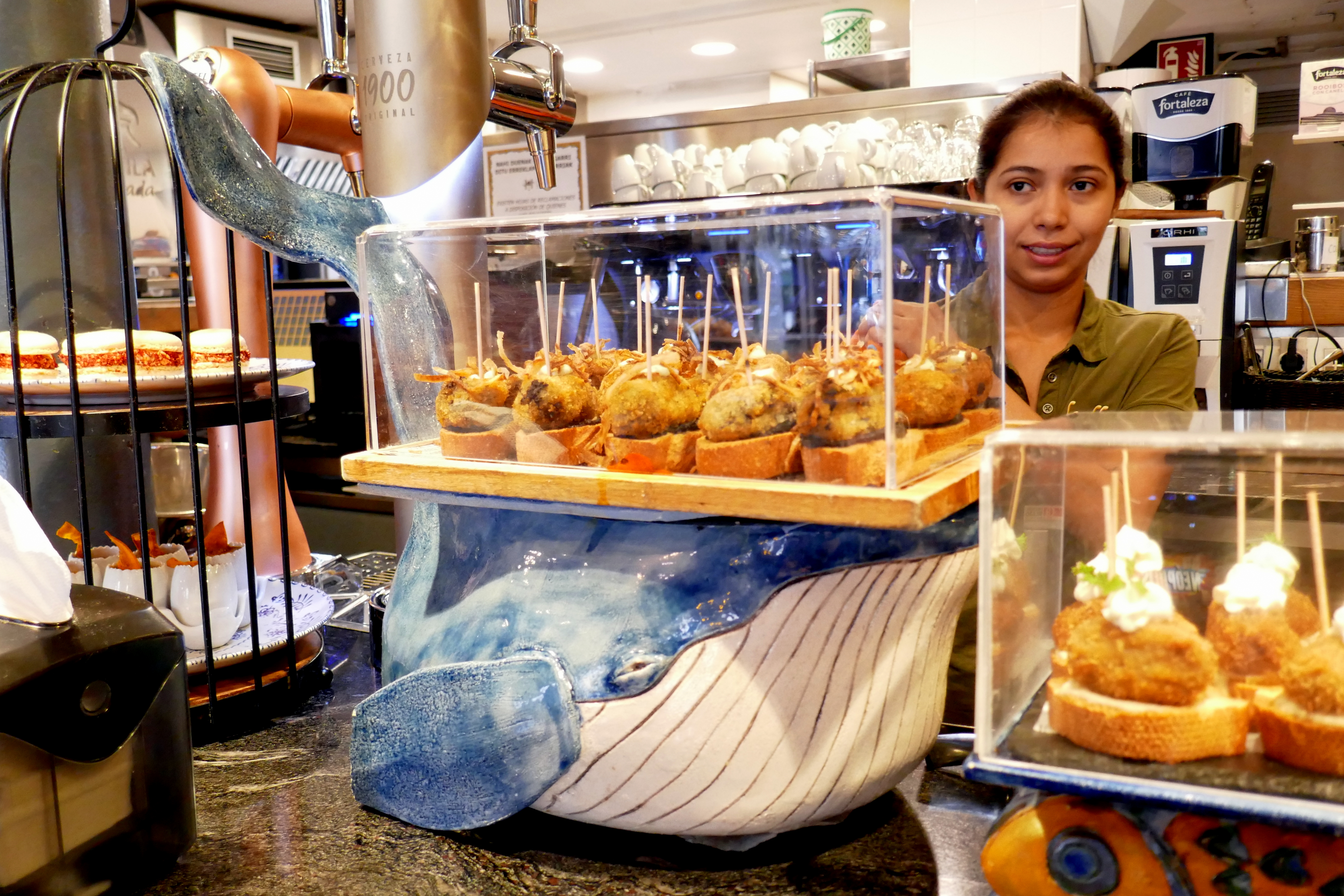
The other thing we looked forward to enjoying in Bilbao, the largest of the Basque Country cities (pop. 347,000+), was pintxos, a small snack with a bread base that is speared with a toothpick. It is the star of northern Spain’s world-renowned cuisine, and it’s fun to eat! Typically served in bars, each bar has its specialty, and they compete in culinary competitions for the coveted prize of having the best pintxos. Throughout the evening, it’s typical for groups of friends to meet up at a bar, have a pintxo or two with a drink, and then move on to another bar to sample more. It is very much part of the Basque Country social and culinary culture.
We sampled pintxos several times throughout our travels in northern Spain, including a lunchtime pintxos crawl in the medieval Old Town, the “Seven Streets” neighborhood. Dating to the 14th century, these were the original seven streets of Bilbao.
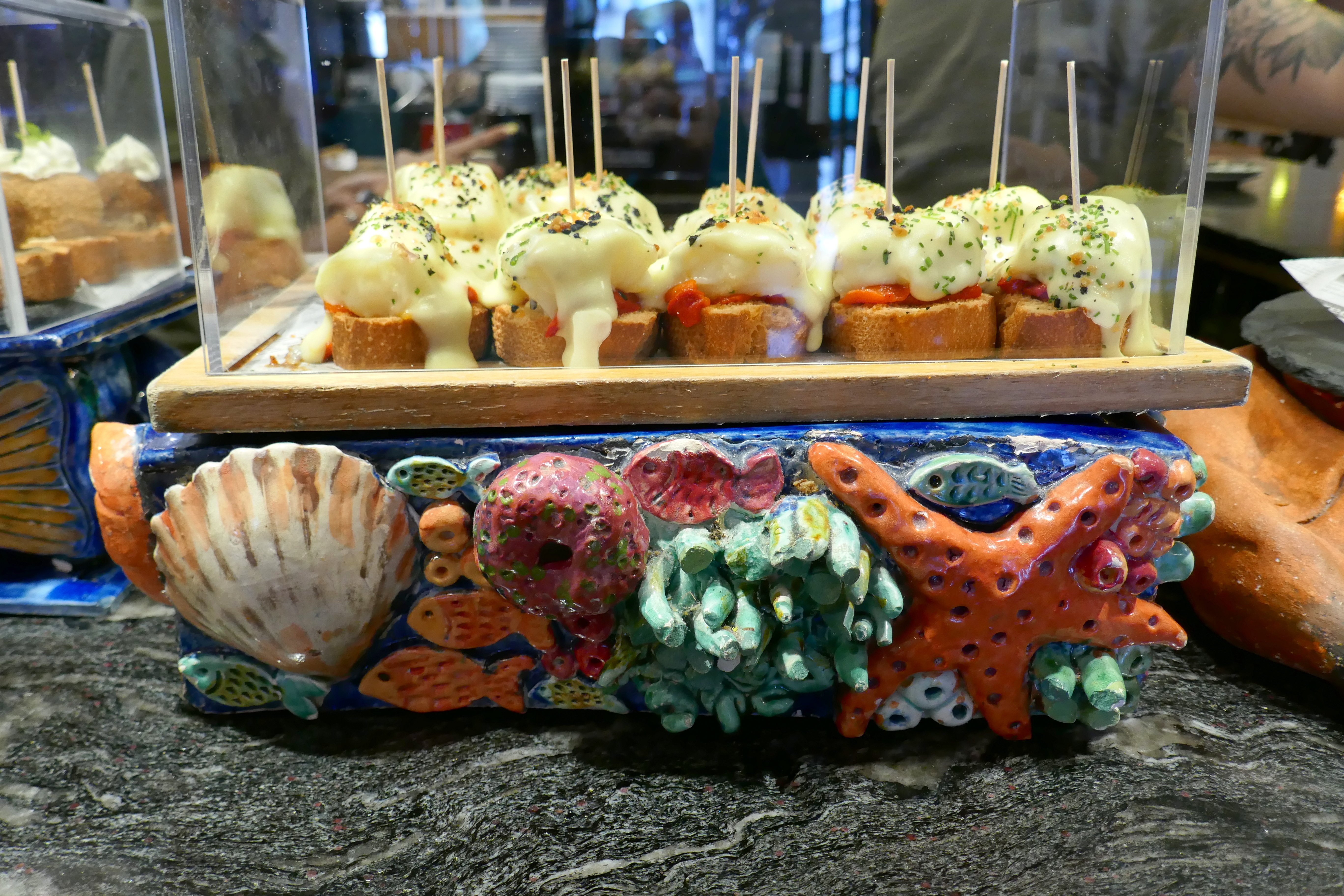
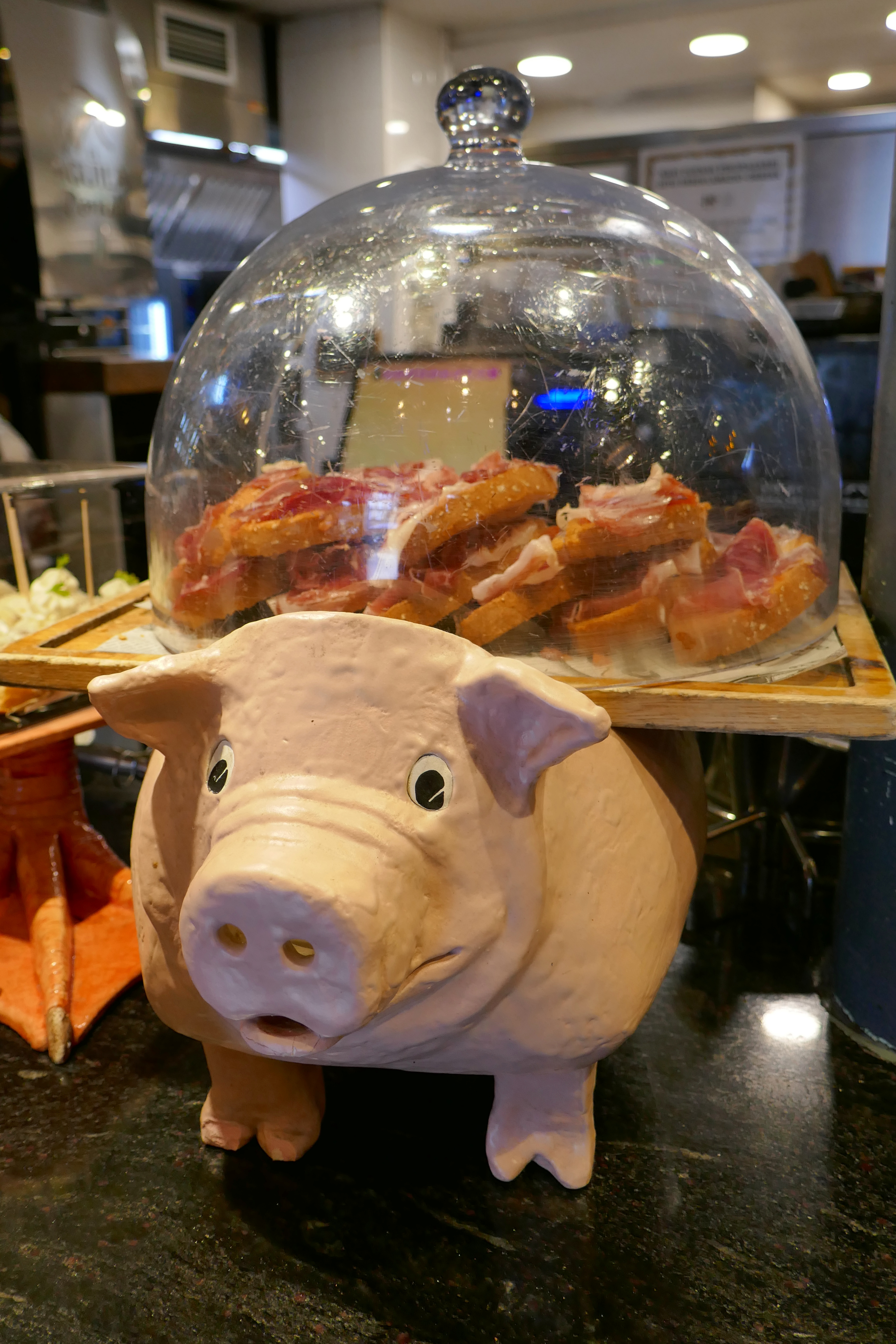
Our favorite pintxos presentation was at La Olla, in Plaza Nueva. Displaying their pintxos in themes, the fish pintxos were displayed on a ceramic whale, the other seafood was lined up on an underwater scene, and the pork pintxos sat atop a pig! It was adorable, yet practical for us, especially since we avoid eating red meat when possible and prefer seafood. We could just point to the ones we wanted.

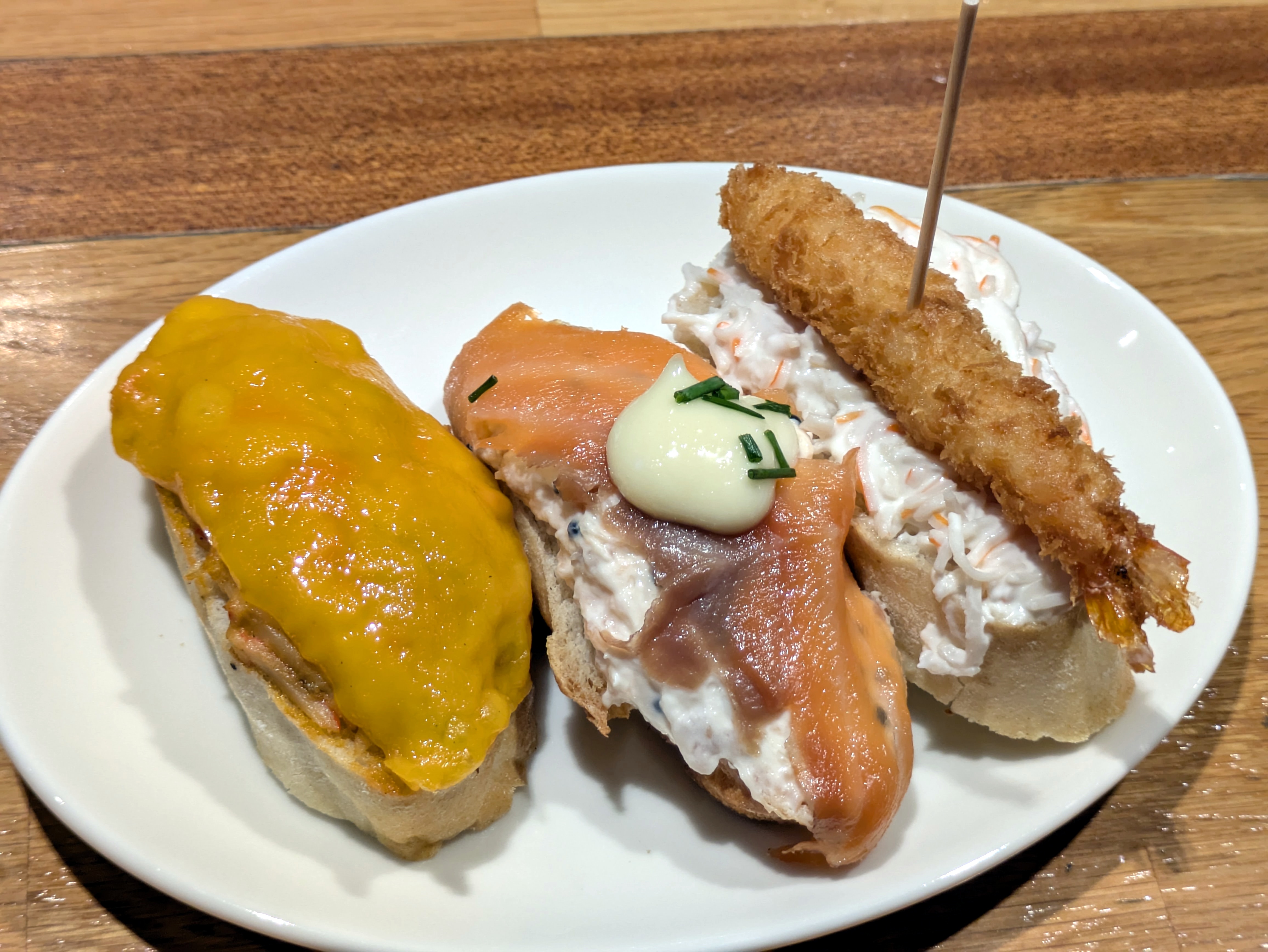
More scenes from around Bilbao:
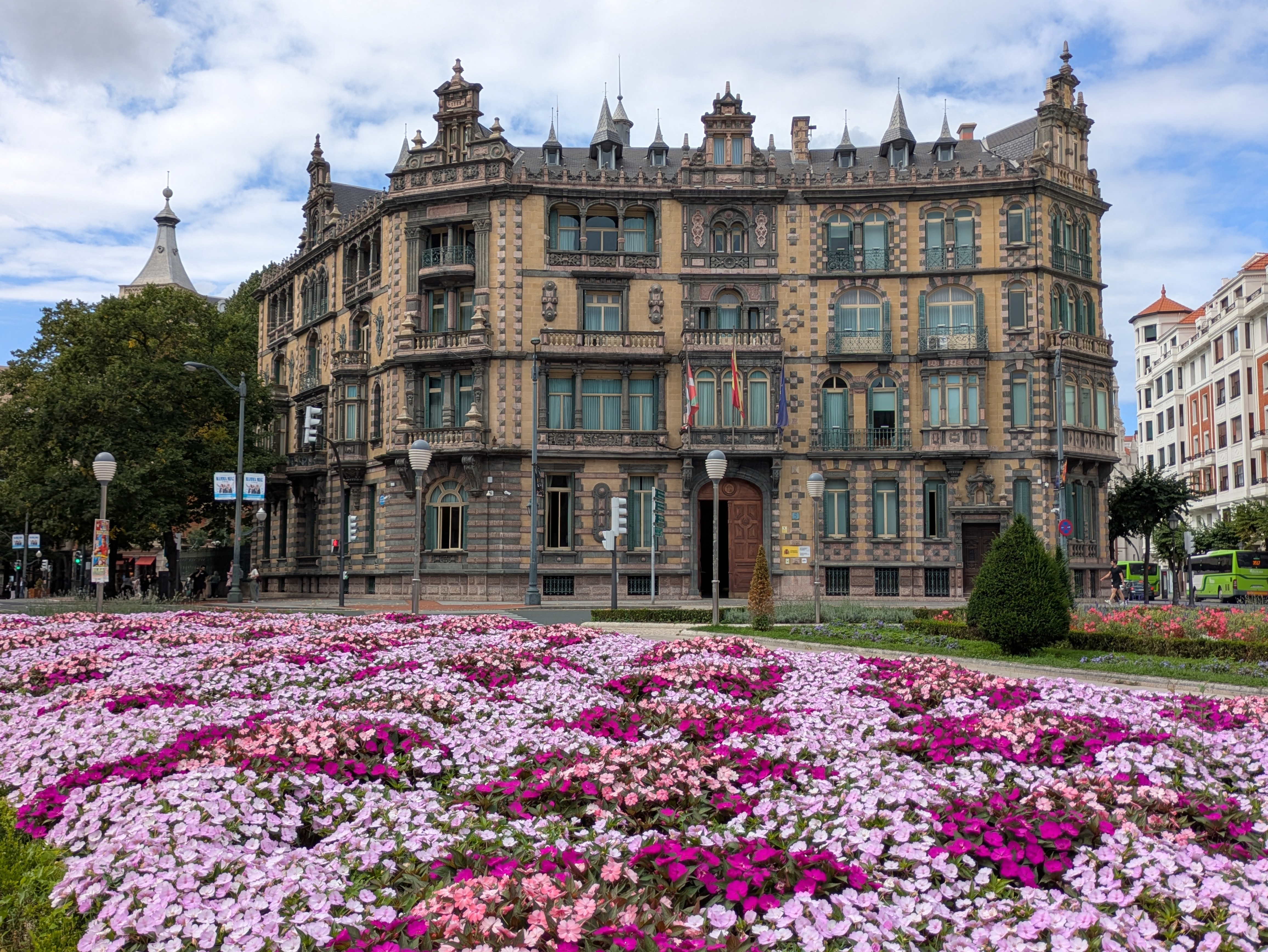
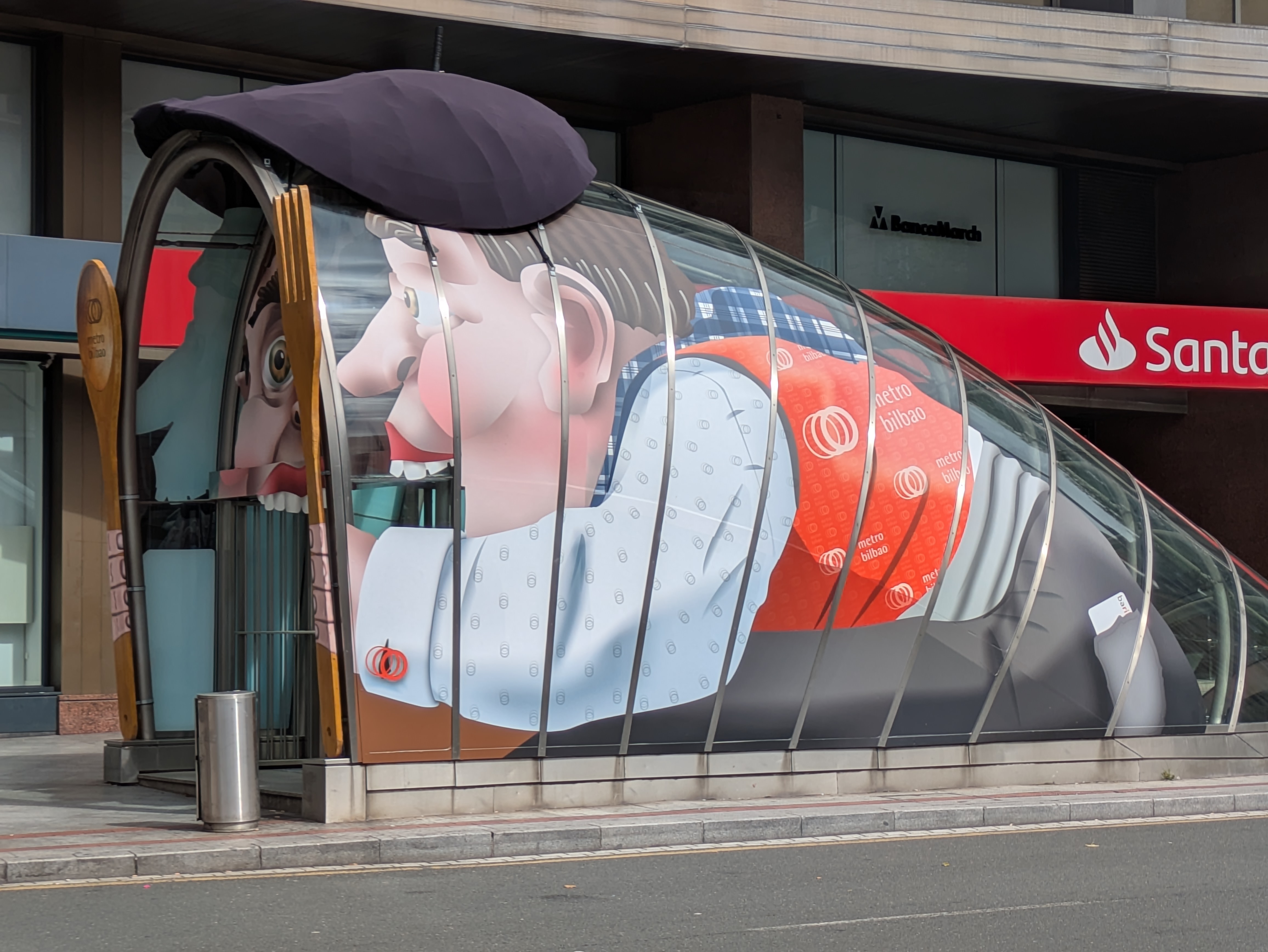
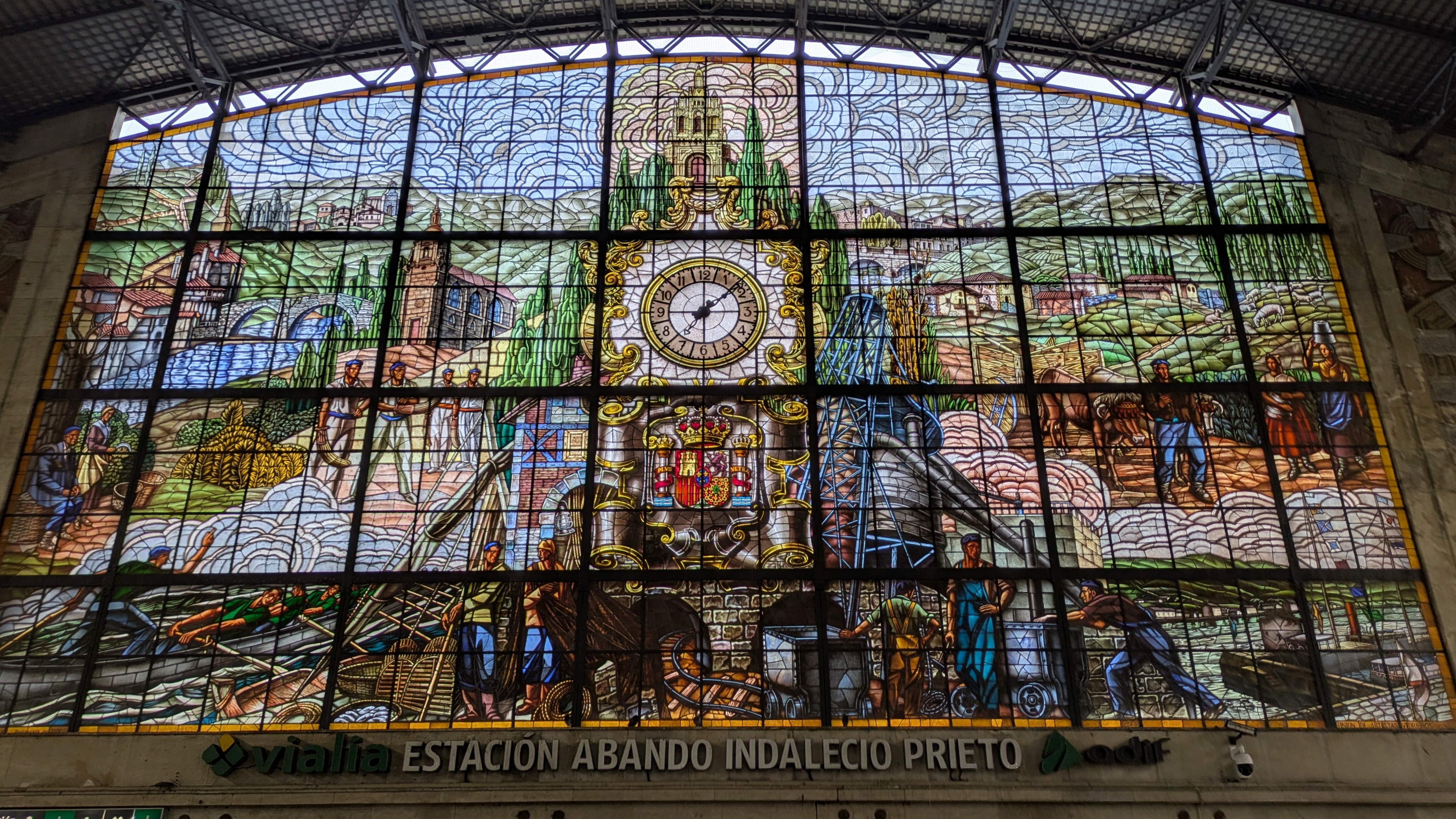
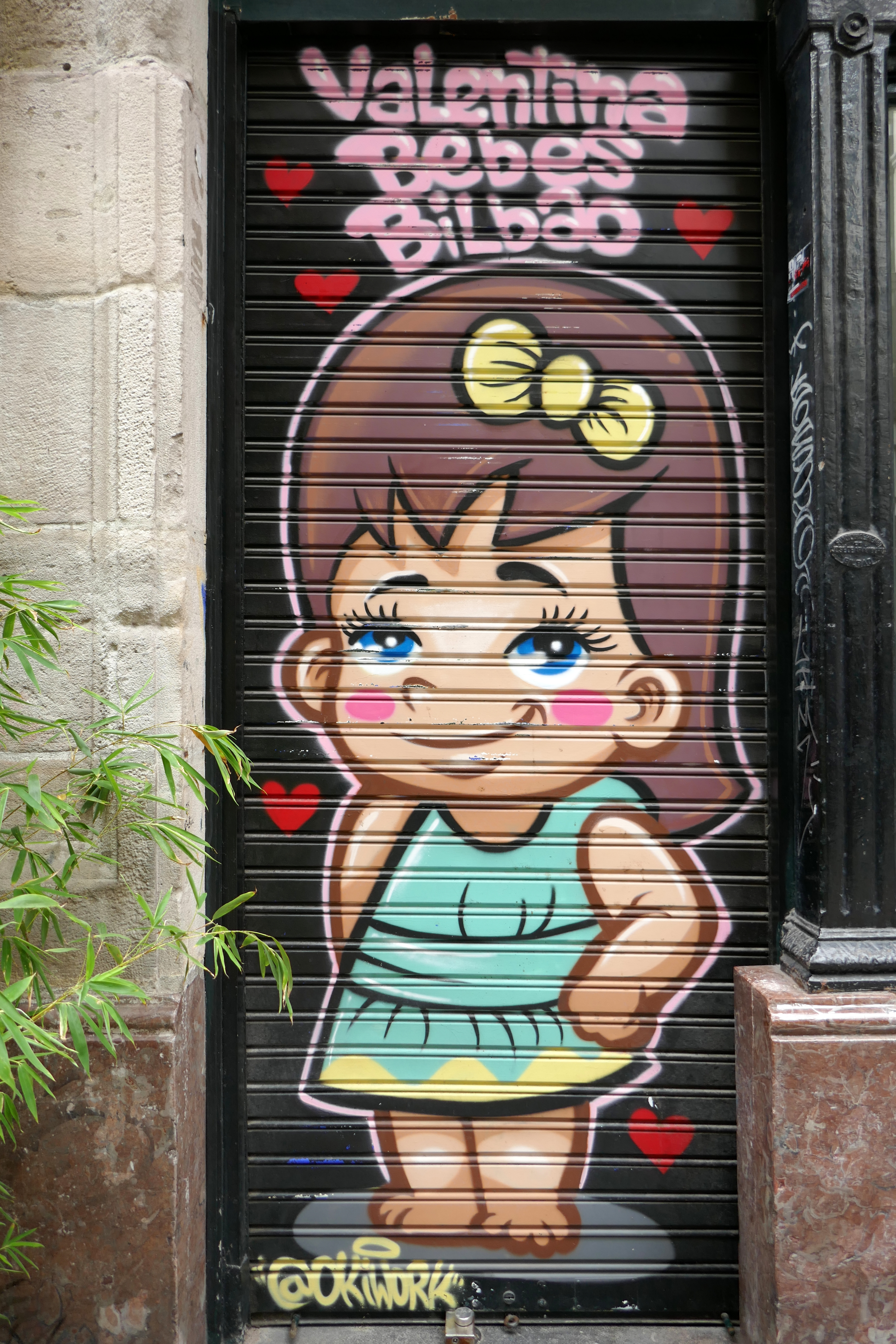
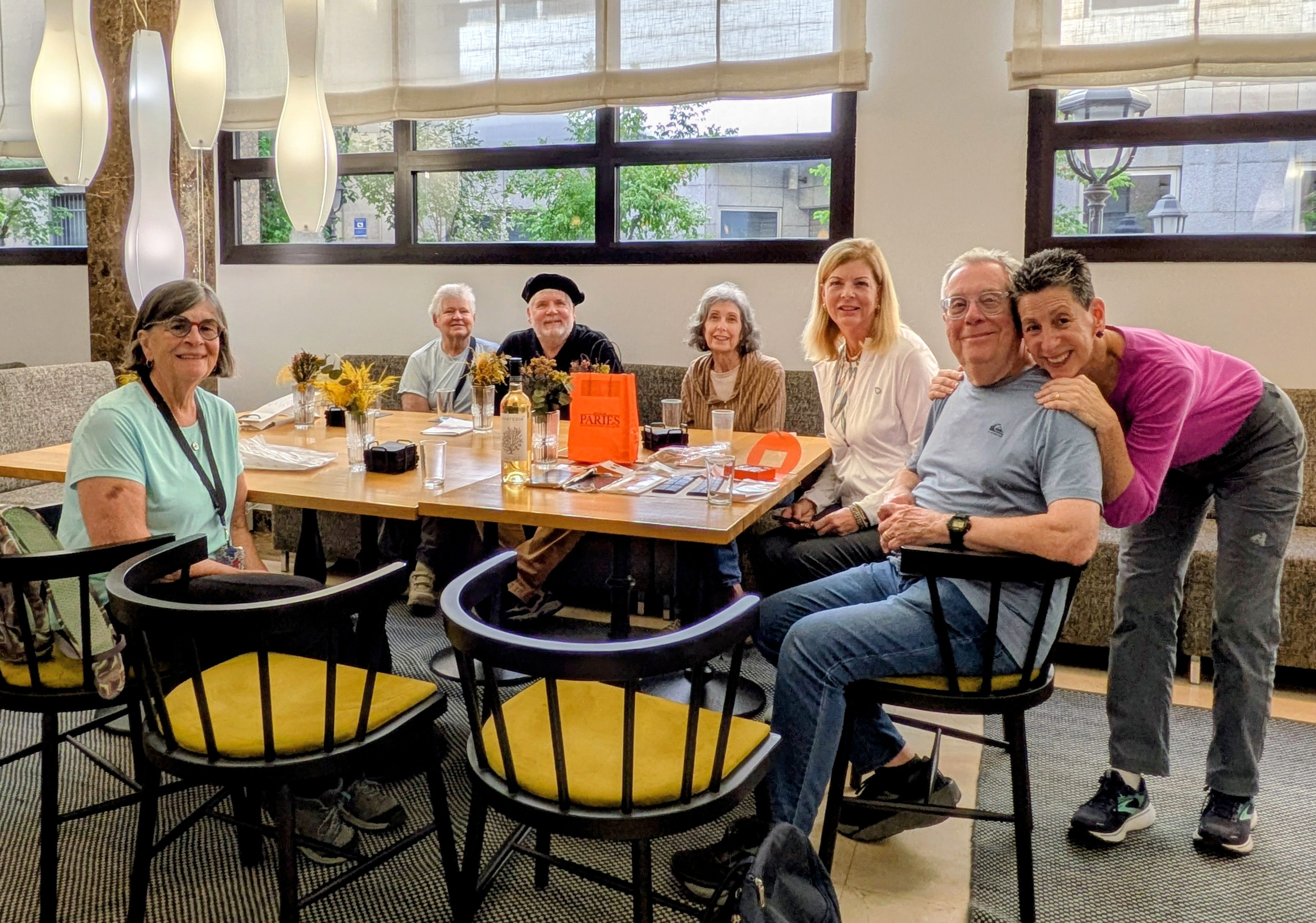
Bruce and I found Bilbao, listed in the top ten most walkable cities, to be easy to navigate on foot, and very enjoyable!
SOUTHWEST FRANCE, NORTHERN SPAIN & PORTUGAL #9: GUERNICA, THE BASQUE COUNTRYSIDE, AND A HOME-HOSTED DINNER
 Elaine-iaK's Travels: A Traveler's Tales of People, Places, Photos, Pools... and CHOCOLATE!