After another day of poking around Palermo on our own and getting adjusted to the seven-hour time difference, our tour with Overseas Adventure Travel began. We met our tour leader, Francesco, and the other fourteen members of our tour group, before setting out on a walking tour of the city. Although Francesco is a Palermo native and knows his city like the back of his hand, Italy requires separate tour leaders and tour guides, each being licensed in a separate classification. So, our tour guide met us at our hotel and led the group through the city, with Francesco bringing up the rear.
Palermo is the fifth-largest city in Italy, so our walking tour covered just some of the highlights—a few which I wrote about in my previous posts; so, I will skip those and show you what was new for us.
First, a little bit about Sicily and Palermo. This map highlights the itinerary of our tour in red:
(For all photos, click on the image for a full screen view.)
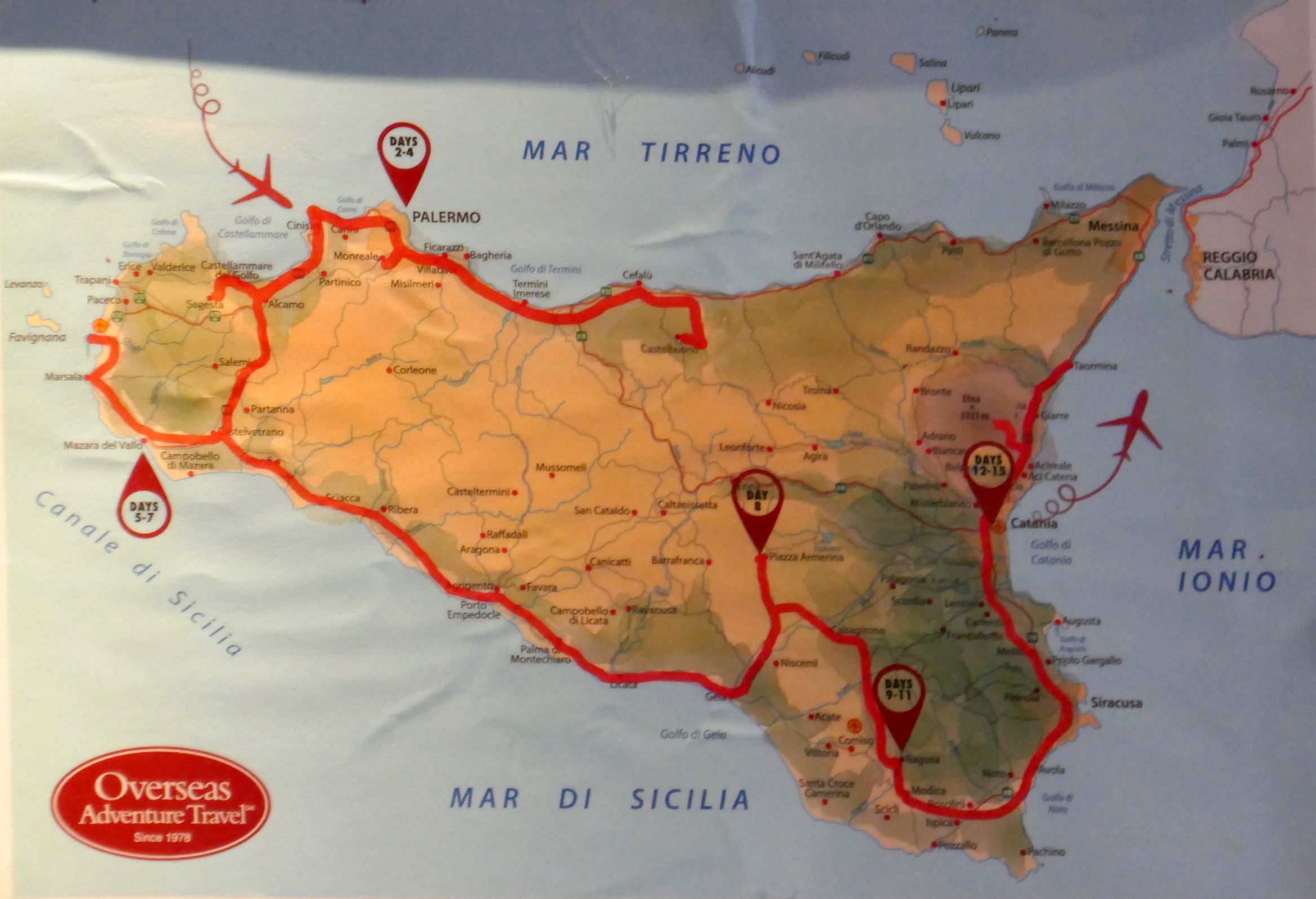
Sicily, located off the peninsula of mainland Italy, is an island of 4.7 million people in the Mediterranean Sea. First and foremost, although Sicilians are Italian and the island is part of Italy, the locals think of themselves as Sicilians first, and Italians second. They are very proud to be Sicilian and even have their own dialect, which they speak in addition to Italian.
Another thing Sicilians are clear about: They aren’t fond of northern Italians (and the feelings are mutual), which has its roots dating back to the 1860’s. Government power, including the police and army, shifted from southern Italy to the north, and economic wealth was (and still is) centered there as well. The south, including Sicily, is poor, which created a vacuum for the mafia to step in.
One of the reasons Sicily is poor is because Sicilian government is corrupt. Politicians get paid more in Sicily than anywhere else in Italy or the rest of Europe. Basically, they are ripping off the taxpayers, so the politicians and mafia (often the same) are the only Sicilians making out financially. If you get elected to parliament in Sicily, it’s like winning the lottery. You would serve a 2-year term but get paid for the rest of your life. The bottom line is the system doesn’t work for the benefit of the people, only for the politicians. One example of this is the money distributed to Italy and Sicily by the European Union. The politicians skim off the top before the rest trickles down in a way that benefits the common Sicilian.
The unemployment rate in Sicily is also steep—38% for the 18-35 age group. In contrast, it is only 2.9% in Switzerland. Overall, Italian unemployment is the highest in Sicily and the Calabria region, also located in the south.
It is most difficult to get a job in the private sector, because they will only hire experienced workers. New college graduates don’t have experience, but they don’t want to work outside of their field of study; so, they won’t work. Many go on earning additional advanced degrees and live with their parents.
Now, a bit about Palermo: Located in northwest Sicily, it was founded in 735 B.C., and the current population is around 626.000 with its metropolitan area totaling about 1.2 million. The city is Sicily’s economic and cultural capital, full of UNESCO World Heritage Sites.
The city has quite a complicated history. Due to its strategic location in the Mediterranean, it was the victim of a succession of invaders: The Phoenicians, Carthaginians, Greeks, Romans, Normans, Swabians, and French all conquered Palermo at one time or another. Fast forward to World War II, the city was heavily bombed. Sheesh! The poor city couldn’t catch a break.
One of the things I enjoyed about Palermo was the way vehicle traffic was diverted away from the main streets of the old city center until late at night. Pedestrians could walk down the middle of the streets without the noise, pollution, and chaos of traffic. It didn’t stop the e-bikes and scooters from whizzing past, though, at times nearly colliding with pedestrians stopping to take a photograph or to talk with each other. I’m guessing that all of us in the group had a close call at one time or another!
Following our walking tour and free time in the afternoon, we regrouped for our “Controversial Topic,” one of OAT’s features on each tour. I’ll give you one guess as to what that topic would be… I’ll tell you all about it in my next post!
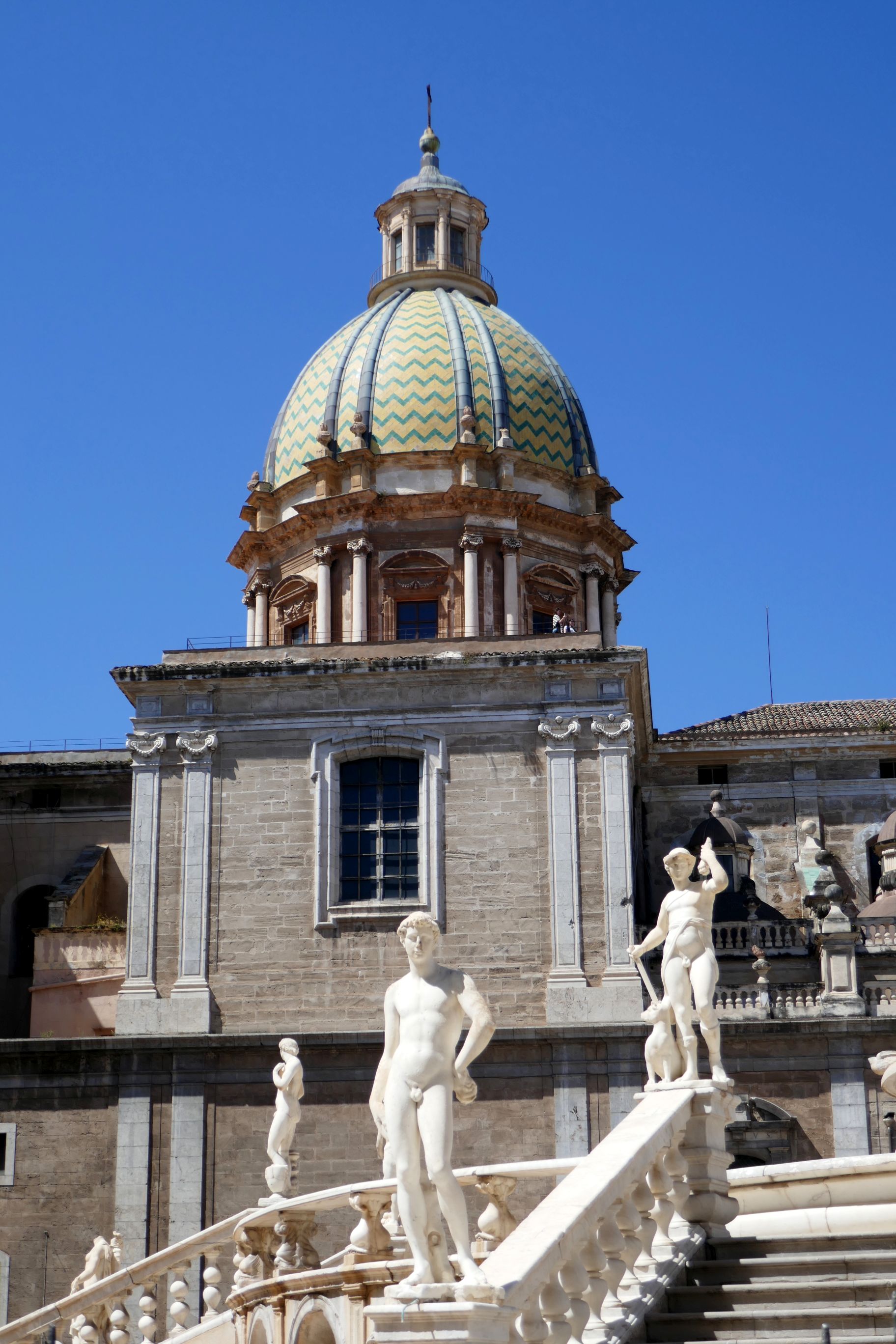
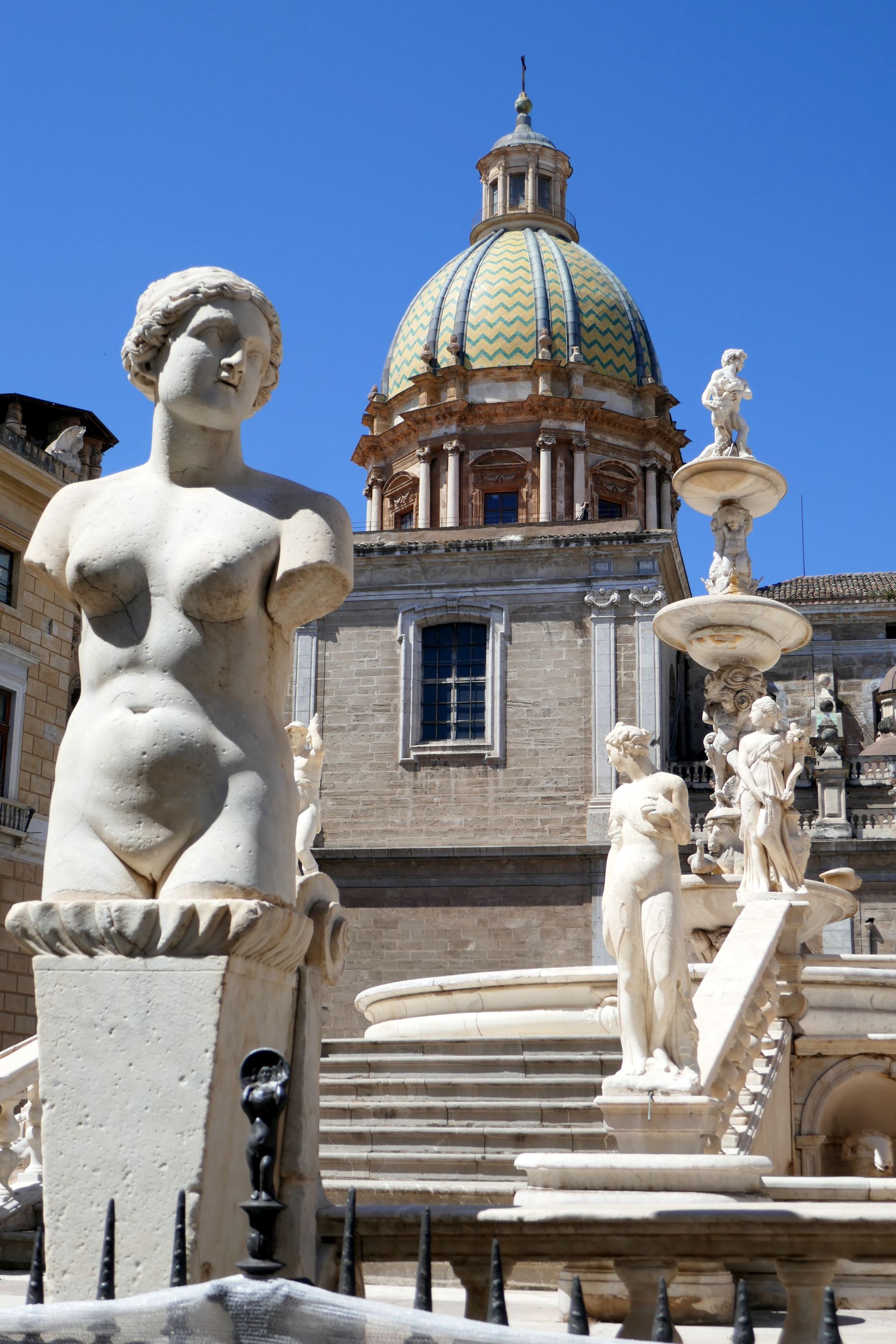
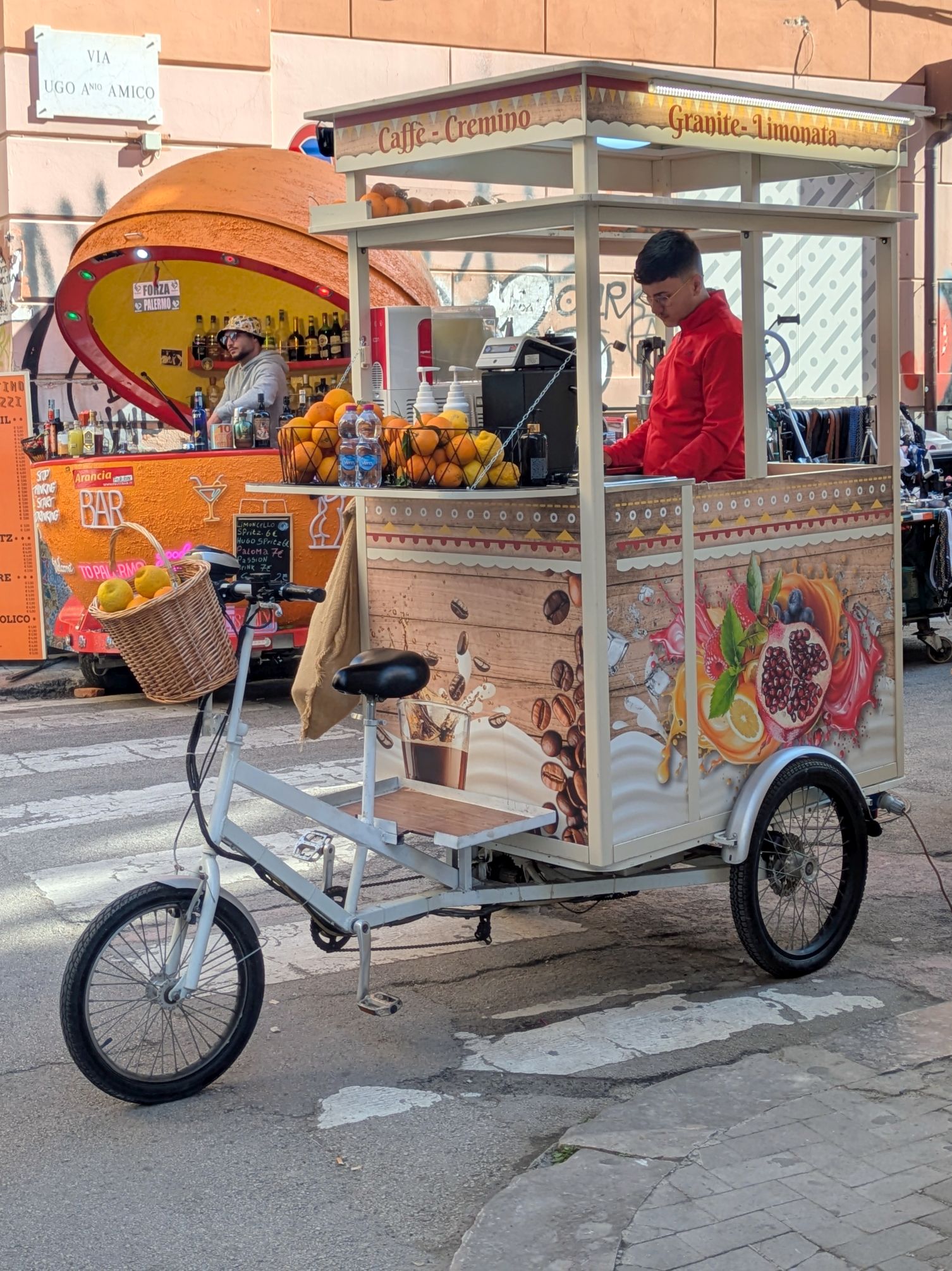
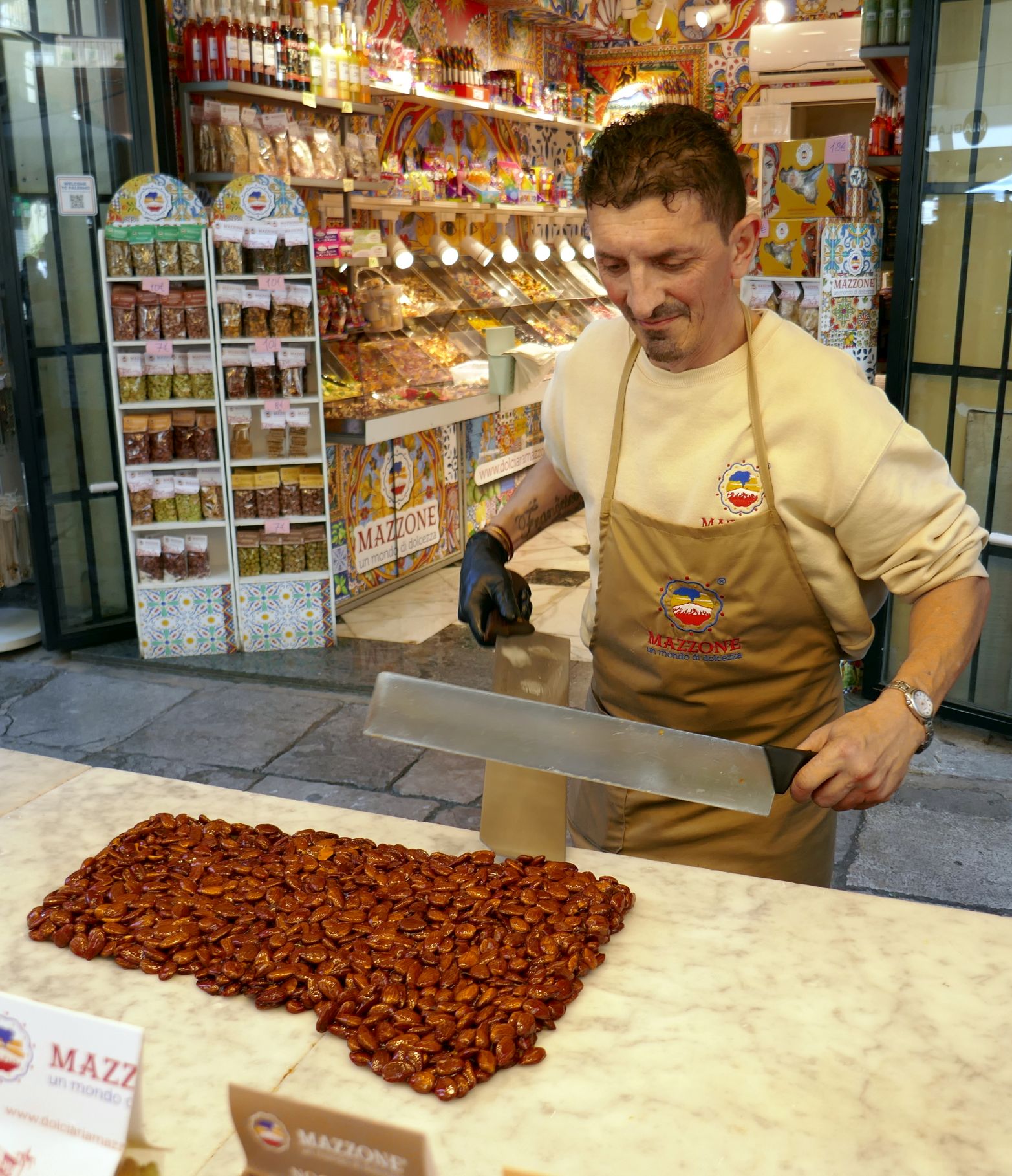
Meanwhile, here are some photos shot around Palermo:



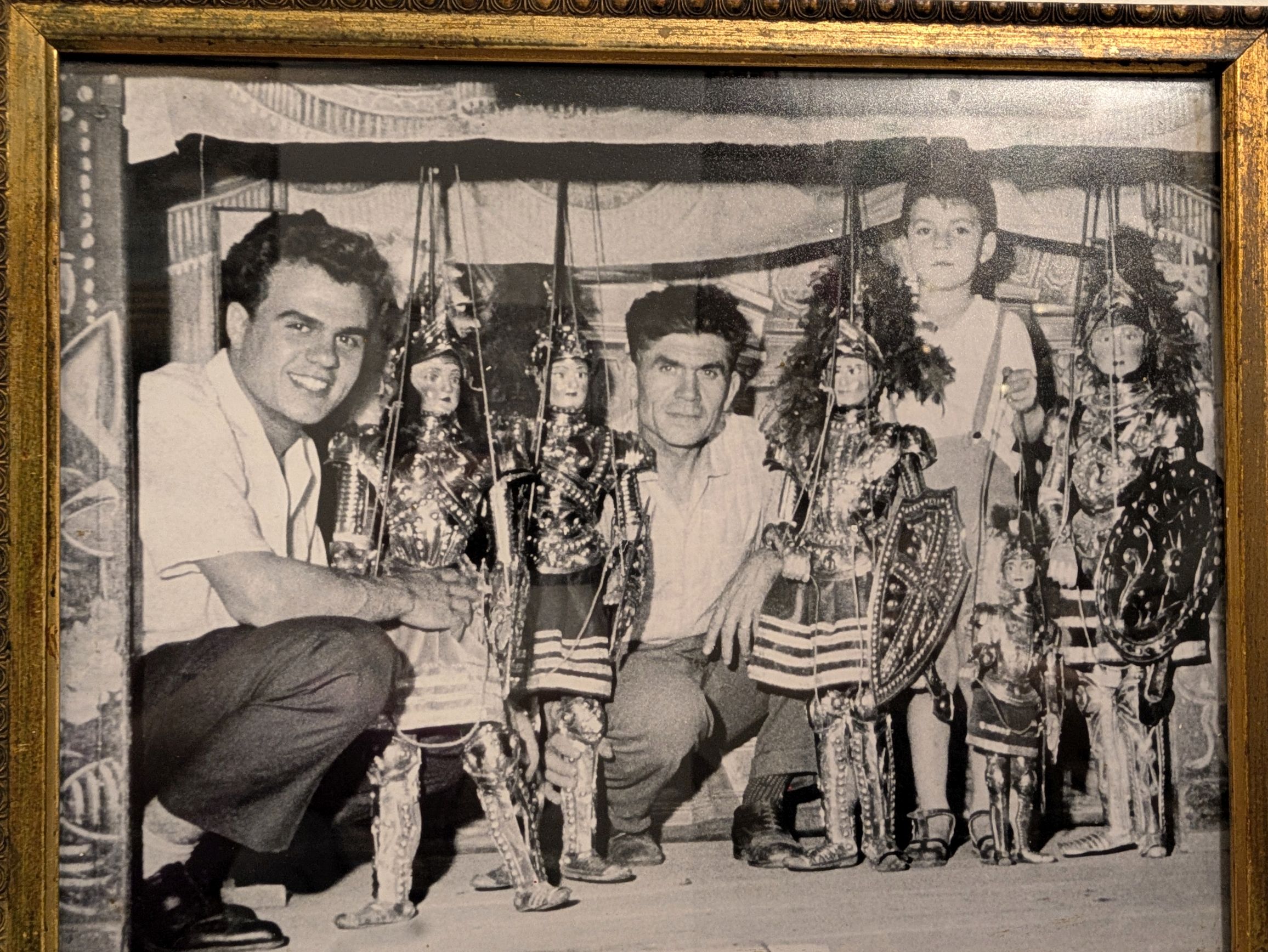
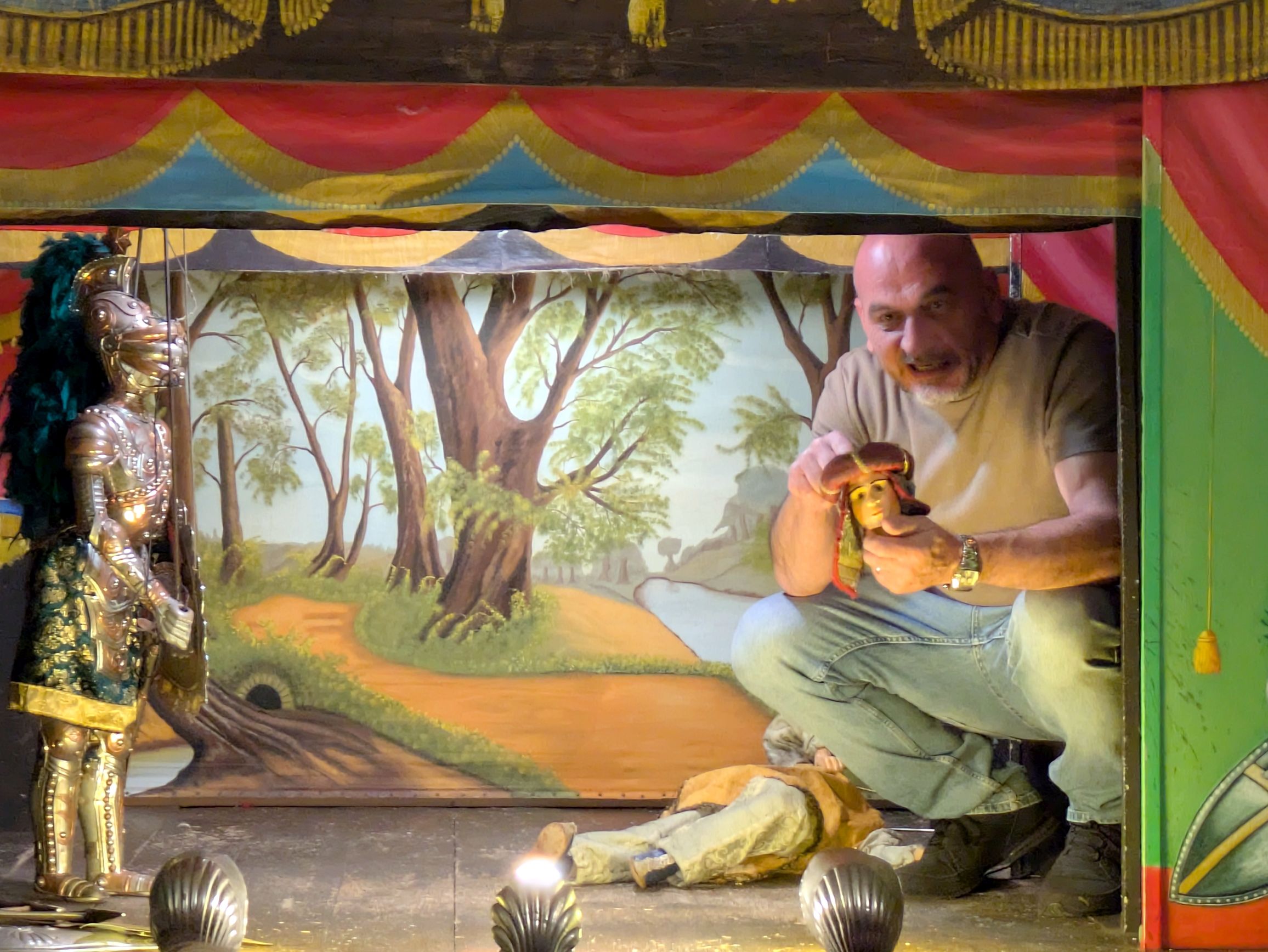
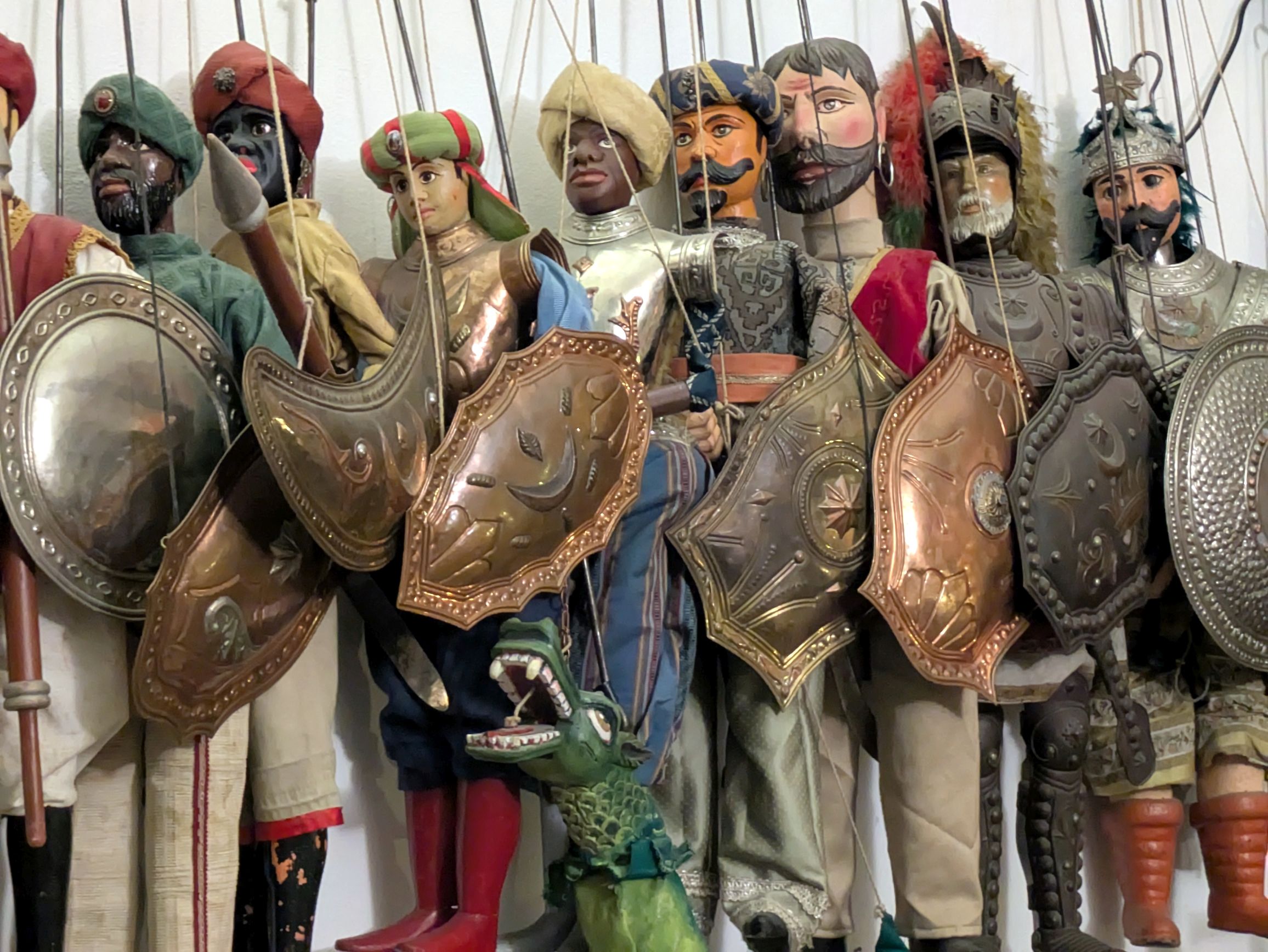
Our group had a private visit at the wonderful Opera Dei Pupi, a family-run puppet theater that has been passed down through the generations:




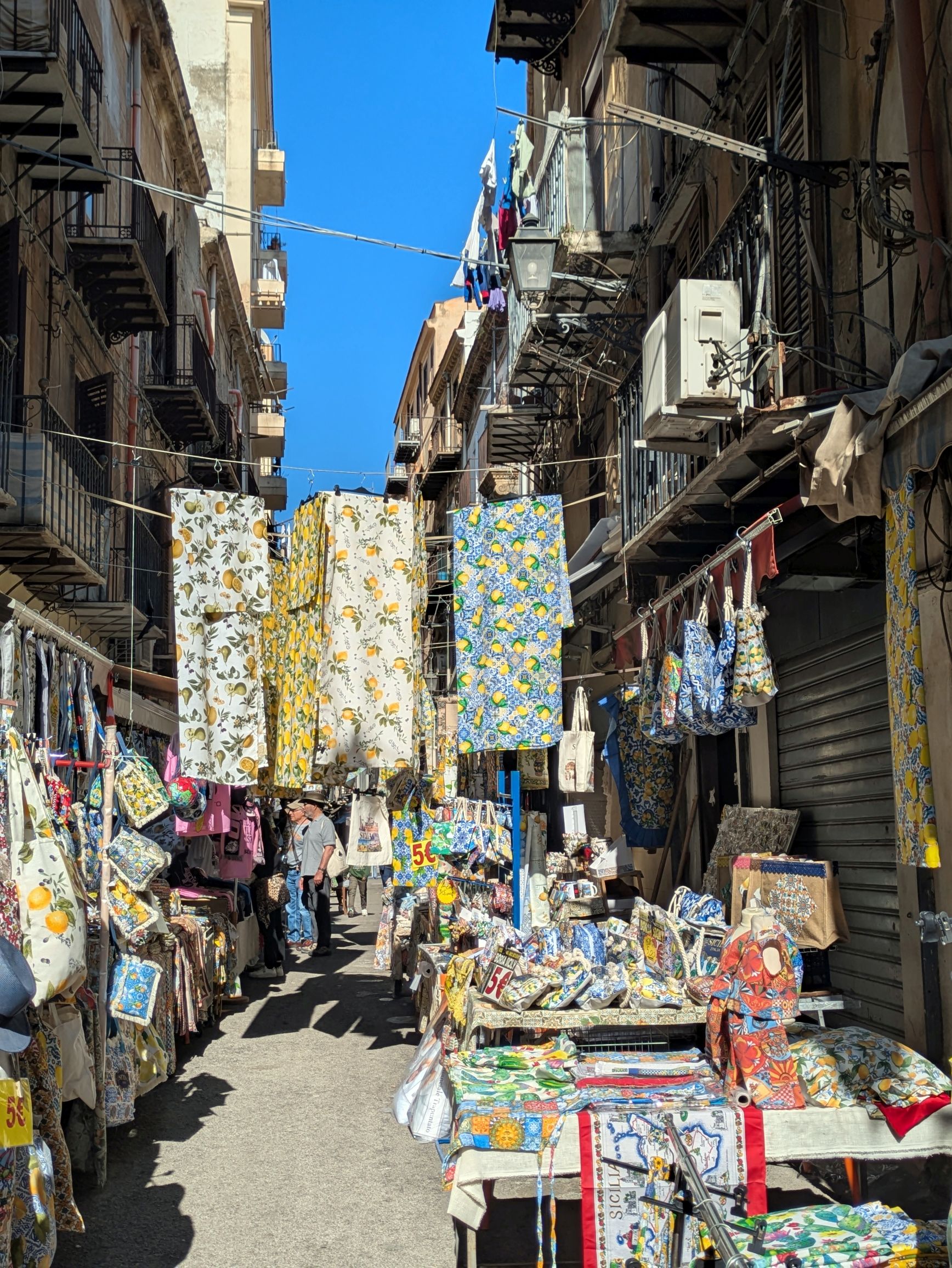
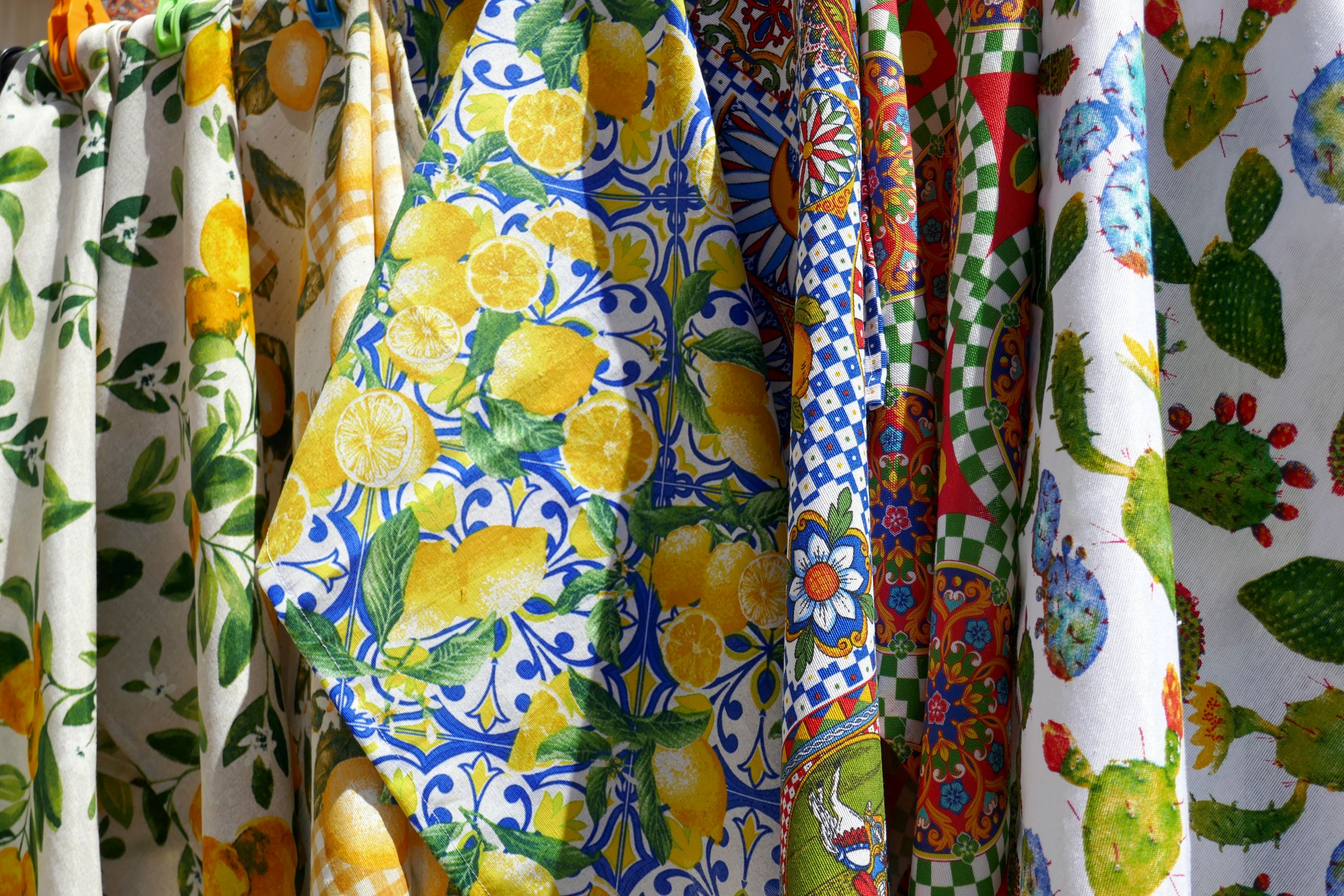
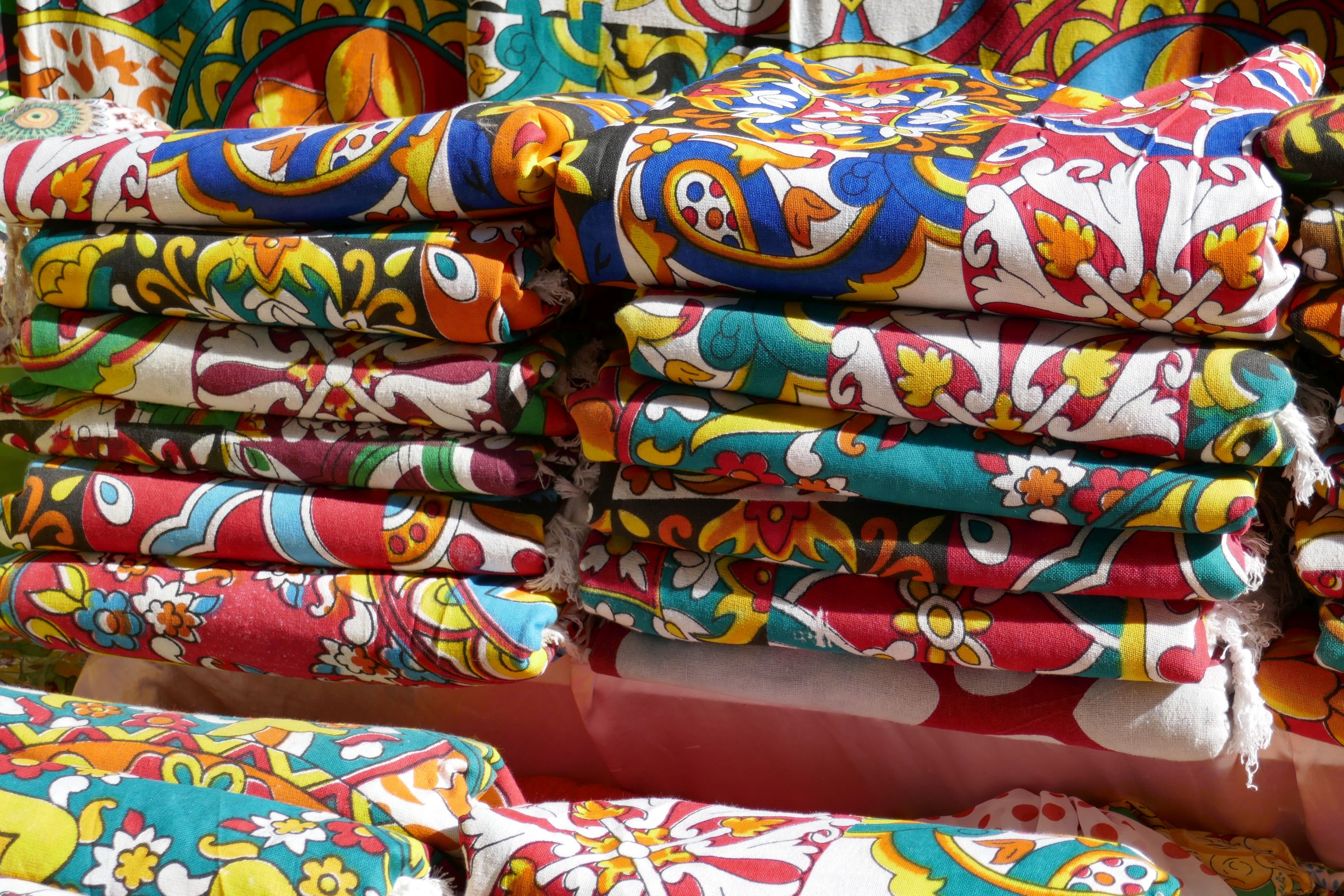
During my free time, I stumbled upon a street lined with shop after shop of seamstresses sewing table cloths and other items made from bolts of colorful fabrics– many with a lemon motif, which is a symbol of Sicily. There are lemon trees everywhere on this island!



Next up: SICILY & THE AMALFI COAST #4: THE SAVAGE SICILIAN MAFIA
 Elaine-iaK's Travels: A Traveler's Tales of People, Places, Photos, Pools... and CHOCOLATE!