
Given the choice, I would rather visit a museum showcasing crafts rather than fine art, whether they be of ancient peoples or contemporary. My favorite Smithsonian Museum in Washington, D.C., at the time of our visit was the Renwick Gallery, which featured American crafts from the 19th century to the present. It was fabulous!
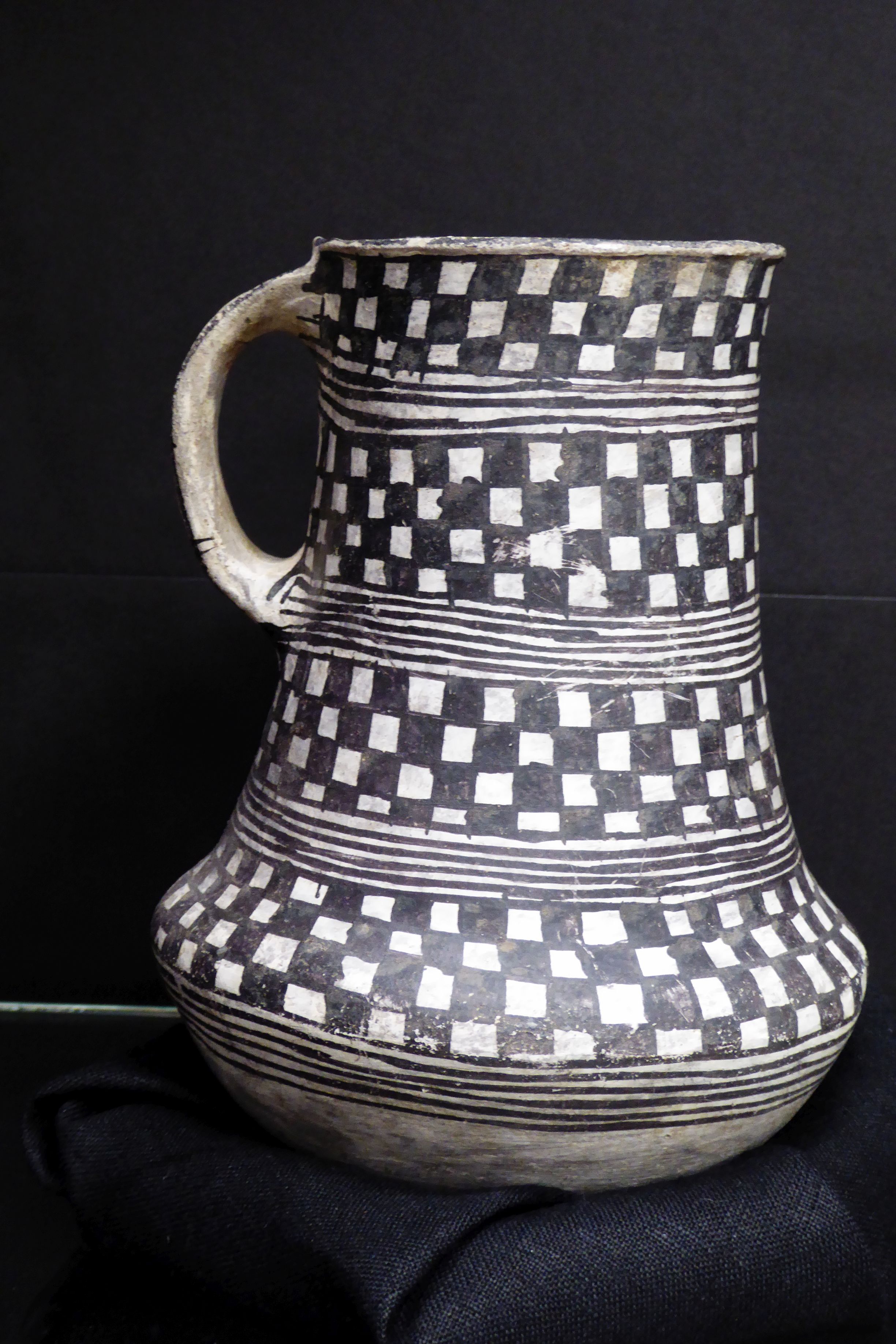
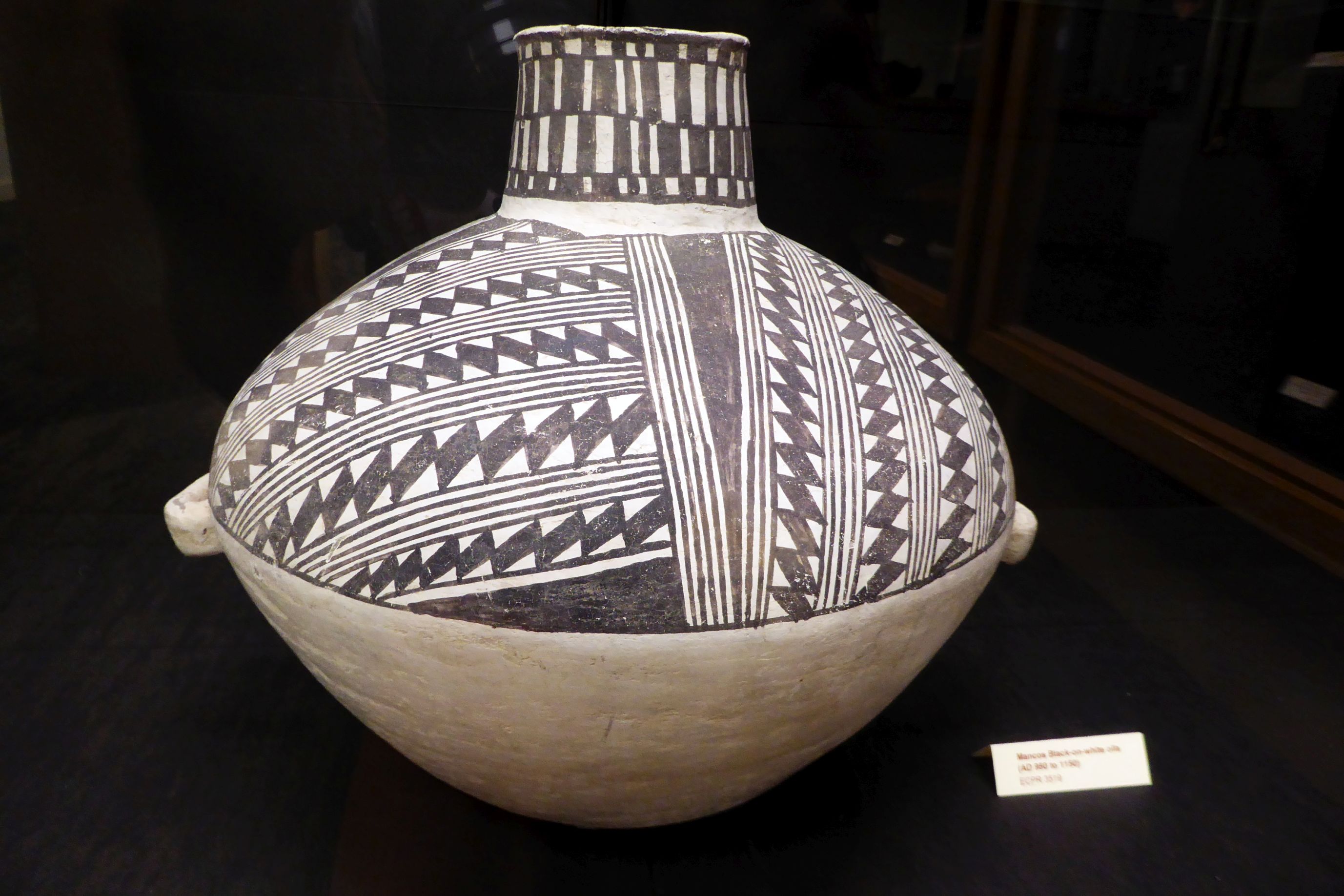
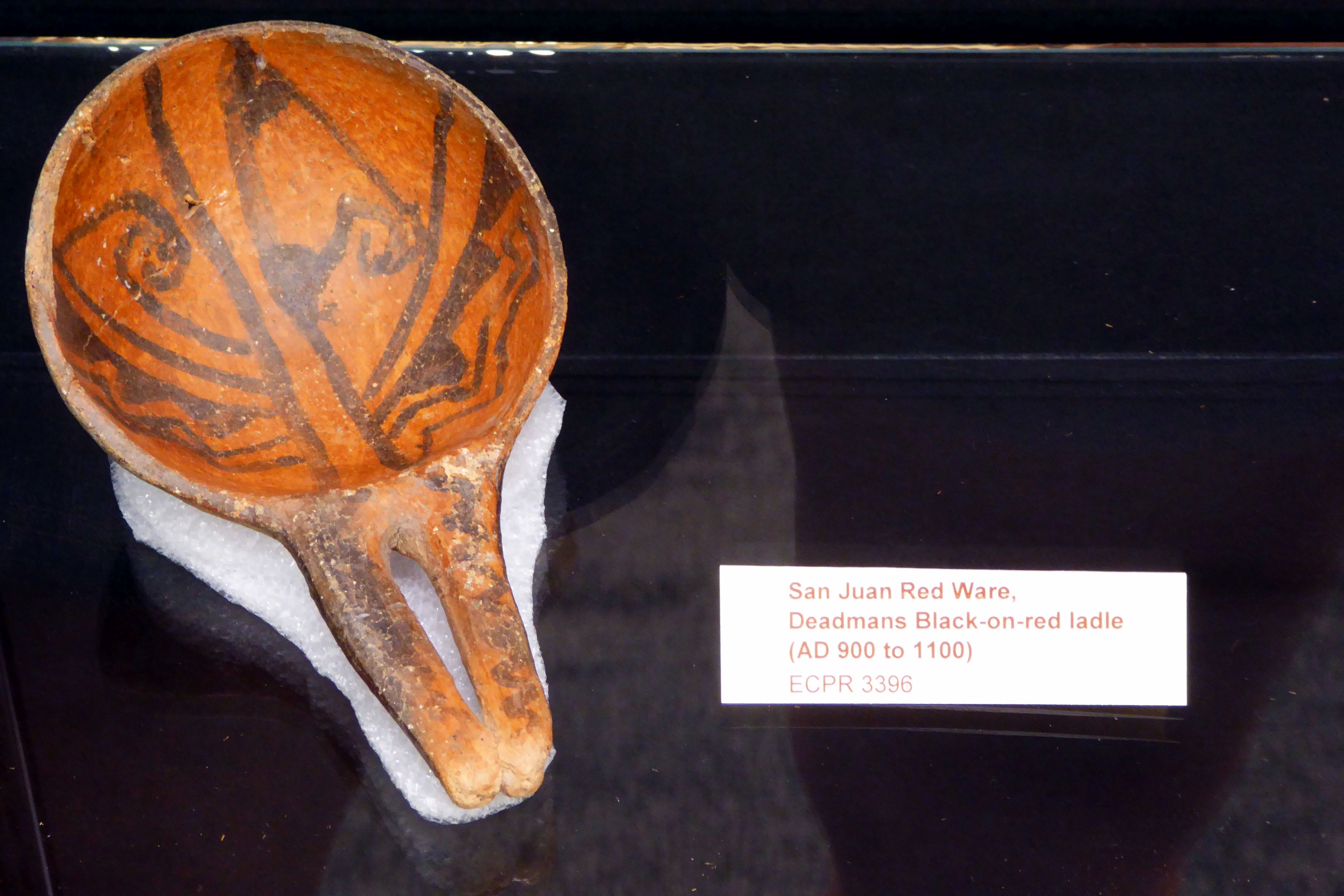
My eyes lit up when we stepped into the Edge of the Cedars State Park Museum, in Blanding, Utah. It has the largest collection of intact Ancestral Puebloan pottery found in the Four Corners region of the U.S. as well as archaeological sites and repository.
Ancestral Puebloan is the term for an ancient American Indian people—the people who were here first in this country. The modern Pueblo Indians of New Mexico and Arizona are their descendants.
The 1906 American Antiquities Act made the unauthorized removal of artifacts from public land a felony. The 1979 Archaeological Resources Protection Act (ARPA) specifically made the removal of artifacts or damage to archaeological sites on public lands punishable by fines or imprisonment. The laws recognize the significance of our nation’s cultural heritage sites and the value in preserving and protecting them. Two great laws!
Unfortunately, these laws have not stopped people from looting priceless ancient artifacts from this area. More crimes covered under the ARPA have been prosecuted in Utah than anywhere else in the United States. Experts estimate that more than 80% of American Indian archaeological sites dating back as far as 17 centuries have been looted.
It was wonderful to be able to see these artifacts up close. The repository was behind a huge glass wall with items lined up and numbered. In front of the room, there was a computer kiosk available where each item could be looked up in the database. I wish I would have had more time to spend reading more about this gorgeous pottery.
(For all pictures, click on the image to see full screen view.)

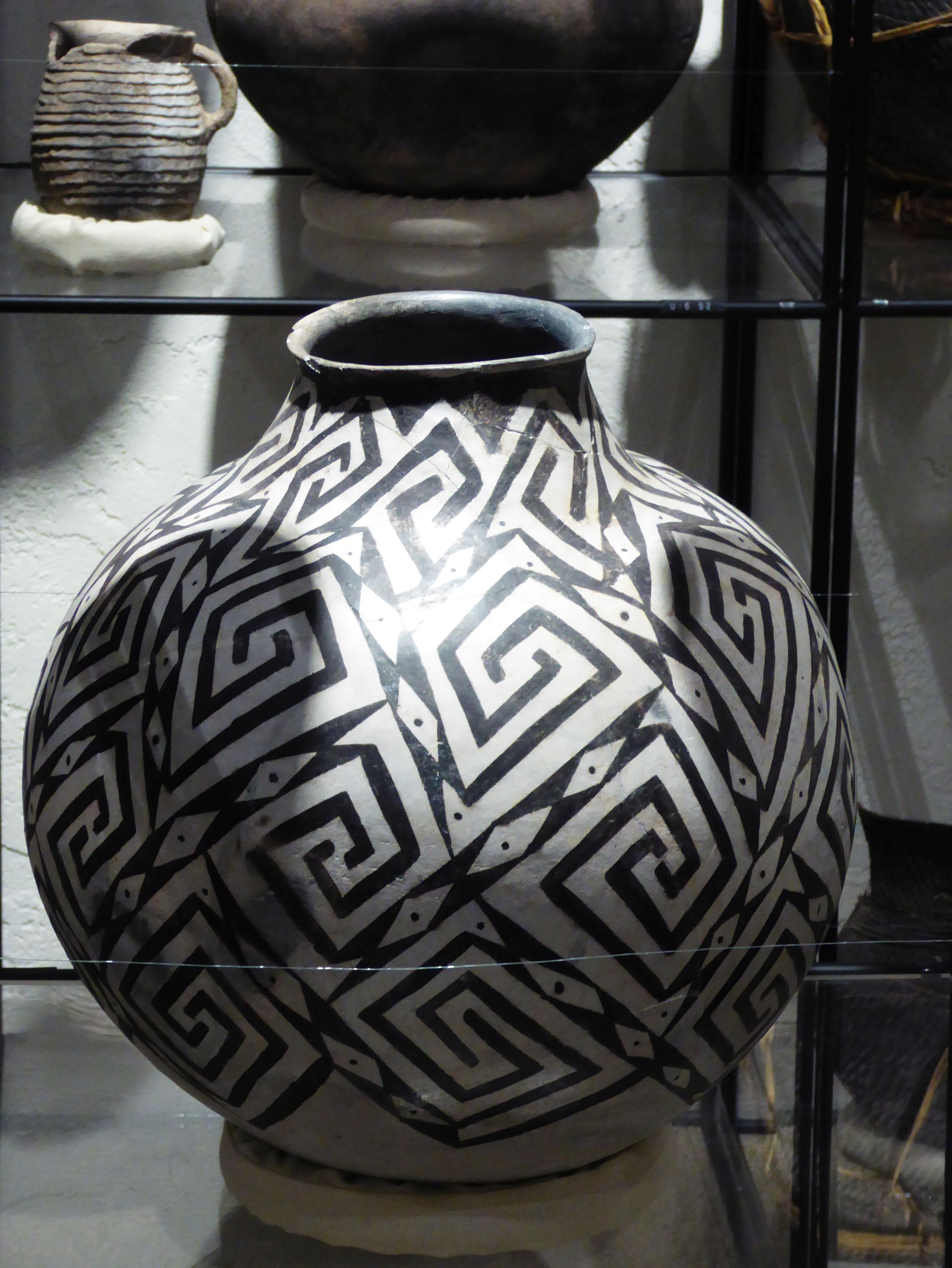
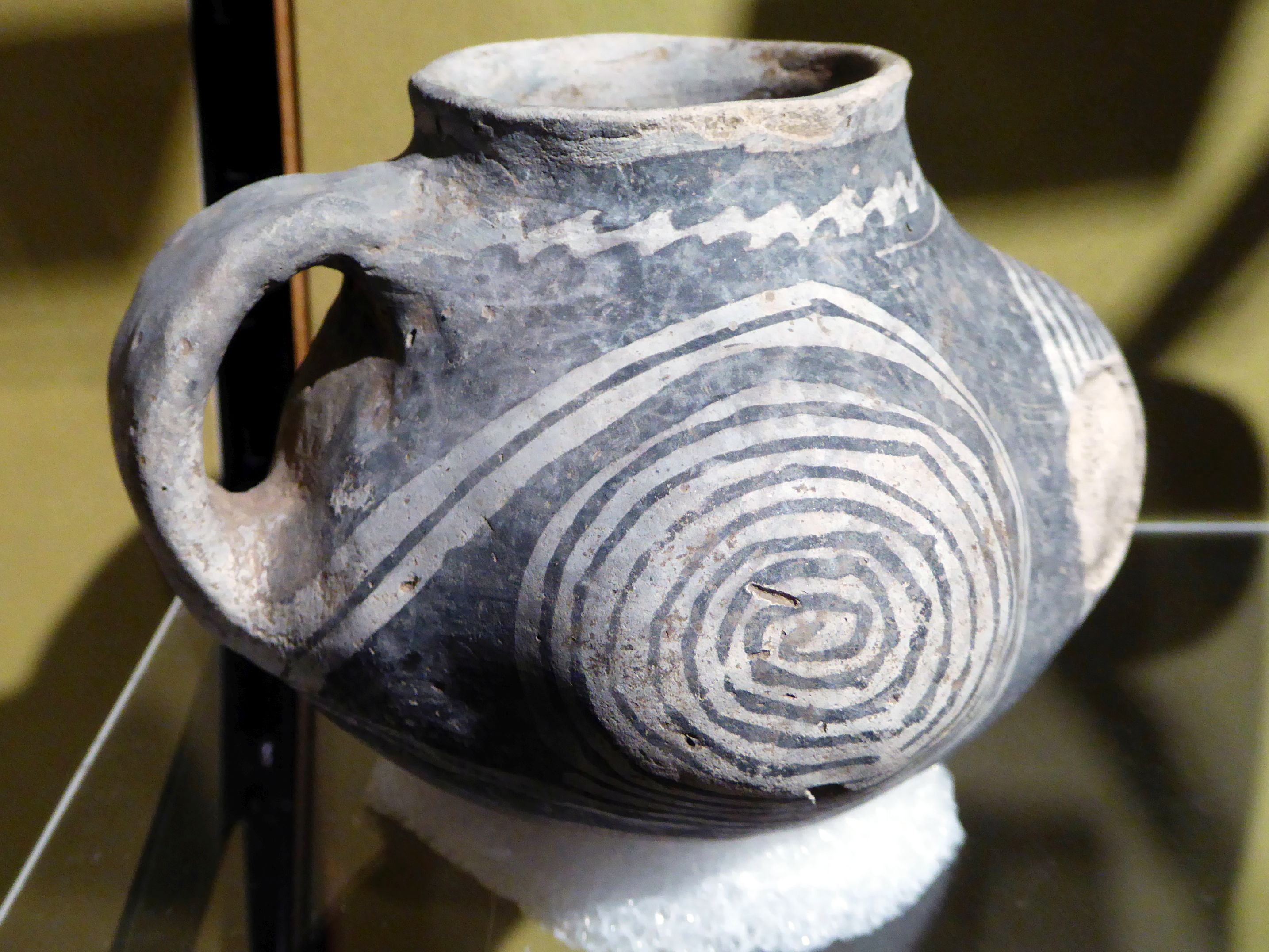
I did learn that all Ancestral Puebloan ceramics were shaped by hand and the surfaces of serving bowls and some jars were decorated with painted designs.
The Kayenta people are best known for finely painted black-on-white or black-on-orange ceramics.

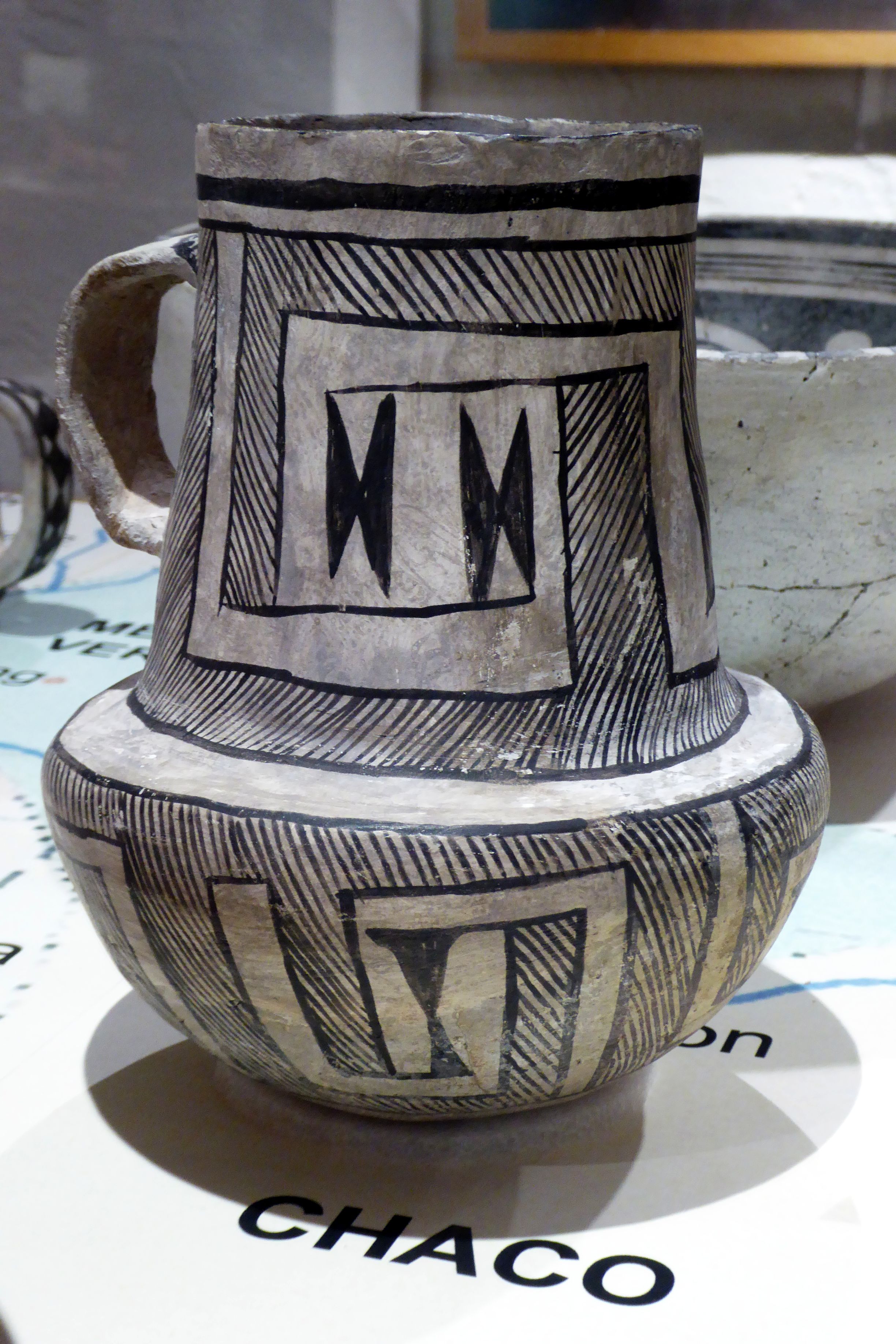
Chaco ceramics are also black-on-white. Their most distinctive style involved bounded fields filled with hachured or parallel lines. Geometric scrolls are common motifs, and curvilinear designs also occur. Cylindrical vases and cylindrical-necked pitchers are unique to the Chacoan style and may have been produced by specialists.
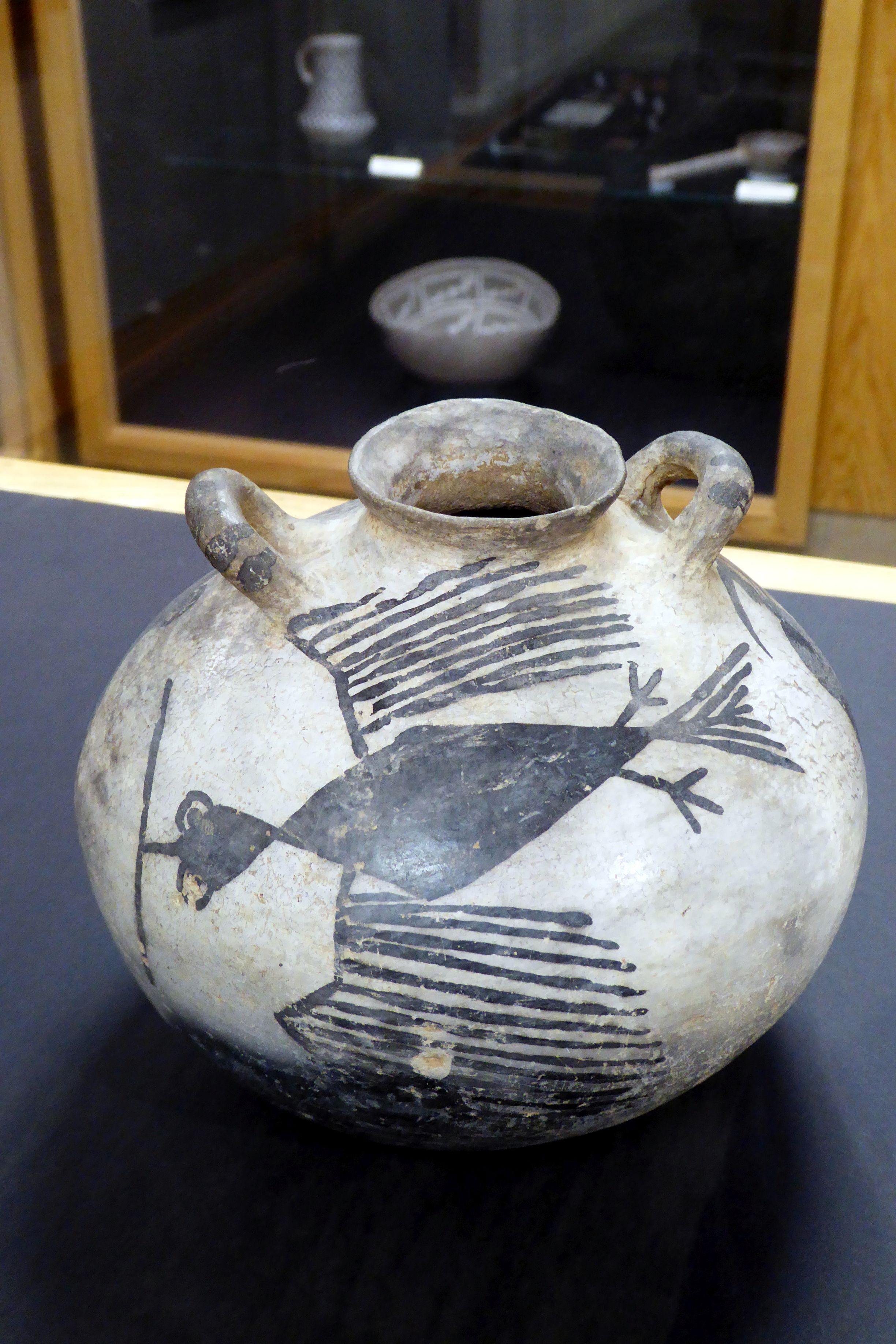
Mesa Verde ceramics underwent centuries of change in design style. The ceramics produced between A.D. 1200-1300 are generally considered the most stylistically distinctive. These are black on white, painted with complex geometric designs.




The other artifacts in the museum were also striking. This colorful macaw feather sash really caught my eye. I have never seen anything like it! The technique of using featured cords is known from only a few Basketmaker Period cave sites (A.D. 750-950). Radio-carbon dating confirmed a date of A.D. 1150 for this sash.

The feathers are from the Scarlet Macaw, a parrot native to Mexico, indicating there was trading going on between the Ancestral Puebloan and Aztecs.
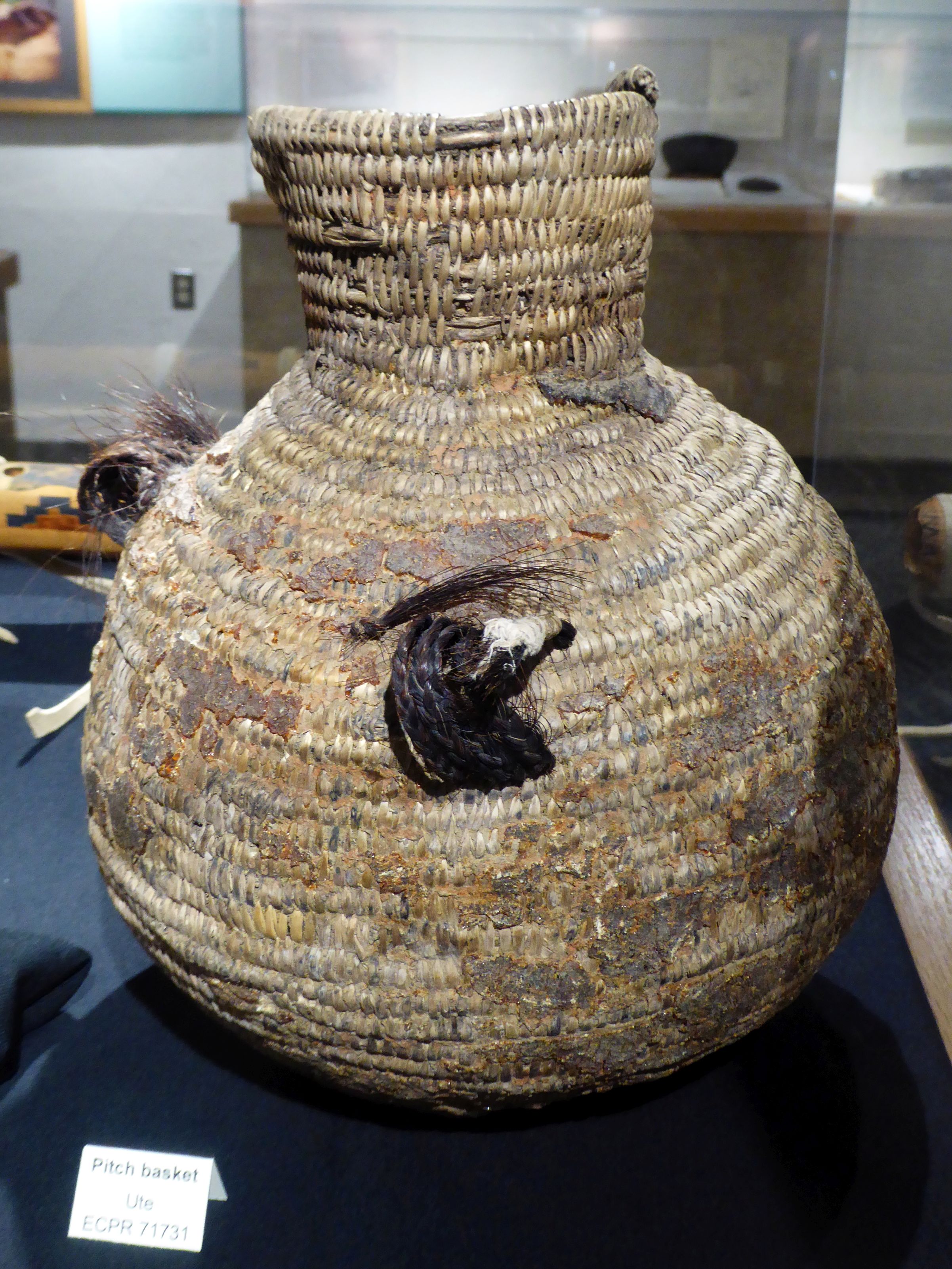
The museum also featured a rare collection of baskets found at a site in Manti La Sal National Forest. It dates back to A.D. 1150, which is amazing, considering the excellent condition of these baskets.

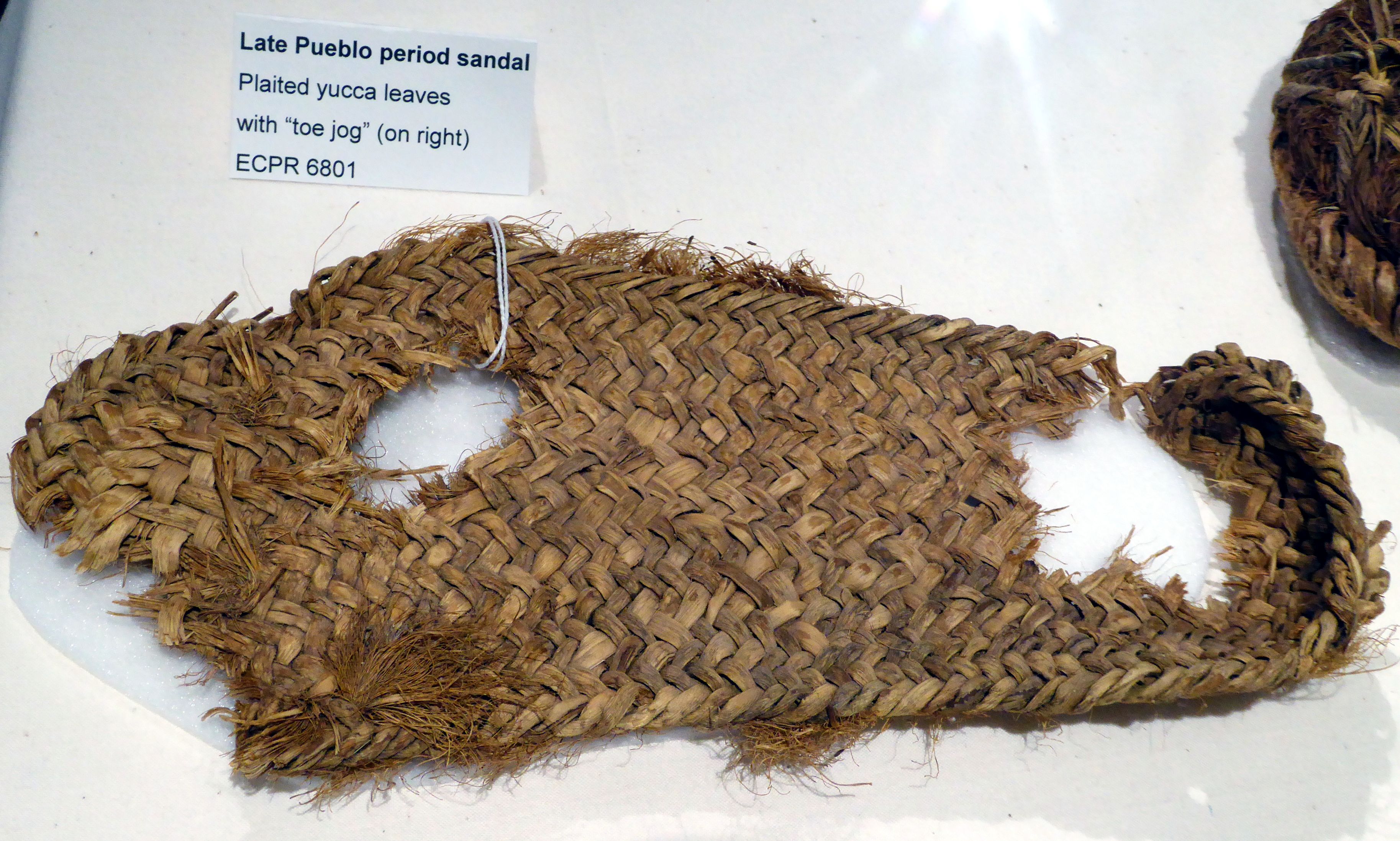
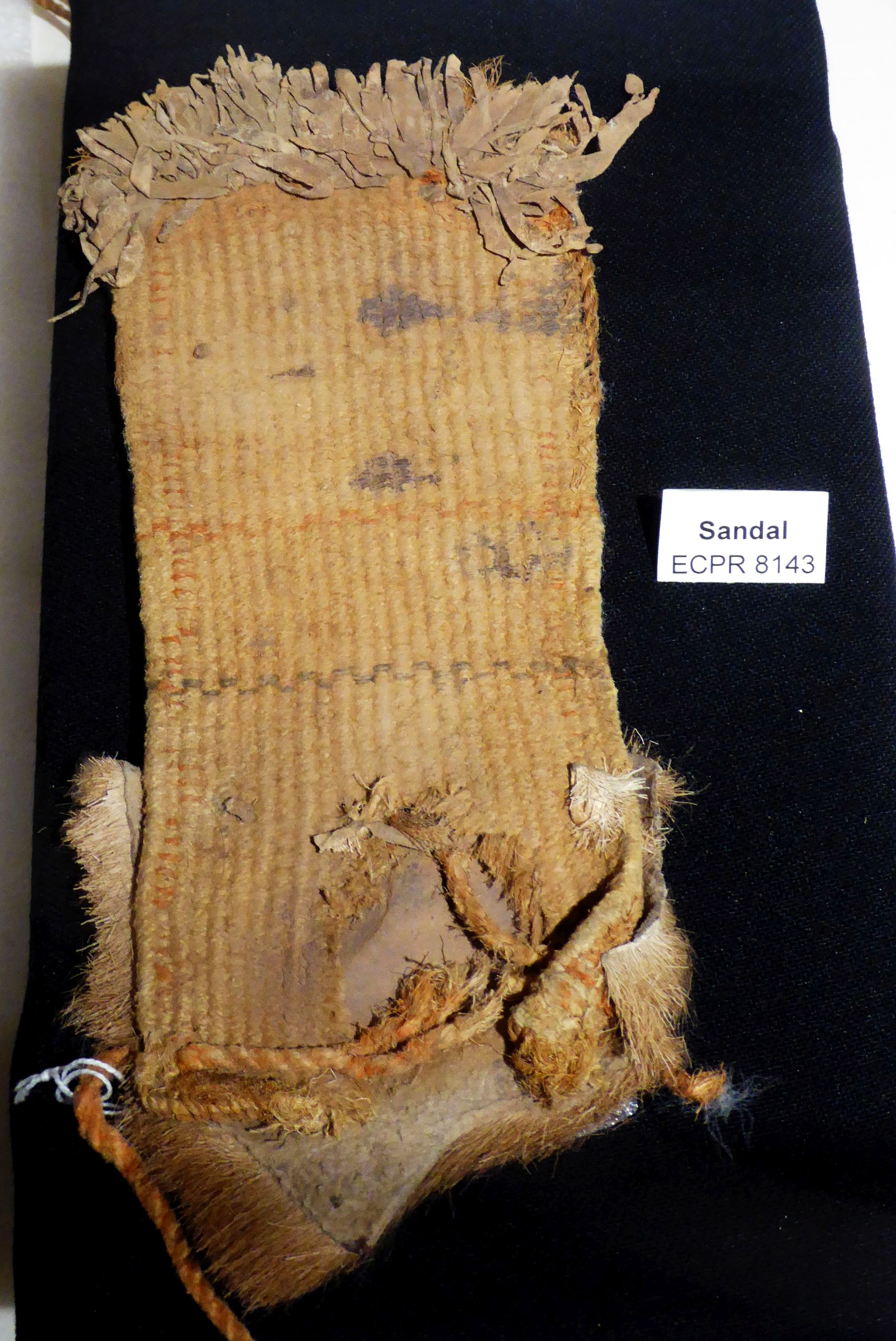
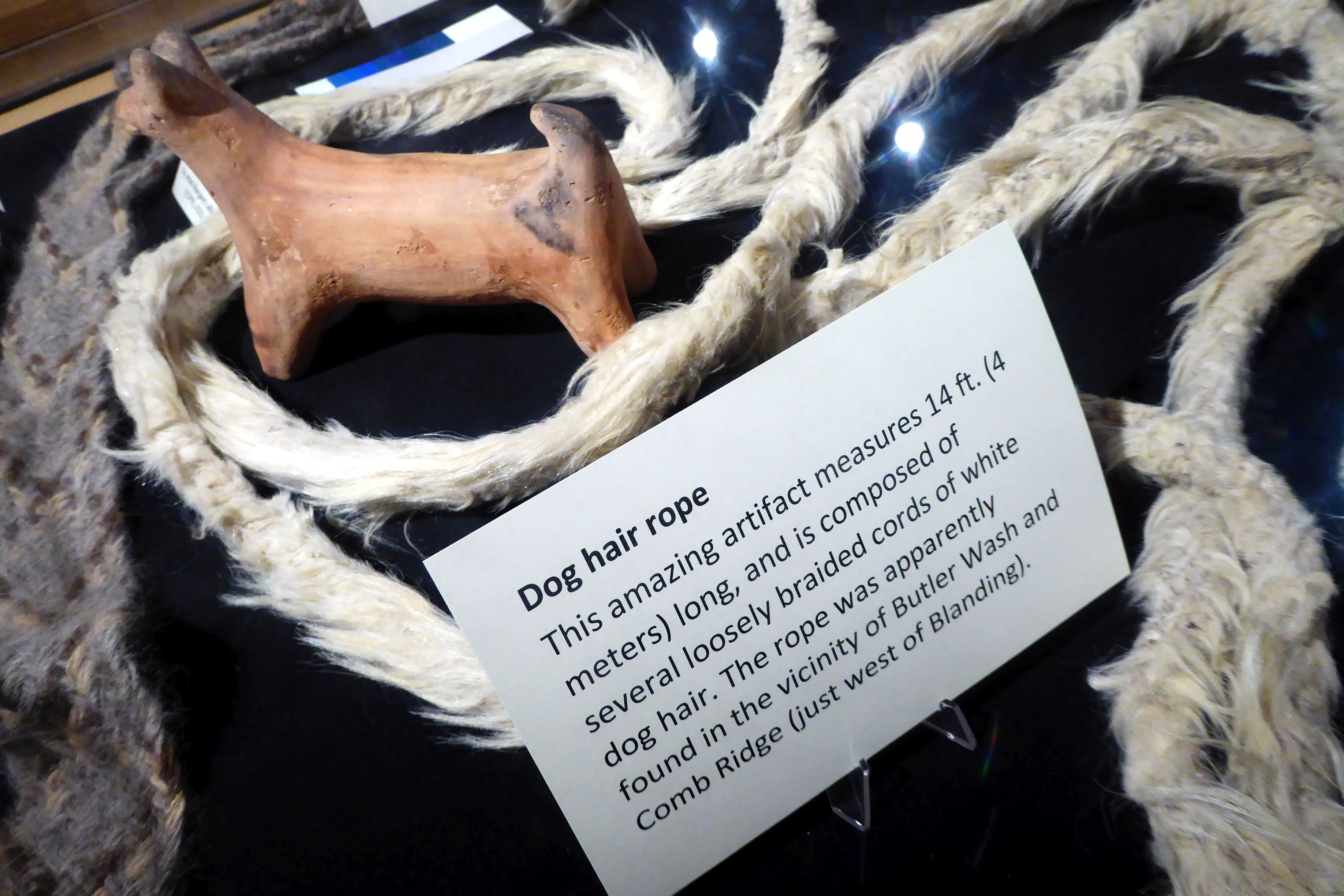
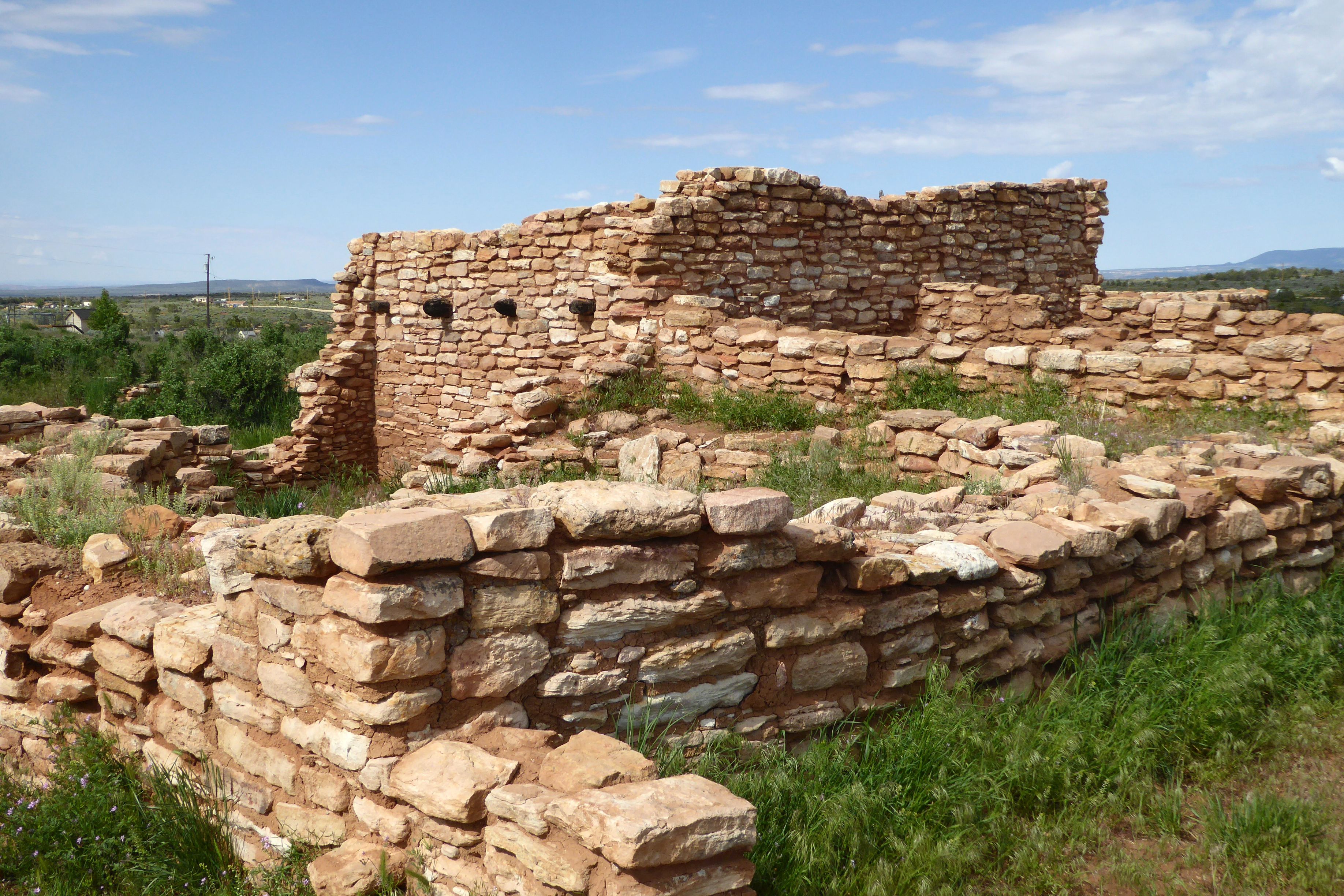
Behind the museum is a Chacoan great House and great kiva, dating back to the 1000’s. The great house was originally a multistory building used by the Chacoan community, and the kiva was a subterranean round room used for rites and political meetings. I climbed down into the kiva to see where these meetings took place so many centuries ago.


I was curious about this:

The sculpture replicates prehistoric archaeoastronomy sites found in the Southwest and acts as a laboratory to chart the sun’s yearly migration. Archaeoastronomy is the study of prehistoric cultural connections with the sun, moon, and stars.
The people who lived at this site may have used solar markers to determine when to plant and harvest crops.
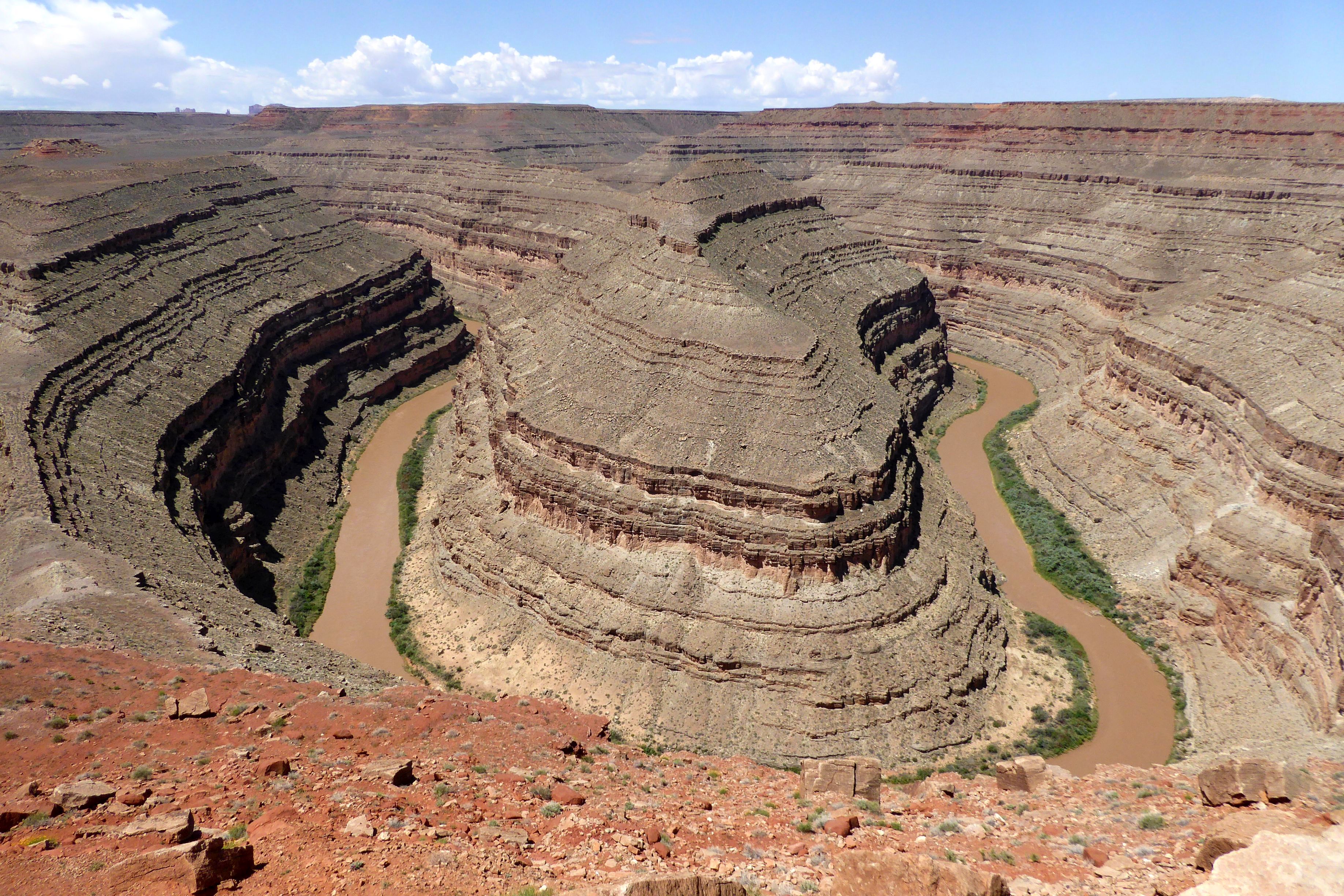
Following our museum visit, we went to Goosenecks State Park for a brief look at the view before continuing on to Monument Valley Navajo Tribal Park.

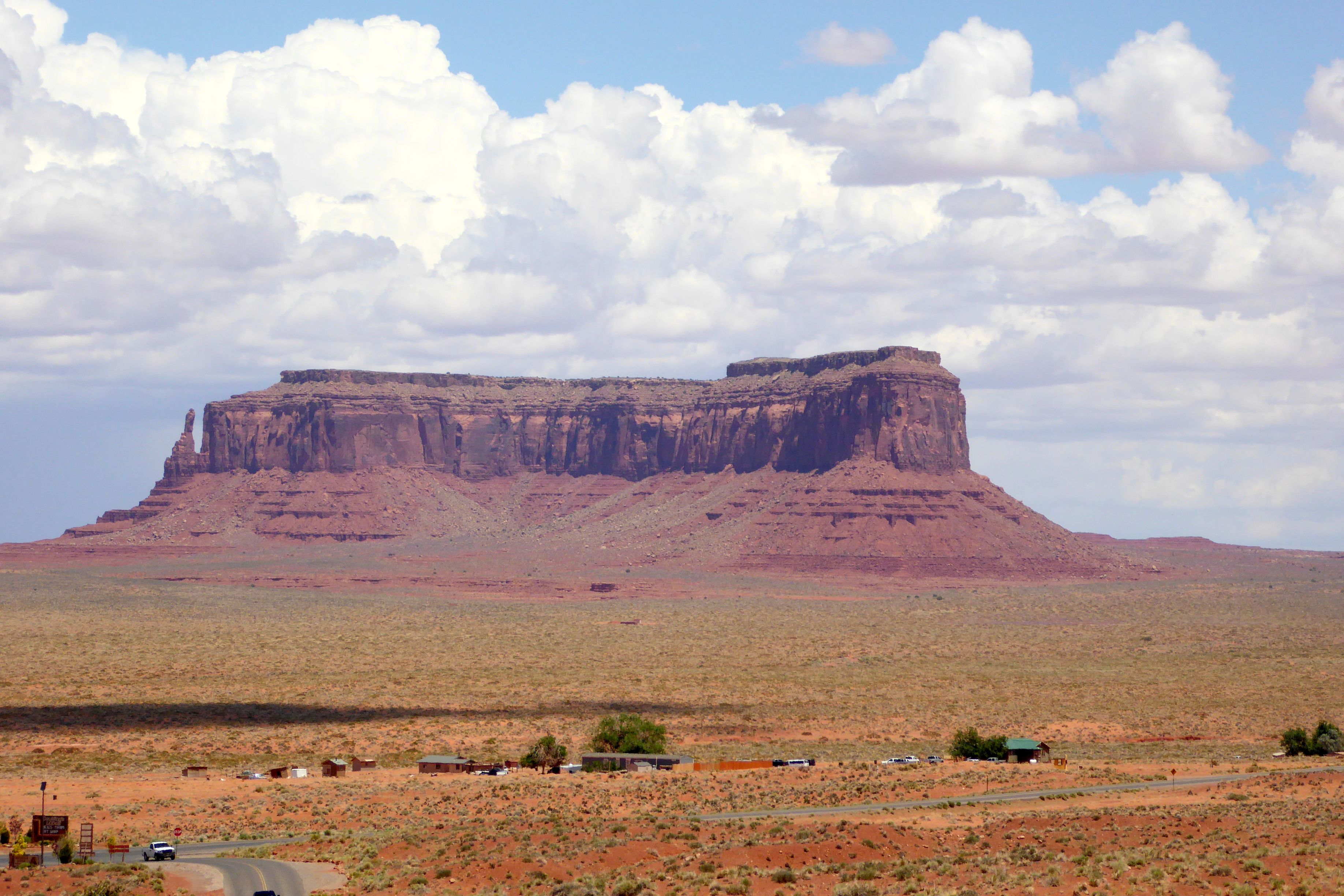

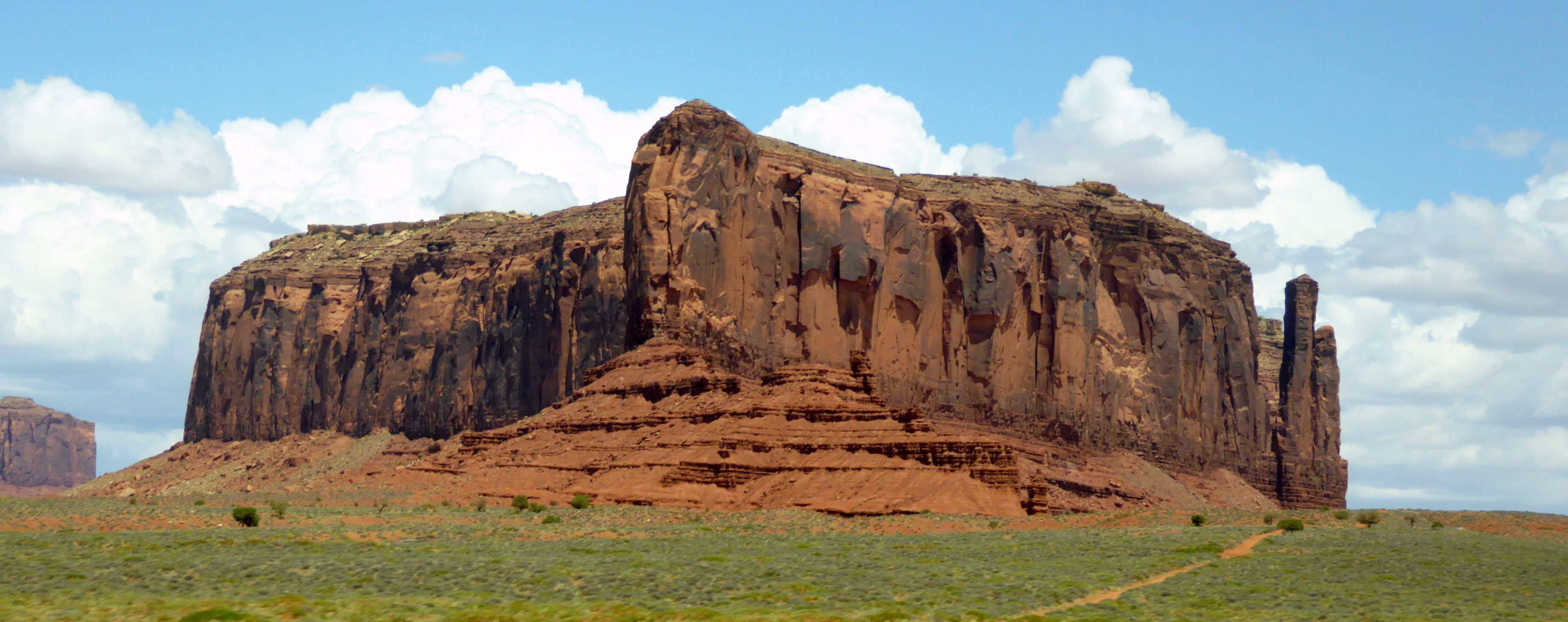
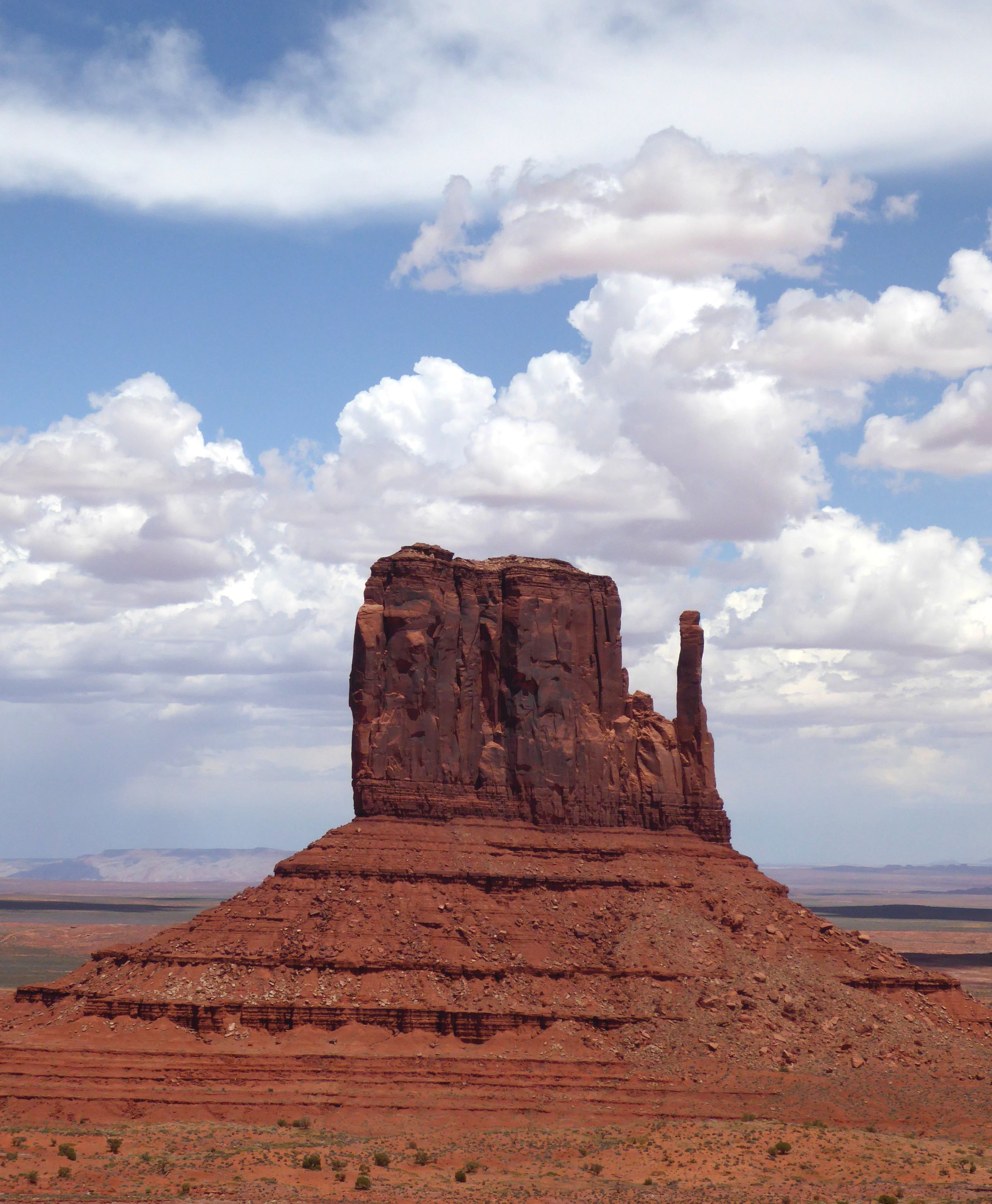
The valley features sandstone buttes that range from 400 to 1,000 feet high. Two of the butters are shaped like mittens, so they are appropriately named Mitten Buttes.

Next up: A Cool Colorado River Raft Float
 Elaine-iaK's Travels: A Traveler's Tales of People, Places, Photos, Pools... and CHOCOLATE!
Elaine, not only do we get outstanding photography, but an education in cultures! Keep it coming.
Al
LikeLiked by 1 person
Thanks, Al! I have only one more post to write for this trip, but stay tuned! I will be writing about Iceland and Scotland later this summer. Cheers!
LikeLike